window.__IS_SSR__=true
window.__INITIAL_STATE__={
"attachmentsReducer": {
"audio_0": {
"type": "attachments",
"id": "audio_0",
"imgSizes": {
"kqedFullSize": {
"file": "https://ww2.kqed.org/news/wp-content/themes/KQED-unified/img/audio_bgs/background0.jpg"
}
}
},
"audio_1": {
"type": "attachments",
"id": "audio_1",
"imgSizes": {
"kqedFullSize": {
"file": "https://ww2.kqed.org/news/wp-content/themes/KQED-unified/img/audio_bgs/background1.jpg"
}
}
},
"audio_2": {
"type": "attachments",
"id": "audio_2",
"imgSizes": {
"kqedFullSize": {
"file": "https://ww2.kqed.org/news/wp-content/themes/KQED-unified/img/audio_bgs/background2.jpg"
}
}
},
"audio_3": {
"type": "attachments",
"id": "audio_3",
"imgSizes": {
"kqedFullSize": {
"file": "https://ww2.kqed.org/news/wp-content/themes/KQED-unified/img/audio_bgs/background3.jpg"
}
}
},
"audio_4": {
"type": "attachments",
"id": "audio_4",
"imgSizes": {
"kqedFullSize": {
"file": "https://ww2.kqed.org/news/wp-content/themes/KQED-unified/img/audio_bgs/background4.jpg"
}
}
},
"placeholder": {
"type": "attachments",
"id": "placeholder",
"imgSizes": {
"thumbnail": {
"file": "https://cdn.kqed.org/wp-content/uploads/2024/12/KQED-Default-Image-816638274-2000x1333-1-160x107.jpg",
"width": 160,
"height": 107,
"mimeType": "image/jpeg"
},
"medium": {
"file": "https://cdn.kqed.org/wp-content/uploads/2024/12/KQED-Default-Image-816638274-2000x1333-1-800x533.jpg",
"width": 800,
"height": 533,
"mimeType": "image/jpeg"
},
"medium_large": {
"file": "https://cdn.kqed.org/wp-content/uploads/2024/12/KQED-Default-Image-816638274-2000x1333-1-768x512.jpg",
"width": 768,
"height": 512,
"mimeType": "image/jpeg"
},
"large": {
"file": "https://cdn.kqed.org/wp-content/uploads/2024/12/KQED-Default-Image-816638274-2000x1333-1-1020x680.jpg",
"width": 1020,
"height": 680,
"mimeType": "image/jpeg"
},
"1536x1536": {
"file": "https://cdn.kqed.org/wp-content/uploads/2024/12/KQED-Default-Image-816638274-2000x1333-1-1536x1024.jpg",
"width": 1536,
"height": 1024,
"mimeType": "image/jpeg"
},
"fd-lrg": {
"file": "https://cdn.kqed.org/wp-content/uploads/2024/12/KQED-Default-Image-816638274-2000x1333-1-1536x1024.jpg",
"width": 1536,
"height": 1024,
"mimeType": "image/jpeg"
},
"fd-med": {
"file": "https://cdn.kqed.org/wp-content/uploads/2024/12/KQED-Default-Image-816638274-2000x1333-1-1020x680.jpg",
"width": 1020,
"height": 680,
"mimeType": "image/jpeg"
},
"fd-sm": {
"file": "https://cdn.kqed.org/wp-content/uploads/2024/12/KQED-Default-Image-816638274-2000x1333-1-800x533.jpg",
"width": 800,
"height": 533,
"mimeType": "image/jpeg"
},
"post-thumbnail": {
"file": "https://cdn.kqed.org/wp-content/uploads/2024/12/KQED-Default-Image-816638274-2000x1333-1-672x372.jpg",
"width": 672,
"height": 372,
"mimeType": "image/jpeg"
},
"twentyfourteen-full-width": {
"file": "https://cdn.kqed.org/wp-content/uploads/2024/12/KQED-Default-Image-816638274-2000x1333-1-1038x576.jpg",
"width": 1038,
"height": 576,
"mimeType": "image/jpeg"
},
"xxsmall": {
"file": "https://cdn.kqed.org/wp-content/uploads/2024/12/KQED-Default-Image-816638274-2000x1333-1-160x107.jpg",
"width": 160,
"height": 107,
"mimeType": "image/jpeg"
},
"xsmall": {
"file": "https://cdn.kqed.org/wp-content/uploads/2024/12/KQED-Default-Image-816638274-2000x1333-1-672x372.jpg",
"width": 672,
"height": 372,
"mimeType": "image/jpeg"
},
"small": {
"file": "https://cdn.kqed.org/wp-content/uploads/2024/12/KQED-Default-Image-816638274-2000x1333-1-672x372.jpg",
"width": 672,
"height": 372,
"mimeType": "image/jpeg"
},
"xlarge": {
"file": "https://cdn.kqed.org/wp-content/uploads/2024/12/KQED-Default-Image-816638274-2000x1333-1-1020x680.jpg",
"width": 1020,
"height": 680,
"mimeType": "image/jpeg"
},
"full-width": {
"file": "https://cdn.kqed.org/wp-content/uploads/2024/12/KQED-Default-Image-816638274-2000x1333-1-1920x1280.jpg",
"width": 1920,
"height": 1280,
"mimeType": "image/jpeg"
},
"guest-author-32": {
"file": "https://cdn.kqed.org/wp-content/uploads/2025/01/KQED-Default-Image-816638274-1333x1333-1-160x160.jpg",
"width": 32,
"height": 32,
"mimeType": "image/jpeg"
},
"guest-author-50": {
"file": "https://cdn.kqed.org/wp-content/uploads/2025/01/KQED-Default-Image-816638274-1333x1333-1-160x160.jpg",
"width": 50,
"height": 50,
"mimeType": "image/jpeg"
},
"guest-author-64": {
"file": "https://cdn.kqed.org/wp-content/uploads/2025/01/KQED-Default-Image-816638274-1333x1333-1-160x160.jpg",
"width": 64,
"height": 64,
"mimeType": "image/jpeg"
},
"guest-author-96": {
"file": "https://cdn.kqed.org/wp-content/uploads/2025/01/KQED-Default-Image-816638274-1333x1333-1-160x160.jpg",
"width": 96,
"height": 96,
"mimeType": "image/jpeg"
},
"guest-author-128": {
"file": "https://cdn.kqed.org/wp-content/uploads/2025/01/KQED-Default-Image-816638274-1333x1333-1-160x160.jpg",
"width": 128,
"height": 128,
"mimeType": "image/jpeg"
},
"detail": {
"file": "https://cdn.kqed.org/wp-content/uploads/2025/01/KQED-Default-Image-816638274-1333x1333-1-160x160.jpg",
"width": 160,
"height": 160,
"mimeType": "image/jpeg"
},
"kqedFullSize": {
"file": "https://cdn.kqed.org/wp-content/uploads/2024/12/KQED-Default-Image-816638274-2000x1333-1.jpg",
"width": 2000,
"height": 1333
}
}
},
"news_11948214": {
"type": "attachments",
"id": "news_11948214",
"meta": {
"index": "attachments_1716263798",
"site": "news",
"id": "11948214",
"found": true
},
"parent": 0,
"imgSizes": {
"twentyfourteen-full-width": {
"file": "https://ww2.kqed.org/app/uploads/sites/10/2023/05/043_KQED_AlturasCalifornia_03172023-1038x576.jpg",
"width": 1038,
"mimeType": "image/jpeg",
"height": 576
},
"thumbnail": {
"file": "https://ww2.kqed.org/app/uploads/sites/10/2023/05/043_KQED_AlturasCalifornia_03172023-160x107.jpg",
"width": 160,
"mimeType": "image/jpeg",
"height": 107
},
"post-thumbnail": {
"file": "https://ww2.kqed.org/app/uploads/sites/10/2023/05/043_KQED_AlturasCalifornia_03172023-672x372.jpg",
"width": 672,
"mimeType": "image/jpeg",
"height": 372
},
"kqedFullSize": {
"file": "https://ww2.kqed.org/app/uploads/sites/10/2023/05/043_KQED_AlturasCalifornia_03172023.jpg",
"width": 1920,
"height": 1280
},
"large": {
"file": "https://ww2.kqed.org/app/uploads/sites/10/2023/05/043_KQED_AlturasCalifornia_03172023-1020x680.jpg",
"width": 1020,
"mimeType": "image/jpeg",
"height": 680
},
"1536x1536": {
"file": "https://ww2.kqed.org/app/uploads/sites/10/2023/05/043_KQED_AlturasCalifornia_03172023-1536x1024.jpg",
"width": 1536,
"mimeType": "image/jpeg",
"height": 1024
},
"medium": {
"file": "https://ww2.kqed.org/app/uploads/sites/10/2023/05/043_KQED_AlturasCalifornia_03172023-800x533.jpg",
"width": 800,
"mimeType": "image/jpeg",
"height": 533
}
},
"publishDate": 1682973336,
"modified": 1683069214,
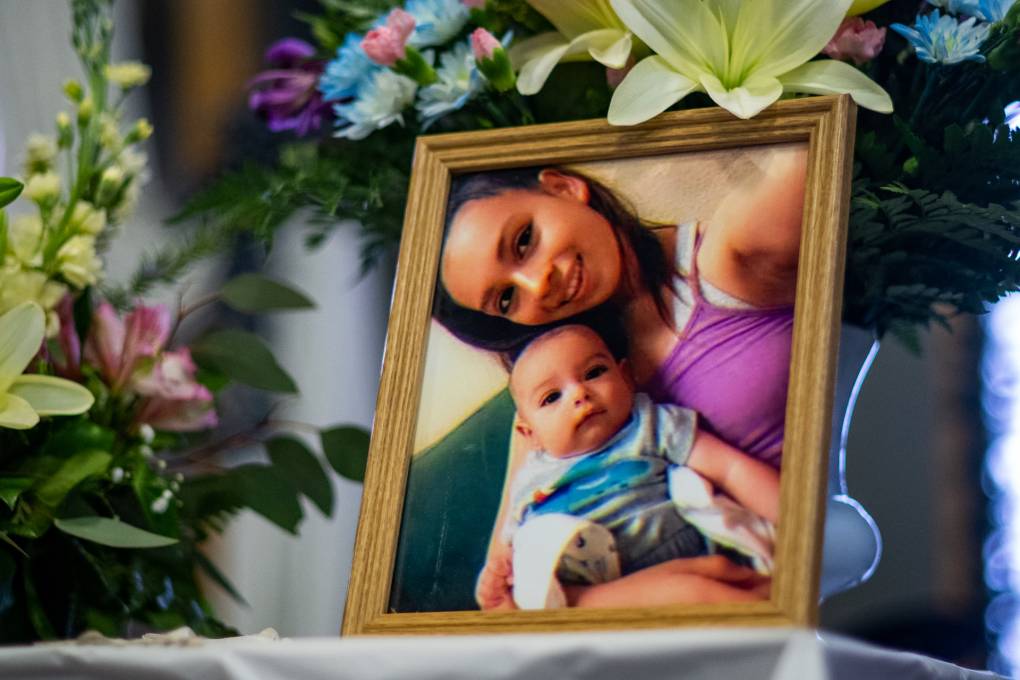
"caption": "A photo of Alissa Parraz and Nycholas Parraz sits on an altar at Faith Baptist Church during a funeral for the mother and child in Alturas, on March 17, 2023.",
"description": null,
"title": "043_KQED_AlturasCalifornia_03172023",
"credit": "Beth LaBerge/KQED",
"status": "inherit",
"altTag": "A framed photograph of a young mother smiling as she holds her baby sits on top of an altar honoring the two at their funeral service. Bouquets of blue, yellow and pink flowers surround the wooden frame.",
"isLoading": false,
"fetchFailed": false
},
"news_11948076": {
"type": "attachments",
"id": "news_11948076",
"meta": {
"index": "attachments_1716263798",
"site": "news",
"id": "11948076",
"found": true
},
"parent": 11948072,
"imgSizes": {
"twentyfourteen-full-width": {
"file": "https://ww2.kqed.org/app/uploads/sites/10/2023/04/AIDS_LifeCycle-1038x576.png",
"width": 1038,
"mimeType": "image/png",
"height": 576
},
"thumbnail": {
"file": "https://ww2.kqed.org/app/uploads/sites/10/2023/04/AIDS_LifeCycle-160x90.png",
"width": 160,
"mimeType": "image/png",
"height": 90
},
"post-thumbnail": {
"file": "https://ww2.kqed.org/app/uploads/sites/10/2023/04/AIDS_LifeCycle-672x372.png",
"width": 672,
"mimeType": "image/png",
"height": 372
},
"kqedFullSize": {
"file": "https://ww2.kqed.org/app/uploads/sites/10/2023/04/AIDS_LifeCycle.png",
"width": 1920,
"height": 1080
},
"large": {
"file": "https://ww2.kqed.org/app/uploads/sites/10/2023/04/AIDS_LifeCycle-1020x574.png",
"width": 1020,
"mimeType": "image/png",
"height": 574
},
"1536x1536": {
"file": "https://ww2.kqed.org/app/uploads/sites/10/2023/04/AIDS_LifeCycle-1536x864.png",
"width": 1536,
"mimeType": "image/png",
"height": 864
},
"medium": {
"file": "https://ww2.kqed.org/app/uploads/sites/10/2023/04/AIDS_LifeCycle-800x450.png",
"width": 800,
"mimeType": "image/png",
"height": 450
}
},
"publishDate": 1682719914,
"modified": 1682719914,
"caption": null,
"description": null,
"title": "AIDS_LifeCycle",
"credit": null,
"status": "inherit",
"altTag": null,
"isLoading": false,
"fetchFailed": false
},
"news_11943246": {
"type": "attachments",
"id": "news_11943246",
"meta": {
"index": "attachments_1716263798",
"site": "news",
"id": "11943246",
"found": true
},
"parent": 11943212,
"imgSizes": {
"twentyfourteen-full-width": {
"file": "https://ww2.kqed.org/app/uploads/sites/10/2023/03/GettyImages-1455380425-1038x576.jpg",
"width": 1038,
"mimeType": "image/jpeg",
"height": 576
},
"thumbnail": {
"file": "https://ww2.kqed.org/app/uploads/sites/10/2023/03/GettyImages-1455380425-160x108.jpg",
"width": 160,
"mimeType": "image/jpeg",
"height": 108
},
"post-thumbnail": {
"file": "https://ww2.kqed.org/app/uploads/sites/10/2023/03/GettyImages-1455380425-672x372.jpg",
"width": 672,
"mimeType": "image/jpeg",
"height": 372
},
"kqedFullSize": {
"file": "https://ww2.kqed.org/app/uploads/sites/10/2023/03/GettyImages-1455380425-scaled.jpg",
"width": 2560,
"height": 1724
},
"2048x2048": {
"file": "https://ww2.kqed.org/app/uploads/sites/10/2023/03/GettyImages-1455380425-2048x1379.jpg",
"width": 2048,
"mimeType": "image/jpeg",
"height": 1379
},
"large": {
"file": "https://ww2.kqed.org/app/uploads/sites/10/2023/03/GettyImages-1455380425-1020x687.jpg",
"width": 1020,
"mimeType": "image/jpeg",
"height": 687
},
"1536x1536": {
"file": "https://ww2.kqed.org/app/uploads/sites/10/2023/03/GettyImages-1455380425-1536x1035.jpg",
"width": 1536,
"mimeType": "image/jpeg",
"height": 1035
},
"full-width": {
"file": "https://ww2.kqed.org/app/uploads/sites/10/2023/03/GettyImages-1455380425-1920x1293.jpg",
"width": 1920,
"mimeType": "image/jpeg",
"height": 1293
},
"medium": {
"file": "https://ww2.kqed.org/app/uploads/sites/10/2023/03/GettyImages-1455380425-800x539.jpg",
"width": 800,
"mimeType": "image/jpeg",
"height": 539
}
},
"publishDate": 1678482749,
"modified": 1678491576,
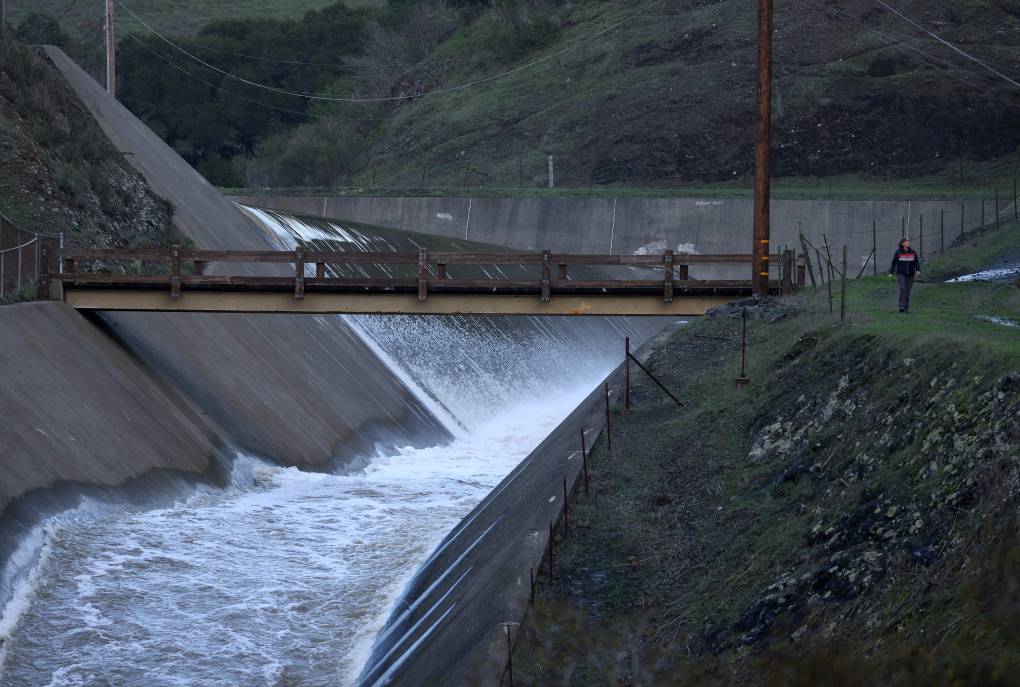
"caption": "Water flows down the spillway at the Nicasio Reservoir in Marin County after days of rain brought the reservoir to near capacity on Jan. 9. The Bay Area, and much of Northern California, continues to endure powerful atmospheric river events that have brought high winds, flooding rains and rising reservoirs.",
"description": null,
"title": "Multiple Storms Batter California With Flooding Rains",
"credit": "Justin Sullivan/Getty Images",
"status": "inherit",
"altTag": "Rushing white waters rapidly flow down the spillway at the Nicasio Reservoir in California as a person in a black hoodie and jeans walks along the levee to the right.",
"isLoading": false,
"fetchFailed": false
},
"news_11938686": {
"type": "attachments",
"id": "news_11938686",
"meta": {
"index": "attachments_1716263798",
"site": "news",
"id": "11938686",
"found": true
},
"parent": 11938681,
"imgSizes": {
"twentyfourteen-full-width": {
"file": "https://ww2.kqed.org/app/uploads/sites/10/2023/01/010423-MaderCommnityHospital-LV_08-CM-copy-1038x576.jpg",
"width": 1038,
"mimeType": "image/jpeg",
"height": 576
},
"thumbnail": {
"file": "https://ww2.kqed.org/app/uploads/sites/10/2023/01/010423-MaderCommnityHospital-LV_08-CM-copy-160x107.jpg",
"width": 160,
"mimeType": "image/jpeg",
"height": 107
},
"post-thumbnail": {
"file": "https://ww2.kqed.org/app/uploads/sites/10/2023/01/010423-MaderCommnityHospital-LV_08-CM-copy-672x372.jpg",
"width": 672,
"mimeType": "image/jpeg",
"height": 372
},
"kqedFullSize": {
"file": "https://ww2.kqed.org/app/uploads/sites/10/2023/01/010423-MaderCommnityHospital-LV_08-CM-copy.jpg",
"width": 2000,
"height": 1333
},
"large": {
"file": "https://ww2.kqed.org/app/uploads/sites/10/2023/01/010423-MaderCommnityHospital-LV_08-CM-copy-1020x680.jpg",
"width": 1020,
"mimeType": "image/jpeg",
"height": 680
},
"1536x1536": {
"file": "https://ww2.kqed.org/app/uploads/sites/10/2023/01/010423-MaderCommnityHospital-LV_08-CM-copy-1536x1024.jpg",
"width": 1536,
"mimeType": "image/jpeg",
"height": 1024
},
"full-width": {
"file": "https://ww2.kqed.org/app/uploads/sites/10/2023/01/010423-MaderCommnityHospital-LV_08-CM-copy-1920x1280.jpg",
"width": 1920,
"mimeType": "image/jpeg",
"height": 1280
},
"medium": {
"file": "https://ww2.kqed.org/app/uploads/sites/10/2023/01/010423-MaderCommnityHospital-LV_08-CM-copy-800x533.jpg",
"width": 800,
"mimeType": "image/jpeg",
"height": 533
}
},
"publishDate": 1674242202,
"modified": 1674250948,
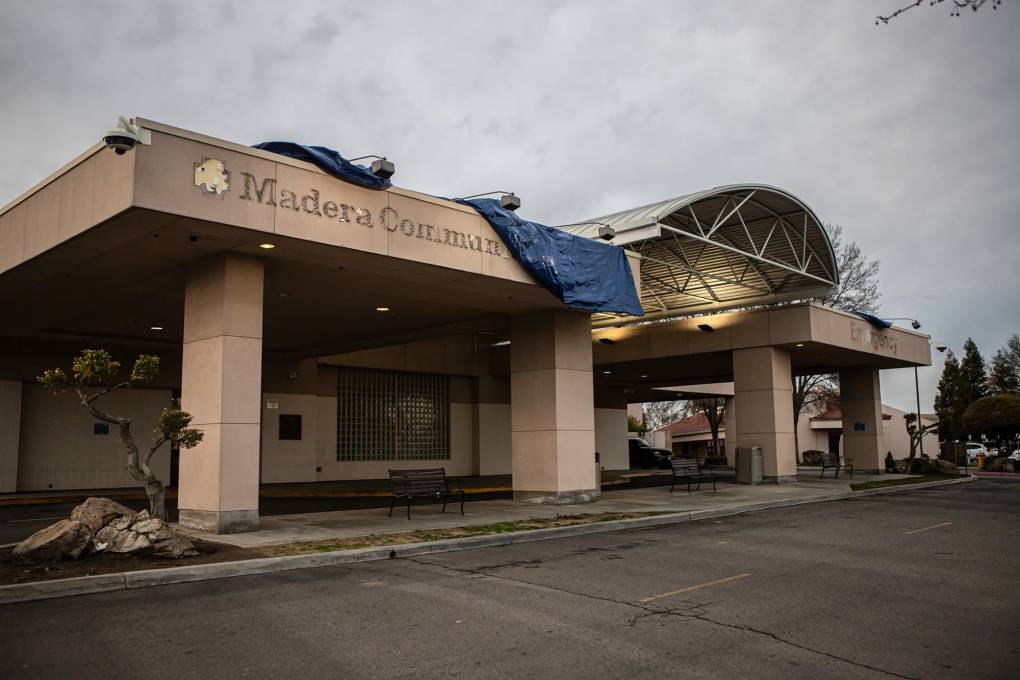
"caption": "Outlines of the Madera Community Hospital sign partially covered by a tarp at the emergency room entrance on Jan. 2, 2023. Madera County Sheriff Tyson Pogue announced a state of emergency for the county when the hospital shut its doors due to bankruptcy.",
"description": null,
"title": "010423-MaderCommnityHospital-LV_08-CM copy",
"credit": "Larry Valenzuela/CalMatters-CatchLight Local",
"status": "inherit",
"altTag": null,
"isLoading": false,
"fetchFailed": false
},
"news_11937246": {
"type": "attachments",
"id": "news_11937246",
"meta": {
"index": "attachments_1716263798",
"site": "news",
"id": "11937246",
"found": true
},
"parent": 11937225,
"imgSizes": {
"twentyfourteen-full-width": {
"file": "https://ww2.kqed.org/app/uploads/sites/10/2023/01/GettyImages-868032418-1038x576.jpg",
"width": 1038,
"mimeType": "image/jpeg",
"height": 576
},
"thumbnail": {
"file": "https://ww2.kqed.org/app/uploads/sites/10/2023/01/GettyImages-868032418-160x107.jpg",
"width": 160,
"mimeType": "image/jpeg",
"height": 107
},
"post-thumbnail": {
"file": "https://ww2.kqed.org/app/uploads/sites/10/2023/01/GettyImages-868032418-672x372.jpg",
"width": 672,
"mimeType": "image/jpeg",
"height": 372
},
"kqedFullSize": {
"file": "https://ww2.kqed.org/app/uploads/sites/10/2023/01/GettyImages-868032418-scaled.jpg",
"width": 2560,
"height": 1706
},
"2048x2048": {
"file": "https://ww2.kqed.org/app/uploads/sites/10/2023/01/GettyImages-868032418-2048x1365.jpg",
"width": 2048,
"mimeType": "image/jpeg",
"height": 1365
},
"large": {
"file": "https://ww2.kqed.org/app/uploads/sites/10/2023/01/GettyImages-868032418-1020x680.jpg",
"width": 1020,
"mimeType": "image/jpeg",
"height": 680
},
"1536x1536": {
"file": "https://ww2.kqed.org/app/uploads/sites/10/2023/01/GettyImages-868032418-1536x1024.jpg",
"width": 1536,
"mimeType": "image/jpeg",
"height": 1024
},
"full-width": {
"file": "https://ww2.kqed.org/app/uploads/sites/10/2023/01/GettyImages-868032418-1920x1280.jpg",
"width": 1920,
"mimeType": "image/jpeg",
"height": 1280
},
"medium": {
"file": "https://ww2.kqed.org/app/uploads/sites/10/2023/01/GettyImages-868032418-800x533.jpg",
"width": 800,
"mimeType": "image/jpeg",
"height": 533
}
},
"publishDate": 1673052528,
"modified": 1673056206,
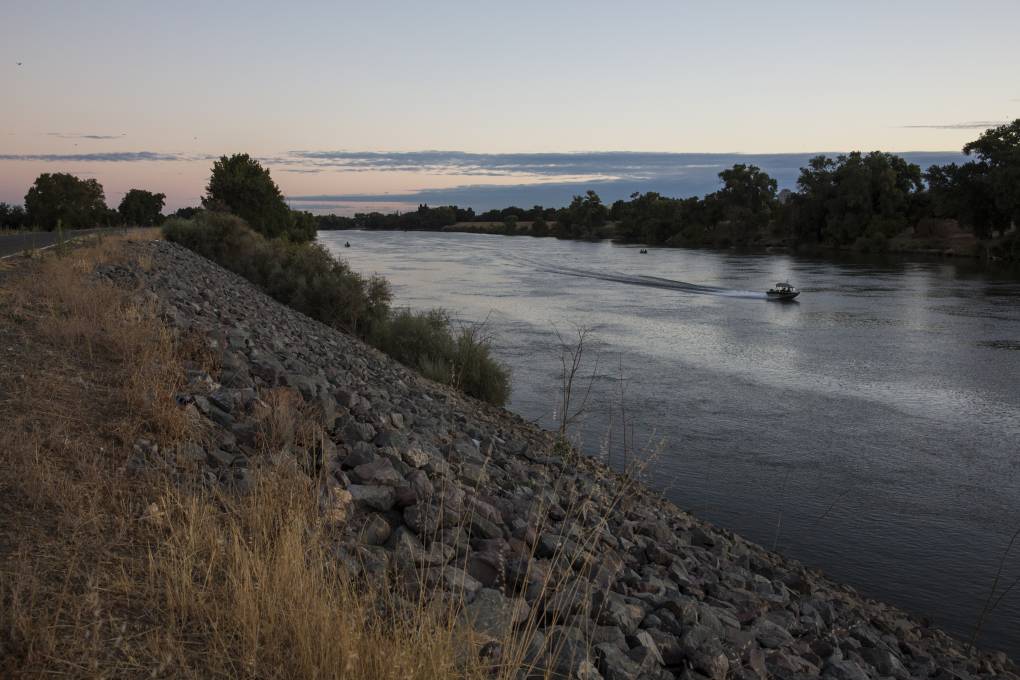
"caption": "A boat floats down the Sacramento River, next to a levee that stops the river from flooding neighborhoods in West Sacramento, near the construction site of the Southport setback levee in West Sacramento on Sept. 20, 2017. The setback levee was designed to help further protect neighborhoods in West Sacramento from flooding, should the Sacramento River breach the levees already in place during storms like the ones taking place this week. ",
"description": null,
"title": "Flood Fears",
"credit": "Andrew Burton/The Washington Post via Getty Images",
"status": "inherit",
"altTag": "a river is seen from the bank with a sunset",
"isLoading": false,
"fetchFailed": false
},
"news_11930843": {
"type": "attachments",
"id": "news_11930843",
"meta": {
"index": "attachments_1716263798",
"site": "news",
"id": "11930843",
"found": true
},
"parent": 11930830,
"imgSizes": {
"twentyfourteen-full-width": {
"file": "https://ww2.kqed.org/app/uploads/sites/10/2022/11/IMG_9377-1038x576.jpg",
"width": 1038,
"mimeType": "image/jpeg",
"height": 576
},
"thumbnail": {
"file": "https://ww2.kqed.org/app/uploads/sites/10/2022/11/IMG_9377-160x113.jpg",
"width": 160,
"mimeType": "image/jpeg",
"height": 113
},
"post-thumbnail": {
"file": "https://ww2.kqed.org/app/uploads/sites/10/2022/11/IMG_9377-672x372.jpg",
"width": 672,
"mimeType": "image/jpeg",
"height": 372
},
"kqedFullSize": {
"file": "https://ww2.kqed.org/app/uploads/sites/10/2022/11/IMG_9377-scaled.jpg",
"width": 2560,
"height": 1801
},
"2048x2048": {
"file": "https://ww2.kqed.org/app/uploads/sites/10/2022/11/IMG_9377-2048x1441.jpg",
"width": 2048,
"mimeType": "image/jpeg",
"height": 1441
},
"large": {
"file": "https://ww2.kqed.org/app/uploads/sites/10/2022/11/IMG_9377-1020x718.jpg",
"width": 1020,
"mimeType": "image/jpeg",
"height": 718
},
"1536x1536": {
"file": "https://ww2.kqed.org/app/uploads/sites/10/2022/11/IMG_9377-1536x1081.jpg",
"width": 1536,
"mimeType": "image/jpeg",
"height": 1081
},
"full-width": {
"file": "https://ww2.kqed.org/app/uploads/sites/10/2022/11/IMG_9377-1920x1351.jpg",
"width": 1920,
"mimeType": "image/jpeg",
"height": 1351
},
"medium": {
"file": "https://ww2.kqed.org/app/uploads/sites/10/2022/11/IMG_9377-800x563.jpg",
"width": 800,
"mimeType": "image/jpeg",
"height": 563
}
},
"publishDate": 1667342733,
"modified": 1667343940,
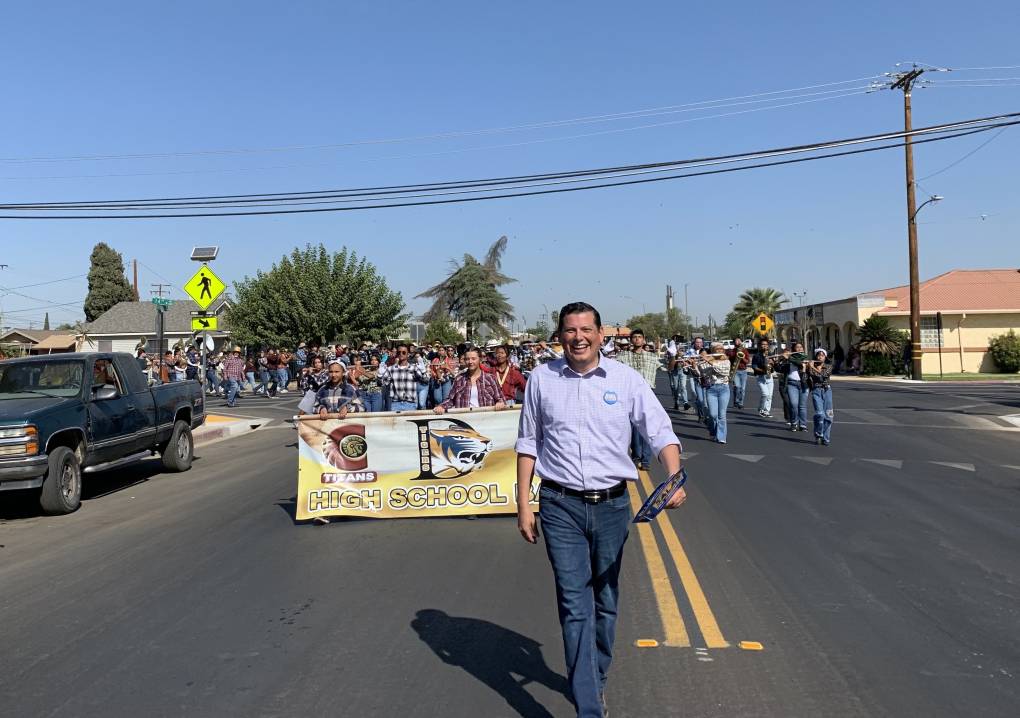
"caption": "Democratic Assemblymember Rudy Salas campaigns for Congress at the Harvest Holidays Parade in Delano on Oct. 8, 2022.",
"description": null,
"title": "IMG_9377",
"credit": "Marisa Lagos/KQED",
"status": "inherit",
"altTag": "A man walks in front of a parade of people on a wide street in front of a blue sky",
"isLoading": false,
"fetchFailed": false
},
"news_11925441": {
"type": "attachments",
"id": "news_11925441",
"meta": {
"index": "attachments_1716263798",
"site": "news",
"id": "11925441",
"found": true
},
"parent": 11925400,
"imgSizes": {
"twentyfourteen-full-width": {
"file": "https://ww2.kqed.org/app/uploads/sites/10/2022/09/danielreese-1038x576.jpg",
"width": 1038,
"mimeType": "image/jpeg",
"height": 576
},
"thumbnail": {
"file": "https://ww2.kqed.org/app/uploads/sites/10/2022/09/danielreese-160x120.jpg",
"width": 160,
"mimeType": "image/jpeg",
"height": 120
},
"post-thumbnail": {
"file": "https://ww2.kqed.org/app/uploads/sites/10/2022/09/danielreese-672x372.jpg",
"width": 672,
"mimeType": "image/jpeg",
"height": 372
},
"kqedFullSize": {
"file": "https://ww2.kqed.org/app/uploads/sites/10/2022/09/danielreese-scaled.jpg",
"width": 2560,
"height": 1920
},
"2048x2048": {
"file": "https://ww2.kqed.org/app/uploads/sites/10/2022/09/danielreese-2048x1536.jpg",
"width": 2048,
"mimeType": "image/jpeg",
"height": 1536
},
"large": {
"file": "https://ww2.kqed.org/app/uploads/sites/10/2022/09/danielreese-1020x765.jpg",
"width": 1020,
"mimeType": "image/jpeg",
"height": 765
},
"1536x1536": {
"file": "https://ww2.kqed.org/app/uploads/sites/10/2022/09/danielreese-1536x1152.jpg",
"width": 1536,
"mimeType": "image/jpeg",
"height": 1152
},
"full-width": {
"file": "https://ww2.kqed.org/app/uploads/sites/10/2022/09/danielreese-1920x1440.jpg",
"width": 1920,
"mimeType": "image/jpeg",
"height": 1440
},
"medium": {
"file": "https://ww2.kqed.org/app/uploads/sites/10/2022/09/danielreese-800x600.jpg",
"width": 800,
"mimeType": "image/jpeg",
"height": 600
}
},
"publishDate": 1663027015,
"modified": 1663184914,
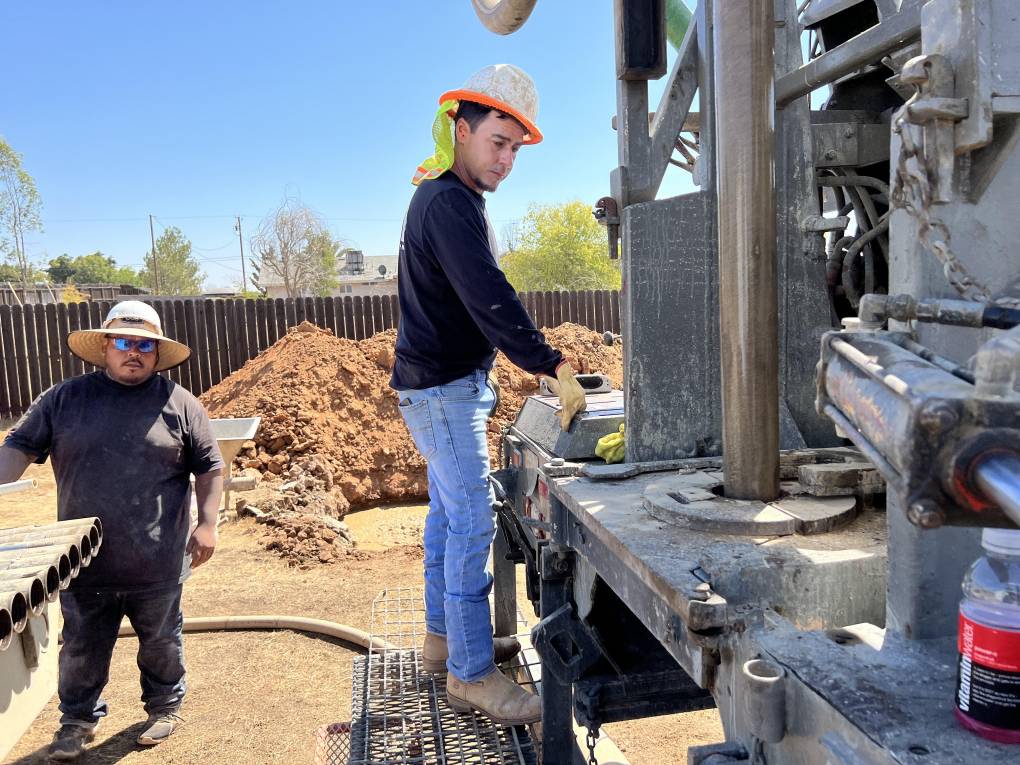
"caption": "Drilling supervisor Daniel Reese works on a water-drilling platform while his colleague looks on in the San Joaquin Valley.",
"description": "Drilling supervisor Daniel Reese works on a water drilling platform while his colleague looks on in the San Joaquin Valley.",
"title": "water drilling",
"credit": "Saul Gonzalez/KQED",
"status": "inherit",
"altTag": "A drilling supervisor stands on a low platform of steel grids wearing blue jeans, a black long-sleeved shirt and a white helmet with an orange brim and a yellow sun-block cloth falling from the helmet to his shoulders. His hands are on a thick platform used for drilling for water. The platform has various tubes perpendicular and parallel to the ground. To the left of the image, stands a man in black jeans, a black short-sleeved t-shirt and a wide-brimmed hat. He's standing next to a platform that holds a row of pipes. Behind both men is a pile of dirt and a wooden fence. In the distant background are green trees under a cornflower sky.",
"isLoading": false,
"fetchFailed": false
},
"news_11925093": {
"type": "attachments",
"id": "news_11925093",
"meta": {
"index": "attachments_1716263798",
"site": "news",
"id": "11925093",
"found": true
},
"parent": 11925020,
"imgSizes": {
"twentyfourteen-full-width": {
"file": "https://ww2.kqed.org/app/uploads/sites/10/2022/09/03_Maxine_park-1038x576.jpg",
"width": 1038,
"mimeType": "image/jpeg",
"height": 576
},
"thumbnail": {
"file": "https://ww2.kqed.org/app/uploads/sites/10/2022/09/03_Maxine_park-160x120.jpg",
"width": 160,
"mimeType": "image/jpeg",
"height": 120
},
"post-thumbnail": {
"file": "https://ww2.kqed.org/app/uploads/sites/10/2022/09/03_Maxine_park-672x372.jpg",
"width": 672,
"mimeType": "image/jpeg",
"height": 372
},
"kqedFullSize": {
"file": "https://ww2.kqed.org/app/uploads/sites/10/2022/09/03_Maxine_park.jpg",
"width": 1920,
"height": 1440
},
"large": {
"file": "https://ww2.kqed.org/app/uploads/sites/10/2022/09/03_Maxine_park-1020x765.jpg",
"width": 1020,
"mimeType": "image/jpeg",
"height": 765
},
"1536x1536": {
"file": "https://ww2.kqed.org/app/uploads/sites/10/2022/09/03_Maxine_park-1536x1152.jpg",
"width": 1536,
"mimeType": "image/jpeg",
"height": 1152
},
"medium": {
"file": "https://ww2.kqed.org/app/uploads/sites/10/2022/09/03_Maxine_park-800x600.jpg",
"width": 800,
"mimeType": "image/jpeg",
"height": 600
}
},
"publishDate": 1662739973,
"modified": 1662750681,
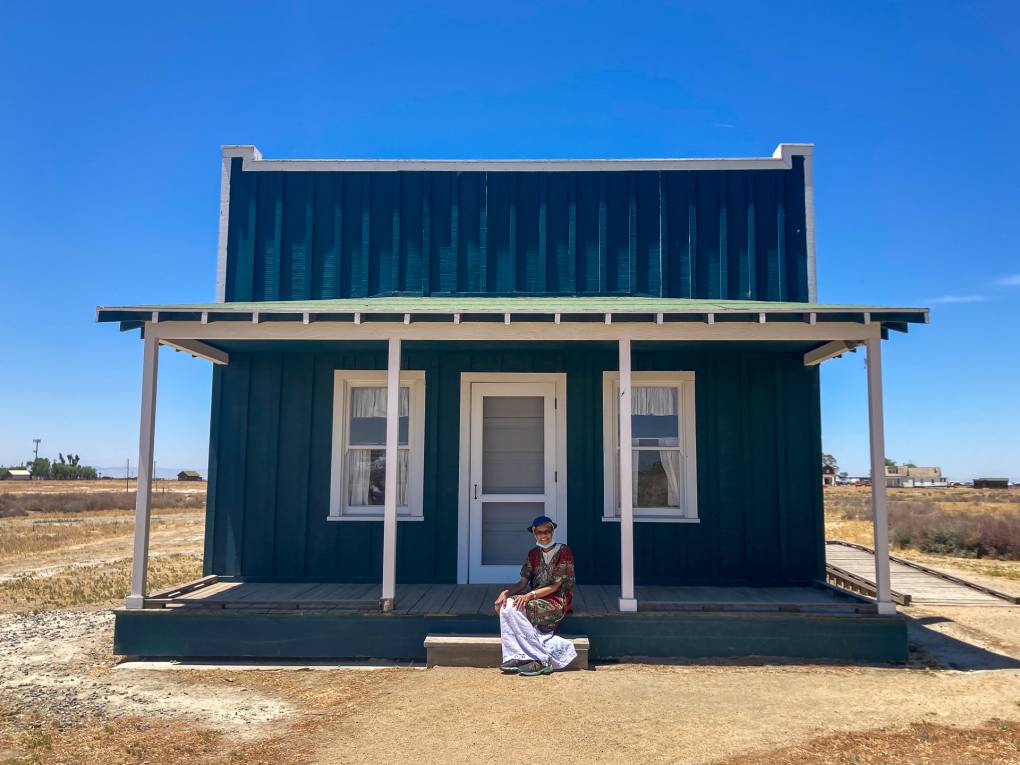
"caption": "Maxine Butler of Oakland, who recently learned she had relatives who lived in Allensworth, sits in front of a restored building in Colonel Allensworth State Historic Park, established in 1976.",
"description": null,
"title": "03_Maxine_park",
"credit": "Lakshmi Sarah/KQED",
"status": "inherit",
"altTag": "a woman sits in front of a blue building in a desert",
"isLoading": false,
"fetchFailed": false
},
"news_11924595": {
"type": "attachments",
"id": "news_11924595",
"meta": {
"index": "attachments_1716263798",
"site": "news",
"id": "11924595",
"found": true
},
"parent": 11924452,
"imgSizes": {
"twentyfourteen-full-width": {
"file": "https://ww2.kqed.org/app/uploads/sites/10/2022/09/RS50827_023_Fresno_FosterFarmsCOVID_08112021-qut-1038x576.jpg",
"width": 1038,
"mimeType": "image/jpeg",
"height": 576
},
"thumbnail": {
"file": "https://ww2.kqed.org/app/uploads/sites/10/2022/09/RS50827_023_Fresno_FosterFarmsCOVID_08112021-qut-160x107.jpg",
"width": 160,
"mimeType": "image/jpeg",
"height": 107
},
"post-thumbnail": {
"file": "https://ww2.kqed.org/app/uploads/sites/10/2022/09/RS50827_023_Fresno_FosterFarmsCOVID_08112021-qut-672x372.jpg",
"width": 672,
"mimeType": "image/jpeg",
"height": 372
},
"kqedFullSize": {
"file": "https://ww2.kqed.org/app/uploads/sites/10/2022/09/RS50827_023_Fresno_FosterFarmsCOVID_08112021-qut.jpg",
"width": 1920,
"height": 1280
},
"large": {
"file": "https://ww2.kqed.org/app/uploads/sites/10/2022/09/RS50827_023_Fresno_FosterFarmsCOVID_08112021-qut-1020x680.jpg",
"width": 1020,
"mimeType": "image/jpeg",
"height": 680
},
"1536x1536": {
"file": "https://ww2.kqed.org/app/uploads/sites/10/2022/09/RS50827_023_Fresno_FosterFarmsCOVID_08112021-qut-1536x1024.jpg",
"width": 1536,
"mimeType": "image/jpeg",
"height": 1024
},
"medium": {
"file": "https://ww2.kqed.org/app/uploads/sites/10/2022/09/RS50827_023_Fresno_FosterFarmsCOVID_08112021-qut-800x533.jpg",
"width": 800,
"mimeType": "image/jpeg",
"height": 533
}
},
"publishDate": 1662159710,
"modified": 1662162666,
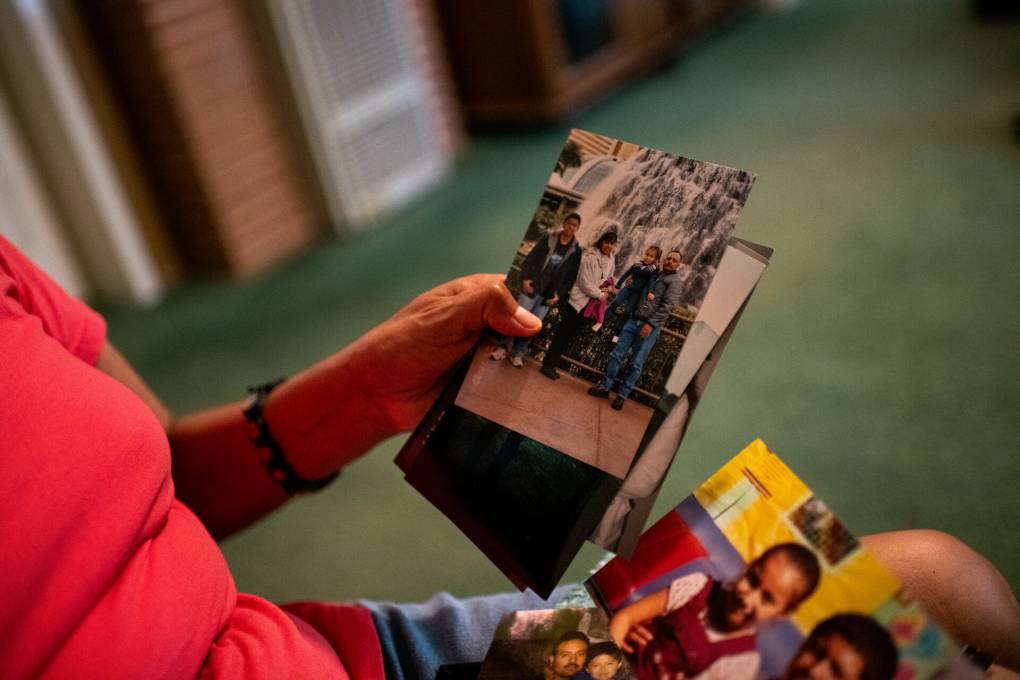
"caption": "Alma Ruth Hernández Nuñez holds a photo of her late husband, Eufracio Caballero, and their children at her home in Sanger, on Aug. 11, 2021. Caballero, who died from COVID in February 2021, was one of 285 Foster Farms employees who tested positive for COVID-19 in early December 2020.",
"description": null,
"title": "RS50827_023_Fresno_FosterFarmsCOVID_08112021-qut",
"credit": "Beth LaBerge/KQED",
"status": "inherit",
"altTag": "detail photo of hands holding prints of family photos",
"isLoading": false,
"fetchFailed": false
},
"news_11922985": {
"type": "attachments",
"id": "news_11922985",
"meta": {
"index": "attachments_1716263798",
"site": "news",
"id": "11922985",
"found": true
},
"parent": 11922983,
"imgSizes": {
"twentyfourteen-full-width": {
"file": "https://ww2.kqed.org/app/uploads/sites/10/2022/08/Screen-Shot-2022-08-18-at-3.37.20-PM-1038x576.png",
"width": 1038,
"mimeType": "image/png",
"height": 576
},
"thumbnail": {
"file": "https://ww2.kqed.org/app/uploads/sites/10/2022/08/Screen-Shot-2022-08-18-at-3.37.20-PM-160x103.png",
"width": 160,
"mimeType": "image/png",
"height": 103
},
"post-thumbnail": {
"file": "https://ww2.kqed.org/app/uploads/sites/10/2022/08/Screen-Shot-2022-08-18-at-3.37.20-PM-672x372.png",
"width": 672,
"mimeType": "image/png",
"height": 372
},
"kqedFullSize": {
"file": "https://ww2.kqed.org/app/uploads/sites/10/2022/08/Screen-Shot-2022-08-18-at-3.37.20-PM.png",
"width": 2358,
"height": 1524
},
"2048x2048": {
"file": "https://ww2.kqed.org/app/uploads/sites/10/2022/08/Screen-Shot-2022-08-18-at-3.37.20-PM-2048x1324.png",
"width": 2048,
"mimeType": "image/png",
"height": 1324
},
"large": {
"file": "https://ww2.kqed.org/app/uploads/sites/10/2022/08/Screen-Shot-2022-08-18-at-3.37.20-PM-1020x659.png",
"width": 1020,
"mimeType": "image/png",
"height": 659
},
"1536x1536": {
"file": "https://ww2.kqed.org/app/uploads/sites/10/2022/08/Screen-Shot-2022-08-18-at-3.37.20-PM-1536x993.png",
"width": 1536,
"mimeType": "image/png",
"height": 993
},
"full-width": {
"file": "https://ww2.kqed.org/app/uploads/sites/10/2022/08/Screen-Shot-2022-08-18-at-3.37.20-PM-1920x1241.png",
"width": 1920,
"mimeType": "image/png",
"height": 1241
},
"medium": {
"file": "https://ww2.kqed.org/app/uploads/sites/10/2022/08/Screen-Shot-2022-08-18-at-3.37.20-PM-800x517.png",
"width": 800,
"mimeType": "image/png",
"height": 517
}
},
"publishDate": 1660863341,
"modified": 1660868459,
"caption": "Luna Lockhart poses for a photo in downtown Fresno on Aug. 11, 2022.",
"description": null,
"title": "Screen Shot 2022-08-18 at 3.37.20 PM",
"credit": "Larry Valenzuela/CalMatters/CatchLight Local",
"status": "inherit",
"altTag": "A person wearing a bandana and glasses stands in front of a mural of a rose.",
"isLoading": false,
"fetchFailed": false
},
"news_11920659": {
"type": "attachments",
"id": "news_11920659",
"meta": {
"index": "attachments_1716263798",
"site": "news",
"id": "11920659",
"found": true
},
"parent": 11920632,
"imgSizes": {
"twentyfourteen-full-width": {
"file": "https://ww2.kqed.org/app/uploads/sites/10/2022/07/FarmerIrrigator-cropped-1038x576.jpg",
"width": 1038,
"mimeType": "image/jpeg",
"height": 576
},
"thumbnail": {
"file": "https://ww2.kqed.org/app/uploads/sites/10/2022/07/FarmerIrrigator-cropped-160x87.jpg",
"width": 160,
"mimeType": "image/jpeg",
"height": 87
},
"post-thumbnail": {
"file": "https://ww2.kqed.org/app/uploads/sites/10/2022/07/FarmerIrrigator-cropped-672x372.jpg",
"width": 672,
"mimeType": "image/jpeg",
"height": 372
},
"kqedFullSize": {
"file": "https://ww2.kqed.org/app/uploads/sites/10/2022/07/FarmerIrrigator-cropped.jpg",
"width": 1920,
"height": 1048
},
"large": {
"file": "https://ww2.kqed.org/app/uploads/sites/10/2022/07/FarmerIrrigator-cropped-1020x557.jpg",
"width": 1020,
"mimeType": "image/jpeg",
"height": 557
},
"1536x1536": {
"file": "https://ww2.kqed.org/app/uploads/sites/10/2022/07/FarmerIrrigator-cropped-1536x838.jpg",
"width": 1536,
"mimeType": "image/jpeg",
"height": 838
},
"medium": {
"file": "https://ww2.kqed.org/app/uploads/sites/10/2022/07/FarmerIrrigator-cropped-800x437.jpg",
"width": 800,
"mimeType": "image/jpeg",
"height": 437
}
},
"publishDate": 1658963862,
"modified": 1659034658,
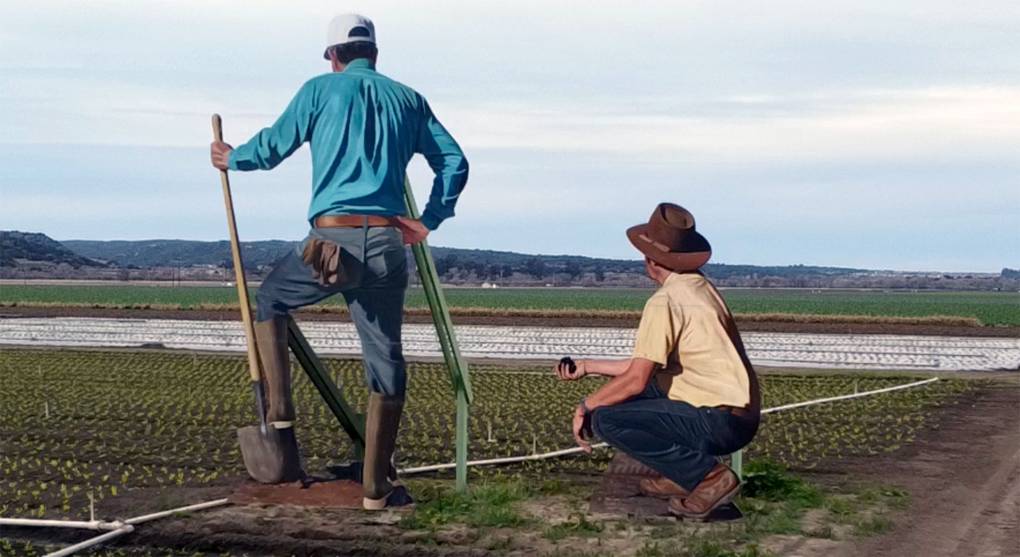
"caption": "Two of the 11 subjects in Cerney's \"Farmer & Irrigator\" installation at The Farm in Salinas. The two paintings are the most visible subjects that can be seen by drivers on Highway 68.",
"description": null,
"title": "FarmerIrrigator-cropped",
"credit": "Cesar Saldaña/KQED",
"status": "inherit",
"altTag": "Large paintings stand in a flat field. They depic two men in work clothes, one holds a shovel, the other a handful of dirt.",
"isLoading": false,
"fetchFailed": false
},
"news_11920567": {
"type": "attachments",
"id": "news_11920567",
"meta": {
"index": "attachments_1716263798",
"site": "news",
"id": "11920567",
"found": true
},
"parent": 11920517,
"imgSizes": {
"twentyfourteen-full-width": {
"file": "https://ww2.kqed.org/app/uploads/sites/10/2022/07/GettyImages-1324303916-1-1024x576.jpg",
"width": 1024,
"mimeType": "image/jpeg",
"height": 576
},
"thumbnail": {
"file": "https://ww2.kqed.org/app/uploads/sites/10/2022/07/GettyImages-1324303916-1-160x106.jpg",
"width": 160,
"mimeType": "image/jpeg",
"height": 106
},
"post-thumbnail": {
"file": "https://ww2.kqed.org/app/uploads/sites/10/2022/07/GettyImages-1324303916-1-672x372.jpg",
"width": 672,
"mimeType": "image/jpeg",
"height": 372
},
"kqedFullSize": {
"file": "https://ww2.kqed.org/app/uploads/sites/10/2022/07/GettyImages-1324303916-1.jpg",
"width": 1024,
"height": 678
},
"large": {
"file": "https://ww2.kqed.org/app/uploads/sites/10/2022/07/GettyImages-1324303916-1-1020x675.jpg",
"width": 1020,
"mimeType": "image/jpeg",
"height": 675
},
"medium": {
"file": "https://ww2.kqed.org/app/uploads/sites/10/2022/07/GettyImages-1324303916-1-800x530.jpg",
"width": 800,
"mimeType": "image/jpeg",
"height": 530
}
},
"publishDate": 1658889950,
"modified": 1658890027,
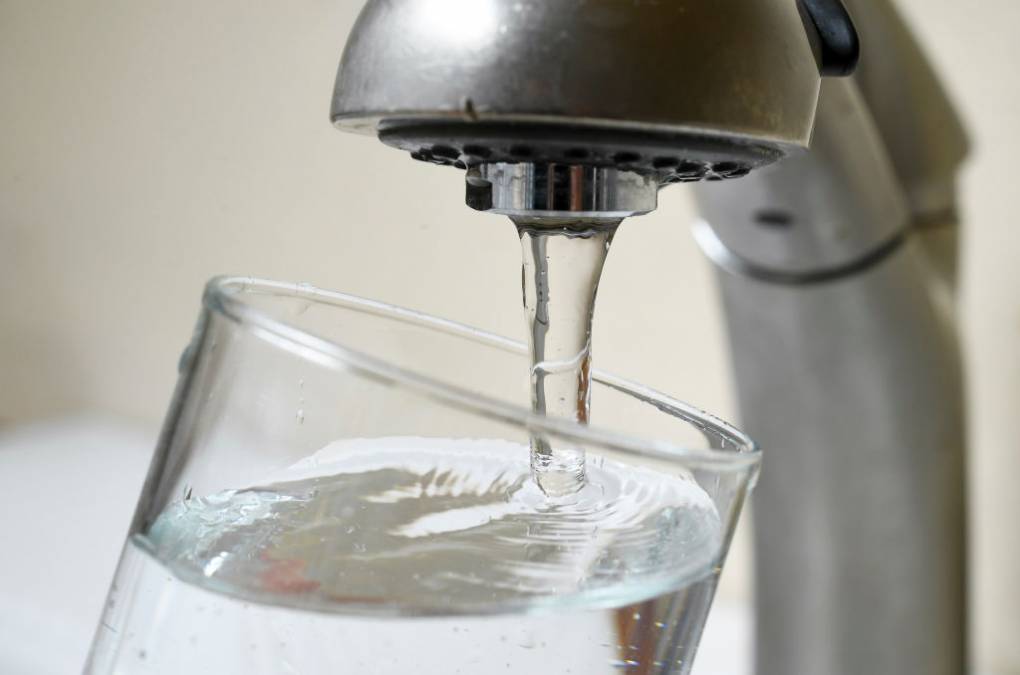
"caption": "A new report found 370 of California's water systems to be contaminated, particularly in economically disadvantaged communities in the Central Valley, the state's agricultural heartland.",
"description": null,
"title": "Tap Water In A Glass In Pennsylvania",
"credit": "Ben Hasty/MediaNews Group via Getty Images",
"status": "inherit",
"altTag": "A kitchen sink tap fills a glass of water.",
"isLoading": false,
"fetchFailed": false
}
},
"audioPlayerReducer": {
"postId": "stream_live",
"isPaused": true,
"isPlaying": false,
"pfsActive": false,
"pledgeModalIsOpen": true,
"playerDrawerIsOpen": false,
"liveAudioPlayStartedAt": 0,
"liveAudioPlayContext": ""
},
"authorsReducer": {
"byline_news_11943212": {
"type": "authors",
"id": "byline_news_11943212",
"meta": {
"override": true
},
"slug": "byline_news_11943212",
"name": "\u003ca href=\"https://calmatters.org/author/alastair-bland/\">Alastair Bland\u003c/a>",
"isLoading": false
},
"byline_news_11938681": {
"type": "authors",
"id": "byline_news_11938681",
"meta": {
"override": true
},
"slug": "byline_news_11938681",
"name": "\u003ca href=\"https://calmatters.org/author/anaibarra/\">Ana B. Ibarra\u003c/a> and \u003ca href=\"https://calmatters.org/author/nicole-foy/\">Nicole Foy\u003c/a>",
"isLoading": false
},
"byline_news_11937225": {
"type": "authors",
"id": "byline_news_11937225",
"meta": {
"override": true
},
"slug": "byline_news_11937225",
"name": "Adam Beam\u003cbr>Associated Press",
"isLoading": false
},
"byline_news_11922983": {
"type": "authors",
"id": "byline_news_11922983",
"meta": {
"override": true
},
"slug": "byline_news_11922983",
"name": "Kristen Hwang",
"isLoading": false
},
"byline_news_11920517": {
"type": "authors",
"id": "byline_news_11920517",
"meta": {
"override": true
},
"slug": "byline_news_11920517",
"name": "Kathleen Ronayne\u003cbr>The Associated Press",
"isLoading": false
},
"katsnow": {
"type": "authors",
"id": "235",
"meta": {
"index": "authors_1716337520",
"id": "235",
"found": true
},
"name": "Katrin Snow",
"firstName": "Katrin",
"lastName": "Snow",
"slug": "katsnow",
"email": "ksnow@kqed.org",
"display_author_email": true,
"staff_mastheads": [
"science"
],
"title": "Senior Editor",
"bio": "Kat started in radio in 1985 at KMUN in Astoria, Oregon, where the Columbia River meets the sea. She worked several years protecting monarch butterfly habitat in California with the Xerces Society, an invertebrate conservation organization, before a love for radio news drew her back into journalism. Kat came to KQED in 2002, and before that was a reporter and news director at KUER in Salt Lake City, covering the state legislature, the environment and health. Kat coaches reporters and others in embodied narration and public speaking. She is a certified teacher of Soul Motion®, a conscious dance practice, and can sometimes be found in the Mojave desert or the Eastern Sierra.",
"avatar": "https://secure.gravatar.com/avatar/fa6bf8a74a2692973a5484e64ebd2b52?s=600&d=blank&r=g",
"twitter": "cosmologicalkat",
"facebook": null,
"instagram": null,
"linkedin": null,
"sites": [
{
"site": "arts",
"roles": [
"contributor"
]
},
{
"site": "news",
"roles": [
"editor"
]
},
{
"site": "futureofyou",
"roles": [
"editor"
]
},
{
"site": "science",
"roles": [
"editor"
]
}
],
"headData": {
"title": "Katrin Snow | KQED",
"description": "Senior Editor",
"ogImgSrc": "https://secure.gravatar.com/avatar/fa6bf8a74a2692973a5484e64ebd2b52?s=600&d=blank&r=g",
"twImgSrc": "https://secure.gravatar.com/avatar/fa6bf8a74a2692973a5484e64ebd2b52?s=600&d=blank&r=g"
},
"isLoading": false,
"link": "/author/katsnow"
},
"kqed": {
"type": "authors",
"id": "236",
"meta": {
"index": "authors_1716337520",
"id": "236",
"found": true
},
"name": "KQED News Staff",
"firstName": "KQED News Staff",
"lastName": null,
"slug": "kqed",
"email": "faq@kqed.org",
"display_author_email": false,
"staff_mastheads": [],
"title": null,
"bio": null,
"avatar": "https://secure.gravatar.com/avatar/ef0e801a68c4c54afa9180db14084167?s=600&d=blank&r=g",
"twitter": null,
"facebook": null,
"instagram": null,
"linkedin": null,
"sites": [
{
"site": "arts",
"roles": [
"contributor"
]
},
{
"site": "news",
"roles": [
"editor"
]
},
{
"site": "futureofyou",
"roles": [
"author"
]
}
],
"headData": {
"title": "KQED News Staff | KQED",
"description": null,
"ogImgSrc": "https://secure.gravatar.com/avatar/ef0e801a68c4c54afa9180db14084167?s=600&d=blank&r=g",
"twImgSrc": "https://secure.gravatar.com/avatar/ef0e801a68c4c54afa9180db14084167?s=600&d=blank&r=g"
},
"isLoading": false,
"link": "/author/kqed"
},
"mlagos": {
"type": "authors",
"id": "3239",
"meta": {
"index": "authors_1716337520",
"id": "3239",
"found": true
},
"name": "Marisa Lagos",
"firstName": "Marisa",
"lastName": "Lagos",
"slug": "mlagos",
"email": "mlagos@kqed.org",
"display_author_email": false,
"staff_mastheads": [
"news"
],
"title": "KQED Contributor",
"bio": "Marisa Lagos is a correspondent for KQED’s California Politics and Government Desk and co-hosts the award-winning show and podcast, Political Breakdown. At KQED, Lagos also conducts reporting, analysis and investigations into state, local and national politics for radio, TV, online and onstage. In 2022, she and co-host, Scott Shafer, moderated the only gubernatorial debate in California. In 2020, the \u003ci>Washington Post\u003c/i> named her one of the top political journalists in California; she was nominated for a Peabody and won several other awards for her work investigating the 2017 California wildfires. She has worked at the \u003ci>San Francisco Chronicle\u003c/i>, \u003ci>San Francisco Examiner\u003c/i> and \u003ci>Los Angeles Times\u003c/i>. A UC Santa Barbara graduate, she lives in San Francisco with her two sons and husband.",
"avatar": "https://secure.gravatar.com/avatar/a261a0d3696fc066871ef96b85b5e7d2?s=600&d=blank&r=g",
"twitter": "@mlagos",
"facebook": null,
"instagram": null,
"linkedin": null,
"sites": [
{
"site": "arts",
"roles": [
"author"
]
},
{
"site": "news",
"roles": [
"editor"
]
},
{
"site": "science",
"roles": [
"editor"
]
},
{
"site": "forum",
"roles": [
"author"
]
},
{
"site": "liveblog",
"roles": [
"author"
]
}
],
"headData": {
"title": "Marisa Lagos | KQED",
"description": "KQED Contributor",
"ogImgSrc": "https://secure.gravatar.com/avatar/a261a0d3696fc066871ef96b85b5e7d2?s=600&d=blank&r=g",
"twImgSrc": "https://secure.gravatar.com/avatar/a261a0d3696fc066871ef96b85b5e7d2?s=600&d=blank&r=g"
},
"isLoading": false,
"link": "/author/mlagos"
},
"csaldana": {
"type": "authors",
"id": "11301",
"meta": {
"index": "authors_1716337520",
"id": "11301",
"found": true
},
"name": "Cesar Saldaña",
"firstName": "Cesar",
"lastName": "Saldaña",
"slug": "csaldana",
"email": "csaldana@kqed.org",
"display_author_email": false,
"staff_mastheads": [
"news"
],
"title": "KQED Contributor",
"bio": null,
"avatar": "https://secure.gravatar.com/avatar/04e89425007fe7102f750c79e76274bc?s=600&d=mm&r=g",
"twitter": null,
"facebook": null,
"instagram": null,
"linkedin": null,
"sites": [
{
"site": "news",
"roles": []
},
{
"site": "perspectives",
"roles": []
}
],
"headData": {
"title": "Cesar Saldaña | KQED",
"description": "KQED Contributor",
"ogImgSrc": "https://secure.gravatar.com/avatar/04e89425007fe7102f750c79e76274bc?s=600&d=mm&r=g",
"twImgSrc": "https://secure.gravatar.com/avatar/04e89425007fe7102f750c79e76274bc?s=600&d=mm&r=g"
},
"isLoading": false,
"link": "/author/csaldana"
},
"ahall": {
"type": "authors",
"id": "11490",
"meta": {
"index": "authors_1716337520",
"id": "11490",
"found": true
},
"name": "Alex Hall",
"firstName": "Alex",
"lastName": "Hall",
"slug": "ahall",
"email": "ahall@kqed.org",
"display_author_email": false,
"staff_mastheads": [
"news"
],
"title": "KQED Enterprise & Accountability Reporter",
"bio": "Alex Hall is KQED's Enterprise and Accountability Reporter. She previously covered the Central Valley for five years from KQED's bureau in Fresno. Before joining KQED, Alex was an investigative reporting fellow at Wisconsin Public Radio and the Wisconsin Center for Investigative Journalism. She has also worked as a bilingual producer for NPR's investigative unit and freelance video producer for Reuters TV on the Latin America desk. She got her start in journalism in South America, where she worked as a radio producer and Spanish-English translator for CNN Chile. Her documentary and investigation into the series of deadly COVID-19 outbreaks at Foster Farms won a national Edward R. Murrow award and was named an Investigative Reporters & Editors award finalist. Alex's reporting for Reveal on the Wisconsin dairy industry's reliance on undocumented immigrant labor was made into a film, Los Lecheros, which won a regional Edward R. Murrow award for best news documentary.",
"avatar": "https://secure.gravatar.com/avatar/04c28ad4a7caa7ac2ef39c655c4030c993a3f331481d1da4799bb76ea85b9afa?s=600&d=blank&r=g",
"twitter": "@chalexhall",
"bluesky": null,
"facebook": null,
"instagram": null,
"linkedin": null,
"sites": [
{
"site": "news",
"roles": [
"editor"
]
},
{
"site": "liveblog",
"roles": [
"author"
]
}
],
"headData": {
"title": "Alex Hall | KQED",
"description": "KQED Enterprise & Accountability Reporter",
"ogImgSrc": "https://secure.gravatar.com/avatar/04c28ad4a7caa7ac2ef39c655c4030c993a3f331481d1da4799bb76ea85b9afa?s=600&d=blank&r=g",
"twImgSrc": "https://secure.gravatar.com/avatar/04c28ad4a7caa7ac2ef39c655c4030c993a3f331481d1da4799bb76ea85b9afa?s=600&d=blank&r=g"
},
"isLoading": false,
"link": "/author/ahall"
},
"sgonzalez": {
"type": "authors",
"id": "11621",
"meta": {
"index": "authors_1716337520",
"id": "11621",
"found": true
},
"name": "Saul Gonzalez",
"firstName": "Saul",
"lastName": "Gonzalez",
"slug": "sgonzalez",
"email": "sgonzalez@KQED.org",
"display_author_email": false,
"staff_mastheads": [
"news"
],
"title": "Host, The California Report",
"bio": "A Golden State native, Saul has been the Los Angeles co-host of \u003cem>The California Report\u003c/em>since 2019, covering such issues as homelessness and housing policy, the state's response to climate change and the ravages of the Covid pandemic. Whenever possible, tries to be outside of the studio, connecting these big issues to the daily lives of Californians experiencing them in very personal ways.\r\n\r\nBefore joining KQED, Saul worked for the PBS \u003cem>NewsHour, Religion & Ethics Newsweekly, \u003c/em>and public radio affiliate KCRW in Santa Monica, where he also hosted the podcast series \"There Goes the Neighborhood\" about gentrification. For his work, Saul has been honored with several Emmys and is a two-time winner of the L.A. Press Club's Radio Journalist of the Year Award.\r\n\r\nWhen not working, Saul spends his time trying to hone his amateur photography skills and spending as much time as possible in bookstores and coffee houses.",
"avatar": "https://secure.gravatar.com/avatar/06e10f8ad252ef896cc4dc6bbee5f901?s=600&d=blank&r=g",
"twitter": null,
"facebook": null,
"instagram": null,
"linkedin": null,
"sites": [
{
"site": "news",
"roles": [
"author"
]
}
],
"headData": {
"title": "Saul Gonzalez | KQED",
"description": "Host, The California Report",
"ogImgSrc": "https://secure.gravatar.com/avatar/06e10f8ad252ef896cc4dc6bbee5f901?s=600&d=blank&r=g",
"twImgSrc": "https://secure.gravatar.com/avatar/06e10f8ad252ef896cc4dc6bbee5f901?s=600&d=blank&r=g"
},
"isLoading": false,
"link": "/author/sgonzalez"
},
"lsarah": {
"type": "authors",
"id": "11626",
"meta": {
"index": "authors_1716337520",
"id": "11626",
"found": true
},
"name": "Lakshmi Sarah",
"firstName": "Lakshmi",
"lastName": "Sarah",
"slug": "lsarah",
"email": "lsarah@kqed.org",
"display_author_email": false,
"staff_mastheads": [],
"title": "Digital Producer",
"bio": "Lakshmi Sarah is an educator, author and journalist with a focus on innovative storytelling. She has worked with newspapers, radio and magazines from Ahmedabad, India to Los Angeles, California. She has written and produced for Die Zeit, Global Voices, AJ+, KQED, Fusion Media Group and the New York Times.",
"avatar": "https://secure.gravatar.com/avatar/652dcaecd8b28826fc17a8b2d6bb4e93?s=600&d=blank&r=g",
"twitter": "lakitalki",
"facebook": null,
"instagram": "https://www.instagram.com/laki.talki/",
"linkedin": "https://www.linkedin.com/in/lakisarah/",
"sites": [
{
"site": "arts",
"roles": []
},
{
"site": "news",
"roles": []
},
{
"site": "bayareabites",
"roles": []
},
{
"site": "science",
"roles": []
}
],
"headData": {
"title": "Lakshmi Sarah | KQED",
"description": "Digital Producer",
"ogImgSrc": "https://secure.gravatar.com/avatar/652dcaecd8b28826fc17a8b2d6bb4e93?s=600&d=blank&r=g",
"twImgSrc": "https://secure.gravatar.com/avatar/652dcaecd8b28826fc17a8b2d6bb4e93?s=600&d=blank&r=g"
},
"isLoading": false,
"link": "/author/lsarah"
},
"apelit": {
"type": "authors",
"id": "11812",
"meta": {
"index": "authors_1716337520",
"id": "11812",
"found": true
},
"name": "Attila Pelit",
"firstName": "Attila",
"lastName": "Pelit",
"slug": "apelit",
"email": "apelit@kqed.org",
"display_author_email": false,
"staff_mastheads": [],
"title": "KQED Contributor",
"bio": null,
"avatar": "https://secure.gravatar.com/avatar/9b7b8a9e595d58a1f4d853f8608ae584?s=600&d=mm&r=g",
"twitter": null,
"facebook": null,
"instagram": null,
"linkedin": null,
"sites": [
{
"site": "news",
"roles": [
"editor"
]
},
{
"site": "science",
"roles": [
"editor"
]
},
{
"site": "elections",
"roles": [
"editor"
]
},
{
"site": "liveblog",
"roles": [
"editor"
]
}
],
"headData": {
"title": "Attila Pelit | KQED",
"description": "KQED Contributor",
"ogImgSrc": "https://secure.gravatar.com/avatar/9b7b8a9e595d58a1f4d853f8608ae584?s=600&d=mm&r=g",
"twImgSrc": "https://secure.gravatar.com/avatar/9b7b8a9e595d58a1f4d853f8608ae584?s=600&d=mm&r=g"
},
"isLoading": false,
"link": "/author/apelit"
}
},
"pagesReducer": {
"news_tag_central-valley": {
"type": "terms",
"id": "news_311",
"meta": {
"index": "terms_1716263798",
"site": "news",
"id": "311",
"score": 8.669906
},
"featImg": null,
"name": "Central Valley",
"description": null,
"taxonomy": "tag",
"headData": {
"twImgId": null,
"twTitle": null,
"ogTitle": null,
"ogImgId": null,
"twDescription": null,
"description": null,
"title": "Central Valley Archives | KQED News",
"ogDescription": null
},
"ttid": 319,
"slug": "central-valley",
"isLoading": false,
"title": "Central Valley",
"pageMeta": {
"site": "news",
"WpPageTemplate": "page-topic-editorial",
"currentPage": 4
},
"blocks": [
{
"blockName": "kqed/post-list",
"attrs": {
"layout": "cardArticle2",
"query": "posts/news?tag=central-valley",
"seeMore": false,
"paginated": true,
"page": 4
}
},
{
"blockName": "kqed/ad"
}
]
}
},
"pfsSessionReducer": {},
"postsReducer": {
"stream_live": {
"type": "live",
"id": "stream_live",
"audioUrl": "https://streams.kqed.org/kqedradio",
"title": "Live Stream",
"excerpt": "Live Stream information currently unavailable.",
"link": "/radio",
"featImg": "",
"label": {
"name": "KQED Live",
"link": "/"
}
},
"stream_kqedNewscast": {
"type": "posts",
"id": "stream_kqedNewscast",
"audioUrl": "https://www.kqed.org/.stream/anon/radio/RDnews/newscast.mp3?_=1",
"title": "KQED Newscast",
"featImg": "",
"label": {
"name": "88.5 FM",
"link": "/"
}
},
"news_11948187": {
"type": "posts",
"id": "news_11948187",
"meta": {
"index": "posts_1716263798",
"site": "news",
"id": "11948187",
"score": null,
"sort": [
1683118839000
]
},
"guestAuthors": [],
"slug": "california-teen-mother-baby-murdered-gang-related-mass-shooting",
"title": "A Teen Mother and Her Baby Were Murdered in a Gang-Related Shooting. Their Family Wants Answers",
"publishDate": 1683118839,
"format": "standard",
"headTitle": "A Teen Mother and Her Baby Were Murdered in a Gang-Related Shooting. Their Family Wants Answers | KQED",
"labelTerm": {
"site": "news"
},
"content": "\u003cp>[dropcap]S[/dropcap]hayne Maupin sat in the front row of the church staring stoically at the projector screen.\u003c/p>\n\u003cp>Photos of his girlfriend, Alissa Parraz, and their infant son, Nycholas, ticked by: Nycholas playing in a laundry basket, looking up at the camera; Nycholas tucked into his car seat; and Shayne holding hands with Alissa in the snow.\u003c/p>\n\u003cp>Shayne, 18, wiped his eyes with the sleeve of a red hoodie he had shared with Alissa. He didn’t know their time together as a family would be so brief.\u003c/p>\n\u003cp>[ad fullwidth]\u003c/p>\n\u003cp>Blue, orange and yellow flowers were arranged on the altar next to a framed photo of Alissa holding Nycholas. Also on the altar: an urn, and plastic children’s toys.\u003c/p>\n\u003cp>Jim Lee Maupin Jr., Shayne’s father, rubbed his son’s head to comfort him before walking onstage to address the funeral audience. He was struggling, too.\u003c/p>\n\u003cp>“I’m grateful that my son had fell in love,” he said through tears. “I just wish it would have lasted longer.”\u003c/p>\n\u003cfigure id=\"attachment_11948234\" class=\"wp-caption aligncenter\" style=\"max-width: 1920px\">\u003cimg loading=\"lazy\" decoding=\"async\" class=\"size-full wp-image-11948234\" src=\"https://ww2.kqed.org/app/uploads/sites/10/2023/05/RS64895_105_KQED_AlturasCalifornia_03172023-qut.jpg\" alt=\"A man at a podium inside a church memorial service speaks with a projected photo of a young couple and their baby behind him.\" width=\"1920\" height=\"1280\" srcset=\"https://cdn.kqed.org/wp-content/uploads/sites/10/2023/05/RS64895_105_KQED_AlturasCalifornia_03172023-qut.jpg 1920w, https://cdn.kqed.org/wp-content/uploads/sites/10/2023/05/RS64895_105_KQED_AlturasCalifornia_03172023-qut-800x533.jpg 800w, https://cdn.kqed.org/wp-content/uploads/sites/10/2023/05/RS64895_105_KQED_AlturasCalifornia_03172023-qut-1020x680.jpg 1020w, https://cdn.kqed.org/wp-content/uploads/sites/10/2023/05/RS64895_105_KQED_AlturasCalifornia_03172023-qut-160x107.jpg 160w, https://cdn.kqed.org/wp-content/uploads/sites/10/2023/05/RS64895_105_KQED_AlturasCalifornia_03172023-qut-1536x1024.jpg 1536w\" sizes=\"(max-width: 1920px) 100vw, 1920px\">\u003cfigcaption class=\"wp-caption-text\">Jim Lee Maupin Jr., father of Shayne Maupin, speaks during the funeral service for Alissa Parraz and Nycholas Parraz. \u003ccite>(Beth LaBerge/KQED)\u003c/cite>\u003c/figcaption>\u003c/figure>\n\u003cp>Alissa, 16, and 10-month-old Nycholas were slain Jan. 16 in a mass shooting in Goshen, an unincorporated community bisected by railroad tracks along Highway 99 west of Visalia.\u003c/p>\n\u003cp>It was the first of 13 days of gun violence that rocked California. \u003ca href=\"https://www.kqed.org/forum/2010101891960/monterey-park-reeling-after-lunar-new-year-massacre\">In Monterey Park\u003c/a>, 11 people died at a dance studio on Jan. 21; the suspected gunman also died, from a self-inflicted gunshot wound. On Jan. 23, seven people were gunned down at \u003ca href=\"https://www.kqed.org/news/11939064/at-least-7-killed-in-half-moon-bay-shooting\">two Half Moon Bay farms\u003c/a>. In Goshen, the violence and concerns about possible cartel involvement shocked neighbors into silence, fearful of retaliation. Almost four months later, loved ones of the victims are still trying to piece together what happened.\u003c/p>\n\u003cp>Officers responding to a 911 call on the morning of Jan. 16 immediately found the bodies of Alissa and Nycholas in the street in front of the house where she lived with family. Both were shot in the back of the head, and were the last to be killed in a massacre that claimed six lives. A neighbor recalled seeing Alissa’s body in the predawn light next to an abandoned child’s mattress on the curb.\u003c/p>\n\u003cfigure id=\"attachment_11948218\" class=\"wp-caption aligncenter\" style=\"max-width: 1920px\">\u003cimg loading=\"lazy\" decoding=\"async\" class=\"size-full wp-image-11948218\" src=\"https://ww2.kqed.org/app/uploads/sites/10/2023/05/RS64362_059_KQED_AlturasCalifornia_03172023-qut.jpg\" alt=\"A row of mourning family members, from teens to older males, sit inside a church. One bows their head with a sad expression as they listen to speakers during a funeral service for their loved ones who've died.\" width=\"1920\" height=\"1280\" srcset=\"https://cdn.kqed.org/wp-content/uploads/sites/10/2023/05/RS64362_059_KQED_AlturasCalifornia_03172023-qut.jpg 1920w, https://cdn.kqed.org/wp-content/uploads/sites/10/2023/05/RS64362_059_KQED_AlturasCalifornia_03172023-qut-800x533.jpg 800w, https://cdn.kqed.org/wp-content/uploads/sites/10/2023/05/RS64362_059_KQED_AlturasCalifornia_03172023-qut-1020x680.jpg 1020w, https://cdn.kqed.org/wp-content/uploads/sites/10/2023/05/RS64362_059_KQED_AlturasCalifornia_03172023-qut-160x107.jpg 160w, https://cdn.kqed.org/wp-content/uploads/sites/10/2023/05/RS64362_059_KQED_AlturasCalifornia_03172023-qut-1536x1024.jpg 1536w\" sizes=\"(max-width: 1920px) 100vw, 1920px\">\u003cfigcaption class=\"wp-caption-text\">Family and friends of Alissa Parraz and Nycholas Parraz listen to speakers during the funeral service. \u003ccite>(Beth LaBerge/KQED)\u003c/cite>\u003c/figcaption>\u003c/figure>\n\u003cp>In surveillance video shown at a police press conference, Alissa is seen running from the house with Nycholas in her arms. She drops him on the other side of a fence before hoisting herself over a chain-link gate. One of the two gunmen follows her, a rifle in his hands.\u003c/p>\n\u003cp>Nycholas, who was in foster care for most of his life, had been reunited with Alissa just three days earlier.\u003c/p>\n\u003cp>Four of Alissa’s other family members also died in the shooting, including her grandmother, Jennifer Analla; great-grandmother, Rosa Parraz; great-uncle, Eladio Parraz Jr.; and cousin, Marcos Parraz.\u003c/p>\n\u003cp>Law enforcement were familiar with the Harvest Avenue house, Tulare County Sheriff Mike Boudreaux told reporters. Deputies executed a search warrant there on Jan. 3. According to Boudreaux, at least two people in the family were Sureño gang members. He said both gunmen were members of the rival Norteño gang and had targeted the family.\u003c/p>\n\u003cp>Noah Beard, 25, of Visalia, and Angel Uriarte, 35, of Goshen, were arrested and charged with six counts of murder with special circumstances, among other charges. Both pleaded not guilty.[aside postID=news_11947532 hero='https://ww2.kqed.org/app/uploads/sites/10/2023/04/GettyImages-1252149086-1020x680.jpg']Valerie Gensel, Shayne’s mother, said no social worker or representative from the sheriff’s office called to notify Shayne of Nycholas’ death.\u003c/p>\n\u003cp>“Not one cop,” she told KQED. “Nothing.”\u003c/p>\n\u003cp>Tulare County Sheriff’s Office spokesperson Ashley Ritchie said detectives, who were focused on catching the killers, did not immediately know Nycholas’ identity or the identity of his father.\u003c/p>\n\u003cp>For months before the shooting, Gensel said, she had concerns about Alissa’s living situation and her grandfather, Martin Pena Parraz, who sometimes stayed at the Harvest Avenue property. Gensel said he had threatened Shayne’s father and verbally attacked Shayne.\u003c/p>\n\u003cp>Sheriff’s deputies conducting a parole compliance check on Parraz on Jan. 3 found his brother, Eladio Parraz Jr., at the house instead.\u003c/p>\n\u003cp>“Martin and his brother Eladio Parraz are documented Sureño gang members in Tulare County,” a sheriff’s deputy wrote in a report reviewed by KQED.\u003c/p>\n\u003cp>According to police, a search of a trailer on the property belonging to Parraz Jr. turned up an AR-style rifle with no serial number, a shotgun, a handgun, ammunition, methamphetamine, pipes for smoking meth, body armor and 10 bags of marijuana.\u003c/p>\n\u003cfigure id=\"attachment_11948215\" class=\"wp-caption aligncenter\" style=\"max-width: 1920px\">\u003cimg loading=\"lazy\" decoding=\"async\" class=\"size-full wp-image-11948215\" src=\"https://ww2.kqed.org/app/uploads/sites/10/2023/05/RS64482_004_KQED_AlexHall_AlturasCalifornia_02222023-qut-1.jpg\" alt=\"A man's hand holds a cell phone that displays a photo of himself with a teenage girl and her baby boy who clutches a baby blanket.\" width=\"1920\" height=\"1280\" srcset=\"https://cdn.kqed.org/wp-content/uploads/sites/10/2023/05/RS64482_004_KQED_AlexHall_AlturasCalifornia_02222023-qut-1.jpg 1920w, https://cdn.kqed.org/wp-content/uploads/sites/10/2023/05/RS64482_004_KQED_AlexHall_AlturasCalifornia_02222023-qut-1-800x533.jpg 800w, https://cdn.kqed.org/wp-content/uploads/sites/10/2023/05/RS64482_004_KQED_AlexHall_AlturasCalifornia_02222023-qut-1-1020x680.jpg 1020w, https://cdn.kqed.org/wp-content/uploads/sites/10/2023/05/RS64482_004_KQED_AlexHall_AlturasCalifornia_02222023-qut-1-160x107.jpg 160w, https://cdn.kqed.org/wp-content/uploads/sites/10/2023/05/RS64482_004_KQED_AlexHall_AlturasCalifornia_02222023-qut-1-1536x1024.jpg 1536w\" sizes=\"(max-width: 1920px) 100vw, 1920px\">\u003cfigcaption class=\"wp-caption-text\">Jim Lee Maupin Jr. displays a photo on his cellphone of one of the family’s only visits with his grandson, Nycholas Parraz, in late November 2022. \u003ccite>(Alex Hall/KQED)\u003c/cite>\u003c/figcaption>\u003c/figure>\n\u003cp>Alissa and another minor, whose name in the report is redacted, were at the house at the time of the search. Deputies did not contact Child Welfare Services because, according to Ritchie, the drugs and guns were found in the trailer and not in the house, where the minors were. The trailer, one of two on the property, was a “completely different residence from where Alissa was living,” Ritchie said.\u003c/p>\n\u003cp>Law enforcement is required to report suspected child abuse or neglect under the \u003ca href=\"https://oag.ca.gov/sites/all/files/agweb/pdfs/info_bulletins/2020-dle-17.pdf?\">Child Abuse and Neglect Reporting Act\u003c/a>. When asked about the search, Carrie Monteiro, public information officer for the Tulare County Health and Human Services Agency, which includes Child Welfare Services, pointed to the law. She declined to answer questions about the case, citing confidentiality.\u003c/p>\n\u003cp>At a Jan. 13 juvenile court hearing, according to Gensel, a judge decided Nycholas would be returned to live with Alissa full-time in the house. In a March 7 Facebook post, Gensel wrote that Nycholas and Alissa were “failed badly” by law enforcement and the county’s child protection agency.\u003c/p>\n\u003cp>“Only if the judge [listened] to me my grandson would still be here and my son wouldn’t be heartbroken or lost like he is right now,” she wrote, referencing the Maupins’ desire for Shayne and Alissa to share custody of Nycholas.\u003c/p>\n\u003cfigure id=\"attachment_11948252\" class=\"wp-caption aligncenter\" style=\"max-width: 1920px\">\u003cimg loading=\"lazy\" decoding=\"async\" class=\"size-full wp-image-11948252\" src=\"https://ww2.kqed.org/app/uploads/sites/10/2023/05/RS64483_006_KQED_AlexHall_AlturasCalifornia_02222023-qut.jpg\" alt=\"A memorial display set up for a teenage mother and her baby boy is pictured. Candles, photos and baby toys are a part of the memorial.\" width=\"1920\" height=\"1280\" srcset=\"https://cdn.kqed.org/wp-content/uploads/sites/10/2023/05/RS64483_006_KQED_AlexHall_AlturasCalifornia_02222023-qut.jpg 1920w, https://cdn.kqed.org/wp-content/uploads/sites/10/2023/05/RS64483_006_KQED_AlexHall_AlturasCalifornia_02222023-qut-800x533.jpg 800w, https://cdn.kqed.org/wp-content/uploads/sites/10/2023/05/RS64483_006_KQED_AlexHall_AlturasCalifornia_02222023-qut-1020x680.jpg 1020w, https://cdn.kqed.org/wp-content/uploads/sites/10/2023/05/RS64483_006_KQED_AlexHall_AlturasCalifornia_02222023-qut-160x107.jpg 160w, https://cdn.kqed.org/wp-content/uploads/sites/10/2023/05/RS64483_006_KQED_AlexHall_AlturasCalifornia_02222023-qut-1536x1024.jpg 1536w\" sizes=\"(max-width: 1920px) 100vw, 1920px\">\u003cfigcaption class=\"wp-caption-text\">An altar set up in the corner of the Maupins’ living room displays photos of Alissa and Nycholas, baby toys and other mementos, on Feb. 22, 2023. \u003ccite>(Alex Hall/KQED)\u003c/cite>\u003c/figcaption>\u003c/figure>\n\u003cp>At the funeral on March 17, relatives, co-workers and friends of the Maupins gathered inside Faith Baptist Church in Alturas, a small town in the remote, high desert of upstate California where Alissa lived before moving to the Central Valley.\u003c/p>\n\u003cp>The family wanted answers. Why were Nycholas and Alissa allowed to remain in a home known to law enforcement for gang activity?\u003c/p>\n\u003cp>“There was no reason to kill [Nycholas],” said Shayne’s grandfather Jim Lee Maupin Sr., who traveled to the service from Oklahoma, where the family has its roots in the Peoria Tribe. “He couldn’t have said a word about them. Even if they let him live, he ain’t going to be able to point them out.”[pullquote size=\"medium\" align=\"right\" citation=\"Valerie Gensel, Shayne Maupin’s mother\"]‘Only if the judge [listened] to me my grandson would still be here and my son wouldn’t be heartbroken or lost like he is right now.’[/pullquote]Micki Witzel, Shayne’s great-aunt, was distraught.\u003c/p>\n\u003cp>“They really need answers to why this even happened,” she said through sobs. “They should never have put that baby back in that house.”\u003c/p>\n\u003cp>Since the shooting, the Maupins said, they had been confronted by Alissa’s family. Some of Alissa’s relatives who live in Alturas appeared at the park where the Maupins were gathered on what would have been Nycholas’ first birthday. It was March 1, and the solemn balloon release was disrupted by revving engines and spinning tires, according to Gensel.\u003c/p>\n\u003cp>It left her questioning how Alissa ended up in Goshen in the first place.\u003c/p>\n\u003cp>“I would have did anything for her if [Child Welfare Services] or the courts asked us if she could stay with us,” Gensel told KQED after the funeral. “We would have opened our arms and our doors to her. We would have gave her [the] life that she wanted and needed.”\u003c/p>\n\u003ch2>‘She didn’t want to be there’\u003c/h2>\n\u003cp>Alturas is the seat of Modoc County in the northeastern corner of the state. Bordering Oregon and Nevada, Modoc is one of the state’s least populated counties.\u003c/p>\n\u003cp>At over 4,000 feet above sea level, Alturas and its desert brush and grazing livestock are covered by a fine snow in winter. Deer meander into yards with pristine views of the snow-capped Warner Mountains. “Where the West Still Lives” is the Alturas motto.\u003c/p>\n\u003cfigure id=\"attachment_11948217\" class=\"wp-caption aligncenter\" style=\"max-width: 1920px\">\u003cimg loading=\"lazy\" decoding=\"async\" class=\"size-full wp-image-11948217\" src=\"https://ww2.kqed.org/app/uploads/sites/10/2023/05/RS64317_006_KQED_AlturasCalifornia_03172023-qut-1.jpg\" alt='A large, wooden sign in the middle of yellow grass and brush reads \"Welcome to Alturas: Where the West Still Lives.\" A snowy mountain range is seen in the background and a semi truck drives down a country road. Snow is melted on the ground and telephone poles dot the road.' width=\"1920\" height=\"1280\" srcset=\"https://cdn.kqed.org/wp-content/uploads/sites/10/2023/05/RS64317_006_KQED_AlturasCalifornia_03172023-qut-1.jpg 1920w, https://cdn.kqed.org/wp-content/uploads/sites/10/2023/05/RS64317_006_KQED_AlturasCalifornia_03172023-qut-1-800x533.jpg 800w, https://cdn.kqed.org/wp-content/uploads/sites/10/2023/05/RS64317_006_KQED_AlturasCalifornia_03172023-qut-1-1020x680.jpg 1020w, https://cdn.kqed.org/wp-content/uploads/sites/10/2023/05/RS64317_006_KQED_AlturasCalifornia_03172023-qut-1-160x107.jpg 160w, https://cdn.kqed.org/wp-content/uploads/sites/10/2023/05/RS64317_006_KQED_AlturasCalifornia_03172023-qut-1-1536x1024.jpg 1536w\" sizes=\"(max-width: 1920px) 100vw, 1920px\">\u003cfigcaption class=\"wp-caption-text\">A semi-truck drives past a sign advertising businesses in Alturas on March 17, 2023, with the Warner Mountains in the background. \u003ccite>(Beth LaBerge/KQED)\u003c/cite>\u003c/figcaption>\u003c/figure>\n\u003cp>At Antonio’s Cucina Italiana, where Shayne once worked, a funeral program was tacked to a bulletin board. A former co-worker recalled Shayne frequently on the phone in the evenings talking about getting custody of Nycholas.\u003c/p>\n\u003cp>It was in this town of 2,700 people that Shayne and Alissa met. They were introduced by Shayne’s younger brother. Shayne, who declined to be interviewed for this story, was 15 and Alissa had just turned 14.\u003c/p>\n\u003cp>The day after the funeral, Gensel fondly recalled memories of Alissa.\u003c/p>\n\u003cp>“She liked to play. She liked to dress up Shayne,” Gensel, a traveling certified nursing assistant, said of the girl she described as bright and shy. “They’d go to the park to walk. [They’d] have little snacks to take with them.”\u003c/p>\n\u003cfigure id=\"attachment_11948290\" class=\"wp-caption aligncenter\" style=\"max-width: 1710px\">\u003cimg loading=\"lazy\" decoding=\"async\" class=\"size-full wp-image-11948290\" src=\"https://ww2.kqed.org/app/uploads/sites/10/2023/05/RS64891_003_CourtesyPhoto_ShayneAlissa_Undated-qut.jpg\" alt=\"A young couple walks in the snow holding hands with their backs toward the camera.\" width=\"1710\" height=\"1139\" srcset=\"https://cdn.kqed.org/wp-content/uploads/sites/10/2023/05/RS64891_003_CourtesyPhoto_ShayneAlissa_Undated-qut.jpg 1710w, https://cdn.kqed.org/wp-content/uploads/sites/10/2023/05/RS64891_003_CourtesyPhoto_ShayneAlissa_Undated-qut-800x533.jpg 800w, https://cdn.kqed.org/wp-content/uploads/sites/10/2023/05/RS64891_003_CourtesyPhoto_ShayneAlissa_Undated-qut-1020x679.jpg 1020w, https://cdn.kqed.org/wp-content/uploads/sites/10/2023/05/RS64891_003_CourtesyPhoto_ShayneAlissa_Undated-qut-160x107.jpg 160w, https://cdn.kqed.org/wp-content/uploads/sites/10/2023/05/RS64891_003_CourtesyPhoto_ShayneAlissa_Undated-qut-1536x1023.jpg 1536w\" sizes=\"(max-width: 1710px) 100vw, 1710px\">\u003cfigcaption class=\"wp-caption-text\">Shayne Maupin and Alissa Parraz walk through Alturas while holding hands in an undated photo. \u003ccite>(Courtesy Valerie Gensel)\u003c/cite>\u003c/figcaption>\u003c/figure>\n\u003cp>The memories flooded back to Gensel, 44, who spoke to KQED at a lodge near her home: Alissa and Shayne jumping on the trampoline in the snow, and Alissa nibbling on snacks “like a little bird” because she was too shy to eat in front of the family.\u003c/p>\n\u003cp>Alissa’s adolescence was marked by repeated shuffles among family members in Alturas and the Central Valley, 500 miles away. Police records reviewed by KQED show she had trouble at school: In October 2020, she and another female student fought. Alissa punched the other student several times, according to an incident report.\u003c/p>\n\u003cp>“She had a sassy attitude. Her mom told me that I wouldn’t be able to handle her,” Gensel said.\u003c/p>\n\u003cp>Alissa learned she was pregnant in the summer of 2021. Soon after, she moved to Tulare County to live with her father’s family, Gensel said. Exactly why remains unclear.\u003c/p>\n\u003cp>According to Gensel, Alissa’s mother, Shyla Pina, told her that the juvenile court system required Alissa to live with her grandparents after she spent time in juvenile detention for fighting with her younger sister while holding another sibling. But Gensel believes Pina, an Alturas resident, chose to send Alissa away after learning about the pregnancy.\u003c/p>\n\u003cfigure id=\"attachment_11948291\" class=\"wp-caption aligncenter\" style=\"max-width: 1920px\">\u003cimg loading=\"lazy\" decoding=\"async\" class=\"size-full wp-image-11948291\" src=\"https://ww2.kqed.org/app/uploads/sites/10/2023/05/RS64410_016_KQED_AlturasCalifornia_03182023-qut.jpg\" alt=\"Deer in the country.\" width=\"1920\" height=\"1280\" srcset=\"https://cdn.kqed.org/wp-content/uploads/sites/10/2023/05/RS64410_016_KQED_AlturasCalifornia_03182023-qut.jpg 1920w, https://cdn.kqed.org/wp-content/uploads/sites/10/2023/05/RS64410_016_KQED_AlturasCalifornia_03182023-qut-800x533.jpg 800w, https://cdn.kqed.org/wp-content/uploads/sites/10/2023/05/RS64410_016_KQED_AlturasCalifornia_03182023-qut-1020x680.jpg 1020w, https://cdn.kqed.org/wp-content/uploads/sites/10/2023/05/RS64410_016_KQED_AlturasCalifornia_03182023-qut-160x107.jpg 160w, https://cdn.kqed.org/wp-content/uploads/sites/10/2023/05/RS64410_016_KQED_AlturasCalifornia_03182023-qut-1536x1024.jpg 1536w\" sizes=\"(max-width: 1920px) 100vw, 1920px\">\u003cfigcaption class=\"wp-caption-text\">A deer stands near downtown Alturas, on March 18, 2023. \u003ccite>(Beth LaBerge/KQED)\u003c/cite>\u003c/figcaption>\u003c/figure>\n\u003cp>“She never wanted to go down there,” Gensel said. “That was her first words — ‘I don’t want to leave, I don’t want to go.’”\u003c/p>\n\u003cp>Pina declined to be interviewed. When reached on Facebook, she ignored a reporter’s question seeking clarity about how Alissa came to live in Goshen with her grandparents. Instead, she wrote: “My daughter is very smart and loving yes she had her ups and down[s] with everything that has happened to her.”\u003c/p>\n\u003cp>Attempts to reach other family members were unsuccessful.\u003c/p>\n\u003cp>Juvenile courts do send minors to live with family members in other counties in certain situations — for example, the court determining a minor is a danger to their family, or a minor’s living situation is unsafe, Modoc County Chief Probation Officer Stephen Svetich said.\u003c/p>\n\u003cp>“If we find that they need to be placed out of home, they could be placed anywhere else in the state,” Svetich said in a phone interview.\u003c/p>\n\u003cfigure id=\"attachment_11948269\" class=\"wp-caption aligncenter\" style=\"max-width: 1920px\">\u003cimg loading=\"lazy\" decoding=\"async\" class=\"size-full wp-image-11948269\" src=\"https://ww2.kqed.org/app/uploads/sites/10/2023/05/RS64419_007_KQED_AlexHall_AlturasCalifornia_02222023-qut.jpg\" alt=\"Brown and black cows are pictured on a snow-covered field.\" width=\"1920\" height=\"1280\" srcset=\"https://cdn.kqed.org/wp-content/uploads/sites/10/2023/05/RS64419_007_KQED_AlexHall_AlturasCalifornia_02222023-qut.jpg 1920w, https://cdn.kqed.org/wp-content/uploads/sites/10/2023/05/RS64419_007_KQED_AlexHall_AlturasCalifornia_02222023-qut-800x533.jpg 800w, https://cdn.kqed.org/wp-content/uploads/sites/10/2023/05/RS64419_007_KQED_AlexHall_AlturasCalifornia_02222023-qut-1020x680.jpg 1020w, https://cdn.kqed.org/wp-content/uploads/sites/10/2023/05/RS64419_007_KQED_AlexHall_AlturasCalifornia_02222023-qut-160x107.jpg 160w, https://cdn.kqed.org/wp-content/uploads/sites/10/2023/05/RS64419_007_KQED_AlexHall_AlturasCalifornia_02222023-qut-1536x1024.jpg 1536w\" sizes=\"(max-width: 1920px) 100vw, 1920px\">\u003cfigcaption class=\"wp-caption-text\">A herd of cattle in a snow-covered field near Alturas, on Feb. 23, 2023. \u003ccite>(Alex Hall/KQED)\u003c/cite>\u003c/figcaption>\u003c/figure>\n\u003cp>Alissa had lived in Tulare County as a child. Documents obtained by KQED reveal that in September 2017, a Tulare County court issued a protective order barring contact between Alissa and her father, Martin Eulojio Parraz.\u003c/p>\n\u003cp>On Sept. 6, 2017, a police officer responding to a report of suspected child abuse at Freedom Elementary School in Farmersville, a small town east of Visalia, was told an 11-year-old female student in the sixth grade had come to school with scratches on her face.\u003c/p>\n\u003cp>The student, identified in an arrest report only by her initials, “AP,” told police she lived with her father, Martin Eulojio Parraz, in nearby Woodlake. She said she had lived in a house that was frequently shot at, and that she was used to getting down on the floor and crawling to the back rooms.\u003c/p>\n\u003cp>“She did not know if her father was a gang member, and said he likes the color blue, has a tattoo on the back of his head with ‘CFM,’ and tattoos of a 1 and a 3 on each hand forming a 13,” an officer wrote in the report.\u003c/p>\n\u003cp>The color blue and tattoos with the number 13 are common Sureño identifiers. The Sureños — or Southerners — are a network of street gangs that pledge loyalty to the Mexican Mafia.\u003c/p>\n\u003cp>According to the report, “AP” said she saw her grandfather and father get arrested. She detailed physical abuse, including having her head slammed against a wall, being shoved into a closet and having chili rubbed in her mouth and eyes. She also told police she didn’t feel safe at home and hadn’t seen her mother in three years. Police and social workers immediately removed the student and her siblings from their father’s home.\u003c/p>\n\u003cp>Court records show Alissa’s father told police five months later he was a “Southerner” and a member of CFM, short for Crazy F—’ Mexicans.\u003c/p>\n\u003cp>In 2019, Martin Eulojio Parraz was sentenced to almost 18 years in prison for child abuse, and charges stemming from his role in a gas station robbery. That same year, according to a Tulare County court judgment, Pina was granted custody of Alissa and her siblings; they moved to Alturas.\u003c/p>\n\u003cp>But Alissa was back in the Visalia area, living with her father’s side of the family, within about two years. Once again in Tulare County, she posted TikTok videos of herself lip-synching songs in a bedroom and choreographing dance moves with her cousin in a backyard.\u003c/p>\n\u003cfigure id=\"attachment_11948262\" class=\"wp-caption aligncenter\" style=\"max-width: 1920px\">\u003cimg loading=\"lazy\" decoding=\"async\" class=\"wp-image-11948262 size-full\" src=\"https://ww2.kqed.org/app/uploads/sites/10/2023/05/RS64407_014_KQED_AlturasCalifornia_03182023-qut.jpg\" alt=\"\" width=\"1920\" height=\"1280\" srcset=\"https://cdn.kqed.org/wp-content/uploads/sites/10/2023/05/RS64407_014_KQED_AlturasCalifornia_03182023-qut.jpg 1920w, https://cdn.kqed.org/wp-content/uploads/sites/10/2023/05/RS64407_014_KQED_AlturasCalifornia_03182023-qut-800x533.jpg 800w, https://cdn.kqed.org/wp-content/uploads/sites/10/2023/05/RS64407_014_KQED_AlturasCalifornia_03182023-qut-1020x680.jpg 1020w, https://cdn.kqed.org/wp-content/uploads/sites/10/2023/05/RS64407_014_KQED_AlturasCalifornia_03182023-qut-160x107.jpg 160w, https://cdn.kqed.org/wp-content/uploads/sites/10/2023/05/RS64407_014_KQED_AlturasCalifornia_03182023-qut-1536x1024.jpg 1536w\" sizes=\"(max-width: 1920px) 100vw, 1920px\">\u003cfigcaption class=\"wp-caption-text\">A memorial card for Alissa Parraz and Nycholas Parraz hangs at Antonio’s Cucina Italiana in Alturas, on March 18, 2023. \u003ccite>(Beth LaBerge/KQED)\u003c/cite>\u003c/figcaption>\u003c/figure>\n\u003cp>Shayne used the money he earned working at Antonio’s to buy bus tickets and pay for taxis so he could visit Alissa, and later Nycholas. Sometimes his parents drove him the 500 miles.\u003c/p>\n\u003cp>Alissa’s grandfather didn’t approve of her relationship with Shayne, and limited the time she could spend with him when he visited, Gensel said. According to Gensel, during one of the first visits, he verbally attacked Shayne because he was wearing the red hoodie he shared with Alissa, the one he later wore to her funeral.\u003c/p>\n\u003cp>Gensel said there was also tension between the families because she gave Alissa birth control.\u003c/p>\n\u003cp>“She always asked me to kidnap her or take her home with us,” Gensel said. “She didn’t want to be there.”\u003c/p>\n\u003cp>On one visit, they circled the block while Alissa waved from the driveway.\u003c/p>\n\u003cp>“She was scared to leave the yard,” Gensel said. “She was scared her grandfather was going to see her.”\u003c/p>\n\u003cp>But Alissa’s aunt, Christina Castro, said Alissa had a special relationship with her grandfather.\u003c/p>\n\u003cp>“She had the cutest way she would say ‘graanpaa,’” said Castro, the mother of Marcos Parraz, who was also killed in the shooting. “She was sweet, funny, beautiful, outspoken, confident and full of pride. She was all that and more, and proud to be a Parraz and a young mother.”\u003c/p>\n\u003cp>Three days after Nycholas was born, Tulare County Child Welfare Services placed him in foster care. Boudreaux later told reporters Alissa wasn’t able to provide sufficient care. Alissa was allowed monthly, supervised visits until she was granted full custody on Jan. 13, he said.[pullquote size=\"medium\" align=\"right\" citation=\"Christina Castro, Alissa Parraz’s aunt\"]‘She was sweet, funny, beautiful, outspoken, confident and full of pride. She was all that and more, and proud to be a Parraz and a young mother.’[/pullquote]The Maupins said they wanted Nycholas to live with them half of the time in Modoc County, but attorneys for Nycholas and Alissa believed nine hours in a car every two weeks would be inappropriate for an infant. Gensel recalled the drive back to Modoc County after the hearing as “sickening, quiet, long.” In the car, the Maupins talked about how they planned to return to Tulare County the following week for their first overnight visit with Nycholas.\u003c/p>\n\u003cp>“But they were killed before we got that chance,” she said.\u003c/p>\n\u003cp>In Alissa’s \u003ca href=\"https://www.tiktok.com/@alissaparraz/video/7188731502912474414?_r=1&_t=8b3qjPLhc66\">last TikTok post\u003c/a> on Jan. 14, the words, “Who would sit at your grave the longest?” appeared on the screen, followed by photos of Nycholas.\u003c/p>\n\u003cp>On the morning of Jan. 16, Shayne went to the lodge near the Maupins’ home where he could use the Wi-Fi, and tried calling Alissa. At the same time, a relative of Alissa’s came to the Maupins’ home and informed Shayne’s parents of the shooting. Gensel drove to the lodge and told Shayne to stop dialing.\u003c/p>\n\u003cp>There was no one on the other end.\u003c/p>\n\u003cfigure id=\"attachment_11948249\" class=\"wp-caption aligncenter\" style=\"max-width: 1920px\">\u003cimg loading=\"lazy\" decoding=\"async\" class=\"size-full wp-image-11948249\" src=\"https://ww2.kqed.org/app/uploads/sites/10/2023/05/RS64357_050_KQED_AlturasCalifornia_03172023-qut.jpg\" alt=\"A young man with short, brown hair and a red hoodie sits in a row among family inside a church where a funeral is being held for his partner and his baby who were killed in a mass shooting. His face is heartbroken.\" width=\"1920\" height=\"1280\" srcset=\"https://cdn.kqed.org/wp-content/uploads/sites/10/2023/05/RS64357_050_KQED_AlturasCalifornia_03172023-qut.jpg 1920w, https://cdn.kqed.org/wp-content/uploads/sites/10/2023/05/RS64357_050_KQED_AlturasCalifornia_03172023-qut-800x533.jpg 800w, https://cdn.kqed.org/wp-content/uploads/sites/10/2023/05/RS64357_050_KQED_AlturasCalifornia_03172023-qut-1020x680.jpg 1020w, https://cdn.kqed.org/wp-content/uploads/sites/10/2023/05/RS64357_050_KQED_AlturasCalifornia_03172023-qut-160x107.jpg 160w, https://cdn.kqed.org/wp-content/uploads/sites/10/2023/05/RS64357_050_KQED_AlturasCalifornia_03172023-qut-1536x1024.jpg 1536w\" sizes=\"(max-width: 1920px) 100vw, 1920px\">\u003cfigcaption class=\"wp-caption-text\">Shayne Maupin, the father of Nycholas, watches a slideshow of his late girlfriend, Alissa Parraz, and their child at Faith Baptist Church in Alturas, on March 17, 2023. \u003ccite>(Beth LaBerge/KQED)\u003c/cite>\u003c/figcaption>\u003c/figure>\n\u003cp>“For him to look at me and say, ‘Why, Mom?’ — to have to tell him his family was murdered, to watch his soul walk out of him — hurt so bad,” she said.\u003c/p>\n\u003cp>According to police records and Tulare County Sheriff’s Office spokesperson Ritchie, in the weeks leading up to the shooting, sheriff’s deputies and a parole officer had been to the house at least four times looking for Parraz, who had an active parole warrant. He was arrested hours after the mass shooting.\u003c/p>\n\u003cp>On Feb. 16, Parraz was indicted on federal charges of possession and intent to distribute methamphetamine and heroin and being a felon in possession of a firearm and ammunition.\u003c/p>\n\u003ch2>‘We’re all lost’\u003c/h2>\n\u003cp>The Maupins live in a mobile home park on the edge of a reservoir about 15 minutes outside of Alturas. Aside from the lake, the nearby lodge and a few ranches, the neighborhood is surrounded by desert grass and open sky.\u003c/p>\n\u003cp>On a day in late February, snow flurries fell on cars parked in the driveway.\u003c/p>\n\u003cp>Inside, the Maupins had set up an altar in the corner of their living room. A poster showed photos of Alissa and Nycholas, and a guardian angel candle had been placed next to an urn decorated with an image of trees in the fall. There was also a homemade Father’s Day card.\u003c/p>\n\u003cp>Days earlier, Alissa’s family members had shown up at a house where Shayne was hanging out with a friend, Gensel said. After Alissa’s and Nycholas’ deaths, Shayne had been given half of their ashes, and Alissa’s family members were demanding his half. Shayne didn’t go outside.\u003c/p>\n\u003cp>Alissa’s relatives didn’t attend the funeral that Gensel organized at Faith Baptist Church in Alturas. Gensel streamed the service on Facebook for family and others who couldn’t attend. The photo slideshow had a technical glitch and had to be restarted.\u003c/p>\n\u003cp>“I wish Alissas’s family could have been here today. But they’re not. It hurts,” Gensel said onstage.\u003c/p>\n\u003cp>Shayne asked Gensel to keep the flowers from the funeral alive.\u003c/p>\n\u003cp>“He barely eats,” Gensel said. “He’s just lost. We’re all lost.”\u003c/p>\n\u003cfigure id=\"attachment_11948216\" class=\"wp-caption aligncenter\" style=\"max-width: 1478px\">\u003cimg loading=\"lazy\" decoding=\"async\" class=\"size-full wp-image-11948216\" src=\"https://ww2.kqed.org/app/uploads/sites/10/2023/05/RS64434_002_image_ValerieGensel-qut-1.jpg\" alt=\"A woman sits at a memorial site where her loved ones were shot and killed. Votive candles, purple and red bouquets, balloons, and a wooden cross are all positioned on a dirt sidewalk in front of a chain link fence. The woman sits on an abandoned mattress as she stares solemnly at the display.\" width=\"1478\" height=\"1142\" srcset=\"https://cdn.kqed.org/wp-content/uploads/sites/10/2023/05/RS64434_002_image_ValerieGensel-qut-1.jpg 1478w, https://cdn.kqed.org/wp-content/uploads/sites/10/2023/05/RS64434_002_image_ValerieGensel-qut-1-800x618.jpg 800w, https://cdn.kqed.org/wp-content/uploads/sites/10/2023/05/RS64434_002_image_ValerieGensel-qut-1-1020x788.jpg 1020w, https://cdn.kqed.org/wp-content/uploads/sites/10/2023/05/RS64434_002_image_ValerieGensel-qut-1-160x124.jpg 160w\" sizes=\"(max-width: 1478px) 100vw, 1478px\">\u003cfigcaption class=\"wp-caption-text\">Valerie Gensel visits a memorial at the site where Alissa Parraz and Nycholas Parraz were shot and killed in Goshen, on April 6, 2023. \u003ccite>(Courtesy Valerie Gensel)\u003c/cite>\u003c/figcaption>\u003c/figure>\n\u003cp>On a recent afternoon, Jim Lee Maupin Jr., Gensel and their daughter stood where Alissa’s and Nycholas’ bodies were found. They cleared some of the dried grass and adjusted a small, leaning wooden cross so it stood upright. They added an Easter sign, photos and purple, blue, red and white artificial flowers next to the votive candles and bouquets that had dried in the sun.\u003c/p>\n\u003cp>New cellophane balloons tied to the cross bobbed in the wind.\u003c/p>\n\u003cp>“Everyone that knew what was going on in that house is at fault because we all could have came together and fought for them,” Gensel said. “But we all failed them. Just not the system, but all of us.”\u003c/p>\n\u003cp>[ad floatright]\u003c/p>\n",
"blocks": [],
"excerpt": "In January, 16-year-old Alissa Parraz and her 10-month-old son, Nycholas, were slain in a gang-related mass shooting in the Central Valley town of Goshen. Their family wants to know why the two were allowed to remain in a home known to law enforcement for gang activity.",
"status": "publish",
"parent": 0,
"modified": 1721157788,
"stats": {
"hasAudio": false,
"hasVideo": false,
"hasChartOrMap": false,
"iframeSrcs": [],
"hasGoogleForm": false,
"hasGallery": false,
"hasHearkenModule": false,
"hasPolis": false,
"paragraphCount": 85,
"wordCount": 3718
},
"headData": {
"title": "A Teen Mother and Her Baby Were Murdered in a Gang-Related Shooting. Their Family Wants Answers | KQED",
"description": "In January, 16-year-old Alissa Parraz and her 10-month-old son, Nycholas, were slain in a gang-related mass shooting in the Central Valley town of Goshen. Their family wants to know why the two were allowed to remain in a home known to law enforcement for gang activity.",
"ogTitle": "",
"ogDescription": "",
"ogImgId": "",
"twTitle": "",
"twDescription": "",
"twImgId": "",
"schema": {
"@context": "https://schema.org",
"@type": "NewsArticle",
"headline": "A Teen Mother and Her Baby Were Murdered in a Gang-Related Shooting. Their Family Wants Answers",
"datePublished": "2023-05-03T06:00:39-07:00",
"dateModified": "2024-07-16T12:23:08-07:00",
"image": "https://cdn.kqed.org/wp-content/uploads/2020/02/KQED-OG-Image@1x.png",
"isAccessibleForFree": "True",
"publisher": {
"@type": "NewsMediaOrganization",
"@id": "https://www.kqed.org/#organization",
"name": "KQED",
"logo": "https://cdn.kqed.org/wp-content/uploads/2020/02/KQED-OG-Image@1x.png",
"url": "https://www.kqed.org",
"sameAs": [
"https://www.facebook.com/KQED",
"https://twitter.com/KQED",
"https://www.instagram.com/kqed/",
"https://www.tiktok.com/@kqedofficial",
"https://www.linkedin.com/company/kqed",
"https://www.youtube.com/channel/UCeC0IOo7i1P_61zVUWbJ4nw"
]
}
}
},
"sticky": false,
"excludeFromSiteSearch": "Include",
"articleAge": "0",
"path": "/news/11948187/california-teen-mother-baby-murdered-gang-related-mass-shooting",
"audioTrackLength": null,
"parsedContent": [
{
"type": "contentString",
"content": "\u003cdiv class=\"post-body\">\u003cp>\u003cp>\u003c/p>\u003cp>\u003cspan class=\"utils-parseShortcode-shortcodes-__dropcapShortcode__dropcap\">S\u003c/span>\u003c/p>\u003cp>hayne Maupin sat in the front row of the church staring stoically at the projector screen.\u003c/p>\n\u003cp>Photos of his girlfriend, Alissa Parraz, and their infant son, Nycholas, ticked by: Nycholas playing in a laundry basket, looking up at the camera; Nycholas tucked into his car seat; and Shayne holding hands with Alissa in the snow.\u003c/p>\n\u003cp>Shayne, 18, wiped his eyes with the sleeve of a red hoodie he had shared with Alissa. He didn’t know their time together as a family would be so brief.\u003c/p>\n\u003cp>\u003c/p>\u003c/div>",
"attributes": {
"named": {},
"numeric": []
}
},
{
"type": "component",
"content": "",
"name": "ad",
"attributes": {
"named": {
"label": "fullwidth"
},
"numeric": [
"fullwidth"
]
}
},
{
"type": "contentString",
"content": "\u003cdiv class=\"post-body\">\u003cp>\u003c/p>\n\u003cp>Blue, orange and yellow flowers were arranged on the altar next to a framed photo of Alissa holding Nycholas. Also on the altar: an urn, and plastic children’s toys.\u003c/p>\n\u003cp>Jim Lee Maupin Jr., Shayne’s father, rubbed his son’s head to comfort him before walking onstage to address the funeral audience. He was struggling, too.\u003c/p>\n\u003cp>“I’m grateful that my son had fell in love,” he said through tears. “I just wish it would have lasted longer.”\u003c/p>\n\u003cfigure id=\"attachment_11948234\" class=\"wp-caption aligncenter\" style=\"max-width: 1920px\">\u003cimg loading=\"lazy\" decoding=\"async\" class=\"size-full wp-image-11948234\" src=\"https://ww2.kqed.org/app/uploads/sites/10/2023/05/RS64895_105_KQED_AlturasCalifornia_03172023-qut.jpg\" alt=\"A man at a podium inside a church memorial service speaks with a projected photo of a young couple and their baby behind him.\" width=\"1920\" height=\"1280\" srcset=\"https://cdn.kqed.org/wp-content/uploads/sites/10/2023/05/RS64895_105_KQED_AlturasCalifornia_03172023-qut.jpg 1920w, https://cdn.kqed.org/wp-content/uploads/sites/10/2023/05/RS64895_105_KQED_AlturasCalifornia_03172023-qut-800x533.jpg 800w, https://cdn.kqed.org/wp-content/uploads/sites/10/2023/05/RS64895_105_KQED_AlturasCalifornia_03172023-qut-1020x680.jpg 1020w, https://cdn.kqed.org/wp-content/uploads/sites/10/2023/05/RS64895_105_KQED_AlturasCalifornia_03172023-qut-160x107.jpg 160w, https://cdn.kqed.org/wp-content/uploads/sites/10/2023/05/RS64895_105_KQED_AlturasCalifornia_03172023-qut-1536x1024.jpg 1536w\" sizes=\"(max-width: 1920px) 100vw, 1920px\">\u003cfigcaption class=\"wp-caption-text\">Jim Lee Maupin Jr., father of Shayne Maupin, speaks during the funeral service for Alissa Parraz and Nycholas Parraz. \u003ccite>(Beth LaBerge/KQED)\u003c/cite>\u003c/figcaption>\u003c/figure>\n\u003cp>Alissa, 16, and 10-month-old Nycholas were slain Jan. 16 in a mass shooting in Goshen, an unincorporated community bisected by railroad tracks along Highway 99 west of Visalia.\u003c/p>\n\u003cp>It was the first of 13 days of gun violence that rocked California. \u003ca href=\"https://www.kqed.org/forum/2010101891960/monterey-park-reeling-after-lunar-new-year-massacre\">In Monterey Park\u003c/a>, 11 people died at a dance studio on Jan. 21; the suspected gunman also died, from a self-inflicted gunshot wound. On Jan. 23, seven people were gunned down at \u003ca href=\"https://www.kqed.org/news/11939064/at-least-7-killed-in-half-moon-bay-shooting\">two Half Moon Bay farms\u003c/a>. In Goshen, the violence and concerns about possible cartel involvement shocked neighbors into silence, fearful of retaliation. Almost four months later, loved ones of the victims are still trying to piece together what happened.\u003c/p>\n\u003cp>Officers responding to a 911 call on the morning of Jan. 16 immediately found the bodies of Alissa and Nycholas in the street in front of the house where she lived with family. Both were shot in the back of the head, and were the last to be killed in a massacre that claimed six lives. A neighbor recalled seeing Alissa’s body in the predawn light next to an abandoned child’s mattress on the curb.\u003c/p>\n\u003cfigure id=\"attachment_11948218\" class=\"wp-caption aligncenter\" style=\"max-width: 1920px\">\u003cimg loading=\"lazy\" decoding=\"async\" class=\"size-full wp-image-11948218\" src=\"https://ww2.kqed.org/app/uploads/sites/10/2023/05/RS64362_059_KQED_AlturasCalifornia_03172023-qut.jpg\" alt=\"A row of mourning family members, from teens to older males, sit inside a church. One bows their head with a sad expression as they listen to speakers during a funeral service for their loved ones who've died.\" width=\"1920\" height=\"1280\" srcset=\"https://cdn.kqed.org/wp-content/uploads/sites/10/2023/05/RS64362_059_KQED_AlturasCalifornia_03172023-qut.jpg 1920w, https://cdn.kqed.org/wp-content/uploads/sites/10/2023/05/RS64362_059_KQED_AlturasCalifornia_03172023-qut-800x533.jpg 800w, https://cdn.kqed.org/wp-content/uploads/sites/10/2023/05/RS64362_059_KQED_AlturasCalifornia_03172023-qut-1020x680.jpg 1020w, https://cdn.kqed.org/wp-content/uploads/sites/10/2023/05/RS64362_059_KQED_AlturasCalifornia_03172023-qut-160x107.jpg 160w, https://cdn.kqed.org/wp-content/uploads/sites/10/2023/05/RS64362_059_KQED_AlturasCalifornia_03172023-qut-1536x1024.jpg 1536w\" sizes=\"(max-width: 1920px) 100vw, 1920px\">\u003cfigcaption class=\"wp-caption-text\">Family and friends of Alissa Parraz and Nycholas Parraz listen to speakers during the funeral service. \u003ccite>(Beth LaBerge/KQED)\u003c/cite>\u003c/figcaption>\u003c/figure>\n\u003cp>In surveillance video shown at a police press conference, Alissa is seen running from the house with Nycholas in her arms. She drops him on the other side of a fence before hoisting herself over a chain-link gate. One of the two gunmen follows her, a rifle in his hands.\u003c/p>\n\u003cp>Nycholas, who was in foster care for most of his life, had been reunited with Alissa just three days earlier.\u003c/p>\n\u003cp>Four of Alissa’s other family members also died in the shooting, including her grandmother, Jennifer Analla; great-grandmother, Rosa Parraz; great-uncle, Eladio Parraz Jr.; and cousin, Marcos Parraz.\u003c/p>\n\u003cp>Law enforcement were familiar with the Harvest Avenue house, Tulare County Sheriff Mike Boudreaux told reporters. Deputies executed a search warrant there on Jan. 3. According to Boudreaux, at least two people in the family were Sureño gang members. He said both gunmen were members of the rival Norteño gang and had targeted the family.\u003c/p>\n\u003cp>Noah Beard, 25, of Visalia, and Angel Uriarte, 35, of Goshen, were arrested and charged with six counts of murder with special circumstances, among other charges. Both pleaded not guilty.\u003c/p>\u003c/div>",
"attributes": {
"named": {},
"numeric": []
}
},
{
"type": "component",
"content": "",
"name": "aside",
"attributes": {
"named": {
"postid": "news_11947532",
"hero": "https://ww2.kqed.org/app/uploads/sites/10/2023/04/GettyImages-1252149086-1020x680.jpg",
"label": ""
},
"numeric": []
}
},
{
"type": "contentString",
"content": "\u003cdiv class=\"post-body\">\u003cp>Valerie Gensel, Shayne’s mother, said no social worker or representative from the sheriff’s office called to notify Shayne of Nycholas’ death.\u003c/p>\n\u003cp>“Not one cop,” she told KQED. “Nothing.”\u003c/p>\n\u003cp>Tulare County Sheriff’s Office spokesperson Ashley Ritchie said detectives, who were focused on catching the killers, did not immediately know Nycholas’ identity or the identity of his father.\u003c/p>\n\u003cp>For months before the shooting, Gensel said, she had concerns about Alissa’s living situation and her grandfather, Martin Pena Parraz, who sometimes stayed at the Harvest Avenue property. Gensel said he had threatened Shayne’s father and verbally attacked Shayne.\u003c/p>\n\u003cp>Sheriff’s deputies conducting a parole compliance check on Parraz on Jan. 3 found his brother, Eladio Parraz Jr., at the house instead.\u003c/p>\n\u003cp>“Martin and his brother Eladio Parraz are documented Sureño gang members in Tulare County,” a sheriff’s deputy wrote in a report reviewed by KQED.\u003c/p>\n\u003cp>According to police, a search of a trailer on the property belonging to Parraz Jr. turned up an AR-style rifle with no serial number, a shotgun, a handgun, ammunition, methamphetamine, pipes for smoking meth, body armor and 10 bags of marijuana.\u003c/p>\n\u003cfigure id=\"attachment_11948215\" class=\"wp-caption aligncenter\" style=\"max-width: 1920px\">\u003cimg loading=\"lazy\" decoding=\"async\" class=\"size-full wp-image-11948215\" src=\"https://ww2.kqed.org/app/uploads/sites/10/2023/05/RS64482_004_KQED_AlexHall_AlturasCalifornia_02222023-qut-1.jpg\" alt=\"A man's hand holds a cell phone that displays a photo of himself with a teenage girl and her baby boy who clutches a baby blanket.\" width=\"1920\" height=\"1280\" srcset=\"https://cdn.kqed.org/wp-content/uploads/sites/10/2023/05/RS64482_004_KQED_AlexHall_AlturasCalifornia_02222023-qut-1.jpg 1920w, https://cdn.kqed.org/wp-content/uploads/sites/10/2023/05/RS64482_004_KQED_AlexHall_AlturasCalifornia_02222023-qut-1-800x533.jpg 800w, https://cdn.kqed.org/wp-content/uploads/sites/10/2023/05/RS64482_004_KQED_AlexHall_AlturasCalifornia_02222023-qut-1-1020x680.jpg 1020w, https://cdn.kqed.org/wp-content/uploads/sites/10/2023/05/RS64482_004_KQED_AlexHall_AlturasCalifornia_02222023-qut-1-160x107.jpg 160w, https://cdn.kqed.org/wp-content/uploads/sites/10/2023/05/RS64482_004_KQED_AlexHall_AlturasCalifornia_02222023-qut-1-1536x1024.jpg 1536w\" sizes=\"(max-width: 1920px) 100vw, 1920px\">\u003cfigcaption class=\"wp-caption-text\">Jim Lee Maupin Jr. displays a photo on his cellphone of one of the family’s only visits with his grandson, Nycholas Parraz, in late November 2022. \u003ccite>(Alex Hall/KQED)\u003c/cite>\u003c/figcaption>\u003c/figure>\n\u003cp>Alissa and another minor, whose name in the report is redacted, were at the house at the time of the search. Deputies did not contact Child Welfare Services because, according to Ritchie, the drugs and guns were found in the trailer and not in the house, where the minors were. The trailer, one of two on the property, was a “completely different residence from where Alissa was living,” Ritchie said.\u003c/p>\n\u003cp>Law enforcement is required to report suspected child abuse or neglect under the \u003ca href=\"https://oag.ca.gov/sites/all/files/agweb/pdfs/info_bulletins/2020-dle-17.pdf?\">Child Abuse and Neglect Reporting Act\u003c/a>. When asked about the search, Carrie Monteiro, public information officer for the Tulare County Health and Human Services Agency, which includes Child Welfare Services, pointed to the law. She declined to answer questions about the case, citing confidentiality.\u003c/p>\n\u003cp>At a Jan. 13 juvenile court hearing, according to Gensel, a judge decided Nycholas would be returned to live with Alissa full-time in the house. In a March 7 Facebook post, Gensel wrote that Nycholas and Alissa were “failed badly” by law enforcement and the county’s child protection agency.\u003c/p>\n\u003cp>“Only if the judge [listened] to me my grandson would still be here and my son wouldn’t be heartbroken or lost like he is right now,” she wrote, referencing the Maupins’ desire for Shayne and Alissa to share custody of Nycholas.\u003c/p>\n\u003cfigure id=\"attachment_11948252\" class=\"wp-caption aligncenter\" style=\"max-width: 1920px\">\u003cimg loading=\"lazy\" decoding=\"async\" class=\"size-full wp-image-11948252\" src=\"https://ww2.kqed.org/app/uploads/sites/10/2023/05/RS64483_006_KQED_AlexHall_AlturasCalifornia_02222023-qut.jpg\" alt=\"A memorial display set up for a teenage mother and her baby boy is pictured. Candles, photos and baby toys are a part of the memorial.\" width=\"1920\" height=\"1280\" srcset=\"https://cdn.kqed.org/wp-content/uploads/sites/10/2023/05/RS64483_006_KQED_AlexHall_AlturasCalifornia_02222023-qut.jpg 1920w, https://cdn.kqed.org/wp-content/uploads/sites/10/2023/05/RS64483_006_KQED_AlexHall_AlturasCalifornia_02222023-qut-800x533.jpg 800w, https://cdn.kqed.org/wp-content/uploads/sites/10/2023/05/RS64483_006_KQED_AlexHall_AlturasCalifornia_02222023-qut-1020x680.jpg 1020w, https://cdn.kqed.org/wp-content/uploads/sites/10/2023/05/RS64483_006_KQED_AlexHall_AlturasCalifornia_02222023-qut-160x107.jpg 160w, https://cdn.kqed.org/wp-content/uploads/sites/10/2023/05/RS64483_006_KQED_AlexHall_AlturasCalifornia_02222023-qut-1536x1024.jpg 1536w\" sizes=\"(max-width: 1920px) 100vw, 1920px\">\u003cfigcaption class=\"wp-caption-text\">An altar set up in the corner of the Maupins’ living room displays photos of Alissa and Nycholas, baby toys and other mementos, on Feb. 22, 2023. \u003ccite>(Alex Hall/KQED)\u003c/cite>\u003c/figcaption>\u003c/figure>\n\u003cp>At the funeral on March 17, relatives, co-workers and friends of the Maupins gathered inside Faith Baptist Church in Alturas, a small town in the remote, high desert of upstate California where Alissa lived before moving to the Central Valley.\u003c/p>\n\u003cp>The family wanted answers. Why were Nycholas and Alissa allowed to remain in a home known to law enforcement for gang activity?\u003c/p>\n\u003cp>“There was no reason to kill [Nycholas],” said Shayne’s grandfather Jim Lee Maupin Sr., who traveled to the service from Oklahoma, where the family has its roots in the Peoria Tribe. “He couldn’t have said a word about them. Even if they let him live, he ain’t going to be able to point them out.”\u003c/p>\u003c/div>",
"attributes": {
"named": {},
"numeric": []
}
},
{
"type": "component",
"content": "‘Only if the judge [listened] to me my grandson would still be here and my son wouldn’t be heartbroken or lost like he is right now.’",
"name": "pullquote",
"attributes": {
"named": {
"size": "medium",
"align": "right",
"citation": "Valerie Gensel, Shayne Maupin’s mother",
"label": ""
},
"numeric": []
}
},
{
"type": "contentString",
"content": "\u003cdiv class=\"post-body\">\u003cp>Micki Witzel, Shayne’s great-aunt, was distraught.\u003c/p>\n\u003cp>“They really need answers to why this even happened,” she said through sobs. “They should never have put that baby back in that house.”\u003c/p>\n\u003cp>Since the shooting, the Maupins said, they had been confronted by Alissa’s family. Some of Alissa’s relatives who live in Alturas appeared at the park where the Maupins were gathered on what would have been Nycholas’ first birthday. It was March 1, and the solemn balloon release was disrupted by revving engines and spinning tires, according to Gensel.\u003c/p>\n\u003cp>It left her questioning how Alissa ended up in Goshen in the first place.\u003c/p>\n\u003cp>“I would have did anything for her if [Child Welfare Services] or the courts asked us if she could stay with us,” Gensel told KQED after the funeral. “We would have opened our arms and our doors to her. We would have gave her [the] life that she wanted and needed.”\u003c/p>\n\u003ch2>‘She didn’t want to be there’\u003c/h2>\n\u003cp>Alturas is the seat of Modoc County in the northeastern corner of the state. Bordering Oregon and Nevada, Modoc is one of the state’s least populated counties.\u003c/p>\n\u003cp>At over 4,000 feet above sea level, Alturas and its desert brush and grazing livestock are covered by a fine snow in winter. Deer meander into yards with pristine views of the snow-capped Warner Mountains. “Where the West Still Lives” is the Alturas motto.\u003c/p>\n\u003cfigure id=\"attachment_11948217\" class=\"wp-caption aligncenter\" style=\"max-width: 1920px\">\u003cimg loading=\"lazy\" decoding=\"async\" class=\"size-full wp-image-11948217\" src=\"https://ww2.kqed.org/app/uploads/sites/10/2023/05/RS64317_006_KQED_AlturasCalifornia_03172023-qut-1.jpg\" alt='A large, wooden sign in the middle of yellow grass and brush reads \"Welcome to Alturas: Where the West Still Lives.\" A snowy mountain range is seen in the background and a semi truck drives down a country road. Snow is melted on the ground and telephone poles dot the road.' width=\"1920\" height=\"1280\" srcset=\"https://cdn.kqed.org/wp-content/uploads/sites/10/2023/05/RS64317_006_KQED_AlturasCalifornia_03172023-qut-1.jpg 1920w, https://cdn.kqed.org/wp-content/uploads/sites/10/2023/05/RS64317_006_KQED_AlturasCalifornia_03172023-qut-1-800x533.jpg 800w, https://cdn.kqed.org/wp-content/uploads/sites/10/2023/05/RS64317_006_KQED_AlturasCalifornia_03172023-qut-1-1020x680.jpg 1020w, https://cdn.kqed.org/wp-content/uploads/sites/10/2023/05/RS64317_006_KQED_AlturasCalifornia_03172023-qut-1-160x107.jpg 160w, https://cdn.kqed.org/wp-content/uploads/sites/10/2023/05/RS64317_006_KQED_AlturasCalifornia_03172023-qut-1-1536x1024.jpg 1536w\" sizes=\"(max-width: 1920px) 100vw, 1920px\">\u003cfigcaption class=\"wp-caption-text\">A semi-truck drives past a sign advertising businesses in Alturas on March 17, 2023, with the Warner Mountains in the background. \u003ccite>(Beth LaBerge/KQED)\u003c/cite>\u003c/figcaption>\u003c/figure>\n\u003cp>At Antonio’s Cucina Italiana, where Shayne once worked, a funeral program was tacked to a bulletin board. A former co-worker recalled Shayne frequently on the phone in the evenings talking about getting custody of Nycholas.\u003c/p>\n\u003cp>It was in this town of 2,700 people that Shayne and Alissa met. They were introduced by Shayne’s younger brother. Shayne, who declined to be interviewed for this story, was 15 and Alissa had just turned 14.\u003c/p>\n\u003cp>The day after the funeral, Gensel fondly recalled memories of Alissa.\u003c/p>\n\u003cp>“She liked to play. She liked to dress up Shayne,” Gensel, a traveling certified nursing assistant, said of the girl she described as bright and shy. “They’d go to the park to walk. [They’d] have little snacks to take with them.”\u003c/p>\n\u003cfigure id=\"attachment_11948290\" class=\"wp-caption aligncenter\" style=\"max-width: 1710px\">\u003cimg loading=\"lazy\" decoding=\"async\" class=\"size-full wp-image-11948290\" src=\"https://ww2.kqed.org/app/uploads/sites/10/2023/05/RS64891_003_CourtesyPhoto_ShayneAlissa_Undated-qut.jpg\" alt=\"A young couple walks in the snow holding hands with their backs toward the camera.\" width=\"1710\" height=\"1139\" srcset=\"https://cdn.kqed.org/wp-content/uploads/sites/10/2023/05/RS64891_003_CourtesyPhoto_ShayneAlissa_Undated-qut.jpg 1710w, https://cdn.kqed.org/wp-content/uploads/sites/10/2023/05/RS64891_003_CourtesyPhoto_ShayneAlissa_Undated-qut-800x533.jpg 800w, https://cdn.kqed.org/wp-content/uploads/sites/10/2023/05/RS64891_003_CourtesyPhoto_ShayneAlissa_Undated-qut-1020x679.jpg 1020w, https://cdn.kqed.org/wp-content/uploads/sites/10/2023/05/RS64891_003_CourtesyPhoto_ShayneAlissa_Undated-qut-160x107.jpg 160w, https://cdn.kqed.org/wp-content/uploads/sites/10/2023/05/RS64891_003_CourtesyPhoto_ShayneAlissa_Undated-qut-1536x1023.jpg 1536w\" sizes=\"(max-width: 1710px) 100vw, 1710px\">\u003cfigcaption class=\"wp-caption-text\">Shayne Maupin and Alissa Parraz walk through Alturas while holding hands in an undated photo. \u003ccite>(Courtesy Valerie Gensel)\u003c/cite>\u003c/figcaption>\u003c/figure>\n\u003cp>The memories flooded back to Gensel, 44, who spoke to KQED at a lodge near her home: Alissa and Shayne jumping on the trampoline in the snow, and Alissa nibbling on snacks “like a little bird” because she was too shy to eat in front of the family.\u003c/p>\n\u003cp>Alissa’s adolescence was marked by repeated shuffles among family members in Alturas and the Central Valley, 500 miles away. Police records reviewed by KQED show she had trouble at school: In October 2020, she and another female student fought. Alissa punched the other student several times, according to an incident report.\u003c/p>\n\u003cp>“She had a sassy attitude. Her mom told me that I wouldn’t be able to handle her,” Gensel said.\u003c/p>\n\u003cp>Alissa learned she was pregnant in the summer of 2021. Soon after, she moved to Tulare County to live with her father’s family, Gensel said. Exactly why remains unclear.\u003c/p>\n\u003cp>According to Gensel, Alissa’s mother, Shyla Pina, told her that the juvenile court system required Alissa to live with her grandparents after she spent time in juvenile detention for fighting with her younger sister while holding another sibling. But Gensel believes Pina, an Alturas resident, chose to send Alissa away after learning about the pregnancy.\u003c/p>\n\u003cfigure id=\"attachment_11948291\" class=\"wp-caption aligncenter\" style=\"max-width: 1920px\">\u003cimg loading=\"lazy\" decoding=\"async\" class=\"size-full wp-image-11948291\" src=\"https://ww2.kqed.org/app/uploads/sites/10/2023/05/RS64410_016_KQED_AlturasCalifornia_03182023-qut.jpg\" alt=\"Deer in the country.\" width=\"1920\" height=\"1280\" srcset=\"https://cdn.kqed.org/wp-content/uploads/sites/10/2023/05/RS64410_016_KQED_AlturasCalifornia_03182023-qut.jpg 1920w, https://cdn.kqed.org/wp-content/uploads/sites/10/2023/05/RS64410_016_KQED_AlturasCalifornia_03182023-qut-800x533.jpg 800w, https://cdn.kqed.org/wp-content/uploads/sites/10/2023/05/RS64410_016_KQED_AlturasCalifornia_03182023-qut-1020x680.jpg 1020w, https://cdn.kqed.org/wp-content/uploads/sites/10/2023/05/RS64410_016_KQED_AlturasCalifornia_03182023-qut-160x107.jpg 160w, https://cdn.kqed.org/wp-content/uploads/sites/10/2023/05/RS64410_016_KQED_AlturasCalifornia_03182023-qut-1536x1024.jpg 1536w\" sizes=\"(max-width: 1920px) 100vw, 1920px\">\u003cfigcaption class=\"wp-caption-text\">A deer stands near downtown Alturas, on March 18, 2023. \u003ccite>(Beth LaBerge/KQED)\u003c/cite>\u003c/figcaption>\u003c/figure>\n\u003cp>“She never wanted to go down there,” Gensel said. “That was her first words — ‘I don’t want to leave, I don’t want to go.’”\u003c/p>\n\u003cp>Pina declined to be interviewed. When reached on Facebook, she ignored a reporter’s question seeking clarity about how Alissa came to live in Goshen with her grandparents. Instead, she wrote: “My daughter is very smart and loving yes she had her ups and down[s] with everything that has happened to her.”\u003c/p>\n\u003cp>Attempts to reach other family members were unsuccessful.\u003c/p>\n\u003cp>Juvenile courts do send minors to live with family members in other counties in certain situations — for example, the court determining a minor is a danger to their family, or a minor’s living situation is unsafe, Modoc County Chief Probation Officer Stephen Svetich said.\u003c/p>\n\u003cp>“If we find that they need to be placed out of home, they could be placed anywhere else in the state,” Svetich said in a phone interview.\u003c/p>\n\u003cfigure id=\"attachment_11948269\" class=\"wp-caption aligncenter\" style=\"max-width: 1920px\">\u003cimg loading=\"lazy\" decoding=\"async\" class=\"size-full wp-image-11948269\" src=\"https://ww2.kqed.org/app/uploads/sites/10/2023/05/RS64419_007_KQED_AlexHall_AlturasCalifornia_02222023-qut.jpg\" alt=\"Brown and black cows are pictured on a snow-covered field.\" width=\"1920\" height=\"1280\" srcset=\"https://cdn.kqed.org/wp-content/uploads/sites/10/2023/05/RS64419_007_KQED_AlexHall_AlturasCalifornia_02222023-qut.jpg 1920w, https://cdn.kqed.org/wp-content/uploads/sites/10/2023/05/RS64419_007_KQED_AlexHall_AlturasCalifornia_02222023-qut-800x533.jpg 800w, https://cdn.kqed.org/wp-content/uploads/sites/10/2023/05/RS64419_007_KQED_AlexHall_AlturasCalifornia_02222023-qut-1020x680.jpg 1020w, https://cdn.kqed.org/wp-content/uploads/sites/10/2023/05/RS64419_007_KQED_AlexHall_AlturasCalifornia_02222023-qut-160x107.jpg 160w, https://cdn.kqed.org/wp-content/uploads/sites/10/2023/05/RS64419_007_KQED_AlexHall_AlturasCalifornia_02222023-qut-1536x1024.jpg 1536w\" sizes=\"(max-width: 1920px) 100vw, 1920px\">\u003cfigcaption class=\"wp-caption-text\">A herd of cattle in a snow-covered field near Alturas, on Feb. 23, 2023. \u003ccite>(Alex Hall/KQED)\u003c/cite>\u003c/figcaption>\u003c/figure>\n\u003cp>Alissa had lived in Tulare County as a child. Documents obtained by KQED reveal that in September 2017, a Tulare County court issued a protective order barring contact between Alissa and her father, Martin Eulojio Parraz.\u003c/p>\n\u003cp>On Sept. 6, 2017, a police officer responding to a report of suspected child abuse at Freedom Elementary School in Farmersville, a small town east of Visalia, was told an 11-year-old female student in the sixth grade had come to school with scratches on her face.\u003c/p>\n\u003cp>The student, identified in an arrest report only by her initials, “AP,” told police she lived with her father, Martin Eulojio Parraz, in nearby Woodlake. She said she had lived in a house that was frequently shot at, and that she was used to getting down on the floor and crawling to the back rooms.\u003c/p>\n\u003cp>“She did not know if her father was a gang member, and said he likes the color blue, has a tattoo on the back of his head with ‘CFM,’ and tattoos of a 1 and a 3 on each hand forming a 13,” an officer wrote in the report.\u003c/p>\n\u003cp>The color blue and tattoos with the number 13 are common Sureño identifiers. The Sureños — or Southerners — are a network of street gangs that pledge loyalty to the Mexican Mafia.\u003c/p>\n\u003cp>According to the report, “AP” said she saw her grandfather and father get arrested. She detailed physical abuse, including having her head slammed against a wall, being shoved into a closet and having chili rubbed in her mouth and eyes. She also told police she didn’t feel safe at home and hadn’t seen her mother in three years. Police and social workers immediately removed the student and her siblings from their father’s home.\u003c/p>\n\u003cp>Court records show Alissa’s father told police five months later he was a “Southerner” and a member of CFM, short for Crazy F—’ Mexicans.\u003c/p>\n\u003cp>In 2019, Martin Eulojio Parraz was sentenced to almost 18 years in prison for child abuse, and charges stemming from his role in a gas station robbery. That same year, according to a Tulare County court judgment, Pina was granted custody of Alissa and her siblings; they moved to Alturas.\u003c/p>\n\u003cp>But Alissa was back in the Visalia area, living with her father’s side of the family, within about two years. Once again in Tulare County, she posted TikTok videos of herself lip-synching songs in a bedroom and choreographing dance moves with her cousin in a backyard.\u003c/p>\n\u003cfigure id=\"attachment_11948262\" class=\"wp-caption aligncenter\" style=\"max-width: 1920px\">\u003cimg loading=\"lazy\" decoding=\"async\" class=\"wp-image-11948262 size-full\" src=\"https://ww2.kqed.org/app/uploads/sites/10/2023/05/RS64407_014_KQED_AlturasCalifornia_03182023-qut.jpg\" alt=\"\" width=\"1920\" height=\"1280\" srcset=\"https://cdn.kqed.org/wp-content/uploads/sites/10/2023/05/RS64407_014_KQED_AlturasCalifornia_03182023-qut.jpg 1920w, https://cdn.kqed.org/wp-content/uploads/sites/10/2023/05/RS64407_014_KQED_AlturasCalifornia_03182023-qut-800x533.jpg 800w, https://cdn.kqed.org/wp-content/uploads/sites/10/2023/05/RS64407_014_KQED_AlturasCalifornia_03182023-qut-1020x680.jpg 1020w, https://cdn.kqed.org/wp-content/uploads/sites/10/2023/05/RS64407_014_KQED_AlturasCalifornia_03182023-qut-160x107.jpg 160w, https://cdn.kqed.org/wp-content/uploads/sites/10/2023/05/RS64407_014_KQED_AlturasCalifornia_03182023-qut-1536x1024.jpg 1536w\" sizes=\"(max-width: 1920px) 100vw, 1920px\">\u003cfigcaption class=\"wp-caption-text\">A memorial card for Alissa Parraz and Nycholas Parraz hangs at Antonio’s Cucina Italiana in Alturas, on March 18, 2023. \u003ccite>(Beth LaBerge/KQED)\u003c/cite>\u003c/figcaption>\u003c/figure>\n\u003cp>Shayne used the money he earned working at Antonio’s to buy bus tickets and pay for taxis so he could visit Alissa, and later Nycholas. Sometimes his parents drove him the 500 miles.\u003c/p>\n\u003cp>Alissa’s grandfather didn’t approve of her relationship with Shayne, and limited the time she could spend with him when he visited, Gensel said. According to Gensel, during one of the first visits, he verbally attacked Shayne because he was wearing the red hoodie he shared with Alissa, the one he later wore to her funeral.\u003c/p>\n\u003cp>Gensel said there was also tension between the families because she gave Alissa birth control.\u003c/p>\n\u003cp>“She always asked me to kidnap her or take her home with us,” Gensel said. “She didn’t want to be there.”\u003c/p>\n\u003cp>On one visit, they circled the block while Alissa waved from the driveway.\u003c/p>\n\u003cp>“She was scared to leave the yard,” Gensel said. “She was scared her grandfather was going to see her.”\u003c/p>\n\u003cp>But Alissa’s aunt, Christina Castro, said Alissa had a special relationship with her grandfather.\u003c/p>\n\u003cp>“She had the cutest way she would say ‘graanpaa,’” said Castro, the mother of Marcos Parraz, who was also killed in the shooting. “She was sweet, funny, beautiful, outspoken, confident and full of pride. She was all that and more, and proud to be a Parraz and a young mother.”\u003c/p>\n\u003cp>Three days after Nycholas was born, Tulare County Child Welfare Services placed him in foster care. Boudreaux later told reporters Alissa wasn’t able to provide sufficient care. Alissa was allowed monthly, supervised visits until she was granted full custody on Jan. 13, he said.\u003c/p>\u003c/div>",
"attributes": {
"named": {},
"numeric": []
}
},
{
"type": "component",
"content": "‘She was sweet, funny, beautiful, outspoken, confident and full of pride. She was all that and more, and proud to be a Parraz and a young mother.’",
"name": "pullquote",
"attributes": {
"named": {
"size": "medium",
"align": "right",
"citation": "Christina Castro, Alissa Parraz’s aunt",
"label": ""
},
"numeric": []
}
},
{
"type": "contentString",
"content": "\u003cdiv class=\"post-body\">\u003cp>The Maupins said they wanted Nycholas to live with them half of the time in Modoc County, but attorneys for Nycholas and Alissa believed nine hours in a car every two weeks would be inappropriate for an infant. Gensel recalled the drive back to Modoc County after the hearing as “sickening, quiet, long.” In the car, the Maupins talked about how they planned to return to Tulare County the following week for their first overnight visit with Nycholas.\u003c/p>\n\u003cp>“But they were killed before we got that chance,” she said.\u003c/p>\n\u003cp>In Alissa’s \u003ca href=\"https://www.tiktok.com/@alissaparraz/video/7188731502912474414?_r=1&_t=8b3qjPLhc66\">last TikTok post\u003c/a> on Jan. 14, the words, “Who would sit at your grave the longest?” appeared on the screen, followed by photos of Nycholas.\u003c/p>\n\u003cp>On the morning of Jan. 16, Shayne went to the lodge near the Maupins’ home where he could use the Wi-Fi, and tried calling Alissa. At the same time, a relative of Alissa’s came to the Maupins’ home and informed Shayne’s parents of the shooting. Gensel drove to the lodge and told Shayne to stop dialing.\u003c/p>\n\u003cp>There was no one on the other end.\u003c/p>\n\u003cfigure id=\"attachment_11948249\" class=\"wp-caption aligncenter\" style=\"max-width: 1920px\">\u003cimg loading=\"lazy\" decoding=\"async\" class=\"size-full wp-image-11948249\" src=\"https://ww2.kqed.org/app/uploads/sites/10/2023/05/RS64357_050_KQED_AlturasCalifornia_03172023-qut.jpg\" alt=\"A young man with short, brown hair and a red hoodie sits in a row among family inside a church where a funeral is being held for his partner and his baby who were killed in a mass shooting. His face is heartbroken.\" width=\"1920\" height=\"1280\" srcset=\"https://cdn.kqed.org/wp-content/uploads/sites/10/2023/05/RS64357_050_KQED_AlturasCalifornia_03172023-qut.jpg 1920w, https://cdn.kqed.org/wp-content/uploads/sites/10/2023/05/RS64357_050_KQED_AlturasCalifornia_03172023-qut-800x533.jpg 800w, https://cdn.kqed.org/wp-content/uploads/sites/10/2023/05/RS64357_050_KQED_AlturasCalifornia_03172023-qut-1020x680.jpg 1020w, https://cdn.kqed.org/wp-content/uploads/sites/10/2023/05/RS64357_050_KQED_AlturasCalifornia_03172023-qut-160x107.jpg 160w, https://cdn.kqed.org/wp-content/uploads/sites/10/2023/05/RS64357_050_KQED_AlturasCalifornia_03172023-qut-1536x1024.jpg 1536w\" sizes=\"(max-width: 1920px) 100vw, 1920px\">\u003cfigcaption class=\"wp-caption-text\">Shayne Maupin, the father of Nycholas, watches a slideshow of his late girlfriend, Alissa Parraz, and their child at Faith Baptist Church in Alturas, on March 17, 2023. \u003ccite>(Beth LaBerge/KQED)\u003c/cite>\u003c/figcaption>\u003c/figure>\n\u003cp>“For him to look at me and say, ‘Why, Mom?’ — to have to tell him his family was murdered, to watch his soul walk out of him — hurt so bad,” she said.\u003c/p>\n\u003cp>According to police records and Tulare County Sheriff’s Office spokesperson Ritchie, in the weeks leading up to the shooting, sheriff’s deputies and a parole officer had been to the house at least four times looking for Parraz, who had an active parole warrant. He was arrested hours after the mass shooting.\u003c/p>\n\u003cp>On Feb. 16, Parraz was indicted on federal charges of possession and intent to distribute methamphetamine and heroin and being a felon in possession of a firearm and ammunition.\u003c/p>\n\u003ch2>‘We’re all lost’\u003c/h2>\n\u003cp>The Maupins live in a mobile home park on the edge of a reservoir about 15 minutes outside of Alturas. Aside from the lake, the nearby lodge and a few ranches, the neighborhood is surrounded by desert grass and open sky.\u003c/p>\n\u003cp>On a day in late February, snow flurries fell on cars parked in the driveway.\u003c/p>\n\u003cp>Inside, the Maupins had set up an altar in the corner of their living room. A poster showed photos of Alissa and Nycholas, and a guardian angel candle had been placed next to an urn decorated with an image of trees in the fall. There was also a homemade Father’s Day card.\u003c/p>\n\u003cp>Days earlier, Alissa’s family members had shown up at a house where Shayne was hanging out with a friend, Gensel said. After Alissa’s and Nycholas’ deaths, Shayne had been given half of their ashes, and Alissa’s family members were demanding his half. Shayne didn’t go outside.\u003c/p>\n\u003cp>Alissa’s relatives didn’t attend the funeral that Gensel organized at Faith Baptist Church in Alturas. Gensel streamed the service on Facebook for family and others who couldn’t attend. The photo slideshow had a technical glitch and had to be restarted.\u003c/p>\n\u003cp>“I wish Alissas’s family could have been here today. But they’re not. It hurts,” Gensel said onstage.\u003c/p>\n\u003cp>Shayne asked Gensel to keep the flowers from the funeral alive.\u003c/p>\n\u003cp>“He barely eats,” Gensel said. “He’s just lost. We’re all lost.”\u003c/p>\n\u003cfigure id=\"attachment_11948216\" class=\"wp-caption aligncenter\" style=\"max-width: 1478px\">\u003cimg loading=\"lazy\" decoding=\"async\" class=\"size-full wp-image-11948216\" src=\"https://ww2.kqed.org/app/uploads/sites/10/2023/05/RS64434_002_image_ValerieGensel-qut-1.jpg\" alt=\"A woman sits at a memorial site where her loved ones were shot and killed. Votive candles, purple and red bouquets, balloons, and a wooden cross are all positioned on a dirt sidewalk in front of a chain link fence. The woman sits on an abandoned mattress as she stares solemnly at the display.\" width=\"1478\" height=\"1142\" srcset=\"https://cdn.kqed.org/wp-content/uploads/sites/10/2023/05/RS64434_002_image_ValerieGensel-qut-1.jpg 1478w, https://cdn.kqed.org/wp-content/uploads/sites/10/2023/05/RS64434_002_image_ValerieGensel-qut-1-800x618.jpg 800w, https://cdn.kqed.org/wp-content/uploads/sites/10/2023/05/RS64434_002_image_ValerieGensel-qut-1-1020x788.jpg 1020w, https://cdn.kqed.org/wp-content/uploads/sites/10/2023/05/RS64434_002_image_ValerieGensel-qut-1-160x124.jpg 160w\" sizes=\"(max-width: 1478px) 100vw, 1478px\">\u003cfigcaption class=\"wp-caption-text\">Valerie Gensel visits a memorial at the site where Alissa Parraz and Nycholas Parraz were shot and killed in Goshen, on April 6, 2023. \u003ccite>(Courtesy Valerie Gensel)\u003c/cite>\u003c/figcaption>\u003c/figure>\n\u003cp>On a recent afternoon, Jim Lee Maupin Jr., Gensel and their daughter stood where Alissa’s and Nycholas’ bodies were found. They cleared some of the dried grass and adjusted a small, leaning wooden cross so it stood upright. They added an Easter sign, photos and purple, blue, red and white artificial flowers next to the votive candles and bouquets that had dried in the sun.\u003c/p>\n\u003cp>New cellophane balloons tied to the cross bobbed in the wind.\u003c/p>\n\u003cp>“Everyone that knew what was going on in that house is at fault because we all could have came together and fought for them,” Gensel said. “But we all failed them. Just not the system, but all of us.”\u003c/p>\n\u003cp>\u003c/p>\u003c/div>",
"attributes": {
"named": {},
"numeric": []
}
},
{
"type": "component",
"content": "",
"name": "ad",
"attributes": {
"named": {
"label": "floatright"
},
"numeric": [
"floatright"
]
}
},
{
"type": "contentString",
"content": "\u003cdiv class=\"post-body\">\u003cp>\u003c/p>\n\u003c/div>\u003c/p>",
"attributes": {
"named": {},
"numeric": []
}
}
],
"link": "/news/11948187/california-teen-mother-baby-murdered-gang-related-mass-shooting",
"authors": [
"11490"
],
"categories": [
"news_6188",
"news_8"
],
"tags": [
"news_18538",
"news_311",
"news_17725",
"news_86",
"news_1103",
"news_21721",
"news_18939",
"news_3885"
],
"featImg": "news_11948214",
"label": "news"
},
"news_11948072": {
"type": "posts",
"id": "news_11948072",
"meta": {
"index": "posts_1716263798",
"site": "news",
"id": "11948072",
"score": null,
"sort": [
1682726204000
]
},
"guestAuthors": [],
"slug": "preparing-for-californias-big-melt-aids-lifecycle",
"title": "Preparing for California's 'Big Melt' | AIDS/LifeCycle",
"publishDate": 1682726204,
"format": "video",
"headTitle": "Preparing for California’s ‘Big Melt’ | AIDS/LifeCycle | KQED",
"labelTerm": {
"term": 7052,
"site": "news"
},
"content": "\u003cp>\u003cb>Preparing for California’s ‘Big Melt’\u003c/b>\u003c/p>\n\u003cp>\u003cspan style=\"font-weight: 400\">This past winter saw waves of atmospheric river storms unleash nearly unprecedented levels of rain on California. And while the storms left a multibillion-dollar trail of damage in their wake, they also finally brought about the end of a years-long drought that had gripped the Golden State. Now as we head toward summer, the water from those same winter storms is gearing up for its next act: “The Big Melt.” \u003c/span>\u003c/p>\n\u003cp>\u003cspan style=\"font-weight: 400\">Guests:\u003c/span>\u003c/p>\n\u003cul>\n\u003cli style=\"font-weight: 400\">\u003cspan style=\"font-weight: 400\">Dan Brekke, KQED editor and reporter\u003c/span>\u003c/li>\n\u003cli style=\"font-weight: 400\">\u003cspan style=\"font-weight: 400\">Gerry D\u003c/span>\u003cspan style=\"font-weight: 400\">í\u003c/span>\u003cspan style=\"font-weight: 400\">az, \u003c/span>\u003ci>\u003cspan style=\"font-weight: 400\">San Francisco Chronicle\u003c/span>\u003c/i>\u003cspan style=\"font-weight: 400\"> newsroom meteorologist \u003c/span>\u003c/li>\n\u003c/ul>\n\u003cp>\u003cb>AIDS/LifeCycle Race\u003c/b>\u003c/p>\n\u003cp>\u003cspan style=\"font-weight: 400\">The AIDS/LifeCycle kicks off this June, and this year participants will travel from San Francisco to Santa Monica in a seven-day, 545-mile bicycle ride. We talk about the event’s history and why it has long been billed as much more than a race.\u003c/span>\u003c/p>\n\u003cp>[ad fullwidth]\u003c/p>\n\u003cp>\u003cspan style=\"font-weight: 400\">Guests:\u003c/span>\u003c/p>\n\u003cul>\n\u003cli style=\"font-weight: 400\">\u003cspan style=\"font-weight: 400\">Tracy Evans, AIDS/LifeCycle senior director\u003c/span>\u003c/li>\n\u003cli style=\"font-weight: 400\">\u003cspan style=\"font-weight: 400\">Tyler TerMeer, San Francisco AIDS Foundation CEO\u003c/span>\u003c/li>\n\u003c/ul>\n\u003cp>\u003cb>Something Beautiful: Youth Takeover and Mount Diablo\u003c/b>\u003c/p>\n\u003cp>\u003cspan style=\"font-weight: 400\">This week, we have a guest host: a high schooler who is a member of KQED’s Youth Advisory Board. All week, KQED has been including young people in our programming, as part of our commitment to education and engaging with our community. \u003c/span>\u003c/p>\n\u003cp>\u003c/p>\n\u003cp>\u003cspan style=\"font-weight: 400\">This week’s look at Something Beautiful is Mount Diablo, which is visible from most of the Bay Area. Once there, visitors can opt to picnic at the summit or hike through Rock City. Several Indigenous tribes including the Ohlone, Nisenan, and Miwok consider it sacred ground.\u003c/span>\u003c/p>\n\n",
"blocks": [],
"excerpt": null,
"status": "publish",
"parent": 0,
"modified": 1738793934,
"stats": {
"hasAudio": false,
"hasVideo": false,
"hasChartOrMap": false,
"iframeSrcs": [],
"hasGoogleForm": false,
"hasGallery": false,
"hasHearkenModule": false,
"hasPolis": false,
"paragraphCount": 11,
"wordCount": 268
},
"headData": {
"title": "Preparing for California's 'Big Melt' | AIDS/LifeCycle | KQED",
"description": "Preparing for California's 'Big Melt' This past winter saw waves of atmospheric river storms unleash nearly unprecedented levels of rain on California. And while the storms left a multibillion-dollar trail of damage in their wake, they also finally brought about the end of a years-long drought that had gripped the Golden State. Now as we head toward summer, the water from those same winter storms is gearing up for its next act: "The Big Melt." Guests: Dan Brekke, KQED editor and reporter Gerry Díaz, San Francisco Chronicle newsroom meteorologist AIDS/LifeCycle Race The AIDS/LifeCycle kicks off this June, and this year",
"ogTitle": "",
"ogDescription": "",
"ogImgId": "",
"twTitle": "",
"twDescription": "",
"twImgId": "",
"schema": {
"@context": "https://schema.org",
"@type": "NewsArticle",
"headline": "Preparing for California's 'Big Melt' | AIDS/LifeCycle",
"datePublished": "2023-04-28T16:56:44-07:00",
"dateModified": "2025-02-05T14:18:54-08:00",
"image": "https://cdn.kqed.org/wp-content/uploads/2020/02/KQED-OG-Image@1x.png",
"isAccessibleForFree": "True",
"publisher": {
"@type": "NewsMediaOrganization",
"@id": "https://www.kqed.org/#organization",
"name": "KQED",
"logo": "https://cdn.kqed.org/wp-content/uploads/2020/02/KQED-OG-Image@1x.png",
"url": "https://www.kqed.org",
"sameAs": [
"https://www.facebook.com/KQED",
"https://twitter.com/KQED",
"https://www.instagram.com/kqed/",
"https://www.tiktok.com/@kqedofficial",
"https://www.linkedin.com/company/kqed",
"https://www.youtube.com/channel/UCeC0IOo7i1P_61zVUWbJ4nw"
]
}
}
},
"videoEmbed": "https://youtu.be/yLQNXL3-pMQ",
"sticky": false,
"excludeFromSiteSearch": "Include",
"articleAge": "0",
"path": "/news/11948072/preparing-for-californias-big-melt-aids-lifecycle",
"audioTrackLength": null,
"parsedContent": [
{
"type": "contentString",
"content": "\u003cdiv class=\"post-body\">\u003cp>\u003cp>\u003cb>Preparing for California’s ‘Big Melt’\u003c/b>\u003c/p>\n\u003cp>\u003cspan style=\"font-weight: 400\">This past winter saw waves of atmospheric river storms unleash nearly unprecedented levels of rain on California. And while the storms left a multibillion-dollar trail of damage in their wake, they also finally brought about the end of a years-long drought that had gripped the Golden State. Now as we head toward summer, the water from those same winter storms is gearing up for its next act: “The Big Melt.” \u003c/span>\u003c/p>\n\u003cp>\u003cspan style=\"font-weight: 400\">Guests:\u003c/span>\u003c/p>\n\u003cul>\n\u003cli style=\"font-weight: 400\">\u003cspan style=\"font-weight: 400\">Dan Brekke, KQED editor and reporter\u003c/span>\u003c/li>\n\u003cli style=\"font-weight: 400\">\u003cspan style=\"font-weight: 400\">Gerry D\u003c/span>\u003cspan style=\"font-weight: 400\">í\u003c/span>\u003cspan style=\"font-weight: 400\">az, \u003c/span>\u003ci>\u003cspan style=\"font-weight: 400\">San Francisco Chronicle\u003c/span>\u003c/i>\u003cspan style=\"font-weight: 400\"> newsroom meteorologist \u003c/span>\u003c/li>\n\u003c/ul>\n\u003cp>\u003cb>AIDS/LifeCycle Race\u003c/b>\u003c/p>\n\u003cp>\u003cspan style=\"font-weight: 400\">The AIDS/LifeCycle kicks off this June, and this year participants will travel from San Francisco to Santa Monica in a seven-day, 545-mile bicycle ride. We talk about the event’s history and why it has long been billed as much more than a race.\u003c/span>\u003c/p>\n\u003cp>\u003c/p>\u003c/div>",
"attributes": {
"named": {},
"numeric": []
}
},
{
"type": "component",
"content": "",
"name": "ad",
"attributes": {
"named": {
"label": "fullwidth"
},
"numeric": [
"fullwidth"
]
}
},
{
"type": "contentString",
"content": "\u003cdiv class=\"post-body\">\u003cp>\u003c/p>\n\u003cp>\u003cspan style=\"font-weight: 400\">Guests:\u003c/span>\u003c/p>\n\u003cul>\n\u003cli style=\"font-weight: 400\">\u003cspan style=\"font-weight: 400\">Tracy Evans, AIDS/LifeCycle senior director\u003c/span>\u003c/li>\n\u003cli style=\"font-weight: 400\">\u003cspan style=\"font-weight: 400\">Tyler TerMeer, San Francisco AIDS Foundation CEO\u003c/span>\u003c/li>\n\u003c/ul>\n\u003cp>\u003cb>Something Beautiful: Youth Takeover and Mount Diablo\u003c/b>\u003c/p>\n\u003cp>\u003cspan style=\"font-weight: 400\">This week, we have a guest host: a high schooler who is a member of KQED’s Youth Advisory Board. All week, KQED has been including young people in our programming, as part of our commitment to education and engaging with our community. \u003c/span>\u003c/p>\n\u003cp>\u003c/p>\n\u003cp>\u003cspan style=\"font-weight: 400\">This week’s look at Something Beautiful is Mount Diablo, which is visible from most of the Bay Area. Once there, visitors can opt to picnic at the summit or hike through Rock City. Several Indigenous tribes including the Ohlone, Nisenan, and Miwok consider it sacred ground.\u003c/span>\u003c/p>\n\n\u003c/div>\u003c/p>",
"attributes": {
"named": {},
"numeric": []
}
}
],
"link": "/news/11948072/preparing-for-californias-big-melt-aids-lifecycle",
"authors": [
"236"
],
"programs": [
"news_7052"
],
"categories": [
"news_223",
"news_31795",
"news_19906",
"news_457",
"news_8",
"news_356",
"news_25641"
],
"tags": [
"news_20447",
"news_311",
"news_24620",
"news_20023",
"news_3431",
"news_32298",
"news_29548",
"news_4794",
"news_21950",
"news_312",
"news_467",
"news_23013"
],
"featImg": "news_11948076",
"label": "news_7052"
},
"news_11943212": {
"type": "posts",
"id": "news_11943212",
"meta": {
"index": "posts_1716263798",
"site": "news",
"id": "11943212",
"score": null,
"sort": [
1678492075000
]
},
"guestAuthors": [],
"slug": "californias-historic-storms-are-refilling-reservoirs-faster-than-they-can-handle",
"title": "California's Historic Storms Are Refilling Reservoirs Faster Than They Can Handle",
"publishDate": 1678492075,
"format": "standard",
"headTitle": "California’s Historic Storms Are Refilling Reservoirs Faster Than They Can Handle | KQED",
"labelTerm": {},
"content": "\u003cp>Two winters’ worth of snow has already fallen in the Sierra Nevada since Christmas, pulling California from the depths of \u003ca href=\"https://calmatters.org/environment/2023/01/california-drought-snow-rain/\">extreme drought\u003c/a> into one of its wettest winters in memory.\u003c/p>\n\u003cp>But as a series of tropical storms slams the state, that bounty has become a flood risk as warm rains fall on the state’s record snowpack, causing rapid melting and jeopardizing Central Valley towns still soggy from \u003ca href=\"https://calmatters.org/environment/2023/01/california-floods-sacramento-valley/\">January’s deluges\u003c/a>.\u003c/p>\n\u003cp>The expected surge of mountain runoff forced state officials on Wednesday to open the “floodgates” of Lake Oroville and other large reservoirs that store water for millions of Southern Californians and Central Valley farms. Releasing the water will make room for the storm’s water and melted snow, prevent the reservoirs from flooding local communities — and send more water downstream, into San Francisco Bay. The increased flows in the Sacramento-San Joaquin Delta could help \u003ca href=\"https://calmatters.org/environment/2023/02/water-board-waives-environmental-rules-delta-water/\">endangered salmon\u003c/a> migrate to the ocean.\u003c/p>\n\u003cp>So what’s the downside? These same storms are prematurely melting a deep and valuable snowpack that ideally would last later into the spring and summer, when farmers and cities need water the most.\u003c/p>\n\u003cp>[ad fullwidth]\u003c/p>\n\u003cp>The storms have created a tricky situation for officials who manage state and federal reservoirs in California, since they have to juggle the risk of flooding Central Valley communities with the risk of letting too much water go from reservoirs. They must strike a balance between holding enough water in storage, as long as they can, while maintaining room in reservoirs for more water later in the season.\u003c/p>\n\u003cp>“Water management in California is complicated, and it’s made even more complex during these challenging climate conditions where we see swings between very, very dry, very, very wet, back to dry. We’re now back into wet,” said Karla Nemeth, director of the Department of Water Resources.\u003c/p>\n\u003cp>[aside postID=news_11938251 hero='https://ww2.kqed.org/app/uploads/sites/10/2023/01/RS62026_GettyImages-1455813510-qut-800x533.jpg']\u003c/p>\n\u003cp>\u003ca href=\"https://water.weather.gov/ahps2/index.php?wfo=sto&fcst_timeframe=0¤t_color=all¤t_type=all&fcst_type=obs&conus_map=d_map¢er_point_lat=37.344684825174724¢er_point_lon=-121.66994459472116&default_zoom=8&marker=false\">Rivers in the San Joaquin Valley are forecast to flood today or Saturday.\u003c/a> Eleven locations are expected to reach flood stage, although no “danger stage” flooding is anticipated, according to Jeremy Arrich, deputy director of the Division of Flood Management with the Department of Water Resources.\u003c/p>\n\u003cp>To make room for more water, state and federal officials who manage California’s major dams and reservoirs are releasing water. Some will flow into the ocean — which aggravates many water managers, Central Valley legislators and growers, who often say freshwater that reaches the bay or ocean is wasted. However, efforts are underway to divert much of the released water into \u003ca href=\"https://calmatters.org/environment/water/2023/02/california-depleted-groundwater-storms/\">depleted groundwater storage basins\u003c/a>.\u003c/p>\n\u003cp>On Wednesday, the Department of Water Resources \u003ca href=\"https://water.ca.gov/News/Blog/2023/Mar-23/Update-on-Lake-Oroville-Operations\">increased outflow of water from Oroville\u003c/a> from about 1,000 cubic feet per second to 3,500 cubic feet per second. By Friday, total releases could be as high as 15,000 cubic feet per second, according to Ted Craddock, deputy director of the State Water Project.\u003c/p>\n\u003cp>Oroville is now more than 75% full, containing 2.7 million acre-feet of water — up from less than 1 million in the beginning of December. In spite of releases, the reservoir’s level will keep rising. Craddock said inflow in the next five days could hit 70,000 cubic feet per second. That’s about half a million gallons of water per second.\u003c/p>\n\u003cfigure id=\"attachment_11943221\" class=\"wp-caption aligncenter\" style=\"max-width: 1200px\">\u003cimg loading=\"lazy\" decoding=\"async\" class=\"wp-image-11943221 size-full\" src=\"https://ww2.kqed.org/app/uploads/sites/10/2023/03/CalMattersStormIngest01.jpg\" alt=\"Side-by-side satellite images of a green landscape, with green water in the middle. The lake is not round but rather L-shaped, with the largest area pooling at the fulcrum. Whereas the picture on the left shows an outline of brown shoreline, the picture on the right shows much more green water and a significantly smaller brown shoreline.\" width=\"1200\" height=\"800\" srcset=\"https://cdn.kqed.org/wp-content/uploads/sites/10/2023/03/CalMattersStormIngest01.jpg 1200w, https://cdn.kqed.org/wp-content/uploads/sites/10/2023/03/CalMattersStormIngest01-800x533.jpg 800w, https://cdn.kqed.org/wp-content/uploads/sites/10/2023/03/CalMattersStormIngest01-1020x680.jpg 1020w, https://cdn.kqed.org/wp-content/uploads/sites/10/2023/03/CalMattersStormIngest01-160x107.jpg 160w\" sizes=\"auto, (max-width: 1200px) 100vw, 1200px\">\u003cfigcaption class=\"wp-caption-text\">Satellite images show how January storms boosted water levels in parched Lake Oroville, one of the state’s largest reservoirs. State officials released water from the reservoir this week in anticipation of another major storm. \u003ccite>(NASA Earth Observatory)\u003c/cite>\u003c/figcaption>\u003c/figure>\n\u003cp>In 2017 Oroville’s levels reached so high that the \u003ca href=\"https://damfailures.org/case-study/oroville-dam-california-2017/\">overflow water damaged its spillway\u003c/a>. An emergency spillway had to be used, eroding a hillside and triggering evacuation of about 200,000 people in nearby communities.\u003c/p>\n\u003cp>The U.S. Bureau of Reclamation announced a similar operational move for Millerton Lake, the reservoir behind Friant Dam on the San Joaquin River, which supplies water to growers throughout the Central Valley.\u003c/p>\n\u003cp>The two-day rainfall totals will be “quite astounding” and “will lead to some really significant runoff,” said State Climatologist Michael Anderson. More storms are expected next week and later in March.\u003c/p>\n\u003cblockquote class=\"twitter-tweet\">\n\u003cp lang=\"en\" dir=\"ltr\">Ted Craddock, DWR Deputy Director for the State Water Project, being interviewed by \u003ca href=\"https://twitter.com/RobMarciano?ref_src=twsrc%5Etfw\">@RobMarciano\u003c/a> of \u003ca href=\"https://twitter.com/ABC?ref_src=twsrc%5Etfw\">@ABC\u003c/a> on releasing water from the main spillway at \u003ca href=\"https://twitter.com/hashtag/OrovilleDam?src=hash&ref_src=twsrc%5Etfw\">#OrovilleDam\u003c/a>. This is the second time the new spillway has been used – the first time was in April 2019. \u003ca href=\"https://t.co/iWNfYWPNkD\">pic.twitter.com/iWNfYWPNkD\u003c/a>\u003c/p>\n\u003cp>— CA – DWR (@CA_DWR) \u003ca href=\"https://twitter.com/CA_DWR/status/1634336843134291969?ref_src=twsrc%5Etfw\">March 10, 2023\u003c/a>\u003c/p>\u003c/blockquote>\n\u003ch2 id=\"h-rain-on-snow\">Rain on snow\u003c/h2>\n\u003cp>Today’s storm is creating what watershed scientists and weather watchers call a “rain on snow” event. Earlier this winter, freezing elevations hovered as low as 3,000 feet, meaning precipitation above that fell as snow.\u003c/p>\n\u003cp>That has changed, Anderson said. Freezing levels have risen to as high as 7,000 feet in the southern and central Sierra Nevada, where the bulk of the snowpack has accumulated. A \u003ca href=\"https://forecast.weather.gov/product.php?site=HNX&issuedby=HNX&product=AFD&format=CI&version=1&glossary=1\">National Weather Service forecast\u003c/a> shows freezing elevations even higher, at 9,000 feet, and warned that “snow will melt easily below 5,000 feet,” since it is already approaching the melting point of 32 degrees Fahrenheit.\u003c/p>\n\u003cp>State officials say the premature snowmelt from this storm likely won’t have much effect on supplies this spring and summer.\u003c/p>\n\u003cp>“This winter, there has been an accumulation of snow at lower to mid-level elevations, which will experience melt during this storm and will generate runoff into foothill and valley communities,” said David Rizzardo, manager of the state water agency’s hydrology section.\u003c/p>\n\u003cp>[pullquote size=\"medium\" align=\"right\" citation=\"John Abatzoglou, climatology professor, UC Merced\"]‘As you add liquid to the snowpack, it gets denser, it gets warm, and it gets more apt to melt when the next storm comes.’[/pullquote]\u003c/p>\n\u003cp>“However, at higher elevations, where the vast majority of the snowpack is, we will not experience significant melt. Even with higher snow levels above 8,000 feet in these storms, we still anticipate seeing additional snow accumulation at the higher elevations that will add to our snowpack totals, especially in the southern Sierra.”\u003c/p>\n\u003cp>\u003ca href=\"https://snri.ucmerced.edu/content/john-abatzoglou\">John Abatzoglou\u003c/a>, a UC Merced professor of climatology, said deep, soft snow has the physical capacity to absorb a great deal of rain. The snow may even freeze the rain, rather than vice versa, effectively increasing the snowpack volume, at least for a while.\u003c/p>\n\u003cp>“As you add liquid to the snowpack, it gets denser, it gets warm, and it gets more apt to melt when the next storm comes,” he said, noting that more atmospheric river events are coming next week.\u003c/p>\n\u003cp>\u003c!-- iframe plugin v.4.3 wordpress.org/plugins/iframe/ -->\u003cbr>\n\u003ciframe loading=\"lazy\" src=\"https://calmatters-water-dashboard.netlify.app/graphics/reservoir?initialWidth=780&childId=pym_water-dashboard__reservoirs&parentTitle=California%20storms%20create%20paradox%3A%20Too%20much%20water%20in%20reservoirs%2C%20too%20soon%20%E2%80%93%20CalMatters%20Network&parentUrl=https%3A%2F%2Fcalmatters.network%2F2023%2F03%2F10%2Fcalifornia-storms-create-paradox-too-much-water-in-reservoirs-too-soon%2F\" width=\"100%\" scrolling=\"no\" marginheight=\"0\" frameborder=\"0\" height=\"1815px\" class=\"iframe-class\">\u003c/iframe>\u003c/p>\n\u003ch2 id=\"h-diverting-underground\">Diverting underground\u003c/h2>\n\u003cp>While the latest storms flood river valleys, state regulators have taken action to capture as much stormwater as possible before it flows into the ocean and use it to recharge groundwater basins.\u003c/p>\n\u003cp>On Wednesday, the State Water Resources Control Board approved a petition from the Bureau of Reclamation to divert 600,000 acre-feet of San Joaquin Valley floodwater into wildlife refuges and groundwater recharge basins. Diversions can begin on March 15 and continue until July.\u003c/p>\n\u003cp>“Given the time it takes for water to reach the downstream point of diversion at Mendota Dam, the approval period will allow for floodwater capture following storms expected this weekend,” the water board explained in a news release.\u003c/p>\n\u003cp>The action is intended in part to help meet Gov. Gavin Newsom’s goal of increasing groundwater storage by over 500,000 acre-feet per year, spelled out in his \u003ca href=\"https://u7061146.ct.sendgrid.net/ls/click?upn=4tNED-2FM8iDZJQyQ53jATUeFsJD-2BoNEazZLyS0q-2BLWbLNOkUwYXgySahIh8SvNkxRwYMcuvIF8rKx36Gm8usE4cgDcBiShsumKP8Y7U3Re3FoWLcUkMt3qrZiwsUJ6E-2F3LU3cJs0m-2BKP-2FN0RkB5lXWw2gapBT1xcesTG0IPzxrUw-3DSvM9_vzgePtGfZsjUSCqY3X2eA3AGhj2Z3O8hftAJhWEG-2ByM0ahjx1CjKR23n2kejrgw6RrcdCWIviKIMxeUXC3Lp7sO-2BAURivYMUFU2R3JEGckshHNKgZ1PFbbLFMnLV0YUyU-2FTUzFUTIj-2B-2FlxNp6bKp-2BLFP1LXjVNCub7mPWvccLOGJB5G5LBSdew9YNmFZIzFfkKWWiM5hKPxml4ulyByj2TPq3hiMPYh8YGRsQaPv1L720RQlv9GsUk3fC6-2BVO5aVKmoO7wM6NXiu8-2FP9RUcNd5heyRonv8BUvwdWovWNE8Pk0Q-2FKqECvMRRKzSGlDOAZwqogl55U9Ry4AFkjb0Je7ZgfeBuf9bjP-2FTiA-2BCLfqTE-3D\">Water Supply Strategy (PDF)\u003c/a>\u003cstrong> \u003c/strong>released last summer.\u003c/p>\n\u003cp>But environmental groups protested the water board’s action.\u003c/p>\n\u003cp>Greg Reis, hydrologist with The Bay Institute, said it will allow the bureau to divert all of the San Joaquin River except for 300 cubic feet per second — what he calls “a very, very small” amount of water. Floodwaters, he said, are important for ecosystem function and survival of fish, including threatened spring-run Chinook salmon.\u003c/p>\n\u003cp>He compared floodwaters in a river to a person’s increased pulse when they exercise.\u003c/p>\n\u003cp>“If you don’t get your heart rate up when you exercise, you don’t get the health benefits,” he said. “Same thing for a river. You’ve got to get the flows up, and the 300 cubic feet per second is certainly not adequate for a river like the San Joaquin.”\u003c/p>\n\u003cp>[ad floatright]\u003c/p>\n",
"blocks": [],
"excerpt": "As storms melt snowpack, water managers have released supply to prevent reservoirs from overflowing and flooding Central Valley towns, which sends excess water into the ocean. The warm rains melt snow that ideally would last into spring and help with water deliveries.",
"status": "publish",
"parent": 0,
"modified": 1738793698,
"stats": {
"hasAudio": false,
"hasVideo": false,
"hasChartOrMap": true,
"iframeSrcs": [
"https://calmatters-water-dashboard.netlify.app/graphics/reservoir"
],
"hasGoogleForm": false,
"hasGallery": false,
"hasHearkenModule": false,
"hasPolis": false,
"paragraphCount": 34,
"wordCount": 1447
},
"headData": {
"title": "California's Historic Storms Are Refilling Reservoirs Faster Than They Can Handle | KQED",
"description": "As storms melt snowpack, water managers have released supply to prevent reservoirs from overflowing and flooding Central Valley towns, which sends excess water into the ocean. The warm rains melt snow that ideally would last into spring and help with water deliveries.",
"ogTitle": "",
"ogDescription": "",
"ogImgId": "",
"twTitle": "",
"twDescription": "",
"twImgId": "",
"schema": {
"@context": "https://schema.org",
"@type": "NewsArticle",
"headline": "California's Historic Storms Are Refilling Reservoirs Faster Than They Can Handle",
"datePublished": "2023-03-10T15:47:55-08:00",
"dateModified": "2025-02-05T14:14:58-08:00",
"image": "https://cdn.kqed.org/wp-content/uploads/2020/02/KQED-OG-Image@1x.png",
"isAccessibleForFree": "True",
"publisher": {
"@type": "NewsMediaOrganization",
"@id": "https://www.kqed.org/#organization",
"name": "KQED",
"logo": "https://cdn.kqed.org/wp-content/uploads/2020/02/KQED-OG-Image@1x.png",
"url": "https://www.kqed.org",
"sameAs": [
"https://www.facebook.com/KQED",
"https://twitter.com/KQED",
"https://www.instagram.com/kqed/",
"https://www.tiktok.com/@kqedofficial",
"https://www.linkedin.com/company/kqed",
"https://www.youtube.com/channel/UCeC0IOo7i1P_61zVUWbJ4nw"
]
}
}
},
"source": "CalMatters",
"sourceUrl": "https://calmatters.org/",
"sticky": false,
"nprByline": "\u003ca href=\"https://calmatters.org/author/alastair-bland/\">Alastair Bland\u003c/a>",
"excludeFromSiteSearch": "Include",
"showOnAuthorArchivePages": "No",
"articleAge": "0",
"path": "/news/11943212/californias-historic-storms-are-refilling-reservoirs-faster-than-they-can-handle",
"audioTrackLength": null,
"parsedContent": [
{
"type": "contentString",
"content": "\u003cdiv class=\"post-body\">\u003cp>\u003cp>Two winters’ worth of snow has already fallen in the Sierra Nevada since Christmas, pulling California from the depths of \u003ca href=\"https://calmatters.org/environment/2023/01/california-drought-snow-rain/\">extreme drought\u003c/a> into one of its wettest winters in memory.\u003c/p>\n\u003cp>But as a series of tropical storms slams the state, that bounty has become a flood risk as warm rains fall on the state’s record snowpack, causing rapid melting and jeopardizing Central Valley towns still soggy from \u003ca href=\"https://calmatters.org/environment/2023/01/california-floods-sacramento-valley/\">January’s deluges\u003c/a>.\u003c/p>\n\u003cp>The expected surge of mountain runoff forced state officials on Wednesday to open the “floodgates” of Lake Oroville and other large reservoirs that store water for millions of Southern Californians and Central Valley farms. Releasing the water will make room for the storm’s water and melted snow, prevent the reservoirs from flooding local communities — and send more water downstream, into San Francisco Bay. The increased flows in the Sacramento-San Joaquin Delta could help \u003ca href=\"https://calmatters.org/environment/2023/02/water-board-waives-environmental-rules-delta-water/\">endangered salmon\u003c/a> migrate to the ocean.\u003c/p>\n\u003cp>So what’s the downside? These same storms are prematurely melting a deep and valuable snowpack that ideally would last later into the spring and summer, when farmers and cities need water the most.\u003c/p>\n\u003cp>\u003c/p>\u003c/div>",
"attributes": {
"named": {},
"numeric": []
}
},
{
"type": "component",
"content": "",
"name": "ad",
"attributes": {
"named": {
"label": "fullwidth"
},
"numeric": [
"fullwidth"
]
}
},
{
"type": "contentString",
"content": "\u003cdiv class=\"post-body\">\u003cp>\u003c/p>\n\u003cp>The storms have created a tricky situation for officials who manage state and federal reservoirs in California, since they have to juggle the risk of flooding Central Valley communities with the risk of letting too much water go from reservoirs. They must strike a balance between holding enough water in storage, as long as they can, while maintaining room in reservoirs for more water later in the season.\u003c/p>\n\u003cp>“Water management in California is complicated, and it’s made even more complex during these challenging climate conditions where we see swings between very, very dry, very, very wet, back to dry. We’re now back into wet,” said Karla Nemeth, director of the Department of Water Resources.\u003c/p>\n\u003cp>\u003c/p>\u003c/div>",
"attributes": {
"named": {},
"numeric": []
}
},
{
"type": "component",
"content": "",
"name": "aside",
"attributes": {
"named": {
"postid": "news_11938251",
"hero": "https://ww2.kqed.org/app/uploads/sites/10/2023/01/RS62026_GettyImages-1455813510-qut-800x533.jpg",
"label": ""
},
"numeric": []
}
},
{
"type": "contentString",
"content": "\u003cdiv class=\"post-body\">\u003cp>\u003c/p>\n\u003cp>\u003ca href=\"https://water.weather.gov/ahps2/index.php?wfo=sto&fcst_timeframe=0¤t_color=all¤t_type=all&fcst_type=obs&conus_map=d_map¢er_point_lat=37.344684825174724¢er_point_lon=-121.66994459472116&default_zoom=8&marker=false\">Rivers in the San Joaquin Valley are forecast to flood today or Saturday.\u003c/a> Eleven locations are expected to reach flood stage, although no “danger stage” flooding is anticipated, according to Jeremy Arrich, deputy director of the Division of Flood Management with the Department of Water Resources.\u003c/p>\n\u003cp>To make room for more water, state and federal officials who manage California’s major dams and reservoirs are releasing water. Some will flow into the ocean — which aggravates many water managers, Central Valley legislators and growers, who often say freshwater that reaches the bay or ocean is wasted. However, efforts are underway to divert much of the released water into \u003ca href=\"https://calmatters.org/environment/water/2023/02/california-depleted-groundwater-storms/\">depleted groundwater storage basins\u003c/a>.\u003c/p>\n\u003cp>On Wednesday, the Department of Water Resources \u003ca href=\"https://water.ca.gov/News/Blog/2023/Mar-23/Update-on-Lake-Oroville-Operations\">increased outflow of water from Oroville\u003c/a> from about 1,000 cubic feet per second to 3,500 cubic feet per second. By Friday, total releases could be as high as 15,000 cubic feet per second, according to Ted Craddock, deputy director of the State Water Project.\u003c/p>\n\u003cp>Oroville is now more than 75% full, containing 2.7 million acre-feet of water — up from less than 1 million in the beginning of December. In spite of releases, the reservoir’s level will keep rising. Craddock said inflow in the next five days could hit 70,000 cubic feet per second. That’s about half a million gallons of water per second.\u003c/p>\n\u003cfigure id=\"attachment_11943221\" class=\"wp-caption aligncenter\" style=\"max-width: 1200px\">\u003cimg loading=\"lazy\" decoding=\"async\" class=\"wp-image-11943221 size-full\" src=\"https://ww2.kqed.org/app/uploads/sites/10/2023/03/CalMattersStormIngest01.jpg\" alt=\"Side-by-side satellite images of a green landscape, with green water in the middle. The lake is not round but rather L-shaped, with the largest area pooling at the fulcrum. Whereas the picture on the left shows an outline of brown shoreline, the picture on the right shows much more green water and a significantly smaller brown shoreline.\" width=\"1200\" height=\"800\" srcset=\"https://cdn.kqed.org/wp-content/uploads/sites/10/2023/03/CalMattersStormIngest01.jpg 1200w, https://cdn.kqed.org/wp-content/uploads/sites/10/2023/03/CalMattersStormIngest01-800x533.jpg 800w, https://cdn.kqed.org/wp-content/uploads/sites/10/2023/03/CalMattersStormIngest01-1020x680.jpg 1020w, https://cdn.kqed.org/wp-content/uploads/sites/10/2023/03/CalMattersStormIngest01-160x107.jpg 160w\" sizes=\"auto, (max-width: 1200px) 100vw, 1200px\">\u003cfigcaption class=\"wp-caption-text\">Satellite images show how January storms boosted water levels in parched Lake Oroville, one of the state’s largest reservoirs. State officials released water from the reservoir this week in anticipation of another major storm. \u003ccite>(NASA Earth Observatory)\u003c/cite>\u003c/figcaption>\u003c/figure>\n\u003cp>In 2017 Oroville’s levels reached so high that the \u003ca href=\"https://damfailures.org/case-study/oroville-dam-california-2017/\">overflow water damaged its spillway\u003c/a>. An emergency spillway had to be used, eroding a hillside and triggering evacuation of about 200,000 people in nearby communities.\u003c/p>\n\u003cp>The U.S. Bureau of Reclamation announced a similar operational move for Millerton Lake, the reservoir behind Friant Dam on the San Joaquin River, which supplies water to growers throughout the Central Valley.\u003c/p>\n\u003cp>The two-day rainfall totals will be “quite astounding” and “will lead to some really significant runoff,” said State Climatologist Michael Anderson. More storms are expected next week and later in March.\u003c/p>\n\u003cblockquote class=\"twitter-tweet\">\n\u003cp lang=\"en\" dir=\"ltr\">Ted Craddock, DWR Deputy Director for the State Water Project, being interviewed by \u003ca href=\"https://twitter.com/RobMarciano?ref_src=twsrc%5Etfw\">@RobMarciano\u003c/a> of \u003ca href=\"https://twitter.com/ABC?ref_src=twsrc%5Etfw\">@ABC\u003c/a> on releasing water from the main spillway at \u003ca href=\"https://twitter.com/hashtag/OrovilleDam?src=hash&ref_src=twsrc%5Etfw\">#OrovilleDam\u003c/a>. This is the second time the new spillway has been used – the first time was in April 2019. \u003ca href=\"https://t.co/iWNfYWPNkD\">pic.twitter.com/iWNfYWPNkD\u003c/a>\u003c/p>\n\u003cp>— CA – DWR (@CA_DWR) \u003ca href=\"https://twitter.com/CA_DWR/status/1634336843134291969?ref_src=twsrc%5Etfw\">March 10, 2023\u003c/a>\u003c/p>\u003c/blockquote>\n\u003ch2 id=\"h-rain-on-snow\">Rain on snow\u003c/h2>\n\u003cp>Today’s storm is creating what watershed scientists and weather watchers call a “rain on snow” event. Earlier this winter, freezing elevations hovered as low as 3,000 feet, meaning precipitation above that fell as snow.\u003c/p>\n\u003cp>That has changed, Anderson said. Freezing levels have risen to as high as 7,000 feet in the southern and central Sierra Nevada, where the bulk of the snowpack has accumulated. A \u003ca href=\"https://forecast.weather.gov/product.php?site=HNX&issuedby=HNX&product=AFD&format=CI&version=1&glossary=1\">National Weather Service forecast\u003c/a> shows freezing elevations even higher, at 9,000 feet, and warned that “snow will melt easily below 5,000 feet,” since it is already approaching the melting point of 32 degrees Fahrenheit.\u003c/p>\n\u003cp>State officials say the premature snowmelt from this storm likely won’t have much effect on supplies this spring and summer.\u003c/p>\n\u003cp>“This winter, there has been an accumulation of snow at lower to mid-level elevations, which will experience melt during this storm and will generate runoff into foothill and valley communities,” said David Rizzardo, manager of the state water agency’s hydrology section.\u003c/p>\n\u003cp>\u003c/p>\u003c/div>",
"attributes": {
"named": {},
"numeric": []
}
},
{
"type": "component",
"content": "‘As you add liquid to the snowpack, it gets denser, it gets warm, and it gets more apt to melt when the next storm comes.’",
"name": "pullquote",
"attributes": {
"named": {
"size": "medium",
"align": "right",
"citation": "John Abatzoglou, climatology professor, UC Merced",
"label": ""
},
"numeric": []
}
},
{
"type": "contentString",
"content": "\u003cdiv class=\"post-body\">\u003cp>\u003c/p>\n\u003cp>“However, at higher elevations, where the vast majority of the snowpack is, we will not experience significant melt. Even with higher snow levels above 8,000 feet in these storms, we still anticipate seeing additional snow accumulation at the higher elevations that will add to our snowpack totals, especially in the southern Sierra.”\u003c/p>\n\u003cp>\u003ca href=\"https://snri.ucmerced.edu/content/john-abatzoglou\">John Abatzoglou\u003c/a>, a UC Merced professor of climatology, said deep, soft snow has the physical capacity to absorb a great deal of rain. The snow may even freeze the rain, rather than vice versa, effectively increasing the snowpack volume, at least for a while.\u003c/p>\n\u003cp>“As you add liquid to the snowpack, it gets denser, it gets warm, and it gets more apt to melt when the next storm comes,” he said, noting that more atmospheric river events are coming next week.\u003c/p>\n\u003cp>\u003c!-- iframe plugin v.4.3 wordpress.org/plugins/iframe/ -->\u003cbr>\n\u003ciframe loading=\"lazy\" src=\"https://calmatters-water-dashboard.netlify.app/graphics/reservoir?initialWidth=780&childId=pym_water-dashboard__reservoirs&parentTitle=California%20storms%20create%20paradox%3A%20Too%20much%20water%20in%20reservoirs%2C%20too%20soon%20%E2%80%93%20CalMatters%20Network&parentUrl=https%3A%2F%2Fcalmatters.network%2F2023%2F03%2F10%2Fcalifornia-storms-create-paradox-too-much-water-in-reservoirs-too-soon%2F\" width=\"100%\" scrolling=\"no\" marginheight=\"0\" frameborder=\"0\" height=\"1815px\" class=\"iframe-class\">\u003c/iframe>\u003c/p>\n\u003ch2 id=\"h-diverting-underground\">Diverting underground\u003c/h2>\n\u003cp>While the latest storms flood river valleys, state regulators have taken action to capture as much stormwater as possible before it flows into the ocean and use it to recharge groundwater basins.\u003c/p>\n\u003cp>On Wednesday, the State Water Resources Control Board approved a petition from the Bureau of Reclamation to divert 600,000 acre-feet of San Joaquin Valley floodwater into wildlife refuges and groundwater recharge basins. Diversions can begin on March 15 and continue until July.\u003c/p>\n\u003cp>“Given the time it takes for water to reach the downstream point of diversion at Mendota Dam, the approval period will allow for floodwater capture following storms expected this weekend,” the water board explained in a news release.\u003c/p>\n\u003cp>The action is intended in part to help meet Gov. Gavin Newsom’s goal of increasing groundwater storage by over 500,000 acre-feet per year, spelled out in his \u003ca href=\"https://u7061146.ct.sendgrid.net/ls/click?upn=4tNED-2FM8iDZJQyQ53jATUeFsJD-2BoNEazZLyS0q-2BLWbLNOkUwYXgySahIh8SvNkxRwYMcuvIF8rKx36Gm8usE4cgDcBiShsumKP8Y7U3Re3FoWLcUkMt3qrZiwsUJ6E-2F3LU3cJs0m-2BKP-2FN0RkB5lXWw2gapBT1xcesTG0IPzxrUw-3DSvM9_vzgePtGfZsjUSCqY3X2eA3AGhj2Z3O8hftAJhWEG-2ByM0ahjx1CjKR23n2kejrgw6RrcdCWIviKIMxeUXC3Lp7sO-2BAURivYMUFU2R3JEGckshHNKgZ1PFbbLFMnLV0YUyU-2FTUzFUTIj-2B-2FlxNp6bKp-2BLFP1LXjVNCub7mPWvccLOGJB5G5LBSdew9YNmFZIzFfkKWWiM5hKPxml4ulyByj2TPq3hiMPYh8YGRsQaPv1L720RQlv9GsUk3fC6-2BVO5aVKmoO7wM6NXiu8-2FP9RUcNd5heyRonv8BUvwdWovWNE8Pk0Q-2FKqECvMRRKzSGlDOAZwqogl55U9Ry4AFkjb0Je7ZgfeBuf9bjP-2FTiA-2BCLfqTE-3D\">Water Supply Strategy (PDF)\u003c/a>\u003cstrong> \u003c/strong>released last summer.\u003c/p>\n\u003cp>But environmental groups protested the water board’s action.\u003c/p>\n\u003cp>Greg Reis, hydrologist with The Bay Institute, said it will allow the bureau to divert all of the San Joaquin River except for 300 cubic feet per second — what he calls “a very, very small” amount of water. Floodwaters, he said, are important for ecosystem function and survival of fish, including threatened spring-run Chinook salmon.\u003c/p>\n\u003cp>He compared floodwaters in a river to a person’s increased pulse when they exercise.\u003c/p>\n\u003cp>“If you don’t get your heart rate up when you exercise, you don’t get the health benefits,” he said. “Same thing for a river. You’ve got to get the flows up, and the 300 cubic feet per second is certainly not adequate for a river like the San Joaquin.”\u003c/p>\n\u003cp>\u003c/p>\u003c/div>",
"attributes": {
"named": {},
"numeric": []
}
},
{
"type": "component",
"content": "",
"name": "ad",
"attributes": {
"named": {
"label": "floatright"
},
"numeric": [
"floatright"
]
}
},
{
"type": "contentString",
"content": "\u003cdiv class=\"post-body\">\u003cp>\u003c/p>\n\u003c/div>\u003c/p>",
"attributes": {
"named": {},
"numeric": []
}
}
],
"link": "/news/11943212/californias-historic-storms-are-refilling-reservoirs-faster-than-they-can-handle",
"authors": [
"byline_news_11943212"
],
"categories": [
"news_31795",
"news_8",
"news_356"
],
"tags": [
"news_5725",
"news_18538",
"news_31961",
"news_311",
"news_3431",
"news_4175",
"news_20509",
"news_20559",
"news_30125",
"news_464",
"news_3187",
"news_4747",
"news_467",
"news_3"
],
"affiliates": [
"news_18481"
],
"featImg": "news_11943246",
"label": "source_news_11943212"
},
"news_11938681": {
"type": "posts",
"id": "news_11938681",
"meta": {
"index": "posts_1716263798",
"site": "news",
"id": "11938681",
"score": null,
"sort": [
1674250776000
]
},
"guestAuthors": [],
"slug": "a-central-valley-community-lost-its-only-hospital-more-statewide-closures-may-follow",
"title": "A Central Valley Community Lost Its Only Hospital. More Statewide Closures May Follow",
"publishDate": 1674250776,
"format": "standard",
"headTitle": "A Central Valley Community Lost Its Only Hospital. More Statewide Closures May Follow | KQED",
"labelTerm": {
"term": 18481,
"site": "news"
},
"content": "\u003cp>In Madera County, one-fifth of residents live in poverty and many don’t have health insurance.\u003c/p>\n\u003cp>The last thing this largely rural, Latino-majority part of the San Joaquin Valley needed was for its only general hospital to close its doors.\u003c/p>\n\u003cp>But years of financial struggles forced the 106-bed Madera Community Hospital and its three clinics to shut down completely in early January. The \u003ca href=\"https://www.maderahospital.org/documents/Press-Release.jpg\">COVID-19 pandemic pushed the 51-year-old hospital over the brink\u003c/a>, hospital leaders said.[pullquote align=\"right\" size=\"medium\" citation=\"State Sen. Anna Caballero (D-Merced)\"]‘It’s a disaster. This is a facility that people depend on. This is a loss of services that is going to be really felt in many of our small communities.’[/pullquote]\u003c/p>\n\u003cp>Now the hospital’s board and local officials are scrambling for solutions, including searching for a new potential buyer. And Madera Community is just one example of California hospitals in financial distress. State lawmakers and industry leaders caution that other nonprofit hospitals are in a dire fiscal situation and, without assistance, could potentially close.\u003c/p>\n\u003cp>“It’s a disaster. This is a facility that people depend on,” said Democratic \u003ca href=\"https://calmatters.org/legislator-tracker/anna-caballero-1955/\">state Sen. Anna Caballero\u003c/a>, who represents the Madera area. “This is a loss of services that is going to be really felt in many of our small communities.”\u003c/p>\n\u003cp>Esther Vargas, 73, knows it. She said it was common for residents in her small community of La Vina to rely on physicians associated with Madera Community Hospital for a variety of health issues that many believe are linked to their area’s exposure to frequent fumigation and crop burning.\u003c/p>\n\u003cp>On particularly bad air days, she said, she can barely go outside without her throat closing up. Now, if she has an asthma attack, she’ll likely have to travel 20 miles farther to an emergency room in Fresno. “I’m going to miss having the hospital,” Vargas said in Spanish.\u003c/p>\n\u003cp>Madera Community, an independent nonprofit private hospital, was the only place adults could go for emergency services within the county. (Madera is also home to Valley Children’s, a pediatric hospital.) And until late December, the hospital was scheduled to be sold to Trinity Health, a nonprofit Catholic health care system that owns Saint Agnes Medical Center in Fresno. The state attorney general’s office, which regulates health care mergers that involve a nonprofit, said Trinity Health pulled out of negotiations after refusing to meet important conditions, which included price caps, as well as maintaining language services, charity programs and privileges for existing staff.\u003c/p>\n\u003cp>“These minimal conditions were necessary because without them, the communities could not be assured of even basic essential services,” the attorney general’s office said in a statement.\u003c/p>\n\u003cp>The California Hospital Association has pushed back on \u003ca href=\"https://oag.ca.gov/system/files/media/madera-community-hospital-decision-12152022.pdf\">the attorney general’s conditions (PDF)\u003c/a>, arguing that some of the requirements were too strict in a situation where the goal was to save a hospital from financial collapse. These conditions are supposed to protect consumers, but in this case, the industry association argues, they did the opposite, forcing the hospital to close and leaving Madera patients with less access to care.\u003c/p>\n\u003cfigure id=\"attachment_11938687\" class=\"wp-caption alignnone\" style=\"max-width: 800px\">\u003cimg loading=\"lazy\" decoding=\"async\" class=\"size-medium wp-image-11938687\" src=\"https://ww2.kqed.org/app/uploads/sites/10/2023/01/010423-MaderCommnityHospital-LV_12-CM-copy-800x533.jpg\" alt='An electronic road sign that reads \"ER and Hospital Closed\" with trees and a big puddle in the backrgound' width=\"800\" height=\"533\" srcset=\"https://cdn.kqed.org/wp-content/uploads/sites/10/2023/01/010423-MaderCommnityHospital-LV_12-CM-copy-800x533.jpg 800w, https://cdn.kqed.org/wp-content/uploads/sites/10/2023/01/010423-MaderCommnityHospital-LV_12-CM-copy-1020x680.jpg 1020w, https://cdn.kqed.org/wp-content/uploads/sites/10/2023/01/010423-MaderCommnityHospital-LV_12-CM-copy-160x107.jpg 160w, https://cdn.kqed.org/wp-content/uploads/sites/10/2023/01/010423-MaderCommnityHospital-LV_12-CM-copy-1536x1024.jpg 1536w, https://cdn.kqed.org/wp-content/uploads/sites/10/2023/01/010423-MaderCommnityHospital-LV_12-CM-copy.jpg 1568w\" sizes=\"(max-width: 800px) 100vw, 800px\">\u003cfigcaption class=\"wp-caption-text\">A road sign announcing the closure of the emergency room and all of Madera Community Hospital outside the main entrance on Jan. 2, 2023. \u003ccite>(Larry Valenzuela/CalMatters-CatchLight Local)\u003c/cite>\u003c/figcaption>\u003c/figure>\n\u003ch2>‘At a tipping point’\u003c/h2>\n\u003cp>Madera Community Hospital’s \u003ca href=\"https://sieraarchiveexternal-oshpd-web-prd.azurewebsites.net/\">financial records\u003c/a>, as kept by the state, show the hospital had been unstable even years prior to the pandemic. The \u003ca href=\"https://www.maderahospital.org/documents/madera-initial-rpt-11032022-redacted.pdf\">hospital’s recent losses were tied to increases in day-to-day costs\u003c/a>, which are difficult to cover for long periods, especially for hospitals with limited reserves, according to one analysis prepared by health economists for the attorney general.\u003c/p>\n\u003cp>Caballero said Madera’s hospital officials first approached her last July in search of help. The state promised the hospital $5 million to keep services running while it finalized its negotiations with Trinity Health. That money was supposed to go to Madera Community Hospital early this year, but that aid is no longer available now that the hospital is closed, Caballero said.\u003c/p>\n\u003cp>The hospital now would likely need a lot more than $5 million to reopen its doors.\u003c/p>\n\u003cp>“They’re not the only hospital. There are other hospitals in very similar situations,” Caballero said. “So my guess is that whatever solution we come up with for Madera has to be able to work for other hospitals as well.”\u003c/p>\n\u003cp>Madera Community, like other hospitals that serve largely lower-income patients, for years had been underfunded, said Carmela Coyle, president of the California Hospital Association.\u003c/p>\n\u003cp>Those hospitals depend largely on government-funded programs, such as Medi-Cal, the state’s health insurance program for lower-income residents, and Medicare, the insurance program for those 65 and older and those with disabilities. Those programs tend to pay providers \u003ca href=\"https://www.aha.org/fact-sheets/2020-01-07-fact-sheet-underpayment-medicare-and-medicaid\">below the cost of care\u003c/a> and \u003ca href=\"https://www.kff.org/medicare/issue-brief/how-much-more-than-medicare-do-private-insurers-pay-a-review-of-the-literature/\">less than what private insurance pays\u003c/a>. In addition, the significant expenses of responding to the COVID-19 pandemic, including paying for expensive travel nurses who came from out of state or other parts of California, overwhelmed the hospital, Coyle said.[pullquote align=\"right\" size=\"medium\" citation=\"Gary Herbst, CEO, Kaweah Health Medical Center\"]‘I’m very frustrated with our state. The governor and the Legislature were celebrating their record $100 billion budget surplus last fiscal year, while hospitals have been pleading with the state for help.’[/pullquote]Trinity Health officials did not answer questions about what specifically in the attorney general’s conditions prompted it to pull out of the deal with Madera Community Hospital, but in a statement from Saint Agnes Medical Center, officials simply said they could not move forward given the “complex circumstances and the additional conditions imposed by the AG.”\u003c/p>\n\u003cp>Coyle said the conditions that set price caps on contract rates and services for a period of five years were likely a major concern. If a buyer is limited in how it can renegotiate contracts with insurance companies because of price caps, then it would be difficult for Trinity Health to pull Madera Community Hospital out of financial trouble, she said.\u003c/p>\n\u003cp>Mirroring a national trend, half of California’s \u003ca href=\"https://www.chcf.org/publication/2022-edition-california-hospitals/\">337 hospitals\u003c/a> are \u003ca href=\"https://www.kaufmanhall.com/sites/default/files/2022-11/KH-NHFR_2022-11.pdf\">operating in the red (PDF)\u003c/a>, Coyle said. And at least a handful of them could soon be in a situation like Madera’s or, at the least, be forced to make significant cuts, she said.\u003c/p>\n\u003cp>“We are at a tipping point. Madera is just the first one,” she said.\u003c/p>\n\u003cp>Late last year, 25-bed Hazel Hawkins Memorial Hospital in Hollister declared a financial emergency and announced it was running out of money. It implemented hiring freezes and wage reductions. The hospital recently received a $3 million loan from the \u003ca href=\"https://www.treasurer.ca.gov/chffa/\">California Health Facilities Financing Authority\u003c/a>, allowing it to keep operating for at least a couple of months.\u003c/p>\n\u003cp>“With this loan and other operational savings endeavors, we have extended the date the District will run out of cash to mid-March,” Mary Casillas, interim CEO of Hazel Hawkins, said in a statement. Casillas said the hospital’s plan is to search for other funding opportunities and partnerships that could help it extend this date.\u003c/p>\n\u003cp>Gary Herbst, CEO of Kaweah Health Medical Center in Visalia — \u003ca href=\"https://www.kaweahhealth.org/about-us/\">a 613-bed hospital\u003c/a> that is Tulare County’s largest — is another hospital official \u003ca href=\"https://www.visaliatimesdelta.com/story/opinion/2022/11/10/kaweah-health-ceo-gary-k-herbst-california-governor-gavin-newsom/10662524002/\">sounding the alarm\u003c/a>.\u003c/p>\n\u003cp>In just the first half of the fiscal year that ends in June, Kaweah has lost about $37 million. If that trend continues, Herbst said, he expects his hospital will see a record loss of about $75 million for fiscal year 2023. For comparison, in fiscal year 2019, prior to the pandemic, the hospital reported a net income of about $28 million, according to internal financial summaries shared with CalMatters.[aside label=\"Related Stories\" postID=\"news_11938546,news_11937928,news_11921717\"]Herbst noted that in the first years of the pandemic, some of the hospital’s losses were offset by federal COVID relief dollars, but that aid is now largely gone. Yet some of his largest expenses, including contracted labor, are ongoing. “Two months ago I had 240 bedside [registered nurses] that were traveling, and I’m paying $200 or more an hour for them,” Herbst said. “We’ve never been that high in contract labor.”\u003c/p>\n\u003cp>Looking to save money, his hospital laid off 130 employees last year, largely administrative staff, Herbst said. Also, top officials have taken pay cuts, the hospital has frozen 401(k) contributions, and now it’s looking to limit the number of elective surgeries it performs on Medi-Cal patients, Herbst said.\u003c/p>\n\u003cp>“I’m very frustrated with our state,” Herbst said. “The governor and the Legislature were celebrating their record $100 billion budget surplus last fiscal year, while hospitals have been pleading with the state for help.”\u003c/p>\n\u003cp>But the \u003ca href=\"https://calmatters.org/california-budget/2023/01/california-budget-newsom-deficit/\">state’s financial outlook\u003c/a> has changed dramatically, with the state now facing a deficit estimated at $22.5 billion. Still, the need is so great, Coyle said, that the hospital association is asking the state for $1.5 billion in one-time immediate financial relief.\u003c/p>\n\u003cp>While that money was not included in Gov. Gavin Newsom’s recent budget proposal, hospitals will lobby so that it is prioritized in the May budget revision, Coyle said. For a longer-term solution, hospital officials want the Legislature to improve Medi-Cal reimbursement rates.\u003c/p>\n\u003ch2>A community in need\u003c/h2>\n\u003cp>Madera County is largely rural, stretching from thousands of acres of almond orchards on the San Joaquin Valley floor to the Sierra Nevada and Yosemite National Park in the east. Many residents in the majority-Latino county work in agriculture, and the presence of thousands of Indigenous Oaxacans helped elect the \u003ca href=\"https://www.fresnobee.com/vida-en-el-valle/noticias/california-es/fresno/article256301187.html\">first person of Mixteca descent\u003c/a> to the Madera City Council in 2021. Census data shows that about 22% of county residents live in poverty and 60% of the 23,783 emergency room visits that Madera Community Hospital recorded from January to September last year involved Medi-Cal patients.\u003c/p>\n\u003cp>Research has shown the negative effects of hospital closures in rural communities, both on residents’ health and the local economy, as hospitals also tend to be large employers. One 2019 study showed that hospital closures in rural areas \u003ca href=\"https://www.nber.org/system/files/working_papers/w26182/w26182.pdf\">increased mortality rates (PDF)\u003c/a> for medical emergencies, such as strokes and sepsis, by nearly 9%.\u003c/p>\n\u003cp>“I think it’s going to lead to more death and more advanced disease that we will see in both the short term and the long term,” said Susana Ramirez, public health communication professor at UC Merced.\u003c/p>\n\u003cp>“We have all of these social, structural and environmental factors that contribute to bad health in this community and we have less infrastructure to help us get healthy,” Ramirez said.\u003c/p>\n\u003cp>Pedro Dominguez, 80, struggled to hold back tears during a recent interview with CalMatters in the Madera offices of the \u003ca href=\"https://www.centrobinacional.org/\">Binational Center for the Development of Oaxacan Indigenous Communities\u003c/a> as he described the situation facing the community. He wasn’t worried for himself, he said, but for his wife, who has severe asthma and other health issues. While they could find new doctors or drive to emergency care in Fresno or Clovis, he also worries about people who don’t have transportation or the money to do the same.\u003c/p>\n\u003cp>“Many people don’t know who to turn to,” Dominguez said in Spanish.\u003c/p>\n\u003cfigure id=\"attachment_11938685\" class=\"wp-caption alignnone\" style=\"max-width: 800px\">\u003cimg loading=\"lazy\" decoding=\"async\" class=\"size-medium wp-image-11938685\" src=\"https://ww2.kqed.org/app/uploads/sites/10/2023/01/011223-Madera-Hospital-portrait-LV_04-CM-copy-800x533.jpg\" alt=\"An older Latino man with a blue shirt and a blue cap looks at the camera with arms crossed, looking worried, houses blurred out in the background.\" width=\"800\" height=\"533\" srcset=\"https://cdn.kqed.org/wp-content/uploads/sites/10/2023/01/011223-Madera-Hospital-portrait-LV_04-CM-copy-800x533.jpg 800w, https://cdn.kqed.org/wp-content/uploads/sites/10/2023/01/011223-Madera-Hospital-portrait-LV_04-CM-copy-1020x680.jpg 1020w, https://cdn.kqed.org/wp-content/uploads/sites/10/2023/01/011223-Madera-Hospital-portrait-LV_04-CM-copy-160x107.jpg 160w, https://cdn.kqed.org/wp-content/uploads/sites/10/2023/01/011223-Madera-Hospital-portrait-LV_04-CM-copy-1536x1024.jpg 1536w, https://cdn.kqed.org/wp-content/uploads/sites/10/2023/01/011223-Madera-Hospital-portrait-LV_04-CM-copy.jpg 1568w\" sizes=\"(max-width: 800px) 100vw, 800px\">\u003cfigcaption class=\"wp-caption-text\">Madera resident 80-year-old Pedro Dominguez standing near a busy street in town on Jan. 12, 2023. Dominguez said the recent closure of the hospital has him concerned for his wife, Elpidia Sanchez de Jesús, who suffers from asthma. \u003ccite>(Larry Valenzuela/CalMatters-CatchLight Local)\u003c/cite>\u003c/figcaption>\u003c/figure>\n\u003cp>For primary care, some are turning to \u003ca href=\"https://www.kvpr.org/local-news/2023-01-13/questions-still-left-as-madera-county-loses-hospital-three-clinics-in-one-month\">other local clinic systems\u003c/a> like Camarena Health, another nonprofit that operates 18 health centers in the county. But those clinics can only absorb so many new patients.\u003c/p>\n\u003cp>Both Madera and Fresno counties have declared emergencies due to the strain on local hospitals and emergency services. Robert Poythress, a Madera County supervisor and secretary of the hospital’s board of trustees, said the “domino effect” ranges from law enforcement increasingly leaving the county to take incarcerated people to Fresno hospitals, to Madera residents no longer being able to walk to the hospital for familiar medical assistance.\u003c/p>\n\u003cp>“There’s certain people that, other than the ER, aren’t going to miss Madera Community because they never used Madera Community,” Poythress said, explaining that some residents who can afford private insurance already prefer to see doctors in Fresno. “It’s the people who are the most disadvantaged, those are the people who are getting hurt the most.”\u003c/p>\n\u003cp>The closure of Madera’s only general hospital leaves the county’s public health department without a primary tool. Most of the county’s public health programs were in some way linked to the hospital, said Sara Bosse, public health director for Madera County.\u003c/p>\n\u003cp>“It impacts how referrals come to our programs,” Bosse said. “Many families were identified through labor and delivery, for example, as needing WIC (Women, Infants and Children) services or home visitation services. We were able to connect with people who were in critical moments of life and health.”\u003c/p>\n\u003cp>The department is now having to make those connections with hospitals outside its county, primarily in Fresno and Merced.\u003c/p>\n\u003cp>There is also the issue of transportation, which was already a chief concern. Now it’s going to be exacerbated as people will have to travel at least 30 minutes to the next closest hospital. People who relied on the hospital’s clinics will also need to find other primary care providers, which could delay care.\u003c/p>\n\u003cp>Elsa Mejia, the Madera mayor pro tem, said she’s been fielding questions from constituents, including many who are Indigenous Oaxacans like herself and her family, who are shocked by the closure and looking for assistance. She said officials working to reopen the hospital need to remember how urgently an “already disadvantaged community” like Madera needs a hospital.\u003c/p>\n\u003cp>“We already have issues here like poverty, access and language barriers,” Mejia said. “It was already very difficult for us and now it’s just gone, we’re stripped of it. It just makes everything a lot worse.”\u003c/p>\n\u003cp>[ad fullwidth]\u003c/p>\n\u003cp>[ad floatright]\u003c/p>\n",
"blocks": [],
"excerpt": "Under post-pandemic financial strain, the lone community hospital in the Central Valley county of Madera closed its doors this month. Legislators and industry officials say other hospitals across the state may suffer the same fate, with half of California's 337 hospitals estimated to be in the red.",
"status": "publish",
"parent": 0,
"modified": 1726005065,
"stats": {
"hasAudio": false,
"hasVideo": false,
"hasChartOrMap": false,
"iframeSrcs": [],
"hasGoogleForm": false,
"hasGallery": false,
"hasHearkenModule": false,
"hasPolis": false,
"paragraphCount": 44,
"wordCount": 2470
},
"headData": {
"title": "A Central Valley Community Lost Its Only Hospital. More Statewide Closures May Follow | KQED",
"description": "Under post-pandemic financial strain, the lone community hospital in the Central Valley county of Madera closed its doors this month. Legislators and industry officials say other hospitals across the state may suffer the same fate, with half of California's 337 hospitals estimated to be in the red.",
"ogTitle": "",
"ogDescription": "",
"ogImgId": "",
"twTitle": "",
"twDescription": "",
"twImgId": "",
"schema": {
"@context": "https://schema.org",
"@type": "NewsArticle",
"headline": "A Central Valley Community Lost Its Only Hospital. More Statewide Closures May Follow",
"datePublished": "2023-01-20T13:39:36-08:00",
"dateModified": "2024-09-10T14:51:05-07:00",
"image": "https://cdn.kqed.org/wp-content/uploads/2020/02/KQED-OG-Image@1x.png",
"isAccessibleForFree": "True",
"publisher": {
"@type": "NewsMediaOrganization",
"@id": "https://www.kqed.org/#organization",
"name": "KQED",
"logo": "https://cdn.kqed.org/wp-content/uploads/2020/02/KQED-OG-Image@1x.png",
"url": "https://www.kqed.org",
"sameAs": [
"https://www.facebook.com/KQED",
"https://twitter.com/KQED",
"https://www.instagram.com/kqed/",
"https://www.tiktok.com/@kqedofficial",
"https://www.linkedin.com/company/kqed",
"https://www.youtube.com/channel/UCeC0IOo7i1P_61zVUWbJ4nw"
]
}
}
},
"sticky": false,
"nprByline": "\u003ca href=\"https://calmatters.org/author/anaibarra/\">Ana B. Ibarra\u003c/a> and \u003ca href=\"https://calmatters.org/author/nicole-foy/\">Nicole Foy\u003c/a>",
"excludeFromSiteSearch": "Include",
"showOnAuthorArchivePages": "No",
"articleAge": "0",
"path": "/news/11938681/a-central-valley-community-lost-its-only-hospital-more-statewide-closures-may-follow",
"audioTrackLength": null,
"parsedContent": [
{
"type": "contentString",
"content": "\u003cdiv class=\"post-body\">\u003cp>\u003cp>In Madera County, one-fifth of residents live in poverty and many don’t have health insurance.\u003c/p>\n\u003cp>The last thing this largely rural, Latino-majority part of the San Joaquin Valley needed was for its only general hospital to close its doors.\u003c/p>\n\u003cp>But years of financial struggles forced the 106-bed Madera Community Hospital and its three clinics to shut down completely in early January. The \u003ca href=\"https://www.maderahospital.org/documents/Press-Release.jpg\">COVID-19 pandemic pushed the 51-year-old hospital over the brink\u003c/a>, hospital leaders said.\u003c/p>\u003c/div>",
"attributes": {
"named": {},
"numeric": []
}
},
{
"type": "component",
"content": "‘It’s a disaster. This is a facility that people depend on. This is a loss of services that is going to be really felt in many of our small communities.’",
"name": "pullquote",
"attributes": {
"named": {
"align": "right",
"size": "medium",
"citation": "State Sen. Anna Caballero (D-Merced)",
"label": ""
},
"numeric": []
}
},
{
"type": "contentString",
"content": "\u003cdiv class=\"post-body\">\u003cp>\u003c/p>\n\u003cp>Now the hospital’s board and local officials are scrambling for solutions, including searching for a new potential buyer. And Madera Community is just one example of California hospitals in financial distress. State lawmakers and industry leaders caution that other nonprofit hospitals are in a dire fiscal situation and, without assistance, could potentially close.\u003c/p>\n\u003cp>“It’s a disaster. This is a facility that people depend on,” said Democratic \u003ca href=\"https://calmatters.org/legislator-tracker/anna-caballero-1955/\">state Sen. Anna Caballero\u003c/a>, who represents the Madera area. “This is a loss of services that is going to be really felt in many of our small communities.”\u003c/p>\n\u003cp>Esther Vargas, 73, knows it. She said it was common for residents in her small community of La Vina to rely on physicians associated with Madera Community Hospital for a variety of health issues that many believe are linked to their area’s exposure to frequent fumigation and crop burning.\u003c/p>\n\u003cp>On particularly bad air days, she said, she can barely go outside without her throat closing up. Now, if she has an asthma attack, she’ll likely have to travel 20 miles farther to an emergency room in Fresno. “I’m going to miss having the hospital,” Vargas said in Spanish.\u003c/p>\n\u003cp>Madera Community, an independent nonprofit private hospital, was the only place adults could go for emergency services within the county. (Madera is also home to Valley Children’s, a pediatric hospital.) And until late December, the hospital was scheduled to be sold to Trinity Health, a nonprofit Catholic health care system that owns Saint Agnes Medical Center in Fresno. The state attorney general’s office, which regulates health care mergers that involve a nonprofit, said Trinity Health pulled out of negotiations after refusing to meet important conditions, which included price caps, as well as maintaining language services, charity programs and privileges for existing staff.\u003c/p>\n\u003cp>“These minimal conditions were necessary because without them, the communities could not be assured of even basic essential services,” the attorney general’s office said in a statement.\u003c/p>\n\u003cp>The California Hospital Association has pushed back on \u003ca href=\"https://oag.ca.gov/system/files/media/madera-community-hospital-decision-12152022.pdf\">the attorney general’s conditions (PDF)\u003c/a>, arguing that some of the requirements were too strict in a situation where the goal was to save a hospital from financial collapse. These conditions are supposed to protect consumers, but in this case, the industry association argues, they did the opposite, forcing the hospital to close and leaving Madera patients with less access to care.\u003c/p>\n\u003cfigure id=\"attachment_11938687\" class=\"wp-caption alignnone\" style=\"max-width: 800px\">\u003cimg loading=\"lazy\" decoding=\"async\" class=\"size-medium wp-image-11938687\" src=\"https://ww2.kqed.org/app/uploads/sites/10/2023/01/010423-MaderCommnityHospital-LV_12-CM-copy-800x533.jpg\" alt='An electronic road sign that reads \"ER and Hospital Closed\" with trees and a big puddle in the backrgound' width=\"800\" height=\"533\" srcset=\"https://cdn.kqed.org/wp-content/uploads/sites/10/2023/01/010423-MaderCommnityHospital-LV_12-CM-copy-800x533.jpg 800w, https://cdn.kqed.org/wp-content/uploads/sites/10/2023/01/010423-MaderCommnityHospital-LV_12-CM-copy-1020x680.jpg 1020w, https://cdn.kqed.org/wp-content/uploads/sites/10/2023/01/010423-MaderCommnityHospital-LV_12-CM-copy-160x107.jpg 160w, https://cdn.kqed.org/wp-content/uploads/sites/10/2023/01/010423-MaderCommnityHospital-LV_12-CM-copy-1536x1024.jpg 1536w, https://cdn.kqed.org/wp-content/uploads/sites/10/2023/01/010423-MaderCommnityHospital-LV_12-CM-copy.jpg 1568w\" sizes=\"(max-width: 800px) 100vw, 800px\">\u003cfigcaption class=\"wp-caption-text\">A road sign announcing the closure of the emergency room and all of Madera Community Hospital outside the main entrance on Jan. 2, 2023. \u003ccite>(Larry Valenzuela/CalMatters-CatchLight Local)\u003c/cite>\u003c/figcaption>\u003c/figure>\n\u003ch2>‘At a tipping point’\u003c/h2>\n\u003cp>Madera Community Hospital’s \u003ca href=\"https://sieraarchiveexternal-oshpd-web-prd.azurewebsites.net/\">financial records\u003c/a>, as kept by the state, show the hospital had been unstable even years prior to the pandemic. The \u003ca href=\"https://www.maderahospital.org/documents/madera-initial-rpt-11032022-redacted.pdf\">hospital’s recent losses were tied to increases in day-to-day costs\u003c/a>, which are difficult to cover for long periods, especially for hospitals with limited reserves, according to one analysis prepared by health economists for the attorney general.\u003c/p>\n\u003cp>Caballero said Madera’s hospital officials first approached her last July in search of help. The state promised the hospital $5 million to keep services running while it finalized its negotiations with Trinity Health. That money was supposed to go to Madera Community Hospital early this year, but that aid is no longer available now that the hospital is closed, Caballero said.\u003c/p>\n\u003cp>The hospital now would likely need a lot more than $5 million to reopen its doors.\u003c/p>\n\u003cp>“They’re not the only hospital. There are other hospitals in very similar situations,” Caballero said. “So my guess is that whatever solution we come up with for Madera has to be able to work for other hospitals as well.”\u003c/p>\n\u003cp>Madera Community, like other hospitals that serve largely lower-income patients, for years had been underfunded, said Carmela Coyle, president of the California Hospital Association.\u003c/p>\n\u003cp>Those hospitals depend largely on government-funded programs, such as Medi-Cal, the state’s health insurance program for lower-income residents, and Medicare, the insurance program for those 65 and older and those with disabilities. Those programs tend to pay providers \u003ca href=\"https://www.aha.org/fact-sheets/2020-01-07-fact-sheet-underpayment-medicare-and-medicaid\">below the cost of care\u003c/a> and \u003ca href=\"https://www.kff.org/medicare/issue-brief/how-much-more-than-medicare-do-private-insurers-pay-a-review-of-the-literature/\">less than what private insurance pays\u003c/a>. In addition, the significant expenses of responding to the COVID-19 pandemic, including paying for expensive travel nurses who came from out of state or other parts of California, overwhelmed the hospital, Coyle said.\u003c/p>\u003c/div>",
"attributes": {
"named": {},
"numeric": []
}
},
{
"type": "component",
"content": "‘I’m very frustrated with our state. The governor and the Legislature were celebrating their record $100 billion budget surplus last fiscal year, while hospitals have been pleading with the state for help.’",
"name": "pullquote",
"attributes": {
"named": {
"align": "right",
"size": "medium",
"citation": "Gary Herbst, CEO, Kaweah Health Medical Center",
"label": ""
},
"numeric": []
}
},
{
"type": "contentString",
"content": "\u003cdiv class=\"post-body\">\u003cp>Trinity Health officials did not answer questions about what specifically in the attorney general’s conditions prompted it to pull out of the deal with Madera Community Hospital, but in a statement from Saint Agnes Medical Center, officials simply said they could not move forward given the “complex circumstances and the additional conditions imposed by the AG.”\u003c/p>\n\u003cp>Coyle said the conditions that set price caps on contract rates and services for a period of five years were likely a major concern. If a buyer is limited in how it can renegotiate contracts with insurance companies because of price caps, then it would be difficult for Trinity Health to pull Madera Community Hospital out of financial trouble, she said.\u003c/p>\n\u003cp>Mirroring a national trend, half of California’s \u003ca href=\"https://www.chcf.org/publication/2022-edition-california-hospitals/\">337 hospitals\u003c/a> are \u003ca href=\"https://www.kaufmanhall.com/sites/default/files/2022-11/KH-NHFR_2022-11.pdf\">operating in the red (PDF)\u003c/a>, Coyle said. And at least a handful of them could soon be in a situation like Madera’s or, at the least, be forced to make significant cuts, she said.\u003c/p>\n\u003cp>“We are at a tipping point. Madera is just the first one,” she said.\u003c/p>\n\u003cp>Late last year, 25-bed Hazel Hawkins Memorial Hospital in Hollister declared a financial emergency and announced it was running out of money. It implemented hiring freezes and wage reductions. The hospital recently received a $3 million loan from the \u003ca href=\"https://www.treasurer.ca.gov/chffa/\">California Health Facilities Financing Authority\u003c/a>, allowing it to keep operating for at least a couple of months.\u003c/p>\n\u003cp>“With this loan and other operational savings endeavors, we have extended the date the District will run out of cash to mid-March,” Mary Casillas, interim CEO of Hazel Hawkins, said in a statement. Casillas said the hospital’s plan is to search for other funding opportunities and partnerships that could help it extend this date.\u003c/p>\n\u003cp>Gary Herbst, CEO of Kaweah Health Medical Center in Visalia — \u003ca href=\"https://www.kaweahhealth.org/about-us/\">a 613-bed hospital\u003c/a> that is Tulare County’s largest — is another hospital official \u003ca href=\"https://www.visaliatimesdelta.com/story/opinion/2022/11/10/kaweah-health-ceo-gary-k-herbst-california-governor-gavin-newsom/10662524002/\">sounding the alarm\u003c/a>.\u003c/p>\n\u003cp>In just the first half of the fiscal year that ends in June, Kaweah has lost about $37 million. If that trend continues, Herbst said, he expects his hospital will see a record loss of about $75 million for fiscal year 2023. For comparison, in fiscal year 2019, prior to the pandemic, the hospital reported a net income of about $28 million, according to internal financial summaries shared with CalMatters.\u003c/p>\u003c/div>",
"attributes": {
"named": {},
"numeric": []
}
},
{
"type": "component",
"content": "",
"name": "aside",
"attributes": {
"named": {
"label": "Related Stories ",
"postid": "news_11938546,news_11937928,news_11921717"
},
"numeric": []
}
},
{
"type": "contentString",
"content": "\u003cdiv class=\"post-body\">\u003cp>Herbst noted that in the first years of the pandemic, some of the hospital’s losses were offset by federal COVID relief dollars, but that aid is now largely gone. Yet some of his largest expenses, including contracted labor, are ongoing. “Two months ago I had 240 bedside [registered nurses] that were traveling, and I’m paying $200 or more an hour for them,” Herbst said. “We’ve never been that high in contract labor.”\u003c/p>\n\u003cp>Looking to save money, his hospital laid off 130 employees last year, largely administrative staff, Herbst said. Also, top officials have taken pay cuts, the hospital has frozen 401(k) contributions, and now it’s looking to limit the number of elective surgeries it performs on Medi-Cal patients, Herbst said.\u003c/p>\n\u003cp>“I’m very frustrated with our state,” Herbst said. “The governor and the Legislature were celebrating their record $100 billion budget surplus last fiscal year, while hospitals have been pleading with the state for help.”\u003c/p>\n\u003cp>But the \u003ca href=\"https://calmatters.org/california-budget/2023/01/california-budget-newsom-deficit/\">state’s financial outlook\u003c/a> has changed dramatically, with the state now facing a deficit estimated at $22.5 billion. Still, the need is so great, Coyle said, that the hospital association is asking the state for $1.5 billion in one-time immediate financial relief.\u003c/p>\n\u003cp>While that money was not included in Gov. Gavin Newsom’s recent budget proposal, hospitals will lobby so that it is prioritized in the May budget revision, Coyle said. For a longer-term solution, hospital officials want the Legislature to improve Medi-Cal reimbursement rates.\u003c/p>\n\u003ch2>A community in need\u003c/h2>\n\u003cp>Madera County is largely rural, stretching from thousands of acres of almond orchards on the San Joaquin Valley floor to the Sierra Nevada and Yosemite National Park in the east. Many residents in the majority-Latino county work in agriculture, and the presence of thousands of Indigenous Oaxacans helped elect the \u003ca href=\"https://www.fresnobee.com/vida-en-el-valle/noticias/california-es/fresno/article256301187.html\">first person of Mixteca descent\u003c/a> to the Madera City Council in 2021. Census data shows that about 22% of county residents live in poverty and 60% of the 23,783 emergency room visits that Madera Community Hospital recorded from January to September last year involved Medi-Cal patients.\u003c/p>\n\u003cp>Research has shown the negative effects of hospital closures in rural communities, both on residents’ health and the local economy, as hospitals also tend to be large employers. One 2019 study showed that hospital closures in rural areas \u003ca href=\"https://www.nber.org/system/files/working_papers/w26182/w26182.pdf\">increased mortality rates (PDF)\u003c/a> for medical emergencies, such as strokes and sepsis, by nearly 9%.\u003c/p>\n\u003cp>“I think it’s going to lead to more death and more advanced disease that we will see in both the short term and the long term,” said Susana Ramirez, public health communication professor at UC Merced.\u003c/p>\n\u003cp>“We have all of these social, structural and environmental factors that contribute to bad health in this community and we have less infrastructure to help us get healthy,” Ramirez said.\u003c/p>\n\u003cp>Pedro Dominguez, 80, struggled to hold back tears during a recent interview with CalMatters in the Madera offices of the \u003ca href=\"https://www.centrobinacional.org/\">Binational Center for the Development of Oaxacan Indigenous Communities\u003c/a> as he described the situation facing the community. He wasn’t worried for himself, he said, but for his wife, who has severe asthma and other health issues. While they could find new doctors or drive to emergency care in Fresno or Clovis, he also worries about people who don’t have transportation or the money to do the same.\u003c/p>\n\u003cp>“Many people don’t know who to turn to,” Dominguez said in Spanish.\u003c/p>\n\u003cfigure id=\"attachment_11938685\" class=\"wp-caption alignnone\" style=\"max-width: 800px\">\u003cimg loading=\"lazy\" decoding=\"async\" class=\"size-medium wp-image-11938685\" src=\"https://ww2.kqed.org/app/uploads/sites/10/2023/01/011223-Madera-Hospital-portrait-LV_04-CM-copy-800x533.jpg\" alt=\"An older Latino man with a blue shirt and a blue cap looks at the camera with arms crossed, looking worried, houses blurred out in the background.\" width=\"800\" height=\"533\" srcset=\"https://cdn.kqed.org/wp-content/uploads/sites/10/2023/01/011223-Madera-Hospital-portrait-LV_04-CM-copy-800x533.jpg 800w, https://cdn.kqed.org/wp-content/uploads/sites/10/2023/01/011223-Madera-Hospital-portrait-LV_04-CM-copy-1020x680.jpg 1020w, https://cdn.kqed.org/wp-content/uploads/sites/10/2023/01/011223-Madera-Hospital-portrait-LV_04-CM-copy-160x107.jpg 160w, https://cdn.kqed.org/wp-content/uploads/sites/10/2023/01/011223-Madera-Hospital-portrait-LV_04-CM-copy-1536x1024.jpg 1536w, https://cdn.kqed.org/wp-content/uploads/sites/10/2023/01/011223-Madera-Hospital-portrait-LV_04-CM-copy.jpg 1568w\" sizes=\"(max-width: 800px) 100vw, 800px\">\u003cfigcaption class=\"wp-caption-text\">Madera resident 80-year-old Pedro Dominguez standing near a busy street in town on Jan. 12, 2023. Dominguez said the recent closure of the hospital has him concerned for his wife, Elpidia Sanchez de Jesús, who suffers from asthma. \u003ccite>(Larry Valenzuela/CalMatters-CatchLight Local)\u003c/cite>\u003c/figcaption>\u003c/figure>\n\u003cp>For primary care, some are turning to \u003ca href=\"https://www.kvpr.org/local-news/2023-01-13/questions-still-left-as-madera-county-loses-hospital-three-clinics-in-one-month\">other local clinic systems\u003c/a> like Camarena Health, another nonprofit that operates 18 health centers in the county. But those clinics can only absorb so many new patients.\u003c/p>\n\u003cp>Both Madera and Fresno counties have declared emergencies due to the strain on local hospitals and emergency services. Robert Poythress, a Madera County supervisor and secretary of the hospital’s board of trustees, said the “domino effect” ranges from law enforcement increasingly leaving the county to take incarcerated people to Fresno hospitals, to Madera residents no longer being able to walk to the hospital for familiar medical assistance.\u003c/p>\n\u003cp>“There’s certain people that, other than the ER, aren’t going to miss Madera Community because they never used Madera Community,” Poythress said, explaining that some residents who can afford private insurance already prefer to see doctors in Fresno. “It’s the people who are the most disadvantaged, those are the people who are getting hurt the most.”\u003c/p>\n\u003cp>The closure of Madera’s only general hospital leaves the county’s public health department without a primary tool. Most of the county’s public health programs were in some way linked to the hospital, said Sara Bosse, public health director for Madera County.\u003c/p>\n\u003cp>“It impacts how referrals come to our programs,” Bosse said. “Many families were identified through labor and delivery, for example, as needing WIC (Women, Infants and Children) services or home visitation services. We were able to connect with people who were in critical moments of life and health.”\u003c/p>\n\u003cp>The department is now having to make those connections with hospitals outside its county, primarily in Fresno and Merced.\u003c/p>\n\u003cp>There is also the issue of transportation, which was already a chief concern. Now it’s going to be exacerbated as people will have to travel at least 30 minutes to the next closest hospital. People who relied on the hospital’s clinics will also need to find other primary care providers, which could delay care.\u003c/p>\n\u003cp>Elsa Mejia, the Madera mayor pro tem, said she’s been fielding questions from constituents, including many who are Indigenous Oaxacans like herself and her family, who are shocked by the closure and looking for assistance. She said officials working to reopen the hospital need to remember how urgently an “already disadvantaged community” like Madera needs a hospital.\u003c/p>\n\u003cp>“We already have issues here like poverty, access and language barriers,” Mejia said. “It was already very difficult for us and now it’s just gone, we’re stripped of it. It just makes everything a lot worse.”\u003c/p>\n\u003cp>\u003c/p>\u003c/div>",
"attributes": {
"named": {},
"numeric": []
}
},
{
"type": "component",
"content": "",
"name": "ad",
"attributes": {
"named": {
"label": "fullwidth"
},
"numeric": [
"fullwidth"
]
}
},
{
"type": "contentString",
"content": "\u003cdiv class=\"post-body\">\u003cp>\u003c/p>\n\u003cp>\u003c/p>\u003c/div>",
"attributes": {
"named": {},
"numeric": []
}
},
{
"type": "component",
"content": "",
"name": "ad",
"attributes": {
"named": {
"label": "floatright"
},
"numeric": [
"floatright"
]
}
},
{
"type": "contentString",
"content": "\u003cdiv class=\"post-body\">\u003cp>\u003c/p>\n\u003c/div>\u003c/p>",
"attributes": {
"named": {},
"numeric": []
}
}
],
"link": "/news/11938681/a-central-valley-community-lost-its-only-hospital-more-statewide-closures-may-follow",
"authors": [
"byline_news_11938681"
],
"categories": [
"news_457",
"news_8"
],
"tags": [
"news_311",
"news_18543"
],
"affiliates": [
"news_18481"
],
"featImg": "news_11938686",
"label": "news_18481"
},
"news_11937225": {
"type": "posts",
"id": "news_11937225",
"meta": {
"index": "posts_1716263798",
"site": "news",
"id": "11937225",
"score": null,
"sort": [
1673107246000
]
},
"guestAuthors": [],
"slug": "atmospheric-river-storms-put-californias-levees-to-the-test",
"title": "Atmospheric River Storms Put California's Levees to the Test",
"publishDate": 1673107246,
"format": "standard",
"headTitle": "Atmospheric River Storms Put California’s Levees to the Test | KQED",
"labelTerm": {
"site": "news"
},
"content": "\u003cp>With multiple powerful storms continuing to bear down on California, state officials have warned that rural areas are the most at risk of flooding because the levees that protect them aren’t built to the same standards as others that shield more populated cities.\u003c/p>\n\u003cp>These rural levees — many of which are owned and maintained by private landowners — mostly protect farmland from flooding and pose minimal risk to most homes. But failures can cause major thoroughfares to flood, as happened on New Year’s Eve when Sacramento County’s Highway 99 flooded and one person was killed.\u003c/p>\n\u003cp>[aside label=\"Related Stories\" postID=\"news_11882577,news_11936742,news_11911582\"]“When we have these kinds of systems, it’s very easy for smaller communities to get overwhelmed,” Karla Nemeth, director of the California Department of Water Resources, said at an emergency briefing this week.\u003c/p>\n\u003ch2>What’s in the forecast?\u003c/h2>\n\u003cp>A flood watch will take effect Saturday evening and last through Wednesday across a vast swath of the valley from Redding down to Modesto, said Scott Rowe, lead meteorologist for the National Weather Service in Sacramento. That means flood conditions are possible and people should be on alert.\u003c/p>\n\u003cp>The most rain is expected on Monday and Tuesday, when forecasters warn the Sacramento River could reach flood stage, meaning it begins to spill over its banks. The river is the state’s largest, starting in the far north, passing along the edge of downtown Sacramento and ending in the Delta, which is the heart of the state’s water supply system.\u003c/p>\n\u003cp>[ad fullwidth]\u003c/p>\n\u003cp>The Cosumnes River, where a 200-foot section of levee failed earlier this week and contributed to flooding along Highway 99, may also again reach flood stage, Rowe said.\u003c/p>\n\u003ch2>Why is California’s Central Valley prone to flooding?\u003c/h2>\n\u003cp>Levees protect major cities like Stockton and Sacramento as well as small communities around the Delta and rural farming areas across the Valley, which is a giant basin surrounded by mountains. Long ago, wild rivers cascaded down from the Sierra Nevada and through the valley on their way to the Pacific Ocean. Spring snowmelt and storms would cause these rivers to flood so much that early European colonizers first mistook the Sacramento-San Joaquin River Delta for a giant inland sea.\u003c/p>\n\u003cp>Beginning in the late 1800s, colonizers began building levees to control the rivers so they would not flood as much. At first this was so they could farm the land. But over time, residential and urban development has popped up in these areas that were once frequently flooded.\u003c/p>\n\u003cp>Many of these levees, which date back to the Gold Rush, were built close to the riverbanks to create narrow channels where the water would flow faster to flush out mining debris. These swift rivers put a lot of stress on these levees, which would often fail and cause catastrophic flooding — prompting the construction of a complex and fast flood-control system throughout the region.\u003c/p>\n\u003cfigure id=\"attachment_11936796\" class=\"wp-caption aligncenter\" style=\"max-width: 800px\">\u003ca href=\"https://ww2.kqed.org/app/uploads/sites/10/2023/01/Calmatters_floods.png\">\u003cimg loading=\"lazy\" decoding=\"async\" class=\"wp-image-11936796 size-medium\" src=\"https://ww2.kqed.org/app/uploads/sites/10/2023/01/Calmatters_floods-800x450.png\" alt=\"A car stops before reaching a flooded area of the road\" width=\"800\" height=\"450\" srcset=\"https://cdn.kqed.org/wp-content/uploads/sites/10/2023/01/Calmatters_floods-800x450.png 800w, https://cdn.kqed.org/wp-content/uploads/sites/10/2023/01/Calmatters_floods-1020x574.png 1020w, https://cdn.kqed.org/wp-content/uploads/sites/10/2023/01/Calmatters_floods-160x90.png 160w, https://cdn.kqed.org/wp-content/uploads/sites/10/2023/01/Calmatters_floods.png 1139w\" sizes=\"(max-width: 800px) 100vw, 800px\">\u003c/a>\u003cfigcaption class=\"wp-caption-text\">A car stops on a flooded Lambert Road off Interstate 5 in Sacramento County on Jan. 3, 2022. Northern California was hit by a major rainstorm that caused power outages, landslides and flooding over the New Year’s holiday weekend. \u003ccite>(Miguel Gutierrez Jr./CalMatters)\u003c/cite>\u003c/figcaption>\u003c/figure>\n\u003ch2>Have the levees failed before?\u003c/h2>\n\u003cp>The worst flooding in recent memory came in the winter of 1996–97, when a massive storm busted levees, killed eight people and caused billions in damages. Levees broke along multiple rivers, flooding farmland, closing down highways and devastating towns.\u003c/p>\n\u003cp>But given the thousands of miles of levees in California, a relatively low number actually fail during extreme weather events like the past week’s, according to Jay Lund, professor of civil and environmental engineering at the University of California, Davis.\u003c/p>\n\u003cp>“Every levee has its own history, has its own problems. But the levees in the Sacramento Valley and in California overall have improved quite a bit in the last two decades,” said Lund. “Every time there’s a levee failure, it forces everybody else that has a levee to take a look at what they’re doing and improve it a little bit.”\u003c/p>\n\u003ch2>Who maintains the levees?\u003c/h2>\n\u003cp>California has more than 20,000 miles of levees and channels and more than 1,500 dams and reservoirs, according to a 2017 report from the Legislative Analyst’s Office. Most of them are maintained and operated by local governments, including lots of reclamation districts.\u003c/p>\n\u003cp>Other levees are part of a state system and are built to higher standards to protect some of the Central Valley’s most populated areas. This system protects about 1.3 million people and $223 billion worth of property.\u003c/p>\n\u003cp>[pullquote align=\"right\" size=\"medium\" citation=\"Jay Lund, professor of civil and environmental engineering, University of California, Davis\"]‘Our current levees are designed for times past … [and] they were designed to protect from floods that are smaller than what we’re likely to see in the future.’[/pullquote]But a large number of levees are owned and operated by private landowners. Most of those levees are “essentially unregulated in terms of safety concerns,” according to Lund. “They protect the major cities and towns in the valley. And as the city of Sacramento and its suburbs have grown, they’ve become more and more important.”\u003c/p>\n\u003ch2>Do California’s levees have to meet safety standards?\u003c/h2>\n\u003cp>A state law passed in 2007 says levees protecting urban areas must have a 200-year level of protection, meaning those areas will have a 0.5% chance of flooding every year.\u003c/p>\n\u003cp>Other levees have different standards. In Sacramento County, the 34 miles of levees maintained by Reclamation District 800 provide only a 10-year level of protection, according to reclamation board member Mark Hite. That’s where a levee failure led to flooding on New Year’s Eve.\u003c/p>\n\u003cp>In general, said Jay Lund, “Our current levees are designed for times past. In many cases they were designed to protect agriculture, and in many ways they were designed to protect from floods that are smaller than what we’re likely to see in the future. [They were not designed] to current standards in terms of engineering knowledge. So we will see higher flood risks than we would like.”\u003c/p>\n\u003ch2>Who pays for the levees?\u003c/h2>\n\u003cp>The federal government has spent billions of dollars to build various flood control projects in California, including levees, but largely is not responsible for maintenance.\u003c/p>\n\u003cp>Some reclamation districts have the power to tax property owners to maintain the levees. The state has formal agreements with some local governments to maintain levees, including inspections.\u003c/p>\n\u003cp>California’s state government has spent an average of $70 million per year during the last decade on flood control operations and maintenance. But the Central Valley Flood Protection Plan says much more is needed — up to $288 million per year.\u003c/p>\n\u003cp>“We need a lot,” said Jane Dolan, chair of the Central Valley Flood Protection Board. “This is a rich state. We’ve got millions of people and billions of dollars at risk.”\u003c/p>\n\u003cp>[ad floatright]\u003c/p>\n\u003cp>\u003cem>KQED’s Saul Gonzalez contributed to this report. \u003c/em>\u003c/p>\n\n",
"blocks": [],
"excerpt": "The state has more than 20,000 miles of levees and channels, and many weren't built to modern engineering standards. With another heavy storm in the forecast increasing the chances of flooding, experts are considering how to improve this complex network.",
"status": "publish",
"parent": 0,
"modified": 1721133047,
"stats": {
"hasAudio": false,
"hasVideo": false,
"hasChartOrMap": false,
"iframeSrcs": [],
"hasGoogleForm": false,
"hasGallery": false,
"hasHearkenModule": false,
"hasPolis": false,
"paragraphCount": 25,
"wordCount": 1217
},
"headData": {
"title": "Atmospheric River Storms Put California's Levees to the Test | KQED",
"description": "The state has more than 20,000 miles of levees and channels, and many weren't built to modern engineering standards. With another heavy storm in the forecast increasing the chances of flooding, experts are considering how to improve this complex network.",
"ogTitle": "",
"ogDescription": "",
"ogImgId": "",
"twTitle": "",
"twDescription": "",
"twImgId": "",
"schema": {
"@context": "https://schema.org",
"@type": "NewsArticle",
"headline": "Atmospheric River Storms Put California's Levees to the Test",
"datePublished": "2023-01-07T08:00:46-08:00",
"dateModified": "2024-07-16T05:30:47-07:00",
"image": "https://cdn.kqed.org/wp-content/uploads/2020/02/KQED-OG-Image@1x.png",
"isAccessibleForFree": "True",
"publisher": {
"@type": "NewsMediaOrganization",
"@id": "https://www.kqed.org/#organization",
"name": "KQED",
"logo": "https://cdn.kqed.org/wp-content/uploads/2020/02/KQED-OG-Image@1x.png",
"url": "https://www.kqed.org",
"sameAs": [
"https://www.facebook.com/KQED",
"https://twitter.com/KQED",
"https://www.instagram.com/kqed/",
"https://www.tiktok.com/@kqedofficial",
"https://www.linkedin.com/company/kqed",
"https://www.youtube.com/channel/UCeC0IOo7i1P_61zVUWbJ4nw"
]
}
}
},
"sticky": false,
"nprByline": "Adam Beam\u003cbr>Associated Press",
"excludeFromSiteSearch": "Include",
"showOnAuthorArchivePages": "No",
"articleAge": "0",
"path": "/news/11937225/atmospheric-river-storms-put-californias-levees-to-the-test",
"audioTrackLength": null,
"parsedContent": [
{
"type": "contentString",
"content": "\u003cdiv class=\"post-body\">\u003cp>\u003cp>With multiple powerful storms continuing to bear down on California, state officials have warned that rural areas are the most at risk of flooding because the levees that protect them aren’t built to the same standards as others that shield more populated cities.\u003c/p>\n\u003cp>These rural levees — many of which are owned and maintained by private landowners — mostly protect farmland from flooding and pose minimal risk to most homes. But failures can cause major thoroughfares to flood, as happened on New Year’s Eve when Sacramento County’s Highway 99 flooded and one person was killed.\u003c/p>\n\u003cp>\u003c/p>\u003c/div>",
"attributes": {
"named": {},
"numeric": []
}
},
{
"type": "component",
"content": "",
"name": "aside",
"attributes": {
"named": {
"label": "Related Stories ",
"postid": "news_11882577,news_11936742,news_11911582"
},
"numeric": []
}
},
{
"type": "contentString",
"content": "\u003cdiv class=\"post-body\">\u003cp>“When we have these kinds of systems, it’s very easy for smaller communities to get overwhelmed,” Karla Nemeth, director of the California Department of Water Resources, said at an emergency briefing this week.\u003c/p>\n\u003ch2>What’s in the forecast?\u003c/h2>\n\u003cp>A flood watch will take effect Saturday evening and last through Wednesday across a vast swath of the valley from Redding down to Modesto, said Scott Rowe, lead meteorologist for the National Weather Service in Sacramento. That means flood conditions are possible and people should be on alert.\u003c/p>\n\u003cp>The most rain is expected on Monday and Tuesday, when forecasters warn the Sacramento River could reach flood stage, meaning it begins to spill over its banks. The river is the state’s largest, starting in the far north, passing along the edge of downtown Sacramento and ending in the Delta, which is the heart of the state’s water supply system.\u003c/p>\n\u003cp>\u003c/p>\u003c/div>",
"attributes": {
"named": {},
"numeric": []
}
},
{
"type": "component",
"content": "",
"name": "ad",
"attributes": {
"named": {
"label": "fullwidth"
},
"numeric": [
"fullwidth"
]
}
},
{
"type": "contentString",
"content": "\u003cdiv class=\"post-body\">\u003cp>\u003c/p>\n\u003cp>The Cosumnes River, where a 200-foot section of levee failed earlier this week and contributed to flooding along Highway 99, may also again reach flood stage, Rowe said.\u003c/p>\n\u003ch2>Why is California’s Central Valley prone to flooding?\u003c/h2>\n\u003cp>Levees protect major cities like Stockton and Sacramento as well as small communities around the Delta and rural farming areas across the Valley, which is a giant basin surrounded by mountains. Long ago, wild rivers cascaded down from the Sierra Nevada and through the valley on their way to the Pacific Ocean. Spring snowmelt and storms would cause these rivers to flood so much that early European colonizers first mistook the Sacramento-San Joaquin River Delta for a giant inland sea.\u003c/p>\n\u003cp>Beginning in the late 1800s, colonizers began building levees to control the rivers so they would not flood as much. At first this was so they could farm the land. But over time, residential and urban development has popped up in these areas that were once frequently flooded.\u003c/p>\n\u003cp>Many of these levees, which date back to the Gold Rush, were built close to the riverbanks to create narrow channels where the water would flow faster to flush out mining debris. These swift rivers put a lot of stress on these levees, which would often fail and cause catastrophic flooding — prompting the construction of a complex and fast flood-control system throughout the region.\u003c/p>\n\u003cfigure id=\"attachment_11936796\" class=\"wp-caption aligncenter\" style=\"max-width: 800px\">\u003ca href=\"https://ww2.kqed.org/app/uploads/sites/10/2023/01/Calmatters_floods.png\">\u003cimg loading=\"lazy\" decoding=\"async\" class=\"wp-image-11936796 size-medium\" src=\"https://ww2.kqed.org/app/uploads/sites/10/2023/01/Calmatters_floods-800x450.png\" alt=\"A car stops before reaching a flooded area of the road\" width=\"800\" height=\"450\" srcset=\"https://cdn.kqed.org/wp-content/uploads/sites/10/2023/01/Calmatters_floods-800x450.png 800w, https://cdn.kqed.org/wp-content/uploads/sites/10/2023/01/Calmatters_floods-1020x574.png 1020w, https://cdn.kqed.org/wp-content/uploads/sites/10/2023/01/Calmatters_floods-160x90.png 160w, https://cdn.kqed.org/wp-content/uploads/sites/10/2023/01/Calmatters_floods.png 1139w\" sizes=\"(max-width: 800px) 100vw, 800px\">\u003c/a>\u003cfigcaption class=\"wp-caption-text\">A car stops on a flooded Lambert Road off Interstate 5 in Sacramento County on Jan. 3, 2022. Northern California was hit by a major rainstorm that caused power outages, landslides and flooding over the New Year’s holiday weekend. \u003ccite>(Miguel Gutierrez Jr./CalMatters)\u003c/cite>\u003c/figcaption>\u003c/figure>\n\u003ch2>Have the levees failed before?\u003c/h2>\n\u003cp>The worst flooding in recent memory came in the winter of 1996–97, when a massive storm busted levees, killed eight people and caused billions in damages. Levees broke along multiple rivers, flooding farmland, closing down highways and devastating towns.\u003c/p>\n\u003cp>But given the thousands of miles of levees in California, a relatively low number actually fail during extreme weather events like the past week’s, according to Jay Lund, professor of civil and environmental engineering at the University of California, Davis.\u003c/p>\n\u003cp>“Every levee has its own history, has its own problems. But the levees in the Sacramento Valley and in California overall have improved quite a bit in the last two decades,” said Lund. “Every time there’s a levee failure, it forces everybody else that has a levee to take a look at what they’re doing and improve it a little bit.”\u003c/p>\n\u003ch2>Who maintains the levees?\u003c/h2>\n\u003cp>California has more than 20,000 miles of levees and channels and more than 1,500 dams and reservoirs, according to a 2017 report from the Legislative Analyst’s Office. Most of them are maintained and operated by local governments, including lots of reclamation districts.\u003c/p>\n\u003cp>Other levees are part of a state system and are built to higher standards to protect some of the Central Valley’s most populated areas. This system protects about 1.3 million people and $223 billion worth of property.\u003c/p>\n\u003cp>\u003c/p>\u003c/div>",
"attributes": {
"named": {},
"numeric": []
}
},
{
"type": "component",
"content": "‘Our current levees are designed for times past … [and] they were designed to protect from floods that are smaller than what we’re likely to see in the future.’",
"name": "pullquote",
"attributes": {
"named": {
"align": "right",
"size": "medium",
"citation": "Jay Lund, professor of civil and environmental engineering, University of California, Davis",
"label": ""
},
"numeric": []
}
},
{
"type": "contentString",
"content": "\u003cdiv class=\"post-body\">\u003cp>But a large number of levees are owned and operated by private landowners. Most of those levees are “essentially unregulated in terms of safety concerns,” according to Lund. “They protect the major cities and towns in the valley. And as the city of Sacramento and its suburbs have grown, they’ve become more and more important.”\u003c/p>\n\u003ch2>Do California’s levees have to meet safety standards?\u003c/h2>\n\u003cp>A state law passed in 2007 says levees protecting urban areas must have a 200-year level of protection, meaning those areas will have a 0.5% chance of flooding every year.\u003c/p>\n\u003cp>Other levees have different standards. In Sacramento County, the 34 miles of levees maintained by Reclamation District 800 provide only a 10-year level of protection, according to reclamation board member Mark Hite. That’s where a levee failure led to flooding on New Year’s Eve.\u003c/p>\n\u003cp>In general, said Jay Lund, “Our current levees are designed for times past. In many cases they were designed to protect agriculture, and in many ways they were designed to protect from floods that are smaller than what we’re likely to see in the future. [They were not designed] to current standards in terms of engineering knowledge. So we will see higher flood risks than we would like.”\u003c/p>\n\u003ch2>Who pays for the levees?\u003c/h2>\n\u003cp>The federal government has spent billions of dollars to build various flood control projects in California, including levees, but largely is not responsible for maintenance.\u003c/p>\n\u003cp>Some reclamation districts have the power to tax property owners to maintain the levees. The state has formal agreements with some local governments to maintain levees, including inspections.\u003c/p>\n\u003cp>California’s state government has spent an average of $70 million per year during the last decade on flood control operations and maintenance. But the Central Valley Flood Protection Plan says much more is needed — up to $288 million per year.\u003c/p>\n\u003cp>“We need a lot,” said Jane Dolan, chair of the Central Valley Flood Protection Board. “This is a rich state. We’ve got millions of people and billions of dollars at risk.”\u003c/p>\n\u003cp>\u003c/p>\u003c/div>",
"attributes": {
"named": {},
"numeric": []
}
},
{
"type": "component",
"content": "",
"name": "ad",
"attributes": {
"named": {
"label": "floatright"
},
"numeric": [
"floatright"
]
}
},
{
"type": "contentString",
"content": "\u003cdiv class=\"post-body\">\u003cp>\u003c/p>\n\u003cp>\u003cem>KQED’s Saul Gonzalez contributed to this report. \u003c/em>\u003c/p>\n\n\u003c/div>\u003c/p>",
"attributes": {
"named": {},
"numeric": []
}
}
],
"link": "/news/11937225/atmospheric-river-storms-put-californias-levees-to-the-test",
"authors": [
"byline_news_11937225"
],
"categories": [
"news_8"
],
"tags": [
"news_20447",
"news_311",
"news_20023",
"news_3431",
"news_5888"
],
"featImg": "news_11937246",
"label": "news"
},
"news_11930830": {
"type": "posts",
"id": "news_11930830",
"meta": {
"index": "posts_1716263798",
"site": "news",
"id": "11930830",
"score": null,
"sort": [
1667347841000
]
},
"guestAuthors": [],
"slug": "central-valley-congressional-candidates-vie-for-swing-latino-voters",
"title": "Central Valley Congressional Candidates Vie for Swing Latino Voters",
"publishDate": 1667347841,
"format": "standard",
"headTitle": "Central Valley Congressional Candidates Vie for Swing Latino Voters | KQED",
"labelTerm": {
"site": "news"
},
"content": "\u003cp>The farm town of Delano, California, is located about two and a half hours northeast of Los Angeles. It’s the birthplace of the farmworkers’ labor movement — and sits in the center of Congressional District 22.\u003c/p>\n\u003cp>This congressional seat is currently held by Republican David Valadao. But the district, on paper, is exactly the sort of pickup opportunity Democrats salivate over. Democratic voters outnumber registered Republicans by 17 points. Latinos make up 59% of the district’s residents.\u003c/p>\n\u003cp>[aside label=\"Related Stories\" postID=\"news_11929729,news_11843511\"]But gas prices are looming large in a district that covers a big swath of the Central Valley, including portions of Kern, Kings and Tulare counties — and part of the city of Bakersfield.\u003c/p>\n\u003cp>So if he has any hope of beating Valadao, a relatively moderate Republican, \u003ca href=\"https://www.kqed.org/news/11928579/swing-district-road-trip-with-will-rollins-and-rudy-salas\">Democratic Assemblymember Rudy Salas\u003c/a> knows he has to hustle.\u003c/p>\n\u003cp>On a recent Saturday morning in October, he was doing just that. It was already over 80 degrees, but Salas was taking turns chatting with parade-goers, then sprinting to catch up with his float in the annual Harvest Holidays Parade. His pitch to voters at this annual community event celebrating the harvest?\u003c/p>\n\u003cp>[ad fullwidth]\u003c/p>\n\u003cp>“Over the years, who’s been out in this community, who’s actually been doing and delivering for this community?” Salas asked, noting the work he’s done in the state Legislature to bring resources to the Central Valley.\u003c/p>\n\u003cp>“We’re in the city of Delano today, and I replaced one of the water wells so that people have safe drinking water here. I put more money into their schools so their kids have educational opportunities that they never had,” he said. “I think all the parents and the people recognize that and they see that work.”\u003c/p>\n\u003cp>Many of the parade watchers greeted Salas by name and said they’re supporting him. But turn on a TV, and the attack ads against Salas are unrelenting. Republicans are seeking to tie Salas to inflation and high gas prices — issues that are hitting residents hard in this largely rural region, where oil and agriculture are king.\u003c/p>\n\u003cp>One of those voters with money on his mind is 56-year-old Vince Ruiz, who was helping sell his mom’s art at a barbecue following the parade. Ruiz feels abandoned by the Democratic party on economic issues.\u003c/p>\n\u003cp>“My mom’s a Democrat, but I turned Republican because of their values,” he said. “Just regular economics, jobs and the economy. And then the deficit. The deficit is not even mentioned anymore.”\u003c/p>\n\u003cfigure id=\"attachment_11930849\" class=\"wp-caption aligncenter\" style=\"max-width: 800px\">\u003ca href=\"https://ww2.kqed.org/app/uploads/sites/10/2022/11/IMG_9380-scaled.jpg\">\u003cimg loading=\"lazy\" decoding=\"async\" class=\"size-medium wp-image-11930849\" src=\"https://ww2.kqed.org/app/uploads/sites/10/2022/11/IMG_9380-800x600.jpg\" alt=\"a Latino man greets a family sitting on a curb\" width=\"800\" height=\"600\" srcset=\"https://cdn.kqed.org/wp-content/uploads/sites/10/2022/11/IMG_9380-800x600.jpg 800w, https://cdn.kqed.org/wp-content/uploads/sites/10/2022/11/IMG_9380-1020x765.jpg 1020w, https://cdn.kqed.org/wp-content/uploads/sites/10/2022/11/IMG_9380-160x120.jpg 160w, https://cdn.kqed.org/wp-content/uploads/sites/10/2022/11/IMG_9380-1536x1152.jpg 1536w, https://cdn.kqed.org/wp-content/uploads/sites/10/2022/11/IMG_9380-2048x1536.jpg 2048w, https://cdn.kqed.org/wp-content/uploads/sites/10/2022/11/IMG_9380-1920x1440.jpg 1920w\" sizes=\"(max-width: 800px) 100vw, 800px\">\u003c/a>\u003cfigcaption class=\"wp-caption-text\">Democratic Assemblymember Rudy Salas greets a family during the Harvest Holidays Parade in Delano. \u003ccite>(Marisa Lagos/KQED)\u003c/cite>\u003c/figcaption>\u003c/figure>\n\u003cp>Latino voters, including Ruiz, could make the difference this midterm between Democrats maintaining control of Congress or Republicans seizing the gavel. And while the GOP has made inroads with some Latino voters — especially in states like Texas — California Latinos have not swung as far to the right in recent years.\u003c/p>\n\u003cp>That’s true for Pete Nevre, a 70-year-old Delano resident who was at the parade with his car club.\u003c/p>\n\u003cp>“It’s affecting all of us. You know, you can’t go to the store too much. You can’t go out to visit other folks in another town because the gas prices are too high,” he said.\u003c/p>\n\u003cp>But, he added, “I don’t blame Rudy Salas for the way it is. The gas prices are going up because of the oil industry, that’s why.”\u003c/p>\n\u003cp>Like Salas, Republican Valadao was born and raised in this district. Salas worked in the fields alongside his farmworker father; Valadao’s family owns a dairy farm. Valadao is relatively moderate, one of just 10 GOP House members who voted to impeach former President Trump after the Jan. 6 insurrection. But he’s also co-sponsor of legislation that would define life as beginning at conception, which would effectively ban abortion nationally if it became law.\u003c/p>\n\u003cp>And for some voters, like 84-year-old Pearl Rivera, inflation and gas prices aren’t the only issues driving their decision.\u003c/p>\n\u003cp>“I voted for Mr. Valadao before because I felt he was conscious of the farmworkers. But lately, the last few years, I think he’s kind of turned around. And I’m not happy with it,” said Rivera, who worked in the fields as a child and young adult.\u003c/p>\n\u003cfigure id=\"attachment_11930872\" class=\"wp-caption aligncenter\" style=\"max-width: 800px\">\u003ca href=\"https://ww2.kqed.org/app/uploads/sites/10/2022/11/GettyImages-1231769719.jpg\">\u003cimg loading=\"lazy\" decoding=\"async\" class=\"size-medium wp-image-11930872\" src=\"https://ww2.kqed.org/app/uploads/sites/10/2022/11/GettyImages-1231769719-800x534.jpg\" alt=\"a white man in a blues uit\" width=\"800\" height=\"534\" srcset=\"https://cdn.kqed.org/wp-content/uploads/sites/10/2022/11/GettyImages-1231769719-800x534.jpg 800w, https://cdn.kqed.org/wp-content/uploads/sites/10/2022/11/GettyImages-1231769719-1020x680.jpg 1020w, https://cdn.kqed.org/wp-content/uploads/sites/10/2022/11/GettyImages-1231769719-160x107.jpg 160w, https://cdn.kqed.org/wp-content/uploads/sites/10/2022/11/GettyImages-1231769719.jpg 1024w\" sizes=\"(max-width: 800px) 100vw, 800px\">\u003c/a>\u003cfigcaption class=\"wp-caption-text\">Rep. David Valadao speaks during a news conference with other House Republican members on immigration in Washington in 2021. Both he and Democratic Assemblymember Rudy Salas, his opponent for the 22nd Congressional District seat, appear to be campaigning as moderates to appeal to swing voters. \u003ccite>(Caroline Brehman/CQ-Roll Call, Inc via Getty Images)\u003c/cite>\u003c/figcaption>\u003c/figure>\n\u003cp>Valadao’s campaign did not respond to multiple requests for an interview. But Mike Madrid, longtime GOP consultant in California who focuses on the Latino vote, said both Salas and Valadao are doing something unique in this hyperpolarized political environment: They’re pitching themselves as moderates.\u003c/p>\n\u003cp>“The most interesting thing about that district is … probably more than any other [district] in the country, really, you’re seeing both candidates crash to the center,” he said.\u003c/p>\n\u003cp>That’s evident in Valadao’s impeachment vote and Salas’ record in the state Assembly — the Democrat has regularly broken with his party to vote with the oil industry, for example.\u003c/p>\n\u003cp>Madrid said those positions are in sharp contrast to districts where Democratic candidates are running against the oil industry and Republicans are embracing Trump and the Big Lie.\u003c/p>\n\u003cp>Madrid believes the majority of Latinos will go for Salas, but that may not be enough: This is a race that will be decided by a few points, so Democrats can’t afford to lose any of their base.\u003c/p>\n\u003cp>“[Republicans’] job is to find as many Hispanics on the margin to peel off, and hope that the Democrats can’t turn out more than they can peel off,” he said.\u003c/p>\n\u003cp>Delano Mayor Bryan Osorio agreed that this race will likely be decided by turnout. The 26-year-old is running for his second term and is supporting Salas.\u003c/p>\n\u003cp>[ad floatright]\u003c/p>\n\u003cp>“I think it’s going to be an interesting race to watch, but Delano is a majority Democratic town. Many of the small communities in Kern County are also majority Democrat,” he said. “The only barrier is that people don’t come out to vote on a consistent basis. And that’s what gives the Republicans the edge.”\u003c/p>\n\n",
"blocks": [],
"excerpt": "Gas prices and farmerworkers' rights loom large in the 22nd Congressional District, where Democratic Assemblymember Rudy Salas hopes to unseat Republican incumbent David Valadao.",
"status": "publish",
"parent": 0,
"modified": 1721135225,
"stats": {
"hasAudio": false,
"hasVideo": false,
"hasChartOrMap": false,
"iframeSrcs": [],
"hasGoogleForm": false,
"hasGallery": false,
"hasHearkenModule": false,
"hasPolis": false,
"paragraphCount": 27,
"wordCount": 1132
},
"headData": {
"title": "Central Valley Congressional Candidates Vie for Swing Latino Voters | KQED",
"description": "Gas prices and farmerworkers' rights loom large in the 22nd Congressional District, where Democratic Assemblymember Rudy Salas hopes to unseat Republican incumbent David Valadao.",
"ogTitle": "",
"ogDescription": "",
"ogImgId": "",
"twTitle": "",
"twDescription": "",
"twImgId": "",
"schema": {
"@context": "https://schema.org",
"@type": "NewsArticle",
"headline": "Central Valley Congressional Candidates Vie for Swing Latino Voters",
"datePublished": "2022-11-01T17:10:41-07:00",
"dateModified": "2024-07-16T06:07:05-07:00",
"image": "https://cdn.kqed.org/wp-content/uploads/2020/02/KQED-OG-Image@1x.png",
"isAccessibleForFree": "True",
"publisher": {
"@type": "NewsMediaOrganization",
"@id": "https://www.kqed.org/#organization",
"name": "KQED",
"logo": "https://cdn.kqed.org/wp-content/uploads/2020/02/KQED-OG-Image@1x.png",
"url": "https://www.kqed.org",
"sameAs": [
"https://www.facebook.com/KQED",
"https://twitter.com/KQED",
"https://www.instagram.com/kqed/",
"https://www.tiktok.com/@kqedofficial",
"https://www.linkedin.com/company/kqed",
"https://www.youtube.com/channel/UCeC0IOo7i1P_61zVUWbJ4nw"
]
}
}
},
"audioUrl": "https://traffic.omny.fm/d/clips/0af137ef-751e-4b19-a055-aaef00d2d578/ffca7e9f-6831-41c5-bcaf-aaef00f5a073/0f84e9ea-9bae-40db-ad9f-af3301060a33/audio.mp3",
"sticky": false,
"excludeFromSiteSearch": "Include",
"path": "/news/11930830/central-valley-congressional-candidates-vie-for-swing-latino-voters",
"audioTrackLength": null,
"parsedContent": [
{
"type": "contentString",
"content": "\u003cdiv class=\"post-body\">\u003cp>\u003cp>The farm town of Delano, California, is located about two and a half hours northeast of Los Angeles. It’s the birthplace of the farmworkers’ labor movement — and sits in the center of Congressional District 22.\u003c/p>\n\u003cp>This congressional seat is currently held by Republican David Valadao. But the district, on paper, is exactly the sort of pickup opportunity Democrats salivate over. Democratic voters outnumber registered Republicans by 17 points. Latinos make up 59% of the district’s residents.\u003c/p>\n\u003cp>\u003c/p>\u003c/div>",
"attributes": {
"named": {},
"numeric": []
}
},
{
"type": "component",
"content": "",
"name": "aside",
"attributes": {
"named": {
"label": "Related Stories ",
"postid": "news_11929729,news_11843511"
},
"numeric": []
}
},
{
"type": "contentString",
"content": "\u003cdiv class=\"post-body\">\u003cp>But gas prices are looming large in a district that covers a big swath of the Central Valley, including portions of Kern, Kings and Tulare counties — and part of the city of Bakersfield.\u003c/p>\n\u003cp>So if he has any hope of beating Valadao, a relatively moderate Republican, \u003ca href=\"https://www.kqed.org/news/11928579/swing-district-road-trip-with-will-rollins-and-rudy-salas\">Democratic Assemblymember Rudy Salas\u003c/a> knows he has to hustle.\u003c/p>\n\u003cp>On a recent Saturday morning in October, he was doing just that. It was already over 80 degrees, but Salas was taking turns chatting with parade-goers, then sprinting to catch up with his float in the annual Harvest Holidays Parade. His pitch to voters at this annual community event celebrating the harvest?\u003c/p>\n\u003cp>\u003c/p>\u003c/div>",
"attributes": {
"named": {},
"numeric": []
}
},
{
"type": "component",
"content": "",
"name": "ad",
"attributes": {
"named": {
"label": "fullwidth"
},
"numeric": [
"fullwidth"
]
}
},
{
"type": "contentString",
"content": "\u003cdiv class=\"post-body\">\u003cp>\u003c/p>\n\u003cp>“Over the years, who’s been out in this community, who’s actually been doing and delivering for this community?” Salas asked, noting the work he’s done in the state Legislature to bring resources to the Central Valley.\u003c/p>\n\u003cp>“We’re in the city of Delano today, and I replaced one of the water wells so that people have safe drinking water here. I put more money into their schools so their kids have educational opportunities that they never had,” he said. “I think all the parents and the people recognize that and they see that work.”\u003c/p>\n\u003cp>Many of the parade watchers greeted Salas by name and said they’re supporting him. But turn on a TV, and the attack ads against Salas are unrelenting. Republicans are seeking to tie Salas to inflation and high gas prices — issues that are hitting residents hard in this largely rural region, where oil and agriculture are king.\u003c/p>\n\u003cp>One of those voters with money on his mind is 56-year-old Vince Ruiz, who was helping sell his mom’s art at a barbecue following the parade. Ruiz feels abandoned by the Democratic party on economic issues.\u003c/p>\n\u003cp>“My mom’s a Democrat, but I turned Republican because of their values,” he said. “Just regular economics, jobs and the economy. And then the deficit. The deficit is not even mentioned anymore.”\u003c/p>\n\u003cfigure id=\"attachment_11930849\" class=\"wp-caption aligncenter\" style=\"max-width: 800px\">\u003ca href=\"https://ww2.kqed.org/app/uploads/sites/10/2022/11/IMG_9380-scaled.jpg\">\u003cimg loading=\"lazy\" decoding=\"async\" class=\"size-medium wp-image-11930849\" src=\"https://ww2.kqed.org/app/uploads/sites/10/2022/11/IMG_9380-800x600.jpg\" alt=\"a Latino man greets a family sitting on a curb\" width=\"800\" height=\"600\" srcset=\"https://cdn.kqed.org/wp-content/uploads/sites/10/2022/11/IMG_9380-800x600.jpg 800w, https://cdn.kqed.org/wp-content/uploads/sites/10/2022/11/IMG_9380-1020x765.jpg 1020w, https://cdn.kqed.org/wp-content/uploads/sites/10/2022/11/IMG_9380-160x120.jpg 160w, https://cdn.kqed.org/wp-content/uploads/sites/10/2022/11/IMG_9380-1536x1152.jpg 1536w, https://cdn.kqed.org/wp-content/uploads/sites/10/2022/11/IMG_9380-2048x1536.jpg 2048w, https://cdn.kqed.org/wp-content/uploads/sites/10/2022/11/IMG_9380-1920x1440.jpg 1920w\" sizes=\"(max-width: 800px) 100vw, 800px\">\u003c/a>\u003cfigcaption class=\"wp-caption-text\">Democratic Assemblymember Rudy Salas greets a family during the Harvest Holidays Parade in Delano. \u003ccite>(Marisa Lagos/KQED)\u003c/cite>\u003c/figcaption>\u003c/figure>\n\u003cp>Latino voters, including Ruiz, could make the difference this midterm between Democrats maintaining control of Congress or Republicans seizing the gavel. And while the GOP has made inroads with some Latino voters — especially in states like Texas — California Latinos have not swung as far to the right in recent years.\u003c/p>\n\u003cp>That’s true for Pete Nevre, a 70-year-old Delano resident who was at the parade with his car club.\u003c/p>\n\u003cp>“It’s affecting all of us. You know, you can’t go to the store too much. You can’t go out to visit other folks in another town because the gas prices are too high,” he said.\u003c/p>\n\u003cp>But, he added, “I don’t blame Rudy Salas for the way it is. The gas prices are going up because of the oil industry, that’s why.”\u003c/p>\n\u003cp>Like Salas, Republican Valadao was born and raised in this district. Salas worked in the fields alongside his farmworker father; Valadao’s family owns a dairy farm. Valadao is relatively moderate, one of just 10 GOP House members who voted to impeach former President Trump after the Jan. 6 insurrection. But he’s also co-sponsor of legislation that would define life as beginning at conception, which would effectively ban abortion nationally if it became law.\u003c/p>\n\u003cp>And for some voters, like 84-year-old Pearl Rivera, inflation and gas prices aren’t the only issues driving their decision.\u003c/p>\n\u003cp>“I voted for Mr. Valadao before because I felt he was conscious of the farmworkers. But lately, the last few years, I think he’s kind of turned around. And I’m not happy with it,” said Rivera, who worked in the fields as a child and young adult.\u003c/p>\n\u003cfigure id=\"attachment_11930872\" class=\"wp-caption aligncenter\" style=\"max-width: 800px\">\u003ca href=\"https://ww2.kqed.org/app/uploads/sites/10/2022/11/GettyImages-1231769719.jpg\">\u003cimg loading=\"lazy\" decoding=\"async\" class=\"size-medium wp-image-11930872\" src=\"https://ww2.kqed.org/app/uploads/sites/10/2022/11/GettyImages-1231769719-800x534.jpg\" alt=\"a white man in a blues uit\" width=\"800\" height=\"534\" srcset=\"https://cdn.kqed.org/wp-content/uploads/sites/10/2022/11/GettyImages-1231769719-800x534.jpg 800w, https://cdn.kqed.org/wp-content/uploads/sites/10/2022/11/GettyImages-1231769719-1020x680.jpg 1020w, https://cdn.kqed.org/wp-content/uploads/sites/10/2022/11/GettyImages-1231769719-160x107.jpg 160w, https://cdn.kqed.org/wp-content/uploads/sites/10/2022/11/GettyImages-1231769719.jpg 1024w\" sizes=\"(max-width: 800px) 100vw, 800px\">\u003c/a>\u003cfigcaption class=\"wp-caption-text\">Rep. David Valadao speaks during a news conference with other House Republican members on immigration in Washington in 2021. Both he and Democratic Assemblymember Rudy Salas, his opponent for the 22nd Congressional District seat, appear to be campaigning as moderates to appeal to swing voters. \u003ccite>(Caroline Brehman/CQ-Roll Call, Inc via Getty Images)\u003c/cite>\u003c/figcaption>\u003c/figure>\n\u003cp>Valadao’s campaign did not respond to multiple requests for an interview. But Mike Madrid, longtime GOP consultant in California who focuses on the Latino vote, said both Salas and Valadao are doing something unique in this hyperpolarized political environment: They’re pitching themselves as moderates.\u003c/p>\n\u003cp>“The most interesting thing about that district is … probably more than any other [district] in the country, really, you’re seeing both candidates crash to the center,” he said.\u003c/p>\n\u003cp>That’s evident in Valadao’s impeachment vote and Salas’ record in the state Assembly — the Democrat has regularly broken with his party to vote with the oil industry, for example.\u003c/p>\n\u003cp>Madrid said those positions are in sharp contrast to districts where Democratic candidates are running against the oil industry and Republicans are embracing Trump and the Big Lie.\u003c/p>\n\u003cp>Madrid believes the majority of Latinos will go for Salas, but that may not be enough: This is a race that will be decided by a few points, so Democrats can’t afford to lose any of their base.\u003c/p>\n\u003cp>“[Republicans’] job is to find as many Hispanics on the margin to peel off, and hope that the Democrats can’t turn out more than they can peel off,” he said.\u003c/p>\n\u003cp>Delano Mayor Bryan Osorio agreed that this race will likely be decided by turnout. The 26-year-old is running for his second term and is supporting Salas.\u003c/p>\n\u003cp>\u003c/p>\u003c/div>",
"attributes": {
"named": {},
"numeric": []
}
},
{
"type": "component",
"content": "",
"name": "ad",
"attributes": {
"named": {
"label": "floatright"
},
"numeric": [
"floatright"
]
}
},
{
"type": "contentString",
"content": "\u003cdiv class=\"post-body\">\u003cp>\u003c/p>\n\u003cp>“I think it’s going to be an interesting race to watch, but Delano is a majority Democratic town. Many of the small communities in Kern County are also majority Democrat,” he said. “The only barrier is that people don’t come out to vote on a consistent basis. And that’s what gives the Republicans the edge.”\u003c/p>\n\n\u003c/div>\u003c/p>",
"attributes": {
"named": {},
"numeric": []
}
}
],
"link": "/news/11930830/central-valley-congressional-candidates-vie-for-swing-latino-voters",
"authors": [
"3239"
],
"categories": [
"news_31795",
"news_8",
"news_13"
],
"tags": [
"news_311",
"news_20717",
"news_5968",
"news_18269",
"news_17968"
],
"featImg": "news_11930843",
"label": "news"
},
"news_11925400": {
"type": "posts",
"id": "news_11925400",
"meta": {
"index": "posts_1716263798",
"site": "news",
"id": "11925400",
"score": null,
"sort": [
1663185648000
]
},
"parent": 0,
"labelTerm": {},
"blocks": [],
"publishDate": 1663185648,
"format": "standard",
"disqusTitle": "The Mad Rush for Groundwater in the Central Valley",
"title": "The Mad Rush for Groundwater in the Central Valley",
"headTitle": "KQED News",
"content": "\u003cp>Most Californians are feeling the effects of the drought. But in areas of the state where people rely on groundwater, such as the San Joaquin Valley, the pain of this drought is especially severe. Wells are going dry and there’s intense competition to find and pull more water from underground.\u003c/p>\n\u003cp>In a rural area about 30 miles north of Fresno, a drill pipe rotated as it burrowed deeper and deeper into the earth in a search for untapped reservoirs of groundwater.\u003c/p>\n\u003cp>If this well finds water, nearby homeowners whose first well has gone dry will use it. If the drill pipe doesn't hit water, people here, like many in this part of California who aren’t hooked up to municipal water systems, won't have water without buying it.\u003c/p>\n\u003cp>And the drill has to go down pretty deep just to find out if any water is there.\u003c/p>\n\u003cp>\"We will not hit water until about 380 to 400 (feet),\" said drilling supervisor Daniel Reese, adding that drilling to such depths to find groundwater would have been rare just 15 to 25 years ago. Then, the maximum drilling depth would have been 200 to 300 feet.\u003c/p>\n\u003cp>[pullquote align=\"right\" size=\"small\" citation=\"Tom Collishaw, president and CEO, Self-Help Enterprises\"]'The deepest straw gets the water. That's absolutely how it works.'[/pullquote]So why drill deeper to hit water? Drought, of course\u003cspan style=\"font-weight: 400\"> — \u003c/span>both past and present. Less rain means it’s harder for aquifers to get recharged, and that presents its own problems.\u003c/p>\n\u003cp>Pumping water from ever-deeper aquifers causes the land to sink, and not by a few inches, but by feet. This is called land subsidence. You can imagine how this happens if you think of water as filling in between soil, sand and rock. When pumps pull the water out at deeper and deeper levels, the space between the sand and rocks squishes together and the land sinks.\u003c/p>\n\u003cp>[aside postID='news_11882276']Land subsidence can crack the surface of the land, crack foundations of homes, particularly older homes, and squeeze the capacity of the aquifer overall. Think about it\u003cspan style=\"font-weight: 400\"> — \u003c/span>if the space between sand and rocks squishes together, and then the land sinks on top of it, it's hard for that space to expand to fill with water again.\u003c/p>\n\u003cp>\u003ca href=\"https://news.stanford.edu/2022/06/02/will-californias-san-joaquin-valley-stop-sinking/\">Land subsidence has already reduced the amount of water\u003c/a> that can flow through crucial canals and aqueducts. Today, the \u003ca href=\"https://www.watereducation.org/aquapedia/california-aqueduct#:~:text=The%20California%20Aqueduct%2C%20a%20critical,Joaquin%20Valley%20and%20Southern%20California.\">California Aqueduct, which brings water to some 3 million acres of farmland, carries 20% less water than it was designed for\u003c/a>.\u003c/p>\n\u003cp>This cycle of drought drying up reservoirs, deeper groundwater pumping and the land falling in on itself spirals onward as climate change continues to affect drought and rainfall unpredictably.\u003c/p>\n\u003cp>All of this simply puts more pressure on the land, since people who live in the Central Valley, like people everywhere, need water to survive. So there’s a kind of race in the San Joaquin Valley now to drill deeper and tap the water that remains.\u003c/p>\n\u003cp>[aside label='related articles' tag='water']In a sense, a lot of straws are going into the ground to get to that water. But do some people win and some people lose?\u003c/p>\n\u003cp>\"The deepest straw gets the water. That's absolutely how it works,\" said Tom Collishaw of Visalia-based Self-Help Enterprises, a nonprofit that provides emergency water services and low-interest loans for private well construction in the San Joaquin Valley.\u003c/p>\n\u003cp>Collishaw says one result of groundwater overpumping is that the cost of drilling has soared.\u003c/p>\n\u003cp>\"Well-drilling right now on a single-family household lot is costing $60,000, where three years ago maybe we were paying $25,000,\" he said.\u003c/p>\n\u003cp>So what do you do if you can’t afford to drill or you need to wait until a drilling crew arrives? That’s when many people put in giant tanks filled with trucked-in water.\u003c/p>\n\u003cp>Water-tank installation contractor Brandon Jones says his company installs as many as five tanks a day. When I meet him, he and his crew are at a home east of Visalia.\u003c/p>\n\u003cfigure id=\"attachment_11925444\" class=\"wp-caption alignnone\" style=\"max-width: 800px\">\u003cimg class=\"size-medium wp-image-11925444\" src=\"https://ww2.kqed.org/app/uploads/sites/10/2022/09/watertank-800x600.jpg\" alt=\"A man bends over in front of a water tank outside somebody's home as he tries to attach a large hose connected to a water tanker seen from the rear in the background with a dirt road leading away to a dry landscape and a tree in the background.\" width=\"800\" height=\"600\" srcset=\"https://ww2.kqed.org/app/uploads/sites/10/2022/09/watertank-800x600.jpg 800w, https://ww2.kqed.org/app/uploads/sites/10/2022/09/watertank-1020x765.jpg 1020w, https://ww2.kqed.org/app/uploads/sites/10/2022/09/watertank-160x120.jpg 160w, https://ww2.kqed.org/app/uploads/sites/10/2022/09/watertank-1536x1152.jpg 1536w, https://ww2.kqed.org/app/uploads/sites/10/2022/09/watertank-2048x1536.jpg 2048w, https://ww2.kqed.org/app/uploads/sites/10/2022/09/watertank-1920x1440.jpg 1920w\" sizes=\"(max-width: 800px) 100vw, 800px\">\u003cfigcaption class=\"wp-caption-text\">A crew installs a water tank at a home outside Visalia, which will be filled with trucked-in water. People who can't afford to drill for groundwater, or who must wait months for busy drilling contractors to arrive, install the tanks to help them take care of their essential water needs. This tank will need to be filled once every one or two weeks depending on how much water is used. \u003ccite>(Saul Gonzalez/KQED)\u003c/cite>\u003c/figcaption>\u003c/figure>\n\u003cp>\"So we're installing a temporary 2,500-gallon water tank,\" Jones said. \"And that will get them temporary water until they can come up with a permanent solution for water, either a new well or connection to city infrastructure, which I don’t think is out here.\"\u003c/p>\n\u003cp>The homeowner, Michelle\u003cspan style=\"font-weight: 400\"> (\u003c/span>who doesn’t want her last name used), says she hasn’t had water since June, when her well went dry.\u003c/p>\n\u003cp>\"It’s like you turn on the faucet and nothing came out,\" she said. With the tank, she and her family can now bathe, flush toilets and cook. Even so, she considers this to be only a temporary solution.\u003c/p>\n\u003cp>\"This is a Band-Aid until we're able to drill a new well and hopefully find water,\" she said. \"When we get people to call us back and actually come give us an estimate, we'll know, because it's just so hard to get through ... there are so many people in the same situation that everyone is extremely busy.\"\u003c/p>\n\u003cp>\u003cspan style=\"font-weight: 400\">[aside label='In-Depth Coverage' link1=\"https://revealnews.org/article/california-is-sinking-and-its-getting-worse/,California Is Sinking and It's Getting Worse\"]\u003c/span>But there's another problem: Even if a property owner or community drills a successful well, the water that’s found could be contaminated.\u003c/p>\n\u003cp>That’s been a years-long issue in mostly poor and Latino communities in the Valley, such as Ducor, population just over 600.\u003c/p>\n\u003cp>There’s groundwater in Ducor, but the water’s too dangerous to consume because of decades of pesticide runoff from agriculture.\u003c/p>\n\u003cp>Local resident Alisao Aldaco says it’s water that’s safe for the plants but not to drink.\u003c/p>\n\u003cp>\"No, you can’t drink it,\" he said, as he watered his yard. \"You can maybe even smell it? Just buy bottled water … every week. You got to buy the water for the week.\"\u003c/p>\n\u003cfigure id=\"attachment_11925447\" class=\"wp-caption alignnone\" style=\"max-width: 800px\">\u003cimg class=\"size-medium wp-image-11925447\" src=\"https://ww2.kqed.org/app/uploads/sites/10/2022/09/platform-800x600.jpg\" alt=\"A single water drill rises in a parched and arid landscape with a dry thorny shrub in the foreground.\" width=\"800\" height=\"600\" srcset=\"https://ww2.kqed.org/app/uploads/sites/10/2022/09/platform-800x600.jpg 800w, https://ww2.kqed.org/app/uploads/sites/10/2022/09/platform-1020x765.jpg 1020w, https://ww2.kqed.org/app/uploads/sites/10/2022/09/platform-160x120.jpg 160w, https://ww2.kqed.org/app/uploads/sites/10/2022/09/platform-1536x1152.jpg 1536w, https://ww2.kqed.org/app/uploads/sites/10/2022/09/platform-2048x1536.jpg 2048w, https://ww2.kqed.org/app/uploads/sites/10/2022/09/platform-1920x1440.jpg 1920w\" sizes=\"(max-width: 800px) 100vw, 800px\">\u003cfigcaption class=\"wp-caption-text\">A derelict water-drilling platform along Highway 65 in the San Joaquin Valley. There's growing competition between farmers and homeowners in the region to drill deeper wells to get to untapped groundwater. \u003ccite>(Saul Gonzalez/KQED)\u003c/cite>\u003c/figcaption>\u003c/figure>\n\u003cp>So what’s ahead for the San Joaquin Valley and the quantity and quality of its groundwater? Cleanup efforts of tainted aquifers are slow, or nonexistent.\u003c/p>\n\u003cp>The state is also implementing a massive groundwater management plan, but that will take years to see results.\u003c/p>\n\u003cp>Meanwhile the search for increasingly scarce groundwater continues. Back at his drilling site, Daniel Reese says he has a long line of desperate customers waiting.\u003c/p>\n\u003cp>\"I’m averaging five to six months out,\" said Reese. \"That’s actually a pretty decent number, so we’re pushing it. We’re pushing it.\"\u003c/p>\n\u003cp>But Reese says he cautions his customers that the fact that he drills doesn’t mean the water will actually be found\u003cspan style=\"font-weight: 400\"> — \u003c/span>no matter how deep he goes.\u003c/p>\n\u003cp>[ad fullwidth]\u003c/p>\n\u003cp>[ad floatright]\u003c/p>\n",
"disqusIdentifier": "11925400 https://ww2.kqed.org/news/?p=11925400",
"disqusUrl": "https://ww2.kqed.org/news/2022/09/14/the-mad-rush-for-groundwater-in-the-central-valley/",
"stats": {
"hasVideo": false,
"hasChartOrMap": false,
"hasAudio": false,
"hasPolis": false,
"wordCount": 1267,
"hasGoogleForm": false,
"hasGallery": false,
"hasHearkenModule": false,
"iframeSrcs": [],
"paragraphCount": 33
},
"modified": 1663185648,
"excerpt": "People in the San Joaquin Valley rely on groundwater for basic needs. For years, they've had to drill ever deeper to find it, as drought dries up wells.",
"headData": {
"twImgId": "",
"twTitle": "",
"ogTitle": "",
"ogImgId": "",
"twDescription": "",
"description": "People in the San Joaquin Valley rely on groundwater for basic needs. For years, they've had to drill ever deeper to find it, as drought dries up wells.",
"title": "The Mad Rush for Groundwater in the Central Valley | KQED",
"ogDescription": "",
"schema": {
"@context": "https://schema.org",
"@type": "NewsArticle",
"headline": "The Mad Rush for Groundwater in the Central Valley",
"datePublished": "2022-09-14T13:00:48-07:00",
"dateModified": "2022-09-14T13:00:48-07:00",
"image": "https://cdn.kqed.org/wp-content/uploads/2020/02/KQED-OG-Image@1x.png",
"isAccessibleForFree": "True",
"publisher": {
"@type": "NewsMediaOrganization",
"@id": "https://www.kqed.org/#organization",
"name": "KQED",
"logo": "https://cdn.kqed.org/wp-content/uploads/2020/02/KQED-OG-Image@1x.png",
"url": "https://www.kqed.org",
"sameAs": [
"https://www.facebook.com/KQED",
"https://twitter.com/KQED",
"https://www.instagram.com/kqed/",
"https://www.tiktok.com/@kqedofficial",
"https://www.linkedin.com/company/kqed",
"https://www.youtube.com/channel/UCeC0IOo7i1P_61zVUWbJ4nw"
]
}
}
},
"guestAuthors": [],
"slug": "the-mad-rush-for-groundwater-in-the-central-valley",
"status": "publish",
"templateType": "standard",
"excludeFromSiteSearch": "Include",
"featuredImageType": "standard",
"source": "News",
"showOnAuthorArchivePages": "No",
"path": "/news/11925400/the-mad-rush-for-groundwater-in-the-central-valley",
"audioTrackLength": null,
"parsedContent": [
{
"type": "contentString",
"content": "\u003cdiv class=\"post-body\">\u003cp>\u003cp>Most Californians are feeling the effects of the drought. But in areas of the state where people rely on groundwater, such as the San Joaquin Valley, the pain of this drought is especially severe. Wells are going dry and there’s intense competition to find and pull more water from underground.\u003c/p>\n\u003cp>In a rural area about 30 miles north of Fresno, a drill pipe rotated as it burrowed deeper and deeper into the earth in a search for untapped reservoirs of groundwater.\u003c/p>\n\u003cp>If this well finds water, nearby homeowners whose first well has gone dry will use it. If the drill pipe doesn't hit water, people here, like many in this part of California who aren’t hooked up to municipal water systems, won't have water without buying it.\u003c/p>\n\u003cp>And the drill has to go down pretty deep just to find out if any water is there.\u003c/p>\n\u003cp>\"We will not hit water until about 380 to 400 (feet),\" said drilling supervisor Daniel Reese, adding that drilling to such depths to find groundwater would have been rare just 15 to 25 years ago. Then, the maximum drilling depth would have been 200 to 300 feet.\u003c/p>\n\u003cp>\u003c/p>\u003c/div>",
"attributes": {
"named": {},
"numeric": []
}
},
{
"type": "component",
"content": "'The deepest straw gets the water. That's absolutely how it works.'",
"name": "pullquote",
"attributes": {
"named": {
"align": "right",
"size": "small",
"citation": "Tom Collishaw, president and CEO, Self-Help Enterprises",
"label": ""
},
"numeric": []
}
},
{
"type": "contentString",
"content": "\u003cdiv class=\"post-body\">\u003cp>So why drill deeper to hit water? Drought, of course\u003cspan style=\"font-weight: 400\"> — \u003c/span>both past and present. Less rain means it’s harder for aquifers to get recharged, and that presents its own problems.\u003c/p>\n\u003cp>Pumping water from ever-deeper aquifers causes the land to sink, and not by a few inches, but by feet. This is called land subsidence. You can imagine how this happens if you think of water as filling in between soil, sand and rock. When pumps pull the water out at deeper and deeper levels, the space between the sand and rocks squishes together and the land sinks.\u003c/p>\n\u003cp>\u003c/p>\u003c/div>",
"attributes": {
"named": {},
"numeric": []
}
},
{
"type": "component",
"content": "",
"name": "aside",
"attributes": {
"named": {
"postid": "news_11882276",
"label": ""
},
"numeric": []
}
},
{
"type": "contentString",
"content": "\u003cdiv class=\"post-body\">\u003cp>Land subsidence can crack the surface of the land, crack foundations of homes, particularly older homes, and squeeze the capacity of the aquifer overall. Think about it\u003cspan style=\"font-weight: 400\"> — \u003c/span>if the space between sand and rocks squishes together, and then the land sinks on top of it, it's hard for that space to expand to fill with water again.\u003c/p>\n\u003cp>\u003ca href=\"https://news.stanford.edu/2022/06/02/will-californias-san-joaquin-valley-stop-sinking/\">Land subsidence has already reduced the amount of water\u003c/a> that can flow through crucial canals and aqueducts. Today, the \u003ca href=\"https://www.watereducation.org/aquapedia/california-aqueduct#:~:text=The%20California%20Aqueduct%2C%20a%20critical,Joaquin%20Valley%20and%20Southern%20California.\">California Aqueduct, which brings water to some 3 million acres of farmland, carries 20% less water than it was designed for\u003c/a>.\u003c/p>\n\u003cp>This cycle of drought drying up reservoirs, deeper groundwater pumping and the land falling in on itself spirals onward as climate change continues to affect drought and rainfall unpredictably.\u003c/p>\n\u003cp>All of this simply puts more pressure on the land, since people who live in the Central Valley, like people everywhere, need water to survive. So there’s a kind of race in the San Joaquin Valley now to drill deeper and tap the water that remains.\u003c/p>\n\u003cp>\u003c/p>\u003c/div>",
"attributes": {
"named": {},
"numeric": []
}
},
{
"type": "component",
"content": "",
"name": "aside",
"attributes": {
"named": {
"label": "related articles ",
"tag": "water"
},
"numeric": []
}
},
{
"type": "contentString",
"content": "\u003cdiv class=\"post-body\">\u003cp>In a sense, a lot of straws are going into the ground to get to that water. But do some people win and some people lose?\u003c/p>\n\u003cp>\"The deepest straw gets the water. That's absolutely how it works,\" said Tom Collishaw of Visalia-based Self-Help Enterprises, a nonprofit that provides emergency water services and low-interest loans for private well construction in the San Joaquin Valley.\u003c/p>\n\u003cp>Collishaw says one result of groundwater overpumping is that the cost of drilling has soared.\u003c/p>\n\u003cp>\"Well-drilling right now on a single-family household lot is costing $60,000, where three years ago maybe we were paying $25,000,\" he said.\u003c/p>\n\u003cp>So what do you do if you can’t afford to drill or you need to wait until a drilling crew arrives? That’s when many people put in giant tanks filled with trucked-in water.\u003c/p>\n\u003cp>Water-tank installation contractor Brandon Jones says his company installs as many as five tanks a day. When I meet him, he and his crew are at a home east of Visalia.\u003c/p>\n\u003cfigure id=\"attachment_11925444\" class=\"wp-caption alignnone\" style=\"max-width: 800px\">\u003cimg class=\"size-medium wp-image-11925444\" src=\"https://ww2.kqed.org/app/uploads/sites/10/2022/09/watertank-800x600.jpg\" alt=\"A man bends over in front of a water tank outside somebody's home as he tries to attach a large hose connected to a water tanker seen from the rear in the background with a dirt road leading away to a dry landscape and a tree in the background.\" width=\"800\" height=\"600\" srcset=\"https://ww2.kqed.org/app/uploads/sites/10/2022/09/watertank-800x600.jpg 800w, https://ww2.kqed.org/app/uploads/sites/10/2022/09/watertank-1020x765.jpg 1020w, https://ww2.kqed.org/app/uploads/sites/10/2022/09/watertank-160x120.jpg 160w, https://ww2.kqed.org/app/uploads/sites/10/2022/09/watertank-1536x1152.jpg 1536w, https://ww2.kqed.org/app/uploads/sites/10/2022/09/watertank-2048x1536.jpg 2048w, https://ww2.kqed.org/app/uploads/sites/10/2022/09/watertank-1920x1440.jpg 1920w\" sizes=\"(max-width: 800px) 100vw, 800px\">\u003cfigcaption class=\"wp-caption-text\">A crew installs a water tank at a home outside Visalia, which will be filled with trucked-in water. People who can't afford to drill for groundwater, or who must wait months for busy drilling contractors to arrive, install the tanks to help them take care of their essential water needs. This tank will need to be filled once every one or two weeks depending on how much water is used. \u003ccite>(Saul Gonzalez/KQED)\u003c/cite>\u003c/figcaption>\u003c/figure>\n\u003cp>\"So we're installing a temporary 2,500-gallon water tank,\" Jones said. \"And that will get them temporary water until they can come up with a permanent solution for water, either a new well or connection to city infrastructure, which I don’t think is out here.\"\u003c/p>\n\u003cp>The homeowner, Michelle\u003cspan style=\"font-weight: 400\"> (\u003c/span>who doesn’t want her last name used), says she hasn’t had water since June, when her well went dry.\u003c/p>\n\u003cp>\"It’s like you turn on the faucet and nothing came out,\" she said. With the tank, she and her family can now bathe, flush toilets and cook. Even so, she considers this to be only a temporary solution.\u003c/p>\n\u003cp>\"This is a Band-Aid until we're able to drill a new well and hopefully find water,\" she said. \"When we get people to call us back and actually come give us an estimate, we'll know, because it's just so hard to get through ... there are so many people in the same situation that everyone is extremely busy.\"\u003c/p>\n\u003cp>\u003cspan style=\"font-weight: 400\">\u003c/p>\u003c/div>",
"attributes": {
"named": {},
"numeric": []
}
},
{
"type": "component",
"content": "",
"name": "aside",
"attributes": {
"named": {
"label": "In-Depth Coverage ",
"link1": "https://revealnews.org/article/california-is-sinking-and-its-getting-worse/,California Is Sinking and It's Getting Worse"
},
"numeric": []
}
},
{
"type": "contentString",
"content": "\u003cdiv class=\"post-body\">\u003cp>\u003c/span>But there's another problem: Even if a property owner or community drills a successful well, the water that’s found could be contaminated.\u003c/p>\n\u003cp>That’s been a years-long issue in mostly poor and Latino communities in the Valley, such as Ducor, population just over 600.\u003c/p>\n\u003cp>There’s groundwater in Ducor, but the water’s too dangerous to consume because of decades of pesticide runoff from agriculture.\u003c/p>\n\u003cp>Local resident Alisao Aldaco says it’s water that’s safe for the plants but not to drink.\u003c/p>\n\u003cp>\"No, you can’t drink it,\" he said, as he watered his yard. \"You can maybe even smell it? Just buy bottled water … every week. You got to buy the water for the week.\"\u003c/p>\n\u003cfigure id=\"attachment_11925447\" class=\"wp-caption alignnone\" style=\"max-width: 800px\">\u003cimg class=\"size-medium wp-image-11925447\" src=\"https://ww2.kqed.org/app/uploads/sites/10/2022/09/platform-800x600.jpg\" alt=\"A single water drill rises in a parched and arid landscape with a dry thorny shrub in the foreground.\" width=\"800\" height=\"600\" srcset=\"https://ww2.kqed.org/app/uploads/sites/10/2022/09/platform-800x600.jpg 800w, https://ww2.kqed.org/app/uploads/sites/10/2022/09/platform-1020x765.jpg 1020w, https://ww2.kqed.org/app/uploads/sites/10/2022/09/platform-160x120.jpg 160w, https://ww2.kqed.org/app/uploads/sites/10/2022/09/platform-1536x1152.jpg 1536w, https://ww2.kqed.org/app/uploads/sites/10/2022/09/platform-2048x1536.jpg 2048w, https://ww2.kqed.org/app/uploads/sites/10/2022/09/platform-1920x1440.jpg 1920w\" sizes=\"(max-width: 800px) 100vw, 800px\">\u003cfigcaption class=\"wp-caption-text\">A derelict water-drilling platform along Highway 65 in the San Joaquin Valley. There's growing competition between farmers and homeowners in the region to drill deeper wells to get to untapped groundwater. \u003ccite>(Saul Gonzalez/KQED)\u003c/cite>\u003c/figcaption>\u003c/figure>\n\u003cp>So what’s ahead for the San Joaquin Valley and the quantity and quality of its groundwater? Cleanup efforts of tainted aquifers are slow, or nonexistent.\u003c/p>\n\u003cp>The state is also implementing a massive groundwater management plan, but that will take years to see results.\u003c/p>\n\u003cp>Meanwhile the search for increasingly scarce groundwater continues. Back at his drilling site, Daniel Reese says he has a long line of desperate customers waiting.\u003c/p>\n\u003cp>\"I’m averaging five to six months out,\" said Reese. \"That’s actually a pretty decent number, so we’re pushing it. We’re pushing it.\"\u003c/p>\n\u003cp>But Reese says he cautions his customers that the fact that he drills doesn’t mean the water will actually be found\u003cspan style=\"font-weight: 400\"> — \u003c/span>no matter how deep he goes.\u003c/p>\n\u003cp>\u003c/p>\u003c/div>",
"attributes": {
"named": {},
"numeric": []
}
},
{
"type": "component",
"content": "",
"name": "ad",
"attributes": {
"named": {
"label": "fullwidth"
},
"numeric": [
"fullwidth"
]
}
},
{
"type": "contentString",
"content": "\u003cdiv class=\"post-body\">\u003cp>\u003c/p>\n\u003cp>\u003c/p>\u003c/div>",
"attributes": {
"named": {},
"numeric": []
}
},
{
"type": "component",
"content": "",
"name": "ad",
"attributes": {
"named": {
"label": "floatright"
},
"numeric": [
"floatright"
]
}
},
{
"type": "contentString",
"content": "\u003cdiv class=\"post-body\">\u003cp>\u003c/p>\n\u003c/div>\u003c/p>",
"attributes": {
"named": {},
"numeric": []
}
}
],
"link": "/news/11925400/the-mad-rush-for-groundwater-in-the-central-valley",
"authors": [
"11621",
"11812",
"235"
],
"categories": [
"news_19906",
"news_8",
"news_356"
],
"tags": [
"news_31622",
"news_31621",
"news_31620",
"news_20447",
"news_311",
"news_17601",
"news_5892",
"news_312"
],
"featImg": "news_11925441",
"label": "source_news_11925400"
},
"news_11925020": {
"type": "posts",
"id": "news_11925020",
"meta": {
"index": "posts_1716263798",
"site": "news",
"id": "11925020",
"score": null,
"sort": [
1662756928000
]
},
"guestAuthors": [],
"slug": "promised-land-a-historically-black-california-town-honors-its-proud-painful-past-and-fights-for-its-future",
"title": "'Promised Land': A Historically Black California Town Honors Its Proud, Painful Past — and Fights for Its Future",
"publishDate": 1662756928,
"format": "audio",
"headTitle": "‘Promised Land’: A Historically Black California Town Honors Its Proud, Painful Past — and Fights for Its Future | KQED",
"labelTerm": {
"term": 26731,
"site": "news"
},
"content": "\u003cp>The town of Allensworth, located 30 minutes off Interstate 5 near Bakersfield, was a thriving Black community in the early 20th century. Its founders — a group of five Black settlers including Lieutenant Colonel Allen Allensworth — envisioned a Black utopia. The town had its own school, church and bank.\u003c/p>\n\u003cp>To escape racist violence and discrimination after the Civil War, Black people built settlements known as freedmen’s towns in a number of states across the U.S. But Allensworth, established in 1908, was the first of its kind in California: a town governed entirely by Black people.\u003c/p>\n\u003cp>[aside postID='news_11925109']Lt. Col. Allensworth, who was enslaved in Kentucky before fleeing and becoming a Union soldier in the Civil War, was also a minister, educator and businessman. With his town, he hoped to create the “Tuskegee of the West,” according to Terrance Dean, a Black studies professor at Denison University in Ohio who has provided expert testimony to \u003ca href=\"https://www.kqed.org/news/11906054/it-means-to-repair-what-you-should-know-about-reparations-for-black-californians\">California’s Reparations Task Force\u003c/a>.\u003c/p>\n\u003cp>In a letter to Booker T. Washington — a prominent Black leader in the early 20th century and the principal of Tuskegee Institute, now known as Tuskegee University, a historically Black school in Alabama — Allensworth said the town would be “where African Americans would settle upon the bare desert and cause it to blossom as a rose.”\u003c/p>\n\u003cfigure id=\"attachment_11925050\" class=\"wp-caption aligncenter\" style=\"max-width: 2560px\">\u003ca href=\"https://ww2.kqed.org/app/uploads/sites/10/2022/09/GettyImages-576842560-scaled.jpg\">\u003cimg loading=\"lazy\" decoding=\"async\" class=\"size-full wp-image-11925050\" src=\"https://ww2.kqed.org/app/uploads/sites/10/2022/09/GettyImages-576842560-scaled.jpg\" alt=\"\" width=\"2560\" height=\"1718\" srcset=\"https://cdn.kqed.org/wp-content/uploads/sites/10/2022/09/GettyImages-576842560-scaled.jpg 2560w, https://cdn.kqed.org/wp-content/uploads/sites/10/2022/09/GettyImages-576842560-800x537.jpg 800w, https://cdn.kqed.org/wp-content/uploads/sites/10/2022/09/GettyImages-576842560-1020x685.jpg 1020w, https://cdn.kqed.org/wp-content/uploads/sites/10/2022/09/GettyImages-576842560-160x107.jpg 160w, https://cdn.kqed.org/wp-content/uploads/sites/10/2022/09/GettyImages-576842560-1536x1031.jpg 1536w, https://cdn.kqed.org/wp-content/uploads/sites/10/2022/09/GettyImages-576842560-2048x1374.jpg 2048w, https://cdn.kqed.org/wp-content/uploads/sites/10/2022/09/GettyImages-576842560-1920x1289.jpg 1920w\" sizes=\"(max-width: 2560px) 100vw, 2560px\">\u003c/a>\u003cfigcaption class=\"wp-caption-text\">A portrait of Lt. Col. Allensworth near an abandoned home in Colonel Allensworth State Historic Park. \u003ccite>(Ted Streshinsky/Corbis/Corbis via Getty Images)\u003c/cite>\u003c/figcaption>\u003c/figure>\n\u003cp>Allensworth did blossom into a thriving town. But it had to rely on the state government and white-owned companies that controlled water distribution and the railroad, two lifelines that were soon snatched to squeeze Allensworth into submission — by 1920, the town was in severe decline.\u003c/p>\n\u003ch2>Determined to be recognized\u003c/h2>\n\u003cp>Before the more widely known 1921 incident in which a white mob destroyed the homes and businesses of prosperous Black residents in Tulsa, Okla., killing almost 40 people, there was Allensworth, a settlement decimated by racism.\u003c/p>\n\u003cp>Once a destination where Black people from around the country moved for safety and an opportunity to flourish, Allensworth is now a dusty Central Valley outpost with a population of roughly 500. The town is a remarkable part of the state’s history, yet many people have never heard of it.\u003c/p>\n\u003cp>[aside label=\"Related Stories\" postID=\"news_11922175,news_11840548,news_11916026\"]Allensworth and Colonel Allensworth State Historic Park, founded in 1974\u003cb data-stringify-type=\"bold\"> \u003c/b>to honor the town’s history and Black Californians, have come up in several meetings of California’s Reparations Task Force, the group researching reparations for the harm caused by the legacy of slavery in the state. The task force will make a formal recommendation to the state Legislature next summer.\u003c/p>\n\u003cp>There have been previous efforts to preserve and share Allensworth’s history and to revitalize the town’s economic base, but what might reparations look like? State Sen. Steven Bradford, a member of the Reparations Task Force, has referred to Allensworth as a ghost town. But a visit almost three months ago revealed a community determined to be recognized.\u003c/p>\n\u003cp>Amtrak offered a special 50% discount for train passengers stopping at Allensworth for a celebration of Juneteenth, the national holiday that commemorates emancipation. Maxine Butler was among those who took advantage of the chance to visit the town, catching the train at 6 a.m. on June 11 from the Emeryville Amtrak station. The platform bustled with excitement and anticipation as people boarded the Bakersfield-bound train.\u003c/p>\n\u003cp>Butler, who is from North Oakland, had received a terminal cancer diagnosis earlier that week. She said visiting Allensworth was on her bucket list. She’d also recently learned that her sister-in-law’s family lived there for six years, until 1940.\u003c/p>\n\u003cfigure id=\"attachment_11925097\" class=\"wp-caption aligncenter\" style=\"max-width: 1920px\">\u003ca href=\"https://ww2.kqed.org/app/uploads/sites/10/2022/09/02_Maxine_Butler.jpg\">\u003cimg loading=\"lazy\" decoding=\"async\" class=\"size-full wp-image-11925097\" src=\"https://ww2.kqed.org/app/uploads/sites/10/2022/09/02_Maxine_Butler.jpg\" alt=\"an older woman sits on a train wearing a hat and sunglasses and looking out the window\" width=\"1920\" height=\"1440\" srcset=\"https://cdn.kqed.org/wp-content/uploads/sites/10/2022/09/02_Maxine_Butler.jpg 1920w, https://cdn.kqed.org/wp-content/uploads/sites/10/2022/09/02_Maxine_Butler-800x600.jpg 800w, https://cdn.kqed.org/wp-content/uploads/sites/10/2022/09/02_Maxine_Butler-1020x765.jpg 1020w, https://cdn.kqed.org/wp-content/uploads/sites/10/2022/09/02_Maxine_Butler-160x120.jpg 160w, https://cdn.kqed.org/wp-content/uploads/sites/10/2022/09/02_Maxine_Butler-1536x1152.jpg 1536w\" sizes=\"(max-width: 1920px) 100vw, 1920px\">\u003c/a>\u003cfigcaption class=\"wp-caption-text\">Maxine Butler of Oakland rides an Amtrak train to visit Allensworth in June 2022. \u003ccite>(Lakshmi Sarah/KQED)\u003c/cite>\u003c/figcaption>\u003c/figure>\n\u003cp>“I can only imagine the atmosphere at that time,” she said, referring to Allensworth’s beginnings. “Escaping the lynchings. Escaping the aftereffects of slavery. And they probably heard about this — this Jerusalem, this promised land called Allensworth.”\u003c/p>\n\u003cp>Butler has bright eyes and is a classical music singer who used to sing with the Oakland Symphony Chorus. She broke into song more than once as the train made its way through Central Valley towns during the 4.5-hour ride.\u003c/p>\n\u003ch2>The importance of ‘home’\u003c/h2>\n\u003cp>Homeownership is often the largest contributor to personal wealth in the United States. According to a Public Policy Institute of California data analysis, the \u003ca href=\"https://www.ppic.org/blog/californias-housing-divide/\">Black homeownership rate in California is at 36.8%\u003c/a>, about 26.4 points below the rate for white households.\u003c/p>\n\u003cp>“Home helps us to place a marker on our beginnings,” said Dean, of Denison University, in his testimony to the Reparations Task Force. “This is where this American odyssey begins for the hundreds of Black families of Allensworth, Calif., who unfortunately do not and cannot claim inheritance to a home that their ancestors created for them.”\u003c/p>\n\u003cp>In addition to the town’s founding, Dean spoke about William Payne, Allensworth’s first teacher and principal, who was denied a teaching license by the state.\u003c/p>\n\u003cp>[pullquote align=\"right\" size=\"medium\" citation=\"Terrance Dean, Black studies professor, Denison University\"]‘Home helps us to place a marker on our beginnings. This is where this American odyssey begins for the hundreds of Black families … who unfortunately do not and cannot claim inheritance to a home that their ancestors created for them.’[/pullquote]Lt. Col. Allensworth had secured more than 9,000 acres “of the richest land in central California,” he wrote to Booker T. Washington. The settlement was on the main line of the Santa Fe Railway. According to Dean, Allensworth was the only transfer point between Los Angeles and Fresno at that time.\u003c/p>\n\u003cp>“In essence, it was a shining example of Black self-sufficiency and prosperity,” Dean said.\u003c/p>\n\u003ch2>A railroad diverted\u003c/h2>\n\u003cp>At Colonel Allensworth State Historic Park, visitors can peek into the windows of each structure — the schoolhouse, the library and homes. The nearly 20 buildings are meant to look like they would have looked in 1908, complete with outhouses, furniture, books and even fake food in the kitchen of Lt. Col. Allensworth’s home. There’s a bizarre ghost-like quality to the buildings on days when there isn’t a celebration.\u003c/p>\n\u003cp>In a self-guided tour of sorts, visitors can call a number to hear a brief recording describing aspects of each building. The recording also describes the railroad station that connected Allensworth to the outside world.\u003c/p>\n\u003cp>“Trains brought friends and relatives, mail supplies and building materials,” a recorded voice says. “Most important, freight shipments supported the town’s economy.”\u003c/p>\n\u003cp>In 1914, a new stop was created in a neighboring white town and the number of shipments from Allensworth severely declined. That’s one of the factors that led to the town’s demise, according to Jerelyn Oliveira, who leads tours of the park.\u003c/p>\n\u003cp>“They added tracks over to the little community of Alpaugh, which is west of here by about seven miles,” she said. “All that agricultural product was being transported from Alpaugh instead of Allensworth. So the money started slowing down, dwindling, and then the trains stopped stopping here in 1929.”\u003c/p>\n\u003cfigure id=\"attachment_11925098\" class=\"wp-caption aligncenter\" style=\"max-width: 2560px\">\u003ca href=\"https://ww2.kqed.org/app/uploads/sites/10/2022/09/MS189_0015-scaled.jpg\">\u003cimg loading=\"lazy\" decoding=\"async\" class=\"size-full wp-image-11925098\" src=\"https://ww2.kqed.org/app/uploads/sites/10/2022/09/MS189_0015-scaled.jpg\" alt=\"a bumper sticker that reads 'Visit California's Black Historic Town Allensworth'\" width=\"2560\" height=\"2095\" srcset=\"https://cdn.kqed.org/wp-content/uploads/sites/10/2022/09/MS189_0015-scaled.jpg 2560w, https://cdn.kqed.org/wp-content/uploads/sites/10/2022/09/MS189_0015-800x655.jpg 800w, https://cdn.kqed.org/wp-content/uploads/sites/10/2022/09/MS189_0015-1020x835.jpg 1020w, https://cdn.kqed.org/wp-content/uploads/sites/10/2022/09/MS189_0015-160x131.jpg 160w, https://cdn.kqed.org/wp-content/uploads/sites/10/2022/09/MS189_0015-1536x1257.jpg 1536w, https://cdn.kqed.org/wp-content/uploads/sites/10/2022/09/MS189_0015-2048x1676.jpg 2048w, https://cdn.kqed.org/wp-content/uploads/sites/10/2022/09/MS189_0015-1920x1571.jpg 1920w\" sizes=\"(max-width: 2560px) 100vw, 2560px\">\u003c/a>\u003cfigcaption class=\"wp-caption-text\">A bumper sticker from Allensworth, circa 1970s. \u003ccite>(Courtesy of the African American Museum and Library at Oakland Photograph Collection)\u003c/cite>\u003c/figcaption>\u003c/figure>\n\u003cp>\u003ca href=\"https://www.kqed.org/news/11925109/racism-robbed-this-historically-black-california-town-of-its-water-now-theyre-developing-water-of-their-own\">Water was another issue\u003c/a>. The Pacific Water Company built only four wells for Allensworth, compared to the 10 wells built for Alpaugh, according to a report released by the Reparations Task Force in June. Allensworth’s wells started drying up, and the water became contaminated. The settlers were “victims of a racist scam and were sold land that would never have enough water,” the report noted.\u003c/p>\n\u003cp>Denise Kadara’s mother, Nettie Morrison, moved Denise and her siblings to Allensworth in the ’70s. For almost four decades, \u003ca href=\"https://www.npr.org/transcripts/6640864\">Morrison helped keep the memory of the town alive\u003c/a> through park events, like the Juneteenth celebration. Though she passed away in 2018, her children — including Kadara and her twin brother, Dennis Hutson — are continuing the legacy.\u003c/p>\n\u003cp>“All we want to do here is bring the community back, and make it a thriving community once again,” Kadara said.\u003c/p>\n\u003ch2>Pride and sadness\u003c/h2>\n\u003cp>When Butler disembarked the train in the blazing heat, she walked across the tracks to wait for the small bus to take her to the schoolhouse. There, Butler told the docents that she heard a story about how Gloria Harris, her sister-in-law’s mother, had carved her name into a desk. She didn’t find Harris’ name on a desk, but one of the school’s record books confirmed Harris did attend the one-room school.\u003c/p>\n\u003cfigure id=\"attachment_11925095\" class=\"wp-caption aligncenter\" style=\"max-width: 2560px\">\u003ca href=\"https://ww2.kqed.org/app/uploads/sites/10/2022/09/MS189_0012-scaled.jpg\">\u003cimg loading=\"lazy\" decoding=\"async\" class=\"size-full wp-image-11925095\" src=\"https://ww2.kqed.org/app/uploads/sites/10/2022/09/MS189_0012-scaled.jpg\" alt=\"a black and white photo of a schoolhouse\" width=\"2560\" height=\"2102\" srcset=\"https://cdn.kqed.org/wp-content/uploads/sites/10/2022/09/MS189_0012-scaled.jpg 2560w, https://cdn.kqed.org/wp-content/uploads/sites/10/2022/09/MS189_0012-800x657.jpg 800w, https://cdn.kqed.org/wp-content/uploads/sites/10/2022/09/MS189_0012-1020x838.jpg 1020w, https://cdn.kqed.org/wp-content/uploads/sites/10/2022/09/MS189_0012-160x131.jpg 160w, https://cdn.kqed.org/wp-content/uploads/sites/10/2022/09/MS189_0012-1536x1261.jpg 1536w, https://cdn.kqed.org/wp-content/uploads/sites/10/2022/09/MS189_0012-2048x1682.jpg 2048w, https://cdn.kqed.org/wp-content/uploads/sites/10/2022/09/MS189_0012-1920x1577.jpg 1920w\" sizes=\"(max-width: 2560px) 100vw, 2560px\">\u003c/a>\u003cfigcaption class=\"wp-caption-text\">Exterior of Allensworth Elementary School building, Colonel Allensworth State Historic Park, circa 1970s. \u003ccite>(Courtesy of the African American Museum and Library at Oakland Photograph Collection)\u003c/cite>\u003c/figcaption>\u003c/figure>\n\u003cp>Several other visitors walked across the school’s creaky floorboards and examined the desks, including Latrice Hutchings, who took the train from Stockton.\u003c/p>\n\u003cp>“It feels amazing. There’s a sense of nostalgia,” said Hutchings, who had previously visited the park a few weeks prior to the Juneteenth celebration. All of the buildings had been closed then, and she could only look through the windows.\u003c/p>\n\u003cp>“It’s awesome to be inside,” Hutchings continued. “You feel a little bit emotional and you feel a little proud, because you can see that they had a good life here.”\u003c/p>\n\u003cp>Gail Autry, who boarded the train in the Bay Area, said she had mixed emotions being at the park.\u003c/p>\n\u003cp>“I kind of want to cry,” she said. “Any time I’ve ever gone to a different plantation, it’s just the feeling of pride, of sadness, of how they made it.”\u003c/p>\n\u003ch2>A road map to repair\u003c/h2>\n\u003cp>Sen. Bradford, of the Reparations Task Force, is focused on bringing attention to the accomplishments of Black people and properties they owned at the turn of the century, such as Val Verde and Bruce’s Beach.\u003c/p>\n\u003cp>[aside label=\"Reparations in California\" link1=\"https://www.kqed.org/reparations,Explore why California launched the first-in-the-nation task force to study reparations for Black people\" hero=\"https://ww2.kqed.org/app/uploads/2022/02/RiCLandingPageGraphic-1020x574.png\"]\u003ca href=\"https://abc7.com/val-verde-black-palm-springs-castaic/11587364/\">Val Verde\u003c/a> was a Santa Clarita Valley city known as the “Black Palm Springs,” where Black people could buy property before World War II. Bruce’s Beach was the beachfront resort built in Manhattan Beach by Charles and Willa Bruce in 1912; the property was seized by the city, and the land owned by Los Angeles County until last year, when the property was transferred to the couple’s descendants.\u003c/p>\n\u003cp>Bradford helped secure $40 million in the 2022 state budget for Allensworth, including $10 million for a teaching and innovation farm. According to The Sun Gazette\u003cem>,\u003c/em> \u003ca href=\"https://thesungazette.com/article/news/2022/07/14/state-funding-seeks-to-restore-historic-black-town/\">$28 million will be used for a park visitor center and almost $2 million for a town civic center\u003c/a>. But Bradford believes there’s more to be done.\u003c/p>\n\u003cfigure id=\"attachment_11925100\" class=\"wp-caption aligncenter\" style=\"max-width: 2560px\">\u003ca href=\"https://ww2.kqed.org/app/uploads/sites/10/2022/09/GettyImages-566048923-scaled.jpg\">\u003cimg loading=\"lazy\" decoding=\"async\" class=\"size-full wp-image-11925100\" src=\"https://ww2.kqed.org/app/uploads/sites/10/2022/09/GettyImages-566048923-scaled.jpg\" alt=\"a sunset over a desert town\" width=\"2560\" height=\"1707\" srcset=\"https://cdn.kqed.org/wp-content/uploads/sites/10/2022/09/GettyImages-566048923-scaled.jpg 2560w, https://cdn.kqed.org/wp-content/uploads/sites/10/2022/09/GettyImages-566048923-800x533.jpg 800w, https://cdn.kqed.org/wp-content/uploads/sites/10/2022/09/GettyImages-566048923-1020x680.jpg 1020w, https://cdn.kqed.org/wp-content/uploads/sites/10/2022/09/GettyImages-566048923-160x107.jpg 160w, https://cdn.kqed.org/wp-content/uploads/sites/10/2022/09/GettyImages-566048923-1536x1024.jpg 1536w, https://cdn.kqed.org/wp-content/uploads/sites/10/2022/09/GettyImages-566048923-2048x1365.jpg 2048w, https://cdn.kqed.org/wp-content/uploads/sites/10/2022/09/GettyImages-566048923-1920x1280.jpg 1920w\" sizes=\"(max-width: 2560px) 100vw, 2560px\">\u003c/a>\u003cfigcaption class=\"wp-caption-text\">The sun sets on Colonel Allensworth State Historic Park in 2008. \u003ccite>(Barbara Davidson/Los Angeles Times via Getty Images)\u003c/cite>\u003c/figcaption>\u003c/figure>\n\u003cp>“I think it has a nexus to reparations,” he said. “To show what was promised but was never delivered, but also what we had that was stolen from us.\u003c/p>\n\u003cp>“We need to know the full story. Far too often we look at where we are today and say, ‘Oh, things are great.’ But we’ve got to understand how we got here.”\u003c/p>\n\u003cp>[pullquote align=\"right\" size=\"medium\" citation=\"Dennis Hutson, son of Nettie Morrison, who moved to Allensworth in the 1970s\"]‘If you owed me $100 and you want to give me a dime, is that really reparations?’[/pullquote]Dennis Hutson, for his part, isn’t convinced the millions from the state budget will amount to reparations for the descendants of Allensworth settlers.\u003c/p>\n\u003cp>“It sounds like a good idea, but I just really wonder, is it really heartfelt?” Hutson said. “And if you owed me $100 and you want to give me a dime, is that really reparations?”\u003c/p>\n\u003cp>On the train ride back to Emeryville, I asked Butler how she was feeling.\u003c/p>\n\u003cp>“I really bristle when I hear about ‘the first African American who did this,’” she said. “(It’s) always something that was hidden, that never was brought to the surface.”\u003c/p>\n\u003cp>[ad fullwidth]\u003c/p>\n\u003cp>[ad floatright]\u003c/p>\n",
"blocks": [],
"excerpt": "In 1908, Allensworth was designed by its Black founders as a place where 'African Americans would settle upon the bare desert and cause it to blossom as a rose' — before racist policies squashed it into submission. More than a century later, the town is one of about a dozen Black communities shaping the conversation about what reparations might mean in California.",
"status": "publish",
"parent": 0,
"modified": 1725920346,
"stats": {
"hasAudio": false,
"hasVideo": false,
"hasChartOrMap": false,
"iframeSrcs": [],
"hasGoogleForm": false,
"hasGallery": false,
"hasHearkenModule": false,
"hasPolis": false,
"paragraphCount": 43,
"wordCount": 2144
},
"headData": {
"title": "'Promised Land': A Historically Black California Town Honors Its Proud, Painful Past — and Fights for Its Future | KQED",
"description": "In 1908, Allensworth was designed by its Black founders as a place where 'African Americans would settle upon the bare desert and cause it to blossom as a rose' — before racist policies squashed it into submission. More than a century later, the town is one of about a dozen Black communities shaping the conversation about what reparations might mean in California.",
"ogTitle": "",
"ogDescription": "",
"ogImgId": "",
"twTitle": "",
"twDescription": "",
"twImgId": "",
"schema": {
"@context": "https://schema.org",
"@type": "NewsArticle",
"headline": "'Promised Land': A Historically Black California Town Honors Its Proud, Painful Past — and Fights for Its Future",
"datePublished": "2022-09-09T13:55:28-07:00",
"dateModified": "2024-09-09T15:19:06-07:00",
"image": "https://cdn.kqed.org/wp-content/uploads/2020/02/KQED-OG-Image@1x.png",
"isAccessibleForFree": "True",
"publisher": {
"@type": "NewsMediaOrganization",
"@id": "https://www.kqed.org/#organization",
"name": "KQED",
"logo": "https://cdn.kqed.org/wp-content/uploads/2020/02/KQED-OG-Image@1x.png",
"url": "https://www.kqed.org",
"sameAs": [
"https://www.facebook.com/KQED",
"https://twitter.com/KQED",
"https://www.instagram.com/kqed/",
"https://www.tiktok.com/@kqedofficial",
"https://www.linkedin.com/company/kqed",
"https://www.youtube.com/channel/UCeC0IOo7i1P_61zVUWbJ4nw"
]
}
}
},
"audioUrl": "https://www.podtrac.com/pts/redirect.mp3/traffic.megaphone.fm/KQINC5704605842.mp3?updated=1662754277",
"sticky": false,
"excludeFromSiteSearch": "Include",
"path": "/news/11925020/promised-land-a-historically-black-california-town-honors-its-proud-painful-past-and-fights-for-its-future",
"audioTrackLength": null,
"parsedContent": [
{
"type": "contentString",
"content": "\u003cdiv class=\"post-body\">\u003cp>\u003cp>The town of Allensworth, located 30 minutes off Interstate 5 near Bakersfield, was a thriving Black community in the early 20th century. Its founders — a group of five Black settlers including Lieutenant Colonel Allen Allensworth — envisioned a Black utopia. The town had its own school, church and bank.\u003c/p>\n\u003cp>To escape racist violence and discrimination after the Civil War, Black people built settlements known as freedmen’s towns in a number of states across the U.S. But Allensworth, established in 1908, was the first of its kind in California: a town governed entirely by Black people.\u003c/p>\n\u003cp>\u003c/p>\u003c/div>",
"attributes": {
"named": {},
"numeric": []
}
},
{
"type": "component",
"content": "",
"name": "aside",
"attributes": {
"named": {
"postid": "news_11925109",
"label": ""
},
"numeric": []
}
},
{
"type": "contentString",
"content": "\u003cdiv class=\"post-body\">\u003cp>Lt. Col. Allensworth, who was enslaved in Kentucky before fleeing and becoming a Union soldier in the Civil War, was also a minister, educator and businessman. With his town, he hoped to create the “Tuskegee of the West,” according to Terrance Dean, a Black studies professor at Denison University in Ohio who has provided expert testimony to \u003ca href=\"https://www.kqed.org/news/11906054/it-means-to-repair-what-you-should-know-about-reparations-for-black-californians\">California’s Reparations Task Force\u003c/a>.\u003c/p>\n\u003cp>In a letter to Booker T. Washington — a prominent Black leader in the early 20th century and the principal of Tuskegee Institute, now known as Tuskegee University, a historically Black school in Alabama — Allensworth said the town would be “where African Americans would settle upon the bare desert and cause it to blossom as a rose.”\u003c/p>\n\u003cfigure id=\"attachment_11925050\" class=\"wp-caption aligncenter\" style=\"max-width: 2560px\">\u003ca href=\"https://ww2.kqed.org/app/uploads/sites/10/2022/09/GettyImages-576842560-scaled.jpg\">\u003cimg loading=\"lazy\" decoding=\"async\" class=\"size-full wp-image-11925050\" src=\"https://ww2.kqed.org/app/uploads/sites/10/2022/09/GettyImages-576842560-scaled.jpg\" alt=\"\" width=\"2560\" height=\"1718\" srcset=\"https://cdn.kqed.org/wp-content/uploads/sites/10/2022/09/GettyImages-576842560-scaled.jpg 2560w, https://cdn.kqed.org/wp-content/uploads/sites/10/2022/09/GettyImages-576842560-800x537.jpg 800w, https://cdn.kqed.org/wp-content/uploads/sites/10/2022/09/GettyImages-576842560-1020x685.jpg 1020w, https://cdn.kqed.org/wp-content/uploads/sites/10/2022/09/GettyImages-576842560-160x107.jpg 160w, https://cdn.kqed.org/wp-content/uploads/sites/10/2022/09/GettyImages-576842560-1536x1031.jpg 1536w, https://cdn.kqed.org/wp-content/uploads/sites/10/2022/09/GettyImages-576842560-2048x1374.jpg 2048w, https://cdn.kqed.org/wp-content/uploads/sites/10/2022/09/GettyImages-576842560-1920x1289.jpg 1920w\" sizes=\"(max-width: 2560px) 100vw, 2560px\">\u003c/a>\u003cfigcaption class=\"wp-caption-text\">A portrait of Lt. Col. Allensworth near an abandoned home in Colonel Allensworth State Historic Park. \u003ccite>(Ted Streshinsky/Corbis/Corbis via Getty Images)\u003c/cite>\u003c/figcaption>\u003c/figure>\n\u003cp>Allensworth did blossom into a thriving town. But it had to rely on the state government and white-owned companies that controlled water distribution and the railroad, two lifelines that were soon snatched to squeeze Allensworth into submission — by 1920, the town was in severe decline.\u003c/p>\n\u003ch2>Determined to be recognized\u003c/h2>\n\u003cp>Before the more widely known 1921 incident in which a white mob destroyed the homes and businesses of prosperous Black residents in Tulsa, Okla., killing almost 40 people, there was Allensworth, a settlement decimated by racism.\u003c/p>\n\u003cp>Once a destination where Black people from around the country moved for safety and an opportunity to flourish, Allensworth is now a dusty Central Valley outpost with a population of roughly 500. The town is a remarkable part of the state’s history, yet many people have never heard of it.\u003c/p>\n\u003cp>\u003c/p>\u003c/div>",
"attributes": {
"named": {},
"numeric": []
}
},
{
"type": "component",
"content": "",
"name": "aside",
"attributes": {
"named": {
"label": "Related Stories ",
"postid": "news_11922175,news_11840548,news_11916026"
},
"numeric": []
}
},
{
"type": "contentString",
"content": "\u003cdiv class=\"post-body\">\u003cp>Allensworth and Colonel Allensworth State Historic Park, founded in 1974\u003cb data-stringify-type=\"bold\"> \u003c/b>to honor the town’s history and Black Californians, have come up in several meetings of California’s Reparations Task Force, the group researching reparations for the harm caused by the legacy of slavery in the state. The task force will make a formal recommendation to the state Legislature next summer.\u003c/p>\n\u003cp>There have been previous efforts to preserve and share Allensworth’s history and to revitalize the town’s economic base, but what might reparations look like? State Sen. Steven Bradford, a member of the Reparations Task Force, has referred to Allensworth as a ghost town. But a visit almost three months ago revealed a community determined to be recognized.\u003c/p>\n\u003cp>Amtrak offered a special 50% discount for train passengers stopping at Allensworth for a celebration of Juneteenth, the national holiday that commemorates emancipation. Maxine Butler was among those who took advantage of the chance to visit the town, catching the train at 6 a.m. on June 11 from the Emeryville Amtrak station. The platform bustled with excitement and anticipation as people boarded the Bakersfield-bound train.\u003c/p>\n\u003cp>Butler, who is from North Oakland, had received a terminal cancer diagnosis earlier that week. She said visiting Allensworth was on her bucket list. She’d also recently learned that her sister-in-law’s family lived there for six years, until 1940.\u003c/p>\n\u003cfigure id=\"attachment_11925097\" class=\"wp-caption aligncenter\" style=\"max-width: 1920px\">\u003ca href=\"https://ww2.kqed.org/app/uploads/sites/10/2022/09/02_Maxine_Butler.jpg\">\u003cimg loading=\"lazy\" decoding=\"async\" class=\"size-full wp-image-11925097\" src=\"https://ww2.kqed.org/app/uploads/sites/10/2022/09/02_Maxine_Butler.jpg\" alt=\"an older woman sits on a train wearing a hat and sunglasses and looking out the window\" width=\"1920\" height=\"1440\" srcset=\"https://cdn.kqed.org/wp-content/uploads/sites/10/2022/09/02_Maxine_Butler.jpg 1920w, https://cdn.kqed.org/wp-content/uploads/sites/10/2022/09/02_Maxine_Butler-800x600.jpg 800w, https://cdn.kqed.org/wp-content/uploads/sites/10/2022/09/02_Maxine_Butler-1020x765.jpg 1020w, https://cdn.kqed.org/wp-content/uploads/sites/10/2022/09/02_Maxine_Butler-160x120.jpg 160w, https://cdn.kqed.org/wp-content/uploads/sites/10/2022/09/02_Maxine_Butler-1536x1152.jpg 1536w\" sizes=\"(max-width: 1920px) 100vw, 1920px\">\u003c/a>\u003cfigcaption class=\"wp-caption-text\">Maxine Butler of Oakland rides an Amtrak train to visit Allensworth in June 2022. \u003ccite>(Lakshmi Sarah/KQED)\u003c/cite>\u003c/figcaption>\u003c/figure>\n\u003cp>“I can only imagine the atmosphere at that time,” she said, referring to Allensworth’s beginnings. “Escaping the lynchings. Escaping the aftereffects of slavery. And they probably heard about this — this Jerusalem, this promised land called Allensworth.”\u003c/p>\n\u003cp>Butler has bright eyes and is a classical music singer who used to sing with the Oakland Symphony Chorus. She broke into song more than once as the train made its way through Central Valley towns during the 4.5-hour ride.\u003c/p>\n\u003ch2>The importance of ‘home’\u003c/h2>\n\u003cp>Homeownership is often the largest contributor to personal wealth in the United States. According to a Public Policy Institute of California data analysis, the \u003ca href=\"https://www.ppic.org/blog/californias-housing-divide/\">Black homeownership rate in California is at 36.8%\u003c/a>, about 26.4 points below the rate for white households.\u003c/p>\n\u003cp>“Home helps us to place a marker on our beginnings,” said Dean, of Denison University, in his testimony to the Reparations Task Force. “This is where this American odyssey begins for the hundreds of Black families of Allensworth, Calif., who unfortunately do not and cannot claim inheritance to a home that their ancestors created for them.”\u003c/p>\n\u003cp>In addition to the town’s founding, Dean spoke about William Payne, Allensworth’s first teacher and principal, who was denied a teaching license by the state.\u003c/p>\n\u003cp>\u003c/p>\u003c/div>",
"attributes": {
"named": {},
"numeric": []
}
},
{
"type": "component",
"content": "‘Home helps us to place a marker on our beginnings. This is where this American odyssey begins for the hundreds of Black families … who unfortunately do not and cannot claim inheritance to a home that their ancestors created for them.’",
"name": "pullquote",
"attributes": {
"named": {
"align": "right",
"size": "medium",
"citation": "Terrance Dean, Black studies professor, Denison University",
"label": ""
},
"numeric": []
}
},
{
"type": "contentString",
"content": "\u003cdiv class=\"post-body\">\u003cp>Lt. Col. Allensworth had secured more than 9,000 acres “of the richest land in central California,” he wrote to Booker T. Washington. The settlement was on the main line of the Santa Fe Railway. According to Dean, Allensworth was the only transfer point between Los Angeles and Fresno at that time.\u003c/p>\n\u003cp>“In essence, it was a shining example of Black self-sufficiency and prosperity,” Dean said.\u003c/p>\n\u003ch2>A railroad diverted\u003c/h2>\n\u003cp>At Colonel Allensworth State Historic Park, visitors can peek into the windows of each structure — the schoolhouse, the library and homes. The nearly 20 buildings are meant to look like they would have looked in 1908, complete with outhouses, furniture, books and even fake food in the kitchen of Lt. Col. Allensworth’s home. There’s a bizarre ghost-like quality to the buildings on days when there isn’t a celebration.\u003c/p>\n\u003cp>In a self-guided tour of sorts, visitors can call a number to hear a brief recording describing aspects of each building. The recording also describes the railroad station that connected Allensworth to the outside world.\u003c/p>\n\u003cp>“Trains brought friends and relatives, mail supplies and building materials,” a recorded voice says. “Most important, freight shipments supported the town’s economy.”\u003c/p>\n\u003cp>In 1914, a new stop was created in a neighboring white town and the number of shipments from Allensworth severely declined. That’s one of the factors that led to the town’s demise, according to Jerelyn Oliveira, who leads tours of the park.\u003c/p>\n\u003cp>“They added tracks over to the little community of Alpaugh, which is west of here by about seven miles,” she said. “All that agricultural product was being transported from Alpaugh instead of Allensworth. So the money started slowing down, dwindling, and then the trains stopped stopping here in 1929.”\u003c/p>\n\u003cfigure id=\"attachment_11925098\" class=\"wp-caption aligncenter\" style=\"max-width: 2560px\">\u003ca href=\"https://ww2.kqed.org/app/uploads/sites/10/2022/09/MS189_0015-scaled.jpg\">\u003cimg loading=\"lazy\" decoding=\"async\" class=\"size-full wp-image-11925098\" src=\"https://ww2.kqed.org/app/uploads/sites/10/2022/09/MS189_0015-scaled.jpg\" alt=\"a bumper sticker that reads 'Visit California's Black Historic Town Allensworth'\" width=\"2560\" height=\"2095\" srcset=\"https://cdn.kqed.org/wp-content/uploads/sites/10/2022/09/MS189_0015-scaled.jpg 2560w, https://cdn.kqed.org/wp-content/uploads/sites/10/2022/09/MS189_0015-800x655.jpg 800w, https://cdn.kqed.org/wp-content/uploads/sites/10/2022/09/MS189_0015-1020x835.jpg 1020w, https://cdn.kqed.org/wp-content/uploads/sites/10/2022/09/MS189_0015-160x131.jpg 160w, https://cdn.kqed.org/wp-content/uploads/sites/10/2022/09/MS189_0015-1536x1257.jpg 1536w, https://cdn.kqed.org/wp-content/uploads/sites/10/2022/09/MS189_0015-2048x1676.jpg 2048w, https://cdn.kqed.org/wp-content/uploads/sites/10/2022/09/MS189_0015-1920x1571.jpg 1920w\" sizes=\"(max-width: 2560px) 100vw, 2560px\">\u003c/a>\u003cfigcaption class=\"wp-caption-text\">A bumper sticker from Allensworth, circa 1970s. \u003ccite>(Courtesy of the African American Museum and Library at Oakland Photograph Collection)\u003c/cite>\u003c/figcaption>\u003c/figure>\n\u003cp>\u003ca href=\"https://www.kqed.org/news/11925109/racism-robbed-this-historically-black-california-town-of-its-water-now-theyre-developing-water-of-their-own\">Water was another issue\u003c/a>. The Pacific Water Company built only four wells for Allensworth, compared to the 10 wells built for Alpaugh, according to a report released by the Reparations Task Force in June. Allensworth’s wells started drying up, and the water became contaminated. The settlers were “victims of a racist scam and were sold land that would never have enough water,” the report noted.\u003c/p>\n\u003cp>Denise Kadara’s mother, Nettie Morrison, moved Denise and her siblings to Allensworth in the ’70s. For almost four decades, \u003ca href=\"https://www.npr.org/transcripts/6640864\">Morrison helped keep the memory of the town alive\u003c/a> through park events, like the Juneteenth celebration. Though she passed away in 2018, her children — including Kadara and her twin brother, Dennis Hutson — are continuing the legacy.\u003c/p>\n\u003cp>“All we want to do here is bring the community back, and make it a thriving community once again,” Kadara said.\u003c/p>\n\u003ch2>Pride and sadness\u003c/h2>\n\u003cp>When Butler disembarked the train in the blazing heat, she walked across the tracks to wait for the small bus to take her to the schoolhouse. There, Butler told the docents that she heard a story about how Gloria Harris, her sister-in-law’s mother, had carved her name into a desk. She didn’t find Harris’ name on a desk, but one of the school’s record books confirmed Harris did attend the one-room school.\u003c/p>\n\u003cfigure id=\"attachment_11925095\" class=\"wp-caption aligncenter\" style=\"max-width: 2560px\">\u003ca href=\"https://ww2.kqed.org/app/uploads/sites/10/2022/09/MS189_0012-scaled.jpg\">\u003cimg loading=\"lazy\" decoding=\"async\" class=\"size-full wp-image-11925095\" src=\"https://ww2.kqed.org/app/uploads/sites/10/2022/09/MS189_0012-scaled.jpg\" alt=\"a black and white photo of a schoolhouse\" width=\"2560\" height=\"2102\" srcset=\"https://cdn.kqed.org/wp-content/uploads/sites/10/2022/09/MS189_0012-scaled.jpg 2560w, https://cdn.kqed.org/wp-content/uploads/sites/10/2022/09/MS189_0012-800x657.jpg 800w, https://cdn.kqed.org/wp-content/uploads/sites/10/2022/09/MS189_0012-1020x838.jpg 1020w, https://cdn.kqed.org/wp-content/uploads/sites/10/2022/09/MS189_0012-160x131.jpg 160w, https://cdn.kqed.org/wp-content/uploads/sites/10/2022/09/MS189_0012-1536x1261.jpg 1536w, https://cdn.kqed.org/wp-content/uploads/sites/10/2022/09/MS189_0012-2048x1682.jpg 2048w, https://cdn.kqed.org/wp-content/uploads/sites/10/2022/09/MS189_0012-1920x1577.jpg 1920w\" sizes=\"(max-width: 2560px) 100vw, 2560px\">\u003c/a>\u003cfigcaption class=\"wp-caption-text\">Exterior of Allensworth Elementary School building, Colonel Allensworth State Historic Park, circa 1970s. \u003ccite>(Courtesy of the African American Museum and Library at Oakland Photograph Collection)\u003c/cite>\u003c/figcaption>\u003c/figure>\n\u003cp>Several other visitors walked across the school’s creaky floorboards and examined the desks, including Latrice Hutchings, who took the train from Stockton.\u003c/p>\n\u003cp>“It feels amazing. There’s a sense of nostalgia,” said Hutchings, who had previously visited the park a few weeks prior to the Juneteenth celebration. All of the buildings had been closed then, and she could only look through the windows.\u003c/p>\n\u003cp>“It’s awesome to be inside,” Hutchings continued. “You feel a little bit emotional and you feel a little proud, because you can see that they had a good life here.”\u003c/p>\n\u003cp>Gail Autry, who boarded the train in the Bay Area, said she had mixed emotions being at the park.\u003c/p>\n\u003cp>“I kind of want to cry,” she said. “Any time I’ve ever gone to a different plantation, it’s just the feeling of pride, of sadness, of how they made it.”\u003c/p>\n\u003ch2>A road map to repair\u003c/h2>\n\u003cp>Sen. Bradford, of the Reparations Task Force, is focused on bringing attention to the accomplishments of Black people and properties they owned at the turn of the century, such as Val Verde and Bruce’s Beach.\u003c/p>\n\u003cp>\u003c/p>\u003c/div>",
"attributes": {
"named": {},
"numeric": []
}
},
{
"type": "component",
"content": "",
"name": "aside",
"attributes": {
"named": {
"label": "Reparations in California ",
"link1": "https://www.kqed.org/reparations,Explore why California launched the first-in-the-nation task force to study reparations for Black people",
"hero": "https://ww2.kqed.org/app/uploads/2022/02/RiCLandingPageGraphic-1020x574.png"
},
"numeric": []
}
},
{
"type": "contentString",
"content": "\u003cdiv class=\"post-body\">\u003cp>\u003ca href=\"https://abc7.com/val-verde-black-palm-springs-castaic/11587364/\">Val Verde\u003c/a> was a Santa Clarita Valley city known as the “Black Palm Springs,” where Black people could buy property before World War II. Bruce’s Beach was the beachfront resort built in Manhattan Beach by Charles and Willa Bruce in 1912; the property was seized by the city, and the land owned by Los Angeles County until last year, when the property was transferred to the couple’s descendants.\u003c/p>\n\u003cp>Bradford helped secure $40 million in the 2022 state budget for Allensworth, including $10 million for a teaching and innovation farm. According to The Sun Gazette\u003cem>,\u003c/em> \u003ca href=\"https://thesungazette.com/article/news/2022/07/14/state-funding-seeks-to-restore-historic-black-town/\">$28 million will be used for a park visitor center and almost $2 million for a town civic center\u003c/a>. But Bradford believes there’s more to be done.\u003c/p>\n\u003cfigure id=\"attachment_11925100\" class=\"wp-caption aligncenter\" style=\"max-width: 2560px\">\u003ca href=\"https://ww2.kqed.org/app/uploads/sites/10/2022/09/GettyImages-566048923-scaled.jpg\">\u003cimg loading=\"lazy\" decoding=\"async\" class=\"size-full wp-image-11925100\" src=\"https://ww2.kqed.org/app/uploads/sites/10/2022/09/GettyImages-566048923-scaled.jpg\" alt=\"a sunset over a desert town\" width=\"2560\" height=\"1707\" srcset=\"https://cdn.kqed.org/wp-content/uploads/sites/10/2022/09/GettyImages-566048923-scaled.jpg 2560w, https://cdn.kqed.org/wp-content/uploads/sites/10/2022/09/GettyImages-566048923-800x533.jpg 800w, https://cdn.kqed.org/wp-content/uploads/sites/10/2022/09/GettyImages-566048923-1020x680.jpg 1020w, https://cdn.kqed.org/wp-content/uploads/sites/10/2022/09/GettyImages-566048923-160x107.jpg 160w, https://cdn.kqed.org/wp-content/uploads/sites/10/2022/09/GettyImages-566048923-1536x1024.jpg 1536w, https://cdn.kqed.org/wp-content/uploads/sites/10/2022/09/GettyImages-566048923-2048x1365.jpg 2048w, https://cdn.kqed.org/wp-content/uploads/sites/10/2022/09/GettyImages-566048923-1920x1280.jpg 1920w\" sizes=\"(max-width: 2560px) 100vw, 2560px\">\u003c/a>\u003cfigcaption class=\"wp-caption-text\">The sun sets on Colonel Allensworth State Historic Park in 2008. \u003ccite>(Barbara Davidson/Los Angeles Times via Getty Images)\u003c/cite>\u003c/figcaption>\u003c/figure>\n\u003cp>“I think it has a nexus to reparations,” he said. “To show what was promised but was never delivered, but also what we had that was stolen from us.\u003c/p>\n\u003cp>“We need to know the full story. Far too often we look at where we are today and say, ‘Oh, things are great.’ But we’ve got to understand how we got here.”\u003c/p>\n\u003cp>\u003c/p>\u003c/div>",
"attributes": {
"named": {},
"numeric": []
}
},
{
"type": "component",
"content": "‘If you owed me $100 and you want to give me a dime, is that really reparations?’",
"name": "pullquote",
"attributes": {
"named": {
"align": "right",
"size": "medium",
"citation": "Dennis Hutson, son of Nettie Morrison, who moved to Allensworth in the 1970s",
"label": ""
},
"numeric": []
}
},
{
"type": "contentString",
"content": "\u003cdiv class=\"post-body\">\u003cp>Dennis Hutson, for his part, isn’t convinced the millions from the state budget will amount to reparations for the descendants of Allensworth settlers.\u003c/p>\n\u003cp>“It sounds like a good idea, but I just really wonder, is it really heartfelt?” Hutson said. “And if you owed me $100 and you want to give me a dime, is that really reparations?”\u003c/p>\n\u003cp>On the train ride back to Emeryville, I asked Butler how she was feeling.\u003c/p>\n\u003cp>“I really bristle when I hear about ‘the first African American who did this,’” she said. “(It’s) always something that was hidden, that never was brought to the surface.”\u003c/p>\n\u003cp>\u003c/p>\u003c/div>",
"attributes": {
"named": {},
"numeric": []
}
},
{
"type": "component",
"content": "",
"name": "ad",
"attributes": {
"named": {
"label": "fullwidth"
},
"numeric": [
"fullwidth"
]
}
},
{
"type": "contentString",
"content": "\u003cdiv class=\"post-body\">\u003cp>\u003c/p>\n\u003cp>\u003c/p>\u003c/div>",
"attributes": {
"named": {},
"numeric": []
}
},
{
"type": "component",
"content": "",
"name": "ad",
"attributes": {
"named": {
"label": "floatright"
},
"numeric": [
"floatright"
]
}
},
{
"type": "contentString",
"content": "\u003cdiv class=\"post-body\">\u003cp>\u003c/p>\n\u003c/div>\u003c/p>",
"attributes": {
"named": {},
"numeric": []
}
}
],
"link": "/news/11925020/promised-land-a-historically-black-california-town-honors-its-proud-painful-past-and-fights-for-its-future",
"authors": [
"11626"
],
"programs": [
"news_26731"
],
"series": [
"news_34369"
],
"categories": [
"news_8"
],
"tags": [
"news_30656",
"news_31595",
"news_28272",
"news_29600",
"news_30652",
"news_311",
"news_27626",
"news_19216",
"news_2923"
],
"featImg": "news_11925093",
"label": "news_26731"
},
"news_11924452": {
"type": "posts",
"id": "news_11924452",
"meta": {
"index": "posts_1716263798",
"site": "news",
"id": "11924452",
"score": null,
"sort": [
1662159914000
]
},
"guestAuthors": [],
"slug": "an-award-winning-investigation-into-deadly-covid-outbreaks-at-foster-farms",
"title": "An Award-Winning Investigation Into Deadly COVID Outbreaks at Foster Farms",
"publishDate": 1662159914,
"format": "audio",
"headTitle": "An Award-Winning Investigation Into Deadly COVID Outbreaks at Foster Farms | KQED",
"labelTerm": {
"term": 26731,
"site": "news"
},
"content": "\u003cp>\u003cem>\u003ca href=\"https://www.kqed.org/news/program/the-california-report-magazine\">The California Report Magazine\u003c/a> rebroadcast this story this week after it won a national Edward R. Murrow award, among the most prestigious honors in journalism. \u003ca href=\"https://www.kqed.org/news/11892838/there-is-anger-he-should-be-alive-an-investigation-into-deadly-covid-19-outbreaks-at-foster-farms\">KQED’s investigation of COVID-19 outbreaks at Foster Farms\u003c/a>, originally broadcast last fall, won best news documentary in the large market radio category. \u003ca href=\"https://www.rtdna.org/content/2022_rtdna_edward_r_murrow_awards_national_honorees\">Here’s a full list of the 2022 winners.\u003c/a>\u003c/em>\u003c/p>\n\u003cp>In 2020, California’s Foster Farms became the site of one of the nation’s deadliest COVID-19 outbreaks at a meat or poultry plant. The California Report’s Central Valley reporter, Alex Hall, spent a year and a half talking to spouses and family members of workers who spent decades at the company’s chicken-processing plants. She found that hundreds of Foster Farms workers tested positive for the virus in 2020. Sixteen people died, and at least 20 others were hospitalized.\u003c/p>\n\u003cp>Hall’s investigation showed that as plants stayed open to maintain the food supply, and workers got sick from COVID-19, or even died, Foster Farms didn’t always give a complete picture of the problem to health officials, state regulators or their own employees. She introduced listeners to families who lost loved ones who worked at Foster Farms — families who are grieving, struggling financially and trying to make sense of what happened.\u003c/p>\n\u003cp>[aside postID=news_11892838 hero='https://ww2.kqed.org/app/uploads/sites/10/2027/10/50872_transform-1020x679.jpg']This encore rebroadcast includes some updates since the story first aired in October 2021. This summer, Foster Farms was sold to a Connecticut-based private equity firm, Atlas Holdings. The company’s new chair and CEO, Donnie Smith, is the former head of Tyson Foods, one of the world’s biggest meat and poultry producers and processors. The California Report reached out to Atlas Holdings with questions, including whether there were any lessons learned from how the company’s previous owners handled the COVID-19 outbreaks.\u003c/p>\n\u003cp>In a statement, Smith responded: “There are many lessons to be learned from the COVID-19 pandemic, for federal and state government, public health officials, and the private sector. The delivery of timely data to public health officials was and remains essential to efforts to combat disease and is something that Foster Farms is irrevocably committed to ensuring. More broadly, since June, my team and I have focused squarely on creating a workplace culture that is second to none — a culture that nobody wants to walk away from.”\u003c/p>\n\u003cp>[ad fullwidth]\u003c/p>\n\u003cp>Smith also noted that the company recently increased pay for workers at Foster Farms’ processing facility in Livingston, Merced County, by 25%.\u003c/p>\n\u003cp>One of the challenges the families of workers who died face is the complicated and slow process of receiving death benefits. Since this story first aired, some family members have finally begun to receive financial compensation. Rosa Velasquez, for example, whose husband, Gregorio Velasquez, died in January of 2021 after working at a Foster Farms plant in Fresno for about 20 years, began receiving benefits in May, about a year after she first applied for them.\u003c/p>\n\u003cp>Velasquez is still waiting to find out what amount her children and grandchildren will receive. Alma Ruth Hernández Núñez, the widow of another employee, Eufracio Caballero, also began receiving benefits earlier this year, according to her attorney. The amount their children will receive is also still being determined.\u003c/p>\n\u003cp>\u003c/p>\n\u003cp>According to a spokesperson from California’s Department of Industrial Relations, Foster Farms is still appealing \u003ca href=\"https://www.dir.ca.gov/DOSH/covid19citations.asp\">multiple citations Cal/OSHA issued against the company in 2021\u003c/a>.\u003c/p>\n\n",
"blocks": [],
"excerpt": "In 2020, California's Foster Farms became the site of one of the nation's deadliest COVID outbreaks at a meat or poultry plant. KQED's Alex Hall spent more than a year talking to spouses and family members of workers who spent decades at the company's plants. Her reporting recently won a national Murrow Award.",
"status": "publish",
"parent": 0,
"modified": 1721156111,
"stats": {
"hasAudio": false,
"hasVideo": false,
"hasChartOrMap": false,
"iframeSrcs": [],
"hasGoogleForm": false,
"hasGallery": false,
"hasHearkenModule": false,
"hasPolis": false,
"paragraphCount": 11,
"wordCount": 601
},
"headData": {
"title": "An Award-Winning Investigation Into Deadly COVID Outbreaks at Foster Farms | KQED",
"description": "In 2020, California's Foster Farms became the site of one of the nation's deadliest COVID outbreaks at a meat or poultry plant. KQED's Alex Hall spent more than a year talking to spouses and family members of workers who spent decades at the company's plants. Her reporting recently won a national Murrow Award.",
"ogTitle": "",
"ogDescription": "",
"ogImgId": "",
"twTitle": "",
"twDescription": "",
"twImgId": "",
"schema": {
"@context": "https://schema.org",
"@type": "NewsArticle",
"headline": "An Award-Winning Investigation Into Deadly COVID Outbreaks at Foster Farms",
"datePublished": "2022-09-02T16:05:14-07:00",
"dateModified": "2024-07-16T11:55:11-07:00",
"image": "https://cdn.kqed.org/wp-content/uploads/2020/02/KQED-OG-Image@1x.png",
"isAccessibleForFree": "True",
"publisher": {
"@type": "NewsMediaOrganization",
"@id": "https://www.kqed.org/#organization",
"name": "KQED",
"logo": "https://cdn.kqed.org/wp-content/uploads/2020/02/KQED-OG-Image@1x.png",
"url": "https://www.kqed.org",
"sameAs": [
"https://www.facebook.com/KQED",
"https://twitter.com/KQED",
"https://www.instagram.com/kqed/",
"https://www.tiktok.com/@kqedofficial",
"https://www.linkedin.com/company/kqed",
"https://www.youtube.com/channel/UCeC0IOo7i1P_61zVUWbJ4nw"
]
}
}
},
"audioUrl": "https://www.podtrac.com/pts/redirect.mp3/traffic.megaphone.fm/KQINC8144261864.mp3?updated=1662143154",
"sticky": false,
"excludeFromSiteSearch": "Include",
"path": "/news/11924452/an-award-winning-investigation-into-deadly-covid-outbreaks-at-foster-farms",
"audioTrackLength": null,
"parsedContent": [
{
"type": "contentString",
"content": "\u003cdiv class=\"post-body\">\u003cp>\u003cp>\u003cem>\u003ca href=\"https://www.kqed.org/news/program/the-california-report-magazine\">The California Report Magazine\u003c/a> rebroadcast this story this week after it won a national Edward R. Murrow award, among the most prestigious honors in journalism. \u003ca href=\"https://www.kqed.org/news/11892838/there-is-anger-he-should-be-alive-an-investigation-into-deadly-covid-19-outbreaks-at-foster-farms\">KQED’s investigation of COVID-19 outbreaks at Foster Farms\u003c/a>, originally broadcast last fall, won best news documentary in the large market radio category. \u003ca href=\"https://www.rtdna.org/content/2022_rtdna_edward_r_murrow_awards_national_honorees\">Here’s a full list of the 2022 winners.\u003c/a>\u003c/em>\u003c/p>\n\u003cp>In 2020, California’s Foster Farms became the site of one of the nation’s deadliest COVID-19 outbreaks at a meat or poultry plant. The California Report’s Central Valley reporter, Alex Hall, spent a year and a half talking to spouses and family members of workers who spent decades at the company’s chicken-processing plants. She found that hundreds of Foster Farms workers tested positive for the virus in 2020. Sixteen people died, and at least 20 others were hospitalized.\u003c/p>\n\u003cp>Hall’s investigation showed that as plants stayed open to maintain the food supply, and workers got sick from COVID-19, or even died, Foster Farms didn’t always give a complete picture of the problem to health officials, state regulators or their own employees. She introduced listeners to families who lost loved ones who worked at Foster Farms — families who are grieving, struggling financially and trying to make sense of what happened.\u003c/p>\n\u003cp>\u003c/p>\u003c/div>",
"attributes": {
"named": {},
"numeric": []
}
},
{
"type": "component",
"content": "",
"name": "aside",
"attributes": {
"named": {
"postid": "news_11892838",
"hero": "https://ww2.kqed.org/app/uploads/sites/10/2027/10/50872_transform-1020x679.jpg",
"label": ""
},
"numeric": []
}
},
{
"type": "contentString",
"content": "\u003cdiv class=\"post-body\">\u003cp>This encore rebroadcast includes some updates since the story first aired in October 2021. This summer, Foster Farms was sold to a Connecticut-based private equity firm, Atlas Holdings. The company’s new chair and CEO, Donnie Smith, is the former head of Tyson Foods, one of the world’s biggest meat and poultry producers and processors. The California Report reached out to Atlas Holdings with questions, including whether there were any lessons learned from how the company’s previous owners handled the COVID-19 outbreaks.\u003c/p>\n\u003cp>In a statement, Smith responded: “There are many lessons to be learned from the COVID-19 pandemic, for federal and state government, public health officials, and the private sector. The delivery of timely data to public health officials was and remains essential to efforts to combat disease and is something that Foster Farms is irrevocably committed to ensuring. More broadly, since June, my team and I have focused squarely on creating a workplace culture that is second to none — a culture that nobody wants to walk away from.”\u003c/p>\n\u003cp>\u003c/p>\u003c/div>",
"attributes": {
"named": {},
"numeric": []
}
},
{
"type": "component",
"content": "",
"name": "ad",
"attributes": {
"named": {
"label": "fullwidth"
},
"numeric": [
"fullwidth"
]
}
},
{
"type": "contentString",
"content": "\u003cdiv class=\"post-body\">\u003cp>\u003c/p>\n\u003cp>Smith also noted that the company recently increased pay for workers at Foster Farms’ processing facility in Livingston, Merced County, by 25%.\u003c/p>\n\u003cp>One of the challenges the families of workers who died face is the complicated and slow process of receiving death benefits. Since this story first aired, some family members have finally begun to receive financial compensation. Rosa Velasquez, for example, whose husband, Gregorio Velasquez, died in January of 2021 after working at a Foster Farms plant in Fresno for about 20 years, began receiving benefits in May, about a year after she first applied for them.\u003c/p>\n\u003cp>Velasquez is still waiting to find out what amount her children and grandchildren will receive. Alma Ruth Hernández Núñez, the widow of another employee, Eufracio Caballero, also began receiving benefits earlier this year, according to her attorney. The amount their children will receive is also still being determined.\u003c/p>\n\u003cp>\u003c/p>\n\u003cp>According to a spokesperson from California’s Department of Industrial Relations, Foster Farms is still appealing \u003ca href=\"https://www.dir.ca.gov/DOSH/covid19citations.asp\">multiple citations Cal/OSHA issued against the company in 2021\u003c/a>.\u003c/p>\n\n\u003c/div>\u003c/p>",
"attributes": {
"named": {},
"numeric": []
}
}
],
"link": "/news/11924452/an-award-winning-investigation-into-deadly-covid-outbreaks-at-foster-farms",
"authors": [
"11490"
],
"programs": [
"news_26731"
],
"categories": [
"news_1758",
"news_457",
"news_8"
],
"tags": [
"news_311",
"news_29566",
"news_27504",
"news_333",
"news_28400",
"news_37"
],
"featImg": "news_11924595",
"label": "news_26731"
},
"news_11922983": {
"type": "posts",
"id": "news_11922983",
"meta": {
"index": "posts_1716263798",
"site": "news",
"id": "11922983",
"score": null,
"sort": [
1660867568000
]
},
"parent": 0,
"labelTerm": {
"site": "news",
"term": 18481
},
"blocks": [],
"publishDate": 1660867568,
"format": "standard",
"disqusTitle": "Monkeypox Vaccines in Particularly Short Supply in California's Central Valley",
"title": "Monkeypox Vaccines in Particularly Short Supply in California's Central Valley",
"headTitle": "CALmatters | KQED News",
"content": "\u003cp data-reader-unique-id=\"10\">Just before midnight on a recent Tuesday, Luna Lockhart, 25, jumped in the car with their roommate and drove three-and-a-half hours from Fresno to San Francisco.\u003c/p>\n\u003cp data-reader-unique-id=\"11\">Their destination: Zuckerberg San Francisco General Hospital, where more than 400 people were already waiting in line to get a monkeypox vaccine.\u003c/p>\n\u003cp data-reader-unique-id=\"12\">“They aren’t giving out monkeypox vaccines in Fresno,” Lockhart told CalMatters at the time. “We decided just to be proactive.”\u003c/p>\n\u003cp data-reader-unique-id=\"13\">The monkeypox outbreak has disproportionately affected gay and bisexual men as well as transgender individuals, fueling comparison to the early days of the HIV/AIDS epidemic and \u003ca href=\"https://calmatters.org/newsletters/whatmatters/2022/07/california-monkeypox-state-of-emergency/\" data-reader-unique-id=\"14\">calls for a stronger public health response\u003c/a>. The state prioritized sparse resources, including the monkeypox vaccine, for counties with the greatest number of cases — Los Angeles, San Francisco, Alameda and San Diego. But queer advocates in the Central Valley say when it comes to allocating monkeypox resources, they feel abandoned by state public health officials.[pullquote size=\"medium\" align=\"right\" citation=\"Walter Hewitt, Fresno resident\"]'Everyone should have a choice just like they did with the COVID vaccine to protect themselves.'[/pullquote]San Francisco has more doses per capita than any other county in the state. It has 27 per 1,000 residents compared to 4 in Los Angeles and 1 across all 19 Central Valley counties.\u003c/p>\n\u003cp data-reader-unique-id=\"21\">“Unfortunately, a lot of the resources do go to San Francisco and Los Angeles … We need to remember that there are LGBTQ people in every part of the state,” said Tracy City Councilmember Dan Tavares Arriola, the city’s first openly queer elected official.\u003c/p>\n\u003cp data-reader-unique-id=\"22\">Arriola testified last week during a special state Senate committee hearing on monkeypox. He told CalMatters he has spoken to numerous queer people in the Central Valley who, like Lockhart, have driven hours to get a vaccine.\u003c/p>\n\u003cp data-reader-unique-id=\"23\">“It’s frustrating, because the Central Valley always gets left behind,” Arriola said. He \u003ca href=\"https://www.kcra.com/article/tracy-city-council-member-tests-positive-monkeypox/40885877?utm_campaign=CHL%3A%20Daily%20Edition&utm_medium=email&_hsmi=222949625&_hsenc=p2ANqtz--K0r2WU2df_8l0zJzpFpr63eyeH9aSbYEAF53dChsCNHiE3Y3mSx1Hp3CZ82ggzt1lSKZo546M41ptv7lHkeuJRPOnxQ&utm_content=222949625&utm_source=hs_email\" data-reader-unique-id=\"24\">contracted monkeypox in late July\u003c/a> and spent days trying to get treatment and a vaccine for his partner.[aside postID=\"news_11921327,news_11920455,news_11921618\" label=\"Related Posts\"]When Lockhart drove to San Francisco to get vaccinated, Fresno County, with 1 million residents, had only 20 vaccines to distribute. As a two-dose shot, that meant that only 10 people could be fully vaccinated. At the time, statewide, there were \u003ca href=\"https://www.sacbee.com/news/local/health-and-medicine/article263887552.html\" data-reader-unique-id=\"26\">fewer than 650 cases of monkeypox\u003c/a>, but the outbreak has since ballooned to \u003ca href=\"https://www.cdph.ca.gov/Programs/CID/DCDC/Pages/Monkeypox-Data.aspx\" data-reader-unique-id=\"27\">nearly 2,000 cases\u003c/a> — a nearly threefold increase in the past two-and-a-half weeks. State Sen. Scott Wiener, a San Francisco Democrat and chair of the Senate Select Committee on Monkeypox, compared getting a vaccine appointment to “The Hunger Games,” with lines stretching around the block.\u003c/p>\n\u003cp data-reader-unique-id=\"32\">For people who don’t have the time, transportation or money to drive to another county, not being able to get a vaccine locally is “a very big problem,” said Walter Hewitt, a Fresno resident.\u003c/p>\n\u003cp data-reader-unique-id=\"33\">Hewitt, 23, has been trying to get a vaccine for weeks. He’s queer, which puts him in a higher-risk category, but he also works at a gym and is afraid he’ll get infected from touching contaminated equipment. Monkeypox is not a sexually transmitted disease and \u003ca href=\"https://www.cdc.gov/poxvirus/monkeypox/transmission.html\" data-reader-unique-id=\"34\">can be passed along by touching contaminated objects\u003c/a>.\u003c/p>\n\u003cp data-reader-unique-id=\"35\">“It’s something that needs to be available for everyone,” Hewitt said. “Everyone should have a choice just like they did with the COVID vaccine to protect themselves.”\u003c/p>\n\u003cp data-reader-unique-id=\"36\">Sixteen days after Fresno County confirmed its first monkeypox case and 10 weeks after California reported its first case, Jennifer Cruz, executive director of the Fresno Economic Opportunities Commission's LGBTQ+ Resource Center, said she had not gotten any information from the county health department about vaccinations or where to direct people with questions. Britni Lloyd, executive director at the \u003ca href=\"https://www.facebook.com/MoPrideInc/\" data-reader-unique-id=\"37\">MoPride Center\u003c/a> in Stanislaus County, said she receives calls about monkeypox every day. The county health department plans on opening a vaccine clinic at the MoPride Center, but it hasn’t happened yet. Lloyd has started making her own waiting list of people to call once it does.\u003c/p>\n\u003cp data-reader-unique-id=\"45\">“Our health services agency seems anxious to get (vaccine) services rolling in our county, but there’s a lot of red tape,” Lloyd said; this was a\u003ca href=\"https://calmatters.org/newsletters/whatmatters/2022/08/california-monkeypox-covid-response/\" data-reader-unique-id=\"46\"> common complaint from local officials during the Senate oversight hearing on monkeypox\u003c/a>.\u003c/p>\n\u003cp data-reader-unique-id=\"47\">At a media briefing at the end of July, Fresno health officials said they were planning community meetings to get information about monkeypox to those who need it. Officials did not respond to a CalMatters request for information about vaccine clinics.\u003c/p>\n\u003cp data-reader-unique-id=\"48\">As of Aug. 11\u003cem data-reader-unique-id=\"49\">,\u003c/em> Fresno and Stanislaus counties each had seven cases, according to state data.\u003c/p>\n\u003cp data-reader-unique-id=\"50\">Slowly, the Central Valley has gotten more vaccines as the federal government distributes supplies to each state. Fresno County’s vaccine allocation increased to 430 while Stanislaus’ increased to 282. Kern County, which also had seven cases as of Aug. 11 but received more than 800 initial doses, \u003ca href=\"https://www.kget.com/health/kern-county-public-health-hosts-free-monkeypox-vaccine-clinics-in-bakersfield/\" data-reader-unique-id=\"51\">administered 200 at a recent vaccine site\u003c/a>.\u003c/p>\n\u003cp data-reader-unique-id=\"52\">Still, the vaccine rollout has been slow and resources have been slim compared to urban areas. The California Department of Public Health has prioritized distribution of the extremely scarce vaccine primarily based on the number of cases in each county, which some say overlooks how much people travel throughout the state.\u003c/p>\n\u003cfigure id=\"attachment_11922984\" class=\"wp-caption aligncenter\" style=\"max-width: 800px\">\u003ca href=\"https://ww2.kqed.org/app/uploads/sites/10/2022/08/Screen-Shot-2022-08-18-at-3.36.58-PM.png\">\u003cimg class=\"size-medium wp-image-11922984\" src=\"https://ww2.kqed.org/app/uploads/sites/10/2022/08/Screen-Shot-2022-08-18-at-3.36.58-PM-800x531.png\" alt=\"A person wearing a mask and gloves holds a syringe and a small bottle at a hospital.\" width=\"800\" height=\"531\" srcset=\"https://ww2.kqed.org/app/uploads/sites/10/2022/08/Screen-Shot-2022-08-18-at-3.36.58-PM-800x531.png 800w, https://ww2.kqed.org/app/uploads/sites/10/2022/08/Screen-Shot-2022-08-18-at-3.36.58-PM-1020x677.png 1020w, https://ww2.kqed.org/app/uploads/sites/10/2022/08/Screen-Shot-2022-08-18-at-3.36.58-PM-160x106.png 160w, https://ww2.kqed.org/app/uploads/sites/10/2022/08/Screen-Shot-2022-08-18-at-3.36.58-PM-1536x1020.png 1536w, https://ww2.kqed.org/app/uploads/sites/10/2022/08/Screen-Shot-2022-08-18-at-3.36.58-PM.png 1542w\" sizes=\"(max-width: 800px) 100vw, 800px\">\u003c/a>\u003cfigcaption class=\"wp-caption-text\">Zelynn Tirona prepares monkeypox vaccines for administration at Zuckerberg San Francisco General Hospital on Aug. 12, 2022. \u003ccite>(Martin do Nascimento/CalMatters)\u003c/cite>\u003c/figcaption>\u003c/figure>\n\u003cp data-reader-unique-id=\"58\">Case in point: Lockhart’s roommate has a boyfriend in San Francisco and travels back and forth frequently.\u003c/p>\n\u003cp data-reader-unique-id=\"59\">Tracy City Councilmember Arriola said most people in his city work in the Bay Area, where the infection is prevalent, but San Joaquin County initially received only 10 vaccines.\u003c/p>\n\u003cp data-reader-unique-id=\"60\">“That’s 86,000 people just in the city of Tracy who are in the Bay Area working to make a living and who are having the exact same contact each and every day,” Arriola said. The state has since allocated 712 doses to San Joaquin County as the federal government distributes more supplies.\u003c/p>\n\u003cp data-reader-unique-id=\"61\">Los Angeles and San Francisco counties have been the epicenters of the outbreak in California, with 670 and 516 recorded cases respectively. Those counties received tens of thousands of vaccines, setting up mass vaccination clinics in a matter of days — and they’ve also wielded \u003ca href=\"https://calmatters.org/newsletters/whatmatters/2022/07/california-monkeypox-state-of-emergency/\" data-reader-unique-id=\"62\">outsized political power\u003c/a>.\u003c/p>\n\u003cp data-reader-unique-id=\"68\">Sen. Wiener is among 10 lawmakers who submitted a $38 million emergency budget request to the state. All except one of those legislators represent districts in the Bay Area or surrounding Los Angeles and San Diego, which has the fourth-highest number of cases. The same is true of a \u003ca href=\"https://a19.asmdc.org/sites/a19.asmdc.org/files/2022-07/Monkeypox%20letter%20-%20HHS%20%287.28.22%29.pdf\">letter sent by lawmakers to the U.S. Health and Human Services Agency\u003c/a> requesting aid.\u003c/p>\n\u003cp data-reader-unique-id=\"70\">In Los Angeles, Assembly Speaker Anthony Rendon of Lakewood held a press conference with LGBTQ+ groups calling for more federal support and a stronger response to the monkeypox outbreak. San Francisco was the first local government to declare a state of emergency in response to monkeypox.\u003c/p>\n\u003cp data-reader-unique-id=\"71\">And while the efforts of urban activists have certainly helped direct resources to their communities and spurred conversations about stigma against the LGBTQ+ community, queer people in other places of the state say they need more help.\u003c/p>\n\u003cp data-reader-unique-id=\"72\">The day before the state issued stay-at-home orders to suppress the COVID-19 pandemic in March 2020, Cruz said many of the people her LGBTQ+ center serves hadn’t even heard of the virus and didn’t understand why the center was closing.\u003c/p>\n\u003cp data-reader-unique-id=\"73\">“In Fresno, you’re dealing with high poverty, which means people don’t necessarily have access to the news like the rest of us,” Cruz said. “They’re not watching the news on TV. They might have smartphones with poor data. People with free phones with poor data plans don’t spend a lot of their data on news sites.”\u003c/p>\n\u003cp data-reader-unique-id=\"74\">Instead, it’s up to community advocates to do the legwork to reach marginalized communities, she said, which is a problem when LGBTQ+ centers are few and far between.\u003c/p>\n\u003cp data-reader-unique-id=\"75\">“It feels like we’re several decades behind other parts of the state,” Arriola said. “And so that’s what’s frustrating about the allocation of resources related to (monkeypox), is that we’re still falling behind.”\u003c/p>\n\u003cp data-reader-unique-id=\"76\">State Epidemiologist Dr. Erica Pan said during the Senate hearing that as vaccine supply increases, the state health department will reassess how it’s distributing it. The U.S. Food and Drug Administration recently told states to \u003ca href=\"https://www.fda.gov/news-events/press-announcements/monkeypox-update-fda-authorizes-emergency-use-jynneos-vaccine-increase-vaccine-supply\" data-reader-unique-id=\"77\">split each shot of the Jynneos monkeypox vaccine into five doses\u003c/a> in an effort to stretch inadequate supplies.\u003c/p>\n\u003cp data-reader-unique-id=\"78\">Experts say vaccines aren’t the be-all-end-all when it comes to stopping the outbreak. Health workers could contain monkeypox by identifying everyone who has been in close proximity to an infected person and doing precautionary testing and vaccination — a process known as contact tracing — but health departments \u003ca href=\"https://calmatters.org/health/2022/08/california-monkeypox/\" data-reader-unique-id=\"79\">frequently don’t have sufficient staff\u003c/a> to do so.\u003c/p>\n\u003cp data-reader-unique-id=\"80\">“We’re still at a point where (contact tracing) would continue to be effective for monkeypox,” said Dr. Jason Andrews, an infectious disease specialist and associate professor at Stanford. “But it requires systems and resources that we don’t have in place right now.”\u003c/p>\n\u003cp>[ad fullwidth]\u003c/p>\n\u003cp>[ad floatright]\u003c/p>\n",
"disqusIdentifier": "11922983 https://ww2.kqed.org/news/?p=11922983",
"disqusUrl": "https://ww2.kqed.org/news/2022/08/18/monkeypox-vaccines-in-particularly-short-supply-in-californias-central-valley/",
"stats": {
"hasVideo": false,
"hasChartOrMap": false,
"hasAudio": false,
"hasPolis": false,
"wordCount": 1588,
"hasGoogleForm": false,
"hasGallery": false,
"hasHearkenModule": false,
"iframeSrcs": [],
"paragraphCount": 2
},
"modified": 1660870020,
"excerpt": "While monkeypox vaccines are targeted to the state's largest cities, where case numbers are highest, other communities are struggling to respond.",
"headData": {
"twImgId": "",
"twTitle": "",
"ogTitle": "",
"ogImgId": "",
"twDescription": "",
"description": "While monkeypox vaccines are targeted to the state's largest cities, where case numbers are highest, other communities are struggling to respond.",
"title": "Monkeypox Vaccines in Particularly Short Supply in California's Central Valley | KQED",
"ogDescription": "",
"schema": {
"@context": "https://schema.org",
"@type": "NewsArticle",
"headline": "Monkeypox Vaccines in Particularly Short Supply in California's Central Valley",
"datePublished": "2022-08-18T17:06:08-07:00",
"dateModified": "2022-08-18T17:47:00-07:00",
"image": "https://cdn.kqed.org/wp-content/uploads/2020/02/KQED-OG-Image@1x.png",
"isAccessibleForFree": "True",
"publisher": {
"@type": "NewsMediaOrganization",
"@id": "https://www.kqed.org/#organization",
"name": "KQED",
"logo": "https://cdn.kqed.org/wp-content/uploads/2020/02/KQED-OG-Image@1x.png",
"url": "https://www.kqed.org",
"sameAs": [
"https://www.facebook.com/KQED",
"https://twitter.com/KQED",
"https://www.instagram.com/kqed/",
"https://www.tiktok.com/@kqedofficial",
"https://www.linkedin.com/company/kqed",
"https://www.youtube.com/channel/UCeC0IOo7i1P_61zVUWbJ4nw"
]
}
}
},
"guestAuthors": [],
"slug": "monkeypox-vaccines-in-particularly-short-supply-in-californias-central-valley",
"status": "publish",
"sourceUrl": "https://calmatters.org",
"nprByline": "Kristen Hwang",
"excludeFromSiteSearch": "Include",
"showOnAuthorArchivePages": "No",
"path": "/news/11922983/monkeypox-vaccines-in-particularly-short-supply-in-californias-central-valley",
"audioTrackLength": null,
"parsedContent": [
{
"type": "contentString",
"content": "\u003cdiv class=\"post-body\">\u003cp>\u003cp data-reader-unique-id=\"10\">Just before midnight on a recent Tuesday, Luna Lockhart, 25, jumped in the car with their roommate and drove three-and-a-half hours from Fresno to San Francisco.\u003c/p>\n\u003cp data-reader-unique-id=\"11\">Their destination: Zuckerberg San Francisco General Hospital, where more than 400 people were already waiting in line to get a monkeypox vaccine.\u003c/p>\n\u003cp data-reader-unique-id=\"12\">“They aren’t giving out monkeypox vaccines in Fresno,” Lockhart told CalMatters at the time. “We decided just to be proactive.”\u003c/p>\n\u003cp data-reader-unique-id=\"13\">The monkeypox outbreak has disproportionately affected gay and bisexual men as well as transgender individuals, fueling comparison to the early days of the HIV/AIDS epidemic and \u003ca href=\"https://calmatters.org/newsletters/whatmatters/2022/07/california-monkeypox-state-of-emergency/\" data-reader-unique-id=\"14\">calls for a stronger public health response\u003c/a>. The state prioritized sparse resources, including the monkeypox vaccine, for counties with the greatest number of cases — Los Angeles, San Francisco, Alameda and San Diego. But queer advocates in the Central Valley say when it comes to allocating monkeypox resources, they feel abandoned by state public health officials.\u003c/p>\u003c/div>",
"attributes": {
"named": {},
"numeric": []
}
},
{
"type": "component",
"content": "'Everyone should have a choice just like they did with the COVID vaccine to protect themselves.'",
"name": "pullquote",
"attributes": {
"named": {
"size": "medium",
"align": "right",
"citation": "Walter Hewitt, Fresno resident",
"label": ""
},
"numeric": []
}
},
{
"type": "contentString",
"content": "\u003cdiv class=\"post-body\">\u003cp>San Francisco has more doses per capita than any other county in the state. It has 27 per 1,000 residents compared to 4 in Los Angeles and 1 across all 19 Central Valley counties.\u003c/p>\n\u003cp data-reader-unique-id=\"21\">“Unfortunately, a lot of the resources do go to San Francisco and Los Angeles … We need to remember that there are LGBTQ people in every part of the state,” said Tracy City Councilmember Dan Tavares Arriola, the city’s first openly queer elected official.\u003c/p>\n\u003cp data-reader-unique-id=\"22\">Arriola testified last week during a special state Senate committee hearing on monkeypox. He told CalMatters he has spoken to numerous queer people in the Central Valley who, like Lockhart, have driven hours to get a vaccine.\u003c/p>\n\u003cp data-reader-unique-id=\"23\">“It’s frustrating, because the Central Valley always gets left behind,” Arriola said. He \u003ca href=\"https://www.kcra.com/article/tracy-city-council-member-tests-positive-monkeypox/40885877?utm_campaign=CHL%3A%20Daily%20Edition&utm_medium=email&_hsmi=222949625&_hsenc=p2ANqtz--K0r2WU2df_8l0zJzpFpr63eyeH9aSbYEAF53dChsCNHiE3Y3mSx1Hp3CZ82ggzt1lSKZo546M41ptv7lHkeuJRPOnxQ&utm_content=222949625&utm_source=hs_email\" data-reader-unique-id=\"24\">contracted monkeypox in late July\u003c/a> and spent days trying to get treatment and a vaccine for his partner.\u003c/p>\u003c/div>",
"attributes": {
"named": {},
"numeric": []
}
},
{
"type": "component",
"content": "",
"name": "aside",
"attributes": {
"named": {
"postid": "news_11921327,news_11920455,news_11921618",
"label": "Related Posts "
},
"numeric": []
}
},
{
"type": "contentString",
"content": "\u003cdiv class=\"post-body\">\u003cp>When Lockhart drove to San Francisco to get vaccinated, Fresno County, with 1 million residents, had only 20 vaccines to distribute. As a two-dose shot, that meant that only 10 people could be fully vaccinated. At the time, statewide, there were \u003ca href=\"https://www.sacbee.com/news/local/health-and-medicine/article263887552.html\" data-reader-unique-id=\"26\">fewer than 650 cases of monkeypox\u003c/a>, but the outbreak has since ballooned to \u003ca href=\"https://www.cdph.ca.gov/Programs/CID/DCDC/Pages/Monkeypox-Data.aspx\" data-reader-unique-id=\"27\">nearly 2,000 cases\u003c/a> — a nearly threefold increase in the past two-and-a-half weeks. State Sen. Scott Wiener, a San Francisco Democrat and chair of the Senate Select Committee on Monkeypox, compared getting a vaccine appointment to “The Hunger Games,” with lines stretching around the block.\u003c/p>\n\u003cp data-reader-unique-id=\"32\">For people who don’t have the time, transportation or money to drive to another county, not being able to get a vaccine locally is “a very big problem,” said Walter Hewitt, a Fresno resident.\u003c/p>\n\u003cp data-reader-unique-id=\"33\">Hewitt, 23, has been trying to get a vaccine for weeks. He’s queer, which puts him in a higher-risk category, but he also works at a gym and is afraid he’ll get infected from touching contaminated equipment. Monkeypox is not a sexually transmitted disease and \u003ca href=\"https://www.cdc.gov/poxvirus/monkeypox/transmission.html\" data-reader-unique-id=\"34\">can be passed along by touching contaminated objects\u003c/a>.\u003c/p>\n\u003cp data-reader-unique-id=\"35\">“It’s something that needs to be available for everyone,” Hewitt said. “Everyone should have a choice just like they did with the COVID vaccine to protect themselves.”\u003c/p>\n\u003cp data-reader-unique-id=\"36\">Sixteen days after Fresno County confirmed its first monkeypox case and 10 weeks after California reported its first case, Jennifer Cruz, executive director of the Fresno Economic Opportunities Commission's LGBTQ+ Resource Center, said she had not gotten any information from the county health department about vaccinations or where to direct people with questions. Britni Lloyd, executive director at the \u003ca href=\"https://www.facebook.com/MoPrideInc/\" data-reader-unique-id=\"37\">MoPride Center\u003c/a> in Stanislaus County, said she receives calls about monkeypox every day. The county health department plans on opening a vaccine clinic at the MoPride Center, but it hasn’t happened yet. Lloyd has started making her own waiting list of people to call once it does.\u003c/p>\n\u003cp data-reader-unique-id=\"45\">“Our health services agency seems anxious to get (vaccine) services rolling in our county, but there’s a lot of red tape,” Lloyd said; this was a\u003ca href=\"https://calmatters.org/newsletters/whatmatters/2022/08/california-monkeypox-covid-response/\" data-reader-unique-id=\"46\"> common complaint from local officials during the Senate oversight hearing on monkeypox\u003c/a>.\u003c/p>\n\u003cp data-reader-unique-id=\"47\">At a media briefing at the end of July, Fresno health officials said they were planning community meetings to get information about monkeypox to those who need it. Officials did not respond to a CalMatters request for information about vaccine clinics.\u003c/p>\n\u003cp data-reader-unique-id=\"48\">As of Aug. 11\u003cem data-reader-unique-id=\"49\">,\u003c/em> Fresno and Stanislaus counties each had seven cases, according to state data.\u003c/p>\n\u003cp data-reader-unique-id=\"50\">Slowly, the Central Valley has gotten more vaccines as the federal government distributes supplies to each state. Fresno County’s vaccine allocation increased to 430 while Stanislaus’ increased to 282. Kern County, which also had seven cases as of Aug. 11 but received more than 800 initial doses, \u003ca href=\"https://www.kget.com/health/kern-county-public-health-hosts-free-monkeypox-vaccine-clinics-in-bakersfield/\" data-reader-unique-id=\"51\">administered 200 at a recent vaccine site\u003c/a>.\u003c/p>\n\u003cp data-reader-unique-id=\"52\">Still, the vaccine rollout has been slow and resources have been slim compared to urban areas. The California Department of Public Health has prioritized distribution of the extremely scarce vaccine primarily based on the number of cases in each county, which some say overlooks how much people travel throughout the state.\u003c/p>\n\u003cfigure id=\"attachment_11922984\" class=\"wp-caption aligncenter\" style=\"max-width: 800px\">\u003ca href=\"https://ww2.kqed.org/app/uploads/sites/10/2022/08/Screen-Shot-2022-08-18-at-3.36.58-PM.png\">\u003cimg class=\"size-medium wp-image-11922984\" src=\"https://ww2.kqed.org/app/uploads/sites/10/2022/08/Screen-Shot-2022-08-18-at-3.36.58-PM-800x531.png\" alt=\"A person wearing a mask and gloves holds a syringe and a small bottle at a hospital.\" width=\"800\" height=\"531\" srcset=\"https://ww2.kqed.org/app/uploads/sites/10/2022/08/Screen-Shot-2022-08-18-at-3.36.58-PM-800x531.png 800w, https://ww2.kqed.org/app/uploads/sites/10/2022/08/Screen-Shot-2022-08-18-at-3.36.58-PM-1020x677.png 1020w, https://ww2.kqed.org/app/uploads/sites/10/2022/08/Screen-Shot-2022-08-18-at-3.36.58-PM-160x106.png 160w, https://ww2.kqed.org/app/uploads/sites/10/2022/08/Screen-Shot-2022-08-18-at-3.36.58-PM-1536x1020.png 1536w, https://ww2.kqed.org/app/uploads/sites/10/2022/08/Screen-Shot-2022-08-18-at-3.36.58-PM.png 1542w\" sizes=\"(max-width: 800px) 100vw, 800px\">\u003c/a>\u003cfigcaption class=\"wp-caption-text\">Zelynn Tirona prepares monkeypox vaccines for administration at Zuckerberg San Francisco General Hospital on Aug. 12, 2022. \u003ccite>(Martin do Nascimento/CalMatters)\u003c/cite>\u003c/figcaption>\u003c/figure>\n\u003cp data-reader-unique-id=\"58\">Case in point: Lockhart’s roommate has a boyfriend in San Francisco and travels back and forth frequently.\u003c/p>\n\u003cp data-reader-unique-id=\"59\">Tracy City Councilmember Arriola said most people in his city work in the Bay Area, where the infection is prevalent, but San Joaquin County initially received only 10 vaccines.\u003c/p>\n\u003cp data-reader-unique-id=\"60\">“That’s 86,000 people just in the city of Tracy who are in the Bay Area working to make a living and who are having the exact same contact each and every day,” Arriola said. The state has since allocated 712 doses to San Joaquin County as the federal government distributes more supplies.\u003c/p>\n\u003cp data-reader-unique-id=\"61\">Los Angeles and San Francisco counties have been the epicenters of the outbreak in California, with 670 and 516 recorded cases respectively. Those counties received tens of thousands of vaccines, setting up mass vaccination clinics in a matter of days — and they’ve also wielded \u003ca href=\"https://calmatters.org/newsletters/whatmatters/2022/07/california-monkeypox-state-of-emergency/\" data-reader-unique-id=\"62\">outsized political power\u003c/a>.\u003c/p>\n\u003cp data-reader-unique-id=\"68\">Sen. Wiener is among 10 lawmakers who submitted a $38 million emergency budget request to the state. All except one of those legislators represent districts in the Bay Area or surrounding Los Angeles and San Diego, which has the fourth-highest number of cases. The same is true of a \u003ca href=\"https://a19.asmdc.org/sites/a19.asmdc.org/files/2022-07/Monkeypox%20letter%20-%20HHS%20%287.28.22%29.pdf\">letter sent by lawmakers to the U.S. Health and Human Services Agency\u003c/a> requesting aid.\u003c/p>\n\u003cp data-reader-unique-id=\"70\">In Los Angeles, Assembly Speaker Anthony Rendon of Lakewood held a press conference with LGBTQ+ groups calling for more federal support and a stronger response to the monkeypox outbreak. San Francisco was the first local government to declare a state of emergency in response to monkeypox.\u003c/p>\n\u003cp data-reader-unique-id=\"71\">And while the efforts of urban activists have certainly helped direct resources to their communities and spurred conversations about stigma against the LGBTQ+ community, queer people in other places of the state say they need more help.\u003c/p>\n\u003cp data-reader-unique-id=\"72\">The day before the state issued stay-at-home orders to suppress the COVID-19 pandemic in March 2020, Cruz said many of the people her LGBTQ+ center serves hadn’t even heard of the virus and didn’t understand why the center was closing.\u003c/p>\n\u003cp data-reader-unique-id=\"73\">“In Fresno, you’re dealing with high poverty, which means people don’t necessarily have access to the news like the rest of us,” Cruz said. “They’re not watching the news on TV. They might have smartphones with poor data. People with free phones with poor data plans don’t spend a lot of their data on news sites.”\u003c/p>\n\u003cp data-reader-unique-id=\"74\">Instead, it’s up to community advocates to do the legwork to reach marginalized communities, she said, which is a problem when LGBTQ+ centers are few and far between.\u003c/p>\n\u003cp data-reader-unique-id=\"75\">“It feels like we’re several decades behind other parts of the state,” Arriola said. “And so that’s what’s frustrating about the allocation of resources related to (monkeypox), is that we’re still falling behind.”\u003c/p>\n\u003cp data-reader-unique-id=\"76\">State Epidemiologist Dr. Erica Pan said during the Senate hearing that as vaccine supply increases, the state health department will reassess how it’s distributing it. The U.S. Food and Drug Administration recently told states to \u003ca href=\"https://www.fda.gov/news-events/press-announcements/monkeypox-update-fda-authorizes-emergency-use-jynneos-vaccine-increase-vaccine-supply\" data-reader-unique-id=\"77\">split each shot of the Jynneos monkeypox vaccine into five doses\u003c/a> in an effort to stretch inadequate supplies.\u003c/p>\n\u003cp data-reader-unique-id=\"78\">Experts say vaccines aren’t the be-all-end-all when it comes to stopping the outbreak. Health workers could contain monkeypox by identifying everyone who has been in close proximity to an infected person and doing precautionary testing and vaccination — a process known as contact tracing — but health departments \u003ca href=\"https://calmatters.org/health/2022/08/california-monkeypox/\" data-reader-unique-id=\"79\">frequently don’t have sufficient staff\u003c/a> to do so.\u003c/p>\n\u003cp data-reader-unique-id=\"80\">“We’re still at a point where (contact tracing) would continue to be effective for monkeypox,” said Dr. Jason Andrews, an infectious disease specialist and associate professor at Stanford. “But it requires systems and resources that we don’t have in place right now.”\u003c/p>\n\u003cp>\u003c/p>\u003c/div>",
"attributes": {
"named": {},
"numeric": []
}
},
{
"type": "component",
"content": "",
"name": "ad",
"attributes": {
"named": {
"label": "fullwidth"
},
"numeric": [
"fullwidth"
]
}
},
{
"type": "contentString",
"content": "\u003cdiv class=\"post-body\">\u003cp>\u003c/p>\n\u003cp>\u003c/p>\u003c/div>",
"attributes": {
"named": {},
"numeric": []
}
},
{
"type": "component",
"content": "",
"name": "ad",
"attributes": {
"named": {
"label": "floatright"
},
"numeric": [
"floatright"
]
}
},
{
"type": "contentString",
"content": "\u003cdiv class=\"post-body\">\u003cp>\u003c/p>\n\u003c/div>\u003c/p>",
"attributes": {
"named": {},
"numeric": []
}
}
],
"link": "/news/11922983/monkeypox-vaccines-in-particularly-short-supply-in-californias-central-valley",
"authors": [
"byline_news_11922983"
],
"categories": [
"news_8"
],
"tags": [
"news_311",
"news_20003",
"news_31133",
"news_31325"
],
"affiliates": [
"news_18481"
],
"featImg": "news_11922985",
"label": "news_18481"
},
"news_11920632": {
"type": "posts",
"id": "news_11920632",
"meta": {
"index": "posts_1716263798",
"site": "news",
"id": "11920632",
"score": null,
"sort": [
1659002402000
]
},
"guestAuthors": [],
"slug": "is-there-a-story-behind-those-giant-paintings-off-central-valley-highways-yes-and-its-fraught",
"title": "'It's Kind of a Weird Message': The Fraught Story Behind Those Giant Paintings Off Central Valley Highways",
"publishDate": 1659002402,
"format": "standard",
"headTitle": "‘It’s Kind of a Weird Message’: The Fraught Story Behind Those Giant Paintings Off Central Valley Highways | KQED",
"labelTerm": {},
"content": "\u003cp>California’s Central Valley boasts some beautiful landscapes, often missed by drivers bombing down I-5 between Northern and Southern California. But if you’ve ever driven to, say, Salinas or Carmel, you may have noticed some giant art along the way. Scattered throughout the area, off many different roads, are hundreds of brightly colored plywood cutout scenes of Americana.\u003c/p>\n\u003cp>Bay Curious listener Nick Loey drives these roads regularly and has often wondered about these giant art pieces — some of which are over 20 feet tall — sticking up in random fields in remote locations.\u003c/p>\n\u003cp>[baycuriouspodcastinfo]\u003c/p>\n\u003cp>“They have a very distinct style, sort of like pop art, that depict what seem to be farmworkers doing jobs in the field or sort of just posing with their pets or farm equipment,” Loey said. He wants to know “whether or not there’s some story behind that set of art. Is it an exposition for a specific artist? Is it a history piece that you’re supposed to admire and enjoy as you’re driving down the freeway, or is it something more?”\u003c/p>\n\u003cp>Answering Nick’s question took us into artist studios and farmworker communities. And like so many things, this art means different things depending on who you ask.\u003c/p>\n\u003ch2>“Farmer & Irrigator”\u003c/h2>\n\u003cp>If you’ve never seen these art pieces before, I can’t stress to you how large they are when you get up close to them. But driving by, the static cutouts almost feel interactive. From far away, it can look like figures crouched in the field or standing, surveying the day’s work. It’s only as drivers get closer that they realize the figures aren’t real people at all.\u003c/p>\n\u003cp>[ad fullwidth]\u003c/p>\n\u003cp>One of the most iconic of these giant artworks is “Farmer & Irrigator,” found in a field along Highway 68 in Salinas, near an agricultural education center called The Farm. It depicts two men facing away from the highway and toward the landscape. One is standing, leaning his foot on a shovel digging into the dirt, while the other kneels, a handful of dirt in hand, as he surveys the view. Closer to the road, an older man dressed in plaid and a straw hat holds two cabbages.\u003c/p>\n\u003cp>\u003ca href=\"https://www.johncerneymurals.com/index.html\">John Cerney, the artist behind “Farmer & Irrigator,”\u003c/a> along with about 150 other plywood cutout paintings of this style in California, worked in agriculture for close to seven years. He created the art as an homage to the farmworkers providing the country with fresh produce.\u003c/p>\n\u003cp>“My first job was picking strawberries when I was 15 years old,” Cerney said. “I know how hard the work is. They get up early and it’s a rough life. They’re still underpaid. They work hard and I was happy to get that first gig and elevate them and draw attention to them.”\u003c/p>\n\u003cp>The trouble is, many farmworkers living in these agricultural communities and driving by the art every day don’t feel the same way. That’s in large part because most of the figures are depicted with white or light-colored skin.\u003c/p>\n\u003cfigure id=\"attachment_11920662\" class=\"wp-caption aligncenter\" style=\"max-width: 1700px\">\u003cimg loading=\"lazy\" decoding=\"async\" class=\"size-full wp-image-11920662\" src=\"https://ww2.kqed.org/app/uploads/sites/10/2022/07/CabbageMan.jpg\" alt=\"A large painting of a man with a white mustache, hat and tan jacket stands near the edge of a field, next to the road. The man holds two cabbages with more at his feet.\" width=\"1700\" height=\"1600\" srcset=\"https://cdn.kqed.org/wp-content/uploads/sites/10/2022/07/CabbageMan.jpg 1700w, https://cdn.kqed.org/wp-content/uploads/sites/10/2022/07/CabbageMan-800x753.jpg 800w, https://cdn.kqed.org/wp-content/uploads/sites/10/2022/07/CabbageMan-1020x960.jpg 1020w, https://cdn.kqed.org/wp-content/uploads/sites/10/2022/07/CabbageMan-160x151.jpg 160w, https://cdn.kqed.org/wp-content/uploads/sites/10/2022/07/CabbageMan-1536x1446.jpg 1536w\" sizes=\"(max-width: 1700px) 100vw, 1700px\">\u003cfigcaption class=\"wp-caption-text\">One of the 11 subjects in Cerney’s “Farmer & Irrigator” installation. Closest to the road, the painting is often vandalized. \u003ccite>(Cesar Saldaña/KQED)\u003c/cite>\u003c/figcaption>\u003c/figure>\n\u003cp>“Yeah, for me, that represents the growers,” said Lauro Barajas, regional director for the \u003ca href=\"https://www.ufwfoundation.org/\">United Farm Workers\u003c/a> in Santa Cruz and Monterey counties. “It’s a nice painting, but it’s kind of a weird message.”\u003c/p>\n\u003cp>It has been almost 100 years since white farmers worked the land in Salinas, Barajas said. Today, immigrants, most of whom are from states in southern Mexico like Chiapas, Guerrero and Oaxaca, are the ones doing the backbreaking labor of producing food for the country. And they don’t see themselves represented in this artwork.[aside label='Farmworker Support Orgs' link1='https://farmworkerfamily.org,Center For Farmworker Families' link2='https://www.ufwfoundation.org,UFW Foundation']Although some of the subjects in Cerney’s installation are based on photographs of Latinos, the ones that are most easily seen by the public don’t appear to be. Some community members noted that farmworkers work hard to sustain their families and the country’s food supply with their labor, so it’s disheartening to see white or white-passing people take the credit in these highly visible art pieces.\u003c/p>\n\u003cp>“Since the inception of the UFW, when you do see farmworkers in art pieces, they are usually pretty positive,” said labor-rights activist Dolores Huerta, who co-founded the United Farmworkers (UFW) alongside Larry Itliong and César Chavez. Huerta drove by one of Cerney’s paintings recently.\u003c/p>\n\u003cp>“But they’re not farmworkers; they’re the farmers. They are the growers or the owners of the land, not the people that are actually doing the work,” Huerta said.\u003c/p>\n\u003cp>Cerney confirmed this, saying that the owner of the land commissioned “Farmer & Irrigator” in 1995, directing Cerney to paint himself and members of his family alongside the fieldworkers.\u003c/p>\n\u003ch2>The tensions of public art\u003c/h2>\n\u003cp>When I told Cerney that some members of the farmworker community don’t feel seen in the installation, he was saddened. He never intended to misrepresent the farmworking community and said that he is just trying to make a living as an artist, something that’s difficult to do nowadays. He uses the commissions he receives to subsidize the work he’s truly passionate about making.\u003c/p>\n\u003cfigure id=\"attachment_11920663\" class=\"wp-caption aligncenter\" style=\"max-width: 1076px\">\u003cimg loading=\"lazy\" decoding=\"async\" class=\"size-full wp-image-11920663\" src=\"https://ww2.kqed.org/app/uploads/sites/10/2022/07/Cerney.jpg\" alt=\"A middle aged man in a white long sleeved tee shirt and baseball hat poses near a fence. In a trick of perspective, it looks like a giant hand next to him holds a mirror with James' Dean's face reflected.\" width=\"1076\" height=\"878\" srcset=\"https://cdn.kqed.org/wp-content/uploads/sites/10/2022/07/Cerney.jpg 1076w, https://cdn.kqed.org/wp-content/uploads/sites/10/2022/07/Cerney-800x653.jpg 800w, https://cdn.kqed.org/wp-content/uploads/sites/10/2022/07/Cerney-1020x832.jpg 1020w, https://cdn.kqed.org/wp-content/uploads/sites/10/2022/07/Cerney-160x131.jpg 160w\" sizes=\"(max-width: 1076px) 100vw, 1076px\">\u003cfigcaption class=\"wp-caption-text\">Artist John Cerney standing near the entrance of his studio where he creates giant highway paintings. Cerney often paints portraits of American celebrities like Marilyn Monroe, James Dean and Aretha Franklin. \u003ccite>(Cesar Saldaña/KQED)\u003c/cite>\u003c/figcaption>\u003c/figure>\n\u003cp>“If it were left to myself — even though I grew up in this farming area and I worked in the (agriculture) industry myself for eight or nine years before I went to college — I wouldn’t have necessarily picked that,” he said. “It’s just that they asked me to do it, they were paying me, and I’m a hired gun. I did what they wanted.”\u003c/p>\n\u003cp>Nick Loey, who first asked about this art, wondered if they were part of a “history piece.” While not intended as such, in many ways they are a testament to the age-old discrepancy in power between landowners who are seen and laborers who are not.\u003c/p>\n\u003cp>Though Cerney’s intentions were good, the thing about public art is that once it’s out there, the artist ceases to be part of the equation. The work is no longer about intent, but rather about the impact it has on those viewing it.\u003c/p>\n\u003cp>[ad floatright]\u003c/p>\n\u003cp>[baycuriousquestion]\u003c/p>\n\n",
"blocks": [],
"excerpt": "Drive south down Highway 101 or 68, among others, and you'll likely see giant paintings depicting farm scenes and rural life. We find out what it's all about from the artist who made them famous and get reactions from people living and working in agricultural communities near them.",
"status": "publish",
"parent": 0,
"modified": 1721157139,
"stats": {
"hasAudio": false,
"hasVideo": false,
"hasChartOrMap": false,
"iframeSrcs": [],
"hasGoogleForm": false,
"hasGallery": false,
"hasHearkenModule": true,
"hasPolis": false,
"paragraphCount": 22,
"wordCount": 1167
},
"headData": {
"title": "'It's Kind of a Weird Message': The Fraught Story Behind Those Giant Paintings Off Central Valley Highways | KQED",
"description": "Drive south down Highway 101 or 68, among others, and you'll likely see giant paintings depicting farm scenes and rural life. We find out what it's all about from the artist who made them famous and get reactions from people living and working in agricultural communities near them.",
"ogTitle": "",
"ogDescription": "",
"ogImgId": "",
"twTitle": "",
"twDescription": "",
"twImgId": "",
"schema": {
"@context": "https://schema.org",
"@type": "NewsArticle",
"headline": "'It's Kind of a Weird Message': The Fraught Story Behind Those Giant Paintings Off Central Valley Highways",
"datePublished": "2022-07-28T03:00:02-07:00",
"dateModified": "2024-07-16T12:12:19-07:00",
"image": "https://cdn.kqed.org/wp-content/uploads/2020/02/KQED-OG-Image@1x.png",
"isAccessibleForFree": "True",
"publisher": {
"@type": "NewsMediaOrganization",
"@id": "https://www.kqed.org/#organization",
"name": "KQED",
"logo": "https://cdn.kqed.org/wp-content/uploads/2020/02/KQED-OG-Image@1x.png",
"url": "https://www.kqed.org",
"sameAs": [
"https://www.facebook.com/KQED",
"https://twitter.com/KQED",
"https://www.instagram.com/kqed/",
"https://www.tiktok.com/@kqedofficial",
"https://www.linkedin.com/company/kqed",
"https://www.youtube.com/channel/UCeC0IOo7i1P_61zVUWbJ4nw"
]
}
}
},
"source": "Bay Curious",
"sourceUrl": "https://www.kqed.org/podcasts/baycurious",
"audioUrl": "https://dcs.megaphone.fm/KQINC9144239897.mp3?key=0e228df4195cdf8e6e51b9c5a288a293",
"sticky": false,
"excludeFromSiteSearch": "Include",
"path": "/news/11920632/is-there-a-story-behind-those-giant-paintings-off-central-valley-highways-yes-and-its-fraught",
"audioTrackLength": null,
"parsedContent": [
{
"type": "contentString",
"content": "\u003cdiv class=\"post-body\">\u003cp>\u003cp>California’s Central Valley boasts some beautiful landscapes, often missed by drivers bombing down I-5 between Northern and Southern California. But if you’ve ever driven to, say, Salinas or Carmel, you may have noticed some giant art along the way. Scattered throughout the area, off many different roads, are hundreds of brightly colored plywood cutout scenes of Americana.\u003c/p>\n\u003cp>Bay Curious listener Nick Loey drives these roads regularly and has often wondered about these giant art pieces — some of which are over 20 feet tall — sticking up in random fields in remote locations.\u003c/p>\n\u003cp>\u003c/p>\u003cp>\u003caside class=\"alignleft utils-parseShortcode-shortcodes-__bayCuriousPodcastShortcode__bayCurious\">\u003cimg src=https://cdn.kqed.org/wp-content/uploads/2023/02/bayCuriousLogo.png alt=\"Bay Curious Podcast\" loading=\"lazy\" />\n \u003ca href=\"/news/series/baycurious\">Bay Curious\u003c/a> is a podcast that answers your questions about the Bay Area.\n Subscribe on \u003ca href=\"https://itunes.apple.com/us/podcast/bay-curious/id1172473406\" target=\"_blank\" rel=\"noopener noreferrer\">Apple Podcasts\u003c/a>,\n \u003ca href=\"http://www.npr.org/podcasts/500557090/bay-curious\" target=\"_blank\" rel=\"noopener noreferrer\">NPR One\u003c/a> or your favorite podcast platform.\u003c/aside>\u003c/p>\u003cp>\u003c/p>\n\u003cp>“They have a very distinct style, sort of like pop art, that depict what seem to be farmworkers doing jobs in the field or sort of just posing with their pets or farm equipment,” Loey said. He wants to know “whether or not there’s some story behind that set of art. Is it an exposition for a specific artist? Is it a history piece that you’re supposed to admire and enjoy as you’re driving down the freeway, or is it something more?”\u003c/p>\n\u003cp>Answering Nick’s question took us into artist studios and farmworker communities. And like so many things, this art means different things depending on who you ask.\u003c/p>\n\u003ch2>“Farmer & Irrigator”\u003c/h2>\n\u003cp>If you’ve never seen these art pieces before, I can’t stress to you how large they are when you get up close to them. But driving by, the static cutouts almost feel interactive. From far away, it can look like figures crouched in the field or standing, surveying the day’s work. It’s only as drivers get closer that they realize the figures aren’t real people at all.\u003c/p>\n\u003cp>\u003c/p>\u003c/div>",
"attributes": {
"named": {},
"numeric": []
}
},
{
"type": "component",
"content": "",
"name": "ad",
"attributes": {
"named": {
"label": "fullwidth"
},
"numeric": [
"fullwidth"
]
}
},
{
"type": "contentString",
"content": "\u003cdiv class=\"post-body\">\u003cp>\u003c/p>\n\u003cp>One of the most iconic of these giant artworks is “Farmer & Irrigator,” found in a field along Highway 68 in Salinas, near an agricultural education center called The Farm. It depicts two men facing away from the highway and toward the landscape. One is standing, leaning his foot on a shovel digging into the dirt, while the other kneels, a handful of dirt in hand, as he surveys the view. Closer to the road, an older man dressed in plaid and a straw hat holds two cabbages.\u003c/p>\n\u003cp>\u003ca href=\"https://www.johncerneymurals.com/index.html\">John Cerney, the artist behind “Farmer & Irrigator,”\u003c/a> along with about 150 other plywood cutout paintings of this style in California, worked in agriculture for close to seven years. He created the art as an homage to the farmworkers providing the country with fresh produce.\u003c/p>\n\u003cp>“My first job was picking strawberries when I was 15 years old,” Cerney said. “I know how hard the work is. They get up early and it’s a rough life. They’re still underpaid. They work hard and I was happy to get that first gig and elevate them and draw attention to them.”\u003c/p>\n\u003cp>The trouble is, many farmworkers living in these agricultural communities and driving by the art every day don’t feel the same way. That’s in large part because most of the figures are depicted with white or light-colored skin.\u003c/p>\n\u003cfigure id=\"attachment_11920662\" class=\"wp-caption aligncenter\" style=\"max-width: 1700px\">\u003cimg loading=\"lazy\" decoding=\"async\" class=\"size-full wp-image-11920662\" src=\"https://ww2.kqed.org/app/uploads/sites/10/2022/07/CabbageMan.jpg\" alt=\"A large painting of a man with a white mustache, hat and tan jacket stands near the edge of a field, next to the road. The man holds two cabbages with more at his feet.\" width=\"1700\" height=\"1600\" srcset=\"https://cdn.kqed.org/wp-content/uploads/sites/10/2022/07/CabbageMan.jpg 1700w, https://cdn.kqed.org/wp-content/uploads/sites/10/2022/07/CabbageMan-800x753.jpg 800w, https://cdn.kqed.org/wp-content/uploads/sites/10/2022/07/CabbageMan-1020x960.jpg 1020w, https://cdn.kqed.org/wp-content/uploads/sites/10/2022/07/CabbageMan-160x151.jpg 160w, https://cdn.kqed.org/wp-content/uploads/sites/10/2022/07/CabbageMan-1536x1446.jpg 1536w\" sizes=\"(max-width: 1700px) 100vw, 1700px\">\u003cfigcaption class=\"wp-caption-text\">One of the 11 subjects in Cerney’s “Farmer & Irrigator” installation. Closest to the road, the painting is often vandalized. \u003ccite>(Cesar Saldaña/KQED)\u003c/cite>\u003c/figcaption>\u003c/figure>\n\u003cp>“Yeah, for me, that represents the growers,” said Lauro Barajas, regional director for the \u003ca href=\"https://www.ufwfoundation.org/\">United Farm Workers\u003c/a> in Santa Cruz and Monterey counties. “It’s a nice painting, but it’s kind of a weird message.”\u003c/p>\n\u003cp>It has been almost 100 years since white farmers worked the land in Salinas, Barajas said. Today, immigrants, most of whom are from states in southern Mexico like Chiapas, Guerrero and Oaxaca, are the ones doing the backbreaking labor of producing food for the country. And they don’t see themselves represented in this artwork.\u003c/p>\u003c/div>",
"attributes": {
"named": {},
"numeric": []
}
},
{
"type": "component",
"content": "",
"name": "aside",
"attributes": {
"named": {
"label": "Farmworker Support Orgs ",
"link1": "https://farmworkerfamily.org,Center For Farmworker Families",
"link2": "https://www.ufwfoundation.org,UFW Foundation"
},
"numeric": []
}
},
{
"type": "contentString",
"content": "\u003cdiv class=\"post-body\">\u003cp>Although some of the subjects in Cerney’s installation are based on photographs of Latinos, the ones that are most easily seen by the public don’t appear to be. Some community members noted that farmworkers work hard to sustain their families and the country’s food supply with their labor, so it’s disheartening to see white or white-passing people take the credit in these highly visible art pieces.\u003c/p>\n\u003cp>“Since the inception of the UFW, when you do see farmworkers in art pieces, they are usually pretty positive,” said labor-rights activist Dolores Huerta, who co-founded the United Farmworkers (UFW) alongside Larry Itliong and César Chavez. Huerta drove by one of Cerney’s paintings recently.\u003c/p>\n\u003cp>“But they’re not farmworkers; they’re the farmers. They are the growers or the owners of the land, not the people that are actually doing the work,” Huerta said.\u003c/p>\n\u003cp>Cerney confirmed this, saying that the owner of the land commissioned “Farmer & Irrigator” in 1995, directing Cerney to paint himself and members of his family alongside the fieldworkers.\u003c/p>\n\u003ch2>The tensions of public art\u003c/h2>\n\u003cp>When I told Cerney that some members of the farmworker community don’t feel seen in the installation, he was saddened. He never intended to misrepresent the farmworking community and said that he is just trying to make a living as an artist, something that’s difficult to do nowadays. He uses the commissions he receives to subsidize the work he’s truly passionate about making.\u003c/p>\n\u003cfigure id=\"attachment_11920663\" class=\"wp-caption aligncenter\" style=\"max-width: 1076px\">\u003cimg loading=\"lazy\" decoding=\"async\" class=\"size-full wp-image-11920663\" src=\"https://ww2.kqed.org/app/uploads/sites/10/2022/07/Cerney.jpg\" alt=\"A middle aged man in a white long sleeved tee shirt and baseball hat poses near a fence. In a trick of perspective, it looks like a giant hand next to him holds a mirror with James' Dean's face reflected.\" width=\"1076\" height=\"878\" srcset=\"https://cdn.kqed.org/wp-content/uploads/sites/10/2022/07/Cerney.jpg 1076w, https://cdn.kqed.org/wp-content/uploads/sites/10/2022/07/Cerney-800x653.jpg 800w, https://cdn.kqed.org/wp-content/uploads/sites/10/2022/07/Cerney-1020x832.jpg 1020w, https://cdn.kqed.org/wp-content/uploads/sites/10/2022/07/Cerney-160x131.jpg 160w\" sizes=\"(max-width: 1076px) 100vw, 1076px\">\u003cfigcaption class=\"wp-caption-text\">Artist John Cerney standing near the entrance of his studio where he creates giant highway paintings. Cerney often paints portraits of American celebrities like Marilyn Monroe, James Dean and Aretha Franklin. \u003ccite>(Cesar Saldaña/KQED)\u003c/cite>\u003c/figcaption>\u003c/figure>\n\u003cp>“If it were left to myself — even though I grew up in this farming area and I worked in the (agriculture) industry myself for eight or nine years before I went to college — I wouldn’t have necessarily picked that,” he said. “It’s just that they asked me to do it, they were paying me, and I’m a hired gun. I did what they wanted.”\u003c/p>\n\u003cp>Nick Loey, who first asked about this art, wondered if they were part of a “history piece.” While not intended as such, in many ways they are a testament to the age-old discrepancy in power between landowners who are seen and laborers who are not.\u003c/p>\n\u003cp>Though Cerney’s intentions were good, the thing about public art is that once it’s out there, the artist ceases to be part of the equation. The work is no longer about intent, but rather about the impact it has on those viewing it.\u003c/p>\n\u003cp>\u003c/p>\u003c/div>",
"attributes": {
"named": {},
"numeric": []
}
},
{
"type": "component",
"content": "",
"name": "ad",
"attributes": {
"named": {
"label": "floatright"
},
"numeric": [
"floatright"
]
}
},
{
"type": "contentString",
"content": "\u003cdiv class=\"post-body\">\u003cp>\u003c/p>\n\u003cp>\u003c/p>\u003c/div>",
"attributes": {
"named": {},
"numeric": []
}
},
{
"type": "component",
"content": "",
"name": "baycuriousquestion",
"attributes": {
"named": {
"label": ""
},
"numeric": []
}
},
{
"type": "contentString",
"content": "\u003cdiv class=\"post-body\">\u003cp>\u003c/p>\n\n\u003c/div>\u003c/p>",
"attributes": {
"named": {},
"numeric": []
}
}
],
"link": "/news/11920632/is-there-a-story-behind-those-giant-paintings-off-central-valley-highways-yes-and-its-fraught",
"authors": [
"11301"
],
"programs": [
"news_33523"
],
"series": [
"news_17986"
],
"categories": [
"news_8",
"news_33520"
],
"tags": [
"news_19133",
"news_311",
"news_18269",
"news_4889"
],
"featImg": "news_11920659",
"label": "source_news_11920632"
},
"news_11920517": {
"type": "posts",
"id": "news_11920517",
"meta": {
"index": "posts_1716263798",
"site": "news",
"id": "11920517",
"score": null,
"sort": [
1658881157000
]
},
"parent": 0,
"labelTerm": {
"site": "news"
},
"blocks": [],
"publishDate": 1658881157,
"format": "standard",
"disqusTitle": "State Audit: California Too Slow to Fix Unsafe Tap Water for More Than 900,000 Residents",
"title": "State Audit: California Too Slow to Fix Unsafe Tap Water for More Than 900,000 Residents",
"headTitle": "KQED News",
"content": "\u003cp>The water that comes out of the tap for more than 900,000 Californians is unsafe to drink and the state isn't acting fast enough to help clean it up, state auditors said in a report released Tuesday.\u003c/p>\n\u003cp>Thousands of water systems supply the state's nearly 39 million people, and about 5% of them contain some type of contaminant, like nitrates or arsenic, according to the audit. That means people can't safely drink the water or use it to cook or bathe. Most of the 370 failing systems are in economically disadvantaged communities, many in the Central Valley, the state's agricultural heartland.\u003c/p>\n\u003cp>The State Water Resources Control Board has provided at least $1.7 billion in grants since 2016 for design and construction to improve water systems. That could include building new treatment plants, consolidating water systems or other actions designed to improve water quality.\u003c/p>\n\u003cp>But it took the board 33 months on average in 2021 for water system operators to complete the application process and receive money, the audit found — nearly double the time it took in 2017. The audit found that a lack of clear metrics and poor communication created confusion for water districts seeking help and slowed down the award process.\u003c/p>\n\u003cp>“The longer the board takes to fund projects, the more expensive those projects become. More importantly, delays increase the likelihood of negative health outcomes for Californians served by the failing water systems,” Acting State Auditor Michael Tilden wrote in a letter to the Legislature.\u003c/p>\n\u003cp>[ad fullwidth]\u003c/p>\n\u003cp>Eileen Sobeck, executive director for the water board, told state auditors the board agrees the process could be clearer and faster. But she disagreed with the conclusion that the board hasn't acted with urgency to improve contaminated water systems, saying the board's “highest priority is advancing the human right to water.\" California made a right to safe drinking water state law in 2013. The water board has previously said it would need $4.5 billion to address all the needs through 2025.\u003c/p>\n\u003cp>She said the state has reduced the number of people who rely on contaminated water from 1.6 million in 2019 to less than 1 million today. It’s also provided $700 million in grants to water systems. It’s helped pay for construction projects in 90 communities and consolidation of 73 water systems, and begun streamlining the application process, she said.\u003c/p>\n\u003cp>[aside label=\"Related Stories\" postID=\"news_11908869,news_11886536,science_1971582\"]\u003c/p>\n\u003cp>E. Joaquin Esquivel, chair of the water board, said the audit’s finding that the board lacks urgency in addressing the problem is “salacious” and doesn’t reflect the “tremendous amount of progress” the board has made in helping water systems.\u003c/p>\n\u003cp>The state sets requirements for more than 100 water contaminants, including nitrate, arsenic and E. coli, limiting the amount that can be in water. Some, like nitrates, come from excess fertilizer used by agriculture. Different contaminants can cause respiratory problems for infants, harm the liver and kidneys, and increase the risk of cancer. Even when water isn't safe to drink, people still have to pay the water bill, plus the added cost of buying bottled water or hauling it in from elsewhere.\u003c/p>\n\u003cp>“Just because you're not drinking from the tap doesn't mean you don't have to pay for the access,\" said Kyle Jones, policy and legal director for the Community Water Center, which works to expand access to clean water.\u003c/p>\n\u003cp>Gov. Gavin Newsom, a Democrat, created a $130 million fund in 2019 to improve drinking water systems, particularly those that serve lower-income communities. At the time, he called it a “moral disgrace\" that Californians couldn't rely on clean water to drink or bathe. His office didn't respond to an email Tuesday seeking comment on the audit.\u003c/p>\n\u003cp>In one example of the slow process, the audit found the water board wasn't checking in enough on a technical assistance project for a water system in Kern County. Ten months after the board had assigned a provider to help the district, no work had been completed, causing the board to look for another provider. In another case, it took the water board 14 months to figure out whether a water district in rural Northern California was eligible for grant funding to improve its drinking and wastewater.\u003c/p>\n\u003cp>Water districts that took a survey from the auditor called the board's application process a “nightmare\" filled with red tape and unclear expectations.\u003c/p>\n\u003cp>Michael Claiborne, directing attorney for Leadership Counsel for Justice and Accountability, said many Californians have been fighting for decades for clean water to no avail.\u003c/p>\n\u003cp>His organization advocates for access to safe and affordable drinking water for communities in the San Joaquin Valley and east Coachella Valley, and it has been hired as a legal and technical consultant for some of the projects that receive board funding. As both an advocate and a contractor on some projects, he agreed with the audit's findings that the board needs clear metrics to access its progress and set expectations.\u003c/p>\n\u003cp>But he said local governments need to step up as well, as they can delay projects to consolidate water systems or begin new construction.\u003c/p>\n\u003cp>\u003c/p>\n\u003cp>“Without cooperation from local governments and local water systems, you can't implement solutions,\" he said.\u003c/p>\n\n",
"disqusIdentifier": "11920517 https://ww2.kqed.org/news/?p=11920517",
"disqusUrl": "https://ww2.kqed.org/news/2022/07/26/report-state-too-slow-to-fix-unsafe-tap-water-for-more-than-900000-residents/",
"stats": {
"hasVideo": false,
"hasChartOrMap": false,
"hasAudio": false,
"hasPolis": false,
"wordCount": 897,
"hasGoogleForm": false,
"hasGallery": false,
"hasHearkenModule": false,
"iframeSrcs": [],
"paragraphCount": 20
},
"modified": 1659653727,
"excerpt": "Despite statewide cleanup efforts, 5% of California's water systems are contaminated, particularly in economically disadvantaged Central Valley communities, according to a report released Tuesday.",
"headData": {
"twImgId": "",
"twTitle": "",
"ogTitle": "",
"ogImgId": "",
"twDescription": "",
"description": "Despite statewide cleanup efforts, 5% of California's water systems are contaminated, particularly in economically disadvantaged Central Valley communities, according to a report released Tuesday.",
"title": "State Audit: California Too Slow to Fix Unsafe Tap Water for More Than 900,000 Residents | KQED",
"ogDescription": "",
"schema": {
"@context": "https://schema.org",
"@type": "NewsArticle",
"headline": "State Audit: California Too Slow to Fix Unsafe Tap Water for More Than 900,000 Residents",
"datePublished": "2022-07-26T17:19:17-07:00",
"dateModified": "2022-08-04T15:55:27-07:00",
"image": "https://cdn.kqed.org/wp-content/uploads/2020/02/KQED-OG-Image@1x.png",
"isAccessibleForFree": "True",
"publisher": {
"@type": "NewsMediaOrganization",
"@id": "https://www.kqed.org/#organization",
"name": "KQED",
"logo": "https://cdn.kqed.org/wp-content/uploads/2020/02/KQED-OG-Image@1x.png",
"url": "https://www.kqed.org",
"sameAs": [
"https://www.facebook.com/KQED",
"https://twitter.com/KQED",
"https://www.instagram.com/kqed/",
"https://www.tiktok.com/@kqedofficial",
"https://www.linkedin.com/company/kqed",
"https://www.youtube.com/channel/UCeC0IOo7i1P_61zVUWbJ4nw"
]
}
}
},
"guestAuthors": [],
"slug": "report-state-too-slow-to-fix-unsafe-tap-water-for-more-than-900000-residents",
"status": "publish",
"nprByline": "Kathleen Ronayne\u003cbr>The Associated Press",
"excludeFromSiteSearch": "Include",
"showOnAuthorArchivePages": "No",
"path": "/news/11920517/report-state-too-slow-to-fix-unsafe-tap-water-for-more-than-900000-residents",
"audioTrackLength": null,
"parsedContent": [
{
"type": "contentString",
"content": "\u003cdiv class=\"post-body\">\u003cp>\u003cp>The water that comes out of the tap for more than 900,000 Californians is unsafe to drink and the state isn't acting fast enough to help clean it up, state auditors said in a report released Tuesday.\u003c/p>\n\u003cp>Thousands of water systems supply the state's nearly 39 million people, and about 5% of them contain some type of contaminant, like nitrates or arsenic, according to the audit. That means people can't safely drink the water or use it to cook or bathe. Most of the 370 failing systems are in economically disadvantaged communities, many in the Central Valley, the state's agricultural heartland.\u003c/p>\n\u003cp>The State Water Resources Control Board has provided at least $1.7 billion in grants since 2016 for design and construction to improve water systems. That could include building new treatment plants, consolidating water systems or other actions designed to improve water quality.\u003c/p>\n\u003cp>But it took the board 33 months on average in 2021 for water system operators to complete the application process and receive money, the audit found — nearly double the time it took in 2017. The audit found that a lack of clear metrics and poor communication created confusion for water districts seeking help and slowed down the award process.\u003c/p>\n\u003cp>“The longer the board takes to fund projects, the more expensive those projects become. More importantly, delays increase the likelihood of negative health outcomes for Californians served by the failing water systems,” Acting State Auditor Michael Tilden wrote in a letter to the Legislature.\u003c/p>\n\u003cp>\u003c/p>\u003c/div>",
"attributes": {
"named": {},
"numeric": []
}
},
{
"type": "component",
"content": "",
"name": "ad",
"attributes": {
"named": {
"label": "fullwidth"
},
"numeric": [
"fullwidth"
]
}
},
{
"type": "contentString",
"content": "\u003cdiv class=\"post-body\">\u003cp>\u003c/p>\n\u003cp>Eileen Sobeck, executive director for the water board, told state auditors the board agrees the process could be clearer and faster. But she disagreed with the conclusion that the board hasn't acted with urgency to improve contaminated water systems, saying the board's “highest priority is advancing the human right to water.\" California made a right to safe drinking water state law in 2013. The water board has previously said it would need $4.5 billion to address all the needs through 2025.\u003c/p>\n\u003cp>She said the state has reduced the number of people who rely on contaminated water from 1.6 million in 2019 to less than 1 million today. It’s also provided $700 million in grants to water systems. It’s helped pay for construction projects in 90 communities and consolidation of 73 water systems, and begun streamlining the application process, she said.\u003c/p>\n\u003cp>\u003c/p>\u003c/div>",
"attributes": {
"named": {},
"numeric": []
}
},
{
"type": "component",
"content": "",
"name": "aside",
"attributes": {
"named": {
"label": "Related Stories ",
"postid": "news_11908869,news_11886536,science_1971582"
},
"numeric": []
}
},
{
"type": "contentString",
"content": "\u003cdiv class=\"post-body\">\u003cp>\u003c/p>\n\u003cp>E. Joaquin Esquivel, chair of the water board, said the audit’s finding that the board lacks urgency in addressing the problem is “salacious” and doesn’t reflect the “tremendous amount of progress” the board has made in helping water systems.\u003c/p>\n\u003cp>The state sets requirements for more than 100 water contaminants, including nitrate, arsenic and E. coli, limiting the amount that can be in water. Some, like nitrates, come from excess fertilizer used by agriculture. Different contaminants can cause respiratory problems for infants, harm the liver and kidneys, and increase the risk of cancer. Even when water isn't safe to drink, people still have to pay the water bill, plus the added cost of buying bottled water or hauling it in from elsewhere.\u003c/p>\n\u003cp>“Just because you're not drinking from the tap doesn't mean you don't have to pay for the access,\" said Kyle Jones, policy and legal director for the Community Water Center, which works to expand access to clean water.\u003c/p>\n\u003cp>Gov. Gavin Newsom, a Democrat, created a $130 million fund in 2019 to improve drinking water systems, particularly those that serve lower-income communities. At the time, he called it a “moral disgrace\" that Californians couldn't rely on clean water to drink or bathe. His office didn't respond to an email Tuesday seeking comment on the audit.\u003c/p>\n\u003cp>In one example of the slow process, the audit found the water board wasn't checking in enough on a technical assistance project for a water system in Kern County. Ten months after the board had assigned a provider to help the district, no work had been completed, causing the board to look for another provider. In another case, it took the water board 14 months to figure out whether a water district in rural Northern California was eligible for grant funding to improve its drinking and wastewater.\u003c/p>\n\u003cp>Water districts that took a survey from the auditor called the board's application process a “nightmare\" filled with red tape and unclear expectations.\u003c/p>\n\u003cp>Michael Claiborne, directing attorney for Leadership Counsel for Justice and Accountability, said many Californians have been fighting for decades for clean water to no avail.\u003c/p>\n\u003cp>His organization advocates for access to safe and affordable drinking water for communities in the San Joaquin Valley and east Coachella Valley, and it has been hired as a legal and technical consultant for some of the projects that receive board funding. As both an advocate and a contractor on some projects, he agreed with the audit's findings that the board needs clear metrics to access its progress and set expectations.\u003c/p>\n\u003cp>But he said local governments need to step up as well, as they can delay projects to consolidate water systems or begin new construction.\u003c/p>\n\u003cp>\u003c/p>\n\u003cp>“Without cooperation from local governments and local water systems, you can't implement solutions,\" he said.\u003c/p>\n\n\u003c/div>\u003c/p>",
"attributes": {
"named": {},
"numeric": []
}
}
],
"link": "/news/11920517/report-state-too-slow-to-fix-unsafe-tap-water-for-more-than-900000-residents",
"authors": [
"byline_news_11920517"
],
"categories": [
"news_19906",
"news_8"
],
"tags": [
"news_311",
"news_31377",
"news_19232",
"news_16"
],
"featImg": "news_11920567",
"label": "news"
}
},
"podcastsReducer": {
"isFetching": false,
"fetchFailed": false,
"hasFetched": false,
"podcasts": {}
},
"radioProgramsReducer": {
"isFetching": false,
"fetchFailed": false,
"hasFetched": false,
"radioPrograms": {}
},
"radioSearchSegmentsReducer": {},
"programsReducer": {
"all-things-considered": {
"id": "all-things-considered",
"title": "All Things Considered",
"info": "Every weekday, \u003cem>All Things Considered\u003c/em> hosts Robert Siegel, Audie Cornish, Ari Shapiro, and Kelly McEvers present the program's trademark mix of news, interviews, commentaries, reviews, and offbeat features. Michel Martin hosts on the weekends.",
"airtime": "MON-FRI 1pm-2pm, 4:30pm-6:30pm\u003cbr />SAT-SUN 5pm-6pm",
"imageSrc": "https://cdn.kqed.org/wp-content/uploads/2024/04/All-Things-Considered-Podcast-Tile-360x360-1.jpg",
"officialWebsiteLink": "https://www.npr.org/programs/all-things-considered/",
"meta": {
"site": "news",
"source": "npr"
},
"link": "/radio/program/all-things-considered"
},
"american-suburb-podcast": {
"id": "american-suburb-podcast",
"title": "American Suburb: The Podcast",
"tagline": "The flip side of gentrification, told through one town",
"info": "Gentrification is changing cities across America, forcing people from neighborhoods they have long called home. Call them the displaced. Now those priced out of the Bay Area are looking for a better life in an unlikely place. American Suburb follows this migration to one California town along the Delta, 45 miles from San Francisco. But is this once sleepy suburb ready for them?",
"imageSrc": "https://cdn.kqed.org/wp-content/uploads/2024/04/American-Suburb-Podcast-Tile-703x703-1.jpg",
"officialWebsiteLink": "/news/series/american-suburb-podcast",
"meta": {
"site": "news",
"source": "kqed",
"order": 19
},
"link": "/news/series/american-suburb-podcast/",
"subscribe": {
"npr": "https://rpb3r.app.goo.gl/RBrW",
"apple": "https://itunes.apple.com/WebObjects/MZStore.woa/wa/viewPodcast?mt=2&id=1287748328",
"tuneIn": "https://tunein.com/radio/American-Suburb-p1086805/",
"rss": "https://ww2.kqed.org/news/series/american-suburb-podcast/feed/podcast",
"google": "https://podcasts.google.com/feed/aHR0cHM6Ly9mZWVkcy5tZWdhcGhvbmUuZm0vS1FJTkMzMDExODgxNjA5"
}
},
"baycurious": {
"id": "baycurious",
"title": "Bay Curious",
"tagline": "Exploring the Bay Area, one question at a time",
"info": "KQED’s new podcast, Bay Curious, gets to the bottom of the mysteries — both profound and peculiar — that give the Bay Area its unique identity. And we’ll do it with your help! You ask the questions. You decide what Bay Curious investigates. And you join us on the journey to find the answers.",
"imageSrc": "https://cdn.kqed.org/wp-content/uploads/2024/04/Bay-Curious-Podcast-Tile-703x703-1.jpg",
"imageAlt": "KQED Bay Curious",
"officialWebsiteLink": "/news/series/baycurious",
"meta": {
"site": "news",
"source": "kqed",
"order": 3
},
"link": "/podcasts/baycurious",
"subscribe": {
"apple": "https://podcasts.apple.com/us/podcast/bay-curious/id1172473406",
"npr": "https://www.npr.org/podcasts/500557090/bay-curious",
"rss": "https://ww2.kqed.org/news/category/bay-curious-podcast/feed/podcast",
"amazon": "https://music.amazon.com/podcasts/9a90d476-aa04-455d-9a4c-0871ed6216d4/bay-curious",
"stitcher": "https://www.stitcher.com/podcast/kqed/bay-curious",
"spotify": "https://open.spotify.com/show/6O76IdmhixfijmhTZLIJ8k"
}
},
"bbc-world-service": {
"id": "bbc-world-service",
"title": "BBC World Service",
"info": "The day's top stories from BBC News compiled twice daily in the week, once at weekends.",
"airtime": "MON-FRI 9pm-10pm, TUE-FRI 1am-2am",
"imageSrc": "https://cdn.kqed.org/wp-content/uploads/2024/04/BBC-World-Service-Podcast-Tile-360x360-1.jpg",
"officialWebsiteLink": "https://www.bbc.co.uk/sounds/play/live:bbc_world_service",
"meta": {
"site": "news",
"source": "BBC World Service"
},
"link": "/radio/program/bbc-world-service",
"subscribe": {
"apple": "https://itunes.apple.com/us/podcast/global-news-podcast/id135067274?mt=2",
"tuneIn": "https://tunein.com/radio/BBC-World-Service-p455581/",
"rss": "https://podcasts.files.bbci.co.uk/p02nq0gn.rss"
}
},
"californiareport": {
"id": "californiareport",
"title": "The California Report",
"tagline": "California, day by day",
"info": "KQED’s statewide radio news program providing daily coverage of issues, trends and public policy decisions.",
"imageSrc": "https://cdn.kqed.org/wp-content/uploads/2024/04/The-California-Report-Podcast-Tile-703x703-1.jpg",
"imageAlt": "KQED The California Report",
"officialWebsiteLink": "/californiareport",
"meta": {
"site": "news",
"source": "kqed",
"order": 8
},
"link": "/californiareport",
"subscribe": {
"apple": "https://podcasts.apple.com/us/podcast/kqeds-the-california-report/id79681292",
"amazon": "https://music.amazon.com/podcasts/26099305-72af-4542-9dde-ac1807fe36d5/kqed-s-the-california-report",
"npr": "https://www.npr.org/podcasts/432285393/the-california-report",
"stitcher": "https://www.stitcher.com/podcast/kqedfm-kqeds-the-california-report-podcast-8838",
"rss": "https://ww2.kqed.org/news/tag/tcram/feed/podcast"
}
},
"californiareportmagazine": {
"id": "californiareportmagazine",
"title": "The California Report Magazine",
"tagline": "Your state, your stories",
"info": "Every week, The California Report Magazine takes you on a road trip for the ears: to visit the places and meet the people who make California unique. The in-depth storytelling podcast from the California Report.",
"airtime": "FRI 4:30pm-5pm, 6:30pm-7pm, 11pm-11:30pm",
"imageSrc": "https://cdn.kqed.org/wp-content/uploads/2024/04/The-California-Report-Magazine-Podcast-Tile-703x703-1.jpg",
"imageAlt": "KQED The California Report Magazine",
"officialWebsiteLink": "/californiareportmagazine",
"meta": {
"site": "news",
"source": "kqed",
"order": 10
},
"link": "/californiareportmagazine",
"subscribe": {
"apple": "https://podcasts.apple.com/us/podcast/the-california-report-magazine/id1314750545",
"google": "https://podcasts.google.com/feed/aHR0cHM6Ly9mZWVkcy5tZWdhcGhvbmUuZm0vS1FJTkM3NjkwNjk1OTAz",
"npr": "https://www.npr.org/podcasts/564733126/the-california-report-magazine",
"stitcher": "https://www.stitcher.com/podcast/kqed/the-california-report-magazine",
"rss": "https://ww2.kqed.org/news/tag/tcrmag/feed/podcast"
}
},
"city-arts": {
"id": "city-arts",
"title": "City Arts & Lectures",
"info": "A one-hour radio program to hear celebrated writers, artists and thinkers address contemporary ideas and values, often discussing the creative process. Please note: tapes or transcripts are not available",
"imageSrc": "https://ww2.kqed.org/radio/wp-content/uploads/sites/50/2018/05/cityartsandlecture-300x300.jpg",
"officialWebsiteLink": "https://www.cityarts.net/",
"airtime": "SUN 1pm-2pm, TUE 10pm, WED 1am",
"meta": {
"site": "news",
"source": "City Arts & Lectures"
},
"link": "https://www.cityarts.net",
"subscribe": {
"tuneIn": "https://tunein.com/radio/City-Arts-and-Lectures-p692/",
"rss": "https://www.cityarts.net/feed/"
}
},
"closealltabs": {
"id": "closealltabs",
"title": "Close All Tabs",
"tagline": "Your irreverent guide to the trends redefining our world",
"info": "Close All Tabs breaks down how digital culture shapes our world through thoughtful insights and irreverent humor.",
"imageSrc": "https://cdn.kqed.org/wp-content/uploads/2025/02/CAT_2_Tile-scaled.jpg",
"imageAlt": "KQED Close All Tabs",
"officialWebsiteLink": "/podcasts/closealltabs",
"meta": {
"site": "news",
"source": "kqed",
"order": 1
},
"link": "/podcasts/closealltabs",
"subscribe": {
"apple": "https://podcasts.apple.com/us/podcast/close-all-tabs/id214663465",
"rss": "https://feeds.megaphone.fm/KQINC6993880386",
"amazon": "https://music.amazon.com/podcasts/92d9d4ac-67a3-4eed-b10a-fb45d45b1ef2/close-all-tabs",
"spotify": "https://open.spotify.com/show/6LAJFHnGK1pYXYzv6SIol6?si=deb0cae19813417c"
}
},
"code-switch-life-kit": {
"id": "code-switch-life-kit",
"title": "Code Switch / Life Kit",
"info": "\u003cem>Code Switch\u003c/em>, which listeners will hear in the first part of the hour, has fearless and much-needed conversations about race. Hosted by journalists of color, the show tackles the subject of race head-on, exploring how it impacts every part of society — from politics and pop culture to history, sports and more.\u003cbr />\u003cbr />\u003cem>Life Kit\u003c/em>, which will be in the second part of the hour, guides you through spaces and feelings no one prepares you for — from finances to mental health, from workplace microaggressions to imposter syndrome, from relationships to parenting. The show features experts with real world experience and shares their knowledge. Because everyone needs a little help being human.\u003cbr />\u003cbr />\u003ca href=\"https://www.npr.org/podcasts/510312/codeswitch\">\u003cem>Code Switch\u003c/em> offical site and podcast\u003c/a>\u003cbr />\u003ca href=\"https://www.npr.org/lifekit\">\u003cem>Life Kit\u003c/em> offical site and podcast\u003c/a>\u003cbr />",
"airtime": "SUN 9pm-10pm",
"imageSrc": "https://cdn.kqed.org/wp-content/uploads/2024/04/Code-Switch-Life-Kit-Podcast-Tile-360x360-1.jpg",
"meta": {
"site": "radio",
"source": "npr"
},
"link": "/radio/program/code-switch-life-kit",
"subscribe": {
"apple": "https://podcasts.apple.com/podcast/1112190608?mt=2&at=11l79Y&ct=nprdirectory",
"google": "https://podcasts.google.com/feed/aHR0cHM6Ly93d3cubnByLm9yZy9yc3MvcG9kY2FzdC5waHA_aWQ9NTEwMzEy",
"spotify": "https://open.spotify.com/show/3bExJ9JQpkwNhoHvaIIuyV",
"rss": "https://feeds.npr.org/510312/podcast.xml"
}
},
"commonwealth-club": {
"id": "commonwealth-club",
"title": "Commonwealth Club of California Podcast",
"info": "The Commonwealth Club of California is the nation's oldest and largest public affairs forum. As a non-partisan forum, The Club brings to the public airwaves diverse viewpoints on important topics. The Club's weekly radio broadcast - the oldest in the U.S., dating back to 1924 - is carried across the nation on public radio stations and is now podcasting. Our website archive features audio of our recent programs, as well as selected speeches from our long and distinguished history. This podcast feed is usually updated twice a week and is always un-edited.",
"airtime": "THU 10pm, FRI 1am",
"imageSrc": "https://cdn.kqed.org/wp-content/uploads/2024/04/Commonwealth-Club-Podcast-Tile-360x360-1.jpg",
"officialWebsiteLink": "https://www.commonwealthclub.org/podcasts",
"meta": {
"site": "news",
"source": "Commonwealth Club of California"
},
"link": "/radio/program/commonwealth-club",
"subscribe": {
"apple": "https://itunes.apple.com/us/podcast/commonwealth-club-of-california-podcast/id976334034?mt=2",
"google": "https://podcasts.google.com/feed/aHR0cDovL3d3dy5jb21tb253ZWFsdGhjbHViLm9yZy9hdWRpby9wb2RjYXN0L3dlZWtseS54bWw",
"tuneIn": "https://tunein.com/radio/Commonwealth-Club-of-California-p1060/"
}
},
"forum": {
"id": "forum",
"title": "Forum",
"tagline": "The conversation starts here",
"info": "KQED’s live call-in program discussing local, state, national and international issues, as well as in-depth interviews.",
"airtime": "MON-FRI 9am-11am, 10pm-11pm",
"imageSrc": "https://cdn.kqed.org/wp-content/uploads/2024/04/Forum-Podcast-Tile-703x703-1.jpg",
"imageAlt": "KQED Forum with Mina Kim and Alexis Madrigal",
"officialWebsiteLink": "/forum",
"meta": {
"site": "news",
"source": "kqed",
"order": 9
},
"link": "/forum",
"subscribe": {
"apple": "https://podcasts.apple.com/us/podcast/kqeds-forum/id73329719",
"google": "https://podcasts.google.com/feed/aHR0cHM6Ly9mZWVkcy5tZWdhcGhvbmUuZm0vS1FJTkM5NTU3MzgxNjMz",
"npr": "https://www.npr.org/podcasts/432307980/forum",
"stitcher": "https://www.stitcher.com/podcast/kqedfm-kqeds-forum-podcast",
"rss": "https://feeds.megaphone.fm/KQINC9557381633"
}
},
"freakonomics-radio": {
"id": "freakonomics-radio",
"title": "Freakonomics Radio",
"info": "Freakonomics Radio is a one-hour award-winning podcast and public-radio project hosted by Stephen Dubner, with co-author Steve Levitt as a regular guest. It is produced in partnership with WNYC.",
"imageSrc": "https://ww2.kqed.org/news/wp-content/uploads/sites/10/2018/05/freakonomicsRadio.png",
"officialWebsiteLink": "http://freakonomics.com/",
"airtime": "SUN 1am-2am, SAT 3pm-4pm",
"meta": {
"site": "radio",
"source": "WNYC"
},
"link": "/radio/program/freakonomics-radio",
"subscribe": {
"npr": "https://rpb3r.app.goo.gl/4s8b",
"apple": "https://itunes.apple.com/us/podcast/freakonomics-radio/id354668519",
"tuneIn": "https://tunein.com/podcasts/WNYC-Podcasts/Freakonomics-Radio-p272293/",
"rss": "https://feeds.feedburner.com/freakonomicsradio"
}
},
"fresh-air": {
"id": "fresh-air",
"title": "Fresh Air",
"info": "Hosted by Terry Gross, \u003cem>Fresh Air from WHYY\u003c/em> is the Peabody Award-winning weekday magazine of contemporary arts and issues. One of public radio's most popular programs, Fresh Air features intimate conversations with today's biggest luminaries.",
"airtime": "MON-FRI 7pm-8pm",
"imageSrc": "https://cdn.kqed.org/wp-content/uploads/2024/04/Fresh-Air-Podcast-Tile-360x360-1.jpg",
"officialWebsiteLink": "https://www.npr.org/programs/fresh-air/",
"meta": {
"site": "radio",
"source": "npr"
},
"link": "/radio/program/fresh-air",
"subscribe": {
"npr": "https://rpb3r.app.goo.gl/4s8b",
"apple": "https://itunes.apple.com/WebObjects/MZStore.woa/wa/viewPodcast?s=143441&mt=2&id=214089682&at=11l79Y&ct=nprdirectory",
"tuneIn": "https://tunein.com/radio/Fresh-Air-p17/",
"rss": "https://feeds.npr.org/381444908/podcast.xml"
}
},
"here-and-now": {
"id": "here-and-now",
"title": "Here & Now",
"info": "A live production of NPR and WBUR Boston, in collaboration with stations across the country, Here & Now reflects the fluid world of news as it's happening in the middle of the day, with timely, in-depth news, interviews and conversation. Hosted by Robin Young, Jeremy Hobson and Tonya Mosley.",
"airtime": "MON-THU 11am-12pm",
"imageSrc": "https://cdn.kqed.org/wp-content/uploads/2024/04/Here-And-Now-Podcast-Tile-360x360-1.jpg",
"officialWebsiteLink": "http://www.wbur.org/hereandnow",
"meta": {
"site": "news",
"source": "npr"
},
"link": "/radio/program/here-and-now",
"subsdcribe": {
"apple": "https://itunes.apple.com/WebObjects/MZStore.woa/wa/viewPodcast?mt=2&id=426698661",
"tuneIn": "https://tunein.com/radio/Here--Now-p211/",
"rss": "https://feeds.npr.org/510051/podcast.xml"
}
},
"hidden-brain": {
"id": "hidden-brain",
"title": "Hidden Brain",
"info": "Shankar Vedantam uses science and storytelling to reveal the unconscious patterns that drive human behavior, shape our choices and direct our relationships.",
"imageSrc": "https://ww2.kqed.org/radio/wp-content/uploads/sites/50/2018/05/hiddenbrain.jpg",
"officialWebsiteLink": "https://www.npr.org/series/423302056/hidden-brain",
"airtime": "SUN 7pm-8pm",
"meta": {
"site": "news",
"source": "NPR"
},
"link": "/radio/program/hidden-brain",
"subscribe": {
"apple": "https://itunes.apple.com/us/podcast/hidden-brain/id1028908750?mt=2",
"tuneIn": "https://tunein.com/podcasts/Science-Podcasts/Hidden-Brain-p787503/",
"rss": "https://feeds.npr.org/510308/podcast.xml"
}
},
"how-i-built-this": {
"id": "how-i-built-this",
"title": "How I Built This with Guy Raz",
"info": "Guy Raz dives into the stories behind some of the world's best known companies. How I Built This weaves a narrative journey about innovators, entrepreneurs and idealists—and the movements they built.",
"imageSrc": "https://ww2.kqed.org/news/wp-content/uploads/sites/10/2018/05/howIBuiltThis.png",
"officialWebsiteLink": "https://www.npr.org/podcasts/510313/how-i-built-this",
"airtime": "SUN 7:30pm-8pm",
"meta": {
"site": "news",
"source": "npr"
},
"link": "/radio/program/how-i-built-this",
"subscribe": {
"npr": "https://rpb3r.app.goo.gl/3zxy",
"apple": "https://itunes.apple.com/us/podcast/how-i-built-this-with-guy-raz/id1150510297?mt=2",
"tuneIn": "https://tunein.com/podcasts/Arts--Culture-Podcasts/How-I-Built-This-p910896/",
"rss": "https://feeds.npr.org/510313/podcast.xml"
}
},
"hyphenacion": {
"id": "hyphenacion",
"title": "Hyphenación",
"tagline": "Where conversation and cultura meet",
"info": "What kind of no sabo word is Hyphenación? For us, it’s about living within a hyphenation. Like being a third-gen Mexican-American from the Texas border now living that Bay Area Chicano life. Like Xorje! Each week we bring together a couple of hyphenated Latinos to talk all about personal life choices: family, careers, relationships, belonging … everything is on the table. ",
"imageSrc": "https://cdn.kqed.org/wp-content/uploads/2025/03/Hyphenacion_FinalAssets_PodcastTile.png",
"imageAlt": "KQED Hyphenación",
"officialWebsiteLink": "/podcasts/hyphenacion",
"meta": {
"site": "news",
"source": "kqed",
"order": 15
},
"link": "/podcasts/hyphenacion",
"subscribe": {
"apple": "https://podcasts.apple.com/us/podcast/hyphenaci%C3%B3n/id1191591838",
"spotify": "https://open.spotify.com/show/2p3Fifq96nw9BPcmFdIq0o?si=39209f7b25774f38",
"youtube": "https://www.youtube.com/c/kqedarts",
"amazon": "https://music.amazon.com/podcasts/6c3dd23c-93fb-4aab-97ba-1725fa6315f1/hyphenaci%C3%B3n",
"rss": "https://feeds.megaphone.fm/KQINC2275451163"
}
},
"jerrybrown": {
"id": "jerrybrown",
"title": "The Political Mind of Jerry Brown",
"tagline": "Lessons from a lifetime in politics",
"info": "The Political Mind of Jerry Brown brings listeners the wisdom of the former Governor, Mayor, and presidential candidate. Scott Shafer interviewed Brown for more than 40 hours, covering the former governor's life and half-century in the political game – and Brown has some lessons he'd like to share. ",
"imageSrc": "https://cdn.kqed.org/wp-content/uploads/2024/04/The-Political-Mind-of-Jerry-Brown-Podcast-Tile-703x703-1.jpg",
"imageAlt": "KQED The Political Mind of Jerry Brown",
"officialWebsiteLink": "/podcasts/jerrybrown",
"meta": {
"site": "news",
"source": "kqed",
"order": 18
},
"link": "/podcasts/jerrybrown",
"subscribe": {
"npr": "https://www.npr.org/podcasts/790253322/the-political-mind-of-jerry-brown",
"apple": "https://itunes.apple.com/us/podcast/id1492194549",
"rss": "https://ww2.kqed.org/news/series/jerrybrown/feed/podcast/",
"tuneIn": "http://tun.in/pjGcK",
"stitcher": "https://www.stitcher.com/podcast/kqed/the-political-mind-of-jerry-brown",
"spotify": "https://open.spotify.com/show/54C1dmuyFyKMFttY6X2j6r?si=K8SgRCoISNK6ZbjpXrX5-w",
"amazon": "https://music.amazon.com/podcasts/44420f75-3b0e-4301-ab3b-16da6b09e543/the-political-mind-of-jerry-brown"
}
},
"latino-usa": {
"id": "latino-usa",
"title": "Latino USA",
"airtime": "MON 1am-2am, SUN 6pm-7pm",
"info": "Latino USA, the radio journal of news and culture, is the only national, English-language radio program produced from a Latino perspective.",
"imageSrc": "https://ww2.kqed.org/radio/wp-content/uploads/sites/50/2018/04/latinoUsa.jpg",
"officialWebsiteLink": "http://latinousa.org/",
"meta": {
"site": "news",
"source": "npr"
},
"link": "/radio/program/latino-usa",
"subscribe": {
"npr": "https://rpb3r.app.goo.gl/xtTd",
"apple": "https://itunes.apple.com/WebObjects/MZStore.woa/wa/viewPodcast?s=143441&mt=2&id=79681317&at=11l79Y&ct=nprdirectory",
"tuneIn": "https://tunein.com/radio/Latino-USA-p621/",
"rss": "https://feeds.npr.org/510016/podcast.xml"
}
},
"marketplace": {
"id": "marketplace",
"title": "Marketplace",
"info": "Our flagship program, helmed by Kai Ryssdal, examines what the day in money delivered, through stories, conversations, newsworthy numbers and more. Updated Monday through Friday at about 3:30 p.m. PT.",
"airtime": "MON-FRI 4pm-4:30pm, MON-WED 6:30pm-7pm",
"imageSrc": "https://cdn.kqed.org/wp-content/uploads/2024/04/Marketplace-Podcast-Tile-360x360-1.jpg",
"officialWebsiteLink": "https://www.marketplace.org/",
"meta": {
"site": "news",
"source": "American Public Media"
},
"link": "/radio/program/marketplace",
"subscribe": {
"apple": "https://itunes.apple.com/WebObjects/MZStore.woa/wa/viewPodcast?s=143441&mt=2&id=201853034&at=11l79Y&ct=nprdirectory",
"tuneIn": "https://tunein.com/radio/APM-Marketplace-p88/",
"rss": "https://feeds.publicradio.org/public_feeds/marketplace-pm/rss/rss"
}
},
"masters-of-scale": {
"id": "masters-of-scale",
"title": "Masters of Scale",
"info": "Masters of Scale is an original podcast in which LinkedIn co-founder and Greylock Partner Reid Hoffman sets out to describe and prove theories that explain how great entrepreneurs take their companies from zero to a gazillion in ingenious fashion.",
"airtime": "Every other Wednesday June 12 through October 16 at 8pm (repeats Thursdays at 2am)",
"imageSrc": "https://cdn.kqed.org/wp-content/uploads/2024/04/Masters-of-Scale-Podcast-Tile-360x360-1.jpg",
"officialWebsiteLink": "https://mastersofscale.com/",
"meta": {
"site": "radio",
"source": "WaitWhat"
},
"link": "/radio/program/masters-of-scale",
"subscribe": {
"apple": "http://mastersofscale.app.link/",
"rss": "https://rss.art19.com/masters-of-scale"
}
},
"mindshift": {
"id": "mindshift",
"title": "MindShift",
"tagline": "A podcast about the future of learning and how we raise our kids",
"info": "The MindShift podcast explores the innovations in education that are shaping how kids learn. Hosts Ki Sung and Katrina Schwartz introduce listeners to educators, researchers, parents and students who are developing effective ways to improve how kids learn. We cover topics like how fed-up administrators are developing surprising tactics to deal with classroom disruptions; how listening to podcasts are helping kids develop reading skills; the consequences of overparenting; and why interdisciplinary learning can engage students on all ends of the traditional achievement spectrum. This podcast is part of the MindShift education site, a division of KQED News. KQED is an NPR/PBS member station based in San Francisco. You can also visit the MindShift website for episodes and supplemental blog posts or tweet us \u003ca href=\"https://twitter.com/MindShiftKQED\">@MindShiftKQED\u003c/a> or visit us at \u003ca href=\"/mindshift\">MindShift.KQED.org\u003c/a>",
"imageSrc": "https://cdn.kqed.org/wp-content/uploads/2024/04/Mindshift-Podcast-Tile-703x703-1.jpg",
"imageAlt": "KQED MindShift: How We Will Learn",
"officialWebsiteLink": "/mindshift/",
"meta": {
"site": "news",
"source": "kqed",
"order": 12
},
"link": "/podcasts/mindshift",
"subscribe": {
"apple": "https://podcasts.apple.com/us/podcast/mindshift-podcast/id1078765985",
"google": "https://podcasts.google.com/feed/aHR0cHM6Ly9mZWVkcy5tZWdhcGhvbmUuZm0vS1FJTkM1NzY0NjAwNDI5",
"npr": "https://www.npr.org/podcasts/464615685/mind-shift-podcast",
"stitcher": "https://www.stitcher.com/podcast/kqed/stories-teachers-share",
"spotify": "https://open.spotify.com/show/0MxSpNYZKNprFLCl7eEtyx"
}
},
"morning-edition": {
"id": "morning-edition",
"title": "Morning Edition",
"info": "\u003cem>Morning Edition\u003c/em> takes listeners around the country and the world with multi-faceted stories and commentaries every weekday. Hosts Steve Inskeep, David Greene and Rachel Martin bring you the latest breaking news and features to prepare you for the day.",
"airtime": "MON-FRI 3am-9am",
"imageSrc": "https://cdn.kqed.org/wp-content/uploads/2024/04/Morning-Edition-Podcast-Tile-360x360-1.jpg",
"officialWebsiteLink": "https://www.npr.org/programs/morning-edition/",
"meta": {
"site": "news",
"source": "npr"
},
"link": "/radio/program/morning-edition"
},
"onourwatch": {
"id": "onourwatch",
"title": "On Our Watch",
"tagline": "Deeply-reported investigative journalism",
"info": "For decades, the process for how police police themselves has been inconsistent – if not opaque. In some states, like California, these proceedings were completely hidden. After a new police transparency law unsealed scores of internal affairs files, our reporters set out to examine these cases and the shadow world of police discipline. On Our Watch brings listeners into the rooms where officers are questioned and witnesses are interrogated to find out who this system is really protecting. Is it the officers, or the public they've sworn to serve?",
"imageSrc": "https://cdn.kqed.org/wp-content/uploads/2024/04/On-Our-Watch-Podcast-Tile-703x703-1.jpg",
"imageAlt": "On Our Watch from NPR and KQED",
"officialWebsiteLink": "/podcasts/onourwatch",
"meta": {
"site": "news",
"source": "kqed",
"order": 11
},
"link": "/podcasts/onourwatch",
"subscribe": {
"apple": "https://podcasts.apple.com/podcast/id1567098962",
"google": "https://podcasts.google.com/feed/aHR0cHM6Ly9mZWVkcy5ucHIub3JnLzUxMDM2MC9wb2RjYXN0LnhtbD9zYz1nb29nbGVwb2RjYXN0cw",
"npr": "https://rpb3r.app.goo.gl/onourwatch",
"spotify": "https://open.spotify.com/show/0OLWoyizopu6tY1XiuX70x",
"tuneIn": "https://tunein.com/radio/On-Our-Watch-p1436229/",
"stitcher": "https://www.stitcher.com/show/on-our-watch",
"rss": "https://feeds.npr.org/510360/podcast.xml"
}
},
"on-the-media": {
"id": "on-the-media",
"title": "On The Media",
"info": "Our weekly podcast explores how the media 'sausage' is made, casts an incisive eye on fluctuations in the marketplace of ideas, and examines threats to the freedom of information and expression in America and abroad. For one hour a week, the show tries to lift the veil from the process of \"making media,\" especially news media, because it's through that lens that we see the world and the world sees us",
"airtime": "SUN 2pm-3pm, MON 12am-1am",
"imageSrc": "https://ww2.kqed.org/radio/wp-content/uploads/sites/50/2018/04/onTheMedia.png",
"officialWebsiteLink": "https://www.wnycstudios.org/shows/otm",
"meta": {
"site": "news",
"source": "wnyc"
},
"link": "/radio/program/on-the-media",
"subscribe": {
"apple": "https://itunes.apple.com/us/podcast/on-the-media/id73330715?mt=2",
"tuneIn": "https://tunein.com/radio/On-the-Media-p69/",
"rss": "http://feeds.wnyc.org/onthemedia"
}
},
"pbs-newshour": {
"id": "pbs-newshour",
"title": "PBS NewsHour",
"info": "Analysis, background reports and updates from the PBS NewsHour putting today's news in context.",
"airtime": "MON-FRI 3pm-4pm",
"imageSrc": "https://cdn.kqed.org/wp-content/uploads/2024/04/PBS-News-Hour-Podcast-Tile-360x360-1.jpg",
"officialWebsiteLink": "https://www.pbs.org/newshour/",
"meta": {
"site": "news",
"source": "pbs"
},
"link": "/radio/program/pbs-newshour",
"subscribe": {
"apple": "https://itunes.apple.com/us/podcast/pbs-newshour-full-show/id394432287?mt=2",
"tuneIn": "https://tunein.com/radio/PBS-NewsHour---Full-Show-p425698/",
"rss": "https://www.pbs.org/newshour/feeds/rss/podcasts/show"
}
},
"perspectives": {
"id": "perspectives",
"title": "Perspectives",
"tagline": "KQED's series of daily listener commentaries since 1991",
"info": "KQED's series of daily listener commentaries since 1991.",
"imageSrc": "https://cdn.kqed.org/wp-content/uploads/2025/01/Perspectives_Tile_Final.jpg",
"imageAlt": "KQED Perspectives",
"officialWebsiteLink": "/perspectives/",
"meta": {
"site": "radio",
"source": "kqed",
"order": 14
},
"link": "/perspectives",
"subscribe": {
"apple": "https://podcasts.apple.com/us/podcast/id73801135",
"npr": "https://www.npr.org/podcasts/432309616/perspectives",
"rss": "https://ww2.kqed.org/perspectives/category/perspectives/feed/",
"google": "https://podcasts.google.com/feed/aHR0cHM6Ly93dzIua3FlZC5vcmcvcGVyc3BlY3RpdmVzL2NhdGVnb3J5L3BlcnNwZWN0aXZlcy9mZWVkLw"
}
},
"planet-money": {
"id": "planet-money",
"title": "Planet Money",
"info": "The economy explained. Imagine you could call up a friend and say, Meet me at the bar and tell me what's going on with the economy. Now imagine that's actually a fun evening.",
"airtime": "SUN 3pm-4pm",
"imageSrc": "https://ww2.kqed.org/radio/wp-content/uploads/sites/50/2018/04/planetmoney.jpg",
"officialWebsiteLink": "https://www.npr.org/sections/money/",
"meta": {
"site": "news",
"source": "npr"
},
"link": "/radio/program/planet-money",
"subscribe": {
"npr": "https://rpb3r.app.goo.gl/M4f5",
"apple": "https://itunes.apple.com/us/podcast/planet-money/id290783428?mt=2",
"tuneIn": "https://tunein.com/podcasts/Business--Economics-Podcasts/Planet-Money-p164680/",
"rss": "https://feeds.npr.org/510289/podcast.xml"
}
},
"politicalbreakdown": {
"id": "politicalbreakdown",
"title": "Political Breakdown",
"tagline": "Politics from a personal perspective",
"info": "Political Breakdown is a new series that explores the political intersection of California and the nation. Each week hosts Scott Shafer and Marisa Lagos are joined with a new special guest to unpack politics -- with personality — and offer an insider’s glimpse at how politics happens.",
"airtime": "THU 6:30pm-7pm",
"imageSrc": "https://cdn.kqed.org/wp-content/uploads/2024/04/Political-Breakdown-2024-Podcast-Tile-703x703-1.jpg",
"imageAlt": "KQED Political Breakdown",
"officialWebsiteLink": "/podcasts/politicalbreakdown",
"meta": {
"site": "radio",
"source": "kqed",
"order": 5
},
"link": "/podcasts/politicalbreakdown",
"subscribe": {
"apple": "https://podcasts.apple.com/us/podcast/political-breakdown/id1327641087",
"amazon": "https://music.amazon.com/podcasts/e0c2d153-ad36-4c8d-901d-f1da6a724824/political-breakdown",
"npr": "https://www.npr.org/podcasts/572155894/political-breakdown",
"stitcher": "https://www.stitcher.com/podcast/kqed/political-breakdown",
"spotify": "https://open.spotify.com/show/07RVyIjIdk2WDuVehvBMoN",
"rss": "https://ww2.kqed.org/news/tag/political-breakdown/feed/podcast"
}
},
"possible": {
"id": "possible",
"title": "Possible",
"info": "Possible is hosted by entrepreneur Reid Hoffman and writer Aria Finger. Together in Possible, Hoffman and Finger lead enlightening discussions about building a brighter collective future. The show features interviews with visionary guests like Trevor Noah, Sam Altman and Janette Sadik-Khan. Possible paints an optimistic portrait of the world we can create through science, policy, business, art and our shared humanity. It asks: What if everything goes right for once? How can we get there? Each episode also includes a short fiction story generated by advanced AI GPT-4, serving as a thought-provoking springboard to speculate how humanity could leverage technology for good.",
"airtime": "SUN 2pm",
"imageSrc": "https://cdn.kqed.org/wp-content/uploads/2024/04/Possible-Podcast-Tile-360x360-1.jpg",
"officialWebsiteLink": "https://www.possible.fm/",
"meta": {
"site": "news",
"source": "Possible"
},
"link": "/radio/program/possible",
"subscribe": {
"apple": "https://podcasts.apple.com/us/podcast/possible/id1677184070",
"spotify": "https://open.spotify.com/show/730YpdUSNlMyPQwNnyjp4k"
}
},
"pri-the-world": {
"id": "pri-the-world",
"title": "PRI's The World: Latest Edition",
"info": "Each weekday, host Marco Werman and his team of producers bring you the world's most interesting stories in an hour of radio that reminds us just how small our planet really is.",
"airtime": "MON-FRI 2pm-3pm",
"imageSrc": "https://cdn.kqed.org/wp-content/uploads/2024/04/The-World-Podcast-Tile-360x360-1.jpg",
"officialWebsiteLink": "https://www.pri.org/programs/the-world",
"meta": {
"site": "news",
"source": "PRI"
},
"link": "/radio/program/pri-the-world",
"subscribe": {
"apple": "https://itunes.apple.com/us/podcast/pris-the-world-latest-edition/id278196007?mt=2",
"tuneIn": "https://tunein.com/podcasts/News--Politics-Podcasts/PRIs-The-World-p24/",
"rss": "http://feeds.feedburner.com/pri/theworld"
}
},
"radiolab": {
"id": "radiolab",
"title": "Radiolab",
"info": "A two-time Peabody Award-winner, Radiolab is an investigation told through sounds and stories, and centered around one big idea. In the Radiolab world, information sounds like music and science and culture collide. Hosted by Jad Abumrad and Robert Krulwich, the show is designed for listeners who demand skepticism, but appreciate wonder. WNYC Studios is the producer of other leading podcasts including Freakonomics Radio, Death, Sex & Money, On the Media and many more.",
"airtime": "SUN 12am-1am, SAT 2pm-3pm",
"imageSrc": "https://ww2.kqed.org/radio/wp-content/uploads/sites/50/2018/04/radiolab1400.png",
"officialWebsiteLink": "https://www.wnycstudios.org/shows/radiolab/",
"meta": {
"site": "science",
"source": "WNYC"
},
"link": "/radio/program/radiolab",
"subscribe": {
"apple": "https://itunes.apple.com/us/podcast/radiolab/id152249110?mt=2",
"tuneIn": "https://tunein.com/radio/RadioLab-p68032/",
"rss": "https://feeds.wnyc.org/radiolab"
}
},
"reveal": {
"id": "reveal",
"title": "Reveal",
"info": "Created by The Center for Investigative Reporting and PRX, Reveal is public radios first one-hour weekly radio show and podcast dedicated to investigative reporting. Credible, fact based and without a partisan agenda, Reveal combines the power and artistry of driveway moment storytelling with data-rich reporting on critically important issues. The result is stories that inform and inspire, arming our listeners with information to right injustices, hold the powerful accountable and improve lives.Reveal is hosted by Al Letson and showcases the award-winning work of CIR and newsrooms large and small across the nation. In a radio and podcast market crowded with choices, Reveal focuses on important and often surprising stories that illuminate the world for our listeners.",
"airtime": "SAT 4pm-5pm",
"imageSrc": "https://ww2.kqed.org/radio/wp-content/uploads/sites/50/2018/04/reveal300px.png",
"officialWebsiteLink": "https://www.revealnews.org/episodes/",
"meta": {
"site": "news",
"source": "npr"
},
"link": "/radio/program/reveal",
"subscribe": {
"apple": "https://itunes.apple.com/us/podcast/reveal/id886009669",
"tuneIn": "https://tunein.com/radio/Reveal-p679597/",
"rss": "http://feeds.revealradio.org/revealpodcast"
}
},
"rightnowish": {
"id": "rightnowish",
"title": "Rightnowish",
"tagline": "Art is where you find it",
"info": "Rightnowish digs into life in the Bay Area right now… ish. Journalist Pendarvis Harshaw takes us to galleries painted on the sides of liquor stores in West Oakland. We'll dance in warehouses in the Bayview, make smoothies with kids in South Berkeley, and listen to classical music in a 1984 Cutlass Supreme in Richmond. Every week, Pen talks to movers and shakers about how the Bay Area shapes what they create, and how they shape the place we call home.",
"imageSrc": "https://cdn.kqed.org/wp-content/uploads/2024/04/Rightnowish-Podcast-Tile-500x500-1.jpg",
"imageAlt": "KQED Rightnowish with Pendarvis Harshaw",
"officialWebsiteLink": "/podcasts/rightnowish",
"meta": {
"site": "arts",
"source": "kqed",
"order": 16
},
"link": "/podcasts/rightnowish",
"subscribe": {
"npr": "https://www.npr.org/podcasts/721590300/rightnowish",
"rss": "https://ww2.kqed.org/arts/programs/rightnowish/feed/podcast",
"apple": "https://podcasts.apple.com/us/podcast/rightnowish/id1482187648",
"stitcher": "https://www.stitcher.com/podcast/kqed/rightnowish",
"google": "https://podcasts.google.com/feed/aHR0cHM6Ly9mZWVkcy5tZWdhcGhvbmUuZm0vS1FJTkMxMjU5MTY3NDc4",
"spotify": "https://open.spotify.com/show/7kEJuafTzTVan7B78ttz1I"
}
},
"science-friday": {
"id": "science-friday",
"title": "Science Friday",
"info": "Science Friday is a weekly science talk show, broadcast live over public radio stations nationwide. Each week, the show focuses on science topics that are in the news and tries to bring an educated, balanced discussion to bear on the scientific issues at hand. Panels of expert guests join host Ira Flatow, a veteran science journalist, to discuss science and to take questions from listeners during the call-in portion of the program.",
"airtime": "FRI 11am-1pm",
"imageSrc": "https://cdn.kqed.org/wp-content/uploads/2024/04/Science-Friday-Podcast-Tile-360x360-1.jpg",
"officialWebsiteLink": "https://www.wnycstudios.org/shows/science-friday",
"meta": {
"site": "news",
"source": "npr"
},
"link": "/radio/program/science-friday",
"subscribe": {
"apple": "https://itunes.apple.com/WebObjects/MZStore.woa/wa/viewPodcast?s=143441&mt=2&id=73329284&at=11l79Y&ct=nprdirectory",
"tuneIn": "https://tunein.com/radio/Science-Friday-p394/",
"rss": "http://feeds.wnyc.org/science-friday"
}
},
"snap-judgment": {
"id": "snap-judgment",
"title": "Snap Judgment",
"tagline": "Real stories with killer beats",
"info": "The Snap Judgment radio show and podcast mixes real stories with killer beats to produce cinematic, dramatic radio. Snap's musical brand of storytelling dares listeners to see the world through the eyes of another. This is storytelling... with a BEAT!! Snap first aired on public radio stations nationwide in July 2010. Today, Snap Judgment airs on over 450 public radio stations and is brought to the airwaves by KQED & PRX.",
"airtime": "SAT 1pm-2pm, 9pm-10pm",
"imageSrc": "https://cdn.kqed.org/wp-content/uploads/2024/05/Snap-Judgment-Podcast-Tile-703x703-1.jpg",
"imageAlt": "KQED Snap Judgment",
"officialWebsiteLink": "https://snapjudgment.org",
"meta": {
"site": "arts",
"source": "kqed",
"order": 4
},
"link": "https://snapjudgment.org",
"subscribe": {
"apple": "https://podcasts.apple.com/us/podcast/snap-judgment/id283657561",
"npr": "https://www.npr.org/podcasts/449018144/snap-judgment",
"stitcher": "https://www.pandora.com/podcast/snap-judgment/PC:241?source=stitcher-sunset",
"spotify": "https://open.spotify.com/show/3Cct7ZWmxHNAtLgBTqjC5v",
"rss": "https://snap.feed.snapjudgment.org/"
}
},
"soldout": {
"id": "soldout",
"title": "SOLD OUT: Rethinking Housing in America",
"tagline": "A new future for housing",
"info": "Sold Out: Rethinking Housing in America",
"imageSrc": "https://cdn.kqed.org/wp-content/uploads/2024/04/Sold-Out-Podcast-Tile-703x703-1.jpg",
"imageAlt": "KQED Sold Out: Rethinking Housing in America",
"officialWebsiteLink": "/podcasts/soldout",
"meta": {
"site": "news",
"source": "kqed",
"order": 13
},
"link": "/podcasts/soldout",
"subscribe": {
"npr": "https://www.npr.org/podcasts/911586047/s-o-l-d-o-u-t-a-new-future-for-housing",
"apple": "https://podcasts.apple.com/us/podcast/introducing-sold-out-rethinking-housing-in-america/id1531354937",
"rss": "https://feeds.megaphone.fm/soldout",
"spotify": "https://open.spotify.com/show/38dTBSk2ISFoPiyYNoKn1X",
"stitcher": "https://www.stitcher.com/podcast/kqed/sold-out-rethinking-housing-in-america",
"tunein": "https://tunein.com/radio/SOLD-OUT-Rethinking-Housing-in-America-p1365871/"
}
},
"spooked": {
"id": "spooked",
"title": "Spooked",
"tagline": "True-life supernatural stories",
"info": "",
"imageSrc": "https://cdn.kqed.org/wp-content/uploads/2024/10/Spooked-Podcast-Tile-703x703-1.jpg",
"imageAlt": "KQED Spooked",
"officialWebsiteLink": "https://spookedpodcast.org/",
"meta": {
"site": "news",
"source": "kqed",
"order": 7
},
"link": "https://spookedpodcast.org/",
"subscribe": {
"apple": "https://podcasts.apple.com/us/podcast/spooked/id1279361017",
"npr": "https://www.npr.org/podcasts/549547848/snap-judgment-presents-spooked",
"spotify": "https://open.spotify.com/show/76571Rfl3m7PLJQZKQIGCT",
"rss": "https://feeds.simplecast.com/TBotaapn"
}
},
"tech-nation": {
"id": "tech-nation",
"title": "Tech Nation Radio Podcast",
"info": "Tech Nation is a weekly public radio program, hosted by Dr. Moira Gunn. Founded in 1993, it has grown from a simple interview show to a multi-faceted production, featuring conversations with noted technology and science leaders, and a weekly science and technology-related commentary.",
"airtime": "FRI 10pm",
"imageSrc": "https://cdn.kqed.org/wp-content/uploads/2024/04/Tech-Nation-Radio-Podcast-Tile-360x360-1.jpg",
"officialWebsiteLink": "http://technation.podomatic.com/",
"meta": {
"site": "science",
"source": "Tech Nation Media"
},
"link": "/radio/program/tech-nation",
"subscribe": {
"rss": "https://technation.podomatic.com/rss2.xml"
}
},
"ted-radio-hour": {
"id": "ted-radio-hour",
"title": "TED Radio Hour",
"info": "The TED Radio Hour is a journey through fascinating ideas, astonishing inventions, fresh approaches to old problems, and new ways to think and create.",
"airtime": "SUN 3pm-4pm, SAT 10pm-11pm",
"imageSrc": "https://ww2.kqed.org/radio/wp-content/uploads/sites/50/2018/04/tedRadioHour.jpg",
"officialWebsiteLink": "https://www.npr.org/programs/ted-radio-hour/?showDate=2018-06-22",
"meta": {
"site": "news",
"source": "npr"
},
"link": "/radio/program/ted-radio-hour",
"subscribe": {
"npr": "https://rpb3r.app.goo.gl/8vsS",
"apple": "https://itunes.apple.com/WebObjects/MZStore.woa/wa/viewPodcast?s=143441&mt=2&id=523121474&at=11l79Y&ct=nprdirectory",
"tuneIn": "https://tunein.com/radio/TED-Radio-Hour-p418021/",
"rss": "https://feeds.npr.org/510298/podcast.xml"
}
},
"thebay": {
"id": "thebay",
"title": "The Bay",
"tagline": "Local news to keep you rooted",
"info": "Host Devin Katayama walks you through the biggest story of the day with reporters and newsmakers.",
"imageSrc": "https://cdn.kqed.org/wp-content/uploads/2024/04/The-Bay-Podcast-Tile-703x703-1.jpg",
"imageAlt": "KQED The Bay",
"officialWebsiteLink": "/podcasts/thebay",
"meta": {
"site": "radio",
"source": "kqed",
"order": 2
},
"link": "/podcasts/thebay",
"subscribe": {
"apple": "https://podcasts.apple.com/us/podcast/the-bay/id1350043452",
"amazon": "https://music.amazon.com/podcasts/d800ea4c-7a2c-42f2-b861-edaf78a5db0b/the-bay",
"npr": "https://www.npr.org/podcasts/586725995/the-bay",
"stitcher": "https://www.stitcher.com/podcast/kqed/the-bay",
"spotify": "https://open.spotify.com/show/4BIKBKIujizLHlIlBNaAqQ",
"rss": "https://feeds.megaphone.fm/KQINC8259786327"
}
},
"thelatest": {
"id": "thelatest",
"title": "The Latest",
"tagline": "Trusted local news in real time",
"info": "",
"imageSrc": "https://cdn.kqed.org/wp-content/uploads/2025/05/The-Latest-2025-Podcast-Tile-703x703-1.jpg",
"imageAlt": "KQED The Latest",
"officialWebsiteLink": "/thelatest",
"meta": {
"site": "news",
"source": "kqed",
"order": 6
},
"link": "/thelatest",
"subscribe": {
"apple": "https://podcasts.apple.com/us/podcast/the-latest-from-kqed/id1197721799",
"npr": "https://www.npr.org/podcasts/1257949365/the-latest-from-k-q-e-d",
"spotify": "https://open.spotify.com/show/5KIIXMgM9GTi5AepwOYvIZ?si=bd3053fec7244dba",
"rss": "https://feeds.megaphone.fm/KQINC9137121918"
}
},
"theleap": {
"id": "theleap",
"title": "The Leap",
"tagline": "What if you closed your eyes, and jumped?",
"info": "Stories about people making dramatic, risky changes, told by award-winning public radio reporter Judy Campbell.",
"imageSrc": "https://cdn.kqed.org/wp-content/uploads/2024/04/The-Leap-Podcast-Tile-703x703-1.jpg",
"imageAlt": "KQED The Leap",
"officialWebsiteLink": "/podcasts/theleap",
"meta": {
"site": "news",
"source": "kqed",
"order": 17
},
"link": "/podcasts/theleap",
"subscribe": {
"apple": "https://podcasts.apple.com/us/podcast/the-leap/id1046668171",
"npr": "https://www.npr.org/podcasts/447248267/the-leap",
"stitcher": "https://www.stitcher.com/podcast/kqed/the-leap",
"spotify": "https://open.spotify.com/show/3sSlVHHzU0ytLwuGs1SD1U",
"rss": "https://ww2.kqed.org/news/programs/the-leap/feed/podcast"
}
},
"the-moth-radio-hour": {
"id": "the-moth-radio-hour",
"title": "The Moth Radio Hour",
"info": "Since its launch in 1997, The Moth has presented thousands of true stories, told live and without notes, to standing-room-only crowds worldwide. Moth storytellers stand alone, under a spotlight, with only a microphone and a roomful of strangers. The storyteller and the audience embark on a high-wire act of shared experience which is both terrifying and exhilarating. Since 2008, The Moth podcast has featured many of our favorite stories told live on Moth stages around the country. For information on all of our programs and live events, visit themoth.org.",
"airtime": "SAT 8pm-9pm and SUN 11am-12pm",
"imageSrc": "https://ww2.kqed.org/radio/wp-content/uploads/sites/50/2018/04/theMoth.jpg",
"officialWebsiteLink": "https://themoth.org/",
"meta": {
"site": "arts",
"source": "prx"
},
"link": "/radio/program/the-moth-radio-hour",
"subscribe": {
"apple": "https://itunes.apple.com/us/podcast/the-moth-podcast/id275699983?mt=2",
"tuneIn": "https://tunein.com/radio/The-Moth-p273888/",
"rss": "http://feeds.themoth.org/themothpodcast"
}
},
"the-new-yorker-radio-hour": {
"id": "the-new-yorker-radio-hour",
"title": "The New Yorker Radio Hour",
"info": "The New Yorker Radio Hour is a weekly program presented by the magazine's editor, David Remnick, and produced by WNYC Studios and The New Yorker. Each episode features a diverse mix of interviews, profiles, storytelling, and an occasional burst of humor inspired by the magazine, and shaped by its writers, artists, and editors. This isn't a radio version of a magazine, but something all its own, reflecting the rich possibilities of audio storytelling and conversation. Theme music for the show was composed and performed by Merrill Garbus of tUnE-YArDs.",
"airtime": "SAT 10am-11am",
"imageSrc": "https://cdn.kqed.org/wp-content/uploads/2024/04/The-New-Yorker-Podcast-Tile-360x360-1.jpg",
"officialWebsiteLink": "https://www.wnycstudios.org/shows/tnyradiohour",
"meta": {
"site": "arts",
"source": "WNYC"
},
"link": "/radio/program/the-new-yorker-radio-hour",
"subscribe": {
"apple": "https://itunes.apple.com/us/podcast/id1050430296",
"tuneIn": "https://tunein.com/podcasts/WNYC-Podcasts/New-Yorker-Radio-Hour-p803804/",
"rss": "https://feeds.feedburner.com/newyorkerradiohour"
}
},
"the-sam-sanders-show": {
"id": "the-sam-sanders-show",
"title": "The Sam Sanders Show",
"info": "One of public radio's most dynamic voices, Sam Sanders helped launch The NPR Politics Podcast and hosted NPR's hit show It's Been A Minute. Now, the award-winning host returns with something brand new, The Sam Sanders Show. Every week, Sam Sanders and friends dig into the culture that shapes our lives: what's driving the biggest trends, how artists really think, and even the memes you can't stop scrolling past. Sam is beloved for his way of unpacking the world and bringing you up close to fresh currents and engaging conversations. The Sam Sanders Show is smart, funny and always a good time.",
"airtime": "FRI 12-1pm AND SAT 11am-12pm",
"imageSrc": "https://cdn.kqed.org/wp-content/uploads/2025/11/The-Sam-Sanders-Show-Podcast-Tile-400x400-1.jpg",
"officialWebsiteLink": "https://www.kcrw.com/shows/the-sam-sanders-show/latest",
"meta": {
"site": "arts",
"source": "KCRW"
},
"link": "https://www.kcrw.com/shows/the-sam-sanders-show/latest",
"subscribe": {
"rss": "https://feed.cdnstream1.com/zjb/feed/download/ac/28/59/ac28594c-e1d0-4231-8728-61865cdc80e8.xml"
}
},
"the-splendid-table": {
"id": "the-splendid-table",
"title": "The Splendid Table",
"info": "\u003cem>The Splendid Table\u003c/em> hosts our nation's conversations about cooking, sustainability and food culture.",
"imageSrc": "https://cdn.kqed.org/wp-content/uploads/2024/04/The-Splendid-Table-Podcast-Tile-360x360-1.jpg",
"officialWebsiteLink": "https://www.splendidtable.org/",
"airtime": "SUN 10-11 pm",
"meta": {
"site": "radio",
"source": "npr"
},
"link": "/radio/program/the-splendid-table"
},
"this-american-life": {
"id": "this-american-life",
"title": "This American Life",
"info": "This American Life is a weekly public radio show, heard by 2.2 million people on more than 500 stations. Another 2.5 million people download the weekly podcast. It is hosted by Ira Glass, produced in collaboration with Chicago Public Media, delivered to stations by PRX The Public Radio Exchange, and has won all of the major broadcasting awards.",
"airtime": "SAT 12pm-1pm, 7pm-8pm",
"imageSrc": "https://ww2.kqed.org/radio/wp-content/uploads/sites/50/2018/04/thisAmericanLife.png",
"officialWebsiteLink": "https://www.thisamericanlife.org/",
"meta": {
"site": "news",
"source": "wbez"
},
"link": "/radio/program/this-american-life",
"subscribe": {
"apple": "https://itunes.apple.com/WebObjects/MZStore.woa/wa/viewPodcast?s=143441&mt=2&id=201671138&at=11l79Y&ct=nprdirectory",
"rss": "https://www.thisamericanlife.org/podcast/rss.xml"
}
},
"tinydeskradio": {
"id": "tinydeskradio",
"title": "Tiny Desk Radio",
"info": "We're bringing the best of Tiny Desk to the airwaves, only on public radio.",
"airtime": "SUN 8pm and SAT 9pm",
"imageSrc": "https://cdn.kqed.org/wp-content/uploads/2025/04/300x300-For-Member-Station-Logo-Tiny-Desk-Radio-@2x.png",
"officialWebsiteLink": "https://www.npr.org/series/g-s1-52030/tiny-desk-radio",
"meta": {
"site": "news",
"source": "npr"
},
"link": "/radio/program/tinydeskradio",
"subscribe": {
"rss": "https://feeds.npr.org/g-s1-52030/rss.xml"
}
},
"wait-wait-dont-tell-me": {
"id": "wait-wait-dont-tell-me",
"title": "Wait Wait... Don't Tell Me!",
"info": "Peter Sagal and Bill Kurtis host the weekly NPR News quiz show alongside some of the best and brightest news and entertainment personalities.",
"airtime": "SUN 10am-11am, SAT 11am-12pm, SAT 6pm-7pm",
"imageSrc": "https://cdn.kqed.org/wp-content/uploads/2024/04/Wait-Wait-Podcast-Tile-300x300-1.jpg",
"officialWebsiteLink": "https://www.npr.org/programs/wait-wait-dont-tell-me/",
"meta": {
"site": "news",
"source": "npr"
},
"link": "/radio/program/wait-wait-dont-tell-me",
"subscribe": {
"npr": "https://rpb3r.app.goo.gl/Xogv",
"apple": "https://itunes.apple.com/WebObjects/MZStore.woa/wa/viewPodcast?s=143441&mt=2&id=121493804&at=11l79Y&ct=nprdirectory",
"tuneIn": "https://tunein.com/radio/Wait-Wait-Dont-Tell-Me-p46/",
"rss": "https://feeds.npr.org/344098539/podcast.xml"
}
},
"weekend-edition-saturday": {
"id": "weekend-edition-saturday",
"title": "Weekend Edition Saturday",
"info": "Weekend Edition Saturday wraps up the week's news and offers a mix of analysis and features on a wide range of topics, including arts, sports, entertainment, and human interest stories. The two-hour program is hosted by NPR's Peabody Award-winning Scott Simon.",
"airtime": "SAT 5am-10am",
"imageSrc": "https://cdn.kqed.org/wp-content/uploads/2024/04/Weekend-Edition-Podcast-Tile-360x360-1.jpg",
"officialWebsiteLink": "https://www.npr.org/programs/weekend-edition-saturday/",
"meta": {
"site": "news",
"source": "npr"
},
"link": "/radio/program/weekend-edition-saturday"
},
"weekend-edition-sunday": {
"id": "weekend-edition-sunday",
"title": "Weekend Edition Sunday",
"info": "Weekend Edition Sunday features interviews with newsmakers, artists, scientists, politicians, musicians, writers, theologians and historians. The program has covered news events from Nelson Mandela's 1990 release from a South African prison to the capture of Saddam Hussein.",
"airtime": "SUN 5am-10am",
"imageSrc": "https://cdn.kqed.org/wp-content/uploads/2024/04/Weekend-Edition-Podcast-Tile-360x360-1.jpg",
"officialWebsiteLink": "https://www.npr.org/programs/weekend-edition-sunday/",
"meta": {
"site": "news",
"source": "npr"
},
"link": "/radio/program/weekend-edition-sunday"
}
},
"racesReducer": {},
"racesGenElectionReducer": {},
"racesGenElection2026Reducer": {},
"racesGenElection2026PresidentialReducer": {},
"radioSchedulesReducer": {},
"listsReducer": {
"posts/news?tag=central-valley": {
"isFetching": false,
"latestQuery": {
"from": 36,
"size": 12
},
"vitalsOnly": false,
"totalRequested": 12,
"isLoading": false,
"isLoadingMore": true,
"total": {
"value": 167,
"relation": "eq"
},
"items": [
"news_11948187",
"news_11948072",
"news_11943212",
"news_11938681",
"news_11937225",
"news_11930830",
"news_11925400",
"news_11925020",
"news_11924452",
"news_11922983",
"news_11920632",
"news_11920517"
],
"complete": true
}
},
"recallGuideReducer": {
"intros": {},
"policy": {},
"candidates": {}
},
"savedArticleReducer": {
"articles": [],
"status": {}
},
"newslettersReducer": {
"isFetching": false,
"fetchFailed": false,
"hasFetched": false,
"newsletters": {},
"isSubscribing": false,
"isUnsubscribing": false,
"subscribedNewsletters": {}
},
"termsReducer": {
"about": {
"name": "About",
"type": "terms",
"id": "about",
"slug": "about",
"link": "/about",
"taxonomy": "site"
},
"arts": {
"name": "Arts & Culture",
"grouping": [
"arts",
"pop",
"trulyca"
],
"description": "KQED Arts provides daily in-depth coverage of the Bay Area's music, art, film, performing arts, literature and arts news, as well as cultural commentary and criticism.",
"type": "terms",
"id": "arts",
"slug": "arts",
"link": "/arts",
"taxonomy": "site"
},
"artschool": {
"name": "Art School",
"parent": "arts",
"type": "terms",
"id": "artschool",
"slug": "artschool",
"link": "/artschool",
"taxonomy": "site"
},
"bayareabites": {
"name": "KQED food",
"grouping": [
"food",
"bayareabites",
"checkplease"
],
"parent": "food",
"type": "terms",
"id": "bayareabites",
"slug": "bayareabites",
"link": "/food",
"taxonomy": "site"
},
"bayareahiphop": {
"name": "Bay Area Hiphop",
"type": "terms",
"id": "bayareahiphop",
"slug": "bayareahiphop",
"link": "/bayareahiphop",
"taxonomy": "site"
},
"campaign21": {
"name": "Campaign 21",
"type": "terms",
"id": "campaign21",
"slug": "campaign21",
"link": "/campaign21",
"taxonomy": "site"
},
"careers": {
"name": "Careers",
"type": "terms",
"id": "careers",
"slug": "careers",
"link": "/careers",
"taxonomy": "site"
},
"checkplease": {
"name": "KQED food",
"grouping": [
"food",
"bayareabites",
"checkplease"
],
"parent": "food",
"type": "terms",
"id": "checkplease",
"slug": "checkplease",
"link": "/food",
"taxonomy": "site"
},
"education": {
"name": "Education",
"grouping": [
"education"
],
"type": "terms",
"id": "education",
"slug": "education",
"link": "/education",
"taxonomy": "site"
},
"elections": {
"name": "Elections",
"type": "terms",
"id": "elections",
"slug": "elections",
"link": "/elections",
"taxonomy": "site"
},
"events": {
"name": "Events",
"type": "terms",
"id": "events",
"slug": "events",
"link": "/events",
"taxonomy": "site"
},
"event": {
"name": "Event",
"alias": "events",
"type": "terms",
"id": "event",
"slug": "event",
"link": "/event",
"taxonomy": "site"
},
"filmschoolshorts": {
"name": "Film School Shorts",
"type": "terms",
"id": "filmschoolshorts",
"slug": "filmschoolshorts",
"link": "/filmschoolshorts",
"taxonomy": "site"
},
"food": {
"name": "KQED food",
"grouping": [
"food",
"bayareabites",
"checkplease"
],
"type": "terms",
"id": "food",
"slug": "food",
"link": "/food",
"taxonomy": "site"
},
"forum": {
"name": "Forum",
"relatedContentQuery": "posts/forum?",
"parent": "news",
"type": "terms",
"id": "forum",
"slug": "forum",
"link": "/forum",
"taxonomy": "site"
},
"futureofyou": {
"name": "Future of You",
"grouping": [
"science",
"futureofyou"
],
"parent": "science",
"type": "terms",
"id": "futureofyou",
"slug": "futureofyou",
"link": "/futureofyou",
"taxonomy": "site"
},
"jpepinheart": {
"name": "KQED food",
"relatedContentQuery": "posts/food,bayareabites,checkplease",
"parent": "food",
"type": "terms",
"id": "jpepinheart",
"slug": "jpepinheart",
"link": "/food",
"taxonomy": "site"
},
"liveblog": {
"name": "Live Blog",
"type": "terms",
"id": "liveblog",
"slug": "liveblog",
"link": "/liveblog",
"taxonomy": "site"
},
"livetv": {
"name": "Live TV",
"parent": "tv",
"type": "terms",
"id": "livetv",
"slug": "livetv",
"link": "/livetv",
"taxonomy": "site"
},
"lowdown": {
"name": "The Lowdown",
"relatedContentQuery": "posts/lowdown?",
"parent": "news",
"type": "terms",
"id": "lowdown",
"slug": "lowdown",
"link": "/lowdown",
"taxonomy": "site"
},
"mindshift": {
"name": "Mindshift",
"parent": "news",
"description": "MindShift explores the future of education by highlighting the innovative – and sometimes counterintuitive – ways educators and parents are helping all children succeed.",
"type": "terms",
"id": "mindshift",
"slug": "mindshift",
"link": "/mindshift",
"taxonomy": "site"
},
"news": {
"name": "News",
"grouping": [
"news",
"forum"
],
"type": "terms",
"id": "news",
"slug": "news",
"link": "/news",
"taxonomy": "site"
},
"newsletters": {
"name": "newsletters",
"type": "terms",
"id": "newsletters",
"slug": "newsletters",
"link": "/newsletters",
"taxonomy": "site"
},
"perspectives": {
"name": "Perspectives",
"parent": "radio",
"type": "terms",
"id": "perspectives",
"slug": "perspectives",
"link": "/perspectives",
"taxonomy": "site"
},
"podcasts": {
"name": "Podcasts",
"type": "terms",
"id": "podcasts",
"slug": "podcasts",
"link": "/podcasts",
"taxonomy": "site"
},
"pop": {
"name": "Pop",
"parent": "arts",
"type": "terms",
"id": "pop",
"slug": "pop",
"link": "/pop",
"taxonomy": "site"
},
"pressroom": {
"name": "Pressroom",
"type": "terms",
"id": "pressroom",
"slug": "pressroom",
"link": "/pressroom",
"taxonomy": "site"
},
"quest": {
"name": "Quest",
"parent": "science",
"type": "terms",
"id": "quest",
"slug": "quest",
"link": "/quest",
"taxonomy": "site"
},
"radio": {
"name": "Radio",
"grouping": [
"forum",
"perspectives"
],
"description": "Listen to KQED Public Radio – home of Forum and The California Report – on 88.5 FM in San Francisco, 89.3 FM in Sacramento, 88.3 FM in Santa Rosa and 88.1 FM in Martinez.",
"type": "terms",
"id": "radio",
"slug": "radio",
"link": "/radio",
"taxonomy": "site"
},
"root": {
"name": "KQED",
"image": "https://ww2.kqed.org/app/uploads/2020/02/KQED-OG-Image@1x.png",
"imageWidth": 1200,
"imageHeight": 630,
"headData": {
"title": "KQED | News, Radio, Podcasts, TV | Public Media for Northern California",
"description": "KQED provides public radio, television, and independent reporting on issues that matter to the Bay Area. We’re the NPR and PBS member station for Northern California."
},
"type": "terms",
"id": "root",
"slug": "root",
"link": "/root",
"taxonomy": "site"
},
"science": {
"name": "Science",
"grouping": [
"science",
"futureofyou"
],
"description": "KQED Science brings you award-winning science and environment coverage from the Bay Area and beyond.",
"type": "terms",
"id": "science",
"slug": "science",
"link": "/science",
"taxonomy": "site"
},
"stateofhealth": {
"name": "State of Health",
"parent": "science",
"type": "terms",
"id": "stateofhealth",
"slug": "stateofhealth",
"link": "/stateofhealth",
"taxonomy": "site"
},
"support": {
"name": "Support",
"type": "terms",
"id": "support",
"slug": "support",
"link": "/support",
"taxonomy": "site"
},
"thedolist": {
"name": "The Do List",
"parent": "arts",
"type": "terms",
"id": "thedolist",
"slug": "thedolist",
"link": "/thedolist",
"taxonomy": "site"
},
"trulyca": {
"name": "Truly CA",
"grouping": [
"arts",
"pop",
"trulyca"
],
"parent": "arts",
"type": "terms",
"id": "trulyca",
"slug": "trulyca",
"link": "/trulyca",
"taxonomy": "site"
},
"tv": {
"name": "TV",
"type": "terms",
"id": "tv",
"slug": "tv",
"link": "/tv",
"taxonomy": "site"
},
"voterguide": {
"name": "Voter Guide",
"parent": "elections",
"alias": "elections",
"type": "terms",
"id": "voterguide",
"slug": "voterguide",
"link": "/voterguide",
"taxonomy": "site"
},
"guiaelectoral": {
"name": "Guia Electoral",
"parent": "elections",
"alias": "elections",
"type": "terms",
"id": "guiaelectoral",
"slug": "guiaelectoral",
"link": "/guiaelectoral",
"taxonomy": "site"
},
"news_tag_central-valley": {
"isLoading": true
},
"news_311": {
"type": "terms",
"id": "news_311",
"meta": {
"index": "terms_1716263798",
"site": "news",
"id": "311",
"found": true
},
"relationships": {},
"featImg": null,
"name": "Central Valley",
"description": null,
"taxonomy": "tag",
"headData": {
"twImgId": null,
"twTitle": null,
"ogTitle": null,
"ogImgId": null,
"twDescription": null,
"description": null,
"title": "Central Valley Archives | KQED News",
"ogDescription": null
},
"ttid": 319,
"slug": "central-valley",
"isLoading": false,
"link": "/news/tag/central-valley"
},
"source_news_11943212": {
"type": "terms",
"id": "source_news_11943212",
"meta": {
"override": true
},
"name": "CalMatters",
"link": "https://calmatters.org/",
"isLoading": false
},
"source_news_11925400": {
"type": "terms",
"id": "source_news_11925400",
"meta": {
"override": true
},
"name": "News",
"isLoading": false
},
"source_news_11920632": {
"type": "terms",
"id": "source_news_11920632",
"meta": {
"override": true
},
"name": "Bay Curious",
"link": "https://www.kqed.org/podcasts/baycurious",
"isLoading": false
},
"news_6188": {
"type": "terms",
"id": "news_6188",
"meta": {
"index": "terms_1716263798",
"site": "news",
"id": "6188",
"found": true
},
"relationships": {},
"featImg": null,
"name": "Law and Justice",
"description": null,
"taxonomy": "category",
"headData": {
"twImgId": null,
"twTitle": null,
"ogTitle": null,
"ogImgId": null,
"twDescription": null,
"description": null,
"title": "Law and Justice Archives | KQED News",
"ogDescription": null
},
"ttid": 6212,
"slug": "law-and-justice",
"isLoading": false,
"link": "/news/category/law-and-justice"
},
"news_8": {
"type": "terms",
"id": "news_8",
"meta": {
"index": "terms_1716263798",
"site": "news",
"id": "8",
"found": true
},
"relationships": {},
"featImg": null,
"name": "News",
"description": null,
"taxonomy": "category",
"headData": {
"twImgId": null,
"twTitle": null,
"ogTitle": null,
"ogImgId": null,
"twDescription": null,
"description": null,
"title": "News Archives | KQED News",
"ogDescription": null
},
"ttid": 8,
"slug": "news",
"isLoading": false,
"link": "/news/category/news"
},
"news_18538": {
"type": "terms",
"id": "news_18538",
"meta": {
"index": "terms_1716263798",
"site": "news",
"id": "18538",
"found": true
},
"relationships": {},
"featImg": null,
"name": "California",
"description": null,
"taxonomy": "tag",
"headData": {
"twImgId": null,
"twTitle": null,
"ogTitle": null,
"ogImgId": null,
"twDescription": null,
"description": null,
"title": "California Archives | KQED News",
"ogDescription": null
},
"ttid": 31,
"slug": "california",
"isLoading": false,
"link": "/news/tag/california"
},
"news_17725": {
"type": "terms",
"id": "news_17725",
"meta": {
"index": "terms_1716263798",
"site": "news",
"id": "17725",
"found": true
},
"relationships": {},
"featImg": null,
"name": "criminal justice",
"description": null,
"taxonomy": "tag",
"headData": {
"twImgId": null,
"twTitle": null,
"ogTitle": null,
"ogImgId": null,
"twDescription": null,
"description": null,
"title": "criminal justice Archives | KQED News",
"ogDescription": null
},
"ttid": 17759,
"slug": "criminal-justice",
"isLoading": false,
"link": "/news/tag/criminal-justice"
},
"news_86": {
"type": "terms",
"id": "news_86",
"meta": {
"index": "terms_1716263798",
"site": "news",
"id": "86",
"found": true
},
"relationships": {},
"featImg": null,
"name": "gangs",
"description": null,
"taxonomy": "tag",
"headData": {
"twImgId": null,
"twTitle": null,
"ogTitle": null,
"ogImgId": null,
"twDescription": null,
"description": null,
"title": "gangs Archives | KQED News",
"ogDescription": null
},
"ttid": 88,
"slug": "gangs",
"isLoading": false,
"link": "/news/tag/gangs"
},
"news_1103": {
"type": "terms",
"id": "news_1103",
"meta": {
"index": "terms_1716263798",
"site": "news",
"id": "1103",
"found": true
},
"relationships": {},
"featImg": null,
"name": "guns",
"description": null,
"taxonomy": "tag",
"headData": {
"twImgId": null,
"twTitle": null,
"ogTitle": null,
"ogImgId": null,
"twDescription": null,
"description": null,
"title": "guns Archives | KQED News",
"ogDescription": null
},
"ttid": 1114,
"slug": "guns",
"isLoading": false,
"link": "/news/tag/guns"
},
"news_21721": {
"type": "terms",
"id": "news_21721",
"meta": {
"index": "terms_1716263798",
"site": "news",
"id": "21721",
"found": true
},
"relationships": {},
"featImg": null,
"name": "mass shooting",
"description": null,
"taxonomy": "tag",
"headData": {
"twImgId": null,
"twTitle": null,
"ogTitle": null,
"ogImgId": null,
"twDescription": null,
"description": null,
"title": "mass shooting Archives | KQED News",
"ogDescription": null
},
"ttid": 21738,
"slug": "mass-shooting",
"isLoading": false,
"link": "/news/tag/mass-shooting"
},
"news_18939": {
"type": "terms",
"id": "news_18939",
"meta": {
"index": "terms_1716263798",
"site": "news",
"id": "18939",
"found": true
},
"relationships": {},
"featImg": null,
"name": "mass shootings",
"description": null,
"taxonomy": "tag",
"headData": {
"twImgId": null,
"twTitle": null,
"ogTitle": null,
"ogImgId": null,
"twDescription": null,
"description": null,
"title": "mass shootings Archives | KQED News",
"ogDescription": null
},
"ttid": 18956,
"slug": "mass-shootings",
"isLoading": false,
"link": "/news/tag/mass-shootings"
},
"news_3885": {
"type": "terms",
"id": "news_3885",
"meta": {
"index": "terms_1716263798",
"site": "news",
"id": "3885",
"found": true
},
"relationships": {},
"featImg": null,
"name": "Modoc County",
"description": null,
"taxonomy": "tag",
"headData": {
"twImgId": null,
"twTitle": null,
"ogTitle": null,
"ogImgId": null,
"twDescription": null,
"description": null,
"title": "Modoc County Archives | KQED News",
"ogDescription": null
},
"ttid": 3904,
"slug": "modoc-county",
"isLoading": false,
"link": "/news/tag/modoc-county"
},
"news_7052": {
"type": "terms",
"id": "news_7052",
"meta": {
"index": "terms_1716263798",
"site": "news",
"id": "7052",
"found": true
},
"relationships": {
"ogImgId": {
"data": {
"type": "attachments",
"id": "news_117396"
}
}
},
"featImg": "https://ww2.kqed.org/app/uploads/sites/10/2014/10/KQED-Newsroom-Logo-Web-Banners-051.png",
"name": "KQED Newsroom",
"description": null,
"taxonomy": "program",
"headData": {
"twImgId": null,
"twTitle": null,
"ogTitle": "KQED Newsroom",
"ogImgId": "news_117396",
"twDescription": null,
"description": "KQED Newsroom airs every Friday on KQED-9",
"title": "KQED Newsroom | KQED Arts",
"ogDescription": "KQED Newsroom is our weekly show highlighting the issues that matter most to the people of Northern California."
},
"ttid": 7078,
"slug": "kqed-newsroom",
"isLoading": false,
"link": "/news/program/kqed-newsroom"
},
"news_223": {
"type": "terms",
"id": "news_223",
"meta": {
"index": "terms_1716263798",
"site": "news",
"id": "223",
"found": true
},
"relationships": {},
"featImg": null,
"name": "Arts and Culture",
"description": null,
"taxonomy": "category",
"headData": {
"twImgId": null,
"twTitle": null,
"ogTitle": null,
"ogImgId": null,
"twDescription": null,
"description": null,
"title": "Arts and Culture Archives | KQED News",
"ogDescription": null
},
"ttid": 231,
"slug": "arts-and-culture",
"isLoading": false,
"link": "/news/category/arts-and-culture"
},
"news_31795": {
"type": "terms",
"id": "news_31795",
"meta": {
"index": "terms_1716263798",
"site": "news",
"id": "31795",
"found": true
},
"relationships": {},
"featImg": null,
"name": "California",
"description": null,
"taxonomy": "category",
"headData": {
"twImgId": null,
"twTitle": null,
"ogTitle": null,
"ogImgId": null,
"twDescription": null,
"description": null,
"title": "California Archives | KQED News",
"ogDescription": null
},
"ttid": 31812,
"slug": "california",
"isLoading": false,
"link": "/news/category/california"
},
"news_19906": {
"type": "terms",
"id": "news_19906",
"meta": {
"index": "terms_1716263798",
"site": "news",
"id": "19906",
"found": true
},
"relationships": {},
"featImg": null,
"name": "Environment",
"description": null,
"taxonomy": "category",
"headData": {
"twImgId": null,
"twTitle": null,
"ogTitle": null,
"ogImgId": null,
"twDescription": null,
"description": null,
"title": "Environment Archives | KQED News",
"ogDescription": null
},
"ttid": 19923,
"slug": "environment",
"isLoading": false,
"link": "/news/category/environment"
},
"news_457": {
"type": "terms",
"id": "news_457",
"meta": {
"index": "terms_1716263798",
"site": "news",
"id": "457",
"found": true
},
"relationships": {},
"featImg": null,
"name": "Health",
"description": null,
"taxonomy": "category",
"headData": {
"twImgId": null,
"twTitle": null,
"ogTitle": null,
"ogImgId": null,
"twDescription": null,
"description": null,
"title": "Health Archives | KQED News",
"ogDescription": null
},
"ttid": 16998,
"slug": "health",
"isLoading": false,
"link": "/news/category/health"
},
"news_356": {
"type": "terms",
"id": "news_356",
"meta": {
"index": "terms_1716263798",
"site": "news",
"id": "356",
"found": true
},
"relationships": {},
"featImg": null,
"name": "Science",
"description": null,
"taxonomy": "category",
"headData": {
"twImgId": null,
"twTitle": null,
"ogTitle": null,
"ogImgId": null,
"twDescription": null,
"description": null,
"title": "Science Archives | KQED News",
"ogDescription": null
},
"ttid": 364,
"slug": "science",
"isLoading": false,
"link": "/news/category/science"
},
"news_25641": {
"type": "terms",
"id": "news_25641",
"meta": {
"index": "terms_1716263798",
"site": "news",
"id": "25641",
"found": true
},
"relationships": {},
"featImg": null,
"name": "Youth Takeover",
"description": null,
"taxonomy": "category",
"headData": {
"twImgId": null,
"twTitle": null,
"ogTitle": null,
"ogImgId": null,
"twDescription": null,
"description": null,
"title": "Youth Takeover Archives | KQED News",
"ogDescription": null
},
"ttid": 25658,
"slug": "youth-takeover",
"isLoading": false,
"link": "/news/category/youth-takeover"
},
"news_20447": {
"type": "terms",
"id": "news_20447",
"meta": {
"index": "terms_1716263798",
"site": "news",
"id": "20447",
"found": true
},
"relationships": {},
"featImg": null,
"name": "California water",
"description": null,
"taxonomy": "tag",
"headData": {
"twImgId": null,
"twTitle": null,
"ogTitle": null,
"ogImgId": null,
"twDescription": null,
"description": null,
"title": "California water Archives | KQED News",
"ogDescription": null
},
"ttid": 20464,
"slug": "california-water",
"isLoading": false,
"link": "/news/tag/california-water"
},
"news_24620": {
"type": "terms",
"id": "news_24620",
"meta": {
"index": "terms_1716263798",
"site": "news",
"id": "24620",
"found": true
},
"relationships": {},
"featImg": null,
"name": "Dan Brekke",
"description": null,
"taxonomy": "tag",
"headData": {
"twImgId": null,
"twTitle": null,
"ogTitle": null,
"ogImgId": null,
"twDescription": null,
"description": null,
"title": "Dan Brekke Archives | KQED News",
"ogDescription": null
},
"ttid": 24637,
"slug": "dan-brekke",
"isLoading": false,
"link": "/news/tag/dan-brekke"
},
"news_20023": {
"type": "terms",
"id": "news_20023",
"meta": {
"index": "terms_1716263798",
"site": "news",
"id": "20023",
"found": true
},
"relationships": {},
"featImg": null,
"name": "environment",
"description": null,
"taxonomy": "tag",
"headData": {
"twImgId": null,
"twTitle": null,
"ogTitle": null,
"ogImgId": null,
"twDescription": null,
"description": null,
"title": "environment Archives | KQED News",
"ogDescription": null
},
"ttid": 20040,
"slug": "environment",
"isLoading": false,
"link": "/news/tag/environment"
},
"news_3431": {
"type": "terms",
"id": "news_3431",
"meta": {
"index": "terms_1716263798",
"site": "news",
"id": "3431",
"found": true
},
"relationships": {},
"name": "Flooding",
"slug": "flooding",
"taxonomy": "tag",
"description": null,
"featImg": null,
"headData": {
"title": "Flooding | KQED News",
"description": null,
"ogTitle": null,
"ogDescription": null,
"ogImgId": null,
"twTitle": null,
"twDescription": null,
"twImgId": null
},
"ttid": 3449,
"isLoading": false,
"link": "/news/tag/flooding"
},
"news_32298": {
"type": "terms",
"id": "news_32298",
"meta": {
"index": "terms_1716263798",
"site": "news",
"id": "32298",
"found": true
},
"relationships": {},
"name": "Gerry Diaz",
"slug": "gerry-diaz",
"taxonomy": "tag",
"description": null,
"featImg": null,
"headData": {
"title": "Gerry Diaz | KQED News",
"description": null,
"ogTitle": null,
"ogDescription": null,
"ogImgId": null,
"twTitle": null,
"twDescription": null,
"twImgId": null,
"metaRobotsNoIndex": "noindex"
},
"ttid": 32315,
"isLoading": false,
"link": "/news/tag/gerry-diaz"
},
"news_29548": {
"type": "terms",
"id": "news_29548",
"meta": {
"index": "terms_1716263798",
"site": "news",
"id": "29548",
"found": true
},
"relationships": {},
"featImg": null,
"name": "HIV/AIDS",
"description": null,
"taxonomy": "tag",
"headData": {
"twImgId": null,
"twTitle": null,
"ogTitle": null,
"ogImgId": null,
"twDescription": null,
"description": null,
"title": "HIV/AIDS Archives | KQED News",
"ogDescription": null
},
"ttid": 29565,
"slug": "hiv-aids",
"isLoading": false,
"link": "/news/tag/hiv-aids"
},
"news_4794": {
"type": "terms",
"id": "news_4794",
"meta": {
"index": "terms_1716263798",
"site": "news",
"id": "4794",
"found": true
},
"relationships": {},
"featImg": null,
"name": "mount diablo",
"description": null,
"taxonomy": "tag",
"headData": {
"twImgId": null,
"twTitle": null,
"ogTitle": null,
"ogImgId": null,
"twDescription": null,
"description": null,
"title": "mount diablo Archives | KQED News",
"ogDescription": null
},
"ttid": 4813,
"slug": "mount-diablo",
"isLoading": false,
"link": "/news/tag/mount-diablo"
},
"news_21950": {
"type": "terms",
"id": "news_21950",
"meta": {
"index": "terms_1716263798",
"site": "news",
"id": "21950",
"found": true
},
"relationships": {},
"featImg": null,
"name": "nature",
"description": null,
"taxonomy": "tag",
"headData": {
"twImgId": null,
"twTitle": null,
"ogTitle": null,
"ogImgId": null,
"twDescription": null,
"description": null,
"title": "nature Archives | KQED News",
"ogDescription": null
},
"ttid": 21967,
"slug": "nature",
"isLoading": false,
"link": "/news/tag/nature"
},
"news_312": {
"type": "terms",
"id": "news_312",
"meta": {
"index": "terms_1716263798",
"site": "news",
"id": "312",
"found": true
},
"relationships": {},
"featImg": null,
"name": "San Joaquin Valley",
"description": null,
"taxonomy": "tag",
"headData": {
"twImgId": null,
"twTitle": null,
"ogTitle": null,
"ogImgId": null,
"twDescription": null,
"description": null,
"title": "San Joaquin Valley Archives | KQED News",
"ogDescription": null
},
"ttid": 320,
"slug": "san-joaquin-valley",
"isLoading": false,
"link": "/news/tag/san-joaquin-valley"
},
"news_467": {
"type": "terms",
"id": "news_467",
"meta": {
"index": "terms_1716263798",
"site": "news",
"id": "467",
"found": true
},
"relationships": {},
"featImg": null,
"name": "snowpack",
"description": null,
"taxonomy": "tag",
"headData": {
"twImgId": null,
"twTitle": null,
"ogTitle": null,
"ogImgId": null,
"twDescription": null,
"description": null,
"title": "snowpack Archives | KQED News",
"ogDescription": null
},
"ttid": 476,
"slug": "snowpack",
"isLoading": false,
"link": "/news/tag/snowpack"
},
"news_23013": {
"type": "terms",
"id": "news_23013",
"meta": {
"index": "terms_1716263798",
"site": "news",
"id": "23013",
"found": true
},
"relationships": {},
"featImg": null,
"name": "Youth Takeover",
"description": null,
"taxonomy": "tag",
"headData": {
"twImgId": null,
"twTitle": null,
"ogTitle": null,
"ogImgId": null,
"twDescription": null,
"description": null,
"title": "Youth Takeover Archives | KQED News",
"ogDescription": null
},
"ttid": 23030,
"slug": "youth-takeover",
"isLoading": false,
"link": "/news/tag/youth-takeover"
},
"news_5725": {
"type": "terms",
"id": "news_5725",
"meta": {
"index": "terms_1716263798",
"site": "news",
"id": "5725",
"found": true
},
"relationships": {},
"featImg": null,
"name": "American River",
"description": null,
"taxonomy": "tag",
"headData": {
"twImgId": null,
"twTitle": null,
"ogTitle": null,
"ogImgId": null,
"twDescription": null,
"description": null,
"title": "American River Archives | KQED News",
"ogDescription": null
},
"ttid": 5749,
"slug": "american-river",
"isLoading": false,
"link": "/news/tag/american-river"
},
"news_31961": {
"type": "terms",
"id": "news_31961",
"meta": {
"index": "terms_1716263798",
"site": "news",
"id": "31961",
"found": true
},
"relationships": {},
"featImg": null,
"name": "California storm",
"description": null,
"taxonomy": "tag",
"headData": {
"twImgId": null,
"twTitle": null,
"ogTitle": null,
"ogImgId": null,
"twDescription": null,
"description": null,
"title": "California storm Archives | KQED News",
"ogDescription": null
},
"ttid": 31978,
"slug": "california-storm",
"isLoading": false,
"link": "/news/tag/california-storm"
},
"news_4175": {
"type": "terms",
"id": "news_4175",
"meta": {
"index": "terms_1716263798",
"site": "news",
"id": "4175",
"found": true
},
"relationships": {},
"featImg": null,
"name": "Lake Oroville",
"description": null,
"taxonomy": "tag",
"headData": {
"twImgId": null,
"twTitle": null,
"ogTitle": null,
"ogImgId": null,
"twDescription": null,
"description": null,
"title": "Lake Oroville Archives | KQED News",
"ogDescription": null
},
"ttid": 4194,
"slug": "lake-oroville",
"isLoading": false,
"link": "/news/tag/lake-oroville"
},
"news_20509": {
"type": "terms",
"id": "news_20509",
"meta": {
"index": "terms_1716263798",
"site": "news",
"id": "20509",
"found": true
},
"relationships": {},
"featImg": null,
"name": "Oroville Dam",
"description": null,
"taxonomy": "tag",
"headData": {
"twImgId": null,
"twTitle": null,
"ogTitle": null,
"ogImgId": null,
"twDescription": null,
"description": null,
"title": "Oroville Dam Archives | KQED News",
"ogDescription": null
},
"ttid": 20526,
"slug": "oroville-dam",
"isLoading": false,
"link": "/news/tag/oroville-dam"
},
"news_20559": {
"type": "terms",
"id": "news_20559",
"meta": {
"index": "terms_1716263798",
"site": "news",
"id": "20559",
"found": true
},
"relationships": {},
"featImg": null,
"name": "Oroville spillway",
"description": null,
"taxonomy": "tag",
"headData": {
"twImgId": null,
"twTitle": null,
"ogTitle": null,
"ogImgId": null,
"twDescription": null,
"description": null,
"title": "Oroville spillway Archives | KQED News",
"ogDescription": null
},
"ttid": 20576,
"slug": "oroville-spillway",
"isLoading": false,
"link": "/news/tag/oroville-spillway"
},
"news_30125": {
"type": "terms",
"id": "news_30125",
"meta": {
"index": "terms_1716263798",
"site": "news",
"id": "30125",
"found": true
},
"relationships": {},
"featImg": null,
"name": "rain storm",
"description": null,
"taxonomy": "tag",
"headData": {
"twImgId": null,
"twTitle": null,
"ogTitle": null,
"ogImgId": null,
"twDescription": null,
"description": null,
"title": "rain storm Archives | KQED News",
"ogDescription": null
},
"ttid": 30142,
"slug": "rain-storm",
"isLoading": false,
"link": "/news/tag/rain-storm"
},
"news_464": {
"type": "terms",
"id": "news_464",
"meta": {
"index": "terms_1716263798",
"site": "news",
"id": "464",
"found": true
},
"relationships": {},
"featImg": null,
"name": "reservoirs",
"description": null,
"taxonomy": "tag",
"headData": {
"twImgId": null,
"twTitle": null,
"ogTitle": null,
"ogImgId": null,
"twDescription": null,
"description": null,
"title": "reservoirs Archives | KQED News",
"ogDescription": null
},
"ttid": 473,
"slug": "reservoirs",
"isLoading": false,
"link": "/news/tag/reservoirs"
},
"news_3187": {
"type": "terms",
"id": "news_3187",
"meta": {
"index": "terms_1716263798",
"site": "news",
"id": "3187",
"found": true
},
"relationships": {},
"featImg": null,
"name": "science",
"description": null,
"taxonomy": "tag",
"headData": {
"twImgId": null,
"twTitle": null,
"ogTitle": null,
"ogImgId": null,
"twDescription": null,
"description": null,
"title": "science Archives | KQED News",
"ogDescription": null
},
"ttid": 3205,
"slug": "science-2",
"isLoading": false,
"link": "/news/tag/science-2"
},
"news_4747": {
"type": "terms",
"id": "news_4747",
"meta": {
"index": "terms_1716263798",
"site": "news",
"id": "4747",
"found": true
},
"relationships": {},
"featImg": null,
"name": "Sierra Nevada",
"description": null,
"taxonomy": "tag",
"headData": {
"twImgId": null,
"twTitle": null,
"ogTitle": null,
"ogImgId": null,
"twDescription": null,
"description": null,
"title": "Sierra Nevada Archives | KQED News",
"ogDescription": null
},
"ttid": 4766,
"slug": "sierra-nevada",
"isLoading": false,
"link": "/news/tag/sierra-nevada"
},
"news_3": {
"type": "terms",
"id": "news_3",
"meta": {
"index": "terms_1716263798",
"site": "news",
"id": "3",
"found": true
},
"relationships": {},
"featImg": null,
"name": "weather",
"description": null,
"taxonomy": "tag",
"headData": {
"twImgId": null,
"twTitle": null,
"ogTitle": null,
"ogImgId": null,
"twDescription": null,
"description": null,
"title": "weather Archives | KQED News",
"ogDescription": null
},
"ttid": 3,
"slug": "weather",
"isLoading": false,
"link": "/news/tag/weather"
},
"news_18481": {
"type": "terms",
"id": "news_18481",
"meta": {
"index": "terms_1716263798",
"site": "news",
"id": "18481",
"found": true
},
"relationships": {},
"featImg": null,
"name": "CALmatters",
"description": null,
"taxonomy": "affiliate",
"headData": {
"twImgId": null,
"twTitle": null,
"ogTitle": null,
"ogImgId": null,
"twDescription": null,
"description": null,
"title": "CALmatters Archives | KQED Arts",
"ogDescription": null
},
"ttid": 18515,
"slug": "calmatters",
"isLoading": false,
"link": "/news/affiliate/calmatters"
},
"news_18543": {
"type": "terms",
"id": "news_18543",
"meta": {
"index": "terms_1716263798",
"site": "news",
"id": "18543",
"found": true
},
"relationships": {},
"featImg": null,
"name": "Health",
"description": null,
"taxonomy": "tag",
"headData": {
"twImgId": null,
"twTitle": null,
"ogTitle": null,
"ogImgId": null,
"twDescription": null,
"description": null,
"title": "Health Archives | KQED News",
"ogDescription": null
},
"ttid": 466,
"slug": "health",
"isLoading": false,
"link": "/news/tag/health"
},
"news_5888": {
"type": "terms",
"id": "news_5888",
"meta": {
"index": "terms_1716263798",
"site": "news",
"id": "5888",
"found": true
},
"relationships": {},
"featImg": null,
"name": "Sacramento River",
"description": null,
"taxonomy": "tag",
"headData": {
"twImgId": null,
"twTitle": null,
"ogTitle": null,
"ogImgId": null,
"twDescription": null,
"description": null,
"title": "Sacramento River Archives | KQED News",
"ogDescription": null
},
"ttid": 5912,
"slug": "sacramento-river",
"isLoading": false,
"link": "/news/tag/sacramento-river"
},
"news_13": {
"type": "terms",
"id": "news_13",
"meta": {
"index": "terms_1716263798",
"site": "news",
"id": "13",
"found": true
},
"relationships": {},
"name": "Politics",
"slug": "politics",
"taxonomy": "category",
"description": null,
"featImg": null,
"headData": {
"title": "Politics | KQED News",
"description": null,
"ogTitle": null,
"ogDescription": null,
"ogImgId": null,
"twTitle": null,
"twDescription": null,
"twImgId": null
},
"ttid": 13,
"isLoading": false,
"link": "/news/category/politics"
},
"news_20717": {
"type": "terms",
"id": "news_20717",
"meta": {
"index": "terms_1716263798",
"site": "news",
"id": "20717",
"found": true
},
"relationships": {},
"featImg": null,
"name": "David Valadao",
"description": null,
"taxonomy": "tag",
"headData": {
"twImgId": null,
"twTitle": null,
"ogTitle": null,
"ogImgId": null,
"twDescription": null,
"description": null,
"title": "David Valadao Archives | KQED News",
"ogDescription": null
},
"ttid": 20734,
"slug": "david-valadao",
"isLoading": false,
"link": "/news/tag/david-valadao"
},
"news_5968": {
"type": "terms",
"id": "news_5968",
"meta": {
"index": "terms_1716263798",
"site": "news",
"id": "5968",
"found": true
},
"relationships": {},
"featImg": null,
"name": "Delano",
"description": null,
"taxonomy": "tag",
"headData": {
"twImgId": null,
"twTitle": null,
"ogTitle": null,
"ogImgId": null,
"twDescription": null,
"description": null,
"title": "Delano Archives | KQED News",
"ogDescription": null
},
"ttid": 5992,
"slug": "delano",
"isLoading": false,
"link": "/news/tag/delano"
},
"news_18269": {
"type": "terms",
"id": "news_18269",
"meta": {
"index": "terms_1716263798",
"site": "news",
"id": "18269",
"found": true
},
"relationships": {},
"featImg": null,
"name": "farmworkers",
"description": null,
"taxonomy": "tag",
"headData": {
"twImgId": null,
"twTitle": null,
"ogTitle": null,
"ogImgId": null,
"twDescription": null,
"description": null,
"title": "farmworkers Archives | KQED News",
"ogDescription": null
},
"ttid": 18303,
"slug": "farmworkers",
"isLoading": false,
"link": "/news/tag/farmworkers"
},
"news_17968": {
"type": "terms",
"id": "news_17968",
"meta": {
"index": "terms_1716263798",
"site": "news",
"id": "17968",
"found": true
},
"relationships": {},
"name": "Politics",
"slug": "politics",
"taxonomy": "tag",
"description": null,
"featImg": null,
"headData": {
"title": "Politics | KQED News",
"description": null,
"ogTitle": null,
"ogDescription": null,
"ogImgId": null,
"twTitle": null,
"twDescription": null,
"twImgId": null
},
"ttid": 18002,
"isLoading": false,
"link": "/news/tag/politics"
},
"news_17601": {
"type": "terms",
"id": "news_17601",
"meta": {
"index": "terms_1716263798",
"site": "news",
"id": "17601",
"found": true
},
"relationships": {},
"featImg": null,
"name": "Drought",
"description": null,
"taxonomy": "tag",
"headData": {
"twImgId": null,
"twTitle": null,
"ogTitle": null,
"ogImgId": null,
"twDescription": null,
"description": null,
"title": "Drought Archives | KQED News",
"ogDescription": null
},
"ttid": 17635,
"slug": "drought",
"isLoading": false,
"link": "/news/tag/drought"
},
"news_5892": {
"type": "terms",
"id": "news_5892",
"meta": {
"index": "terms_1716263798",
"site": "news",
"id": "5892",
"found": true
},
"relationships": {},
"featImg": null,
"name": "groundwater",
"description": null,
"taxonomy": "tag",
"headData": {
"twImgId": null,
"twTitle": null,
"ogTitle": null,
"ogImgId": null,
"twDescription": null,
"description": null,
"title": "groundwater Archives | KQED News",
"ogDescription": null
},
"ttid": 5916,
"slug": "groundwater",
"isLoading": false,
"link": "/news/tag/groundwater"
},
"news_26731": {
"type": "terms",
"id": "news_26731",
"meta": {
"index": "terms_1716263798",
"site": "news",
"id": "26731",
"found": true
},
"relationships": {},
"featImg": null,
"name": "The California Report Magazine",
"description": null,
"taxonomy": "program",
"headData": {
"twImgId": null,
"twTitle": null,
"ogTitle": null,
"ogImgId": null,
"twDescription": null,
"description": null,
"title": "The California Report Magazine Archives | KQED News",
"ogDescription": null
},
"ttid": 26748,
"slug": "the-california-report-magazine",
"isLoading": false,
"link": "/news/program/the-california-report-magazine"
},
"news_34369": {
"type": "terms",
"id": "news_34369",
"meta": {
"index": "terms_1716263798",
"site": "news",
"id": "34369",
"found": true
},
"relationships": {},
"name": "Reparations",
"slug": "reparations",
"taxonomy": "series",
"description": null,
"featImg": null,
"headData": {
"title": "Reparations Archives | KQED News",
"description": null,
"ogTitle": null,
"ogDescription": null,
"ogImgId": null,
"twTitle": null,
"twDescription": null,
"twImgId": null
},
"ttid": 34386,
"isLoading": false,
"link": "/news/series/reparations"
},
"news_30656": {
"type": "terms",
"id": "news_30656",
"meta": {
"index": "terms_1716263798",
"site": "news",
"id": "30656",
"found": true
},
"relationships": {},
"featImg": null,
"name": "African American reparations",
"description": null,
"taxonomy": "tag",
"headData": {
"twImgId": null,
"twTitle": null,
"ogTitle": null,
"ogImgId": null,
"twDescription": null,
"description": null,
"title": "African American reparations Archives | KQED News",
"ogDescription": null
},
"ttid": 30673,
"slug": "african-american-reparations",
"isLoading": false,
"link": "/news/tag/african-american-reparations"
},
"news_31595": {
"type": "terms",
"id": "news_31595",
"meta": {
"index": "terms_1716263798",
"site": "news",
"id": "31595",
"found": true
},
"relationships": {},
"name": "allensworth",
"slug": "allensworth",
"taxonomy": "tag",
"description": null,
"featImg": null,
"headData": {
"title": "allensworth | KQED News",
"description": null,
"ogTitle": null,
"ogDescription": null,
"ogImgId": null,
"twTitle": null,
"twDescription": null,
"twImgId": null,
"metaRobotsNoIndex": "noindex"
},
"ttid": 31612,
"isLoading": false,
"link": "/news/tag/allensworth"
},
"news_28272": {
"type": "terms",
"id": "news_28272",
"meta": {
"index": "terms_1716263798",
"site": "news",
"id": "28272",
"found": true
},
"relationships": {},
"featImg": null,
"name": "black californians",
"description": null,
"taxonomy": "tag",
"headData": {
"twImgId": null,
"twTitle": null,
"ogTitle": null,
"ogImgId": null,
"twDescription": null,
"description": null,
"title": "black californians Archives | KQED News",
"ogDescription": null
},
"ttid": 28289,
"slug": "black-californians",
"isLoading": false,
"link": "/news/tag/black-californians"
},
"news_29600": {
"type": "terms",
"id": "news_29600",
"meta": {
"index": "terms_1716263798",
"site": "news",
"id": "29600",
"found": true
},
"relationships": {},
"featImg": null,
"name": "black history",
"description": null,
"taxonomy": "tag",
"headData": {
"twImgId": null,
"twTitle": null,
"ogTitle": null,
"ogImgId": null,
"twDescription": null,
"description": null,
"title": "black history Archives | KQED News",
"ogDescription": null
},
"ttid": 29617,
"slug": "black-history",
"isLoading": false,
"link": "/news/tag/black-history"
},
"news_30652": {
"type": "terms",
"id": "news_30652",
"meta": {
"index": "terms_1716263798",
"site": "news",
"id": "30652",
"found": true
},
"relationships": {},
"featImg": null,
"name": "california-reparations",
"description": null,
"taxonomy": "tag",
"headData": {
"twImgId": null,
"twTitle": null,
"ogTitle": null,
"ogImgId": null,
"twDescription": null,
"description": null,
"title": "california-reparations Archives | KQED News",
"ogDescription": null
},
"ttid": 30669,
"slug": "california-reparations",
"isLoading": false,
"link": "/news/tag/california-reparations"
},
"news_27626": {
"type": "terms",
"id": "news_27626",
"meta": {
"index": "terms_1716263798",
"site": "news",
"id": "27626",
"found": true
},
"relationships": {},
"featImg": null,
"name": "featured-news",
"description": null,
"taxonomy": "tag",
"headData": {
"twImgId": null,
"twTitle": null,
"ogTitle": null,
"ogImgId": null,
"twDescription": null,
"description": null,
"title": "featured-news Archives | KQED News",
"ogDescription": null
},
"ttid": 27643,
"slug": "featured-news",
"isLoading": false,
"link": "/news/tag/featured-news"
},
"news_19216": {
"type": "terms",
"id": "news_19216",
"meta": {
"index": "terms_1716263798",
"site": "news",
"id": "19216",
"found": true
},
"relationships": {},
"featImg": null,
"name": "racism",
"description": null,
"taxonomy": "tag",
"headData": {
"twImgId": null,
"twTitle": null,
"ogTitle": null,
"ogImgId": null,
"twDescription": null,
"description": null,
"title": "racism Archives | KQED News",
"ogDescription": null
},
"ttid": 19233,
"slug": "racism",
"isLoading": false,
"link": "/news/tag/racism"
},
"news_2923": {
"type": "terms",
"id": "news_2923",
"meta": {
"index": "terms_1716263798",
"site": "news",
"id": "2923",
"found": true
},
"relationships": {},
"featImg": null,
"name": "reparations",
"description": null,
"taxonomy": "tag",
"headData": {
"twImgId": null,
"twTitle": null,
"ogTitle": null,
"ogImgId": null,
"twDescription": null,
"description": null,
"title": "reparations Archives | KQED News",
"ogDescription": null
},
"ttid": 2941,
"slug": "reparations",
"isLoading": false,
"link": "/news/tag/reparations"
},
"news_1758": {
"type": "terms",
"id": "news_1758",
"meta": {
"index": "terms_1716263798",
"site": "news",
"id": "1758",
"found": true
},
"relationships": {},
"featImg": null,
"name": "Economy",
"description": null,
"taxonomy": "category",
"headData": {
"twImgId": null,
"twTitle": null,
"ogTitle": null,
"ogImgId": null,
"twDescription": null,
"description": "Full coverage of the economy",
"title": "Economy Archives | KQED News",
"ogDescription": null
},
"ttid": 2648,
"slug": "economy",
"isLoading": false,
"link": "/news/category/economy"
},
"news_29566": {
"type": "terms",
"id": "news_29566",
"meta": {
"index": "terms_1716263798",
"site": "news",
"id": "29566",
"found": true
},
"relationships": {},
"featImg": null,
"name": "COVID Deaths",
"description": null,
"taxonomy": "tag",
"headData": {
"twImgId": null,
"twTitle": null,
"ogTitle": null,
"ogImgId": null,
"twDescription": null,
"description": null,
"title": "COVID Deaths Archives | KQED News",
"ogDescription": null
},
"ttid": 29583,
"slug": "covid-deaths",
"isLoading": false,
"link": "/news/tag/covid-deaths"
},
"news_27504": {
"type": "terms",
"id": "news_27504",
"meta": {
"index": "terms_1716263798",
"site": "news",
"id": "27504",
"found": true
},
"relationships": {},
"featImg": null,
"name": "covid-19",
"description": null,
"taxonomy": "tag",
"headData": {
"twImgId": null,
"twTitle": null,
"ogTitle": null,
"ogImgId": null,
"twDescription": null,
"description": null,
"title": "covid-19 Archives | KQED News",
"ogDescription": null
},
"ttid": 27521,
"slug": "covid-19",
"isLoading": false,
"link": "/news/tag/covid-19"
},
"news_333": {
"type": "terms",
"id": "news_333",
"meta": {
"index": "terms_1716263798",
"site": "news",
"id": "333",
"found": true
},
"relationships": {},
"featImg": null,
"name": "Food",
"description": null,
"taxonomy": "tag",
"headData": {
"twImgId": null,
"twTitle": null,
"ogTitle": null,
"ogImgId": null,
"twDescription": null,
"description": null,
"title": "Food Archives | KQED News",
"ogDescription": null
},
"ttid": 341,
"slug": "food",
"isLoading": false,
"link": "/news/tag/food"
},
"news_28400": {
"type": "terms",
"id": "news_28400",
"meta": {
"index": "terms_1716263798",
"site": "news",
"id": "28400",
"found": true
},
"relationships": {},
"featImg": null,
"name": "Foster Farms",
"description": null,
"taxonomy": "tag",
"headData": {
"twImgId": null,
"twTitle": null,
"ogTitle": null,
"ogImgId": null,
"twDescription": null,
"description": null,
"title": "Foster Farms Archives | KQED News",
"ogDescription": null
},
"ttid": 28417,
"slug": "foster-farms",
"isLoading": false,
"link": "/news/tag/foster-farms"
},
"news_37": {
"type": "terms",
"id": "news_37",
"meta": {
"index": "terms_1716263798",
"site": "news",
"id": "37",
"found": true
},
"relationships": {},
"featImg": null,
"name": "Fresno",
"description": null,
"taxonomy": "tag",
"headData": {
"twImgId": null,
"twTitle": null,
"ogTitle": null,
"ogImgId": null,
"twDescription": null,
"description": null,
"title": "Fresno Archives | KQED News",
"ogDescription": null
},
"ttid": 37,
"slug": "fresno",
"isLoading": false,
"link": "/news/tag/fresno"
},
"news_20003": {
"type": "terms",
"id": "news_20003",
"meta": {
"index": "terms_1716263798",
"site": "news",
"id": "20003",
"found": true
},
"relationships": {},
"featImg": null,
"name": "LGBTQ community",
"description": null,
"taxonomy": "tag",
"headData": {
"twImgId": null,
"twTitle": null,
"ogTitle": null,
"ogImgId": null,
"twDescription": null,
"description": null,
"title": "LGBTQ community Archives | KQED News",
"ogDescription": null
},
"ttid": 20020,
"slug": "lgbtq-community",
"isLoading": false,
"link": "/news/tag/lgbtq-community"
},
"news_31133": {
"type": "terms",
"id": "news_31133",
"meta": {
"index": "terms_1716263798",
"site": "news",
"id": "31133",
"found": true
},
"relationships": {},
"featImg": null,
"name": "Monkeypox",
"description": null,
"taxonomy": "tag",
"headData": {
"twImgId": null,
"twTitle": null,
"ogTitle": null,
"ogImgId": null,
"twDescription": null,
"description": null,
"title": "Monkeypox Archives | KQED News",
"ogDescription": null
},
"ttid": 31150,
"slug": "monkeypox",
"isLoading": false,
"link": "/news/tag/monkeypox"
},
"news_31325": {
"type": "terms",
"id": "news_31325",
"meta": {
"index": "terms_1716263798",
"site": "news",
"id": "31325",
"found": true
},
"relationships": {},
"name": "Mpox vaccine",
"slug": "mpox-vaccine",
"taxonomy": "tag",
"description": null,
"featImg": null,
"headData": {
"title": "Mpox vaccine | KQED News",
"description": null,
"ogTitle": null,
"ogDescription": null,
"ogImgId": null,
"twTitle": null,
"twDescription": null,
"twImgId": null
},
"ttid": 31342,
"isLoading": false,
"link": "/news/tag/mpox-vaccine"
},
"news_33523": {
"type": "terms",
"id": "news_33523",
"meta": {
"index": "terms_1716263798",
"site": "news",
"id": "33523",
"found": true
},
"relationships": {},
"featImg": null,
"name": "Bay Curious",
"description": null,
"taxonomy": "program",
"headData": {
"twImgId": null,
"twTitle": null,
"ogTitle": null,
"ogImgId": null,
"twDescription": null,
"description": null,
"title": "Bay Curious Archives | KQED News",
"ogDescription": null
},
"ttid": 33540,
"slug": "bay-curious",
"isLoading": false,
"link": "/news/program/bay-curious"
},
"news_17986": {
"type": "terms",
"id": "news_17986",
"meta": {
"index": "terms_1716263798",
"site": "news",
"id": "17986",
"found": true
},
"relationships": {},
"featImg": "https://ww2.kqed.org/app/uploads/sites/10/2016/11/BayCuriousLogoFinal01-e1493662037229.png",
"name": "Bay Curious",
"description": "\u003ch2>A podcast exploring the Bay Area one question at a time\u003c/h2>\r\n\r\n\u003caside>\r\n\u003cdiv style=\"width: 100%; padding-right: 20px;\">\r\n\r\nKQED’s \u003cstrong>Bay Curious\u003c/strong> gets to the bottom of the mysteries — both profound and peculiar — that give the Bay Area its unique identity. And we’ll do it with your help! You ask the questions. You decide what Bay Curious investigates. And you join us on the journey to find the answers.\r\n\u003cbr />\r\n\u003cspan class=\"alignleft\">\u003ca href=\"https://itunes.apple.com/us/podcast/id1172473406\">\u003cimg width=\"75px\" src=\"https://ww2.kqed.org/news/wp-content/uploads/sites/10/2016/11/DownloadOniTunes_100x100.png\">\u003c/a> \u003ca href=\"https://goo.gl/app/playmusic?ibi=com.google.PlayMusic&isi=691797987&ius=googleplaymusic&link=https://play.google.com/music/m/Ipi2mc5aqfen4nr2daayiziiyuy?t%3DBay_Curious\">\u003cimg width=\"75px\" src=\"https://ww2.kqed.org/news/wp-content/uploads/sites/10/2016/11/Google_Play_100x100.png\">\u003c/a>\u003c/span>\u003c/div>\r\n\u003c/aside> \r\n\u003ch2>What's your question?\u003c/h2>\r\n\u003cdiv id=\"huxq6\" class=\"curiosity-module\" data-pym-src=\"//modules.wearehearken.com/kqed/curiosity_modules/133\">\u003c/div>\r\n\u003cscript src=\"//assets.wearehearken.com/production/thirdparty/p.m.js\">\u003c/script>\r\n\u003ch2>Bay Curious monthly newsletter\u003c/h2>\r\nWe're launching it soon! \u003ca href=\"https://docs.google.com/forms/d/e/1FAIpQLSdEtzbyNbSQkRHCCAkKhoGiAl3Bd0zWxhk0ZseJ1KH_o_ZDjQ/viewform\" target=\"_blank\">Sign up\u003c/a> so you don't miss it when it drops.\r\n",
"taxonomy": "series",
"headData": {
"twImgId": null,
"twTitle": null,
"ogTitle": null,
"ogImgId": null,
"twDescription": null,
"description": "A podcast exploring the Bay Area one question at a time KQED’s Bay Curious gets to the bottom of the mysteries — both profound and peculiar — that give the Bay Area its unique identity. And we’ll do it with your help! You ask the questions. You decide what Bay Curious investigates. And you join us on the journey to find the answers. What's your question? Bay Curious monthly newsletter We're launching it soon! Sign up so you don't miss it when it drops.",
"title": "Bay Curious Archives | KQED News",
"ogDescription": null
},
"ttid": 18020,
"slug": "baycurious",
"isLoading": false,
"link": "/news/series/baycurious"
},
"news_33520": {
"type": "terms",
"id": "news_33520",
"meta": {
"index": "terms_1716263798",
"site": "news",
"id": "33520",
"found": true
},
"relationships": {},
"featImg": null,
"name": "Podcast",
"description": null,
"taxonomy": "category",
"headData": {
"twImgId": null,
"twTitle": null,
"ogTitle": null,
"ogImgId": null,
"twDescription": null,
"description": null,
"title": "Podcast Archives | KQED News",
"ogDescription": null
},
"ttid": 33537,
"slug": "podcast",
"isLoading": false,
"link": "/news/category/podcast"
},
"news_19133": {
"type": "terms",
"id": "news_19133",
"meta": {
"index": "terms_1716263798",
"site": "news",
"id": "19133",
"found": true
},
"relationships": {},
"featImg": null,
"name": "Arts",
"description": null,
"taxonomy": "tag",
"headData": {
"twImgId": null,
"twTitle": null,
"ogTitle": null,
"ogImgId": null,
"twDescription": null,
"description": null,
"title": "Arts Archives | KQED News",
"ogDescription": null
},
"ttid": 19150,
"slug": "arts",
"isLoading": false,
"link": "/news/tag/arts"
},
"news_4889": {
"type": "terms",
"id": "news_4889",
"meta": {
"index": "terms_1716263798",
"site": "news",
"id": "4889",
"found": true
},
"relationships": {},
"featImg": null,
"name": "Salinas",
"description": null,
"taxonomy": "tag",
"headData": {
"twImgId": null,
"twTitle": null,
"ogTitle": null,
"ogImgId": null,
"twDescription": null,
"description": null,
"title": "Salinas Archives | KQED News",
"ogDescription": null
},
"ttid": 4908,
"slug": "salinas",
"isLoading": false,
"link": "/news/tag/salinas"
},
"news_19232": {
"type": "terms",
"id": "news_19232",
"meta": {
"index": "terms_1716263798",
"site": "news",
"id": "19232",
"found": true
},
"relationships": {},
"featImg": null,
"name": "drinking water",
"description": null,
"taxonomy": "tag",
"headData": {
"twImgId": null,
"twTitle": null,
"ogTitle": null,
"ogImgId": null,
"twDescription": null,
"description": null,
"title": "drinking water Archives | KQED News",
"ogDescription": null
},
"ttid": 19249,
"slug": "drinking-water",
"isLoading": false,
"link": "/news/tag/drinking-water"
},
"news_16": {
"type": "terms",
"id": "news_16",
"meta": {
"index": "terms_1716263798",
"site": "news",
"id": "16",
"found": true
},
"relationships": {},
"featImg": null,
"name": "Gavin Newsom",
"description": null,
"taxonomy": "tag",
"headData": {
"twImgId": null,
"twTitle": null,
"ogTitle": null,
"ogImgId": null,
"twDescription": null,
"description": null,
"title": "Gavin Newsom Archives | KQED News",
"ogDescription": null
},
"ttid": 16,
"slug": "gavin-newsom",
"isLoading": false,
"link": "/news/tag/gavin-newsom"
}
},
"userPermissionsReducer": {
"wpLoggedIn": false
},
"eventsReducer": {},
"fssReducer": {},
"tvDailyScheduleReducer": {},
"tvWeeklyScheduleReducer": {},
"tvPrimetimeScheduleReducer": {},
"tvMonthlyScheduleReducer": {},
"userAccountReducer": {
"user": {
"email": null,
"emailStatus": "EMAIL_UNVALIDATED",
"loggedStatus": "LOGGED_OUT",
"loggingChecked": false,
"articles": [],
"firstName": null,
"lastName": null,
"phoneNumber": null,
"fetchingMembership": false,
"membershipError": false,
"memberships": [
{
"id": null,
"startDate": null,
"firstName": null,
"lastName": null,
"familyNumber": null,
"memberNumber": null,
"memberSince": null,
"expirationDate": null,
"pfsEligible": false,
"isSustaining": false,
"membershipLevel": "Prospect",
"membershipStatus": "Non Member",
"lastGiftDate": null,
"renewalDate": null,
"lastDonationAmount": null
}
]
},
"authModal": {
"isOpen": false,
"view": "LANDING_VIEW"
},
"error": null
},
"youthMediaReducer": {},
"checkPleaseReducer": {
"filterData": {
"region": {
"key": "Restaurant Region",
"filters": [
"Any Region"
]
},
"cuisine": {
"key": "Restaurant Cuisine",
"filters": [
"Any Cuisine"
]
}
},
"restaurantDataById": {},
"restaurantIdsSorted": [],
"error": null
},
"userAgentReducer": {
"userAgent": "Mozilla/5.0 AppleWebKit/537.36 (KHTML, like Gecko; compatible; ClaudeBot/1.0; +claudebot@anthropic.com)",
"isBot": true
},
"requestOutcomesReducer": {
"notFound": []
}
}