window.__IS_SSR__=true
window.__INITIAL_STATE__={
"attachmentsReducer": {
"audio_0": {
"type": "attachments",
"id": "audio_0",
"imgSizes": {
"kqedFullSize": {
"file": "https://ww2.kqed.org/news/wp-content/themes/KQED-unified/img/audio_bgs/background0.jpg"
}
}
},
"audio_1": {
"type": "attachments",
"id": "audio_1",
"imgSizes": {
"kqedFullSize": {
"file": "https://ww2.kqed.org/news/wp-content/themes/KQED-unified/img/audio_bgs/background1.jpg"
}
}
},
"audio_2": {
"type": "attachments",
"id": "audio_2",
"imgSizes": {
"kqedFullSize": {
"file": "https://ww2.kqed.org/news/wp-content/themes/KQED-unified/img/audio_bgs/background2.jpg"
}
}
},
"audio_3": {
"type": "attachments",
"id": "audio_3",
"imgSizes": {
"kqedFullSize": {
"file": "https://ww2.kqed.org/news/wp-content/themes/KQED-unified/img/audio_bgs/background3.jpg"
}
}
},
"audio_4": {
"type": "attachments",
"id": "audio_4",
"imgSizes": {
"kqedFullSize": {
"file": "https://ww2.kqed.org/news/wp-content/themes/KQED-unified/img/audio_bgs/background4.jpg"
}
}
},
"placeholder": {
"type": "attachments",
"id": "placeholder",
"imgSizes": {
"thumbnail": {
"file": "https://cdn.kqed.org/wp-content/uploads/2024/12/KQED-Default-Image-816638274-2000x1333-1-160x107.jpg",
"width": 160,
"height": 107,
"mimeType": "image/jpeg"
},
"medium": {
"file": "https://cdn.kqed.org/wp-content/uploads/2024/12/KQED-Default-Image-816638274-2000x1333-1-800x533.jpg",
"width": 800,
"height": 533,
"mimeType": "image/jpeg"
},
"medium_large": {
"file": "https://cdn.kqed.org/wp-content/uploads/2024/12/KQED-Default-Image-816638274-2000x1333-1-768x512.jpg",
"width": 768,
"height": 512,
"mimeType": "image/jpeg"
},
"large": {
"file": "https://cdn.kqed.org/wp-content/uploads/2024/12/KQED-Default-Image-816638274-2000x1333-1-1020x680.jpg",
"width": 1020,
"height": 680,
"mimeType": "image/jpeg"
},
"1536x1536": {
"file": "https://cdn.kqed.org/wp-content/uploads/2024/12/KQED-Default-Image-816638274-2000x1333-1-1536x1024.jpg",
"width": 1536,
"height": 1024,
"mimeType": "image/jpeg"
},
"fd-lrg": {
"file": "https://cdn.kqed.org/wp-content/uploads/2024/12/KQED-Default-Image-816638274-2000x1333-1-1536x1024.jpg",
"width": 1536,
"height": 1024,
"mimeType": "image/jpeg"
},
"fd-med": {
"file": "https://cdn.kqed.org/wp-content/uploads/2024/12/KQED-Default-Image-816638274-2000x1333-1-1020x680.jpg",
"width": 1020,
"height": 680,
"mimeType": "image/jpeg"
},
"fd-sm": {
"file": "https://cdn.kqed.org/wp-content/uploads/2024/12/KQED-Default-Image-816638274-2000x1333-1-800x533.jpg",
"width": 800,
"height": 533,
"mimeType": "image/jpeg"
},
"post-thumbnail": {
"file": "https://cdn.kqed.org/wp-content/uploads/2024/12/KQED-Default-Image-816638274-2000x1333-1-672x372.jpg",
"width": 672,
"height": 372,
"mimeType": "image/jpeg"
},
"twentyfourteen-full-width": {
"file": "https://cdn.kqed.org/wp-content/uploads/2024/12/KQED-Default-Image-816638274-2000x1333-1-1038x576.jpg",
"width": 1038,
"height": 576,
"mimeType": "image/jpeg"
},
"xxsmall": {
"file": "https://cdn.kqed.org/wp-content/uploads/2024/12/KQED-Default-Image-816638274-2000x1333-1-160x107.jpg",
"width": 160,
"height": 107,
"mimeType": "image/jpeg"
},
"xsmall": {
"file": "https://cdn.kqed.org/wp-content/uploads/2024/12/KQED-Default-Image-816638274-2000x1333-1-672x372.jpg",
"width": 672,
"height": 372,
"mimeType": "image/jpeg"
},
"small": {
"file": "https://cdn.kqed.org/wp-content/uploads/2024/12/KQED-Default-Image-816638274-2000x1333-1-672x372.jpg",
"width": 672,
"height": 372,
"mimeType": "image/jpeg"
},
"xlarge": {
"file": "https://cdn.kqed.org/wp-content/uploads/2024/12/KQED-Default-Image-816638274-2000x1333-1-1020x680.jpg",
"width": 1020,
"height": 680,
"mimeType": "image/jpeg"
},
"full-width": {
"file": "https://cdn.kqed.org/wp-content/uploads/2024/12/KQED-Default-Image-816638274-2000x1333-1-1920x1280.jpg",
"width": 1920,
"height": 1280,
"mimeType": "image/jpeg"
},
"guest-author-32": {
"file": "https://cdn.kqed.org/wp-content/uploads/2025/01/KQED-Default-Image-816638274-1333x1333-1-160x160.jpg",
"width": 32,
"height": 32,
"mimeType": "image/jpeg"
},
"guest-author-50": {
"file": "https://cdn.kqed.org/wp-content/uploads/2025/01/KQED-Default-Image-816638274-1333x1333-1-160x160.jpg",
"width": 50,
"height": 50,
"mimeType": "image/jpeg"
},
"guest-author-64": {
"file": "https://cdn.kqed.org/wp-content/uploads/2025/01/KQED-Default-Image-816638274-1333x1333-1-160x160.jpg",
"width": 64,
"height": 64,
"mimeType": "image/jpeg"
},
"guest-author-96": {
"file": "https://cdn.kqed.org/wp-content/uploads/2025/01/KQED-Default-Image-816638274-1333x1333-1-160x160.jpg",
"width": 96,
"height": 96,
"mimeType": "image/jpeg"
},
"guest-author-128": {
"file": "https://cdn.kqed.org/wp-content/uploads/2025/01/KQED-Default-Image-816638274-1333x1333-1-160x160.jpg",
"width": 128,
"height": 128,
"mimeType": "image/jpeg"
},
"detail": {
"file": "https://cdn.kqed.org/wp-content/uploads/2025/01/KQED-Default-Image-816638274-1333x1333-1-160x160.jpg",
"width": 160,
"height": 160,
"mimeType": "image/jpeg"
},
"kqedFullSize": {
"file": "https://cdn.kqed.org/wp-content/uploads/2024/12/KQED-Default-Image-816638274-2000x1333-1.jpg",
"width": 2000,
"height": 1333
}
}
},
"news_12007632": {
"type": "attachments",
"id": "news_12007632",
"meta": {
"index": "attachments_1716263798",
"site": "news",
"id": "12007632",
"found": true
},
"title": "Untitled design (1)",
"publishDate": 1727912212,
"status": "inherit",
"parent": 12007594,
"modified": 1727912363,
"caption": "In a rematch of 2022, former Assemblymember Rudy Salas (left) is running against incumbent Rep. David Valadao (right) for the congressional district 22. (Irfan Khan / Los Angeles Times via Getty Images)",
"credit": null,
"altTag": null,
"description": "In a rematch of 2022, former Assemblymember Rudy Salas (left) is running against incumbent Rep. David Valadao (right) for the congressional district 22. (Irfan Khan / Los Angeles Times via Getty Images)",
"imgSizes": {
"medium": {
"file": "https://cdn.kqed.org/wp-content/uploads/sites/10/2024/10/Untitled-design-1-800x534.jpg",
"width": 800,
"height": 534,
"mimeType": "image/jpeg"
},
"large": {
"file": "https://cdn.kqed.org/wp-content/uploads/sites/10/2024/10/Untitled-design-1-1020x681.jpg",
"width": 1020,
"height": 681,
"mimeType": "image/jpeg"
},
"thumbnail": {
"file": "https://cdn.kqed.org/wp-content/uploads/sites/10/2024/10/Untitled-design-1-160x107.jpg",
"width": 160,
"height": 107,
"mimeType": "image/jpeg"
},
"post-thumbnail": {
"file": "https://cdn.kqed.org/wp-content/uploads/sites/10/2024/10/Untitled-design-1-672x372.jpg",
"width": 672,
"height": 372,
"mimeType": "image/jpeg"
},
"twentyfourteen-full-width": {
"file": "https://cdn.kqed.org/wp-content/uploads/sites/10/2024/10/Untitled-design-1-1038x576.jpg",
"width": 1038,
"height": 576,
"mimeType": "image/jpeg"
},
"kqedFullSize": {
"file": "https://cdn.kqed.org/wp-content/uploads/sites/10/2024/10/Untitled-design-1.jpg",
"width": 1061,
"height": 708
}
},
"isLoading": false,
"fetchFailed": false
},
"news_12002997": {
"type": "attachments",
"id": "news_12002997",
"meta": {
"index": "attachments_1716263798",
"site": "news",
"id": "12002997",
"found": true
},
"title": "Bakersfield, California",
"publishDate": 1725472226,
"status": "inherit",
"parent": 12002977,
"modified": 1725472248,
"caption": "Daytime view of a historic public clock tower in downtown Bakersfield, California, USA.",
"credit": "Matt Gush/Getty Images",
"altTag": null,
"description": null,
"imgSizes": {
"medium": {
"file": "https://cdn.kqed.org/wp-content/uploads/sites/10/2024/09/BakersfieldClockTowerGetty1-800x533.jpg",
"width": 800,
"height": 533,
"mimeType": "image/jpeg"
},
"large": {
"file": "https://cdn.kqed.org/wp-content/uploads/sites/10/2024/09/BakersfieldClockTowerGetty1-1020x680.jpg",
"width": 1020,
"height": 680,
"mimeType": "image/jpeg"
},
"thumbnail": {
"file": "https://cdn.kqed.org/wp-content/uploads/sites/10/2024/09/BakersfieldClockTowerGetty1-160x107.jpg",
"width": 160,
"height": 107,
"mimeType": "image/jpeg"
},
"1536x1536": {
"file": "https://cdn.kqed.org/wp-content/uploads/sites/10/2024/09/BakersfieldClockTowerGetty1-1536x1024.jpg",
"width": 1536,
"height": 1024,
"mimeType": "image/jpeg"
},
"post-thumbnail": {
"file": "https://cdn.kqed.org/wp-content/uploads/sites/10/2024/09/BakersfieldClockTowerGetty1-672x372.jpg",
"width": 672,
"height": 372,
"mimeType": "image/jpeg"
},
"twentyfourteen-full-width": {
"file": "https://cdn.kqed.org/wp-content/uploads/sites/10/2024/09/BakersfieldClockTowerGetty1-1038x576.jpg",
"width": 1038,
"height": 576,
"mimeType": "image/jpeg"
},
"full-width": {
"file": "https://cdn.kqed.org/wp-content/uploads/sites/10/2024/09/BakersfieldClockTowerGetty1-1920x1280.jpg",
"width": 1920,
"height": 1280,
"mimeType": "image/jpeg"
},
"kqedFullSize": {
"file": "https://cdn.kqed.org/wp-content/uploads/sites/10/2024/09/BakersfieldClockTowerGetty1.jpg",
"width": 2000,
"height": 1333
}
},
"isLoading": false,
"fetchFailed": false
},
"news_12001900": {
"type": "attachments",
"id": "news_12001900",
"meta": {
"index": "attachments_1716263798",
"site": "news",
"id": "12001900",
"found": true
},
"title": "240826-Ballico Taiko-AD-03",
"publishDate": 1724702164,
"status": "inherit",
"parent": 0,
"modified": 1724792885,
"caption": "Taiko drumming is very physical, says Lily Kubo (far right), who is performing with other Ballico Elementary students at the school.",
"credit": "Alice Daniel/KQED",
"altTag": "Children hold drumsticks near large drums in a gym.",
"description": null,
"imgSizes": {
"medium": {
"file": "https://cdn.kqed.org/wp-content/uploads/sites/10/2024/08/240826-Ballico-Taiko-AD-03-800x533.jpg",
"width": 800,
"height": 533,
"mimeType": "image/jpeg"
},
"large": {
"file": "https://cdn.kqed.org/wp-content/uploads/sites/10/2024/08/240826-Ballico-Taiko-AD-03-1020x680.jpg",
"width": 1020,
"height": 680,
"mimeType": "image/jpeg"
},
"thumbnail": {
"file": "https://cdn.kqed.org/wp-content/uploads/sites/10/2024/08/240826-Ballico-Taiko-AD-03-160x107.jpg",
"width": 160,
"height": 107,
"mimeType": "image/jpeg"
},
"1536x1536": {
"file": "https://cdn.kqed.org/wp-content/uploads/sites/10/2024/08/240826-Ballico-Taiko-AD-03-1536x1024.jpg",
"width": 1536,
"height": 1024,
"mimeType": "image/jpeg"
},
"post-thumbnail": {
"file": "https://cdn.kqed.org/wp-content/uploads/sites/10/2024/08/240826-Ballico-Taiko-AD-03-672x372.jpg",
"width": 672,
"height": 372,
"mimeType": "image/jpeg"
},
"twentyfourteen-full-width": {
"file": "https://cdn.kqed.org/wp-content/uploads/sites/10/2024/08/240826-Ballico-Taiko-AD-03-1038x576.jpg",
"width": 1038,
"height": 576,
"mimeType": "image/jpeg"
},
"full-width": {
"file": "https://cdn.kqed.org/wp-content/uploads/sites/10/2024/08/240826-Ballico-Taiko-AD-03-1920x1280.jpg",
"width": 1920,
"height": 1280,
"mimeType": "image/jpeg"
},
"kqedFullSize": {
"file": "https://cdn.kqed.org/wp-content/uploads/sites/10/2024/08/240826-Ballico-Taiko-AD-03.jpg",
"width": 2000,
"height": 1333
}
},
"isLoading": false,
"fetchFailed": false
},
"news_11996045": {
"type": "attachments",
"id": "news_11996045",
"meta": {
"index": "attachments_1716263798",
"site": "news",
"id": "11996045",
"found": true
},
"title": "2022 King Holiday Observance Beloved Community Commemorative Service",
"publishDate": 1721240053,
"status": "inherit",
"parent": 11996038,
"modified": 1721242386,
"caption": "Michael Tubbs attends the 2022 King Holiday Observance Beloved Community Commemorative Service at Ebenezer Baptist Church on Jan. 17, 2022, in Atlanta, Georgia.",
"credit": "Paras Griffin/Getty Images",
"altTag": null,
"description": null,
"imgSizes": {
"medium": {
"file": "https://cdn.kqed.org/wp-content/uploads/sites/10/2024/07/GettyImages-1365196032-800x532.jpg",
"width": 800,
"height": 532,
"mimeType": "image/jpeg"
},
"large": {
"file": "https://cdn.kqed.org/wp-content/uploads/sites/10/2024/07/GettyImages-1365196032-1020x678.jpg",
"width": 1020,
"height": 678,
"mimeType": "image/jpeg"
},
"thumbnail": {
"file": "https://cdn.kqed.org/wp-content/uploads/sites/10/2024/07/GettyImages-1365196032-160x106.jpg",
"width": 160,
"height": 106,
"mimeType": "image/jpeg"
},
"post-thumbnail": {
"file": "https://cdn.kqed.org/wp-content/uploads/sites/10/2024/07/GettyImages-1365196032-672x372.jpg",
"width": 672,
"height": 372,
"mimeType": "image/jpeg"
},
"twentyfourteen-full-width": {
"file": "https://cdn.kqed.org/wp-content/uploads/sites/10/2024/07/GettyImages-1365196032-1024x576.jpg",
"width": 1024,
"height": 576,
"mimeType": "image/jpeg"
},
"kqedFullSize": {
"file": "https://cdn.kqed.org/wp-content/uploads/sites/10/2024/07/GettyImages-1365196032.jpg",
"width": 1024,
"height": 681
}
},
"isLoading": false,
"fetchFailed": false
},
"news_11987268": {
"type": "attachments",
"id": "news_11987268",
"meta": {
"index": "attachments_1716263798",
"site": "news",
"id": "11987268",
"found": true
},
"title": "3rd Presidential Debate In Mexico",
"publishDate": 1716385742,
"status": "inherit",
"parent": 11987267,
"modified": 1716385804,
"caption": "A view of the presidential debate is being projected on a wall at the Tlatelolco Cultural Centre in Mexico City, Mexico, on June 2, this year, as part of the third and final presidential debate in Mexico, where Claudia Sheinbaum, candidate for the presidency of Mexico for the MORENA party; Xochitl Galvez, candidate for the Fuerza y Corazon por Mexico coalition; and Jorge Maynez, candidate for the Movimiento Ciudadano party, are present. ",
"credit": "Photo by Gerardo Vieyra/NurPhoto via Getty Images",
"altTag": "mexico election",
"description": null,
"imgSizes": {
"medium": {
"file": "https://cdn.kqed.org/wp-content/uploads/sites/10/2024/05/GettyImages-2153292678-800x538.jpg",
"width": 800,
"height": 538,
"mimeType": "image/jpeg"
},
"large": {
"file": "https://cdn.kqed.org/wp-content/uploads/sites/10/2024/05/GettyImages-2153292678-1020x686.jpg",
"width": 1020,
"height": 686,
"mimeType": "image/jpeg"
},
"thumbnail": {
"file": "https://cdn.kqed.org/wp-content/uploads/sites/10/2024/05/GettyImages-2153292678-160x108.jpg",
"width": 160,
"height": 108,
"mimeType": "image/jpeg"
},
"1536x1536": {
"file": "https://cdn.kqed.org/wp-content/uploads/sites/10/2024/05/GettyImages-2153292678-1536x1033.jpg",
"width": 1536,
"height": 1033,
"mimeType": "image/jpeg"
},
"2048x2048": {
"file": "https://cdn.kqed.org/wp-content/uploads/sites/10/2024/05/GettyImages-2153292678-2048x1378.jpg",
"width": 2048,
"height": 1378,
"mimeType": "image/jpeg"
},
"post-thumbnail": {
"file": "https://cdn.kqed.org/wp-content/uploads/sites/10/2024/05/GettyImages-2153292678-672x372.jpg",
"width": 672,
"height": 372,
"mimeType": "image/jpeg"
},
"twentyfourteen-full-width": {
"file": "https://cdn.kqed.org/wp-content/uploads/sites/10/2024/05/GettyImages-2153292678-1038x576.jpg",
"width": 1038,
"height": 576,
"mimeType": "image/jpeg"
},
"full-width": {
"file": "https://cdn.kqed.org/wp-content/uploads/sites/10/2024/05/GettyImages-2153292678-1920x1292.jpg",
"width": 1920,
"height": 1292,
"mimeType": "image/jpeg"
},
"kqedFullSize": {
"file": "https://cdn.kqed.org/wp-content/uploads/sites/10/2024/05/GettyImages-2153292678-scaled.jpg",
"width": 2560,
"height": 1722
}
},
"isLoading": false,
"fetchFailed": false
},
"news_11983945": {
"type": "attachments",
"id": "news_11983945",
"meta": {
"index": "attachments_1716263798",
"site": "news",
"id": "11983945",
"found": true
},
"parent": 0,
"imgSizes": {
"twentyfourteen-full-width": {
"file": "https://cdn.kqed.org/wp-content/uploads/sites/10/2024/04/2024_01-Fresno-White-1038x576.jpg",
"width": 1038,
"mimeType": "image/jpeg",
"height": 576
},
"thumbnail": {
"file": "https://cdn.kqed.org/wp-content/uploads/sites/10/2024/04/2024_01-Fresno-White-160x73.jpg",
"width": 160,
"mimeType": "image/jpeg",
"height": 73
},
"post-thumbnail": {
"file": "https://cdn.kqed.org/wp-content/uploads/sites/10/2024/04/2024_01-Fresno-White-672x372.jpg",
"width": 672,
"mimeType": "image/jpeg",
"height": 372
},
"kqedFullSize": {
"file": "https://cdn.kqed.org/wp-content/uploads/sites/10/2024/04/2024_01-Fresno-White-scaled.jpg",
"width": 2560,
"height": 1174
},
"2048x2048": {
"file": "https://cdn.kqed.org/wp-content/uploads/sites/10/2024/04/2024_01-Fresno-White-2048x939.jpg",
"width": 2048,
"mimeType": "image/jpeg",
"height": 939
},
"large": {
"file": "https://cdn.kqed.org/wp-content/uploads/sites/10/2024/04/2024_01-Fresno-White-1020x468.jpg",
"width": 1020,
"mimeType": "image/jpeg",
"height": 468
},
"1536x1536": {
"file": "https://cdn.kqed.org/wp-content/uploads/sites/10/2024/04/2024_01-Fresno-White-1536x704.jpg",
"width": 1536,
"mimeType": "image/jpeg",
"height": 704
},
"full-width": {
"file": "https://cdn.kqed.org/wp-content/uploads/sites/10/2024/04/2024_01-Fresno-White-1920x880.jpg",
"width": 1920,
"mimeType": "image/jpeg",
"height": 880
},
"medium": {
"file": "https://cdn.kqed.org/wp-content/uploads/sites/10/2024/04/2024_01-Fresno-White-800x367.jpg",
"width": 800,
"mimeType": "image/jpeg",
"height": 367
}
},
"publishDate": 1713989284,
"modified": 1713989441,
"caption": "A 2024 rendering of the high-speed rail station in Fresno. Four stations in the Central Valley will be the first to be constructed. Trains are slated to start running in 2030.",
"description": null,
"title": "2024_01-Fresno White",
"credit": "Courtesy California High-Speed Rail Authority",
"status": "inherit",
"altTag": null,
"isLoading": false,
"fetchFailed": false
},
"news_11918840": {
"type": "attachments",
"id": "news_11918840",
"meta": {
"index": "attachments_1716263798",
"site": "news",
"id": "11918840",
"found": true
},
"parent": 11918833,
"imgSizes": {
"twentyfourteen-full-width": {
"file": "https://ww2.kqed.org/app/uploads/sites/10/2022/07/101421-High-Speed-Rail-Trench-CM-03-scaled-1-1038x576.jpg",
"width": 1038,
"mimeType": "image/jpeg",
"height": 576
},
"thumbnail": {
"file": "https://ww2.kqed.org/app/uploads/sites/10/2022/07/101421-High-Speed-Rail-Trench-CM-03-scaled-1-160x90.jpg",
"width": 160,
"mimeType": "image/jpeg",
"height": 90
},
"post-thumbnail": {
"file": "https://ww2.kqed.org/app/uploads/sites/10/2022/07/101421-High-Speed-Rail-Trench-CM-03-scaled-1-672x372.jpg",
"width": 672,
"mimeType": "image/jpeg",
"height": 372
},
"kqedFullSize": {
"file": "https://ww2.kqed.org/app/uploads/sites/10/2022/07/101421-High-Speed-Rail-Trench-CM-03-scaled-1-e1657133953345.jpg",
"width": 1920,
"height": 1080
},
"2048x2048": {
"file": "https://ww2.kqed.org/app/uploads/sites/10/2022/07/101421-High-Speed-Rail-Trench-CM-03-scaled-1-2048x1152.jpg",
"width": 2048,
"mimeType": "image/jpeg",
"height": 1152
},
"large": {
"file": "https://ww2.kqed.org/app/uploads/sites/10/2022/07/101421-High-Speed-Rail-Trench-CM-03-scaled-1-1020x574.jpg",
"width": 1020,
"mimeType": "image/jpeg",
"height": 574
},
"1536x1536": {
"file": "https://ww2.kqed.org/app/uploads/sites/10/2022/07/101421-High-Speed-Rail-Trench-CM-03-scaled-1-1536x864.jpg",
"width": 1536,
"mimeType": "image/jpeg",
"height": 864
},
"full-width": {
"file": "https://ww2.kqed.org/app/uploads/sites/10/2022/07/101421-High-Speed-Rail-Trench-CM-03-scaled-1-1920x1080.jpg",
"width": 1920,
"mimeType": "image/jpeg",
"height": 1080
},
"medium": {
"file": "https://ww2.kqed.org/app/uploads/sites/10/2022/07/101421-High-Speed-Rail-Trench-CM-03-scaled-1-800x450.jpg",
"width": 800,
"mimeType": "image/jpeg",
"height": 450
}
},
"publishDate": 1657133837,
"modified": 1657146991,
"caption": "A rendering of the proposed California High-Speed Rail.",
"description": null,
"title": "101421-High-Speed-Rail-Trench-CM-03-scaled",
"credit": "Courtesy of the California High-Speed Rail Authority",
"status": "inherit",
"altTag": "A futuristic-looking train is on some tracks in a concrete tunnel. The tunnel’s ceiling is made up of slabs of concrete, so you can see the sky through it and long stripy shadows on the walls of the tunnel. It looks a little bit like a video game.",
"isLoading": false,
"fetchFailed": false
},
"news_11973066": {
"type": "attachments",
"id": "news_11973066",
"meta": {
"index": "attachments_1716263798",
"site": "news",
"id": "11973066",
"found": true
},
"parent": 11972952,
"imgSizes": {
"twentyfourteen-full-width": {
"file": "https://cdn.kqed.org/wp-content/uploads/sites/10/2024/01/Image-from-iOS-1038x576.jpg",
"width": 1038,
"mimeType": "image/jpeg",
"height": 576
},
"thumbnail": {
"file": "https://cdn.kqed.org/wp-content/uploads/sites/10/2024/01/Image-from-iOS-160x107.jpg",
"width": 160,
"mimeType": "image/jpeg",
"height": 107
},
"post-thumbnail": {
"file": "https://cdn.kqed.org/wp-content/uploads/sites/10/2024/01/Image-from-iOS-672x372.jpg",
"width": 672,
"mimeType": "image/jpeg",
"height": 372
},
"kqedFullSize": {
"file": "https://cdn.kqed.org/wp-content/uploads/sites/10/2024/01/Image-from-iOS.jpg",
"width": 1920,
"height": 1280
},
"large": {
"file": "https://cdn.kqed.org/wp-content/uploads/sites/10/2024/01/Image-from-iOS-1020x680.jpg",
"width": 1020,
"mimeType": "image/jpeg",
"height": 680
},
"1536x1536": {
"file": "https://cdn.kqed.org/wp-content/uploads/sites/10/2024/01/Image-from-iOS-1536x1024.jpg",
"width": 1536,
"mimeType": "image/jpeg",
"height": 1024
},
"medium": {
"file": "https://cdn.kqed.org/wp-content/uploads/sites/10/2024/01/Image-from-iOS-800x533.jpg",
"width": 800,
"mimeType": "image/jpeg",
"height": 533
}
},
"publishDate": 1705683946,
"modified": 1705684222,
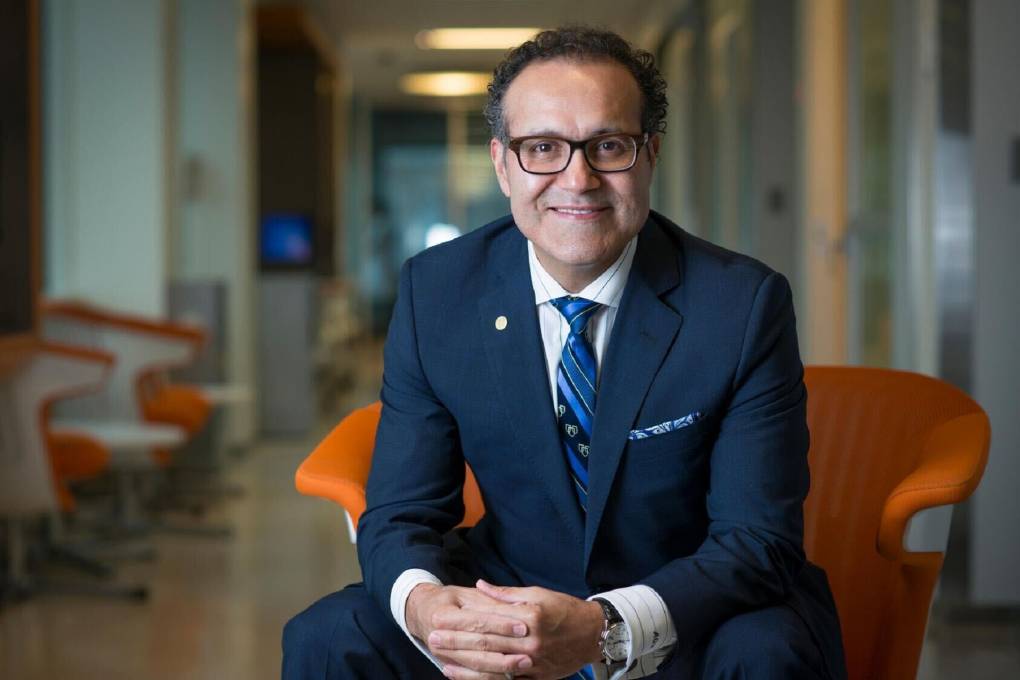
"caption": "Dr. Alfredo Quiñones-Hinojosa, fondly nicknamed 'Dr. Q' by his colleagues, is the chair of the Department of Neurologic Surgery for the East Coast branch of the Mayo Clinic in Florida.",
"description": null,
"title": "Image from iOS",
"credit": "Courtesy of Mayo Clinic Media",
"status": "inherit",
"altTag": "A man in a blue suit and tie sits with his hands cupped in his lap.",
"isLoading": false,
"fetchFailed": false
},
"news_11960227": {
"type": "attachments",
"id": "news_11960227",
"meta": {
"index": "attachments_1716263798",
"site": "news",
"id": "11960227",
"found": true
},
"parent": 0,
"imgSizes": {
"twentyfourteen-full-width": {
"file": "https://ww2.kqed.org/app/uploads/sites/10/2023/09/RS68665_230901-CentralValleyClimateSolutions-40-BL-KQED-1038x576.jpg",
"width": 1038,
"mimeType": "image/jpeg",
"height": 576
},
"thumbnail": {
"file": "https://ww2.kqed.org/app/uploads/sites/10/2023/09/RS68665_230901-CentralValleyClimateSolutions-40-BL-KQED-160x107.jpg",
"width": 160,
"mimeType": "image/jpeg",
"height": 107
},
"post-thumbnail": {
"file": "https://ww2.kqed.org/app/uploads/sites/10/2023/09/RS68665_230901-CentralValleyClimateSolutions-40-BL-KQED-672x372.jpg",
"width": 672,
"mimeType": "image/jpeg",
"height": 372
},
"kqedFullSize": {
"file": "https://ww2.kqed.org/app/uploads/sites/10/2023/09/RS68665_230901-CentralValleyClimateSolutions-40-BL-KQED.jpg",
"width": 2000,
"height": 1333
},
"large": {
"file": "https://ww2.kqed.org/app/uploads/sites/10/2023/09/RS68665_230901-CentralValleyClimateSolutions-40-BL-KQED-1020x680.jpg",
"width": 1020,
"mimeType": "image/jpeg",
"height": 680
},
"1536x1536": {
"file": "https://ww2.kqed.org/app/uploads/sites/10/2023/09/RS68665_230901-CentralValleyClimateSolutions-40-BL-KQED-1536x1024.jpg",
"width": 1536,
"mimeType": "image/jpeg",
"height": 1024
},
"full-width": {
"file": "https://ww2.kqed.org/app/uploads/sites/10/2023/09/RS68665_230901-CentralValleyClimateSolutions-40-BL-KQED-1920x1280.jpg",
"width": 1920,
"mimeType": "image/jpeg",
"height": 1280
},
"medium": {
"file": "https://ww2.kqed.org/app/uploads/sites/10/2023/09/RS68665_230901-CentralValleyClimateSolutions-40-BL-KQED-800x533.jpg",
"width": 800,
"mimeType": "image/jpeg",
"height": 533
}
},
"publishDate": 1694030988,
"modified": 1699570919,
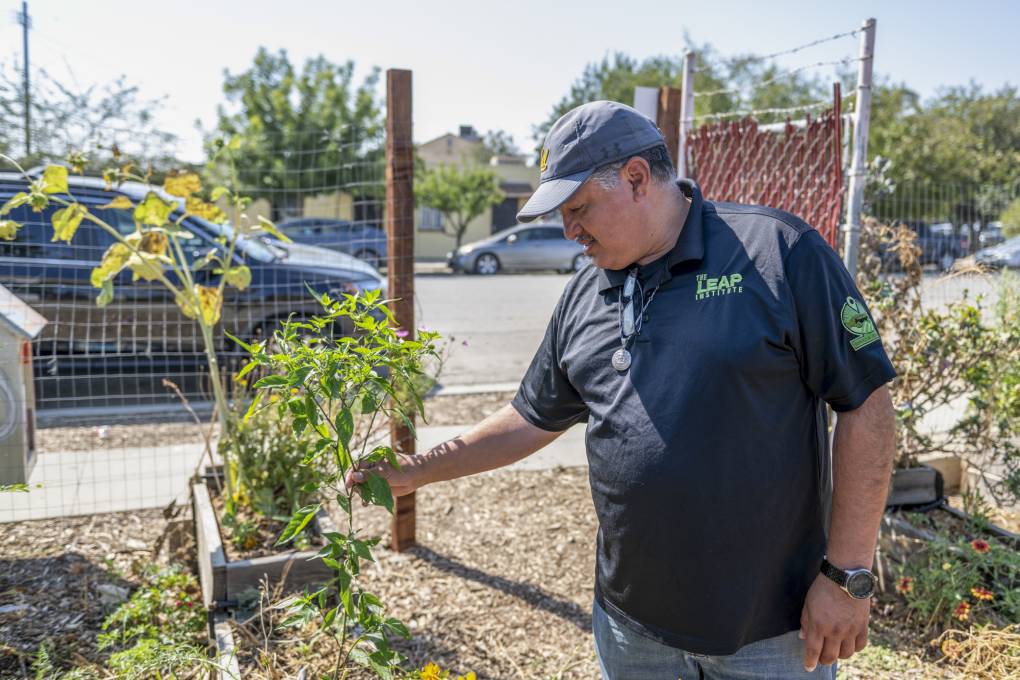
"caption": "Huron Mayor Rey León walks through a community garden and compost hub run by the Latino Equity Advocacy & Policy Institute offices, known as LEAP, in Huron, Calif., on Sept. 1, 2023.",
"description": null,
"title": "RS68665_230901-CentralValleyClimateSolutions-40-BL-KQED",
"credit": "Beth LaBerge/KQED",
"status": "inherit",
"altTag": "A person with a mustache wearing a baseball cap looks at a plant in a garden.",
"isLoading": false,
"fetchFailed": false
},
"news_11964965": {
"type": "attachments",
"id": "news_11964965",
"meta": {
"index": "attachments_1716263798",
"site": "news",
"id": "11964965",
"found": true
},
"parent": 0,
"imgSizes": {
"twentyfourteen-full-width": {
"file": "https://ww2.kqed.org/app/uploads/sites/10/2023/10/06520004-Women-in-field-HORIZ-KQED-1038x576.jpg",
"width": 1038,
"mimeType": "image/jpeg",
"height": 576
},
"thumbnail": {
"file": "https://ww2.kqed.org/app/uploads/sites/10/2023/10/06520004-Women-in-field-HORIZ-KQED-160x107.jpg",
"width": 160,
"mimeType": "image/jpeg",
"height": 107
},
"post-thumbnail": {
"file": "https://ww2.kqed.org/app/uploads/sites/10/2023/10/06520004-Women-in-field-HORIZ-KQED-672x372.jpg",
"width": 672,
"mimeType": "image/jpeg",
"height": 372
},
"kqedFullSize": {
"file": "https://ww2.kqed.org/app/uploads/sites/10/2023/10/06520004-Women-in-field-HORIZ-KQED.jpg",
"width": 2000,
"height": 1333
},
"large": {
"file": "https://ww2.kqed.org/app/uploads/sites/10/2023/10/06520004-Women-in-field-HORIZ-KQED-1020x680.jpg",
"width": 1020,
"mimeType": "image/jpeg",
"height": 680
},
"1536x1536": {
"file": "https://ww2.kqed.org/app/uploads/sites/10/2023/10/06520004-Women-in-field-HORIZ-KQED-1536x1024.jpg",
"width": 1536,
"mimeType": "image/jpeg",
"height": 1024
},
"full-width": {
"file": "https://ww2.kqed.org/app/uploads/sites/10/2023/10/06520004-Women-in-field-HORIZ-KQED-1920x1280.jpg",
"width": 1920,
"mimeType": "image/jpeg",
"height": 1280
},
"medium": {
"file": "https://ww2.kqed.org/app/uploads/sites/10/2023/10/06520004-Women-in-field-HORIZ-KQED-800x533.jpg",
"width": 800,
"mimeType": "image/jpeg",
"height": 533
}
},
"publishDate": 1697740140,
"modified": 1697749037,
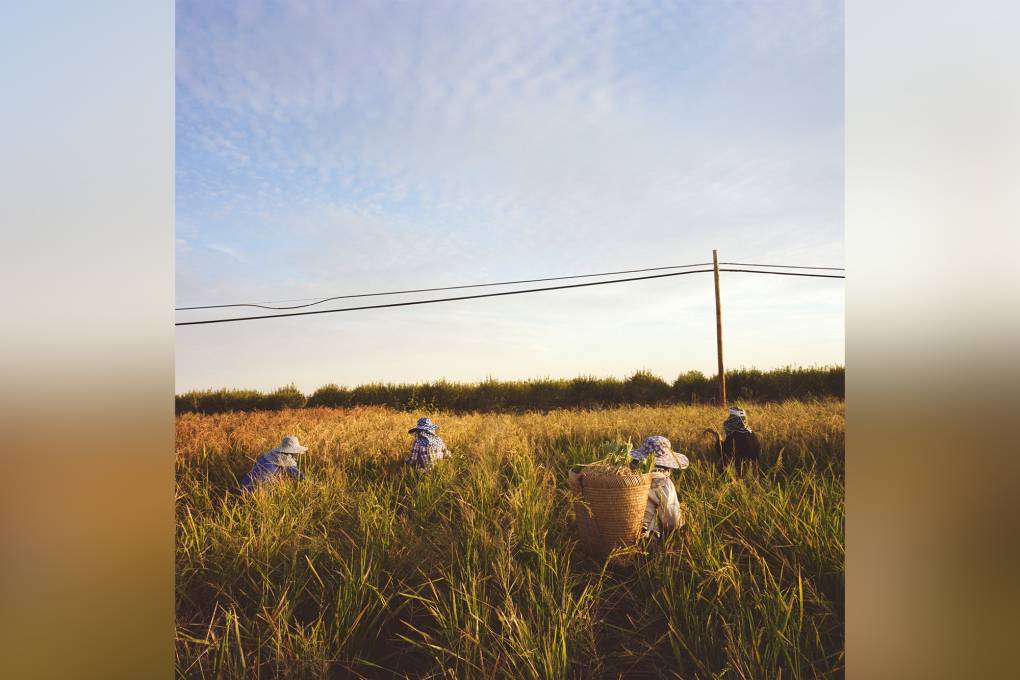
"caption": "Women harvesting at a farm in Fresno. The rice is cut one panicle, or stalk, at a time, then bundled and left to dry in the sun. The next day, the bundles are collected in the farmer’s back basket and taken to be threshed by hand.",
"description": null,
"title": "06520004 Women in field-HORIZ-KQED",
"credit": "Courtesy of Lisa M. Hamilton",
"status": "inherit",
"altTag": "People work in a large field of plants.",
"isLoading": false,
"fetchFailed": false
},
"news_11949235": {
"type": "attachments",
"id": "news_11949235",
"meta": {
"index": "attachments_1716263798",
"site": "news",
"id": "11949235",
"found": true
},
"parent": 11948668,
"imgSizes": {
"twentyfourteen-full-width": {
"file": "https://ww2.kqed.org/app/uploads/sites/10/2023/05/Fanny_sized-1038x576.jpg",
"width": 1038,
"mimeType": "image/jpeg",
"height": 576
},
"thumbnail": {
"file": "https://ww2.kqed.org/app/uploads/sites/10/2023/05/Fanny_sized-160x120.jpg",
"width": 160,
"mimeType": "image/jpeg",
"height": 120
},
"post-thumbnail": {
"file": "https://ww2.kqed.org/app/uploads/sites/10/2023/05/Fanny_sized-672x372.jpg",
"width": 672,
"mimeType": "image/jpeg",
"height": 372
},
"kqedFullSize": {
"file": "https://ww2.kqed.org/app/uploads/sites/10/2023/05/Fanny_sized.jpg",
"width": 1920,
"height": 1440
},
"large": {
"file": "https://ww2.kqed.org/app/uploads/sites/10/2023/05/Fanny_sized-1020x765.jpg",
"width": 1020,
"mimeType": "image/jpeg",
"height": 765
},
"1536x1536": {
"file": "https://ww2.kqed.org/app/uploads/sites/10/2023/05/Fanny_sized-1536x1152.jpg",
"width": 1536,
"mimeType": "image/jpeg",
"height": 1152
},
"medium": {
"file": "https://ww2.kqed.org/app/uploads/sites/10/2023/05/Fanny_sized-800x600.jpg",
"width": 800,
"mimeType": "image/jpeg",
"height": 600
}
},
"publishDate": 1683848125,
"modified": 1683848206,
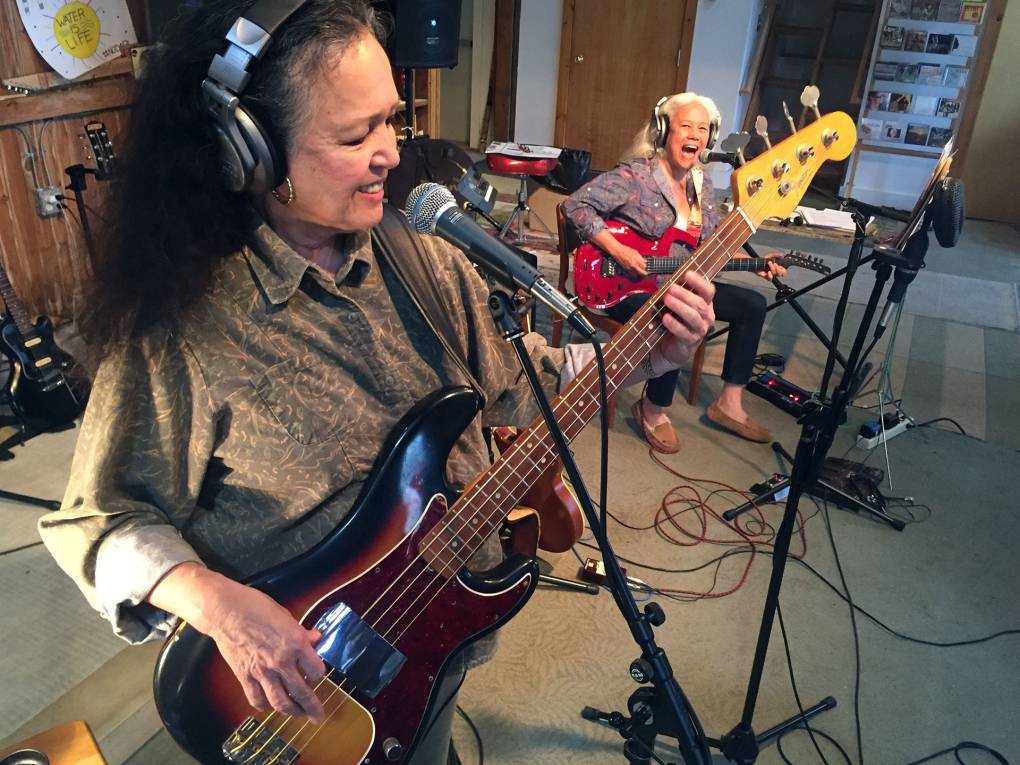
"caption": "Fanny bassist Jean Millington and lead guitarist June Millington.",
"description": null,
"title": "Fanny_sized",
"credit": "Courtesy Bobbi Jo Hart",
"status": "inherit",
"altTag": "Two Filipina-American women in their late sixties rock out on bass and guitar in a recording studio, smiles on their faces.",
"isLoading": false,
"fetchFailed": false
},
"news_11948225": {
"type": "attachments",
"id": "news_11948225",
"meta": {
"index": "attachments_1716263798",
"site": "news",
"id": "11948225",
"found": true
},
"parent": 11948223,
"imgSizes": {
"twentyfourteen-full-width": {
"file": "https://ww2.kqed.org/app/uploads/sites/10/2023/05/mas-in-blooms-sized-1038x576.jpg",
"width": 1038,
"mimeType": "image/jpeg",
"height": 576
},
"thumbnail": {
"file": "https://ww2.kqed.org/app/uploads/sites/10/2023/05/mas-in-blooms-sized-160x90.jpg",
"width": 160,
"mimeType": "image/jpeg",
"height": 90
},
"post-thumbnail": {
"file": "https://ww2.kqed.org/app/uploads/sites/10/2023/05/mas-in-blooms-sized-672x372.jpg",
"width": 672,
"mimeType": "image/jpeg",
"height": 372
},
"kqedFullSize": {
"file": "https://ww2.kqed.org/app/uploads/sites/10/2023/05/mas-in-blooms-sized.jpg",
"width": 1920,
"height": 1080
},
"large": {
"file": "https://ww2.kqed.org/app/uploads/sites/10/2023/05/mas-in-blooms-sized-1020x574.jpg",
"width": 1020,
"mimeType": "image/jpeg",
"height": 574
},
"1536x1536": {
"file": "https://ww2.kqed.org/app/uploads/sites/10/2023/05/mas-in-blooms-sized-1536x864.jpg",
"width": 1536,
"mimeType": "image/jpeg",
"height": 864
},
"medium": {
"file": "https://ww2.kqed.org/app/uploads/sites/10/2023/05/mas-in-blooms-sized-800x450.jpg",
"width": 800,
"mimeType": "image/jpeg",
"height": 450
}
},
"publishDate": 1682976290,
"modified": 1683322981,
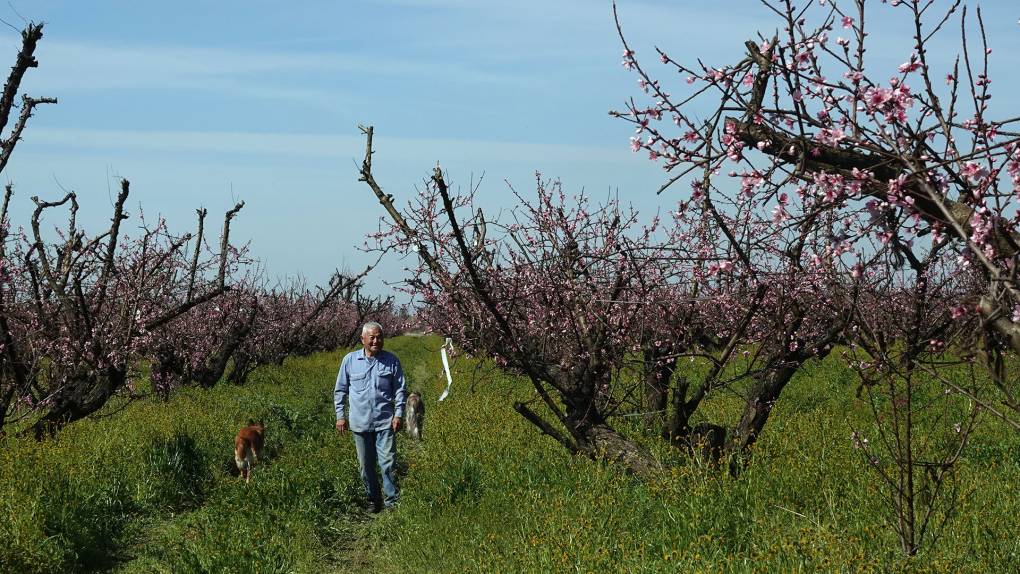
"caption": "David 'Mas' Masumoto in an orchard of Suncrest peaches he helped his father plant 60 years ago.",
"description": null,
"title": "mas-in-blooms-sized",
"credit": "Lisa Morehouse/KQED",
"status": "inherit",
"altTag": "A Japanese-American man with white hair wearing blue jeans and a blue shirts walks down a grassy aisle between flowering peach trees.",
"isLoading": false,
"fetchFailed": false
}
},
"audioPlayerReducer": {
"postId": "stream_live",
"isPaused": true,
"isPlaying": false,
"pfsActive": false,
"pledgeModalIsOpen": true,
"playerDrawerIsOpen": false,
"liveAudioPlayStartedAt": 0,
"liveAudioPlayContext": ""
},
"authorsReducer": {
"byline_news_11996038": {
"type": "authors",
"id": "byline_news_11996038",
"meta": {
"override": true
},
"slug": "byline_news_11996038",
"name": "Adam Beam, Associated Press",
"isLoading": false
},
"aliceldaniel": {
"type": "authors",
"id": "208",
"meta": {
"index": "authors_1716337520",
"id": "208",
"found": true
},
"name": "Alice Daniel",
"firstName": "Alice",
"lastName": "Daniel",
"slug": "aliceldaniel",
"email": "adaniel@kqed.org",
"display_author_email": false,
"staff_mastheads": [],
"title": null,
"bio": "Alice Daniel loves the listening aspect of reporting because she gets to briefly walk in other people’s shoes. She has rappelled down into caves and gone up in helicopters for KQED’s The California Report but her favorite place to pursue a story is the High Sierra or any family-run bakery, of course. Alice has a masters in journalism from Columbia University and teaches at Fresno State. She is a California Healthline Regional Correspondent and a frequent contributor to Success magazine. In her free time, she skis and hikes, throws pottery, practices piano and looks out the window.",
"avatar": "https://secure.gravatar.com/avatar/e611aa06593b114a67f9f123a8e875ad?s=600&d=blank&r=g",
"twitter": null,
"facebook": null,
"instagram": null,
"linkedin": null,
"sites": [
{
"site": "news",
"roles": [
"author"
]
},
{
"site": "stateofhealth",
"roles": [
"author"
]
}
],
"headData": {
"title": "Alice Daniel | KQED",
"description": null,
"ogImgSrc": "https://secure.gravatar.com/avatar/e611aa06593b114a67f9f123a8e875ad?s=600&d=blank&r=g",
"twImgSrc": "https://secure.gravatar.com/avatar/e611aa06593b114a67f9f123a8e875ad?s=600&d=blank&r=g"
},
"isLoading": false,
"link": "/author/aliceldaniel"
},
"kqed": {
"type": "authors",
"id": "236",
"meta": {
"index": "authors_1716337520",
"id": "236",
"found": true
},
"name": "KQED News Staff",
"firstName": "KQED News Staff",
"lastName": null,
"slug": "kqed",
"email": "faq@kqed.org",
"display_author_email": false,
"staff_mastheads": [],
"title": null,
"bio": null,
"avatar": "https://secure.gravatar.com/avatar/ef0e801a68c4c54afa9180db14084167?s=600&d=blank&r=g",
"twitter": null,
"facebook": null,
"instagram": null,
"linkedin": null,
"sites": [
{
"site": "arts",
"roles": [
"contributor"
]
},
{
"site": "news",
"roles": [
"editor"
]
},
{
"site": "futureofyou",
"roles": [
"author"
]
}
],
"headData": {
"title": "KQED News Staff | KQED",
"description": null,
"ogImgSrc": "https://secure.gravatar.com/avatar/ef0e801a68c4c54afa9180db14084167?s=600&d=blank&r=g",
"twImgSrc": "https://secure.gravatar.com/avatar/ef0e801a68c4c54afa9180db14084167?s=600&d=blank&r=g"
},
"isLoading": false,
"link": "/author/kqed"
},
"scottshafer": {
"type": "authors",
"id": "255",
"meta": {
"index": "authors_1716337520",
"id": "255",
"found": true
},
"name": "Scott Shafer",
"firstName": "Scott",
"lastName": "Shafer",
"slug": "scottshafer",
"email": "sshafer@kqed.org",
"display_author_email": false,
"staff_mastheads": [
"news"
],
"title": "KQED Contributor",
"bio": "Scott Shafer is a senior editor with the KQED Politics and Government desk. He is co-host of Political Breakdown, the award-winning radio show and podcast with a personal take on the world of politics. Scott came to KQED in 1998 to host the statewide\u003cem> California Report\u003c/em>. Prior to that he had extended stints in politics and government\u003cem>.\u003c/em> He uses that inside experience at KQED in his, reporting, hosting and analysis for the politics desk. Scott collaborated \u003cem>Political Breakdown a\u003c/em>nd on \u003cem>The Political Mind of Jerry Brown, \u003c/em>an eight-part series about the life and extraordinary political career of the former governor. For fun, he plays water polo with the San Francisco Tsunami.",
"avatar": "https://secure.gravatar.com/avatar/a62ebae45b79d7aed1a39a0e3bf68104?s=600&d=blank&r=g",
"twitter": "scottshafer",
"bluesky": null,
"facebook": null,
"instagram": null,
"linkedin": null,
"sites": [
{
"site": "news",
"roles": [
"editor"
]
},
{
"site": "stateofhealth",
"roles": [
"author"
]
},
{
"site": "science",
"roles": [
"author"
]
},
{
"site": "forum",
"roles": [
"subscriber"
]
},
{
"site": "liveblog",
"roles": [
"author"
]
}
],
"headData": {
"title": "Scott Shafer | KQED",
"description": "KQED Contributor",
"ogImgSrc": "https://secure.gravatar.com/avatar/a62ebae45b79d7aed1a39a0e3bf68104?s=600&d=blank&r=g",
"twImgSrc": "https://secure.gravatar.com/avatar/a62ebae45b79d7aed1a39a0e3bf68104?s=600&d=blank&r=g"
},
"isLoading": false,
"link": "/author/scottshafer"
},
"tychehendricks": {
"type": "authors",
"id": "259",
"meta": {
"index": "authors_1716337520",
"id": "259",
"found": true
},
"name": "Tyche Hendricks",
"firstName": "Tyche",
"lastName": "Hendricks",
"slug": "tychehendricks",
"email": "thendricks@kqed.org",
"display_author_email": true,
"staff_mastheads": [
"news"
],
"title": "KQED Senior Editor, Immigration",
"bio": "\u003cspan style=\"font-weight: 400;\">Tyche Hendricks is KQED’s senior editor for immigration, leading coverage of the policy and politics that affect California’s immigrant communities. Her work for KQED’s radio and online audiences is also carried on NPR and other national outlets. She has been recognized with awards from the Radio and Television News Directors Association, the Society for Professional Journalists; the Education Writers Association; the Best of the West and the National Federation of Community Broadcasters. Before joining KQED in 2010, Tyche spent more than a dozen years as a newspaper reporter, notably at the \u003c/span>\u003ci>\u003cspan style=\"font-weight: 400;\">San Francisco Chronicle\u003c/span>\u003c/i>\u003cspan style=\"font-weight: 400;\">. At different times she has covered criminal justice, government and politics and urban planning. Tyche has taught in the MFA Creative Writing program at the University of San Francisco and at UC Berkeley’s Graduate School of Journalism, where she was co-director of a national immigration symposium for professional journalists. She is the author of \u003c/span>\u003ci>\u003cspan style=\"font-weight: 400;\">The Wind Doesn't Need a Passport: Stories from the U.S.-Mexico Borderlands\u003c/span>\u003c/i>\u003cspan style=\"font-weight: 400;\"> (University of California Press). \u003c/span>",
"avatar": "https://secure.gravatar.com/avatar/b8ee458e2731c2d43df86882ce17267e?s=600&d=blank&r=g",
"twitter": "tychehendricks",
"facebook": null,
"instagram": null,
"linkedin": null,
"sites": [
{
"site": "news",
"roles": [
"editor"
]
},
{
"site": "stateofhealth",
"roles": [
"editor"
]
}
],
"headData": {
"title": "Tyche Hendricks | KQED",
"description": "KQED Senior Editor, Immigration",
"ogImgSrc": "https://secure.gravatar.com/avatar/b8ee458e2731c2d43df86882ce17267e?s=600&d=blank&r=g",
"twImgSrc": "https://secure.gravatar.com/avatar/b8ee458e2731c2d43df86882ce17267e?s=600&d=blank&r=g"
},
"isLoading": false,
"link": "/author/tychehendricks"
},
"lmorehouse": {
"type": "authors",
"id": "3229",
"meta": {
"index": "authors_1716337520",
"id": "3229",
"found": true
},
"name": "Lisa Morehouse",
"firstName": "Lisa",
"lastName": "Morehouse",
"slug": "lmorehouse",
"email": "morehouse.lisa@gmail.com",
"display_author_email": false,
"staff_mastheads": [],
"title": "KQED Contributor",
"bio": "Lisa Morehouse is an award-winning public radio and print journalist, who has filed for National Public Radio, American Public Media, KQED Public Radio, Edutopia, and McSweeney’s. Her reporting has taken her from Samoan traveling circuses to Mississippi Delta classrooms to the homes of Lao refugees in rural Iowa. In addition to reporting, she teaches radio production to at-risk youth in the Bay Area. Her series \u003ca href=\"http://afterthegoldrushradio.com/\">After the Gold Rush\u003c/a> featured the changing industries, populations and identities of rural towns throughout California. She’s now producing \u003ca href=\"http://www.californiafoodways.com/\">California Foodways\u003c/a>, a series exploring the intersections of food, culture, economics, history and labor. Follow along on the \u003ca href=\"https://www.facebook.com/californiafoodways?ref=hl\">Facebook page\u003c/a> or on Twitter @cafoodways.",
"avatar": "https://secure.gravatar.com/avatar/dae74b002a6e256f39abb19d6f5acaea?s=600&d=blank&r=g",
"twitter": null,
"facebook": null,
"instagram": null,
"linkedin": null,
"sites": [
{
"site": "",
"roles": [
"editor"
]
},
{
"site": "news",
"roles": [
"author"
]
}
],
"headData": {
"title": "Lisa Morehouse | KQED",
"description": "KQED Contributor",
"ogImgSrc": "https://secure.gravatar.com/avatar/dae74b002a6e256f39abb19d6f5acaea?s=600&d=blank&r=g",
"twImgSrc": "https://secure.gravatar.com/avatar/dae74b002a6e256f39abb19d6f5acaea?s=600&d=blank&r=g"
},
"isLoading": false,
"link": "/author/lmorehouse"
},
"mlagos": {
"type": "authors",
"id": "3239",
"meta": {
"index": "authors_1716337520",
"id": "3239",
"found": true
},
"name": "Marisa Lagos",
"firstName": "Marisa",
"lastName": "Lagos",
"slug": "mlagos",
"email": "mlagos@kqed.org",
"display_author_email": false,
"staff_mastheads": [
"news"
],
"title": "KQED Contributor",
"bio": "Marisa Lagos is a correspondent for KQED’s California Politics and Government Desk and co-hosts the award-winning show and podcast, Political Breakdown. At KQED, Lagos also conducts reporting, analysis and investigations into state, local and national politics for radio, TV, online and onstage. In 2022, she and co-host, Scott Shafer, moderated the only gubernatorial debate in California. In 2020, the \u003ci>Washington Post\u003c/i> named her one of the top political journalists in California; she was nominated for a Peabody and won several other awards for her work investigating the 2017 California wildfires. She has worked at the \u003ci>San Francisco Chronicle\u003c/i>, \u003ci>San Francisco Examiner\u003c/i> and \u003ci>Los Angeles Times\u003c/i>. A UC Santa Barbara graduate, she lives in San Francisco with her two sons and husband.",
"avatar": "https://secure.gravatar.com/avatar/a261a0d3696fc066871ef96b85b5e7d2?s=600&d=blank&r=g",
"twitter": "@mlagos",
"facebook": null,
"instagram": null,
"linkedin": null,
"sites": [
{
"site": "arts",
"roles": [
"author"
]
},
{
"site": "news",
"roles": [
"editor"
]
},
{
"site": "science",
"roles": [
"editor"
]
},
{
"site": "forum",
"roles": [
"author"
]
},
{
"site": "liveblog",
"roles": [
"author"
]
}
],
"headData": {
"title": "Marisa Lagos | KQED",
"description": "KQED Contributor",
"ogImgSrc": "https://secure.gravatar.com/avatar/a261a0d3696fc066871ef96b85b5e7d2?s=600&d=blank&r=g",
"twImgSrc": "https://secure.gravatar.com/avatar/a261a0d3696fc066871ef96b85b5e7d2?s=600&d=blank&r=g"
},
"isLoading": false,
"link": "/author/mlagos"
},
"lesleymcclurg": {
"type": "authors",
"id": "11229",
"meta": {
"index": "authors_1716337520",
"id": "11229",
"found": true
},
"name": "Lesley McClurg",
"firstName": "Lesley",
"lastName": "McClurg",
"slug": "lesleymcclurg",
"email": "lmcclurg@KQED.org",
"display_author_email": false,
"staff_mastheads": [
"news",
"science"
],
"title": "KQED Health Correspondent",
"bio": "Lesley McClurg is a health correspondent and fill-in host whose work is regularly rebroadcast on NPR and PBS programs. She’s earned multiple regional Emmy awards, a national and a regional Edward R. Murrow award, and was named Best Beat Reporter by the Association of Health Care Journalists. The Society of Professional Journalists has recognized her work several times, and the Society of Environmental Journalists spotlighted her coverage of California’s historic drought.\r\n\r\nBefore joining KQED in 2016, Lesley covered food and sustainability for Capital Public Radio, environmental issues for Colorado Public Radio, and reported for KUOW and KCTS 9 in Seattle. Away from the newsroom, she loves skiing with her daughter, mountain biking with her partner, and playing with Ollie, the family’s goldendoodle. On deadline, she runs almost entirely on chocolate chips.\r\n\r\n ",
"avatar": "https://secure.gravatar.com/avatar/bab49e972ea10c774fe0f5e29dba1722b158f7c0d58a360923d1389d380b2978?s=600&d=blank&r=g",
"twitter": "lesleywmcclurg",
"bluesky": null,
"facebook": null,
"instagram": null,
"linkedin": null,
"sites": [
{
"site": "arts",
"roles": [
"author"
]
},
{
"site": "news",
"roles": [
"editor"
]
},
{
"site": "futureofyou",
"roles": [
"editor"
]
},
{
"site": "stateofhealth",
"roles": [
"author"
]
},
{
"site": "science",
"roles": [
"editor"
]
},
{
"site": "quest",
"roles": [
"subscriber"
]
},
{
"site": "forum",
"roles": [
"administrator"
]
},
{
"site": "liveblog",
"roles": [
"author"
]
}
],
"headData": {
"title": "Lesley McClurg | KQED",
"description": "KQED Health Correspondent",
"ogImgSrc": "https://secure.gravatar.com/avatar/bab49e972ea10c774fe0f5e29dba1722b158f7c0d58a360923d1389d380b2978?s=600&d=blank&r=g",
"twImgSrc": "https://secure.gravatar.com/avatar/bab49e972ea10c774fe0f5e29dba1722b158f7c0d58a360923d1389d380b2978?s=600&d=blank&r=g"
},
"isLoading": false,
"link": "/author/lesleymcclurg"
},
"kmizuguchi": {
"type": "authors",
"id": "11739",
"meta": {
"index": "authors_1716337520",
"id": "11739",
"found": true
},
"name": "Keith Mizuguchi",
"firstName": "Keith",
"lastName": "Mizuguchi",
"slug": "kmizuguchi",
"email": "kmizuguchi@kqed.org",
"display_author_email": false,
"staff_mastheads": [],
"title": "KQED Contributor",
"bio": null,
"avatar": "https://secure.gravatar.com/avatar/64d8a7de0723d4099b9fe4e915136103febcc20809abce228ee4415bcb237023?s=600&d=blank&r=g",
"twitter": null,
"bluesky": null,
"facebook": null,
"instagram": null,
"linkedin": null,
"sites": [
{
"site": "news",
"roles": [
"editor"
]
},
{
"site": "science",
"roles": [
"editor"
]
}
],
"headData": {
"title": "Keith Mizuguchi | KQED",
"description": "KQED Contributor",
"ogImgSrc": "https://secure.gravatar.com/avatar/64d8a7de0723d4099b9fe4e915136103febcc20809abce228ee4415bcb237023?s=600&d=blank&r=g",
"twImgSrc": "https://secure.gravatar.com/avatar/64d8a7de0723d4099b9fe4e915136103febcc20809abce228ee4415bcb237023?s=600&d=blank&r=g"
},
"isLoading": false,
"link": "/author/kmizuguchi"
},
"mbolanos": {
"type": "authors",
"id": "11895",
"meta": {
"index": "authors_1716337520",
"id": "11895",
"found": true
},
"name": "Madi Bolaños",
"firstName": "Madi",
"lastName": "Bolaños",
"slug": "mbolanos",
"email": "mbolanos@kqed.org",
"display_author_email": false,
"staff_mastheads": [],
"title": "KQED Contributor",
"bio": null,
"avatar": "https://secure.gravatar.com/avatar/e6df5601c1f2d951e46a3fb42764330f?s=600&d=blank&r=g",
"twitter": null,
"bluesky": null,
"facebook": null,
"instagram": null,
"linkedin": null,
"sites": [
{
"site": "news",
"roles": [
"author"
]
}
],
"headData": {
"title": "Madi Bolaños | KQED",
"description": "KQED Contributor",
"ogImgSrc": "https://secure.gravatar.com/avatar/e6df5601c1f2d951e46a3fb42764330f?s=600&d=blank&r=g",
"twImgSrc": "https://secure.gravatar.com/avatar/e6df5601c1f2d951e46a3fb42764330f?s=600&d=blank&r=g"
},
"isLoading": false,
"link": "/author/mbolanos"
},
"kdebenedetti": {
"type": "authors",
"id": "11913",
"meta": {
"index": "authors_1716337520",
"id": "11913",
"found": true
},
"name": "Katie DeBenedetti",
"firstName": "Katie",
"lastName": "DeBenedetti",
"slug": "kdebenedetti",
"email": "kdebenedetti@kqed.org",
"display_author_email": false,
"staff_mastheads": [
"news",
"science"
],
"title": "KQED Contributor",
"bio": "Katie DeBenedetti is a digital reporter covering daily news for the Express Desk. Prior to joining KQED as a culture reporting intern in January 2024, she covered education and city government for the Napa Valley Register.",
"avatar": "https://secure.gravatar.com/avatar/6e31073cb8f7e4214ab03f42771d0f45?s=600&d=blank&r=g",
"twitter": null,
"facebook": null,
"instagram": null,
"linkedin": null,
"sites": [
{
"site": "news",
"roles": [
"author"
]
},
{
"site": "science",
"roles": [
"author"
]
},
{
"site": "liveblog",
"roles": [
"author"
]
}
],
"headData": {
"title": "Katie DeBenedetti | KQED",
"description": "KQED Contributor",
"ogImgSrc": "https://secure.gravatar.com/avatar/6e31073cb8f7e4214ab03f42771d0f45?s=600&d=blank&r=g",
"twImgSrc": "https://secure.gravatar.com/avatar/6e31073cb8f7e4214ab03f42771d0f45?s=600&d=blank&r=g"
},
"isLoading": false,
"link": "/author/kdebenedetti"
}
},
"pagesReducer": {
"news_tag_central-valley": {
"type": "terms",
"id": "news_311",
"meta": {
"index": "terms_1716263798",
"site": "news",
"id": "311",
"score": 8.669906
},
"featImg": null,
"name": "Central Valley",
"description": null,
"taxonomy": "tag",
"headData": {
"twImgId": null,
"twTitle": null,
"ogTitle": null,
"ogImgId": null,
"twDescription": null,
"description": null,
"title": "Central Valley Archives | KQED News",
"ogDescription": null
},
"ttid": 319,
"slug": "central-valley",
"isLoading": false,
"title": "Central Valley",
"pageMeta": {
"site": "news",
"WpPageTemplate": "page-topic-editorial",
"currentPage": 3
},
"blocks": [
{
"blockName": "kqed/post-list",
"attrs": {
"layout": "cardArticle2",
"query": "posts/news?tag=central-valley",
"seeMore": false,
"paginated": true,
"page": 3
}
},
{
"blockName": "kqed/ad"
}
]
}
},
"pfsSessionReducer": {},
"postsReducer": {
"stream_live": {
"type": "live",
"id": "stream_live",
"audioUrl": "https://streams.kqed.org/kqedradio",
"title": "Live Stream",
"excerpt": "Live Stream information currently unavailable.",
"link": "/radio",
"featImg": "",
"label": {
"name": "KQED Live",
"link": "/"
}
},
"stream_kqedNewscast": {
"type": "posts",
"id": "stream_kqedNewscast",
"audioUrl": "https://www.kqed.org/.stream/anon/radio/RDnews/newscast.mp3?_=1",
"title": "KQED Newscast",
"featImg": "",
"label": {
"name": "88.5 FM",
"link": "/"
}
},
"news_12007594": {
"type": "posts",
"id": "news_12007594",
"meta": {
"index": "posts_1716263798",
"site": "news",
"id": "12007594",
"score": null,
"sort": [
1727913951000
]
},
"guestAuthors": [],
"slug": "democrats-are-hoping-to-flip-this-central-valley-house-seat-it-wont-be-easy",
"title": "Balance of Power: Democrats Are Hoping To Flip This Central Valley House Seat. It Won’t Be Easy.",
"publishDate": 1727913951,
"format": "audio",
"headTitle": "Balance of Power: Democrats Are Hoping To Flip This Central Valley House Seat. It Won’t Be Easy. | KQED",
"labelTerm": {},
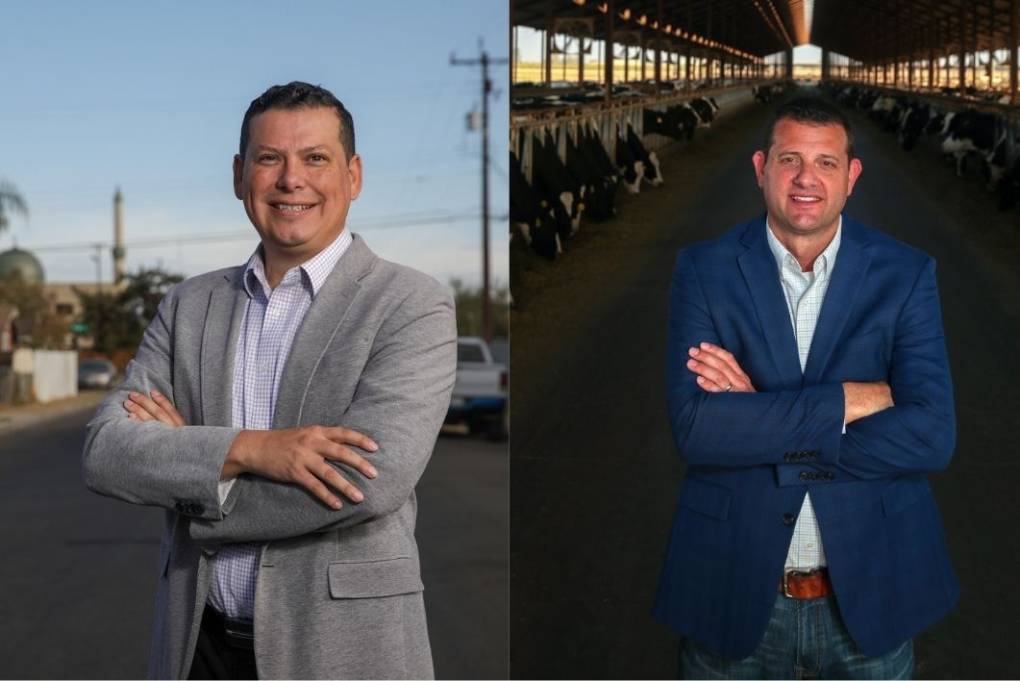
"content": "\u003cp>California has six competitive congressional districts that could determine which party controls the House of Representatives next year. In the lead-up to the November election, the Political Breakdown team will cover each of these races in a series called “Balance of Power.” Today, Scott and Marisa discuss the 22nd congressional district in the Central Valley… where Republican incumbent David Valadao is once again facing former Assemblymember Rudy Salas. They’re joined by reporter Joshua Yeager, who covers Kern County and the Southern San Joaquin Valley for KVPR.\u003c/p>\n\u003cp> \u003c/p>\n\u003cp>[ad fullwidth]\u003c/p>\u003cp>\u003c/p>\n",
"blocks": [],
"excerpt": null,
"status": "publish",
"parent": 0,
"modified": 1729296152,
"stats": {
"hasAudio": false,
"hasVideo": false,
"hasChartOrMap": false,
"iframeSrcs": [],
"hasGoogleForm": false,
"hasGallery": false,
"hasHearkenModule": false,
"hasPolis": false,
"paragraphCount": 3,
"wordCount": 95
},
"headData": {
"title": "Balance of Power: Democrats Are Hoping To Flip This Central Valley House Seat. It Won’t Be Easy. | KQED",
"description": "California has six competitive congressional districts that could determine which party controls the House of Representatives next year. In the lead-up to the November election, the Political Breakdown team will cover each of these races in a series called "Balance of Power." Today, Scott and Marisa discuss the 22nd congressional district in the Central Valley… where Republican incumbent David Valadao is once again facing former Assemblymember Rudy Salas. They’re joined by reporter Joshua Yeager, who covers Kern County and the Southern San Joaquin Valley for KVPR. ",
"ogTitle": "",
"ogDescription": "",
"ogImgId": "",
"twTitle": "",
"twDescription": "",
"twImgId": "",
"schema": {
"@context": "https://schema.org",
"@type": "NewsArticle",
"headline": "Balance of Power: Democrats Are Hoping To Flip This Central Valley House Seat. It Won’t Be Easy.",
"datePublished": "2024-10-02T17:05:51-07:00",
"dateModified": "2024-10-18T17:02:32-07:00",
"image": "https://cdn.kqed.org/wp-content/uploads/2020/02/KQED-OG-Image@1x.png",
"isAccessibleForFree": "True",
"publisher": {
"@type": "NewsMediaOrganization",
"@id": "https://www.kqed.org/#organization",
"name": "KQED",
"logo": "https://cdn.kqed.org/wp-content/uploads/2020/02/KQED-OG-Image@1x.png",
"url": "https://www.kqed.org",
"sameAs": [
"https://www.facebook.com/KQED",
"https://twitter.com/KQED",
"https://www.instagram.com/kqed/",
"https://www.tiktok.com/@kqedofficial",
"https://www.linkedin.com/company/kqed",
"https://www.youtube.com/channel/UCeC0IOo7i1P_61zVUWbJ4nw"
]
}
}
},
"source": "Political Breakdown",
"audioUrl": "https://www.podtrac.com/pts/redirect.mp3/chrt.fm/track/G6C7C3/traffic.megaphone.fm/KQINC3411196814.mp3?updated=1727913195",
"sticky": false,
"nprStoryId": "kqed-12007594",
"excludeFromSiteSearch": "Include",
"articleAge": "0",
"path": "/news/12007594/democrats-are-hoping-to-flip-this-central-valley-house-seat-it-wont-be-easy",
"audioTrackLength": null,
"parsedContent": [
{
"type": "contentString",
"content": "\u003cdiv class=\"post-body\">\u003cp>\u003cp>California has six competitive congressional districts that could determine which party controls the House of Representatives next year. In the lead-up to the November election, the Political Breakdown team will cover each of these races in a series called “Balance of Power.” Today, Scott and Marisa discuss the 22nd congressional district in the Central Valley… where Republican incumbent David Valadao is once again facing former Assemblymember Rudy Salas. They’re joined by reporter Joshua Yeager, who covers Kern County and the Southern San Joaquin Valley for KVPR.\u003c/p>\n\u003cp> \u003c/p>\n\u003cp>\u003c/p>\u003c/div>",
"attributes": {
"named": {},
"numeric": []
}
},
{
"type": "component",
"content": "",
"name": "ad",
"attributes": {
"named": {
"label": "fullwidth"
},
"numeric": [
"fullwidth"
]
}
},
{
"type": "contentString",
"content": "\u003cdiv class=\"post-body\">\u003cp>\u003c/p>\u003cp>\u003c/p>\n\u003c/div>\u003c/p>",
"attributes": {
"named": {},
"numeric": []
}
}
],
"link": "/news/12007594/democrats-are-hoping-to-flip-this-central-valley-house-seat-it-wont-be-easy",
"authors": [
"255",
"3239"
],
"programs": [
"news_33544"
],
"categories": [
"news_8",
"news_33520",
"news_13"
],
"tags": [
"news_34607",
"news_34606",
"news_311",
"news_23728",
"news_20717",
"news_32839",
"news_34377",
"news_22235",
"news_17968",
"news_34608"
],
"featImg": "news_12007632",
"label": "source_news_12007594"
},
"news_12002977": {
"type": "posts",
"id": "news_12002977",
"meta": {
"index": "posts_1716263798",
"site": "news",
"id": "12002977",
"score": null,
"sort": [
1725479147000
]
},
"guestAuthors": [],
"slug": "valley-fever-cases-linked-to-california-music-festival-nearly-quadruple-and-more-are-likely",
"title": "Valley Fever Cases Linked to California Music Festival Nearly Quadruple, and More Are Likely",
"publishDate": 1725479147,
"format": "standard",
"headTitle": "Valley Fever Cases Linked to California Music Festival Nearly Quadruple, and More Are Likely | KQED",
"labelTerm": {
"site": "news"
},
"content": "\u003cp>\u003cem>Updated 1:50 p.m. Wednesday\u003c/em>\u003c/p>\n\u003cp>After a handful of people initially reported getting \u003ca href=\"https://www.kqed.org/news/12001154/valley-fever-rises-after-california-music-festival-experts-warn-of-climate-change-link\">valley fever at a Kern County music festival\u003c/a> in May, California public health officials say the number of cases linked to the event nearly quadrupled in a month.\u003c/p>\n\u003cp>In late July, the California Department of Public Health announced that five attendees of Lightning in a Bottle tested positive, and three were hospitalized with symptoms. Last week, the department said that \u003ca href=\"https://www.cdph.ca.gov/Programs/OPA/Pages/NR24-22.aspx\">as of Aug. 21\u003c/a>, the number of confirmed cases linked to the festival is at least 19, including eight hospitalizations.\u003c/p>\n\u003cp>The actual number of people infected is likely higher since \u003ca href=\"https://www.kqed.org/news/12001920/valley-fever-in-california-symptoms-protecting-yourself-and-why-cases-are-way-up\">valley fever symptoms\u003c/a> — cough, fever, chest pain and fatigue — can be confused with other common respiratory infections and COVID-19.\u003c/p>\n\u003cp>Valley fever is not contagious from person to person but infects people and animals who breathe in dust or dirt that contains fungal spores of coccidioides, or “cocci.” When this dust is blown up into the air, people in the area can inhale the cocci spores, which can infect the lungs.\u003c/p>\n\u003cp>[ad fullwidth]\u003c/p>\n\u003cp>State officials have warned that \u003ca href=\"https://www.kqed.org/news/12001920/valley-fever-in-california-symptoms-protecting-yourself-and-why-cases-are-way-up\">valley fever is on the rise\u003c/a> this year and being reported outside the Central Valley and Central Coast areas where it is traditionally most common. A music festival is somewhat of a perfect storm for the infection — dancing kicks loose dust containing the soil-dwelling fungus, and singing festival-goers breathe in the spores.\u003c/p>\n\u003cp>More than 20,000 people traveled from across the state and beyond to attend Lightning in a Bottle between May 22 and 27. Health officials are continuing to investigate the cases linked to the festival.\u003c/p>\n\u003cp>Following news stories about the cases, multiple \u003ca href=\"https://www.reddit.com/r/LightningInABottle/comments/1efxmgw/festival_is_hit_with_deadly_fungus_outbreak_that/\">Reddit users\u003c/a> discussing the festival reported feeling sick, and some say that getting a test for the infection has been difficult.\u003c/p>\n\u003cp>Lightning in a Bottle organizers told KQED that health and safety are a primary concern and that the festival adheres to guidance from the Centers for Disease Control and Prevention, CDPH and local authorities.\u003c/p>\n\u003cp>“We, like other large scale gatherings in the region, will continue to seek out the most up to date health and safety guidance made available to us as we plan for future events,” organizers said in a statement.\u003c/p>\n\u003cp>“You really have to advocate to get tested,” one said. Another reported having symptoms since two weeks after the festival but said they were turned away from the doctor’s office without a test.\u003c/p>\n\u003cp>[aside postID=news_12001920 hero='https://cdn.kqed.org/wp-content/uploads/sites/10/2024/08/GettyImages-1386022781.jpg']\u003c/p>\n\u003cp>State medical officials are warning of an increased risk of valley fever infection this fall, the high season throughout Central California. The disease has spread more rapidly this year so far than in previous years, with \u003ca href=\"https://www.cdph.ca.gov/Programs/CID/DCDC/CDPH%20Document%20Library/CocciinCAProvisionalMonthlyReport.pdf\">6,280 suspected, probable or confirmed infections through the end of July\u003c/a> — about 2,500 more than in the same period in 2023.\u003c/p>\n\u003cp>The disease is prevalent only in a few areas, including the San Joaquin Valley and desert regions of Arizona, but experts say that California’s \u003ca href=\"https://www.kqed.org/news/12001154/valley-fever-rises-after-california-music-festival-experts-warn-of-climate-change-link\">changing weather patterns\u003c/a> could make the climate here even more conducive to the fungus.\u003c/p>\n\u003cp>A recent study by Alexandra Heaney, an assistant professor of public health at UC San Diego, hypothesizes that the state’s flip-flopping heavy rain and drought periods fuel the fungus.\u003c/p>\n\u003cp>She and her co-authors believe extensive fungus grows during wet, rainy periods, while dry spells allow the fungus to form and release infectious spores into the air. Cocci can also withstand extremely dry, harsh conditions allowing it to outlast much of its competition during droughts.\u003c/p>\n\u003cp>“If this is going to continue to become more common due to climate change, it’s something that might be contributing to the increases we’ve seen and may actually promote increases in the future as well,” Heaney told KQED in August.\u003c/p>\n\u003cp>CDPH Director Dr. Tomás Aragón warns that the state is preparing for “another possible increase,” and Californians should be aware of valley fever symptoms to catch it early.\u003c/p>\n\u003cp>“If you have a lingering cough and fatigue, please talk to a doctor about valley fever, especially if you’ve been outdoors in dusty air in the Central Valley or Central Coast regions,” Aragón said in a statement.\u003c/p>\n\u003cp>\u003c/p>\n",
"blocks": [],
"excerpt": "The number of cases linked to Lightning in a Bottle has risen from five to 19 in a month as California public health officials warn of an increasing risk of infection.",
"status": "publish",
"parent": 0,
"modified": 1726000501,
"stats": {
"hasAudio": false,
"hasVideo": false,
"hasChartOrMap": false,
"iframeSrcs": [],
"hasGoogleForm": false,
"hasGallery": false,
"hasHearkenModule": false,
"hasPolis": false,
"paragraphCount": 21,
"wordCount": 734
},
"headData": {
"title": "Valley Fever Cases Linked to California Music Festival Nearly Quadruple, and More Are Likely | KQED",
"description": "The number of cases linked to Lightning in a Bottle has risen from five to 19 in a month as California public health officials warn of an increasing risk of infection.",
"ogTitle": "",
"ogDescription": "",
"ogImgId": "",
"twTitle": "",
"twDescription": "",
"twImgId": "",
"schema": {
"@context": "https://schema.org",
"@type": "NewsArticle",
"headline": "Valley Fever Cases Linked to California Music Festival Nearly Quadruple, and More Are Likely",
"datePublished": "2024-09-04T12:45:47-07:00",
"dateModified": "2024-09-10T13:35:01-07:00",
"image": "https://cdn.kqed.org/wp-content/uploads/2020/02/KQED-OG-Image@1x.png",
"isAccessibleForFree": "True",
"publisher": {
"@type": "NewsMediaOrganization",
"@id": "https://www.kqed.org/#organization",
"name": "KQED",
"logo": "https://cdn.kqed.org/wp-content/uploads/2020/02/KQED-OG-Image@1x.png",
"url": "https://www.kqed.org",
"sameAs": [
"https://www.facebook.com/KQED",
"https://twitter.com/KQED",
"https://www.instagram.com/kqed/",
"https://www.tiktok.com/@kqedofficial",
"https://www.linkedin.com/company/kqed",
"https://www.youtube.com/channel/UCeC0IOo7i1P_61zVUWbJ4nw"
]
}
}
},
"sticky": false,
"nprStoryId": "kqed-12002977",
"excludeFromSiteSearch": "Include",
"articleAge": "0",
"path": "/news/12002977/valley-fever-cases-linked-to-california-music-festival-nearly-quadruple-and-more-are-likely",
"audioTrackLength": null,
"parsedContent": [
{
"type": "contentString",
"content": "\u003cdiv class=\"post-body\">\u003cp>\u003cp>\u003cem>Updated 1:50 p.m. Wednesday\u003c/em>\u003c/p>\n\u003cp>After a handful of people initially reported getting \u003ca href=\"https://www.kqed.org/news/12001154/valley-fever-rises-after-california-music-festival-experts-warn-of-climate-change-link\">valley fever at a Kern County music festival\u003c/a> in May, California public health officials say the number of cases linked to the event nearly quadrupled in a month.\u003c/p>\n\u003cp>In late July, the California Department of Public Health announced that five attendees of Lightning in a Bottle tested positive, and three were hospitalized with symptoms. Last week, the department said that \u003ca href=\"https://www.cdph.ca.gov/Programs/OPA/Pages/NR24-22.aspx\">as of Aug. 21\u003c/a>, the number of confirmed cases linked to the festival is at least 19, including eight hospitalizations.\u003c/p>\n\u003cp>The actual number of people infected is likely higher since \u003ca href=\"https://www.kqed.org/news/12001920/valley-fever-in-california-symptoms-protecting-yourself-and-why-cases-are-way-up\">valley fever symptoms\u003c/a> — cough, fever, chest pain and fatigue — can be confused with other common respiratory infections and COVID-19.\u003c/p>\n\u003cp>Valley fever is not contagious from person to person but infects people and animals who breathe in dust or dirt that contains fungal spores of coccidioides, or “cocci.” When this dust is blown up into the air, people in the area can inhale the cocci spores, which can infect the lungs.\u003c/p>\n\u003cp>\u003c/p>\u003c/div>",
"attributes": {
"named": {},
"numeric": []
}
},
{
"type": "component",
"content": "",
"name": "ad",
"attributes": {
"named": {
"label": "fullwidth"
},
"numeric": [
"fullwidth"
]
}
},
{
"type": "contentString",
"content": "\u003cdiv class=\"post-body\">\u003cp>\u003c/p>\n\u003cp>State officials have warned that \u003ca href=\"https://www.kqed.org/news/12001920/valley-fever-in-california-symptoms-protecting-yourself-and-why-cases-are-way-up\">valley fever is on the rise\u003c/a> this year and being reported outside the Central Valley and Central Coast areas where it is traditionally most common. A music festival is somewhat of a perfect storm for the infection — dancing kicks loose dust containing the soil-dwelling fungus, and singing festival-goers breathe in the spores.\u003c/p>\n\u003cp>More than 20,000 people traveled from across the state and beyond to attend Lightning in a Bottle between May 22 and 27. Health officials are continuing to investigate the cases linked to the festival.\u003c/p>\n\u003cp>Following news stories about the cases, multiple \u003ca href=\"https://www.reddit.com/r/LightningInABottle/comments/1efxmgw/festival_is_hit_with_deadly_fungus_outbreak_that/\">Reddit users\u003c/a> discussing the festival reported feeling sick, and some say that getting a test for the infection has been difficult.\u003c/p>\n\u003cp>Lightning in a Bottle organizers told KQED that health and safety are a primary concern and that the festival adheres to guidance from the Centers for Disease Control and Prevention, CDPH and local authorities.\u003c/p>\n\u003cp>“We, like other large scale gatherings in the region, will continue to seek out the most up to date health and safety guidance made available to us as we plan for future events,” organizers said in a statement.\u003c/p>\n\u003cp>“You really have to advocate to get tested,” one said. Another reported having symptoms since two weeks after the festival but said they were turned away from the doctor’s office without a test.\u003c/p>\n\u003cp>\u003c/p>\u003c/div>",
"attributes": {
"named": {},
"numeric": []
}
},
{
"type": "component",
"content": "",
"name": "aside",
"attributes": {
"named": {
"postid": "news_12001920",
"hero": "https://cdn.kqed.org/wp-content/uploads/sites/10/2024/08/GettyImages-1386022781.jpg",
"label": ""
},
"numeric": []
}
},
{
"type": "contentString",
"content": "\u003cdiv class=\"post-body\">\u003cp>\u003c/p>\n\u003cp>State medical officials are warning of an increased risk of valley fever infection this fall, the high season throughout Central California. The disease has spread more rapidly this year so far than in previous years, with \u003ca href=\"https://www.cdph.ca.gov/Programs/CID/DCDC/CDPH%20Document%20Library/CocciinCAProvisionalMonthlyReport.pdf\">6,280 suspected, probable or confirmed infections through the end of July\u003c/a> — about 2,500 more than in the same period in 2023.\u003c/p>\n\u003cp>The disease is prevalent only in a few areas, including the San Joaquin Valley and desert regions of Arizona, but experts say that California’s \u003ca href=\"https://www.kqed.org/news/12001154/valley-fever-rises-after-california-music-festival-experts-warn-of-climate-change-link\">changing weather patterns\u003c/a> could make the climate here even more conducive to the fungus.\u003c/p>\n\u003cp>A recent study by Alexandra Heaney, an assistant professor of public health at UC San Diego, hypothesizes that the state’s flip-flopping heavy rain and drought periods fuel the fungus.\u003c/p>\n\u003cp>She and her co-authors believe extensive fungus grows during wet, rainy periods, while dry spells allow the fungus to form and release infectious spores into the air. Cocci can also withstand extremely dry, harsh conditions allowing it to outlast much of its competition during droughts.\u003c/p>\n\u003cp>“If this is going to continue to become more common due to climate change, it’s something that might be contributing to the increases we’ve seen and may actually promote increases in the future as well,” Heaney told KQED in August.\u003c/p>\n\u003cp>CDPH Director Dr. Tomás Aragón warns that the state is preparing for “another possible increase,” and Californians should be aware of valley fever symptoms to catch it early.\u003c/p>\n\u003cp>“If you have a lingering cough and fatigue, please talk to a doctor about valley fever, especially if you’ve been outdoors in dusty air in the Central Valley or Central Coast regions,” Aragón said in a statement.\u003c/p>\n\u003cp>\u003c/p>\n\u003c/div>\u003c/p>",
"attributes": {
"named": {},
"numeric": []
}
}
],
"link": "/news/12002977/valley-fever-cases-linked-to-california-music-festival-nearly-quadruple-and-more-are-likely",
"authors": [
"11913"
],
"categories": [
"news_31795",
"news_34165",
"news_457",
"news_8"
],
"tags": [
"news_5563",
"news_18538",
"news_1153",
"news_311",
"news_255",
"news_27626",
"news_18543",
"news_2496",
"news_19960",
"news_20548"
],
"featImg": "news_12002997",
"label": "news"
},
"news_12002041": {
"type": "posts",
"id": "news_12002041",
"meta": {
"index": "posts_1716263798",
"site": "news",
"id": "12002041",
"score": null,
"sort": [
1725015644000
]
},
"guestAuthors": [],
"slug": "central-valley-students-find-connection-and-belonging-through-japanese-drumming",
"title": "Central Valley Students Find Connection and Belonging Through Japanese Drumming",
"publishDate": 1725015644,
"format": "standard",
"headTitle": "Central Valley Students Find Connection and Belonging Through Japanese Drumming | KQED",
"labelTerm": {
"term": 26731,
"site": "news"
},
"content": "\u003cp>The tiny Central Valley farming community of Ballico in Merced County sits in the middle of acres of almond orchards. Other than farmland, there’s not a whole lot to see: a park, a small Veterans Memorial Building and a mini-mart called Mom and Pops. But head down the street to Ballico Elementary School and you’ll find there’s plenty to hear.\u003c/p>\n\u003cp>In the school’s auditorium, which also functions as a gym and a cafeteria, kids practice Taiko — a traditional style of Japanese drumming — year-round. They perform year-round, too, at festivals, schools and just about anywhere they get asked to exhibit their drumming skills.\u003c/p>\n\u003cp>On this day last spring, about 20 students played for their peers. The drummers jumped up and down as they beat their sticks on handmade Taiko drums. They lifted their sticks high in the air and then hit them hard on the drum heads. They stepped to the left and then to the right.\u003c/p>\n\u003cfigure id=\"attachment_12001898\" class=\"wp-caption aligncenter\" style=\"max-width: 2000px\">\u003ca href=\"https://cdn.kqed.org/wp-content/uploads/sites/10/2024/08/240826-Ballico-Taiko-AD-01.jpg\">\u003cimg loading=\"lazy\" decoding=\"async\" class=\"size-full wp-image-12001898\" src=\"https://cdn.kqed.org/wp-content/uploads/sites/10/2024/08/240826-Ballico-Taiko-AD-01.jpg\" alt=\"Several children and an adult woman wearing a blue shirt look at and touch drums in a gymnasium.\" width=\"2000\" height=\"1333\" srcset=\"https://cdn.kqed.org/wp-content/uploads/sites/10/2024/08/240826-Ballico-Taiko-AD-01.jpg 2000w, https://cdn.kqed.org/wp-content/uploads/sites/10/2024/08/240826-Ballico-Taiko-AD-01-800x533.jpg 800w, https://cdn.kqed.org/wp-content/uploads/sites/10/2024/08/240826-Ballico-Taiko-AD-01-1020x680.jpg 1020w, https://cdn.kqed.org/wp-content/uploads/sites/10/2024/08/240826-Ballico-Taiko-AD-01-160x107.jpg 160w, https://cdn.kqed.org/wp-content/uploads/sites/10/2024/08/240826-Ballico-Taiko-AD-01-1536x1024.jpg 1536w, https://cdn.kqed.org/wp-content/uploads/sites/10/2024/08/240826-Ballico-Taiko-AD-01-1920x1280.jpg 1920w\" sizes=\"(max-width: 2000px) 100vw, 2000px\">\u003c/a>\u003cfigcaption class=\"wp-caption-text\">Taiko teacher Christine Kubo works with students at Ballico Elementary School to set up drums in preparation for a school concert. \u003ccite>(Alice Daniel/KQED)\u003c/cite>\u003c/figcaption>\u003c/figure>\n\u003cp>“Yassei Yassei” they yelled out — words meant to encourage each other.\u003c/p>\n\u003cp>“With Taiko, I kind of came out of my shell,” says sixth-grader Edward Souza, who credits Taiko with giving him a sense of belonging. “I got new friends. I actually got more comfortable with performing.”\u003c/p>\n\u003cp>[ad fullwidth]\u003c/p>\n\u003cp>Eighth-grader Lily Kubo noted how physical the art form is.\u003c/p>\n\u003cp>“One thing is that my forearms have about doubled in size since I began, which is always good,” Lily says, “because now I can help my parents bring in the groceries with, like, no problem.”\u003c/p>\n\u003cp>Lily’s family has attended “Ballico school,” as it’s lovingly called since it first opened a century ago. Back then, many of the students were Japanese Americans whose parents grew crops like peaches, grapes and strawberries. Today, the students at this small rural school come from many backgrounds.\u003c/p>\n\u003cfigure id=\"attachment_12001899\" class=\"wp-caption aligncenter\" style=\"max-width: 2000px\">\u003ca href=\"https://cdn.kqed.org/wp-content/uploads/sites/10/2024/08/240826-Ballico-Taiko-AD-02.jpg\">\u003cimg loading=\"lazy\" decoding=\"async\" class=\"size-full wp-image-12001899\" src=\"https://cdn.kqed.org/wp-content/uploads/sites/10/2024/08/240826-Ballico-Taiko-AD-02.jpg\" alt=\"Several children and two adults hold and play large drums in a gym.\" width=\"2000\" height=\"1333\" srcset=\"https://cdn.kqed.org/wp-content/uploads/sites/10/2024/08/240826-Ballico-Taiko-AD-02.jpg 2000w, https://cdn.kqed.org/wp-content/uploads/sites/10/2024/08/240826-Ballico-Taiko-AD-02-800x533.jpg 800w, https://cdn.kqed.org/wp-content/uploads/sites/10/2024/08/240826-Ballico-Taiko-AD-02-1020x680.jpg 1020w, https://cdn.kqed.org/wp-content/uploads/sites/10/2024/08/240826-Ballico-Taiko-AD-02-160x107.jpg 160w, https://cdn.kqed.org/wp-content/uploads/sites/10/2024/08/240826-Ballico-Taiko-AD-02-1536x1024.jpg 1536w, https://cdn.kqed.org/wp-content/uploads/sites/10/2024/08/240826-Ballico-Taiko-AD-02-1920x1280.jpg 1920w\" sizes=\"(max-width: 2000px) 100vw, 2000px\">\u003c/a>\u003cfigcaption class=\"wp-caption-text\">Taiko players at Ballico Elementary School do a pre-concert practice. \u003ccite>(Alice Daniel/KQED)\u003c/cite>\u003c/figcaption>\u003c/figure>\n\u003cp>Christine Kubo — who is a distant relative of Lily’s — started the Taiko program 16 years ago when she was a teacher at the school. One of her goals is to give kids from different backgrounds an opportunity to work and play together as a community. Another is to give them context about the agricultural region where they live.\u003c/p>\n\u003cp>“It’s a way of having students be able to express themselves and to do that collaboratively and maybe on the side, they can pick up a little Japanese American culture,” she says.\u003c/p>\n\u003cp>Kubo grew up near a U.S. Navy base in post-World War II Japan. Her mom is Japanese and her dad was Japanese American.\u003c/p>\n\u003cp>“You know, we saw festivals in Japan all the time, and so the people who were in these parades, playing in the festivals, people who were playing on drums were always men,” she says.\u003c/p>\n\u003cp>When she came to the U.S. for college, she was excited to see women playing Taiko. Eventually, she joined a Taiko group at her Buddhist temple in Stockton. She taught three of her own five children to play, and then other kids at Ballico school begged her to teach them. So she did.[aside postID=\"arts_13954716,arts_13927476,arts_13917790\" label=\"Related Stories\"]\u003c/p>\n\u003cp>“I really enjoy it when we get to travel around and teach people about Taiko and Japanese American history,” Lily says. “For me, it means connecting with my family and my heritage as well as, like, getting friends involved into it.”\u003c/p>\n\u003cp>Lily’s great-grandfather owned a farm that was part of a nearby Japanese American farming community. \u003cspan style=\"margin: 0px;padding: 0px\">During World War II, the family was forced to go first to the Merced Assembly Center and then to the \u003ca href=\"https://www.nps.gov/amch/index.htm\" target=\"_blank\" rel=\"noopener\">Amache Incarceration Camp\u003c/a> near Granada, Colorado.\u003c/span> They were there for three years before they could return home.\u003c/p>\n\u003cp>After the war, the Japanese American farmers near Ballico remained close-knit and gathered for celebrations like Obon to honor their ancestors. That tradition continues today for Ballico Taiko: the kids play at Obon festivals in the summertime.\u003c/p>\n\u003cfigure id=\"attachment_12001901\" class=\"wp-caption aligncenter\" style=\"max-width: 2000px\">\u003ca href=\"https://cdn.kqed.org/wp-content/uploads/sites/10/2024/08/240826-Ballico-Taiko-AD-04.jpg\">\u003cimg loading=\"lazy\" decoding=\"async\" class=\"size-full wp-image-12001901\" src=\"https://cdn.kqed.org/wp-content/uploads/sites/10/2024/08/240826-Ballico-Taiko-AD-04.jpg\" alt=\"A man and a woman wearing glasses and blue shirts sit facing the camera.\" width=\"2000\" height=\"1333\" srcset=\"https://cdn.kqed.org/wp-content/uploads/sites/10/2024/08/240826-Ballico-Taiko-AD-04.jpg 2000w, https://cdn.kqed.org/wp-content/uploads/sites/10/2024/08/240826-Ballico-Taiko-AD-04-800x533.jpg 800w, https://cdn.kqed.org/wp-content/uploads/sites/10/2024/08/240826-Ballico-Taiko-AD-04-1020x680.jpg 1020w, https://cdn.kqed.org/wp-content/uploads/sites/10/2024/08/240826-Ballico-Taiko-AD-04-160x107.jpg 160w, https://cdn.kqed.org/wp-content/uploads/sites/10/2024/08/240826-Ballico-Taiko-AD-04-1536x1024.jpg 1536w, https://cdn.kqed.org/wp-content/uploads/sites/10/2024/08/240826-Ballico-Taiko-AD-04-1920x1280.jpg 1920w\" sizes=\"(max-width: 2000px) 100vw, 2000px\">\u003c/a>\u003cfigcaption class=\"wp-caption-text\">Christine Kubo (left) started the Taiko program 16 years ago when she was a teacher at Ballico Elementary School. Her husband, Dan, makes some of the drums the students use, including dozens of practice drums. \u003ccite>(Alice Daniel/KQED)\u003c/cite>\u003c/figcaption>\u003c/figure>\n\u003cp>Dan Kubo, Christine’s husband, has made some of the drums the students use. He learned from the first professional Taiko drummaker in the U.S., Mark Miyoshi.\u003c/p>\n\u003cp>“The secret to North American Taiko drums is the fact that we can use wine barrels and rawhide, relatively common materials to build these drums,” says Dan, who grew up here on a farm after World War II. His family had also been sent to Amache.\u003c/p>\n\u003cp>Dan has also made dozens of practice drums for the group. The practice drums are made from thick industrial cardboard tubes. The heads are made from packing tape placed in a radial design.\u003c/p>\n\u003cp>Whether the kids are playing on practice drums or wine barrels, they say they feel a powerful connection.\u003c/p>\n\u003cp>\u003c/p>\n\u003cp>“Once you start playing Taiko, you kind of absorb it,” Edward Souza says. “You get absorbed into the song.”\u003c/p>\n\n",
"blocks": [],
"excerpt": "Christine Kubo founded the \"Ballico school\" in Merced County that teaches students Taiko, traditional Japanese drumming. Students practice and perform year-round at different events.",
"status": "publish",
"parent": 0,
"modified": 1724795625,
"stats": {
"hasAudio": false,
"hasVideo": false,
"hasChartOrMap": false,
"iframeSrcs": [],
"hasGoogleForm": false,
"hasGallery": false,
"hasHearkenModule": false,
"hasPolis": false,
"paragraphCount": 23,
"wordCount": 917
},
"headData": {
"title": "Central Valley Students Find Connection and Belonging Through Japanese Drumming | KQED",
"description": "Christine Kubo founded the "Ballico school" in Merced County that teaches students Taiko, traditional Japanese drumming. Students practice and perform year-round at different events.",
"ogTitle": "",
"ogDescription": "",
"ogImgId": "",
"twTitle": "",
"twDescription": "",
"twImgId": "",
"schema": {
"@context": "https://schema.org",
"@type": "NewsArticle",
"headline": "Central Valley Students Find Connection and Belonging Through Japanese Drumming",
"datePublished": "2024-08-30T04:00:44-07:00",
"dateModified": "2024-08-27T14:53:45-07:00",
"image": "https://cdn.kqed.org/wp-content/uploads/2020/02/KQED-OG-Image@1x.png",
"isAccessibleForFree": "True",
"publisher": {
"@type": "NewsMediaOrganization",
"@id": "https://www.kqed.org/#organization",
"name": "KQED",
"logo": "https://cdn.kqed.org/wp-content/uploads/2020/02/KQED-OG-Image@1x.png",
"url": "https://www.kqed.org",
"sameAs": [
"https://www.facebook.com/KQED",
"https://twitter.com/KQED",
"https://www.instagram.com/kqed/",
"https://www.tiktok.com/@kqedofficial",
"https://www.linkedin.com/company/kqed",
"https://www.youtube.com/channel/UCeC0IOo7i1P_61zVUWbJ4nw"
]
}
}
},
"audioUrl": "https://traffic.omny.fm/d/clips/0af137ef-751e-4b19-a055-aaef00d2d578/ffca7e9f-6831-41c5-bcaf-aaef00f5a073/0f9f39db-cf9f-41de-ba17-b1d801874bc8/audio.mp3",
"sticky": false,
"excludeFromSiteSearch": "Include",
"articleAge": "0",
"path": "/news/12002041/central-valley-students-find-connection-and-belonging-through-japanese-drumming",
"audioTrackLength": null,
"parsedContent": [
{
"type": "contentString",
"content": "\u003cdiv class=\"post-body\">\u003cp>\u003cp>The tiny Central Valley farming community of Ballico in Merced County sits in the middle of acres of almond orchards. Other than farmland, there’s not a whole lot to see: a park, a small Veterans Memorial Building and a mini-mart called Mom and Pops. But head down the street to Ballico Elementary School and you’ll find there’s plenty to hear.\u003c/p>\n\u003cp>In the school’s auditorium, which also functions as a gym and a cafeteria, kids practice Taiko — a traditional style of Japanese drumming — year-round. They perform year-round, too, at festivals, schools and just about anywhere they get asked to exhibit their drumming skills.\u003c/p>\n\u003cp>On this day last spring, about 20 students played for their peers. The drummers jumped up and down as they beat their sticks on handmade Taiko drums. They lifted their sticks high in the air and then hit them hard on the drum heads. They stepped to the left and then to the right.\u003c/p>\n\u003cfigure id=\"attachment_12001898\" class=\"wp-caption aligncenter\" style=\"max-width: 2000px\">\u003ca href=\"https://cdn.kqed.org/wp-content/uploads/sites/10/2024/08/240826-Ballico-Taiko-AD-01.jpg\">\u003cimg loading=\"lazy\" decoding=\"async\" class=\"size-full wp-image-12001898\" src=\"https://cdn.kqed.org/wp-content/uploads/sites/10/2024/08/240826-Ballico-Taiko-AD-01.jpg\" alt=\"Several children and an adult woman wearing a blue shirt look at and touch drums in a gymnasium.\" width=\"2000\" height=\"1333\" srcset=\"https://cdn.kqed.org/wp-content/uploads/sites/10/2024/08/240826-Ballico-Taiko-AD-01.jpg 2000w, https://cdn.kqed.org/wp-content/uploads/sites/10/2024/08/240826-Ballico-Taiko-AD-01-800x533.jpg 800w, https://cdn.kqed.org/wp-content/uploads/sites/10/2024/08/240826-Ballico-Taiko-AD-01-1020x680.jpg 1020w, https://cdn.kqed.org/wp-content/uploads/sites/10/2024/08/240826-Ballico-Taiko-AD-01-160x107.jpg 160w, https://cdn.kqed.org/wp-content/uploads/sites/10/2024/08/240826-Ballico-Taiko-AD-01-1536x1024.jpg 1536w, https://cdn.kqed.org/wp-content/uploads/sites/10/2024/08/240826-Ballico-Taiko-AD-01-1920x1280.jpg 1920w\" sizes=\"(max-width: 2000px) 100vw, 2000px\">\u003c/a>\u003cfigcaption class=\"wp-caption-text\">Taiko teacher Christine Kubo works with students at Ballico Elementary School to set up drums in preparation for a school concert. \u003ccite>(Alice Daniel/KQED)\u003c/cite>\u003c/figcaption>\u003c/figure>\n\u003cp>“Yassei Yassei” they yelled out — words meant to encourage each other.\u003c/p>\n\u003cp>“With Taiko, I kind of came out of my shell,” says sixth-grader Edward Souza, who credits Taiko with giving him a sense of belonging. “I got new friends. I actually got more comfortable with performing.”\u003c/p>\n\u003cp>\u003c/p>\u003c/div>",
"attributes": {
"named": {},
"numeric": []
}
},
{
"type": "component",
"content": "",
"name": "ad",
"attributes": {
"named": {
"label": "fullwidth"
},
"numeric": [
"fullwidth"
]
}
},
{
"type": "contentString",
"content": "\u003cdiv class=\"post-body\">\u003cp>\u003c/p>\n\u003cp>Eighth-grader Lily Kubo noted how physical the art form is.\u003c/p>\n\u003cp>“One thing is that my forearms have about doubled in size since I began, which is always good,” Lily says, “because now I can help my parents bring in the groceries with, like, no problem.”\u003c/p>\n\u003cp>Lily’s family has attended “Ballico school,” as it’s lovingly called since it first opened a century ago. Back then, many of the students were Japanese Americans whose parents grew crops like peaches, grapes and strawberries. Today, the students at this small rural school come from many backgrounds.\u003c/p>\n\u003cfigure id=\"attachment_12001899\" class=\"wp-caption aligncenter\" style=\"max-width: 2000px\">\u003ca href=\"https://cdn.kqed.org/wp-content/uploads/sites/10/2024/08/240826-Ballico-Taiko-AD-02.jpg\">\u003cimg loading=\"lazy\" decoding=\"async\" class=\"size-full wp-image-12001899\" src=\"https://cdn.kqed.org/wp-content/uploads/sites/10/2024/08/240826-Ballico-Taiko-AD-02.jpg\" alt=\"Several children and two adults hold and play large drums in a gym.\" width=\"2000\" height=\"1333\" srcset=\"https://cdn.kqed.org/wp-content/uploads/sites/10/2024/08/240826-Ballico-Taiko-AD-02.jpg 2000w, https://cdn.kqed.org/wp-content/uploads/sites/10/2024/08/240826-Ballico-Taiko-AD-02-800x533.jpg 800w, https://cdn.kqed.org/wp-content/uploads/sites/10/2024/08/240826-Ballico-Taiko-AD-02-1020x680.jpg 1020w, https://cdn.kqed.org/wp-content/uploads/sites/10/2024/08/240826-Ballico-Taiko-AD-02-160x107.jpg 160w, https://cdn.kqed.org/wp-content/uploads/sites/10/2024/08/240826-Ballico-Taiko-AD-02-1536x1024.jpg 1536w, https://cdn.kqed.org/wp-content/uploads/sites/10/2024/08/240826-Ballico-Taiko-AD-02-1920x1280.jpg 1920w\" sizes=\"(max-width: 2000px) 100vw, 2000px\">\u003c/a>\u003cfigcaption class=\"wp-caption-text\">Taiko players at Ballico Elementary School do a pre-concert practice. \u003ccite>(Alice Daniel/KQED)\u003c/cite>\u003c/figcaption>\u003c/figure>\n\u003cp>Christine Kubo — who is a distant relative of Lily’s — started the Taiko program 16 years ago when she was a teacher at the school. One of her goals is to give kids from different backgrounds an opportunity to work and play together as a community. Another is to give them context about the agricultural region where they live.\u003c/p>\n\u003cp>“It’s a way of having students be able to express themselves and to do that collaboratively and maybe on the side, they can pick up a little Japanese American culture,” she says.\u003c/p>\n\u003cp>Kubo grew up near a U.S. Navy base in post-World War II Japan. Her mom is Japanese and her dad was Japanese American.\u003c/p>\n\u003cp>“You know, we saw festivals in Japan all the time, and so the people who were in these parades, playing in the festivals, people who were playing on drums were always men,” she says.\u003c/p>\n\u003cp>When she came to the U.S. for college, she was excited to see women playing Taiko. Eventually, she joined a Taiko group at her Buddhist temple in Stockton. She taught three of her own five children to play, and then other kids at Ballico school begged her to teach them. So she did.\u003c/p>\u003c/div>",
"attributes": {
"named": {},
"numeric": []
}
},
{
"type": "component",
"content": "",
"name": "aside",
"attributes": {
"named": {
"postid": "arts_13954716,arts_13927476,arts_13917790",
"label": "Related Stories "
},
"numeric": []
}
},
{
"type": "contentString",
"content": "\u003cdiv class=\"post-body\">\u003cp>\u003c/p>\n\u003cp>“I really enjoy it when we get to travel around and teach people about Taiko and Japanese American history,” Lily says. “For me, it means connecting with my family and my heritage as well as, like, getting friends involved into it.”\u003c/p>\n\u003cp>Lily’s great-grandfather owned a farm that was part of a nearby Japanese American farming community. \u003cspan style=\"margin: 0px;padding: 0px\">During World War II, the family was forced to go first to the Merced Assembly Center and then to the \u003ca href=\"https://www.nps.gov/amch/index.htm\" target=\"_blank\" rel=\"noopener\">Amache Incarceration Camp\u003c/a> near Granada, Colorado.\u003c/span> They were there for three years before they could return home.\u003c/p>\n\u003cp>After the war, the Japanese American farmers near Ballico remained close-knit and gathered for celebrations like Obon to honor their ancestors. That tradition continues today for Ballico Taiko: the kids play at Obon festivals in the summertime.\u003c/p>\n\u003cfigure id=\"attachment_12001901\" class=\"wp-caption aligncenter\" style=\"max-width: 2000px\">\u003ca href=\"https://cdn.kqed.org/wp-content/uploads/sites/10/2024/08/240826-Ballico-Taiko-AD-04.jpg\">\u003cimg loading=\"lazy\" decoding=\"async\" class=\"size-full wp-image-12001901\" src=\"https://cdn.kqed.org/wp-content/uploads/sites/10/2024/08/240826-Ballico-Taiko-AD-04.jpg\" alt=\"A man and a woman wearing glasses and blue shirts sit facing the camera.\" width=\"2000\" height=\"1333\" srcset=\"https://cdn.kqed.org/wp-content/uploads/sites/10/2024/08/240826-Ballico-Taiko-AD-04.jpg 2000w, https://cdn.kqed.org/wp-content/uploads/sites/10/2024/08/240826-Ballico-Taiko-AD-04-800x533.jpg 800w, https://cdn.kqed.org/wp-content/uploads/sites/10/2024/08/240826-Ballico-Taiko-AD-04-1020x680.jpg 1020w, https://cdn.kqed.org/wp-content/uploads/sites/10/2024/08/240826-Ballico-Taiko-AD-04-160x107.jpg 160w, https://cdn.kqed.org/wp-content/uploads/sites/10/2024/08/240826-Ballico-Taiko-AD-04-1536x1024.jpg 1536w, https://cdn.kqed.org/wp-content/uploads/sites/10/2024/08/240826-Ballico-Taiko-AD-04-1920x1280.jpg 1920w\" sizes=\"(max-width: 2000px) 100vw, 2000px\">\u003c/a>\u003cfigcaption class=\"wp-caption-text\">Christine Kubo (left) started the Taiko program 16 years ago when she was a teacher at Ballico Elementary School. Her husband, Dan, makes some of the drums the students use, including dozens of practice drums. \u003ccite>(Alice Daniel/KQED)\u003c/cite>\u003c/figcaption>\u003c/figure>\n\u003cp>Dan Kubo, Christine’s husband, has made some of the drums the students use. He learned from the first professional Taiko drummaker in the U.S., Mark Miyoshi.\u003c/p>\n\u003cp>“The secret to North American Taiko drums is the fact that we can use wine barrels and rawhide, relatively common materials to build these drums,” says Dan, who grew up here on a farm after World War II. His family had also been sent to Amache.\u003c/p>\n\u003cp>Dan has also made dozens of practice drums for the group. The practice drums are made from thick industrial cardboard tubes. The heads are made from packing tape placed in a radial design.\u003c/p>\n\u003cp>Whether the kids are playing on practice drums or wine barrels, they say they feel a powerful connection.\u003c/p>\n\u003cp>\u003c/p>\n\u003cp>“Once you start playing Taiko, you kind of absorb it,” Edward Souza says. “You get absorbed into the song.”\u003c/p>\n\n\u003c/div>\u003c/p>",
"attributes": {
"named": {},
"numeric": []
}
}
],
"link": "/news/12002041/central-valley-students-find-connection-and-belonging-through-japanese-drumming",
"authors": [
"208"
],
"programs": [
"news_72",
"news_26731"
],
"categories": [
"news_8"
],
"tags": [
"news_311",
"news_17856",
"news_21328",
"news_32948"
],
"featImg": "news_12001900",
"label": "news_26731"
},
"news_11996038": {
"type": "posts",
"id": "news_11996038",
"meta": {
"index": "posts_1716263798",
"site": "news",
"id": "11996038",
"score": null,
"sort": [
1721244242000
]
},
"guestAuthors": [],
"slug": "former-stockton-mayor-michael-tubbs-to-run-for-lieutenant-governor-of-california",
"title": "Former Stockton Mayor Michael Tubbs to Run for Lieutenant Governor of California",
"publishDate": 1721244242,
"format": "standard",
"headTitle": "Former Stockton Mayor Michael Tubbs to Run for Lieutenant Governor of California | KQED",
"labelTerm": {
"site": "news"
},
"content": "\u003cp>Michael Tubbs is running for lieutenant governor of California, returning to politics four years after voters in his Central Valley hometown ousted him as one of the country’s youngest mayors following his reboot of guaranteed income programs for the poor that made him a star.\u003c/p>\n\u003cp>The 2026 campaign, announced Wednesday, offers something of a soft landing spot for Tubbs as it will give him experience running a statewide campaign for an office that gets little public attention and is mostly ceremonial. The main job is to fill in whenever the governor is out of state, and the only real power comes with sitting on the University of California and California State University boards of regents.\u003c/p>\n\u003cp>However, Tubbs sees opportunities in the office similar to those he had during his stint as the mayor of Stockton, where he melded the power of his personal story with ambitious plans for the oft-forgotten city, becoming a rising figure among state Democrats who were searching for inspiration after Republican Donald Trump was elected president in 2016.\u003c/p>\n\u003cp>[ad fullwidth]\u003c/p>\n\u003cp>“Oftentimes it’s not about the formal role or statutory authority of a position, but it’s really about the leader in that position … and how they’re able to use that position to get things done and to make it big or to make it meaningful for the people they want to serve,” Tubbs said.\u003c/p>\n\u003cp>Raised by a single mother with a father in prison, Tubbs graduated from Stanford and interned in the Obama White House before winning election as the first Black mayor of Stockton in 2016 when he was just 26 years old.\u003c/p>\n\u003cp>His biggest splash was securing funding from Silicon Valley for a \u003ca href=\"https://apnews.com/united-states-presidential-election-758f8d90cb664ba5bca303f93e46da3a\">guaranteed income program\u003c/a> that paid poor people $500 a month without restrictions on how they could spend the money. The program, a relaunch of an old idea, \u003ca href=\"https://apnews.com/article/race-and-ethnicity-andrew-yang-california-poverty-michael-tubbs-150214c358eaca9a24c8501c51e09491\">prompted dozens of similar programs\u003c/a> across the country, culminating with the California Legislature \u003ca href=\"https://apnews.com/article/government-and-politics-california-4fea151e0425f8188337e44a02ab8177\">setting aside $35 million\u003c/a> for guaranteed income programs benefitting pregnant people and former foster children.\u003c/p>\n\u003cp>However, Tubbs’ celebrity status turned off some voters in Stockton, and he \u003ca href=\"https://apnews.com/article/election-2020-stockton-elections-michael-tubbs-campaigns-4c29a13c4a396db81fe844e707f153da\">lost his reelection bid in 2020\u003c/a> to Republican Kevin Lincoln, a little-known figure at the time.\u003c/p>\n\u003cp>Since then, Tubbs has followed a familiar script for political rehabilitation. He acted as an \u003ca href=\"https://apnews.com/article/stockton-california-gavin-newsom-us-news-michael-tubbs-575cd10cae56dae206885dad35ccb35e\">unpaid advisor to Democratic California Gov. Gavin Newsom\u003c/a> and published a memoir while working with a coalition he founded to help launch guaranteed income programs across the country.\u003c/p>\n\u003cp>For Tubbs to complete the comeback and win office, he will have to best some formidable candidates with lots of experience in Sacramento, including Democrats Fiona Ma, who is finishing up two terms as state treasurer, and state Sen. Steven Bradford, known for pushing California closer to becoming the first state to \u003ca href=\"https://apnews.com/article/california-reparations-budget-black-25a4e549c64fafde3f71f77c201b3030\">offer reparations for slavery\u003c/a>.\u003c/p>\n\u003cp>“I have a track record of doing hard things,” Tubbs said. “When we think of sort of the problems that have been caused by Sacramento or attempted to be solved by Sacramento, I’m just not convinced those same problems can be solved by people who’ve spent decades in Sacramento.”\u003c/p>\n\u003cp>Lieutenant governor has been a stepping stone to the governor’s office for some, including Newsom, who was lieutenant governor for eight years before getting elected to his current position in 2018. In the 1990s, Democrat Gray Davis also occupied the post before winning the state’s top job, and current Lt. Gov. Eleni Kounalakis is a strong contender in a field of candidates to replace Newsom in the 2026 election.\u003c/p>\n\u003cp>Tubbs said he views the job as important in its own right. But he still has his eyes on the future.\u003c/p>\n\u003cp>“My hope is to do such a great job … that in four to eight years, after the job, I have all types of options for things to do,” he said.\u003c/p>\n\u003cp>\u003c/p>\n",
"blocks": [],
"excerpt": "A progressive star who was elected mayor of Stockton in 2016 at age 26, is best known for launching that city’s guaranteed income program.",
"status": "publish",
"parent": 0,
"modified": 1721245840,
"stats": {
"hasAudio": false,
"hasVideo": false,
"hasChartOrMap": false,
"iframeSrcs": [],
"hasGoogleForm": false,
"hasGallery": false,
"hasHearkenModule": false,
"hasPolis": false,
"paragraphCount": 15,
"wordCount": 667
},
"headData": {
"title": "Former Stockton Mayor Michael Tubbs to Run for Lieutenant Governor of California | KQED",
"description": "A progressive star who was elected mayor of Stockton in 2016 at age 26, is best known for launching that city’s guaranteed income program.",
"ogTitle": "",
"ogDescription": "",
"ogImgId": "",
"twTitle": "",
"twDescription": "",
"twImgId": "",
"schema": {
"@context": "https://schema.org",
"@type": "NewsArticle",
"headline": "Former Stockton Mayor Michael Tubbs to Run for Lieutenant Governor of California",
"datePublished": "2024-07-17T12:24:02-07:00",
"dateModified": "2024-07-17T12:50:40-07:00",
"image": "https://cdn.kqed.org/wp-content/uploads/2020/02/KQED-OG-Image@1x.png",
"isAccessibleForFree": "True",
"publisher": {
"@type": "NewsMediaOrganization",
"@id": "https://www.kqed.org/#organization",
"name": "KQED",
"logo": "https://cdn.kqed.org/wp-content/uploads/2020/02/KQED-OG-Image@1x.png",
"url": "https://www.kqed.org",
"sameAs": [
"https://www.facebook.com/KQED",
"https://twitter.com/KQED",
"https://www.instagram.com/kqed/",
"https://www.tiktok.com/@kqedofficial",
"https://www.linkedin.com/company/kqed",
"https://www.youtube.com/channel/UCeC0IOo7i1P_61zVUWbJ4nw"
]
}
}
},
"sticky": false,
"nprByline": "Adam Beam, Associated Press",
"nprStoryId": "kqed-11996038",
"excludeFromSiteSearch": "Include",
"showOnAuthorArchivePages": "No",
"articleAge": "0",
"path": "/news/11996038/former-stockton-mayor-michael-tubbs-to-run-for-lieutenant-governor-of-california",
"audioTrackLength": null,
"parsedContent": [
{
"type": "contentString",
"content": "\u003cdiv class=\"post-body\">\u003cp>\u003cp>Michael Tubbs is running for lieutenant governor of California, returning to politics four years after voters in his Central Valley hometown ousted him as one of the country’s youngest mayors following his reboot of guaranteed income programs for the poor that made him a star.\u003c/p>\n\u003cp>The 2026 campaign, announced Wednesday, offers something of a soft landing spot for Tubbs as it will give him experience running a statewide campaign for an office that gets little public attention and is mostly ceremonial. The main job is to fill in whenever the governor is out of state, and the only real power comes with sitting on the University of California and California State University boards of regents.\u003c/p>\n\u003cp>However, Tubbs sees opportunities in the office similar to those he had during his stint as the mayor of Stockton, where he melded the power of his personal story with ambitious plans for the oft-forgotten city, becoming a rising figure among state Democrats who were searching for inspiration after Republican Donald Trump was elected president in 2016.\u003c/p>\n\u003cp>\u003c/p>\u003c/div>",
"attributes": {
"named": {},
"numeric": []
}
},
{
"type": "component",
"content": "",
"name": "ad",
"attributes": {
"named": {
"label": "fullwidth"
},
"numeric": [
"fullwidth"
]
}
},
{
"type": "contentString",
"content": "\u003cdiv class=\"post-body\">\u003cp>\u003c/p>\n\u003cp>“Oftentimes it’s not about the formal role or statutory authority of a position, but it’s really about the leader in that position … and how they’re able to use that position to get things done and to make it big or to make it meaningful for the people they want to serve,” Tubbs said.\u003c/p>\n\u003cp>Raised by a single mother with a father in prison, Tubbs graduated from Stanford and interned in the Obama White House before winning election as the first Black mayor of Stockton in 2016 when he was just 26 years old.\u003c/p>\n\u003cp>His biggest splash was securing funding from Silicon Valley for a \u003ca href=\"https://apnews.com/united-states-presidential-election-758f8d90cb664ba5bca303f93e46da3a\">guaranteed income program\u003c/a> that paid poor people $500 a month without restrictions on how they could spend the money. The program, a relaunch of an old idea, \u003ca href=\"https://apnews.com/article/race-and-ethnicity-andrew-yang-california-poverty-michael-tubbs-150214c358eaca9a24c8501c51e09491\">prompted dozens of similar programs\u003c/a> across the country, culminating with the California Legislature \u003ca href=\"https://apnews.com/article/government-and-politics-california-4fea151e0425f8188337e44a02ab8177\">setting aside $35 million\u003c/a> for guaranteed income programs benefitting pregnant people and former foster children.\u003c/p>\n\u003cp>However, Tubbs’ celebrity status turned off some voters in Stockton, and he \u003ca href=\"https://apnews.com/article/election-2020-stockton-elections-michael-tubbs-campaigns-4c29a13c4a396db81fe844e707f153da\">lost his reelection bid in 2020\u003c/a> to Republican Kevin Lincoln, a little-known figure at the time.\u003c/p>\n\u003cp>Since then, Tubbs has followed a familiar script for political rehabilitation. He acted as an \u003ca href=\"https://apnews.com/article/stockton-california-gavin-newsom-us-news-michael-tubbs-575cd10cae56dae206885dad35ccb35e\">unpaid advisor to Democratic California Gov. Gavin Newsom\u003c/a> and published a memoir while working with a coalition he founded to help launch guaranteed income programs across the country.\u003c/p>\n\u003cp>For Tubbs to complete the comeback and win office, he will have to best some formidable candidates with lots of experience in Sacramento, including Democrats Fiona Ma, who is finishing up two terms as state treasurer, and state Sen. Steven Bradford, known for pushing California closer to becoming the first state to \u003ca href=\"https://apnews.com/article/california-reparations-budget-black-25a4e549c64fafde3f71f77c201b3030\">offer reparations for slavery\u003c/a>.\u003c/p>\n\u003cp>“I have a track record of doing hard things,” Tubbs said. “When we think of sort of the problems that have been caused by Sacramento or attempted to be solved by Sacramento, I’m just not convinced those same problems can be solved by people who’ve spent decades in Sacramento.”\u003c/p>\n\u003cp>Lieutenant governor has been a stepping stone to the governor’s office for some, including Newsom, who was lieutenant governor for eight years before getting elected to his current position in 2018. In the 1990s, Democrat Gray Davis also occupied the post before winning the state’s top job, and current Lt. Gov. Eleni Kounalakis is a strong contender in a field of candidates to replace Newsom in the 2026 election.\u003c/p>\n\u003cp>Tubbs said he views the job as important in its own right. But he still has his eyes on the future.\u003c/p>\n\u003cp>“My hope is to do such a great job … that in four to eight years, after the job, I have all types of options for things to do,” he said.\u003c/p>\n\u003cp>\u003c/p>\n\u003c/div>\u003c/p>",
"attributes": {
"named": {},
"numeric": []
}
}
],
"link": "/news/11996038/former-stockton-mayor-michael-tubbs-to-run-for-lieutenant-governor-of-california",
"authors": [
"byline_news_11996038"
],
"categories": [
"news_8"
],
"tags": [
"news_32487",
"news_18538",
"news_311",
"news_34151",
"news_20903",
"news_784"
],
"featImg": "news_11996045",
"label": "news"
},
"news_11987267": {
"type": "posts",
"id": "news_11987267",
"meta": {
"index": "posts_1716263798",
"site": "news",
"id": "11987267",
"score": null,
"sort": [
1716403337000
]
},
"guestAuthors": [],
"slug": "mexican-citizens-in-california-could-play-key-role-in-countrys-upcoming-election",
"title": "Mexican Citizens In California Could Play Key Role In Country's Upcoming Election",
"publishDate": 1716403337,
"format": "standard",
"headTitle": "Mexican Citizens In California Could Play Key Role In Country’s Upcoming Election | KQED",
"labelTerm": {},
"content": "\u003cp>\u003cb>Here are the morning’s top stories on Wednesday, May 22, 2024: \u003c/b>\u003c/p>\n\u003cul>\n\u003cli style=\"font-weight: 400\">\u003cspan style=\"font-weight: 400\">Next month, voters will go to the polls in Mexico to select the country’s next president. The election is already historic because the two leading candidates, Claudia Sheinbaum and \u003c/span>\u003cspan style=\"font-weight: 400\">Xóchitl Gálvez\u003c/span>\u003cspan style=\"font-weight: 400\"> are women. The election will also be notable because of the likely record number of \u003c/span>\u003ca href=\"https://www.kpbs.org/news/border-immigration/2024/01/10/2024-mexico-election-and-what-that-means-for-mexicans-in-united-states\">\u003cspan style=\"font-weight: 400\">Mexican citizens living in California and the rest of the U.S. \u003c/span>\u003c/a>\u003cspan style=\"font-weight: 400\">who will cast ballots. \u003c/span>\u003c/li>\n\u003cli style=\"font-weight: 400\">\u003cspan style=\"font-weight: 400\">Republican Assemblyman Vince Fong \u003c/span>\u003ca href=\"https://www.kvpr.org/local-news/2024-05-22/vince-fong-wins-special-election-to-finish-ousted-house-speaker-mccarthys-term\">\u003cspan style=\"font-weight: 400\">won a special election Tuesday\u003c/span>\u003c/a>\u003cspan style=\"font-weight: 400\"> to complete the remainder of the term of ousted House Speaker Kevin McCarthy. \u003c/span>\u003cspan style=\"font-weight: 400\">A McCarthy protege who was also endorsed by former President Donald Trump, Fong defeated fellow Republican and Tulare County Sheriff Mike Boudreaux in the race for the 20th Congressional District. The two will square off again in November, with the winner serving a full two-year term in the district. \u003c/span>\u003c/li>\n\u003cli>On Tuesday, \u003ca href=\"https://www.kqed.org/news/11987167/fate-of-gig-workers-benefits-now-up-to-the-state-supreme-court\">the California Supreme Court heard arguments\u003c/a> in a case that could have a profound impact on app-based companies like Uber and Lyft as well as on their drivers. Proposition 22, which was passed by voters four years ago, allowed gig companies to reclassify workers as self-employed contractors, rather than employees. Now the state Supreme Court will decide whether to uphold the law, strike it down or strip out part and leave the rest intact.\u003c/li>\n\u003c/ul>\n\u003ch2>\u003cb>With Mexico’s Election Coming Up, Californians Could Play A Role In Deciding The Winner\u003c/b>\u003c/h2>\n\u003cp>\u003cspan style=\"font-weight: 400\">Mexico’s presidential election \u003ca href=\"https://apnews.com/article/mexico-election-protest-president-lopez-obrador-fbcf39a5e99cbe12c24b53d7476a205e\">takes place on June 2\u003c/a>. The election is historic, as \u003c/span>\u003cspan style=\"font-weight: 400\">both of Mexico’s front-running presidential candidates are women, Claudia Sheinbaum and Xóchitl Gálvez. And more than 20,000 different positions are at stake, from the presidency to the entire federal congress, along with several local races.\u003c/span>\u003c/p>\n\u003cp>\u003cspan style=\"font-weight: 400\">\u003ca href=\"https://www.kpbs.org/news/border-immigration/2024/01/10/2024-mexico-election-and-what-that-means-for-mexicans-in-united-states\">In California and across the United States, Mexican citizens are taking part in the election process\u003c/a>. There are about 12 million people who were born in Mexico who now live in the U.S. and are eligible to vote in the election.\u003c/span>\u003c/p>\n\u003cp>\u003cspan style=\"font-weight: 400\"> The number of people voting abroad has grown steadily, and this year there could be a record turnout. \u003c/span>\u003c/p>\n\u003ch2>\u003ca href=\"https://www.kvpr.org/local-news/2024-05-22/vince-fong-wins-special-election-to-finish-ousted-house-speaker-mccarthys-term\">\u003cb>Republican Assemblyman Wins Special Election In Central Valley District\u003c/b>\u003c/a>\u003c/h2>\n\u003cp>\u003cspan style=\"font-weight: 400\">Vince Fong, a California State Assembly member backed by former President Donald Trump, won a special election Tuesday to complete the remainder of the term of \u003ca href=\"https://www.kqed.org/news/11969137/former-house-speaker-kevin-mccarthy-say-he-will-retire-at-the-end-of-the-month\">former U.S. House Speaker Kevin McCarthy\u003c/a>, which runs through January.\u003c/span>\u003c/p>\n\u003cp>[ad fullwidth]\u003c/p>\n\u003cp>\u003cspan style=\"font-weight: 400\">Fong defeated fellow Republican and Tulare County Sheriff Mike Boudreaux in the 20th Congressional District, in the state’s Central Valley farm belt.\u003c/span>\u003c/p>\n\u003cp>\u003cspan style=\"font-weight: 400\">The two will face off once again in November, but this time, the winner will serve a full two-year term.\u003c/span>\u003c/p>\n\u003ch2>\u003ca href=\"https://www.kqed.org/news/11987167/fate-of-gig-workers-benefits-now-up-to-the-state-supreme-court\">\u003cb>Fate of Gig Workers’ Benefits Now Up to the State Supreme Court\u003c/b>\u003c/a>\u003c/h2>\n\u003cp>\u003cspan style=\"font-weight: 400\">Based on their line of questioning, \u003c/span>\u003ca href=\"https://calmatters.org/economy/2024/05/prop-22-oral-arguments-2/\">\u003cspan style=\"font-weight: 400\">California Supreme Court justices seemed to be reaching for a compromise\u003c/span>\u003c/a>\u003cspan style=\"font-weight: 400\"> as they heard oral arguments Tuesday in the long-running legal saga over whether gig workers should be considered independent contractors or employees.\u003c/span>\u003c/p>\n\u003cp>\u003ca href=\"https://www.kqed.org/news/11843123/prop-22-explained-why-gig-companies-are-spending-huge-money-on-an-unprecedented-measure\">\u003cspan style=\"font-weight: 400\">Proposition 22\u003c/span>\u003c/a>\u003cspan style=\"font-weight: 400\">, the gig industry-backed initiative that 58% of state voters passed in 2020, has been mired in a legal back-and-forth since it became law — including being ruled unconstitutional by a Superior Court judge before being upheld by a state appeals court. Uber, Lyft, DoorDash, Instacart and other companies have used the law to treat their drivers and delivery workers in California as independent contractors, not as employees.\u003c/span>\u003c/p>\n\u003cp>\u003c/p>\n\u003cp>\u003cspan style=\"font-weight: 400\">The specific question before the state’s highest court is whether Prop. 22 conflicts with the state Legislature’s constitutional power to enforce a complete workers’ compensation system.\u003c/span>\u003c/p>\n\n",
"blocks": [],
"excerpt": null,
"status": "publish",
"parent": 0,
"modified": 1728429081,
"stats": {
"hasAudio": false,
"hasVideo": false,
"hasChartOrMap": false,
"iframeSrcs": [],
"hasGoogleForm": false,
"hasGallery": false,
"hasHearkenModule": false,
"hasPolis": false,
"paragraphCount": 11,
"wordCount": 620
},
"headData": {
"title": "Mexican Citizens In California Could Play Key Role In Country's Upcoming Election | KQED",
"description": "Here are the morning’s top stories on Wednesday, May 22, 2024: Next month, voters will go to the polls in Mexico to select the country’s next president. The election is already historic because the two leading candidates, Claudia Sheinbaum and Xóchitl Gálvez are women. The election will also be notable because of the likely record number of Mexican citizens living in California and the rest of the U.S. who will cast ballots. Republican Assemblyman Vince Fong won a special election Tuesday to complete the remainder of the term of ousted House Speaker Kevin McCarthy. A McCarthy protege who was also",
"ogTitle": "",
"ogDescription": "",
"ogImgId": "",
"twTitle": "",
"twDescription": "",
"twImgId": "",
"schema": {
"@context": "https://schema.org",
"@type": "NewsArticle",
"headline": "Mexican Citizens In California Could Play Key Role In Country's Upcoming Election",
"datePublished": "2024-05-22T11:42:17-07:00",
"dateModified": "2024-10-08T16:11:21-07:00",
"image": "https://cdn.kqed.org/wp-content/uploads/2020/02/KQED-OG-Image@1x.png",
"isAccessibleForFree": "True",
"publisher": {
"@type": "NewsMediaOrganization",
"@id": "https://www.kqed.org/#organization",
"name": "KQED",
"logo": "https://cdn.kqed.org/wp-content/uploads/2020/02/KQED-OG-Image@1x.png",
"url": "https://www.kqed.org",
"sameAs": [
"https://www.facebook.com/KQED",
"https://twitter.com/KQED",
"https://www.instagram.com/kqed/",
"https://www.tiktok.com/@kqedofficial",
"https://www.linkedin.com/company/kqed",
"https://www.youtube.com/channel/UCeC0IOo7i1P_61zVUWbJ4nw"
]
}
}
},
"source": "Morning Report",
"sourceUrl": "https://www.kqed.org/news/tag/tcrarchive/",
"audioUrl": "https://www.podtrac.com/pts/redirect.mp3/chrt.fm/track/G6C7C3/traffic.megaphone.fm/KQINC6706885188.mp3?updated=1716387004",
"sticky": false,
"nprStoryId": "kqed-11987267",
"excludeFromSiteSearch": "Include",
"articleAge": "0",
"path": "/news/11987267/mexican-citizens-in-california-could-play-key-role-in-countrys-upcoming-election",
"audioTrackLength": null,
"parsedContent": [
{
"type": "contentString",
"content": "\u003cdiv class=\"post-body\">\u003cp>\u003cp>\u003cb>Here are the morning’s top stories on Wednesday, May 22, 2024: \u003c/b>\u003c/p>\n\u003cul>\n\u003cli style=\"font-weight: 400\">\u003cspan style=\"font-weight: 400\">Next month, voters will go to the polls in Mexico to select the country’s next president. The election is already historic because the two leading candidates, Claudia Sheinbaum and \u003c/span>\u003cspan style=\"font-weight: 400\">Xóchitl Gálvez\u003c/span>\u003cspan style=\"font-weight: 400\"> are women. The election will also be notable because of the likely record number of \u003c/span>\u003ca href=\"https://www.kpbs.org/news/border-immigration/2024/01/10/2024-mexico-election-and-what-that-means-for-mexicans-in-united-states\">\u003cspan style=\"font-weight: 400\">Mexican citizens living in California and the rest of the U.S. \u003c/span>\u003c/a>\u003cspan style=\"font-weight: 400\">who will cast ballots. \u003c/span>\u003c/li>\n\u003cli style=\"font-weight: 400\">\u003cspan style=\"font-weight: 400\">Republican Assemblyman Vince Fong \u003c/span>\u003ca href=\"https://www.kvpr.org/local-news/2024-05-22/vince-fong-wins-special-election-to-finish-ousted-house-speaker-mccarthys-term\">\u003cspan style=\"font-weight: 400\">won a special election Tuesday\u003c/span>\u003c/a>\u003cspan style=\"font-weight: 400\"> to complete the remainder of the term of ousted House Speaker Kevin McCarthy. \u003c/span>\u003cspan style=\"font-weight: 400\">A McCarthy protege who was also endorsed by former President Donald Trump, Fong defeated fellow Republican and Tulare County Sheriff Mike Boudreaux in the race for the 20th Congressional District. The two will square off again in November, with the winner serving a full two-year term in the district. \u003c/span>\u003c/li>\n\u003cli>On Tuesday, \u003ca href=\"https://www.kqed.org/news/11987167/fate-of-gig-workers-benefits-now-up-to-the-state-supreme-court\">the California Supreme Court heard arguments\u003c/a> in a case that could have a profound impact on app-based companies like Uber and Lyft as well as on their drivers. Proposition 22, which was passed by voters four years ago, allowed gig companies to reclassify workers as self-employed contractors, rather than employees. Now the state Supreme Court will decide whether to uphold the law, strike it down or strip out part and leave the rest intact.\u003c/li>\n\u003c/ul>\n\u003ch2>\u003cb>With Mexico’s Election Coming Up, Californians Could Play A Role In Deciding The Winner\u003c/b>\u003c/h2>\n\u003cp>\u003cspan style=\"font-weight: 400\">Mexico’s presidential election \u003ca href=\"https://apnews.com/article/mexico-election-protest-president-lopez-obrador-fbcf39a5e99cbe12c24b53d7476a205e\">takes place on June 2\u003c/a>. The election is historic, as \u003c/span>\u003cspan style=\"font-weight: 400\">both of Mexico’s front-running presidential candidates are women, Claudia Sheinbaum and Xóchitl Gálvez. And more than 20,000 different positions are at stake, from the presidency to the entire federal congress, along with several local races.\u003c/span>\u003c/p>\n\u003cp>\u003cspan style=\"font-weight: 400\">\u003ca href=\"https://www.kpbs.org/news/border-immigration/2024/01/10/2024-mexico-election-and-what-that-means-for-mexicans-in-united-states\">In California and across the United States, Mexican citizens are taking part in the election process\u003c/a>. There are about 12 million people who were born in Mexico who now live in the U.S. and are eligible to vote in the election.\u003c/span>\u003c/p>\n\u003cp>\u003cspan style=\"font-weight: 400\"> The number of people voting abroad has grown steadily, and this year there could be a record turnout. \u003c/span>\u003c/p>\n\u003ch2>\u003ca href=\"https://www.kvpr.org/local-news/2024-05-22/vince-fong-wins-special-election-to-finish-ousted-house-speaker-mccarthys-term\">\u003cb>Republican Assemblyman Wins Special Election In Central Valley District\u003c/b>\u003c/a>\u003c/h2>\n\u003cp>\u003cspan style=\"font-weight: 400\">Vince Fong, a California State Assembly member backed by former President Donald Trump, won a special election Tuesday to complete the remainder of the term of \u003ca href=\"https://www.kqed.org/news/11969137/former-house-speaker-kevin-mccarthy-say-he-will-retire-at-the-end-of-the-month\">former U.S. House Speaker Kevin McCarthy\u003c/a>, which runs through January.\u003c/span>\u003c/p>\n\u003cp>\u003c/p>\u003c/div>",
"attributes": {
"named": {},
"numeric": []
}
},
{
"type": "component",
"content": "",
"name": "ad",
"attributes": {
"named": {
"label": "fullwidth"
},
"numeric": [
"fullwidth"
]
}
},
{
"type": "contentString",
"content": "\u003cdiv class=\"post-body\">\u003cp>\u003c/p>\n\u003cp>\u003cspan style=\"font-weight: 400\">Fong defeated fellow Republican and Tulare County Sheriff Mike Boudreaux in the 20th Congressional District, in the state’s Central Valley farm belt.\u003c/span>\u003c/p>\n\u003cp>\u003cspan style=\"font-weight: 400\">The two will face off once again in November, but this time, the winner will serve a full two-year term.\u003c/span>\u003c/p>\n\u003ch2>\u003ca href=\"https://www.kqed.org/news/11987167/fate-of-gig-workers-benefits-now-up-to-the-state-supreme-court\">\u003cb>Fate of Gig Workers’ Benefits Now Up to the State Supreme Court\u003c/b>\u003c/a>\u003c/h2>\n\u003cp>\u003cspan style=\"font-weight: 400\">Based on their line of questioning, \u003c/span>\u003ca href=\"https://calmatters.org/economy/2024/05/prop-22-oral-arguments-2/\">\u003cspan style=\"font-weight: 400\">California Supreme Court justices seemed to be reaching for a compromise\u003c/span>\u003c/a>\u003cspan style=\"font-weight: 400\"> as they heard oral arguments Tuesday in the long-running legal saga over whether gig workers should be considered independent contractors or employees.\u003c/span>\u003c/p>\n\u003cp>\u003ca href=\"https://www.kqed.org/news/11843123/prop-22-explained-why-gig-companies-are-spending-huge-money-on-an-unprecedented-measure\">\u003cspan style=\"font-weight: 400\">Proposition 22\u003c/span>\u003c/a>\u003cspan style=\"font-weight: 400\">, the gig industry-backed initiative that 58% of state voters passed in 2020, has been mired in a legal back-and-forth since it became law — including being ruled unconstitutional by a Superior Court judge before being upheld by a state appeals court. Uber, Lyft, DoorDash, Instacart and other companies have used the law to treat their drivers and delivery workers in California as independent contractors, not as employees.\u003c/span>\u003c/p>\n\u003cp>\u003c/p>\n\u003cp>\u003cspan style=\"font-weight: 400\">The specific question before the state’s highest court is whether Prop. 22 conflicts with the state Legislature’s constitutional power to enforce a complete workers’ compensation system.\u003c/span>\u003c/p>\n\n\u003c/div>\u003c/p>",
"attributes": {
"named": {},
"numeric": []
}
}
],
"link": "/news/11987267/mexican-citizens-in-california-could-play-key-role-in-countrys-upcoming-election",
"authors": [
"11739"
],
"programs": [
"news_72"
],
"categories": [
"news_33520",
"news_34018"
],
"tags": [
"news_311",
"news_26585",
"news_28581",
"news_21998",
"news_21268",
"news_34086",
"news_20147"
],
"featImg": "news_11987268",
"label": "source_news_11987267"
},
"news_11983907": {
"type": "posts",
"id": "news_11983907",
"meta": {
"index": "posts_1716263798",
"site": "news",
"id": "11983907",
"score": null,
"sort": [
1714042842000
]
},
"guestAuthors": [],
"slug": "in-fresnos-chinatown-high-speed-rail-sparks-hope-and-debate-within-residents",
"title": "In Fresno’s Chinatown, High-Speed Rail Sparks Hope and Debate Within Residents",
"publishDate": 1714042842,
"format": "image",
"headTitle": "In Fresno’s Chinatown, High-Speed Rail Sparks Hope and Debate Within Residents | KQED",
"labelTerm": {
"term": 72,
"site": "news"
},
"content": "\u003cp>On a recent weekday in Fresno’s Chinatown, a steady stream of customers flow into the Central Fish Company. The Japanese grocery store doubles as a modest restaurant, where owner Morgan Doizaki serves up catfish nuggets and fish and chips.\u003c/p>\n\u003cp>This business is bustling, but around the shop, there’s not a lot of activity.\u003c/p>\n\u003cp>“When my great uncle opened the store, this was the downtown for communities of color,” Doizaki said. “Then, it became a ghost town.”\u003c/p>\n\u003cp>That’s because, in the 1960s, Fresno’s Chinatown was hit hard by \u003ca href=\"https://www.urbandisplacement.org/wp-content/uploads/2022/03/Fresno.pdf\">urban renewal\u003c/a>. A major highway cut through the once-vibrant neighborhood, resulting in demolished buildings and shuttered stores.\u003c/p>\n\u003cp>Now, the California High-Speed Rail Authority promises to bring economic prosperity back to this area by constructing a new station — one of the first to be built along the line.\u003c/p>\n\u003cp>[ad fullwidth]\u003c/p>\n\u003cp>But while some Chinatown residents said this station will be a boon to the local economy, others worry it will be a catalyst for gentrification, ultimately pushing out the very people and businesses the new station aims to benefit.\u003c/p>\n\u003cp>Margaret Cederoth, the director of planning and sustainability at the California High-Speed Rail Authority, said that after decades of segregation, she hopes the new station — with entrances on both the Chinatown and downtown sides of the tracks — will be a bridge to reknit the two neighborhoods.\u003c/p>\n\u003cp>“It’s actually a fantastic opportunity for reconnecting downtown and Chinatown,” Cederoth said.\u003c/p>\n\u003cfigure id=\"attachment_11983935\" class=\"wp-caption aligncenter\" style=\"max-width: 800px\">\u003cimg loading=\"lazy\" decoding=\"async\" class=\"size-medium wp-image-11983935\" src=\"https://cdn.kqed.org/wp-content/uploads/sites/10/2024/04/2024_01-Fresno-Crossing-Path-800x533.jpg\" alt=\"\" width=\"800\" height=\"533\" srcset=\"https://cdn.kqed.org/wp-content/uploads/sites/10/2024/04/2024_01-Fresno-Crossing-Path-800x533.jpg 800w, https://cdn.kqed.org/wp-content/uploads/sites/10/2024/04/2024_01-Fresno-Crossing-Path-1020x680.jpg 1020w, https://cdn.kqed.org/wp-content/uploads/sites/10/2024/04/2024_01-Fresno-Crossing-Path-160x107.jpg 160w, https://cdn.kqed.org/wp-content/uploads/sites/10/2024/04/2024_01-Fresno-Crossing-Path-1536x1024.jpg 1536w, https://cdn.kqed.org/wp-content/uploads/sites/10/2024/04/2024_01-Fresno-Crossing-Path.jpg 1920w\" sizes=\"(max-width: 800px) 100vw, 800px\">\u003cfigcaption class=\"wp-caption-text\">A 2024 rendering of the high-speed rail station in Fresno. \u003ccite>(Courtesy California High-Speed Rail Authority)\u003c/cite>\u003c/figcaption>\u003c/figure>\n\u003cp>To jumpstart economic activity, the authority secured a \u003ca href=\"https://hsr.ca.gov/wp-content/uploads/2023/08/RAISE-2023-Factsheet-Revised-A11Y.pdf\">$20 million grant\u003c/a> from the federal government to build a plaza in front of the new station that will host food trucks and street vendors.\u003c/p>\n\u003cp>The plaza, which will sit on the downtown side of the tracks, is slated to open in 2026, a full four years before trains are expected to start running. On the Chinatown side, the authority plans to build an electric vehicle charging station for residents. The funding will also help restore the historic train depot, which will be incorporated into the new station’s design and is believed to be one of Fresno’s oldest buildings, according to the High-Speed Rail Authority.\u003c/p>\n\u003cp>“[Fresno] was a city that was really born out of the railway, and having that historic station next to the future high-speed rail station creates this real chemistry between old and new,” Cederoth said. “We want these to be places that are enjoyed by the public, even in advance of high-speed rail service.”\u003c/p>\n\u003ch2>The history of Fresno’s Chinatown\u003c/h2>\n\u003cp>Chinese immigrants were among the first to settle in Fresno after they helped build the transcontinental railroad in the 1860s. When white landlords in the city agreed not to sell or lease homes east of the railroad to Chinese residents, they were forced to relocate to the west side of the tracks, where Chinatown is now, separating downtown Fresno from Chinese residents.\u003c/p>\n\u003cp>These residents created a bustling neighborhood filled with shops, restaurants and civic organizations. But, Jan Minami, director of the Chinatown Fresno Foundation Project, said it was also a locus of illicit activity, which took place inside a warren of underground tunnels.\u003c/p>\n\u003cp>“At one point, Chinatown was a red light district,” Minami said. “Many of the underground tunnels and basements were created to escape the heat, but they were also used to essentially hide gambling and prostitution.”\u003c/p>\n\u003cp>Chinese immigrants continued to move to the neighborhood and began working at nearby farms, picking figs, grapes, cotton and wheat.\u003c/p>\n\u003cp>Then, in the 1880s, the Chinese Exclusion Act diminished the Chinese workforce. Japanese immigrants, including Doizaki’s family, moved in with many replacing Chinese workers in the region.\u003c/p>\n\u003cfigure id=\"attachment_11983937\" class=\"wp-caption aligncenter\" style=\"max-width: 1024px\">\u003cimg loading=\"lazy\" decoding=\"async\" class=\"size-full wp-image-11983937\" src=\"https://cdn.kqed.org/wp-content/uploads/sites/10/2024/04/8A450199-F2F2-4509-AAE8-C6ED1F7A34D1_1_105_c_qut.jpg\" alt=\"\" width=\"1024\" height=\"769\" srcset=\"https://cdn.kqed.org/wp-content/uploads/sites/10/2024/04/8A450199-F2F2-4509-AAE8-C6ED1F7A34D1_1_105_c_qut.jpg 1024w, https://cdn.kqed.org/wp-content/uploads/sites/10/2024/04/8A450199-F2F2-4509-AAE8-C6ED1F7A34D1_1_105_c_qut-800x601.jpg 800w, https://cdn.kqed.org/wp-content/uploads/sites/10/2024/04/8A450199-F2F2-4509-AAE8-C6ED1F7A34D1_1_105_c_qut-1020x766.jpg 1020w, https://cdn.kqed.org/wp-content/uploads/sites/10/2024/04/8A450199-F2F2-4509-AAE8-C6ED1F7A34D1_1_105_c_qut-160x120.jpg 160w\" sizes=\"(max-width: 1024px) 100vw, 1024px\">\u003cfigcaption class=\"wp-caption-text\">Morgan Doizaki stands outside his family business, Central Fish Company, in Fresno’s Chinatown on March 26, 2024. Doizaki’s family has run the shop since 1950. \u003ccite>(Madi Bolanos/KQED)\u003c/cite>\u003c/figcaption>\u003c/figure>\n\u003cp>Doizaki’s great-grandpa first moved from Japan to Fowler, a small rural town south of Fresno, in 1898. He and his family relocated to Fresno’s Chinatown years later and began creating a life there — until World War II when Japanese immigrants were forced into internment camps.\u003c/p>\n\u003cp>Doizaki’s family was one of the few that was able to rebuild and maintain a business in the area. Over time, Fresno’s Chinatown would become home to 11 different cultures.\u003c/p>\n\u003cp>“We’ve had our ups and downs, but we’re starting to see improvements,” Doizaki said of his neighborhood. ” High-speed rail definitely has helped put a lot of focus into Chinatown.”\u003c/p>\n\u003ch2>Chinatown revitalization\u003c/h2>\n\u003cp>The High-Speed Rail Authority estimates it will spend more than \u003ca href=\"https://hsr.ca.gov/2023/06/28/news-release-high-speed-rail-authority-receives-20-million-from-federal-government-to-revitalize-historic-fresno-train-depot/#:~:text=NEWS%20RELEASE%3A%E2%80%8B%20High%2DSpeed,Revitalize%20Historic%20Fresno%20Train%20Depot&text=FRESNO%2C%20Calif.\">$33 million\u003c/a> on the plaza and other early work near the new station — an investment that’s also prompting city officials to get in on the revitalization effort.\u003c/p>\n\u003cp>Fresno City Council members recently approved a $10 million contract, with funding from the \u003ca href=\"https://sgc.ca.gov/grant-programs/tcc/\">Transforming Climate Communities Program\u003c/a>, to construct median islands with greenery and new sidewalks, as well as install street lights with Chinese lanterns to honor the neighborhood’s culture.\u003c/p>\n\u003cfigure id=\"attachment_11983940\" class=\"wp-caption aligncenter\" style=\"max-width: 800px\">\u003cimg loading=\"lazy\" decoding=\"async\" class=\"size-medium wp-image-11983940\" src=\"https://cdn.kqed.org/wp-content/uploads/sites/10/2024/04/2024_01-Fresno-800x533.jpg\" alt=\"\" width=\"800\" height=\"533\" srcset=\"https://cdn.kqed.org/wp-content/uploads/sites/10/2024/04/2024_01-Fresno-800x533.jpg 800w, https://cdn.kqed.org/wp-content/uploads/sites/10/2024/04/2024_01-Fresno-1020x680.jpg 1020w, https://cdn.kqed.org/wp-content/uploads/sites/10/2024/04/2024_01-Fresno-160x107.jpg 160w, https://cdn.kqed.org/wp-content/uploads/sites/10/2024/04/2024_01-Fresno-1536x1024.jpg 1536w, https://cdn.kqed.org/wp-content/uploads/sites/10/2024/04/2024_01-Fresno.jpg 1920w\" sizes=\"(max-width: 800px) 100vw, 800px\">\u003cfigcaption class=\"wp-caption-text\">A 2024 rendering of the high-speed rail station in Fresno. \u003ccite>(Courtesy California High-Speed Rail Authority)\u003c/cite>\u003c/figcaption>\u003c/figure>\n\u003cp>In the last year, the city has opened an apartment building with \u003ca href=\"https://fresnohousing.org/properties/the-monarch-chinatown/\">57 affordable units\u003c/a> just three blocks from the Chinatown station. Councilmember Miguel Arias, who represents the district, said the city has also acquired old motels and historic buildings that will eventually be converted into market-rate and affordable housing.\u003c/p>\n\u003cp>“We have a responsibility to these communities to not allow the next modern transit system to continue that historical redlining because the freeway system, the train system fundamentally killed Chinatown,” Arias said. “Our goal is to have about half a dozen housing projects be opened or in the final stages of construction by 2026.” [aside label='Related Coverage' tag='central-valley']But housing advocates said building more is just one piece of a much larger puzzle. Marisa Moraza, a campaign director with Power California, said the city needs to ensure that all this new development does not price out tenants and business owners.\u003c/p>\n\u003cp>For that, she’s advocating for the city to impose a rent cap, increase tenant protections and institute a new oversight board to oversee these efforts.\u003c/p>\n\u003cp>The state’s Department of Housing and Community Development has mandated that Fresno build nearly \u003ca href=\"https://fresnocog.wpenginepowered.com/wp-content/uploads/2022/11/FCOG_RHNP_Public_Review_Final_November_2022_Compiled.pdf\">37,000 new homes and apartments\u003c/a> by 2031 as part of California’s broader goal to construct \u003ca href=\"https://statewide-housing-plan-cahcd.hub.arcgis.com/\">2.5 million homes\u003c/a> in that time. And in a \u003ca href=\"https://drive.google.com/file/d/1eZOB6B6RPRgSnWfKu27p8iYwbPij2vaU/view?usp=sharing\">letter to the city\u003c/a> (PDF), the department recommended it listen and incorporate comments from community groups, such as Power California, as it plans for its share of that new housing.\u003c/p>\n\u003cp>“We want to continue to see the city of Fresno grow,” Moraza said. “However, we want to ensure that we are not increasing displacement in downtown and in southwest Fresno as well.”\u003c/p>\n\u003cp>For Doizaki, whose family business has been in Chinatown since 1950, he hopes the city and businesses can work together to provide enough housing for residents with a healthy range of incomes and backgrounds.\u003c/p>\n\u003cp>“Some of the plans that I’m seeing right now is to fill Chinatown with affordable housing. That’s not how you build a thriving community,” he said. “It’s 2024; we should be able to foresee that this is not how you treat a cultural minority district that was born through racism.”\u003c/p>\n\u003cp>[ad floatright]\u003c/p>\n",
"blocks": [],
"excerpt": "California High-Speed Rail Authorities are promising to revitalize Fresno’s Chinatown years before the first trains leave the station, intending to spur economic growth for the struggling neighborhood.",
"status": "publish",
"parent": 0,
"modified": 1725922067,
"stats": {
"hasAudio": false,
"hasVideo": false,
"hasChartOrMap": false,
"iframeSrcs": [],
"hasGoogleForm": false,
"hasGallery": false,
"hasHearkenModule": false,
"hasPolis": false,
"paragraphCount": 30,
"wordCount": 1296
},
"headData": {
"title": "In Fresno’s Chinatown, High-Speed Rail Sparks Hope and Debate Within Residents | KQED",
"description": "California High-Speed Rail Authorities are promising to revitalize Fresno’s Chinatown years before the first trains leave the station, intending to spur economic growth for the struggling neighborhood.",
"ogTitle": "",
"ogDescription": "",
"ogImgId": "",
"twTitle": "",
"twDescription": "",
"twImgId": "",
"schema": {
"@context": "https://schema.org",
"@type": "NewsArticle",
"headline": "In Fresno’s Chinatown, High-Speed Rail Sparks Hope and Debate Within Residents",
"datePublished": "2024-04-25T04:00:42-07:00",
"dateModified": "2024-09-09T15:47:47-07:00",
"image": "https://cdn.kqed.org/wp-content/uploads/2020/02/KQED-OG-Image@1x.png",
"isAccessibleForFree": "True",
"publisher": {
"@type": "NewsMediaOrganization",
"@id": "https://www.kqed.org/#organization",
"name": "KQED",
"logo": "https://cdn.kqed.org/wp-content/uploads/2020/02/KQED-OG-Image@1x.png",
"url": "https://www.kqed.org",
"sameAs": [
"https://www.facebook.com/KQED",
"https://twitter.com/KQED",
"https://www.instagram.com/kqed/",
"https://www.tiktok.com/@kqedofficial",
"https://www.linkedin.com/company/kqed",
"https://www.youtube.com/channel/UCeC0IOo7i1P_61zVUWbJ4nw"
]
}
}
},
"audioUrl": "https://traffic.omny.fm/d/clips/0af137ef-751e-4b19-a055-aaef00d2d578/ffca7e9f-6831-41c5-bcaf-aaef00f5a073/5fe27eaf-26a1-4ef5-bdf2-b15c00f545df/audio.mp3",
"sticky": false,
"excludeFromSiteSearch": "Include",
"articleAge": "0",
"path": "/news/11983907/in-fresnos-chinatown-high-speed-rail-sparks-hope-and-debate-within-residents",
"audioTrackLength": null,
"parsedContent": [
{
"type": "contentString",
"content": "\u003cdiv class=\"post-body\">\u003cp>\u003cp>On a recent weekday in Fresno’s Chinatown, a steady stream of customers flow into the Central Fish Company. The Japanese grocery store doubles as a modest restaurant, where owner Morgan Doizaki serves up catfish nuggets and fish and chips.\u003c/p>\n\u003cp>This business is bustling, but around the shop, there’s not a lot of activity.\u003c/p>\n\u003cp>“When my great uncle opened the store, this was the downtown for communities of color,” Doizaki said. “Then, it became a ghost town.”\u003c/p>\n\u003cp>That’s because, in the 1960s, Fresno’s Chinatown was hit hard by \u003ca href=\"https://www.urbandisplacement.org/wp-content/uploads/2022/03/Fresno.pdf\">urban renewal\u003c/a>. A major highway cut through the once-vibrant neighborhood, resulting in demolished buildings and shuttered stores.\u003c/p>\n\u003cp>Now, the California High-Speed Rail Authority promises to bring economic prosperity back to this area by constructing a new station — one of the first to be built along the line.\u003c/p>\n\u003cp>\u003c/p>\u003c/div>",
"attributes": {
"named": {},
"numeric": []
}
},
{
"type": "component",
"content": "",
"name": "ad",
"attributes": {
"named": {
"label": "fullwidth"
},
"numeric": [
"fullwidth"
]
}
},
{
"type": "contentString",
"content": "\u003cdiv class=\"post-body\">\u003cp>\u003c/p>\n\u003cp>But while some Chinatown residents said this station will be a boon to the local economy, others worry it will be a catalyst for gentrification, ultimately pushing out the very people and businesses the new station aims to benefit.\u003c/p>\n\u003cp>Margaret Cederoth, the director of planning and sustainability at the California High-Speed Rail Authority, said that after decades of segregation, she hopes the new station — with entrances on both the Chinatown and downtown sides of the tracks — will be a bridge to reknit the two neighborhoods.\u003c/p>\n\u003cp>“It’s actually a fantastic opportunity for reconnecting downtown and Chinatown,” Cederoth said.\u003c/p>\n\u003cfigure id=\"attachment_11983935\" class=\"wp-caption aligncenter\" style=\"max-width: 800px\">\u003cimg loading=\"lazy\" decoding=\"async\" class=\"size-medium wp-image-11983935\" src=\"https://cdn.kqed.org/wp-content/uploads/sites/10/2024/04/2024_01-Fresno-Crossing-Path-800x533.jpg\" alt=\"\" width=\"800\" height=\"533\" srcset=\"https://cdn.kqed.org/wp-content/uploads/sites/10/2024/04/2024_01-Fresno-Crossing-Path-800x533.jpg 800w, https://cdn.kqed.org/wp-content/uploads/sites/10/2024/04/2024_01-Fresno-Crossing-Path-1020x680.jpg 1020w, https://cdn.kqed.org/wp-content/uploads/sites/10/2024/04/2024_01-Fresno-Crossing-Path-160x107.jpg 160w, https://cdn.kqed.org/wp-content/uploads/sites/10/2024/04/2024_01-Fresno-Crossing-Path-1536x1024.jpg 1536w, https://cdn.kqed.org/wp-content/uploads/sites/10/2024/04/2024_01-Fresno-Crossing-Path.jpg 1920w\" sizes=\"(max-width: 800px) 100vw, 800px\">\u003cfigcaption class=\"wp-caption-text\">A 2024 rendering of the high-speed rail station in Fresno. \u003ccite>(Courtesy California High-Speed Rail Authority)\u003c/cite>\u003c/figcaption>\u003c/figure>\n\u003cp>To jumpstart economic activity, the authority secured a \u003ca href=\"https://hsr.ca.gov/wp-content/uploads/2023/08/RAISE-2023-Factsheet-Revised-A11Y.pdf\">$20 million grant\u003c/a> from the federal government to build a plaza in front of the new station that will host food trucks and street vendors.\u003c/p>\n\u003cp>The plaza, which will sit on the downtown side of the tracks, is slated to open in 2026, a full four years before trains are expected to start running. On the Chinatown side, the authority plans to build an electric vehicle charging station for residents. The funding will also help restore the historic train depot, which will be incorporated into the new station’s design and is believed to be one of Fresno’s oldest buildings, according to the High-Speed Rail Authority.\u003c/p>\n\u003cp>“[Fresno] was a city that was really born out of the railway, and having that historic station next to the future high-speed rail station creates this real chemistry between old and new,” Cederoth said. “We want these to be places that are enjoyed by the public, even in advance of high-speed rail service.”\u003c/p>\n\u003ch2>The history of Fresno’s Chinatown\u003c/h2>\n\u003cp>Chinese immigrants were among the first to settle in Fresno after they helped build the transcontinental railroad in the 1860s. When white landlords in the city agreed not to sell or lease homes east of the railroad to Chinese residents, they were forced to relocate to the west side of the tracks, where Chinatown is now, separating downtown Fresno from Chinese residents.\u003c/p>\n\u003cp>These residents created a bustling neighborhood filled with shops, restaurants and civic organizations. But, Jan Minami, director of the Chinatown Fresno Foundation Project, said it was also a locus of illicit activity, which took place inside a warren of underground tunnels.\u003c/p>\n\u003cp>“At one point, Chinatown was a red light district,” Minami said. “Many of the underground tunnels and basements were created to escape the heat, but they were also used to essentially hide gambling and prostitution.”\u003c/p>\n\u003cp>Chinese immigrants continued to move to the neighborhood and began working at nearby farms, picking figs, grapes, cotton and wheat.\u003c/p>\n\u003cp>Then, in the 1880s, the Chinese Exclusion Act diminished the Chinese workforce. Japanese immigrants, including Doizaki’s family, moved in with many replacing Chinese workers in the region.\u003c/p>\n\u003cfigure id=\"attachment_11983937\" class=\"wp-caption aligncenter\" style=\"max-width: 1024px\">\u003cimg loading=\"lazy\" decoding=\"async\" class=\"size-full wp-image-11983937\" src=\"https://cdn.kqed.org/wp-content/uploads/sites/10/2024/04/8A450199-F2F2-4509-AAE8-C6ED1F7A34D1_1_105_c_qut.jpg\" alt=\"\" width=\"1024\" height=\"769\" srcset=\"https://cdn.kqed.org/wp-content/uploads/sites/10/2024/04/8A450199-F2F2-4509-AAE8-C6ED1F7A34D1_1_105_c_qut.jpg 1024w, https://cdn.kqed.org/wp-content/uploads/sites/10/2024/04/8A450199-F2F2-4509-AAE8-C6ED1F7A34D1_1_105_c_qut-800x601.jpg 800w, https://cdn.kqed.org/wp-content/uploads/sites/10/2024/04/8A450199-F2F2-4509-AAE8-C6ED1F7A34D1_1_105_c_qut-1020x766.jpg 1020w, https://cdn.kqed.org/wp-content/uploads/sites/10/2024/04/8A450199-F2F2-4509-AAE8-C6ED1F7A34D1_1_105_c_qut-160x120.jpg 160w\" sizes=\"(max-width: 1024px) 100vw, 1024px\">\u003cfigcaption class=\"wp-caption-text\">Morgan Doizaki stands outside his family business, Central Fish Company, in Fresno’s Chinatown on March 26, 2024. Doizaki’s family has run the shop since 1950. \u003ccite>(Madi Bolanos/KQED)\u003c/cite>\u003c/figcaption>\u003c/figure>\n\u003cp>Doizaki’s great-grandpa first moved from Japan to Fowler, a small rural town south of Fresno, in 1898. He and his family relocated to Fresno’s Chinatown years later and began creating a life there — until World War II when Japanese immigrants were forced into internment camps.\u003c/p>\n\u003cp>Doizaki’s family was one of the few that was able to rebuild and maintain a business in the area. Over time, Fresno’s Chinatown would become home to 11 different cultures.\u003c/p>\n\u003cp>“We’ve had our ups and downs, but we’re starting to see improvements,” Doizaki said of his neighborhood. ” High-speed rail definitely has helped put a lot of focus into Chinatown.”\u003c/p>\n\u003ch2>Chinatown revitalization\u003c/h2>\n\u003cp>The High-Speed Rail Authority estimates it will spend more than \u003ca href=\"https://hsr.ca.gov/2023/06/28/news-release-high-speed-rail-authority-receives-20-million-from-federal-government-to-revitalize-historic-fresno-train-depot/#:~:text=NEWS%20RELEASE%3A%E2%80%8B%20High%2DSpeed,Revitalize%20Historic%20Fresno%20Train%20Depot&text=FRESNO%2C%20Calif.\">$33 million\u003c/a> on the plaza and other early work near the new station — an investment that’s also prompting city officials to get in on the revitalization effort.\u003c/p>\n\u003cp>Fresno City Council members recently approved a $10 million contract, with funding from the \u003ca href=\"https://sgc.ca.gov/grant-programs/tcc/\">Transforming Climate Communities Program\u003c/a>, to construct median islands with greenery and new sidewalks, as well as install street lights with Chinese lanterns to honor the neighborhood’s culture.\u003c/p>\n\u003cfigure id=\"attachment_11983940\" class=\"wp-caption aligncenter\" style=\"max-width: 800px\">\u003cimg loading=\"lazy\" decoding=\"async\" class=\"size-medium wp-image-11983940\" src=\"https://cdn.kqed.org/wp-content/uploads/sites/10/2024/04/2024_01-Fresno-800x533.jpg\" alt=\"\" width=\"800\" height=\"533\" srcset=\"https://cdn.kqed.org/wp-content/uploads/sites/10/2024/04/2024_01-Fresno-800x533.jpg 800w, https://cdn.kqed.org/wp-content/uploads/sites/10/2024/04/2024_01-Fresno-1020x680.jpg 1020w, https://cdn.kqed.org/wp-content/uploads/sites/10/2024/04/2024_01-Fresno-160x107.jpg 160w, https://cdn.kqed.org/wp-content/uploads/sites/10/2024/04/2024_01-Fresno-1536x1024.jpg 1536w, https://cdn.kqed.org/wp-content/uploads/sites/10/2024/04/2024_01-Fresno.jpg 1920w\" sizes=\"(max-width: 800px) 100vw, 800px\">\u003cfigcaption class=\"wp-caption-text\">A 2024 rendering of the high-speed rail station in Fresno. \u003ccite>(Courtesy California High-Speed Rail Authority)\u003c/cite>\u003c/figcaption>\u003c/figure>\n\u003cp>In the last year, the city has opened an apartment building with \u003ca href=\"https://fresnohousing.org/properties/the-monarch-chinatown/\">57 affordable units\u003c/a> just three blocks from the Chinatown station. Councilmember Miguel Arias, who represents the district, said the city has also acquired old motels and historic buildings that will eventually be converted into market-rate and affordable housing.\u003c/p>\n\u003cp>“We have a responsibility to these communities to not allow the next modern transit system to continue that historical redlining because the freeway system, the train system fundamentally killed Chinatown,” Arias said. “Our goal is to have about half a dozen housing projects be opened or in the final stages of construction by 2026.” \u003c/p>\u003c/div>",
"attributes": {
"named": {},
"numeric": []
}
},
{
"type": "component",
"content": "",
"name": "aside",
"attributes": {
"named": {
"label": "Related Coverage ",
"tag": "central-valley"
},
"numeric": []
}
},
{
"type": "contentString",
"content": "\u003cdiv class=\"post-body\">\u003cp>But housing advocates said building more is just one piece of a much larger puzzle. Marisa Moraza, a campaign director with Power California, said the city needs to ensure that all this new development does not price out tenants and business owners.\u003c/p>\n\u003cp>For that, she’s advocating for the city to impose a rent cap, increase tenant protections and institute a new oversight board to oversee these efforts.\u003c/p>\n\u003cp>The state’s Department of Housing and Community Development has mandated that Fresno build nearly \u003ca href=\"https://fresnocog.wpenginepowered.com/wp-content/uploads/2022/11/FCOG_RHNP_Public_Review_Final_November_2022_Compiled.pdf\">37,000 new homes and apartments\u003c/a> by 2031 as part of California’s broader goal to construct \u003ca href=\"https://statewide-housing-plan-cahcd.hub.arcgis.com/\">2.5 million homes\u003c/a> in that time. And in a \u003ca href=\"https://drive.google.com/file/d/1eZOB6B6RPRgSnWfKu27p8iYwbPij2vaU/view?usp=sharing\">letter to the city\u003c/a> (PDF), the department recommended it listen and incorporate comments from community groups, such as Power California, as it plans for its share of that new housing.\u003c/p>\n\u003cp>“We want to continue to see the city of Fresno grow,” Moraza said. “However, we want to ensure that we are not increasing displacement in downtown and in southwest Fresno as well.”\u003c/p>\n\u003cp>For Doizaki, whose family business has been in Chinatown since 1950, he hopes the city and businesses can work together to provide enough housing for residents with a healthy range of incomes and backgrounds.\u003c/p>\n\u003cp>“Some of the plans that I’m seeing right now is to fill Chinatown with affordable housing. That’s not how you build a thriving community,” he said. “It’s 2024; we should be able to foresee that this is not how you treat a cultural minority district that was born through racism.”\u003c/p>\n\u003cp>\u003c/p>\u003c/div>",
"attributes": {
"named": {},
"numeric": []
}
},
{
"type": "component",
"content": "",
"name": "ad",
"attributes": {
"named": {
"label": "floatright"
},
"numeric": [
"floatright"
]
}
},
{
"type": "contentString",
"content": "\u003cdiv class=\"post-body\">\u003cp>\u003c/p>\n\u003c/div>\u003c/p>",
"attributes": {
"named": {},
"numeric": []
}
}
],
"link": "/news/11983907/in-fresnos-chinatown-high-speed-rail-sparks-hope-and-debate-within-residents",
"authors": [
"11895"
],
"programs": [
"news_72"
],
"categories": [
"news_6266",
"news_1169",
"news_8"
],
"tags": [
"news_307",
"news_20290",
"news_311",
"news_23152",
"news_27626",
"news_37",
"news_309",
"news_1775",
"news_20202",
"news_20517"
],
"featImg": "news_11983945",
"label": "news_72"
},
"news_11974239": {
"type": "posts",
"id": "news_11974239",
"meta": {
"index": "posts_1716263798",
"site": "news",
"id": "11974239",
"score": null,
"sort": [
1706664613000
]
},
"parent": 0,
"labelTerm": {},
"blocks": [],
"publishDate": 1706664613,
"format": "audio",
"title": "Some Rare Good News About California's High-Speed Rail",
"headTitle": "Some Rare Good News About California’s High-Speed Rail | KQED",
"content": "\u003cp>California’s high-speed rail project has been way over budget and way behind schedule since voters approved it in 2008. But progress is actually being made. Scott talks with KQED transportation editor Dan Brekke and CalMatters reporter Yousef Baig about the impact of the high-speed rail project in the Central Valley.\u003c/p>\n\u003cp>[ad fullwidth]\u003c/p>\u003cp>\u003c/p>\n",
"stats": {
"hasVideo": false,
"hasChartOrMap": false,
"hasAudio": false,
"hasPolis": false,
"wordCount": 56,
"hasGoogleForm": false,
"hasGallery": false,
"hasHearkenModule": false,
"iframeSrcs": [],
"paragraphCount": 3
},
"modified": 1706723579,
"excerpt": null,
"headData": {
"twImgId": "",
"twTitle": "",
"ogTitle": "",
"ogImgId": "",
"twDescription": "",
"description": "California’s high-speed rail project has been way over budget and way behind schedule since voters approved it in 2008. But progress is actually being made. Scott talks with KQED transportation editor Dan Brekke and CalMatters reporter Yousef Baig about the impact of the high-speed rail project in the Central Valley.",
"title": "Some Rare Good News About California's High-Speed Rail | KQED",
"ogDescription": "",
"schema": {
"@context": "https://schema.org",
"@type": "NewsArticle",
"headline": "Some Rare Good News About California's High-Speed Rail",
"datePublished": "2024-01-30T17:30:13-08:00",
"dateModified": "2024-01-31T09:52:59-08:00",
"image": "https://cdn.kqed.org/wp-content/uploads/2020/02/KQED-OG-Image@1x.png",
"isAccessibleForFree": "True",
"publisher": {
"@type": "NewsMediaOrganization",
"@id": "https://www.kqed.org/#organization",
"name": "KQED",
"logo": "https://cdn.kqed.org/wp-content/uploads/2020/02/KQED-OG-Image@1x.png",
"url": "https://www.kqed.org",
"sameAs": [
"https://www.facebook.com/KQED",
"https://twitter.com/KQED",
"https://www.instagram.com/kqed/",
"https://www.tiktok.com/@kqedofficial",
"https://www.linkedin.com/company/kqed",
"https://www.youtube.com/channel/UCeC0IOo7i1P_61zVUWbJ4nw"
]
}
}
},
"guestAuthors": [],
"slug": "some-rare-good-news-about-californias-high-speed-rail",
"status": "publish",
"audioUrl": "https://www.podtrac.com/pts/redirect.mp3/chrt.fm/track/G6C7C3/traffic.megaphone.fm/KQINC3898778223.mp3?updated=1706648871",
"excludeFromSiteSearch": "Include",
"sticky": false,
"source": "Political Breakdown",
"articleAge": "0",
"path": "/news/11974239/some-rare-good-news-about-californias-high-speed-rail",
"audioTrackLength": null,
"parsedContent": [
{
"type": "contentString",
"content": "\u003cdiv class=\"post-body\">\u003cp>\u003cp>California’s high-speed rail project has been way over budget and way behind schedule since voters approved it in 2008. But progress is actually being made. Scott talks with KQED transportation editor Dan Brekke and CalMatters reporter Yousef Baig about the impact of the high-speed rail project in the Central Valley.\u003c/p>\n\u003cp>\u003c/p>\u003c/div>",
"attributes": {
"named": {},
"numeric": []
}
},
{
"type": "component",
"content": "",
"name": "ad",
"attributes": {
"named": {
"label": "fullwidth"
},
"numeric": [
"fullwidth"
]
}
},
{
"type": "contentString",
"content": "\u003cdiv class=\"post-body\">\u003cp>\u003c/p>\u003cp>\u003c/p>\n\u003c/div>\u003c/p>",
"attributes": {
"named": {},
"numeric": []
}
}
],
"link": "/news/11974239/some-rare-good-news-about-californias-high-speed-rail",
"authors": [
"255"
],
"programs": [
"news_33544"
],
"categories": [
"news_8"
],
"tags": [
"news_20290",
"news_311",
"news_22235"
],
"featImg": "news_11918840",
"label": "source_news_11974239"
},
"news_11972952": {
"type": "posts",
"id": "news_11972952",
"meta": {
"index": "posts_1716263798",
"site": "news",
"id": "11972952",
"score": null,
"sort": [
1705684885000
]
},
"parent": 0,
"labelTerm": {
"site": "news",
"term": 26731
},
"blocks": [],
"publishDate": 1705684885,
"format": "standard",
"title": "Meet the Brain Surgeon Who Once Picked Tomatoes on California Farms",
"headTitle": "Meet the Brain Surgeon Who Once Picked Tomatoes on California Farms | KQED",
"content": "\u003cp>When \u003ca href=\"https://www.doctorqmd.com/\">Dr. Alfredo Quiñones-Hinojosa\u003c/a> operates, his patients are not asleep. They’re alert, and their eyes are wide open, which reduces the risk of damaging a critical area of the brain.\u003c/p>\n\u003cp>“Every patient always told me, ‘There is no possible way that I can have my surgery awake,’” Quiñones said. “And I say, ‘You’ll find the strength. We all have a strength within us to overcome the most adverse situations.’”[pullquote size=\"medium\" align=\"right\" citation=\"Dr. Alfredo Quiñones-Hinojosa, department chair of neurologic surgery, Mayo Clinic\"]‘I say [to my patients], ‘You’ll find the strength. We all have a strength within us to overcome the most adverse situations.”[/pullquote]His own story is a testament to that advice.\u003c/p>\n\u003cp>Today, Quiñones is fondly nicknamed “Dr. Q” by his colleagues at the Mayo Clinic in Florida, where he is the \u003ca href=\"https://www.mayoclinic.org/biographies/quinones-hinojosa-alfredo-m-d/bio-20238939\">chair of the Department of Neurologic Surgery\u003c/a> for the East Coast branch of the clinic. But as a teenage farmworker, his friends called him Freddy.\u003c/p>\n\u003cp>He grew up in a tiny house with dirt floors in a small village on the outskirts of Mexicali, directly across from Calexico, California. His parents were farmworkers and were teenagers when he was born in 1968, the first of six children. The family did not have enough to eat, but Quiñones said their home was still filled with love, laughter and the rhythm of mariachi music.\u003c/p>\n\u003cp>“But there were some difficult times,” Quiñones said. “When I was about 3 years old, my little sister died. She developed a GI [gastrointestinal] bug and developed diarrhea. She got dehydrated. We have no access to medical care. We never made it on time for the doctors to be able to care for her.”\u003c/p>\n\u003cp>His sister Maricela was 6 months old when she died. The loss left an indelible mark on Quiñones, shaping his future path toward health care.\u003c/p>\n\u003cp>[ad fullwidth]\u003c/p>\n\u003ch2>The California dream\u003c/h2>\n\u003cp>But at first, Quiñones was just desperate to earn money to help his struggling family. He was inspired to come to the U.S. after hearing stories from his mother’s uncles, who had been part of the \u003ca href=\"https://www.labor.ucla.edu/what-we-do/research-tools/the-bracero-program/\">Bracero program\u003c/a>, which allowed farmers in the western United States to recruit and employ workers from Mexico in the 1940s, ’50s, and ’60s.\u003c/p>\n\u003cp>Quiñones vividly recalled the first time he tried to cross the border near Calexico in 1983. Back then, the wall was a simple chain-link fence topped with rounds of barbed wire, nothing like today’s militarized border wall.\u003c/p>\n\u003cfigure id=\"attachment_11973067\" class=\"wp-caption alignleft\" style=\"max-width: 1803px\">\u003cimg loading=\"lazy\" decoding=\"async\" class=\"size-full wp-image-11973067\" src=\"https://cdn.kqed.org/wp-content/uploads/sites/10/2024/01/me-at-age-four.jpg\" alt=\"A black and white photo of a 5-year-old boy in front of an old Pepsi logo. The boy stands with a big smile and his hands on his hips.\" width=\"1803\" height=\"1703\" srcset=\"https://cdn.kqed.org/wp-content/uploads/sites/10/2024/01/me-at-age-four.jpg 1803w, https://cdn.kqed.org/wp-content/uploads/sites/10/2024/01/me-at-age-four-800x756.jpg 800w, https://cdn.kqed.org/wp-content/uploads/sites/10/2024/01/me-at-age-four-1020x963.jpg 1020w, https://cdn.kqed.org/wp-content/uploads/sites/10/2024/01/me-at-age-four-160x151.jpg 160w, https://cdn.kqed.org/wp-content/uploads/sites/10/2024/01/me-at-age-four-1536x1451.jpg 1536w\" sizes=\"(max-width: 1803px) 100vw, 1803px\">\u003cfigcaption class=\"wp-caption-text\">Dr. Alfredo Quiñones-Hinojosa at age 4. \u003ccite>(Courtesy of Dr. Alfredo Quiñones-Hinojosa)\u003c/cite>\u003c/figcaption>\u003c/figure>\n\u003cp>A 15-year-old Quiñones successfully jumped the barrier, only to be caught a few minutes later by Border Patrol agents. He was detained overnight, but they released him back to Mexico the next day. He didn’t give up. A few nights later, he successfully crossed.\u003c/p>\n\u003cp>“I was a little tiger,” Quiñones said. “I just hopped the fence and got in the back of a tarp-covered pickup truck. I figured out the way. I went to the San Joaquin Valley. I begged one of my uncles, who was working a farm, to give me a job.”\u003c/p>\n\u003cp>He returned to Mexico that summer with $700 in his pocket. And so began his annual migration between Mexico and California to work in the fields.[pullquote size=\"medium\" align=\"right\" citation=\"Dr. Alfredo Quiñones-Hinojosa, department chair of neurologic surgery, Mayo Clinic\"]‘I was a little tiger. I just hopped the fence and got in the back of a tarp-covered pickup truck. I figured out the way.’[/pullquote]During the school year, he thrived at the local public school in Mexico. He eventually graduated with a teaching license from a community college at the age of 18. Each summer, he would return to California, where his farming skills grew from pulling weeds to driving tractors and harvesters. But he despised the layer of dirt that coated his body at the end of each day, and he felt invisible.\u003c/p>\n\u003cp>At 19, Quiñones made the final jump, leaving Mexico with $63. By the time he made it to Los Angeles, he was left with just three single-dollar bills. He hitchhiked to a farm near Fresno, hoping it would be the last time he picked tomatoes.\u003c/p>\n\u003cp>“At the time, my cousin was working with me, and I told him I wanted to go to school and learn English,” recalled Quiñones. “And he said to me, ‘You’re never going to do it. This is it. All of us have come to this country to work in the fields. This is your future.’ I felt as if someone put a dagger in my heart.”\u003c/p>\n\u003cp>But Quiñones did not give up.\u003c/p>\n\u003cp>He landed a job as a welder for a railroad company and signed up for English language classes at night at San Joaquin Delta College. Before long, he was tutoring other students in statistics, and he joined the debate team with an eye toward improving his command of English.\u003c/p>\n\u003cfigure id=\"attachment_11973068\" class=\"wp-caption aligncenter\" style=\"max-width: 1280px\">\u003cimg loading=\"lazy\" decoding=\"async\" class=\"size-full wp-image-11973068\" src=\"https://cdn.kqed.org/wp-content/uploads/sites/10/2024/01/Picture2.png\" alt=\"A black and white photo of a surgeon in surgeon's scrubs is seen operating with a team behind him watching his work.\" width=\"1280\" height=\"782\" srcset=\"https://cdn.kqed.org/wp-content/uploads/sites/10/2024/01/Picture2.png 1280w, https://cdn.kqed.org/wp-content/uploads/sites/10/2024/01/Picture2-800x489.png 800w, https://cdn.kqed.org/wp-content/uploads/sites/10/2024/01/Picture2-1020x623.png 1020w, https://cdn.kqed.org/wp-content/uploads/sites/10/2024/01/Picture2-160x98.png 160w\" sizes=\"(max-width: 1280px) 100vw, 1280px\">\u003cfigcaption class=\"wp-caption-text\">Dr. Alfredo Quiñones-Hinojosa in the operating room in Florida. \u003ccite>(Courtesy of Dr. Alfredo Quiñones-Hinojosa)\u003c/cite>\u003c/figcaption>\u003c/figure>\n\u003cp>The ’80s brought \u003ca href=\"https://immigrationhistory.org/item/1986-immigration-reform-and-control-act/\">new legislation\u003c/a> allowing undocumented workers to apply for legal status, and Quiñones was eventually able to get a green card. He acknowledged that legalizing his status as easily as he did is nearly impossible for undocumented migrants from Mexico today. But for him, getting status opened up a whole new world.\u003c/p>\n\u003cp>Quiñones earned a partial scholarship to UC Berkeley. He was brainy because he paid his rent by tutoring students in organic chemistry, physics, and calculus. But Quiñones is very understated — when he talks about it today, it sounds like graduating from UC Berkeley with high honors was a breeze.[pullquote size=\"medium\" align=\"right\" citation=\"April Sabangan, CEO, Mission: BRAIN\"]‘Quiñones is a force of nature whether it’s in the world of neurosurgery or greater society. … I am struck by his ability to connect with people, to truly care about them on a personal level.’[/pullquote]“I had no idea that I was going to go to medical school,” Quiñones said. “But I look back at my past with my grandmother, Nana Maria. She was a Mexican curandera, a town healer and a midwife. And I said, ‘I want to be able to help people the way my grandmother did.’ And someone said, ‘Well, what about medical school?’ And I said, ‘What about it?’”\u003c/p>\n\u003cp>He landed a coveted spot at Harvard Medical School. He gave the commencement speech at graduation (class of 1999). He was on a path he had never imagined.\u003c/p>\n\u003cp>Other students, professors and even close friends tried to deter him from focusing on the elite field of neurosurgery. They tried to push him toward primary care.\u003c/p>\n\u003cp>Today, his cutting-edge research focuses on brain tumors. His team at the Mayo Clinic is dedicated to finding a cure for cancer. He’s also passionate about bringing healthcare to low-income communities.\u003c/p>\n\u003cp>That’s why he cofounded \u003ca href=\"https://www.missionbrain.org/\">Mission: BRAIN (Bridging Resources and Advancing International Neurosurgery)\u003c/a>. The nonprofit provides neurosurgical expertise and resources to patients in countries all over the world, including Mexico, the Philippines and Peru.\u003c/p>\n\u003cp>“Quiñones is a force of nature whether it’s in the world of neurosurgery or greater society,” said April Sabangan, CEO of Mission: BRAIN. “As someone who has known him since he was a resident, I am struck by his ability to connect with people, to truly care about them on a personal level. He cares enough to remember the little details that make an individual distinctive, whether it’s the chairman of a department or the hospital orderly.”\u003c/p>\n\u003ch2>From the fields to the operating room\u003c/h2>\n\u003cp>When Quiñones reflects on his past and the influences that shaped his journey, he credits his success to his simple upbringing and his parents.\u003c/p>\n\u003cp>“They grew up teaching us the value of being honest, of hard work, of giving, of always recognizing that no matter how difficult we may have it, there are other people who have it even more challenging,” he said.[aside postID=news_11967317 hero='https://ww2.kqed.org/app/uploads/sites/10/2023/11/231101-MusicTherapyHMBFarmworkers-47-BL-KQED-1020x680.jpg']He does have some regrets, though.\u003c/p>\n\u003cp>“I have been very, very successful as a brain surgeon,” Quiñones said. “But where I have failed the most is as a husband, as a father, as a brother, and as a son. Now, I’m beginning to reflect more on all the sacrifices that my family made.”\u003c/p>\n\u003cp>He knows he wouldn’t be where he is today without the support of his uncles back in the fields, the many mentors who believed in him, and his wife — who, he said, primarily raised their three children. Today, he is trying to be a better husband and offer his kids useful advice about what matters.\u003c/p>\n\u003cp>“Find joy in helping other people,” Quiñones said. “Enjoy those little things that life gives you — friendship, family and time with each other.”\u003c/p>\n\u003cp>[ad floatright]\u003c/p>\n",
"stats": {
"hasVideo": false,
"hasChartOrMap": false,
"hasAudio": false,
"hasPolis": false,
"wordCount": 1632,
"hasGoogleForm": false,
"hasGallery": false,
"hasHearkenModule": false,
"iframeSrcs": [],
"paragraphCount": 29
},
"modified": 1705692528,
"excerpt": "Dr. Alfredo Quiñones-Hinojosa, widely known as 'Dr. Q,' started life working in tomato fields in the Central Valley. Today, he's a prominent neurosurgeon leading the Mayo Clinic.",
"headData": {
"twImgId": "",
"twTitle": "",
"ogTitle": "",
"ogImgId": "",
"twDescription": "",
"description": "Dr. Alfredo Quiñones-Hinojosa, widely known as 'Dr. Q,' started life working in tomato fields in the Central Valley. Today, he's a prominent neurosurgeon leading the Mayo Clinic.",
"title": "Meet the Brain Surgeon Who Once Picked Tomatoes on California Farms | KQED",
"ogDescription": "",
"schema": {
"@context": "https://schema.org",
"@type": "NewsArticle",
"headline": "Meet the Brain Surgeon Who Once Picked Tomatoes on California Farms",
"datePublished": "2024-01-19T09:21:25-08:00",
"dateModified": "2024-01-19T11:28:48-08:00",
"image": "https://cdn.kqed.org/wp-content/uploads/2020/02/KQED-OG-Image@1x.png",
"isAccessibleForFree": "True",
"publisher": {
"@type": "NewsMediaOrganization",
"@id": "https://www.kqed.org/#organization",
"name": "KQED",
"logo": "https://cdn.kqed.org/wp-content/uploads/2020/02/KQED-OG-Image@1x.png",
"url": "https://www.kqed.org",
"sameAs": [
"https://www.facebook.com/KQED",
"https://twitter.com/KQED",
"https://www.instagram.com/kqed/",
"https://www.tiktok.com/@kqedofficial",
"https://www.linkedin.com/company/kqed",
"https://www.youtube.com/channel/UCeC0IOo7i1P_61zVUWbJ4nw"
]
}
}
},
"guestAuthors": [],
"slug": "meet-the-brain-surgeon-who-once-picked-tomatoes-on-california-farms",
"status": "publish",
"audioUrl": "https://traffic.omny.fm/d/clips/0af137ef-751e-4b19-a055-aaef00d2d578/ffca7e9f-6831-41c5-bcaf-aaef00f5a073/99bbc088-1199-4446-9340-b0fa001b1625/audio.mp3",
"excludeFromSiteSearch": "Include",
"sticky": false,
"articleAge": "0",
"path": "/news/11972952/meet-the-brain-surgeon-who-once-picked-tomatoes-on-california-farms",
"audioTrackLength": null,
"parsedContent": [
{
"type": "contentString",
"content": "\u003cdiv class=\"post-body\">\u003cp>\u003cp>When \u003ca href=\"https://www.doctorqmd.com/\">Dr. Alfredo Quiñones-Hinojosa\u003c/a> operates, his patients are not asleep. They’re alert, and their eyes are wide open, which reduces the risk of damaging a critical area of the brain.\u003c/p>\n\u003cp>“Every patient always told me, ‘There is no possible way that I can have my surgery awake,’” Quiñones said. “And I say, ‘You’ll find the strength. We all have a strength within us to overcome the most adverse situations.’”\u003c/p>\u003c/div>",
"attributes": {
"named": {},
"numeric": []
}
},
{
"type": "component",
"content": "‘I say [to my patients], ‘You’ll find the strength. We all have a strength within us to overcome the most adverse situations.”",
"name": "pullquote",
"attributes": {
"named": {
"size": "medium",
"align": "right",
"citation": "Dr. Alfredo Quiñones-Hinojosa, department chair of neurologic surgery, Mayo Clinic",
"label": ""
},
"numeric": []
}
},
{
"type": "contentString",
"content": "\u003cdiv class=\"post-body\">\u003cp>His own story is a testament to that advice.\u003c/p>\n\u003cp>Today, Quiñones is fondly nicknamed “Dr. Q” by his colleagues at the Mayo Clinic in Florida, where he is the \u003ca href=\"https://www.mayoclinic.org/biographies/quinones-hinojosa-alfredo-m-d/bio-20238939\">chair of the Department of Neurologic Surgery\u003c/a> for the East Coast branch of the clinic. But as a teenage farmworker, his friends called him Freddy.\u003c/p>\n\u003cp>He grew up in a tiny house with dirt floors in a small village on the outskirts of Mexicali, directly across from Calexico, California. His parents were farmworkers and were teenagers when he was born in 1968, the first of six children. The family did not have enough to eat, but Quiñones said their home was still filled with love, laughter and the rhythm of mariachi music.\u003c/p>\n\u003cp>“But there were some difficult times,” Quiñones said. “When I was about 3 years old, my little sister died. She developed a GI [gastrointestinal] bug and developed diarrhea. She got dehydrated. We have no access to medical care. We never made it on time for the doctors to be able to care for her.”\u003c/p>\n\u003cp>His sister Maricela was 6 months old when she died. The loss left an indelible mark on Quiñones, shaping his future path toward health care.\u003c/p>\n\u003cp>\u003c/p>\u003c/div>",
"attributes": {
"named": {},
"numeric": []
}
},
{
"type": "component",
"content": "",
"name": "ad",
"attributes": {
"named": {
"label": "fullwidth"
},
"numeric": [
"fullwidth"
]
}
},
{
"type": "contentString",
"content": "\u003cdiv class=\"post-body\">\u003cp>\u003c/p>\n\u003ch2>The California dream\u003c/h2>\n\u003cp>But at first, Quiñones was just desperate to earn money to help his struggling family. He was inspired to come to the U.S. after hearing stories from his mother’s uncles, who had been part of the \u003ca href=\"https://www.labor.ucla.edu/what-we-do/research-tools/the-bracero-program/\">Bracero program\u003c/a>, which allowed farmers in the western United States to recruit and employ workers from Mexico in the 1940s, ’50s, and ’60s.\u003c/p>\n\u003cp>Quiñones vividly recalled the first time he tried to cross the border near Calexico in 1983. Back then, the wall was a simple chain-link fence topped with rounds of barbed wire, nothing like today’s militarized border wall.\u003c/p>\n\u003cfigure id=\"attachment_11973067\" class=\"wp-caption alignleft\" style=\"max-width: 1803px\">\u003cimg loading=\"lazy\" decoding=\"async\" class=\"size-full wp-image-11973067\" src=\"https://cdn.kqed.org/wp-content/uploads/sites/10/2024/01/me-at-age-four.jpg\" alt=\"A black and white photo of a 5-year-old boy in front of an old Pepsi logo. The boy stands with a big smile and his hands on his hips.\" width=\"1803\" height=\"1703\" srcset=\"https://cdn.kqed.org/wp-content/uploads/sites/10/2024/01/me-at-age-four.jpg 1803w, https://cdn.kqed.org/wp-content/uploads/sites/10/2024/01/me-at-age-four-800x756.jpg 800w, https://cdn.kqed.org/wp-content/uploads/sites/10/2024/01/me-at-age-four-1020x963.jpg 1020w, https://cdn.kqed.org/wp-content/uploads/sites/10/2024/01/me-at-age-four-160x151.jpg 160w, https://cdn.kqed.org/wp-content/uploads/sites/10/2024/01/me-at-age-four-1536x1451.jpg 1536w\" sizes=\"(max-width: 1803px) 100vw, 1803px\">\u003cfigcaption class=\"wp-caption-text\">Dr. Alfredo Quiñones-Hinojosa at age 4. \u003ccite>(Courtesy of Dr. Alfredo Quiñones-Hinojosa)\u003c/cite>\u003c/figcaption>\u003c/figure>\n\u003cp>A 15-year-old Quiñones successfully jumped the barrier, only to be caught a few minutes later by Border Patrol agents. He was detained overnight, but they released him back to Mexico the next day. He didn’t give up. A few nights later, he successfully crossed.\u003c/p>\n\u003cp>“I was a little tiger,” Quiñones said. “I just hopped the fence and got in the back of a tarp-covered pickup truck. I figured out the way. I went to the San Joaquin Valley. I begged one of my uncles, who was working a farm, to give me a job.”\u003c/p>\n\u003cp>He returned to Mexico that summer with $700 in his pocket. And so began his annual migration between Mexico and California to work in the fields.\u003c/p>\u003c/div>",
"attributes": {
"named": {},
"numeric": []
}
},
{
"type": "component",
"content": "‘I was a little tiger. I just hopped the fence and got in the back of a tarp-covered pickup truck. I figured out the way.’",
"name": "pullquote",
"attributes": {
"named": {
"size": "medium",
"align": "right",
"citation": "Dr. Alfredo Quiñones-Hinojosa, department chair of neurologic surgery, Mayo Clinic",
"label": ""
},
"numeric": []
}
},
{
"type": "contentString",
"content": "\u003cdiv class=\"post-body\">\u003cp>During the school year, he thrived at the local public school in Mexico. He eventually graduated with a teaching license from a community college at the age of 18. Each summer, he would return to California, where his farming skills grew from pulling weeds to driving tractors and harvesters. But he despised the layer of dirt that coated his body at the end of each day, and he felt invisible.\u003c/p>\n\u003cp>At 19, Quiñones made the final jump, leaving Mexico with $63. By the time he made it to Los Angeles, he was left with just three single-dollar bills. He hitchhiked to a farm near Fresno, hoping it would be the last time he picked tomatoes.\u003c/p>\n\u003cp>“At the time, my cousin was working with me, and I told him I wanted to go to school and learn English,” recalled Quiñones. “And he said to me, ‘You’re never going to do it. This is it. All of us have come to this country to work in the fields. This is your future.’ I felt as if someone put a dagger in my heart.”\u003c/p>\n\u003cp>But Quiñones did not give up.\u003c/p>\n\u003cp>He landed a job as a welder for a railroad company and signed up for English language classes at night at San Joaquin Delta College. Before long, he was tutoring other students in statistics, and he joined the debate team with an eye toward improving his command of English.\u003c/p>\n\u003cfigure id=\"attachment_11973068\" class=\"wp-caption aligncenter\" style=\"max-width: 1280px\">\u003cimg loading=\"lazy\" decoding=\"async\" class=\"size-full wp-image-11973068\" src=\"https://cdn.kqed.org/wp-content/uploads/sites/10/2024/01/Picture2.png\" alt=\"A black and white photo of a surgeon in surgeon's scrubs is seen operating with a team behind him watching his work.\" width=\"1280\" height=\"782\" srcset=\"https://cdn.kqed.org/wp-content/uploads/sites/10/2024/01/Picture2.png 1280w, https://cdn.kqed.org/wp-content/uploads/sites/10/2024/01/Picture2-800x489.png 800w, https://cdn.kqed.org/wp-content/uploads/sites/10/2024/01/Picture2-1020x623.png 1020w, https://cdn.kqed.org/wp-content/uploads/sites/10/2024/01/Picture2-160x98.png 160w\" sizes=\"(max-width: 1280px) 100vw, 1280px\">\u003cfigcaption class=\"wp-caption-text\">Dr. Alfredo Quiñones-Hinojosa in the operating room in Florida. \u003ccite>(Courtesy of Dr. Alfredo Quiñones-Hinojosa)\u003c/cite>\u003c/figcaption>\u003c/figure>\n\u003cp>The ’80s brought \u003ca href=\"https://immigrationhistory.org/item/1986-immigration-reform-and-control-act/\">new legislation\u003c/a> allowing undocumented workers to apply for legal status, and Quiñones was eventually able to get a green card. He acknowledged that legalizing his status as easily as he did is nearly impossible for undocumented migrants from Mexico today. But for him, getting status opened up a whole new world.\u003c/p>\n\u003cp>Quiñones earned a partial scholarship to UC Berkeley. He was brainy because he paid his rent by tutoring students in organic chemistry, physics, and calculus. But Quiñones is very understated — when he talks about it today, it sounds like graduating from UC Berkeley with high honors was a breeze.\u003c/p>\u003c/div>",
"attributes": {
"named": {},
"numeric": []
}
},
{
"type": "component",
"content": "‘Quiñones is a force of nature whether it’s in the world of neurosurgery or greater society. … I am struck by his ability to connect with people, to truly care about them on a personal level.’",
"name": "pullquote",
"attributes": {
"named": {
"size": "medium",
"align": "right",
"citation": "April Sabangan, CEO, Mission: BRAIN",
"label": ""
},
"numeric": []
}
},
{
"type": "contentString",
"content": "\u003cdiv class=\"post-body\">\u003cp>“I had no idea that I was going to go to medical school,” Quiñones said. “But I look back at my past with my grandmother, Nana Maria. She was a Mexican curandera, a town healer and a midwife. And I said, ‘I want to be able to help people the way my grandmother did.’ And someone said, ‘Well, what about medical school?’ And I said, ‘What about it?’”\u003c/p>\n\u003cp>He landed a coveted spot at Harvard Medical School. He gave the commencement speech at graduation (class of 1999). He was on a path he had never imagined.\u003c/p>\n\u003cp>Other students, professors and even close friends tried to deter him from focusing on the elite field of neurosurgery. They tried to push him toward primary care.\u003c/p>\n\u003cp>Today, his cutting-edge research focuses on brain tumors. His team at the Mayo Clinic is dedicated to finding a cure for cancer. He’s also passionate about bringing healthcare to low-income communities.\u003c/p>\n\u003cp>That’s why he cofounded \u003ca href=\"https://www.missionbrain.org/\">Mission: BRAIN (Bridging Resources and Advancing International Neurosurgery)\u003c/a>. The nonprofit provides neurosurgical expertise and resources to patients in countries all over the world, including Mexico, the Philippines and Peru.\u003c/p>\n\u003cp>“Quiñones is a force of nature whether it’s in the world of neurosurgery or greater society,” said April Sabangan, CEO of Mission: BRAIN. “As someone who has known him since he was a resident, I am struck by his ability to connect with people, to truly care about them on a personal level. He cares enough to remember the little details that make an individual distinctive, whether it’s the chairman of a department or the hospital orderly.”\u003c/p>\n\u003ch2>From the fields to the operating room\u003c/h2>\n\u003cp>When Quiñones reflects on his past and the influences that shaped his journey, he credits his success to his simple upbringing and his parents.\u003c/p>\n\u003cp>“They grew up teaching us the value of being honest, of hard work, of giving, of always recognizing that no matter how difficult we may have it, there are other people who have it even more challenging,” he said.\u003c/p>\u003c/div>",
"attributes": {
"named": {},
"numeric": []
}
},
{
"type": "component",
"content": "",
"name": "aside",
"attributes": {
"named": {
"postid": "news_11967317",
"hero": "https://ww2.kqed.org/app/uploads/sites/10/2023/11/231101-MusicTherapyHMBFarmworkers-47-BL-KQED-1020x680.jpg",
"label": ""
},
"numeric": []
}
},
{
"type": "contentString",
"content": "\u003cdiv class=\"post-body\">\u003cp>He does have some regrets, though.\u003c/p>\n\u003cp>“I have been very, very successful as a brain surgeon,” Quiñones said. “But where I have failed the most is as a husband, as a father, as a brother, and as a son. Now, I’m beginning to reflect more on all the sacrifices that my family made.”\u003c/p>\n\u003cp>He knows he wouldn’t be where he is today without the support of his uncles back in the fields, the many mentors who believed in him, and his wife — who, he said, primarily raised their three children. Today, he is trying to be a better husband and offer his kids useful advice about what matters.\u003c/p>\n\u003cp>“Find joy in helping other people,” Quiñones said. “Enjoy those little things that life gives you — friendship, family and time with each other.”\u003c/p>\n\u003cp>\u003c/p>\u003c/div>",
"attributes": {
"named": {},
"numeric": []
}
},
{
"type": "component",
"content": "",
"name": "ad",
"attributes": {
"named": {
"label": "floatright"
},
"numeric": [
"floatright"
]
}
},
{
"type": "contentString",
"content": "\u003cdiv class=\"post-body\">\u003cp>\u003c/p>\n\u003c/div>\u003c/p>",
"attributes": {
"named": {},
"numeric": []
}
}
],
"link": "/news/11972952/meet-the-brain-surgeon-who-once-picked-tomatoes-on-california-farms",
"authors": [
"11229"
],
"programs": [
"news_26731"
],
"categories": [
"news_8"
],
"tags": [
"news_311",
"news_26800",
"news_27626",
"news_22608",
"news_29463",
"news_312"
],
"featImg": "news_11973066",
"label": "news_26731"
},
"news_11966862": {
"type": "posts",
"id": "news_11966862",
"meta": {
"index": "posts_1716263798",
"site": "news",
"id": "11966862",
"score": null,
"sort": [
1699876819000
]
},
"guestAuthors": [],
"slug": "how-central-valley-farmworker-communities-are-tackling-climate-change",
"title": "How Central Valley Farmworker Communities Are Tackling Climate Change",
"publishDate": 1699876819,
"format": "standard",
"headTitle": "How Central Valley Farmworker Communities Are Tackling Climate Change | KQED",
"labelTerm": {
"term": 72,
"site": "news"
},
"content": "\u003cp>A rural community on the banks of the San Joaquin River was spared from flooding during last winter’s powerful storms after hundreds of acres of former farmland were \u003ca href=\"https://www.kqed.org/news/11965257/california-looks-to-restore-floodplains-to-protect-communities-from-impacts-of-climate-change\">restored to their natural state as floodplains\u003c/a>, giving the rising water a place to go.\u003c/p>\n\u003cp>An immigrant family in the Central Valley city of Tulare got relief from 100-degree heat and sky-high energy bills with insulation and energy retrofits installed under a state program to weatherize the homes of low-income farmworkers.\u003c/p>\n\u003cp>A small town mayor in a region with some of the most polluted air in the nation launched a free rideshare program with a fleet of electric vehicles — the first step in his goal of creating hundreds of green jobs.\u003c/p>\n\u003cp>These are a few of the climate resilience strategies emerging in hard-hit agricultural communities in California’s Central Valley, supported by state and federal funds that could enable local initiatives to scale up. But the very places that need help the most may have the hardest time accessing the funding available, \u003ca href=\"https://protect-us.mimecast.com/s/aYv2COYZQzi2BvYEskPu2V?domain=next10.org\">research shows\u003c/a>.\u003c/p>\n\u003cp>[ad fullwidth]\u003c/p>\n\u003cp>Residents of San Joaquin Valley face a barrage of challenges as the planet warms and weather patterns shift, often with catastrophic results. Land development has been engineered over decades to maximize agricultural productivity, with little attention to environmental resilience. And low-income immigrant workers, who are the backbone of this economy, are on the front lines, living in communities that lack resources and critical infrastructure to cope.\u003c/p>\n\u003cp>Summer temperatures throughout the valley routinely spike into triple digits, making outdoor work dangerous and shoddily built homes stifling. Wildfires repeatedly blanket the region with smoke, exacerbating the air pollution that leads to the state’s worst rates of asthma.\u003c/p>\n\u003cfigure id=\"attachment_11966814\" class=\"wp-caption aligncenter\" style=\"max-width: 2000px\">\u003cimg loading=\"lazy\" decoding=\"async\" class=\"size-full wp-image-11966814\" src=\"https://ww2.kqed.org/app/uploads/sites/10/2023/11/231108-CLIMATE-FLOODPLAIN-TH-02-KQED.jpg\" alt=\"A dry field with an irrigation channel alongside it.\" width=\"2000\" height=\"1333\" srcset=\"https://cdn.kqed.org/wp-content/uploads/sites/10/2023/11/231108-CLIMATE-FLOODPLAIN-TH-02-KQED.jpg 2000w, https://cdn.kqed.org/wp-content/uploads/sites/10/2023/11/231108-CLIMATE-FLOODPLAIN-TH-02-KQED-800x533.jpg 800w, https://cdn.kqed.org/wp-content/uploads/sites/10/2023/11/231108-CLIMATE-FLOODPLAIN-TH-02-KQED-1020x680.jpg 1020w, https://cdn.kqed.org/wp-content/uploads/sites/10/2023/11/231108-CLIMATE-FLOODPLAIN-TH-02-KQED-160x107.jpg 160w, https://cdn.kqed.org/wp-content/uploads/sites/10/2023/11/231108-CLIMATE-FLOODPLAIN-TH-02-KQED-1536x1024.jpg 1536w, https://cdn.kqed.org/wp-content/uploads/sites/10/2023/11/231108-CLIMATE-FLOODPLAIN-TH-02-KQED-1920x1280.jpg 1920w\" sizes=\"(max-width: 2000px) 100vw, 2000px\">\u003cfigcaption class=\"wp-caption-text\">An irrigation channel carries water to new plantings in the recently restored floodplain on the banks of the San Joaquin River near Grayson, Calif., on Aug. 31. The restoration work was conducted by the nonprofit River Partners to allow the fast-moving river to spread out over a wider expanse, diminishing its destructive force and preventing catastrophic flooding. \u003ccite>(Tyche Hendricks/KQED)\u003c/cite>\u003c/figcaption>\u003c/figure>\n\u003cp>Violent floods wash away homes and livelihoods in communities with neglected levees and insufficient storm drains. And recurring drought contributes to the fact that most of the \u003ca href=\"https://www.auditor.ca.gov/reports/2021-118/index.html\">nearly 1 million Californians who lack access to safe drinking water\u003c/a> live in the Central Valley. [pullquote size=\"medium\" align=\"right\" citation=\"Pablo Ortiz-Partida, senior water and climate scientist, Union of Concerned Scientists\"]‘The biggest problem is the combination of things: farmworker communities not having a rest from one climate impact to another.’[/pullquote]“The biggest problem is the combination of things: farmworker communities not having a rest from one climate impact to another,” said Pablo Ortiz-Partida, senior water and climate scientist with the Union of Concerned Scientists. “All these things start interconnecting.”\u003c/p>\n\u003cp>Ortiz-Partida said policymakers must listen to those who live with these impacts daily.\u003c/p>\n\u003cp>“There needs to be some top-down solutions, but also some bottom-up solutions,” he said. “How can we start that process of equitable transition to cleaner energies? … How can we start bringing a new, more sustainable vision of agriculture in the San Joaquin Valley?”\u003c/p>\n\u003ch2>Left behind in the clean energy transition\u003c/h2>\n\u003cp>California has established itself as a national leader in climate policy. The \u003ca href=\"https://www.nrdc.org/bio/merrian-borgeson/ca-climate-energy-policy-update-summer-2023\">Natural Resources Defense Council estimates\u003c/a> the state has committed to spend more than $52 billion over the next several years to \u003ca href=\"https://ww2.arb.ca.gov/our-work/programs/ab-32-climate-change-scoping-plan/2022-scoping-plan-documents\">transition off fossil fuels\u003c/a> and tackle the effects of climate change. That’s in addition to the hundreds of millions of dollars from President Joe Biden’s Infrastructure Act and \u003ca href=\"https://www.whitehouse.gov/wp-content/uploads/2022/08/California.pdf\">Inflation Reduction Act\u003c/a> that will soon flow to the state to fight climate change.\u003c/p>\n\u003cp>Yet low-income immigrant communities in rural areas that are among the most impacted have not always seen the benefit — and could be at risk of losing out again. [aside postID=news_11943590 hero='https://ww2.kqed.org/app/uploads/sites/10/2023/03/CalMatters_01-1020x680.jpg'] A \u003ca href=\"https://www.next10.org/publications/local-climate\">new report\u003c/a> from UC Berkeley’s Center for Law, Energy, & the Environment, and two nonprofits — the Institute for Local Government and Next 10 — found that many California municipalities, especially smaller ones, need to staff up and develop detailed climate action plans if they want a shot at competitive grants for the unprecedented funding.\u003c/p>\n\u003cp>“As the state faces worsening impacts from climate change, local governments are the front-line defense for our communities,” said F. Noel Perry, founder of Next 10. “We need to identify the barriers cities and counties face so we can take full advantage of the historic federal and state funding available to better protect ourselves now and in the future.”\u003c/p>\n\u003cp>State Sen. Anna Caballero represents some of the San Joaquin Valley’s poorest places and said climate policies don’t work if they only benefit wealthier residents of coastal cities like Los Angeles and San Francisco.\u003c/p>\n\u003cp>She’s seen plenty of well-intentioned climate programs miss the mark for her Central Valley constituents. One example is rebates for purchasing electric cars and solar panels, which require paying the full price upfront and getting the discount later.\u003c/p>\n\u003cp>“The urgency of getting this right and including rural communities in our discussion about climate change is that we’re going to end up with two separate worlds,” she said. “If you can afford it, you have an electric vehicle and a solar rooftop. And if you can’t, there’s nothing for you. There’s no job. There’s no way to pay your bills. And your community has no way of sustaining itself.” [pullquote size=\"medium\" align=\"right\" citation=\"State Sen. Anna Caballero\"]‘If you can afford it, you have an electric vehicle and a solar rooftop. And if you can’t, there’s nothing for you.’[/pullquote]The region’s economy is dominated by agriculture and fossil fuel extraction industries, whose leaders trend Republican and have often resisted Democratic moves to slash carbon emissions and protect water and ecosystems.\u003c/p>\n\u003cp>Meanwhile, 55% of the San Joaquin Valley’s 4.3 million residents live in disadvantaged communities, according to \u003ca href=\"https://www.energy.ca.gov/sites/default/files/2022-01/CA4_CCA_SJ_Region_Eng_ada.pdf\">California’s Fourth Climate Change Assessment\u003c/a> for the region. \u003ca href=\"https://www.dol.gov/sites/dolgov/files/ETA/naws/pdfs/NAWS%20Research%20Report%2015.pdf\">Among California farmworkers, 9 in 10 are immigrants\u003c/a>, and 8 in 10 are not citizens. Though their labor is essential, and many have lived here for decades, they can’t vote, so their voices and experiences aren’t always represented.\u003c/p>\n\u003cp>Yet Caballero, a Democrat, and many other lawmakers and advocates have been pushing for equitable solutions, and some are beginning to bear fruit.\u003c/p>\n\u003ch2>‘The river is their backyard’\u003c/h2>\n\u003cp>The unincorporated community of Grayson, on the west bank of the San Joaquin River, is just five-by-six blocks. The only business, The One-Stop, is a gas station, convenience store, lunch counter and laundromat rolled into one. Residents rely on wells for drinking water that are often contaminated with agricultural chemicals from surrounding fields. Flooding has long been a risk.\u003c/p>\n\u003cp>Lilia Lomelí-Gil, who runs the Grayson United Community Center, pointed out some older homes on Charles Street, where the water rose ominously as rain pounded the region last winter.\u003c/p>\n\u003cfigure id=\"attachment_11966813\" class=\"wp-caption aligncenter\" style=\"max-width: 2000px\">\u003cimg loading=\"lazy\" decoding=\"async\" class=\"size-full wp-image-11966813\" src=\"https://ww2.kqed.org/app/uploads/sites/10/2023/11/231108-CLIMATE-FLOODPLAIN-TH-01-KQED.jpg\" alt=\"A person with long hair stands in front of a dry field.\" width=\"2000\" height=\"1333\" srcset=\"https://cdn.kqed.org/wp-content/uploads/sites/10/2023/11/231108-CLIMATE-FLOODPLAIN-TH-01-KQED.jpg 2000w, https://cdn.kqed.org/wp-content/uploads/sites/10/2023/11/231108-CLIMATE-FLOODPLAIN-TH-01-KQED-800x533.jpg 800w, https://cdn.kqed.org/wp-content/uploads/sites/10/2023/11/231108-CLIMATE-FLOODPLAIN-TH-01-KQED-1020x680.jpg 1020w, https://cdn.kqed.org/wp-content/uploads/sites/10/2023/11/231108-CLIMATE-FLOODPLAIN-TH-01-KQED-160x107.jpg 160w, https://cdn.kqed.org/wp-content/uploads/sites/10/2023/11/231108-CLIMATE-FLOODPLAIN-TH-01-KQED-1536x1024.jpg 1536w, https://cdn.kqed.org/wp-content/uploads/sites/10/2023/11/231108-CLIMATE-FLOODPLAIN-TH-01-KQED-1920x1280.jpg 1920w\" sizes=\"(max-width: 2000px) 100vw, 2000px\">\u003cfigcaption class=\"wp-caption-text\">Lilia Lomelí-Gil walks along the recently restored floodplain on the banks of the San Joaquin River near her home in Grayson, Calif., on Aug. 31. Lomelí-Gil, who runs the Grayson United Community Center, said the natural floodplain protected Grayson from flooding last winter and creates a place where community residents can get closer to nature. \u003ccite>(Tyche Hendricks/KQED)\u003c/cite>\u003c/figcaption>\u003c/figure>\n\u003cp>“The river is their backyard,” she said. “The lady that lives right there in that little house was at risk of getting flooded. It did go up to their yard.”\u003c/p>\n\u003cp>Lomelí-Gil, 71, knows that risk firsthand. Back in 1997, she was living in nearby Modesto when \u003ca href=\"https://www.youtube.com/watch?v=mXEza6kPyFk\">a massive flood hit on New Year’s Day\u003c/a>.\u003c/p>\n\u003cp>“I lost my home,” she said. “Because the waters came in 4-feet high. And since we were downriver from the sewage plant, of course, it was all contaminated waters.”\u003c/p>\n\u003cp>She salvaged what she could and moved back to Grayson, where she’d grown up the daughter of farmworkers from Mexico. [pullquote size=\"medium\" align=\"right\" citation=\"Lilia Lomelí-Gil, co-founder, Grayson United Community Center\"]‘Going back to nature … It works with mental health and your physical health and your spiritual health. I think that triangle is the key to facing life’s challenges.’[/pullquote]During last winter’s storms, levees failed and catastrophic floods devastated other farmworker communities, like Pajaro and Planada.\u003c/p>\n\u003cp>In Grayson, the San Joaquin River surged, but the outcome was very different: the town did not flood. One reason? A \u003ca href=\"https://www.npr.org/2023/05/28/1178441292/flood-protection-california\">recent floodplain restoration project\u003c/a> allowed the fast-moving river to spread over a wider expanse, diminishing its destructive force.\u003c/p>\n\u003cp>The work was done by \u003ca href=\"https://riverpartners.org\">River Partners\u003c/a>, a nonprofit organization that restores riverside habitats around California. The group purchased unused farmland abutting the river, then removed the earthen berms holding the water in its channel. Dozens of people from the local community, including Lomelí-Gil, got involved in planting native tree saplings and grasses to restore wildlife habitat in the new floodplain.\u003c/p>\n\u003cp>On a recent weekday, Lomelí-Gil tramped down an abandoned road at the end of Minnie Street to show off the plantings. Once the work is complete, she said, she’s looking forward to taking kids and seniors from the community center out to walk along trails by the river.\u003c/p>\n\u003cp>“Going back to nature … It works with mental health and your physical health and your spiritual health,” she said, stopping to listen to the sound of the birds and the babbling water. “I think that triangle is the key to facing life’s challenges.”\u003c/p>\n\u003cp>Removing levees to allow floods to flow across fallow farmland is a low-tech solution with significant payoffs, River Partners executive director Julie Rentner said. It not only reduces flood risk and expands wildlife habitat and space for recreation, but it refills underground aquifers that have been depleted by decades of over-pumping — and that should lead to cleaner drinking water for Lomelí-Gil and her neighbors.\u003c/p>\n\u003cp>Similar projects will soon break ground. In the wake of last winter’s storms, state lawmakers budgeted nearly half a billion dollars to shore up levees and rebuild damaged communities. Tucked in there was $40 million for River Partners to restore natural floodplains on 2,500 more acres elsewhere along the San Joaquin River.\u003c/p>\n\u003cp>That money is only a downpayment on what’s ultimately needed, Rentner said, but it’s an important step that could be a game-changer.\u003c/p>\n\u003cp>“It’s thinking more holistically about how we manage our water and our soil and our communities,” she said. ”So that we can find solutions to climate resilience that benefit us all.”\u003c/p>\n\u003ch2>‘Weatherization on steroids’\u003c/h2>\n\u003cp>Extreme heat is another consequence of climate change hitting the San Joaquin Valley hard. Scientists calculate that annual average maximum \u003ca href=\"https://www.energy.ca.gov/sites/default/files/2022-01/CA4_CCA_SJ_Region_Eng_ada.pdf\">temperatures increased by 1F from 1950 to 2020\u003c/a>. In 2021, Fresno experienced \u003ca href=\"https://www.weather.gov/media/hnx/SEPTEMBER%202021%20WEATHER%20SUMMARY.pdf\">a record 69 straight days with temperatures over 100F\u003c/a>.\u003c/p>\n\u003cp>Outside the little city of Tulare, nearly three hours south of Grayson, Arturo Yañez, 55, unloads crates of kiwis and pomegranates. He said in the three decades he’s lived in the valley, he’s felt it get a little hotter each year.\u003c/p>\n\u003cfigure id=\"attachment_11966816\" class=\"wp-caption aligncenter\" style=\"max-width: 2000px\">\u003cimg loading=\"lazy\" decoding=\"async\" class=\"size-full wp-image-11966816\" src=\"https://ww2.kqed.org/app/uploads/sites/10/2023/11/231108-CLIMATE-FLOODPLAIN-TH-04-KQED.jpg\" alt=\"A person in a baseball cap looks at photos on a shelf inside a home.\" width=\"2000\" height=\"1333\" srcset=\"https://cdn.kqed.org/wp-content/uploads/sites/10/2023/11/231108-CLIMATE-FLOODPLAIN-TH-04-KQED.jpg 2000w, https://cdn.kqed.org/wp-content/uploads/sites/10/2023/11/231108-CLIMATE-FLOODPLAIN-TH-04-KQED-800x533.jpg 800w, https://cdn.kqed.org/wp-content/uploads/sites/10/2023/11/231108-CLIMATE-FLOODPLAIN-TH-04-KQED-1020x680.jpg 1020w, https://cdn.kqed.org/wp-content/uploads/sites/10/2023/11/231108-CLIMATE-FLOODPLAIN-TH-04-KQED-160x107.jpg 160w, https://cdn.kqed.org/wp-content/uploads/sites/10/2023/11/231108-CLIMATE-FLOODPLAIN-TH-04-KQED-1536x1024.jpg 1536w, https://cdn.kqed.org/wp-content/uploads/sites/10/2023/11/231108-CLIMATE-FLOODPLAIN-TH-04-KQED-1920x1280.jpg 1920w\" sizes=\"(max-width: 2000px) 100vw, 2000px\">\u003cfigcaption class=\"wp-caption-text\">Arturo Yañez looks at family photos at his home in Tulare on Aug. 31. He received home weatherization and solar panels through a state program for green energy retrofits for farmworkers’ households. \u003ccite>(Tyche Hendricks/KQED)\u003c/cite>\u003c/figcaption>\u003c/figure>\n\u003cp>“This year, too, it was extremely hot,” he said in Spanish. “To work in these temperatures is tough.”\u003c/p>\n\u003cp>To help mitigate the heat, California uses funds from the state’s \u003ca href=\"https://ww2.arb.ca.gov/our-work/programs/california-climate-investments\">cap-and-trade program\u003c/a> to weatherize homes of low-income families, with some of that money \u003ca href=\"https://www.csd.ca.gov/Pages/Farmworker-Housing-Component.aspx\">carved out for the small percentage of farmworkers who are homeowners\u003c/a>.\u003c/p>\n\u003cp>Yañez is one of them. On a late summer afternoon, he showed where a crew had laid insulation in his attic and installed ceiling fans. An efficient, electric air-conditioning system was on the way.\u003c/p>\n\u003cp>With the thermometer outdoors still reading 103 F at 5 p.m., those measures would make the house more comfortable, he said, and keep his energy costs more manageable.\u003c/p>\n\u003cp>“Sometimes, it’s tough to cover all the bills,” he said, adding that when it’s too hot to safely work outside, farmworkers are sent home early, costing them hours on their paychecks. [pullquote size=\"medium\" align=\"right\" citation=\"Arturo Yañez, San Joaquin Valley resident\"]‘We’ll be saving energy. And we can help reduce global warming too.’[/pullquote]Yañez had also applied for solar panels through the weatherization program, and that afternoon he learned that he’d qualified. His face lit up in relief.\u003c/p>\n\u003cp>“That’s wonderful!” he said. “We’ll be saving energy. And we can help reduce global warming too.”\u003c/p>\n\u003cp>Caballero said efforts like these are exactly what the valley needs but they must expand rapidly, to include hundreds of thousands of farmworker families who rent, often in shoddy homes with poor insulation and no air conditioning.\u003c/p>\n\u003cp>“It’s kind of ‘weatherization on steroids,’” she said. “The benefits could be very, very powerful.”\u003c/p>\n\u003cp>Last year, Gov. Gavin Newsom’s office published an \u003ca href=\"https://resources.ca.gov/-/media/CNRA-Website/Files/Initiatives/Climate-Resilience/2022-Final-Extreme-Heat-Action-Plan.pdf\">extreme heat action plan\u003c/a>, and the legislature budgeted $1.1 billion for “decarbonization” retrofits in the homes of low- and moderate-income Californians, such as electric appliances and heat pumps for heating and cooling.\u003c/p>\n\u003cp>This year, Caballero wrote a bill, signed by Gov. Newsom, to monitor where those funds are spent.\u003c/p>\n\u003cp>“We wanted to make sure that, with limited funds, we started with the communities that had the worst extreme heat,” she said.\u003c/p>\n\u003ch2>Building a greener economy\u003c/h2>\n\u003cp>In the town of Huron, becoming more climate resilient is also about creating new jobs.\u003c/p>\n\u003cp>Surrounded by tomato fields and almond orchards, the Fresno County town of about 6,000 is not the kind of place you’d expect to see Teslas and Chevy Volts. The poverty rate is 40%, and just 3 in 10 adults have finished high school.\u003c/p>\n\u003cfigure id=\"attachment_11960228\" class=\"wp-caption aligncenter\" style=\"max-width: 2000px\">\u003cimg loading=\"lazy\" decoding=\"async\" class=\"size-full wp-image-11960228\" src=\"https://ww2.kqed.org/app/uploads/sites/10/2023/09/RS68672_230901-CentralValleyClimateSolutions-50-BL-KQED-1.jpg\" alt=\"A person with a moustache and wearing a baseball cap stands in front of a white car.\" width=\"2000\" height=\"1333\" srcset=\"https://cdn.kqed.org/wp-content/uploads/sites/10/2023/09/RS68672_230901-CentralValleyClimateSolutions-50-BL-KQED-1.jpg 2000w, https://cdn.kqed.org/wp-content/uploads/sites/10/2023/09/RS68672_230901-CentralValleyClimateSolutions-50-BL-KQED-1-800x533.jpg 800w, https://cdn.kqed.org/wp-content/uploads/sites/10/2023/09/RS68672_230901-CentralValleyClimateSolutions-50-BL-KQED-1-1020x680.jpg 1020w, https://cdn.kqed.org/wp-content/uploads/sites/10/2023/09/RS68672_230901-CentralValleyClimateSolutions-50-BL-KQED-1-160x107.jpg 160w, https://cdn.kqed.org/wp-content/uploads/sites/10/2023/09/RS68672_230901-CentralValleyClimateSolutions-50-BL-KQED-1-1536x1024.jpg 1536w, https://cdn.kqed.org/wp-content/uploads/sites/10/2023/09/RS68672_230901-CentralValleyClimateSolutions-50-BL-KQED-1-1920x1280.jpg 1920w\" sizes=\"(max-width: 2000px) 100vw, 2000px\">\u003cfigcaption class=\"wp-caption-text\">Huron Mayor Rey León stands near an electric vehicle outside the Latino Equity Advocacy & Policy Institute offices, known as LEAP, in Huron, Calif., on Sept. 1, 2023. \u003ccite>(Beth LaBerge/KQED)\u003c/cite>\u003c/figcaption>\u003c/figure>\n\u003cp>Yet, from a former diesel garage on an alley behind the struggling main street, a busy rideshare service dispatches drivers in shiny electric cars to ferry Huron residents to the doctor and other appointments.\u003c/p>\n\u003cp>The free program is called \u003ca href=\"https://greenraiteros.org\">Green Raiteros\u003c/a>, a play on the Spanish slang for someone who gives rides. The five-year-old project is the brainchild of Rey León, founding director of the nonprofit \u003ca href=\"https://theleapinstitute.org\">Latino Equity Advocacy & Policy Institute\u003c/a>, or LEAP. Green Raiteros is funded with state grants. And drivers are employees, not gig workers, with pay starting at $18 per hour, according to LEAP staff.\u003c/p>\n\u003cp>León, who’s also Huron’s mayor, said the program is part of his vision of meeting basic needs like transportation while leaning into the green economy. The hope is to both reduce emissions and create jobs, preparing the workforce as climate change-induced drought disrupts the agricultural economy of the Central Valley. [pullquote size=\"medium\" align=\"right\" citation=\"Huron Mayor Rey León\"]‘Huron is in an area that’s been not just drought-stricken, but poverty-stricken for a very long time.’[/pullquote]“Huron is in an area that’s been not just drought-stricken, but poverty-stricken for a very long time,” said León, sitting in his office upstairs from the dispatchers. “We hope we can make the investments necessary to employ, empower and really animate folks from the community to advance their economy — with innovative technologies so that we can simultaneously fight the climate crisis.”\u003c/p>\n\u003cp>León sees the physical health of his community as intertwined with its economic health — and both as inextricably linked with the health of the environment where they live: \u003ca href=\"https://www.pbs.org/newshour/nation/california-has-some-of-the-worst-air-quality-in-the-country-the-problem-is-rooted-in-the-san-joaquin-valley\">one of the most contaminated air basins in the nation\u003c/a>. Huron residents breathe air that carries dust from the fields, pesticides and smog from nearby Interstate 5.\u003c/p>\n\u003cp>Among other efforts, León has installed 30 EV charging stations around town, planted 300 street trees and enacted measures to promote water conservation.\u003c/p>\n\u003cp>Meanwhile, León is aware that \u003ca href=\"https://www.kvpr.org/environment/2022-11-03/amid-californias-three-year-drought-a-san-joaquin-valley-farmworker-considers-seeking-work-outside-the-region\">tens of thousands of agricultural jobs could dry up\u003c/a> in coming years, as climate-change-fueled drought persists and environmental laws to restore depleted aquifers take effect. The LEAP headquarters on the alley is an incubator for projects he hopes will eventually lead to hundreds of well-paying jobs in manufacturing and environmental stewardship.\u003c/p>\n\u003cfigure id=\"attachment_11960224\" class=\"wp-caption aligncenter\" style=\"max-width: 2000px\">\u003cimg loading=\"lazy\" decoding=\"async\" class=\"size-full wp-image-11960224\" src=\"https://ww2.kqed.org/app/uploads/sites/10/2023/09/RS68646_230901-CentralValleyClimateSolutions-13-BL-KQED-1.jpg\" alt=\"A person wearing a baseball cap looks out the window from the backseat of a car.\" width=\"2000\" height=\"1333\" srcset=\"https://cdn.kqed.org/wp-content/uploads/sites/10/2023/09/RS68646_230901-CentralValleyClimateSolutions-13-BL-KQED-1.jpg 2000w, https://cdn.kqed.org/wp-content/uploads/sites/10/2023/09/RS68646_230901-CentralValleyClimateSolutions-13-BL-KQED-1-800x533.jpg 800w, https://cdn.kqed.org/wp-content/uploads/sites/10/2023/09/RS68646_230901-CentralValleyClimateSolutions-13-BL-KQED-1-1020x680.jpg 1020w, https://cdn.kqed.org/wp-content/uploads/sites/10/2023/09/RS68646_230901-CentralValleyClimateSolutions-13-BL-KQED-1-160x107.jpg 160w, https://cdn.kqed.org/wp-content/uploads/sites/10/2023/09/RS68646_230901-CentralValleyClimateSolutions-13-BL-KQED-1-1536x1024.jpg 1536w, https://cdn.kqed.org/wp-content/uploads/sites/10/2023/09/RS68646_230901-CentralValleyClimateSolutions-13-BL-KQED-1-1920x1280.jpg 1920w\" sizes=\"(max-width: 2000px) 100vw, 2000px\">\u003cfigcaption class=\"wp-caption-text\">Enrique Contreras gets a ride in an all-electric vehicle from the Green Raiteros rideshare program in Huron, Calif., to a doctor’s appointment on Sept. 1, 2023. The program is run by Latino Equity Advocacy & Policy Institute offices, known as Leap. \u003ccite>(Beth LaBerge/KQED)\u003c/cite>\u003c/figcaption>\u003c/figure>\n\u003cp>In one bay of the garage, several men were building prototypes of portable trailers with solar panels on top, that the \u003ca href=\"https://www.grants.ca.gov/grants/gfo-20-310-mobile-renewable-backup-generation-morbugs/\">California Energy Commission hopes can serve as emergency shelters\u003c/a> and power stations, to deploy during wildfires or other disasters.\u003c/p>\n\u003cp>And in a greenhouse behind the garage, two workers are running an experiment, funded by the USDA, to test a liquid organic fertilizer on tomatoes — with hopes of scaling up production and using local agricultural waste.\u003c/p>\n\u003cp>As Huron’s mayor, León is also \u003ca href=\"https://www.grants.ca.gov/grants/gfo-20-310-mobile-renewable-backup-generation-morbugs/\">scoping the possibility of developing a park\u003c/a> and nature conservancy on 3,000 acres of overgrown federal land just outside of town. He envisions replenishing the underground aquifer there using the town’s treated wastewater, and employing residents to build trails and plant native trees grown in LEAP greenhouses.\u003cbr>\n[pullquote size=\"medium\" align=\"right\" citation=\"Solange Gould, co-director, Human Impact Partners\"]‘There’s a lot of funding, but the state needs to provide more technical assistance to Central Valley groups to be able to access that money.’[/pullquote]León’s dreams are big, but they’ll take more money, political muscle and capacity building to realize. He knows they won’t happen overnight and, for now, he’s experimenting at a small scale. The Green Raiteros fleet in Huron has 11 cars, but state grants are funding an expansion, with five additional vehicles in Fresno and three more in the Salinas Valley town of Pajaro. In a poor community like his, León said, such government funding has been essential.\u003c/p>\n\u003cp>“If not for the resources provided by state agencies, it really wouldn’t be possible,” he said. “We’re farmworkers and, traditionally, farmworkers have never been afforded the privilege of being able to build up wealth. … We hope that with the projects we’re doing, they could see them as pilots for what could be done in similar communities throughout the state.”\u003c/p>\n\u003cp>Small farming towns like Huron have had some success winning competitive grants. But even with all the new money flowing from state and federal governments, it often goes to big cities and large nonprofits with sophisticated fundraising operations, leaving small, rural places at a disadvantage — even if their need is intense, some advocates say.\u003c/p>\n\u003cp>“There are dire inequities on every measure of human wellbeing in the Central Valley because of past and current policies and disinvestment,” said Solange Gould, co-director of Human Impact Partners, a nonprofit that advocates for health equity. “There’s a lot of funding, but the state needs to provide more technical assistance to Central Valley groups to be able to access that money.”\u003c/p>\n\u003cp>[ad floatright]\u003c/p>\n",
"blocks": [],
"excerpt": "The Central Valley’s agriculture-driven communities strive for climate resilience with state and federal aid, but funding hurdles persist for its most vulnerable residents.",
"status": "publish",
"parent": 0,
"modified": 1727905235,
"stats": {
"hasAudio": false,
"hasVideo": false,
"hasChartOrMap": false,
"iframeSrcs": [],
"hasGoogleForm": false,
"hasGallery": false,
"hasHearkenModule": false,
"hasPolis": false,
"paragraphCount": 60,
"wordCount": 3418
},
"headData": {
"title": "How Central Valley Farmworker Communities Are Tackling Climate Change | KQED",
"description": "The Central Valley’s agriculture-driven communities strive for climate resilience with state and federal aid, but funding hurdles persist for its most vulnerable residents.",
"ogTitle": "",
"ogDescription": "",
"ogImgId": "",
"twTitle": "",
"twDescription": "",
"twImgId": "",
"schema": {
"@context": "https://schema.org",
"@type": "NewsArticle",
"headline": "How Central Valley Farmworker Communities Are Tackling Climate Change",
"datePublished": "2023-11-13T04:00:19-08:00",
"dateModified": "2024-10-02T14:40:35-07:00",
"image": "https://cdn.kqed.org/wp-content/uploads/2020/02/KQED-OG-Image@1x.png",
"isAccessibleForFree": "True",
"publisher": {
"@type": "NewsMediaOrganization",
"@id": "https://www.kqed.org/#organization",
"name": "KQED",
"logo": "https://cdn.kqed.org/wp-content/uploads/2020/02/KQED-OG-Image@1x.png",
"url": "https://www.kqed.org",
"sameAs": [
"https://www.facebook.com/KQED",
"https://twitter.com/KQED",
"https://www.instagram.com/kqed/",
"https://www.tiktok.com/@kqedofficial",
"https://www.linkedin.com/company/kqed",
"https://www.youtube.com/channel/UCeC0IOo7i1P_61zVUWbJ4nw"
]
}
}
},
"audioUrl": "https://traffic.omny.fm/d/clips/0af137ef-751e-4b19-a055-aaef00d2d578/ffca7e9f-6831-41c5-bcaf-aaef00f5a073/52c0dce5-45de-4888-8ce0-b0b9010e9b06/audio.mp3",
"sticky": false,
"excludeFromSiteSearch": "Include",
"articleAge": "0",
"path": "/news/11966862/how-central-valley-farmworker-communities-are-tackling-climate-change",
"audioTrackLength": null,
"parsedContent": [
{
"type": "contentString",
"content": "\u003cdiv class=\"post-body\">\u003cp>\u003cp>A rural community on the banks of the San Joaquin River was spared from flooding during last winter’s powerful storms after hundreds of acres of former farmland were \u003ca href=\"https://www.kqed.org/news/11965257/california-looks-to-restore-floodplains-to-protect-communities-from-impacts-of-climate-change\">restored to their natural state as floodplains\u003c/a>, giving the rising water a place to go.\u003c/p>\n\u003cp>An immigrant family in the Central Valley city of Tulare got relief from 100-degree heat and sky-high energy bills with insulation and energy retrofits installed under a state program to weatherize the homes of low-income farmworkers.\u003c/p>\n\u003cp>A small town mayor in a region with some of the most polluted air in the nation launched a free rideshare program with a fleet of electric vehicles — the first step in his goal of creating hundreds of green jobs.\u003c/p>\n\u003cp>These are a few of the climate resilience strategies emerging in hard-hit agricultural communities in California’s Central Valley, supported by state and federal funds that could enable local initiatives to scale up. But the very places that need help the most may have the hardest time accessing the funding available, \u003ca href=\"https://protect-us.mimecast.com/s/aYv2COYZQzi2BvYEskPu2V?domain=next10.org\">research shows\u003c/a>.\u003c/p>\n\u003cp>\u003c/p>\u003c/div>",
"attributes": {
"named": {},
"numeric": []
}
},
{
"type": "component",
"content": "",
"name": "ad",
"attributes": {
"named": {
"label": "fullwidth"
},
"numeric": [
"fullwidth"
]
}
},
{
"type": "contentString",
"content": "\u003cdiv class=\"post-body\">\u003cp>\u003c/p>\n\u003cp>Residents of San Joaquin Valley face a barrage of challenges as the planet warms and weather patterns shift, often with catastrophic results. Land development has been engineered over decades to maximize agricultural productivity, with little attention to environmental resilience. And low-income immigrant workers, who are the backbone of this economy, are on the front lines, living in communities that lack resources and critical infrastructure to cope.\u003c/p>\n\u003cp>Summer temperatures throughout the valley routinely spike into triple digits, making outdoor work dangerous and shoddily built homes stifling. Wildfires repeatedly blanket the region with smoke, exacerbating the air pollution that leads to the state’s worst rates of asthma.\u003c/p>\n\u003cfigure id=\"attachment_11966814\" class=\"wp-caption aligncenter\" style=\"max-width: 2000px\">\u003cimg loading=\"lazy\" decoding=\"async\" class=\"size-full wp-image-11966814\" src=\"https://ww2.kqed.org/app/uploads/sites/10/2023/11/231108-CLIMATE-FLOODPLAIN-TH-02-KQED.jpg\" alt=\"A dry field with an irrigation channel alongside it.\" width=\"2000\" height=\"1333\" srcset=\"https://cdn.kqed.org/wp-content/uploads/sites/10/2023/11/231108-CLIMATE-FLOODPLAIN-TH-02-KQED.jpg 2000w, https://cdn.kqed.org/wp-content/uploads/sites/10/2023/11/231108-CLIMATE-FLOODPLAIN-TH-02-KQED-800x533.jpg 800w, https://cdn.kqed.org/wp-content/uploads/sites/10/2023/11/231108-CLIMATE-FLOODPLAIN-TH-02-KQED-1020x680.jpg 1020w, https://cdn.kqed.org/wp-content/uploads/sites/10/2023/11/231108-CLIMATE-FLOODPLAIN-TH-02-KQED-160x107.jpg 160w, https://cdn.kqed.org/wp-content/uploads/sites/10/2023/11/231108-CLIMATE-FLOODPLAIN-TH-02-KQED-1536x1024.jpg 1536w, https://cdn.kqed.org/wp-content/uploads/sites/10/2023/11/231108-CLIMATE-FLOODPLAIN-TH-02-KQED-1920x1280.jpg 1920w\" sizes=\"(max-width: 2000px) 100vw, 2000px\">\u003cfigcaption class=\"wp-caption-text\">An irrigation channel carries water to new plantings in the recently restored floodplain on the banks of the San Joaquin River near Grayson, Calif., on Aug. 31. The restoration work was conducted by the nonprofit River Partners to allow the fast-moving river to spread out over a wider expanse, diminishing its destructive force and preventing catastrophic flooding. \u003ccite>(Tyche Hendricks/KQED)\u003c/cite>\u003c/figcaption>\u003c/figure>\n\u003cp>Violent floods wash away homes and livelihoods in communities with neglected levees and insufficient storm drains. And recurring drought contributes to the fact that most of the \u003ca href=\"https://www.auditor.ca.gov/reports/2021-118/index.html\">nearly 1 million Californians who lack access to safe drinking water\u003c/a> live in the Central Valley. \u003c/p>\u003c/div>",
"attributes": {
"named": {},
"numeric": []
}
},
{
"type": "component",
"content": "‘The biggest problem is the combination of things: farmworker communities not having a rest from one climate impact to another.’",
"name": "pullquote",
"attributes": {
"named": {
"size": "medium",
"align": "right",
"citation": "Pablo Ortiz-Partida, senior water and climate scientist, Union of Concerned Scientists",
"label": ""
},
"numeric": []
}
},
{
"type": "contentString",
"content": "\u003cdiv class=\"post-body\">\u003cp>“The biggest problem is the combination of things: farmworker communities not having a rest from one climate impact to another,” said Pablo Ortiz-Partida, senior water and climate scientist with the Union of Concerned Scientists. “All these things start interconnecting.”\u003c/p>\n\u003cp>Ortiz-Partida said policymakers must listen to those who live with these impacts daily.\u003c/p>\n\u003cp>“There needs to be some top-down solutions, but also some bottom-up solutions,” he said. “How can we start that process of equitable transition to cleaner energies? … How can we start bringing a new, more sustainable vision of agriculture in the San Joaquin Valley?”\u003c/p>\n\u003ch2>Left behind in the clean energy transition\u003c/h2>\n\u003cp>California has established itself as a national leader in climate policy. The \u003ca href=\"https://www.nrdc.org/bio/merrian-borgeson/ca-climate-energy-policy-update-summer-2023\">Natural Resources Defense Council estimates\u003c/a> the state has committed to spend more than $52 billion over the next several years to \u003ca href=\"https://ww2.arb.ca.gov/our-work/programs/ab-32-climate-change-scoping-plan/2022-scoping-plan-documents\">transition off fossil fuels\u003c/a> and tackle the effects of climate change. That’s in addition to the hundreds of millions of dollars from President Joe Biden’s Infrastructure Act and \u003ca href=\"https://www.whitehouse.gov/wp-content/uploads/2022/08/California.pdf\">Inflation Reduction Act\u003c/a> that will soon flow to the state to fight climate change.\u003c/p>\n\u003cp>Yet low-income immigrant communities in rural areas that are among the most impacted have not always seen the benefit — and could be at risk of losing out again. \u003c/p>\u003c/div>",
"attributes": {
"named": {},
"numeric": []
}
},
{
"type": "component",
"content": "",
"name": "aside",
"attributes": {
"named": {
"postid": "news_11943590",
"hero": "https://ww2.kqed.org/app/uploads/sites/10/2023/03/CalMatters_01-1020x680.jpg",
"label": ""
},
"numeric": []
}
},
{
"type": "contentString",
"content": "\u003cdiv class=\"post-body\">\u003cp> A \u003ca href=\"https://www.next10.org/publications/local-climate\">new report\u003c/a> from UC Berkeley’s Center for Law, Energy, & the Environment, and two nonprofits — the Institute for Local Government and Next 10 — found that many California municipalities, especially smaller ones, need to staff up and develop detailed climate action plans if they want a shot at competitive grants for the unprecedented funding.\u003c/p>\n\u003cp>“As the state faces worsening impacts from climate change, local governments are the front-line defense for our communities,” said F. Noel Perry, founder of Next 10. “We need to identify the barriers cities and counties face so we can take full advantage of the historic federal and state funding available to better protect ourselves now and in the future.”\u003c/p>\n\u003cp>State Sen. Anna Caballero represents some of the San Joaquin Valley’s poorest places and said climate policies don’t work if they only benefit wealthier residents of coastal cities like Los Angeles and San Francisco.\u003c/p>\n\u003cp>She’s seen plenty of well-intentioned climate programs miss the mark for her Central Valley constituents. One example is rebates for purchasing electric cars and solar panels, which require paying the full price upfront and getting the discount later.\u003c/p>\n\u003cp>“The urgency of getting this right and including rural communities in our discussion about climate change is that we’re going to end up with two separate worlds,” she said. “If you can afford it, you have an electric vehicle and a solar rooftop. And if you can’t, there’s nothing for you. There’s no job. There’s no way to pay your bills. And your community has no way of sustaining itself.” \u003c/p>\u003c/div>",
"attributes": {
"named": {},
"numeric": []
}
},
{
"type": "component",
"content": "‘If you can afford it, you have an electric vehicle and a solar rooftop. And if you can’t, there’s nothing for you.’",
"name": "pullquote",
"attributes": {
"named": {
"size": "medium",
"align": "right",
"citation": "State Sen. Anna Caballero",
"label": ""
},
"numeric": []
}
},
{
"type": "contentString",
"content": "\u003cdiv class=\"post-body\">\u003cp>The region’s economy is dominated by agriculture and fossil fuel extraction industries, whose leaders trend Republican and have often resisted Democratic moves to slash carbon emissions and protect water and ecosystems.\u003c/p>\n\u003cp>Meanwhile, 55% of the San Joaquin Valley’s 4.3 million residents live in disadvantaged communities, according to \u003ca href=\"https://www.energy.ca.gov/sites/default/files/2022-01/CA4_CCA_SJ_Region_Eng_ada.pdf\">California’s Fourth Climate Change Assessment\u003c/a> for the region. \u003ca href=\"https://www.dol.gov/sites/dolgov/files/ETA/naws/pdfs/NAWS%20Research%20Report%2015.pdf\">Among California farmworkers, 9 in 10 are immigrants\u003c/a>, and 8 in 10 are not citizens. Though their labor is essential, and many have lived here for decades, they can’t vote, so their voices and experiences aren’t always represented.\u003c/p>\n\u003cp>Yet Caballero, a Democrat, and many other lawmakers and advocates have been pushing for equitable solutions, and some are beginning to bear fruit.\u003c/p>\n\u003ch2>‘The river is their backyard’\u003c/h2>\n\u003cp>The unincorporated community of Grayson, on the west bank of the San Joaquin River, is just five-by-six blocks. The only business, The One-Stop, is a gas station, convenience store, lunch counter and laundromat rolled into one. Residents rely on wells for drinking water that are often contaminated with agricultural chemicals from surrounding fields. Flooding has long been a risk.\u003c/p>\n\u003cp>Lilia Lomelí-Gil, who runs the Grayson United Community Center, pointed out some older homes on Charles Street, where the water rose ominously as rain pounded the region last winter.\u003c/p>\n\u003cfigure id=\"attachment_11966813\" class=\"wp-caption aligncenter\" style=\"max-width: 2000px\">\u003cimg loading=\"lazy\" decoding=\"async\" class=\"size-full wp-image-11966813\" src=\"https://ww2.kqed.org/app/uploads/sites/10/2023/11/231108-CLIMATE-FLOODPLAIN-TH-01-KQED.jpg\" alt=\"A person with long hair stands in front of a dry field.\" width=\"2000\" height=\"1333\" srcset=\"https://cdn.kqed.org/wp-content/uploads/sites/10/2023/11/231108-CLIMATE-FLOODPLAIN-TH-01-KQED.jpg 2000w, https://cdn.kqed.org/wp-content/uploads/sites/10/2023/11/231108-CLIMATE-FLOODPLAIN-TH-01-KQED-800x533.jpg 800w, https://cdn.kqed.org/wp-content/uploads/sites/10/2023/11/231108-CLIMATE-FLOODPLAIN-TH-01-KQED-1020x680.jpg 1020w, https://cdn.kqed.org/wp-content/uploads/sites/10/2023/11/231108-CLIMATE-FLOODPLAIN-TH-01-KQED-160x107.jpg 160w, https://cdn.kqed.org/wp-content/uploads/sites/10/2023/11/231108-CLIMATE-FLOODPLAIN-TH-01-KQED-1536x1024.jpg 1536w, https://cdn.kqed.org/wp-content/uploads/sites/10/2023/11/231108-CLIMATE-FLOODPLAIN-TH-01-KQED-1920x1280.jpg 1920w\" sizes=\"(max-width: 2000px) 100vw, 2000px\">\u003cfigcaption class=\"wp-caption-text\">Lilia Lomelí-Gil walks along the recently restored floodplain on the banks of the San Joaquin River near her home in Grayson, Calif., on Aug. 31. Lomelí-Gil, who runs the Grayson United Community Center, said the natural floodplain protected Grayson from flooding last winter and creates a place where community residents can get closer to nature. \u003ccite>(Tyche Hendricks/KQED)\u003c/cite>\u003c/figcaption>\u003c/figure>\n\u003cp>“The river is their backyard,” she said. “The lady that lives right there in that little house was at risk of getting flooded. It did go up to their yard.”\u003c/p>\n\u003cp>Lomelí-Gil, 71, knows that risk firsthand. Back in 1997, she was living in nearby Modesto when \u003ca href=\"https://www.youtube.com/watch?v=mXEza6kPyFk\">a massive flood hit on New Year’s Day\u003c/a>.\u003c/p>\n\u003cp>“I lost my home,” she said. “Because the waters came in 4-feet high. And since we were downriver from the sewage plant, of course, it was all contaminated waters.”\u003c/p>\n\u003cp>She salvaged what she could and moved back to Grayson, where she’d grown up the daughter of farmworkers from Mexico. \u003c/p>\u003c/div>",
"attributes": {
"named": {},
"numeric": []
}
},
{
"type": "component",
"content": "‘Going back to nature … It works with mental health and your physical health and your spiritual health. I think that triangle is the key to facing life’s challenges.’",
"name": "pullquote",
"attributes": {
"named": {
"size": "medium",
"align": "right",
"citation": "Lilia Lomelí-Gil, co-founder, Grayson United Community Center",
"label": ""
},
"numeric": []
}
},
{
"type": "contentString",
"content": "\u003cdiv class=\"post-body\">\u003cp>During last winter’s storms, levees failed and catastrophic floods devastated other farmworker communities, like Pajaro and Planada.\u003c/p>\n\u003cp>In Grayson, the San Joaquin River surged, but the outcome was very different: the town did not flood. One reason? A \u003ca href=\"https://www.npr.org/2023/05/28/1178441292/flood-protection-california\">recent floodplain restoration project\u003c/a> allowed the fast-moving river to spread over a wider expanse, diminishing its destructive force.\u003c/p>\n\u003cp>The work was done by \u003ca href=\"https://riverpartners.org\">River Partners\u003c/a>, a nonprofit organization that restores riverside habitats around California. The group purchased unused farmland abutting the river, then removed the earthen berms holding the water in its channel. Dozens of people from the local community, including Lomelí-Gil, got involved in planting native tree saplings and grasses to restore wildlife habitat in the new floodplain.\u003c/p>\n\u003cp>On a recent weekday, Lomelí-Gil tramped down an abandoned road at the end of Minnie Street to show off the plantings. Once the work is complete, she said, she’s looking forward to taking kids and seniors from the community center out to walk along trails by the river.\u003c/p>\n\u003cp>“Going back to nature … It works with mental health and your physical health and your spiritual health,” she said, stopping to listen to the sound of the birds and the babbling water. “I think that triangle is the key to facing life’s challenges.”\u003c/p>\n\u003cp>Removing levees to allow floods to flow across fallow farmland is a low-tech solution with significant payoffs, River Partners executive director Julie Rentner said. It not only reduces flood risk and expands wildlife habitat and space for recreation, but it refills underground aquifers that have been depleted by decades of over-pumping — and that should lead to cleaner drinking water for Lomelí-Gil and her neighbors.\u003c/p>\n\u003cp>Similar projects will soon break ground. In the wake of last winter’s storms, state lawmakers budgeted nearly half a billion dollars to shore up levees and rebuild damaged communities. Tucked in there was $40 million for River Partners to restore natural floodplains on 2,500 more acres elsewhere along the San Joaquin River.\u003c/p>\n\u003cp>That money is only a downpayment on what’s ultimately needed, Rentner said, but it’s an important step that could be a game-changer.\u003c/p>\n\u003cp>“It’s thinking more holistically about how we manage our water and our soil and our communities,” she said. ”So that we can find solutions to climate resilience that benefit us all.”\u003c/p>\n\u003ch2>‘Weatherization on steroids’\u003c/h2>\n\u003cp>Extreme heat is another consequence of climate change hitting the San Joaquin Valley hard. Scientists calculate that annual average maximum \u003ca href=\"https://www.energy.ca.gov/sites/default/files/2022-01/CA4_CCA_SJ_Region_Eng_ada.pdf\">temperatures increased by 1F from 1950 to 2020\u003c/a>. In 2021, Fresno experienced \u003ca href=\"https://www.weather.gov/media/hnx/SEPTEMBER%202021%20WEATHER%20SUMMARY.pdf\">a record 69 straight days with temperatures over 100F\u003c/a>.\u003c/p>\n\u003cp>Outside the little city of Tulare, nearly three hours south of Grayson, Arturo Yañez, 55, unloads crates of kiwis and pomegranates. He said in the three decades he’s lived in the valley, he’s felt it get a little hotter each year.\u003c/p>\n\u003cfigure id=\"attachment_11966816\" class=\"wp-caption aligncenter\" style=\"max-width: 2000px\">\u003cimg loading=\"lazy\" decoding=\"async\" class=\"size-full wp-image-11966816\" src=\"https://ww2.kqed.org/app/uploads/sites/10/2023/11/231108-CLIMATE-FLOODPLAIN-TH-04-KQED.jpg\" alt=\"A person in a baseball cap looks at photos on a shelf inside a home.\" width=\"2000\" height=\"1333\" srcset=\"https://cdn.kqed.org/wp-content/uploads/sites/10/2023/11/231108-CLIMATE-FLOODPLAIN-TH-04-KQED.jpg 2000w, https://cdn.kqed.org/wp-content/uploads/sites/10/2023/11/231108-CLIMATE-FLOODPLAIN-TH-04-KQED-800x533.jpg 800w, https://cdn.kqed.org/wp-content/uploads/sites/10/2023/11/231108-CLIMATE-FLOODPLAIN-TH-04-KQED-1020x680.jpg 1020w, https://cdn.kqed.org/wp-content/uploads/sites/10/2023/11/231108-CLIMATE-FLOODPLAIN-TH-04-KQED-160x107.jpg 160w, https://cdn.kqed.org/wp-content/uploads/sites/10/2023/11/231108-CLIMATE-FLOODPLAIN-TH-04-KQED-1536x1024.jpg 1536w, https://cdn.kqed.org/wp-content/uploads/sites/10/2023/11/231108-CLIMATE-FLOODPLAIN-TH-04-KQED-1920x1280.jpg 1920w\" sizes=\"(max-width: 2000px) 100vw, 2000px\">\u003cfigcaption class=\"wp-caption-text\">Arturo Yañez looks at family photos at his home in Tulare on Aug. 31. He received home weatherization and solar panels through a state program for green energy retrofits for farmworkers’ households. \u003ccite>(Tyche Hendricks/KQED)\u003c/cite>\u003c/figcaption>\u003c/figure>\n\u003cp>“This year, too, it was extremely hot,” he said in Spanish. “To work in these temperatures is tough.”\u003c/p>\n\u003cp>To help mitigate the heat, California uses funds from the state’s \u003ca href=\"https://ww2.arb.ca.gov/our-work/programs/california-climate-investments\">cap-and-trade program\u003c/a> to weatherize homes of low-income families, with some of that money \u003ca href=\"https://www.csd.ca.gov/Pages/Farmworker-Housing-Component.aspx\">carved out for the small percentage of farmworkers who are homeowners\u003c/a>.\u003c/p>\n\u003cp>Yañez is one of them. On a late summer afternoon, he showed where a crew had laid insulation in his attic and installed ceiling fans. An efficient, electric air-conditioning system was on the way.\u003c/p>\n\u003cp>With the thermometer outdoors still reading 103 F at 5 p.m., those measures would make the house more comfortable, he said, and keep his energy costs more manageable.\u003c/p>\n\u003cp>“Sometimes, it’s tough to cover all the bills,” he said, adding that when it’s too hot to safely work outside, farmworkers are sent home early, costing them hours on their paychecks. \u003c/p>\u003c/div>",
"attributes": {
"named": {},
"numeric": []
}
},
{
"type": "component",
"content": "‘We’ll be saving energy. And we can help reduce global warming too.’",
"name": "pullquote",
"attributes": {
"named": {
"size": "medium",
"align": "right",
"citation": "Arturo Yañez, San Joaquin Valley resident",
"label": ""
},
"numeric": []
}
},
{
"type": "contentString",
"content": "\u003cdiv class=\"post-body\">\u003cp>Yañez had also applied for solar panels through the weatherization program, and that afternoon he learned that he’d qualified. His face lit up in relief.\u003c/p>\n\u003cp>“That’s wonderful!” he said. “We’ll be saving energy. And we can help reduce global warming too.”\u003c/p>\n\u003cp>Caballero said efforts like these are exactly what the valley needs but they must expand rapidly, to include hundreds of thousands of farmworker families who rent, often in shoddy homes with poor insulation and no air conditioning.\u003c/p>\n\u003cp>“It’s kind of ‘weatherization on steroids,’” she said. “The benefits could be very, very powerful.”\u003c/p>\n\u003cp>Last year, Gov. Gavin Newsom’s office published an \u003ca href=\"https://resources.ca.gov/-/media/CNRA-Website/Files/Initiatives/Climate-Resilience/2022-Final-Extreme-Heat-Action-Plan.pdf\">extreme heat action plan\u003c/a>, and the legislature budgeted $1.1 billion for “decarbonization” retrofits in the homes of low- and moderate-income Californians, such as electric appliances and heat pumps for heating and cooling.\u003c/p>\n\u003cp>This year, Caballero wrote a bill, signed by Gov. Newsom, to monitor where those funds are spent.\u003c/p>\n\u003cp>“We wanted to make sure that, with limited funds, we started with the communities that had the worst extreme heat,” she said.\u003c/p>\n\u003ch2>Building a greener economy\u003c/h2>\n\u003cp>In the town of Huron, becoming more climate resilient is also about creating new jobs.\u003c/p>\n\u003cp>Surrounded by tomato fields and almond orchards, the Fresno County town of about 6,000 is not the kind of place you’d expect to see Teslas and Chevy Volts. The poverty rate is 40%, and just 3 in 10 adults have finished high school.\u003c/p>\n\u003cfigure id=\"attachment_11960228\" class=\"wp-caption aligncenter\" style=\"max-width: 2000px\">\u003cimg loading=\"lazy\" decoding=\"async\" class=\"size-full wp-image-11960228\" src=\"https://ww2.kqed.org/app/uploads/sites/10/2023/09/RS68672_230901-CentralValleyClimateSolutions-50-BL-KQED-1.jpg\" alt=\"A person with a moustache and wearing a baseball cap stands in front of a white car.\" width=\"2000\" height=\"1333\" srcset=\"https://cdn.kqed.org/wp-content/uploads/sites/10/2023/09/RS68672_230901-CentralValleyClimateSolutions-50-BL-KQED-1.jpg 2000w, https://cdn.kqed.org/wp-content/uploads/sites/10/2023/09/RS68672_230901-CentralValleyClimateSolutions-50-BL-KQED-1-800x533.jpg 800w, https://cdn.kqed.org/wp-content/uploads/sites/10/2023/09/RS68672_230901-CentralValleyClimateSolutions-50-BL-KQED-1-1020x680.jpg 1020w, https://cdn.kqed.org/wp-content/uploads/sites/10/2023/09/RS68672_230901-CentralValleyClimateSolutions-50-BL-KQED-1-160x107.jpg 160w, https://cdn.kqed.org/wp-content/uploads/sites/10/2023/09/RS68672_230901-CentralValleyClimateSolutions-50-BL-KQED-1-1536x1024.jpg 1536w, https://cdn.kqed.org/wp-content/uploads/sites/10/2023/09/RS68672_230901-CentralValleyClimateSolutions-50-BL-KQED-1-1920x1280.jpg 1920w\" sizes=\"(max-width: 2000px) 100vw, 2000px\">\u003cfigcaption class=\"wp-caption-text\">Huron Mayor Rey León stands near an electric vehicle outside the Latino Equity Advocacy & Policy Institute offices, known as LEAP, in Huron, Calif., on Sept. 1, 2023. \u003ccite>(Beth LaBerge/KQED)\u003c/cite>\u003c/figcaption>\u003c/figure>\n\u003cp>Yet, from a former diesel garage on an alley behind the struggling main street, a busy rideshare service dispatches drivers in shiny electric cars to ferry Huron residents to the doctor and other appointments.\u003c/p>\n\u003cp>The free program is called \u003ca href=\"https://greenraiteros.org\">Green Raiteros\u003c/a>, a play on the Spanish slang for someone who gives rides. The five-year-old project is the brainchild of Rey León, founding director of the nonprofit \u003ca href=\"https://theleapinstitute.org\">Latino Equity Advocacy & Policy Institute\u003c/a>, or LEAP. Green Raiteros is funded with state grants. And drivers are employees, not gig workers, with pay starting at $18 per hour, according to LEAP staff.\u003c/p>\n\u003cp>León, who’s also Huron’s mayor, said the program is part of his vision of meeting basic needs like transportation while leaning into the green economy. The hope is to both reduce emissions and create jobs, preparing the workforce as climate change-induced drought disrupts the agricultural economy of the Central Valley. \u003c/p>\u003c/div>",
"attributes": {
"named": {},
"numeric": []
}
},
{
"type": "component",
"content": "‘Huron is in an area that’s been not just drought-stricken, but poverty-stricken for a very long time.’",
"name": "pullquote",
"attributes": {
"named": {
"size": "medium",
"align": "right",
"citation": "Huron Mayor Rey León",
"label": ""
},
"numeric": []
}
},
{
"type": "contentString",
"content": "\u003cdiv class=\"post-body\">\u003cp>“Huron is in an area that’s been not just drought-stricken, but poverty-stricken for a very long time,” said León, sitting in his office upstairs from the dispatchers. “We hope we can make the investments necessary to employ, empower and really animate folks from the community to advance their economy — with innovative technologies so that we can simultaneously fight the climate crisis.”\u003c/p>\n\u003cp>León sees the physical health of his community as intertwined with its economic health — and both as inextricably linked with the health of the environment where they live: \u003ca href=\"https://www.pbs.org/newshour/nation/california-has-some-of-the-worst-air-quality-in-the-country-the-problem-is-rooted-in-the-san-joaquin-valley\">one of the most contaminated air basins in the nation\u003c/a>. Huron residents breathe air that carries dust from the fields, pesticides and smog from nearby Interstate 5.\u003c/p>\n\u003cp>Among other efforts, León has installed 30 EV charging stations around town, planted 300 street trees and enacted measures to promote water conservation.\u003c/p>\n\u003cp>Meanwhile, León is aware that \u003ca href=\"https://www.kvpr.org/environment/2022-11-03/amid-californias-three-year-drought-a-san-joaquin-valley-farmworker-considers-seeking-work-outside-the-region\">tens of thousands of agricultural jobs could dry up\u003c/a> in coming years, as climate-change-fueled drought persists and environmental laws to restore depleted aquifers take effect. The LEAP headquarters on the alley is an incubator for projects he hopes will eventually lead to hundreds of well-paying jobs in manufacturing and environmental stewardship.\u003c/p>\n\u003cfigure id=\"attachment_11960224\" class=\"wp-caption aligncenter\" style=\"max-width: 2000px\">\u003cimg loading=\"lazy\" decoding=\"async\" class=\"size-full wp-image-11960224\" src=\"https://ww2.kqed.org/app/uploads/sites/10/2023/09/RS68646_230901-CentralValleyClimateSolutions-13-BL-KQED-1.jpg\" alt=\"A person wearing a baseball cap looks out the window from the backseat of a car.\" width=\"2000\" height=\"1333\" srcset=\"https://cdn.kqed.org/wp-content/uploads/sites/10/2023/09/RS68646_230901-CentralValleyClimateSolutions-13-BL-KQED-1.jpg 2000w, https://cdn.kqed.org/wp-content/uploads/sites/10/2023/09/RS68646_230901-CentralValleyClimateSolutions-13-BL-KQED-1-800x533.jpg 800w, https://cdn.kqed.org/wp-content/uploads/sites/10/2023/09/RS68646_230901-CentralValleyClimateSolutions-13-BL-KQED-1-1020x680.jpg 1020w, https://cdn.kqed.org/wp-content/uploads/sites/10/2023/09/RS68646_230901-CentralValleyClimateSolutions-13-BL-KQED-1-160x107.jpg 160w, https://cdn.kqed.org/wp-content/uploads/sites/10/2023/09/RS68646_230901-CentralValleyClimateSolutions-13-BL-KQED-1-1536x1024.jpg 1536w, https://cdn.kqed.org/wp-content/uploads/sites/10/2023/09/RS68646_230901-CentralValleyClimateSolutions-13-BL-KQED-1-1920x1280.jpg 1920w\" sizes=\"(max-width: 2000px) 100vw, 2000px\">\u003cfigcaption class=\"wp-caption-text\">Enrique Contreras gets a ride in an all-electric vehicle from the Green Raiteros rideshare program in Huron, Calif., to a doctor’s appointment on Sept. 1, 2023. The program is run by Latino Equity Advocacy & Policy Institute offices, known as Leap. \u003ccite>(Beth LaBerge/KQED)\u003c/cite>\u003c/figcaption>\u003c/figure>\n\u003cp>In one bay of the garage, several men were building prototypes of portable trailers with solar panels on top, that the \u003ca href=\"https://www.grants.ca.gov/grants/gfo-20-310-mobile-renewable-backup-generation-morbugs/\">California Energy Commission hopes can serve as emergency shelters\u003c/a> and power stations, to deploy during wildfires or other disasters.\u003c/p>\n\u003cp>And in a greenhouse behind the garage, two workers are running an experiment, funded by the USDA, to test a liquid organic fertilizer on tomatoes — with hopes of scaling up production and using local agricultural waste.\u003c/p>\n\u003cp>As Huron’s mayor, León is also \u003ca href=\"https://www.grants.ca.gov/grants/gfo-20-310-mobile-renewable-backup-generation-morbugs/\">scoping the possibility of developing a park\u003c/a> and nature conservancy on 3,000 acres of overgrown federal land just outside of town. He envisions replenishing the underground aquifer there using the town’s treated wastewater, and employing residents to build trails and plant native trees grown in LEAP greenhouses.\u003cbr>\n\u003c/p>\u003c/div>",
"attributes": {
"named": {},
"numeric": []
}
},
{
"type": "component",
"content": "‘There’s a lot of funding, but the state needs to provide more technical assistance to Central Valley groups to be able to access that money.’",
"name": "pullquote",
"attributes": {
"named": {
"size": "medium",
"align": "right",
"citation": "Solange Gould, co-director, Human Impact Partners",
"label": ""
},
"numeric": []
}
},
{
"type": "contentString",
"content": "\u003cdiv class=\"post-body\">\u003cp>León’s dreams are big, but they’ll take more money, political muscle and capacity building to realize. He knows they won’t happen overnight and, for now, he’s experimenting at a small scale. The Green Raiteros fleet in Huron has 11 cars, but state grants are funding an expansion, with five additional vehicles in Fresno and three more in the Salinas Valley town of Pajaro. In a poor community like his, León said, such government funding has been essential.\u003c/p>\n\u003cp>“If not for the resources provided by state agencies, it really wouldn’t be possible,” he said. “We’re farmworkers and, traditionally, farmworkers have never been afforded the privilege of being able to build up wealth. … We hope that with the projects we’re doing, they could see them as pilots for what could be done in similar communities throughout the state.”\u003c/p>\n\u003cp>Small farming towns like Huron have had some success winning competitive grants. But even with all the new money flowing from state and federal governments, it often goes to big cities and large nonprofits with sophisticated fundraising operations, leaving small, rural places at a disadvantage — even if their need is intense, some advocates say.\u003c/p>\n\u003cp>“There are dire inequities on every measure of human wellbeing in the Central Valley because of past and current policies and disinvestment,” said Solange Gould, co-director of Human Impact Partners, a nonprofit that advocates for health equity. “There’s a lot of funding, but the state needs to provide more technical assistance to Central Valley groups to be able to access that money.”\u003c/p>\n\u003cp>\u003c/p>\u003c/div>",
"attributes": {
"named": {},
"numeric": []
}
},
{
"type": "component",
"content": "",
"name": "ad",
"attributes": {
"named": {
"label": "floatright"
},
"numeric": [
"floatright"
]
}
},
{
"type": "contentString",
"content": "\u003cdiv class=\"post-body\">\u003cp>\u003c/p>\n\u003c/div>\u003c/p>",
"attributes": {
"named": {},
"numeric": []
}
}
],
"link": "/news/11966862/how-central-valley-farmworker-communities-are-tackling-climate-change",
"authors": [
"259"
],
"programs": [
"news_72"
],
"categories": [
"news_34165",
"news_6266",
"news_1169",
"news_8",
"news_33520"
],
"tags": [
"news_4092",
"news_18538",
"news_311",
"news_21349",
"news_19204",
"news_255",
"news_20023",
"news_18269",
"news_27626",
"news_3431",
"news_37",
"news_32157",
"news_2929",
"news_31551",
"news_5525",
"news_1775",
"news_32889",
"news_20202",
"news_32519",
"news_4695",
"news_18699"
],
"featImg": "news_11960227",
"label": "news_72"
},
"news_11964902": {
"type": "posts",
"id": "news_11964902",
"meta": {
"index": "posts_1716263798",
"site": "news",
"id": "11964902",
"score": null,
"sort": [
1697806895000
]
},
"guestAuthors": [],
"slug": "unearthing-fresnos-hidden-rice-fields-through-one-womans-journey",
"title": "Unearthing Fresno's Hidden Rice Fields Through One Woman's Journey",
"publishDate": 1697806895,
"format": "standard",
"headTitle": "Unearthing Fresno’s Hidden Rice Fields Through One Woman’s Journey | KQED",
"labelTerm": {},
"content": "\u003cp>In 1977, Fresno was home to only one Hmong family. But within a few decades, the Hmong community blossomed into a staggering 35,000 residents, all refugees from Vietnam and Laos. They were resettled in the Central Valley and other parts of California as part of the U.S. State Department relocation program. [pullquote size=\"medium\" align=\"right\" citation=\"Lisa M. Hamilton, author, The Hungry Season: A Journey of War, Love, and Survival\"]‘The only way to really understand what drew me to telling Ia’s story is her persistence and this tenacity that she has. Starting with so little, and then, really losing everything that she loves.’[/pullquote]Ia Moua was one of those resilient refugees, arriving in Fresno with her husband and eight children in 1993. It was long after the Vietnam War ended and they were among thousands of migrants still awaiting resettlement from refugee camps in Thailand. Many, like Moua, didn’t speak English and couldn’t read or write in any language. They felt adrift in their new country.\u003c/p>\n\u003cp>But Moua’s unwavering determination and her deep-rooted connection to her homeland ultimately led her to embark on a remarkable journey — one that author and photographer Lisa M. Hamilton chronicles in her new book, \u003cem>The Hungry Season: A Journey of War, Love, and Survival\u003c/em>. (Hamilton uses a pseudonym for Ia’s last name in the book. For clarity, we are using that last name as well.)\u003c/p>\n\u003cp>“The only way to really understand what drew me to telling Ia’s story is her persistence and this tenacity that she has,” Hamilton said. “Starting with so little, and then, really losing everything that she loves.”\u003c/p>\n\u003cfigure id=\"attachment_11964963\" class=\"wp-caption aligncenter\" style=\"max-width: 800px\">\u003cimg loading=\"lazy\" decoding=\"async\" class=\"size-medium wp-image-11964963\" src=\"https://ww2.kqed.org/app/uploads/sites/10/2023/10/13740006-Woman-kneeling-KQED-800x812.jpg\" alt=\"A person kneels outside of a small hut on a blue tarp as they work.\" width=\"800\" height=\"812\" srcset=\"https://cdn.kqed.org/wp-content/uploads/sites/10/2023/10/13740006-Woman-kneeling-KQED-800x812.jpg 800w, https://cdn.kqed.org/wp-content/uploads/sites/10/2023/10/13740006-Woman-kneeling-KQED-1020x1036.jpg 1020w, https://cdn.kqed.org/wp-content/uploads/sites/10/2023/10/13740006-Woman-kneeling-KQED-160x162.jpg 160w, https://cdn.kqed.org/wp-content/uploads/sites/10/2023/10/13740006-Woman-kneeling-KQED-1513x1536.jpg 1513w, https://cdn.kqed.org/wp-content/uploads/sites/10/2023/10/13740006-Woman-kneeling-KQED-1920x1949.jpg 1920w, https://cdn.kqed.org/wp-content/uploads/sites/10/2023/10/13740006-Woman-kneeling-KQED.jpg 1970w\" sizes=\"(max-width: 800px) 100vw, 800px\">\u003cfigcaption class=\"wp-caption-text\">Threshing rice with a stick, beating the bundles over a wooden stump. \u003ccite>(Courtesy of Lisa M. Hamilton)\u003c/cite>\u003c/figcaption>\u003c/figure>\n\u003cp>Hamilton’s, first book was called \u003ca href=\"https://www.counterpointpress.com/books/deeply-rooted/\">\u003cem>Deeply Rooted: Unconventional Farmers in the Age of Agribusiness\u003c/em>\u003c/a>\u003cem>. \u003c/em>For this project, she’d initially set out to write about rice cultivation worldwide. Her path took an unexpected turn, though, when she discovered a network of Hmong farmers, predominantly women, many of them grandmothers, who were cultivating rice in the Central Valley. When Hamilton met Moua during a chance encounter at a farm in Fresno, the book she was writing quickly turned to focus on Moua’s intimate narrative.\u003c/p>\n\u003cp>[ad fullwidth]\u003c/p>\n\u003cp>“Ia approached me and also the interpreter who I was working with and said, ‘If you guys ever want to come talk to me, I’ve got some stories to tell.’ And I was immediately intrigued,” Hamilton recalled. “We came and visited her the next week, and after that, the book sort of effortlessly became about Ia. The rice receded into the background and Ia’s story became the focus.”\u003c/p>\n\u003ch2>Rice as a bridge from Laos to Fresno\u003c/h2>\n\u003cp>Born in 1964, Moua grew up surrounded by the chaos and violence of war. When U.S. forces retreated from Vietnam in 1975, they left the Hmong, who had allied with them during the war, vulnerable to retribution from the new communist government. The violence, persecution and displacement became unbearable, pushing Moua and many others to flee.\u003c/p>\n\u003cp>At 15 years old and nine months pregnant with her first child, Moua embarked on a harrowing journey to Thailand. Eventually, she and her husband and other family landed in a refugee camp along the Mekong River.\u003c/p>\n\u003cfigure id=\"attachment_11964961\" class=\"wp-caption aligncenter\" style=\"max-width: 800px\">\u003cimg loading=\"lazy\" decoding=\"async\" class=\"size-medium wp-image-11964961\" src=\"https://ww2.kqed.org/app/uploads/sites/10/2023/10/10320007-Pile-of-rice-bundles-KQED-800x812.jpg\" alt=\"A blue tarp with piles of greenery on it.\" width=\"800\" height=\"812\" srcset=\"https://cdn.kqed.org/wp-content/uploads/sites/10/2023/10/10320007-Pile-of-rice-bundles-KQED-800x812.jpg 800w, https://cdn.kqed.org/wp-content/uploads/sites/10/2023/10/10320007-Pile-of-rice-bundles-KQED-1020x1036.jpg 1020w, https://cdn.kqed.org/wp-content/uploads/sites/10/2023/10/10320007-Pile-of-rice-bundles-KQED-160x162.jpg 160w, https://cdn.kqed.org/wp-content/uploads/sites/10/2023/10/10320007-Pile-of-rice-bundles-KQED-1513x1536.jpg 1513w, https://cdn.kqed.org/wp-content/uploads/sites/10/2023/10/10320007-Pile-of-rice-bundles-KQED-1920x1949.jpg 1920w, https://cdn.kqed.org/wp-content/uploads/sites/10/2023/10/10320007-Pile-of-rice-bundles-KQED.jpg 1970w\" sizes=\"(max-width: 800px) 100vw, 800px\">\u003cfigcaption class=\"wp-caption-text\">A pile of rice bundles. \u003ccite>(Courtesy of Lisa M. Hamilton)\u003c/cite>\u003c/figcaption>\u003c/figure>\n\u003cp>During the next 15 years, Moua birthed seven more children in the refugee camp. When the large family eventually boarded a plane to Fresno, Moua’s connection to her homeland and culture remained strong.\u003c/p>\n\u003cp>To bridge the gap between her new life in California and her memories of her family back in Laos, she decided to cultivate \u003cem>mov nplej tshiab. \u003c/em>The name roughly means “fresh rice,” but much is lost in translation. It is unlike any variety sold in U.S. grocery stores.\u003c/p>\n\u003cp>In \u003cem>The Hungry Season\u003c/em>, Hamilton writes about how Moua’s decision to plant 10 rows of \u003cem>mov nplej tshiab\u003c/em> in a Fresno field was a way to connect to her parents back in Laos.\u003c/p>\n\u003cblockquote>\u003cp>\u003cem>“The rice was a medium for memory, a spiritual bridge on which her heart could walk across all that longing and return to when she was with them both [her parents] in person. It happened when the first green shoots poked through the soil. Then when the leaves grew thick and wind rushed through them. When the plants miraculously flowered and then filled out the stomach of each little grain, the past that felt so far away came surging back.” \u003c/em>\u003c/p>\u003c/blockquote>\n\u003cp>Hamilton’s book chronicles how Hmong refugees from all across Fresno arrive at Moua’s field to help pull weeds in floppy hats in searing temperatures. The fields are not just a place for hard labor. They’ve become a gathering ground for the Hmong community in Fresno. In turn, the harvest season is not just about hand-picking the crop. It’s a time for storytelling, socializing and singing.\u003c/p>\n\u003cfigure id=\"attachment_11964960\" class=\"wp-caption aligncenter\" style=\"max-width: 800px\">\u003cimg loading=\"lazy\" decoding=\"async\" class=\"size-medium wp-image-11964960\" src=\"https://ww2.kqed.org/app/uploads/sites/10/2023/10/06540004-Roasting-rice-KQED-800x812.jpg\" alt=\"A hand stirs a large wok filled with grain.\" width=\"800\" height=\"812\" srcset=\"https://cdn.kqed.org/wp-content/uploads/sites/10/2023/10/06540004-Roasting-rice-KQED-800x812.jpg 800w, https://cdn.kqed.org/wp-content/uploads/sites/10/2023/10/06540004-Roasting-rice-KQED-1020x1036.jpg 1020w, https://cdn.kqed.org/wp-content/uploads/sites/10/2023/10/06540004-Roasting-rice-KQED-160x162.jpg 160w, https://cdn.kqed.org/wp-content/uploads/sites/10/2023/10/06540004-Roasting-rice-KQED-1513x1536.jpg 1513w, https://cdn.kqed.org/wp-content/uploads/sites/10/2023/10/06540004-Roasting-rice-KQED-1920x1949.jpg 1920w, https://cdn.kqed.org/wp-content/uploads/sites/10/2023/10/06540004-Roasting-rice-KQED.jpg 1970w\" sizes=\"(max-width: 800px) 100vw, 800px\">\u003cfigcaption class=\"wp-caption-text\">Man roasting rice in farm shed. The woks rest on a handmade clay hearth, and the fire is lit underneath. Fresno. \u003ccite>(Courtesy of Lisa M. Hamilton)\u003c/cite>\u003c/figcaption>\u003c/figure>\n\u003cp>“The rice field, it’s this little postage stamp within Fresno that brings people back again and again,” Hamilton said. “Sometimes, Ia will be there working and she will hear singing. Singing is a way of sort of unburdening themselves, bringing their troubles outside of themselves. And the rice acts as a sort of listener.”\u003c/p>\n\u003cblockquote>\u003cp>\u003cem>People start to appear. On Sunday afternoons especially, there are caravans of minivans and SUVs. People pile out the doors, and right there in the driveway they change their clothes, trading ordinary city outfits for the elaborate puzzle of pleated skirts and fitted jackets and long sashes that their Hmong ancestors once wore every day. Posing with the rice, they click off scores of photos. The best among them sing to the rice while the rest film videos with their phones. \u003c/em>\u003c/p>\u003c/blockquote>\n\u003ch2>Struggling to preserve a tiny family-run farm\u003c/h2>\n\u003cp>The future of small-scale farms is threatened on all sides by industrial-scale Ag giants, and by climate change, which is making summers hotter and winters drier.\u003c/p>\n\u003cfigure id=\"attachment_11964964\" class=\"wp-caption aligncenter\" style=\"max-width: 800px\">\u003cimg loading=\"lazy\" decoding=\"async\" class=\"wp-image-11964964 size-medium\" src=\"https://ww2.kqed.org/app/uploads/sites/10/2023/10/13760007-Scarecrow-KQED-800x812.jpg\" alt=\"Old clothes are hung on a cross to make a scarecrow in a field.\" width=\"800\" height=\"812\" srcset=\"https://cdn.kqed.org/wp-content/uploads/sites/10/2023/10/13760007-Scarecrow-KQED-800x812.jpg 800w, https://cdn.kqed.org/wp-content/uploads/sites/10/2023/10/13760007-Scarecrow-KQED-1020x1036.jpg 1020w, https://cdn.kqed.org/wp-content/uploads/sites/10/2023/10/13760007-Scarecrow-KQED-160x162.jpg 160w, https://cdn.kqed.org/wp-content/uploads/sites/10/2023/10/13760007-Scarecrow-KQED-1513x1536.jpg 1513w, https://cdn.kqed.org/wp-content/uploads/sites/10/2023/10/13760007-Scarecrow-KQED-1920x1949.jpg 1920w, https://cdn.kqed.org/wp-content/uploads/sites/10/2023/10/13760007-Scarecrow-KQED.jpg 1970w\" sizes=\"(max-width: 800px) 100vw, 800px\">\u003cfigcaption class=\"wp-caption-text\">Scarecrow with rice plants. \u003ccite>(Courtesy of Lisa M. Hamilton)\u003c/cite>\u003c/figcaption>\u003c/figure>\n\u003cp>Moua’s children have sought employment indoors at Walmart or the Gap. Moua’s husband worked the graveyard shift at a poultry plant. Yet, amid the struggles, farming their own tiny rice plot provides these refugees a taste of autonomy and a personal sense of fulfillment. [pullquote size=\"medium\" align=\"right\" citation=\"Lisa M. Hamilton, author, The Hungry Season: A Journey of War, Love, and Survival\"]‘I promised [Ia] … that I would raise the money to have [‘The Hungry Season’] translated into Hmong and then record it as an audiobook. When Ia can finally listen to this story, then the book will be complete.’[/pullquote]Hamilton and interpreter Lor Xiong spent six years shadowing Moua in the rice fields. Hamilton learned to cultivate rice while learning Moua’s life story.\u003c/p>\n\u003cp>“I wasn’t sitting at a table across from Ia with a microphone,” Hamilton explained. “It was really important to me that my work not take away from her work. She would continue working and I would work alongside her. So whether she’s planting rice, or harvesting rice or weeding — I was doing the same thing. Following up, following alongside her, Lor would be with us, holding the recorder and interpreting.” [aside postID=news_11956315 hero='https://ww2.kqed.org/app/uploads/sites/10/2021/06/gettyimages-1231093862_wide-4195c57f825738c502a8a11e343c9df96ca71caf-1020x574.jpg']Along the way, the three women, author, subject and translator, cultivated a profound friendship.\u003c/p>\n\u003cp>“Ia and I would be working, and kind of the way you talk to a teenager in the car, so you don’t have to be looking at each other. There is just this sort of ease that comes from just being together,” Hamilton said. “We did this over the course of five years.”\u003c/p>\n\u003cp>One challenge, though, is making sure that Moua can read the biography Hamilton wrote. She doesn’t read or write in Hmong or English.\u003c/p>\n\u003cp>“I promised [Ia], and really myself, that I would raise the money to have [\u003cem>The Hungry Season\u003c/em>] translated into Hmong and then record it as an audiobook, which I intend to distribute for free,” Hamilton said. “When Ia can finally listen to this story, then the book will be complete.”\u003c/p>\n\u003cp>[ad floatright]\u003c/p>\n",
"blocks": [],
"excerpt": "Lisa M. Hamilton's book, ‘The Hungry Season: A Journey of War, Love, and Survival,’ follows Hmong refugees in Fresno uniting during rice harvest season.",
"status": "publish",
"parent": 0,
"modified": 1721151340,
"stats": {
"hasAudio": false,
"hasVideo": false,
"hasChartOrMap": false,
"iframeSrcs": [],
"hasGoogleForm": false,
"hasGallery": false,
"hasHearkenModule": false,
"hasPolis": false,
"paragraphCount": 22,
"wordCount": 1470
},
"headData": {
"title": "Unearthing Fresno's Hidden Rice Fields Through One Woman's Journey | KQED",
"description": "Lisa M. Hamilton's book, ‘The Hungry Season: A Journey of War, Love, and Survival,’ follows Hmong refugees in Fresno uniting during rice harvest season.",
"ogTitle": "",
"ogDescription": "",
"ogImgId": "",
"twTitle": "",
"twDescription": "",
"twImgId": "",
"schema": {
"@context": "https://schema.org",
"@type": "NewsArticle",
"headline": "Unearthing Fresno's Hidden Rice Fields Through One Woman's Journey",
"datePublished": "2023-10-20T06:01:35-07:00",
"dateModified": "2024-07-16T10:35:40-07:00",
"image": "https://cdn.kqed.org/wp-content/uploads/2020/02/KQED-OG-Image@1x.png",
"isAccessibleForFree": "True",
"publisher": {
"@type": "NewsMediaOrganization",
"@id": "https://www.kqed.org/#organization",
"name": "KQED",
"logo": "https://cdn.kqed.org/wp-content/uploads/2020/02/KQED-OG-Image@1x.png",
"url": "https://www.kqed.org",
"sameAs": [
"https://www.facebook.com/KQED",
"https://twitter.com/KQED",
"https://www.instagram.com/kqed/",
"https://www.tiktok.com/@kqedofficial",
"https://www.linkedin.com/company/kqed",
"https://www.youtube.com/channel/UCeC0IOo7i1P_61zVUWbJ4nw"
]
}
}
},
"source": "The California Report Magazine",
"sourceUrl": "https://www.kqed.org/californiareportmagazine",
"audioUrl": "https://traffic.omny.fm/d/clips/0af137ef-751e-4b19-a055-aaef00d2d578/ffca7e9f-6831-41c5-bcaf-aaef00f5a073/ec1c34f6-645f-40b0-80af-b09f016de032/audio.mp3",
"sticky": false,
"excludeFromSiteSearch": "Include",
"articleAge": "0",
"path": "/news/11964902/unearthing-fresnos-hidden-rice-fields-through-one-womans-journey",
"audioTrackLength": null,
"parsedContent": [
{
"type": "contentString",
"content": "\u003cdiv class=\"post-body\">\u003cp>\u003cp>In 1977, Fresno was home to only one Hmong family. But within a few decades, the Hmong community blossomed into a staggering 35,000 residents, all refugees from Vietnam and Laos. They were resettled in the Central Valley and other parts of California as part of the U.S. State Department relocation program. \u003c/p>\u003c/div>",
"attributes": {
"named": {},
"numeric": []
}
},
{
"type": "component",
"content": "‘The only way to really understand what drew me to telling Ia’s story is her persistence and this tenacity that she has. Starting with so little, and then, really losing everything that she loves.’",
"name": "pullquote",
"attributes": {
"named": {
"size": "medium",
"align": "right",
"citation": "Lisa M. Hamilton, author, The Hungry Season: A Journey of War, Love, and Survival",
"label": ""
},
"numeric": []
}
},
{
"type": "contentString",
"content": "\u003cdiv class=\"post-body\">\u003cp>Ia Moua was one of those resilient refugees, arriving in Fresno with her husband and eight children in 1993. It was long after the Vietnam War ended and they were among thousands of migrants still awaiting resettlement from refugee camps in Thailand. Many, like Moua, didn’t speak English and couldn’t read or write in any language. They felt adrift in their new country.\u003c/p>\n\u003cp>But Moua’s unwavering determination and her deep-rooted connection to her homeland ultimately led her to embark on a remarkable journey — one that author and photographer Lisa M. Hamilton chronicles in her new book, \u003cem>The Hungry Season: A Journey of War, Love, and Survival\u003c/em>. (Hamilton uses a pseudonym for Ia’s last name in the book. For clarity, we are using that last name as well.)\u003c/p>\n\u003cp>“The only way to really understand what drew me to telling Ia’s story is her persistence and this tenacity that she has,” Hamilton said. “Starting with so little, and then, really losing everything that she loves.”\u003c/p>\n\u003cfigure id=\"attachment_11964963\" class=\"wp-caption aligncenter\" style=\"max-width: 800px\">\u003cimg loading=\"lazy\" decoding=\"async\" class=\"size-medium wp-image-11964963\" src=\"https://ww2.kqed.org/app/uploads/sites/10/2023/10/13740006-Woman-kneeling-KQED-800x812.jpg\" alt=\"A person kneels outside of a small hut on a blue tarp as they work.\" width=\"800\" height=\"812\" srcset=\"https://cdn.kqed.org/wp-content/uploads/sites/10/2023/10/13740006-Woman-kneeling-KQED-800x812.jpg 800w, https://cdn.kqed.org/wp-content/uploads/sites/10/2023/10/13740006-Woman-kneeling-KQED-1020x1036.jpg 1020w, https://cdn.kqed.org/wp-content/uploads/sites/10/2023/10/13740006-Woman-kneeling-KQED-160x162.jpg 160w, https://cdn.kqed.org/wp-content/uploads/sites/10/2023/10/13740006-Woman-kneeling-KQED-1513x1536.jpg 1513w, https://cdn.kqed.org/wp-content/uploads/sites/10/2023/10/13740006-Woman-kneeling-KQED-1920x1949.jpg 1920w, https://cdn.kqed.org/wp-content/uploads/sites/10/2023/10/13740006-Woman-kneeling-KQED.jpg 1970w\" sizes=\"(max-width: 800px) 100vw, 800px\">\u003cfigcaption class=\"wp-caption-text\">Threshing rice with a stick, beating the bundles over a wooden stump. \u003ccite>(Courtesy of Lisa M. Hamilton)\u003c/cite>\u003c/figcaption>\u003c/figure>\n\u003cp>Hamilton’s, first book was called \u003ca href=\"https://www.counterpointpress.com/books/deeply-rooted/\">\u003cem>Deeply Rooted: Unconventional Farmers in the Age of Agribusiness\u003c/em>\u003c/a>\u003cem>. \u003c/em>For this project, she’d initially set out to write about rice cultivation worldwide. Her path took an unexpected turn, though, when she discovered a network of Hmong farmers, predominantly women, many of them grandmothers, who were cultivating rice in the Central Valley. When Hamilton met Moua during a chance encounter at a farm in Fresno, the book she was writing quickly turned to focus on Moua’s intimate narrative.\u003c/p>\n\u003cp>\u003c/p>\u003c/div>",
"attributes": {
"named": {},
"numeric": []
}
},
{
"type": "component",
"content": "",
"name": "ad",
"attributes": {
"named": {
"label": "fullwidth"
},
"numeric": [
"fullwidth"
]
}
},
{
"type": "contentString",
"content": "\u003cdiv class=\"post-body\">\u003cp>\u003c/p>\n\u003cp>“Ia approached me and also the interpreter who I was working with and said, ‘If you guys ever want to come talk to me, I’ve got some stories to tell.’ And I was immediately intrigued,” Hamilton recalled. “We came and visited her the next week, and after that, the book sort of effortlessly became about Ia. The rice receded into the background and Ia’s story became the focus.”\u003c/p>\n\u003ch2>Rice as a bridge from Laos to Fresno\u003c/h2>\n\u003cp>Born in 1964, Moua grew up surrounded by the chaos and violence of war. When U.S. forces retreated from Vietnam in 1975, they left the Hmong, who had allied with them during the war, vulnerable to retribution from the new communist government. The violence, persecution and displacement became unbearable, pushing Moua and many others to flee.\u003c/p>\n\u003cp>At 15 years old and nine months pregnant with her first child, Moua embarked on a harrowing journey to Thailand. Eventually, she and her husband and other family landed in a refugee camp along the Mekong River.\u003c/p>\n\u003cfigure id=\"attachment_11964961\" class=\"wp-caption aligncenter\" style=\"max-width: 800px\">\u003cimg loading=\"lazy\" decoding=\"async\" class=\"size-medium wp-image-11964961\" src=\"https://ww2.kqed.org/app/uploads/sites/10/2023/10/10320007-Pile-of-rice-bundles-KQED-800x812.jpg\" alt=\"A blue tarp with piles of greenery on it.\" width=\"800\" height=\"812\" srcset=\"https://cdn.kqed.org/wp-content/uploads/sites/10/2023/10/10320007-Pile-of-rice-bundles-KQED-800x812.jpg 800w, https://cdn.kqed.org/wp-content/uploads/sites/10/2023/10/10320007-Pile-of-rice-bundles-KQED-1020x1036.jpg 1020w, https://cdn.kqed.org/wp-content/uploads/sites/10/2023/10/10320007-Pile-of-rice-bundles-KQED-160x162.jpg 160w, https://cdn.kqed.org/wp-content/uploads/sites/10/2023/10/10320007-Pile-of-rice-bundles-KQED-1513x1536.jpg 1513w, https://cdn.kqed.org/wp-content/uploads/sites/10/2023/10/10320007-Pile-of-rice-bundles-KQED-1920x1949.jpg 1920w, https://cdn.kqed.org/wp-content/uploads/sites/10/2023/10/10320007-Pile-of-rice-bundles-KQED.jpg 1970w\" sizes=\"(max-width: 800px) 100vw, 800px\">\u003cfigcaption class=\"wp-caption-text\">A pile of rice bundles. \u003ccite>(Courtesy of Lisa M. Hamilton)\u003c/cite>\u003c/figcaption>\u003c/figure>\n\u003cp>During the next 15 years, Moua birthed seven more children in the refugee camp. When the large family eventually boarded a plane to Fresno, Moua’s connection to her homeland and culture remained strong.\u003c/p>\n\u003cp>To bridge the gap between her new life in California and her memories of her family back in Laos, she decided to cultivate \u003cem>mov nplej tshiab. \u003c/em>The name roughly means “fresh rice,” but much is lost in translation. It is unlike any variety sold in U.S. grocery stores.\u003c/p>\n\u003cp>In \u003cem>The Hungry Season\u003c/em>, Hamilton writes about how Moua’s decision to plant 10 rows of \u003cem>mov nplej tshiab\u003c/em> in a Fresno field was a way to connect to her parents back in Laos.\u003c/p>\n\u003cblockquote>\u003cp>\u003cem>“The rice was a medium for memory, a spiritual bridge on which her heart could walk across all that longing and return to when she was with them both [her parents] in person. It happened when the first green shoots poked through the soil. Then when the leaves grew thick and wind rushed through them. When the plants miraculously flowered and then filled out the stomach of each little grain, the past that felt so far away came surging back.” \u003c/em>\u003c/p>\u003c/blockquote>\n\u003cp>Hamilton’s book chronicles how Hmong refugees from all across Fresno arrive at Moua’s field to help pull weeds in floppy hats in searing temperatures. The fields are not just a place for hard labor. They’ve become a gathering ground for the Hmong community in Fresno. In turn, the harvest season is not just about hand-picking the crop. It’s a time for storytelling, socializing and singing.\u003c/p>\n\u003cfigure id=\"attachment_11964960\" class=\"wp-caption aligncenter\" style=\"max-width: 800px\">\u003cimg loading=\"lazy\" decoding=\"async\" class=\"size-medium wp-image-11964960\" src=\"https://ww2.kqed.org/app/uploads/sites/10/2023/10/06540004-Roasting-rice-KQED-800x812.jpg\" alt=\"A hand stirs a large wok filled with grain.\" width=\"800\" height=\"812\" srcset=\"https://cdn.kqed.org/wp-content/uploads/sites/10/2023/10/06540004-Roasting-rice-KQED-800x812.jpg 800w, https://cdn.kqed.org/wp-content/uploads/sites/10/2023/10/06540004-Roasting-rice-KQED-1020x1036.jpg 1020w, https://cdn.kqed.org/wp-content/uploads/sites/10/2023/10/06540004-Roasting-rice-KQED-160x162.jpg 160w, https://cdn.kqed.org/wp-content/uploads/sites/10/2023/10/06540004-Roasting-rice-KQED-1513x1536.jpg 1513w, https://cdn.kqed.org/wp-content/uploads/sites/10/2023/10/06540004-Roasting-rice-KQED-1920x1949.jpg 1920w, https://cdn.kqed.org/wp-content/uploads/sites/10/2023/10/06540004-Roasting-rice-KQED.jpg 1970w\" sizes=\"(max-width: 800px) 100vw, 800px\">\u003cfigcaption class=\"wp-caption-text\">Man roasting rice in farm shed. The woks rest on a handmade clay hearth, and the fire is lit underneath. Fresno. \u003ccite>(Courtesy of Lisa M. Hamilton)\u003c/cite>\u003c/figcaption>\u003c/figure>\n\u003cp>“The rice field, it’s this little postage stamp within Fresno that brings people back again and again,” Hamilton said. “Sometimes, Ia will be there working and she will hear singing. Singing is a way of sort of unburdening themselves, bringing their troubles outside of themselves. And the rice acts as a sort of listener.”\u003c/p>\n\u003cblockquote>\u003cp>\u003cem>People start to appear. On Sunday afternoons especially, there are caravans of minivans and SUVs. People pile out the doors, and right there in the driveway they change their clothes, trading ordinary city outfits for the elaborate puzzle of pleated skirts and fitted jackets and long sashes that their Hmong ancestors once wore every day. Posing with the rice, they click off scores of photos. The best among them sing to the rice while the rest film videos with their phones. \u003c/em>\u003c/p>\u003c/blockquote>\n\u003ch2>Struggling to preserve a tiny family-run farm\u003c/h2>\n\u003cp>The future of small-scale farms is threatened on all sides by industrial-scale Ag giants, and by climate change, which is making summers hotter and winters drier.\u003c/p>\n\u003cfigure id=\"attachment_11964964\" class=\"wp-caption aligncenter\" style=\"max-width: 800px\">\u003cimg loading=\"lazy\" decoding=\"async\" class=\"wp-image-11964964 size-medium\" src=\"https://ww2.kqed.org/app/uploads/sites/10/2023/10/13760007-Scarecrow-KQED-800x812.jpg\" alt=\"Old clothes are hung on a cross to make a scarecrow in a field.\" width=\"800\" height=\"812\" srcset=\"https://cdn.kqed.org/wp-content/uploads/sites/10/2023/10/13760007-Scarecrow-KQED-800x812.jpg 800w, https://cdn.kqed.org/wp-content/uploads/sites/10/2023/10/13760007-Scarecrow-KQED-1020x1036.jpg 1020w, https://cdn.kqed.org/wp-content/uploads/sites/10/2023/10/13760007-Scarecrow-KQED-160x162.jpg 160w, https://cdn.kqed.org/wp-content/uploads/sites/10/2023/10/13760007-Scarecrow-KQED-1513x1536.jpg 1513w, https://cdn.kqed.org/wp-content/uploads/sites/10/2023/10/13760007-Scarecrow-KQED-1920x1949.jpg 1920w, https://cdn.kqed.org/wp-content/uploads/sites/10/2023/10/13760007-Scarecrow-KQED.jpg 1970w\" sizes=\"(max-width: 800px) 100vw, 800px\">\u003cfigcaption class=\"wp-caption-text\">Scarecrow with rice plants. \u003ccite>(Courtesy of Lisa M. Hamilton)\u003c/cite>\u003c/figcaption>\u003c/figure>\n\u003cp>Moua’s children have sought employment indoors at Walmart or the Gap. Moua’s husband worked the graveyard shift at a poultry plant. Yet, amid the struggles, farming their own tiny rice plot provides these refugees a taste of autonomy and a personal sense of fulfillment. \u003c/p>\u003c/div>",
"attributes": {
"named": {},
"numeric": []
}
},
{
"type": "component",
"content": "‘I promised [Ia] … that I would raise the money to have [‘The Hungry Season’] translated into Hmong and then record it as an audiobook. When Ia can finally listen to this story, then the book will be complete.’",
"name": "pullquote",
"attributes": {
"named": {
"size": "medium",
"align": "right",
"citation": "Lisa M. Hamilton, author, The Hungry Season: A Journey of War, Love, and Survival",
"label": ""
},
"numeric": []
}
},
{
"type": "contentString",
"content": "\u003cdiv class=\"post-body\">\u003cp>Hamilton and interpreter Lor Xiong spent six years shadowing Moua in the rice fields. Hamilton learned to cultivate rice while learning Moua’s life story.\u003c/p>\n\u003cp>“I wasn’t sitting at a table across from Ia with a microphone,” Hamilton explained. “It was really important to me that my work not take away from her work. She would continue working and I would work alongside her. So whether she’s planting rice, or harvesting rice or weeding — I was doing the same thing. Following up, following alongside her, Lor would be with us, holding the recorder and interpreting.” \u003c/p>\u003c/div>",
"attributes": {
"named": {},
"numeric": []
}
},
{
"type": "component",
"content": "",
"name": "aside",
"attributes": {
"named": {
"postid": "news_11956315",
"hero": "https://ww2.kqed.org/app/uploads/sites/10/2021/06/gettyimages-1231093862_wide-4195c57f825738c502a8a11e343c9df96ca71caf-1020x574.jpg",
"label": ""
},
"numeric": []
}
},
{
"type": "contentString",
"content": "\u003cdiv class=\"post-body\">\u003cp>Along the way, the three women, author, subject and translator, cultivated a profound friendship.\u003c/p>\n\u003cp>“Ia and I would be working, and kind of the way you talk to a teenager in the car, so you don’t have to be looking at each other. There is just this sort of ease that comes from just being together,” Hamilton said. “We did this over the course of five years.”\u003c/p>\n\u003cp>One challenge, though, is making sure that Moua can read the biography Hamilton wrote. She doesn’t read or write in Hmong or English.\u003c/p>\n\u003cp>“I promised [Ia], and really myself, that I would raise the money to have [\u003cem>The Hungry Season\u003c/em>] translated into Hmong and then record it as an audiobook, which I intend to distribute for free,” Hamilton said. “When Ia can finally listen to this story, then the book will be complete.”\u003c/p>\n\u003cp>\u003c/p>\u003c/div>",
"attributes": {
"named": {},
"numeric": []
}
},
{
"type": "component",
"content": "",
"name": "ad",
"attributes": {
"named": {
"label": "floatright"
},
"numeric": [
"floatright"
]
}
},
{
"type": "contentString",
"content": "\u003cdiv class=\"post-body\">\u003cp>\u003c/p>\n\u003c/div>\u003c/p>",
"attributes": {
"named": {},
"numeric": []
}
}
],
"link": "/news/11964902/unearthing-fresnos-hidden-rice-fields-through-one-womans-journey",
"authors": [
"11229"
],
"programs": [
"news_72",
"news_26731"
],
"categories": [
"news_29992",
"news_24114",
"news_8"
],
"tags": [
"news_18538",
"news_311",
"news_30976",
"news_20632"
],
"featImg": "news_11964965",
"label": "source_news_11964902"
},
"news_11948668": {
"type": "posts",
"id": "news_11948668",
"meta": {
"index": "posts_1716263798",
"site": "news",
"id": "11948668",
"score": null,
"sort": [
1683932461000
]
},
"parent": 0,
"labelTerm": {},
"blocks": [],
"publishDate": 1683932461,
"format": "standard",
"title": "Allensworth Braces For Floods; ’70s Band Fanny Reclaims Their Right To Rock",
"headTitle": "Allensworth Braces For Floods; ’70s Band Fanny Reclaims Their Right To Rock | KQED",
"content": "\u003cp>\u003cem>\u003ca href=\"http://itunes.apple.com/us/podcast/the-california-report-magazine/id1314750545?mt=2\" target=\"_blank\" rel=\"noopener noreferrer\">Listen to this and more in-depth storytelling by subscribing to The California Report Magazine podcast.\u003c/a>\u003c/em>\u003c/p>\n\u003ch2>\u003ca href=\"https://www.kqed.org/news/11949138/how-systemic-racism-is-putting-allensworth-a-historically-black-town-at-risk-of-flooding-again\">How a Legacy of Racism Is Putting a 115-Year-Old Historically Black Town At Risk of Flooding, Again\u003c/a>\u003c/h2>\n\u003cp>Back in the early 1900s, the town of Allensworth became the first California town founded, financed and governed by Black Americans. The fertile Tulare Lake region should’ve been a utopia for the Black doctors, professors and farmers who settled there. But historic power dynamics left them, and the Allensworth community today, on the losing side of many water and land use questions. Now, as the Sierra snowpack melts and floods the Tulare Lake Basin, communities like Allensworth are uniquely vulnerable to flooding. Reporter Teresa Cotsirilos visited Allensworth earlier this spring to learn how residents are coping.\u003c/p>\n\u003ch2>\u003ca href=\"https://www.kqed.org/news/11949142/buried-without-a-trace-the-all-female-rock-group-youve-probably-never-heard\">Meet Fanny, the Best ’70s All-Female Band You Probably Haven’t Heard Of\u003c/a>\u003c/h2>\n\u003cp>When you think of California rockers from the 1970s, bands like the Eagles or Journey might come to mind. You probably don’t picture an interracial band of women — some of them Filipina-American and queer — from places like Sacramento and Folsom. Fanny was the first all-female rock band to release an album on a major label, breaking ground for women musicians like the Go Gos, the B52s, and Bonnie Rait. In fact, Fanny released five albums by 1974, but today, a lot of people haven’t heard of them. A new documentary film screening at CAAMFest in San Francisco follows band members nearly 50 years later as they record a reunion album. Sasha Khokha spoke with June Millington, Fanny’s lead guitarist, and film director, Bobbi Jo Hart, about the band’s legacy, the film and why age is just a number.\u003c/p>\n\u003cp>[ad fullwidth]\u003c/p>\n\u003cp>\u003c/p>\n",
"stats": {
"hasVideo": false,
"hasChartOrMap": false,
"hasAudio": false,
"hasPolis": false,
"wordCount": 301,
"hasGoogleForm": false,
"hasGallery": false,
"hasHearkenModule": false,
"iframeSrcs": [],
"paragraphCount": 5
},
"modified": 1683915222,
"excerpt": "Allensworth was the first California town founded and governed by Black Americans back in 1908. Since then, residents have struggled against a legacy of racism in the region that makes the more vulnerable when disasters hit. And, Fanny is back! The 1970s rock group paved the way for other all-women bands with their ferocious playing.",
"headData": {
"twImgId": "",
"twTitle": "",
"ogTitle": "",
"ogImgId": "",
"twDescription": "",
"description": "Allensworth was the first California town founded and governed by Black Americans back in 1908. Since then, residents have struggled against a legacy of racism in the region that makes the more vulnerable when disasters hit. And, Fanny is back! The 1970s rock group paved the way for other all-women bands with their ferocious playing.",
"title": "Allensworth Braces For Floods; ’70s Band Fanny Reclaims Their Right To Rock | KQED",
"ogDescription": "",
"schema": {
"@context": "https://schema.org",
"@type": "NewsArticle",
"headline": "Allensworth Braces For Floods; ’70s Band Fanny Reclaims Their Right To Rock",
"datePublished": "2023-05-12T16:01:01-07:00",
"dateModified": "2023-05-12T11:13:42-07:00",
"image": "https://cdn.kqed.org/wp-content/uploads/2020/02/KQED-OG-Image@1x.png",
"isAccessibleForFree": "True",
"publisher": {
"@type": "NewsMediaOrganization",
"@id": "https://www.kqed.org/#organization",
"name": "KQED",
"logo": "https://cdn.kqed.org/wp-content/uploads/2020/02/KQED-OG-Image@1x.png",
"url": "https://www.kqed.org",
"sameAs": [
"https://www.facebook.com/KQED",
"https://twitter.com/KQED",
"https://www.instagram.com/kqed/",
"https://www.tiktok.com/@kqedofficial",
"https://www.linkedin.com/company/kqed",
"https://www.youtube.com/channel/UCeC0IOo7i1P_61zVUWbJ4nw"
]
}
}
},
"guestAuthors": [],
"slug": "allensworth-braces-for-floods-70s-band-fanny-reclaims-their-right-to-rock",
"status": "publish",
"sourceUrl": "https://www.kqed.org/news/tag/tcrmag",
"audioUrl": "https://www.podtrac.com/pts/redirect.mp3/traffic.megaphone.fm/KQINC2048706827.mp3?updated=1683913865",
"excludeFromSiteSearch": "Include",
"source": "The California Report Magazine",
"articleAge": "0",
"path": "/news/11948668/allensworth-braces-for-floods-70s-band-fanny-reclaims-their-right-to-rock",
"audioTrackLength": null,
"parsedContent": [
{
"type": "contentString",
"content": "\u003cdiv class=\"post-body\">\u003cp>\u003cp>\u003cem>\u003ca href=\"http://itunes.apple.com/us/podcast/the-california-report-magazine/id1314750545?mt=2\" target=\"_blank\" rel=\"noopener noreferrer\">Listen to this and more in-depth storytelling by subscribing to The California Report Magazine podcast.\u003c/a>\u003c/em>\u003c/p>\n\u003ch2>\u003ca href=\"https://www.kqed.org/news/11949138/how-systemic-racism-is-putting-allensworth-a-historically-black-town-at-risk-of-flooding-again\">How a Legacy of Racism Is Putting a 115-Year-Old Historically Black Town At Risk of Flooding, Again\u003c/a>\u003c/h2>\n\u003cp>Back in the early 1900s, the town of Allensworth became the first California town founded, financed and governed by Black Americans. The fertile Tulare Lake region should’ve been a utopia for the Black doctors, professors and farmers who settled there. But historic power dynamics left them, and the Allensworth community today, on the losing side of many water and land use questions. Now, as the Sierra snowpack melts and floods the Tulare Lake Basin, communities like Allensworth are uniquely vulnerable to flooding. Reporter Teresa Cotsirilos visited Allensworth earlier this spring to learn how residents are coping.\u003c/p>\n\u003ch2>\u003ca href=\"https://www.kqed.org/news/11949142/buried-without-a-trace-the-all-female-rock-group-youve-probably-never-heard\">Meet Fanny, the Best ’70s All-Female Band You Probably Haven’t Heard Of\u003c/a>\u003c/h2>\n\u003cp>When you think of California rockers from the 1970s, bands like the Eagles or Journey might come to mind. You probably don’t picture an interracial band of women — some of them Filipina-American and queer — from places like Sacramento and Folsom. Fanny was the first all-female rock band to release an album on a major label, breaking ground for women musicians like the Go Gos, the B52s, and Bonnie Rait. In fact, Fanny released five albums by 1974, but today, a lot of people haven’t heard of them. A new documentary film screening at CAAMFest in San Francisco follows band members nearly 50 years later as they record a reunion album. Sasha Khokha spoke with June Millington, Fanny’s lead guitarist, and film director, Bobbi Jo Hart, about the band’s legacy, the film and why age is just a number.\u003c/p>\n\u003cp>\u003c/p>\u003c/div>",
"attributes": {
"named": {},
"numeric": []
}
},
{
"type": "component",
"content": "",
"name": "ad",
"attributes": {
"named": {
"label": "fullwidth"
},
"numeric": [
"fullwidth"
]
}
},
{
"type": "contentString",
"content": "\u003cdiv class=\"post-body\">\u003cp>\u003c/p>\n\u003cp>\u003c/p>\n\u003c/div>\u003c/p>",
"attributes": {
"named": {},
"numeric": []
}
}
],
"link": "/news/11948668/allensworth-braces-for-floods-70s-band-fanny-reclaims-their-right-to-rock",
"authors": [
"236"
],
"programs": [
"news_72",
"news_26731"
],
"categories": [
"news_31795"
],
"tags": [
"news_311",
"news_3431",
"news_1425",
"news_467"
],
"featImg": "news_11949235",
"label": "source_news_11948668"
},
"news_11948223": {
"type": "posts",
"id": "news_11948223",
"meta": {
"index": "posts_1716263798",
"site": "news",
"id": "11948223",
"score": null,
"sort": [
1683295243000
]
},
"guestAuthors": [],
"slug": "farming-with-ghosts-david-mas-masumoto-shares-how-he-learned-a-family-secret",
"title": "Farming With Ghosts: David 'Mas' Masumoto Shares How He Learned a Family Secret",
"publishDate": 1683295243,
"format": "standard",
"headTitle": "Farming With Ghosts: David ‘Mas’ Masumoto Shares How He Learned a Family Secret | KQED",
"labelTerm": {
"term": 26731,
"site": "news"
},
"content": "\u003cp>David “Mas” Masumoto says he farms with ghosts. On his family’s organic peach, nectarine and grape farm south of Fresno, he points out pruning scars from long-time workers, and walks down rows of trees he planted with his father. He says the labor and lessons of his ancestors are in the soil and the grapevines and orchards, and he’s passing these on to the next generations.\u003c/p>\n\u003cp>Mas is an author, too, who has delved into the stories of his farm and family in more than 10 books. In his latest, \u003cem>\u003ca href=\"https://www.kirkusreviews.com/book-reviews/david-mas-masumoto/secret-harvests-separation/\">Secret Harvests\u003c/a>\u003c/em>, Mas writes about the shock of a newly uncovered family secret.\u003c/p>\n\u003cfigure id=\"attachment_11948227\" class=\"wp-caption aligncenter\" style=\"max-width: 1920px\">\u003cimg loading=\"lazy\" decoding=\"async\" class=\"wp-image-11948227 size-full\" src=\"https://ww2.kqed.org/app/uploads/sites/10/2023/05/mas-shovel-sized.jpg\" alt=\"A Japanese American man with white hair and a black zip-up sweatshirt stands in front of a weathered wood barn holding a shovel. He is smiling broadly.\" width=\"1920\" height=\"1080\" srcset=\"https://cdn.kqed.org/wp-content/uploads/sites/10/2023/05/mas-shovel-sized.jpg 1920w, https://cdn.kqed.org/wp-content/uploads/sites/10/2023/05/mas-shovel-sized-800x450.jpg 800w, https://cdn.kqed.org/wp-content/uploads/sites/10/2023/05/mas-shovel-sized-1020x574.jpg 1020w, https://cdn.kqed.org/wp-content/uploads/sites/10/2023/05/mas-shovel-sized-160x90.jpg 160w, https://cdn.kqed.org/wp-content/uploads/sites/10/2023/05/mas-shovel-sized-1536x864.jpg 1536w\" sizes=\"(max-width: 1920px) 100vw, 1920px\">\u003cfigcaption class=\"wp-caption-text\">Mas with a shovel he likes to use for weeding. ‘This is my classic shovel,’ he says, pointing to where there used to be a point. ‘The land designed it, not me.’ \u003ccite>(Lisa Morehouse/KQED)\u003c/cite>\u003c/figcaption>\u003c/figure>\n\u003cp>I’ve visited the Masumoto farm for years, picking luscious peaches and nectarines in summer. This time, I returned to hear what Mas learned about this hidden story, and how he rediscovered just how resilient his farming family is. Listen to The California Report Magazine to hear Masumoto weave the tale.\u003cbr>\n\u003cem>\u003cbr>\nThis story was produced in collaboration with the \u003ca href=\"https://thefern.org/\">Food and Environment Reporting Network\u003c/a>.\u003c/em>\u003c/p>\n\u003cp>[ad fullwidth]\u003c/p>\u003cp>\u003c/p>\n",
"blocks": [],
"excerpt": "Author and farmer David 'Mas' Masumoto thought he knew all there was to know about his family history in California's Central Valley, so he was shocked when he discovered an aunt he didn't know he had.",
"status": "publish",
"parent": 0,
"modified": 1721135014,
"stats": {
"hasAudio": false,
"hasVideo": false,
"hasChartOrMap": false,
"iframeSrcs": [],
"hasGoogleForm": false,
"hasGallery": false,
"hasHearkenModule": false,
"hasPolis": false,
"paragraphCount": 5,
"wordCount": 216
},
"headData": {
"title": "Farming With Ghosts: David 'Mas' Masumoto Shares How He Learned a Family Secret | KQED",
"description": "Author and farmer David 'Mas' Masumoto thought he knew all there was to know about his family history in California's Central Valley, so he was shocked when he discovered an aunt he didn't know he had.",
"ogTitle": "",
"ogDescription": "",
"ogImgId": "",
"twTitle": "",
"twDescription": "",
"twImgId": "",
"schema": {
"@context": "https://schema.org",
"@type": "NewsArticle",
"headline": "Farming With Ghosts: David 'Mas' Masumoto Shares How He Learned a Family Secret",
"datePublished": "2023-05-05T07:00:43-07:00",
"dateModified": "2024-07-16T06:03:34-07:00",
"image": "https://cdn.kqed.org/wp-content/uploads/2020/02/KQED-OG-Image@1x.png",
"isAccessibleForFree": "True",
"publisher": {
"@type": "NewsMediaOrganization",
"@id": "https://www.kqed.org/#organization",
"name": "KQED",
"logo": "https://cdn.kqed.org/wp-content/uploads/2020/02/KQED-OG-Image@1x.png",
"url": "https://www.kqed.org",
"sameAs": [
"https://www.facebook.com/KQED",
"https://twitter.com/KQED",
"https://www.instagram.com/kqed/",
"https://www.tiktok.com/@kqedofficial",
"https://www.linkedin.com/company/kqed",
"https://www.youtube.com/channel/UCeC0IOo7i1P_61zVUWbJ4nw"
]
}
}
},
"audioUrl": "https://traffic.omny.fm/d/clips/0af137ef-751e-4b19-a055-aaef00d2d578/ffca7e9f-6831-41c5-bcaf-aaef00f5a073/f5cc4f9d-a4c9-4cf2-b213-aff80124feaf/audio.mp3",
"sticky": false,
"excludeFromSiteSearch": "Include",
"articleAge": "0",
"path": "/news/11948223/farming-with-ghosts-david-mas-masumoto-shares-how-he-learned-a-family-secret",
"audioTrackLength": null,
"parsedContent": [
{
"type": "contentString",
"content": "\u003cdiv class=\"post-body\">\u003cp>\u003cp>David “Mas” Masumoto says he farms with ghosts. On his family’s organic peach, nectarine and grape farm south of Fresno, he points out pruning scars from long-time workers, and walks down rows of trees he planted with his father. He says the labor and lessons of his ancestors are in the soil and the grapevines and orchards, and he’s passing these on to the next generations.\u003c/p>\n\u003cp>Mas is an author, too, who has delved into the stories of his farm and family in more than 10 books. In his latest, \u003cem>\u003ca href=\"https://www.kirkusreviews.com/book-reviews/david-mas-masumoto/secret-harvests-separation/\">Secret Harvests\u003c/a>\u003c/em>, Mas writes about the shock of a newly uncovered family secret.\u003c/p>\n\u003cfigure id=\"attachment_11948227\" class=\"wp-caption aligncenter\" style=\"max-width: 1920px\">\u003cimg loading=\"lazy\" decoding=\"async\" class=\"wp-image-11948227 size-full\" src=\"https://ww2.kqed.org/app/uploads/sites/10/2023/05/mas-shovel-sized.jpg\" alt=\"A Japanese American man with white hair and a black zip-up sweatshirt stands in front of a weathered wood barn holding a shovel. He is smiling broadly.\" width=\"1920\" height=\"1080\" srcset=\"https://cdn.kqed.org/wp-content/uploads/sites/10/2023/05/mas-shovel-sized.jpg 1920w, https://cdn.kqed.org/wp-content/uploads/sites/10/2023/05/mas-shovel-sized-800x450.jpg 800w, https://cdn.kqed.org/wp-content/uploads/sites/10/2023/05/mas-shovel-sized-1020x574.jpg 1020w, https://cdn.kqed.org/wp-content/uploads/sites/10/2023/05/mas-shovel-sized-160x90.jpg 160w, https://cdn.kqed.org/wp-content/uploads/sites/10/2023/05/mas-shovel-sized-1536x864.jpg 1536w\" sizes=\"(max-width: 1920px) 100vw, 1920px\">\u003cfigcaption class=\"wp-caption-text\">Mas with a shovel he likes to use for weeding. ‘This is my classic shovel,’ he says, pointing to where there used to be a point. ‘The land designed it, not me.’ \u003ccite>(Lisa Morehouse/KQED)\u003c/cite>\u003c/figcaption>\u003c/figure>\n\u003cp>I’ve visited the Masumoto farm for years, picking luscious peaches and nectarines in summer. This time, I returned to hear what Mas learned about this hidden story, and how he rediscovered just how resilient his farming family is. Listen to The California Report Magazine to hear Masumoto weave the tale.\u003cbr>\n\u003cem>\u003cbr>\nThis story was produced in collaboration with the \u003ca href=\"https://thefern.org/\">Food and Environment Reporting Network\u003c/a>.\u003c/em>\u003c/p>\n\u003cp>\u003c/p>\u003c/div>",
"attributes": {
"named": {},
"numeric": []
}
},
{
"type": "component",
"content": "",
"name": "ad",
"attributes": {
"named": {
"label": "fullwidth"
},
"numeric": [
"fullwidth"
]
}
},
{
"type": "contentString",
"content": "\u003cdiv class=\"post-body\">\u003cp>\u003c/p>\u003cp>\u003c/p>\n\u003c/div>\u003c/p>",
"attributes": {
"named": {},
"numeric": []
}
}
],
"link": "/news/11948223/farming-with-ghosts-david-mas-masumoto-shares-how-he-learned-a-family-secret",
"authors": [
"3229"
],
"programs": [
"news_72",
"news_26731"
],
"series": [
"news_17045"
],
"categories": [
"news_8"
],
"tags": [
"news_18538",
"news_311",
"news_333"
],
"featImg": "news_11948225",
"label": "news_26731"
}
},
"podcastsReducer": {
"isFetching": false,
"fetchFailed": false,
"hasFetched": false,
"podcasts": {}
},
"radioProgramsReducer": {
"isFetching": false,
"fetchFailed": false,
"hasFetched": false,
"radioPrograms": {}
},
"radioSearchSegmentsReducer": {},
"programsReducer": {
"all-things-considered": {
"id": "all-things-considered",
"title": "All Things Considered",
"info": "Every weekday, \u003cem>All Things Considered\u003c/em> hosts Robert Siegel, Audie Cornish, Ari Shapiro, and Kelly McEvers present the program's trademark mix of news, interviews, commentaries, reviews, and offbeat features. Michel Martin hosts on the weekends.",
"airtime": "MON-FRI 1pm-2pm, 4:30pm-6:30pm\u003cbr />SAT-SUN 5pm-6pm",
"imageSrc": "https://cdn.kqed.org/wp-content/uploads/2024/04/All-Things-Considered-Podcast-Tile-360x360-1.jpg",
"officialWebsiteLink": "https://www.npr.org/programs/all-things-considered/",
"meta": {
"site": "news",
"source": "npr"
},
"link": "/radio/program/all-things-considered"
},
"american-suburb-podcast": {
"id": "american-suburb-podcast",
"title": "American Suburb: The Podcast",
"tagline": "The flip side of gentrification, told through one town",
"info": "Gentrification is changing cities across America, forcing people from neighborhoods they have long called home. Call them the displaced. Now those priced out of the Bay Area are looking for a better life in an unlikely place. American Suburb follows this migration to one California town along the Delta, 45 miles from San Francisco. But is this once sleepy suburb ready for them?",
"imageSrc": "https://cdn.kqed.org/wp-content/uploads/2024/04/American-Suburb-Podcast-Tile-703x703-1.jpg",
"officialWebsiteLink": "/news/series/american-suburb-podcast",
"meta": {
"site": "news",
"source": "kqed",
"order": 19
},
"link": "/news/series/american-suburb-podcast/",
"subscribe": {
"npr": "https://rpb3r.app.goo.gl/RBrW",
"apple": "https://itunes.apple.com/WebObjects/MZStore.woa/wa/viewPodcast?mt=2&id=1287748328",
"tuneIn": "https://tunein.com/radio/American-Suburb-p1086805/",
"rss": "https://ww2.kqed.org/news/series/american-suburb-podcast/feed/podcast",
"google": "https://podcasts.google.com/feed/aHR0cHM6Ly9mZWVkcy5tZWdhcGhvbmUuZm0vS1FJTkMzMDExODgxNjA5"
}
},
"baycurious": {
"id": "baycurious",
"title": "Bay Curious",
"tagline": "Exploring the Bay Area, one question at a time",
"info": "KQED’s new podcast, Bay Curious, gets to the bottom of the mysteries — both profound and peculiar — that give the Bay Area its unique identity. And we’ll do it with your help! You ask the questions. You decide what Bay Curious investigates. And you join us on the journey to find the answers.",
"imageSrc": "https://cdn.kqed.org/wp-content/uploads/2024/04/Bay-Curious-Podcast-Tile-703x703-1.jpg",
"imageAlt": "KQED Bay Curious",
"officialWebsiteLink": "/news/series/baycurious",
"meta": {
"site": "news",
"source": "kqed",
"order": 3
},
"link": "/podcasts/baycurious",
"subscribe": {
"apple": "https://podcasts.apple.com/us/podcast/bay-curious/id1172473406",
"npr": "https://www.npr.org/podcasts/500557090/bay-curious",
"rss": "https://ww2.kqed.org/news/category/bay-curious-podcast/feed/podcast",
"amazon": "https://music.amazon.com/podcasts/9a90d476-aa04-455d-9a4c-0871ed6216d4/bay-curious",
"stitcher": "https://www.stitcher.com/podcast/kqed/bay-curious",
"spotify": "https://open.spotify.com/show/6O76IdmhixfijmhTZLIJ8k"
}
},
"bbc-world-service": {
"id": "bbc-world-service",
"title": "BBC World Service",
"info": "The day's top stories from BBC News compiled twice daily in the week, once at weekends.",
"airtime": "MON-FRI 9pm-10pm, TUE-FRI 1am-2am",
"imageSrc": "https://cdn.kqed.org/wp-content/uploads/2024/04/BBC-World-Service-Podcast-Tile-360x360-1.jpg",
"officialWebsiteLink": "https://www.bbc.co.uk/sounds/play/live:bbc_world_service",
"meta": {
"site": "news",
"source": "BBC World Service"
},
"link": "/radio/program/bbc-world-service",
"subscribe": {
"apple": "https://itunes.apple.com/us/podcast/global-news-podcast/id135067274?mt=2",
"tuneIn": "https://tunein.com/radio/BBC-World-Service-p455581/",
"rss": "https://podcasts.files.bbci.co.uk/p02nq0gn.rss"
}
},
"californiareport": {
"id": "californiareport",
"title": "The California Report",
"tagline": "California, day by day",
"info": "KQED’s statewide radio news program providing daily coverage of issues, trends and public policy decisions.",
"imageSrc": "https://cdn.kqed.org/wp-content/uploads/2024/04/The-California-Report-Podcast-Tile-703x703-1.jpg",
"imageAlt": "KQED The California Report",
"officialWebsiteLink": "/californiareport",
"meta": {
"site": "news",
"source": "kqed",
"order": 8
},
"link": "/californiareport",
"subscribe": {
"apple": "https://podcasts.apple.com/us/podcast/kqeds-the-california-report/id79681292",
"amazon": "https://music.amazon.com/podcasts/26099305-72af-4542-9dde-ac1807fe36d5/kqed-s-the-california-report",
"npr": "https://www.npr.org/podcasts/432285393/the-california-report",
"stitcher": "https://www.stitcher.com/podcast/kqedfm-kqeds-the-california-report-podcast-8838",
"rss": "https://ww2.kqed.org/news/tag/tcram/feed/podcast"
}
},
"californiareportmagazine": {
"id": "californiareportmagazine",
"title": "The California Report Magazine",
"tagline": "Your state, your stories",
"info": "Every week, The California Report Magazine takes you on a road trip for the ears: to visit the places and meet the people who make California unique. The in-depth storytelling podcast from the California Report.",
"airtime": "FRI 4:30pm-5pm, 6:30pm-7pm, 11pm-11:30pm",
"imageSrc": "https://cdn.kqed.org/wp-content/uploads/2024/04/The-California-Report-Magazine-Podcast-Tile-703x703-1.jpg",
"imageAlt": "KQED The California Report Magazine",
"officialWebsiteLink": "/californiareportmagazine",
"meta": {
"site": "news",
"source": "kqed",
"order": 10
},
"link": "/californiareportmagazine",
"subscribe": {
"apple": "https://podcasts.apple.com/us/podcast/the-california-report-magazine/id1314750545",
"google": "https://podcasts.google.com/feed/aHR0cHM6Ly9mZWVkcy5tZWdhcGhvbmUuZm0vS1FJTkM3NjkwNjk1OTAz",
"npr": "https://www.npr.org/podcasts/564733126/the-california-report-magazine",
"stitcher": "https://www.stitcher.com/podcast/kqed/the-california-report-magazine",
"rss": "https://ww2.kqed.org/news/tag/tcrmag/feed/podcast"
}
},
"city-arts": {
"id": "city-arts",
"title": "City Arts & Lectures",
"info": "A one-hour radio program to hear celebrated writers, artists and thinkers address contemporary ideas and values, often discussing the creative process. Please note: tapes or transcripts are not available",
"imageSrc": "https://ww2.kqed.org/radio/wp-content/uploads/sites/50/2018/05/cityartsandlecture-300x300.jpg",
"officialWebsiteLink": "https://www.cityarts.net/",
"airtime": "SUN 1pm-2pm, TUE 10pm, WED 1am",
"meta": {
"site": "news",
"source": "City Arts & Lectures"
},
"link": "https://www.cityarts.net",
"subscribe": {
"tuneIn": "https://tunein.com/radio/City-Arts-and-Lectures-p692/",
"rss": "https://www.cityarts.net/feed/"
}
},
"closealltabs": {
"id": "closealltabs",
"title": "Close All Tabs",
"tagline": "Your irreverent guide to the trends redefining our world",
"info": "Close All Tabs breaks down how digital culture shapes our world through thoughtful insights and irreverent humor.",
"imageSrc": "https://cdn.kqed.org/wp-content/uploads/2025/02/CAT_2_Tile-scaled.jpg",
"imageAlt": "KQED Close All Tabs",
"officialWebsiteLink": "/podcasts/closealltabs",
"meta": {
"site": "news",
"source": "kqed",
"order": 1
},
"link": "/podcasts/closealltabs",
"subscribe": {
"apple": "https://podcasts.apple.com/us/podcast/close-all-tabs/id214663465",
"rss": "https://feeds.megaphone.fm/KQINC6993880386",
"amazon": "https://music.amazon.com/podcasts/92d9d4ac-67a3-4eed-b10a-fb45d45b1ef2/close-all-tabs",
"spotify": "https://open.spotify.com/show/6LAJFHnGK1pYXYzv6SIol6?si=deb0cae19813417c"
}
},
"code-switch-life-kit": {
"id": "code-switch-life-kit",
"title": "Code Switch / Life Kit",
"info": "\u003cem>Code Switch\u003c/em>, which listeners will hear in the first part of the hour, has fearless and much-needed conversations about race. Hosted by journalists of color, the show tackles the subject of race head-on, exploring how it impacts every part of society — from politics and pop culture to history, sports and more.\u003cbr />\u003cbr />\u003cem>Life Kit\u003c/em>, which will be in the second part of the hour, guides you through spaces and feelings no one prepares you for — from finances to mental health, from workplace microaggressions to imposter syndrome, from relationships to parenting. The show features experts with real world experience and shares their knowledge. Because everyone needs a little help being human.\u003cbr />\u003cbr />\u003ca href=\"https://www.npr.org/podcasts/510312/codeswitch\">\u003cem>Code Switch\u003c/em> offical site and podcast\u003c/a>\u003cbr />\u003ca href=\"https://www.npr.org/lifekit\">\u003cem>Life Kit\u003c/em> offical site and podcast\u003c/a>\u003cbr />",
"airtime": "SUN 9pm-10pm",
"imageSrc": "https://cdn.kqed.org/wp-content/uploads/2024/04/Code-Switch-Life-Kit-Podcast-Tile-360x360-1.jpg",
"meta": {
"site": "radio",
"source": "npr"
},
"link": "/radio/program/code-switch-life-kit",
"subscribe": {
"apple": "https://podcasts.apple.com/podcast/1112190608?mt=2&at=11l79Y&ct=nprdirectory",
"google": "https://podcasts.google.com/feed/aHR0cHM6Ly93d3cubnByLm9yZy9yc3MvcG9kY2FzdC5waHA_aWQ9NTEwMzEy",
"spotify": "https://open.spotify.com/show/3bExJ9JQpkwNhoHvaIIuyV",
"rss": "https://feeds.npr.org/510312/podcast.xml"
}
},
"commonwealth-club": {
"id": "commonwealth-club",
"title": "Commonwealth Club of California Podcast",
"info": "The Commonwealth Club of California is the nation's oldest and largest public affairs forum. As a non-partisan forum, The Club brings to the public airwaves diverse viewpoints on important topics. The Club's weekly radio broadcast - the oldest in the U.S., dating back to 1924 - is carried across the nation on public radio stations and is now podcasting. Our website archive features audio of our recent programs, as well as selected speeches from our long and distinguished history. This podcast feed is usually updated twice a week and is always un-edited.",
"airtime": "THU 10pm, FRI 1am",
"imageSrc": "https://cdn.kqed.org/wp-content/uploads/2024/04/Commonwealth-Club-Podcast-Tile-360x360-1.jpg",
"officialWebsiteLink": "https://www.commonwealthclub.org/podcasts",
"meta": {
"site": "news",
"source": "Commonwealth Club of California"
},
"link": "/radio/program/commonwealth-club",
"subscribe": {
"apple": "https://itunes.apple.com/us/podcast/commonwealth-club-of-california-podcast/id976334034?mt=2",
"google": "https://podcasts.google.com/feed/aHR0cDovL3d3dy5jb21tb253ZWFsdGhjbHViLm9yZy9hdWRpby9wb2RjYXN0L3dlZWtseS54bWw",
"tuneIn": "https://tunein.com/radio/Commonwealth-Club-of-California-p1060/"
}
},
"forum": {
"id": "forum",
"title": "Forum",
"tagline": "The conversation starts here",
"info": "KQED’s live call-in program discussing local, state, national and international issues, as well as in-depth interviews.",
"airtime": "MON-FRI 9am-11am, 10pm-11pm",
"imageSrc": "https://cdn.kqed.org/wp-content/uploads/2024/04/Forum-Podcast-Tile-703x703-1.jpg",
"imageAlt": "KQED Forum with Mina Kim and Alexis Madrigal",
"officialWebsiteLink": "/forum",
"meta": {
"site": "news",
"source": "kqed",
"order": 9
},
"link": "/forum",
"subscribe": {
"apple": "https://podcasts.apple.com/us/podcast/kqeds-forum/id73329719",
"google": "https://podcasts.google.com/feed/aHR0cHM6Ly9mZWVkcy5tZWdhcGhvbmUuZm0vS1FJTkM5NTU3MzgxNjMz",
"npr": "https://www.npr.org/podcasts/432307980/forum",
"stitcher": "https://www.stitcher.com/podcast/kqedfm-kqeds-forum-podcast",
"rss": "https://feeds.megaphone.fm/KQINC9557381633"
}
},
"freakonomics-radio": {
"id": "freakonomics-radio",
"title": "Freakonomics Radio",
"info": "Freakonomics Radio is a one-hour award-winning podcast and public-radio project hosted by Stephen Dubner, with co-author Steve Levitt as a regular guest. It is produced in partnership with WNYC.",
"imageSrc": "https://ww2.kqed.org/news/wp-content/uploads/sites/10/2018/05/freakonomicsRadio.png",
"officialWebsiteLink": "http://freakonomics.com/",
"airtime": "SUN 1am-2am, SAT 3pm-4pm",
"meta": {
"site": "radio",
"source": "WNYC"
},
"link": "/radio/program/freakonomics-radio",
"subscribe": {
"npr": "https://rpb3r.app.goo.gl/4s8b",
"apple": "https://itunes.apple.com/us/podcast/freakonomics-radio/id354668519",
"tuneIn": "https://tunein.com/podcasts/WNYC-Podcasts/Freakonomics-Radio-p272293/",
"rss": "https://feeds.feedburner.com/freakonomicsradio"
}
},
"fresh-air": {
"id": "fresh-air",
"title": "Fresh Air",
"info": "Hosted by Terry Gross, \u003cem>Fresh Air from WHYY\u003c/em> is the Peabody Award-winning weekday magazine of contemporary arts and issues. One of public radio's most popular programs, Fresh Air features intimate conversations with today's biggest luminaries.",
"airtime": "MON-FRI 7pm-8pm",
"imageSrc": "https://cdn.kqed.org/wp-content/uploads/2024/04/Fresh-Air-Podcast-Tile-360x360-1.jpg",
"officialWebsiteLink": "https://www.npr.org/programs/fresh-air/",
"meta": {
"site": "radio",
"source": "npr"
},
"link": "/radio/program/fresh-air",
"subscribe": {
"npr": "https://rpb3r.app.goo.gl/4s8b",
"apple": "https://itunes.apple.com/WebObjects/MZStore.woa/wa/viewPodcast?s=143441&mt=2&id=214089682&at=11l79Y&ct=nprdirectory",
"tuneIn": "https://tunein.com/radio/Fresh-Air-p17/",
"rss": "https://feeds.npr.org/381444908/podcast.xml"
}
},
"here-and-now": {
"id": "here-and-now",
"title": "Here & Now",
"info": "A live production of NPR and WBUR Boston, in collaboration with stations across the country, Here & Now reflects the fluid world of news as it's happening in the middle of the day, with timely, in-depth news, interviews and conversation. Hosted by Robin Young, Jeremy Hobson and Tonya Mosley.",
"airtime": "MON-THU 11am-12pm",
"imageSrc": "https://cdn.kqed.org/wp-content/uploads/2024/04/Here-And-Now-Podcast-Tile-360x360-1.jpg",
"officialWebsiteLink": "http://www.wbur.org/hereandnow",
"meta": {
"site": "news",
"source": "npr"
},
"link": "/radio/program/here-and-now",
"subsdcribe": {
"apple": "https://itunes.apple.com/WebObjects/MZStore.woa/wa/viewPodcast?mt=2&id=426698661",
"tuneIn": "https://tunein.com/radio/Here--Now-p211/",
"rss": "https://feeds.npr.org/510051/podcast.xml"
}
},
"hidden-brain": {
"id": "hidden-brain",
"title": "Hidden Brain",
"info": "Shankar Vedantam uses science and storytelling to reveal the unconscious patterns that drive human behavior, shape our choices and direct our relationships.",
"imageSrc": "https://ww2.kqed.org/radio/wp-content/uploads/sites/50/2018/05/hiddenbrain.jpg",
"officialWebsiteLink": "https://www.npr.org/series/423302056/hidden-brain",
"airtime": "SUN 7pm-8pm",
"meta": {
"site": "news",
"source": "NPR"
},
"link": "/radio/program/hidden-brain",
"subscribe": {
"apple": "https://itunes.apple.com/us/podcast/hidden-brain/id1028908750?mt=2",
"tuneIn": "https://tunein.com/podcasts/Science-Podcasts/Hidden-Brain-p787503/",
"rss": "https://feeds.npr.org/510308/podcast.xml"
}
},
"how-i-built-this": {
"id": "how-i-built-this",
"title": "How I Built This with Guy Raz",
"info": "Guy Raz dives into the stories behind some of the world's best known companies. How I Built This weaves a narrative journey about innovators, entrepreneurs and idealists—and the movements they built.",
"imageSrc": "https://ww2.kqed.org/news/wp-content/uploads/sites/10/2018/05/howIBuiltThis.png",
"officialWebsiteLink": "https://www.npr.org/podcasts/510313/how-i-built-this",
"airtime": "SUN 7:30pm-8pm",
"meta": {
"site": "news",
"source": "npr"
},
"link": "/radio/program/how-i-built-this",
"subscribe": {
"npr": "https://rpb3r.app.goo.gl/3zxy",
"apple": "https://itunes.apple.com/us/podcast/how-i-built-this-with-guy-raz/id1150510297?mt=2",
"tuneIn": "https://tunein.com/podcasts/Arts--Culture-Podcasts/How-I-Built-This-p910896/",
"rss": "https://feeds.npr.org/510313/podcast.xml"
}
},
"hyphenacion": {
"id": "hyphenacion",
"title": "Hyphenación",
"tagline": "Where conversation and cultura meet",
"info": "What kind of no sabo word is Hyphenación? For us, it’s about living within a hyphenation. Like being a third-gen Mexican-American from the Texas border now living that Bay Area Chicano life. Like Xorje! Each week we bring together a couple of hyphenated Latinos to talk all about personal life choices: family, careers, relationships, belonging … everything is on the table. ",
"imageSrc": "https://cdn.kqed.org/wp-content/uploads/2025/03/Hyphenacion_FinalAssets_PodcastTile.png",
"imageAlt": "KQED Hyphenación",
"officialWebsiteLink": "/podcasts/hyphenacion",
"meta": {
"site": "news",
"source": "kqed",
"order": 15
},
"link": "/podcasts/hyphenacion",
"subscribe": {
"apple": "https://podcasts.apple.com/us/podcast/hyphenaci%C3%B3n/id1191591838",
"spotify": "https://open.spotify.com/show/2p3Fifq96nw9BPcmFdIq0o?si=39209f7b25774f38",
"youtube": "https://www.youtube.com/c/kqedarts",
"amazon": "https://music.amazon.com/podcasts/6c3dd23c-93fb-4aab-97ba-1725fa6315f1/hyphenaci%C3%B3n",
"rss": "https://feeds.megaphone.fm/KQINC2275451163"
}
},
"jerrybrown": {
"id": "jerrybrown",
"title": "The Political Mind of Jerry Brown",
"tagline": "Lessons from a lifetime in politics",
"info": "The Political Mind of Jerry Brown brings listeners the wisdom of the former Governor, Mayor, and presidential candidate. Scott Shafer interviewed Brown for more than 40 hours, covering the former governor's life and half-century in the political game – and Brown has some lessons he'd like to share. ",
"imageSrc": "https://cdn.kqed.org/wp-content/uploads/2024/04/The-Political-Mind-of-Jerry-Brown-Podcast-Tile-703x703-1.jpg",
"imageAlt": "KQED The Political Mind of Jerry Brown",
"officialWebsiteLink": "/podcasts/jerrybrown",
"meta": {
"site": "news",
"source": "kqed",
"order": 18
},
"link": "/podcasts/jerrybrown",
"subscribe": {
"npr": "https://www.npr.org/podcasts/790253322/the-political-mind-of-jerry-brown",
"apple": "https://itunes.apple.com/us/podcast/id1492194549",
"rss": "https://ww2.kqed.org/news/series/jerrybrown/feed/podcast/",
"tuneIn": "http://tun.in/pjGcK",
"stitcher": "https://www.stitcher.com/podcast/kqed/the-political-mind-of-jerry-brown",
"spotify": "https://open.spotify.com/show/54C1dmuyFyKMFttY6X2j6r?si=K8SgRCoISNK6ZbjpXrX5-w",
"amazon": "https://music.amazon.com/podcasts/44420f75-3b0e-4301-ab3b-16da6b09e543/the-political-mind-of-jerry-brown"
}
},
"latino-usa": {
"id": "latino-usa",
"title": "Latino USA",
"airtime": "MON 1am-2am, SUN 6pm-7pm",
"info": "Latino USA, the radio journal of news and culture, is the only national, English-language radio program produced from a Latino perspective.",
"imageSrc": "https://ww2.kqed.org/radio/wp-content/uploads/sites/50/2018/04/latinoUsa.jpg",
"officialWebsiteLink": "http://latinousa.org/",
"meta": {
"site": "news",
"source": "npr"
},
"link": "/radio/program/latino-usa",
"subscribe": {
"npr": "https://rpb3r.app.goo.gl/xtTd",
"apple": "https://itunes.apple.com/WebObjects/MZStore.woa/wa/viewPodcast?s=143441&mt=2&id=79681317&at=11l79Y&ct=nprdirectory",
"tuneIn": "https://tunein.com/radio/Latino-USA-p621/",
"rss": "https://feeds.npr.org/510016/podcast.xml"
}
},
"marketplace": {
"id": "marketplace",
"title": "Marketplace",
"info": "Our flagship program, helmed by Kai Ryssdal, examines what the day in money delivered, through stories, conversations, newsworthy numbers and more. Updated Monday through Friday at about 3:30 p.m. PT.",
"airtime": "MON-FRI 4pm-4:30pm, MON-WED 6:30pm-7pm",
"imageSrc": "https://cdn.kqed.org/wp-content/uploads/2024/04/Marketplace-Podcast-Tile-360x360-1.jpg",
"officialWebsiteLink": "https://www.marketplace.org/",
"meta": {
"site": "news",
"source": "American Public Media"
},
"link": "/radio/program/marketplace",
"subscribe": {
"apple": "https://itunes.apple.com/WebObjects/MZStore.woa/wa/viewPodcast?s=143441&mt=2&id=201853034&at=11l79Y&ct=nprdirectory",
"tuneIn": "https://tunein.com/radio/APM-Marketplace-p88/",
"rss": "https://feeds.publicradio.org/public_feeds/marketplace-pm/rss/rss"
}
},
"masters-of-scale": {
"id": "masters-of-scale",
"title": "Masters of Scale",
"info": "Masters of Scale is an original podcast in which LinkedIn co-founder and Greylock Partner Reid Hoffman sets out to describe and prove theories that explain how great entrepreneurs take their companies from zero to a gazillion in ingenious fashion.",
"airtime": "Every other Wednesday June 12 through October 16 at 8pm (repeats Thursdays at 2am)",
"imageSrc": "https://cdn.kqed.org/wp-content/uploads/2024/04/Masters-of-Scale-Podcast-Tile-360x360-1.jpg",
"officialWebsiteLink": "https://mastersofscale.com/",
"meta": {
"site": "radio",
"source": "WaitWhat"
},
"link": "/radio/program/masters-of-scale",
"subscribe": {
"apple": "http://mastersofscale.app.link/",
"rss": "https://rss.art19.com/masters-of-scale"
}
},
"mindshift": {
"id": "mindshift",
"title": "MindShift",
"tagline": "A podcast about the future of learning and how we raise our kids",
"info": "The MindShift podcast explores the innovations in education that are shaping how kids learn. Hosts Ki Sung and Katrina Schwartz introduce listeners to educators, researchers, parents and students who are developing effective ways to improve how kids learn. We cover topics like how fed-up administrators are developing surprising tactics to deal with classroom disruptions; how listening to podcasts are helping kids develop reading skills; the consequences of overparenting; and why interdisciplinary learning can engage students on all ends of the traditional achievement spectrum. This podcast is part of the MindShift education site, a division of KQED News. KQED is an NPR/PBS member station based in San Francisco. You can also visit the MindShift website for episodes and supplemental blog posts or tweet us \u003ca href=\"https://twitter.com/MindShiftKQED\">@MindShiftKQED\u003c/a> or visit us at \u003ca href=\"/mindshift\">MindShift.KQED.org\u003c/a>",
"imageSrc": "https://cdn.kqed.org/wp-content/uploads/2024/04/Mindshift-Podcast-Tile-703x703-1.jpg",
"imageAlt": "KQED MindShift: How We Will Learn",
"officialWebsiteLink": "/mindshift/",
"meta": {
"site": "news",
"source": "kqed",
"order": 12
},
"link": "/podcasts/mindshift",
"subscribe": {
"apple": "https://podcasts.apple.com/us/podcast/mindshift-podcast/id1078765985",
"google": "https://podcasts.google.com/feed/aHR0cHM6Ly9mZWVkcy5tZWdhcGhvbmUuZm0vS1FJTkM1NzY0NjAwNDI5",
"npr": "https://www.npr.org/podcasts/464615685/mind-shift-podcast",
"stitcher": "https://www.stitcher.com/podcast/kqed/stories-teachers-share",
"spotify": "https://open.spotify.com/show/0MxSpNYZKNprFLCl7eEtyx"
}
},
"morning-edition": {
"id": "morning-edition",
"title": "Morning Edition",
"info": "\u003cem>Morning Edition\u003c/em> takes listeners around the country and the world with multi-faceted stories and commentaries every weekday. Hosts Steve Inskeep, David Greene and Rachel Martin bring you the latest breaking news and features to prepare you for the day.",
"airtime": "MON-FRI 3am-9am",
"imageSrc": "https://cdn.kqed.org/wp-content/uploads/2024/04/Morning-Edition-Podcast-Tile-360x360-1.jpg",
"officialWebsiteLink": "https://www.npr.org/programs/morning-edition/",
"meta": {
"site": "news",
"source": "npr"
},
"link": "/radio/program/morning-edition"
},
"onourwatch": {
"id": "onourwatch",
"title": "On Our Watch",
"tagline": "Deeply-reported investigative journalism",
"info": "For decades, the process for how police police themselves has been inconsistent – if not opaque. In some states, like California, these proceedings were completely hidden. After a new police transparency law unsealed scores of internal affairs files, our reporters set out to examine these cases and the shadow world of police discipline. On Our Watch brings listeners into the rooms where officers are questioned and witnesses are interrogated to find out who this system is really protecting. Is it the officers, or the public they've sworn to serve?",
"imageSrc": "https://cdn.kqed.org/wp-content/uploads/2024/04/On-Our-Watch-Podcast-Tile-703x703-1.jpg",
"imageAlt": "On Our Watch from NPR and KQED",
"officialWebsiteLink": "/podcasts/onourwatch",
"meta": {
"site": "news",
"source": "kqed",
"order": 11
},
"link": "/podcasts/onourwatch",
"subscribe": {
"apple": "https://podcasts.apple.com/podcast/id1567098962",
"google": "https://podcasts.google.com/feed/aHR0cHM6Ly9mZWVkcy5ucHIub3JnLzUxMDM2MC9wb2RjYXN0LnhtbD9zYz1nb29nbGVwb2RjYXN0cw",
"npr": "https://rpb3r.app.goo.gl/onourwatch",
"spotify": "https://open.spotify.com/show/0OLWoyizopu6tY1XiuX70x",
"tuneIn": "https://tunein.com/radio/On-Our-Watch-p1436229/",
"stitcher": "https://www.stitcher.com/show/on-our-watch",
"rss": "https://feeds.npr.org/510360/podcast.xml"
}
},
"on-the-media": {
"id": "on-the-media",
"title": "On The Media",
"info": "Our weekly podcast explores how the media 'sausage' is made, casts an incisive eye on fluctuations in the marketplace of ideas, and examines threats to the freedom of information and expression in America and abroad. For one hour a week, the show tries to lift the veil from the process of \"making media,\" especially news media, because it's through that lens that we see the world and the world sees us",
"airtime": "SUN 2pm-3pm, MON 12am-1am",
"imageSrc": "https://ww2.kqed.org/radio/wp-content/uploads/sites/50/2018/04/onTheMedia.png",
"officialWebsiteLink": "https://www.wnycstudios.org/shows/otm",
"meta": {
"site": "news",
"source": "wnyc"
},
"link": "/radio/program/on-the-media",
"subscribe": {
"apple": "https://itunes.apple.com/us/podcast/on-the-media/id73330715?mt=2",
"tuneIn": "https://tunein.com/radio/On-the-Media-p69/",
"rss": "http://feeds.wnyc.org/onthemedia"
}
},
"pbs-newshour": {
"id": "pbs-newshour",
"title": "PBS NewsHour",
"info": "Analysis, background reports and updates from the PBS NewsHour putting today's news in context.",
"airtime": "MON-FRI 3pm-4pm",
"imageSrc": "https://cdn.kqed.org/wp-content/uploads/2024/04/PBS-News-Hour-Podcast-Tile-360x360-1.jpg",
"officialWebsiteLink": "https://www.pbs.org/newshour/",
"meta": {
"site": "news",
"source": "pbs"
},
"link": "/radio/program/pbs-newshour",
"subscribe": {
"apple": "https://itunes.apple.com/us/podcast/pbs-newshour-full-show/id394432287?mt=2",
"tuneIn": "https://tunein.com/radio/PBS-NewsHour---Full-Show-p425698/",
"rss": "https://www.pbs.org/newshour/feeds/rss/podcasts/show"
}
},
"perspectives": {
"id": "perspectives",
"title": "Perspectives",
"tagline": "KQED's series of daily listener commentaries since 1991",
"info": "KQED's series of daily listener commentaries since 1991.",
"imageSrc": "https://cdn.kqed.org/wp-content/uploads/2025/01/Perspectives_Tile_Final.jpg",
"imageAlt": "KQED Perspectives",
"officialWebsiteLink": "/perspectives/",
"meta": {
"site": "radio",
"source": "kqed",
"order": 14
},
"link": "/perspectives",
"subscribe": {
"apple": "https://podcasts.apple.com/us/podcast/id73801135",
"npr": "https://www.npr.org/podcasts/432309616/perspectives",
"rss": "https://ww2.kqed.org/perspectives/category/perspectives/feed/",
"google": "https://podcasts.google.com/feed/aHR0cHM6Ly93dzIua3FlZC5vcmcvcGVyc3BlY3RpdmVzL2NhdGVnb3J5L3BlcnNwZWN0aXZlcy9mZWVkLw"
}
},
"planet-money": {
"id": "planet-money",
"title": "Planet Money",
"info": "The economy explained. Imagine you could call up a friend and say, Meet me at the bar and tell me what's going on with the economy. Now imagine that's actually a fun evening.",
"airtime": "SUN 3pm-4pm",
"imageSrc": "https://ww2.kqed.org/radio/wp-content/uploads/sites/50/2018/04/planetmoney.jpg",
"officialWebsiteLink": "https://www.npr.org/sections/money/",
"meta": {
"site": "news",
"source": "npr"
},
"link": "/radio/program/planet-money",
"subscribe": {
"npr": "https://rpb3r.app.goo.gl/M4f5",
"apple": "https://itunes.apple.com/us/podcast/planet-money/id290783428?mt=2",
"tuneIn": "https://tunein.com/podcasts/Business--Economics-Podcasts/Planet-Money-p164680/",
"rss": "https://feeds.npr.org/510289/podcast.xml"
}
},
"politicalbreakdown": {
"id": "politicalbreakdown",
"title": "Political Breakdown",
"tagline": "Politics from a personal perspective",
"info": "Political Breakdown is a new series that explores the political intersection of California and the nation. Each week hosts Scott Shafer and Marisa Lagos are joined with a new special guest to unpack politics -- with personality — and offer an insider’s glimpse at how politics happens.",
"airtime": "THU 6:30pm-7pm",
"imageSrc": "https://cdn.kqed.org/wp-content/uploads/2024/04/Political-Breakdown-2024-Podcast-Tile-703x703-1.jpg",
"imageAlt": "KQED Political Breakdown",
"officialWebsiteLink": "/podcasts/politicalbreakdown",
"meta": {
"site": "radio",
"source": "kqed",
"order": 5
},
"link": "/podcasts/politicalbreakdown",
"subscribe": {
"apple": "https://podcasts.apple.com/us/podcast/political-breakdown/id1327641087",
"amazon": "https://music.amazon.com/podcasts/e0c2d153-ad36-4c8d-901d-f1da6a724824/political-breakdown",
"npr": "https://www.npr.org/podcasts/572155894/political-breakdown",
"stitcher": "https://www.stitcher.com/podcast/kqed/political-breakdown",
"spotify": "https://open.spotify.com/show/07RVyIjIdk2WDuVehvBMoN",
"rss": "https://ww2.kqed.org/news/tag/political-breakdown/feed/podcast"
}
},
"possible": {
"id": "possible",
"title": "Possible",
"info": "Possible is hosted by entrepreneur Reid Hoffman and writer Aria Finger. Together in Possible, Hoffman and Finger lead enlightening discussions about building a brighter collective future. The show features interviews with visionary guests like Trevor Noah, Sam Altman and Janette Sadik-Khan. Possible paints an optimistic portrait of the world we can create through science, policy, business, art and our shared humanity. It asks: What if everything goes right for once? How can we get there? Each episode also includes a short fiction story generated by advanced AI GPT-4, serving as a thought-provoking springboard to speculate how humanity could leverage technology for good.",
"airtime": "SUN 2pm",
"imageSrc": "https://cdn.kqed.org/wp-content/uploads/2024/04/Possible-Podcast-Tile-360x360-1.jpg",
"officialWebsiteLink": "https://www.possible.fm/",
"meta": {
"site": "news",
"source": "Possible"
},
"link": "/radio/program/possible",
"subscribe": {
"apple": "https://podcasts.apple.com/us/podcast/possible/id1677184070",
"spotify": "https://open.spotify.com/show/730YpdUSNlMyPQwNnyjp4k"
}
},
"pri-the-world": {
"id": "pri-the-world",
"title": "PRI's The World: Latest Edition",
"info": "Each weekday, host Marco Werman and his team of producers bring you the world's most interesting stories in an hour of radio that reminds us just how small our planet really is.",
"airtime": "MON-FRI 2pm-3pm",
"imageSrc": "https://cdn.kqed.org/wp-content/uploads/2024/04/The-World-Podcast-Tile-360x360-1.jpg",
"officialWebsiteLink": "https://www.pri.org/programs/the-world",
"meta": {
"site": "news",
"source": "PRI"
},
"link": "/radio/program/pri-the-world",
"subscribe": {
"apple": "https://itunes.apple.com/us/podcast/pris-the-world-latest-edition/id278196007?mt=2",
"tuneIn": "https://tunein.com/podcasts/News--Politics-Podcasts/PRIs-The-World-p24/",
"rss": "http://feeds.feedburner.com/pri/theworld"
}
},
"radiolab": {
"id": "radiolab",
"title": "Radiolab",
"info": "A two-time Peabody Award-winner, Radiolab is an investigation told through sounds and stories, and centered around one big idea. In the Radiolab world, information sounds like music and science and culture collide. Hosted by Jad Abumrad and Robert Krulwich, the show is designed for listeners who demand skepticism, but appreciate wonder. WNYC Studios is the producer of other leading podcasts including Freakonomics Radio, Death, Sex & Money, On the Media and many more.",
"airtime": "SUN 12am-1am, SAT 2pm-3pm",
"imageSrc": "https://ww2.kqed.org/radio/wp-content/uploads/sites/50/2018/04/radiolab1400.png",
"officialWebsiteLink": "https://www.wnycstudios.org/shows/radiolab/",
"meta": {
"site": "science",
"source": "WNYC"
},
"link": "/radio/program/radiolab",
"subscribe": {
"apple": "https://itunes.apple.com/us/podcast/radiolab/id152249110?mt=2",
"tuneIn": "https://tunein.com/radio/RadioLab-p68032/",
"rss": "https://feeds.wnyc.org/radiolab"
}
},
"reveal": {
"id": "reveal",
"title": "Reveal",
"info": "Created by The Center for Investigative Reporting and PRX, Reveal is public radios first one-hour weekly radio show and podcast dedicated to investigative reporting. Credible, fact based and without a partisan agenda, Reveal combines the power and artistry of driveway moment storytelling with data-rich reporting on critically important issues. The result is stories that inform and inspire, arming our listeners with information to right injustices, hold the powerful accountable and improve lives.Reveal is hosted by Al Letson and showcases the award-winning work of CIR and newsrooms large and small across the nation. In a radio and podcast market crowded with choices, Reveal focuses on important and often surprising stories that illuminate the world for our listeners.",
"airtime": "SAT 4pm-5pm",
"imageSrc": "https://ww2.kqed.org/radio/wp-content/uploads/sites/50/2018/04/reveal300px.png",
"officialWebsiteLink": "https://www.revealnews.org/episodes/",
"meta": {
"site": "news",
"source": "npr"
},
"link": "/radio/program/reveal",
"subscribe": {
"apple": "https://itunes.apple.com/us/podcast/reveal/id886009669",
"tuneIn": "https://tunein.com/radio/Reveal-p679597/",
"rss": "http://feeds.revealradio.org/revealpodcast"
}
},
"rightnowish": {
"id": "rightnowish",
"title": "Rightnowish",
"tagline": "Art is where you find it",
"info": "Rightnowish digs into life in the Bay Area right now… ish. Journalist Pendarvis Harshaw takes us to galleries painted on the sides of liquor stores in West Oakland. We'll dance in warehouses in the Bayview, make smoothies with kids in South Berkeley, and listen to classical music in a 1984 Cutlass Supreme in Richmond. Every week, Pen talks to movers and shakers about how the Bay Area shapes what they create, and how they shape the place we call home.",
"imageSrc": "https://cdn.kqed.org/wp-content/uploads/2024/04/Rightnowish-Podcast-Tile-500x500-1.jpg",
"imageAlt": "KQED Rightnowish with Pendarvis Harshaw",
"officialWebsiteLink": "/podcasts/rightnowish",
"meta": {
"site": "arts",
"source": "kqed",
"order": 16
},
"link": "/podcasts/rightnowish",
"subscribe": {
"npr": "https://www.npr.org/podcasts/721590300/rightnowish",
"rss": "https://ww2.kqed.org/arts/programs/rightnowish/feed/podcast",
"apple": "https://podcasts.apple.com/us/podcast/rightnowish/id1482187648",
"stitcher": "https://www.stitcher.com/podcast/kqed/rightnowish",
"google": "https://podcasts.google.com/feed/aHR0cHM6Ly9mZWVkcy5tZWdhcGhvbmUuZm0vS1FJTkMxMjU5MTY3NDc4",
"spotify": "https://open.spotify.com/show/7kEJuafTzTVan7B78ttz1I"
}
},
"science-friday": {
"id": "science-friday",
"title": "Science Friday",
"info": "Science Friday is a weekly science talk show, broadcast live over public radio stations nationwide. Each week, the show focuses on science topics that are in the news and tries to bring an educated, balanced discussion to bear on the scientific issues at hand. Panels of expert guests join host Ira Flatow, a veteran science journalist, to discuss science and to take questions from listeners during the call-in portion of the program.",
"airtime": "FRI 11am-1pm",
"imageSrc": "https://cdn.kqed.org/wp-content/uploads/2024/04/Science-Friday-Podcast-Tile-360x360-1.jpg",
"officialWebsiteLink": "https://www.wnycstudios.org/shows/science-friday",
"meta": {
"site": "news",
"source": "npr"
},
"link": "/radio/program/science-friday",
"subscribe": {
"apple": "https://itunes.apple.com/WebObjects/MZStore.woa/wa/viewPodcast?s=143441&mt=2&id=73329284&at=11l79Y&ct=nprdirectory",
"tuneIn": "https://tunein.com/radio/Science-Friday-p394/",
"rss": "http://feeds.wnyc.org/science-friday"
}
},
"snap-judgment": {
"id": "snap-judgment",
"title": "Snap Judgment",
"tagline": "Real stories with killer beats",
"info": "The Snap Judgment radio show and podcast mixes real stories with killer beats to produce cinematic, dramatic radio. Snap's musical brand of storytelling dares listeners to see the world through the eyes of another. This is storytelling... with a BEAT!! Snap first aired on public radio stations nationwide in July 2010. Today, Snap Judgment airs on over 450 public radio stations and is brought to the airwaves by KQED & PRX.",
"airtime": "SAT 1pm-2pm, 9pm-10pm",
"imageSrc": "https://cdn.kqed.org/wp-content/uploads/2024/05/Snap-Judgment-Podcast-Tile-703x703-1.jpg",
"imageAlt": "KQED Snap Judgment",
"officialWebsiteLink": "https://snapjudgment.org",
"meta": {
"site": "arts",
"source": "kqed",
"order": 4
},
"link": "https://snapjudgment.org",
"subscribe": {
"apple": "https://podcasts.apple.com/us/podcast/snap-judgment/id283657561",
"npr": "https://www.npr.org/podcasts/449018144/snap-judgment",
"stitcher": "https://www.pandora.com/podcast/snap-judgment/PC:241?source=stitcher-sunset",
"spotify": "https://open.spotify.com/show/3Cct7ZWmxHNAtLgBTqjC5v",
"rss": "https://snap.feed.snapjudgment.org/"
}
},
"soldout": {
"id": "soldout",
"title": "SOLD OUT: Rethinking Housing in America",
"tagline": "A new future for housing",
"info": "Sold Out: Rethinking Housing in America",
"imageSrc": "https://cdn.kqed.org/wp-content/uploads/2024/04/Sold-Out-Podcast-Tile-703x703-1.jpg",
"imageAlt": "KQED Sold Out: Rethinking Housing in America",
"officialWebsiteLink": "/podcasts/soldout",
"meta": {
"site": "news",
"source": "kqed",
"order": 13
},
"link": "/podcasts/soldout",
"subscribe": {
"npr": "https://www.npr.org/podcasts/911586047/s-o-l-d-o-u-t-a-new-future-for-housing",
"apple": "https://podcasts.apple.com/us/podcast/introducing-sold-out-rethinking-housing-in-america/id1531354937",
"rss": "https://feeds.megaphone.fm/soldout",
"spotify": "https://open.spotify.com/show/38dTBSk2ISFoPiyYNoKn1X",
"stitcher": "https://www.stitcher.com/podcast/kqed/sold-out-rethinking-housing-in-america",
"tunein": "https://tunein.com/radio/SOLD-OUT-Rethinking-Housing-in-America-p1365871/"
}
},
"spooked": {
"id": "spooked",
"title": "Spooked",
"tagline": "True-life supernatural stories",
"info": "",
"imageSrc": "https://cdn.kqed.org/wp-content/uploads/2024/10/Spooked-Podcast-Tile-703x703-1.jpg",
"imageAlt": "KQED Spooked",
"officialWebsiteLink": "https://spookedpodcast.org/",
"meta": {
"site": "news",
"source": "kqed",
"order": 7
},
"link": "https://spookedpodcast.org/",
"subscribe": {
"apple": "https://podcasts.apple.com/us/podcast/spooked/id1279361017",
"npr": "https://www.npr.org/podcasts/549547848/snap-judgment-presents-spooked",
"spotify": "https://open.spotify.com/show/76571Rfl3m7PLJQZKQIGCT",
"rss": "https://feeds.simplecast.com/TBotaapn"
}
},
"tech-nation": {
"id": "tech-nation",
"title": "Tech Nation Radio Podcast",
"info": "Tech Nation is a weekly public radio program, hosted by Dr. Moira Gunn. Founded in 1993, it has grown from a simple interview show to a multi-faceted production, featuring conversations with noted technology and science leaders, and a weekly science and technology-related commentary.",
"airtime": "FRI 10pm",
"imageSrc": "https://cdn.kqed.org/wp-content/uploads/2024/04/Tech-Nation-Radio-Podcast-Tile-360x360-1.jpg",
"officialWebsiteLink": "http://technation.podomatic.com/",
"meta": {
"site": "science",
"source": "Tech Nation Media"
},
"link": "/radio/program/tech-nation",
"subscribe": {
"rss": "https://technation.podomatic.com/rss2.xml"
}
},
"ted-radio-hour": {
"id": "ted-radio-hour",
"title": "TED Radio Hour",
"info": "The TED Radio Hour is a journey through fascinating ideas, astonishing inventions, fresh approaches to old problems, and new ways to think and create.",
"airtime": "SUN 3pm-4pm, SAT 10pm-11pm",
"imageSrc": "https://ww2.kqed.org/radio/wp-content/uploads/sites/50/2018/04/tedRadioHour.jpg",
"officialWebsiteLink": "https://www.npr.org/programs/ted-radio-hour/?showDate=2018-06-22",
"meta": {
"site": "news",
"source": "npr"
},
"link": "/radio/program/ted-radio-hour",
"subscribe": {
"npr": "https://rpb3r.app.goo.gl/8vsS",
"apple": "https://itunes.apple.com/WebObjects/MZStore.woa/wa/viewPodcast?s=143441&mt=2&id=523121474&at=11l79Y&ct=nprdirectory",
"tuneIn": "https://tunein.com/radio/TED-Radio-Hour-p418021/",
"rss": "https://feeds.npr.org/510298/podcast.xml"
}
},
"thebay": {
"id": "thebay",
"title": "The Bay",
"tagline": "Local news to keep you rooted",
"info": "Host Devin Katayama walks you through the biggest story of the day with reporters and newsmakers.",
"imageSrc": "https://cdn.kqed.org/wp-content/uploads/2024/04/The-Bay-Podcast-Tile-703x703-1.jpg",
"imageAlt": "KQED The Bay",
"officialWebsiteLink": "/podcasts/thebay",
"meta": {
"site": "radio",
"source": "kqed",
"order": 2
},
"link": "/podcasts/thebay",
"subscribe": {
"apple": "https://podcasts.apple.com/us/podcast/the-bay/id1350043452",
"amazon": "https://music.amazon.com/podcasts/d800ea4c-7a2c-42f2-b861-edaf78a5db0b/the-bay",
"npr": "https://www.npr.org/podcasts/586725995/the-bay",
"stitcher": "https://www.stitcher.com/podcast/kqed/the-bay",
"spotify": "https://open.spotify.com/show/4BIKBKIujizLHlIlBNaAqQ",
"rss": "https://feeds.megaphone.fm/KQINC8259786327"
}
},
"thelatest": {
"id": "thelatest",
"title": "The Latest",
"tagline": "Trusted local news in real time",
"info": "",
"imageSrc": "https://cdn.kqed.org/wp-content/uploads/2025/05/The-Latest-2025-Podcast-Tile-703x703-1.jpg",
"imageAlt": "KQED The Latest",
"officialWebsiteLink": "/thelatest",
"meta": {
"site": "news",
"source": "kqed",
"order": 6
},
"link": "/thelatest",
"subscribe": {
"apple": "https://podcasts.apple.com/us/podcast/the-latest-from-kqed/id1197721799",
"npr": "https://www.npr.org/podcasts/1257949365/the-latest-from-k-q-e-d",
"spotify": "https://open.spotify.com/show/5KIIXMgM9GTi5AepwOYvIZ?si=bd3053fec7244dba",
"rss": "https://feeds.megaphone.fm/KQINC9137121918"
}
},
"theleap": {
"id": "theleap",
"title": "The Leap",
"tagline": "What if you closed your eyes, and jumped?",
"info": "Stories about people making dramatic, risky changes, told by award-winning public radio reporter Judy Campbell.",
"imageSrc": "https://cdn.kqed.org/wp-content/uploads/2024/04/The-Leap-Podcast-Tile-703x703-1.jpg",
"imageAlt": "KQED The Leap",
"officialWebsiteLink": "/podcasts/theleap",
"meta": {
"site": "news",
"source": "kqed",
"order": 17
},
"link": "/podcasts/theleap",
"subscribe": {
"apple": "https://podcasts.apple.com/us/podcast/the-leap/id1046668171",
"npr": "https://www.npr.org/podcasts/447248267/the-leap",
"stitcher": "https://www.stitcher.com/podcast/kqed/the-leap",
"spotify": "https://open.spotify.com/show/3sSlVHHzU0ytLwuGs1SD1U",
"rss": "https://ww2.kqed.org/news/programs/the-leap/feed/podcast"
}
},
"the-moth-radio-hour": {
"id": "the-moth-radio-hour",
"title": "The Moth Radio Hour",
"info": "Since its launch in 1997, The Moth has presented thousands of true stories, told live and without notes, to standing-room-only crowds worldwide. Moth storytellers stand alone, under a spotlight, with only a microphone and a roomful of strangers. The storyteller and the audience embark on a high-wire act of shared experience which is both terrifying and exhilarating. Since 2008, The Moth podcast has featured many of our favorite stories told live on Moth stages around the country. For information on all of our programs and live events, visit themoth.org.",
"airtime": "SAT 8pm-9pm and SUN 11am-12pm",
"imageSrc": "https://ww2.kqed.org/radio/wp-content/uploads/sites/50/2018/04/theMoth.jpg",
"officialWebsiteLink": "https://themoth.org/",
"meta": {
"site": "arts",
"source": "prx"
},
"link": "/radio/program/the-moth-radio-hour",
"subscribe": {
"apple": "https://itunes.apple.com/us/podcast/the-moth-podcast/id275699983?mt=2",
"tuneIn": "https://tunein.com/radio/The-Moth-p273888/",
"rss": "http://feeds.themoth.org/themothpodcast"
}
},
"the-new-yorker-radio-hour": {
"id": "the-new-yorker-radio-hour",
"title": "The New Yorker Radio Hour",
"info": "The New Yorker Radio Hour is a weekly program presented by the magazine's editor, David Remnick, and produced by WNYC Studios and The New Yorker. Each episode features a diverse mix of interviews, profiles, storytelling, and an occasional burst of humor inspired by the magazine, and shaped by its writers, artists, and editors. This isn't a radio version of a magazine, but something all its own, reflecting the rich possibilities of audio storytelling and conversation. Theme music for the show was composed and performed by Merrill Garbus of tUnE-YArDs.",
"airtime": "SAT 10am-11am",
"imageSrc": "https://cdn.kqed.org/wp-content/uploads/2024/04/The-New-Yorker-Podcast-Tile-360x360-1.jpg",
"officialWebsiteLink": "https://www.wnycstudios.org/shows/tnyradiohour",
"meta": {
"site": "arts",
"source": "WNYC"
},
"link": "/radio/program/the-new-yorker-radio-hour",
"subscribe": {
"apple": "https://itunes.apple.com/us/podcast/id1050430296",
"tuneIn": "https://tunein.com/podcasts/WNYC-Podcasts/New-Yorker-Radio-Hour-p803804/",
"rss": "https://feeds.feedburner.com/newyorkerradiohour"
}
},
"the-sam-sanders-show": {
"id": "the-sam-sanders-show",
"title": "The Sam Sanders Show",
"info": "One of public radio's most dynamic voices, Sam Sanders helped launch The NPR Politics Podcast and hosted NPR's hit show It's Been A Minute. Now, the award-winning host returns with something brand new, The Sam Sanders Show. Every week, Sam Sanders and friends dig into the culture that shapes our lives: what's driving the biggest trends, how artists really think, and even the memes you can't stop scrolling past. Sam is beloved for his way of unpacking the world and bringing you up close to fresh currents and engaging conversations. The Sam Sanders Show is smart, funny and always a good time.",
"airtime": "FRI 12-1pm AND SAT 11am-12pm",
"imageSrc": "https://cdn.kqed.org/wp-content/uploads/2025/11/The-Sam-Sanders-Show-Podcast-Tile-400x400-1.jpg",
"officialWebsiteLink": "https://www.kcrw.com/shows/the-sam-sanders-show/latest",
"meta": {
"site": "arts",
"source": "KCRW"
},
"link": "https://www.kcrw.com/shows/the-sam-sanders-show/latest",
"subscribe": {
"rss": "https://feed.cdnstream1.com/zjb/feed/download/ac/28/59/ac28594c-e1d0-4231-8728-61865cdc80e8.xml"
}
},
"the-splendid-table": {
"id": "the-splendid-table",
"title": "The Splendid Table",
"info": "\u003cem>The Splendid Table\u003c/em> hosts our nation's conversations about cooking, sustainability and food culture.",
"imageSrc": "https://cdn.kqed.org/wp-content/uploads/2024/04/The-Splendid-Table-Podcast-Tile-360x360-1.jpg",
"officialWebsiteLink": "https://www.splendidtable.org/",
"airtime": "SUN 10-11 pm",
"meta": {
"site": "radio",
"source": "npr"
},
"link": "/radio/program/the-splendid-table"
},
"this-american-life": {
"id": "this-american-life",
"title": "This American Life",
"info": "This American Life is a weekly public radio show, heard by 2.2 million people on more than 500 stations. Another 2.5 million people download the weekly podcast. It is hosted by Ira Glass, produced in collaboration with Chicago Public Media, delivered to stations by PRX The Public Radio Exchange, and has won all of the major broadcasting awards.",
"airtime": "SAT 12pm-1pm, 7pm-8pm",
"imageSrc": "https://ww2.kqed.org/radio/wp-content/uploads/sites/50/2018/04/thisAmericanLife.png",
"officialWebsiteLink": "https://www.thisamericanlife.org/",
"meta": {
"site": "news",
"source": "wbez"
},
"link": "/radio/program/this-american-life",
"subscribe": {
"apple": "https://itunes.apple.com/WebObjects/MZStore.woa/wa/viewPodcast?s=143441&mt=2&id=201671138&at=11l79Y&ct=nprdirectory",
"rss": "https://www.thisamericanlife.org/podcast/rss.xml"
}
},
"tinydeskradio": {
"id": "tinydeskradio",
"title": "Tiny Desk Radio",
"info": "We're bringing the best of Tiny Desk to the airwaves, only on public radio.",
"airtime": "SUN 8pm and SAT 9pm",
"imageSrc": "https://cdn.kqed.org/wp-content/uploads/2025/04/300x300-For-Member-Station-Logo-Tiny-Desk-Radio-@2x.png",
"officialWebsiteLink": "https://www.npr.org/series/g-s1-52030/tiny-desk-radio",
"meta": {
"site": "news",
"source": "npr"
},
"link": "/radio/program/tinydeskradio",
"subscribe": {
"rss": "https://feeds.npr.org/g-s1-52030/rss.xml"
}
},
"wait-wait-dont-tell-me": {
"id": "wait-wait-dont-tell-me",
"title": "Wait Wait... Don't Tell Me!",
"info": "Peter Sagal and Bill Kurtis host the weekly NPR News quiz show alongside some of the best and brightest news and entertainment personalities.",
"airtime": "SUN 10am-11am, SAT 11am-12pm, SAT 6pm-7pm",
"imageSrc": "https://cdn.kqed.org/wp-content/uploads/2024/04/Wait-Wait-Podcast-Tile-300x300-1.jpg",
"officialWebsiteLink": "https://www.npr.org/programs/wait-wait-dont-tell-me/",
"meta": {
"site": "news",
"source": "npr"
},
"link": "/radio/program/wait-wait-dont-tell-me",
"subscribe": {
"npr": "https://rpb3r.app.goo.gl/Xogv",
"apple": "https://itunes.apple.com/WebObjects/MZStore.woa/wa/viewPodcast?s=143441&mt=2&id=121493804&at=11l79Y&ct=nprdirectory",
"tuneIn": "https://tunein.com/radio/Wait-Wait-Dont-Tell-Me-p46/",
"rss": "https://feeds.npr.org/344098539/podcast.xml"
}
},
"weekend-edition-saturday": {
"id": "weekend-edition-saturday",
"title": "Weekend Edition Saturday",
"info": "Weekend Edition Saturday wraps up the week's news and offers a mix of analysis and features on a wide range of topics, including arts, sports, entertainment, and human interest stories. The two-hour program is hosted by NPR's Peabody Award-winning Scott Simon.",
"airtime": "SAT 5am-10am",
"imageSrc": "https://cdn.kqed.org/wp-content/uploads/2024/04/Weekend-Edition-Podcast-Tile-360x360-1.jpg",
"officialWebsiteLink": "https://www.npr.org/programs/weekend-edition-saturday/",
"meta": {
"site": "news",
"source": "npr"
},
"link": "/radio/program/weekend-edition-saturday"
},
"weekend-edition-sunday": {
"id": "weekend-edition-sunday",
"title": "Weekend Edition Sunday",
"info": "Weekend Edition Sunday features interviews with newsmakers, artists, scientists, politicians, musicians, writers, theologians and historians. The program has covered news events from Nelson Mandela's 1990 release from a South African prison to the capture of Saddam Hussein.",
"airtime": "SUN 5am-10am",
"imageSrc": "https://cdn.kqed.org/wp-content/uploads/2024/04/Weekend-Edition-Podcast-Tile-360x360-1.jpg",
"officialWebsiteLink": "https://www.npr.org/programs/weekend-edition-sunday/",
"meta": {
"site": "news",
"source": "npr"
},
"link": "/radio/program/weekend-edition-sunday"
}
},
"racesReducer": {},
"racesGenElectionReducer": {},
"racesGenElection2026Reducer": {},
"racesGenElection2026PresidentialReducer": {},
"radioSchedulesReducer": {},
"listsReducer": {
"posts/news?tag=central-valley": {
"isFetching": false,
"latestQuery": {
"from": 24,
"size": 12
},
"vitalsOnly": false,
"totalRequested": 12,
"isLoading": false,
"isLoadingMore": true,
"total": {
"value": 167,
"relation": "eq"
},
"items": [
"news_12007594",
"news_12002977",
"news_12002041",
"news_11996038",
"news_11987267",
"news_11983907",
"news_11974239",
"news_11972952",
"news_11966862",
"news_11964902",
"news_11948668",
"news_11948223"
],
"complete": true
}
},
"recallGuideReducer": {
"intros": {},
"policy": {},
"candidates": {}
},
"savedArticleReducer": {
"articles": [],
"status": {}
},
"newslettersReducer": {
"isFetching": false,
"fetchFailed": false,
"hasFetched": false,
"newsletters": {},
"isSubscribing": false,
"isUnsubscribing": false,
"subscribedNewsletters": {}
},
"termsReducer": {
"about": {
"name": "About",
"type": "terms",
"id": "about",
"slug": "about",
"link": "/about",
"taxonomy": "site"
},
"arts": {
"name": "Arts & Culture",
"grouping": [
"arts",
"pop",
"trulyca"
],
"description": "KQED Arts provides daily in-depth coverage of the Bay Area's music, art, film, performing arts, literature and arts news, as well as cultural commentary and criticism.",
"type": "terms",
"id": "arts",
"slug": "arts",
"link": "/arts",
"taxonomy": "site"
},
"artschool": {
"name": "Art School",
"parent": "arts",
"type": "terms",
"id": "artschool",
"slug": "artschool",
"link": "/artschool",
"taxonomy": "site"
},
"bayareabites": {
"name": "KQED food",
"grouping": [
"food",
"bayareabites",
"checkplease"
],
"parent": "food",
"type": "terms",
"id": "bayareabites",
"slug": "bayareabites",
"link": "/food",
"taxonomy": "site"
},
"bayareahiphop": {
"name": "Bay Area Hiphop",
"type": "terms",
"id": "bayareahiphop",
"slug": "bayareahiphop",
"link": "/bayareahiphop",
"taxonomy": "site"
},
"campaign21": {
"name": "Campaign 21",
"type": "terms",
"id": "campaign21",
"slug": "campaign21",
"link": "/campaign21",
"taxonomy": "site"
},
"careers": {
"name": "Careers",
"type": "terms",
"id": "careers",
"slug": "careers",
"link": "/careers",
"taxonomy": "site"
},
"checkplease": {
"name": "KQED food",
"grouping": [
"food",
"bayareabites",
"checkplease"
],
"parent": "food",
"type": "terms",
"id": "checkplease",
"slug": "checkplease",
"link": "/food",
"taxonomy": "site"
},
"education": {
"name": "Education",
"grouping": [
"education"
],
"type": "terms",
"id": "education",
"slug": "education",
"link": "/education",
"taxonomy": "site"
},
"elections": {
"name": "Elections",
"type": "terms",
"id": "elections",
"slug": "elections",
"link": "/elections",
"taxonomy": "site"
},
"events": {
"name": "Events",
"type": "terms",
"id": "events",
"slug": "events",
"link": "/events",
"taxonomy": "site"
},
"event": {
"name": "Event",
"alias": "events",
"type": "terms",
"id": "event",
"slug": "event",
"link": "/event",
"taxonomy": "site"
},
"filmschoolshorts": {
"name": "Film School Shorts",
"type": "terms",
"id": "filmschoolshorts",
"slug": "filmschoolshorts",
"link": "/filmschoolshorts",
"taxonomy": "site"
},
"food": {
"name": "KQED food",
"grouping": [
"food",
"bayareabites",
"checkplease"
],
"type": "terms",
"id": "food",
"slug": "food",
"link": "/food",
"taxonomy": "site"
},
"forum": {
"name": "Forum",
"relatedContentQuery": "posts/forum?",
"parent": "news",
"type": "terms",
"id": "forum",
"slug": "forum",
"link": "/forum",
"taxonomy": "site"
},
"futureofyou": {
"name": "Future of You",
"grouping": [
"science",
"futureofyou"
],
"parent": "science",
"type": "terms",
"id": "futureofyou",
"slug": "futureofyou",
"link": "/futureofyou",
"taxonomy": "site"
},
"jpepinheart": {
"name": "KQED food",
"relatedContentQuery": "posts/food,bayareabites,checkplease",
"parent": "food",
"type": "terms",
"id": "jpepinheart",
"slug": "jpepinheart",
"link": "/food",
"taxonomy": "site"
},
"liveblog": {
"name": "Live Blog",
"type": "terms",
"id": "liveblog",
"slug": "liveblog",
"link": "/liveblog",
"taxonomy": "site"
},
"livetv": {
"name": "Live TV",
"parent": "tv",
"type": "terms",
"id": "livetv",
"slug": "livetv",
"link": "/livetv",
"taxonomy": "site"
},
"lowdown": {
"name": "The Lowdown",
"relatedContentQuery": "posts/lowdown?",
"parent": "news",
"type": "terms",
"id": "lowdown",
"slug": "lowdown",
"link": "/lowdown",
"taxonomy": "site"
},
"mindshift": {
"name": "Mindshift",
"parent": "news",
"description": "MindShift explores the future of education by highlighting the innovative – and sometimes counterintuitive – ways educators and parents are helping all children succeed.",
"type": "terms",
"id": "mindshift",
"slug": "mindshift",
"link": "/mindshift",
"taxonomy": "site"
},
"news": {
"name": "News",
"grouping": [
"news",
"forum"
],
"type": "terms",
"id": "news",
"slug": "news",
"link": "/news",
"taxonomy": "site"
},
"newsletters": {
"name": "newsletters",
"type": "terms",
"id": "newsletters",
"slug": "newsletters",
"link": "/newsletters",
"taxonomy": "site"
},
"perspectives": {
"name": "Perspectives",
"parent": "radio",
"type": "terms",
"id": "perspectives",
"slug": "perspectives",
"link": "/perspectives",
"taxonomy": "site"
},
"podcasts": {
"name": "Podcasts",
"type": "terms",
"id": "podcasts",
"slug": "podcasts",
"link": "/podcasts",
"taxonomy": "site"
},
"pop": {
"name": "Pop",
"parent": "arts",
"type": "terms",
"id": "pop",
"slug": "pop",
"link": "/pop",
"taxonomy": "site"
},
"pressroom": {
"name": "Pressroom",
"type": "terms",
"id": "pressroom",
"slug": "pressroom",
"link": "/pressroom",
"taxonomy": "site"
},
"quest": {
"name": "Quest",
"parent": "science",
"type": "terms",
"id": "quest",
"slug": "quest",
"link": "/quest",
"taxonomy": "site"
},
"radio": {
"name": "Radio",
"grouping": [
"forum",
"perspectives"
],
"description": "Listen to KQED Public Radio – home of Forum and The California Report – on 88.5 FM in San Francisco, 89.3 FM in Sacramento, 88.3 FM in Santa Rosa and 88.1 FM in Martinez.",
"type": "terms",
"id": "radio",
"slug": "radio",
"link": "/radio",
"taxonomy": "site"
},
"root": {
"name": "KQED",
"image": "https://ww2.kqed.org/app/uploads/2020/02/KQED-OG-Image@1x.png",
"imageWidth": 1200,
"imageHeight": 630,
"headData": {
"title": "KQED | News, Radio, Podcasts, TV | Public Media for Northern California",
"description": "KQED provides public radio, television, and independent reporting on issues that matter to the Bay Area. We’re the NPR and PBS member station for Northern California."
},
"type": "terms",
"id": "root",
"slug": "root",
"link": "/root",
"taxonomy": "site"
},
"science": {
"name": "Science",
"grouping": [
"science",
"futureofyou"
],
"description": "KQED Science brings you award-winning science and environment coverage from the Bay Area and beyond.",
"type": "terms",
"id": "science",
"slug": "science",
"link": "/science",
"taxonomy": "site"
},
"stateofhealth": {
"name": "State of Health",
"parent": "science",
"type": "terms",
"id": "stateofhealth",
"slug": "stateofhealth",
"link": "/stateofhealth",
"taxonomy": "site"
},
"support": {
"name": "Support",
"type": "terms",
"id": "support",
"slug": "support",
"link": "/support",
"taxonomy": "site"
},
"thedolist": {
"name": "The Do List",
"parent": "arts",
"type": "terms",
"id": "thedolist",
"slug": "thedolist",
"link": "/thedolist",
"taxonomy": "site"
},
"trulyca": {
"name": "Truly CA",
"grouping": [
"arts",
"pop",
"trulyca"
],
"parent": "arts",
"type": "terms",
"id": "trulyca",
"slug": "trulyca",
"link": "/trulyca",
"taxonomy": "site"
},
"tv": {
"name": "TV",
"type": "terms",
"id": "tv",
"slug": "tv",
"link": "/tv",
"taxonomy": "site"
},
"voterguide": {
"name": "Voter Guide",
"parent": "elections",
"alias": "elections",
"type": "terms",
"id": "voterguide",
"slug": "voterguide",
"link": "/voterguide",
"taxonomy": "site"
},
"guiaelectoral": {
"name": "Guia Electoral",
"parent": "elections",
"alias": "elections",
"type": "terms",
"id": "guiaelectoral",
"slug": "guiaelectoral",
"link": "/guiaelectoral",
"taxonomy": "site"
},
"news_tag_central-valley": {
"isLoading": true
},
"news_311": {
"type": "terms",
"id": "news_311",
"meta": {
"index": "terms_1716263798",
"site": "news",
"id": "311",
"found": true
},
"relationships": {},
"featImg": null,
"name": "Central Valley",
"description": null,
"taxonomy": "tag",
"headData": {
"twImgId": null,
"twTitle": null,
"ogTitle": null,
"ogImgId": null,
"twDescription": null,
"description": null,
"title": "Central Valley Archives | KQED News",
"ogDescription": null
},
"ttid": 319,
"slug": "central-valley",
"isLoading": false,
"link": "/news/tag/central-valley"
},
"source_news_12007594": {
"type": "terms",
"id": "source_news_12007594",
"meta": {
"override": true
},
"name": "Political Breakdown",
"isLoading": false
},
"source_news_11987267": {
"type": "terms",
"id": "source_news_11987267",
"meta": {
"override": true
},
"name": "Morning Report",
"link": "https://www.kqed.org/news/tag/tcrarchive/",
"isLoading": false
},
"source_news_11974239": {
"type": "terms",
"id": "source_news_11974239",
"meta": {
"override": true
},
"name": "Political Breakdown",
"isLoading": false
},
"source_news_11964902": {
"type": "terms",
"id": "source_news_11964902",
"meta": {
"override": true
},
"name": "The California Report Magazine",
"link": "https://www.kqed.org/californiareportmagazine",
"isLoading": false
},
"source_news_11948668": {
"type": "terms",
"id": "source_news_11948668",
"meta": {
"override": true
},
"name": "The California Report Magazine",
"link": "https://www.kqed.org/news/tag/tcrmag",
"isLoading": false
},
"news_33544": {
"type": "terms",
"id": "news_33544",
"meta": {
"index": "terms_1716263798",
"site": "news",
"id": "33544",
"found": true
},
"relationships": {},
"featImg": null,
"name": "Political Breakdown",
"description": null,
"taxonomy": "program",
"headData": {
"twImgId": null,
"twTitle": null,
"ogTitle": null,
"ogImgId": null,
"twDescription": null,
"description": null,
"title": "Political Breakdown Archives | KQED News",
"ogDescription": null
},
"ttid": 33561,
"slug": "political-breakdown",
"isLoading": false,
"link": "/news/program/political-breakdown"
},
"news_8": {
"type": "terms",
"id": "news_8",
"meta": {
"index": "terms_1716263798",
"site": "news",
"id": "8",
"found": true
},
"relationships": {},
"featImg": null,
"name": "News",
"description": null,
"taxonomy": "category",
"headData": {
"twImgId": null,
"twTitle": null,
"ogTitle": null,
"ogImgId": null,
"twDescription": null,
"description": null,
"title": "News Archives | KQED News",
"ogDescription": null
},
"ttid": 8,
"slug": "news",
"isLoading": false,
"link": "/news/category/news"
},
"news_33520": {
"type": "terms",
"id": "news_33520",
"meta": {
"index": "terms_1716263798",
"site": "news",
"id": "33520",
"found": true
},
"relationships": {},
"featImg": null,
"name": "Podcast",
"description": null,
"taxonomy": "category",
"headData": {
"twImgId": null,
"twTitle": null,
"ogTitle": null,
"ogImgId": null,
"twDescription": null,
"description": null,
"title": "Podcast Archives | KQED News",
"ogDescription": null
},
"ttid": 33537,
"slug": "podcast",
"isLoading": false,
"link": "/news/category/podcast"
},
"news_13": {
"type": "terms",
"id": "news_13",
"meta": {
"index": "terms_1716263798",
"site": "news",
"id": "13",
"found": true
},
"relationships": {},
"name": "Politics",
"slug": "politics",
"taxonomy": "category",
"description": null,
"featImg": null,
"headData": {
"title": "Politics | KQED News",
"description": null,
"ogTitle": null,
"ogDescription": null,
"ogImgId": null,
"twTitle": null,
"twDescription": null,
"twImgId": null
},
"ttid": 13,
"isLoading": false,
"link": "/news/category/politics"
},
"news_34607": {
"type": "terms",
"id": "news_34607",
"meta": {
"index": "terms_1716263798",
"site": "news",
"id": "34607",
"found": true
},
"relationships": {},
"name": "califronia district 22",
"slug": "califronia-district-22",
"taxonomy": "tag",
"description": null,
"featImg": null,
"headData": {
"title": "califronia district 22 | KQED News",
"description": null,
"ogTitle": null,
"ogDescription": null,
"ogImgId": null,
"twTitle": null,
"twDescription": null,
"twImgId": null,
"metaRobotsNoIndex": "noindex"
},
"ttid": 34624,
"isLoading": false,
"link": "/news/tag/califronia-district-22"
},
"news_34606": {
"type": "terms",
"id": "news_34606",
"meta": {
"index": "terms_1716263798",
"site": "news",
"id": "34606",
"found": true
},
"relationships": {},
"name": "CD-22",
"slug": "cd-22",
"taxonomy": "tag",
"description": null,
"featImg": null,
"headData": {
"title": "CD-22 | KQED News",
"description": null,
"ogTitle": null,
"ogDescription": null,
"ogImgId": null,
"twTitle": null,
"twDescription": null,
"twImgId": null,
"metaRobotsNoIndex": "noindex"
},
"ttid": 34623,
"isLoading": false,
"link": "/news/tag/cd-22"
},
"news_23728": {
"type": "terms",
"id": "news_23728",
"meta": {
"index": "terms_1716263798",
"site": "news",
"id": "23728",
"found": true
},
"relationships": {},
"featImg": null,
"name": "Congressional races",
"description": null,
"taxonomy": "tag",
"headData": {
"twImgId": null,
"twTitle": null,
"ogTitle": null,
"ogImgId": null,
"twDescription": null,
"description": null,
"title": "Congressional races Archives | KQED News",
"ogDescription": null
},
"ttid": 23745,
"slug": "congressional-races",
"isLoading": false,
"link": "/news/tag/congressional-races"
},
"news_20717": {
"type": "terms",
"id": "news_20717",
"meta": {
"index": "terms_1716263798",
"site": "news",
"id": "20717",
"found": true
},
"relationships": {},
"featImg": null,
"name": "David Valadao",
"description": null,
"taxonomy": "tag",
"headData": {
"twImgId": null,
"twTitle": null,
"ogTitle": null,
"ogImgId": null,
"twDescription": null,
"description": null,
"title": "David Valadao Archives | KQED News",
"ogDescription": null
},
"ttid": 20734,
"slug": "david-valadao",
"isLoading": false,
"link": "/news/tag/david-valadao"
},
"news_32839": {
"type": "terms",
"id": "news_32839",
"meta": {
"index": "terms_1716263798",
"site": "news",
"id": "32839",
"found": true
},
"relationships": {},
"featImg": null,
"name": "Election 2024",
"description": null,
"taxonomy": "tag",
"headData": {
"twImgId": null,
"twTitle": null,
"ogTitle": null,
"ogImgId": null,
"twDescription": null,
"description": null,
"title": "Election 2024 Archives | KQED News",
"ogDescription": null
},
"ttid": 32856,
"slug": "election-2024",
"isLoading": false,
"link": "/news/tag/election-2024"
},
"news_34377": {
"type": "terms",
"id": "news_34377",
"meta": {
"index": "terms_1716263798",
"site": "news",
"id": "34377",
"found": true
},
"relationships": {},
"name": "featured-politics",
"slug": "featured-politics",
"taxonomy": "tag",
"description": null,
"featImg": null,
"headData": {
"title": "featured-politics Archives | KQED News",
"description": null,
"ogTitle": null,
"ogDescription": null,
"ogImgId": null,
"twTitle": null,
"twDescription": null,
"twImgId": null
},
"ttid": 34394,
"isLoading": false,
"link": "/news/tag/featured-politics"
},
"news_22235": {
"type": "terms",
"id": "news_22235",
"meta": {
"index": "terms_1716263798",
"site": "news",
"id": "22235",
"found": true
},
"relationships": {},
"featImg": null,
"name": "Political Breakdown",
"description": "\u003cimg class=\"alignnone size-medium wp-image-11638190\" src=\"https://ww2.kqed.org/news/wp-content/uploads/sites/10/2018/01/PB-for-FB-links.png\" alt=\"\" />\r\n\r\nJoin hosts\u003cstrong> Scott Shafer\u003c/strong> and \u003cstrong>Marisa Lagos\u003c/strong> as they unpack the week in politics with a California perspective. Featuring interviews with reporters and other insiders involved in the craft of politics—including elected officials, candidates, pollsters, campaign managers, fundraisers, and other political players—\u003ci>Political Breakdown \u003c/i>pulls back the curtain to offer an insider’s glimpse at how politics works today.\r\n\r\n\u003ca href=\"https://itunes.apple.com/us/podcast/political-breakdown/id1327641087?mt=2\">\u003cimg src=\"https://ww2.kqed.org/news/wp-content/uploads/sites/10/2018/01/Listen_on_Apple_Podcasts_sRGB_US-e1515635079510.png\" />\u003c/a>",
"taxonomy": "tag",
"headData": {
"twImgId": null,
"twTitle": null,
"ogTitle": null,
"ogImgId": null,
"twDescription": null,
"description": "Join hosts Scott Shafer and Marisa Lagos as they unpack the week in politics with a California perspective. Featuring interviews with reporters and other insiders involved in the craft of politics—including elected officials, candidates, pollsters, campaign managers, fundraisers, and other political players—Political Breakdown pulls back the curtain to offer an insider’s glimpse at how politics works today.",
"title": "Political Breakdown Archives | KQED News",
"ogDescription": null
},
"ttid": 22252,
"slug": "political-breakdown",
"isLoading": false,
"link": "/news/tag/political-breakdown"
},
"news_17968": {
"type": "terms",
"id": "news_17968",
"meta": {
"index": "terms_1716263798",
"site": "news",
"id": "17968",
"found": true
},
"relationships": {},
"name": "Politics",
"slug": "politics",
"taxonomy": "tag",
"description": null,
"featImg": null,
"headData": {
"title": "Politics | KQED News",
"description": null,
"ogTitle": null,
"ogDescription": null,
"ogImgId": null,
"twTitle": null,
"twDescription": null,
"twImgId": null
},
"ttid": 18002,
"isLoading": false,
"link": "/news/tag/politics"
},
"news_34608": {
"type": "terms",
"id": "news_34608",
"meta": {
"index": "terms_1716263798",
"site": "news",
"id": "34608",
"found": true
},
"relationships": {},
"name": "rudy salas",
"slug": "rudy-salas",
"taxonomy": "tag",
"description": null,
"featImg": null,
"headData": {
"title": "rudy salas | KQED News",
"description": null,
"ogTitle": null,
"ogDescription": null,
"ogImgId": null,
"twTitle": null,
"twDescription": null,
"twImgId": null,
"metaRobotsNoIndex": "noindex"
},
"ttid": 34625,
"isLoading": false,
"link": "/news/tag/rudy-salas"
},
"news_31795": {
"type": "terms",
"id": "news_31795",
"meta": {
"index": "terms_1716263798",
"site": "news",
"id": "31795",
"found": true
},
"relationships": {},
"featImg": null,
"name": "California",
"description": null,
"taxonomy": "category",
"headData": {
"twImgId": null,
"twTitle": null,
"ogTitle": null,
"ogImgId": null,
"twDescription": null,
"description": null,
"title": "California Archives | KQED News",
"ogDescription": null
},
"ttid": 31812,
"slug": "california",
"isLoading": false,
"link": "/news/category/california"
},
"news_34165": {
"type": "terms",
"id": "news_34165",
"meta": {
"index": "terms_1716263798",
"site": "news",
"id": "34165",
"found": true
},
"relationships": {},
"name": "Climate",
"slug": "climate",
"taxonomy": "category",
"description": null,
"featImg": null,
"headData": {
"title": "Climate Archives | KQED News",
"description": null,
"ogTitle": null,
"ogDescription": null,
"ogImgId": null,
"twTitle": null,
"twDescription": null,
"twImgId": null
},
"ttid": 34182,
"isLoading": false,
"link": "/news/category/climate"
},
"news_457": {
"type": "terms",
"id": "news_457",
"meta": {
"index": "terms_1716263798",
"site": "news",
"id": "457",
"found": true
},
"relationships": {},
"featImg": null,
"name": "Health",
"description": null,
"taxonomy": "category",
"headData": {
"twImgId": null,
"twTitle": null,
"ogTitle": null,
"ogImgId": null,
"twDescription": null,
"description": null,
"title": "Health Archives | KQED News",
"ogDescription": null
},
"ttid": 16998,
"slug": "health",
"isLoading": false,
"link": "/news/category/health"
},
"news_5563": {
"type": "terms",
"id": "news_5563",
"meta": {
"index": "terms_1716263798",
"site": "news",
"id": "5563",
"found": true
},
"relationships": {},
"featImg": null,
"name": "Bakersfield",
"description": null,
"taxonomy": "tag",
"headData": {
"twImgId": null,
"twTitle": null,
"ogTitle": null,
"ogImgId": null,
"twDescription": null,
"description": null,
"title": "Bakersfield Archives | KQED News",
"ogDescription": null
},
"ttid": 5587,
"slug": "bakersfield",
"isLoading": false,
"link": "/news/tag/bakersfield"
},
"news_18538": {
"type": "terms",
"id": "news_18538",
"meta": {
"index": "terms_1716263798",
"site": "news",
"id": "18538",
"found": true
},
"relationships": {},
"featImg": null,
"name": "California",
"description": null,
"taxonomy": "tag",
"headData": {
"twImgId": null,
"twTitle": null,
"ogTitle": null,
"ogImgId": null,
"twDescription": null,
"description": null,
"title": "California Archives | KQED News",
"ogDescription": null
},
"ttid": 31,
"slug": "california",
"isLoading": false,
"link": "/news/tag/california"
},
"news_1153": {
"type": "terms",
"id": "news_1153",
"meta": {
"index": "terms_1716263798",
"site": "news",
"id": "1153",
"found": true
},
"relationships": {},
"featImg": null,
"name": "California Department of Public Health",
"description": null,
"taxonomy": "tag",
"headData": {
"twImgId": null,
"twTitle": null,
"ogTitle": null,
"ogImgId": null,
"twDescription": null,
"description": null,
"title": "California Department of Public Health Archives | KQED News",
"ogDescription": null
},
"ttid": 1164,
"slug": "california-department-of-public-health",
"isLoading": false,
"link": "/news/tag/california-department-of-public-health"
},
"news_255": {
"type": "terms",
"id": "news_255",
"meta": {
"index": "terms_1716263798",
"site": "news",
"id": "255",
"found": true
},
"relationships": {},
"featImg": null,
"name": "climate change",
"description": null,
"taxonomy": "tag",
"headData": {
"twImgId": null,
"twTitle": null,
"ogTitle": null,
"ogImgId": null,
"twDescription": null,
"description": null,
"title": "climate change Archives | KQED News",
"ogDescription": null
},
"ttid": 263,
"slug": "climate-change",
"isLoading": false,
"link": "/news/tag/climate-change"
},
"news_27626": {
"type": "terms",
"id": "news_27626",
"meta": {
"index": "terms_1716263798",
"site": "news",
"id": "27626",
"found": true
},
"relationships": {},
"featImg": null,
"name": "featured-news",
"description": null,
"taxonomy": "tag",
"headData": {
"twImgId": null,
"twTitle": null,
"ogTitle": null,
"ogImgId": null,
"twDescription": null,
"description": null,
"title": "featured-news Archives | KQED News",
"ogDescription": null
},
"ttid": 27643,
"slug": "featured-news",
"isLoading": false,
"link": "/news/tag/featured-news"
},
"news_18543": {
"type": "terms",
"id": "news_18543",
"meta": {
"index": "terms_1716263798",
"site": "news",
"id": "18543",
"found": true
},
"relationships": {},
"featImg": null,
"name": "Health",
"description": null,
"taxonomy": "tag",
"headData": {
"twImgId": null,
"twTitle": null,
"ogTitle": null,
"ogImgId": null,
"twDescription": null,
"description": null,
"title": "Health Archives | KQED News",
"ogDescription": null
},
"ttid": 466,
"slug": "health",
"isLoading": false,
"link": "/news/tag/health"
},
"news_2496": {
"type": "terms",
"id": "news_2496",
"meta": {
"index": "terms_1716263798",
"site": "news",
"id": "2496",
"found": true
},
"relationships": {},
"featImg": null,
"name": "infectious disease",
"description": null,
"taxonomy": "tag",
"headData": {
"twImgId": null,
"twTitle": null,
"ogTitle": null,
"ogImgId": null,
"twDescription": null,
"description": null,
"title": "infectious disease Archives | KQED News",
"ogDescription": null
},
"ttid": 2511,
"slug": "infectious-disease",
"isLoading": false,
"link": "/news/tag/infectious-disease"
},
"news_19960": {
"type": "terms",
"id": "news_19960",
"meta": {
"index": "terms_1716263798",
"site": "news",
"id": "19960",
"found": true
},
"relationships": {},
"featImg": null,
"name": "public health",
"description": null,
"taxonomy": "tag",
"headData": {
"twImgId": null,
"twTitle": null,
"ogTitle": null,
"ogImgId": null,
"twDescription": null,
"description": null,
"title": "public health Archives | KQED News",
"ogDescription": null
},
"ttid": 19977,
"slug": "public-health",
"isLoading": false,
"link": "/news/tag/public-health"
},
"news_20548": {
"type": "terms",
"id": "news_20548",
"meta": {
"index": "terms_1716263798",
"site": "news",
"id": "20548",
"found": true
},
"relationships": {},
"featImg": null,
"name": "valley fever",
"description": null,
"taxonomy": "tag",
"headData": {
"twImgId": null,
"twTitle": null,
"ogTitle": null,
"ogImgId": null,
"twDescription": null,
"description": null,
"title": "valley fever Archives | KQED News",
"ogDescription": null
},
"ttid": 20565,
"slug": "valley-fever",
"isLoading": false,
"link": "/news/tag/valley-fever"
},
"news_33738": {
"type": "terms",
"id": "news_33738",
"meta": {
"index": "terms_1716263798",
"site": "news",
"id": "33738",
"found": true
},
"relationships": {},
"featImg": null,
"name": "California",
"description": null,
"taxonomy": "interest",
"headData": {
"twImgId": null,
"twTitle": null,
"ogTitle": null,
"ogImgId": null,
"twDescription": null,
"description": null,
"title": "California Archives | KQED News",
"ogDescription": null
},
"ttid": 33755,
"slug": "california",
"isLoading": false,
"link": "/news/interest/california"
},
"news_33747": {
"type": "terms",
"id": "news_33747",
"meta": {
"index": "terms_1716263798",
"site": "news",
"id": "33747",
"found": true
},
"relationships": {},
"featImg": null,
"name": "Health",
"description": null,
"taxonomy": "interest",
"headData": {
"twImgId": null,
"twTitle": null,
"ogTitle": null,
"ogImgId": null,
"twDescription": null,
"description": null,
"title": "Health Archives | KQED News",
"ogDescription": null
},
"ttid": 33764,
"slug": "health",
"isLoading": false,
"link": "/news/interest/health"
},
"news_33733": {
"type": "terms",
"id": "news_33733",
"meta": {
"index": "terms_1716263798",
"site": "news",
"id": "33733",
"found": true
},
"relationships": {},
"featImg": null,
"name": "News",
"description": null,
"taxonomy": "interest",
"headData": {
"twImgId": null,
"twTitle": null,
"ogTitle": null,
"ogImgId": null,
"twDescription": null,
"description": null,
"title": "News Archives | KQED News",
"ogDescription": null
},
"ttid": 33750,
"slug": "news",
"isLoading": false,
"link": "/news/interest/news"
},
"news_72": {
"type": "terms",
"id": "news_72",
"meta": {
"index": "terms_1716263798",
"site": "news",
"id": "72",
"found": true
},
"relationships": {},
"featImg": "https://ww2.kqed.org/app/uploads/sites/10/2014/10/TCR-2-Logo-Web-Banners-03.png",
"name": "The California Report",
"description": null,
"taxonomy": "program",
"headData": {
"twImgId": null,
"twTitle": null,
"ogTitle": null,
"ogImgId": null,
"twDescription": null,
"description": null,
"title": "The California Report Archives | KQED News",
"ogDescription": null
},
"ttid": 6969,
"slug": "the-california-report",
"isLoading": false,
"link": "/news/program/the-california-report"
},
"news_26731": {
"type": "terms",
"id": "news_26731",
"meta": {
"index": "terms_1716263798",
"site": "news",
"id": "26731",
"found": true
},
"relationships": {},
"featImg": null,
"name": "The California Report Magazine",
"description": null,
"taxonomy": "program",
"headData": {
"twImgId": null,
"twTitle": null,
"ogTitle": null,
"ogImgId": null,
"twDescription": null,
"description": null,
"title": "The California Report Magazine Archives | KQED News",
"ogDescription": null
},
"ttid": 26748,
"slug": "the-california-report-magazine",
"isLoading": false,
"link": "/news/program/the-california-report-magazine"
},
"news_17856": {
"type": "terms",
"id": "news_17856",
"meta": {
"index": "terms_1716263798",
"site": "news",
"id": "17856",
"found": true
},
"relationships": {},
"featImg": null,
"name": "Japanese Americans",
"description": null,
"taxonomy": "tag",
"headData": {
"twImgId": null,
"twTitle": null,
"ogTitle": null,
"ogImgId": null,
"twDescription": null,
"description": null,
"title": "Japanese Americans Archives | KQED News",
"ogDescription": null
},
"ttid": 17890,
"slug": "japanese-americans",
"isLoading": false,
"link": "/news/tag/japanese-americans"
},
"news_21328": {
"type": "terms",
"id": "news_21328",
"meta": {
"index": "terms_1716263798",
"site": "news",
"id": "21328",
"found": true
},
"relationships": {},
"featImg": null,
"name": "Merced County",
"description": null,
"taxonomy": "tag",
"headData": {
"twImgId": null,
"twTitle": null,
"ogTitle": null,
"ogImgId": null,
"twDescription": null,
"description": null,
"title": "Merced County Archives | KQED News",
"ogDescription": null
},
"ttid": 21345,
"slug": "merced-county",
"isLoading": false,
"link": "/news/tag/merced-county"
},
"news_32948": {
"type": "terms",
"id": "news_32948",
"meta": {
"index": "terms_1716263798",
"site": "news",
"id": "32948",
"found": true
},
"relationships": {},
"name": "music programs",
"slug": "music-programs",
"taxonomy": "tag",
"description": null,
"featImg": null,
"headData": {
"title": "music programs | KQED News",
"description": null,
"ogTitle": null,
"ogDescription": null,
"ogImgId": null,
"twTitle": null,
"twDescription": null,
"twImgId": null,
"metaRobotsNoIndex": "noindex"
},
"ttid": 32965,
"isLoading": false,
"link": "/news/tag/music-programs"
},
"news_33749": {
"type": "terms",
"id": "news_33749",
"meta": {
"index": "terms_1716263798",
"site": "news",
"id": "33749",
"found": true
},
"relationships": {},
"featImg": null,
"name": "Entertainment",
"description": null,
"taxonomy": "interest",
"headData": {
"twImgId": null,
"twTitle": null,
"ogTitle": null,
"ogImgId": null,
"twDescription": null,
"description": null,
"title": "Entertainment Archives | KQED News",
"ogDescription": null
},
"ttid": 33766,
"slug": "entertainment",
"isLoading": false,
"link": "/news/interest/entertainment"
},
"news_32487": {
"type": "terms",
"id": "news_32487",
"meta": {
"index": "terms_1716263798",
"site": "news",
"id": "32487",
"found": true
},
"relationships": {},
"featImg": null,
"name": "Black reparations",
"description": null,
"taxonomy": "tag",
"headData": {
"twImgId": null,
"twTitle": null,
"ogTitle": null,
"ogImgId": null,
"twDescription": null,
"description": null,
"title": "Black reparations Archives | KQED News",
"ogDescription": null
},
"ttid": 32504,
"slug": "black-reparations",
"isLoading": false,
"link": "/news/tag/black-reparations"
},
"news_34151": {
"type": "terms",
"id": "news_34151",
"meta": {
"index": "terms_1716263798",
"site": "news",
"id": "34151",
"found": true
},
"relationships": {},
"name": "lieutenant governor",
"slug": "lieutenant-governor",
"taxonomy": "tag",
"description": null,
"featImg": null,
"headData": {
"title": "lieutenant governor | KQED News",
"description": null,
"ogTitle": null,
"ogDescription": null,
"ogImgId": null,
"twTitle": null,
"twDescription": null,
"twImgId": null,
"metaRobotsNoIndex": "noindex"
},
"ttid": 34168,
"isLoading": false,
"link": "/news/tag/lieutenant-governor"
},
"news_20903": {
"type": "terms",
"id": "news_20903",
"meta": {
"index": "terms_1716263798",
"site": "news",
"id": "20903",
"found": true
},
"relationships": {},
"featImg": null,
"name": "Michael Tubbs",
"description": null,
"taxonomy": "tag",
"headData": {
"twImgId": null,
"twTitle": null,
"ogTitle": null,
"ogImgId": null,
"twDescription": null,
"description": null,
"title": "Michael Tubbs Archives | KQED News",
"ogDescription": null
},
"ttid": 20920,
"slug": "michael-tubbs",
"isLoading": false,
"link": "/news/tag/michael-tubbs"
},
"news_784": {
"type": "terms",
"id": "news_784",
"meta": {
"index": "terms_1716263798",
"site": "news",
"id": "784",
"found": true
},
"relationships": {},
"featImg": null,
"name": "Stockton",
"description": null,
"taxonomy": "tag",
"headData": {
"twImgId": null,
"twTitle": null,
"ogTitle": null,
"ogImgId": null,
"twDescription": null,
"description": null,
"title": "Stockton Archives | KQED News",
"ogDescription": null
},
"ttid": 794,
"slug": "stockton",
"isLoading": false,
"link": "/news/tag/stockton"
},
"news_33734": {
"type": "terms",
"id": "news_33734",
"meta": {
"index": "terms_1716263798",
"site": "news",
"id": "33734",
"found": true
},
"relationships": {},
"featImg": null,
"name": "Local Politics",
"description": null,
"taxonomy": "interest",
"headData": {
"twImgId": null,
"twTitle": null,
"ogTitle": null,
"ogImgId": null,
"twDescription": null,
"description": null,
"title": "Local Politics Archives | KQED News",
"ogDescription": null
},
"ttid": 33751,
"slug": "local-politics",
"isLoading": false,
"link": "/news/interest/local-politics"
},
"news_34018": {
"type": "terms",
"id": "news_34018",
"meta": {
"index": "terms_1716263798",
"site": "news",
"id": "34018",
"found": true
},
"relationships": {},
"featImg": null,
"name": "tcr",
"description": null,
"taxonomy": "category",
"headData": {
"twImgId": null,
"twTitle": null,
"ogTitle": null,
"ogImgId": null,
"twDescription": null,
"description": null,
"title": "tcr Archives | KQED News",
"ogDescription": null
},
"ttid": 34035,
"slug": "tcr",
"isLoading": false,
"link": "/news/category/tcr"
},
"news_26585": {
"type": "terms",
"id": "news_26585",
"meta": {
"index": "terms_1716263798",
"site": "news",
"id": "26585",
"found": true
},
"relationships": {},
"featImg": null,
"name": "gig workers",
"description": null,
"taxonomy": "tag",
"headData": {
"twImgId": null,
"twTitle": null,
"ogTitle": null,
"ogImgId": null,
"twDescription": null,
"description": null,
"title": "gig workers Archives | KQED News",
"ogDescription": null
},
"ttid": 26602,
"slug": "gig-workers",
"isLoading": false,
"link": "/news/tag/gig-workers"
},
"news_28581": {
"type": "terms",
"id": "news_28581",
"meta": {
"index": "terms_1716263798",
"site": "news",
"id": "28581",
"found": true
},
"relationships": {},
"featImg": null,
"name": "prop 22",
"description": null,
"taxonomy": "tag",
"headData": {
"twImgId": null,
"twTitle": null,
"ogTitle": null,
"ogImgId": null,
"twDescription": null,
"description": null,
"title": "prop 22 Archives | KQED News",
"ogDescription": null
},
"ttid": 28598,
"slug": "prop-22",
"isLoading": false,
"link": "/news/tag/prop-22"
},
"news_21998": {
"type": "terms",
"id": "news_21998",
"meta": {
"index": "terms_1716263798",
"site": "news",
"id": "21998",
"found": true
},
"relationships": {},
"featImg": null,
"name": "TCRAM",
"description": null,
"taxonomy": "tag",
"headData": {
"twImgId": null,
"twTitle": null,
"ogTitle": null,
"ogImgId": null,
"twDescription": null,
"description": null,
"title": "TCRAM Archives | KQED News",
"ogDescription": null
},
"ttid": 22015,
"slug": "tcram",
"isLoading": false,
"link": "/news/tag/tcram"
},
"news_21268": {
"type": "terms",
"id": "news_21268",
"meta": {
"index": "terms_1716263798",
"site": "news",
"id": "21268",
"found": true
},
"relationships": {},
"featImg": null,
"name": "tcrarchive",
"description": null,
"taxonomy": "tag",
"headData": {
"twImgId": null,
"twTitle": null,
"ogTitle": null,
"ogImgId": null,
"twDescription": null,
"description": null,
"title": "tcrarchive Archives | KQED News",
"ogDescription": null
},
"ttid": 21285,
"slug": "tcrarchive",
"isLoading": false,
"link": "/news/tag/tcrarchive"
},
"news_34086": {
"type": "terms",
"id": "news_34086",
"meta": {
"index": "terms_1716263798",
"site": "news",
"id": "34086",
"found": true
},
"relationships": {},
"name": "Vince Fong",
"slug": "vince-fong",
"taxonomy": "tag",
"description": null,
"featImg": null,
"headData": {
"title": "Vince Fong | KQED News",
"description": null,
"ogTitle": null,
"ogDescription": null,
"ogImgId": null,
"twTitle": null,
"twDescription": null,
"twImgId": null,
"metaRobotsNoIndex": "noindex"
},
"ttid": 34103,
"isLoading": false,
"link": "/news/tag/vince-fong"
},
"news_20147": {
"type": "terms",
"id": "news_20147",
"meta": {
"index": "terms_1716263798",
"site": "news",
"id": "20147",
"found": true
},
"relationships": {},
"featImg": null,
"name": "voters",
"description": null,
"taxonomy": "tag",
"headData": {
"twImgId": null,
"twTitle": null,
"ogTitle": null,
"ogImgId": null,
"twDescription": null,
"description": null,
"title": "voters Archives | KQED News",
"ogDescription": null
},
"ttid": 20164,
"slug": "voters",
"isLoading": false,
"link": "/news/tag/voters"
},
"news_6266": {
"type": "terms",
"id": "news_6266",
"meta": {
"index": "terms_1716263798",
"site": "news",
"id": "6266",
"found": true
},
"relationships": {},
"featImg": null,
"name": "Housing",
"description": null,
"taxonomy": "category",
"headData": {
"twImgId": null,
"twTitle": null,
"ogTitle": null,
"ogImgId": null,
"twDescription": null,
"description": null,
"title": "Housing Archives | KQED News",
"ogDescription": null
},
"ttid": 6290,
"slug": "housing",
"isLoading": false,
"link": "/news/category/housing"
},
"news_1169": {
"type": "terms",
"id": "news_1169",
"meta": {
"index": "terms_1716263798",
"site": "news",
"id": "1169",
"found": true
},
"relationships": {},
"featImg": null,
"name": "Immigration",
"description": null,
"taxonomy": "category",
"headData": {
"twImgId": null,
"twTitle": null,
"ogTitle": null,
"ogImgId": null,
"twDescription": null,
"description": null,
"title": "Immigration Archives | KQED News",
"ogDescription": null
},
"ttid": 1180,
"slug": "immigration",
"isLoading": false,
"link": "/news/category/immigration"
},
"news_307": {
"type": "terms",
"id": "news_307",
"meta": {
"index": "terms_1716263798",
"site": "news",
"id": "307",
"found": true
},
"relationships": {},
"featImg": null,
"name": "California High Speed Rail Authority",
"description": null,
"taxonomy": "tag",
"headData": {
"twImgId": null,
"twTitle": null,
"ogTitle": null,
"ogImgId": null,
"twDescription": null,
"description": null,
"title": "California High Speed Rail Authority Archives | KQED News",
"ogDescription": null
},
"ttid": 315,
"slug": "california-high-speed-rail-authority",
"isLoading": false,
"link": "/news/tag/california-high-speed-rail-authority"
},
"news_20290": {
"type": "terms",
"id": "news_20290",
"meta": {
"index": "terms_1716263798",
"site": "news",
"id": "20290",
"found": true
},
"relationships": {},
"featImg": null,
"name": "California High-Speed Rail",
"description": null,
"taxonomy": "tag",
"headData": {
"twImgId": null,
"twTitle": null,
"ogTitle": null,
"ogImgId": null,
"twDescription": null,
"description": null,
"title": "California High-Speed Rail Archives | KQED News",
"ogDescription": null
},
"ttid": 20307,
"slug": "california-high-speed-rail",
"isLoading": false,
"link": "/news/tag/california-high-speed-rail"
},
"news_23152": {
"type": "terms",
"id": "news_23152",
"meta": {
"index": "terms_1716263798",
"site": "news",
"id": "23152",
"found": true
},
"relationships": {},
"featImg": null,
"name": "Chinese immigrants",
"description": null,
"taxonomy": "tag",
"headData": {
"twImgId": null,
"twTitle": null,
"ogTitle": null,
"ogImgId": null,
"twDescription": null,
"description": null,
"title": "Chinese immigrants Archives | KQED News",
"ogDescription": null
},
"ttid": 23169,
"slug": "chinese-immigrants",
"isLoading": false,
"link": "/news/tag/chinese-immigrants"
},
"news_37": {
"type": "terms",
"id": "news_37",
"meta": {
"index": "terms_1716263798",
"site": "news",
"id": "37",
"found": true
},
"relationships": {},
"featImg": null,
"name": "Fresno",
"description": null,
"taxonomy": "tag",
"headData": {
"twImgId": null,
"twTitle": null,
"ogTitle": null,
"ogImgId": null,
"twDescription": null,
"description": null,
"title": "Fresno Archives | KQED News",
"ogDescription": null
},
"ttid": 37,
"slug": "fresno",
"isLoading": false,
"link": "/news/tag/fresno"
},
"news_309": {
"type": "terms",
"id": "news_309",
"meta": {
"index": "terms_1716263798",
"site": "news",
"id": "309",
"found": true
},
"relationships": {},
"featImg": null,
"name": "high-speed rail",
"description": null,
"taxonomy": "tag",
"headData": {
"twImgId": null,
"twTitle": null,
"ogTitle": null,
"ogImgId": null,
"twDescription": null,
"description": null,
"title": "high-speed rail Archives | KQED News",
"ogDescription": null
},
"ttid": 317,
"slug": "high-speed-rail",
"isLoading": false,
"link": "/news/tag/high-speed-rail"
},
"news_1775": {
"type": "terms",
"id": "news_1775",
"meta": {
"index": "terms_1716263798",
"site": "news",
"id": "1775",
"found": true
},
"relationships": {},
"featImg": null,
"name": "housing",
"description": null,
"taxonomy": "tag",
"headData": {
"twImgId": null,
"twTitle": null,
"ogTitle": null,
"ogImgId": null,
"twDescription": null,
"description": null,
"title": "housing Archives | KQED News",
"ogDescription": null
},
"ttid": 1790,
"slug": "housing",
"isLoading": false,
"link": "/news/tag/housing"
},
"news_20202": {
"type": "terms",
"id": "news_20202",
"meta": {
"index": "terms_1716263798",
"site": "news",
"id": "20202",
"found": true
},
"relationships": {},
"featImg": null,
"name": "immigration",
"description": null,
"taxonomy": "tag",
"headData": {
"twImgId": null,
"twTitle": null,
"ogTitle": null,
"ogImgId": null,
"twDescription": null,
"description": null,
"title": "immigration Archives | KQED News",
"ogDescription": null
},
"ttid": 20219,
"slug": "immigration",
"isLoading": false,
"link": "/news/tag/immigration"
},
"news_20517": {
"type": "terms",
"id": "news_20517",
"meta": {
"index": "terms_1716263798",
"site": "news",
"id": "20517",
"found": true
},
"relationships": {},
"featImg": null,
"name": "transportation",
"description": null,
"taxonomy": "tag",
"headData": {
"twImgId": null,
"twTitle": null,
"ogTitle": null,
"ogImgId": null,
"twDescription": null,
"description": null,
"title": "transportation Archives | KQED News",
"ogDescription": null
},
"ttid": 20534,
"slug": "transportation",
"isLoading": false,
"link": "/news/tag/transportation"
},
"news_26800": {
"type": "terms",
"id": "news_26800",
"meta": {
"index": "terms_1716263798",
"site": "news",
"id": "26800",
"found": true
},
"relationships": {},
"featImg": null,
"name": "farm workers",
"description": null,
"taxonomy": "tag",
"headData": {
"twImgId": null,
"twTitle": null,
"ogTitle": null,
"ogImgId": null,
"twDescription": null,
"description": null,
"title": "farm workers Archives | KQED News",
"ogDescription": null
},
"ttid": 26817,
"slug": "farm-workers",
"isLoading": false,
"link": "/news/tag/farm-workers"
},
"news_22608": {
"type": "terms",
"id": "news_22608",
"meta": {
"index": "terms_1716263798",
"site": "news",
"id": "22608",
"found": true
},
"relationships": {},
"featImg": null,
"name": "Florida",
"description": null,
"taxonomy": "tag",
"headData": {
"twImgId": null,
"twTitle": null,
"ogTitle": null,
"ogImgId": null,
"twDescription": null,
"description": null,
"title": "Florida Archives | KQED News",
"ogDescription": null
},
"ttid": 22625,
"slug": "florida",
"isLoading": false,
"link": "/news/tag/florida"
},
"news_29463": {
"type": "terms",
"id": "news_29463",
"meta": {
"index": "terms_1716263798",
"site": "news",
"id": "29463",
"found": true
},
"relationships": {},
"name": "Mayo Clinic",
"slug": "mayo-clinic",
"taxonomy": "tag",
"description": null,
"featImg": null,
"headData": {
"title": "Mayo Clinic | KQED News",
"description": null,
"ogTitle": null,
"ogDescription": null,
"ogImgId": null,
"twTitle": null,
"twDescription": null,
"twImgId": null,
"metaRobotsNoIndex": "noindex"
},
"ttid": 29480,
"isLoading": false,
"link": "/news/tag/mayo-clinic"
},
"news_312": {
"type": "terms",
"id": "news_312",
"meta": {
"index": "terms_1716263798",
"site": "news",
"id": "312",
"found": true
},
"relationships": {},
"featImg": null,
"name": "San Joaquin Valley",
"description": null,
"taxonomy": "tag",
"headData": {
"twImgId": null,
"twTitle": null,
"ogTitle": null,
"ogImgId": null,
"twDescription": null,
"description": null,
"title": "San Joaquin Valley Archives | KQED News",
"ogDescription": null
},
"ttid": 320,
"slug": "san-joaquin-valley",
"isLoading": false,
"link": "/news/tag/san-joaquin-valley"
},
"news_4092": {
"type": "terms",
"id": "news_4092",
"meta": {
"index": "terms_1716263798",
"site": "news",
"id": "4092",
"found": true
},
"relationships": {},
"featImg": null,
"name": "agriculture",
"description": null,
"taxonomy": "tag",
"headData": {
"twImgId": null,
"twTitle": null,
"ogTitle": null,
"ogImgId": null,
"twDescription": null,
"description": null,
"title": "agriculture Archives | KQED News",
"ogDescription": null
},
"ttid": 4111,
"slug": "agriculture-2",
"isLoading": false,
"link": "/news/tag/agriculture-2"
},
"news_21349": {
"type": "terms",
"id": "news_21349",
"meta": {
"index": "terms_1716263798",
"site": "news",
"id": "21349",
"found": true
},
"relationships": {},
"featImg": null,
"name": "clean energy",
"description": null,
"taxonomy": "tag",
"headData": {
"twImgId": null,
"twTitle": null,
"ogTitle": null,
"ogImgId": null,
"twDescription": null,
"description": null,
"title": "clean energy Archives | KQED News",
"ogDescription": null
},
"ttid": 21366,
"slug": "clean-energy",
"isLoading": false,
"link": "/news/tag/clean-energy"
},
"news_19204": {
"type": "terms",
"id": "news_19204",
"meta": {
"index": "terms_1716263798",
"site": "news",
"id": "19204",
"found": true
},
"relationships": {},
"featImg": null,
"name": "climate",
"description": null,
"taxonomy": "tag",
"headData": {
"twImgId": null,
"twTitle": null,
"ogTitle": null,
"ogImgId": null,
"twDescription": null,
"description": null,
"title": "climate Archives | KQED News",
"ogDescription": null
},
"ttid": 19221,
"slug": "climate",
"isLoading": false,
"link": "/news/tag/climate"
},
"news_20023": {
"type": "terms",
"id": "news_20023",
"meta": {
"index": "terms_1716263798",
"site": "news",
"id": "20023",
"found": true
},
"relationships": {},
"featImg": null,
"name": "environment",
"description": null,
"taxonomy": "tag",
"headData": {
"twImgId": null,
"twTitle": null,
"ogTitle": null,
"ogImgId": null,
"twDescription": null,
"description": null,
"title": "environment Archives | KQED News",
"ogDescription": null
},
"ttid": 20040,
"slug": "environment",
"isLoading": false,
"link": "/news/tag/environment"
},
"news_18269": {
"type": "terms",
"id": "news_18269",
"meta": {
"index": "terms_1716263798",
"site": "news",
"id": "18269",
"found": true
},
"relationships": {},
"featImg": null,
"name": "farmworkers",
"description": null,
"taxonomy": "tag",
"headData": {
"twImgId": null,
"twTitle": null,
"ogTitle": null,
"ogImgId": null,
"twDescription": null,
"description": null,
"title": "farmworkers Archives | KQED News",
"ogDescription": null
},
"ttid": 18303,
"slug": "farmworkers",
"isLoading": false,
"link": "/news/tag/farmworkers"
},
"news_3431": {
"type": "terms",
"id": "news_3431",
"meta": {
"index": "terms_1716263798",
"site": "news",
"id": "3431",
"found": true
},
"relationships": {},
"name": "Flooding",
"slug": "flooding",
"taxonomy": "tag",
"description": null,
"featImg": null,
"headData": {
"title": "Flooding | KQED News",
"description": null,
"ogTitle": null,
"ogDescription": null,
"ogImgId": null,
"twTitle": null,
"twDescription": null,
"twImgId": null
},
"ttid": 3449,
"isLoading": false,
"link": "/news/tag/flooding"
},
"news_32157": {
"type": "terms",
"id": "news_32157",
"meta": {
"index": "terms_1716263798",
"site": "news",
"id": "32157",
"found": true
},
"relationships": {},
"featImg": null,
"name": "green energy",
"description": null,
"taxonomy": "tag",
"headData": {
"twImgId": null,
"twTitle": null,
"ogTitle": null,
"ogImgId": null,
"twDescription": null,
"description": null,
"title": "green energy Archives | KQED News",
"ogDescription": null
},
"ttid": 32174,
"slug": "green-energy",
"isLoading": false,
"link": "/news/tag/green-energy"
},
"news_2929": {
"type": "terms",
"id": "news_2929",
"meta": {
"index": "terms_1716263798",
"site": "news",
"id": "2929",
"found": true
},
"relationships": {},
"featImg": null,
"name": "heat",
"description": null,
"taxonomy": "tag",
"headData": {
"twImgId": null,
"twTitle": null,
"ogTitle": null,
"ogImgId": null,
"twDescription": null,
"description": null,
"title": "heat Archives | KQED News",
"ogDescription": null
},
"ttid": 2947,
"slug": "heat",
"isLoading": false,
"link": "/news/tag/heat"
},
"news_31551": {
"type": "terms",
"id": "news_31551",
"meta": {
"index": "terms_1716263798",
"site": "news",
"id": "31551",
"found": true
},
"relationships": {},
"featImg": null,
"name": "heat illness",
"description": null,
"taxonomy": "tag",
"headData": {
"twImgId": null,
"twTitle": null,
"ogTitle": null,
"ogImgId": null,
"twDescription": null,
"description": null,
"title": "heat illness Archives | KQED News",
"ogDescription": null
},
"ttid": 31568,
"slug": "heat-illness",
"isLoading": false,
"link": "/news/tag/heat-illness"
},
"news_5525": {
"type": "terms",
"id": "news_5525",
"meta": {
"index": "terms_1716263798",
"site": "news",
"id": "5525",
"found": true
},
"relationships": {},
"name": "high temperatures",
"slug": "high-temperatures",
"taxonomy": "tag",
"description": null,
"featImg": null,
"headData": {
"title": "high temperatures | KQED News",
"description": null,
"ogTitle": null,
"ogDescription": null,
"ogImgId": null,
"twTitle": null,
"twDescription": null,
"twImgId": null,
"metaRobotsNoIndex": "noindex"
},
"ttid": 5548,
"isLoading": false,
"link": "/news/tag/high-temperatures"
},
"news_32889": {
"type": "terms",
"id": "news_32889",
"meta": {
"index": "terms_1716263798",
"site": "news",
"id": "32889",
"found": true
},
"relationships": {},
"featImg": null,
"name": "immigrant farmworkers",
"description": null,
"taxonomy": "tag",
"headData": {
"twImgId": null,
"twTitle": null,
"ogTitle": null,
"ogImgId": null,
"twDescription": null,
"description": null,
"title": "immigrant farmworkers Archives | KQED News",
"ogDescription": null
},
"ttid": 32906,
"slug": "immigrant-farmworkers",
"isLoading": false,
"link": "/news/tag/immigrant-farmworkers"
},
"news_32519": {
"type": "terms",
"id": "news_32519",
"meta": {
"index": "terms_1716263798",
"site": "news",
"id": "32519",
"found": true
},
"relationships": {},
"featImg": null,
"name": "pajaro",
"description": null,
"taxonomy": "tag",
"headData": {
"twImgId": null,
"twTitle": null,
"ogTitle": null,
"ogImgId": null,
"twDescription": null,
"description": null,
"title": "pajaro Archives | KQED News",
"ogDescription": null
},
"ttid": 32536,
"slug": "pajaro",
"isLoading": false,
"link": "/news/tag/pajaro"
},
"news_4695": {
"type": "terms",
"id": "news_4695",
"meta": {
"index": "terms_1716263798",
"site": "news",
"id": "4695",
"found": true
},
"relationships": {},
"featImg": null,
"name": "solar energy",
"description": null,
"taxonomy": "tag",
"headData": {
"twImgId": null,
"twTitle": null,
"ogTitle": null,
"ogImgId": null,
"twDescription": null,
"description": null,
"title": "solar energy Archives | KQED News",
"ogDescription": null
},
"ttid": 4714,
"slug": "solar-energy",
"isLoading": false,
"link": "/news/tag/solar-energy"
},
"news_18699": {
"type": "terms",
"id": "news_18699",
"meta": {
"index": "terms_1716263798",
"site": "news",
"id": "18699",
"found": true
},
"relationships": {},
"featImg": null,
"name": "Tulare",
"description": null,
"taxonomy": "tag",
"headData": {
"twImgId": null,
"twTitle": null,
"ogTitle": null,
"ogImgId": null,
"twDescription": null,
"description": null,
"title": "Tulare Archives | KQED News",
"ogDescription": null
},
"ttid": 18716,
"slug": "tulare",
"isLoading": false,
"link": "/news/tag/tulare"
},
"news_29992": {
"type": "terms",
"id": "news_29992",
"meta": {
"index": "terms_1716263798",
"site": "news",
"id": "29992",
"found": true
},
"relationships": {},
"featImg": null,
"name": "Arts",
"description": null,
"taxonomy": "category",
"headData": {
"twImgId": null,
"twTitle": null,
"ogTitle": null,
"ogImgId": null,
"twDescription": null,
"description": null,
"title": "Arts Archives | KQED News",
"ogDescription": null
},
"ttid": 30009,
"slug": "arts",
"isLoading": false,
"link": "/news/category/arts"
},
"news_24114": {
"type": "terms",
"id": "news_24114",
"meta": {
"index": "terms_1716263798",
"site": "news",
"id": "24114",
"found": true
},
"relationships": {},
"featImg": null,
"name": "Food",
"description": null,
"taxonomy": "category",
"headData": {
"twImgId": null,
"twTitle": null,
"ogTitle": null,
"ogImgId": null,
"twDescription": null,
"description": null,
"title": "Food Archives | KQED News",
"ogDescription": null
},
"ttid": 24131,
"slug": "food",
"isLoading": false,
"link": "/news/category/food"
},
"news_30976": {
"type": "terms",
"id": "news_30976",
"meta": {
"index": "terms_1716263798",
"site": "news",
"id": "30976",
"found": true
},
"relationships": {},
"name": "farmland",
"slug": "farmland",
"taxonomy": "tag",
"description": null,
"featImg": null,
"headData": {
"title": "farmland | KQED News",
"description": null,
"ogTitle": null,
"ogDescription": null,
"ogImgId": null,
"twTitle": null,
"twDescription": null,
"twImgId": null,
"metaRobotsNoIndex": "noindex"
},
"ttid": 30993,
"isLoading": false,
"link": "/news/tag/farmland"
},
"news_20632": {
"type": "terms",
"id": "news_20632",
"meta": {
"index": "terms_1716263798",
"site": "news",
"id": "20632",
"found": true
},
"relationships": {},
"featImg": null,
"name": "Hmong",
"description": null,
"taxonomy": "tag",
"headData": {
"twImgId": null,
"twTitle": null,
"ogTitle": null,
"ogImgId": null,
"twDescription": null,
"description": null,
"title": "Hmong Archives | KQED News",
"ogDescription": null
},
"ttid": 20649,
"slug": "hmong",
"isLoading": false,
"link": "/news/tag/hmong"
},
"news_1425": {
"type": "terms",
"id": "news_1425",
"meta": {
"index": "terms_1716263798",
"site": "news",
"id": "1425",
"found": true
},
"relationships": {},
"featImg": null,
"name": "music",
"description": null,
"taxonomy": "tag",
"headData": {
"twImgId": null,
"twTitle": null,
"ogTitle": null,
"ogImgId": null,
"twDescription": null,
"description": null,
"title": "music Archives | KQED News",
"ogDescription": null
},
"ttid": 1437,
"slug": "music",
"isLoading": false,
"link": "/news/tag/music"
},
"news_467": {
"type": "terms",
"id": "news_467",
"meta": {
"index": "terms_1716263798",
"site": "news",
"id": "467",
"found": true
},
"relationships": {},
"featImg": null,
"name": "snowpack",
"description": null,
"taxonomy": "tag",
"headData": {
"twImgId": null,
"twTitle": null,
"ogTitle": null,
"ogImgId": null,
"twDescription": null,
"description": null,
"title": "snowpack Archives | KQED News",
"ogDescription": null
},
"ttid": 476,
"slug": "snowpack",
"isLoading": false,
"link": "/news/tag/snowpack"
},
"news_17045": {
"type": "terms",
"id": "news_17045",
"meta": {
"index": "terms_1716263798",
"site": "news",
"id": "17045",
"found": true
},
"relationships": {},
"featImg": null,
"name": "California Foodways",
"description": "\u003ca href=\"http://www.californiafoodways.com/\" target=\"_blank\">California Foodways\u003c/a> is a series by independent producer Lisa Morehouse. She's traveling county by county reporting on people and places at the intersection of food, culture, history and economy.\r\n\r\nFollow the series on \u003ca href=\"https://www.facebook.com/californiafoodways\">Facebook\u003c/a> and Twitter \u003ca href=\"https://twitter.com/cafoodways\">@cafoodways.\r\n\u003c/a>\r\n\u003cem>Funded in part by \u003ca href=\"http://www.calhum.org/\">Cal Humanities\u003c/a>.\u003c/em>",
"taxonomy": "series",
"headData": {
"twImgId": null,
"twTitle": null,
"ogTitle": null,
"ogImgId": null,
"twDescription": null,
"description": "California Foodways is a series by independent producer Lisa Morehouse. She's traveling county by county reporting on people and places at the intersection of food, culture, history and economy. Follow the series on Facebook and Twitter @cafoodways. Funded in part by Cal Humanities.",
"title": "California Foodways Archives | KQED News",
"ogDescription": null
},
"ttid": 17073,
"slug": "california-foodways",
"isLoading": false,
"link": "/news/series/california-foodways"
},
"news_333": {
"type": "terms",
"id": "news_333",
"meta": {
"index": "terms_1716263798",
"site": "news",
"id": "333",
"found": true
},
"relationships": {},
"featImg": null,
"name": "Food",
"description": null,
"taxonomy": "tag",
"headData": {
"twImgId": null,
"twTitle": null,
"ogTitle": null,
"ogImgId": null,
"twDescription": null,
"description": null,
"title": "Food Archives | KQED News",
"ogDescription": null
},
"ttid": 341,
"slug": "food",
"isLoading": false,
"link": "/news/tag/food"
}
},
"userPermissionsReducer": {
"wpLoggedIn": false
},
"eventsReducer": {},
"fssReducer": {},
"tvDailyScheduleReducer": {},
"tvWeeklyScheduleReducer": {},
"tvPrimetimeScheduleReducer": {},
"tvMonthlyScheduleReducer": {},
"userAccountReducer": {
"user": {
"email": null,
"emailStatus": "EMAIL_UNVALIDATED",
"loggedStatus": "LOGGED_OUT",
"loggingChecked": false,
"articles": [],
"firstName": null,
"lastName": null,
"phoneNumber": null,
"fetchingMembership": false,
"membershipError": false,
"memberships": [
{
"id": null,
"startDate": null,
"firstName": null,
"lastName": null,
"familyNumber": null,
"memberNumber": null,
"memberSince": null,
"expirationDate": null,
"pfsEligible": false,
"isSustaining": false,
"membershipLevel": "Prospect",
"membershipStatus": "Non Member",
"lastGiftDate": null,
"renewalDate": null,
"lastDonationAmount": null
}
]
},
"authModal": {
"isOpen": false,
"view": "LANDING_VIEW"
},
"error": null
},
"youthMediaReducer": {},
"checkPleaseReducer": {
"filterData": {
"region": {
"key": "Restaurant Region",
"filters": [
"Any Region"
]
},
"cuisine": {
"key": "Restaurant Cuisine",
"filters": [
"Any Cuisine"
]
}
},
"restaurantDataById": {},
"restaurantIdsSorted": [],
"error": null
},
"userAgentReducer": {
"userAgent": "Mozilla/5.0 AppleWebKit/537.36 (KHTML, like Gecko; compatible; ClaudeBot/1.0; +claudebot@anthropic.com)",
"isBot": true
},
"requestOutcomesReducer": {
"notFound": []
}
}