window.__IS_SSR__=true
window.__INITIAL_STATE__={
"attachmentsReducer": {
"audio_0": {
"type": "attachments",
"id": "audio_0",
"imgSizes": {
"kqedFullSize": {
"file": "https://ww2.kqed.org/news/wp-content/themes/KQED-unified/img/audio_bgs/background0.jpg"
}
}
},
"audio_1": {
"type": "attachments",
"id": "audio_1",
"imgSizes": {
"kqedFullSize": {
"file": "https://ww2.kqed.org/news/wp-content/themes/KQED-unified/img/audio_bgs/background1.jpg"
}
}
},
"audio_2": {
"type": "attachments",
"id": "audio_2",
"imgSizes": {
"kqedFullSize": {
"file": "https://ww2.kqed.org/news/wp-content/themes/KQED-unified/img/audio_bgs/background2.jpg"
}
}
},
"audio_3": {
"type": "attachments",
"id": "audio_3",
"imgSizes": {
"kqedFullSize": {
"file": "https://ww2.kqed.org/news/wp-content/themes/KQED-unified/img/audio_bgs/background3.jpg"
}
}
},
"audio_4": {
"type": "attachments",
"id": "audio_4",
"imgSizes": {
"kqedFullSize": {
"file": "https://ww2.kqed.org/news/wp-content/themes/KQED-unified/img/audio_bgs/background4.jpg"
}
}
},
"placeholder": {
"type": "attachments",
"id": "placeholder",
"imgSizes": {
"thumbnail": {
"file": "https://cdn.kqed.org/wp-content/uploads/2024/12/KQED-Default-Image-816638274-2000x1333-1-160x107.jpg",
"width": 160,
"height": 107,
"mimeType": "image/jpeg"
},
"medium": {
"file": "https://cdn.kqed.org/wp-content/uploads/2024/12/KQED-Default-Image-816638274-2000x1333-1-800x533.jpg",
"width": 800,
"height": 533,
"mimeType": "image/jpeg"
},
"medium_large": {
"file": "https://cdn.kqed.org/wp-content/uploads/2024/12/KQED-Default-Image-816638274-2000x1333-1-768x512.jpg",
"width": 768,
"height": 512,
"mimeType": "image/jpeg"
},
"large": {
"file": "https://cdn.kqed.org/wp-content/uploads/2024/12/KQED-Default-Image-816638274-2000x1333-1-1020x680.jpg",
"width": 1020,
"height": 680,
"mimeType": "image/jpeg"
},
"1536x1536": {
"file": "https://cdn.kqed.org/wp-content/uploads/2024/12/KQED-Default-Image-816638274-2000x1333-1-1536x1024.jpg",
"width": 1536,
"height": 1024,
"mimeType": "image/jpeg"
},
"fd-lrg": {
"file": "https://cdn.kqed.org/wp-content/uploads/2024/12/KQED-Default-Image-816638274-2000x1333-1-1536x1024.jpg",
"width": 1536,
"height": 1024,
"mimeType": "image/jpeg"
},
"fd-med": {
"file": "https://cdn.kqed.org/wp-content/uploads/2024/12/KQED-Default-Image-816638274-2000x1333-1-1020x680.jpg",
"width": 1020,
"height": 680,
"mimeType": "image/jpeg"
},
"fd-sm": {
"file": "https://cdn.kqed.org/wp-content/uploads/2024/12/KQED-Default-Image-816638274-2000x1333-1-800x533.jpg",
"width": 800,
"height": 533,
"mimeType": "image/jpeg"
},
"post-thumbnail": {
"file": "https://cdn.kqed.org/wp-content/uploads/2024/12/KQED-Default-Image-816638274-2000x1333-1-672x372.jpg",
"width": 672,
"height": 372,
"mimeType": "image/jpeg"
},
"twentyfourteen-full-width": {
"file": "https://cdn.kqed.org/wp-content/uploads/2024/12/KQED-Default-Image-816638274-2000x1333-1-1038x576.jpg",
"width": 1038,
"height": 576,
"mimeType": "image/jpeg"
},
"xxsmall": {
"file": "https://cdn.kqed.org/wp-content/uploads/2024/12/KQED-Default-Image-816638274-2000x1333-1-160x107.jpg",
"width": 160,
"height": 107,
"mimeType": "image/jpeg"
},
"xsmall": {
"file": "https://cdn.kqed.org/wp-content/uploads/2024/12/KQED-Default-Image-816638274-2000x1333-1-672x372.jpg",
"width": 672,
"height": 372,
"mimeType": "image/jpeg"
},
"small": {
"file": "https://cdn.kqed.org/wp-content/uploads/2024/12/KQED-Default-Image-816638274-2000x1333-1-672x372.jpg",
"width": 672,
"height": 372,
"mimeType": "image/jpeg"
},
"xlarge": {
"file": "https://cdn.kqed.org/wp-content/uploads/2024/12/KQED-Default-Image-816638274-2000x1333-1-1020x680.jpg",
"width": 1020,
"height": 680,
"mimeType": "image/jpeg"
},
"full-width": {
"file": "https://cdn.kqed.org/wp-content/uploads/2024/12/KQED-Default-Image-816638274-2000x1333-1-1920x1280.jpg",
"width": 1920,
"height": 1280,
"mimeType": "image/jpeg"
},
"guest-author-32": {
"file": "https://cdn.kqed.org/wp-content/uploads/2025/01/KQED-Default-Image-816638274-1333x1333-1-160x160.jpg",
"width": 32,
"height": 32,
"mimeType": "image/jpeg"
},
"guest-author-50": {
"file": "https://cdn.kqed.org/wp-content/uploads/2025/01/KQED-Default-Image-816638274-1333x1333-1-160x160.jpg",
"width": 50,
"height": 50,
"mimeType": "image/jpeg"
},
"guest-author-64": {
"file": "https://cdn.kqed.org/wp-content/uploads/2025/01/KQED-Default-Image-816638274-1333x1333-1-160x160.jpg",
"width": 64,
"height": 64,
"mimeType": "image/jpeg"
},
"guest-author-96": {
"file": "https://cdn.kqed.org/wp-content/uploads/2025/01/KQED-Default-Image-816638274-1333x1333-1-160x160.jpg",
"width": 96,
"height": 96,
"mimeType": "image/jpeg"
},
"guest-author-128": {
"file": "https://cdn.kqed.org/wp-content/uploads/2025/01/KQED-Default-Image-816638274-1333x1333-1-160x160.jpg",
"width": 128,
"height": 128,
"mimeType": "image/jpeg"
},
"detail": {
"file": "https://cdn.kqed.org/wp-content/uploads/2025/01/KQED-Default-Image-816638274-1333x1333-1-160x160.jpg",
"width": 160,
"height": 160,
"mimeType": "image/jpeg"
},
"kqedFullSize": {
"file": "https://cdn.kqed.org/wp-content/uploads/2024/12/KQED-Default-Image-816638274-2000x1333-1.jpg",
"width": 2000,
"height": 1333
}
}
},
"news_12089340": {
"type": "attachments",
"id": "news_12089340",
"meta": {
"index": "attachments_1716263798",
"site": "news",
"id": "12089340",
"found": true
},
"title": "260219-SunnyvaleDeported-09-BL_qed",
"publishDate": 1782839889,
"status": "inherit",
"parent": 12089337,
"modified": 1783035792,
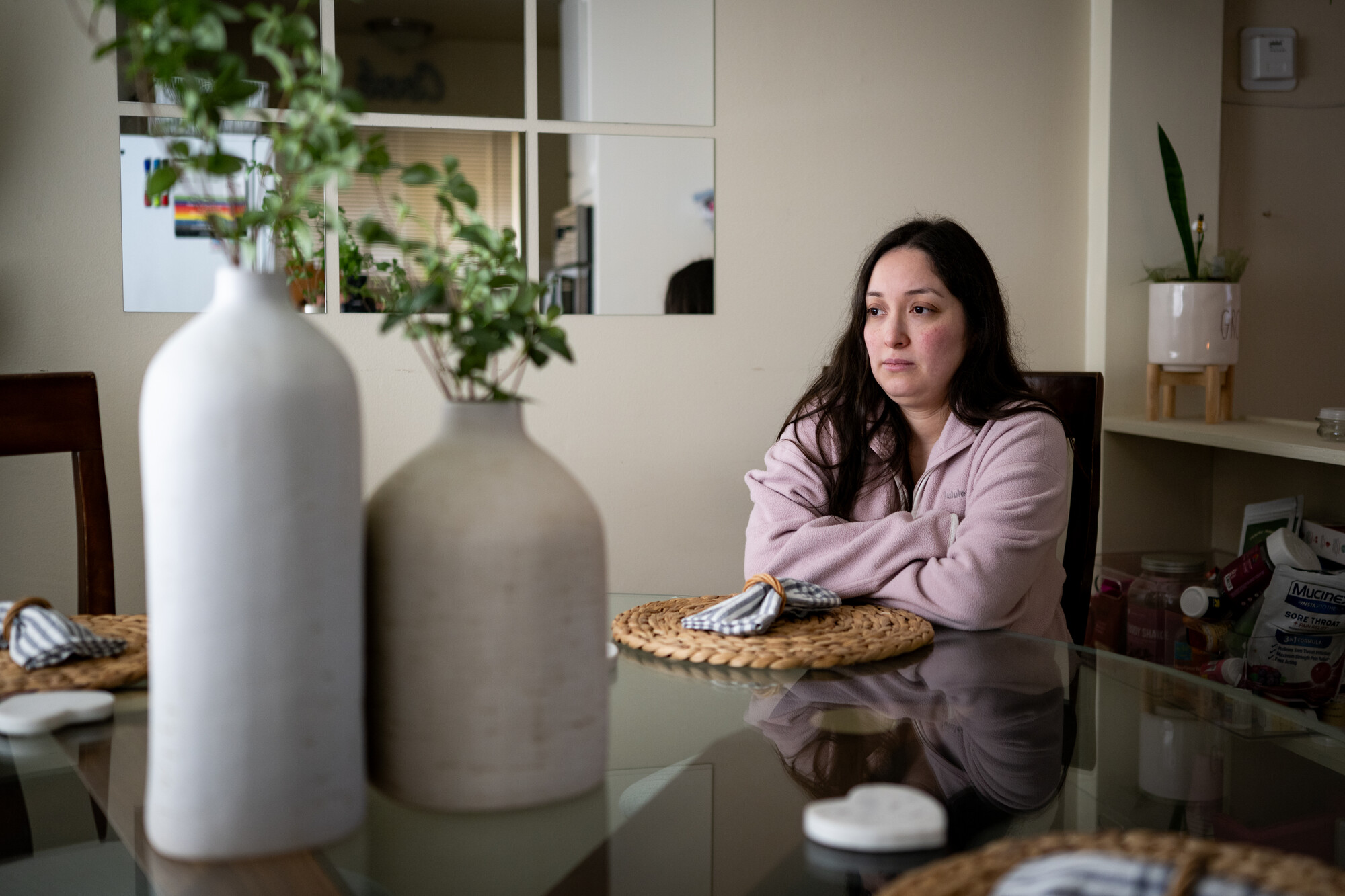
"caption": "Aby Peña sits in the kitchen at her home in Sunnyvale on Feb. 19, 2026. Her husband, Ulises Peña Lopez, was deported to Mexico after being taken into ICE custody outside of their home in February 2025, leaving his wife and young daughter in the Bay Area.",
"credit": "Beth LaBerge/KQED",
"altTag": null,
"description": null,
"imgSizes": {
"thumbnail": {
"file": "https://cdn.kqed.org/wp-content/uploads/sites/10/2026/06/260219-SunnyvaleDeported-09-BL_qed-160x107.jpg",
"width": 160,
"height": 107,
"mimeType": "image/jpeg"
},
"1536x1536": {
"file": "https://cdn.kqed.org/wp-content/uploads/sites/10/2026/06/260219-SunnyvaleDeported-09-BL_qed-1536x1024.jpg",
"width": 1536,
"height": 1024,
"mimeType": "image/jpeg"
},
"post-thumbnail": {
"file": "https://cdn.kqed.org/wp-content/uploads/sites/10/2026/06/260219-SunnyvaleDeported-09-BL_qed-672x372.jpg",
"width": 672,
"height": 372,
"mimeType": "image/jpeg"
},
"twentyfourteen-full-width": {
"file": "https://cdn.kqed.org/wp-content/uploads/sites/10/2026/06/260219-SunnyvaleDeported-09-BL_qed-1038x576.jpg",
"width": 1038,
"height": 576,
"mimeType": "image/jpeg"
},
"npr-cds-wide": {
"file": "https://cdn.kqed.org/wp-content/uploads/sites/10/2026/06/260219-SunnyvaleDeported-09-BL_qed-1200x675.jpg",
"width": 1200,
"height": 675,
"mimeType": "image/jpeg"
},
"npr-cds-square": {
"file": "https://cdn.kqed.org/wp-content/uploads/sites/10/2026/06/260219-SunnyvaleDeported-09-BL_qed-600x600.jpg",
"width": 600,
"height": 600,
"mimeType": "image/jpeg"
},
"kqedFullSize": {
"file": "https://cdn.kqed.org/wp-content/uploads/sites/10/2026/06/260219-SunnyvaleDeported-09-BL_qed.jpg",
"width": 2000,
"height": 1333
}
},
"isLoading": false,
"fetchFailed": false
},
"news_12088578": {
"type": "attachments",
"id": "news_12088578",
"meta": {
"index": "attachments_1716263798",
"site": "news",
"id": "12088578",
"found": true
},
"title": "20260619-BlackEnglish-JY-07-KQED",
"publishDate": 1782250805,
"status": "inherit",
"parent": 0,
"modified": 1782944550,
"caption": "Ashley Williams holds her 2-year-old son Ashtyn as she dances with family members during a Juneteenth celebration at her home in El Sobrante, California, on Friday, June 19, 2026.",
"credit": "Juliana Yamada for KQED",
"altTag": null,
"description": null,
"imgSizes": {
"thumbnail": {
"file": "https://cdn.kqed.org/wp-content/uploads/sites/10/2026/06/20260619-BlackEnglish-JY-07-KQED-160x107.jpg",
"width": 160,
"height": 107,
"mimeType": "image/jpeg"
},
"1536x1536": {
"file": "https://cdn.kqed.org/wp-content/uploads/sites/10/2026/06/20260619-BlackEnglish-JY-07-KQED-1536x1024.jpg",
"width": 1536,
"height": 1024,
"mimeType": "image/jpeg"
},
"post-thumbnail": {
"file": "https://cdn.kqed.org/wp-content/uploads/sites/10/2026/06/20260619-BlackEnglish-JY-07-KQED-672x372.jpg",
"width": 672,
"height": 372,
"mimeType": "image/jpeg"
},
"twentyfourteen-full-width": {
"file": "https://cdn.kqed.org/wp-content/uploads/sites/10/2026/06/20260619-BlackEnglish-JY-07-KQED-1038x576.jpg",
"width": 1038,
"height": 576,
"mimeType": "image/jpeg"
},
"npr-cds-wide": {
"file": "https://cdn.kqed.org/wp-content/uploads/sites/10/2026/06/20260619-BlackEnglish-JY-07-KQED-1200x675.jpg",
"width": 1200,
"height": 675,
"mimeType": "image/jpeg"
},
"npr-cds-square": {
"file": "https://cdn.kqed.org/wp-content/uploads/sites/10/2026/06/20260619-BlackEnglish-JY-07-KQED-600x600.jpg",
"width": 600,
"height": 600,
"mimeType": "image/jpeg"
},
"kqedFullSize": {
"file": "https://cdn.kqed.org/wp-content/uploads/sites/10/2026/06/20260619-BlackEnglish-JY-07-KQED.jpg",
"width": 2000,
"height": 1333
}
},
"isLoading": false,
"fetchFailed": false
},
"news_12089593": {
"type": "attachments",
"id": "news_12089593",
"meta": {
"index": "attachments_1716263798",
"site": "news",
"id": "12089593",
"found": true
},
"title": "20230822-SFSU-37-JY_qed",
"publishDate": 1782934569,
"status": "inherit",
"parent": 12087790,
"modified": 1782934643,
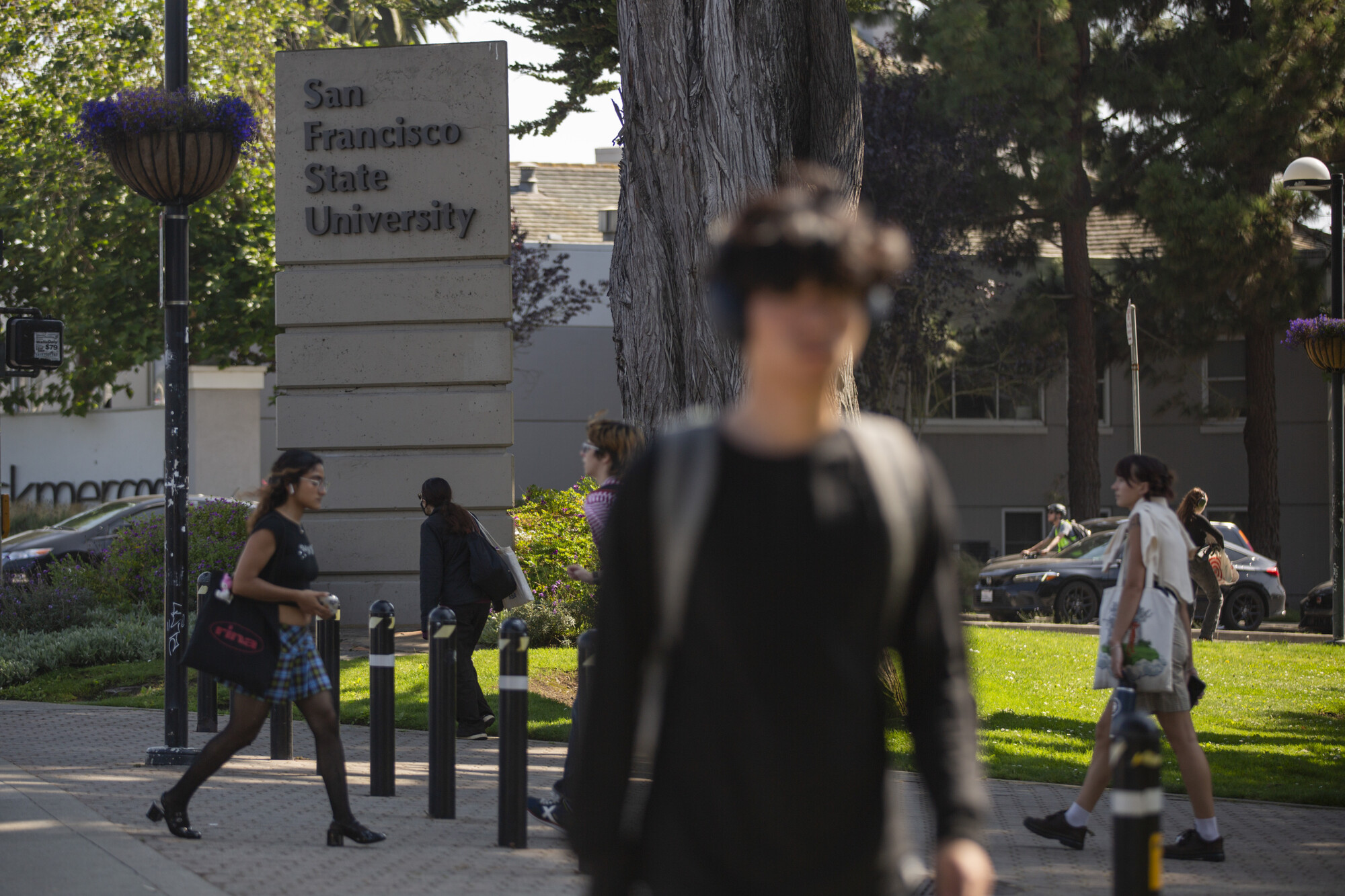
"caption": "Students walk up to the top of San Francisco State University's campus in San Francisco, California, on Tuesday, Aug. 22, 2023.",
"credit": "Juliana Yamada for KQED",
"altTag": null,
"description": null,
"imgSizes": {
"thumbnail": {
"file": "https://cdn.kqed.org/wp-content/uploads/sites/10/2026/07/20230822-SFSU-37-JY_qed-160x107.jpg",
"width": 160,
"height": 107,
"mimeType": "image/jpeg"
},
"1536x1536": {
"file": "https://cdn.kqed.org/wp-content/uploads/sites/10/2026/07/20230822-SFSU-37-JY_qed-1536x1024.jpg",
"width": 1536,
"height": 1024,
"mimeType": "image/jpeg"
},
"post-thumbnail": {
"file": "https://cdn.kqed.org/wp-content/uploads/sites/10/2026/07/20230822-SFSU-37-JY_qed-672x372.jpg",
"width": 672,
"height": 372,
"mimeType": "image/jpeg"
},
"twentyfourteen-full-width": {
"file": "https://cdn.kqed.org/wp-content/uploads/sites/10/2026/07/20230822-SFSU-37-JY_qed-1038x576.jpg",
"width": 1038,
"height": 576,
"mimeType": "image/jpeg"
},
"npr-cds-wide": {
"file": "https://cdn.kqed.org/wp-content/uploads/sites/10/2026/07/20230822-SFSU-37-JY_qed-1200x675.jpg",
"width": 1200,
"height": 675,
"mimeType": "image/jpeg"
},
"npr-cds-square": {
"file": "https://cdn.kqed.org/wp-content/uploads/sites/10/2026/07/20230822-SFSU-37-JY_qed-600x600.jpg",
"width": 600,
"height": 600,
"mimeType": "image/jpeg"
},
"kqedFullSize": {
"file": "https://cdn.kqed.org/wp-content/uploads/sites/10/2026/07/20230822-SFSU-37-JY_qed.jpg",
"width": 2000,
"height": 1333
}
},
"isLoading": false,
"fetchFailed": false
},
"news_11969591": {
"type": "attachments",
"id": "news_11969591",
"meta": {
"index": "attachments_1716263798",
"site": "news",
"id": "11969591",
"found": true
},
"title": "231209-FORMERANCHORWORKERS-13-BL-KQED",
"publishDate": 1702332613,
"status": "inherit",
"parent": 12089758,
"modified": 1783027454,
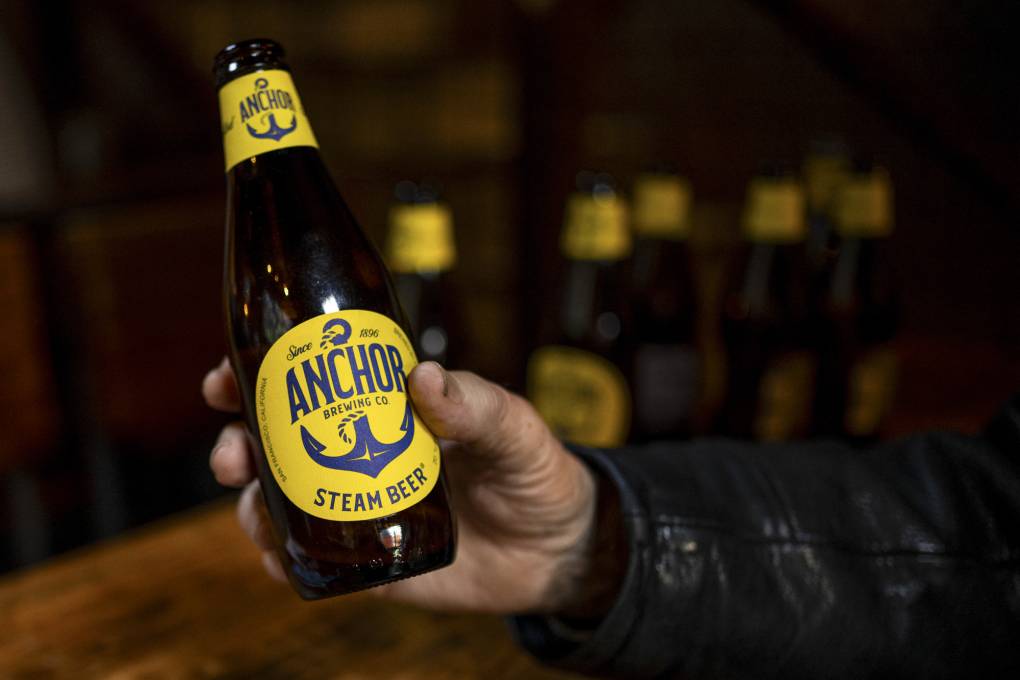
"caption": "An attendee at an SF BuzzWorks event serving their last Anchor Brewing kegs and Anchor Christmas Ales holds a bottle of Anchor beer in San Francisco on Dec. 9, 2023.",
"credit": "Beth LaBerge/KQED",
"altTag": null,
"description": null,
"imgSizes": {
"medium": {
"file": "https://cdn.kqed.org/wp-content/uploads/sites/10/2023/12/231209-FORMERANCHORWORKERS-13-BL-KQED-800x533.jpg",
"width": 800,
"height": 533,
"mimeType": "image/jpeg"
},
"large": {
"file": "https://cdn.kqed.org/wp-content/uploads/sites/10/2023/12/231209-FORMERANCHORWORKERS-13-BL-KQED-1020x680.jpg",
"width": 1020,
"height": 680,
"mimeType": "image/jpeg"
},
"thumbnail": {
"file": "https://cdn.kqed.org/wp-content/uploads/sites/10/2023/12/231209-FORMERANCHORWORKERS-13-BL-KQED-160x107.jpg",
"width": 160,
"height": 107,
"mimeType": "image/jpeg"
},
"1536x1536": {
"file": "https://cdn.kqed.org/wp-content/uploads/sites/10/2023/12/231209-FORMERANCHORWORKERS-13-BL-KQED-1536x1024.jpg",
"width": 1536,
"height": 1024,
"mimeType": "image/jpeg"
},
"post-thumbnail": {
"file": "https://cdn.kqed.org/wp-content/uploads/sites/10/2023/12/231209-FORMERANCHORWORKERS-13-BL-KQED-672x372.jpg",
"width": 672,
"height": 372,
"mimeType": "image/jpeg"
},
"twentyfourteen-full-width": {
"file": "https://cdn.kqed.org/wp-content/uploads/sites/10/2023/12/231209-FORMERANCHORWORKERS-13-BL-KQED-1038x576.jpg",
"width": 1038,
"height": 576,
"mimeType": "image/jpeg"
},
"full-width": {
"file": "https://cdn.kqed.org/wp-content/uploads/sites/10/2023/12/231209-FORMERANCHORWORKERS-13-BL-KQED-1920x1280.jpg",
"width": 1920,
"height": 1280,
"mimeType": "image/jpeg"
},
"kqedFullSize": {
"file": "https://cdn.kqed.org/wp-content/uploads/sites/10/2023/12/231209-FORMERANCHORWORKERS-13-BL-KQED.jpg",
"width": 2000,
"height": 1333
}
},
"isLoading": false,
"fetchFailed": false
},
"news_12089401": {
"type": "attachments",
"id": "news_12089401",
"meta": {
"index": "attachments_1716263798",
"site": "news",
"id": "12089401",
"found": true
},
"title": "260630-MUNI 30 FOOT BUSES-MD-02-KQED",
"publishDate": 1782856449,
"status": "inherit",
"parent": 12089729,
"modified": 1783022782,
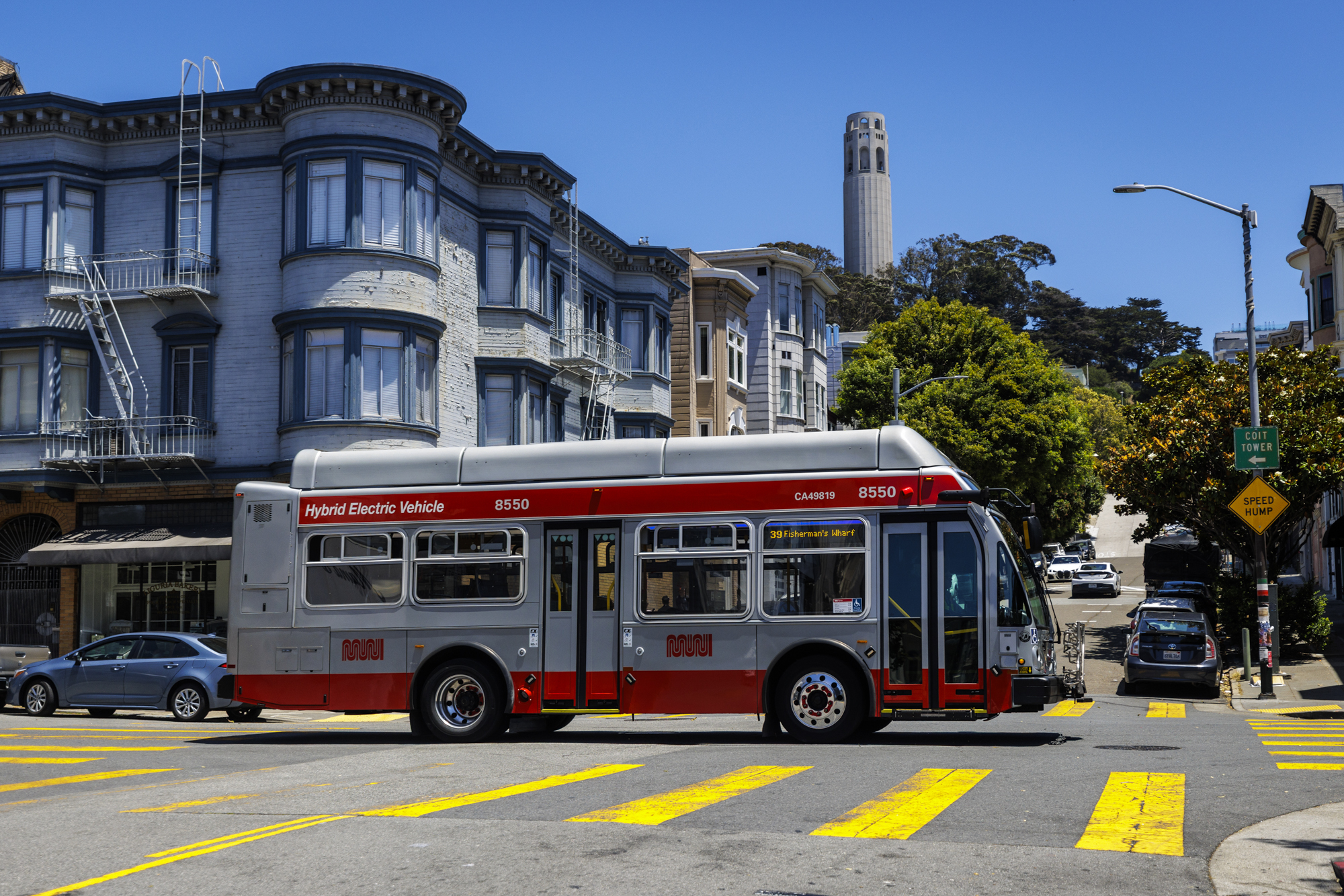
"caption": "The 39 bus drives through the North Beach neighborhood of San Francisco on June 30, 2026.",
"credit": "Martin do Nascimento/KQED",
"altTag": null,
"description": null,
"imgSizes": {
"thumbnail": {
"file": "https://cdn.kqed.org/wp-content/uploads/sites/10/2026/06/260630-MUNI-30-FOOT-BUSES-MD-02-KQED-160x107.jpg",
"width": 160,
"height": 107,
"mimeType": "image/jpeg"
},
"1536x1536": {
"file": "https://cdn.kqed.org/wp-content/uploads/sites/10/2026/06/260630-MUNI-30-FOOT-BUSES-MD-02-KQED-1536x1025.jpg",
"width": 1536,
"height": 1025,
"mimeType": "image/jpeg"
},
"post-thumbnail": {
"file": "https://cdn.kqed.org/wp-content/uploads/sites/10/2026/06/260630-MUNI-30-FOOT-BUSES-MD-02-KQED-672x372.jpg",
"width": 672,
"height": 372,
"mimeType": "image/jpeg"
},
"twentyfourteen-full-width": {
"file": "https://cdn.kqed.org/wp-content/uploads/sites/10/2026/06/260630-MUNI-30-FOOT-BUSES-MD-02-KQED-1038x576.jpg",
"width": 1038,
"height": 576,
"mimeType": "image/jpeg"
},
"npr-cds-wide": {
"file": "https://cdn.kqed.org/wp-content/uploads/sites/10/2026/06/260630-MUNI-30-FOOT-BUSES-MD-02-KQED-1200x675.jpg",
"width": 1200,
"height": 675,
"mimeType": "image/jpeg"
},
"npr-cds-square": {
"file": "https://cdn.kqed.org/wp-content/uploads/sites/10/2026/06/260630-MUNI-30-FOOT-BUSES-MD-02-KQED-600x600.jpg",
"width": 600,
"height": 600,
"mimeType": "image/jpeg"
},
"kqedFullSize": {
"file": "https://cdn.kqed.org/wp-content/uploads/sites/10/2026/06/260630-MUNI-30-FOOT-BUSES-MD-02-KQED.jpg",
"width": 2000,
"height": 1334
}
},
"isLoading": false,
"fetchFailed": false
},
"news_12089562": {
"type": "attachments",
"id": "news_12089562",
"meta": {
"index": "attachments_1716263798",
"site": "news",
"id": "12089562",
"found": true
},
"title": "IMG_1571",
"publishDate": 1782932761,
"status": "inherit",
"parent": 12089546,
"modified": 1782932810,
"caption": "LifeMoves' New Haven Inn feels more like a large, welcoming house than a typical homeless shelter. The San José center is one of the first LifeMoves shelters to implement new staff training to better support LGBTQ+ residents.",
"credit": "Anna Vignet/KQED",
"altTag": null,
"description": null,
"imgSizes": {
"medium": {
"file": "https://cdn.kqed.org/wp-content/uploads/sites/10/2026/07/IMG_1571-2000x1500.jpg",
"width": 2000,
"height": 1500,
"mimeType": "image/jpeg"
},
"large": {
"file": "https://cdn.kqed.org/wp-content/uploads/sites/10/2026/07/IMG_1571-2000x1500.jpg",
"width": 2000,
"height": 1500,
"mimeType": "image/jpeg"
},
"thumbnail": {
"file": "https://cdn.kqed.org/wp-content/uploads/sites/10/2026/07/IMG_1571-160x120.jpg",
"width": 160,
"height": 120,
"mimeType": "image/jpeg"
},
"1536x1536": {
"file": "https://cdn.kqed.org/wp-content/uploads/sites/10/2026/07/IMG_1571-1536x1152.jpg",
"width": 1536,
"height": 1152,
"mimeType": "image/jpeg"
},
"2048x2048": {
"file": "https://cdn.kqed.org/wp-content/uploads/sites/10/2026/07/IMG_1571-2048x1536.jpg",
"width": 2048,
"height": 1536,
"mimeType": "image/jpeg"
},
"post-thumbnail": {
"file": "https://cdn.kqed.org/wp-content/uploads/sites/10/2026/07/IMG_1571-672x372.jpg",
"width": 672,
"height": 372,
"mimeType": "image/jpeg"
},
"twentyfourteen-full-width": {
"file": "https://cdn.kqed.org/wp-content/uploads/sites/10/2026/07/IMG_1571-1038x576.jpg",
"width": 1038,
"height": 576,
"mimeType": "image/jpeg"
},
"full-width": {
"file": "https://cdn.kqed.org/wp-content/uploads/sites/10/2026/07/IMG_1571-2000x1500.jpg",
"width": 2000,
"height": 1500,
"mimeType": "image/jpeg"
},
"npr-cds-wide": {
"file": "https://cdn.kqed.org/wp-content/uploads/sites/10/2026/07/IMG_1571-1200x675.jpg",
"width": 1200,
"height": 675,
"mimeType": "image/jpeg"
},
"npr-cds-square": {
"file": "https://cdn.kqed.org/wp-content/uploads/sites/10/2026/07/IMG_1571-600x600.jpg",
"width": 600,
"height": 600,
"mimeType": "image/jpeg"
},
"kqedFullSize": {
"file": "https://cdn.kqed.org/wp-content/uploads/sites/10/2026/07/IMG_1571.jpg",
"width": 2560,
"height": 1920
}
},
"isLoading": false,
"fetchFailed": false
},
"news_12089669": {
"type": "attachments",
"id": "news_12089669",
"meta": {
"index": "attachments_1716263798",
"site": "news",
"id": "12089669",
"found": true
},
"title": "260701-WORLDCUPUSALEVIS-07-BL-KQED",
"publishDate": 1782947579,
"status": "inherit",
"parent": 12089303,
"modified": 1782964388,
"caption": "Shannon Malone cheers before marching to the San Francisco Bay Area stadium for the FIFA World Cup game between the USA and Bosnia Herzegovina in Santa Clara, California, on July 1, 2026.",
"credit": "Beth LaBerge/KQED",
"altTag": null,
"description": null,
"imgSizes": {
"thumbnail": {
"file": "https://cdn.kqed.org/wp-content/uploads/sites/10/2026/07/260701-WORLDCUPUSALEVIS-07-BL-KQED-160x107.jpg",
"width": 160,
"height": 107,
"mimeType": "image/jpeg"
},
"1536x1536": {
"file": "https://cdn.kqed.org/wp-content/uploads/sites/10/2026/07/260701-WORLDCUPUSALEVIS-07-BL-KQED-1536x1024.jpg",
"width": 1536,
"height": 1024,
"mimeType": "image/jpeg"
},
"post-thumbnail": {
"file": "https://cdn.kqed.org/wp-content/uploads/sites/10/2026/07/260701-WORLDCUPUSALEVIS-07-BL-KQED-672x372.jpg",
"width": 672,
"height": 372,
"mimeType": "image/jpeg"
},
"twentyfourteen-full-width": {
"file": "https://cdn.kqed.org/wp-content/uploads/sites/10/2026/07/260701-WORLDCUPUSALEVIS-07-BL-KQED-1038x576.jpg",
"width": 1038,
"height": 576,
"mimeType": "image/jpeg"
},
"npr-cds-wide": {
"file": "https://cdn.kqed.org/wp-content/uploads/sites/10/2026/07/260701-WORLDCUPUSALEVIS-07-BL-KQED-1200x675.jpg",
"width": 1200,
"height": 675,
"mimeType": "image/jpeg"
},
"npr-cds-square": {
"file": "https://cdn.kqed.org/wp-content/uploads/sites/10/2026/07/260701-WORLDCUPUSALEVIS-07-BL-KQED-600x600.jpg",
"width": 600,
"height": 600,
"mimeType": "image/jpeg"
},
"kqedFullSize": {
"file": "https://cdn.kqed.org/wp-content/uploads/sites/10/2026/07/260701-WORLDCUPUSALEVIS-07-BL-KQED.jpg",
"width": 2000,
"height": 1333
}
},
"isLoading": false,
"fetchFailed": false
},
"news_12088799": {
"type": "attachments",
"id": "news_12088799",
"meta": {
"index": "attachments_1716263798",
"site": "news",
"id": "12088799",
"found": true
},
"title": "4th of July Fireworks in San Francisco",
"publishDate": 1782340644,
"status": "inherit",
"parent": 12088793,
"modified": 1782340674,
"caption": "Fireworks illuminate the sky over San Francisco's Golden Gate Bridge as seen from Marin Headlands in Sausalito, California, on July 4, 2024. ",
"credit": "Tayfun Coskun/Anadolu via Getty Images",
"altTag": null,
"description": null,
"imgSizes": {
"thumbnail": {
"file": "https://cdn.kqed.org/wp-content/uploads/sites/10/2026/06/SFFireworksGGBGetty-160x105.jpg",
"width": 160,
"height": 105,
"mimeType": "image/jpeg"
},
"1536x1536": {
"file": "https://cdn.kqed.org/wp-content/uploads/sites/10/2026/06/SFFireworksGGBGetty-1536x1012.jpg",
"width": 1536,
"height": 1012,
"mimeType": "image/jpeg"
},
"post-thumbnail": {
"file": "https://cdn.kqed.org/wp-content/uploads/sites/10/2026/06/SFFireworksGGBGetty-672x372.jpg",
"width": 672,
"height": 372,
"mimeType": "image/jpeg"
},
"twentyfourteen-full-width": {
"file": "https://cdn.kqed.org/wp-content/uploads/sites/10/2026/06/SFFireworksGGBGetty-1038x576.jpg",
"width": 1038,
"height": 576,
"mimeType": "image/jpeg"
},
"npr-cds-wide": {
"file": "https://cdn.kqed.org/wp-content/uploads/sites/10/2026/06/SFFireworksGGBGetty-1200x675.jpg",
"width": 1200,
"height": 675,
"mimeType": "image/jpeg"
},
"npr-cds-square": {
"file": "https://cdn.kqed.org/wp-content/uploads/sites/10/2026/06/SFFireworksGGBGetty-600x600.jpg",
"width": 600,
"height": 600,
"mimeType": "image/jpeg"
},
"kqedFullSize": {
"file": "https://cdn.kqed.org/wp-content/uploads/sites/10/2026/06/SFFireworksGGBGetty.jpg",
"width": 2000,
"height": 1318
}
},
"isLoading": false,
"fetchFailed": false
},
"news_12087351": {
"type": "attachments",
"id": "news_12087351",
"meta": {
"index": "attachments_1716263798",
"site": "news",
"id": "12087351",
"found": true
},
"title": "260611-OAKLANDAIRPORTWORKERS-14-BL-KQED",
"publishDate": 1781284281,
"status": "inherit",
"parent": 0,
"modified": 1781284316,
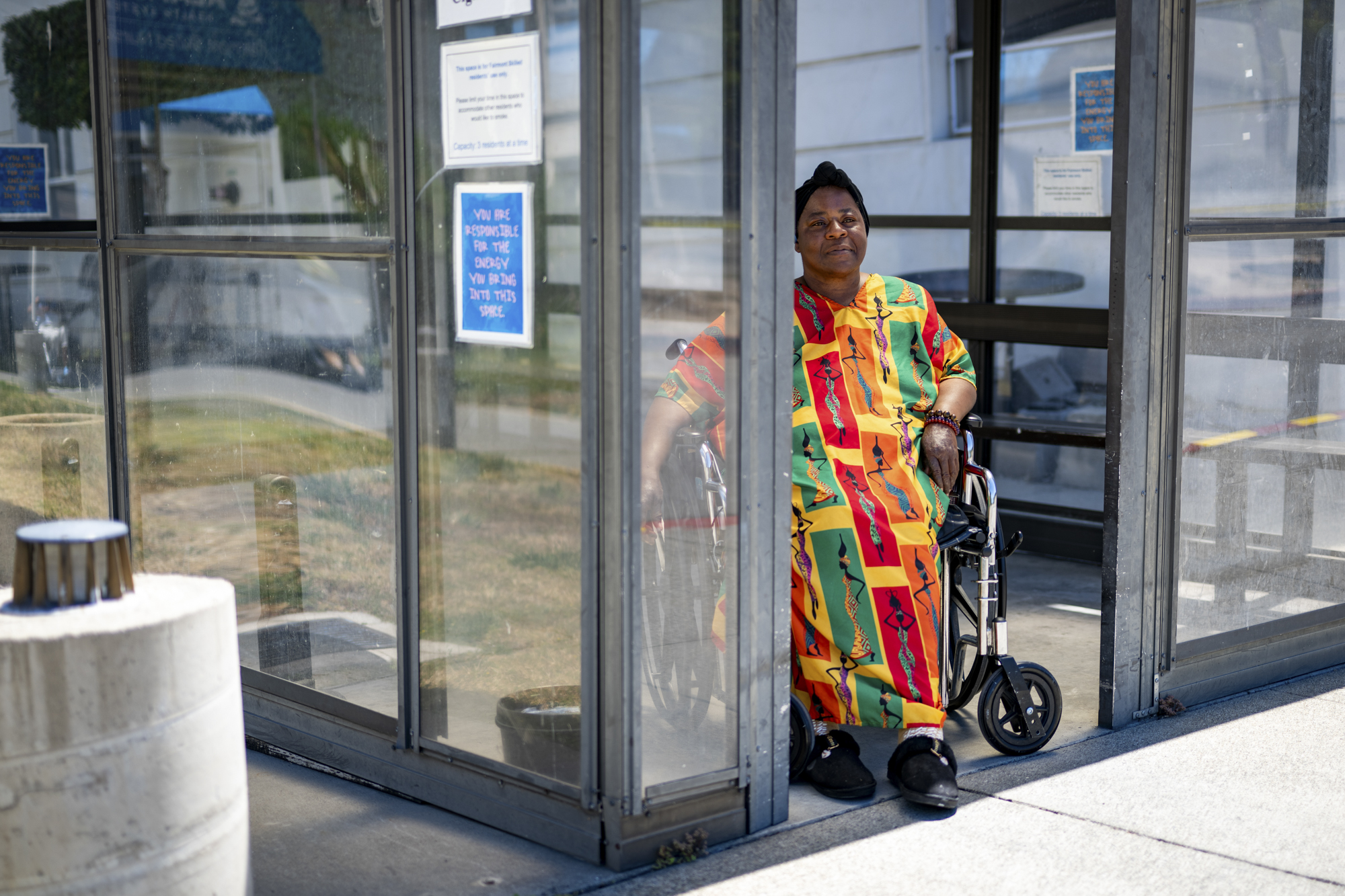
"caption": "Keiana Vernon sits outside Fairmont Skilled Nursing and Rehabilitation Center in San Leandro on June 11, 2026. Vernon suffered a workplace injury while working for an airport services contractor and is now living at the long-term care facility after developing chronic injuries and mobility limitations.",
"credit": "Beth LaBerge/KQED",
"altTag": null,
"description": null,
"imgSizes": {
"thumbnail": {
"file": "https://cdn.kqed.org/wp-content/uploads/sites/10/2026/06/260611-OAKLANDAIRPORTWORKERS-14-BL-KQED-160x107.jpg",
"width": 160,
"height": 107,
"mimeType": "image/jpeg"
},
"1536x1536": {
"file": "https://cdn.kqed.org/wp-content/uploads/sites/10/2026/06/260611-OAKLANDAIRPORTWORKERS-14-BL-KQED-1536x1024.jpg",
"width": 1536,
"height": 1024,
"mimeType": "image/jpeg"
},
"post-thumbnail": {
"file": "https://cdn.kqed.org/wp-content/uploads/sites/10/2026/06/260611-OAKLANDAIRPORTWORKERS-14-BL-KQED-672x372.jpg",
"width": 672,
"height": 372,
"mimeType": "image/jpeg"
},
"twentyfourteen-full-width": {
"file": "https://cdn.kqed.org/wp-content/uploads/sites/10/2026/06/260611-OAKLANDAIRPORTWORKERS-14-BL-KQED-1038x576.jpg",
"width": 1038,
"height": 576,
"mimeType": "image/jpeg"
},
"npr-cds-wide": {
"file": "https://cdn.kqed.org/wp-content/uploads/sites/10/2026/06/260611-OAKLANDAIRPORTWORKERS-14-BL-KQED-1200x675.jpg",
"width": 1200,
"height": 675,
"mimeType": "image/jpeg"
},
"npr-cds-square": {
"file": "https://cdn.kqed.org/wp-content/uploads/sites/10/2026/06/260611-OAKLANDAIRPORTWORKERS-14-BL-KQED-600x600.jpg",
"width": 600,
"height": 600,
"mimeType": "image/jpeg"
},
"kqedFullSize": {
"file": "https://cdn.kqed.org/wp-content/uploads/sites/10/2026/06/260611-OAKLANDAIRPORTWORKERS-14-BL-KQED.jpg",
"width": 2000,
"height": 1333
}
},
"isLoading": false,
"fetchFailed": false
},
"news_12080419": {
"type": "attachments",
"id": "news_12080419",
"meta": {
"index": "attachments_1716263798",
"site": "news",
"id": "12080419",
"found": true
},
"title": "260416-Jaxon Folo-04-KQED",
"publishDate": 1776449630,
"status": "inherit",
"parent": 12080838,
"modified": 1776898953,
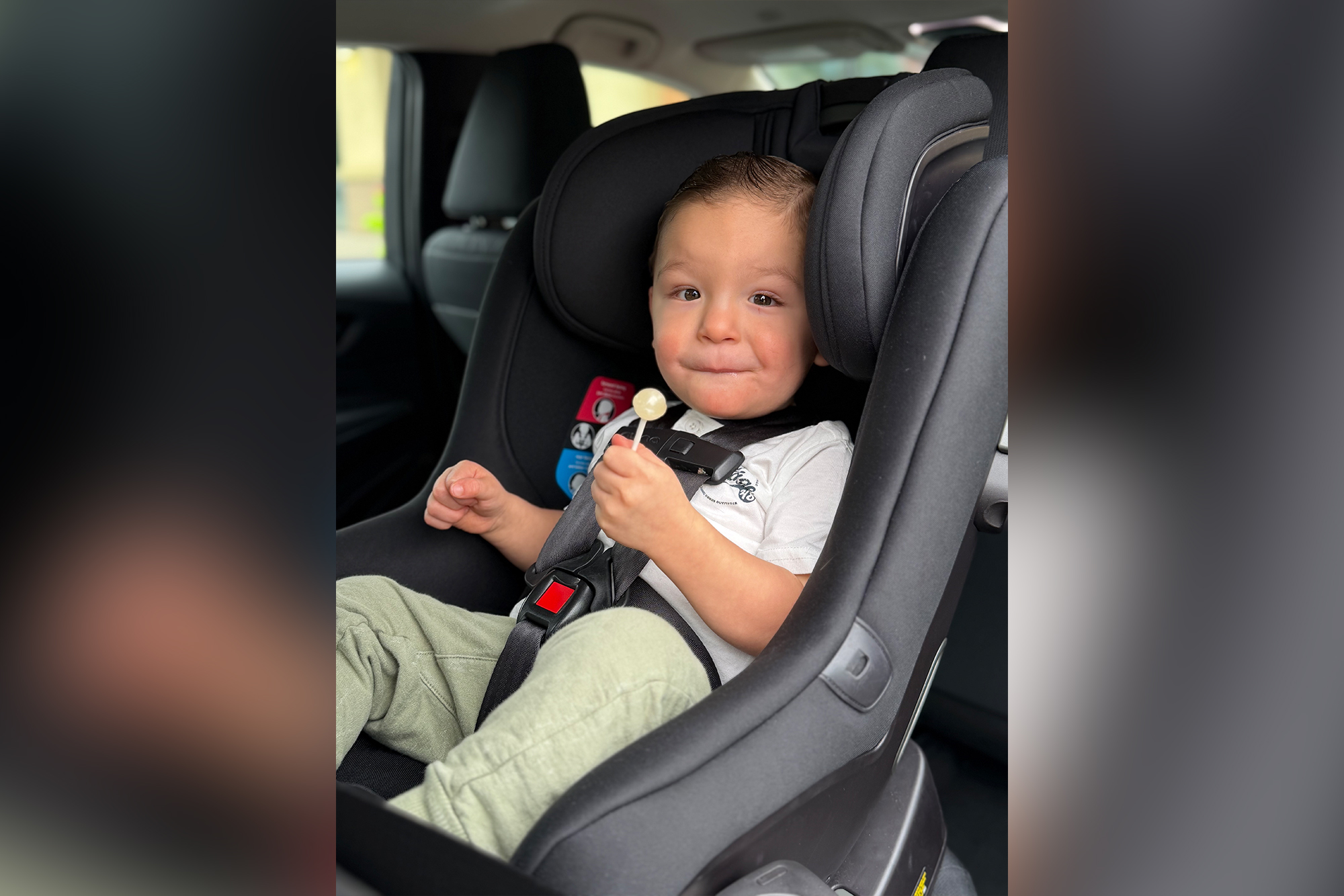
"caption": "Jaxon, a 2-year-old South Bay boy who died while in Santa Clara County's foster care system after allegedly being sexually assaulted, is seen in this photo provided by his aunt.",
"credit": "Courtesy of Riley Wallace",
"altTag": null,
"description": null,
"imgSizes": {
"thumbnail": {
"file": "https://cdn.kqed.org/wp-content/uploads/sites/10/2026/04/260416-Jaxon-Folo-04-KQED-160x107.jpg",
"width": 160,
"height": 107,
"mimeType": "image/jpeg"
},
"1536x1536": {
"file": "https://cdn.kqed.org/wp-content/uploads/sites/10/2026/04/260416-Jaxon-Folo-04-KQED-1536x1025.jpg",
"width": 1536,
"height": 1025,
"mimeType": "image/jpeg"
},
"post-thumbnail": {
"file": "https://cdn.kqed.org/wp-content/uploads/sites/10/2026/04/260416-Jaxon-Folo-04-KQED-672x372.jpg",
"width": 672,
"height": 372,
"mimeType": "image/jpeg"
},
"twentyfourteen-full-width": {
"file": "https://cdn.kqed.org/wp-content/uploads/sites/10/2026/04/260416-Jaxon-Folo-04-KQED-1038x576.jpg",
"width": 1038,
"height": 576,
"mimeType": "image/jpeg"
},
"npr-cds-wide": {
"file": "https://cdn.kqed.org/wp-content/uploads/sites/10/2026/04/260416-Jaxon-Folo-04-KQED-1200x675.jpg",
"width": 1200,
"height": 675,
"mimeType": "image/jpeg"
},
"npr-cds-square": {
"file": "https://cdn.kqed.org/wp-content/uploads/sites/10/2026/04/260416-Jaxon-Folo-04-KQED-600x600.jpg",
"width": 600,
"height": 600,
"mimeType": "image/jpeg"
},
"kqedFullSize": {
"file": "https://cdn.kqed.org/wp-content/uploads/sites/10/2026/04/260416-Jaxon-Folo-04-KQED.jpg",
"width": 2000,
"height": 1334
}
},
"isLoading": false,
"fetchFailed": false
},
"news_12089500": {
"type": "attachments",
"id": "news_12089500",
"meta": {
"index": "attachments_1716263798",
"site": "news",
"id": "12089500",
"found": true
},
"title": "Downtown Rio Vista on May 2, 2024.",
"publishDate": 1782925336,
"status": "inherit",
"parent": 12089233,
"modified": 1782925354,
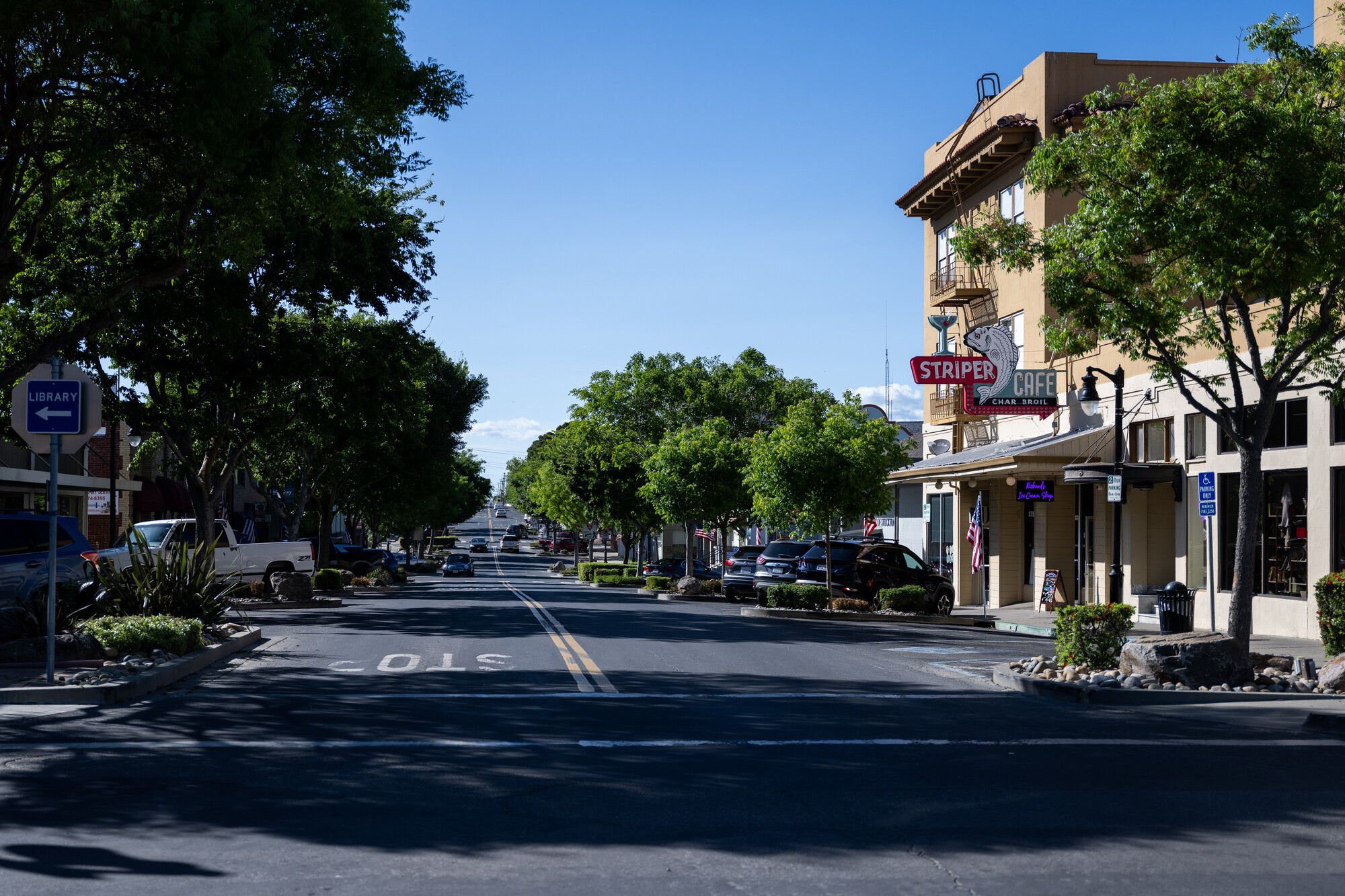
"caption": "Downtown Rio Vista on May 2, 2024.",
"credit": "Beth LaBerge/KQED",
"altTag": null,
"description": null,
"imgSizes": {
"thumbnail": {
"file": "https://cdn.kqed.org/wp-content/uploads/sites/10/2026/07/240502-CaliforniaForever-58-BL_qed-1-160x107.jpg",
"width": 160,
"height": 107,
"mimeType": "image/jpeg"
},
"1536x1536": {
"file": "https://cdn.kqed.org/wp-content/uploads/sites/10/2026/07/240502-CaliforniaForever-58-BL_qed-1-1536x1024.jpg",
"width": 1536,
"height": 1024,
"mimeType": "image/jpeg"
},
"post-thumbnail": {
"file": "https://cdn.kqed.org/wp-content/uploads/sites/10/2026/07/240502-CaliforniaForever-58-BL_qed-1-672x372.jpg",
"width": 672,
"height": 372,
"mimeType": "image/jpeg"
},
"twentyfourteen-full-width": {
"file": "https://cdn.kqed.org/wp-content/uploads/sites/10/2026/07/240502-CaliforniaForever-58-BL_qed-1-1038x576.jpg",
"width": 1038,
"height": 576,
"mimeType": "image/jpeg"
},
"npr-cds-wide": {
"file": "https://cdn.kqed.org/wp-content/uploads/sites/10/2026/07/240502-CaliforniaForever-58-BL_qed-1-1200x675.jpg",
"width": 1200,
"height": 675,
"mimeType": "image/jpeg"
},
"npr-cds-square": {
"file": "https://cdn.kqed.org/wp-content/uploads/sites/10/2026/07/240502-CaliforniaForever-58-BL_qed-1-600x600.jpg",
"width": 600,
"height": 600,
"mimeType": "image/jpeg"
},
"kqedFullSize": {
"file": "https://cdn.kqed.org/wp-content/uploads/sites/10/2026/07/240502-CaliforniaForever-58-BL_qed-1.jpg",
"width": 2000,
"height": 1333
}
},
"isLoading": false,
"fetchFailed": false
},
"news_12089456": {
"type": "attachments",
"id": "news_12089456",
"meta": {
"index": "attachments_1716263798",
"site": "news",
"id": "12089456",
"found": true
},
"title": "TOPSHOT-FBL-WC-2026-BIH-MUSIC",
"publishDate": 1782864771,
"status": "inherit",
"parent": 12089314,
"modified": 1782866712,
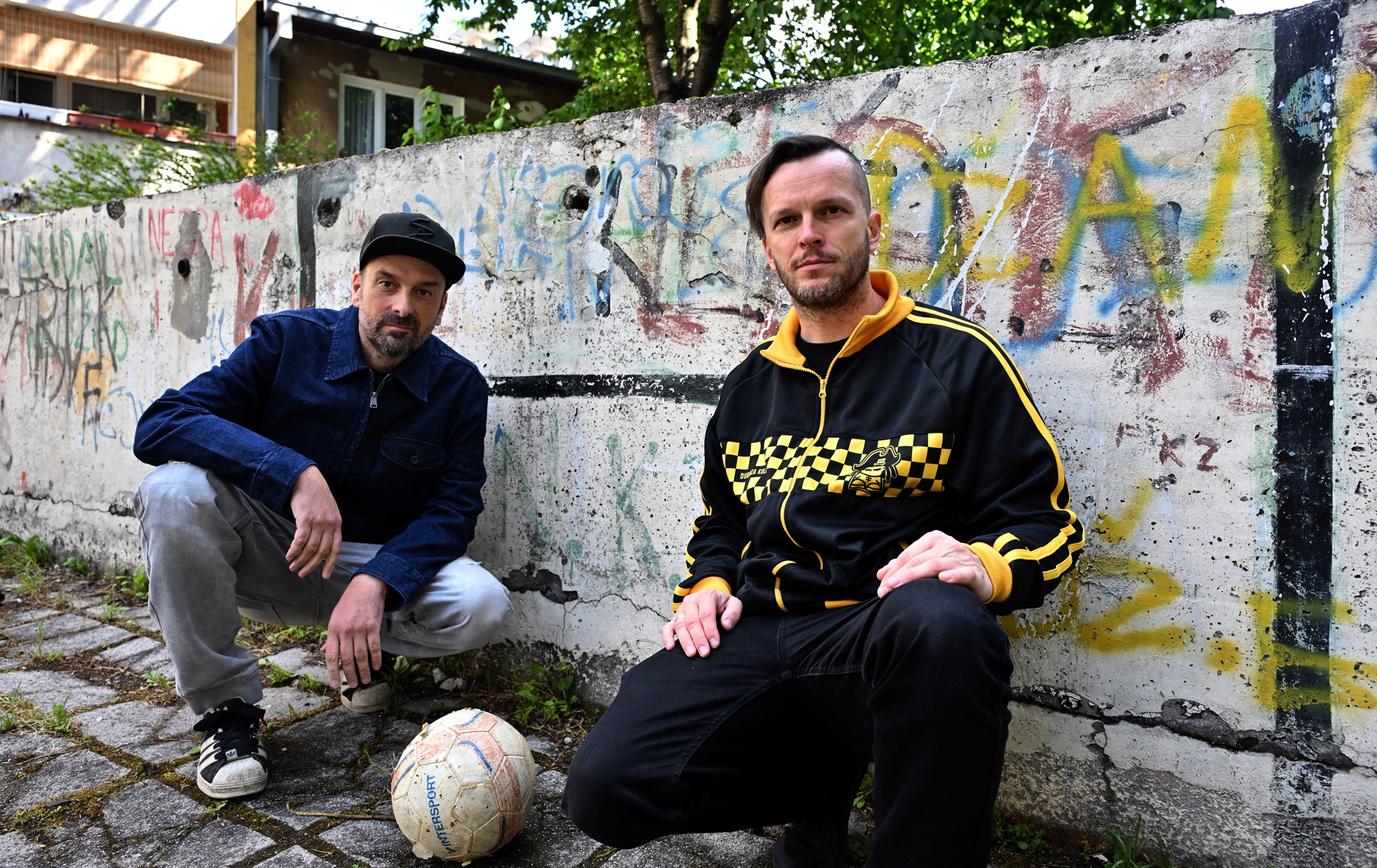
"caption": "Members of Bosnian Hip-Hop band \"Dubioza Kolektiv\", Brano Jakubovic (L) and Vedran Mujagic pose with a ball in Sarajevo on June 2, 2026. With brass, guitars, and a music video overflowing with grilled meat, Bosnia has delivered the first World Cup anthem of 2026: \"I Am from Bosnia, Take Me to America.\" The song had already accumulated several million views on different platforms. The song is a cover version of an earlier hit by the Bosnian rock band Dubioza Kolektiv and is rapidly becoming one of the signature songs (anthems) of the 2026 World Cup, which begins on June 11. ",
"credit": "Elvis Barukcic / AFP via Getty Images",
"altTag": null,
"description": null,
"imgSizes": {
"thumbnail": {
"file": "https://cdn.kqed.org/wp-content/uploads/sites/10/2026/06/Dubioza-Kolektiv-Getty-1-160x101.jpg",
"width": 160,
"height": 101,
"mimeType": "image/jpeg"
},
"1536x1536": {
"file": "https://cdn.kqed.org/wp-content/uploads/sites/10/2026/06/Dubioza-Kolektiv-Getty-1-1536x968.jpg",
"width": 1536,
"height": 968,
"mimeType": "image/jpeg"
},
"post-thumbnail": {
"file": "https://cdn.kqed.org/wp-content/uploads/sites/10/2026/06/Dubioza-Kolektiv-Getty-1-672x372.jpg",
"width": 672,
"height": 372,
"mimeType": "image/jpeg"
},
"twentyfourteen-full-width": {
"file": "https://cdn.kqed.org/wp-content/uploads/sites/10/2026/06/Dubioza-Kolektiv-Getty-1-1038x576.jpg",
"width": 1038,
"height": 576,
"mimeType": "image/jpeg"
},
"npr-cds-wide": {
"file": "https://cdn.kqed.org/wp-content/uploads/sites/10/2026/06/Dubioza-Kolektiv-Getty-1-1200x675.jpg",
"width": 1200,
"height": 675,
"mimeType": "image/jpeg"
},
"npr-cds-square": {
"file": "https://cdn.kqed.org/wp-content/uploads/sites/10/2026/06/Dubioza-Kolektiv-Getty-1-600x600.jpg",
"width": 600,
"height": 600,
"mimeType": "image/jpeg"
},
"kqedFullSize": {
"file": "https://cdn.kqed.org/wp-content/uploads/sites/10/2026/06/Dubioza-Kolektiv-Getty-1.jpg",
"width": 2000,
"height": 1261
}
},
"isLoading": false,
"fetchFailed": false
}
},
"audioPlayerReducer": {
"postId": "stream_live",
"isPaused": true,
"isPlaying": false,
"pfsActive": false,
"pledgeModalIsOpen": true,
"playerDrawerIsOpen": false,
"liveAudioPlayStartedAt": 0,
"liveAudioPlayContext": ""
},
"authorsReducer": {
"tychehendricks": {
"type": "authors",
"id": "259",
"meta": {
"index": "authors_1716337520",
"id": "259",
"found": true
},
"name": "Tyche Hendricks",
"firstName": "Tyche",
"lastName": "Hendricks",
"slug": "tychehendricks",
"email": "thendricks@kqed.org",
"display_author_email": true,
"staff_mastheads": [
"news"
],
"title": "KQED Senior Editor, Immigration",
"bio": "\u003cspan style=\"font-weight: 400;\">Tyche Hendricks is KQED’s senior editor for immigration, leading coverage of the policy and politics that affect California’s immigrant communities. Her work for KQED’s radio and online audiences is also carried on NPR and other national outlets. She has been recognized with awards from the Radio and Television News Directors Association, the Society for Professional Journalists; the Education Writers Association; the Best of the West and the National Federation of Community Broadcasters. Before joining KQED in 2010, Tyche spent more than a dozen years as a newspaper reporter, notably at the \u003c/span>\u003ci>\u003cspan style=\"font-weight: 400;\">San Francisco Chronicle\u003c/span>\u003c/i>\u003cspan style=\"font-weight: 400;\">. At different times she has covered criminal justice, government and politics and urban planning. Tyche has taught in the MFA Creative Writing program at the University of San Francisco and at UC Berkeley’s Graduate School of Journalism, where she was co-director of a national immigration symposium for professional journalists. She is the author of \u003c/span>\u003ci>\u003cspan style=\"font-weight: 400;\">The Wind Doesn't Need a Passport: Stories from the U.S.-Mexico Borderlands\u003c/span>\u003c/i>\u003cspan style=\"font-weight: 400;\"> (University of California Press). \u003c/span>",
"avatar": "https://secure.gravatar.com/avatar/b8ee458e2731c2d43df86882ce17267e?s=600&d=blank&r=g",
"twitter": "tychehendricks",
"facebook": null,
"instagram": null,
"linkedin": null,
"sites": [
{
"site": "news",
"roles": [
"editor"
]
},
{
"site": "stateofhealth",
"roles": [
"editor"
]
}
],
"headData": {
"title": "Tyche Hendricks | KQED",
"description": "KQED Senior Editor, Immigration",
"ogImgSrc": "https://secure.gravatar.com/avatar/b8ee458e2731c2d43df86882ce17267e?s=600&d=blank&r=g",
"twImgSrc": "https://secure.gravatar.com/avatar/b8ee458e2731c2d43df86882ce17267e?s=600&d=blank&r=g"
},
"isLoading": false,
"link": "/author/tychehendricks"
},
"fjhabvala": {
"type": "authors",
"id": "8659",
"meta": {
"index": "authors_1716337520",
"id": "8659",
"found": true
},
"name": "Farida Jhabvala Romero",
"firstName": "Farida",
"lastName": "Jhabvala Romero",
"slug": "fjhabvala",
"email": "fjhabvala@kqed.org",
"display_author_email": true,
"staff_mastheads": [
"news"
],
"title": "KQED Contributor",
"bio": "Farida Jhabvala Romero is a Labor Correspondent for KQED. She previously covered immigration. Farida was \u003ca href=\"https://www.ccnma.org/2022-most-influential-latina-journalists\">named\u003c/a> one of the 10 Most Influential Latina Journalists in California in 2022 by the California Chicano News Media Association. Her work has won awards from the Society of Professional Journalists (Northern California), as well as a national and regional Edward M. Murrow Award for the collaborative reporting projects “Dangerous Air” and “Graying California.” Before joining KQED, Farida worked as a producer at Radio Bilingüe, a national public radio network. Farida earned her master’s degree in journalism from Stanford University.",
"avatar": "https://secure.gravatar.com/avatar/f9f022d4e2609741874222a1e9d41f48fea74011aa7c615eef91d9a50c944ebe?s=600&d=blank&r=g",
"twitter": "FaridaJhabvala",
"bluesky": null,
"facebook": null,
"instagram": null,
"linkedin": "https://www.linkedin.com/in/faridajhabvala/",
"sites": [
{
"site": "news",
"roles": [
"editor"
]
},
{
"site": "stateofhealth",
"roles": [
"author"
]
},
{
"site": "liveblog",
"roles": [
"author"
]
}
],
"headData": {
"title": "Farida Jhabvala Romero | KQED",
"description": "KQED Contributor",
"ogImgSrc": "https://secure.gravatar.com/avatar/f9f022d4e2609741874222a1e9d41f48fea74011aa7c615eef91d9a50c944ebe?s=600&d=blank&r=g",
"twImgSrc": "https://secure.gravatar.com/avatar/f9f022d4e2609741874222a1e9d41f48fea74011aa7c615eef91d9a50c944ebe?s=600&d=blank&r=g"
},
"isLoading": false,
"link": "/author/fjhabvala"
},
"abandlamudi": {
"type": "authors",
"id": "11672",
"meta": {
"index": "authors_1716337520",
"id": "11672",
"found": true
},
"name": "Adhiti Bandlamudi",
"firstName": "Adhiti",
"lastName": "Bandlamudi",
"slug": "abandlamudi",
"email": "abandlamudi@kqed.org",
"display_author_email": false,
"staff_mastheads": [
"news"
],
"title": "KQED Housing Reporter",
"bio": "Adhiti Bandlamudi reports for KQED's Housing desk. She focuses on how housing gets built across the Bay Area. Before joining KQED in 2020, she reported for WUNC in Durham, North Carolina, WABE in Atlanta, Georgia and Capital Public Radio in Sacramento. In 2017, she was awarded a Kroc Fellowship at NPR where she reported on everything from sprinkles to the Golden State Killer's arrest. When she's not reporting, she's baking new recipes in her kitchen or watching movies with friends and family. She's originally from Georgia and has strong opinions about Great British Bake Off.",
"avatar": "https://secure.gravatar.com/avatar/868129c8b257bb99a3500e2c86a65400?s=600&d=mm&r=g",
"twitter": "oddity_adhiti",
"facebook": null,
"instagram": null,
"linkedin": null,
"sites": [
{
"site": "arts",
"roles": [
"author"
]
},
{
"site": "news",
"roles": [
"editor"
]
},
{
"site": "liveblog",
"roles": [
"author"
]
}
],
"headData": {
"title": "Adhiti Bandlamudi | KQED",
"description": "KQED Housing Reporter",
"ogImgSrc": "https://secure.gravatar.com/avatar/868129c8b257bb99a3500e2c86a65400?s=600&d=mm&r=g",
"twImgSrc": "https://secure.gravatar.com/avatar/868129c8b257bb99a3500e2c86a65400?s=600&d=mm&r=g"
},
"isLoading": false,
"link": "/author/abandlamudi"
},
"ernestoaguilar": {
"type": "authors",
"id": "11783",
"meta": {
"index": "authors_1716337520",
"id": "11783",
"found": true
},
"name": "Ernesto Aguilar",
"firstName": "Ernesto",
"lastName": "Aguilar",
"slug": "ernestoaguilar",
"email": "eaguilar@kqed.org",
"display_author_email": true,
"staff_mastheads": [
"news"
],
"title": "Executive Director of Radio Programming and Content Innovation Initiatives",
"bio": "Born in East Houston, Ernesto Aguilar’s life was transformed by public media. His career has traversed daily newspapers and alternative weeklies to public radio news and program director roles. At KQED, he oversees radio broadcast content and innovation initiatives in the Content division, including leading its AI Working Group. Prior to KQED, Aguilar served public media as executive director of the National Federation of Community Broadcasters. A Robert C. Maynard Institute for Journalism Education Fellow, Sulzberger Executive Leadership Fellow, Craig Newmark Graduate School of Journalism at CUNY AI in Journalism Leadership cohort selection and Public Media CEO/COO Bootcamp graduate, Aguilar has a B.A. in journalism, with minors in sociology and Women’s Studies from the University of Houston. In his spare time, he writes OIGO, a newsletter on public media and Latino audiences, and AI and Public Media Futures, a newsletter on artificial intelligence's impact on public broadcasting.",
"avatar": "https://secure.gravatar.com/avatar/3d1cf94be8d5fd3a3c8aa1e755cefa3c?s=600&d=mm&r=g",
"twitter": "@eaXLR",
"facebook": "https://www.facebook.com/eaXLR/",
"instagram": "https://www.instagram.com/eaxlr/",
"linkedin": "https://www.linkedin.com/in/eaxlr/",
"sites": [
{
"site": "",
"roles": [
"editor"
]
},
{
"site": "arts",
"roles": [
"editor"
]
},
{
"site": "news",
"roles": [
"editor"
]
},
{
"site": "about",
"roles": [
"editor"
]
},
{
"site": "radio",
"roles": [
"editor"
]
}
],
"headData": {
"title": "Ernesto Aguilar | KQED",
"description": "Executive Director of Radio Programming and Content Innovation Initiatives",
"ogImgSrc": "https://secure.gravatar.com/avatar/3d1cf94be8d5fd3a3c8aa1e755cefa3c?s=600&d=mm&r=g",
"twImgSrc": "https://secure.gravatar.com/avatar/3d1cf94be8d5fd3a3c8aa1e755cefa3c?s=600&d=mm&r=g"
},
"isLoading": false,
"link": "/author/ernestoaguilar"
},
"adahlstromeckman": {
"type": "authors",
"id": "11785",
"meta": {
"index": "authors_1716337520",
"id": "11785",
"found": true
},
"name": "Azul Dahlstrom-Eckman",
"firstName": "Azul",
"lastName": "Dahlstrom-Eckman",
"slug": "adahlstromeckman",
"email": "adahlstrom-eckman@kqed.org",
"display_author_email": true,
"staff_mastheads": [],
"title": "Reporter",
"bio": "Azul is a reporter for KQED focusing on transportation and features. He joined KQED in 2021 as an alumna of KALW's Audio Academy radio journalism training program.",
"avatar": "https://secure.gravatar.com/avatar/9cb750298435add7815a777f55bf1f46845c1386bb8452555c60a7b820b5aba3?s=600&d=blank&r=g",
"twitter": "@zuliemann",
"bluesky": "@azul415.bsky.social",
"facebook": null,
"instagram": null,
"linkedin": null,
"sites": [
{
"site": "arts",
"roles": [
"editor"
]
},
{
"site": "news",
"roles": [
"editor"
]
},
{
"site": "science",
"roles": [
"editor"
]
},
{
"site": "liveblog",
"roles": [
"author"
]
}
],
"headData": {
"title": "Azul Dahlstrom-Eckman | KQED",
"description": "Reporter",
"ogImgSrc": "https://secure.gravatar.com/avatar/9cb750298435add7815a777f55bf1f46845c1386bb8452555c60a7b820b5aba3?s=600&d=blank&r=g",
"twImgSrc": "https://secure.gravatar.com/avatar/9cb750298435add7815a777f55bf1f46845c1386bb8452555c60a7b820b5aba3?s=600&d=blank&r=g"
},
"isLoading": false,
"link": "/author/adahlstromeckman"
},
"daisynguyen": {
"type": "authors",
"id": "11829",
"meta": {
"index": "authors_1716337520",
"id": "11829",
"found": true
},
"name": "Daisy Nguyen",
"firstName": "Daisy",
"lastName": "Nguyen",
"slug": "daisynguyen",
"email": "daisynguyen@kqed.org",
"display_author_email": true,
"staff_mastheads": [
"news"
],
"title": "KQED Contributor",
"bio": "I have covered early childhood education and child care for KQED since 2022. I focus on policies aimed at increasing access to early care and education and how they shape individual lives. I've been a journalist for more than two decades, with most of that time devoted to covering breaking news throughout California for The Associated Press. I grew up in San Francisco and studied at UC Davis and Columbia University's Graduate School of Journalism. I live in Oakland with my husband and two kids.",
"avatar": "https://secure.gravatar.com/avatar/2da2127c27f7143b53ebd419800fd55f?s=600&d=blank&r=g",
"twitter": null,
"facebook": null,
"instagram": null,
"linkedin": "https://www.linkedin.com/in/daisynguyen/",
"sites": [
{
"site": "news",
"roles": [
"author"
]
},
{
"site": "liveblog",
"roles": [
"author"
]
}
],
"headData": {
"title": "Daisy Nguyen | KQED",
"description": "KQED Contributor",
"ogImgSrc": "https://secure.gravatar.com/avatar/2da2127c27f7143b53ebd419800fd55f?s=600&d=blank&r=g",
"twImgSrc": "https://secure.gravatar.com/avatar/2da2127c27f7143b53ebd419800fd55f?s=600&d=blank&r=g"
},
"isLoading": false,
"link": "/author/daisynguyen"
},
"sjohnson": {
"type": "authors",
"id": "11840",
"meta": {
"index": "authors_1716337520",
"id": "11840",
"found": true
},
"name": "Sydney Johnson",
"firstName": "Sydney",
"lastName": "Johnson",
"slug": "sjohnson",
"email": "sjohnson@kqed.org",
"display_author_email": false,
"staff_mastheads": [
"news"
],
"title": "KQED Reporter",
"bio": "Sydney Johnson is a general assignment reporter at KQED. She previously reported on public health and city government at the San Francisco Examiner, and before that, she covered statewide education policy for EdSource. Her reporting has won multiple local, state and national awards. Sydney is a graduate of the University of California, Berkeley and lives in San Francisco.",
"avatar": "https://secure.gravatar.com/avatar/97855f2719b72ad6190b7c535fe642c8?s=600&d=blank&r=g",
"twitter": "sydneyfjohnson",
"facebook": null,
"instagram": null,
"linkedin": null,
"sites": [
{
"site": "news",
"roles": [
"editor"
]
}
],
"headData": {
"title": "Sydney Johnson | KQED",
"description": "KQED Reporter",
"ogImgSrc": "https://secure.gravatar.com/avatar/97855f2719b72ad6190b7c535fe642c8?s=600&d=blank&r=g",
"twImgSrc": "https://secure.gravatar.com/avatar/97855f2719b72ad6190b7c535fe642c8?s=600&d=blank&r=g"
},
"isLoading": false,
"link": "/author/sjohnson"
},
"nkhan": {
"type": "authors",
"id": "11867",
"meta": {
"index": "authors_1716337520",
"id": "11867",
"found": true
},
"name": "Nisa Khan",
"firstName": "Nisa",
"lastName": "Khan",
"slug": "nkhan",
"email": "nkhan@kqed.org",
"display_author_email": false,
"staff_mastheads": [],
"title": "KQED Contributor",
"bio": "Nisa Khan is a reporter for KQED's Audience News Desk. She was formerly a data reporter at Michigan Radio. She earned a Bachelor of Science in Information from the University of Michigan and a Master of Arts in Communication from Stanford University.",
"avatar": "https://secure.gravatar.com/avatar/8720459eef081ff64582b3506b124d58523e80e120704a0cbd9892533c914991?s=600&d=blank&r=g",
"twitter": "mnisakhan",
"bluesky": null,
"facebook": null,
"instagram": null,
"linkedin": null,
"sites": [
{
"site": "arts",
"roles": [
"editor"
]
},
{
"site": "news",
"roles": [
"editor"
]
},
{
"site": "science",
"roles": [
"editor",
"author"
]
},
{
"site": "forum",
"roles": [
"editor"
]
},
{
"site": "liveblog",
"roles": [
"contributor"
]
}
],
"headData": {
"title": "Nisa Khan | KQED",
"description": "KQED Contributor",
"ogImgSrc": "https://secure.gravatar.com/avatar/8720459eef081ff64582b3506b124d58523e80e120704a0cbd9892533c914991?s=600&d=blank&r=g",
"twImgSrc": "https://secure.gravatar.com/avatar/8720459eef081ff64582b3506b124d58523e80e120704a0cbd9892533c914991?s=600&d=blank&r=g"
},
"isLoading": false,
"link": "/author/nkhan"
},
"jgeha": {
"type": "authors",
"id": "11906",
"meta": {
"index": "authors_1716337520",
"id": "11906",
"found": true
},
"name": "Joseph Geha",
"firstName": "Joseph",
"lastName": "Geha",
"slug": "jgeha",
"email": "jgeha@kqed.org",
"display_author_email": false,
"staff_mastheads": [
"news",
"science"
],
"title": "KQED Contributor",
"bio": null,
"avatar": "https://secure.gravatar.com/avatar/ea84d2b6dd93d6369d453edf19dd583f117cd1759d2d9c9c92f9de77017354fe?s=600&d=blank&r=g",
"twitter": null,
"bluesky": null,
"facebook": null,
"instagram": null,
"linkedin": null,
"sites": [
{
"site": "news",
"roles": [
"editor"
]
},
{
"site": "liveblog",
"roles": [
"author"
]
}
],
"headData": {
"title": "Joseph Geha | KQED",
"description": "KQED Contributor",
"ogImgSrc": "https://secure.gravatar.com/avatar/ea84d2b6dd93d6369d453edf19dd583f117cd1759d2d9c9c92f9de77017354fe?s=600&d=blank&r=g",
"twImgSrc": "https://secure.gravatar.com/avatar/ea84d2b6dd93d6369d453edf19dd583f117cd1759d2d9c9c92f9de77017354fe?s=600&d=blank&r=g"
},
"isLoading": false,
"link": "/author/jgeha"
},
"epeppel": {
"type": "authors",
"id": "11989",
"meta": {
"index": "authors_1716337520",
"id": "11989",
"found": true
},
"name": "Eliza Peppel",
"firstName": "Eliza",
"lastName": "Peppel",
"slug": "epeppel",
"email": "epeppel@kqed.org",
"display_author_email": false,
"staff_mastheads": [],
"title": null,
"bio": "Eliza is an award-winning journalist living in Oakland. She was previously a reporting fellow at KALW, where she reported daily news and long-form radio features. Eliza studied journalism at Fordham University in The Bronx during the COVID-19 pandemic. She grew up mainly in California and spent a few childhood years in Aix en Provence, France.",
"avatar": "https://secure.gravatar.com/avatar/20d9e17a06ee787c11052e6096319dd583b6376233d02383dab5eaeb874d5f56?s=600&d=blank&r=g",
"twitter": null,
"bluesky": null,
"facebook": null,
"instagram": null,
"linkedin": null,
"sites": [
{
"site": "news",
"roles": [
"subscriber"
]
},
{
"site": "science",
"roles": [
"subscriber"
]
}
],
"headData": {
"title": "Eliza Peppel | KQED",
"description": null,
"ogImgSrc": "https://secure.gravatar.com/avatar/20d9e17a06ee787c11052e6096319dd583b6376233d02383dab5eaeb874d5f56?s=600&d=blank&r=g",
"twImgSrc": "https://secure.gravatar.com/avatar/20d9e17a06ee787c11052e6096319dd583b6376233d02383dab5eaeb874d5f56?s=600&d=blank&r=g"
},
"isLoading": false,
"link": "/author/epeppel"
}
},
"pagesReducer": {
"news_tag_bay-area": {
"type": "terms",
"id": "news_1386",
"meta": {
"index": "terms_1716263798",
"site": "news",
"id": "1386",
"score": 7.788433
},
"featImg": null,
"name": "Bay Area",
"description": null,
"taxonomy": "tag",
"headData": {
"twImgId": null,
"twTitle": null,
"ogTitle": null,
"ogImgId": null,
"twDescription": null,
"description": null,
"title": "Bay Area Archives | KQED News",
"ogDescription": null
},
"ttid": 1398,
"slug": "bay-area",
"isLoading": false,
"title": "Bay Area",
"pageMeta": {
"site": "news",
"WpPageTemplate": "page-topic-editorial",
"currentPage": 15
},
"blocks": [
{
"blockName": "kqed/post-list",
"attrs": {
"layout": "cardArticle2",
"query": "posts/news?tag=bay-area",
"seeMore": false,
"paginated": true,
"page": 15
}
},
{
"blockName": "kqed/ad"
}
]
}
},
"pfsSessionReducer": {},
"postsReducer": {
"stream_live": {
"type": "live",
"id": "stream_live",
"audioUrl": "https://streams.kqed.org/kqedradio",
"title": "Live Stream",
"excerpt": "Live Stream information currently unavailable.",
"link": "/radio",
"featImg": "",
"label": {
"name": "KQED Live",
"link": "/"
}
},
"stream_kqedNewscast": {
"type": "posts",
"id": "stream_kqedNewscast",
"audioUrl": "https://www.kqed.org/.stream/anon/radio/RDnews/newscast.mp3?_=1",
"title": "KQED Newscast",
"featImg": "",
"label": {
"name": "88.5 FM",
"link": "/"
}
},
"news_12089337": {
"type": "posts",
"id": "news_12089337",
"meta": {
"index": "posts_1716263798",
"site": "news",
"id": "12089337",
"score": null,
"sort": [
1783363213000
]
},
"guestAuthors": [],
"slug": "sunnyvale-man-deported-to-mexico-sues-trump-administration",
"title": "Sunnyvale Man Deported to Mexico Sues Trump Administration",
"publishDate": 1783363213,
"format": "standard",
"headTitle": "Sunnyvale Man Deported to Mexico Sues Trump Administration | KQED",
"labelTerm": {
"site": "news"
},
"content": "\u003cp>A Sunnyvale carpenter who was rushed to the emergency room during an \u003ca href=\"https://www.kqed.org/news/12028303/ice-arrest-left-bay-area-man-hospitalized-struggling-breathe-attorney-says\">immigration arrest\u003c/a> last year is suing the Trump administration, saying violent treatment by U.S. Immigration and Customs Enforcement officers and months of \u003ca href=\"https://www.kqed.org/news/12075152/a-year-after-ice-detained-south-bay-immigrant-family-trauma-lingers\">medical neglect in ICE detention\u003c/a> left him seriously disabled.\u003c/p>\n\u003cp>Ulises Peña López, who was \u003ca href=\"https://www.kqed.org/news/12077703/its-inhumane-after-sunnyvale-fathers-deportation-family-trauma-lingers\">deported to Mexico\u003c/a> in October after eight months in custody, said ICE officers beat him until he lost consciousness, despite the fact that he and his wife warned them that he’d been diagnosed with a life-threatening condition. ICE denies the allegations.\u003c/p>\n\u003cp>Today, Peña López, 32, said he’s paralyzed on the right side of his body and walks with a cane, his vision and hearing are impaired, and he can’t work to support himself or pay for the medical care he needs.\u003c/p>\n\u003cp>[ad fullwidth]\u003c/p>\n\u003cp>“What I want more than anything, I can’t get back: to recover my health, to be with my wife and daughter, and to be able to work again,” he said in a recent phone interview from an aunt’s home in Michoacán, where he lives now.\u003c/p>\n\u003cp>His U.S.-born wife, Aby Peña, who has remained in California with the couple’s now-5-year-old daughter, Emily, said she doesn’t understand how ICE officers could treat another human being as her husband was treated.\u003c/p>\n\u003cp>“It’s just inhumane,” she said. “And it also affects children because they’re being separated, and it’s a damage that is irreversible.”\u003c/p>\n\u003cfigure id=\"attachment_12074623\" class=\"wp-caption aligncenter\" style=\"max-width: 2000px\">\u003cimg loading=\"lazy\" decoding=\"async\" class=\"size-full wp-image-12074623\" src=\"https://cdn.kqed.org/wp-content/uploads/sites/10/2026/02/260219-SUNNYVALEDEPORTED-14-BL-KQED.jpg\" alt=\"\" width=\"2000\" height=\"1333\" srcset=\"https://cdn.kqed.org/wp-content/uploads/sites/10/2026/02/260219-SUNNYVALEDEPORTED-14-BL-KQED.jpg 2000w, https://cdn.kqed.org/wp-content/uploads/sites/10/2026/02/260219-SUNNYVALEDEPORTED-14-BL-KQED-160x107.jpg 160w, https://cdn.kqed.org/wp-content/uploads/sites/10/2026/02/260219-SUNNYVALEDEPORTED-14-BL-KQED-1536x1024.jpg 1536w\" sizes=\"auto, (max-width: 2000px) 100vw, 2000px\">\u003cfigcaption class=\"wp-caption-text\">Family photos hang on the wall at Aby Peña and Ulises Peña Lopez’s home in Sunnyvale on Feb. 19, 2026. Peña Lopez was deported to Mexico after being taken into ICE custody outside their home in February 2025, leaving his wife and young daughter in the Bay Area. \u003ccite>(Beth LaBerge/KQED)\u003c/cite>\u003c/figcaption>\u003c/figure>\n\u003cp>In a federal civil rights lawsuit filed Monday, his lawyers say the arrest, on Feb. 21, 2025, led to “a cascade of harms,” including lasting trauma for Peña and their daughter, who witnessed it.\u003c/p>\n\u003cp>By law, the complaint said, ICE “bears responsibility for the safety and well-being of individuals” it detains. Yet court records indicate the arrest triggered a heart attack and stroke. And the lawsuit said ICE and private prison contractors failed to get Peña López critical follow-up care, including an urgent neurological workup and physical therapy.\u003c/p>\n\u003cp>The lawsuit also alleges that staff at both facilities where he was held — Golden State Annex and California City Detention Facility, both in Kern County — denied him disability accommodations, such as glasses and hearing aids, as required by law.[aside postID=news_12086891 hero='https://cdn.kqed.org/wp-content/uploads/sites/10/2026/06/BirthrightCitizenshipAP.jpg']In one example cited in the complaint, the private prison staff at Golden State Annex allegedly assigned Peña López to a top bunk: “Ulises’s weakness and numbness on the right side of his body prevented him from safely climbing to a top bunk. He asked detention staff to reassign him to a bottom bunk but was told that they could not make that change.”\u003c/p>\n\u003cp>The lawsuit seeks unspecified monetary damages to compensate Peña López and his family and to punish the government.\u003c/p>\n\u003cp>In a statement emailed to KQED, an unnamed Homeland Security spokesperson said ICE arrested Peña López “during targeted operations.” It said “he resisted multiple lawful commands made by ICE officers,” but it didn’t address the lawsuit’s allegations that he was beaten. At the time of the arrest, an ICE spokesman \u003ca href=\"https://www.kqed.org/news/12028303/ice-arrest-left-bay-area-man-hospitalized-struggling-breathe-attorney-says\">told KQED\u003c/a> the allegation that officers beat Peña López was “absolutely inaccurate.”\u003c/p>\n\u003cp>The ICE statement said, “Any claims of subprime medical care at ICE facilities is FALSE,” and reiterated boilerplate language asserting that the agency provides comprehensive care that “for many illegal aliens … is the best healthcare they have received their entire lives.”\u003c/p>\n\u003cp>Laura Murchie, an attorney with Disability Law United and a member of Peña López’s legal team, disputes that. She said his health worsened in detention because he did not get the medical care he needed.\u003c/p>\n\u003ch2>As arrests spike, advocates say detention conditions are dangerous\u003cstrong>\u003cbr>\n\u003c/strong>\u003c/h2>\n\u003cp>Peña López entered the U.S. illegally in 2013, when he was 18. He said he was unaware that ICE had an expedited removal order from that time, allowing for a fast-track deportation. He had four misdemeanor convictions, though his immigration lawyer, Priya Patel, noted that none involved physical violence.\u003c/p>\n\u003cp>Lawyers say what happened to Peña López in the early weeks of the second Trump administration was a sign of things to come, with \u003ca href=\"https://www.npr.org/2025/10/13/nx-s1-5566785/ice-dhs-immigration-tactics-more-violent\">violent, even fatal, immigration raids \u003c/a>rolling out in cities like Los Angeles, Chicago and \u003ca href=\"https://www.kqed.org/news/12077656/how-a-bay-area-attorney-aims-to-hold-us-agents-accountable-for-violence-in-minneapolis\">Minneapolis\u003c/a>.\u003c/p>\n\u003cp>“There’s just this tenor of impunity that ICE officers have, that’s letting them get away with acting worse more often,” Murchie said. “More people are getting swept up into their impunity and violence.”\u003c/p>\n\u003cfigure id=\"attachment_12074725\" class=\"wp-caption aligncenter\" style=\"max-width: 1760px\">\u003cimg loading=\"lazy\" decoding=\"async\" class=\"wp-image-12074725 size-full\" src=\"https://cdn.kqed.org/wp-content/uploads/sites/10/2026/02/ice-badge-69a05cdd559c5.jpg\" alt=\"\" width=\"1760\" height=\"1174\" srcset=\"https://cdn.kqed.org/wp-content/uploads/sites/10/2026/02/ice-badge-69a05cdd559c5.jpg 1760w, https://cdn.kqed.org/wp-content/uploads/sites/10/2026/02/ice-badge-69a05cdd559c5-160x107.jpg 160w, https://cdn.kqed.org/wp-content/uploads/sites/10/2026/02/ice-badge-69a05cdd559c5-1536x1025.jpg 1536w\" sizes=\"auto, (max-width: 1760px) 100vw, 1760px\">\u003cfigcaption class=\"wp-caption-text\">A federal agent wears an Immigration and Customs Enforcement badge on June 10, 2025. \u003ccite>(AP Photo/Yuki Iwamura, File)\u003c/cite>\u003c/figcaption>\u003c/figure>\n\u003cp>Nearly 400,000 people were arrested by ICE last year, \u003ca href=\"https://www.migrationpolicy.org/article/trump-2-immigration-1st-year\">more than four times\u003c/a> as many as in 2024. The number of people in ICE detention \u003ca href=\"https://www.vera.org/ice-detention-trends\">peaked\u003c/a> in January at a record high of over 70,000, 80% more than when President Joe Biden left office.\u003c/p>\n\u003cp>Those surging numbers and the conditions in detention facilities have led to a spike in deaths. Since Trump’s second inauguration, \u003ca href=\"https://www.hrw.org/report/2026/06/25/dying-in-detention/rising-deaths-in-an-expanding-us-immigration-detention-system\">52 people have died\u003c/a> in ICE custody — a mortality rate four times that during the Biden administration and higher even than during the COVID-19 pandemic.\u003c/p>\n\u003cp>Watchdog entities, including Disability Rights California and the California Attorney General’s office, have \u003ca href=\"https://www.kqed.org/news/12062774/conditions-at-massive-new-california-immigration-facility-are-alarming-report-finds\">raised alarms\u003c/a> about the \u003ca href=\"https://www.kqed.org/news/12038087/california-sent-investigators-ice-facilities-found-more-detainees-health-care-gaps\">lack of adequate medical care\u003c/a> at ICE facilities in California, including the two where Peña López was held.\u003c/p>\n\u003cfigure id=\"attachment_12054610\" class=\"wp-caption aligncenter\" style=\"max-width: 2000px\">\u003cimg loading=\"lazy\" decoding=\"async\" class=\"size-full wp-image-12054610\" src=\"https://cdn.kqed.org/wp-content/uploads/sites/10/2025/09/CoreCivicKernCountyGetty.jpg\" alt=\"\" width=\"2000\" height=\"1333\" srcset=\"https://cdn.kqed.org/wp-content/uploads/sites/10/2025/09/CoreCivicKernCountyGetty.jpg 2000w, https://cdn.kqed.org/wp-content/uploads/sites/10/2025/09/CoreCivicKernCountyGetty-160x107.jpg 160w, https://cdn.kqed.org/wp-content/uploads/sites/10/2025/09/CoreCivicKernCountyGetty-1536x1024.jpg 1536w\" sizes=\"auto, (max-width: 2000px) 100vw, 2000px\">\u003cfigcaption class=\"wp-caption-text\">The CoreCivic, Inc. California City Immigration Processing Center stands in the Kern County desert awaiting reopening as a federal immigrant detention facility under contract with the U.S. Immigration and Customs Enforcement (ICE) in California City, California, on July 10, 2025. \u003ccite>(Patrick T. Fallon/AFP via Getty Images)\u003c/cite>\u003c/figcaption>\u003c/figure>\n\u003cp>Margot Mendelson, executive director of the San Quentin prison-based Prison Law Office, said ICE detention is “extraordinarily dangerous” for people with serious health concerns.\u003c/p>\n\u003cp>“Anyone can have a medical need while they’re in custody, and they’re often not addressed in a safe and adequate manner,” she said. “It is particularly dangerous for people who show up with pre-existing medical conditions.”\u003c/p>\n\u003cp>Mendelson’s group filed a class-action lawsuit on behalf of detainees, alleging “crisis-level” conditions at the California City facility, which \u003ca href=\"https://www.kqed.org/news/12054544/californias-newest-immigration-facility-is-also-its-biggest-is-it-operating-legally\">opened abruptly\u003c/a> last August. In February, a federal judge \u003ca href=\"https://www.kqed.org/news/12073215/judge-orders-ice-to-provide-medical-care-in-largest-immigration-jail-in-california\">ordered\u003c/a> the facility to provide adequate medical care and appointed an independent medical expert to monitor the situation.\u003c/p>\n\u003ch2>Lack of critical care leaves lasting damage\u003c/h2>\n\u003cp>Six months before Peña López’s arrest, doctors diagnosed a vertebral artery dissection, a tear inside a blood vessel to the brain, that likely came from lifting heavy loads at his construction job. The condition was well managed, according to the lawsuit, but it put him at risk for a stroke or heart attack.\u003c/p>\n\u003cp>After he suffered the heart attack during his arrest, ICE summoned paramedics, who took him by ambulance to El Camino Health in Mountain View, where he was kept overnight.\u003c/p>\n\u003cp>Two days later, he collapsed in the yard at Golden State Annex and was taken to a nearby emergency room with sharp chest pain, difficulty breathing and tingling in his chest, face and arms, according to the complaint. The hospital discharged him with instructions for a swift follow-up appointment, but he never received it, despite emphatic letters from his neurologist back home.\u003c/p>\n\u003cfigure id=\"attachment_11925813\" class=\"wp-caption aligncenter\" style=\"max-width: 1920px\">\u003cimg loading=\"lazy\" decoding=\"async\" class=\"size-full wp-image-11925813\" src=\"https://cdn.kqed.org/wp-content/uploads/sites/10/2022/09/RS56703_20220529-16-44-13-qut.jpg\" alt='A large sign outside that says \"GEO Golden State.\"' width=\"1920\" height=\"1280\" srcset=\"https://cdn.kqed.org/wp-content/uploads/sites/10/2022/09/RS56703_20220529-16-44-13-qut.jpg 1920w, https://cdn.kqed.org/wp-content/uploads/sites/10/2022/09/RS56703_20220529-16-44-13-qut-800x533.jpg 800w, https://cdn.kqed.org/wp-content/uploads/sites/10/2022/09/RS56703_20220529-16-44-13-qut-1020x680.jpg 1020w, https://cdn.kqed.org/wp-content/uploads/sites/10/2022/09/RS56703_20220529-16-44-13-qut-160x107.jpg 160w, https://cdn.kqed.org/wp-content/uploads/sites/10/2022/09/RS56703_20220529-16-44-13-qut-1536x1024.jpg 1536w\" sizes=\"auto, (max-width: 1920px) 100vw, 1920px\">\u003cfigcaption class=\"wp-caption-text\">Protesters gathered outside the Golden State Annex immigrant detention center in McFarland on May 29, 2022. The event was part of a statewide effort to call attention to conditions for immigrant detainees. \u003ccite>(Courtesy of Joyce Xi and the Dignity Not Detention Coalition)\u003c/cite>\u003c/figcaption>\u003c/figure>\n\u003cp>A week after that, Peña López was hospitalized again, with a severe headache and sudden numbness on the right side of his body. Doctors said a neurology consultation was “urgent,” but ICE didn’t arrange one until four months later, according to the claim.\u003c/p>\n\u003cp>His paralysis is visible in a \u003ca href=\"https://www.instagram.com/reels/DU9U4NRkn2O/\">video\u003c/a> posted early this year to social media by an immigrant advocacy group in San Francisco. In contrast, earlier family videos \u003ca href=\"https://www.instagram.com/reels/DNV5Li0RHcG/\">show him\u003c/a> as an able-bodied dad with his young daughter.\u003c/p>\n\u003cp>To recover from his injuries, Peña López requires an operation to place a stent, according to the lawsuit, as well as ongoing medication, monitoring by specialists and intensive rehabilitation. The operation alone is estimated to cost about $30,000, money his family doesn’t have.\u003c/p>\n\u003cp>Before he was arrested, Peña López had health insurance through his work. In Mexico, he has none, said his wife, a licensed vocational nurse.[aside postID=news_12089505 hero='https://cdn.kqed.org/wp-content/uploads/sites/10/2026/07/GettyImages-2269380398.jpg']“The medication is really expensive, so he hasn’t even been able to keep up with that. But without it, he has a higher risk of getting a blood clot,” she said. “If he had been here, the insurance here would have covered it.”\u003c/p>\n\u003cp>Meanwhile, Peña López recently lost an appeal of his deportation, so his prospects of returning to the U.S. are slim. The family has tried to stay connected over video calls, with Peña López reading Emily a bedtime story and saying a nightly prayer with her. They even invented a version of hide-and-seek.\u003c/p>\n\u003cp>“She’d leave the phone on the bed and run off to hide,” he said. “Meanwhile, she’d be talking to me, saying I had to find her. And even though I couldn’t see her, when I told her I spotted her, she’d scream with excitement.”\u003c/p>\n\u003cp>But lately his internet connection in Mexico has been so poor that even phone calls are often impossible, leaving them all feeling frustrated and sad.\u003c/p>\n\u003cp>Peña recently decided to give up the Sunnyvale apartment she and her husband had shared. For months, her daughter has been living with her parents near Chico because Peña couldn’t find child care to match her 13-hour shifts at a dialysis clinic. And every week, she drives hours to spend days off with Emily. But the strain has become too much.\u003c/p>\n\u003cp>“I decided it would be best for me to get a transfer through my job to a clinic closer to my parents, so that I can be with my daughter every day,” she said. “Rent’s a lot cheaper over there, too.”\u003c/p>\n\u003cfigure id=\"attachment_12074622\" class=\"wp-caption aligncenter\" style=\"max-width: 2000px\">\u003cimg loading=\"lazy\" decoding=\"async\" class=\"size-full wp-image-12074622\" src=\"https://cdn.kqed.org/wp-content/uploads/sites/10/2026/02/260219-SUNNYVALEDEPORTED-12-BL-KQED.jpg\" alt=\"\" width=\"2000\" height=\"1333\" srcset=\"https://cdn.kqed.org/wp-content/uploads/sites/10/2026/02/260219-SUNNYVALEDEPORTED-12-BL-KQED.jpg 2000w, https://cdn.kqed.org/wp-content/uploads/sites/10/2026/02/260219-SUNNYVALEDEPORTED-12-BL-KQED-160x107.jpg 160w, https://cdn.kqed.org/wp-content/uploads/sites/10/2026/02/260219-SUNNYVALEDEPORTED-12-BL-KQED-1536x1024.jpg 1536w\" sizes=\"auto, (max-width: 2000px) 100vw, 2000px\">\u003cfigcaption class=\"wp-caption-text\">Aby Peña holds a photo of herself and her husband, Ulises Peña Lopez, at her home in Sunnyvale on Feb. 19, 2026. Peña Lopez was deported to Mexico after being taken into ICE custody outside their home in February 2025, leaving his wife and young daughter in the Bay Area. \u003ccite>(Beth LaBerge/KQED)\u003c/cite>\u003c/figcaption>\u003c/figure>\n\u003cp>If they win their claim against ICE, Peña said she hopes it will provide funds for the surgery her husband needs. But that’s not the main thing motivating them.\u003c/p>\n\u003cp>“It’s important for justice and for awareness, so people can be aware of the truth of what happens with many of these cases,” she said. “It’s not just us. It’s a lot of immigrants who are going through the same thing.”\u003c/p>\n\u003cp>Peña López said ICE has tried to portray immigrants like him as violent and dangerous to society. He said he hoped the lawsuit would shine a light on the violence and neglect he said ICE is inflicting.\u003c/p>\n\u003cp>“Who’s the real danger to society?” he said.\u003c/p>\n\u003cp>Murchie, the attorney, said the case is an attempt “to hold accountable an agency that thinks it’s above the law.” And, she said, “it’s about standing by someone while they’re going through one of the worst things that’s happened in their life.”\u003c/p>\n\u003cp>[ad floatright]\u003c/p>\n",
"blocks": [],
"excerpt": "Carpenter Ulises Peña López says violence and medical neglect at the hands of immigration agents left him with lasting disabilities.",
"status": "publish",
"parent": 0,
"modified": 1783452799,
"stats": {
"hasAudio": false,
"hasVideo": false,
"hasChartOrMap": false,
"iframeSrcs": [],
"hasGoogleForm": false,
"hasGallery": false,
"hasHearkenModule": false,
"hasPolis": false,
"paragraphCount": 41,
"wordCount": 2173
},
"headData": {
"title": "Sunnyvale Man Deported to Mexico Sues Trump Administration | KQED",
"description": "Carpenter Ulises Peña López says violence and medical neglect at the hands of immigration agents left him with lasting disabilities.",
"ogTitle": "",
"ogDescription": "",
"ogImgId": "",
"twTitle": "",
"twDescription": "",
"twImgId": "",
"schema": {
"@context": "https://schema.org",
"@type": "NewsArticle",
"headline": "Sunnyvale Man Deported to Mexico Sues Trump Administration",
"datePublished": "2026-07-06T11:40:13-07:00",
"dateModified": "2026-07-07T12:33:19-07:00",
"image": "https://cdn.kqed.org/wp-content/uploads/2020/02/KQED-OG-Image@1x.png",
"isAccessibleForFree": "True",
"publisher": {
"@type": "NewsMediaOrganization",
"@id": "https://www.kqed.org/#organization",
"name": "KQED",
"logo": "https://cdn.kqed.org/wp-content/uploads/2020/02/KQED-OG-Image@1x.png",
"url": "https://www.kqed.org",
"sameAs": [
"https://www.facebook.com/KQED",
"https://twitter.com/KQED",
"https://www.instagram.com/kqed/",
"https://www.tiktok.com/@kqedofficial",
"https://www.linkedin.com/company/kqed",
"https://www.youtube.com/channel/UCeC0IOo7i1P_61zVUWbJ4nw"
]
}
}
},
"primaryCategory": {
"termId": 1169,
"slug": "immigration",
"name": "Immigration"
},
"audioUrl": "https://traffic.omny.fm/d/clips/0af137ef-751e-4b19-a055-aaef00d2d578/ffca7e9f-6831-41c5-bcaf-aaef00f5a073/f46abffd-bc3c-469a-a489-b4800130973e/audio.mp3",
"sticky": false,
"nprStoryId": "kqed-12089337",
"templateType": "standard",
"featuredImageType": "standard",
"excludeFromSiteSearch": "Include",
"articleAge": "0",
"path": "/news/12089337/sunnyvale-man-deported-to-mexico-sues-trump-administration",
"audioTrackLength": null,
"parsedContent": [
{
"type": "contentString",
"content": "\u003cdiv class=\"post-body\">\u003cp>\u003cp>A Sunnyvale carpenter who was rushed to the emergency room during an \u003ca href=\"https://www.kqed.org/news/12028303/ice-arrest-left-bay-area-man-hospitalized-struggling-breathe-attorney-says\">immigration arrest\u003c/a> last year is suing the Trump administration, saying violent treatment by U.S. Immigration and Customs Enforcement officers and months of \u003ca href=\"https://www.kqed.org/news/12075152/a-year-after-ice-detained-south-bay-immigrant-family-trauma-lingers\">medical neglect in ICE detention\u003c/a> left him seriously disabled.\u003c/p>\n\u003cp>Ulises Peña López, who was \u003ca href=\"https://www.kqed.org/news/12077703/its-inhumane-after-sunnyvale-fathers-deportation-family-trauma-lingers\">deported to Mexico\u003c/a> in October after eight months in custody, said ICE officers beat him until he lost consciousness, despite the fact that he and his wife warned them that he’d been diagnosed with a life-threatening condition. ICE denies the allegations.\u003c/p>\n\u003cp>Today, Peña López, 32, said he’s paralyzed on the right side of his body and walks with a cane, his vision and hearing are impaired, and he can’t work to support himself or pay for the medical care he needs.\u003c/p>\n\u003cp>\u003c/p>\u003c/div>",
"attributes": {
"named": {},
"numeric": []
}
},
{
"type": "component",
"content": "",
"name": "ad",
"attributes": {
"named": {
"label": "fullwidth"
},
"numeric": [
"fullwidth"
]
}
},
{
"type": "contentString",
"content": "\u003cdiv class=\"post-body\">\u003cp>\u003c/p>\n\u003cp>“What I want more than anything, I can’t get back: to recover my health, to be with my wife and daughter, and to be able to work again,” he said in a recent phone interview from an aunt’s home in Michoacán, where he lives now.\u003c/p>\n\u003cp>His U.S.-born wife, Aby Peña, who has remained in California with the couple’s now-5-year-old daughter, Emily, said she doesn’t understand how ICE officers could treat another human being as her husband was treated.\u003c/p>\n\u003cp>“It’s just inhumane,” she said. “And it also affects children because they’re being separated, and it’s a damage that is irreversible.”\u003c/p>\n\u003cfigure id=\"attachment_12074623\" class=\"wp-caption aligncenter\" style=\"max-width: 2000px\">\u003cimg loading=\"lazy\" decoding=\"async\" class=\"size-full wp-image-12074623\" src=\"https://cdn.kqed.org/wp-content/uploads/sites/10/2026/02/260219-SUNNYVALEDEPORTED-14-BL-KQED.jpg\" alt=\"\" width=\"2000\" height=\"1333\" srcset=\"https://cdn.kqed.org/wp-content/uploads/sites/10/2026/02/260219-SUNNYVALEDEPORTED-14-BL-KQED.jpg 2000w, https://cdn.kqed.org/wp-content/uploads/sites/10/2026/02/260219-SUNNYVALEDEPORTED-14-BL-KQED-160x107.jpg 160w, https://cdn.kqed.org/wp-content/uploads/sites/10/2026/02/260219-SUNNYVALEDEPORTED-14-BL-KQED-1536x1024.jpg 1536w\" sizes=\"auto, (max-width: 2000px) 100vw, 2000px\">\u003cfigcaption class=\"wp-caption-text\">Family photos hang on the wall at Aby Peña and Ulises Peña Lopez’s home in Sunnyvale on Feb. 19, 2026. Peña Lopez was deported to Mexico after being taken into ICE custody outside their home in February 2025, leaving his wife and young daughter in the Bay Area. \u003ccite>(Beth LaBerge/KQED)\u003c/cite>\u003c/figcaption>\u003c/figure>\n\u003cp>In a federal civil rights lawsuit filed Monday, his lawyers say the arrest, on Feb. 21, 2025, led to “a cascade of harms,” including lasting trauma for Peña and their daughter, who witnessed it.\u003c/p>\n\u003cp>By law, the complaint said, ICE “bears responsibility for the safety and well-being of individuals” it detains. Yet court records indicate the arrest triggered a heart attack and stroke. And the lawsuit said ICE and private prison contractors failed to get Peña López critical follow-up care, including an urgent neurological workup and physical therapy.\u003c/p>\n\u003cp>The lawsuit also alleges that staff at both facilities where he was held — Golden State Annex and California City Detention Facility, both in Kern County — denied him disability accommodations, such as glasses and hearing aids, as required by law.\u003c/p>\u003c/div>",
"attributes": {
"named": {},
"numeric": []
}
},
{
"type": "component",
"content": "",
"name": "aside",
"attributes": {
"named": {
"postid": "news_12086891",
"hero": "https://cdn.kqed.org/wp-content/uploads/sites/10/2026/06/BirthrightCitizenshipAP.jpg",
"label": ""
},
"numeric": []
}
},
{
"type": "contentString",
"content": "\u003cdiv class=\"post-body\">\u003cp>In one example cited in the complaint, the private prison staff at Golden State Annex allegedly assigned Peña López to a top bunk: “Ulises’s weakness and numbness on the right side of his body prevented him from safely climbing to a top bunk. He asked detention staff to reassign him to a bottom bunk but was told that they could not make that change.”\u003c/p>\n\u003cp>The lawsuit seeks unspecified monetary damages to compensate Peña López and his family and to punish the government.\u003c/p>\n\u003cp>In a statement emailed to KQED, an unnamed Homeland Security spokesperson said ICE arrested Peña López “during targeted operations.” It said “he resisted multiple lawful commands made by ICE officers,” but it didn’t address the lawsuit’s allegations that he was beaten. At the time of the arrest, an ICE spokesman \u003ca href=\"https://www.kqed.org/news/12028303/ice-arrest-left-bay-area-man-hospitalized-struggling-breathe-attorney-says\">told KQED\u003c/a> the allegation that officers beat Peña López was “absolutely inaccurate.”\u003c/p>\n\u003cp>The ICE statement said, “Any claims of subprime medical care at ICE facilities is FALSE,” and reiterated boilerplate language asserting that the agency provides comprehensive care that “for many illegal aliens … is the best healthcare they have received their entire lives.”\u003c/p>\n\u003cp>Laura Murchie, an attorney with Disability Law United and a member of Peña López’s legal team, disputes that. She said his health worsened in detention because he did not get the medical care he needed.\u003c/p>\n\u003ch2>As arrests spike, advocates say detention conditions are dangerous\u003cstrong>\u003cbr>\n\u003c/strong>\u003c/h2>\n\u003cp>Peña López entered the U.S. illegally in 2013, when he was 18. He said he was unaware that ICE had an expedited removal order from that time, allowing for a fast-track deportation. He had four misdemeanor convictions, though his immigration lawyer, Priya Patel, noted that none involved physical violence.\u003c/p>\n\u003cp>Lawyers say what happened to Peña López in the early weeks of the second Trump administration was a sign of things to come, with \u003ca href=\"https://www.npr.org/2025/10/13/nx-s1-5566785/ice-dhs-immigration-tactics-more-violent\">violent, even fatal, immigration raids \u003c/a>rolling out in cities like Los Angeles, Chicago and \u003ca href=\"https://www.kqed.org/news/12077656/how-a-bay-area-attorney-aims-to-hold-us-agents-accountable-for-violence-in-minneapolis\">Minneapolis\u003c/a>.\u003c/p>\n\u003cp>“There’s just this tenor of impunity that ICE officers have, that’s letting them get away with acting worse more often,” Murchie said. “More people are getting swept up into their impunity and violence.”\u003c/p>\n\u003cfigure id=\"attachment_12074725\" class=\"wp-caption aligncenter\" style=\"max-width: 1760px\">\u003cimg loading=\"lazy\" decoding=\"async\" class=\"wp-image-12074725 size-full\" src=\"https://cdn.kqed.org/wp-content/uploads/sites/10/2026/02/ice-badge-69a05cdd559c5.jpg\" alt=\"\" width=\"1760\" height=\"1174\" srcset=\"https://cdn.kqed.org/wp-content/uploads/sites/10/2026/02/ice-badge-69a05cdd559c5.jpg 1760w, https://cdn.kqed.org/wp-content/uploads/sites/10/2026/02/ice-badge-69a05cdd559c5-160x107.jpg 160w, https://cdn.kqed.org/wp-content/uploads/sites/10/2026/02/ice-badge-69a05cdd559c5-1536x1025.jpg 1536w\" sizes=\"auto, (max-width: 1760px) 100vw, 1760px\">\u003cfigcaption class=\"wp-caption-text\">A federal agent wears an Immigration and Customs Enforcement badge on June 10, 2025. \u003ccite>(AP Photo/Yuki Iwamura, File)\u003c/cite>\u003c/figcaption>\u003c/figure>\n\u003cp>Nearly 400,000 people were arrested by ICE last year, \u003ca href=\"https://www.migrationpolicy.org/article/trump-2-immigration-1st-year\">more than four times\u003c/a> as many as in 2024. The number of people in ICE detention \u003ca href=\"https://www.vera.org/ice-detention-trends\">peaked\u003c/a> in January at a record high of over 70,000, 80% more than when President Joe Biden left office.\u003c/p>\n\u003cp>Those surging numbers and the conditions in detention facilities have led to a spike in deaths. Since Trump’s second inauguration, \u003ca href=\"https://www.hrw.org/report/2026/06/25/dying-in-detention/rising-deaths-in-an-expanding-us-immigration-detention-system\">52 people have died\u003c/a> in ICE custody — a mortality rate four times that during the Biden administration and higher even than during the COVID-19 pandemic.\u003c/p>\n\u003cp>Watchdog entities, including Disability Rights California and the California Attorney General’s office, have \u003ca href=\"https://www.kqed.org/news/12062774/conditions-at-massive-new-california-immigration-facility-are-alarming-report-finds\">raised alarms\u003c/a> about the \u003ca href=\"https://www.kqed.org/news/12038087/california-sent-investigators-ice-facilities-found-more-detainees-health-care-gaps\">lack of adequate medical care\u003c/a> at ICE facilities in California, including the two where Peña López was held.\u003c/p>\n\u003cfigure id=\"attachment_12054610\" class=\"wp-caption aligncenter\" style=\"max-width: 2000px\">\u003cimg loading=\"lazy\" decoding=\"async\" class=\"size-full wp-image-12054610\" src=\"https://cdn.kqed.org/wp-content/uploads/sites/10/2025/09/CoreCivicKernCountyGetty.jpg\" alt=\"\" width=\"2000\" height=\"1333\" srcset=\"https://cdn.kqed.org/wp-content/uploads/sites/10/2025/09/CoreCivicKernCountyGetty.jpg 2000w, https://cdn.kqed.org/wp-content/uploads/sites/10/2025/09/CoreCivicKernCountyGetty-160x107.jpg 160w, https://cdn.kqed.org/wp-content/uploads/sites/10/2025/09/CoreCivicKernCountyGetty-1536x1024.jpg 1536w\" sizes=\"auto, (max-width: 2000px) 100vw, 2000px\">\u003cfigcaption class=\"wp-caption-text\">The CoreCivic, Inc. California City Immigration Processing Center stands in the Kern County desert awaiting reopening as a federal immigrant detention facility under contract with the U.S. Immigration and Customs Enforcement (ICE) in California City, California, on July 10, 2025. \u003ccite>(Patrick T. Fallon/AFP via Getty Images)\u003c/cite>\u003c/figcaption>\u003c/figure>\n\u003cp>Margot Mendelson, executive director of the San Quentin prison-based Prison Law Office, said ICE detention is “extraordinarily dangerous” for people with serious health concerns.\u003c/p>\n\u003cp>“Anyone can have a medical need while they’re in custody, and they’re often not addressed in a safe and adequate manner,” she said. “It is particularly dangerous for people who show up with pre-existing medical conditions.”\u003c/p>\n\u003cp>Mendelson’s group filed a class-action lawsuit on behalf of detainees, alleging “crisis-level” conditions at the California City facility, which \u003ca href=\"https://www.kqed.org/news/12054544/californias-newest-immigration-facility-is-also-its-biggest-is-it-operating-legally\">opened abruptly\u003c/a> last August. In February, a federal judge \u003ca href=\"https://www.kqed.org/news/12073215/judge-orders-ice-to-provide-medical-care-in-largest-immigration-jail-in-california\">ordered\u003c/a> the facility to provide adequate medical care and appointed an independent medical expert to monitor the situation.\u003c/p>\n\u003ch2>Lack of critical care leaves lasting damage\u003c/h2>\n\u003cp>Six months before Peña López’s arrest, doctors diagnosed a vertebral artery dissection, a tear inside a blood vessel to the brain, that likely came from lifting heavy loads at his construction job. The condition was well managed, according to the lawsuit, but it put him at risk for a stroke or heart attack.\u003c/p>\n\u003cp>After he suffered the heart attack during his arrest, ICE summoned paramedics, who took him by ambulance to El Camino Health in Mountain View, where he was kept overnight.\u003c/p>\n\u003cp>Two days later, he collapsed in the yard at Golden State Annex and was taken to a nearby emergency room with sharp chest pain, difficulty breathing and tingling in his chest, face and arms, according to the complaint. The hospital discharged him with instructions for a swift follow-up appointment, but he never received it, despite emphatic letters from his neurologist back home.\u003c/p>\n\u003cfigure id=\"attachment_11925813\" class=\"wp-caption aligncenter\" style=\"max-width: 1920px\">\u003cimg loading=\"lazy\" decoding=\"async\" class=\"size-full wp-image-11925813\" src=\"https://cdn.kqed.org/wp-content/uploads/sites/10/2022/09/RS56703_20220529-16-44-13-qut.jpg\" alt='A large sign outside that says \"GEO Golden State.\"' width=\"1920\" height=\"1280\" srcset=\"https://cdn.kqed.org/wp-content/uploads/sites/10/2022/09/RS56703_20220529-16-44-13-qut.jpg 1920w, https://cdn.kqed.org/wp-content/uploads/sites/10/2022/09/RS56703_20220529-16-44-13-qut-800x533.jpg 800w, https://cdn.kqed.org/wp-content/uploads/sites/10/2022/09/RS56703_20220529-16-44-13-qut-1020x680.jpg 1020w, https://cdn.kqed.org/wp-content/uploads/sites/10/2022/09/RS56703_20220529-16-44-13-qut-160x107.jpg 160w, https://cdn.kqed.org/wp-content/uploads/sites/10/2022/09/RS56703_20220529-16-44-13-qut-1536x1024.jpg 1536w\" sizes=\"auto, (max-width: 1920px) 100vw, 1920px\">\u003cfigcaption class=\"wp-caption-text\">Protesters gathered outside the Golden State Annex immigrant detention center in McFarland on May 29, 2022. The event was part of a statewide effort to call attention to conditions for immigrant detainees. \u003ccite>(Courtesy of Joyce Xi and the Dignity Not Detention Coalition)\u003c/cite>\u003c/figcaption>\u003c/figure>\n\u003cp>A week after that, Peña López was hospitalized again, with a severe headache and sudden numbness on the right side of his body. Doctors said a neurology consultation was “urgent,” but ICE didn’t arrange one until four months later, according to the claim.\u003c/p>\n\u003cp>His paralysis is visible in a \u003ca href=\"https://www.instagram.com/reels/DU9U4NRkn2O/\">video\u003c/a> posted early this year to social media by an immigrant advocacy group in San Francisco. In contrast, earlier family videos \u003ca href=\"https://www.instagram.com/reels/DNV5Li0RHcG/\">show him\u003c/a> as an able-bodied dad with his young daughter.\u003c/p>\n\u003cp>To recover from his injuries, Peña López requires an operation to place a stent, according to the lawsuit, as well as ongoing medication, monitoring by specialists and intensive rehabilitation. The operation alone is estimated to cost about $30,000, money his family doesn’t have.\u003c/p>\n\u003cp>Before he was arrested, Peña López had health insurance through his work. In Mexico, he has none, said his wife, a licensed vocational nurse.\u003c/p>\u003c/div>",
"attributes": {
"named": {},
"numeric": []
}
},
{
"type": "component",
"content": "",
"name": "aside",
"attributes": {
"named": {
"postid": "news_12089505",
"hero": "https://cdn.kqed.org/wp-content/uploads/sites/10/2026/07/GettyImages-2269380398.jpg",
"label": ""
},
"numeric": []
}
},
{
"type": "contentString",
"content": "\u003cdiv class=\"post-body\">\u003cp>“The medication is really expensive, so he hasn’t even been able to keep up with that. But without it, he has a higher risk of getting a blood clot,” she said. “If he had been here, the insurance here would have covered it.”\u003c/p>\n\u003cp>Meanwhile, Peña López recently lost an appeal of his deportation, so his prospects of returning to the U.S. are slim. The family has tried to stay connected over video calls, with Peña López reading Emily a bedtime story and saying a nightly prayer with her. They even invented a version of hide-and-seek.\u003c/p>\n\u003cp>“She’d leave the phone on the bed and run off to hide,” he said. “Meanwhile, she’d be talking to me, saying I had to find her. And even though I couldn’t see her, when I told her I spotted her, she’d scream with excitement.”\u003c/p>\n\u003cp>But lately his internet connection in Mexico has been so poor that even phone calls are often impossible, leaving them all feeling frustrated and sad.\u003c/p>\n\u003cp>Peña recently decided to give up the Sunnyvale apartment she and her husband had shared. For months, her daughter has been living with her parents near Chico because Peña couldn’t find child care to match her 13-hour shifts at a dialysis clinic. And every week, she drives hours to spend days off with Emily. But the strain has become too much.\u003c/p>\n\u003cp>“I decided it would be best for me to get a transfer through my job to a clinic closer to my parents, so that I can be with my daughter every day,” she said. “Rent’s a lot cheaper over there, too.”\u003c/p>\n\u003cfigure id=\"attachment_12074622\" class=\"wp-caption aligncenter\" style=\"max-width: 2000px\">\u003cimg loading=\"lazy\" decoding=\"async\" class=\"size-full wp-image-12074622\" src=\"https://cdn.kqed.org/wp-content/uploads/sites/10/2026/02/260219-SUNNYVALEDEPORTED-12-BL-KQED.jpg\" alt=\"\" width=\"2000\" height=\"1333\" srcset=\"https://cdn.kqed.org/wp-content/uploads/sites/10/2026/02/260219-SUNNYVALEDEPORTED-12-BL-KQED.jpg 2000w, https://cdn.kqed.org/wp-content/uploads/sites/10/2026/02/260219-SUNNYVALEDEPORTED-12-BL-KQED-160x107.jpg 160w, https://cdn.kqed.org/wp-content/uploads/sites/10/2026/02/260219-SUNNYVALEDEPORTED-12-BL-KQED-1536x1024.jpg 1536w\" sizes=\"auto, (max-width: 2000px) 100vw, 2000px\">\u003cfigcaption class=\"wp-caption-text\">Aby Peña holds a photo of herself and her husband, Ulises Peña Lopez, at her home in Sunnyvale on Feb. 19, 2026. Peña Lopez was deported to Mexico after being taken into ICE custody outside their home in February 2025, leaving his wife and young daughter in the Bay Area. \u003ccite>(Beth LaBerge/KQED)\u003c/cite>\u003c/figcaption>\u003c/figure>\n\u003cp>If they win their claim against ICE, Peña said she hopes it will provide funds for the surgery her husband needs. But that’s not the main thing motivating them.\u003c/p>\n\u003cp>“It’s important for justice and for awareness, so people can be aware of the truth of what happens with many of these cases,” she said. “It’s not just us. It’s a lot of immigrants who are going through the same thing.”\u003c/p>\n\u003cp>Peña López said ICE has tried to portray immigrants like him as violent and dangerous to society. He said he hoped the lawsuit would shine a light on the violence and neglect he said ICE is inflicting.\u003c/p>\n\u003cp>“Who’s the real danger to society?” he said.\u003c/p>\n\u003cp>Murchie, the attorney, said the case is an attempt “to hold accountable an agency that thinks it’s above the law.” And, she said, “it’s about standing by someone while they’re going through one of the worst things that’s happened in their life.”\u003c/p>\n\u003cp>\u003c/p>\u003c/div>",
"attributes": {
"named": {},
"numeric": []
}
},
{
"type": "component",
"content": "",
"name": "ad",
"attributes": {
"named": {
"label": "floatright"
},
"numeric": [
"floatright"
]
}
},
{
"type": "contentString",
"content": "\u003cdiv class=\"post-body\">\u003cp>\u003c/p>\n\u003c/div>\u003c/p>",
"attributes": {
"named": {},
"numeric": []
}
}
],
"link": "/news/12089337/sunnyvale-man-deported-to-mexico-sues-trump-administration",
"authors": [
"259"
],
"categories": [
"news_1169",
"news_28250",
"news_8",
"news_13"
],
"tags": [
"news_1386",
"news_18538",
"news_4750",
"news_18123",
"news_27626",
"news_35558",
"news_20202",
"news_21891",
"news_2403",
"news_17968",
"news_23930",
"news_20529"
],
"featImg": "news_12089340",
"label": "news"
},
"news_12088910": {
"type": "posts",
"id": "news_12088910",
"meta": {
"index": "posts_1716263798",
"site": "news",
"id": "12088910",
"score": null,
"sort": [
1783335633000
]
},
"guestAuthors": [],
"slug": "these-advocates-say-black-english-belongs-in-preschool-classrooms",
"title": "These Advocates Say Black English Belongs in Preschool Classrooms",
"publishDate": 1783335633,
"format": "standard",
"headTitle": "These Advocates Say Black English Belongs in Preschool Classrooms | KQED",
"labelTerm": {},
"content": "\u003cp>Whether at home or at work as a policy strategist and university lecturer, Ashley Williams said she feels relaxed sliding between Black English and standard English.\u003c/p>\n\u003cp>She didn’t feel comfortable communicating this way growing up in South Los Angeles.\u003c/p>\n\u003cp>Williams said that when she was 3 or 4 years old, her grandmother would correct the way she pronounced words like “napkin” whenever she dropped the “p” sound. Her older sister and cousin also told her the way she spoke: “amongst our community wasn’t OK at the schoolhouse.”\u003c/p>\n\u003cp>Generations of Black children grew up learning that their home language wasn’t acceptable in school or the workplace. Many internalized the belief that Black English — sometimes referred to as African American Vernacular English, or AAVE, African American language or Ebonics — is bad English, loaded with slang and grammatical errors.\u003c/p>\n\u003cp>[ad fullwidth]\u003c/p>\n\u003cp>“But with that comes a lot of shame and embarrassment because you’re being constantly corrected when you’re still in a moment when you’re just learning language,” she said.\u003c/p>\n\u003cp>Williams wants to change that.\u003c/p>\n\u003cp>As co-founder of Black Californians United for Early Care & Education, she’s part of a movement to get preschool teachers and caregivers to \u003ca href=\"https://blackece.org/blackenglish/\">legitimize Black English\u003c/a> as a way to build children’s early literacy skills and honor their cultural identity.\u003c/p>\n\u003cp>The work is personal for Williams because she doesn’t want her 2-year-old son to experience what she went through as a child.\u003c/p>\n\u003cfigure id=\"attachment_12088575\" class=\"wp-caption aligncenter\" style=\"max-width: 2000px\">\u003cimg loading=\"lazy\" decoding=\"async\" class=\"size-full wp-image-12088575\" src=\"https://cdn.kqed.org/wp-content/uploads/sites/10/2026/06/20260619-BlackEnglish-JY-02-KQED.jpg\" alt=\"\" width=\"2000\" height=\"1333\" srcset=\"https://cdn.kqed.org/wp-content/uploads/sites/10/2026/06/20260619-BlackEnglish-JY-02-KQED.jpg 2000w, https://cdn.kqed.org/wp-content/uploads/sites/10/2026/06/20260619-BlackEnglish-JY-02-KQED-160x107.jpg 160w, https://cdn.kqed.org/wp-content/uploads/sites/10/2026/06/20260619-BlackEnglish-JY-02-KQED-1536x1024.jpg 1536w\" sizes=\"auto, (max-width: 2000px) 100vw, 2000px\">\u003cfigcaption class=\"wp-caption-text\">Ashley Williams, center, her wife Lauren Ford, right, and their son sit together during a portrait session at their home in Contra Costa County, California, on Friday, June 19, 2026. Williams, an educator and a co-founder of Black Californians United for Early Care and Education (BlackECE), works to create equity-minded policies in early childhood care for Black children like her own son. \u003ccite>(Juliana Yamada for KQED)\u003c/cite>\u003c/figcaption>\u003c/figure>\n\u003cp>“I don’t want my son to walk into any room and feel like his voice is not valued or his perspective can’t be heard because he’s not saying it in one way or the other,” she said.\u003c/p>\n\u003cp>Over the last year and a half, the advocacy group, also known as BlackECE, has offered professional development training to spread the word about the importance of supporting Black English speakers the same way they support dual language learners, children who are learning two or more languages simultaneously.\u003c/p>\n\u003cp>In California, most children under age 5 are dual language learners and the state’s Master Plan for Early Learning and Care, which was released by Gov. Gavin Newsom in 2020, recognizes \u003ca href=\"https://californiaforallkids.chhs.ca.gov/assets/pdfs/CA%20For%20All%20Kids%20-%20Master%20Plan%20Knowledge%20Brief%20-%20DLL.pdf\">the opportunity to develop bilingualism during the early years\u003c/a>, when children’s brains are developing rapidly. It calls on educators to affirm children’s home language even as they’re learning standard English in the classroom. The 10-year road map lays out specific recommendations, such as training the workforce to support dual language learners to foster bilingualism.\u003c/p>\n\u003cp>BlackECE, along with \u003ca href=\"https://earlyedgecalifornia.org/early-edge-policy-corner-advancing-language-justice-the-black-english-language-workgroup/\">other early childhood advocacy groups\u003c/a> and education experts, said those recommendations should also apply to children who speak Black English.[aside postID=news_12087644 hero='https://cdn.kqed.org/wp-content/uploads/sites/10/2026/06/20260619_Juneteenth_GC-13.jpg']“We talk about multilinguals, but we don’t include Black children who may be African-American English speakers,” said Xigrid Soto-Boykin, an early childhood language expert at Arizona State University. “We completely miss this subgroup of children that could also benefit from their language backgrounds to be sustained, but also to be leveraged for their own learning.”\u003c/p>\n\u003cp>Training educators to recognize the legitimacy of Black English is important, she said, because although elements of the language have been \u003ca href=\"https://www.youtube.com/watch?v=dw0ifECyfPI\">embraced by young people\u003c/a> and popularized around the world, misperceptions persist.\u003c/p>\n\u003cp>\u003ca href=\"https://www.sciencedirect.com/science/article/pii/S0885200623000856\">Soto-Boykin co-authored a 2023 study\u003c/a> that found that white early childhood educators who were familiar with Black English or received training to support children from linguistically and culturally diverse backgrounds were more likely to have positive views about the language. Those with less knowledge or training were more likely to believe that it hinders students’ achievement.\u003c/p>\n\u003cp>She said these beliefs can dramatically affect the lives of Black children.\u003c/p>\n\u003cp>“We see it in terms of referrals to special education; we see it in how sometimes teachers correct children and say, ‘We don’t speak like this here in the classroom,’” she said.\u003c/p>\n\u003cp>A national study found that Black children are \u003ca href=\"https://pubmed.ncbi.nlm.nih.gov/30973798/#affiliation-1\">disproportionately diagnosed with speech and language impairments\u003c/a> in 14% of states.\u003c/p>\n\u003cp>Soto-Boykin’s study noted that veteran educators were more likely to have negative beliefs about Black English, possibly because they began their careers in the 1990s, around when the Oakland Unified School District’s Board of Education proposed using Ebonics to help Black students learn standard English. The idea sparked nationwide controversy, with critics disparaging the board for trying to dumb down education.\u003c/p>\n\u003cfigure id=\"attachment_12088576\" class=\"wp-caption aligncenter\" style=\"max-width: 2000px\">\u003cimg loading=\"lazy\" decoding=\"async\" class=\"wp-image-12088576 size-full\" src=\"https://cdn.kqed.org/wp-content/uploads/sites/10/2026/06/20260619-BlackEnglish-JY-05-KQED.jpg\" alt=\"\" width=\"2000\" height=\"1333\" srcset=\"https://cdn.kqed.org/wp-content/uploads/sites/10/2026/06/20260619-BlackEnglish-JY-05-KQED.jpg 2000w, https://cdn.kqed.org/wp-content/uploads/sites/10/2026/06/20260619-BlackEnglish-JY-05-KQED-160x107.jpg 160w, https://cdn.kqed.org/wp-content/uploads/sites/10/2026/06/20260619-BlackEnglish-JY-05-KQED-1536x1024.jpg 1536w\" sizes=\"auto, (max-width: 2000px) 100vw, 2000px\">\u003cfigcaption class=\"wp-caption-text\">Ashley Williams and her son raise their hands up in the air after saying a prayer over food alongside his Williams’ grandmother, Sonja Pollard, and her aunt Sharron Allen, during a family Juneteenth celebration in Contra Costa County, California, on June 19, 2026. \u003ccite>(Juliana Yamada for KQED)\u003c/cite>\u003c/figcaption>\u003c/figure>\n\u003cp>By contrast, early-career educators were more likely to have positive beliefs about Black English because they may have started their careers during the Black Lives Matter movement and have a greater awareness of the broader racial reckoning that followed.\u003c/p>\n\u003cp>“When the perception of how children speak sits at the intersection of Blackness, that perception is nine times out of 10 negative,” Williams said. “Like, you’re from the hood, you’re not speaking correctly, you’re uneducated.”\u003c/p>\n\u003cp>An awareness of Black English as a language is key, Williams said, “because then it allows that educator on the webinar to show up to work the next day and say, ‘There’s something here. … There’s a system behind the way that you speak as a Black child, and I want to learn more about how to support that and help you understand more standard English.’”\u003c/p>\n\u003cp>In webinars led by BlackECE, training begins with an explanation that Black English grew out of the English adopted by millions of people captured in Africa and forced into slavery in British colonial America, starting in 1619. Some linguists theorize that because enslaved people had to pick up the language of their captors quickly, they developed a more streamlined version of English. Over centuries of segregation, that speech evolved into a distinct language with its own rules of grammar, usage and pronunciation.\u003c/p>\n\u003cp>Some characteristics of Black English include double negation of verbs and the “habitual be,” to describe a repeated or ongoing action, as in “We be playin’ with Legos all the time.” Linguists say this use of “be” is systematic and more nuanced than standard English.\u003c/p>\n\u003cfigure id=\"attachment_12088577\" class=\"wp-caption aligncenter\" style=\"max-width: 2000px\">\u003cimg loading=\"lazy\" decoding=\"async\" class=\"wp-image-12088577 size-full\" src=\"https://cdn.kqed.org/wp-content/uploads/sites/10/2026/06/20260619-BlackEnglish-JY-06-KQED.jpg\" alt=\"\" width=\"2000\" height=\"1333\" srcset=\"https://cdn.kqed.org/wp-content/uploads/sites/10/2026/06/20260619-BlackEnglish-JY-06-KQED.jpg 2000w, https://cdn.kqed.org/wp-content/uploads/sites/10/2026/06/20260619-BlackEnglish-JY-06-KQED-160x107.jpg 160w, https://cdn.kqed.org/wp-content/uploads/sites/10/2026/06/20260619-BlackEnglish-JY-06-KQED-1536x1024.jpg 1536w\" sizes=\"auto, (max-width: 2000px) 100vw, 2000px\">\u003cfigcaption class=\"wp-caption-text\">Ashley Williams holds her 2-year-old son as she and her family members fill their plates with food during a Juneteenth celebration at her home in Contra Costa County, California, on June 19, 2026. \u003ccite>(Juliana Yamada for KQED)\u003c/cite>\u003c/figcaption>\u003c/figure>\n\u003cp>“When children learn that their language is valid and beautiful and follows rules, I can’t even describe the pride they feel with that identity,” said \u003ca href=\"https://sc.edu/study/colleges_schools/education/faculty-staff/boutte_gloria.php\">Gloria Swindler Boutte\u003c/a>, an early childhood education professor at the University of South Carolina.\u003c/p>\n\u003cp>“It keeps children from thinking, ‘I have to speak this way at school and this way at home, so maybe there’s something wrong with the people at home and how they speak,’” she said.\u003c/p>\n\u003cp>Educators don’t have to try to speak Black English to affirm the language, she said. They could provide books that feature Black English or identify Black English when they hear children speak it and “expand their repertoire” with alternative words or expressions in standard English.\u003c/p>\n\u003cp>Soto-Boykin suggests creating a vocabulary wall that includes words in Black English and standard English, so that children can make meaning with all the languages they know. For example, educators could help children understand that other words to describe something good could be “awesome, great, dope or fire.”\u003c/p>\n\u003cp>Educators could also invite community members who speak Black English to visit the classroom and tell stories, she said.[aside postID=news_12070361 hero='https://cdn.kqed.org/wp-content/uploads/sites/10/2025/10/CaliforniaReparationsGetty.jpg']Aisha White, founder of a program at the University of Pittsburgh focused on \u003ca href=\"https://www.racepride.pitt.edu/about-pride/\">helping young Black children develop a positive racial identity\u003c/a>, said Black parents could also benefit from some training around Black English. She said that when she showed segments of a documentary called \u003ca href=\"https://www.talkingblackinamerica.org/\">\u003cem>Talking Black in America\u003c/em>\u003c/a> and held discussions with Black parents, many told her they would stop correcting the way their children speak.\u003c/p>\n\u003cp>“It was one of the most impactful projects because there were parents who came into the sessions with negative attitudes toward AAVE, and then decided they will not correct their children’s language anymore,” she said. “That is remarkable that parents would be willing to change their parenting behaviors based on what they learned.”\u003c/p>\n\u003cp>Williams said this kind of support doesn’t cost anything, but can strengthen educators’ relationships with Black children and their families. On the other hand, the tendency to correct the way they speak comes at a personal cost to the kids.\u003c/p>\n\u003cp>When she was in third grade, Williams won a scholarship to attend summer camp, where for the first time she was surrounded by mostly white kids. She remembers picking up on some of the ways her campmates talked and listening to Ace of Bass.\u003c/p>\n\u003cp>When she came home, she remembers her sister and cousin teasing her for “talking white.” In fourth grade, a teacher who was “adamant about proper English” punished the Black students in her class by making them repeatedly enunciate words like “what” and “why.”\u003c/p>\n\u003cp>“It made me feel so insecure, but at the same time that was the language that I needed to be considered in the gifted program in elementary school and be considered the student who always got to lead the Pledge of Allegiance,” she said.\u003c/p>\n\u003cp>Learning to code-switch and “talk white” in school helped her excel academically. Williams went on to study child development at San Francisco State University and earn a doctorate in education.\u003c/p>\n\u003cfigure id=\"attachment_12088579\" class=\"wp-caption aligncenter\" style=\"max-width: 2000px\">\u003cimg loading=\"lazy\" decoding=\"async\" class=\"wp-image-12088579 size-full\" src=\"https://cdn.kqed.org/wp-content/uploads/sites/10/2026/06/20260619-BlackEnglish-JY-09-KQED.jpg\" alt=\"\" width=\"2000\" height=\"1333\" srcset=\"https://cdn.kqed.org/wp-content/uploads/sites/10/2026/06/20260619-BlackEnglish-JY-09-KQED.jpg 2000w, https://cdn.kqed.org/wp-content/uploads/sites/10/2026/06/20260619-BlackEnglish-JY-09-KQED-160x107.jpg 160w, https://cdn.kqed.org/wp-content/uploads/sites/10/2026/06/20260619-BlackEnglish-JY-09-KQED-1536x1024.jpg 1536w\" sizes=\"auto, (max-width: 2000px) 100vw, 2000px\">\u003cfigcaption class=\"wp-caption-text\">Ashley Williams records her wife Lauren Ford as they dance together during a family Juneteenth celebration at their home in Contra Costa County, California, on Friday, June 19, 2026. \u003ccite>(Juliana Yamada for KQED)\u003c/cite>\u003c/figcaption>\u003c/figure>\n\u003cp>But having to code-switch to fit in could be tiresome and felt inauthentic.\u003c/p>\n\u003cp>“When I’m in spaces where I feel the need to code-switch, my imposter syndrome is through the roof. I’m already feeling like, ‘I don’t belong here, I shouldn’t belong here,’” she said. “It’s like my throat closes because I am overthinking so much about what I’m saying.”\u003c/p>\n\u003cp>As she learned more about Black English, Williams began to feel freer to speak a mix of Black English and standard English wherever she goes. The blending of two languages is called \u003ca href=\"https://wida.wisc.edu/news/guide-translanguaging-classroom\">translanguaging\u003c/a>, a concept increasingly recognized in education as a valuable teaching tool.\u003c/p>\n\u003cp>“Really at the heart of this, it’s about affirming our identity and our culture and our humanity and not having to perform as something you’re not just to be accepted in a room,” she said.\u003c/p>\n\u003cp>Beyond raising awareness, BlackECE wants to include Black English speakers in California policies mandating state-funded preschools and child care programs to identify dual language learners to better understand their needs and design curriculum to support them.\u003c/p>\n\u003cp>“We know that with being deemed multilingual learners, there’s resources, there’s supports, there’s teacher training,” Williams said. “And we’re saying, ‘Yes, and we belong in that conversation too.’”\u003c/p>\n\u003cp>***\u003c/p>\n\u003cp>\u003ci>Correction: An earlier version of this story incorrectly identified Xigrid Soto-Boykin as the director of the Children’s Equity Project at Arizona State University. She is a researcher and the director of language justice and learning equity at the Children’s Equity Project.\u003c/i>\u003c/p>\n\u003cp>***\u003c/p>\n\u003ch2>What Does Repair Look Like? Start Here\u003c/h2>\n\u003cp>What does reparations actually mean? Who is pursuing it? What policies are moving forward, and which remain symbolic? As conversations about repair grow across the country, understanding the facts has never been more important.\u003c/p>\n\u003cp>Subscribe to \u003ca href=\"https://airtable.com/appYRab8nOv1F5DoN/pag8qdExQMOokhv5S/form\">A Declaration of Repair\u003c/a>, a weekly newsletter from KQED that follows the people, policies and ideas shaping the reparations movement. Through reporting, accountability tracking and analysis, we help readers understand how past harms continue to shape the present — and explore what efforts to repair them look like today.\u003c/p>\n\u003cp>\u003ca href=\"https://airtable.com/appYRab8nOv1F5DoN/pag8qdExQMOokhv5S/form\">SUBSCRIBE HERE\u003c/a>\u003c/p>\n\u003cp>[ad floatright]\u003c/p>\n",
"blocks": [],
"excerpt": "Generations of Black children grew up learning that their home language isn’t acceptable in school or the workplace. A movement is underway in California to change that.",
"status": "publish",
"parent": 0,
"modified": 1783621140,
"stats": {
"hasAudio": false,
"hasVideo": false,
"hasChartOrMap": false,
"iframeSrcs": [],
"hasGoogleForm": false,
"hasGallery": false,
"hasHearkenModule": false,
"hasPolis": false,
"paragraphCount": 48,
"wordCount": 2210
},
"headData": {
"title": "These Advocates Say Black English Belongs in Preschool Classrooms | KQED",
"description": "Generations of Black children grew up learning that their home language isn’t acceptable in school or the workplace. A movement is underway in California to change that.",
"ogTitle": "",
"ogDescription": "",
"ogImgId": "",
"twTitle": "",
"twDescription": "",
"twImgId": "",
"schema": {
"@context": "https://schema.org",
"@type": "NewsArticle",
"headline": "These Advocates Say Black English Belongs in Preschool Classrooms",
"datePublished": "2026-07-06T04:00:33-07:00",
"dateModified": "2026-07-09T11:19:00-07:00",
"image": "https://cdn.kqed.org/wp-content/uploads/2020/02/KQED-OG-Image@1x.png",
"isAccessibleForFree": "True",
"publisher": {
"@type": "NewsMediaOrganization",
"@id": "https://www.kqed.org/#organization",
"name": "KQED",
"logo": "https://cdn.kqed.org/wp-content/uploads/2020/02/KQED-OG-Image@1x.png",
"url": "https://www.kqed.org",
"sameAs": [
"https://www.facebook.com/KQED",
"https://twitter.com/KQED",
"https://www.instagram.com/kqed/",
"https://www.tiktok.com/@kqedofficial",
"https://www.linkedin.com/company/kqed",
"https://www.youtube.com/channel/UCeC0IOo7i1P_61zVUWbJ4nw"
]
}
}
},
"primaryCategory": {
"termId": 18540,
"slug": "education",
"name": "Education"
},
"source": "Reparations ",
"sourceUrl": "https://www.kqed.org/reparations",
"audioUrl": "https://traffic.omny.fm/d/clips/0af137ef-751e-4b19-a055-aaef00d2d578/ffca7e9f-6831-41c5-bcaf-aaef00f5a073/fbaada46-ea08-404e-88d6-b47f010ddb87/audio.mp3",
"sticky": false,
"nprStoryId": "kqed-12088910",
"templateType": "standard",
"featuredImageType": "standard",
"excludeFromSiteSearch": "Include",
"articleAge": "0",
"path": "/news/12088910/these-advocates-say-black-english-belongs-in-preschool-classrooms",
"audioTrackLength": null,
"parsedContent": [
{
"type": "contentString",
"content": "\u003cdiv class=\"post-body\">\u003cp>\u003cp>Whether at home or at work as a policy strategist and university lecturer, Ashley Williams said she feels relaxed sliding between Black English and standard English.\u003c/p>\n\u003cp>She didn’t feel comfortable communicating this way growing up in South Los Angeles.\u003c/p>\n\u003cp>Williams said that when she was 3 or 4 years old, her grandmother would correct the way she pronounced words like “napkin” whenever she dropped the “p” sound. Her older sister and cousin also told her the way she spoke: “amongst our community wasn’t OK at the schoolhouse.”\u003c/p>\n\u003cp>Generations of Black children grew up learning that their home language wasn’t acceptable in school or the workplace. Many internalized the belief that Black English — sometimes referred to as African American Vernacular English, or AAVE, African American language or Ebonics — is bad English, loaded with slang and grammatical errors.\u003c/p>\n\u003cp>\u003c/p>\u003c/div>",
"attributes": {
"named": {},
"numeric": []
}
},
{
"type": "component",
"content": "",
"name": "ad",
"attributes": {
"named": {
"label": "fullwidth"
},
"numeric": [
"fullwidth"
]
}
},
{
"type": "contentString",
"content": "\u003cdiv class=\"post-body\">\u003cp>\u003c/p>\n\u003cp>“But with that comes a lot of shame and embarrassment because you’re being constantly corrected when you’re still in a moment when you’re just learning language,” she said.\u003c/p>\n\u003cp>Williams wants to change that.\u003c/p>\n\u003cp>As co-founder of Black Californians United for Early Care & Education, she’s part of a movement to get preschool teachers and caregivers to \u003ca href=\"https://blackece.org/blackenglish/\">legitimize Black English\u003c/a> as a way to build children’s early literacy skills and honor their cultural identity.\u003c/p>\n\u003cp>The work is personal for Williams because she doesn’t want her 2-year-old son to experience what she went through as a child.\u003c/p>\n\u003cfigure id=\"attachment_12088575\" class=\"wp-caption aligncenter\" style=\"max-width: 2000px\">\u003cimg loading=\"lazy\" decoding=\"async\" class=\"size-full wp-image-12088575\" src=\"https://cdn.kqed.org/wp-content/uploads/sites/10/2026/06/20260619-BlackEnglish-JY-02-KQED.jpg\" alt=\"\" width=\"2000\" height=\"1333\" srcset=\"https://cdn.kqed.org/wp-content/uploads/sites/10/2026/06/20260619-BlackEnglish-JY-02-KQED.jpg 2000w, https://cdn.kqed.org/wp-content/uploads/sites/10/2026/06/20260619-BlackEnglish-JY-02-KQED-160x107.jpg 160w, https://cdn.kqed.org/wp-content/uploads/sites/10/2026/06/20260619-BlackEnglish-JY-02-KQED-1536x1024.jpg 1536w\" sizes=\"auto, (max-width: 2000px) 100vw, 2000px\">\u003cfigcaption class=\"wp-caption-text\">Ashley Williams, center, her wife Lauren Ford, right, and their son sit together during a portrait session at their home in Contra Costa County, California, on Friday, June 19, 2026. Williams, an educator and a co-founder of Black Californians United for Early Care and Education (BlackECE), works to create equity-minded policies in early childhood care for Black children like her own son. \u003ccite>(Juliana Yamada for KQED)\u003c/cite>\u003c/figcaption>\u003c/figure>\n\u003cp>“I don’t want my son to walk into any room and feel like his voice is not valued or his perspective can’t be heard because he’s not saying it in one way or the other,” she said.\u003c/p>\n\u003cp>Over the last year and a half, the advocacy group, also known as BlackECE, has offered professional development training to spread the word about the importance of supporting Black English speakers the same way they support dual language learners, children who are learning two or more languages simultaneously.\u003c/p>\n\u003cp>In California, most children under age 5 are dual language learners and the state’s Master Plan for Early Learning and Care, which was released by Gov. Gavin Newsom in 2020, recognizes \u003ca href=\"https://californiaforallkids.chhs.ca.gov/assets/pdfs/CA%20For%20All%20Kids%20-%20Master%20Plan%20Knowledge%20Brief%20-%20DLL.pdf\">the opportunity to develop bilingualism during the early years\u003c/a>, when children’s brains are developing rapidly. It calls on educators to affirm children’s home language even as they’re learning standard English in the classroom. The 10-year road map lays out specific recommendations, such as training the workforce to support dual language learners to foster bilingualism.\u003c/p>\n\u003cp>BlackECE, along with \u003ca href=\"https://earlyedgecalifornia.org/early-edge-policy-corner-advancing-language-justice-the-black-english-language-workgroup/\">other early childhood advocacy groups\u003c/a> and education experts, said those recommendations should also apply to children who speak Black English.\u003c/p>\u003c/div>",
"attributes": {
"named": {},
"numeric": []
}
},
{
"type": "component",
"content": "",
"name": "aside",
"attributes": {
"named": {
"postid": "news_12087644",
"hero": "https://cdn.kqed.org/wp-content/uploads/sites/10/2026/06/20260619_Juneteenth_GC-13.jpg",
"label": ""
},
"numeric": []
}
},
{
"type": "contentString",
"content": "\u003cdiv class=\"post-body\">\u003cp>“We talk about multilinguals, but we don’t include Black children who may be African-American English speakers,” said Xigrid Soto-Boykin, an early childhood language expert at Arizona State University. “We completely miss this subgroup of children that could also benefit from their language backgrounds to be sustained, but also to be leveraged for their own learning.”\u003c/p>\n\u003cp>Training educators to recognize the legitimacy of Black English is important, she said, because although elements of the language have been \u003ca href=\"https://www.youtube.com/watch?v=dw0ifECyfPI\">embraced by young people\u003c/a> and popularized around the world, misperceptions persist.\u003c/p>\n\u003cp>\u003ca href=\"https://www.sciencedirect.com/science/article/pii/S0885200623000856\">Soto-Boykin co-authored a 2023 study\u003c/a> that found that white early childhood educators who were familiar with Black English or received training to support children from linguistically and culturally diverse backgrounds were more likely to have positive views about the language. Those with less knowledge or training were more likely to believe that it hinders students’ achievement.\u003c/p>\n\u003cp>She said these beliefs can dramatically affect the lives of Black children.\u003c/p>\n\u003cp>“We see it in terms of referrals to special education; we see it in how sometimes teachers correct children and say, ‘We don’t speak like this here in the classroom,’” she said.\u003c/p>\n\u003cp>A national study found that Black children are \u003ca href=\"https://pubmed.ncbi.nlm.nih.gov/30973798/#affiliation-1\">disproportionately diagnosed with speech and language impairments\u003c/a> in 14% of states.\u003c/p>\n\u003cp>Soto-Boykin’s study noted that veteran educators were more likely to have negative beliefs about Black English, possibly because they began their careers in the 1990s, around when the Oakland Unified School District’s Board of Education proposed using Ebonics to help Black students learn standard English. The idea sparked nationwide controversy, with critics disparaging the board for trying to dumb down education.\u003c/p>\n\u003cfigure id=\"attachment_12088576\" class=\"wp-caption aligncenter\" style=\"max-width: 2000px\">\u003cimg loading=\"lazy\" decoding=\"async\" class=\"wp-image-12088576 size-full\" src=\"https://cdn.kqed.org/wp-content/uploads/sites/10/2026/06/20260619-BlackEnglish-JY-05-KQED.jpg\" alt=\"\" width=\"2000\" height=\"1333\" srcset=\"https://cdn.kqed.org/wp-content/uploads/sites/10/2026/06/20260619-BlackEnglish-JY-05-KQED.jpg 2000w, https://cdn.kqed.org/wp-content/uploads/sites/10/2026/06/20260619-BlackEnglish-JY-05-KQED-160x107.jpg 160w, https://cdn.kqed.org/wp-content/uploads/sites/10/2026/06/20260619-BlackEnglish-JY-05-KQED-1536x1024.jpg 1536w\" sizes=\"auto, (max-width: 2000px) 100vw, 2000px\">\u003cfigcaption class=\"wp-caption-text\">Ashley Williams and her son raise their hands up in the air after saying a prayer over food alongside his Williams’ grandmother, Sonja Pollard, and her aunt Sharron Allen, during a family Juneteenth celebration in Contra Costa County, California, on June 19, 2026. \u003ccite>(Juliana Yamada for KQED)\u003c/cite>\u003c/figcaption>\u003c/figure>\n\u003cp>By contrast, early-career educators were more likely to have positive beliefs about Black English because they may have started their careers during the Black Lives Matter movement and have a greater awareness of the broader racial reckoning that followed.\u003c/p>\n\u003cp>“When the perception of how children speak sits at the intersection of Blackness, that perception is nine times out of 10 negative,” Williams said. “Like, you’re from the hood, you’re not speaking correctly, you’re uneducated.”\u003c/p>\n\u003cp>An awareness of Black English as a language is key, Williams said, “because then it allows that educator on the webinar to show up to work the next day and say, ‘There’s something here. … There’s a system behind the way that you speak as a Black child, and I want to learn more about how to support that and help you understand more standard English.’”\u003c/p>\n\u003cp>In webinars led by BlackECE, training begins with an explanation that Black English grew out of the English adopted by millions of people captured in Africa and forced into slavery in British colonial America, starting in 1619. Some linguists theorize that because enslaved people had to pick up the language of their captors quickly, they developed a more streamlined version of English. Over centuries of segregation, that speech evolved into a distinct language with its own rules of grammar, usage and pronunciation.\u003c/p>\n\u003cp>Some characteristics of Black English include double negation of verbs and the “habitual be,” to describe a repeated or ongoing action, as in “We be playin’ with Legos all the time.” Linguists say this use of “be” is systematic and more nuanced than standard English.\u003c/p>\n\u003cfigure id=\"attachment_12088577\" class=\"wp-caption aligncenter\" style=\"max-width: 2000px\">\u003cimg loading=\"lazy\" decoding=\"async\" class=\"wp-image-12088577 size-full\" src=\"https://cdn.kqed.org/wp-content/uploads/sites/10/2026/06/20260619-BlackEnglish-JY-06-KQED.jpg\" alt=\"\" width=\"2000\" height=\"1333\" srcset=\"https://cdn.kqed.org/wp-content/uploads/sites/10/2026/06/20260619-BlackEnglish-JY-06-KQED.jpg 2000w, https://cdn.kqed.org/wp-content/uploads/sites/10/2026/06/20260619-BlackEnglish-JY-06-KQED-160x107.jpg 160w, https://cdn.kqed.org/wp-content/uploads/sites/10/2026/06/20260619-BlackEnglish-JY-06-KQED-1536x1024.jpg 1536w\" sizes=\"auto, (max-width: 2000px) 100vw, 2000px\">\u003cfigcaption class=\"wp-caption-text\">Ashley Williams holds her 2-year-old son as she and her family members fill their plates with food during a Juneteenth celebration at her home in Contra Costa County, California, on June 19, 2026. \u003ccite>(Juliana Yamada for KQED)\u003c/cite>\u003c/figcaption>\u003c/figure>\n\u003cp>“When children learn that their language is valid and beautiful and follows rules, I can’t even describe the pride they feel with that identity,” said \u003ca href=\"https://sc.edu/study/colleges_schools/education/faculty-staff/boutte_gloria.php\">Gloria Swindler Boutte\u003c/a>, an early childhood education professor at the University of South Carolina.\u003c/p>\n\u003cp>“It keeps children from thinking, ‘I have to speak this way at school and this way at home, so maybe there’s something wrong with the people at home and how they speak,’” she said.\u003c/p>\n\u003cp>Educators don’t have to try to speak Black English to affirm the language, she said. They could provide books that feature Black English or identify Black English when they hear children speak it and “expand their repertoire” with alternative words or expressions in standard English.\u003c/p>\n\u003cp>Soto-Boykin suggests creating a vocabulary wall that includes words in Black English and standard English, so that children can make meaning with all the languages they know. For example, educators could help children understand that other words to describe something good could be “awesome, great, dope or fire.”\u003c/p>\n\u003cp>Educators could also invite community members who speak Black English to visit the classroom and tell stories, she said.\u003c/p>\u003c/div>",
"attributes": {
"named": {},
"numeric": []
}
},
{
"type": "component",
"content": "",
"name": "aside",
"attributes": {
"named": {
"postid": "news_12070361",
"hero": "https://cdn.kqed.org/wp-content/uploads/sites/10/2025/10/CaliforniaReparationsGetty.jpg",
"label": ""
},
"numeric": []
}
},
{
"type": "contentString",
"content": "\u003cdiv class=\"post-body\">\u003cp>Aisha White, founder of a program at the University of Pittsburgh focused on \u003ca href=\"https://www.racepride.pitt.edu/about-pride/\">helping young Black children develop a positive racial identity\u003c/a>, said Black parents could also benefit from some training around Black English. She said that when she showed segments of a documentary called \u003ca href=\"https://www.talkingblackinamerica.org/\">\u003cem>Talking Black in America\u003c/em>\u003c/a> and held discussions with Black parents, many told her they would stop correcting the way their children speak.\u003c/p>\n\u003cp>“It was one of the most impactful projects because there were parents who came into the sessions with negative attitudes toward AAVE, and then decided they will not correct their children’s language anymore,” she said. “That is remarkable that parents would be willing to change their parenting behaviors based on what they learned.”\u003c/p>\n\u003cp>Williams said this kind of support doesn’t cost anything, but can strengthen educators’ relationships with Black children and their families. On the other hand, the tendency to correct the way they speak comes at a personal cost to the kids.\u003c/p>\n\u003cp>When she was in third grade, Williams won a scholarship to attend summer camp, where for the first time she was surrounded by mostly white kids. She remembers picking up on some of the ways her campmates talked and listening to Ace of Bass.\u003c/p>\n\u003cp>When she came home, she remembers her sister and cousin teasing her for “talking white.” In fourth grade, a teacher who was “adamant about proper English” punished the Black students in her class by making them repeatedly enunciate words like “what” and “why.”\u003c/p>\n\u003cp>“It made me feel so insecure, but at the same time that was the language that I needed to be considered in the gifted program in elementary school and be considered the student who always got to lead the Pledge of Allegiance,” she said.\u003c/p>\n\u003cp>Learning to code-switch and “talk white” in school helped her excel academically. Williams went on to study child development at San Francisco State University and earn a doctorate in education.\u003c/p>\n\u003cfigure id=\"attachment_12088579\" class=\"wp-caption aligncenter\" style=\"max-width: 2000px\">\u003cimg loading=\"lazy\" decoding=\"async\" class=\"wp-image-12088579 size-full\" src=\"https://cdn.kqed.org/wp-content/uploads/sites/10/2026/06/20260619-BlackEnglish-JY-09-KQED.jpg\" alt=\"\" width=\"2000\" height=\"1333\" srcset=\"https://cdn.kqed.org/wp-content/uploads/sites/10/2026/06/20260619-BlackEnglish-JY-09-KQED.jpg 2000w, https://cdn.kqed.org/wp-content/uploads/sites/10/2026/06/20260619-BlackEnglish-JY-09-KQED-160x107.jpg 160w, https://cdn.kqed.org/wp-content/uploads/sites/10/2026/06/20260619-BlackEnglish-JY-09-KQED-1536x1024.jpg 1536w\" sizes=\"auto, (max-width: 2000px) 100vw, 2000px\">\u003cfigcaption class=\"wp-caption-text\">Ashley Williams records her wife Lauren Ford as they dance together during a family Juneteenth celebration at their home in Contra Costa County, California, on Friday, June 19, 2026. \u003ccite>(Juliana Yamada for KQED)\u003c/cite>\u003c/figcaption>\u003c/figure>\n\u003cp>But having to code-switch to fit in could be tiresome and felt inauthentic.\u003c/p>\n\u003cp>“When I’m in spaces where I feel the need to code-switch, my imposter syndrome is through the roof. I’m already feeling like, ‘I don’t belong here, I shouldn’t belong here,’” she said. “It’s like my throat closes because I am overthinking so much about what I’m saying.”\u003c/p>\n\u003cp>As she learned more about Black English, Williams began to feel freer to speak a mix of Black English and standard English wherever she goes. The blending of two languages is called \u003ca href=\"https://wida.wisc.edu/news/guide-translanguaging-classroom\">translanguaging\u003c/a>, a concept increasingly recognized in education as a valuable teaching tool.\u003c/p>\n\u003cp>“Really at the heart of this, it’s about affirming our identity and our culture and our humanity and not having to perform as something you’re not just to be accepted in a room,” she said.\u003c/p>\n\u003cp>Beyond raising awareness, BlackECE wants to include Black English speakers in California policies mandating state-funded preschools and child care programs to identify dual language learners to better understand their needs and design curriculum to support them.\u003c/p>\n\u003cp>“We know that with being deemed multilingual learners, there’s resources, there’s supports, there’s teacher training,” Williams said. “And we’re saying, ‘Yes, and we belong in that conversation too.’”\u003c/p>\n\u003cp>***\u003c/p>\n\u003cp>\u003ci>Correction: An earlier version of this story incorrectly identified Xigrid Soto-Boykin as the director of the Children’s Equity Project at Arizona State University. She is a researcher and the director of language justice and learning equity at the Children’s Equity Project.\u003c/i>\u003c/p>\n\u003cp>***\u003c/p>\n\u003ch2>What Does Repair Look Like? Start Here\u003c/h2>\n\u003cp>What does reparations actually mean? Who is pursuing it? What policies are moving forward, and which remain symbolic? As conversations about repair grow across the country, understanding the facts has never been more important.\u003c/p>\n\u003cp>Subscribe to \u003ca href=\"https://airtable.com/appYRab8nOv1F5DoN/pag8qdExQMOokhv5S/form\">A Declaration of Repair\u003c/a>, a weekly newsletter from KQED that follows the people, policies and ideas shaping the reparations movement. Through reporting, accountability tracking and analysis, we help readers understand how past harms continue to shape the present — and explore what efforts to repair them look like today.\u003c/p>\n\u003cp>\u003ca href=\"https://airtable.com/appYRab8nOv1F5DoN/pag8qdExQMOokhv5S/form\">SUBSCRIBE HERE\u003c/a>\u003c/p>\n\u003cp>\u003c/p>\u003c/div>",
"attributes": {
"named": {},
"numeric": []
}
},
{
"type": "component",
"content": "",
"name": "ad",
"attributes": {
"named": {
"label": "floatright"
},
"numeric": [
"floatright"
]
}
},
{
"type": "contentString",
"content": "\u003cdiv class=\"post-body\">\u003cp>\u003c/p>\n\u003c/div>\u003c/p>",
"attributes": {
"named": {},
"numeric": []
}
}
],
"link": "/news/12088910/these-advocates-say-black-english-belongs-in-preschool-classrooms",
"authors": [
"11829"
],
"categories": [
"news_31795",
"news_18540",
"news_8"
],
"tags": [
"news_1386",
"news_28272",
"news_37061",
"news_20754",
"news_25966",
"news_32102",
"news_32928",
"news_29460",
"news_20013",
"news_33935",
"news_27626",
"news_34512",
"news_2923"
],
"featImg": "news_12088578",
"label": "source_news_12088910"
},
"news_12087790": {
"type": "posts",
"id": "news_12087790",
"meta": {
"index": "posts_1716263798",
"site": "news",
"id": "12087790",
"score": null,
"sort": [
1783270853000
]
},
"guestAuthors": [],
"slug": "the-future-of-the-bay-sf-state-students-report-on-a-changing-region",
"title": "The Future of the Bay: SF State Students Report on a Changing Region",
"publishDate": 1783270853,
"format": "standard",
"headTitle": "The Future of the Bay: SF State Students Report on a Changing Region | KQED",
"labelTerm": {
"site": "news"
},
"content": "\u003cp>Want to hear what the next generation thinks about the future of our region?\u003c/p>\n\u003cp>Every year, students from \u003ca href=\"https://www.kqed.org/news/tag/san-francisco-state-university\">San Francisco State University\u003c/a> pick up audio recording kits in search of stories that not only matter to the \u003ca href=\"https://www.kqed.org/news/tag/bay-area\">Bay Area\u003c/a> but matter to them. They immerse themselves in communities across the area, capturing stories that reflect the people, challenges and ideas shaping our region.\u003c/p>\n\u003cp>[ad fullwidth]\u003c/p>\n\u003cp>From women-focused gyms to alternative therapies to prediction markets to nightlife, students uncover stories that might otherwise go unheard in this special report, “The Future of the Bay.”\u003c/p>\n\u003cp>The collaboration between KQED and SF State, now in its fifth episode, shares stories produced by journalism and broadcast students at SF State.\u003c/p>\n\u003cp>\u003c/p>\n",
"blocks": [],
"excerpt": "Produced in partnership with KQED, San Francisco State students tell stories about culture, innovation, health and community across the Bay Area.",
"status": "publish",
"parent": 0,
"modified": 1782939944,
"stats": {
"hasAudio": false,
"hasVideo": false,
"hasChartOrMap": false,
"iframeSrcs": [],
"hasGoogleForm": false,
"hasGallery": false,
"hasHearkenModule": false,
"hasPolis": false,
"paragraphCount": 6,
"wordCount": 119
},
"headData": {
"title": "The Future of the Bay: SF State Students Report on a Changing Region | KQED",
"description": "Produced in partnership with KQED, San Francisco State students tell stories about culture, innovation, health and community across the Bay Area.",
"ogTitle": "",
"ogDescription": "",
"ogImgId": "",
"twTitle": "",
"twDescription": "",
"twImgId": "",
"schema": {
"@context": "https://schema.org",
"@type": "NewsArticle",
"headline": "The Future of the Bay: SF State Students Report on a Changing Region",
"datePublished": "2026-07-05T10:00:53-07:00",
"dateModified": "2026-07-01T14:05:44-07:00",
"image": "https://cdn.kqed.org/wp-content/uploads/2020/02/KQED-OG-Image@1x.png",
"isAccessibleForFree": "True",
"publisher": {
"@type": "NewsMediaOrganization",
"@id": "https://www.kqed.org/#organization",
"name": "KQED",
"logo": "https://cdn.kqed.org/wp-content/uploads/2020/02/KQED-OG-Image@1x.png",
"url": "https://www.kqed.org",
"sameAs": [
"https://www.facebook.com/KQED",
"https://twitter.com/KQED",
"https://www.instagram.com/kqed/",
"https://www.tiktok.com/@kqedofficial",
"https://www.linkedin.com/company/kqed",
"https://www.youtube.com/channel/UCeC0IOo7i1P_61zVUWbJ4nw"
]
}
}
},
"primaryCategory": {
"termId": 8,
"slug": "news",
"name": "News"
},
"audioUrl": "https://traffic.omny.fm/d/clips/0af137ef-751e-4b19-a055-aaef00d2d578/ffca7e9f-6831-4[…]f-aaef00f5a073/6b593f59-49dd-4814-82da-b46b01747cfc/audio.mp3",
"sticky": false,
"templateType": "standard",
"featuredImageType": "standard",
"excludeFromSiteSearch": "Include",
"articleAge": "0",
"path": "/news/12087790/the-future-of-the-bay-sf-state-students-report-on-a-changing-region",
"audioTrackLength": null,
"parsedContent": [
{
"type": "contentString",
"content": "\u003cdiv class=\"post-body\">\u003cp>\u003cp>Want to hear what the next generation thinks about the future of our region?\u003c/p>\n\u003cp>Every year, students from \u003ca href=\"https://www.kqed.org/news/tag/san-francisco-state-university\">San Francisco State University\u003c/a> pick up audio recording kits in search of stories that not only matter to the \u003ca href=\"https://www.kqed.org/news/tag/bay-area\">Bay Area\u003c/a> but matter to them. They immerse themselves in communities across the area, capturing stories that reflect the people, challenges and ideas shaping our region.\u003c/p>\n\u003cp>\u003c/p>\u003c/div>",
"attributes": {
"named": {},
"numeric": []
}
},
{
"type": "component",
"content": "",
"name": "ad",
"attributes": {
"named": {
"label": "fullwidth"
},
"numeric": [
"fullwidth"
]
}
},
{
"type": "contentString",
"content": "\u003cdiv class=\"post-body\">\u003cp>\u003c/p>\n\u003cp>From women-focused gyms to alternative therapies to prediction markets to nightlife, students uncover stories that might otherwise go unheard in this special report, “The Future of the Bay.”\u003c/p>\n\u003cp>The collaboration between KQED and SF State, now in its fifth episode, shares stories produced by journalism and broadcast students at SF State.\u003c/p>\n\u003cp>\u003c/p>\n\u003c/div>\u003c/p>",
"attributes": {
"named": {},
"numeric": []
}
}
],
"link": "/news/12087790/the-future-of-the-bay-sf-state-students-report-on-a-changing-region",
"authors": [
"11783"
],
"categories": [
"news_34169",
"news_8"
],
"tags": [
"news_1386",
"news_27626",
"news_38",
"news_1260"
],
"featImg": "news_12089593",
"label": "news"
},
"news_12089758": {
"type": "posts",
"id": "news_12089758",
"meta": {
"index": "posts_1716263798",
"site": "news",
"id": "12089758",
"score": null,
"sort": [
1783029873000
]
},
"guestAuthors": [],
"slug": "iconic-illustrated-anchor-steam-labels-appear-headed-for-revival",
"title": "Iconic Illustrated Anchor Steam Labels Appear Headed for Revival",
"publishDate": 1783029873,
"format": "standard",
"headTitle": "Iconic Illustrated Anchor Steam Labels Appear Headed for Revival | KQED",
"labelTerm": {
"site": "news"
},
"content": "\u003cp>\u003ca href=\"https://www.kqed.org/news/11955487/as-anchor-brewing-closes-liquidates-business-workers-hope-for-a-miracle\">Anchor Brewing Company\u003c/a>, one of the country’s \u003ca href=\"https://www.kqed.org/news/11969212/how-san-franciscos-anchor-brewing-started-the-craft-beer-craze\">oldest craft breweries\u003c/a>, has applied for and received approval for two beer labels featuring the San Francisco-based company’s original illustrated art.\u003c/p>\n\u003cp>The approval from the federal bureau tasked with regulating alcohol labels comes amid bubbling rumors that beer could once again flow from Anchor’s now-shuttered Potrero Hill taproom and brewery.\u003c/p>\n\u003cp>The apparent return of the company’s iconic label has already sparked excitement from Anchor fans who said the company’s \u003ca href=\"https://www.sfgate.com/bars/article/San-Francisco-Anchor-Brewing-response-fan-backlash-15905489.php\">controversial modern rebrand in 2021\u003c/a> contributed to declining sales and the eventual wind-down of Anchor Brewing in 2023.\u003c/p>\n\u003cp>[ad fullwidth]\u003c/p>\n\u003cp>“It makes sense that they’re going with the old labels because of that huge backlash when we did rebrand,” said Patrick Costello, who previously worked at the Anchor brewery. “Some people might think that it’s not a big deal, but it really was one of the nails in the coffin for us.”\u003c/p>\n\u003cp>After 127 years of brewing beer in San Francisco, Anchor closed its doors in 2023, leaving many fans lamenting the loss of one of the city’s legacy businesses and an early \u003ca href=\"https://www.kqed.org/news/11969212/how-san-franciscos-anchor-brewing-started-the-craft-beer-craze\">leader in the craft beer scene\u003c/a>.\u003c/p>\n\u003cfigure id=\"attachment_12089840\" class=\"wp-caption alignleft\" style=\"max-width: 1201px\">\u003cimg loading=\"lazy\" decoding=\"async\" class=\"size-full wp-image-12089840\" src=\"https://cdn.kqed.org/wp-content/uploads/sites/10/2026/07/260702-ANCHOR-STEAM-LABELS-02.png\" alt=\"\" width=\"1201\" height=\"1187\" srcset=\"https://cdn.kqed.org/wp-content/uploads/sites/10/2026/07/260702-ANCHOR-STEAM-LABELS-02.png 1201w, https://cdn.kqed.org/wp-content/uploads/sites/10/2026/07/260702-ANCHOR-STEAM-LABELS-02-160x158.png 160w\" sizes=\"auto, (max-width: 1201px) 100vw, 1201px\">\u003cfigcaption class=\"wp-caption-text\">Anchor Brewing has received approval for two separate labels, one for the Anchor Steam Beer and another for the company’s Old Foghorn ale. \u003ccite>(Courtesy of Alcohol and Tobacco Tax and Trade Bureau)\u003c/cite>\u003c/figcaption>\u003c/figure>\n\u003cp>In the years since, Costello and other former Anchor brewery workers have remained eager to get back to business. In December 2023, some formed the \u003ca href=\"https://www.kqed.org/news/11969893/former-anchor-workers-move-forward-with-efforts-to-resurrect-beloved-sf-beer\">Anchor SF Cooperative\u003c/a> and attempted to buy back the brewery from the Japanese beer giant Sapporo, which bought Anchor in 2017.\u003c/p>\n\u003cp>\u003ca href=\"https://www.kqed.org/news/11988398/anchor-brewings-sale-to-chobani-ceo-good-news-for-everybody-co-op-leader-says\">Chobani CEO Hamdi Ulukaya\u003c/a> later bought Anchor Brewing in 2024 and promised to revive the company. But any movement toward reopening has been slow and quiet. Ulukaya did not immediately respond to a request for comment this week when KQED reached out to Anchor Brewing.\u003c/p>\n\u003cp>More recent clues suggest that the business is active, however.\u003c/p>\n\u003cp>Anchor Brewing has received approval for two separate labels, one for the \u003ca href=\"https://ttbonline.gov/colasonline/viewColaDetails.do?action=publicDisplaySearchAdvanced&ttbid=26119001000509\">Anchor Steam Beer\u003c/a> and another for the company’s \u003ca href=\"https://ttbonline.gov/colasonline/viewColaDetails.do?action=publicDisplaySearchBasic&ttbid=26119001000500\">Old Foghorn ale\u003c/a>, filings from the Alcohol and Tobacco Tax and Trade Bureau show.\u003c/p>\n\u003cp>The labels both use the original art by Jim Stitt, who designed Anchor’s beer labels for 45 years.\u003c/p>\n\u003cp>The old-fashioned branding is reminiscent of the early port shipping days in San Francisco, with anchor emblems and vintage fonts. “It’s a classic. Everybody knows Anchor Brewing because of the Steam beer and Foghorn,” said Costello, noting that one of his favorites doesn’t appear on the list of labels the company recently applied for. “I might have gone with the porter.”\u003c/p>\n\u003cfigure id=\"attachment_12089773\" class=\"wp-caption aligncenter\" style=\"max-width: 2000px\">\u003cimg loading=\"lazy\" decoding=\"async\" class=\"size-full wp-image-12089773\" src=\"https://cdn.kqed.org/wp-content/uploads/sites/10/2026/07/231209-FormerAnchorWorkers-07-BL_qed.jpg\" alt=\"\" width=\"2000\" height=\"1333\" srcset=\"https://cdn.kqed.org/wp-content/uploads/sites/10/2026/07/231209-FormerAnchorWorkers-07-BL_qed.jpg 2000w, https://cdn.kqed.org/wp-content/uploads/sites/10/2026/07/231209-FormerAnchorWorkers-07-BL_qed-160x107.jpg 160w, https://cdn.kqed.org/wp-content/uploads/sites/10/2026/07/231209-FormerAnchorWorkers-07-BL_qed-1536x1024.jpg 1536w\" sizes=\"auto, (max-width: 2000px) 100vw, 2000px\">\u003cfigcaption class=\"wp-caption-text\">An attendee holds Anchor Cooperative flyers as co-op members share information about their efforts to buy back the intellectual property of Anchor Brewery in hopes of beginning the brewery anew at an SF BuzzWorks event serving their last Anchor Brewing kegs and Anchor Christmas Ales in San Francisco on Dec. 9, 2023. \u003ccite>(Beth LaBerge/KQED)\u003c/cite>\u003c/figcaption>\u003c/figure>\n\u003cp>Rumors have swirled online about \u003ca href=\"https://www.reddit.com/r/sanfrancisco/comments/1tae2e4/anchor_brewing_in_potrero_hill_reopening_soon/\">seeing people\u003c/a> inside the old Anchor brewery in Potrero Hill. On June 19, Ulukaya posted a photo of himself watching a World Cup match \u003ca href=\"https://www.instagram.com/p/DZx_jEPBsQJ/\">from inside the Anchor taproom\u003c/a> to his personal Instagram account.\u003c/p>\n\u003cp>Costello, who now works for a brewery in Alameda, said he hadn’t been aware of the label approvals but was excited to see some movement. Several Anchor brewery alumni recently gathered at the San Francisco bar Buzzworks to rally \u003ca href=\"https://www.kqed.org/news/11969893/former-anchor-workers-move-forward-with-efforts-to-resurrect-beloved-sf-beer\">support for their union\u003c/a>, which was part of ILWU Local 6.[aside postID=news_11969212 hero='https://cdn.kqed.org/wp-content/uploads/sites/10/2023/12/230714-AnchorBrewing-16-BL-scaled.jpg']Costello said he and several former workers said they are open to returning, and they held the event to drum up energy behind their efforts to return as a unionized brewery.\u003c/p>\n\u003cp>Anchor Steam beer is hard to come by these days with production on hiatus, but Costello said the bar owner pulled out a reserved case for the event.\u003c/p>\n\u003cp>He added that the former workers have not received any direct communications from Ulukaya.\u003c/p>\n\u003cp>“Workers are still here, and we’re still ready to take our jobs back and ready to get to work,” Costello said. Other former workers have also moved in different directions, but Costello said there is plenty of interest among former brewery workers in coming back and excitement for taps to turn on again.\u003c/p>\n\u003cp>On Thursday, Anchor’s Potrero Hill building was quiet. But a couple of cars were in the parking lot, and behind a chain-linked fence surrounding the taproom, lights were on inside and loading dock doors were wide open.\u003c/p>\n\u003cp>“It feels like it’s going to happen pretty soon,” Costello said.\u003c/p>\n\u003cp>\u003c/p>\n",
"blocks": [],
"excerpt": "Fans of the San Francisco-based craft brewery wonder if the return of the label signals a return of the beer they love.",
"status": "publish",
"parent": 0,
"modified": 1783034763,
"stats": {
"hasAudio": false,
"hasVideo": false,
"hasChartOrMap": false,
"iframeSrcs": [],
"hasGoogleForm": false,
"hasGallery": false,
"hasHearkenModule": false,
"hasPolis": false,
"paragraphCount": 20,
"wordCount": 822
},
"headData": {
"title": "Iconic Illustrated Anchor Steam Labels Appear Headed for Revival | KQED",
"description": "Fans of the San Francisco-based craft brewery wonder if the return of the label signals a return of the beer they love.",
"ogTitle": "",
"ogDescription": "",
"ogImgId": "",
"twTitle": "",
"twDescription": "",
"twImgId": "",
"schema": {
"@context": "https://schema.org",
"@type": "NewsArticle",
"headline": "Iconic Illustrated Anchor Steam Labels Appear Headed for Revival",
"datePublished": "2026-07-02T15:04:33-07:00",
"dateModified": "2026-07-02T16:26:03-07:00",
"image": "https://cdn.kqed.org/wp-content/uploads/2020/02/KQED-OG-Image@1x.png",
"isAccessibleForFree": "True",
"publisher": {
"@type": "NewsMediaOrganization",
"@id": "https://www.kqed.org/#organization",
"name": "KQED",
"logo": "https://cdn.kqed.org/wp-content/uploads/2020/02/KQED-OG-Image@1x.png",
"url": "https://www.kqed.org",
"sameAs": [
"https://www.facebook.com/KQED",
"https://twitter.com/KQED",
"https://www.instagram.com/kqed/",
"https://www.tiktok.com/@kqedofficial",
"https://www.linkedin.com/company/kqed",
"https://www.youtube.com/channel/UCeC0IOo7i1P_61zVUWbJ4nw"
]
}
}
},
"primaryCategory": {
"termId": 28250,
"slug": "local",
"name": "Local"
},
"sticky": false,
"nprStoryId": "kqed-12089758",
"templateType": "standard",
"featuredImageType": "standard",
"excludeFromSiteSearch": "Include",
"articleAge": "0",
"path": "/news/12089758/iconic-illustrated-anchor-steam-labels-appear-headed-for-revival",
"audioTrackLength": null,
"parsedContent": [
{
"type": "contentString",
"content": "\u003cdiv class=\"post-body\">\u003cp>\u003cp>\u003ca href=\"https://www.kqed.org/news/11955487/as-anchor-brewing-closes-liquidates-business-workers-hope-for-a-miracle\">Anchor Brewing Company\u003c/a>, one of the country’s \u003ca href=\"https://www.kqed.org/news/11969212/how-san-franciscos-anchor-brewing-started-the-craft-beer-craze\">oldest craft breweries\u003c/a>, has applied for and received approval for two beer labels featuring the San Francisco-based company’s original illustrated art.\u003c/p>\n\u003cp>The approval from the federal bureau tasked with regulating alcohol labels comes amid bubbling rumors that beer could once again flow from Anchor’s now-shuttered Potrero Hill taproom and brewery.\u003c/p>\n\u003cp>The apparent return of the company’s iconic label has already sparked excitement from Anchor fans who said the company’s \u003ca href=\"https://www.sfgate.com/bars/article/San-Francisco-Anchor-Brewing-response-fan-backlash-15905489.php\">controversial modern rebrand in 2021\u003c/a> contributed to declining sales and the eventual wind-down of Anchor Brewing in 2023.\u003c/p>\n\u003cp>\u003c/p>\u003c/div>",
"attributes": {
"named": {},
"numeric": []
}
},
{
"type": "component",
"content": "",
"name": "ad",
"attributes": {
"named": {
"label": "fullwidth"
},
"numeric": [
"fullwidth"
]
}
},
{
"type": "contentString",
"content": "\u003cdiv class=\"post-body\">\u003cp>\u003c/p>\n\u003cp>“It makes sense that they’re going with the old labels because of that huge backlash when we did rebrand,” said Patrick Costello, who previously worked at the Anchor brewery. “Some people might think that it’s not a big deal, but it really was one of the nails in the coffin for us.”\u003c/p>\n\u003cp>After 127 years of brewing beer in San Francisco, Anchor closed its doors in 2023, leaving many fans lamenting the loss of one of the city’s legacy businesses and an early \u003ca href=\"https://www.kqed.org/news/11969212/how-san-franciscos-anchor-brewing-started-the-craft-beer-craze\">leader in the craft beer scene\u003c/a>.\u003c/p>\n\u003cfigure id=\"attachment_12089840\" class=\"wp-caption alignleft\" style=\"max-width: 1201px\">\u003cimg loading=\"lazy\" decoding=\"async\" class=\"size-full wp-image-12089840\" src=\"https://cdn.kqed.org/wp-content/uploads/sites/10/2026/07/260702-ANCHOR-STEAM-LABELS-02.png\" alt=\"\" width=\"1201\" height=\"1187\" srcset=\"https://cdn.kqed.org/wp-content/uploads/sites/10/2026/07/260702-ANCHOR-STEAM-LABELS-02.png 1201w, https://cdn.kqed.org/wp-content/uploads/sites/10/2026/07/260702-ANCHOR-STEAM-LABELS-02-160x158.png 160w\" sizes=\"auto, (max-width: 1201px) 100vw, 1201px\">\u003cfigcaption class=\"wp-caption-text\">Anchor Brewing has received approval for two separate labels, one for the Anchor Steam Beer and another for the company’s Old Foghorn ale. \u003ccite>(Courtesy of Alcohol and Tobacco Tax and Trade Bureau)\u003c/cite>\u003c/figcaption>\u003c/figure>\n\u003cp>In the years since, Costello and other former Anchor brewery workers have remained eager to get back to business. In December 2023, some formed the \u003ca href=\"https://www.kqed.org/news/11969893/former-anchor-workers-move-forward-with-efforts-to-resurrect-beloved-sf-beer\">Anchor SF Cooperative\u003c/a> and attempted to buy back the brewery from the Japanese beer giant Sapporo, which bought Anchor in 2017.\u003c/p>\n\u003cp>\u003ca href=\"https://www.kqed.org/news/11988398/anchor-brewings-sale-to-chobani-ceo-good-news-for-everybody-co-op-leader-says\">Chobani CEO Hamdi Ulukaya\u003c/a> later bought Anchor Brewing in 2024 and promised to revive the company. But any movement toward reopening has been slow and quiet. Ulukaya did not immediately respond to a request for comment this week when KQED reached out to Anchor Brewing.\u003c/p>\n\u003cp>More recent clues suggest that the business is active, however.\u003c/p>\n\u003cp>Anchor Brewing has received approval for two separate labels, one for the \u003ca href=\"https://ttbonline.gov/colasonline/viewColaDetails.do?action=publicDisplaySearchAdvanced&ttbid=26119001000509\">Anchor Steam Beer\u003c/a> and another for the company’s \u003ca href=\"https://ttbonline.gov/colasonline/viewColaDetails.do?action=publicDisplaySearchBasic&ttbid=26119001000500\">Old Foghorn ale\u003c/a>, filings from the Alcohol and Tobacco Tax and Trade Bureau show.\u003c/p>\n\u003cp>The labels both use the original art by Jim Stitt, who designed Anchor’s beer labels for 45 years.\u003c/p>\n\u003cp>The old-fashioned branding is reminiscent of the early port shipping days in San Francisco, with anchor emblems and vintage fonts. “It’s a classic. Everybody knows Anchor Brewing because of the Steam beer and Foghorn,” said Costello, noting that one of his favorites doesn’t appear on the list of labels the company recently applied for. “I might have gone with the porter.”\u003c/p>\n\u003cfigure id=\"attachment_12089773\" class=\"wp-caption aligncenter\" style=\"max-width: 2000px\">\u003cimg loading=\"lazy\" decoding=\"async\" class=\"size-full wp-image-12089773\" src=\"https://cdn.kqed.org/wp-content/uploads/sites/10/2026/07/231209-FormerAnchorWorkers-07-BL_qed.jpg\" alt=\"\" width=\"2000\" height=\"1333\" srcset=\"https://cdn.kqed.org/wp-content/uploads/sites/10/2026/07/231209-FormerAnchorWorkers-07-BL_qed.jpg 2000w, https://cdn.kqed.org/wp-content/uploads/sites/10/2026/07/231209-FormerAnchorWorkers-07-BL_qed-160x107.jpg 160w, https://cdn.kqed.org/wp-content/uploads/sites/10/2026/07/231209-FormerAnchorWorkers-07-BL_qed-1536x1024.jpg 1536w\" sizes=\"auto, (max-width: 2000px) 100vw, 2000px\">\u003cfigcaption class=\"wp-caption-text\">An attendee holds Anchor Cooperative flyers as co-op members share information about their efforts to buy back the intellectual property of Anchor Brewery in hopes of beginning the brewery anew at an SF BuzzWorks event serving their last Anchor Brewing kegs and Anchor Christmas Ales in San Francisco on Dec. 9, 2023. \u003ccite>(Beth LaBerge/KQED)\u003c/cite>\u003c/figcaption>\u003c/figure>\n\u003cp>Rumors have swirled online about \u003ca href=\"https://www.reddit.com/r/sanfrancisco/comments/1tae2e4/anchor_brewing_in_potrero_hill_reopening_soon/\">seeing people\u003c/a> inside the old Anchor brewery in Potrero Hill. On June 19, Ulukaya posted a photo of himself watching a World Cup match \u003ca href=\"https://www.instagram.com/p/DZx_jEPBsQJ/\">from inside the Anchor taproom\u003c/a> to his personal Instagram account.\u003c/p>\n\u003cp>Costello, who now works for a brewery in Alameda, said he hadn’t been aware of the label approvals but was excited to see some movement. Several Anchor brewery alumni recently gathered at the San Francisco bar Buzzworks to rally \u003ca href=\"https://www.kqed.org/news/11969893/former-anchor-workers-move-forward-with-efforts-to-resurrect-beloved-sf-beer\">support for their union\u003c/a>, which was part of ILWU Local 6.\u003c/p>\u003c/div>",
"attributes": {
"named": {},
"numeric": []
}
},
{
"type": "component",
"content": "",
"name": "aside",
"attributes": {
"named": {
"postid": "news_11969212",
"hero": "https://cdn.kqed.org/wp-content/uploads/sites/10/2023/12/230714-AnchorBrewing-16-BL-scaled.jpg",
"label": ""
},
"numeric": []
}
},
{
"type": "contentString",
"content": "\u003cdiv class=\"post-body\">\u003cp>Costello said he and several former workers said they are open to returning, and they held the event to drum up energy behind their efforts to return as a unionized brewery.\u003c/p>\n\u003cp>Anchor Steam beer is hard to come by these days with production on hiatus, but Costello said the bar owner pulled out a reserved case for the event.\u003c/p>\n\u003cp>He added that the former workers have not received any direct communications from Ulukaya.\u003c/p>\n\u003cp>“Workers are still here, and we’re still ready to take our jobs back and ready to get to work,” Costello said. Other former workers have also moved in different directions, but Costello said there is plenty of interest among former brewery workers in coming back and excitement for taps to turn on again.\u003c/p>\n\u003cp>On Thursday, Anchor’s Potrero Hill building was quiet. But a couple of cars were in the parking lot, and behind a chain-linked fence surrounding the taproom, lights were on inside and loading dock doors were wide open.\u003c/p>\n\u003cp>“It feels like it’s going to happen pretty soon,” Costello said.\u003c/p>\n\u003cp>\u003c/p>\n\u003c/div>\u003c/p>",
"attributes": {
"named": {},
"numeric": []
}
}
],
"link": "/news/12089758/iconic-illustrated-anchor-steam-labels-appear-headed-for-revival",
"authors": [
"11840"
],
"categories": [
"news_29992",
"news_24114",
"news_28250",
"news_8"
],
"tags": [
"news_32908",
"news_19133",
"news_1386",
"news_21212",
"news_36684",
"news_27626",
"news_333",
"news_38",
"news_6627"
],
"featImg": "news_11969591",
"label": "news"
},
"news_12089729": {
"type": "posts",
"id": "news_12089729",
"meta": {
"index": "posts_1716263798",
"site": "news",
"id": "12089729",
"score": null,
"sort": [
1783024255000
]
},
"guestAuthors": [],
"slug": "more-than-half-of-munis-pint-sized-buses-sidelined-by-stress-cracks-on-brakes",
"title": "More Than Half of Muni’s Pint-Sized Buses Sidelined by Stress Cracks on Brakes",
"publishDate": 1783024255,
"format": "standard",
"headTitle": "More Than Half of Muni’s Pint-Sized Buses Sidelined by Stress Cracks on Brakes | KQED",
"labelTerm": {
"site": "news"
},
"content": "\u003cp>Over half of Muni’s 32-foot buses are currently out of service after the transit agency identified a brake component safety issue in the vehicles responsible for traveling some of \u003ca href=\"https://www.kqed.org/news/tag/san-francisco\">San Francisco\u003c/a>‘s most narrow and hilly streets.\u003c/p>\n\u003cp>Maintenance crews found stress cracks on the brake chamber brackets of 17 out of 30 shorter buses, according to a memorandum from the San Francisco Municipal Transportation Agency to its board of directors on Thursday.\u003c/p>\n\u003cp>The \u003ca href=\"https://www.sfmta.com/travel-updates/40-foot-bus-service-substitutions-updated-june-30-2026\">issue\u003c/a> was first identified on June 1 after a Muni operator heard a noise while working and reported a problem. The bus was taken out of service immediately, according to the agency, and a subsequent inspection found that the bus’s brake chamber bracket, which holds air as part of the vehicle’s pneumatic braking system, had detached from the axle. The agency said that because Muni buses have multiple redundant braking systems, the issue did not pose a safety risk.\u003c/p>\n\u003cp>[ad fullwidth]\u003c/p>\n\u003cp>“ When an issue like this one happens, the vehicle simply stops because of those redundant systems,” said Judson True, SFMTA chief of staff. “We are 100% confident that none of our riders or operators faced any safety issues from this incident. Safety is our top priority, and our response to this issue demonstrates that.”\u003c/p>\n\u003cp>In the short term, SFMTA said it plans to replace the brackets with new ones of an identical design, as parts become available. The agency said brake chamber brackets are not part of a normal maintenance inspection schedule, but the agency will now inspect the part once a month or every 2,000 miles.\u003c/p>\n\u003cfigure id=\"attachment_12089405\" class=\"wp-caption aligncenter\" style=\"max-width: 2000px\">\u003cimg loading=\"lazy\" decoding=\"async\" class=\"size-full wp-image-12089405\" src=\"https://cdn.kqed.org/wp-content/uploads/sites/10/2026/06/260630-MUNI-30-FOOT-BUSES-MD-06-KQED.jpg\" alt=\"\" width=\"2000\" height=\"1334\" srcset=\"https://cdn.kqed.org/wp-content/uploads/sites/10/2026/06/260630-MUNI-30-FOOT-BUSES-MD-06-KQED.jpg 2000w, https://cdn.kqed.org/wp-content/uploads/sites/10/2026/06/260630-MUNI-30-FOOT-BUSES-MD-06-KQED-160x107.jpg 160w, https://cdn.kqed.org/wp-content/uploads/sites/10/2026/06/260630-MUNI-30-FOOT-BUSES-MD-06-KQED-1536x1025.jpg 1536w\" sizes=\"auto, (max-width: 2000px) 100vw, 2000px\">\u003cfigcaption class=\"wp-caption-text\">The 39 bus drives through the North Beach neighborhood of San Francisco on June 30, 2026. \u003ccite>(Martin do Nascimento/KQED)\u003c/cite>\u003c/figcaption>\u003c/figure>\n\u003cp>In the long term, SFMTA said the manufacturer Meritor is making new reinforced and redesigned brake chamber brackets for its buses, and that it plans to install the component in the next few months. The fleet, made by El Dorado National California, first hit city streets in 2022, and the last was delivered last year.\u003c/p>\n\u003cp>The problem forced the agency to modify service for the 35 Eureka, 36 Teresita, 37 Corbett, 39 Coit, 56 Rutland, as longer replacement 40-foot buses couldn’t navigate some of the routes’ tight turns and narrow streets. Service has since been restored on all routes except the 36 and 37.\u003c/p>\n\u003cp>Theresa Flandrich, 70, a longtime resident of the city’s Telegraph Hill neighborhood, said she panicked when she found out her regular stop on the mountainous 39 route would no longer be serviced.[aside postID=news_12087755 hero='https://cdn.kqed.org/wp-content/uploads/sites/10/2026/06/260303-munifile00200_TV_qed.jpg']“I thought, my God, what are we going to do?” Flandrich said. “ We have so many seniors who have lived here for decades and decades and now really depend on this bus.”\u003c/p>\n\u003cp>Flandrich said she learned the news from fellow riders while waiting for the bus, and later from her neighborhood group, the Telegraph Hill \u003ca href=\"https://semaphore.thd.org/letter-urging-sfmta-to-restore-service-cuts/\">Dwellers\u003c/a>.\u003c/p>\n\u003cp>“It was very discombobulating to essentially have one day’s notice,” Flandrich said.\u003c/p>\n\u003cp>The SFMTA \u003ca href=\"https://www.reddit.com/r/sanfrancisco/comments/1uao947/all_30foot_buses_out_of_service_why/?share_id=eQ0RB-SW2_3Nto2BaBADn&utm_content=2&utm_medium=ios_app&utm_name=ioscss&utm_source=share&utm_term=1\">initially\u003c/a> told riders that the fleet changes were due to preventative maintenance and that the service adjustments could last until at least December 2026. SFMTA told KQED on Thursday that it regretted the word choice and that “preventative maintenance is not the way we would describe what’s going on with these vehicles.”\u003c/p>\n\u003cp>Flandrich said service was disrupted on the 39 for about a week before it was restored.\u003c/p>\n\u003cp>SFMTA said it plans to return full service to the 36 Teresita by Monday, and that temporary reroutes of the 37 Corbett will remain in place until enough vehicles are available to restore full service. The agency said the stops affected have fewer than 150 average daily riders, but acknowledged that they are in steep terrain and riders may be especially challenged by service changes.\u003c/p>\n\u003cp>True said he does not expect that the SFMTA will incur any additional costs related to the brake chamber bracket issues.\u003c/p>\n\u003cp>\u003c/p>\n",
"blocks": [],
"excerpt": "The problem affects vehicles responsible for tackling San Francisco’s hilly, narrow streets. The agency said the issue did not pose a safety risk to riders or operators.",
"status": "publish",
"parent": 0,
"modified": 1783028324,
"stats": {
"hasAudio": false,
"hasVideo": false,
"hasChartOrMap": false,
"iframeSrcs": [],
"hasGoogleForm": false,
"hasGallery": false,
"hasHearkenModule": false,
"hasPolis": false,
"paragraphCount": 16,
"wordCount": 692
},
"headData": {
"title": "More Than Half of Muni’s Pint-Sized Buses Sidelined by Stress Cracks on Brakes | KQED",
"description": "The problem affects vehicles responsible for tackling San Francisco’s hilly, narrow streets. The agency said the issue did not pose a safety risk to riders or operators.",
"ogTitle": "",
"ogDescription": "",
"ogImgId": "",
"twTitle": "",
"twDescription": "",
"twImgId": "",
"schema": {
"@context": "https://schema.org",
"@type": "NewsArticle",
"headline": "More Than Half of Muni’s Pint-Sized Buses Sidelined by Stress Cracks on Brakes",
"datePublished": "2026-07-02T13:30:55-07:00",
"dateModified": "2026-07-02T14:38:44-07:00",
"image": "https://cdn.kqed.org/wp-content/uploads/2020/02/KQED-OG-Image@1x.png",
"isAccessibleForFree": "True",
"publisher": {
"@type": "NewsMediaOrganization",
"@id": "https://www.kqed.org/#organization",
"name": "KQED",
"logo": "https://cdn.kqed.org/wp-content/uploads/2020/02/KQED-OG-Image@1x.png",
"url": "https://www.kqed.org",
"sameAs": [
"https://www.facebook.com/KQED",
"https://twitter.com/KQED",
"https://www.instagram.com/kqed/",
"https://www.tiktok.com/@kqedofficial",
"https://www.linkedin.com/company/kqed",
"https://www.youtube.com/channel/UCeC0IOo7i1P_61zVUWbJ4nw"
]
}
}
},
"primaryCategory": {
"termId": 1397,
"slug": "transportation",
"name": "Transportation"
},
"sticky": false,
"nprStoryId": "kqed-12089729",
"templateType": "standard",
"featuredImageType": "standard",
"excludeFromSiteSearch": "Include",
"articleAge": "0",
"path": "/news/12089729/more-than-half-of-munis-pint-sized-buses-sidelined-by-stress-cracks-on-brakes",
"audioTrackLength": null,
"parsedContent": [
{
"type": "contentString",
"content": "\u003cdiv class=\"post-body\">\u003cp>\u003cp>Over half of Muni’s 32-foot buses are currently out of service after the transit agency identified a brake component safety issue in the vehicles responsible for traveling some of \u003ca href=\"https://www.kqed.org/news/tag/san-francisco\">San Francisco\u003c/a>‘s most narrow and hilly streets.\u003c/p>\n\u003cp>Maintenance crews found stress cracks on the brake chamber brackets of 17 out of 30 shorter buses, according to a memorandum from the San Francisco Municipal Transportation Agency to its board of directors on Thursday.\u003c/p>\n\u003cp>The \u003ca href=\"https://www.sfmta.com/travel-updates/40-foot-bus-service-substitutions-updated-june-30-2026\">issue\u003c/a> was first identified on June 1 after a Muni operator heard a noise while working and reported a problem. The bus was taken out of service immediately, according to the agency, and a subsequent inspection found that the bus’s brake chamber bracket, which holds air as part of the vehicle’s pneumatic braking system, had detached from the axle. The agency said that because Muni buses have multiple redundant braking systems, the issue did not pose a safety risk.\u003c/p>\n\u003cp>\u003c/p>\u003c/div>",
"attributes": {
"named": {},
"numeric": []
}
},
{
"type": "component",
"content": "",
"name": "ad",
"attributes": {
"named": {
"label": "fullwidth"
},
"numeric": [
"fullwidth"
]
}
},
{
"type": "contentString",
"content": "\u003cdiv class=\"post-body\">\u003cp>\u003c/p>\n\u003cp>“ When an issue like this one happens, the vehicle simply stops because of those redundant systems,” said Judson True, SFMTA chief of staff. “We are 100% confident that none of our riders or operators faced any safety issues from this incident. Safety is our top priority, and our response to this issue demonstrates that.”\u003c/p>\n\u003cp>In the short term, SFMTA said it plans to replace the brackets with new ones of an identical design, as parts become available. The agency said brake chamber brackets are not part of a normal maintenance inspection schedule, but the agency will now inspect the part once a month or every 2,000 miles.\u003c/p>\n\u003cfigure id=\"attachment_12089405\" class=\"wp-caption aligncenter\" style=\"max-width: 2000px\">\u003cimg loading=\"lazy\" decoding=\"async\" class=\"size-full wp-image-12089405\" src=\"https://cdn.kqed.org/wp-content/uploads/sites/10/2026/06/260630-MUNI-30-FOOT-BUSES-MD-06-KQED.jpg\" alt=\"\" width=\"2000\" height=\"1334\" srcset=\"https://cdn.kqed.org/wp-content/uploads/sites/10/2026/06/260630-MUNI-30-FOOT-BUSES-MD-06-KQED.jpg 2000w, https://cdn.kqed.org/wp-content/uploads/sites/10/2026/06/260630-MUNI-30-FOOT-BUSES-MD-06-KQED-160x107.jpg 160w, https://cdn.kqed.org/wp-content/uploads/sites/10/2026/06/260630-MUNI-30-FOOT-BUSES-MD-06-KQED-1536x1025.jpg 1536w\" sizes=\"auto, (max-width: 2000px) 100vw, 2000px\">\u003cfigcaption class=\"wp-caption-text\">The 39 bus drives through the North Beach neighborhood of San Francisco on June 30, 2026. \u003ccite>(Martin do Nascimento/KQED)\u003c/cite>\u003c/figcaption>\u003c/figure>\n\u003cp>In the long term, SFMTA said the manufacturer Meritor is making new reinforced and redesigned brake chamber brackets for its buses, and that it plans to install the component in the next few months. The fleet, made by El Dorado National California, first hit city streets in 2022, and the last was delivered last year.\u003c/p>\n\u003cp>The problem forced the agency to modify service for the 35 Eureka, 36 Teresita, 37 Corbett, 39 Coit, 56 Rutland, as longer replacement 40-foot buses couldn’t navigate some of the routes’ tight turns and narrow streets. Service has since been restored on all routes except the 36 and 37.\u003c/p>\n\u003cp>Theresa Flandrich, 70, a longtime resident of the city’s Telegraph Hill neighborhood, said she panicked when she found out her regular stop on the mountainous 39 route would no longer be serviced.\u003c/p>\u003c/div>",
"attributes": {
"named": {},
"numeric": []
}
},
{
"type": "component",
"content": "",
"name": "aside",
"attributes": {
"named": {
"postid": "news_12087755",
"hero": "https://cdn.kqed.org/wp-content/uploads/sites/10/2026/06/260303-munifile00200_TV_qed.jpg",
"label": ""
},
"numeric": []
}
},
{
"type": "contentString",
"content": "\u003cdiv class=\"post-body\">\u003cp>“I thought, my God, what are we going to do?” Flandrich said. “ We have so many seniors who have lived here for decades and decades and now really depend on this bus.”\u003c/p>\n\u003cp>Flandrich said she learned the news from fellow riders while waiting for the bus, and later from her neighborhood group, the Telegraph Hill \u003ca href=\"https://semaphore.thd.org/letter-urging-sfmta-to-restore-service-cuts/\">Dwellers\u003c/a>.\u003c/p>\n\u003cp>“It was very discombobulating to essentially have one day’s notice,” Flandrich said.\u003c/p>\n\u003cp>The SFMTA \u003ca href=\"https://www.reddit.com/r/sanfrancisco/comments/1uao947/all_30foot_buses_out_of_service_why/?share_id=eQ0RB-SW2_3Nto2BaBADn&utm_content=2&utm_medium=ios_app&utm_name=ioscss&utm_source=share&utm_term=1\">initially\u003c/a> told riders that the fleet changes were due to preventative maintenance and that the service adjustments could last until at least December 2026. SFMTA told KQED on Thursday that it regretted the word choice and that “preventative maintenance is not the way we would describe what’s going on with these vehicles.”\u003c/p>\n\u003cp>Flandrich said service was disrupted on the 39 for about a week before it was restored.\u003c/p>\n\u003cp>SFMTA said it plans to return full service to the 36 Teresita by Monday, and that temporary reroutes of the 37 Corbett will remain in place until enough vehicles are available to restore full service. The agency said the stops affected have fewer than 150 average daily riders, but acknowledged that they are in steep terrain and riders may be especially challenged by service changes.\u003c/p>\n\u003cp>True said he does not expect that the SFMTA will incur any additional costs related to the brake chamber bracket issues.\u003c/p>\n\u003cp>\u003c/p>\n\u003c/div>\u003c/p>",
"attributes": {
"named": {},
"numeric": []
}
}
],
"link": "/news/12089729/more-than-half-of-munis-pint-sized-buses-sidelined-by-stress-cracks-on-brakes",
"authors": [
"11785"
],
"categories": [
"news_28250",
"news_8",
"news_1397"
],
"tags": [
"news_1386",
"news_320",
"news_1533",
"news_38",
"news_20517"
],
"featImg": "news_12089401",
"label": "news"
},
"news_12089546": {
"type": "posts",
"id": "news_12089546",
"meta": {
"index": "posts_1716263798",
"site": "news",
"id": "12089546",
"score": null,
"sort": [
1782990043000
]
},
"guestAuthors": [],
"slug": "this-bay-area-homeless-nonprofit-trains-staff-to-better-care-for-lgbtq-residents",
"title": "This Bay Area Homeless Nonprofit Trains Staff to Better Care for LGBTQ+ Residents",
"publishDate": 1782990043,
"format": "standard",
"headTitle": "This Bay Area Homeless Nonprofit Trains Staff to Better Care for LGBTQ+ Residents | KQED",
"labelTerm": {
"site": "news"
},
"content": "\u003cp>When Dahlia Burns was placed in a homeless shelter that housed 90 men, they didn’t feel comfortable — not least of all because they don’t identify with a specific gender.\u003c/p>\n\u003cp>After voicing concerns, they were moved to New Haven Inn in \u003ca href=\"https://www.kqed.org/news/tag/san-jose\">San José\u003c/a>, an LGBTQ-focused shelter with a capacity of 20 people. After four months there, the 61-year-old says they’ve found a bit more security.\u003c/p>\n\u003cp>“It’s the freedom of knowing that somebody is there to care,” Burns says. “They don’t say, ‘Yeah, we’ll get to it,’ and don’t ever do it. They stay true to their word.”\u003c/p>\n\u003cp>New Haven Inn is one of only a handful of adult LGBTQ-focused homeless shelters in the country, despite the community being overrepresented in the homeless population.\u003c/p>\n\u003cp>People who identify as LGBTQ+ make up around \u003ca href=\"https://nationalhomeless.org/lgbtq-homelessness/\">40% of homeless youth\u003c/a>, but only 10% of the general youth population. Among the general homeless population in the Bay Area, a little \u003ca href=\"https://files.santaclaracounty.gov/exjcpb1571/2025-09/santa-clara-county-point-in-time-count-2025-final-report.pdf?VersionId=aGEbcN9xWzAZ0Kv8FEcDq5fBpwvhDJlr\">less than 10%\u003c/a> of unhoused residents \u003ca href=\"https://homelessness.acgov.org/homelessness-assets/docs/infographic/Alameda%20County%202024%20PIT%20Homelessness%20Report%20-%20FINAL%20.pdf\">surveyed\u003c/a> in recent years self-identified as LGBTQ+.\u003c/p>\n\u003cp>[ad fullwidth]\u003c/p>\n\u003cp>Bay Area housing nonprofit \u003ca href=\"https://lifemoves.org/\">LifeMoves\u003c/a>, which oversees more than two dozen interim shelters, is piloting a new training model for the staff at all their sites to better support their LGBTQ+ residents. The New Haven Inn, an LGBTQ-focused shelter for over seven years, is one of the first LifeMoves sites to implement it before the model rolls out to all other sites by the end of the year.\u003c/p>\n\u003cp>The New Haven Inn offers the same resources as other LifeMoves sites, including intensive case management, housing and employment specialists, and on-site therapists. But at this San José shelter, pride flags are strung up in the backyard over picnic tables, and the kitchen is decorated with colorful tissue paper hearts.\u003c/p>\n\u003cp>The building feels more like a large, welcoming house than a typical homeless shelter. The dorm-style rooms are divided into sections with two people each. Each resident gets their own cabinet and fridge space in a large, shared kitchen stocked with appliances.\u003c/p>\n\u003cfigure id=\"attachment_11754459\" class=\"wp-caption aligncenter\" style=\"max-width: 1350px\">\u003cimg loading=\"lazy\" decoding=\"async\" class=\"size-full wp-image-11754459\" src=\"https://cdn.kqed.org/wp-content/uploads/sites/10/2019/06/GettyImages-1150342344.jpg\" alt=\"A Pride and Trans Flag.\" width=\"1350\" height=\"900\" srcset=\"https://cdn.kqed.org/wp-content/uploads/sites/10/2019/06/GettyImages-1150342344.jpg 1350w, https://cdn.kqed.org/wp-content/uploads/sites/10/2019/06/GettyImages-1150342344-160x107.jpg 160w, https://cdn.kqed.org/wp-content/uploads/sites/10/2019/06/GettyImages-1150342344-800x533.jpg 800w, https://cdn.kqed.org/wp-content/uploads/sites/10/2019/06/GettyImages-1150342344-1020x680.jpg 1020w, https://cdn.kqed.org/wp-content/uploads/sites/10/2019/06/GettyImages-1150342344-1200x800.jpg 1200w\" sizes=\"auto, (max-width: 1350px) 100vw, 1350px\">\u003cfigcaption class=\"wp-caption-text\">A Pride and Trans Flag. \u003ccite>(Getty Images)\u003c/cite>\u003c/figcaption>\u003c/figure>\n\u003cp>“I’ve had people come in and say that there’s no scarcity because people will cook together and share meals together and things like that. So it’s a very, very home vibe,” Program Director Kate Horsting says.\u003c/p>\n\u003cp>LifeMoves Director of Client Experience De Anna Garcia organized the staff training program after noticing a significant need for it. Those experiencing homelessness are faced with unique challenges. Some have been rejected by their families or support systems, leaving them isolated. They face \u003ca href=\"https://www.hrc.org/resources/understanding-intimate-partner-violence-in-the-lgbtq-community\">higher rates\u003c/a> of intimate partner violence and increased vulnerability to violence on the streets. Traditional shelters can also pose safety risks.\u003c/p>\n\u003cp>Garcia says that while there are a number of resources geared toward LGBTQ+ youth or young adults, options dwindle with age. “We have a lot of data that suggests that LGBTQ youth are overrepresented in the unhoused community, and those youth become adults. That doesn’t just disappear, right?”[aside postID=news_12078932 hero='https://cdn.kqed.org/wp-content/uploads/sites/10/2026/04/033026Trans-affordability-_GH_010_qed.jpg']Many of New Haven Inn’s residents have aged out of those services, and Garcia says it’s nice to see intergenerational friendships develop in the shared communal living room, where residents gather on sofas and at a shared table.\u003c/p>\n\u003cp>The staff-to-resident-ratio at New Haven is also high, ranging from eight to 10 people each night, and the shelter is open 24 hours a day with extended case management hours. Most residents are there for a four-month stay.\u003c/p>\n\u003cp>The new training program staff aims to cultivate support and acceptance. That starts with using language that affirms residents’ identities, Garcia says. \u003cstrong>“\u003c/strong>That’s the big question mark that a lot of [staff] are just scared to say the wrong thing or use the wrong terminology. So language is a big component of it.” Training includes exploring and defining concepts like pronouns, gender expression, and microaggressions.\u003c/p>\n\u003cp>It also covers how to deal with sensitive information. Staff is taught that a client’s sexual orientation and gender expression shouldn’t be disclosed without their permission, since Garcia says that information could potentially invite discrimination if it appears on paperwork for housing or employment.\u003c/p>\n\u003cp>But a big part of the training is reminding staff not to make assumptions. Garcia says details about clients’ identity, like pronouns, should always come from the client themselves.\u003c/p>\n\u003cp>The main goal for New Haven Inn residents is to land stable housing. Garcia says this often comes in the form of reconciling with family or friends. It can also mean a job and steady income consistent enough to support living on their own.\u003c/p>\n\u003cp>“We’re all just people that are trying to be loved and cared for and accepted out in the world for who we are,” Garcia says. “Most of this has nothing to do with the LGBTQ piece. This is just people being people going through one of the hardest times in their life.”\u003c/p>\n\u003cp>\u003c/p>\n",
"blocks": [],
"excerpt": "Despite LGBTQ+ people being overrepresented in the homeless population, shelters geared toward them are few and far between.",
"status": "publish",
"parent": 0,
"modified": 1783019561,
"stats": {
"hasAudio": false,
"hasVideo": false,
"hasChartOrMap": false,
"iframeSrcs": [],
"hasGoogleForm": false,
"hasGallery": false,
"hasHearkenModule": false,
"hasPolis": false,
"paragraphCount": 19,
"wordCount": 879
},
"headData": {
"title": "This Bay Area Homeless Nonprofit Trains Staff to Better Care for LGBTQ+ Residents | KQED",
"description": "Despite LGBTQ+ people being overrepresented in the homeless population, shelters geared toward them are few and far between.",
"ogTitle": "",
"ogDescription": "",
"ogImgId": "",
"twTitle": "",
"twDescription": "",
"twImgId": "",
"schema": {
"@context": "https://schema.org",
"@type": "NewsArticle",
"headline": "This Bay Area Homeless Nonprofit Trains Staff to Better Care for LGBTQ+ Residents",
"datePublished": "2026-07-02T04:00:43-07:00",
"dateModified": "2026-07-02T12:12:41-07:00",
"image": "https://cdn.kqed.org/wp-content/uploads/2020/02/KQED-OG-Image@1x.png",
"isAccessibleForFree": "True",
"publisher": {
"@type": "NewsMediaOrganization",
"@id": "https://www.kqed.org/#organization",
"name": "KQED",
"logo": "https://cdn.kqed.org/wp-content/uploads/2020/02/KQED-OG-Image@1x.png",
"url": "https://www.kqed.org",
"sameAs": [
"https://www.facebook.com/KQED",
"https://twitter.com/KQED",
"https://www.instagram.com/kqed/",
"https://www.tiktok.com/@kqedofficial",
"https://www.linkedin.com/company/kqed",
"https://www.youtube.com/channel/UCeC0IOo7i1P_61zVUWbJ4nw"
]
}
}
},
"primaryCategory": {
"termId": 6266,
"slug": "housing",
"name": "Housing"
},
"audioUrl": "https://traffic.omny.fm/d/clips/0af137ef-751e-4b19-a055-aaef00d2d578/ffca7e9f-6831-41c5-bcaf-aaef00f5a073/5639cc67-e4cf-4c62-a619-b478013099b7/audio.mp3",
"sticky": false,
"nprStoryId": "kqed-12089546",
"templateType": "standard",
"featuredImageType": "standard",
"excludeFromSiteSearch": "Include",
"articleAge": "0",
"path": "/news/12089546/this-bay-area-homeless-nonprofit-trains-staff-to-better-care-for-lgbtq-residents",
"audioTrackLength": null,
"parsedContent": [
{
"type": "contentString",
"content": "\u003cdiv class=\"post-body\">\u003cp>\u003cp>When Dahlia Burns was placed in a homeless shelter that housed 90 men, they didn’t feel comfortable — not least of all because they don’t identify with a specific gender.\u003c/p>\n\u003cp>After voicing concerns, they were moved to New Haven Inn in \u003ca href=\"https://www.kqed.org/news/tag/san-jose\">San José\u003c/a>, an LGBTQ-focused shelter with a capacity of 20 people. After four months there, the 61-year-old says they’ve found a bit more security.\u003c/p>\n\u003cp>“It’s the freedom of knowing that somebody is there to care,” Burns says. “They don’t say, ‘Yeah, we’ll get to it,’ and don’t ever do it. They stay true to their word.”\u003c/p>\n\u003cp>New Haven Inn is one of only a handful of adult LGBTQ-focused homeless shelters in the country, despite the community being overrepresented in the homeless population.\u003c/p>\n\u003cp>People who identify as LGBTQ+ make up around \u003ca href=\"https://nationalhomeless.org/lgbtq-homelessness/\">40% of homeless youth\u003c/a>, but only 10% of the general youth population. Among the general homeless population in the Bay Area, a little \u003ca href=\"https://files.santaclaracounty.gov/exjcpb1571/2025-09/santa-clara-county-point-in-time-count-2025-final-report.pdf?VersionId=aGEbcN9xWzAZ0Kv8FEcDq5fBpwvhDJlr\">less than 10%\u003c/a> of unhoused residents \u003ca href=\"https://homelessness.acgov.org/homelessness-assets/docs/infographic/Alameda%20County%202024%20PIT%20Homelessness%20Report%20-%20FINAL%20.pdf\">surveyed\u003c/a> in recent years self-identified as LGBTQ+.\u003c/p>\n\u003cp>\u003c/p>\u003c/div>",
"attributes": {
"named": {},
"numeric": []
}
},
{
"type": "component",
"content": "",
"name": "ad",
"attributes": {
"named": {
"label": "fullwidth"
},
"numeric": [
"fullwidth"
]
}
},
{
"type": "contentString",
"content": "\u003cdiv class=\"post-body\">\u003cp>\u003c/p>\n\u003cp>Bay Area housing nonprofit \u003ca href=\"https://lifemoves.org/\">LifeMoves\u003c/a>, which oversees more than two dozen interim shelters, is piloting a new training model for the staff at all their sites to better support their LGBTQ+ residents. The New Haven Inn, an LGBTQ-focused shelter for over seven years, is one of the first LifeMoves sites to implement it before the model rolls out to all other sites by the end of the year.\u003c/p>\n\u003cp>The New Haven Inn offers the same resources as other LifeMoves sites, including intensive case management, housing and employment specialists, and on-site therapists. But at this San José shelter, pride flags are strung up in the backyard over picnic tables, and the kitchen is decorated with colorful tissue paper hearts.\u003c/p>\n\u003cp>The building feels more like a large, welcoming house than a typical homeless shelter. The dorm-style rooms are divided into sections with two people each. Each resident gets their own cabinet and fridge space in a large, shared kitchen stocked with appliances.\u003c/p>\n\u003cfigure id=\"attachment_11754459\" class=\"wp-caption aligncenter\" style=\"max-width: 1350px\">\u003cimg loading=\"lazy\" decoding=\"async\" class=\"size-full wp-image-11754459\" src=\"https://cdn.kqed.org/wp-content/uploads/sites/10/2019/06/GettyImages-1150342344.jpg\" alt=\"A Pride and Trans Flag.\" width=\"1350\" height=\"900\" srcset=\"https://cdn.kqed.org/wp-content/uploads/sites/10/2019/06/GettyImages-1150342344.jpg 1350w, https://cdn.kqed.org/wp-content/uploads/sites/10/2019/06/GettyImages-1150342344-160x107.jpg 160w, https://cdn.kqed.org/wp-content/uploads/sites/10/2019/06/GettyImages-1150342344-800x533.jpg 800w, https://cdn.kqed.org/wp-content/uploads/sites/10/2019/06/GettyImages-1150342344-1020x680.jpg 1020w, https://cdn.kqed.org/wp-content/uploads/sites/10/2019/06/GettyImages-1150342344-1200x800.jpg 1200w\" sizes=\"auto, (max-width: 1350px) 100vw, 1350px\">\u003cfigcaption class=\"wp-caption-text\">A Pride and Trans Flag. \u003ccite>(Getty Images)\u003c/cite>\u003c/figcaption>\u003c/figure>\n\u003cp>“I’ve had people come in and say that there’s no scarcity because people will cook together and share meals together and things like that. So it’s a very, very home vibe,” Program Director Kate Horsting says.\u003c/p>\n\u003cp>LifeMoves Director of Client Experience De Anna Garcia organized the staff training program after noticing a significant need for it. Those experiencing homelessness are faced with unique challenges. Some have been rejected by their families or support systems, leaving them isolated. They face \u003ca href=\"https://www.hrc.org/resources/understanding-intimate-partner-violence-in-the-lgbtq-community\">higher rates\u003c/a> of intimate partner violence and increased vulnerability to violence on the streets. Traditional shelters can also pose safety risks.\u003c/p>\n\u003cp>Garcia says that while there are a number of resources geared toward LGBTQ+ youth or young adults, options dwindle with age. “We have a lot of data that suggests that LGBTQ youth are overrepresented in the unhoused community, and those youth become adults. That doesn’t just disappear, right?”\u003c/p>\u003c/div>",
"attributes": {
"named": {},
"numeric": []
}
},
{
"type": "component",
"content": "",
"name": "aside",
"attributes": {
"named": {
"postid": "news_12078932",
"hero": "https://cdn.kqed.org/wp-content/uploads/sites/10/2026/04/033026Trans-affordability-_GH_010_qed.jpg",
"label": ""
},
"numeric": []
}
},
{
"type": "contentString",
"content": "\u003cdiv class=\"post-body\">\u003cp>Many of New Haven Inn’s residents have aged out of those services, and Garcia says it’s nice to see intergenerational friendships develop in the shared communal living room, where residents gather on sofas and at a shared table.\u003c/p>\n\u003cp>The staff-to-resident-ratio at New Haven is also high, ranging from eight to 10 people each night, and the shelter is open 24 hours a day with extended case management hours. Most residents are there for a four-month stay.\u003c/p>\n\u003cp>The new training program staff aims to cultivate support and acceptance. That starts with using language that affirms residents’ identities, Garcia says. \u003cstrong>“\u003c/strong>That’s the big question mark that a lot of [staff] are just scared to say the wrong thing or use the wrong terminology. So language is a big component of it.” Training includes exploring and defining concepts like pronouns, gender expression, and microaggressions.\u003c/p>\n\u003cp>It also covers how to deal with sensitive information. Staff is taught that a client’s sexual orientation and gender expression shouldn’t be disclosed without their permission, since Garcia says that information could potentially invite discrimination if it appears on paperwork for housing or employment.\u003c/p>\n\u003cp>But a big part of the training is reminding staff not to make assumptions. Garcia says details about clients’ identity, like pronouns, should always come from the client themselves.\u003c/p>\n\u003cp>The main goal for New Haven Inn residents is to land stable housing. Garcia says this often comes in the form of reconciling with family or friends. It can also mean a job and steady income consistent enough to support living on their own.\u003c/p>\n\u003cp>“We’re all just people that are trying to be loved and cared for and accepted out in the world for who we are,” Garcia says. “Most of this has nothing to do with the LGBTQ piece. This is just people being people going through one of the hardest times in their life.”\u003c/p>\n\u003cp>\u003c/p>\n\u003c/div>\u003c/p>",
"attributes": {
"named": {},
"numeric": []
}
}
],
"link": "/news/12089546/this-bay-area-homeless-nonprofit-trains-staff-to-better-care-for-lgbtq-residents",
"authors": [
"11989"
],
"categories": [
"news_6266",
"news_28250",
"news_8"
],
"tags": [
"news_3921",
"news_1386",
"news_27626",
"news_35213",
"news_4020",
"news_1775",
"news_20004",
"news_20003"
],
"featImg": "news_12089562",
"label": "news"
},
"news_12089303": {
"type": "posts",
"id": "news_12089303",
"meta": {
"index": "posts_1716263798",
"site": "news",
"id": "12089303",
"score": null,
"sort": [
1782948655000
]
},
"guestAuthors": [],
"slug": "us-fans-geared-up-for-teams-bay-area-world-cup-match-against-bosnia",
"title": "US Fans Rejoice as Team Beats Bosnia in Bay Area World Cup Match",
"publishDate": 1782948655,
"format": "standard",
"headTitle": "US Fans Rejoice as Team Beats Bosnia in Bay Area World Cup Match | KQED",
"labelTerm": {
"site": "news"
},
"content": "\u003cp>Thousands of soccer fans, young and old, seasoned and new, flooded the streets of Santa Clara on Wednesday in their red, white and blue finest as the U.S. Men’s National Team won an elimination match at \u003ca href=\"https://www.kqed.org/news/tag/levis-stadium\">Levi’s Stadium\u003c/a> against Bosnia-Herzegovina’s squad.\u003c/p>\n\u003cp>The knockout game marked the first time the men’s team, which trounced Bosnia 2-0, has played a \u003ca href=\"https://www.kqed.org/news/12083101/world-cup-2026-bay-area-games-where-is-fifa-world-cup-santa-clara-levis-stadium-tickets-fan-zone-watch-parties\">World Cup match in the Bay Area\u003c/a> in 32 years and added a layer of drama and excitement to what was the last of this tournament’s games hosted locally.\u003c/p>\n\u003cp>Naseem Farooqi, decked out in an American flag t-shirt, a cowboy hat and boots, smoked a celebratory cigar outside the stadium after the game.\u003c/p>\n\u003cp>[ad fullwidth]\u003c/p>\n\u003cp>“We were able to pull through and execute when we needed to,” the Rancho Cucamonga resident said. “It’s a freaking good time, man.”\u003c/p>\n\u003cp>Casandra Rojas agreed. The 26-year-old Redwood City resident came to the game with her dad, Rudy.\u003c/p>\n\u003cp>“We’re a Latino family, so soccer truly means everything to us,” she said. “It’s part of our culture, part of who we are. It runs in our family.”\u003c/p>\n\u003cfigure id=\"attachment_12089716\" class=\"wp-caption aligncenter\" style=\"max-width: 2000px\">\u003cimg loading=\"lazy\" decoding=\"async\" class=\"size-full wp-image-12089716\" src=\"https://cdn.kqed.org/wp-content/uploads/sites/10/2026/07/260701-WORLDCUPUSALEVIS-43-BL-KQED.jpg\" alt=\"\" width=\"2000\" height=\"1333\" srcset=\"https://cdn.kqed.org/wp-content/uploads/sites/10/2026/07/260701-WORLDCUPUSALEVIS-43-BL-KQED.jpg 2000w, https://cdn.kqed.org/wp-content/uploads/sites/10/2026/07/260701-WORLDCUPUSALEVIS-43-BL-KQED-160x107.jpg 160w, https://cdn.kqed.org/wp-content/uploads/sites/10/2026/07/260701-WORLDCUPUSALEVIS-43-BL-KQED-1536x1024.jpg 1536w\" sizes=\"auto, (max-width: 2000px) 100vw, 2000px\">\u003cfigcaption class=\"wp-caption-text\">Casandra Rojas and her father Rudy Rojas leave the FIFA World Cup game between the USA and Bosnia Herzegovina at the San Francisco Bay Area Stadium in Santa Clara, California, on July 1, 2026. \u003ccite>(Beth LaBerge/KQED)\u003c/cite>\u003c/figcaption>\u003c/figure>\n\u003cp>Even the tournament’s youngest attendees recognized they were witnessing something special.\u003c/p>\n\u003cp>“This is like a golden age of players,” said Sammy Oltmans, an 11-year-old San Francisco resident and self-described big soccer fan. “It’s very fun to watch … every fan is cheering their loudest.”\u003c/p>\n\u003cp>Levi’s, which was temporarily\u003ca href=\"https://www.kqed.org/news/12086949/levis-stadium-is-no-more-san-francisco-bay-area-stadium-hosts-world-cup\"> renamed the San Francisco Bay Area Stadium\u003c/a> for the World Cup, previously hosted group stage matches, largely between teams that don’t garner as much attention on the world stage.\u003c/p>\n\u003cfigure id=\"attachment_12089674\" class=\"wp-caption aligncenter\" style=\"max-width: 2000px\">\u003cimg loading=\"lazy\" decoding=\"async\" class=\"wp-image-12089674 size-full\" src=\"https://cdn.kqed.org/wp-content/uploads/sites/10/2026/07/260701-WORLDCUPUSALEVIS-18-BL-KQED.jpg\" alt=\"\" width=\"2000\" height=\"1333\" srcset=\"https://cdn.kqed.org/wp-content/uploads/sites/10/2026/07/260701-WORLDCUPUSALEVIS-18-BL-KQED.jpg 2000w, https://cdn.kqed.org/wp-content/uploads/sites/10/2026/07/260701-WORLDCUPUSALEVIS-18-BL-KQED-160x107.jpg 160w, https://cdn.kqed.org/wp-content/uploads/sites/10/2026/07/260701-WORLDCUPUSALEVIS-18-BL-KQED-1536x1024.jpg 1536w\" sizes=\"auto, (max-width: 2000px) 100vw, 2000px\">\u003cfigcaption class=\"wp-caption-text\">U.S. national men’s team soccer fans march toward the San Francisco Bay Area stadium for the FIFA World Cup game between the USA and Bosnia-Herzegovina in Santa Clara, California, on July 1, 2026. \u003ccite>(Beth LaBerge/KQED)\u003c/cite>\u003c/figcaption>\u003c/figure>\n\u003cp>Fans of the U.S. team were thrilled the Stars and Stripes earned a chance to play at Levi’s and will play Belgium next week in a Round of 16 elimination game.\u003c/p>\n\u003cp>In a parking lot near Levi’s ahead of the match, thousands of American Outlaws, an unofficial support group of the team, celebrated, ate burritos, chanted, “USA, USA,” and sang anthems like John Denver’s “Take Me Home, Country Roads” and Woody Guthrie’s “When The Yanks Go Marching In.” The group’s drummers and horn players kept spirits high before much of the crowd headed out for a drumline-led march to the stadium.\u003c/p>\n\u003cp>Jacob Wong, a 29-year-old San Francisco resident, took the day off to attend the game.[aside postID=news_12089314 hero='https://cdn.kqed.org/wp-content/uploads/sites/10/2026/06/Dubioza-Kolektiv-Getty-1.jpg']“It’s kind of a once-in-a-lifetime opportunity,” said Wong, who was certain the U.S. would win “by 100.”\u003c/p>\n\u003cp>“You can feel the energy,” he said. “Everyone is excited.”\u003c/p>\n\u003cp>“It feels like Christmas morning,” said Joe Duffy, who, along with two friends, each paid $3,000 to sit in nosebleed seats.\u003c/p>\n\u003cp>While they were smaller in number, Bosnia fans were equally as excited to see their team take the pitch.\u003c/p>\n\u003cp>“It’s a homeland versus a motherland,” said Lejla Kuhinja, who was born and raised in Bosnia before moving to the U.S. in 1995 at age 16.\u003c/p>\n\u003cp>The Gilroy resident had hoped Bosnia would come out ahead. “It’s definitely amazing to see our little country make it here,” she said.\u003c/p>\n\u003cp>Armina Husic said the “love and happiness” of Bosnia’s local appearance in the World Cup was a welcome change of pace. “For many years, our country was recognized for war and suffering,” she said, referring to the civil war that gripped the country in the early 1990s.\u003c/p>\n\u003cp>The women tried to snag last-minute tickets to the game but had backup plans to go to a nearby bar.\u003c/p>\n\u003cfigure id=\"attachment_12089712\" class=\"wp-caption aligncenter\" style=\"max-width: 2000px\">\u003cimg loading=\"lazy\" decoding=\"async\" class=\"wp-image-12089712 size-full\" src=\"https://cdn.kqed.org/wp-content/uploads/sites/10/2026/07/260701-WORLDCUPUSALEVIS-31-BL-KQED.jpg\" alt=\"\" width=\"2000\" height=\"1333\" srcset=\"https://cdn.kqed.org/wp-content/uploads/sites/10/2026/07/260701-WORLDCUPUSALEVIS-31-BL-KQED.jpg 2000w, https://cdn.kqed.org/wp-content/uploads/sites/10/2026/07/260701-WORLDCUPUSALEVIS-31-BL-KQED-160x107.jpg 160w, https://cdn.kqed.org/wp-content/uploads/sites/10/2026/07/260701-WORLDCUPUSALEVIS-31-BL-KQED-1536x1024.jpg 1536w\" sizes=\"auto, (max-width: 2000px) 100vw, 2000px\">\u003cfigcaption class=\"wp-caption-text\">Bosnia fans watch the FIFA World Cup game between the USA and Bosnia and Herzegovina at Clara’s Junction, near the San Francisco Bay Area stadium, in Santa Clara, California, on July 1, 2026. \u003ccite>(Beth LaBerge/KQED)\u003c/cite>\u003c/figcaption>\u003c/figure>\n\u003cp>To the north, bars in San Francisco were packed with soccer fans. Revelers at Standard Deviant Brewing in the Mission District cheered after the U.S. clinched its spot in the Round of 16.\u003c/p>\n\u003cp>“Exciting!” Quinn Reilly said. “We had a good time!”\u003c/p>\n\u003cp>Many attendees making the trek to Santa Clara, heeding warnings about road closures and traffic, took public transportation to the game and local transit authorities said they were prepared for \u003ca href=\"https://www.kqed.org/news/12084960/world-cup-tickets-levis-stadium-santa-clara-parking-bart-vta-capitol-corridor\">an influx of riders\u003c/a>.\u003c/p>\n\u003cfigure id=\"attachment_12089671\" class=\"wp-caption aligncenter\" style=\"max-width: 2000px\">\u003cimg loading=\"lazy\" decoding=\"async\" class=\"size-full wp-image-12089671\" src=\"https://cdn.kqed.org/wp-content/uploads/sites/10/2026/07/260701-WORLDCUPUSALEVIS-12-BL-KQED.jpg\" alt=\"\" width=\"2000\" height=\"1333\" srcset=\"https://cdn.kqed.org/wp-content/uploads/sites/10/2026/07/260701-WORLDCUPUSALEVIS-12-BL-KQED.jpg 2000w, https://cdn.kqed.org/wp-content/uploads/sites/10/2026/07/260701-WORLDCUPUSALEVIS-12-BL-KQED-160x107.jpg 160w, https://cdn.kqed.org/wp-content/uploads/sites/10/2026/07/260701-WORLDCUPUSALEVIS-12-BL-KQED-1536x1024.jpg 1536w\" sizes=\"auto, (max-width: 2000px) 100vw, 2000px\">\u003cfigcaption class=\"wp-caption-text\">U.S. national men’s team soccer fans march toward the San Francisco Bay Area stadium for the FIFA World Cup game between the USA and Bosnia-Herzegovina in Santa Clara, California, on July 1, 2026. \u003ccite>(Beth LaBerge/KQED)\u003c/cite>\u003c/figcaption>\u003c/figure>\n\u003cp>Caltrain said it saw a 20% increase in ridership on game days and expected even larger crowds for the U.S. match. The agency was running two additional trains before the game and said it was keeping additional trains on standby to accommodate post-game crowds.\u003c/p>\n\u003cp>Raj Patel flew into town from Atlanta and rode the train from San Francisco with his college roommate, Sid Balireddy. The pair were luckier than Duffy’s crew. They scored tickets for $800.\u003c/p>\n\u003cp>“We don’t get this kind of thing in Atlanta,” Patel said of Caltrain. “A lot of other places could do with something like this.”\u003c/p>\n\u003cfigure id=\"attachment_12089709\" class=\"wp-caption aligncenter\" style=\"max-width: 2000px\">\u003cimg loading=\"lazy\" decoding=\"async\" class=\"wp-image-12089709 size-full\" src=\"https://cdn.kqed.org/wp-content/uploads/sites/10/2026/07/260701-WORLDCUPUSALEVIS-27-BL-KQED.jpg\" alt=\"\" width=\"2000\" height=\"1333\" srcset=\"https://cdn.kqed.org/wp-content/uploads/sites/10/2026/07/260701-WORLDCUPUSALEVIS-27-BL-KQED.jpg 2000w, https://cdn.kqed.org/wp-content/uploads/sites/10/2026/07/260701-WORLDCUPUSALEVIS-27-BL-KQED-160x107.jpg 160w, https://cdn.kqed.org/wp-content/uploads/sites/10/2026/07/260701-WORLDCUPUSALEVIS-27-BL-KQED-1536x1024.jpg 1536w\" sizes=\"auto, (max-width: 2000px) 100vw, 2000px\">\u003cfigcaption class=\"wp-caption-text\">A robot dances in front of the San Francisco Bay Area stadium before the FIFA World Cup game between the USA and Bosnia and Herzegovina in Santa Clara, California, on July 1, 2026. \u003ccite>(Beth LaBerge/KQED)\u003c/cite>\u003c/figcaption>\u003c/figure>\n\u003cp>Their train, full of boisterous fans, some of them sharing beers with new friends, experienced a brief delay in Menlo Park for what a conductor said was a quick “reset,” but continued on its way after a few minutes.\u003c/p>\n\u003cp>The Santa Clara Valley Transportation Authority, which has a light rail stop near the stadium, said it was expecting a record ridership day and was running supplemental bus service ahead of the game because trains were full.\u003c/p>\n\u003cp>VTA said it had about 80 train cars available after the game and planned to run them one behind the other to move people as quickly as possible. Trains were crowded after the game, but the platform was orderly.\u003c/p>\n\u003cfigure id=\"attachment_12089705\" class=\"wp-caption aligncenter\" style=\"max-width: 2000px\">\u003cimg loading=\"lazy\" decoding=\"async\" class=\"wp-image-12089705 size-full\" src=\"https://cdn.kqed.org/wp-content/uploads/sites/10/2026/07/20260701_WORLDCUPUSA_GC-32-KQED.jpg\" alt=\"\" width=\"2000\" height=\"1333\" srcset=\"https://cdn.kqed.org/wp-content/uploads/sites/10/2026/07/20260701_WORLDCUPUSA_GC-32-KQED.jpg 2000w, https://cdn.kqed.org/wp-content/uploads/sites/10/2026/07/20260701_WORLDCUPUSA_GC-32-KQED-160x107.jpg 160w, https://cdn.kqed.org/wp-content/uploads/sites/10/2026/07/20260701_WORLDCUPUSA_GC-32-KQED-1536x1024.jpg 1536w\" sizes=\"auto, (max-width: 2000px) 100vw, 2000px\">\u003cfigcaption class=\"wp-caption-text\">Brian Zander, a USA men’s national soccer team fan, wears a bald eagle costume during the FIFA World Cup knockout game between USA and Bosnia-Herzegovina at a watch party at Thrive City in San Francisco on July 1, 2026. \u003ccite>(Gina Castro for KQED)\u003c/cite>\u003c/figcaption>\u003c/figure>\n\u003cp>Outside the stadium wasn’t the only place bursting with fans in the South Bay. Interest in soccer appears to be \u003ca href=\"https://www.kqed.org/news/12084932/as-the-bay-area-prepares-for-world-cup-a-san-francisco-team-looks-for-a-way-forward\">growing in the Bay Area\u003c/a>, if the huge crowds gathering for watch parties in places like San Pedro Square in downtown San José are any indication, much to the delight of local boosters and businesses.\u003c/p>\n\u003cp>Closed streets, massive TV screens and special permission from the city to allow outdoor drinking have drawn in several thousand to tens of thousands of people per match, with some of the most popular games, including Wednesday’s U.S. match, bringing people to the area hours ahead of kickoff to nab spots.\u003c/p>\n\u003cp>Brian Kurtz, CEO of the San José Downtown Association, said watch parties exceeded expectations. He chalked up much of the success to the increasing popularity of soccer and the diversity of the city.\u003c/p>\n\u003cfigure id=\"attachment_12089703\" class=\"wp-caption aligncenter\" style=\"max-width: 2000px\">\u003cimg loading=\"lazy\" decoding=\"async\" class=\"size-full wp-image-12089703\" src=\"https://cdn.kqed.org/wp-content/uploads/sites/10/2026/07/20260701_WORLDCUPUSA_GC-16-KQED.jpg\" alt=\"\" width=\"2000\" height=\"1333\" srcset=\"https://cdn.kqed.org/wp-content/uploads/sites/10/2026/07/20260701_WORLDCUPUSA_GC-16-KQED.jpg 2000w, https://cdn.kqed.org/wp-content/uploads/sites/10/2026/07/20260701_WORLDCUPUSA_GC-16-KQED-160x107.jpg 160w, https://cdn.kqed.org/wp-content/uploads/sites/10/2026/07/20260701_WORLDCUPUSA_GC-16-KQED-1536x1024.jpg 1536w\" sizes=\"auto, (max-width: 2000px) 100vw, 2000px\">\u003cfigcaption class=\"wp-caption-text\">A USA men’s national soccer team fan watches the FIFA World Cup Round of 32 match between the United States and Bosnia and Herzegovina during a watch party at Thrive City in San Francisco on July 1, 2026. \u003ccite>(Gina Castro for KQED)\u003c/cite>\u003c/figcaption>\u003c/figure>\n\u003cp>“The World Cup celebrates culture, it celebrates countries, diversity and heritage. And what we’re seeing in downtown, in a city where more than 40% of our population is foreign-born, is that coming to real life,” Kurtz said. “And I see this as something that’s only going to grow and grow as the years go on.”\u003c/p>\n\u003cp>There have been some tense moments near watch parties, however. One man was killed, and another was critically wounded on Sunday in\u003ca href=\"https://www.kqed.org/news/12089204/1-dead-1-critically-hurt-in-downtown-san-jose-shooting\"> a shooting\u003c/a> just blocks from San Pedro Square.\u003c/p>\n\u003cp>In San Francisco, SPARK Social on Wednesday abruptly canceled all of its remaining watch parties “in the interest of protecting the safety of our guests, staff, vendors, and community” after two people were wounded in a \u003ca href=\"https://www.sfchronicle.com/sf/article/mission-bay-shooting-two-injured-22328065.php\">shooting in the area\u003c/a>.\u003c/p>\n\u003cfigure id=\"attachment_12089702\" class=\"wp-caption aligncenter\" style=\"max-width: 2000px\">\u003cimg loading=\"lazy\" decoding=\"async\" class=\"wp-image-12089702 size-full\" src=\"https://cdn.kqed.org/wp-content/uploads/sites/10/2026/07/20260701_WORLDCUPUSA_GC-11-KQED.jpg\" alt=\"\" width=\"2000\" height=\"1333\" srcset=\"https://cdn.kqed.org/wp-content/uploads/sites/10/2026/07/20260701_WORLDCUPUSA_GC-11-KQED.jpg 2000w, https://cdn.kqed.org/wp-content/uploads/sites/10/2026/07/20260701_WORLDCUPUSA_GC-11-KQED-160x107.jpg 160w, https://cdn.kqed.org/wp-content/uploads/sites/10/2026/07/20260701_WORLDCUPUSA_GC-11-KQED-1536x1024.jpg 1536w\" sizes=\"auto, (max-width: 2000px) 100vw, 2000px\">\u003cfigcaption class=\"wp-caption-text\">Irma Aguirre shows off her Croatia and Bosnia-Herzegovina nails ahead of the World Cup knockout game between USA and Bosnia-Herzegovina at a watch party at Thrive City in San Francisco on July 1, 2026. \u003ccite>(Gina Castro for KQED)\u003c/cite>\u003c/figcaption>\u003c/figure>\n\u003cp>San Francisco Mayor Daniel Lurie acknowledged the incident but said police responded quickly.\u003c/p>\n\u003cp>“We feel like our city is incredibly safe and people should feel welcome to come out to our watch parties,” he said during a halftime interview with KQED.\u003c/p>\n\u003cp>Lurie, who was attending the game, called the U.S.’s goal in the first half “electric.”\u003c/p>\n\u003cfigure id=\"attachment_12089704\" class=\"wp-caption aligncenter\" style=\"max-width: 2000px\">\u003cimg loading=\"lazy\" decoding=\"async\" class=\"size-full wp-image-12089704\" src=\"https://cdn.kqed.org/wp-content/uploads/sites/10/2026/07/20260701_WORLDCUPUSA_GC-31-KQED.jpg\" alt=\"\" width=\"2000\" height=\"1333\" srcset=\"https://cdn.kqed.org/wp-content/uploads/sites/10/2026/07/20260701_WORLDCUPUSA_GC-31-KQED.jpg 2000w, https://cdn.kqed.org/wp-content/uploads/sites/10/2026/07/20260701_WORLDCUPUSA_GC-31-KQED-160x107.jpg 160w, https://cdn.kqed.org/wp-content/uploads/sites/10/2026/07/20260701_WORLDCUPUSA_GC-31-KQED-1536x1024.jpg 1536w\" sizes=\"auto, (max-width: 2000px) 100vw, 2000px\">\u003cfigcaption class=\"wp-caption-text\">USA men’s national soccer team fan Patty Lewis, 69, cheers after the United States scored its second goal in the second half of the FIFA World Cup Round of 32 match against Bosnia and Herzegovina during a watch party at Thrive City in San Francisco on July 1, 2026. \u003ccite>(Gina Castro for KQED)\u003c/cite>\u003c/figcaption>\u003c/figure>\n\u003cp>“It’s just epic,” he said. “This is a culmination of a great first three weeks of the World Cup and to have the U.S. here, we couldn’t have asked for a better wrap-up in terms of hosting.”\u003c/p>\n\u003cp>Overall, the atmosphere surrounding the game near the stadium and at watch parties across the region has been upbeat and friendly.\u003c/p>\n\u003cp>A sea of red, white and blue jerseys took over the Chase Center courtyard in the Mission Bay neighborhood of San Francisco on Wednesday.\u003c/p>\n\u003cfigure id=\"attachment_12089713\" class=\"wp-caption aligncenter\" style=\"max-width: 2000px\">\u003cimg loading=\"lazy\" decoding=\"async\" class=\"size-full wp-image-12089713\" src=\"https://cdn.kqed.org/wp-content/uploads/sites/10/2026/07/260701-WORLDCUPUSALEVIS-33-BL-KQED.jpg\" alt=\"\" width=\"2000\" height=\"1333\" srcset=\"https://cdn.kqed.org/wp-content/uploads/sites/10/2026/07/260701-WORLDCUPUSALEVIS-33-BL-KQED.jpg 2000w, https://cdn.kqed.org/wp-content/uploads/sites/10/2026/07/260701-WORLDCUPUSALEVIS-33-BL-KQED-160x107.jpg 160w, https://cdn.kqed.org/wp-content/uploads/sites/10/2026/07/260701-WORLDCUPUSALEVIS-33-BL-KQED-1536x1024.jpg 1536w\" sizes=\"auto, (max-width: 2000px) 100vw, 2000px\">\u003cfigcaption class=\"wp-caption-text\">Jose Martinez, known as Mr. Cheez, prepares food down the street from the FIFA World Cup game between the USA and Bosnia Herzegovina at the San Francisco Bay Area Stadium in Santa Clara, California, on July 1, 2026. \u003ccite>(Beth LaBerge/KQED)\u003c/cite>\u003c/figcaption>\u003c/figure>\n\u003cp>Visitors hoping to experience some of the excitement happening in the South Bay found what they were looking for, with fans donning face paint, downing beers and, in some cases, dressing as founding fathers.\u003c/p>\n\u003cp>Carissa Umanzor traveled across the bay from Martinez to join the party dressed as George Washington and cheered with a drum in hand. She’s been following the tournament closely and went to two earlier matches at Levi’s.\u003c/p>\n\u003cp>“This is once in a lifetime,” Umanzor said. “I’ve been watching all the videos of people who are coming from other countries and then seeing another perspective of people’s experience in America, and I love that.”\u003c/p>\n\u003cfigure id=\"attachment_12089663\" class=\"wp-caption aligncenter\" style=\"max-width: 2000px\">\u003cimg loading=\"lazy\" decoding=\"async\" class=\"wp-image-12089663 size-full\" src=\"https://cdn.kqed.org/wp-content/uploads/sites/10/2026/07/20260701_WORLDCUPUSA_GC-4-KQED.jpg\" alt=\"\" width=\"2000\" height=\"1333\" srcset=\"https://cdn.kqed.org/wp-content/uploads/sites/10/2026/07/20260701_WORLDCUPUSA_GC-4-KQED.jpg 2000w, https://cdn.kqed.org/wp-content/uploads/sites/10/2026/07/20260701_WORLDCUPUSA_GC-4-KQED-160x107.jpg 160w, https://cdn.kqed.org/wp-content/uploads/sites/10/2026/07/20260701_WORLDCUPUSA_GC-4-KQED-1536x1024.jpg 1536w\" sizes=\"auto, (max-width: 2000px) 100vw, 2000px\">\u003cfigcaption class=\"wp-caption-text\">From left: Tenzin Nima, Tenzin Samten, Deckyi Dolma and Jigme Rapgyal, rooting for Team USA pose for a photo ahead of the World Cup knockout game between USA and Bosnia-Herzegovina at Thrive City in San Francisco on July 1, 2026. \u003ccite>(Gina Castro for KQED)\u003c/cite>\u003c/figcaption>\u003c/figure>\n\u003cp>\u003cspan style=\"font-weight: 400\">Tenzin Samten, 23, arrived more than two hours early to get a seat in front of the mega screen broadcasting World Cup games at Thrive City outside Chase Center. After picking up food nearby, Samten, who was watching with his parents and sister, eagerly waited for the U.S. kickoff as the Senegal versus Belgium game played. \u003c/span>\u003c/p>\n\u003cp>“It feels more fun to come out and support the team when they’re close by,” the Richmond resident said.\u003c/p>\n\u003cp>Dolores LeDesma, 69, sat in a folding chair alongside her son Jarmar, 41, at Chase. The two are major fans of Arsenal FC and have been enjoying seeing the tournament so close to home.\u003c/p>\n\u003cfigure id=\"attachment_12089661\" class=\"wp-caption aligncenter\" style=\"max-width: 2000px\">\u003cimg loading=\"lazy\" decoding=\"async\" class=\"size-full wp-image-12089661\" src=\"https://cdn.kqed.org/wp-content/uploads/sites/10/2026/07/20260701_WORLDCUPUSA_GC-2-KQED.jpg\" alt=\"\" width=\"2000\" height=\"1333\" srcset=\"https://cdn.kqed.org/wp-content/uploads/sites/10/2026/07/20260701_WORLDCUPUSA_GC-2-KQED.jpg 2000w, https://cdn.kqed.org/wp-content/uploads/sites/10/2026/07/20260701_WORLDCUPUSA_GC-2-KQED-160x107.jpg 160w, https://cdn.kqed.org/wp-content/uploads/sites/10/2026/07/20260701_WORLDCUPUSA_GC-2-KQED-1536x1024.jpg 1536w\" sizes=\"auto, (max-width: 2000px) 100vw, 2000px\">\u003cfigcaption class=\"wp-caption-text\">James Talcott, 69, rooting for Team USA, poses for a photo at Thrive City, ahead of the World Cup knockout game between USA and Bosnia and Herzegovina, in San Francisco on July 1, Stanford Stadium 2026. Talcott also attended a few games held at Stanford Stadium during the 1994 World Cup. \u003ccite>(Gina Castro for KQED)\u003c/cite>\u003c/figcaption>\u003c/figure>\n\u003cp>“I’m a proud Native American Indian of the Navajo tribe, and I can’t believe that there’s so many diverse people and different cultures that are coming together for the World Cup,” LeDesma said.\u003c/p>\n\u003cp>James Talcott, 69, also strolled through the Thrive City watch party early on Wednesday to get some food and find a seat before the 5 p.m. kickoff.\u003c/p>\n\u003cp>The Tenderloin resident was thrilled to watch the U.S. play and see the Bay Area hosting games. He recalled attending World Cup matches when the tournament took place at \u003ca href=\"https://www.kqed.org/news/12088203/how-the-1994-world-cup-helped-spark-soccers-rise-in-the-bay-area\">Stanford University in 1994\u003c/a>.\u003c/p>\n\u003cfigure id=\"attachment_12089715\" class=\"wp-caption aligncenter\" style=\"max-width: 2000px\">\u003cimg loading=\"lazy\" decoding=\"async\" class=\"size-full wp-image-12089715\" src=\"https://cdn.kqed.org/wp-content/uploads/sites/10/2026/07/260701-WORLDCUPUSALEVIS-41-BL-KQED.jpg\" alt=\"\" width=\"2000\" height=\"1333\" srcset=\"https://cdn.kqed.org/wp-content/uploads/sites/10/2026/07/260701-WORLDCUPUSALEVIS-41-BL-KQED.jpg 2000w, https://cdn.kqed.org/wp-content/uploads/sites/10/2026/07/260701-WORLDCUPUSALEVIS-41-BL-KQED-160x107.jpg 160w, https://cdn.kqed.org/wp-content/uploads/sites/10/2026/07/260701-WORLDCUPUSALEVIS-41-BL-KQED-1536x1024.jpg 1536w\" sizes=\"auto, (max-width: 2000px) 100vw, 2000px\">\u003cfigcaption class=\"wp-caption-text\">Fans leave the FIFA World Cup Round of 32 match between the United States and Bosnia and Herzegovina at San Francisco Bay Area Stadium in Santa Clara, Calif., on July 1, 2026. \u003ccite>(Beth LaBerge/KQED)\u003c/cite>\u003c/figcaption>\u003c/figure>\n\u003cp>“It’s been great, but I’ll tell you what, I went to the one they had 30 years ago here, at Stanford. And I remember the tickets were free. Now they’re talking about tickets like $3,000,” he said. “I mean, come on.”\u003c/p>\n\u003cp>\u003ca href=\"https://www.kqed.org/news/12088896/world-cup-tickets-us-mens-national-soccer-team-bay-area-july-1-bosnia-herzegovina-levis-stadium\">Ticket prices\u003c/a> weren’t the only thing spiking. Just a five-minute walk from Levi’s is the Hilton Santa Clara, which recently completed a renovation and hosts a “TailG8 Zone” for the public to gather, eat and drink before and after major events at the stadium.\u003c/p>\n\u003cp>Sales and marketing director Kunal Khandwala said it had been difficult to predict what bookings would be like for FIFA World Cup matches because so many factors, including inflation, war, politics and travel restrictions, could influence how many fans were attending various games.\u003c/p>\n\u003cfigure id=\"attachment_12089717\" class=\"wp-caption aligncenter\" style=\"max-width: 2000px\">\u003cimg loading=\"lazy\" decoding=\"async\" class=\"size-full wp-image-12089717\" src=\"https://cdn.kqed.org/wp-content/uploads/sites/10/2026/07/260701-WORLDCUPUSALEVIS-45-BL-KQED.jpg\" alt=\"\" width=\"2000\" height=\"1333\" srcset=\"https://cdn.kqed.org/wp-content/uploads/sites/10/2026/07/260701-WORLDCUPUSALEVIS-45-BL-KQED.jpg 2000w, https://cdn.kqed.org/wp-content/uploads/sites/10/2026/07/260701-WORLDCUPUSALEVIS-45-BL-KQED-160x107.jpg 160w, https://cdn.kqed.org/wp-content/uploads/sites/10/2026/07/260701-WORLDCUPUSALEVIS-45-BL-KQED-1536x1024.jpg 1536w\" sizes=\"auto, (max-width: 2000px) 100vw, 2000px\">\u003cfigcaption class=\"wp-caption-text\">Naseem Farooqi leaves the FIFA World Cup game between the USA and Bosnia Herzegovina at the San Francisco Bay Area Stadium in Santa Clara, Calif., on July 1, 2026. \u003ccite>(Beth LaBerge/KQED)\u003c/cite>\u003c/figcaption>\u003c/figure>\n\u003cp>But Khandwala said he saw a lot of demand with the U.S. team playing a match locally.\u003c/p>\n\u003cp>“We just picked up a lot more rooms over this past weekend. Once, I guess, the final teams were announced, people got more excited, and they started picking up hotel rooms and last-minute ticket sales at the stadium as well,” he said.\u003c/p>\n\u003cp>Rooms for Wednesday night at the hotel appeared sold out this week. Rates for a standard room on Tuesday night began around $500 and increased to more than $1,000 for a suite, according to the website.\u003c/p>\n\u003cp>[ad floatright]\u003c/p>\n",
"blocks": [],
"excerpt": "Fans gathered outside the stadium in Santa Clara and at watch parties in San Francisco to watch the game.\r\n",
"status": "publish",
"parent": 0,
"modified": 1783027045,
"stats": {
"hasAudio": false,
"hasVideo": false,
"hasChartOrMap": false,
"iframeSrcs": [],
"hasGoogleForm": false,
"hasGallery": false,
"hasHearkenModule": false,
"hasPolis": false,
"paragraphCount": 57,
"wordCount": 2587
},
"headData": {
"title": "US Fans Rejoice as Team Beats Bosnia in Bay Area World Cup Match | KQED",
"description": "Fans gathered outside the stadium in Santa Clara and at watch parties in San Francisco to watch the game.\r\n",
"ogTitle": "",
"ogDescription": "",
"ogImgId": "",
"twTitle": "",
"twDescription": "",
"twImgId": "",
"schema": {
"@context": "https://schema.org",
"@type": "NewsArticle",
"headline": "US Fans Rejoice as Team Beats Bosnia in Bay Area World Cup Match",
"datePublished": "2026-07-01T16:30:55-07:00",
"dateModified": "2026-07-02T14:17:25-07:00",
"image": "https://cdn.kqed.org/wp-content/uploads/2020/02/KQED-OG-Image@1x.png",
"isAccessibleForFree": "True",
"publisher": {
"@type": "NewsMediaOrganization",
"@id": "https://www.kqed.org/#organization",
"name": "KQED",
"logo": "https://cdn.kqed.org/wp-content/uploads/2020/02/KQED-OG-Image@1x.png",
"url": "https://www.kqed.org",
"sameAs": [
"https://www.facebook.com/KQED",
"https://twitter.com/KQED",
"https://www.instagram.com/kqed/",
"https://www.tiktok.com/@kqedofficial",
"https://www.linkedin.com/company/kqed",
"https://www.youtube.com/channel/UCeC0IOo7i1P_61zVUWbJ4nw"
]
}
}
},
"primaryCategory": {
"termId": 10,
"slug": "sports",
"name": "Sports"
},
"audioUrl": "https://traffic.omny.fm/d/clips/0af137ef-751e-4b19-a055-aaef00d2d578/ffca7e9f-6831-41c5-bcaf-aaef00f5a073/1211ea2d-37cb-41a2-8625-b47b00f04d6b/audio.mp3?download=true",
"sticky": false,
"nprStoryId": "kqed-12089303",
"templateType": "standard",
"featuredImageType": "standard",
"excludeFromSiteSearch": "Include",
"articleAge": "0",
"path": "/news/12089303/us-fans-geared-up-for-teams-bay-area-world-cup-match-against-bosnia",
"audioTrackLength": null,
"parsedContent": [
{
"type": "contentString",
"content": "\u003cdiv class=\"post-body\">\u003cp>\u003cp>Thousands of soccer fans, young and old, seasoned and new, flooded the streets of Santa Clara on Wednesday in their red, white and blue finest as the U.S. Men’s National Team won an elimination match at \u003ca href=\"https://www.kqed.org/news/tag/levis-stadium\">Levi’s Stadium\u003c/a> against Bosnia-Herzegovina’s squad.\u003c/p>\n\u003cp>The knockout game marked the first time the men’s team, which trounced Bosnia 2-0, has played a \u003ca href=\"https://www.kqed.org/news/12083101/world-cup-2026-bay-area-games-where-is-fifa-world-cup-santa-clara-levis-stadium-tickets-fan-zone-watch-parties\">World Cup match in the Bay Area\u003c/a> in 32 years and added a layer of drama and excitement to what was the last of this tournament’s games hosted locally.\u003c/p>\n\u003cp>Naseem Farooqi, decked out in an American flag t-shirt, a cowboy hat and boots, smoked a celebratory cigar outside the stadium after the game.\u003c/p>\n\u003cp>\u003c/p>\u003c/div>",
"attributes": {
"named": {},
"numeric": []
}
},
{
"type": "component",
"content": "",
"name": "ad",
"attributes": {
"named": {
"label": "fullwidth"
},
"numeric": [
"fullwidth"
]
}
},
{
"type": "contentString",
"content": "\u003cdiv class=\"post-body\">\u003cp>\u003c/p>\n\u003cp>“We were able to pull through and execute when we needed to,” the Rancho Cucamonga resident said. “It’s a freaking good time, man.”\u003c/p>\n\u003cp>Casandra Rojas agreed. The 26-year-old Redwood City resident came to the game with her dad, Rudy.\u003c/p>\n\u003cp>“We’re a Latino family, so soccer truly means everything to us,” she said. “It’s part of our culture, part of who we are. It runs in our family.”\u003c/p>\n\u003cfigure id=\"attachment_12089716\" class=\"wp-caption aligncenter\" style=\"max-width: 2000px\">\u003cimg loading=\"lazy\" decoding=\"async\" class=\"size-full wp-image-12089716\" src=\"https://cdn.kqed.org/wp-content/uploads/sites/10/2026/07/260701-WORLDCUPUSALEVIS-43-BL-KQED.jpg\" alt=\"\" width=\"2000\" height=\"1333\" srcset=\"https://cdn.kqed.org/wp-content/uploads/sites/10/2026/07/260701-WORLDCUPUSALEVIS-43-BL-KQED.jpg 2000w, https://cdn.kqed.org/wp-content/uploads/sites/10/2026/07/260701-WORLDCUPUSALEVIS-43-BL-KQED-160x107.jpg 160w, https://cdn.kqed.org/wp-content/uploads/sites/10/2026/07/260701-WORLDCUPUSALEVIS-43-BL-KQED-1536x1024.jpg 1536w\" sizes=\"auto, (max-width: 2000px) 100vw, 2000px\">\u003cfigcaption class=\"wp-caption-text\">Casandra Rojas and her father Rudy Rojas leave the FIFA World Cup game between the USA and Bosnia Herzegovina at the San Francisco Bay Area Stadium in Santa Clara, California, on July 1, 2026. \u003ccite>(Beth LaBerge/KQED)\u003c/cite>\u003c/figcaption>\u003c/figure>\n\u003cp>Even the tournament’s youngest attendees recognized they were witnessing something special.\u003c/p>\n\u003cp>“This is like a golden age of players,” said Sammy Oltmans, an 11-year-old San Francisco resident and self-described big soccer fan. “It’s very fun to watch … every fan is cheering their loudest.”\u003c/p>\n\u003cp>Levi’s, which was temporarily\u003ca href=\"https://www.kqed.org/news/12086949/levis-stadium-is-no-more-san-francisco-bay-area-stadium-hosts-world-cup\"> renamed the San Francisco Bay Area Stadium\u003c/a> for the World Cup, previously hosted group stage matches, largely between teams that don’t garner as much attention on the world stage.\u003c/p>\n\u003cfigure id=\"attachment_12089674\" class=\"wp-caption aligncenter\" style=\"max-width: 2000px\">\u003cimg loading=\"lazy\" decoding=\"async\" class=\"wp-image-12089674 size-full\" src=\"https://cdn.kqed.org/wp-content/uploads/sites/10/2026/07/260701-WORLDCUPUSALEVIS-18-BL-KQED.jpg\" alt=\"\" width=\"2000\" height=\"1333\" srcset=\"https://cdn.kqed.org/wp-content/uploads/sites/10/2026/07/260701-WORLDCUPUSALEVIS-18-BL-KQED.jpg 2000w, https://cdn.kqed.org/wp-content/uploads/sites/10/2026/07/260701-WORLDCUPUSALEVIS-18-BL-KQED-160x107.jpg 160w, https://cdn.kqed.org/wp-content/uploads/sites/10/2026/07/260701-WORLDCUPUSALEVIS-18-BL-KQED-1536x1024.jpg 1536w\" sizes=\"auto, (max-width: 2000px) 100vw, 2000px\">\u003cfigcaption class=\"wp-caption-text\">U.S. national men’s team soccer fans march toward the San Francisco Bay Area stadium for the FIFA World Cup game between the USA and Bosnia-Herzegovina in Santa Clara, California, on July 1, 2026. \u003ccite>(Beth LaBerge/KQED)\u003c/cite>\u003c/figcaption>\u003c/figure>\n\u003cp>Fans of the U.S. team were thrilled the Stars and Stripes earned a chance to play at Levi’s and will play Belgium next week in a Round of 16 elimination game.\u003c/p>\n\u003cp>In a parking lot near Levi’s ahead of the match, thousands of American Outlaws, an unofficial support group of the team, celebrated, ate burritos, chanted, “USA, USA,” and sang anthems like John Denver’s “Take Me Home, Country Roads” and Woody Guthrie’s “When The Yanks Go Marching In.” The group’s drummers and horn players kept spirits high before much of the crowd headed out for a drumline-led march to the stadium.\u003c/p>\n\u003cp>Jacob Wong, a 29-year-old San Francisco resident, took the day off to attend the game.\u003c/p>\u003c/div>",
"attributes": {
"named": {},
"numeric": []
}
},
{
"type": "component",
"content": "",
"name": "aside",
"attributes": {
"named": {
"postid": "news_12089314",
"hero": "https://cdn.kqed.org/wp-content/uploads/sites/10/2026/06/Dubioza-Kolektiv-Getty-1.jpg",
"label": ""
},
"numeric": []
}
},
{
"type": "contentString",
"content": "\u003cdiv class=\"post-body\">\u003cp>“It’s kind of a once-in-a-lifetime opportunity,” said Wong, who was certain the U.S. would win “by 100.”\u003c/p>\n\u003cp>“You can feel the energy,” he said. “Everyone is excited.”\u003c/p>\n\u003cp>“It feels like Christmas morning,” said Joe Duffy, who, along with two friends, each paid $3,000 to sit in nosebleed seats.\u003c/p>\n\u003cp>While they were smaller in number, Bosnia fans were equally as excited to see their team take the pitch.\u003c/p>\n\u003cp>“It’s a homeland versus a motherland,” said Lejla Kuhinja, who was born and raised in Bosnia before moving to the U.S. in 1995 at age 16.\u003c/p>\n\u003cp>The Gilroy resident had hoped Bosnia would come out ahead. “It’s definitely amazing to see our little country make it here,” she said.\u003c/p>\n\u003cp>Armina Husic said the “love and happiness” of Bosnia’s local appearance in the World Cup was a welcome change of pace. “For many years, our country was recognized for war and suffering,” she said, referring to the civil war that gripped the country in the early 1990s.\u003c/p>\n\u003cp>The women tried to snag last-minute tickets to the game but had backup plans to go to a nearby bar.\u003c/p>\n\u003cfigure id=\"attachment_12089712\" class=\"wp-caption aligncenter\" style=\"max-width: 2000px\">\u003cimg loading=\"lazy\" decoding=\"async\" class=\"wp-image-12089712 size-full\" src=\"https://cdn.kqed.org/wp-content/uploads/sites/10/2026/07/260701-WORLDCUPUSALEVIS-31-BL-KQED.jpg\" alt=\"\" width=\"2000\" height=\"1333\" srcset=\"https://cdn.kqed.org/wp-content/uploads/sites/10/2026/07/260701-WORLDCUPUSALEVIS-31-BL-KQED.jpg 2000w, https://cdn.kqed.org/wp-content/uploads/sites/10/2026/07/260701-WORLDCUPUSALEVIS-31-BL-KQED-160x107.jpg 160w, https://cdn.kqed.org/wp-content/uploads/sites/10/2026/07/260701-WORLDCUPUSALEVIS-31-BL-KQED-1536x1024.jpg 1536w\" sizes=\"auto, (max-width: 2000px) 100vw, 2000px\">\u003cfigcaption class=\"wp-caption-text\">Bosnia fans watch the FIFA World Cup game between the USA and Bosnia and Herzegovina at Clara’s Junction, near the San Francisco Bay Area stadium, in Santa Clara, California, on July 1, 2026. \u003ccite>(Beth LaBerge/KQED)\u003c/cite>\u003c/figcaption>\u003c/figure>\n\u003cp>To the north, bars in San Francisco were packed with soccer fans. Revelers at Standard Deviant Brewing in the Mission District cheered after the U.S. clinched its spot in the Round of 16.\u003c/p>\n\u003cp>“Exciting!” Quinn Reilly said. “We had a good time!”\u003c/p>\n\u003cp>Many attendees making the trek to Santa Clara, heeding warnings about road closures and traffic, took public transportation to the game and local transit authorities said they were prepared for \u003ca href=\"https://www.kqed.org/news/12084960/world-cup-tickets-levis-stadium-santa-clara-parking-bart-vta-capitol-corridor\">an influx of riders\u003c/a>.\u003c/p>\n\u003cfigure id=\"attachment_12089671\" class=\"wp-caption aligncenter\" style=\"max-width: 2000px\">\u003cimg loading=\"lazy\" decoding=\"async\" class=\"size-full wp-image-12089671\" src=\"https://cdn.kqed.org/wp-content/uploads/sites/10/2026/07/260701-WORLDCUPUSALEVIS-12-BL-KQED.jpg\" alt=\"\" width=\"2000\" height=\"1333\" srcset=\"https://cdn.kqed.org/wp-content/uploads/sites/10/2026/07/260701-WORLDCUPUSALEVIS-12-BL-KQED.jpg 2000w, https://cdn.kqed.org/wp-content/uploads/sites/10/2026/07/260701-WORLDCUPUSALEVIS-12-BL-KQED-160x107.jpg 160w, https://cdn.kqed.org/wp-content/uploads/sites/10/2026/07/260701-WORLDCUPUSALEVIS-12-BL-KQED-1536x1024.jpg 1536w\" sizes=\"auto, (max-width: 2000px) 100vw, 2000px\">\u003cfigcaption class=\"wp-caption-text\">U.S. national men’s team soccer fans march toward the San Francisco Bay Area stadium for the FIFA World Cup game between the USA and Bosnia-Herzegovina in Santa Clara, California, on July 1, 2026. \u003ccite>(Beth LaBerge/KQED)\u003c/cite>\u003c/figcaption>\u003c/figure>\n\u003cp>Caltrain said it saw a 20% increase in ridership on game days and expected even larger crowds for the U.S. match. The agency was running two additional trains before the game and said it was keeping additional trains on standby to accommodate post-game crowds.\u003c/p>\n\u003cp>Raj Patel flew into town from Atlanta and rode the train from San Francisco with his college roommate, Sid Balireddy. The pair were luckier than Duffy’s crew. They scored tickets for $800.\u003c/p>\n\u003cp>“We don’t get this kind of thing in Atlanta,” Patel said of Caltrain. “A lot of other places could do with something like this.”\u003c/p>\n\u003cfigure id=\"attachment_12089709\" class=\"wp-caption aligncenter\" style=\"max-width: 2000px\">\u003cimg loading=\"lazy\" decoding=\"async\" class=\"wp-image-12089709 size-full\" src=\"https://cdn.kqed.org/wp-content/uploads/sites/10/2026/07/260701-WORLDCUPUSALEVIS-27-BL-KQED.jpg\" alt=\"\" width=\"2000\" height=\"1333\" srcset=\"https://cdn.kqed.org/wp-content/uploads/sites/10/2026/07/260701-WORLDCUPUSALEVIS-27-BL-KQED.jpg 2000w, https://cdn.kqed.org/wp-content/uploads/sites/10/2026/07/260701-WORLDCUPUSALEVIS-27-BL-KQED-160x107.jpg 160w, https://cdn.kqed.org/wp-content/uploads/sites/10/2026/07/260701-WORLDCUPUSALEVIS-27-BL-KQED-1536x1024.jpg 1536w\" sizes=\"auto, (max-width: 2000px) 100vw, 2000px\">\u003cfigcaption class=\"wp-caption-text\">A robot dances in front of the San Francisco Bay Area stadium before the FIFA World Cup game between the USA and Bosnia and Herzegovina in Santa Clara, California, on July 1, 2026. \u003ccite>(Beth LaBerge/KQED)\u003c/cite>\u003c/figcaption>\u003c/figure>\n\u003cp>Their train, full of boisterous fans, some of them sharing beers with new friends, experienced a brief delay in Menlo Park for what a conductor said was a quick “reset,” but continued on its way after a few minutes.\u003c/p>\n\u003cp>The Santa Clara Valley Transportation Authority, which has a light rail stop near the stadium, said it was expecting a record ridership day and was running supplemental bus service ahead of the game because trains were full.\u003c/p>\n\u003cp>VTA said it had about 80 train cars available after the game and planned to run them one behind the other to move people as quickly as possible. Trains were crowded after the game, but the platform was orderly.\u003c/p>\n\u003cfigure id=\"attachment_12089705\" class=\"wp-caption aligncenter\" style=\"max-width: 2000px\">\u003cimg loading=\"lazy\" decoding=\"async\" class=\"wp-image-12089705 size-full\" src=\"https://cdn.kqed.org/wp-content/uploads/sites/10/2026/07/20260701_WORLDCUPUSA_GC-32-KQED.jpg\" alt=\"\" width=\"2000\" height=\"1333\" srcset=\"https://cdn.kqed.org/wp-content/uploads/sites/10/2026/07/20260701_WORLDCUPUSA_GC-32-KQED.jpg 2000w, https://cdn.kqed.org/wp-content/uploads/sites/10/2026/07/20260701_WORLDCUPUSA_GC-32-KQED-160x107.jpg 160w, https://cdn.kqed.org/wp-content/uploads/sites/10/2026/07/20260701_WORLDCUPUSA_GC-32-KQED-1536x1024.jpg 1536w\" sizes=\"auto, (max-width: 2000px) 100vw, 2000px\">\u003cfigcaption class=\"wp-caption-text\">Brian Zander, a USA men’s national soccer team fan, wears a bald eagle costume during the FIFA World Cup knockout game between USA and Bosnia-Herzegovina at a watch party at Thrive City in San Francisco on July 1, 2026. \u003ccite>(Gina Castro for KQED)\u003c/cite>\u003c/figcaption>\u003c/figure>\n\u003cp>Outside the stadium wasn’t the only place bursting with fans in the South Bay. Interest in soccer appears to be \u003ca href=\"https://www.kqed.org/news/12084932/as-the-bay-area-prepares-for-world-cup-a-san-francisco-team-looks-for-a-way-forward\">growing in the Bay Area\u003c/a>, if the huge crowds gathering for watch parties in places like San Pedro Square in downtown San José are any indication, much to the delight of local boosters and businesses.\u003c/p>\n\u003cp>Closed streets, massive TV screens and special permission from the city to allow outdoor drinking have drawn in several thousand to tens of thousands of people per match, with some of the most popular games, including Wednesday’s U.S. match, bringing people to the area hours ahead of kickoff to nab spots.\u003c/p>\n\u003cp>Brian Kurtz, CEO of the San José Downtown Association, said watch parties exceeded expectations. He chalked up much of the success to the increasing popularity of soccer and the diversity of the city.\u003c/p>\n\u003cfigure id=\"attachment_12089703\" class=\"wp-caption aligncenter\" style=\"max-width: 2000px\">\u003cimg loading=\"lazy\" decoding=\"async\" class=\"size-full wp-image-12089703\" src=\"https://cdn.kqed.org/wp-content/uploads/sites/10/2026/07/20260701_WORLDCUPUSA_GC-16-KQED.jpg\" alt=\"\" width=\"2000\" height=\"1333\" srcset=\"https://cdn.kqed.org/wp-content/uploads/sites/10/2026/07/20260701_WORLDCUPUSA_GC-16-KQED.jpg 2000w, https://cdn.kqed.org/wp-content/uploads/sites/10/2026/07/20260701_WORLDCUPUSA_GC-16-KQED-160x107.jpg 160w, https://cdn.kqed.org/wp-content/uploads/sites/10/2026/07/20260701_WORLDCUPUSA_GC-16-KQED-1536x1024.jpg 1536w\" sizes=\"auto, (max-width: 2000px) 100vw, 2000px\">\u003cfigcaption class=\"wp-caption-text\">A USA men’s national soccer team fan watches the FIFA World Cup Round of 32 match between the United States and Bosnia and Herzegovina during a watch party at Thrive City in San Francisco on July 1, 2026. \u003ccite>(Gina Castro for KQED)\u003c/cite>\u003c/figcaption>\u003c/figure>\n\u003cp>“The World Cup celebrates culture, it celebrates countries, diversity and heritage. And what we’re seeing in downtown, in a city where more than 40% of our population is foreign-born, is that coming to real life,” Kurtz said. “And I see this as something that’s only going to grow and grow as the years go on.”\u003c/p>\n\u003cp>There have been some tense moments near watch parties, however. One man was killed, and another was critically wounded on Sunday in\u003ca href=\"https://www.kqed.org/news/12089204/1-dead-1-critically-hurt-in-downtown-san-jose-shooting\"> a shooting\u003c/a> just blocks from San Pedro Square.\u003c/p>\n\u003cp>In San Francisco, SPARK Social on Wednesday abruptly canceled all of its remaining watch parties “in the interest of protecting the safety of our guests, staff, vendors, and community” after two people were wounded in a \u003ca href=\"https://www.sfchronicle.com/sf/article/mission-bay-shooting-two-injured-22328065.php\">shooting in the area\u003c/a>.\u003c/p>\n\u003cfigure id=\"attachment_12089702\" class=\"wp-caption aligncenter\" style=\"max-width: 2000px\">\u003cimg loading=\"lazy\" decoding=\"async\" class=\"wp-image-12089702 size-full\" src=\"https://cdn.kqed.org/wp-content/uploads/sites/10/2026/07/20260701_WORLDCUPUSA_GC-11-KQED.jpg\" alt=\"\" width=\"2000\" height=\"1333\" srcset=\"https://cdn.kqed.org/wp-content/uploads/sites/10/2026/07/20260701_WORLDCUPUSA_GC-11-KQED.jpg 2000w, https://cdn.kqed.org/wp-content/uploads/sites/10/2026/07/20260701_WORLDCUPUSA_GC-11-KQED-160x107.jpg 160w, https://cdn.kqed.org/wp-content/uploads/sites/10/2026/07/20260701_WORLDCUPUSA_GC-11-KQED-1536x1024.jpg 1536w\" sizes=\"auto, (max-width: 2000px) 100vw, 2000px\">\u003cfigcaption class=\"wp-caption-text\">Irma Aguirre shows off her Croatia and Bosnia-Herzegovina nails ahead of the World Cup knockout game between USA and Bosnia-Herzegovina at a watch party at Thrive City in San Francisco on July 1, 2026. \u003ccite>(Gina Castro for KQED)\u003c/cite>\u003c/figcaption>\u003c/figure>\n\u003cp>San Francisco Mayor Daniel Lurie acknowledged the incident but said police responded quickly.\u003c/p>\n\u003cp>“We feel like our city is incredibly safe and people should feel welcome to come out to our watch parties,” he said during a halftime interview with KQED.\u003c/p>\n\u003cp>Lurie, who was attending the game, called the U.S.’s goal in the first half “electric.”\u003c/p>\n\u003cfigure id=\"attachment_12089704\" class=\"wp-caption aligncenter\" style=\"max-width: 2000px\">\u003cimg loading=\"lazy\" decoding=\"async\" class=\"size-full wp-image-12089704\" src=\"https://cdn.kqed.org/wp-content/uploads/sites/10/2026/07/20260701_WORLDCUPUSA_GC-31-KQED.jpg\" alt=\"\" width=\"2000\" height=\"1333\" srcset=\"https://cdn.kqed.org/wp-content/uploads/sites/10/2026/07/20260701_WORLDCUPUSA_GC-31-KQED.jpg 2000w, https://cdn.kqed.org/wp-content/uploads/sites/10/2026/07/20260701_WORLDCUPUSA_GC-31-KQED-160x107.jpg 160w, https://cdn.kqed.org/wp-content/uploads/sites/10/2026/07/20260701_WORLDCUPUSA_GC-31-KQED-1536x1024.jpg 1536w\" sizes=\"auto, (max-width: 2000px) 100vw, 2000px\">\u003cfigcaption class=\"wp-caption-text\">USA men’s national soccer team fan Patty Lewis, 69, cheers after the United States scored its second goal in the second half of the FIFA World Cup Round of 32 match against Bosnia and Herzegovina during a watch party at Thrive City in San Francisco on July 1, 2026. \u003ccite>(Gina Castro for KQED)\u003c/cite>\u003c/figcaption>\u003c/figure>\n\u003cp>“It’s just epic,” he said. “This is a culmination of a great first three weeks of the World Cup and to have the U.S. here, we couldn’t have asked for a better wrap-up in terms of hosting.”\u003c/p>\n\u003cp>Overall, the atmosphere surrounding the game near the stadium and at watch parties across the region has been upbeat and friendly.\u003c/p>\n\u003cp>A sea of red, white and blue jerseys took over the Chase Center courtyard in the Mission Bay neighborhood of San Francisco on Wednesday.\u003c/p>\n\u003cfigure id=\"attachment_12089713\" class=\"wp-caption aligncenter\" style=\"max-width: 2000px\">\u003cimg loading=\"lazy\" decoding=\"async\" class=\"size-full wp-image-12089713\" src=\"https://cdn.kqed.org/wp-content/uploads/sites/10/2026/07/260701-WORLDCUPUSALEVIS-33-BL-KQED.jpg\" alt=\"\" width=\"2000\" height=\"1333\" srcset=\"https://cdn.kqed.org/wp-content/uploads/sites/10/2026/07/260701-WORLDCUPUSALEVIS-33-BL-KQED.jpg 2000w, https://cdn.kqed.org/wp-content/uploads/sites/10/2026/07/260701-WORLDCUPUSALEVIS-33-BL-KQED-160x107.jpg 160w, https://cdn.kqed.org/wp-content/uploads/sites/10/2026/07/260701-WORLDCUPUSALEVIS-33-BL-KQED-1536x1024.jpg 1536w\" sizes=\"auto, (max-width: 2000px) 100vw, 2000px\">\u003cfigcaption class=\"wp-caption-text\">Jose Martinez, known as Mr. Cheez, prepares food down the street from the FIFA World Cup game between the USA and Bosnia Herzegovina at the San Francisco Bay Area Stadium in Santa Clara, California, on July 1, 2026. \u003ccite>(Beth LaBerge/KQED)\u003c/cite>\u003c/figcaption>\u003c/figure>\n\u003cp>Visitors hoping to experience some of the excitement happening in the South Bay found what they were looking for, with fans donning face paint, downing beers and, in some cases, dressing as founding fathers.\u003c/p>\n\u003cp>Carissa Umanzor traveled across the bay from Martinez to join the party dressed as George Washington and cheered with a drum in hand. She’s been following the tournament closely and went to two earlier matches at Levi’s.\u003c/p>\n\u003cp>“This is once in a lifetime,” Umanzor said. “I’ve been watching all the videos of people who are coming from other countries and then seeing another perspective of people’s experience in America, and I love that.”\u003c/p>\n\u003cfigure id=\"attachment_12089663\" class=\"wp-caption aligncenter\" style=\"max-width: 2000px\">\u003cimg loading=\"lazy\" decoding=\"async\" class=\"wp-image-12089663 size-full\" src=\"https://cdn.kqed.org/wp-content/uploads/sites/10/2026/07/20260701_WORLDCUPUSA_GC-4-KQED.jpg\" alt=\"\" width=\"2000\" height=\"1333\" srcset=\"https://cdn.kqed.org/wp-content/uploads/sites/10/2026/07/20260701_WORLDCUPUSA_GC-4-KQED.jpg 2000w, https://cdn.kqed.org/wp-content/uploads/sites/10/2026/07/20260701_WORLDCUPUSA_GC-4-KQED-160x107.jpg 160w, https://cdn.kqed.org/wp-content/uploads/sites/10/2026/07/20260701_WORLDCUPUSA_GC-4-KQED-1536x1024.jpg 1536w\" sizes=\"auto, (max-width: 2000px) 100vw, 2000px\">\u003cfigcaption class=\"wp-caption-text\">From left: Tenzin Nima, Tenzin Samten, Deckyi Dolma and Jigme Rapgyal, rooting for Team USA pose for a photo ahead of the World Cup knockout game between USA and Bosnia-Herzegovina at Thrive City in San Francisco on July 1, 2026. \u003ccite>(Gina Castro for KQED)\u003c/cite>\u003c/figcaption>\u003c/figure>\n\u003cp>\u003cspan style=\"font-weight: 400\">Tenzin Samten, 23, arrived more than two hours early to get a seat in front of the mega screen broadcasting World Cup games at Thrive City outside Chase Center. After picking up food nearby, Samten, who was watching with his parents and sister, eagerly waited for the U.S. kickoff as the Senegal versus Belgium game played. \u003c/span>\u003c/p>\n\u003cp>“It feels more fun to come out and support the team when they’re close by,” the Richmond resident said.\u003c/p>\n\u003cp>Dolores LeDesma, 69, sat in a folding chair alongside her son Jarmar, 41, at Chase. The two are major fans of Arsenal FC and have been enjoying seeing the tournament so close to home.\u003c/p>\n\u003cfigure id=\"attachment_12089661\" class=\"wp-caption aligncenter\" style=\"max-width: 2000px\">\u003cimg loading=\"lazy\" decoding=\"async\" class=\"size-full wp-image-12089661\" src=\"https://cdn.kqed.org/wp-content/uploads/sites/10/2026/07/20260701_WORLDCUPUSA_GC-2-KQED.jpg\" alt=\"\" width=\"2000\" height=\"1333\" srcset=\"https://cdn.kqed.org/wp-content/uploads/sites/10/2026/07/20260701_WORLDCUPUSA_GC-2-KQED.jpg 2000w, https://cdn.kqed.org/wp-content/uploads/sites/10/2026/07/20260701_WORLDCUPUSA_GC-2-KQED-160x107.jpg 160w, https://cdn.kqed.org/wp-content/uploads/sites/10/2026/07/20260701_WORLDCUPUSA_GC-2-KQED-1536x1024.jpg 1536w\" sizes=\"auto, (max-width: 2000px) 100vw, 2000px\">\u003cfigcaption class=\"wp-caption-text\">James Talcott, 69, rooting for Team USA, poses for a photo at Thrive City, ahead of the World Cup knockout game between USA and Bosnia and Herzegovina, in San Francisco on July 1, Stanford Stadium 2026. Talcott also attended a few games held at Stanford Stadium during the 1994 World Cup. \u003ccite>(Gina Castro for KQED)\u003c/cite>\u003c/figcaption>\u003c/figure>\n\u003cp>“I’m a proud Native American Indian of the Navajo tribe, and I can’t believe that there’s so many diverse people and different cultures that are coming together for the World Cup,” LeDesma said.\u003c/p>\n\u003cp>James Talcott, 69, also strolled through the Thrive City watch party early on Wednesday to get some food and find a seat before the 5 p.m. kickoff.\u003c/p>\n\u003cp>The Tenderloin resident was thrilled to watch the U.S. play and see the Bay Area hosting games. He recalled attending World Cup matches when the tournament took place at \u003ca href=\"https://www.kqed.org/news/12088203/how-the-1994-world-cup-helped-spark-soccers-rise-in-the-bay-area\">Stanford University in 1994\u003c/a>.\u003c/p>\n\u003cfigure id=\"attachment_12089715\" class=\"wp-caption aligncenter\" style=\"max-width: 2000px\">\u003cimg loading=\"lazy\" decoding=\"async\" class=\"size-full wp-image-12089715\" src=\"https://cdn.kqed.org/wp-content/uploads/sites/10/2026/07/260701-WORLDCUPUSALEVIS-41-BL-KQED.jpg\" alt=\"\" width=\"2000\" height=\"1333\" srcset=\"https://cdn.kqed.org/wp-content/uploads/sites/10/2026/07/260701-WORLDCUPUSALEVIS-41-BL-KQED.jpg 2000w, https://cdn.kqed.org/wp-content/uploads/sites/10/2026/07/260701-WORLDCUPUSALEVIS-41-BL-KQED-160x107.jpg 160w, https://cdn.kqed.org/wp-content/uploads/sites/10/2026/07/260701-WORLDCUPUSALEVIS-41-BL-KQED-1536x1024.jpg 1536w\" sizes=\"auto, (max-width: 2000px) 100vw, 2000px\">\u003cfigcaption class=\"wp-caption-text\">Fans leave the FIFA World Cup Round of 32 match between the United States and Bosnia and Herzegovina at San Francisco Bay Area Stadium in Santa Clara, Calif., on July 1, 2026. \u003ccite>(Beth LaBerge/KQED)\u003c/cite>\u003c/figcaption>\u003c/figure>\n\u003cp>“It’s been great, but I’ll tell you what, I went to the one they had 30 years ago here, at Stanford. And I remember the tickets were free. Now they’re talking about tickets like $3,000,” he said. “I mean, come on.”\u003c/p>\n\u003cp>\u003ca href=\"https://www.kqed.org/news/12088896/world-cup-tickets-us-mens-national-soccer-team-bay-area-july-1-bosnia-herzegovina-levis-stadium\">Ticket prices\u003c/a> weren’t the only thing spiking. Just a five-minute walk from Levi’s is the Hilton Santa Clara, which recently completed a renovation and hosts a “TailG8 Zone” for the public to gather, eat and drink before and after major events at the stadium.\u003c/p>\n\u003cp>Sales and marketing director Kunal Khandwala said it had been difficult to predict what bookings would be like for FIFA World Cup matches because so many factors, including inflation, war, politics and travel restrictions, could influence how many fans were attending various games.\u003c/p>\n\u003cfigure id=\"attachment_12089717\" class=\"wp-caption aligncenter\" style=\"max-width: 2000px\">\u003cimg loading=\"lazy\" decoding=\"async\" class=\"size-full wp-image-12089717\" src=\"https://cdn.kqed.org/wp-content/uploads/sites/10/2026/07/260701-WORLDCUPUSALEVIS-45-BL-KQED.jpg\" alt=\"\" width=\"2000\" height=\"1333\" srcset=\"https://cdn.kqed.org/wp-content/uploads/sites/10/2026/07/260701-WORLDCUPUSALEVIS-45-BL-KQED.jpg 2000w, https://cdn.kqed.org/wp-content/uploads/sites/10/2026/07/260701-WORLDCUPUSALEVIS-45-BL-KQED-160x107.jpg 160w, https://cdn.kqed.org/wp-content/uploads/sites/10/2026/07/260701-WORLDCUPUSALEVIS-45-BL-KQED-1536x1024.jpg 1536w\" sizes=\"auto, (max-width: 2000px) 100vw, 2000px\">\u003cfigcaption class=\"wp-caption-text\">Naseem Farooqi leaves the FIFA World Cup game between the USA and Bosnia Herzegovina at the San Francisco Bay Area Stadium in Santa Clara, Calif., on July 1, 2026. \u003ccite>(Beth LaBerge/KQED)\u003c/cite>\u003c/figcaption>\u003c/figure>\n\u003cp>But Khandwala said he saw a lot of demand with the U.S. team playing a match locally.\u003c/p>\n\u003cp>“We just picked up a lot more rooms over this past weekend. Once, I guess, the final teams were announced, people got more excited, and they started picking up hotel rooms and last-minute ticket sales at the stadium as well,” he said.\u003c/p>\n\u003cp>Rooms for Wednesday night at the hotel appeared sold out this week. Rates for a standard room on Tuesday night began around $500 and increased to more than $1,000 for a suite, according to the website.\u003c/p>\n\u003cp>\u003c/p>\u003c/div>",
"attributes": {
"named": {},
"numeric": []
}
},
{
"type": "component",
"content": "",
"name": "ad",
"attributes": {
"named": {
"label": "floatright"
},
"numeric": [
"floatright"
]
}
},
{
"type": "contentString",
"content": "\u003cdiv class=\"post-body\">\u003cp>\u003c/p>\n\u003c/div>\u003c/p>",
"attributes": {
"named": {},
"numeric": []
}
}
],
"link": "/news/12089303/us-fans-geared-up-for-teams-bay-area-world-cup-match-against-bosnia",
"authors": [
"11906",
"11785",
"11840"
],
"categories": [
"news_28250",
"news_10"
],
"tags": [
"news_1386",
"news_27626",
"news_5379",
"news_2672",
"news_38",
"news_18541",
"news_1749",
"news_1489",
"news_36802",
"news_21285",
"news_34078",
"news_20517",
"news_6464"
],
"featImg": "news_12089669",
"label": "news"
},
"news_12088793": {
"type": "posts",
"id": "news_12088793",
"meta": {
"index": "posts_1716263798",
"site": "news",
"id": "12088793",
"score": null,
"sort": [
1782928254000
]
},
"guestAuthors": [],
"slug": "golden-gate-bridge-closed-for-fireworks-july-4-san-francisco-street-closures-detour-2026",
"title": "Heads Up: 101 and the Golden Gate Bridge Will Close (Temporarily) Saturday for a Lot of Fireworks",
"publishDate": 1782928254,
"format": "standard",
"headTitle": "Heads Up: 101 and the Golden Gate Bridge Will Close (Temporarily) Saturday for a Lot of Fireworks | KQED",
"labelTerm": {
"site": "news"
},
"content": "\u003cp>In honor of America’s 250th anniversary, San Francisco will be \u003ca href=\"https://www.kqed.org/news/12088123/where-to-see-fireworks-4th-july-independence-day-san-francisco-bay-area-golden-gate-bridge-fourth-america-250\">launching its annual free fireworks show\u003c/a> from the Golden Gate Bridge on Saturday – causing a number of closures on the bridge that weekend to drivers, pedestrians and cyclists, as well as closures on Highway 101.\u003c/p>\n\u003cp>San Francisco’s July 4 fireworks will begin around 9:30 p.m. that day – marking \u003ca href=\"https://www.goldengate.org/july-4-golden-gate-bridge-fireworks-show/\">only the third time the Golden Gate Bridge has hosted a fireworks display \u003c/a>since it \u003ca href=\"https://www.goldengate.org/exhibits/facts-and-figures-about-the-bridge/\">opened to pedestrians and vehicles almost 90 years ago\u003c/a>.\u003c/p>\n\u003cp>According to the San Francisco Municipal Transportation Agency, there will also be fireworks launched from barges in the bay near Crissy Field and Pier 39.\u003c/p>\n\u003cp>[ad fullwidth]\u003c/p>\n\u003cp>The city’s yearly fireworks show for the Fourth usually takes place at Fisherman’s Wharf, meaning some drivers and pedestrians may be taken by surprise by the traffic notices and closures around the bridge that day.\u003c/p>\n\u003cp>So whether you’re a resident trying to get home or a visitor to the city just hoping to see the Golden Gate Bridge on July 4, keep reading on what to expect around the area during the sure-to-be crowded festivities.\u003c/p>\n\u003cp>Due to the July 4 holiday \u003cem>and\u003c/em> \u003ca href=\"https://www.kqed.org/news/12088896/world-cup-tickets-us-mens-national-soccer-team-bay-area-july-1-bosnia-herzegovina-levis-stadium\">the World Cup game in Santa Clara on Wednesday\u003c/a>, you should also expect a heightened law enforcement presence and more security measures.\u003c/p>\n\u003cfigure id=\"attachment_12087140\" class=\"wp-caption aligncenter\" style=\"max-width: 2000px\">\u003cimg loading=\"lazy\" decoding=\"async\" class=\"size-full wp-image-12087140\" src=\"https://cdn.kqed.org/wp-content/uploads/sites/10/2026/06/260610-BayAreaStadiumTour-26-BL_KQED.jpg\" alt=\"\" width=\"2000\" height=\"1333\" srcset=\"https://cdn.kqed.org/wp-content/uploads/sites/10/2026/06/260610-BayAreaStadiumTour-26-BL_KQED.jpg 2000w, https://cdn.kqed.org/wp-content/uploads/sites/10/2026/06/260610-BayAreaStadiumTour-26-BL_KQED-160x107.jpg 160w, https://cdn.kqed.org/wp-content/uploads/sites/10/2026/06/260610-BayAreaStadiumTour-26-BL_KQED-1536x1024.jpg 1536w\" sizes=\"auto, (max-width: 2000px) 100vw, 2000px\">\u003cfigcaption class=\"wp-caption-text\">The San Francisco Bay Area Stadium, temporarily renamed from Levi’s Stadium for the 2026 FIFA World Cup, in Santa Clara on June 10, 2026, where six tournament matches will be played. \u003ccite>(Beth LaBerge/KQED)\u003c/cite>\u003c/figcaption>\u003c/figure>\n\u003cp>The San Francisco Police Department and California Highway Patrol will be fully staffed that weekend, according to city officials during \u003ca href=\"https://www.instagram.com/reel/DaLzH1LyIrv/\">a Monday press conference\u003c/a>.\u003c/p>\n\u003cp>“We are coordinated, and we are confident that we will provide a safe, welcoming experience for our residents and our visitors,” Mayor Daniel Lurie said.\u003c/p>\n\u003cp>You can also check out KQED’s \u003ca href=\"https://www.kqed.org/news/12088123/where-to-see-fireworks-4th-july-independence-day-san-francisco-bay-area-golden-gate-bridge-fourth-america-250\">guide to fireworks shows across the Bay Area\u003c/a>, as well as other Independence Day events and installations.\u003c/p>\n\u003cul>\n\u003cli>\u003cstrong>Jump to: \u003ca href=\"#WheresthebestplacetowatchtheGoldenGateBridgefireworks\">Where’s the best place to watch the Golden Gate Bridge fireworks?\u003c/a>\u003c/strong>\u003c/li>\n\u003c/ul>\n\u003ch2>\u003cb>Golden Gate Bridge and other road closures to cars\u003c/b>\u003c/h2>\n\u003cp>On Saturday, July 4, the Golden Gate Bridge will be fully closed to cars “from shortly before” the 9:30 p.m. scheduled fireworks display start time until “shortly after” the end of the fireworks show, \u003ca href=\"https://www.sf.gov/event-20260704-fourth-of-july-fireworks-on-golden-gate-bridge\">according to the city\u003c/a>.\u003ca href=\"https://www.sf.gov/event-20260704-fourth-of-july-fireworks-on-golden-gate-bridge\"> \u003c/a>\u003c/p>\n\u003cp>“Closure duration may change based on operational needs,” the city’s website reads, and you should “expect delays before the bridge reopens.” \u003ca href=\"https://dot.ca.gov/caltrans-near-me/district-4/d4-news/2026-06-29-us101-golden-gate-bridge-closures\">According to Caltrans\u003c/a>, however, the Golden Gate Bridge is “scheduled to be closed” between 9 p.m. and 10 p.m.\u003c/p>\n\u003cfigure id=\"attachment_12088816\" class=\"wp-caption aligncenter\" style=\"max-width: 2000px\">\u003cimg loading=\"lazy\" decoding=\"async\" class=\"size-full wp-image-12088816\" src=\"https://cdn.kqed.org/wp-content/uploads/sites/10/2026/06/SFFireworksGGBGetty2.jpg\" alt=\"\" width=\"2000\" height=\"1333\" srcset=\"https://cdn.kqed.org/wp-content/uploads/sites/10/2026/06/SFFireworksGGBGetty2.jpg 2000w, https://cdn.kqed.org/wp-content/uploads/sites/10/2026/06/SFFireworksGGBGetty2-160x107.jpg 160w, https://cdn.kqed.org/wp-content/uploads/sites/10/2026/06/SFFireworksGGBGetty2-1536x1024.jpg 1536w\" sizes=\"auto, (max-width: 2000px) 100vw, 2000px\">\u003cfigcaption class=\"wp-caption-text\">San Francisco’s Fourth of July fireworks show is visible through the Golden Gate Bridge in San Francisco, California, on July 4, 2013. \u003ccite>(Carlos Avila Gonzalez/San Francisco Chronicle via Getty Images)\u003c/cite>\u003c/figcaption>\u003c/figure>\n\u003cp>Highway 101 will also be temporarily closed on both sides of the Golden Gate Bridge starting at 8 p.m.:\u003c/p>\n\u003cp>In San Francisco, northbound 101 will be closed:\u003c/p>\n\u003cul>\n\u003cli>At the Lincoln Boulevard off-ramp (through the Presidio)\u003c/li>\n\u003cli>At the on- and off-ramps at Girard Street\u003c/li>\n\u003cli>At the 101/State Route 1 interchange off-ramp and the SR-1 off-ramp at Lake Street\u003c/li>\n\u003c/ul>\n\u003cp>In Marin County, southbound 101 will be closed from the Spencer Avenue off-ramp, just before the Robin Williams Tunnel. \u003ca href=\"https://dot.ca.gov/caltrans-near-me/district-4/d4-news/2026-06-29-us101-golden-gate-bridge-closures\">See Caltrans’ maps of the 101 closures on July 4.\u003c/a>\u003c/p>\n\u003cp>You can periodically check t\u003ca href=\"https://www.sfmta.com/project-updates/july-4th-extra-service\">he SFMTA website for any more updates on street closures\u003c/a>. You can also view the \u003ca href=\"https://www.sfmta.com/files/styles/constrain/public/images/2026-06/4%20map.png?itok=zz3vOOLZ\">SFMTA’s maps on street\u003c/a> and \u003ca href=\"https://www.sfmta.com/files/styles/constrain/public/images/2026-06/4%20msp%202.png?itok=ObU78PgH\">road closures\u003c/a>.\u003c/p>\n\u003cp>Golden Gate Bridge authorities are encouraging motorists \u003ca href=\"https://www.goldengate.org/july-4-golden-gate-bridge-fireworks-show/\">“to use alternate Bay Area crossings the evening of July 4,”\u003c/a> namely the San Francisco-Oakland Bay Bridge (I-80) to the east.\u003c/p>\n\u003cp>According to \u003ca href=\"https://www.goldengate.org/july-4-golden-gate-bridge-fireworks-show/\">the Golden Gate Bridge’s webpage\u003c/a>, northbound travelers can take I-80 East across the East Bay, and then merge onto I-580 West toward Richmond/San Rafael and cross the Richmond-San Rafael Bridge (with tolls) to reconnect with U.S. Highway 101 in Marin County.\u003c/p>\n\u003cfigure id=\"attachment_12079176\" class=\"wp-caption aligncenter\" style=\"max-width: 1999px\">\u003cimg loading=\"lazy\" decoding=\"async\" class=\"size-full wp-image-12079176\" src=\"https://cdn.kqed.org/wp-content/uploads/sites/10/2026/04/260408-I80Closure-03-BL_qed.jpg\" alt=\"\" width=\"1999\" height=\"1333\" srcset=\"https://cdn.kqed.org/wp-content/uploads/sites/10/2026/04/260408-I80Closure-03-BL_qed.jpg 1999w, https://cdn.kqed.org/wp-content/uploads/sites/10/2026/04/260408-I80Closure-03-BL_qed-160x107.jpg 160w, https://cdn.kqed.org/wp-content/uploads/sites/10/2026/04/260408-I80Closure-03-BL_qed-1536x1024.jpg 1536w\" sizes=\"auto, (max-width: 1999px) 100vw, 1999px\">\u003cfigcaption class=\"wp-caption-text\">The Ninth Street onramp for eastbound I-80 in San Francisco on April 8, 2026. \u003ccite>(Beth LaBerge/KQED)\u003c/cite>\u003c/figcaption>\u003c/figure>\n\u003cp>Southbound travelers can take I-580 East across the Richmond-San Rafael Bridge toll-free, merge onto I-80 West across the Bay Bridge (with tolls), and enter San Francisco.\u003c/p>\n\u003cp>According to \u003ca href=\"https://www.sfmta.com/project-updates/july-4th-extra-service#streetshttps://www.sfmta.com/project-updates/july-4th-extra-service#streets\">SFMTA\u003c/a>, there will also be road closures in the city on:\u003c/p>\n\u003cul>\n\u003cli>Jefferson Street, between Hyde Street and the Embarcadero from 1 p.m. until 11 p.m. (Embarcadero traffic will be routed onto Beach Street.)\u003c/li>\n\u003cli>Streets in the Fisherman’s Wharf and Marina neighborhoods from around 8 p.m. until 11 p.m. These will only be for local access, as “only residents, guests and deliveries will be permitted to access streets north of Bay, Alhambra and Francisco streets as well as Chestnut Street between Fillmore Street and Van Ness Avenue after 8 p.m,” according to an SFMTA news release.\u003c/li>\n\u003c/ul>\n\u003ch2>Golden Gate Bridge closures to pedestrians and bicyclists\u003c/h2>\n\u003cp>There will also be \u003ca href=\"https://www.sf.gov/event-20260704-fourth-of-july-fireworks-on-golden-gate-bridge\">closures for pedestrians and bicyclists\u003c/a> on the bridge, who are \u003ca href=\"https://www.goldengate.org/bridge/visiting-the-bridge/bikes-pedestrians/\">usually able to walk across the bridge well into the evening\u003c/a>\u003cspan style=\"margin: 0px;padding: 0px\">\u003ca href=\"https://www.goldengate.org/bridge/visiting-the-bridge/bikes-pedestrians/\" target=\"_blank\" rel=\"noopener\">,\u003c/a>\u003c/span> and cycle across it 24/7.[aside postID=news_12088123 hero='https://cdn.kqed.org/wp-content/uploads/sites/10/2026/06/SFFireworksGetty.jpg']On Friday, July 3, at 5 a.m., there will be a partial closure of the east sidewalk (the side facing San Francisco) in the central portion between the two bridge towers. This closure will last until Sunday, 5 a.m.\u003c/p>\n\u003cp>The west sidewalk is slated to remain \u003cem>open \u003c/em>during regular hours on July 3 and July 4 from 5 a.m. to 8 p.m.\u003c/p>\n\u003cp>However, around the time of the Saturday fireworks show from 8 p.m. to 10 p.m., both the east and west sidewalks will be completely closed to bicyclists and pedestrians. At 10 p.m., the west sidewalk will open, but only for bicyclists.\u003c/p>\n\u003cp>Pedestrian access will \u003ca href=\"https://www.goldengate.org/july-4-golden-gate-bridge-fireworks-show/\">be back to normal on Sunday\u003c/a>, reopening at 5 a.m.\u003c/p>\n\u003ch2>Parking near the Golden Gate Bridge on July 4\u003c/h2>\n\u003cp>Parking lots at the south end of the bridge will also be \u003ca href=\"https://www.goldengate.org/july-4-golden-gate-bridge-fireworks-show/\">closed for most of the day\u003c/a> on Saturday, July 4, from 11 a.m. to the end of the fireworks shows.\u003c/p>\n\u003cp>If you are driving into the area to see the fireworks on the bridge, \u003ca href=\"https://www.sf.gov/event-20260704-fourth-of-july-fireworks-on-golden-gate-bridge\">the city warns\u003c/a> that “driving into the Presidio is strongly discouraged — parking lots fill early, close when full, and special event parking fees will be in effect.”\u003c/p>\n\u003cp>You may have some luck finding a parking space on \u003ca href=\"https://spothero.com/search?starts=2026-07-04T10%3A00&ends=2026-07-04T23%3A30&view=dl&id=26&kind=city\">a third-party parking website, SpotHero\u003c/a>. If you do go this (also difficult route), \u003ca href=\"https://www.kqed.org/news/11959799/how-to-avoid-a-car-break-in-bay-area\">be sure not to keep anything visible inside your vehicle\u003c/a>.\u003c/p>\n\u003ch2>Your transit options to the Golden Gate Bridge on July 4\u003c/h2>\n\u003cp>\u003ca href=\"https://www.sfmta.com/routes/28-19th-avenue\">Muni’s 28 19th Avenue route\u003c/a> is the major way to get to the Golden Gate Bridge area to see the city’s July 4 fireworks. There will be extra services for this bus route on Saturday, as well as the \u003ca href=\"https://www.sfmta.com/project-updates/july-4th-extra-service#streets\">49 Van Ness/Mission, S Shuttle Market Street and T Third\u003c/a> routes.\u003c/p>\n\u003cp>Other \u003ca href=\"https://www.sfmta.com/project-updates/july-4th-extra-service#Muni\">extra services\u003c/a> for July 4 include:\u003c/p>\n\u003cul>\n\u003cli>Extra light rail services in the Market Street and Central subways in the afternoon\u003c/li>\n\u003cli>Three S Shuttle trains in the Market Street Subway between West Portal and Embarcadero stations, approximately every 20 minutes starting at 4 p.m. until midnight\u003c/li>\n\u003cli>Three additional T Third Street trains between Chinatown – Rose Pak Station and Bayshore Boulevard & Sunnydale Avenue starting at 3 p.m. until midnight.\u003c/li>\n\u003c/ul>\n\u003cp>There will also be extra shuttles provided from 4 p.m. to 11:30 p.m, \u003ca href=\"https://www.sfmta.com/project-updates/july-4th-extra-service\">according to SFMTA\u003c/a>.\u003c/p>\n\u003cp>One will run from Powell Street Station at Cyril Magnin and Market Street along the 38 Geary route to Van Ness Avenue and along the 49 Van Ness/Mission route to Marina Middle School at Chestnut and Fillmore.\u003c/p>\n\u003cfigure id=\"attachment_12089527\" class=\"wp-caption aligncenter\" style=\"max-width: 2000px\">\u003cimg loading=\"lazy\" decoding=\"async\" class=\"size-full wp-image-12089527\" src=\"https://cdn.kqed.org/wp-content/uploads/sites/10/2026/06/Fireworks-Transit-Hubs-and-Shuttles.jpg\" alt=\"\" width=\"2000\" height=\"1196\" srcset=\"https://cdn.kqed.org/wp-content/uploads/sites/10/2026/06/Fireworks-Transit-Hubs-and-Shuttles.jpg 2000w, https://cdn.kqed.org/wp-content/uploads/sites/10/2026/06/Fireworks-Transit-Hubs-and-Shuttles-160x96.jpg 160w, https://cdn.kqed.org/wp-content/uploads/sites/10/2026/06/Fireworks-Transit-Hubs-and-Shuttles-1536x919.jpg 1536w\" sizes=\"auto, (max-width: 2000px) 100vw, 2000px\">\u003cfigcaption class=\"wp-caption-text\">A map illustrating the Muni routes you can use to see the city’s July 4 fireworks on the Golden Gate Bridge. \u003ccite>(Courtesy of SFMTA)\u003c/cite>\u003c/figcaption>\u003c/figure>\n\u003cp>The other shuttle will run from Embarcadero Station along the F Market line to North Point and Kearny streets.\u003c/p>\n\u003cp>The city is also setting up “transit hubs” near the fireworks – places where shuttles and buses will drop off and pick up people – and are located at Marina Middle School, Van Ness/Bay and Pier 39.\u003c/p>\n\u003cp>Be sure to follow \u003ca href=\"https://www.sfmta.com/project-updates/july-4th-extra-service#Muni\">SFMTA’s website for any impacts to other Muni routes\u003c/a>.\u003c/p>\n\u003ch2>\u003ca id=\"WheresthebestplacetowatchtheGoldenGateBridgefireworks\">\u003c/a>Where can I watch the Golden Gate Bridge fireworks?\u003c/h2>\n\u003cp>According \u003ca href=\"https://www.sf.gov/event-20260704-fourth-of-july-fireworks-on-golden-gate-bridge\">to the city,\u003c/a> the best viewing locations for the July 4 display will be Crissy Field, Marina Green, Pier 39 and the Northern Embarcadero.\u003c/p>\n\u003cp>Officials recommend\u003cem> avoiding \u003c/em>the Ferry Building and Embarcadero waterfront, since there will be no view of the fireworks there, and views of the Golden Gate Bridge fireworks will also be limited at Ocean Beach.\u003c/p>\n\u003cp>See our \u003ca href=\"https://www.kqed.org/news/12088123/where-to-see-fireworks-4th-july-independence-day-san-francisco-bay-area-golden-gate-bridge-fourth-america-250\">full guide to fireworks shows across the Bay Area\u003c/a>, as well as other Independence Day parades, parties and exhibits across the region.\u003c/p>\n\u003cp>\u003ci>\u003cspan style=\"font-weight: 400\">KQED’s Carly Severn contributed to this report.\u003c/span>\u003c/i>\u003c/p>\n\u003cp>[ad floatright]\u003c/p>\n",
"blocks": [],
"excerpt": "San Francisco’s Fourth of July fireworks show is moving from Fisherman’s Wharf to the Golden Gate Bridge this year — and drivers and pedestrians alike should know what the road closures will mean.",
"status": "publish",
"parent": 0,
"modified": 1782931454,
"stats": {
"hasAudio": false,
"hasVideo": false,
"hasChartOrMap": false,
"iframeSrcs": [],
"hasGoogleForm": false,
"hasGallery": false,
"hasHearkenModule": false,
"hasPolis": false,
"paragraphCount": 39,
"wordCount": 1551
},
"headData": {
"title": "Heads Up: 101 and the Golden Gate Bridge Will Close (Temporarily) Saturday for a Lot of Fireworks | KQED",
"description": "San Francisco’s Fourth of July fireworks show is moving from Fisherman’s Wharf to the Golden Gate Bridge this year — and drivers and pedestrians alike should know what the road closures will mean.",
"ogTitle": "",
"ogDescription": "",
"ogImgId": "",
"twTitle": "",
"twDescription": "",
"twImgId": "",
"schema": {
"@context": "https://schema.org",
"@type": "NewsArticle",
"headline": "Heads Up: 101 and the Golden Gate Bridge Will Close (Temporarily) Saturday for a Lot of Fireworks",
"datePublished": "2026-07-01T10:50:54-07:00",
"dateModified": "2026-07-01T11:44:14-07:00",
"image": "https://cdn.kqed.org/wp-content/uploads/2020/02/KQED-OG-Image@1x.png",
"isAccessibleForFree": "True",
"publisher": {
"@type": "NewsMediaOrganization",
"@id": "https://www.kqed.org/#organization",
"name": "KQED",
"logo": "https://cdn.kqed.org/wp-content/uploads/2020/02/KQED-OG-Image@1x.png",
"url": "https://www.kqed.org",
"sameAs": [
"https://www.facebook.com/KQED",
"https://twitter.com/KQED",
"https://www.instagram.com/kqed/",
"https://www.tiktok.com/@kqedofficial",
"https://www.linkedin.com/company/kqed",
"https://www.youtube.com/channel/UCeC0IOo7i1P_61zVUWbJ4nw"
]
}
}
},
"primaryCategory": {
"termId": 34168,
"slug": "guides-and-explainers",
"name": "Guides and Explainers"
},
"sticky": false,
"nprStoryId": "kqed-12088793",
"templateType": "standard",
"featuredImageType": "standard",
"excludeFromSiteSearch": "Include",
"articleAge": "0",
"path": "/news/12088793/golden-gate-bridge-closed-for-fireworks-july-4-san-francisco-street-closures-detour-2026",
"audioTrackLength": null,
"parsedContent": [
{
"type": "contentString",
"content": "\u003cdiv class=\"post-body\">\u003cp>\u003cp>In honor of America’s 250th anniversary, San Francisco will be \u003ca href=\"https://www.kqed.org/news/12088123/where-to-see-fireworks-4th-july-independence-day-san-francisco-bay-area-golden-gate-bridge-fourth-america-250\">launching its annual free fireworks show\u003c/a> from the Golden Gate Bridge on Saturday – causing a number of closures on the bridge that weekend to drivers, pedestrians and cyclists, as well as closures on Highway 101.\u003c/p>\n\u003cp>San Francisco’s July 4 fireworks will begin around 9:30 p.m. that day – marking \u003ca href=\"https://www.goldengate.org/july-4-golden-gate-bridge-fireworks-show/\">only the third time the Golden Gate Bridge has hosted a fireworks display \u003c/a>since it \u003ca href=\"https://www.goldengate.org/exhibits/facts-and-figures-about-the-bridge/\">opened to pedestrians and vehicles almost 90 years ago\u003c/a>.\u003c/p>\n\u003cp>According to the San Francisco Municipal Transportation Agency, there will also be fireworks launched from barges in the bay near Crissy Field and Pier 39.\u003c/p>\n\u003cp>\u003c/p>\u003c/div>",
"attributes": {
"named": {},
"numeric": []
}
},
{
"type": "component",
"content": "",
"name": "ad",
"attributes": {
"named": {
"label": "fullwidth"
},
"numeric": [
"fullwidth"
]
}
},
{
"type": "contentString",
"content": "\u003cdiv class=\"post-body\">\u003cp>\u003c/p>\n\u003cp>The city’s yearly fireworks show for the Fourth usually takes place at Fisherman’s Wharf, meaning some drivers and pedestrians may be taken by surprise by the traffic notices and closures around the bridge that day.\u003c/p>\n\u003cp>So whether you’re a resident trying to get home or a visitor to the city just hoping to see the Golden Gate Bridge on July 4, keep reading on what to expect around the area during the sure-to-be crowded festivities.\u003c/p>\n\u003cp>Due to the July 4 holiday \u003cem>and\u003c/em> \u003ca href=\"https://www.kqed.org/news/12088896/world-cup-tickets-us-mens-national-soccer-team-bay-area-july-1-bosnia-herzegovina-levis-stadium\">the World Cup game in Santa Clara on Wednesday\u003c/a>, you should also expect a heightened law enforcement presence and more security measures.\u003c/p>\n\u003cfigure id=\"attachment_12087140\" class=\"wp-caption aligncenter\" style=\"max-width: 2000px\">\u003cimg loading=\"lazy\" decoding=\"async\" class=\"size-full wp-image-12087140\" src=\"https://cdn.kqed.org/wp-content/uploads/sites/10/2026/06/260610-BayAreaStadiumTour-26-BL_KQED.jpg\" alt=\"\" width=\"2000\" height=\"1333\" srcset=\"https://cdn.kqed.org/wp-content/uploads/sites/10/2026/06/260610-BayAreaStadiumTour-26-BL_KQED.jpg 2000w, https://cdn.kqed.org/wp-content/uploads/sites/10/2026/06/260610-BayAreaStadiumTour-26-BL_KQED-160x107.jpg 160w, https://cdn.kqed.org/wp-content/uploads/sites/10/2026/06/260610-BayAreaStadiumTour-26-BL_KQED-1536x1024.jpg 1536w\" sizes=\"auto, (max-width: 2000px) 100vw, 2000px\">\u003cfigcaption class=\"wp-caption-text\">The San Francisco Bay Area Stadium, temporarily renamed from Levi’s Stadium for the 2026 FIFA World Cup, in Santa Clara on June 10, 2026, where six tournament matches will be played. \u003ccite>(Beth LaBerge/KQED)\u003c/cite>\u003c/figcaption>\u003c/figure>\n\u003cp>The San Francisco Police Department and California Highway Patrol will be fully staffed that weekend, according to city officials during \u003ca href=\"https://www.instagram.com/reel/DaLzH1LyIrv/\">a Monday press conference\u003c/a>.\u003c/p>\n\u003cp>“We are coordinated, and we are confident that we will provide a safe, welcoming experience for our residents and our visitors,” Mayor Daniel Lurie said.\u003c/p>\n\u003cp>You can also check out KQED’s \u003ca href=\"https://www.kqed.org/news/12088123/where-to-see-fireworks-4th-july-independence-day-san-francisco-bay-area-golden-gate-bridge-fourth-america-250\">guide to fireworks shows across the Bay Area\u003c/a>, as well as other Independence Day events and installations.\u003c/p>\n\u003cul>\n\u003cli>\u003cstrong>Jump to: \u003ca href=\"#WheresthebestplacetowatchtheGoldenGateBridgefireworks\">Where’s the best place to watch the Golden Gate Bridge fireworks?\u003c/a>\u003c/strong>\u003c/li>\n\u003c/ul>\n\u003ch2>\u003cb>Golden Gate Bridge and other road closures to cars\u003c/b>\u003c/h2>\n\u003cp>On Saturday, July 4, the Golden Gate Bridge will be fully closed to cars “from shortly before” the 9:30 p.m. scheduled fireworks display start time until “shortly after” the end of the fireworks show, \u003ca href=\"https://www.sf.gov/event-20260704-fourth-of-july-fireworks-on-golden-gate-bridge\">according to the city\u003c/a>.\u003ca href=\"https://www.sf.gov/event-20260704-fourth-of-july-fireworks-on-golden-gate-bridge\"> \u003c/a>\u003c/p>\n\u003cp>“Closure duration may change based on operational needs,” the city’s website reads, and you should “expect delays before the bridge reopens.” \u003ca href=\"https://dot.ca.gov/caltrans-near-me/district-4/d4-news/2026-06-29-us101-golden-gate-bridge-closures\">According to Caltrans\u003c/a>, however, the Golden Gate Bridge is “scheduled to be closed” between 9 p.m. and 10 p.m.\u003c/p>\n\u003cfigure id=\"attachment_12088816\" class=\"wp-caption aligncenter\" style=\"max-width: 2000px\">\u003cimg loading=\"lazy\" decoding=\"async\" class=\"size-full wp-image-12088816\" src=\"https://cdn.kqed.org/wp-content/uploads/sites/10/2026/06/SFFireworksGGBGetty2.jpg\" alt=\"\" width=\"2000\" height=\"1333\" srcset=\"https://cdn.kqed.org/wp-content/uploads/sites/10/2026/06/SFFireworksGGBGetty2.jpg 2000w, https://cdn.kqed.org/wp-content/uploads/sites/10/2026/06/SFFireworksGGBGetty2-160x107.jpg 160w, https://cdn.kqed.org/wp-content/uploads/sites/10/2026/06/SFFireworksGGBGetty2-1536x1024.jpg 1536w\" sizes=\"auto, (max-width: 2000px) 100vw, 2000px\">\u003cfigcaption class=\"wp-caption-text\">San Francisco’s Fourth of July fireworks show is visible through the Golden Gate Bridge in San Francisco, California, on July 4, 2013. \u003ccite>(Carlos Avila Gonzalez/San Francisco Chronicle via Getty Images)\u003c/cite>\u003c/figcaption>\u003c/figure>\n\u003cp>Highway 101 will also be temporarily closed on both sides of the Golden Gate Bridge starting at 8 p.m.:\u003c/p>\n\u003cp>In San Francisco, northbound 101 will be closed:\u003c/p>\n\u003cul>\n\u003cli>At the Lincoln Boulevard off-ramp (through the Presidio)\u003c/li>\n\u003cli>At the on- and off-ramps at Girard Street\u003c/li>\n\u003cli>At the 101/State Route 1 interchange off-ramp and the SR-1 off-ramp at Lake Street\u003c/li>\n\u003c/ul>\n\u003cp>In Marin County, southbound 101 will be closed from the Spencer Avenue off-ramp, just before the Robin Williams Tunnel. \u003ca href=\"https://dot.ca.gov/caltrans-near-me/district-4/d4-news/2026-06-29-us101-golden-gate-bridge-closures\">See Caltrans’ maps of the 101 closures on July 4.\u003c/a>\u003c/p>\n\u003cp>You can periodically check t\u003ca href=\"https://www.sfmta.com/project-updates/july-4th-extra-service\">he SFMTA website for any more updates on street closures\u003c/a>. You can also view the \u003ca href=\"https://www.sfmta.com/files/styles/constrain/public/images/2026-06/4%20map.png?itok=zz3vOOLZ\">SFMTA’s maps on street\u003c/a> and \u003ca href=\"https://www.sfmta.com/files/styles/constrain/public/images/2026-06/4%20msp%202.png?itok=ObU78PgH\">road closures\u003c/a>.\u003c/p>\n\u003cp>Golden Gate Bridge authorities are encouraging motorists \u003ca href=\"https://www.goldengate.org/july-4-golden-gate-bridge-fireworks-show/\">“to use alternate Bay Area crossings the evening of July 4,”\u003c/a> namely the San Francisco-Oakland Bay Bridge (I-80) to the east.\u003c/p>\n\u003cp>According to \u003ca href=\"https://www.goldengate.org/july-4-golden-gate-bridge-fireworks-show/\">the Golden Gate Bridge’s webpage\u003c/a>, northbound travelers can take I-80 East across the East Bay, and then merge onto I-580 West toward Richmond/San Rafael and cross the Richmond-San Rafael Bridge (with tolls) to reconnect with U.S. Highway 101 in Marin County.\u003c/p>\n\u003cfigure id=\"attachment_12079176\" class=\"wp-caption aligncenter\" style=\"max-width: 1999px\">\u003cimg loading=\"lazy\" decoding=\"async\" class=\"size-full wp-image-12079176\" src=\"https://cdn.kqed.org/wp-content/uploads/sites/10/2026/04/260408-I80Closure-03-BL_qed.jpg\" alt=\"\" width=\"1999\" height=\"1333\" srcset=\"https://cdn.kqed.org/wp-content/uploads/sites/10/2026/04/260408-I80Closure-03-BL_qed.jpg 1999w, https://cdn.kqed.org/wp-content/uploads/sites/10/2026/04/260408-I80Closure-03-BL_qed-160x107.jpg 160w, https://cdn.kqed.org/wp-content/uploads/sites/10/2026/04/260408-I80Closure-03-BL_qed-1536x1024.jpg 1536w\" sizes=\"auto, (max-width: 1999px) 100vw, 1999px\">\u003cfigcaption class=\"wp-caption-text\">The Ninth Street onramp for eastbound I-80 in San Francisco on April 8, 2026. \u003ccite>(Beth LaBerge/KQED)\u003c/cite>\u003c/figcaption>\u003c/figure>\n\u003cp>Southbound travelers can take I-580 East across the Richmond-San Rafael Bridge toll-free, merge onto I-80 West across the Bay Bridge (with tolls), and enter San Francisco.\u003c/p>\n\u003cp>According to \u003ca href=\"https://www.sfmta.com/project-updates/july-4th-extra-service#streetshttps://www.sfmta.com/project-updates/july-4th-extra-service#streets\">SFMTA\u003c/a>, there will also be road closures in the city on:\u003c/p>\n\u003cul>\n\u003cli>Jefferson Street, between Hyde Street and the Embarcadero from 1 p.m. until 11 p.m. (Embarcadero traffic will be routed onto Beach Street.)\u003c/li>\n\u003cli>Streets in the Fisherman’s Wharf and Marina neighborhoods from around 8 p.m. until 11 p.m. These will only be for local access, as “only residents, guests and deliveries will be permitted to access streets north of Bay, Alhambra and Francisco streets as well as Chestnut Street between Fillmore Street and Van Ness Avenue after 8 p.m,” according to an SFMTA news release.\u003c/li>\n\u003c/ul>\n\u003ch2>Golden Gate Bridge closures to pedestrians and bicyclists\u003c/h2>\n\u003cp>There will also be \u003ca href=\"https://www.sf.gov/event-20260704-fourth-of-july-fireworks-on-golden-gate-bridge\">closures for pedestrians and bicyclists\u003c/a> on the bridge, who are \u003ca href=\"https://www.goldengate.org/bridge/visiting-the-bridge/bikes-pedestrians/\">usually able to walk across the bridge well into the evening\u003c/a>\u003cspan style=\"margin: 0px;padding: 0px\">\u003ca href=\"https://www.goldengate.org/bridge/visiting-the-bridge/bikes-pedestrians/\" target=\"_blank\" rel=\"noopener\">,\u003c/a>\u003c/span> and cycle across it 24/7.\u003c/p>\u003c/div>",
"attributes": {
"named": {},
"numeric": []
}
},
{
"type": "component",
"content": "",
"name": "aside",
"attributes": {
"named": {
"postid": "news_12088123",
"hero": "https://cdn.kqed.org/wp-content/uploads/sites/10/2026/06/SFFireworksGetty.jpg",
"label": ""
},
"numeric": []
}
},
{
"type": "contentString",
"content": "\u003cdiv class=\"post-body\">\u003cp>On Friday, July 3, at 5 a.m., there will be a partial closure of the east sidewalk (the side facing San Francisco) in the central portion between the two bridge towers. This closure will last until Sunday, 5 a.m.\u003c/p>\n\u003cp>The west sidewalk is slated to remain \u003cem>open \u003c/em>during regular hours on July 3 and July 4 from 5 a.m. to 8 p.m.\u003c/p>\n\u003cp>However, around the time of the Saturday fireworks show from 8 p.m. to 10 p.m., both the east and west sidewalks will be completely closed to bicyclists and pedestrians. At 10 p.m., the west sidewalk will open, but only for bicyclists.\u003c/p>\n\u003cp>Pedestrian access will \u003ca href=\"https://www.goldengate.org/july-4-golden-gate-bridge-fireworks-show/\">be back to normal on Sunday\u003c/a>, reopening at 5 a.m.\u003c/p>\n\u003ch2>Parking near the Golden Gate Bridge on July 4\u003c/h2>\n\u003cp>Parking lots at the south end of the bridge will also be \u003ca href=\"https://www.goldengate.org/july-4-golden-gate-bridge-fireworks-show/\">closed for most of the day\u003c/a> on Saturday, July 4, from 11 a.m. to the end of the fireworks shows.\u003c/p>\n\u003cp>If you are driving into the area to see the fireworks on the bridge, \u003ca href=\"https://www.sf.gov/event-20260704-fourth-of-july-fireworks-on-golden-gate-bridge\">the city warns\u003c/a> that “driving into the Presidio is strongly discouraged — parking lots fill early, close when full, and special event parking fees will be in effect.”\u003c/p>\n\u003cp>You may have some luck finding a parking space on \u003ca href=\"https://spothero.com/search?starts=2026-07-04T10%3A00&ends=2026-07-04T23%3A30&view=dl&id=26&kind=city\">a third-party parking website, SpotHero\u003c/a>. If you do go this (also difficult route), \u003ca href=\"https://www.kqed.org/news/11959799/how-to-avoid-a-car-break-in-bay-area\">be sure not to keep anything visible inside your vehicle\u003c/a>.\u003c/p>\n\u003ch2>Your transit options to the Golden Gate Bridge on July 4\u003c/h2>\n\u003cp>\u003ca href=\"https://www.sfmta.com/routes/28-19th-avenue\">Muni’s 28 19th Avenue route\u003c/a> is the major way to get to the Golden Gate Bridge area to see the city’s July 4 fireworks. There will be extra services for this bus route on Saturday, as well as the \u003ca href=\"https://www.sfmta.com/project-updates/july-4th-extra-service#streets\">49 Van Ness/Mission, S Shuttle Market Street and T Third\u003c/a> routes.\u003c/p>\n\u003cp>Other \u003ca href=\"https://www.sfmta.com/project-updates/july-4th-extra-service#Muni\">extra services\u003c/a> for July 4 include:\u003c/p>\n\u003cul>\n\u003cli>Extra light rail services in the Market Street and Central subways in the afternoon\u003c/li>\n\u003cli>Three S Shuttle trains in the Market Street Subway between West Portal and Embarcadero stations, approximately every 20 minutes starting at 4 p.m. until midnight\u003c/li>\n\u003cli>Three additional T Third Street trains between Chinatown – Rose Pak Station and Bayshore Boulevard & Sunnydale Avenue starting at 3 p.m. until midnight.\u003c/li>\n\u003c/ul>\n\u003cp>There will also be extra shuttles provided from 4 p.m. to 11:30 p.m, \u003ca href=\"https://www.sfmta.com/project-updates/july-4th-extra-service\">according to SFMTA\u003c/a>.\u003c/p>\n\u003cp>One will run from Powell Street Station at Cyril Magnin and Market Street along the 38 Geary route to Van Ness Avenue and along the 49 Van Ness/Mission route to Marina Middle School at Chestnut and Fillmore.\u003c/p>\n\u003cfigure id=\"attachment_12089527\" class=\"wp-caption aligncenter\" style=\"max-width: 2000px\">\u003cimg loading=\"lazy\" decoding=\"async\" class=\"size-full wp-image-12089527\" src=\"https://cdn.kqed.org/wp-content/uploads/sites/10/2026/06/Fireworks-Transit-Hubs-and-Shuttles.jpg\" alt=\"\" width=\"2000\" height=\"1196\" srcset=\"https://cdn.kqed.org/wp-content/uploads/sites/10/2026/06/Fireworks-Transit-Hubs-and-Shuttles.jpg 2000w, https://cdn.kqed.org/wp-content/uploads/sites/10/2026/06/Fireworks-Transit-Hubs-and-Shuttles-160x96.jpg 160w, https://cdn.kqed.org/wp-content/uploads/sites/10/2026/06/Fireworks-Transit-Hubs-and-Shuttles-1536x919.jpg 1536w\" sizes=\"auto, (max-width: 2000px) 100vw, 2000px\">\u003cfigcaption class=\"wp-caption-text\">A map illustrating the Muni routes you can use to see the city’s July 4 fireworks on the Golden Gate Bridge. \u003ccite>(Courtesy of SFMTA)\u003c/cite>\u003c/figcaption>\u003c/figure>\n\u003cp>The other shuttle will run from Embarcadero Station along the F Market line to North Point and Kearny streets.\u003c/p>\n\u003cp>The city is also setting up “transit hubs” near the fireworks – places where shuttles and buses will drop off and pick up people – and are located at Marina Middle School, Van Ness/Bay and Pier 39.\u003c/p>\n\u003cp>Be sure to follow \u003ca href=\"https://www.sfmta.com/project-updates/july-4th-extra-service#Muni\">SFMTA’s website for any impacts to other Muni routes\u003c/a>.\u003c/p>\n\u003ch2>\u003ca id=\"WheresthebestplacetowatchtheGoldenGateBridgefireworks\">\u003c/a>Where can I watch the Golden Gate Bridge fireworks?\u003c/h2>\n\u003cp>According \u003ca href=\"https://www.sf.gov/event-20260704-fourth-of-july-fireworks-on-golden-gate-bridge\">to the city,\u003c/a> the best viewing locations for the July 4 display will be Crissy Field, Marina Green, Pier 39 and the Northern Embarcadero.\u003c/p>\n\u003cp>Officials recommend\u003cem> avoiding \u003c/em>the Ferry Building and Embarcadero waterfront, since there will be no view of the fireworks there, and views of the Golden Gate Bridge fireworks will also be limited at Ocean Beach.\u003c/p>\n\u003cp>See our \u003ca href=\"https://www.kqed.org/news/12088123/where-to-see-fireworks-4th-july-independence-day-san-francisco-bay-area-golden-gate-bridge-fourth-america-250\">full guide to fireworks shows across the Bay Area\u003c/a>, as well as other Independence Day parades, parties and exhibits across the region.\u003c/p>\n\u003cp>\u003ci>\u003cspan style=\"font-weight: 400\">KQED’s Carly Severn contributed to this report.\u003c/span>\u003c/i>\u003c/p>\n\u003cp>\u003c/p>\u003c/div>",
"attributes": {
"named": {},
"numeric": []
}
},
{
"type": "component",
"content": "",
"name": "ad",
"attributes": {
"named": {
"label": "floatright"
},
"numeric": [
"floatright"
]
}
},
{
"type": "contentString",
"content": "\u003cdiv class=\"post-body\">\u003cp>\u003c/p>\n\u003c/div>\u003c/p>",
"attributes": {
"named": {},
"numeric": []
}
}
],
"link": "/news/12088793/golden-gate-bridge-closed-for-fireworks-july-4-san-francisco-street-closures-detour-2026",
"authors": [
"11867"
],
"categories": [
"news_34168",
"news_28250",
"news_8"
],
"tags": [
"news_2654",
"news_32707",
"news_1386",
"news_4090",
"news_1620",
"news_34081",
"news_35888",
"news_1619",
"news_1616",
"news_1276",
"news_38",
"news_20517"
],
"featImg": "news_12088799",
"label": "news"
},
"news_12089491": {
"type": "posts",
"id": "news_12089491",
"meta": {
"index": "posts_1716263798",
"site": "news",
"id": "12089491",
"score": null,
"sort": [
1782925282000
]
},
"guestAuthors": [],
"slug": "oakland-airport-skycap-says-workplace-injury-left-her-homeless",
"title": "Oakland Airport Skycap Says Workplace Injury Left Her Homeless",
"publishDate": 1782925282,
"format": "standard",
"headTitle": "Oakland Airport Skycap Says Workplace Injury Left Her Homeless | KQED",
"labelTerm": {
"site": "news"
},
"content": "\u003cp>On the morning of Jan. 1, 2025, Oakland airport skycap Keiana Vernon collapsed while helping passengers check luggage outside Terminal 2. Coworkers rushed to lift her to her feet, but she could barely walk. Pain radiated from the right side of her body, where she said she felt the impact most. Her supervisors were alerted.\u003c/p>\n\u003cp>“I was in excruciating pain,” Vernon, 47, said. “It was very painful to walk on my leg because I lost a lot of movement in my right leg. And that’s what’s bothering me to this day.”\u003c/p>\n\u003cp>The incident and her employer’s response became a turning point that unraveled her life.\u003c/p>\n\u003cp>The once-active Oakland native now spends her days in a wheelchair, living at an Alameda County skilled nursing facility with no income. Vernon blames her employer, Prospect Airport Services, for allegedly failing to follow California’s requirements for responding to workplace injuries. As weeks passed without her returning to work, Vernon’s job was terminated.\u003c/p>\n\u003cp>[ad fullwidth]\u003c/p>\n\u003cp>California’s workers’ compensation system is intended to ensure employees injured on the job quickly receive medical care while claims are investigated. Benefits may also include partial wage replacement during recovery. But interviews with Vernon, several coworkers and a former supervisor suggest those protections may have broken down in her case, illustrating how workers can fall through the system’s cracks with devastating financial and medical consequences.\u003c/p>\n\u003cp>Vernon lost her housing, car and life’s savings after 22 years of working for airline services contractors at the Oakland airport, she said, including five years as a Prospect employee.\u003c/p>\n\u003cp>“It’s unfair. I needed a lot of help throughout the process, and I felt like they failed me. I didn’t know where to begin as far as medical coverage, how to seek any type of support,” Vernon said. “I hit rock bottom. I became homeless because of that.”\u003c/p>\n\u003cfigure id=\"attachment_12087350\" class=\"wp-caption aligncenter\" style=\"max-width: 2000px\">\u003cimg loading=\"lazy\" decoding=\"async\" class=\"wp-image-12087350 size-full\" src=\"https://cdn.kqed.org/wp-content/uploads/sites/10/2026/06/260611-OAKLANDAIRPORTWORKERS-08-BL-KQED.jpg\" alt=\"\" width=\"2000\" height=\"1333\" srcset=\"https://cdn.kqed.org/wp-content/uploads/sites/10/2026/06/260611-OAKLANDAIRPORTWORKERS-08-BL-KQED.jpg 2000w, https://cdn.kqed.org/wp-content/uploads/sites/10/2026/06/260611-OAKLANDAIRPORTWORKERS-08-BL-KQED-160x107.jpg 160w, https://cdn.kqed.org/wp-content/uploads/sites/10/2026/06/260611-OAKLANDAIRPORTWORKERS-08-BL-KQED-1536x1024.jpg 1536w\" sizes=\"auto, (max-width: 2000px) 100vw, 2000px\">\u003cfigcaption class=\"wp-caption-text\">Keiana Vernon holds a photo of herself at work at Oakland San Francisco Bay Airport on her phone outside Fairmont Skilled Nursing and Rehabilitation Center in San Leandro on June 11, 2026. \u003ccite>(Beth LaBerge/KQED)\u003c/cite>\u003c/figcaption>\u003c/figure>\n\u003cp>Most California employers are responsible for arranging prompt medical attention for a work-related injury. State law also required the company to give Vernon a workers’ compensation claim form within a day and report the incident to its insurance company within five days, both critical steps to beginning the benefits process. None of that happened, according to Vernon and a former supervisor.\u003c/p>\n\u003cp>Instead, Vernon said her manager, Salesh Prasad, told her to go home shortly after her fall. He directed a coworker to drive her to the airport employee parking lot, where she was left alone in her car, with no clear guidance about medical care. She tried contacting Prasad in the days that followed, but he became unresponsive, she said, finally asking her to turn in her security badge.\u003c/p>\n\u003cp>Attempts to reach Prospect Airport Services were unsuccessful. Unifi Aviation, which owns Prospect, declined several requests for comment. Unifi, North America’s largest provider of aviation services, operates at more than 240 airports. The Atlanta-based\u003ca href=\"https://www.carlyle.com/media-room/news-release-archive/carlyle-announces-strategic-financing-unifi-aviation\"> company\u003c/a>, which generates about $2 billion in revenue, is a subsidiary of the privately held Argenbright Holdings, its majority owner, and Delta Air Lines.\u003c/p>\n\u003cp>Southwest Airlines, which contracts with Prospect at OAK, deferred questions to the company.\u003c/p>\n\u003cp>According to labor experts, the chain of contractors servicing airlines incentivizes cost-cutting, leaving low-wage workers who push passengers in wheelchairs, clean airplane cabins and handle baggage with eroded benefits and job conditions, particularly if they are not unionized, as is the case with Prospect’s Oakland baggage handlers.[aside postID=news_12084053 hero='https://cdn.kqed.org/wp-content/uploads/sites/10/2026/05/ELEAZAR-RESENDIZ-CORTES-KQED-LEOPO-2026-1438-KQED.jpg']It’s unclear whether the company’s alleged failure to respond to Vernon’s injury as required by law was an isolated incident or part of a broader pattern.\u003c/p>\n\u003cp>Failures to follow workers’ compensation laws are often the result of employers not properly training or overseeing their managers, said Jason Marcus, former president of the California Applicants’ Attorneys Association, whose members represent injured workers in the workers’ compensation system.\u003c/p>\n\u003cp>“I’ve certainly seen my fair share of what we kind of refer to as horror stories,” said Marcus, who has nearly two decades of experience. “Somebody gets hurt, suffers a serious injury, and is kind of left to their own devices without any real help or guidance from their employer. And that’s just not how it’s supposed to work.”\u003c/p>\n\u003cp>By the time Nicole Owens visited Vernon at her home in March, she was dismayed to find her long-time friend mostly immobile, in pain and depressed. The last time the pair — who refer to each other as sisters — had seen each other was in September 2024, when they’d danced together at the Oakland Arena during an Usher show, Vernon’s favorite performer, Owens said.\u003c/p>\n\u003cp>“It was very shocking, I’ll be honest with you, because I’m used to my sister working two jobs and being very mobile, full of life, always moving around,” said Owens, 48, a program manager at PG&E. “So to see her in this state, it was just very disheartening.”\u003c/p>\n\u003cp>Owens said that, after calling Prospect three times without receiving a response, she helped Vernon, who is estranged from relatives, find medical help. Doctors at Alameda Health System have since diagnosed Vernon with a nerve disorder, chronic bilateral low back pain and right-sided sciatica. At the Fairmont Rehabilitation and Wellness Center, where Vernon has lived for about a year, she continues to take cortisone shots to manage her pain. She remains unable to walk without fearing she will fall.\u003c/p>\n\u003cp>A Prospect supervisor who was not present at the airport the morning of Vernon’s accident but later checked on her case in the company’s computer system said he found no evidence of an on-the-job injury report, a medical filing, an insurance claim or other paperwork indicating that proper procedures were followed.\u003c/p>\n\u003cfigure id=\"attachment_12046383\" class=\"wp-caption aligncenter\" style=\"max-width: 2000px\">\u003cimg loading=\"lazy\" decoding=\"async\" class=\"size-full wp-image-12046383\" src=\"https://cdn.kqed.org/wp-content/uploads/sites/10/2025/06/240412-OAKAirport-009-BL_qed.jpg\" alt=\"\" width=\"2000\" height=\"1333\" srcset=\"https://cdn.kqed.org/wp-content/uploads/sites/10/2025/06/240412-OAKAirport-009-BL_qed.jpg 2000w, https://cdn.kqed.org/wp-content/uploads/sites/10/2025/06/240412-OAKAirport-009-BL_qed-160x107.jpg 160w, https://cdn.kqed.org/wp-content/uploads/sites/10/2025/06/240412-OAKAirport-009-BL_qed-1536x1024.jpg 1536w\" sizes=\"auto, (max-width: 2000px) 100vw, 2000px\">\u003cfigcaption class=\"wp-caption-text\">A sign for the Oakland International Airport hangs above a BART station at the airport in Oakland on April 12, 2024. \u003ccite>(Beth LaBerge/KQED)\u003c/cite>\u003c/figcaption>\u003c/figure>\n\u003cp>“It’s a complete negligence on the part of the company,” said Alan Norris, a Prospect training supervisor who said he helped Vernon file a formal complaint with Cal/OSHA, which is investigating. “She should have had a good outcome, at least a reasonable outcome. ‘Hey, she got injured, OK, let’s get you the help.’ But no, she was completely ignored, thrown under the bus.”\u003c/p>\n\u003cp>Norris was fired earlier this year. He believes he was retaliated against for reporting what he described as a “toxic work environment” to Prospect’s human resources department and Southwest. According to Norris, Vernon and a current employee who declined to be identified for fear of retaliation, some Prospect managers allowed favoritism, harassment and other problems to fester at OAK while the company failed to address conduct they described as illegal or incompetent.\u003c/p>\n\u003cp>In 2023, Prospect agreed to a confidential settlement to resolve a lawsuit by a female dispatcher at the airport who alleged she was wrongly terminated after managers, including Prasad, failed to prevent a supervisor’s sexual harassment, which she claimed began weeks after she was hired, according to KQED’s review of public records.\u003c/p>\n\u003cp>Prasad stopped working for Prospect in February, according to his LinkedIn profile. Reached by phone, Prasad confirmed he was no longer working for the company and declined to answer questions about Vernon. “Better contact the company,” he said before hanging up.\u003c/p>\n\u003cfigure id=\"attachment_12087349\" class=\"wp-caption aligncenter\" style=\"max-width: 2000px\">\u003cimg loading=\"lazy\" decoding=\"async\" class=\"size-full wp-image-12087349\" src=\"https://cdn.kqed.org/wp-content/uploads/sites/10/2026/06/260611-OAKLANDAIRPORTWORKERS-05-BL-KQED.jpg\" alt=\"\" width=\"2000\" height=\"1333\" srcset=\"https://cdn.kqed.org/wp-content/uploads/sites/10/2026/06/260611-OAKLANDAIRPORTWORKERS-05-BL-KQED.jpg 2000w, https://cdn.kqed.org/wp-content/uploads/sites/10/2026/06/260611-OAKLANDAIRPORTWORKERS-05-BL-KQED-160x107.jpg 160w, https://cdn.kqed.org/wp-content/uploads/sites/10/2026/06/260611-OAKLANDAIRPORTWORKERS-05-BL-KQED-1536x1024.jpg 1536w\" sizes=\"auto, (max-width: 2000px) 100vw, 2000px\">\u003cfigcaption class=\"wp-caption-text\">Keiana Vernon (center) talks with fellow residents who have become friends outside Fairmont Skilled Nursing and Rehabilitation Center in San Leandro on June 11, 2026. Vernon suffered a workplace injury while working for an airport services contractor and is now living at the long-term care facility after developing chronic injuries and mobility limitations. \u003ccite>(Beth LaBerge/KQED)\u003c/cite>\u003c/figcaption>\u003c/figure>\n\u003cp>In April, Vernon and other airline service contractors at the Oakland airport spoke about safety hazards and other alleged labor law violations before the Port of Oakland Board of Commissioners, which oversees the airport. Accompanying the workers were organizers with SEIU-USWW, calling on the Port to adopt policies that the union said would incentivize regulatory compliance by contractors, which operate under agreements with the airlines — not the airport.\u003c/p>\n\u003cp>The union said the Port is considering a measure that would affirm workers’ rights to unionize without retaliation, similar to one already in place at the San Francisco International Airport.\u003c/p>\n\u003cp>The Port requires all contractors and employers operating at the airport to comply with applicable federal, state and local labor laws, but it’s up to separate enforcement agencies to investigate any alleged violations, said Justin Berton, communications director for the Port. The Port, however, is reviewing its tenant labor standards and discussing the airport contractor concerns raised by workers.\u003c/p>\n\u003cp>“We’re taking these issues very, very seriously,” Andreas Cluver, president of the Oakland Board of Port Commissioners, told workers during the April 9 meeting.\u003c/p>\n\u003cp>[ad floatright]\u003c/p>\n",
"blocks": [],
"excerpt": "Long-time baggage handler accused her former employer, an OAK airline services contractor, of violating California workers’ compensation laws meant to support those injured on the job. ",
"status": "publish",
"parent": 0,
"modified": 1782928869,
"stats": {
"hasAudio": false,
"hasVideo": false,
"hasChartOrMap": false,
"iframeSrcs": [],
"hasGoogleForm": false,
"hasGallery": false,
"hasHearkenModule": false,
"hasPolis": false,
"paragraphCount": 28,
"wordCount": 1579
},
"headData": {
"title": "Oakland Airport Skycap Says Workplace Injury Left Her Homeless | KQED",
"description": "Long-time baggage handler accused her former employer, an OAK airline services contractor, of violating California workers’ compensation laws meant to support those injured on the job. ",
"ogTitle": "",
"ogDescription": "",
"ogImgId": "",
"twTitle": "",
"twDescription": "",
"twImgId": "",
"schema": {
"@context": "https://schema.org",
"@type": "NewsArticle",
"headline": "Oakland Airport Skycap Says Workplace Injury Left Her Homeless",
"datePublished": "2026-07-01T10:01:22-07:00",
"dateModified": "2026-07-01T11:01:09-07:00",
"image": "https://cdn.kqed.org/wp-content/uploads/2020/02/KQED-OG-Image@1x.png",
"isAccessibleForFree": "True",
"publisher": {
"@type": "NewsMediaOrganization",
"@id": "https://www.kqed.org/#organization",
"name": "KQED",
"logo": "https://cdn.kqed.org/wp-content/uploads/2020/02/KQED-OG-Image@1x.png",
"url": "https://www.kqed.org",
"sameAs": [
"https://www.facebook.com/KQED",
"https://twitter.com/KQED",
"https://www.instagram.com/kqed/",
"https://www.tiktok.com/@kqedofficial",
"https://www.linkedin.com/company/kqed",
"https://www.youtube.com/channel/UCeC0IOo7i1P_61zVUWbJ4nw"
]
}
}
},
"primaryCategory": {
"termId": 34551,
"slug": "labor",
"name": "Labor"
},
"audioUrl": "https://traffic.omny.fm/d/clips/0af137ef-751e-4b19-a055-aaef00d2d578/ffca7e9f-6831-41c5-bcaf-aaef00f5a073/fb2d1357-2f79-452a-84e2-b47a010e2ea0/audio.mp3",
"sticky": false,
"nprStoryId": "kqed-12089491",
"templateType": "standard",
"featuredImageType": "standard",
"excludeFromSiteSearch": "Include",
"articleAge": "0",
"path": "/news/12089491/oakland-airport-skycap-says-workplace-injury-left-her-homeless",
"audioTrackLength": null,
"parsedContent": [
{
"type": "contentString",
"content": "\u003cdiv class=\"post-body\">\u003cp>\u003cp>On the morning of Jan. 1, 2025, Oakland airport skycap Keiana Vernon collapsed while helping passengers check luggage outside Terminal 2. Coworkers rushed to lift her to her feet, but she could barely walk. Pain radiated from the right side of her body, where she said she felt the impact most. Her supervisors were alerted.\u003c/p>\n\u003cp>“I was in excruciating pain,” Vernon, 47, said. “It was very painful to walk on my leg because I lost a lot of movement in my right leg. And that’s what’s bothering me to this day.”\u003c/p>\n\u003cp>The incident and her employer’s response became a turning point that unraveled her life.\u003c/p>\n\u003cp>The once-active Oakland native now spends her days in a wheelchair, living at an Alameda County skilled nursing facility with no income. Vernon blames her employer, Prospect Airport Services, for allegedly failing to follow California’s requirements for responding to workplace injuries. As weeks passed without her returning to work, Vernon’s job was terminated.\u003c/p>\n\u003cp>\u003c/p>\u003c/div>",
"attributes": {
"named": {},
"numeric": []
}
},
{
"type": "component",
"content": "",
"name": "ad",
"attributes": {
"named": {
"label": "fullwidth"
},
"numeric": [
"fullwidth"
]
}
},
{
"type": "contentString",
"content": "\u003cdiv class=\"post-body\">\u003cp>\u003c/p>\n\u003cp>California’s workers’ compensation system is intended to ensure employees injured on the job quickly receive medical care while claims are investigated. Benefits may also include partial wage replacement during recovery. But interviews with Vernon, several coworkers and a former supervisor suggest those protections may have broken down in her case, illustrating how workers can fall through the system’s cracks with devastating financial and medical consequences.\u003c/p>\n\u003cp>Vernon lost her housing, car and life’s savings after 22 years of working for airline services contractors at the Oakland airport, she said, including five years as a Prospect employee.\u003c/p>\n\u003cp>“It’s unfair. I needed a lot of help throughout the process, and I felt like they failed me. I didn’t know where to begin as far as medical coverage, how to seek any type of support,” Vernon said. “I hit rock bottom. I became homeless because of that.”\u003c/p>\n\u003cfigure id=\"attachment_12087350\" class=\"wp-caption aligncenter\" style=\"max-width: 2000px\">\u003cimg loading=\"lazy\" decoding=\"async\" class=\"wp-image-12087350 size-full\" src=\"https://cdn.kqed.org/wp-content/uploads/sites/10/2026/06/260611-OAKLANDAIRPORTWORKERS-08-BL-KQED.jpg\" alt=\"\" width=\"2000\" height=\"1333\" srcset=\"https://cdn.kqed.org/wp-content/uploads/sites/10/2026/06/260611-OAKLANDAIRPORTWORKERS-08-BL-KQED.jpg 2000w, https://cdn.kqed.org/wp-content/uploads/sites/10/2026/06/260611-OAKLANDAIRPORTWORKERS-08-BL-KQED-160x107.jpg 160w, https://cdn.kqed.org/wp-content/uploads/sites/10/2026/06/260611-OAKLANDAIRPORTWORKERS-08-BL-KQED-1536x1024.jpg 1536w\" sizes=\"auto, (max-width: 2000px) 100vw, 2000px\">\u003cfigcaption class=\"wp-caption-text\">Keiana Vernon holds a photo of herself at work at Oakland San Francisco Bay Airport on her phone outside Fairmont Skilled Nursing and Rehabilitation Center in San Leandro on June 11, 2026. \u003ccite>(Beth LaBerge/KQED)\u003c/cite>\u003c/figcaption>\u003c/figure>\n\u003cp>Most California employers are responsible for arranging prompt medical attention for a work-related injury. State law also required the company to give Vernon a workers’ compensation claim form within a day and report the incident to its insurance company within five days, both critical steps to beginning the benefits process. None of that happened, according to Vernon and a former supervisor.\u003c/p>\n\u003cp>Instead, Vernon said her manager, Salesh Prasad, told her to go home shortly after her fall. He directed a coworker to drive her to the airport employee parking lot, where she was left alone in her car, with no clear guidance about medical care. She tried contacting Prasad in the days that followed, but he became unresponsive, she said, finally asking her to turn in her security badge.\u003c/p>\n\u003cp>Attempts to reach Prospect Airport Services were unsuccessful. Unifi Aviation, which owns Prospect, declined several requests for comment. Unifi, North America’s largest provider of aviation services, operates at more than 240 airports. The Atlanta-based\u003ca href=\"https://www.carlyle.com/media-room/news-release-archive/carlyle-announces-strategic-financing-unifi-aviation\"> company\u003c/a>, which generates about $2 billion in revenue, is a subsidiary of the privately held Argenbright Holdings, its majority owner, and Delta Air Lines.\u003c/p>\n\u003cp>Southwest Airlines, which contracts with Prospect at OAK, deferred questions to the company.\u003c/p>\n\u003cp>According to labor experts, the chain of contractors servicing airlines incentivizes cost-cutting, leaving low-wage workers who push passengers in wheelchairs, clean airplane cabins and handle baggage with eroded benefits and job conditions, particularly if they are not unionized, as is the case with Prospect’s Oakland baggage handlers.\u003c/p>\u003c/div>",
"attributes": {
"named": {},
"numeric": []
}
},
{
"type": "component",
"content": "",
"name": "aside",
"attributes": {
"named": {
"postid": "news_12084053",
"hero": "https://cdn.kqed.org/wp-content/uploads/sites/10/2026/05/ELEAZAR-RESENDIZ-CORTES-KQED-LEOPO-2026-1438-KQED.jpg",
"label": ""
},
"numeric": []
}
},
{
"type": "contentString",
"content": "\u003cdiv class=\"post-body\">\u003cp>It’s unclear whether the company’s alleged failure to respond to Vernon’s injury as required by law was an isolated incident or part of a broader pattern.\u003c/p>\n\u003cp>Failures to follow workers’ compensation laws are often the result of employers not properly training or overseeing their managers, said Jason Marcus, former president of the California Applicants’ Attorneys Association, whose members represent injured workers in the workers’ compensation system.\u003c/p>\n\u003cp>“I’ve certainly seen my fair share of what we kind of refer to as horror stories,” said Marcus, who has nearly two decades of experience. “Somebody gets hurt, suffers a serious injury, and is kind of left to their own devices without any real help or guidance from their employer. And that’s just not how it’s supposed to work.”\u003c/p>\n\u003cp>By the time Nicole Owens visited Vernon at her home in March, she was dismayed to find her long-time friend mostly immobile, in pain and depressed. The last time the pair — who refer to each other as sisters — had seen each other was in September 2024, when they’d danced together at the Oakland Arena during an Usher show, Vernon’s favorite performer, Owens said.\u003c/p>\n\u003cp>“It was very shocking, I’ll be honest with you, because I’m used to my sister working two jobs and being very mobile, full of life, always moving around,” said Owens, 48, a program manager at PG&E. “So to see her in this state, it was just very disheartening.”\u003c/p>\n\u003cp>Owens said that, after calling Prospect three times without receiving a response, she helped Vernon, who is estranged from relatives, find medical help. Doctors at Alameda Health System have since diagnosed Vernon with a nerve disorder, chronic bilateral low back pain and right-sided sciatica. At the Fairmont Rehabilitation and Wellness Center, where Vernon has lived for about a year, she continues to take cortisone shots to manage her pain. She remains unable to walk without fearing she will fall.\u003c/p>\n\u003cp>A Prospect supervisor who was not present at the airport the morning of Vernon’s accident but later checked on her case in the company’s computer system said he found no evidence of an on-the-job injury report, a medical filing, an insurance claim or other paperwork indicating that proper procedures were followed.\u003c/p>\n\u003cfigure id=\"attachment_12046383\" class=\"wp-caption aligncenter\" style=\"max-width: 2000px\">\u003cimg loading=\"lazy\" decoding=\"async\" class=\"size-full wp-image-12046383\" src=\"https://cdn.kqed.org/wp-content/uploads/sites/10/2025/06/240412-OAKAirport-009-BL_qed.jpg\" alt=\"\" width=\"2000\" height=\"1333\" srcset=\"https://cdn.kqed.org/wp-content/uploads/sites/10/2025/06/240412-OAKAirport-009-BL_qed.jpg 2000w, https://cdn.kqed.org/wp-content/uploads/sites/10/2025/06/240412-OAKAirport-009-BL_qed-160x107.jpg 160w, https://cdn.kqed.org/wp-content/uploads/sites/10/2025/06/240412-OAKAirport-009-BL_qed-1536x1024.jpg 1536w\" sizes=\"auto, (max-width: 2000px) 100vw, 2000px\">\u003cfigcaption class=\"wp-caption-text\">A sign for the Oakland International Airport hangs above a BART station at the airport in Oakland on April 12, 2024. \u003ccite>(Beth LaBerge/KQED)\u003c/cite>\u003c/figcaption>\u003c/figure>\n\u003cp>“It’s a complete negligence on the part of the company,” said Alan Norris, a Prospect training supervisor who said he helped Vernon file a formal complaint with Cal/OSHA, which is investigating. “She should have had a good outcome, at least a reasonable outcome. ‘Hey, she got injured, OK, let’s get you the help.’ But no, she was completely ignored, thrown under the bus.”\u003c/p>\n\u003cp>Norris was fired earlier this year. He believes he was retaliated against for reporting what he described as a “toxic work environment” to Prospect’s human resources department and Southwest. According to Norris, Vernon and a current employee who declined to be identified for fear of retaliation, some Prospect managers allowed favoritism, harassment and other problems to fester at OAK while the company failed to address conduct they described as illegal or incompetent.\u003c/p>\n\u003cp>In 2023, Prospect agreed to a confidential settlement to resolve a lawsuit by a female dispatcher at the airport who alleged she was wrongly terminated after managers, including Prasad, failed to prevent a supervisor’s sexual harassment, which she claimed began weeks after she was hired, according to KQED’s review of public records.\u003c/p>\n\u003cp>Prasad stopped working for Prospect in February, according to his LinkedIn profile. Reached by phone, Prasad confirmed he was no longer working for the company and declined to answer questions about Vernon. “Better contact the company,” he said before hanging up.\u003c/p>\n\u003cfigure id=\"attachment_12087349\" class=\"wp-caption aligncenter\" style=\"max-width: 2000px\">\u003cimg loading=\"lazy\" decoding=\"async\" class=\"size-full wp-image-12087349\" src=\"https://cdn.kqed.org/wp-content/uploads/sites/10/2026/06/260611-OAKLANDAIRPORTWORKERS-05-BL-KQED.jpg\" alt=\"\" width=\"2000\" height=\"1333\" srcset=\"https://cdn.kqed.org/wp-content/uploads/sites/10/2026/06/260611-OAKLANDAIRPORTWORKERS-05-BL-KQED.jpg 2000w, https://cdn.kqed.org/wp-content/uploads/sites/10/2026/06/260611-OAKLANDAIRPORTWORKERS-05-BL-KQED-160x107.jpg 160w, https://cdn.kqed.org/wp-content/uploads/sites/10/2026/06/260611-OAKLANDAIRPORTWORKERS-05-BL-KQED-1536x1024.jpg 1536w\" sizes=\"auto, (max-width: 2000px) 100vw, 2000px\">\u003cfigcaption class=\"wp-caption-text\">Keiana Vernon (center) talks with fellow residents who have become friends outside Fairmont Skilled Nursing and Rehabilitation Center in San Leandro on June 11, 2026. Vernon suffered a workplace injury while working for an airport services contractor and is now living at the long-term care facility after developing chronic injuries and mobility limitations. \u003ccite>(Beth LaBerge/KQED)\u003c/cite>\u003c/figcaption>\u003c/figure>\n\u003cp>In April, Vernon and other airline service contractors at the Oakland airport spoke about safety hazards and other alleged labor law violations before the Port of Oakland Board of Commissioners, which oversees the airport. Accompanying the workers were organizers with SEIU-USWW, calling on the Port to adopt policies that the union said would incentivize regulatory compliance by contractors, which operate under agreements with the airlines — not the airport.\u003c/p>\n\u003cp>The union said the Port is considering a measure that would affirm workers’ rights to unionize without retaliation, similar to one already in place at the San Francisco International Airport.\u003c/p>\n\u003cp>The Port requires all contractors and employers operating at the airport to comply with applicable federal, state and local labor laws, but it’s up to separate enforcement agencies to investigate any alleged violations, said Justin Berton, communications director for the Port. The Port, however, is reviewing its tenant labor standards and discussing the airport contractor concerns raised by workers.\u003c/p>\n\u003cp>“We’re taking these issues very, very seriously,” Andreas Cluver, president of the Oakland Board of Port Commissioners, told workers during the April 9 meeting.\u003c/p>\n\u003cp>\u003c/p>\u003c/div>",
"attributes": {
"named": {},
"numeric": []
}
},
{
"type": "component",
"content": "",
"name": "ad",
"attributes": {
"named": {
"label": "floatright"
},
"numeric": [
"floatright"
]
}
},
{
"type": "contentString",
"content": "\u003cdiv class=\"post-body\">\u003cp>\u003c/p>\n\u003c/div>\u003c/p>",
"attributes": {
"named": {},
"numeric": []
}
}
],
"link": "/news/12089491/oakland-airport-skycap-says-workplace-injury-left-her-homeless",
"authors": [
"8659"
],
"categories": [
"news_34551",
"news_28250",
"news_8"
],
"tags": [
"news_1386",
"news_18538",
"news_18352",
"news_27626",
"news_4020",
"news_19904",
"news_34054",
"news_33915",
"news_34040",
"news_24100",
"news_35754",
"news_23063"
],
"featImg": "news_12087351",
"label": "news"
},
"news_12089481": {
"type": "posts",
"id": "news_12089481",
"meta": {
"index": "posts_1716263798",
"site": "news",
"id": "12089481",
"score": null,
"sort": [
1782923250000
]
},
"guestAuthors": [],
"slug": "santa-clara-county-plans-to-fire-social-workers-after-foster-care-toddler-death",
"title": "Santa Clara County Plans to Fire Social Workers After Foster Care Toddler Death",
"publishDate": 1782923250,
"format": "standard",
"headTitle": "Santa Clara County Plans to Fire Social Workers After Foster Care Toddler Death | KQED",
"labelTerm": {
"site": "news"
},
"content": "\u003cp>Santa Clara County is planning to fire four social workers in connection with the \u003ca href=\"https://www.kqed.org/news/12080197/south-bay-toddler-dies-in-foster-care-after-alleged-sexual-assault\">tragic death\u003c/a> of a 2-year-old in the foster care system. Three others have already stepped down, officials said.\u003c/p>\n\u003cp>Wendy Kinnear-Rausch, the director of the county’s Department of Family and Children’s Services, issued a memo to staff on Tuesday about the planned terminations and staff departures.\u003c/p>\n\u003cp>The announcement comes amid an ongoing, monthslong investigation into the case of Jaxon Juarez, a toddler who died in April while in the care of a relative who the department approved to serve as his foster parent despite a past \u003ca href=\"https://www.kqed.org/news/12080399/south-bay-toddler-placed-with-woman-convicted-of-child-endangerment-before-death\">child endangerment\u003c/a> conviction that should have disqualified her.\u003c/p>\n\u003cp>[ad fullwidth]\u003c/p>\n\u003cp>“Twelve DFCS staff members were placed on paid administrative leave while the investigations proceeded,” Kinnear-Rausch said in the memo.\u003c/p>\n\u003cp>“Based on the findings of the investigations to date, four staff members have been recommended to be terminated from county employment, four have been cleared of any wrongdoing that would merit any discipline at this time and will be returning to work, three staff members have retired or resigned from county service, and one remains on paid administrative leave pending further investigation,” she said.\u003c/p>\n\u003cp>Jaxon, a special needs child, was placed by the county agency into the care of Bridget Michelle Martinez, a relative of his father’s, in late February.\u003c/p>\n\u003cfigure id=\"attachment_12080614\" class=\"wp-caption aligncenter\" style=\"max-width: 2000px\">\u003cimg loading=\"lazy\" decoding=\"async\" class=\"size-full wp-image-12080614\" src=\"https://cdn.kqed.org/wp-content/uploads/sites/10/2026/04/260420-SCCDAANNOUNCEMENT-09-BL-KQED.jpg\" alt=\"\" width=\"2000\" height=\"1333\" srcset=\"https://cdn.kqed.org/wp-content/uploads/sites/10/2026/04/260420-SCCDAANNOUNCEMENT-09-BL-KQED.jpg 2000w, https://cdn.kqed.org/wp-content/uploads/sites/10/2026/04/260420-SCCDAANNOUNCEMENT-09-BL-KQED-160x107.jpg 160w, https://cdn.kqed.org/wp-content/uploads/sites/10/2026/04/260420-SCCDAANNOUNCEMENT-09-BL-KQED-1536x1024.jpg 1536w\" sizes=\"auto, (max-width: 2000px) 100vw, 2000px\">\u003cfigcaption class=\"wp-caption-text\">District Attorney Jeff Rosen speaks outside the Santa Clara County Juvenile Court in San José on April 20, 2026, where prosecutors announced charges against a San José teen accused of killing his 2-year-old foster brother, Jaxon Juarez. \u003ccite>(Beth LaBerge/KQED)\u003c/cite>\u003c/figcaption>\u003c/figure>\n\u003cp>He died on April 9 after authorities said he was repeatedly sexually and physically assaulted by Martinez’s 17-year-old son. The son, who has since turned 18, is currently facing murder and assault charges in \u003ca href=\"https://www.kqed.org/news/12080584/san-jose-teen-charged-with-murder-of-2-year-old-cousin\">juvenile court\u003c/a> but could ultimately be transferred to adult court.\u003c/p>\n\u003cp>Martinez was convicted in 2014 of felony child endangerment tied to a DUI in 2014, when her own 1-year-old child was in the car with her.\u003c/p>\n\u003cp>Such a conviction is supposed to bar child welfare workers from placing a child in Martinez’s care, even in an emergency.\u003c/p>\n\u003cp>In approving Martinez as the caregiver for Jaxon, a social worker, their supervisor, division manager and bureau manager all signed off on a report certifying that Martinez had not been convicted of a “non-exemptible crime,” according to internal documents released by the county in response to a records request from KQED.[aside postID=news_12081114 hero='https://cdn.kqed.org/wp-content/uploads/sites/10/2026/04/260420-SCCDAANNOUNCEMENT-23-BL-KQED.jpg']In the same document, Martinez was required to make a statement about her criminal record. Next to a question asking if she was “ever arrested for a crime against a child,” she checked the “No” box. On the same page, in an area where prospective caregivers are required to share details about their criminal convictions, she wrote that she had a “DUI in 2014 with kid being in car.”\u003c/p>\n\u003cp>The social worker drafting a justification report about Martinez to allow the placement of Jaxon appears to have left out any mention of the 2014 DUI, but does mention a 2019 DUI in another county. She notes Martinez has attended past DUI programming and was sober for five years at the time, according to the documents.\u003c/p>\n\u003cp>In a statement emailed to KQED on Tuesday, Kinnear-Rausch called Jaxon’s death a “heartbreaking tragedy,” and said the four workers up for termination were “involved in placing Jaxon in the home where he experienced abuse.”\u003c/p>\n\u003cp>However, she didn’t specify which employees or their job titles, nor what the county is alleging as the specific grounds for their firing.\u003c/p>\n\u003cp>“Our investigation remains ongoing, including with respect to other aspects of how his case was handled,” she said.\u003c/p>\n\u003cp>The county’s child welfare department was previously placed under state oversight after the deaths of two other children in foster care in 2023, including the fentanyl poisoning of 3-month-old Phoenix Castro and the stabbing death of 6-year-old Jordan Walker.\u003c/p>\n\u003cfigure id=\"attachment_12080615\" class=\"wp-caption aligncenter\" style=\"max-width: 2000px\">\u003cimg loading=\"lazy\" decoding=\"async\" class=\"size-full wp-image-12080615\" src=\"https://cdn.kqed.org/wp-content/uploads/sites/10/2026/04/260420-SCCDAANNOUNCEMENT-17-BL-KQED.jpg\" alt=\"\" width=\"2000\" height=\"1333\" srcset=\"https://cdn.kqed.org/wp-content/uploads/sites/10/2026/04/260420-SCCDAANNOUNCEMENT-17-BL-KQED.jpg 2000w, https://cdn.kqed.org/wp-content/uploads/sites/10/2026/04/260420-SCCDAANNOUNCEMENT-17-BL-KQED-160x107.jpg 160w, https://cdn.kqed.org/wp-content/uploads/sites/10/2026/04/260420-SCCDAANNOUNCEMENT-17-BL-KQED-1536x1024.jpg 1536w\" sizes=\"auto, (max-width: 2000px) 100vw, 2000px\">\u003cfigcaption class=\"wp-caption-text\">Evangeline Dominguez-Estrada (center) listens to District Attorney Jeff Rosen speak outside the Santa Clara County Juvenile Court in San José on April 20, 2026, where prosecutors announced charges against a San José teen accused of killing his 2-year-old foster brother, Jaxon Juarez. \u003ccite>(Beth LaBerge/KQED)\u003c/cite>\u003c/figcaption>\u003c/figure>\n\u003cp>In late April, the county announced the California Department of Social Services would work with the county to \u003ca href=\"https://www.kqed.org/news/12081114/state-oversight-expanded-for-child-welfare-agency-after-toddler-death\">“extend and update”\u003c/a> that oversight agreement, in light of Jaxon’s death.\u003c/p>\n\u003cp>The county department also pledged to strengthen guardrails around where children can be placed, even in emergencies, requiring dedicated staff to approve such placements, and child welfare or criminal record histories will need to be signed off on by executives.\u003c/p>\n\u003cp>“We are committed to supporting our DFCS staff as they work every day to improve these systems and keep children across our county as safe as possible,” Kinnear-Rausch said in the statement.\u003c/p>\n\u003cp>In recent years, and in response to the tragic deaths of children in the foster system in the county, some local leaders, including County Supervisor Sylvia Arenas, have expressed concerns that the county’s child welfare system has put too much emphasis on keeping children with their families over the needs of their overall safety.\u003c/p>\n\u003cp>Meanwhile, unionized social workers at the agency have \u003ca href=\"https://www.kqed.org/news/12022256/santa-clara-county-social-workers-demand-more-staffing-support-in-troubled-agency\">raised alarms\u003c/a> about overwhelm, chronic understaffing, unsustainable caseloads and burnout, which they say ultimately jeopardize the safety of children in the county’s systems.\u003c/p>\n\u003cp>\u003c/p>\n",
"blocks": [],
"excerpt": "Four social workers in Santa Clara County are facing termination in connection with the tragic death of a 2-year-old in the foster care system.",
"status": "publish",
"parent": 0,
"modified": 1782927443,
"stats": {
"hasAudio": false,
"hasVideo": false,
"hasChartOrMap": false,
"iframeSrcs": [],
"hasGoogleForm": false,
"hasGallery": false,
"hasHearkenModule": false,
"hasPolis": false,
"paragraphCount": 22,
"wordCount": 960
},
"headData": {
"title": "Santa Clara County Plans to Fire Social Workers After Foster Care Toddler Death | KQED",
"description": "Four social workers in Santa Clara County are facing termination in connection with the tragic death of a 2-year-old in the foster care system.",
"ogTitle": "",
"ogDescription": "",
"ogImgId": "",
"twTitle": "",
"twDescription": "",
"twImgId": "",
"schema": {
"@context": "https://schema.org",
"@type": "NewsArticle",
"headline": "Santa Clara County Plans to Fire Social Workers After Foster Care Toddler Death",
"datePublished": "2026-07-01T09:27:30-07:00",
"dateModified": "2026-07-01T10:37:23-07:00",
"image": "https://cdn.kqed.org/wp-content/uploads/2020/02/KQED-OG-Image@1x.png",
"isAccessibleForFree": "True",
"publisher": {
"@type": "NewsMediaOrganization",
"@id": "https://www.kqed.org/#organization",
"name": "KQED",
"logo": "https://cdn.kqed.org/wp-content/uploads/2020/02/KQED-OG-Image@1x.png",
"url": "https://www.kqed.org",
"sameAs": [
"https://www.facebook.com/KQED",
"https://twitter.com/KQED",
"https://www.instagram.com/kqed/",
"https://www.tiktok.com/@kqedofficial",
"https://www.linkedin.com/company/kqed",
"https://www.youtube.com/channel/UCeC0IOo7i1P_61zVUWbJ4nw"
]
}
}
},
"primaryCategory": {
"termId": 34167,
"slug": "criminal-justice",
"name": "Criminal Justice"
},
"sticky": false,
"nprStoryId": "kqed-12089481",
"templateType": "standard",
"featuredImageType": "standard",
"excludeFromSiteSearch": "Include",
"articleAge": "0",
"path": "/news/12089481/santa-clara-county-plans-to-fire-social-workers-after-foster-care-toddler-death",
"audioTrackLength": null,
"parsedContent": [
{
"type": "contentString",
"content": "\u003cdiv class=\"post-body\">\u003cp>\u003cp>Santa Clara County is planning to fire four social workers in connection with the \u003ca href=\"https://www.kqed.org/news/12080197/south-bay-toddler-dies-in-foster-care-after-alleged-sexual-assault\">tragic death\u003c/a> of a 2-year-old in the foster care system. Three others have already stepped down, officials said.\u003c/p>\n\u003cp>Wendy Kinnear-Rausch, the director of the county’s Department of Family and Children’s Services, issued a memo to staff on Tuesday about the planned terminations and staff departures.\u003c/p>\n\u003cp>The announcement comes amid an ongoing, monthslong investigation into the case of Jaxon Juarez, a toddler who died in April while in the care of a relative who the department approved to serve as his foster parent despite a past \u003ca href=\"https://www.kqed.org/news/12080399/south-bay-toddler-placed-with-woman-convicted-of-child-endangerment-before-death\">child endangerment\u003c/a> conviction that should have disqualified her.\u003c/p>\n\u003cp>\u003c/p>\u003c/div>",
"attributes": {
"named": {},
"numeric": []
}
},
{
"type": "component",
"content": "",
"name": "ad",
"attributes": {
"named": {
"label": "fullwidth"
},
"numeric": [
"fullwidth"
]
}
},
{
"type": "contentString",
"content": "\u003cdiv class=\"post-body\">\u003cp>\u003c/p>\n\u003cp>“Twelve DFCS staff members were placed on paid administrative leave while the investigations proceeded,” Kinnear-Rausch said in the memo.\u003c/p>\n\u003cp>“Based on the findings of the investigations to date, four staff members have been recommended to be terminated from county employment, four have been cleared of any wrongdoing that would merit any discipline at this time and will be returning to work, three staff members have retired or resigned from county service, and one remains on paid administrative leave pending further investigation,” she said.\u003c/p>\n\u003cp>Jaxon, a special needs child, was placed by the county agency into the care of Bridget Michelle Martinez, a relative of his father’s, in late February.\u003c/p>\n\u003cfigure id=\"attachment_12080614\" class=\"wp-caption aligncenter\" style=\"max-width: 2000px\">\u003cimg loading=\"lazy\" decoding=\"async\" class=\"size-full wp-image-12080614\" src=\"https://cdn.kqed.org/wp-content/uploads/sites/10/2026/04/260420-SCCDAANNOUNCEMENT-09-BL-KQED.jpg\" alt=\"\" width=\"2000\" height=\"1333\" srcset=\"https://cdn.kqed.org/wp-content/uploads/sites/10/2026/04/260420-SCCDAANNOUNCEMENT-09-BL-KQED.jpg 2000w, https://cdn.kqed.org/wp-content/uploads/sites/10/2026/04/260420-SCCDAANNOUNCEMENT-09-BL-KQED-160x107.jpg 160w, https://cdn.kqed.org/wp-content/uploads/sites/10/2026/04/260420-SCCDAANNOUNCEMENT-09-BL-KQED-1536x1024.jpg 1536w\" sizes=\"auto, (max-width: 2000px) 100vw, 2000px\">\u003cfigcaption class=\"wp-caption-text\">District Attorney Jeff Rosen speaks outside the Santa Clara County Juvenile Court in San José on April 20, 2026, where prosecutors announced charges against a San José teen accused of killing his 2-year-old foster brother, Jaxon Juarez. \u003ccite>(Beth LaBerge/KQED)\u003c/cite>\u003c/figcaption>\u003c/figure>\n\u003cp>He died on April 9 after authorities said he was repeatedly sexually and physically assaulted by Martinez’s 17-year-old son. The son, who has since turned 18, is currently facing murder and assault charges in \u003ca href=\"https://www.kqed.org/news/12080584/san-jose-teen-charged-with-murder-of-2-year-old-cousin\">juvenile court\u003c/a> but could ultimately be transferred to adult court.\u003c/p>\n\u003cp>Martinez was convicted in 2014 of felony child endangerment tied to a DUI in 2014, when her own 1-year-old child was in the car with her.\u003c/p>\n\u003cp>Such a conviction is supposed to bar child welfare workers from placing a child in Martinez’s care, even in an emergency.\u003c/p>\n\u003cp>In approving Martinez as the caregiver for Jaxon, a social worker, their supervisor, division manager and bureau manager all signed off on a report certifying that Martinez had not been convicted of a “non-exemptible crime,” according to internal documents released by the county in response to a records request from KQED.\u003c/p>\u003c/div>",
"attributes": {
"named": {},
"numeric": []
}
},
{
"type": "component",
"content": "",
"name": "aside",
"attributes": {
"named": {
"postid": "news_12081114",
"hero": "https://cdn.kqed.org/wp-content/uploads/sites/10/2026/04/260420-SCCDAANNOUNCEMENT-23-BL-KQED.jpg",
"label": ""
},
"numeric": []
}
},
{
"type": "contentString",
"content": "\u003cdiv class=\"post-body\">\u003cp>In the same document, Martinez was required to make a statement about her criminal record. Next to a question asking if she was “ever arrested for a crime against a child,” she checked the “No” box. On the same page, in an area where prospective caregivers are required to share details about their criminal convictions, she wrote that she had a “DUI in 2014 with kid being in car.”\u003c/p>\n\u003cp>The social worker drafting a justification report about Martinez to allow the placement of Jaxon appears to have left out any mention of the 2014 DUI, but does mention a 2019 DUI in another county. She notes Martinez has attended past DUI programming and was sober for five years at the time, according to the documents.\u003c/p>\n\u003cp>In a statement emailed to KQED on Tuesday, Kinnear-Rausch called Jaxon’s death a “heartbreaking tragedy,” and said the four workers up for termination were “involved in placing Jaxon in the home where he experienced abuse.”\u003c/p>\n\u003cp>However, she didn’t specify which employees or their job titles, nor what the county is alleging as the specific grounds for their firing.\u003c/p>\n\u003cp>“Our investigation remains ongoing, including with respect to other aspects of how his case was handled,” she said.\u003c/p>\n\u003cp>The county’s child welfare department was previously placed under state oversight after the deaths of two other children in foster care in 2023, including the fentanyl poisoning of 3-month-old Phoenix Castro and the stabbing death of 6-year-old Jordan Walker.\u003c/p>\n\u003cfigure id=\"attachment_12080615\" class=\"wp-caption aligncenter\" style=\"max-width: 2000px\">\u003cimg loading=\"lazy\" decoding=\"async\" class=\"size-full wp-image-12080615\" src=\"https://cdn.kqed.org/wp-content/uploads/sites/10/2026/04/260420-SCCDAANNOUNCEMENT-17-BL-KQED.jpg\" alt=\"\" width=\"2000\" height=\"1333\" srcset=\"https://cdn.kqed.org/wp-content/uploads/sites/10/2026/04/260420-SCCDAANNOUNCEMENT-17-BL-KQED.jpg 2000w, https://cdn.kqed.org/wp-content/uploads/sites/10/2026/04/260420-SCCDAANNOUNCEMENT-17-BL-KQED-160x107.jpg 160w, https://cdn.kqed.org/wp-content/uploads/sites/10/2026/04/260420-SCCDAANNOUNCEMENT-17-BL-KQED-1536x1024.jpg 1536w\" sizes=\"auto, (max-width: 2000px) 100vw, 2000px\">\u003cfigcaption class=\"wp-caption-text\">Evangeline Dominguez-Estrada (center) listens to District Attorney Jeff Rosen speak outside the Santa Clara County Juvenile Court in San José on April 20, 2026, where prosecutors announced charges against a San José teen accused of killing his 2-year-old foster brother, Jaxon Juarez. \u003ccite>(Beth LaBerge/KQED)\u003c/cite>\u003c/figcaption>\u003c/figure>\n\u003cp>In late April, the county announced the California Department of Social Services would work with the county to \u003ca href=\"https://www.kqed.org/news/12081114/state-oversight-expanded-for-child-welfare-agency-after-toddler-death\">“extend and update”\u003c/a> that oversight agreement, in light of Jaxon’s death.\u003c/p>\n\u003cp>The county department also pledged to strengthen guardrails around where children can be placed, even in emergencies, requiring dedicated staff to approve such placements, and child welfare or criminal record histories will need to be signed off on by executives.\u003c/p>\n\u003cp>“We are committed to supporting our DFCS staff as they work every day to improve these systems and keep children across our county as safe as possible,” Kinnear-Rausch said in the statement.\u003c/p>\n\u003cp>In recent years, and in response to the tragic deaths of children in the foster system in the county, some local leaders, including County Supervisor Sylvia Arenas, have expressed concerns that the county’s child welfare system has put too much emphasis on keeping children with their families over the needs of their overall safety.\u003c/p>\n\u003cp>Meanwhile, unionized social workers at the agency have \u003ca href=\"https://www.kqed.org/news/12022256/santa-clara-county-social-workers-demand-more-staffing-support-in-troubled-agency\">raised alarms\u003c/a> about overwhelm, chronic understaffing, unsustainable caseloads and burnout, which they say ultimately jeopardize the safety of children in the county’s systems.\u003c/p>\n\u003cp>\u003c/p>\n\u003c/div>\u003c/p>",
"attributes": {
"named": {},
"numeric": []
}
}
],
"link": "/news/12089481/santa-clara-county-plans-to-fire-social-workers-after-foster-care-toddler-death",
"authors": [
"11906"
],
"categories": [
"news_34167",
"news_6188",
"news_8"
],
"tags": [
"news_1386",
"news_5559",
"news_17626",
"news_17725",
"news_22434",
"news_4035",
"news_17629",
"news_33718",
"news_19954",
"news_18188",
"news_2700",
"news_1527",
"news_21285"
],
"featImg": "news_12080419",
"label": "news"
},
"news_12089233": {
"type": "posts",
"id": "news_12089233",
"meta": {
"index": "posts_1716263798",
"site": "news",
"id": "12089233",
"score": null,
"sort": [
1782921631000
]
},
"guestAuthors": [],
"slug": "california-forevers-bid-to-win-manufacturing-jobs-divides-solano-county-residents",
"title": "California Forever’s Bid to Win Manufacturing Jobs Divides Solano County Residents",
"publishDate": 1782921631,
"format": "standard",
"headTitle": "California Forever’s Bid to Win Manufacturing Jobs Divides Solano County Residents | KQED",
"labelTerm": {
"site": "news"
},
"content": "\u003cp>Solano County residents and local officials have mixed feelings about a draft legislative deal with \u003ca href=\"https://www.kqed.org/news/tag/california-forever\">California Forever\u003c/a> that could speed environmental approvals for proposed \u003ca href=\"https://www.kqed.org/news/12037142/california-forevers-shipbuilding-plans-need-more-details-solano-county-officials-say\">shipbuilding\u003c/a> and \u003ca href=\"https://www.kqed.org/news/12048321/california-forever-wants-to-build-a-manufacturing-town\">advanced manufacturing projects\u003c/a> on company-owned land.\u003c/p>\n\u003cp>Some are lauding the move as a way to bring jobs to a county with the \u003ca href=\"https://vitalsigns.mtc.ca.gov/indicators/unemployment\">highest unemployment rate\u003c/a> in the Bay Area. Others are concerned it could fast-track the projects without sufficient environmental review.\u003c/p>\n\u003cp>“I’m skeptical,” Mayor Edwin Okamura said. His city, Rio Vista, neighbors California Forever’s proposed \u003ca href=\"https://www.kqed.org/news/12059985/california-forever-clears-first-hurdle-in-suisun-city-annexation\">new mega-development\u003c/a>. “I feel like…they’re finding a workaround to getting approvals on their project.”\u003c/p>\n\u003cp>[ad fullwidth]\u003c/p>\n\u003cp>According to the bill’s authors — former Senate President Pro Tempore Darrell Steinberg and former Senate majority leader Bob Hertzberg, who joined California Forever’s team in mid-April as “special counsel” — the draft legislation provides several mechanisms to speed environmental and regulatory approvals for the two proposed projects: a shipyard in Collinsville and the Solano Foundry, an advanced manufacturing site seven miles away. It would also extend to any workforce housing included on either site.\u003c/p>\n\u003cp>It asks for the proposed shipyard to rely on a 2008 environmental impact report the county has already approved for that site. And, it requires any challenges to the two projects under the landmark California Environmental Quality Act (CEQA) be resolved \u003ca href=\"https://lci.ca.gov/ceqa/judicial-streamlining/\">within 270 days\u003c/a>.\u003c/p>\n\u003cp>But there’s a catch: in order to trigger those mechanisms, the company first has to sign a deal with a major manufacturer that promises to bring thousands of jobs to the county.\u003c/p>\n\u003cfigure id=\"attachment_12067288\" class=\"wp-caption aligncenter\" style=\"max-width: 2000px\">\u003cimg loading=\"lazy\" decoding=\"async\" class=\"size-full wp-image-12067288\" src=\"https://cdn.kqed.org/wp-content/uploads/sites/10/2025/12/250513-CALIFORNIAFOREVERANNEXEXPLAINER-17-BL-KQED.jpg\" alt=\"\" width=\"2000\" height=\"1333\" srcset=\"https://cdn.kqed.org/wp-content/uploads/sites/10/2025/12/250513-CALIFORNIAFOREVERANNEXEXPLAINER-17-BL-KQED.jpg 2000w, https://cdn.kqed.org/wp-content/uploads/sites/10/2025/12/250513-CALIFORNIAFOREVERANNEXEXPLAINER-17-BL-KQED-160x107.jpg 160w, https://cdn.kqed.org/wp-content/uploads/sites/10/2025/12/250513-CALIFORNIAFOREVERANNEXEXPLAINER-17-BL-KQED-1536x1024.jpg 1536w\" sizes=\"auto, (max-width: 2000px) 100vw, 2000px\">\u003cfigcaption class=\"wp-caption-text\">The intersection of Highway 12 and Highway 113 in Solano County outside of Suisun City on May 13, 2025. \u003ccite>(Beth LaBerge/KQED)\u003c/cite>\u003c/figcaption>\u003c/figure>\n\u003cp>Since late last year, California Forever has been in talks \u003ca href=\"https://www.sfchronicle.com/bayarea/article/california-forever-drone-ship-factory-solano-21041261.php\">with Saronic\u003c/a>, an autonomous shipbuilding \u003ca href=\"https://www.reuters.com/technology/drone-ship-builder-saronic-valuation-more-than-doubles-9-billion-after-funding-2026-03-31/\">defense startup\u003c/a> valued at more than $9 billion, to see if it might open its $3.2 billion naval shipyard called Port Alpha in Solano County.\u003c/p>\n\u003cp>“We’re trying to create the environment where any of these companies that want to come to California to create these high-wage jobs can actually happen,” Hertzberg told KQED. “And we’re not going to be in a situation where it takes 10 years.”\u003c/p>\n\u003cp>The draft legislation has not been published yet, but company officials said it will be included in a trailer bill to the state’s budget, which lawmakers approved this week. The use of a trailer bill, or a secondary piece of legislation the state can enact to implement the state budget after it has been approved, has been \u003ca href=\"https://calmatters.org/commentary/2024/02/california-trailer-bills-sneaky-law/\">criticized \u003c/a>\u003ca href=\"https://www.kcra.com/article/california-gavin-newsom-criticism-fast-trackbills/44203421\">by some\u003c/a> as a way to sidestep public input.[aside postID=news_12069959 hero='https://cdn.kqed.org/wp-content/uploads/sites/10/2026/01/20250114_Mare-Island_DMB_00333_qed.jpg']Sarah Soroken, a resident of Rio Vista and member of Solano Together, a coalition opposed to California Forever, said she’s deeply concerned this legislation could allow the project to be approved without proper oversight.\u003c/p>\n\u003cp>“This is why transparency in a public process is so important,” she said. “Because if we let decisions happen behind closed doors, there may be factors taken into account that really don’t prioritize the health and well-being of the people.”\u003c/p>\n\u003cp>Job seekers, however, are eager for a change. Last week, labor groups across the state \u003ca href=\"https://drive.google.com/file/d/1aeEocOpjB-RKTsxRoGZxSNh-NC-W9SIy/view?pli=1\">called on\u003c/a> Gov. Gavin Newsom and other state leaders to approve the proposed draft legislation and bring jobs to Solano County.\u003c/p>\n\u003cp>John Kowalski, a union pipe fitter and plumber based in Vacaville, said he has spent most of his career traveling outside the county for work. He pointed to the \u003ca href=\"https://www.cbsnews.com/sacramento/news/fairfield-budweiser-anheuser-busch-closing/\">Budweiser plant\u003c/a> shutting down in Fairfield, the \u003ca href=\"https://www.kqed.org/science/2000877/californias-fuel-fears-threaten-benicias-just-transition-to-green-economy\">Valero plant \u003c/a>shutting down in Benicia and \u003ca href=\"https://www.latimes.com/business/story/2026-02-24/jelly-belly-to-lay-off-close-to-70-employees\">Jelly Belly\u003c/a>, the candy company based in Fairfield, closing its corporate-commercial operations there.\u003c/p>\n\u003cp>“There’s no real industry here,” he said. “With [the Foundry] and the housing that California Forever would like to bring to Solano County, it’s needed.”\u003c/p>\n\u003cfigure id=\"attachment_12036285\" class=\"wp-caption aligncenter\" style=\"max-width: 2000px\">\u003cimg loading=\"lazy\" decoding=\"async\" class=\"size-full wp-image-12036285\" src=\"https://cdn.kqed.org/wp-content/uploads/sites/10/2025/04/231205-SolanoCountyFarmers-39-BL_qed.jpg\" alt=\"\" width=\"2000\" height=\"1333\" srcset=\"https://cdn.kqed.org/wp-content/uploads/sites/10/2025/04/231205-SolanoCountyFarmers-39-BL_qed.jpg 2000w, https://cdn.kqed.org/wp-content/uploads/sites/10/2025/04/231205-SolanoCountyFarmers-39-BL_qed-800x533.jpg 800w, https://cdn.kqed.org/wp-content/uploads/sites/10/2025/04/231205-SolanoCountyFarmers-39-BL_qed-1020x680.jpg 1020w, https://cdn.kqed.org/wp-content/uploads/sites/10/2025/04/231205-SolanoCountyFarmers-39-BL_qed-160x107.jpg 160w, https://cdn.kqed.org/wp-content/uploads/sites/10/2025/04/231205-SolanoCountyFarmers-39-BL_qed-1536x1024.jpg 1536w, https://cdn.kqed.org/wp-content/uploads/sites/10/2025/04/231205-SolanoCountyFarmers-39-BL_qed-1920x1280.jpg 1920w\" sizes=\"auto, (max-width: 2000px) 100vw, 2000px\">\u003cfigcaption class=\"wp-caption-text\">Jan Sramek, CEO of California Forever, speaks during a town hall meeting in Rio Vista on Dec. 5, 2023, for the proposed California city backed by Silicon Valley investors on farmland in eastern Solano County. \u003ccite>(Beth LaBerge/KQED)\u003c/cite>\u003c/figcaption>\u003c/figure>\n\u003cp>Steinberg and Hertzberg told KQED that California Forever would still need to complete environmental impact reports and would need county approval on its projects. But those approvals, they acknowledged, can take years to negotiate, especially with property, sales or other tax-sharing agreements. The draft legislation includes a provision requiring binding arbitration to protect the county from any costs the project could incur.\u003c/p>\n\u003cp>The company is currently pursuing plans for nearby Suisun City to \u003ca href=\"https://www.kqed.org/news/12043295/suisun-city-proposes-annexing-most-of-california-forevers-new-city\">annex some of its land, \u003c/a>including the Foundry site. City Manager Bret Prebula said this legislation would not impact the city’s involvement in that process. Instead, he said, it could free the annexation deal and the development from being caught in bureaucracy that he argued goes beyond common sense.\u003c/p>\n\u003cp>“I would say the majority of people in the state would tell you there’s too much bureaucracy broadly in the state of California,” he said. “This is trying to move towards … a place of what is common sense bureaucracy and what is just process.”\u003c/p>\n\u003cp>Steinberg and Hertzberg said they spent months listening to local elected officials about their concerns, which the legislation attempts to assuage.\u003c/p>\n\u003cp>But Okamura said he wasn’t approached by Steinberg or Hertzberg during that tour, even though his city would be the most impacted. And while he agreed, in principle, with the idea of speedy approvals, he said that in practice, it could lead to bad outcomes, especially for his small town.\u003c/p>\n\u003cfigure id=\"attachment_12043300\" class=\"wp-caption aligncenter\" style=\"max-width: 2000px\">\u003cimg loading=\"lazy\" decoding=\"async\" class=\"size-full wp-image-12043300\" src=\"https://cdn.kqed.org/wp-content/uploads/sites/10/2025/06/250513-CaliforniaForeverAnnexExplainer-02-BL_qed.jpg\" alt=\"\" width=\"2000\" height=\"1333\" srcset=\"https://cdn.kqed.org/wp-content/uploads/sites/10/2025/06/250513-CaliforniaForeverAnnexExplainer-02-BL_qed.jpg 2000w, https://cdn.kqed.org/wp-content/uploads/sites/10/2025/06/250513-CaliforniaForeverAnnexExplainer-02-BL_qed-160x107.jpg 160w, https://cdn.kqed.org/wp-content/uploads/sites/10/2025/06/250513-CaliforniaForeverAnnexExplainer-02-BL_qed-1536x1024.jpg 1536w\" sizes=\"auto, (max-width: 2000px) 100vw, 2000px\">\u003cfigcaption class=\"wp-caption-text\">A sign says, ‘Welcome to Suisun City’ on Highway 12 in Suisun City on May 13, 2025. \u003ccite>(Beth LaBerge/KQED)\u003c/cite>\u003c/figcaption>\u003c/figure>\n\u003cp>“By no means am I a NIMBY; I want that to be very clear,” Okamura said. “I support the shipyard. I don’t support not mitigating challenges that my community will have.”\u003c/p>\n\u003cp>Chris Rico, president and CEO of the Solano Economic Development Corporation, said his county desperately needs these jobs and this project could be a catalyst to turn things around for the county’s economic health. He noted that similar deals have previously been struck to expedite approvals for the Oakland A’s stadium, the Golden State Warriors Arena and the Intuit Dome in Los Angeles, among other projects.\u003c/p>\n\u003cp>“If we’re willing to give CEQA exemptions to [sports] stadiums, we should be willing to give a CEQA exemption to a manufacturer that’s going to bring 10,000 jobs and a $3.2 billion investment,” he said. “It’s kind of a no-brainer.”\u003c/p>\n\u003cp>[ad floatright]\u003c/p>\n",
"blocks": [],
"excerpt": "Company officials are pursuing legislation that would streamline environmental and regulatory reviews for its mega-development in Solano County, but some local residents are concerned it could mean a hasty deal without oversight.\r\n",
"status": "publish",
"parent": 0,
"modified": 1782925391,
"stats": {
"hasAudio": false,
"hasVideo": false,
"hasChartOrMap": false,
"iframeSrcs": [],
"hasGoogleForm": false,
"hasGallery": false,
"hasHearkenModule": false,
"hasPolis": false,
"paragraphCount": 23,
"wordCount": 1153
},
"headData": {
"title": "California Forever’s Bid to Win Manufacturing Jobs Divides Solano County Residents | KQED",
"description": "Company officials are pursuing legislation that would streamline environmental and regulatory reviews for its mega-development in Solano County, but some local residents are concerned it could mean a hasty deal without oversight.\r\n",
"ogTitle": "",
"ogDescription": "",
"ogImgId": "",
"twTitle": "",
"twDescription": "",
"twImgId": "",
"schema": {
"@context": "https://schema.org",
"@type": "NewsArticle",
"headline": "California Forever’s Bid to Win Manufacturing Jobs Divides Solano County Residents",
"datePublished": "2026-07-01T09:00:31-07:00",
"dateModified": "2026-07-01T10:03:11-07:00",
"image": "https://cdn.kqed.org/wp-content/uploads/2020/02/KQED-OG-Image@1x.png",
"isAccessibleForFree": "True",
"publisher": {
"@type": "NewsMediaOrganization",
"@id": "https://www.kqed.org/#organization",
"name": "KQED",
"logo": "https://cdn.kqed.org/wp-content/uploads/2020/02/KQED-OG-Image@1x.png",
"url": "https://www.kqed.org",
"sameAs": [
"https://www.facebook.com/KQED",
"https://twitter.com/KQED",
"https://www.instagram.com/kqed/",
"https://www.tiktok.com/@kqedofficial",
"https://www.linkedin.com/company/kqed",
"https://www.youtube.com/channel/UCeC0IOo7i1P_61zVUWbJ4nw"
]
}
}
},
"primaryCategory": {
"termId": 6266,
"slug": "housing",
"name": "Housing"
},
"sticky": false,
"nprStoryId": "kqed-12089233",
"templateType": "standard",
"featuredImageType": "standard",
"excludeFromSiteSearch": "Include",
"articleAge": "0",
"path": "/news/12089233/california-forevers-bid-to-win-manufacturing-jobs-divides-solano-county-residents",
"audioTrackLength": null,
"parsedContent": [
{
"type": "contentString",
"content": "\u003cdiv class=\"post-body\">\u003cp>\u003cp>Solano County residents and local officials have mixed feelings about a draft legislative deal with \u003ca href=\"https://www.kqed.org/news/tag/california-forever\">California Forever\u003c/a> that could speed environmental approvals for proposed \u003ca href=\"https://www.kqed.org/news/12037142/california-forevers-shipbuilding-plans-need-more-details-solano-county-officials-say\">shipbuilding\u003c/a> and \u003ca href=\"https://www.kqed.org/news/12048321/california-forever-wants-to-build-a-manufacturing-town\">advanced manufacturing projects\u003c/a> on company-owned land.\u003c/p>\n\u003cp>Some are lauding the move as a way to bring jobs to a county with the \u003ca href=\"https://vitalsigns.mtc.ca.gov/indicators/unemployment\">highest unemployment rate\u003c/a> in the Bay Area. Others are concerned it could fast-track the projects without sufficient environmental review.\u003c/p>\n\u003cp>“I’m skeptical,” Mayor Edwin Okamura said. His city, Rio Vista, neighbors California Forever’s proposed \u003ca href=\"https://www.kqed.org/news/12059985/california-forever-clears-first-hurdle-in-suisun-city-annexation\">new mega-development\u003c/a>. “I feel like…they’re finding a workaround to getting approvals on their project.”\u003c/p>\n\u003cp>\u003c/p>\u003c/div>",
"attributes": {
"named": {},
"numeric": []
}
},
{
"type": "component",
"content": "",
"name": "ad",
"attributes": {
"named": {
"label": "fullwidth"
},
"numeric": [
"fullwidth"
]
}
},
{
"type": "contentString",
"content": "\u003cdiv class=\"post-body\">\u003cp>\u003c/p>\n\u003cp>According to the bill’s authors — former Senate President Pro Tempore Darrell Steinberg and former Senate majority leader Bob Hertzberg, who joined California Forever’s team in mid-April as “special counsel” — the draft legislation provides several mechanisms to speed environmental and regulatory approvals for the two proposed projects: a shipyard in Collinsville and the Solano Foundry, an advanced manufacturing site seven miles away. It would also extend to any workforce housing included on either site.\u003c/p>\n\u003cp>It asks for the proposed shipyard to rely on a 2008 environmental impact report the county has already approved for that site. And, it requires any challenges to the two projects under the landmark California Environmental Quality Act (CEQA) be resolved \u003ca href=\"https://lci.ca.gov/ceqa/judicial-streamlining/\">within 270 days\u003c/a>.\u003c/p>\n\u003cp>But there’s a catch: in order to trigger those mechanisms, the company first has to sign a deal with a major manufacturer that promises to bring thousands of jobs to the county.\u003c/p>\n\u003cfigure id=\"attachment_12067288\" class=\"wp-caption aligncenter\" style=\"max-width: 2000px\">\u003cimg loading=\"lazy\" decoding=\"async\" class=\"size-full wp-image-12067288\" src=\"https://cdn.kqed.org/wp-content/uploads/sites/10/2025/12/250513-CALIFORNIAFOREVERANNEXEXPLAINER-17-BL-KQED.jpg\" alt=\"\" width=\"2000\" height=\"1333\" srcset=\"https://cdn.kqed.org/wp-content/uploads/sites/10/2025/12/250513-CALIFORNIAFOREVERANNEXEXPLAINER-17-BL-KQED.jpg 2000w, https://cdn.kqed.org/wp-content/uploads/sites/10/2025/12/250513-CALIFORNIAFOREVERANNEXEXPLAINER-17-BL-KQED-160x107.jpg 160w, https://cdn.kqed.org/wp-content/uploads/sites/10/2025/12/250513-CALIFORNIAFOREVERANNEXEXPLAINER-17-BL-KQED-1536x1024.jpg 1536w\" sizes=\"auto, (max-width: 2000px) 100vw, 2000px\">\u003cfigcaption class=\"wp-caption-text\">The intersection of Highway 12 and Highway 113 in Solano County outside of Suisun City on May 13, 2025. \u003ccite>(Beth LaBerge/KQED)\u003c/cite>\u003c/figcaption>\u003c/figure>\n\u003cp>Since late last year, California Forever has been in talks \u003ca href=\"https://www.sfchronicle.com/bayarea/article/california-forever-drone-ship-factory-solano-21041261.php\">with Saronic\u003c/a>, an autonomous shipbuilding \u003ca href=\"https://www.reuters.com/technology/drone-ship-builder-saronic-valuation-more-than-doubles-9-billion-after-funding-2026-03-31/\">defense startup\u003c/a> valued at more than $9 billion, to see if it might open its $3.2 billion naval shipyard called Port Alpha in Solano County.\u003c/p>\n\u003cp>“We’re trying to create the environment where any of these companies that want to come to California to create these high-wage jobs can actually happen,” Hertzberg told KQED. “And we’re not going to be in a situation where it takes 10 years.”\u003c/p>\n\u003cp>The draft legislation has not been published yet, but company officials said it will be included in a trailer bill to the state’s budget, which lawmakers approved this week. The use of a trailer bill, or a secondary piece of legislation the state can enact to implement the state budget after it has been approved, has been \u003ca href=\"https://calmatters.org/commentary/2024/02/california-trailer-bills-sneaky-law/\">criticized \u003c/a>\u003ca href=\"https://www.kcra.com/article/california-gavin-newsom-criticism-fast-trackbills/44203421\">by some\u003c/a> as a way to sidestep public input.\u003c/p>\u003c/div>",
"attributes": {
"named": {},
"numeric": []
}
},
{
"type": "component",
"content": "",
"name": "aside",
"attributes": {
"named": {
"postid": "news_12069959",
"hero": "https://cdn.kqed.org/wp-content/uploads/sites/10/2026/01/20250114_Mare-Island_DMB_00333_qed.jpg",
"label": ""
},
"numeric": []
}
},
{
"type": "contentString",
"content": "\u003cdiv class=\"post-body\">\u003cp>Sarah Soroken, a resident of Rio Vista and member of Solano Together, a coalition opposed to California Forever, said she’s deeply concerned this legislation could allow the project to be approved without proper oversight.\u003c/p>\n\u003cp>“This is why transparency in a public process is so important,” she said. “Because if we let decisions happen behind closed doors, there may be factors taken into account that really don’t prioritize the health and well-being of the people.”\u003c/p>\n\u003cp>Job seekers, however, are eager for a change. Last week, labor groups across the state \u003ca href=\"https://drive.google.com/file/d/1aeEocOpjB-RKTsxRoGZxSNh-NC-W9SIy/view?pli=1\">called on\u003c/a> Gov. Gavin Newsom and other state leaders to approve the proposed draft legislation and bring jobs to Solano County.\u003c/p>\n\u003cp>John Kowalski, a union pipe fitter and plumber based in Vacaville, said he has spent most of his career traveling outside the county for work. He pointed to the \u003ca href=\"https://www.cbsnews.com/sacramento/news/fairfield-budweiser-anheuser-busch-closing/\">Budweiser plant\u003c/a> shutting down in Fairfield, the \u003ca href=\"https://www.kqed.org/science/2000877/californias-fuel-fears-threaten-benicias-just-transition-to-green-economy\">Valero plant \u003c/a>shutting down in Benicia and \u003ca href=\"https://www.latimes.com/business/story/2026-02-24/jelly-belly-to-lay-off-close-to-70-employees\">Jelly Belly\u003c/a>, the candy company based in Fairfield, closing its corporate-commercial operations there.\u003c/p>\n\u003cp>“There’s no real industry here,” he said. “With [the Foundry] and the housing that California Forever would like to bring to Solano County, it’s needed.”\u003c/p>\n\u003cfigure id=\"attachment_12036285\" class=\"wp-caption aligncenter\" style=\"max-width: 2000px\">\u003cimg loading=\"lazy\" decoding=\"async\" class=\"size-full wp-image-12036285\" src=\"https://cdn.kqed.org/wp-content/uploads/sites/10/2025/04/231205-SolanoCountyFarmers-39-BL_qed.jpg\" alt=\"\" width=\"2000\" height=\"1333\" srcset=\"https://cdn.kqed.org/wp-content/uploads/sites/10/2025/04/231205-SolanoCountyFarmers-39-BL_qed.jpg 2000w, https://cdn.kqed.org/wp-content/uploads/sites/10/2025/04/231205-SolanoCountyFarmers-39-BL_qed-800x533.jpg 800w, https://cdn.kqed.org/wp-content/uploads/sites/10/2025/04/231205-SolanoCountyFarmers-39-BL_qed-1020x680.jpg 1020w, https://cdn.kqed.org/wp-content/uploads/sites/10/2025/04/231205-SolanoCountyFarmers-39-BL_qed-160x107.jpg 160w, https://cdn.kqed.org/wp-content/uploads/sites/10/2025/04/231205-SolanoCountyFarmers-39-BL_qed-1536x1024.jpg 1536w, https://cdn.kqed.org/wp-content/uploads/sites/10/2025/04/231205-SolanoCountyFarmers-39-BL_qed-1920x1280.jpg 1920w\" sizes=\"auto, (max-width: 2000px) 100vw, 2000px\">\u003cfigcaption class=\"wp-caption-text\">Jan Sramek, CEO of California Forever, speaks during a town hall meeting in Rio Vista on Dec. 5, 2023, for the proposed California city backed by Silicon Valley investors on farmland in eastern Solano County. \u003ccite>(Beth LaBerge/KQED)\u003c/cite>\u003c/figcaption>\u003c/figure>\n\u003cp>Steinberg and Hertzberg told KQED that California Forever would still need to complete environmental impact reports and would need county approval on its projects. But those approvals, they acknowledged, can take years to negotiate, especially with property, sales or other tax-sharing agreements. The draft legislation includes a provision requiring binding arbitration to protect the county from any costs the project could incur.\u003c/p>\n\u003cp>The company is currently pursuing plans for nearby Suisun City to \u003ca href=\"https://www.kqed.org/news/12043295/suisun-city-proposes-annexing-most-of-california-forevers-new-city\">annex some of its land, \u003c/a>including the Foundry site. City Manager Bret Prebula said this legislation would not impact the city’s involvement in that process. Instead, he said, it could free the annexation deal and the development from being caught in bureaucracy that he argued goes beyond common sense.\u003c/p>\n\u003cp>“I would say the majority of people in the state would tell you there’s too much bureaucracy broadly in the state of California,” he said. “This is trying to move towards … a place of what is common sense bureaucracy and what is just process.”\u003c/p>\n\u003cp>Steinberg and Hertzberg said they spent months listening to local elected officials about their concerns, which the legislation attempts to assuage.\u003c/p>\n\u003cp>But Okamura said he wasn’t approached by Steinberg or Hertzberg during that tour, even though his city would be the most impacted. And while he agreed, in principle, with the idea of speedy approvals, he said that in practice, it could lead to bad outcomes, especially for his small town.\u003c/p>\n\u003cfigure id=\"attachment_12043300\" class=\"wp-caption aligncenter\" style=\"max-width: 2000px\">\u003cimg loading=\"lazy\" decoding=\"async\" class=\"size-full wp-image-12043300\" src=\"https://cdn.kqed.org/wp-content/uploads/sites/10/2025/06/250513-CaliforniaForeverAnnexExplainer-02-BL_qed.jpg\" alt=\"\" width=\"2000\" height=\"1333\" srcset=\"https://cdn.kqed.org/wp-content/uploads/sites/10/2025/06/250513-CaliforniaForeverAnnexExplainer-02-BL_qed.jpg 2000w, https://cdn.kqed.org/wp-content/uploads/sites/10/2025/06/250513-CaliforniaForeverAnnexExplainer-02-BL_qed-160x107.jpg 160w, https://cdn.kqed.org/wp-content/uploads/sites/10/2025/06/250513-CaliforniaForeverAnnexExplainer-02-BL_qed-1536x1024.jpg 1536w\" sizes=\"auto, (max-width: 2000px) 100vw, 2000px\">\u003cfigcaption class=\"wp-caption-text\">A sign says, ‘Welcome to Suisun City’ on Highway 12 in Suisun City on May 13, 2025. \u003ccite>(Beth LaBerge/KQED)\u003c/cite>\u003c/figcaption>\u003c/figure>\n\u003cp>“By no means am I a NIMBY; I want that to be very clear,” Okamura said. “I support the shipyard. I don’t support not mitigating challenges that my community will have.”\u003c/p>\n\u003cp>Chris Rico, president and CEO of the Solano Economic Development Corporation, said his county desperately needs these jobs and this project could be a catalyst to turn things around for the county’s economic health. He noted that similar deals have previously been struck to expedite approvals for the Oakland A’s stadium, the Golden State Warriors Arena and the Intuit Dome in Los Angeles, among other projects.\u003c/p>\n\u003cp>“If we’re willing to give CEQA exemptions to [sports] stadiums, we should be willing to give a CEQA exemption to a manufacturer that’s going to bring 10,000 jobs and a $3.2 billion investment,” he said. “It’s kind of a no-brainer.”\u003c/p>\n\u003cp>\u003c/p>\u003c/div>",
"attributes": {
"named": {},
"numeric": []
}
},
{
"type": "component",
"content": "",
"name": "ad",
"attributes": {
"named": {
"label": "floatright"
},
"numeric": [
"floatright"
]
}
},
{
"type": "contentString",
"content": "\u003cdiv class=\"post-body\">\u003cp>\u003c/p>\n\u003c/div>\u003c/p>",
"attributes": {
"named": {},
"numeric": []
}
}
],
"link": "/news/12089233/california-forevers-bid-to-win-manufacturing-jobs-divides-solano-county-residents",
"authors": [
"11672"
],
"categories": [
"news_31795",
"news_6266",
"news_8"
],
"tags": [
"news_3921",
"news_1386",
"news_18538",
"news_33689",
"news_27626",
"news_16",
"news_1775",
"news_23938"
],
"featImg": "news_12089500",
"label": "news"
},
"news_12089314": {
"type": "posts",
"id": "news_12089314",
"meta": {
"index": "posts_1716263798",
"site": "news",
"id": "12089314",
"score": null,
"sort": [
1782914452000
]
},
"guestAuthors": [],
"slug": "world-cup-fans-are-singing-a-song-that-mentions-the-golden-gate-bridge-what-does-it-mean",
"title": "World Cup Fans Are Singing a Song That Mentions the Golden Gate Bridge. What Does It Mean?",
"publishDate": 1782914452,
"format": "standard",
"headTitle": "World Cup Fans Are Singing a Song That Mentions the Golden Gate Bridge. What Does It Mean? | KQED",
"labelTerm": {
"site": "news"
},
"content": "\u003cp>Deep in a crowd of blue jerseys, Katja Vuksanović of \u003ca href=\"https://www.kqed.org/news/tag/novato\">Novato\u003c/a> was riding an amazing high: Bosnia-Herzegovina had just won its match 3-1 against Qatar.\u003c/p>\n\u003cp>Now, the country has moved on to the \u003ca href=\"https://www.kqed.org/news/12088896/world-cup-tickets-us-mens-national-soccer-team-bay-area-july-1-bosnia-herzegovina-levis-stadium\">knockout stage\u003c/a> – the furthest they have ever reached in the FIFA World Cup.\u003c/p>\n\u003cp>“It was just a sea of blue,” said Vuksanović, who went to the June 24 match with a friend. “We didn’t expect anything like that.”\u003c/p>\n\u003cp>[ad fullwidth]\u003c/p>\n\u003cp>“We both started crying: ‘Oh my god, our people. We’re all here together,’” she said.\u003c/p>\n\u003cp>Seattle Stadium shook as fans jumped and cheered. And then, a throwback song from 2011 blasted through the speakers: \u003ca href=\"https://www.youtube.com/watch?v=0a5BJxrarL0\">“USA” by Bosnian group Dubioza Kolektiv\u003c/a>.\u003c/p>\n\u003cp>“People went crazy for it,” she said. “It was really such a beautiful moment.”\u003c/p>\n\u003cp>The lyrics? “\u003cem>I can no longer wait / Take me to United States / take me to Golden Gate / I will assimilate\u003c/em>.”\u003c/p>\n\u003cfigure id=\"attachment_12089458\" class=\"wp-caption aligncenter\" style=\"max-width: 2000px\">\u003cimg loading=\"lazy\" decoding=\"async\" class=\"size-full wp-image-12089458\" src=\"https://cdn.kqed.org/wp-content/uploads/sites/10/2026/06/260630-BOSNIA-SONG-DIP-KQED-1.jpg\" alt=\"\" width=\"2000\" height=\"1334\" srcset=\"https://cdn.kqed.org/wp-content/uploads/sites/10/2026/06/260630-BOSNIA-SONG-DIP-KQED-1.jpg 2000w, https://cdn.kqed.org/wp-content/uploads/sites/10/2026/06/260630-BOSNIA-SONG-DIP-KQED-1-160x107.jpg 160w, https://cdn.kqed.org/wp-content/uploads/sites/10/2026/06/260630-BOSNIA-SONG-DIP-KQED-1-1536x1025.jpg 1536w\" sizes=\"auto, (max-width: 2000px) 100vw, 2000px\">\u003cfigcaption class=\"wp-caption-text\">Katja Vuksanović of Novato went to the June 24 Bosnia-Herzegovina vs. Qatar match in Seattle, wearing a shirt that she bedazzled for the game. \u003ccite>(Courtesy of Katja Vuksanović)\u003c/cite>\u003c/figcaption>\u003c/figure>\n\u003cp>Now, Bosnia-Herzegovina will be heading to the Golden Gate Bridge – or, at least, close to it – with \u003ca href=\"https://www.kqed.org/news/12088896/world-cup-tickets-us-mens-national-soccer-team-bay-area-july-1-bosnia-herzegovina-levis-stadium\">a major knockout stage match against the U.S. men’s national team\u003c/a> in Santa Clara on Wednesday evening.\u003c/p>\n\u003cp>The very timely song will likely make an appearance – and if Bay Area residents are curious as to why scores of fans are singing a catchy tune about the Golden Gate Bridge, it’s because “USA” has become something of \u003ca href=\"https://www.npr.org/2026/06/23/nx-s1-5859215/fans-around-the-world-are-creating-their-own-world-cup-anthems\">an unofficial FIFA anthem\u003c/a> for Bosnia-Herzegovina.\u003c/p>\n\u003cp>The song, also called “I Am From Bosnia – Take Me To America,” is about an immigrant’s disillusionment with the United States.\u003c/p>\n\u003cp>The song even ends with, “\u003cem>One day, back to roots my friend / No place like a motherland\u003c/em>.”\u003c/p>\n\u003cp>According to \u003ca href=\"https://documents1.worldbank.org/curated/en/099062524135521479/pdf/P181320-5d007e86-af0e-434a-9e71-d8853a43f168.pdf\">the World Bank, as of 2024\u003c/a>, 1.7 million Bosnians live in another country, “implying that one in three Bosnians can be considered migrants,” one of many longstanding effects of \u003ca href=\"https://openscholarship.wustl.edu/cgi/viewcontent.cgi?article=1719&context=law_globalstudies\">Bosnia’s devastating conflict in the 90s\u003c/a> that saw \u003ca href=\"https://www.ushmm.org/genocide-prevention/countries/bosnia-herzegovina\">over 100,000 people\u003c/a> killed – including 8,000 Muslims.\u003c/p>\n\u003cp>https://www.youtube.com/watch?v=0a5BJxrarL0\u003c/p>\n\u003cp>Team captain Edin Džeko described \u003ca href=\"https://www.theplayerstribune.com/edin-dzeko-bosnia-herzegovina-bundesliga-schalke-04-soccer\">his experience in a letter\u003c/a> dedicated to the children of Bosnia-Herzegovina. “I grew up with war,” he wrote. “Suddenly, I was living a fairy tale. Nothing is ever impossible.”\u003c/p>\n\u003cp>Now the song – with millions of views on YouTube – is taking on a new meaning: A push for Bosnia during its \u003ca href=\"https://www.knkx.org/sports/2026-06-30/bosnia-and-herzegovina-diaspora-in-the-northwest-celebrate-after-historic-world-cup-match-victory\">second time ever in the World Cup\u003c/a>.\u003c/p>\n\u003cp>“It’s an interesting story how this song got its second and third and fourth incarnation in these 15 years,” bassist Vedran Mujagić said \u003ca href=\"https://apnews.com/article/bosnia-world-cup-song-take-me-america-7eb3b56dbcbc93b2f5252b399fdc5bf3\">to the Associated Press\u003c/a>. “It evolved from this satirical take on immigration, and [the] American Dream, and it was translated into [an] American football dream for the entire nation.”[aside postID=news_12088896 hero='https://cdn.kqed.org/wp-content/uploads/sites/10/2026/06/USAWorldCupGetty1.jpg']“Football in this moment is much more than just a game; it’s a hope, and it’s very basically [a] political thing because it brought all the people from Bosnia together, which is usually not the case,” keyboardist Brano Jakubović said, \u003ca href=\"https://apnews.com/article/bosnia-world-cup-song-take-me-america-7eb3b56dbcbc93b2f5252b399fdc5bf3\">according to the Associated Press\u003c/a>.\u003c/p>\n\u003cp>Vuksanović said that she was surprised to hear the song play after the Seattle match – usually the song she has been hearing has been \u003ca href=\"https://www.youtube.com/watch?v=3uPlI9mvweE\">“Ljiljani” by Halid Bešlić\u003c/a> – but later did notice that the “campy song” was taking off in America.\u003c/p>\n\u003cp>She admitted that she grew “kind of sad” when she thought about parts of the song that are usually not played out loud – the end, which is the realization that America “isn’t actually the promised land,” and ultimately missing home.\u003c/p>\n\u003cp>“It’s like, actually: ‘I don’t want to go to the United States. Get me out of here, I’m going home,’” Vuksanović said, describing the song.\u003c/p>\n\u003cp>But the soccer spin on the song makes it far more optimistic, she said.\u003c/p>\n\u003cp>Now, it’s “We’re going to America, we’re going to the Golden Gate, we’re playing in Santa Clara Stadium,” she said.\u003c/p>\n\u003cfigure id=\"attachment_12089346\" class=\"wp-caption aligncenter\" style=\"max-width: 2000px\">\u003cimg loading=\"lazy\" decoding=\"async\" class=\"size-full wp-image-12089346\" src=\"https://cdn.kqed.org/wp-content/uploads/sites/10/2026/06/Bosnia-and-Herzegovina-Getty.jpg\" alt=\"\" width=\"2000\" height=\"1303\" srcset=\"https://cdn.kqed.org/wp-content/uploads/sites/10/2026/06/Bosnia-and-Herzegovina-Getty.jpg 2000w, https://cdn.kqed.org/wp-content/uploads/sites/10/2026/06/Bosnia-and-Herzegovina-Getty-160x104.jpg 160w, https://cdn.kqed.org/wp-content/uploads/sites/10/2026/06/Bosnia-and-Herzegovina-Getty-1536x1001.jpg 1536w\" sizes=\"auto, (max-width: 2000px) 100vw, 2000px\">\u003cfigcaption class=\"wp-caption-text\">Bosnia-Herzegovina players, including Edin Dzeko (11) and Nikola Katic (18), celebrate after an own goal by Sultan Albrake #18 of Qatar for the team’s second goal during the FIFA World Cup 2026 Group B match between Bosnia-Herzegovina and Qatar at Seattle Stadium on June 24, 2026, in Seattle, Washington. \u003ccite>(Stu Forster/Getty Images)\u003c/cite>\u003c/figcaption>\u003c/figure>\n\u003cp>“Take me to, literally, Team USA,” she said. “Next-level manifestation happened there.”\u003c/p>\n\u003cp>Despite frustrations with \u003ca href=\"https://www.youtube.com/shorts/ttavneVD_as\">the depiction of Bosnia by some American reporters\u003c/a>, Vuksanović said she was excited for the chance for people to learn more about Bosnia and its team.\u003c/p>\n\u003cp>“It really is heartwarming to see people focus on the stories of the players, and everything that the team has overcome to come to the U.S. and do this,” she said. “They’re really very inspiring.”\u003c/p>\n\u003cp>“I don’t really care if they win or lose. Obviously, I want them to win,” Vuksanović said. “But I’m just so excited to see them get out there and see Bosnia on the world stage.”\u003c/p>\n\u003cp>\u003c/p>\n",
"blocks": [],
"excerpt": "If you’re watching the USMNT's big game on Wednesday evening, you may hear a catchy chant from Bosnia-Herzegovina fans that name-drops an iconic San Francisco landmark. Where does the song come from — and what does it mean?",
"status": "publish",
"parent": 0,
"modified": 1784237309,
"stats": {
"hasAudio": false,
"hasVideo": true,
"hasChartOrMap": false,
"iframeSrcs": [],
"hasGoogleForm": false,
"hasGallery": false,
"hasHearkenModule": false,
"hasPolis": false,
"paragraphCount": 26,
"wordCount": 967
},
"headData": {
"title": "World Cup Fans Are Singing a Song That Mentions the Golden Gate Bridge. What Does It Mean? | KQED",
"description": "If you’re watching the USMNT's big game on Wednesday evening, you may hear a catchy chant from Bosnia-Herzegovina fans that name-drops an iconic San Francisco landmark. Where does the song come from — and what does it mean?",
"ogTitle": "",
"ogDescription": "",
"ogImgId": "",
"twTitle": "",
"twDescription": "",
"twImgId": "",
"schema": {
"@context": "https://schema.org",
"@type": "NewsArticle",
"headline": "World Cup Fans Are Singing a Song That Mentions the Golden Gate Bridge. What Does It Mean?",
"datePublished": "2026-07-01T07:00:52-07:00",
"dateModified": "2026-07-16T14:28:29-07:00",
"image": "https://cdn.kqed.org/wp-content/uploads/2020/02/KQED-OG-Image@1x.png",
"isAccessibleForFree": "True",
"publisher": {
"@type": "NewsMediaOrganization",
"@id": "https://www.kqed.org/#organization",
"name": "KQED",
"logo": "https://cdn.kqed.org/wp-content/uploads/2020/02/KQED-OG-Image@1x.png",
"url": "https://www.kqed.org",
"sameAs": [
"https://www.facebook.com/KQED",
"https://twitter.com/KQED",
"https://www.instagram.com/kqed/",
"https://www.tiktok.com/@kqedofficial",
"https://www.linkedin.com/company/kqed",
"https://www.youtube.com/channel/UCeC0IOo7i1P_61zVUWbJ4nw"
]
}
}
},
"primaryCategory": {
"termId": 10,
"slug": "sports",
"name": "Sports"
},
"audioUrl": "https://traffic.omny.fm/d/clips/0af137ef-751e-4b19-a055-aaef00d2d578/ffca7e9f-6831-41c5-bcaf-aaef00f5a073/9c570ac0-736b-4379-80b2-b47a01274892/audio.mp3",
"sticky": false,
"nprStoryId": "kqed-12089314",
"templateType": "standard",
"featuredImageType": "standard",
"excludeFromSiteSearch": "Include",
"articleAge": "0",
"path": "/news/12089314/world-cup-fans-are-singing-a-song-that-mentions-the-golden-gate-bridge-what-does-it-mean",
"audioTrackLength": null,
"parsedContent": [
{
"type": "contentString",
"content": "\u003cdiv class=\"post-body\">\u003cp>\u003cp>Deep in a crowd of blue jerseys, Katja Vuksanović of \u003ca href=\"https://www.kqed.org/news/tag/novato\">Novato\u003c/a> was riding an amazing high: Bosnia-Herzegovina had just won its match 3-1 against Qatar.\u003c/p>\n\u003cp>Now, the country has moved on to the \u003ca href=\"https://www.kqed.org/news/12088896/world-cup-tickets-us-mens-national-soccer-team-bay-area-july-1-bosnia-herzegovina-levis-stadium\">knockout stage\u003c/a> – the furthest they have ever reached in the FIFA World Cup.\u003c/p>\n\u003cp>“It was just a sea of blue,” said Vuksanović, who went to the June 24 match with a friend. “We didn’t expect anything like that.”\u003c/p>\n\u003cp>\u003c/p>\u003c/div>",
"attributes": {
"named": {},
"numeric": []
}
},
{
"type": "component",
"content": "",
"name": "ad",
"attributes": {
"named": {
"label": "fullwidth"
},
"numeric": [
"fullwidth"
]
}
},
{
"type": "contentString",
"content": "\u003cdiv class=\"post-body\">\u003cp>\u003c/p>\n\u003cp>“We both started crying: ‘Oh my god, our people. We’re all here together,’” she said.\u003c/p>\n\u003cp>Seattle Stadium shook as fans jumped and cheered. And then, a throwback song from 2011 blasted through the speakers: \u003ca href=\"https://www.youtube.com/watch?v=0a5BJxrarL0\">“USA” by Bosnian group Dubioza Kolektiv\u003c/a>.\u003c/p>\n\u003cp>“People went crazy for it,” she said. “It was really such a beautiful moment.”\u003c/p>\n\u003cp>The lyrics? “\u003cem>I can no longer wait / Take me to United States / take me to Golden Gate / I will assimilate\u003c/em>.”\u003c/p>\n\u003cfigure id=\"attachment_12089458\" class=\"wp-caption aligncenter\" style=\"max-width: 2000px\">\u003cimg loading=\"lazy\" decoding=\"async\" class=\"size-full wp-image-12089458\" src=\"https://cdn.kqed.org/wp-content/uploads/sites/10/2026/06/260630-BOSNIA-SONG-DIP-KQED-1.jpg\" alt=\"\" width=\"2000\" height=\"1334\" srcset=\"https://cdn.kqed.org/wp-content/uploads/sites/10/2026/06/260630-BOSNIA-SONG-DIP-KQED-1.jpg 2000w, https://cdn.kqed.org/wp-content/uploads/sites/10/2026/06/260630-BOSNIA-SONG-DIP-KQED-1-160x107.jpg 160w, https://cdn.kqed.org/wp-content/uploads/sites/10/2026/06/260630-BOSNIA-SONG-DIP-KQED-1-1536x1025.jpg 1536w\" sizes=\"auto, (max-width: 2000px) 100vw, 2000px\">\u003cfigcaption class=\"wp-caption-text\">Katja Vuksanović of Novato went to the June 24 Bosnia-Herzegovina vs. Qatar match in Seattle, wearing a shirt that she bedazzled for the game. \u003ccite>(Courtesy of Katja Vuksanović)\u003c/cite>\u003c/figcaption>\u003c/figure>\n\u003cp>Now, Bosnia-Herzegovina will be heading to the Golden Gate Bridge – or, at least, close to it – with \u003ca href=\"https://www.kqed.org/news/12088896/world-cup-tickets-us-mens-national-soccer-team-bay-area-july-1-bosnia-herzegovina-levis-stadium\">a major knockout stage match against the U.S. men’s national team\u003c/a> in Santa Clara on Wednesday evening.\u003c/p>\n\u003cp>The very timely song will likely make an appearance – and if Bay Area residents are curious as to why scores of fans are singing a catchy tune about the Golden Gate Bridge, it’s because “USA” has become something of \u003ca href=\"https://www.npr.org/2026/06/23/nx-s1-5859215/fans-around-the-world-are-creating-their-own-world-cup-anthems\">an unofficial FIFA anthem\u003c/a> for Bosnia-Herzegovina.\u003c/p>\n\u003cp>The song, also called “I Am From Bosnia – Take Me To America,” is about an immigrant’s disillusionment with the United States.\u003c/p>\n\u003cp>The song even ends with, “\u003cem>One day, back to roots my friend / No place like a motherland\u003c/em>.”\u003c/p>\n\u003cp>According to \u003ca href=\"https://documents1.worldbank.org/curated/en/099062524135521479/pdf/P181320-5d007e86-af0e-434a-9e71-d8853a43f168.pdf\">the World Bank, as of 2024\u003c/a>, 1.7 million Bosnians live in another country, “implying that one in three Bosnians can be considered migrants,” one of many longstanding effects of \u003ca href=\"https://openscholarship.wustl.edu/cgi/viewcontent.cgi?article=1719&context=law_globalstudies\">Bosnia’s devastating conflict in the 90s\u003c/a> that saw \u003ca href=\"https://www.ushmm.org/genocide-prevention/countries/bosnia-herzegovina\">over 100,000 people\u003c/a> killed – including 8,000 Muslims.\u003c/p>\u003c/p>\u003cp>\u003cspan class='utils-parseShortcode-shortcodes-__youtubeShortcode__embedYoutube'>\n \u003cspan class='utils-parseShortcode-shortcodes-__youtubeShortcode__embedYoutubeInside'>\n \u003ciframe\n loading='lazy'\n class='utils-parseShortcode-shortcodes-__youtubeShortcode__youtubePlayer'\n type='text/html'\n src='//www.youtube.com/embed/0a5BJxrarL0'\n title='//www.youtube.com/embed/0a5BJxrarL0'\n allowfullscreen='true'\n style='border:0;'>\u003c/iframe>\n \u003c/span>\n \u003c/span>\u003c/p>\u003cp>\u003cp>Team captain Edin Džeko described \u003ca href=\"https://www.theplayerstribune.com/edin-dzeko-bosnia-herzegovina-bundesliga-schalke-04-soccer\">his experience in a letter\u003c/a> dedicated to the children of Bosnia-Herzegovina. “I grew up with war,” he wrote. “Suddenly, I was living a fairy tale. Nothing is ever impossible.”\u003c/p>\n\u003cp>Now the song – with millions of views on YouTube – is taking on a new meaning: A push for Bosnia during its \u003ca href=\"https://www.knkx.org/sports/2026-06-30/bosnia-and-herzegovina-diaspora-in-the-northwest-celebrate-after-historic-world-cup-match-victory\">second time ever in the World Cup\u003c/a>.\u003c/p>\n\u003cp>“It’s an interesting story how this song got its second and third and fourth incarnation in these 15 years,” bassist Vedran Mujagić said \u003ca href=\"https://apnews.com/article/bosnia-world-cup-song-take-me-america-7eb3b56dbcbc93b2f5252b399fdc5bf3\">to the Associated Press\u003c/a>. “It evolved from this satirical take on immigration, and [the] American Dream, and it was translated into [an] American football dream for the entire nation.”\u003c/p>\u003c/div>",
"attributes": {
"named": {},
"numeric": []
}
},
{
"type": "component",
"content": "",
"name": "aside",
"attributes": {
"named": {
"postid": "news_12088896",
"hero": "https://cdn.kqed.org/wp-content/uploads/sites/10/2026/06/USAWorldCupGetty1.jpg",
"label": ""
},
"numeric": []
}
},
{
"type": "contentString",
"content": "\u003cdiv class=\"post-body\">\u003cp>“Football in this moment is much more than just a game; it’s a hope, and it’s very basically [a] political thing because it brought all the people from Bosnia together, which is usually not the case,” keyboardist Brano Jakubović said, \u003ca href=\"https://apnews.com/article/bosnia-world-cup-song-take-me-america-7eb3b56dbcbc93b2f5252b399fdc5bf3\">according to the Associated Press\u003c/a>.\u003c/p>\n\u003cp>Vuksanović said that she was surprised to hear the song play after the Seattle match – usually the song she has been hearing has been \u003ca href=\"https://www.youtube.com/watch?v=3uPlI9mvweE\">“Ljiljani” by Halid Bešlić\u003c/a> – but later did notice that the “campy song” was taking off in America.\u003c/p>\n\u003cp>She admitted that she grew “kind of sad” when she thought about parts of the song that are usually not played out loud – the end, which is the realization that America “isn’t actually the promised land,” and ultimately missing home.\u003c/p>\n\u003cp>“It’s like, actually: ‘I don’t want to go to the United States. Get me out of here, I’m going home,’” Vuksanović said, describing the song.\u003c/p>\n\u003cp>But the soccer spin on the song makes it far more optimistic, she said.\u003c/p>\n\u003cp>Now, it’s “We’re going to America, we’re going to the Golden Gate, we’re playing in Santa Clara Stadium,” she said.\u003c/p>\n\u003cfigure id=\"attachment_12089346\" class=\"wp-caption aligncenter\" style=\"max-width: 2000px\">\u003cimg loading=\"lazy\" decoding=\"async\" class=\"size-full wp-image-12089346\" src=\"https://cdn.kqed.org/wp-content/uploads/sites/10/2026/06/Bosnia-and-Herzegovina-Getty.jpg\" alt=\"\" width=\"2000\" height=\"1303\" srcset=\"https://cdn.kqed.org/wp-content/uploads/sites/10/2026/06/Bosnia-and-Herzegovina-Getty.jpg 2000w, https://cdn.kqed.org/wp-content/uploads/sites/10/2026/06/Bosnia-and-Herzegovina-Getty-160x104.jpg 160w, https://cdn.kqed.org/wp-content/uploads/sites/10/2026/06/Bosnia-and-Herzegovina-Getty-1536x1001.jpg 1536w\" sizes=\"auto, (max-width: 2000px) 100vw, 2000px\">\u003cfigcaption class=\"wp-caption-text\">Bosnia-Herzegovina players, including Edin Dzeko (11) and Nikola Katic (18), celebrate after an own goal by Sultan Albrake #18 of Qatar for the team’s second goal during the FIFA World Cup 2026 Group B match between Bosnia-Herzegovina and Qatar at Seattle Stadium on June 24, 2026, in Seattle, Washington. \u003ccite>(Stu Forster/Getty Images)\u003c/cite>\u003c/figcaption>\u003c/figure>\n\u003cp>“Take me to, literally, Team USA,” she said. “Next-level manifestation happened there.”\u003c/p>\n\u003cp>Despite frustrations with \u003ca href=\"https://www.youtube.com/shorts/ttavneVD_as\">the depiction of Bosnia by some American reporters\u003c/a>, Vuksanović said she was excited for the chance for people to learn more about Bosnia and its team.\u003c/p>\n\u003cp>“It really is heartwarming to see people focus on the stories of the players, and everything that the team has overcome to come to the U.S. and do this,” she said. “They’re really very inspiring.”\u003c/p>\n\u003cp>“I don’t really care if they win or lose. Obviously, I want them to win,” Vuksanović said. “But I’m just so excited to see them get out there and see Bosnia on the world stage.”\u003c/p>\n\u003cp>\u003c/p>\n\u003c/div>\u003c/p>",
"attributes": {
"named": {},
"numeric": []
}
}
],
"link": "/news/12089314/world-cup-fans-are-singing-a-song-that-mentions-the-golden-gate-bridge-what-does-it-mean",
"authors": [
"11867"
],
"categories": [
"news_29992",
"news_8",
"news_10"
],
"tags": [
"news_1386",
"news_27626",
"news_1425",
"news_1489",
"news_34078",
"news_6464"
],
"featImg": "news_12089456",
"label": "news"
}
},
"podcastsReducer": {
"isFetching": false,
"fetchFailed": false,
"hasFetched": false,
"podcasts": {}
},
"radioProgramsReducer": {
"isFetching": false,
"fetchFailed": false,
"hasFetched": false,
"radioPrograms": {}
},
"radioSearchSegmentsReducer": {},
"programsReducer": {
"all-things-considered": {
"id": "all-things-considered",
"title": "All Things Considered",
"info": "Every weekday, \u003cem>All Things Considered\u003c/em> hosts Robert Siegel, Audie Cornish, Ari Shapiro, and Kelly McEvers present the program's trademark mix of news, interviews, commentaries, reviews, and offbeat features. Michel Martin hosts on the weekends.",
"airtime": "MON-FRI 1pm-2pm, 4:30pm-6:30pm\u003cbr />SAT-SUN 5pm-6pm",
"imageSrc": "https://cdn.kqed.org/wp-content/uploads/2024/04/All-Things-Considered-Podcast-Tile-360x360-1.jpg",
"officialWebsiteLink": "https://www.npr.org/programs/all-things-considered/",
"meta": {
"site": "news",
"source": "npr"
},
"link": "/radio/program/all-things-considered"
},
"american-suburb-podcast": {
"id": "american-suburb-podcast",
"title": "American Suburb: The Podcast",
"tagline": "The flip side of gentrification, told through one town",
"info": "Gentrification is changing cities across America, forcing people from neighborhoods they have long called home. Call them the displaced. Now those priced out of the Bay Area are looking for a better life in an unlikely place. American Suburb follows this migration to one California town along the Delta, 45 miles from San Francisco. But is this once sleepy suburb ready for them?",
"imageSrc": "https://cdn.kqed.org/wp-content/uploads/2024/04/American-Suburb-Podcast-Tile-703x703-1.jpg",
"officialWebsiteLink": "/news/series/american-suburb-podcast",
"meta": {
"site": "news",
"source": "kqed",
"order": 19
},
"link": "/news/series/american-suburb-podcast/",
"subscribe": {
"npr": "https://rpb3r.app.goo.gl/RBrW",
"apple": "https://itunes.apple.com/WebObjects/MZStore.woa/wa/viewPodcast?mt=2&id=1287748328",
"tuneIn": "https://tunein.com/radio/American-Suburb-p1086805/",
"rss": "https://ww2.kqed.org/news/series/american-suburb-podcast/feed/podcast",
"google": "https://podcasts.google.com/feed/aHR0cHM6Ly9mZWVkcy5tZWdhcGhvbmUuZm0vS1FJTkMzMDExODgxNjA5"
}
},
"baycurious": {
"id": "baycurious",
"title": "Bay Curious",
"tagline": "Exploring the Bay Area, one question at a time",
"info": "KQED’s new podcast, Bay Curious, gets to the bottom of the mysteries — both profound and peculiar — that give the Bay Area its unique identity. And we’ll do it with your help! You ask the questions. You decide what Bay Curious investigates. And you join us on the journey to find the answers.",
"imageSrc": "https://cdn.kqed.org/wp-content/uploads/2024/04/Bay-Curious-Podcast-Tile-703x703-1.jpg",
"imageAlt": "KQED Bay Curious",
"officialWebsiteLink": "/news/series/baycurious",
"meta": {
"site": "news",
"source": "kqed",
"order": 3
},
"link": "/podcasts/baycurious",
"subscribe": {
"apple": "https://podcasts.apple.com/us/podcast/bay-curious/id1172473406",
"npr": "https://www.npr.org/podcasts/500557090/bay-curious",
"rss": "https://ww2.kqed.org/news/category/bay-curious-podcast/feed/podcast",
"amazon": "https://music.amazon.com/podcasts/9a90d476-aa04-455d-9a4c-0871ed6216d4/bay-curious",
"stitcher": "https://www.stitcher.com/podcast/kqed/bay-curious",
"spotify": "https://open.spotify.com/show/6O76IdmhixfijmhTZLIJ8k"
}
},
"bbc-world-service": {
"id": "bbc-world-service",
"title": "BBC World Service",
"info": "The day's top stories from BBC News compiled twice daily in the week, once at weekends.",
"airtime": "MON-FRI 9pm-10pm, TUE-FRI 1am-2am",
"imageSrc": "https://cdn.kqed.org/wp-content/uploads/2024/04/BBC-World-Service-Podcast-Tile-360x360-1.jpg",
"officialWebsiteLink": "https://www.bbc.co.uk/sounds/play/live:bbc_world_service",
"meta": {
"site": "news",
"source": "BBC World Service"
},
"link": "/radio/program/bbc-world-service",
"subscribe": {
"apple": "https://itunes.apple.com/us/podcast/global-news-podcast/id135067274?mt=2",
"tuneIn": "https://tunein.com/radio/BBC-World-Service-p455581/",
"rss": "https://podcasts.files.bbci.co.uk/p02nq0gn.rss"
}
},
"californiareport": {
"id": "californiareport",
"title": "The California Report",
"tagline": "California, day by day",
"info": "KQED’s statewide radio news program providing daily coverage of issues, trends and public policy decisions.",
"imageSrc": "https://cdn.kqed.org/wp-content/uploads/2024/04/The-California-Report-Podcast-Tile-703x703-1.jpg",
"imageAlt": "KQED The California Report",
"officialWebsiteLink": "/californiareport",
"meta": {
"site": "news",
"source": "kqed",
"order": 8
},
"link": "/californiareport",
"subscribe": {
"apple": "https://podcasts.apple.com/us/podcast/kqeds-the-california-report/id79681292",
"amazon": "https://music.amazon.com/podcasts/26099305-72af-4542-9dde-ac1807fe36d5/kqed-s-the-california-report",
"npr": "https://www.npr.org/podcasts/432285393/the-california-report",
"stitcher": "https://www.stitcher.com/podcast/kqedfm-kqeds-the-california-report-podcast-8838",
"rss": "https://ww2.kqed.org/news/tag/tcram/feed/podcast"
}
},
"californiareportmagazine": {
"id": "californiareportmagazine",
"title": "The California Report Magazine",
"tagline": "Your state, your stories",
"info": "Every week, The California Report Magazine takes you on a road trip for the ears: to visit the places and meet the people who make California unique. The in-depth storytelling podcast from the California Report.",
"airtime": "FRI 4:30pm-5pm, 6:30pm-7pm, 11pm-11:30pm",
"imageSrc": "https://cdn.kqed.org/wp-content/uploads/2024/04/The-California-Report-Magazine-Podcast-Tile-703x703-1.jpg",
"imageAlt": "KQED The California Report Magazine",
"officialWebsiteLink": "/californiareportmagazine",
"meta": {
"site": "news",
"source": "kqed",
"order": 10
},
"link": "/californiareportmagazine",
"subscribe": {
"apple": "https://podcasts.apple.com/us/podcast/the-california-report-magazine/id1314750545",
"google": "https://podcasts.google.com/feed/aHR0cHM6Ly9mZWVkcy5tZWdhcGhvbmUuZm0vS1FJTkM3NjkwNjk1OTAz",
"npr": "https://www.npr.org/podcasts/564733126/the-california-report-magazine",
"stitcher": "https://www.stitcher.com/podcast/kqed/the-california-report-magazine",
"rss": "https://ww2.kqed.org/news/tag/tcrmag/feed/podcast"
}
},
"city-arts": {
"id": "city-arts",
"title": "City Arts & Lectures",
"info": "A one-hour radio program to hear celebrated writers, artists and thinkers address contemporary ideas and values, often discussing the creative process. Please note: tapes or transcripts are not available",
"imageSrc": "https://ww2.kqed.org/radio/wp-content/uploads/sites/50/2018/05/cityartsandlecture-300x300.jpg",
"officialWebsiteLink": "https://www.cityarts.net/",
"airtime": "SUN 1pm-2pm, TUE 10pm, WED 1am",
"meta": {
"site": "news",
"source": "City Arts & Lectures"
},
"link": "https://www.cityarts.net",
"subscribe": {
"tuneIn": "https://tunein.com/radio/City-Arts-and-Lectures-p692/",
"rss": "https://www.cityarts.net/feed/"
}
},
"closealltabs": {
"id": "closealltabs",
"title": "Close All Tabs",
"tagline": "Your irreverent guide to the trends redefining our world",
"info": "Close All Tabs breaks down how digital culture shapes our world through thoughtful insights and irreverent humor.",
"imageSrc": "https://cdn.kqed.org/wp-content/uploads/2025/02/CAT_2_Tile-scaled.jpg",
"imageAlt": "KQED Close All Tabs",
"officialWebsiteLink": "/podcasts/closealltabs",
"meta": {
"site": "news",
"source": "kqed",
"order": 1
},
"link": "/podcasts/closealltabs",
"subscribe": {
"apple": "https://podcasts.apple.com/us/podcast/close-all-tabs/id214663465",
"rss": "https://feeds.megaphone.fm/KQINC6993880386",
"amazon": "https://music.amazon.com/podcasts/92d9d4ac-67a3-4eed-b10a-fb45d45b1ef2/close-all-tabs",
"spotify": "https://open.spotify.com/show/6LAJFHnGK1pYXYzv6SIol6?si=deb0cae19813417c"
}
},
"code-switch-life-kit": {
"id": "code-switch-life-kit",
"title": "Code Switch / Life Kit",
"info": "\u003cem>Code Switch\u003c/em>, which listeners will hear in the first part of the hour, has fearless and much-needed conversations about race. Hosted by journalists of color, the show tackles the subject of race head-on, exploring how it impacts every part of society — from politics and pop culture to history, sports and more.\u003cbr />\u003cbr />\u003cem>Life Kit\u003c/em>, which will be in the second part of the hour, guides you through spaces and feelings no one prepares you for — from finances to mental health, from workplace microaggressions to imposter syndrome, from relationships to parenting. The show features experts with real world experience and shares their knowledge. Because everyone needs a little help being human.\u003cbr />\u003cbr />\u003ca href=\"https://www.npr.org/podcasts/510312/codeswitch\">\u003cem>Code Switch\u003c/em> offical site and podcast\u003c/a>\u003cbr />\u003ca href=\"https://www.npr.org/lifekit\">\u003cem>Life Kit\u003c/em> offical site and podcast\u003c/a>\u003cbr />",
"airtime": "SUN 9pm-10pm",
"imageSrc": "https://cdn.kqed.org/wp-content/uploads/2024/04/Code-Switch-Life-Kit-Podcast-Tile-360x360-1.jpg",
"meta": {
"site": "radio",
"source": "npr"
},
"link": "/radio/program/code-switch-life-kit",
"subscribe": {
"apple": "https://podcasts.apple.com/podcast/1112190608?mt=2&at=11l79Y&ct=nprdirectory",
"google": "https://podcasts.google.com/feed/aHR0cHM6Ly93d3cubnByLm9yZy9yc3MvcG9kY2FzdC5waHA_aWQ9NTEwMzEy",
"spotify": "https://open.spotify.com/show/3bExJ9JQpkwNhoHvaIIuyV",
"rss": "https://feeds.npr.org/510312/podcast.xml"
}
},
"commonwealth-club": {
"id": "commonwealth-club",
"title": "Commonwealth Club of California Podcast",
"info": "The Commonwealth Club of California is the nation's oldest and largest public affairs forum. As a non-partisan forum, The Club brings to the public airwaves diverse viewpoints on important topics. The Club's weekly radio broadcast - the oldest in the U.S., dating back to 1924 - is carried across the nation on public radio stations and is now podcasting. Our website archive features audio of our recent programs, as well as selected speeches from our long and distinguished history. This podcast feed is usually updated twice a week and is always un-edited.",
"airtime": "THU 10pm, FRI 1am",
"imageSrc": "https://cdn.kqed.org/wp-content/uploads/2024/04/Commonwealth-Club-Podcast-Tile-360x360-1.jpg",
"officialWebsiteLink": "https://www.commonwealthclub.org/podcasts",
"meta": {
"site": "news",
"source": "Commonwealth Club of California"
},
"link": "/radio/program/commonwealth-club",
"subscribe": {
"apple": "https://itunes.apple.com/us/podcast/commonwealth-club-of-california-podcast/id976334034?mt=2",
"google": "https://podcasts.google.com/feed/aHR0cDovL3d3dy5jb21tb253ZWFsdGhjbHViLm9yZy9hdWRpby9wb2RjYXN0L3dlZWtseS54bWw",
"tuneIn": "https://tunein.com/radio/Commonwealth-Club-of-California-p1060/"
}
},
"forum": {
"id": "forum",
"title": "Forum",
"tagline": "The conversation starts here",
"info": "KQED’s live call-in program discussing local, state, national and international issues, as well as in-depth interviews.",
"airtime": "MON-FRI 9am-11am, 10pm-11pm",
"imageSrc": "https://cdn.kqed.org/wp-content/uploads/2024/04/Forum-Podcast-Tile-703x703-1.jpg",
"imageAlt": "KQED Forum with Mina Kim and Alexis Madrigal",
"officialWebsiteLink": "/forum",
"meta": {
"site": "news",
"source": "kqed",
"order": 9
},
"link": "/forum",
"subscribe": {
"apple": "https://podcasts.apple.com/us/podcast/kqeds-forum/id73329719",
"google": "https://podcasts.google.com/feed/aHR0cHM6Ly9mZWVkcy5tZWdhcGhvbmUuZm0vS1FJTkM5NTU3MzgxNjMz",
"npr": "https://www.npr.org/podcasts/432307980/forum",
"stitcher": "https://www.stitcher.com/podcast/kqedfm-kqeds-forum-podcast",
"rss": "https://feeds.megaphone.fm/KQINC9557381633"
}
},
"freakonomics-radio": {
"id": "freakonomics-radio",
"title": "Freakonomics Radio",
"info": "Freakonomics Radio is a one-hour award-winning podcast and public-radio project hosted by Stephen Dubner, with co-author Steve Levitt as a regular guest. It is produced in partnership with WNYC.",
"imageSrc": "https://ww2.kqed.org/news/wp-content/uploads/sites/10/2018/05/freakonomicsRadio.png",
"officialWebsiteLink": "http://freakonomics.com/",
"airtime": "SUN 1am-2am, SAT 3pm-4pm",
"meta": {
"site": "radio",
"source": "WNYC"
},
"link": "/radio/program/freakonomics-radio",
"subscribe": {
"npr": "https://rpb3r.app.goo.gl/4s8b",
"apple": "https://itunes.apple.com/us/podcast/freakonomics-radio/id354668519",
"tuneIn": "https://tunein.com/podcasts/WNYC-Podcasts/Freakonomics-Radio-p272293/",
"rss": "https://feeds.feedburner.com/freakonomicsradio"
}
},
"fresh-air": {
"id": "fresh-air",
"title": "Fresh Air",
"info": "Hosted by Terry Gross, \u003cem>Fresh Air from WHYY\u003c/em> is the Peabody Award-winning weekday magazine of contemporary arts and issues. One of public radio's most popular programs, Fresh Air features intimate conversations with today's biggest luminaries.",
"airtime": "MON-FRI 7pm-8pm",
"imageSrc": "https://cdn.kqed.org/wp-content/uploads/2024/04/Fresh-Air-Podcast-Tile-360x360-1.jpg",
"officialWebsiteLink": "https://www.npr.org/programs/fresh-air/",
"meta": {
"site": "radio",
"source": "npr"
},
"link": "/radio/program/fresh-air",
"subscribe": {
"npr": "https://rpb3r.app.goo.gl/4s8b",
"apple": "https://itunes.apple.com/WebObjects/MZStore.woa/wa/viewPodcast?s=143441&mt=2&id=214089682&at=11l79Y&ct=nprdirectory",
"tuneIn": "https://tunein.com/radio/Fresh-Air-p17/",
"rss": "https://feeds.npr.org/381444908/podcast.xml"
}
},
"here-and-now": {
"id": "here-and-now",
"title": "Here & Now",
"info": "A live production of NPR and WBUR Boston, in collaboration with stations across the country, Here & Now reflects the fluid world of news as it's happening in the middle of the day, with timely, in-depth news, interviews and conversation. Hosted by Robin Young, Jeremy Hobson and Tonya Mosley.",
"airtime": "MON-THU 11am-12pm",
"imageSrc": "https://cdn.kqed.org/wp-content/uploads/2024/04/Here-And-Now-Podcast-Tile-360x360-1.jpg",
"officialWebsiteLink": "http://www.wbur.org/hereandnow",
"meta": {
"site": "news",
"source": "npr"
},
"link": "/radio/program/here-and-now",
"subsdcribe": {
"apple": "https://itunes.apple.com/WebObjects/MZStore.woa/wa/viewPodcast?mt=2&id=426698661",
"tuneIn": "https://tunein.com/radio/Here--Now-p211/",
"rss": "https://feeds.npr.org/510051/podcast.xml"
}
},
"hidden-brain": {
"id": "hidden-brain",
"title": "Hidden Brain",
"info": "Shankar Vedantam uses science and storytelling to reveal the unconscious patterns that drive human behavior, shape our choices and direct our relationships.",
"imageSrc": "https://ww2.kqed.org/radio/wp-content/uploads/sites/50/2018/05/hiddenbrain.jpg",
"officialWebsiteLink": "https://www.npr.org/series/423302056/hidden-brain",
"airtime": "SUN 7pm-8pm",
"meta": {
"site": "news",
"source": "NPR"
},
"link": "/radio/program/hidden-brain",
"subscribe": {
"apple": "https://itunes.apple.com/us/podcast/hidden-brain/id1028908750?mt=2",
"tuneIn": "https://tunein.com/podcasts/Science-Podcasts/Hidden-Brain-p787503/",
"rss": "https://feeds.npr.org/510308/podcast.xml"
}
},
"how-i-built-this": {
"id": "how-i-built-this",
"title": "How I Built This with Guy Raz",
"info": "Guy Raz dives into the stories behind some of the world's best known companies. How I Built This weaves a narrative journey about innovators, entrepreneurs and idealists—and the movements they built.",
"imageSrc": "https://ww2.kqed.org/news/wp-content/uploads/sites/10/2018/05/howIBuiltThis.png",
"officialWebsiteLink": "https://www.npr.org/podcasts/510313/how-i-built-this",
"airtime": "SUN 7:30pm-8pm",
"meta": {
"site": "news",
"source": "npr"
},
"link": "/radio/program/how-i-built-this",
"subscribe": {
"npr": "https://rpb3r.app.goo.gl/3zxy",
"apple": "https://itunes.apple.com/us/podcast/how-i-built-this-with-guy-raz/id1150510297?mt=2",
"tuneIn": "https://tunein.com/podcasts/Arts--Culture-Podcasts/How-I-Built-This-p910896/",
"rss": "https://feeds.npr.org/510313/podcast.xml"
}
},
"hyphenacion": {
"id": "hyphenacion",
"title": "Hyphenación",
"tagline": "Where conversation and cultura meet",
"info": "What kind of no sabo word is Hyphenación? For us, it’s about living within a hyphenation. Like being a third-gen Mexican-American from the Texas border now living that Bay Area Chicano life. Like Xorje! Each week we bring together a couple of hyphenated Latinos to talk all about personal life choices: family, careers, relationships, belonging … everything is on the table. ",
"imageSrc": "https://cdn.kqed.org/wp-content/uploads/2025/03/Hyphenacion_FinalAssets_PodcastTile.png",
"imageAlt": "KQED Hyphenación",
"officialWebsiteLink": "/podcasts/hyphenacion",
"meta": {
"site": "news",
"source": "kqed",
"order": 15
},
"link": "/podcasts/hyphenacion",
"subscribe": {
"apple": "https://podcasts.apple.com/us/podcast/hyphenaci%C3%B3n/id1191591838",
"spotify": "https://open.spotify.com/show/2p3Fifq96nw9BPcmFdIq0o?si=39209f7b25774f38",
"youtube": "https://www.youtube.com/c/kqedarts",
"amazon": "https://music.amazon.com/podcasts/6c3dd23c-93fb-4aab-97ba-1725fa6315f1/hyphenaci%C3%B3n",
"rss": "https://feeds.megaphone.fm/KQINC2275451163"
}
},
"jerrybrown": {
"id": "jerrybrown",
"title": "The Political Mind of Jerry Brown",
"tagline": "Lessons from a lifetime in politics",
"info": "The Political Mind of Jerry Brown brings listeners the wisdom of the former Governor, Mayor, and presidential candidate. Scott Shafer interviewed Brown for more than 40 hours, covering the former governor's life and half-century in the political game – and Brown has some lessons he'd like to share. ",
"imageSrc": "https://cdn.kqed.org/wp-content/uploads/2024/04/The-Political-Mind-of-Jerry-Brown-Podcast-Tile-703x703-1.jpg",
"imageAlt": "KQED The Political Mind of Jerry Brown",
"officialWebsiteLink": "/podcasts/jerrybrown",
"meta": {
"site": "news",
"source": "kqed",
"order": 18
},
"link": "/podcasts/jerrybrown",
"subscribe": {
"npr": "https://www.npr.org/podcasts/790253322/the-political-mind-of-jerry-brown",
"apple": "https://itunes.apple.com/us/podcast/id1492194549",
"rss": "https://ww2.kqed.org/news/series/jerrybrown/feed/podcast/",
"tuneIn": "http://tun.in/pjGcK",
"stitcher": "https://www.stitcher.com/podcast/kqed/the-political-mind-of-jerry-brown",
"spotify": "https://open.spotify.com/show/54C1dmuyFyKMFttY6X2j6r?si=K8SgRCoISNK6ZbjpXrX5-w",
"amazon": "https://music.amazon.com/podcasts/44420f75-3b0e-4301-ab3b-16da6b09e543/the-political-mind-of-jerry-brown"
}
},
"latino-usa": {
"id": "latino-usa",
"title": "Latino USA",
"airtime": "MON 1am-2am, SUN 6pm-7pm",
"info": "Latino USA, the radio journal of news and culture, is the only national, English-language radio program produced from a Latino perspective.",
"imageSrc": "https://ww2.kqed.org/radio/wp-content/uploads/sites/50/2018/04/latinoUsa.jpg",
"officialWebsiteLink": "http://latinousa.org/",
"meta": {
"site": "news",
"source": "npr"
},
"link": "/radio/program/latino-usa",
"subscribe": {
"npr": "https://rpb3r.app.goo.gl/xtTd",
"apple": "https://itunes.apple.com/WebObjects/MZStore.woa/wa/viewPodcast?s=143441&mt=2&id=79681317&at=11l79Y&ct=nprdirectory",
"tuneIn": "https://tunein.com/radio/Latino-USA-p621/",
"rss": "https://feeds.npr.org/510016/podcast.xml"
}
},
"marketplace": {
"id": "marketplace",
"title": "Marketplace",
"info": "Our flagship program, helmed by Kai Ryssdal, examines what the day in money delivered, through stories, conversations, newsworthy numbers and more. Updated Monday through Friday at about 3:30 p.m. PT.",
"airtime": "MON-FRI 4pm-4:30pm, MON-WED 6:30pm-7pm",
"imageSrc": "https://cdn.kqed.org/wp-content/uploads/2024/04/Marketplace-Podcast-Tile-360x360-1.jpg",
"officialWebsiteLink": "https://www.marketplace.org/",
"meta": {
"site": "news",
"source": "American Public Media"
},
"link": "/radio/program/marketplace",
"subscribe": {
"apple": "https://itunes.apple.com/WebObjects/MZStore.woa/wa/viewPodcast?s=143441&mt=2&id=201853034&at=11l79Y&ct=nprdirectory",
"tuneIn": "https://tunein.com/radio/APM-Marketplace-p88/",
"rss": "https://feeds.publicradio.org/public_feeds/marketplace-pm/rss/rss"
}
},
"masters-of-scale": {
"id": "masters-of-scale",
"title": "Masters of Scale",
"info": "Masters of Scale is an original podcast in which LinkedIn co-founder and Greylock Partner Reid Hoffman sets out to describe and prove theories that explain how great entrepreneurs take their companies from zero to a gazillion in ingenious fashion.",
"airtime": "Every other Wednesday June 12 through October 16 at 8pm (repeats Thursdays at 2am)",
"imageSrc": "https://cdn.kqed.org/wp-content/uploads/2024/04/Masters-of-Scale-Podcast-Tile-360x360-1.jpg",
"officialWebsiteLink": "https://mastersofscale.com/",
"meta": {
"site": "radio",
"source": "WaitWhat"
},
"link": "/radio/program/masters-of-scale",
"subscribe": {
"apple": "http://mastersofscale.app.link/",
"rss": "https://rss.art19.com/masters-of-scale"
}
},
"mindshift": {
"id": "mindshift",
"title": "MindShift",
"tagline": "A podcast about the future of learning and how we raise our kids",
"info": "The MindShift podcast explores the innovations in education that are shaping how kids learn. Hosts Ki Sung and Katrina Schwartz introduce listeners to educators, researchers, parents and students who are developing effective ways to improve how kids learn. We cover topics like how fed-up administrators are developing surprising tactics to deal with classroom disruptions; how listening to podcasts are helping kids develop reading skills; the consequences of overparenting; and why interdisciplinary learning can engage students on all ends of the traditional achievement spectrum. This podcast is part of the MindShift education site, a division of KQED News. KQED is an NPR/PBS member station based in San Francisco. You can also visit the MindShift website for episodes and supplemental blog posts or tweet us \u003ca href=\"https://twitter.com/MindShiftKQED\">@MindShiftKQED\u003c/a> or visit us at \u003ca href=\"/mindshift\">MindShift.KQED.org\u003c/a>",
"imageSrc": "https://cdn.kqed.org/wp-content/uploads/2024/04/Mindshift-Podcast-Tile-703x703-1.jpg",
"imageAlt": "KQED MindShift: How We Will Learn",
"officialWebsiteLink": "/mindshift/",
"meta": {
"site": "news",
"source": "kqed",
"order": 12
},
"link": "/podcasts/mindshift",
"subscribe": {
"apple": "https://podcasts.apple.com/us/podcast/mindshift-podcast/id1078765985",
"google": "https://podcasts.google.com/feed/aHR0cHM6Ly9mZWVkcy5tZWdhcGhvbmUuZm0vS1FJTkM1NzY0NjAwNDI5",
"npr": "https://www.npr.org/podcasts/464615685/mind-shift-podcast",
"stitcher": "https://www.stitcher.com/podcast/kqed/stories-teachers-share",
"spotify": "https://open.spotify.com/show/0MxSpNYZKNprFLCl7eEtyx"
}
},
"morning-edition": {
"id": "morning-edition",
"title": "Morning Edition",
"info": "\u003cem>Morning Edition\u003c/em> takes listeners around the country and the world with multi-faceted stories and commentaries every weekday. Hosts Steve Inskeep, David Greene and Rachel Martin bring you the latest breaking news and features to prepare you for the day.",
"airtime": "MON-FRI 3am-9am",
"imageSrc": "https://cdn.kqed.org/wp-content/uploads/2024/04/Morning-Edition-Podcast-Tile-360x360-1.jpg",
"officialWebsiteLink": "https://www.npr.org/programs/morning-edition/",
"meta": {
"site": "news",
"source": "npr"
},
"link": "/radio/program/morning-edition"
},
"onourwatch": {
"id": "onourwatch",
"title": "On Our Watch",
"tagline": "Deeply-reported investigative journalism",
"info": "For decades, the process for how police police themselves has been inconsistent – if not opaque. In some states, like California, these proceedings were completely hidden. After a new police transparency law unsealed scores of internal affairs files, our reporters set out to examine these cases and the shadow world of police discipline. On Our Watch brings listeners into the rooms where officers are questioned and witnesses are interrogated to find out who this system is really protecting. Is it the officers, or the public they've sworn to serve?",
"imageSrc": "https://cdn.kqed.org/wp-content/uploads/2024/04/On-Our-Watch-Podcast-Tile-703x703-1.jpg",
"imageAlt": "On Our Watch from NPR and KQED",
"officialWebsiteLink": "/podcasts/onourwatch",
"meta": {
"site": "news",
"source": "kqed",
"order": 11
},
"link": "/podcasts/onourwatch",
"subscribe": {
"apple": "https://podcasts.apple.com/podcast/id1567098962",
"google": "https://podcasts.google.com/feed/aHR0cHM6Ly9mZWVkcy5ucHIub3JnLzUxMDM2MC9wb2RjYXN0LnhtbD9zYz1nb29nbGVwb2RjYXN0cw",
"npr": "https://rpb3r.app.goo.gl/onourwatch",
"spotify": "https://open.spotify.com/show/0OLWoyizopu6tY1XiuX70x",
"tuneIn": "https://tunein.com/radio/On-Our-Watch-p1436229/",
"stitcher": "https://www.stitcher.com/show/on-our-watch",
"rss": "https://feeds.npr.org/510360/podcast.xml"
}
},
"on-the-media": {
"id": "on-the-media",
"title": "On The Media",
"info": "Our weekly podcast explores how the media 'sausage' is made, casts an incisive eye on fluctuations in the marketplace of ideas, and examines threats to the freedom of information and expression in America and abroad. For one hour a week, the show tries to lift the veil from the process of \"making media,\" especially news media, because it's through that lens that we see the world and the world sees us",
"airtime": "SUN 2pm-3pm, MON 12am-1am",
"imageSrc": "https://ww2.kqed.org/radio/wp-content/uploads/sites/50/2018/04/onTheMedia.png",
"officialWebsiteLink": "https://www.wnycstudios.org/shows/otm",
"meta": {
"site": "news",
"source": "wnyc"
},
"link": "/radio/program/on-the-media",
"subscribe": {
"apple": "https://itunes.apple.com/us/podcast/on-the-media/id73330715?mt=2",
"tuneIn": "https://tunein.com/radio/On-the-Media-p69/",
"rss": "http://feeds.wnyc.org/onthemedia"
}
},
"pbs-newshour": {
"id": "pbs-newshour",
"title": "PBS NewsHour",
"info": "Analysis, background reports and updates from the PBS NewsHour putting today's news in context.",
"airtime": "MON-FRI 3pm-4pm",
"imageSrc": "https://cdn.kqed.org/wp-content/uploads/2024/04/PBS-News-Hour-Podcast-Tile-360x360-1.jpg",
"officialWebsiteLink": "https://www.pbs.org/newshour/",
"meta": {
"site": "news",
"source": "pbs"
},
"link": "/radio/program/pbs-newshour",
"subscribe": {
"apple": "https://itunes.apple.com/us/podcast/pbs-newshour-full-show/id394432287?mt=2",
"tuneIn": "https://tunein.com/radio/PBS-NewsHour---Full-Show-p425698/",
"rss": "https://www.pbs.org/newshour/feeds/rss/podcasts/show"
}
},
"perspectives": {
"id": "perspectives",
"title": "Perspectives",
"tagline": "KQED's series of daily listener commentaries since 1991",
"info": "KQED's series of daily listener commentaries since 1991.",
"imageSrc": "https://cdn.kqed.org/wp-content/uploads/2025/01/Perspectives_Tile_Final.jpg",
"imageAlt": "KQED Perspectives",
"officialWebsiteLink": "/perspectives/",
"meta": {
"site": "radio",
"source": "kqed",
"order": 14
},
"link": "/perspectives",
"subscribe": {
"apple": "https://podcasts.apple.com/us/podcast/id73801135",
"npr": "https://www.npr.org/podcasts/432309616/perspectives",
"rss": "https://ww2.kqed.org/perspectives/category/perspectives/feed/",
"google": "https://podcasts.google.com/feed/aHR0cHM6Ly93dzIua3FlZC5vcmcvcGVyc3BlY3RpdmVzL2NhdGVnb3J5L3BlcnNwZWN0aXZlcy9mZWVkLw"
}
},
"planet-money": {
"id": "planet-money",
"title": "Planet Money",
"info": "The economy explained. Imagine you could call up a friend and say, Meet me at the bar and tell me what's going on with the economy. Now imagine that's actually a fun evening.",
"airtime": "SUN 3pm-4pm",
"imageSrc": "https://ww2.kqed.org/radio/wp-content/uploads/sites/50/2018/04/planetmoney.jpg",
"officialWebsiteLink": "https://www.npr.org/sections/money/",
"meta": {
"site": "news",
"source": "npr"
},
"link": "/radio/program/planet-money",
"subscribe": {
"npr": "https://rpb3r.app.goo.gl/M4f5",
"apple": "https://itunes.apple.com/us/podcast/planet-money/id290783428?mt=2",
"tuneIn": "https://tunein.com/podcasts/Business--Economics-Podcasts/Planet-Money-p164680/",
"rss": "https://feeds.npr.org/510289/podcast.xml"
}
},
"politicalbreakdown": {
"id": "politicalbreakdown",
"title": "Political Breakdown",
"tagline": "Politics from a personal perspective",
"info": "Political Breakdown is a new series that explores the political intersection of California and the nation. Each week hosts Scott Shafer and Marisa Lagos are joined with a new special guest to unpack politics -- with personality — and offer an insider’s glimpse at how politics happens.",
"airtime": "THU 6:30pm-7pm",
"imageSrc": "https://cdn.kqed.org/wp-content/uploads/2024/04/Political-Breakdown-2024-Podcast-Tile-703x703-1.jpg",
"imageAlt": "KQED Political Breakdown",
"officialWebsiteLink": "/podcasts/politicalbreakdown",
"meta": {
"site": "radio",
"source": "kqed",
"order": 5
},
"link": "/podcasts/politicalbreakdown",
"subscribe": {
"apple": "https://podcasts.apple.com/us/podcast/political-breakdown/id1327641087",
"amazon": "https://music.amazon.com/podcasts/e0c2d153-ad36-4c8d-901d-f1da6a724824/political-breakdown",
"npr": "https://www.npr.org/podcasts/572155894/political-breakdown",
"stitcher": "https://www.stitcher.com/podcast/kqed/political-breakdown",
"spotify": "https://open.spotify.com/show/07RVyIjIdk2WDuVehvBMoN",
"rss": "https://ww2.kqed.org/news/tag/political-breakdown/feed/podcast"
}
},
"possible": {
"id": "possible",
"title": "Possible",
"info": "Possible is hosted by entrepreneur Reid Hoffman and writer Aria Finger. Together in Possible, Hoffman and Finger lead enlightening discussions about building a brighter collective future. The show features interviews with visionary guests like Trevor Noah, Sam Altman and Janette Sadik-Khan. Possible paints an optimistic portrait of the world we can create through science, policy, business, art and our shared humanity. It asks: What if everything goes right for once? How can we get there? Each episode also includes a short fiction story generated by advanced AI GPT-4, serving as a thought-provoking springboard to speculate how humanity could leverage technology for good.",
"airtime": "SUN 2pm",
"imageSrc": "https://cdn.kqed.org/wp-content/uploads/2024/04/Possible-Podcast-Tile-360x360-1.jpg",
"officialWebsiteLink": "https://www.possible.fm/",
"meta": {
"site": "news",
"source": "Possible"
},
"link": "/radio/program/possible",
"subscribe": {
"apple": "https://podcasts.apple.com/us/podcast/possible/id1677184070",
"spotify": "https://open.spotify.com/show/730YpdUSNlMyPQwNnyjp4k"
}
},
"pri-the-world": {
"id": "pri-the-world",
"title": "PRI's The World: Latest Edition",
"info": "Each weekday, host Marco Werman and his team of producers bring you the world's most interesting stories in an hour of radio that reminds us just how small our planet really is.",
"airtime": "MON-FRI 2pm-3pm",
"imageSrc": "https://cdn.kqed.org/wp-content/uploads/2024/04/The-World-Podcast-Tile-360x360-1.jpg",
"officialWebsiteLink": "https://www.pri.org/programs/the-world",
"meta": {
"site": "news",
"source": "PRI"
},
"link": "/radio/program/pri-the-world",
"subscribe": {
"apple": "https://itunes.apple.com/us/podcast/pris-the-world-latest-edition/id278196007?mt=2",
"tuneIn": "https://tunein.com/podcasts/News--Politics-Podcasts/PRIs-The-World-p24/",
"rss": "http://feeds.feedburner.com/pri/theworld"
}
},
"radiolab": {
"id": "radiolab",
"title": "Radiolab",
"info": "A two-time Peabody Award-winner, Radiolab is an investigation told through sounds and stories, and centered around one big idea. In the Radiolab world, information sounds like music and science and culture collide. Hosted by Jad Abumrad and Robert Krulwich, the show is designed for listeners who demand skepticism, but appreciate wonder. WNYC Studios is the producer of other leading podcasts including Freakonomics Radio, Death, Sex & Money, On the Media and many more.",
"airtime": "SUN 12am-1am, SAT 2pm-3pm",
"imageSrc": "https://ww2.kqed.org/radio/wp-content/uploads/sites/50/2018/04/radiolab1400.png",
"officialWebsiteLink": "https://www.wnycstudios.org/shows/radiolab/",
"meta": {
"site": "science",
"source": "WNYC"
},
"link": "/radio/program/radiolab",
"subscribe": {
"apple": "https://itunes.apple.com/us/podcast/radiolab/id152249110?mt=2",
"tuneIn": "https://tunein.com/radio/RadioLab-p68032/",
"rss": "https://feeds.wnyc.org/radiolab"
}
},
"reveal": {
"id": "reveal",
"title": "Reveal",
"info": "Created by The Center for Investigative Reporting and PRX, Reveal is public radios first one-hour weekly radio show and podcast dedicated to investigative reporting. Credible, fact based and without a partisan agenda, Reveal combines the power and artistry of driveway moment storytelling with data-rich reporting on critically important issues. The result is stories that inform and inspire, arming our listeners with information to right injustices, hold the powerful accountable and improve lives.Reveal is hosted by Al Letson and showcases the award-winning work of CIR and newsrooms large and small across the nation. In a radio and podcast market crowded with choices, Reveal focuses on important and often surprising stories that illuminate the world for our listeners.",
"airtime": "SAT 4pm-5pm",
"imageSrc": "https://ww2.kqed.org/radio/wp-content/uploads/sites/50/2018/04/reveal300px.png",
"officialWebsiteLink": "https://www.revealnews.org/episodes/",
"meta": {
"site": "news",
"source": "npr"
},
"link": "/radio/program/reveal",
"subscribe": {
"apple": "https://itunes.apple.com/us/podcast/reveal/id886009669",
"tuneIn": "https://tunein.com/radio/Reveal-p679597/",
"rss": "http://feeds.revealradio.org/revealpodcast"
}
},
"rightnowish": {
"id": "rightnowish",
"title": "Rightnowish",
"tagline": "Art is where you find it",
"info": "Rightnowish digs into life in the Bay Area right now… ish. Journalist Pendarvis Harshaw takes us to galleries painted on the sides of liquor stores in West Oakland. We'll dance in warehouses in the Bayview, make smoothies with kids in South Berkeley, and listen to classical music in a 1984 Cutlass Supreme in Richmond. Every week, Pen talks to movers and shakers about how the Bay Area shapes what they create, and how they shape the place we call home.",
"imageSrc": "https://cdn.kqed.org/wp-content/uploads/2024/04/Rightnowish-Podcast-Tile-500x500-1.jpg",
"imageAlt": "KQED Rightnowish with Pendarvis Harshaw",
"officialWebsiteLink": "/podcasts/rightnowish",
"meta": {
"site": "arts",
"source": "kqed",
"order": 16
},
"link": "/podcasts/rightnowish",
"subscribe": {
"npr": "https://www.npr.org/podcasts/721590300/rightnowish",
"rss": "https://ww2.kqed.org/arts/programs/rightnowish/feed/podcast",
"apple": "https://podcasts.apple.com/us/podcast/rightnowish/id1482187648",
"stitcher": "https://www.stitcher.com/podcast/kqed/rightnowish",
"google": "https://podcasts.google.com/feed/aHR0cHM6Ly9mZWVkcy5tZWdhcGhvbmUuZm0vS1FJTkMxMjU5MTY3NDc4",
"spotify": "https://open.spotify.com/show/7kEJuafTzTVan7B78ttz1I"
}
},
"science-friday": {
"id": "science-friday",
"title": "Science Friday",
"info": "Science Friday is a weekly science talk show, broadcast live over public radio stations nationwide. Each week, the show focuses on science topics that are in the news and tries to bring an educated, balanced discussion to bear on the scientific issues at hand. Panels of expert guests join host Ira Flatow, a veteran science journalist, to discuss science and to take questions from listeners during the call-in portion of the program.",
"airtime": "FRI 11am-1pm",
"imageSrc": "https://cdn.kqed.org/wp-content/uploads/2024/04/Science-Friday-Podcast-Tile-360x360-1.jpg",
"officialWebsiteLink": "https://www.wnycstudios.org/shows/science-friday",
"meta": {
"site": "news",
"source": "npr"
},
"link": "/radio/program/science-friday",
"subscribe": {
"apple": "https://itunes.apple.com/WebObjects/MZStore.woa/wa/viewPodcast?s=143441&mt=2&id=73329284&at=11l79Y&ct=nprdirectory",
"tuneIn": "https://tunein.com/radio/Science-Friday-p394/",
"rss": "http://feeds.wnyc.org/science-friday"
}
},
"snap-judgment": {
"id": "snap-judgment",
"title": "Snap Judgment",
"tagline": "Real stories with killer beats",
"info": "The Snap Judgment radio show and podcast mixes real stories with killer beats to produce cinematic, dramatic radio. Snap's musical brand of storytelling dares listeners to see the world through the eyes of another. This is storytelling... with a BEAT!! Snap first aired on public radio stations nationwide in July 2010. Today, Snap Judgment airs on over 450 public radio stations and is brought to the airwaves by KQED & PRX.",
"airtime": "SAT 1pm-2pm, 9pm-10pm",
"imageSrc": "https://cdn.kqed.org/wp-content/uploads/2024/05/Snap-Judgment-Podcast-Tile-703x703-1.jpg",
"imageAlt": "KQED Snap Judgment",
"officialWebsiteLink": "https://snapjudgment.org",
"meta": {
"site": "arts",
"source": "kqed",
"order": 4
},
"link": "https://snapjudgment.org",
"subscribe": {
"apple": "https://podcasts.apple.com/us/podcast/snap-judgment/id283657561",
"npr": "https://www.npr.org/podcasts/449018144/snap-judgment",
"stitcher": "https://www.pandora.com/podcast/snap-judgment/PC:241?source=stitcher-sunset",
"spotify": "https://open.spotify.com/show/3Cct7ZWmxHNAtLgBTqjC5v",
"rss": "https://snap.feed.snapjudgment.org/"
}
},
"soldout": {
"id": "soldout",
"title": "SOLD OUT: Rethinking Housing in America",
"tagline": "A new future for housing",
"info": "Sold Out: Rethinking Housing in America",
"imageSrc": "https://cdn.kqed.org/wp-content/uploads/2024/04/Sold-Out-Podcast-Tile-703x703-1.jpg",
"imageAlt": "KQED Sold Out: Rethinking Housing in America",
"officialWebsiteLink": "/podcasts/soldout",
"meta": {
"site": "news",
"source": "kqed",
"order": 13
},
"link": "/podcasts/soldout",
"subscribe": {
"npr": "https://www.npr.org/podcasts/911586047/s-o-l-d-o-u-t-a-new-future-for-housing",
"apple": "https://podcasts.apple.com/us/podcast/introducing-sold-out-rethinking-housing-in-america/id1531354937",
"rss": "https://feeds.megaphone.fm/soldout",
"spotify": "https://open.spotify.com/show/38dTBSk2ISFoPiyYNoKn1X",
"stitcher": "https://www.stitcher.com/podcast/kqed/sold-out-rethinking-housing-in-america",
"tunein": "https://tunein.com/radio/SOLD-OUT-Rethinking-Housing-in-America-p1365871/"
}
},
"spooked": {
"id": "spooked",
"title": "Spooked",
"tagline": "True-life supernatural stories",
"info": "",
"imageSrc": "https://cdn.kqed.org/wp-content/uploads/2024/10/Spooked-Podcast-Tile-703x703-1.jpg",
"imageAlt": "KQED Spooked",
"officialWebsiteLink": "https://spookedpodcast.org/",
"meta": {
"site": "news",
"source": "kqed",
"order": 7
},
"link": "https://spookedpodcast.org/",
"subscribe": {
"apple": "https://podcasts.apple.com/us/podcast/spooked/id1279361017",
"npr": "https://www.npr.org/podcasts/549547848/snap-judgment-presents-spooked",
"spotify": "https://open.spotify.com/show/76571Rfl3m7PLJQZKQIGCT",
"rss": "https://feeds.simplecast.com/TBotaapn"
}
},
"tech-nation": {
"id": "tech-nation",
"title": "Tech Nation Radio Podcast",
"info": "Tech Nation is a weekly public radio program, hosted by Dr. Moira Gunn. Founded in 1993, it has grown from a simple interview show to a multi-faceted production, featuring conversations with noted technology and science leaders, and a weekly science and technology-related commentary.",
"airtime": "FRI 10pm",
"imageSrc": "https://cdn.kqed.org/wp-content/uploads/2024/04/Tech-Nation-Radio-Podcast-Tile-360x360-1.jpg",
"officialWebsiteLink": "http://technation.podomatic.com/",
"meta": {
"site": "science",
"source": "Tech Nation Media"
},
"link": "/radio/program/tech-nation",
"subscribe": {
"rss": "https://technation.podomatic.com/rss2.xml"
}
},
"ted-radio-hour": {
"id": "ted-radio-hour",
"title": "TED Radio Hour",
"info": "The TED Radio Hour is a journey through fascinating ideas, astonishing inventions, fresh approaches to old problems, and new ways to think and create.",
"airtime": "SUN 3pm-4pm, SAT 10pm-11pm",
"imageSrc": "https://ww2.kqed.org/radio/wp-content/uploads/sites/50/2018/04/tedRadioHour.jpg",
"officialWebsiteLink": "https://www.npr.org/programs/ted-radio-hour/?showDate=2018-06-22",
"meta": {
"site": "news",
"source": "npr"
},
"link": "/radio/program/ted-radio-hour",
"subscribe": {
"npr": "https://rpb3r.app.goo.gl/8vsS",
"apple": "https://itunes.apple.com/WebObjects/MZStore.woa/wa/viewPodcast?s=143441&mt=2&id=523121474&at=11l79Y&ct=nprdirectory",
"tuneIn": "https://tunein.com/radio/TED-Radio-Hour-p418021/",
"rss": "https://feeds.npr.org/510298/podcast.xml"
}
},
"thebay": {
"id": "thebay",
"title": "The Bay",
"tagline": "Local news to keep you rooted",
"info": "Host Devin Katayama walks you through the biggest story of the day with reporters and newsmakers.",
"imageSrc": "https://cdn.kqed.org/wp-content/uploads/2024/04/The-Bay-Podcast-Tile-703x703-1.jpg",
"imageAlt": "KQED The Bay",
"officialWebsiteLink": "/podcasts/thebay",
"meta": {
"site": "radio",
"source": "kqed",
"order": 2
},
"link": "/podcasts/thebay",
"subscribe": {
"apple": "https://podcasts.apple.com/us/podcast/the-bay/id1350043452",
"amazon": "https://music.amazon.com/podcasts/d800ea4c-7a2c-42f2-b861-edaf78a5db0b/the-bay",
"npr": "https://www.npr.org/podcasts/586725995/the-bay",
"stitcher": "https://www.stitcher.com/podcast/kqed/the-bay",
"spotify": "https://open.spotify.com/show/4BIKBKIujizLHlIlBNaAqQ",
"rss": "https://feeds.megaphone.fm/KQINC8259786327"
}
},
"thelatest": {
"id": "thelatest",
"title": "The Latest",
"tagline": "Trusted local news in real time",
"info": "",
"imageSrc": "https://cdn.kqed.org/wp-content/uploads/2025/05/The-Latest-2025-Podcast-Tile-703x703-1.jpg",
"imageAlt": "KQED The Latest",
"officialWebsiteLink": "/thelatest",
"meta": {
"site": "news",
"source": "kqed",
"order": 6
},
"link": "/thelatest",
"subscribe": {
"apple": "https://podcasts.apple.com/us/podcast/the-latest-from-kqed/id1197721799",
"npr": "https://www.npr.org/podcasts/1257949365/the-latest-from-k-q-e-d",
"spotify": "https://open.spotify.com/show/5KIIXMgM9GTi5AepwOYvIZ?si=bd3053fec7244dba",
"rss": "https://feeds.megaphone.fm/KQINC9137121918"
}
},
"theleap": {
"id": "theleap",
"title": "The Leap",
"tagline": "What if you closed your eyes, and jumped?",
"info": "Stories about people making dramatic, risky changes, told by award-winning public radio reporter Judy Campbell.",
"imageSrc": "https://cdn.kqed.org/wp-content/uploads/2024/04/The-Leap-Podcast-Tile-703x703-1.jpg",
"imageAlt": "KQED The Leap",
"officialWebsiteLink": "/podcasts/theleap",
"meta": {
"site": "news",
"source": "kqed",
"order": 17
},
"link": "/podcasts/theleap",
"subscribe": {
"apple": "https://podcasts.apple.com/us/podcast/the-leap/id1046668171",
"npr": "https://www.npr.org/podcasts/447248267/the-leap",
"stitcher": "https://www.stitcher.com/podcast/kqed/the-leap",
"spotify": "https://open.spotify.com/show/3sSlVHHzU0ytLwuGs1SD1U",
"rss": "https://ww2.kqed.org/news/programs/the-leap/feed/podcast"
}
},
"the-moth-radio-hour": {
"id": "the-moth-radio-hour",
"title": "The Moth Radio Hour",
"info": "Since its launch in 1997, The Moth has presented thousands of true stories, told live and without notes, to standing-room-only crowds worldwide. Moth storytellers stand alone, under a spotlight, with only a microphone and a roomful of strangers. The storyteller and the audience embark on a high-wire act of shared experience which is both terrifying and exhilarating. Since 2008, The Moth podcast has featured many of our favorite stories told live on Moth stages around the country. For information on all of our programs and live events, visit themoth.org.",
"airtime": "SAT 8pm-9pm and SUN 11am-12pm",
"imageSrc": "https://ww2.kqed.org/radio/wp-content/uploads/sites/50/2018/04/theMoth.jpg",
"officialWebsiteLink": "https://themoth.org/",
"meta": {
"site": "arts",
"source": "prx"
},
"link": "/radio/program/the-moth-radio-hour",
"subscribe": {
"apple": "https://itunes.apple.com/us/podcast/the-moth-podcast/id275699983?mt=2",
"tuneIn": "https://tunein.com/radio/The-Moth-p273888/",
"rss": "http://feeds.themoth.org/themothpodcast"
}
},
"the-new-yorker-radio-hour": {
"id": "the-new-yorker-radio-hour",
"title": "The New Yorker Radio Hour",
"info": "The New Yorker Radio Hour is a weekly program presented by the magazine's editor, David Remnick, and produced by WNYC Studios and The New Yorker. Each episode features a diverse mix of interviews, profiles, storytelling, and an occasional burst of humor inspired by the magazine, and shaped by its writers, artists, and editors. This isn't a radio version of a magazine, but something all its own, reflecting the rich possibilities of audio storytelling and conversation. Theme music for the show was composed and performed by Merrill Garbus of tUnE-YArDs.",
"airtime": "SAT 10am-11am",
"imageSrc": "https://cdn.kqed.org/wp-content/uploads/2024/04/The-New-Yorker-Podcast-Tile-360x360-1.jpg",
"officialWebsiteLink": "https://www.wnycstudios.org/shows/tnyradiohour",
"meta": {
"site": "arts",
"source": "WNYC"
},
"link": "/radio/program/the-new-yorker-radio-hour",
"subscribe": {
"apple": "https://itunes.apple.com/us/podcast/id1050430296",
"tuneIn": "https://tunein.com/podcasts/WNYC-Podcasts/New-Yorker-Radio-Hour-p803804/",
"rss": "https://feeds.feedburner.com/newyorkerradiohour"
}
},
"the-sam-sanders-show": {
"id": "the-sam-sanders-show",
"title": "The Sam Sanders Show",
"info": "One of public radio's most dynamic voices, Sam Sanders helped launch The NPR Politics Podcast and hosted NPR's hit show It's Been A Minute. Now, the award-winning host returns with something brand new, The Sam Sanders Show. Every week, Sam Sanders and friends dig into the culture that shapes our lives: what's driving the biggest trends, how artists really think, and even the memes you can't stop scrolling past. Sam is beloved for his way of unpacking the world and bringing you up close to fresh currents and engaging conversations. The Sam Sanders Show is smart, funny and always a good time.",
"airtime": "FRI 12-1pm AND SAT 11am-12pm",
"imageSrc": "https://cdn.kqed.org/wp-content/uploads/2025/11/The-Sam-Sanders-Show-Podcast-Tile-400x400-1.jpg",
"officialWebsiteLink": "https://www.kcrw.com/shows/the-sam-sanders-show/latest",
"meta": {
"site": "arts",
"source": "KCRW"
},
"link": "https://www.kcrw.com/shows/the-sam-sanders-show/latest",
"subscribe": {
"rss": "https://feed.cdnstream1.com/zjb/feed/download/ac/28/59/ac28594c-e1d0-4231-8728-61865cdc80e8.xml"
}
},
"the-splendid-table": {
"id": "the-splendid-table",
"title": "The Splendid Table",
"info": "\u003cem>The Splendid Table\u003c/em> hosts our nation's conversations about cooking, sustainability and food culture.",
"imageSrc": "https://cdn.kqed.org/wp-content/uploads/2024/04/The-Splendid-Table-Podcast-Tile-360x360-1.jpg",
"officialWebsiteLink": "https://www.splendidtable.org/",
"airtime": "SUN 10-11 pm",
"meta": {
"site": "radio",
"source": "npr"
},
"link": "/radio/program/the-splendid-table"
},
"this-american-life": {
"id": "this-american-life",
"title": "This American Life",
"info": "This American Life is a weekly public radio show, heard by 2.2 million people on more than 500 stations. Another 2.5 million people download the weekly podcast. It is hosted by Ira Glass, produced in collaboration with Chicago Public Media, delivered to stations by PRX The Public Radio Exchange, and has won all of the major broadcasting awards.",
"airtime": "SAT 12pm-1pm, 7pm-8pm",
"imageSrc": "https://ww2.kqed.org/radio/wp-content/uploads/sites/50/2018/04/thisAmericanLife.png",
"officialWebsiteLink": "https://www.thisamericanlife.org/",
"meta": {
"site": "news",
"source": "wbez"
},
"link": "/radio/program/this-american-life",
"subscribe": {
"apple": "https://itunes.apple.com/WebObjects/MZStore.woa/wa/viewPodcast?s=143441&mt=2&id=201671138&at=11l79Y&ct=nprdirectory",
"rss": "https://www.thisamericanlife.org/podcast/rss.xml"
}
},
"tinydeskradio": {
"id": "tinydeskradio",
"title": "Tiny Desk Radio",
"info": "We're bringing the best of Tiny Desk to the airwaves, only on public radio.",
"airtime": "SUN 8pm and SAT 9pm",
"imageSrc": "https://cdn.kqed.org/wp-content/uploads/2025/04/300x300-For-Member-Station-Logo-Tiny-Desk-Radio-@2x.png",
"officialWebsiteLink": "https://www.npr.org/series/g-s1-52030/tiny-desk-radio",
"meta": {
"site": "news",
"source": "npr"
},
"link": "/radio/program/tinydeskradio",
"subscribe": {
"rss": "https://feeds.npr.org/g-s1-52030/rss.xml"
}
},
"wait-wait-dont-tell-me": {
"id": "wait-wait-dont-tell-me",
"title": "Wait Wait... Don't Tell Me!",
"info": "Peter Sagal and Bill Kurtis host the weekly NPR News quiz show alongside some of the best and brightest news and entertainment personalities.",
"airtime": "SUN 10am-11am, SAT 11am-12pm, SAT 6pm-7pm",
"imageSrc": "https://cdn.kqed.org/wp-content/uploads/2024/04/Wait-Wait-Podcast-Tile-300x300-1.jpg",
"officialWebsiteLink": "https://www.npr.org/programs/wait-wait-dont-tell-me/",
"meta": {
"site": "news",
"source": "npr"
},
"link": "/radio/program/wait-wait-dont-tell-me",
"subscribe": {
"npr": "https://rpb3r.app.goo.gl/Xogv",
"apple": "https://itunes.apple.com/WebObjects/MZStore.woa/wa/viewPodcast?s=143441&mt=2&id=121493804&at=11l79Y&ct=nprdirectory",
"tuneIn": "https://tunein.com/radio/Wait-Wait-Dont-Tell-Me-p46/",
"rss": "https://feeds.npr.org/344098539/podcast.xml"
}
},
"weekend-edition-saturday": {
"id": "weekend-edition-saturday",
"title": "Weekend Edition Saturday",
"info": "Weekend Edition Saturday wraps up the week's news and offers a mix of analysis and features on a wide range of topics, including arts, sports, entertainment, and human interest stories. The two-hour program is hosted by NPR's Peabody Award-winning Scott Simon.",
"airtime": "SAT 5am-10am",
"imageSrc": "https://cdn.kqed.org/wp-content/uploads/2024/04/Weekend-Edition-Podcast-Tile-360x360-1.jpg",
"officialWebsiteLink": "https://www.npr.org/programs/weekend-edition-saturday/",
"meta": {
"site": "news",
"source": "npr"
},
"link": "/radio/program/weekend-edition-saturday"
},
"weekend-edition-sunday": {
"id": "weekend-edition-sunday",
"title": "Weekend Edition Sunday",
"info": "Weekend Edition Sunday features interviews with newsmakers, artists, scientists, politicians, musicians, writers, theologians and historians. The program has covered news events from Nelson Mandela's 1990 release from a South African prison to the capture of Saddam Hussein.",
"airtime": "SUN 5am-10am",
"imageSrc": "https://cdn.kqed.org/wp-content/uploads/2024/04/Weekend-Edition-Podcast-Tile-360x360-1.jpg",
"officialWebsiteLink": "https://www.npr.org/programs/weekend-edition-sunday/",
"meta": {
"site": "news",
"source": "npr"
},
"link": "/radio/program/weekend-edition-sunday"
}
},
"racesReducer": {},
"racesGenElectionReducer": {},
"racesGenElection2026Reducer": {},
"radioSchedulesReducer": {},
"listsReducer": {
"posts/news?tag=bay-area": {
"isFetching": false,
"latestQuery": {
"from": 168,
"size": 12
},
"vitalsOnly": false,
"totalRequested": 12,
"isLoading": false,
"isLoadingMore": true,
"total": {
"value": 1215,
"relation": "eq"
},
"items": [
"news_12089337",
"news_12088910",
"news_12087790",
"news_12089758",
"news_12089729",
"news_12089546",
"news_12089303",
"news_12088793",
"news_12089491",
"news_12089481",
"news_12089233",
"news_12089314"
],
"complete": true
}
},
"recallGuideReducer": {
"intros": {},
"policy": {},
"candidates": {}
},
"savedArticleReducer": {
"articles": [],
"status": {}
},
"newslettersReducer": {
"isFetching": false,
"fetchFailed": false,
"hasFetched": false,
"newsletters": {},
"isSubscribing": false,
"isUnsubscribing": false,
"subscribedNewsletters": {}
},
"termsReducer": {
"about": {
"name": "About",
"type": "terms",
"id": "about",
"slug": "about",
"link": "/about",
"taxonomy": "site"
},
"arts": {
"name": "Arts & Culture",
"grouping": [
"arts",
"pop",
"trulyca"
],
"description": "KQED Arts provides daily in-depth coverage of the Bay Area's music, art, film, performing arts, literature and arts news, as well as cultural commentary and criticism.",
"type": "terms",
"id": "arts",
"slug": "arts",
"link": "/arts",
"taxonomy": "site"
},
"artschool": {
"name": "Art School",
"parent": "arts",
"type": "terms",
"id": "artschool",
"slug": "artschool",
"link": "/artschool",
"taxonomy": "site"
},
"bayareabites": {
"name": "KQED food",
"grouping": [
"food",
"bayareabites",
"checkplease"
],
"parent": "food",
"type": "terms",
"id": "bayareabites",
"slug": "bayareabites",
"link": "/food",
"taxonomy": "site"
},
"bayareahiphop": {
"name": "Bay Area Hiphop",
"type": "terms",
"id": "bayareahiphop",
"slug": "bayareahiphop",
"link": "/bayareahiphop",
"taxonomy": "site"
},
"campaign21": {
"name": "Campaign 21",
"type": "terms",
"id": "campaign21",
"slug": "campaign21",
"link": "/campaign21",
"taxonomy": "site"
},
"careers": {
"name": "Careers",
"type": "terms",
"id": "careers",
"slug": "careers",
"link": "/careers",
"taxonomy": "site"
},
"checkplease": {
"name": "KQED food",
"grouping": [
"food",
"bayareabites",
"checkplease"
],
"parent": "food",
"type": "terms",
"id": "checkplease",
"slug": "checkplease",
"link": "/food",
"taxonomy": "site"
},
"education": {
"name": "Education",
"grouping": [
"education"
],
"type": "terms",
"id": "education",
"slug": "education",
"link": "/education",
"taxonomy": "site"
},
"elections": {
"name": "Elections",
"type": "terms",
"id": "elections",
"slug": "elections",
"link": "/elections",
"taxonomy": "site"
},
"events": {
"name": "Events",
"type": "terms",
"id": "events",
"slug": "events",
"link": "/events",
"taxonomy": "site"
},
"event": {
"name": "Event",
"alias": "events",
"type": "terms",
"id": "event",
"slug": "event",
"link": "/event",
"taxonomy": "site"
},
"filmschoolshorts": {
"name": "Film School Shorts",
"type": "terms",
"id": "filmschoolshorts",
"slug": "filmschoolshorts",
"link": "/filmschoolshorts",
"taxonomy": "site"
},
"food": {
"name": "KQED food",
"grouping": [
"food",
"bayareabites",
"checkplease"
],
"type": "terms",
"id": "food",
"slug": "food",
"link": "/food",
"taxonomy": "site"
},
"forum": {
"name": "Forum",
"relatedContentQuery": "posts/forum?",
"parent": "news",
"type": "terms",
"id": "forum",
"slug": "forum",
"link": "/forum",
"taxonomy": "site"
},
"futureofyou": {
"name": "Future of You",
"grouping": [
"science",
"futureofyou"
],
"parent": "science",
"type": "terms",
"id": "futureofyou",
"slug": "futureofyou",
"link": "/futureofyou",
"taxonomy": "site"
},
"jpepinheart": {
"name": "KQED food",
"relatedContentQuery": "posts/food,bayareabites,checkplease",
"parent": "food",
"type": "terms",
"id": "jpepinheart",
"slug": "jpepinheart",
"link": "/food",
"taxonomy": "site"
},
"liveblog": {
"name": "Live Blog",
"type": "terms",
"id": "liveblog",
"slug": "liveblog",
"link": "/liveblog",
"taxonomy": "site"
},
"livetv": {
"name": "Live TV",
"parent": "tv",
"type": "terms",
"id": "livetv",
"slug": "livetv",
"link": "/livetv",
"taxonomy": "site"
},
"lowdown": {
"name": "The Lowdown",
"relatedContentQuery": "posts/lowdown?",
"parent": "news",
"type": "terms",
"id": "lowdown",
"slug": "lowdown",
"link": "/lowdown",
"taxonomy": "site"
},
"mindshift": {
"name": "Mindshift",
"parent": "news",
"description": "MindShift explores the future of education by highlighting the innovative – and sometimes counterintuitive – ways educators and parents are helping all children succeed.",
"type": "terms",
"id": "mindshift",
"slug": "mindshift",
"link": "/mindshift",
"taxonomy": "site"
},
"news": {
"name": "News",
"grouping": [
"news",
"forum"
],
"type": "terms",
"id": "news",
"slug": "news",
"link": "/news",
"taxonomy": "site"
},
"newsletters": {
"name": "newsletters",
"type": "terms",
"id": "newsletters",
"slug": "newsletters",
"link": "/newsletters",
"taxonomy": "site"
},
"perspectives": {
"name": "Perspectives",
"parent": "radio",
"type": "terms",
"id": "perspectives",
"slug": "perspectives",
"link": "/perspectives",
"taxonomy": "site"
},
"podcasts": {
"name": "Podcasts",
"type": "terms",
"id": "podcasts",
"slug": "podcasts",
"link": "/podcasts",
"taxonomy": "site"
},
"pop": {
"name": "Pop",
"parent": "arts",
"type": "terms",
"id": "pop",
"slug": "pop",
"link": "/pop",
"taxonomy": "site"
},
"pressroom": {
"name": "Pressroom",
"type": "terms",
"id": "pressroom",
"slug": "pressroom",
"link": "/pressroom",
"taxonomy": "site"
},
"quest": {
"name": "Quest",
"parent": "science",
"type": "terms",
"id": "quest",
"slug": "quest",
"link": "/quest",
"taxonomy": "site"
},
"radio": {
"name": "Radio",
"grouping": [
"forum",
"perspectives"
],
"description": "Listen to KQED Public Radio – home of Forum and The California Report – on 88.5 FM in San Francisco, 89.3 FM in Sacramento, 88.3 FM in Santa Rosa and 88.1 FM in Martinez.",
"type": "terms",
"id": "radio",
"slug": "radio",
"link": "/radio",
"taxonomy": "site"
},
"root": {
"name": "KQED",
"image": "https://ww2.kqed.org/app/uploads/2020/02/KQED-OG-Image@1x.png",
"imageWidth": 1200,
"imageHeight": 630,
"headData": {
"title": "KQED | News, Radio, Podcasts, TV | Public Media for Northern California",
"description": "KQED provides public radio, television, and independent reporting on issues that matter to the Bay Area. We’re the NPR and PBS member station for Northern California."
},
"type": "terms",
"id": "root",
"slug": "root",
"link": "/root",
"taxonomy": "site"
},
"science": {
"name": "Science",
"grouping": [
"science",
"futureofyou"
],
"description": "KQED Science brings you award-winning science and environment coverage from the Bay Area and beyond.",
"type": "terms",
"id": "science",
"slug": "science",
"link": "/science",
"taxonomy": "site"
},
"stateofhealth": {
"name": "State of Health",
"parent": "science",
"type": "terms",
"id": "stateofhealth",
"slug": "stateofhealth",
"link": "/stateofhealth",
"taxonomy": "site"
},
"support": {
"name": "Support",
"type": "terms",
"id": "support",
"slug": "support",
"link": "/support",
"taxonomy": "site"
},
"thedolist": {
"name": "The Do List",
"parent": "arts",
"type": "terms",
"id": "thedolist",
"slug": "thedolist",
"link": "/thedolist",
"taxonomy": "site"
},
"trulyca": {
"name": "Truly CA",
"grouping": [
"arts",
"pop",
"trulyca"
],
"parent": "arts",
"type": "terms",
"id": "trulyca",
"slug": "trulyca",
"link": "/trulyca",
"taxonomy": "site"
},
"tv": {
"name": "TV",
"type": "terms",
"id": "tv",
"slug": "tv",
"link": "/tv",
"taxonomy": "site"
},
"voterguide": {
"name": "Voter Guide",
"parent": "elections",
"alias": "elections",
"type": "terms",
"id": "voterguide",
"slug": "voterguide",
"link": "/voterguide",
"taxonomy": "site"
},
"guiaelectoral": {
"name": "Guia Electoral",
"parent": "elections",
"alias": "elections",
"type": "terms",
"id": "guiaelectoral",
"slug": "guiaelectoral",
"link": "/guiaelectoral",
"taxonomy": "site"
},
"news_tag_bay-area": {
"isLoading": true
},
"news_1386": {
"type": "terms",
"id": "news_1386",
"meta": {
"index": "terms_1716263798",
"site": "news",
"id": "1386",
"found": true
},
"relationships": {},
"featImg": null,
"name": "Bay Area",
"description": null,
"taxonomy": "tag",
"headData": {
"twImgId": null,
"twTitle": null,
"ogTitle": null,
"ogImgId": null,
"twDescription": null,
"description": null,
"title": "Bay Area Archives | KQED News",
"ogDescription": null
},
"ttid": 1398,
"slug": "bay-area",
"isLoading": false,
"link": "/news/tag/bay-area"
},
"source_news_12088910": {
"type": "terms",
"id": "source_news_12088910",
"meta": {
"override": true
},
"name": "Reparations ",
"link": "https://www.kqed.org/reparations",
"isLoading": false
},
"news_1169": {
"type": "terms",
"id": "news_1169",
"meta": {
"index": "terms_1716263798",
"site": "news",
"id": "1169",
"found": true
},
"relationships": {},
"featImg": null,
"name": "Immigration",
"description": null,
"taxonomy": "category",
"headData": {
"twImgId": null,
"twTitle": null,
"ogTitle": null,
"ogImgId": null,
"twDescription": null,
"description": null,
"title": "Immigration Archives | KQED News",
"ogDescription": null
},
"ttid": 1180,
"slug": "immigration",
"isLoading": false,
"link": "/news/category/immigration"
},
"news_28250": {
"type": "terms",
"id": "news_28250",
"meta": {
"index": "terms_1716263798",
"site": "news",
"id": "28250",
"found": true
},
"relationships": {},
"featImg": null,
"name": "Local",
"description": null,
"taxonomy": "category",
"headData": {
"twImgId": null,
"twTitle": null,
"ogTitle": null,
"ogImgId": null,
"twDescription": null,
"description": null,
"title": "Local Archives | KQED News",
"ogDescription": null
},
"ttid": 28267,
"slug": "local",
"isLoading": false,
"link": "/news/category/local"
},
"news_8": {
"type": "terms",
"id": "news_8",
"meta": {
"index": "terms_1716263798",
"site": "news",
"id": "8",
"found": true
},
"relationships": {},
"featImg": null,
"name": "News",
"description": null,
"taxonomy": "category",
"headData": {
"twImgId": null,
"twTitle": null,
"ogTitle": null,
"ogImgId": null,
"twDescription": null,
"description": null,
"title": "News Archives | KQED News",
"ogDescription": null
},
"ttid": 8,
"slug": "news",
"isLoading": false,
"link": "/news/category/news"
},
"news_13": {
"type": "terms",
"id": "news_13",
"meta": {
"index": "terms_1716263798",
"site": "news",
"id": "13",
"found": true
},
"relationships": {},
"name": "Politics",
"slug": "politics",
"taxonomy": "category",
"description": null,
"featImg": null,
"headData": {
"title": "Politics | KQED News",
"description": null,
"ogTitle": null,
"ogDescription": null,
"ogImgId": null,
"twTitle": null,
"twDescription": null,
"twImgId": null
},
"ttid": 13,
"isLoading": false,
"link": "/news/category/politics"
},
"news_18538": {
"type": "terms",
"id": "news_18538",
"meta": {
"index": "terms_1716263798",
"site": "news",
"id": "18538",
"found": true
},
"relationships": {},
"featImg": null,
"name": "California",
"description": null,
"taxonomy": "tag",
"headData": {
"twImgId": null,
"twTitle": null,
"ogTitle": null,
"ogImgId": null,
"twDescription": null,
"description": null,
"title": "California Archives | KQED News",
"ogDescription": null
},
"ttid": 31,
"slug": "california",
"isLoading": false,
"link": "/news/tag/california"
},
"news_4750": {
"type": "terms",
"id": "news_4750",
"meta": {
"index": "terms_1716263798",
"site": "news",
"id": "4750",
"found": true
},
"relationships": {},
"featImg": null,
"name": "civil rights",
"description": null,
"taxonomy": "tag",
"headData": {
"twImgId": null,
"twTitle": null,
"ogTitle": null,
"ogImgId": null,
"twDescription": null,
"description": null,
"title": "civil rights Archives | KQED News",
"ogDescription": null
},
"ttid": 4769,
"slug": "civil-rights",
"isLoading": false,
"link": "/news/tag/civil-rights"
},
"news_18123": {
"type": "terms",
"id": "news_18123",
"meta": {
"index": "terms_1716263798",
"site": "news",
"id": "18123",
"found": true
},
"relationships": {},
"featImg": null,
"name": "deportation",
"description": null,
"taxonomy": "tag",
"headData": {
"twImgId": null,
"twTitle": null,
"ogTitle": null,
"ogImgId": null,
"twDescription": null,
"description": null,
"title": "deportation Archives | KQED News",
"ogDescription": null
},
"ttid": 18157,
"slug": "deportation",
"isLoading": false,
"link": "/news/tag/deportation"
},
"news_27626": {
"type": "terms",
"id": "news_27626",
"meta": {
"index": "terms_1716263798",
"site": "news",
"id": "27626",
"found": true
},
"relationships": {},
"featImg": null,
"name": "featured-news",
"description": null,
"taxonomy": "tag",
"headData": {
"twImgId": null,
"twTitle": null,
"ogTitle": null,
"ogImgId": null,
"twDescription": null,
"description": null,
"title": "featured-news Archives | KQED News",
"ogDescription": null
},
"ttid": 27643,
"slug": "featured-news",
"isLoading": false,
"link": "/news/tag/featured-news"
},
"news_35558": {
"type": "terms",
"id": "news_35558",
"meta": {
"index": "terms_1716263798",
"site": "news",
"id": "35558",
"found": true
},
"relationships": {},
"name": "immigrant families",
"slug": "immigrant-families",
"taxonomy": "tag",
"description": null,
"featImg": null,
"headData": {
"title": "immigrant families | KQED News",
"description": null,
"ogTitle": null,
"ogDescription": null,
"ogImgId": null,
"twTitle": null,
"twDescription": null,
"twImgId": null
},
"ttid": 35575,
"isLoading": false,
"link": "/news/tag/immigrant-families"
},
"news_20202": {
"type": "terms",
"id": "news_20202",
"meta": {
"index": "terms_1716263798",
"site": "news",
"id": "20202",
"found": true
},
"relationships": {},
"featImg": null,
"name": "immigration",
"description": null,
"taxonomy": "tag",
"headData": {
"twImgId": null,
"twTitle": null,
"ogTitle": null,
"ogImgId": null,
"twDescription": null,
"description": null,
"title": "immigration Archives | KQED News",
"ogDescription": null
},
"ttid": 20219,
"slug": "immigration",
"isLoading": false,
"link": "/news/tag/immigration"
},
"news_21891": {
"type": "terms",
"id": "news_21891",
"meta": {
"index": "terms_1716263798",
"site": "news",
"id": "21891",
"found": true
},
"relationships": {},
"featImg": null,
"name": "lawsuits",
"description": null,
"taxonomy": "tag",
"headData": {
"twImgId": null,
"twTitle": null,
"ogTitle": null,
"ogImgId": null,
"twDescription": null,
"description": null,
"title": "lawsuits Archives | KQED News",
"ogDescription": null
},
"ttid": 21908,
"slug": "lawsuits",
"isLoading": false,
"link": "/news/tag/lawsuits"
},
"news_2403": {
"type": "terms",
"id": "news_2403",
"meta": {
"index": "terms_1716263798",
"site": "news",
"id": "2403",
"found": true
},
"relationships": {},
"featImg": null,
"name": "Mexico",
"description": null,
"taxonomy": "tag",
"headData": {
"twImgId": null,
"twTitle": null,
"ogTitle": null,
"ogImgId": null,
"twDescription": null,
"description": null,
"title": "Mexico Archives | KQED News",
"ogDescription": null
},
"ttid": 2418,
"slug": "mexico",
"isLoading": false,
"link": "/news/tag/mexico"
},
"news_17968": {
"type": "terms",
"id": "news_17968",
"meta": {
"index": "terms_1716263798",
"site": "news",
"id": "17968",
"found": true
},
"relationships": {},
"name": "Politics",
"slug": "politics",
"taxonomy": "tag",
"description": null,
"featImg": null,
"headData": {
"title": "Politics | KQED News",
"description": null,
"ogTitle": null,
"ogDescription": null,
"ogImgId": null,
"twTitle": null,
"twDescription": null,
"twImgId": null
},
"ttid": 18002,
"isLoading": false,
"link": "/news/tag/politics"
},
"news_23930": {
"type": "terms",
"id": "news_23930",
"meta": {
"index": "terms_1716263798",
"site": "news",
"id": "23930",
"found": true
},
"relationships": {},
"featImg": null,
"name": "Sunnyvale",
"description": null,
"taxonomy": "tag",
"headData": {
"twImgId": null,
"twTitle": null,
"ogTitle": null,
"ogImgId": null,
"twDescription": null,
"description": null,
"title": "Sunnyvale Archives | KQED News",
"ogDescription": null
},
"ttid": 23947,
"slug": "sunnyvale",
"isLoading": false,
"link": "/news/tag/sunnyvale"
},
"news_20529": {
"type": "terms",
"id": "news_20529",
"meta": {
"index": "terms_1716263798",
"site": "news",
"id": "20529",
"found": true
},
"relationships": {},
"featImg": null,
"name": "U.S. Immigration and Customs Enforcement",
"description": null,
"taxonomy": "tag",
"headData": {
"twImgId": null,
"twTitle": null,
"ogTitle": null,
"ogImgId": null,
"twDescription": null,
"description": null,
"title": "U.S. Immigration and Customs Enforcement Archives | KQED News",
"ogDescription": null
},
"ttid": 20546,
"slug": "u-s-immigration-and-customs-enforcement",
"isLoading": false,
"link": "/news/tag/u-s-immigration-and-customs-enforcement"
},
"news_33748": {
"type": "terms",
"id": "news_33748",
"meta": {
"index": "terms_1716263798",
"site": "news",
"id": "33748",
"found": true
},
"relationships": {},
"featImg": null,
"name": "Immigration",
"description": null,
"taxonomy": "interest",
"headData": {
"twImgId": null,
"twTitle": null,
"ogTitle": null,
"ogImgId": null,
"twDescription": null,
"description": null,
"title": "Immigration Archives | KQED News",
"ogDescription": null
},
"ttid": 33765,
"slug": "immigration",
"isLoading": false,
"link": "/news/interest/immigration"
},
"news_33734": {
"type": "terms",
"id": "news_33734",
"meta": {
"index": "terms_1716263798",
"site": "news",
"id": "33734",
"found": true
},
"relationships": {},
"featImg": null,
"name": "Local Politics",
"description": null,
"taxonomy": "interest",
"headData": {
"twImgId": null,
"twTitle": null,
"ogTitle": null,
"ogImgId": null,
"twDescription": null,
"description": null,
"title": "Local Politics Archives | KQED News",
"ogDescription": null
},
"ttid": 33751,
"slug": "local-politics",
"isLoading": false,
"link": "/news/interest/local-politics"
},
"news_33733": {
"type": "terms",
"id": "news_33733",
"meta": {
"index": "terms_1716263798",
"site": "news",
"id": "33733",
"found": true
},
"relationships": {},
"featImg": null,
"name": "News",
"description": null,
"taxonomy": "interest",
"headData": {
"twImgId": null,
"twTitle": null,
"ogTitle": null,
"ogImgId": null,
"twDescription": null,
"description": null,
"title": "News Archives | KQED News",
"ogDescription": null
},
"ttid": 33750,
"slug": "news",
"isLoading": false,
"link": "/news/interest/news"
},
"news_31795": {
"type": "terms",
"id": "news_31795",
"meta": {
"index": "terms_1716263798",
"site": "news",
"id": "31795",
"found": true
},
"relationships": {},
"featImg": null,
"name": "California",
"description": null,
"taxonomy": "category",
"headData": {
"twImgId": null,
"twTitle": null,
"ogTitle": null,
"ogImgId": null,
"twDescription": null,
"description": null,
"title": "California Archives | KQED News",
"ogDescription": null
},
"ttid": 31812,
"slug": "california",
"isLoading": false,
"link": "/news/category/california"
},
"news_18540": {
"type": "terms",
"id": "news_18540",
"meta": {
"index": "terms_1716263798",
"site": "news",
"id": "18540",
"found": true
},
"relationships": {},
"featImg": null,
"name": "Education",
"description": null,
"taxonomy": "category",
"headData": {
"twImgId": null,
"twTitle": null,
"ogTitle": null,
"ogImgId": null,
"twDescription": null,
"description": null,
"title": "Education Archives | KQED News",
"ogDescription": null
},
"ttid": 2595,
"slug": "education",
"isLoading": false,
"link": "/news/category/education"
},
"news_28272": {
"type": "terms",
"id": "news_28272",
"meta": {
"index": "terms_1716263798",
"site": "news",
"id": "28272",
"found": true
},
"relationships": {},
"featImg": null,
"name": "black californians",
"description": null,
"taxonomy": "tag",
"headData": {
"twImgId": null,
"twTitle": null,
"ogTitle": null,
"ogImgId": null,
"twDescription": null,
"description": null,
"title": "black californians Archives | KQED News",
"ogDescription": null
},
"ttid": 28289,
"slug": "black-californians",
"isLoading": false,
"link": "/news/tag/black-californians"
},
"news_37061": {
"type": "terms",
"id": "news_37061",
"meta": {
"index": "terms_1716263798",
"site": "news",
"id": "37061",
"found": true
},
"relationships": {},
"name": "black community",
"slug": "black-community",
"taxonomy": "tag",
"description": null,
"featImg": null,
"headData": {
"title": "black community | KQED News",
"description": null,
"ogTitle": null,
"ogDescription": null,
"ogImgId": null,
"twTitle": null,
"twDescription": null,
"twImgId": null
},
"ttid": 37078,
"isLoading": false,
"link": "/news/tag/black-community"
},
"news_20754": {
"type": "terms",
"id": "news_20754",
"meta": {
"index": "terms_1716263798",
"site": "news",
"id": "20754",
"found": true
},
"relationships": {},
"featImg": null,
"name": "child care",
"description": null,
"taxonomy": "tag",
"headData": {
"twImgId": null,
"twTitle": null,
"ogTitle": null,
"ogImgId": null,
"twDescription": null,
"description": null,
"title": "child care Archives | KQED News",
"ogDescription": null
},
"ttid": 20771,
"slug": "child-care",
"isLoading": false,
"link": "/news/tag/child-care"
},
"news_25966": {
"type": "terms",
"id": "news_25966",
"meta": {
"index": "terms_1716263798",
"site": "news",
"id": "25966",
"found": true
},
"relationships": {},
"featImg": null,
"name": "child care providers",
"description": null,
"taxonomy": "tag",
"headData": {
"twImgId": null,
"twTitle": null,
"ogTitle": null,
"ogImgId": null,
"twDescription": null,
"description": null,
"title": "child care providers Archives | KQED News",
"ogDescription": null
},
"ttid": 25983,
"slug": "child-care-providers",
"isLoading": false,
"link": "/news/tag/child-care-providers"
},
"news_32102": {
"type": "terms",
"id": "news_32102",
"meta": {
"index": "terms_1716263798",
"site": "news",
"id": "32102",
"found": true
},
"relationships": {},
"featImg": null,
"name": "early childhood education and care",
"description": null,
"taxonomy": "tag",
"headData": {
"twImgId": null,
"twTitle": null,
"ogTitle": null,
"ogImgId": null,
"twDescription": null,
"description": null,
"title": "early childhood education and care Archives | KQED News",
"ogDescription": null
},
"ttid": 32119,
"slug": "early-childhood-education-and-care",
"isLoading": false,
"link": "/news/tag/early-childhood-education-and-care"
},
"news_32928": {
"type": "terms",
"id": "news_32928",
"meta": {
"index": "terms_1716263798",
"site": "news",
"id": "32928",
"found": true
},
"relationships": {},
"featImg": null,
"name": "early childhood services",
"description": null,
"taxonomy": "tag",
"headData": {
"twImgId": null,
"twTitle": null,
"ogTitle": null,
"ogImgId": null,
"twDescription": null,
"description": null,
"title": "early childhood services Archives | KQED News",
"ogDescription": null
},
"ttid": 32945,
"slug": "early-childhood-services",
"isLoading": false,
"link": "/news/tag/early-childhood-services"
},
"news_29460": {
"type": "terms",
"id": "news_29460",
"meta": {
"index": "terms_1716263798",
"site": "news",
"id": "29460",
"found": true
},
"relationships": {},
"featImg": null,
"name": "early education",
"description": null,
"taxonomy": "tag",
"headData": {
"twImgId": null,
"twTitle": null,
"ogTitle": null,
"ogImgId": null,
"twDescription": null,
"description": null,
"title": "early education Archives | KQED News",
"ogDescription": null
},
"ttid": 29477,
"slug": "early-education",
"isLoading": false,
"link": "/news/tag/early-education"
},
"news_20013": {
"type": "terms",
"id": "news_20013",
"meta": {
"index": "terms_1716263798",
"site": "news",
"id": "20013",
"found": true
},
"relationships": {},
"featImg": null,
"name": "education",
"description": null,
"taxonomy": "tag",
"headData": {
"twImgId": null,
"twTitle": null,
"ogTitle": null,
"ogImgId": null,
"twDescription": null,
"description": null,
"title": "education Archives | KQED News",
"ogDescription": null
},
"ttid": 20030,
"slug": "education",
"isLoading": false,
"link": "/news/tag/education"
},
"news_33935": {
"type": "terms",
"id": "news_33935",
"meta": {
"index": "terms_1716263798",
"site": "news",
"id": "33935",
"found": true
},
"relationships": {},
"featImg": null,
"name": "featured-california-reparations",
"description": null,
"taxonomy": "tag",
"headData": {
"twImgId": null,
"twTitle": null,
"ogTitle": null,
"ogImgId": null,
"twDescription": null,
"description": null,
"title": "featured-california-reparations Archives | KQED News",
"ogDescription": null
},
"ttid": 33952,
"slug": "featured-california-reparations",
"isLoading": false,
"link": "/news/tag/featured-california-reparations"
},
"news_34512": {
"type": "terms",
"id": "news_34512",
"meta": {
"index": "terms_1716263798",
"site": "news",
"id": "34512",
"found": true
},
"relationships": {},
"name": "featured-reparations",
"slug": "featured-reparations",
"taxonomy": "tag",
"description": null,
"featImg": null,
"headData": {
"title": "featured-reparations | KQED News",
"description": null,
"ogTitle": null,
"ogDescription": null,
"ogImgId": null,
"twTitle": null,
"twDescription": null,
"twImgId": null
},
"ttid": 34529,
"isLoading": false,
"link": "/news/tag/featured-reparations"
},
"news_2923": {
"type": "terms",
"id": "news_2923",
"meta": {
"index": "terms_1716263798",
"site": "news",
"id": "2923",
"found": true
},
"relationships": {},
"featImg": null,
"name": "reparations",
"description": null,
"taxonomy": "tag",
"headData": {
"twImgId": null,
"twTitle": null,
"ogTitle": null,
"ogImgId": null,
"twDescription": null,
"description": null,
"title": "reparations Archives | KQED News",
"ogDescription": null
},
"ttid": 2941,
"slug": "reparations",
"isLoading": false,
"link": "/news/tag/reparations"
},
"news_33738": {
"type": "terms",
"id": "news_33738",
"meta": {
"index": "terms_1716263798",
"site": "news",
"id": "33738",
"found": true
},
"relationships": {},
"featImg": null,
"name": "California",
"description": null,
"taxonomy": "interest",
"headData": {
"twImgId": null,
"twTitle": null,
"ogTitle": null,
"ogImgId": null,
"twDescription": null,
"description": null,
"title": "California Archives | KQED News",
"ogDescription": null
},
"ttid": 33755,
"slug": "california",
"isLoading": false,
"link": "/news/interest/california"
},
"news_33746": {
"type": "terms",
"id": "news_33746",
"meta": {
"index": "terms_1716263798",
"site": "news",
"id": "33746",
"found": true
},
"relationships": {},
"featImg": null,
"name": "Education",
"description": null,
"taxonomy": "interest",
"headData": {
"twImgId": null,
"twTitle": null,
"ogTitle": null,
"ogImgId": null,
"twDescription": null,
"description": null,
"title": "Education Archives | KQED News",
"ogDescription": null
},
"ttid": 33763,
"slug": "education",
"isLoading": false,
"link": "/news/interest/education"
},
"news_34169": {
"type": "terms",
"id": "news_34169",
"meta": {
"index": "terms_1716263798",
"site": "news",
"id": "34169",
"found": true
},
"relationships": {},
"name": "Cultural Commentary",
"slug": "cultural-commentary",
"taxonomy": "category",
"description": null,
"featImg": null,
"headData": {
"title": "Cultural Commentary Archives | KQED News",
"description": null,
"ogTitle": null,
"ogDescription": null,
"ogImgId": null,
"twTitle": null,
"twDescription": null,
"twImgId": null
},
"ttid": 34186,
"isLoading": false,
"link": "/news/category/cultural-commentary"
},
"news_38": {
"type": "terms",
"id": "news_38",
"meta": {
"index": "terms_1716263798",
"site": "news",
"id": "38",
"found": true
},
"relationships": {},
"featImg": null,
"name": "San Francisco",
"description": null,
"taxonomy": "tag",
"headData": {
"twImgId": null,
"twTitle": null,
"ogTitle": null,
"ogImgId": null,
"twDescription": null,
"description": null,
"title": "San Francisco Archives | KQED News",
"ogDescription": null
},
"ttid": 58,
"slug": "san-francisco",
"isLoading": false,
"link": "/news/tag/san-francisco"
},
"news_1260": {
"type": "terms",
"id": "news_1260",
"meta": {
"index": "terms_1716263798",
"site": "news",
"id": "1260",
"found": true
},
"relationships": {},
"featImg": null,
"name": "San Francisco State",
"description": null,
"taxonomy": "tag",
"headData": {
"twImgId": null,
"twTitle": null,
"ogTitle": null,
"ogImgId": null,
"twDescription": null,
"description": null,
"title": "San Francisco State Archives | KQED News",
"ogDescription": null
},
"ttid": 1272,
"slug": "san-francisco-state",
"isLoading": false,
"link": "/news/tag/san-francisco-state"
},
"news_33749": {
"type": "terms",
"id": "news_33749",
"meta": {
"index": "terms_1716263798",
"site": "news",
"id": "33749",
"found": true
},
"relationships": {},
"featImg": null,
"name": "Entertainment",
"description": null,
"taxonomy": "interest",
"headData": {
"twImgId": null,
"twTitle": null,
"ogTitle": null,
"ogImgId": null,
"twDescription": null,
"description": null,
"title": "Entertainment Archives | KQED News",
"ogDescription": null
},
"ttid": 33766,
"slug": "entertainment",
"isLoading": false,
"link": "/news/interest/entertainment"
},
"news_33729": {
"type": "terms",
"id": "news_33729",
"meta": {
"index": "terms_1716263798",
"site": "news",
"id": "33729",
"found": true
},
"relationships": {},
"featImg": null,
"name": "San Francisco",
"description": null,
"taxonomy": "interest",
"headData": {
"twImgId": null,
"twTitle": null,
"ogTitle": null,
"ogImgId": null,
"twDescription": null,
"description": null,
"title": "San Francisco Archives | KQED News",
"ogDescription": null
},
"ttid": 33746,
"slug": "san-francisco",
"isLoading": false,
"link": "/news/interest/san-francisco"
},
"news_29992": {
"type": "terms",
"id": "news_29992",
"meta": {
"index": "terms_1716263798",
"site": "news",
"id": "29992",
"found": true
},
"relationships": {},
"featImg": null,
"name": "Arts",
"description": null,
"taxonomy": "category",
"headData": {
"twImgId": null,
"twTitle": null,
"ogTitle": null,
"ogImgId": null,
"twDescription": null,
"description": null,
"title": "Arts Archives | KQED News",
"ogDescription": null
},
"ttid": 30009,
"slug": "arts",
"isLoading": false,
"link": "/news/category/arts"
},
"news_24114": {
"type": "terms",
"id": "news_24114",
"meta": {
"index": "terms_1716263798",
"site": "news",
"id": "24114",
"found": true
},
"relationships": {},
"featImg": null,
"name": "Food",
"description": null,
"taxonomy": "category",
"headData": {
"twImgId": null,
"twTitle": null,
"ogTitle": null,
"ogImgId": null,
"twDescription": null,
"description": null,
"title": "Food Archives | KQED News",
"ogDescription": null
},
"ttid": 24131,
"slug": "food",
"isLoading": false,
"link": "/news/category/food"
},
"news_32908": {
"type": "terms",
"id": "news_32908",
"meta": {
"index": "terms_1716263798",
"site": "news",
"id": "32908",
"found": true
},
"relationships": {},
"name": "anchor brewing",
"slug": "anchor-brewing",
"taxonomy": "tag",
"description": null,
"featImg": null,
"headData": {
"title": "anchor brewing | KQED News",
"description": null,
"ogTitle": null,
"ogDescription": null,
"ogImgId": null,
"twTitle": null,
"twDescription": null,
"twImgId": null,
"metaRobotsNoIndex": "noindex"
},
"ttid": 32925,
"isLoading": false,
"link": "/news/tag/anchor-brewing"
},
"news_19133": {
"type": "terms",
"id": "news_19133",
"meta": {
"index": "terms_1716263798",
"site": "news",
"id": "19133",
"found": true
},
"relationships": {},
"featImg": null,
"name": "Arts",
"description": null,
"taxonomy": "tag",
"headData": {
"twImgId": null,
"twTitle": null,
"ogTitle": null,
"ogImgId": null,
"twDescription": null,
"description": null,
"title": "Arts Archives | KQED News",
"ogDescription": null
},
"ttid": 19150,
"slug": "arts",
"isLoading": false,
"link": "/news/tag/arts"
},
"news_21212": {
"type": "terms",
"id": "news_21212",
"meta": {
"index": "terms_1716263798",
"site": "news",
"id": "21212",
"found": true
},
"relationships": {},
"featImg": null,
"name": "beer",
"description": null,
"taxonomy": "tag",
"headData": {
"twImgId": null,
"twTitle": null,
"ogTitle": null,
"ogImgId": null,
"twDescription": null,
"description": null,
"title": "beer Archives | KQED News",
"ogDescription": null
},
"ttid": 21229,
"slug": "beer",
"isLoading": false,
"link": "/news/tag/beer"
},
"news_36684": {
"type": "terms",
"id": "news_36684",
"meta": {
"index": "terms_1716263798",
"site": "news",
"id": "36684",
"found": true
},
"relationships": {},
"name": "craft brewers",
"slug": "craft-brewers",
"taxonomy": "tag",
"description": null,
"featImg": null,
"headData": {
"title": "craft brewers | KQED News",
"description": null,
"ogTitle": null,
"ogDescription": null,
"ogImgId": null,
"twTitle": null,
"twDescription": null,
"twImgId": null
},
"ttid": 36701,
"isLoading": false,
"link": "/news/tag/craft-brewers"
},
"news_333": {
"type": "terms",
"id": "news_333",
"meta": {
"index": "terms_1716263798",
"site": "news",
"id": "333",
"found": true
},
"relationships": {},
"featImg": null,
"name": "Food",
"description": null,
"taxonomy": "tag",
"headData": {
"twImgId": null,
"twTitle": null,
"ogTitle": null,
"ogImgId": null,
"twDescription": null,
"description": null,
"title": "Food Archives | KQED News",
"ogDescription": null
},
"ttid": 341,
"slug": "food",
"isLoading": false,
"link": "/news/tag/food"
},
"news_6627": {
"type": "terms",
"id": "news_6627",
"meta": {
"index": "terms_1716263798",
"site": "news",
"id": "6627",
"found": true
},
"relationships": {},
"featImg": null,
"name": "San Francisco history",
"description": null,
"taxonomy": "tag",
"headData": {
"twImgId": null,
"twTitle": null,
"ogTitle": null,
"ogImgId": null,
"twDescription": null,
"description": null,
"title": "San Francisco history Archives | KQED News",
"ogDescription": null
},
"ttid": 6651,
"slug": "san-francisco-history",
"isLoading": false,
"link": "/news/tag/san-francisco-history"
},
"news_33735": {
"type": "terms",
"id": "news_33735",
"meta": {
"index": "terms_1716263798",
"site": "news",
"id": "33735",
"found": true
},
"relationships": {},
"featImg": null,
"name": "Food and Drink",
"description": null,
"taxonomy": "interest",
"headData": {
"twImgId": null,
"twTitle": null,
"ogTitle": null,
"ogImgId": null,
"twDescription": null,
"description": null,
"title": "Food and Drink Archives | KQED News",
"ogDescription": null
},
"ttid": 33752,
"slug": "food-and-drink",
"isLoading": false,
"link": "/news/interest/food-and-drink"
},
"news_1397": {
"type": "terms",
"id": "news_1397",
"meta": {
"index": "terms_1716263798",
"site": "news",
"id": "1397",
"found": true
},
"relationships": {},
"featImg": null,
"name": "Transportation",
"description": null,
"taxonomy": "category",
"headData": {
"twImgId": null,
"twTitle": null,
"ogTitle": null,
"ogImgId": null,
"twDescription": null,
"description": null,
"title": "Transportation Archives | KQED News",
"ogDescription": null
},
"ttid": 1409,
"slug": "transportation",
"isLoading": false,
"link": "/news/category/transportation"
},
"news_320": {
"type": "terms",
"id": "news_320",
"meta": {
"index": "terms_1716263798",
"site": "news",
"id": "320",
"found": true
},
"relationships": {},
"featImg": null,
"name": "Muni",
"description": null,
"taxonomy": "tag",
"headData": {
"twImgId": null,
"twTitle": null,
"ogTitle": null,
"ogImgId": null,
"twDescription": null,
"description": null,
"title": "Muni Archives | KQED News",
"ogDescription": null
},
"ttid": 328,
"slug": "muni",
"isLoading": false,
"link": "/news/tag/muni"
},
"news_1533": {
"type": "terms",
"id": "news_1533",
"meta": {
"index": "terms_1716263798",
"site": "news",
"id": "1533",
"found": true
},
"relationships": {},
"featImg": null,
"name": "public transportation",
"description": null,
"taxonomy": "tag",
"headData": {
"twImgId": null,
"twTitle": null,
"ogTitle": null,
"ogImgId": null,
"twDescription": null,
"description": null,
"title": "public transportation Archives | KQED News",
"ogDescription": null
},
"ttid": 1545,
"slug": "public-transportation",
"isLoading": false,
"link": "/news/tag/public-transportation"
},
"news_20517": {
"type": "terms",
"id": "news_20517",
"meta": {
"index": "terms_1716263798",
"site": "news",
"id": "20517",
"found": true
},
"relationships": {},
"featImg": null,
"name": "transportation",
"description": null,
"taxonomy": "tag",
"headData": {
"twImgId": null,
"twTitle": null,
"ogTitle": null,
"ogImgId": null,
"twDescription": null,
"description": null,
"title": "transportation Archives | KQED News",
"ogDescription": null
},
"ttid": 20534,
"slug": "transportation",
"isLoading": false,
"link": "/news/tag/transportation"
},
"news_6266": {
"type": "terms",
"id": "news_6266",
"meta": {
"index": "terms_1716263798",
"site": "news",
"id": "6266",
"found": true
},
"relationships": {},
"featImg": null,
"name": "Housing",
"description": null,
"taxonomy": "category",
"headData": {
"twImgId": null,
"twTitle": null,
"ogTitle": null,
"ogImgId": null,
"twDescription": null,
"description": null,
"title": "Housing Archives | KQED News",
"ogDescription": null
},
"ttid": 6290,
"slug": "housing",
"isLoading": false,
"link": "/news/category/housing"
},
"news_3921": {
"type": "terms",
"id": "news_3921",
"meta": {
"index": "terms_1716263798",
"site": "news",
"id": "3921",
"found": true
},
"relationships": {},
"featImg": null,
"name": "affordable housing",
"description": null,
"taxonomy": "tag",
"headData": {
"twImgId": null,
"twTitle": null,
"ogTitle": null,
"ogImgId": null,
"twDescription": null,
"description": null,
"title": "affordable housing Archives | KQED News",
"ogDescription": null
},
"ttid": 3940,
"slug": "affordable-housing",
"isLoading": false,
"link": "/news/tag/affordable-housing"
},
"news_35213": {
"type": "terms",
"id": "news_35213",
"meta": {
"index": "terms_1716263798",
"site": "news",
"id": "35213",
"found": true
},
"relationships": {},
"name": "homeless shelters",
"slug": "homeless-shelters",
"taxonomy": "tag",
"description": null,
"featImg": null,
"headData": {
"title": "homeless shelters | KQED News",
"description": null,
"ogTitle": null,
"ogDescription": null,
"ogImgId": null,
"twTitle": null,
"twDescription": null,
"twImgId": null
},
"ttid": 35230,
"isLoading": false,
"link": "/news/tag/homeless-shelters"
},
"news_4020": {
"type": "terms",
"id": "news_4020",
"meta": {
"index": "terms_1716263798",
"site": "news",
"id": "4020",
"found": true
},
"relationships": {},
"name": "Homelessness",
"slug": "homelessness",
"taxonomy": "tag",
"description": null,
"featImg": null,
"headData": {
"title": "Homelessness | KQED News",
"description": null,
"ogTitle": null,
"ogDescription": null,
"ogImgId": null,
"twTitle": null,
"twDescription": null,
"twImgId": null,
"metaRobotsNoIndex": "index"
},
"ttid": 4039,
"isLoading": false,
"link": "/news/tag/homelessness"
},
"news_1775": {
"type": "terms",
"id": "news_1775",
"meta": {
"index": "terms_1716263798",
"site": "news",
"id": "1775",
"found": true
},
"relationships": {},
"featImg": null,
"name": "housing",
"description": null,
"taxonomy": "tag",
"headData": {
"twImgId": null,
"twTitle": null,
"ogTitle": null,
"ogImgId": null,
"twDescription": null,
"description": null,
"title": "housing Archives | KQED News",
"ogDescription": null
},
"ttid": 1790,
"slug": "housing",
"isLoading": false,
"link": "/news/tag/housing"
},
"news_20004": {
"type": "terms",
"id": "news_20004",
"meta": {
"index": "terms_1716263798",
"site": "news",
"id": "20004",
"found": true
},
"relationships": {},
"featImg": null,
"name": "LGBTQ",
"description": null,
"taxonomy": "tag",
"headData": {
"twImgId": null,
"twTitle": null,
"ogTitle": null,
"ogImgId": null,
"twDescription": null,
"description": null,
"title": "LGBTQ Archives | KQED News",
"ogDescription": null
},
"ttid": 20021,
"slug": "lgbtq",
"isLoading": false,
"link": "/news/tag/lgbtq"
},
"news_20003": {
"type": "terms",
"id": "news_20003",
"meta": {
"index": "terms_1716263798",
"site": "news",
"id": "20003",
"found": true
},
"relationships": {},
"featImg": null,
"name": "LGBTQ community",
"description": null,
"taxonomy": "tag",
"headData": {
"twImgId": null,
"twTitle": null,
"ogTitle": null,
"ogImgId": null,
"twDescription": null,
"description": null,
"title": "LGBTQ community Archives | KQED News",
"ogDescription": null
},
"ttid": 20020,
"slug": "lgbtq-community",
"isLoading": false,
"link": "/news/tag/lgbtq-community"
},
"news_33739": {
"type": "terms",
"id": "news_33739",
"meta": {
"index": "terms_1716263798",
"site": "news",
"id": "33739",
"found": true
},
"relationships": {},
"featImg": null,
"name": "Housing",
"description": null,
"taxonomy": "interest",
"headData": {
"twImgId": null,
"twTitle": null,
"ogTitle": null,
"ogImgId": null,
"twDescription": null,
"description": null,
"title": "Housing Archives | KQED News",
"ogDescription": null
},
"ttid": 33756,
"slug": "housing",
"isLoading": false,
"link": "/news/interest/housing"
},
"news_10": {
"type": "terms",
"id": "news_10",
"meta": {
"index": "terms_1716263798",
"site": "news",
"id": "10",
"found": true
},
"relationships": {},
"featImg": null,
"name": "Sports",
"description": null,
"taxonomy": "category",
"headData": {
"twImgId": null,
"twTitle": null,
"ogTitle": null,
"ogImgId": null,
"twDescription": null,
"description": null,
"title": "Sports Archives | KQED News",
"ogDescription": null
},
"ttid": 10,
"slug": "sports",
"isLoading": false,
"link": "/news/category/sports"
},
"news_5379": {
"type": "terms",
"id": "news_5379",
"meta": {
"index": "terms_1716263798",
"site": "news",
"id": "5379",
"found": true
},
"relationships": {},
"featImg": null,
"name": "Levi's Stadium",
"description": null,
"taxonomy": "tag",
"headData": {
"twImgId": null,
"twTitle": null,
"ogTitle": null,
"ogImgId": null,
"twDescription": null,
"description": null,
"title": "Levi's Stadium Archives | KQED News",
"ogDescription": null
},
"ttid": 5402,
"slug": "levis-stadium",
"isLoading": false,
"link": "/news/tag/levis-stadium"
},
"news_2672": {
"type": "terms",
"id": "news_2672",
"meta": {
"index": "terms_1716263798",
"site": "news",
"id": "2672",
"found": true
},
"relationships": {},
"featImg": null,
"name": "Photography",
"description": "Witness the Bay Area through captivating images and compelling narratives. Explore the latest visually-driven storytelling by KQED and immerse yourself in the heart of our community.",
"taxonomy": "tag",
"headData": {
"twImgId": null,
"twTitle": null,
"ogTitle": null,
"ogImgId": null,
"twDescription": null,
"description": "Witness the Bay Area through captivating images and compelling narratives. Explore the latest visually-driven storytelling by KQED and immerse yourself in the heart of our community.",
"title": "Photography Archives | KQED News",
"ogDescription": null
},
"ttid": 2689,
"slug": "photography",
"isLoading": false,
"link": "/news/tag/photography"
},
"news_18541": {
"type": "terms",
"id": "news_18541",
"meta": {
"index": "terms_1716263798",
"site": "news",
"id": "18541",
"found": true
},
"relationships": {},
"featImg": null,
"name": "San Jose",
"description": null,
"taxonomy": "tag",
"headData": {
"twImgId": null,
"twTitle": null,
"ogTitle": null,
"ogImgId": null,
"twDescription": null,
"description": null,
"title": "San Jose Archives | KQED News",
"ogDescription": null
},
"ttid": 91,
"slug": "san-jose",
"isLoading": false,
"link": "/news/tag/san-jose"
},
"news_1749": {
"type": "terms",
"id": "news_1749",
"meta": {
"index": "terms_1716263798",
"site": "news",
"id": "1749",
"found": true
},
"relationships": {},
"featImg": null,
"name": "Santa Clara",
"description": null,
"taxonomy": "tag",
"headData": {
"twImgId": null,
"twTitle": null,
"ogTitle": null,
"ogImgId": null,
"twDescription": null,
"description": null,
"title": "Santa Clara Archives | KQED News",
"ogDescription": null
},
"ttid": 1761,
"slug": "santa-clara",
"isLoading": false,
"link": "/news/tag/santa-clara"
},
"news_1489": {
"type": "terms",
"id": "news_1489",
"meta": {
"index": "terms_1716263798",
"site": "news",
"id": "1489",
"found": true
},
"relationships": {},
"featImg": null,
"name": "soccer",
"description": null,
"taxonomy": "tag",
"headData": {
"twImgId": null,
"twTitle": null,
"ogTitle": null,
"ogImgId": null,
"twDescription": null,
"description": null,
"title": "soccer Archives | KQED News",
"ogDescription": null
},
"ttid": 1501,
"slug": "soccer",
"isLoading": false,
"link": "/news/tag/soccer"
},
"news_36802": {
"type": "terms",
"id": "news_36802",
"meta": {
"index": "terms_1716263798",
"site": "news",
"id": "36802",
"found": true
},
"relationships": {},
"name": "SoFi Stadium",
"slug": "sofi-stadium",
"taxonomy": "tag",
"description": null,
"featImg": null,
"headData": {
"title": "SoFi Stadium | KQED News",
"description": null,
"ogTitle": null,
"ogDescription": null,
"ogImgId": null,
"twTitle": null,
"twDescription": null,
"twImgId": null
},
"ttid": 36819,
"isLoading": false,
"link": "/news/tag/sofi-stadium"
},
"news_21285": {
"type": "terms",
"id": "news_21285",
"meta": {
"index": "terms_1716263798",
"site": "news",
"id": "21285",
"found": true
},
"relationships": {},
"featImg": null,
"name": "South Bay",
"description": null,
"taxonomy": "tag",
"headData": {
"twImgId": null,
"twTitle": null,
"ogTitle": null,
"ogImgId": null,
"twDescription": null,
"description": null,
"title": "South Bay Archives | KQED News",
"ogDescription": null
},
"ttid": 21302,
"slug": "south-bay",
"isLoading": false,
"link": "/news/tag/south-bay"
},
"news_34078": {
"type": "terms",
"id": "news_34078",
"meta": {
"index": "terms_1716263798",
"site": "news",
"id": "34078",
"found": true
},
"relationships": {},
"featImg": null,
"name": "sports",
"description": null,
"taxonomy": "tag",
"headData": {
"twImgId": null,
"twTitle": null,
"ogTitle": null,
"ogImgId": null,
"twDescription": null,
"description": null,
"title": "sports Archives | KQED News",
"ogDescription": null
},
"ttid": 34095,
"slug": "sports",
"isLoading": false,
"link": "/news/tag/sports"
},
"news_6464": {
"type": "terms",
"id": "news_6464",
"meta": {
"index": "terms_1716263798",
"site": "news",
"id": "6464",
"found": true
},
"relationships": {},
"featImg": null,
"name": "World Cup",
"description": null,
"taxonomy": "tag",
"headData": {
"twImgId": null,
"twTitle": null,
"ogTitle": null,
"ogImgId": null,
"twDescription": null,
"description": null,
"title": "World Cup Archives | KQED News",
"ogDescription": null
},
"ttid": 6488,
"slug": "world-cup",
"isLoading": false,
"link": "/news/tag/world-cup"
},
"news_33740": {
"type": "terms",
"id": "news_33740",
"meta": {
"index": "terms_1716263798",
"site": "news",
"id": "33740",
"found": true
},
"relationships": {},
"featImg": null,
"name": "Events",
"description": null,
"taxonomy": "interest",
"headData": {
"twImgId": null,
"twTitle": null,
"ogTitle": null,
"ogImgId": null,
"twDescription": null,
"description": null,
"title": "Events Archives | KQED News",
"ogDescription": null
},
"ttid": 33757,
"slug": "events",
"isLoading": false,
"link": "/news/interest/events"
},
"news_33731": {
"type": "terms",
"id": "news_33731",
"meta": {
"index": "terms_1716263798",
"site": "news",
"id": "33731",
"found": true
},
"relationships": {},
"featImg": null,
"name": "South Bay",
"description": null,
"taxonomy": "interest",
"headData": {
"twImgId": null,
"twTitle": null,
"ogTitle": null,
"ogImgId": null,
"twDescription": null,
"description": null,
"title": "South Bay Archives | KQED News",
"ogDescription": null
},
"ttid": 33748,
"slug": "south-bay",
"isLoading": false,
"link": "/news/interest/south-bay"
},
"news_34168": {
"type": "terms",
"id": "news_34168",
"meta": {
"index": "terms_1716263798",
"site": "news",
"id": "34168",
"found": true
},
"relationships": {},
"name": "Guides and Explainers",
"slug": "guides-and-explainers",
"taxonomy": "category",
"description": null,
"featImg": null,
"headData": {
"title": "Guides and Explainers Archives | KQED News",
"description": null,
"ogTitle": null,
"ogDescription": null,
"ogImgId": null,
"twTitle": null,
"twDescription": null,
"twImgId": null
},
"ttid": 34185,
"isLoading": false,
"link": "/news/category/guides-and-explainers"
},
"news_2654": {
"type": "terms",
"id": "news_2654",
"meta": {
"index": "terms_1716263798",
"site": "news",
"id": "2654",
"found": true
},
"relationships": {},
"name": "4th of July",
"slug": "4th-of-july",
"taxonomy": "tag",
"description": null,
"featImg": null,
"headData": {
"title": "4th of July | KQED News",
"description": null,
"ogTitle": null,
"ogDescription": null,
"ogImgId": null,
"twTitle": null,
"twDescription": null,
"twImgId": null,
"metaRobotsNoIndex": "noindex"
},
"ttid": 2671,
"isLoading": false,
"link": "/news/tag/4th-of-july"
},
"news_32707": {
"type": "terms",
"id": "news_32707",
"meta": {
"index": "terms_1716263798",
"site": "news",
"id": "32707",
"found": true
},
"relationships": {},
"featImg": null,
"name": "audience-news",
"description": null,
"taxonomy": "tag",
"headData": {
"twImgId": null,
"twTitle": null,
"ogTitle": null,
"ogImgId": null,
"twDescription": null,
"description": null,
"title": "audience-news Archives | KQED News",
"ogDescription": null
},
"ttid": 32724,
"slug": "audience-news",
"isLoading": false,
"link": "/news/tag/audience-news"
},
"news_4090": {
"type": "terms",
"id": "news_4090",
"meta": {
"index": "terms_1716263798",
"site": "news",
"id": "4090",
"found": true
},
"relationships": {},
"featImg": null,
"name": "Bay Area Traffic",
"description": null,
"taxonomy": "tag",
"headData": {
"twImgId": null,
"twTitle": null,
"ogTitle": null,
"ogImgId": null,
"twDescription": null,
"description": "KQED's Bay Area Traffic is your go-to source for the latest updates on traffic conditions. We share real-time traffic reports to help commuters stay informed.",
"title": "Bay Area Traffic Archives | KQED News",
"ogDescription": null
},
"ttid": 4109,
"slug": "bay-area-traffic",
"isLoading": false,
"link": "/news/tag/bay-area-traffic"
},
"news_1620": {
"type": "terms",
"id": "news_1620",
"meta": {
"index": "terms_1716263798",
"site": "news",
"id": "1620",
"found": true
},
"relationships": {},
"featImg": null,
"name": "celebrations",
"description": null,
"taxonomy": "tag",
"headData": {
"twImgId": null,
"twTitle": null,
"ogTitle": null,
"ogImgId": null,
"twDescription": null,
"description": null,
"title": "celebrations Archives | KQED News",
"ogDescription": null
},
"ttid": 1632,
"slug": "celebrations",
"isLoading": false,
"link": "/news/tag/celebrations"
},
"news_34081": {
"type": "terms",
"id": "news_34081",
"meta": {
"index": "terms_1716263798",
"site": "news",
"id": "34081",
"found": true
},
"relationships": {},
"featImg": null,
"name": "events",
"description": null,
"taxonomy": "tag",
"headData": {
"twImgId": null,
"twTitle": null,
"ogTitle": null,
"ogImgId": null,
"twDescription": null,
"description": null,
"title": "events Archives | KQED News",
"ogDescription": null
},
"ttid": 34098,
"slug": "events",
"isLoading": false,
"link": "/news/tag/events"
},
"news_35888": {
"type": "terms",
"id": "news_35888",
"meta": {
"index": "terms_1716263798",
"site": "news",
"id": "35888",
"found": true
},
"relationships": {},
"name": "featured-audience-news",
"slug": "featured-audience-news",
"taxonomy": "tag",
"description": null,
"featImg": null,
"headData": {
"title": "featured-audience-news | KQED News",
"description": null,
"ogTitle": null,
"ogDescription": null,
"ogImgId": null,
"twTitle": null,
"twDescription": null,
"twImgId": null
},
"ttid": 35905,
"isLoading": false,
"link": "/news/tag/featured-audience-news"
},
"news_1619": {
"type": "terms",
"id": "news_1619",
"meta": {
"index": "terms_1716263798",
"site": "news",
"id": "1619",
"found": true
},
"relationships": {},
"featImg": null,
"name": "fireworks",
"description": null,
"taxonomy": "tag",
"headData": {
"twImgId": null,
"twTitle": null,
"ogTitle": null,
"ogImgId": null,
"twDescription": null,
"description": null,
"title": "fireworks Archives | KQED News",
"ogDescription": null
},
"ttid": 1631,
"slug": "fireworks",
"isLoading": false,
"link": "/news/tag/fireworks"
},
"news_1616": {
"type": "terms",
"id": "news_1616",
"meta": {
"index": "terms_1716263798",
"site": "news",
"id": "1616",
"found": true
},
"relationships": {},
"featImg": null,
"name": "Fourth of July",
"description": null,
"taxonomy": "tag",
"headData": {
"twImgId": null,
"twTitle": null,
"ogTitle": null,
"ogImgId": null,
"twDescription": null,
"description": null,
"title": "Fourth of July Archives | KQED News",
"ogDescription": null
},
"ttid": 1628,
"slug": "fourth-of-july",
"isLoading": false,
"link": "/news/tag/fourth-of-july"
},
"news_1276": {
"type": "terms",
"id": "news_1276",
"meta": {
"index": "terms_1716263798",
"site": "news",
"id": "1276",
"found": true
},
"relationships": {},
"featImg": null,
"name": "Golden Gate Bridge",
"description": null,
"taxonomy": "tag",
"headData": {
"twImgId": null,
"twTitle": null,
"ogTitle": null,
"ogImgId": null,
"twDescription": null,
"description": null,
"title": "Golden Gate Bridge Archives | KQED News",
"ogDescription": null
},
"ttid": 1288,
"slug": "golden-gate-bridge",
"isLoading": false,
"link": "/news/tag/golden-gate-bridge"
},
"news_34551": {
"type": "terms",
"id": "news_34551",
"meta": {
"index": "terms_1716263798",
"site": "news",
"id": "34551",
"found": true
},
"relationships": {},
"name": "Labor",
"slug": "labor",
"taxonomy": "category",
"description": "We examine worker safety, workplace regulation, employment trends and union organizing.",
"featImg": null,
"headData": {
"title": "Labor | KQED News",
"description": "We examine worker safety, workplace regulation, employment trends and union organizing.",
"ogTitle": null,
"ogDescription": null,
"ogImgId": null,
"twTitle": null,
"twDescription": null,
"twImgId": null
},
"ttid": 34568,
"isLoading": false,
"link": "/news/category/labor"
},
"news_18352": {
"type": "terms",
"id": "news_18352",
"meta": {
"index": "terms_1716263798",
"site": "news",
"id": "18352",
"found": true
},
"relationships": {},
"featImg": null,
"name": "East Bay",
"description": null,
"taxonomy": "tag",
"headData": {
"twImgId": null,
"twTitle": null,
"ogTitle": null,
"ogImgId": null,
"twDescription": null,
"description": null,
"title": "East Bay Archives | KQED News",
"ogDescription": null
},
"ttid": 18386,
"slug": "east-bay",
"isLoading": false,
"link": "/news/tag/east-bay"
},
"news_19904": {
"type": "terms",
"id": "news_19904",
"meta": {
"index": "terms_1716263798",
"site": "news",
"id": "19904",
"found": true
},
"relationships": {},
"name": "Labor",
"slug": "labor",
"taxonomy": "tag",
"description": null,
"featImg": null,
"headData": {
"title": "Labor | KQED News",
"description": null,
"ogTitle": null,
"ogDescription": null,
"ogImgId": null,
"twTitle": null,
"twDescription": null,
"twImgId": null
},
"ttid": 19921,
"isLoading": false,
"link": "/news/tag/labor"
},
"news_34054": {
"type": "terms",
"id": "news_34054",
"meta": {
"index": "terms_1716263798",
"site": "news",
"id": "34054",
"found": true
},
"relationships": {},
"featImg": null,
"name": "oakland",
"description": null,
"taxonomy": "tag",
"headData": {
"twImgId": null,
"twTitle": null,
"ogTitle": null,
"ogImgId": null,
"twDescription": null,
"description": null,
"title": "oakland Archives | KQED News",
"ogDescription": null
},
"ttid": 34071,
"slug": "oakland",
"isLoading": false,
"link": "/news/tag/oakland"
},
"news_33915": {
"type": "terms",
"id": "news_33915",
"meta": {
"index": "terms_1716263798",
"site": "news",
"id": "33915",
"found": true
},
"relationships": {},
"featImg": null,
"name": "Oakland Airport",
"description": null,
"taxonomy": "tag",
"headData": {
"twImgId": null,
"twTitle": null,
"ogTitle": null,
"ogImgId": null,
"twDescription": null,
"description": null,
"title": "Oakland Airport Archives | KQED News",
"ogDescription": null
},
"ttid": 33932,
"slug": "oakland-airport",
"isLoading": false,
"link": "/news/tag/oakland-airport"
},
"news_34040": {
"type": "terms",
"id": "news_34040",
"meta": {
"index": "terms_1716263798",
"site": "news",
"id": "34040",
"found": true
},
"relationships": {},
"featImg": null,
"name": "San Francisco Bay Oakland International Airport",
"description": null,
"taxonomy": "tag",
"headData": {
"twImgId": null,
"twTitle": null,
"ogTitle": null,
"ogImgId": null,
"twDescription": null,
"description": null,
"title": "San Francisco Bay Oakland International Airport Archives | KQED News",
"ogDescription": null
},
"ttid": 34057,
"slug": "san-francisco-bay-oakland-international-airport",
"isLoading": false,
"link": "/news/tag/san-francisco-bay-oakland-international-airport"
},
"news_24100": {
"type": "terms",
"id": "news_24100",
"meta": {
"index": "terms_1716263798",
"site": "news",
"id": "24100",
"found": true
},
"relationships": {},
"featImg": null,
"name": "workers' compensation",
"description": null,
"taxonomy": "tag",
"headData": {
"twImgId": null,
"twTitle": null,
"ogTitle": null,
"ogImgId": null,
"twDescription": null,
"description": null,
"title": "workers' compensation Archives | KQED News",
"ogDescription": null
},
"ttid": 24117,
"slug": "workers-compensation",
"isLoading": false,
"link": "/news/tag/workers-compensation"
},
"news_35754": {
"type": "terms",
"id": "news_35754",
"meta": {
"index": "terms_1716263798",
"site": "news",
"id": "35754",
"found": true
},
"relationships": {},
"name": "workplace protections",
"slug": "workplace-protections",
"taxonomy": "tag",
"description": null,
"featImg": null,
"headData": {
"title": "workplace protections | KQED News",
"description": null,
"ogTitle": null,
"ogDescription": null,
"ogImgId": null,
"twTitle": null,
"twDescription": null,
"twImgId": null
},
"ttid": 35771,
"isLoading": false,
"link": "/news/tag/workplace-protections"
},
"news_23063": {
"type": "terms",
"id": "news_23063",
"meta": {
"index": "terms_1716263798",
"site": "news",
"id": "23063",
"found": true
},
"relationships": {},
"featImg": null,
"name": "workplace safety",
"description": null,
"taxonomy": "tag",
"headData": {
"twImgId": null,
"twTitle": null,
"ogTitle": null,
"ogImgId": null,
"twDescription": null,
"description": null,
"title": "workplace safety Archives | KQED News",
"ogDescription": null
},
"ttid": 23080,
"slug": "workplace-safety",
"isLoading": false,
"link": "/news/tag/workplace-safety"
},
"news_33741": {
"type": "terms",
"id": "news_33741",
"meta": {
"index": "terms_1716263798",
"site": "news",
"id": "33741",
"found": true
},
"relationships": {},
"featImg": null,
"name": "East Bay",
"description": null,
"taxonomy": "interest",
"headData": {
"twImgId": null,
"twTitle": null,
"ogTitle": null,
"ogImgId": null,
"twDescription": null,
"description": null,
"title": "East Bay Archives | KQED News",
"ogDescription": null
},
"ttid": 33758,
"slug": "east-bay",
"isLoading": false,
"link": "/news/interest/east-bay"
},
"news_33730": {
"type": "terms",
"id": "news_33730",
"meta": {
"index": "terms_1716263798",
"site": "news",
"id": "33730",
"found": true
},
"relationships": {},
"featImg": null,
"name": "Oakland",
"description": null,
"taxonomy": "interest",
"headData": {
"twImgId": null,
"twTitle": null,
"ogTitle": null,
"ogImgId": null,
"twDescription": null,
"description": null,
"title": "Oakland Archives | KQED News",
"ogDescription": null
},
"ttid": 33747,
"slug": "oakland",
"isLoading": false,
"link": "/news/interest/oakland"
},
"news_34167": {
"type": "terms",
"id": "news_34167",
"meta": {
"index": "terms_1716263798",
"site": "news",
"id": "34167",
"found": true
},
"relationships": {},
"name": "Criminal Justice",
"slug": "criminal-justice",
"taxonomy": "category",
"description": null,
"featImg": null,
"headData": {
"title": "Criminal Justice Archives | KQED News",
"description": null,
"ogTitle": null,
"ogDescription": null,
"ogImgId": null,
"twTitle": null,
"twDescription": null,
"twImgId": null
},
"ttid": 34184,
"isLoading": false,
"link": "/news/category/criminal-justice"
},
"news_6188": {
"type": "terms",
"id": "news_6188",
"meta": {
"index": "terms_1716263798",
"site": "news",
"id": "6188",
"found": true
},
"relationships": {},
"featImg": null,
"name": "Law and Justice",
"description": null,
"taxonomy": "category",
"headData": {
"twImgId": null,
"twTitle": null,
"ogTitle": null,
"ogImgId": null,
"twDescription": null,
"description": null,
"title": "Law and Justice Archives | KQED News",
"ogDescription": null
},
"ttid": 6212,
"slug": "law-and-justice",
"isLoading": false,
"link": "/news/category/law-and-justice"
},
"news_5559": {
"type": "terms",
"id": "news_5559",
"meta": {
"index": "terms_1716263798",
"site": "news",
"id": "5559",
"found": true
},
"relationships": {},
"featImg": null,
"name": "child abuse",
"description": null,
"taxonomy": "tag",
"headData": {
"twImgId": null,
"twTitle": null,
"ogTitle": null,
"ogImgId": null,
"twDescription": null,
"description": null,
"title": "child abuse Archives | KQED News",
"ogDescription": null
},
"ttid": 5582,
"slug": "child-abuse",
"isLoading": false,
"link": "/news/tag/child-abuse"
},
"news_17626": {
"type": "terms",
"id": "news_17626",
"meta": {
"index": "terms_1716263798",
"site": "news",
"id": "17626",
"found": true
},
"relationships": {},
"featImg": null,
"name": "crime",
"description": null,
"taxonomy": "tag",
"headData": {
"twImgId": null,
"twTitle": null,
"ogTitle": null,
"ogImgId": null,
"twDescription": null,
"description": null,
"title": "crime Archives | KQED News",
"ogDescription": null
},
"ttid": 17660,
"slug": "crime",
"isLoading": false,
"link": "/news/tag/crime"
},
"news_17725": {
"type": "terms",
"id": "news_17725",
"meta": {
"index": "terms_1716263798",
"site": "news",
"id": "17725",
"found": true
},
"relationships": {},
"featImg": null,
"name": "criminal justice",
"description": null,
"taxonomy": "tag",
"headData": {
"twImgId": null,
"twTitle": null,
"ogTitle": null,
"ogImgId": null,
"twDescription": null,
"description": null,
"title": "criminal justice Archives | KQED News",
"ogDescription": null
},
"ttid": 17759,
"slug": "criminal-justice",
"isLoading": false,
"link": "/news/tag/criminal-justice"
},
"news_22434": {
"type": "terms",
"id": "news_22434",
"meta": {
"index": "terms_1716263798",
"site": "news",
"id": "22434",
"found": true
},
"relationships": {},
"featImg": null,
"name": "death",
"description": null,
"taxonomy": "tag",
"headData": {
"twImgId": null,
"twTitle": null,
"ogTitle": null,
"ogImgId": null,
"twDescription": null,
"description": null,
"title": "death Archives | KQED News",
"ogDescription": null
},
"ttid": 22451,
"slug": "death",
"isLoading": false,
"link": "/news/tag/death"
},
"news_4035": {
"type": "terms",
"id": "news_4035",
"meta": {
"index": "terms_1716263798",
"site": "news",
"id": "4035",
"found": true
},
"relationships": {},
"featImg": null,
"name": "foster care",
"description": null,
"taxonomy": "tag",
"headData": {
"twImgId": null,
"twTitle": null,
"ogTitle": null,
"ogImgId": null,
"twDescription": null,
"description": null,
"title": "foster care Archives | KQED News",
"ogDescription": null
},
"ttid": 4054,
"slug": "foster-care",
"isLoading": false,
"link": "/news/tag/foster-care"
},
"news_17629": {
"type": "terms",
"id": "news_17629",
"meta": {
"index": "terms_1716263798",
"site": "news",
"id": "17629",
"found": true
},
"relationships": {},
"featImg": null,
"name": "foster kids",
"description": null,
"taxonomy": "tag",
"headData": {
"twImgId": null,
"twTitle": null,
"ogTitle": null,
"ogImgId": null,
"twDescription": null,
"description": null,
"title": "foster kids Archives | KQED News",
"ogDescription": null
},
"ttid": 17663,
"slug": "foster-kids",
"isLoading": false,
"link": "/news/tag/foster-kids"
},
"news_33718": {
"type": "terms",
"id": "news_33718",
"meta": {
"index": "terms_1716263798",
"site": "news",
"id": "33718",
"found": true
},
"relationships": {},
"name": "foster youth",
"slug": "foster-youth",
"taxonomy": "tag",
"description": null,
"featImg": null,
"headData": {
"title": "foster youth | KQED News",
"description": null,
"ogTitle": null,
"ogDescription": null,
"ogImgId": null,
"twTitle": null,
"twDescription": null,
"twImgId": null,
"metaRobotsNoIndex": "noindex"
},
"ttid": 33735,
"isLoading": false,
"link": "/news/tag/foster-youth"
},
"news_19954": {
"type": "terms",
"id": "news_19954",
"meta": {
"index": "terms_1716263798",
"site": "news",
"id": "19954",
"found": true
},
"relationships": {},
"featImg": null,
"name": "Law and Justice",
"description": null,
"taxonomy": "tag",
"headData": {
"twImgId": null,
"twTitle": null,
"ogTitle": null,
"ogImgId": null,
"twDescription": null,
"description": null,
"title": "Law and Justice Archives | KQED News",
"ogDescription": null
},
"ttid": 19971,
"slug": "law-and-justice",
"isLoading": false,
"link": "/news/tag/law-and-justice"
},
"news_18188": {
"type": "terms",
"id": "news_18188",
"meta": {
"index": "terms_1716263798",
"site": "news",
"id": "18188",
"found": true
},
"relationships": {},
"featImg": null,
"name": "Santa Clara County",
"description": null,
"taxonomy": "tag",
"headData": {
"twImgId": null,
"twTitle": null,
"ogTitle": null,
"ogImgId": null,
"twDescription": null,
"description": null,
"title": "Santa Clara County Archives | KQED News",
"ogDescription": null
},
"ttid": 18222,
"slug": "santa-clara-county",
"isLoading": false,
"link": "/news/tag/santa-clara-county"
},
"news_2700": {
"type": "terms",
"id": "news_2700",
"meta": {
"index": "terms_1716263798",
"site": "news",
"id": "2700",
"found": true
},
"relationships": {},
"featImg": null,
"name": "sexual abuse",
"description": null,
"taxonomy": "tag",
"headData": {
"twImgId": null,
"twTitle": null,
"ogTitle": null,
"ogImgId": null,
"twDescription": null,
"description": null,
"title": "sexual abuse Archives | KQED News",
"ogDescription": null
},
"ttid": 2718,
"slug": "sexual-abuse",
"isLoading": false,
"link": "/news/tag/sexual-abuse"
},
"news_1527": {
"type": "terms",
"id": "news_1527",
"meta": {
"index": "terms_1716263798",
"site": "news",
"id": "1527",
"found": true
},
"relationships": {},
"featImg": null,
"name": "sexual assault",
"description": null,
"taxonomy": "tag",
"headData": {
"twImgId": null,
"twTitle": null,
"ogTitle": null,
"ogImgId": null,
"twDescription": null,
"description": null,
"title": "sexual assault Archives | KQED News",
"ogDescription": null
},
"ttid": 1539,
"slug": "sexual-assault",
"isLoading": false,
"link": "/news/tag/sexual-assault"
},
"news_33745": {
"type": "terms",
"id": "news_33745",
"meta": {
"index": "terms_1716263798",
"site": "news",
"id": "33745",
"found": true
},
"relationships": {},
"featImg": null,
"name": "Criminal Justice",
"description": null,
"taxonomy": "interest",
"headData": {
"twImgId": null,
"twTitle": null,
"ogTitle": null,
"ogImgId": null,
"twDescription": null,
"description": null,
"title": "Criminal Justice Archives | KQED News",
"ogDescription": null
},
"ttid": 33762,
"slug": "criminal-justice",
"isLoading": false,
"link": "/news/interest/criminal-justice"
},
"news_33689": {
"type": "terms",
"id": "news_33689",
"meta": {
"index": "terms_1716263798",
"site": "news",
"id": "33689",
"found": true
},
"relationships": {},
"featImg": null,
"name": "california forever",
"description": null,
"taxonomy": "tag",
"headData": {
"twImgId": null,
"twTitle": null,
"ogTitle": null,
"ogImgId": null,
"twDescription": null,
"description": null,
"title": "california forever Archives | KQED News",
"ogDescription": null
},
"ttid": 33706,
"slug": "california-forever",
"isLoading": false,
"link": "/news/tag/california-forever"
},
"news_16": {
"type": "terms",
"id": "news_16",
"meta": {
"index": "terms_1716263798",
"site": "news",
"id": "16",
"found": true
},
"relationships": {},
"featImg": null,
"name": "Gavin Newsom",
"description": null,
"taxonomy": "tag",
"headData": {
"twImgId": null,
"twTitle": null,
"ogTitle": null,
"ogImgId": null,
"twDescription": null,
"description": null,
"title": "Gavin Newsom Archives | KQED News",
"ogDescription": null
},
"ttid": 16,
"slug": "gavin-newsom",
"isLoading": false,
"link": "/news/tag/gavin-newsom"
},
"news_23938": {
"type": "terms",
"id": "news_23938",
"meta": {
"index": "terms_1716263798",
"site": "news",
"id": "23938",
"found": true
},
"relationships": {},
"featImg": null,
"name": "Solano County",
"description": null,
"taxonomy": "tag",
"headData": {
"twImgId": null,
"twTitle": null,
"ogTitle": null,
"ogImgId": null,
"twDescription": null,
"description": null,
"title": "Solano County Archives | KQED News",
"ogDescription": null
},
"ttid": 23955,
"slug": "solano-county",
"isLoading": false,
"link": "/news/tag/solano-county"
},
"news_33743": {
"type": "terms",
"id": "news_33743",
"meta": {
"index": "terms_1716263798",
"site": "news",
"id": "33743",
"found": true
},
"relationships": {},
"featImg": null,
"name": "North Bay",
"description": null,
"taxonomy": "interest",
"headData": {
"twImgId": null,
"twTitle": null,
"ogTitle": null,
"ogImgId": null,
"twDescription": null,
"description": null,
"title": "North Bay Archives | KQED News",
"ogDescription": null
},
"ttid": 33760,
"slug": "north-bay",
"isLoading": false,
"link": "/news/interest/north-bay"
},
"news_1425": {
"type": "terms",
"id": "news_1425",
"meta": {
"index": "terms_1716263798",
"site": "news",
"id": "1425",
"found": true
},
"relationships": {},
"featImg": null,
"name": "music",
"description": null,
"taxonomy": "tag",
"headData": {
"twImgId": null,
"twTitle": null,
"ogTitle": null,
"ogImgId": null,
"twDescription": null,
"description": null,
"title": "music Archives | KQED News",
"ogDescription": null
},
"ttid": 1437,
"slug": "music",
"isLoading": false,
"link": "/news/tag/music"
}
},
"userPermissionsReducer": {
"wpLoggedIn": false
},
"eventsReducer": {},
"fssReducer": {},
"tvDailyScheduleReducer": {},
"tvWeeklyScheduleReducer": {},
"tvPrimetimeScheduleReducer": {},
"tvMonthlyScheduleReducer": {},
"userAccountReducer": {
"user": {
"email": null,
"emailStatus": "EMAIL_UNVALIDATED",
"loggedStatus": "LOGGED_OUT",
"loggingChecked": false,
"articles": [],
"firstName": null,
"lastName": null,
"phoneNumber": null,
"fetchingMembership": false,
"membershipError": false,
"memberships": [
{
"id": null,
"startDate": null,
"firstName": null,
"lastName": null,
"familyNumber": null,
"memberNumber": null,
"memberSince": null,
"expirationDate": null,
"pfsEligible": false,
"isSustaining": false,
"membershipLevel": "Prospect",
"membershipStatus": "Non Member",
"lastGiftDate": null,
"renewalDate": null,
"lastDonationAmount": null
}
]
},
"authModal": {
"isOpen": false,
"view": "LANDING_VIEW"
},
"error": null
},
"youthMediaReducer": {},
"checkPleaseReducer": {
"filterData": {
"region": {
"key": "Restaurant Region",
"filters": [
"Any Region"
]
},
"cuisine": {
"key": "Restaurant Cuisine",
"filters": [
"Any Cuisine"
]
}
},
"restaurantDataById": {},
"restaurantIdsSorted": [],
"error": null
},
"userAgentReducer": {
"userAgent": "Mozilla/5.0 AppleWebKit/537.36 (KHTML, like Gecko; compatible; ClaudeBot/1.0; +claudebot@anthropic.com)",
"isBot": true
},
"requestOutcomesReducer": {
"notFound": []
}
}