San Francisco Housing Group Files Lawsuit Opposing Marina Safeway Project
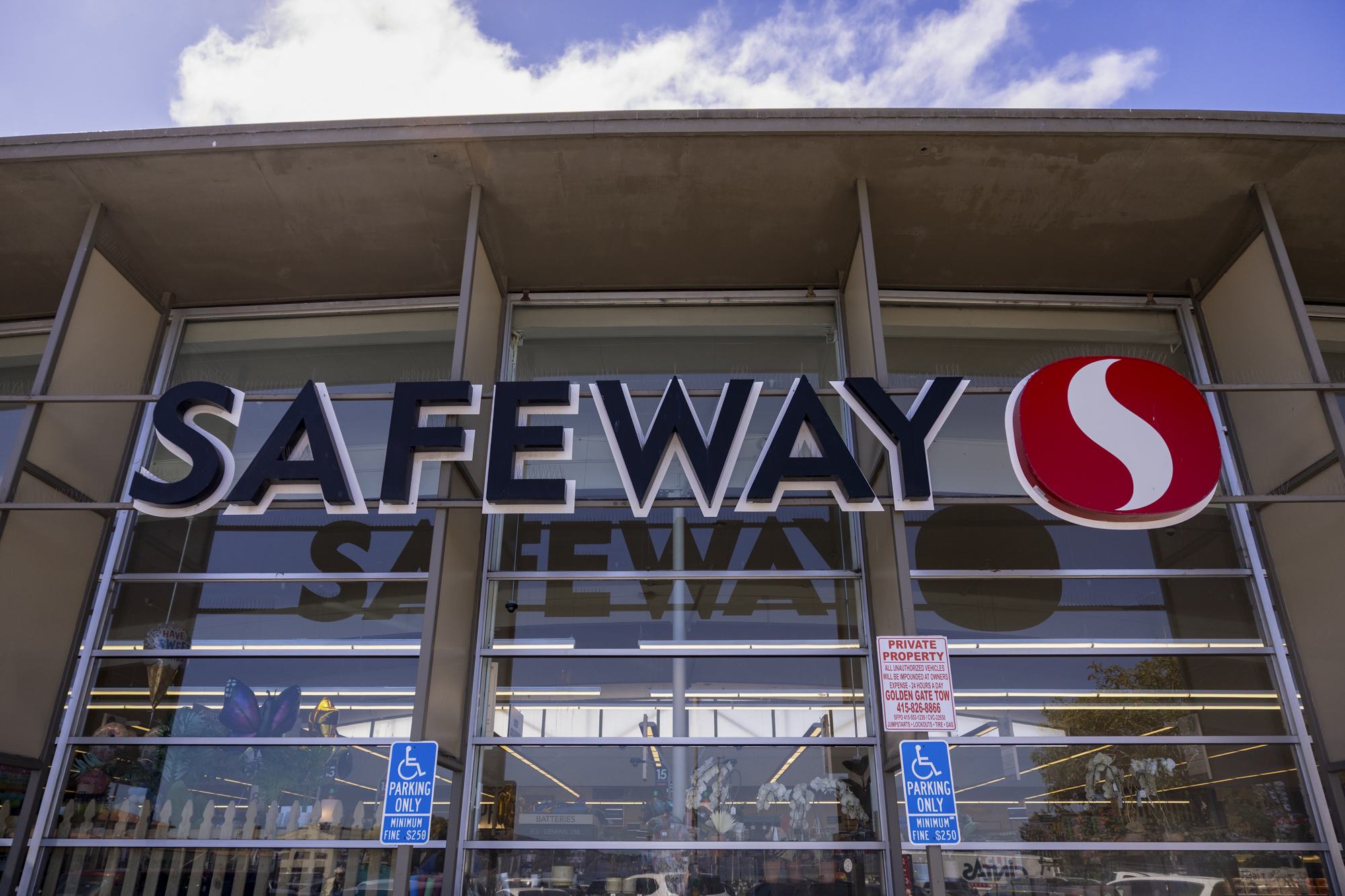
Opponents of a high-rise housing and commercial building proposal on the footprint of the Marina District’s Safeway have filed a lawsuit against San Francisco, their latest effort to stop the controversial development.
The YesAND Foundation, a new housing nonprofit in the city, along with four Marina District residents, allege that the city is unlawfully pushing the proposal through a streamlined approval process under a state housing law, Assembly Bill 2011, that it is not eligible to use.
The lawsuit, filed in San Francisco Federal Court last week, also contends that the city exempted the project’s developer, Align Real Estate, from performing hazardous-waste assessments on the site.
“Neighborhood organizations followed the established process first,” said Lori Brooke, a member of YesAND and NeighborsUnited SF, a coalition of neighborhood businesses and organizations that also joined the suit.
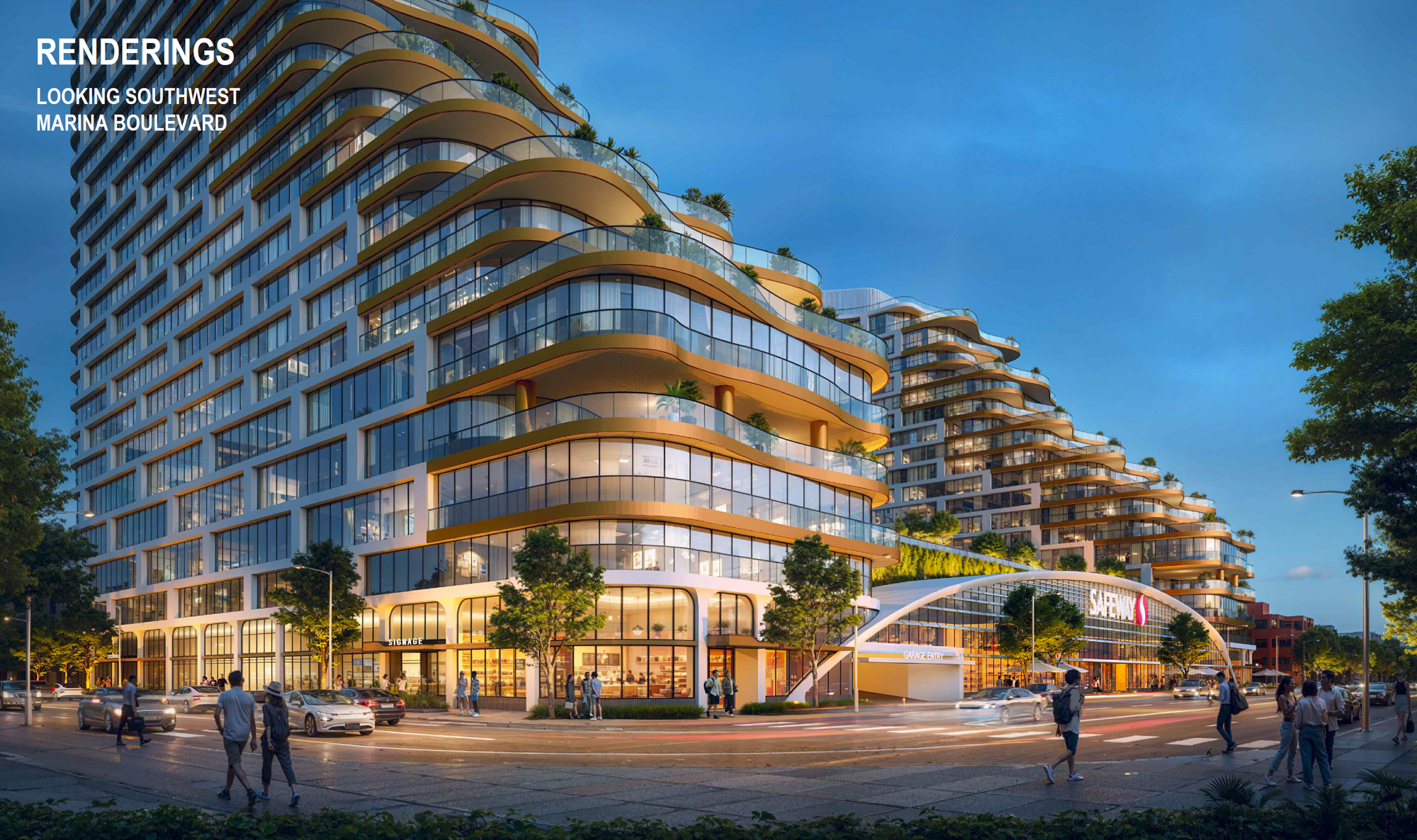
(Courtesy of Arquitectonica)
Brooke said that residents have written to the planning and public health departments, and they spent months asking for an environmental assessment, all without success.
They turned to a legal suit after the city decided in August that the building plans from Align could move forward for approval through a ministerial process that skirts public hearings and environmental reviews, as long as certain criteria are met.
“We were not asking for a veto,” she said. “We were asking for proper review and a meaningful opportunity to be heard. When both are denied, the courts become the only option left.”
Last December, Align applied to demolish the Safeway at 11 and 15 Marina Blvd. and replace it with a two-tower mixed-use commercial and housing development.
The proposal was met with swift opposition from neighbors and has split local officials, some of whom say it would tower over the surrounding neighborhood and could obstruct Bay views. The 18-plus-story glass towers, right on the waterline of the affluent Marina District, would be especially stark. Erin Roach, the president of the Marina Community Association, previously told KQED that the building would be “roughly six times taller than anything around it.”
Mayor Daniel Lurie and Supervisor Stephen Sherrill, who represents the area, have both previously opposed the project.
Sherrill and a coalition of residents asked the city in June to find the site ineligible for development under AB 2011, arguing that the law requires at least 75% of the site’s perimeter to adjoin to parcels developed with “urban uses,” while they said Fort Mason and another city-owned parcel surrounding the Safeway are restricted for maritime and recreational use.
The planning department wrote in response that it considers the site surrounded by urban uses. Planning Director Sarah Dennis Phillips also wrote in a July 20 letter that the property is not on a list of hazardous waste sites in the state.
Other city supervisors, along with state Senator Scott Wiener and Assemblymember Buffy Wicks, both of whom worked on AB 2011, have expressed support for the project, which would provide more than 800 new residential units, including 86 affordable homes — as the city races to meet lofty state goals to build 82,000 housing units by 2031.
The streamlined approval process created by the law exempts projects from Planning Commission and Board of Supervisors votes, as well as a California Environmental Quality Act review. The project also uses California’s “density bonus” law that lets developers override local zoning requirements and build taller, so long as they include affordable units.
The plaintiffs are asking a judge to reverse the city’s streamlining decision and require Align to comply with and complete all health and safety requirements before the project can move forward.
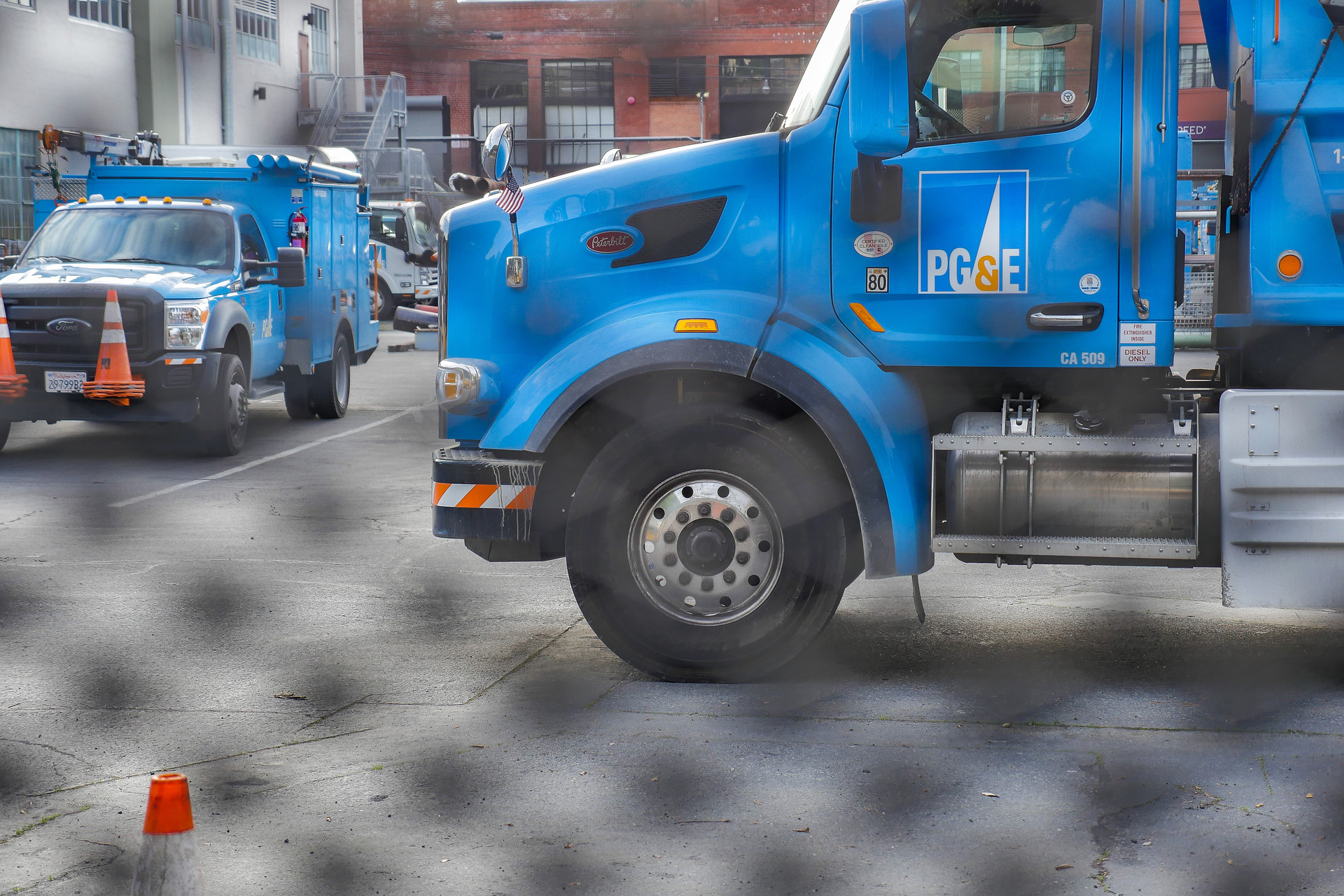
The legal challenge also accuses the city and PG&E, which operated a manufactured gas plant and steam electric plant on the site, of creating a public nuisance. It furthermore alleges negligence for failing to fully investigate or remediate contamination as a result of its former facilities’ operations.
The suit names Align, the city’s Planning and Public Health departments, PG&E and Safeway parent company Albertson’s.
A spokesperson for the city attorney’s office said it would review the complaint and respond in court once the office was served.
PG&E said in a statement that it had not yet reviewed the lawsuit.
The city is expected to make its final administrative determination on Align’s proposal next month.