Can Marina Residents Stop a Massive San Francisco Housing Redevelopment Project?
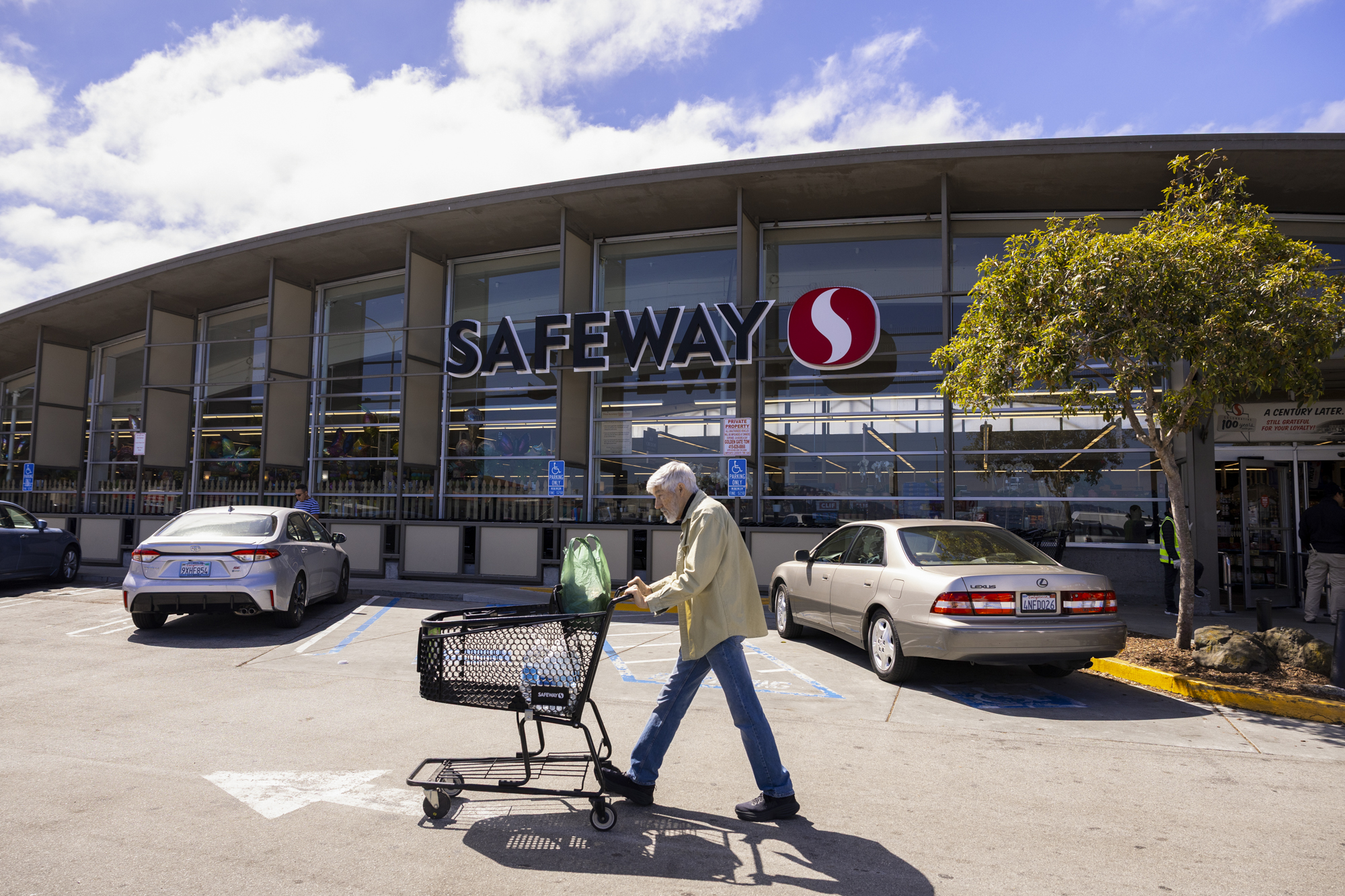
Last week, more than 300 people packed into San Francisco’s Fort Mason to discuss the future of the grocery store across the street.
A developer wants to replace the Marina District Safeway with two residential towers rising more than 250 feet. The project has become a lightning rod in a city struggling to keep up with affordability, demand and the state’s housing mandate and where residents often challenge development in hopes of preserving neighborhood character.
“People come here because it’s beautiful and it’s open and has a feeling of expansiveness,” said Erin Roach, president of the Marina Community Association, who helped organize the meeting. “Having a giant building is going to take that feeling of expansiveness away — let alone shade the two parks that are on two sides of it.
The town hall was the neighbors’ latest move in a monthslong campaign to stop, or at least slow, a project they say is too big and which they don’t believe qualifies for development under state laws created to fast-track housing.
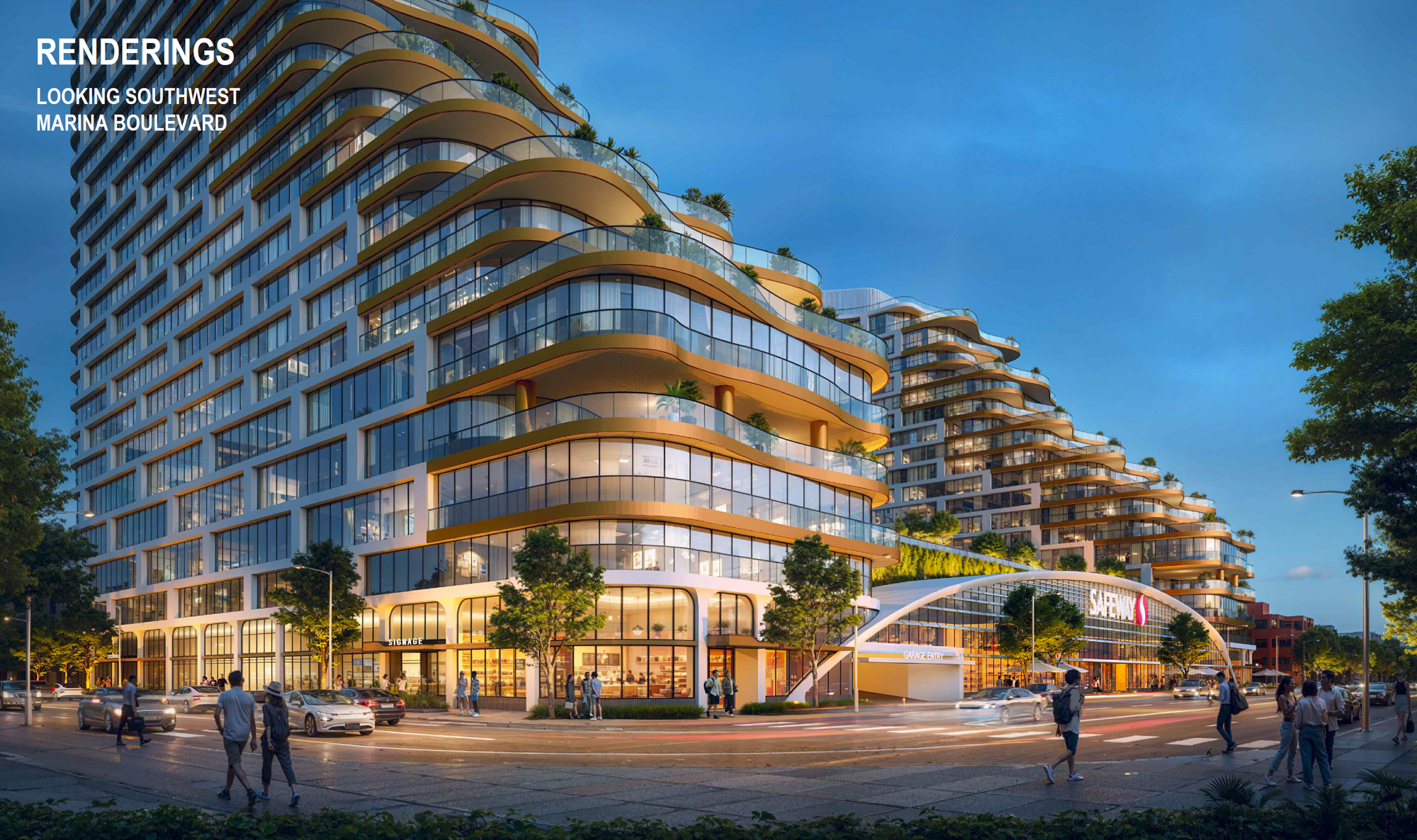
Align Real Estate — the project sponsor filing on behalf of the building’s owner, Albertsons Companies — applied in December to demolish the Safeway at 11 and 15 Marina Blvd. and build two sleek glass towers with a capacity of 848 units above a different grocery store. Align and Albertsons have a development partnership with plans to redevelop multiple stores into massive developments across the Bay Area.
On July 14, the developer’s attorneys submitted revised plans they described in a letter as “modest adjustments that result in a more efficient Project.”
The changes lowered the heights of both towers — while increasing the number of units. The application also includes 86 affordable units. The project has no construction timeline or cost estimate yet, and Align said the Safeway would close during construction with a new store to open in its place.
The project uses the state’s “density bonus” law, which overrides local zoning to allow for taller buildings when developers commit to affordable units. Roach said, even with the latest changes, the building “remains roughly six times taller than anything around it,” leading some residents to oppose the project’s impact on the neighborhood’s scenic views.

Now, Roach and a coalition of neighborhood groups are fighting the project’s qualification under AB 2011, a state law that lets housing on commercially zoned land win approval through a ministerial process — meaning no Planning Commission vote, no Board of Supervisors vote and no environmental review under the California Environmental Quality Act, as long as the projects meet specified affordability, labor, and environmental criteria.
“We are not opposed to housing here. We would really like to see housing here,” Roach said. “But the project that’s being proposed is really difficult for this area of the Marina to handle — on health and safety reasons.”
Roach said the eastern Marina is built on fill over old wetlands and groundwater, in a liquefaction zone, atop the footprint of a former manufactured gas plant. Drilling to bedrock, she warned, could disturb buried contamination and push polluted groundwater toward neighbors’ homes.
The Marina Community Association hired an environmental attorney, then an independent soils expert who, according to Roach, found the area polluted.
“With a project this divisive, the City needs to be extraordinarily clear as to how and why approvals are granted,” Marina District Supervisor Stephen Sherrill, who has opposed the project along with some of his constituents, said in a statement. He added that Thursday’s town hall “is another step toward giving the community this transparency.”
However, the city argues the project is a strong contender for development under the law. In a July 20 letter to Sherrill, Planning Director Sarah Dennis Phillips wrote that the property is not “on the Cortese List,” a publicly available and regularly updated list of hazardous waste sites in the state. She wrote that the site is not in an earthquake fault zone or a federally designated flood hazard area.
A required assessment identified what the city called a “recognized environmental condition,” and Dennis Phillips wrote that a further endangerment assessment must follow. But that review, she said, happens later, during permitting and construction — overseen by the health department and the water board — and is “not part of the planning approval process under AB 2011.”
In June, Sherrill and a coalition of neighborhood groups asked the city to find the site ineligible for development under AB 2011, arguing the law applies only where at least 75% of a site’s perimeter adjoins parcels developed with “urban uses.” About half the Safeway site instead adjoins Fort Mason and a city-owned parcel holding the Marina Yacht Harbor, Marina Green and parking — land they describe as restricted to maritime and recreational use.
The Golden Gate National Parks Conservancy and Fort Mason Center for Arts & Culture made the same argument in their own letter, while stressing the site “is suitable for residential development.”
However, the city’s planning department considers the site surrounded by urban uses and stands by its finding, Dennis Phillips wrote.
Align has described the Yacht Harbor parcel as a fully developed, manmade landscape — filled for the 1915 Panama-Pacific International Exposition and which now holds parking lots, yacht clubs, a fuel dock and a coffee shop. Reversing course, the developer warned, “would expose the City to significant liability” under the Housing Accountability Act, and the project would still qualify through other state pathways even without AB 2011.
The office of Assemblymember Buffy Wicks, who wrote AB 2011, said the law’s perimeter rule exists to keep it aimed at infill rather than open land. Asked whether this site belongs, the office said the real question is whether the project is going up “in an urban location along a commercial corridor,” and the answer is “unfailingly yes.”
Other local officials are split on the project.
State Sen. Scott Wiener, who co-authored AB 2011, told KQED he still supports the project. Supervisor Bilal Mahmood, who backed the project last year, said his position also stands, but added that he expects developers to “follow through on their commitments to the communities they serve, including maintaining access to essential neighborhood amenities like grocery stores.”
Mayor Daniel Lurie, who is also a District 2 resident, opposed the original proposal and his position “hasn’t changed,” a spokesperson said.
San Francisco’s Planning Department told KQED it received the revised plans July 14 and must decide by Aug. 13 whether they meet its objective standards; if the project is deemed consistent, the city would have until roughly Oct. 12 to approve it.
It also said it had not yet finished reviewing the project’s affordable housing plans, including whether 86 units still satisfy state requirements.