window.__IS_SSR__=true
window.__INITIAL_STATE__={
"attachmentsReducer": {
"audio_0": {
"type": "attachments",
"id": "audio_0",
"imgSizes": {
"kqedFullSize": {
"file": "https://ww2.kqed.org/news/wp-content/themes/KQED-unified/img/audio_bgs/background0.jpg"
}
}
},
"audio_1": {
"type": "attachments",
"id": "audio_1",
"imgSizes": {
"kqedFullSize": {
"file": "https://ww2.kqed.org/news/wp-content/themes/KQED-unified/img/audio_bgs/background1.jpg"
}
}
},
"audio_2": {
"type": "attachments",
"id": "audio_2",
"imgSizes": {
"kqedFullSize": {
"file": "https://ww2.kqed.org/news/wp-content/themes/KQED-unified/img/audio_bgs/background2.jpg"
}
}
},
"audio_3": {
"type": "attachments",
"id": "audio_3",
"imgSizes": {
"kqedFullSize": {
"file": "https://ww2.kqed.org/news/wp-content/themes/KQED-unified/img/audio_bgs/background3.jpg"
}
}
},
"audio_4": {
"type": "attachments",
"id": "audio_4",
"imgSizes": {
"kqedFullSize": {
"file": "https://ww2.kqed.org/news/wp-content/themes/KQED-unified/img/audio_bgs/background4.jpg"
}
}
},
"placeholder": {
"type": "attachments",
"id": "placeholder",
"imgSizes": {
"thumbnail": {
"file": "https://cdn.kqed.org/wp-content/uploads/2024/12/KQED-Default-Image-816638274-2000x1333-1-160x107.jpg",
"width": 160,
"height": 107,
"mimeType": "image/jpeg"
},
"medium": {
"file": "https://cdn.kqed.org/wp-content/uploads/2024/12/KQED-Default-Image-816638274-2000x1333-1-800x533.jpg",
"width": 800,
"height": 533,
"mimeType": "image/jpeg"
},
"medium_large": {
"file": "https://cdn.kqed.org/wp-content/uploads/2024/12/KQED-Default-Image-816638274-2000x1333-1-768x512.jpg",
"width": 768,
"height": 512,
"mimeType": "image/jpeg"
},
"large": {
"file": "https://cdn.kqed.org/wp-content/uploads/2024/12/KQED-Default-Image-816638274-2000x1333-1-1020x680.jpg",
"width": 1020,
"height": 680,
"mimeType": "image/jpeg"
},
"1536x1536": {
"file": "https://cdn.kqed.org/wp-content/uploads/2024/12/KQED-Default-Image-816638274-2000x1333-1-1536x1024.jpg",
"width": 1536,
"height": 1024,
"mimeType": "image/jpeg"
},
"fd-lrg": {
"file": "https://cdn.kqed.org/wp-content/uploads/2024/12/KQED-Default-Image-816638274-2000x1333-1-1536x1024.jpg",
"width": 1536,
"height": 1024,
"mimeType": "image/jpeg"
},
"fd-med": {
"file": "https://cdn.kqed.org/wp-content/uploads/2024/12/KQED-Default-Image-816638274-2000x1333-1-1020x680.jpg",
"width": 1020,
"height": 680,
"mimeType": "image/jpeg"
},
"fd-sm": {
"file": "https://cdn.kqed.org/wp-content/uploads/2024/12/KQED-Default-Image-816638274-2000x1333-1-800x533.jpg",
"width": 800,
"height": 533,
"mimeType": "image/jpeg"
},
"post-thumbnail": {
"file": "https://cdn.kqed.org/wp-content/uploads/2024/12/KQED-Default-Image-816638274-2000x1333-1-672x372.jpg",
"width": 672,
"height": 372,
"mimeType": "image/jpeg"
},
"twentyfourteen-full-width": {
"file": "https://cdn.kqed.org/wp-content/uploads/2024/12/KQED-Default-Image-816638274-2000x1333-1-1038x576.jpg",
"width": 1038,
"height": 576,
"mimeType": "image/jpeg"
},
"xxsmall": {
"file": "https://cdn.kqed.org/wp-content/uploads/2024/12/KQED-Default-Image-816638274-2000x1333-1-160x107.jpg",
"width": 160,
"height": 107,
"mimeType": "image/jpeg"
},
"xsmall": {
"file": "https://cdn.kqed.org/wp-content/uploads/2024/12/KQED-Default-Image-816638274-2000x1333-1-672x372.jpg",
"width": 672,
"height": 372,
"mimeType": "image/jpeg"
},
"small": {
"file": "https://cdn.kqed.org/wp-content/uploads/2024/12/KQED-Default-Image-816638274-2000x1333-1-672x372.jpg",
"width": 672,
"height": 372,
"mimeType": "image/jpeg"
},
"xlarge": {
"file": "https://cdn.kqed.org/wp-content/uploads/2024/12/KQED-Default-Image-816638274-2000x1333-1-1020x680.jpg",
"width": 1020,
"height": 680,
"mimeType": "image/jpeg"
},
"full-width": {
"file": "https://cdn.kqed.org/wp-content/uploads/2024/12/KQED-Default-Image-816638274-2000x1333-1-1920x1280.jpg",
"width": 1920,
"height": 1280,
"mimeType": "image/jpeg"
},
"guest-author-32": {
"file": "https://cdn.kqed.org/wp-content/uploads/2025/01/KQED-Default-Image-816638274-1333x1333-1-160x160.jpg",
"width": 32,
"height": 32,
"mimeType": "image/jpeg"
},
"guest-author-50": {
"file": "https://cdn.kqed.org/wp-content/uploads/2025/01/KQED-Default-Image-816638274-1333x1333-1-160x160.jpg",
"width": 50,
"height": 50,
"mimeType": "image/jpeg"
},
"guest-author-64": {
"file": "https://cdn.kqed.org/wp-content/uploads/2025/01/KQED-Default-Image-816638274-1333x1333-1-160x160.jpg",
"width": 64,
"height": 64,
"mimeType": "image/jpeg"
},
"guest-author-96": {
"file": "https://cdn.kqed.org/wp-content/uploads/2025/01/KQED-Default-Image-816638274-1333x1333-1-160x160.jpg",
"width": 96,
"height": 96,
"mimeType": "image/jpeg"
},
"guest-author-128": {
"file": "https://cdn.kqed.org/wp-content/uploads/2025/01/KQED-Default-Image-816638274-1333x1333-1-160x160.jpg",
"width": 128,
"height": 128,
"mimeType": "image/jpeg"
},
"detail": {
"file": "https://cdn.kqed.org/wp-content/uploads/2025/01/KQED-Default-Image-816638274-1333x1333-1-160x160.jpg",
"width": 160,
"height": 160,
"mimeType": "image/jpeg"
},
"kqedFullSize": {
"file": "https://cdn.kqed.org/wp-content/uploads/2024/12/KQED-Default-Image-816638274-2000x1333-1.jpg",
"width": 2000,
"height": 1333
}
}
},
"news_12089378": {
"type": "attachments",
"id": "news_12089378",
"meta": {
"index": "attachments_1716263798",
"site": "news",
"id": "12089378",
"found": true
},
"title": "Marshall Gold Discovery State Park",
"publishDate": 1782845992,
"status": "inherit",
"parent": 12089221,
"modified": 1782847887,
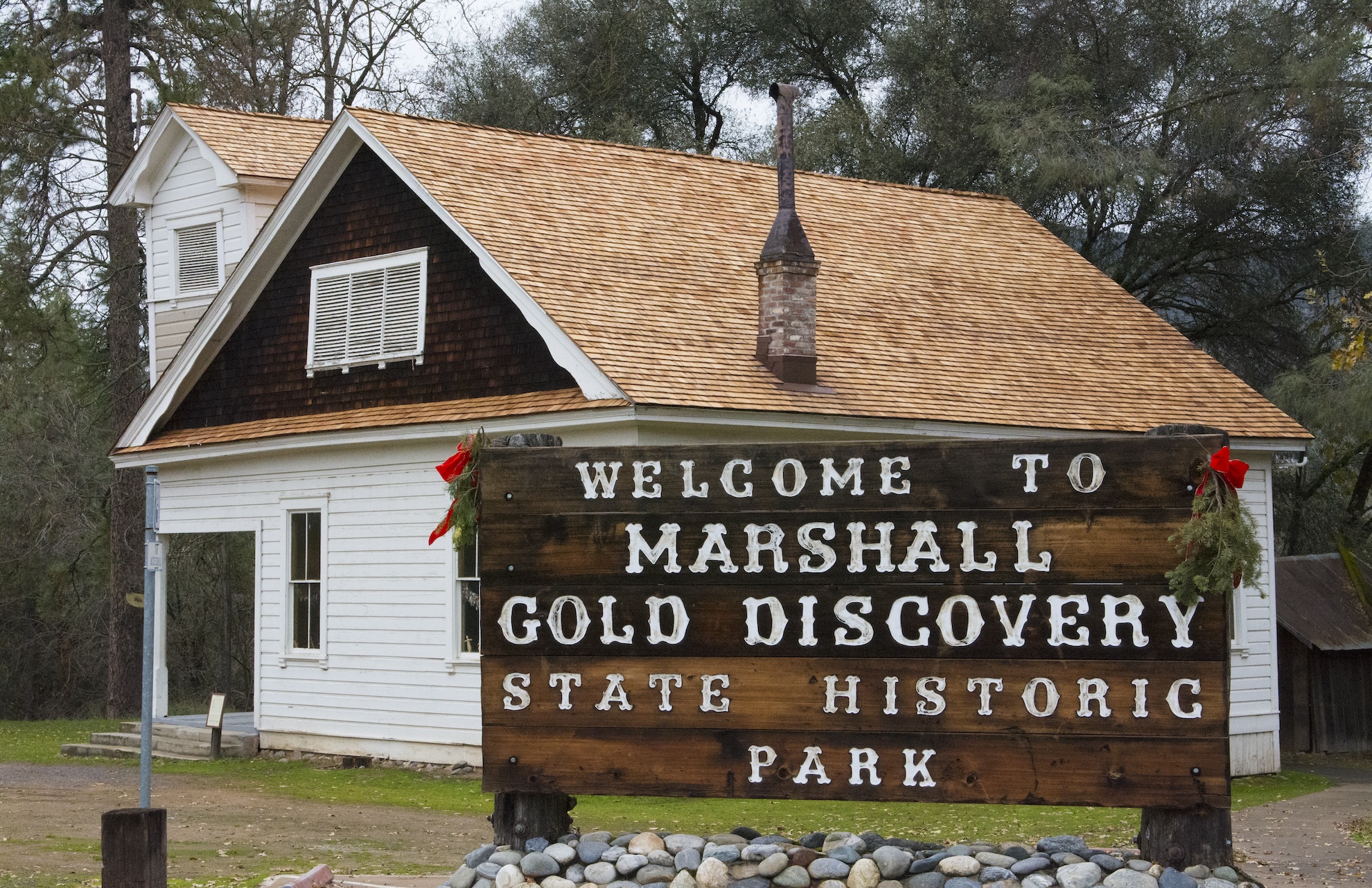
"caption": "Coloma California's Marshall Gold Discovery State Park, where gold was first discovered in 1885. The California State Parks Historian Passport is available to download for free until July 6, and offers no-cost entry to more than 30 state historic parks.",
"credit": "Education Images/Universal Images Group via Getty Images",
"altTag": null,
"description": null,
"imgSizes": {
"thumbnail": {
"file": "https://cdn.kqed.org/wp-content/uploads/sites/10/2026/06/GettyImages-614276824-160x104.jpg",
"width": 160,
"height": 104,
"mimeType": "image/jpeg"
},
"1536x1536": {
"file": "https://cdn.kqed.org/wp-content/uploads/sites/10/2026/06/GettyImages-614276824-1536x994.jpg",
"width": 1536,
"height": 994,
"mimeType": "image/jpeg"
},
"post-thumbnail": {
"file": "https://cdn.kqed.org/wp-content/uploads/sites/10/2026/06/GettyImages-614276824-672x372.jpg",
"width": 672,
"height": 372,
"mimeType": "image/jpeg"
},
"twentyfourteen-full-width": {
"file": "https://cdn.kqed.org/wp-content/uploads/sites/10/2026/06/GettyImages-614276824-1038x576.jpg",
"width": 1038,
"height": 576,
"mimeType": "image/jpeg"
},
"npr-cds-wide": {
"file": "https://cdn.kqed.org/wp-content/uploads/sites/10/2026/06/GettyImages-614276824-1200x675.jpg",
"width": 1200,
"height": 675,
"mimeType": "image/jpeg"
},
"npr-cds-square": {
"file": "https://cdn.kqed.org/wp-content/uploads/sites/10/2026/06/GettyImages-614276824-600x600.jpg",
"width": 600,
"height": 600,
"mimeType": "image/jpeg"
},
"kqedFullSize": {
"file": "https://cdn.kqed.org/wp-content/uploads/sites/10/2026/06/GettyImages-614276824.jpg",
"width": 1980,
"height": 1281
}
},
"isLoading": false,
"fetchFailed": false
},
"news_12089188": {
"type": "attachments",
"id": "news_12089188",
"meta": {
"index": "attachments_1716263798",
"site": "news",
"id": "12089188",
"found": true
},
"title": "US-POLITICS-JUSTICE-SUPREME COURT",
"publishDate": 1782747847,
"status": "inherit",
"parent": 12086891,
"modified": 1782747926,
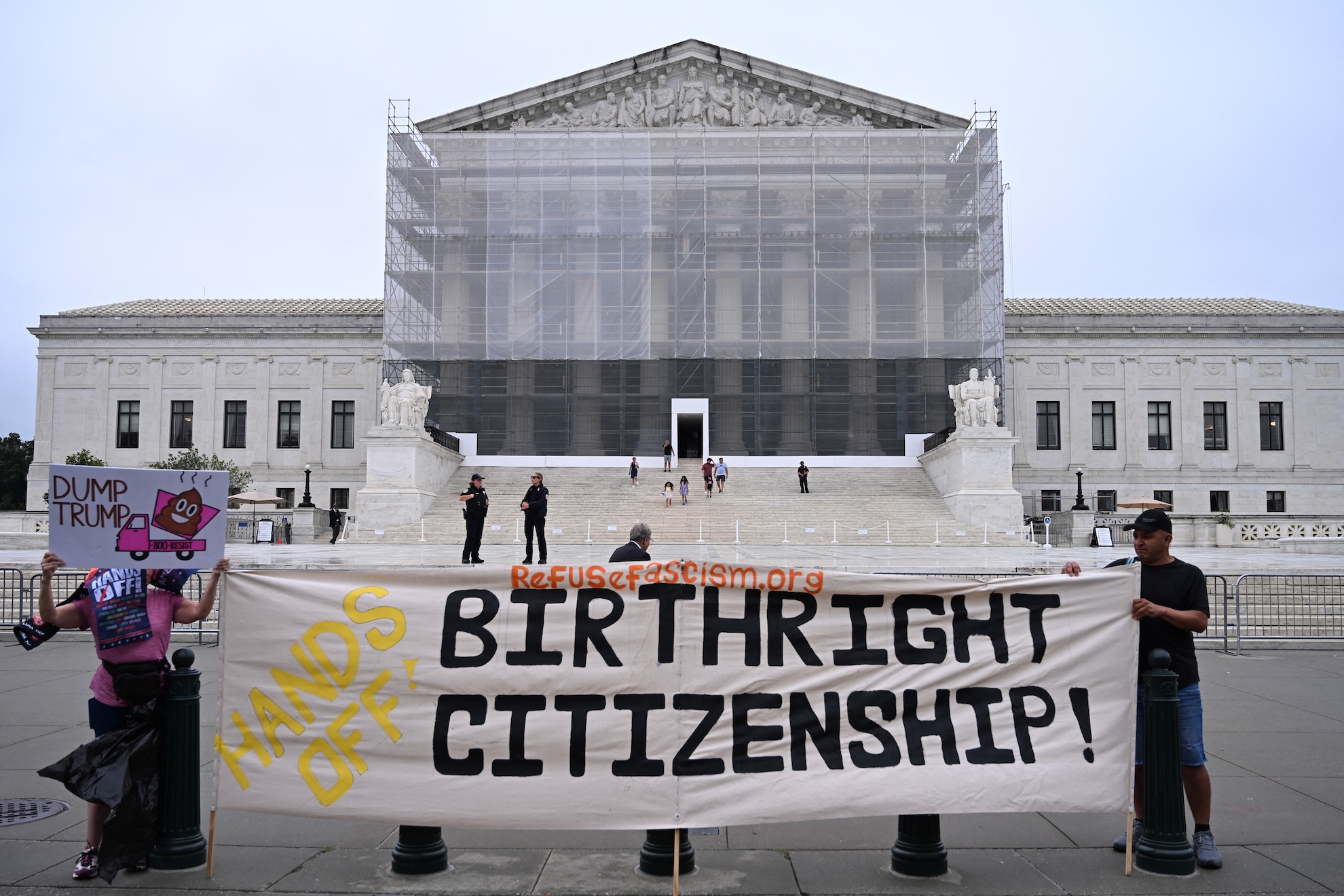
"caption": "Demonstrators holds up an anti-Trump sign outside the US Supreme Court in Washington, DC, on June 27, 2025. The Supreme Court is to issue its final rulings on Friday ahead of its summer break, including cases involving birthright citenzenship, porn site age verification, students and LGBTQ-themed content, and voting rights. President Donald Trump said Friday he can now push through a raft of controversial policies after the Supreme Court handed him a \"giant win\" by curbing the ability of lone judges to block his powers nationwide. In a 6-3 ruling stemming from Trump's bid to end birthright citizenship, the court said nationwide injunctions issued by individual district court judges likely exceed their authority. ",
"credit": "Alex Wroblewski/AFP via Getty Images",
"altTag": null,
"description": null,
"imgSizes": {
"thumbnail": {
"file": "https://cdn.kqed.org/wp-content/uploads/sites/10/2026/06/GettyImages-2221594152-160x107.jpg",
"width": 160,
"height": 107,
"mimeType": "image/jpeg"
},
"1536x1536": {
"file": "https://cdn.kqed.org/wp-content/uploads/sites/10/2026/06/GettyImages-2221594152-1536x1024.jpg",
"width": 1536,
"height": 1024,
"mimeType": "image/jpeg"
},
"post-thumbnail": {
"file": "https://cdn.kqed.org/wp-content/uploads/sites/10/2026/06/GettyImages-2221594152-672x372.jpg",
"width": 672,
"height": 372,
"mimeType": "image/jpeg"
},
"twentyfourteen-full-width": {
"file": "https://cdn.kqed.org/wp-content/uploads/sites/10/2026/06/GettyImages-2221594152-1038x576.jpg",
"width": 1038,
"height": 576,
"mimeType": "image/jpeg"
},
"npr-cds-wide": {
"file": "https://cdn.kqed.org/wp-content/uploads/sites/10/2026/06/GettyImages-2221594152-1200x675.jpg",
"width": 1200,
"height": 675,
"mimeType": "image/jpeg"
},
"npr-cds-square": {
"file": "https://cdn.kqed.org/wp-content/uploads/sites/10/2026/06/GettyImages-2221594152-600x600.jpg",
"width": 600,
"height": 600,
"mimeType": "image/jpeg"
},
"kqedFullSize": {
"file": "https://cdn.kqed.org/wp-content/uploads/sites/10/2026/06/GettyImages-2221594152.jpg",
"width": 1980,
"height": 1320
}
},
"isLoading": false,
"fetchFailed": false
},
"news_11947072": {
"type": "attachments",
"id": "news_11947072",
"meta": {
"index": "attachments_1716263798",
"site": "news",
"id": "11947072",
"found": true
},
"title": "Cropped view of woman using mobile phone applications with internet connection. Female hands holding modern smartphone on city street. Social network content, internet traffic data. Free wireless",
"publishDate": 1681857676,
"status": "inherit",
"parent": 12070405,
"modified": 1768940360,
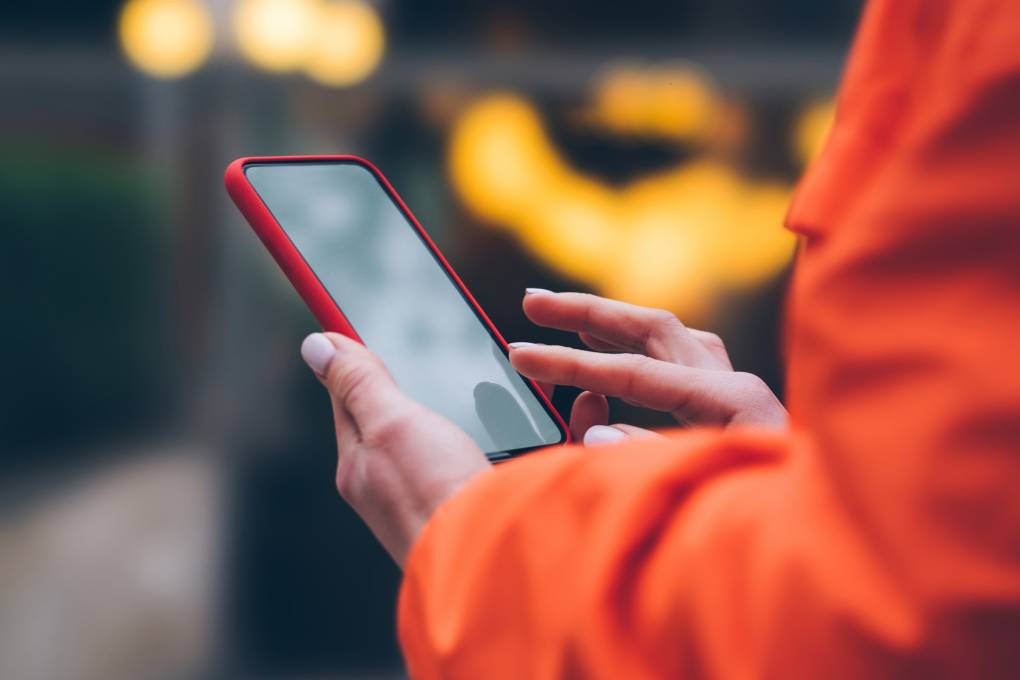
"caption": "The California Delete Act would give Californians control of their personal online data.",
"credit": "istock/GaudiLab",
"altTag": "A close up of a woman's hands as she holds a smartphone and is swiping the screen. She wears an orange jacket.",
"description": null,
"imgSizes": {
"medium": {
"file": "https://cdn.kqed.org/wp-content/uploads/sites/10/2023/04/RS40986_iStock-1170728885-qut-800x533.jpg",
"width": 800,
"height": 533,
"mimeType": "image/jpeg"
},
"large": {
"file": "https://cdn.kqed.org/wp-content/uploads/sites/10/2023/04/RS40986_iStock-1170728885-qut-1020x680.jpg",
"width": 1020,
"height": 680,
"mimeType": "image/jpeg"
},
"thumbnail": {
"file": "https://cdn.kqed.org/wp-content/uploads/sites/10/2023/04/RS40986_iStock-1170728885-qut-160x107.jpg",
"width": 160,
"height": 107,
"mimeType": "image/jpeg"
},
"1536x1536": {
"file": "https://cdn.kqed.org/wp-content/uploads/sites/10/2023/04/RS40986_iStock-1170728885-qut-1536x1024.jpg",
"width": 1536,
"height": 1024,
"mimeType": "image/jpeg"
},
"post-thumbnail": {
"file": "https://cdn.kqed.org/wp-content/uploads/sites/10/2023/04/RS40986_iStock-1170728885-qut-672x372.jpg",
"width": 672,
"height": 372,
"mimeType": "image/jpeg"
},
"twentyfourteen-full-width": {
"file": "https://cdn.kqed.org/wp-content/uploads/sites/10/2023/04/RS40986_iStock-1170728885-qut-1038x576.jpg",
"width": 1038,
"height": 576,
"mimeType": "image/jpeg"
},
"kqedFullSize": {
"file": "https://cdn.kqed.org/wp-content/uploads/sites/10/2023/04/RS40986_iStock-1170728885-qut.jpg",
"width": 1920,
"height": 1280
}
},
"isLoading": false,
"fetchFailed": false
},
"news_12020223": {
"type": "attachments",
"id": "news_12020223",
"meta": {
"index": "attachments_1716263798",
"site": "news",
"id": "12020223",
"found": true
},
"title": "The Archdiocese of San Francisco at 1 Peter Yorke Way on Jan. 2, 2025.",
"publishDate": 1735924539,
"status": "inherit",
"parent": 0,
"modified": 1735924603,
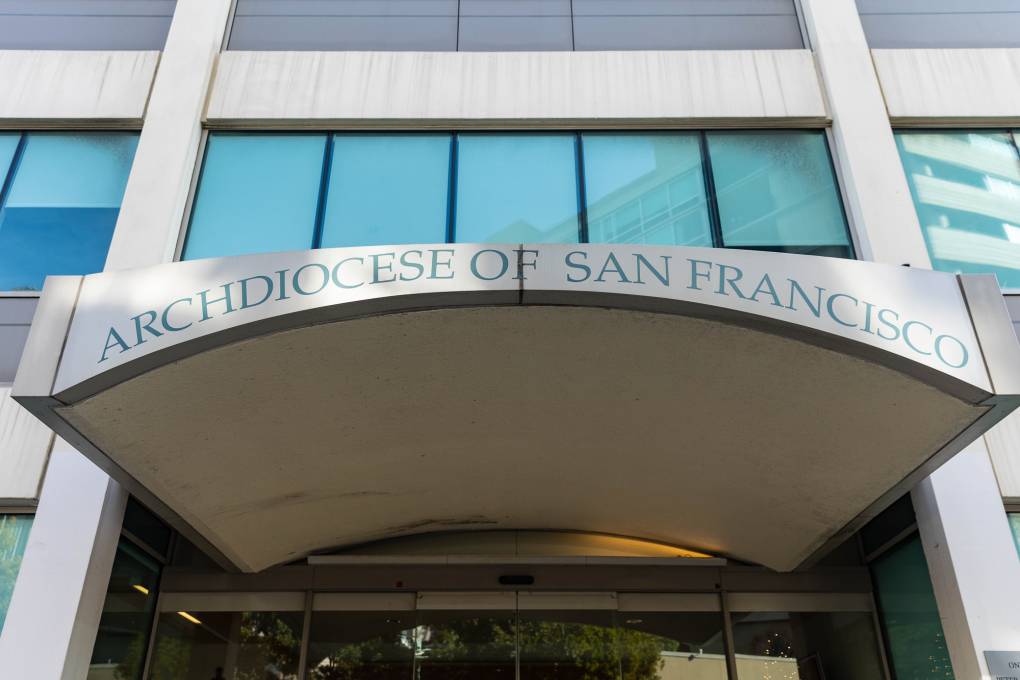
"caption": "The entrance to the Archdiocese of San Francisco at 1 Peter Yorke Way on Jan. 2, 2025.",
"credit": "Gina Castro/KQED",
"altTag": null,
"description": null,
"imgSizes": {
"medium": {
"file": "https://cdn.kqed.org/wp-content/uploads/sites/10/2025/01/20250102_ArchdioceseSF_GC-6-800x533.jpg",
"width": 800,
"height": 533,
"mimeType": "image/jpeg"
},
"large": {
"file": "https://cdn.kqed.org/wp-content/uploads/sites/10/2025/01/20250102_ArchdioceseSF_GC-6-1020x680.jpg",
"width": 1020,
"height": 680,
"mimeType": "image/jpeg"
},
"thumbnail": {
"file": "https://cdn.kqed.org/wp-content/uploads/sites/10/2025/01/20250102_ArchdioceseSF_GC-6-160x107.jpg",
"width": 160,
"height": 107,
"mimeType": "image/jpeg"
},
"1536x1536": {
"file": "https://cdn.kqed.org/wp-content/uploads/sites/10/2025/01/20250102_ArchdioceseSF_GC-6-1536x1024.jpg",
"width": 1536,
"height": 1024,
"mimeType": "image/jpeg"
},
"post-thumbnail": {
"file": "https://cdn.kqed.org/wp-content/uploads/sites/10/2025/01/20250102_ArchdioceseSF_GC-6-672x372.jpg",
"width": 672,
"height": 372,
"mimeType": "image/jpeg"
},
"twentyfourteen-full-width": {
"file": "https://cdn.kqed.org/wp-content/uploads/sites/10/2025/01/20250102_ArchdioceseSF_GC-6-1038x576.jpg",
"width": 1038,
"height": 576,
"mimeType": "image/jpeg"
},
"full-width": {
"file": "https://cdn.kqed.org/wp-content/uploads/sites/10/2025/01/20250102_ArchdioceseSF_GC-6-1920x1280.jpg",
"width": 1920,
"height": 1280,
"mimeType": "image/jpeg"
},
"kqedFullSize": {
"file": "https://cdn.kqed.org/wp-content/uploads/sites/10/2025/01/20250102_ArchdioceseSF_GC-6.jpg",
"width": 2000,
"height": 1333
}
},
"isLoading": false,
"fetchFailed": false
},
"news_12089016": {
"type": "attachments",
"id": "news_12089016",
"meta": {
"index": "attachments_1716263798",
"site": "news",
"id": "12089016",
"found": true
},
"title": "Chicago Cubs v San Francisco Giants",
"publishDate": 1782495418,
"status": "inherit",
"parent": 12089008,
"modified": 1782495442,
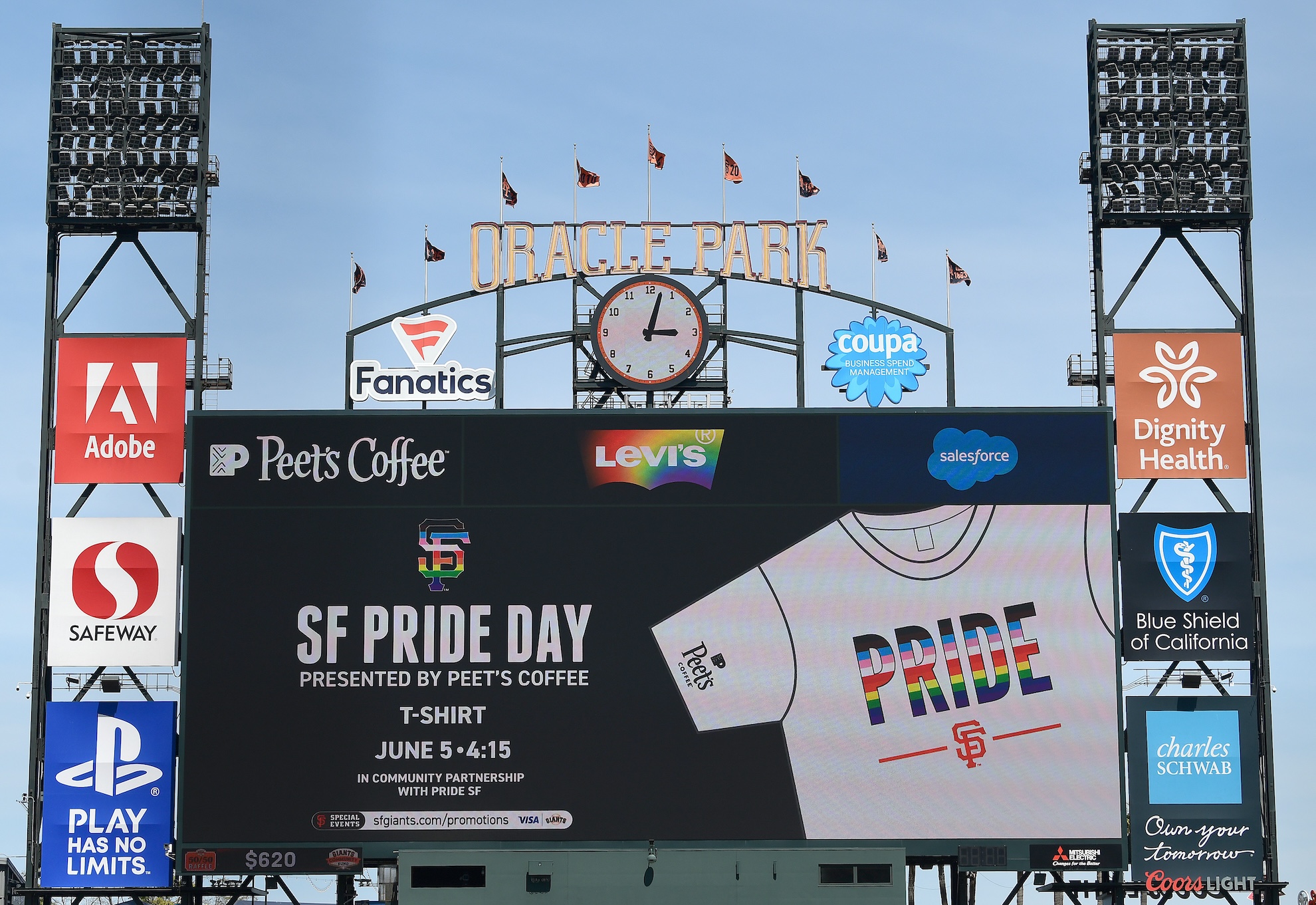
"caption": "A detailed view of the scoreboard inside Oracle Park promoting San Francisco Pride Day prior to the start of the game between the Chicago Cubs and San Francisco Giants at Oracle Park on June 5, 2021 in San Francisco, California. ",
"credit": "Thearon W. Henderson/Getty Images",
"altTag": null,
"description": null,
"imgSizes": {
"thumbnail": {
"file": "https://cdn.kqed.org/wp-content/uploads/sites/10/2026/06/GettyImages-1322007030-160x110.jpg",
"width": 160,
"height": 110,
"mimeType": "image/jpeg"
},
"1536x1536": {
"file": "https://cdn.kqed.org/wp-content/uploads/sites/10/2026/06/GettyImages-1322007030-1536x1056.jpg",
"width": 1536,
"height": 1056,
"mimeType": "image/jpeg"
},
"post-thumbnail": {
"file": "https://cdn.kqed.org/wp-content/uploads/sites/10/2026/06/GettyImages-1322007030-672x372.jpg",
"width": 672,
"height": 372,
"mimeType": "image/jpeg"
},
"twentyfourteen-full-width": {
"file": "https://cdn.kqed.org/wp-content/uploads/sites/10/2026/06/GettyImages-1322007030-1038x576.jpg",
"width": 1038,
"height": 576,
"mimeType": "image/jpeg"
},
"npr-cds-wide": {
"file": "https://cdn.kqed.org/wp-content/uploads/sites/10/2026/06/GettyImages-1322007030-1200x675.jpg",
"width": 1200,
"height": 675,
"mimeType": "image/jpeg"
},
"npr-cds-square": {
"file": "https://cdn.kqed.org/wp-content/uploads/sites/10/2026/06/GettyImages-1322007030-600x600.jpg",
"width": 600,
"height": 600,
"mimeType": "image/jpeg"
},
"kqedFullSize": {
"file": "https://cdn.kqed.org/wp-content/uploads/sites/10/2026/06/GettyImages-1322007030.jpg",
"width": 1980,
"height": 1361
}
},
"isLoading": false,
"fetchFailed": false
},
"news_12089021": {
"type": "attachments",
"id": "news_12089021",
"meta": {
"index": "attachments_1716263798",
"site": "news",
"id": "12089021",
"found": true
},
"title": "Türkiye v USA: Group D - FIFA World Cup 2026",
"publishDate": 1782495725,
"status": "inherit",
"parent": 12088896,
"modified": 1782495778,
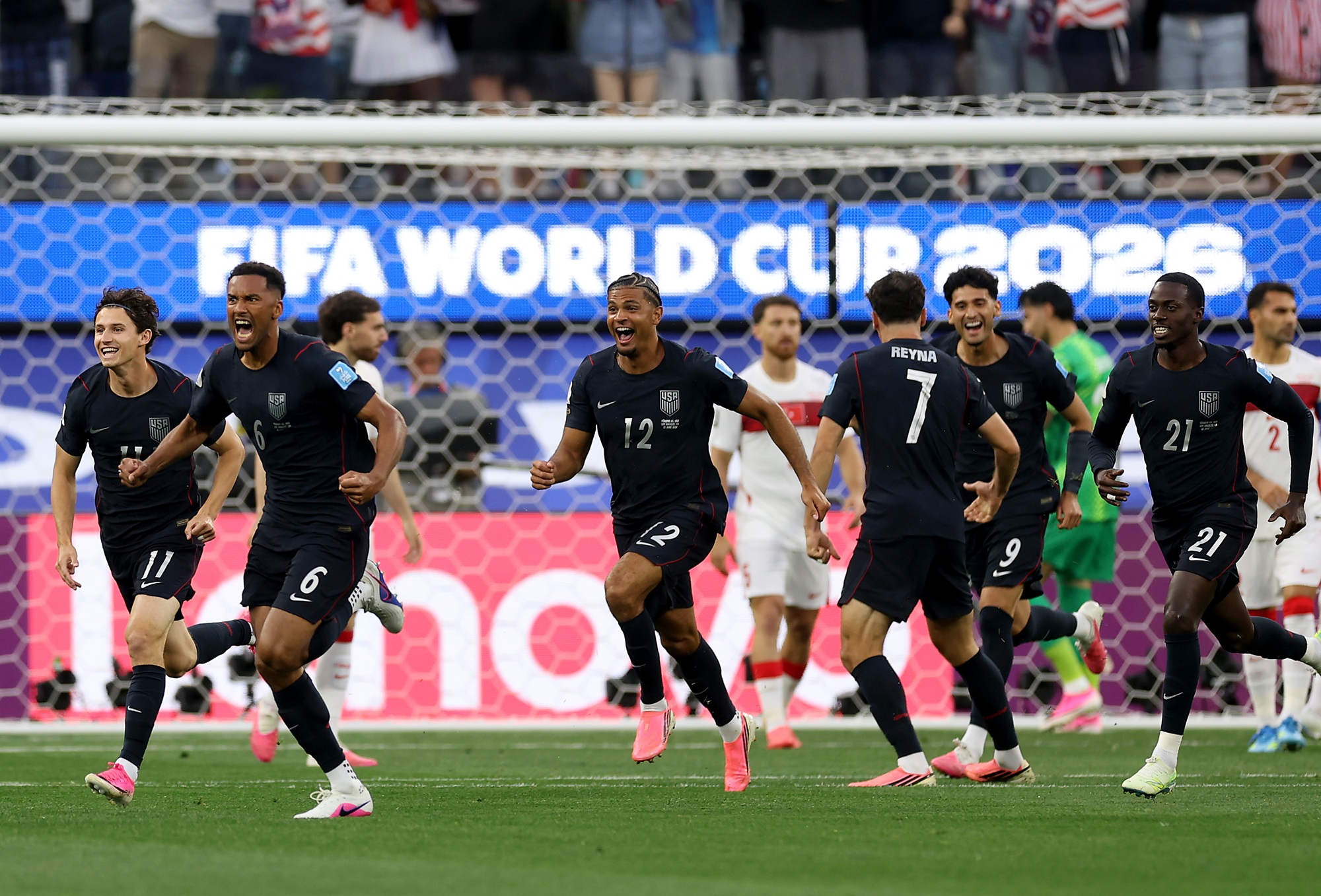
"caption": "Auston Trusty #6 of the United States celebrates with teammates after scoring his team's first goal during the FIFA World Cup 2026 Group D match between Türkiye and USA at Los Angeles Stadium on June 25, 2026, in Inglewood, California. ",
"credit": "Jamie Squire/Getty Images",
"altTag": null,
"description": null,
"imgSizes": {
"thumbnail": {
"file": "https://cdn.kqed.org/wp-content/uploads/sites/10/2026/06/USAWorldCupGetty1-160x109.jpg",
"width": 160,
"height": 109,
"mimeType": "image/jpeg"
},
"1536x1536": {
"file": "https://cdn.kqed.org/wp-content/uploads/sites/10/2026/06/USAWorldCupGetty1-1536x1042.jpg",
"width": 1536,
"height": 1042,
"mimeType": "image/jpeg"
},
"post-thumbnail": {
"file": "https://cdn.kqed.org/wp-content/uploads/sites/10/2026/06/USAWorldCupGetty1-672x372.jpg",
"width": 672,
"height": 372,
"mimeType": "image/jpeg"
},
"twentyfourteen-full-width": {
"file": "https://cdn.kqed.org/wp-content/uploads/sites/10/2026/06/USAWorldCupGetty1-1038x576.jpg",
"width": 1038,
"height": 576,
"mimeType": "image/jpeg"
},
"npr-cds-wide": {
"file": "https://cdn.kqed.org/wp-content/uploads/sites/10/2026/06/USAWorldCupGetty1-1200x675.jpg",
"width": 1200,
"height": 675,
"mimeType": "image/jpeg"
},
"npr-cds-square": {
"file": "https://cdn.kqed.org/wp-content/uploads/sites/10/2026/06/USAWorldCupGetty1-600x600.jpg",
"width": 600,
"height": 600,
"mimeType": "image/jpeg"
},
"kqedFullSize": {
"file": "https://cdn.kqed.org/wp-content/uploads/sites/10/2026/06/USAWorldCupGetty1.jpg",
"width": 2000,
"height": 1357
}
},
"isLoading": false,
"fetchFailed": false
},
"news_12088982": {
"type": "attachments",
"id": "news_12088982",
"meta": {
"index": "attachments_1716263798",
"site": "news",
"id": "12088982",
"found": true
},
"title": "260625-NATIONALARCHIVESCLOSURE-04-BL-KQED",
"publishDate": 1782491113,
"status": "inherit",
"parent": 0,
"modified": 1782491145,
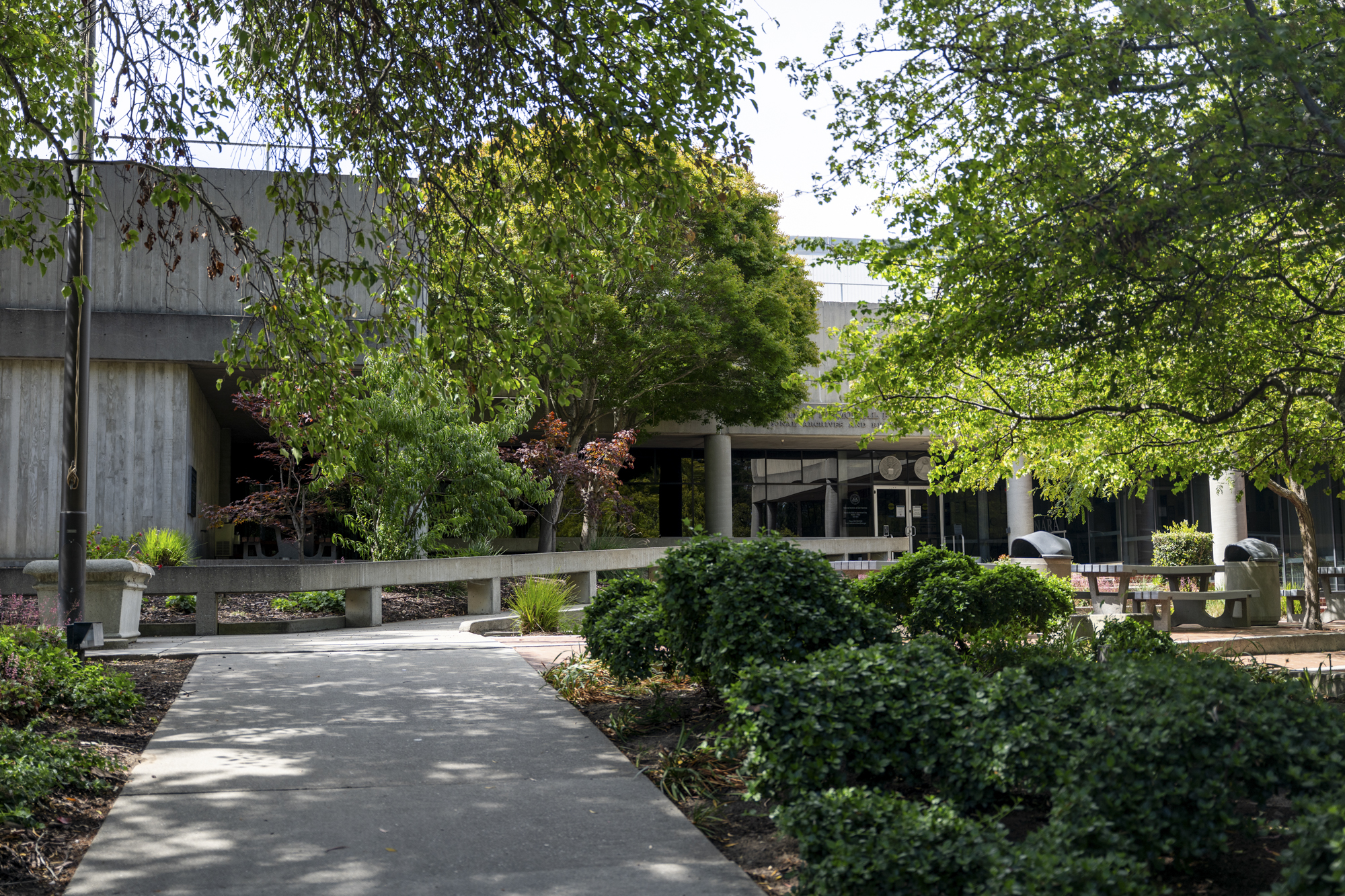
"caption": "The National Archives and Records Administration facility in San Bruno on June 25, 2026, stores historical federal records from Northern California and the Pacific region.",
"credit": "Beth LaBerge/KQED",
"altTag": null,
"description": null,
"imgSizes": {
"thumbnail": {
"file": "https://cdn.kqed.org/wp-content/uploads/sites/10/2026/06/260625-NATIONALARCHIVESCLOSURE-04-BL-KQED-160x107.jpg",
"width": 160,
"height": 107,
"mimeType": "image/jpeg"
},
"1536x1536": {
"file": "https://cdn.kqed.org/wp-content/uploads/sites/10/2026/06/260625-NATIONALARCHIVESCLOSURE-04-BL-KQED-1536x1024.jpg",
"width": 1536,
"height": 1024,
"mimeType": "image/jpeg"
},
"post-thumbnail": {
"file": "https://cdn.kqed.org/wp-content/uploads/sites/10/2026/06/260625-NATIONALARCHIVESCLOSURE-04-BL-KQED-672x372.jpg",
"width": 672,
"height": 372,
"mimeType": "image/jpeg"
},
"twentyfourteen-full-width": {
"file": "https://cdn.kqed.org/wp-content/uploads/sites/10/2026/06/260625-NATIONALARCHIVESCLOSURE-04-BL-KQED-1038x576.jpg",
"width": 1038,
"height": 576,
"mimeType": "image/jpeg"
},
"npr-cds-wide": {
"file": "https://cdn.kqed.org/wp-content/uploads/sites/10/2026/06/260625-NATIONALARCHIVESCLOSURE-04-BL-KQED-1200x675.jpg",
"width": 1200,
"height": 675,
"mimeType": "image/jpeg"
},
"npr-cds-square": {
"file": "https://cdn.kqed.org/wp-content/uploads/sites/10/2026/06/260625-NATIONALARCHIVESCLOSURE-04-BL-KQED-600x600.jpg",
"width": 600,
"height": 600,
"mimeType": "image/jpeg"
},
"kqedFullSize": {
"file": "https://cdn.kqed.org/wp-content/uploads/sites/10/2026/06/260625-NATIONALARCHIVESCLOSURE-04-BL-KQED.jpg",
"width": 2000,
"height": 1333
}
},
"isLoading": false,
"fetchFailed": false
},
"news_12084988": {
"type": "attachments",
"id": "news_12084988",
"meta": {
"index": "attachments_1716263798",
"site": "news",
"id": "12084988",
"found": true
},
"title": "260521-YEMENICOFFEE-11-BL-KQED",
"publishDate": 1779471328,
"status": "inherit",
"parent": 0,
"modified": 1779471362,
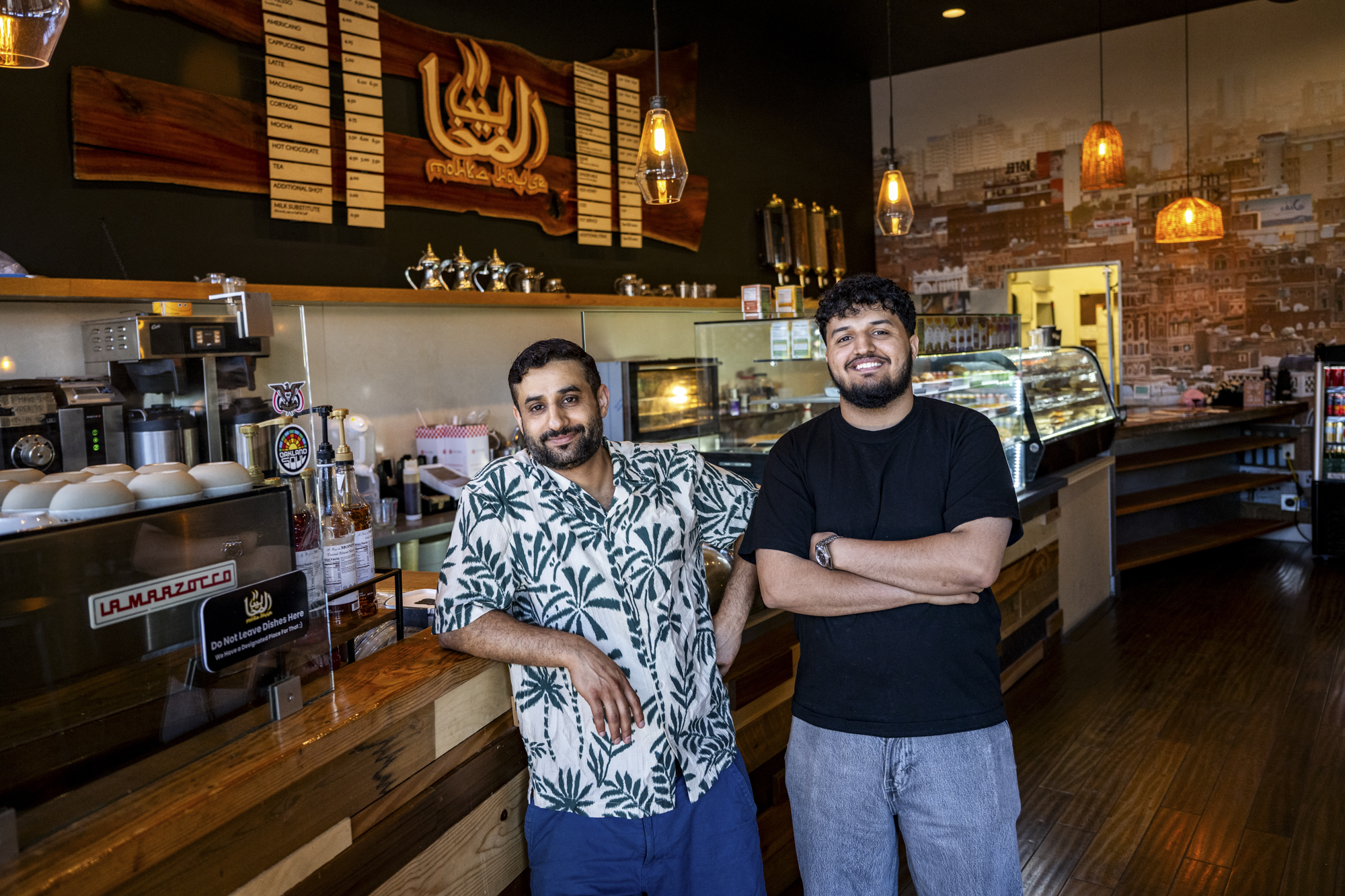
"caption": "Hamza Ghalib (left), owner of Mohka House, and his brother Yaser Ghalib at the Yemeni coffee shop in Oakland on May 21, 2026.",
"credit": "Beth LaBerge/KQED",
"altTag": null,
"description": null,
"imgSizes": {
"thumbnail": {
"file": "https://cdn.kqed.org/wp-content/uploads/sites/10/2026/05/260521-YEMENICOFFEE-11-BL-KQED-160x107.jpg",
"width": 160,
"height": 107,
"mimeType": "image/jpeg"
},
"1536x1536": {
"file": "https://cdn.kqed.org/wp-content/uploads/sites/10/2026/05/260521-YEMENICOFFEE-11-BL-KQED-1536x1024.jpg",
"width": 1536,
"height": 1024,
"mimeType": "image/jpeg"
},
"post-thumbnail": {
"file": "https://cdn.kqed.org/wp-content/uploads/sites/10/2026/05/260521-YEMENICOFFEE-11-BL-KQED-672x372.jpg",
"width": 672,
"height": 372,
"mimeType": "image/jpeg"
},
"twentyfourteen-full-width": {
"file": "https://cdn.kqed.org/wp-content/uploads/sites/10/2026/05/260521-YEMENICOFFEE-11-BL-KQED-1038x576.jpg",
"width": 1038,
"height": 576,
"mimeType": "image/jpeg"
},
"npr-cds-wide": {
"file": "https://cdn.kqed.org/wp-content/uploads/sites/10/2026/05/260521-YEMENICOFFEE-11-BL-KQED-1200x675.jpg",
"width": 1200,
"height": 675,
"mimeType": "image/jpeg"
},
"npr-cds-square": {
"file": "https://cdn.kqed.org/wp-content/uploads/sites/10/2026/05/260521-YEMENICOFFEE-11-BL-KQED-600x600.jpg",
"width": 600,
"height": 600,
"mimeType": "image/jpeg"
},
"kqedFullSize": {
"file": "https://cdn.kqed.org/wp-content/uploads/sites/10/2026/05/260521-YEMENICOFFEE-11-BL-KQED.jpg",
"width": 2000,
"height": 1333
}
},
"isLoading": false,
"fetchFailed": false
},
"news_12088568": {
"type": "attachments",
"id": "news_12088568",
"meta": {
"index": "attachments_1716263798",
"site": "news",
"id": "12088568",
"found": true
},
"title": "A parking meter in San José on June 23, 2026.",
"publishDate": 1782249351,
"status": "inherit",
"parent": 0,
"modified": 1782249395,
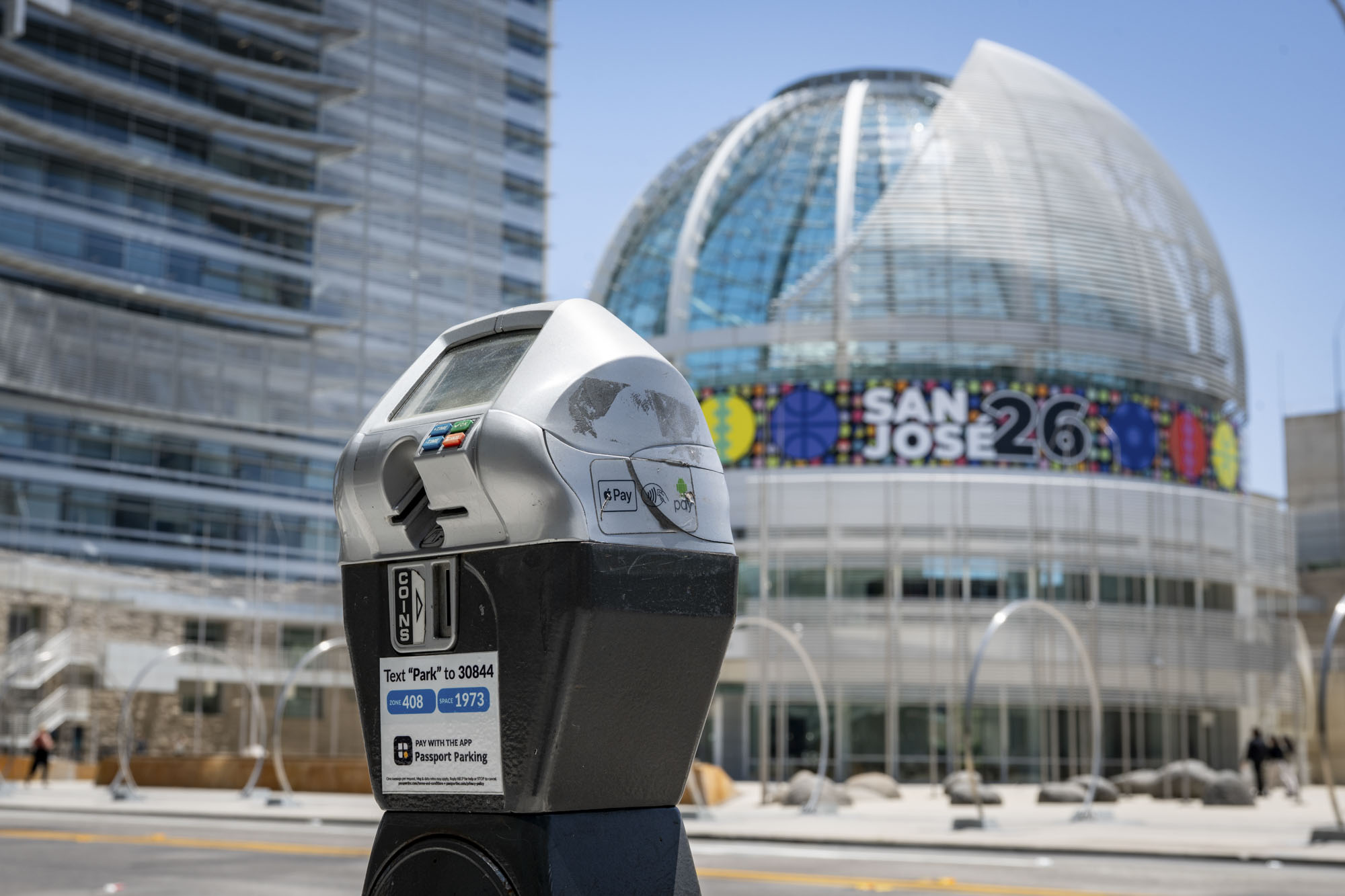
"caption": "A parking meter in San José on June 23, 2026.",
"credit": "Beth LaBerge/KQED",
"altTag": null,
"description": null,
"imgSizes": {
"thumbnail": {
"file": "https://cdn.kqed.org/wp-content/uploads/sites/10/2026/06/260623-SJParking-07-BL-KQED-160x107.jpg",
"width": 160,
"height": 107,
"mimeType": "image/jpeg"
},
"1536x1536": {
"file": "https://cdn.kqed.org/wp-content/uploads/sites/10/2026/06/260623-SJParking-07-BL-KQED-1536x1024.jpg",
"width": 1536,
"height": 1024,
"mimeType": "image/jpeg"
},
"post-thumbnail": {
"file": "https://cdn.kqed.org/wp-content/uploads/sites/10/2026/06/260623-SJParking-07-BL-KQED-672x372.jpg",
"width": 672,
"height": 372,
"mimeType": "image/jpeg"
},
"twentyfourteen-full-width": {
"file": "https://cdn.kqed.org/wp-content/uploads/sites/10/2026/06/260623-SJParking-07-BL-KQED-1038x576.jpg",
"width": 1038,
"height": 576,
"mimeType": "image/jpeg"
},
"npr-cds-wide": {
"file": "https://cdn.kqed.org/wp-content/uploads/sites/10/2026/06/260623-SJParking-07-BL-KQED-1200x675.jpg",
"width": 1200,
"height": 675,
"mimeType": "image/jpeg"
},
"npr-cds-square": {
"file": "https://cdn.kqed.org/wp-content/uploads/sites/10/2026/06/260623-SJParking-07-BL-KQED-600x600.jpg",
"width": 600,
"height": 600,
"mimeType": "image/jpeg"
},
"kqedFullSize": {
"file": "https://cdn.kqed.org/wp-content/uploads/sites/10/2026/06/260623-SJParking-07-BL-KQED.jpg",
"width": 2000,
"height": 1333
}
},
"isLoading": false,
"fetchFailed": false
},
"news_12088710": {
"type": "attachments",
"id": "news_12088710",
"meta": {
"index": "attachments_1716263798",
"site": "news",
"id": "12088710",
"found": true
},
"title": "260624_Earthquake-KQED",
"publishDate": 1782322583,
"status": "inherit",
"parent": 0,
"modified": 1782324888,
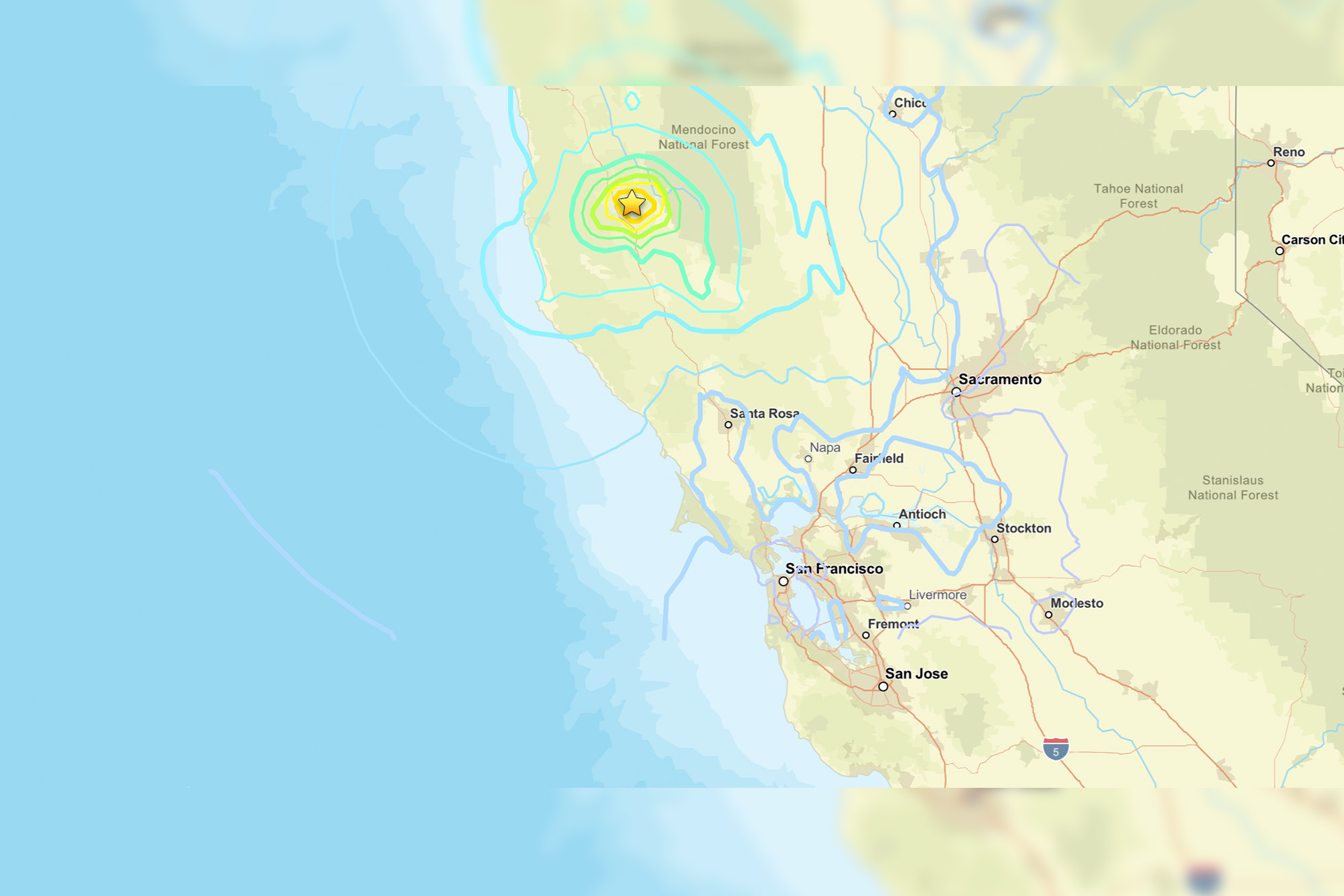
"caption": "A map showing a magnitude 5.6 earthquake that occurred in northern California on Wednesday, near Redwood Valley.",
"credit": "Gina Castro/KQED via USGS",
"altTag": null,
"description": null,
"imgSizes": {
"thumbnail": {
"file": "https://cdn.kqed.org/wp-content/uploads/sites/10/2026/06/260624_Earthquake-KQED-160x107.jpg",
"width": 160,
"height": 107,
"mimeType": "image/jpeg"
},
"1536x1536": {
"file": "https://cdn.kqed.org/wp-content/uploads/sites/10/2026/06/260624_Earthquake-KQED-1536x1025.jpg",
"width": 1536,
"height": 1025,
"mimeType": "image/jpeg"
},
"post-thumbnail": {
"file": "https://cdn.kqed.org/wp-content/uploads/sites/10/2026/06/260624_Earthquake-KQED-672x372.jpg",
"width": 672,
"height": 372,
"mimeType": "image/jpeg"
},
"twentyfourteen-full-width": {
"file": "https://cdn.kqed.org/wp-content/uploads/sites/10/2026/06/260624_Earthquake-KQED-1038x576.jpg",
"width": 1038,
"height": 576,
"mimeType": "image/jpeg"
},
"npr-cds-wide": {
"file": "https://cdn.kqed.org/wp-content/uploads/sites/10/2026/06/260624_Earthquake-KQED-1200x675.jpg",
"width": 1200,
"height": 675,
"mimeType": "image/jpeg"
},
"npr-cds-square": {
"file": "https://cdn.kqed.org/wp-content/uploads/sites/10/2026/06/260624_Earthquake-KQED-600x600.jpg",
"width": 600,
"height": 600,
"mimeType": "image/jpeg"
},
"kqedFullSize": {
"file": "https://cdn.kqed.org/wp-content/uploads/sites/10/2026/06/260624_Earthquake-KQED.jpg",
"width": 2000,
"height": 1334
}
},
"isLoading": false,
"fetchFailed": false
},
"news_12088700": {
"type": "attachments",
"id": "news_12088700",
"meta": {
"index": "attachments_1716263798",
"site": "news",
"id": "12088700",
"found": true
},
"title": "Local Weather U.S.",
"publishDate": 1782321300,
"status": "inherit",
"parent": 12088673,
"modified": 1782322647,
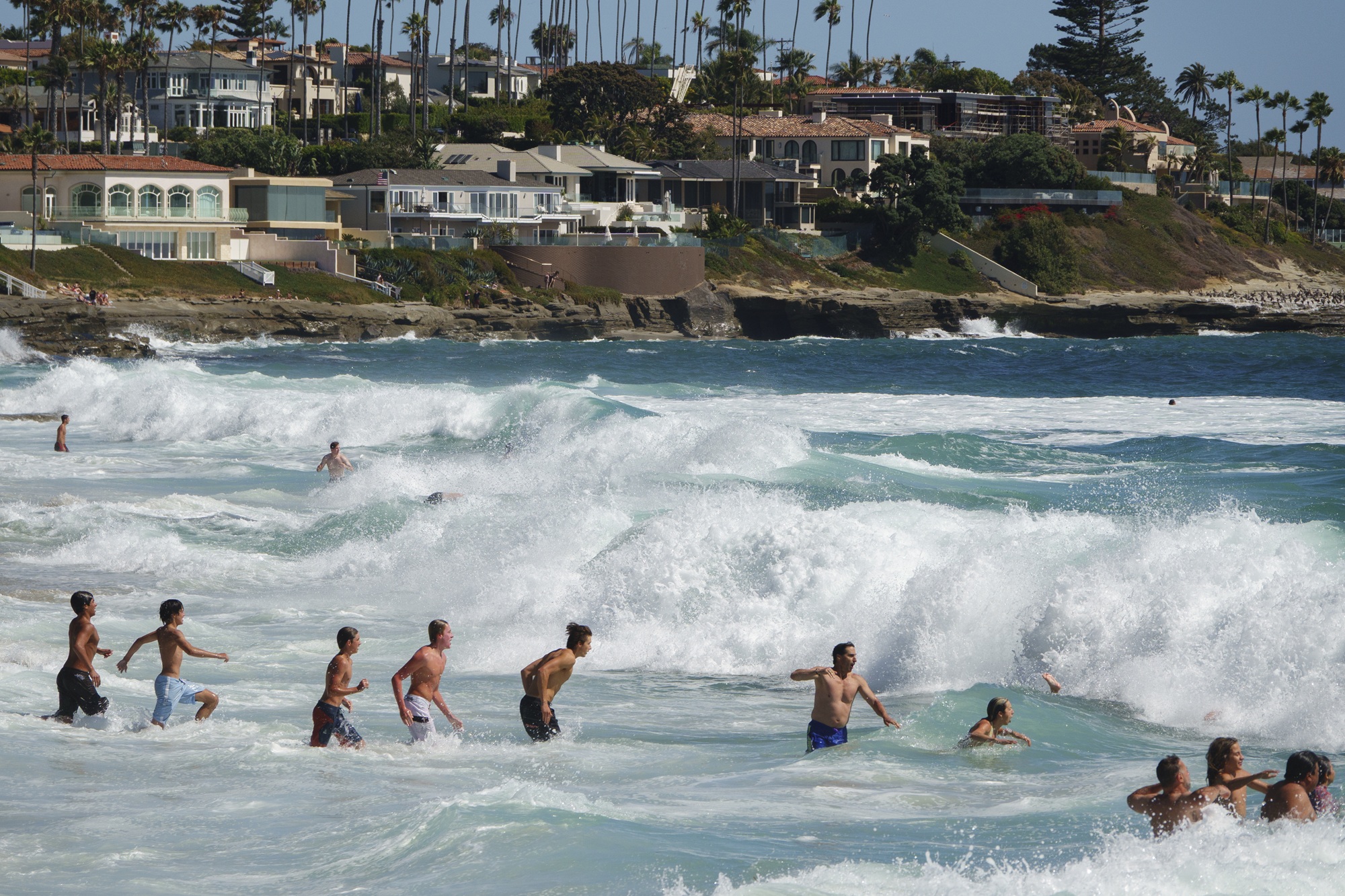
"caption": "Visitors navigate breaking waves along the coastline of Windansea Beach in La Jolla on June 20, 2026, in San Diego, California. The National Weather Service issued a beach hazard statement for elevated surf and high risk for rip currents. ",
"credit": "Kevin Carter/Getty Images",
"altTag": null,
"description": null,
"imgSizes": {
"thumbnail": {
"file": "https://cdn.kqed.org/wp-content/uploads/sites/10/2026/06/CaliforniaRipCurrentsGetty-160x107.jpg",
"width": 160,
"height": 107,
"mimeType": "image/jpeg"
},
"1536x1536": {
"file": "https://cdn.kqed.org/wp-content/uploads/sites/10/2026/06/CaliforniaRipCurrentsGetty-1536x1024.jpg",
"width": 1536,
"height": 1024,
"mimeType": "image/jpeg"
},
"post-thumbnail": {
"file": "https://cdn.kqed.org/wp-content/uploads/sites/10/2026/06/CaliforniaRipCurrentsGetty-672x372.jpg",
"width": 672,
"height": 372,
"mimeType": "image/jpeg"
},
"twentyfourteen-full-width": {
"file": "https://cdn.kqed.org/wp-content/uploads/sites/10/2026/06/CaliforniaRipCurrentsGetty-1038x576.jpg",
"width": 1038,
"height": 576,
"mimeType": "image/jpeg"
},
"npr-cds-wide": {
"file": "https://cdn.kqed.org/wp-content/uploads/sites/10/2026/06/CaliforniaRipCurrentsGetty-1200x675.jpg",
"width": 1200,
"height": 675,
"mimeType": "image/jpeg"
},
"npr-cds-square": {
"file": "https://cdn.kqed.org/wp-content/uploads/sites/10/2026/06/CaliforniaRipCurrentsGetty-600x600.jpg",
"width": 600,
"height": 600,
"mimeType": "image/jpeg"
},
"kqedFullSize": {
"file": "https://cdn.kqed.org/wp-content/uploads/sites/10/2026/06/CaliforniaRipCurrentsGetty.jpg",
"width": 2000,
"height": 1333
}
},
"isLoading": false,
"fetchFailed": false
},
"news_12088470": {
"type": "attachments",
"id": "news_12088470",
"meta": {
"index": "attachments_1716263798",
"site": "news",
"id": "12088470",
"found": true
},
"title": "4th of July Fireworks in San Francisco",
"publishDate": 1782234768,
"status": "inherit",
"parent": 12088123,
"modified": 1782234803,
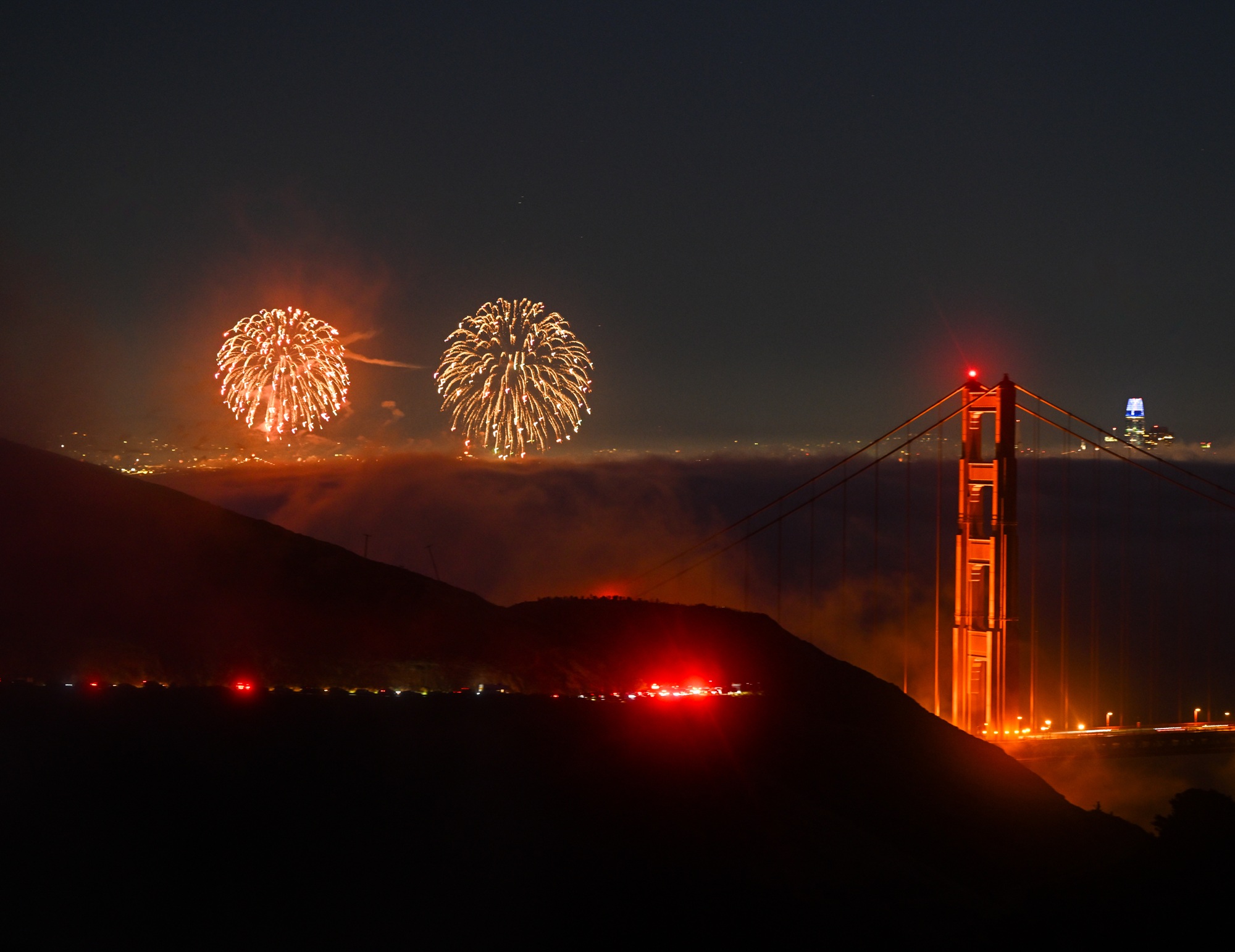
"caption": "Fireworks illuminate the sky over San Francisco's Golden Gate Bridge as seen from Marin Headlands in Sausalito, California, on July 4, 2024. ",
"credit": "Tayfun Coskun/Anadolu via Getty Images",
"altTag": null,
"description": null,
"imgSizes": {
"thumbnail": {
"file": "https://cdn.kqed.org/wp-content/uploads/sites/10/2026/06/SFFireworksGetty-160x123.jpg",
"width": 160,
"height": 123,
"mimeType": "image/jpeg"
},
"1536x1536": {
"file": "https://cdn.kqed.org/wp-content/uploads/sites/10/2026/06/SFFireworksGetty-1536x1184.jpg",
"width": 1536,
"height": 1184,
"mimeType": "image/jpeg"
},
"post-thumbnail": {
"file": "https://cdn.kqed.org/wp-content/uploads/sites/10/2026/06/SFFireworksGetty-672x372.jpg",
"width": 672,
"height": 372,
"mimeType": "image/jpeg"
},
"twentyfourteen-full-width": {
"file": "https://cdn.kqed.org/wp-content/uploads/sites/10/2026/06/SFFireworksGetty-1038x576.jpg",
"width": 1038,
"height": 576,
"mimeType": "image/jpeg"
},
"npr-cds-wide": {
"file": "https://cdn.kqed.org/wp-content/uploads/sites/10/2026/06/SFFireworksGetty-1200x675.jpg",
"width": 1200,
"height": 675,
"mimeType": "image/jpeg"
},
"npr-cds-square": {
"file": "https://cdn.kqed.org/wp-content/uploads/sites/10/2026/06/SFFireworksGetty-600x600.jpg",
"width": 600,
"height": 600,
"mimeType": "image/jpeg"
},
"kqedFullSize": {
"file": "https://cdn.kqed.org/wp-content/uploads/sites/10/2026/06/SFFireworksGetty.jpg",
"width": 2000,
"height": 1542
}
},
"isLoading": false,
"fetchFailed": false
}
},
"audioPlayerReducer": {
"postId": "stream_live",
"isPaused": true,
"isPlaying": false,
"pfsActive": false,
"pledgeModalIsOpen": true,
"playerDrawerIsOpen": false,
"liveAudioPlayStartedAt": 0,
"liveAudioPlayContext": ""
},
"authorsReducer": {
"byline_news_12088210": {
"type": "authors",
"id": "byline_news_12088210",
"meta": {
"override": true
},
"slug": "byline_news_12088210",
"name": "Maha Sanad",
"isLoading": false
},
"byline_news_12088123": {
"type": "authors",
"id": "byline_news_12088123",
"meta": {
"override": true
},
"slug": "byline_news_12088123",
"name": "Nisa Khan, Carly Severn, Audrey Garces",
"isLoading": false
},
"abandlamudi": {
"type": "authors",
"id": "11672",
"meta": {
"index": "authors_1716337520",
"id": "11672",
"found": true
},
"name": "Adhiti Bandlamudi",
"firstName": "Adhiti",
"lastName": "Bandlamudi",
"slug": "abandlamudi",
"email": "abandlamudi@kqed.org",
"display_author_email": false,
"staff_mastheads": [
"news"
],
"title": "KQED Housing Reporter",
"bio": "Adhiti Bandlamudi reports for KQED's Housing desk. She focuses on how housing gets built across the Bay Area. Before joining KQED in 2020, she reported for WUNC in Durham, North Carolina, WABE in Atlanta, Georgia and Capital Public Radio in Sacramento. In 2017, she was awarded a Kroc Fellowship at NPR where she reported on everything from sprinkles to the Golden State Killer's arrest. When she's not reporting, she's baking new recipes in her kitchen or watching movies with friends and family. She's originally from Georgia and has strong opinions about Great British Bake Off.",
"avatar": "https://secure.gravatar.com/avatar/868129c8b257bb99a3500e2c86a65400?s=600&d=mm&r=g",
"twitter": "oddity_adhiti",
"facebook": null,
"instagram": null,
"linkedin": null,
"sites": [
{
"site": "arts",
"roles": [
"author"
]
},
{
"site": "news",
"roles": [
"editor"
]
},
{
"site": "liveblog",
"roles": [
"author"
]
}
],
"headData": {
"title": "Adhiti Bandlamudi | KQED",
"description": "KQED Housing Reporter",
"ogImgSrc": "https://secure.gravatar.com/avatar/868129c8b257bb99a3500e2c86a65400?s=600&d=mm&r=g",
"twImgSrc": "https://secure.gravatar.com/avatar/868129c8b257bb99a3500e2c86a65400?s=600&d=mm&r=g"
},
"isLoading": false,
"link": "/author/abandlamudi"
},
"ccabreralomeli": {
"type": "authors",
"id": "11708",
"meta": {
"index": "authors_1716337520",
"id": "11708",
"found": true
},
"name": "Carlos Cabrera-Lomelí",
"firstName": "Carlos",
"lastName": "Cabrera-Lomelí",
"slug": "ccabreralomeli",
"email": "ccabreralomeli@KQED.org",
"display_author_email": true,
"staff_mastheads": [
"news"
],
"title": "Community Reporter",
"bio": "Carlos Cabrera-Lomelí is a community reporter with KQED's digital engagement team. He also reports and co-produces for KQED's bilingual news hub KQED en Español. He grew up in San Francisco's Mission District and has previously worked with Univision, 48 Hills and REFORMA in Mexico City.",
"avatar": "https://secure.gravatar.com/avatar/c309be9665e484f887b818c89e273ecc673004f426f36b24d00a4d813a2e0518?s=600&d=blank&r=g",
"twitter": "@LomeliCabrera",
"bluesky": null,
"facebook": null,
"instagram": null,
"linkedin": null,
"sites": [
{
"site": "arts",
"roles": [
"editor"
]
},
{
"site": "news",
"roles": [
"editor"
]
},
{
"site": "about",
"roles": [
"editor"
]
},
{
"site": "science",
"roles": [
"editor"
]
},
{
"site": "perspectives",
"roles": [
"editor"
]
},
{
"site": "elections",
"roles": [
"editor"
]
},
{
"site": "liveblog",
"roles": [
"contributor"
]
}
],
"headData": {
"title": "Carlos Cabrera-Lomelí | KQED",
"description": "Community Reporter",
"ogImgSrc": "https://secure.gravatar.com/avatar/c309be9665e484f887b818c89e273ecc673004f426f36b24d00a4d813a2e0518?s=600&d=blank&r=g",
"twImgSrc": "https://secure.gravatar.com/avatar/c309be9665e484f887b818c89e273ecc673004f426f36b24d00a4d813a2e0518?s=600&d=blank&r=g"
},
"isLoading": false,
"link": "/author/ccabreralomeli"
},
"nkhan": {
"type": "authors",
"id": "11867",
"meta": {
"index": "authors_1716337520",
"id": "11867",
"found": true
},
"name": "Nisa Khan",
"firstName": "Nisa",
"lastName": "Khan",
"slug": "nkhan",
"email": "nkhan@kqed.org",
"display_author_email": false,
"staff_mastheads": [],
"title": "KQED Contributor",
"bio": "Nisa Khan is a reporter for KQED's Audience News Desk. She was formerly a data reporter at Michigan Radio. She earned a Bachelor of Science in Information from the University of Michigan and a Master of Arts in Communication from Stanford University.",
"avatar": "https://secure.gravatar.com/avatar/8720459eef081ff64582b3506b124d58523e80e120704a0cbd9892533c914991?s=600&d=blank&r=g",
"twitter": "mnisakhan",
"bluesky": null,
"facebook": null,
"instagram": null,
"linkedin": null,
"sites": [
{
"site": "arts",
"roles": [
"editor"
]
},
{
"site": "news",
"roles": [
"editor"
]
},
{
"site": "science",
"roles": [
"editor",
"author"
]
},
{
"site": "forum",
"roles": [
"editor"
]
},
{
"site": "liveblog",
"roles": [
"contributor"
]
}
],
"headData": {
"title": "Nisa Khan | KQED",
"description": "KQED Contributor",
"ogImgSrc": "https://secure.gravatar.com/avatar/8720459eef081ff64582b3506b124d58523e80e120704a0cbd9892533c914991?s=600&d=blank&r=g",
"twImgSrc": "https://secure.gravatar.com/avatar/8720459eef081ff64582b3506b124d58523e80e120704a0cbd9892533c914991?s=600&d=blank&r=g"
},
"isLoading": false,
"link": "/author/nkhan"
},
"kdebenedetti": {
"type": "authors",
"id": "11913",
"meta": {
"index": "authors_1716337520",
"id": "11913",
"found": true
},
"name": "Katie DeBenedetti",
"firstName": "Katie",
"lastName": "DeBenedetti",
"slug": "kdebenedetti",
"email": "kdebenedetti@kqed.org",
"display_author_email": false,
"staff_mastheads": [
"news",
"science"
],
"title": "KQED Contributor",
"bio": "Katie DeBenedetti is a digital reporter covering daily news for the Express Desk. Prior to joining KQED as a culture reporting intern in January 2024, she covered education and city government for the Napa Valley Register.",
"avatar": "https://secure.gravatar.com/avatar/6e31073cb8f7e4214ab03f42771d0f45?s=600&d=blank&r=g",
"twitter": null,
"facebook": null,
"instagram": null,
"linkedin": null,
"sites": [
{
"site": "news",
"roles": [
"author"
]
},
{
"site": "science",
"roles": [
"author"
]
},
{
"site": "liveblog",
"roles": [
"author"
]
}
],
"headData": {
"title": "Katie DeBenedetti | KQED",
"description": "KQED Contributor",
"ogImgSrc": "https://secure.gravatar.com/avatar/6e31073cb8f7e4214ab03f42771d0f45?s=600&d=blank&r=g",
"twImgSrc": "https://secure.gravatar.com/avatar/6e31073cb8f7e4214ab03f42771d0f45?s=600&d=blank&r=g"
},
"isLoading": false,
"link": "/author/kdebenedetti"
},
"sarahwright": {
"type": "authors",
"id": "11956",
"meta": {
"index": "authors_1716337520",
"id": "11956",
"found": true
},
"name": "Sarah Wright",
"firstName": "Sarah",
"lastName": "Wright",
"slug": "sarahwright",
"email": "swright@kqed.org",
"display_author_email": true,
"staff_mastheads": [],
"title": "Outdoors Engagement Reporter",
"bio": "Sarah Wright is KQED's Outdoors Engagement Reporter. Originally from Lake Tahoe, she completed a thru-hike of the Pacific Crest Trail in 2019 and was a U.S. Fulbright Program grantee to Argentina in 2023. Her journalism has appeared in The Guardian, The San Francisco Standard, The Palo Alto Weekly and the Half Moon Bay Review.",
"avatar": "https://secure.gravatar.com/avatar/c161a3d6441865cba25e6db4fa561099ad665799e9432e34da2b84d7e371524c?s=600&d=blank&r=g",
"twitter": null,
"bluesky": null,
"facebook": null,
"instagram": null,
"linkedin": null,
"sites": [
{
"site": "arts",
"roles": [
"editor"
]
},
{
"site": "news",
"roles": [
"editor"
]
},
{
"site": "science",
"roles": [
"contributor",
"author"
]
},
{
"site": "forum",
"roles": [
"editor"
]
}
],
"headData": {
"title": "Sarah Wright | KQED",
"description": "Outdoors Engagement Reporter",
"ogImgSrc": "https://secure.gravatar.com/avatar/c161a3d6441865cba25e6db4fa561099ad665799e9432e34da2b84d7e371524c?s=600&d=blank&r=g",
"twImgSrc": "https://secure.gravatar.com/avatar/c161a3d6441865cba25e6db4fa561099ad665799e9432e34da2b84d7e371524c?s=600&d=blank&r=g"
},
"isLoading": false,
"link": "/author/sarahwright"
},
"aaliahmad": {
"type": "authors",
"id": "11986",
"meta": {
"index": "authors_1716337520",
"id": "11986",
"found": true
},
"name": "Ayah Ali-Ahmad",
"firstName": "Ayah",
"lastName": "Ali-Ahmad",
"slug": "aaliahmad",
"email": "aaliahmad@KQED.org",
"display_author_email": false,
"staff_mastheads": [],
"title": "KQED Contributor",
"bio": null,
"avatar": "https://secure.gravatar.com/avatar/1cf54f187a5e1064b2cfef3f3d2f1e4f93e453395d56912aca6382a6071ec3ed?s=600&d=blank&r=g",
"twitter": "ayahaliahmad",
"bluesky": null,
"facebook": null,
"instagram": null,
"linkedin": null,
"sites": [
{
"site": "news",
"roles": [
"subscriber"
]
}
],
"headData": {
"title": "Ayah Ali-Ahmad | KQED",
"description": "KQED Contributor",
"ogImgSrc": "https://secure.gravatar.com/avatar/1cf54f187a5e1064b2cfef3f3d2f1e4f93e453395d56912aca6382a6071ec3ed?s=600&d=blank&r=g",
"twImgSrc": "https://secure.gravatar.com/avatar/1cf54f187a5e1064b2cfef3f3d2f1e4f93e453395d56912aca6382a6071ec3ed?s=600&d=blank&r=g"
},
"isLoading": false,
"link": "/author/aaliahmad"
}
},
"pagesReducer": {
"news_tag_bay-area": {
"type": "terms",
"id": "news_1386",
"meta": {
"index": "terms_1716263798",
"site": "news",
"id": "1386",
"score": 7.788453
},
"featImg": null,
"name": "Bay Area",
"description": null,
"taxonomy": "tag",
"headData": {
"twImgId": null,
"twTitle": null,
"ogTitle": null,
"ogImgId": null,
"twDescription": null,
"description": null,
"title": "Bay Area Archives | KQED News",
"ogDescription": null
},
"ttid": 1398,
"slug": "bay-area",
"isLoading": false,
"title": "Bay Area",
"pageMeta": {
"site": "news",
"WpPageTemplate": "page-topic-editorial",
"currentPage": 16
},
"blocks": [
{
"blockName": "kqed/post-list",
"attrs": {
"layout": "cardArticle2",
"query": "posts/news?tag=bay-area",
"seeMore": false,
"paginated": true,
"page": 16
}
},
{
"blockName": "kqed/ad"
}
]
}
},
"pfsSessionReducer": {},
"postsReducer": {
"stream_live": {
"type": "live",
"id": "stream_live",
"audioUrl": "https://streams.kqed.org/kqedradio",
"title": "Live Stream",
"excerpt": "Live Stream information currently unavailable.",
"link": "/radio",
"featImg": "",
"label": {
"name": "KQED Live",
"link": "/"
}
},
"stream_kqedNewscast": {
"type": "posts",
"id": "stream_kqedNewscast",
"audioUrl": "https://www.kqed.org/.stream/anon/radio/RDnews/newscast.mp3?_=1",
"title": "KQED Newscast",
"featImg": "",
"label": {
"name": "88.5 FM",
"link": "/"
}
},
"news_12089221": {
"type": "posts",
"id": "news_12089221",
"meta": {
"index": "posts_1716263798",
"site": "news",
"id": "12089221",
"score": null,
"sort": [
1782903601000
]
},
"guestAuthors": [],
"slug": "got-your-free-state-historic-parks-pass-heres-three-ideas-for-where-to-use-it-near-the-bay-area",
"title": "Got Your Free State Historic Parks Pass? Here Are 3 Ideas for Where to Use It Near the Bay Area",
"publishDate": 1782903601,
"format": "standard",
"headTitle": "Got Your Free State Historic Parks Pass? Here Are 3 Ideas for Where to Use It Near the Bay Area | KQED",
"labelTerm": {
"site": "news"
},
"content": "\u003cp>If you’re a California resident, the state is offering you\u003ca href=\"https://www.kqed.org/news/12088039/california-now-offers-free-passes-to-state-historic-parks-just-dont-miss-the-deadline\"> a free pass to all state historical parks\u003c/a> — usually worth $50 — that you can use for the rest of 2026.\u003c/p>\n\u003cp>The California State Parks \u003ca href=\"https://www.kqed.org/news/12088039/california-now-offers-free-passes-to-state-historic-parks-just-dont-miss-the-deadline\">Historian Passport\u003c/a> is available to download for free until July 6, and offers no-cost entry to more than 30 state historic parks — for up to four people — as many times as you like over the next six months.\u003c/p>\n\u003cp>If you’ve already downloaded your free pass from \u003ca href=\"http://reservecalifornia.com\">reservecalifornia.com\u003c/a>, you might be wondering which state historic parks to use it at.\u003c/p>\n\u003cp>[ad fullwidth]\u003c/p>\n\u003cp>That’s why we delved into three spots — each no more than a few hours from the Bay Area — where you can spend the whole day immersed in history, with a taste of outdoors exploration on the side.\u003c/p>\n\u003cp>That’s the main draw of these state historic parks, said Ryan Forbes, spokesperson for California State Parks. Visiting them is “both an adventure and a chance to learn a lot about our past.”\u003c/p>\n\u003cp>Keep reading for three ideas for where to use your free California State Parks Historian Passport. And if you haven’t downloaded yours yet, \u003ca href=\"https://www.kqed.org/news/12088039/california-now-offers-free-passes-to-state-historic-parks-just-dont-miss-the-deadline\">make sure you do so\u003c/a> before the state’s deadline on July 6.\u003c/p>\n\u003ch2>Idea 1: Marshall Gold Discovery State Historic Park, Sierra Foothills\u003c/h2>\n\u003cp>Nestled in the Sierra Foothills in the town of Coloma is \u003ca href=\"https://www.parks.ca.gov/?page_id=484\">Marshall Gold Discovery State Park\u003c/a>, the site of Sutter’s Mill where James Marshall first discovered gold, ushering in the California Gold Rush.\u003c/p>\n\u003cp>Holly Thane, an interpreter at the park, said the park shares this history, its subsequent effect on the indigenous people living in the area and on the natural environment and its agricultural future.\u003c/p>\n\u003cp>If you’ve never been to this state historic park before, Thane suggested taking a \u003ca href=\"https://www.marshallgold.com/gold-discovery-tour\">guided walking tour of the park\u003c/a>, exploring the museum and — if they’re open — popping into the old Coloma buildings.\u003c/p>\n\u003cfigure id=\"attachment_12089381\" class=\"wp-caption aligncenter\" style=\"max-width: 1980px\">\u003cimg loading=\"lazy\" decoding=\"async\" class=\"size-full wp-image-12089381\" src=\"https://cdn.kqed.org/wp-content/uploads/sites/10/2026/06/GettyImages-564090483.jpg\" alt=\"\" width=\"1980\" height=\"1321\" srcset=\"https://cdn.kqed.org/wp-content/uploads/sites/10/2026/06/GettyImages-564090483.jpg 1980w, https://cdn.kqed.org/wp-content/uploads/sites/10/2026/06/GettyImages-564090483-160x107.jpg 160w, https://cdn.kqed.org/wp-content/uploads/sites/10/2026/06/GettyImages-564090483-1536x1025.jpg 1536w\" sizes=\"auto, (max-width: 1980px) 100vw, 1980px\">\u003cfigcaption class=\"wp-caption-text\">The U.S. Post Office in Coloma on the south fork of the American River in El Dorado County, California. \u003ccite>(Carol M. Highsmith/Buyenlarge/Getty Images)\u003c/cite>\u003c/figcaption>\u003c/figure>\n\u003cp>You can also try your luck at panning for gold, either with an instructor in a prepared trough that’s been filled with real gold, fool’s gold and red garnets, which are gemstones or on your own in the South Fork of the American River at the park’s gold panning beach.\u003c/p>\n\u003cp>Just know ahead of time: The walking tour costs $3 per person, and the panning tour is $12 — costs that \u003cem>aren’t \u003c/em>included in your Historian Passport pass. Panning in the river is free, but unless you have one already, you will need to purchase a pan from the gift shop.\u003c/p>\n\u003cp>The plus side? You get to keep any gold you find.\u003c/p>\n\u003cp>Thane suggested coming to the park in the mornings during the summer, as later in the day can get both busy and hot — and staff doesn’t run the tours if the temperature gets above 95 degrees. If you’re heading to the river, Thane stressed that anyone planning to bathe or swim should absolutely use the lifejackets the park supplies, given \u003ca href=\"https://www.kqed.org/news/12045255/south-yuba-state-park-american-river-safety-2025-weather\">how quickly this cold river moves\u003c/a>.[aside postID=news_12088718 hero='https://cdn.kqed.org/wp-content/uploads/sites/10/2026/05/052626LAKE-TAHOE-_GH_060-KQED.jpg']Marshall Gold Discovery is an interactive park, but Thane said first-time visitors are often most surprised by the diversity of the people who came to the area in the 19th century in search of gold, “looking for that opportunity to better their lives, to provide for their families,” she said.\u003c/p>\n\u003cp>\u003cstrong>Want to make it a day trip? \u003c/strong>\u003c/p>\n\u003cp>Experience the South Fork of the American River yourself with a \u003ca href=\"https://www.blm.gov/visit/south-fork-american-river\">rafting trip, or snag a nearby spot\u003c/a> at one of the many campgrounds and make a weekend out of your trip. Thane also suggested visiting the nearby wineries for tastings or tours.\u003c/p>\n\u003ch2>Idea 2: Olompali State Historic Park, Marin\u003c/h2>\n\u003cp>Right here in the Bay Area is our own slice of state history at \u003ca href=\"https://www.parks.ca.gov/?page_id=465\">Olompali State Historic Park\u003c/a>, the site of the \u003ca href=\"https://www.parks.ca.gov/pages/465/files/OlompaliWebBrochure2011.pdf\">oldest surviving house north of the San Francisco Bay.\u003c/a> This structure was built by the head of the Olompali band of the Coast Miwok people, who would go on to become the only Native American to be given a land grant in northern \u003ca href=\"https://postalmuseum.si.edu/exhibition/celebrating-hispanic-heritage-settlements/alta-california\">Alta California\u003c/a>.\u003c/p>\n\u003cp>This place is also oft-overlooked, Forbes said, because it’s right off Highway 101 but easy to miss.\u003c/p>\n\u003cp>“Olompali is one of the places that I would call one of our little hidden treasures,” Forbes said. “Most people don’t think to go to it, but it is a site with probably some of the most rich history that you can find in any of our parks.”\u003c/p>\n\u003cfigure id=\"attachment_12089382\" class=\"wp-caption aligncenter\" style=\"max-width: 1980px\">\u003cimg loading=\"lazy\" decoding=\"async\" class=\"size-full wp-image-12089382\" src=\"https://cdn.kqed.org/wp-content/uploads/sites/10/2026/06/GettyImages-1392638826.jpg\" alt=\"\" width=\"1980\" height=\"1320\" srcset=\"https://cdn.kqed.org/wp-content/uploads/sites/10/2026/06/GettyImages-1392638826.jpg 1980w, https://cdn.kqed.org/wp-content/uploads/sites/10/2026/06/GettyImages-1392638826-160x107.jpg 160w, https://cdn.kqed.org/wp-content/uploads/sites/10/2026/06/GettyImages-1392638826-1536x1024.jpg 1536w\" sizes=\"auto, (max-width: 1980px) 100vw, 1980px\">\u003cfigcaption class=\"wp-caption-text\">Point San Pablo is seen from this drone view in Richmond, California, on Tuesday, March 22, 2022. \u003ccite>(Jane Tyska/Digital First Media/East Bay Times via Getty Images)\u003c/cite>\u003c/figcaption>\u003c/figure>\n\u003cp>People have been living in the area “almost continuously for 8,000 years,” Forbes said. It’s also the site of a brief battle during the \u003ca href=\"https://www.nps.gov/articles/bearflag.htm\">1846 Bear Flag Revolt\u003c/a> and would go on to have many renters and owners, including ranchers, Jesuit priests, the Grateful Dead and members of a hippie commune. “It’s a web of different stories,” Forbes said.\u003c/p>\n\u003cp>You may come to Olompali for the history, but you can stay for the excellent hiking. Once you’re done exploring the historic buildings, you can choose from a \u003ca href=\"https://www.alltrails.com/trail/us/california/olompali-trail\">three-mile loop trail\u003c/a> that meanders through oak woodlands and grassland before opening up onto views of San Pablo Bay or the \u003ca href=\"https://www.alltrails.com/trail/us/california/miwok-to-upper-mt-burdell-trail\">longer 9-mile out-and-back to the top of Mt. Burdell\u003c/a> for a bird’s-eye view of the Bay, “depending on how ambitious you feel,” Forbes said.\u003c/p>\n\u003cp>\u003cstrong>Want to make it a day trip? \u003c/strong>\u003c/p>\n\u003cp>Bring a cooler or bag lunch and set up for a picnic near the historic area, which Forbes said is particularly family-friendly. Or, if you and your family are more the adventurous type, a network of trails connects the state and local parks in this area — so you can explore even farther into Marin County Parks and beyond.\u003c/p>\n\u003ch2>Idea 3: Jack London State Historic Park, Sonoma\u003c/h2>\n\u003cp>Located in Glen Ellen off of Highway 12 between Sonoma and Santa Rosa, \u003ca href=\"https://www.parks.ca.gov/?page_id=478\">Jack London State Historic Park\u003c/a> memorializes the famous writer and the Sonoma Valley home he shared with his wife Charmain. The entire park is 1,400 acres, with more than 26 miles of trails to explore.\u003c/p>\n\u003cp>“It’s an incredibly well-preserved property with redwoods,” Forbes said.\u003c/p>\n\u003cp>For first-time visitors, Forbes suggested starting with the visitor center in “The House of Happy Walls” before heading down a short trail to Wolf House, a mansion the Londons had built but which burned down before they could enjoy it.\u003c/p>\n\u003cfigure id=\"attachment_12089383\" class=\"wp-caption aligncenter\" style=\"max-width: 1980px\">\u003cimg loading=\"lazy\" decoding=\"async\" class=\"size-full wp-image-12089383\" src=\"https://cdn.kqed.org/wp-content/uploads/sites/10/2026/06/GettyImages-1408721159.jpg\" alt=\"\" width=\"1980\" height=\"1275\" srcset=\"https://cdn.kqed.org/wp-content/uploads/sites/10/2026/06/GettyImages-1408721159.jpg 1980w, https://cdn.kqed.org/wp-content/uploads/sites/10/2026/06/GettyImages-1408721159-160x103.jpg 160w, https://cdn.kqed.org/wp-content/uploads/sites/10/2026/06/GettyImages-1408721159-1536x989.jpg 1536w\" sizes=\"auto, (max-width: 1980px) 100vw, 1980px\">\u003cfigcaption class=\"wp-caption-text\">The study where author Jack London did much of his writing is seen in Glen Ellen, California, on April 5, 2013. \u003ccite>(Paul Chinn/The San Francisco Chronicle via Getty Images)\u003c/cite>\u003c/figcaption>\u003c/figure>\n\u003cp>Along the way, you can explore Jack London’s grave before taking on any of the more rugged corners of the park — which has everything from creeks to orchards to meadows to redwood groves.\u003c/p>\n\u003cp>“Keep in mind, if you go to somewhere like Jack London, you might start in the museum and maybe end up on a hike out in the redwoods,” Forbes said. “So, prepare for not just history, but for a full adventure.” In other words, dress accordingly.\u003c/p>\n\u003cp>\u003cstrong>Want to make it a day trip?\u003c/strong>\u003c/p>\n\u003cp>While you’re out visiting Jack London, be sure to stop in the town of Sonoma on your way in, where you can grab lunch and also pop into Sonoma State Historic Park, which is also free under the historian pass.\u003c/p>\n\u003cp>If you’re looking for even more hiking, pop over to \u003ca href=\"https://www.parks.ca.gov/?page_id=481\">Sugarloaf Ridge State Park\u003c/a> or head north to \u003ca href=\"https://www.parks.ca.gov/?page_id=477\">Bothe-Napa Valley State Park,\u003c/a> all the way to \u003ca href=\"https://www.parks.ca.gov/?page_id=472\">Robert Louis Stevenson State Park\u003c/a>, where you can hike to the top of Mt. St. Helena and — on a clear day — see all the way to Mt. Shasta. Don’t forget to stop at the many wineries on the way to make a whole day out of it.\u003c/p>\n\u003ch2>Want even more ideas for state historic parks to visit for free?\u003c/h2>\n\u003cp>\u003ca href=\"https://www.parks.ca.gov/?page_id=485\">\u003cstrong>Sutter’s Fort State Historic Park\u003c/strong>\u003c/a>\u003c/p>\n\u003cp>The first permanent European colonial settlement in the Central Valley, now on display at Sutter’s Fort, is not just a celebration of the Gold Rush, but also a lesson in its founders’ exploits of Native American people and lands — and the ripple effects of the Gold Rush across the state.\u003c/p>\n\u003cp>\u003ca href=\"https://www.parks.ca.gov/?page_id=494\">\u003cstrong>Malakoff Diggins State Historic Park\u003c/strong>\u003c/a>\u003c/p>\n\u003cp>Home to the state’s largest hydraulic gold mine, Malakoff Diggins explores the boom and bust of the Gold Rush, as visitors can explore the historic ghost town of North Bloomfield (formerly known as Humbug) and its more than 20 miles of hiking. The park’s rustic cabins are also a great spot for \u003ca href=\"https://www.kqed.org/news/12044161/bay-area-camping-alternatives-glamping-yurts-cabins-big-sur\">glamping\u003c/a>.\u003c/p>\n\u003cp>\u003ca href=\"https://www.parks.ca.gov/?page_id=509\">\u003cstrong>Bodie State Historic Park\u003c/strong>\u003c/a>\u003c/p>\n\u003cp>This eerie park is a long way away from the Bay, but if ghost towns are your thing, look no further. Making the trek all the way to the Eastern Sierra is worth it to explore \u003ca href=\"https://www.kqed.org/news/11640709/how-this-ghost-towns-curse-backfired-on-park-rangers\">the deserted streets of Bodie\u003c/a>, a former Gold Rush boomtown of around 8,000 people that suffered from extreme population loss and fires and that’s now preserved in “arrested decay.”\u003c/p>\n\u003cp>[ad floatright]\u003c/p>\n",
"blocks": [],
"excerpt": "A free pass for all state historic parks is available to download until July 6 — and it’s good for the rest of the year.",
"status": "publish",
"parent": 0,
"modified": 1782926356,
"stats": {
"hasAudio": false,
"hasVideo": false,
"hasChartOrMap": false,
"iframeSrcs": [],
"hasGoogleForm": false,
"hasGallery": false,
"hasHearkenModule": false,
"hasPolis": false,
"paragraphCount": 38,
"wordCount": 1646
},
"headData": {
"title": "Got Your Free State Historic Parks Pass? Here Are 3 Ideas for Where to Use It Near the Bay Area | KQED",
"description": "A free pass for all state historic parks is available to download until July 6 — and it’s good for the rest of the year.",
"ogTitle": "",
"ogDescription": "",
"ogImgId": "",
"twTitle": "",
"twDescription": "",
"twImgId": "",
"schema": {
"@context": "https://schema.org",
"@type": "NewsArticle",
"headline": "Got Your Free State Historic Parks Pass? Here Are 3 Ideas for Where to Use It Near the Bay Area",
"datePublished": "2026-07-01T04:00:01-07:00",
"dateModified": "2026-07-01T10:19:16-07:00",
"image": "https://cdn.kqed.org/wp-content/uploads/2020/02/KQED-OG-Image@1x.png",
"isAccessibleForFree": "True",
"publisher": {
"@type": "NewsMediaOrganization",
"@id": "https://www.kqed.org/#organization",
"name": "KQED",
"logo": "https://cdn.kqed.org/wp-content/uploads/2020/02/KQED-OG-Image@1x.png",
"url": "https://www.kqed.org",
"sameAs": [
"https://www.facebook.com/KQED",
"https://twitter.com/KQED",
"https://www.instagram.com/kqed/",
"https://www.tiktok.com/@kqedofficial",
"https://www.linkedin.com/company/kqed",
"https://www.youtube.com/channel/UCeC0IOo7i1P_61zVUWbJ4nw"
]
}
}
},
"primaryCategory": {
"termId": 34168,
"slug": "guides-and-explainers",
"name": "Guides and Explainers"
},
"sticky": false,
"nprStoryId": "kqed-12089221",
"templateType": "standard",
"featuredImageType": "standard",
"excludeFromSiteSearch": "Include",
"articleAge": "0",
"path": "/news/12089221/got-your-free-state-historic-parks-pass-heres-three-ideas-for-where-to-use-it-near-the-bay-area",
"audioTrackLength": null,
"parsedContent": [
{
"type": "contentString",
"content": "\u003cdiv class=\"post-body\">\u003cp>\u003cp>If you’re a California resident, the state is offering you\u003ca href=\"https://www.kqed.org/news/12088039/california-now-offers-free-passes-to-state-historic-parks-just-dont-miss-the-deadline\"> a free pass to all state historical parks\u003c/a> — usually worth $50 — that you can use for the rest of 2026.\u003c/p>\n\u003cp>The California State Parks \u003ca href=\"https://www.kqed.org/news/12088039/california-now-offers-free-passes-to-state-historic-parks-just-dont-miss-the-deadline\">Historian Passport\u003c/a> is available to download for free until July 6, and offers no-cost entry to more than 30 state historic parks — for up to four people — as many times as you like over the next six months.\u003c/p>\n\u003cp>If you’ve already downloaded your free pass from \u003ca href=\"http://reservecalifornia.com\">reservecalifornia.com\u003c/a>, you might be wondering which state historic parks to use it at.\u003c/p>\n\u003cp>\u003c/p>\u003c/div>",
"attributes": {
"named": {},
"numeric": []
}
},
{
"type": "component",
"content": "",
"name": "ad",
"attributes": {
"named": {
"label": "fullwidth"
},
"numeric": [
"fullwidth"
]
}
},
{
"type": "contentString",
"content": "\u003cdiv class=\"post-body\">\u003cp>\u003c/p>\n\u003cp>That’s why we delved into three spots — each no more than a few hours from the Bay Area — where you can spend the whole day immersed in history, with a taste of outdoors exploration on the side.\u003c/p>\n\u003cp>That’s the main draw of these state historic parks, said Ryan Forbes, spokesperson for California State Parks. Visiting them is “both an adventure and a chance to learn a lot about our past.”\u003c/p>\n\u003cp>Keep reading for three ideas for where to use your free California State Parks Historian Passport. And if you haven’t downloaded yours yet, \u003ca href=\"https://www.kqed.org/news/12088039/california-now-offers-free-passes-to-state-historic-parks-just-dont-miss-the-deadline\">make sure you do so\u003c/a> before the state’s deadline on July 6.\u003c/p>\n\u003ch2>Idea 1: Marshall Gold Discovery State Historic Park, Sierra Foothills\u003c/h2>\n\u003cp>Nestled in the Sierra Foothills in the town of Coloma is \u003ca href=\"https://www.parks.ca.gov/?page_id=484\">Marshall Gold Discovery State Park\u003c/a>, the site of Sutter’s Mill where James Marshall first discovered gold, ushering in the California Gold Rush.\u003c/p>\n\u003cp>Holly Thane, an interpreter at the park, said the park shares this history, its subsequent effect on the indigenous people living in the area and on the natural environment and its agricultural future.\u003c/p>\n\u003cp>If you’ve never been to this state historic park before, Thane suggested taking a \u003ca href=\"https://www.marshallgold.com/gold-discovery-tour\">guided walking tour of the park\u003c/a>, exploring the museum and — if they’re open — popping into the old Coloma buildings.\u003c/p>\n\u003cfigure id=\"attachment_12089381\" class=\"wp-caption aligncenter\" style=\"max-width: 1980px\">\u003cimg loading=\"lazy\" decoding=\"async\" class=\"size-full wp-image-12089381\" src=\"https://cdn.kqed.org/wp-content/uploads/sites/10/2026/06/GettyImages-564090483.jpg\" alt=\"\" width=\"1980\" height=\"1321\" srcset=\"https://cdn.kqed.org/wp-content/uploads/sites/10/2026/06/GettyImages-564090483.jpg 1980w, https://cdn.kqed.org/wp-content/uploads/sites/10/2026/06/GettyImages-564090483-160x107.jpg 160w, https://cdn.kqed.org/wp-content/uploads/sites/10/2026/06/GettyImages-564090483-1536x1025.jpg 1536w\" sizes=\"auto, (max-width: 1980px) 100vw, 1980px\">\u003cfigcaption class=\"wp-caption-text\">The U.S. Post Office in Coloma on the south fork of the American River in El Dorado County, California. \u003ccite>(Carol M. Highsmith/Buyenlarge/Getty Images)\u003c/cite>\u003c/figcaption>\u003c/figure>\n\u003cp>You can also try your luck at panning for gold, either with an instructor in a prepared trough that’s been filled with real gold, fool’s gold and red garnets, which are gemstones or on your own in the South Fork of the American River at the park’s gold panning beach.\u003c/p>\n\u003cp>Just know ahead of time: The walking tour costs $3 per person, and the panning tour is $12 — costs that \u003cem>aren’t \u003c/em>included in your Historian Passport pass. Panning in the river is free, but unless you have one already, you will need to purchase a pan from the gift shop.\u003c/p>\n\u003cp>The plus side? You get to keep any gold you find.\u003c/p>\n\u003cp>Thane suggested coming to the park in the mornings during the summer, as later in the day can get both busy and hot — and staff doesn’t run the tours if the temperature gets above 95 degrees. If you’re heading to the river, Thane stressed that anyone planning to bathe or swim should absolutely use the lifejackets the park supplies, given \u003ca href=\"https://www.kqed.org/news/12045255/south-yuba-state-park-american-river-safety-2025-weather\">how quickly this cold river moves\u003c/a>.\u003c/p>\u003c/div>",
"attributes": {
"named": {},
"numeric": []
}
},
{
"type": "component",
"content": "",
"name": "aside",
"attributes": {
"named": {
"postid": "news_12088718",
"hero": "https://cdn.kqed.org/wp-content/uploads/sites/10/2026/05/052626LAKE-TAHOE-_GH_060-KQED.jpg",
"label": ""
},
"numeric": []
}
},
{
"type": "contentString",
"content": "\u003cdiv class=\"post-body\">\u003cp>Marshall Gold Discovery is an interactive park, but Thane said first-time visitors are often most surprised by the diversity of the people who came to the area in the 19th century in search of gold, “looking for that opportunity to better their lives, to provide for their families,” she said.\u003c/p>\n\u003cp>\u003cstrong>Want to make it a day trip? \u003c/strong>\u003c/p>\n\u003cp>Experience the South Fork of the American River yourself with a \u003ca href=\"https://www.blm.gov/visit/south-fork-american-river\">rafting trip, or snag a nearby spot\u003c/a> at one of the many campgrounds and make a weekend out of your trip. Thane also suggested visiting the nearby wineries for tastings or tours.\u003c/p>\n\u003ch2>Idea 2: Olompali State Historic Park, Marin\u003c/h2>\n\u003cp>Right here in the Bay Area is our own slice of state history at \u003ca href=\"https://www.parks.ca.gov/?page_id=465\">Olompali State Historic Park\u003c/a>, the site of the \u003ca href=\"https://www.parks.ca.gov/pages/465/files/OlompaliWebBrochure2011.pdf\">oldest surviving house north of the San Francisco Bay.\u003c/a> This structure was built by the head of the Olompali band of the Coast Miwok people, who would go on to become the only Native American to be given a land grant in northern \u003ca href=\"https://postalmuseum.si.edu/exhibition/celebrating-hispanic-heritage-settlements/alta-california\">Alta California\u003c/a>.\u003c/p>\n\u003cp>This place is also oft-overlooked, Forbes said, because it’s right off Highway 101 but easy to miss.\u003c/p>\n\u003cp>“Olompali is one of the places that I would call one of our little hidden treasures,” Forbes said. “Most people don’t think to go to it, but it is a site with probably some of the most rich history that you can find in any of our parks.”\u003c/p>\n\u003cfigure id=\"attachment_12089382\" class=\"wp-caption aligncenter\" style=\"max-width: 1980px\">\u003cimg loading=\"lazy\" decoding=\"async\" class=\"size-full wp-image-12089382\" src=\"https://cdn.kqed.org/wp-content/uploads/sites/10/2026/06/GettyImages-1392638826.jpg\" alt=\"\" width=\"1980\" height=\"1320\" srcset=\"https://cdn.kqed.org/wp-content/uploads/sites/10/2026/06/GettyImages-1392638826.jpg 1980w, https://cdn.kqed.org/wp-content/uploads/sites/10/2026/06/GettyImages-1392638826-160x107.jpg 160w, https://cdn.kqed.org/wp-content/uploads/sites/10/2026/06/GettyImages-1392638826-1536x1024.jpg 1536w\" sizes=\"auto, (max-width: 1980px) 100vw, 1980px\">\u003cfigcaption class=\"wp-caption-text\">Point San Pablo is seen from this drone view in Richmond, California, on Tuesday, March 22, 2022. \u003ccite>(Jane Tyska/Digital First Media/East Bay Times via Getty Images)\u003c/cite>\u003c/figcaption>\u003c/figure>\n\u003cp>People have been living in the area “almost continuously for 8,000 years,” Forbes said. It’s also the site of a brief battle during the \u003ca href=\"https://www.nps.gov/articles/bearflag.htm\">1846 Bear Flag Revolt\u003c/a> and would go on to have many renters and owners, including ranchers, Jesuit priests, the Grateful Dead and members of a hippie commune. “It’s a web of different stories,” Forbes said.\u003c/p>\n\u003cp>You may come to Olompali for the history, but you can stay for the excellent hiking. Once you’re done exploring the historic buildings, you can choose from a \u003ca href=\"https://www.alltrails.com/trail/us/california/olompali-trail\">three-mile loop trail\u003c/a> that meanders through oak woodlands and grassland before opening up onto views of San Pablo Bay or the \u003ca href=\"https://www.alltrails.com/trail/us/california/miwok-to-upper-mt-burdell-trail\">longer 9-mile out-and-back to the top of Mt. Burdell\u003c/a> for a bird’s-eye view of the Bay, “depending on how ambitious you feel,” Forbes said.\u003c/p>\n\u003cp>\u003cstrong>Want to make it a day trip? \u003c/strong>\u003c/p>\n\u003cp>Bring a cooler or bag lunch and set up for a picnic near the historic area, which Forbes said is particularly family-friendly. Or, if you and your family are more the adventurous type, a network of trails connects the state and local parks in this area — so you can explore even farther into Marin County Parks and beyond.\u003c/p>\n\u003ch2>Idea 3: Jack London State Historic Park, Sonoma\u003c/h2>\n\u003cp>Located in Glen Ellen off of Highway 12 between Sonoma and Santa Rosa, \u003ca href=\"https://www.parks.ca.gov/?page_id=478\">Jack London State Historic Park\u003c/a> memorializes the famous writer and the Sonoma Valley home he shared with his wife Charmain. The entire park is 1,400 acres, with more than 26 miles of trails to explore.\u003c/p>\n\u003cp>“It’s an incredibly well-preserved property with redwoods,” Forbes said.\u003c/p>\n\u003cp>For first-time visitors, Forbes suggested starting with the visitor center in “The House of Happy Walls” before heading down a short trail to Wolf House, a mansion the Londons had built but which burned down before they could enjoy it.\u003c/p>\n\u003cfigure id=\"attachment_12089383\" class=\"wp-caption aligncenter\" style=\"max-width: 1980px\">\u003cimg loading=\"lazy\" decoding=\"async\" class=\"size-full wp-image-12089383\" src=\"https://cdn.kqed.org/wp-content/uploads/sites/10/2026/06/GettyImages-1408721159.jpg\" alt=\"\" width=\"1980\" height=\"1275\" srcset=\"https://cdn.kqed.org/wp-content/uploads/sites/10/2026/06/GettyImages-1408721159.jpg 1980w, https://cdn.kqed.org/wp-content/uploads/sites/10/2026/06/GettyImages-1408721159-160x103.jpg 160w, https://cdn.kqed.org/wp-content/uploads/sites/10/2026/06/GettyImages-1408721159-1536x989.jpg 1536w\" sizes=\"auto, (max-width: 1980px) 100vw, 1980px\">\u003cfigcaption class=\"wp-caption-text\">The study where author Jack London did much of his writing is seen in Glen Ellen, California, on April 5, 2013. \u003ccite>(Paul Chinn/The San Francisco Chronicle via Getty Images)\u003c/cite>\u003c/figcaption>\u003c/figure>\n\u003cp>Along the way, you can explore Jack London’s grave before taking on any of the more rugged corners of the park — which has everything from creeks to orchards to meadows to redwood groves.\u003c/p>\n\u003cp>“Keep in mind, if you go to somewhere like Jack London, you might start in the museum and maybe end up on a hike out in the redwoods,” Forbes said. “So, prepare for not just history, but for a full adventure.” In other words, dress accordingly.\u003c/p>\n\u003cp>\u003cstrong>Want to make it a day trip?\u003c/strong>\u003c/p>\n\u003cp>While you’re out visiting Jack London, be sure to stop in the town of Sonoma on your way in, where you can grab lunch and also pop into Sonoma State Historic Park, which is also free under the historian pass.\u003c/p>\n\u003cp>If you’re looking for even more hiking, pop over to \u003ca href=\"https://www.parks.ca.gov/?page_id=481\">Sugarloaf Ridge State Park\u003c/a> or head north to \u003ca href=\"https://www.parks.ca.gov/?page_id=477\">Bothe-Napa Valley State Park,\u003c/a> all the way to \u003ca href=\"https://www.parks.ca.gov/?page_id=472\">Robert Louis Stevenson State Park\u003c/a>, where you can hike to the top of Mt. St. Helena and — on a clear day — see all the way to Mt. Shasta. Don’t forget to stop at the many wineries on the way to make a whole day out of it.\u003c/p>\n\u003ch2>Want even more ideas for state historic parks to visit for free?\u003c/h2>\n\u003cp>\u003ca href=\"https://www.parks.ca.gov/?page_id=485\">\u003cstrong>Sutter’s Fort State Historic Park\u003c/strong>\u003c/a>\u003c/p>\n\u003cp>The first permanent European colonial settlement in the Central Valley, now on display at Sutter’s Fort, is not just a celebration of the Gold Rush, but also a lesson in its founders’ exploits of Native American people and lands — and the ripple effects of the Gold Rush across the state.\u003c/p>\n\u003cp>\u003ca href=\"https://www.parks.ca.gov/?page_id=494\">\u003cstrong>Malakoff Diggins State Historic Park\u003c/strong>\u003c/a>\u003c/p>\n\u003cp>Home to the state’s largest hydraulic gold mine, Malakoff Diggins explores the boom and bust of the Gold Rush, as visitors can explore the historic ghost town of North Bloomfield (formerly known as Humbug) and its more than 20 miles of hiking. The park’s rustic cabins are also a great spot for \u003ca href=\"https://www.kqed.org/news/12044161/bay-area-camping-alternatives-glamping-yurts-cabins-big-sur\">glamping\u003c/a>.\u003c/p>\n\u003cp>\u003ca href=\"https://www.parks.ca.gov/?page_id=509\">\u003cstrong>Bodie State Historic Park\u003c/strong>\u003c/a>\u003c/p>\n\u003cp>This eerie park is a long way away from the Bay, but if ghost towns are your thing, look no further. Making the trek all the way to the Eastern Sierra is worth it to explore \u003ca href=\"https://www.kqed.org/news/11640709/how-this-ghost-towns-curse-backfired-on-park-rangers\">the deserted streets of Bodie\u003c/a>, a former Gold Rush boomtown of around 8,000 people that suffered from extreme population loss and fires and that’s now preserved in “arrested decay.”\u003c/p>\n\u003cp>\u003c/p>\u003c/div>",
"attributes": {
"named": {},
"numeric": []
}
},
{
"type": "component",
"content": "",
"name": "ad",
"attributes": {
"named": {
"label": "floatright"
},
"numeric": [
"floatright"
]
}
},
{
"type": "contentString",
"content": "\u003cdiv class=\"post-body\">\u003cp>\u003c/p>\n\u003c/div>\u003c/p>",
"attributes": {
"named": {},
"numeric": []
}
}
],
"link": "/news/12089221/got-your-free-state-historic-parks-pass-heres-three-ideas-for-where-to-use-it-near-the-bay-area",
"authors": [
"11956"
],
"categories": [
"news_31795",
"news_34168",
"news_28250",
"news_8"
],
"tags": [
"news_32707",
"news_1386",
"news_3631",
"news_18538",
"news_20397",
"news_24345",
"news_35888",
"news_27626",
"news_17925",
"news_36379",
"news_2905"
],
"featImg": "news_12089378",
"label": "news"
},
"news_12089306": {
"type": "posts",
"id": "news_12089306",
"meta": {
"index": "posts_1716263798",
"site": "news",
"id": "12089306",
"score": null,
"sort": [
1782861697000
]
},
"guestAuthors": [],
"slug": "birthright-citizenship-is-the-story-of-san-francisco-advocates-celebrate-ruling",
"title": "‘Birthright Citizenship Is the Story of San Francisco’: Advocates Celebrate Ruling",
"publishDate": 1782861697,
"format": "standard",
"headTitle": "‘Birthright Citizenship Is the Story of San Francisco’: Advocates Celebrate Ruling | KQED",
"labelTerm": {
"site": "news"
},
"content": "\u003cp>For the first time in months, \u003ca href=\"https://www.kqed.org/news/12033789/lets-fight-back-127-years-after-momentous-supreme-court-ruling-san-francisco-honors-wong-kim-ark\">Norman Wong\u003c/a> breathed a sigh of relief.\u003c/p>\n\u003cp>The Bay Area resident and great-grandson of \u003ca href=\"https://www.kqed.org/news/12088125/as-america-turns-250-san-franciscos-role-in-defining-citizenship-endures\">Wong Kim Ark\u003c/a> — a San Francisco-born Chinese American cook whose case helped establish birthright citizenship 128 years ago — spent the last year crisscrossing the country, defending a right he couldn’t believe was in jeopardy.\u003c/p>\n\u003cp>When the Supreme Court \u003ca href=\"https://www.kqed.org/news/12086891/supreme-court-upholds-birthright-citizenship\">rejected President Donald Trump’s efforts\u003c/a> to undo the right with a 2025 executive order, Norman Wong allowed himself a rare moment of celebration.\u003c/p>\n\u003cp>[ad fullwidth]\u003c/p>\n\u003cp>“It’s nice not to be mad. It is nice to be happy,” Norman Wong said. “I don’t consider it a personal victory. I consider it a victory for America.”\u003c/p>\n\u003cp>The ruling in \u003cem>Trump v. Barbara\u003c/em> preserved a constitutional right that has stood for more than a century: that nearly anyone born on U.S. soil is a citizen. For Norman Wong and other immigrants-rights advocates, and local officials who helped challenge Trump’s order, the decision was a vindication and a warning. While they hailed the ruling as an affirmation of the 14th Amendment, some noted that the ideological divide on the court and a broad wave of restrictive immigration rulings signaled the fight was far from over.\u003c/p>\n\u003cp>The landmark legal victory \u003ca href=\"https://www.kqed.org/news/12088650/how-chinese-immigrants-from-san-francisco-helped-establish-birthright-citizenship\">traces back to 1898, when Wong\u003c/a>, a cook born in San Francisco to Chinese immigrant parents, was detained on a steamship when he tried to return from visiting China. Wong sued the U.S. government and his case went all the way to the Supreme Court — which affirmed that the Constitution recognized Wong as a citizen.\u003c/p>\n\u003cfigure id=\"attachment_12088381\" class=\"wp-caption aligncenter\" style=\"max-width: 2000px\">\u003cimg loading=\"lazy\" decoding=\"async\" class=\"size-full wp-image-12088381\" src=\"https://cdn.kqed.org/wp-content/uploads/sites/10/2026/06/20260614-ChinatownActivism-JY-02.jpg\" alt=\"\" width=\"2000\" height=\"1334\" srcset=\"https://cdn.kqed.org/wp-content/uploads/sites/10/2026/06/20260614-ChinatownActivism-JY-02.jpg 2000w, https://cdn.kqed.org/wp-content/uploads/sites/10/2026/06/20260614-ChinatownActivism-JY-02-160x107.jpg 160w, https://cdn.kqed.org/wp-content/uploads/sites/10/2026/06/20260614-ChinatownActivism-JY-02-1536x1025.jpg 1536w\" sizes=\"auto, (max-width: 2000px) 100vw, 2000px\">\u003cfigcaption class=\"wp-caption-text\">Norman Wong stands in front of a mural made by Twin and Walls Mural Company depicting his great-grandfather, Wong Kim Ark, on the corner of Sacramento and Grant streets in San Francisco’s Chinatown on Sunday, June 14, 2026. Wong, 76, was unaware of his connection to the landmark Supreme Court case won by his great-grandfather for most of his life, but now works to share his family’s story and history. \u003ccite>(Juliana Yamada/KQED)\u003c/cite>\u003c/figcaption>\u003c/figure>\n\u003cp>Norman Wong grew up knowing none of this family history. His father rarely spoke of the past, and Norman Wong only learned of his connection to the landmark case in his 50s.\u003c/p>\n\u003cp>“When I grew up, even when I was five years old, I knew I was American,” he said. He compared the executive order to suddenly relitigating whether women can vote.\u003c/p>\n\u003cp>“It was settled law for over a hundred years.”\u003c/p>\n\u003cp>The case was the central authority cited by the justices in issuing their opinions, though each used it differently, according to \u003ca href=\"https://www.scotusblog.com/2026/06/breaking-down-the-birthright-citizenship-decision/\">\u003cem>SCOTUSblog\u003c/em>\u003c/a>.[aside postID=news_12086891 hero='https://cdn.kqed.org/wp-content/uploads/sites/10/2026/06/BirthrightCitizenshipAP.jpg']Chief Justice John Roberts referenced \u003cem>Wong Kim Ark\u003c/em> 16 times, and Justice Clarence Thomas, in his more than 27,000-word dissent, referenced it a remarkable 49 times, both arguing that the case supported their opinions. As a citizen, Norman Wong said standing up for the right was his responsibility.\u003c/p>\n\u003cp>“Birthright citizenship for the few, when the few are actually being targeted, that means everybody’s right is being jeopardized. So we need to stand for everyone, because ultimately that’s our own rights too that are at risk.”\u003c/p>\n\u003cp>San Francisco was the first city in the country to sue over Trump’s order, filing within 24 hours of his second inauguration, according to City Attorney David Chiu — a birthright citizen and the first Asian American to lead the office.\u003c/p>\n\u003cp>“I know my place in this country is possible because of the 14th Amendment and the courage of Wong Kim Ark 128 years ago, and immigrants like my parents,” said Chiu, whose parents immigrated from Taiwan in the 1960s. The story of birthright citizenship, he said, “is the story of San Francisco.”\u003c/p>\n\u003cp>Winnie Kao, senior counsel at the Asian Law Caucus and part of the legal team for the plaintiffs, said the executive order “felt very personal.” Wong Kim Ark “was born just blocks from our Chinatown office.”\u003c/p>\n\u003cfigure id=\"attachment_12083331\" class=\"wp-caption aligncenter\" style=\"max-width: 2000px\">\u003cimg loading=\"lazy\" decoding=\"async\" class=\"size-full wp-image-12083331\" src=\"https://cdn.kqed.org/wp-content/uploads/sites/10/2026/05/20260511-YICKWOCOMMEMORATION-JY-05-KQED.jpg\" alt=\"\" width=\"2000\" height=\"1333\" srcset=\"https://cdn.kqed.org/wp-content/uploads/sites/10/2026/05/20260511-YICKWOCOMMEMORATION-JY-05-KQED.jpg 2000w, https://cdn.kqed.org/wp-content/uploads/sites/10/2026/05/20260511-YICKWOCOMMEMORATION-JY-05-KQED-160x107.jpg 160w, https://cdn.kqed.org/wp-content/uploads/sites/10/2026/05/20260511-YICKWOCOMMEMORATION-JY-05-KQED-1536x1024.jpg 1536w\" sizes=\"auto, (max-width: 2000px) 100vw, 2000px\">\u003cfigcaption class=\"wp-caption-text\">City Attorney David Chiu speaks during a press conference at the parking lot on 3rd and Harrison streets to commemorate the 140th anniversary of the landmark Supreme Court case Yick Wo v. Hopkins in San Francisco on Monday, May 11, 2026. \u003ccite>(Juliana Yamada for KQED)\u003c/cite>\u003c/figcaption>\u003c/figure>\n\u003cp>She noted that the Wong Kim Ark ruling came during a period of extreme hostility toward Chinese immigrants. Wong’s victory came at the height of the Chinese Exclusion Act, the 1882 law restricting Chinese immigration.\u003c/p>\n\u003cp>The 14th Amendment, initially introduced in response to laws restricting the freedoms of Black Americans after slavery, was meant to guarantee “a broader principle that applied to others,” as Justice Ketanji Brown Jackson said in her concurrence.\u003c/p>\n\u003cp>Had the court ruled the other way, Chiu said the decision would have created “a permanent multi-generational underclass” of stateless children, who would be unable to naturalize here or obtain citizenship elsewhere, living “under constant threat of deportation.”\u003c/p>\n\u003cp>Kao said the consequences would have rippled far beyond immigrant families, forcing a re-examination of “vast swaths of U.S. law” premised on birthright citizenship — and creating “a total administrative and bureaucratic nightmare for everyone, even for parents who are U.S. citizens,” if the government had to verify a newborn’s citizenship by checking a parent’s status rather than a birth certificate.\u003c/p>\n\u003cfigure id=\"attachment_12055174\" class=\"wp-caption aligncenter\" style=\"max-width: 2000px\">\u003cimg loading=\"lazy\" decoding=\"async\" class=\"size-full wp-image-12055174\" src=\"https://cdn.kqed.org/wp-content/uploads/sites/10/2025/09/Brett-Kavanaugh-Getty.jpg\" alt=\"\" width=\"2000\" height=\"1333\" srcset=\"https://cdn.kqed.org/wp-content/uploads/sites/10/2025/09/Brett-Kavanaugh-Getty.jpg 2000w, https://cdn.kqed.org/wp-content/uploads/sites/10/2025/09/Brett-Kavanaugh-Getty-160x107.jpg 160w, https://cdn.kqed.org/wp-content/uploads/sites/10/2025/09/Brett-Kavanaugh-Getty-1536x1024.jpg 1536w\" sizes=\"auto, (max-width: 2000px) 100vw, 2000px\">\u003cfigcaption class=\"wp-caption-text\">Left to right: Chief Justice of the Supreme Court John Roberts, Justice Elena Kagan, Justice Brett Kavanaugh, Justice Amy Coney Barrett, and retired Justice Anthony Kennedy attend U.S. President Donald Trump’s address to a joint session of Congress at the U.S. Capitol on March 04, 2025 in Washington, D.C. President Trump was expected to address Congress on his early achievements of his presidency and his upcoming legislative agenda. \u003ccite>(Win McNamee/Getty Images)\u003c/cite>\u003c/figcaption>\u003c/figure>\n\u003cp>“Every child born in the United States is a U.S. citizen,” UC Davis law professor Gabriel “Jack” Chin said, with narrow exceptions for children of diplomats or occupying forces. His advice, given heightened immigration enforcement “that often is based on race”: get a birth certificate and hold onto it. “Every individual has to be prepared — particularly non-white individuals — to prove that they are U.S. citizens.”\u003c/p>\n\u003cp>Though legal scholars described the decision as decisive on the law, questions were left open about whether birthright citizenship could ever not be constitutionally guaranteed. Huy Tran, executive director of the San José immigrant rights group SIREN, noted that in Justice Brett Kavanaugh’s opinion, he concluded that Congress could amend laws to create exceptions to birthright citizenship.\u003c/p>\n\u003cp>“This is one of those cases that should have been a slam dunk,” Tran said. “Instead, what we have now is that Justice Kavanaugh has basically rolled out a blueprint for how birthright citizenship can be challenged again in the future.”\u003c/p>\n\u003cp>But for now, the ruling continues to cover almost anyone born in the territory of the U.S.\u003c/p>\n\u003cp>“This is basically Wong Kim Ark II,” Chin said. “It comes out the same way, and it will put the issue to rest as a legal matter for a couple of generations.”\u003c/p>\n\u003cfigure id=\"attachment_12088372\" class=\"wp-caption aligncenter\" style=\"max-width: 2000px\">\u003cimg loading=\"lazy\" decoding=\"async\" class=\"size-full wp-image-12088372\" src=\"https://cdn.kqed.org/wp-content/uploads/sites/10/2026/06/20260607-ChinatownActivism-JY-02.jpg\" alt=\"\" width=\"2000\" height=\"1333\" srcset=\"https://cdn.kqed.org/wp-content/uploads/sites/10/2026/06/20260607-ChinatownActivism-JY-02.jpg 2000w, https://cdn.kqed.org/wp-content/uploads/sites/10/2026/06/20260607-ChinatownActivism-JY-02-160x107.jpg 160w, https://cdn.kqed.org/wp-content/uploads/sites/10/2026/06/20260607-ChinatownActivism-JY-02-1536x1024.jpg 1536w\" sizes=\"auto, (max-width: 2000px) 100vw, 2000px\">\u003cfigcaption class=\"wp-caption-text\">“I am an American” in various languages is etched into a plaque honoring Wong Kim Ark in San Francisco’s Chinatown on June 7, 2026. \u003ccite>(Juliana Yamada/KQED)\u003c/cite>\u003c/figcaption>\u003c/figure>\n\u003cp>Chiu acknowledged the victory but reminded that “this past week the same Supreme Court \u003ca href=\"https://www.kqed.org/news/12088417/supreme-court-immigration-decision-leaves-thousands-of-californians-in-limbo\">told asylum seekers\u003c/a> that they could be turned away, told millions of immigrants with\u003ca href=\"https://www.kqed.org/news/12088898/supreme-court-ruling-leaves-tps-holders-confronting-an-uncertain-future\"> temporary protected status\u003c/a> … that they might have to go back to violent, unstable countries. We cannot normalize these attacks on immigrant communities.”\u003c/p>\n\u003cp>For Norman Wong, the ruling, days before the Fourth of July, will give the holiday a new meaning. He said he planned to celebrate “what it stands for,” not “the pomp and ceremony.”\u003c/p>\n\u003cp>“It’s about taking real pride in our country,” he said. “Not the flag — our country.”\u003c/p>\n\u003cp>\u003cem>KQED’s \u003c/em>\u003ca href=\"https://www.kqed.org/author/tychehendricks\">\u003cem>Tyche Hendricks\u003c/em>\u003c/a>\u003cem>, \u003c/em>\u003ca href=\"https://www.kqed.org/author/ccabreralomeli\">\u003cem>Carlos Cabrera-Lomelí\u003c/em>\u003c/a>\u003cem> and \u003c/em>\u003ca href=\"https://www.kqed.org/author/kmizuguchi\">\u003cem>Keith Mizuguchi\u003c/em>\u003c/a>\u003cem> contributed to this reporting.\u003c/em>\u003c/p>\n\u003cp>[ad floatright]\u003c/p>\n",
"blocks": [],
"excerpt": "The U.S. Supreme Court rejected President Donald Trump’s bid to end birthright citizenship, affirming a more than a century of precedent rooted in Bay Area history. ",
"status": "publish",
"parent": 0,
"modified": 1782926001,
"stats": {
"hasAudio": false,
"hasVideo": false,
"hasChartOrMap": false,
"iframeSrcs": [],
"hasGoogleForm": false,
"hasGallery": false,
"hasHearkenModule": false,
"hasPolis": false,
"paragraphCount": 29,
"wordCount": 1416
},
"headData": {
"title": "‘Birthright Citizenship Is the Story of San Francisco’: Advocates Celebrate Ruling | KQED",
"description": "The U.S. Supreme Court rejected President Donald Trump’s bid to end birthright citizenship, affirming a more than a century of precedent rooted in Bay Area history. ",
"ogTitle": "",
"ogDescription": "",
"ogImgId": "",
"twTitle": "",
"twDescription": "",
"twImgId": "",
"schema": {
"@context": "https://schema.org",
"@type": "NewsArticle",
"headline": "‘Birthright Citizenship Is the Story of San Francisco’: Advocates Celebrate Ruling",
"datePublished": "2026-06-30T16:21:37-07:00",
"dateModified": "2026-07-01T10:13:21-07:00",
"image": "https://cdn.kqed.org/wp-content/uploads/2020/02/KQED-OG-Image@1x.png",
"isAccessibleForFree": "True",
"publisher": {
"@type": "NewsMediaOrganization",
"@id": "https://www.kqed.org/#organization",
"name": "KQED",
"logo": "https://cdn.kqed.org/wp-content/uploads/2020/02/KQED-OG-Image@1x.png",
"url": "https://www.kqed.org",
"sameAs": [
"https://www.facebook.com/KQED",
"https://twitter.com/KQED",
"https://www.instagram.com/kqed/",
"https://www.tiktok.com/@kqedofficial",
"https://www.linkedin.com/company/kqed",
"https://www.youtube.com/channel/UCeC0IOo7i1P_61zVUWbJ4nw"
]
}
}
},
"primaryCategory": {
"termId": 1169,
"slug": "immigration",
"name": "Immigration"
},
"sticky": false,
"nprStoryId": "kqed-12089306",
"templateType": "standard",
"featuredImageType": "standard",
"excludeFromSiteSearch": "Include",
"articleAge": "0",
"path": "/news/12089306/birthright-citizenship-is-the-story-of-san-francisco-advocates-celebrate-ruling",
"audioTrackLength": null,
"parsedContent": [
{
"type": "contentString",
"content": "\u003cdiv class=\"post-body\">\u003cp>\u003cp>For the first time in months, \u003ca href=\"https://www.kqed.org/news/12033789/lets-fight-back-127-years-after-momentous-supreme-court-ruling-san-francisco-honors-wong-kim-ark\">Norman Wong\u003c/a> breathed a sigh of relief.\u003c/p>\n\u003cp>The Bay Area resident and great-grandson of \u003ca href=\"https://www.kqed.org/news/12088125/as-america-turns-250-san-franciscos-role-in-defining-citizenship-endures\">Wong Kim Ark\u003c/a> — a San Francisco-born Chinese American cook whose case helped establish birthright citizenship 128 years ago — spent the last year crisscrossing the country, defending a right he couldn’t believe was in jeopardy.\u003c/p>\n\u003cp>When the Supreme Court \u003ca href=\"https://www.kqed.org/news/12086891/supreme-court-upholds-birthright-citizenship\">rejected President Donald Trump’s efforts\u003c/a> to undo the right with a 2025 executive order, Norman Wong allowed himself a rare moment of celebration.\u003c/p>\n\u003cp>\u003c/p>\u003c/div>",
"attributes": {
"named": {},
"numeric": []
}
},
{
"type": "component",
"content": "",
"name": "ad",
"attributes": {
"named": {
"label": "fullwidth"
},
"numeric": [
"fullwidth"
]
}
},
{
"type": "contentString",
"content": "\u003cdiv class=\"post-body\">\u003cp>\u003c/p>\n\u003cp>“It’s nice not to be mad. It is nice to be happy,” Norman Wong said. “I don’t consider it a personal victory. I consider it a victory for America.”\u003c/p>\n\u003cp>The ruling in \u003cem>Trump v. Barbara\u003c/em> preserved a constitutional right that has stood for more than a century: that nearly anyone born on U.S. soil is a citizen. For Norman Wong and other immigrants-rights advocates, and local officials who helped challenge Trump’s order, the decision was a vindication and a warning. While they hailed the ruling as an affirmation of the 14th Amendment, some noted that the ideological divide on the court and a broad wave of restrictive immigration rulings signaled the fight was far from over.\u003c/p>\n\u003cp>The landmark legal victory \u003ca href=\"https://www.kqed.org/news/12088650/how-chinese-immigrants-from-san-francisco-helped-establish-birthright-citizenship\">traces back to 1898, when Wong\u003c/a>, a cook born in San Francisco to Chinese immigrant parents, was detained on a steamship when he tried to return from visiting China. Wong sued the U.S. government and his case went all the way to the Supreme Court — which affirmed that the Constitution recognized Wong as a citizen.\u003c/p>\n\u003cfigure id=\"attachment_12088381\" class=\"wp-caption aligncenter\" style=\"max-width: 2000px\">\u003cimg loading=\"lazy\" decoding=\"async\" class=\"size-full wp-image-12088381\" src=\"https://cdn.kqed.org/wp-content/uploads/sites/10/2026/06/20260614-ChinatownActivism-JY-02.jpg\" alt=\"\" width=\"2000\" height=\"1334\" srcset=\"https://cdn.kqed.org/wp-content/uploads/sites/10/2026/06/20260614-ChinatownActivism-JY-02.jpg 2000w, https://cdn.kqed.org/wp-content/uploads/sites/10/2026/06/20260614-ChinatownActivism-JY-02-160x107.jpg 160w, https://cdn.kqed.org/wp-content/uploads/sites/10/2026/06/20260614-ChinatownActivism-JY-02-1536x1025.jpg 1536w\" sizes=\"auto, (max-width: 2000px) 100vw, 2000px\">\u003cfigcaption class=\"wp-caption-text\">Norman Wong stands in front of a mural made by Twin and Walls Mural Company depicting his great-grandfather, Wong Kim Ark, on the corner of Sacramento and Grant streets in San Francisco’s Chinatown on Sunday, June 14, 2026. Wong, 76, was unaware of his connection to the landmark Supreme Court case won by his great-grandfather for most of his life, but now works to share his family’s story and history. \u003ccite>(Juliana Yamada/KQED)\u003c/cite>\u003c/figcaption>\u003c/figure>\n\u003cp>Norman Wong grew up knowing none of this family history. His father rarely spoke of the past, and Norman Wong only learned of his connection to the landmark case in his 50s.\u003c/p>\n\u003cp>“When I grew up, even when I was five years old, I knew I was American,” he said. He compared the executive order to suddenly relitigating whether women can vote.\u003c/p>\n\u003cp>“It was settled law for over a hundred years.”\u003c/p>\n\u003cp>The case was the central authority cited by the justices in issuing their opinions, though each used it differently, according to \u003ca href=\"https://www.scotusblog.com/2026/06/breaking-down-the-birthright-citizenship-decision/\">\u003cem>SCOTUSblog\u003c/em>\u003c/a>.\u003c/p>\u003c/div>",
"attributes": {
"named": {},
"numeric": []
}
},
{
"type": "component",
"content": "",
"name": "aside",
"attributes": {
"named": {
"postid": "news_12086891",
"hero": "https://cdn.kqed.org/wp-content/uploads/sites/10/2026/06/BirthrightCitizenshipAP.jpg",
"label": ""
},
"numeric": []
}
},
{
"type": "contentString",
"content": "\u003cdiv class=\"post-body\">\u003cp>Chief Justice John Roberts referenced \u003cem>Wong Kim Ark\u003c/em> 16 times, and Justice Clarence Thomas, in his more than 27,000-word dissent, referenced it a remarkable 49 times, both arguing that the case supported their opinions. As a citizen, Norman Wong said standing up for the right was his responsibility.\u003c/p>\n\u003cp>“Birthright citizenship for the few, when the few are actually being targeted, that means everybody’s right is being jeopardized. So we need to stand for everyone, because ultimately that’s our own rights too that are at risk.”\u003c/p>\n\u003cp>San Francisco was the first city in the country to sue over Trump’s order, filing within 24 hours of his second inauguration, according to City Attorney David Chiu — a birthright citizen and the first Asian American to lead the office.\u003c/p>\n\u003cp>“I know my place in this country is possible because of the 14th Amendment and the courage of Wong Kim Ark 128 years ago, and immigrants like my parents,” said Chiu, whose parents immigrated from Taiwan in the 1960s. The story of birthright citizenship, he said, “is the story of San Francisco.”\u003c/p>\n\u003cp>Winnie Kao, senior counsel at the Asian Law Caucus and part of the legal team for the plaintiffs, said the executive order “felt very personal.” Wong Kim Ark “was born just blocks from our Chinatown office.”\u003c/p>\n\u003cfigure id=\"attachment_12083331\" class=\"wp-caption aligncenter\" style=\"max-width: 2000px\">\u003cimg loading=\"lazy\" decoding=\"async\" class=\"size-full wp-image-12083331\" src=\"https://cdn.kqed.org/wp-content/uploads/sites/10/2026/05/20260511-YICKWOCOMMEMORATION-JY-05-KQED.jpg\" alt=\"\" width=\"2000\" height=\"1333\" srcset=\"https://cdn.kqed.org/wp-content/uploads/sites/10/2026/05/20260511-YICKWOCOMMEMORATION-JY-05-KQED.jpg 2000w, https://cdn.kqed.org/wp-content/uploads/sites/10/2026/05/20260511-YICKWOCOMMEMORATION-JY-05-KQED-160x107.jpg 160w, https://cdn.kqed.org/wp-content/uploads/sites/10/2026/05/20260511-YICKWOCOMMEMORATION-JY-05-KQED-1536x1024.jpg 1536w\" sizes=\"auto, (max-width: 2000px) 100vw, 2000px\">\u003cfigcaption class=\"wp-caption-text\">City Attorney David Chiu speaks during a press conference at the parking lot on 3rd and Harrison streets to commemorate the 140th anniversary of the landmark Supreme Court case Yick Wo v. Hopkins in San Francisco on Monday, May 11, 2026. \u003ccite>(Juliana Yamada for KQED)\u003c/cite>\u003c/figcaption>\u003c/figure>\n\u003cp>She noted that the Wong Kim Ark ruling came during a period of extreme hostility toward Chinese immigrants. Wong’s victory came at the height of the Chinese Exclusion Act, the 1882 law restricting Chinese immigration.\u003c/p>\n\u003cp>The 14th Amendment, initially introduced in response to laws restricting the freedoms of Black Americans after slavery, was meant to guarantee “a broader principle that applied to others,” as Justice Ketanji Brown Jackson said in her concurrence.\u003c/p>\n\u003cp>Had the court ruled the other way, Chiu said the decision would have created “a permanent multi-generational underclass” of stateless children, who would be unable to naturalize here or obtain citizenship elsewhere, living “under constant threat of deportation.”\u003c/p>\n\u003cp>Kao said the consequences would have rippled far beyond immigrant families, forcing a re-examination of “vast swaths of U.S. law” premised on birthright citizenship — and creating “a total administrative and bureaucratic nightmare for everyone, even for parents who are U.S. citizens,” if the government had to verify a newborn’s citizenship by checking a parent’s status rather than a birth certificate.\u003c/p>\n\u003cfigure id=\"attachment_12055174\" class=\"wp-caption aligncenter\" style=\"max-width: 2000px\">\u003cimg loading=\"lazy\" decoding=\"async\" class=\"size-full wp-image-12055174\" src=\"https://cdn.kqed.org/wp-content/uploads/sites/10/2025/09/Brett-Kavanaugh-Getty.jpg\" alt=\"\" width=\"2000\" height=\"1333\" srcset=\"https://cdn.kqed.org/wp-content/uploads/sites/10/2025/09/Brett-Kavanaugh-Getty.jpg 2000w, https://cdn.kqed.org/wp-content/uploads/sites/10/2025/09/Brett-Kavanaugh-Getty-160x107.jpg 160w, https://cdn.kqed.org/wp-content/uploads/sites/10/2025/09/Brett-Kavanaugh-Getty-1536x1024.jpg 1536w\" sizes=\"auto, (max-width: 2000px) 100vw, 2000px\">\u003cfigcaption class=\"wp-caption-text\">Left to right: Chief Justice of the Supreme Court John Roberts, Justice Elena Kagan, Justice Brett Kavanaugh, Justice Amy Coney Barrett, and retired Justice Anthony Kennedy attend U.S. President Donald Trump’s address to a joint session of Congress at the U.S. Capitol on March 04, 2025 in Washington, D.C. President Trump was expected to address Congress on his early achievements of his presidency and his upcoming legislative agenda. \u003ccite>(Win McNamee/Getty Images)\u003c/cite>\u003c/figcaption>\u003c/figure>\n\u003cp>“Every child born in the United States is a U.S. citizen,” UC Davis law professor Gabriel “Jack” Chin said, with narrow exceptions for children of diplomats or occupying forces. His advice, given heightened immigration enforcement “that often is based on race”: get a birth certificate and hold onto it. “Every individual has to be prepared — particularly non-white individuals — to prove that they are U.S. citizens.”\u003c/p>\n\u003cp>Though legal scholars described the decision as decisive on the law, questions were left open about whether birthright citizenship could ever not be constitutionally guaranteed. Huy Tran, executive director of the San José immigrant rights group SIREN, noted that in Justice Brett Kavanaugh’s opinion, he concluded that Congress could amend laws to create exceptions to birthright citizenship.\u003c/p>\n\u003cp>“This is one of those cases that should have been a slam dunk,” Tran said. “Instead, what we have now is that Justice Kavanaugh has basically rolled out a blueprint for how birthright citizenship can be challenged again in the future.”\u003c/p>\n\u003cp>But for now, the ruling continues to cover almost anyone born in the territory of the U.S.\u003c/p>\n\u003cp>“This is basically Wong Kim Ark II,” Chin said. “It comes out the same way, and it will put the issue to rest as a legal matter for a couple of generations.”\u003c/p>\n\u003cfigure id=\"attachment_12088372\" class=\"wp-caption aligncenter\" style=\"max-width: 2000px\">\u003cimg loading=\"lazy\" decoding=\"async\" class=\"size-full wp-image-12088372\" src=\"https://cdn.kqed.org/wp-content/uploads/sites/10/2026/06/20260607-ChinatownActivism-JY-02.jpg\" alt=\"\" width=\"2000\" height=\"1333\" srcset=\"https://cdn.kqed.org/wp-content/uploads/sites/10/2026/06/20260607-ChinatownActivism-JY-02.jpg 2000w, https://cdn.kqed.org/wp-content/uploads/sites/10/2026/06/20260607-ChinatownActivism-JY-02-160x107.jpg 160w, https://cdn.kqed.org/wp-content/uploads/sites/10/2026/06/20260607-ChinatownActivism-JY-02-1536x1024.jpg 1536w\" sizes=\"auto, (max-width: 2000px) 100vw, 2000px\">\u003cfigcaption class=\"wp-caption-text\">“I am an American” in various languages is etched into a plaque honoring Wong Kim Ark in San Francisco’s Chinatown on June 7, 2026. \u003ccite>(Juliana Yamada/KQED)\u003c/cite>\u003c/figcaption>\u003c/figure>\n\u003cp>Chiu acknowledged the victory but reminded that “this past week the same Supreme Court \u003ca href=\"https://www.kqed.org/news/12088417/supreme-court-immigration-decision-leaves-thousands-of-californians-in-limbo\">told asylum seekers\u003c/a> that they could be turned away, told millions of immigrants with\u003ca href=\"https://www.kqed.org/news/12088898/supreme-court-ruling-leaves-tps-holders-confronting-an-uncertain-future\"> temporary protected status\u003c/a> … that they might have to go back to violent, unstable countries. We cannot normalize these attacks on immigrant communities.”\u003c/p>\n\u003cp>For Norman Wong, the ruling, days before the Fourth of July, will give the holiday a new meaning. He said he planned to celebrate “what it stands for,” not “the pomp and ceremony.”\u003c/p>\n\u003cp>“It’s about taking real pride in our country,” he said. “Not the flag — our country.”\u003c/p>\n\u003cp>\u003cem>KQED’s \u003c/em>\u003ca href=\"https://www.kqed.org/author/tychehendricks\">\u003cem>Tyche Hendricks\u003c/em>\u003c/a>\u003cem>, \u003c/em>\u003ca href=\"https://www.kqed.org/author/ccabreralomeli\">\u003cem>Carlos Cabrera-Lomelí\u003c/em>\u003c/a>\u003cem> and \u003c/em>\u003ca href=\"https://www.kqed.org/author/kmizuguchi\">\u003cem>Keith Mizuguchi\u003c/em>\u003c/a>\u003cem> contributed to this reporting.\u003c/em>\u003c/p>\n\u003cp>\u003c/p>\u003c/div>",
"attributes": {
"named": {},
"numeric": []
}
},
{
"type": "component",
"content": "",
"name": "ad",
"attributes": {
"named": {
"label": "floatright"
},
"numeric": [
"floatright"
]
}
},
{
"type": "contentString",
"content": "\u003cdiv class=\"post-body\">\u003cp>\u003c/p>\n\u003c/div>\u003c/p>",
"attributes": {
"named": {},
"numeric": []
}
}
],
"link": "/news/12089306/birthright-citizenship-is-the-story-of-san-francisco-advocates-celebrate-ruling",
"authors": [
"11986"
],
"categories": [
"news_1169",
"news_28250",
"news_8",
"news_13"
],
"tags": [
"news_1386",
"news_34903",
"news_1323",
"news_27626",
"news_6904",
"news_35558",
"news_20202",
"news_17968",
"news_18037",
"news_1172"
],
"featImg": "news_12089188",
"label": "news"
},
"news_12089218": {
"type": "posts",
"id": "news_12089218",
"meta": {
"index": "posts_1716263798",
"site": "news",
"id": "12089218",
"score": null,
"sort": [
1782817247000
]
},
"guestAuthors": [],
"slug": "supreme-court-extends-privacy-protections-to-phone-location-data",
"title": "Supreme Court Extends Privacy Protections to Phone Location Data",
"publishDate": 1782817247,
"format": "standard",
"headTitle": "Supreme Court Extends Privacy Protections to Phone Location Data | KQED",
"labelTerm": {
"site": "news"
},
"content": "\u003cp>When \u003ca href=\"https://www.kqed.org/news/tag/san-francisco\">San Francisco\u003c/a> Deputy Public Defender Sierra Villaran set out to explain to a judge just how sweeping a single police warrant could be, she cited a striking estimate: to comply with the warrant, Google likely had to search the location data of some 500 million people — all to identify six possible suspects.\u003c/p>\n\u003cp>“If you have location history enabled on your phone, they searched you,” Villaran said. “They searched me.”\u003c/p>\n\u003cp>That kind of data dragnet is subject to the Fourth Amendment, the \u003ca href=\"https://www.kqed.org/news/tag/supreme-court-of-the-united-states\">U.S. Supreme Court\u003c/a> ruled Monday, in a decision civil liberties advocates are calling a significant, if incomplete, victory in the fight over digital surveillance.\u003c/p>\n\u003cp>[ad fullwidth]\u003c/p>\n\u003cp>In \u003cem>Chatrie v. United States\u003c/em>, the justices held 6-3 that people are entitled to a reasonable expectation of privacy in records of where their phones have been, even in public. Writing for the majority, Justice Elena Kagan said police “intrude on that constitutionally protected interest when they demand the information,” even briefly and from a third-party company like Google.\u003c/p>\n\u003cp>Instead of naming a suspect and requesting their records, as they would in a traditional warrant, police draw a virtual boundary around a place and a span of time, then ask a company to turn over data on every device inside it — whether or not those people had any link to the crime. In the \u003cem>Chatrie \u003c/em>case, police in Richmond, Virginia, used a so-called “geofence warrant” covering more than 70,000 square meters — more than 13 football fields — of a busy area to find an armed bank robber, vacuuming up data of everyone else nearby in the process.\u003c/p>\n\u003cp>“[Geofence warrants are] the equivalent of going to every home, every apartment, every tent in the city,” Villaran said. “I have no reason to suspect that you were there; I’m going to search your phone anyway. That’s the broadest imaginable search.”\u003c/p>\n\u003cfigure id=\"attachment_12082399\" class=\"wp-caption aligncenter\" style=\"max-width: 2000px\">\u003cimg loading=\"lazy\" decoding=\"async\" class=\"size-full wp-image-12082399\" src=\"https://cdn.kqed.org/wp-content/uploads/sites/10/2026/05/GettyImages-2273951119-scaled-e1781111182660.jpg\" alt=\"\" width=\"2000\" height=\"1334\">\u003cfigcaption class=\"wp-caption-text\">The U.S. Supreme Court building on May 4, 2026, in Washington, D.C. \u003ccite>(Andrew Harnik/Getty Images)\u003c/cite>\u003c/figcaption>\u003c/figure>\n\u003cp>The San Francisco-based Electronic Frontier Foundation, which filed a \u003ca href=\"https://www.supremecourt.gov/DocketPDF/25/25-112/399720/20260302152050137_25-112%20Amicus%20Brief.pdf\">brief\u003c/a> in Monday’s case, has fought these warrants for years, arguing they amount to unconstitutional general searches by design. The group \u003ca href=\"https://www.eff.org/deeplinks/2026/06/victory-supreme-court-says-constitution-protects-peoples-location-data\">welcomed \u003c/a>the ruling, saying even brief tracking can reveal intimate details of a person’s life — where they worship, who they associate with, their political activity, their relationships.\u003c/p>\n\u003cp>EFF said the ruling was important because the justices affirmed that data generated by the apps on a phone belongs to the owner and is protected, even when shared with a tech company.\u003c/p>\n\u003cp>Gadeir Abbas, attorney for the Council on American-Islamic Relations who has represented clients challenging the seizure and search of their phones, said the ruling matters far beyond geofencing. For decades, courts have generally held that information a person gives to a third party, such as a phone carrier or an internet provider, isn’t constitutionally protected — a principle known as the third-party doctrine. The court’s reasoning, he said, breaks from that assumption, at least for location data.[aside postID=news_12088503 hero='https://cdn.kqed.org/wp-content/uploads/sites/10/2026/06/260623-SJFile-02-BL-KQED.jpg']“It’s data that your phone gives to another company automatically as you move about the world,” Abbas said, adding that the court found that sharing it doesn’t surrender a person’s expectation of privacy.\u003c/p>\n\u003cp>The decision is narrow in scope. The justices ruled only that accessing the data is a search; they left it to a lower court to decide whether the specific warrant in the \u003cem>Chatrie \u003c/em>case was valid, a process Abbas estimated could take another five to seven years.\u003c/p>\n\u003cp>The opinion is also limited to smartphone location data, leaving open how it applies to laptops, IP addresses or other digital records.\u003c/p>\n\u003cp>Abbas sees broader stakes for anyone whose devices can be searched, especially travelers. He has represented clients whose phones were seized repeatedly at the border; one man, he said, had five devices taken before the government relented. Abbas noted that Customs and Border Protection agents can currently search and seize a phone based on what he called a vaguely defined “national security concern,” and that this is a standard he said falls short of reasonable suspicion.\u003c/p>\n\u003cp>A ruling like this one, he said, “foretells the end of that practice.” He called it “another brick in the wall against that kind of lawless government surveillance.”\u003c/p>\n\u003cp>Villaran noted that the Bay Area has long been a testing ground for this fight. In 2022, a San Francisco court ruled in \u003cem>People v. Dawes\u003c/em> — a case Villaran litigated for the public defender’s office — that a geofence warrant issued to the San Francisco Police Department violated both the Fourth Amendment and California’s electronic privacy law. It was the first time a state court suppressed evidence from such a warrant.\u003c/p>\n\u003cfigure id=\"attachment_12071979\" class=\"wp-caption aligncenter\" style=\"max-width: 2000px\">\u003cimg loading=\"lazy\" decoding=\"async\" class=\"wp-image-12071979 size-full\" src=\"https://cdn.kqed.org/wp-content/uploads/sites/10/2026/02/LaptopCellphoneGetty.jpg\" alt=\"\" width=\"2000\" height=\"1333\" srcset=\"https://cdn.kqed.org/wp-content/uploads/sites/10/2026/02/LaptopCellphoneGetty.jpg 2000w, https://cdn.kqed.org/wp-content/uploads/sites/10/2026/02/LaptopCellphoneGetty-160x107.jpg 160w, https://cdn.kqed.org/wp-content/uploads/sites/10/2026/02/LaptopCellphoneGetty-1536x1024.jpg 1536w\" sizes=\"auto, (max-width: 2000px) 100vw, 2000px\">\u003cfigcaption class=\"wp-caption-text\">In Chatrie v. United States, the justices held 6-3 that people are entitled to a reasonable expectation of privacy in records of where their phones have been, even in public. \u003ccite>(D3sign/Getty Images)\u003c/cite>\u003c/figcaption>\u003c/figure>\n\u003cp>That California law, known as \u003ca href=\"https://www.kqed.org/policerecords\">CalECPA\u003c/a>, is part of what makes the state’s protections stronger than what the Supreme Court just established nationally, Villaran said. \u003cem>Chatrie \u003c/em>rests on the Fourth Amendment alone. California layers CalECPA on top, spelling out specific rules the government must follow to obtain electronic data and offering remedies beyond what the Fourth Amendment provides.\u003c/p>\n\u003cp>Villaran said lasting change is more likely to come from legislation like CalECPA than from individual defendants fighting warrants one at a time. She also noted that Google has largely stopped responding to geofence warrants. However, law enforcement agencies have made the request of other tech companies like Apple, Lyft, Snapchat, Microsoft and Yahoo, according to \u003ca href=\"https://www.nytimes.com/2026/06/29/us/politics/supreme-court-geofence-warrant-cell-phones.html\">\u003cem>The\u003c/em> \u003cem>New York Times\u003c/em>\u003c/a>, which makes the ruling still relevant.\u003c/p>\n\u003cp>“I think that most folks would be horrified to know they were part of a huge dragnet search to see if they were in a certain part of the city at a certain time,” she said.\u003c/p>\n\u003cp>\u003c/p>\n",
"blocks": [],
"excerpt": "Bay Area-based and national privacy advocates welcomed the decision, which places limits on how cellphone location data is used.",
"status": "publish",
"parent": 0,
"modified": 1782779685,
"stats": {
"hasAudio": false,
"hasVideo": false,
"hasChartOrMap": false,
"iframeSrcs": [],
"hasGoogleForm": false,
"hasGallery": false,
"hasHearkenModule": false,
"hasPolis": false,
"paragraphCount": 19,
"wordCount": 1042
},
"headData": {
"title": "Supreme Court Extends Privacy Protections to Phone Location Data | KQED",
"description": "Bay Area-based and national privacy advocates welcomed the decision, which places limits on how cellphone location data is used.",
"ogTitle": "",
"ogDescription": "",
"ogImgId": "",
"twTitle": "",
"twDescription": "",
"twImgId": "",
"schema": {
"@context": "https://schema.org",
"@type": "NewsArticle",
"headline": "Supreme Court Extends Privacy Protections to Phone Location Data",
"datePublished": "2026-06-30T04:00:47-07:00",
"dateModified": "2026-06-29T17:34:45-07:00",
"image": "https://cdn.kqed.org/wp-content/uploads/2020/02/KQED-OG-Image@1x.png",
"isAccessibleForFree": "True",
"publisher": {
"@type": "NewsMediaOrganization",
"@id": "https://www.kqed.org/#organization",
"name": "KQED",
"logo": "https://cdn.kqed.org/wp-content/uploads/2020/02/KQED-OG-Image@1x.png",
"url": "https://www.kqed.org",
"sameAs": [
"https://www.facebook.com/KQED",
"https://twitter.com/KQED",
"https://www.instagram.com/kqed/",
"https://www.tiktok.com/@kqedofficial",
"https://www.linkedin.com/company/kqed",
"https://www.youtube.com/channel/UCeC0IOo7i1P_61zVUWbJ4nw"
]
}
}
},
"primaryCategory": {
"termId": 6188,
"slug": "law-and-justice",
"name": "Law and Justice"
},
"sticky": false,
"templateType": "standard",
"featuredImageType": "standard",
"excludeFromSiteSearch": "Include",
"articleAge": "0",
"path": "/news/12089218/supreme-court-extends-privacy-protections-to-phone-location-data",
"audioTrackLength": null,
"parsedContent": [
{
"type": "contentString",
"content": "\u003cdiv class=\"post-body\">\u003cp>\u003cp>When \u003ca href=\"https://www.kqed.org/news/tag/san-francisco\">San Francisco\u003c/a> Deputy Public Defender Sierra Villaran set out to explain to a judge just how sweeping a single police warrant could be, she cited a striking estimate: to comply with the warrant, Google likely had to search the location data of some 500 million people — all to identify six possible suspects.\u003c/p>\n\u003cp>“If you have location history enabled on your phone, they searched you,” Villaran said. “They searched me.”\u003c/p>\n\u003cp>That kind of data dragnet is subject to the Fourth Amendment, the \u003ca href=\"https://www.kqed.org/news/tag/supreme-court-of-the-united-states\">U.S. Supreme Court\u003c/a> ruled Monday, in a decision civil liberties advocates are calling a significant, if incomplete, victory in the fight over digital surveillance.\u003c/p>\n\u003cp>\u003c/p>\u003c/div>",
"attributes": {
"named": {},
"numeric": []
}
},
{
"type": "component",
"content": "",
"name": "ad",
"attributes": {
"named": {
"label": "fullwidth"
},
"numeric": [
"fullwidth"
]
}
},
{
"type": "contentString",
"content": "\u003cdiv class=\"post-body\">\u003cp>\u003c/p>\n\u003cp>In \u003cem>Chatrie v. United States\u003c/em>, the justices held 6-3 that people are entitled to a reasonable expectation of privacy in records of where their phones have been, even in public. Writing for the majority, Justice Elena Kagan said police “intrude on that constitutionally protected interest when they demand the information,” even briefly and from a third-party company like Google.\u003c/p>\n\u003cp>Instead of naming a suspect and requesting their records, as they would in a traditional warrant, police draw a virtual boundary around a place and a span of time, then ask a company to turn over data on every device inside it — whether or not those people had any link to the crime. In the \u003cem>Chatrie \u003c/em>case, police in Richmond, Virginia, used a so-called “geofence warrant” covering more than 70,000 square meters — more than 13 football fields — of a busy area to find an armed bank robber, vacuuming up data of everyone else nearby in the process.\u003c/p>\n\u003cp>“[Geofence warrants are] the equivalent of going to every home, every apartment, every tent in the city,” Villaran said. “I have no reason to suspect that you were there; I’m going to search your phone anyway. That’s the broadest imaginable search.”\u003c/p>\n\u003cfigure id=\"attachment_12082399\" class=\"wp-caption aligncenter\" style=\"max-width: 2000px\">\u003cimg loading=\"lazy\" decoding=\"async\" class=\"size-full wp-image-12082399\" src=\"https://cdn.kqed.org/wp-content/uploads/sites/10/2026/05/GettyImages-2273951119-scaled-e1781111182660.jpg\" alt=\"\" width=\"2000\" height=\"1334\">\u003cfigcaption class=\"wp-caption-text\">The U.S. Supreme Court building on May 4, 2026, in Washington, D.C. \u003ccite>(Andrew Harnik/Getty Images)\u003c/cite>\u003c/figcaption>\u003c/figure>\n\u003cp>The San Francisco-based Electronic Frontier Foundation, which filed a \u003ca href=\"https://www.supremecourt.gov/DocketPDF/25/25-112/399720/20260302152050137_25-112%20Amicus%20Brief.pdf\">brief\u003c/a> in Monday’s case, has fought these warrants for years, arguing they amount to unconstitutional general searches by design. The group \u003ca href=\"https://www.eff.org/deeplinks/2026/06/victory-supreme-court-says-constitution-protects-peoples-location-data\">welcomed \u003c/a>the ruling, saying even brief tracking can reveal intimate details of a person’s life — where they worship, who they associate with, their political activity, their relationships.\u003c/p>\n\u003cp>EFF said the ruling was important because the justices affirmed that data generated by the apps on a phone belongs to the owner and is protected, even when shared with a tech company.\u003c/p>\n\u003cp>Gadeir Abbas, attorney for the Council on American-Islamic Relations who has represented clients challenging the seizure and search of their phones, said the ruling matters far beyond geofencing. For decades, courts have generally held that information a person gives to a third party, such as a phone carrier or an internet provider, isn’t constitutionally protected — a principle known as the third-party doctrine. The court’s reasoning, he said, breaks from that assumption, at least for location data.\u003c/p>\u003c/div>",
"attributes": {
"named": {},
"numeric": []
}
},
{
"type": "component",
"content": "",
"name": "aside",
"attributes": {
"named": {
"postid": "news_12088503",
"hero": "https://cdn.kqed.org/wp-content/uploads/sites/10/2026/06/260623-SJFile-02-BL-KQED.jpg",
"label": ""
},
"numeric": []
}
},
{
"type": "contentString",
"content": "\u003cdiv class=\"post-body\">\u003cp>“It’s data that your phone gives to another company automatically as you move about the world,” Abbas said, adding that the court found that sharing it doesn’t surrender a person’s expectation of privacy.\u003c/p>\n\u003cp>The decision is narrow in scope. The justices ruled only that accessing the data is a search; they left it to a lower court to decide whether the specific warrant in the \u003cem>Chatrie \u003c/em>case was valid, a process Abbas estimated could take another five to seven years.\u003c/p>\n\u003cp>The opinion is also limited to smartphone location data, leaving open how it applies to laptops, IP addresses or other digital records.\u003c/p>\n\u003cp>Abbas sees broader stakes for anyone whose devices can be searched, especially travelers. He has represented clients whose phones were seized repeatedly at the border; one man, he said, had five devices taken before the government relented. Abbas noted that Customs and Border Protection agents can currently search and seize a phone based on what he called a vaguely defined “national security concern,” and that this is a standard he said falls short of reasonable suspicion.\u003c/p>\n\u003cp>A ruling like this one, he said, “foretells the end of that practice.” He called it “another brick in the wall against that kind of lawless government surveillance.”\u003c/p>\n\u003cp>Villaran noted that the Bay Area has long been a testing ground for this fight. In 2022, a San Francisco court ruled in \u003cem>People v. Dawes\u003c/em> — a case Villaran litigated for the public defender’s office — that a geofence warrant issued to the San Francisco Police Department violated both the Fourth Amendment and California’s electronic privacy law. It was the first time a state court suppressed evidence from such a warrant.\u003c/p>\n\u003cfigure id=\"attachment_12071979\" class=\"wp-caption aligncenter\" style=\"max-width: 2000px\">\u003cimg loading=\"lazy\" decoding=\"async\" class=\"wp-image-12071979 size-full\" src=\"https://cdn.kqed.org/wp-content/uploads/sites/10/2026/02/LaptopCellphoneGetty.jpg\" alt=\"\" width=\"2000\" height=\"1333\" srcset=\"https://cdn.kqed.org/wp-content/uploads/sites/10/2026/02/LaptopCellphoneGetty.jpg 2000w, https://cdn.kqed.org/wp-content/uploads/sites/10/2026/02/LaptopCellphoneGetty-160x107.jpg 160w, https://cdn.kqed.org/wp-content/uploads/sites/10/2026/02/LaptopCellphoneGetty-1536x1024.jpg 1536w\" sizes=\"auto, (max-width: 2000px) 100vw, 2000px\">\u003cfigcaption class=\"wp-caption-text\">In Chatrie v. United States, the justices held 6-3 that people are entitled to a reasonable expectation of privacy in records of where their phones have been, even in public. \u003ccite>(D3sign/Getty Images)\u003c/cite>\u003c/figcaption>\u003c/figure>\n\u003cp>That California law, known as \u003ca href=\"https://www.kqed.org/policerecords\">CalECPA\u003c/a>, is part of what makes the state’s protections stronger than what the Supreme Court just established nationally, Villaran said. \u003cem>Chatrie \u003c/em>rests on the Fourth Amendment alone. California layers CalECPA on top, spelling out specific rules the government must follow to obtain electronic data and offering remedies beyond what the Fourth Amendment provides.\u003c/p>\n\u003cp>Villaran said lasting change is more likely to come from legislation like CalECPA than from individual defendants fighting warrants one at a time. She also noted that Google has largely stopped responding to geofence warrants. However, law enforcement agencies have made the request of other tech companies like Apple, Lyft, Snapchat, Microsoft and Yahoo, according to \u003ca href=\"https://www.nytimes.com/2026/06/29/us/politics/supreme-court-geofence-warrant-cell-phones.html\">\u003cem>The\u003c/em> \u003cem>New York Times\u003c/em>\u003c/a>, which makes the ruling still relevant.\u003c/p>\n\u003cp>“I think that most folks would be horrified to know they were part of a huge dragnet search to see if they were in a certain part of the city at a certain time,” she said.\u003c/p>\n\u003cp>\u003c/p>\n\u003c/div>\u003c/p>",
"attributes": {
"named": {},
"numeric": []
}
}
],
"link": "/news/12089218/supreme-court-extends-privacy-protections-to-phone-location-data",
"authors": [
"11986"
],
"categories": [
"news_6188",
"news_8",
"news_13",
"news_248"
],
"tags": [
"news_1386",
"news_17626",
"news_22844",
"news_27626",
"news_93",
"news_17968",
"news_932",
"news_18037",
"news_1172"
],
"featImg": "news_11947072",
"label": "news"
},
"news_12087567": {
"type": "posts",
"id": "news_12087567",
"meta": {
"index": "posts_1716263798",
"site": "news",
"id": "12087567",
"score": null,
"sort": [
1782763468000
]
},
"guestAuthors": [],
"slug": "san-francisco-archdiocese-to-pay-sex-abuse-victims-395-million",
"title": "San Francisco Archdiocese to Pay Sex Abuse Victims $395 Million",
"publishDate": 1782763468,
"format": "standard",
"headTitle": "San Francisco Archdiocese to Pay Sex Abuse Victims $395 Million | KQED",
"labelTerm": {
"site": "news"
},
"content": "\u003cp>Survivors of clergy sexual abuse reached a nearly $400 million settlement with the \u003ca href=\"https://www.kqed.org/news/tag/san-francisco-archdiocese\">Archdiocese of San Francisco\u003c/a>, advocates announced Monday.\u003c/p>\n\u003cp>The agreement impacts approximately 530 people who have brought abuse claims against former or current members of the city’s Catholic clergy, and is among the largest per survivor settlement in a clerical bankruptcy to date, according to attorneys.\u003c/p>\n\u003cp>“This is a momentous shift in power. This is a true reckoning of accountability and required transparency,” Jeff Anderson, who represents about 200 of the victims, said during a press conference Monday.\u003c/p>\n\u003cp>[ad fullwidth]\u003c/p>\n\u003cp>“To all 500+ survivors that came forward, that stood up, that took action anonymously and or publicly, you have now brought them to bear and to do what needs to be done for kids in the future to [be] safer,” he continued\u003c/p>\n\u003cp>Thousands of survivors have brought lawsuits against California diocese, parishes and priests under a change in state law in 2019, which temporarily eliminated the statute of limitations for survivors of sexual assault to file claims.\u003c/p>\n\u003cp>In August 2023, as cases against the Archdiocese were already headed toward jury trials, the organization \u003ca href=\"https://www.kqed.org/news/11958733/sf-archdiocese-files-for-bankruptcy\">filed for Chapter 11 Bankruptcy\u003c/a>, claiming that it did not have the financial means or ability to litigate individual abuse claims. In a statement, Archbishop of San Francisco Salvatore Cordileone said in a statement that the proposed settlement “provides a path toward fair compensation for survivors who have borne the weight of this abuse for a lifetime.”\u003c/p>\n\u003cfigure id=\"attachment_11958738\" class=\"wp-caption aligncenter\" style=\"max-width: 2560px\">\u003cimg loading=\"lazy\" decoding=\"async\" class=\"size-full wp-image-11958738\" src=\"https://cdn.kqed.org/wp-content/uploads/sites/10/2023/08/GettyImages-1310855004-scaled.jpg\" alt=\"Archbishop Salvatore Cordileone wears his robes in front of the altar, facing the faithful. At the altar there are many candles. Deacons stand behind Cordileone in prayer.\" width=\"2560\" height=\"1707\" srcset=\"https://cdn.kqed.org/wp-content/uploads/sites/10/2023/08/GettyImages-1310855004-scaled.jpg 2560w, https://cdn.kqed.org/wp-content/uploads/sites/10/2023/08/GettyImages-1310855004-800x533.jpg 800w, https://cdn.kqed.org/wp-content/uploads/sites/10/2023/08/GettyImages-1310855004-1020x680.jpg 1020w, https://cdn.kqed.org/wp-content/uploads/sites/10/2023/08/GettyImages-1310855004-160x107.jpg 160w, https://cdn.kqed.org/wp-content/uploads/sites/10/2023/08/GettyImages-1310855004-1536x1024.jpg 1536w, https://cdn.kqed.org/wp-content/uploads/sites/10/2023/08/GettyImages-1310855004-2048x1365.jpg 2048w, https://cdn.kqed.org/wp-content/uploads/sites/10/2023/08/GettyImages-1310855004-1920x1280.jpg 1920w\" sizes=\"auto, (max-width: 2560px) 100vw, 2560px\">\u003cfigcaption class=\"wp-caption-text\">Archbishop Salvatore Cordileone speaks during Easter Mass at the Cathedral of St. Mary of the Assumption in San Francisco on April 4, 2021. In a statement published on Monday, Aug. 21, 2023, Cordileone said that the Archdiocese ‘has neither the financial means nor the practical ability’ to litigate the hundreds of pending child abuse cases. \u003ccite>(Stephen Lam/The San Francisco Chronicle via Getty Images)\u003c/cite>\u003c/figcaption>\u003c/figure>\n\u003cp>“With stringent preventative measures and training now in place for decades, the hope is that this proposal will allow us collectively to move forward by continuing the important ministries to the faithful and community members that rely on our services and charity,” he continued.\u003c/p>\n\u003cp>Other Bay Area dioceses have filed similar claims, including Oakland, where a jury granted a man \u003ca href=\"https://www.kqed.org/news/12080965/jury-awards-16-million-to-man-abused-by-east-bay-priest-as-a-child\">$16 million in damages\u003c/a> this spring, closing the first of hundreds of cases tied up in bankruptcy proceedings there.\u003c/p>\n\u003cp>In addition to the significant payout, the settlement demands systemic changes to the San Francisco Archdiocese’s policies to increase transparency and accountability. A 14-point plan for “systemic change, protecting children and empowering survivors,” requires new oversight measures, including amendments to whistleblower policy, adding a survivor of clerical abuse to the Archdiocese Independent Review Board and an anonymous online reporting form.[aside postID=news_12039337 hero='https://cdn.kqed.org/wp-content/uploads/sites/10/2025/05/20250508_POPEREAX_GC-4-KQED.jpg']It also releases survivors from any non-disclosure agreements they have been subject to and requires the archdiocese to publish a partial list of “credibly accused” offenders. Survivors and advocates have been calling for a full public account of clergy members who have been credibly abused for years, and until now, San Francisco has been the only diocese in the state that has not released such a list.\u003c/p>\n\u003cp>In 2023, Cordileone acknowledged that such a list exists.\u003c/p>\n\u003cp>Instead, San Francisco’s diocese publishes a list of priests and deacons who are in good standing — which has been updated to \u003ca href=\"https://www.kqed.org/news/12020370/sf-archdiocese-quietly-removed-two-priests-accused-of-abuse-from-public-list-attorneys-say\">remove multiple priests accused of abuse\u003c/a> without explanation.\u003c/p>\n\u003cp>Joelle Casteix, a clergy abuse survivor and advocate, said the settlement’s non-monetary demands are more far-reaching than previous agreements have been.\u003c/p>\n\u003cp>“Hopefully, what this settlement will begin to provide is the beginning of multi-generational healing for the men and women who deserve it so greatly, and the children who could possibly still be at risk if these changes were not made,” she said Monday.\u003c/p>\n\u003cfigure id=\"attachment_11966005\" class=\"wp-caption aligncenter\" style=\"max-width: 2000px\">\u003cimg loading=\"lazy\" decoding=\"async\" class=\"size-full wp-image-11966005\" src=\"https://cdn.kqed.org/wp-content/uploads/sites/10/2023/10/20231020-Archdiocese-Priests-022-JY-KQED.jpg\" alt='A building on a city street with the words \"Archdiocese of San Francisco\" written over the entrance.' width=\"2000\" height=\"1333\" srcset=\"https://cdn.kqed.org/wp-content/uploads/sites/10/2023/10/20231020-Archdiocese-Priests-022-JY-KQED.jpg 2000w, https://cdn.kqed.org/wp-content/uploads/sites/10/2023/10/20231020-Archdiocese-Priests-022-JY-KQED-800x533.jpg 800w, https://cdn.kqed.org/wp-content/uploads/sites/10/2023/10/20231020-Archdiocese-Priests-022-JY-KQED-1020x680.jpg 1020w, https://cdn.kqed.org/wp-content/uploads/sites/10/2023/10/20231020-Archdiocese-Priests-022-JY-KQED-160x107.jpg 160w, https://cdn.kqed.org/wp-content/uploads/sites/10/2023/10/20231020-Archdiocese-Priests-022-JY-KQED-1536x1024.jpg 1536w, https://cdn.kqed.org/wp-content/uploads/sites/10/2023/10/20231020-Archdiocese-Priests-022-JY-KQED-1920x1280.jpg 1920w\" sizes=\"auto, (max-width: 2000px) 100vw, 2000px\">\u003cfigcaption class=\"wp-caption-text\">The Archdiocese of San Francisco is seen on Friday, Oct. 20, 2023. \u003ccite>(Juliana Yamada/KQED)\u003c/cite>\u003c/figcaption>\u003c/figure>\n\u003cp>Nine survivors negotiated the settlement’s terms with Cordileone over the last three years.\u003c/p>\n\u003cp>Margie O’Driscoll, who said she was abused by a priest at Marin Catholic High School almost 50 years ago, described the process as “time consuming, emotionally fraught and a very difficult fight.”\u003c/p>\n\u003cp>“Every survivor has carried this pain and shame along like a ball and chain for a very, very long time. Victims in the case have carried this even longer than I have, for more than 70 years — ashamed and confused about what happened, scorned by the archdiocese and sometimes not even believed by family and friends,” she said. “I think today, shame is going to change sides.”\u003c/p>\n\u003cp>\u003c/p>\n",
"blocks": [],
"excerpt": "A change in California law opened the window to litigating decades-old abuse claims. The payout is among the largest against clergy to date.",
"status": "publish",
"parent": 0,
"modified": 1782773427,
"stats": {
"hasAudio": false,
"hasVideo": false,
"hasChartOrMap": false,
"iframeSrcs": [],
"hasGoogleForm": false,
"hasGallery": false,
"hasHearkenModule": false,
"hasPolis": false,
"paragraphCount": 18,
"wordCount": 801
},
"headData": {
"title": "San Francisco Archdiocese to Pay Sex Abuse Victims $395 Million | KQED",
"description": "A change in California law opened the window to litigating decades-old abuse claims. The payout is among the largest against clergy to date.",
"ogTitle": "",
"ogDescription": "",
"ogImgId": "",
"twTitle": "",
"twDescription": "",
"twImgId": "",
"schema": {
"@context": "https://schema.org",
"@type": "NewsArticle",
"headline": "San Francisco Archdiocese to Pay Sex Abuse Victims $395 Million",
"datePublished": "2026-06-29T13:04:28-07:00",
"dateModified": "2026-06-29T15:50:27-07:00",
"image": "https://cdn.kqed.org/wp-content/uploads/2020/02/KQED-OG-Image@1x.png",
"isAccessibleForFree": "True",
"publisher": {
"@type": "NewsMediaOrganization",
"@id": "https://www.kqed.org/#organization",
"name": "KQED",
"logo": "https://cdn.kqed.org/wp-content/uploads/2020/02/KQED-OG-Image@1x.png",
"url": "https://www.kqed.org",
"sameAs": [
"https://www.facebook.com/KQED",
"https://twitter.com/KQED",
"https://www.instagram.com/kqed/",
"https://www.tiktok.com/@kqedofficial",
"https://www.linkedin.com/company/kqed",
"https://www.youtube.com/channel/UCeC0IOo7i1P_61zVUWbJ4nw"
]
}
}
},
"primaryCategory": {
"termId": 28250,
"slug": "local",
"name": "Local"
},
"sticky": false,
"nprStoryId": "kqed-12087567",
"templateType": "standard",
"featuredImageType": "standard",
"excludeFromSiteSearch": "Include",
"articleAge": "0",
"path": "/news/12087567/san-francisco-archdiocese-to-pay-sex-abuse-victims-395-million",
"audioTrackLength": null,
"parsedContent": [
{
"type": "contentString",
"content": "\u003cdiv class=\"post-body\">\u003cp>\u003cp>Survivors of clergy sexual abuse reached a nearly $400 million settlement with the \u003ca href=\"https://www.kqed.org/news/tag/san-francisco-archdiocese\">Archdiocese of San Francisco\u003c/a>, advocates announced Monday.\u003c/p>\n\u003cp>The agreement impacts approximately 530 people who have brought abuse claims against former or current members of the city’s Catholic clergy, and is among the largest per survivor settlement in a clerical bankruptcy to date, according to attorneys.\u003c/p>\n\u003cp>“This is a momentous shift in power. This is a true reckoning of accountability and required transparency,” Jeff Anderson, who represents about 200 of the victims, said during a press conference Monday.\u003c/p>\n\u003cp>\u003c/p>\u003c/div>",
"attributes": {
"named": {},
"numeric": []
}
},
{
"type": "component",
"content": "",
"name": "ad",
"attributes": {
"named": {
"label": "fullwidth"
},
"numeric": [
"fullwidth"
]
}
},
{
"type": "contentString",
"content": "\u003cdiv class=\"post-body\">\u003cp>\u003c/p>\n\u003cp>“To all 500+ survivors that came forward, that stood up, that took action anonymously and or publicly, you have now brought them to bear and to do what needs to be done for kids in the future to [be] safer,” he continued\u003c/p>\n\u003cp>Thousands of survivors have brought lawsuits against California diocese, parishes and priests under a change in state law in 2019, which temporarily eliminated the statute of limitations for survivors of sexual assault to file claims.\u003c/p>\n\u003cp>In August 2023, as cases against the Archdiocese were already headed toward jury trials, the organization \u003ca href=\"https://www.kqed.org/news/11958733/sf-archdiocese-files-for-bankruptcy\">filed for Chapter 11 Bankruptcy\u003c/a>, claiming that it did not have the financial means or ability to litigate individual abuse claims. In a statement, Archbishop of San Francisco Salvatore Cordileone said in a statement that the proposed settlement “provides a path toward fair compensation for survivors who have borne the weight of this abuse for a lifetime.”\u003c/p>\n\u003cfigure id=\"attachment_11958738\" class=\"wp-caption aligncenter\" style=\"max-width: 2560px\">\u003cimg loading=\"lazy\" decoding=\"async\" class=\"size-full wp-image-11958738\" src=\"https://cdn.kqed.org/wp-content/uploads/sites/10/2023/08/GettyImages-1310855004-scaled.jpg\" alt=\"Archbishop Salvatore Cordileone wears his robes in front of the altar, facing the faithful. At the altar there are many candles. Deacons stand behind Cordileone in prayer.\" width=\"2560\" height=\"1707\" srcset=\"https://cdn.kqed.org/wp-content/uploads/sites/10/2023/08/GettyImages-1310855004-scaled.jpg 2560w, https://cdn.kqed.org/wp-content/uploads/sites/10/2023/08/GettyImages-1310855004-800x533.jpg 800w, https://cdn.kqed.org/wp-content/uploads/sites/10/2023/08/GettyImages-1310855004-1020x680.jpg 1020w, https://cdn.kqed.org/wp-content/uploads/sites/10/2023/08/GettyImages-1310855004-160x107.jpg 160w, https://cdn.kqed.org/wp-content/uploads/sites/10/2023/08/GettyImages-1310855004-1536x1024.jpg 1536w, https://cdn.kqed.org/wp-content/uploads/sites/10/2023/08/GettyImages-1310855004-2048x1365.jpg 2048w, https://cdn.kqed.org/wp-content/uploads/sites/10/2023/08/GettyImages-1310855004-1920x1280.jpg 1920w\" sizes=\"auto, (max-width: 2560px) 100vw, 2560px\">\u003cfigcaption class=\"wp-caption-text\">Archbishop Salvatore Cordileone speaks during Easter Mass at the Cathedral of St. Mary of the Assumption in San Francisco on April 4, 2021. In a statement published on Monday, Aug. 21, 2023, Cordileone said that the Archdiocese ‘has neither the financial means nor the practical ability’ to litigate the hundreds of pending child abuse cases. \u003ccite>(Stephen Lam/The San Francisco Chronicle via Getty Images)\u003c/cite>\u003c/figcaption>\u003c/figure>\n\u003cp>“With stringent preventative measures and training now in place for decades, the hope is that this proposal will allow us collectively to move forward by continuing the important ministries to the faithful and community members that rely on our services and charity,” he continued.\u003c/p>\n\u003cp>Other Bay Area dioceses have filed similar claims, including Oakland, where a jury granted a man \u003ca href=\"https://www.kqed.org/news/12080965/jury-awards-16-million-to-man-abused-by-east-bay-priest-as-a-child\">$16 million in damages\u003c/a> this spring, closing the first of hundreds of cases tied up in bankruptcy proceedings there.\u003c/p>\n\u003cp>In addition to the significant payout, the settlement demands systemic changes to the San Francisco Archdiocese’s policies to increase transparency and accountability. A 14-point plan for “systemic change, protecting children and empowering survivors,” requires new oversight measures, including amendments to whistleblower policy, adding a survivor of clerical abuse to the Archdiocese Independent Review Board and an anonymous online reporting form.\u003c/p>\u003c/div>",
"attributes": {
"named": {},
"numeric": []
}
},
{
"type": "component",
"content": "",
"name": "aside",
"attributes": {
"named": {
"postid": "news_12039337",
"hero": "https://cdn.kqed.org/wp-content/uploads/sites/10/2025/05/20250508_POPEREAX_GC-4-KQED.jpg",
"label": ""
},
"numeric": []
}
},
{
"type": "contentString",
"content": "\u003cdiv class=\"post-body\">\u003cp>It also releases survivors from any non-disclosure agreements they have been subject to and requires the archdiocese to publish a partial list of “credibly accused” offenders. Survivors and advocates have been calling for a full public account of clergy members who have been credibly abused for years, and until now, San Francisco has been the only diocese in the state that has not released such a list.\u003c/p>\n\u003cp>In 2023, Cordileone acknowledged that such a list exists.\u003c/p>\n\u003cp>Instead, San Francisco’s diocese publishes a list of priests and deacons who are in good standing — which has been updated to \u003ca href=\"https://www.kqed.org/news/12020370/sf-archdiocese-quietly-removed-two-priests-accused-of-abuse-from-public-list-attorneys-say\">remove multiple priests accused of abuse\u003c/a> without explanation.\u003c/p>\n\u003cp>Joelle Casteix, a clergy abuse survivor and advocate, said the settlement’s non-monetary demands are more far-reaching than previous agreements have been.\u003c/p>\n\u003cp>“Hopefully, what this settlement will begin to provide is the beginning of multi-generational healing for the men and women who deserve it so greatly, and the children who could possibly still be at risk if these changes were not made,” she said Monday.\u003c/p>\n\u003cfigure id=\"attachment_11966005\" class=\"wp-caption aligncenter\" style=\"max-width: 2000px\">\u003cimg loading=\"lazy\" decoding=\"async\" class=\"size-full wp-image-11966005\" src=\"https://cdn.kqed.org/wp-content/uploads/sites/10/2023/10/20231020-Archdiocese-Priests-022-JY-KQED.jpg\" alt='A building on a city street with the words \"Archdiocese of San Francisco\" written over the entrance.' width=\"2000\" height=\"1333\" srcset=\"https://cdn.kqed.org/wp-content/uploads/sites/10/2023/10/20231020-Archdiocese-Priests-022-JY-KQED.jpg 2000w, https://cdn.kqed.org/wp-content/uploads/sites/10/2023/10/20231020-Archdiocese-Priests-022-JY-KQED-800x533.jpg 800w, https://cdn.kqed.org/wp-content/uploads/sites/10/2023/10/20231020-Archdiocese-Priests-022-JY-KQED-1020x680.jpg 1020w, https://cdn.kqed.org/wp-content/uploads/sites/10/2023/10/20231020-Archdiocese-Priests-022-JY-KQED-160x107.jpg 160w, https://cdn.kqed.org/wp-content/uploads/sites/10/2023/10/20231020-Archdiocese-Priests-022-JY-KQED-1536x1024.jpg 1536w, https://cdn.kqed.org/wp-content/uploads/sites/10/2023/10/20231020-Archdiocese-Priests-022-JY-KQED-1920x1280.jpg 1920w\" sizes=\"auto, (max-width: 2000px) 100vw, 2000px\">\u003cfigcaption class=\"wp-caption-text\">The Archdiocese of San Francisco is seen on Friday, Oct. 20, 2023. \u003ccite>(Juliana Yamada/KQED)\u003c/cite>\u003c/figcaption>\u003c/figure>\n\u003cp>Nine survivors negotiated the settlement’s terms with Cordileone over the last three years.\u003c/p>\n\u003cp>Margie O’Driscoll, who said she was abused by a priest at Marin Catholic High School almost 50 years ago, described the process as “time consuming, emotionally fraught and a very difficult fight.”\u003c/p>\n\u003cp>“Every survivor has carried this pain and shame along like a ball and chain for a very, very long time. Victims in the case have carried this even longer than I have, for more than 70 years — ashamed and confused about what happened, scorned by the archdiocese and sometimes not even believed by family and friends,” she said. “I think today, shame is going to change sides.”\u003c/p>\n\u003cp>\u003c/p>\n\u003c/div>\u003c/p>",
"attributes": {
"named": {},
"numeric": []
}
}
],
"link": "/news/12087567/san-francisco-archdiocese-to-pay-sex-abuse-victims-395-million",
"authors": [
"11913"
],
"categories": [
"news_31795",
"news_34167",
"news_6188",
"news_28250",
"news_8"
],
"tags": [
"news_33003",
"news_1386",
"news_1177",
"news_5559",
"news_21641",
"news_17725",
"news_856",
"news_38",
"news_2700",
"news_1527"
],
"featImg": "news_12020223",
"label": "news"
},
"news_12089008": {
"type": "posts",
"id": "news_12089008",
"meta": {
"index": "posts_1716263798",
"site": "news",
"id": "12089008",
"score": null,
"sort": [
1782558057000
]
},
"guestAuthors": [],
"slug": "as-sf-giants-pride-night-fallout-continues-fans-recall-historic-1994-aids-benefit",
"title": "As SF Giants’ Pride Night Fallout Continues, Fans Recall Historic 1994 AIDS Benefit",
"publishDate": 1782558057,
"format": "standard",
"headTitle": "As SF Giants’ Pride Night Fallout Continues, Fans Recall Historic 1994 AIDS Benefit | KQED",
"labelTerm": {
"site": "news"
},
"content": "\u003cp>Thirty-two years ago, Lynn Struiksma attended a momentous \u003ca href=\"https://www.kqed.org/news/tag/giants\">San Francisco Giants\u003c/a> game.\u003c/p>\n\u003cp>A devoted San Diego Padres fan, Struiksma, then a student at San Francisco State University, decided to give Bay Area baseball a chance by buying a ticket for the July 31, 1994, afternoon game against the Colorado Rockies.\u003c/p>\n\u003cp>Only while listening to the radio in the days beforehand did he learn that the game would be observing “Until There’s a Cure Day” — an event founded by a \u003ca href=\"https://www.until.org/about-us.html\">Bay Area-based\u003c/a> national organization that promotes HIV and AIDS awareness.\u003c/p>\n\u003cp>[ad fullwidth]\u003c/p>\n\u003cp>The game, which marked the first time a major professional sports organization hosted a benefit for \u003ca href=\"https://www.mlb.com/giants/history/timeline-1990s\">HIV\u003c/a> \u003ca href=\"https://www.mlb.com/giants/history/timeline-1990s\">and AIDS\u003c/a>, has resurfaced in collective memory over the past few weeks, as the fallout continues from a protest by four pitchers during the \u003ca href=\"https://www.kqed.org/news/12087912/after-sf-giants-pride-night-culture-clash-scott-wiener-claps-back-at-republicans\">team’s Pride Month celebration\u003c/a>.\u003c/p>\n\u003cp>As lawmakers, Major League Baseball, and fans have entered the fray, KQED looked back on the sports history episode to understand how it got started — and how much has changed.\u003c/p>\n\u003ch2>‘A swell of connection’\u003c/h2>\n\u003cp>There were a couple of key figures behind the 1994 “Until There’s a Cure Day.”\u003c/p>\n\u003cp>According to \u003ca href=\"https://www.outsports.com/2020/12/1/21754607/san-francisco-giants-mlb-aids-hiv-awareness-until-theres-a-cure-day/\">OutSports\u003c/a>, one reason is that new owner Peter Magowan wanted to ask the city for a new stadium. In campaigning for the new structure, Magowan made moves to connect with people across the Bay Area through community outreach — and San Francisco was deep in HIV/AIDS advocacy.\u003c/p>\n\u003cp>At the time, \u003ca href=\"https://www.pbs.org/newshour/health/remembering-a-tough-time\">San Franciscans\u003c/a> were reeling from the devastation of the AIDS epidemic, with \u003ca href=\"https://www.pbs.org/newshour/health/remembering-a-tough-time\">around 20,000 city residents dying\u003c/a> during the crisis. Because so many were gay men or part of the LGBTQ+ community, bias and homophobia allowed their suffering to go \u003ca href=\"https://www.aclu.org/podcast/how-act-up-changed-the-face-of-aids-and-activism\">unacknowledged \u003c/a>by governments and medical authorities for years.\u003c/p>\n\u003cfigure id=\"attachment_12089147\" class=\"wp-caption aligncenter\" style=\"max-width: 1443px\">\u003cimg loading=\"lazy\" decoding=\"async\" class=\"wp-image-12089147 size-full\" src=\"https://cdn.kqed.org/wp-content/uploads/sites/10/2026/06/GettyImages-1322405139.jpg\" alt=\"\" width=\"1443\" height=\"931\" srcset=\"https://cdn.kqed.org/wp-content/uploads/sites/10/2026/06/GettyImages-1322405139.jpg 1443w, https://cdn.kqed.org/wp-content/uploads/sites/10/2026/06/GettyImages-1322405139-160x103.jpg 160w\" sizes=\"auto, (max-width: 1443px) 100vw, 1443px\">\u003cfigcaption class=\"wp-caption-text\">From left: Giants President Peter Magowan, Mary Fisher, AIDS activist and keynote speaker, along with her sons, Zachary, 6, and Max, 8, and Giants’ Rod Beck. Max Fisher, 6, slips out the back of his chair during “Until There’s A Cure” pregame ceremonies on July 28, 1996. \u003ccite>(Lea Suzuki/The San Francisco Chronicle via Getty Images)\u003c/cite>\u003c/figcaption>\u003c/figure>\n\u003cp>“This special day will give our fans an opportunity to learn more about the disease, which affects all of us,” Magowan said at the time, according to the \u003cem>Bay Area Reporter. \u003c/em>“This is not a baseball event, it’s a humanitarian event.”\u003c/p>\n\u003cp>According to the Giants’ promotional flyer for the 1994 event, the team vowed to donate $1 from every ticket sold to AIDS research and education. Players would also wear a red ribbon on their uniforms, “which I thought was very cool,” Struiksma said.\u003c/p>\n\u003cp>“It did feel like, ‘Hmm, this is something a little different,’” recalled Struiksma, who now lives in Los Angeles, where he works in the film industry. “‘Something we’re not used to.’”\u003c/p>\n\u003cp>Another major reason was \u003ca href=\"https://www.sfchronicle.com/totalsf/article/giants-rod-beck-aids-19594162.php\">a supportive manager, Dusty Baker\u003c/a>, and the fact that HIV/AIDS advocacy was already being pursued by star Giants player Rod Beck, after being deeply moved by a 1993 documentary about \u003ca href=\"https://www.sfchronicle.com/totalsf/article/giants-rod-beck-aids-19594162.php\">Ryan White\u003c/a>, a young boy living with AIDS.[aside postID=news_12087912 hero='https://cdn.kqed.org/wp-content/uploads/sites/10/2026/06/SFGiantsLandenRouppGetty.jpg']But the lead-up to the event wasn’t without some protest and pushback, according to \u003ca href=\"https://www.washingtonpost.com/archive/sports/1994/08/01/giants-join-fight-vs-aids/ac59ce23-7910-4241-a976-0410c3f094b2/?_pml=1\">the \u003cem>Washington Post\u003c/em>\u003c/a>. Giants vice president for business operations Pat Gallagher noted “some negative phone calls.”\u003c/p>\n\u003cp>The ongoing stigma around HIV and AIDs was apparent. Calling it “a controversial cause,” Magowan told \u003ca href=\"https://www.latimes.com/archives/la-xpm-1994-08-01-sp-22364-story.html\">the \u003cem>LA Times\u003c/em>\u003c/a> in 1994 that “A lot of people associate it with a certain lifestyle — I think incorrectly … AIDS can affect anybody, whatever lifestyle, whatever sex, whatever age.”\u003c/p>\n\u003cp>“I’ve worked here for 18 years, and nothing else we’ve ever done has been universally accepted by everyone in the organization,” Gallagher said\u003cem>. \u003c/em>“Because we live in San Francisco, everyone’s been touched in some way by HIV and AIDS.”\u003c/p>\n\u003cp>“I don’t care how you get it,” said \u003ca href=\"https://www.washingtonpost.com/archive/sports/1994/08/01/giants-join-fight-vs-aids/ac59ce23-7910-4241-a976-0410c3f094b2/?_pml=1\">another player, Todd Benzinger\u003c/a>. “No one deserves it.”\u003c/p>\n\u003cp>But once the game started, the commemoration felt like a natural fit, Struiksma said, “maybe because it’s San Francisco.”\u003c/p>\n\u003cp>Among thousands of fans decked in orange and black, Struiksma sat high up in the stands of Candlestick Park, \u003ca href=\"https://www.kqed.org/news/10583120/watch-the-slow-demolition-of-candlestick-park\">the Giants’ previous home before Oracle Park\u003c/a>. From his vantage point, he got a perfect view of the field where Giants players organized themselves into the shape of a giant ribbon.\u003c/p>\n\u003cp>Then, members of the opposing team that day, the Rockies, were brought onto the field where they, too, joined the formation. Outlets at the time \u003ca href=\"https://www.sfgate.com/news/article/MARK-SIMON-Atlanta-Braves-Join-Giants-AIDS-2972390.php\">reported\u003c/a> that Giants star player Barry Bonds had waved to the Rockies to bring them in.\u003c/p>\n\u003cfigure id=\"attachment_12089146\" class=\"wp-caption aligncenter\" style=\"max-width: 1925px\">\u003cimg loading=\"lazy\" decoding=\"async\" class=\"size-full wp-image-12089146\" src=\"https://cdn.kqed.org/wp-content/uploads/sites/10/2026/06/GettyImages-1195131082.jpg\" alt=\"\" width=\"1925\" height=\"1699\" srcset=\"https://cdn.kqed.org/wp-content/uploads/sites/10/2026/06/GettyImages-1195131082.jpg 1925w, https://cdn.kqed.org/wp-content/uploads/sites/10/2026/06/GettyImages-1195131082-160x141.jpg 160w, https://cdn.kqed.org/wp-content/uploads/sites/10/2026/06/GettyImages-1195131082-1536x1356.jpg 1536w\" sizes=\"auto, (max-width: 1925px) 100vw, 1925px\">\u003cfigcaption class=\"wp-caption-text\">San Francisco Giants left fielder Barry Bonds greets volunteers during a pregame benefit for Until There’s a Cure Day, the sixth annual Aids benefit program sponsored by the Giants Aug. 15, 1999. The Giants played the New York Mets after the benefit. \u003ccite>(Monica Davey/AFP via Getty Images)\u003c/cite>\u003c/figcaption>\u003c/figure>\n\u003cp>“You felt a swell of connection to the team. A connection to community,” Struiksma said. “It really was just one of those games where it’s like, ‘This is amazing, what’s happening right now.’” And over three decades later, “I’m almost getting choked up talking about it now,” he said.\u003c/p>\n\u003cp>At the event, Beck listed the names of children who died of AIDS. Quilts — a longtime way of \u003ca href=\"https://www.aidsmemorial.org/quilt\">memorializing \u003c/a>those lost to AIDS — were \u003ca href=\"https://www.sfchronicle.com/totalsf/article/giants-rod-beck-aids-19594162.php\">laid out \u003c/a>on the field.\u003c/p>\n\u003cp>“This might be the single most significant day since we’ve all heard of this disease,” Beck told the \u003cem>Washington Post \u003c/em>after the event in 1994, which ultimately raised over $100,000.\u003c/p>\n\u003cp>Of course, it was business as usual during the actual game. Struiksma said that he remembered a fight that broke out on the field. “There was a real, like, dichotomy of emotions during the game,” he said.\u003c/p>\n\u003ch2>‘A slap in the face’\u003c/h2>\n\u003cp>Many SF Giants fans have referenced the historic nature of 1994’s “Until There’s a Cure Day” event in recent weeks, after \u003ca href=\"https://www.kqed.org/news/12087912/after-sf-giants-pride-night-culture-clash-scott-wiener-claps-back-at-republicans\">four SF Giants players\u003c/a> staged an apparent protest against the team’s Pride Night on June 12.\u003c/p>\n\u003cp>Three players wrote controversial Bible verses often cited by anti-gay conservative Christians on the team’s rainbow-themed Pride Month caps. The team was \u003ca href=\"https://www.nbcbayarea.com/news/sports/mlb-commissioner-giants-pride-night/4103023/\">not required \u003c/a>to wear them, according to NBC Bay Area. One player opted to wear the standard black-and-orange cap instead.\u003c/p>\n\u003cp>The reaction was swift and strong, with LGBTQ+ \u003ca href=\"https://sfstandard.com/2026/06/24/sf-giants-pride-night-maga-backlash/\">fans and allies \u003c/a>alike protesting the team with Pride and trans flags at Oracle Park.\u003c/p>\n\u003cfigure id=\"attachment_12089153\" class=\"wp-caption aligncenter\" style=\"max-width: 2000px\">\u003cimg loading=\"lazy\" decoding=\"async\" class=\"size-full wp-image-12089153\" src=\"https://cdn.kqed.org/wp-content/uploads/sites/10/2026/06/SFGiantsProtestPrideGetty.jpg\" alt=\"\" width=\"2000\" height=\"1333\" srcset=\"https://cdn.kqed.org/wp-content/uploads/sites/10/2026/06/SFGiantsProtestPrideGetty.jpg 2000w, https://cdn.kqed.org/wp-content/uploads/sites/10/2026/06/SFGiantsProtestPrideGetty-160x107.jpg 160w, https://cdn.kqed.org/wp-content/uploads/sites/10/2026/06/SFGiantsProtestPrideGetty-1536x1024.jpg 1536w\" sizes=\"auto, (max-width: 2000px) 100vw, 2000px\">\u003cfigcaption class=\"wp-caption-text\">From left: Jim Soos, Noah Wallace, Matt Foley and a person who gave their initials as J.P., protest outside Oracle Park ahead of the San Francisco Giants’ MLB game against the Athletics at Oracle Park in San Francisco, on Tuesday, June 23, 2026. A demonstration was held against four Giants pitchers who wrote Bible verses on their caps and opted out of wearing the team’s Pride-themed gear during the Giants’ Pride Night celebration on June 12. \u003ccite>(Santiago Mejia/San Francisco Chronicle via Getty Images)\u003c/cite>\u003c/figcaption>\u003c/figure>\n\u003cp>“I didn’t see them attempting to come out with this pro-Bible rhetoric any other night of the week, so it did feel like a very specific slap in the face for their queer-coded fans,” said Sarah, a one queer Giants fan who called into \u003ca href=\"https://www.kqed.org/forum/2010101914206/sf-giants-pride-night-fallout-amplifies\">KQED Forum earlier this week\u003c/a>.\u003c/p>\n\u003cp>“Across the board, just think it was a giant ‘L’ for the Giants, who don’t need any more help with ‘L’s,’ because their record is doing that for them,” the caller said.\u003c/p>\n\u003cp>Ann Killion, a \u003cem>San Francisco Chronicle \u003c/em>sports columnist, \u003ca href=\"https://www.kqed.org/forum/2010101914206/sf-giants-pride-night-fallout-amplifies\">told Forum\u003c/a> that Giants fans “feel like on a night that was meant to celebrate the joy of inclusiveness, that these players kind of co-opted the whole event and hijacked it — and turned around and basically flipped the metaphorical bird to them.”\u003c/p>\n\u003cp>Killian said fans also felt let down by the response from the Giants’ management, who issued a “kind of both-sides-ing type of statement, full of platitudes, ‘We’re sorry if you’re hurt,’ and then went radio silent,” she said. “They kind of let this thing build and build and build.”\u003c/p>\n\u003cfigure id=\"attachment_12089144\" class=\"wp-caption aligncenter\" style=\"max-width: 1707px\">\u003cimg loading=\"lazy\" decoding=\"async\" class=\"size-full wp-image-12089144\" src=\"https://cdn.kqed.org/wp-content/uploads/sites/10/2026/06/SF-giants-poster-2000-RESIZED-scaled.jpg\" alt=\"\" width=\"1707\" height=\"2560\" srcset=\"https://cdn.kqed.org/wp-content/uploads/sites/10/2026/06/SF-giants-poster-2000-RESIZED-scaled.jpg 1707w, https://cdn.kqed.org/wp-content/uploads/sites/10/2026/06/SF-giants-poster-2000-RESIZED-160x240.jpg 160w, https://cdn.kqed.org/wp-content/uploads/sites/10/2026/06/SF-giants-poster-2000-RESIZED-1024x1536.jpg 1024w, https://cdn.kqed.org/wp-content/uploads/sites/10/2026/06/SF-giants-poster-2000-RESIZED-1366x2048.jpg 1366w\" sizes=\"auto, (max-width: 1707px) 100vw, 1707px\">\u003cfigcaption class=\"wp-caption-text\">A flyer from 1994 promoting the SF Giants’ AIDS awareness night, “Until There’s a Cure Day.” \u003ccite>(Courtesy of the San Francisco GLBT Historical Society)\u003c/cite>\u003c/figcaption>\u003c/figure>\n\u003cp>Major League Baseball issued a warning to the players for writing on their uniforms, which is against uniform regulations. However, the situation quickly escalated, with the Department of Justice under President Donald Trump announcing its intent to launch \u003ca href=\"https://www.kron4.com/sports/doj-to-investigate-mlb-over-giants-pride-night-protest/\">an investigation into the MLB\u003c/a>’s response to the Pride Night protest.\u003c/p>\n\u003cp>Baseball is “probably the most conservative of the big professional team sports in America,” with many players coming from suburbs and smaller towns, Killion said. But a protest like this in San Francisco stung extra hard.\u003c/p>\n\u003cp>“This is where the Giants are honestly hurt by their own good work in the past, because they have been so upfront,” SFGate sports editor Alex Simon said on Forum.\u003c/p>\n\u003cp>An HIV and AIDS awareness night has been a tradition for the Giants since that first event in 1994, and while the Los Angeles Dodgers hosted the first \u003ca href=\"https://www.espn.com/mlb/story?id=9670811&src=desktop\">Pride Night\u003c/a> in 2013, the Giants were the very first team to bring the \u003ca href=\"https://www.greensportsalliance.org/media/giants-to-become-first-mlb-team-to-incorporate-pride-colors-into-on-field-uniforms-in-honor-of-the-lgbtq-community-and-pride-celebrations\">Pride flag \u003c/a>onto the field in 2021. In 2023, when the league adopted \u003ca href=\"https://www.nbcbayarea.com/news/sports/mlb-commissioner-giants-pride-night/4103023/\">a policy\u003c/a> that would stop teams from wearing special uniforms on celebration days, with some exceptions, the Giants and the Dodgers requested to be exempted for Pride.\u003c/p>\n\u003cp>“The fan base is very much more upset at the team and the organization, really beyond what the players themselves have done,” Simon said.\u003c/p>\n\u003ch2>Remembering how far we’ve come\u003c/h2>\n\u003cp>Tiffany Babb, a Southern California writer who runs \u003ca href=\"https://www.thefanfiles.com/\">The Fan Files\u003c/a>, is a queer baseball fan who has been following the SF Giants case closely. Babb has felt a decline in enthusiasm for Pride Nights in sports teams in recent years — something she attributes to the U.S. becoming more conservative in many ways.\u003c/p>\n\u003cp>“I remember like three, four years ago, they kept those [Pride] logos up all month,” she said.\u003c/p>\n\u003cfigure id=\"attachment_12089154\" class=\"wp-caption aligncenter\" style=\"max-width: 2000px\">\u003cimg loading=\"lazy\" decoding=\"async\" class=\"size-full wp-image-12089154\" src=\"https://cdn.kqed.org/wp-content/uploads/sites/10/2026/06/SFGiantsPrideLogoGetty.jpg\" alt=\"\" width=\"2000\" height=\"1333\" srcset=\"https://cdn.kqed.org/wp-content/uploads/sites/10/2026/06/SFGiantsPrideLogoGetty.jpg 2000w, https://cdn.kqed.org/wp-content/uploads/sites/10/2026/06/SFGiantsPrideLogoGetty-160x107.jpg 160w, https://cdn.kqed.org/wp-content/uploads/sites/10/2026/06/SFGiantsPrideLogoGetty-1536x1024.jpg 1536w\" sizes=\"auto, (max-width: 2000px) 100vw, 2000px\">\u003cfigcaption class=\"wp-caption-text\">The San Francisco Giants’ pride logo in right field during a MLB game between the Athletics and the San Francisco Giants on June 23, 2026, at Oracle Park in San Francisco, California. \u003ccite>(Trinity Machan/Icon Sportswire via Getty Images)\u003c/cite>\u003c/figcaption>\u003c/figure>\n\u003cp>And the SF Giants debacle has presented an opportunity for the Trump administration to jump on board with the pushback. On X, Vice President J.D. Vance \u003ca href=\"https://x.com/JDVance/status/2066922921046544396\">wrote:\u003c/a> “Trump won, we don’t have to do this anymore.”\u003c/p>\n\u003cp>“Whether or not the players intended to do this, it is a very popular narrative that ‘Christians are under attack in the United States,’” Babb said. “And it is a very useful narrative for the president.”\u003c/p>\n\u003cp>It’s why, she said, remembering the 1994 “Until There’s A Cure Day” is still important for fans 32 years later.[aside postID=news_12086888 hero='https://cdn.kqed.org/wp-content/uploads/sites/10/2025/06/250629-SFPrideParade-30-BL.jpg']“Not just because of San Francisco’s long history with the queer community, but also because a lot of people like to treat activism in baseball as a brand new thing that was just invented in 2012,” she said. “There’s a long history of this — pretty much since the beginning of baseball.”\u003c/p>\n\u003cp>The Giants’ first event in 1994 “was such a good, earlier example of this kind of conversation, but in a positive way.”\u003c/p>\n\u003cp>For Babbs, it’s about reminding people what — and who — has come before. For example, \u003ca href=\"https://www.espn.com/mlb/story/_/id/48979319/dodgers-honor-gay-trailblazers-burke-bean-stadium-display\">Dodgers icon Glenn Burke, \u003c/a>who died at age 42 in 1995, was among the first major league players to come out as gay.\u003c/p>\n\u003cp>“Glenn Burke — if he hadn’t died of AIDS — he would still be around,” she said. “That generation was not that long ago.”\u003c/p>\n\u003cp>“It’s important for us to keep their memories alive … Because once you start to forget about history, people can twist it into whatever they want.”\u003c/p>\n\u003cp>\u003cem>KQED’s \u003c/em>\u003ca href=\"https://www.kqed.org/author/kdebenedetti\">\u003cem>Katie DeBenedetti\u003c/em>\u003c/a>\u003cem> and \u003c/em>\u003ca href=\"https://www.kqed.org/author/amadrigal\">\u003cem>Alexis Madrigal\u003c/em>\u003c/a>\u003cem> contributed to this report.\u003c/em>\u003c/p>\n\u003cp>[ad floatright]\u003c/p>\n",
"blocks": [],
"excerpt": "As San Francisco’s MLB team faces continued backlash over its Pride Night controversy, fans are revisiting the team's groundbreaking 1994 HIV/AIDS benefit game — the first in pro sports.",
"status": "publish",
"parent": 0,
"modified": 1782757834,
"stats": {
"hasAudio": false,
"hasVideo": false,
"hasChartOrMap": false,
"iframeSrcs": [],
"hasGoogleForm": false,
"hasGallery": false,
"hasHearkenModule": false,
"hasPolis": false,
"paragraphCount": 46,
"wordCount": 2182
},
"headData": {
"title": "As SF Giants’ Pride Night Fallout Continues, Fans Recall Historic 1994 AIDS Benefit | KQED",
"description": "As San Francisco’s MLB team faces continued backlash over its Pride Night controversy, fans are revisiting the team's groundbreaking 1994 HIV/AIDS benefit game — the first in pro sports.",
"ogTitle": "",
"ogDescription": "",
"ogImgId": "",
"twTitle": "",
"twDescription": "",
"twImgId": "",
"schema": {
"@context": "https://schema.org",
"@type": "NewsArticle",
"headline": "As SF Giants’ Pride Night Fallout Continues, Fans Recall Historic 1994 AIDS Benefit",
"datePublished": "2026-06-27T04:00:57-07:00",
"dateModified": "2026-06-29T11:30:34-07:00",
"image": "https://cdn.kqed.org/wp-content/uploads/2020/02/KQED-OG-Image@1x.png",
"isAccessibleForFree": "True",
"publisher": {
"@type": "NewsMediaOrganization",
"@id": "https://www.kqed.org/#organization",
"name": "KQED",
"logo": "https://cdn.kqed.org/wp-content/uploads/2020/02/KQED-OG-Image@1x.png",
"url": "https://www.kqed.org",
"sameAs": [
"https://www.facebook.com/KQED",
"https://twitter.com/KQED",
"https://www.instagram.com/kqed/",
"https://www.tiktok.com/@kqedofficial",
"https://www.linkedin.com/company/kqed",
"https://www.youtube.com/channel/UCeC0IOo7i1P_61zVUWbJ4nw"
]
}
}
},
"primaryCategory": {
"termId": 34168,
"slug": "guides-and-explainers",
"name": "Guides and Explainers"
},
"sticky": false,
"nprStoryId": "kqed-12089008",
"templateType": "standard",
"featuredImageType": "standard",
"excludeFromSiteSearch": "Include",
"articleAge": "0",
"path": "/news/12089008/as-sf-giants-pride-night-fallout-continues-fans-recall-historic-1994-aids-benefit",
"audioTrackLength": null,
"parsedContent": [
{
"type": "contentString",
"content": "\u003cdiv class=\"post-body\">\u003cp>\u003cp>Thirty-two years ago, Lynn Struiksma attended a momentous \u003ca href=\"https://www.kqed.org/news/tag/giants\">San Francisco Giants\u003c/a> game.\u003c/p>\n\u003cp>A devoted San Diego Padres fan, Struiksma, then a student at San Francisco State University, decided to give Bay Area baseball a chance by buying a ticket for the July 31, 1994, afternoon game against the Colorado Rockies.\u003c/p>\n\u003cp>Only while listening to the radio in the days beforehand did he learn that the game would be observing “Until There’s a Cure Day” — an event founded by a \u003ca href=\"https://www.until.org/about-us.html\">Bay Area-based\u003c/a> national organization that promotes HIV and AIDS awareness.\u003c/p>\n\u003cp>\u003c/p>\u003c/div>",
"attributes": {
"named": {},
"numeric": []
}
},
{
"type": "component",
"content": "",
"name": "ad",
"attributes": {
"named": {
"label": "fullwidth"
},
"numeric": [
"fullwidth"
]
}
},
{
"type": "contentString",
"content": "\u003cdiv class=\"post-body\">\u003cp>\u003c/p>\n\u003cp>The game, which marked the first time a major professional sports organization hosted a benefit for \u003ca href=\"https://www.mlb.com/giants/history/timeline-1990s\">HIV\u003c/a> \u003ca href=\"https://www.mlb.com/giants/history/timeline-1990s\">and AIDS\u003c/a>, has resurfaced in collective memory over the past few weeks, as the fallout continues from a protest by four pitchers during the \u003ca href=\"https://www.kqed.org/news/12087912/after-sf-giants-pride-night-culture-clash-scott-wiener-claps-back-at-republicans\">team’s Pride Month celebration\u003c/a>.\u003c/p>\n\u003cp>As lawmakers, Major League Baseball, and fans have entered the fray, KQED looked back on the sports history episode to understand how it got started — and how much has changed.\u003c/p>\n\u003ch2>‘A swell of connection’\u003c/h2>\n\u003cp>There were a couple of key figures behind the 1994 “Until There’s a Cure Day.”\u003c/p>\n\u003cp>According to \u003ca href=\"https://www.outsports.com/2020/12/1/21754607/san-francisco-giants-mlb-aids-hiv-awareness-until-theres-a-cure-day/\">OutSports\u003c/a>, one reason is that new owner Peter Magowan wanted to ask the city for a new stadium. In campaigning for the new structure, Magowan made moves to connect with people across the Bay Area through community outreach — and San Francisco was deep in HIV/AIDS advocacy.\u003c/p>\n\u003cp>At the time, \u003ca href=\"https://www.pbs.org/newshour/health/remembering-a-tough-time\">San Franciscans\u003c/a> were reeling from the devastation of the AIDS epidemic, with \u003ca href=\"https://www.pbs.org/newshour/health/remembering-a-tough-time\">around 20,000 city residents dying\u003c/a> during the crisis. Because so many were gay men or part of the LGBTQ+ community, bias and homophobia allowed their suffering to go \u003ca href=\"https://www.aclu.org/podcast/how-act-up-changed-the-face-of-aids-and-activism\">unacknowledged \u003c/a>by governments and medical authorities for years.\u003c/p>\n\u003cfigure id=\"attachment_12089147\" class=\"wp-caption aligncenter\" style=\"max-width: 1443px\">\u003cimg loading=\"lazy\" decoding=\"async\" class=\"wp-image-12089147 size-full\" src=\"https://cdn.kqed.org/wp-content/uploads/sites/10/2026/06/GettyImages-1322405139.jpg\" alt=\"\" width=\"1443\" height=\"931\" srcset=\"https://cdn.kqed.org/wp-content/uploads/sites/10/2026/06/GettyImages-1322405139.jpg 1443w, https://cdn.kqed.org/wp-content/uploads/sites/10/2026/06/GettyImages-1322405139-160x103.jpg 160w\" sizes=\"auto, (max-width: 1443px) 100vw, 1443px\">\u003cfigcaption class=\"wp-caption-text\">From left: Giants President Peter Magowan, Mary Fisher, AIDS activist and keynote speaker, along with her sons, Zachary, 6, and Max, 8, and Giants’ Rod Beck. Max Fisher, 6, slips out the back of his chair during “Until There’s A Cure” pregame ceremonies on July 28, 1996. \u003ccite>(Lea Suzuki/The San Francisco Chronicle via Getty Images)\u003c/cite>\u003c/figcaption>\u003c/figure>\n\u003cp>“This special day will give our fans an opportunity to learn more about the disease, which affects all of us,” Magowan said at the time, according to the \u003cem>Bay Area Reporter. \u003c/em>“This is not a baseball event, it’s a humanitarian event.”\u003c/p>\n\u003cp>According to the Giants’ promotional flyer for the 1994 event, the team vowed to donate $1 from every ticket sold to AIDS research and education. Players would also wear a red ribbon on their uniforms, “which I thought was very cool,” Struiksma said.\u003c/p>\n\u003cp>“It did feel like, ‘Hmm, this is something a little different,’” recalled Struiksma, who now lives in Los Angeles, where he works in the film industry. “‘Something we’re not used to.’”\u003c/p>\n\u003cp>Another major reason was \u003ca href=\"https://www.sfchronicle.com/totalsf/article/giants-rod-beck-aids-19594162.php\">a supportive manager, Dusty Baker\u003c/a>, and the fact that HIV/AIDS advocacy was already being pursued by star Giants player Rod Beck, after being deeply moved by a 1993 documentary about \u003ca href=\"https://www.sfchronicle.com/totalsf/article/giants-rod-beck-aids-19594162.php\">Ryan White\u003c/a>, a young boy living with AIDS.\u003c/p>\u003c/div>",
"attributes": {
"named": {},
"numeric": []
}
},
{
"type": "component",
"content": "",
"name": "aside",
"attributes": {
"named": {
"postid": "news_12087912",
"hero": "https://cdn.kqed.org/wp-content/uploads/sites/10/2026/06/SFGiantsLandenRouppGetty.jpg",
"label": ""
},
"numeric": []
}
},
{
"type": "contentString",
"content": "\u003cdiv class=\"post-body\">\u003cp>But the lead-up to the event wasn’t without some protest and pushback, according to \u003ca href=\"https://www.washingtonpost.com/archive/sports/1994/08/01/giants-join-fight-vs-aids/ac59ce23-7910-4241-a976-0410c3f094b2/?_pml=1\">the \u003cem>Washington Post\u003c/em>\u003c/a>. Giants vice president for business operations Pat Gallagher noted “some negative phone calls.”\u003c/p>\n\u003cp>The ongoing stigma around HIV and AIDs was apparent. Calling it “a controversial cause,” Magowan told \u003ca href=\"https://www.latimes.com/archives/la-xpm-1994-08-01-sp-22364-story.html\">the \u003cem>LA Times\u003c/em>\u003c/a> in 1994 that “A lot of people associate it with a certain lifestyle — I think incorrectly … AIDS can affect anybody, whatever lifestyle, whatever sex, whatever age.”\u003c/p>\n\u003cp>“I’ve worked here for 18 years, and nothing else we’ve ever done has been universally accepted by everyone in the organization,” Gallagher said\u003cem>. \u003c/em>“Because we live in San Francisco, everyone’s been touched in some way by HIV and AIDS.”\u003c/p>\n\u003cp>“I don’t care how you get it,” said \u003ca href=\"https://www.washingtonpost.com/archive/sports/1994/08/01/giants-join-fight-vs-aids/ac59ce23-7910-4241-a976-0410c3f094b2/?_pml=1\">another player, Todd Benzinger\u003c/a>. “No one deserves it.”\u003c/p>\n\u003cp>But once the game started, the commemoration felt like a natural fit, Struiksma said, “maybe because it’s San Francisco.”\u003c/p>\n\u003cp>Among thousands of fans decked in orange and black, Struiksma sat high up in the stands of Candlestick Park, \u003ca href=\"https://www.kqed.org/news/10583120/watch-the-slow-demolition-of-candlestick-park\">the Giants’ previous home before Oracle Park\u003c/a>. From his vantage point, he got a perfect view of the field where Giants players organized themselves into the shape of a giant ribbon.\u003c/p>\n\u003cp>Then, members of the opposing team that day, the Rockies, were brought onto the field where they, too, joined the formation. Outlets at the time \u003ca href=\"https://www.sfgate.com/news/article/MARK-SIMON-Atlanta-Braves-Join-Giants-AIDS-2972390.php\">reported\u003c/a> that Giants star player Barry Bonds had waved to the Rockies to bring them in.\u003c/p>\n\u003cfigure id=\"attachment_12089146\" class=\"wp-caption aligncenter\" style=\"max-width: 1925px\">\u003cimg loading=\"lazy\" decoding=\"async\" class=\"size-full wp-image-12089146\" src=\"https://cdn.kqed.org/wp-content/uploads/sites/10/2026/06/GettyImages-1195131082.jpg\" alt=\"\" width=\"1925\" height=\"1699\" srcset=\"https://cdn.kqed.org/wp-content/uploads/sites/10/2026/06/GettyImages-1195131082.jpg 1925w, https://cdn.kqed.org/wp-content/uploads/sites/10/2026/06/GettyImages-1195131082-160x141.jpg 160w, https://cdn.kqed.org/wp-content/uploads/sites/10/2026/06/GettyImages-1195131082-1536x1356.jpg 1536w\" sizes=\"auto, (max-width: 1925px) 100vw, 1925px\">\u003cfigcaption class=\"wp-caption-text\">San Francisco Giants left fielder Barry Bonds greets volunteers during a pregame benefit for Until There’s a Cure Day, the sixth annual Aids benefit program sponsored by the Giants Aug. 15, 1999. The Giants played the New York Mets after the benefit. \u003ccite>(Monica Davey/AFP via Getty Images)\u003c/cite>\u003c/figcaption>\u003c/figure>\n\u003cp>“You felt a swell of connection to the team. A connection to community,” Struiksma said. “It really was just one of those games where it’s like, ‘This is amazing, what’s happening right now.’” And over three decades later, “I’m almost getting choked up talking about it now,” he said.\u003c/p>\n\u003cp>At the event, Beck listed the names of children who died of AIDS. Quilts — a longtime way of \u003ca href=\"https://www.aidsmemorial.org/quilt\">memorializing \u003c/a>those lost to AIDS — were \u003ca href=\"https://www.sfchronicle.com/totalsf/article/giants-rod-beck-aids-19594162.php\">laid out \u003c/a>on the field.\u003c/p>\n\u003cp>“This might be the single most significant day since we’ve all heard of this disease,” Beck told the \u003cem>Washington Post \u003c/em>after the event in 1994, which ultimately raised over $100,000.\u003c/p>\n\u003cp>Of course, it was business as usual during the actual game. Struiksma said that he remembered a fight that broke out on the field. “There was a real, like, dichotomy of emotions during the game,” he said.\u003c/p>\n\u003ch2>‘A slap in the face’\u003c/h2>\n\u003cp>Many SF Giants fans have referenced the historic nature of 1994’s “Until There’s a Cure Day” event in recent weeks, after \u003ca href=\"https://www.kqed.org/news/12087912/after-sf-giants-pride-night-culture-clash-scott-wiener-claps-back-at-republicans\">four SF Giants players\u003c/a> staged an apparent protest against the team’s Pride Night on June 12.\u003c/p>\n\u003cp>Three players wrote controversial Bible verses often cited by anti-gay conservative Christians on the team’s rainbow-themed Pride Month caps. The team was \u003ca href=\"https://www.nbcbayarea.com/news/sports/mlb-commissioner-giants-pride-night/4103023/\">not required \u003c/a>to wear them, according to NBC Bay Area. One player opted to wear the standard black-and-orange cap instead.\u003c/p>\n\u003cp>The reaction was swift and strong, with LGBTQ+ \u003ca href=\"https://sfstandard.com/2026/06/24/sf-giants-pride-night-maga-backlash/\">fans and allies \u003c/a>alike protesting the team with Pride and trans flags at Oracle Park.\u003c/p>\n\u003cfigure id=\"attachment_12089153\" class=\"wp-caption aligncenter\" style=\"max-width: 2000px\">\u003cimg loading=\"lazy\" decoding=\"async\" class=\"size-full wp-image-12089153\" src=\"https://cdn.kqed.org/wp-content/uploads/sites/10/2026/06/SFGiantsProtestPrideGetty.jpg\" alt=\"\" width=\"2000\" height=\"1333\" srcset=\"https://cdn.kqed.org/wp-content/uploads/sites/10/2026/06/SFGiantsProtestPrideGetty.jpg 2000w, https://cdn.kqed.org/wp-content/uploads/sites/10/2026/06/SFGiantsProtestPrideGetty-160x107.jpg 160w, https://cdn.kqed.org/wp-content/uploads/sites/10/2026/06/SFGiantsProtestPrideGetty-1536x1024.jpg 1536w\" sizes=\"auto, (max-width: 2000px) 100vw, 2000px\">\u003cfigcaption class=\"wp-caption-text\">From left: Jim Soos, Noah Wallace, Matt Foley and a person who gave their initials as J.P., protest outside Oracle Park ahead of the San Francisco Giants’ MLB game against the Athletics at Oracle Park in San Francisco, on Tuesday, June 23, 2026. A demonstration was held against four Giants pitchers who wrote Bible verses on their caps and opted out of wearing the team’s Pride-themed gear during the Giants’ Pride Night celebration on June 12. \u003ccite>(Santiago Mejia/San Francisco Chronicle via Getty Images)\u003c/cite>\u003c/figcaption>\u003c/figure>\n\u003cp>“I didn’t see them attempting to come out with this pro-Bible rhetoric any other night of the week, so it did feel like a very specific slap in the face for their queer-coded fans,” said Sarah, a one queer Giants fan who called into \u003ca href=\"https://www.kqed.org/forum/2010101914206/sf-giants-pride-night-fallout-amplifies\">KQED Forum earlier this week\u003c/a>.\u003c/p>\n\u003cp>“Across the board, just think it was a giant ‘L’ for the Giants, who don’t need any more help with ‘L’s,’ because their record is doing that for them,” the caller said.\u003c/p>\n\u003cp>Ann Killion, a \u003cem>San Francisco Chronicle \u003c/em>sports columnist, \u003ca href=\"https://www.kqed.org/forum/2010101914206/sf-giants-pride-night-fallout-amplifies\">told Forum\u003c/a> that Giants fans “feel like on a night that was meant to celebrate the joy of inclusiveness, that these players kind of co-opted the whole event and hijacked it — and turned around and basically flipped the metaphorical bird to them.”\u003c/p>\n\u003cp>Killian said fans also felt let down by the response from the Giants’ management, who issued a “kind of both-sides-ing type of statement, full of platitudes, ‘We’re sorry if you’re hurt,’ and then went radio silent,” she said. “They kind of let this thing build and build and build.”\u003c/p>\n\u003cfigure id=\"attachment_12089144\" class=\"wp-caption aligncenter\" style=\"max-width: 1707px\">\u003cimg loading=\"lazy\" decoding=\"async\" class=\"size-full wp-image-12089144\" src=\"https://cdn.kqed.org/wp-content/uploads/sites/10/2026/06/SF-giants-poster-2000-RESIZED-scaled.jpg\" alt=\"\" width=\"1707\" height=\"2560\" srcset=\"https://cdn.kqed.org/wp-content/uploads/sites/10/2026/06/SF-giants-poster-2000-RESIZED-scaled.jpg 1707w, https://cdn.kqed.org/wp-content/uploads/sites/10/2026/06/SF-giants-poster-2000-RESIZED-160x240.jpg 160w, https://cdn.kqed.org/wp-content/uploads/sites/10/2026/06/SF-giants-poster-2000-RESIZED-1024x1536.jpg 1024w, https://cdn.kqed.org/wp-content/uploads/sites/10/2026/06/SF-giants-poster-2000-RESIZED-1366x2048.jpg 1366w\" sizes=\"auto, (max-width: 1707px) 100vw, 1707px\">\u003cfigcaption class=\"wp-caption-text\">A flyer from 1994 promoting the SF Giants’ AIDS awareness night, “Until There’s a Cure Day.” \u003ccite>(Courtesy of the San Francisco GLBT Historical Society)\u003c/cite>\u003c/figcaption>\u003c/figure>\n\u003cp>Major League Baseball issued a warning to the players for writing on their uniforms, which is against uniform regulations. However, the situation quickly escalated, with the Department of Justice under President Donald Trump announcing its intent to launch \u003ca href=\"https://www.kron4.com/sports/doj-to-investigate-mlb-over-giants-pride-night-protest/\">an investigation into the MLB\u003c/a>’s response to the Pride Night protest.\u003c/p>\n\u003cp>Baseball is “probably the most conservative of the big professional team sports in America,” with many players coming from suburbs and smaller towns, Killion said. But a protest like this in San Francisco stung extra hard.\u003c/p>\n\u003cp>“This is where the Giants are honestly hurt by their own good work in the past, because they have been so upfront,” SFGate sports editor Alex Simon said on Forum.\u003c/p>\n\u003cp>An HIV and AIDS awareness night has been a tradition for the Giants since that first event in 1994, and while the Los Angeles Dodgers hosted the first \u003ca href=\"https://www.espn.com/mlb/story?id=9670811&src=desktop\">Pride Night\u003c/a> in 2013, the Giants were the very first team to bring the \u003ca href=\"https://www.greensportsalliance.org/media/giants-to-become-first-mlb-team-to-incorporate-pride-colors-into-on-field-uniforms-in-honor-of-the-lgbtq-community-and-pride-celebrations\">Pride flag \u003c/a>onto the field in 2021. In 2023, when the league adopted \u003ca href=\"https://www.nbcbayarea.com/news/sports/mlb-commissioner-giants-pride-night/4103023/\">a policy\u003c/a> that would stop teams from wearing special uniforms on celebration days, with some exceptions, the Giants and the Dodgers requested to be exempted for Pride.\u003c/p>\n\u003cp>“The fan base is very much more upset at the team and the organization, really beyond what the players themselves have done,” Simon said.\u003c/p>\n\u003ch2>Remembering how far we’ve come\u003c/h2>\n\u003cp>Tiffany Babb, a Southern California writer who runs \u003ca href=\"https://www.thefanfiles.com/\">The Fan Files\u003c/a>, is a queer baseball fan who has been following the SF Giants case closely. Babb has felt a decline in enthusiasm for Pride Nights in sports teams in recent years — something she attributes to the U.S. becoming more conservative in many ways.\u003c/p>\n\u003cp>“I remember like three, four years ago, they kept those [Pride] logos up all month,” she said.\u003c/p>\n\u003cfigure id=\"attachment_12089154\" class=\"wp-caption aligncenter\" style=\"max-width: 2000px\">\u003cimg loading=\"lazy\" decoding=\"async\" class=\"size-full wp-image-12089154\" src=\"https://cdn.kqed.org/wp-content/uploads/sites/10/2026/06/SFGiantsPrideLogoGetty.jpg\" alt=\"\" width=\"2000\" height=\"1333\" srcset=\"https://cdn.kqed.org/wp-content/uploads/sites/10/2026/06/SFGiantsPrideLogoGetty.jpg 2000w, https://cdn.kqed.org/wp-content/uploads/sites/10/2026/06/SFGiantsPrideLogoGetty-160x107.jpg 160w, https://cdn.kqed.org/wp-content/uploads/sites/10/2026/06/SFGiantsPrideLogoGetty-1536x1024.jpg 1536w\" sizes=\"auto, (max-width: 2000px) 100vw, 2000px\">\u003cfigcaption class=\"wp-caption-text\">The San Francisco Giants’ pride logo in right field during a MLB game between the Athletics and the San Francisco Giants on June 23, 2026, at Oracle Park in San Francisco, California. \u003ccite>(Trinity Machan/Icon Sportswire via Getty Images)\u003c/cite>\u003c/figcaption>\u003c/figure>\n\u003cp>And the SF Giants debacle has presented an opportunity for the Trump administration to jump on board with the pushback. On X, Vice President J.D. Vance \u003ca href=\"https://x.com/JDVance/status/2066922921046544396\">wrote:\u003c/a> “Trump won, we don’t have to do this anymore.”\u003c/p>\n\u003cp>“Whether or not the players intended to do this, it is a very popular narrative that ‘Christians are under attack in the United States,’” Babb said. “And it is a very useful narrative for the president.”\u003c/p>\n\u003cp>It’s why, she said, remembering the 1994 “Until There’s A Cure Day” is still important for fans 32 years later.\u003c/p>\u003c/div>",
"attributes": {
"named": {},
"numeric": []
}
},
{
"type": "component",
"content": "",
"name": "aside",
"attributes": {
"named": {
"postid": "news_12086888",
"hero": "https://cdn.kqed.org/wp-content/uploads/sites/10/2025/06/250629-SFPrideParade-30-BL.jpg",
"label": ""
},
"numeric": []
}
},
{
"type": "contentString",
"content": "\u003cdiv class=\"post-body\">\u003cp>“Not just because of San Francisco’s long history with the queer community, but also because a lot of people like to treat activism in baseball as a brand new thing that was just invented in 2012,” she said. “There’s a long history of this — pretty much since the beginning of baseball.”\u003c/p>\n\u003cp>The Giants’ first event in 1994 “was such a good, earlier example of this kind of conversation, but in a positive way.”\u003c/p>\n\u003cp>For Babbs, it’s about reminding people what — and who — has come before. For example, \u003ca href=\"https://www.espn.com/mlb/story/_/id/48979319/dodgers-honor-gay-trailblazers-burke-bean-stadium-display\">Dodgers icon Glenn Burke, \u003c/a>who died at age 42 in 1995, was among the first major league players to come out as gay.\u003c/p>\n\u003cp>“Glenn Burke — if he hadn’t died of AIDS — he would still be around,” she said. “That generation was not that long ago.”\u003c/p>\n\u003cp>“It’s important for us to keep their memories alive … Because once you start to forget about history, people can twist it into whatever they want.”\u003c/p>\n\u003cp>\u003cem>KQED’s \u003c/em>\u003ca href=\"https://www.kqed.org/author/kdebenedetti\">\u003cem>Katie DeBenedetti\u003c/em>\u003c/a>\u003cem> and \u003c/em>\u003ca href=\"https://www.kqed.org/author/amadrigal\">\u003cem>Alexis Madrigal\u003c/em>\u003c/a>\u003cem> contributed to this report.\u003c/em>\u003c/p>\n\u003cp>\u003c/p>\u003c/div>",
"attributes": {
"named": {},
"numeric": []
}
},
{
"type": "component",
"content": "",
"name": "ad",
"attributes": {
"named": {
"label": "floatright"
},
"numeric": [
"floatright"
]
}
},
{
"type": "contentString",
"content": "\u003cdiv class=\"post-body\">\u003cp>\u003c/p>\n\u003c/div>\u003c/p>",
"attributes": {
"named": {},
"numeric": []
}
}
],
"link": "/news/12089008/as-sf-giants-pride-night-fallout-continues-fans-recall-historic-1994-aids-benefit",
"authors": [
"11867"
],
"categories": [
"news_34168",
"news_28250",
"news_8",
"news_10"
],
"tags": [
"news_32707",
"news_1386",
"news_35888",
"news_27626",
"news_138",
"news_34036",
"news_29548",
"news_20004",
"news_23464",
"news_17152",
"news_34078"
],
"featImg": "news_12089016",
"label": "news"
},
"news_12088896": {
"type": "posts",
"id": "news_12088896",
"meta": {
"index": "posts_1716263798",
"site": "news",
"id": "12088896",
"score": null,
"sort": [
1782498233000
]
},
"guestAuthors": [],
"slug": "world-cup-tickets-us-mens-national-soccer-team-bay-area-july-1-bosnia-herzegovina-levis-stadium",
"title": "Want to Watch the US Play in the World Cup at Levi’s Stadium? It Won’t Be Cheap",
"publishDate": 1782498233,
"format": "standard",
"headTitle": "Want to Watch the US Play in the World Cup at Levi’s Stadium? It Won’t Be Cheap | KQED",
"labelTerm": {
"site": "news"
},
"content": "\u003cp>If you hadn’t already heard, the U.S. men’s national soccer team is coming to the \u003ca href=\"https://www.kqed.org/news/tag/bay-area\">Bay Area\u003c/a> — to play its first World Cup knockout stage match at Levi’s Stadium on Wednesday.\u003c/p>\n\u003cp>Although the team suffered its \u003ca href=\"https://www.npr.org/2026/06/25/nx-s1-5869807/2026-world-cup-fifa-usmnt-turkey\">first loss\u003c/a> in the tournament last week with a 3-2 loss against Turkey — in a true nail-biter of a match that went to overtime — the team has nonetheless advanced to the next phase of the competition after pulling off a pretty historic run in the group stage matches.\u003c/p>\n\u003cp>In the 2022 World Cup, the Americans only scored three goals in the \u003cem>whole tournament\u003c/em>. This year, they’ve already more than doubled that. And even two consecutive wins — first against Paraguay, then Australia — are something the men’s soccer team hasn’t achieved since 1930.\u003c/p>\n\u003cp>[ad fullwidth]\u003c/p>\n\u003cp>Now, the most dominant USMNT of a generation is coming to Santa Clara for the July 1 knockout stage match to play against Bosnia and Herzegovina.\u003c/p>\n\u003cp>And if the fútbol hype is getting to you and you’re tempted to try to see superstar striker Folarin Balogun score — or Christian Pulisic play after finally recovering from his calf injury — you’re not the only one.\u003c/p>\n\u003cfigure id=\"attachment_12089024\" class=\"wp-caption aligncenter\" style=\"max-width: 2000px\">\u003cimg loading=\"lazy\" decoding=\"async\" class=\"wp-image-12089024 size-full\" src=\"https://cdn.kqed.org/wp-content/uploads/sites/10/2026/06/USAWorldCupGetty2.jpg\" alt=\"\" width=\"2000\" height=\"1335\" srcset=\"https://cdn.kqed.org/wp-content/uploads/sites/10/2026/06/USAWorldCupGetty2.jpg 2000w, https://cdn.kqed.org/wp-content/uploads/sites/10/2026/06/USAWorldCupGetty2-160x107.jpg 160w, https://cdn.kqed.org/wp-content/uploads/sites/10/2026/06/USAWorldCupGetty2-1536x1025.jpg 1536w\" sizes=\"auto, (max-width: 2000px) 100vw, 2000px\">\u003cfigcaption class=\"wp-caption-text\">Sebastian Berhalter #14 of the United States celebrates scoring his team’s second goal during the FIFA World Cup 2026 Group D match between Türkiye and USA at Los Angeles Stadium on June 25, 2026, in Inglewood, California. \u003ccite>(Jamie Squire/Getty Images)\u003c/cite>\u003c/figcaption>\u003c/figure>\n\u003cp>Demand for World Cup games has only grown since the tournament kicked off, with many of the more “affordable” seats for the upcoming USMNT match listed online still going for thousands of dollars — although prices for some of these spots have dropped sharply in the immediate run-up to the game.\u003c/p>\n\u003cp>Keep reading for what to know if you’re hoping to see the USMNT play their World Cup knockout match in Santa Clara on Wednesday — how much tickets are going for and how to avoid falling prey to a ticket scam.\u003c/p>\n\u003ch2>Can I still get a ticket to see the United States men’s national soccer team’s Bay Area World Cup match?\u003c/h2>\n\u003cp>FIFA is no longer offering tickets or hospitality packages for the upcoming USMNT match on its \u003ca href=\"https://www.fifa.com/en/tournaments/mens/worldcup/canadamexicousa2026/tickets\">official website\u003c/a>.\u003c/p>\n\u003cp>This means your remaining option is to check out available resale tickets on verified resale sites like Ticketmaster, StubHub, SeatGeek and TickPick.\u003c/p>\n\u003cfigure id=\"attachment_12087136\" class=\"wp-caption aligncenter\" style=\"max-width: 2000px\">\u003cimg loading=\"lazy\" decoding=\"async\" class=\"size-full wp-image-12087136\" src=\"https://cdn.kqed.org/wp-content/uploads/sites/10/2026/06/260610-BayAreaStadiumTour-02-BL_KQED.jpg\" alt=\"\" width=\"2000\" height=\"1333\" srcset=\"https://cdn.kqed.org/wp-content/uploads/sites/10/2026/06/260610-BayAreaStadiumTour-02-BL_KQED.jpg 2000w, https://cdn.kqed.org/wp-content/uploads/sites/10/2026/06/260610-BayAreaStadiumTour-02-BL_KQED-160x107.jpg 160w, https://cdn.kqed.org/wp-content/uploads/sites/10/2026/06/260610-BayAreaStadiumTour-02-BL_KQED-1536x1024.jpg 1536w\" sizes=\"auto, (max-width: 2000px) 100vw, 2000px\">\u003cfigcaption class=\"wp-caption-text\">A team locker room at the San Francisco Bay Area Stadium, temporarily renamed from Levi’s Stadium for the 2026 FIFA World Cup, in Santa Clara on June 10, 2026, where six tournament matches will be played. \u003ccite>(Beth LaBerge/KQED)\u003c/cite>\u003c/figcaption>\u003c/figure>\n\u003cp>If you end up buying tickets on a resale site, you will choose the seat you want and make your payment on that site, but you will then have to confirm that these tickets are now yours on either the official FIFA World Cup 2026 App or the FIFA Resale Marketplace website.\u003c/p>\n\u003cp>As for the actual tickets, they will only be available on FIFA’s FWC2026 Mobile Tickets app — available in both the \u003ca href=\"https://apps.apple.com/us/app/fwc2026-mobile-tickets/id6532603739\">Apple\u003c/a> and \u003ca href=\"https://play.google.com/store/apps/details?id=io.tixngo.app.fifatickets&hl=en_US\">Play\u003c/a> stores.\u003c/p>\n\u003cp>A resale vendor can only transfer the tickets via the FIFA Resale Marketplace — they can’t promise to email or text you your tickets.\u003c/p>\n\u003ch2>How much are tickets for the USMNT’s July 1 World Cup match?\u003c/h2>\n\u003cp>What’s a fair price for tickets? Because FIFA is no longer offering tickets for this match, it’s difficult to say with accuracy. Last week, seats furthest from the field were going for between $2,000 and $4,000, while those closest to the action were surpassing $5,000.\u003c/p>\n\u003cp>However, a day before the match, prices for seats in the 100 section have dropped significantly on StubHub, SeatGeek and TickPick, with some now going for less than $2,500. A few seats in the 400 section — the farthest from the field — were being offered for less than $2,000 on Monday morning. TicketMaster is no longer offering tickets for this match.\u003c/p>\n\u003ch2>Even on verified resale sites, stay alert\u003c/h2>\n\u003cp>A few weeks before the Australia vs. Paraguay match at Levi’s Stadium on June 25, Marin County soccer fan Lei Cai bought two tickets to the game on StubHub. She soon received an email from StubHub telling her that her tickets were ready.\u003c/p>\n\u003cp>But when she logged into the FIFA portal, “that’s when I found out there’s no tickets to claim,” Cai said. And after calling StubHub multiple times for several weeks, trying to get an answer, she was eventually informed by the company that the person who listed the seats online never actually made the tickets available for her.\u003c/p>\n\u003cfigure id=\"attachment_12087142\" class=\"wp-caption aligncenter\" style=\"max-width: 2000px\">\u003cimg loading=\"lazy\" decoding=\"async\" class=\"wp-image-12087142 size-full\" src=\"https://cdn.kqed.org/wp-content/uploads/sites/10/2026/06/260610-BayAreaStadiumTour-51-BL_KQED.jpg\" alt=\"\" width=\"2000\" height=\"1333\" srcset=\"https://cdn.kqed.org/wp-content/uploads/sites/10/2026/06/260610-BayAreaStadiumTour-51-BL_KQED.jpg 2000w, https://cdn.kqed.org/wp-content/uploads/sites/10/2026/06/260610-BayAreaStadiumTour-51-BL_KQED-160x107.jpg 160w, https://cdn.kqed.org/wp-content/uploads/sites/10/2026/06/260610-BayAreaStadiumTour-51-BL_KQED-1536x1024.jpg 1536w\" sizes=\"auto, (max-width: 2000px) 100vw, 2000px\">\u003cfigcaption class=\"wp-caption-text\">The San Francisco Bay Area Stadium, temporarily renamed from Levi’s Stadium for the 2026 FIFA World Cup, in Santa Clara, on June 10, 2026, where six tournament matches will be played. \u003ccite>(Beth LaBerge/KQED)\u003c/cite>\u003c/figcaption>\u003c/figure>\n\u003cp>Cai said StubHub originally offered only a refund for her tickets after learning of the situation. “You should not be able to sell something that doesn’t exist,” Cai said after accepting she wouldn’t be going to the game. “You’re scamming families.”\u003c/p>\n\u003cp>However, after KQED contacted the company requesting comment on Cai’s situation, StubHub reached out to her directly to offer two new, free tickets to the same match — in a seating section much closer to the field.\u003c/p>\n\u003cp>Similar ticket transfer problems have plagued soccer fans \u003ca href=\"https://apnews.com/article/world-cup-ticket-problems-stubhub-fifa-21c31f5cc33012e7f4619d4bff3b44a1\">nationwide\u003c/a>. At Spain’s World Cup match against Cape Verde in Atlanta on June 15, an Associated Press journalist \u003ca href=\"https://apnews.com/article/world-cup-ticket-problems-stubhub-fifa-21c31f5cc33012e7f4619d4bff3b44a1\">encountered\u003c/a> more than a dozen fans who reported being in similar situations, stuck outside the stadium without access to the tickets they thought they’d bought.[aside postID=arts_13990640 hero='https://cdn.kqed.org/wp-content/uploads/sites/2/2026/06/20260528-WORLDCUPBARS-JY-02-KQED.jpg']StubHub told KQED that FIFA’s ticketing app has seen performance issues affecting ticket transfers across all resale platforms, leading to situations where the transfer process couldn’t be completed in time for the match.\u003c/p>\n\u003cp>“Every order is backed by our FanProtect Guarantee and getting fans to their matches remains our top priority for the rest of this tournament,” a company spokesperson said, adding that fans who are still having ticket problems should contact customer services directly and ask for “World Cup specialist support.”\u003c/p>\n\u003cp>In an emailed statement, FIFA told KQED that it “can guarantee the validity and delivery of tickets purchased through its official platforms.” However, the problems that Cai and other fans have experienced on third-party sites have arisen when they can no longer \u003cem>buy \u003c/em>tickets on FIFA’s website.\u003c/p>\n\u003cp>\u003ca href=\"https://help.ticketmaster.com/hc/en-us/articles/9781090147985-Third-Party-Resale-Tickets-Everything-You-Need-to-Know#2026_world_cup\">Ticketmaster\u003c/a>, \u003ca href=\"https://seatgeek.ca/buyer-guarantee\">SeatGeek\u003c/a> and \u003ca href=\"https://www.tickpick.com/buyertrust-guarantee/\">TickPick\u003c/a> also have consumer guarantees listed on their website that promise buyers will receive their tickets on time ahead of the event. If you’ve already bought a ticket, confirm — as soon as possible — that you actually have access to it on the FIFA Resale Marketplace and FWC2026 Mobile Tickets app.\u003c/p>\n\u003cp>And if you don’t see your tickets? Contact the resale site as soon as possible. Have your order number ready, along with any other information you had to share when you made your purchase. In past cases, these sites have usually offered affected customers a full refund, and in some instances, folks got different seats to the same game.\u003c/p>\n\u003ch2>Don’t fall for a scam\u003c/h2>\n\u003cp>Vendor problems on resale sites may encourage some soccer fans to look \u003cem>elsewhere\u003c/em> for a better deal. But talking to strangers on sites that are not verified — like Facebook Marketplace — increases the risk of getting ripped off, Santa Clara County Assistant District Attorney James Gibbons-Shapiro said.\u003c/p>\n\u003cp>“The criminal is simply looking for someone desperate enough to go to the World Cup that they’re willing to send a lot of money right away to a total stranger,” he said.\u003c/p>\n\u003cfigure id=\"attachment_12088839\" class=\"wp-caption aligncenter\" style=\"max-width: 2000px\">\u003cimg loading=\"lazy\" decoding=\"async\" class=\"size-full wp-image-12088839\" src=\"https://cdn.kqed.org/wp-content/uploads/sites/10/2026/06/GettyImages-2282393383-scaled-e1782497582317.jpg\" alt=\"\" width=\"2000\" height=\"1333\">\u003cfigcaption class=\"wp-caption-text\">Weston McKennie of the United States runs with the ball during the FIFA World Cup 2026 Group D match between USA and Australia at Seattle Stadium on June 19, 2026, in Seattle, Washington. \u003ccite>(Emilee Chinn/Getty Images)\u003c/cite>\u003c/figcaption>\u003c/figure>\n\u003cp>If you find seats you like on a verified site like Ticketmaster or SeatGeek, make sure you make the actual payment on this same website — and never on another platform. Scammers often promise you “a better deal” if you make the payment using instant payment sites like Zelle, Venmo and Cash App.\u003c/p>\n\u003cp>But fraudsters aren’t trying to save you money with this suggestion: They’re trying to make it easier for themselves to keep your money.\u003c/p>\n\u003cp>If you paid for seats that are listed on Ticketmaster, for example, but paid the “vendor” on Venmo, you can’t claim Ticketmaster’s buyer protections, as you didn’t actually use the resale site to make a purchase.\u003c/p>\n\u003ch2>No, don’t try to buy a ticket outside Levi’s Stadium on July 1\u003c/h2>\n\u003cp>While some scammers are able to print tickets that look very “realistic,” there are, in fact, no physical tickets being issued during this World Cup. FIFA has adopted a fully electronic model for fans to store and display their tickets on their phones using the FWC2026 Mobile Tickets app.\u003c/p>\n\u003cp>So if someone approaches you outside Levi’s Stadium and offers you a physical ticket, that’s a fake. “Don’t go to the stadium to try to buy a ticket there,” Gibbons-Shapiro said. “You’re not gonna be able to get in, and you’re going to lose all your money.”\u003c/p>\n\u003cfigure id=\"attachment_12087462\" class=\"wp-caption aligncenter\" style=\"max-width: 2000px\">\u003cimg loading=\"lazy\" decoding=\"async\" class=\"size-full wp-image-12087462\" src=\"https://cdn.kqed.org/wp-content/uploads/sites/10/2026/06/061226_WORLDCUPFANS_2163-KQED-1.jpg\" alt=\"\" width=\"2000\" height=\"1333\" srcset=\"https://cdn.kqed.org/wp-content/uploads/sites/10/2026/06/061226_WORLDCUPFANS_2163-KQED-1.jpg 2000w, https://cdn.kqed.org/wp-content/uploads/sites/10/2026/06/061226_WORLDCUPFANS_2163-KQED-1-160x107.jpg 160w, https://cdn.kqed.org/wp-content/uploads/sites/10/2026/06/061226_WORLDCUPFANS_2163-KQED-1-1536x1024.jpg 1536w\" sizes=\"auto, (max-width: 2000px) 100vw, 2000px\">\u003cfigcaption class=\"wp-caption-text\">Fans gather ahead of the USA vs Paraguay World Cup game in Los Angeles on June 12, 2026. \u003ccite>(Lauren Justice for KQED)\u003c/cite>\u003c/figcaption>\u003c/figure>\n\u003cp>Scalpers are actually not permitted on stadium grounds — and reselling tickets near the stadium is a misdemeanor crime in California.\u003c/p>\n\u003cp>Additionally, ticket rules require fans to claim their tickets on FIFA’s platforms at least 1 hour before the match starts; otherwise, they won’t be able to enter the stadium.\u003c/p>\n\u003cp>If someone shows you they have a virtual ticket available on the FIFA Resale Marketplace website — but the game begins in 20 minutes — it’s likely you won’t be able to claim the ticket once the seller has transferred it to you.\u003c/p>\n\u003ch2>I just got scammed buying a fake World Cup ticket. What can I do?\u003c/h2>\n\u003cp>If this were an individual you met online, make sure to document all your communication with them — including screenshots of any messages in case they attempt to delete anything from their end of the conversation.\u003c/p>\n\u003cp>\u003cstrong>If you were scammed online or over the phone:\u003c/strong>\u003c/p>\n\u003cp>You can then report the situation to your local police department, as the city where you live is defined as where the crime took place.\u003c/p>\n\u003cp>\u003cstrong>If you bought the fake ticket in person from a scalper:\u003c/strong>\u003c/p>\n\u003cp>Contact the police department of the city where the transaction took place. “If that happened right outside the stadium, that would be Santa Clara Police Department,” Gibbons-Shapiro said.\u003c/p>\n\u003cfigure id=\"attachment_12085866\" class=\"wp-caption aligncenter\" style=\"max-width: 2000px\">\u003cimg loading=\"lazy\" decoding=\"async\" class=\"size-full wp-image-12085866\" src=\"https://cdn.kqed.org/wp-content/uploads/sites/10/2026/06/FIFAWorldCupLevisStadiumGetty.jpg\" alt=\"\" width=\"2000\" height=\"1235\" srcset=\"https://cdn.kqed.org/wp-content/uploads/sites/10/2026/06/FIFAWorldCupLevisStadiumGetty.jpg 2000w, https://cdn.kqed.org/wp-content/uploads/sites/10/2026/06/FIFAWorldCupLevisStadiumGetty-160x99.jpg 160w, https://cdn.kqed.org/wp-content/uploads/sites/10/2026/06/FIFAWorldCupLevisStadiumGetty-1536x948.jpg 1536w\" sizes=\"auto, (max-width: 2000px) 100vw, 2000px\">\u003cfigcaption class=\"wp-caption-text\">San Francisco Bay Area Stadium (temporarily renamed from Levi’s Stadium for the 2026 FIFA World Cup) in Santa Clara, California, on May 19, 2026. Levi’s Stadium will host six matches during the 2026 FIFA World Cup, including five group stage matches throughout June 2026. \u003ccite>(Josh Edelson/AFP via Getty Images)\u003c/cite>\u003c/figcaption>\u003c/figure>\n\u003cp>You can also file a complaint with the \u003ca href=\"https://oag.ca.gov/contact/consumer-complaint-against-business-or-company\">California Attorney General’s office\u003c/a> or the \u003ca href=\"https://www.bbb.org/file-a-complaint\">Better Business Bureau\u003c/a>.\u003c/p>\n\u003cp>Gibbons-Shapiro said his office is ready to prosecute anyone who tricks others into buying fake World Cup tickets, adding that he would consider that to be a felony.\u003c/p>\n\u003cp>“We have robust teams for consumer protection and theft enforcement,” he said. “We’re going to prosecute the scammers.”\u003c/p>\n\u003cp>If you think you were scammed while using a verified resale site, contact the platform’s customer service team immediately. While it’s not certain that they can get you the seat you initially bought, they can usually help you get your money back — something that’s not guaranteed at all if you contact a stranger making offers on social media.\u003c/p>\n\u003cul>\n\u003cli>\u003cstrong>Ticketmaster:\u003c/strong> Call their customer service line directly at 800-653-8000, available Monday to Friday 6 a.m. to 8:30 p.m. PST, Saturdays 6 a.m. to 7 p.m. PST, and Sundays 6 a.m. to 6 p.m. PST.\u003c/li>\n\u003cli>\u003cstrong>StubHub:\u003c/strong> You can message the customer service team \u003ca href=\"https://my.stubhub.com/contactus\">online\u003c/a> or call 888-720-9452.\u003c/li>\n\u003cli>\u003cstrong>SeatGeek:\u003c/strong> You can message the customer service team \u003ca href=\"https://seatgeek.com/help/articles/8985475094931-Help-with-an-order\">online\u003c/a>, email \u003ca href=\"mailto:hi@seatgeek.com\">hi@seatgeek.com\u003c/a> or call 888-506-4101.\u003c/li>\n\u003cli>\u003cstrong>TickPick:\u003c/strong> You can fill out an \u003ca href=\"https://support.tickpick.com/hc/en-us/requests/new\">online form\u003c/a> or call 845-538-4567.\u003c/li>\n\u003c/ul>\n\u003cp>\u003cem>This story includes reporting from The Associated Press.\u003c/em>\u003c/p>\n\u003cp>[ad floatright]\u003c/p>\n",
"blocks": [],
"excerpt": "Want to see the U.S. men’s national soccer team play in the Bay Area against Bosnia and Herzegovina in the World Cup’s knockout phase? What to know about buying tickets on resale sites.",
"status": "publish",
"parent": 0,
"modified": 1784237081,
"stats": {
"hasAudio": false,
"hasVideo": false,
"hasChartOrMap": false,
"iframeSrcs": [],
"hasGoogleForm": false,
"hasGallery": false,
"hasHearkenModule": false,
"hasPolis": false,
"paragraphCount": 45,
"wordCount": 2203
},
"headData": {
"title": "Want to Watch the US Play in the World Cup at Levi’s Stadium? It Won’t Be Cheap | KQED",
"description": "Want to see the U.S. men’s national soccer team play in the Bay Area against Bosnia and Herzegovina in the World Cup’s knockout phase? What to know about buying tickets on resale sites.",
"ogTitle": "",
"ogDescription": "",
"ogImgId": "",
"twTitle": "",
"twDescription": "",
"twImgId": "",
"schema": {
"@context": "https://schema.org",
"@type": "NewsArticle",
"headline": "Want to Watch the US Play in the World Cup at Levi’s Stadium? It Won’t Be Cheap",
"datePublished": "2026-06-26T11:23:53-07:00",
"dateModified": "2026-07-16T14:24:41-07:00",
"image": "https://cdn.kqed.org/wp-content/uploads/2020/02/KQED-OG-Image@1x.png",
"isAccessibleForFree": "True",
"publisher": {
"@type": "NewsMediaOrganization",
"@id": "https://www.kqed.org/#organization",
"name": "KQED",
"logo": "https://cdn.kqed.org/wp-content/uploads/2020/02/KQED-OG-Image@1x.png",
"url": "https://www.kqed.org",
"sameAs": [
"https://www.facebook.com/KQED",
"https://twitter.com/KQED",
"https://www.instagram.com/kqed/",
"https://www.tiktok.com/@kqedofficial",
"https://www.linkedin.com/company/kqed",
"https://www.youtube.com/channel/UCeC0IOo7i1P_61zVUWbJ4nw"
]
}
}
},
"primaryCategory": {
"termId": 34168,
"slug": "guides-and-explainers",
"name": "Guides and Explainers"
},
"sticky": false,
"nprStoryId": "kqed-12088896",
"templateType": "standard",
"featuredImageType": "standard",
"excludeFromSiteSearch": "Include",
"articleAge": "0",
"path": "/news/12088896/world-cup-tickets-us-mens-national-soccer-team-bay-area-july-1-bosnia-herzegovina-levis-stadium",
"audioTrackLength": null,
"parsedContent": [
{
"type": "contentString",
"content": "\u003cdiv class=\"post-body\">\u003cp>\u003cp>If you hadn’t already heard, the U.S. men’s national soccer team is coming to the \u003ca href=\"https://www.kqed.org/news/tag/bay-area\">Bay Area\u003c/a> — to play its first World Cup knockout stage match at Levi’s Stadium on Wednesday.\u003c/p>\n\u003cp>Although the team suffered its \u003ca href=\"https://www.npr.org/2026/06/25/nx-s1-5869807/2026-world-cup-fifa-usmnt-turkey\">first loss\u003c/a> in the tournament last week with a 3-2 loss against Turkey — in a true nail-biter of a match that went to overtime — the team has nonetheless advanced to the next phase of the competition after pulling off a pretty historic run in the group stage matches.\u003c/p>\n\u003cp>In the 2022 World Cup, the Americans only scored three goals in the \u003cem>whole tournament\u003c/em>. This year, they’ve already more than doubled that. And even two consecutive wins — first against Paraguay, then Australia — are something the men’s soccer team hasn’t achieved since 1930.\u003c/p>\n\u003cp>\u003c/p>\u003c/div>",
"attributes": {
"named": {},
"numeric": []
}
},
{
"type": "component",
"content": "",
"name": "ad",
"attributes": {
"named": {
"label": "fullwidth"
},
"numeric": [
"fullwidth"
]
}
},
{
"type": "contentString",
"content": "\u003cdiv class=\"post-body\">\u003cp>\u003c/p>\n\u003cp>Now, the most dominant USMNT of a generation is coming to Santa Clara for the July 1 knockout stage match to play against Bosnia and Herzegovina.\u003c/p>\n\u003cp>And if the fútbol hype is getting to you and you’re tempted to try to see superstar striker Folarin Balogun score — or Christian Pulisic play after finally recovering from his calf injury — you’re not the only one.\u003c/p>\n\u003cfigure id=\"attachment_12089024\" class=\"wp-caption aligncenter\" style=\"max-width: 2000px\">\u003cimg loading=\"lazy\" decoding=\"async\" class=\"wp-image-12089024 size-full\" src=\"https://cdn.kqed.org/wp-content/uploads/sites/10/2026/06/USAWorldCupGetty2.jpg\" alt=\"\" width=\"2000\" height=\"1335\" srcset=\"https://cdn.kqed.org/wp-content/uploads/sites/10/2026/06/USAWorldCupGetty2.jpg 2000w, https://cdn.kqed.org/wp-content/uploads/sites/10/2026/06/USAWorldCupGetty2-160x107.jpg 160w, https://cdn.kqed.org/wp-content/uploads/sites/10/2026/06/USAWorldCupGetty2-1536x1025.jpg 1536w\" sizes=\"auto, (max-width: 2000px) 100vw, 2000px\">\u003cfigcaption class=\"wp-caption-text\">Sebastian Berhalter #14 of the United States celebrates scoring his team’s second goal during the FIFA World Cup 2026 Group D match between Türkiye and USA at Los Angeles Stadium on June 25, 2026, in Inglewood, California. \u003ccite>(Jamie Squire/Getty Images)\u003c/cite>\u003c/figcaption>\u003c/figure>\n\u003cp>Demand for World Cup games has only grown since the tournament kicked off, with many of the more “affordable” seats for the upcoming USMNT match listed online still going for thousands of dollars — although prices for some of these spots have dropped sharply in the immediate run-up to the game.\u003c/p>\n\u003cp>Keep reading for what to know if you’re hoping to see the USMNT play their World Cup knockout match in Santa Clara on Wednesday — how much tickets are going for and how to avoid falling prey to a ticket scam.\u003c/p>\n\u003ch2>Can I still get a ticket to see the United States men’s national soccer team’s Bay Area World Cup match?\u003c/h2>\n\u003cp>FIFA is no longer offering tickets or hospitality packages for the upcoming USMNT match on its \u003ca href=\"https://www.fifa.com/en/tournaments/mens/worldcup/canadamexicousa2026/tickets\">official website\u003c/a>.\u003c/p>\n\u003cp>This means your remaining option is to check out available resale tickets on verified resale sites like Ticketmaster, StubHub, SeatGeek and TickPick.\u003c/p>\n\u003cfigure id=\"attachment_12087136\" class=\"wp-caption aligncenter\" style=\"max-width: 2000px\">\u003cimg loading=\"lazy\" decoding=\"async\" class=\"size-full wp-image-12087136\" src=\"https://cdn.kqed.org/wp-content/uploads/sites/10/2026/06/260610-BayAreaStadiumTour-02-BL_KQED.jpg\" alt=\"\" width=\"2000\" height=\"1333\" srcset=\"https://cdn.kqed.org/wp-content/uploads/sites/10/2026/06/260610-BayAreaStadiumTour-02-BL_KQED.jpg 2000w, https://cdn.kqed.org/wp-content/uploads/sites/10/2026/06/260610-BayAreaStadiumTour-02-BL_KQED-160x107.jpg 160w, https://cdn.kqed.org/wp-content/uploads/sites/10/2026/06/260610-BayAreaStadiumTour-02-BL_KQED-1536x1024.jpg 1536w\" sizes=\"auto, (max-width: 2000px) 100vw, 2000px\">\u003cfigcaption class=\"wp-caption-text\">A team locker room at the San Francisco Bay Area Stadium, temporarily renamed from Levi’s Stadium for the 2026 FIFA World Cup, in Santa Clara on June 10, 2026, where six tournament matches will be played. \u003ccite>(Beth LaBerge/KQED)\u003c/cite>\u003c/figcaption>\u003c/figure>\n\u003cp>If you end up buying tickets on a resale site, you will choose the seat you want and make your payment on that site, but you will then have to confirm that these tickets are now yours on either the official FIFA World Cup 2026 App or the FIFA Resale Marketplace website.\u003c/p>\n\u003cp>As for the actual tickets, they will only be available on FIFA’s FWC2026 Mobile Tickets app — available in both the \u003ca href=\"https://apps.apple.com/us/app/fwc2026-mobile-tickets/id6532603739\">Apple\u003c/a> and \u003ca href=\"https://play.google.com/store/apps/details?id=io.tixngo.app.fifatickets&hl=en_US\">Play\u003c/a> stores.\u003c/p>\n\u003cp>A resale vendor can only transfer the tickets via the FIFA Resale Marketplace — they can’t promise to email or text you your tickets.\u003c/p>\n\u003ch2>How much are tickets for the USMNT’s July 1 World Cup match?\u003c/h2>\n\u003cp>What’s a fair price for tickets? Because FIFA is no longer offering tickets for this match, it’s difficult to say with accuracy. Last week, seats furthest from the field were going for between $2,000 and $4,000, while those closest to the action were surpassing $5,000.\u003c/p>\n\u003cp>However, a day before the match, prices for seats in the 100 section have dropped significantly on StubHub, SeatGeek and TickPick, with some now going for less than $2,500. A few seats in the 400 section — the farthest from the field — were being offered for less than $2,000 on Monday morning. TicketMaster is no longer offering tickets for this match.\u003c/p>\n\u003ch2>Even on verified resale sites, stay alert\u003c/h2>\n\u003cp>A few weeks before the Australia vs. Paraguay match at Levi’s Stadium on June 25, Marin County soccer fan Lei Cai bought two tickets to the game on StubHub. She soon received an email from StubHub telling her that her tickets were ready.\u003c/p>\n\u003cp>But when she logged into the FIFA portal, “that’s when I found out there’s no tickets to claim,” Cai said. And after calling StubHub multiple times for several weeks, trying to get an answer, she was eventually informed by the company that the person who listed the seats online never actually made the tickets available for her.\u003c/p>\n\u003cfigure id=\"attachment_12087142\" class=\"wp-caption aligncenter\" style=\"max-width: 2000px\">\u003cimg loading=\"lazy\" decoding=\"async\" class=\"wp-image-12087142 size-full\" src=\"https://cdn.kqed.org/wp-content/uploads/sites/10/2026/06/260610-BayAreaStadiumTour-51-BL_KQED.jpg\" alt=\"\" width=\"2000\" height=\"1333\" srcset=\"https://cdn.kqed.org/wp-content/uploads/sites/10/2026/06/260610-BayAreaStadiumTour-51-BL_KQED.jpg 2000w, https://cdn.kqed.org/wp-content/uploads/sites/10/2026/06/260610-BayAreaStadiumTour-51-BL_KQED-160x107.jpg 160w, https://cdn.kqed.org/wp-content/uploads/sites/10/2026/06/260610-BayAreaStadiumTour-51-BL_KQED-1536x1024.jpg 1536w\" sizes=\"auto, (max-width: 2000px) 100vw, 2000px\">\u003cfigcaption class=\"wp-caption-text\">The San Francisco Bay Area Stadium, temporarily renamed from Levi’s Stadium for the 2026 FIFA World Cup, in Santa Clara, on June 10, 2026, where six tournament matches will be played. \u003ccite>(Beth LaBerge/KQED)\u003c/cite>\u003c/figcaption>\u003c/figure>\n\u003cp>Cai said StubHub originally offered only a refund for her tickets after learning of the situation. “You should not be able to sell something that doesn’t exist,” Cai said after accepting she wouldn’t be going to the game. “You’re scamming families.”\u003c/p>\n\u003cp>However, after KQED contacted the company requesting comment on Cai’s situation, StubHub reached out to her directly to offer two new, free tickets to the same match — in a seating section much closer to the field.\u003c/p>\n\u003cp>Similar ticket transfer problems have plagued soccer fans \u003ca href=\"https://apnews.com/article/world-cup-ticket-problems-stubhub-fifa-21c31f5cc33012e7f4619d4bff3b44a1\">nationwide\u003c/a>. At Spain’s World Cup match against Cape Verde in Atlanta on June 15, an Associated Press journalist \u003ca href=\"https://apnews.com/article/world-cup-ticket-problems-stubhub-fifa-21c31f5cc33012e7f4619d4bff3b44a1\">encountered\u003c/a> more than a dozen fans who reported being in similar situations, stuck outside the stadium without access to the tickets they thought they’d bought.\u003c/p>\u003c/div>",
"attributes": {
"named": {},
"numeric": []
}
},
{
"type": "component",
"content": "",
"name": "aside",
"attributes": {
"named": {
"postid": "arts_13990640",
"hero": "https://cdn.kqed.org/wp-content/uploads/sites/2/2026/06/20260528-WORLDCUPBARS-JY-02-KQED.jpg",
"label": ""
},
"numeric": []
}
},
{
"type": "contentString",
"content": "\u003cdiv class=\"post-body\">\u003cp>StubHub told KQED that FIFA’s ticketing app has seen performance issues affecting ticket transfers across all resale platforms, leading to situations where the transfer process couldn’t be completed in time for the match.\u003c/p>\n\u003cp>“Every order is backed by our FanProtect Guarantee and getting fans to their matches remains our top priority for the rest of this tournament,” a company spokesperson said, adding that fans who are still having ticket problems should contact customer services directly and ask for “World Cup specialist support.”\u003c/p>\n\u003cp>In an emailed statement, FIFA told KQED that it “can guarantee the validity and delivery of tickets purchased through its official platforms.” However, the problems that Cai and other fans have experienced on third-party sites have arisen when they can no longer \u003cem>buy \u003c/em>tickets on FIFA’s website.\u003c/p>\n\u003cp>\u003ca href=\"https://help.ticketmaster.com/hc/en-us/articles/9781090147985-Third-Party-Resale-Tickets-Everything-You-Need-to-Know#2026_world_cup\">Ticketmaster\u003c/a>, \u003ca href=\"https://seatgeek.ca/buyer-guarantee\">SeatGeek\u003c/a> and \u003ca href=\"https://www.tickpick.com/buyertrust-guarantee/\">TickPick\u003c/a> also have consumer guarantees listed on their website that promise buyers will receive their tickets on time ahead of the event. If you’ve already bought a ticket, confirm — as soon as possible — that you actually have access to it on the FIFA Resale Marketplace and FWC2026 Mobile Tickets app.\u003c/p>\n\u003cp>And if you don’t see your tickets? Contact the resale site as soon as possible. Have your order number ready, along with any other information you had to share when you made your purchase. In past cases, these sites have usually offered affected customers a full refund, and in some instances, folks got different seats to the same game.\u003c/p>\n\u003ch2>Don’t fall for a scam\u003c/h2>\n\u003cp>Vendor problems on resale sites may encourage some soccer fans to look \u003cem>elsewhere\u003c/em> for a better deal. But talking to strangers on sites that are not verified — like Facebook Marketplace — increases the risk of getting ripped off, Santa Clara County Assistant District Attorney James Gibbons-Shapiro said.\u003c/p>\n\u003cp>“The criminal is simply looking for someone desperate enough to go to the World Cup that they’re willing to send a lot of money right away to a total stranger,” he said.\u003c/p>\n\u003cfigure id=\"attachment_12088839\" class=\"wp-caption aligncenter\" style=\"max-width: 2000px\">\u003cimg loading=\"lazy\" decoding=\"async\" class=\"size-full wp-image-12088839\" src=\"https://cdn.kqed.org/wp-content/uploads/sites/10/2026/06/GettyImages-2282393383-scaled-e1782497582317.jpg\" alt=\"\" width=\"2000\" height=\"1333\">\u003cfigcaption class=\"wp-caption-text\">Weston McKennie of the United States runs with the ball during the FIFA World Cup 2026 Group D match between USA and Australia at Seattle Stadium on June 19, 2026, in Seattle, Washington. \u003ccite>(Emilee Chinn/Getty Images)\u003c/cite>\u003c/figcaption>\u003c/figure>\n\u003cp>If you find seats you like on a verified site like Ticketmaster or SeatGeek, make sure you make the actual payment on this same website — and never on another platform. Scammers often promise you “a better deal” if you make the payment using instant payment sites like Zelle, Venmo and Cash App.\u003c/p>\n\u003cp>But fraudsters aren’t trying to save you money with this suggestion: They’re trying to make it easier for themselves to keep your money.\u003c/p>\n\u003cp>If you paid for seats that are listed on Ticketmaster, for example, but paid the “vendor” on Venmo, you can’t claim Ticketmaster’s buyer protections, as you didn’t actually use the resale site to make a purchase.\u003c/p>\n\u003ch2>No, don’t try to buy a ticket outside Levi’s Stadium on July 1\u003c/h2>\n\u003cp>While some scammers are able to print tickets that look very “realistic,” there are, in fact, no physical tickets being issued during this World Cup. FIFA has adopted a fully electronic model for fans to store and display their tickets on their phones using the FWC2026 Mobile Tickets app.\u003c/p>\n\u003cp>So if someone approaches you outside Levi’s Stadium and offers you a physical ticket, that’s a fake. “Don’t go to the stadium to try to buy a ticket there,” Gibbons-Shapiro said. “You’re not gonna be able to get in, and you’re going to lose all your money.”\u003c/p>\n\u003cfigure id=\"attachment_12087462\" class=\"wp-caption aligncenter\" style=\"max-width: 2000px\">\u003cimg loading=\"lazy\" decoding=\"async\" class=\"size-full wp-image-12087462\" src=\"https://cdn.kqed.org/wp-content/uploads/sites/10/2026/06/061226_WORLDCUPFANS_2163-KQED-1.jpg\" alt=\"\" width=\"2000\" height=\"1333\" srcset=\"https://cdn.kqed.org/wp-content/uploads/sites/10/2026/06/061226_WORLDCUPFANS_2163-KQED-1.jpg 2000w, https://cdn.kqed.org/wp-content/uploads/sites/10/2026/06/061226_WORLDCUPFANS_2163-KQED-1-160x107.jpg 160w, https://cdn.kqed.org/wp-content/uploads/sites/10/2026/06/061226_WORLDCUPFANS_2163-KQED-1-1536x1024.jpg 1536w\" sizes=\"auto, (max-width: 2000px) 100vw, 2000px\">\u003cfigcaption class=\"wp-caption-text\">Fans gather ahead of the USA vs Paraguay World Cup game in Los Angeles on June 12, 2026. \u003ccite>(Lauren Justice for KQED)\u003c/cite>\u003c/figcaption>\u003c/figure>\n\u003cp>Scalpers are actually not permitted on stadium grounds — and reselling tickets near the stadium is a misdemeanor crime in California.\u003c/p>\n\u003cp>Additionally, ticket rules require fans to claim their tickets on FIFA’s platforms at least 1 hour before the match starts; otherwise, they won’t be able to enter the stadium.\u003c/p>\n\u003cp>If someone shows you they have a virtual ticket available on the FIFA Resale Marketplace website — but the game begins in 20 minutes — it’s likely you won’t be able to claim the ticket once the seller has transferred it to you.\u003c/p>\n\u003ch2>I just got scammed buying a fake World Cup ticket. What can I do?\u003c/h2>\n\u003cp>If this were an individual you met online, make sure to document all your communication with them — including screenshots of any messages in case they attempt to delete anything from their end of the conversation.\u003c/p>\n\u003cp>\u003cstrong>If you were scammed online or over the phone:\u003c/strong>\u003c/p>\n\u003cp>You can then report the situation to your local police department, as the city where you live is defined as where the crime took place.\u003c/p>\n\u003cp>\u003cstrong>If you bought the fake ticket in person from a scalper:\u003c/strong>\u003c/p>\n\u003cp>Contact the police department of the city where the transaction took place. “If that happened right outside the stadium, that would be Santa Clara Police Department,” Gibbons-Shapiro said.\u003c/p>\n\u003cfigure id=\"attachment_12085866\" class=\"wp-caption aligncenter\" style=\"max-width: 2000px\">\u003cimg loading=\"lazy\" decoding=\"async\" class=\"size-full wp-image-12085866\" src=\"https://cdn.kqed.org/wp-content/uploads/sites/10/2026/06/FIFAWorldCupLevisStadiumGetty.jpg\" alt=\"\" width=\"2000\" height=\"1235\" srcset=\"https://cdn.kqed.org/wp-content/uploads/sites/10/2026/06/FIFAWorldCupLevisStadiumGetty.jpg 2000w, https://cdn.kqed.org/wp-content/uploads/sites/10/2026/06/FIFAWorldCupLevisStadiumGetty-160x99.jpg 160w, https://cdn.kqed.org/wp-content/uploads/sites/10/2026/06/FIFAWorldCupLevisStadiumGetty-1536x948.jpg 1536w\" sizes=\"auto, (max-width: 2000px) 100vw, 2000px\">\u003cfigcaption class=\"wp-caption-text\">San Francisco Bay Area Stadium (temporarily renamed from Levi’s Stadium for the 2026 FIFA World Cup) in Santa Clara, California, on May 19, 2026. Levi’s Stadium will host six matches during the 2026 FIFA World Cup, including five group stage matches throughout June 2026. \u003ccite>(Josh Edelson/AFP via Getty Images)\u003c/cite>\u003c/figcaption>\u003c/figure>\n\u003cp>You can also file a complaint with the \u003ca href=\"https://oag.ca.gov/contact/consumer-complaint-against-business-or-company\">California Attorney General’s office\u003c/a> or the \u003ca href=\"https://www.bbb.org/file-a-complaint\">Better Business Bureau\u003c/a>.\u003c/p>\n\u003cp>Gibbons-Shapiro said his office is ready to prosecute anyone who tricks others into buying fake World Cup tickets, adding that he would consider that to be a felony.\u003c/p>\n\u003cp>“We have robust teams for consumer protection and theft enforcement,” he said. “We’re going to prosecute the scammers.”\u003c/p>\n\u003cp>If you think you were scammed while using a verified resale site, contact the platform’s customer service team immediately. While it’s not certain that they can get you the seat you initially bought, they can usually help you get your money back — something that’s not guaranteed at all if you contact a stranger making offers on social media.\u003c/p>\n\u003cul>\n\u003cli>\u003cstrong>Ticketmaster:\u003c/strong> Call their customer service line directly at 800-653-8000, available Monday to Friday 6 a.m. to 8:30 p.m. PST, Saturdays 6 a.m. to 7 p.m. PST, and Sundays 6 a.m. to 6 p.m. PST.\u003c/li>\n\u003cli>\u003cstrong>StubHub:\u003c/strong> You can message the customer service team \u003ca href=\"https://my.stubhub.com/contactus\">online\u003c/a> or call 888-720-9452.\u003c/li>\n\u003cli>\u003cstrong>SeatGeek:\u003c/strong> You can message the customer service team \u003ca href=\"https://seatgeek.com/help/articles/8985475094931-Help-with-an-order\">online\u003c/a>, email \u003ca href=\"mailto:hi@seatgeek.com\">hi@seatgeek.com\u003c/a> or call 888-506-4101.\u003c/li>\n\u003cli>\u003cstrong>TickPick:\u003c/strong> You can fill out an \u003ca href=\"https://support.tickpick.com/hc/en-us/requests/new\">online form\u003c/a> or call 845-538-4567.\u003c/li>\n\u003c/ul>\n\u003cp>\u003cem>This story includes reporting from The Associated Press.\u003c/em>\u003c/p>\n\u003cp>\u003c/p>\u003c/div>",
"attributes": {
"named": {},
"numeric": []
}
},
{
"type": "component",
"content": "",
"name": "ad",
"attributes": {
"named": {
"label": "floatright"
},
"numeric": [
"floatright"
]
}
},
{
"type": "contentString",
"content": "\u003cdiv class=\"post-body\">\u003cp>\u003c/p>\n\u003c/div>\u003c/p>",
"attributes": {
"named": {},
"numeric": []
}
}
],
"link": "/news/12088896/world-cup-tickets-us-mens-national-soccer-team-bay-area-july-1-bosnia-herzegovina-levis-stadium",
"authors": [
"11708"
],
"categories": [
"news_34168",
"news_28250",
"news_8",
"news_10"
],
"tags": [
"news_32707",
"news_1386",
"news_35888",
"news_5379",
"news_1489",
"news_21285",
"news_6464"
],
"featImg": "news_12089021",
"label": "news"
},
"news_12088904": {
"type": "posts",
"id": "news_12088904",
"meta": {
"index": "posts_1716263798",
"site": "news",
"id": "12088904",
"score": null,
"sort": [
1782496666000
]
},
"guestAuthors": [],
"slug": "exclusive-the-bay-areas-national-archives-office-is-closing-researchers-are-worried",
"title": "Exclusive: The Bay Area’s National Archives Office Is Closing. Researchers Are Worried",
"publishDate": 1782496666,
"format": "standard",
"headTitle": "Exclusive: The Bay Area’s National Archives Office Is Closing. Researchers Are Worried | KQED",
"labelTerm": {
"site": "news"
},
"content": "\u003cp>The National Archives plans to close its \u003ca href=\"https://www.kqed.org/news/tag/bay-area\">Bay Area\u003c/a> facility, along with another in Chicago. An email to staff on Wednesday obtained by KQED said the move would begin “within the next few months.”\u003c/p>\n\u003cp>The National Archives at San Francisco, located just south of the city in San Bruno, holds more than 75,000 cubic feet of immigration, court and genealogical records, some dating back to before California became an official state. The archival holdings include documents from federal agencies spanning Northern California, Guam, Hawaii, Nevada and American Samoa.\u003c/p>\n\u003cp>The National Archives and Records Administration has not provided details on how or where these records will be relocated. Officials did not respond to KQED’s request for comment.\u003c/p>\n\u003cp>[ad fullwidth]\u003c/p>\n\u003cp>“This just feels like an attack on access to key government records,” said Kris Kasianovitz, library director at the Institute of Governmental Studies Library at UC Berkeley. “They are there in order to provide evidence for the historical record for the long-term.”\u003c/p>\n\u003cp>The Bay Area collection includes original immigration and court records for \u003ca href=\"https://www.kqed.org/news/12088125/as-america-turns-250-san-franciscos-role-in-defining-citizenship-endures\">\u003cem>United States v. Wong Kim Ark\u003c/em>\u003c/a>\u003cem>,\u003c/em> a landmark case which reaffirmed citizenship under the 14th Amendment, along with \u003ca href=\"https://www.kqed.org/news/tag/alcatraz-island\">Alcatraz\u003c/a> inmate records of Al Capone, Machine Gun Kelly and others, and Bruce Lee’s immigration records to San Francisco.\u003c/p>\n\u003cfigure id=\"attachment_12088984\" class=\"wp-caption aligncenter\" style=\"max-width: 2000px\">\u003cimg loading=\"lazy\" decoding=\"async\" class=\"size-full wp-image-12088984\" src=\"https://cdn.kqed.org/wp-content/uploads/sites/10/2026/06/260625-NATIONALARCHIVESCLOSURE-11-BL-KQED.jpg\" alt=\"\" width=\"2000\" height=\"1333\" srcset=\"https://cdn.kqed.org/wp-content/uploads/sites/10/2026/06/260625-NATIONALARCHIVESCLOSURE-11-BL-KQED.jpg 2000w, https://cdn.kqed.org/wp-content/uploads/sites/10/2026/06/260625-NATIONALARCHIVESCLOSURE-11-BL-KQED-160x107.jpg 160w, https://cdn.kqed.org/wp-content/uploads/sites/10/2026/06/260625-NATIONALARCHIVESCLOSURE-11-BL-KQED-1536x1024.jpg 1536w\" sizes=\"auto, (max-width: 2000px) 100vw, 2000px\">\u003cfigcaption class=\"wp-caption-text\">The National Archives and Records Administration facility in San Bruno, on June 25, 2026, stores historical federal records from Northern California and the Pacific region. \u003ccite>(Beth LaBerge/KQED)\u003c/cite>\u003c/figcaption>\u003c/figure>\n\u003cp>The email to staff said the effort could improve “efficiency and effectiveness,” and that the move would support “the long-term financial health and viability of the Federal Records Centers Program’s revolving fund,” which has supported the operation of facilities across the country since it was \u003ca href=\"https://www.archives.gov/publications/prologue/2008/spring/frc.html\">established\u003c/a> in 1999.\u003c/p>\n\u003cp>Cost-cutting has been an excuse to close other regional facilities in recent years. In 2024, the federal agency announced it would \u003ca href=\"https://www.archives.gov/press/press-releases/2024/nr24-37\">shut down\u003c/a> centers in New York, Illinois and Ohio to save more than $5 million in facility costs per year. Some of the records were digitized while others were relocated to other centers.\u003c/p>\n\u003cp>But an anonymous source close to the matter told KQED that some records — especially those related to Indigenous tribes — cannot be digitized because they contain private information and cannot be released online.[aside postID=news_12088125 hero='https://cdn.kqed.org/wp-content/uploads/sites/10/2026/06/20260614-ChinatownActivism-JY-02.jpg']These documents are particularly important when trying to enroll in an Indigenous tribe, a process that often requires extensive genealogical data to prove ancestry.\u003c/p>\n\u003cp>Caitlin Keliiaa, an associate professor of history at UC Santa Cruz, said she has worked with staff at the San Bruno facility for research on Native women domestic workers in San Francisco. She has also used it to track her own family history, including obtaining records of her grandparents’ enrollment in the Stewart Indian School, a boarding school in Carson City, Nevada.\u003c/p>\n\u003cp>“I literally don’t know what to do,” she said. “What will happen with these records? What will happen with my grandparents’ records? What will happen with the records of all the Native peoples whose lives I’ve looked into in the past several years?”\u003c/p>\n\u003cp>According to the email sent to staff, the records will be relocated to other facilities, though it did not specify where they will go. Regardless, Keliiaa said she has relied on the archivists in each facility, who often become experts on the records within their collection. And, she said, it’s important for these records to be easily accessible.\u003c/p>\n\u003cp>“The idea is that these should be available to your average person,” she said. “They should be able to go in and say, I need to verify my grandfather’s identity or my great-grandfather’s history. That’s what these repositories are for.”\u003c/p>\n\u003cfigure id=\"attachment_12088981\" class=\"wp-caption aligncenter\" style=\"max-width: 2000px\">\u003cimg loading=\"lazy\" decoding=\"async\" class=\"size-full wp-image-12088981\" src=\"https://cdn.kqed.org/wp-content/uploads/sites/10/2026/06/260625-NATIONALARCHIVESCLOSURE-03-BL-KQED.jpg\" alt=\"\" width=\"2000\" height=\"1333\" srcset=\"https://cdn.kqed.org/wp-content/uploads/sites/10/2026/06/260625-NATIONALARCHIVESCLOSURE-03-BL-KQED.jpg 2000w, https://cdn.kqed.org/wp-content/uploads/sites/10/2026/06/260625-NATIONALARCHIVESCLOSURE-03-BL-KQED-160x107.jpg 160w, https://cdn.kqed.org/wp-content/uploads/sites/10/2026/06/260625-NATIONALARCHIVESCLOSURE-03-BL-KQED-1536x1024.jpg 1536w\" sizes=\"auto, (max-width: 2000px) 100vw, 2000px\">\u003cfigcaption class=\"wp-caption-text\">The National Archives and Records Administration facility in San Bruno on June 25, 2026, stores historical federal records from Northern California and the Pacific region. \u003ccite>(Beth LaBerge/KQED)\u003c/cite>\u003c/figcaption>\u003c/figure>\n\u003cp>There is precedent for these closure decisions to be reversed. In October 2019, the National Archives announced plans to sell its facility \u003ca href=\"https://www.sos.wa.gov/archives/explore-our-collection/nara-seattle-facility-decision-close-and-subsequent-reversal\">in Seattle\u003c/a> to remain in compliance with a federal statute requiring agencies to identify opportunities for the government to reduce inventory of civilian real property.\u003c/p>\n\u003cp>The sale was expected to take 18 months. However, in the 15 months following the announcement, \u003ca href=\"https://www.sos.wa.gov/sites/default/files/2025-02/letter_naraseattleclosure_012720.pdf\">state\u003c/a> and \u003ca href=\"https://gallery.mailchimp.com/4cc76b29ebd6084a20161a5f6/files/4051de1b-b9b9-4e9b-992f-732fc6a80355/Congressional_Letter_to_OMB_Director_Vought_re_Seattle_Archives.pdf\">national\u003c/a> lawmakers and representatives from local tribes urged the federal agency to reverse its decision. In April 2021, the U.S. Office of Management and Budget, which had previously approved the sale of the property, reversed its decision.\u003c/p>\n\u003cp>“This is of vital importance to transparency, accountability, even if it comes 10 and 20 years later,” Kasianovitz said. “If you start getting rid of this material, if you don’t make it accessible … then it’s as good as lost.”\u003c/p>\n\u003cp>\u003c/p>\n",
"blocks": [],
"excerpt": "The Bay Area collection includes original records from landmark birthright citizenship case United States v. Wong Kim Ark, and inmate records from Alcatraz. Federal officials didn’t provide details about where the records would go.",
"status": "publish",
"parent": 0,
"modified": 1782502014,
"stats": {
"hasAudio": false,
"hasVideo": false,
"hasChartOrMap": false,
"iframeSrcs": [],
"hasGoogleForm": false,
"hasGallery": false,
"hasHearkenModule": false,
"hasPolis": false,
"paragraphCount": 17,
"wordCount": 841
},
"headData": {
"title": "Exclusive: The Bay Area’s National Archives Office Is Closing. Researchers Are Worried | KQED",
"description": "The Bay Area collection includes original records from landmark birthright citizenship case United States v. Wong Kim Ark, and inmate records from Alcatraz. Federal officials didn’t provide details about where the records would go.",
"ogTitle": "",
"ogDescription": "",
"ogImgId": "",
"twTitle": "",
"twDescription": "",
"twImgId": "",
"schema": {
"@context": "https://schema.org",
"@type": "NewsArticle",
"headline": "Exclusive: The Bay Area’s National Archives Office Is Closing. Researchers Are Worried",
"datePublished": "2026-06-26T10:57:46-07:00",
"dateModified": "2026-06-26T12:26:54-07:00",
"image": "https://cdn.kqed.org/wp-content/uploads/2020/02/KQED-OG-Image@1x.png",
"isAccessibleForFree": "True",
"publisher": {
"@type": "NewsMediaOrganization",
"@id": "https://www.kqed.org/#organization",
"name": "KQED",
"logo": "https://cdn.kqed.org/wp-content/uploads/2020/02/KQED-OG-Image@1x.png",
"url": "https://www.kqed.org",
"sameAs": [
"https://www.facebook.com/KQED",
"https://twitter.com/KQED",
"https://www.instagram.com/kqed/",
"https://www.tiktok.com/@kqedofficial",
"https://www.linkedin.com/company/kqed",
"https://www.youtube.com/channel/UCeC0IOo7i1P_61zVUWbJ4nw"
]
}
}
},
"primaryCategory": {
"termId": 28250,
"slug": "local",
"name": "Local"
},
"sticky": false,
"nprStoryId": "kqed-12088904",
"templateType": "standard",
"featuredImageType": "standard",
"excludeFromSiteSearch": "Include",
"articleAge": "0",
"path": "/news/12088904/exclusive-the-bay-areas-national-archives-office-is-closing-researchers-are-worried",
"audioTrackLength": null,
"parsedContent": [
{
"type": "contentString",
"content": "\u003cdiv class=\"post-body\">\u003cp>\u003cp>The National Archives plans to close its \u003ca href=\"https://www.kqed.org/news/tag/bay-area\">Bay Area\u003c/a> facility, along with another in Chicago. An email to staff on Wednesday obtained by KQED said the move would begin “within the next few months.”\u003c/p>\n\u003cp>The National Archives at San Francisco, located just south of the city in San Bruno, holds more than 75,000 cubic feet of immigration, court and genealogical records, some dating back to before California became an official state. The archival holdings include documents from federal agencies spanning Northern California, Guam, Hawaii, Nevada and American Samoa.\u003c/p>\n\u003cp>The National Archives and Records Administration has not provided details on how or where these records will be relocated. Officials did not respond to KQED’s request for comment.\u003c/p>\n\u003cp>\u003c/p>\u003c/div>",
"attributes": {
"named": {},
"numeric": []
}
},
{
"type": "component",
"content": "",
"name": "ad",
"attributes": {
"named": {
"label": "fullwidth"
},
"numeric": [
"fullwidth"
]
}
},
{
"type": "contentString",
"content": "\u003cdiv class=\"post-body\">\u003cp>\u003c/p>\n\u003cp>“This just feels like an attack on access to key government records,” said Kris Kasianovitz, library director at the Institute of Governmental Studies Library at UC Berkeley. “They are there in order to provide evidence for the historical record for the long-term.”\u003c/p>\n\u003cp>The Bay Area collection includes original immigration and court records for \u003ca href=\"https://www.kqed.org/news/12088125/as-america-turns-250-san-franciscos-role-in-defining-citizenship-endures\">\u003cem>United States v. Wong Kim Ark\u003c/em>\u003c/a>\u003cem>,\u003c/em> a landmark case which reaffirmed citizenship under the 14th Amendment, along with \u003ca href=\"https://www.kqed.org/news/tag/alcatraz-island\">Alcatraz\u003c/a> inmate records of Al Capone, Machine Gun Kelly and others, and Bruce Lee’s immigration records to San Francisco.\u003c/p>\n\u003cfigure id=\"attachment_12088984\" class=\"wp-caption aligncenter\" style=\"max-width: 2000px\">\u003cimg loading=\"lazy\" decoding=\"async\" class=\"size-full wp-image-12088984\" src=\"https://cdn.kqed.org/wp-content/uploads/sites/10/2026/06/260625-NATIONALARCHIVESCLOSURE-11-BL-KQED.jpg\" alt=\"\" width=\"2000\" height=\"1333\" srcset=\"https://cdn.kqed.org/wp-content/uploads/sites/10/2026/06/260625-NATIONALARCHIVESCLOSURE-11-BL-KQED.jpg 2000w, https://cdn.kqed.org/wp-content/uploads/sites/10/2026/06/260625-NATIONALARCHIVESCLOSURE-11-BL-KQED-160x107.jpg 160w, https://cdn.kqed.org/wp-content/uploads/sites/10/2026/06/260625-NATIONALARCHIVESCLOSURE-11-BL-KQED-1536x1024.jpg 1536w\" sizes=\"auto, (max-width: 2000px) 100vw, 2000px\">\u003cfigcaption class=\"wp-caption-text\">The National Archives and Records Administration facility in San Bruno, on June 25, 2026, stores historical federal records from Northern California and the Pacific region. \u003ccite>(Beth LaBerge/KQED)\u003c/cite>\u003c/figcaption>\u003c/figure>\n\u003cp>The email to staff said the effort could improve “efficiency and effectiveness,” and that the move would support “the long-term financial health and viability of the Federal Records Centers Program’s revolving fund,” which has supported the operation of facilities across the country since it was \u003ca href=\"https://www.archives.gov/publications/prologue/2008/spring/frc.html\">established\u003c/a> in 1999.\u003c/p>\n\u003cp>Cost-cutting has been an excuse to close other regional facilities in recent years. In 2024, the federal agency announced it would \u003ca href=\"https://www.archives.gov/press/press-releases/2024/nr24-37\">shut down\u003c/a> centers in New York, Illinois and Ohio to save more than $5 million in facility costs per year. Some of the records were digitized while others were relocated to other centers.\u003c/p>\n\u003cp>But an anonymous source close to the matter told KQED that some records — especially those related to Indigenous tribes — cannot be digitized because they contain private information and cannot be released online.\u003c/p>\u003c/div>",
"attributes": {
"named": {},
"numeric": []
}
},
{
"type": "component",
"content": "",
"name": "aside",
"attributes": {
"named": {
"postid": "news_12088125",
"hero": "https://cdn.kqed.org/wp-content/uploads/sites/10/2026/06/20260614-ChinatownActivism-JY-02.jpg",
"label": ""
},
"numeric": []
}
},
{
"type": "contentString",
"content": "\u003cdiv class=\"post-body\">\u003cp>These documents are particularly important when trying to enroll in an Indigenous tribe, a process that often requires extensive genealogical data to prove ancestry.\u003c/p>\n\u003cp>Caitlin Keliiaa, an associate professor of history at UC Santa Cruz, said she has worked with staff at the San Bruno facility for research on Native women domestic workers in San Francisco. She has also used it to track her own family history, including obtaining records of her grandparents’ enrollment in the Stewart Indian School, a boarding school in Carson City, Nevada.\u003c/p>\n\u003cp>“I literally don’t know what to do,” she said. “What will happen with these records? What will happen with my grandparents’ records? What will happen with the records of all the Native peoples whose lives I’ve looked into in the past several years?”\u003c/p>\n\u003cp>According to the email sent to staff, the records will be relocated to other facilities, though it did not specify where they will go. Regardless, Keliiaa said she has relied on the archivists in each facility, who often become experts on the records within their collection. And, she said, it’s important for these records to be easily accessible.\u003c/p>\n\u003cp>“The idea is that these should be available to your average person,” she said. “They should be able to go in and say, I need to verify my grandfather’s identity or my great-grandfather’s history. That’s what these repositories are for.”\u003c/p>\n\u003cfigure id=\"attachment_12088981\" class=\"wp-caption aligncenter\" style=\"max-width: 2000px\">\u003cimg loading=\"lazy\" decoding=\"async\" class=\"size-full wp-image-12088981\" src=\"https://cdn.kqed.org/wp-content/uploads/sites/10/2026/06/260625-NATIONALARCHIVESCLOSURE-03-BL-KQED.jpg\" alt=\"\" width=\"2000\" height=\"1333\" srcset=\"https://cdn.kqed.org/wp-content/uploads/sites/10/2026/06/260625-NATIONALARCHIVESCLOSURE-03-BL-KQED.jpg 2000w, https://cdn.kqed.org/wp-content/uploads/sites/10/2026/06/260625-NATIONALARCHIVESCLOSURE-03-BL-KQED-160x107.jpg 160w, https://cdn.kqed.org/wp-content/uploads/sites/10/2026/06/260625-NATIONALARCHIVESCLOSURE-03-BL-KQED-1536x1024.jpg 1536w\" sizes=\"auto, (max-width: 2000px) 100vw, 2000px\">\u003cfigcaption class=\"wp-caption-text\">The National Archives and Records Administration facility in San Bruno on June 25, 2026, stores historical federal records from Northern California and the Pacific region. \u003ccite>(Beth LaBerge/KQED)\u003c/cite>\u003c/figcaption>\u003c/figure>\n\u003cp>There is precedent for these closure decisions to be reversed. In October 2019, the National Archives announced plans to sell its facility \u003ca href=\"https://www.sos.wa.gov/archives/explore-our-collection/nara-seattle-facility-decision-close-and-subsequent-reversal\">in Seattle\u003c/a> to remain in compliance with a federal statute requiring agencies to identify opportunities for the government to reduce inventory of civilian real property.\u003c/p>\n\u003cp>The sale was expected to take 18 months. However, in the 15 months following the announcement, \u003ca href=\"https://www.sos.wa.gov/sites/default/files/2025-02/letter_naraseattleclosure_012720.pdf\">state\u003c/a> and \u003ca href=\"https://gallery.mailchimp.com/4cc76b29ebd6084a20161a5f6/files/4051de1b-b9b9-4e9b-992f-732fc6a80355/Congressional_Letter_to_OMB_Director_Vought_re_Seattle_Archives.pdf\">national\u003c/a> lawmakers and representatives from local tribes urged the federal agency to reverse its decision. In April 2021, the U.S. Office of Management and Budget, which had previously approved the sale of the property, reversed its decision.\u003c/p>\n\u003cp>“This is of vital importance to transparency, accountability, even if it comes 10 and 20 years later,” Kasianovitz said. “If you start getting rid of this material, if you don’t make it accessible … then it’s as good as lost.”\u003c/p>\n\u003cp>\u003c/p>\n\u003c/div>\u003c/p>",
"attributes": {
"named": {},
"numeric": []
}
}
],
"link": "/news/12088904/exclusive-the-bay-areas-national-archives-office-is-closing-researchers-are-worried",
"authors": [
"11672"
],
"categories": [
"news_28250",
"news_8",
"news_13"
],
"tags": [
"news_1386",
"news_27626",
"news_17968",
"news_930",
"news_21285"
],
"featImg": "news_12088982",
"label": "news"
},
"news_12088210": {
"type": "posts",
"id": "news_12088210",
"meta": {
"index": "posts_1716263798",
"site": "news",
"id": "12088210",
"score": null,
"sort": [
1782381608000
]
},
"guestAuthors": [],
"slug": "the-yemeni-coffee-boom-how-a-niche-trend-became-a-bay-area-cultural-phenomenon",
"title": "The Yemeni Coffee Boom: How a Niche Trend Became a Bay Area Cultural Phenomenon",
"publishDate": 1782381608,
"format": "standard",
"headTitle": "The Yemeni Coffee Boom: How a Niche Trend Became a Bay Area Cultural Phenomenon | KQED",
"labelTerm": {},
"content": "\u003cp>\u003cem>\u003ca href=\"#Viewthefullepisodetranscript\">View the full episode transcript.\u003c/a>\u003c/em>\u003c/p>\n\u003cp>The first thing you notice when you walk into Mohka House in \u003ca href=\"https://www.kqed.org/news/tag/oakland\">Oakland\u003c/a> is the smell — cardamom, cinnamon, and fresh coffee. Glistening in a display case near the register, sit decadent slices of honeycomb bread and sabaya, traditional Yemeni sweets.\u003c/p>\n\u003cp>The place is often bustling with all types of people: students working on laptops, families drifting in and out, and friends catching up. Along one wall, customers lounge on floor cushions in \u003ca href=\"https://en.wikipedia.org/wiki/Majlis#/media/File:House_Interior,_Sanaa_(10720986825).jpg\">a traditional Yemeni maglis-style seating area\u003c/a>. It’s not a rare occurrence for every seat in the cafe to be occupied.\u003c/p>\n\u003cp>Just a few years ago, a scene like this would have been hard to find in the Bay Area. The first Yemeni coffee shop — \u003ca href=\"https://delahcoffee.com/\">Delah Coffee\u003c/a> — opened in San Francisco in 2022. \u003ca href=\"https://www.instagram.com/mohkahouse/?hl=en\">Mohka House\u003c/a>, in Oakland, was the second in 2023.\u003c/p>\n\u003cp>[ad fullwidth]\u003c/p>\n\u003cp>Today, more than 20 Yemeni coffee shops can be found across the region, from Oakland to San Jose, San Francisco to Fremont, and beyond. Their rise has transformed the local coffee landscape and created new gathering spaces.\u003c/p>\n\u003cp>They may be new, but the story behind them stretches back decades in time and thousands of miles away.\u003c/p>\n\u003ch2>The story starts with Yemeni migration\u003c/h2>\n\u003cp>The growth of Yemeni coffee shops is closely tied to the growth of the Yemeni-American community itself in the San Francisco Bay Area.\u003c/p>\n\u003cp>While Yemen’s \u003ca href=\"https://www.britannica.com/event/Yemeni-Civil-War\">ongoing civil war\u003c/a> has driven recent migration, Yemeni immigration to the United States stretches back to the 1970s. Many of the first Yemeni immigrants settled in places like Dearborn, Michigan, where factory jobs were abundant.\u003c/p>\n\u003cfigure id=\"attachment_12084985\" class=\"wp-caption aligncenter\" style=\"max-width: 2000px\">\u003cimg loading=\"lazy\" decoding=\"async\" class=\"size-full wp-image-12084985\" src=\"https://cdn.kqed.org/wp-content/uploads/sites/10/2026/05/260521-YEMENICOFFEE-04-BL-KQED.jpg\" alt=\"\" width=\"2000\" height=\"1333\" srcset=\"https://cdn.kqed.org/wp-content/uploads/sites/10/2026/05/260521-YEMENICOFFEE-04-BL-KQED.jpg 2000w, https://cdn.kqed.org/wp-content/uploads/sites/10/2026/05/260521-YEMENICOFFEE-04-BL-KQED-160x107.jpg 160w, https://cdn.kqed.org/wp-content/uploads/sites/10/2026/05/260521-YEMENICOFFEE-04-BL-KQED-1536x1024.jpg 1536w\" sizes=\"auto, (max-width: 2000px) 100vw, 2000px\">\u003cfigcaption class=\"wp-caption-text\">A piece of Khaliat al Nahl, or honeycomb bread, made of soft, cheese-filled rolls, sits at Mohka House, a Yemeni coffee shop in Oakland, on May 21, 2026. \u003ccite>(Beth LaBerge/KQED)\u003c/cite>\u003c/figcaption>\u003c/figure>\n\u003cp>“My father first migrated to Michigan back in the ’70s,” said Hamza Ghalib, co-owner of Mohka House. “He worked at Ford, but he did not like it there, so he moved to Southern California.”\u003c/p>\n\u003cp>California attracted many Yemenis for a different reason than Michigan. Beginning in the 1960s and ’70s, thousands of Yemeni immigrants arrived to work in the state’s agricultural industry, particularly in the Central Valley’s vineyards and fields.\u003c/p>\n\u003cp>Many of those early Yemeni farmworkers \u003ca href=\"https://oaklandlibrary.org/blogs/post/from-the-middle-east-to-the-bay-area-a-history-of-arab-immigration-to-san-francisco-and-oakland/\">worked alongside Cesar Chavez and those active in the United Farm Workers movement \u003c/a>in California’s Central Valley.\u003c/p>\n\u003cfigure id=\"attachment_12084987\" class=\"wp-caption aligncenter\" style=\"max-width: 2000px\">\u003cimg loading=\"lazy\" decoding=\"async\" class=\"size-full wp-image-12084987\" src=\"https://cdn.kqed.org/wp-content/uploads/sites/10/2026/05/260521-YEMENICOFFEE-10-BL-KQED.jpg\" alt=\"\" width=\"2000\" height=\"1333\" srcset=\"https://cdn.kqed.org/wp-content/uploads/sites/10/2026/05/260521-YEMENICOFFEE-10-BL-KQED.jpg 2000w, https://cdn.kqed.org/wp-content/uploads/sites/10/2026/05/260521-YEMENICOFFEE-10-BL-KQED-160x107.jpg 160w, https://cdn.kqed.org/wp-content/uploads/sites/10/2026/05/260521-YEMENICOFFEE-10-BL-KQED-1536x1024.jpg 1536w\" sizes=\"auto, (max-width: 2000px) 100vw, 2000px\">\u003cfigcaption class=\"wp-caption-text\">Mohka House, a Yemeni coffee shop, in Oakland on May 21, 2026. \u003ccite>(Beth LaBerge/KQED)\u003c/cite>\u003c/figcaption>\u003c/figure>\n\u003cp>Over time, family and community networks helped establish Yemeni communities in places like Oakland and the Bay Area. Ghalib eventually joined his father in the United States as a teenager and moved to the Bay Area for college.\u003c/p>\n\u003cp>“It just kind of feels like home,” he said.\u003c/p>\n\u003cp>Today, the Bay Area is home to one of the largest populations of Yemeni communities in the country, third only to Michigan and New York.\u003c/p>\n\u003ch2>Yemen’s rich coffee history\u003c/h2>\n\u003cp>The popularity of Yemeni coffee shops isn’t just about migration; it’s also about history.\u003c/p>\n\u003cp>There’s a longstanding debate over the origin of coffee. While coffee plants are native to Ethiopia, Yemen was the \u003ca href=\"https://www.bbc.com/future/bespoke/made-on-earth/how-the-world-came-to-run-on-coffee/#:~:text=The%20Oromo%20people%20from%20this,believers%20in%20its%20medicinal%20properties.\">first place\u003c/a> where coffee was cultivated, traded and consumed as a beverage.\u003c/p>\n\u003cfigure id=\"attachment_12084986\" class=\"wp-caption aligncenter\" style=\"max-width: 2000px\">\u003cimg loading=\"lazy\" decoding=\"async\" class=\"size-full wp-image-12084986\" src=\"https://cdn.kqed.org/wp-content/uploads/sites/10/2026/05/260521-YEMENICOFFEE-07-BL-KQED.jpg\" alt=\"\" width=\"2000\" height=\"1333\" srcset=\"https://cdn.kqed.org/wp-content/uploads/sites/10/2026/05/260521-YEMENICOFFEE-07-BL-KQED.jpg 2000w, https://cdn.kqed.org/wp-content/uploads/sites/10/2026/05/260521-YEMENICOFFEE-07-BL-KQED-160x107.jpg 160w, https://cdn.kqed.org/wp-content/uploads/sites/10/2026/05/260521-YEMENICOFFEE-07-BL-KQED-1536x1024.jpg 1536w\" sizes=\"auto, (max-width: 2000px) 100vw, 2000px\">\u003cfigcaption class=\"wp-caption-text\">Yaser Ghalib strains a stovetop coffee drink at Mohka House, a Yemeni coffee shop in Oakland, on May 21, 2026. \u003ccite>(Beth LaBerge/KQED)\u003c/cite>\u003c/figcaption>\u003c/figure>\n\u003cp>For centuries, the Port of Mokha served as one of the world’s most important coffee-trading centers. The word “mocha” traces its roots to the Yemeni port, which became synonymous with high-quality coffee exported throughout the world.\u003c/p>\n\u003cp>Inside Mohka House, photographs of the Port of Mokha hang on the walls.\u003c/p>\n\u003cp>“What distinguishes Yemeni coffee is the aromatic aftertaste,” Ghalib said. “The chocolatey flavor, earthy, and it’s all natural.”\u003c/p>\n\u003cfigure id=\"attachment_12084984\" class=\"wp-caption aligncenter\" style=\"max-width: 2000px\">\u003cimg loading=\"lazy\" decoding=\"async\" class=\"size-full wp-image-12084984\" src=\"https://cdn.kqed.org/wp-content/uploads/sites/10/2026/05/260521-YEMENICOFFEE-01-BL-KQED.jpg\" alt=\"\" width=\"2000\" height=\"1333\" srcset=\"https://cdn.kqed.org/wp-content/uploads/sites/10/2026/05/260521-YEMENICOFFEE-01-BL-KQED.jpg 2000w, https://cdn.kqed.org/wp-content/uploads/sites/10/2026/05/260521-YEMENICOFFEE-01-BL-KQED-160x107.jpg 160w, https://cdn.kqed.org/wp-content/uploads/sites/10/2026/05/260521-YEMENICOFFEE-01-BL-KQED-1536x1024.jpg 1536w\" sizes=\"auto, (max-width: 2000px) 100vw, 2000px\">\u003cfigcaption class=\"wp-caption-text\">Hamza Ghalib (left), owner of Mohka House, and his brother Yaser Ghalib work at the Yemeni coffee shop in Oakland on May 21, 2026. \u003ccite>(Beth LaBerge/KQED)\u003c/cite>\u003c/figcaption>\u003c/figure>\n\u003cp>Some customers said they found Yemeni cafes while looking for local alternatives to corporate chains. And Ghalib believes the cafes’ staying power comes from something bigger than just the drinks and unique atmosphere.\u003c/p>\n\u003cp>“People want a change,” Ghalib said. “Everybody knows what a Starbucks is, but they don’t know what a good quality cup of coffee can be, waiting for them right around the corner.”\u003c/p>\n\u003cp>Ghalib said many customers arrived out of curiosity or while looking for an alternative, and stayed because the cafes offered something different.\u003c/p>\n\u003cp>“People started exploring,” he said.\u003c/p>\n\u003ch2>More than coffee shops\u003c/h2>\n\u003cp>Part of what makes Yemeni cafes distinctive is that they’re designed for lingering. In Yemen and across much of the Arab world, cafes serve as social spaces as much as businesses. They’re where people gather after dinner to drink coffee and tea, and spend hours catching up with friends. Many Bay Area Yemeni cafes have carried the spirit of that tradition with them.\u003c/p>\n\u003cp>At \u003ca href=\"https://www.qamariacoffee.com/\">Qamaria\u003c/a> in Fremont on a recent Friday night, groups of friends filled nearly every table. Customers describe the cafes as welcoming, diverse and one of the few places open late, other than bars and clubs, where people can simply spend time together.\u003c/p>\n\u003cp>“It’s one of the only places to do that,” Shivanka Sharma said.\u003c/p>\n\u003cfigure id=\"attachment_12084989\" class=\"wp-caption aligncenter\" style=\"max-width: 2000px\">\u003cimg loading=\"lazy\" decoding=\"async\" class=\"size-full wp-image-12084989\" src=\"https://cdn.kqed.org/wp-content/uploads/sites/10/2026/05/260521-YEMENICOFFEE-18-BL-KQED.jpg\" alt=\"\" width=\"2000\" height=\"1333\" srcset=\"https://cdn.kqed.org/wp-content/uploads/sites/10/2026/05/260521-YEMENICOFFEE-18-BL-KQED.jpg 2000w, https://cdn.kqed.org/wp-content/uploads/sites/10/2026/05/260521-YEMENICOFFEE-18-BL-KQED-160x107.jpg 160w, https://cdn.kqed.org/wp-content/uploads/sites/10/2026/05/260521-YEMENICOFFEE-18-BL-KQED-1536x1024.jpg 1536w\" sizes=\"auto, (max-width: 2000px) 100vw, 2000px\">\u003cfigcaption class=\"wp-caption-text\">Mohka House, a Yemeni coffeehouse, in Oakland on May 21, 2026. \u003ccite>(Beth LaBerge/KQED)\u003c/cite>\u003c/figcaption>\u003c/figure>\n\u003cp>Others described it as a place where they could feel at home.\u003c/p>\n\u003cp>“It’s just really nice to see there’s a place where we can go, and people aren’t looking at us in our cultural clothes in a weird way,” Mahum Fatima said.\u003c/p>\n\u003cp>As these cafes have become the go-to gathering places, they’ve naturally taken on another role too. In some Bay Area Arab, Desi, and Muslim circles, there’s a running joke that Yemeni coffee shops have become the unofficial matchmaking hotspots.\u003c/p>\n\u003cp>And it turns out, there’s some truth to the running joke. While reporting this story at Qamaria in Fremont, I met a customer who told me he met his wife at a Yemeni coffee shop. Stories like this one speak to how deeply these cafes have become woven into community life in the Bay Area. They’re not just places to grab coffee, but places where real friendships, relationships and connections are formed.\u003c/p>\n\u003ch2>A culture that’s very much alive\u003c/h2>\n\u003cp>For Ghalib, the success of Yemeni cafes represents something larger than coffee. For years, Yemen has often appeared in American news coverage, mainly in the context of war and humanitarian crisis.\u003c/p>\n\u003cp>These cafes tell a different story. They’re places where culture is shared, traditions are preserved and new communities are built.\u003c/p>\n\u003cp>“People showcasing their talents in so many different ways,” Ghalib said.\u003c/p>\n\u003cp>And judging by the crowds filling Yemeni cafes across the Bay Area, the movement is only getting started.\u003c/p>\n\u003cp>[baycuriousquestion]\u003c/p>\n\u003ch2>\u003ca id=\"Viewthefullepisodetranscript\">\u003c/a>Episode transcript\u003c/h2>\n\u003cp>\u003cstrong>Olivia Allen-Price: \u003c/strong>Move over third-wave coffee shops. … the Bay Area has a new coffee trend – Yemeni coffee shops. They’re popping up all over from Marin…to San Francisco, Oakland, Fremont and Redwood City. Today I’m visiting one of them with KQED’s podcast engagement producer, Maha Sanad, to see what I’ve been missing …\u003cstrong>\u003cbr>\n\u003c/strong>\u003c/p>\n\u003cp>\u003cstrong>Olivia Allen-Price in scene:\u003c/strong> All right. Show us the way in.\u003c/p>\n\u003cp>\u003cstrong>Maha Sanad:\u003c/strong> Yes. Let’s go.\u003c/p>\n\u003cp>Oh, man, right away the scent in here is so, like, cinnamon. I know, right? We definitely want the Mocha House latte. Definitely. With cinnamon, ginger, and cardamom. Oh, man.\u003c/p>\n\u003cp>\u003cstrong>Maha Sanad:\u003c/strong> Cardamom and nutmeg is, that’s like a reoccurring theme in a lot of Yemeni drinks.\u003c/p>\n\u003cp>\u003cstrong>Olivia Allen-Price: \u003c/strong>Maybe just see if the waiter recommends one.\u003c/p>\n\u003cp>\u003cstrong>Maha Sanad:\u003c/strong> Okay, cool. Yeah.\u003c/p>\n\u003cp>\u003cstrong>Olivia Allen-Price:\u003c/strong> Hey. Hey. Mubarak. Mubarak. This is Olivia.\u003c/p>\n\u003cp>\u003cstrong>Olivia Allen-Price:\u003c/strong> Hi. How are you? Nice to meet you. Yes. Are you one of the owners? Yes. So nice to meet you.\u003c/p>\n\u003cp>\u003cstrong>Maha Sanad:\u003c/strong> What do you recommend? We think we’re gonna do the Mocha House latte.\u003c/p>\n\u003cp>\u003cstrong>Olivia Allen-Price:\u003c/strong> Is there another favorite that you’re like, “Definitely get this”?\u003c/p>\n\u003cp>\u003cstrong>Yasser:\u003c/strong> Chai is really good. In Arabic it’s…\u003c/p>\n\u003cp>\u003cem>Sounds of coffee making\u003c/em>\u003c/p>\n\u003cp>\u003cstrong>Maha Sanad:\u003c/strong> 10 out of 10 latte art.\u003c/p>\n\u003cp>\u003cstrong>Yasser:\u003c/strong> Oh, I’m trying, you know?\u003c/p>\n\u003cp>\u003cstrong>Olivia Allen-Price:\u003c/strong> Should we sit at a table, or do you wanna try to get a spot on the couch?\u003c/p>\n\u003cp>\u003cstrong>Maha Sanad:\u003c/strong> Yeah, we could sit over there.\u003c/p>\n\u003cp>\u003cstrong>Olivia Allen-Price: \u003c/strong>Okay, so first off, where have you brought me?\u003c/p>\n\u003cp>\u003cstrong>Maha Sanad:\u003c/strong> Well, right now we’re in Mocha House. It is a Yemeni coffee shop in Oakland.\u003c/p>\n\u003cp>\u003cstrong>Maha Sanad:\u003c/strong> I brought you here because Mocha House is one of the very many Yemeni coffee shops that I’m sure you’ve been seeing popping up across the Bay. It’s one of my favorite spots. I, I love coming here and doing work.\u003c/p>\n\u003cp>\u003cstrong>Olivia Allen-Price:\u003c/strong> What’s special about Yemeni cafes?\u003c/p>\n\u003cp>\u003cstrong>Maha Sanad:\u003c/strong> Just being around my people, my culture, hearing the Arabic music playing.\u003c/p>\n\u003cp>\u003cstrong>Maha Sanad:\u003c/strong> It really does transport me. It makes me feel like I have a little piece of home in the Bay Area.\u003c/p>\n\u003cp>\u003cstrong>Olivia Allen-Price:\u003c/strong> And this place has a sort of unique soundtrack today. What are we hearing?\u003c/p>\n\u003cp>\u003cstrong>Maha Sanad:\u003c/strong> Right now, they are playing the Quran, which is the holy book in Islam. Usually, they do have some pretty good Arabic music playing, but since we are here during Ramadan, which is the month that Muslims [00:02:00] fast, it’s more traditional to abstain from music if you can, and then usually people are listening to the Quran for the month, or trying to at least.\u003c/p>\n\u003cp>\u003cstrong>Maha Sanad: \u003c/strong>If you wanna see a very bustling space with a bunch of, you know, young Muslim people, hit up the Yemeni coffee spots after nightly prayers during Ramadan.\u003c/p>\n\u003cp>\u003cstrong>Olivia Allen-Price:\u003c/strong> That’s a hot tip, ’cause I feel like the Bay Area is often maligned because we don’t have as much of, like, a late-night bar culture as other big cities. Yeah. So I love that as a hot tip.\u003c/p>\n\u003cp>\u003cstrong>Olivia Allen-Price:\u003c/strong> Is this the only Yemeni coffee house in the Bay Area?\u003c/p>\n\u003cp>\u003cstrong>Maha Sanad:\u003c/strong> Oh, definitely not. In San Francisco, Oakland, even San Jose, they are literally [00:03:00] popping up everywhere.\u003c/p>\n\u003cp>\u003cstrong>Olivia Allen-Price:\u003c/strong> All right, well, today on Bay Curious, we are looking into why here with all these Yemeni cafes, and why now. But while you go tell us that story, I’m gonna take a sip of this delicious latte and just sit and let you teach me some stuff.\u003c/p>\n\u003cp>\u003cem>Music beings\u003c/em>\u003c/p>\n\u003cp>\u003cstrong>Maha Sanad: \u003c/strong>To understand why so many Yemeni coffee shops have come on the scene, we have to go back to Yemen. The war there has been in the news recently, but Yemeni migration to the U.S actually started long before. Going back to the 1970s, there was a lot of political instability and not a lot of work.\u003c/p>\n\u003cp>\u003cstrong>Maha Sanad: \u003c/strong>So, many men left their families in Yemen to find work abroad.\u003c/p>\n\u003cp>\u003cstrong>Maha Sanad: \u003c/strong>Cities like Dearborn, Michigan offered steady factory jobs, especially in the auto industry.\u003c/p>\n\u003cp>\u003cstrong>Maha Sanad: \u003c/strong>Those first Yemeni migrants formed \u003cem>networks. \u003c/em>Relatives helped relatives. Friends followed friends. And Michigan soon became home to the largest concentration of Yemeni Americans in the United States.\u003c/p>\n\u003cp>\u003cstrong>Hamza Ghalib:\u003c/strong> My father first migrated to Michigan back in the 70s.\u003c/p>\n\u003cp>\u003cstrong>Maha Sanad: \u003c/strong>This is Hamza Ghalib, one of the brothers who owns Mohka House. His father was part of that first wave of migration, leaving Hamza and the rest of the family in Yemen while he searched for work.\u003c/p>\n\u003cp>\u003cstrong>Hamza Ghalib: \u003c/strong>He worked at Ford, but he did not like it there, so he moved to Southern California. As for me and my brothers, most of us were born in Yemen. I came here when I was 17 and a half.”\u003c/p>\n\u003cp>\u003cstrong>Maha Sanad: \u003c/strong>Hamza joined his father in the States, but went north to the Bay Area for college, where he found a vibrant Yemeni community.\u003c/p>\n\u003cp>\u003cstrong>Hamza Ghalib: \u003c/strong>… it just kind of feels like it’s home …\u003c/p>\n\u003cp>\u003cstrong>Maha Sanad: \u003c/strong>The Bay Area now has the 3rd largest Yemeni community in the U.S., and it’s been steadily growing, especially since the most recent civil war started in 2015.\u003c/p>\n\u003cp>\u003cstrong>Hamza Ghalib:\u003c/strong> The increasing presence of the Yemeni community here is helping and attracting more Yemeni immigrants.\u003c/p>\n\u003cp>\u003cstrong>Maha Sanad: \u003c/strong>The civil war in Yemen, which is still ongoing, pushed many families to leave in search of safety. But leaving didn’t mean letting go of home. Hamza says coffee transports him back to the cafes of his childhood and the flocks of pigeons that would hover nearby.\u003c/p>\n\u003cp>\u003cstrong>Hamza Ghalib: \u003c/strong>… every sip kind of takes me back to Yemen … drinking it in the middle of the day or early in the morning … watching my pigeons humming around.\u003c/p>\n\u003cp>\u003cstrong>Maha Sanad: \u003c/strong>There’s a long-running debate about the true origins of coffee: Yemen or Ethiopia. Coffee plants \u003cem>are\u003c/em> native to the western highlands of Ethiopia, but \u003cem>Yemen\u003c/em> was the first to cultivate, trade, and brew coffee as a drink hundreds of years ago.\u003c/p>\n\u003cp>\u003cstrong>Maha Sanad: \u003c/strong>For centuries, the Port of Mokha in Yemen was the center of the global coffee trade. And yes, THAT Mokha, as in where the word for the chocolatey coffee drink comes from.\u003c/p>\n\u003cp>\u003cstrong>Maha Sanad: \u003c/strong>So when Hamza serves a cup of coffee here, it’s not just caffeine, it’s a piece of that history.\u003c/p>\n\u003cp>\u003cstrong>Hamza Ghalib: \u003c/strong>“What distinguishes the Yemeni coffees, especially the coffee that we sell, is the aromatic aftertaste flavor and the chocolatey flavor, earthy, and it’s all natural.”\u003c/p>\n\u003cp>\u003cstrong>Maha Sanad: \u003c/strong>Before opening a cafe, Hamza’s original plan was to import coffee directly from Yemen.\u003c/p>\n\u003cp>\u003cstrong>Hamza Ghalib: \u003c/strong>“One of my friends is from Haraz, that’s the origin place of coffee, debatably in the entire world. I was talking to him about importing coffee from Yemen, but with the ports shut down. And we kind of just settled.”\u003c/p>\n\u003cp>\u003cstrong>Maha Sanad: \u003c/strong>So instead of trying to pull coffee out of a country at war, Hamza decided to bring the Yemeni coffee experience \u003cem>here\u003c/em>. Delah Coffee in San Francisco was the \u003ca href=\"https://sfstandard.com/2022/12/29/sfs-first-yemeni-style-coffee-house-expands-to-the-east-bay/\">first\u003c/a> Yemeni coffee shop to open in the Bay Area in 2022. Mohka House was the second, just a year later.\u003c/p>\n\u003cp>\u003cstrong>Taj James: \u003c/strong>“Mohka House is family …”\u003c/p>\n\u003cp>\u003cstrong>Maha Sanad: \u003c/strong>Taj James is a regular at Mohka House.\u003c/p>\n\u003cp>\u003cstrong>Taj James: \u003c/strong>We’ve got these two brothers who are here every day. And when you come in here, they make everyone here feel like family …\u003c/p>\n\u003cp>\u003cstrong>Maha Sanad: \u003c/strong>You’ll see things behind the counter that you don’t really find at your typical corner cafe. Honeycomb bread and other traditional sweets. Spices like cardamom and cloves. Drinks built around those unique flavors.\u003c/p>\n\u003cp>\u003cstrong>Taj James: \u003c/strong>And there’s events that happen, and book nights, and music, and so it’s just a real vibrant community space…I think Mohka House reflects the best of what Oakland is.”\u003c/p>\n\u003cp>\u003cem>Fade in scene sound\u003c/em>\u003c/p>\n\u003cp>\u003cstrong>Olivia Allen-Price in scene\u003c/strong>: Okay let’s try the Mohka …\u003c/p>\n\u003cp>\u003cstrong>Maha Sanad in scene: \u003c/strong>The Mohka House Latte.\u003c/p>\n\u003cp>\u003cstrong>Olivia Allen-Price in scene\u003c/strong>: The Mohka House Latte.\u003c/p>\n\u003cp>\u003cem>Olivia drinking sounds\u003c/em>\u003c/p>\n\u003cp>\u003cstrong>Olivia Allen-Price in scene\u003c/strong>: Oh yum. That is really like cardamom, hello, we are present. Very just like, comforting. A little spicy. It’s like a warm hug, just like rich and creamy. I’m definitely going to order this again.\u003c/p>\n\u003cp>\u003cem>Scene fades out\u003c/em>\u003c/p>\n\u003cp>\u003cstrong>Olivia Allen-Price: \u003c/strong>We need to take a quick break, but when we come back we’ll learn how these cafes evolved into hotspots for young muslim people in the Bay Area. And hey, while you have a moment, why not give to KQED. Just visithttp://\u003ca href=\"http://donate.kqed.org/podcasts\">donate.kqed.org/podcasts\u003c/a> . It takes just a few minutes. And we really need you to help us with our $8 million budget gap now that federal funding has been cut. Again, that’s \u003ca href=\"http://donate.kqed.org/podcasts\">http://donate.kqed.org/podcasts\u003c/a> .\u003c/p>\n\u003cp>\u003cem>Music and sponsor message\u003c/em>\u003c/p>\n\u003cp>\u003cstrong>Olivia Allen-Price: \u003c/strong>Before 2022, the Bay Area didn’t have a single Yemeni cafe. Today, they’re hard to miss. And these cafes are offering more than just coffee. They’re ushering in a whole new way of gathering … Maha Sanad tells us more.\u003cstrong>\u003cbr>\n\u003c/strong>\u003c/p>\n\u003cp>\u003cstrong>Maha Sanad: \u003c/strong>In Yemen and across much of the Arab world, cafes are places to linger, socialize, and unwind. They often stay open late into the night. That’s true here in the Bay Area, too. And not just in Oakland. There are Yemeni cafes opening across the Bay Area.\u003c/p>\n\u003cp>\u003cstrong>Maha Sanad in scene:\u003c/strong> I’m at Qamaria in Fremont right now. It’s about 9:30 PM on a Friday night. A lot of groups of friends hanging out, a lot of young people. It’s a really good vibe in here.\u003c/p>\n\u003cp>\u003cstrong>Maha Sanad: \u003c/strong>The lighting is warm and inviting. Friends pull chairs together up to crowded tables. And the sound of chatter and laughter is ringing in the air. It’s a little like a bar, but there’s no alcohol.\u003c/p>\n\u003cp>\u003cstrong>Maha Sanad: \u003c/strong>To understand the appeal, I asked customers why they keep coming back.\u003c/p>\n\u003cp>\u003cstrong>Patron 1:\u003c/strong> This is, like, the only thing that’s open kind of late. Everything else closes pretty early, so, like, after work we’ll just chill here. It’s, like, very diverse when you come here.\u003c/p>\n\u003cp>\u003cstrong>Patron 2:\u003c/strong> I’m Pakistani, and so we see a lot of Pakistani and Indian people. And it’s just really nice to see there’s a place where we can go and people aren’t looking at us in our cultural clothes in, like, a weird [00:06:00] way.\u003c/p>\n\u003cp>\u003cstrong>Patron 3:\u003c/strong> I’d say it’s a more homey feel, I would say. I feel more at home.\u003c/p>\n\u003cp>\u003cstrong>Patron 4: \u003c/strong>It offers cultured chai and coffee spot that allows people to gather together, and that’s something that’s kind of lacking in the United States, especially late at night. This is one of the only places to do that.\u003c/p>\n\u003cp>\u003cstrong>Maha Sanad:\u003c/strong> That was Amara Ahmed, Mahum Fatima, Shivanka Sharma, and Rumzi.\u003c/p>\n\u003cp>\u003cstrong>Maha Sanad: \u003c/strong>Some customers also told me it’s political. They said consumer boycotts related to Gaza led them to be more \u003cem>intentional\u003c/em> about where they spend their money.\u003c/p>\n\u003cp>\u003cstrong>Rumzi: \u003c/strong>That’s what started it. That’s what ignited it, and then the vibes here is what kept people around, I would say.\u003c/p>\n\u003cp>\u003cstrong>Maha Sanad: \u003c/strong>And because these cafes are late-night hangouts, they’ve taken on another role too…\u003c/p>\n\u003cp>Nasser: “It’s a great place to meet other folks that are your age as well.”\u003c/p>\n\u003cp>\u003cstrong>Maha Sanad:\u003c/strong> In the Bay’s Arab, Desi, and Muslim communities, there’s kind of a running joke that if you’re single, this is where you go. Not just for coffee, but to see and be seen.\u003c/p>\n\u003cp>\u003cstrong>Nasser:\u003c/strong> “Yeah, I think that’s what kind of makes it attractive for young people.\u003c/p>\n\u003cp>\u003cstrong>Maha Sanad: \u003c/strong>And it didn’t take long before I found someone with firsthand experience. Rumzi introduced me to his friend Nasser.\u003c/p>\n\u003cp>\u003cstrong>Rumzi: \u003c/strong>This guy literally met his wife at Qamaria.\u003c/p>\n\u003cp>\u003cstrong>Nasser: \u003c/strong>Yeah I did meet my wife\u003c/p>\n\u003cp>\u003cstrong>Maha Sanad: \u003c/strong>You met your wife at a Yemeni coffee shop? No way!\u003c/p>\n\u003cp>\u003cstrong>Nasser: \u003c/strong>Yup!\u003c/p>\n\u003cp>\u003cstrong>Maha Sanad: \u003c/strong>Back at Mohka House, Hamza says cafes are just the beginning of what Yemeni people have to offer the Bay Area.\u003c/p>\n\u003cp>\u003cstrong>Hamza Ghalib: \u003c/strong>A complete takeover in a good way. People showcasing their talents in so many different ways. I just hope that we can all co-exist with one another, live in peace…That’s how we coexist and that’s what Oakland, specifically, and the Bay Area generally, is well known for, coexistence.\u003c/p>\n\u003cp>\u003cstrong>Maha Sanad: \u003c/strong>For Hamza and for many others, these cafes are more than just business. They are proof that Yemen is not just a place in crisis, but a \u003cem>culture\u003c/em> that is very much alive in the Bay Area.\u003c/p>\n\u003cp>\u003cstrong>CREDITS:\u003c/strong>\u003c/p>\n\u003cp>\u003cstrong>Olivia Allen-Price\u003c/strong>: That was KQED podcast engagement producer Maha Sanad.\u003c/p>\n\u003cp>Bay Curious is made in San Francisco at member supported KQED. Our show is made by Katrina Schwartz, Christopher Beale and me, Olivia Allen-Price.\u003c/p>\n\u003cp>With extra support from Katie Sprenger, Jen Chien, Maha Sanad, Ethan Toven-Lindsey and everyone on team KQED.\u003c/p>\n\u003cp>Some members of the KQED podcast team are represented by The Screen Actors Guild, American Federation of Television and Radio Artists, San Francisco Northern California Local.\u003c/p>\n\u003cp>I’m Olivia Allen-Price, have a great week.\u003c/p>\n\u003cp>[ad floatright]\u003c/p>\n",
"blocks": [],
"excerpt": "The first Yemeni cafe opened in San Francisco in 2022. Since then, more than 20 more have sprung up all over the Bay Area, offering a new type of gathering space.",
"status": "publish",
"parent": 0,
"modified": 1782341966,
"stats": {
"hasAudio": false,
"hasVideo": false,
"hasChartOrMap": false,
"iframeSrcs": [],
"hasGoogleForm": false,
"hasGallery": false,
"hasHearkenModule": true,
"hasPolis": false,
"paragraphCount": 132,
"wordCount": 3584
},
"headData": {
"title": "The Yemeni Coffee Boom: How a Niche Trend Became a Bay Area Cultural Phenomenon | KQED",
"description": "The first Yemeni cafe opened in San Francisco in 2022. Since then, more than 20 more have sprung up all over the Bay Area, offering a new type of gathering space.",
"ogTitle": "",
"ogDescription": "",
"ogImgId": "",
"twTitle": "",
"twDescription": "",
"twImgId": "",
"schema": {
"@context": "https://schema.org",
"@type": "NewsArticle",
"headline": "The Yemeni Coffee Boom: How a Niche Trend Became a Bay Area Cultural Phenomenon",
"datePublished": "2026-06-25T03:00:08-07:00",
"dateModified": "2026-06-24T15:59:26-07:00",
"image": "https://cdn.kqed.org/wp-content/uploads/2020/02/KQED-OG-Image@1x.png",
"isAccessibleForFree": "True",
"publisher": {
"@type": "NewsMediaOrganization",
"@id": "https://www.kqed.org/#organization",
"name": "KQED",
"logo": "https://cdn.kqed.org/wp-content/uploads/2020/02/KQED-OG-Image@1x.png",
"url": "https://www.kqed.org",
"sameAs": [
"https://www.facebook.com/KQED",
"https://twitter.com/KQED",
"https://www.instagram.com/kqed/",
"https://www.tiktok.com/@kqedofficial",
"https://www.linkedin.com/company/kqed",
"https://www.youtube.com/channel/UCeC0IOo7i1P_61zVUWbJ4nw"
]
}
}
},
"primaryCategory": {
"termId": 33520,
"slug": "podcast",
"name": "Podcast"
},
"source": "Bay Curious",
"sourceUrl": "https://www.kqed.org/podcasts/baycurious",
"audioUrl": "https://dcs-cached.megaphone.fm/KQINC5054084851.mp3?key=068695f04c72af4ce4c2944a4ff25cac&request_event_id=06b2e713-d473-442b-8520-1df37ef52b70&session_id=06b2e713-d473-442b-8520-1df37ef52b70&timetoken=1782341122_A549248C5135D1B0587A6139F5F53108",
"sticky": false,
"nprByline": "Maha Sanad",
"templateType": "standard",
"featuredImageType": "standard",
"excludeFromSiteSearch": "Include",
"showOnAuthorArchivePages": "No",
"articleAge": "0",
"path": "/news/12088210/the-yemeni-coffee-boom-how-a-niche-trend-became-a-bay-area-cultural-phenomenon",
"audioTrackLength": null,
"parsedContent": [
{
"type": "contentString",
"content": "\u003cdiv class=\"post-body\">\u003cp>\u003cp>\u003cem>\u003ca href=\"#Viewthefullepisodetranscript\">View the full episode transcript.\u003c/a>\u003c/em>\u003c/p>\n\u003cp>The first thing you notice when you walk into Mohka House in \u003ca href=\"https://www.kqed.org/news/tag/oakland\">Oakland\u003c/a> is the smell — cardamom, cinnamon, and fresh coffee. Glistening in a display case near the register, sit decadent slices of honeycomb bread and sabaya, traditional Yemeni sweets.\u003c/p>\n\u003cp>The place is often bustling with all types of people: students working on laptops, families drifting in and out, and friends catching up. Along one wall, customers lounge on floor cushions in \u003ca href=\"https://en.wikipedia.org/wiki/Majlis#/media/File:House_Interior,_Sanaa_(10720986825).jpg\">a traditional Yemeni maglis-style seating area\u003c/a>. It’s not a rare occurrence for every seat in the cafe to be occupied.\u003c/p>\n\u003cp>Just a few years ago, a scene like this would have been hard to find in the Bay Area. The first Yemeni coffee shop — \u003ca href=\"https://delahcoffee.com/\">Delah Coffee\u003c/a> — opened in San Francisco in 2022. \u003ca href=\"https://www.instagram.com/mohkahouse/?hl=en\">Mohka House\u003c/a>, in Oakland, was the second in 2023.\u003c/p>\n\u003cp>\u003c/p>\u003c/div>",
"attributes": {
"named": {},
"numeric": []
}
},
{
"type": "component",
"content": "",
"name": "ad",
"attributes": {
"named": {
"label": "fullwidth"
},
"numeric": [
"fullwidth"
]
}
},
{
"type": "contentString",
"content": "\u003cdiv class=\"post-body\">\u003cp>\u003c/p>\n\u003cp>Today, more than 20 Yemeni coffee shops can be found across the region, from Oakland to San Jose, San Francisco to Fremont, and beyond. Their rise has transformed the local coffee landscape and created new gathering spaces.\u003c/p>\n\u003cp>They may be new, but the story behind them stretches back decades in time and thousands of miles away.\u003c/p>\n\u003ch2>The story starts with Yemeni migration\u003c/h2>\n\u003cp>The growth of Yemeni coffee shops is closely tied to the growth of the Yemeni-American community itself in the San Francisco Bay Area.\u003c/p>\n\u003cp>While Yemen’s \u003ca href=\"https://www.britannica.com/event/Yemeni-Civil-War\">ongoing civil war\u003c/a> has driven recent migration, Yemeni immigration to the United States stretches back to the 1970s. Many of the first Yemeni immigrants settled in places like Dearborn, Michigan, where factory jobs were abundant.\u003c/p>\n\u003cfigure id=\"attachment_12084985\" class=\"wp-caption aligncenter\" style=\"max-width: 2000px\">\u003cimg loading=\"lazy\" decoding=\"async\" class=\"size-full wp-image-12084985\" src=\"https://cdn.kqed.org/wp-content/uploads/sites/10/2026/05/260521-YEMENICOFFEE-04-BL-KQED.jpg\" alt=\"\" width=\"2000\" height=\"1333\" srcset=\"https://cdn.kqed.org/wp-content/uploads/sites/10/2026/05/260521-YEMENICOFFEE-04-BL-KQED.jpg 2000w, https://cdn.kqed.org/wp-content/uploads/sites/10/2026/05/260521-YEMENICOFFEE-04-BL-KQED-160x107.jpg 160w, https://cdn.kqed.org/wp-content/uploads/sites/10/2026/05/260521-YEMENICOFFEE-04-BL-KQED-1536x1024.jpg 1536w\" sizes=\"auto, (max-width: 2000px) 100vw, 2000px\">\u003cfigcaption class=\"wp-caption-text\">A piece of Khaliat al Nahl, or honeycomb bread, made of soft, cheese-filled rolls, sits at Mohka House, a Yemeni coffee shop in Oakland, on May 21, 2026. \u003ccite>(Beth LaBerge/KQED)\u003c/cite>\u003c/figcaption>\u003c/figure>\n\u003cp>“My father first migrated to Michigan back in the ’70s,” said Hamza Ghalib, co-owner of Mohka House. “He worked at Ford, but he did not like it there, so he moved to Southern California.”\u003c/p>\n\u003cp>California attracted many Yemenis for a different reason than Michigan. Beginning in the 1960s and ’70s, thousands of Yemeni immigrants arrived to work in the state’s agricultural industry, particularly in the Central Valley’s vineyards and fields.\u003c/p>\n\u003cp>Many of those early Yemeni farmworkers \u003ca href=\"https://oaklandlibrary.org/blogs/post/from-the-middle-east-to-the-bay-area-a-history-of-arab-immigration-to-san-francisco-and-oakland/\">worked alongside Cesar Chavez and those active in the United Farm Workers movement \u003c/a>in California’s Central Valley.\u003c/p>\n\u003cfigure id=\"attachment_12084987\" class=\"wp-caption aligncenter\" style=\"max-width: 2000px\">\u003cimg loading=\"lazy\" decoding=\"async\" class=\"size-full wp-image-12084987\" src=\"https://cdn.kqed.org/wp-content/uploads/sites/10/2026/05/260521-YEMENICOFFEE-10-BL-KQED.jpg\" alt=\"\" width=\"2000\" height=\"1333\" srcset=\"https://cdn.kqed.org/wp-content/uploads/sites/10/2026/05/260521-YEMENICOFFEE-10-BL-KQED.jpg 2000w, https://cdn.kqed.org/wp-content/uploads/sites/10/2026/05/260521-YEMENICOFFEE-10-BL-KQED-160x107.jpg 160w, https://cdn.kqed.org/wp-content/uploads/sites/10/2026/05/260521-YEMENICOFFEE-10-BL-KQED-1536x1024.jpg 1536w\" sizes=\"auto, (max-width: 2000px) 100vw, 2000px\">\u003cfigcaption class=\"wp-caption-text\">Mohka House, a Yemeni coffee shop, in Oakland on May 21, 2026. \u003ccite>(Beth LaBerge/KQED)\u003c/cite>\u003c/figcaption>\u003c/figure>\n\u003cp>Over time, family and community networks helped establish Yemeni communities in places like Oakland and the Bay Area. Ghalib eventually joined his father in the United States as a teenager and moved to the Bay Area for college.\u003c/p>\n\u003cp>“It just kind of feels like home,” he said.\u003c/p>\n\u003cp>Today, the Bay Area is home to one of the largest populations of Yemeni communities in the country, third only to Michigan and New York.\u003c/p>\n\u003ch2>Yemen’s rich coffee history\u003c/h2>\n\u003cp>The popularity of Yemeni coffee shops isn’t just about migration; it’s also about history.\u003c/p>\n\u003cp>There’s a longstanding debate over the origin of coffee. While coffee plants are native to Ethiopia, Yemen was the \u003ca href=\"https://www.bbc.com/future/bespoke/made-on-earth/how-the-world-came-to-run-on-coffee/#:~:text=The%20Oromo%20people%20from%20this,believers%20in%20its%20medicinal%20properties.\">first place\u003c/a> where coffee was cultivated, traded and consumed as a beverage.\u003c/p>\n\u003cfigure id=\"attachment_12084986\" class=\"wp-caption aligncenter\" style=\"max-width: 2000px\">\u003cimg loading=\"lazy\" decoding=\"async\" class=\"size-full wp-image-12084986\" src=\"https://cdn.kqed.org/wp-content/uploads/sites/10/2026/05/260521-YEMENICOFFEE-07-BL-KQED.jpg\" alt=\"\" width=\"2000\" height=\"1333\" srcset=\"https://cdn.kqed.org/wp-content/uploads/sites/10/2026/05/260521-YEMENICOFFEE-07-BL-KQED.jpg 2000w, https://cdn.kqed.org/wp-content/uploads/sites/10/2026/05/260521-YEMENICOFFEE-07-BL-KQED-160x107.jpg 160w, https://cdn.kqed.org/wp-content/uploads/sites/10/2026/05/260521-YEMENICOFFEE-07-BL-KQED-1536x1024.jpg 1536w\" sizes=\"auto, (max-width: 2000px) 100vw, 2000px\">\u003cfigcaption class=\"wp-caption-text\">Yaser Ghalib strains a stovetop coffee drink at Mohka House, a Yemeni coffee shop in Oakland, on May 21, 2026. \u003ccite>(Beth LaBerge/KQED)\u003c/cite>\u003c/figcaption>\u003c/figure>\n\u003cp>For centuries, the Port of Mokha served as one of the world’s most important coffee-trading centers. The word “mocha” traces its roots to the Yemeni port, which became synonymous with high-quality coffee exported throughout the world.\u003c/p>\n\u003cp>Inside Mohka House, photographs of the Port of Mokha hang on the walls.\u003c/p>\n\u003cp>“What distinguishes Yemeni coffee is the aromatic aftertaste,” Ghalib said. “The chocolatey flavor, earthy, and it’s all natural.”\u003c/p>\n\u003cfigure id=\"attachment_12084984\" class=\"wp-caption aligncenter\" style=\"max-width: 2000px\">\u003cimg loading=\"lazy\" decoding=\"async\" class=\"size-full wp-image-12084984\" src=\"https://cdn.kqed.org/wp-content/uploads/sites/10/2026/05/260521-YEMENICOFFEE-01-BL-KQED.jpg\" alt=\"\" width=\"2000\" height=\"1333\" srcset=\"https://cdn.kqed.org/wp-content/uploads/sites/10/2026/05/260521-YEMENICOFFEE-01-BL-KQED.jpg 2000w, https://cdn.kqed.org/wp-content/uploads/sites/10/2026/05/260521-YEMENICOFFEE-01-BL-KQED-160x107.jpg 160w, https://cdn.kqed.org/wp-content/uploads/sites/10/2026/05/260521-YEMENICOFFEE-01-BL-KQED-1536x1024.jpg 1536w\" sizes=\"auto, (max-width: 2000px) 100vw, 2000px\">\u003cfigcaption class=\"wp-caption-text\">Hamza Ghalib (left), owner of Mohka House, and his brother Yaser Ghalib work at the Yemeni coffee shop in Oakland on May 21, 2026. \u003ccite>(Beth LaBerge/KQED)\u003c/cite>\u003c/figcaption>\u003c/figure>\n\u003cp>Some customers said they found Yemeni cafes while looking for local alternatives to corporate chains. And Ghalib believes the cafes’ staying power comes from something bigger than just the drinks and unique atmosphere.\u003c/p>\n\u003cp>“People want a change,” Ghalib said. “Everybody knows what a Starbucks is, but they don’t know what a good quality cup of coffee can be, waiting for them right around the corner.”\u003c/p>\n\u003cp>Ghalib said many customers arrived out of curiosity or while looking for an alternative, and stayed because the cafes offered something different.\u003c/p>\n\u003cp>“People started exploring,” he said.\u003c/p>\n\u003ch2>More than coffee shops\u003c/h2>\n\u003cp>Part of what makes Yemeni cafes distinctive is that they’re designed for lingering. In Yemen and across much of the Arab world, cafes serve as social spaces as much as businesses. They’re where people gather after dinner to drink coffee and tea, and spend hours catching up with friends. Many Bay Area Yemeni cafes have carried the spirit of that tradition with them.\u003c/p>\n\u003cp>At \u003ca href=\"https://www.qamariacoffee.com/\">Qamaria\u003c/a> in Fremont on a recent Friday night, groups of friends filled nearly every table. Customers describe the cafes as welcoming, diverse and one of the few places open late, other than bars and clubs, where people can simply spend time together.\u003c/p>\n\u003cp>“It’s one of the only places to do that,” Shivanka Sharma said.\u003c/p>\n\u003cfigure id=\"attachment_12084989\" class=\"wp-caption aligncenter\" style=\"max-width: 2000px\">\u003cimg loading=\"lazy\" decoding=\"async\" class=\"size-full wp-image-12084989\" src=\"https://cdn.kqed.org/wp-content/uploads/sites/10/2026/05/260521-YEMENICOFFEE-18-BL-KQED.jpg\" alt=\"\" width=\"2000\" height=\"1333\" srcset=\"https://cdn.kqed.org/wp-content/uploads/sites/10/2026/05/260521-YEMENICOFFEE-18-BL-KQED.jpg 2000w, https://cdn.kqed.org/wp-content/uploads/sites/10/2026/05/260521-YEMENICOFFEE-18-BL-KQED-160x107.jpg 160w, https://cdn.kqed.org/wp-content/uploads/sites/10/2026/05/260521-YEMENICOFFEE-18-BL-KQED-1536x1024.jpg 1536w\" sizes=\"auto, (max-width: 2000px) 100vw, 2000px\">\u003cfigcaption class=\"wp-caption-text\">Mohka House, a Yemeni coffeehouse, in Oakland on May 21, 2026. \u003ccite>(Beth LaBerge/KQED)\u003c/cite>\u003c/figcaption>\u003c/figure>\n\u003cp>Others described it as a place where they could feel at home.\u003c/p>\n\u003cp>“It’s just really nice to see there’s a place where we can go, and people aren’t looking at us in our cultural clothes in a weird way,” Mahum Fatima said.\u003c/p>\n\u003cp>As these cafes have become the go-to gathering places, they’ve naturally taken on another role too. In some Bay Area Arab, Desi, and Muslim circles, there’s a running joke that Yemeni coffee shops have become the unofficial matchmaking hotspots.\u003c/p>\n\u003cp>And it turns out, there’s some truth to the running joke. While reporting this story at Qamaria in Fremont, I met a customer who told me he met his wife at a Yemeni coffee shop. Stories like this one speak to how deeply these cafes have become woven into community life in the Bay Area. They’re not just places to grab coffee, but places where real friendships, relationships and connections are formed.\u003c/p>\n\u003ch2>A culture that’s very much alive\u003c/h2>\n\u003cp>For Ghalib, the success of Yemeni cafes represents something larger than coffee. For years, Yemen has often appeared in American news coverage, mainly in the context of war and humanitarian crisis.\u003c/p>\n\u003cp>These cafes tell a different story. They’re places where culture is shared, traditions are preserved and new communities are built.\u003c/p>\n\u003cp>“People showcasing their talents in so many different ways,” Ghalib said.\u003c/p>\n\u003cp>And judging by the crowds filling Yemeni cafes across the Bay Area, the movement is only getting started.\u003c/p>\n\u003cp>\u003c/p>\u003c/div>",
"attributes": {
"named": {},
"numeric": []
}
},
{
"type": "component",
"content": "",
"name": "baycuriousquestion",
"attributes": {
"named": {
"label": ""
},
"numeric": []
}
},
{
"type": "contentString",
"content": "\u003cdiv class=\"post-body\">\u003cp>\u003c/p>\n\u003ch2>\u003ca id=\"Viewthefullepisodetranscript\">\u003c/a>Episode transcript\u003c/h2>\n\u003cp>\u003cstrong>Olivia Allen-Price: \u003c/strong>Move over third-wave coffee shops. … the Bay Area has a new coffee trend – Yemeni coffee shops. They’re popping up all over from Marin…to San Francisco, Oakland, Fremont and Redwood City. Today I’m visiting one of them with KQED’s podcast engagement producer, Maha Sanad, to see what I’ve been missing …\u003cstrong>\u003cbr>\n\u003c/strong>\u003c/p>\n\u003cp>\u003cstrong>Olivia Allen-Price in scene:\u003c/strong> All right. Show us the way in.\u003c/p>\n\u003cp>\u003cstrong>Maha Sanad:\u003c/strong> Yes. Let’s go.\u003c/p>\n\u003cp>Oh, man, right away the scent in here is so, like, cinnamon. I know, right? We definitely want the Mocha House latte. Definitely. With cinnamon, ginger, and cardamom. Oh, man.\u003c/p>\n\u003cp>\u003cstrong>Maha Sanad:\u003c/strong> Cardamom and nutmeg is, that’s like a reoccurring theme in a lot of Yemeni drinks.\u003c/p>\n\u003cp>\u003cstrong>Olivia Allen-Price: \u003c/strong>Maybe just see if the waiter recommends one.\u003c/p>\n\u003cp>\u003cstrong>Maha Sanad:\u003c/strong> Okay, cool. Yeah.\u003c/p>\n\u003cp>\u003cstrong>Olivia Allen-Price:\u003c/strong> Hey. Hey. Mubarak. Mubarak. This is Olivia.\u003c/p>\n\u003cp>\u003cstrong>Olivia Allen-Price:\u003c/strong> Hi. How are you? Nice to meet you. Yes. Are you one of the owners? Yes. So nice to meet you.\u003c/p>\n\u003cp>\u003cstrong>Maha Sanad:\u003c/strong> What do you recommend? We think we’re gonna do the Mocha House latte.\u003c/p>\n\u003cp>\u003cstrong>Olivia Allen-Price:\u003c/strong> Is there another favorite that you’re like, “Definitely get this”?\u003c/p>\n\u003cp>\u003cstrong>Yasser:\u003c/strong> Chai is really good. In Arabic it’s…\u003c/p>\n\u003cp>\u003cem>Sounds of coffee making\u003c/em>\u003c/p>\n\u003cp>\u003cstrong>Maha Sanad:\u003c/strong> 10 out of 10 latte art.\u003c/p>\n\u003cp>\u003cstrong>Yasser:\u003c/strong> Oh, I’m trying, you know?\u003c/p>\n\u003cp>\u003cstrong>Olivia Allen-Price:\u003c/strong> Should we sit at a table, or do you wanna try to get a spot on the couch?\u003c/p>\n\u003cp>\u003cstrong>Maha Sanad:\u003c/strong> Yeah, we could sit over there.\u003c/p>\n\u003cp>\u003cstrong>Olivia Allen-Price: \u003c/strong>Okay, so first off, where have you brought me?\u003c/p>\n\u003cp>\u003cstrong>Maha Sanad:\u003c/strong> Well, right now we’re in Mocha House. It is a Yemeni coffee shop in Oakland.\u003c/p>\n\u003cp>\u003cstrong>Maha Sanad:\u003c/strong> I brought you here because Mocha House is one of the very many Yemeni coffee shops that I’m sure you’ve been seeing popping up across the Bay. It’s one of my favorite spots. I, I love coming here and doing work.\u003c/p>\n\u003cp>\u003cstrong>Olivia Allen-Price:\u003c/strong> What’s special about Yemeni cafes?\u003c/p>\n\u003cp>\u003cstrong>Maha Sanad:\u003c/strong> Just being around my people, my culture, hearing the Arabic music playing.\u003c/p>\n\u003cp>\u003cstrong>Maha Sanad:\u003c/strong> It really does transport me. It makes me feel like I have a little piece of home in the Bay Area.\u003c/p>\n\u003cp>\u003cstrong>Olivia Allen-Price:\u003c/strong> And this place has a sort of unique soundtrack today. What are we hearing?\u003c/p>\n\u003cp>\u003cstrong>Maha Sanad:\u003c/strong> Right now, they are playing the Quran, which is the holy book in Islam. Usually, they do have some pretty good Arabic music playing, but since we are here during Ramadan, which is the month that Muslims [00:02:00] fast, it’s more traditional to abstain from music if you can, and then usually people are listening to the Quran for the month, or trying to at least.\u003c/p>\n\u003cp>\u003cstrong>Maha Sanad: \u003c/strong>If you wanna see a very bustling space with a bunch of, you know, young Muslim people, hit up the Yemeni coffee spots after nightly prayers during Ramadan.\u003c/p>\n\u003cp>\u003cstrong>Olivia Allen-Price:\u003c/strong> That’s a hot tip, ’cause I feel like the Bay Area is often maligned because we don’t have as much of, like, a late-night bar culture as other big cities. Yeah. So I love that as a hot tip.\u003c/p>\n\u003cp>\u003cstrong>Olivia Allen-Price:\u003c/strong> Is this the only Yemeni coffee house in the Bay Area?\u003c/p>\n\u003cp>\u003cstrong>Maha Sanad:\u003c/strong> Oh, definitely not. In San Francisco, Oakland, even San Jose, they are literally [00:03:00] popping up everywhere.\u003c/p>\n\u003cp>\u003cstrong>Olivia Allen-Price:\u003c/strong> All right, well, today on Bay Curious, we are looking into why here with all these Yemeni cafes, and why now. But while you go tell us that story, I’m gonna take a sip of this delicious latte and just sit and let you teach me some stuff.\u003c/p>\n\u003cp>\u003cem>Music beings\u003c/em>\u003c/p>\n\u003cp>\u003cstrong>Maha Sanad: \u003c/strong>To understand why so many Yemeni coffee shops have come on the scene, we have to go back to Yemen. The war there has been in the news recently, but Yemeni migration to the U.S actually started long before. Going back to the 1970s, there was a lot of political instability and not a lot of work.\u003c/p>\n\u003cp>\u003cstrong>Maha Sanad: \u003c/strong>So, many men left their families in Yemen to find work abroad.\u003c/p>\n\u003cp>\u003cstrong>Maha Sanad: \u003c/strong>Cities like Dearborn, Michigan offered steady factory jobs, especially in the auto industry.\u003c/p>\n\u003cp>\u003cstrong>Maha Sanad: \u003c/strong>Those first Yemeni migrants formed \u003cem>networks. \u003c/em>Relatives helped relatives. Friends followed friends. And Michigan soon became home to the largest concentration of Yemeni Americans in the United States.\u003c/p>\n\u003cp>\u003cstrong>Hamza Ghalib:\u003c/strong> My father first migrated to Michigan back in the 70s.\u003c/p>\n\u003cp>\u003cstrong>Maha Sanad: \u003c/strong>This is Hamza Ghalib, one of the brothers who owns Mohka House. His father was part of that first wave of migration, leaving Hamza and the rest of the family in Yemen while he searched for work.\u003c/p>\n\u003cp>\u003cstrong>Hamza Ghalib: \u003c/strong>He worked at Ford, but he did not like it there, so he moved to Southern California. As for me and my brothers, most of us were born in Yemen. I came here when I was 17 and a half.”\u003c/p>\n\u003cp>\u003cstrong>Maha Sanad: \u003c/strong>Hamza joined his father in the States, but went north to the Bay Area for college, where he found a vibrant Yemeni community.\u003c/p>\n\u003cp>\u003cstrong>Hamza Ghalib: \u003c/strong>… it just kind of feels like it’s home …\u003c/p>\n\u003cp>\u003cstrong>Maha Sanad: \u003c/strong>The Bay Area now has the 3rd largest Yemeni community in the U.S., and it’s been steadily growing, especially since the most recent civil war started in 2015.\u003c/p>\n\u003cp>\u003cstrong>Hamza Ghalib:\u003c/strong> The increasing presence of the Yemeni community here is helping and attracting more Yemeni immigrants.\u003c/p>\n\u003cp>\u003cstrong>Maha Sanad: \u003c/strong>The civil war in Yemen, which is still ongoing, pushed many families to leave in search of safety. But leaving didn’t mean letting go of home. Hamza says coffee transports him back to the cafes of his childhood and the flocks of pigeons that would hover nearby.\u003c/p>\n\u003cp>\u003cstrong>Hamza Ghalib: \u003c/strong>… every sip kind of takes me back to Yemen … drinking it in the middle of the day or early in the morning … watching my pigeons humming around.\u003c/p>\n\u003cp>\u003cstrong>Maha Sanad: \u003c/strong>There’s a long-running debate about the true origins of coffee: Yemen or Ethiopia. Coffee plants \u003cem>are\u003c/em> native to the western highlands of Ethiopia, but \u003cem>Yemen\u003c/em> was the first to cultivate, trade, and brew coffee as a drink hundreds of years ago.\u003c/p>\n\u003cp>\u003cstrong>Maha Sanad: \u003c/strong>For centuries, the Port of Mokha in Yemen was the center of the global coffee trade. And yes, THAT Mokha, as in where the word for the chocolatey coffee drink comes from.\u003c/p>\n\u003cp>\u003cstrong>Maha Sanad: \u003c/strong>So when Hamza serves a cup of coffee here, it’s not just caffeine, it’s a piece of that history.\u003c/p>\n\u003cp>\u003cstrong>Hamza Ghalib: \u003c/strong>“What distinguishes the Yemeni coffees, especially the coffee that we sell, is the aromatic aftertaste flavor and the chocolatey flavor, earthy, and it’s all natural.”\u003c/p>\n\u003cp>\u003cstrong>Maha Sanad: \u003c/strong>Before opening a cafe, Hamza’s original plan was to import coffee directly from Yemen.\u003c/p>\n\u003cp>\u003cstrong>Hamza Ghalib: \u003c/strong>“One of my friends is from Haraz, that’s the origin place of coffee, debatably in the entire world. I was talking to him about importing coffee from Yemen, but with the ports shut down. And we kind of just settled.”\u003c/p>\n\u003cp>\u003cstrong>Maha Sanad: \u003c/strong>So instead of trying to pull coffee out of a country at war, Hamza decided to bring the Yemeni coffee experience \u003cem>here\u003c/em>. Delah Coffee in San Francisco was the \u003ca href=\"https://sfstandard.com/2022/12/29/sfs-first-yemeni-style-coffee-house-expands-to-the-east-bay/\">first\u003c/a> Yemeni coffee shop to open in the Bay Area in 2022. Mohka House was the second, just a year later.\u003c/p>\n\u003cp>\u003cstrong>Taj James: \u003c/strong>“Mohka House is family …”\u003c/p>\n\u003cp>\u003cstrong>Maha Sanad: \u003c/strong>Taj James is a regular at Mohka House.\u003c/p>\n\u003cp>\u003cstrong>Taj James: \u003c/strong>We’ve got these two brothers who are here every day. And when you come in here, they make everyone here feel like family …\u003c/p>\n\u003cp>\u003cstrong>Maha Sanad: \u003c/strong>You’ll see things behind the counter that you don’t really find at your typical corner cafe. Honeycomb bread and other traditional sweets. Spices like cardamom and cloves. Drinks built around those unique flavors.\u003c/p>\n\u003cp>\u003cstrong>Taj James: \u003c/strong>And there’s events that happen, and book nights, and music, and so it’s just a real vibrant community space…I think Mohka House reflects the best of what Oakland is.”\u003c/p>\n\u003cp>\u003cem>Fade in scene sound\u003c/em>\u003c/p>\n\u003cp>\u003cstrong>Olivia Allen-Price in scene\u003c/strong>: Okay let’s try the Mohka …\u003c/p>\n\u003cp>\u003cstrong>Maha Sanad in scene: \u003c/strong>The Mohka House Latte.\u003c/p>\n\u003cp>\u003cstrong>Olivia Allen-Price in scene\u003c/strong>: The Mohka House Latte.\u003c/p>\n\u003cp>\u003cem>Olivia drinking sounds\u003c/em>\u003c/p>\n\u003cp>\u003cstrong>Olivia Allen-Price in scene\u003c/strong>: Oh yum. That is really like cardamom, hello, we are present. Very just like, comforting. A little spicy. It’s like a warm hug, just like rich and creamy. I’m definitely going to order this again.\u003c/p>\n\u003cp>\u003cem>Scene fades out\u003c/em>\u003c/p>\n\u003cp>\u003cstrong>Olivia Allen-Price: \u003c/strong>We need to take a quick break, but when we come back we’ll learn how these cafes evolved into hotspots for young muslim people in the Bay Area. And hey, while you have a moment, why not give to KQED. Just visithttp://\u003ca href=\"http://donate.kqed.org/podcasts\">donate.kqed.org/podcasts\u003c/a> . It takes just a few minutes. And we really need you to help us with our $8 million budget gap now that federal funding has been cut. Again, that’s \u003ca href=\"http://donate.kqed.org/podcasts\">http://donate.kqed.org/podcasts\u003c/a> .\u003c/p>\n\u003cp>\u003cem>Music and sponsor message\u003c/em>\u003c/p>\n\u003cp>\u003cstrong>Olivia Allen-Price: \u003c/strong>Before 2022, the Bay Area didn’t have a single Yemeni cafe. Today, they’re hard to miss. And these cafes are offering more than just coffee. They’re ushering in a whole new way of gathering … Maha Sanad tells us more.\u003cstrong>\u003cbr>\n\u003c/strong>\u003c/p>\n\u003cp>\u003cstrong>Maha Sanad: \u003c/strong>In Yemen and across much of the Arab world, cafes are places to linger, socialize, and unwind. They often stay open late into the night. That’s true here in the Bay Area, too. And not just in Oakland. There are Yemeni cafes opening across the Bay Area.\u003c/p>\n\u003cp>\u003cstrong>Maha Sanad in scene:\u003c/strong> I’m at Qamaria in Fremont right now. It’s about 9:30 PM on a Friday night. A lot of groups of friends hanging out, a lot of young people. It’s a really good vibe in here.\u003c/p>\n\u003cp>\u003cstrong>Maha Sanad: \u003c/strong>The lighting is warm and inviting. Friends pull chairs together up to crowded tables. And the sound of chatter and laughter is ringing in the air. It’s a little like a bar, but there’s no alcohol.\u003c/p>\n\u003cp>\u003cstrong>Maha Sanad: \u003c/strong>To understand the appeal, I asked customers why they keep coming back.\u003c/p>\n\u003cp>\u003cstrong>Patron 1:\u003c/strong> This is, like, the only thing that’s open kind of late. Everything else closes pretty early, so, like, after work we’ll just chill here. It’s, like, very diverse when you come here.\u003c/p>\n\u003cp>\u003cstrong>Patron 2:\u003c/strong> I’m Pakistani, and so we see a lot of Pakistani and Indian people. And it’s just really nice to see there’s a place where we can go and people aren’t looking at us in our cultural clothes in, like, a weird [00:06:00] way.\u003c/p>\n\u003cp>\u003cstrong>Patron 3:\u003c/strong> I’d say it’s a more homey feel, I would say. I feel more at home.\u003c/p>\n\u003cp>\u003cstrong>Patron 4: \u003c/strong>It offers cultured chai and coffee spot that allows people to gather together, and that’s something that’s kind of lacking in the United States, especially late at night. This is one of the only places to do that.\u003c/p>\n\u003cp>\u003cstrong>Maha Sanad:\u003c/strong> That was Amara Ahmed, Mahum Fatima, Shivanka Sharma, and Rumzi.\u003c/p>\n\u003cp>\u003cstrong>Maha Sanad: \u003c/strong>Some customers also told me it’s political. They said consumer boycotts related to Gaza led them to be more \u003cem>intentional\u003c/em> about where they spend their money.\u003c/p>\n\u003cp>\u003cstrong>Rumzi: \u003c/strong>That’s what started it. That’s what ignited it, and then the vibes here is what kept people around, I would say.\u003c/p>\n\u003cp>\u003cstrong>Maha Sanad: \u003c/strong>And because these cafes are late-night hangouts, they’ve taken on another role too…\u003c/p>\n\u003cp>Nasser: “It’s a great place to meet other folks that are your age as well.”\u003c/p>\n\u003cp>\u003cstrong>Maha Sanad:\u003c/strong> In the Bay’s Arab, Desi, and Muslim communities, there’s kind of a running joke that if you’re single, this is where you go. Not just for coffee, but to see and be seen.\u003c/p>\n\u003cp>\u003cstrong>Nasser:\u003c/strong> “Yeah, I think that’s what kind of makes it attractive for young people.\u003c/p>\n\u003cp>\u003cstrong>Maha Sanad: \u003c/strong>And it didn’t take long before I found someone with firsthand experience. Rumzi introduced me to his friend Nasser.\u003c/p>\n\u003cp>\u003cstrong>Rumzi: \u003c/strong>This guy literally met his wife at Qamaria.\u003c/p>\n\u003cp>\u003cstrong>Nasser: \u003c/strong>Yeah I did meet my wife\u003c/p>\n\u003cp>\u003cstrong>Maha Sanad: \u003c/strong>You met your wife at a Yemeni coffee shop? No way!\u003c/p>\n\u003cp>\u003cstrong>Nasser: \u003c/strong>Yup!\u003c/p>\n\u003cp>\u003cstrong>Maha Sanad: \u003c/strong>Back at Mohka House, Hamza says cafes are just the beginning of what Yemeni people have to offer the Bay Area.\u003c/p>\n\u003cp>\u003cstrong>Hamza Ghalib: \u003c/strong>A complete takeover in a good way. People showcasing their talents in so many different ways. I just hope that we can all co-exist with one another, live in peace…That’s how we coexist and that’s what Oakland, specifically, and the Bay Area generally, is well known for, coexistence.\u003c/p>\n\u003cp>\u003cstrong>Maha Sanad: \u003c/strong>For Hamza and for many others, these cafes are more than just business. They are proof that Yemen is not just a place in crisis, but a \u003cem>culture\u003c/em> that is very much alive in the Bay Area.\u003c/p>\n\u003cp>\u003cstrong>CREDITS:\u003c/strong>\u003c/p>\n\u003cp>\u003cstrong>Olivia Allen-Price\u003c/strong>: That was KQED podcast engagement producer Maha Sanad.\u003c/p>\n\u003cp>Bay Curious is made in San Francisco at member supported KQED. Our show is made by Katrina Schwartz, Christopher Beale and me, Olivia Allen-Price.\u003c/p>\n\u003cp>With extra support from Katie Sprenger, Jen Chien, Maha Sanad, Ethan Toven-Lindsey and everyone on team KQED.\u003c/p>\n\u003cp>Some members of the KQED podcast team are represented by The Screen Actors Guild, American Federation of Television and Radio Artists, San Francisco Northern California Local.\u003c/p>\n\u003cp>I’m Olivia Allen-Price, have a great week.\u003c/p>\n\u003cp>\u003c/p>\u003c/div>",
"attributes": {
"named": {},
"numeric": []
}
},
{
"type": "component",
"content": "",
"name": "ad",
"attributes": {
"named": {
"label": "floatright"
},
"numeric": [
"floatright"
]
}
},
{
"type": "contentString",
"content": "\u003cdiv class=\"post-body\">\u003cp>\u003c/p>\n\u003c/div>\u003c/p>",
"attributes": {
"named": {},
"numeric": []
}
}
],
"link": "/news/12088210/the-yemeni-coffee-boom-how-a-niche-trend-became-a-bay-area-cultural-phenomenon",
"authors": [
"byline_news_12088210"
],
"programs": [
"news_33523",
"news_34552"
],
"series": [
"news_17986"
],
"categories": [
"news_28250",
"news_8",
"news_33520"
],
"tags": [
"news_1386",
"news_24312",
"news_18426",
"news_34441",
"news_27626",
"news_333",
"news_34560",
"news_38",
"news_20483"
],
"featImg": "news_12084988",
"label": "source_news_12088210"
},
"news_12088496": {
"type": "posts",
"id": "news_12088496",
"meta": {
"index": "posts_1716263798",
"site": "news",
"id": "12088496",
"score": null,
"sort": [
1782327735000
]
},
"guestAuthors": [],
"slug": "san-jose-postpones-plan-to-double-downtown-parking-rates-after-business-owner-uproar",
"title": "San José Postpones Plan to Double Downtown Parking Rates After Business Owner Uproar",
"publishDate": 1782327735,
"format": "standard",
"headTitle": "San José Postpones Plan to Double Downtown Parking Rates After Business Owner Uproar | KQED",
"labelTerm": {
"site": "news"
},
"content": "\u003cp>\u003ca href=\"https://www.kqed.org/news/tag/san-jose\">San José\u003c/a> has postponed its plan to double parking meter rates and extend paid hours in the heart of downtown, after small business owners and service workers said the city never consulted them.\u003c/p>\n\u003cp>The council voted unanimously on Tuesday to defer the proposal until August, giving the city time to do community outreach that several officials acknowledged should have happened months ago.\u003c/p>\n\u003cp>The plan would raise the hourly meter rate from $2 to $4 for roughly 900 parking spaces located within two blocks of a city parking garage, and extend paid parking hours in the urban core from 6 p.m. to 9 p.m. at about 1,600 parking spaces. According to a city memo, the changes were expected to generate roughly $1.2 million in annual revenue, plus an estimated $70,000 in additional citation revenue.\u003c/p>\n\u003cp>[ad fullwidth]\u003c/p>\n\u003cp>The increase had already been built into the 2026-2027 budget adopted earlier this year, which is part of why it arrived for what was supposed to be routine approval on the consent calendar, rather than as a standalone item with dedicated public input.\u003c/p>\n\u003cp>“I had a number of small businesses, ground-floor retail businesses, reach out and express their concern over the lack of public engagement on this item,” said Councilmember George Casey, who made the motion to defer. “Somewhere along the line, the ball got dropped.”\u003c/p>\n\u003cp>The plan to capitalize on increased nightlife downtown, most recently due to a surge of traffic from the \u003ca href=\"https://www.kqed.org/news/12088198/what-it-was-like-inside-levis-for-the-algeria-vs-jordan-world-cup-match\">FIFA World Cup\u003c/a>, ran afoul of downtown restaurant and bar owners, workers and residents, who said during the meeting the increase would hit the service industry hardest and at exactly the wrong hours.\u003c/p>\n\u003cfigure id=\"attachment_12088567\" class=\"wp-caption aligncenter\" style=\"max-width: 2000px\">\u003cimg loading=\"lazy\" decoding=\"async\" class=\"size-full wp-image-12088567\" src=\"https://cdn.kqed.org/wp-content/uploads/sites/10/2026/06/260623-SJParking-05-BL-KQED.jpg\" alt=\"\" width=\"2000\" height=\"1333\" srcset=\"https://cdn.kqed.org/wp-content/uploads/sites/10/2026/06/260623-SJParking-05-BL-KQED.jpg 2000w, https://cdn.kqed.org/wp-content/uploads/sites/10/2026/06/260623-SJParking-05-BL-KQED-160x107.jpg 160w, https://cdn.kqed.org/wp-content/uploads/sites/10/2026/06/260623-SJParking-05-BL-KQED-1536x1024.jpg 1536w\" sizes=\"auto, (max-width: 2000px) 100vw, 2000px\">\u003cfigcaption class=\"wp-caption-text\">A parking compliance vehicle in San José on June 23, 2026. \u003ccite>(Beth LaBerge/KQED)\u003c/cite>\u003c/figcaption>\u003c/figure>\n\u003cp>George Lahlouh, an owner of M.O. Hospitality, which operates five bars and restaurants downtown and employs 200 people, told the council the timing of the extended hours was the main issue.\u003c/p>\n\u003cp>“Extending paid meter hours until 9 p.m. and raising key downtown meters to $4 an hour affects the exact hours when restaurants, bars, cafes, venues and events are working to bring people back to downtown,” Lahlouh said. He noted that 90 minutes of free garage parking “does not always cover dinner, drinks, shows, or a full downtown experience. For employees, it does not cover a normal shift by far.”\u003c/p>\n\u003cp>In response to questions from KQED, the city’s Department of Transportation defended the increase as long overdue. Spokesperson Colin Heyne said meter rates had not been raised since 2014, and that the operating hours for most meters had gone unchanged for more than two decades.\u003c/p>\n\u003cp>He said San José’s $2 rate sits below peer cities — Oakland charges up to $4 an hour, Sacramento up to $6, and San Francisco up to $13 — and that even after the increase, San José would remain tied for the lowest meter rates in the region while continuing to offer free parking on Sundays.[aside postID=news_12088143 hero='https://cdn.kqed.org/wp-content/uploads/sites/10/2025/12/251208-BART-SILICON-VALLEY-TOUR-MD-09-KQED.jpg']Low rates and free on-street parking after 6 p.m. appear to allow some cars to park for long stretches, limiting availability for other customers, Heyne said. San José operates \u003ca href=\"https://parksj.org/\">seven\u003c/a> public garages with more than 6,000 spaces, including roughly 3,600 downtown spaces that offer 90 minutes of free parking, with monthly passes starting at $100. The city also offers a discounted \u003ca href=\"https://parksj.org/info-for-businesses/\">permit\u003c/a> for downtown employees earning less than 30% above minimum wage, though there is no special meter rate for workers, students or commuters.\u003c/p>\n\u003cp>Jason Greer, a longtime restaurant manager who said he spoke on behalf of his back-of-house staff, said the rate hike would eat into already-thin wages.\u003c/p>\n\u003cp>“Most of the employees are not making over $20 an hour,” Greer said. “Taking $4 is taking a huge portion of their pay, and it’s inappropriate.”\u003c/p>\n\u003cp>David Faria, a small business owner and chair of the SoFA District Committee, a group advocating for downtown businesses, argued the plan assumed the city could pull $1.2 million out of the local economy without changing how people behave — that customers and workers would simply absorb the higher cost rather than spend less or stay away.\u003c/p>\n\u003cp>“That money has to come from somewhere, and it ultimately comes from the pockets of working people and customers who are already stretched,” Faria said. “If we want a stronger downtown, we should be reducing friction, not adding to it.”\u003c/p>\n\u003cp>Heather Hoshii, deputy director of the Department of Transportation, told the council most outreach had been done internally, through the budget study sessions, and that an email to the Downtown Association in early May offering a meeting had been missed. The department’s full communications push — reaching businesses, updating websites — wasn’t scheduled until July, the month before the change would take effect.\u003c/p>\n\u003cp>Vice Mayor Pam Foley called that sequence backward.\u003c/p>\n\u003cfigure id=\"attachment_12088566\" class=\"wp-caption aligncenter\" style=\"max-width: 2000px\">\u003cimg loading=\"lazy\" decoding=\"async\" class=\"size-full wp-image-12088566\" src=\"https://cdn.kqed.org/wp-content/uploads/sites/10/2026/06/260623-SJParking-04-BL-KQED.jpg\" alt=\"\" width=\"2000\" height=\"1333\" srcset=\"https://cdn.kqed.org/wp-content/uploads/sites/10/2026/06/260623-SJParking-04-BL-KQED.jpg 2000w, https://cdn.kqed.org/wp-content/uploads/sites/10/2026/06/260623-SJParking-04-BL-KQED-160x107.jpg 160w, https://cdn.kqed.org/wp-content/uploads/sites/10/2026/06/260623-SJParking-04-BL-KQED-1536x1024.jpg 1536w\" sizes=\"auto, (max-width: 2000px) 100vw, 2000px\">\u003cfigcaption class=\"wp-caption-text\">Parking meters in San José on June 23, 2026. \u003ccite>(Beth LaBerge/KQED)\u003c/cite>\u003c/figcaption>\u003c/figure>\n\u003cp>“It’s clear the community at large did not know about this increase,” Foley said. “Whether the downtown business association knew or not or attended the meetings, that’s really irrelevant. What is relevant is that the small business owners here didn’t know about it. And really, I think we need to take ownership of that outreach.”\u003c/p>\n\u003cp>Because the revenue was already counted in the budget, the deferral carries a cost. Budget Director Jim Shannon said the delay would reduce revenue by roughly $150,000 to $200,000. But he said he did not expect any impact on city services.\u003c/p>\n\u003cp>Councilmember Anthony Tordillos, who represents downtown, floated the idea of spreading a smaller increase across the whole city rather than doubling the cost for the downtown spaces. Foley raised concerns that a citywide change would require far broader outreach than could be done by August. The council also asked staff to study possible parking discounts or set-asides for downtown employees.\u003c/p>\n\u003cp>Nate LeBlanc, economic development director at the San José Downtown Association, had asked for the deferral on similar grounds and noted the proposal skipped a key step by never going before the city’s downtown parking board. He said it’s “probably inevitable that some new revenue needs to be raised,” but argued the city could find a way “without negatively impacting our service industry and our visitors.”\u003c/p>\n\u003cp>[ad floatright]\u003c/p>\n",
"blocks": [],
"excerpt": "Advocates for downtown businesses said the increase would hit the service industry hardest.",
"status": "publish",
"parent": 0,
"modified": 1782329884,
"stats": {
"hasAudio": false,
"hasVideo": false,
"hasChartOrMap": false,
"iframeSrcs": [],
"hasGoogleForm": false,
"hasGallery": false,
"hasHearkenModule": false,
"hasPolis": false,
"paragraphCount": 22,
"wordCount": 1121
},
"headData": {
"title": "San José Postpones Plan to Double Downtown Parking Rates After Business Owner Uproar | KQED",
"description": "Advocates for downtown businesses said the increase would hit the service industry hardest.",
"ogTitle": "",
"ogDescription": "",
"ogImgId": "",
"twTitle": "",
"twDescription": "",
"twImgId": "",
"schema": {
"@context": "https://schema.org",
"@type": "NewsArticle",
"headline": "San José Postpones Plan to Double Downtown Parking Rates After Business Owner Uproar",
"datePublished": "2026-06-24T12:02:15-07:00",
"dateModified": "2026-06-24T12:38:04-07:00",
"image": "https://cdn.kqed.org/wp-content/uploads/2020/02/KQED-OG-Image@1x.png",
"isAccessibleForFree": "True",
"publisher": {
"@type": "NewsMediaOrganization",
"@id": "https://www.kqed.org/#organization",
"name": "KQED",
"logo": "https://cdn.kqed.org/wp-content/uploads/2020/02/KQED-OG-Image@1x.png",
"url": "https://www.kqed.org",
"sameAs": [
"https://www.facebook.com/KQED",
"https://twitter.com/KQED",
"https://www.instagram.com/kqed/",
"https://www.tiktok.com/@kqedofficial",
"https://www.linkedin.com/company/kqed",
"https://www.youtube.com/channel/UCeC0IOo7i1P_61zVUWbJ4nw"
]
}
}
},
"primaryCategory": {
"termId": 1397,
"slug": "transportation",
"name": "Transportation"
},
"sticky": false,
"nprStoryId": "kqed-12088496",
"templateType": "standard",
"featuredImageType": "standard",
"excludeFromSiteSearch": "Include",
"articleAge": "0",
"path": "/news/12088496/san-jose-postpones-plan-to-double-downtown-parking-rates-after-business-owner-uproar",
"audioTrackLength": null,
"parsedContent": [
{
"type": "contentString",
"content": "\u003cdiv class=\"post-body\">\u003cp>\u003cp>\u003ca href=\"https://www.kqed.org/news/tag/san-jose\">San José\u003c/a> has postponed its plan to double parking meter rates and extend paid hours in the heart of downtown, after small business owners and service workers said the city never consulted them.\u003c/p>\n\u003cp>The council voted unanimously on Tuesday to defer the proposal until August, giving the city time to do community outreach that several officials acknowledged should have happened months ago.\u003c/p>\n\u003cp>The plan would raise the hourly meter rate from $2 to $4 for roughly 900 parking spaces located within two blocks of a city parking garage, and extend paid parking hours in the urban core from 6 p.m. to 9 p.m. at about 1,600 parking spaces. According to a city memo, the changes were expected to generate roughly $1.2 million in annual revenue, plus an estimated $70,000 in additional citation revenue.\u003c/p>\n\u003cp>\u003c/p>\u003c/div>",
"attributes": {
"named": {},
"numeric": []
}
},
{
"type": "component",
"content": "",
"name": "ad",
"attributes": {
"named": {
"label": "fullwidth"
},
"numeric": [
"fullwidth"
]
}
},
{
"type": "contentString",
"content": "\u003cdiv class=\"post-body\">\u003cp>\u003c/p>\n\u003cp>The increase had already been built into the 2026-2027 budget adopted earlier this year, which is part of why it arrived for what was supposed to be routine approval on the consent calendar, rather than as a standalone item with dedicated public input.\u003c/p>\n\u003cp>“I had a number of small businesses, ground-floor retail businesses, reach out and express their concern over the lack of public engagement on this item,” said Councilmember George Casey, who made the motion to defer. “Somewhere along the line, the ball got dropped.”\u003c/p>\n\u003cp>The plan to capitalize on increased nightlife downtown, most recently due to a surge of traffic from the \u003ca href=\"https://www.kqed.org/news/12088198/what-it-was-like-inside-levis-for-the-algeria-vs-jordan-world-cup-match\">FIFA World Cup\u003c/a>, ran afoul of downtown restaurant and bar owners, workers and residents, who said during the meeting the increase would hit the service industry hardest and at exactly the wrong hours.\u003c/p>\n\u003cfigure id=\"attachment_12088567\" class=\"wp-caption aligncenter\" style=\"max-width: 2000px\">\u003cimg loading=\"lazy\" decoding=\"async\" class=\"size-full wp-image-12088567\" src=\"https://cdn.kqed.org/wp-content/uploads/sites/10/2026/06/260623-SJParking-05-BL-KQED.jpg\" alt=\"\" width=\"2000\" height=\"1333\" srcset=\"https://cdn.kqed.org/wp-content/uploads/sites/10/2026/06/260623-SJParking-05-BL-KQED.jpg 2000w, https://cdn.kqed.org/wp-content/uploads/sites/10/2026/06/260623-SJParking-05-BL-KQED-160x107.jpg 160w, https://cdn.kqed.org/wp-content/uploads/sites/10/2026/06/260623-SJParking-05-BL-KQED-1536x1024.jpg 1536w\" sizes=\"auto, (max-width: 2000px) 100vw, 2000px\">\u003cfigcaption class=\"wp-caption-text\">A parking compliance vehicle in San José on June 23, 2026. \u003ccite>(Beth LaBerge/KQED)\u003c/cite>\u003c/figcaption>\u003c/figure>\n\u003cp>George Lahlouh, an owner of M.O. Hospitality, which operates five bars and restaurants downtown and employs 200 people, told the council the timing of the extended hours was the main issue.\u003c/p>\n\u003cp>“Extending paid meter hours until 9 p.m. and raising key downtown meters to $4 an hour affects the exact hours when restaurants, bars, cafes, venues and events are working to bring people back to downtown,” Lahlouh said. He noted that 90 minutes of free garage parking “does not always cover dinner, drinks, shows, or a full downtown experience. For employees, it does not cover a normal shift by far.”\u003c/p>\n\u003cp>In response to questions from KQED, the city’s Department of Transportation defended the increase as long overdue. Spokesperson Colin Heyne said meter rates had not been raised since 2014, and that the operating hours for most meters had gone unchanged for more than two decades.\u003c/p>\n\u003cp>He said San José’s $2 rate sits below peer cities — Oakland charges up to $4 an hour, Sacramento up to $6, and San Francisco up to $13 — and that even after the increase, San José would remain tied for the lowest meter rates in the region while continuing to offer free parking on Sundays.\u003c/p>\u003c/div>",
"attributes": {
"named": {},
"numeric": []
}
},
{
"type": "component",
"content": "",
"name": "aside",
"attributes": {
"named": {
"postid": "news_12088143",
"hero": "https://cdn.kqed.org/wp-content/uploads/sites/10/2025/12/251208-BART-SILICON-VALLEY-TOUR-MD-09-KQED.jpg",
"label": ""
},
"numeric": []
}
},
{
"type": "contentString",
"content": "\u003cdiv class=\"post-body\">\u003cp>Low rates and free on-street parking after 6 p.m. appear to allow some cars to park for long stretches, limiting availability for other customers, Heyne said. San José operates \u003ca href=\"https://parksj.org/\">seven\u003c/a> public garages with more than 6,000 spaces, including roughly 3,600 downtown spaces that offer 90 minutes of free parking, with monthly passes starting at $100. The city also offers a discounted \u003ca href=\"https://parksj.org/info-for-businesses/\">permit\u003c/a> for downtown employees earning less than 30% above minimum wage, though there is no special meter rate for workers, students or commuters.\u003c/p>\n\u003cp>Jason Greer, a longtime restaurant manager who said he spoke on behalf of his back-of-house staff, said the rate hike would eat into already-thin wages.\u003c/p>\n\u003cp>“Most of the employees are not making over $20 an hour,” Greer said. “Taking $4 is taking a huge portion of their pay, and it’s inappropriate.”\u003c/p>\n\u003cp>David Faria, a small business owner and chair of the SoFA District Committee, a group advocating for downtown businesses, argued the plan assumed the city could pull $1.2 million out of the local economy without changing how people behave — that customers and workers would simply absorb the higher cost rather than spend less or stay away.\u003c/p>\n\u003cp>“That money has to come from somewhere, and it ultimately comes from the pockets of working people and customers who are already stretched,” Faria said. “If we want a stronger downtown, we should be reducing friction, not adding to it.”\u003c/p>\n\u003cp>Heather Hoshii, deputy director of the Department of Transportation, told the council most outreach had been done internally, through the budget study sessions, and that an email to the Downtown Association in early May offering a meeting had been missed. The department’s full communications push — reaching businesses, updating websites — wasn’t scheduled until July, the month before the change would take effect.\u003c/p>\n\u003cp>Vice Mayor Pam Foley called that sequence backward.\u003c/p>\n\u003cfigure id=\"attachment_12088566\" class=\"wp-caption aligncenter\" style=\"max-width: 2000px\">\u003cimg loading=\"lazy\" decoding=\"async\" class=\"size-full wp-image-12088566\" src=\"https://cdn.kqed.org/wp-content/uploads/sites/10/2026/06/260623-SJParking-04-BL-KQED.jpg\" alt=\"\" width=\"2000\" height=\"1333\" srcset=\"https://cdn.kqed.org/wp-content/uploads/sites/10/2026/06/260623-SJParking-04-BL-KQED.jpg 2000w, https://cdn.kqed.org/wp-content/uploads/sites/10/2026/06/260623-SJParking-04-BL-KQED-160x107.jpg 160w, https://cdn.kqed.org/wp-content/uploads/sites/10/2026/06/260623-SJParking-04-BL-KQED-1536x1024.jpg 1536w\" sizes=\"auto, (max-width: 2000px) 100vw, 2000px\">\u003cfigcaption class=\"wp-caption-text\">Parking meters in San José on June 23, 2026. \u003ccite>(Beth LaBerge/KQED)\u003c/cite>\u003c/figcaption>\u003c/figure>\n\u003cp>“It’s clear the community at large did not know about this increase,” Foley said. “Whether the downtown business association knew or not or attended the meetings, that’s really irrelevant. What is relevant is that the small business owners here didn’t know about it. And really, I think we need to take ownership of that outreach.”\u003c/p>\n\u003cp>Because the revenue was already counted in the budget, the deferral carries a cost. Budget Director Jim Shannon said the delay would reduce revenue by roughly $150,000 to $200,000. But he said he did not expect any impact on city services.\u003c/p>\n\u003cp>Councilmember Anthony Tordillos, who represents downtown, floated the idea of spreading a smaller increase across the whole city rather than doubling the cost for the downtown spaces. Foley raised concerns that a citywide change would require far broader outreach than could be done by August. The council also asked staff to study possible parking discounts or set-asides for downtown employees.\u003c/p>\n\u003cp>Nate LeBlanc, economic development director at the San José Downtown Association, had asked for the deferral on similar grounds and noted the proposal skipped a key step by never going before the city’s downtown parking board. He said it’s “probably inevitable that some new revenue needs to be raised,” but argued the city could find a way “without negatively impacting our service industry and our visitors.”\u003c/p>\n\u003cp>\u003c/p>\u003c/div>",
"attributes": {
"named": {},
"numeric": []
}
},
{
"type": "component",
"content": "",
"name": "ad",
"attributes": {
"named": {
"label": "floatright"
},
"numeric": [
"floatright"
]
}
},
{
"type": "contentString",
"content": "\u003cdiv class=\"post-body\">\u003cp>\u003c/p>\n\u003c/div>\u003c/p>",
"attributes": {
"named": {},
"numeric": []
}
}
],
"link": "/news/12088496/san-jose-postpones-plan-to-double-downtown-parking-rates-after-business-owner-uproar",
"authors": [
"11986"
],
"categories": [
"news_28250",
"news_8",
"news_13",
"news_1397"
],
"tags": [
"news_1386",
"news_1159",
"news_17968",
"news_18541",
"news_21285",
"news_20517"
],
"featImg": "news_12088568",
"label": "news"
},
"news_12088658": {
"type": "posts",
"id": "news_12088658",
"meta": {
"index": "posts_1716263798",
"site": "news",
"id": "12088658",
"score": null,
"sort": [
1782323627000
]
},
"guestAuthors": [],
"slug": "magnitude-5-6-earthquake-in-mendocino-county-alerts-bay-area",
"title": "Magnitude 5.6 Earthquake in Mendocino County Alerts Bay Area",
"publishDate": 1782323627,
"format": "standard",
"headTitle": "Magnitude 5.6 Earthquake in Mendocino County Alerts Bay Area | KQED",
"labelTerm": {
"site": "news"
},
"content": "\u003cp>A magnitude 5.6 earthquake struck rural \u003ca href=\"https://www.kqed.org/news/tag/northern-california\">Northern California\u003c/a> on Wednesday morning, and people more than 150 miles away felt the ground move.\u003c/p>\n\u003cp>The quake hit Mendocino County at 8:10 a.m. about halfway between Willits and Ukiah, according to the U.S. Geological Survey. Elizabeth Cochran, a USGS seismologist, said a quake that size produces strong shaking near its source, but its seismic waves travel far.\u003c/p>\n\u003cp>Reports of shaking came in from near Eureka in the north to the northern Bay Area and east to the California-Nevada border — and, according to the USGS, as far south as San José and Sacramento.\u003c/p>\n\u003cp>[ad fullwidth]\u003c/p>\n\u003cp>What that felt like depended heavily on distance. Close to the epicenter, Cochran said, people experienced “very strong to severe shaking,” and the kind that is “quite frightening” and impossible to ignore.\u003c/p>\n\u003cp>Farther south, in the northern Bay Area, most people likely felt nothing, and those who did felt only a faint tremor.\u003c/p>\n\u003cp>“You might wonder, oh, did a truck just drive by or was that an earthquake,” she said.[aside postID=news_12080455 hero='https://cdn.kqed.org/wp-content/uploads/sites/10/2026/04/260415-SPUREARTHQUAKE-06-BL-KQED.jpg']The quake struck along the Maacama Fault, a long vertical fracture running between Santa Rosa and Laytonville. Cochran said it is a well-studied fault capable of producing far larger earthquakes, “probably up to north of a magnitude 7.”\u003c/p>\n\u003cp>By late morning, the 5.6 had been followed by three aftershocks of magnitude 2.5 or greater, all within the first hour, Cochran said. More are expected.\u003c/p>\n\u003cp>She put the odds of another magnitude 4 or larger quake in the coming days at about 40%, and the chance of one magnitude 5 or above — similar to Wednesday’s — at roughly 7%. There is also a small chance, about 1 in 100, of a magnitude 6 or larger event within the next week.\u003c/p>\n\u003cp>For people who got an alert on their phones, the warning came fast. Cochran said the ShakeAlert system detected the quake within five and a half seconds, with an initial magnitude estimate of 5.7 nearly exact and a location that was “essentially spot on.” Alerts went out across a wide region.\u003c/p>\n\u003cp>Cochran said the morning was a reminder to prepare.\u003c/p>\n\u003cp>“We all in California live in earthquake country,” she said, urging people to store food and water and secure shelves and bookcases so nothing falls during strong shaking.\u003c/p>\n\u003cp>Through MyShake and ShakeAlert, she added, residents can get seconds of warning before the next one arrives.\u003c/p>\n\u003cp>\u003c/p>\n",
"blocks": [],
"excerpt": "The U.S. Geological Survey said the quake on Wednesday morning is a reminder that California is “earthquake country,” and that residents should remain prepared. ",
"status": "publish",
"parent": 0,
"modified": 1782326580,
"stats": {
"hasAudio": false,
"hasVideo": false,
"hasChartOrMap": false,
"iframeSrcs": [],
"hasGoogleForm": false,
"hasGallery": false,
"hasHearkenModule": false,
"hasPolis": false,
"paragraphCount": 14,
"wordCount": 442
},
"headData": {
"title": "Magnitude 5.6 Earthquake in Mendocino County Alerts Bay Area | KQED",
"description": "The U.S. Geological Survey said the quake on Wednesday morning is a reminder that California is “earthquake country,” and that residents should remain prepared. ",
"ogTitle": "",
"ogDescription": "",
"ogImgId": "",
"twTitle": "",
"twDescription": "",
"twImgId": "",
"schema": {
"@context": "https://schema.org",
"@type": "NewsArticle",
"headline": "Magnitude 5.6 Earthquake in Mendocino County Alerts Bay Area",
"datePublished": "2026-06-24T10:53:47-07:00",
"dateModified": "2026-06-24T11:43:00-07:00",
"image": "https://cdn.kqed.org/wp-content/uploads/2020/02/KQED-OG-Image@1x.png",
"isAccessibleForFree": "True",
"publisher": {
"@type": "NewsMediaOrganization",
"@id": "https://www.kqed.org/#organization",
"name": "KQED",
"logo": "https://cdn.kqed.org/wp-content/uploads/2020/02/KQED-OG-Image@1x.png",
"url": "https://www.kqed.org",
"sameAs": [
"https://www.facebook.com/KQED",
"https://twitter.com/KQED",
"https://www.instagram.com/kqed/",
"https://www.tiktok.com/@kqedofficial",
"https://www.linkedin.com/company/kqed",
"https://www.youtube.com/channel/UCeC0IOo7i1P_61zVUWbJ4nw"
]
}
}
},
"primaryCategory": {
"termId": 31795,
"slug": "california",
"name": "California"
},
"sticky": false,
"nprStoryId": "kqed-12088658",
"templateType": "standard",
"featuredImageType": "standard",
"excludeFromSiteSearch": "Include",
"articleAge": "0",
"path": "/news/12088658/magnitude-5-6-earthquake-in-mendocino-county-alerts-bay-area",
"audioTrackLength": null,
"parsedContent": [
{
"type": "contentString",
"content": "\u003cdiv class=\"post-body\">\u003cp>\u003cp>A magnitude 5.6 earthquake struck rural \u003ca href=\"https://www.kqed.org/news/tag/northern-california\">Northern California\u003c/a> on Wednesday morning, and people more than 150 miles away felt the ground move.\u003c/p>\n\u003cp>The quake hit Mendocino County at 8:10 a.m. about halfway between Willits and Ukiah, according to the U.S. Geological Survey. Elizabeth Cochran, a USGS seismologist, said a quake that size produces strong shaking near its source, but its seismic waves travel far.\u003c/p>\n\u003cp>Reports of shaking came in from near Eureka in the north to the northern Bay Area and east to the California-Nevada border — and, according to the USGS, as far south as San José and Sacramento.\u003c/p>\n\u003cp>\u003c/p>\u003c/div>",
"attributes": {
"named": {},
"numeric": []
}
},
{
"type": "component",
"content": "",
"name": "ad",
"attributes": {
"named": {
"label": "fullwidth"
},
"numeric": [
"fullwidth"
]
}
},
{
"type": "contentString",
"content": "\u003cdiv class=\"post-body\">\u003cp>\u003c/p>\n\u003cp>What that felt like depended heavily on distance. Close to the epicenter, Cochran said, people experienced “very strong to severe shaking,” and the kind that is “quite frightening” and impossible to ignore.\u003c/p>\n\u003cp>Farther south, in the northern Bay Area, most people likely felt nothing, and those who did felt only a faint tremor.\u003c/p>\n\u003cp>“You might wonder, oh, did a truck just drive by or was that an earthquake,” she said.\u003c/p>\u003c/div>",
"attributes": {
"named": {},
"numeric": []
}
},
{
"type": "component",
"content": "",
"name": "aside",
"attributes": {
"named": {
"postid": "news_12080455",
"hero": "https://cdn.kqed.org/wp-content/uploads/sites/10/2026/04/260415-SPUREARTHQUAKE-06-BL-KQED.jpg",
"label": ""
},
"numeric": []
}
},
{
"type": "contentString",
"content": "\u003cdiv class=\"post-body\">\u003cp>The quake struck along the Maacama Fault, a long vertical fracture running between Santa Rosa and Laytonville. Cochran said it is a well-studied fault capable of producing far larger earthquakes, “probably up to north of a magnitude 7.”\u003c/p>\n\u003cp>By late morning, the 5.6 had been followed by three aftershocks of magnitude 2.5 or greater, all within the first hour, Cochran said. More are expected.\u003c/p>\n\u003cp>She put the odds of another magnitude 4 or larger quake in the coming days at about 40%, and the chance of one magnitude 5 or above — similar to Wednesday’s — at roughly 7%. There is also a small chance, about 1 in 100, of a magnitude 6 or larger event within the next week.\u003c/p>\n\u003cp>For people who got an alert on their phones, the warning came fast. Cochran said the ShakeAlert system detected the quake within five and a half seconds, with an initial magnitude estimate of 5.7 nearly exact and a location that was “essentially spot on.” Alerts went out across a wide region.\u003c/p>\n\u003cp>Cochran said the morning was a reminder to prepare.\u003c/p>\n\u003cp>“We all in California live in earthquake country,” she said, urging people to store food and water and secure shelves and bookcases so nothing falls during strong shaking.\u003c/p>\n\u003cp>Through MyShake and ShakeAlert, she added, residents can get seconds of warning before the next one arrives.\u003c/p>\n\u003cp>\u003c/p>\n\u003c/div>\u003c/p>",
"attributes": {
"named": {},
"numeric": []
}
}
],
"link": "/news/12088658/magnitude-5-6-earthquake-in-mendocino-county-alerts-bay-area",
"authors": [
"11986"
],
"categories": [
"news_31795",
"news_28250",
"news_8"
],
"tags": [
"news_1386",
"news_19204",
"news_255",
"news_17826",
"news_20023",
"news_28199",
"news_5930",
"news_3187"
],
"featImg": "news_12088710",
"label": "news"
},
"news_12088673": {
"type": "posts",
"id": "news_12088673",
"meta": {
"index": "posts_1716263798",
"site": "news",
"id": "12088673",
"score": null,
"sort": [
1782321960000
]
},
"guestAuthors": [],
"slug": "what-is-a-sneaker-wave-how-to-avoid-bay-area-beaches-hidden-deadly-hazards",
"title": "What Is a Sneaker Wave? How to Avoid Bay Area Beaches’ Hidden, Deadly Hazards",
"publishDate": 1782321960,
"format": "standard",
"headTitle": "What Is a Sneaker Wave? How to Avoid Bay Area Beaches’ Hidden, Deadly Hazards | KQED",
"labelTerm": {
"site": "news"
},
"content": "\u003cp>One of the longest-running \u003ca href=\"https://forecast.weather.gov/showsigwx.php?warnzone=CAZ006&warncounty=CAC075&firewxzone=CAZ006&local_place1=San%20Francisco%20CA&product1=Beach+Hazards+Statement&lat=37.7771&lon=-122.4197\">danger advisories\u003c/a> for Northern California’s beaches is still in effect this week, warning of life-threatening conditions on Bay Area beaches.\u003c/p>\n\u003cp>This month, a sneaker wave — a sudden, far-reaching kind of wave that’s notorious for catching beachgoers unawares — could have contributed to the deaths of \u003ca href=\"https://abc7news.com/post/2-bay-area-college-students-fremont-attended-uc-berkeley-sjsu-die-being-swept-santa-cruz-surf/19306719/\">two women who were swept into the water in Santa Cruz\u003c/a>, according to officials.\u003c/p>\n\u003cp>Dylan Flynn, meteorologist at the National Weather Service’s Bay Area office, said the increased risk of sneaker waves and strong rip currents along the coast from Sonoma County all the way down to Big Sur has been ongoing for the past month.\u003c/p>\n\u003cp>[ad fullwidth]\u003c/p>\n\u003cp>And while “the worst of it looks like it’s behind us,” Flynn said he “wouldn’t be surprised at all if we end up extending this at least to the end of this week.”\u003c/p>\n\u003cp>“Typically, a beach hazard statement goes out for like two, three days,” he said. “So this is out of the ordinary.”\u003c/p>\n\u003cp>https://youtu.be/cHul5XbkjxY?si=pvtVWt-Nv_48evk7\u003c/p>\n\u003cp>Flynn said sneaker waves are especially common at Bay Area beaches, so read on for his top tips on staying safe by the water this week and through the summer.\u003c/p>\n\u003cp>Or jump straight to:\u003c/p>\n\u003cul>\n\u003cli>\u003cstrong>\u003ca href=\"#BeachesintheBayAreawithsneakerwaverisks\">Beaches in the Bay Area with sneaker wave risks\u003c/a>\u003c/strong>\u003c/li>\n\u003cli>\u003cstrong>\u003ca href=\"#Howtostaysafefromsneakerwaves\">How to stay safe from sneaker waves\u003c/a>\u003c/strong>\u003c/li>\n\u003cli>\u003cstrong>\u003ca href=\"#Whattodoifyouorsomeoneyouseegetssweptout\">What to do if you or someone you see gets swept out\u003c/a>\u003c/strong>\u003c/li>\n\u003c/ul>\n\u003ch2>What causes sneaker waves, and how can they be predicted?\u003c/h2>\n\u003cp>Flynn explained that sneaker waves come from ocean swells that are spaced far apart from one another, called “long period swells.” Over time and distance as they head from the middle of the ocean toward a beach, these swells build up speed and power, which creates bigger waves and stronger currents, and increases the risk of sneaker waves.\u003c/p>\n\u003cp>In this case, the long-period swells are being caused by strong trade winds in the tropics, near the equator, Flynn said. “So these waves were generated days ago, and it’s just been really persistent,” he said.\u003c/p>\n\u003cp>The National Weather Service monitors these conditions with buoys in the ocean and satellites that measure wind speed and wave height. They also look at weather models to predict average wave heights.\u003c/p>\n\u003cp>https://youtu.be/rNY7EJJafPA?si=FaogHdxRQYhH3j2i\u003c/p>\n\u003cp>But despite this technology, individual sneaker waves can’t be forecasted and might “look like every other wave” to someone on the beach, Flynn explained. So their power and distance — sometimes traveling twice as far upshore as the rest of the waves — often take people by surprise.\u003c/p>\n\u003cp>“If you’re in a boat, you might not even notice them, but when they hit the beach, they have a long time to build up and then they take a long time to go back out,” he said — “and that can create hazardous conditions on the beach.”\u003c/p>\n\u003cp>Eventually, Flynn said, the winds should stop or change direction, but the risk of sneaker waves won’t immediately be reduced because of the delay in the time between when the waves are generated and when they hit the coast.\u003c/p>\n\u003cp>“We just have to wait for the ones that are still out there in the ocean to hit the coast, and we’ll go back to normal conditions,” he said.\u003c/p>\n\u003ch2>\u003ca id=\"BeachesintheBayAreawithsneakerwaverisks\">\u003c/a>What types of beaches have sneaker waves?\u003c/h2>\n\u003cp>This depends on the direction the swell is coming from, Flynn said. Right now, as is common during the summer months, the swell is coming from the south and southwest from strong trade winds in the tropics, so it’s likely to affect south- or southwest-facing beaches the most. Around the Bay Area, that would include beaches like:\u003c/p>\n\u003cul>\n\u003cli>Limantour Beach in Point Reyes\u003c/li>\n\u003cli>Surfers Beach in Half Moon Bay\u003c/li>\n\u003cli>Several beaches in the Santa Cruz area.\u003c/li>\n\u003c/ul>\n\u003cp>Conversely, in winter, north-facing beaches are a bigger risk, Flynn said. But this can change, and the unpredictability of these waves means that they “can come from any direction — and then that would change where the highest threat level is,” he said.\u003c/p>\n\u003cp>The slope of the beach itself matters, too, Flynn said: A flatter beach gives the swell a runway to travel extra high up the beach, but may be less of a risk of dangerous breaking waves. A steeper beach, on the other hand, can cause breaking waves to build higher and higher — “so the hazards shift,” he said.\u003c/p>\n\u003ch2>\u003ca id=\"Howtostaysafefromsneakerwaves\">\u003c/a>What should you do to avoid sneaker waves?\u003c/h2>\n\u003cp>First, don’t ever turn your back to the ocean, Flynn said.\u003c/p>\n\u003cp>“If you’re going to be close to the water line, make sure you at least have one eye on the water to see if one of these things is coming,” he said.\u003c/p>\n\u003cp>You can also be prepared by keeping an eye on \u003ca href=\"https://tidesandcurrents.noaa.gov/noaatidepredictions.html?id=9414290&legacy=1\">the tide tables\u003c/a>, he recommended — and know that low tide is more dangerous than high tide because it catches people off guard.\u003c/p>\n\u003cfigure id=\"attachment_12088701\" class=\"wp-caption aligncenter\" style=\"max-width: 2000px\">\u003cimg loading=\"lazy\" decoding=\"async\" class=\"size-full wp-image-12088701\" src=\"https://cdn.kqed.org/wp-content/uploads/sites/10/2026/06/CaliforniaRipCurrentsGetty2.jpg\" alt=\"\" width=\"2000\" height=\"1420\" srcset=\"https://cdn.kqed.org/wp-content/uploads/sites/10/2026/06/CaliforniaRipCurrentsGetty2.jpg 2000w, https://cdn.kqed.org/wp-content/uploads/sites/10/2026/06/CaliforniaRipCurrentsGetty2-160x114.jpg 160w, https://cdn.kqed.org/wp-content/uploads/sites/10/2026/06/CaliforniaRipCurrentsGetty2-1536x1091.jpg 1536w\" sizes=\"auto, (max-width: 2000px) 100vw, 2000px\">\u003cfigcaption class=\"wp-caption-text\">Waves crash on the rocks at Christmas Cove Beach in Laguna on Wednesday, June 10, 2026, as lifeguards were kept busy warning people that they could not go into the dangerous surf. \u003ccite>(Mindy Schauer/MediaNewsGroup/Orange County Register via Getty Images)\u003c/cite>\u003c/figcaption>\u003c/figure>\n\u003cp>“High tide is more hazardous in terms of total water; the water will push further up, but it’s usually not as much of a surprise at high tide as it is at low tide,” he said.\u003c/p>\n\u003cp>So, at low tide, “be extra cautious if you’re going to set up your blanket or your chairs,” he said. “Even if you seem well set back currently, the tide could rise six or seven feet over a couple of hours.”\u003c/p>\n\u003cp>When you first get to the beach, Flynn advises standing and watching the water for around five minutes before picking a spot to post up. But remember: “Even if you do that, just know you can always get a sneaker wave that goes twice as high up the beach as everything else was,” he said. “So always keep that threat in mind.”\u003c/p>\n\u003ch2>\u003ca id=\"Whattodoifyouorsomeoneyouseegetssweptout\">\u003c/a>What happens if you get caught in a sneaker wave or if someone near you does?\u003c/h2>\n\u003cp>Most of the time, Flynn said, a sneaker wave will wash ashore higher than expected, flow up and over your knees and soak your things — maybe even knocking you over.\u003c/p>\n\u003cp>But there is the occasional wave that will pull people fully into the water.[aside postID=news_12086933 hero='https://cdn.kqed.org/wp-content/uploads/sites/10/2026/06/260610-RISKYWX00337_TV-KQED.jpg']It’s easier said than done, Flynn said, but the most important thing to do if this happens is to “remain calm.”\u003c/p>\n\u003cp>That’s because the real danger lies in the rip current that keeps people out in the water and away from shore, “that drags you deeper and deeper, and that rip current is stronger than you can swim,” he said.\u003c/p>\n\u003cp>“The only way to safely navigate it is not to fight it,” he said.\u003c/p>\n\u003cp>So here’s what you should do if a sneaker wave pulls you into the ocean:\u003c/p>\n\u003col>\n\u003cli>Relax your body\u003c/li>\n\u003cli>Just try to float\u003c/li>\n\u003cli>When you’re calm, don’t swim against the current and instead\u003ca href=\"https://www.nesdis.noaa.gov/about/k-12-education/oceans-coasts/how-do-i-escape-rip-currents\"> try swimming parallel to the shore\u003c/a> to get out of the current\u003c/li>\n\u003cli>Once you stop feeling the pull of the water, make your way back to the beach.\u003c/li>\n\u003c/ol>\n\u003cp>If you are on the shore and see someone else get pulled out into the water, “stay on the shore,” Flynn said. Too often, people will try to swim out to save a dog or person and get caught in the current, too, creating an even more risky situation.\u003c/p>\n\u003cp>What you \u003cem>can \u003c/em>do to help is shout out to the person the instructions above, get the help of a lifeguard or call 911.\u003c/p>\n\u003cp>\u003cem>This story has been updated to clarify the direction you should swim if you’re caught by a sneaker wave or in a rip current. You should always swim parallel to the shore.\u003c/em>\u003c/p>\n\u003cp>[ad floatright]\u003c/p>\n",
"blocks": [],
"excerpt": "Don’t turn your back to the ocean — and don’t ever go in after someone who has gotten swept out.",
"status": "publish",
"parent": 0,
"modified": 1782404790,
"stats": {
"hasAudio": false,
"hasVideo": false,
"hasChartOrMap": false,
"iframeSrcs": [],
"hasGoogleForm": false,
"hasGallery": false,
"hasHearkenModule": false,
"hasPolis": false,
"paragraphCount": 33,
"wordCount": 1399
},
"headData": {
"title": "What Is a Sneaker Wave? How to Avoid Bay Area Beaches’ Hidden, Deadly Hazards | KQED",
"description": "Don’t turn your back to the ocean — and don’t ever go in after someone who has gotten swept out.",
"ogTitle": "",
"ogDescription": "",
"ogImgId": "",
"twTitle": "",
"twDescription": "",
"twImgId": "",
"schema": {
"@context": "https://schema.org",
"@type": "NewsArticle",
"headline": "What Is a Sneaker Wave? How to Avoid Bay Area Beaches’ Hidden, Deadly Hazards",
"datePublished": "2026-06-24T10:26:00-07:00",
"dateModified": "2026-06-25T09:26:30-07:00",
"image": "https://cdn.kqed.org/wp-content/uploads/2020/02/KQED-OG-Image@1x.png",
"isAccessibleForFree": "True",
"publisher": {
"@type": "NewsMediaOrganization",
"@id": "https://www.kqed.org/#organization",
"name": "KQED",
"logo": "https://cdn.kqed.org/wp-content/uploads/2020/02/KQED-OG-Image@1x.png",
"url": "https://www.kqed.org",
"sameAs": [
"https://www.facebook.com/KQED",
"https://twitter.com/KQED",
"https://www.instagram.com/kqed/",
"https://www.tiktok.com/@kqedofficial",
"https://www.linkedin.com/company/kqed",
"https://www.youtube.com/channel/UCeC0IOo7i1P_61zVUWbJ4nw"
]
}
}
},
"primaryCategory": {
"termId": 34168,
"slug": "guides-and-explainers",
"name": "Guides and Explainers"
},
"sticky": false,
"nprStoryId": "kqed-12088673",
"templateType": "standard",
"featuredImageType": "standard",
"excludeFromSiteSearch": "Include",
"articleAge": "0",
"path": "/news/12088673/what-is-a-sneaker-wave-how-to-avoid-bay-area-beaches-hidden-deadly-hazards",
"audioTrackLength": null,
"parsedContent": [
{
"type": "contentString",
"content": "\u003cdiv class=\"post-body\">\u003cp>\u003cp>One of the longest-running \u003ca href=\"https://forecast.weather.gov/showsigwx.php?warnzone=CAZ006&warncounty=CAC075&firewxzone=CAZ006&local_place1=San%20Francisco%20CA&product1=Beach+Hazards+Statement&lat=37.7771&lon=-122.4197\">danger advisories\u003c/a> for Northern California’s beaches is still in effect this week, warning of life-threatening conditions on Bay Area beaches.\u003c/p>\n\u003cp>This month, a sneaker wave — a sudden, far-reaching kind of wave that’s notorious for catching beachgoers unawares — could have contributed to the deaths of \u003ca href=\"https://abc7news.com/post/2-bay-area-college-students-fremont-attended-uc-berkeley-sjsu-die-being-swept-santa-cruz-surf/19306719/\">two women who were swept into the water in Santa Cruz\u003c/a>, according to officials.\u003c/p>\n\u003cp>Dylan Flynn, meteorologist at the National Weather Service’s Bay Area office, said the increased risk of sneaker waves and strong rip currents along the coast from Sonoma County all the way down to Big Sur has been ongoing for the past month.\u003c/p>\n\u003cp>\u003c/p>\u003c/div>",
"attributes": {
"named": {},
"numeric": []
}
},
{
"type": "component",
"content": "",
"name": "ad",
"attributes": {
"named": {
"label": "fullwidth"
},
"numeric": [
"fullwidth"
]
}
},
{
"type": "contentString",
"content": "\u003cdiv class=\"post-body\">\u003cp>\u003c/p>\n\u003cp>And while “the worst of it looks like it’s behind us,” Flynn said he “wouldn’t be surprised at all if we end up extending this at least to the end of this week.”\u003c/p>\n\u003cp>“Typically, a beach hazard statement goes out for like two, three days,” he said. “So this is out of the ordinary.”\u003c/p>\u003c/p>\u003cp>\u003cspan class='utils-parseShortcode-shortcodes-__youtubeShortcode__embedYoutube'>\n \u003cspan class='utils-parseShortcode-shortcodes-__youtubeShortcode__embedYoutubeInside'>\n \u003ciframe\n loading='lazy'\n class='utils-parseShortcode-shortcodes-__youtubeShortcode__youtubePlayer'\n type='text/html'\n src='//www.youtube.com/embed/cHul5XbkjxY'\n title='//www.youtube.com/embed/cHul5XbkjxY'\n allowfullscreen='true'\n style='border:0;'>\u003c/iframe>\n \u003c/span>\n \u003c/span>\u003c/p>\u003cp>\u003cp>Flynn said sneaker waves are especially common at Bay Area beaches, so read on for his top tips on staying safe by the water this week and through the summer.\u003c/p>\n\u003cp>Or jump straight to:\u003c/p>\n\u003cul>\n\u003cli>\u003cstrong>\u003ca href=\"#BeachesintheBayAreawithsneakerwaverisks\">Beaches in the Bay Area with sneaker wave risks\u003c/a>\u003c/strong>\u003c/li>\n\u003cli>\u003cstrong>\u003ca href=\"#Howtostaysafefromsneakerwaves\">How to stay safe from sneaker waves\u003c/a>\u003c/strong>\u003c/li>\n\u003cli>\u003cstrong>\u003ca href=\"#Whattodoifyouorsomeoneyouseegetssweptout\">What to do if you or someone you see gets swept out\u003c/a>\u003c/strong>\u003c/li>\n\u003c/ul>\n\u003ch2>What causes sneaker waves, and how can they be predicted?\u003c/h2>\n\u003cp>Flynn explained that sneaker waves come from ocean swells that are spaced far apart from one another, called “long period swells.” Over time and distance as they head from the middle of the ocean toward a beach, these swells build up speed and power, which creates bigger waves and stronger currents, and increases the risk of sneaker waves.\u003c/p>\n\u003cp>In this case, the long-period swells are being caused by strong trade winds in the tropics, near the equator, Flynn said. “So these waves were generated days ago, and it’s just been really persistent,” he said.\u003c/p>\n\u003cp>The National Weather Service monitors these conditions with buoys in the ocean and satellites that measure wind speed and wave height. They also look at weather models to predict average wave heights.\u003c/p>\u003c/p>\u003cp>\u003cspan class='utils-parseShortcode-shortcodes-__youtubeShortcode__embedYoutube'>\n \u003cspan class='utils-parseShortcode-shortcodes-__youtubeShortcode__embedYoutubeInside'>\n \u003ciframe\n loading='lazy'\n class='utils-parseShortcode-shortcodes-__youtubeShortcode__youtubePlayer'\n type='text/html'\n src='//www.youtube.com/embed/rNY7EJJafPA'\n title='//www.youtube.com/embed/rNY7EJJafPA'\n allowfullscreen='true'\n style='border:0;'>\u003c/iframe>\n \u003c/span>\n \u003c/span>\u003c/p>\u003cp>\u003cp>But despite this technology, individual sneaker waves can’t be forecasted and might “look like every other wave” to someone on the beach, Flynn explained. So their power and distance — sometimes traveling twice as far upshore as the rest of the waves — often take people by surprise.\u003c/p>\n\u003cp>“If you’re in a boat, you might not even notice them, but when they hit the beach, they have a long time to build up and then they take a long time to go back out,” he said — “and that can create hazardous conditions on the beach.”\u003c/p>\n\u003cp>Eventually, Flynn said, the winds should stop or change direction, but the risk of sneaker waves won’t immediately be reduced because of the delay in the time between when the waves are generated and when they hit the coast.\u003c/p>\n\u003cp>“We just have to wait for the ones that are still out there in the ocean to hit the coast, and we’ll go back to normal conditions,” he said.\u003c/p>\n\u003ch2>\u003ca id=\"BeachesintheBayAreawithsneakerwaverisks\">\u003c/a>What types of beaches have sneaker waves?\u003c/h2>\n\u003cp>This depends on the direction the swell is coming from, Flynn said. Right now, as is common during the summer months, the swell is coming from the south and southwest from strong trade winds in the tropics, so it’s likely to affect south- or southwest-facing beaches the most. Around the Bay Area, that would include beaches like:\u003c/p>\n\u003cul>\n\u003cli>Limantour Beach in Point Reyes\u003c/li>\n\u003cli>Surfers Beach in Half Moon Bay\u003c/li>\n\u003cli>Several beaches in the Santa Cruz area.\u003c/li>\n\u003c/ul>\n\u003cp>Conversely, in winter, north-facing beaches are a bigger risk, Flynn said. But this can change, and the unpredictability of these waves means that they “can come from any direction — and then that would change where the highest threat level is,” he said.\u003c/p>\n\u003cp>The slope of the beach itself matters, too, Flynn said: A flatter beach gives the swell a runway to travel extra high up the beach, but may be less of a risk of dangerous breaking waves. A steeper beach, on the other hand, can cause breaking waves to build higher and higher — “so the hazards shift,” he said.\u003c/p>\n\u003ch2>\u003ca id=\"Howtostaysafefromsneakerwaves\">\u003c/a>What should you do to avoid sneaker waves?\u003c/h2>\n\u003cp>First, don’t ever turn your back to the ocean, Flynn said.\u003c/p>\n\u003cp>“If you’re going to be close to the water line, make sure you at least have one eye on the water to see if one of these things is coming,” he said.\u003c/p>\n\u003cp>You can also be prepared by keeping an eye on \u003ca href=\"https://tidesandcurrents.noaa.gov/noaatidepredictions.html?id=9414290&legacy=1\">the tide tables\u003c/a>, he recommended — and know that low tide is more dangerous than high tide because it catches people off guard.\u003c/p>\n\u003cfigure id=\"attachment_12088701\" class=\"wp-caption aligncenter\" style=\"max-width: 2000px\">\u003cimg loading=\"lazy\" decoding=\"async\" class=\"size-full wp-image-12088701\" src=\"https://cdn.kqed.org/wp-content/uploads/sites/10/2026/06/CaliforniaRipCurrentsGetty2.jpg\" alt=\"\" width=\"2000\" height=\"1420\" srcset=\"https://cdn.kqed.org/wp-content/uploads/sites/10/2026/06/CaliforniaRipCurrentsGetty2.jpg 2000w, https://cdn.kqed.org/wp-content/uploads/sites/10/2026/06/CaliforniaRipCurrentsGetty2-160x114.jpg 160w, https://cdn.kqed.org/wp-content/uploads/sites/10/2026/06/CaliforniaRipCurrentsGetty2-1536x1091.jpg 1536w\" sizes=\"auto, (max-width: 2000px) 100vw, 2000px\">\u003cfigcaption class=\"wp-caption-text\">Waves crash on the rocks at Christmas Cove Beach in Laguna on Wednesday, June 10, 2026, as lifeguards were kept busy warning people that they could not go into the dangerous surf. \u003ccite>(Mindy Schauer/MediaNewsGroup/Orange County Register via Getty Images)\u003c/cite>\u003c/figcaption>\u003c/figure>\n\u003cp>“High tide is more hazardous in terms of total water; the water will push further up, but it’s usually not as much of a surprise at high tide as it is at low tide,” he said.\u003c/p>\n\u003cp>So, at low tide, “be extra cautious if you’re going to set up your blanket or your chairs,” he said. “Even if you seem well set back currently, the tide could rise six or seven feet over a couple of hours.”\u003c/p>\n\u003cp>When you first get to the beach, Flynn advises standing and watching the water for around five minutes before picking a spot to post up. But remember: “Even if you do that, just know you can always get a sneaker wave that goes twice as high up the beach as everything else was,” he said. “So always keep that threat in mind.”\u003c/p>\n\u003ch2>\u003ca id=\"Whattodoifyouorsomeoneyouseegetssweptout\">\u003c/a>What happens if you get caught in a sneaker wave or if someone near you does?\u003c/h2>\n\u003cp>Most of the time, Flynn said, a sneaker wave will wash ashore higher than expected, flow up and over your knees and soak your things — maybe even knocking you over.\u003c/p>\n\u003cp>But there is the occasional wave that will pull people fully into the water.\u003c/p>\u003c/div>",
"attributes": {
"named": {},
"numeric": []
}
},
{
"type": "component",
"content": "",
"name": "aside",
"attributes": {
"named": {
"postid": "news_12086933",
"hero": "https://cdn.kqed.org/wp-content/uploads/sites/10/2026/06/260610-RISKYWX00337_TV-KQED.jpg",
"label": ""
},
"numeric": []
}
},
{
"type": "contentString",
"content": "\u003cdiv class=\"post-body\">\u003cp>It’s easier said than done, Flynn said, but the most important thing to do if this happens is to “remain calm.”\u003c/p>\n\u003cp>That’s because the real danger lies in the rip current that keeps people out in the water and away from shore, “that drags you deeper and deeper, and that rip current is stronger than you can swim,” he said.\u003c/p>\n\u003cp>“The only way to safely navigate it is not to fight it,” he said.\u003c/p>\n\u003cp>So here’s what you should do if a sneaker wave pulls you into the ocean:\u003c/p>\n\u003col>\n\u003cli>Relax your body\u003c/li>\n\u003cli>Just try to float\u003c/li>\n\u003cli>When you’re calm, don’t swim against the current and instead\u003ca href=\"https://www.nesdis.noaa.gov/about/k-12-education/oceans-coasts/how-do-i-escape-rip-currents\"> try swimming parallel to the shore\u003c/a> to get out of the current\u003c/li>\n\u003cli>Once you stop feeling the pull of the water, make your way back to the beach.\u003c/li>\n\u003c/ol>\n\u003cp>If you are on the shore and see someone else get pulled out into the water, “stay on the shore,” Flynn said. Too often, people will try to swim out to save a dog or person and get caught in the current, too, creating an even more risky situation.\u003c/p>\n\u003cp>What you \u003cem>can \u003c/em>do to help is shout out to the person the instructions above, get the help of a lifeguard or call 911.\u003c/p>\n\u003cp>\u003cem>This story has been updated to clarify the direction you should swim if you’re caught by a sneaker wave or in a rip current. You should always swim parallel to the shore.\u003c/em>\u003c/p>\n\u003cp>\u003c/p>\u003c/div>",
"attributes": {
"named": {},
"numeric": []
}
},
{
"type": "component",
"content": "",
"name": "ad",
"attributes": {
"named": {
"label": "floatright"
},
"numeric": [
"floatright"
]
}
},
{
"type": "contentString",
"content": "\u003cdiv class=\"post-body\">\u003cp>\u003c/p>\n\u003c/div>\u003c/p>",
"attributes": {
"named": {},
"numeric": []
}
}
],
"link": "/news/12088673/what-is-a-sneaker-wave-how-to-avoid-bay-area-beaches-hidden-deadly-hazards",
"authors": [
"11956"
],
"categories": [
"news_31795",
"news_34165",
"news_34168",
"news_28250",
"news_8"
],
"tags": [
"news_32707",
"news_1386",
"news_3242",
"news_18538",
"news_34076",
"news_19204",
"news_22434",
"news_35888",
"news_28199",
"news_22531",
"news_36379",
"news_22456",
"news_3187",
"news_566",
"news_35698"
],
"featImg": "news_12088700",
"label": "news"
},
"news_12088123": {
"type": "posts",
"id": "news_12088123",
"meta": {
"index": "posts_1716263798",
"site": "news",
"id": "12088123",
"score": null,
"sort": [
1782309649000
]
},
"guestAuthors": [],
"slug": "where-to-see-fireworks-4th-july-independence-day-san-francisco-bay-area-golden-gate-bridge-fourth-america-250",
"title": "Fourth of July Fireworks 2026: Shows, Parades and Events Around the Bay Area",
"publishDate": 1782309649,
"format": "standard",
"headTitle": "Fourth of July Fireworks 2026: Shows, Parades and Events Around the Bay Area | KQED",
"labelTerm": {
"site": "news"
},
"content": "\u003cp>This Fourth of July marks 250 years since the signing of the Declaration of Independence. And the \u003ca href=\"https://www.kqed.org/news/tag/bay-area\">Bay Area\u003c/a> will be taking its celebrations to a whole new level accordingly.\u003c/p>\n\u003cp>A major highlight will be San Francisco’s \u003ca href=\"https://www.sf.gov/event-20260704-fourth-of-july-fireworks-on-golden-gate-bridge\">annual free fireworks show\u003c/a> taking place not at its usual Fisherman’s Wharf location but on the Golden Gate Bridge itself – \u003ca href=\"https://www.goldengate.org/july-4-golden-gate-bridge-fireworks-show/\">only the third time this has happened\u003c/a> in almost a century.\u003c/p>\n\u003cp>(What will \u003cem>not\u003c/em> be happening on July Fourth: a FIFA World Cup match between Team USA and Team England in Philadelphia, despite \u003ca href=\"https://www.usatoday.com/story/news/2026/06/17/could-the-usa-play-england-on-july-4th-fifa-bracket/90590652007/\">the wishes of some on the internet\u003c/a>.)\u003c/p>\n\u003cp>Along with fireworks galore, there will be a host of events throughout the Bay Area reflecting on America’s past and present — not just parades and parties, but crucial remembrances, exhibits and teach-ins.\u003c/p>\n\u003cp>[ad fullwidth]\u003c/p>\n\u003cp>So keep reading for what to know about fireworks (and drone) shows on the Fourth of July, 2026, from where you can safely view an official fireworks show, tips on comforting your pets, or navigating the holiday’s sights and sounds if you are living with post-traumatic stress disorder.\u003c/p>\n\u003cp>If you’re planning on buying your own fireworks, be careful. Since unofficial fireworks can cause truly dangerous situations — burning and seriously injuring people, sparking wildfires, and causing major property damage — fireworks are also banned in many parts of California. You can \u003cstrong>\u003ca href=\"#jumpstraighttooursectionontipsandregulationsaroundfireworks\">jump straight to our section on tips and regulations around fireworks\u003c/a>\u003c/strong> to learn more.\u003c/p>\n\u003ch2>Fourth of July fireworks and drone shows around the Bay Are\u003cstrong>a \u003c/strong>\u003c/h2>\n\u003cp>July 4 this year falls on a Saturday, and most fireworks and festivities will be happening that day, usually starting after dusk, around 9:30 p.m.\u003c/p>\n\u003cp>But not \u003cem>all \u003c/em>of the celebrations will take place on that Saturday, so be sure to check the date and time of the event before you head out. Some events may require tickets in advance, so be sure to keep an eye out for that or possible cancellations due to interruptions like bad weather.\u003c/p>\n\u003cfigure id=\"attachment_11954350\" class=\"wp-caption aligncenter\" style=\"max-width: 2000px\">\u003cimg loading=\"lazy\" decoding=\"async\" class=\"size-full wp-image-11954350\" src=\"https://cdn.kqed.org/wp-content/uploads/sites/10/2023/06/230628-SAN-FRANCISCO-FIREWORKS-GETTY-SM-KQED.jpg\" alt=\"The silhouettes of two or more people are thrown into relief by the explosions of fireworks in the distance over a city setting.\" width=\"2000\" height=\"1333\" srcset=\"https://cdn.kqed.org/wp-content/uploads/sites/10/2023/06/230628-SAN-FRANCISCO-FIREWORKS-GETTY-SM-KQED.jpg 2000w, https://cdn.kqed.org/wp-content/uploads/sites/10/2023/06/230628-SAN-FRANCISCO-FIREWORKS-GETTY-SM-KQED-800x533.jpg 800w, https://cdn.kqed.org/wp-content/uploads/sites/10/2023/06/230628-SAN-FRANCISCO-FIREWORKS-GETTY-SM-KQED-1020x680.jpg 1020w, https://cdn.kqed.org/wp-content/uploads/sites/10/2023/06/230628-SAN-FRANCISCO-FIREWORKS-GETTY-SM-KQED-160x107.jpg 160w, https://cdn.kqed.org/wp-content/uploads/sites/10/2023/06/230628-SAN-FRANCISCO-FIREWORKS-GETTY-SM-KQED-1536x1024.jpg 1536w, https://cdn.kqed.org/wp-content/uploads/sites/10/2023/06/230628-SAN-FRANCISCO-FIREWORKS-GETTY-SM-KQED-1920x1280.jpg 1920w\" sizes=\"auto, (max-width: 2000px) 100vw, 2000px\">\u003cfigcaption class=\"wp-caption-text\">Illegal fireworks light up the sky in the Potrero Hill neighborhood on July 4, 2020, in San Francisco. \u003ccite>(Santiago Mejia/The San Francisco Chronicle via Getty Images)\u003c/cite>\u003c/figcaption>\u003c/figure>\n\u003cp>\u003cstrong>San Francisco\u003c/strong>\u003c/p>\n\u003cp>This year’s fireworks in San Francisco will be set off from the Golden Gate Bridge on Saturday, July 4, rather than the show’s usual spot at Fisherman’s Wharf.\u003c/p>\n\u003cp>The city has \u003ca href=\"https://www.sf.gov/event-20260704-fourth-of-july-fireworks-on-golden-gate-bridge\">a thorough page on details about the Golden Gate Bridge fireworks,\u003c/a> but the highlights are that the show is free and will start around 9:30 p.m. The best viewing locations are Crissy Field, Marina Green and Pier 39 and Northern Embarcadero. For those who don’t mind \u003ca href=\"https://www.schramsberg.com/events/america250-2/\">spending a bit of money\u003c/a>, there will be private cruise options for the fireworks viewings, with \u003ca href=\"https://www.eventbrite.com/d/ca--san-francisco/july-4-fireworks/\">tickets available on Eventbrite\u003c/a>.\u003c/p>\n\u003cp>A heads-up: The city’s website recommends\u003cem> avoiding \u003c/em>the Ferry Building and Embarcadero waterfront, since there will be no view of the fireworks there. Views of the Golden Gate Bridge fireworks will also be limited at Ocean Beach.\u003c/p>\n\u003cp>Also, a PSA for drivers in the area on July 4: The Golden Gate Bridge will be fully closed to cars \u003ca href=\"https://www.sf.gov/event-20260704-fourth-of-july-fireworks-on-golden-gate-bridge\">“from shortly before” the 9:30 pm scheduled display start time \u003c/a>until “shortly after” the end of the fireworks show, according to the city. “Closure duration may change based on operational needs,” the city’s website reads. “Expect delays before the bridge reopens.”\u003c/p>\n\u003cp>The bridge’s sidewalks will also be closed to pedestrians and cyclists at certain times on July 4, with the east sidewalk closed as early as the morning of July 3. \u003ca href=\"https://www.sf.gov/event-20260704-fourth-of-july-fireworks-on-golden-gate-bridge\">Read the full list of closures on sf.gov.\u003c/a>\u003c/p>\n\u003cp>\u003cstrong>East Bay\u003c/strong>\u003c/p>\n\u003cul>\n\u003cli>July 3: \u003ca href=\"https://www.ci.richmond.ca.us/Calendar.aspx?EID=23116&month=7&year=2026&day=3&calType=0\">Fireworks at Marina Bay Park\u003c/a> in Richmond\u003c/li>\n\u003cli>July 4: \u003ca href=\"https://www.eventbrite.com/e/4th-of-july-fireworks-cruise-san-francisco-tickets-1989191915567\">Watching the San Francisco fireworks from a cruise\u003c/a> in Oakland\u003c/li>\n\u003cli>July 4: \u003ca href=\"https://annual.alamedacountyfair.com/drone-show-2/\">Fireworks at the Michelob Ultra Grandstand\u003c/a> in Pleasanton\u003c/li>\n\u003cli>July 4: \u003ca href=\"https://www.moraga.ca.us/419/July-4-Celebration-Fireworks\">Fireworks at Hacienda de las Flores Park\u003c/a> in Moraga\u003c/li>\n\u003cli>July 4: \u003ca href=\"https://www.cityofmartinez.org/Home/Components/Calendar/Event/2224/399?curm=7&cury=2026\">Fireworks along the Martinez shoreline \u003c/a>in Martinez\u003c/li>\n\u003cli>July 4: \u003ca href=\"https://www.antiochca.gov/221/Fourth-of-July-Celebration\">Fireworks at Waldie Plaza\u003c/a> in Rivertown\u003c/li>\n\u003cli>July 4: \u003ca href=\"https://phjuly4.com/fireworks\">Fireworks show at College Park High School\u003c/a> in Pleasant Hill\u003c/li>\n\u003cli>July 4: \u003ca href=\"https://www.concordjuly4th.com/festival/\">Festival & Fireworks at Mt. Diablo High School\u003c/a> in Concord\u003c/li>\n\u003cli>July 4: \u003ca href=\"https://www.facebook.com/CityOfPittsburgCa/posts/celebrate-americas-250th-anniversary-at-the-pittsburg-marinaget-ready-for-an-unf/1427974609360338/\">Fireworks at Pittsburg Marina\u003c/a> in Pittsburg\u003c/li>\n\u003c/ul>\n\u003cfigure id=\"attachment_12088472\" class=\"wp-caption aligncenter\" style=\"max-width: 2000px\">\u003cimg loading=\"lazy\" decoding=\"async\" class=\"size-full wp-image-12088472\" src=\"https://cdn.kqed.org/wp-content/uploads/sites/10/2026/06/EastOaklandFireworksJuly4Getty.jpg\" alt=\"\" width=\"2000\" height=\"1351\" srcset=\"https://cdn.kqed.org/wp-content/uploads/sites/10/2026/06/EastOaklandFireworksJuly4Getty.jpg 2000w, https://cdn.kqed.org/wp-content/uploads/sites/10/2026/06/EastOaklandFireworksJuly4Getty-160x108.jpg 160w, https://cdn.kqed.org/wp-content/uploads/sites/10/2026/06/EastOaklandFireworksJuly4Getty-1536x1038.jpg 1536w\" sizes=\"auto, (max-width: 2000px) 100vw, 2000px\">\u003cfigcaption class=\"wp-caption-text\">Illegal fireworks are detonated in this view from the King Estate Open Space Park in East Oakland, California, on July 4, 2021. \u003ccite>(Jane Tyska/Digital First Media/East Bay Times via Getty Images)\u003c/cite>\u003c/figcaption>\u003c/figure>\n\u003cp>\u003cstrong>South Bay\u003c/strong>\u003c/p>\n\u003cul>\n\u003cli>July 4: \u003ca href=\"https://www.sixflags.com/cagreatamerica/events/fireworks\">Fireworks Celebration at the Great America amusement park\u003c/a> in Santa Clara\u003c/li>\n\u003cli>July 4: \u003ca href=\"https://www.santaclaraca.gov/our-city/departments-g-z/parks-recreation/special-events/4th-of-july-celebration\">Celebration with a view of Great America’s fireworks at Mission College\u003c/a> in Santa Clara\u003c/li>\n\u003cli>July 4: \u003ca href=\"https://www.comfortinnmorganhill.com/blog/celebrate-independence-day-at-morgan-hill-freedom-fest-2026\">Fireworks at Morgan Hill Outdoor Sports Center\u003c/a> in Morgan Hill\u003c/li>\n\u003cli>July 4: \u003ca href=\"https://www.sfsymphony.org/Buy-Tickets/2025-26/Shoreline-4th-of-July\">Fireworks Spectacular at Shoreline Amphitheatre\u003c/a> in Mountain View\u003c/li>\n\u003cli>July 4: \u003ca href=\"https://www.parade.org/\">Fireworks at the Port of Redwood City\u003c/a> in Redwood City\u003c/li>\n\u003cli>July 4: \u003ca href=\"https://www.cupertino.gov/Parks-Recreation/Events/Fourth-of-July\">Fireworks at Hyde Middle School\u003c/a> in Cupertino\u003c/li>\n\u003cli>July 4: \u003ca href=\"https://www.instagram.com/p/DZtAWlQEmyI/\">Drone show at Lake Cunningham\u003c/a> in San José\u003c/li>\n\u003c/ul>\n\u003cp>\u003cstrong>North Bay\u003c/strong>\u003c/p>\n\u003cul>\n\u003cli>July 3: \u003ca href=\"https://visitshastalake.com/freedom-250/\">Drone Show at Shasta Dam\u003c/a> in Shasta Lake\u003c/li>\n\u003cli>July 4: \u003ca href=\"https://www.suisun.com/Events-directory/4th-of-July-Celebration-2026\">Fireworks on the Suisun City Waterfront\u003c/a> in Suisun City\u003c/li>\n\u003cli>July 4: \u003ca href=\"https://www.eventbrite.com/e/the-spirit-ship-celebration-on-mare-island-july-4-2026-tickets-1987655394792?aff=oddtdtcreator\">Drone on the Mare Island Waterfront\u003c/a> in Vallejo\u003c/li>\n\u003cli>July 4: \u003ca href=\"https://donapa.com/event/fourth-of-july-napa-drone-show/?gad_source=1&gad_campaignid=22632002387&gbraid=0aaaaadlb7sbfabkokjrqsvc6du0xi8-x0&gclid=cjwkcajw9ancbhaweiwaqbj-c2xr3wy3hk8kfbbmu6t4351ovoe5zmiycvohzlqhihk0ak-i-h9ygboc2ogqavd_bwe&__hstc=31770721.79fbd7f1328bca5a72c8504d7cad1739.1750797064720.1750797064720.1750797064720.1&__hssc=31770721.1.1750797064721&__hsfp=2138463993&hsutk=79fbd7f1328bca5a72c8504d7cad1739&contenttype=standard-page\">Drone show at Oxbow Commons\u003c/a> in Napa\u003c/li>\n\u003cli>July 4: \u003ca href=\"https://www.sonomacity.org/event/4th-of-july-parade-celebration-fireworks-show-3/\">Fireworks at General Vallejo’s field\u003c/a> in Sonoma\u003c/li>\n\u003cli>July 4: \u003ca href=\"https://visitcalistoga.com/events/4th-of-july-laser-light-show/\">Laser Light Show at Pioneer Park\u003c/a> in Calistoga\u003c/li>\n\u003cli>July 4: \u003ca href=\"https://www.americancanyon.gov/Live/Community-Calendar/4th-of-July\">Fireworks at Independence Park\u003c/a> in American Canyon\u003c/li>\n\u003c/ul>\n\u003ch2>Fourth of July parades, festivals and parties around the Bay Area\u003c/h2>\n\u003cp>\u003cstrong>San Francisco\u003c/strong>\u003c/p>\n\u003cul>\n\u003cli>July 2: \u003ca href=\"https://www.eventbrite.com/e/downtown-first-thursdays-w-peaches-christs-variety-show-jul-2-2026-tickets-1980042444252?aff=ebdssbdestsearch\">Downtown First Thursdays with Peaches Christ’s Variety Show near Natoma Cabana\u003c/a>\u003c/li>\n\u003cli>July 2: \u003ca href=\"https://luma.com/sf-independence\">Independence Pre-Party at The Bank at Amador\u003c/a>\u003c/li>\n\u003cli>July 3 to July 5: \u003ca href=\"https://www.eventbrite.com/cc/fourth-of-july-weekend-2026-on-sf-bay-2290659\">Fourth of July sailing on San Francisco Bay\u003c/a>\u003c/li>\n\u003cli>July 4: \u003ca href=\"https://www.eventbrite.com/e/fourth-of-july-pub-crawl-hot-dog-eating-contest-tickets-1983146875690?aff=ebdssbdestsearch\">Pub Crawl and Hot Dog Eating Contest at Rick & Roxy’s\u003c/a>\u003c/li>\n\u003cli>July 4: \u003ca href=\"https://www.eventbrite.com/e/rb-and-ribs-san-francisco-4th-of-july-tickets-1990829291001?aff=ebdssbdestsearch\">R&B and RIBS at the Mint\u003c/a>\u003c/li>\n\u003cli>July 4: \u003ca href=\"https://www.eventbrite.com/e/boomboom-madonna-night-tickets-1991591048438?aff=ebdssbdestsearch\">Madonna Night at Beaux\u003c/a>\u003c/li>\n\u003cli>July 4: \u003ca href=\"https://discoverytrail250.org/RelayDayMap.php?date=2026-07-04®ion=West\">The Golden Gate Bridge stretch of the American Relay \u003c/a>\u003c/li>\n\u003cli>July 4: \u003ca href=\"https://goldengateparkband.org/calendar/happy-250th-america\">A concert with the Golden Gate Park Band at the Spreckles Temple of Music\u003c/a>\u003c/li>\n\u003cli>July 4: \u003ca href=\"https://www.eventbrite.com/e/super-perreo-latin-rave-experience-emporium-9pm-tickets-1989769357712?aff=ebdssbdestsearch\">Super Perreo: Latin Rave Experience at Emporium Arcade Bar\u003c/a>\u003c/li>\n\u003c/ul>\n\u003cfigure id=\"attachment_12088474\" class=\"wp-caption aligncenter\" style=\"max-width: 2000px\">\u003cimg loading=\"lazy\" decoding=\"async\" class=\"size-full wp-image-12088474\" src=\"https://cdn.kqed.org/wp-content/uploads/sites/10/2026/06/SFFireworksGetty2.jpg\" alt=\"\" width=\"2000\" height=\"1333\" srcset=\"https://cdn.kqed.org/wp-content/uploads/sites/10/2026/06/SFFireworksGetty2.jpg 2000w, https://cdn.kqed.org/wp-content/uploads/sites/10/2026/06/SFFireworksGetty2-160x107.jpg 160w, https://cdn.kqed.org/wp-content/uploads/sites/10/2026/06/SFFireworksGetty2-1536x1024.jpg 1536w\" sizes=\"auto, (max-width: 2000px) 100vw, 2000px\">\u003cfigcaption class=\"wp-caption-text\">Fireworks illuminate the city during a Fourth of July celebration as seen from San Francisco’s Bay Bridge at Fort Baker in Sausalito, California, on July 4, 2025. \u003ccite>(Tayfun Coskun/Anadolu via Getty Images)\u003c/cite>\u003c/figcaption>\u003c/figure>\n\u003cp>\u003cstrong>East Bay\u003c/strong>\u003c/p>\n\u003cul>\n\u003cli>July 3: An \u003ca href=\"https://www.510families.com/calendar/moonlight-movies-aladdin/\">outdoor showing\u003c/a> of \u003ca href=\"https://www.danville.ca.gov/Calendar.aspx?EID=4000&month=7&year=2026&day=25&calType=0\">\u003cem>Captain America: The First Avenger \u003c/em>at the Town Green\u003c/a> in Danville\u003c/li>\n\u003cli>July 4: \u003ca href=\"https://www.alamedaca.gov/Shortcut-Content/Events-Activities/July-4th-Parade\">City of Alameda Fourth of July Parade\u003c/a> in Alameda\u003c/li>\n\u003cli>July 4: \u003ca href=\"https://uss-hornet.org/event/4th-of-july-250th-birthday-of-america/\">America’s 250th Birthday aboard USS Hornet\u003c/a> in Alameda\u003c/li>\n\u003cli>July 4: \u003ca href=\"https://piedmont.ca.gov/news/events/4th-of-july-parade\">Parade and picnic \u003c/a>in Piedmont\u003c/li>\n\u003cli>July 4: \u003ca href=\"https://www.srvkiwanis.org/parade\">Fourth of July Parade\u003c/a> in Downtown Danville\u003c/li>\n\u003cli>July 4: \u003ca href=\"https://downtownmartinez.org/4th-of-july-parade\">Fourth of July Parade\u003c/a> in Downtown Martinez\u003c/li>\n\u003cli>July 4: \u003ca href=\"https://www.sanpabloca.gov/Calendar.aspx?EID=7005&month=7&year=2026&day=4&calType=0\">Multicultural Fourth of July Celebration at the San Pablo Community Center\u003c/a> in San Pablo\u003c/li>\n\u003cli>July 4: \u003ca href=\"https://www.antiochca.gov/221/Fourth-of-July-Celebration\">Fourth of July Celebration and Parade at Waldie Plaza\u003c/a> in Antioch\u003c/li>\n\u003cli>July 4: \u003ca href=\"https://phjuly4.com/parade\">Fourth of July Parade\u003c/a> in Pleasant Hill\u003c/li>\n\u003cli>July 4: \u003ca href=\"https://www.instagram.com/p/DZobLGNlarR/\">Festival at Monarch Bay Golf Club\u003c/a> in San Leandro\u003c/li>\n\u003cli>July 4: \u003ca href=\"https://redoakvictory.us/events/\">Party on the SS Red Oak Victory\u003c/a> in Richmond\u003c/li>\n\u003c/ul>\n\u003cp>\u003cstrong>South Bay\u003c/strong>\u003c/p>\n\u003cul>\n\u003cli>July 4: \u003ca href=\"https://www.facebook.com/CityofSouthSanFrancisco/posts/celebrate-americas-250th-birthday-with-the-south-san-francisco-community-at-a-sp/1410742167755823/\">Parade and picnic\u003c/a> in downtown South San Francisco\u003c/li>\n\u003cli>July 4: \u003ca href=\"https://www.rwbsj.org/the-parade\">Rose, White and Blue parade and festival\u003c/a> in San José\u003c/li>\n\u003cli>July 4: \u003ca href=\"https://www.parade.org/parade/\">Fourth of July Parade and Festival\u003c/a> in Downtown Redwood City\u003c/li>\n\u003cli>July 4: \u003ca href=\"https://www.menlopark.gov/Citywide-calendar/Community-events/20260704-4th-of-July\">Fourth of July Parade, picnic and circus at Burgess Park\u003c/a> in Menlo Park\u003c/li>\n\u003cli>July 4: \u003ca href=\"https://www.losaltoshills.ca.gov/Calendar.aspx?EID=5047&month=7&year=2026&day=4&calType=0\">Fourth of July Parade at Town Hall\u003c/a> in Los Altos Hills\u003c/li>\n\u003c/ul>\n\u003cp>\u003cstrong>North Bay\u003c/strong>\u003c/p>\n\u003cul>\n\u003cli>July 1 to July 5: \u003ca href=\"https://marinfair.org/\">Stars, Stripes and Stories at the Marin County Fair\u003c/a> in San Rafael\u003c/li>\n\u003cli>July 3: \u003ca href=\"https://cityofsthelena.gov/Calendar.aspx?EID=2932\">Celebration at Crane Park\u003c/a> in St. Helena\u003c/li>\n\u003cli>July 4: \u003ca href=\"https://www.sonomacity.org/event/4th-of-july-parade-celebration-fireworks-show-3/\">Fourth of July Parade at the Plaza\u003c/a> in Sonoma\u003c/li>\n\u003c/ul>\n\u003ch2>America 250 exhibits and longer-term events\u003c/h2>\n\u003cul>\n\u003cli>Through Jan. 11: \u003ca href=\"https://www.huntington.org/exhibitions/this-land-is\">“This Land Is …” Exhibition at MaryLou and George Boone Gallery\u003c/a> in San Marino\u003c/li>\n\u003cli>June 21 to July 4: \u003ca href=\"https://www.sf.gov/news-mayor-lurie-announces-installation-with-49-beams-of-light-to-rise-above-civic-center-during-historic-summer-for-san-francisco\">“7X7,”\u003c/a> a public light installation in San Francisco’s Civic Center Plaza\u003c/li>\n\u003cli>June 29: \u003ca href=\"https://www.eventbrite.com/e/commemorating-250-years-of-sf-at-its-birthplace-tickets-1990599811622\">Commemorating 250 Years of SF at its Birthplace at Manny’s\u003c/a> in San Francisco\u003c/li>\n\u003cli>June 29 to July 4: \u003ca href=\"https://www.eventbrite.com/e/250th-anniversary-weeklong-pass-tickets-1990810200902?aff=ebdssbdestsearch\">A weeklong “exploration into the past, present, and future of SF & the United States” at Manny’s\u003c/a> in San Francisco\u003c/li>\n\u003cli>Through Nov. 8: \u003ca href=\"https://www.losaltoshistory.org/exhibit/commemorating-americas-250th/\">The Spirit of ’76 at the Los Altos History Museum\u003c/a> in Los Altos\u003c/li>\n\u003cli>July 1 to July 8: \u003ca href=\"https://discoverytrail.org/adt-relay-calendar\">A cross-country relay across America starts on Limantour Beach\u003c/a> in Marin County\u003c/li>\n\u003cli>July 1: \u003ca href=\"https://www.commonwealthclub.org/events/2026-07-01/humanities-west-presents-250th-anniversary-declaration-independence\">Humanities West presents the 250th Anniversary of the Declaration of Independence\u003c/a> at the Commonwealth Club of California in San Francisco\u003c/li>\n\u003cli>July 2: \u003ca href=\"https://www.eventbrite.com/e/commemorating-250-trans-250-art-exhibit-tickets-1990883647583\">Trans 250 Art Exhibit at Manny’s\u003c/a> in San Francisco\u003c/li>\n\u003cli>July 11: \u003ca href=\"https://portchicagoweekend.org/event-omca.html\">Mutiny at Port Chicago: Black Resistance and Redemption at the Oakland Museum of California\u003c/a> in Oakland\u003c/li>\n\u003c/ul>\n\u003cp>Something else to bear in mind: Until July 6, California State Parks is also \u003ca href=\"https://www.parks.ca.gov/NewsRelease/1533\">offering a downloadable free pass\u003c/a> to celebrate America 250, which can be used for free entry to all state historic parks through Dec. 31.\u003c/p>\n\u003ch2>\u003ca id=\"jumpstraighttooursectionontipsandregulationsaroundfireworks\">\u003c/a>Crucial reminders for fireworks safety in the Bay Area\u003c/h2>\n\u003cp>\u003cstrong>How personal fireworks — and bonfires — can injure or kill you\u003c/strong>\u003c/p>\n\u003cp>Even before considering the huge risks of sparking a wildfire (more on this below), setting off your own fireworks — even when legally purchased in one of the areas that permits them — can be incredibly dangerous.\u003c/p>\n\u003cp>At a 2023 safety briefing, Dr. Clifford Sheckter, Director of the Regional Burn Center at the Santa Clara Valley Medical Center, gave graphic examples of the kinds of injuries — and even deaths — that attempting to set off your own fireworks can incur. On mortar-style fireworks, Sheckter warned that “if those go off in your hand, you are losing fingers, if not your whole hand. If this goes off by your face, you could end up blind.”\u003c/p>\n\u003cp>And while sparklers might strike many folks as a small, innocuous kind of personal firework on July Fourth, Sheckter noted that not only are they illegal in many areas, but sparklers can also pose massive threats to children. “Kids think it’s a popsicle: They put it in their mouths, they put it near their faces, they give themselves pretty severe burns and end up on the burn unit for one to two weeks,” he warned.\u003c/p>\n\u003cfigure id=\"attachment_11935568\" class=\"wp-caption aligncenter\" style=\"max-width: 1920px\">\u003cimg loading=\"lazy\" decoding=\"async\" class=\"size-full wp-image-11935568\" src=\"https://cdn.kqed.org/wp-content/uploads/sites/10/2022/12/RS46625_009_SanFrancisco_Hospital_01142021-qut.jpg\" alt=\"An ambulance outside of a hospital.\" width=\"1920\" height=\"1280\" srcset=\"https://cdn.kqed.org/wp-content/uploads/sites/10/2022/12/RS46625_009_SanFrancisco_Hospital_01142021-qut.jpg 1920w, https://cdn.kqed.org/wp-content/uploads/sites/10/2022/12/RS46625_009_SanFrancisco_Hospital_01142021-qut-800x533.jpg 800w, https://cdn.kqed.org/wp-content/uploads/sites/10/2022/12/RS46625_009_SanFrancisco_Hospital_01142021-qut-1020x680.jpg 1020w, https://cdn.kqed.org/wp-content/uploads/sites/10/2022/12/RS46625_009_SanFrancisco_Hospital_01142021-qut-160x107.jpg 160w, https://cdn.kqed.org/wp-content/uploads/sites/10/2022/12/RS46625_009_SanFrancisco_Hospital_01142021-qut-1536x1024.jpg 1536w\" sizes=\"auto, (max-width: 1920px) 100vw, 1920px\">\u003cfigcaption class=\"wp-caption-text\">A San Francisco Fire Department ambulance leaves the Zuckerberg San Francisco General Hospital on Jan. 14, 2021. \u003ccite>(Beth LaBerge/KQED)\u003c/cite>\u003c/figcaption>\u003c/figure>\n\u003cp>Lt. Jonathan Baxter, a spokesperson for the San Francisco Fire Department, also told KQED in 2019 that \u003ca href=\"https://sf-fire.org/safety-resources-and-information/fireworks-safety\">sparklers are illegal in San Francisco\u003c/a> (and yes, sparklers are considered fireworks \u003ca href=\"https://www.calcityfire.us/residents/fireworks-info#:~:text=Are%20Sparklers%20Legal%20in%20California,dangerous%20fireworks%20and%20are%20illegal.\">according to the state\u003c/a>).\u003c/p>\n\u003cp>“Sparklers burn at 1,800 degrees, which is [hot] enough to burn gold,” Baxter said. “So if it can burn gold, you can imagine what it can do to your hand.”\u003c/p>\n\u003cp>Sheckter particularly stressed the importance of not mixing alcohol and drugs with fireworks or fire, noting that “one of the most common injuries” his burns unit sees around the Fourth of July is incurred by people “mixing alcohol and bonfires.”\u003c/p>\n\u003cp>“If you get wasted and fall into a bonfire, you’re either going to die, or you’re going to end up severely burned and on my burn unit for the next six months,” Sheckter said, warning of so-called sixth-degree burns that can extend down into a person’s bones. Injuries from these kinds of burns, Sheckter said, are very difficult to reconstruct and often necessitate tissue grafts or prostheses. Curious children wandering around campsites and grasping coals, embers or fire pit rings are also a common source of pediatric injuries.[aside postID=news_12086445 hero='https://cdn.kqed.org/wp-content/uploads/sites/10/2026/06/GettyImages-597922087.jpg']\u003c/p>\n\u003cp>\u003cstrong>How personal fireworks can spark wildfires at this time of year\u003c/strong>\u003c/p>\n\u003cp>In 2021, \u003ca href=\"https://theconversation.com/skip-the-fireworks-this-record-dry-4th-of-july-over-150-wildfire-scientists-urge-the-us-west-163561\">over 150 fire scientists\u003c/a> were moved enough to join many fire officials across the West in urging residents to abandon their plans to launch personal fireworks on July Fourth because of the wildfire risks.\u003c/p>\n\u003cp>Mishandled fireworks, specifically around the Fourth of July in California, have caused real damage in the past. In 2014, \u003ca href=\"https://www.mercurynews.com/2015/06/27/fourth-of-july-gone-bad-fireworks-casualty-warns-of-holiday-hazard/\">a reveler set off fireworks\u003c/a> in Yolo County near the Monticello Dam, igniting a 6,500-acre blaze that took days to put out, injured five firefighters and drove dozens of people from their homes.\u003c/p>\n\u003cp>Read the \u003ca href=\"https://www.kqed.org/science/1944577/keep-your-fireworks-from-becoming-a-wildfire-this-fourth-of-july\">full list of tips on preventing causing a wildfire with your fireworks\u003c/a>.\u003c/p>\n\u003cp>The \u003ca href=\"https://www.baaqmd.gov/news-and-events/page-resources/2023-news/062923-fireworks?sc_lang=zh-TW&switch_lang=true\">Bay Area Air Quality Management District\u003c/a> also warned that “smoke from exploding fireworks results in elevated levels of particulate matter close to the ground, making it difficult for people to breathe, and may trigger asthma attacks, coughing, wheezing and eye irritation.”\u003c/p>\n\u003cp>“At the local level, personal fireworks can cause unhealthy buildup in particulate matter pollution over the July 4 holiday,” \u003ca href=\"https://www.baaqmd.gov/news-and-events/page-resources/2023-news/062923-fireworks?sc_lang=zh-TW&switch_lang=true\">a 2023 statement reads\u003c/a>. “‘Safe and sane’ fireworks, like those purchased at pop-up fireworks stands, contain metal salts used to produce colors and can also cause excessive smoke.”\u003c/p>\n\u003cp>Whether you’re planning to light up some fireworks or simply watch them from afar, here are a few safety tips compiled from experts around the state.\u003c/p>\n\u003cp>\u003cstrong>Check if your community allows for personal fireworks\u003c/strong>\u003c/p>\n\u003cp>Some types of fireworks — or any fireworks at all — are illegal in California.\u003c/p>\n\u003cp>“A legal firework has gone under testing by the state to ensure that the characteristics of it are inherently safer than those that don’t get our safety seal,” Daniel Berlant, deputy director of community wildfire preparedness and mitigation at Cal Fire, told KQED in 2022. “Really, any firework that explodes, goes up in the air or moves around the ground uncontrollably are considered illegal fireworks.”\u003c/p>\n\u003cp>Check this list to find out \u003ca href=\"https://ca-fireworks.presskit247.com/content/content-article.asp?ArticleID=508\">whether fireworks are legal in your city this Fourth of July\u003c/a> (and be sure to check any dates that apply).\u003c/p>\n\u003cfigure id=\"attachment_11878946\" class=\"wp-caption aligncenter\" style=\"max-width: 1920px\">\u003cimg loading=\"lazy\" decoding=\"async\" class=\"size-full wp-image-11878946\" src=\"https://cdn.kqed.org/wp-content/uploads/sites/10/2020/06/OaklandFireworks.jpg\" alt=\"A display of fireworks in the city.\" width=\"1920\" height=\"1047\" srcset=\"https://cdn.kqed.org/wp-content/uploads/sites/10/2020/06/OaklandFireworks.jpg 1920w, https://cdn.kqed.org/wp-content/uploads/sites/10/2020/06/OaklandFireworks-800x436.jpg 800w, https://cdn.kqed.org/wp-content/uploads/sites/10/2020/06/OaklandFireworks-1020x556.jpg 1020w, https://cdn.kqed.org/wp-content/uploads/sites/10/2020/06/OaklandFireworks-160x87.jpg 160w, https://cdn.kqed.org/wp-content/uploads/sites/10/2020/06/OaklandFireworks-1536x838.jpg 1536w\" sizes=\"auto, (max-width: 1920px) 100vw, 1920px\">\u003cfigcaption class=\"wp-caption-text\">Unsanctioned fireworks displays are seen over the East Bay on July 4, 2013. \u003ccite>(Eugene Eric Kim/Flickr)\u003c/cite>\u003c/figcaption>\u003c/figure>\n\u003cp>Know that in some communities, even viewing an illegal fireworks show can get you into hot water. For example, in 2023, the City of San José began “holding spectators responsible for their role in the use of dangerous and illegal fireworks” by making anyone who is \u003ca href=\"https://library.municode.com/ca/san_jose/codes/code_of_ordinances?nodeId=TIT10PUPEMOWE_CH10.17FI_PT2SAUSPOSTFI_10.17.105SPPRFIEX\">“knowingly present and watching a fireworks exhibition”\u003c/a> subject to a fine.\u003c/p>\n\u003cp>Fireworks are also not permitted in \u003ca href=\"https://www.parks.ca.gov/NewsRelease/1283#:~:text=No%20Fireworks%3A%20As%20a%20reminder,completely%20before%20leaving%20your%20site.\">California state parks\u003c/a> or \u003ca href=\"https://www.nps.gov/caha/learn/news/use-and-possession-of-fireworks-are-illegal-on-all-land-managed-by-national-park-service.htm\">National Park Service\u003c/a> land.\u003c/p>\n\u003cp>\u003cstrong>Check what \u003cem>kinds \u003c/em>of fireworks are allowed\u003c/strong>\u003c/p>\n\u003cp>Although certain fireworks are legal in much of California, the state has a zero-tolerance policy for both the sale and use of illegal fireworks, and violators may face fines of up to $50,000 and jail time.\u003c/p>\n\u003cp>Illegal fireworks include firecrackers, Roman candles, skyrockets, bottle rockets, aerial shells and other fireworks that move on the ground or in the air uncontrollably.\u003c/p>\n\u003cp>Want to do a quick check? Look for the Safe and Sane label that indicates fire marshal approval. But sometimes \u003cem>even \u003c/em>Safe and Sane fireworks are banned, like \u003ca href=\"https://www.sanjoseca.gov/Home/Components/News/News/7371/4699\">in San José\u003c/a>.\u003c/p>\n\u003cp>\u003cstrong>If you do set off fireworks, plan your location wisely\u003c/strong>\u003c/p>\n\u003cp>As well as being sure whether fireworks are even legal in your city this Fourth of July, consider where you’re setting them off.\u003c/p>\n\u003cp>“We really are urging people to be extra cautious in wildland areas,” said Cal Fire’s Berlant, who notes that even in urban areas, fireworks can still spark a wildfire.\u003c/p>\n\u003cfigure id=\"attachment_11552046\" class=\"wp-caption aligncenter\" style=\"max-width: 1920px\">\u003cimg loading=\"lazy\" decoding=\"async\" class=\"size-full wp-image-11552046\" src=\"https://cdn.kqed.org/wp-content/uploads/sites/10/2017/07/OaklandFireworks.jpg\" alt=\"Unsanctioned fireworks are seen over Oakland on July 4, 2017.\" width=\"1920\" height=\"1167\" srcset=\"https://cdn.kqed.org/wp-content/uploads/sites/10/2017/07/OaklandFireworks.jpg 1920w, https://cdn.kqed.org/wp-content/uploads/sites/10/2017/07/OaklandFireworks-160x97.jpg 160w, https://cdn.kqed.org/wp-content/uploads/sites/10/2017/07/OaklandFireworks-800x486.jpg 800w, https://cdn.kqed.org/wp-content/uploads/sites/10/2017/07/OaklandFireworks-1020x620.jpg 1020w, https://cdn.kqed.org/wp-content/uploads/sites/10/2017/07/OaklandFireworks-1180x717.jpg 1180w, https://cdn.kqed.org/wp-content/uploads/sites/10/2017/07/OaklandFireworks-960x584.jpg 960w, https://cdn.kqed.org/wp-content/uploads/sites/10/2017/07/OaklandFireworks-240x146.jpg 240w, https://cdn.kqed.org/wp-content/uploads/sites/10/2017/07/OaklandFireworks-375x228.jpg 375w, https://cdn.kqed.org/wp-content/uploads/sites/10/2017/07/OaklandFireworks-520x316.jpg 520w\" sizes=\"auto, (max-width: 1920px) 100vw, 1920px\">\u003cfigcaption class=\"wp-caption-text\">Unsanctioned fireworks are seen over Oakland on July 4, 2017. \u003ccite>(Theodore Roddy/YouTube)\u003c/cite>\u003c/figcaption>\u003c/figure>\n\u003cp>Berlant recommends you make “sure that Safe and Sane fireworks are used in areas that are cleared from vegetation” and are lit in “parking lots or in driveways that are surrounded by nothing that could catch on fire.”\u003c/p>\n\u003cp>\u003cstrong>Be ready to douse a fire\u003c/strong>\u003c/p>\n\u003cp>Never point fireworks at yourself or another person, and never attempt to relight or fix a firework that won’t light. Designate a sober, responsible adult to light up the fireworks. Light one firework at a time, far away from dry grass, and have a bucket of water or a hose handy in case something goes wrong. Also, this may sound obvious, but alcohol and fireworks do not mix well.\u003c/p>\n\u003cp>\u003cstrong>Properly dispose of fireworks\u003c/strong>\u003c/p>\n\u003cp>At the end of the celebration, all used and misfired fireworks should be submerged in water for 15 minutes and wrapped in a plastic bag to keep them from drying up. Then, toss them in the household trash. Any unused fireworks that have not expired should be kept in a cool, dry place away from children.\u003c/p>\n\u003cp>KQED also has a thorough guide on \u003ca href=\"https://www.kqed.org/news/12045728/2025-fourth-of-july-fireworks-san-francisco-bay-area-near-me-friday-pets-ptsd#ptsd\">firework safety for people with PTSD\u003c/a> and \u003ca href=\"https://www.kqed.org/news/12045728/2025-fourth-of-july-fireworks-san-francisco-bay-area-near-me-friday-pets-ptsd#pets\">what to do with anxious pets during July Fourth celebrations\u003c/a>.\u003c/p>\n\u003cp>[ad floatright]\u003c/p>\n",
"blocks": [],
"excerpt": "Fourth of July this year will be a special one, as Americans across the country celebrate the country’s 250th birthday.",
"status": "publish",
"parent": 0,
"modified": 1782324668,
"stats": {
"hasAudio": false,
"hasVideo": false,
"hasChartOrMap": false,
"iframeSrcs": [],
"hasGoogleForm": false,
"hasGallery": false,
"hasHearkenModule": false,
"hasPolis": false,
"paragraphCount": 58,
"wordCount": 2830
},
"headData": {
"title": "Fourth of July Fireworks 2026: Shows, Parades and Events Around the Bay Area | KQED",
"description": "Fourth of July this year will be a special one, as Americans across the country celebrate the country’s 250th birthday.",
"ogTitle": "",
"ogDescription": "",
"ogImgId": "",
"twTitle": "",
"twDescription": "",
"twImgId": "",
"schema": {
"@context": "https://schema.org",
"@type": "NewsArticle",
"headline": "Fourth of July Fireworks 2026: Shows, Parades and Events Around the Bay Area",
"datePublished": "2026-06-24T07:00:49-07:00",
"dateModified": "2026-06-24T11:11:08-07:00",
"image": "https://cdn.kqed.org/wp-content/uploads/2020/02/KQED-OG-Image@1x.png",
"isAccessibleForFree": "True",
"publisher": {
"@type": "NewsMediaOrganization",
"@id": "https://www.kqed.org/#organization",
"name": "KQED",
"logo": "https://cdn.kqed.org/wp-content/uploads/2020/02/KQED-OG-Image@1x.png",
"url": "https://www.kqed.org",
"sameAs": [
"https://www.facebook.com/KQED",
"https://twitter.com/KQED",
"https://www.instagram.com/kqed/",
"https://www.tiktok.com/@kqedofficial",
"https://www.linkedin.com/company/kqed",
"https://www.youtube.com/channel/UCeC0IOo7i1P_61zVUWbJ4nw"
]
}
}
},
"primaryCategory": {
"termId": 34168,
"slug": "guides-and-explainers",
"name": "Guides and Explainers"
},
"sticky": false,
"nprByline": "Nisa Khan, Carly Severn, Audrey Garces",
"nprStoryId": "kqed-12088123",
"templateType": "standard",
"featuredImageType": "standard",
"excludeFromSiteSearch": "Include",
"showOnAuthorArchivePages": "Yes",
"articleAge": "0",
"path": "/news/12088123/where-to-see-fireworks-4th-july-independence-day-san-francisco-bay-area-golden-gate-bridge-fourth-america-250",
"audioTrackLength": null,
"parsedContent": [
{
"type": "contentString",
"content": "\u003cdiv class=\"post-body\">\u003cp>\u003cp>This Fourth of July marks 250 years since the signing of the Declaration of Independence. And the \u003ca href=\"https://www.kqed.org/news/tag/bay-area\">Bay Area\u003c/a> will be taking its celebrations to a whole new level accordingly.\u003c/p>\n\u003cp>A major highlight will be San Francisco’s \u003ca href=\"https://www.sf.gov/event-20260704-fourth-of-july-fireworks-on-golden-gate-bridge\">annual free fireworks show\u003c/a> taking place not at its usual Fisherman’s Wharf location but on the Golden Gate Bridge itself – \u003ca href=\"https://www.goldengate.org/july-4-golden-gate-bridge-fireworks-show/\">only the third time this has happened\u003c/a> in almost a century.\u003c/p>\n\u003cp>(What will \u003cem>not\u003c/em> be happening on July Fourth: a FIFA World Cup match between Team USA and Team England in Philadelphia, despite \u003ca href=\"https://www.usatoday.com/story/news/2026/06/17/could-the-usa-play-england-on-july-4th-fifa-bracket/90590652007/\">the wishes of some on the internet\u003c/a>.)\u003c/p>\n\u003cp>Along with fireworks galore, there will be a host of events throughout the Bay Area reflecting on America’s past and present — not just parades and parties, but crucial remembrances, exhibits and teach-ins.\u003c/p>\n\u003cp>\u003c/p>\u003c/div>",
"attributes": {
"named": {},
"numeric": []
}
},
{
"type": "component",
"content": "",
"name": "ad",
"attributes": {
"named": {
"label": "fullwidth"
},
"numeric": [
"fullwidth"
]
}
},
{
"type": "contentString",
"content": "\u003cdiv class=\"post-body\">\u003cp>\u003c/p>\n\u003cp>So keep reading for what to know about fireworks (and drone) shows on the Fourth of July, 2026, from where you can safely view an official fireworks show, tips on comforting your pets, or navigating the holiday’s sights and sounds if you are living with post-traumatic stress disorder.\u003c/p>\n\u003cp>If you’re planning on buying your own fireworks, be careful. Since unofficial fireworks can cause truly dangerous situations — burning and seriously injuring people, sparking wildfires, and causing major property damage — fireworks are also banned in many parts of California. You can \u003cstrong>\u003ca href=\"#jumpstraighttooursectionontipsandregulationsaroundfireworks\">jump straight to our section on tips and regulations around fireworks\u003c/a>\u003c/strong> to learn more.\u003c/p>\n\u003ch2>Fourth of July fireworks and drone shows around the Bay Are\u003cstrong>a \u003c/strong>\u003c/h2>\n\u003cp>July 4 this year falls on a Saturday, and most fireworks and festivities will be happening that day, usually starting after dusk, around 9:30 p.m.\u003c/p>\n\u003cp>But not \u003cem>all \u003c/em>of the celebrations will take place on that Saturday, so be sure to check the date and time of the event before you head out. Some events may require tickets in advance, so be sure to keep an eye out for that or possible cancellations due to interruptions like bad weather.\u003c/p>\n\u003cfigure id=\"attachment_11954350\" class=\"wp-caption aligncenter\" style=\"max-width: 2000px\">\u003cimg loading=\"lazy\" decoding=\"async\" class=\"size-full wp-image-11954350\" src=\"https://cdn.kqed.org/wp-content/uploads/sites/10/2023/06/230628-SAN-FRANCISCO-FIREWORKS-GETTY-SM-KQED.jpg\" alt=\"The silhouettes of two or more people are thrown into relief by the explosions of fireworks in the distance over a city setting.\" width=\"2000\" height=\"1333\" srcset=\"https://cdn.kqed.org/wp-content/uploads/sites/10/2023/06/230628-SAN-FRANCISCO-FIREWORKS-GETTY-SM-KQED.jpg 2000w, https://cdn.kqed.org/wp-content/uploads/sites/10/2023/06/230628-SAN-FRANCISCO-FIREWORKS-GETTY-SM-KQED-800x533.jpg 800w, https://cdn.kqed.org/wp-content/uploads/sites/10/2023/06/230628-SAN-FRANCISCO-FIREWORKS-GETTY-SM-KQED-1020x680.jpg 1020w, https://cdn.kqed.org/wp-content/uploads/sites/10/2023/06/230628-SAN-FRANCISCO-FIREWORKS-GETTY-SM-KQED-160x107.jpg 160w, https://cdn.kqed.org/wp-content/uploads/sites/10/2023/06/230628-SAN-FRANCISCO-FIREWORKS-GETTY-SM-KQED-1536x1024.jpg 1536w, https://cdn.kqed.org/wp-content/uploads/sites/10/2023/06/230628-SAN-FRANCISCO-FIREWORKS-GETTY-SM-KQED-1920x1280.jpg 1920w\" sizes=\"auto, (max-width: 2000px) 100vw, 2000px\">\u003cfigcaption class=\"wp-caption-text\">Illegal fireworks light up the sky in the Potrero Hill neighborhood on July 4, 2020, in San Francisco. \u003ccite>(Santiago Mejia/The San Francisco Chronicle via Getty Images)\u003c/cite>\u003c/figcaption>\u003c/figure>\n\u003cp>\u003cstrong>San Francisco\u003c/strong>\u003c/p>\n\u003cp>This year’s fireworks in San Francisco will be set off from the Golden Gate Bridge on Saturday, July 4, rather than the show’s usual spot at Fisherman’s Wharf.\u003c/p>\n\u003cp>The city has \u003ca href=\"https://www.sf.gov/event-20260704-fourth-of-july-fireworks-on-golden-gate-bridge\">a thorough page on details about the Golden Gate Bridge fireworks,\u003c/a> but the highlights are that the show is free and will start around 9:30 p.m. The best viewing locations are Crissy Field, Marina Green and Pier 39 and Northern Embarcadero. For those who don’t mind \u003ca href=\"https://www.schramsberg.com/events/america250-2/\">spending a bit of money\u003c/a>, there will be private cruise options for the fireworks viewings, with \u003ca href=\"https://www.eventbrite.com/d/ca--san-francisco/july-4-fireworks/\">tickets available on Eventbrite\u003c/a>.\u003c/p>\n\u003cp>A heads-up: The city’s website recommends\u003cem> avoiding \u003c/em>the Ferry Building and Embarcadero waterfront, since there will be no view of the fireworks there. Views of the Golden Gate Bridge fireworks will also be limited at Ocean Beach.\u003c/p>\n\u003cp>Also, a PSA for drivers in the area on July 4: The Golden Gate Bridge will be fully closed to cars \u003ca href=\"https://www.sf.gov/event-20260704-fourth-of-july-fireworks-on-golden-gate-bridge\">“from shortly before” the 9:30 pm scheduled display start time \u003c/a>until “shortly after” the end of the fireworks show, according to the city. “Closure duration may change based on operational needs,” the city’s website reads. “Expect delays before the bridge reopens.”\u003c/p>\n\u003cp>The bridge’s sidewalks will also be closed to pedestrians and cyclists at certain times on July 4, with the east sidewalk closed as early as the morning of July 3. \u003ca href=\"https://www.sf.gov/event-20260704-fourth-of-july-fireworks-on-golden-gate-bridge\">Read the full list of closures on sf.gov.\u003c/a>\u003c/p>\n\u003cp>\u003cstrong>East Bay\u003c/strong>\u003c/p>\n\u003cul>\n\u003cli>July 3: \u003ca href=\"https://www.ci.richmond.ca.us/Calendar.aspx?EID=23116&month=7&year=2026&day=3&calType=0\">Fireworks at Marina Bay Park\u003c/a> in Richmond\u003c/li>\n\u003cli>July 4: \u003ca href=\"https://www.eventbrite.com/e/4th-of-july-fireworks-cruise-san-francisco-tickets-1989191915567\">Watching the San Francisco fireworks from a cruise\u003c/a> in Oakland\u003c/li>\n\u003cli>July 4: \u003ca href=\"https://annual.alamedacountyfair.com/drone-show-2/\">Fireworks at the Michelob Ultra Grandstand\u003c/a> in Pleasanton\u003c/li>\n\u003cli>July 4: \u003ca href=\"https://www.moraga.ca.us/419/July-4-Celebration-Fireworks\">Fireworks at Hacienda de las Flores Park\u003c/a> in Moraga\u003c/li>\n\u003cli>July 4: \u003ca href=\"https://www.cityofmartinez.org/Home/Components/Calendar/Event/2224/399?curm=7&cury=2026\">Fireworks along the Martinez shoreline \u003c/a>in Martinez\u003c/li>\n\u003cli>July 4: \u003ca href=\"https://www.antiochca.gov/221/Fourth-of-July-Celebration\">Fireworks at Waldie Plaza\u003c/a> in Rivertown\u003c/li>\n\u003cli>July 4: \u003ca href=\"https://phjuly4.com/fireworks\">Fireworks show at College Park High School\u003c/a> in Pleasant Hill\u003c/li>\n\u003cli>July 4: \u003ca href=\"https://www.concordjuly4th.com/festival/\">Festival & Fireworks at Mt. Diablo High School\u003c/a> in Concord\u003c/li>\n\u003cli>July 4: \u003ca href=\"https://www.facebook.com/CityOfPittsburgCa/posts/celebrate-americas-250th-anniversary-at-the-pittsburg-marinaget-ready-for-an-unf/1427974609360338/\">Fireworks at Pittsburg Marina\u003c/a> in Pittsburg\u003c/li>\n\u003c/ul>\n\u003cfigure id=\"attachment_12088472\" class=\"wp-caption aligncenter\" style=\"max-width: 2000px\">\u003cimg loading=\"lazy\" decoding=\"async\" class=\"size-full wp-image-12088472\" src=\"https://cdn.kqed.org/wp-content/uploads/sites/10/2026/06/EastOaklandFireworksJuly4Getty.jpg\" alt=\"\" width=\"2000\" height=\"1351\" srcset=\"https://cdn.kqed.org/wp-content/uploads/sites/10/2026/06/EastOaklandFireworksJuly4Getty.jpg 2000w, https://cdn.kqed.org/wp-content/uploads/sites/10/2026/06/EastOaklandFireworksJuly4Getty-160x108.jpg 160w, https://cdn.kqed.org/wp-content/uploads/sites/10/2026/06/EastOaklandFireworksJuly4Getty-1536x1038.jpg 1536w\" sizes=\"auto, (max-width: 2000px) 100vw, 2000px\">\u003cfigcaption class=\"wp-caption-text\">Illegal fireworks are detonated in this view from the King Estate Open Space Park in East Oakland, California, on July 4, 2021. \u003ccite>(Jane Tyska/Digital First Media/East Bay Times via Getty Images)\u003c/cite>\u003c/figcaption>\u003c/figure>\n\u003cp>\u003cstrong>South Bay\u003c/strong>\u003c/p>\n\u003cul>\n\u003cli>July 4: \u003ca href=\"https://www.sixflags.com/cagreatamerica/events/fireworks\">Fireworks Celebration at the Great America amusement park\u003c/a> in Santa Clara\u003c/li>\n\u003cli>July 4: \u003ca href=\"https://www.santaclaraca.gov/our-city/departments-g-z/parks-recreation/special-events/4th-of-july-celebration\">Celebration with a view of Great America’s fireworks at Mission College\u003c/a> in Santa Clara\u003c/li>\n\u003cli>July 4: \u003ca href=\"https://www.comfortinnmorganhill.com/blog/celebrate-independence-day-at-morgan-hill-freedom-fest-2026\">Fireworks at Morgan Hill Outdoor Sports Center\u003c/a> in Morgan Hill\u003c/li>\n\u003cli>July 4: \u003ca href=\"https://www.sfsymphony.org/Buy-Tickets/2025-26/Shoreline-4th-of-July\">Fireworks Spectacular at Shoreline Amphitheatre\u003c/a> in Mountain View\u003c/li>\n\u003cli>July 4: \u003ca href=\"https://www.parade.org/\">Fireworks at the Port of Redwood City\u003c/a> in Redwood City\u003c/li>\n\u003cli>July 4: \u003ca href=\"https://www.cupertino.gov/Parks-Recreation/Events/Fourth-of-July\">Fireworks at Hyde Middle School\u003c/a> in Cupertino\u003c/li>\n\u003cli>July 4: \u003ca href=\"https://www.instagram.com/p/DZtAWlQEmyI/\">Drone show at Lake Cunningham\u003c/a> in San José\u003c/li>\n\u003c/ul>\n\u003cp>\u003cstrong>North Bay\u003c/strong>\u003c/p>\n\u003cul>\n\u003cli>July 3: \u003ca href=\"https://visitshastalake.com/freedom-250/\">Drone Show at Shasta Dam\u003c/a> in Shasta Lake\u003c/li>\n\u003cli>July 4: \u003ca href=\"https://www.suisun.com/Events-directory/4th-of-July-Celebration-2026\">Fireworks on the Suisun City Waterfront\u003c/a> in Suisun City\u003c/li>\n\u003cli>July 4: \u003ca href=\"https://www.eventbrite.com/e/the-spirit-ship-celebration-on-mare-island-july-4-2026-tickets-1987655394792?aff=oddtdtcreator\">Drone on the Mare Island Waterfront\u003c/a> in Vallejo\u003c/li>\n\u003cli>July 4: \u003ca href=\"https://donapa.com/event/fourth-of-july-napa-drone-show/?gad_source=1&gad_campaignid=22632002387&gbraid=0aaaaadlb7sbfabkokjrqsvc6du0xi8-x0&gclid=cjwkcajw9ancbhaweiwaqbj-c2xr3wy3hk8kfbbmu6t4351ovoe5zmiycvohzlqhihk0ak-i-h9ygboc2ogqavd_bwe&__hstc=31770721.79fbd7f1328bca5a72c8504d7cad1739.1750797064720.1750797064720.1750797064720.1&__hssc=31770721.1.1750797064721&__hsfp=2138463993&hsutk=79fbd7f1328bca5a72c8504d7cad1739&contenttype=standard-page\">Drone show at Oxbow Commons\u003c/a> in Napa\u003c/li>\n\u003cli>July 4: \u003ca href=\"https://www.sonomacity.org/event/4th-of-july-parade-celebration-fireworks-show-3/\">Fireworks at General Vallejo’s field\u003c/a> in Sonoma\u003c/li>\n\u003cli>July 4: \u003ca href=\"https://visitcalistoga.com/events/4th-of-july-laser-light-show/\">Laser Light Show at Pioneer Park\u003c/a> in Calistoga\u003c/li>\n\u003cli>July 4: \u003ca href=\"https://www.americancanyon.gov/Live/Community-Calendar/4th-of-July\">Fireworks at Independence Park\u003c/a> in American Canyon\u003c/li>\n\u003c/ul>\n\u003ch2>Fourth of July parades, festivals and parties around the Bay Area\u003c/h2>\n\u003cp>\u003cstrong>San Francisco\u003c/strong>\u003c/p>\n\u003cul>\n\u003cli>July 2: \u003ca href=\"https://www.eventbrite.com/e/downtown-first-thursdays-w-peaches-christs-variety-show-jul-2-2026-tickets-1980042444252?aff=ebdssbdestsearch\">Downtown First Thursdays with Peaches Christ’s Variety Show near Natoma Cabana\u003c/a>\u003c/li>\n\u003cli>July 2: \u003ca href=\"https://luma.com/sf-independence\">Independence Pre-Party at The Bank at Amador\u003c/a>\u003c/li>\n\u003cli>July 3 to July 5: \u003ca href=\"https://www.eventbrite.com/cc/fourth-of-july-weekend-2026-on-sf-bay-2290659\">Fourth of July sailing on San Francisco Bay\u003c/a>\u003c/li>\n\u003cli>July 4: \u003ca href=\"https://www.eventbrite.com/e/fourth-of-july-pub-crawl-hot-dog-eating-contest-tickets-1983146875690?aff=ebdssbdestsearch\">Pub Crawl and Hot Dog Eating Contest at Rick & Roxy’s\u003c/a>\u003c/li>\n\u003cli>July 4: \u003ca href=\"https://www.eventbrite.com/e/rb-and-ribs-san-francisco-4th-of-july-tickets-1990829291001?aff=ebdssbdestsearch\">R&B and RIBS at the Mint\u003c/a>\u003c/li>\n\u003cli>July 4: \u003ca href=\"https://www.eventbrite.com/e/boomboom-madonna-night-tickets-1991591048438?aff=ebdssbdestsearch\">Madonna Night at Beaux\u003c/a>\u003c/li>\n\u003cli>July 4: \u003ca href=\"https://discoverytrail250.org/RelayDayMap.php?date=2026-07-04®ion=West\">The Golden Gate Bridge stretch of the American Relay \u003c/a>\u003c/li>\n\u003cli>July 4: \u003ca href=\"https://goldengateparkband.org/calendar/happy-250th-america\">A concert with the Golden Gate Park Band at the Spreckles Temple of Music\u003c/a>\u003c/li>\n\u003cli>July 4: \u003ca href=\"https://www.eventbrite.com/e/super-perreo-latin-rave-experience-emporium-9pm-tickets-1989769357712?aff=ebdssbdestsearch\">Super Perreo: Latin Rave Experience at Emporium Arcade Bar\u003c/a>\u003c/li>\n\u003c/ul>\n\u003cfigure id=\"attachment_12088474\" class=\"wp-caption aligncenter\" style=\"max-width: 2000px\">\u003cimg loading=\"lazy\" decoding=\"async\" class=\"size-full wp-image-12088474\" src=\"https://cdn.kqed.org/wp-content/uploads/sites/10/2026/06/SFFireworksGetty2.jpg\" alt=\"\" width=\"2000\" height=\"1333\" srcset=\"https://cdn.kqed.org/wp-content/uploads/sites/10/2026/06/SFFireworksGetty2.jpg 2000w, https://cdn.kqed.org/wp-content/uploads/sites/10/2026/06/SFFireworksGetty2-160x107.jpg 160w, https://cdn.kqed.org/wp-content/uploads/sites/10/2026/06/SFFireworksGetty2-1536x1024.jpg 1536w\" sizes=\"auto, (max-width: 2000px) 100vw, 2000px\">\u003cfigcaption class=\"wp-caption-text\">Fireworks illuminate the city during a Fourth of July celebration as seen from San Francisco’s Bay Bridge at Fort Baker in Sausalito, California, on July 4, 2025. \u003ccite>(Tayfun Coskun/Anadolu via Getty Images)\u003c/cite>\u003c/figcaption>\u003c/figure>\n\u003cp>\u003cstrong>East Bay\u003c/strong>\u003c/p>\n\u003cul>\n\u003cli>July 3: An \u003ca href=\"https://www.510families.com/calendar/moonlight-movies-aladdin/\">outdoor showing\u003c/a> of \u003ca href=\"https://www.danville.ca.gov/Calendar.aspx?EID=4000&month=7&year=2026&day=25&calType=0\">\u003cem>Captain America: The First Avenger \u003c/em>at the Town Green\u003c/a> in Danville\u003c/li>\n\u003cli>July 4: \u003ca href=\"https://www.alamedaca.gov/Shortcut-Content/Events-Activities/July-4th-Parade\">City of Alameda Fourth of July Parade\u003c/a> in Alameda\u003c/li>\n\u003cli>July 4: \u003ca href=\"https://uss-hornet.org/event/4th-of-july-250th-birthday-of-america/\">America’s 250th Birthday aboard USS Hornet\u003c/a> in Alameda\u003c/li>\n\u003cli>July 4: \u003ca href=\"https://piedmont.ca.gov/news/events/4th-of-july-parade\">Parade and picnic \u003c/a>in Piedmont\u003c/li>\n\u003cli>July 4: \u003ca href=\"https://www.srvkiwanis.org/parade\">Fourth of July Parade\u003c/a> in Downtown Danville\u003c/li>\n\u003cli>July 4: \u003ca href=\"https://downtownmartinez.org/4th-of-july-parade\">Fourth of July Parade\u003c/a> in Downtown Martinez\u003c/li>\n\u003cli>July 4: \u003ca href=\"https://www.sanpabloca.gov/Calendar.aspx?EID=7005&month=7&year=2026&day=4&calType=0\">Multicultural Fourth of July Celebration at the San Pablo Community Center\u003c/a> in San Pablo\u003c/li>\n\u003cli>July 4: \u003ca href=\"https://www.antiochca.gov/221/Fourth-of-July-Celebration\">Fourth of July Celebration and Parade at Waldie Plaza\u003c/a> in Antioch\u003c/li>\n\u003cli>July 4: \u003ca href=\"https://phjuly4.com/parade\">Fourth of July Parade\u003c/a> in Pleasant Hill\u003c/li>\n\u003cli>July 4: \u003ca href=\"https://www.instagram.com/p/DZobLGNlarR/\">Festival at Monarch Bay Golf Club\u003c/a> in San Leandro\u003c/li>\n\u003cli>July 4: \u003ca href=\"https://redoakvictory.us/events/\">Party on the SS Red Oak Victory\u003c/a> in Richmond\u003c/li>\n\u003c/ul>\n\u003cp>\u003cstrong>South Bay\u003c/strong>\u003c/p>\n\u003cul>\n\u003cli>July 4: \u003ca href=\"https://www.facebook.com/CityofSouthSanFrancisco/posts/celebrate-americas-250th-birthday-with-the-south-san-francisco-community-at-a-sp/1410742167755823/\">Parade and picnic\u003c/a> in downtown South San Francisco\u003c/li>\n\u003cli>July 4: \u003ca href=\"https://www.rwbsj.org/the-parade\">Rose, White and Blue parade and festival\u003c/a> in San José\u003c/li>\n\u003cli>July 4: \u003ca href=\"https://www.parade.org/parade/\">Fourth of July Parade and Festival\u003c/a> in Downtown Redwood City\u003c/li>\n\u003cli>July 4: \u003ca href=\"https://www.menlopark.gov/Citywide-calendar/Community-events/20260704-4th-of-July\">Fourth of July Parade, picnic and circus at Burgess Park\u003c/a> in Menlo Park\u003c/li>\n\u003cli>July 4: \u003ca href=\"https://www.losaltoshills.ca.gov/Calendar.aspx?EID=5047&month=7&year=2026&day=4&calType=0\">Fourth of July Parade at Town Hall\u003c/a> in Los Altos Hills\u003c/li>\n\u003c/ul>\n\u003cp>\u003cstrong>North Bay\u003c/strong>\u003c/p>\n\u003cul>\n\u003cli>July 1 to July 5: \u003ca href=\"https://marinfair.org/\">Stars, Stripes and Stories at the Marin County Fair\u003c/a> in San Rafael\u003c/li>\n\u003cli>July 3: \u003ca href=\"https://cityofsthelena.gov/Calendar.aspx?EID=2932\">Celebration at Crane Park\u003c/a> in St. Helena\u003c/li>\n\u003cli>July 4: \u003ca href=\"https://www.sonomacity.org/event/4th-of-july-parade-celebration-fireworks-show-3/\">Fourth of July Parade at the Plaza\u003c/a> in Sonoma\u003c/li>\n\u003c/ul>\n\u003ch2>America 250 exhibits and longer-term events\u003c/h2>\n\u003cul>\n\u003cli>Through Jan. 11: \u003ca href=\"https://www.huntington.org/exhibitions/this-land-is\">“This Land Is …” Exhibition at MaryLou and George Boone Gallery\u003c/a> in San Marino\u003c/li>\n\u003cli>June 21 to July 4: \u003ca href=\"https://www.sf.gov/news-mayor-lurie-announces-installation-with-49-beams-of-light-to-rise-above-civic-center-during-historic-summer-for-san-francisco\">“7X7,”\u003c/a> a public light installation in San Francisco’s Civic Center Plaza\u003c/li>\n\u003cli>June 29: \u003ca href=\"https://www.eventbrite.com/e/commemorating-250-years-of-sf-at-its-birthplace-tickets-1990599811622\">Commemorating 250 Years of SF at its Birthplace at Manny’s\u003c/a> in San Francisco\u003c/li>\n\u003cli>June 29 to July 4: \u003ca href=\"https://www.eventbrite.com/e/250th-anniversary-weeklong-pass-tickets-1990810200902?aff=ebdssbdestsearch\">A weeklong “exploration into the past, present, and future of SF & the United States” at Manny’s\u003c/a> in San Francisco\u003c/li>\n\u003cli>Through Nov. 8: \u003ca href=\"https://www.losaltoshistory.org/exhibit/commemorating-americas-250th/\">The Spirit of ’76 at the Los Altos History Museum\u003c/a> in Los Altos\u003c/li>\n\u003cli>July 1 to July 8: \u003ca href=\"https://discoverytrail.org/adt-relay-calendar\">A cross-country relay across America starts on Limantour Beach\u003c/a> in Marin County\u003c/li>\n\u003cli>July 1: \u003ca href=\"https://www.commonwealthclub.org/events/2026-07-01/humanities-west-presents-250th-anniversary-declaration-independence\">Humanities West presents the 250th Anniversary of the Declaration of Independence\u003c/a> at the Commonwealth Club of California in San Francisco\u003c/li>\n\u003cli>July 2: \u003ca href=\"https://www.eventbrite.com/e/commemorating-250-trans-250-art-exhibit-tickets-1990883647583\">Trans 250 Art Exhibit at Manny’s\u003c/a> in San Francisco\u003c/li>\n\u003cli>July 11: \u003ca href=\"https://portchicagoweekend.org/event-omca.html\">Mutiny at Port Chicago: Black Resistance and Redemption at the Oakland Museum of California\u003c/a> in Oakland\u003c/li>\n\u003c/ul>\n\u003cp>Something else to bear in mind: Until July 6, California State Parks is also \u003ca href=\"https://www.parks.ca.gov/NewsRelease/1533\">offering a downloadable free pass\u003c/a> to celebrate America 250, which can be used for free entry to all state historic parks through Dec. 31.\u003c/p>\n\u003ch2>\u003ca id=\"jumpstraighttooursectionontipsandregulationsaroundfireworks\">\u003c/a>Crucial reminders for fireworks safety in the Bay Area\u003c/h2>\n\u003cp>\u003cstrong>How personal fireworks — and bonfires — can injure or kill you\u003c/strong>\u003c/p>\n\u003cp>Even before considering the huge risks of sparking a wildfire (more on this below), setting off your own fireworks — even when legally purchased in one of the areas that permits them — can be incredibly dangerous.\u003c/p>\n\u003cp>At a 2023 safety briefing, Dr. Clifford Sheckter, Director of the Regional Burn Center at the Santa Clara Valley Medical Center, gave graphic examples of the kinds of injuries — and even deaths — that attempting to set off your own fireworks can incur. On mortar-style fireworks, Sheckter warned that “if those go off in your hand, you are losing fingers, if not your whole hand. If this goes off by your face, you could end up blind.”\u003c/p>\n\u003cp>And while sparklers might strike many folks as a small, innocuous kind of personal firework on July Fourth, Sheckter noted that not only are they illegal in many areas, but sparklers can also pose massive threats to children. “Kids think it’s a popsicle: They put it in their mouths, they put it near their faces, they give themselves pretty severe burns and end up on the burn unit for one to two weeks,” he warned.\u003c/p>\n\u003cfigure id=\"attachment_11935568\" class=\"wp-caption aligncenter\" style=\"max-width: 1920px\">\u003cimg loading=\"lazy\" decoding=\"async\" class=\"size-full wp-image-11935568\" src=\"https://cdn.kqed.org/wp-content/uploads/sites/10/2022/12/RS46625_009_SanFrancisco_Hospital_01142021-qut.jpg\" alt=\"An ambulance outside of a hospital.\" width=\"1920\" height=\"1280\" srcset=\"https://cdn.kqed.org/wp-content/uploads/sites/10/2022/12/RS46625_009_SanFrancisco_Hospital_01142021-qut.jpg 1920w, https://cdn.kqed.org/wp-content/uploads/sites/10/2022/12/RS46625_009_SanFrancisco_Hospital_01142021-qut-800x533.jpg 800w, https://cdn.kqed.org/wp-content/uploads/sites/10/2022/12/RS46625_009_SanFrancisco_Hospital_01142021-qut-1020x680.jpg 1020w, https://cdn.kqed.org/wp-content/uploads/sites/10/2022/12/RS46625_009_SanFrancisco_Hospital_01142021-qut-160x107.jpg 160w, https://cdn.kqed.org/wp-content/uploads/sites/10/2022/12/RS46625_009_SanFrancisco_Hospital_01142021-qut-1536x1024.jpg 1536w\" sizes=\"auto, (max-width: 1920px) 100vw, 1920px\">\u003cfigcaption class=\"wp-caption-text\">A San Francisco Fire Department ambulance leaves the Zuckerberg San Francisco General Hospital on Jan. 14, 2021. \u003ccite>(Beth LaBerge/KQED)\u003c/cite>\u003c/figcaption>\u003c/figure>\n\u003cp>Lt. Jonathan Baxter, a spokesperson for the San Francisco Fire Department, also told KQED in 2019 that \u003ca href=\"https://sf-fire.org/safety-resources-and-information/fireworks-safety\">sparklers are illegal in San Francisco\u003c/a> (and yes, sparklers are considered fireworks \u003ca href=\"https://www.calcityfire.us/residents/fireworks-info#:~:text=Are%20Sparklers%20Legal%20in%20California,dangerous%20fireworks%20and%20are%20illegal.\">according to the state\u003c/a>).\u003c/p>\n\u003cp>“Sparklers burn at 1,800 degrees, which is [hot] enough to burn gold,” Baxter said. “So if it can burn gold, you can imagine what it can do to your hand.”\u003c/p>\n\u003cp>Sheckter particularly stressed the importance of not mixing alcohol and drugs with fireworks or fire, noting that “one of the most common injuries” his burns unit sees around the Fourth of July is incurred by people “mixing alcohol and bonfires.”\u003c/p>\n\u003cp>“If you get wasted and fall into a bonfire, you’re either going to die, or you’re going to end up severely burned and on my burn unit for the next six months,” Sheckter said, warning of so-called sixth-degree burns that can extend down into a person’s bones. Injuries from these kinds of burns, Sheckter said, are very difficult to reconstruct and often necessitate tissue grafts or prostheses. Curious children wandering around campsites and grasping coals, embers or fire pit rings are also a common source of pediatric injuries.\u003c/p>\u003c/div>",
"attributes": {
"named": {},
"numeric": []
}
},
{
"type": "component",
"content": "",
"name": "aside",
"attributes": {
"named": {
"postid": "news_12086445",
"hero": "https://cdn.kqed.org/wp-content/uploads/sites/10/2026/06/GettyImages-597922087.jpg",
"label": ""
},
"numeric": []
}
},
{
"type": "contentString",
"content": "\u003cdiv class=\"post-body\">\u003cp>\u003c/p>\n\u003cp>\u003cstrong>How personal fireworks can spark wildfires at this time of year\u003c/strong>\u003c/p>\n\u003cp>In 2021, \u003ca href=\"https://theconversation.com/skip-the-fireworks-this-record-dry-4th-of-july-over-150-wildfire-scientists-urge-the-us-west-163561\">over 150 fire scientists\u003c/a> were moved enough to join many fire officials across the West in urging residents to abandon their plans to launch personal fireworks on July Fourth because of the wildfire risks.\u003c/p>\n\u003cp>Mishandled fireworks, specifically around the Fourth of July in California, have caused real damage in the past. In 2014, \u003ca href=\"https://www.mercurynews.com/2015/06/27/fourth-of-july-gone-bad-fireworks-casualty-warns-of-holiday-hazard/\">a reveler set off fireworks\u003c/a> in Yolo County near the Monticello Dam, igniting a 6,500-acre blaze that took days to put out, injured five firefighters and drove dozens of people from their homes.\u003c/p>\n\u003cp>Read the \u003ca href=\"https://www.kqed.org/science/1944577/keep-your-fireworks-from-becoming-a-wildfire-this-fourth-of-july\">full list of tips on preventing causing a wildfire with your fireworks\u003c/a>.\u003c/p>\n\u003cp>The \u003ca href=\"https://www.baaqmd.gov/news-and-events/page-resources/2023-news/062923-fireworks?sc_lang=zh-TW&switch_lang=true\">Bay Area Air Quality Management District\u003c/a> also warned that “smoke from exploding fireworks results in elevated levels of particulate matter close to the ground, making it difficult for people to breathe, and may trigger asthma attacks, coughing, wheezing and eye irritation.”\u003c/p>\n\u003cp>“At the local level, personal fireworks can cause unhealthy buildup in particulate matter pollution over the July 4 holiday,” \u003ca href=\"https://www.baaqmd.gov/news-and-events/page-resources/2023-news/062923-fireworks?sc_lang=zh-TW&switch_lang=true\">a 2023 statement reads\u003c/a>. “‘Safe and sane’ fireworks, like those purchased at pop-up fireworks stands, contain metal salts used to produce colors and can also cause excessive smoke.”\u003c/p>\n\u003cp>Whether you’re planning to light up some fireworks or simply watch them from afar, here are a few safety tips compiled from experts around the state.\u003c/p>\n\u003cp>\u003cstrong>Check if your community allows for personal fireworks\u003c/strong>\u003c/p>\n\u003cp>Some types of fireworks — or any fireworks at all — are illegal in California.\u003c/p>\n\u003cp>“A legal firework has gone under testing by the state to ensure that the characteristics of it are inherently safer than those that don’t get our safety seal,” Daniel Berlant, deputy director of community wildfire preparedness and mitigation at Cal Fire, told KQED in 2022. “Really, any firework that explodes, goes up in the air or moves around the ground uncontrollably are considered illegal fireworks.”\u003c/p>\n\u003cp>Check this list to find out \u003ca href=\"https://ca-fireworks.presskit247.com/content/content-article.asp?ArticleID=508\">whether fireworks are legal in your city this Fourth of July\u003c/a> (and be sure to check any dates that apply).\u003c/p>\n\u003cfigure id=\"attachment_11878946\" class=\"wp-caption aligncenter\" style=\"max-width: 1920px\">\u003cimg loading=\"lazy\" decoding=\"async\" class=\"size-full wp-image-11878946\" src=\"https://cdn.kqed.org/wp-content/uploads/sites/10/2020/06/OaklandFireworks.jpg\" alt=\"A display of fireworks in the city.\" width=\"1920\" height=\"1047\" srcset=\"https://cdn.kqed.org/wp-content/uploads/sites/10/2020/06/OaklandFireworks.jpg 1920w, https://cdn.kqed.org/wp-content/uploads/sites/10/2020/06/OaklandFireworks-800x436.jpg 800w, https://cdn.kqed.org/wp-content/uploads/sites/10/2020/06/OaklandFireworks-1020x556.jpg 1020w, https://cdn.kqed.org/wp-content/uploads/sites/10/2020/06/OaklandFireworks-160x87.jpg 160w, https://cdn.kqed.org/wp-content/uploads/sites/10/2020/06/OaklandFireworks-1536x838.jpg 1536w\" sizes=\"auto, (max-width: 1920px) 100vw, 1920px\">\u003cfigcaption class=\"wp-caption-text\">Unsanctioned fireworks displays are seen over the East Bay on July 4, 2013. \u003ccite>(Eugene Eric Kim/Flickr)\u003c/cite>\u003c/figcaption>\u003c/figure>\n\u003cp>Know that in some communities, even viewing an illegal fireworks show can get you into hot water. For example, in 2023, the City of San José began “holding spectators responsible for their role in the use of dangerous and illegal fireworks” by making anyone who is \u003ca href=\"https://library.municode.com/ca/san_jose/codes/code_of_ordinances?nodeId=TIT10PUPEMOWE_CH10.17FI_PT2SAUSPOSTFI_10.17.105SPPRFIEX\">“knowingly present and watching a fireworks exhibition”\u003c/a> subject to a fine.\u003c/p>\n\u003cp>Fireworks are also not permitted in \u003ca href=\"https://www.parks.ca.gov/NewsRelease/1283#:~:text=No%20Fireworks%3A%20As%20a%20reminder,completely%20before%20leaving%20your%20site.\">California state parks\u003c/a> or \u003ca href=\"https://www.nps.gov/caha/learn/news/use-and-possession-of-fireworks-are-illegal-on-all-land-managed-by-national-park-service.htm\">National Park Service\u003c/a> land.\u003c/p>\n\u003cp>\u003cstrong>Check what \u003cem>kinds \u003c/em>of fireworks are allowed\u003c/strong>\u003c/p>\n\u003cp>Although certain fireworks are legal in much of California, the state has a zero-tolerance policy for both the sale and use of illegal fireworks, and violators may face fines of up to $50,000 and jail time.\u003c/p>\n\u003cp>Illegal fireworks include firecrackers, Roman candles, skyrockets, bottle rockets, aerial shells and other fireworks that move on the ground or in the air uncontrollably.\u003c/p>\n\u003cp>Want to do a quick check? Look for the Safe and Sane label that indicates fire marshal approval. But sometimes \u003cem>even \u003c/em>Safe and Sane fireworks are banned, like \u003ca href=\"https://www.sanjoseca.gov/Home/Components/News/News/7371/4699\">in San José\u003c/a>.\u003c/p>\n\u003cp>\u003cstrong>If you do set off fireworks, plan your location wisely\u003c/strong>\u003c/p>\n\u003cp>As well as being sure whether fireworks are even legal in your city this Fourth of July, consider where you’re setting them off.\u003c/p>\n\u003cp>“We really are urging people to be extra cautious in wildland areas,” said Cal Fire’s Berlant, who notes that even in urban areas, fireworks can still spark a wildfire.\u003c/p>\n\u003cfigure id=\"attachment_11552046\" class=\"wp-caption aligncenter\" style=\"max-width: 1920px\">\u003cimg loading=\"lazy\" decoding=\"async\" class=\"size-full wp-image-11552046\" src=\"https://cdn.kqed.org/wp-content/uploads/sites/10/2017/07/OaklandFireworks.jpg\" alt=\"Unsanctioned fireworks are seen over Oakland on July 4, 2017.\" width=\"1920\" height=\"1167\" srcset=\"https://cdn.kqed.org/wp-content/uploads/sites/10/2017/07/OaklandFireworks.jpg 1920w, https://cdn.kqed.org/wp-content/uploads/sites/10/2017/07/OaklandFireworks-160x97.jpg 160w, https://cdn.kqed.org/wp-content/uploads/sites/10/2017/07/OaklandFireworks-800x486.jpg 800w, https://cdn.kqed.org/wp-content/uploads/sites/10/2017/07/OaklandFireworks-1020x620.jpg 1020w, https://cdn.kqed.org/wp-content/uploads/sites/10/2017/07/OaklandFireworks-1180x717.jpg 1180w, https://cdn.kqed.org/wp-content/uploads/sites/10/2017/07/OaklandFireworks-960x584.jpg 960w, https://cdn.kqed.org/wp-content/uploads/sites/10/2017/07/OaklandFireworks-240x146.jpg 240w, https://cdn.kqed.org/wp-content/uploads/sites/10/2017/07/OaklandFireworks-375x228.jpg 375w, https://cdn.kqed.org/wp-content/uploads/sites/10/2017/07/OaklandFireworks-520x316.jpg 520w\" sizes=\"auto, (max-width: 1920px) 100vw, 1920px\">\u003cfigcaption class=\"wp-caption-text\">Unsanctioned fireworks are seen over Oakland on July 4, 2017. \u003ccite>(Theodore Roddy/YouTube)\u003c/cite>\u003c/figcaption>\u003c/figure>\n\u003cp>Berlant recommends you make “sure that Safe and Sane fireworks are used in areas that are cleared from vegetation” and are lit in “parking lots or in driveways that are surrounded by nothing that could catch on fire.”\u003c/p>\n\u003cp>\u003cstrong>Be ready to douse a fire\u003c/strong>\u003c/p>\n\u003cp>Never point fireworks at yourself or another person, and never attempt to relight or fix a firework that won’t light. Designate a sober, responsible adult to light up the fireworks. Light one firework at a time, far away from dry grass, and have a bucket of water or a hose handy in case something goes wrong. Also, this may sound obvious, but alcohol and fireworks do not mix well.\u003c/p>\n\u003cp>\u003cstrong>Properly dispose of fireworks\u003c/strong>\u003c/p>\n\u003cp>At the end of the celebration, all used and misfired fireworks should be submerged in water for 15 minutes and wrapped in a plastic bag to keep them from drying up. Then, toss them in the household trash. Any unused fireworks that have not expired should be kept in a cool, dry place away from children.\u003c/p>\n\u003cp>KQED also has a thorough guide on \u003ca href=\"https://www.kqed.org/news/12045728/2025-fourth-of-july-fireworks-san-francisco-bay-area-near-me-friday-pets-ptsd#ptsd\">firework safety for people with PTSD\u003c/a> and \u003ca href=\"https://www.kqed.org/news/12045728/2025-fourth-of-july-fireworks-san-francisco-bay-area-near-me-friday-pets-ptsd#pets\">what to do with anxious pets during July Fourth celebrations\u003c/a>.\u003c/p>\n\u003cp>\u003c/p>\u003c/div>",
"attributes": {
"named": {},
"numeric": []
}
},
{
"type": "component",
"content": "",
"name": "ad",
"attributes": {
"named": {
"label": "floatright"
},
"numeric": [
"floatright"
]
}
},
{
"type": "contentString",
"content": "\u003cdiv class=\"post-body\">\u003cp>\u003c/p>\n\u003c/div>\u003c/p>",
"attributes": {
"named": {},
"numeric": []
}
}
],
"link": "/news/12088123/where-to-see-fireworks-4th-july-independence-day-san-francisco-bay-area-golden-gate-bridge-fourth-america-250",
"authors": [
"byline_news_12088123"
],
"categories": [
"news_34168",
"news_28250",
"news_8"
],
"tags": [
"news_32707",
"news_1386",
"news_18352",
"news_34081",
"news_35888",
"news_1619",
"news_1616",
"news_6615",
"news_38",
"news_18541",
"news_21285"
],
"featImg": "news_12088470",
"label": "news"
}
},
"podcastsReducer": {
"isFetching": false,
"fetchFailed": false,
"hasFetched": false,
"podcasts": {}
},
"radioProgramsReducer": {
"isFetching": false,
"fetchFailed": false,
"hasFetched": false,
"radioPrograms": {}
},
"radioSearchSegmentsReducer": {},
"programsReducer": {
"all-things-considered": {
"id": "all-things-considered",
"title": "All Things Considered",
"info": "Every weekday, \u003cem>All Things Considered\u003c/em> hosts Robert Siegel, Audie Cornish, Ari Shapiro, and Kelly McEvers present the program's trademark mix of news, interviews, commentaries, reviews, and offbeat features. Michel Martin hosts on the weekends.",
"airtime": "MON-FRI 1pm-2pm, 4:30pm-6:30pm\u003cbr />SAT-SUN 5pm-6pm",
"imageSrc": "https://cdn.kqed.org/wp-content/uploads/2024/04/All-Things-Considered-Podcast-Tile-360x360-1.jpg",
"officialWebsiteLink": "https://www.npr.org/programs/all-things-considered/",
"meta": {
"site": "news",
"source": "npr"
},
"link": "/radio/program/all-things-considered"
},
"american-suburb-podcast": {
"id": "american-suburb-podcast",
"title": "American Suburb: The Podcast",
"tagline": "The flip side of gentrification, told through one town",
"info": "Gentrification is changing cities across America, forcing people from neighborhoods they have long called home. Call them the displaced. Now those priced out of the Bay Area are looking for a better life in an unlikely place. American Suburb follows this migration to one California town along the Delta, 45 miles from San Francisco. But is this once sleepy suburb ready for them?",
"imageSrc": "https://cdn.kqed.org/wp-content/uploads/2024/04/American-Suburb-Podcast-Tile-703x703-1.jpg",
"officialWebsiteLink": "/news/series/american-suburb-podcast",
"meta": {
"site": "news",
"source": "kqed",
"order": 19
},
"link": "/news/series/american-suburb-podcast/",
"subscribe": {
"npr": "https://rpb3r.app.goo.gl/RBrW",
"apple": "https://itunes.apple.com/WebObjects/MZStore.woa/wa/viewPodcast?mt=2&id=1287748328",
"tuneIn": "https://tunein.com/radio/American-Suburb-p1086805/",
"rss": "https://ww2.kqed.org/news/series/american-suburb-podcast/feed/podcast",
"google": "https://podcasts.google.com/feed/aHR0cHM6Ly9mZWVkcy5tZWdhcGhvbmUuZm0vS1FJTkMzMDExODgxNjA5"
}
},
"baycurious": {
"id": "baycurious",
"title": "Bay Curious",
"tagline": "Exploring the Bay Area, one question at a time",
"info": "KQED’s new podcast, Bay Curious, gets to the bottom of the mysteries — both profound and peculiar — that give the Bay Area its unique identity. And we’ll do it with your help! You ask the questions. You decide what Bay Curious investigates. And you join us on the journey to find the answers.",
"imageSrc": "https://cdn.kqed.org/wp-content/uploads/2024/04/Bay-Curious-Podcast-Tile-703x703-1.jpg",
"imageAlt": "KQED Bay Curious",
"officialWebsiteLink": "/news/series/baycurious",
"meta": {
"site": "news",
"source": "kqed",
"order": 3
},
"link": "/podcasts/baycurious",
"subscribe": {
"apple": "https://podcasts.apple.com/us/podcast/bay-curious/id1172473406",
"npr": "https://www.npr.org/podcasts/500557090/bay-curious",
"rss": "https://ww2.kqed.org/news/category/bay-curious-podcast/feed/podcast",
"amazon": "https://music.amazon.com/podcasts/9a90d476-aa04-455d-9a4c-0871ed6216d4/bay-curious",
"stitcher": "https://www.stitcher.com/podcast/kqed/bay-curious",
"spotify": "https://open.spotify.com/show/6O76IdmhixfijmhTZLIJ8k"
}
},
"bbc-world-service": {
"id": "bbc-world-service",
"title": "BBC World Service",
"info": "The day's top stories from BBC News compiled twice daily in the week, once at weekends.",
"airtime": "MON-FRI 9pm-10pm, TUE-FRI 1am-2am",
"imageSrc": "https://cdn.kqed.org/wp-content/uploads/2024/04/BBC-World-Service-Podcast-Tile-360x360-1.jpg",
"officialWebsiteLink": "https://www.bbc.co.uk/sounds/play/live:bbc_world_service",
"meta": {
"site": "news",
"source": "BBC World Service"
},
"link": "/radio/program/bbc-world-service",
"subscribe": {
"apple": "https://itunes.apple.com/us/podcast/global-news-podcast/id135067274?mt=2",
"tuneIn": "https://tunein.com/radio/BBC-World-Service-p455581/",
"rss": "https://podcasts.files.bbci.co.uk/p02nq0gn.rss"
}
},
"californiareport": {
"id": "californiareport",
"title": "The California Report",
"tagline": "California, day by day",
"info": "KQED’s statewide radio news program providing daily coverage of issues, trends and public policy decisions.",
"imageSrc": "https://cdn.kqed.org/wp-content/uploads/2024/04/The-California-Report-Podcast-Tile-703x703-1.jpg",
"imageAlt": "KQED The California Report",
"officialWebsiteLink": "/californiareport",
"meta": {
"site": "news",
"source": "kqed",
"order": 8
},
"link": "/californiareport",
"subscribe": {
"apple": "https://podcasts.apple.com/us/podcast/kqeds-the-california-report/id79681292",
"amazon": "https://music.amazon.com/podcasts/26099305-72af-4542-9dde-ac1807fe36d5/kqed-s-the-california-report",
"npr": "https://www.npr.org/podcasts/432285393/the-california-report",
"stitcher": "https://www.stitcher.com/podcast/kqedfm-kqeds-the-california-report-podcast-8838",
"rss": "https://ww2.kqed.org/news/tag/tcram/feed/podcast"
}
},
"californiareportmagazine": {
"id": "californiareportmagazine",
"title": "The California Report Magazine",
"tagline": "Your state, your stories",
"info": "Every week, The California Report Magazine takes you on a road trip for the ears: to visit the places and meet the people who make California unique. The in-depth storytelling podcast from the California Report.",
"airtime": "FRI 4:30pm-5pm, 6:30pm-7pm, 11pm-11:30pm",
"imageSrc": "https://cdn.kqed.org/wp-content/uploads/2024/04/The-California-Report-Magazine-Podcast-Tile-703x703-1.jpg",
"imageAlt": "KQED The California Report Magazine",
"officialWebsiteLink": "/californiareportmagazine",
"meta": {
"site": "news",
"source": "kqed",
"order": 10
},
"link": "/californiareportmagazine",
"subscribe": {
"apple": "https://podcasts.apple.com/us/podcast/the-california-report-magazine/id1314750545",
"google": "https://podcasts.google.com/feed/aHR0cHM6Ly9mZWVkcy5tZWdhcGhvbmUuZm0vS1FJTkM3NjkwNjk1OTAz",
"npr": "https://www.npr.org/podcasts/564733126/the-california-report-magazine",
"stitcher": "https://www.stitcher.com/podcast/kqed/the-california-report-magazine",
"rss": "https://ww2.kqed.org/news/tag/tcrmag/feed/podcast"
}
},
"city-arts": {
"id": "city-arts",
"title": "City Arts & Lectures",
"info": "A one-hour radio program to hear celebrated writers, artists and thinkers address contemporary ideas and values, often discussing the creative process. Please note: tapes or transcripts are not available",
"imageSrc": "https://ww2.kqed.org/radio/wp-content/uploads/sites/50/2018/05/cityartsandlecture-300x300.jpg",
"officialWebsiteLink": "https://www.cityarts.net/",
"airtime": "SUN 1pm-2pm, TUE 10pm, WED 1am",
"meta": {
"site": "news",
"source": "City Arts & Lectures"
},
"link": "https://www.cityarts.net",
"subscribe": {
"tuneIn": "https://tunein.com/radio/City-Arts-and-Lectures-p692/",
"rss": "https://www.cityarts.net/feed/"
}
},
"closealltabs": {
"id": "closealltabs",
"title": "Close All Tabs",
"tagline": "Your irreverent guide to the trends redefining our world",
"info": "Close All Tabs breaks down how digital culture shapes our world through thoughtful insights and irreverent humor.",
"imageSrc": "https://cdn.kqed.org/wp-content/uploads/2025/02/CAT_2_Tile-scaled.jpg",
"imageAlt": "KQED Close All Tabs",
"officialWebsiteLink": "/podcasts/closealltabs",
"meta": {
"site": "news",
"source": "kqed",
"order": 1
},
"link": "/podcasts/closealltabs",
"subscribe": {
"apple": "https://podcasts.apple.com/us/podcast/close-all-tabs/id214663465",
"rss": "https://feeds.megaphone.fm/KQINC6993880386",
"amazon": "https://music.amazon.com/podcasts/92d9d4ac-67a3-4eed-b10a-fb45d45b1ef2/close-all-tabs",
"spotify": "https://open.spotify.com/show/6LAJFHnGK1pYXYzv6SIol6?si=deb0cae19813417c"
}
},
"code-switch-life-kit": {
"id": "code-switch-life-kit",
"title": "Code Switch / Life Kit",
"info": "\u003cem>Code Switch\u003c/em>, which listeners will hear in the first part of the hour, has fearless and much-needed conversations about race. Hosted by journalists of color, the show tackles the subject of race head-on, exploring how it impacts every part of society — from politics and pop culture to history, sports and more.\u003cbr />\u003cbr />\u003cem>Life Kit\u003c/em>, which will be in the second part of the hour, guides you through spaces and feelings no one prepares you for — from finances to mental health, from workplace microaggressions to imposter syndrome, from relationships to parenting. The show features experts with real world experience and shares their knowledge. Because everyone needs a little help being human.\u003cbr />\u003cbr />\u003ca href=\"https://www.npr.org/podcasts/510312/codeswitch\">\u003cem>Code Switch\u003c/em> offical site and podcast\u003c/a>\u003cbr />\u003ca href=\"https://www.npr.org/lifekit\">\u003cem>Life Kit\u003c/em> offical site and podcast\u003c/a>\u003cbr />",
"airtime": "SUN 9pm-10pm",
"imageSrc": "https://cdn.kqed.org/wp-content/uploads/2024/04/Code-Switch-Life-Kit-Podcast-Tile-360x360-1.jpg",
"meta": {
"site": "radio",
"source": "npr"
},
"link": "/radio/program/code-switch-life-kit",
"subscribe": {
"apple": "https://podcasts.apple.com/podcast/1112190608?mt=2&at=11l79Y&ct=nprdirectory",
"google": "https://podcasts.google.com/feed/aHR0cHM6Ly93d3cubnByLm9yZy9yc3MvcG9kY2FzdC5waHA_aWQ9NTEwMzEy",
"spotify": "https://open.spotify.com/show/3bExJ9JQpkwNhoHvaIIuyV",
"rss": "https://feeds.npr.org/510312/podcast.xml"
}
},
"commonwealth-club": {
"id": "commonwealth-club",
"title": "Commonwealth Club of California Podcast",
"info": "The Commonwealth Club of California is the nation's oldest and largest public affairs forum. As a non-partisan forum, The Club brings to the public airwaves diverse viewpoints on important topics. The Club's weekly radio broadcast - the oldest in the U.S., dating back to 1924 - is carried across the nation on public radio stations and is now podcasting. Our website archive features audio of our recent programs, as well as selected speeches from our long and distinguished history. This podcast feed is usually updated twice a week and is always un-edited.",
"airtime": "THU 10pm, FRI 1am",
"imageSrc": "https://cdn.kqed.org/wp-content/uploads/2024/04/Commonwealth-Club-Podcast-Tile-360x360-1.jpg",
"officialWebsiteLink": "https://www.commonwealthclub.org/podcasts",
"meta": {
"site": "news",
"source": "Commonwealth Club of California"
},
"link": "/radio/program/commonwealth-club",
"subscribe": {
"apple": "https://itunes.apple.com/us/podcast/commonwealth-club-of-california-podcast/id976334034?mt=2",
"google": "https://podcasts.google.com/feed/aHR0cDovL3d3dy5jb21tb253ZWFsdGhjbHViLm9yZy9hdWRpby9wb2RjYXN0L3dlZWtseS54bWw",
"tuneIn": "https://tunein.com/radio/Commonwealth-Club-of-California-p1060/"
}
},
"forum": {
"id": "forum",
"title": "Forum",
"tagline": "The conversation starts here",
"info": "KQED’s live call-in program discussing local, state, national and international issues, as well as in-depth interviews.",
"airtime": "MON-FRI 9am-11am, 10pm-11pm",
"imageSrc": "https://cdn.kqed.org/wp-content/uploads/2024/04/Forum-Podcast-Tile-703x703-1.jpg",
"imageAlt": "KQED Forum with Mina Kim and Alexis Madrigal",
"officialWebsiteLink": "/forum",
"meta": {
"site": "news",
"source": "kqed",
"order": 9
},
"link": "/forum",
"subscribe": {
"apple": "https://podcasts.apple.com/us/podcast/kqeds-forum/id73329719",
"google": "https://podcasts.google.com/feed/aHR0cHM6Ly9mZWVkcy5tZWdhcGhvbmUuZm0vS1FJTkM5NTU3MzgxNjMz",
"npr": "https://www.npr.org/podcasts/432307980/forum",
"stitcher": "https://www.stitcher.com/podcast/kqedfm-kqeds-forum-podcast",
"rss": "https://feeds.megaphone.fm/KQINC9557381633"
}
},
"freakonomics-radio": {
"id": "freakonomics-radio",
"title": "Freakonomics Radio",
"info": "Freakonomics Radio is a one-hour award-winning podcast and public-radio project hosted by Stephen Dubner, with co-author Steve Levitt as a regular guest. It is produced in partnership with WNYC.",
"imageSrc": "https://ww2.kqed.org/news/wp-content/uploads/sites/10/2018/05/freakonomicsRadio.png",
"officialWebsiteLink": "http://freakonomics.com/",
"airtime": "SUN 1am-2am, SAT 3pm-4pm",
"meta": {
"site": "radio",
"source": "WNYC"
},
"link": "/radio/program/freakonomics-radio",
"subscribe": {
"npr": "https://rpb3r.app.goo.gl/4s8b",
"apple": "https://itunes.apple.com/us/podcast/freakonomics-radio/id354668519",
"tuneIn": "https://tunein.com/podcasts/WNYC-Podcasts/Freakonomics-Radio-p272293/",
"rss": "https://feeds.feedburner.com/freakonomicsradio"
}
},
"fresh-air": {
"id": "fresh-air",
"title": "Fresh Air",
"info": "Hosted by Terry Gross, \u003cem>Fresh Air from WHYY\u003c/em> is the Peabody Award-winning weekday magazine of contemporary arts and issues. One of public radio's most popular programs, Fresh Air features intimate conversations with today's biggest luminaries.",
"airtime": "MON-FRI 7pm-8pm",
"imageSrc": "https://cdn.kqed.org/wp-content/uploads/2024/04/Fresh-Air-Podcast-Tile-360x360-1.jpg",
"officialWebsiteLink": "https://www.npr.org/programs/fresh-air/",
"meta": {
"site": "radio",
"source": "npr"
},
"link": "/radio/program/fresh-air",
"subscribe": {
"npr": "https://rpb3r.app.goo.gl/4s8b",
"apple": "https://itunes.apple.com/WebObjects/MZStore.woa/wa/viewPodcast?s=143441&mt=2&id=214089682&at=11l79Y&ct=nprdirectory",
"tuneIn": "https://tunein.com/radio/Fresh-Air-p17/",
"rss": "https://feeds.npr.org/381444908/podcast.xml"
}
},
"here-and-now": {
"id": "here-and-now",
"title": "Here & Now",
"info": "A live production of NPR and WBUR Boston, in collaboration with stations across the country, Here & Now reflects the fluid world of news as it's happening in the middle of the day, with timely, in-depth news, interviews and conversation. Hosted by Robin Young, Jeremy Hobson and Tonya Mosley.",
"airtime": "MON-THU 11am-12pm",
"imageSrc": "https://cdn.kqed.org/wp-content/uploads/2024/04/Here-And-Now-Podcast-Tile-360x360-1.jpg",
"officialWebsiteLink": "http://www.wbur.org/hereandnow",
"meta": {
"site": "news",
"source": "npr"
},
"link": "/radio/program/here-and-now",
"subsdcribe": {
"apple": "https://itunes.apple.com/WebObjects/MZStore.woa/wa/viewPodcast?mt=2&id=426698661",
"tuneIn": "https://tunein.com/radio/Here--Now-p211/",
"rss": "https://feeds.npr.org/510051/podcast.xml"
}
},
"hidden-brain": {
"id": "hidden-brain",
"title": "Hidden Brain",
"info": "Shankar Vedantam uses science and storytelling to reveal the unconscious patterns that drive human behavior, shape our choices and direct our relationships.",
"imageSrc": "https://ww2.kqed.org/radio/wp-content/uploads/sites/50/2018/05/hiddenbrain.jpg",
"officialWebsiteLink": "https://www.npr.org/series/423302056/hidden-brain",
"airtime": "SUN 7pm-8pm",
"meta": {
"site": "news",
"source": "NPR"
},
"link": "/radio/program/hidden-brain",
"subscribe": {
"apple": "https://itunes.apple.com/us/podcast/hidden-brain/id1028908750?mt=2",
"tuneIn": "https://tunein.com/podcasts/Science-Podcasts/Hidden-Brain-p787503/",
"rss": "https://feeds.npr.org/510308/podcast.xml"
}
},
"how-i-built-this": {
"id": "how-i-built-this",
"title": "How I Built This with Guy Raz",
"info": "Guy Raz dives into the stories behind some of the world's best known companies. How I Built This weaves a narrative journey about innovators, entrepreneurs and idealists—and the movements they built.",
"imageSrc": "https://ww2.kqed.org/news/wp-content/uploads/sites/10/2018/05/howIBuiltThis.png",
"officialWebsiteLink": "https://www.npr.org/podcasts/510313/how-i-built-this",
"airtime": "SUN 7:30pm-8pm",
"meta": {
"site": "news",
"source": "npr"
},
"link": "/radio/program/how-i-built-this",
"subscribe": {
"npr": "https://rpb3r.app.goo.gl/3zxy",
"apple": "https://itunes.apple.com/us/podcast/how-i-built-this-with-guy-raz/id1150510297?mt=2",
"tuneIn": "https://tunein.com/podcasts/Arts--Culture-Podcasts/How-I-Built-This-p910896/",
"rss": "https://feeds.npr.org/510313/podcast.xml"
}
},
"hyphenacion": {
"id": "hyphenacion",
"title": "Hyphenación",
"tagline": "Where conversation and cultura meet",
"info": "What kind of no sabo word is Hyphenación? For us, it’s about living within a hyphenation. Like being a third-gen Mexican-American from the Texas border now living that Bay Area Chicano life. Like Xorje! Each week we bring together a couple of hyphenated Latinos to talk all about personal life choices: family, careers, relationships, belonging … everything is on the table. ",
"imageSrc": "https://cdn.kqed.org/wp-content/uploads/2025/03/Hyphenacion_FinalAssets_PodcastTile.png",
"imageAlt": "KQED Hyphenación",
"officialWebsiteLink": "/podcasts/hyphenacion",
"meta": {
"site": "news",
"source": "kqed",
"order": 15
},
"link": "/podcasts/hyphenacion",
"subscribe": {
"apple": "https://podcasts.apple.com/us/podcast/hyphenaci%C3%B3n/id1191591838",
"spotify": "https://open.spotify.com/show/2p3Fifq96nw9BPcmFdIq0o?si=39209f7b25774f38",
"youtube": "https://www.youtube.com/c/kqedarts",
"amazon": "https://music.amazon.com/podcasts/6c3dd23c-93fb-4aab-97ba-1725fa6315f1/hyphenaci%C3%B3n",
"rss": "https://feeds.megaphone.fm/KQINC2275451163"
}
},
"jerrybrown": {
"id": "jerrybrown",
"title": "The Political Mind of Jerry Brown",
"tagline": "Lessons from a lifetime in politics",
"info": "The Political Mind of Jerry Brown brings listeners the wisdom of the former Governor, Mayor, and presidential candidate. Scott Shafer interviewed Brown for more than 40 hours, covering the former governor's life and half-century in the political game – and Brown has some lessons he'd like to share. ",
"imageSrc": "https://cdn.kqed.org/wp-content/uploads/2024/04/The-Political-Mind-of-Jerry-Brown-Podcast-Tile-703x703-1.jpg",
"imageAlt": "KQED The Political Mind of Jerry Brown",
"officialWebsiteLink": "/podcasts/jerrybrown",
"meta": {
"site": "news",
"source": "kqed",
"order": 18
},
"link": "/podcasts/jerrybrown",
"subscribe": {
"npr": "https://www.npr.org/podcasts/790253322/the-political-mind-of-jerry-brown",
"apple": "https://itunes.apple.com/us/podcast/id1492194549",
"rss": "https://ww2.kqed.org/news/series/jerrybrown/feed/podcast/",
"tuneIn": "http://tun.in/pjGcK",
"stitcher": "https://www.stitcher.com/podcast/kqed/the-political-mind-of-jerry-brown",
"spotify": "https://open.spotify.com/show/54C1dmuyFyKMFttY6X2j6r?si=K8SgRCoISNK6ZbjpXrX5-w",
"amazon": "https://music.amazon.com/podcasts/44420f75-3b0e-4301-ab3b-16da6b09e543/the-political-mind-of-jerry-brown"
}
},
"latino-usa": {
"id": "latino-usa",
"title": "Latino USA",
"airtime": "MON 1am-2am, SUN 6pm-7pm",
"info": "Latino USA, the radio journal of news and culture, is the only national, English-language radio program produced from a Latino perspective.",
"imageSrc": "https://ww2.kqed.org/radio/wp-content/uploads/sites/50/2018/04/latinoUsa.jpg",
"officialWebsiteLink": "http://latinousa.org/",
"meta": {
"site": "news",
"source": "npr"
},
"link": "/radio/program/latino-usa",
"subscribe": {
"npr": "https://rpb3r.app.goo.gl/xtTd",
"apple": "https://itunes.apple.com/WebObjects/MZStore.woa/wa/viewPodcast?s=143441&mt=2&id=79681317&at=11l79Y&ct=nprdirectory",
"tuneIn": "https://tunein.com/radio/Latino-USA-p621/",
"rss": "https://feeds.npr.org/510016/podcast.xml"
}
},
"marketplace": {
"id": "marketplace",
"title": "Marketplace",
"info": "Our flagship program, helmed by Kai Ryssdal, examines what the day in money delivered, through stories, conversations, newsworthy numbers and more. Updated Monday through Friday at about 3:30 p.m. PT.",
"airtime": "MON-FRI 4pm-4:30pm, MON-WED 6:30pm-7pm",
"imageSrc": "https://cdn.kqed.org/wp-content/uploads/2024/04/Marketplace-Podcast-Tile-360x360-1.jpg",
"officialWebsiteLink": "https://www.marketplace.org/",
"meta": {
"site": "news",
"source": "American Public Media"
},
"link": "/radio/program/marketplace",
"subscribe": {
"apple": "https://itunes.apple.com/WebObjects/MZStore.woa/wa/viewPodcast?s=143441&mt=2&id=201853034&at=11l79Y&ct=nprdirectory",
"tuneIn": "https://tunein.com/radio/APM-Marketplace-p88/",
"rss": "https://feeds.publicradio.org/public_feeds/marketplace-pm/rss/rss"
}
},
"masters-of-scale": {
"id": "masters-of-scale",
"title": "Masters of Scale",
"info": "Masters of Scale is an original podcast in which LinkedIn co-founder and Greylock Partner Reid Hoffman sets out to describe and prove theories that explain how great entrepreneurs take their companies from zero to a gazillion in ingenious fashion.",
"airtime": "Every other Wednesday June 12 through October 16 at 8pm (repeats Thursdays at 2am)",
"imageSrc": "https://cdn.kqed.org/wp-content/uploads/2024/04/Masters-of-Scale-Podcast-Tile-360x360-1.jpg",
"officialWebsiteLink": "https://mastersofscale.com/",
"meta": {
"site": "radio",
"source": "WaitWhat"
},
"link": "/radio/program/masters-of-scale",
"subscribe": {
"apple": "http://mastersofscale.app.link/",
"rss": "https://rss.art19.com/masters-of-scale"
}
},
"mindshift": {
"id": "mindshift",
"title": "MindShift",
"tagline": "A podcast about the future of learning and how we raise our kids",
"info": "The MindShift podcast explores the innovations in education that are shaping how kids learn. Hosts Ki Sung and Katrina Schwartz introduce listeners to educators, researchers, parents and students who are developing effective ways to improve how kids learn. We cover topics like how fed-up administrators are developing surprising tactics to deal with classroom disruptions; how listening to podcasts are helping kids develop reading skills; the consequences of overparenting; and why interdisciplinary learning can engage students on all ends of the traditional achievement spectrum. This podcast is part of the MindShift education site, a division of KQED News. KQED is an NPR/PBS member station based in San Francisco. You can also visit the MindShift website for episodes and supplemental blog posts or tweet us \u003ca href=\"https://twitter.com/MindShiftKQED\">@MindShiftKQED\u003c/a> or visit us at \u003ca href=\"/mindshift\">MindShift.KQED.org\u003c/a>",
"imageSrc": "https://cdn.kqed.org/wp-content/uploads/2024/04/Mindshift-Podcast-Tile-703x703-1.jpg",
"imageAlt": "KQED MindShift: How We Will Learn",
"officialWebsiteLink": "/mindshift/",
"meta": {
"site": "news",
"source": "kqed",
"order": 12
},
"link": "/podcasts/mindshift",
"subscribe": {
"apple": "https://podcasts.apple.com/us/podcast/mindshift-podcast/id1078765985",
"google": "https://podcasts.google.com/feed/aHR0cHM6Ly9mZWVkcy5tZWdhcGhvbmUuZm0vS1FJTkM1NzY0NjAwNDI5",
"npr": "https://www.npr.org/podcasts/464615685/mind-shift-podcast",
"stitcher": "https://www.stitcher.com/podcast/kqed/stories-teachers-share",
"spotify": "https://open.spotify.com/show/0MxSpNYZKNprFLCl7eEtyx"
}
},
"morning-edition": {
"id": "morning-edition",
"title": "Morning Edition",
"info": "\u003cem>Morning Edition\u003c/em> takes listeners around the country and the world with multi-faceted stories and commentaries every weekday. Hosts Steve Inskeep, David Greene and Rachel Martin bring you the latest breaking news and features to prepare you for the day.",
"airtime": "MON-FRI 3am-9am",
"imageSrc": "https://cdn.kqed.org/wp-content/uploads/2024/04/Morning-Edition-Podcast-Tile-360x360-1.jpg",
"officialWebsiteLink": "https://www.npr.org/programs/morning-edition/",
"meta": {
"site": "news",
"source": "npr"
},
"link": "/radio/program/morning-edition"
},
"onourwatch": {
"id": "onourwatch",
"title": "On Our Watch",
"tagline": "Deeply-reported investigative journalism",
"info": "For decades, the process for how police police themselves has been inconsistent – if not opaque. In some states, like California, these proceedings were completely hidden. After a new police transparency law unsealed scores of internal affairs files, our reporters set out to examine these cases and the shadow world of police discipline. On Our Watch brings listeners into the rooms where officers are questioned and witnesses are interrogated to find out who this system is really protecting. Is it the officers, or the public they've sworn to serve?",
"imageSrc": "https://cdn.kqed.org/wp-content/uploads/2024/04/On-Our-Watch-Podcast-Tile-703x703-1.jpg",
"imageAlt": "On Our Watch from NPR and KQED",
"officialWebsiteLink": "/podcasts/onourwatch",
"meta": {
"site": "news",
"source": "kqed",
"order": 11
},
"link": "/podcasts/onourwatch",
"subscribe": {
"apple": "https://podcasts.apple.com/podcast/id1567098962",
"google": "https://podcasts.google.com/feed/aHR0cHM6Ly9mZWVkcy5ucHIub3JnLzUxMDM2MC9wb2RjYXN0LnhtbD9zYz1nb29nbGVwb2RjYXN0cw",
"npr": "https://rpb3r.app.goo.gl/onourwatch",
"spotify": "https://open.spotify.com/show/0OLWoyizopu6tY1XiuX70x",
"tuneIn": "https://tunein.com/radio/On-Our-Watch-p1436229/",
"stitcher": "https://www.stitcher.com/show/on-our-watch",
"rss": "https://feeds.npr.org/510360/podcast.xml"
}
},
"on-the-media": {
"id": "on-the-media",
"title": "On The Media",
"info": "Our weekly podcast explores how the media 'sausage' is made, casts an incisive eye on fluctuations in the marketplace of ideas, and examines threats to the freedom of information and expression in America and abroad. For one hour a week, the show tries to lift the veil from the process of \"making media,\" especially news media, because it's through that lens that we see the world and the world sees us",
"airtime": "SUN 2pm-3pm, MON 12am-1am",
"imageSrc": "https://ww2.kqed.org/radio/wp-content/uploads/sites/50/2018/04/onTheMedia.png",
"officialWebsiteLink": "https://www.wnycstudios.org/shows/otm",
"meta": {
"site": "news",
"source": "wnyc"
},
"link": "/radio/program/on-the-media",
"subscribe": {
"apple": "https://itunes.apple.com/us/podcast/on-the-media/id73330715?mt=2",
"tuneIn": "https://tunein.com/radio/On-the-Media-p69/",
"rss": "http://feeds.wnyc.org/onthemedia"
}
},
"pbs-newshour": {
"id": "pbs-newshour",
"title": "PBS NewsHour",
"info": "Analysis, background reports and updates from the PBS NewsHour putting today's news in context.",
"airtime": "MON-FRI 3pm-4pm",
"imageSrc": "https://cdn.kqed.org/wp-content/uploads/2024/04/PBS-News-Hour-Podcast-Tile-360x360-1.jpg",
"officialWebsiteLink": "https://www.pbs.org/newshour/",
"meta": {
"site": "news",
"source": "pbs"
},
"link": "/radio/program/pbs-newshour",
"subscribe": {
"apple": "https://itunes.apple.com/us/podcast/pbs-newshour-full-show/id394432287?mt=2",
"tuneIn": "https://tunein.com/radio/PBS-NewsHour---Full-Show-p425698/",
"rss": "https://www.pbs.org/newshour/feeds/rss/podcasts/show"
}
},
"perspectives": {
"id": "perspectives",
"title": "Perspectives",
"tagline": "KQED's series of daily listener commentaries since 1991",
"info": "KQED's series of daily listener commentaries since 1991.",
"imageSrc": "https://cdn.kqed.org/wp-content/uploads/2025/01/Perspectives_Tile_Final.jpg",
"imageAlt": "KQED Perspectives",
"officialWebsiteLink": "/perspectives/",
"meta": {
"site": "radio",
"source": "kqed",
"order": 14
},
"link": "/perspectives",
"subscribe": {
"apple": "https://podcasts.apple.com/us/podcast/id73801135",
"npr": "https://www.npr.org/podcasts/432309616/perspectives",
"rss": "https://ww2.kqed.org/perspectives/category/perspectives/feed/",
"google": "https://podcasts.google.com/feed/aHR0cHM6Ly93dzIua3FlZC5vcmcvcGVyc3BlY3RpdmVzL2NhdGVnb3J5L3BlcnNwZWN0aXZlcy9mZWVkLw"
}
},
"planet-money": {
"id": "planet-money",
"title": "Planet Money",
"info": "The economy explained. Imagine you could call up a friend and say, Meet me at the bar and tell me what's going on with the economy. Now imagine that's actually a fun evening.",
"airtime": "SUN 3pm-4pm",
"imageSrc": "https://ww2.kqed.org/radio/wp-content/uploads/sites/50/2018/04/planetmoney.jpg",
"officialWebsiteLink": "https://www.npr.org/sections/money/",
"meta": {
"site": "news",
"source": "npr"
},
"link": "/radio/program/planet-money",
"subscribe": {
"npr": "https://rpb3r.app.goo.gl/M4f5",
"apple": "https://itunes.apple.com/us/podcast/planet-money/id290783428?mt=2",
"tuneIn": "https://tunein.com/podcasts/Business--Economics-Podcasts/Planet-Money-p164680/",
"rss": "https://feeds.npr.org/510289/podcast.xml"
}
},
"politicalbreakdown": {
"id": "politicalbreakdown",
"title": "Political Breakdown",
"tagline": "Politics from a personal perspective",
"info": "Political Breakdown is a new series that explores the political intersection of California and the nation. Each week hosts Scott Shafer and Marisa Lagos are joined with a new special guest to unpack politics -- with personality — and offer an insider’s glimpse at how politics happens.",
"airtime": "THU 6:30pm-7pm",
"imageSrc": "https://cdn.kqed.org/wp-content/uploads/2024/04/Political-Breakdown-2024-Podcast-Tile-703x703-1.jpg",
"imageAlt": "KQED Political Breakdown",
"officialWebsiteLink": "/podcasts/politicalbreakdown",
"meta": {
"site": "radio",
"source": "kqed",
"order": 5
},
"link": "/podcasts/politicalbreakdown",
"subscribe": {
"apple": "https://podcasts.apple.com/us/podcast/political-breakdown/id1327641087",
"amazon": "https://music.amazon.com/podcasts/e0c2d153-ad36-4c8d-901d-f1da6a724824/political-breakdown",
"npr": "https://www.npr.org/podcasts/572155894/political-breakdown",
"stitcher": "https://www.stitcher.com/podcast/kqed/political-breakdown",
"spotify": "https://open.spotify.com/show/07RVyIjIdk2WDuVehvBMoN",
"rss": "https://ww2.kqed.org/news/tag/political-breakdown/feed/podcast"
}
},
"possible": {
"id": "possible",
"title": "Possible",
"info": "Possible is hosted by entrepreneur Reid Hoffman and writer Aria Finger. Together in Possible, Hoffman and Finger lead enlightening discussions about building a brighter collective future. The show features interviews with visionary guests like Trevor Noah, Sam Altman and Janette Sadik-Khan. Possible paints an optimistic portrait of the world we can create through science, policy, business, art and our shared humanity. It asks: What if everything goes right for once? How can we get there? Each episode also includes a short fiction story generated by advanced AI GPT-4, serving as a thought-provoking springboard to speculate how humanity could leverage technology for good.",
"airtime": "SUN 2pm",
"imageSrc": "https://cdn.kqed.org/wp-content/uploads/2024/04/Possible-Podcast-Tile-360x360-1.jpg",
"officialWebsiteLink": "https://www.possible.fm/",
"meta": {
"site": "news",
"source": "Possible"
},
"link": "/radio/program/possible",
"subscribe": {
"apple": "https://podcasts.apple.com/us/podcast/possible/id1677184070",
"spotify": "https://open.spotify.com/show/730YpdUSNlMyPQwNnyjp4k"
}
},
"pri-the-world": {
"id": "pri-the-world",
"title": "PRI's The World: Latest Edition",
"info": "Each weekday, host Marco Werman and his team of producers bring you the world's most interesting stories in an hour of radio that reminds us just how small our planet really is.",
"airtime": "MON-FRI 2pm-3pm",
"imageSrc": "https://cdn.kqed.org/wp-content/uploads/2024/04/The-World-Podcast-Tile-360x360-1.jpg",
"officialWebsiteLink": "https://www.pri.org/programs/the-world",
"meta": {
"site": "news",
"source": "PRI"
},
"link": "/radio/program/pri-the-world",
"subscribe": {
"apple": "https://itunes.apple.com/us/podcast/pris-the-world-latest-edition/id278196007?mt=2",
"tuneIn": "https://tunein.com/podcasts/News--Politics-Podcasts/PRIs-The-World-p24/",
"rss": "http://feeds.feedburner.com/pri/theworld"
}
},
"radiolab": {
"id": "radiolab",
"title": "Radiolab",
"info": "A two-time Peabody Award-winner, Radiolab is an investigation told through sounds and stories, and centered around one big idea. In the Radiolab world, information sounds like music and science and culture collide. Hosted by Jad Abumrad and Robert Krulwich, the show is designed for listeners who demand skepticism, but appreciate wonder. WNYC Studios is the producer of other leading podcasts including Freakonomics Radio, Death, Sex & Money, On the Media and many more.",
"airtime": "SUN 12am-1am, SAT 2pm-3pm",
"imageSrc": "https://ww2.kqed.org/radio/wp-content/uploads/sites/50/2018/04/radiolab1400.png",
"officialWebsiteLink": "https://www.wnycstudios.org/shows/radiolab/",
"meta": {
"site": "science",
"source": "WNYC"
},
"link": "/radio/program/radiolab",
"subscribe": {
"apple": "https://itunes.apple.com/us/podcast/radiolab/id152249110?mt=2",
"tuneIn": "https://tunein.com/radio/RadioLab-p68032/",
"rss": "https://feeds.wnyc.org/radiolab"
}
},
"reveal": {
"id": "reveal",
"title": "Reveal",
"info": "Created by The Center for Investigative Reporting and PRX, Reveal is public radios first one-hour weekly radio show and podcast dedicated to investigative reporting. Credible, fact based and without a partisan agenda, Reveal combines the power and artistry of driveway moment storytelling with data-rich reporting on critically important issues. The result is stories that inform and inspire, arming our listeners with information to right injustices, hold the powerful accountable and improve lives.Reveal is hosted by Al Letson and showcases the award-winning work of CIR and newsrooms large and small across the nation. In a radio and podcast market crowded with choices, Reveal focuses on important and often surprising stories that illuminate the world for our listeners.",
"airtime": "SAT 4pm-5pm",
"imageSrc": "https://ww2.kqed.org/radio/wp-content/uploads/sites/50/2018/04/reveal300px.png",
"officialWebsiteLink": "https://www.revealnews.org/episodes/",
"meta": {
"site": "news",
"source": "npr"
},
"link": "/radio/program/reveal",
"subscribe": {
"apple": "https://itunes.apple.com/us/podcast/reveal/id886009669",
"tuneIn": "https://tunein.com/radio/Reveal-p679597/",
"rss": "http://feeds.revealradio.org/revealpodcast"
}
},
"rightnowish": {
"id": "rightnowish",
"title": "Rightnowish",
"tagline": "Art is where you find it",
"info": "Rightnowish digs into life in the Bay Area right now… ish. Journalist Pendarvis Harshaw takes us to galleries painted on the sides of liquor stores in West Oakland. We'll dance in warehouses in the Bayview, make smoothies with kids in South Berkeley, and listen to classical music in a 1984 Cutlass Supreme in Richmond. Every week, Pen talks to movers and shakers about how the Bay Area shapes what they create, and how they shape the place we call home.",
"imageSrc": "https://cdn.kqed.org/wp-content/uploads/2024/04/Rightnowish-Podcast-Tile-500x500-1.jpg",
"imageAlt": "KQED Rightnowish with Pendarvis Harshaw",
"officialWebsiteLink": "/podcasts/rightnowish",
"meta": {
"site": "arts",
"source": "kqed",
"order": 16
},
"link": "/podcasts/rightnowish",
"subscribe": {
"npr": "https://www.npr.org/podcasts/721590300/rightnowish",
"rss": "https://ww2.kqed.org/arts/programs/rightnowish/feed/podcast",
"apple": "https://podcasts.apple.com/us/podcast/rightnowish/id1482187648",
"stitcher": "https://www.stitcher.com/podcast/kqed/rightnowish",
"google": "https://podcasts.google.com/feed/aHR0cHM6Ly9mZWVkcy5tZWdhcGhvbmUuZm0vS1FJTkMxMjU5MTY3NDc4",
"spotify": "https://open.spotify.com/show/7kEJuafTzTVan7B78ttz1I"
}
},
"science-friday": {
"id": "science-friday",
"title": "Science Friday",
"info": "Science Friday is a weekly science talk show, broadcast live over public radio stations nationwide. Each week, the show focuses on science topics that are in the news and tries to bring an educated, balanced discussion to bear on the scientific issues at hand. Panels of expert guests join host Ira Flatow, a veteran science journalist, to discuss science and to take questions from listeners during the call-in portion of the program.",
"airtime": "FRI 11am-1pm",
"imageSrc": "https://cdn.kqed.org/wp-content/uploads/2024/04/Science-Friday-Podcast-Tile-360x360-1.jpg",
"officialWebsiteLink": "https://www.wnycstudios.org/shows/science-friday",
"meta": {
"site": "news",
"source": "npr"
},
"link": "/radio/program/science-friday",
"subscribe": {
"apple": "https://itunes.apple.com/WebObjects/MZStore.woa/wa/viewPodcast?s=143441&mt=2&id=73329284&at=11l79Y&ct=nprdirectory",
"tuneIn": "https://tunein.com/radio/Science-Friday-p394/",
"rss": "http://feeds.wnyc.org/science-friday"
}
},
"snap-judgment": {
"id": "snap-judgment",
"title": "Snap Judgment",
"tagline": "Real stories with killer beats",
"info": "The Snap Judgment radio show and podcast mixes real stories with killer beats to produce cinematic, dramatic radio. Snap's musical brand of storytelling dares listeners to see the world through the eyes of another. This is storytelling... with a BEAT!! Snap first aired on public radio stations nationwide in July 2010. Today, Snap Judgment airs on over 450 public radio stations and is brought to the airwaves by KQED & PRX.",
"airtime": "SAT 1pm-2pm, 9pm-10pm",
"imageSrc": "https://cdn.kqed.org/wp-content/uploads/2024/05/Snap-Judgment-Podcast-Tile-703x703-1.jpg",
"imageAlt": "KQED Snap Judgment",
"officialWebsiteLink": "https://snapjudgment.org",
"meta": {
"site": "arts",
"source": "kqed",
"order": 4
},
"link": "https://snapjudgment.org",
"subscribe": {
"apple": "https://podcasts.apple.com/us/podcast/snap-judgment/id283657561",
"npr": "https://www.npr.org/podcasts/449018144/snap-judgment",
"stitcher": "https://www.pandora.com/podcast/snap-judgment/PC:241?source=stitcher-sunset",
"spotify": "https://open.spotify.com/show/3Cct7ZWmxHNAtLgBTqjC5v",
"rss": "https://snap.feed.snapjudgment.org/"
}
},
"soldout": {
"id": "soldout",
"title": "SOLD OUT: Rethinking Housing in America",
"tagline": "A new future for housing",
"info": "Sold Out: Rethinking Housing in America",
"imageSrc": "https://cdn.kqed.org/wp-content/uploads/2024/04/Sold-Out-Podcast-Tile-703x703-1.jpg",
"imageAlt": "KQED Sold Out: Rethinking Housing in America",
"officialWebsiteLink": "/podcasts/soldout",
"meta": {
"site": "news",
"source": "kqed",
"order": 13
},
"link": "/podcasts/soldout",
"subscribe": {
"npr": "https://www.npr.org/podcasts/911586047/s-o-l-d-o-u-t-a-new-future-for-housing",
"apple": "https://podcasts.apple.com/us/podcast/introducing-sold-out-rethinking-housing-in-america/id1531354937",
"rss": "https://feeds.megaphone.fm/soldout",
"spotify": "https://open.spotify.com/show/38dTBSk2ISFoPiyYNoKn1X",
"stitcher": "https://www.stitcher.com/podcast/kqed/sold-out-rethinking-housing-in-america",
"tunein": "https://tunein.com/radio/SOLD-OUT-Rethinking-Housing-in-America-p1365871/"
}
},
"spooked": {
"id": "spooked",
"title": "Spooked",
"tagline": "True-life supernatural stories",
"info": "",
"imageSrc": "https://cdn.kqed.org/wp-content/uploads/2024/10/Spooked-Podcast-Tile-703x703-1.jpg",
"imageAlt": "KQED Spooked",
"officialWebsiteLink": "https://spookedpodcast.org/",
"meta": {
"site": "news",
"source": "kqed",
"order": 7
},
"link": "https://spookedpodcast.org/",
"subscribe": {
"apple": "https://podcasts.apple.com/us/podcast/spooked/id1279361017",
"npr": "https://www.npr.org/podcasts/549547848/snap-judgment-presents-spooked",
"spotify": "https://open.spotify.com/show/76571Rfl3m7PLJQZKQIGCT",
"rss": "https://feeds.simplecast.com/TBotaapn"
}
},
"tech-nation": {
"id": "tech-nation",
"title": "Tech Nation Radio Podcast",
"info": "Tech Nation is a weekly public radio program, hosted by Dr. Moira Gunn. Founded in 1993, it has grown from a simple interview show to a multi-faceted production, featuring conversations with noted technology and science leaders, and a weekly science and technology-related commentary.",
"airtime": "FRI 10pm",
"imageSrc": "https://cdn.kqed.org/wp-content/uploads/2024/04/Tech-Nation-Radio-Podcast-Tile-360x360-1.jpg",
"officialWebsiteLink": "http://technation.podomatic.com/",
"meta": {
"site": "science",
"source": "Tech Nation Media"
},
"link": "/radio/program/tech-nation",
"subscribe": {
"rss": "https://technation.podomatic.com/rss2.xml"
}
},
"ted-radio-hour": {
"id": "ted-radio-hour",
"title": "TED Radio Hour",
"info": "The TED Radio Hour is a journey through fascinating ideas, astonishing inventions, fresh approaches to old problems, and new ways to think and create.",
"airtime": "SUN 3pm-4pm, SAT 10pm-11pm",
"imageSrc": "https://ww2.kqed.org/radio/wp-content/uploads/sites/50/2018/04/tedRadioHour.jpg",
"officialWebsiteLink": "https://www.npr.org/programs/ted-radio-hour/?showDate=2018-06-22",
"meta": {
"site": "news",
"source": "npr"
},
"link": "/radio/program/ted-radio-hour",
"subscribe": {
"npr": "https://rpb3r.app.goo.gl/8vsS",
"apple": "https://itunes.apple.com/WebObjects/MZStore.woa/wa/viewPodcast?s=143441&mt=2&id=523121474&at=11l79Y&ct=nprdirectory",
"tuneIn": "https://tunein.com/radio/TED-Radio-Hour-p418021/",
"rss": "https://feeds.npr.org/510298/podcast.xml"
}
},
"thebay": {
"id": "thebay",
"title": "The Bay",
"tagline": "Local news to keep you rooted",
"info": "Host Devin Katayama walks you through the biggest story of the day with reporters and newsmakers.",
"imageSrc": "https://cdn.kqed.org/wp-content/uploads/2024/04/The-Bay-Podcast-Tile-703x703-1.jpg",
"imageAlt": "KQED The Bay",
"officialWebsiteLink": "/podcasts/thebay",
"meta": {
"site": "radio",
"source": "kqed",
"order": 2
},
"link": "/podcasts/thebay",
"subscribe": {
"apple": "https://podcasts.apple.com/us/podcast/the-bay/id1350043452",
"amazon": "https://music.amazon.com/podcasts/d800ea4c-7a2c-42f2-b861-edaf78a5db0b/the-bay",
"npr": "https://www.npr.org/podcasts/586725995/the-bay",
"stitcher": "https://www.stitcher.com/podcast/kqed/the-bay",
"spotify": "https://open.spotify.com/show/4BIKBKIujizLHlIlBNaAqQ",
"rss": "https://feeds.megaphone.fm/KQINC8259786327"
}
},
"thelatest": {
"id": "thelatest",
"title": "The Latest",
"tagline": "Trusted local news in real time",
"info": "",
"imageSrc": "https://cdn.kqed.org/wp-content/uploads/2025/05/The-Latest-2025-Podcast-Tile-703x703-1.jpg",
"imageAlt": "KQED The Latest",
"officialWebsiteLink": "/thelatest",
"meta": {
"site": "news",
"source": "kqed",
"order": 6
},
"link": "/thelatest",
"subscribe": {
"apple": "https://podcasts.apple.com/us/podcast/the-latest-from-kqed/id1197721799",
"npr": "https://www.npr.org/podcasts/1257949365/the-latest-from-k-q-e-d",
"spotify": "https://open.spotify.com/show/5KIIXMgM9GTi5AepwOYvIZ?si=bd3053fec7244dba",
"rss": "https://feeds.megaphone.fm/KQINC9137121918"
}
},
"theleap": {
"id": "theleap",
"title": "The Leap",
"tagline": "What if you closed your eyes, and jumped?",
"info": "Stories about people making dramatic, risky changes, told by award-winning public radio reporter Judy Campbell.",
"imageSrc": "https://cdn.kqed.org/wp-content/uploads/2024/04/The-Leap-Podcast-Tile-703x703-1.jpg",
"imageAlt": "KQED The Leap",
"officialWebsiteLink": "/podcasts/theleap",
"meta": {
"site": "news",
"source": "kqed",
"order": 17
},
"link": "/podcasts/theleap",
"subscribe": {
"apple": "https://podcasts.apple.com/us/podcast/the-leap/id1046668171",
"npr": "https://www.npr.org/podcasts/447248267/the-leap",
"stitcher": "https://www.stitcher.com/podcast/kqed/the-leap",
"spotify": "https://open.spotify.com/show/3sSlVHHzU0ytLwuGs1SD1U",
"rss": "https://ww2.kqed.org/news/programs/the-leap/feed/podcast"
}
},
"the-moth-radio-hour": {
"id": "the-moth-radio-hour",
"title": "The Moth Radio Hour",
"info": "Since its launch in 1997, The Moth has presented thousands of true stories, told live and without notes, to standing-room-only crowds worldwide. Moth storytellers stand alone, under a spotlight, with only a microphone and a roomful of strangers. The storyteller and the audience embark on a high-wire act of shared experience which is both terrifying and exhilarating. Since 2008, The Moth podcast has featured many of our favorite stories told live on Moth stages around the country. For information on all of our programs and live events, visit themoth.org.",
"airtime": "SAT 8pm-9pm and SUN 11am-12pm",
"imageSrc": "https://ww2.kqed.org/radio/wp-content/uploads/sites/50/2018/04/theMoth.jpg",
"officialWebsiteLink": "https://themoth.org/",
"meta": {
"site": "arts",
"source": "prx"
},
"link": "/radio/program/the-moth-radio-hour",
"subscribe": {
"apple": "https://itunes.apple.com/us/podcast/the-moth-podcast/id275699983?mt=2",
"tuneIn": "https://tunein.com/radio/The-Moth-p273888/",
"rss": "http://feeds.themoth.org/themothpodcast"
}
},
"the-new-yorker-radio-hour": {
"id": "the-new-yorker-radio-hour",
"title": "The New Yorker Radio Hour",
"info": "The New Yorker Radio Hour is a weekly program presented by the magazine's editor, David Remnick, and produced by WNYC Studios and The New Yorker. Each episode features a diverse mix of interviews, profiles, storytelling, and an occasional burst of humor inspired by the magazine, and shaped by its writers, artists, and editors. This isn't a radio version of a magazine, but something all its own, reflecting the rich possibilities of audio storytelling and conversation. Theme music for the show was composed and performed by Merrill Garbus of tUnE-YArDs.",
"airtime": "SAT 10am-11am",
"imageSrc": "https://cdn.kqed.org/wp-content/uploads/2024/04/The-New-Yorker-Podcast-Tile-360x360-1.jpg",
"officialWebsiteLink": "https://www.wnycstudios.org/shows/tnyradiohour",
"meta": {
"site": "arts",
"source": "WNYC"
},
"link": "/radio/program/the-new-yorker-radio-hour",
"subscribe": {
"apple": "https://itunes.apple.com/us/podcast/id1050430296",
"tuneIn": "https://tunein.com/podcasts/WNYC-Podcasts/New-Yorker-Radio-Hour-p803804/",
"rss": "https://feeds.feedburner.com/newyorkerradiohour"
}
},
"the-sam-sanders-show": {
"id": "the-sam-sanders-show",
"title": "The Sam Sanders Show",
"info": "One of public radio's most dynamic voices, Sam Sanders helped launch The NPR Politics Podcast and hosted NPR's hit show It's Been A Minute. Now, the award-winning host returns with something brand new, The Sam Sanders Show. Every week, Sam Sanders and friends dig into the culture that shapes our lives: what's driving the biggest trends, how artists really think, and even the memes you can't stop scrolling past. Sam is beloved for his way of unpacking the world and bringing you up close to fresh currents and engaging conversations. The Sam Sanders Show is smart, funny and always a good time.",
"airtime": "FRI 12-1pm AND SAT 11am-12pm",
"imageSrc": "https://cdn.kqed.org/wp-content/uploads/2025/11/The-Sam-Sanders-Show-Podcast-Tile-400x400-1.jpg",
"officialWebsiteLink": "https://www.kcrw.com/shows/the-sam-sanders-show/latest",
"meta": {
"site": "arts",
"source": "KCRW"
},
"link": "https://www.kcrw.com/shows/the-sam-sanders-show/latest",
"subscribe": {
"rss": "https://feed.cdnstream1.com/zjb/feed/download/ac/28/59/ac28594c-e1d0-4231-8728-61865cdc80e8.xml"
}
},
"the-splendid-table": {
"id": "the-splendid-table",
"title": "The Splendid Table",
"info": "\u003cem>The Splendid Table\u003c/em> hosts our nation's conversations about cooking, sustainability and food culture.",
"imageSrc": "https://cdn.kqed.org/wp-content/uploads/2024/04/The-Splendid-Table-Podcast-Tile-360x360-1.jpg",
"officialWebsiteLink": "https://www.splendidtable.org/",
"airtime": "SUN 10-11 pm",
"meta": {
"site": "radio",
"source": "npr"
},
"link": "/radio/program/the-splendid-table"
},
"this-american-life": {
"id": "this-american-life",
"title": "This American Life",
"info": "This American Life is a weekly public radio show, heard by 2.2 million people on more than 500 stations. Another 2.5 million people download the weekly podcast. It is hosted by Ira Glass, produced in collaboration with Chicago Public Media, delivered to stations by PRX The Public Radio Exchange, and has won all of the major broadcasting awards.",
"airtime": "SAT 12pm-1pm, 7pm-8pm",
"imageSrc": "https://ww2.kqed.org/radio/wp-content/uploads/sites/50/2018/04/thisAmericanLife.png",
"officialWebsiteLink": "https://www.thisamericanlife.org/",
"meta": {
"site": "news",
"source": "wbez"
},
"link": "/radio/program/this-american-life",
"subscribe": {
"apple": "https://itunes.apple.com/WebObjects/MZStore.woa/wa/viewPodcast?s=143441&mt=2&id=201671138&at=11l79Y&ct=nprdirectory",
"rss": "https://www.thisamericanlife.org/podcast/rss.xml"
}
},
"tinydeskradio": {
"id": "tinydeskradio",
"title": "Tiny Desk Radio",
"info": "We're bringing the best of Tiny Desk to the airwaves, only on public radio.",
"airtime": "SUN 8pm and SAT 9pm",
"imageSrc": "https://cdn.kqed.org/wp-content/uploads/2025/04/300x300-For-Member-Station-Logo-Tiny-Desk-Radio-@2x.png",
"officialWebsiteLink": "https://www.npr.org/series/g-s1-52030/tiny-desk-radio",
"meta": {
"site": "news",
"source": "npr"
},
"link": "/radio/program/tinydeskradio",
"subscribe": {
"rss": "https://feeds.npr.org/g-s1-52030/rss.xml"
}
},
"wait-wait-dont-tell-me": {
"id": "wait-wait-dont-tell-me",
"title": "Wait Wait... Don't Tell Me!",
"info": "Peter Sagal and Bill Kurtis host the weekly NPR News quiz show alongside some of the best and brightest news and entertainment personalities.",
"airtime": "SUN 10am-11am, SAT 11am-12pm, SAT 6pm-7pm",
"imageSrc": "https://cdn.kqed.org/wp-content/uploads/2024/04/Wait-Wait-Podcast-Tile-300x300-1.jpg",
"officialWebsiteLink": "https://www.npr.org/programs/wait-wait-dont-tell-me/",
"meta": {
"site": "news",
"source": "npr"
},
"link": "/radio/program/wait-wait-dont-tell-me",
"subscribe": {
"npr": "https://rpb3r.app.goo.gl/Xogv",
"apple": "https://itunes.apple.com/WebObjects/MZStore.woa/wa/viewPodcast?s=143441&mt=2&id=121493804&at=11l79Y&ct=nprdirectory",
"tuneIn": "https://tunein.com/radio/Wait-Wait-Dont-Tell-Me-p46/",
"rss": "https://feeds.npr.org/344098539/podcast.xml"
}
},
"weekend-edition-saturday": {
"id": "weekend-edition-saturday",
"title": "Weekend Edition Saturday",
"info": "Weekend Edition Saturday wraps up the week's news and offers a mix of analysis and features on a wide range of topics, including arts, sports, entertainment, and human interest stories. The two-hour program is hosted by NPR's Peabody Award-winning Scott Simon.",
"airtime": "SAT 5am-10am",
"imageSrc": "https://cdn.kqed.org/wp-content/uploads/2024/04/Weekend-Edition-Podcast-Tile-360x360-1.jpg",
"officialWebsiteLink": "https://www.npr.org/programs/weekend-edition-saturday/",
"meta": {
"site": "news",
"source": "npr"
},
"link": "/radio/program/weekend-edition-saturday"
},
"weekend-edition-sunday": {
"id": "weekend-edition-sunday",
"title": "Weekend Edition Sunday",
"info": "Weekend Edition Sunday features interviews with newsmakers, artists, scientists, politicians, musicians, writers, theologians and historians. The program has covered news events from Nelson Mandela's 1990 release from a South African prison to the capture of Saddam Hussein.",
"airtime": "SUN 5am-10am",
"imageSrc": "https://cdn.kqed.org/wp-content/uploads/2024/04/Weekend-Edition-Podcast-Tile-360x360-1.jpg",
"officialWebsiteLink": "https://www.npr.org/programs/weekend-edition-sunday/",
"meta": {
"site": "news",
"source": "npr"
},
"link": "/radio/program/weekend-edition-sunday"
}
},
"racesReducer": {},
"racesGenElectionReducer": {},
"racesGenElection2026Reducer": {},
"radioSchedulesReducer": {},
"listsReducer": {
"posts/news?tag=bay-area": {
"isFetching": false,
"latestQuery": {
"from": 180,
"size": 12
},
"vitalsOnly": false,
"totalRequested": 12,
"isLoading": false,
"isLoadingMore": true,
"total": {
"value": 1215,
"relation": "eq"
},
"items": [
"news_12089221",
"news_12089306",
"news_12089218",
"news_12087567",
"news_12089008",
"news_12088896",
"news_12088904",
"news_12088210",
"news_12088496",
"news_12088658",
"news_12088673",
"news_12088123"
],
"complete": true
}
},
"recallGuideReducer": {
"intros": {},
"policy": {},
"candidates": {}
},
"savedArticleReducer": {
"articles": [],
"status": {}
},
"newslettersReducer": {
"isFetching": false,
"fetchFailed": false,
"hasFetched": false,
"newsletters": {},
"isSubscribing": false,
"isUnsubscribing": false,
"subscribedNewsletters": {}
},
"termsReducer": {
"about": {
"name": "About",
"type": "terms",
"id": "about",
"slug": "about",
"link": "/about",
"taxonomy": "site"
},
"arts": {
"name": "Arts & Culture",
"grouping": [
"arts",
"pop",
"trulyca"
],
"description": "KQED Arts provides daily in-depth coverage of the Bay Area's music, art, film, performing arts, literature and arts news, as well as cultural commentary and criticism.",
"type": "terms",
"id": "arts",
"slug": "arts",
"link": "/arts",
"taxonomy": "site"
},
"artschool": {
"name": "Art School",
"parent": "arts",
"type": "terms",
"id": "artschool",
"slug": "artschool",
"link": "/artschool",
"taxonomy": "site"
},
"bayareabites": {
"name": "KQED food",
"grouping": [
"food",
"bayareabites",
"checkplease"
],
"parent": "food",
"type": "terms",
"id": "bayareabites",
"slug": "bayareabites",
"link": "/food",
"taxonomy": "site"
},
"bayareahiphop": {
"name": "Bay Area Hiphop",
"type": "terms",
"id": "bayareahiphop",
"slug": "bayareahiphop",
"link": "/bayareahiphop",
"taxonomy": "site"
},
"campaign21": {
"name": "Campaign 21",
"type": "terms",
"id": "campaign21",
"slug": "campaign21",
"link": "/campaign21",
"taxonomy": "site"
},
"careers": {
"name": "Careers",
"type": "terms",
"id": "careers",
"slug": "careers",
"link": "/careers",
"taxonomy": "site"
},
"checkplease": {
"name": "KQED food",
"grouping": [
"food",
"bayareabites",
"checkplease"
],
"parent": "food",
"type": "terms",
"id": "checkplease",
"slug": "checkplease",
"link": "/food",
"taxonomy": "site"
},
"education": {
"name": "Education",
"grouping": [
"education"
],
"type": "terms",
"id": "education",
"slug": "education",
"link": "/education",
"taxonomy": "site"
},
"elections": {
"name": "Elections",
"type": "terms",
"id": "elections",
"slug": "elections",
"link": "/elections",
"taxonomy": "site"
},
"events": {
"name": "Events",
"type": "terms",
"id": "events",
"slug": "events",
"link": "/events",
"taxonomy": "site"
},
"event": {
"name": "Event",
"alias": "events",
"type": "terms",
"id": "event",
"slug": "event",
"link": "/event",
"taxonomy": "site"
},
"filmschoolshorts": {
"name": "Film School Shorts",
"type": "terms",
"id": "filmschoolshorts",
"slug": "filmschoolshorts",
"link": "/filmschoolshorts",
"taxonomy": "site"
},
"food": {
"name": "KQED food",
"grouping": [
"food",
"bayareabites",
"checkplease"
],
"type": "terms",
"id": "food",
"slug": "food",
"link": "/food",
"taxonomy": "site"
},
"forum": {
"name": "Forum",
"relatedContentQuery": "posts/forum?",
"parent": "news",
"type": "terms",
"id": "forum",
"slug": "forum",
"link": "/forum",
"taxonomy": "site"
},
"futureofyou": {
"name": "Future of You",
"grouping": [
"science",
"futureofyou"
],
"parent": "science",
"type": "terms",
"id": "futureofyou",
"slug": "futureofyou",
"link": "/futureofyou",
"taxonomy": "site"
},
"jpepinheart": {
"name": "KQED food",
"relatedContentQuery": "posts/food,bayareabites,checkplease",
"parent": "food",
"type": "terms",
"id": "jpepinheart",
"slug": "jpepinheart",
"link": "/food",
"taxonomy": "site"
},
"liveblog": {
"name": "Live Blog",
"type": "terms",
"id": "liveblog",
"slug": "liveblog",
"link": "/liveblog",
"taxonomy": "site"
},
"livetv": {
"name": "Live TV",
"parent": "tv",
"type": "terms",
"id": "livetv",
"slug": "livetv",
"link": "/livetv",
"taxonomy": "site"
},
"lowdown": {
"name": "The Lowdown",
"relatedContentQuery": "posts/lowdown?",
"parent": "news",
"type": "terms",
"id": "lowdown",
"slug": "lowdown",
"link": "/lowdown",
"taxonomy": "site"
},
"mindshift": {
"name": "Mindshift",
"parent": "news",
"description": "MindShift explores the future of education by highlighting the innovative – and sometimes counterintuitive – ways educators and parents are helping all children succeed.",
"type": "terms",
"id": "mindshift",
"slug": "mindshift",
"link": "/mindshift",
"taxonomy": "site"
},
"news": {
"name": "News",
"grouping": [
"news",
"forum"
],
"type": "terms",
"id": "news",
"slug": "news",
"link": "/news",
"taxonomy": "site"
},
"newsletters": {
"name": "newsletters",
"type": "terms",
"id": "newsletters",
"slug": "newsletters",
"link": "/newsletters",
"taxonomy": "site"
},
"perspectives": {
"name": "Perspectives",
"parent": "radio",
"type": "terms",
"id": "perspectives",
"slug": "perspectives",
"link": "/perspectives",
"taxonomy": "site"
},
"podcasts": {
"name": "Podcasts",
"type": "terms",
"id": "podcasts",
"slug": "podcasts",
"link": "/podcasts",
"taxonomy": "site"
},
"pop": {
"name": "Pop",
"parent": "arts",
"type": "terms",
"id": "pop",
"slug": "pop",
"link": "/pop",
"taxonomy": "site"
},
"pressroom": {
"name": "Pressroom",
"type": "terms",
"id": "pressroom",
"slug": "pressroom",
"link": "/pressroom",
"taxonomy": "site"
},
"quest": {
"name": "Quest",
"parent": "science",
"type": "terms",
"id": "quest",
"slug": "quest",
"link": "/quest",
"taxonomy": "site"
},
"radio": {
"name": "Radio",
"grouping": [
"forum",
"perspectives"
],
"description": "Listen to KQED Public Radio – home of Forum and The California Report – on 88.5 FM in San Francisco, 89.3 FM in Sacramento, 88.3 FM in Santa Rosa and 88.1 FM in Martinez.",
"type": "terms",
"id": "radio",
"slug": "radio",
"link": "/radio",
"taxonomy": "site"
},
"root": {
"name": "KQED",
"image": "https://ww2.kqed.org/app/uploads/2020/02/KQED-OG-Image@1x.png",
"imageWidth": 1200,
"imageHeight": 630,
"headData": {
"title": "KQED | News, Radio, Podcasts, TV | Public Media for Northern California",
"description": "KQED provides public radio, television, and independent reporting on issues that matter to the Bay Area. We’re the NPR and PBS member station for Northern California."
},
"type": "terms",
"id": "root",
"slug": "root",
"link": "/root",
"taxonomy": "site"
},
"science": {
"name": "Science",
"grouping": [
"science",
"futureofyou"
],
"description": "KQED Science brings you award-winning science and environment coverage from the Bay Area and beyond.",
"type": "terms",
"id": "science",
"slug": "science",
"link": "/science",
"taxonomy": "site"
},
"stateofhealth": {
"name": "State of Health",
"parent": "science",
"type": "terms",
"id": "stateofhealth",
"slug": "stateofhealth",
"link": "/stateofhealth",
"taxonomy": "site"
},
"support": {
"name": "Support",
"type": "terms",
"id": "support",
"slug": "support",
"link": "/support",
"taxonomy": "site"
},
"thedolist": {
"name": "The Do List",
"parent": "arts",
"type": "terms",
"id": "thedolist",
"slug": "thedolist",
"link": "/thedolist",
"taxonomy": "site"
},
"trulyca": {
"name": "Truly CA",
"grouping": [
"arts",
"pop",
"trulyca"
],
"parent": "arts",
"type": "terms",
"id": "trulyca",
"slug": "trulyca",
"link": "/trulyca",
"taxonomy": "site"
},
"tv": {
"name": "TV",
"type": "terms",
"id": "tv",
"slug": "tv",
"link": "/tv",
"taxonomy": "site"
},
"voterguide": {
"name": "Voter Guide",
"parent": "elections",
"alias": "elections",
"type": "terms",
"id": "voterguide",
"slug": "voterguide",
"link": "/voterguide",
"taxonomy": "site"
},
"guiaelectoral": {
"name": "Guia Electoral",
"parent": "elections",
"alias": "elections",
"type": "terms",
"id": "guiaelectoral",
"slug": "guiaelectoral",
"link": "/guiaelectoral",
"taxonomy": "site"
},
"news_tag_bay-area": {
"isLoading": true
},
"news_1386": {
"type": "terms",
"id": "news_1386",
"meta": {
"index": "terms_1716263798",
"site": "news",
"id": "1386",
"found": true
},
"relationships": {},
"featImg": null,
"name": "Bay Area",
"description": null,
"taxonomy": "tag",
"headData": {
"twImgId": null,
"twTitle": null,
"ogTitle": null,
"ogImgId": null,
"twDescription": null,
"description": null,
"title": "Bay Area Archives | KQED News",
"ogDescription": null
},
"ttid": 1398,
"slug": "bay-area",
"isLoading": false,
"link": "/news/tag/bay-area"
},
"source_news_12088210": {
"type": "terms",
"id": "source_news_12088210",
"meta": {
"override": true
},
"name": "Bay Curious",
"link": "https://www.kqed.org/podcasts/baycurious",
"isLoading": false
},
"news_31795": {
"type": "terms",
"id": "news_31795",
"meta": {
"index": "terms_1716263798",
"site": "news",
"id": "31795",
"found": true
},
"relationships": {},
"featImg": null,
"name": "California",
"description": null,
"taxonomy": "category",
"headData": {
"twImgId": null,
"twTitle": null,
"ogTitle": null,
"ogImgId": null,
"twDescription": null,
"description": null,
"title": "California Archives | KQED News",
"ogDescription": null
},
"ttid": 31812,
"slug": "california",
"isLoading": false,
"link": "/news/category/california"
},
"news_34168": {
"type": "terms",
"id": "news_34168",
"meta": {
"index": "terms_1716263798",
"site": "news",
"id": "34168",
"found": true
},
"relationships": {},
"name": "Guides and Explainers",
"slug": "guides-and-explainers",
"taxonomy": "category",
"description": null,
"featImg": null,
"headData": {
"title": "Guides and Explainers Archives | KQED News",
"description": null,
"ogTitle": null,
"ogDescription": null,
"ogImgId": null,
"twTitle": null,
"twDescription": null,
"twImgId": null
},
"ttid": 34185,
"isLoading": false,
"link": "/news/category/guides-and-explainers"
},
"news_28250": {
"type": "terms",
"id": "news_28250",
"meta": {
"index": "terms_1716263798",
"site": "news",
"id": "28250",
"found": true
},
"relationships": {},
"featImg": null,
"name": "Local",
"description": null,
"taxonomy": "category",
"headData": {
"twImgId": null,
"twTitle": null,
"ogTitle": null,
"ogImgId": null,
"twDescription": null,
"description": null,
"title": "Local Archives | KQED News",
"ogDescription": null
},
"ttid": 28267,
"slug": "local",
"isLoading": false,
"link": "/news/category/local"
},
"news_8": {
"type": "terms",
"id": "news_8",
"meta": {
"index": "terms_1716263798",
"site": "news",
"id": "8",
"found": true
},
"relationships": {},
"featImg": null,
"name": "News",
"description": null,
"taxonomy": "category",
"headData": {
"twImgId": null,
"twTitle": null,
"ogTitle": null,
"ogImgId": null,
"twDescription": null,
"description": null,
"title": "News Archives | KQED News",
"ogDescription": null
},
"ttid": 8,
"slug": "news",
"isLoading": false,
"link": "/news/category/news"
},
"news_32707": {
"type": "terms",
"id": "news_32707",
"meta": {
"index": "terms_1716263798",
"site": "news",
"id": "32707",
"found": true
},
"relationships": {},
"featImg": null,
"name": "audience-news",
"description": null,
"taxonomy": "tag",
"headData": {
"twImgId": null,
"twTitle": null,
"ogTitle": null,
"ogImgId": null,
"twDescription": null,
"description": null,
"title": "audience-news Archives | KQED News",
"ogDescription": null
},
"ttid": 32724,
"slug": "audience-news",
"isLoading": false,
"link": "/news/tag/audience-news"
},
"news_3631": {
"type": "terms",
"id": "news_3631",
"meta": {
"index": "terms_1716263798",
"site": "news",
"id": "3631",
"found": true
},
"relationships": {},
"featImg": null,
"name": "Bay Area History",
"description": null,
"taxonomy": "tag",
"headData": {
"twImgId": null,
"twTitle": null,
"ogTitle": null,
"ogImgId": null,
"twDescription": null,
"description": null,
"title": "Bay Area History Archives | KQED News",
"ogDescription": null
},
"ttid": 3649,
"slug": "bay-area-history",
"isLoading": false,
"link": "/news/tag/bay-area-history"
},
"news_18538": {
"type": "terms",
"id": "news_18538",
"meta": {
"index": "terms_1716263798",
"site": "news",
"id": "18538",
"found": true
},
"relationships": {},
"featImg": null,
"name": "California",
"description": null,
"taxonomy": "tag",
"headData": {
"twImgId": null,
"twTitle": null,
"ogTitle": null,
"ogImgId": null,
"twDescription": null,
"description": null,
"title": "California Archives | KQED News",
"ogDescription": null
},
"ttid": 31,
"slug": "california",
"isLoading": false,
"link": "/news/tag/california"
},
"news_20397": {
"type": "terms",
"id": "news_20397",
"meta": {
"index": "terms_1716263798",
"site": "news",
"id": "20397",
"found": true
},
"relationships": {},
"featImg": null,
"name": "California history",
"description": null,
"taxonomy": "tag",
"headData": {
"twImgId": null,
"twTitle": null,
"ogTitle": null,
"ogImgId": null,
"twDescription": null,
"description": null,
"title": "California history Archives | KQED News",
"ogDescription": null
},
"ttid": 20414,
"slug": "california-history",
"isLoading": false,
"link": "/news/tag/california-history"
},
"news_24345": {
"type": "terms",
"id": "news_24345",
"meta": {
"index": "terms_1716263798",
"site": "news",
"id": "24345",
"found": true
},
"relationships": {},
"featImg": null,
"name": "California State Parks",
"description": null,
"taxonomy": "tag",
"headData": {
"twImgId": null,
"twTitle": null,
"ogTitle": null,
"ogImgId": null,
"twDescription": null,
"description": null,
"title": "California State Parks Archives | KQED News",
"ogDescription": null
},
"ttid": 24362,
"slug": "california-state-parks",
"isLoading": false,
"link": "/news/tag/california-state-parks"
},
"news_35888": {
"type": "terms",
"id": "news_35888",
"meta": {
"index": "terms_1716263798",
"site": "news",
"id": "35888",
"found": true
},
"relationships": {},
"name": "featured-audience-news",
"slug": "featured-audience-news",
"taxonomy": "tag",
"description": null,
"featImg": null,
"headData": {
"title": "featured-audience-news | KQED News",
"description": null,
"ogTitle": null,
"ogDescription": null,
"ogImgId": null,
"twTitle": null,
"twDescription": null,
"twImgId": null
},
"ttid": 35905,
"isLoading": false,
"link": "/news/tag/featured-audience-news"
},
"news_27626": {
"type": "terms",
"id": "news_27626",
"meta": {
"index": "terms_1716263798",
"site": "news",
"id": "27626",
"found": true
},
"relationships": {},
"featImg": null,
"name": "featured-news",
"description": null,
"taxonomy": "tag",
"headData": {
"twImgId": null,
"twTitle": null,
"ogTitle": null,
"ogImgId": null,
"twDescription": null,
"description": null,
"title": "featured-news Archives | KQED News",
"ogDescription": null
},
"ttid": 27643,
"slug": "featured-news",
"isLoading": false,
"link": "/news/tag/featured-news"
},
"news_17925": {
"type": "terms",
"id": "news_17925",
"meta": {
"index": "terms_1716263798",
"site": "news",
"id": "17925",
"found": true
},
"relationships": {},
"featImg": null,
"name": "hiking",
"description": null,
"taxonomy": "tag",
"headData": {
"twImgId": null,
"twTitle": null,
"ogTitle": null,
"ogImgId": null,
"twDescription": null,
"description": null,
"title": "hiking Archives | KQED News",
"ogDescription": null
},
"ttid": 17959,
"slug": "hiking",
"isLoading": false,
"link": "/news/tag/hiking"
},
"news_36379": {
"type": "terms",
"id": "news_36379",
"meta": {
"index": "terms_1716263798",
"site": "news",
"id": "36379",
"found": true
},
"relationships": {},
"name": "outdoors",
"slug": "outdoors",
"taxonomy": "tag",
"description": null,
"featImg": null,
"headData": {
"title": "outdoors | KQED News",
"description": null,
"ogTitle": null,
"ogDescription": null,
"ogImgId": null,
"twTitle": null,
"twDescription": null,
"twImgId": null
},
"ttid": 36396,
"isLoading": false,
"link": "/news/tag/outdoors"
},
"news_2905": {
"type": "terms",
"id": "news_2905",
"meta": {
"index": "terms_1716263798",
"site": "news",
"id": "2905",
"found": true
},
"relationships": {},
"featImg": null,
"name": "parks",
"description": null,
"taxonomy": "tag",
"headData": {
"twImgId": null,
"twTitle": null,
"ogTitle": null,
"ogImgId": null,
"twDescription": null,
"description": null,
"title": "parks Archives | KQED News",
"ogDescription": null
},
"ttid": 2923,
"slug": "parks",
"isLoading": false,
"link": "/news/tag/parks"
},
"news_33738": {
"type": "terms",
"id": "news_33738",
"meta": {
"index": "terms_1716263798",
"site": "news",
"id": "33738",
"found": true
},
"relationships": {},
"featImg": null,
"name": "California",
"description": null,
"taxonomy": "interest",
"headData": {
"twImgId": null,
"twTitle": null,
"ogTitle": null,
"ogImgId": null,
"twDescription": null,
"description": null,
"title": "California Archives | KQED News",
"ogDescription": null
},
"ttid": 33755,
"slug": "california",
"isLoading": false,
"link": "/news/interest/california"
},
"news_33733": {
"type": "terms",
"id": "news_33733",
"meta": {
"index": "terms_1716263798",
"site": "news",
"id": "33733",
"found": true
},
"relationships": {},
"featImg": null,
"name": "News",
"description": null,
"taxonomy": "interest",
"headData": {
"twImgId": null,
"twTitle": null,
"ogTitle": null,
"ogImgId": null,
"twDescription": null,
"description": null,
"title": "News Archives | KQED News",
"ogDescription": null
},
"ttid": 33750,
"slug": "news",
"isLoading": false,
"link": "/news/interest/news"
},
"news_1169": {
"type": "terms",
"id": "news_1169",
"meta": {
"index": "terms_1716263798",
"site": "news",
"id": "1169",
"found": true
},
"relationships": {},
"featImg": null,
"name": "Immigration",
"description": null,
"taxonomy": "category",
"headData": {
"twImgId": null,
"twTitle": null,
"ogTitle": null,
"ogImgId": null,
"twDescription": null,
"description": null,
"title": "Immigration Archives | KQED News",
"ogDescription": null
},
"ttid": 1180,
"slug": "immigration",
"isLoading": false,
"link": "/news/category/immigration"
},
"news_13": {
"type": "terms",
"id": "news_13",
"meta": {
"index": "terms_1716263798",
"site": "news",
"id": "13",
"found": true
},
"relationships": {},
"name": "Politics",
"slug": "politics",
"taxonomy": "category",
"description": null,
"featImg": null,
"headData": {
"title": "Politics | KQED News",
"description": null,
"ogTitle": null,
"ogDescription": null,
"ogImgId": null,
"twTitle": null,
"twDescription": null,
"twImgId": null
},
"ttid": 13,
"isLoading": false,
"link": "/news/category/politics"
},
"news_34903": {
"type": "terms",
"id": "news_34903",
"meta": {
"index": "terms_1716263798",
"site": "news",
"id": "34903",
"found": true
},
"relationships": {},
"name": "birthright citizenship",
"slug": "birthright-citizenship",
"taxonomy": "tag",
"description": null,
"featImg": null,
"headData": {
"title": "birthright citizenship | KQED News",
"description": null,
"ogTitle": null,
"ogDescription": null,
"ogImgId": null,
"twTitle": null,
"twDescription": null,
"twImgId": null
},
"ttid": 34920,
"isLoading": false,
"link": "/news/tag/birthright-citizenship"
},
"news_1323": {
"type": "terms",
"id": "news_1323",
"meta": {
"index": "terms_1716263798",
"site": "news",
"id": "1323",
"found": true
},
"relationships": {},
"featImg": null,
"name": "Donald Trump",
"description": null,
"taxonomy": "tag",
"headData": {
"twImgId": null,
"twTitle": null,
"ogTitle": null,
"ogImgId": null,
"twDescription": null,
"description": null,
"title": "Donald Trump Archives | KQED News",
"ogDescription": null
},
"ttid": 1335,
"slug": "donald-trump",
"isLoading": false,
"link": "/news/tag/donald-trump"
},
"news_6904": {
"type": "terms",
"id": "news_6904",
"meta": {
"index": "terms_1716263798",
"site": "news",
"id": "6904",
"found": true
},
"relationships": {},
"featImg": null,
"name": "immigrant children",
"description": null,
"taxonomy": "tag",
"headData": {
"twImgId": null,
"twTitle": null,
"ogTitle": null,
"ogImgId": null,
"twDescription": null,
"description": null,
"title": "immigrant children Archives | KQED News",
"ogDescription": null
},
"ttid": 6928,
"slug": "immigrant-children",
"isLoading": false,
"link": "/news/tag/immigrant-children"
},
"news_35558": {
"type": "terms",
"id": "news_35558",
"meta": {
"index": "terms_1716263798",
"site": "news",
"id": "35558",
"found": true
},
"relationships": {},
"name": "immigrant families",
"slug": "immigrant-families",
"taxonomy": "tag",
"description": null,
"featImg": null,
"headData": {
"title": "immigrant families | KQED News",
"description": null,
"ogTitle": null,
"ogDescription": null,
"ogImgId": null,
"twTitle": null,
"twDescription": null,
"twImgId": null
},
"ttid": 35575,
"isLoading": false,
"link": "/news/tag/immigrant-families"
},
"news_20202": {
"type": "terms",
"id": "news_20202",
"meta": {
"index": "terms_1716263798",
"site": "news",
"id": "20202",
"found": true
},
"relationships": {},
"featImg": null,
"name": "immigration",
"description": null,
"taxonomy": "tag",
"headData": {
"twImgId": null,
"twTitle": null,
"ogTitle": null,
"ogImgId": null,
"twDescription": null,
"description": null,
"title": "immigration Archives | KQED News",
"ogDescription": null
},
"ttid": 20219,
"slug": "immigration",
"isLoading": false,
"link": "/news/tag/immigration"
},
"news_17968": {
"type": "terms",
"id": "news_17968",
"meta": {
"index": "terms_1716263798",
"site": "news",
"id": "17968",
"found": true
},
"relationships": {},
"name": "Politics",
"slug": "politics",
"taxonomy": "tag",
"description": null,
"featImg": null,
"headData": {
"title": "Politics | KQED News",
"description": null,
"ogTitle": null,
"ogDescription": null,
"ogImgId": null,
"twTitle": null,
"twDescription": null,
"twImgId": null
},
"ttid": 18002,
"isLoading": false,
"link": "/news/tag/politics"
},
"news_18037": {
"type": "terms",
"id": "news_18037",
"meta": {
"index": "terms_1716263798",
"site": "news",
"id": "18037",
"found": true
},
"relationships": {},
"featImg": null,
"name": "Supreme Court of the United States",
"description": null,
"taxonomy": "tag",
"headData": {
"twImgId": null,
"twTitle": null,
"ogTitle": null,
"ogImgId": null,
"twDescription": null,
"description": null,
"title": "Supreme Court of the United States Archives | KQED News",
"ogDescription": null
},
"ttid": 18071,
"slug": "supreme-court-of-the-united-states",
"isLoading": false,
"link": "/news/tag/supreme-court-of-the-united-states"
},
"news_1172": {
"type": "terms",
"id": "news_1172",
"meta": {
"index": "terms_1716263798",
"site": "news",
"id": "1172",
"found": true
},
"relationships": {},
"featImg": null,
"name": "U.S. Supreme Court",
"description": null,
"taxonomy": "tag",
"headData": {
"twImgId": null,
"twTitle": null,
"ogTitle": null,
"ogImgId": null,
"twDescription": null,
"description": null,
"title": "U.S. Supreme Court Archives | KQED News",
"ogDescription": null
},
"ttid": 1183,
"slug": "u-s-supreme-court",
"isLoading": false,
"link": "/news/tag/u-s-supreme-court"
},
"news_33748": {
"type": "terms",
"id": "news_33748",
"meta": {
"index": "terms_1716263798",
"site": "news",
"id": "33748",
"found": true
},
"relationships": {},
"featImg": null,
"name": "Immigration",
"description": null,
"taxonomy": "interest",
"headData": {
"twImgId": null,
"twTitle": null,
"ogTitle": null,
"ogImgId": null,
"twDescription": null,
"description": null,
"title": "Immigration Archives | KQED News",
"ogDescription": null
},
"ttid": 33765,
"slug": "immigration",
"isLoading": false,
"link": "/news/interest/immigration"
},
"news_33734": {
"type": "terms",
"id": "news_33734",
"meta": {
"index": "terms_1716263798",
"site": "news",
"id": "33734",
"found": true
},
"relationships": {},
"featImg": null,
"name": "Local Politics",
"description": null,
"taxonomy": "interest",
"headData": {
"twImgId": null,
"twTitle": null,
"ogTitle": null,
"ogImgId": null,
"twDescription": null,
"description": null,
"title": "Local Politics Archives | KQED News",
"ogDescription": null
},
"ttid": 33751,
"slug": "local-politics",
"isLoading": false,
"link": "/news/interest/local-politics"
},
"news_6188": {
"type": "terms",
"id": "news_6188",
"meta": {
"index": "terms_1716263798",
"site": "news",
"id": "6188",
"found": true
},
"relationships": {},
"featImg": null,
"name": "Law and Justice",
"description": null,
"taxonomy": "category",
"headData": {
"twImgId": null,
"twTitle": null,
"ogTitle": null,
"ogImgId": null,
"twDescription": null,
"description": null,
"title": "Law and Justice Archives | KQED News",
"ogDescription": null
},
"ttid": 6212,
"slug": "law-and-justice",
"isLoading": false,
"link": "/news/category/law-and-justice"
},
"news_248": {
"type": "terms",
"id": "news_248",
"meta": {
"index": "terms_1716263798",
"site": "news",
"id": "248",
"found": true
},
"relationships": {},
"featImg": null,
"name": "Technology",
"description": null,
"taxonomy": "category",
"headData": {
"twImgId": null,
"twTitle": null,
"ogTitle": null,
"ogImgId": null,
"twDescription": null,
"description": null,
"title": "Technology Archives | KQED News",
"ogDescription": null
},
"ttid": 256,
"slug": "technology",
"isLoading": false,
"link": "/news/category/technology"
},
"news_17626": {
"type": "terms",
"id": "news_17626",
"meta": {
"index": "terms_1716263798",
"site": "news",
"id": "17626",
"found": true
},
"relationships": {},
"featImg": null,
"name": "crime",
"description": null,
"taxonomy": "tag",
"headData": {
"twImgId": null,
"twTitle": null,
"ogTitle": null,
"ogImgId": null,
"twDescription": null,
"description": null,
"title": "crime Archives | KQED News",
"ogDescription": null
},
"ttid": 17660,
"slug": "crime",
"isLoading": false,
"link": "/news/tag/crime"
},
"news_22844": {
"type": "terms",
"id": "news_22844",
"meta": {
"index": "terms_1716263798",
"site": "news",
"id": "22844",
"found": true
},
"relationships": {},
"featImg": null,
"name": "Data Privacy",
"description": null,
"taxonomy": "tag",
"headData": {
"twImgId": null,
"twTitle": null,
"ogTitle": null,
"ogImgId": null,
"twDescription": null,
"description": null,
"title": "Data Privacy Archives | KQED News",
"ogDescription": null
},
"ttid": 22861,
"slug": "data-privacy",
"isLoading": false,
"link": "/news/tag/data-privacy"
},
"news_93": {
"type": "terms",
"id": "news_93",
"meta": {
"index": "terms_1716263798",
"site": "news",
"id": "93",
"found": true
},
"relationships": {},
"featImg": null,
"name": "Google",
"description": null,
"taxonomy": "tag",
"headData": {
"twImgId": null,
"twTitle": null,
"ogTitle": null,
"ogImgId": null,
"twDescription": null,
"description": null,
"title": "Google Archives | KQED News",
"ogDescription": null
},
"ttid": 96,
"slug": "google",
"isLoading": false,
"link": "/news/tag/google"
},
"news_932": {
"type": "terms",
"id": "news_932",
"meta": {
"index": "terms_1716263798",
"site": "news",
"id": "932",
"found": true
},
"relationships": {},
"featImg": null,
"name": "supreme court",
"description": null,
"taxonomy": "tag",
"headData": {
"twImgId": null,
"twTitle": null,
"ogTitle": null,
"ogImgId": null,
"twDescription": null,
"description": null,
"title": "supreme court Archives | KQED News",
"ogDescription": null
},
"ttid": 942,
"slug": "supreme-court",
"isLoading": false,
"link": "/news/tag/supreme-court"
},
"news_34167": {
"type": "terms",
"id": "news_34167",
"meta": {
"index": "terms_1716263798",
"site": "news",
"id": "34167",
"found": true
},
"relationships": {},
"name": "Criminal Justice",
"slug": "criminal-justice",
"taxonomy": "category",
"description": null,
"featImg": null,
"headData": {
"title": "Criminal Justice Archives | KQED News",
"description": null,
"ogTitle": null,
"ogDescription": null,
"ogImgId": null,
"twTitle": null,
"twDescription": null,
"twImgId": null
},
"ttid": 34184,
"isLoading": false,
"link": "/news/category/criminal-justice"
},
"news_33003": {
"type": "terms",
"id": "news_33003",
"meta": {
"index": "terms_1716263798",
"site": "news",
"id": "33003",
"found": true
},
"relationships": {},
"featImg": null,
"name": "Archdiocese of San Francisco",
"description": null,
"taxonomy": "tag",
"headData": {
"twImgId": null,
"twTitle": null,
"ogTitle": null,
"ogImgId": null,
"twDescription": null,
"description": null,
"title": "Archdiocese of San Francisco Archives | KQED News",
"ogDescription": null
},
"ttid": 33020,
"slug": "archdiocese-of-san-francisco",
"isLoading": false,
"link": "/news/tag/archdiocese-of-san-francisco"
},
"news_1177": {
"type": "terms",
"id": "news_1177",
"meta": {
"index": "terms_1716263798",
"site": "news",
"id": "1177",
"found": true
},
"relationships": {},
"featImg": null,
"name": "Catholic Church",
"description": null,
"taxonomy": "tag",
"headData": {
"twImgId": null,
"twTitle": null,
"ogTitle": null,
"ogImgId": null,
"twDescription": null,
"description": null,
"title": "Catholic Church Archives | KQED News",
"ogDescription": null
},
"ttid": 1188,
"slug": "catholic-church",
"isLoading": false,
"link": "/news/tag/catholic-church"
},
"news_5559": {
"type": "terms",
"id": "news_5559",
"meta": {
"index": "terms_1716263798",
"site": "news",
"id": "5559",
"found": true
},
"relationships": {},
"featImg": null,
"name": "child abuse",
"description": null,
"taxonomy": "tag",
"headData": {
"twImgId": null,
"twTitle": null,
"ogTitle": null,
"ogImgId": null,
"twDescription": null,
"description": null,
"title": "child abuse Archives | KQED News",
"ogDescription": null
},
"ttid": 5582,
"slug": "child-abuse",
"isLoading": false,
"link": "/news/tag/child-abuse"
},
"news_21641": {
"type": "terms",
"id": "news_21641",
"meta": {
"index": "terms_1716263798",
"site": "news",
"id": "21641",
"found": true
},
"relationships": {},
"featImg": null,
"name": "churches",
"description": null,
"taxonomy": "tag",
"headData": {
"twImgId": null,
"twTitle": null,
"ogTitle": null,
"ogImgId": null,
"twDescription": null,
"description": null,
"title": "churches Archives | KQED News",
"ogDescription": null
},
"ttid": 21658,
"slug": "churches",
"isLoading": false,
"link": "/news/tag/churches"
},
"news_17725": {
"type": "terms",
"id": "news_17725",
"meta": {
"index": "terms_1716263798",
"site": "news",
"id": "17725",
"found": true
},
"relationships": {},
"featImg": null,
"name": "criminal justice",
"description": null,
"taxonomy": "tag",
"headData": {
"twImgId": null,
"twTitle": null,
"ogTitle": null,
"ogImgId": null,
"twDescription": null,
"description": null,
"title": "criminal justice Archives | KQED News",
"ogDescription": null
},
"ttid": 17759,
"slug": "criminal-justice",
"isLoading": false,
"link": "/news/tag/criminal-justice"
},
"news_856": {
"type": "terms",
"id": "news_856",
"meta": {
"index": "terms_1716263798",
"site": "news",
"id": "856",
"found": true
},
"relationships": {},
"featImg": null,
"name": "Religion",
"description": null,
"taxonomy": "tag",
"headData": {
"twImgId": null,
"twTitle": null,
"ogTitle": null,
"ogImgId": null,
"twDescription": null,
"description": null,
"title": "Religion Archives | KQED News",
"ogDescription": null
},
"ttid": 866,
"slug": "religion",
"isLoading": false,
"link": "/news/tag/religion"
},
"news_38": {
"type": "terms",
"id": "news_38",
"meta": {
"index": "terms_1716263798",
"site": "news",
"id": "38",
"found": true
},
"relationships": {},
"featImg": null,
"name": "San Francisco",
"description": null,
"taxonomy": "tag",
"headData": {
"twImgId": null,
"twTitle": null,
"ogTitle": null,
"ogImgId": null,
"twDescription": null,
"description": null,
"title": "San Francisco Archives | KQED News",
"ogDescription": null
},
"ttid": 58,
"slug": "san-francisco",
"isLoading": false,
"link": "/news/tag/san-francisco"
},
"news_2700": {
"type": "terms",
"id": "news_2700",
"meta": {
"index": "terms_1716263798",
"site": "news",
"id": "2700",
"found": true
},
"relationships": {},
"featImg": null,
"name": "sexual abuse",
"description": null,
"taxonomy": "tag",
"headData": {
"twImgId": null,
"twTitle": null,
"ogTitle": null,
"ogImgId": null,
"twDescription": null,
"description": null,
"title": "sexual abuse Archives | KQED News",
"ogDescription": null
},
"ttid": 2718,
"slug": "sexual-abuse",
"isLoading": false,
"link": "/news/tag/sexual-abuse"
},
"news_1527": {
"type": "terms",
"id": "news_1527",
"meta": {
"index": "terms_1716263798",
"site": "news",
"id": "1527",
"found": true
},
"relationships": {},
"featImg": null,
"name": "sexual assault",
"description": null,
"taxonomy": "tag",
"headData": {
"twImgId": null,
"twTitle": null,
"ogTitle": null,
"ogImgId": null,
"twDescription": null,
"description": null,
"title": "sexual assault Archives | KQED News",
"ogDescription": null
},
"ttid": 1539,
"slug": "sexual-assault",
"isLoading": false,
"link": "/news/tag/sexual-assault"
},
"news_33729": {
"type": "terms",
"id": "news_33729",
"meta": {
"index": "terms_1716263798",
"site": "news",
"id": "33729",
"found": true
},
"relationships": {},
"featImg": null,
"name": "San Francisco",
"description": null,
"taxonomy": "interest",
"headData": {
"twImgId": null,
"twTitle": null,
"ogTitle": null,
"ogImgId": null,
"twDescription": null,
"description": null,
"title": "San Francisco Archives | KQED News",
"ogDescription": null
},
"ttid": 33746,
"slug": "san-francisco",
"isLoading": false,
"link": "/news/interest/san-francisco"
},
"news_10": {
"type": "terms",
"id": "news_10",
"meta": {
"index": "terms_1716263798",
"site": "news",
"id": "10",
"found": true
},
"relationships": {},
"featImg": null,
"name": "Sports",
"description": null,
"taxonomy": "category",
"headData": {
"twImgId": null,
"twTitle": null,
"ogTitle": null,
"ogImgId": null,
"twDescription": null,
"description": null,
"title": "Sports Archives | KQED News",
"ogDescription": null
},
"ttid": 10,
"slug": "sports",
"isLoading": false,
"link": "/news/category/sports"
},
"news_138": {
"type": "terms",
"id": "news_138",
"meta": {
"index": "terms_1716263798",
"site": "news",
"id": "138",
"found": true
},
"relationships": {},
"featImg": null,
"name": "Gay Pride",
"description": null,
"taxonomy": "tag",
"headData": {
"twImgId": null,
"twTitle": null,
"ogTitle": null,
"ogImgId": null,
"twDescription": null,
"description": null,
"title": "Gay Pride Archives | KQED News",
"ogDescription": null
},
"ttid": 142,
"slug": "gay-pride",
"isLoading": false,
"link": "/news/tag/gay-pride"
},
"news_34036": {
"type": "terms",
"id": "news_34036",
"meta": {
"index": "terms_1716263798",
"site": "news",
"id": "34036",
"found": true
},
"relationships": {},
"featImg": null,
"name": "HIV",
"description": null,
"taxonomy": "tag",
"headData": {
"twImgId": null,
"twTitle": null,
"ogTitle": null,
"ogImgId": null,
"twDescription": null,
"description": null,
"title": "HIV Archives | KQED News",
"ogDescription": null
},
"ttid": 34053,
"slug": "hiv",
"isLoading": false,
"link": "/news/tag/hiv"
},
"news_29548": {
"type": "terms",
"id": "news_29548",
"meta": {
"index": "terms_1716263798",
"site": "news",
"id": "29548",
"found": true
},
"relationships": {},
"featImg": null,
"name": "HIV/AIDS",
"description": null,
"taxonomy": "tag",
"headData": {
"twImgId": null,
"twTitle": null,
"ogTitle": null,
"ogImgId": null,
"twDescription": null,
"description": null,
"title": "HIV/AIDS Archives | KQED News",
"ogDescription": null
},
"ttid": 29565,
"slug": "hiv-aids",
"isLoading": false,
"link": "/news/tag/hiv-aids"
},
"news_20004": {
"type": "terms",
"id": "news_20004",
"meta": {
"index": "terms_1716263798",
"site": "news",
"id": "20004",
"found": true
},
"relationships": {},
"featImg": null,
"name": "LGBTQ",
"description": null,
"taxonomy": "tag",
"headData": {
"twImgId": null,
"twTitle": null,
"ogTitle": null,
"ogImgId": null,
"twDescription": null,
"description": null,
"title": "LGBTQ Archives | KQED News",
"ogDescription": null
},
"ttid": 20021,
"slug": "lgbtq",
"isLoading": false,
"link": "/news/tag/lgbtq"
},
"news_23464": {
"type": "terms",
"id": "news_23464",
"meta": {
"index": "terms_1716263798",
"site": "news",
"id": "23464",
"found": true
},
"relationships": {},
"name": "Oracle Arena",
"slug": "oracle-arena",
"taxonomy": "tag",
"description": null,
"featImg": null,
"headData": {
"title": "Oracle Arena | KQED News",
"description": null,
"ogTitle": null,
"ogDescription": null,
"ogImgId": null,
"twTitle": null,
"twDescription": null,
"twImgId": null,
"metaRobotsNoIndex": "noindex"
},
"ttid": 23481,
"isLoading": false,
"link": "/news/tag/oracle-arena"
},
"news_17152": {
"type": "terms",
"id": "news_17152",
"meta": {
"index": "terms_1716263798",
"site": "news",
"id": "17152",
"found": true
},
"relationships": {},
"featImg": null,
"name": "San Francisco Giants",
"description": null,
"taxonomy": "tag",
"headData": {
"twImgId": null,
"twTitle": null,
"ogTitle": null,
"ogImgId": null,
"twDescription": null,
"description": null,
"title": "San Francisco Giants Archives | KQED News",
"ogDescription": null
},
"ttid": 17182,
"slug": "san-francisco-giants",
"isLoading": false,
"link": "/news/tag/san-francisco-giants"
},
"news_34078": {
"type": "terms",
"id": "news_34078",
"meta": {
"index": "terms_1716263798",
"site": "news",
"id": "34078",
"found": true
},
"relationships": {},
"featImg": null,
"name": "sports",
"description": null,
"taxonomy": "tag",
"headData": {
"twImgId": null,
"twTitle": null,
"ogTitle": null,
"ogImgId": null,
"twDescription": null,
"description": null,
"title": "sports Archives | KQED News",
"ogDescription": null
},
"ttid": 34095,
"slug": "sports",
"isLoading": false,
"link": "/news/tag/sports"
},
"news_33747": {
"type": "terms",
"id": "news_33747",
"meta": {
"index": "terms_1716263798",
"site": "news",
"id": "33747",
"found": true
},
"relationships": {},
"featImg": null,
"name": "Health",
"description": null,
"taxonomy": "interest",
"headData": {
"twImgId": null,
"twTitle": null,
"ogTitle": null,
"ogImgId": null,
"twDescription": null,
"description": null,
"title": "Health Archives | KQED News",
"ogDescription": null
},
"ttid": 33764,
"slug": "health",
"isLoading": false,
"link": "/news/interest/health"
},
"news_5379": {
"type": "terms",
"id": "news_5379",
"meta": {
"index": "terms_1716263798",
"site": "news",
"id": "5379",
"found": true
},
"relationships": {},
"featImg": null,
"name": "Levi's Stadium",
"description": null,
"taxonomy": "tag",
"headData": {
"twImgId": null,
"twTitle": null,
"ogTitle": null,
"ogImgId": null,
"twDescription": null,
"description": null,
"title": "Levi's Stadium Archives | KQED News",
"ogDescription": null
},
"ttid": 5402,
"slug": "levis-stadium",
"isLoading": false,
"link": "/news/tag/levis-stadium"
},
"news_1489": {
"type": "terms",
"id": "news_1489",
"meta": {
"index": "terms_1716263798",
"site": "news",
"id": "1489",
"found": true
},
"relationships": {},
"featImg": null,
"name": "soccer",
"description": null,
"taxonomy": "tag",
"headData": {
"twImgId": null,
"twTitle": null,
"ogTitle": null,
"ogImgId": null,
"twDescription": null,
"description": null,
"title": "soccer Archives | KQED News",
"ogDescription": null
},
"ttid": 1501,
"slug": "soccer",
"isLoading": false,
"link": "/news/tag/soccer"
},
"news_21285": {
"type": "terms",
"id": "news_21285",
"meta": {
"index": "terms_1716263798",
"site": "news",
"id": "21285",
"found": true
},
"relationships": {},
"featImg": null,
"name": "South Bay",
"description": null,
"taxonomy": "tag",
"headData": {
"twImgId": null,
"twTitle": null,
"ogTitle": null,
"ogImgId": null,
"twDescription": null,
"description": null,
"title": "South Bay Archives | KQED News",
"ogDescription": null
},
"ttid": 21302,
"slug": "south-bay",
"isLoading": false,
"link": "/news/tag/south-bay"
},
"news_6464": {
"type": "terms",
"id": "news_6464",
"meta": {
"index": "terms_1716263798",
"site": "news",
"id": "6464",
"found": true
},
"relationships": {},
"featImg": null,
"name": "World Cup",
"description": null,
"taxonomy": "tag",
"headData": {
"twImgId": null,
"twTitle": null,
"ogTitle": null,
"ogImgId": null,
"twDescription": null,
"description": null,
"title": "World Cup Archives | KQED News",
"ogDescription": null
},
"ttid": 6488,
"slug": "world-cup",
"isLoading": false,
"link": "/news/tag/world-cup"
},
"news_33740": {
"type": "terms",
"id": "news_33740",
"meta": {
"index": "terms_1716263798",
"site": "news",
"id": "33740",
"found": true
},
"relationships": {},
"featImg": null,
"name": "Events",
"description": null,
"taxonomy": "interest",
"headData": {
"twImgId": null,
"twTitle": null,
"ogTitle": null,
"ogImgId": null,
"twDescription": null,
"description": null,
"title": "Events Archives | KQED News",
"ogDescription": null
},
"ttid": 33757,
"slug": "events",
"isLoading": false,
"link": "/news/interest/events"
},
"news_33731": {
"type": "terms",
"id": "news_33731",
"meta": {
"index": "terms_1716263798",
"site": "news",
"id": "33731",
"found": true
},
"relationships": {},
"featImg": null,
"name": "South Bay",
"description": null,
"taxonomy": "interest",
"headData": {
"twImgId": null,
"twTitle": null,
"ogTitle": null,
"ogImgId": null,
"twDescription": null,
"description": null,
"title": "South Bay Archives | KQED News",
"ogDescription": null
},
"ttid": 33748,
"slug": "south-bay",
"isLoading": false,
"link": "/news/interest/south-bay"
},
"news_930": {
"type": "terms",
"id": "news_930",
"meta": {
"index": "terms_1716263798",
"site": "news",
"id": "930",
"found": true
},
"relationships": {},
"featImg": null,
"name": "san bruno",
"description": null,
"taxonomy": "tag",
"headData": {
"twImgId": null,
"twTitle": null,
"ogTitle": null,
"ogImgId": null,
"twDescription": null,
"description": null,
"title": "san bruno Archives | KQED News",
"ogDescription": null
},
"ttid": 940,
"slug": "san-bruno",
"isLoading": false,
"link": "/news/tag/san-bruno"
},
"news_33523": {
"type": "terms",
"id": "news_33523",
"meta": {
"index": "terms_1716263798",
"site": "news",
"id": "33523",
"found": true
},
"relationships": {},
"featImg": null,
"name": "Bay Curious",
"description": null,
"taxonomy": "program",
"headData": {
"twImgId": null,
"twTitle": null,
"ogTitle": null,
"ogImgId": null,
"twDescription": null,
"description": null,
"title": "Bay Curious Archives | KQED News",
"ogDescription": null
},
"ttid": 33540,
"slug": "bay-curious",
"isLoading": false,
"link": "/news/program/bay-curious"
},
"news_34552": {
"type": "terms",
"id": "news_34552",
"meta": {
"index": "terms_1716263798",
"site": "news",
"id": "34552",
"found": true
},
"relationships": {},
"name": "baycurious",
"slug": "baycurious",
"taxonomy": "program",
"description": null,
"featImg": null,
"headData": {
"title": "baycurious | KQED News",
"description": null,
"ogTitle": null,
"ogDescription": null,
"ogImgId": null,
"twTitle": null,
"twDescription": null,
"twImgId": null
},
"ttid": 34569,
"isLoading": false,
"link": "/news/program/baycurious"
},
"news_17986": {
"type": "terms",
"id": "news_17986",
"meta": {
"index": "terms_1716263798",
"site": "news",
"id": "17986",
"found": true
},
"relationships": {},
"featImg": "https://ww2.kqed.org/app/uploads/sites/10/2016/11/BayCuriousLogoFinal01-e1493662037229.png",
"name": "Bay Curious",
"description": "\u003ch2>A podcast exploring the Bay Area one question at a time\u003c/h2>\r\n\r\n\u003caside>\r\n\u003cdiv style=\"width: 100%; padding-right: 20px;\">\r\n\r\nKQED’s \u003cstrong>Bay Curious\u003c/strong> gets to the bottom of the mysteries — both profound and peculiar — that give the Bay Area its unique identity. And we’ll do it with your help! You ask the questions. You decide what Bay Curious investigates. And you join us on the journey to find the answers.\r\n\u003cbr />\r\n\u003cspan class=\"alignleft\">\u003ca href=\"https://itunes.apple.com/us/podcast/id1172473406\">\u003cimg width=\"75px\" src=\"https://ww2.kqed.org/news/wp-content/uploads/sites/10/2016/11/DownloadOniTunes_100x100.png\">\u003c/a> \u003ca href=\"https://goo.gl/app/playmusic?ibi=com.google.PlayMusic&isi=691797987&ius=googleplaymusic&link=https://play.google.com/music/m/Ipi2mc5aqfen4nr2daayiziiyuy?t%3DBay_Curious\">\u003cimg width=\"75px\" src=\"https://ww2.kqed.org/news/wp-content/uploads/sites/10/2016/11/Google_Play_100x100.png\">\u003c/a>\u003c/span>\u003c/div>\r\n\u003c/aside> \r\n\u003ch2>What's your question?\u003c/h2>\r\n\u003cdiv id=\"huxq6\" class=\"curiosity-module\" data-pym-src=\"//modules.wearehearken.com/kqed/curiosity_modules/133\">\u003c/div>\r\n\u003cscript src=\"//assets.wearehearken.com/production/thirdparty/p.m.js\">\u003c/script>\r\n\u003ch2>Bay Curious monthly newsletter\u003c/h2>\r\nWe're launching it soon! \u003ca href=\"https://docs.google.com/forms/d/e/1FAIpQLSdEtzbyNbSQkRHCCAkKhoGiAl3Bd0zWxhk0ZseJ1KH_o_ZDjQ/viewform\" target=\"_blank\">Sign up\u003c/a> so you don't miss it when it drops.\r\n",
"taxonomy": "series",
"headData": {
"twImgId": null,
"twTitle": null,
"ogTitle": null,
"ogImgId": null,
"twDescription": null,
"description": "A podcast exploring the Bay Area one question at a time KQED’s Bay Curious gets to the bottom of the mysteries — both profound and peculiar — that give the Bay Area its unique identity. And we’ll do it with your help! You ask the questions. You decide what Bay Curious investigates. And you join us on the journey to find the answers. What's your question? Bay Curious monthly newsletter We're launching it soon! Sign up so you don't miss it when it drops.",
"title": "Bay Curious Archives | KQED News",
"ogDescription": null
},
"ttid": 18020,
"slug": "baycurious",
"isLoading": false,
"link": "/news/series/baycurious"
},
"news_33520": {
"type": "terms",
"id": "news_33520",
"meta": {
"index": "terms_1716263798",
"site": "news",
"id": "33520",
"found": true
},
"relationships": {},
"featImg": null,
"name": "Podcast",
"description": null,
"taxonomy": "category",
"headData": {
"twImgId": null,
"twTitle": null,
"ogTitle": null,
"ogImgId": null,
"twDescription": null,
"description": null,
"title": "Podcast Archives | KQED News",
"ogDescription": null
},
"ttid": 33537,
"slug": "podcast",
"isLoading": false,
"link": "/news/category/podcast"
},
"news_24312": {
"type": "terms",
"id": "news_24312",
"meta": {
"index": "terms_1716263798",
"site": "news",
"id": "24312",
"found": true
},
"relationships": {},
"featImg": null,
"name": "Bay Area Food",
"description": null,
"taxonomy": "tag",
"headData": {
"twImgId": null,
"twTitle": null,
"ogTitle": null,
"ogImgId": null,
"twDescription": null,
"description": null,
"title": "Bay Area Food Archives | KQED News",
"ogDescription": null
},
"ttid": 24329,
"slug": "bay-area-food",
"isLoading": false,
"link": "/news/tag/bay-area-food"
},
"news_18426": {
"type": "terms",
"id": "news_18426",
"meta": {
"index": "terms_1716263798",
"site": "news",
"id": "18426",
"found": true
},
"relationships": {},
"featImg": null,
"name": "Bay Curious",
"description": null,
"taxonomy": "tag",
"headData": {
"twImgId": null,
"twTitle": null,
"ogTitle": null,
"ogImgId": null,
"twDescription": null,
"description": null,
"title": "Bay Curious Archives | KQED News",
"ogDescription": null
},
"ttid": 18460,
"slug": "bay-curious",
"isLoading": false,
"link": "/news/tag/bay-curious"
},
"news_34441": {
"type": "terms",
"id": "news_34441",
"meta": {
"index": "terms_1716263798",
"site": "news",
"id": "34441",
"found": true
},
"relationships": {},
"name": "cafe",
"slug": "cafe",
"taxonomy": "tag",
"description": null,
"featImg": null,
"headData": {
"title": "cafe | KQED News",
"description": null,
"ogTitle": null,
"ogDescription": null,
"ogImgId": null,
"twTitle": null,
"twDescription": null,
"twImgId": null,
"metaRobotsNoIndex": "noindex"
},
"ttid": 34458,
"isLoading": false,
"link": "/news/tag/cafe"
},
"news_333": {
"type": "terms",
"id": "news_333",
"meta": {
"index": "terms_1716263798",
"site": "news",
"id": "333",
"found": true
},
"relationships": {},
"featImg": null,
"name": "Food",
"description": null,
"taxonomy": "tag",
"headData": {
"twImgId": null,
"twTitle": null,
"ogTitle": null,
"ogImgId": null,
"twDescription": null,
"description": null,
"title": "Food Archives | KQED News",
"ogDescription": null
},
"ttid": 341,
"slug": "food",
"isLoading": false,
"link": "/news/tag/food"
},
"news_34560": {
"type": "terms",
"id": "news_34560",
"meta": {
"index": "terms_1716263798",
"site": "news",
"id": "34560",
"found": true
},
"relationships": {},
"name": "podcasts",
"slug": "podcasts",
"taxonomy": "tag",
"description": null,
"featImg": null,
"headData": {
"title": "podcasts | KQED News",
"description": null,
"ogTitle": null,
"ogDescription": null,
"ogImgId": null,
"twTitle": null,
"twDescription": null,
"twImgId": null
},
"ttid": 34577,
"isLoading": false,
"link": "/news/tag/podcasts"
},
"news_20483": {
"type": "terms",
"id": "news_20483",
"meta": {
"index": "terms_1716263798",
"site": "news",
"id": "20483",
"found": true
},
"relationships": {},
"featImg": null,
"name": "Yemen",
"description": null,
"taxonomy": "tag",
"headData": {
"twImgId": null,
"twTitle": null,
"ogTitle": null,
"ogImgId": null,
"twDescription": null,
"description": null,
"title": "Yemen Archives | KQED News",
"ogDescription": null
},
"ttid": 20500,
"slug": "yemen",
"isLoading": false,
"link": "/news/tag/yemen"
},
"news_1397": {
"type": "terms",
"id": "news_1397",
"meta": {
"index": "terms_1716263798",
"site": "news",
"id": "1397",
"found": true
},
"relationships": {},
"featImg": null,
"name": "Transportation",
"description": null,
"taxonomy": "category",
"headData": {
"twImgId": null,
"twTitle": null,
"ogTitle": null,
"ogImgId": null,
"twDescription": null,
"description": null,
"title": "Transportation Archives | KQED News",
"ogDescription": null
},
"ttid": 1409,
"slug": "transportation",
"isLoading": false,
"link": "/news/category/transportation"
},
"news_1159": {
"type": "terms",
"id": "news_1159",
"meta": {
"index": "terms_1716263798",
"site": "news",
"id": "1159",
"found": true
},
"relationships": {},
"featImg": null,
"name": "Parking",
"description": null,
"taxonomy": "tag",
"headData": {
"twImgId": null,
"twTitle": null,
"ogTitle": null,
"ogImgId": null,
"twDescription": null,
"description": null,
"title": "Parking Archives | KQED News",
"ogDescription": null
},
"ttid": 1170,
"slug": "parking",
"isLoading": false,
"link": "/news/tag/parking"
},
"news_18541": {
"type": "terms",
"id": "news_18541",
"meta": {
"index": "terms_1716263798",
"site": "news",
"id": "18541",
"found": true
},
"relationships": {},
"featImg": null,
"name": "San Jose",
"description": null,
"taxonomy": "tag",
"headData": {
"twImgId": null,
"twTitle": null,
"ogTitle": null,
"ogImgId": null,
"twDescription": null,
"description": null,
"title": "San Jose Archives | KQED News",
"ogDescription": null
},
"ttid": 91,
"slug": "san-jose",
"isLoading": false,
"link": "/news/tag/san-jose"
},
"news_20517": {
"type": "terms",
"id": "news_20517",
"meta": {
"index": "terms_1716263798",
"site": "news",
"id": "20517",
"found": true
},
"relationships": {},
"featImg": null,
"name": "transportation",
"description": null,
"taxonomy": "tag",
"headData": {
"twImgId": null,
"twTitle": null,
"ogTitle": null,
"ogImgId": null,
"twDescription": null,
"description": null,
"title": "transportation Archives | KQED News",
"ogDescription": null
},
"ttid": 20534,
"slug": "transportation",
"isLoading": false,
"link": "/news/tag/transportation"
},
"news_19204": {
"type": "terms",
"id": "news_19204",
"meta": {
"index": "terms_1716263798",
"site": "news",
"id": "19204",
"found": true
},
"relationships": {},
"featImg": null,
"name": "climate",
"description": null,
"taxonomy": "tag",
"headData": {
"twImgId": null,
"twTitle": null,
"ogTitle": null,
"ogImgId": null,
"twDescription": null,
"description": null,
"title": "climate Archives | KQED News",
"ogDescription": null
},
"ttid": 19221,
"slug": "climate",
"isLoading": false,
"link": "/news/tag/climate"
},
"news_255": {
"type": "terms",
"id": "news_255",
"meta": {
"index": "terms_1716263798",
"site": "news",
"id": "255",
"found": true
},
"relationships": {},
"featImg": null,
"name": "climate change",
"description": null,
"taxonomy": "tag",
"headData": {
"twImgId": null,
"twTitle": null,
"ogTitle": null,
"ogImgId": null,
"twDescription": null,
"description": null,
"title": "climate change Archives | KQED News",
"ogDescription": null
},
"ttid": 263,
"slug": "climate-change",
"isLoading": false,
"link": "/news/tag/climate-change"
},
"news_17826": {
"type": "terms",
"id": "news_17826",
"meta": {
"index": "terms_1716263798",
"site": "news",
"id": "17826",
"found": true
},
"relationships": {},
"featImg": null,
"name": "earthquakes",
"description": null,
"taxonomy": "tag",
"headData": {
"twImgId": null,
"twTitle": null,
"ogTitle": null,
"ogImgId": null,
"twDescription": null,
"description": null,
"title": "earthquakes Archives | KQED News",
"ogDescription": null
},
"ttid": 17860,
"slug": "earthquakes",
"isLoading": false,
"link": "/news/tag/earthquakes"
},
"news_20023": {
"type": "terms",
"id": "news_20023",
"meta": {
"index": "terms_1716263798",
"site": "news",
"id": "20023",
"found": true
},
"relationships": {},
"featImg": null,
"name": "environment",
"description": null,
"taxonomy": "tag",
"headData": {
"twImgId": null,
"twTitle": null,
"ogTitle": null,
"ogImgId": null,
"twDescription": null,
"description": null,
"title": "environment Archives | KQED News",
"ogDescription": null
},
"ttid": 20040,
"slug": "environment",
"isLoading": false,
"link": "/news/tag/environment"
},
"news_28199": {
"type": "terms",
"id": "news_28199",
"meta": {
"index": "terms_1716263798",
"site": "news",
"id": "28199",
"found": true
},
"relationships": {},
"featImg": null,
"name": "featured-science",
"description": null,
"taxonomy": "tag",
"headData": {
"twImgId": null,
"twTitle": null,
"ogTitle": null,
"ogImgId": null,
"twDescription": null,
"description": null,
"title": "featured-science Archives | KQED News",
"ogDescription": null
},
"ttid": 28216,
"slug": "featured-science",
"isLoading": false,
"link": "/news/tag/featured-science"
},
"news_5930": {
"type": "terms",
"id": "news_5930",
"meta": {
"index": "terms_1716263798",
"site": "news",
"id": "5930",
"found": true
},
"relationships": {},
"featImg": null,
"name": "Northern California",
"description": null,
"taxonomy": "tag",
"headData": {
"twImgId": null,
"twTitle": null,
"ogTitle": null,
"ogImgId": null,
"twDescription": null,
"description": null,
"title": "Northern California Archives | KQED News",
"ogDescription": null
},
"ttid": 5954,
"slug": "northern-california",
"isLoading": false,
"link": "/news/tag/northern-california"
},
"news_3187": {
"type": "terms",
"id": "news_3187",
"meta": {
"index": "terms_1716263798",
"site": "news",
"id": "3187",
"found": true
},
"relationships": {},
"featImg": null,
"name": "science",
"description": null,
"taxonomy": "tag",
"headData": {
"twImgId": null,
"twTitle": null,
"ogTitle": null,
"ogImgId": null,
"twDescription": null,
"description": null,
"title": "science Archives | KQED News",
"ogDescription": null
},
"ttid": 3205,
"slug": "science-2",
"isLoading": false,
"link": "/news/tag/science-2"
},
"news_33750": {
"type": "terms",
"id": "news_33750",
"meta": {
"index": "terms_1716263798",
"site": "news",
"id": "33750",
"found": true
},
"relationships": {},
"featImg": null,
"name": "Climate",
"description": null,
"taxonomy": "interest",
"headData": {
"twImgId": null,
"twTitle": null,
"ogTitle": null,
"ogImgId": null,
"twDescription": null,
"description": null,
"title": "Climate Archives | KQED News",
"ogDescription": null
},
"ttid": 33767,
"slug": "climate",
"isLoading": false,
"link": "/news/interest/climate"
},
"news_34165": {
"type": "terms",
"id": "news_34165",
"meta": {
"index": "terms_1716263798",
"site": "news",
"id": "34165",
"found": true
},
"relationships": {},
"name": "Climate",
"slug": "climate",
"taxonomy": "category",
"description": null,
"featImg": null,
"headData": {
"title": "Climate Archives | KQED News",
"description": null,
"ogTitle": null,
"ogDescription": null,
"ogImgId": null,
"twTitle": null,
"twDescription": null,
"twImgId": null
},
"ttid": 34182,
"isLoading": false,
"link": "/news/category/climate"
},
"news_3242": {
"type": "terms",
"id": "news_3242",
"meta": {
"index": "terms_1716263798",
"site": "news",
"id": "3242",
"found": true
},
"relationships": {},
"featImg": null,
"name": "beaches",
"description": null,
"taxonomy": "tag",
"headData": {
"twImgId": null,
"twTitle": null,
"ogTitle": null,
"ogImgId": null,
"twDescription": null,
"description": null,
"title": "beaches Archives | KQED News",
"ogDescription": null
},
"ttid": 3260,
"slug": "beaches",
"isLoading": false,
"link": "/news/tag/beaches"
},
"news_34076": {
"type": "terms",
"id": "news_34076",
"meta": {
"index": "terms_1716263798",
"site": "news",
"id": "34076",
"found": true
},
"relationships": {},
"featImg": null,
"name": "California coast",
"description": null,
"taxonomy": "tag",
"headData": {
"twImgId": null,
"twTitle": null,
"ogTitle": null,
"ogImgId": null,
"twDescription": null,
"description": null,
"title": "California coast Archives | KQED News",
"ogDescription": null
},
"ttid": 34093,
"slug": "california-coast",
"isLoading": false,
"link": "/news/tag/california-coast"
},
"news_22434": {
"type": "terms",
"id": "news_22434",
"meta": {
"index": "terms_1716263798",
"site": "news",
"id": "22434",
"found": true
},
"relationships": {},
"featImg": null,
"name": "death",
"description": null,
"taxonomy": "tag",
"headData": {
"twImgId": null,
"twTitle": null,
"ogTitle": null,
"ogImgId": null,
"twDescription": null,
"description": null,
"title": "death Archives | KQED News",
"ogDescription": null
},
"ttid": 22451,
"slug": "death",
"isLoading": false,
"link": "/news/tag/death"
},
"news_22531": {
"type": "terms",
"id": "news_22531",
"meta": {
"index": "terms_1716263798",
"site": "news",
"id": "22531",
"found": true
},
"relationships": {},
"featImg": null,
"name": "oceans",
"description": null,
"taxonomy": "tag",
"headData": {
"twImgId": null,
"twTitle": null,
"ogTitle": null,
"ogImgId": null,
"twDescription": null,
"description": null,
"title": "oceans Archives | KQED News",
"ogDescription": null
},
"ttid": 22548,
"slug": "oceans",
"isLoading": false,
"link": "/news/tag/oceans"
},
"news_22456": {
"type": "terms",
"id": "news_22456",
"meta": {
"index": "terms_1716263798",
"site": "news",
"id": "22456",
"found": true
},
"relationships": {},
"featImg": null,
"name": "public safety",
"description": null,
"taxonomy": "tag",
"headData": {
"twImgId": null,
"twTitle": null,
"ogTitle": null,
"ogImgId": null,
"twDescription": null,
"description": null,
"title": "public safety Archives | KQED News",
"ogDescription": null
},
"ttid": 22473,
"slug": "public-safety",
"isLoading": false,
"link": "/news/tag/public-safety"
},
"news_566": {
"type": "terms",
"id": "news_566",
"meta": {
"index": "terms_1716263798",
"site": "news",
"id": "566",
"found": true
},
"relationships": {},
"featImg": null,
"name": "Tourism",
"description": null,
"taxonomy": "tag",
"headData": {
"twImgId": null,
"twTitle": null,
"ogTitle": null,
"ogImgId": null,
"twDescription": null,
"description": null,
"title": "Tourism Archives | KQED News",
"ogDescription": null
},
"ttid": 575,
"slug": "tourism",
"isLoading": false,
"link": "/news/tag/tourism"
},
"news_35698": {
"type": "terms",
"id": "news_35698",
"meta": {
"index": "terms_1716263798",
"site": "news",
"id": "35698",
"found": true
},
"relationships": {},
"name": "waves",
"slug": "waves",
"taxonomy": "tag",
"description": null,
"featImg": null,
"headData": {
"title": "waves | KQED News",
"description": null,
"ogTitle": null,
"ogDescription": null,
"ogImgId": null,
"twTitle": null,
"twDescription": null,
"twImgId": null
},
"ttid": 35715,
"isLoading": false,
"link": "/news/tag/waves"
},
"news_18352": {
"type": "terms",
"id": "news_18352",
"meta": {
"index": "terms_1716263798",
"site": "news",
"id": "18352",
"found": true
},
"relationships": {},
"featImg": null,
"name": "East Bay",
"description": null,
"taxonomy": "tag",
"headData": {
"twImgId": null,
"twTitle": null,
"ogTitle": null,
"ogImgId": null,
"twDescription": null,
"description": null,
"title": "East Bay Archives | KQED News",
"ogDescription": null
},
"ttid": 18386,
"slug": "east-bay",
"isLoading": false,
"link": "/news/tag/east-bay"
},
"news_34081": {
"type": "terms",
"id": "news_34081",
"meta": {
"index": "terms_1716263798",
"site": "news",
"id": "34081",
"found": true
},
"relationships": {},
"featImg": null,
"name": "events",
"description": null,
"taxonomy": "tag",
"headData": {
"twImgId": null,
"twTitle": null,
"ogTitle": null,
"ogImgId": null,
"twDescription": null,
"description": null,
"title": "events Archives | KQED News",
"ogDescription": null
},
"ttid": 34098,
"slug": "events",
"isLoading": false,
"link": "/news/tag/events"
},
"news_1619": {
"type": "terms",
"id": "news_1619",
"meta": {
"index": "terms_1716263798",
"site": "news",
"id": "1619",
"found": true
},
"relationships": {},
"featImg": null,
"name": "fireworks",
"description": null,
"taxonomy": "tag",
"headData": {
"twImgId": null,
"twTitle": null,
"ogTitle": null,
"ogImgId": null,
"twDescription": null,
"description": null,
"title": "fireworks Archives | KQED News",
"ogDescription": null
},
"ttid": 1631,
"slug": "fireworks",
"isLoading": false,
"link": "/news/tag/fireworks"
},
"news_1616": {
"type": "terms",
"id": "news_1616",
"meta": {
"index": "terms_1716263798",
"site": "news",
"id": "1616",
"found": true
},
"relationships": {},
"featImg": null,
"name": "Fourth of July",
"description": null,
"taxonomy": "tag",
"headData": {
"twImgId": null,
"twTitle": null,
"ogTitle": null,
"ogImgId": null,
"twDescription": null,
"description": null,
"title": "Fourth of July Archives | KQED News",
"ogDescription": null
},
"ttid": 1628,
"slug": "fourth-of-july",
"isLoading": false,
"link": "/news/tag/fourth-of-july"
},
"news_6615": {
"type": "terms",
"id": "news_6615",
"meta": {
"index": "terms_1716263798",
"site": "news",
"id": "6615",
"found": true
},
"relationships": {},
"featImg": null,
"name": "North Bay",
"description": null,
"taxonomy": "tag",
"headData": {
"twImgId": null,
"twTitle": null,
"ogTitle": null,
"ogImgId": null,
"twDescription": null,
"description": null,
"title": "North Bay Archives | KQED News",
"ogDescription": null
},
"ttid": 6639,
"slug": "north-bay",
"isLoading": false,
"link": "/news/tag/north-bay"
},
"news_33749": {
"type": "terms",
"id": "news_33749",
"meta": {
"index": "terms_1716263798",
"site": "news",
"id": "33749",
"found": true
},
"relationships": {},
"featImg": null,
"name": "Entertainment",
"description": null,
"taxonomy": "interest",
"headData": {
"twImgId": null,
"twTitle": null,
"ogTitle": null,
"ogImgId": null,
"twDescription": null,
"description": null,
"title": "Entertainment Archives | KQED News",
"ogDescription": null
},
"ttid": 33766,
"slug": "entertainment",
"isLoading": false,
"link": "/news/interest/entertainment"
}
},
"userPermissionsReducer": {
"wpLoggedIn": false
},
"eventsReducer": {},
"fssReducer": {},
"tvDailyScheduleReducer": {},
"tvWeeklyScheduleReducer": {},
"tvPrimetimeScheduleReducer": {},
"tvMonthlyScheduleReducer": {},
"userAccountReducer": {
"user": {
"email": null,
"emailStatus": "EMAIL_UNVALIDATED",
"loggedStatus": "LOGGED_OUT",
"loggingChecked": false,
"articles": [],
"firstName": null,
"lastName": null,
"phoneNumber": null,
"fetchingMembership": false,
"membershipError": false,
"memberships": [
{
"id": null,
"startDate": null,
"firstName": null,
"lastName": null,
"familyNumber": null,
"memberNumber": null,
"memberSince": null,
"expirationDate": null,
"pfsEligible": false,
"isSustaining": false,
"membershipLevel": "Prospect",
"membershipStatus": "Non Member",
"lastGiftDate": null,
"renewalDate": null,
"lastDonationAmount": null
}
]
},
"authModal": {
"isOpen": false,
"view": "LANDING_VIEW"
},
"error": null
},
"youthMediaReducer": {},
"checkPleaseReducer": {
"filterData": {
"region": {
"key": "Restaurant Region",
"filters": [
"Any Region"
]
},
"cuisine": {
"key": "Restaurant Cuisine",
"filters": [
"Any Cuisine"
]
}
},
"restaurantDataById": {},
"restaurantIdsSorted": [],
"error": null
},
"userAgentReducer": {
"userAgent": "Mozilla/5.0 AppleWebKit/537.36 (KHTML, like Gecko; compatible; ClaudeBot/1.0; +claudebot@anthropic.com)",
"isBot": true
},
"requestOutcomesReducer": {
"notFound": []
}
}