The Bay Area Remembers 9/11, 25 Years Later
Friday marks 25 years since the terrorist attacks on Sept. 11 changed a nation.
Nearly 3,000 people were killed. It also changed an untold number of lives.
Each year, Masanao Morimoto wears a shirt honoring Mark Bingham, a friend from the UC Berkeley rugby team, who attempted to take back United Airlines Flight 93 from the hijackers before it crashed in Shanksville, Pennsylvania.
“There are people in our lives who support us, and maybe we don’t appreciate how much they support us, or how much they impact our lives, until they’re gone,” Morimoto said, describing Bingham as a jokester and a steadfast teammate.
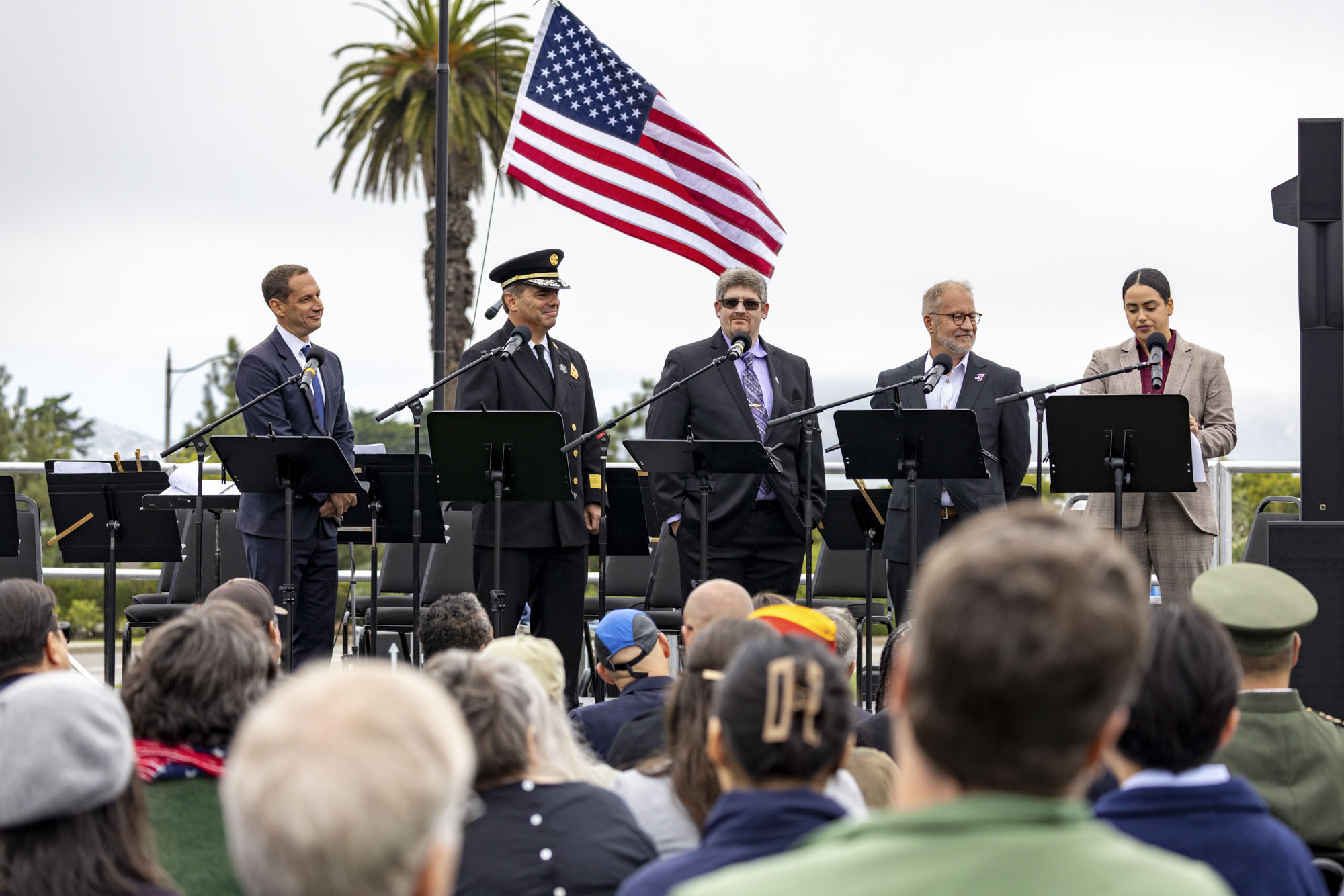
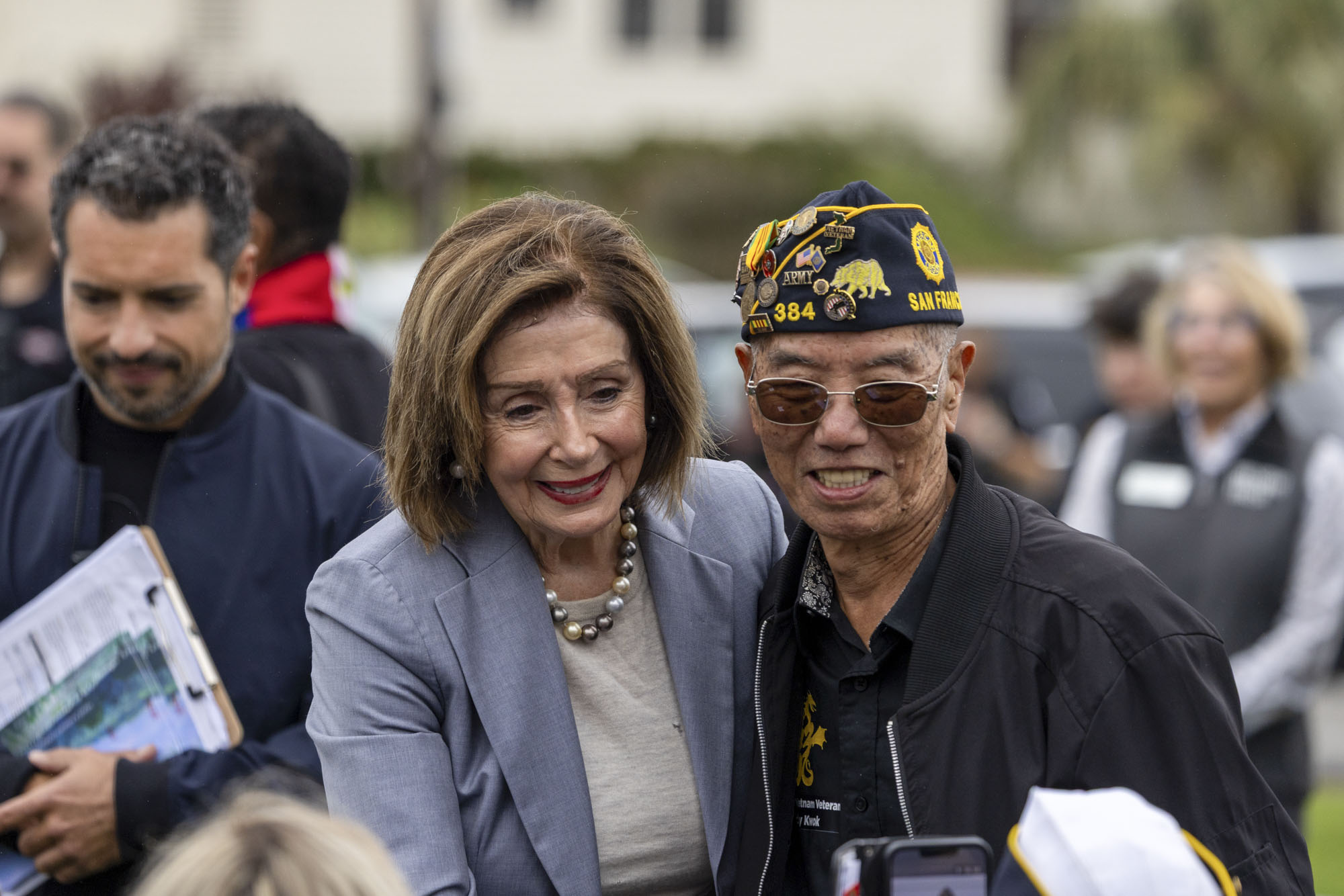
On Friday, officials, interfaith leaders and residents across the Bay Area gathered to honor the lives lost on 9/11, the communities forever transformed and the veterans who served in the wars that followed in its wake.
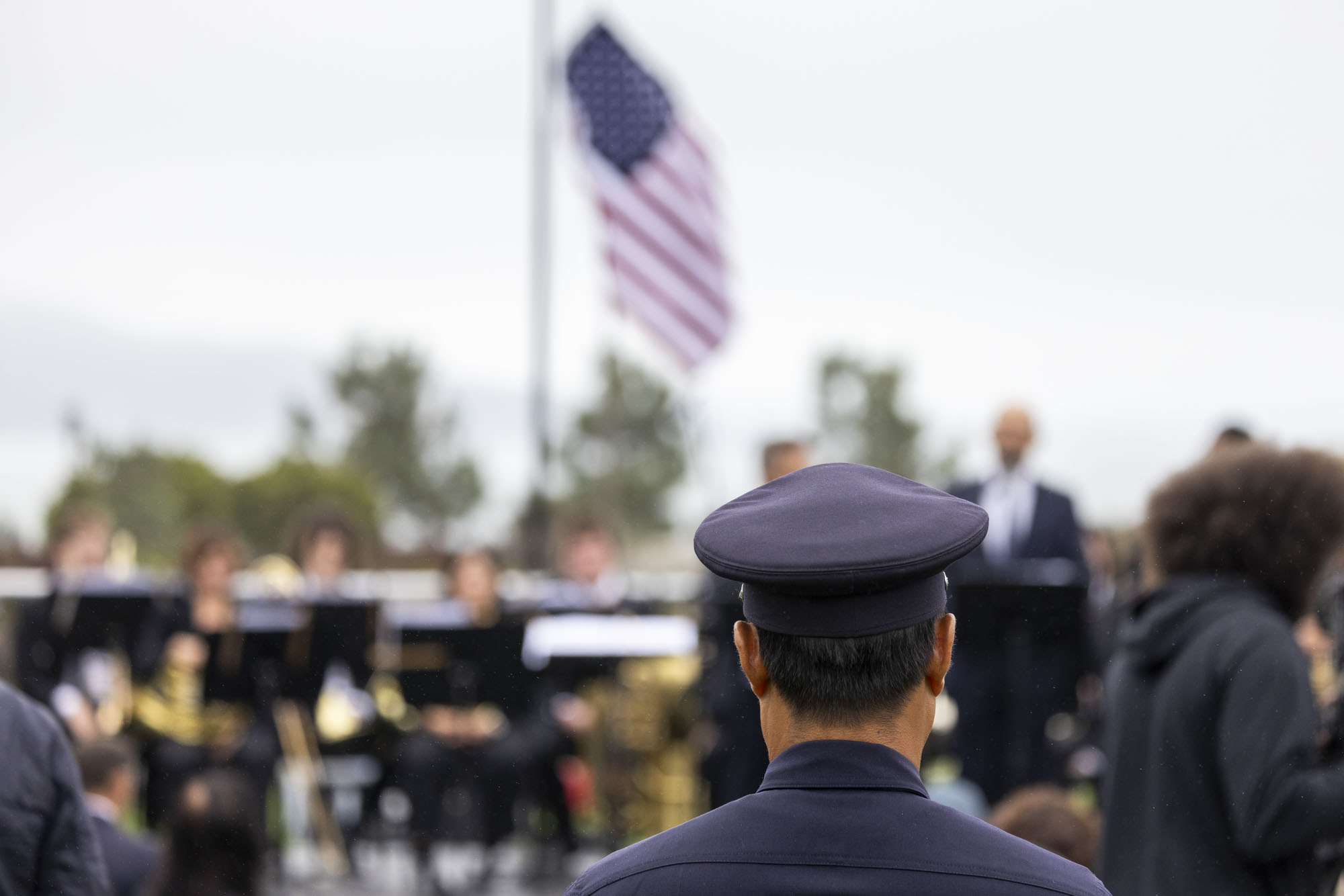
“We remember when the towers fell, and the lives were lost,” said Rev. Staci Current, pastor of Temple United Methodist Church in San Francisco, speaking at an event in the city’s Presidio. “We remember the dust, the despair, the smoke, the grief. We remember this sense of vulnerability and shock. We remember that numbness that overwhelmed us as we watched our screen for hours and hours waiting for explanation or understanding that never came. We remember.”
Katie Miller, a veteran and an ambassador for the Heart and Armor Foundation for Veterans Health, was a sophomore in high school when the towers went down.
“I remember very specifically walking into my parents’ room, and the news was on, and my dad said, ‘We’re going to war.’I think back to it now and that day changed the entire course of my life,” said Miller, who joined the military as soon as she graduated from college and served in the U.S. Navy for 10 years.

In the aftermath of the attacks, Miller said she felt a sense of “true patriotism.”
“It just felt like everyone was together and we all had a common bond,” Miller said. “I think grief does that to people in many different ways.”
In the South Bay, residents and officials planned to hold an event on Friday at 6:45 p.m. before the Los Gatos High School varsity football game at Helm Field, 20 High School Court. The event will honor high school alumni Bingham and Todd Beamer, who were also on Flight 93 and took part in the passenger revolt against the hijackers.
The event will include a military jet flyover, recognition of their families and a newly relocated 9/11 memorial plaque. Rep. Sam Liccardo, D-San José, and Los Gatos Mayor Rob Moore are scheduled to speak.
Bingham, Beamer and Flight 11 flight attendant Betty Ann Ong were among the Bay Area victims of the attacks. But the ripple effects were felt across the region.
Army veteran Andre Rogers spoke on Friday about how finding ways to serve his community after leaving the military helped him adjust to civilian life.
“Serving as a civilian has been good for my soul. Purpose helps me heal. Even when you are tired, discouraged, doing something for others always makes life feel better,” Rogers said. “It’s better to give blessings than to receive them.”
Kashif Abdullah, a veteran and the principal of the San Francisco Islamic School, described the ways that 9/11 changed life in America for Muslims, many of whom experienced a wave of Islamophobia after the attacks and the subsequent “War on Terror.”
“As the principal of an Islamic school, the only one in the city, I must also acknowledge that our students inherited a different part of the 911 story,” Abdullah said. “Muslim Americans experienced suspicion, discrimination and hatred after the attacks.”
Abdullah emphasized the importance of remembering these events in their entirety, because learning about the attacks and their aftermath “teaches us what can happen when fear becomes stronger than our commitment to one another.”
“That may be one of the greatest lessons of Sept. 11,” Abdullah said. “Do not allow fear to decide who your neighbor is. Remember that America that emerged in those first days, the America where strangers embraced strangers, where different faiths prayed together, and where Americans asked not, ‘What religion are you?’ but ‘How can I help you?”
KQED’s Brian Krans and Sara Hossaini contributed to this report.