This Bay Area Immigrant Rights Organization Is Helping Filipino Caregivers Care for Themselves
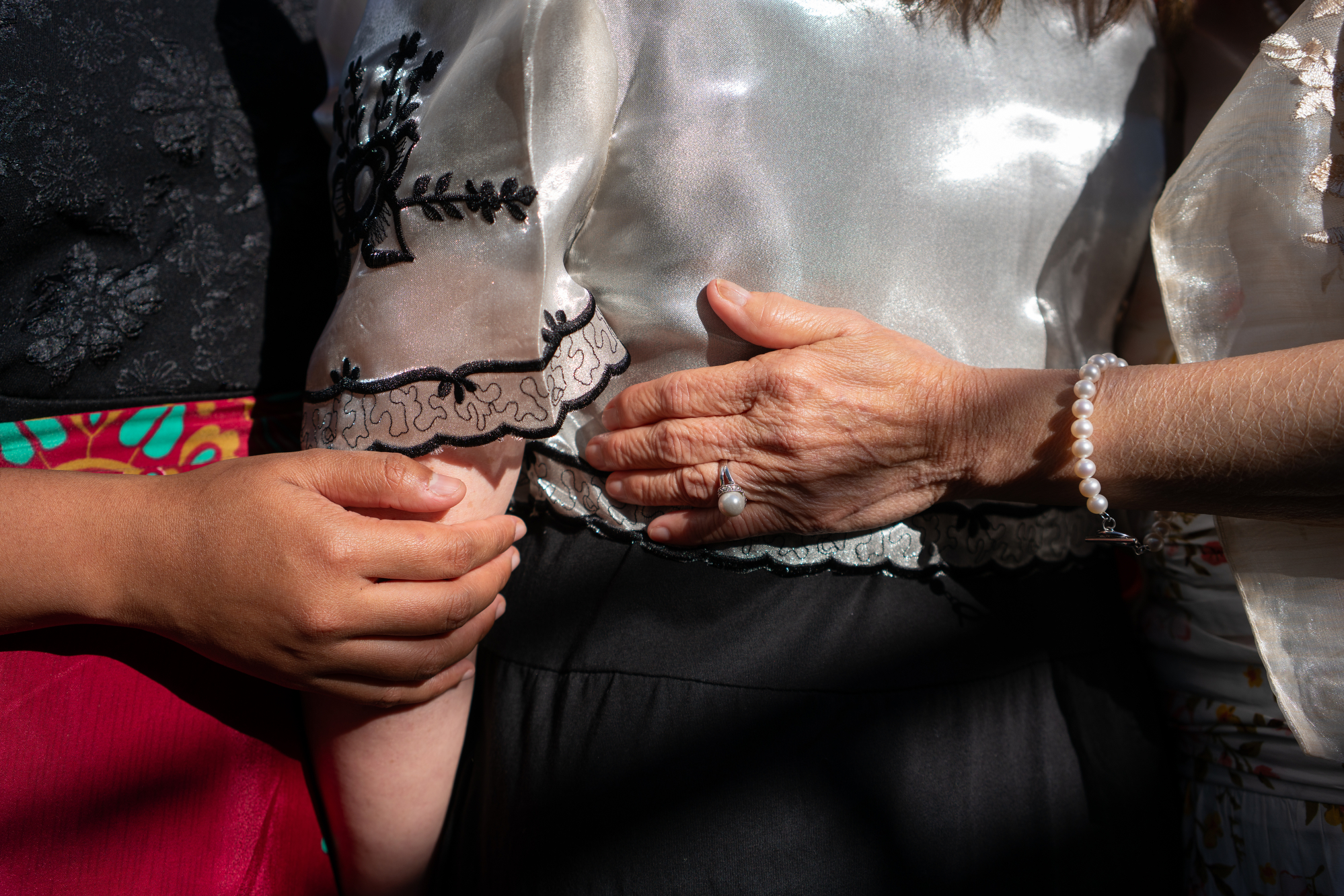
This project was produced jointly by KQED and CatchLight as part of the mental health visual desk initiative.
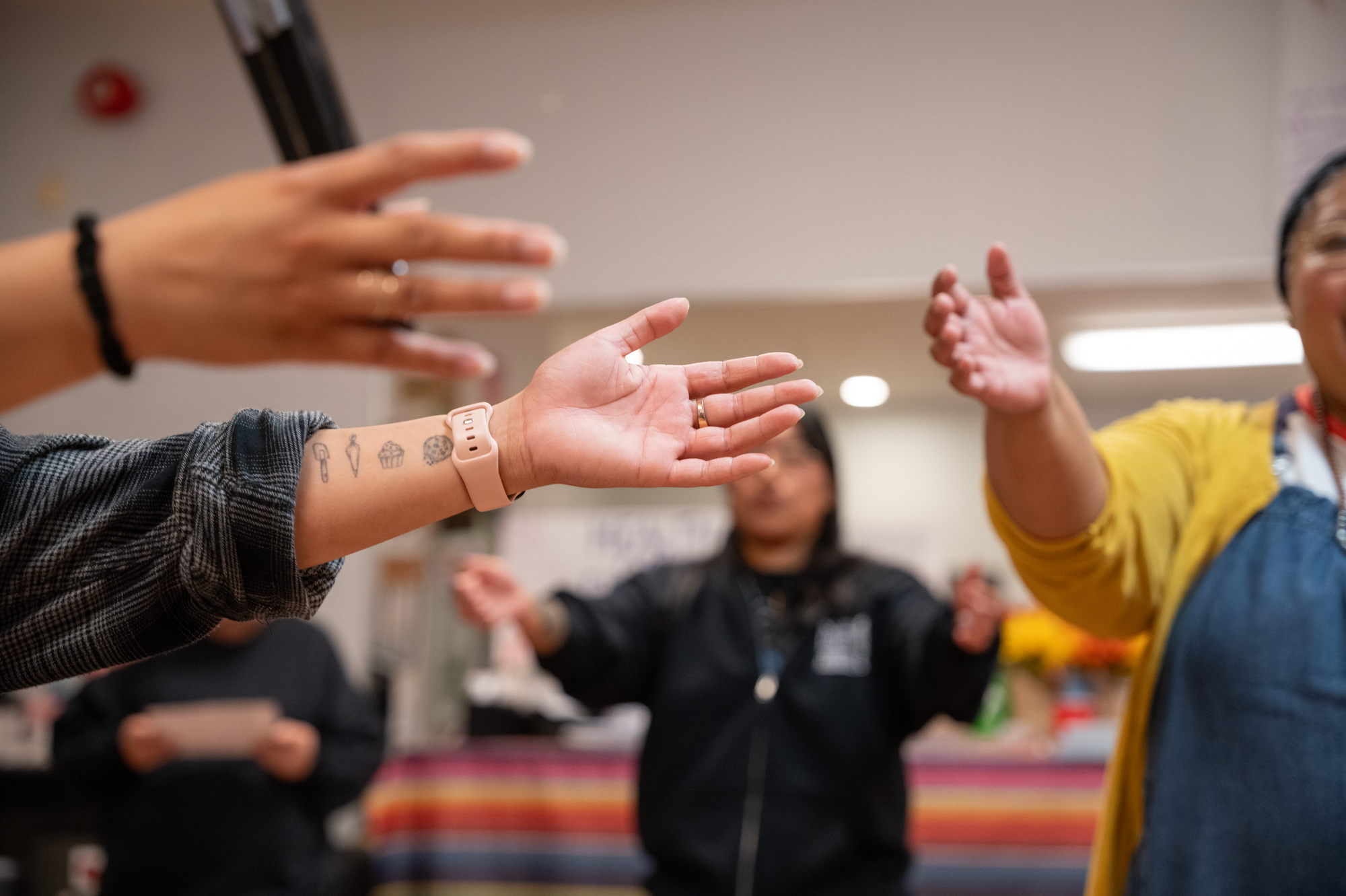
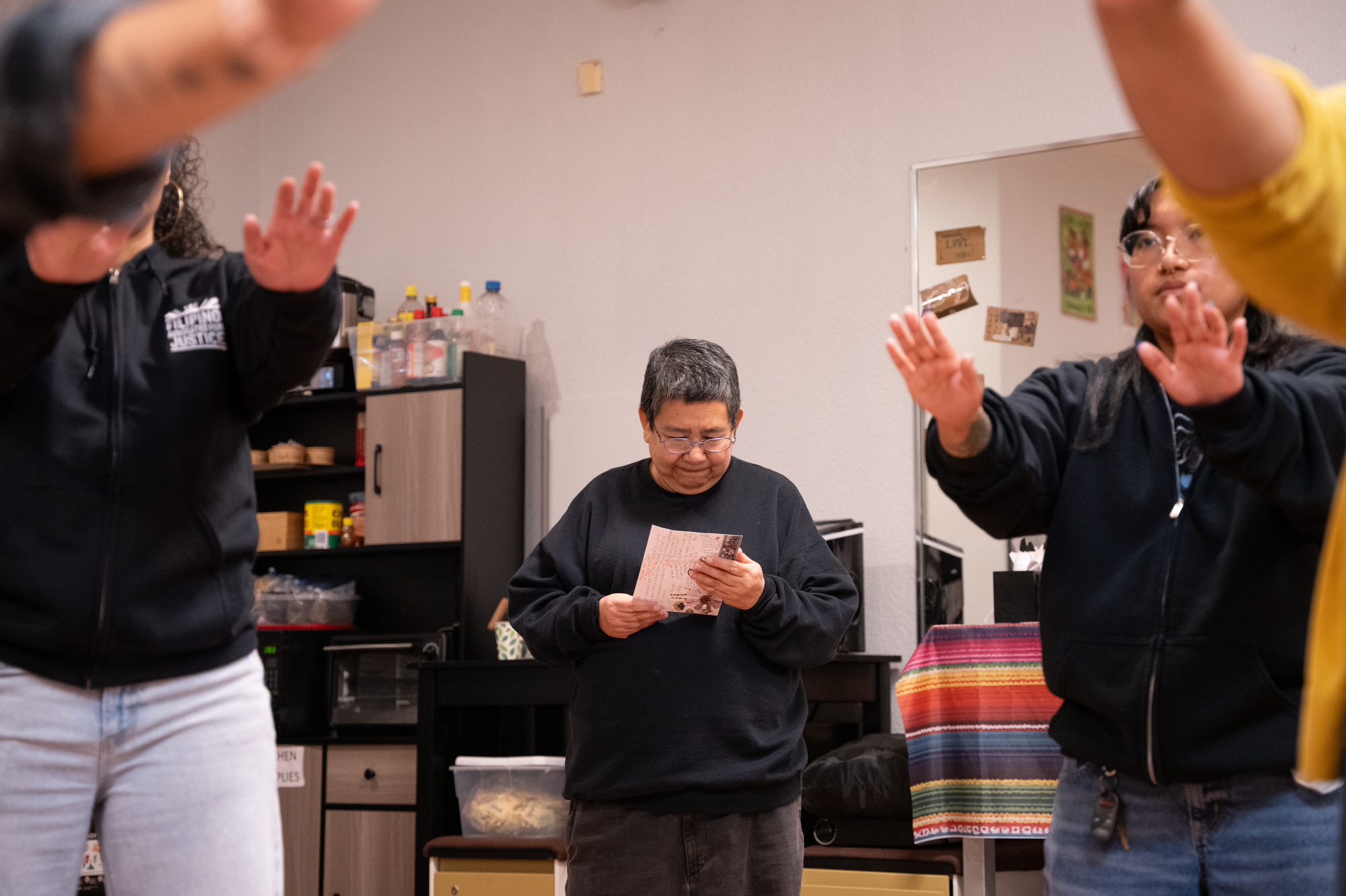
Pakbet’s only obligation was to focus on himself. At least for one day. In the bright orange office of Filipino Advocates for Justice (FAJ), where he was attending a special wellness meeting for caregiver worker leaders like himself, he closed his eyes, relaxed his shoulders and breathed.
“You are seen. Inhale,” a staff member told the group. “You are valued. Exhale.”
Sometimes, Pakbet said he feels valued, like when he was a private aide for Teddy, a 98-year-old woman at the retirement home. They developed a relationship like a mother and son, and he would treat her so — cooking her homemade chicken feet adobo, or watching makeup tutorials with her online. He’d apply her lipstick, dress her in a gown and accompany her into the dining room, declaring, “The queen has arrived!” Besides bathing her and monitoring vitals, he saw it as his job to make her laugh.
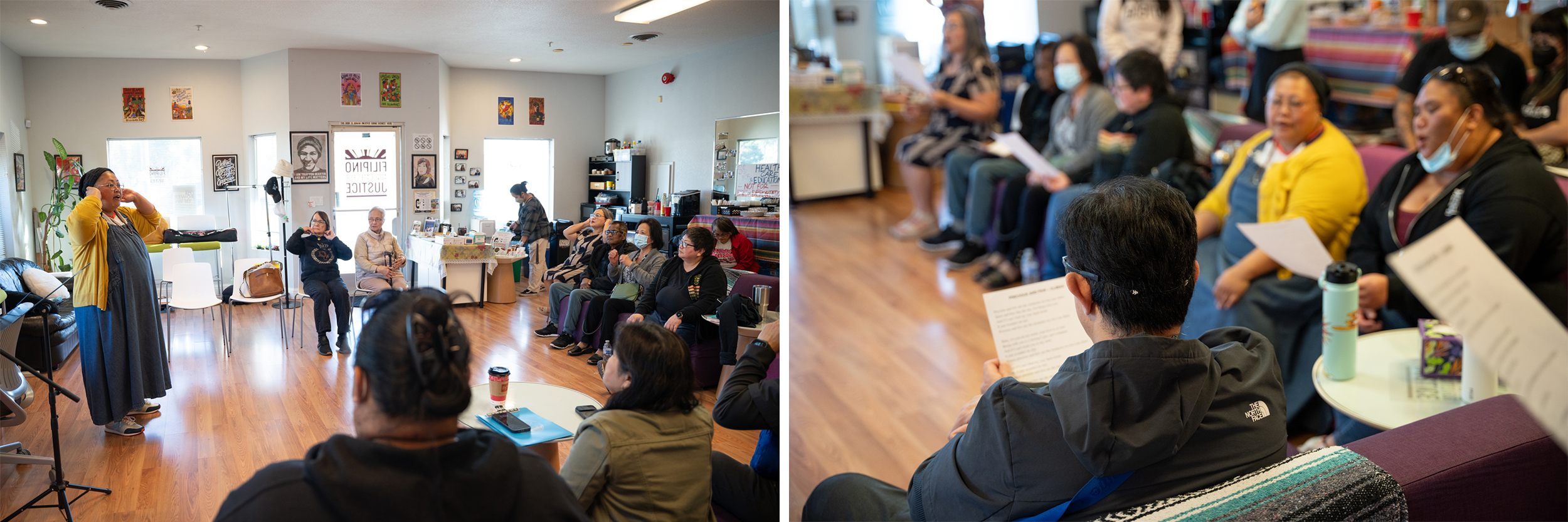
Other times, his body remembers: panic attacks from the chronic stress of unstable paychecks and exploitative employers, grief for his mother with cancer back home in the Philippines, whom he hasn’t hugged in a decade. The depression has led to insomnia and isolation.
“My world is work, home. I don’t have any trusted friends,” he said. “This is my life.”
Pakbet, 54, said caregivers like him can feel overworked and undervalued. A Bay Area immigrant rights organization, FAJ creates an affirming space for them to rest and celebrate, so they can show up whole — not only for themselves but for others.

Leaning on Filipino cultural practices and intergenerational connection, mental health is woven into everything they do, from monthly gatherings and wellness clinics to everyday grounding techniques and artistic expression. Yet the Trump administration’s immigration crackdown and statewide funding cuts to mental health services have threatened their prevention work, even as a shortage in care workers looms.
Filipinos are heavily represented in the healthcare workforce, according to research, and many are paid to care for older adults. Respect for elders is a deeply embedded cultural value. As California’s population continues to age — about 25% will be an older adult by 2030 — caregivers will become even more essential. But isolation, burnout, racial discrimination, wage theft, and more can all contribute to mental health challenges.
“They are the first to take care of everybody else. And that’s done at the expense of their own bodies, their own emotional health,” said Geraldine Alcid, executive director of FAJ. “They deserve to take care of themselves, and they deserve rest.”


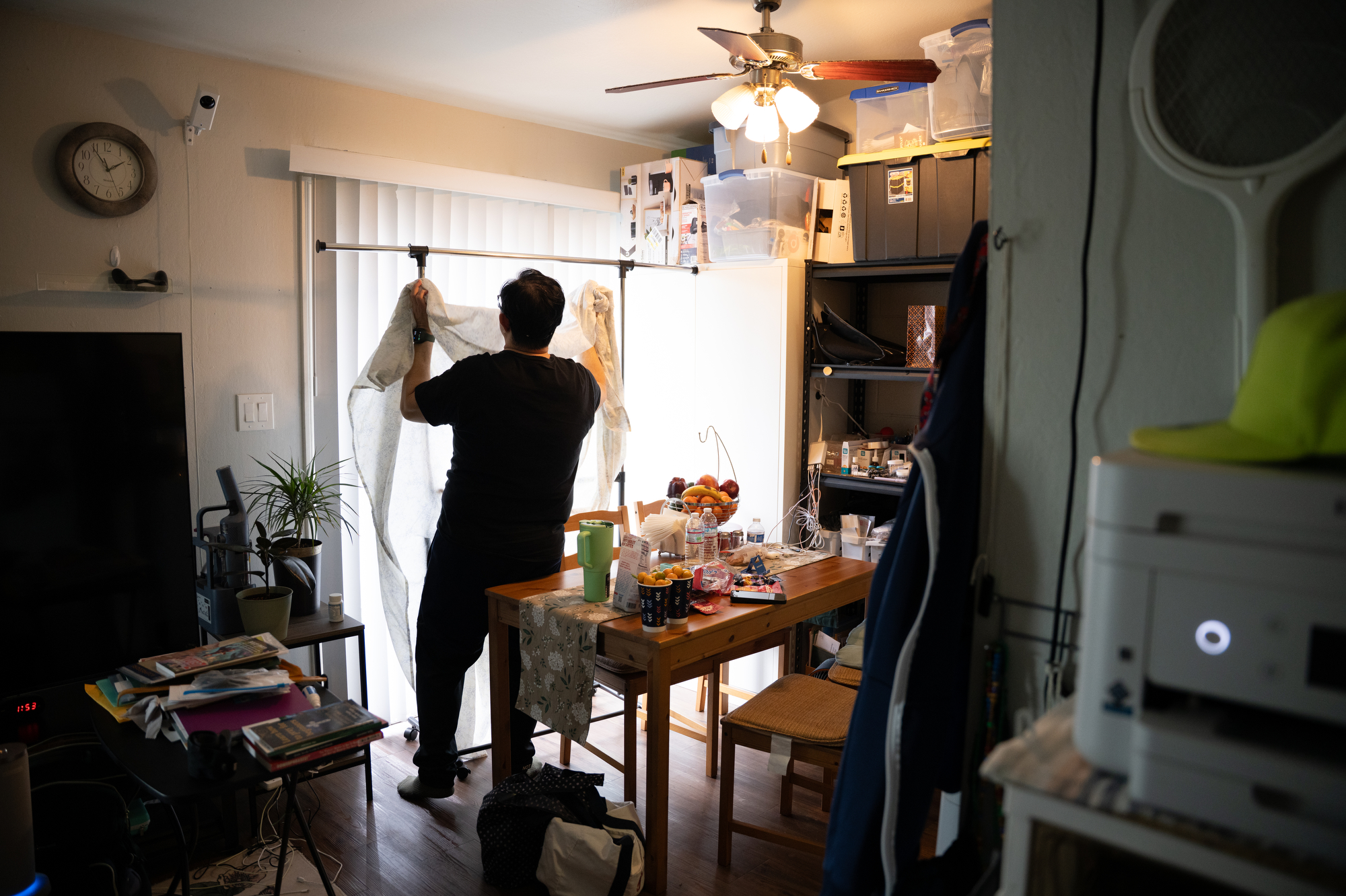
When Pakbet first arrived in the States alone over a decade ago, he lived and worked at a residential care home for older adults. He said his boss forced him to sleep on cardboard in the garage, and his paychecks didn’t reflect the long, exhausting hours. He also knew caregivers who died by suicide. Pakbet, at times, didn’t know if he’d make it. The reason he immigrated was to provide for his son’s education.
Pakbet said his Bible and a photo of his son got him through.
Pakbet’s experience is common. Yet cultural stigma and shame can prevent Filipino immigrants from seeking support. “I’ve witnessed many times caregivers who need help. They get scared and hide in the dark,” Pakbet said.
Over a decade ago, Oakland-based community health center Asian Health Services referred an exploited caregiver who was anxious and stressed to FAJ. The organization realized others had similar stories, and it was the catalyst for it to focus efforts on prevention. In 2015, they launched a mental health support group for caregivers, many of them older, funded through a two-year Alameda County innovations grant.
FAJ expanded its program with the help of an eight-year county contract. They hired a licensed mental health professional on staff, as well as three part-time community outreach specialists to facilitate mental health offerings rooted in culture. FAJ also created a Healing Advisory Committee that organizes free annual wellness clinics, featuring Filipino traditions such as hilot, a massage focused on releasing trauma.

In 2023, a one-time state grant from the Department of Aging enabled FAJ to shift attention again to caregivers. They provided training on topics such as nutrition and managing grief, weaving in hands-on clinics for everyday self-care.
At first, caregivers expressed apprehensive curiosity. Then eventually, they requested chia seed pudding recipes and acupuncture, even the caregivers who feared needles. The organization also provided acupressure rings people could roll on their fingers whenever they needed to calm themselves.
Nervous system regulation is essential for moving from merely surviving to thriving, said Dr. Karen Villanueva, training lead and executive director of Kilusan Wellness. And for the majority of caregivers with little time or money, accessibility is key. “So much the better if you can tuck it in your pocket and take it out when you need it.”
This July, the policy changes California made to its landmark Behavioral Services Act took effect. When voters passed Proposition 1 in 2024, they approved Gov. Gavin Newsom’s plans to shift funds away from prevention and early intervention toward treatment beds. FAJ’s prevention funding, which supports half of their direct services, was reduced from $360,000 to zero dollars — the organization lost its licensed mental health professional and folded its community outreach advisers into other roles.
At the special meeting for wellness worker leaders, where Pakbet could slow down and breathe, the thinning manifested in another way. Usually, nearly a dozen caregivers would be gearing up to knock on the doors of care homes in the East Bay, handing “know your rights” information to employees. The organization pays these workers a learning stipend to perform this outreach work.
But when Pakbet looked around the office, he was one of the few caregivers who had stayed. Half of the group had chosen to spend their remaining years in the Philippines as the Trump administration pushes to aggressively crack down on immigration. Many said they were tired of feeling criminalized and undervalued, or, as one staff member of the organization said, an “America-doesn’t-deserve-me” mentality. Others said they missed moments with loved ones.

Along with other caregivers in this story, KQED is referring to Pakbet only by a nickname to allow them to speak openly about their mental health struggles and working conditions without jeopardizing their employment.
Pakbet understands the impulse to return home. Still, he said he was feeling especially tender.
His “lifeline,” FAJ’s worker organizer and seasoned activist Santi Tagle Buensuceso, had announced that she was also returning to her homeland.
Whenever Pakbet struggled, instead of crying alone, he’d call Tagle Buensuceso. Sometimes, he’d voice his doubts about his ability to be a provider: “Am I a good father? Am I doing OK? Do I need to go back to the Philippines?”
She would assure him that trying his best was good enough, that he was a great father and husband. She also realized caregivers like Pakbet needed more outlets and two years ago suggested FAJ host monthly Kapwa Circles for the wider community. A third space to unwind, to reflect, to create joy. Kapwa, a Filipino value meaning interconnectedness, the recognition of yourself in each other.
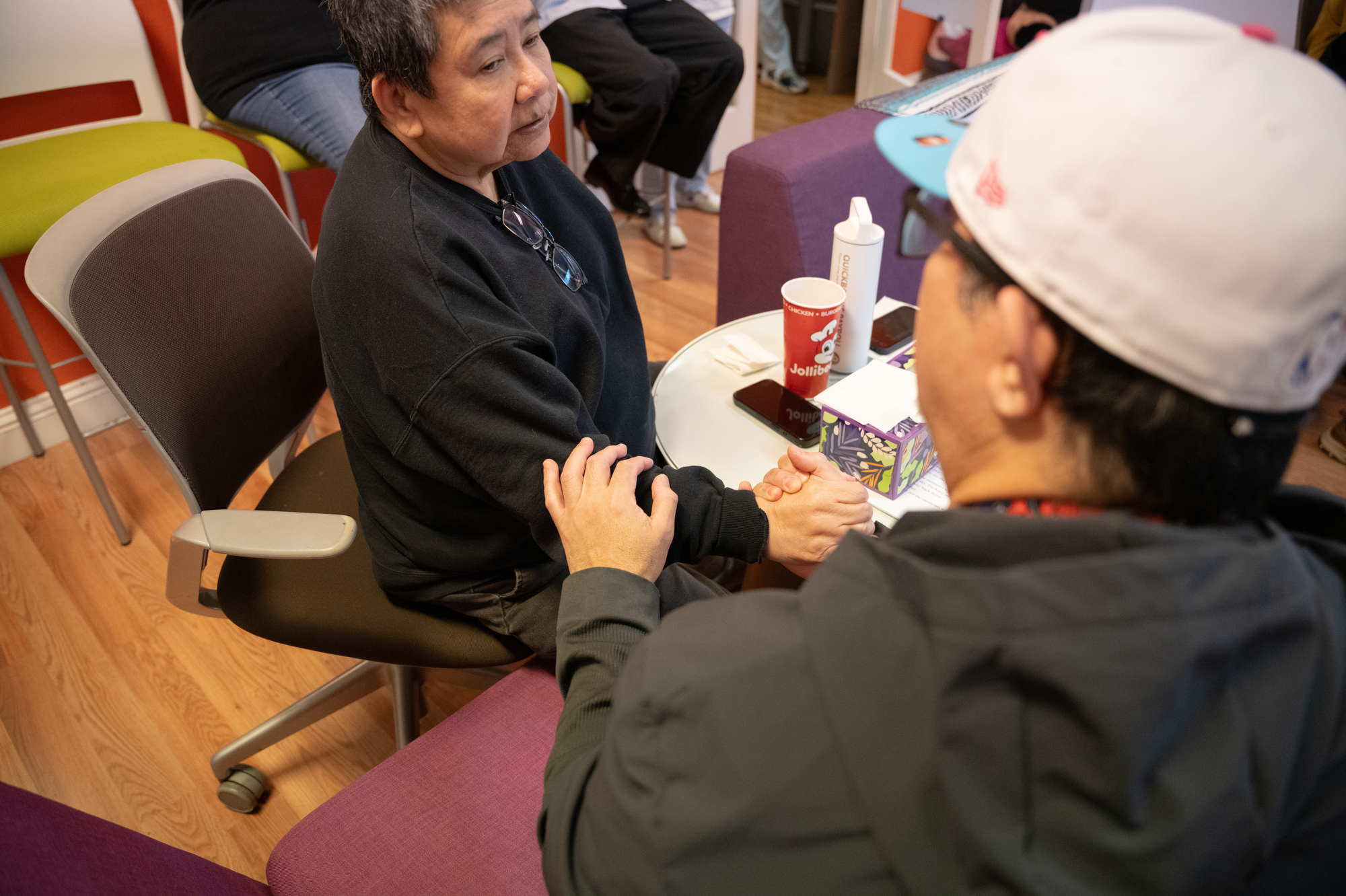
On a Friday evening in March, the young and old came together at FAJ’s Union City office to recreate a slice of the Philippines.
Fried chicken from Jollibee piled high on paper plates, the sounds of people speaking Tagalog could be heard. Outside, a community garden where calamansi, a citrus fruit native to the Philippines, had been harvested for a jar of juice.
The event is what FAJ leadership describes as a “Filipino family party” or a Kapwa Circle. It has a different flavor each month and begins with a discussion of a social justice topic — sanctuary cities, for one, or voter registration — to invite people into FAJ’s organizing work. After the community conversation, they host an activity like bingo or mahjong. Always karaoke, whether planned or not. There is a rule of no chisme, but many will say gossip is their favorite part.
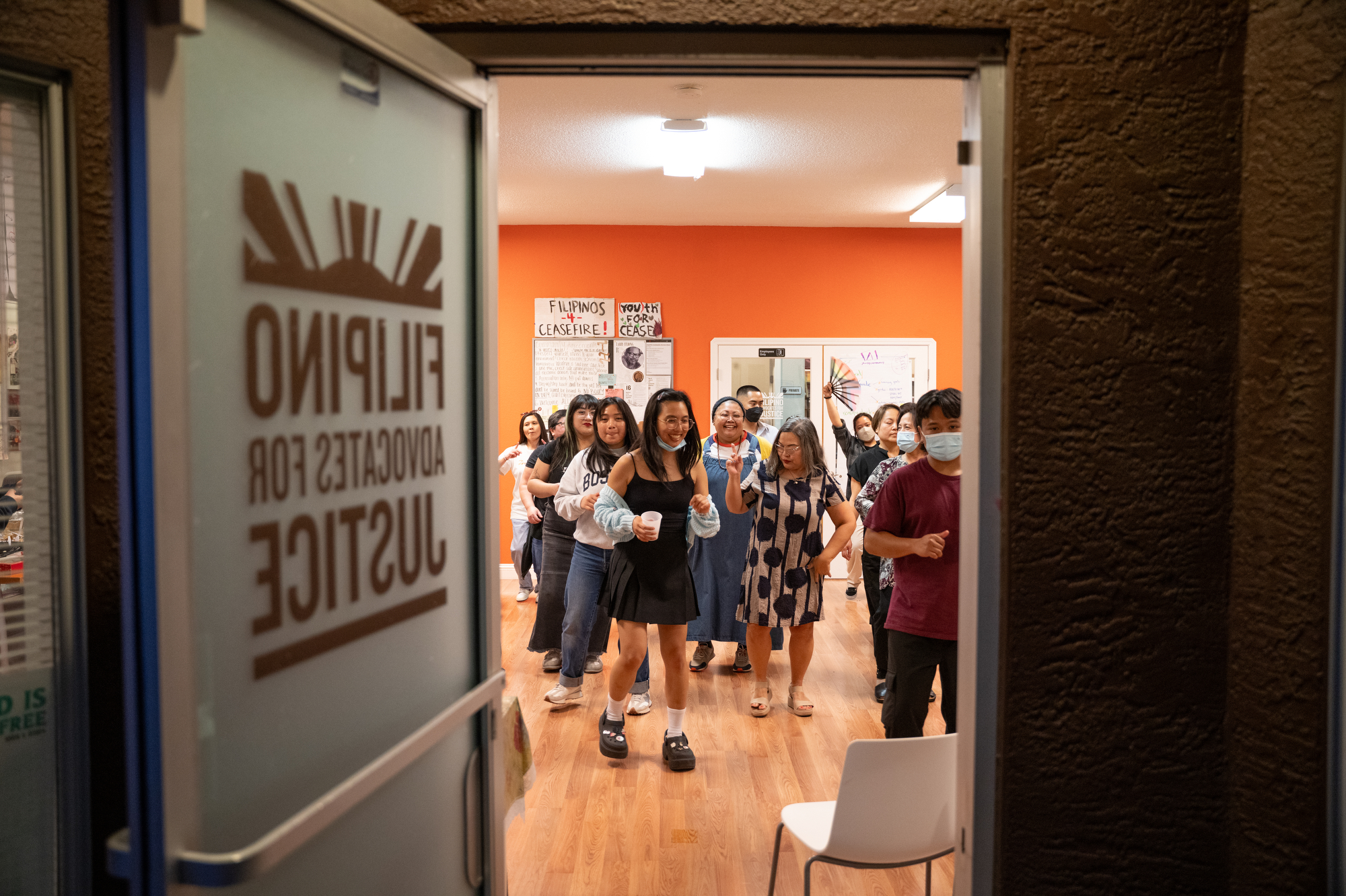
The evening was Tagle Buensuceso’s last circle. Pakbet was there, drawn to a space where he could laugh and smile naturally. “I don’t need to fake it,” he said. He must leave early, however, to care for a client. Pakbet is now a certified nurse assistant and works hourly one-on-one with clients, but stability has been elusive lately. Clients have entered hospital care or passed away. With fewer hours, he has no choice.
For now, he joined in celebrating Tagle Buensuceso. As a surprise, staff handed out printed lyrics of her favorite song, “Precious and Few” by the band Climax. Ine, a fellow caregiver worker leader, grabbed her guitar. She led the group for a sing-along to the ’70s soft-rock song about cherishing moments, and the metaphor was not lost.
A mother of three, Ine came solo to the U.S. 15 years ago to provide her children a good college education, and has lived and worked at a care home ever since. As the home’s cook, Ine, 63, plates green pesto pasta and other colorful food with the intention to appeal to her dementia patients. She also administers medicine, having gone back to school to become a pharmacy technician, graduating with honors.
She said she talks with her husband and children via video every night, but misses them the most on holidays and birthdays.
Back in her room at the care home, she filled a balikbayan box for her son’s 41st birthday.
She lovingly selected Lacoste polo shirts, Ferrero Rocher chocolate and other items for the care package by hand, a proxy for her presence.
Every month, she makes sure she has time off for the Kapwa Circle. When she is tired, when the monotony of caregiving is grueling, she said being with other caregivers at FAJ and, better, using her musical talent to entertain, gives her the “strength to work for another day.”
This evening, Ine passed the mic to Tagle Buensuceso, who said that before FAJ, she believed cigarettes were the only form of wellness. She left the group with one last piece of wisdom. “If you don’t take care of yourself, you can’t take care of your community.” Pakbet clapped. The music began.
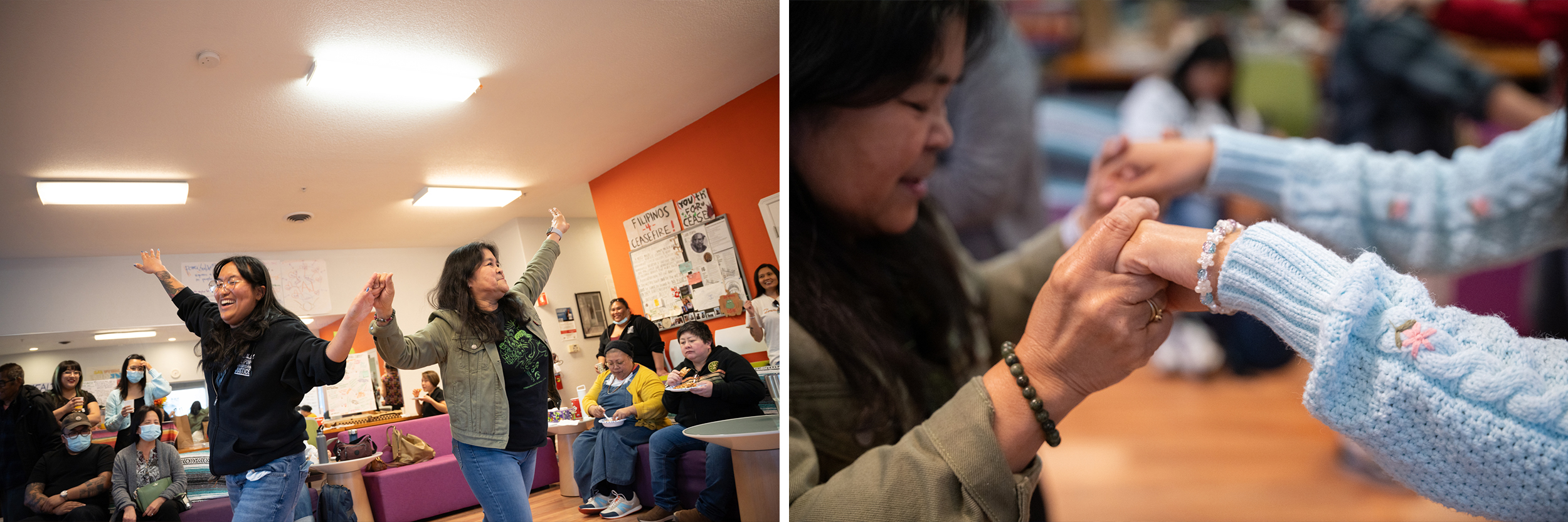
Hands linked and people moved to the Cupid Shuffle, the Macarena, the Pinoy Cha-Cha. Ine was in her element, her first love, dance. The food whittled down. When a delivery worker stopped by to drop off more Spam musubi, she was met with a chorus of: “Stay. Take a plate.”
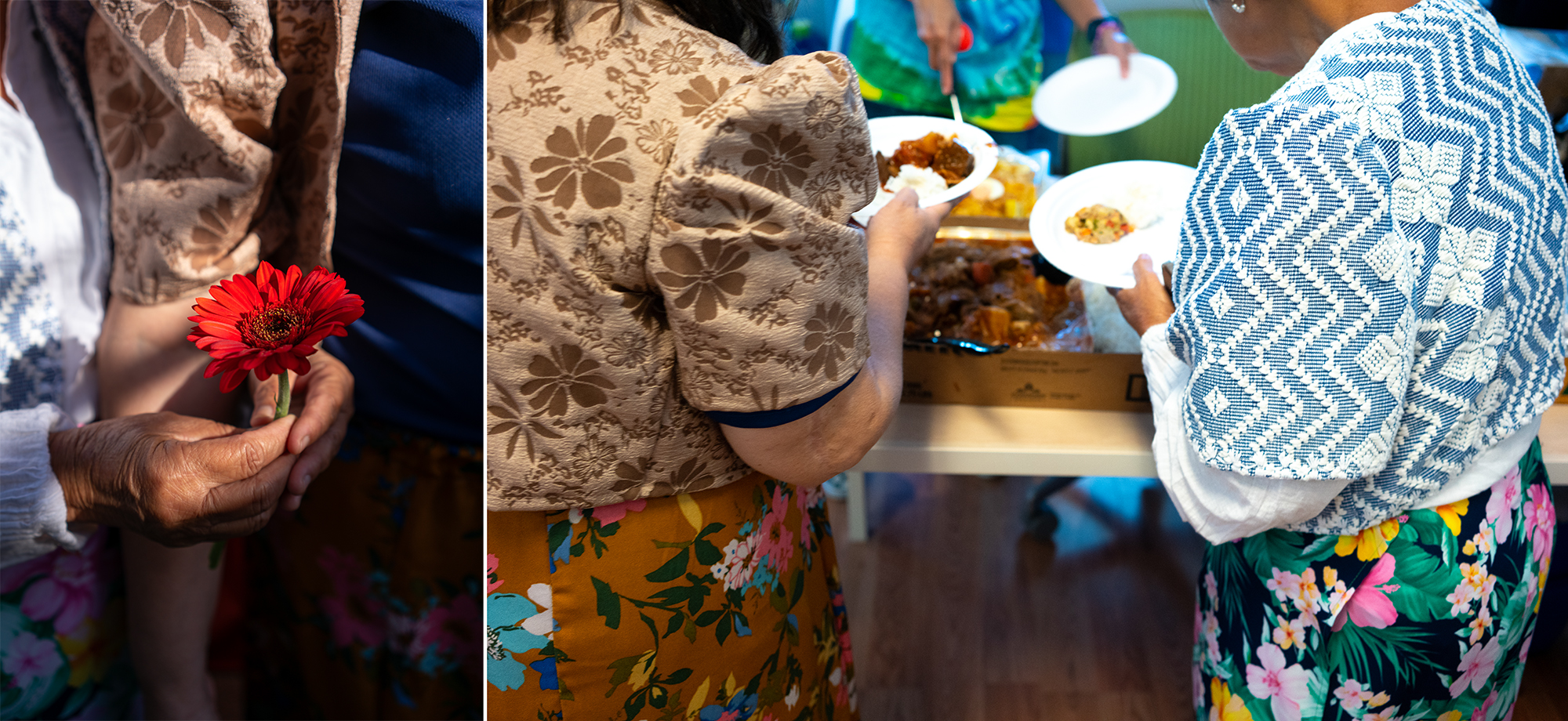
There is power in knowing others share similar experiences, said Dr. Annalisa Enrile, a Filipina community organizer and professor at the USC School of Social Work.
Enrile has researched how communal care in Filipino immigrant communities that draws on cultural practices can ease stress and improve mental well-being. “If you feel like you belong in a way that gives you agency, and reduces stigma,” she said, “then you’re more apt to ask for help.”
FAJ’s leaders, too, realized belonging was a way to build trust and encourage caregivers to open up, and it’s why they have prioritized connection as the heart of their programming. Recently, they were relieved to hear they received one year of bridge funding to bring back their mental health specialist as they figure out how to sustain their wellness and mental health services. A temporary bandage, executive director Geraldine Alcid said, but enough to keep going.
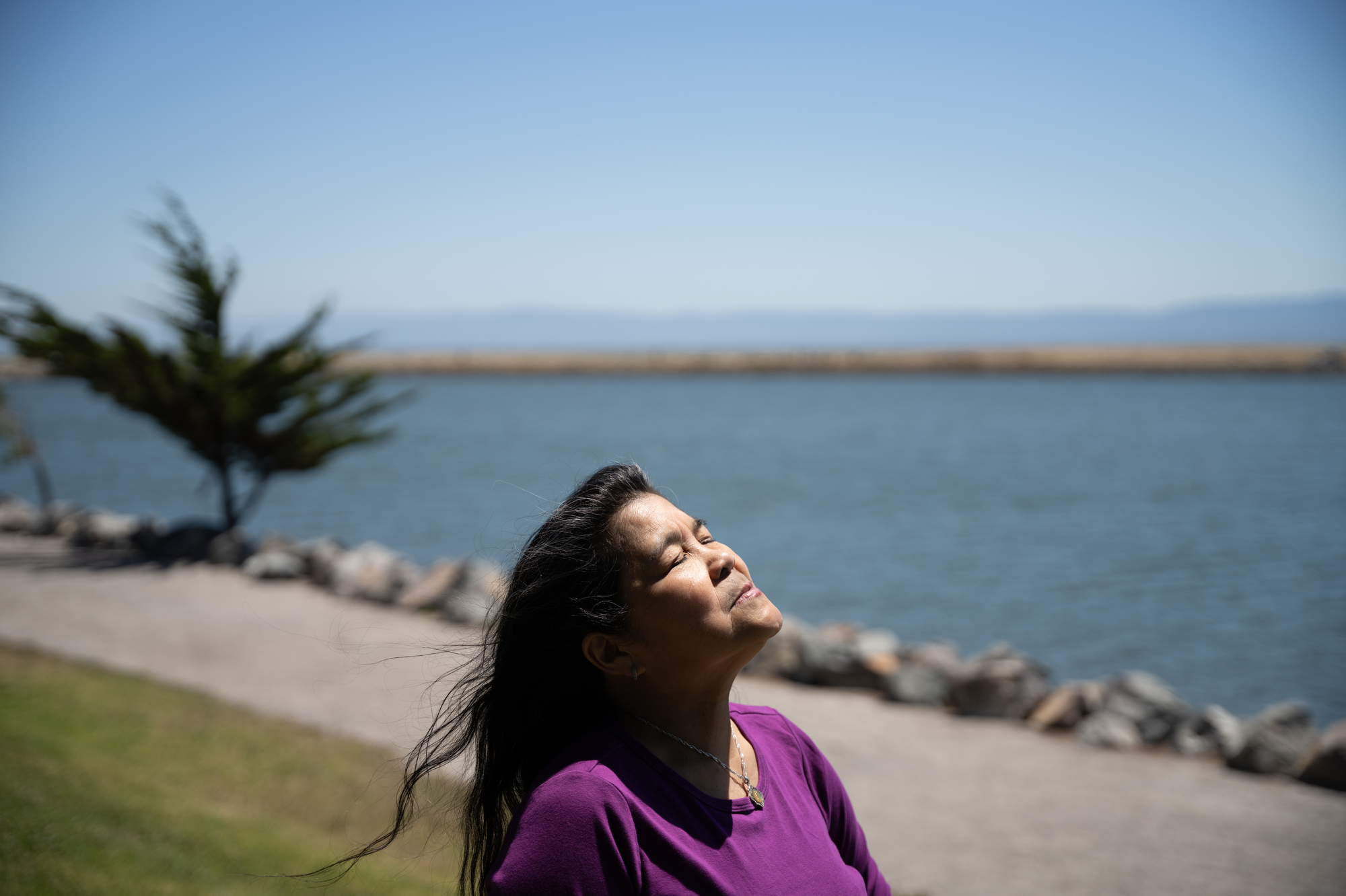
Despite the funding uncertainty, the group is sustained by a deep hope: Show up, and something might shift.
Pakbet wasn’t sure if he’d come back to FAJ when Tagle Buensuceso left. He decided to keep showing up anyway, without a community elsewhere. Later that spring, he attended a picnic for caregivers at Contra Loma Regional Park in Contra Costa County. The stillness of the oak-tree-dotted hills contrasted with the chaos of the last few months.
One of his male clients was in the hospital, which meant Pakbet was not being paid to take care of him and was spending too much time alone at home in his apartment. He nearly missed a rent payment until he reached out to FAJ to help.
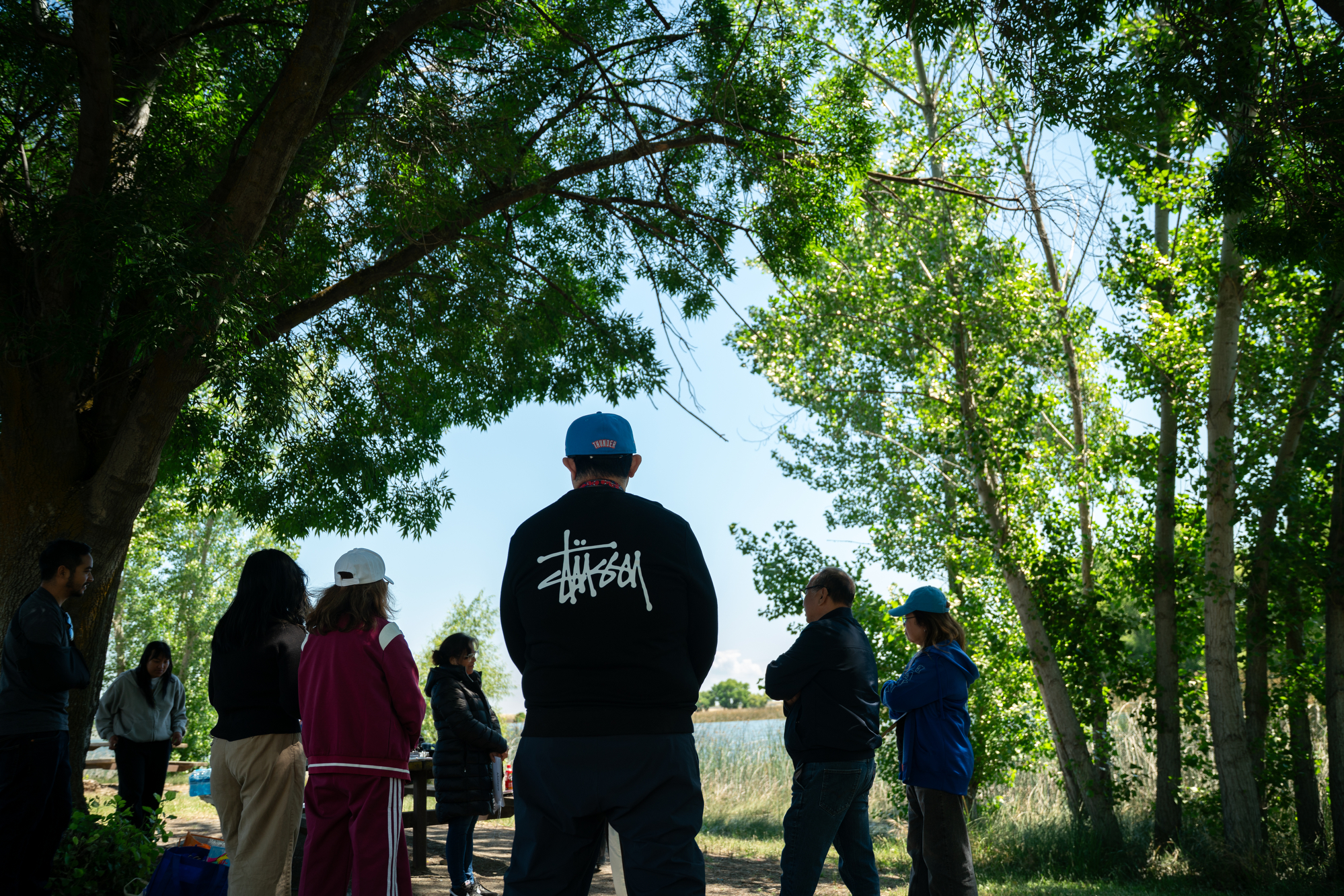
Grateful for people, for peaceful nature, he set up his phone on a tripod to document the picnic. The wind was gentle. The wetlands glassy. A duck swam by and Pakbet paused to look at it, reminding him of balut, a delicacy with roots in his mother’s province.
The caregivers took turns sharing their favorite stretch before acting out a scripted scene from Theater of the Oppressed, an approach that uses roleplay to explore solutions to social problems. Pakbet assumed the role of a care home owner. Drawing from his own experience, he joked about doling out “expensive” perfume from the Dollar Tree instead of actual dollars for overtime. People burst out laughing.
Pakbet reflected afterward and said he has never felt more anchored in his purpose to empower caregivers like himself. Next outreach, when he knocks on doors, before asking about rights, before handing them a booklet, he will first ask, “How are you doing?”
This story was made possible in part by the Aging Beat workshop, convened by the Craig Newmark Graduate School of Journalism at CUNY.