window.__IS_SSR__=true
window.__INITIAL_STATE__={
"attachmentsReducer": {
"audio_0": {
"type": "attachments",
"id": "audio_0",
"imgSizes": {
"kqedFullSize": {
"file": "https://ww2.kqed.org/news/wp-content/themes/KQED-unified/img/audio_bgs/background0.jpg"
}
}
},
"audio_1": {
"type": "attachments",
"id": "audio_1",
"imgSizes": {
"kqedFullSize": {
"file": "https://ww2.kqed.org/news/wp-content/themes/KQED-unified/img/audio_bgs/background1.jpg"
}
}
},
"audio_2": {
"type": "attachments",
"id": "audio_2",
"imgSizes": {
"kqedFullSize": {
"file": "https://ww2.kqed.org/news/wp-content/themes/KQED-unified/img/audio_bgs/background2.jpg"
}
}
},
"audio_3": {
"type": "attachments",
"id": "audio_3",
"imgSizes": {
"kqedFullSize": {
"file": "https://ww2.kqed.org/news/wp-content/themes/KQED-unified/img/audio_bgs/background3.jpg"
}
}
},
"audio_4": {
"type": "attachments",
"id": "audio_4",
"imgSizes": {
"kqedFullSize": {
"file": "https://ww2.kqed.org/news/wp-content/themes/KQED-unified/img/audio_bgs/background4.jpg"
}
}
},
"placeholder": {
"type": "attachments",
"id": "placeholder",
"imgSizes": {
"thumbnail": {
"file": "https://cdn.kqed.org/wp-content/uploads/2024/12/KQED-Default-Image-816638274-2000x1333-1-160x107.jpg",
"width": 160,
"height": 107,
"mimeType": "image/jpeg"
},
"medium": {
"file": "https://cdn.kqed.org/wp-content/uploads/2024/12/KQED-Default-Image-816638274-2000x1333-1-800x533.jpg",
"width": 800,
"height": 533,
"mimeType": "image/jpeg"
},
"medium_large": {
"file": "https://cdn.kqed.org/wp-content/uploads/2024/12/KQED-Default-Image-816638274-2000x1333-1-768x512.jpg",
"width": 768,
"height": 512,
"mimeType": "image/jpeg"
},
"large": {
"file": "https://cdn.kqed.org/wp-content/uploads/2024/12/KQED-Default-Image-816638274-2000x1333-1-1020x680.jpg",
"width": 1020,
"height": 680,
"mimeType": "image/jpeg"
},
"1536x1536": {
"file": "https://cdn.kqed.org/wp-content/uploads/2024/12/KQED-Default-Image-816638274-2000x1333-1-1536x1024.jpg",
"width": 1536,
"height": 1024,
"mimeType": "image/jpeg"
},
"fd-lrg": {
"file": "https://cdn.kqed.org/wp-content/uploads/2024/12/KQED-Default-Image-816638274-2000x1333-1-1536x1024.jpg",
"width": 1536,
"height": 1024,
"mimeType": "image/jpeg"
},
"fd-med": {
"file": "https://cdn.kqed.org/wp-content/uploads/2024/12/KQED-Default-Image-816638274-2000x1333-1-1020x680.jpg",
"width": 1020,
"height": 680,
"mimeType": "image/jpeg"
},
"fd-sm": {
"file": "https://cdn.kqed.org/wp-content/uploads/2024/12/KQED-Default-Image-816638274-2000x1333-1-800x533.jpg",
"width": 800,
"height": 533,
"mimeType": "image/jpeg"
},
"post-thumbnail": {
"file": "https://cdn.kqed.org/wp-content/uploads/2024/12/KQED-Default-Image-816638274-2000x1333-1-672x372.jpg",
"width": 672,
"height": 372,
"mimeType": "image/jpeg"
},
"twentyfourteen-full-width": {
"file": "https://cdn.kqed.org/wp-content/uploads/2024/12/KQED-Default-Image-816638274-2000x1333-1-1038x576.jpg",
"width": 1038,
"height": 576,
"mimeType": "image/jpeg"
},
"xxsmall": {
"file": "https://cdn.kqed.org/wp-content/uploads/2024/12/KQED-Default-Image-816638274-2000x1333-1-160x107.jpg",
"width": 160,
"height": 107,
"mimeType": "image/jpeg"
},
"xsmall": {
"file": "https://cdn.kqed.org/wp-content/uploads/2024/12/KQED-Default-Image-816638274-2000x1333-1-672x372.jpg",
"width": 672,
"height": 372,
"mimeType": "image/jpeg"
},
"small": {
"file": "https://cdn.kqed.org/wp-content/uploads/2024/12/KQED-Default-Image-816638274-2000x1333-1-672x372.jpg",
"width": 672,
"height": 372,
"mimeType": "image/jpeg"
},
"xlarge": {
"file": "https://cdn.kqed.org/wp-content/uploads/2024/12/KQED-Default-Image-816638274-2000x1333-1-1020x680.jpg",
"width": 1020,
"height": 680,
"mimeType": "image/jpeg"
},
"full-width": {
"file": "https://cdn.kqed.org/wp-content/uploads/2024/12/KQED-Default-Image-816638274-2000x1333-1-1920x1280.jpg",
"width": 1920,
"height": 1280,
"mimeType": "image/jpeg"
},
"guest-author-32": {
"file": "https://cdn.kqed.org/wp-content/uploads/2025/01/KQED-Default-Image-816638274-1333x1333-1-160x160.jpg",
"width": 32,
"height": 32,
"mimeType": "image/jpeg"
},
"guest-author-50": {
"file": "https://cdn.kqed.org/wp-content/uploads/2025/01/KQED-Default-Image-816638274-1333x1333-1-160x160.jpg",
"width": 50,
"height": 50,
"mimeType": "image/jpeg"
},
"guest-author-64": {
"file": "https://cdn.kqed.org/wp-content/uploads/2025/01/KQED-Default-Image-816638274-1333x1333-1-160x160.jpg",
"width": 64,
"height": 64,
"mimeType": "image/jpeg"
},
"guest-author-96": {
"file": "https://cdn.kqed.org/wp-content/uploads/2025/01/KQED-Default-Image-816638274-1333x1333-1-160x160.jpg",
"width": 96,
"height": 96,
"mimeType": "image/jpeg"
},
"guest-author-128": {
"file": "https://cdn.kqed.org/wp-content/uploads/2025/01/KQED-Default-Image-816638274-1333x1333-1-160x160.jpg",
"width": 128,
"height": 128,
"mimeType": "image/jpeg"
},
"detail": {
"file": "https://cdn.kqed.org/wp-content/uploads/2025/01/KQED-Default-Image-816638274-1333x1333-1-160x160.jpg",
"width": 160,
"height": 160,
"mimeType": "image/jpeg"
},
"kqedFullSize": {
"file": "https://cdn.kqed.org/wp-content/uploads/2024/12/KQED-Default-Image-816638274-2000x1333-1.jpg",
"width": 2000,
"height": 1333
}
}
},
"news_12089257": {
"type": "attachments",
"id": "news_12089257",
"meta": {
"index": "attachments_1716263798",
"site": "news",
"id": "12089257",
"found": true
},
"title": "062426TCR Mag Forgotten Flowers_GH_012-KQED",
"publishDate": 1782770322,
"status": "inherit",
"parent": 12090069,
"modified": 1783553465,
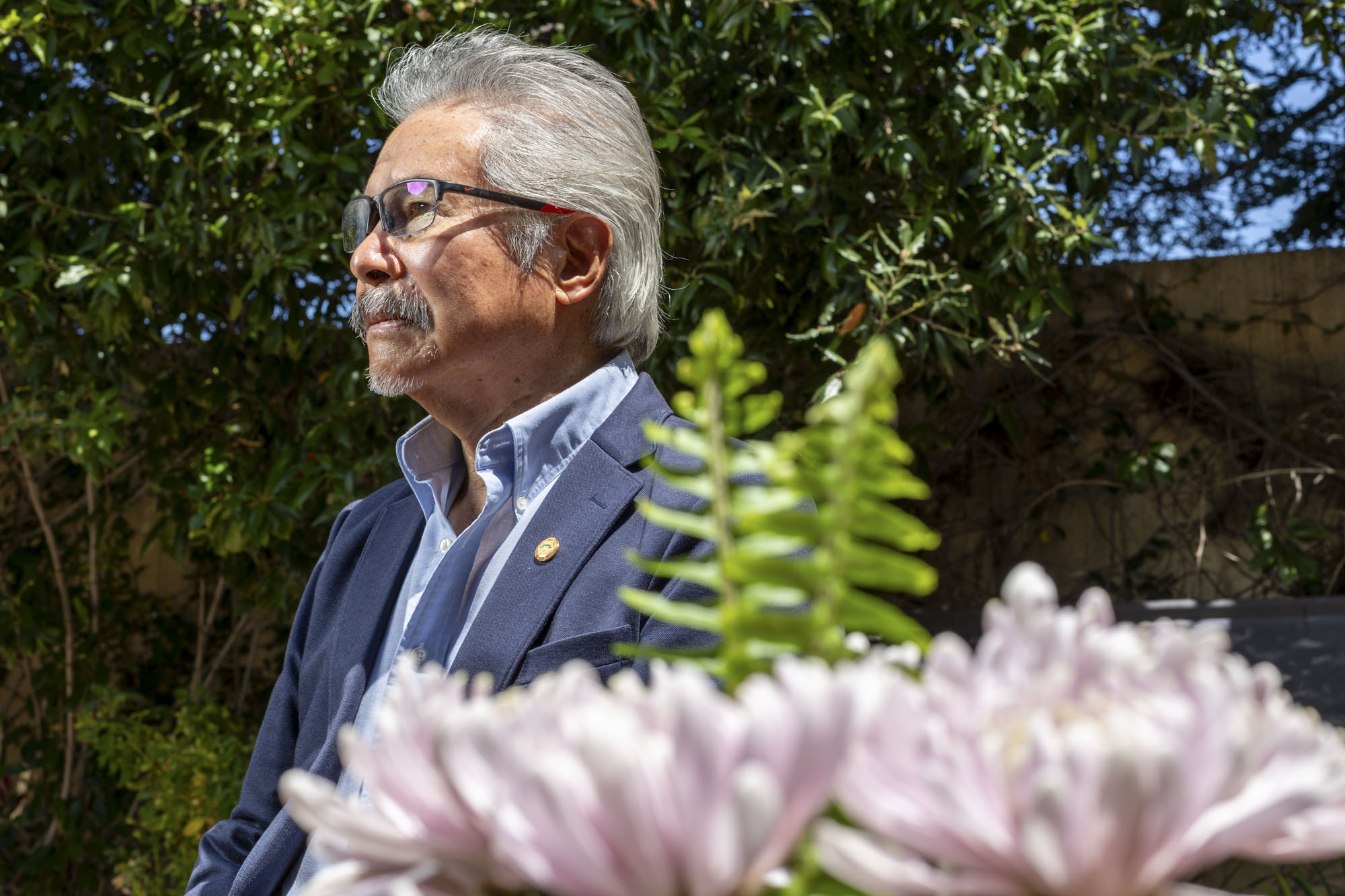
"caption": "George Chin sits on his backyard patio beside chrysanthemums at his home in Cupertino on June 24, 2026.",
"credit": "Gustavo Hernandez/KQED",
"altTag": null,
"description": null,
"imgSizes": {
"thumbnail": {
"file": "https://cdn.kqed.org/wp-content/uploads/sites/10/2026/06/062426TCR-Mag-Forgotten-Flowers_GH_012-KQED-160x107.jpg",
"width": 160,
"height": 107,
"mimeType": "image/jpeg"
},
"1536x1536": {
"file": "https://cdn.kqed.org/wp-content/uploads/sites/10/2026/06/062426TCR-Mag-Forgotten-Flowers_GH_012-KQED-1536x1024.jpg",
"width": 1536,
"height": 1024,
"mimeType": "image/jpeg"
},
"post-thumbnail": {
"file": "https://cdn.kqed.org/wp-content/uploads/sites/10/2026/06/062426TCR-Mag-Forgotten-Flowers_GH_012-KQED-672x372.jpg",
"width": 672,
"height": 372,
"mimeType": "image/jpeg"
},
"twentyfourteen-full-width": {
"file": "https://cdn.kqed.org/wp-content/uploads/sites/10/2026/06/062426TCR-Mag-Forgotten-Flowers_GH_012-KQED-1038x576.jpg",
"width": 1038,
"height": 576,
"mimeType": "image/jpeg"
},
"npr-cds-wide": {
"file": "https://cdn.kqed.org/wp-content/uploads/sites/10/2026/06/062426TCR-Mag-Forgotten-Flowers_GH_012-KQED-1200x675.jpg",
"width": 1200,
"height": 675,
"mimeType": "image/jpeg"
},
"npr-cds-square": {
"file": "https://cdn.kqed.org/wp-content/uploads/sites/10/2026/06/062426TCR-Mag-Forgotten-Flowers_GH_012-KQED-600x600.jpg",
"width": 600,
"height": 600,
"mimeType": "image/jpeg"
},
"kqedFullSize": {
"file": "https://cdn.kqed.org/wp-content/uploads/sites/10/2026/06/062426TCR-Mag-Forgotten-Flowers_GH_012-KQED.jpg",
"width": 2000,
"height": 1333
}
},
"isLoading": false,
"fetchFailed": false
},
"news_12032646": {
"type": "attachments",
"id": "news_12032646",
"meta": {
"index": "attachments_1716263798",
"site": "news",
"id": "12032646",
"found": true
},
"title": "Roots",
"publishDate": 1742752834,
"status": "inherit",
"parent": 0,
"modified": 1783712020,
"caption": "San Antonio FC goalie Richard Sánchez leaps over Roots forward Peter Wilson (9) at the Oakland Coliseum Saturday, March 22, 2025, in Oakland, California. This was the first Roots game played in the storied stadium.",
"credit": "David M. Barreda/KQED",
"altTag": null,
"description": null,
"imgSizes": {
"medium": {
"file": "https://cdn.kqed.org/wp-content/uploads/sites/10/2025/03/20250322_Roots_8775-800x533.jpg",
"width": 800,
"height": 533,
"mimeType": "image/jpeg"
},
"large": {
"file": "https://cdn.kqed.org/wp-content/uploads/sites/10/2025/03/20250322_Roots_8775-1020x680.jpg",
"width": 1020,
"height": 680,
"mimeType": "image/jpeg"
},
"thumbnail": {
"file": "https://cdn.kqed.org/wp-content/uploads/sites/10/2025/03/20250322_Roots_8775-160x107.jpg",
"width": 160,
"height": 107,
"mimeType": "image/jpeg"
},
"1536x1536": {
"file": "https://cdn.kqed.org/wp-content/uploads/sites/10/2025/03/20250322_Roots_8775-1536x1024.jpg",
"width": 1536,
"height": 1024,
"mimeType": "image/jpeg"
},
"post-thumbnail": {
"file": "https://cdn.kqed.org/wp-content/uploads/sites/10/2025/03/20250322_Roots_8775-672x372.jpg",
"width": 672,
"height": 372,
"mimeType": "image/jpeg"
},
"twentyfourteen-full-width": {
"file": "https://cdn.kqed.org/wp-content/uploads/sites/10/2025/03/20250322_Roots_8775-1038x576.jpg",
"width": 1038,
"height": 576,
"mimeType": "image/jpeg"
},
"full-width": {
"file": "https://cdn.kqed.org/wp-content/uploads/sites/10/2025/03/20250322_Roots_8775-1920x1280.jpg",
"width": 1920,
"height": 1280,
"mimeType": "image/jpeg"
},
"kqedFullSize": {
"file": "https://cdn.kqed.org/wp-content/uploads/sites/10/2025/03/20250322_Roots_8775.jpg",
"width": 2000,
"height": 1333
}
},
"isLoading": false,
"fetchFailed": false
},
"news_12090476": {
"type": "attachments",
"id": "news_12090476",
"meta": {
"index": "attachments_1716263798",
"site": "news",
"id": "12090476",
"found": true
},
"title": "_DSC8290",
"publishDate": 1783703552,
"status": "inherit",
"parent": 0,
"modified": 1783706935,
"caption": "Police made arrests of protesters during the Trans March in San Francisco on June 26, 2026.",
"credit": "Courtesy of Deja Whitney",
"altTag": null,
"description": null,
"imgSizes": {
"medium": {
"file": "https://cdn.kqed.org/wp-content/uploads/sites/10/2026/07/DSC8290-1-2000x1333.jpg",
"width": 2000,
"height": 1333,
"mimeType": "image/jpeg"
},
"large": {
"file": "https://cdn.kqed.org/wp-content/uploads/sites/10/2026/07/DSC8290-1-2000x1333.jpg",
"width": 2000,
"height": 1333,
"mimeType": "image/jpeg"
},
"thumbnail": {
"file": "https://cdn.kqed.org/wp-content/uploads/sites/10/2026/07/DSC8290-1-160x107.jpg",
"width": 160,
"height": 107,
"mimeType": "image/jpeg"
},
"1536x1536": {
"file": "https://cdn.kqed.org/wp-content/uploads/sites/10/2026/07/DSC8290-1-1536x1024.jpg",
"width": 1536,
"height": 1024,
"mimeType": "image/jpeg"
},
"2048x2048": {
"file": "https://cdn.kqed.org/wp-content/uploads/sites/10/2026/07/DSC8290-1-2048x1365.jpg",
"width": 2048,
"height": 1365,
"mimeType": "image/jpeg"
},
"post-thumbnail": {
"file": "https://cdn.kqed.org/wp-content/uploads/sites/10/2026/07/DSC8290-1-672x372.jpg",
"width": 672,
"height": 372,
"mimeType": "image/jpeg"
},
"twentyfourteen-full-width": {
"file": "https://cdn.kqed.org/wp-content/uploads/sites/10/2026/07/DSC8290-1-1038x576.jpg",
"width": 1038,
"height": 576,
"mimeType": "image/jpeg"
},
"full-width": {
"file": "https://cdn.kqed.org/wp-content/uploads/sites/10/2026/07/DSC8290-1-2000x1333.jpg",
"width": 2000,
"height": 1333,
"mimeType": "image/jpeg"
},
"npr-cds-wide": {
"file": "https://cdn.kqed.org/wp-content/uploads/sites/10/2026/07/DSC8290-1-1200x675.jpg",
"width": 1200,
"height": 675,
"mimeType": "image/jpeg"
},
"npr-cds-square": {
"file": "https://cdn.kqed.org/wp-content/uploads/sites/10/2026/07/DSC8290-1-600x600.jpg",
"width": 600,
"height": 600,
"mimeType": "image/jpeg"
},
"kqedFullSize": {
"file": "https://cdn.kqed.org/wp-content/uploads/sites/10/2026/07/DSC8290-1-scaled-e1783703649667.jpg",
"width": 2000,
"height": 1334
}
},
"isLoading": false,
"fetchFailed": false
},
"news_11988609": {
"type": "attachments",
"id": "news_11988609",
"meta": {
"index": "attachments_1716263798",
"site": "news",
"id": "11988609",
"found": true
},
"title": "060723_BART_AP_CM_01 copy",
"publishDate": 1717269692,
"status": "inherit",
"parent": 11988608,
"modified": 1717269727,
"caption": "An eastbound Bay Area Rapid Transit train near Rockridge station on June 7, 2023 in Oakland. ",
"credit": "Godofredo A. Vásquez/AP Photo",
"altTag": null,
"description": null,
"imgSizes": {
"medium": {
"file": "https://cdn.kqed.org/wp-content/uploads/sites/10/2024/06/060723_BART_AP_CM_01-copy-800x533.jpg",
"width": 800,
"height": 533,
"mimeType": "image/jpeg"
},
"large": {
"file": "https://cdn.kqed.org/wp-content/uploads/sites/10/2024/06/060723_BART_AP_CM_01-copy-1020x680.jpg",
"width": 1020,
"height": 680,
"mimeType": "image/jpeg"
},
"thumbnail": {
"file": "https://cdn.kqed.org/wp-content/uploads/sites/10/2024/06/060723_BART_AP_CM_01-copy-160x107.jpg",
"width": 160,
"height": 107,
"mimeType": "image/jpeg"
},
"1536x1536": {
"file": "https://cdn.kqed.org/wp-content/uploads/sites/10/2024/06/060723_BART_AP_CM_01-copy-1536x1024.jpg",
"width": 1536,
"height": 1024,
"mimeType": "image/jpeg"
},
"post-thumbnail": {
"file": "https://cdn.kqed.org/wp-content/uploads/sites/10/2024/06/060723_BART_AP_CM_01-copy-672x372.jpg",
"width": 672,
"height": 372,
"mimeType": "image/jpeg"
},
"twentyfourteen-full-width": {
"file": "https://cdn.kqed.org/wp-content/uploads/sites/10/2024/06/060723_BART_AP_CM_01-copy-1038x576.jpg",
"width": 1038,
"height": 576,
"mimeType": "image/jpeg"
},
"full-width": {
"file": "https://cdn.kqed.org/wp-content/uploads/sites/10/2024/06/060723_BART_AP_CM_01-copy-1920x1280.jpg",
"width": 1920,
"height": 1280,
"mimeType": "image/jpeg"
},
"kqedFullSize": {
"file": "https://cdn.kqed.org/wp-content/uploads/sites/10/2024/06/060723_BART_AP_CM_01-copy.jpg",
"width": 2000,
"height": 1333
}
},
"isLoading": false,
"fetchFailed": false
},
"news_12090236": {
"type": "attachments",
"id": "news_12090236",
"meta": {
"index": "attachments_1716263798",
"site": "news",
"id": "12090236",
"found": true
},
"title": "Dark clouds hang above the East Bay in Oakland, Calif. while San Francisco has a chance to dry out on Friday, March 16, 2018. A series of storms continue to douse the Bay Area",
"publishDate": 1783541470,
"status": "inherit",
"parent": 12090199,
"modified": 1783541513,
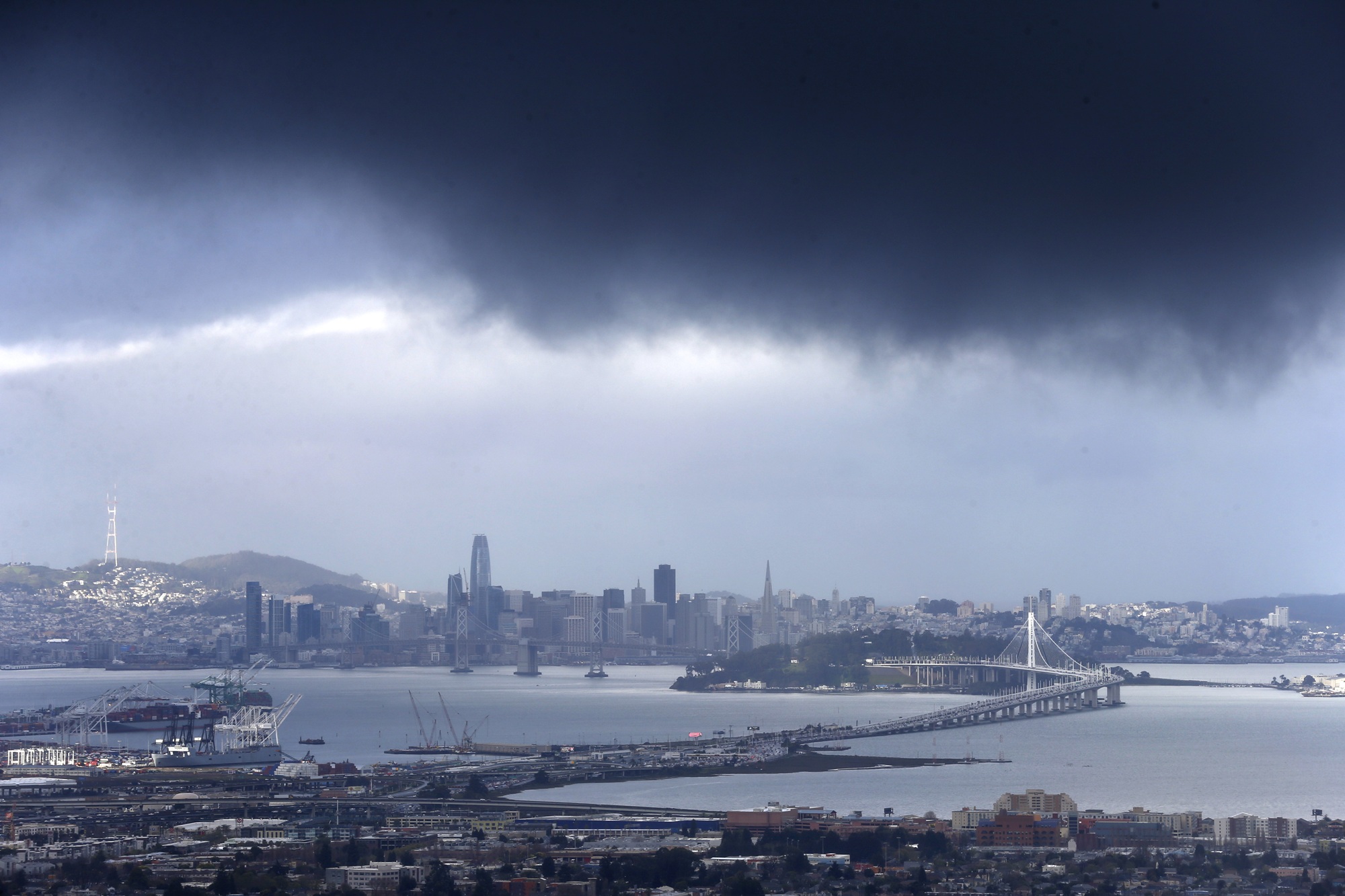
"caption": "Dark clouds hang above the East Bay in Oakland, California on March 16, 2018. ",
"credit": "Paul Chinn/The San Francisco Chronicle via Getty Images",
"altTag": null,
"description": null,
"imgSizes": {
"thumbnail": {
"file": "https://cdn.kqed.org/wp-content/uploads/sites/10/2026/07/StormCloudsOaklandGetty-160x107.jpg",
"width": 160,
"height": 107,
"mimeType": "image/jpeg"
},
"1536x1536": {
"file": "https://cdn.kqed.org/wp-content/uploads/sites/10/2026/07/StormCloudsOaklandGetty-1536x1024.jpg",
"width": 1536,
"height": 1024,
"mimeType": "image/jpeg"
},
"post-thumbnail": {
"file": "https://cdn.kqed.org/wp-content/uploads/sites/10/2026/07/StormCloudsOaklandGetty-672x372.jpg",
"width": 672,
"height": 372,
"mimeType": "image/jpeg"
},
"twentyfourteen-full-width": {
"file": "https://cdn.kqed.org/wp-content/uploads/sites/10/2026/07/StormCloudsOaklandGetty-1038x576.jpg",
"width": 1038,
"height": 576,
"mimeType": "image/jpeg"
},
"npr-cds-wide": {
"file": "https://cdn.kqed.org/wp-content/uploads/sites/10/2026/07/StormCloudsOaklandGetty-1200x675.jpg",
"width": 1200,
"height": 675,
"mimeType": "image/jpeg"
},
"npr-cds-square": {
"file": "https://cdn.kqed.org/wp-content/uploads/sites/10/2026/07/StormCloudsOaklandGetty-600x600.jpg",
"width": 600,
"height": 600,
"mimeType": "image/jpeg"
},
"kqedFullSize": {
"file": "https://cdn.kqed.org/wp-content/uploads/sites/10/2026/07/StormCloudsOaklandGetty.jpg",
"width": 2000,
"height": 1333
}
},
"isLoading": false,
"fetchFailed": false
},
"news_12081643": {
"type": "attachments",
"id": "news_12081643",
"meta": {
"index": "attachments_1716263798",
"site": "news",
"id": "12081643",
"found": true
},
"title": "260428-TRANSITRIDERSHIPREBOUND00004_TV-KQED",
"publishDate": 1777410498,
"status": "inherit",
"parent": 12081663,
"modified": 1783554196,
"caption": "Transit riders wait for their train at the Caltrain station on King and Fourth streets in San Francisco on April 27, 2026.",
"credit": "Tâm Vũ/KQED",
"altTag": null,
"description": null,
"imgSizes": {
"thumbnail": {
"file": "https://cdn.kqed.org/wp-content/uploads/sites/10/2026/04/260428-TRANSITRIDERSHIPREBOUND00004_TV-KQED-160x107.jpg",
"width": 160,
"height": 107,
"mimeType": "image/jpeg"
},
"1536x1536": {
"file": "https://cdn.kqed.org/wp-content/uploads/sites/10/2026/04/260428-TRANSITRIDERSHIPREBOUND00004_TV-KQED-1536x1024.jpg",
"width": 1536,
"height": 1024,
"mimeType": "image/jpeg"
},
"post-thumbnail": {
"file": "https://cdn.kqed.org/wp-content/uploads/sites/10/2026/04/260428-TRANSITRIDERSHIPREBOUND00004_TV-KQED-672x372.jpg",
"width": 672,
"height": 372,
"mimeType": "image/jpeg"
},
"twentyfourteen-full-width": {
"file": "https://cdn.kqed.org/wp-content/uploads/sites/10/2026/04/260428-TRANSITRIDERSHIPREBOUND00004_TV-KQED-1038x576.jpg",
"width": 1038,
"height": 576,
"mimeType": "image/jpeg"
},
"npr-cds-wide": {
"file": "https://cdn.kqed.org/wp-content/uploads/sites/10/2026/04/260428-TRANSITRIDERSHIPREBOUND00004_TV-KQED-1200x675.jpg",
"width": 1200,
"height": 675,
"mimeType": "image/jpeg"
},
"npr-cds-square": {
"file": "https://cdn.kqed.org/wp-content/uploads/sites/10/2026/04/260428-TRANSITRIDERSHIPREBOUND00004_TV-KQED-600x600.jpg",
"width": 600,
"height": 600,
"mimeType": "image/jpeg"
},
"kqedFullSize": {
"file": "https://cdn.kqed.org/wp-content/uploads/sites/10/2026/04/260428-TRANSITRIDERSHIPREBOUND00004_TV-KQED.jpg",
"width": 2000,
"height": 1333
}
},
"isLoading": false,
"fetchFailed": false
},
"news_12089865": {
"type": "attachments",
"id": "news_12089865",
"meta": {
"index": "attachments_1716263798",
"site": "news",
"id": "12089865",
"found": true
},
"title": "260114-BarPilots-30-BL",
"publishDate": 1783035742,
"status": "inherit",
"parent": 0,
"modified": 1783623786,
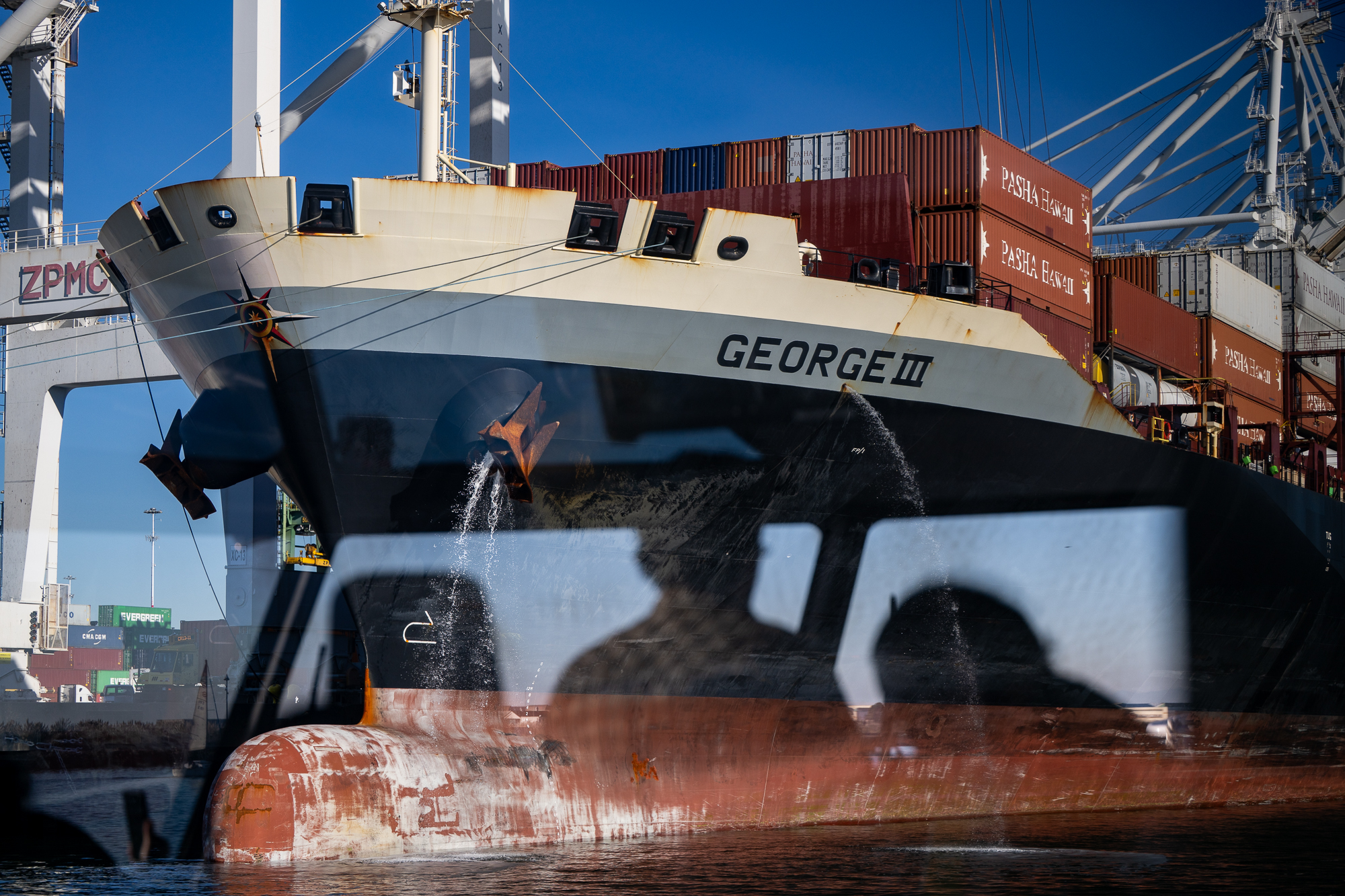
"caption": "A pilot boat operator's image reflects in the window of their boat as they pull up next to the Pasha Hawaii ship George III at the Port of Oakland on Jan. 14, 2026. The ship is part of Pasha Hawaii’s fleet, providing container shipping service between California ports and Hawaii. The pilots guide large ships along California’s coast to ports in San Francisco Bay and beyond.",
"credit": "Beth LaBerge/KQED",
"altTag": null,
"description": null,
"imgSizes": {
"thumbnail": {
"file": "https://cdn.kqed.org/wp-content/uploads/sites/10/2026/07/260114-BarPilots-30-BL-160x107.jpg",
"width": 160,
"height": 107,
"mimeType": "image/jpeg"
},
"1536x1536": {
"file": "https://cdn.kqed.org/wp-content/uploads/sites/10/2026/07/260114-BarPilots-30-BL-1536x1024.jpg",
"width": 1536,
"height": 1024,
"mimeType": "image/jpeg"
},
"post-thumbnail": {
"file": "https://cdn.kqed.org/wp-content/uploads/sites/10/2026/07/260114-BarPilots-30-BL-672x372.jpg",
"width": 672,
"height": 372,
"mimeType": "image/jpeg"
},
"twentyfourteen-full-width": {
"file": "https://cdn.kqed.org/wp-content/uploads/sites/10/2026/07/260114-BarPilots-30-BL-1038x576.jpg",
"width": 1038,
"height": 576,
"mimeType": "image/jpeg"
},
"npr-cds-wide": {
"file": "https://cdn.kqed.org/wp-content/uploads/sites/10/2026/07/260114-BarPilots-30-BL-1200x675.jpg",
"width": 1200,
"height": 675,
"mimeType": "image/jpeg"
},
"npr-cds-square": {
"file": "https://cdn.kqed.org/wp-content/uploads/sites/10/2026/07/260114-BarPilots-30-BL-600x600.jpg",
"width": 600,
"height": 600,
"mimeType": "image/jpeg"
},
"kqedFullSize": {
"file": "https://cdn.kqed.org/wp-content/uploads/sites/10/2026/07/260114-BarPilots-30-BL.jpg",
"width": 2000,
"height": 1333
}
},
"isLoading": false,
"fetchFailed": false
},
"news_12090277": {
"type": "attachments",
"id": "news_12090277",
"meta": {
"index": "attachments_1716263798",
"site": "news",
"id": "12090277",
"found": true
},
"title": "4 bobcat photo - a",
"publishDate": 1783548288,
"status": "inherit",
"parent": 0,
"modified": 1783550697,
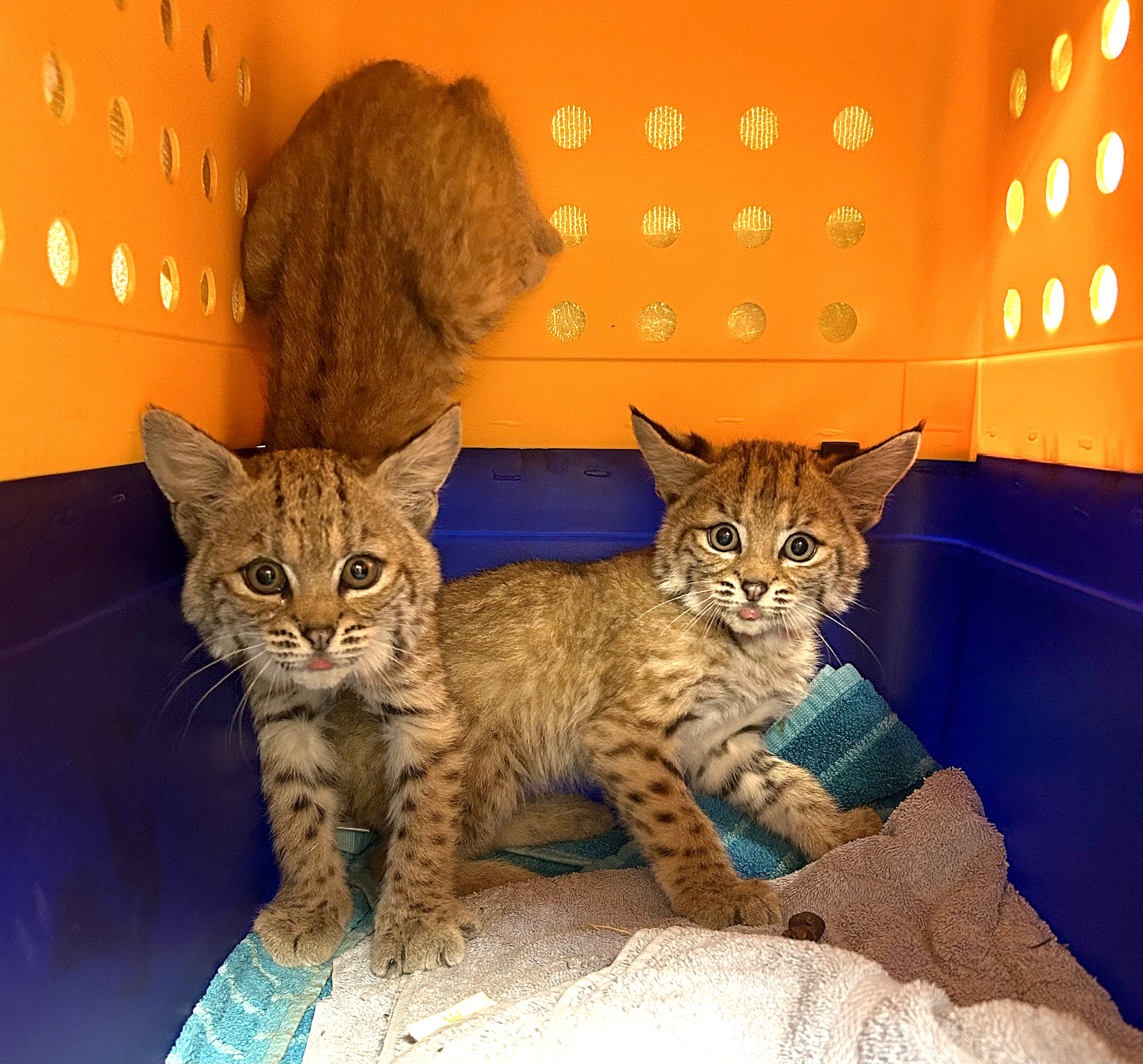
"caption": "Two baby bobcats at the Wildlife Care Center in Saratoga, California, on Monday, July 6, 2026.",
"credit": "Courtesy of Peninsula Humane Society & SPCA",
"altTag": null,
"description": null,
"imgSizes": {
"thumbnail": {
"file": "https://cdn.kqed.org/wp-content/uploads/sites/10/2026/07/4-bobcat-photo-a-160x149.jpeg",
"width": 160,
"height": 149,
"mimeType": "image/jpeg"
},
"1536x1536": {
"file": "https://cdn.kqed.org/wp-content/uploads/sites/10/2026/07/4-bobcat-photo-a-1536x1430.jpeg",
"width": 1536,
"height": 1430,
"mimeType": "image/jpeg"
},
"post-thumbnail": {
"file": "https://cdn.kqed.org/wp-content/uploads/sites/10/2026/07/4-bobcat-photo-a-672x372.jpeg",
"width": 672,
"height": 372,
"mimeType": "image/jpeg"
},
"twentyfourteen-full-width": {
"file": "https://cdn.kqed.org/wp-content/uploads/sites/10/2026/07/4-bobcat-photo-a-1038x576.jpeg",
"width": 1038,
"height": 576,
"mimeType": "image/jpeg"
},
"npr-cds-wide": {
"file": "https://cdn.kqed.org/wp-content/uploads/sites/10/2026/07/4-bobcat-photo-a-1200x675.jpeg",
"width": 1200,
"height": 675,
"mimeType": "image/jpeg"
},
"npr-cds-square": {
"file": "https://cdn.kqed.org/wp-content/uploads/sites/10/2026/07/4-bobcat-photo-a-600x600.jpeg",
"width": 600,
"height": 600,
"mimeType": "image/jpeg"
},
"kqedFullSize": {
"file": "https://cdn.kqed.org/wp-content/uploads/sites/10/2026/07/4-bobcat-photo-a.jpeg",
"width": 2000,
"height": 1862
}
},
"isLoading": false,
"fetchFailed": false
},
"news_12082036": {
"type": "attachments",
"id": "news_12082036",
"meta": {
"index": "attachments_1716263798",
"site": "news",
"id": "12082036",
"found": true
},
"title": "260430-MUNIMUSIC-TV-00502-KQED",
"publishDate": 1777593854,
"status": "inherit",
"parent": 0,
"modified": 1777593884,
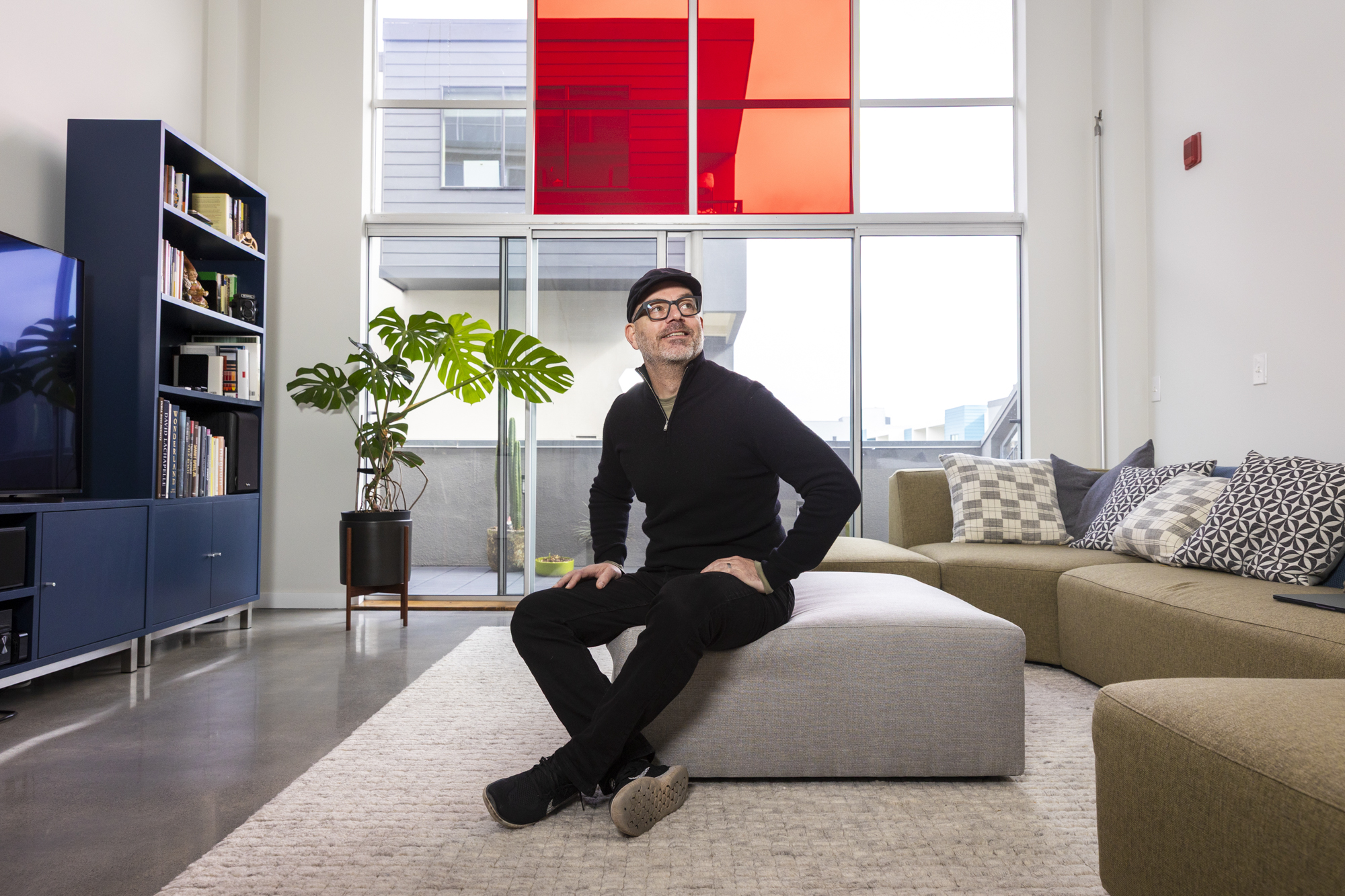
"caption": "Robert Burns, the creator of the website Muni Music, poses for a portrait in his apartment in San Francisco on April 30, 2026.",
"credit": "Tâm Vũ/KQED",
"altTag": null,
"description": null,
"imgSizes": {
"thumbnail": {
"file": "https://cdn.kqed.org/wp-content/uploads/sites/10/2026/04/260430-MUNIMUSIC-TV-00502-KQED-160x107.jpg",
"width": 160,
"height": 107,
"mimeType": "image/jpeg"
},
"1536x1536": {
"file": "https://cdn.kqed.org/wp-content/uploads/sites/10/2026/04/260430-MUNIMUSIC-TV-00502-KQED-1536x1024.jpg",
"width": 1536,
"height": 1024,
"mimeType": "image/jpeg"
},
"post-thumbnail": {
"file": "https://cdn.kqed.org/wp-content/uploads/sites/10/2026/04/260430-MUNIMUSIC-TV-00502-KQED-672x372.jpg",
"width": 672,
"height": 372,
"mimeType": "image/jpeg"
},
"twentyfourteen-full-width": {
"file": "https://cdn.kqed.org/wp-content/uploads/sites/10/2026/04/260430-MUNIMUSIC-TV-00502-KQED-1038x576.jpg",
"width": 1038,
"height": 576,
"mimeType": "image/jpeg"
},
"npr-cds-wide": {
"file": "https://cdn.kqed.org/wp-content/uploads/sites/10/2026/04/260430-MUNIMUSIC-TV-00502-KQED-1200x675.jpg",
"width": 1200,
"height": 675,
"mimeType": "image/jpeg"
},
"npr-cds-square": {
"file": "https://cdn.kqed.org/wp-content/uploads/sites/10/2026/04/260430-MUNIMUSIC-TV-00502-KQED-600x600.jpg",
"width": 600,
"height": 600,
"mimeType": "image/jpeg"
},
"kqedFullSize": {
"file": "https://cdn.kqed.org/wp-content/uploads/sites/10/2026/04/260430-MUNIMUSIC-TV-00502-KQED.jpg",
"width": 2000,
"height": 1333
}
},
"isLoading": false,
"fetchFailed": false
},
"news_12076722": {
"type": "attachments",
"id": "news_12076722",
"meta": {
"index": "attachments_1716263798",
"site": "news",
"id": "12076722",
"found": true
},
"title": "IMG_1406",
"publishDate": 1773770098,
"status": "inherit",
"parent": 12076503,
"modified": 1773770129,
"caption": "With the World Cup around the corner, here are the Bay Area soccer teams to know.",
"credit": "Anna Vignet/KQED",
"altTag": null,
"description": null,
"imgSizes": {
"medium": {
"file": "https://cdn.kqed.org/wp-content/uploads/sites/10/2026/03/IMG_1406-2000x1500.jpg",
"width": 2000,
"height": 1500,
"mimeType": "image/jpeg"
},
"large": {
"file": "https://cdn.kqed.org/wp-content/uploads/sites/10/2026/03/IMG_1406-2000x1500.jpg",
"width": 2000,
"height": 1500,
"mimeType": "image/jpeg"
},
"thumbnail": {
"file": "https://cdn.kqed.org/wp-content/uploads/sites/10/2026/03/IMG_1406-160x120.jpg",
"width": 160,
"height": 120,
"mimeType": "image/jpeg"
},
"1536x1536": {
"file": "https://cdn.kqed.org/wp-content/uploads/sites/10/2026/03/IMG_1406-1536x1152.jpg",
"width": 1536,
"height": 1152,
"mimeType": "image/jpeg"
},
"2048x2048": {
"file": "https://cdn.kqed.org/wp-content/uploads/sites/10/2026/03/IMG_1406-2048x1536.jpg",
"width": 2048,
"height": 1536,
"mimeType": "image/jpeg"
},
"post-thumbnail": {
"file": "https://cdn.kqed.org/wp-content/uploads/sites/10/2026/03/IMG_1406-672x372.jpg",
"width": 672,
"height": 372,
"mimeType": "image/jpeg"
},
"twentyfourteen-full-width": {
"file": "https://cdn.kqed.org/wp-content/uploads/sites/10/2026/03/IMG_1406-1038x576.jpg",
"width": 1038,
"height": 576,
"mimeType": "image/jpeg"
},
"full-width": {
"file": "https://cdn.kqed.org/wp-content/uploads/sites/10/2026/03/IMG_1406-2000x1500.jpg",
"width": 2000,
"height": 1500,
"mimeType": "image/jpeg"
},
"npr-cds-wide": {
"file": "https://cdn.kqed.org/wp-content/uploads/sites/10/2026/03/IMG_1406-1200x675.jpg",
"width": 1200,
"height": 675,
"mimeType": "image/jpeg"
},
"kqedFullSize": {
"file": "https://cdn.kqed.org/wp-content/uploads/sites/10/2026/03/IMG_1406.jpg",
"width": 2560,
"height": 1920
}
},
"isLoading": false,
"fetchFailed": false
},
"news_12089909": {
"type": "attachments",
"id": "news_12089909",
"meta": {
"index": "attachments_1716263798",
"site": "news",
"id": "12089909",
"found": true
},
"title": "US-ANNIVERSARY-250",
"publishDate": 1783357063,
"status": "inherit",
"parent": 12089906,
"modified": 1783357092,
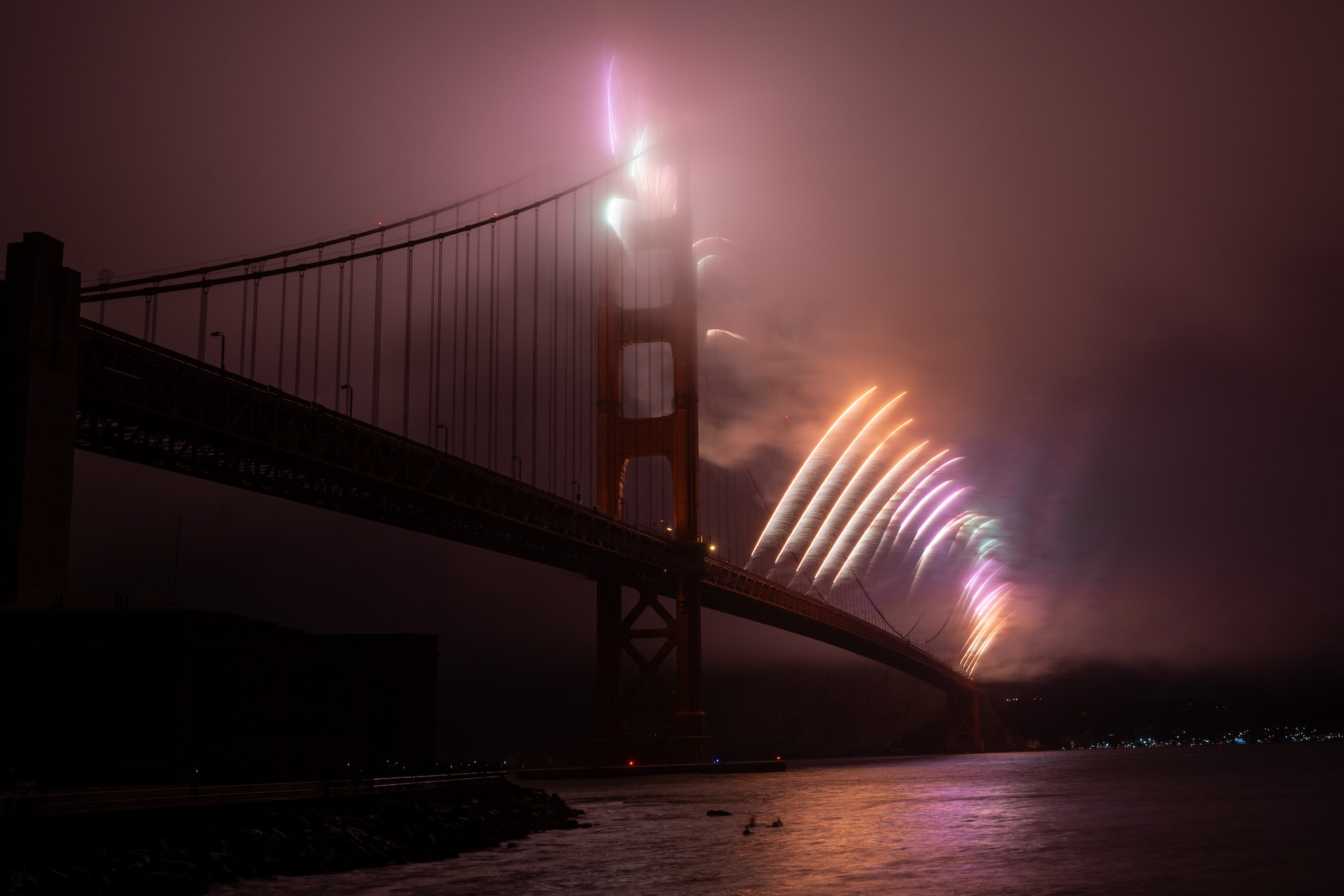
"caption": "Fireworks illuminate the Golden Gate Bridge during celebrations marking the 250th anniversary of U.S. Independence Day in San Francisco, California on July 4, 2026. ",
"credit": "Karl Mondon/AFP via Getty Images",
"altTag": null,
"description": null,
"imgSizes": {
"thumbnail": {
"file": "https://cdn.kqed.org/wp-content/uploads/sites/10/2026/07/GettyImages-2284166478-160x107.jpg",
"width": 160,
"height": 107,
"mimeType": "image/jpeg"
},
"1536x1536": {
"file": "https://cdn.kqed.org/wp-content/uploads/sites/10/2026/07/GettyImages-2284166478-1536x1024.jpg",
"width": 1536,
"height": 1024,
"mimeType": "image/jpeg"
},
"post-thumbnail": {
"file": "https://cdn.kqed.org/wp-content/uploads/sites/10/2026/07/GettyImages-2284166478-672x372.jpg",
"width": 672,
"height": 372,
"mimeType": "image/jpeg"
},
"twentyfourteen-full-width": {
"file": "https://cdn.kqed.org/wp-content/uploads/sites/10/2026/07/GettyImages-2284166478-1038x576.jpg",
"width": 1038,
"height": 576,
"mimeType": "image/jpeg"
},
"npr-cds-wide": {
"file": "https://cdn.kqed.org/wp-content/uploads/sites/10/2026/07/GettyImages-2284166478-1200x675.jpg",
"width": 1200,
"height": 675,
"mimeType": "image/jpeg"
},
"npr-cds-square": {
"file": "https://cdn.kqed.org/wp-content/uploads/sites/10/2026/07/GettyImages-2284166478-600x600.jpg",
"width": 600,
"height": 600,
"mimeType": "image/jpeg"
},
"kqedFullSize": {
"file": "https://cdn.kqed.org/wp-content/uploads/sites/10/2026/07/GettyImages-2284166478.jpg",
"width": 1980,
"height": 1320
}
},
"isLoading": false,
"fetchFailed": false
},
"news_12089340": {
"type": "attachments",
"id": "news_12089340",
"meta": {
"index": "attachments_1716263798",
"site": "news",
"id": "12089340",
"found": true
},
"title": "260219-SunnyvaleDeported-09-BL_qed",
"publishDate": 1782839889,
"status": "inherit",
"parent": 12089337,
"modified": 1783035792,
"caption": "Aby Peña sits in the kitchen at her home in Sunnyvale on Feb. 19, 2026. Her husband, Ulises Peña López, was deported to Mexico after being taken into ICE custody outside their home in February 2025, leaving his wife and young daughter in the Bay Area.",
"credit": "Beth LaBerge/KQED",
"altTag": null,
"description": null,
"imgSizes": {
"thumbnail": {
"file": "https://cdn.kqed.org/wp-content/uploads/sites/10/2026/06/260219-SunnyvaleDeported-09-BL_qed-160x107.jpg",
"width": 160,
"height": 107,
"mimeType": "image/jpeg"
},
"1536x1536": {
"file": "https://cdn.kqed.org/wp-content/uploads/sites/10/2026/06/260219-SunnyvaleDeported-09-BL_qed-1536x1024.jpg",
"width": 1536,
"height": 1024,
"mimeType": "image/jpeg"
},
"post-thumbnail": {
"file": "https://cdn.kqed.org/wp-content/uploads/sites/10/2026/06/260219-SunnyvaleDeported-09-BL_qed-672x372.jpg",
"width": 672,
"height": 372,
"mimeType": "image/jpeg"
},
"twentyfourteen-full-width": {
"file": "https://cdn.kqed.org/wp-content/uploads/sites/10/2026/06/260219-SunnyvaleDeported-09-BL_qed-1038x576.jpg",
"width": 1038,
"height": 576,
"mimeType": "image/jpeg"
},
"npr-cds-wide": {
"file": "https://cdn.kqed.org/wp-content/uploads/sites/10/2026/06/260219-SunnyvaleDeported-09-BL_qed-1200x675.jpg",
"width": 1200,
"height": 675,
"mimeType": "image/jpeg"
},
"npr-cds-square": {
"file": "https://cdn.kqed.org/wp-content/uploads/sites/10/2026/06/260219-SunnyvaleDeported-09-BL_qed-600x600.jpg",
"width": 600,
"height": 600,
"mimeType": "image/jpeg"
},
"kqedFullSize": {
"file": "https://cdn.kqed.org/wp-content/uploads/sites/10/2026/06/260219-SunnyvaleDeported-09-BL_qed.jpg",
"width": 2000,
"height": 1333
}
},
"isLoading": false,
"fetchFailed": false
}
},
"audioPlayerReducer": {
"postId": "stream_live",
"isPaused": true,
"isPlaying": false,
"pfsActive": false,
"pledgeModalIsOpen": true,
"playerDrawerIsOpen": false,
"liveAudioPlayStartedAt": 0,
"liveAudioPlayContext": ""
},
"authorsReducer": {
"katrinaschwartz": {
"type": "authors",
"id": "234",
"meta": {
"index": "authors_1716337520",
"id": "234",
"found": true
},
"name": "Katrina Schwartz",
"firstName": "Katrina",
"lastName": "Schwartz",
"slug": "katrinaschwartz",
"email": "kschwartz@kqed.org",
"display_author_email": false,
"staff_mastheads": [
"news"
],
"title": "Producer",
"bio": "Katrina Schwartz is a journalist based in San Francisco. She's worked at KPCC public radio in LA and has reported on air and online for KQED since 2010. She covered how teaching and learning is changing for MindShift between 2012 and 2020. She is the co-host of the MindShift podcast and now produces KQED's Bay Curious podcast.",
"avatar": "https://secure.gravatar.com/avatar/edb4ee79070447a018538c9aae6eeecf28786515b8a0c30e43b6b7dce5aa44c8?s=600&d=blank&r=g",
"twitter": "kschwart",
"bluesky": null,
"facebook": null,
"instagram": null,
"linkedin": null,
"sites": [
{
"site": "",
"roles": [
"editor"
]
},
{
"site": "news",
"roles": [
"editor"
]
},
{
"site": "mindshift",
"roles": [
"administrator"
]
},
{
"site": "stateofhealth",
"roles": [
"author"
]
},
{
"site": "science",
"roles": [
"editor"
]
}
],
"headData": {
"title": "Katrina Schwartz | KQED",
"description": "Producer",
"ogImgSrc": "https://secure.gravatar.com/avatar/edb4ee79070447a018538c9aae6eeecf28786515b8a0c30e43b6b7dce5aa44c8?s=600&d=blank&r=g",
"twImgSrc": "https://secure.gravatar.com/avatar/edb4ee79070447a018538c9aae6eeecf28786515b8a0c30e43b6b7dce5aa44c8?s=600&d=blank&r=g"
},
"isLoading": false,
"link": "/author/katrinaschwartz"
},
"tychehendricks": {
"type": "authors",
"id": "259",
"meta": {
"index": "authors_1716337520",
"id": "259",
"found": true
},
"name": "Tyche Hendricks",
"firstName": "Tyche",
"lastName": "Hendricks",
"slug": "tychehendricks",
"email": "thendricks@kqed.org",
"display_author_email": true,
"staff_mastheads": [
"news"
],
"title": "KQED Senior Editor, Immigration",
"bio": "\u003cspan style=\"font-weight: 400;\">Tyche Hendricks is KQED’s senior editor for immigration, leading coverage of the policy and politics that affect California’s immigrant communities. Her work for KQED’s radio and online audiences is also carried on NPR and other national outlets. She has been recognized with awards from the Radio and Television News Directors Association, the Society for Professional Journalists; the Education Writers Association; the Best of the West and the National Federation of Community Broadcasters. Before joining KQED in 2010, Tyche spent more than a dozen years as a newspaper reporter, notably at the \u003c/span>\u003ci>\u003cspan style=\"font-weight: 400;\">San Francisco Chronicle\u003c/span>\u003c/i>\u003cspan style=\"font-weight: 400;\">. At different times she has covered criminal justice, government and politics and urban planning. Tyche has taught in the MFA Creative Writing program at the University of San Francisco and at UC Berkeley’s Graduate School of Journalism, where she was co-director of a national immigration symposium for professional journalists. She is the author of \u003c/span>\u003ci>\u003cspan style=\"font-weight: 400;\">The Wind Doesn't Need a Passport: Stories from the U.S.-Mexico Borderlands\u003c/span>\u003c/i>\u003cspan style=\"font-weight: 400;\"> (University of California Press). \u003c/span>",
"avatar": "https://secure.gravatar.com/avatar/b8ee458e2731c2d43df86882ce17267e?s=600&d=blank&r=g",
"twitter": "tychehendricks",
"facebook": null,
"instagram": null,
"linkedin": null,
"sites": [
{
"site": "news",
"roles": [
"editor"
]
},
{
"site": "stateofhealth",
"roles": [
"editor"
]
}
],
"headData": {
"title": "Tyche Hendricks | KQED",
"description": "KQED Senior Editor, Immigration",
"ogImgSrc": "https://secure.gravatar.com/avatar/b8ee458e2731c2d43df86882ce17267e?s=600&d=blank&r=g",
"twImgSrc": "https://secure.gravatar.com/avatar/b8ee458e2731c2d43df86882ce17267e?s=600&d=blank&r=g"
},
"isLoading": false,
"link": "/author/tychehendricks"
},
"ccabreralomeli": {
"type": "authors",
"id": "11708",
"meta": {
"index": "authors_1716337520",
"id": "11708",
"found": true
},
"name": "Carlos Cabrera-Lomelí",
"firstName": "Carlos",
"lastName": "Cabrera-Lomelí",
"slug": "ccabreralomeli",
"email": "ccabreralomeli@KQED.org",
"display_author_email": true,
"staff_mastheads": [
"news"
],
"title": "Community Reporter",
"bio": "Carlos Cabrera-Lomelí is a community reporter with KQED's digital engagement team. He also reports and co-produces for KQED's bilingual news hub KQED en Español. He grew up in San Francisco's Mission District and has previously worked with Univision, 48 Hills and REFORMA in Mexico City.",
"avatar": "https://secure.gravatar.com/avatar/c309be9665e484f887b818c89e273ecc673004f426f36b24d00a4d813a2e0518?s=600&d=blank&r=g",
"twitter": "@LomeliCabrera",
"bluesky": null,
"facebook": null,
"instagram": null,
"linkedin": null,
"sites": [
{
"site": "arts",
"roles": [
"editor"
]
},
{
"site": "news",
"roles": [
"editor"
]
},
{
"site": "about",
"roles": [
"editor"
]
},
{
"site": "science",
"roles": [
"editor"
]
},
{
"site": "perspectives",
"roles": [
"editor"
]
},
{
"site": "elections",
"roles": [
"editor"
]
},
{
"site": "liveblog",
"roles": [
"contributor"
]
}
],
"headData": {
"title": "Carlos Cabrera-Lomelí | KQED",
"description": "Community Reporter",
"ogImgSrc": "https://secure.gravatar.com/avatar/c309be9665e484f887b818c89e273ecc673004f426f36b24d00a4d813a2e0518?s=600&d=blank&r=g",
"twImgSrc": "https://secure.gravatar.com/avatar/c309be9665e484f887b818c89e273ecc673004f426f36b24d00a4d813a2e0518?s=600&d=blank&r=g"
},
"isLoading": false,
"link": "/author/ccabreralomeli"
},
"adahlstromeckman": {
"type": "authors",
"id": "11785",
"meta": {
"index": "authors_1716337520",
"id": "11785",
"found": true
},
"name": "Azul Dahlstrom-Eckman",
"firstName": "Azul",
"lastName": "Dahlstrom-Eckman",
"slug": "adahlstromeckman",
"email": "adahlstrom-eckman@kqed.org",
"display_author_email": true,
"staff_mastheads": [],
"title": "Reporter",
"bio": "Azul is a reporter for KQED focusing on transportation and features. He joined KQED in 2021 as an alumna of KALW's Audio Academy radio journalism training program.",
"avatar": "https://secure.gravatar.com/avatar/9cb750298435add7815a777f55bf1f46845c1386bb8452555c60a7b820b5aba3?s=600&d=blank&r=g",
"twitter": "@zuliemann",
"bluesky": "@azul415.bsky.social",
"facebook": null,
"instagram": null,
"linkedin": null,
"sites": [
{
"site": "arts",
"roles": [
"editor"
]
},
{
"site": "news",
"roles": [
"editor"
]
},
{
"site": "science",
"roles": [
"editor"
]
},
{
"site": "liveblog",
"roles": [
"author"
]
}
],
"headData": {
"title": "Azul Dahlstrom-Eckman | KQED",
"description": "Reporter",
"ogImgSrc": "https://secure.gravatar.com/avatar/9cb750298435add7815a777f55bf1f46845c1386bb8452555c60a7b820b5aba3?s=600&d=blank&r=g",
"twImgSrc": "https://secure.gravatar.com/avatar/9cb750298435add7815a777f55bf1f46845c1386bb8452555c60a7b820b5aba3?s=600&d=blank&r=g"
},
"isLoading": false,
"link": "/author/adahlstromeckman"
},
"kdebenedetti": {
"type": "authors",
"id": "11913",
"meta": {
"index": "authors_1716337520",
"id": "11913",
"found": true
},
"name": "Katie DeBenedetti",
"firstName": "Katie",
"lastName": "DeBenedetti",
"slug": "kdebenedetti",
"email": "kdebenedetti@kqed.org",
"display_author_email": false,
"staff_mastheads": [
"news",
"science"
],
"title": "KQED Contributor",
"bio": "Katie DeBenedetti is a digital reporter covering daily news for the Express Desk. Prior to joining KQED as a culture reporting intern in January 2024, she covered education and city government for the Napa Valley Register.",
"avatar": "https://secure.gravatar.com/avatar/6e31073cb8f7e4214ab03f42771d0f45?s=600&d=blank&r=g",
"twitter": null,
"facebook": null,
"instagram": null,
"linkedin": null,
"sites": [
{
"site": "news",
"roles": [
"author"
]
},
{
"site": "science",
"roles": [
"author"
]
},
{
"site": "liveblog",
"roles": [
"author"
]
}
],
"headData": {
"title": "Katie DeBenedetti | KQED",
"description": "KQED Contributor",
"ogImgSrc": "https://secure.gravatar.com/avatar/6e31073cb8f7e4214ab03f42771d0f45?s=600&d=blank&r=g",
"twImgSrc": "https://secure.gravatar.com/avatar/6e31073cb8f7e4214ab03f42771d0f45?s=600&d=blank&r=g"
},
"isLoading": false,
"link": "/author/kdebenedetti"
},
"gglueck": {
"type": "authors",
"id": "11946",
"meta": {
"index": "authors_1716337520",
"id": "11946",
"found": true
},
"name": "Gabriela Glueck",
"firstName": "Gabriela",
"lastName": "Glueck",
"slug": "gglueck",
"email": "gglueck@kqed.org",
"display_author_email": false,
"staff_mastheads": [
"news"
],
"title": "KQED Contributor",
"bio": null,
"avatar": "https://secure.gravatar.com/avatar/ec62b7e3f7727ce1070cc7046dde80271d1e63cf2178d6194f68bb8d1440f841?s=600&d=blank&r=g",
"twitter": null,
"bluesky": null,
"facebook": null,
"instagram": null,
"linkedin": null,
"sites": [
{
"site": "news",
"roles": [
"editor"
]
}
],
"headData": {
"title": "Gabriela Glueck | KQED",
"description": "KQED Contributor",
"ogImgSrc": "https://secure.gravatar.com/avatar/ec62b7e3f7727ce1070cc7046dde80271d1e63cf2178d6194f68bb8d1440f841?s=600&d=blank&r=g",
"twImgSrc": "https://secure.gravatar.com/avatar/ec62b7e3f7727ce1070cc7046dde80271d1e63cf2178d6194f68bb8d1440f841?s=600&d=blank&r=g"
},
"isLoading": false,
"link": "/author/gglueck"
},
"aaliahmad": {
"type": "authors",
"id": "11986",
"meta": {
"index": "authors_1716337520",
"id": "11986",
"found": true
},
"name": "Ayah Ali-Ahmad",
"firstName": "Ayah",
"lastName": "Ali-Ahmad",
"slug": "aaliahmad",
"email": "aaliahmad@KQED.org",
"display_author_email": false,
"staff_mastheads": [],
"title": "KQED Contributor",
"bio": null,
"avatar": "https://secure.gravatar.com/avatar/1cf54f187a5e1064b2cfef3f3d2f1e4f93e453395d56912aca6382a6071ec3ed?s=600&d=blank&r=g",
"twitter": "ayahaliahmad",
"bluesky": null,
"facebook": null,
"instagram": null,
"linkedin": null,
"sites": [
{
"site": "news",
"roles": [
"subscriber"
]
}
],
"headData": {
"title": "Ayah Ali-Ahmad | KQED",
"description": "KQED Contributor",
"ogImgSrc": "https://secure.gravatar.com/avatar/1cf54f187a5e1064b2cfef3f3d2f1e4f93e453395d56912aca6382a6071ec3ed?s=600&d=blank&r=g",
"twImgSrc": "https://secure.gravatar.com/avatar/1cf54f187a5e1064b2cfef3f3d2f1e4f93e453395d56912aca6382a6071ec3ed?s=600&d=blank&r=g"
},
"isLoading": false,
"link": "/author/aaliahmad"
},
"ejackson": {
"type": "authors",
"id": "12003",
"meta": {
"index": "authors_1716337520",
"id": "12003",
"found": true
},
"name": "Ella Jackson",
"firstName": "Ella",
"lastName": "Jackson",
"slug": "ejackson",
"email": "ejackson@kqed.org",
"display_author_email": false,
"staff_mastheads": [],
"title": "KQED Contributor",
"bio": null,
"avatar": "https://secure.gravatar.com/avatar/3c688edc62aec1dcae096e1475956d245f72bde99cff316455871c9b22a7205b?s=600&d=blank&r=g",
"twitter": null,
"bluesky": null,
"facebook": null,
"instagram": null,
"linkedin": null,
"sites": [
{
"site": "news",
"roles": [
"author"
]
},
{
"site": "science",
"roles": [
"author"
]
}
],
"headData": {
"title": "Ella Jackson | KQED",
"description": "KQED Contributor",
"ogImgSrc": "https://secure.gravatar.com/avatar/3c688edc62aec1dcae096e1475956d245f72bde99cff316455871c9b22a7205b?s=600&d=blank&r=g",
"twImgSrc": "https://secure.gravatar.com/avatar/3c688edc62aec1dcae096e1475956d245f72bde99cff316455871c9b22a7205b?s=600&d=blank&r=g"
},
"isLoading": false,
"link": "/author/ejackson"
}
},
"pagesReducer": {
"news_tag_bay-area": {
"type": "terms",
"id": "news_1386",
"meta": {
"index": "terms_1716263798",
"site": "news",
"id": "1386",
"score": 7.788453
},
"featImg": null,
"name": "Bay Area",
"description": null,
"taxonomy": "tag",
"headData": {
"twImgId": null,
"twTitle": null,
"ogTitle": null,
"ogImgId": null,
"twDescription": null,
"description": null,
"title": "Bay Area Archives | KQED News",
"ogDescription": null
},
"ttid": 1398,
"slug": "bay-area",
"isLoading": false,
"title": "Bay Area",
"pageMeta": {
"site": "news",
"WpPageTemplate": "page-topic-editorial",
"currentPage": 14
},
"blocks": [
{
"blockName": "kqed/post-list",
"attrs": {
"layout": "cardArticle2",
"query": "posts/news?tag=bay-area",
"seeMore": false,
"paginated": true,
"page": 14
}
},
{
"blockName": "kqed/ad"
}
]
}
},
"pfsSessionReducer": {},
"postsReducer": {
"stream_live": {
"type": "live",
"id": "stream_live",
"audioUrl": "https://streams.kqed.org/kqedradio",
"title": "Live Stream",
"excerpt": "Live Stream information currently unavailable.",
"link": "/radio",
"featImg": "",
"label": {
"name": "KQED Live",
"link": "/"
}
},
"stream_kqedNewscast": {
"type": "posts",
"id": "stream_kqedNewscast",
"audioUrl": "https://www.kqed.org/.stream/anon/radio/RDnews/newscast.mp3?_=1",
"title": "KQED Newscast",
"featImg": "",
"label": {
"name": "88.5 FM",
"link": "/"
}
},
"news_12090069": {
"type": "posts",
"id": "news_12090069",
"meta": {
"index": "posts_1716263798",
"site": "news",
"id": "12090069",
"score": null,
"sort": [
1783714390000
]
},
"guestAuthors": [],
"slug": "when-chinese-flower-growers-helped-the-bay-area-bloom",
"title": "When Chinese Flower Growers Helped the Bay Area Bloom",
"publishDate": 1783714390,
"format": "standard",
"headTitle": "When Chinese Flower Growers Helped the Bay Area Bloom | KQED",
"labelTerm": {},
"content": "\u003cp>\u003ca href=\"https://www.kqed.org/news/tag/stanford-university\">Stanford University\u003c/a> archaeologist Laura Jones wasn’t looking for flower farms — at least not at first.\u003c/p>\n\u003cp>She was researching the school’s early land-leasing practices when a retiring colleague gave her some maps of Stanford from the 1950s.\u003c/p>\n\u003cp>As Jones looked closer, she noticed familiar areas — where Stanford Shopping Center, the school’s research park and graduate student housing are today — shaded in with what seemed like colored pencil.\u003c/p>\n\u003cp>“They’re coded for what flower is being grown,” she said.\u003c/p>\n\u003cp>[ad fullwidth]\u003c/p>\n\u003cp>Jones cross-checked the map with aerial photographs from the time. What emerged were patterns — clear outlines of fields in bloom. The layouts of the plots were similar, recognizable in terms of shape and size. Plus, Jones said, there was usually a small greenhouse on each field.\u003c/p>\n\u003cp>To Jones, the parcels were notable for another reason, too.\u003c/p>\n\u003cp>“Next to the colors, in … dark black pencil, are the names of the farmers, and they’re all Chinese and Japanese,” Jones said.\u003c/p>\n\u003cp>Flower fields. Asian American growers. She wanted to know more.\u003c/p>\n\u003ch2>Flowers in Santa Clara Valley\u003c/h2>\n\u003cp>For much of the 20th century, this stretch of the Peninsula was home to seas of chrysanthemums, asters and irises.\u003c/p>\n\u003cp>According to a 1948 issue of the University of California’s \u003cem>California Agriculture\u003c/em> journal, about 200 acres of chrysanthemums — imagine roughly 150 football fields — were grown in San Mateo and Santa Clara counties at the time. The total valuation of the crop amounted to roughly $2 million.\u003c/p>\n\u003cfigure id=\"attachment_12089258\" class=\"wp-caption aligncenter\" style=\"max-width: 2000px\">\u003cimg loading=\"lazy\" decoding=\"async\" class=\"size-full wp-image-12089258\" src=\"https://cdn.kqed.org/wp-content/uploads/sites/10/2026/06/260629_ForgottenFlowers_01-KQED.jpg\" alt=\"\" width=\"2000\" height=\"1333\" srcset=\"https://cdn.kqed.org/wp-content/uploads/sites/10/2026/06/260629_ForgottenFlowers_01-KQED.jpg 2000w, https://cdn.kqed.org/wp-content/uploads/sites/10/2026/06/260629_ForgottenFlowers_01-KQED-160x107.jpg 160w, https://cdn.kqed.org/wp-content/uploads/sites/10/2026/06/260629_ForgottenFlowers_01-KQED-1536x1024.jpg 1536w\" sizes=\"auto, (max-width: 2000px) 100vw, 2000px\">\u003cfigcaption class=\"wp-caption-text\">The corsage-making workshop was held at the O’Donohue Family Stanford Educational Farm. The event was put on in collaboration with the Bay Area Chrysanthemum Growers Association, the Chinatown History and Culture Association, the Chinese Historical and Cultural Project, and the Asian American Research Center at Stanford. \u003ccite>(Courtesy of Diego Bustamante)\u003c/cite>\u003c/figcaption>\u003c/figure>\n\u003cp>The industry was shaped in large part by Japanese, Italian and Chinese farmers. Some of these flowers were grown on Stanford lands between the 1890s and 1960s, in plots leased to Asian American farmers.\u003c/p>\n\u003cp>In her research, Jones has uncovered more about the contributions of Chinese American growers in particular. Many got their start on Stanford lands, establishing a model of farming that spread throughout the community.\u003c/p>\n\u003cp>Much of this history was never formally documented, something Jones is hoping to change with her \u003ca href=\"https://news.stanford.edu/stories/2026/01/forgotten-flowers-project-asian-american-flower-growers-history-bay-area\">Forgotten Flowers\u003c/a> research project. She’s collaborating with community organizations, including the Bay Area Chrysanthemum Growers Association, to help clarify the history.\u003c/p>\n\u003ch2>A business intertwined with immigrant history\u003c/h2>\n\u003cp>At a time when discriminatory laws made land ownership a challenge, leasing land was a common option for many immigrants. Leland and Jane Stanford, Jones said, were willing landlords.\u003c/p>\n\u003cp>Jim Mok was one such lessee. He spent much of his American life in the Stanfords’ orbit, carving out a path that many Chinese immigrants on the Peninsula would later follow.\u003c/p>\n\u003cp>Hailing from Guangdong Province, Mok worked as a foreman on the Stanfords’ land, leading a team of Chinese workers in planting the \u003ca href=\"https://stanforddaily.com/2022/05/31/from-the-community-stanfords-history-is-inextricably-linked-with-asian-american-history/\">emblematic 166 palms\u003c/a> lining the approach to the university.\u003c/p>\n\u003cfigure id=\"attachment_12089254\" class=\"wp-caption aligncenter\" style=\"max-width: 2000px\">\u003cimg loading=\"lazy\" decoding=\"async\" class=\"size-full wp-image-12089254\" src=\"https://cdn.kqed.org/wp-content/uploads/sites/10/2026/06/062426TCR-Mag-Forgotten-Flowers_GH_001-KQED.jpg\" alt=\"\" width=\"2000\" height=\"1333\" srcset=\"https://cdn.kqed.org/wp-content/uploads/sites/10/2026/06/062426TCR-Mag-Forgotten-Flowers_GH_001-KQED.jpg 2000w, https://cdn.kqed.org/wp-content/uploads/sites/10/2026/06/062426TCR-Mag-Forgotten-Flowers_GH_001-KQED-160x107.jpg 160w, https://cdn.kqed.org/wp-content/uploads/sites/10/2026/06/062426TCR-Mag-Forgotten-Flowers_GH_001-KQED-1536x1024.jpg 1536w\" sizes=\"auto, (max-width: 2000px) 100vw, 2000px\">\u003cfigcaption class=\"wp-caption-text\">George Chin, head of San Francisco’s Chinatown History & Culture Association, looks over a display of family photographs, newspaper clippings and historical materials documenting the Chinese American flower-growing industry in the Santa Clara Valley at his home in Cupertino on June 24, 2026. \u003ccite>(Gustavo Hernandez/KQED)\u003c/cite>\u003c/figcaption>\u003c/figure>\n\u003cp>Founding Director of San Francisco’s Chinatown History & Culture Association George Chin said Mok was also a leader in the local Chinese community.\u003c/p>\n\u003cp>“Because he’s a foreman,” Chin said, “he employed some of his fellow clansmen, relatives and whatnot.” In the end, Chin said, most of the Stanfords’ Chinese workers ended up coming from Guangdong as well.\u003c/p>\n\u003cp>Chin believes that Mok initially learned the business of commercial flower growing from Japanese immigrants. After modeling the practice in his own community, Chin said other Chinese immigrants followed suit.\u003c/p>\n\u003cp>“When he started growing commercially,” Chin said, “he recruited his fellow relatives, villagers and people that he knew from the same region.”\u003c/p>\n\u003cfigure id=\"attachment_12089255\" class=\"wp-caption aligncenter\" style=\"max-width: 2000px\">\u003cimg loading=\"lazy\" decoding=\"async\" class=\"size-full wp-image-12089255\" src=\"https://cdn.kqed.org/wp-content/uploads/sites/10/2026/06/062426TCR-Mag-Forgotten-Flowers_GH_003-KQED.jpg\" alt=\"\" width=\"2000\" height=\"1333\" srcset=\"https://cdn.kqed.org/wp-content/uploads/sites/10/2026/06/062426TCR-Mag-Forgotten-Flowers_GH_003-KQED.jpg 2000w, https://cdn.kqed.org/wp-content/uploads/sites/10/2026/06/062426TCR-Mag-Forgotten-Flowers_GH_003-KQED-160x107.jpg 160w, https://cdn.kqed.org/wp-content/uploads/sites/10/2026/06/062426TCR-Mag-Forgotten-Flowers_GH_003-KQED-1536x1024.jpg 1536w\" sizes=\"auto, (max-width: 2000px) 100vw, 2000px\">\u003cfigcaption class=\"wp-caption-text\">George Chin with his brother and sister at their family nursery, c. 1960s, in Baron Park of Palo Alto, part of a working flower-growing environment. The photograph is displayed at Chin’s home in Cupertino on June 24, 2026. \u003ccite>(Gustavo Hernandez/KQED)\u003c/cite>\u003c/figcaption>\u003c/figure>\n\u003cp>Chinese growers were an important part of the shift towards flower cultivation, but they were not alone. \u003ca href=\"https://sfstandard.com/2023/07/22/japanese-flower-market-history/\">Japanese\u003c/a> and Italian immigrant farmers had been building flower operations across the Bay Area too, creating a patchwork industry.\u003c/p>\n\u003cp>It was a gradual transition, taking shape around the early 1900s, as the demand for cut flowers started to accelerate. “They discovered that they can sell flowers in San Francisco and make much more profit compared to vegetables,” Chin said.\u003c/p>\n\u003cp>For researchers like Jones, talking with the families of growers has proved one of the best ways to better understand this story.\u003c/p>\n\u003ch2>Growing up on the flower farm\u003c/h2>\n\u003cp>Chin, of the Chinatown History & Culture Association, grew up on a Palo Alto flower farm in the 1960s and ‘70s. His dad, Arthur Y. Chin, came to the U.S. in 1923 and quickly found his way into the flower business, following in Mok’s footsteps.\u003c/p>\n\u003cp>Looking back, Chin said the farm was the center of family life.\u003c/p>\n\u003cp>His mother was the backbone of it all — working the fields, preparing cut flowers for sale, cooking meals for the crew and raising three children who chipped in too.\u003c/p>\n\u003cfigure id=\"attachment_12089256\" class=\"wp-caption aligncenter\" style=\"max-width: 2000px\">\u003cimg loading=\"lazy\" decoding=\"async\" class=\"size-full wp-image-12089256\" src=\"https://cdn.kqed.org/wp-content/uploads/sites/10/2026/06/062426TCR-Mag-Forgotten-Flowers_GH_009-KQED.jpg\" alt=\"\" width=\"2000\" height=\"1333\" srcset=\"https://cdn.kqed.org/wp-content/uploads/sites/10/2026/06/062426TCR-Mag-Forgotten-Flowers_GH_009-KQED.jpg 2000w, https://cdn.kqed.org/wp-content/uploads/sites/10/2026/06/062426TCR-Mag-Forgotten-Flowers_GH_009-KQED-160x107.jpg 160w, https://cdn.kqed.org/wp-content/uploads/sites/10/2026/06/062426TCR-Mag-Forgotten-Flowers_GH_009-KQED-1536x1024.jpg 1536w\" sizes=\"auto, (max-width: 2000px) 100vw, 2000px\">\u003cfigcaption class=\"wp-caption-text\">George Chin sits on his backyard patio beside chrysanthemums at his home in Cupertino on June 24, 2026. \u003ccite>(Gustavo Hernandez/KQED)\u003c/cite>\u003c/figcaption>\u003c/figure>\n\u003cp>“When I was a teenager, there was a little bit of resentment,” Chin said. “I cannot join the sports club or after-school activities because I have to be home working.”\u003c/p>\n\u003cp>Wanda Ching remembers her childhood similarly. She grew up on an East Palo Alto flower farm on land her parents owned from the late 1940s to the mid-1960s, where she spent her childhood summers working alongside her brothers. It was precision work, where nimble children’s fingers proved a big help.\u003c/p>\n\u003cp>“So to get the big chrysanthemum, you had to use the thumbs and pick off what they call the little suckers, so that there was only one big flower,” she said.\u003c/p>\n\u003cp>By the end of the summer, her nails were packed with dirt.\u003c/p>\n\u003cp>While her parents worked late into the evening, Ching and her brothers slept nearby. “I never knew a babysitter,” she said. “They put bedding into the barn area so that when we got tired, we’d just sleep on the bedded area.”\u003c/p>\n\u003cfigure id=\"attachment_12089260\" class=\"wp-caption alignleft\" style=\"max-width: 1056px\">\u003cimg loading=\"lazy\" decoding=\"async\" class=\"size-full wp-image-12089260\" src=\"https://cdn.kqed.org/wp-content/uploads/sites/10/2026/06/260629_ForgottenFlowers_03-KQED.jpg\" alt=\"\" width=\"1056\" height=\"869\" srcset=\"https://cdn.kqed.org/wp-content/uploads/sites/10/2026/06/260629_ForgottenFlowers_03-KQED.jpg 1056w, https://cdn.kqed.org/wp-content/uploads/sites/10/2026/06/260629_ForgottenFlowers_03-KQED-160x132.jpg 160w\" sizes=\"auto, (max-width: 1056px) 100vw, 1056px\">\u003cfigcaption class=\"wp-caption-text\">Wanda Ching stands with her mother, Toi Lonnie Yee Young, in front of their family flower shop in East Palo Alto, circa 1952. \u003ccite>(Courtesy of Wanda Ching and the Young Family )\u003c/cite>\u003c/figcaption>\u003c/figure>\n\u003cp>At harvest time, Ching remembers her parents gathering the cut chrysanthemums into bundles to prepare for shipping.\u003c/p>\n\u003cp>“They would tie it at the end and then put it on the newspaper and roll it, so they protected the flower and were able to make deliveries,” she said.\u003c/p>\n\u003cp>Ching said many of the flowers were shipped across the country. About 75% of cut blooms from San Mateo and Santa Clara counties were shipped east, according to \u003cem>California Agriculture\u003c/em>.\u003c/p>\n\u003cp>The rest were sold locally, and Ching said her family sold their flowers at their own store and at the San Francisco Flower Market.\u003c/p>\n\u003cp>“My father would have to leave at 3 o’clock in the morning [to head to market],” Ching said. She only occasionally made the trip.\u003c/p>\n\u003cp>Chin said he remembers his dad packing up their family truck with fresh-cut flowers to sell at the wholesaler. He’d also collect some other farmer’s flowers to take with him. It was just one of many ways this group of Chinese American growers looked out for each other.\u003c/p>\n\u003cp>“In order to protect each other and fight against the competition, the Chinese growers … formed a Bay Area Chrysanthemum Growers Association,” Chin said. The Association, founded in 1956, offered a sense of support and community.\u003c/p>\n\u003cp>By the late 1970s, one report shows that the Association had grown to nearly 140 Chinese growers. Italian and Japanese growers formed their own associations. Jones’ project, focusing on Stanford lands, highlights the contributions of Asian American growers.\u003c/p>\n\u003cp>“These growers had essentially self-organized into cooperatives,” Jones said, “so that they could, in fact, afford mass shipping.”\u003c/p>\n\u003ch2>A boom, then bust\u003c/h2>\n\u003cp>At its peak, California’s flower industry was massive. In 1947, commercial cut flower production in the state’s largest flower-growing counties was valued at more than $25,000,000.\u003c/p>\n\u003cp>The small plots of land Jones saw on her map are part of that story and speak to that demand. But why flowers?\u003c/p>\n\u003cp>“In large part for corsages, which is a tradition we don’t really follow as much anymore,” Jones said. “It’s really rare, but it was huge between 1920 and about 1960.”\u003c/p>\n\u003cfigure id=\"attachment_12089259\" class=\"wp-caption aligncenter\" style=\"max-width: 2000px\">\u003cimg loading=\"lazy\" decoding=\"async\" class=\"size-full wp-image-12089259\" src=\"https://cdn.kqed.org/wp-content/uploads/sites/10/2026/06/260629_ForgottenFlowers_02-KQED.jpg\" alt=\"\" width=\"2000\" height=\"1333\" srcset=\"https://cdn.kqed.org/wp-content/uploads/sites/10/2026/06/260629_ForgottenFlowers_02-KQED.jpg 2000w, https://cdn.kqed.org/wp-content/uploads/sites/10/2026/06/260629_ForgottenFlowers_02-KQED-160x107.jpg 160w, https://cdn.kqed.org/wp-content/uploads/sites/10/2026/06/260629_ForgottenFlowers_02-KQED-1536x1024.jpg 1536w\" sizes=\"auto, (max-width: 2000px) 100vw, 2000px\">\u003cfigcaption class=\"wp-caption-text\">Participants at a corsage-making event at Stanford University revive a historic tradition. \u003ccite>(Courtesy of Diego Bustamante)\u003c/cite>\u003c/figcaption>\u003c/figure>\n\u003cp>Old photographs of Cal vs. Stanford football games serve as evidence of this flower-mania. Spectators often wore elaborate corsages. Stanford fans chose white chrysanthemums with red pipe cleaners shaped into an “S.” Cal fans opted for similar designs in blue and yellow.\u003c/p>\n\u003cp>At every step, Chinese growers worked together to tackle new business opportunities.\u003c/p>\n\u003cp>“One of the things that’s interesting about flower growing and also true about vegetable farms is that you can make a living with a fairly small acreage,” Jones said. “That’s a real opportunity for immigrants to come in and start something for their families.”\u003c/p>\n\u003cp>For Chin and Ching, flower farming offered their families a chance at upward mobility. “They actually want[ed] us to go get a better education,” Ching said, “so that we wouldn’t have to be farming.”\u003c/p>\n\u003cp>In the latter half of the 20th century, the flower industry began to decline. By the 1980s, it became more economical to ship cut flowers from South America. At the same time, Bay Area real estate was starting to boom alongside the technology industry.\u003c/p>\n\u003cfigure id=\"attachment_12089261\" class=\"wp-caption aligncenter\" style=\"max-width: 2000px\">\u003cimg loading=\"lazy\" decoding=\"async\" class=\"size-full wp-image-12089261\" src=\"https://cdn.kqed.org/wp-content/uploads/sites/10/2026/06/260629_ForgottenFlowers_05-KQED.jpg\" alt=\"\" width=\"2000\" height=\"1333\" srcset=\"https://cdn.kqed.org/wp-content/uploads/sites/10/2026/06/260629_ForgottenFlowers_05-KQED.jpg 2000w, https://cdn.kqed.org/wp-content/uploads/sites/10/2026/06/260629_ForgottenFlowers_05-KQED-160x107.jpg 160w, https://cdn.kqed.org/wp-content/uploads/sites/10/2026/06/260629_ForgottenFlowers_05-KQED-1536x1024.jpg 1536w\" sizes=\"auto, (max-width: 2000px) 100vw, 2000px\">\u003cfigcaption class=\"wp-caption-text\">A Stanford-themed corsage made during the workshop. \u003ccite>(Courtesy of Diego Bustamante)\u003c/cite>\u003c/figcaption>\u003c/figure>\n\u003cp>“Flower growers were starting to sell their land,” Ching said. “They closed down the farms, and cashed in and they made the money and invested it elsewhere.”\u003c/p>\n\u003cp>The farm Ching grew up on is now home to a 7-11, among other buildings. Chin’s childhood stomping ground is now a condo.\u003c/p>\n\u003cp>For Chin, it’s all the more reason to keep this history alive, and Jones’ Forgotten Flowers Project is working to do just that.\u003c/p>\n\u003cp>Last year, Jones and Chin helped organize a \u003ca href=\"https://news.stanford.edu/stories/2024/11/vintage-big-game-fashion-makes-a-comeback\">corsage-making event on Stanford’s campus\u003c/a>. They brought in corsage kits from San Francisco’s Chinatown, and about 200 participants showed up to take part.\u003c/p>\n\u003cp>“It was kind of exciting because you are seeing people really intensely learning from the past,” Chin said. “That history is still alive, the tradition is still alive.”\u003c/p>\n\u003cp>[ad floatright]\u003c/p>\n",
"blocks": [],
"excerpt": "Before Silicon Valley, immigrant farmers tended flowers across San Mateo and Santa Clara counties. New research uncovers their history.",
"status": "publish",
"parent": 0,
"modified": 1783718897,
"stats": {
"hasAudio": false,
"hasVideo": false,
"hasChartOrMap": false,
"iframeSrcs": [],
"hasGoogleForm": false,
"hasGallery": false,
"hasHearkenModule": false,
"hasPolis": false,
"paragraphCount": 55,
"wordCount": 1922
},
"headData": {
"title": "When Chinese Flower Growers Helped the Bay Area Bloom | KQED",
"description": "Before Silicon Valley, immigrant farmers tended flowers across San Mateo and Santa Clara counties. New research uncovers their history.",
"ogTitle": "",
"ogDescription": "",
"ogImgId": "",
"twTitle": "",
"twDescription": "",
"twImgId": "",
"schema": {
"@context": "https://schema.org",
"@type": "NewsArticle",
"headline": "When Chinese Flower Growers Helped the Bay Area Bloom",
"datePublished": "2026-07-10T13:13:10-07:00",
"dateModified": "2026-07-10T14:28:17-07:00",
"image": "https://cdn.kqed.org/wp-content/uploads/2020/02/KQED-OG-Image@1x.png",
"isAccessibleForFree": "True",
"publisher": {
"@type": "NewsMediaOrganization",
"@id": "https://www.kqed.org/#organization",
"name": "KQED",
"logo": "https://cdn.kqed.org/wp-content/uploads/2020/02/KQED-OG-Image@1x.png",
"url": "https://www.kqed.org",
"sameAs": [
"https://www.facebook.com/KQED",
"https://twitter.com/KQED",
"https://www.instagram.com/kqed/",
"https://www.tiktok.com/@kqedofficial",
"https://www.linkedin.com/company/kqed",
"https://www.youtube.com/channel/UCeC0IOo7i1P_61zVUWbJ4nw"
]
}
}
},
"primaryCategory": {
"termId": 31795,
"slug": "california",
"name": "California"
},
"source": "The California Report Magazine",
"sourceUrl": "https://www.kqed.org/californiareportmagazine",
"audioUrl": "https://traffic.omny.fm/d/clips/0af137ef-751e-4b19-a055-aaef00d2d578/ffca7e9f-6831-41c5-bcaf-aaef00f5a073/9757d31f-9da4-4471-a90f-b482013b8339/audio.mp3",
"sticky": false,
"nprStoryId": "kqed-12090069",
"templateType": "standard",
"featuredImageType": "standard",
"excludeFromSiteSearch": "Include",
"articleAge": "0",
"path": "/news/12090069/when-chinese-flower-growers-helped-the-bay-area-bloom",
"audioTrackLength": null,
"parsedContent": [
{
"type": "contentString",
"content": "\u003cdiv class=\"post-body\">\u003cp>\u003cp>\u003ca href=\"https://www.kqed.org/news/tag/stanford-university\">Stanford University\u003c/a> archaeologist Laura Jones wasn’t looking for flower farms — at least not at first.\u003c/p>\n\u003cp>She was researching the school’s early land-leasing practices when a retiring colleague gave her some maps of Stanford from the 1950s.\u003c/p>\n\u003cp>As Jones looked closer, she noticed familiar areas — where Stanford Shopping Center, the school’s research park and graduate student housing are today — shaded in with what seemed like colored pencil.\u003c/p>\n\u003cp>“They’re coded for what flower is being grown,” she said.\u003c/p>\n\u003cp>\u003c/p>\u003c/div>",
"attributes": {
"named": {},
"numeric": []
}
},
{
"type": "component",
"content": "",
"name": "ad",
"attributes": {
"named": {
"label": "fullwidth"
},
"numeric": [
"fullwidth"
]
}
},
{
"type": "contentString",
"content": "\u003cdiv class=\"post-body\">\u003cp>\u003c/p>\n\u003cp>Jones cross-checked the map with aerial photographs from the time. What emerged were patterns — clear outlines of fields in bloom. The layouts of the plots were similar, recognizable in terms of shape and size. Plus, Jones said, there was usually a small greenhouse on each field.\u003c/p>\n\u003cp>To Jones, the parcels were notable for another reason, too.\u003c/p>\n\u003cp>“Next to the colors, in … dark black pencil, are the names of the farmers, and they’re all Chinese and Japanese,” Jones said.\u003c/p>\n\u003cp>Flower fields. Asian American growers. She wanted to know more.\u003c/p>\n\u003ch2>Flowers in Santa Clara Valley\u003c/h2>\n\u003cp>For much of the 20th century, this stretch of the Peninsula was home to seas of chrysanthemums, asters and irises.\u003c/p>\n\u003cp>According to a 1948 issue of the University of California’s \u003cem>California Agriculture\u003c/em> journal, about 200 acres of chrysanthemums — imagine roughly 150 football fields — were grown in San Mateo and Santa Clara counties at the time. The total valuation of the crop amounted to roughly $2 million.\u003c/p>\n\u003cfigure id=\"attachment_12089258\" class=\"wp-caption aligncenter\" style=\"max-width: 2000px\">\u003cimg loading=\"lazy\" decoding=\"async\" class=\"size-full wp-image-12089258\" src=\"https://cdn.kqed.org/wp-content/uploads/sites/10/2026/06/260629_ForgottenFlowers_01-KQED.jpg\" alt=\"\" width=\"2000\" height=\"1333\" srcset=\"https://cdn.kqed.org/wp-content/uploads/sites/10/2026/06/260629_ForgottenFlowers_01-KQED.jpg 2000w, https://cdn.kqed.org/wp-content/uploads/sites/10/2026/06/260629_ForgottenFlowers_01-KQED-160x107.jpg 160w, https://cdn.kqed.org/wp-content/uploads/sites/10/2026/06/260629_ForgottenFlowers_01-KQED-1536x1024.jpg 1536w\" sizes=\"auto, (max-width: 2000px) 100vw, 2000px\">\u003cfigcaption class=\"wp-caption-text\">The corsage-making workshop was held at the O’Donohue Family Stanford Educational Farm. The event was put on in collaboration with the Bay Area Chrysanthemum Growers Association, the Chinatown History and Culture Association, the Chinese Historical and Cultural Project, and the Asian American Research Center at Stanford. \u003ccite>(Courtesy of Diego Bustamante)\u003c/cite>\u003c/figcaption>\u003c/figure>\n\u003cp>The industry was shaped in large part by Japanese, Italian and Chinese farmers. Some of these flowers were grown on Stanford lands between the 1890s and 1960s, in plots leased to Asian American farmers.\u003c/p>\n\u003cp>In her research, Jones has uncovered more about the contributions of Chinese American growers in particular. Many got their start on Stanford lands, establishing a model of farming that spread throughout the community.\u003c/p>\n\u003cp>Much of this history was never formally documented, something Jones is hoping to change with her \u003ca href=\"https://news.stanford.edu/stories/2026/01/forgotten-flowers-project-asian-american-flower-growers-history-bay-area\">Forgotten Flowers\u003c/a> research project. She’s collaborating with community organizations, including the Bay Area Chrysanthemum Growers Association, to help clarify the history.\u003c/p>\n\u003ch2>A business intertwined with immigrant history\u003c/h2>\n\u003cp>At a time when discriminatory laws made land ownership a challenge, leasing land was a common option for many immigrants. Leland and Jane Stanford, Jones said, were willing landlords.\u003c/p>\n\u003cp>Jim Mok was one such lessee. He spent much of his American life in the Stanfords’ orbit, carving out a path that many Chinese immigrants on the Peninsula would later follow.\u003c/p>\n\u003cp>Hailing from Guangdong Province, Mok worked as a foreman on the Stanfords’ land, leading a team of Chinese workers in planting the \u003ca href=\"https://stanforddaily.com/2022/05/31/from-the-community-stanfords-history-is-inextricably-linked-with-asian-american-history/\">emblematic 166 palms\u003c/a> lining the approach to the university.\u003c/p>\n\u003cfigure id=\"attachment_12089254\" class=\"wp-caption aligncenter\" style=\"max-width: 2000px\">\u003cimg loading=\"lazy\" decoding=\"async\" class=\"size-full wp-image-12089254\" src=\"https://cdn.kqed.org/wp-content/uploads/sites/10/2026/06/062426TCR-Mag-Forgotten-Flowers_GH_001-KQED.jpg\" alt=\"\" width=\"2000\" height=\"1333\" srcset=\"https://cdn.kqed.org/wp-content/uploads/sites/10/2026/06/062426TCR-Mag-Forgotten-Flowers_GH_001-KQED.jpg 2000w, https://cdn.kqed.org/wp-content/uploads/sites/10/2026/06/062426TCR-Mag-Forgotten-Flowers_GH_001-KQED-160x107.jpg 160w, https://cdn.kqed.org/wp-content/uploads/sites/10/2026/06/062426TCR-Mag-Forgotten-Flowers_GH_001-KQED-1536x1024.jpg 1536w\" sizes=\"auto, (max-width: 2000px) 100vw, 2000px\">\u003cfigcaption class=\"wp-caption-text\">George Chin, head of San Francisco’s Chinatown History & Culture Association, looks over a display of family photographs, newspaper clippings and historical materials documenting the Chinese American flower-growing industry in the Santa Clara Valley at his home in Cupertino on June 24, 2026. \u003ccite>(Gustavo Hernandez/KQED)\u003c/cite>\u003c/figcaption>\u003c/figure>\n\u003cp>Founding Director of San Francisco’s Chinatown History & Culture Association George Chin said Mok was also a leader in the local Chinese community.\u003c/p>\n\u003cp>“Because he’s a foreman,” Chin said, “he employed some of his fellow clansmen, relatives and whatnot.” In the end, Chin said, most of the Stanfords’ Chinese workers ended up coming from Guangdong as well.\u003c/p>\n\u003cp>Chin believes that Mok initially learned the business of commercial flower growing from Japanese immigrants. After modeling the practice in his own community, Chin said other Chinese immigrants followed suit.\u003c/p>\n\u003cp>“When he started growing commercially,” Chin said, “he recruited his fellow relatives, villagers and people that he knew from the same region.”\u003c/p>\n\u003cfigure id=\"attachment_12089255\" class=\"wp-caption aligncenter\" style=\"max-width: 2000px\">\u003cimg loading=\"lazy\" decoding=\"async\" class=\"size-full wp-image-12089255\" src=\"https://cdn.kqed.org/wp-content/uploads/sites/10/2026/06/062426TCR-Mag-Forgotten-Flowers_GH_003-KQED.jpg\" alt=\"\" width=\"2000\" height=\"1333\" srcset=\"https://cdn.kqed.org/wp-content/uploads/sites/10/2026/06/062426TCR-Mag-Forgotten-Flowers_GH_003-KQED.jpg 2000w, https://cdn.kqed.org/wp-content/uploads/sites/10/2026/06/062426TCR-Mag-Forgotten-Flowers_GH_003-KQED-160x107.jpg 160w, https://cdn.kqed.org/wp-content/uploads/sites/10/2026/06/062426TCR-Mag-Forgotten-Flowers_GH_003-KQED-1536x1024.jpg 1536w\" sizes=\"auto, (max-width: 2000px) 100vw, 2000px\">\u003cfigcaption class=\"wp-caption-text\">George Chin with his brother and sister at their family nursery, c. 1960s, in Baron Park of Palo Alto, part of a working flower-growing environment. The photograph is displayed at Chin’s home in Cupertino on June 24, 2026. \u003ccite>(Gustavo Hernandez/KQED)\u003c/cite>\u003c/figcaption>\u003c/figure>\n\u003cp>Chinese growers were an important part of the shift towards flower cultivation, but they were not alone. \u003ca href=\"https://sfstandard.com/2023/07/22/japanese-flower-market-history/\">Japanese\u003c/a> and Italian immigrant farmers had been building flower operations across the Bay Area too, creating a patchwork industry.\u003c/p>\n\u003cp>It was a gradual transition, taking shape around the early 1900s, as the demand for cut flowers started to accelerate. “They discovered that they can sell flowers in San Francisco and make much more profit compared to vegetables,” Chin said.\u003c/p>\n\u003cp>For researchers like Jones, talking with the families of growers has proved one of the best ways to better understand this story.\u003c/p>\n\u003ch2>Growing up on the flower farm\u003c/h2>\n\u003cp>Chin, of the Chinatown History & Culture Association, grew up on a Palo Alto flower farm in the 1960s and ‘70s. His dad, Arthur Y. Chin, came to the U.S. in 1923 and quickly found his way into the flower business, following in Mok’s footsteps.\u003c/p>\n\u003cp>Looking back, Chin said the farm was the center of family life.\u003c/p>\n\u003cp>His mother was the backbone of it all — working the fields, preparing cut flowers for sale, cooking meals for the crew and raising three children who chipped in too.\u003c/p>\n\u003cfigure id=\"attachment_12089256\" class=\"wp-caption aligncenter\" style=\"max-width: 2000px\">\u003cimg loading=\"lazy\" decoding=\"async\" class=\"size-full wp-image-12089256\" src=\"https://cdn.kqed.org/wp-content/uploads/sites/10/2026/06/062426TCR-Mag-Forgotten-Flowers_GH_009-KQED.jpg\" alt=\"\" width=\"2000\" height=\"1333\" srcset=\"https://cdn.kqed.org/wp-content/uploads/sites/10/2026/06/062426TCR-Mag-Forgotten-Flowers_GH_009-KQED.jpg 2000w, https://cdn.kqed.org/wp-content/uploads/sites/10/2026/06/062426TCR-Mag-Forgotten-Flowers_GH_009-KQED-160x107.jpg 160w, https://cdn.kqed.org/wp-content/uploads/sites/10/2026/06/062426TCR-Mag-Forgotten-Flowers_GH_009-KQED-1536x1024.jpg 1536w\" sizes=\"auto, (max-width: 2000px) 100vw, 2000px\">\u003cfigcaption class=\"wp-caption-text\">George Chin sits on his backyard patio beside chrysanthemums at his home in Cupertino on June 24, 2026. \u003ccite>(Gustavo Hernandez/KQED)\u003c/cite>\u003c/figcaption>\u003c/figure>\n\u003cp>“When I was a teenager, there was a little bit of resentment,” Chin said. “I cannot join the sports club or after-school activities because I have to be home working.”\u003c/p>\n\u003cp>Wanda Ching remembers her childhood similarly. She grew up on an East Palo Alto flower farm on land her parents owned from the late 1940s to the mid-1960s, where she spent her childhood summers working alongside her brothers. It was precision work, where nimble children’s fingers proved a big help.\u003c/p>\n\u003cp>“So to get the big chrysanthemum, you had to use the thumbs and pick off what they call the little suckers, so that there was only one big flower,” she said.\u003c/p>\n\u003cp>By the end of the summer, her nails were packed with dirt.\u003c/p>\n\u003cp>While her parents worked late into the evening, Ching and her brothers slept nearby. “I never knew a babysitter,” she said. “They put bedding into the barn area so that when we got tired, we’d just sleep on the bedded area.”\u003c/p>\n\u003cfigure id=\"attachment_12089260\" class=\"wp-caption alignleft\" style=\"max-width: 1056px\">\u003cimg loading=\"lazy\" decoding=\"async\" class=\"size-full wp-image-12089260\" src=\"https://cdn.kqed.org/wp-content/uploads/sites/10/2026/06/260629_ForgottenFlowers_03-KQED.jpg\" alt=\"\" width=\"1056\" height=\"869\" srcset=\"https://cdn.kqed.org/wp-content/uploads/sites/10/2026/06/260629_ForgottenFlowers_03-KQED.jpg 1056w, https://cdn.kqed.org/wp-content/uploads/sites/10/2026/06/260629_ForgottenFlowers_03-KQED-160x132.jpg 160w\" sizes=\"auto, (max-width: 1056px) 100vw, 1056px\">\u003cfigcaption class=\"wp-caption-text\">Wanda Ching stands with her mother, Toi Lonnie Yee Young, in front of their family flower shop in East Palo Alto, circa 1952. \u003ccite>(Courtesy of Wanda Ching and the Young Family )\u003c/cite>\u003c/figcaption>\u003c/figure>\n\u003cp>At harvest time, Ching remembers her parents gathering the cut chrysanthemums into bundles to prepare for shipping.\u003c/p>\n\u003cp>“They would tie it at the end and then put it on the newspaper and roll it, so they protected the flower and were able to make deliveries,” she said.\u003c/p>\n\u003cp>Ching said many of the flowers were shipped across the country. About 75% of cut blooms from San Mateo and Santa Clara counties were shipped east, according to \u003cem>California Agriculture\u003c/em>.\u003c/p>\n\u003cp>The rest were sold locally, and Ching said her family sold their flowers at their own store and at the San Francisco Flower Market.\u003c/p>\n\u003cp>“My father would have to leave at 3 o’clock in the morning [to head to market],” Ching said. She only occasionally made the trip.\u003c/p>\n\u003cp>Chin said he remembers his dad packing up their family truck with fresh-cut flowers to sell at the wholesaler. He’d also collect some other farmer’s flowers to take with him. It was just one of many ways this group of Chinese American growers looked out for each other.\u003c/p>\n\u003cp>“In order to protect each other and fight against the competition, the Chinese growers … formed a Bay Area Chrysanthemum Growers Association,” Chin said. The Association, founded in 1956, offered a sense of support and community.\u003c/p>\n\u003cp>By the late 1970s, one report shows that the Association had grown to nearly 140 Chinese growers. Italian and Japanese growers formed their own associations. Jones’ project, focusing on Stanford lands, highlights the contributions of Asian American growers.\u003c/p>\n\u003cp>“These growers had essentially self-organized into cooperatives,” Jones said, “so that they could, in fact, afford mass shipping.”\u003c/p>\n\u003ch2>A boom, then bust\u003c/h2>\n\u003cp>At its peak, California’s flower industry was massive. In 1947, commercial cut flower production in the state’s largest flower-growing counties was valued at more than $25,000,000.\u003c/p>\n\u003cp>The small plots of land Jones saw on her map are part of that story and speak to that demand. But why flowers?\u003c/p>\n\u003cp>“In large part for corsages, which is a tradition we don’t really follow as much anymore,” Jones said. “It’s really rare, but it was huge between 1920 and about 1960.”\u003c/p>\n\u003cfigure id=\"attachment_12089259\" class=\"wp-caption aligncenter\" style=\"max-width: 2000px\">\u003cimg loading=\"lazy\" decoding=\"async\" class=\"size-full wp-image-12089259\" src=\"https://cdn.kqed.org/wp-content/uploads/sites/10/2026/06/260629_ForgottenFlowers_02-KQED.jpg\" alt=\"\" width=\"2000\" height=\"1333\" srcset=\"https://cdn.kqed.org/wp-content/uploads/sites/10/2026/06/260629_ForgottenFlowers_02-KQED.jpg 2000w, https://cdn.kqed.org/wp-content/uploads/sites/10/2026/06/260629_ForgottenFlowers_02-KQED-160x107.jpg 160w, https://cdn.kqed.org/wp-content/uploads/sites/10/2026/06/260629_ForgottenFlowers_02-KQED-1536x1024.jpg 1536w\" sizes=\"auto, (max-width: 2000px) 100vw, 2000px\">\u003cfigcaption class=\"wp-caption-text\">Participants at a corsage-making event at Stanford University revive a historic tradition. \u003ccite>(Courtesy of Diego Bustamante)\u003c/cite>\u003c/figcaption>\u003c/figure>\n\u003cp>Old photographs of Cal vs. Stanford football games serve as evidence of this flower-mania. Spectators often wore elaborate corsages. Stanford fans chose white chrysanthemums with red pipe cleaners shaped into an “S.” Cal fans opted for similar designs in blue and yellow.\u003c/p>\n\u003cp>At every step, Chinese growers worked together to tackle new business opportunities.\u003c/p>\n\u003cp>“One of the things that’s interesting about flower growing and also true about vegetable farms is that you can make a living with a fairly small acreage,” Jones said. “That’s a real opportunity for immigrants to come in and start something for their families.”\u003c/p>\n\u003cp>For Chin and Ching, flower farming offered their families a chance at upward mobility. “They actually want[ed] us to go get a better education,” Ching said, “so that we wouldn’t have to be farming.”\u003c/p>\n\u003cp>In the latter half of the 20th century, the flower industry began to decline. By the 1980s, it became more economical to ship cut flowers from South America. At the same time, Bay Area real estate was starting to boom alongside the technology industry.\u003c/p>\n\u003cfigure id=\"attachment_12089261\" class=\"wp-caption aligncenter\" style=\"max-width: 2000px\">\u003cimg loading=\"lazy\" decoding=\"async\" class=\"size-full wp-image-12089261\" src=\"https://cdn.kqed.org/wp-content/uploads/sites/10/2026/06/260629_ForgottenFlowers_05-KQED.jpg\" alt=\"\" width=\"2000\" height=\"1333\" srcset=\"https://cdn.kqed.org/wp-content/uploads/sites/10/2026/06/260629_ForgottenFlowers_05-KQED.jpg 2000w, https://cdn.kqed.org/wp-content/uploads/sites/10/2026/06/260629_ForgottenFlowers_05-KQED-160x107.jpg 160w, https://cdn.kqed.org/wp-content/uploads/sites/10/2026/06/260629_ForgottenFlowers_05-KQED-1536x1024.jpg 1536w\" sizes=\"auto, (max-width: 2000px) 100vw, 2000px\">\u003cfigcaption class=\"wp-caption-text\">A Stanford-themed corsage made during the workshop. \u003ccite>(Courtesy of Diego Bustamante)\u003c/cite>\u003c/figcaption>\u003c/figure>\n\u003cp>“Flower growers were starting to sell their land,” Ching said. “They closed down the farms, and cashed in and they made the money and invested it elsewhere.”\u003c/p>\n\u003cp>The farm Ching grew up on is now home to a 7-11, among other buildings. Chin’s childhood stomping ground is now a condo.\u003c/p>\n\u003cp>For Chin, it’s all the more reason to keep this history alive, and Jones’ Forgotten Flowers Project is working to do just that.\u003c/p>\n\u003cp>Last year, Jones and Chin helped organize a \u003ca href=\"https://news.stanford.edu/stories/2024/11/vintage-big-game-fashion-makes-a-comeback\">corsage-making event on Stanford’s campus\u003c/a>. They brought in corsage kits from San Francisco’s Chinatown, and about 200 participants showed up to take part.\u003c/p>\n\u003cp>“It was kind of exciting because you are seeing people really intensely learning from the past,” Chin said. “That history is still alive, the tradition is still alive.”\u003c/p>\n\u003cp>\u003c/p>\u003c/div>",
"attributes": {
"named": {},
"numeric": []
}
},
{
"type": "component",
"content": "",
"name": "ad",
"attributes": {
"named": {
"label": "floatright"
},
"numeric": [
"floatright"
]
}
},
{
"type": "contentString",
"content": "\u003cdiv class=\"post-body\">\u003cp>\u003c/p>\n\u003c/div>\u003c/p>",
"attributes": {
"named": {},
"numeric": []
}
}
],
"link": "/news/12090069/when-chinese-flower-growers-helped-the-bay-area-bloom",
"authors": [
"11946"
],
"programs": [
"news_26731"
],
"categories": [
"news_31795",
"news_1169",
"news_33520"
],
"tags": [
"news_1386",
"news_18538",
"news_28519",
"news_35267",
"news_27626",
"news_17708",
"news_38",
"news_19192",
"news_551",
"news_18188",
"news_34586",
"news_30162",
"news_20730"
],
"featImg": "news_12089257",
"label": "source_news_12090069"
},
"news_12090471": {
"type": "posts",
"id": "news_12090471",
"meta": {
"index": "posts_1716263798",
"site": "news",
"id": "12090471",
"score": null,
"sort": [
1783710481000
]
},
"guestAuthors": [],
"slug": "oakland-roots-to-leave-coliseum-begin-search-for-new-permanent-home",
"title": "Oakland Roots to Leave Coliseum, Begin Search for New Permanent Home",
"publishDate": 1783710481,
"format": "standard",
"headTitle": "Oakland Roots to Leave Coliseum, Begin Search for New Permanent Home | KQED",
"labelTerm": {
"site": "news"
},
"content": "\u003cp>The \u003ca href=\"https://www.kqed.org/arts/13987541/the-oakland-roots-edreece-arghandiwal-soccer-2026-season\">Oakland Roots\u003c/a> will play their final matches at the Oakland Coliseum this fall, the team announced Thursday.\u003c/p>\n\u003cp>The soccer club’s tenancy has kept Oakland sports fans tethered to the iconic stadium since the Athletics’ departure last year, but they’ll be the latest professional sports team to depart the space in September.\u003c/p>\n\u003cp>“It’s been an incredible honor to be at the Coliseum these past two years,” Oakland Roots and Soul SC President Lindsay Barenz said. “But we’re also very excited to be moving on to the next step in our evolution and having a venue that we have control over, and we can make our very own.\u003c/p>\n\u003cp>[ad fullwidth]\u003c/p>\n\u003cp>“It’s [a feeling] of gratitude and hope and excitement about what’s to come,” she continued.\u003c/p>\n\u003cp>The Oakland Roots, a men’s USL Championship team, played home games at the Oakland Coliseum during the 2025 season and plans to host seven more matches at the venue this fall.\u003c/p>\n\u003cfigure id=\"attachment_12032885\" class=\"wp-caption aligncenter\" style=\"max-width: 2000px\">\u003cimg loading=\"lazy\" decoding=\"async\" class=\"size-full wp-image-12032885\" src=\"https://cdn.kqed.org/wp-content/uploads/sites/10/2025/03/20250322_Roots_4275_qed.jpg\" alt=\"\" width=\"2000\" height=\"1333\" srcset=\"https://cdn.kqed.org/wp-content/uploads/sites/10/2025/03/20250322_Roots_4275_qed.jpg 2000w, https://cdn.kqed.org/wp-content/uploads/sites/10/2025/03/20250322_Roots_4275_qed-800x533.jpg 800w, https://cdn.kqed.org/wp-content/uploads/sites/10/2025/03/20250322_Roots_4275_qed-1020x680.jpg 1020w, https://cdn.kqed.org/wp-content/uploads/sites/10/2025/03/20250322_Roots_4275_qed-160x107.jpg 160w, https://cdn.kqed.org/wp-content/uploads/sites/10/2025/03/20250322_Roots_4275_qed-1536x1024.jpg 1536w, https://cdn.kqed.org/wp-content/uploads/sites/10/2025/03/20250322_Roots_4275_qed-1920x1280.jpg 1920w\" sizes=\"auto, (max-width: 2000px) 100vw, 2000px\">\u003cfigcaption class=\"wp-caption-text\">The Oakland Roots hosted the San Antonio FC at the Oakland Coliseum on March 22, 2025, in Oakland, California. This was the first Roots game played in the storied stadium. \u003ccite>(David M. Barreda/KQED)\u003c/cite>\u003c/figcaption>\u003c/figure>\n\u003cp>Barenz said that hosting games at the iconic venue, which drew 26,000 fans to their season opener last year, has been a highlight for the club, but that limitations in their access and control over the space make it unsustainable as a long-term home.\u003c/p>\n\u003cp>As it stands, the Roots’ relationship with the Coliseum requires the club to move out of the venue between matches and gives them little say over amenities like parking, concessions and security.\u003c/p>\n\u003cp>The Roots have also had to play some home matches at Oakland’s Merritt College — the home field of their sister club, the USL Super League Oakland Soul — while the Coliseum hosts other events, like the \u003ca href=\"https://oaklandside.org/2026/07/09/major-league-cricket-2026-san-francisco-unicorns-oakland-championship/\">Major League Cricket playoffs\u003c/a> kicking off this week.[aside postID=news_12076503 hero='https://cdn.kqed.org/wp-content/uploads/sites/10/2026/03/IMG_1406.jpg']“We want to make sure that from beginning to end that we can control our game days and make sure that they are fun and exciting for our community,” Barenz said.\u003c/p>\n\u003cp>In the short term, Barenz said the Roots and Soul are considering multiple options for the 2027 season, including installing bleachers at their Alameda training site or building a pop-up field in the parking lot of the Coliseum.\u003c/p>\n\u003cp>The Roots \u003ca href=\"https://www.kqed.org/news/12023859/oakland-roots-soul-want-to-play-in-the-coliseum-for-years-to-come\">abandoned a plan\u003c/a> to construct a temporary stadium in the Coliseum’s adjacent Malibu lot last year, saying at the time that they hoped to remain in the site’s existing stadium as they worked to build a dedicated facility.\u003c/p>\n\u003cp>The club has been pursuing a permanent home since its inaugural season in 2019, when it hosted home matches at nearby Laney College. In 2023, the Roots moved to Cal State East Bay’s Hayward campus, where they played until the move to the Coliseum last year.\u003c/p>\n\u003cp>For years, the Roots have been eyeing Howard Terminal, a former shipping container terminal owned by the Port of Oakland, for a waterfront stadium, and said it’s working to secure an exclusive negotiating agreement with the port to create a “world-class” waterfront venue there.\u003c/p>\n\u003cp>It’s also exploring the potential to build a stadium at the Coliseum site, though that option is likely complicated by the now yearslong negotiations between stakeholders and the \u003ca href=\"https://www.kqed.org/news/12048852/after-months-oakland-coliseum-sale-is-finally-up-for-key-vote-heres-what-to-know\">African American Sports and Entertainment Group\u003c/a>, the development group in the process of purchasing the property.\u003c/p>\n\u003cfigure id=\"attachment_12032650\" class=\"wp-caption aligncenter\" style=\"max-width: 2000px\">\u003cimg loading=\"lazy\" decoding=\"async\" class=\"size-full wp-image-12032650\" src=\"https://cdn.kqed.org/wp-content/uploads/sites/10/2025/03/20250322_Roots_12993.jpg\" alt=\"\" width=\"2000\" height=\"1333\" srcset=\"https://cdn.kqed.org/wp-content/uploads/sites/10/2025/03/20250322_Roots_12993.jpg 2000w, https://cdn.kqed.org/wp-content/uploads/sites/10/2025/03/20250322_Roots_12993-800x533.jpg 800w, https://cdn.kqed.org/wp-content/uploads/sites/10/2025/03/20250322_Roots_12993-1020x680.jpg 1020w, https://cdn.kqed.org/wp-content/uploads/sites/10/2025/03/20250322_Roots_12993-160x107.jpg 160w, https://cdn.kqed.org/wp-content/uploads/sites/10/2025/03/20250322_Roots_12993-1536x1024.jpg 1536w, https://cdn.kqed.org/wp-content/uploads/sites/10/2025/03/20250322_Roots_12993-1920x1280.jpg 1920w\" sizes=\"auto, (max-width: 2000px) 100vw, 2000px\">\u003cfigcaption class=\"wp-caption-text\">Oakland Roots forward EJ Johnson (22) battles between San Antonio FC midfielder Almir de Jesús Soto (18) and defender Mitchell Taintor (3) at the Oakland Coliseum on March 22, 2025, in Oakland, California. This was the first Roots game played in the storied stadium. \u003ccite>(David M. Barreda/KQED)\u003c/cite>\u003c/figcaption>\u003c/figure>\n\u003cp>Though the Roots’ departure could mean the end of Oakland sports at the Coliseum for now, AASEG has said it’s open to hosting athletic teams in the future.\u003c/p>\n\u003cp>Barenz said she hopes Oaklanders will come out to one of the team’s final seven games in the stadium, beginning July 25 against the Sacramento Republic FC.\u003c/p>\n\u003cp>“I think it is possible these will be the last sporting event at the building of the Coliseum,” she said. “We wanted to make sure that we gave our fans plenty of notice … so they would have lots of opportunity to come out and celebrate our games there and bid farewell to that storied venue.”\u003c/p>\n\u003cp>\u003cem>KQED’s \u003c/em>\u003ca href=\"https://www.kqed.org/author/ninathorsen\">\u003cem>Nina Thorsen\u003c/em>\u003c/a>\u003cem> contributed to this report. \u003c/em>\u003c/p>\n\u003cp>\u003c/p>\n",
"blocks": [],
"excerpt": "The professional soccer club announced plans to depart the East Bay stadium at the end of the 2026 season.",
"status": "publish",
"parent": 0,
"modified": 1783713637,
"stats": {
"hasAudio": false,
"hasVideo": false,
"hasChartOrMap": false,
"iframeSrcs": [],
"hasGoogleForm": false,
"hasGallery": false,
"hasHearkenModule": false,
"hasPolis": false,
"paragraphCount": 19,
"wordCount": 790
},
"headData": {
"title": "Oakland Roots to Leave Coliseum, Begin Search for New Permanent Home | KQED",
"description": "The professional soccer club announced plans to depart the East Bay stadium at the end of the 2026 season.",
"ogTitle": "",
"ogDescription": "",
"ogImgId": "",
"twTitle": "",
"twDescription": "",
"twImgId": "",
"schema": {
"@context": "https://schema.org",
"@type": "NewsArticle",
"headline": "Oakland Roots to Leave Coliseum, Begin Search for New Permanent Home",
"datePublished": "2026-07-10T12:08:01-07:00",
"dateModified": "2026-07-10T13:00:37-07:00",
"image": "https://cdn.kqed.org/wp-content/uploads/2020/02/KQED-OG-Image@1x.png",
"isAccessibleForFree": "True",
"publisher": {
"@type": "NewsMediaOrganization",
"@id": "https://www.kqed.org/#organization",
"name": "KQED",
"logo": "https://cdn.kqed.org/wp-content/uploads/2020/02/KQED-OG-Image@1x.png",
"url": "https://www.kqed.org",
"sameAs": [
"https://www.facebook.com/KQED",
"https://twitter.com/KQED",
"https://www.instagram.com/kqed/",
"https://www.tiktok.com/@kqedofficial",
"https://www.linkedin.com/company/kqed",
"https://www.youtube.com/channel/UCeC0IOo7i1P_61zVUWbJ4nw"
]
}
}
},
"primaryCategory": {
"termId": 10,
"slug": "sports",
"name": "Sports"
},
"sticky": false,
"nprStoryId": "kqed-12090471",
"templateType": "standard",
"featuredImageType": "standard",
"excludeFromSiteSearch": "Include",
"articleAge": "0",
"path": "/news/12090471/oakland-roots-to-leave-coliseum-begin-search-for-new-permanent-home",
"audioTrackLength": null,
"parsedContent": [
{
"type": "contentString",
"content": "\u003cdiv class=\"post-body\">\u003cp>\u003cp>The \u003ca href=\"https://www.kqed.org/arts/13987541/the-oakland-roots-edreece-arghandiwal-soccer-2026-season\">Oakland Roots\u003c/a> will play their final matches at the Oakland Coliseum this fall, the team announced Thursday.\u003c/p>\n\u003cp>The soccer club’s tenancy has kept Oakland sports fans tethered to the iconic stadium since the Athletics’ departure last year, but they’ll be the latest professional sports team to depart the space in September.\u003c/p>\n\u003cp>“It’s been an incredible honor to be at the Coliseum these past two years,” Oakland Roots and Soul SC President Lindsay Barenz said. “But we’re also very excited to be moving on to the next step in our evolution and having a venue that we have control over, and we can make our very own.\u003c/p>\n\u003cp>\u003c/p>\u003c/div>",
"attributes": {
"named": {},
"numeric": []
}
},
{
"type": "component",
"content": "",
"name": "ad",
"attributes": {
"named": {
"label": "fullwidth"
},
"numeric": [
"fullwidth"
]
}
},
{
"type": "contentString",
"content": "\u003cdiv class=\"post-body\">\u003cp>\u003c/p>\n\u003cp>“It’s [a feeling] of gratitude and hope and excitement about what’s to come,” she continued.\u003c/p>\n\u003cp>The Oakland Roots, a men’s USL Championship team, played home games at the Oakland Coliseum during the 2025 season and plans to host seven more matches at the venue this fall.\u003c/p>\n\u003cfigure id=\"attachment_12032885\" class=\"wp-caption aligncenter\" style=\"max-width: 2000px\">\u003cimg loading=\"lazy\" decoding=\"async\" class=\"size-full wp-image-12032885\" src=\"https://cdn.kqed.org/wp-content/uploads/sites/10/2025/03/20250322_Roots_4275_qed.jpg\" alt=\"\" width=\"2000\" height=\"1333\" srcset=\"https://cdn.kqed.org/wp-content/uploads/sites/10/2025/03/20250322_Roots_4275_qed.jpg 2000w, https://cdn.kqed.org/wp-content/uploads/sites/10/2025/03/20250322_Roots_4275_qed-800x533.jpg 800w, https://cdn.kqed.org/wp-content/uploads/sites/10/2025/03/20250322_Roots_4275_qed-1020x680.jpg 1020w, https://cdn.kqed.org/wp-content/uploads/sites/10/2025/03/20250322_Roots_4275_qed-160x107.jpg 160w, https://cdn.kqed.org/wp-content/uploads/sites/10/2025/03/20250322_Roots_4275_qed-1536x1024.jpg 1536w, https://cdn.kqed.org/wp-content/uploads/sites/10/2025/03/20250322_Roots_4275_qed-1920x1280.jpg 1920w\" sizes=\"auto, (max-width: 2000px) 100vw, 2000px\">\u003cfigcaption class=\"wp-caption-text\">The Oakland Roots hosted the San Antonio FC at the Oakland Coliseum on March 22, 2025, in Oakland, California. This was the first Roots game played in the storied stadium. \u003ccite>(David M. Barreda/KQED)\u003c/cite>\u003c/figcaption>\u003c/figure>\n\u003cp>Barenz said that hosting games at the iconic venue, which drew 26,000 fans to their season opener last year, has been a highlight for the club, but that limitations in their access and control over the space make it unsustainable as a long-term home.\u003c/p>\n\u003cp>As it stands, the Roots’ relationship with the Coliseum requires the club to move out of the venue between matches and gives them little say over amenities like parking, concessions and security.\u003c/p>\n\u003cp>The Roots have also had to play some home matches at Oakland’s Merritt College — the home field of their sister club, the USL Super League Oakland Soul — while the Coliseum hosts other events, like the \u003ca href=\"https://oaklandside.org/2026/07/09/major-league-cricket-2026-san-francisco-unicorns-oakland-championship/\">Major League Cricket playoffs\u003c/a> kicking off this week.\u003c/p>\u003c/div>",
"attributes": {
"named": {},
"numeric": []
}
},
{
"type": "component",
"content": "",
"name": "aside",
"attributes": {
"named": {
"postid": "news_12076503",
"hero": "https://cdn.kqed.org/wp-content/uploads/sites/10/2026/03/IMG_1406.jpg",
"label": ""
},
"numeric": []
}
},
{
"type": "contentString",
"content": "\u003cdiv class=\"post-body\">\u003cp>“We want to make sure that from beginning to end that we can control our game days and make sure that they are fun and exciting for our community,” Barenz said.\u003c/p>\n\u003cp>In the short term, Barenz said the Roots and Soul are considering multiple options for the 2027 season, including installing bleachers at their Alameda training site or building a pop-up field in the parking lot of the Coliseum.\u003c/p>\n\u003cp>The Roots \u003ca href=\"https://www.kqed.org/news/12023859/oakland-roots-soul-want-to-play-in-the-coliseum-for-years-to-come\">abandoned a plan\u003c/a> to construct a temporary stadium in the Coliseum’s adjacent Malibu lot last year, saying at the time that they hoped to remain in the site’s existing stadium as they worked to build a dedicated facility.\u003c/p>\n\u003cp>The club has been pursuing a permanent home since its inaugural season in 2019, when it hosted home matches at nearby Laney College. In 2023, the Roots moved to Cal State East Bay’s Hayward campus, where they played until the move to the Coliseum last year.\u003c/p>\n\u003cp>For years, the Roots have been eyeing Howard Terminal, a former shipping container terminal owned by the Port of Oakland, for a waterfront stadium, and said it’s working to secure an exclusive negotiating agreement with the port to create a “world-class” waterfront venue there.\u003c/p>\n\u003cp>It’s also exploring the potential to build a stadium at the Coliseum site, though that option is likely complicated by the now yearslong negotiations between stakeholders and the \u003ca href=\"https://www.kqed.org/news/12048852/after-months-oakland-coliseum-sale-is-finally-up-for-key-vote-heres-what-to-know\">African American Sports and Entertainment Group\u003c/a>, the development group in the process of purchasing the property.\u003c/p>\n\u003cfigure id=\"attachment_12032650\" class=\"wp-caption aligncenter\" style=\"max-width: 2000px\">\u003cimg loading=\"lazy\" decoding=\"async\" class=\"size-full wp-image-12032650\" src=\"https://cdn.kqed.org/wp-content/uploads/sites/10/2025/03/20250322_Roots_12993.jpg\" alt=\"\" width=\"2000\" height=\"1333\" srcset=\"https://cdn.kqed.org/wp-content/uploads/sites/10/2025/03/20250322_Roots_12993.jpg 2000w, https://cdn.kqed.org/wp-content/uploads/sites/10/2025/03/20250322_Roots_12993-800x533.jpg 800w, https://cdn.kqed.org/wp-content/uploads/sites/10/2025/03/20250322_Roots_12993-1020x680.jpg 1020w, https://cdn.kqed.org/wp-content/uploads/sites/10/2025/03/20250322_Roots_12993-160x107.jpg 160w, https://cdn.kqed.org/wp-content/uploads/sites/10/2025/03/20250322_Roots_12993-1536x1024.jpg 1536w, https://cdn.kqed.org/wp-content/uploads/sites/10/2025/03/20250322_Roots_12993-1920x1280.jpg 1920w\" sizes=\"auto, (max-width: 2000px) 100vw, 2000px\">\u003cfigcaption class=\"wp-caption-text\">Oakland Roots forward EJ Johnson (22) battles between San Antonio FC midfielder Almir de Jesús Soto (18) and defender Mitchell Taintor (3) at the Oakland Coliseum on March 22, 2025, in Oakland, California. This was the first Roots game played in the storied stadium. \u003ccite>(David M. Barreda/KQED)\u003c/cite>\u003c/figcaption>\u003c/figure>\n\u003cp>Though the Roots’ departure could mean the end of Oakland sports at the Coliseum for now, AASEG has said it’s open to hosting athletic teams in the future.\u003c/p>\n\u003cp>Barenz said she hopes Oaklanders will come out to one of the team’s final seven games in the stadium, beginning July 25 against the Sacramento Republic FC.\u003c/p>\n\u003cp>“I think it is possible these will be the last sporting event at the building of the Coliseum,” she said. “We wanted to make sure that we gave our fans plenty of notice … so they would have lots of opportunity to come out and celebrate our games there and bid farewell to that storied venue.”\u003c/p>\n\u003cp>\u003cem>KQED’s \u003c/em>\u003ca href=\"https://www.kqed.org/author/ninathorsen\">\u003cem>Nina Thorsen\u003c/em>\u003c/a>\u003cem> contributed to this report. \u003c/em>\u003c/p>\n\u003cp>\u003c/p>\n\u003c/div>\u003c/p>",
"attributes": {
"named": {},
"numeric": []
}
}
],
"link": "/news/12090471/oakland-roots-to-leave-coliseum-begin-search-for-new-permanent-home",
"authors": [
"11913"
],
"categories": [
"news_28250",
"news_8",
"news_10"
],
"tags": [
"news_1386",
"news_32793",
"news_33130",
"news_18352",
"news_27626",
"news_34054",
"news_17596",
"news_1489",
"news_34078",
"news_35312"
],
"featImg": "news_12032646",
"label": "news"
},
"news_12090380": {
"type": "posts",
"id": "news_12090380",
"meta": {
"index": "posts_1716263798",
"site": "news",
"id": "12090380",
"score": null,
"sort": [
1783706402000
]
},
"guestAuthors": [],
"slug": "new-details-emerge-about-sfpd-arrests-and-use-of-force-during-trans-march",
"title": "New Details Emerge About SFPD Arrests and Use of Force During Trans March",
"publishDate": 1783706402,
"format": "standard",
"headTitle": "New Details Emerge About SFPD Arrests and Use of Force During Trans March | KQED",
"labelTerm": {
"site": "news"
},
"content": "\u003cp>San Francisco Police Chief Derrick Lew offered new information about \u003ca href=\"https://www.kqed.org/news/12089373/san-francisco-supervisors-demand-answers-after-pride-weekend-police-raid\">arrests, use of force and surveillance\u003c/a> during San Francisco’s Pride Weekend on Wednesday.\u003c/p>\n\u003cp>More than a dozen transgender residents and their allies packed San Francisco’s Police Commission meeting on Wednesday night to demand accountability for what they described as a violent, militarized police response to two events in late June. That included the June 26 Trans March, which ended in arrests near Turk and Taylor streets, blocks from the site of the 1966 Compton’s Cafeteria uprising; and an unpermitted block party the next night in the South of Market neighborhood, known as the Stud Alley party.\u003c/p>\n\u003cp>Video of both \u003ca href=\"https://www.instagram.com/reel/DaEvoG-RX3M/?utm_source=ig_web_copy_link&igsh=MzRlODBiNWFlZA==\">spread widely online\u003c/a>, leading District 9 Supervisor Jackie Fielder to file a \u003ca href=\"https://static1.squarespace.com/static/65023928e628bd272e752a09/t/6a431dd60898a511080e40e1/1782783446423/LOI+into+SFPD+re_+pride.pdf\">letter of inquiry\u003c/a> demanding the department, Mayor Daniel Lurie and other officials explain what happened.\u003c/p>\n\u003cp>[ad fullwidth]\u003c/p>\n\u003cp>One after another, speakers told the commission they had come to celebrate — and instead watched officers wade into crowds with batons and rifles.\u003c/p>\n\u003cp>“There is no reasonable world where armed police officers should be allowed to instigate violence by charging into an unarmed crowd of thousands,” one speaker said.\u003c/p>\n\u003cp>A trans resident named Leah said people were shoved and handled aggressively, some left with bruises, and that one person reported a concussion. Another speaker, who said she had fled political persecution in Russia, told the commission the officers reminded her of what she had left behind: “people who have been sanctioned by the state to protect us, [who] attack us.”\u003c/p>\n\u003cfigure id=\"attachment_12090418\" class=\"wp-caption aligncenter\" style=\"max-width: 2000px\">\u003cimg loading=\"lazy\" decoding=\"async\" class=\"size-full wp-image-12090418\" src=\"https://cdn.kqed.org/wp-content/uploads/sites/10/2026/07/A64A3904.jpg\" alt=\"\" width=\"2000\" height=\"1334\" srcset=\"https://cdn.kqed.org/wp-content/uploads/sites/10/2026/07/A64A3904.jpg 2000w, https://cdn.kqed.org/wp-content/uploads/sites/10/2026/07/A64A3904-160x107.jpg 160w, https://cdn.kqed.org/wp-content/uploads/sites/10/2026/07/A64A3904-1536x1025.jpg 1536w\" sizes=\"auto, (max-width: 2000px) 100vw, 2000px\">\u003cfigcaption class=\"wp-caption-text\">Hundreds participated in a march for Trans Rights in San Francisco, California, on June 26, 2026. \u003ccite>(Courtesy of Kane C Andrade)\u003c/cite>\u003c/figcaption>\u003c/figure>\n\u003cp>Several framed the response as a betrayal of the city’s reputation as a refuge. “If trans people cannot feel safe in this city in San Francisco, what message does that send to the rest of the country?” Leah said.\u003c/p>\n\u003cp>Chief Derrick Lew, appearing before the commission during his regular report, pushed back on what he called misperceptions about the operation.\u003c/p>\n\u003cp>“The San Francisco Police Department supports the LGBTQ community full stop,” he said.\u003c/p>\n\u003cp>The Trans March arrests, he added, “were not targeted at the transgender community” but at “a few people amongst thousands of peaceful participants who chose to break the law” — conduct he said would have drawn arrests “at any event.”[aside postID=news_12089373 hero='https://cdn.kqed.org/wp-content/uploads/sites/10/2025/05/250128-SFImmigration-25-BL_qed.jpg']Lew said the proximity to Compton’s Cafeteria was not chosen “to demean, offend or disrespect,” but was simply where suspects were encountered.\u003c/p>\n\u003cp>By the chief’s account, around 7 p.m., officers saw several people using paint-filled, Super Soaker-style water guns to spray buildings, vehicles and security cameras along the route. A police drone tracked two suspects to Turk and Taylor, Lew said, and captured footage of them stuffing the water guns into a paper bag and stripping off outer clothing and face coverings to “blend back into” the crowd.\u003c/p>\n\u003cp>When officers moved in, he said, a crowd of roughly 300 surrounded them, linked arms, chanted “let them go” and threw glass bottles; one person climbed onto a patrol car and another pried open its door to try to free the detained suspects.\u003c/p>\n\u003cp>What began as “targeted enforcement,” Lew said, “evolved into a crowd management situation” after officers met interference.\u003c/p>\n\u003cp>He reported six arrests at the march, on charges that included felony vandalism with a hate-crime enhancement, conspiracy, resisting arrest and battery on an officer, and more than 20 acts of vandalism, mostly to security and license-plate-reader Flock cameras. In an earlier statement to KQED, SFPD reported five Trans March arrests.\u003c/p>\n\u003cp>At the Stud Alley Pride Weekend party the following night, Lew said, a crowd that grew past 100 blocked Kissling Street with boulders and later built barricades on Washburn Street out of wood, traffic cones and plumbing pipe, spray-painting anti-police graffiti.\u003c/p>\n\u003cfigure id=\"attachment_12090481\" class=\"wp-caption aligncenter\" style=\"max-width: 2000px\">\u003cimg loading=\"lazy\" decoding=\"async\" class=\"size-full wp-image-12090481\" src=\"https://cdn.kqed.org/wp-content/uploads/sites/10/2026/07/DSC8280-scaled-e1783705450346.jpg\" alt=\"\" width=\"2000\" height=\"1334\">\u003cfigcaption class=\"wp-caption-text\">San Francisco Police Department officers form a line on Turk Street in San Francisco’s Tenderloin neighborhood during the Trans March on June 26, 2026. \u003ccite>(Courtesy of Deja Whitney)\u003c/cite>\u003c/figcaption>\u003c/figure>\n\u003cp>Officers declared an unlawful assembly and made 20 arrests, mostly for unlawful assembly and resisting or delaying an officer, he said; two officers suffered minor injuries, and a group slashed the tires of two Waymo vehicles. In the past, the party, a six-year SoMa tradition, had been monitored rather than shut down.\u003c/p>\n\u003cp>The sharpest exchange of the night came over use of force. In response to questions from Commission Vice President Kevin Benedicto, Lew confirmed there were eight uses of force at the Trans March and one at the block party — but said he did not have details on what those incidents entailed — drawing repeated criticism from the public.\u003c/p>\n\u003cp>“You’ve clearly and carefully, meticulously tracked instances of vandalism at the Trans March,” one speaker said, “but it’s extremely troubling that you can’t seem to cite even one use of force.”\u003c/p>\n\u003cp>Others said the count did not match what they witnessed. One commenter described seeing an officer knock a woman to the ground beside her; another said she encountered an older woman, jeans torn and bleeding, who had been pushed.\u003c/p>\n\u003cfigure id=\"attachment_12090480\" class=\"wp-caption aligncenter\" style=\"max-width: 2000px\">\u003cimg loading=\"lazy\" decoding=\"async\" class=\"size-full wp-image-12090480\" src=\"https://cdn.kqed.org/wp-content/uploads/sites/10/2026/07/DSC8302-scaled-e1783705687955.jpg\" alt=\"\" width=\"2000\" height=\"1334\">\u003cfigcaption class=\"wp-caption-text\">Police and protesters look at one another during the Trans March on June 26, 2026, near the intersection of Turk and Taylor streets in San Francisco. \u003ccite>(Courtesy of Deja Whitney)\u003c/cite>\u003c/figcaption>\u003c/figure>\n\u003cp>Several returned to the same question: why officers moved into a dense crowd to arrest suspects already identified by drone, rather than making arrests later.\u003c/p>\n\u003cp>“Who put property over human life and health?” asked one Mission District resident.\u003c/p>\n\u003cp>Others questioned the use of drones, and Flock automated license-plate cameras at LGBTQ events, citing reports that such data has been shared with agencies in other states.\u003c/p>\n\u003cp>Karen Fleshman, a District 5 resident, told the commission that cameras funded by a single tech billionaire — in reference to \u003ca href=\"https://www.eff.org/deeplinks/2025/09/san-francisco-gets-invasive-billionaire-bought-surveillance-hq\">Ripple founder Chris Larsen\u003c/a>, whose $9.4 million gift funded a new crime investigations center — had spread across the city, and that “the people of San Francisco don’t want a surveillance state.”\u003c/p>\n\u003cp>The Department of Police Accountability said it is auditing SFPD’s use of surveillance and license-plate readers, an inquiry it opened in April.\u003c/p>\n\u003cfigure id=\"attachment_12090478\" class=\"wp-caption aligncenter\" style=\"max-width: 2000px\">\u003cimg loading=\"lazy\" decoding=\"async\" class=\"wp-image-12090478 size-full\" src=\"https://cdn.kqed.org/wp-content/uploads/sites/10/2026/07/DSC8343-scaled-e1783706096233.jpg\" alt=\"\" width=\"2000\" height=\"1334\">\u003cfigcaption class=\"wp-caption-text\">Demonstrators and police officers clash during the Trans March on June 26, 2026, near the intersection of Turk and Taylor streets in San Francisco. \u003ccite>(Courtesy of Deja Whitney)\u003c/cite>\u003c/figcaption>\u003c/figure>\n\u003cp>Not everyone objected to police at community celebrations. San Francisco police have long had a heavy presence during Pride, including marching in the main parade — something that has drawn objection from many in the LGBTQ community in \u003ca href=\"https://www.kqed.org/news/11917710/sfpd-officers-to-march-in-pride-amid-complicated-feelings-uniform-compromise\">recent years\u003c/a>.\u003c/p>\n\u003cp>A retired police officer said officers had helped make a recent Juneteenth celebration a success, and Commissioner Mattie Scott pushed for a prevention-focused approach, with community “ambassadors” and strategic planning ahead of large events.\u003c/p>\n\u003cp>Commissioners Benedicto and Cindy Elias asked that Fielder’s letter and the department’s response be posted publicly and agendized for a future meeting, and pressed Lew on holding a town hall of the kind SFPD convenes after officer-involved shootings. Lew said he was in talks with supervisors about some form of public discussion and that the department’s response to Fielder is due July 16.\u003c/p>\n\u003cp>For many who spoke, that was not enough.\u003c/p>\n\u003cp>“Shame on all of you,” said activist Michael Petrelis, faulting the commission for not formally placing the Trans March on its agenda. “When cops show up, trouble starts. That is the lesson I take away from what happened.”\u003c/p>\n\u003cp>[ad floatright]\u003c/p>\n",
"blocks": [],
"excerpt": "At a packed Police Commission meeting, San Francisco’s top cop defended dozens of arrests during Pride Weekend events.",
"status": "publish",
"parent": 0,
"modified": 1783707600,
"stats": {
"hasAudio": false,
"hasVideo": false,
"hasChartOrMap": false,
"iframeSrcs": [],
"hasGoogleForm": false,
"hasGallery": false,
"hasHearkenModule": false,
"hasPolis": false,
"paragraphCount": 31,
"wordCount": 1317
},
"headData": {
"title": "New Details Emerge About SFPD Arrests and Use of Force During Trans March | KQED",
"description": "At a packed Police Commission meeting, San Francisco’s top cop defended dozens of arrests during Pride Weekend events.",
"ogTitle": "",
"ogDescription": "",
"ogImgId": "",
"twTitle": "",
"twDescription": "",
"twImgId": "",
"schema": {
"@context": "https://schema.org",
"@type": "NewsArticle",
"headline": "New Details Emerge About SFPD Arrests and Use of Force During Trans March",
"datePublished": "2026-07-10T11:00:02-07:00",
"dateModified": "2026-07-10T11:20:00-07:00",
"image": "https://cdn.kqed.org/wp-content/uploads/2020/02/KQED-OG-Image@1x.png",
"isAccessibleForFree": "True",
"publisher": {
"@type": "NewsMediaOrganization",
"@id": "https://www.kqed.org/#organization",
"name": "KQED",
"logo": "https://cdn.kqed.org/wp-content/uploads/2020/02/KQED-OG-Image@1x.png",
"url": "https://www.kqed.org",
"sameAs": [
"https://www.facebook.com/KQED",
"https://twitter.com/KQED",
"https://www.instagram.com/kqed/",
"https://www.tiktok.com/@kqedofficial",
"https://www.linkedin.com/company/kqed",
"https://www.youtube.com/channel/UCeC0IOo7i1P_61zVUWbJ4nw"
]
}
}
},
"primaryCategory": {
"termId": 28250,
"slug": "local",
"name": "Local"
},
"sticky": false,
"nprStoryId": "kqed-12090380",
"templateType": "standard",
"featuredImageType": "standard",
"excludeFromSiteSearch": "Include",
"articleAge": "0",
"path": "/news/12090380/new-details-emerge-about-sfpd-arrests-and-use-of-force-during-trans-march",
"audioTrackLength": null,
"parsedContent": [
{
"type": "contentString",
"content": "\u003cdiv class=\"post-body\">\u003cp>\u003cp>San Francisco Police Chief Derrick Lew offered new information about \u003ca href=\"https://www.kqed.org/news/12089373/san-francisco-supervisors-demand-answers-after-pride-weekend-police-raid\">arrests, use of force and surveillance\u003c/a> during San Francisco’s Pride Weekend on Wednesday.\u003c/p>\n\u003cp>More than a dozen transgender residents and their allies packed San Francisco’s Police Commission meeting on Wednesday night to demand accountability for what they described as a violent, militarized police response to two events in late June. That included the June 26 Trans March, which ended in arrests near Turk and Taylor streets, blocks from the site of the 1966 Compton’s Cafeteria uprising; and an unpermitted block party the next night in the South of Market neighborhood, known as the Stud Alley party.\u003c/p>\n\u003cp>Video of both \u003ca href=\"https://www.instagram.com/reel/DaEvoG-RX3M/?utm_source=ig_web_copy_link&igsh=MzRlODBiNWFlZA==\">spread widely online\u003c/a>, leading District 9 Supervisor Jackie Fielder to file a \u003ca href=\"https://static1.squarespace.com/static/65023928e628bd272e752a09/t/6a431dd60898a511080e40e1/1782783446423/LOI+into+SFPD+re_+pride.pdf\">letter of inquiry\u003c/a> demanding the department, Mayor Daniel Lurie and other officials explain what happened.\u003c/p>\n\u003cp>\u003c/p>\u003c/div>",
"attributes": {
"named": {},
"numeric": []
}
},
{
"type": "component",
"content": "",
"name": "ad",
"attributes": {
"named": {
"label": "fullwidth"
},
"numeric": [
"fullwidth"
]
}
},
{
"type": "contentString",
"content": "\u003cdiv class=\"post-body\">\u003cp>\u003c/p>\n\u003cp>One after another, speakers told the commission they had come to celebrate — and instead watched officers wade into crowds with batons and rifles.\u003c/p>\n\u003cp>“There is no reasonable world where armed police officers should be allowed to instigate violence by charging into an unarmed crowd of thousands,” one speaker said.\u003c/p>\n\u003cp>A trans resident named Leah said people were shoved and handled aggressively, some left with bruises, and that one person reported a concussion. Another speaker, who said she had fled political persecution in Russia, told the commission the officers reminded her of what she had left behind: “people who have been sanctioned by the state to protect us, [who] attack us.”\u003c/p>\n\u003cfigure id=\"attachment_12090418\" class=\"wp-caption aligncenter\" style=\"max-width: 2000px\">\u003cimg loading=\"lazy\" decoding=\"async\" class=\"size-full wp-image-12090418\" src=\"https://cdn.kqed.org/wp-content/uploads/sites/10/2026/07/A64A3904.jpg\" alt=\"\" width=\"2000\" height=\"1334\" srcset=\"https://cdn.kqed.org/wp-content/uploads/sites/10/2026/07/A64A3904.jpg 2000w, https://cdn.kqed.org/wp-content/uploads/sites/10/2026/07/A64A3904-160x107.jpg 160w, https://cdn.kqed.org/wp-content/uploads/sites/10/2026/07/A64A3904-1536x1025.jpg 1536w\" sizes=\"auto, (max-width: 2000px) 100vw, 2000px\">\u003cfigcaption class=\"wp-caption-text\">Hundreds participated in a march for Trans Rights in San Francisco, California, on June 26, 2026. \u003ccite>(Courtesy of Kane C Andrade)\u003c/cite>\u003c/figcaption>\u003c/figure>\n\u003cp>Several framed the response as a betrayal of the city’s reputation as a refuge. “If trans people cannot feel safe in this city in San Francisco, what message does that send to the rest of the country?” Leah said.\u003c/p>\n\u003cp>Chief Derrick Lew, appearing before the commission during his regular report, pushed back on what he called misperceptions about the operation.\u003c/p>\n\u003cp>“The San Francisco Police Department supports the LGBTQ community full stop,” he said.\u003c/p>\n\u003cp>The Trans March arrests, he added, “were not targeted at the transgender community” but at “a few people amongst thousands of peaceful participants who chose to break the law” — conduct he said would have drawn arrests “at any event.”\u003c/p>\u003c/div>",
"attributes": {
"named": {},
"numeric": []
}
},
{
"type": "component",
"content": "",
"name": "aside",
"attributes": {
"named": {
"postid": "news_12089373",
"hero": "https://cdn.kqed.org/wp-content/uploads/sites/10/2025/05/250128-SFImmigration-25-BL_qed.jpg",
"label": ""
},
"numeric": []
}
},
{
"type": "contentString",
"content": "\u003cdiv class=\"post-body\">\u003cp>Lew said the proximity to Compton’s Cafeteria was not chosen “to demean, offend or disrespect,” but was simply where suspects were encountered.\u003c/p>\n\u003cp>By the chief’s account, around 7 p.m., officers saw several people using paint-filled, Super Soaker-style water guns to spray buildings, vehicles and security cameras along the route. A police drone tracked two suspects to Turk and Taylor, Lew said, and captured footage of them stuffing the water guns into a paper bag and stripping off outer clothing and face coverings to “blend back into” the crowd.\u003c/p>\n\u003cp>When officers moved in, he said, a crowd of roughly 300 surrounded them, linked arms, chanted “let them go” and threw glass bottles; one person climbed onto a patrol car and another pried open its door to try to free the detained suspects.\u003c/p>\n\u003cp>What began as “targeted enforcement,” Lew said, “evolved into a crowd management situation” after officers met interference.\u003c/p>\n\u003cp>He reported six arrests at the march, on charges that included felony vandalism with a hate-crime enhancement, conspiracy, resisting arrest and battery on an officer, and more than 20 acts of vandalism, mostly to security and license-plate-reader Flock cameras. In an earlier statement to KQED, SFPD reported five Trans March arrests.\u003c/p>\n\u003cp>At the Stud Alley Pride Weekend party the following night, Lew said, a crowd that grew past 100 blocked Kissling Street with boulders and later built barricades on Washburn Street out of wood, traffic cones and plumbing pipe, spray-painting anti-police graffiti.\u003c/p>\n\u003cfigure id=\"attachment_12090481\" class=\"wp-caption aligncenter\" style=\"max-width: 2000px\">\u003cimg loading=\"lazy\" decoding=\"async\" class=\"size-full wp-image-12090481\" src=\"https://cdn.kqed.org/wp-content/uploads/sites/10/2026/07/DSC8280-scaled-e1783705450346.jpg\" alt=\"\" width=\"2000\" height=\"1334\">\u003cfigcaption class=\"wp-caption-text\">San Francisco Police Department officers form a line on Turk Street in San Francisco’s Tenderloin neighborhood during the Trans March on June 26, 2026. \u003ccite>(Courtesy of Deja Whitney)\u003c/cite>\u003c/figcaption>\u003c/figure>\n\u003cp>Officers declared an unlawful assembly and made 20 arrests, mostly for unlawful assembly and resisting or delaying an officer, he said; two officers suffered minor injuries, and a group slashed the tires of two Waymo vehicles. In the past, the party, a six-year SoMa tradition, had been monitored rather than shut down.\u003c/p>\n\u003cp>The sharpest exchange of the night came over use of force. In response to questions from Commission Vice President Kevin Benedicto, Lew confirmed there were eight uses of force at the Trans March and one at the block party — but said he did not have details on what those incidents entailed — drawing repeated criticism from the public.\u003c/p>\n\u003cp>“You’ve clearly and carefully, meticulously tracked instances of vandalism at the Trans March,” one speaker said, “but it’s extremely troubling that you can’t seem to cite even one use of force.”\u003c/p>\n\u003cp>Others said the count did not match what they witnessed. One commenter described seeing an officer knock a woman to the ground beside her; another said she encountered an older woman, jeans torn and bleeding, who had been pushed.\u003c/p>\n\u003cfigure id=\"attachment_12090480\" class=\"wp-caption aligncenter\" style=\"max-width: 2000px\">\u003cimg loading=\"lazy\" decoding=\"async\" class=\"size-full wp-image-12090480\" src=\"https://cdn.kqed.org/wp-content/uploads/sites/10/2026/07/DSC8302-scaled-e1783705687955.jpg\" alt=\"\" width=\"2000\" height=\"1334\">\u003cfigcaption class=\"wp-caption-text\">Police and protesters look at one another during the Trans March on June 26, 2026, near the intersection of Turk and Taylor streets in San Francisco. \u003ccite>(Courtesy of Deja Whitney)\u003c/cite>\u003c/figcaption>\u003c/figure>\n\u003cp>Several returned to the same question: why officers moved into a dense crowd to arrest suspects already identified by drone, rather than making arrests later.\u003c/p>\n\u003cp>“Who put property over human life and health?” asked one Mission District resident.\u003c/p>\n\u003cp>Others questioned the use of drones, and Flock automated license-plate cameras at LGBTQ events, citing reports that such data has been shared with agencies in other states.\u003c/p>\n\u003cp>Karen Fleshman, a District 5 resident, told the commission that cameras funded by a single tech billionaire — in reference to \u003ca href=\"https://www.eff.org/deeplinks/2025/09/san-francisco-gets-invasive-billionaire-bought-surveillance-hq\">Ripple founder Chris Larsen\u003c/a>, whose $9.4 million gift funded a new crime investigations center — had spread across the city, and that “the people of San Francisco don’t want a surveillance state.”\u003c/p>\n\u003cp>The Department of Police Accountability said it is auditing SFPD’s use of surveillance and license-plate readers, an inquiry it opened in April.\u003c/p>\n\u003cfigure id=\"attachment_12090478\" class=\"wp-caption aligncenter\" style=\"max-width: 2000px\">\u003cimg loading=\"lazy\" decoding=\"async\" class=\"wp-image-12090478 size-full\" src=\"https://cdn.kqed.org/wp-content/uploads/sites/10/2026/07/DSC8343-scaled-e1783706096233.jpg\" alt=\"\" width=\"2000\" height=\"1334\">\u003cfigcaption class=\"wp-caption-text\">Demonstrators and police officers clash during the Trans March on June 26, 2026, near the intersection of Turk and Taylor streets in San Francisco. \u003ccite>(Courtesy of Deja Whitney)\u003c/cite>\u003c/figcaption>\u003c/figure>\n\u003cp>Not everyone objected to police at community celebrations. San Francisco police have long had a heavy presence during Pride, including marching in the main parade — something that has drawn objection from many in the LGBTQ community in \u003ca href=\"https://www.kqed.org/news/11917710/sfpd-officers-to-march-in-pride-amid-complicated-feelings-uniform-compromise\">recent years\u003c/a>.\u003c/p>\n\u003cp>A retired police officer said officers had helped make a recent Juneteenth celebration a success, and Commissioner Mattie Scott pushed for a prevention-focused approach, with community “ambassadors” and strategic planning ahead of large events.\u003c/p>\n\u003cp>Commissioners Benedicto and Cindy Elias asked that Fielder’s letter and the department’s response be posted publicly and agendized for a future meeting, and pressed Lew on holding a town hall of the kind SFPD convenes after officer-involved shootings. Lew said he was in talks with supervisors about some form of public discussion and that the department’s response to Fielder is due July 16.\u003c/p>\n\u003cp>For many who spoke, that was not enough.\u003c/p>\n\u003cp>“Shame on all of you,” said activist Michael Petrelis, faulting the commission for not formally placing the Trans March on its agenda. “When cops show up, trouble starts. That is the lesson I take away from what happened.”\u003c/p>\n\u003cp>\u003c/p>\u003c/div>",
"attributes": {
"named": {},
"numeric": []
}
},
{
"type": "component",
"content": "",
"name": "ad",
"attributes": {
"named": {
"label": "floatright"
},
"numeric": [
"floatright"
]
}
},
{
"type": "contentString",
"content": "\u003cdiv class=\"post-body\">\u003cp>\u003c/p>\n\u003c/div>\u003c/p>",
"attributes": {
"named": {},
"numeric": []
}
}
],
"link": "/news/12090380/new-details-emerge-about-sfpd-arrests-and-use-of-force-during-trans-march",
"authors": [
"11986"
],
"categories": [
"news_34167",
"news_28250",
"news_8"
],
"tags": [
"news_1386",
"news_17725",
"news_20004",
"news_3123",
"news_545",
"news_1579",
"news_1345",
"news_20331",
"news_2486",
"news_35628"
],
"featImg": "news_12090476",
"label": "news"
},
"news_12090212": {
"type": "posts",
"id": "news_12090212",
"meta": {
"index": "posts_1716263798",
"site": "news",
"id": "12090212",
"score": null,
"sort": [
1783634167000
]
},
"guestAuthors": [],
"slug": "opposition-group-says-bay-area-transit-doesnt-deserve-more-money-this-november",
"title": "Opposition Group Says Bay Area Transit Doesn't Deserve More Money This November",
"publishDate": 1783634167,
"format": "standard",
"headTitle": "Opposition Group Says Bay Area Transit Doesn’t Deserve More Money This November | KQED",
"labelTerm": {
"site": "news"
},
"content": "\u003cp>Transit leaders have warned voters in five \u003ca href=\"https://www.kqed.org/news/tag/bay-area\">Bay Area\u003c/a> counties for months that if they fail to pass a regional sales tax measure on November’s ballot, BART, Muni and other agencies will have to dramatically cut service, spiking the cost of living and commute times for many in the region.\u003c/p>\n\u003cp>A \u003ca href=\"https://transitaccountability.com/index.html\">campaign\u003c/a> launched by the Contra Costa Taxpayers Association on Wednesday wants voters to reject that proposition.\u003c/p>\n\u003cp>“ There are a lot of other alternatives that should be looked at first, rather than just continually coming back and asking the voters to approve more taxes,” said Tom Rubin, a member of the governing board for the campaign called the Committee for Affordable Bay Area Transit.\u003c/p>\n\u003cp>[ad fullwidth]\u003c/p>\n\u003cp>The opposition committee pointed to the over $6 billion in taxes, tolls and government grants that they said major Bay Area transit agencies received in fiscal year 2024-25 and said the agencies should instead reallocate existing funding rather than asking taxpayers for more. By pausing funding for major capital projects, including BART Silicon Valley Phase II, California High Speed Rail and Caltrain’s downtown San Francisco expansion, the committee said transit agencies could fully fund operations in the near term and put a slimmed-down tax proposal to fund transit in front of voters in the 2028 election.\u003c/p>\n\u003cp>“ Let’s stop spending huge amounts of money on planning and constructing very stupid mega projects without a purpose and use that money for other purposes, such as operating what we have now,” Rubin said.\u003c/p>\n\u003cfigure id=\"attachment_12034008\" class=\"wp-caption aligncenter\" style=\"max-width: 1989px\">\u003cimg loading=\"lazy\" decoding=\"async\" class=\"size-full wp-image-12034008\" src=\"https://cdn.kqed.org/wp-content/uploads/sites/10/2025/04/bartnostrike20130804_qed.jpg\" alt=\"\" width=\"1989\" height=\"1333\" srcset=\"https://cdn.kqed.org/wp-content/uploads/sites/10/2025/04/bartnostrike20130804_qed.jpg 1989w, https://cdn.kqed.org/wp-content/uploads/sites/10/2025/04/bartnostrike20130804_qed-800x536.jpg 800w, https://cdn.kqed.org/wp-content/uploads/sites/10/2025/04/bartnostrike20130804_qed-1020x684.jpg 1020w, https://cdn.kqed.org/wp-content/uploads/sites/10/2025/04/bartnostrike20130804_qed-160x107.jpg 160w, https://cdn.kqed.org/wp-content/uploads/sites/10/2025/04/bartnostrike20130804_qed-1536x1029.jpg 1536w, https://cdn.kqed.org/wp-content/uploads/sites/10/2025/04/bartnostrike20130804_qed-1920x1287.jpg 1920w\" sizes=\"auto, (max-width: 1989px) 100vw, 1989px\">\u003cfigcaption class=\"wp-caption-text\">Bay Area Rapid Transit commuters stand on the platform as a train pulls into the Powell Street station in San Francisco. \u003ccite>(Justin Sullivan/Getty Images)\u003c/cite>\u003c/figcaption>\u003c/figure>\n\u003cp>Proponents of the sales tax measure, known as the Connect Bay Area Act, have pushed back and questioned the feasibility of the committee’s plan. Jeff Cretan, spokesperson for the campaign, said the committee’s arguments were “not grounded in reality.” Most of the money for those capital projects is from either federal or state sources that “simply can’t be used for operating costs,” he said.\u003c/p>\n\u003cp>“It’s nice to pretend transit funding works like that, but it doesn’t,” Cretan said.\u003c/p>\n\u003cp>Ethan Elkind, the director of the climate program at UC Berkeley Law’s Center for Law, Energy & the Environment, who is not involved in the campaign, called the committee’s proposal “incredibly misleading.”\u003c/p>\n\u003cp>“ In some cases, there are matching funds provided from the state and local level for these federal dollars, but it’s not clear where the matching funds are coming from, and in many cases, those have restrictions as well,” Elkind said.[aside postID=news_12084841 hero='https://cdn.kqed.org/wp-content/uploads/sites/10/2026/05/260123-signaturekickoff00181_TV_qed.jpg']If approved by voters, the Connect Bay Area Act would generate around $1 billion annually for 14 years to support BART, AC Transit, Muni and Caltrain, along with other agencies. It would impose a half-cent sales tax in Alameda, Contra Costa, San Mateo and Santa Clara counties, and a one-cent sales tax in San Francisco.\u003c/p>\n\u003cp>Those agencies are facing critical budget deficits due to pandemic-related drops in revenue and ridership, and all have warned of immense cuts to service unless the Connect Bay Area Act passes.\u003c/p>\n\u003cp>“It’s not a false alarm. If we do not hit a sustainable funding source by this election, stations will close, lines will shut down, and the Bay Area will become less affordable for workers, families, and seniors,” Cretan said.\u003c/p>\n\u003cp>But Rubin and supporters of the Committee for Affordable Bay Area Transit also said the agencies should look inward to their own expenses, and suggested they could save money by reducing overtime pay, evaluating contracts with labor unions and automating BART.\u003c/p>\n\u003cp>The committee’s website lists the highest-paid transit employees in 2024, namely, a BART Senior Police Officer who took home more than $661,000 in total pay and benefits, including over $272,500 in overtime pay.\u003c/p>\n\u003cp>“ These are just people who know how to use the system and get an incredible amount of overtime and other special pay,” Rubin said.\u003c/p>\n\u003cfigure id=\"attachment_12087115\" class=\"wp-caption aligncenter\" style=\"max-width: 1980px\">\u003cimg loading=\"lazy\" decoding=\"async\" class=\"size-full wp-image-12087115\" src=\"https://cdn.kqed.org/wp-content/uploads/sites/10/2026/06/GettyImages-1408502613.jpg\" alt=\"\" width=\"1980\" height=\"1268\" srcset=\"https://cdn.kqed.org/wp-content/uploads/sites/10/2026/06/GettyImages-1408502613.jpg 1980w, https://cdn.kqed.org/wp-content/uploads/sites/10/2026/06/GettyImages-1408502613-160x102.jpg 160w, https://cdn.kqed.org/wp-content/uploads/sites/10/2026/06/GettyImages-1408502613-1536x984.jpg 1536w\" sizes=\"auto, (max-width: 1980px) 100vw, 1980px\">\u003cfigcaption class=\"wp-caption-text\">An Oakland Airport Connector train pulls into the Coliseum BART station in Oakland, California, on Friday, March 18, 2016. \u003ccite>(Paul Chinn/The San Francisco Chronicle via Getty Images)\u003c/cite>\u003c/figcaption>\u003c/figure>\n\u003cp>While there are real negative examples of what some might consider to be excessively paid employees at transit agencies, Elkind said, “We’re talking about pennies compared to the scale of the need here.”\u003c/p>\n\u003cp>BART’s budget deficit for fiscal year 2027 is $376 million.\u003c/p>\n\u003cp>“ You’re not going to fully fund BART by making sure a police officer is docked a few hundred thousand dollars in pay,” he said.\u003c/p>\n\u003cp>Rubin said the committee is currently self-funded by its own members. He acknowledged that they are heavily outspent by the Connect Bay Area campaign, whose top funders include the company Salesforce and tech CEO Chris Larsen. The Connect Bay Area campaign is also endorsed by a broad coalition of local labor unions, business groups and elected officials.\u003c/p>\n\u003cp>\u003c/p>\n",
"blocks": [],
"excerpt": "The Committee for Affordable Bay Area Transit says transit agencies should reallocate funding from other projects before seeking additional money from taxpayers. ",
"status": "publish",
"parent": 0,
"modified": 1783635613,
"stats": {
"hasAudio": false,
"hasVideo": false,
"hasChartOrMap": false,
"iframeSrcs": [],
"hasGoogleForm": false,
"hasGallery": false,
"hasHearkenModule": false,
"hasPolis": false,
"paragraphCount": 20,
"wordCount": 882
},
"headData": {
"title": "Opposition Group Says Bay Area Transit Doesn't Deserve More Money This November | KQED",
"description": "The Committee for Affordable Bay Area Transit says transit agencies should reallocate funding from other projects before seeking additional money from taxpayers. ",
"ogTitle": "",
"ogDescription": "",
"ogImgId": "",
"twTitle": "",
"twDescription": "",
"twImgId": "",
"schema": {
"@context": "https://schema.org",
"@type": "NewsArticle",
"headline": "Opposition Group Says Bay Area Transit Doesn't Deserve More Money This November",
"datePublished": "2026-07-09T14:56:07-07:00",
"dateModified": "2026-07-09T15:20:13-07:00",
"image": "https://cdn.kqed.org/wp-content/uploads/2020/02/KQED-OG-Image@1x.png",
"isAccessibleForFree": "True",
"publisher": {
"@type": "NewsMediaOrganization",
"@id": "https://www.kqed.org/#organization",
"name": "KQED",
"logo": "https://cdn.kqed.org/wp-content/uploads/2020/02/KQED-OG-Image@1x.png",
"url": "https://www.kqed.org",
"sameAs": [
"https://www.facebook.com/KQED",
"https://twitter.com/KQED",
"https://www.instagram.com/kqed/",
"https://www.tiktok.com/@kqedofficial",
"https://www.linkedin.com/company/kqed",
"https://www.youtube.com/channel/UCeC0IOo7i1P_61zVUWbJ4nw"
]
}
}
},
"primaryCategory": {
"termId": 1397,
"slug": "transportation",
"name": "Transportation"
},
"sticky": false,
"nprStoryId": "kqed-12090212",
"templateType": "standard",
"featuredImageType": "standard",
"excludeFromSiteSearch": "Include",
"articleAge": "0",
"path": "/news/12090212/opposition-group-says-bay-area-transit-doesnt-deserve-more-money-this-november",
"audioTrackLength": null,
"parsedContent": [
{
"type": "contentString",
"content": "\u003cdiv class=\"post-body\">\u003cp>\u003cp>Transit leaders have warned voters in five \u003ca href=\"https://www.kqed.org/news/tag/bay-area\">Bay Area\u003c/a> counties for months that if they fail to pass a regional sales tax measure on November’s ballot, BART, Muni and other agencies will have to dramatically cut service, spiking the cost of living and commute times for many in the region.\u003c/p>\n\u003cp>A \u003ca href=\"https://transitaccountability.com/index.html\">campaign\u003c/a> launched by the Contra Costa Taxpayers Association on Wednesday wants voters to reject that proposition.\u003c/p>\n\u003cp>“ There are a lot of other alternatives that should be looked at first, rather than just continually coming back and asking the voters to approve more taxes,” said Tom Rubin, a member of the governing board for the campaign called the Committee for Affordable Bay Area Transit.\u003c/p>\n\u003cp>\u003c/p>\u003c/div>",
"attributes": {
"named": {},
"numeric": []
}
},
{
"type": "component",
"content": "",
"name": "ad",
"attributes": {
"named": {
"label": "fullwidth"
},
"numeric": [
"fullwidth"
]
}
},
{
"type": "contentString",
"content": "\u003cdiv class=\"post-body\">\u003cp>\u003c/p>\n\u003cp>The opposition committee pointed to the over $6 billion in taxes, tolls and government grants that they said major Bay Area transit agencies received in fiscal year 2024-25 and said the agencies should instead reallocate existing funding rather than asking taxpayers for more. By pausing funding for major capital projects, including BART Silicon Valley Phase II, California High Speed Rail and Caltrain’s downtown San Francisco expansion, the committee said transit agencies could fully fund operations in the near term and put a slimmed-down tax proposal to fund transit in front of voters in the 2028 election.\u003c/p>\n\u003cp>“ Let’s stop spending huge amounts of money on planning and constructing very stupid mega projects without a purpose and use that money for other purposes, such as operating what we have now,” Rubin said.\u003c/p>\n\u003cfigure id=\"attachment_12034008\" class=\"wp-caption aligncenter\" style=\"max-width: 1989px\">\u003cimg loading=\"lazy\" decoding=\"async\" class=\"size-full wp-image-12034008\" src=\"https://cdn.kqed.org/wp-content/uploads/sites/10/2025/04/bartnostrike20130804_qed.jpg\" alt=\"\" width=\"1989\" height=\"1333\" srcset=\"https://cdn.kqed.org/wp-content/uploads/sites/10/2025/04/bartnostrike20130804_qed.jpg 1989w, https://cdn.kqed.org/wp-content/uploads/sites/10/2025/04/bartnostrike20130804_qed-800x536.jpg 800w, https://cdn.kqed.org/wp-content/uploads/sites/10/2025/04/bartnostrike20130804_qed-1020x684.jpg 1020w, https://cdn.kqed.org/wp-content/uploads/sites/10/2025/04/bartnostrike20130804_qed-160x107.jpg 160w, https://cdn.kqed.org/wp-content/uploads/sites/10/2025/04/bartnostrike20130804_qed-1536x1029.jpg 1536w, https://cdn.kqed.org/wp-content/uploads/sites/10/2025/04/bartnostrike20130804_qed-1920x1287.jpg 1920w\" sizes=\"auto, (max-width: 1989px) 100vw, 1989px\">\u003cfigcaption class=\"wp-caption-text\">Bay Area Rapid Transit commuters stand on the platform as a train pulls into the Powell Street station in San Francisco. \u003ccite>(Justin Sullivan/Getty Images)\u003c/cite>\u003c/figcaption>\u003c/figure>\n\u003cp>Proponents of the sales tax measure, known as the Connect Bay Area Act, have pushed back and questioned the feasibility of the committee’s plan. Jeff Cretan, spokesperson for the campaign, said the committee’s arguments were “not grounded in reality.” Most of the money for those capital projects is from either federal or state sources that “simply can’t be used for operating costs,” he said.\u003c/p>\n\u003cp>“It’s nice to pretend transit funding works like that, but it doesn’t,” Cretan said.\u003c/p>\n\u003cp>Ethan Elkind, the director of the climate program at UC Berkeley Law’s Center for Law, Energy & the Environment, who is not involved in the campaign, called the committee’s proposal “incredibly misleading.”\u003c/p>\n\u003cp>“ In some cases, there are matching funds provided from the state and local level for these federal dollars, but it’s not clear where the matching funds are coming from, and in many cases, those have restrictions as well,” Elkind said.\u003c/p>\u003c/div>",
"attributes": {
"named": {},
"numeric": []
}
},
{
"type": "component",
"content": "",
"name": "aside",
"attributes": {
"named": {
"postid": "news_12084841",
"hero": "https://cdn.kqed.org/wp-content/uploads/sites/10/2026/05/260123-signaturekickoff00181_TV_qed.jpg",
"label": ""
},
"numeric": []
}
},
{
"type": "contentString",
"content": "\u003cdiv class=\"post-body\">\u003cp>If approved by voters, the Connect Bay Area Act would generate around $1 billion annually for 14 years to support BART, AC Transit, Muni and Caltrain, along with other agencies. It would impose a half-cent sales tax in Alameda, Contra Costa, San Mateo and Santa Clara counties, and a one-cent sales tax in San Francisco.\u003c/p>\n\u003cp>Those agencies are facing critical budget deficits due to pandemic-related drops in revenue and ridership, and all have warned of immense cuts to service unless the Connect Bay Area Act passes.\u003c/p>\n\u003cp>“It’s not a false alarm. If we do not hit a sustainable funding source by this election, stations will close, lines will shut down, and the Bay Area will become less affordable for workers, families, and seniors,” Cretan said.\u003c/p>\n\u003cp>But Rubin and supporters of the Committee for Affordable Bay Area Transit also said the agencies should look inward to their own expenses, and suggested they could save money by reducing overtime pay, evaluating contracts with labor unions and automating BART.\u003c/p>\n\u003cp>The committee’s website lists the highest-paid transit employees in 2024, namely, a BART Senior Police Officer who took home more than $661,000 in total pay and benefits, including over $272,500 in overtime pay.\u003c/p>\n\u003cp>“ These are just people who know how to use the system and get an incredible amount of overtime and other special pay,” Rubin said.\u003c/p>\n\u003cfigure id=\"attachment_12087115\" class=\"wp-caption aligncenter\" style=\"max-width: 1980px\">\u003cimg loading=\"lazy\" decoding=\"async\" class=\"size-full wp-image-12087115\" src=\"https://cdn.kqed.org/wp-content/uploads/sites/10/2026/06/GettyImages-1408502613.jpg\" alt=\"\" width=\"1980\" height=\"1268\" srcset=\"https://cdn.kqed.org/wp-content/uploads/sites/10/2026/06/GettyImages-1408502613.jpg 1980w, https://cdn.kqed.org/wp-content/uploads/sites/10/2026/06/GettyImages-1408502613-160x102.jpg 160w, https://cdn.kqed.org/wp-content/uploads/sites/10/2026/06/GettyImages-1408502613-1536x984.jpg 1536w\" sizes=\"auto, (max-width: 1980px) 100vw, 1980px\">\u003cfigcaption class=\"wp-caption-text\">An Oakland Airport Connector train pulls into the Coliseum BART station in Oakland, California, on Friday, March 18, 2016. \u003ccite>(Paul Chinn/The San Francisco Chronicle via Getty Images)\u003c/cite>\u003c/figcaption>\u003c/figure>\n\u003cp>While there are real negative examples of what some might consider to be excessively paid employees at transit agencies, Elkind said, “We’re talking about pennies compared to the scale of the need here.”\u003c/p>\n\u003cp>BART’s budget deficit for fiscal year 2027 is $376 million.\u003c/p>\n\u003cp>“ You’re not going to fully fund BART by making sure a police officer is docked a few hundred thousand dollars in pay,” he said.\u003c/p>\n\u003cp>Rubin said the committee is currently self-funded by its own members. He acknowledged that they are heavily outspent by the Connect Bay Area campaign, whose top funders include the company Salesforce and tech CEO Chris Larsen. The Connect Bay Area campaign is also endorsed by a broad coalition of local labor unions, business groups and elected officials.\u003c/p>\n\u003cp>\u003c/p>\n\u003c/div>\u003c/p>",
"attributes": {
"named": {},
"numeric": []
}
}
],
"link": "/news/12090212/opposition-group-says-bay-area-transit-doesnt-deserve-more-money-this-november",
"authors": [
"11785"
],
"categories": [
"news_28250",
"news_8",
"news_1397"
],
"tags": [
"news_37056",
"news_269",
"news_1386",
"news_18352",
"news_38",
"news_21285",
"news_2684",
"news_20517",
"news_20147"
],
"featImg": "news_11988609",
"label": "news"
},
"news_12090199": {
"type": "posts",
"id": "news_12090199",
"meta": {
"index": "posts_1716263798",
"site": "news",
"id": "12090199",
"score": null,
"sort": [
1783631969000
]
},
"guestAuthors": [],
"slug": "bay-area-could-see-its-first-monsoon-of-the-season-this-weekend",
"title": "Is a Monsoon Headed to the Bay Area? Here’s What Forecasters Say",
"publishDate": 1783631969,
"format": "standard",
"headTitle": "Is a Monsoon Headed to the Bay Area? Here’s What Forecasters Say | KQED",
"labelTerm": {
"site": "news"
},
"content": "\u003cp>The first storm of the annual \u003ca href=\"https://www.kqed.org/news/tag/rain\">North American Monsoon season\u003c/a> may be headed to the Bay Area — but forecasters said it’s more likely to bring fire than floods.\u003c/p>\n\u003cp>After a chilly week, the National Weather Service is \u003ca href=\"https://forecast.weather.gov/product.php?format=CI&glossary=1&issuedby=MTR&product=AFD&site=MTR&version=1\">projecting\u003c/a> warmer and drier conditions starting on Thursday, followed by \u003ca href=\"https://www.kqed.org/news/12089721/why-this-could-be-an-unpredictable-year-for-fires-in-california\">monsoon-driven thunderstorms\u003c/a> starting Sunday and continuing through Monday.\u003c/p>\n\u003cp>Monsoons are a shift in winds that often causes a very rainy season or a very dry season. In this case, National Weather Service meteorologist Rachel Kennedy said it’s more likely that any precipitation from the storms would evaporate before it reaches the ground.\u003c/p>\n\u003cp>[ad fullwidth]\u003c/p>\n\u003cp>“If any lightning does strike the ground, we may see more, easier fires start, especially since we’re having warmer and drier conditions this week that are really serving to dry out our fuels,” Kennedy said.\u003c/p>\n\u003cp>Right now, Monterey, San Benito, Santa Cruz and Santa Clara counties, as well as the East Bay, are most likely to see storms, Kennedy said. However, both the storms and their location are still up in the air, with more clarity coming over the next day or two.\u003c/p>\n\u003cp>“Since we do still have some uncertainty about where and when thunderstorms are going to develop, I wouldn’t fully take thunderstorms off the table for the rest of the Bay Area too,” Kennedy said.\u003c/p>\n\u003cp>Because of this lower confidence, Kennedy encouraged residents to stay up to date on the forecast and stay aware of their surroundings, especially if they live in more rural, fire-prone areas.\u003c/p>\n\u003cp>\u003c/p>\n",
"blocks": [],
"excerpt": "Warm weather and dry thunderstorms could increase Northern California’s fire risk.",
"status": "publish",
"parent": 0,
"modified": 1783631971,
"stats": {
"hasAudio": false,
"hasVideo": false,
"hasChartOrMap": false,
"iframeSrcs": [],
"hasGoogleForm": false,
"hasGallery": false,
"hasHearkenModule": false,
"hasPolis": false,
"paragraphCount": 9,
"wordCount": 264
},
"headData": {
"title": "Is a Monsoon Headed to the Bay Area? Here’s What Forecasters Say | KQED",
"description": "Warm weather and dry thunderstorms could increase Northern California’s fire risk.",
"ogTitle": "",
"ogDescription": "",
"ogImgId": "",
"twTitle": "",
"twDescription": "",
"twImgId": "",
"schema": {
"@context": "https://schema.org",
"@type": "NewsArticle",
"headline": "Is a Monsoon Headed to the Bay Area? Here’s What Forecasters Say",
"datePublished": "2026-07-09T14:19:29-07:00",
"dateModified": "2026-07-09T14:19:31-07:00",
"image": "https://cdn.kqed.org/wp-content/uploads/2020/02/KQED-OG-Image@1x.png",
"isAccessibleForFree": "True",
"publisher": {
"@type": "NewsMediaOrganization",
"@id": "https://www.kqed.org/#organization",
"name": "KQED",
"logo": "https://cdn.kqed.org/wp-content/uploads/2020/02/KQED-OG-Image@1x.png",
"url": "https://www.kqed.org",
"sameAs": [
"https://www.facebook.com/KQED",
"https://twitter.com/KQED",
"https://www.instagram.com/kqed/",
"https://www.tiktok.com/@kqedofficial",
"https://www.linkedin.com/company/kqed",
"https://www.youtube.com/channel/UCeC0IOo7i1P_61zVUWbJ4nw"
]
}
}
},
"primaryCategory": {
"termId": 34165,
"slug": "climate",
"name": "Climate"
},
"sticky": false,
"nprStoryId": "kqed-12090199",
"templateType": "standard",
"featuredImageType": "standard",
"excludeFromSiteSearch": "Include",
"showOnAuthorArchivePages": "No",
"articleAge": "0",
"path": "/news/12090199/bay-area-could-see-its-first-monsoon-of-the-season-this-weekend",
"audioTrackLength": null,
"parsedContent": [
{
"type": "contentString",
"content": "\u003cdiv class=\"post-body\">\u003cp>\u003cp>The first storm of the annual \u003ca href=\"https://www.kqed.org/news/tag/rain\">North American Monsoon season\u003c/a> may be headed to the Bay Area — but forecasters said it’s more likely to bring fire than floods.\u003c/p>\n\u003cp>After a chilly week, the National Weather Service is \u003ca href=\"https://forecast.weather.gov/product.php?format=CI&glossary=1&issuedby=MTR&product=AFD&site=MTR&version=1\">projecting\u003c/a> warmer and drier conditions starting on Thursday, followed by \u003ca href=\"https://www.kqed.org/news/12089721/why-this-could-be-an-unpredictable-year-for-fires-in-california\">monsoon-driven thunderstorms\u003c/a> starting Sunday and continuing through Monday.\u003c/p>\n\u003cp>Monsoons are a shift in winds that often causes a very rainy season or a very dry season. In this case, National Weather Service meteorologist Rachel Kennedy said it’s more likely that any precipitation from the storms would evaporate before it reaches the ground.\u003c/p>\n\u003cp>\u003c/p>\u003c/div>",
"attributes": {
"named": {},
"numeric": []
}
},
{
"type": "component",
"content": "",
"name": "ad",
"attributes": {
"named": {
"label": "fullwidth"
},
"numeric": [
"fullwidth"
]
}
},
{
"type": "contentString",
"content": "\u003cdiv class=\"post-body\">\u003cp>\u003c/p>\n\u003cp>“If any lightning does strike the ground, we may see more, easier fires start, especially since we’re having warmer and drier conditions this week that are really serving to dry out our fuels,” Kennedy said.\u003c/p>\n\u003cp>Right now, Monterey, San Benito, Santa Cruz and Santa Clara counties, as well as the East Bay, are most likely to see storms, Kennedy said. However, both the storms and their location are still up in the air, with more clarity coming over the next day or two.\u003c/p>\n\u003cp>“Since we do still have some uncertainty about where and when thunderstorms are going to develop, I wouldn’t fully take thunderstorms off the table for the rest of the Bay Area too,” Kennedy said.\u003c/p>\n\u003cp>Because of this lower confidence, Kennedy encouraged residents to stay up to date on the forecast and stay aware of their surroundings, especially if they live in more rural, fire-prone areas.\u003c/p>\n\u003cp>\u003c/p>\n\u003c/div>\u003c/p>",
"attributes": {
"named": {},
"numeric": []
}
}
],
"link": "/news/12090199/bay-area-could-see-its-first-monsoon-of-the-season-this-weekend",
"authors": [
"12003"
],
"categories": [
"news_34165",
"news_28250",
"news_8"
],
"tags": [
"news_1386",
"news_34945",
"news_19204",
"news_18352",
"news_27626",
"news_35370",
"news_3"
],
"featImg": "news_12090236",
"label": "news"
},
"news_12090116": {
"type": "posts",
"id": "news_12090116",
"meta": {
"index": "posts_1716263798",
"site": "news",
"id": "12090116",
"score": null,
"sort": [
1783605619000
]
},
"guestAuthors": [],
"slug": "caltrain-scrapped-a-1-4m-consultant-contract-then-came-the-uproar",
"title": "Caltrain Scrapped a $1.4M Consultant Contract. Then Came the Uproar",
"publishDate": 1783605619,
"format": "standard",
"headTitle": "Caltrain Scrapped a $1.4M Consultant Contract. Then Came the Uproar | KQED",
"labelTerm": {
"site": "news"
},
"content": "\u003cp>Earlier this week, \u003ca href=\"https://www.kqed.org/news/tag/caltrain\">Caltrain \u003c/a>came under fire for a one-year contract worth up to $1.4 million that drew scrutiny over how much it paid a single interim leader. But the agency said it had already canceled the contract before the controversy, opting instead to bring the longtime consultant on as a full-time employee.\u003c/p>\n\u003cp>Still, the episode landed at a particularly sensitive moment for Caltrain, which has faced months of questions over its consultant spending while staring into \u003ca href=\"https://www.kqed.org/news/12070685/campaign-to-avert-bay-area-public-transit-death-spiral-gets-underway\">a budget gap of up to $75 million \u003c/a>and asking voters to approve a regional sales tax this fall.\u003c/p>\n\u003cp>Sherry Bullock, who has led several of Caltrain’s biggest capital projects, moved into a newly consolidated executive role on June 1 at a base salary of $377,000, spokesperson Dan Lieberman said. The agency is closing out the consulting arrangement, under which about $245,000 had been paid.\u003c/p>\n\u003cp>[ad fullwidth]\u003c/p>\n\u003cp>The job — Deputy Executive Director, Project Delivery and Caltrain Modernization — merges two former chief-level positions, chief of design and construction and chief of modernization, into one post overseeing Caltrain’s more than $10 billion capital program. Bullock’s responsibilities are “largely consistent” with what she was already doing as an interim consultant, but the difference is that the agency now holds that expertise in-house, Lieberman said. The consolidation will save more than $400,000 a year, he said.\u003c/p>\n\u003cp>Lieberman rejected any link between the move and the recent attention from \u003ca href=\"https://www.smdailyjournal.com/news/local/caltrain-pays-1-4m-for-deputy-leader-over-three-times-top-paid-executive-director-s/article_081a36cc-9f50-445b-8e39-71a1c07aa013.html\">local news outlets\u003c/a>.\u003c/p>\n\u003cp>“Any suggestion that this decision was made in response to recent scrutiny reflects an inaccurate timeline,” he said, adding that Caltrain decided nearly a year ago to combine the two roles and posted the deputy job in October 2025.\u003c/p>\n\u003cfigure id=\"attachment_12076190\" class=\"wp-caption aligncenter\" style=\"max-width: 2000px\">\u003cimg loading=\"lazy\" decoding=\"async\" class=\"size-full wp-image-12076190\" src=\"https://cdn.kqed.org/wp-content/uploads/sites/10/2026/03/3W0A6625-2.jpg\" alt=\"\" width=\"2000\" height=\"1333\" srcset=\"https://cdn.kqed.org/wp-content/uploads/sites/10/2026/03/3W0A6625-2.jpg 2000w, https://cdn.kqed.org/wp-content/uploads/sites/10/2026/03/3W0A6625-2-160x107.jpg 160w, https://cdn.kqed.org/wp-content/uploads/sites/10/2026/03/3W0A6625-2-1536x1024.jpg 1536w\" sizes=\"auto, (max-width: 2000px) 100vw, 2000px\">\u003cfigcaption class=\"wp-caption-text\">One of Caltrain’s electric trains, which may offer BART users a way to go around the Bay in the event of a Transbay Tube shutdown. \u003ccite>(Courtesy of Caltrain)\u003c/cite>\u003c/figcaption>\u003c/figure>\n\u003cp>He cast the shift as part of a broader effort to lean less on outside consultants and to “grow long-term in-house technical knowledge,” and said Caltrain’s professional-services budget will fall to $8 million in fiscal 2027 from $10.2 million in fiscal 2025.\u003c/p>\n\u003cp>Bullock’s pay first drew attention after public records showed she earned more than $800,000 in 2025 across a series of interim roles. In April, with the deputy job still open, Caltrain kept her on under a contract amendment worth up to $1.4 million. Less than two months later, she took the permanent job. In her first year, she is also eligible for, but not guaranteed, a $20,000 performance bonus at six, 12 and 18 months, Lieberman said.\u003c/p>\n\u003cp>Consultants are common at transit agencies and can cost less than employees because the agency avoids pensions, healthcare benefits and other long-term costs.[aside postID=news_12084766 hero='https://cdn.kqed.org/wp-content/uploads/sites/10/2026/04/260428-TRANSITRIDERSHIPREBOUND00197_TV-KQED.jpg']Those savings tend to necessitate, for time-limited, competitive bids for project work. Critics say Bullock has effectively held senior leadership at the agency for close to two decades, largely as a consultant, and that several of her engagements were not competitively bid — a characterization that Caltrain disputes.\u003c/p>\n\u003cp>Audrey Brook, Caltrain’s former director of capital program delivery, wrote in a November letter to the agency’s board that Caltrain had “paid consultant rates for nearly 18 years for the same leadership.” She wrote that the agency filled the role she reported to “through a closed, non-competitive process that bypassed HR policy,” and warned that such actions “waste public money and erode trust among both staff and taxpayers.”\u003c/p>\n\u003cp>Brook has also sued Caltrain and its governing board, the Peninsula Corridor Joint Powers Board. Her petition, filed in San Mateo County Superior Court in January, asked a judge to order a hearing over what she said was her forced departure, and levels separate allegations against Bullock.\u003c/p>\n\u003cp>Lieberman said Caltrain “conducted an open and competitive recruitment” for the deputy job that drew more than 50 applicants and included interviewers from outside agencies. He said the agency has denied Brook’s claims and “will vigorously defend itself,” but declined to say more, citing the pending case.\u003c/p>\n\u003cfigure id=\"attachment_12081648\" class=\"wp-caption aligncenter\" style=\"max-width: 2000px\">\u003cimg loading=\"lazy\" decoding=\"async\" class=\"size-full wp-image-12081648\" src=\"https://cdn.kqed.org/wp-content/uploads/sites/10/2026/04/260428-TRANSITRIDERSHIPREBOUND00494_TV-KQED.jpg\" alt=\"\" width=\"2000\" height=\"1333\" srcset=\"https://cdn.kqed.org/wp-content/uploads/sites/10/2026/04/260428-TRANSITRIDERSHIPREBOUND00494_TV-KQED.jpg 2000w, https://cdn.kqed.org/wp-content/uploads/sites/10/2026/04/260428-TRANSITRIDERSHIPREBOUND00494_TV-KQED-160x107.jpg 160w, https://cdn.kqed.org/wp-content/uploads/sites/10/2026/04/260428-TRANSITRIDERSHIPREBOUND00494_TV-KQED-1536x1024.jpg 1536w\" sizes=\"auto, (max-width: 2000px) 100vw, 2000px\">\u003cfigcaption class=\"wp-caption-text\">Transit riders walk through the Caltrain station on King Street and Fourth Street in San Francisco on April 27, 2026. \u003ccite>(Tâm Vũ/KQED)\u003c/cite>\u003c/figcaption>\u003c/figure>\n\u003cp>In a written response to KQED, Bullock defended both her hiring and her consulting record. She said she agrees “wholeheartedly” that long-term leadership roles should be filled competitively — and that the deputy job, through what she called “a thorough and extensive public recruitment,” put her before three interview panels totaling 11 people, including senior leaders from partner agencies.\u003c/p>\n\u003cdiv class=\"mceTemp\">\u003c/div>\n\u003cp>Her earlier consulting work, she said, ran through Caltrain’s standard work-directive process, with annual renewals authorized only after review. “Delivering positive results and outcomes for Caltrain is a pre-requisite of any continuous consultant service,” Bullock wrote.\u003c/p>\n\u003cp>Caltrain, like other local public transit agencies, has struggled financially since the pandemic upended commuting, even as ridership rebounds — the\u003ca href=\"https://www.kqed.org/news/12081663/the-ohtani-effect-and-more-whats-behind-bay-area-transits-comeback\"> agency reported a 33% jump in riders in March\u003c/a>, among its strongest months since 2020. In November, voters across five counties will decide on the sales tax Caltrain said it needs to avoid cutting weekend and evening service.\u003c/p>\n\u003cp>\u003c/p>\n",
"blocks": [],
"excerpt": "Caltrain faced intense criticism this week over a contract that had already been canceled. Still, the story gained traction, as the agency faces a looming budget shortfall.",
"status": "publish",
"parent": 0,
"modified": 1783617304,
"stats": {
"hasAudio": false,
"hasVideo": false,
"hasChartOrMap": false,
"iframeSrcs": [],
"hasGoogleForm": false,
"hasGallery": false,
"hasHearkenModule": false,
"hasPolis": false,
"paragraphCount": 17,
"wordCount": 917
},
"headData": {
"title": "Caltrain Scrapped a $1.4M Consultant Contract. Then Came the Uproar | KQED",
"description": "Caltrain faced intense criticism this week over a contract that had already been canceled. Still, the story gained traction, as the agency faces a looming budget shortfall.",
"ogTitle": "",
"ogDescription": "",
"ogImgId": "",
"twTitle": "",
"twDescription": "",
"twImgId": "",
"schema": {
"@context": "https://schema.org",
"@type": "NewsArticle",
"headline": "Caltrain Scrapped a $1.4M Consultant Contract. Then Came the Uproar",
"datePublished": "2026-07-09T07:00:19-07:00",
"dateModified": "2026-07-09T10:15:04-07:00",
"image": "https://cdn.kqed.org/wp-content/uploads/2020/02/KQED-OG-Image@1x.png",
"isAccessibleForFree": "True",
"publisher": {
"@type": "NewsMediaOrganization",
"@id": "https://www.kqed.org/#organization",
"name": "KQED",
"logo": "https://cdn.kqed.org/wp-content/uploads/2020/02/KQED-OG-Image@1x.png",
"url": "https://www.kqed.org",
"sameAs": [
"https://www.facebook.com/KQED",
"https://twitter.com/KQED",
"https://www.instagram.com/kqed/",
"https://www.tiktok.com/@kqedofficial",
"https://www.linkedin.com/company/kqed",
"https://www.youtube.com/channel/UCeC0IOo7i1P_61zVUWbJ4nw"
]
}
}
},
"primaryCategory": {
"termId": 1397,
"slug": "transportation",
"name": "Transportation"
},
"sticky": false,
"nprStoryId": "kqed-12090116",
"templateType": "standard",
"featuredImageType": "standard",
"excludeFromSiteSearch": "Include",
"articleAge": "0",
"path": "/news/12090116/caltrain-scrapped-a-1-4m-consultant-contract-then-came-the-uproar",
"audioTrackLength": null,
"parsedContent": [
{
"type": "contentString",
"content": "\u003cdiv class=\"post-body\">\u003cp>\u003cp>Earlier this week, \u003ca href=\"https://www.kqed.org/news/tag/caltrain\">Caltrain \u003c/a>came under fire for a one-year contract worth up to $1.4 million that drew scrutiny over how much it paid a single interim leader. But the agency said it had already canceled the contract before the controversy, opting instead to bring the longtime consultant on as a full-time employee.\u003c/p>\n\u003cp>Still, the episode landed at a particularly sensitive moment for Caltrain, which has faced months of questions over its consultant spending while staring into \u003ca href=\"https://www.kqed.org/news/12070685/campaign-to-avert-bay-area-public-transit-death-spiral-gets-underway\">a budget gap of up to $75 million \u003c/a>and asking voters to approve a regional sales tax this fall.\u003c/p>\n\u003cp>Sherry Bullock, who has led several of Caltrain’s biggest capital projects, moved into a newly consolidated executive role on June 1 at a base salary of $377,000, spokesperson Dan Lieberman said. The agency is closing out the consulting arrangement, under which about $245,000 had been paid.\u003c/p>\n\u003cp>\u003c/p>\u003c/div>",
"attributes": {
"named": {},
"numeric": []
}
},
{
"type": "component",
"content": "",
"name": "ad",
"attributes": {
"named": {
"label": "fullwidth"
},
"numeric": [
"fullwidth"
]
}
},
{
"type": "contentString",
"content": "\u003cdiv class=\"post-body\">\u003cp>\u003c/p>\n\u003cp>The job — Deputy Executive Director, Project Delivery and Caltrain Modernization — merges two former chief-level positions, chief of design and construction and chief of modernization, into one post overseeing Caltrain’s more than $10 billion capital program. Bullock’s responsibilities are “largely consistent” with what she was already doing as an interim consultant, but the difference is that the agency now holds that expertise in-house, Lieberman said. The consolidation will save more than $400,000 a year, he said.\u003c/p>\n\u003cp>Lieberman rejected any link between the move and the recent attention from \u003ca href=\"https://www.smdailyjournal.com/news/local/caltrain-pays-1-4m-for-deputy-leader-over-three-times-top-paid-executive-director-s/article_081a36cc-9f50-445b-8e39-71a1c07aa013.html\">local news outlets\u003c/a>.\u003c/p>\n\u003cp>“Any suggestion that this decision was made in response to recent scrutiny reflects an inaccurate timeline,” he said, adding that Caltrain decided nearly a year ago to combine the two roles and posted the deputy job in October 2025.\u003c/p>\n\u003cfigure id=\"attachment_12076190\" class=\"wp-caption aligncenter\" style=\"max-width: 2000px\">\u003cimg loading=\"lazy\" decoding=\"async\" class=\"size-full wp-image-12076190\" src=\"https://cdn.kqed.org/wp-content/uploads/sites/10/2026/03/3W0A6625-2.jpg\" alt=\"\" width=\"2000\" height=\"1333\" srcset=\"https://cdn.kqed.org/wp-content/uploads/sites/10/2026/03/3W0A6625-2.jpg 2000w, https://cdn.kqed.org/wp-content/uploads/sites/10/2026/03/3W0A6625-2-160x107.jpg 160w, https://cdn.kqed.org/wp-content/uploads/sites/10/2026/03/3W0A6625-2-1536x1024.jpg 1536w\" sizes=\"auto, (max-width: 2000px) 100vw, 2000px\">\u003cfigcaption class=\"wp-caption-text\">One of Caltrain’s electric trains, which may offer BART users a way to go around the Bay in the event of a Transbay Tube shutdown. \u003ccite>(Courtesy of Caltrain)\u003c/cite>\u003c/figcaption>\u003c/figure>\n\u003cp>He cast the shift as part of a broader effort to lean less on outside consultants and to “grow long-term in-house technical knowledge,” and said Caltrain’s professional-services budget will fall to $8 million in fiscal 2027 from $10.2 million in fiscal 2025.\u003c/p>\n\u003cp>Bullock’s pay first drew attention after public records showed she earned more than $800,000 in 2025 across a series of interim roles. In April, with the deputy job still open, Caltrain kept her on under a contract amendment worth up to $1.4 million. Less than two months later, she took the permanent job. In her first year, she is also eligible for, but not guaranteed, a $20,000 performance bonus at six, 12 and 18 months, Lieberman said.\u003c/p>\n\u003cp>Consultants are common at transit agencies and can cost less than employees because the agency avoids pensions, healthcare benefits and other long-term costs.\u003c/p>\u003c/div>",
"attributes": {
"named": {},
"numeric": []
}
},
{
"type": "component",
"content": "",
"name": "aside",
"attributes": {
"named": {
"postid": "news_12084766",
"hero": "https://cdn.kqed.org/wp-content/uploads/sites/10/2026/04/260428-TRANSITRIDERSHIPREBOUND00197_TV-KQED.jpg",
"label": ""
},
"numeric": []
}
},
{
"type": "contentString",
"content": "\u003cdiv class=\"post-body\">\u003cp>Those savings tend to necessitate, for time-limited, competitive bids for project work. Critics say Bullock has effectively held senior leadership at the agency for close to two decades, largely as a consultant, and that several of her engagements were not competitively bid — a characterization that Caltrain disputes.\u003c/p>\n\u003cp>Audrey Brook, Caltrain’s former director of capital program delivery, wrote in a November letter to the agency’s board that Caltrain had “paid consultant rates for nearly 18 years for the same leadership.” She wrote that the agency filled the role she reported to “through a closed, non-competitive process that bypassed HR policy,” and warned that such actions “waste public money and erode trust among both staff and taxpayers.”\u003c/p>\n\u003cp>Brook has also sued Caltrain and its governing board, the Peninsula Corridor Joint Powers Board. Her petition, filed in San Mateo County Superior Court in January, asked a judge to order a hearing over what she said was her forced departure, and levels separate allegations against Bullock.\u003c/p>\n\u003cp>Lieberman said Caltrain “conducted an open and competitive recruitment” for the deputy job that drew more than 50 applicants and included interviewers from outside agencies. He said the agency has denied Brook’s claims and “will vigorously defend itself,” but declined to say more, citing the pending case.\u003c/p>\n\u003cfigure id=\"attachment_12081648\" class=\"wp-caption aligncenter\" style=\"max-width: 2000px\">\u003cimg loading=\"lazy\" decoding=\"async\" class=\"size-full wp-image-12081648\" src=\"https://cdn.kqed.org/wp-content/uploads/sites/10/2026/04/260428-TRANSITRIDERSHIPREBOUND00494_TV-KQED.jpg\" alt=\"\" width=\"2000\" height=\"1333\" srcset=\"https://cdn.kqed.org/wp-content/uploads/sites/10/2026/04/260428-TRANSITRIDERSHIPREBOUND00494_TV-KQED.jpg 2000w, https://cdn.kqed.org/wp-content/uploads/sites/10/2026/04/260428-TRANSITRIDERSHIPREBOUND00494_TV-KQED-160x107.jpg 160w, https://cdn.kqed.org/wp-content/uploads/sites/10/2026/04/260428-TRANSITRIDERSHIPREBOUND00494_TV-KQED-1536x1024.jpg 1536w\" sizes=\"auto, (max-width: 2000px) 100vw, 2000px\">\u003cfigcaption class=\"wp-caption-text\">Transit riders walk through the Caltrain station on King Street and Fourth Street in San Francisco on April 27, 2026. \u003ccite>(Tâm Vũ/KQED)\u003c/cite>\u003c/figcaption>\u003c/figure>\n\u003cp>In a written response to KQED, Bullock defended both her hiring and her consulting record. She said she agrees “wholeheartedly” that long-term leadership roles should be filled competitively — and that the deputy job, through what she called “a thorough and extensive public recruitment,” put her before three interview panels totaling 11 people, including senior leaders from partner agencies.\u003c/p>\n\u003cdiv class=\"mceTemp\">\u003c/div>\n\u003cp>Her earlier consulting work, she said, ran through Caltrain’s standard work-directive process, with annual renewals authorized only after review. “Delivering positive results and outcomes for Caltrain is a pre-requisite of any continuous consultant service,” Bullock wrote.\u003c/p>\n\u003cp>Caltrain, like other local public transit agencies, has struggled financially since the pandemic upended commuting, even as ridership rebounds — the\u003ca href=\"https://www.kqed.org/news/12081663/the-ohtani-effect-and-more-whats-behind-bay-area-transits-comeback\"> agency reported a 33% jump in riders in March\u003c/a>, among its strongest months since 2020. In November, voters across five counties will decide on the sales tax Caltrain said it needs to avoid cutting weekend and evening service.\u003c/p>\n\u003cp>\u003c/p>\n\u003c/div>\u003c/p>",
"attributes": {
"named": {},
"numeric": []
}
}
],
"link": "/news/12090116/caltrain-scrapped-a-1-4m-consultant-contract-then-came-the-uproar",
"authors": [
"11986"
],
"categories": [
"news_34551",
"news_8",
"news_1397"
],
"tags": [
"news_1386",
"news_510",
"news_19904",
"news_20517"
],
"featImg": "news_12081643",
"label": "news"
},
"news_12089929": {
"type": "posts",
"id": "news_12089929",
"meta": {
"index": "posts_1716263798",
"site": "news",
"id": "12089929",
"score": null,
"sort": [
1783591252000
]
},
"guestAuthors": [],
"slug": "why-specialized-mariners-are-required-on-every-ship-sailing-into-san-francisco-bay",
"title": "Why Specialized Mariners Are Required on Every Ship Sailing Into San Francisco Bay",
"publishDate": 1783591252,
"format": "standard",
"headTitle": "Why Specialized Mariners Are Required on Every Ship Sailing Into San Francisco Bay | KQED",
"labelTerm": {},
"content": "\u003cp>\u003cem>\u003ca href=\"#Viewthefullepisodetranscript\">View the full episode transcript.\u003c/a>\u003c/em>\u003c/p>\n\u003cp>On a sunny day, the beauty of San Francisco Bay rivals almost any place in the world. The stately bridges boldly cross its watery expanse, dreamy islands call out for exploration, green or golden hills rise up on all sides and the twinkling lights of the city sparkle in the distance. But on a foggy, windy day, that same paradise can be treacherous for ships coming in and out of the Golden Gate.\u003c/p>\n\u003cp>That’s why all ships over 750 gross tons — about 150 feet or longer — are required to use a special mariner who knows the local conditions when they enter or exit the bay. Known as bar pilots, these local guides board vessels about 11 miles west of the Golden Gate Bridge, take charge of the ship and guide it safely under the bridges and through the bay to its anchorage spot or port berth. They also help move vessels within the bay, like from anchorage to port, for example.\u003c/p>\n\u003cp>[ad fullwidth]\u003c/p>\n\u003cp>Erik Udd often sees the bar pilot speedboat depart from Pier 9, where the bar pilots are headquartered, as he cycles his pedicab along the Embarcadero.\u003c/p>\n\u003cp>“I’ve seen the boats, and I’ve seen them heading out towards the Golden Gate, but I never thought about the process,” Udd said. So he asked Bay Curious: “What do they do? How does it work? Do they get hazard pay when they’re out there in a storm?”\u003c/p>\n\u003ch2>How the bar pilots came to be\u003c/h2>\n\u003cp>There are a lot of reasons San Francisco Bay is a tricky port to enter. First, there’s a large sandbar outside the mouth of the Golden Gate with only a narrow channel through it that’s deep enough for ships to navigate. Then there’s the weather — dense fog, strong winds and winter storms. Lastly, the currents can be deadly and pull ships off course.\u003c/p>\n\u003cp>For all these reasons, many Gold Rush-era ships foundered and sank on their way into the bay. And sunken ships are bad for the flow of commerce. They create additional maritime hazards and gum up the works.\u003c/p>\n\u003cfigure id=\"attachment_12089870\" class=\"wp-caption aligncenter\" style=\"max-width: 2000px\">\u003cimg loading=\"lazy\" decoding=\"async\" class=\"wp-image-12089870 size-full\" src=\"https://cdn.kqed.org/wp-content/uploads/sites/10/2026/07/260114-BarPilots-22-BL.jpg\" alt=\"\" width=\"2000\" height=\"1333\" srcset=\"https://cdn.kqed.org/wp-content/uploads/sites/10/2026/07/260114-BarPilots-22-BL.jpg 2000w, https://cdn.kqed.org/wp-content/uploads/sites/10/2026/07/260114-BarPilots-22-BL-160x107.jpg 160w, https://cdn.kqed.org/wp-content/uploads/sites/10/2026/07/260114-BarPilots-22-BL-1536x1024.jpg 1536w\" sizes=\"auto, (max-width: 2000px) 100vw, 2000px\">\u003cfigcaption class=\"wp-caption-text\">A pilot boat operator navigates a pilot boat in the San Francisco Bay. The pilots guide large ships along California’s coast to ports in San Francisco Bay and beyond. \u003ccite>(Beth LaBerge/KQED)\u003c/cite>\u003c/figcaption>\u003c/figure>\n\u003cfigure id=\"attachment_12089871\" class=\"wp-caption aligncenter\" style=\"max-width: 2000px\">\u003cimg loading=\"lazy\" decoding=\"async\" class=\"size-full wp-image-12089871\" src=\"https://cdn.kqed.org/wp-content/uploads/sites/10/2026/07/260114-BarPilots-28-BL.jpg\" alt=\"\" width=\"2000\" height=\"1333\" srcset=\"https://cdn.kqed.org/wp-content/uploads/sites/10/2026/07/260114-BarPilots-28-BL.jpg 2000w, https://cdn.kqed.org/wp-content/uploads/sites/10/2026/07/260114-BarPilots-28-BL-160x107.jpg 160w, https://cdn.kqed.org/wp-content/uploads/sites/10/2026/07/260114-BarPilots-28-BL-1536x1024.jpg 1536w\" sizes=\"auto, (max-width: 2000px) 100vw, 2000px\">\u003cfigcaption class=\"wp-caption-text\">Ships sit at anchor in the San Francisco Bay in areas known as ‘anchor buckets,’ where commercial vessels can remain for extended periods. \u003ccite>(Beth LaBerge/KQED)\u003c/cite>\u003c/figcaption>\u003c/figure>\n\u003cp>“The San Francisco Bar Pilots have been around a long time,” said Anne McIntyre, business director for the San Francisco Bar Pilots. “We were founded in 1850. The first thing the California legislature did was pass the Pilotage Act, and that’s what founded the San Francisco Bar Pilots.”\u003c/p>\n\u003cp>Evidence of this long history lines the walls of bar pilot headquarters at Pier 9. The first ships they served were sailing ships, but soon steam-powered vessels came on the scene, and eventually, diesel engines.\u003c/p>\n\u003cfigure id=\"attachment_12089869\" class=\"wp-caption aligncenter\" style=\"max-width: 2000px\">\u003cimg loading=\"lazy\" decoding=\"async\" class=\"size-full wp-image-12089869\" src=\"https://cdn.kqed.org/wp-content/uploads/sites/10/2026/07/260114-BarPilots-01-BL.jpg\" alt=\"\" width=\"2000\" height=\"1333\" srcset=\"https://cdn.kqed.org/wp-content/uploads/sites/10/2026/07/260114-BarPilots-01-BL.jpg 2000w, https://cdn.kqed.org/wp-content/uploads/sites/10/2026/07/260114-BarPilots-01-BL-160x107.jpg 160w, https://cdn.kqed.org/wp-content/uploads/sites/10/2026/07/260114-BarPilots-01-BL-1536x1024.jpg 1536w\" sizes=\"auto, (max-width: 2000px) 100vw, 2000px\">\u003cfigcaption class=\"wp-caption-text\">Capt. Cevan LeSieur points to historic photos of early bar pilot boats at the San Francisco Bar Pilots headquarters in San Francisco. The San Francisco Bar Pilot Association was founded in 1850 and is one of the oldest maritime organizations on the Pacific Coast. \u003ccite>(Beth LaBerge/KQED)\u003c/cite>\u003c/figcaption>\u003c/figure>\n\u003cp>In the early days, “the pilot would get on a little dinghy, and they’d row to the side of the ship, and then climb up the ladder,” said Captain Cevan Lesieur, a bar pilot with more than 10 years of experience.\u003c/p>\n\u003cp>He has piloted hundreds of ships through the bay’s waters and shook his head at the idea of one man braving the fog and wind alone in a boat powered only by his own strength.\u003c/p>\n\u003cp>“You know when I look at the type of weather and conditions we deal with, these people were just tougher than we are nowadays,” he said.\u003c/p>\n\u003ch2>What’s it like being a bar pilot today?\u003c/h2>\n\u003cp>That’s not to say being a bar pilot today is easy. They have to navigate many types of waterways – including through the open ocean, up and down the Stockton and Sacramento rivers, under several bridges and through a congested central bay. They also pilot all kinds of vessels from massive cargo ships to cruise ships, tankers to bulkers, yachts to car ships.\u003c/p>\n\u003cp>The most harrowing part of a bar pilot’s job is open water boarding. Here’s how it works: when a ship approaches San Francisco from the open ocean, it meets up with a station boat that’s always waiting 11 miles west of the Golden Gate Bridge. The crew on that boat rotates weekly, but the bar pilots work 365 days a year in all weather conditions.\u003c/p>\n\u003cfigure id=\"attachment_12089866\" class=\"wp-caption aligncenter\" style=\"max-width: 2000px\">\u003cimg loading=\"lazy\" decoding=\"async\" class=\"size-full wp-image-12089866\" src=\"https://cdn.kqed.org/wp-content/uploads/sites/10/2026/07/260114-BarPilots-34-BL.jpg\" alt=\"\" width=\"2000\" height=\"1333\" srcset=\"https://cdn.kqed.org/wp-content/uploads/sites/10/2026/07/260114-BarPilots-34-BL.jpg 2000w, https://cdn.kqed.org/wp-content/uploads/sites/10/2026/07/260114-BarPilots-34-BL-160x107.jpg 160w, https://cdn.kqed.org/wp-content/uploads/sites/10/2026/07/260114-BarPilots-34-BL-1536x1024.jpg 1536w\" sizes=\"auto, (max-width: 2000px) 100vw, 2000px\">\u003cfigcaption class=\"wp-caption-text\">Capt. Cevan LeSieur (left) prepares to board the Pasha Hawaii ship George III at the Port of Oakland. \u003ccite>(Beth LaBerge/KQED)\u003c/cite>\u003c/figcaption>\u003c/figure>\n\u003cfigure id=\"attachment_12089879\" class=\"wp-caption aligncenter\" style=\"max-width: 2560px\">\u003cimg loading=\"lazy\" decoding=\"async\" class=\"size-full wp-image-12089879\" src=\"https://cdn.kqed.org/wp-content/uploads/sites/10/2026/07/260114-BarPilots-Diptych4-scaled.jpg\" alt=\"\" width=\"2560\" height=\"847\" srcset=\"https://cdn.kqed.org/wp-content/uploads/sites/10/2026/07/260114-BarPilots-Diptych4-scaled.jpg 2560w, https://cdn.kqed.org/wp-content/uploads/sites/10/2026/07/260114-BarPilots-Diptych4-2000x662.jpg 2000w, https://cdn.kqed.org/wp-content/uploads/sites/10/2026/07/260114-BarPilots-Diptych4-160x53.jpg 160w, https://cdn.kqed.org/wp-content/uploads/sites/10/2026/07/260114-BarPilots-Diptych4-1536x508.jpg 1536w, https://cdn.kqed.org/wp-content/uploads/sites/10/2026/07/260114-BarPilots-Diptych4-2048x678.jpg 2048w\" sizes=\"auto, (max-width: 2560px) 100vw, 2560px\">\u003cfigcaption class=\"wp-caption-text\">Left: A bar pilot boat pulls up next to the Pasha Hawaii ship George III at the Port of Oakland. Right: Capt. Cevan LeSieur boards the Pasha Hawaii ship George III. \u003ccite>(Beth LaBerge/KQED)\u003c/cite>\u003c/figcaption>\u003c/figure>\n\u003cp>As the ship approaches, it slows down to 9 knots — about 12 miles per hour — and the pilot boat comes alongside at the same speed. Then, timing the jump carefully, the bar pilot leaps across and grabs onto a ladder hanging on the side of the ship.\u003c/p>\n\u003cp>They are not tied into anything when they make this jump. When a ship leaves for sea, this process is reversed, with the bar pilot jumping from the ladder to the moving deck of the pilot boat.[aside postID=news_12088210 hero='https://cdn.kqed.org/wp-content/uploads/sites/10/2026/05/260521-YEMENICOFFEE-11-BL-KQED.jpg']“Getting on can be tricky, and people have gone in the water,” said John Carlier, the president of the bar pilots association and a man with more than 30 years on the job. “But getting off and trying to get that small landing area on that deck while that boat’s surfing past you can be a bit sketchy.”\u003c/p>\n\u003cp>If a pilot does go in the water, he’s wearing a “float coat,” which turns into a lifejacket when it hits the water, complete with lights and a safety whistle. Pilots make the jump in all kinds of weather conditions.\u003c/p>\n\u003cp>“If it’s not safe, you don’t do it, but a lot of people would look at the conditions and not think it’s safe, but we have our own definition of it,” Lesieur said.\u003c/p>\n\u003cp>He estimated that it’s only about once a year that the weather is so bad that the pilot can’t make the jump. If that happens, the pilot has to stay on the ship until the next port of call and then fly home, and no one wants that.\u003c/p>\n\u003cp>Our question asker, Erik Udd, was interested in knowing if bar pilots receive hazard pay during bad weather, and the answer is no. But they are paid well — in the mid-six figures on average. They are paid by the shipping companies that use their services. There’s a \u003ca href=\"https://sfbarpilots.com/wp-content/uploads/2019/03/Pilotage-Rates.pdf\">rate structure\u003c/a> based on the tonnage of the ship.\u003c/p>\n\u003ch2>Becoming a bar pilot\u003c/h2>\n\u003cp>To become a bar pilot, a person must be a mid-career captain with decades of experience already. There’s a written test and a simulator test. Based on those scores, candidates are ranked on a list from which the bar pilots pull when apprenticeships open up. Once in the training program, most people spend close to two years shadowing more experienced pilots and learning all the different routes.\u003c/p>\n\u003cp>“The area starts with the Gulf of the Farallones, works its way through the main bay, down the Redwood City, and all the way up to Stockton and Sacramento,” Carlier said. “There’s eight different sections. You’re going to do in the neighborhood of at least 600 jobs under the tutelage of existing pilots.”\u003c/p>\n\u003cfigure id=\"attachment_12089872\" class=\"wp-caption aligncenter\" style=\"max-width: 2000px\">\u003cimg loading=\"lazy\" decoding=\"async\" class=\"size-full wp-image-12089872\" src=\"https://cdn.kqed.org/wp-content/uploads/sites/10/2026/07/260114-BarPilots-57-BL.jpg\" alt=\"\" width=\"2000\" height=\"1333\" srcset=\"https://cdn.kqed.org/wp-content/uploads/sites/10/2026/07/260114-BarPilots-57-BL.jpg 2000w, https://cdn.kqed.org/wp-content/uploads/sites/10/2026/07/260114-BarPilots-57-BL-160x107.jpg 160w, https://cdn.kqed.org/wp-content/uploads/sites/10/2026/07/260114-BarPilots-57-BL-1536x1024.jpg 1536w\" sizes=\"auto, (max-width: 2000px) 100vw, 2000px\">\u003cfigcaption class=\"wp-caption-text\">Bar pilot Capt. Cevan LeSieur stands on the bridge of the Pasha Hawaii ship George III while docked at the Port of Oakland. \u003ccite>(Beth LaBerge/KQED)\u003c/cite>\u003c/figcaption>\u003c/figure>\n\u003cp>They also have to learn by heart over 670 aids to navigation — the lights and buoys — as well as the depth charts for the entire 5,000-square-mile area.\u003c/p>\n\u003cp>Despite the expertise and local knowledge of the bar pilots, there have been instances when they made mistakes with devastating consequences. In 2007, a ship with a bar pilot in charge \u003ca href=\"https://response.restoration.noaa.gov/remembering-cosco-busan-overview-2007-oil-spill\">clipped one of the Bay Bridge towers\u003c/a> and 58,000 gallons of fuel oil spilled into the bay.\u003c/p>\n\u003cp>“There were some communication problems between the pilot and the crew as to where the center of the bridge was on their electronic [navigation] equipment, which definitely added to the sideswiping of the Delta Tower of the Bay Bridge,” Carlier said. “We actually bring our own electronic navigation equipment with us on board now. We also bring our GPS antennas.”\u003c/p>\n\u003ch2>Bar pilots at work\u003c/h2>\n\u003cp>The container ships that dock at the Port of Oakland to load and unload cargo are massive. The largest ones are as long as the Salesforce Tower is tall, but even more modestly sized ones are huge. The bar pilots have had to adapt as the ships have gotten bigger.\u003c/p>\n\u003cp>\u003ca href=\"https://www.pashahawaii.com/services/vessels/george-iii\">George III is a container ship\u003c/a> operated by Pasha Hawaii that brings supplies to the Hawaiian Islands. It runs the same route every two weeks, leaving Honolulu mostly empty save for a few commodities like macadamia nuts and rum, stops in Oakland to take on cargo and then heads down to Long Beach for more, before returning to Hawaii.\u003c/p>\n\u003cfigure id=\"attachment_12089946\" class=\"wp-caption aligncenter\" style=\"max-width: 1600px\">\u003cimg loading=\"lazy\" decoding=\"async\" class=\"size-full wp-image-12089946\" src=\"https://cdn.kqed.org/wp-content/uploads/sites/10/2026/07/GraphBarPilots.jpg\" alt=\"\" width=\"1600\" height=\"1079\" srcset=\"https://cdn.kqed.org/wp-content/uploads/sites/10/2026/07/GraphBarPilots.jpg 1600w, https://cdn.kqed.org/wp-content/uploads/sites/10/2026/07/GraphBarPilots-160x108.jpg 160w, https://cdn.kqed.org/wp-content/uploads/sites/10/2026/07/GraphBarPilots-1536x1036.jpg 1536w\" sizes=\"auto, (max-width: 1600px) 100vw, 1600px\">\u003cfigcaption class=\"wp-caption-text\">Many of the ships operating in the bay are as long as a skyscraper is tall. \u003ccite>(Courtesy of the San Francisco Bar Pilots)\u003c/cite>\u003c/figcaption>\u003c/figure>\n\u003cp>“The state of Hawaii has about three to five days of food availability if shipping stopped,” said Ed Washburn, senior vice president of fleet operations. “So it’s very sensitive.”\u003c/p>\n\u003cp>The crew of the ship signs on for long stints, 10 to 14 weeks, but then gets just as much time off on land. When they’re on board, they work as a team to keep ship operations running smoothly, the loads balanced, and the engines purring.\u003c/p>\n\u003cp>George III is a unique vessel because it runs on both diesel fuel and \u003ca href=\"https://www.pashahawaii.com/news-media/news/571/pasha-hawaii-marks-historic-milestone-mv-george-iii-first-lng-powered\">natural gas\u003c/a>, making it a cleaner vessel, but also one with more specific engineering needs. The crew eats, sleeps and works in shifts, building a strong sense of camaraderie.\u003c/p>\n\u003cfigure id=\"attachment_12089873\" class=\"wp-caption aligncenter\" style=\"max-width: 2000px\">\u003cimg loading=\"lazy\" decoding=\"async\" class=\"size-full wp-image-12089873\" src=\"https://cdn.kqed.org/wp-content/uploads/sites/10/2026/07/260114-BarPilots-60-BL.jpg\" alt=\"\" width=\"2000\" height=\"1333\" srcset=\"https://cdn.kqed.org/wp-content/uploads/sites/10/2026/07/260114-BarPilots-60-BL.jpg 2000w, https://cdn.kqed.org/wp-content/uploads/sites/10/2026/07/260114-BarPilots-60-BL-160x107.jpg 160w, https://cdn.kqed.org/wp-content/uploads/sites/10/2026/07/260114-BarPilots-60-BL-1536x1024.jpg 1536w\" sizes=\"auto, (max-width: 2000px) 100vw, 2000px\">\u003cfigcaption class=\"wp-caption-text\">A crew member on the Pasha Hawaii ship George III works on the bridge while docked at the Port of Oakland. \u003ccite>(Beth LaBerge/KQED)\u003c/cite>\u003c/figcaption>\u003c/figure>\n\u003cfigure id=\"attachment_12089878\" class=\"wp-caption aligncenter\" style=\"max-width: 2560px\">\u003cimg loading=\"lazy\" decoding=\"async\" class=\"size-full wp-image-12089878\" src=\"https://cdn.kqed.org/wp-content/uploads/sites/10/2026/07/260114-BarPilots-Diptych03-BL-scaled.jpg\" alt=\"\" width=\"2560\" height=\"846\" srcset=\"https://cdn.kqed.org/wp-content/uploads/sites/10/2026/07/260114-BarPilots-Diptych03-BL-scaled.jpg 2560w, https://cdn.kqed.org/wp-content/uploads/sites/10/2026/07/260114-BarPilots-Diptych03-BL-2000x661.jpg 2000w, https://cdn.kqed.org/wp-content/uploads/sites/10/2026/07/260114-BarPilots-Diptych03-BL-160x53.jpg 160w, https://cdn.kqed.org/wp-content/uploads/sites/10/2026/07/260114-BarPilots-Diptych03-BL-1536x507.jpg 1536w, https://cdn.kqed.org/wp-content/uploads/sites/10/2026/07/260114-BarPilots-Diptych03-BL-2048x676.jpg 2048w\" sizes=\"auto, (max-width: 2560px) 100vw, 2560px\">\u003cfigcaption class=\"wp-caption-text\">Left: Mark Bancroft, a second assistant engineer, works in the engine room of the Pasha Hawaii ship George III while docked at the Port of Oakland. Right: Crew members eat dinner on the George III before departing the Port of Oakland. \u003ccite>(Beth LaBerge/KQED)\u003c/cite>\u003c/figcaption>\u003c/figure>\n\u003cp>When it’s time to push off for sea, the bar pilot boards the ship and heads towards the ship’s bridge, at the top of the vessel. From there, he checks in with the captain, makes sure the equipment has all been tested and communicates with tugboats.\u003c/p>\n\u003cp>“It’s kinda anticlimactic when you have 90-ton boats and no wind,” said Christian Barron, the bar pilot on duty as George III slowly inched away from the dock. “We’ll start casting off tugs once we get about half a mile from here and start bringing her up to speed.”\u003c/p>\n\u003cfigure id=\"attachment_12089875\" class=\"wp-caption aligncenter\" style=\"max-width: 2000px\">\u003cimg loading=\"lazy\" decoding=\"async\" class=\"size-full wp-image-12089875\" src=\"https://cdn.kqed.org/wp-content/uploads/sites/10/2026/07/260114-BarPilots-83-BL.jpg\" alt=\"\" width=\"2000\" height=\"1333\" srcset=\"https://cdn.kqed.org/wp-content/uploads/sites/10/2026/07/260114-BarPilots-83-BL.jpg 2000w, https://cdn.kqed.org/wp-content/uploads/sites/10/2026/07/260114-BarPilots-83-BL-160x107.jpg 160w, https://cdn.kqed.org/wp-content/uploads/sites/10/2026/07/260114-BarPilots-83-BL-1536x1024.jpg 1536w\" sizes=\"auto, (max-width: 2000px) 100vw, 2000px\">\u003cfigcaption class=\"wp-caption-text\">San Francisco bar pilot Christian Barron works on the Pasha Hawaii ship George III before departing the Port of Oakland. \u003ccite>(Beth LaBerge/KQED)\u003c/cite>\u003c/figcaption>\u003c/figure>\n\u003cfigure id=\"attachment_12089874\" class=\"wp-caption aligncenter\" style=\"max-width: 2000px\">\u003cimg loading=\"lazy\" decoding=\"async\" class=\"size-full wp-image-12089874\" src=\"https://cdn.kqed.org/wp-content/uploads/sites/10/2026/07/260114-BarPilots-72-BL.jpg\" alt=\"\" width=\"2000\" height=\"1333\" srcset=\"https://cdn.kqed.org/wp-content/uploads/sites/10/2026/07/260114-BarPilots-72-BL.jpg 2000w, https://cdn.kqed.org/wp-content/uploads/sites/10/2026/07/260114-BarPilots-72-BL-160x107.jpg 160w, https://cdn.kqed.org/wp-content/uploads/sites/10/2026/07/260114-BarPilots-72-BL-1536x1024.jpg 1536w\" sizes=\"auto, (max-width: 2000px) 100vw, 2000px\">\u003cfigcaption class=\"wp-caption-text\">A bar pilot boat is docked at the Port of Oakland. \u003ccite>(Beth LaBerge/KQED)\u003c/cite>\u003c/figcaption>\u003c/figure>\n\u003cfigure id=\"attachment_12089876\" class=\"wp-caption aligncenter\" style=\"max-width: 2000px\">\u003cimg loading=\"lazy\" decoding=\"async\" class=\"size-full wp-image-12089876\" src=\"https://cdn.kqed.org/wp-content/uploads/sites/10/2026/07/260114-BarPilots-101-BL.jpg\" alt=\"\" width=\"2000\" height=\"1333\" srcset=\"https://cdn.kqed.org/wp-content/uploads/sites/10/2026/07/260114-BarPilots-101-BL.jpg 2000w, https://cdn.kqed.org/wp-content/uploads/sites/10/2026/07/260114-BarPilots-101-BL-160x107.jpg 160w, https://cdn.kqed.org/wp-content/uploads/sites/10/2026/07/260114-BarPilots-101-BL-1536x1024.jpg 1536w\" sizes=\"auto, (max-width: 2000px) 100vw, 2000px\">\u003cfigcaption class=\"wp-caption-text\">Views of the San Francisco skyline from a bar pilot boat. \u003ccite>(Beth LaBerge/KQED)\u003c/cite>\u003c/figcaption>\u003c/figure>\n\u003cp>Once the ship was safely out of San Francisco Bay, Christian climbed down the ladder and jumped onto the station boat, where he waited for the next ship needing his services to arrive.\u003c/p>\n\u003cp>When the bar pilots are doing their jobs well, we landlubbers might not even know they exist. We only see the stocked grocery shelves, fuel at the gas pump and cruise ships awaiting passengers at the pier. But to make all of that happen, a bar pilot is working day or night, rain or shine, fog or no, to bring ships safely to port.\u003c/p>\n\u003cp>[baycuriousquestion]\u003c/p>\n\u003ch2>\u003ca id=\"Viewthefullepisodetranscript\">\u003c/a>Episode transcript\u003c/h2>\n\u003cp>\u003cstrong>Olivia Allen-Price:\u003c/strong> If you ask mariners, they’ll tell you, navigating a boat from the open ocean into the San Francisco Bay is notoriously treacherous.\u003c/p>\n\u003cp>There’s the dense fog that can make it hard to see. Strong currents constantly rearrange the sea floor, and can quickly throw a vessel off course. And finally – our bridges! If a boat were to strike a pillar it could be\u003cem> catastrophic. \u003c/em>\u003c/p>\n\u003cp>That’s why captains of big ships aren’t allowed to navigate into port on their own. A specially trained mariner called a \u003cem>bar pilot\u003c/em> – hops aboard every ship that comes into San Francisco Bay, and takes over command.\u003c/p>\n\u003cp>We got a question about those bar pilots, so we sent Bay Curious editor and producer Katrina Schwartz to the Embarcadero to meet the man who asked it.\u003c/p>\n\u003cp>\u003cstrong>Katrina Schwartz: \u003c/strong>Erik Udd said he’d meet me at the Embarcadero BART station. When I emerged on the escalator he was waiting for me, sitting at the helm of a pedicab.\u003c/p>\n\u003cp>\u003cstrong>Erik Udd: \u003c/strong>It’s a great retirement job, I get exercise, it is perfect for me.\u003c/p>\n\u003cp>\u003cstrong>Katrina Schwartz: \u003c/strong>While we talk, he’s giving me a ride in his pedicab over to Pier 9…near the Exploratorium…\u003c/p>\n\u003cp>\u003cstrong>Erik Udd: \u003c/strong>Oh, there goes a boat right now.\u003c/p>\n\u003cp>\u003cstrong>Katrina Schwartz: \u003c/strong>While Erik pedals along the Embarcadero, he often notices the orange and white boats with the word “PILOT” painted on the side in giant, all caps letters.\u003c/p>\n\u003cp>\u003cstrong>Erik Udd: \u003c/strong>I’ve seen the boats and I’ve seen them heading out towards the golden gate, but I never thought about the process. What do they do? How does it work?\u003c/p>\n\u003cp>\u003cstrong>Katrina Schwartz: \u003c/strong>Erik wants to know everything about the bar pilots. Like, how does the pilot get onto one of those big container ships?\u003c/p>\n\u003cp>\u003cstrong>Erik Udd: \u003c/strong>How big of a boat needs a pilot to come into the bay?\u003c/p>\n\u003cp>\u003cstrong>Katrina Schwartz: \u003c/strong>What kind of training do the pilots go through?\u003c/p>\n\u003cp>\u003cstrong>Erik Udd: \u003c/strong>Has anyone ever gone in the water? I’m sure someone has gone in the water. Maybe a better question is how many times?\u003c/p>\n\u003cp>\u003cstrong>Katrina Schwartz: \u003c/strong>What happens when there’s a storm?\u003c/p>\n\u003cp>\u003cstrong>Erik Udd: \u003c/strong>Do they get hazard pay when they’re out there in a storm?\u003c/p>\n\u003cp>\u003cstrong>Katrina Schwartz: \u003c/strong>After all, some of the ships coming into the bay are truly massive.\u003c/p>\n\u003cp>\u003cstrong>Erik Udd: \u003c/strong>It’s like a building is moving along across the water. Those things are huge.\u003c/p>\n\u003cp>\u003cstrong>Katrina Schwartz: \u003c/strong>It’s quite a lot of questions, but I’m up to the task. Erik drops me off at Pier 9, where the Bar Pilots are headquartered. It’s the last office out at the end of the pier and sits behind a chain link fence. But once I’m inside, it looks like a fairly typical office building except the views of the bay are stunning.\u003c/p>\n\u003cp>\u003cstrong>Cevan Lesieur: \u003c/strong>Anne’s office has the best views in the city.\u003c/p>\n\u003cp>\u003cstrong>Katrina Schwartz: \u003c/strong>Captains Cevan Lesieur and Anne McIntyre are showing me around.\u003c/p>\n\u003cp>Cevan has been a pilot here for 12 years.\u003c/p>\n\u003cp>\u003cstrong>Cevan Lesieur: \u003c/strong>This is the best and most interesting waterway to work on from my experience and most challenging. So I always said if I was gonna become a pilot, it’d be in San Francisco.\u003c/p>\n\u003cp>\u003cstrong>Katrina Schwartz: \u003c/strong>Challenging because of the currents, the weather, the varied types of waterways and a congested central bay. Bar pilots can be called upon to move cruise ships, oil tankers, cargo ships, even really big yachts. And they have to be able to skillfully maneuver each type of vessel through narrowly dredged channels up the Sacramento and Stockton rivers and around smaller vessels.\u003c/p>\n\u003cp>\u003cstrong>Anne McIntyre: \u003c/strong>We service all nine Bay Area ports. So we take ships all the way up to West Sacramento, to Stockton, down to Redwood City, even down to Monterey.\u003c/p>\n\u003cp>\u003cstrong>Katrina Schwartz: \u003c/strong>Here’s how it works.\u003c/p>\n\u003cp>Every ship over about 150 feet is required by law to use a bar pilot to enter and exit the bay, as well as to move from anchor to port within the bay. The pilots serve about 75-hundred vessels a year.\u003c/p>\n\u003cp>The most dramatic moment for a bar pilot happens out in the open ocean beyond the Golden Gate Bridge.\u003c/p>\n\u003cp>\u003cstrong>Cevan Lesieur: \u003c/strong>We have what we call our station boat or ocean boats. And one is off shore at all times, about 11 miles west of the Golden Gate Bridge. And so we have crews out there that rotate every week.\u003c/p>\n\u003cp>\u003cstrong>Katrina Schwartz: \u003c/strong>When a large vessel is heading into San Francisco Bay, it meets up with the bar pilot boat out on the ocean and the bar pilot leaps from one to the other — you heard that right — and they are not tied into anything when they do it. Then they climb up a ladder on the outside of the ship.\u003c/p>\n\u003cp>\u003cstrong>Cevan Lesieur: \u003c/strong>Timing is critical, and especially the worse the weather, the more important timing is.\u003c/p>\n\u003cp>\u003cstrong>Katrina Schwartz: \u003c/strong>The ships are side-by-side going about 12-miles per hour when the pilot makes his jump. Cevan says there are some weather conditions that make the transfer too dangerous, but it doesn’t happen often…maybe once a year.\u003c/p>\n\u003cp>\u003cstrong>Cevan Lesieur: \u003c/strong>If it’s not safe you don’t do it, but a lot of people would look at the conditions and not think it’s safe, but we have our own definition of it.\u003c/p>\n\u003cp>\u003cstrong>Katrina Schwartz: \u003c/strong>Once the pilot is on board, he or she communicates with the captain and crew to bring the vessel safely under the Golden Gate Bridge, through the Bay and to its anchorage spot or port berth. The same happens in reverse, except the pilot has to jump off the ladder and onto the pilot boat.\u003c/p>\n\u003cp>Every bar pilot I talked to had a harrowing story about open water boarding, but Cevan’s is the funniest.\u003c/p>\n\u003cp>\u003cstrong>Cevan Lesieur: \u003c/strong>I was boarding a car ship and the conditions were really bad and the ship and the pilot boat were going up and down and up and down. The wind was so bad, I took like 3 attempts. Finally we came alongside and I was on the platform and I jumped and landed on the deck and was laying there. And the mate looked down, and said you’re f**ing crazy!\u003c/p>\n\u003cp>\u003cstrong>Katrina Schwartz: \u003c/strong>Over their long history, pilots \u003cem>have\u003c/em> died and many have gone in the water, but it’s not common.\u003c/p>\n\u003cp>\u003cstrong>Cevan Lesieur: \u003c/strong>In the modern era, we have not lost a pilot here. And the last time a pilot went into the water has been several years ago.\u003c/p>\n\u003cp>\u003cstrong>Katrina Schwartz: \u003c/strong>If a pilot does miss the jump, he’s wearing a “float coat” that becomes a life jacket when he hits the water, complete with lights and whistles.\u003c/p>\n\u003cp>And to answer our question asker, no, they don’t get hazard pay. But they are paid well… on average about 500,000 a year — all of that paid by the companies operating the boats they serve.\u003c/p>\n\u003cp>\u003cstrong>Olivia Allen-Price:\u003c/strong> We’re going to take a quick break, but when we come back we’ll learn how the bar pilots came to be and Katrina gets to shadow a pilot on a real job. Will she make the jump? All that coming up.\u003c/p>\n\u003cp>Sponsor message\u003c/p>\n\u003cp>\u003cstrong>Olivia Allen-Price: \u003c/strong>We were on a tour of bar pilot headquarters at Pier 9. Bay Curious editor and producer Katrina Schwartz found the halls are lined with evidence of the organization’s very \u003cstrong>long\u003c/strong> history.\u003c/p>\n\u003cp>\u003cstrong>Katrina Schwartz: \u003c/strong>Captains Cevan Lesieur and Anne McIntyre are showing me cool photos and artifacts from bar pilot history.\u003c/p>\n\u003cp>\u003cstrong>Anne McIntyre: \u003c/strong>We have to stop at this one here. This is the original charter from the first California legislative session.\u003c/p>\n\u003cp>\u003cstrong>Katrina Schwartz: \u003c/strong>Anne points to an old looking document on the wall.\u003c/p>\n\u003cp>\u003cstrong>Anne McIntyre: \u003c/strong>The San Francisco Bar Pilots have been around a long time. We were founded in 1850. We’re the second oldest business in San Francisco behind Boudin Bread.\u003c/p>\n\u003cp>\u003cstrong>Katrina Schwartz: \u003c/strong>The bar pilots are as old as the state of California. Even back in 1850, state legislators understood the future of San Francisco — California even — depended on the safe flow of ships in and out of the Bay. We couldn’t have all these shipwrecks gumming up the works.\u003c/p>\n\u003cp>\u003cstrong>Anne McIntyre: \u003c/strong>We were the first act of the first California Legislature. So the first thing the California legislature did was pass the pilotage act happened and that’s what founded the San Francisco Bar Pilots.\u003c/p>\n\u003cp>\u003cstrong>Katrina Schwartz: \u003c/strong>Back then, the ships coming to San Francisco were mostly sailing vessels. By the end of the century coal-fired steam engines would come on the scene and later diesel engines. Each era required something different from the bar pilots, Cevan tells me. Boarding sailing ships might have been the most physically demanding.\u003c/p>\n\u003cp>\u003cstrong>Cevan Lesieur: \u003c/strong>The pilot would get on a little dinghy, and they’d row to the side of the ship, and then you’d climb up the ladder.\u003c/p>\n\u003cp>\u003cstrong>Katrina Schwartz: \u003c/strong>He shakes his head at the idea of rowing a dingy through dense fog and huge wake.\u003c/p>\n\u003cp>\u003cstrong>Cevan Lesieur: \u003c/strong>You know when I look at the type of weather and conditions we deal with…These people were just tougher than we are nowadays. \u003cem>(Laughs, fade under)\u003c/em>\u003c/p>\n\u003cp>\u003cstrong>Katrina Schwartz: \u003c/strong>To become a bar pilot, you have to be a mid-career captain with many years of experience. There’s a written test and a simulator test. Candidates are ranked based on their scores and are then eligible for an apprenticeship with the bar pilots.\u003c/p>\n\u003cp>\u003cstrong>John Carlier: \u003c/strong>You’re going to probably do in the neighborhood of at least 600 jobs under the tutelage of existing pilots.\u003c/p>\n\u003cp>\u003cstrong>Katrina Schwartz: \u003c/strong>John Carlier is the President of the Bar Pilots Association. He says there are eight sections in the Bay, each with their own challenges, and the pilots have to learn all of them.\u003c/p>\n\u003cp>\u003cstrong>John Carlier: \u003c/strong>And the area starts with the Gulf of the Farallones, works its way through the main bay, down the Redwood City, and all the way up to Stockton and Sacramento.\u003c/p>\n\u003cp>\u003cstrong>Katrina Schwartz: \u003c/strong>Piloting up the rivers here can be especially challenging. The ships are within two feet of the bottom in narrow channels with little room for error. And it takes a long time, about 9 hours from the open ocean to Stockton or Sacramento, so they usually change bar pilots half way to avoid fatigue.\u003c/p>\n\u003cp>Despite all this training, there have been incidents when ships captained by bar pilots have run into trouble in the Bay. Like in 2007 when an oil tanker clipped one of the Bay Bridge towers.\u003c/p>\n\u003cp>\u003cstrong>John Carlier: \u003c/strong>Yes, that was a bar pilot.\u003c/p>\n\u003cp>\u003cstrong>News clip: \u003c/strong>A 900 foot container ship hit the Bay Bridge tower east of the main anchorage. 58,000 gallons of fuel oil. Countless fragile ecosystems.\u003c/p>\n\u003cp>\u003cstrong>John Carlier: \u003c/strong>There was some communication problems between the pilot and the crew as to where the center of the bridge was on their electronic nav equipment which definitely added to you know the the sideswiping of the Delta Tower of the Bay Bridge.\u003c/p>\n\u003cp>\u003cstrong>Katrina Schwartz: \u003c/strong>Because of that incident, the bar pilots now bring their own GPS navigational equipment on board with them so they don’t have to rely on the vessel’s equipment.\u003c/p>\n\u003cp>I’m going to get to see that in action soon, so we start heading towards a boat with the word “pilot” boldly written on its side tied up out back. We clamor aboard. It looks like a fancy speedboat, and head towards Oakland.\u003c/p>\n\u003cp>\u003cstrong>Pilot: \u003c/strong>Where do you want to head to?\u003c/p>\n\u003cp>\u003cstrong>Cevan Lesieur: \u003c/strong>Port of Oakland, George III\u003c/p>\n\u003cp>\u003cstrong>Katrina Schwartz: \u003c/strong>It takes about 20 minutes to cross the bay and soon our small boat is pulling up alongside a massive containership. This boat is considered “small” by shipping standards and it’s still as tall as a 15 story building from the water up to the top. I now have to step from the bobbing deck of the pilot boat onto a rope ladder dangling from the first deck.\u003c/p>\n\u003cp>\u003cem>Sounds of ladder clanking against the ship\u003c/em>\u003c/p>\n\u003cp>\u003cstrong>Katrina Schwartz: \u003c/strong>I had hoped to do the open ocean leap I’d heard so much about. Climbing about 15 feet up this ladder felt pretty tame by comparison. The water in the Oakland estuary was very calm, kinda the training wheels version of this climb. No heroics for me.\u003c/p>\n\u003cp>This ship, George the III, brings supplies to the Hawaiian Islands.\u003c/p>\n\u003cp>\u003cstrong>Ed Washburn: \u003c/strong>Everything from medicine to groceries to fertilizer.\u003c/p>\n\u003cp>\u003cstrong>Katrina Schwartz: \u003c/strong>Ed Washburn is senior vice president of fleet operations with Pasha, Hawaii, the company that owns this vessel.\u003c/p>\n\u003cp>This ship runs the same two-week route on repeat.\u003c/p>\n\u003cp>\u003cstrong>Ed Washburn: \u003c/strong>The state of Hawaii has about three to five days of food availability, of shipping stopped. So it’s very sensitive.\u003c/p>\n\u003cp>\u003cstrong>Katrina Schwartz: \u003c/strong>It leaves Honolulu mostly empty, carrying a few commodities like rum and macadamia nuts to the mainland. Then it stops in Oakland to pick up cargo, down to Long Beach for more and back to Honolulu.\u003c/p>\n\u003cp>\u003cstrong>Ed Washburn: \u003c/strong>The value of that is about $50 million in cargo each time.\u003c/p>\n\u003cp>Ok, should we go up to the bridge?\u003c/p>\n\u003cp>\u003cstrong>Katrina Schwartz: \u003c/strong>The bridge is at the top of the ship and it’s where the bar pilot does their work. We walk up A LOT of steps to get there.\u003c/p>\n\u003cp>\u003cem>(sounds of steps under this)\u003c/em>\u003c/p>\n\u003cp>\u003cstrong>Katrina Schwartz: \u003c/strong>From up here we have incredible views of the sun setting over the bay and the internal workings of the port.\u003c/p>\n\u003cp>\u003cstrong>Cevan Lesieur: \u003c/strong>This is Christian Barron. He’s also a Cal Maritime graduate.\u003c/p>\n\u003cp>\u003cstrong>Katrina Schwartz: \u003c/strong>Today, Christian Barron is the bar pilot in charge. But Cevan is hanging out with me, explaining what’s happening so I don’t bug Christian at crucial moments, like when he’s checking in with the captain.\u003c/p>\n\u003cp>\u003cstrong>Cevan Lesieur: \u003c/strong>Once the tugs have been made fast and the engine’s been tested we can get rolling.\u003c/p>\n\u003cp>\u003cstrong>Captain Eric Veloni: \u003c/strong>The engine has been tested.\u003c/p>\n\u003cp>\u003cstrong>Katrina Schwartz: \u003c/strong>These massive ships are hard to maneuver, so pilots use tugboats to pull the ship off the dock.\u003c/p>\n\u003cp>\u003cstrong>Radio sounds: \u003c/strong>Captain, this is the chief engineer. Show of power. Cables secured.\u003c/p>\n\u003cp>\u003cstrong>Captain Eric Veloni: \u003c/strong>Roger, Dave.\u003c/p>\n\u003cp>\u003cstrong>Katrina Schwartz: \u003c/strong>Christian checks in with Vessel Traffic Services, basically air traffic control for boats, to let them know his plan and find out if there are other vessels in the shipping lanes he needs to be aware of.\u003c/p>\n\u003cp>\u003cstrong>Christian Barron: \u003c/strong>\u003cspan style=\"font-weight: 400\">Traffic, good evening, 4-5. Preparing to depart Oakland 55 starboard side two bound for sea. Deep draft 32 feet two inches. Tend to Delta-Echo span and deep water traffic lane Working my tugs on 20 Alpha.\u003c/span>\u003c/p>\n\u003cp>\u003cb>VTS Operator:\u003c/b>\u003cspan style=\"font-weight: 400\"> Roger, copy that, 4-5. George the third preparing to get underway from Oakland…\u003c/span>\u003c/p>\n\u003cp>\u003cstrong>Katrina Schwartz: \u003c/strong>Nothing to worry about. There’s a fair amount of waiting as the crew gets in position and the port workers untie the boat.\u003c/p>\n\u003cp>\u003cstrong>Christian Barron: \u003c/strong>All clear forward\u003c/p>\n\u003cp>\u003cstrong>Katrina Schwartz: \u003c/strong>And then we get going.\u003c/p>\n\u003cp>\u003cstrong>Christian Barron:\u003c/strong> All clear fore and aft, stand clear of your tuglines.\u003c/p>\n\u003cp>\u003cstrong>Katrina Schwartz: \u003c/strong>Artemis and Apollo are the names of the tugboats.\u003c/p>\n\u003cp>\u003cstrong>Christian Barron: \u003c/strong>Ok, ready to go. Artemis stop and stretch. Apollo stop and stretch.\u003c/p>\n\u003cp>\u003cstrong>Katrina Schwartz: \u003c/strong>As Christian gives orders, the massive container ship starts to slowly move away from the dock.\u003c/p>\n\u003cp>\u003cstrong>Christian Barron: \u003c/strong>It’s kinda anticlimactic when you have 90 ton boats and no wind.\u003c/p>\n\u003cp>\u003cstrong>Katrina Schwartz: \u003c/strong>Once the tugboats are secured and ready to go, the whole procedure only takes about ten minutes.\u003c/p>\n\u003cp>\u003cstrong>Katrina Schwartz (in scene): \u003c/strong>It is a little anticlimactic.\u003c/p>\n\u003cp>\u003cstrong>Captain Eric Veloni: \u003c/strong>We love boring when it comes to this.\u003c/p>\n\u003cp>\u003cstrong>Katrina Schwartz (in scene):\u003c/strong> I didn’t even realize we were moving at first.\u003c/p>\n\u003cp>\u003cem>Port sounds\u003c/em>\u003c/p>\n\u003cp>\u003cstrong>Katrina Schwartz (in scene): \u003c/strong>You pushed off, what’s the next thing.\u003c/p>\n\u003cp>\u003cstrong>Christian Barron: \u003c/strong>I’ll give a command for dead slow ahead. We’ll confirm the engines come up to rpm and then we’ll put the tugs in position so they can follow along so they’re not impeding us, but can still affect the boat if we have an engine or steering failure they can still maneuver the vessel if need be.\u003c/p>\n\u003cp>\u003cstrong>Katrina Schwartz: \u003c/strong>Then he’ll check in with traffic again to let them know he’s underway and get any updates.\u003c/p>\n\u003cp>\u003cstrong>Christian Barron: \u003c/strong>And then we’ll start casting off tugs once we get about half a mile from here and start bringing her up to speed.\u003c/p>\n\u003cp>\u003cstrong>Katrina Schwartz (in scene): \u003c/strong>Anything you’re particularly concerned about tonight?\u003c/p>\n\u003cp>\u003cstrong>Christian Barron: \u003c/strong>Tonight, no. We have a little bit of current at the bar, so I just need to make sure I time my turns correctly, use enough rudder, engine.\u003c/p>\n\u003cp>\u003cstrong>Katrina Schwartz: \u003c/strong>Unfortunately, the bar pilots were not keen on me following Christian all the way out into the open ocean to disembark at 9 knots onto the pilot boat. Instead, we’ll be going back down the ladder in the Oakland estuary.\u003c/p>\n\u003cp>\u003cstrong>Katrina Schwartz: \u003c/strong>Thanks, nice to meet you all. Safe voyage.\u003c/p>\n\u003cp>\u003cstrong>Captain Eric Veloni: \u003c/strong>Be safe on the ladder!\u003c/p>\n\u003cp>\u003cstrong>Katrina Schwartz: \u003c/strong>We tramp down many flights of stairs, back to the lowest deck and our ladder.\u003c/p>\n\u003cp>\u003cstrong>Katrina Schwartz: \u003c/strong>It should be easier going down, right.\u003c/p>\n\u003cp>\u003cem>Sounds of clanking\u003c/em>\u003c/p>\n\u003cp>\u003cstrong>Pilot boat crew: \u003c/strong>You’re two from the bottom…\u003c/p>\n\u003cp>\u003cstrong>Katrina Schwartz: \u003c/strong>As we head back towards the Ferry Building, the sun’s last glow seeping from the sky, I’m struck by the vastness of the Bay as the darkness encroaches.\u003c/p>\n\u003cp>I’m heading home to my warm bed. But a crew of bar pilots is waiting 11 miles offshore rain or shine. At their best, their work is invisible to us. We only notice the stocked shelves, cruise ships at their berths and fuel at the gas station. Our entire city works because they do. Guiding ship after ship through the fog and to safety.\u003c/p>\n\u003cp>\u003cem>Sound of the pilot boat motoring back to the Embarcadero\u003c/em>\u003c/p>\n\u003cp>\u003cstrong>Olivia Allen-Price: \u003c/strong>That was Bay Curious editor and producer, Katrina Schwartz.\u003c/p>\n\u003cp>Thanks to the KQED Members whose support made this episode possible! If you’d like to become a member, visit donate.kqed.org/podcasts to get started. It only takes a minute and comes with some nice perks. We’ll drop the link in our show notes.\u003c/p>\n\u003cp>Bay Curious is made by Katrina Schwartz, Christopher Beale and me, Olivia Allen-Price. With extra support from Maha Sanad, Katie Sprenger, Jen Chien, Ethan Toven-Lindsey and everyone on Team KQED.\u003c/p>\n\u003cp>Some members of the KQED podcast team are represented by The Screen Actors Guild, American Federation of Television and Radio Artists, San Francisco Northern California Local.\u003c/p>\n\u003cp>I’m Olivia Allen-Price. Have a great week!\u003c/p>\n\u003cp>[ad floatright]\u003c/p>\n",
"blocks": [],
"excerpt": "San Francisco Bay is notorious in the shipping world for its tricky waters. That’s why bar pilots — specially trained mariners — board every ship entering or exiting the bay and guide it to safety.",
"status": "publish",
"parent": 0,
"modified": 1784481034,
"stats": {
"hasAudio": false,
"hasVideo": false,
"hasChartOrMap": false,
"iframeSrcs": [],
"hasGoogleForm": false,
"hasGallery": false,
"hasHearkenModule": true,
"hasPolis": false,
"paragraphCount": 161,
"wordCount": 5383
},
"headData": {
"title": "Why Specialized Mariners Are Required on Every Ship Sailing Into San Francisco Bay | KQED",
"description": "San Francisco Bay is notorious in the shipping world for its tricky waters. That’s why bar pilots — specially trained mariners — board every ship entering or exiting the bay and guide it to safety.",
"ogTitle": "",
"ogDescription": "",
"ogImgId": "",
"twTitle": "",
"twDescription": "",
"twImgId": "",
"schema": {
"@context": "https://schema.org",
"@type": "NewsArticle",
"headline": "Why Specialized Mariners Are Required on Every Ship Sailing Into San Francisco Bay",
"datePublished": "2026-07-09T03:00:52-07:00",
"dateModified": "2026-07-19T10:10:34-07:00",
"image": "https://cdn.kqed.org/wp-content/uploads/2020/02/KQED-OG-Image@1x.png",
"isAccessibleForFree": "True",
"publisher": {
"@type": "NewsMediaOrganization",
"@id": "https://www.kqed.org/#organization",
"name": "KQED",
"logo": "https://cdn.kqed.org/wp-content/uploads/2020/02/KQED-OG-Image@1x.png",
"url": "https://www.kqed.org",
"sameAs": [
"https://www.facebook.com/KQED",
"https://twitter.com/KQED",
"https://www.instagram.com/kqed/",
"https://www.tiktok.com/@kqedofficial",
"https://www.linkedin.com/company/kqed",
"https://www.youtube.com/channel/UCeC0IOo7i1P_61zVUWbJ4nw"
]
}
}
},
"primaryCategory": {
"termId": 33520,
"slug": "podcast",
"name": "Podcast"
},
"source": "Bay Curious",
"sourceUrl": "https://www.kqed.org/podcasts/baycurious",
"audioUrl": "https://dcs-spotify.megaphone.fm/KQINC7905385819.mp3?key=78b74ef51dd0612a4d71b0167ca9e0bc&request_event_id=c6290909-0dd1-49e9-b1c8-df3717999cd1&session_id=c6290909-0dd1-49e9-b1c8-df3717999cd1&timetoken=1783474352_C373B97C34A36B25D813A36E10997277",
"sticky": false,
"nprStoryId": "kqed-12089929",
"templateType": "standard",
"featuredImageType": "standard",
"excludeFromSiteSearch": "Include",
"articleAge": "0",
"path": "/news/12089929/why-specialized-mariners-are-required-on-every-ship-sailing-into-san-francisco-bay",
"audioTrackLength": null,
"parsedContent": [
{
"type": "contentString",
"content": "\u003cdiv class=\"post-body\">\u003cp>\u003cp>\u003cem>\u003ca href=\"#Viewthefullepisodetranscript\">View the full episode transcript.\u003c/a>\u003c/em>\u003c/p>\n\u003cp>On a sunny day, the beauty of San Francisco Bay rivals almost any place in the world. The stately bridges boldly cross its watery expanse, dreamy islands call out for exploration, green or golden hills rise up on all sides and the twinkling lights of the city sparkle in the distance. But on a foggy, windy day, that same paradise can be treacherous for ships coming in and out of the Golden Gate.\u003c/p>\n\u003cp>That’s why all ships over 750 gross tons — about 150 feet or longer — are required to use a special mariner who knows the local conditions when they enter or exit the bay. Known as bar pilots, these local guides board vessels about 11 miles west of the Golden Gate Bridge, take charge of the ship and guide it safely under the bridges and through the bay to its anchorage spot or port berth. They also help move vessels within the bay, like from anchorage to port, for example.\u003c/p>\n\u003cp>\u003c/p>\u003c/div>",
"attributes": {
"named": {},
"numeric": []
}
},
{
"type": "component",
"content": "",
"name": "ad",
"attributes": {
"named": {
"label": "fullwidth"
},
"numeric": [
"fullwidth"
]
}
},
{
"type": "contentString",
"content": "\u003cdiv class=\"post-body\">\u003cp>\u003c/p>\n\u003cp>Erik Udd often sees the bar pilot speedboat depart from Pier 9, where the bar pilots are headquartered, as he cycles his pedicab along the Embarcadero.\u003c/p>\n\u003cp>“I’ve seen the boats, and I’ve seen them heading out towards the Golden Gate, but I never thought about the process,” Udd said. So he asked Bay Curious: “What do they do? How does it work? Do they get hazard pay when they’re out there in a storm?”\u003c/p>\n\u003ch2>How the bar pilots came to be\u003c/h2>\n\u003cp>There are a lot of reasons San Francisco Bay is a tricky port to enter. First, there’s a large sandbar outside the mouth of the Golden Gate with only a narrow channel through it that’s deep enough for ships to navigate. Then there’s the weather — dense fog, strong winds and winter storms. Lastly, the currents can be deadly and pull ships off course.\u003c/p>\n\u003cp>For all these reasons, many Gold Rush-era ships foundered and sank on their way into the bay. And sunken ships are bad for the flow of commerce. They create additional maritime hazards and gum up the works.\u003c/p>\n\u003cfigure id=\"attachment_12089870\" class=\"wp-caption aligncenter\" style=\"max-width: 2000px\">\u003cimg loading=\"lazy\" decoding=\"async\" class=\"wp-image-12089870 size-full\" src=\"https://cdn.kqed.org/wp-content/uploads/sites/10/2026/07/260114-BarPilots-22-BL.jpg\" alt=\"\" width=\"2000\" height=\"1333\" srcset=\"https://cdn.kqed.org/wp-content/uploads/sites/10/2026/07/260114-BarPilots-22-BL.jpg 2000w, https://cdn.kqed.org/wp-content/uploads/sites/10/2026/07/260114-BarPilots-22-BL-160x107.jpg 160w, https://cdn.kqed.org/wp-content/uploads/sites/10/2026/07/260114-BarPilots-22-BL-1536x1024.jpg 1536w\" sizes=\"auto, (max-width: 2000px) 100vw, 2000px\">\u003cfigcaption class=\"wp-caption-text\">A pilot boat operator navigates a pilot boat in the San Francisco Bay. The pilots guide large ships along California’s coast to ports in San Francisco Bay and beyond. \u003ccite>(Beth LaBerge/KQED)\u003c/cite>\u003c/figcaption>\u003c/figure>\n\u003cfigure id=\"attachment_12089871\" class=\"wp-caption aligncenter\" style=\"max-width: 2000px\">\u003cimg loading=\"lazy\" decoding=\"async\" class=\"size-full wp-image-12089871\" src=\"https://cdn.kqed.org/wp-content/uploads/sites/10/2026/07/260114-BarPilots-28-BL.jpg\" alt=\"\" width=\"2000\" height=\"1333\" srcset=\"https://cdn.kqed.org/wp-content/uploads/sites/10/2026/07/260114-BarPilots-28-BL.jpg 2000w, https://cdn.kqed.org/wp-content/uploads/sites/10/2026/07/260114-BarPilots-28-BL-160x107.jpg 160w, https://cdn.kqed.org/wp-content/uploads/sites/10/2026/07/260114-BarPilots-28-BL-1536x1024.jpg 1536w\" sizes=\"auto, (max-width: 2000px) 100vw, 2000px\">\u003cfigcaption class=\"wp-caption-text\">Ships sit at anchor in the San Francisco Bay in areas known as ‘anchor buckets,’ where commercial vessels can remain for extended periods. \u003ccite>(Beth LaBerge/KQED)\u003c/cite>\u003c/figcaption>\u003c/figure>\n\u003cp>“The San Francisco Bar Pilots have been around a long time,” said Anne McIntyre, business director for the San Francisco Bar Pilots. “We were founded in 1850. The first thing the California legislature did was pass the Pilotage Act, and that’s what founded the San Francisco Bar Pilots.”\u003c/p>\n\u003cp>Evidence of this long history lines the walls of bar pilot headquarters at Pier 9. The first ships they served were sailing ships, but soon steam-powered vessels came on the scene, and eventually, diesel engines.\u003c/p>\n\u003cfigure id=\"attachment_12089869\" class=\"wp-caption aligncenter\" style=\"max-width: 2000px\">\u003cimg loading=\"lazy\" decoding=\"async\" class=\"size-full wp-image-12089869\" src=\"https://cdn.kqed.org/wp-content/uploads/sites/10/2026/07/260114-BarPilots-01-BL.jpg\" alt=\"\" width=\"2000\" height=\"1333\" srcset=\"https://cdn.kqed.org/wp-content/uploads/sites/10/2026/07/260114-BarPilots-01-BL.jpg 2000w, https://cdn.kqed.org/wp-content/uploads/sites/10/2026/07/260114-BarPilots-01-BL-160x107.jpg 160w, https://cdn.kqed.org/wp-content/uploads/sites/10/2026/07/260114-BarPilots-01-BL-1536x1024.jpg 1536w\" sizes=\"auto, (max-width: 2000px) 100vw, 2000px\">\u003cfigcaption class=\"wp-caption-text\">Capt. Cevan LeSieur points to historic photos of early bar pilot boats at the San Francisco Bar Pilots headquarters in San Francisco. The San Francisco Bar Pilot Association was founded in 1850 and is one of the oldest maritime organizations on the Pacific Coast. \u003ccite>(Beth LaBerge/KQED)\u003c/cite>\u003c/figcaption>\u003c/figure>\n\u003cp>In the early days, “the pilot would get on a little dinghy, and they’d row to the side of the ship, and then climb up the ladder,” said Captain Cevan Lesieur, a bar pilot with more than 10 years of experience.\u003c/p>\n\u003cp>He has piloted hundreds of ships through the bay’s waters and shook his head at the idea of one man braving the fog and wind alone in a boat powered only by his own strength.\u003c/p>\n\u003cp>“You know when I look at the type of weather and conditions we deal with, these people were just tougher than we are nowadays,” he said.\u003c/p>\n\u003ch2>What’s it like being a bar pilot today?\u003c/h2>\n\u003cp>That’s not to say being a bar pilot today is easy. They have to navigate many types of waterways – including through the open ocean, up and down the Stockton and Sacramento rivers, under several bridges and through a congested central bay. They also pilot all kinds of vessels from massive cargo ships to cruise ships, tankers to bulkers, yachts to car ships.\u003c/p>\n\u003cp>The most harrowing part of a bar pilot’s job is open water boarding. Here’s how it works: when a ship approaches San Francisco from the open ocean, it meets up with a station boat that’s always waiting 11 miles west of the Golden Gate Bridge. The crew on that boat rotates weekly, but the bar pilots work 365 days a year in all weather conditions.\u003c/p>\n\u003cfigure id=\"attachment_12089866\" class=\"wp-caption aligncenter\" style=\"max-width: 2000px\">\u003cimg loading=\"lazy\" decoding=\"async\" class=\"size-full wp-image-12089866\" src=\"https://cdn.kqed.org/wp-content/uploads/sites/10/2026/07/260114-BarPilots-34-BL.jpg\" alt=\"\" width=\"2000\" height=\"1333\" srcset=\"https://cdn.kqed.org/wp-content/uploads/sites/10/2026/07/260114-BarPilots-34-BL.jpg 2000w, https://cdn.kqed.org/wp-content/uploads/sites/10/2026/07/260114-BarPilots-34-BL-160x107.jpg 160w, https://cdn.kqed.org/wp-content/uploads/sites/10/2026/07/260114-BarPilots-34-BL-1536x1024.jpg 1536w\" sizes=\"auto, (max-width: 2000px) 100vw, 2000px\">\u003cfigcaption class=\"wp-caption-text\">Capt. Cevan LeSieur (left) prepares to board the Pasha Hawaii ship George III at the Port of Oakland. \u003ccite>(Beth LaBerge/KQED)\u003c/cite>\u003c/figcaption>\u003c/figure>\n\u003cfigure id=\"attachment_12089879\" class=\"wp-caption aligncenter\" style=\"max-width: 2560px\">\u003cimg loading=\"lazy\" decoding=\"async\" class=\"size-full wp-image-12089879\" src=\"https://cdn.kqed.org/wp-content/uploads/sites/10/2026/07/260114-BarPilots-Diptych4-scaled.jpg\" alt=\"\" width=\"2560\" height=\"847\" srcset=\"https://cdn.kqed.org/wp-content/uploads/sites/10/2026/07/260114-BarPilots-Diptych4-scaled.jpg 2560w, https://cdn.kqed.org/wp-content/uploads/sites/10/2026/07/260114-BarPilots-Diptych4-2000x662.jpg 2000w, https://cdn.kqed.org/wp-content/uploads/sites/10/2026/07/260114-BarPilots-Diptych4-160x53.jpg 160w, https://cdn.kqed.org/wp-content/uploads/sites/10/2026/07/260114-BarPilots-Diptych4-1536x508.jpg 1536w, https://cdn.kqed.org/wp-content/uploads/sites/10/2026/07/260114-BarPilots-Diptych4-2048x678.jpg 2048w\" sizes=\"auto, (max-width: 2560px) 100vw, 2560px\">\u003cfigcaption class=\"wp-caption-text\">Left: A bar pilot boat pulls up next to the Pasha Hawaii ship George III at the Port of Oakland. Right: Capt. Cevan LeSieur boards the Pasha Hawaii ship George III. \u003ccite>(Beth LaBerge/KQED)\u003c/cite>\u003c/figcaption>\u003c/figure>\n\u003cp>As the ship approaches, it slows down to 9 knots — about 12 miles per hour — and the pilot boat comes alongside at the same speed. Then, timing the jump carefully, the bar pilot leaps across and grabs onto a ladder hanging on the side of the ship.\u003c/p>\n\u003cp>They are not tied into anything when they make this jump. When a ship leaves for sea, this process is reversed, with the bar pilot jumping from the ladder to the moving deck of the pilot boat.\u003c/p>\u003c/div>",
"attributes": {
"named": {},
"numeric": []
}
},
{
"type": "component",
"content": "",
"name": "aside",
"attributes": {
"named": {
"postid": "news_12088210",
"hero": "https://cdn.kqed.org/wp-content/uploads/sites/10/2026/05/260521-YEMENICOFFEE-11-BL-KQED.jpg",
"label": ""
},
"numeric": []
}
},
{
"type": "contentString",
"content": "\u003cdiv class=\"post-body\">\u003cp>“Getting on can be tricky, and people have gone in the water,” said John Carlier, the president of the bar pilots association and a man with more than 30 years on the job. “But getting off and trying to get that small landing area on that deck while that boat’s surfing past you can be a bit sketchy.”\u003c/p>\n\u003cp>If a pilot does go in the water, he’s wearing a “float coat,” which turns into a lifejacket when it hits the water, complete with lights and a safety whistle. Pilots make the jump in all kinds of weather conditions.\u003c/p>\n\u003cp>“If it’s not safe, you don’t do it, but a lot of people would look at the conditions and not think it’s safe, but we have our own definition of it,” Lesieur said.\u003c/p>\n\u003cp>He estimated that it’s only about once a year that the weather is so bad that the pilot can’t make the jump. If that happens, the pilot has to stay on the ship until the next port of call and then fly home, and no one wants that.\u003c/p>\n\u003cp>Our question asker, Erik Udd, was interested in knowing if bar pilots receive hazard pay during bad weather, and the answer is no. But they are paid well — in the mid-six figures on average. They are paid by the shipping companies that use their services. There’s a \u003ca href=\"https://sfbarpilots.com/wp-content/uploads/2019/03/Pilotage-Rates.pdf\">rate structure\u003c/a> based on the tonnage of the ship.\u003c/p>\n\u003ch2>Becoming a bar pilot\u003c/h2>\n\u003cp>To become a bar pilot, a person must be a mid-career captain with decades of experience already. There’s a written test and a simulator test. Based on those scores, candidates are ranked on a list from which the bar pilots pull when apprenticeships open up. Once in the training program, most people spend close to two years shadowing more experienced pilots and learning all the different routes.\u003c/p>\n\u003cp>“The area starts with the Gulf of the Farallones, works its way through the main bay, down the Redwood City, and all the way up to Stockton and Sacramento,” Carlier said. “There’s eight different sections. You’re going to do in the neighborhood of at least 600 jobs under the tutelage of existing pilots.”\u003c/p>\n\u003cfigure id=\"attachment_12089872\" class=\"wp-caption aligncenter\" style=\"max-width: 2000px\">\u003cimg loading=\"lazy\" decoding=\"async\" class=\"size-full wp-image-12089872\" src=\"https://cdn.kqed.org/wp-content/uploads/sites/10/2026/07/260114-BarPilots-57-BL.jpg\" alt=\"\" width=\"2000\" height=\"1333\" srcset=\"https://cdn.kqed.org/wp-content/uploads/sites/10/2026/07/260114-BarPilots-57-BL.jpg 2000w, https://cdn.kqed.org/wp-content/uploads/sites/10/2026/07/260114-BarPilots-57-BL-160x107.jpg 160w, https://cdn.kqed.org/wp-content/uploads/sites/10/2026/07/260114-BarPilots-57-BL-1536x1024.jpg 1536w\" sizes=\"auto, (max-width: 2000px) 100vw, 2000px\">\u003cfigcaption class=\"wp-caption-text\">Bar pilot Capt. Cevan LeSieur stands on the bridge of the Pasha Hawaii ship George III while docked at the Port of Oakland. \u003ccite>(Beth LaBerge/KQED)\u003c/cite>\u003c/figcaption>\u003c/figure>\n\u003cp>They also have to learn by heart over 670 aids to navigation — the lights and buoys — as well as the depth charts for the entire 5,000-square-mile area.\u003c/p>\n\u003cp>Despite the expertise and local knowledge of the bar pilots, there have been instances when they made mistakes with devastating consequences. In 2007, a ship with a bar pilot in charge \u003ca href=\"https://response.restoration.noaa.gov/remembering-cosco-busan-overview-2007-oil-spill\">clipped one of the Bay Bridge towers\u003c/a> and 58,000 gallons of fuel oil spilled into the bay.\u003c/p>\n\u003cp>“There were some communication problems between the pilot and the crew as to where the center of the bridge was on their electronic [navigation] equipment, which definitely added to the sideswiping of the Delta Tower of the Bay Bridge,” Carlier said. “We actually bring our own electronic navigation equipment with us on board now. We also bring our GPS antennas.”\u003c/p>\n\u003ch2>Bar pilots at work\u003c/h2>\n\u003cp>The container ships that dock at the Port of Oakland to load and unload cargo are massive. The largest ones are as long as the Salesforce Tower is tall, but even more modestly sized ones are huge. The bar pilots have had to adapt as the ships have gotten bigger.\u003c/p>\n\u003cp>\u003ca href=\"https://www.pashahawaii.com/services/vessels/george-iii\">George III is a container ship\u003c/a> operated by Pasha Hawaii that brings supplies to the Hawaiian Islands. It runs the same route every two weeks, leaving Honolulu mostly empty save for a few commodities like macadamia nuts and rum, stops in Oakland to take on cargo and then heads down to Long Beach for more, before returning to Hawaii.\u003c/p>\n\u003cfigure id=\"attachment_12089946\" class=\"wp-caption aligncenter\" style=\"max-width: 1600px\">\u003cimg loading=\"lazy\" decoding=\"async\" class=\"size-full wp-image-12089946\" src=\"https://cdn.kqed.org/wp-content/uploads/sites/10/2026/07/GraphBarPilots.jpg\" alt=\"\" width=\"1600\" height=\"1079\" srcset=\"https://cdn.kqed.org/wp-content/uploads/sites/10/2026/07/GraphBarPilots.jpg 1600w, https://cdn.kqed.org/wp-content/uploads/sites/10/2026/07/GraphBarPilots-160x108.jpg 160w, https://cdn.kqed.org/wp-content/uploads/sites/10/2026/07/GraphBarPilots-1536x1036.jpg 1536w\" sizes=\"auto, (max-width: 1600px) 100vw, 1600px\">\u003cfigcaption class=\"wp-caption-text\">Many of the ships operating in the bay are as long as a skyscraper is tall. \u003ccite>(Courtesy of the San Francisco Bar Pilots)\u003c/cite>\u003c/figcaption>\u003c/figure>\n\u003cp>“The state of Hawaii has about three to five days of food availability if shipping stopped,” said Ed Washburn, senior vice president of fleet operations. “So it’s very sensitive.”\u003c/p>\n\u003cp>The crew of the ship signs on for long stints, 10 to 14 weeks, but then gets just as much time off on land. When they’re on board, they work as a team to keep ship operations running smoothly, the loads balanced, and the engines purring.\u003c/p>\n\u003cp>George III is a unique vessel because it runs on both diesel fuel and \u003ca href=\"https://www.pashahawaii.com/news-media/news/571/pasha-hawaii-marks-historic-milestone-mv-george-iii-first-lng-powered\">natural gas\u003c/a>, making it a cleaner vessel, but also one with more specific engineering needs. The crew eats, sleeps and works in shifts, building a strong sense of camaraderie.\u003c/p>\n\u003cfigure id=\"attachment_12089873\" class=\"wp-caption aligncenter\" style=\"max-width: 2000px\">\u003cimg loading=\"lazy\" decoding=\"async\" class=\"size-full wp-image-12089873\" src=\"https://cdn.kqed.org/wp-content/uploads/sites/10/2026/07/260114-BarPilots-60-BL.jpg\" alt=\"\" width=\"2000\" height=\"1333\" srcset=\"https://cdn.kqed.org/wp-content/uploads/sites/10/2026/07/260114-BarPilots-60-BL.jpg 2000w, https://cdn.kqed.org/wp-content/uploads/sites/10/2026/07/260114-BarPilots-60-BL-160x107.jpg 160w, https://cdn.kqed.org/wp-content/uploads/sites/10/2026/07/260114-BarPilots-60-BL-1536x1024.jpg 1536w\" sizes=\"auto, (max-width: 2000px) 100vw, 2000px\">\u003cfigcaption class=\"wp-caption-text\">A crew member on the Pasha Hawaii ship George III works on the bridge while docked at the Port of Oakland. \u003ccite>(Beth LaBerge/KQED)\u003c/cite>\u003c/figcaption>\u003c/figure>\n\u003cfigure id=\"attachment_12089878\" class=\"wp-caption aligncenter\" style=\"max-width: 2560px\">\u003cimg loading=\"lazy\" decoding=\"async\" class=\"size-full wp-image-12089878\" src=\"https://cdn.kqed.org/wp-content/uploads/sites/10/2026/07/260114-BarPilots-Diptych03-BL-scaled.jpg\" alt=\"\" width=\"2560\" height=\"846\" srcset=\"https://cdn.kqed.org/wp-content/uploads/sites/10/2026/07/260114-BarPilots-Diptych03-BL-scaled.jpg 2560w, https://cdn.kqed.org/wp-content/uploads/sites/10/2026/07/260114-BarPilots-Diptych03-BL-2000x661.jpg 2000w, https://cdn.kqed.org/wp-content/uploads/sites/10/2026/07/260114-BarPilots-Diptych03-BL-160x53.jpg 160w, https://cdn.kqed.org/wp-content/uploads/sites/10/2026/07/260114-BarPilots-Diptych03-BL-1536x507.jpg 1536w, https://cdn.kqed.org/wp-content/uploads/sites/10/2026/07/260114-BarPilots-Diptych03-BL-2048x676.jpg 2048w\" sizes=\"auto, (max-width: 2560px) 100vw, 2560px\">\u003cfigcaption class=\"wp-caption-text\">Left: Mark Bancroft, a second assistant engineer, works in the engine room of the Pasha Hawaii ship George III while docked at the Port of Oakland. Right: Crew members eat dinner on the George III before departing the Port of Oakland. \u003ccite>(Beth LaBerge/KQED)\u003c/cite>\u003c/figcaption>\u003c/figure>\n\u003cp>When it’s time to push off for sea, the bar pilot boards the ship and heads towards the ship’s bridge, at the top of the vessel. From there, he checks in with the captain, makes sure the equipment has all been tested and communicates with tugboats.\u003c/p>\n\u003cp>“It’s kinda anticlimactic when you have 90-ton boats and no wind,” said Christian Barron, the bar pilot on duty as George III slowly inched away from the dock. “We’ll start casting off tugs once we get about half a mile from here and start bringing her up to speed.”\u003c/p>\n\u003cfigure id=\"attachment_12089875\" class=\"wp-caption aligncenter\" style=\"max-width: 2000px\">\u003cimg loading=\"lazy\" decoding=\"async\" class=\"size-full wp-image-12089875\" src=\"https://cdn.kqed.org/wp-content/uploads/sites/10/2026/07/260114-BarPilots-83-BL.jpg\" alt=\"\" width=\"2000\" height=\"1333\" srcset=\"https://cdn.kqed.org/wp-content/uploads/sites/10/2026/07/260114-BarPilots-83-BL.jpg 2000w, https://cdn.kqed.org/wp-content/uploads/sites/10/2026/07/260114-BarPilots-83-BL-160x107.jpg 160w, https://cdn.kqed.org/wp-content/uploads/sites/10/2026/07/260114-BarPilots-83-BL-1536x1024.jpg 1536w\" sizes=\"auto, (max-width: 2000px) 100vw, 2000px\">\u003cfigcaption class=\"wp-caption-text\">San Francisco bar pilot Christian Barron works on the Pasha Hawaii ship George III before departing the Port of Oakland. \u003ccite>(Beth LaBerge/KQED)\u003c/cite>\u003c/figcaption>\u003c/figure>\n\u003cfigure id=\"attachment_12089874\" class=\"wp-caption aligncenter\" style=\"max-width: 2000px\">\u003cimg loading=\"lazy\" decoding=\"async\" class=\"size-full wp-image-12089874\" src=\"https://cdn.kqed.org/wp-content/uploads/sites/10/2026/07/260114-BarPilots-72-BL.jpg\" alt=\"\" width=\"2000\" height=\"1333\" srcset=\"https://cdn.kqed.org/wp-content/uploads/sites/10/2026/07/260114-BarPilots-72-BL.jpg 2000w, https://cdn.kqed.org/wp-content/uploads/sites/10/2026/07/260114-BarPilots-72-BL-160x107.jpg 160w, https://cdn.kqed.org/wp-content/uploads/sites/10/2026/07/260114-BarPilots-72-BL-1536x1024.jpg 1536w\" sizes=\"auto, (max-width: 2000px) 100vw, 2000px\">\u003cfigcaption class=\"wp-caption-text\">A bar pilot boat is docked at the Port of Oakland. \u003ccite>(Beth LaBerge/KQED)\u003c/cite>\u003c/figcaption>\u003c/figure>\n\u003cfigure id=\"attachment_12089876\" class=\"wp-caption aligncenter\" style=\"max-width: 2000px\">\u003cimg loading=\"lazy\" decoding=\"async\" class=\"size-full wp-image-12089876\" src=\"https://cdn.kqed.org/wp-content/uploads/sites/10/2026/07/260114-BarPilots-101-BL.jpg\" alt=\"\" width=\"2000\" height=\"1333\" srcset=\"https://cdn.kqed.org/wp-content/uploads/sites/10/2026/07/260114-BarPilots-101-BL.jpg 2000w, https://cdn.kqed.org/wp-content/uploads/sites/10/2026/07/260114-BarPilots-101-BL-160x107.jpg 160w, https://cdn.kqed.org/wp-content/uploads/sites/10/2026/07/260114-BarPilots-101-BL-1536x1024.jpg 1536w\" sizes=\"auto, (max-width: 2000px) 100vw, 2000px\">\u003cfigcaption class=\"wp-caption-text\">Views of the San Francisco skyline from a bar pilot boat. \u003ccite>(Beth LaBerge/KQED)\u003c/cite>\u003c/figcaption>\u003c/figure>\n\u003cp>Once the ship was safely out of San Francisco Bay, Christian climbed down the ladder and jumped onto the station boat, where he waited for the next ship needing his services to arrive.\u003c/p>\n\u003cp>When the bar pilots are doing their jobs well, we landlubbers might not even know they exist. We only see the stocked grocery shelves, fuel at the gas pump and cruise ships awaiting passengers at the pier. But to make all of that happen, a bar pilot is working day or night, rain or shine, fog or no, to bring ships safely to port.\u003c/p>\n\u003cp>\u003c/p>\u003c/div>",
"attributes": {
"named": {},
"numeric": []
}
},
{
"type": "component",
"content": "",
"name": "baycuriousquestion",
"attributes": {
"named": {
"label": ""
},
"numeric": []
}
},
{
"type": "contentString",
"content": "\u003cdiv class=\"post-body\">\u003cp>\u003c/p>\n\u003ch2>\u003ca id=\"Viewthefullepisodetranscript\">\u003c/a>Episode transcript\u003c/h2>\n\u003cp>\u003cstrong>Olivia Allen-Price:\u003c/strong> If you ask mariners, they’ll tell you, navigating a boat from the open ocean into the San Francisco Bay is notoriously treacherous.\u003c/p>\n\u003cp>There’s the dense fog that can make it hard to see. Strong currents constantly rearrange the sea floor, and can quickly throw a vessel off course. And finally – our bridges! If a boat were to strike a pillar it could be\u003cem> catastrophic. \u003c/em>\u003c/p>\n\u003cp>That’s why captains of big ships aren’t allowed to navigate into port on their own. A specially trained mariner called a \u003cem>bar pilot\u003c/em> – hops aboard every ship that comes into San Francisco Bay, and takes over command.\u003c/p>\n\u003cp>We got a question about those bar pilots, so we sent Bay Curious editor and producer Katrina Schwartz to the Embarcadero to meet the man who asked it.\u003c/p>\n\u003cp>\u003cstrong>Katrina Schwartz: \u003c/strong>Erik Udd said he’d meet me at the Embarcadero BART station. When I emerged on the escalator he was waiting for me, sitting at the helm of a pedicab.\u003c/p>\n\u003cp>\u003cstrong>Erik Udd: \u003c/strong>It’s a great retirement job, I get exercise, it is perfect for me.\u003c/p>\n\u003cp>\u003cstrong>Katrina Schwartz: \u003c/strong>While we talk, he’s giving me a ride in his pedicab over to Pier 9…near the Exploratorium…\u003c/p>\n\u003cp>\u003cstrong>Erik Udd: \u003c/strong>Oh, there goes a boat right now.\u003c/p>\n\u003cp>\u003cstrong>Katrina Schwartz: \u003c/strong>While Erik pedals along the Embarcadero, he often notices the orange and white boats with the word “PILOT” painted on the side in giant, all caps letters.\u003c/p>\n\u003cp>\u003cstrong>Erik Udd: \u003c/strong>I’ve seen the boats and I’ve seen them heading out towards the golden gate, but I never thought about the process. What do they do? How does it work?\u003c/p>\n\u003cp>\u003cstrong>Katrina Schwartz: \u003c/strong>Erik wants to know everything about the bar pilots. Like, how does the pilot get onto one of those big container ships?\u003c/p>\n\u003cp>\u003cstrong>Erik Udd: \u003c/strong>How big of a boat needs a pilot to come into the bay?\u003c/p>\n\u003cp>\u003cstrong>Katrina Schwartz: \u003c/strong>What kind of training do the pilots go through?\u003c/p>\n\u003cp>\u003cstrong>Erik Udd: \u003c/strong>Has anyone ever gone in the water? I’m sure someone has gone in the water. Maybe a better question is how many times?\u003c/p>\n\u003cp>\u003cstrong>Katrina Schwartz: \u003c/strong>What happens when there’s a storm?\u003c/p>\n\u003cp>\u003cstrong>Erik Udd: \u003c/strong>Do they get hazard pay when they’re out there in a storm?\u003c/p>\n\u003cp>\u003cstrong>Katrina Schwartz: \u003c/strong>After all, some of the ships coming into the bay are truly massive.\u003c/p>\n\u003cp>\u003cstrong>Erik Udd: \u003c/strong>It’s like a building is moving along across the water. Those things are huge.\u003c/p>\n\u003cp>\u003cstrong>Katrina Schwartz: \u003c/strong>It’s quite a lot of questions, but I’m up to the task. Erik drops me off at Pier 9, where the Bar Pilots are headquartered. It’s the last office out at the end of the pier and sits behind a chain link fence. But once I’m inside, it looks like a fairly typical office building except the views of the bay are stunning.\u003c/p>\n\u003cp>\u003cstrong>Cevan Lesieur: \u003c/strong>Anne’s office has the best views in the city.\u003c/p>\n\u003cp>\u003cstrong>Katrina Schwartz: \u003c/strong>Captains Cevan Lesieur and Anne McIntyre are showing me around.\u003c/p>\n\u003cp>Cevan has been a pilot here for 12 years.\u003c/p>\n\u003cp>\u003cstrong>Cevan Lesieur: \u003c/strong>This is the best and most interesting waterway to work on from my experience and most challenging. So I always said if I was gonna become a pilot, it’d be in San Francisco.\u003c/p>\n\u003cp>\u003cstrong>Katrina Schwartz: \u003c/strong>Challenging because of the currents, the weather, the varied types of waterways and a congested central bay. Bar pilots can be called upon to move cruise ships, oil tankers, cargo ships, even really big yachts. And they have to be able to skillfully maneuver each type of vessel through narrowly dredged channels up the Sacramento and Stockton rivers and around smaller vessels.\u003c/p>\n\u003cp>\u003cstrong>Anne McIntyre: \u003c/strong>We service all nine Bay Area ports. So we take ships all the way up to West Sacramento, to Stockton, down to Redwood City, even down to Monterey.\u003c/p>\n\u003cp>\u003cstrong>Katrina Schwartz: \u003c/strong>Here’s how it works.\u003c/p>\n\u003cp>Every ship over about 150 feet is required by law to use a bar pilot to enter and exit the bay, as well as to move from anchor to port within the bay. The pilots serve about 75-hundred vessels a year.\u003c/p>\n\u003cp>The most dramatic moment for a bar pilot happens out in the open ocean beyond the Golden Gate Bridge.\u003c/p>\n\u003cp>\u003cstrong>Cevan Lesieur: \u003c/strong>We have what we call our station boat or ocean boats. And one is off shore at all times, about 11 miles west of the Golden Gate Bridge. And so we have crews out there that rotate every week.\u003c/p>\n\u003cp>\u003cstrong>Katrina Schwartz: \u003c/strong>When a large vessel is heading into San Francisco Bay, it meets up with the bar pilot boat out on the ocean and the bar pilot leaps from one to the other — you heard that right — and they are not tied into anything when they do it. Then they climb up a ladder on the outside of the ship.\u003c/p>\n\u003cp>\u003cstrong>Cevan Lesieur: \u003c/strong>Timing is critical, and especially the worse the weather, the more important timing is.\u003c/p>\n\u003cp>\u003cstrong>Katrina Schwartz: \u003c/strong>The ships are side-by-side going about 12-miles per hour when the pilot makes his jump. Cevan says there are some weather conditions that make the transfer too dangerous, but it doesn’t happen often…maybe once a year.\u003c/p>\n\u003cp>\u003cstrong>Cevan Lesieur: \u003c/strong>If it’s not safe you don’t do it, but a lot of people would look at the conditions and not think it’s safe, but we have our own definition of it.\u003c/p>\n\u003cp>\u003cstrong>Katrina Schwartz: \u003c/strong>Once the pilot is on board, he or she communicates with the captain and crew to bring the vessel safely under the Golden Gate Bridge, through the Bay and to its anchorage spot or port berth. The same happens in reverse, except the pilot has to jump off the ladder and onto the pilot boat.\u003c/p>\n\u003cp>Every bar pilot I talked to had a harrowing story about open water boarding, but Cevan’s is the funniest.\u003c/p>\n\u003cp>\u003cstrong>Cevan Lesieur: \u003c/strong>I was boarding a car ship and the conditions were really bad and the ship and the pilot boat were going up and down and up and down. The wind was so bad, I took like 3 attempts. Finally we came alongside and I was on the platform and I jumped and landed on the deck and was laying there. And the mate looked down, and said you’re f**ing crazy!\u003c/p>\n\u003cp>\u003cstrong>Katrina Schwartz: \u003c/strong>Over their long history, pilots \u003cem>have\u003c/em> died and many have gone in the water, but it’s not common.\u003c/p>\n\u003cp>\u003cstrong>Cevan Lesieur: \u003c/strong>In the modern era, we have not lost a pilot here. And the last time a pilot went into the water has been several years ago.\u003c/p>\n\u003cp>\u003cstrong>Katrina Schwartz: \u003c/strong>If a pilot does miss the jump, he’s wearing a “float coat” that becomes a life jacket when he hits the water, complete with lights and whistles.\u003c/p>\n\u003cp>And to answer our question asker, no, they don’t get hazard pay. But they are paid well… on average about 500,000 a year — all of that paid by the companies operating the boats they serve.\u003c/p>\n\u003cp>\u003cstrong>Olivia Allen-Price:\u003c/strong> We’re going to take a quick break, but when we come back we’ll learn how the bar pilots came to be and Katrina gets to shadow a pilot on a real job. Will she make the jump? All that coming up.\u003c/p>\n\u003cp>Sponsor message\u003c/p>\n\u003cp>\u003cstrong>Olivia Allen-Price: \u003c/strong>We were on a tour of bar pilot headquarters at Pier 9. Bay Curious editor and producer Katrina Schwartz found the halls are lined with evidence of the organization’s very \u003cstrong>long\u003c/strong> history.\u003c/p>\n\u003cp>\u003cstrong>Katrina Schwartz: \u003c/strong>Captains Cevan Lesieur and Anne McIntyre are showing me cool photos and artifacts from bar pilot history.\u003c/p>\n\u003cp>\u003cstrong>Anne McIntyre: \u003c/strong>We have to stop at this one here. This is the original charter from the first California legislative session.\u003c/p>\n\u003cp>\u003cstrong>Katrina Schwartz: \u003c/strong>Anne points to an old looking document on the wall.\u003c/p>\n\u003cp>\u003cstrong>Anne McIntyre: \u003c/strong>The San Francisco Bar Pilots have been around a long time. We were founded in 1850. We’re the second oldest business in San Francisco behind Boudin Bread.\u003c/p>\n\u003cp>\u003cstrong>Katrina Schwartz: \u003c/strong>The bar pilots are as old as the state of California. Even back in 1850, state legislators understood the future of San Francisco — California even — depended on the safe flow of ships in and out of the Bay. We couldn’t have all these shipwrecks gumming up the works.\u003c/p>\n\u003cp>\u003cstrong>Anne McIntyre: \u003c/strong>We were the first act of the first California Legislature. So the first thing the California legislature did was pass the pilotage act happened and that’s what founded the San Francisco Bar Pilots.\u003c/p>\n\u003cp>\u003cstrong>Katrina Schwartz: \u003c/strong>Back then, the ships coming to San Francisco were mostly sailing vessels. By the end of the century coal-fired steam engines would come on the scene and later diesel engines. Each era required something different from the bar pilots, Cevan tells me. Boarding sailing ships might have been the most physically demanding.\u003c/p>\n\u003cp>\u003cstrong>Cevan Lesieur: \u003c/strong>The pilot would get on a little dinghy, and they’d row to the side of the ship, and then you’d climb up the ladder.\u003c/p>\n\u003cp>\u003cstrong>Katrina Schwartz: \u003c/strong>He shakes his head at the idea of rowing a dingy through dense fog and huge wake.\u003c/p>\n\u003cp>\u003cstrong>Cevan Lesieur: \u003c/strong>You know when I look at the type of weather and conditions we deal with…These people were just tougher than we are nowadays. \u003cem>(Laughs, fade under)\u003c/em>\u003c/p>\n\u003cp>\u003cstrong>Katrina Schwartz: \u003c/strong>To become a bar pilot, you have to be a mid-career captain with many years of experience. There’s a written test and a simulator test. Candidates are ranked based on their scores and are then eligible for an apprenticeship with the bar pilots.\u003c/p>\n\u003cp>\u003cstrong>John Carlier: \u003c/strong>You’re going to probably do in the neighborhood of at least 600 jobs under the tutelage of existing pilots.\u003c/p>\n\u003cp>\u003cstrong>Katrina Schwartz: \u003c/strong>John Carlier is the President of the Bar Pilots Association. He says there are eight sections in the Bay, each with their own challenges, and the pilots have to learn all of them.\u003c/p>\n\u003cp>\u003cstrong>John Carlier: \u003c/strong>And the area starts with the Gulf of the Farallones, works its way through the main bay, down the Redwood City, and all the way up to Stockton and Sacramento.\u003c/p>\n\u003cp>\u003cstrong>Katrina Schwartz: \u003c/strong>Piloting up the rivers here can be especially challenging. The ships are within two feet of the bottom in narrow channels with little room for error. And it takes a long time, about 9 hours from the open ocean to Stockton or Sacramento, so they usually change bar pilots half way to avoid fatigue.\u003c/p>\n\u003cp>Despite all this training, there have been incidents when ships captained by bar pilots have run into trouble in the Bay. Like in 2007 when an oil tanker clipped one of the Bay Bridge towers.\u003c/p>\n\u003cp>\u003cstrong>John Carlier: \u003c/strong>Yes, that was a bar pilot.\u003c/p>\n\u003cp>\u003cstrong>News clip: \u003c/strong>A 900 foot container ship hit the Bay Bridge tower east of the main anchorage. 58,000 gallons of fuel oil. Countless fragile ecosystems.\u003c/p>\n\u003cp>\u003cstrong>John Carlier: \u003c/strong>There was some communication problems between the pilot and the crew as to where the center of the bridge was on their electronic nav equipment which definitely added to you know the the sideswiping of the Delta Tower of the Bay Bridge.\u003c/p>\n\u003cp>\u003cstrong>Katrina Schwartz: \u003c/strong>Because of that incident, the bar pilots now bring their own GPS navigational equipment on board with them so they don’t have to rely on the vessel’s equipment.\u003c/p>\n\u003cp>I’m going to get to see that in action soon, so we start heading towards a boat with the word “pilot” boldly written on its side tied up out back. We clamor aboard. It looks like a fancy speedboat, and head towards Oakland.\u003c/p>\n\u003cp>\u003cstrong>Pilot: \u003c/strong>Where do you want to head to?\u003c/p>\n\u003cp>\u003cstrong>Cevan Lesieur: \u003c/strong>Port of Oakland, George III\u003c/p>\n\u003cp>\u003cstrong>Katrina Schwartz: \u003c/strong>It takes about 20 minutes to cross the bay and soon our small boat is pulling up alongside a massive containership. This boat is considered “small” by shipping standards and it’s still as tall as a 15 story building from the water up to the top. I now have to step from the bobbing deck of the pilot boat onto a rope ladder dangling from the first deck.\u003c/p>\n\u003cp>\u003cem>Sounds of ladder clanking against the ship\u003c/em>\u003c/p>\n\u003cp>\u003cstrong>Katrina Schwartz: \u003c/strong>I had hoped to do the open ocean leap I’d heard so much about. Climbing about 15 feet up this ladder felt pretty tame by comparison. The water in the Oakland estuary was very calm, kinda the training wheels version of this climb. No heroics for me.\u003c/p>\n\u003cp>This ship, George the III, brings supplies to the Hawaiian Islands.\u003c/p>\n\u003cp>\u003cstrong>Ed Washburn: \u003c/strong>Everything from medicine to groceries to fertilizer.\u003c/p>\n\u003cp>\u003cstrong>Katrina Schwartz: \u003c/strong>Ed Washburn is senior vice president of fleet operations with Pasha, Hawaii, the company that owns this vessel.\u003c/p>\n\u003cp>This ship runs the same two-week route on repeat.\u003c/p>\n\u003cp>\u003cstrong>Ed Washburn: \u003c/strong>The state of Hawaii has about three to five days of food availability, of shipping stopped. So it’s very sensitive.\u003c/p>\n\u003cp>\u003cstrong>Katrina Schwartz: \u003c/strong>It leaves Honolulu mostly empty, carrying a few commodities like rum and macadamia nuts to the mainland. Then it stops in Oakland to pick up cargo, down to Long Beach for more and back to Honolulu.\u003c/p>\n\u003cp>\u003cstrong>Ed Washburn: \u003c/strong>The value of that is about $50 million in cargo each time.\u003c/p>\n\u003cp>Ok, should we go up to the bridge?\u003c/p>\n\u003cp>\u003cstrong>Katrina Schwartz: \u003c/strong>The bridge is at the top of the ship and it’s where the bar pilot does their work. We walk up A LOT of steps to get there.\u003c/p>\n\u003cp>\u003cem>(sounds of steps under this)\u003c/em>\u003c/p>\n\u003cp>\u003cstrong>Katrina Schwartz: \u003c/strong>From up here we have incredible views of the sun setting over the bay and the internal workings of the port.\u003c/p>\n\u003cp>\u003cstrong>Cevan Lesieur: \u003c/strong>This is Christian Barron. He’s also a Cal Maritime graduate.\u003c/p>\n\u003cp>\u003cstrong>Katrina Schwartz: \u003c/strong>Today, Christian Barron is the bar pilot in charge. But Cevan is hanging out with me, explaining what’s happening so I don’t bug Christian at crucial moments, like when he’s checking in with the captain.\u003c/p>\n\u003cp>\u003cstrong>Cevan Lesieur: \u003c/strong>Once the tugs have been made fast and the engine’s been tested we can get rolling.\u003c/p>\n\u003cp>\u003cstrong>Captain Eric Veloni: \u003c/strong>The engine has been tested.\u003c/p>\n\u003cp>\u003cstrong>Katrina Schwartz: \u003c/strong>These massive ships are hard to maneuver, so pilots use tugboats to pull the ship off the dock.\u003c/p>\n\u003cp>\u003cstrong>Radio sounds: \u003c/strong>Captain, this is the chief engineer. Show of power. Cables secured.\u003c/p>\n\u003cp>\u003cstrong>Captain Eric Veloni: \u003c/strong>Roger, Dave.\u003c/p>\n\u003cp>\u003cstrong>Katrina Schwartz: \u003c/strong>Christian checks in with Vessel Traffic Services, basically air traffic control for boats, to let them know his plan and find out if there are other vessels in the shipping lanes he needs to be aware of.\u003c/p>\n\u003cp>\u003cstrong>Christian Barron: \u003c/strong>\u003cspan style=\"font-weight: 400\">Traffic, good evening, 4-5. Preparing to depart Oakland 55 starboard side two bound for sea. Deep draft 32 feet two inches. Tend to Delta-Echo span and deep water traffic lane Working my tugs on 20 Alpha.\u003c/span>\u003c/p>\n\u003cp>\u003cb>VTS Operator:\u003c/b>\u003cspan style=\"font-weight: 400\"> Roger, copy that, 4-5. George the third preparing to get underway from Oakland…\u003c/span>\u003c/p>\n\u003cp>\u003cstrong>Katrina Schwartz: \u003c/strong>Nothing to worry about. There’s a fair amount of waiting as the crew gets in position and the port workers untie the boat.\u003c/p>\n\u003cp>\u003cstrong>Christian Barron: \u003c/strong>All clear forward\u003c/p>\n\u003cp>\u003cstrong>Katrina Schwartz: \u003c/strong>And then we get going.\u003c/p>\n\u003cp>\u003cstrong>Christian Barron:\u003c/strong> All clear fore and aft, stand clear of your tuglines.\u003c/p>\n\u003cp>\u003cstrong>Katrina Schwartz: \u003c/strong>Artemis and Apollo are the names of the tugboats.\u003c/p>\n\u003cp>\u003cstrong>Christian Barron: \u003c/strong>Ok, ready to go. Artemis stop and stretch. Apollo stop and stretch.\u003c/p>\n\u003cp>\u003cstrong>Katrina Schwartz: \u003c/strong>As Christian gives orders, the massive container ship starts to slowly move away from the dock.\u003c/p>\n\u003cp>\u003cstrong>Christian Barron: \u003c/strong>It’s kinda anticlimactic when you have 90 ton boats and no wind.\u003c/p>\n\u003cp>\u003cstrong>Katrina Schwartz: \u003c/strong>Once the tugboats are secured and ready to go, the whole procedure only takes about ten minutes.\u003c/p>\n\u003cp>\u003cstrong>Katrina Schwartz (in scene): \u003c/strong>It is a little anticlimactic.\u003c/p>\n\u003cp>\u003cstrong>Captain Eric Veloni: \u003c/strong>We love boring when it comes to this.\u003c/p>\n\u003cp>\u003cstrong>Katrina Schwartz (in scene):\u003c/strong> I didn’t even realize we were moving at first.\u003c/p>\n\u003cp>\u003cem>Port sounds\u003c/em>\u003c/p>\n\u003cp>\u003cstrong>Katrina Schwartz (in scene): \u003c/strong>You pushed off, what’s the next thing.\u003c/p>\n\u003cp>\u003cstrong>Christian Barron: \u003c/strong>I’ll give a command for dead slow ahead. We’ll confirm the engines come up to rpm and then we’ll put the tugs in position so they can follow along so they’re not impeding us, but can still affect the boat if we have an engine or steering failure they can still maneuver the vessel if need be.\u003c/p>\n\u003cp>\u003cstrong>Katrina Schwartz: \u003c/strong>Then he’ll check in with traffic again to let them know he’s underway and get any updates.\u003c/p>\n\u003cp>\u003cstrong>Christian Barron: \u003c/strong>And then we’ll start casting off tugs once we get about half a mile from here and start bringing her up to speed.\u003c/p>\n\u003cp>\u003cstrong>Katrina Schwartz (in scene): \u003c/strong>Anything you’re particularly concerned about tonight?\u003c/p>\n\u003cp>\u003cstrong>Christian Barron: \u003c/strong>Tonight, no. We have a little bit of current at the bar, so I just need to make sure I time my turns correctly, use enough rudder, engine.\u003c/p>\n\u003cp>\u003cstrong>Katrina Schwartz: \u003c/strong>Unfortunately, the bar pilots were not keen on me following Christian all the way out into the open ocean to disembark at 9 knots onto the pilot boat. Instead, we’ll be going back down the ladder in the Oakland estuary.\u003c/p>\n\u003cp>\u003cstrong>Katrina Schwartz: \u003c/strong>Thanks, nice to meet you all. Safe voyage.\u003c/p>\n\u003cp>\u003cstrong>Captain Eric Veloni: \u003c/strong>Be safe on the ladder!\u003c/p>\n\u003cp>\u003cstrong>Katrina Schwartz: \u003c/strong>We tramp down many flights of stairs, back to the lowest deck and our ladder.\u003c/p>\n\u003cp>\u003cstrong>Katrina Schwartz: \u003c/strong>It should be easier going down, right.\u003c/p>\n\u003cp>\u003cem>Sounds of clanking\u003c/em>\u003c/p>\n\u003cp>\u003cstrong>Pilot boat crew: \u003c/strong>You’re two from the bottom…\u003c/p>\n\u003cp>\u003cstrong>Katrina Schwartz: \u003c/strong>As we head back towards the Ferry Building, the sun’s last glow seeping from the sky, I’m struck by the vastness of the Bay as the darkness encroaches.\u003c/p>\n\u003cp>I’m heading home to my warm bed. But a crew of bar pilots is waiting 11 miles offshore rain or shine. At their best, their work is invisible to us. We only notice the stocked shelves, cruise ships at their berths and fuel at the gas station. Our entire city works because they do. Guiding ship after ship through the fog and to safety.\u003c/p>\n\u003cp>\u003cem>Sound of the pilot boat motoring back to the Embarcadero\u003c/em>\u003c/p>\n\u003cp>\u003cstrong>Olivia Allen-Price: \u003c/strong>That was Bay Curious editor and producer, Katrina Schwartz.\u003c/p>\n\u003cp>Thanks to the KQED Members whose support made this episode possible! If you’d like to become a member, visit donate.kqed.org/podcasts to get started. It only takes a minute and comes with some nice perks. We’ll drop the link in our show notes.\u003c/p>\n\u003cp>Bay Curious is made by Katrina Schwartz, Christopher Beale and me, Olivia Allen-Price. With extra support from Maha Sanad, Katie Sprenger, Jen Chien, Ethan Toven-Lindsey and everyone on Team KQED.\u003c/p>\n\u003cp>Some members of the KQED podcast team are represented by The Screen Actors Guild, American Federation of Television and Radio Artists, San Francisco Northern California Local.\u003c/p>\n\u003cp>I’m Olivia Allen-Price. Have a great week!\u003c/p>\n\u003cp>\u003c/p>\u003c/div>",
"attributes": {
"named": {},
"numeric": []
}
},
{
"type": "component",
"content": "",
"name": "ad",
"attributes": {
"named": {
"label": "floatright"
},
"numeric": [
"floatright"
]
}
},
{
"type": "contentString",
"content": "\u003cdiv class=\"post-body\">\u003cp>\u003c/p>\n\u003c/div>\u003c/p>",
"attributes": {
"named": {},
"numeric": []
}
}
],
"link": "/news/12089929/why-specialized-mariners-are-required-on-every-ship-sailing-into-san-francisco-bay",
"authors": [
"234"
],
"programs": [
"news_33523",
"news_34552"
],
"series": [
"news_17986"
],
"categories": [
"news_31795",
"news_28250",
"news_8",
"news_33520"
],
"tags": [
"news_1386",
"news_18426",
"news_34076",
"news_27626",
"news_34054",
"news_2672",
"news_2045",
"news_38",
"news_1861"
],
"featImg": "news_12089865",
"label": "source_news_12089929"
},
"news_12090256": {
"type": "posts",
"id": "news_12090256",
"meta": {
"index": "posts_1716263798",
"site": "news",
"id": "12090256",
"score": null,
"sort": [
1783548927000
]
},
"guestAuthors": [],
"slug": "abandoned-bobcat-kittens-find-a-temporary-home-at-saratoga-wildlife-care-center",
"title": "Abandoned Bobcat Kittens Find a Temporary Home at Saratoga Wildlife Care Center",
"publishDate": 1783548927,
"format": "standard",
"headTitle": "Abandoned Bobcat Kittens Find a Temporary Home at Saratoga Wildlife Care Center | KQED",
"labelTerm": {
"site": "news"
},
"content": "\u003cp>Found alone and crying, four young \u003ca href=\"https://www.kqed.org/news/tag/animals\">bobcats\u003c/a> now have a temporary home at the Wildlife Care Center in Saratoga.\u003c/p>\n\u003cp>The four bobcats were discovered miles apart, according to the Peninsula Humane Society & SPCA. Two came from Kern County after their mother “suffered an unfortunate fall,” one was found crying in Concord, and the last — underweight and burdened by parasites — was discovered in Carmel.\u003c/p>\n\u003cp>Ashley Kinney, the wildlife rehabilitation department manager at Peninsula Humane Society & SPCA, said that the four of them coming in at once was perfect for the cats and would help them grow into all their natural behaviors.\u003c/p>\n\u003cp>[ad fullwidth]\u003c/p>\n\u003cp>When the bobcats first arrived at the care center, Kinney said, the priority was removing fleas and ticks, treating for parasites and feeding them a natural meat diet. She said staff generally maintain a hands-off approach to make sure the cats stay “fully wild.”\u003c/p>\n\u003cp>“They have a large enclosure where they’re conditioning, they’re building muscle, they’re learning how to pounce on things,” Kinney said.\u003c/p>\n\u003cp>“They’re very curious. We give them enrichment to keep their little bobcat brains going strong,” she said.\u003c/p>\n\u003cfigure id=\"attachment_12090273\" class=\"wp-caption aligncenter\" style=\"max-width: 2000px\">\u003cimg loading=\"lazy\" decoding=\"async\" class=\"size-full wp-image-12090273\" src=\"https://cdn.kqed.org/wp-content/uploads/sites/10/2026/07/8-bobcat-photo.jpg\" alt=\"\" width=\"2000\" height=\"1332\" srcset=\"https://cdn.kqed.org/wp-content/uploads/sites/10/2026/07/8-bobcat-photo.jpg 2000w, https://cdn.kqed.org/wp-content/uploads/sites/10/2026/07/8-bobcat-photo-160x107.jpg 160w, https://cdn.kqed.org/wp-content/uploads/sites/10/2026/07/8-bobcat-photo-1536x1023.jpg 1536w\" sizes=\"auto, (max-width: 2000px) 100vw, 2000px\">\u003cfigcaption class=\"wp-caption-text\">A bobcat at the Wildlife Care Center in Saratoga, California, on Monday, July 6, 2026. \u003ccite>(Courtesy of Peninsula Humane Society & SPCA)\u003c/cite>\u003c/figcaption>\u003c/figure>\n\u003cp>If you see abandoned kittens in your neighborhood, Kinney recommends calling your local wildlife facility, which will walk you through a few questions.\u003c/p>\n\u003cp>“We don’t want to over-rescue anything, so we always ask important questions: like how long has it been vocalizing? What are the circumstances? Have you seen mom?” Kinney said.\u003c/p>\n\u003cp>The four kittens will be released back into the wild in October, according to the shelter.\u003c/p>\n\u003cp>Until then, they will spend their days among the trees, developing their bobcat skills.\u003c/p>\n\u003cp>\u003cem>KQED’s \u003ca href=\"https://www.kqed.org/author/rachael-myrow\">Rachael Myrow\u003c/a> contributed to this story.\u003c/em>\u003c/p>\n\u003cp>\u003c/p>\n",
"blocks": [],
"excerpt": "After losing their mothers, four bobcat kittens are learning to hunt, climb and survive.",
"status": "publish",
"parent": 0,
"modified": 1783550733,
"stats": {
"hasAudio": false,
"hasVideo": false,
"hasChartOrMap": false,
"iframeSrcs": [],
"hasGoogleForm": false,
"hasGallery": false,
"hasHearkenModule": false,
"hasPolis": false,
"paragraphCount": 13,
"wordCount": 322
},
"headData": {
"title": "Abandoned Bobcat Kittens Find a Temporary Home at Saratoga Wildlife Care Center | KQED",
"description": "After losing their mothers, four bobcat kittens are learning to hunt, climb and survive.",
"ogTitle": "",
"ogDescription": "",
"ogImgId": "",
"twTitle": "",
"twDescription": "",
"twImgId": "",
"schema": {
"@context": "https://schema.org",
"@type": "NewsArticle",
"headline": "Abandoned Bobcat Kittens Find a Temporary Home at Saratoga Wildlife Care Center",
"datePublished": "2026-07-08T15:15:27-07:00",
"dateModified": "2026-07-08T15:45:33-07:00",
"image": "https://cdn.kqed.org/wp-content/uploads/2020/02/KQED-OG-Image@1x.png",
"isAccessibleForFree": "True",
"publisher": {
"@type": "NewsMediaOrganization",
"@id": "https://www.kqed.org/#organization",
"name": "KQED",
"logo": "https://cdn.kqed.org/wp-content/uploads/2020/02/KQED-OG-Image@1x.png",
"url": "https://www.kqed.org",
"sameAs": [
"https://www.facebook.com/KQED",
"https://twitter.com/KQED",
"https://www.instagram.com/kqed/",
"https://www.tiktok.com/@kqedofficial",
"https://www.linkedin.com/company/kqed",
"https://www.youtube.com/channel/UCeC0IOo7i1P_61zVUWbJ4nw"
]
}
}
},
"primaryCategory": {
"termId": 31795,
"slug": "california",
"name": "California"
},
"sticky": false,
"nprStoryId": "kqed-12090256",
"templateType": "standard",
"featuredImageType": "standard",
"excludeFromSiteSearch": "Include",
"articleAge": "0",
"path": "/news/12090256/abandoned-bobcat-kittens-find-a-temporary-home-at-saratoga-wildlife-care-center",
"audioTrackLength": null,
"parsedContent": [
{
"type": "contentString",
"content": "\u003cdiv class=\"post-body\">\u003cp>\u003cp>Found alone and crying, four young \u003ca href=\"https://www.kqed.org/news/tag/animals\">bobcats\u003c/a> now have a temporary home at the Wildlife Care Center in Saratoga.\u003c/p>\n\u003cp>The four bobcats were discovered miles apart, according to the Peninsula Humane Society & SPCA. Two came from Kern County after their mother “suffered an unfortunate fall,” one was found crying in Concord, and the last — underweight and burdened by parasites — was discovered in Carmel.\u003c/p>\n\u003cp>Ashley Kinney, the wildlife rehabilitation department manager at Peninsula Humane Society & SPCA, said that the four of them coming in at once was perfect for the cats and would help them grow into all their natural behaviors.\u003c/p>\n\u003cp>\u003c/p>\u003c/div>",
"attributes": {
"named": {},
"numeric": []
}
},
{
"type": "component",
"content": "",
"name": "ad",
"attributes": {
"named": {
"label": "fullwidth"
},
"numeric": [
"fullwidth"
]
}
},
{
"type": "contentString",
"content": "\u003cdiv class=\"post-body\">\u003cp>\u003c/p>\n\u003cp>When the bobcats first arrived at the care center, Kinney said, the priority was removing fleas and ticks, treating for parasites and feeding them a natural meat diet. She said staff generally maintain a hands-off approach to make sure the cats stay “fully wild.”\u003c/p>\n\u003cp>“They have a large enclosure where they’re conditioning, they’re building muscle, they’re learning how to pounce on things,” Kinney said.\u003c/p>\n\u003cp>“They’re very curious. We give them enrichment to keep their little bobcat brains going strong,” she said.\u003c/p>\n\u003cfigure id=\"attachment_12090273\" class=\"wp-caption aligncenter\" style=\"max-width: 2000px\">\u003cimg loading=\"lazy\" decoding=\"async\" class=\"size-full wp-image-12090273\" src=\"https://cdn.kqed.org/wp-content/uploads/sites/10/2026/07/8-bobcat-photo.jpg\" alt=\"\" width=\"2000\" height=\"1332\" srcset=\"https://cdn.kqed.org/wp-content/uploads/sites/10/2026/07/8-bobcat-photo.jpg 2000w, https://cdn.kqed.org/wp-content/uploads/sites/10/2026/07/8-bobcat-photo-160x107.jpg 160w, https://cdn.kqed.org/wp-content/uploads/sites/10/2026/07/8-bobcat-photo-1536x1023.jpg 1536w\" sizes=\"auto, (max-width: 2000px) 100vw, 2000px\">\u003cfigcaption class=\"wp-caption-text\">A bobcat at the Wildlife Care Center in Saratoga, California, on Monday, July 6, 2026. \u003ccite>(Courtesy of Peninsula Humane Society & SPCA)\u003c/cite>\u003c/figcaption>\u003c/figure>\n\u003cp>If you see abandoned kittens in your neighborhood, Kinney recommends calling your local wildlife facility, which will walk you through a few questions.\u003c/p>\n\u003cp>“We don’t want to over-rescue anything, so we always ask important questions: like how long has it been vocalizing? What are the circumstances? Have you seen mom?” Kinney said.\u003c/p>\n\u003cp>The four kittens will be released back into the wild in October, according to the shelter.\u003c/p>\n\u003cp>Until then, they will spend their days among the trees, developing their bobcat skills.\u003c/p>\n\u003cp>\u003cem>KQED’s \u003ca href=\"https://www.kqed.org/author/rachael-myrow\">Rachael Myrow\u003c/a> contributed to this story.\u003c/em>\u003c/p>\n\u003cp>\u003c/p>\n\u003c/div>\u003c/p>",
"attributes": {
"named": {},
"numeric": []
}
}
],
"link": "/news/12090256/abandoned-bobcat-kittens-find-a-temporary-home-at-saratoga-wildlife-care-center",
"authors": [
"12003"
],
"categories": [
"news_31795",
"news_34165",
"news_19906",
"news_28250",
"news_8"
],
"tags": [
"news_18132",
"news_1386",
"news_18053",
"news_27626",
"news_1259",
"news_21285",
"news_1421"
],
"featImg": "news_12090277",
"label": "news"
},
"news_12087317": {
"type": "posts",
"id": "news_12087317",
"meta": {
"index": "posts_1716263798",
"site": "news",
"id": "12087317",
"score": null,
"sort": [
1783531232000
]
},
"guestAuthors": [],
"slug": "muni-music-turns-buses-and-trains-into-a-unique-musical-composition",
"title": "Muni Music Turns Buses and Trains Into a Unique Musical Composition",
"publishDate": 1783531232,
"format": "standard",
"headTitle": "Muni Music Turns Buses and Trains Into a Unique Musical Composition | KQED",
"labelTerm": {
"site": "news"
},
"content": "\u003cp>In Robert Burns’ world, the Powell-Mason \u003ca href=\"https://www.kqed.org/news/tag/transportation\">Cable Car\u003c/a> is heralded by a flute and a tubular bell. The M-Ocean View carries a soft mallet and a sub bass. The N-Judah is a marimba and a bass pizzicato.\u003c/p>\n\u003cp>Taken altogether, the generative composition creates a lo-fi, sonic interpretation of the Bay Area’s most-ridden transit service, San Francisco’s Muni. And it’s available for anyone to listen to.\u003c/p>\n\u003cp>“ I thought to myself, what if I turned Muni into an instrument?” said Burns, creator of the site, \u003ca href=\"http://munimusic.com\">munimusic.com\u003c/a>\u003c/p>\n\u003cp>[ad fullwidth]\u003c/p>\n\u003cp>The site shows a map of San Francisco, and the real-time location of the more than 500 Muni trains, buses and cable cars that could be on the street at any one time. Each vehicle plays a unique pair of sounds based on its position and route and a chime when they arrive at a stop.\u003c/p>\n\u003cp>Visitors can watch and listen to Muni vehicles plug along in real time, hear when they arrive and revel in an ambient interpretation of public transit.\u003c/p>\n\u003cp>For Burns, an IT professional, and a more than 30-year San Franciscan and a Muni rider, the project is part tribute, part natural inclination to experiment with technology.\u003c/p>\n\u003cfigure id=\"attachment_12082038\" class=\"wp-caption aligncenter\" style=\"max-width: 2000px\">\u003cimg loading=\"lazy\" decoding=\"async\" class=\"size-full wp-image-12082038\" src=\"https://cdn.kqed.org/wp-content/uploads/sites/10/2026/04/260430-MUNIMUSIC-TV-00525-KQED.jpg\" alt=\"\" width=\"2000\" height=\"1333\" srcset=\"https://cdn.kqed.org/wp-content/uploads/sites/10/2026/04/260430-MUNIMUSIC-TV-00525-KQED.jpg 2000w, https://cdn.kqed.org/wp-content/uploads/sites/10/2026/04/260430-MUNIMUSIC-TV-00525-KQED-160x107.jpg 160w, https://cdn.kqed.org/wp-content/uploads/sites/10/2026/04/260430-MUNIMUSIC-TV-00525-KQED-1536x1024.jpg 1536w\" sizes=\"auto, (max-width: 2000px) 100vw, 2000px\">\u003cfigcaption class=\"wp-caption-text\">Muni Music, a website created by Robert Burns, is displayed on his computer in San Francisco on April 30, 2026. \u003ccite>(Tâm Vũ/KQED)\u003c/cite>\u003c/figcaption>\u003c/figure>\n\u003cp>For fans of Muni, it’s the latest manifestation of local pride in the transit service that’s taken varied forms, from branded merchandise to trivia nights to riding routes for fun.\u003c/p>\n\u003cp>Burns used publicly available data to create the map and then made digital instruments to pair with the routes. He said he’s had the Muni Music domain since 2002, but only launched the website in April, after “many, many iterations.”\u003c/p>\n\u003cp>An initial version was rhythm-based and sounded more like a drum circle. And the sheer volume of Muni’s buses broke his browser. The site currently logs about five visits a week. “ If this actually becomes something that people used, I would be amazed,” Burns said.\u003c/p>\n\u003cp>Burns isn’t the first person to look at a transit map and think: Could this be music? Take \u003ca href=\"https://www.trainjazz.com/\">Train Jazz\u003c/a> — a similar website, created by a New York City resident, which turns that city’s transit agency into a jazz ensemble.[aside postID=news_12087114 hero='https://cdn.kqed.org/wp-content/uploads/sites/10/2026/06/GettyImages-1408502613.jpg']Another website based on New York City’s transit map, called \u003ca href=\"http://mta.me\">MTA.me\u003c/a>, only plays notes when trains cross paths, like plucking strings.\u003c/p>\n\u003cp>And last month a group of artists \u003ca href=\"https://www.bart.gov/news/articles/2026/news20260520\">debuted\u003c/a> a sculpture that converts BART’s train data into sound using a tube and a heating element.\u003c/p>\n\u003cp>For the Bay Area-based composer Mason Bates, these kinds of projects, where people convert data into music, might best be called public sound art.\u003c/p>\n\u003cp>“ It’s not really about whether the resulting artwork is particularly good or beautiful; it’s more about finding fun ways for the public to learn about some kind of initiative, whether it be \u003ca href=\"https://www.kqed.org/audiblecosmos\">NASA space data\u003c/a>, or in this case, Muni data,” Bates said.\u003c/p>\n\u003cp>Bates said rather than getting hung up on the quality of the music, the purpose of these sites is to use digital tools to make data more digestible. By sonifying transit data, these projects allow listeners to experience the entirety of a transit system all at once.\u003c/p>\n\u003cp>“ We are swimming in data these days, right? So translating it in some way that can be fun or artistic is a new thing that’s happening,” he said. “This brings the public in to engage with a non-artistic enterprise in an artistic way.”\u003c/p>\n\u003cp>In Muni Music, each moment is different from the next, as the number of Muni vehicles on the road — and their position — fluctuate throughout the day.\u003c/p>\n\u003cp>If trains are predominantly in the west end of the city, like the L-Taraval, sound will come predominantly out of the left side of a pair of headphones. The opposite is true for the T-Third Street, which runs on the east side of the city.\u003c/p>\n\u003cfigure id=\"attachment_12082037\" class=\"wp-caption aligncenter\" style=\"max-width: 2000px\">\u003cimg loading=\"lazy\" decoding=\"async\" class=\"size-full wp-image-12082037\" src=\"https://cdn.kqed.org/wp-content/uploads/sites/10/2026/04/260430-MUNIMUSIC-TV-00516-KQED.jpg\" alt=\"\" width=\"2000\" height=\"1333\" srcset=\"https://cdn.kqed.org/wp-content/uploads/sites/10/2026/04/260430-MUNIMUSIC-TV-00516-KQED.jpg 2000w, https://cdn.kqed.org/wp-content/uploads/sites/10/2026/04/260430-MUNIMUSIC-TV-00516-KQED-160x107.jpg 160w, https://cdn.kqed.org/wp-content/uploads/sites/10/2026/04/260430-MUNIMUSIC-TV-00516-KQED-1536x1024.jpg 1536w\" sizes=\"auto, (max-width: 2000px) 100vw, 2000px\">\u003cfigcaption class=\"wp-caption-text\">Muni Music, a website created by Robert Burns, is displayed on his computer in San Francisco on April 30, 2026. \u003ccite>(Tâm Vũ/KQED)\u003c/cite>\u003c/figcaption>\u003c/figure>\n\u003cp>“ Seeing the volume of vehicles that are out there at any given moment shows people how active the system is and how frequent service is. And when it’s all played together, we’re really picking people up and dropping them off at a really quick rate,” SFMTA spokesperson Michael Roccaforte said.\u003c/p>\n\u003cp>Burns said he sees a relationship between his job in IT and managing a public transit agency: two fields that don’t get much praise, but get a lot of attention when things go wrong.\u003c/p>\n\u003cp>“It’s an homage. It’s kinda like, ‘Hey, thanks, Muni, thanks for being there, and here’s my little attempt at giving something back,’” Burns said.\u003c/p>\n\u003cp>There’s some utility to the website as well. Burns used it the other day to check when the next train was coming, and then he rode home with his own Muni soundtrack.\u003c/p>\n\u003cp>\u003c/p>\n",
"blocks": [],
"excerpt": "The website assigns digital instruments to Muni’s real-time vehicle data, allowing listeners to experience San Francisco’s public transit system as a sonic whole.",
"status": "publish",
"parent": 0,
"modified": 1783531231,
"stats": {
"hasAudio": false,
"hasVideo": false,
"hasChartOrMap": false,
"iframeSrcs": [],
"hasGoogleForm": false,
"hasGallery": false,
"hasHearkenModule": false,
"hasPolis": false,
"paragraphCount": 23,
"wordCount": 917
},
"headData": {
"title": "Muni Music Turns Buses and Trains Into a Unique Musical Composition | KQED",
"description": "The website assigns digital instruments to Muni’s real-time vehicle data, allowing listeners to experience San Francisco’s public transit system as a sonic whole.",
"ogTitle": "",
"ogDescription": "",
"ogImgId": "",
"twTitle": "",
"twDescription": "",
"twImgId": "",
"schema": {
"@context": "https://schema.org",
"@type": "NewsArticle",
"headline": "Muni Music Turns Buses and Trains Into a Unique Musical Composition",
"datePublished": "2026-07-08T10:20:32-07:00",
"dateModified": "2026-07-08T10:20:31-07:00",
"image": "https://cdn.kqed.org/wp-content/uploads/2020/02/KQED-OG-Image@1x.png",
"isAccessibleForFree": "True",
"publisher": {
"@type": "NewsMediaOrganization",
"@id": "https://www.kqed.org/#organization",
"name": "KQED",
"logo": "https://cdn.kqed.org/wp-content/uploads/2020/02/KQED-OG-Image@1x.png",
"url": "https://www.kqed.org",
"sameAs": [
"https://www.facebook.com/KQED",
"https://twitter.com/KQED",
"https://www.instagram.com/kqed/",
"https://www.tiktok.com/@kqedofficial",
"https://www.linkedin.com/company/kqed",
"https://www.youtube.com/channel/UCeC0IOo7i1P_61zVUWbJ4nw"
]
}
}
},
"primaryCategory": {
"termId": 1397,
"slug": "transportation",
"name": "Transportation"
},
"audioUrl": "https://traffic.omny.fm/d/clips/0af137ef-751e-4b19-a055-aaef00d2d578/ffca7e9f-6831-41c5-bcaf-aaef00f5a073/9c455bed-47f6-40a8-96fb-b48101106480/audio.mp3",
"sticky": false,
"nprStoryId": "kqed-12087317",
"templateType": "standard",
"featuredImageType": "standard",
"excludeFromSiteSearch": "Include",
"articleAge": "0",
"path": "/news/12087317/muni-music-turns-buses-and-trains-into-a-unique-musical-composition",
"audioTrackLength": null,
"parsedContent": [
{
"type": "contentString",
"content": "\u003cdiv class=\"post-body\">\u003cp>\u003cp>In Robert Burns’ world, the Powell-Mason \u003ca href=\"https://www.kqed.org/news/tag/transportation\">Cable Car\u003c/a> is heralded by a flute and a tubular bell. The M-Ocean View carries a soft mallet and a sub bass. The N-Judah is a marimba and a bass pizzicato.\u003c/p>\n\u003cp>Taken altogether, the generative composition creates a lo-fi, sonic interpretation of the Bay Area’s most-ridden transit service, San Francisco’s Muni. And it’s available for anyone to listen to.\u003c/p>\n\u003cp>“ I thought to myself, what if I turned Muni into an instrument?” said Burns, creator of the site, \u003ca href=\"http://munimusic.com\">munimusic.com\u003c/a>\u003c/p>\n\u003cp>\u003c/p>\u003c/div>",
"attributes": {
"named": {},
"numeric": []
}
},
{
"type": "component",
"content": "",
"name": "ad",
"attributes": {
"named": {
"label": "fullwidth"
},
"numeric": [
"fullwidth"
]
}
},
{
"type": "contentString",
"content": "\u003cdiv class=\"post-body\">\u003cp>\u003c/p>\n\u003cp>The site shows a map of San Francisco, and the real-time location of the more than 500 Muni trains, buses and cable cars that could be on the street at any one time. Each vehicle plays a unique pair of sounds based on its position and route and a chime when they arrive at a stop.\u003c/p>\n\u003cp>Visitors can watch and listen to Muni vehicles plug along in real time, hear when they arrive and revel in an ambient interpretation of public transit.\u003c/p>\n\u003cp>For Burns, an IT professional, and a more than 30-year San Franciscan and a Muni rider, the project is part tribute, part natural inclination to experiment with technology.\u003c/p>\n\u003cfigure id=\"attachment_12082038\" class=\"wp-caption aligncenter\" style=\"max-width: 2000px\">\u003cimg loading=\"lazy\" decoding=\"async\" class=\"size-full wp-image-12082038\" src=\"https://cdn.kqed.org/wp-content/uploads/sites/10/2026/04/260430-MUNIMUSIC-TV-00525-KQED.jpg\" alt=\"\" width=\"2000\" height=\"1333\" srcset=\"https://cdn.kqed.org/wp-content/uploads/sites/10/2026/04/260430-MUNIMUSIC-TV-00525-KQED.jpg 2000w, https://cdn.kqed.org/wp-content/uploads/sites/10/2026/04/260430-MUNIMUSIC-TV-00525-KQED-160x107.jpg 160w, https://cdn.kqed.org/wp-content/uploads/sites/10/2026/04/260430-MUNIMUSIC-TV-00525-KQED-1536x1024.jpg 1536w\" sizes=\"auto, (max-width: 2000px) 100vw, 2000px\">\u003cfigcaption class=\"wp-caption-text\">Muni Music, a website created by Robert Burns, is displayed on his computer in San Francisco on April 30, 2026. \u003ccite>(Tâm Vũ/KQED)\u003c/cite>\u003c/figcaption>\u003c/figure>\n\u003cp>For fans of Muni, it’s the latest manifestation of local pride in the transit service that’s taken varied forms, from branded merchandise to trivia nights to riding routes for fun.\u003c/p>\n\u003cp>Burns used publicly available data to create the map and then made digital instruments to pair with the routes. He said he’s had the Muni Music domain since 2002, but only launched the website in April, after “many, many iterations.”\u003c/p>\n\u003cp>An initial version was rhythm-based and sounded more like a drum circle. And the sheer volume of Muni’s buses broke his browser. The site currently logs about five visits a week. “ If this actually becomes something that people used, I would be amazed,” Burns said.\u003c/p>\n\u003cp>Burns isn’t the first person to look at a transit map and think: Could this be music? Take \u003ca href=\"https://www.trainjazz.com/\">Train Jazz\u003c/a> — a similar website, created by a New York City resident, which turns that city’s transit agency into a jazz ensemble.\u003c/p>\u003c/div>",
"attributes": {
"named": {},
"numeric": []
}
},
{
"type": "component",
"content": "",
"name": "aside",
"attributes": {
"named": {
"postid": "news_12087114",
"hero": "https://cdn.kqed.org/wp-content/uploads/sites/10/2026/06/GettyImages-1408502613.jpg",
"label": ""
},
"numeric": []
}
},
{
"type": "contentString",
"content": "\u003cdiv class=\"post-body\">\u003cp>Another website based on New York City’s transit map, called \u003ca href=\"http://mta.me\">MTA.me\u003c/a>, only plays notes when trains cross paths, like plucking strings.\u003c/p>\n\u003cp>And last month a group of artists \u003ca href=\"https://www.bart.gov/news/articles/2026/news20260520\">debuted\u003c/a> a sculpture that converts BART’s train data into sound using a tube and a heating element.\u003c/p>\n\u003cp>For the Bay Area-based composer Mason Bates, these kinds of projects, where people convert data into music, might best be called public sound art.\u003c/p>\n\u003cp>“ It’s not really about whether the resulting artwork is particularly good or beautiful; it’s more about finding fun ways for the public to learn about some kind of initiative, whether it be \u003ca href=\"https://www.kqed.org/audiblecosmos\">NASA space data\u003c/a>, or in this case, Muni data,” Bates said.\u003c/p>\n\u003cp>Bates said rather than getting hung up on the quality of the music, the purpose of these sites is to use digital tools to make data more digestible. By sonifying transit data, these projects allow listeners to experience the entirety of a transit system all at once.\u003c/p>\n\u003cp>“ We are swimming in data these days, right? So translating it in some way that can be fun or artistic is a new thing that’s happening,” he said. “This brings the public in to engage with a non-artistic enterprise in an artistic way.”\u003c/p>\n\u003cp>In Muni Music, each moment is different from the next, as the number of Muni vehicles on the road — and their position — fluctuate throughout the day.\u003c/p>\n\u003cp>If trains are predominantly in the west end of the city, like the L-Taraval, sound will come predominantly out of the left side of a pair of headphones. The opposite is true for the T-Third Street, which runs on the east side of the city.\u003c/p>\n\u003cfigure id=\"attachment_12082037\" class=\"wp-caption aligncenter\" style=\"max-width: 2000px\">\u003cimg loading=\"lazy\" decoding=\"async\" class=\"size-full wp-image-12082037\" src=\"https://cdn.kqed.org/wp-content/uploads/sites/10/2026/04/260430-MUNIMUSIC-TV-00516-KQED.jpg\" alt=\"\" width=\"2000\" height=\"1333\" srcset=\"https://cdn.kqed.org/wp-content/uploads/sites/10/2026/04/260430-MUNIMUSIC-TV-00516-KQED.jpg 2000w, https://cdn.kqed.org/wp-content/uploads/sites/10/2026/04/260430-MUNIMUSIC-TV-00516-KQED-160x107.jpg 160w, https://cdn.kqed.org/wp-content/uploads/sites/10/2026/04/260430-MUNIMUSIC-TV-00516-KQED-1536x1024.jpg 1536w\" sizes=\"auto, (max-width: 2000px) 100vw, 2000px\">\u003cfigcaption class=\"wp-caption-text\">Muni Music, a website created by Robert Burns, is displayed on his computer in San Francisco on April 30, 2026. \u003ccite>(Tâm Vũ/KQED)\u003c/cite>\u003c/figcaption>\u003c/figure>\n\u003cp>“ Seeing the volume of vehicles that are out there at any given moment shows people how active the system is and how frequent service is. And when it’s all played together, we’re really picking people up and dropping them off at a really quick rate,” SFMTA spokesperson Michael Roccaforte said.\u003c/p>\n\u003cp>Burns said he sees a relationship between his job in IT and managing a public transit agency: two fields that don’t get much praise, but get a lot of attention when things go wrong.\u003c/p>\n\u003cp>“It’s an homage. It’s kinda like, ‘Hey, thanks, Muni, thanks for being there, and here’s my little attempt at giving something back,’” Burns said.\u003c/p>\n\u003cp>There’s some utility to the website as well. Burns used it the other day to check when the next train was coming, and then he rode home with his own Muni soundtrack.\u003c/p>\n\u003cp>\u003c/p>\n\u003c/div>\u003c/p>",
"attributes": {
"named": {},
"numeric": []
}
}
],
"link": "/news/12087317/muni-music-turns-buses-and-trains-into-a-unique-musical-composition",
"authors": [
"11785"
],
"categories": [
"news_29992",
"news_8",
"news_1397"
],
"tags": [
"news_19133",
"news_1386",
"news_30924",
"news_27626",
"news_320",
"news_1425",
"news_1764",
"news_20517"
],
"featImg": "news_12082036",
"label": "news"
},
"news_12076503": {
"type": "posts",
"id": "news_12076503",
"meta": {
"index": "posts_1716263798",
"site": "news",
"id": "12076503",
"score": null,
"sort": [
1783459834000
]
},
"guestAuthors": [],
"slug": "mens-world-cup-soccer-san-francisco-bay-area-tickets-matches-santa-clara-levis-stadium",
"title": "The US May Be Out of the World Cup. But Bay Area Soccer Is Here to Stay",
"publishDate": 1783459834,
"format": "standard",
"headTitle": "The US May Be Out of the World Cup. But Bay Area Soccer Is Here to Stay | KQED",
"labelTerm": {
"site": "news"
},
"content": "\u003cp>The U.S. men’s national soccer team has been eliminated from the 2026 World Cup, and the global tournament’s six \u003ca href=\"https://www.kqed.org/forum/2010101913251/the-world-cup-heads-to-california\">Bay Area\u003c/a> matches have wrapped. The games at Levi’s Stadium in Santa Clara brought hundreds of thousands of visitors — and an estimated economic impact of $555 million — to the Bay.\u003c/p>\n\u003cp>But while the tournament promised to put the region at the center of global soccer, many residents know: the sport already thrives here year-round.\u003c/p>\n\u003cp>And it’s not just at the pro level. While the region’s two top division teams, San José Earthquakes and Bay FC, fill up PayPal Park with tens of thousands of fans, fields across the region are packed on any given weekend with local teams and their devoted fans, reflecting a soccer culture that long predates the World Cup.\u003c/p>\n\u003cp>So if you missed the big matches, soccer fans — or anyone curious about the sport and the community around it — can still find plenty of Bay Area teams to root for. Keep reading to learn more about just some of these soccer teams that proudly represent our region.\u003c/p>\n\u003cp>[ad fullwidth]\u003c/p>\n\u003ch2>Oakland Roots\u003c/h2>\n\u003cp>Where else could you see E-40 perform at a soccer halftime show than in Oakland?\u003c/p>\n\u003cp>The Bay Area hip-hop legend played some of his biggest hits to thousands of fans at the home opener for the \u003ca href=\"https://www.kqed.org/arts/13987541/the-\">Oakland Roots\u003c/a> at the Coliseum earlier this year. The club — playing since 2019 and currently competing in the men’s USL Championship league — is now fighting for a spot in the playoffs. Many fans say that rooting for the team reminds them of when the Raiders and A’s played in Oakland.\u003c/p>\n\u003cfigure id=\"attachment_12032644\" class=\"wp-caption aligncenter\" style=\"max-width: 2000px\">\u003cimg loading=\"lazy\" decoding=\"async\" class=\"wp-image-12032644 size-full\" src=\"https://cdn.kqed.org/wp-content/uploads/sites/10/2025/03/20250322_Roots_8209.jpg\" alt=\"\" width=\"2000\" height=\"1333\" srcset=\"https://cdn.kqed.org/wp-content/uploads/sites/10/2025/03/20250322_Roots_8209.jpg 2000w, https://cdn.kqed.org/wp-content/uploads/sites/10/2025/03/20250322_Roots_8209-800x533.jpg 800w, https://cdn.kqed.org/wp-content/uploads/sites/10/2025/03/20250322_Roots_8209-1020x680.jpg 1020w, https://cdn.kqed.org/wp-content/uploads/sites/10/2025/03/20250322_Roots_8209-160x107.jpg 160w, https://cdn.kqed.org/wp-content/uploads/sites/10/2025/03/20250322_Roots_8209-1536x1024.jpg 1536w, https://cdn.kqed.org/wp-content/uploads/sites/10/2025/03/20250322_Roots_8209-1920x1280.jpg 1920w\" sizes=\"auto, (max-width: 2000px) 100vw, 2000px\">\u003cfigcaption class=\"wp-caption-text\">More than 26,000 fans packed the Oakland Roots home opener at the Oakland Coliseum on March 22, 2025, in Oakland, California. This was the first Roots game played in the storied stadium. \u003ccite>(David M. Barreda/KQED)\u003c/cite>\u003c/figcaption>\u003c/figure>\n\u003cp>“It’s good for us to have some sports here again,” said Oakland resident Tatiana Wells. While she did not play soccer growing up, she said that the sport finally caught her attention when the Roots proudly claimed the Town.\u003c/p>\n\u003cp>Her recommendation to other Oaklanders? “Start following soccer and follow our local club!”\u003c/p>\n\u003ch2>Oakland Soul\u003c/h2>\n\u003cp>In 2023, the Roots launched Oakland Soul, currently competing in the women’s \u003ca href=\"https://www.uslwleague.com/league-teams\">USL W League\u003c/a>. The team finished third in its division, outperforming more well-established teams. The team had some fantastic performances this season, winning 6-0 against Marin FC Siren on June 17.\u003c/p>\n\u003cp>“At an Oakland Soul game, you see so many families coming out because they want to enjoy the sunshine on a Sunday afternoon,” said Tommy Hodul, vice president of public relations for the Roots and Soul. “And it’s a beautiful experience.”\u003c/p>\n\u003cfigure id=\"attachment_12076747\" class=\"wp-caption aligncenter\" style=\"max-width: 2000px\">\u003cimg loading=\"lazy\" decoding=\"async\" class=\"size-full wp-image-12076747\" src=\"https://cdn.kqed.org/wp-content/uploads/sites/10/2026/03/OaklandSoulGetty.jpg\" alt=\"\" width=\"2000\" height=\"1333\" srcset=\"https://cdn.kqed.org/wp-content/uploads/sites/10/2026/03/OaklandSoulGetty.jpg 2000w, https://cdn.kqed.org/wp-content/uploads/sites/10/2026/03/OaklandSoulGetty-160x107.jpg 160w, https://cdn.kqed.org/wp-content/uploads/sites/10/2026/03/OaklandSoulGetty-1536x1024.jpg 1536w\" sizes=\"auto, (max-width: 2000px) 100vw, 2000px\">\u003cfigcaption class=\"wp-caption-text\">Aaliyah Schinaman #5 of the Oakland Soul SC fights for a loose ball with Jessie Halladay #3 of the San Francisco Glens during a USL W League playoff game between Oakland Soul SC and San Francisco Glens at Skyline College on July 7, 2023, in San Bruno, California. \u003ccite>(Doug Zimmerman/ISI Photos/Getty Images)\u003c/cite>\u003c/figcaption>\u003c/figure>\n\u003cp>Thanks to USL W League rules, Soul can build their roster with student-athletes from the Bay Area’s universities. That gives local players a big opportunity to develop their talent before going pro. Santa Clara-raised Shae Murison became Soul’s top scorer last season and is now set to join the Utah Royals FC in the National Women’s Soccer League.\u003c/p>\n\u003cp>Oakland Soul’s regular season schedule for next year is set to start in May.\u003c/p>\n\u003ch2>San Francisco City FC\u003c/h2>\n\u003cp>Have you seen folks walking around with a soccer jersey that boldly features the \u003ca href=\"https://themunistore.com/blogs/news/theworm?srsltid=AfmBOorFEiLSbPQVlazXmofpz_-yrf5wYzA6CQ_j08Gn5GUtbBHmF-DB\">Muni logo\u003c/a>?\u003c/p>\n\u003cp>That’s the jersey for \u003ca href=\"https://www.kqed.org/news/12084932/as-the-bay-area-prepares-for-world-cup-a-san-francisco-team-looks-for-a-way-forward\">San Francisco City FC\u003c/a>, which plays in the semi-professional men’s USL League Two. Most players are students at nearby universities — cheered on by an extensive network of supporters that resembles what you’d see in Latin American and European clubs.\u003c/p>\n\u003cfigure id=\"attachment_12084946\" class=\"wp-caption aligncenter\" style=\"max-width: 2000px\">\u003cimg loading=\"lazy\" decoding=\"async\" class=\"size-full wp-image-12084946\" src=\"https://cdn.kqed.org/wp-content/uploads/sites/10/2026/05/260522-SF-City-FC-vs.-Davis-Legacy-AC-05-KQED.jpg\" alt=\"\" width=\"2000\" height=\"1333\" srcset=\"https://cdn.kqed.org/wp-content/uploads/sites/10/2026/05/260522-SF-City-FC-vs.-Davis-Legacy-AC-05-KQED.jpg 2000w, https://cdn.kqed.org/wp-content/uploads/sites/10/2026/05/260522-SF-City-FC-vs.-Davis-Legacy-AC-05-KQED-160x107.jpg 160w, https://cdn.kqed.org/wp-content/uploads/sites/10/2026/05/260522-SF-City-FC-vs.-Davis-Legacy-AC-05-KQED-1536x1024.jpg 1536w\" sizes=\"auto, (max-width: 2000px) 100vw, 2000px\">\u003cfigcaption class=\"wp-caption-text\">Players from the San Francisco City Football Club face off with the opposing Davis Legacy Soccer Club during a game at Kezar Stadium on May 17. 2026. \u003ccite>(Aryk Copley for KQED)\u003c/cite>\u003c/figcaption>\u003c/figure>\n\u003cp>Filmmaker Daniel Díaz moved to San Francisco from London five years ago and wanted to find a club that he could build a relationship with, like what he already has with his favorite British team, Tottenham Hotspur. Back in London, Díaz and other Tottenham fans fill up the stadium singing, “When the Spurs go marching in,” to the tune of “When the Saints Go Marching In.”\u003c/p>\n\u003cp>“I think the moment that really tugged on my heartstrings was hearing San Francisco City fans singing their song, ‘When the fog comes rolling in,’” Díaz said. “That was the moment I knew that this is my club, that I’m in the right place.”\u003c/p>\n\u003cfigure id=\"attachment_12084943\" class=\"wp-caption aligncenter\" style=\"max-width: 2000px\">\u003cimg loading=\"lazy\" decoding=\"async\" class=\"size-full wp-image-12084943\" src=\"https://cdn.kqed.org/wp-content/uploads/sites/10/2026/05/260522-SF-City-FC-vs.-Davis-Legacy-AC-02-KQED.jpg\" alt=\"\" width=\"2000\" height=\"1333\" srcset=\"https://cdn.kqed.org/wp-content/uploads/sites/10/2026/05/260522-SF-City-FC-vs.-Davis-Legacy-AC-02-KQED.jpg 2000w, https://cdn.kqed.org/wp-content/uploads/sites/10/2026/05/260522-SF-City-FC-vs.-Davis-Legacy-AC-02-KQED-160x107.jpg 160w, https://cdn.kqed.org/wp-content/uploads/sites/10/2026/05/260522-SF-City-FC-vs.-Davis-Legacy-AC-02-KQED-1536x1024.jpg 1536w\" sizes=\"auto, (max-width: 2000px) 100vw, 2000px\">\u003cfigcaption class=\"wp-caption-text\">Goalkeeper for the Davis Legacy Soccer Club leaps to block a shot during a warmup for their game against the San Francisco City Football Club at Kezar Stadium on May 17. 2026. \u003ccite>(Aryk Copley for KQED)\u003c/cite>\u003c/figcaption>\u003c/figure>\n\u003cp>Outside the field, San Francisco City fans are particularly creative in building community. Their jerseys each year feature San Francisco landmarks beloved by locals: Sutro Tower, the Japantown Peace Pagoda and the \u003ca href=\"https://www.instagram.com/p/C4-7sQ0La2C/\">parrots of Telegraph Hill\u003c/a>. The club has even organized several \u003ca href=\"https://www.sfmta.com/hop-muni-beer-crawl\">pub crawls\u003c/a> with the city’s Municipal Transportation Agency.\u003c/p>\n\u003cp>Many fans have team memberships, which give them the right to vote on almost every major decision. Similar to how professional teams in Germany operate, SF City runs on a \u003ca href=\"https://www.dw.com/en/the-501-rule-in-german-football-what-you-need-to-know/a-72952820\">50+1 ownership model\u003c/a>, where club members hold a majority of team shares.\u003c/p>\n\u003cp>With 10 wins (and only one loss and one draw), SF City FC has dominated its division this season. The team has two \u003ca href=\"https://www.sfcityfc.com/schedule\">regular-season matches left\u003c/a> and has a strong chance of advancing to the playoffs, representing Northern California in the national USL League Two tournament.\u003c/p>\n\u003ch2>Afghan Premier FC\u003c/h2>\n\u003cp>For more than 30 years, Afghan Premier Football Club has developed soccer talent in Fremont — home to one of the \u003ca href=\"https://www.kqed.org/news/12053196/how-fremont-became-a-hub-for-afghan-americans\">largest Afghan communities\u003c/a> in the nation.\u003c/p>\n\u003cp>“Fremont was the hub for Afghan refugees in the late ’80s and early ’90s,” said Afghan Premier FC coach Musa Mojaddedi, who first joined the team as a player more than two decades ago. “There were even parts of Fremont known as ‘Little Kabul.’”[aside postID=news_12088892 hero='https://cdn.kqed.org/wp-content/uploads/sites/10/2026/06/260617-WORLDCUPDIASPORA00995_TV-KQED.jpg']Among the Afghan families settling down in the East Bay, there were also young men who loved soccer and wanted to keep playing in their new home. That’s how Afghan Premier FC — then known as Afghan Soccer Club — was born in 1991. The team travelled extensively around the world playing against other clubs in the Afghan diaspora, but it wouldn’t be until 2024 that Afghan Premier FC joined a semi-professional league in California.\u003c/p>\n\u003cp>“The team is not just open to Afghan players,” said Mojaddedi. “It’s open to diversity, no matter your race, culture, background, or religion.”\u003c/p>\n\u003cp>Last year, the team joined the \u003ca href=\"https://www.theleaguefc.com/our-clubs-west\">League for Clubs\u003c/a> — and while Mojaddedi is excited about playing against teams from all over the state, he points out that the team relies heavily on its community to survive. “We try to raise funds from local sponsors as much as we can, from donations, from friends, family,” he said, “because most players are college students.”\u003c/p>\n\u003cp>Afghan Premier’s home field is at Fremont’s Ohlone College, and while their league’s season began earlier, the team postponed their games till the first week of April to accommodate the players observing the \u003ca href=\"https://www.kqed.org/news/12073604/2026-ramadan-mubarak-where-to-find-iftar-suhoor-san-francisco-bay-area\">holy month of Ramadan\u003c/a>.\u003c/p>\n\u003cp>While the team advanced to the semifinals in this season’s playoffs, it fell against Roseville’s Iron Rose FC on June 27.\u003c/p>\n\u003ch2>El Farolito SC\u003c/h2>\n\u003cp>If this team’s name sounds familiar to you, that’s because, yes: it’s named after the longstanding San Francisco-based taquería chain El Farolito.\u003c/p>\n\u003cp>The restaurant’s founder, Salvador López, started the team back in 1985, and players sport a bright yellow and blue soccer kit — the same color palette you’ll see in any of the El Farolito taquerías. The team competes in the semi-professional National Premier Soccer League and features many players with previous experience at the professional level in Latin America.\u003c/p>\n\u003cp>“The people who are behind the taquerías and everybody who’s part of the soccer team, we’re a big family,” said Santiago López, who now leads the team after his father’s passing in 2021. “We have a big responsibility representing this name and the Mission District.”\u003c/p>\n\u003cfigure id=\"attachment_12076742\" class=\"wp-caption aligncenter\" style=\"max-width: 2000px\">\u003cimg loading=\"lazy\" decoding=\"async\" class=\"size-full wp-image-12076742\" src=\"https://cdn.kqed.org/wp-content/uploads/sites/10/2026/03/ElFarolitoSoccerGetty.jpg\" alt=\"\" width=\"2000\" height=\"1334\" srcset=\"https://cdn.kqed.org/wp-content/uploads/sites/10/2026/03/ElFarolitoSoccerGetty.jpg 2000w, https://cdn.kqed.org/wp-content/uploads/sites/10/2026/03/ElFarolitoSoccerGetty-160x107.jpg 160w, https://cdn.kqed.org/wp-content/uploads/sites/10/2026/03/ElFarolitoSoccerGetty-1536x1025.jpg 1536w\" sizes=\"auto, (max-width: 2000px) 100vw, 2000px\">\u003cfigcaption class=\"wp-caption-text\">Ramón Córdoba, #4 of El Farolito, huddles with his teammates in the locker room before a 2025 U.S. Open Cup Third Round game against Sacramento Republic at Heart Health Park on April 16, 2025, in Sacramento, California. \u003ccite>(Doug Zimmerman/ISI Photos/USSF/Getty Images for USSF)\u003c/cite>\u003c/figcaption>\u003c/figure>\n\u003cp>El Farolito made it all the way to the NPSL National Championship final last year but lost 3-2 to Hickory FC from North Carolina. But López is confident in his team, who have also won their conference title four years in a row.\u003c/p>\n\u003cp>“We’re not a club that just wants to sit in the same spot and just compete locally,” he said. “Fans might see a new local talent that eventually turns pro.”\u003c/p>\n\u003cp>El Farolito is currently at the top of its division in the NPSL and will play in its conference semifinals on Friday. If the team wins, it could potentially play against the Oakland Stompers — another historic Bay Area soccer institution — in a bid to claim the title of the best NPSL squad in the region.\u003c/p>\n\u003cp>\u003cem>This story has been updated to reflect that San Francisco City FC’s season opener against San Juan SC will be played at San Francisco State University’s Cox Stadium.\u003c/em>\u003c/p>\n\u003cp>[ad floatright]\u003c/p>\n",
"blocks": [],
"excerpt": "You can support local teams that proudly represent the region’s culture and history. Here are a few to start following now.",
"status": "publish",
"parent": 0,
"modified": 1783724937,
"stats": {
"hasAudio": false,
"hasVideo": false,
"hasChartOrMap": false,
"iframeSrcs": [],
"hasGoogleForm": false,
"hasGallery": false,
"hasHearkenModule": false,
"hasPolis": false,
"paragraphCount": 34,
"wordCount": 1758
},
"headData": {
"title": "The US May Be Out of the World Cup. But Bay Area Soccer Is Here to Stay | KQED",
"description": "You can support local teams that proudly represent the region’s culture and history. Here are a few to start following now.",
"ogTitle": "",
"ogDescription": "",
"ogImgId": "",
"twTitle": "",
"twDescription": "",
"twImgId": "",
"schema": {
"@context": "https://schema.org",
"@type": "NewsArticle",
"headline": "The US May Be Out of the World Cup. But Bay Area Soccer Is Here to Stay",
"datePublished": "2026-07-07T14:30:34-07:00",
"dateModified": "2026-07-10T16:08:57-07:00",
"image": "https://cdn.kqed.org/wp-content/uploads/2020/02/KQED-OG-Image@1x.png",
"isAccessibleForFree": "True",
"publisher": {
"@type": "NewsMediaOrganization",
"@id": "https://www.kqed.org/#organization",
"name": "KQED",
"logo": "https://cdn.kqed.org/wp-content/uploads/2020/02/KQED-OG-Image@1x.png",
"url": "https://www.kqed.org",
"sameAs": [
"https://www.facebook.com/KQED",
"https://twitter.com/KQED",
"https://www.instagram.com/kqed/",
"https://www.tiktok.com/@kqedofficial",
"https://www.linkedin.com/company/kqed",
"https://www.youtube.com/channel/UCeC0IOo7i1P_61zVUWbJ4nw"
]
}
}
},
"primaryCategory": {
"termId": 34168,
"slug": "guides-and-explainers",
"name": "Guides and Explainers"
},
"audioUrl": "https://traffic.omny.fm/d/clips/0af137ef-751e-4b19-a055-aaef00d2d578/ffca7e9f-6831-41c5-bcaf-aaef00f5a073/cff4181c-6043-4565-a6b6-b4830115008c/audio.mp3",
"sticky": false,
"nprStoryId": "kqed-12076503",
"templateType": "standard",
"featuredImageType": "standard",
"excludeFromSiteSearch": "Include",
"articleAge": "0",
"path": "/news/12076503/mens-world-cup-soccer-san-francisco-bay-area-tickets-matches-santa-clara-levis-stadium",
"audioTrackLength": null,
"parsedContent": [
{
"type": "contentString",
"content": "\u003cdiv class=\"post-body\">\u003cp>\u003cp>The U.S. men’s national soccer team has been eliminated from the 2026 World Cup, and the global tournament’s six \u003ca href=\"https://www.kqed.org/forum/2010101913251/the-world-cup-heads-to-california\">Bay Area\u003c/a> matches have wrapped. The games at Levi’s Stadium in Santa Clara brought hundreds of thousands of visitors — and an estimated economic impact of $555 million — to the Bay.\u003c/p>\n\u003cp>But while the tournament promised to put the region at the center of global soccer, many residents know: the sport already thrives here year-round.\u003c/p>\n\u003cp>And it’s not just at the pro level. While the region’s two top division teams, San José Earthquakes and Bay FC, fill up PayPal Park with tens of thousands of fans, fields across the region are packed on any given weekend with local teams and their devoted fans, reflecting a soccer culture that long predates the World Cup.\u003c/p>\n\u003cp>So if you missed the big matches, soccer fans — or anyone curious about the sport and the community around it — can still find plenty of Bay Area teams to root for. Keep reading to learn more about just some of these soccer teams that proudly represent our region.\u003c/p>\n\u003cp>\u003c/p>\u003c/div>",
"attributes": {
"named": {},
"numeric": []
}
},
{
"type": "component",
"content": "",
"name": "ad",
"attributes": {
"named": {
"label": "fullwidth"
},
"numeric": [
"fullwidth"
]
}
},
{
"type": "contentString",
"content": "\u003cdiv class=\"post-body\">\u003cp>\u003c/p>\n\u003ch2>Oakland Roots\u003c/h2>\n\u003cp>Where else could you see E-40 perform at a soccer halftime show than in Oakland?\u003c/p>\n\u003cp>The Bay Area hip-hop legend played some of his biggest hits to thousands of fans at the home opener for the \u003ca href=\"https://www.kqed.org/arts/13987541/the-\">Oakland Roots\u003c/a> at the Coliseum earlier this year. The club — playing since 2019 and currently competing in the men’s USL Championship league — is now fighting for a spot in the playoffs. Many fans say that rooting for the team reminds them of when the Raiders and A’s played in Oakland.\u003c/p>\n\u003cfigure id=\"attachment_12032644\" class=\"wp-caption aligncenter\" style=\"max-width: 2000px\">\u003cimg loading=\"lazy\" decoding=\"async\" class=\"wp-image-12032644 size-full\" src=\"https://cdn.kqed.org/wp-content/uploads/sites/10/2025/03/20250322_Roots_8209.jpg\" alt=\"\" width=\"2000\" height=\"1333\" srcset=\"https://cdn.kqed.org/wp-content/uploads/sites/10/2025/03/20250322_Roots_8209.jpg 2000w, https://cdn.kqed.org/wp-content/uploads/sites/10/2025/03/20250322_Roots_8209-800x533.jpg 800w, https://cdn.kqed.org/wp-content/uploads/sites/10/2025/03/20250322_Roots_8209-1020x680.jpg 1020w, https://cdn.kqed.org/wp-content/uploads/sites/10/2025/03/20250322_Roots_8209-160x107.jpg 160w, https://cdn.kqed.org/wp-content/uploads/sites/10/2025/03/20250322_Roots_8209-1536x1024.jpg 1536w, https://cdn.kqed.org/wp-content/uploads/sites/10/2025/03/20250322_Roots_8209-1920x1280.jpg 1920w\" sizes=\"auto, (max-width: 2000px) 100vw, 2000px\">\u003cfigcaption class=\"wp-caption-text\">More than 26,000 fans packed the Oakland Roots home opener at the Oakland Coliseum on March 22, 2025, in Oakland, California. This was the first Roots game played in the storied stadium. \u003ccite>(David M. Barreda/KQED)\u003c/cite>\u003c/figcaption>\u003c/figure>\n\u003cp>“It’s good for us to have some sports here again,” said Oakland resident Tatiana Wells. While she did not play soccer growing up, she said that the sport finally caught her attention when the Roots proudly claimed the Town.\u003c/p>\n\u003cp>Her recommendation to other Oaklanders? “Start following soccer and follow our local club!”\u003c/p>\n\u003ch2>Oakland Soul\u003c/h2>\n\u003cp>In 2023, the Roots launched Oakland Soul, currently competing in the women’s \u003ca href=\"https://www.uslwleague.com/league-teams\">USL W League\u003c/a>. The team finished third in its division, outperforming more well-established teams. The team had some fantastic performances this season, winning 6-0 against Marin FC Siren on June 17.\u003c/p>\n\u003cp>“At an Oakland Soul game, you see so many families coming out because they want to enjoy the sunshine on a Sunday afternoon,” said Tommy Hodul, vice president of public relations for the Roots and Soul. “And it’s a beautiful experience.”\u003c/p>\n\u003cfigure id=\"attachment_12076747\" class=\"wp-caption aligncenter\" style=\"max-width: 2000px\">\u003cimg loading=\"lazy\" decoding=\"async\" class=\"size-full wp-image-12076747\" src=\"https://cdn.kqed.org/wp-content/uploads/sites/10/2026/03/OaklandSoulGetty.jpg\" alt=\"\" width=\"2000\" height=\"1333\" srcset=\"https://cdn.kqed.org/wp-content/uploads/sites/10/2026/03/OaklandSoulGetty.jpg 2000w, https://cdn.kqed.org/wp-content/uploads/sites/10/2026/03/OaklandSoulGetty-160x107.jpg 160w, https://cdn.kqed.org/wp-content/uploads/sites/10/2026/03/OaklandSoulGetty-1536x1024.jpg 1536w\" sizes=\"auto, (max-width: 2000px) 100vw, 2000px\">\u003cfigcaption class=\"wp-caption-text\">Aaliyah Schinaman #5 of the Oakland Soul SC fights for a loose ball with Jessie Halladay #3 of the San Francisco Glens during a USL W League playoff game between Oakland Soul SC and San Francisco Glens at Skyline College on July 7, 2023, in San Bruno, California. \u003ccite>(Doug Zimmerman/ISI Photos/Getty Images)\u003c/cite>\u003c/figcaption>\u003c/figure>\n\u003cp>Thanks to USL W League rules, Soul can build their roster with student-athletes from the Bay Area’s universities. That gives local players a big opportunity to develop their talent before going pro. Santa Clara-raised Shae Murison became Soul’s top scorer last season and is now set to join the Utah Royals FC in the National Women’s Soccer League.\u003c/p>\n\u003cp>Oakland Soul’s regular season schedule for next year is set to start in May.\u003c/p>\n\u003ch2>San Francisco City FC\u003c/h2>\n\u003cp>Have you seen folks walking around with a soccer jersey that boldly features the \u003ca href=\"https://themunistore.com/blogs/news/theworm?srsltid=AfmBOorFEiLSbPQVlazXmofpz_-yrf5wYzA6CQ_j08Gn5GUtbBHmF-DB\">Muni logo\u003c/a>?\u003c/p>\n\u003cp>That’s the jersey for \u003ca href=\"https://www.kqed.org/news/12084932/as-the-bay-area-prepares-for-world-cup-a-san-francisco-team-looks-for-a-way-forward\">San Francisco City FC\u003c/a>, which plays in the semi-professional men’s USL League Two. Most players are students at nearby universities — cheered on by an extensive network of supporters that resembles what you’d see in Latin American and European clubs.\u003c/p>\n\u003cfigure id=\"attachment_12084946\" class=\"wp-caption aligncenter\" style=\"max-width: 2000px\">\u003cimg loading=\"lazy\" decoding=\"async\" class=\"size-full wp-image-12084946\" src=\"https://cdn.kqed.org/wp-content/uploads/sites/10/2026/05/260522-SF-City-FC-vs.-Davis-Legacy-AC-05-KQED.jpg\" alt=\"\" width=\"2000\" height=\"1333\" srcset=\"https://cdn.kqed.org/wp-content/uploads/sites/10/2026/05/260522-SF-City-FC-vs.-Davis-Legacy-AC-05-KQED.jpg 2000w, https://cdn.kqed.org/wp-content/uploads/sites/10/2026/05/260522-SF-City-FC-vs.-Davis-Legacy-AC-05-KQED-160x107.jpg 160w, https://cdn.kqed.org/wp-content/uploads/sites/10/2026/05/260522-SF-City-FC-vs.-Davis-Legacy-AC-05-KQED-1536x1024.jpg 1536w\" sizes=\"auto, (max-width: 2000px) 100vw, 2000px\">\u003cfigcaption class=\"wp-caption-text\">Players from the San Francisco City Football Club face off with the opposing Davis Legacy Soccer Club during a game at Kezar Stadium on May 17. 2026. \u003ccite>(Aryk Copley for KQED)\u003c/cite>\u003c/figcaption>\u003c/figure>\n\u003cp>Filmmaker Daniel Díaz moved to San Francisco from London five years ago and wanted to find a club that he could build a relationship with, like what he already has with his favorite British team, Tottenham Hotspur. Back in London, Díaz and other Tottenham fans fill up the stadium singing, “When the Spurs go marching in,” to the tune of “When the Saints Go Marching In.”\u003c/p>\n\u003cp>“I think the moment that really tugged on my heartstrings was hearing San Francisco City fans singing their song, ‘When the fog comes rolling in,’” Díaz said. “That was the moment I knew that this is my club, that I’m in the right place.”\u003c/p>\n\u003cfigure id=\"attachment_12084943\" class=\"wp-caption aligncenter\" style=\"max-width: 2000px\">\u003cimg loading=\"lazy\" decoding=\"async\" class=\"size-full wp-image-12084943\" src=\"https://cdn.kqed.org/wp-content/uploads/sites/10/2026/05/260522-SF-City-FC-vs.-Davis-Legacy-AC-02-KQED.jpg\" alt=\"\" width=\"2000\" height=\"1333\" srcset=\"https://cdn.kqed.org/wp-content/uploads/sites/10/2026/05/260522-SF-City-FC-vs.-Davis-Legacy-AC-02-KQED.jpg 2000w, https://cdn.kqed.org/wp-content/uploads/sites/10/2026/05/260522-SF-City-FC-vs.-Davis-Legacy-AC-02-KQED-160x107.jpg 160w, https://cdn.kqed.org/wp-content/uploads/sites/10/2026/05/260522-SF-City-FC-vs.-Davis-Legacy-AC-02-KQED-1536x1024.jpg 1536w\" sizes=\"auto, (max-width: 2000px) 100vw, 2000px\">\u003cfigcaption class=\"wp-caption-text\">Goalkeeper for the Davis Legacy Soccer Club leaps to block a shot during a warmup for their game against the San Francisco City Football Club at Kezar Stadium on May 17. 2026. \u003ccite>(Aryk Copley for KQED)\u003c/cite>\u003c/figcaption>\u003c/figure>\n\u003cp>Outside the field, San Francisco City fans are particularly creative in building community. Their jerseys each year feature San Francisco landmarks beloved by locals: Sutro Tower, the Japantown Peace Pagoda and the \u003ca href=\"https://www.instagram.com/p/C4-7sQ0La2C/\">parrots of Telegraph Hill\u003c/a>. The club has even organized several \u003ca href=\"https://www.sfmta.com/hop-muni-beer-crawl\">pub crawls\u003c/a> with the city’s Municipal Transportation Agency.\u003c/p>\n\u003cp>Many fans have team memberships, which give them the right to vote on almost every major decision. Similar to how professional teams in Germany operate, SF City runs on a \u003ca href=\"https://www.dw.com/en/the-501-rule-in-german-football-what-you-need-to-know/a-72952820\">50+1 ownership model\u003c/a>, where club members hold a majority of team shares.\u003c/p>\n\u003cp>With 10 wins (and only one loss and one draw), SF City FC has dominated its division this season. The team has two \u003ca href=\"https://www.sfcityfc.com/schedule\">regular-season matches left\u003c/a> and has a strong chance of advancing to the playoffs, representing Northern California in the national USL League Two tournament.\u003c/p>\n\u003ch2>Afghan Premier FC\u003c/h2>\n\u003cp>For more than 30 years, Afghan Premier Football Club has developed soccer talent in Fremont — home to one of the \u003ca href=\"https://www.kqed.org/news/12053196/how-fremont-became-a-hub-for-afghan-americans\">largest Afghan communities\u003c/a> in the nation.\u003c/p>\n\u003cp>“Fremont was the hub for Afghan refugees in the late ’80s and early ’90s,” said Afghan Premier FC coach Musa Mojaddedi, who first joined the team as a player more than two decades ago. “There were even parts of Fremont known as ‘Little Kabul.’”\u003c/p>\u003c/div>",
"attributes": {
"named": {},
"numeric": []
}
},
{
"type": "component",
"content": "",
"name": "aside",
"attributes": {
"named": {
"postid": "news_12088892",
"hero": "https://cdn.kqed.org/wp-content/uploads/sites/10/2026/06/260617-WORLDCUPDIASPORA00995_TV-KQED.jpg",
"label": ""
},
"numeric": []
}
},
{
"type": "contentString",
"content": "\u003cdiv class=\"post-body\">\u003cp>Among the Afghan families settling down in the East Bay, there were also young men who loved soccer and wanted to keep playing in their new home. That’s how Afghan Premier FC — then known as Afghan Soccer Club — was born in 1991. The team travelled extensively around the world playing against other clubs in the Afghan diaspora, but it wouldn’t be until 2024 that Afghan Premier FC joined a semi-professional league in California.\u003c/p>\n\u003cp>“The team is not just open to Afghan players,” said Mojaddedi. “It’s open to diversity, no matter your race, culture, background, or religion.”\u003c/p>\n\u003cp>Last year, the team joined the \u003ca href=\"https://www.theleaguefc.com/our-clubs-west\">League for Clubs\u003c/a> — and while Mojaddedi is excited about playing against teams from all over the state, he points out that the team relies heavily on its community to survive. “We try to raise funds from local sponsors as much as we can, from donations, from friends, family,” he said, “because most players are college students.”\u003c/p>\n\u003cp>Afghan Premier’s home field is at Fremont’s Ohlone College, and while their league’s season began earlier, the team postponed their games till the first week of April to accommodate the players observing the \u003ca href=\"https://www.kqed.org/news/12073604/2026-ramadan-mubarak-where-to-find-iftar-suhoor-san-francisco-bay-area\">holy month of Ramadan\u003c/a>.\u003c/p>\n\u003cp>While the team advanced to the semifinals in this season’s playoffs, it fell against Roseville’s Iron Rose FC on June 27.\u003c/p>\n\u003ch2>El Farolito SC\u003c/h2>\n\u003cp>If this team’s name sounds familiar to you, that’s because, yes: it’s named after the longstanding San Francisco-based taquería chain El Farolito.\u003c/p>\n\u003cp>The restaurant’s founder, Salvador López, started the team back in 1985, and players sport a bright yellow and blue soccer kit — the same color palette you’ll see in any of the El Farolito taquerías. The team competes in the semi-professional National Premier Soccer League and features many players with previous experience at the professional level in Latin America.\u003c/p>\n\u003cp>“The people who are behind the taquerías and everybody who’s part of the soccer team, we’re a big family,” said Santiago López, who now leads the team after his father’s passing in 2021. “We have a big responsibility representing this name and the Mission District.”\u003c/p>\n\u003cfigure id=\"attachment_12076742\" class=\"wp-caption aligncenter\" style=\"max-width: 2000px\">\u003cimg loading=\"lazy\" decoding=\"async\" class=\"size-full wp-image-12076742\" src=\"https://cdn.kqed.org/wp-content/uploads/sites/10/2026/03/ElFarolitoSoccerGetty.jpg\" alt=\"\" width=\"2000\" height=\"1334\" srcset=\"https://cdn.kqed.org/wp-content/uploads/sites/10/2026/03/ElFarolitoSoccerGetty.jpg 2000w, https://cdn.kqed.org/wp-content/uploads/sites/10/2026/03/ElFarolitoSoccerGetty-160x107.jpg 160w, https://cdn.kqed.org/wp-content/uploads/sites/10/2026/03/ElFarolitoSoccerGetty-1536x1025.jpg 1536w\" sizes=\"auto, (max-width: 2000px) 100vw, 2000px\">\u003cfigcaption class=\"wp-caption-text\">Ramón Córdoba, #4 of El Farolito, huddles with his teammates in the locker room before a 2025 U.S. Open Cup Third Round game against Sacramento Republic at Heart Health Park on April 16, 2025, in Sacramento, California. \u003ccite>(Doug Zimmerman/ISI Photos/USSF/Getty Images for USSF)\u003c/cite>\u003c/figcaption>\u003c/figure>\n\u003cp>El Farolito made it all the way to the NPSL National Championship final last year but lost 3-2 to Hickory FC from North Carolina. But López is confident in his team, who have also won their conference title four years in a row.\u003c/p>\n\u003cp>“We’re not a club that just wants to sit in the same spot and just compete locally,” he said. “Fans might see a new local talent that eventually turns pro.”\u003c/p>\n\u003cp>El Farolito is currently at the top of its division in the NPSL and will play in its conference semifinals on Friday. If the team wins, it could potentially play against the Oakland Stompers — another historic Bay Area soccer institution — in a bid to claim the title of the best NPSL squad in the region.\u003c/p>\n\u003cp>\u003cem>This story has been updated to reflect that San Francisco City FC’s season opener against San Juan SC will be played at San Francisco State University’s Cox Stadium.\u003c/em>\u003c/p>\n\u003cp>\u003c/p>\u003c/div>",
"attributes": {
"named": {},
"numeric": []
}
},
{
"type": "component",
"content": "",
"name": "ad",
"attributes": {
"named": {
"label": "floatright"
},
"numeric": [
"floatright"
]
}
},
{
"type": "contentString",
"content": "\u003cdiv class=\"post-body\">\u003cp>\u003c/p>\n\u003c/div>\u003c/p>",
"attributes": {
"named": {},
"numeric": []
}
}
],
"link": "/news/12076503/mens-world-cup-soccer-san-francisco-bay-area-tickets-matches-santa-clara-levis-stadium",
"authors": [
"11708"
],
"categories": [
"news_34168",
"news_28250",
"news_8",
"news_10"
],
"tags": [
"news_32707",
"news_1386",
"news_32793",
"news_33130",
"news_32791",
"news_35888",
"news_34054",
"news_32794",
"news_38",
"news_1489",
"news_34078",
"news_6464"
],
"featImg": "news_12076722",
"label": "news"
},
"news_12089906": {
"type": "posts",
"id": "news_12089906",
"meta": {
"index": "posts_1716263798",
"site": "news",
"id": "12089906",
"score": null,
"sort": [
1783368716000
]
},
"guestAuthors": [],
"slug": "san-franciscos-fireworks-show-lights-up-karl-the-fog-for-americas-250th",
"title": "San Francisco’s Fireworks Show Lights Up Karl the Fog for America’s 250th",
"publishDate": 1783368716,
"format": "standard",
"headTitle": "San Francisco’s Fireworks Show Lights Up Karl the Fog for America’s 250th | KQED",
"labelTerm": {
"site": "news"
},
"content": "\u003cp>A rare opportunity to see fireworks launched off the \u003ca href=\"https://www.kqed.org/news/tag/san-francisco\">Golden Gate Bridge\u003c/a> on the Fourth of July was overshadowed by a far more familiar phenomenon: fog.\u003c/p>\n\u003cp>To celebrate the U.S.’s — and San Francisco’s — 250th anniversary Saturday, the city planned a special pyrotechnics display for only the third time in the bridge’s history.\u003c/p>\n\u003cp>Even as a thick blanket of fog enveloped the Bay, people camped out on Crissy Field, the Marina Green and along the northern waterfront said they were still pleased with the unique, if hazy, show.\u003c/p>\n\u003cp>[ad fullwidth]\u003c/p>\n\u003cp>“I was stoked,” said Zack Hoberg, who watched the display near Fort Point National Historical Site. “It was really cool, even when the fireworks were getting a little bit indistinct and lighting up the clouds instead of being just pure fireworks or whatever. There was a fun vibe, lots of people.”\u003c/p>\n\u003cp>The15-minute display was the first time Fourth of July fireworks have been shot from the Golden Gate Bridge’s towers — which some of the thousands who braved the congested streets and crammed Muni trains for views said might be for good reason.\u003c/p>\n\u003cfigure id=\"attachment_12089967\" class=\"wp-caption aligncenter\" style=\"max-width: 2000px\">\u003cimg loading=\"lazy\" decoding=\"async\" class=\"wp-image-12089967 size-full\" src=\"https://cdn.kqed.org/wp-content/uploads/sites/10/2026/07/GGBFireworks1.jpg\" alt=\"\" width=\"2000\" height=\"1333\" srcset=\"https://cdn.kqed.org/wp-content/uploads/sites/10/2026/07/GGBFireworks1.jpg 2000w, https://cdn.kqed.org/wp-content/uploads/sites/10/2026/07/GGBFireworks1-160x107.jpg 160w, https://cdn.kqed.org/wp-content/uploads/sites/10/2026/07/GGBFireworks1-1536x1024.jpg 1536w\" sizes=\"auto, (max-width: 2000px) 100vw, 2000px\">\u003cfigcaption class=\"wp-caption-text\">Onlookers watch San Francisco’s fireworks show near Fort Point National Historic Site. \u003ccite>(Courtesy of Zack Hoberg)\u003c/cite>\u003c/figcaption>\u003c/figure>\n\u003cp>“If only there were some way to tell if the bridge was a good place to put fireworks, perhaps by looking at the past 30 years of July 4th weather there,” one Reddit poster said.\u003c/p>\n\u003cp>But Hoberg, 35, who’s lived in San Francisco for more than a decade, said he’d known it’d be a foggy scene. He also checked out webcams of the Bay shoreline prior to biking over to the Presidio, where he said he and others lining the railings along Marine Drive got a worthwhile show.\u003c/p>\n\u003cp>“You could see both the fireworks going off from the deck of the bridge, that they were setting off from the south tower, and you could see the fireworks that were going off from the barge mid-bay. Everything that went high turned a little bit indistinct, but you could still see the light,” he said.[aside postID=news_12089754 hero='https://cdn.kqed.org/wp-content/uploads/sites/10/2026/07/260702-First-America-KQED.jpg']People who watched the fireworks from further away, like Jan Martinez, had a more obstructed view.\u003c/p>\n\u003cp>Knowing there was a high chance of fog disruptions, Martinez opted to stay at her home in North Beach, where she could see the barge shooting off fireworks near Pier 39.\u003c/p>\n\u003cp>“You couldn’t see anything high because it was high fog, but when they came down closer to the water, then you could see the fireworks,” she told KQED.\u003c/p>\n\u003cp>The special display was San Francisco’s only official fireworks event of the year. Still, stray sparks lit the sky from the Mission to the Fillmore as some locals avoided the logistical nightmare of getting to the sanctioned show.\u003c/p>\n\u003cp>“I just stayed and kicked it with the homies, got some fireworks and did that on the block,” North Beach resident Freddy Calderon said.\u003c/p>\n\u003cp>Martinez said that while it would have been nice to have a clearer show, Saturday’s festivities were very San Francisco.\u003c/p>\n\u003cp>“Very often, we have colored fog instead of fireworks, but it’s the best we can do, and you just have to chuckle about it,” she said.\u003c/p>\n\u003cp>\u003cem>KQED’s Desmond Meagley contributed to this report. \u003c/em>\u003c/p>\n\u003cp>\u003c/p>\n",
"blocks": [],
"excerpt": "Attendees said the Fourth of July spectacle, celebrating the nation’s and the city’s birthdays, was a success, despite limited visibility. ",
"status": "publish",
"parent": 0,
"modified": 1783371869,
"stats": {
"hasAudio": false,
"hasVideo": false,
"hasChartOrMap": false,
"iframeSrcs": [],
"hasGoogleForm": false,
"hasGallery": false,
"hasHearkenModule": false,
"hasPolis": false,
"paragraphCount": 17,
"wordCount": 596
},
"headData": {
"title": "San Francisco’s Fireworks Show Lights Up Karl the Fog for America’s 250th | KQED",
"description": "Attendees said the Fourth of July spectacle, celebrating the nation’s and the city’s birthdays, was a success, despite limited visibility. ",
"ogTitle": "",
"ogDescription": "",
"ogImgId": "",
"twTitle": "",
"twDescription": "",
"twImgId": "",
"schema": {
"@context": "https://schema.org",
"@type": "NewsArticle",
"headline": "San Francisco’s Fireworks Show Lights Up Karl the Fog for America’s 250th",
"datePublished": "2026-07-06T13:11:56-07:00",
"dateModified": "2026-07-06T14:04:29-07:00",
"image": "https://cdn.kqed.org/wp-content/uploads/2020/02/KQED-OG-Image@1x.png",
"isAccessibleForFree": "True",
"publisher": {
"@type": "NewsMediaOrganization",
"@id": "https://www.kqed.org/#organization",
"name": "KQED",
"logo": "https://cdn.kqed.org/wp-content/uploads/2020/02/KQED-OG-Image@1x.png",
"url": "https://www.kqed.org",
"sameAs": [
"https://www.facebook.com/KQED",
"https://twitter.com/KQED",
"https://www.instagram.com/kqed/",
"https://www.tiktok.com/@kqedofficial",
"https://www.linkedin.com/company/kqed",
"https://www.youtube.com/channel/UCeC0IOo7i1P_61zVUWbJ4nw"
]
}
}
},
"primaryCategory": {
"termId": 28250,
"slug": "local",
"name": "Local"
},
"sticky": false,
"nprStoryId": "kqed-12089906",
"templateType": "standard",
"featuredImageType": "standard",
"excludeFromSiteSearch": "Include",
"articleAge": "0",
"path": "/news/12089906/san-franciscos-fireworks-show-lights-up-karl-the-fog-for-americas-250th",
"audioTrackLength": null,
"parsedContent": [
{
"type": "contentString",
"content": "\u003cdiv class=\"post-body\">\u003cp>\u003cp>A rare opportunity to see fireworks launched off the \u003ca href=\"https://www.kqed.org/news/tag/san-francisco\">Golden Gate Bridge\u003c/a> on the Fourth of July was overshadowed by a far more familiar phenomenon: fog.\u003c/p>\n\u003cp>To celebrate the U.S.’s — and San Francisco’s — 250th anniversary Saturday, the city planned a special pyrotechnics display for only the third time in the bridge’s history.\u003c/p>\n\u003cp>Even as a thick blanket of fog enveloped the Bay, people camped out on Crissy Field, the Marina Green and along the northern waterfront said they were still pleased with the unique, if hazy, show.\u003c/p>\n\u003cp>\u003c/p>\u003c/div>",
"attributes": {
"named": {},
"numeric": []
}
},
{
"type": "component",
"content": "",
"name": "ad",
"attributes": {
"named": {
"label": "fullwidth"
},
"numeric": [
"fullwidth"
]
}
},
{
"type": "contentString",
"content": "\u003cdiv class=\"post-body\">\u003cp>\u003c/p>\n\u003cp>“I was stoked,” said Zack Hoberg, who watched the display near Fort Point National Historical Site. “It was really cool, even when the fireworks were getting a little bit indistinct and lighting up the clouds instead of being just pure fireworks or whatever. There was a fun vibe, lots of people.”\u003c/p>\n\u003cp>The15-minute display was the first time Fourth of July fireworks have been shot from the Golden Gate Bridge’s towers — which some of the thousands who braved the congested streets and crammed Muni trains for views said might be for good reason.\u003c/p>\n\u003cfigure id=\"attachment_12089967\" class=\"wp-caption aligncenter\" style=\"max-width: 2000px\">\u003cimg loading=\"lazy\" decoding=\"async\" class=\"wp-image-12089967 size-full\" src=\"https://cdn.kqed.org/wp-content/uploads/sites/10/2026/07/GGBFireworks1.jpg\" alt=\"\" width=\"2000\" height=\"1333\" srcset=\"https://cdn.kqed.org/wp-content/uploads/sites/10/2026/07/GGBFireworks1.jpg 2000w, https://cdn.kqed.org/wp-content/uploads/sites/10/2026/07/GGBFireworks1-160x107.jpg 160w, https://cdn.kqed.org/wp-content/uploads/sites/10/2026/07/GGBFireworks1-1536x1024.jpg 1536w\" sizes=\"auto, (max-width: 2000px) 100vw, 2000px\">\u003cfigcaption class=\"wp-caption-text\">Onlookers watch San Francisco’s fireworks show near Fort Point National Historic Site. \u003ccite>(Courtesy of Zack Hoberg)\u003c/cite>\u003c/figcaption>\u003c/figure>\n\u003cp>“If only there were some way to tell if the bridge was a good place to put fireworks, perhaps by looking at the past 30 years of July 4th weather there,” one Reddit poster said.\u003c/p>\n\u003cp>But Hoberg, 35, who’s lived in San Francisco for more than a decade, said he’d known it’d be a foggy scene. He also checked out webcams of the Bay shoreline prior to biking over to the Presidio, where he said he and others lining the railings along Marine Drive got a worthwhile show.\u003c/p>\n\u003cp>“You could see both the fireworks going off from the deck of the bridge, that they were setting off from the south tower, and you could see the fireworks that were going off from the barge mid-bay. Everything that went high turned a little bit indistinct, but you could still see the light,” he said.\u003c/p>\u003c/div>",
"attributes": {
"named": {},
"numeric": []
}
},
{
"type": "component",
"content": "",
"name": "aside",
"attributes": {
"named": {
"postid": "news_12089754",
"hero": "https://cdn.kqed.org/wp-content/uploads/sites/10/2026/07/260702-First-America-KQED.jpg",
"label": ""
},
"numeric": []
}
},
{
"type": "contentString",
"content": "\u003cdiv class=\"post-body\">\u003cp>People who watched the fireworks from further away, like Jan Martinez, had a more obstructed view.\u003c/p>\n\u003cp>Knowing there was a high chance of fog disruptions, Martinez opted to stay at her home in North Beach, where she could see the barge shooting off fireworks near Pier 39.\u003c/p>\n\u003cp>“You couldn’t see anything high because it was high fog, but when they came down closer to the water, then you could see the fireworks,” she told KQED.\u003c/p>\n\u003cp>The special display was San Francisco’s only official fireworks event of the year. Still, stray sparks lit the sky from the Mission to the Fillmore as some locals avoided the logistical nightmare of getting to the sanctioned show.\u003c/p>\n\u003cp>“I just stayed and kicked it with the homies, got some fireworks and did that on the block,” North Beach resident Freddy Calderon said.\u003c/p>\n\u003cp>Martinez said that while it would have been nice to have a clearer show, Saturday’s festivities were very San Francisco.\u003c/p>\n\u003cp>“Very often, we have colored fog instead of fireworks, but it’s the best we can do, and you just have to chuckle about it,” she said.\u003c/p>\n\u003cp>\u003cem>KQED’s Desmond Meagley contributed to this report. \u003c/em>\u003c/p>\n\u003cp>\u003c/p>\n\u003c/div>\u003c/p>",
"attributes": {
"named": {},
"numeric": []
}
}
],
"link": "/news/12089906/san-franciscos-fireworks-show-lights-up-karl-the-fog-for-americas-250th",
"authors": [
"11913"
],
"categories": [
"news_28250",
"news_8"
],
"tags": [
"news_2654",
"news_1386",
"news_1619",
"news_2192",
"news_23785",
"news_38"
],
"featImg": "news_12089909",
"label": "news"
},
"news_12089337": {
"type": "posts",
"id": "news_12089337",
"meta": {
"index": "posts_1716263798",
"site": "news",
"id": "12089337",
"score": null,
"sort": [
1783363213000
]
},
"guestAuthors": [],
"slug": "sunnyvale-man-deported-to-mexico-sues-trump-administration",
"title": "Sunnyvale Man Deported to Mexico Sues Trump Administration",
"publishDate": 1783363213,
"format": "standard",
"headTitle": "Sunnyvale Man Deported to Mexico Sues Trump Administration | KQED",
"labelTerm": {
"site": "news"
},
"content": "\u003cp>A Sunnyvale carpenter who was rushed to the emergency room during an \u003ca href=\"https://www.kqed.org/news/12028303/ice-arrest-left-bay-area-man-hospitalized-struggling-breathe-attorney-says\">immigration arrest\u003c/a> last year is suing the Trump administration, saying violent treatment by U.S. Immigration and Customs Enforcement officers and months of \u003ca href=\"https://www.kqed.org/news/12075152/a-year-after-ice-detained-south-bay-immigrant-family-trauma-lingers\">medical neglect in ICE detention\u003c/a> left him seriously disabled.\u003c/p>\n\u003cp>Ulises Peña López, who was \u003ca href=\"https://www.kqed.org/news/12077703/its-inhumane-after-sunnyvale-fathers-deportation-family-trauma-lingers\">deported to Mexico\u003c/a> in October after eight months in custody, said ICE officers beat him until he lost consciousness, despite the fact that he and his wife warned them that he’d been diagnosed with a life-threatening condition. ICE denies the allegations.\u003c/p>\n\u003cp>Today, Peña López, 32, said he’s paralyzed on the right side of his body and walks with a cane, his vision and hearing are impaired, and he can’t work to support himself or pay for the medical care he needs.\u003c/p>\n\u003cp>[ad fullwidth]\u003c/p>\n\u003cp>“What I want more than anything, I can’t get back: to recover my health, to be with my wife and daughter, and to be able to work again,” he said in a recent phone interview from an aunt’s home in Michoacán, where he lives now.\u003c/p>\n\u003cp>His U.S.-born wife, Aby Peña, who has remained in California with the couple’s now-5-year-old daughter, Emily, said she doesn’t understand how ICE officers could treat another human being as her husband was treated.\u003c/p>\n\u003cp>“It’s just inhumane,” she said. “And it also affects children because they’re being separated, and it’s a damage that is irreversible.”\u003c/p>\n\u003cfigure id=\"attachment_12074623\" class=\"wp-caption aligncenter\" style=\"max-width: 2000px\">\u003cimg loading=\"lazy\" decoding=\"async\" class=\"size-full wp-image-12074623\" src=\"https://cdn.kqed.org/wp-content/uploads/sites/10/2026/02/260219-SUNNYVALEDEPORTED-14-BL-KQED.jpg\" alt=\"\" width=\"2000\" height=\"1333\" srcset=\"https://cdn.kqed.org/wp-content/uploads/sites/10/2026/02/260219-SUNNYVALEDEPORTED-14-BL-KQED.jpg 2000w, https://cdn.kqed.org/wp-content/uploads/sites/10/2026/02/260219-SUNNYVALEDEPORTED-14-BL-KQED-160x107.jpg 160w, https://cdn.kqed.org/wp-content/uploads/sites/10/2026/02/260219-SUNNYVALEDEPORTED-14-BL-KQED-1536x1024.jpg 1536w\" sizes=\"auto, (max-width: 2000px) 100vw, 2000px\">\u003cfigcaption class=\"wp-caption-text\">Family photos hang on the wall at Aby Peña and Ulises Peña Lopez’s home in Sunnyvale on Feb. 19, 2026. Peña Lopez was deported to Mexico after being taken into ICE custody outside their home in February 2025, leaving his wife and young daughter in the Bay Area. \u003ccite>(Beth LaBerge/KQED)\u003c/cite>\u003c/figcaption>\u003c/figure>\n\u003cp>In a federal civil rights lawsuit filed Monday, his lawyers say the arrest, on Feb. 21, 2025, led to “a cascade of harms,” including lasting trauma for Peña and their daughter, who witnessed it.\u003c/p>\n\u003cp>By law, the complaint said, ICE “bears responsibility for the safety and well-being of individuals” it detains. Yet court records indicate the arrest triggered a heart attack and stroke. And the lawsuit said ICE and private prison contractors failed to get Peña López critical follow-up care, including an urgent neurological workup and physical therapy.\u003c/p>\n\u003cp>The lawsuit also alleges that staff at both facilities where he was held — Golden State Annex and California City Detention Facility, both in Kern County — denied him disability accommodations, such as glasses and hearing aids, as required by law.[aside postID=news_12086891 hero='https://cdn.kqed.org/wp-content/uploads/sites/10/2026/06/BirthrightCitizenshipAP.jpg']In one example cited in the complaint, the private prison staff at Golden State Annex allegedly assigned Peña López to a top bunk: “Ulises’s weakness and numbness on the right side of his body prevented him from safely climbing to a top bunk. He asked detention staff to reassign him to a bottom bunk but was told that they could not make that change.”\u003c/p>\n\u003cp>The lawsuit seeks unspecified monetary damages to compensate Peña López and his family and to punish the government.\u003c/p>\n\u003cp>In a statement emailed to KQED, an unnamed Homeland Security spokesperson said ICE arrested Peña López “during targeted operations.” It said “he resisted multiple lawful commands made by ICE officers,” but it didn’t address the lawsuit’s allegations that he was beaten. At the time of the arrest, an ICE spokesman \u003ca href=\"https://www.kqed.org/news/12028303/ice-arrest-left-bay-area-man-hospitalized-struggling-breathe-attorney-says\">told KQED\u003c/a> the allegation that officers beat Peña López was “absolutely inaccurate.”\u003c/p>\n\u003cp>The ICE statement said, “Any claims of subprime medical care at ICE facilities is FALSE,” and reiterated boilerplate language asserting that the agency provides comprehensive care that “for many illegal aliens … is the best healthcare they have received their entire lives.”\u003c/p>\n\u003cp>Laura Murchie, an attorney with Disability Law United and a member of Peña López’s legal team, disputes that. She said his health worsened in detention because he did not get the medical care he needed.\u003c/p>\n\u003ch2>As arrests spike, advocates say detention conditions are dangerous\u003cstrong>\u003cbr>\n\u003c/strong>\u003c/h2>\n\u003cp>Peña López entered the U.S. illegally in 2013, when he was 18. He said he was unaware that ICE had an expedited removal order from that time, allowing for a fast-track deportation. He had four misdemeanor convictions, though his immigration lawyer, Priya Patel, noted that none involved physical violence.\u003c/p>\n\u003cp>Lawyers say what happened to Peña López in the early weeks of the second Trump administration was a sign of things to come, with \u003ca href=\"https://www.npr.org/2025/10/13/nx-s1-5566785/ice-dhs-immigration-tactics-more-violent\">violent, even fatal, immigration raids \u003c/a>rolling out in cities like Los Angeles, Chicago and \u003ca href=\"https://www.kqed.org/news/12077656/how-a-bay-area-attorney-aims-to-hold-us-agents-accountable-for-violence-in-minneapolis\">Minneapolis\u003c/a>.\u003c/p>\n\u003cp>“There’s just this tenor of impunity that ICE officers have, that’s letting them get away with acting worse more often,” Murchie said. “More people are getting swept up into their impunity and violence.”\u003c/p>\n\u003cfigure id=\"attachment_12074725\" class=\"wp-caption aligncenter\" style=\"max-width: 1760px\">\u003cimg loading=\"lazy\" decoding=\"async\" class=\"wp-image-12074725 size-full\" src=\"https://cdn.kqed.org/wp-content/uploads/sites/10/2026/02/ice-badge-69a05cdd559c5.jpg\" alt=\"\" width=\"1760\" height=\"1174\" srcset=\"https://cdn.kqed.org/wp-content/uploads/sites/10/2026/02/ice-badge-69a05cdd559c5.jpg 1760w, https://cdn.kqed.org/wp-content/uploads/sites/10/2026/02/ice-badge-69a05cdd559c5-160x107.jpg 160w, https://cdn.kqed.org/wp-content/uploads/sites/10/2026/02/ice-badge-69a05cdd559c5-1536x1025.jpg 1536w\" sizes=\"auto, (max-width: 1760px) 100vw, 1760px\">\u003cfigcaption class=\"wp-caption-text\">A federal agent wears an Immigration and Customs Enforcement badge on June 10, 2025. \u003ccite>(AP Photo/Yuki Iwamura, File)\u003c/cite>\u003c/figcaption>\u003c/figure>\n\u003cp>Nearly 400,000 people were arrested by ICE last year, \u003ca href=\"https://www.migrationpolicy.org/article/trump-2-immigration-1st-year\">more than four times\u003c/a> as many as in 2024. The number of people in ICE detention \u003ca href=\"https://www.vera.org/ice-detention-trends\">peaked\u003c/a> in January at a record high of over 70,000, 80% more than when President Joe Biden left office.\u003c/p>\n\u003cp>Those surging numbers and the conditions in detention facilities have led to a spike in deaths. Since Trump’s second inauguration, \u003ca href=\"https://www.hrw.org/report/2026/06/25/dying-in-detention/rising-deaths-in-an-expanding-us-immigration-detention-system\">52 people have died\u003c/a> in ICE custody — a mortality rate four times that during the Biden administration and higher even than during the COVID-19 pandemic.\u003c/p>\n\u003cp>Watchdog entities, including Disability Rights California and the California Attorney General’s office, have \u003ca href=\"https://www.kqed.org/news/12062774/conditions-at-massive-new-california-immigration-facility-are-alarming-report-finds\">raised alarms\u003c/a> about the \u003ca href=\"https://www.kqed.org/news/12038087/california-sent-investigators-ice-facilities-found-more-detainees-health-care-gaps\">lack of adequate medical care\u003c/a> at ICE facilities in California, including the two where Peña López was held.\u003c/p>\n\u003cfigure id=\"attachment_12054610\" class=\"wp-caption aligncenter\" style=\"max-width: 2000px\">\u003cimg loading=\"lazy\" decoding=\"async\" class=\"size-full wp-image-12054610\" src=\"https://cdn.kqed.org/wp-content/uploads/sites/10/2025/09/CoreCivicKernCountyGetty.jpg\" alt=\"\" width=\"2000\" height=\"1333\" srcset=\"https://cdn.kqed.org/wp-content/uploads/sites/10/2025/09/CoreCivicKernCountyGetty.jpg 2000w, https://cdn.kqed.org/wp-content/uploads/sites/10/2025/09/CoreCivicKernCountyGetty-160x107.jpg 160w, https://cdn.kqed.org/wp-content/uploads/sites/10/2025/09/CoreCivicKernCountyGetty-1536x1024.jpg 1536w\" sizes=\"auto, (max-width: 2000px) 100vw, 2000px\">\u003cfigcaption class=\"wp-caption-text\">The CoreCivic, Inc. California City Immigration Processing Center stands in the Kern County desert awaiting reopening as a federal immigrant detention facility under contract with the U.S. Immigration and Customs Enforcement (ICE) in California City, California, on July 10, 2025. \u003ccite>(Patrick T. Fallon/AFP via Getty Images)\u003c/cite>\u003c/figcaption>\u003c/figure>\n\u003cp>Margot Mendelson, executive director of the San Quentin prison-based Prison Law Office, said ICE detention is “extraordinarily dangerous” for people with serious health concerns.\u003c/p>\n\u003cp>“Anyone can have a medical need while they’re in custody, and they’re often not addressed in a safe and adequate manner,” she said. “It is particularly dangerous for people who show up with pre-existing medical conditions.”\u003c/p>\n\u003cp>Mendelson’s group filed a class-action lawsuit on behalf of detainees, alleging “crisis-level” conditions at the California City facility, which \u003ca href=\"https://www.kqed.org/news/12054544/californias-newest-immigration-facility-is-also-its-biggest-is-it-operating-legally\">opened abruptly\u003c/a> last August. In February, a federal judge \u003ca href=\"https://www.kqed.org/news/12073215/judge-orders-ice-to-provide-medical-care-in-largest-immigration-jail-in-california\">ordered\u003c/a> the facility to provide adequate medical care and appointed an independent medical expert to monitor the situation.\u003c/p>\n\u003ch2>Lack of critical care leaves lasting damage\u003c/h2>\n\u003cp>Six months before Peña López’s arrest, doctors diagnosed a vertebral artery dissection, a tear inside a blood vessel to the brain, that likely came from lifting heavy loads at his construction job. The condition was well managed, according to the lawsuit, but it put him at risk for a stroke or heart attack.\u003c/p>\n\u003cp>After he suffered the heart attack during his arrest, ICE summoned paramedics, who took him by ambulance to El Camino Health in Mountain View, where he was kept overnight.\u003c/p>\n\u003cp>Two days later, he collapsed in the yard at Golden State Annex and was taken to a nearby emergency room with sharp chest pain, difficulty breathing and tingling in his chest, face and arms, according to the complaint. The hospital discharged him with instructions for a swift follow-up appointment, but he never received it, despite emphatic letters from his neurologist back home.\u003c/p>\n\u003cfigure id=\"attachment_11925813\" class=\"wp-caption aligncenter\" style=\"max-width: 1920px\">\u003cimg loading=\"lazy\" decoding=\"async\" class=\"size-full wp-image-11925813\" src=\"https://cdn.kqed.org/wp-content/uploads/sites/10/2022/09/RS56703_20220529-16-44-13-qut.jpg\" alt='A large sign outside that says \"GEO Golden State.\"' width=\"1920\" height=\"1280\" srcset=\"https://cdn.kqed.org/wp-content/uploads/sites/10/2022/09/RS56703_20220529-16-44-13-qut.jpg 1920w, https://cdn.kqed.org/wp-content/uploads/sites/10/2022/09/RS56703_20220529-16-44-13-qut-800x533.jpg 800w, https://cdn.kqed.org/wp-content/uploads/sites/10/2022/09/RS56703_20220529-16-44-13-qut-1020x680.jpg 1020w, https://cdn.kqed.org/wp-content/uploads/sites/10/2022/09/RS56703_20220529-16-44-13-qut-160x107.jpg 160w, https://cdn.kqed.org/wp-content/uploads/sites/10/2022/09/RS56703_20220529-16-44-13-qut-1536x1024.jpg 1536w\" sizes=\"auto, (max-width: 1920px) 100vw, 1920px\">\u003cfigcaption class=\"wp-caption-text\">Protesters gathered outside the Golden State Annex immigrant detention center in McFarland on May 29, 2022. The event was part of a statewide effort to call attention to conditions for immigrant detainees. \u003ccite>(Courtesy of Joyce Xi and the Dignity Not Detention Coalition)\u003c/cite>\u003c/figcaption>\u003c/figure>\n\u003cp>A week after that, Peña López was hospitalized again, with a severe headache and sudden numbness on the right side of his body. Doctors said a neurology consultation was “urgent,” but ICE didn’t arrange one until four months later, according to the claim.\u003c/p>\n\u003cp>His paralysis is visible in a \u003ca href=\"https://www.instagram.com/reels/DU9U4NRkn2O/\">video\u003c/a> posted early this year to social media by an immigrant advocacy group in San Francisco. In contrast, earlier family videos \u003ca href=\"https://www.instagram.com/reels/DNV5Li0RHcG/\">show him\u003c/a> as an able-bodied dad with his young daughter.\u003c/p>\n\u003cp>To recover from his injuries, Peña López requires an operation to place a stent, according to the lawsuit, as well as ongoing medication, monitoring by specialists and intensive rehabilitation. The operation alone is estimated to cost about $30,000, money his family doesn’t have.\u003c/p>\n\u003cp>Before he was arrested, Peña López had health insurance through his work. In Mexico, he has none, said his wife, a licensed vocational nurse.[aside postID=news_12089505 hero='https://cdn.kqed.org/wp-content/uploads/sites/10/2026/07/GettyImages-2269380398.jpg']“The medication is really expensive, so he hasn’t even been able to keep up with that. But without it, he has a higher risk of getting a blood clot,” she said. “If he had been here, the insurance here would have covered it.”\u003c/p>\n\u003cp>Meanwhile, Peña López recently lost an appeal of his deportation, so his prospects of returning to the U.S. are slim. The family has tried to stay connected over video calls, with Peña López reading Emily a bedtime story and saying a nightly prayer with her. They even invented a version of hide-and-seek.\u003c/p>\n\u003cp>“She’d leave the phone on the bed and run off to hide,” he said. “Meanwhile, she’d be talking to me, saying I had to find her. And even though I couldn’t see her, when I told her I spotted her, she’d scream with excitement.”\u003c/p>\n\u003cp>But lately his internet connection in Mexico has been so poor that even phone calls are often impossible, leaving them all feeling frustrated and sad.\u003c/p>\n\u003cp>Peña recently decided to give up the Sunnyvale apartment she and her husband had shared. For months, her daughter has been living with her parents near Chico because Peña couldn’t find child care to match her 13-hour shifts at a dialysis clinic. And every week, she drives hours to spend days off with Emily. But the strain has become too much.\u003c/p>\n\u003cp>“I decided it would be best for me to get a transfer through my job to a clinic closer to my parents, so that I can be with my daughter every day,” she said. “Rent’s a lot cheaper over there, too.”\u003c/p>\n\u003cfigure id=\"attachment_12074622\" class=\"wp-caption aligncenter\" style=\"max-width: 2000px\">\u003cimg loading=\"lazy\" decoding=\"async\" class=\"size-full wp-image-12074622\" src=\"https://cdn.kqed.org/wp-content/uploads/sites/10/2026/02/260219-SUNNYVALEDEPORTED-12-BL-KQED.jpg\" alt=\"\" width=\"2000\" height=\"1333\" srcset=\"https://cdn.kqed.org/wp-content/uploads/sites/10/2026/02/260219-SUNNYVALEDEPORTED-12-BL-KQED.jpg 2000w, https://cdn.kqed.org/wp-content/uploads/sites/10/2026/02/260219-SUNNYVALEDEPORTED-12-BL-KQED-160x107.jpg 160w, https://cdn.kqed.org/wp-content/uploads/sites/10/2026/02/260219-SUNNYVALEDEPORTED-12-BL-KQED-1536x1024.jpg 1536w\" sizes=\"auto, (max-width: 2000px) 100vw, 2000px\">\u003cfigcaption class=\"wp-caption-text\">Aby Peña holds a photo of herself and her husband, Ulises Peña Lopez, at her home in Sunnyvale on Feb. 19, 2026. Peña Lopez was deported to Mexico after being taken into ICE custody outside their home in February 2025, leaving his wife and young daughter in the Bay Area. \u003ccite>(Beth LaBerge/KQED)\u003c/cite>\u003c/figcaption>\u003c/figure>\n\u003cp>If they win their claim against ICE, Peña said she hopes it will provide funds for the surgery her husband needs. But that’s not the main thing motivating them.\u003c/p>\n\u003cp>“It’s important for justice and for awareness, so people can be aware of the truth of what happens with many of these cases,” she said. “It’s not just us. It’s a lot of immigrants who are going through the same thing.”\u003c/p>\n\u003cp>Peña López said ICE has tried to portray immigrants like him as violent and dangerous to society. He said he hoped the lawsuit would shine a light on the violence and neglect he said ICE is inflicting.\u003c/p>\n\u003cp>“Who’s the real danger to society?” he said.\u003c/p>\n\u003cp>Murchie, the attorney, said the case is an attempt “to hold accountable an agency that thinks it’s above the law.” And, she said, “it’s about standing by someone while they’re going through one of the worst things that’s happened in their life.”\u003c/p>\n\u003cp>[ad floatright]\u003c/p>\n",
"blocks": [],
"excerpt": "Carpenter Ulises Peña López says violence and medical neglect at the hands of immigration agents left him with lasting disabilities.",
"status": "publish",
"parent": 0,
"modified": 1783452799,
"stats": {
"hasAudio": false,
"hasVideo": false,
"hasChartOrMap": false,
"iframeSrcs": [],
"hasGoogleForm": false,
"hasGallery": false,
"hasHearkenModule": false,
"hasPolis": false,
"paragraphCount": 41,
"wordCount": 2173
},
"headData": {
"title": "Sunnyvale Man Deported to Mexico Sues Trump Administration | KQED",
"description": "Carpenter Ulises Peña López says violence and medical neglect at the hands of immigration agents left him with lasting disabilities.",
"ogTitle": "",
"ogDescription": "",
"ogImgId": "",
"twTitle": "",
"twDescription": "",
"twImgId": "",
"schema": {
"@context": "https://schema.org",
"@type": "NewsArticle",
"headline": "Sunnyvale Man Deported to Mexico Sues Trump Administration",
"datePublished": "2026-07-06T11:40:13-07:00",
"dateModified": "2026-07-07T12:33:19-07:00",
"image": "https://cdn.kqed.org/wp-content/uploads/2020/02/KQED-OG-Image@1x.png",
"isAccessibleForFree": "True",
"publisher": {
"@type": "NewsMediaOrganization",
"@id": "https://www.kqed.org/#organization",
"name": "KQED",
"logo": "https://cdn.kqed.org/wp-content/uploads/2020/02/KQED-OG-Image@1x.png",
"url": "https://www.kqed.org",
"sameAs": [
"https://www.facebook.com/KQED",
"https://twitter.com/KQED",
"https://www.instagram.com/kqed/",
"https://www.tiktok.com/@kqedofficial",
"https://www.linkedin.com/company/kqed",
"https://www.youtube.com/channel/UCeC0IOo7i1P_61zVUWbJ4nw"
]
}
}
},
"primaryCategory": {
"termId": 1169,
"slug": "immigration",
"name": "Immigration"
},
"audioUrl": "https://traffic.omny.fm/d/clips/0af137ef-751e-4b19-a055-aaef00d2d578/ffca7e9f-6831-41c5-bcaf-aaef00f5a073/f46abffd-bc3c-469a-a489-b4800130973e/audio.mp3",
"sticky": false,
"nprStoryId": "kqed-12089337",
"templateType": "standard",
"featuredImageType": "standard",
"excludeFromSiteSearch": "Include",
"articleAge": "0",
"path": "/news/12089337/sunnyvale-man-deported-to-mexico-sues-trump-administration",
"audioTrackLength": null,
"parsedContent": [
{
"type": "contentString",
"content": "\u003cdiv class=\"post-body\">\u003cp>\u003cp>A Sunnyvale carpenter who was rushed to the emergency room during an \u003ca href=\"https://www.kqed.org/news/12028303/ice-arrest-left-bay-area-man-hospitalized-struggling-breathe-attorney-says\">immigration arrest\u003c/a> last year is suing the Trump administration, saying violent treatment by U.S. Immigration and Customs Enforcement officers and months of \u003ca href=\"https://www.kqed.org/news/12075152/a-year-after-ice-detained-south-bay-immigrant-family-trauma-lingers\">medical neglect in ICE detention\u003c/a> left him seriously disabled.\u003c/p>\n\u003cp>Ulises Peña López, who was \u003ca href=\"https://www.kqed.org/news/12077703/its-inhumane-after-sunnyvale-fathers-deportation-family-trauma-lingers\">deported to Mexico\u003c/a> in October after eight months in custody, said ICE officers beat him until he lost consciousness, despite the fact that he and his wife warned them that he’d been diagnosed with a life-threatening condition. ICE denies the allegations.\u003c/p>\n\u003cp>Today, Peña López, 32, said he’s paralyzed on the right side of his body and walks with a cane, his vision and hearing are impaired, and he can’t work to support himself or pay for the medical care he needs.\u003c/p>\n\u003cp>\u003c/p>\u003c/div>",
"attributes": {
"named": {},
"numeric": []
}
},
{
"type": "component",
"content": "",
"name": "ad",
"attributes": {
"named": {
"label": "fullwidth"
},
"numeric": [
"fullwidth"
]
}
},
{
"type": "contentString",
"content": "\u003cdiv class=\"post-body\">\u003cp>\u003c/p>\n\u003cp>“What I want more than anything, I can’t get back: to recover my health, to be with my wife and daughter, and to be able to work again,” he said in a recent phone interview from an aunt’s home in Michoacán, where he lives now.\u003c/p>\n\u003cp>His U.S.-born wife, Aby Peña, who has remained in California with the couple’s now-5-year-old daughter, Emily, said she doesn’t understand how ICE officers could treat another human being as her husband was treated.\u003c/p>\n\u003cp>“It’s just inhumane,” she said. “And it also affects children because they’re being separated, and it’s a damage that is irreversible.”\u003c/p>\n\u003cfigure id=\"attachment_12074623\" class=\"wp-caption aligncenter\" style=\"max-width: 2000px\">\u003cimg loading=\"lazy\" decoding=\"async\" class=\"size-full wp-image-12074623\" src=\"https://cdn.kqed.org/wp-content/uploads/sites/10/2026/02/260219-SUNNYVALEDEPORTED-14-BL-KQED.jpg\" alt=\"\" width=\"2000\" height=\"1333\" srcset=\"https://cdn.kqed.org/wp-content/uploads/sites/10/2026/02/260219-SUNNYVALEDEPORTED-14-BL-KQED.jpg 2000w, https://cdn.kqed.org/wp-content/uploads/sites/10/2026/02/260219-SUNNYVALEDEPORTED-14-BL-KQED-160x107.jpg 160w, https://cdn.kqed.org/wp-content/uploads/sites/10/2026/02/260219-SUNNYVALEDEPORTED-14-BL-KQED-1536x1024.jpg 1536w\" sizes=\"auto, (max-width: 2000px) 100vw, 2000px\">\u003cfigcaption class=\"wp-caption-text\">Family photos hang on the wall at Aby Peña and Ulises Peña Lopez’s home in Sunnyvale on Feb. 19, 2026. Peña Lopez was deported to Mexico after being taken into ICE custody outside their home in February 2025, leaving his wife and young daughter in the Bay Area. \u003ccite>(Beth LaBerge/KQED)\u003c/cite>\u003c/figcaption>\u003c/figure>\n\u003cp>In a federal civil rights lawsuit filed Monday, his lawyers say the arrest, on Feb. 21, 2025, led to “a cascade of harms,” including lasting trauma for Peña and their daughter, who witnessed it.\u003c/p>\n\u003cp>By law, the complaint said, ICE “bears responsibility for the safety and well-being of individuals” it detains. Yet court records indicate the arrest triggered a heart attack and stroke. And the lawsuit said ICE and private prison contractors failed to get Peña López critical follow-up care, including an urgent neurological workup and physical therapy.\u003c/p>\n\u003cp>The lawsuit also alleges that staff at both facilities where he was held — Golden State Annex and California City Detention Facility, both in Kern County — denied him disability accommodations, such as glasses and hearing aids, as required by law.\u003c/p>\u003c/div>",
"attributes": {
"named": {},
"numeric": []
}
},
{
"type": "component",
"content": "",
"name": "aside",
"attributes": {
"named": {
"postid": "news_12086891",
"hero": "https://cdn.kqed.org/wp-content/uploads/sites/10/2026/06/BirthrightCitizenshipAP.jpg",
"label": ""
},
"numeric": []
}
},
{
"type": "contentString",
"content": "\u003cdiv class=\"post-body\">\u003cp>In one example cited in the complaint, the private prison staff at Golden State Annex allegedly assigned Peña López to a top bunk: “Ulises’s weakness and numbness on the right side of his body prevented him from safely climbing to a top bunk. He asked detention staff to reassign him to a bottom bunk but was told that they could not make that change.”\u003c/p>\n\u003cp>The lawsuit seeks unspecified monetary damages to compensate Peña López and his family and to punish the government.\u003c/p>\n\u003cp>In a statement emailed to KQED, an unnamed Homeland Security spokesperson said ICE arrested Peña López “during targeted operations.” It said “he resisted multiple lawful commands made by ICE officers,” but it didn’t address the lawsuit’s allegations that he was beaten. At the time of the arrest, an ICE spokesman \u003ca href=\"https://www.kqed.org/news/12028303/ice-arrest-left-bay-area-man-hospitalized-struggling-breathe-attorney-says\">told KQED\u003c/a> the allegation that officers beat Peña López was “absolutely inaccurate.”\u003c/p>\n\u003cp>The ICE statement said, “Any claims of subprime medical care at ICE facilities is FALSE,” and reiterated boilerplate language asserting that the agency provides comprehensive care that “for many illegal aliens … is the best healthcare they have received their entire lives.”\u003c/p>\n\u003cp>Laura Murchie, an attorney with Disability Law United and a member of Peña López’s legal team, disputes that. She said his health worsened in detention because he did not get the medical care he needed.\u003c/p>\n\u003ch2>As arrests spike, advocates say detention conditions are dangerous\u003cstrong>\u003cbr>\n\u003c/strong>\u003c/h2>\n\u003cp>Peña López entered the U.S. illegally in 2013, when he was 18. He said he was unaware that ICE had an expedited removal order from that time, allowing for a fast-track deportation. He had four misdemeanor convictions, though his immigration lawyer, Priya Patel, noted that none involved physical violence.\u003c/p>\n\u003cp>Lawyers say what happened to Peña López in the early weeks of the second Trump administration was a sign of things to come, with \u003ca href=\"https://www.npr.org/2025/10/13/nx-s1-5566785/ice-dhs-immigration-tactics-more-violent\">violent, even fatal, immigration raids \u003c/a>rolling out in cities like Los Angeles, Chicago and \u003ca href=\"https://www.kqed.org/news/12077656/how-a-bay-area-attorney-aims-to-hold-us-agents-accountable-for-violence-in-minneapolis\">Minneapolis\u003c/a>.\u003c/p>\n\u003cp>“There’s just this tenor of impunity that ICE officers have, that’s letting them get away with acting worse more often,” Murchie said. “More people are getting swept up into their impunity and violence.”\u003c/p>\n\u003cfigure id=\"attachment_12074725\" class=\"wp-caption aligncenter\" style=\"max-width: 1760px\">\u003cimg loading=\"lazy\" decoding=\"async\" class=\"wp-image-12074725 size-full\" src=\"https://cdn.kqed.org/wp-content/uploads/sites/10/2026/02/ice-badge-69a05cdd559c5.jpg\" alt=\"\" width=\"1760\" height=\"1174\" srcset=\"https://cdn.kqed.org/wp-content/uploads/sites/10/2026/02/ice-badge-69a05cdd559c5.jpg 1760w, https://cdn.kqed.org/wp-content/uploads/sites/10/2026/02/ice-badge-69a05cdd559c5-160x107.jpg 160w, https://cdn.kqed.org/wp-content/uploads/sites/10/2026/02/ice-badge-69a05cdd559c5-1536x1025.jpg 1536w\" sizes=\"auto, (max-width: 1760px) 100vw, 1760px\">\u003cfigcaption class=\"wp-caption-text\">A federal agent wears an Immigration and Customs Enforcement badge on June 10, 2025. \u003ccite>(AP Photo/Yuki Iwamura, File)\u003c/cite>\u003c/figcaption>\u003c/figure>\n\u003cp>Nearly 400,000 people were arrested by ICE last year, \u003ca href=\"https://www.migrationpolicy.org/article/trump-2-immigration-1st-year\">more than four times\u003c/a> as many as in 2024. The number of people in ICE detention \u003ca href=\"https://www.vera.org/ice-detention-trends\">peaked\u003c/a> in January at a record high of over 70,000, 80% more than when President Joe Biden left office.\u003c/p>\n\u003cp>Those surging numbers and the conditions in detention facilities have led to a spike in deaths. Since Trump’s second inauguration, \u003ca href=\"https://www.hrw.org/report/2026/06/25/dying-in-detention/rising-deaths-in-an-expanding-us-immigration-detention-system\">52 people have died\u003c/a> in ICE custody — a mortality rate four times that during the Biden administration and higher even than during the COVID-19 pandemic.\u003c/p>\n\u003cp>Watchdog entities, including Disability Rights California and the California Attorney General’s office, have \u003ca href=\"https://www.kqed.org/news/12062774/conditions-at-massive-new-california-immigration-facility-are-alarming-report-finds\">raised alarms\u003c/a> about the \u003ca href=\"https://www.kqed.org/news/12038087/california-sent-investigators-ice-facilities-found-more-detainees-health-care-gaps\">lack of adequate medical care\u003c/a> at ICE facilities in California, including the two where Peña López was held.\u003c/p>\n\u003cfigure id=\"attachment_12054610\" class=\"wp-caption aligncenter\" style=\"max-width: 2000px\">\u003cimg loading=\"lazy\" decoding=\"async\" class=\"size-full wp-image-12054610\" src=\"https://cdn.kqed.org/wp-content/uploads/sites/10/2025/09/CoreCivicKernCountyGetty.jpg\" alt=\"\" width=\"2000\" height=\"1333\" srcset=\"https://cdn.kqed.org/wp-content/uploads/sites/10/2025/09/CoreCivicKernCountyGetty.jpg 2000w, https://cdn.kqed.org/wp-content/uploads/sites/10/2025/09/CoreCivicKernCountyGetty-160x107.jpg 160w, https://cdn.kqed.org/wp-content/uploads/sites/10/2025/09/CoreCivicKernCountyGetty-1536x1024.jpg 1536w\" sizes=\"auto, (max-width: 2000px) 100vw, 2000px\">\u003cfigcaption class=\"wp-caption-text\">The CoreCivic, Inc. California City Immigration Processing Center stands in the Kern County desert awaiting reopening as a federal immigrant detention facility under contract with the U.S. Immigration and Customs Enforcement (ICE) in California City, California, on July 10, 2025. \u003ccite>(Patrick T. Fallon/AFP via Getty Images)\u003c/cite>\u003c/figcaption>\u003c/figure>\n\u003cp>Margot Mendelson, executive director of the San Quentin prison-based Prison Law Office, said ICE detention is “extraordinarily dangerous” for people with serious health concerns.\u003c/p>\n\u003cp>“Anyone can have a medical need while they’re in custody, and they’re often not addressed in a safe and adequate manner,” she said. “It is particularly dangerous for people who show up with pre-existing medical conditions.”\u003c/p>\n\u003cp>Mendelson’s group filed a class-action lawsuit on behalf of detainees, alleging “crisis-level” conditions at the California City facility, which \u003ca href=\"https://www.kqed.org/news/12054544/californias-newest-immigration-facility-is-also-its-biggest-is-it-operating-legally\">opened abruptly\u003c/a> last August. In February, a federal judge \u003ca href=\"https://www.kqed.org/news/12073215/judge-orders-ice-to-provide-medical-care-in-largest-immigration-jail-in-california\">ordered\u003c/a> the facility to provide adequate medical care and appointed an independent medical expert to monitor the situation.\u003c/p>\n\u003ch2>Lack of critical care leaves lasting damage\u003c/h2>\n\u003cp>Six months before Peña López’s arrest, doctors diagnosed a vertebral artery dissection, a tear inside a blood vessel to the brain, that likely came from lifting heavy loads at his construction job. The condition was well managed, according to the lawsuit, but it put him at risk for a stroke or heart attack.\u003c/p>\n\u003cp>After he suffered the heart attack during his arrest, ICE summoned paramedics, who took him by ambulance to El Camino Health in Mountain View, where he was kept overnight.\u003c/p>\n\u003cp>Two days later, he collapsed in the yard at Golden State Annex and was taken to a nearby emergency room with sharp chest pain, difficulty breathing and tingling in his chest, face and arms, according to the complaint. The hospital discharged him with instructions for a swift follow-up appointment, but he never received it, despite emphatic letters from his neurologist back home.\u003c/p>\n\u003cfigure id=\"attachment_11925813\" class=\"wp-caption aligncenter\" style=\"max-width: 1920px\">\u003cimg loading=\"lazy\" decoding=\"async\" class=\"size-full wp-image-11925813\" src=\"https://cdn.kqed.org/wp-content/uploads/sites/10/2022/09/RS56703_20220529-16-44-13-qut.jpg\" alt='A large sign outside that says \"GEO Golden State.\"' width=\"1920\" height=\"1280\" srcset=\"https://cdn.kqed.org/wp-content/uploads/sites/10/2022/09/RS56703_20220529-16-44-13-qut.jpg 1920w, https://cdn.kqed.org/wp-content/uploads/sites/10/2022/09/RS56703_20220529-16-44-13-qut-800x533.jpg 800w, https://cdn.kqed.org/wp-content/uploads/sites/10/2022/09/RS56703_20220529-16-44-13-qut-1020x680.jpg 1020w, https://cdn.kqed.org/wp-content/uploads/sites/10/2022/09/RS56703_20220529-16-44-13-qut-160x107.jpg 160w, https://cdn.kqed.org/wp-content/uploads/sites/10/2022/09/RS56703_20220529-16-44-13-qut-1536x1024.jpg 1536w\" sizes=\"auto, (max-width: 1920px) 100vw, 1920px\">\u003cfigcaption class=\"wp-caption-text\">Protesters gathered outside the Golden State Annex immigrant detention center in McFarland on May 29, 2022. The event was part of a statewide effort to call attention to conditions for immigrant detainees. \u003ccite>(Courtesy of Joyce Xi and the Dignity Not Detention Coalition)\u003c/cite>\u003c/figcaption>\u003c/figure>\n\u003cp>A week after that, Peña López was hospitalized again, with a severe headache and sudden numbness on the right side of his body. Doctors said a neurology consultation was “urgent,” but ICE didn’t arrange one until four months later, according to the claim.\u003c/p>\n\u003cp>His paralysis is visible in a \u003ca href=\"https://www.instagram.com/reels/DU9U4NRkn2O/\">video\u003c/a> posted early this year to social media by an immigrant advocacy group in San Francisco. In contrast, earlier family videos \u003ca href=\"https://www.instagram.com/reels/DNV5Li0RHcG/\">show him\u003c/a> as an able-bodied dad with his young daughter.\u003c/p>\n\u003cp>To recover from his injuries, Peña López requires an operation to place a stent, according to the lawsuit, as well as ongoing medication, monitoring by specialists and intensive rehabilitation. The operation alone is estimated to cost about $30,000, money his family doesn’t have.\u003c/p>\n\u003cp>Before he was arrested, Peña López had health insurance through his work. In Mexico, he has none, said his wife, a licensed vocational nurse.\u003c/p>\u003c/div>",
"attributes": {
"named": {},
"numeric": []
}
},
{
"type": "component",
"content": "",
"name": "aside",
"attributes": {
"named": {
"postid": "news_12089505",
"hero": "https://cdn.kqed.org/wp-content/uploads/sites/10/2026/07/GettyImages-2269380398.jpg",
"label": ""
},
"numeric": []
}
},
{
"type": "contentString",
"content": "\u003cdiv class=\"post-body\">\u003cp>“The medication is really expensive, so he hasn’t even been able to keep up with that. But without it, he has a higher risk of getting a blood clot,” she said. “If he had been here, the insurance here would have covered it.”\u003c/p>\n\u003cp>Meanwhile, Peña López recently lost an appeal of his deportation, so his prospects of returning to the U.S. are slim. The family has tried to stay connected over video calls, with Peña López reading Emily a bedtime story and saying a nightly prayer with her. They even invented a version of hide-and-seek.\u003c/p>\n\u003cp>“She’d leave the phone on the bed and run off to hide,” he said. “Meanwhile, she’d be talking to me, saying I had to find her. And even though I couldn’t see her, when I told her I spotted her, she’d scream with excitement.”\u003c/p>\n\u003cp>But lately his internet connection in Mexico has been so poor that even phone calls are often impossible, leaving them all feeling frustrated and sad.\u003c/p>\n\u003cp>Peña recently decided to give up the Sunnyvale apartment she and her husband had shared. For months, her daughter has been living with her parents near Chico because Peña couldn’t find child care to match her 13-hour shifts at a dialysis clinic. And every week, she drives hours to spend days off with Emily. But the strain has become too much.\u003c/p>\n\u003cp>“I decided it would be best for me to get a transfer through my job to a clinic closer to my parents, so that I can be with my daughter every day,” she said. “Rent’s a lot cheaper over there, too.”\u003c/p>\n\u003cfigure id=\"attachment_12074622\" class=\"wp-caption aligncenter\" style=\"max-width: 2000px\">\u003cimg loading=\"lazy\" decoding=\"async\" class=\"size-full wp-image-12074622\" src=\"https://cdn.kqed.org/wp-content/uploads/sites/10/2026/02/260219-SUNNYVALEDEPORTED-12-BL-KQED.jpg\" alt=\"\" width=\"2000\" height=\"1333\" srcset=\"https://cdn.kqed.org/wp-content/uploads/sites/10/2026/02/260219-SUNNYVALEDEPORTED-12-BL-KQED.jpg 2000w, https://cdn.kqed.org/wp-content/uploads/sites/10/2026/02/260219-SUNNYVALEDEPORTED-12-BL-KQED-160x107.jpg 160w, https://cdn.kqed.org/wp-content/uploads/sites/10/2026/02/260219-SUNNYVALEDEPORTED-12-BL-KQED-1536x1024.jpg 1536w\" sizes=\"auto, (max-width: 2000px) 100vw, 2000px\">\u003cfigcaption class=\"wp-caption-text\">Aby Peña holds a photo of herself and her husband, Ulises Peña Lopez, at her home in Sunnyvale on Feb. 19, 2026. Peña Lopez was deported to Mexico after being taken into ICE custody outside their home in February 2025, leaving his wife and young daughter in the Bay Area. \u003ccite>(Beth LaBerge/KQED)\u003c/cite>\u003c/figcaption>\u003c/figure>\n\u003cp>If they win their claim against ICE, Peña said she hopes it will provide funds for the surgery her husband needs. But that’s not the main thing motivating them.\u003c/p>\n\u003cp>“It’s important for justice and for awareness, so people can be aware of the truth of what happens with many of these cases,” she said. “It’s not just us. It’s a lot of immigrants who are going through the same thing.”\u003c/p>\n\u003cp>Peña López said ICE has tried to portray immigrants like him as violent and dangerous to society. He said he hoped the lawsuit would shine a light on the violence and neglect he said ICE is inflicting.\u003c/p>\n\u003cp>“Who’s the real danger to society?” he said.\u003c/p>\n\u003cp>Murchie, the attorney, said the case is an attempt “to hold accountable an agency that thinks it’s above the law.” And, she said, “it’s about standing by someone while they’re going through one of the worst things that’s happened in their life.”\u003c/p>\n\u003cp>\u003c/p>\u003c/div>",
"attributes": {
"named": {},
"numeric": []
}
},
{
"type": "component",
"content": "",
"name": "ad",
"attributes": {
"named": {
"label": "floatright"
},
"numeric": [
"floatright"
]
}
},
{
"type": "contentString",
"content": "\u003cdiv class=\"post-body\">\u003cp>\u003c/p>\n\u003c/div>\u003c/p>",
"attributes": {
"named": {},
"numeric": []
}
}
],
"link": "/news/12089337/sunnyvale-man-deported-to-mexico-sues-trump-administration",
"authors": [
"259"
],
"categories": [
"news_1169",
"news_28250",
"news_8",
"news_13"
],
"tags": [
"news_1386",
"news_18538",
"news_4750",
"news_18123",
"news_27626",
"news_35558",
"news_20202",
"news_21891",
"news_2403",
"news_17968",
"news_23930",
"news_20529"
],
"featImg": "news_12089340",
"label": "news"
}
},
"podcastsReducer": {
"isFetching": false,
"fetchFailed": false,
"hasFetched": false,
"podcasts": {}
},
"radioProgramsReducer": {
"isFetching": false,
"fetchFailed": false,
"hasFetched": false,
"radioPrograms": {}
},
"radioSearchSegmentsReducer": {},
"programsReducer": {
"all-things-considered": {
"id": "all-things-considered",
"title": "All Things Considered",
"info": "Every weekday, \u003cem>All Things Considered\u003c/em> hosts Robert Siegel, Audie Cornish, Ari Shapiro, and Kelly McEvers present the program's trademark mix of news, interviews, commentaries, reviews, and offbeat features. Michel Martin hosts on the weekends.",
"airtime": "MON-FRI 1pm-2pm, 4:30pm-6:30pm\u003cbr />SAT-SUN 5pm-6pm",
"imageSrc": "https://cdn.kqed.org/wp-content/uploads/2024/04/All-Things-Considered-Podcast-Tile-360x360-1.jpg",
"officialWebsiteLink": "https://www.npr.org/programs/all-things-considered/",
"meta": {
"site": "news",
"source": "npr"
},
"link": "/radio/program/all-things-considered"
},
"american-suburb-podcast": {
"id": "american-suburb-podcast",
"title": "American Suburb: The Podcast",
"tagline": "The flip side of gentrification, told through one town",
"info": "Gentrification is changing cities across America, forcing people from neighborhoods they have long called home. Call them the displaced. Now those priced out of the Bay Area are looking for a better life in an unlikely place. American Suburb follows this migration to one California town along the Delta, 45 miles from San Francisco. But is this once sleepy suburb ready for them?",
"imageSrc": "https://cdn.kqed.org/wp-content/uploads/2024/04/American-Suburb-Podcast-Tile-703x703-1.jpg",
"officialWebsiteLink": "/news/series/american-suburb-podcast",
"meta": {
"site": "news",
"source": "kqed",
"order": 19
},
"link": "/news/series/american-suburb-podcast/",
"subscribe": {
"npr": "https://rpb3r.app.goo.gl/RBrW",
"apple": "https://itunes.apple.com/WebObjects/MZStore.woa/wa/viewPodcast?mt=2&id=1287748328",
"tuneIn": "https://tunein.com/radio/American-Suburb-p1086805/",
"rss": "https://ww2.kqed.org/news/series/american-suburb-podcast/feed/podcast",
"google": "https://podcasts.google.com/feed/aHR0cHM6Ly9mZWVkcy5tZWdhcGhvbmUuZm0vS1FJTkMzMDExODgxNjA5"
}
},
"baycurious": {
"id": "baycurious",
"title": "Bay Curious",
"tagline": "Exploring the Bay Area, one question at a time",
"info": "KQED’s new podcast, Bay Curious, gets to the bottom of the mysteries — both profound and peculiar — that give the Bay Area its unique identity. And we’ll do it with your help! You ask the questions. You decide what Bay Curious investigates. And you join us on the journey to find the answers.",
"imageSrc": "https://cdn.kqed.org/wp-content/uploads/2024/04/Bay-Curious-Podcast-Tile-703x703-1.jpg",
"imageAlt": "KQED Bay Curious",
"officialWebsiteLink": "/news/series/baycurious",
"meta": {
"site": "news",
"source": "kqed",
"order": 3
},
"link": "/podcasts/baycurious",
"subscribe": {
"apple": "https://podcasts.apple.com/us/podcast/bay-curious/id1172473406",
"npr": "https://www.npr.org/podcasts/500557090/bay-curious",
"rss": "https://ww2.kqed.org/news/category/bay-curious-podcast/feed/podcast",
"amazon": "https://music.amazon.com/podcasts/9a90d476-aa04-455d-9a4c-0871ed6216d4/bay-curious",
"stitcher": "https://www.stitcher.com/podcast/kqed/bay-curious",
"spotify": "https://open.spotify.com/show/6O76IdmhixfijmhTZLIJ8k"
}
},
"bbc-world-service": {
"id": "bbc-world-service",
"title": "BBC World Service",
"info": "The day's top stories from BBC News compiled twice daily in the week, once at weekends.",
"airtime": "MON-FRI 9pm-10pm, TUE-FRI 1am-2am",
"imageSrc": "https://cdn.kqed.org/wp-content/uploads/2024/04/BBC-World-Service-Podcast-Tile-360x360-1.jpg",
"officialWebsiteLink": "https://www.bbc.co.uk/sounds/play/live:bbc_world_service",
"meta": {
"site": "news",
"source": "BBC World Service"
},
"link": "/radio/program/bbc-world-service",
"subscribe": {
"apple": "https://itunes.apple.com/us/podcast/global-news-podcast/id135067274?mt=2",
"tuneIn": "https://tunein.com/radio/BBC-World-Service-p455581/",
"rss": "https://podcasts.files.bbci.co.uk/p02nq0gn.rss"
}
},
"californiareport": {
"id": "californiareport",
"title": "The California Report",
"tagline": "California, day by day",
"info": "KQED’s statewide radio news program providing daily coverage of issues, trends and public policy decisions.",
"imageSrc": "https://cdn.kqed.org/wp-content/uploads/2024/04/The-California-Report-Podcast-Tile-703x703-1.jpg",
"imageAlt": "KQED The California Report",
"officialWebsiteLink": "/californiareport",
"meta": {
"site": "news",
"source": "kqed",
"order": 8
},
"link": "/californiareport",
"subscribe": {
"apple": "https://podcasts.apple.com/us/podcast/kqeds-the-california-report/id79681292",
"amazon": "https://music.amazon.com/podcasts/26099305-72af-4542-9dde-ac1807fe36d5/kqed-s-the-california-report",
"npr": "https://www.npr.org/podcasts/432285393/the-california-report",
"stitcher": "https://www.stitcher.com/podcast/kqedfm-kqeds-the-california-report-podcast-8838",
"rss": "https://ww2.kqed.org/news/tag/tcram/feed/podcast"
}
},
"californiareportmagazine": {
"id": "californiareportmagazine",
"title": "The California Report Magazine",
"tagline": "Your state, your stories",
"info": "Every week, The California Report Magazine takes you on a road trip for the ears: to visit the places and meet the people who make California unique. The in-depth storytelling podcast from the California Report.",
"airtime": "FRI 4:30pm-5pm, 6:30pm-7pm, 11pm-11:30pm",
"imageSrc": "https://cdn.kqed.org/wp-content/uploads/2024/04/The-California-Report-Magazine-Podcast-Tile-703x703-1.jpg",
"imageAlt": "KQED The California Report Magazine",
"officialWebsiteLink": "/californiareportmagazine",
"meta": {
"site": "news",
"source": "kqed",
"order": 10
},
"link": "/californiareportmagazine",
"subscribe": {
"apple": "https://podcasts.apple.com/us/podcast/the-california-report-magazine/id1314750545",
"google": "https://podcasts.google.com/feed/aHR0cHM6Ly9mZWVkcy5tZWdhcGhvbmUuZm0vS1FJTkM3NjkwNjk1OTAz",
"npr": "https://www.npr.org/podcasts/564733126/the-california-report-magazine",
"stitcher": "https://www.stitcher.com/podcast/kqed/the-california-report-magazine",
"rss": "https://ww2.kqed.org/news/tag/tcrmag/feed/podcast"
}
},
"city-arts": {
"id": "city-arts",
"title": "City Arts & Lectures",
"info": "A one-hour radio program to hear celebrated writers, artists and thinkers address contemporary ideas and values, often discussing the creative process. Please note: tapes or transcripts are not available",
"imageSrc": "https://ww2.kqed.org/radio/wp-content/uploads/sites/50/2018/05/cityartsandlecture-300x300.jpg",
"officialWebsiteLink": "https://www.cityarts.net/",
"airtime": "SUN 1pm-2pm, TUE 10pm, WED 1am",
"meta": {
"site": "news",
"source": "City Arts & Lectures"
},
"link": "https://www.cityarts.net",
"subscribe": {
"tuneIn": "https://tunein.com/radio/City-Arts-and-Lectures-p692/",
"rss": "https://www.cityarts.net/feed/"
}
},
"closealltabs": {
"id": "closealltabs",
"title": "Close All Tabs",
"tagline": "Your irreverent guide to the trends redefining our world",
"info": "Close All Tabs breaks down how digital culture shapes our world through thoughtful insights and irreverent humor.",
"imageSrc": "https://cdn.kqed.org/wp-content/uploads/2025/02/CAT_2_Tile-scaled.jpg",
"imageAlt": "KQED Close All Tabs",
"officialWebsiteLink": "/podcasts/closealltabs",
"meta": {
"site": "news",
"source": "kqed",
"order": 1
},
"link": "/podcasts/closealltabs",
"subscribe": {
"apple": "https://podcasts.apple.com/us/podcast/close-all-tabs/id214663465",
"rss": "https://feeds.megaphone.fm/KQINC6993880386",
"amazon": "https://music.amazon.com/podcasts/92d9d4ac-67a3-4eed-b10a-fb45d45b1ef2/close-all-tabs",
"spotify": "https://open.spotify.com/show/6LAJFHnGK1pYXYzv6SIol6?si=deb0cae19813417c"
}
},
"code-switch-life-kit": {
"id": "code-switch-life-kit",
"title": "Code Switch / Life Kit",
"info": "\u003cem>Code Switch\u003c/em>, which listeners will hear in the first part of the hour, has fearless and much-needed conversations about race. Hosted by journalists of color, the show tackles the subject of race head-on, exploring how it impacts every part of society — from politics and pop culture to history, sports and more.\u003cbr />\u003cbr />\u003cem>Life Kit\u003c/em>, which will be in the second part of the hour, guides you through spaces and feelings no one prepares you for — from finances to mental health, from workplace microaggressions to imposter syndrome, from relationships to parenting. The show features experts with real world experience and shares their knowledge. Because everyone needs a little help being human.\u003cbr />\u003cbr />\u003ca href=\"https://www.npr.org/podcasts/510312/codeswitch\">\u003cem>Code Switch\u003c/em> offical site and podcast\u003c/a>\u003cbr />\u003ca href=\"https://www.npr.org/lifekit\">\u003cem>Life Kit\u003c/em> offical site and podcast\u003c/a>\u003cbr />",
"airtime": "SUN 9pm-10pm",
"imageSrc": "https://cdn.kqed.org/wp-content/uploads/2024/04/Code-Switch-Life-Kit-Podcast-Tile-360x360-1.jpg",
"meta": {
"site": "radio",
"source": "npr"
},
"link": "/radio/program/code-switch-life-kit",
"subscribe": {
"apple": "https://podcasts.apple.com/podcast/1112190608?mt=2&at=11l79Y&ct=nprdirectory",
"google": "https://podcasts.google.com/feed/aHR0cHM6Ly93d3cubnByLm9yZy9yc3MvcG9kY2FzdC5waHA_aWQ9NTEwMzEy",
"spotify": "https://open.spotify.com/show/3bExJ9JQpkwNhoHvaIIuyV",
"rss": "https://feeds.npr.org/510312/podcast.xml"
}
},
"commonwealth-club": {
"id": "commonwealth-club",
"title": "Commonwealth Club of California Podcast",
"info": "The Commonwealth Club of California is the nation's oldest and largest public affairs forum. As a non-partisan forum, The Club brings to the public airwaves diverse viewpoints on important topics. The Club's weekly radio broadcast - the oldest in the U.S., dating back to 1924 - is carried across the nation on public radio stations and is now podcasting. Our website archive features audio of our recent programs, as well as selected speeches from our long and distinguished history. This podcast feed is usually updated twice a week and is always un-edited.",
"airtime": "THU 10pm, FRI 1am",
"imageSrc": "https://cdn.kqed.org/wp-content/uploads/2024/04/Commonwealth-Club-Podcast-Tile-360x360-1.jpg",
"officialWebsiteLink": "https://www.commonwealthclub.org/podcasts",
"meta": {
"site": "news",
"source": "Commonwealth Club of California"
},
"link": "/radio/program/commonwealth-club",
"subscribe": {
"apple": "https://itunes.apple.com/us/podcast/commonwealth-club-of-california-podcast/id976334034?mt=2",
"google": "https://podcasts.google.com/feed/aHR0cDovL3d3dy5jb21tb253ZWFsdGhjbHViLm9yZy9hdWRpby9wb2RjYXN0L3dlZWtseS54bWw",
"tuneIn": "https://tunein.com/radio/Commonwealth-Club-of-California-p1060/"
}
},
"forum": {
"id": "forum",
"title": "Forum",
"tagline": "The conversation starts here",
"info": "KQED’s live call-in program discussing local, state, national and international issues, as well as in-depth interviews.",
"airtime": "MON-FRI 9am-11am, 10pm-11pm",
"imageSrc": "https://cdn.kqed.org/wp-content/uploads/2024/04/Forum-Podcast-Tile-703x703-1.jpg",
"imageAlt": "KQED Forum with Mina Kim and Alexis Madrigal",
"officialWebsiteLink": "/forum",
"meta": {
"site": "news",
"source": "kqed",
"order": 9
},
"link": "/forum",
"subscribe": {
"apple": "https://podcasts.apple.com/us/podcast/kqeds-forum/id73329719",
"google": "https://podcasts.google.com/feed/aHR0cHM6Ly9mZWVkcy5tZWdhcGhvbmUuZm0vS1FJTkM5NTU3MzgxNjMz",
"npr": "https://www.npr.org/podcasts/432307980/forum",
"stitcher": "https://www.stitcher.com/podcast/kqedfm-kqeds-forum-podcast",
"rss": "https://feeds.megaphone.fm/KQINC9557381633"
}
},
"freakonomics-radio": {
"id": "freakonomics-radio",
"title": "Freakonomics Radio",
"info": "Freakonomics Radio is a one-hour award-winning podcast and public-radio project hosted by Stephen Dubner, with co-author Steve Levitt as a regular guest. It is produced in partnership with WNYC.",
"imageSrc": "https://ww2.kqed.org/news/wp-content/uploads/sites/10/2018/05/freakonomicsRadio.png",
"officialWebsiteLink": "http://freakonomics.com/",
"airtime": "SUN 1am-2am, SAT 3pm-4pm",
"meta": {
"site": "radio",
"source": "WNYC"
},
"link": "/radio/program/freakonomics-radio",
"subscribe": {
"npr": "https://rpb3r.app.goo.gl/4s8b",
"apple": "https://itunes.apple.com/us/podcast/freakonomics-radio/id354668519",
"tuneIn": "https://tunein.com/podcasts/WNYC-Podcasts/Freakonomics-Radio-p272293/",
"rss": "https://feeds.feedburner.com/freakonomicsradio"
}
},
"fresh-air": {
"id": "fresh-air",
"title": "Fresh Air",
"info": "Hosted by Terry Gross, \u003cem>Fresh Air from WHYY\u003c/em> is the Peabody Award-winning weekday magazine of contemporary arts and issues. One of public radio's most popular programs, Fresh Air features intimate conversations with today's biggest luminaries.",
"airtime": "MON-FRI 7pm-8pm",
"imageSrc": "https://cdn.kqed.org/wp-content/uploads/2024/04/Fresh-Air-Podcast-Tile-360x360-1.jpg",
"officialWebsiteLink": "https://www.npr.org/programs/fresh-air/",
"meta": {
"site": "radio",
"source": "npr"
},
"link": "/radio/program/fresh-air",
"subscribe": {
"npr": "https://rpb3r.app.goo.gl/4s8b",
"apple": "https://itunes.apple.com/WebObjects/MZStore.woa/wa/viewPodcast?s=143441&mt=2&id=214089682&at=11l79Y&ct=nprdirectory",
"tuneIn": "https://tunein.com/radio/Fresh-Air-p17/",
"rss": "https://feeds.npr.org/381444908/podcast.xml"
}
},
"here-and-now": {
"id": "here-and-now",
"title": "Here & Now",
"info": "A live production of NPR and WBUR Boston, in collaboration with stations across the country, Here & Now reflects the fluid world of news as it's happening in the middle of the day, with timely, in-depth news, interviews and conversation. Hosted by Robin Young, Jeremy Hobson and Tonya Mosley.",
"airtime": "MON-THU 11am-12pm",
"imageSrc": "https://cdn.kqed.org/wp-content/uploads/2024/04/Here-And-Now-Podcast-Tile-360x360-1.jpg",
"officialWebsiteLink": "http://www.wbur.org/hereandnow",
"meta": {
"site": "news",
"source": "npr"
},
"link": "/radio/program/here-and-now",
"subsdcribe": {
"apple": "https://itunes.apple.com/WebObjects/MZStore.woa/wa/viewPodcast?mt=2&id=426698661",
"tuneIn": "https://tunein.com/radio/Here--Now-p211/",
"rss": "https://feeds.npr.org/510051/podcast.xml"
}
},
"hidden-brain": {
"id": "hidden-brain",
"title": "Hidden Brain",
"info": "Shankar Vedantam uses science and storytelling to reveal the unconscious patterns that drive human behavior, shape our choices and direct our relationships.",
"imageSrc": "https://ww2.kqed.org/radio/wp-content/uploads/sites/50/2018/05/hiddenbrain.jpg",
"officialWebsiteLink": "https://www.npr.org/series/423302056/hidden-brain",
"airtime": "SUN 7pm-8pm",
"meta": {
"site": "news",
"source": "NPR"
},
"link": "/radio/program/hidden-brain",
"subscribe": {
"apple": "https://itunes.apple.com/us/podcast/hidden-brain/id1028908750?mt=2",
"tuneIn": "https://tunein.com/podcasts/Science-Podcasts/Hidden-Brain-p787503/",
"rss": "https://feeds.npr.org/510308/podcast.xml"
}
},
"how-i-built-this": {
"id": "how-i-built-this",
"title": "How I Built This with Guy Raz",
"info": "Guy Raz dives into the stories behind some of the world's best known companies. How I Built This weaves a narrative journey about innovators, entrepreneurs and idealists—and the movements they built.",
"imageSrc": "https://ww2.kqed.org/news/wp-content/uploads/sites/10/2018/05/howIBuiltThis.png",
"officialWebsiteLink": "https://www.npr.org/podcasts/510313/how-i-built-this",
"airtime": "SUN 7:30pm-8pm",
"meta": {
"site": "news",
"source": "npr"
},
"link": "/radio/program/how-i-built-this",
"subscribe": {
"npr": "https://rpb3r.app.goo.gl/3zxy",
"apple": "https://itunes.apple.com/us/podcast/how-i-built-this-with-guy-raz/id1150510297?mt=2",
"tuneIn": "https://tunein.com/podcasts/Arts--Culture-Podcasts/How-I-Built-This-p910896/",
"rss": "https://feeds.npr.org/510313/podcast.xml"
}
},
"hyphenacion": {
"id": "hyphenacion",
"title": "Hyphenación",
"tagline": "Where conversation and cultura meet",
"info": "What kind of no sabo word is Hyphenación? For us, it’s about living within a hyphenation. Like being a third-gen Mexican-American from the Texas border now living that Bay Area Chicano life. Like Xorje! Each week we bring together a couple of hyphenated Latinos to talk all about personal life choices: family, careers, relationships, belonging … everything is on the table. ",
"imageSrc": "https://cdn.kqed.org/wp-content/uploads/2025/03/Hyphenacion_FinalAssets_PodcastTile.png",
"imageAlt": "KQED Hyphenación",
"officialWebsiteLink": "/podcasts/hyphenacion",
"meta": {
"site": "news",
"source": "kqed",
"order": 15
},
"link": "/podcasts/hyphenacion",
"subscribe": {
"apple": "https://podcasts.apple.com/us/podcast/hyphenaci%C3%B3n/id1191591838",
"spotify": "https://open.spotify.com/show/2p3Fifq96nw9BPcmFdIq0o?si=39209f7b25774f38",
"youtube": "https://www.youtube.com/c/kqedarts",
"amazon": "https://music.amazon.com/podcasts/6c3dd23c-93fb-4aab-97ba-1725fa6315f1/hyphenaci%C3%B3n",
"rss": "https://feeds.megaphone.fm/KQINC2275451163"
}
},
"jerrybrown": {
"id": "jerrybrown",
"title": "The Political Mind of Jerry Brown",
"tagline": "Lessons from a lifetime in politics",
"info": "The Political Mind of Jerry Brown brings listeners the wisdom of the former Governor, Mayor, and presidential candidate. Scott Shafer interviewed Brown for more than 40 hours, covering the former governor's life and half-century in the political game – and Brown has some lessons he'd like to share. ",
"imageSrc": "https://cdn.kqed.org/wp-content/uploads/2024/04/The-Political-Mind-of-Jerry-Brown-Podcast-Tile-703x703-1.jpg",
"imageAlt": "KQED The Political Mind of Jerry Brown",
"officialWebsiteLink": "/podcasts/jerrybrown",
"meta": {
"site": "news",
"source": "kqed",
"order": 18
},
"link": "/podcasts/jerrybrown",
"subscribe": {
"npr": "https://www.npr.org/podcasts/790253322/the-political-mind-of-jerry-brown",
"apple": "https://itunes.apple.com/us/podcast/id1492194549",
"rss": "https://ww2.kqed.org/news/series/jerrybrown/feed/podcast/",
"tuneIn": "http://tun.in/pjGcK",
"stitcher": "https://www.stitcher.com/podcast/kqed/the-political-mind-of-jerry-brown",
"spotify": "https://open.spotify.com/show/54C1dmuyFyKMFttY6X2j6r?si=K8SgRCoISNK6ZbjpXrX5-w",
"amazon": "https://music.amazon.com/podcasts/44420f75-3b0e-4301-ab3b-16da6b09e543/the-political-mind-of-jerry-brown"
}
},
"latino-usa": {
"id": "latino-usa",
"title": "Latino USA",
"airtime": "MON 1am-2am, SUN 6pm-7pm",
"info": "Latino USA, the radio journal of news and culture, is the only national, English-language radio program produced from a Latino perspective.",
"imageSrc": "https://ww2.kqed.org/radio/wp-content/uploads/sites/50/2018/04/latinoUsa.jpg",
"officialWebsiteLink": "http://latinousa.org/",
"meta": {
"site": "news",
"source": "npr"
},
"link": "/radio/program/latino-usa",
"subscribe": {
"npr": "https://rpb3r.app.goo.gl/xtTd",
"apple": "https://itunes.apple.com/WebObjects/MZStore.woa/wa/viewPodcast?s=143441&mt=2&id=79681317&at=11l79Y&ct=nprdirectory",
"tuneIn": "https://tunein.com/radio/Latino-USA-p621/",
"rss": "https://feeds.npr.org/510016/podcast.xml"
}
},
"marketplace": {
"id": "marketplace",
"title": "Marketplace",
"info": "Our flagship program, helmed by Kai Ryssdal, examines what the day in money delivered, through stories, conversations, newsworthy numbers and more. Updated Monday through Friday at about 3:30 p.m. PT.",
"airtime": "MON-FRI 4pm-4:30pm, MON-WED 6:30pm-7pm",
"imageSrc": "https://cdn.kqed.org/wp-content/uploads/2024/04/Marketplace-Podcast-Tile-360x360-1.jpg",
"officialWebsiteLink": "https://www.marketplace.org/",
"meta": {
"site": "news",
"source": "American Public Media"
},
"link": "/radio/program/marketplace",
"subscribe": {
"apple": "https://itunes.apple.com/WebObjects/MZStore.woa/wa/viewPodcast?s=143441&mt=2&id=201853034&at=11l79Y&ct=nprdirectory",
"tuneIn": "https://tunein.com/radio/APM-Marketplace-p88/",
"rss": "https://feeds.publicradio.org/public_feeds/marketplace-pm/rss/rss"
}
},
"masters-of-scale": {
"id": "masters-of-scale",
"title": "Masters of Scale",
"info": "Masters of Scale is an original podcast in which LinkedIn co-founder and Greylock Partner Reid Hoffman sets out to describe and prove theories that explain how great entrepreneurs take their companies from zero to a gazillion in ingenious fashion.",
"airtime": "Every other Wednesday June 12 through October 16 at 8pm (repeats Thursdays at 2am)",
"imageSrc": "https://cdn.kqed.org/wp-content/uploads/2024/04/Masters-of-Scale-Podcast-Tile-360x360-1.jpg",
"officialWebsiteLink": "https://mastersofscale.com/",
"meta": {
"site": "radio",
"source": "WaitWhat"
},
"link": "/radio/program/masters-of-scale",
"subscribe": {
"apple": "http://mastersofscale.app.link/",
"rss": "https://rss.art19.com/masters-of-scale"
}
},
"mindshift": {
"id": "mindshift",
"title": "MindShift",
"tagline": "A podcast about the future of learning and how we raise our kids",
"info": "The MindShift podcast explores the innovations in education that are shaping how kids learn. Hosts Ki Sung and Katrina Schwartz introduce listeners to educators, researchers, parents and students who are developing effective ways to improve how kids learn. We cover topics like how fed-up administrators are developing surprising tactics to deal with classroom disruptions; how listening to podcasts are helping kids develop reading skills; the consequences of overparenting; and why interdisciplinary learning can engage students on all ends of the traditional achievement spectrum. This podcast is part of the MindShift education site, a division of KQED News. KQED is an NPR/PBS member station based in San Francisco. You can also visit the MindShift website for episodes and supplemental blog posts or tweet us \u003ca href=\"https://twitter.com/MindShiftKQED\">@MindShiftKQED\u003c/a> or visit us at \u003ca href=\"/mindshift\">MindShift.KQED.org\u003c/a>",
"imageSrc": "https://cdn.kqed.org/wp-content/uploads/2024/04/Mindshift-Podcast-Tile-703x703-1.jpg",
"imageAlt": "KQED MindShift: How We Will Learn",
"officialWebsiteLink": "/mindshift/",
"meta": {
"site": "news",
"source": "kqed",
"order": 12
},
"link": "/podcasts/mindshift",
"subscribe": {
"apple": "https://podcasts.apple.com/us/podcast/mindshift-podcast/id1078765985",
"google": "https://podcasts.google.com/feed/aHR0cHM6Ly9mZWVkcy5tZWdhcGhvbmUuZm0vS1FJTkM1NzY0NjAwNDI5",
"npr": "https://www.npr.org/podcasts/464615685/mind-shift-podcast",
"stitcher": "https://www.stitcher.com/podcast/kqed/stories-teachers-share",
"spotify": "https://open.spotify.com/show/0MxSpNYZKNprFLCl7eEtyx"
}
},
"morning-edition": {
"id": "morning-edition",
"title": "Morning Edition",
"info": "\u003cem>Morning Edition\u003c/em> takes listeners around the country and the world with multi-faceted stories and commentaries every weekday. Hosts Steve Inskeep, David Greene and Rachel Martin bring you the latest breaking news and features to prepare you for the day.",
"airtime": "MON-FRI 3am-9am",
"imageSrc": "https://cdn.kqed.org/wp-content/uploads/2024/04/Morning-Edition-Podcast-Tile-360x360-1.jpg",
"officialWebsiteLink": "https://www.npr.org/programs/morning-edition/",
"meta": {
"site": "news",
"source": "npr"
},
"link": "/radio/program/morning-edition"
},
"onourwatch": {
"id": "onourwatch",
"title": "On Our Watch",
"tagline": "Deeply-reported investigative journalism",
"info": "For decades, the process for how police police themselves has been inconsistent – if not opaque. In some states, like California, these proceedings were completely hidden. After a new police transparency law unsealed scores of internal affairs files, our reporters set out to examine these cases and the shadow world of police discipline. On Our Watch brings listeners into the rooms where officers are questioned and witnesses are interrogated to find out who this system is really protecting. Is it the officers, or the public they've sworn to serve?",
"imageSrc": "https://cdn.kqed.org/wp-content/uploads/2024/04/On-Our-Watch-Podcast-Tile-703x703-1.jpg",
"imageAlt": "On Our Watch from NPR and KQED",
"officialWebsiteLink": "/podcasts/onourwatch",
"meta": {
"site": "news",
"source": "kqed",
"order": 11
},
"link": "/podcasts/onourwatch",
"subscribe": {
"apple": "https://podcasts.apple.com/podcast/id1567098962",
"google": "https://podcasts.google.com/feed/aHR0cHM6Ly9mZWVkcy5ucHIub3JnLzUxMDM2MC9wb2RjYXN0LnhtbD9zYz1nb29nbGVwb2RjYXN0cw",
"npr": "https://rpb3r.app.goo.gl/onourwatch",
"spotify": "https://open.spotify.com/show/0OLWoyizopu6tY1XiuX70x",
"tuneIn": "https://tunein.com/radio/On-Our-Watch-p1436229/",
"stitcher": "https://www.stitcher.com/show/on-our-watch",
"rss": "https://feeds.npr.org/510360/podcast.xml"
}
},
"on-the-media": {
"id": "on-the-media",
"title": "On The Media",
"info": "Our weekly podcast explores how the media 'sausage' is made, casts an incisive eye on fluctuations in the marketplace of ideas, and examines threats to the freedom of information and expression in America and abroad. For one hour a week, the show tries to lift the veil from the process of \"making media,\" especially news media, because it's through that lens that we see the world and the world sees us",
"airtime": "SUN 2pm-3pm, MON 12am-1am",
"imageSrc": "https://ww2.kqed.org/radio/wp-content/uploads/sites/50/2018/04/onTheMedia.png",
"officialWebsiteLink": "https://www.wnycstudios.org/shows/otm",
"meta": {
"site": "news",
"source": "wnyc"
},
"link": "/radio/program/on-the-media",
"subscribe": {
"apple": "https://itunes.apple.com/us/podcast/on-the-media/id73330715?mt=2",
"tuneIn": "https://tunein.com/radio/On-the-Media-p69/",
"rss": "http://feeds.wnyc.org/onthemedia"
}
},
"pbs-newshour": {
"id": "pbs-newshour",
"title": "PBS NewsHour",
"info": "Analysis, background reports and updates from the PBS NewsHour putting today's news in context.",
"airtime": "MON-FRI 3pm-4pm",
"imageSrc": "https://cdn.kqed.org/wp-content/uploads/2024/04/PBS-News-Hour-Podcast-Tile-360x360-1.jpg",
"officialWebsiteLink": "https://www.pbs.org/newshour/",
"meta": {
"site": "news",
"source": "pbs"
},
"link": "/radio/program/pbs-newshour",
"subscribe": {
"apple": "https://itunes.apple.com/us/podcast/pbs-newshour-full-show/id394432287?mt=2",
"tuneIn": "https://tunein.com/radio/PBS-NewsHour---Full-Show-p425698/",
"rss": "https://www.pbs.org/newshour/feeds/rss/podcasts/show"
}
},
"perspectives": {
"id": "perspectives",
"title": "Perspectives",
"tagline": "KQED's series of daily listener commentaries since 1991",
"info": "KQED's series of daily listener commentaries since 1991.",
"imageSrc": "https://cdn.kqed.org/wp-content/uploads/2025/01/Perspectives_Tile_Final.jpg",
"imageAlt": "KQED Perspectives",
"officialWebsiteLink": "/perspectives/",
"meta": {
"site": "radio",
"source": "kqed",
"order": 14
},
"link": "/perspectives",
"subscribe": {
"apple": "https://podcasts.apple.com/us/podcast/id73801135",
"npr": "https://www.npr.org/podcasts/432309616/perspectives",
"rss": "https://ww2.kqed.org/perspectives/category/perspectives/feed/",
"google": "https://podcasts.google.com/feed/aHR0cHM6Ly93dzIua3FlZC5vcmcvcGVyc3BlY3RpdmVzL2NhdGVnb3J5L3BlcnNwZWN0aXZlcy9mZWVkLw"
}
},
"planet-money": {
"id": "planet-money",
"title": "Planet Money",
"info": "The economy explained. Imagine you could call up a friend and say, Meet me at the bar and tell me what's going on with the economy. Now imagine that's actually a fun evening.",
"airtime": "SUN 3pm-4pm",
"imageSrc": "https://ww2.kqed.org/radio/wp-content/uploads/sites/50/2018/04/planetmoney.jpg",
"officialWebsiteLink": "https://www.npr.org/sections/money/",
"meta": {
"site": "news",
"source": "npr"
},
"link": "/radio/program/planet-money",
"subscribe": {
"npr": "https://rpb3r.app.goo.gl/M4f5",
"apple": "https://itunes.apple.com/us/podcast/planet-money/id290783428?mt=2",
"tuneIn": "https://tunein.com/podcasts/Business--Economics-Podcasts/Planet-Money-p164680/",
"rss": "https://feeds.npr.org/510289/podcast.xml"
}
},
"politicalbreakdown": {
"id": "politicalbreakdown",
"title": "Political Breakdown",
"tagline": "Politics from a personal perspective",
"info": "Political Breakdown is a new series that explores the political intersection of California and the nation. Each week hosts Scott Shafer and Marisa Lagos are joined with a new special guest to unpack politics -- with personality — and offer an insider’s glimpse at how politics happens.",
"airtime": "THU 6:30pm-7pm",
"imageSrc": "https://cdn.kqed.org/wp-content/uploads/2024/04/Political-Breakdown-2024-Podcast-Tile-703x703-1.jpg",
"imageAlt": "KQED Political Breakdown",
"officialWebsiteLink": "/podcasts/politicalbreakdown",
"meta": {
"site": "radio",
"source": "kqed",
"order": 5
},
"link": "/podcasts/politicalbreakdown",
"subscribe": {
"apple": "https://podcasts.apple.com/us/podcast/political-breakdown/id1327641087",
"amazon": "https://music.amazon.com/podcasts/e0c2d153-ad36-4c8d-901d-f1da6a724824/political-breakdown",
"npr": "https://www.npr.org/podcasts/572155894/political-breakdown",
"stitcher": "https://www.stitcher.com/podcast/kqed/political-breakdown",
"spotify": "https://open.spotify.com/show/07RVyIjIdk2WDuVehvBMoN",
"rss": "https://ww2.kqed.org/news/tag/political-breakdown/feed/podcast"
}
},
"possible": {
"id": "possible",
"title": "Possible",
"info": "Possible is hosted by entrepreneur Reid Hoffman and writer Aria Finger. Together in Possible, Hoffman and Finger lead enlightening discussions about building a brighter collective future. The show features interviews with visionary guests like Trevor Noah, Sam Altman and Janette Sadik-Khan. Possible paints an optimistic portrait of the world we can create through science, policy, business, art and our shared humanity. It asks: What if everything goes right for once? How can we get there? Each episode also includes a short fiction story generated by advanced AI GPT-4, serving as a thought-provoking springboard to speculate how humanity could leverage technology for good.",
"airtime": "SUN 2pm",
"imageSrc": "https://cdn.kqed.org/wp-content/uploads/2024/04/Possible-Podcast-Tile-360x360-1.jpg",
"officialWebsiteLink": "https://www.possible.fm/",
"meta": {
"site": "news",
"source": "Possible"
},
"link": "/radio/program/possible",
"subscribe": {
"apple": "https://podcasts.apple.com/us/podcast/possible/id1677184070",
"spotify": "https://open.spotify.com/show/730YpdUSNlMyPQwNnyjp4k"
}
},
"pri-the-world": {
"id": "pri-the-world",
"title": "PRI's The World: Latest Edition",
"info": "Each weekday, host Marco Werman and his team of producers bring you the world's most interesting stories in an hour of radio that reminds us just how small our planet really is.",
"airtime": "MON-FRI 2pm-3pm",
"imageSrc": "https://cdn.kqed.org/wp-content/uploads/2024/04/The-World-Podcast-Tile-360x360-1.jpg",
"officialWebsiteLink": "https://www.pri.org/programs/the-world",
"meta": {
"site": "news",
"source": "PRI"
},
"link": "/radio/program/pri-the-world",
"subscribe": {
"apple": "https://itunes.apple.com/us/podcast/pris-the-world-latest-edition/id278196007?mt=2",
"tuneIn": "https://tunein.com/podcasts/News--Politics-Podcasts/PRIs-The-World-p24/",
"rss": "http://feeds.feedburner.com/pri/theworld"
}
},
"radiolab": {
"id": "radiolab",
"title": "Radiolab",
"info": "A two-time Peabody Award-winner, Radiolab is an investigation told through sounds and stories, and centered around one big idea. In the Radiolab world, information sounds like music and science and culture collide. Hosted by Jad Abumrad and Robert Krulwich, the show is designed for listeners who demand skepticism, but appreciate wonder. WNYC Studios is the producer of other leading podcasts including Freakonomics Radio, Death, Sex & Money, On the Media and many more.",
"airtime": "SUN 12am-1am, SAT 2pm-3pm",
"imageSrc": "https://ww2.kqed.org/radio/wp-content/uploads/sites/50/2018/04/radiolab1400.png",
"officialWebsiteLink": "https://www.wnycstudios.org/shows/radiolab/",
"meta": {
"site": "science",
"source": "WNYC"
},
"link": "/radio/program/radiolab",
"subscribe": {
"apple": "https://itunes.apple.com/us/podcast/radiolab/id152249110?mt=2",
"tuneIn": "https://tunein.com/radio/RadioLab-p68032/",
"rss": "https://feeds.wnyc.org/radiolab"
}
},
"reveal": {
"id": "reveal",
"title": "Reveal",
"info": "Created by The Center for Investigative Reporting and PRX, Reveal is public radios first one-hour weekly radio show and podcast dedicated to investigative reporting. Credible, fact based and without a partisan agenda, Reveal combines the power and artistry of driveway moment storytelling with data-rich reporting on critically important issues. The result is stories that inform and inspire, arming our listeners with information to right injustices, hold the powerful accountable and improve lives.Reveal is hosted by Al Letson and showcases the award-winning work of CIR and newsrooms large and small across the nation. In a radio and podcast market crowded with choices, Reveal focuses on important and often surprising stories that illuminate the world for our listeners.",
"airtime": "SAT 4pm-5pm",
"imageSrc": "https://ww2.kqed.org/radio/wp-content/uploads/sites/50/2018/04/reveal300px.png",
"officialWebsiteLink": "https://www.revealnews.org/episodes/",
"meta": {
"site": "news",
"source": "npr"
},
"link": "/radio/program/reveal",
"subscribe": {
"apple": "https://itunes.apple.com/us/podcast/reveal/id886009669",
"tuneIn": "https://tunein.com/radio/Reveal-p679597/",
"rss": "http://feeds.revealradio.org/revealpodcast"
}
},
"rightnowish": {
"id": "rightnowish",
"title": "Rightnowish",
"tagline": "Art is where you find it",
"info": "Rightnowish digs into life in the Bay Area right now… ish. Journalist Pendarvis Harshaw takes us to galleries painted on the sides of liquor stores in West Oakland. We'll dance in warehouses in the Bayview, make smoothies with kids in South Berkeley, and listen to classical music in a 1984 Cutlass Supreme in Richmond. Every week, Pen talks to movers and shakers about how the Bay Area shapes what they create, and how they shape the place we call home.",
"imageSrc": "https://cdn.kqed.org/wp-content/uploads/2024/04/Rightnowish-Podcast-Tile-500x500-1.jpg",
"imageAlt": "KQED Rightnowish with Pendarvis Harshaw",
"officialWebsiteLink": "/podcasts/rightnowish",
"meta": {
"site": "arts",
"source": "kqed",
"order": 16
},
"link": "/podcasts/rightnowish",
"subscribe": {
"npr": "https://www.npr.org/podcasts/721590300/rightnowish",
"rss": "https://ww2.kqed.org/arts/programs/rightnowish/feed/podcast",
"apple": "https://podcasts.apple.com/us/podcast/rightnowish/id1482187648",
"stitcher": "https://www.stitcher.com/podcast/kqed/rightnowish",
"google": "https://podcasts.google.com/feed/aHR0cHM6Ly9mZWVkcy5tZWdhcGhvbmUuZm0vS1FJTkMxMjU5MTY3NDc4",
"spotify": "https://open.spotify.com/show/7kEJuafTzTVan7B78ttz1I"
}
},
"science-friday": {
"id": "science-friday",
"title": "Science Friday",
"info": "Science Friday is a weekly science talk show, broadcast live over public radio stations nationwide. Each week, the show focuses on science topics that are in the news and tries to bring an educated, balanced discussion to bear on the scientific issues at hand. Panels of expert guests join host Ira Flatow, a veteran science journalist, to discuss science and to take questions from listeners during the call-in portion of the program.",
"airtime": "FRI 11am-1pm",
"imageSrc": "https://cdn.kqed.org/wp-content/uploads/2024/04/Science-Friday-Podcast-Tile-360x360-1.jpg",
"officialWebsiteLink": "https://www.wnycstudios.org/shows/science-friday",
"meta": {
"site": "news",
"source": "npr"
},
"link": "/radio/program/science-friday",
"subscribe": {
"apple": "https://itunes.apple.com/WebObjects/MZStore.woa/wa/viewPodcast?s=143441&mt=2&id=73329284&at=11l79Y&ct=nprdirectory",
"tuneIn": "https://tunein.com/radio/Science-Friday-p394/",
"rss": "http://feeds.wnyc.org/science-friday"
}
},
"snap-judgment": {
"id": "snap-judgment",
"title": "Snap Judgment",
"tagline": "Real stories with killer beats",
"info": "The Snap Judgment radio show and podcast mixes real stories with killer beats to produce cinematic, dramatic radio. Snap's musical brand of storytelling dares listeners to see the world through the eyes of another. This is storytelling... with a BEAT!! Snap first aired on public radio stations nationwide in July 2010. Today, Snap Judgment airs on over 450 public radio stations and is brought to the airwaves by KQED & PRX.",
"airtime": "SAT 1pm-2pm, 9pm-10pm",
"imageSrc": "https://cdn.kqed.org/wp-content/uploads/2024/05/Snap-Judgment-Podcast-Tile-703x703-1.jpg",
"imageAlt": "KQED Snap Judgment",
"officialWebsiteLink": "https://snapjudgment.org",
"meta": {
"site": "arts",
"source": "kqed",
"order": 4
},
"link": "https://snapjudgment.org",
"subscribe": {
"apple": "https://podcasts.apple.com/us/podcast/snap-judgment/id283657561",
"npr": "https://www.npr.org/podcasts/449018144/snap-judgment",
"stitcher": "https://www.pandora.com/podcast/snap-judgment/PC:241?source=stitcher-sunset",
"spotify": "https://open.spotify.com/show/3Cct7ZWmxHNAtLgBTqjC5v",
"rss": "https://snap.feed.snapjudgment.org/"
}
},
"soldout": {
"id": "soldout",
"title": "SOLD OUT: Rethinking Housing in America",
"tagline": "A new future for housing",
"info": "Sold Out: Rethinking Housing in America",
"imageSrc": "https://cdn.kqed.org/wp-content/uploads/2024/04/Sold-Out-Podcast-Tile-703x703-1.jpg",
"imageAlt": "KQED Sold Out: Rethinking Housing in America",
"officialWebsiteLink": "/podcasts/soldout",
"meta": {
"site": "news",
"source": "kqed",
"order": 13
},
"link": "/podcasts/soldout",
"subscribe": {
"npr": "https://www.npr.org/podcasts/911586047/s-o-l-d-o-u-t-a-new-future-for-housing",
"apple": "https://podcasts.apple.com/us/podcast/introducing-sold-out-rethinking-housing-in-america/id1531354937",
"rss": "https://feeds.megaphone.fm/soldout",
"spotify": "https://open.spotify.com/show/38dTBSk2ISFoPiyYNoKn1X",
"stitcher": "https://www.stitcher.com/podcast/kqed/sold-out-rethinking-housing-in-america",
"tunein": "https://tunein.com/radio/SOLD-OUT-Rethinking-Housing-in-America-p1365871/"
}
},
"spooked": {
"id": "spooked",
"title": "Spooked",
"tagline": "True-life supernatural stories",
"info": "",
"imageSrc": "https://cdn.kqed.org/wp-content/uploads/2024/10/Spooked-Podcast-Tile-703x703-1.jpg",
"imageAlt": "KQED Spooked",
"officialWebsiteLink": "https://spookedpodcast.org/",
"meta": {
"site": "news",
"source": "kqed",
"order": 7
},
"link": "https://spookedpodcast.org/",
"subscribe": {
"apple": "https://podcasts.apple.com/us/podcast/spooked/id1279361017",
"npr": "https://www.npr.org/podcasts/549547848/snap-judgment-presents-spooked",
"spotify": "https://open.spotify.com/show/76571Rfl3m7PLJQZKQIGCT",
"rss": "https://feeds.simplecast.com/TBotaapn"
}
},
"tech-nation": {
"id": "tech-nation",
"title": "Tech Nation Radio Podcast",
"info": "Tech Nation is a weekly public radio program, hosted by Dr. Moira Gunn. Founded in 1993, it has grown from a simple interview show to a multi-faceted production, featuring conversations with noted technology and science leaders, and a weekly science and technology-related commentary.",
"airtime": "FRI 10pm",
"imageSrc": "https://cdn.kqed.org/wp-content/uploads/2024/04/Tech-Nation-Radio-Podcast-Tile-360x360-1.jpg",
"officialWebsiteLink": "http://technation.podomatic.com/",
"meta": {
"site": "science",
"source": "Tech Nation Media"
},
"link": "/radio/program/tech-nation",
"subscribe": {
"rss": "https://technation.podomatic.com/rss2.xml"
}
},
"ted-radio-hour": {
"id": "ted-radio-hour",
"title": "TED Radio Hour",
"info": "The TED Radio Hour is a journey through fascinating ideas, astonishing inventions, fresh approaches to old problems, and new ways to think and create.",
"airtime": "SUN 3pm-4pm, SAT 10pm-11pm",
"imageSrc": "https://ww2.kqed.org/radio/wp-content/uploads/sites/50/2018/04/tedRadioHour.jpg",
"officialWebsiteLink": "https://www.npr.org/programs/ted-radio-hour/?showDate=2018-06-22",
"meta": {
"site": "news",
"source": "npr"
},
"link": "/radio/program/ted-radio-hour",
"subscribe": {
"npr": "https://rpb3r.app.goo.gl/8vsS",
"apple": "https://itunes.apple.com/WebObjects/MZStore.woa/wa/viewPodcast?s=143441&mt=2&id=523121474&at=11l79Y&ct=nprdirectory",
"tuneIn": "https://tunein.com/radio/TED-Radio-Hour-p418021/",
"rss": "https://feeds.npr.org/510298/podcast.xml"
}
},
"thebay": {
"id": "thebay",
"title": "The Bay",
"tagline": "Local news to keep you rooted",
"info": "Host Devin Katayama walks you through the biggest story of the day with reporters and newsmakers.",
"imageSrc": "https://cdn.kqed.org/wp-content/uploads/2024/04/The-Bay-Podcast-Tile-703x703-1.jpg",
"imageAlt": "KQED The Bay",
"officialWebsiteLink": "/podcasts/thebay",
"meta": {
"site": "radio",
"source": "kqed",
"order": 2
},
"link": "/podcasts/thebay",
"subscribe": {
"apple": "https://podcasts.apple.com/us/podcast/the-bay/id1350043452",
"amazon": "https://music.amazon.com/podcasts/d800ea4c-7a2c-42f2-b861-edaf78a5db0b/the-bay",
"npr": "https://www.npr.org/podcasts/586725995/the-bay",
"stitcher": "https://www.stitcher.com/podcast/kqed/the-bay",
"spotify": "https://open.spotify.com/show/4BIKBKIujizLHlIlBNaAqQ",
"rss": "https://feeds.megaphone.fm/KQINC8259786327"
}
},
"thelatest": {
"id": "thelatest",
"title": "The Latest",
"tagline": "Trusted local news in real time",
"info": "",
"imageSrc": "https://cdn.kqed.org/wp-content/uploads/2025/05/The-Latest-2025-Podcast-Tile-703x703-1.jpg",
"imageAlt": "KQED The Latest",
"officialWebsiteLink": "/thelatest",
"meta": {
"site": "news",
"source": "kqed",
"order": 6
},
"link": "/thelatest",
"subscribe": {
"apple": "https://podcasts.apple.com/us/podcast/the-latest-from-kqed/id1197721799",
"npr": "https://www.npr.org/podcasts/1257949365/the-latest-from-k-q-e-d",
"spotify": "https://open.spotify.com/show/5KIIXMgM9GTi5AepwOYvIZ?si=bd3053fec7244dba",
"rss": "https://feeds.megaphone.fm/KQINC9137121918"
}
},
"theleap": {
"id": "theleap",
"title": "The Leap",
"tagline": "What if you closed your eyes, and jumped?",
"info": "Stories about people making dramatic, risky changes, told by award-winning public radio reporter Judy Campbell.",
"imageSrc": "https://cdn.kqed.org/wp-content/uploads/2024/04/The-Leap-Podcast-Tile-703x703-1.jpg",
"imageAlt": "KQED The Leap",
"officialWebsiteLink": "/podcasts/theleap",
"meta": {
"site": "news",
"source": "kqed",
"order": 17
},
"link": "/podcasts/theleap",
"subscribe": {
"apple": "https://podcasts.apple.com/us/podcast/the-leap/id1046668171",
"npr": "https://www.npr.org/podcasts/447248267/the-leap",
"stitcher": "https://www.stitcher.com/podcast/kqed/the-leap",
"spotify": "https://open.spotify.com/show/3sSlVHHzU0ytLwuGs1SD1U",
"rss": "https://ww2.kqed.org/news/programs/the-leap/feed/podcast"
}
},
"the-moth-radio-hour": {
"id": "the-moth-radio-hour",
"title": "The Moth Radio Hour",
"info": "Since its launch in 1997, The Moth has presented thousands of true stories, told live and without notes, to standing-room-only crowds worldwide. Moth storytellers stand alone, under a spotlight, with only a microphone and a roomful of strangers. The storyteller and the audience embark on a high-wire act of shared experience which is both terrifying and exhilarating. Since 2008, The Moth podcast has featured many of our favorite stories told live on Moth stages around the country. For information on all of our programs and live events, visit themoth.org.",
"airtime": "SAT 8pm-9pm and SUN 11am-12pm",
"imageSrc": "https://ww2.kqed.org/radio/wp-content/uploads/sites/50/2018/04/theMoth.jpg",
"officialWebsiteLink": "https://themoth.org/",
"meta": {
"site": "arts",
"source": "prx"
},
"link": "/radio/program/the-moth-radio-hour",
"subscribe": {
"apple": "https://itunes.apple.com/us/podcast/the-moth-podcast/id275699983?mt=2",
"tuneIn": "https://tunein.com/radio/The-Moth-p273888/",
"rss": "http://feeds.themoth.org/themothpodcast"
}
},
"the-new-yorker-radio-hour": {
"id": "the-new-yorker-radio-hour",
"title": "The New Yorker Radio Hour",
"info": "The New Yorker Radio Hour is a weekly program presented by the magazine's editor, David Remnick, and produced by WNYC Studios and The New Yorker. Each episode features a diverse mix of interviews, profiles, storytelling, and an occasional burst of humor inspired by the magazine, and shaped by its writers, artists, and editors. This isn't a radio version of a magazine, but something all its own, reflecting the rich possibilities of audio storytelling and conversation. Theme music for the show was composed and performed by Merrill Garbus of tUnE-YArDs.",
"airtime": "SAT 10am-11am",
"imageSrc": "https://cdn.kqed.org/wp-content/uploads/2024/04/The-New-Yorker-Podcast-Tile-360x360-1.jpg",
"officialWebsiteLink": "https://www.wnycstudios.org/shows/tnyradiohour",
"meta": {
"site": "arts",
"source": "WNYC"
},
"link": "/radio/program/the-new-yorker-radio-hour",
"subscribe": {
"apple": "https://itunes.apple.com/us/podcast/id1050430296",
"tuneIn": "https://tunein.com/podcasts/WNYC-Podcasts/New-Yorker-Radio-Hour-p803804/",
"rss": "https://feeds.feedburner.com/newyorkerradiohour"
}
},
"the-sam-sanders-show": {
"id": "the-sam-sanders-show",
"title": "The Sam Sanders Show",
"info": "One of public radio's most dynamic voices, Sam Sanders helped launch The NPR Politics Podcast and hosted NPR's hit show It's Been A Minute. Now, the award-winning host returns with something brand new, The Sam Sanders Show. Every week, Sam Sanders and friends dig into the culture that shapes our lives: what's driving the biggest trends, how artists really think, and even the memes you can't stop scrolling past. Sam is beloved for his way of unpacking the world and bringing you up close to fresh currents and engaging conversations. The Sam Sanders Show is smart, funny and always a good time.",
"airtime": "FRI 12-1pm AND SAT 11am-12pm",
"imageSrc": "https://cdn.kqed.org/wp-content/uploads/2025/11/The-Sam-Sanders-Show-Podcast-Tile-400x400-1.jpg",
"officialWebsiteLink": "https://www.kcrw.com/shows/the-sam-sanders-show/latest",
"meta": {
"site": "arts",
"source": "KCRW"
},
"link": "https://www.kcrw.com/shows/the-sam-sanders-show/latest",
"subscribe": {
"rss": "https://feed.cdnstream1.com/zjb/feed/download/ac/28/59/ac28594c-e1d0-4231-8728-61865cdc80e8.xml"
}
},
"the-splendid-table": {
"id": "the-splendid-table",
"title": "The Splendid Table",
"info": "\u003cem>The Splendid Table\u003c/em> hosts our nation's conversations about cooking, sustainability and food culture.",
"imageSrc": "https://cdn.kqed.org/wp-content/uploads/2024/04/The-Splendid-Table-Podcast-Tile-360x360-1.jpg",
"officialWebsiteLink": "https://www.splendidtable.org/",
"airtime": "SUN 10-11 pm",
"meta": {
"site": "radio",
"source": "npr"
},
"link": "/radio/program/the-splendid-table"
},
"this-american-life": {
"id": "this-american-life",
"title": "This American Life",
"info": "This American Life is a weekly public radio show, heard by 2.2 million people on more than 500 stations. Another 2.5 million people download the weekly podcast. It is hosted by Ira Glass, produced in collaboration with Chicago Public Media, delivered to stations by PRX The Public Radio Exchange, and has won all of the major broadcasting awards.",
"airtime": "SAT 12pm-1pm, 7pm-8pm",
"imageSrc": "https://ww2.kqed.org/radio/wp-content/uploads/sites/50/2018/04/thisAmericanLife.png",
"officialWebsiteLink": "https://www.thisamericanlife.org/",
"meta": {
"site": "news",
"source": "wbez"
},
"link": "/radio/program/this-american-life",
"subscribe": {
"apple": "https://itunes.apple.com/WebObjects/MZStore.woa/wa/viewPodcast?s=143441&mt=2&id=201671138&at=11l79Y&ct=nprdirectory",
"rss": "https://www.thisamericanlife.org/podcast/rss.xml"
}
},
"tinydeskradio": {
"id": "tinydeskradio",
"title": "Tiny Desk Radio",
"info": "We're bringing the best of Tiny Desk to the airwaves, only on public radio.",
"airtime": "SUN 8pm and SAT 9pm",
"imageSrc": "https://cdn.kqed.org/wp-content/uploads/2025/04/300x300-For-Member-Station-Logo-Tiny-Desk-Radio-@2x.png",
"officialWebsiteLink": "https://www.npr.org/series/g-s1-52030/tiny-desk-radio",
"meta": {
"site": "news",
"source": "npr"
},
"link": "/radio/program/tinydeskradio",
"subscribe": {
"rss": "https://feeds.npr.org/g-s1-52030/rss.xml"
}
},
"wait-wait-dont-tell-me": {
"id": "wait-wait-dont-tell-me",
"title": "Wait Wait... Don't Tell Me!",
"info": "Peter Sagal and Bill Kurtis host the weekly NPR News quiz show alongside some of the best and brightest news and entertainment personalities.",
"airtime": "SUN 10am-11am, SAT 11am-12pm, SAT 6pm-7pm",
"imageSrc": "https://cdn.kqed.org/wp-content/uploads/2024/04/Wait-Wait-Podcast-Tile-300x300-1.jpg",
"officialWebsiteLink": "https://www.npr.org/programs/wait-wait-dont-tell-me/",
"meta": {
"site": "news",
"source": "npr"
},
"link": "/radio/program/wait-wait-dont-tell-me",
"subscribe": {
"npr": "https://rpb3r.app.goo.gl/Xogv",
"apple": "https://itunes.apple.com/WebObjects/MZStore.woa/wa/viewPodcast?s=143441&mt=2&id=121493804&at=11l79Y&ct=nprdirectory",
"tuneIn": "https://tunein.com/radio/Wait-Wait-Dont-Tell-Me-p46/",
"rss": "https://feeds.npr.org/344098539/podcast.xml"
}
},
"weekend-edition-saturday": {
"id": "weekend-edition-saturday",
"title": "Weekend Edition Saturday",
"info": "Weekend Edition Saturday wraps up the week's news and offers a mix of analysis and features on a wide range of topics, including arts, sports, entertainment, and human interest stories. The two-hour program is hosted by NPR's Peabody Award-winning Scott Simon.",
"airtime": "SAT 5am-10am",
"imageSrc": "https://cdn.kqed.org/wp-content/uploads/2024/04/Weekend-Edition-Podcast-Tile-360x360-1.jpg",
"officialWebsiteLink": "https://www.npr.org/programs/weekend-edition-saturday/",
"meta": {
"site": "news",
"source": "npr"
},
"link": "/radio/program/weekend-edition-saturday"
},
"weekend-edition-sunday": {
"id": "weekend-edition-sunday",
"title": "Weekend Edition Sunday",
"info": "Weekend Edition Sunday features interviews with newsmakers, artists, scientists, politicians, musicians, writers, theologians and historians. The program has covered news events from Nelson Mandela's 1990 release from a South African prison to the capture of Saddam Hussein.",
"airtime": "SUN 5am-10am",
"imageSrc": "https://cdn.kqed.org/wp-content/uploads/2024/04/Weekend-Edition-Podcast-Tile-360x360-1.jpg",
"officialWebsiteLink": "https://www.npr.org/programs/weekend-edition-sunday/",
"meta": {
"site": "news",
"source": "npr"
},
"link": "/radio/program/weekend-edition-sunday"
}
},
"racesReducer": {},
"racesGenElectionReducer": {},
"racesGenElection2026Reducer": {},
"radioSchedulesReducer": {},
"listsReducer": {
"posts/news?tag=bay-area": {
"isFetching": false,
"latestQuery": {
"from": 156,
"size": 12
},
"vitalsOnly": false,
"totalRequested": 12,
"isLoading": false,
"isLoadingMore": true,
"total": {
"value": 1214,
"relation": "eq"
},
"items": [
"news_12090069",
"news_12090471",
"news_12090380",
"news_12090212",
"news_12090199",
"news_12090116",
"news_12089929",
"news_12090256",
"news_12087317",
"news_12076503",
"news_12089906",
"news_12089337"
],
"complete": true
}
},
"recallGuideReducer": {
"intros": {},
"policy": {},
"candidates": {}
},
"savedArticleReducer": {
"articles": [],
"status": {}
},
"newslettersReducer": {
"isFetching": false,
"fetchFailed": false,
"hasFetched": false,
"newsletters": {},
"isSubscribing": false,
"isUnsubscribing": false,
"subscribedNewsletters": {}
},
"termsReducer": {
"about": {
"name": "About",
"type": "terms",
"id": "about",
"slug": "about",
"link": "/about",
"taxonomy": "site"
},
"arts": {
"name": "Arts & Culture",
"grouping": [
"arts",
"pop",
"trulyca"
],
"description": "KQED Arts provides daily in-depth coverage of the Bay Area's music, art, film, performing arts, literature and arts news, as well as cultural commentary and criticism.",
"type": "terms",
"id": "arts",
"slug": "arts",
"link": "/arts",
"taxonomy": "site"
},
"artschool": {
"name": "Art School",
"parent": "arts",
"type": "terms",
"id": "artschool",
"slug": "artschool",
"link": "/artschool",
"taxonomy": "site"
},
"bayareabites": {
"name": "KQED food",
"grouping": [
"food",
"bayareabites",
"checkplease"
],
"parent": "food",
"type": "terms",
"id": "bayareabites",
"slug": "bayareabites",
"link": "/food",
"taxonomy": "site"
},
"bayareahiphop": {
"name": "Bay Area Hiphop",
"type": "terms",
"id": "bayareahiphop",
"slug": "bayareahiphop",
"link": "/bayareahiphop",
"taxonomy": "site"
},
"campaign21": {
"name": "Campaign 21",
"type": "terms",
"id": "campaign21",
"slug": "campaign21",
"link": "/campaign21",
"taxonomy": "site"
},
"careers": {
"name": "Careers",
"type": "terms",
"id": "careers",
"slug": "careers",
"link": "/careers",
"taxonomy": "site"
},
"checkplease": {
"name": "KQED food",
"grouping": [
"food",
"bayareabites",
"checkplease"
],
"parent": "food",
"type": "terms",
"id": "checkplease",
"slug": "checkplease",
"link": "/food",
"taxonomy": "site"
},
"education": {
"name": "Education",
"grouping": [
"education"
],
"type": "terms",
"id": "education",
"slug": "education",
"link": "/education",
"taxonomy": "site"
},
"elections": {
"name": "Elections",
"type": "terms",
"id": "elections",
"slug": "elections",
"link": "/elections",
"taxonomy": "site"
},
"events": {
"name": "Events",
"type": "terms",
"id": "events",
"slug": "events",
"link": "/events",
"taxonomy": "site"
},
"event": {
"name": "Event",
"alias": "events",
"type": "terms",
"id": "event",
"slug": "event",
"link": "/event",
"taxonomy": "site"
},
"filmschoolshorts": {
"name": "Film School Shorts",
"type": "terms",
"id": "filmschoolshorts",
"slug": "filmschoolshorts",
"link": "/filmschoolshorts",
"taxonomy": "site"
},
"food": {
"name": "KQED food",
"grouping": [
"food",
"bayareabites",
"checkplease"
],
"type": "terms",
"id": "food",
"slug": "food",
"link": "/food",
"taxonomy": "site"
},
"forum": {
"name": "Forum",
"relatedContentQuery": "posts/forum?",
"parent": "news",
"type": "terms",
"id": "forum",
"slug": "forum",
"link": "/forum",
"taxonomy": "site"
},
"futureofyou": {
"name": "Future of You",
"grouping": [
"science",
"futureofyou"
],
"parent": "science",
"type": "terms",
"id": "futureofyou",
"slug": "futureofyou",
"link": "/futureofyou",
"taxonomy": "site"
},
"jpepinheart": {
"name": "KQED food",
"relatedContentQuery": "posts/food,bayareabites,checkplease",
"parent": "food",
"type": "terms",
"id": "jpepinheart",
"slug": "jpepinheart",
"link": "/food",
"taxonomy": "site"
},
"liveblog": {
"name": "Live Blog",
"type": "terms",
"id": "liveblog",
"slug": "liveblog",
"link": "/liveblog",
"taxonomy": "site"
},
"livetv": {
"name": "Live TV",
"parent": "tv",
"type": "terms",
"id": "livetv",
"slug": "livetv",
"link": "/livetv",
"taxonomy": "site"
},
"lowdown": {
"name": "The Lowdown",
"relatedContentQuery": "posts/lowdown?",
"parent": "news",
"type": "terms",
"id": "lowdown",
"slug": "lowdown",
"link": "/lowdown",
"taxonomy": "site"
},
"mindshift": {
"name": "Mindshift",
"parent": "news",
"description": "MindShift explores the future of education by highlighting the innovative – and sometimes counterintuitive – ways educators and parents are helping all children succeed.",
"type": "terms",
"id": "mindshift",
"slug": "mindshift",
"link": "/mindshift",
"taxonomy": "site"
},
"news": {
"name": "News",
"grouping": [
"news",
"forum"
],
"type": "terms",
"id": "news",
"slug": "news",
"link": "/news",
"taxonomy": "site"
},
"newsletters": {
"name": "newsletters",
"type": "terms",
"id": "newsletters",
"slug": "newsletters",
"link": "/newsletters",
"taxonomy": "site"
},
"perspectives": {
"name": "Perspectives",
"parent": "radio",
"type": "terms",
"id": "perspectives",
"slug": "perspectives",
"link": "/perspectives",
"taxonomy": "site"
},
"podcasts": {
"name": "Podcasts",
"type": "terms",
"id": "podcasts",
"slug": "podcasts",
"link": "/podcasts",
"taxonomy": "site"
},
"pop": {
"name": "Pop",
"parent": "arts",
"type": "terms",
"id": "pop",
"slug": "pop",
"link": "/pop",
"taxonomy": "site"
},
"pressroom": {
"name": "Pressroom",
"type": "terms",
"id": "pressroom",
"slug": "pressroom",
"link": "/pressroom",
"taxonomy": "site"
},
"quest": {
"name": "Quest",
"parent": "science",
"type": "terms",
"id": "quest",
"slug": "quest",
"link": "/quest",
"taxonomy": "site"
},
"radio": {
"name": "Radio",
"grouping": [
"forum",
"perspectives"
],
"description": "Listen to KQED Public Radio – home of Forum and The California Report – on 88.5 FM in San Francisco, 89.3 FM in Sacramento, 88.3 FM in Santa Rosa and 88.1 FM in Martinez.",
"type": "terms",
"id": "radio",
"slug": "radio",
"link": "/radio",
"taxonomy": "site"
},
"root": {
"name": "KQED",
"image": "https://ww2.kqed.org/app/uploads/2020/02/KQED-OG-Image@1x.png",
"imageWidth": 1200,
"imageHeight": 630,
"headData": {
"title": "KQED | News, Radio, Podcasts, TV | Public Media for Northern California",
"description": "KQED provides public radio, television, and independent reporting on issues that matter to the Bay Area. We’re the NPR and PBS member station for Northern California."
},
"type": "terms",
"id": "root",
"slug": "root",
"link": "/root",
"taxonomy": "site"
},
"science": {
"name": "Science",
"grouping": [
"science",
"futureofyou"
],
"description": "KQED Science brings you award-winning science and environment coverage from the Bay Area and beyond.",
"type": "terms",
"id": "science",
"slug": "science",
"link": "/science",
"taxonomy": "site"
},
"stateofhealth": {
"name": "State of Health",
"parent": "science",
"type": "terms",
"id": "stateofhealth",
"slug": "stateofhealth",
"link": "/stateofhealth",
"taxonomy": "site"
},
"support": {
"name": "Support",
"type": "terms",
"id": "support",
"slug": "support",
"link": "/support",
"taxonomy": "site"
},
"thedolist": {
"name": "The Do List",
"parent": "arts",
"type": "terms",
"id": "thedolist",
"slug": "thedolist",
"link": "/thedolist",
"taxonomy": "site"
},
"trulyca": {
"name": "Truly CA",
"grouping": [
"arts",
"pop",
"trulyca"
],
"parent": "arts",
"type": "terms",
"id": "trulyca",
"slug": "trulyca",
"link": "/trulyca",
"taxonomy": "site"
},
"tv": {
"name": "TV",
"type": "terms",
"id": "tv",
"slug": "tv",
"link": "/tv",
"taxonomy": "site"
},
"voterguide": {
"name": "Voter Guide",
"parent": "elections",
"alias": "elections",
"type": "terms",
"id": "voterguide",
"slug": "voterguide",
"link": "/voterguide",
"taxonomy": "site"
},
"guiaelectoral": {
"name": "Guia Electoral",
"parent": "elections",
"alias": "elections",
"type": "terms",
"id": "guiaelectoral",
"slug": "guiaelectoral",
"link": "/guiaelectoral",
"taxonomy": "site"
},
"news_tag_bay-area": {
"isLoading": true
},
"news_1386": {
"type": "terms",
"id": "news_1386",
"meta": {
"index": "terms_1716263798",
"site": "news",
"id": "1386",
"found": true
},
"relationships": {},
"featImg": null,
"name": "Bay Area",
"description": null,
"taxonomy": "tag",
"headData": {
"twImgId": null,
"twTitle": null,
"ogTitle": null,
"ogImgId": null,
"twDescription": null,
"description": null,
"title": "Bay Area Archives | KQED News",
"ogDescription": null
},
"ttid": 1398,
"slug": "bay-area",
"isLoading": false,
"link": "/news/tag/bay-area"
},
"source_news_12090069": {
"type": "terms",
"id": "source_news_12090069",
"meta": {
"override": true
},
"name": "The California Report Magazine",
"link": "https://www.kqed.org/californiareportmagazine",
"isLoading": false
},
"source_news_12089929": {
"type": "terms",
"id": "source_news_12089929",
"meta": {
"override": true
},
"name": "Bay Curious",
"link": "https://www.kqed.org/podcasts/baycurious",
"isLoading": false
},
"news_26731": {
"type": "terms",
"id": "news_26731",
"meta": {
"index": "terms_1716263798",
"site": "news",
"id": "26731",
"found": true
},
"relationships": {},
"featImg": null,
"name": "The California Report Magazine",
"description": null,
"taxonomy": "program",
"headData": {
"twImgId": null,
"twTitle": null,
"ogTitle": null,
"ogImgId": null,
"twDescription": null,
"description": null,
"title": "The California Report Magazine Archives | KQED News",
"ogDescription": null
},
"ttid": 26748,
"slug": "the-california-report-magazine",
"isLoading": false,
"link": "/news/program/the-california-report-magazine"
},
"news_31795": {
"type": "terms",
"id": "news_31795",
"meta": {
"index": "terms_1716263798",
"site": "news",
"id": "31795",
"found": true
},
"relationships": {},
"featImg": null,
"name": "California",
"description": null,
"taxonomy": "category",
"headData": {
"twImgId": null,
"twTitle": null,
"ogTitle": null,
"ogImgId": null,
"twDescription": null,
"description": null,
"title": "California Archives | KQED News",
"ogDescription": null
},
"ttid": 31812,
"slug": "california",
"isLoading": false,
"link": "/news/category/california"
},
"news_1169": {
"type": "terms",
"id": "news_1169",
"meta": {
"index": "terms_1716263798",
"site": "news",
"id": "1169",
"found": true
},
"relationships": {},
"featImg": null,
"name": "Immigration",
"description": null,
"taxonomy": "category",
"headData": {
"twImgId": null,
"twTitle": null,
"ogTitle": null,
"ogImgId": null,
"twDescription": null,
"description": null,
"title": "Immigration Archives | KQED News",
"ogDescription": null
},
"ttid": 1180,
"slug": "immigration",
"isLoading": false,
"link": "/news/category/immigration"
},
"news_33520": {
"type": "terms",
"id": "news_33520",
"meta": {
"index": "terms_1716263798",
"site": "news",
"id": "33520",
"found": true
},
"relationships": {},
"featImg": null,
"name": "Podcast",
"description": null,
"taxonomy": "category",
"headData": {
"twImgId": null,
"twTitle": null,
"ogTitle": null,
"ogImgId": null,
"twDescription": null,
"description": null,
"title": "Podcast Archives | KQED News",
"ogDescription": null
},
"ttid": 33537,
"slug": "podcast",
"isLoading": false,
"link": "/news/category/podcast"
},
"news_18538": {
"type": "terms",
"id": "news_18538",
"meta": {
"index": "terms_1716263798",
"site": "news",
"id": "18538",
"found": true
},
"relationships": {},
"featImg": null,
"name": "California",
"description": null,
"taxonomy": "tag",
"headData": {
"twImgId": null,
"twTitle": null,
"ogTitle": null,
"ogImgId": null,
"twDescription": null,
"description": null,
"title": "California Archives | KQED News",
"ogDescription": null
},
"ttid": 31,
"slug": "california",
"isLoading": false,
"link": "/news/tag/california"
},
"news_28519": {
"type": "terms",
"id": "news_28519",
"meta": {
"index": "terms_1716263798",
"site": "news",
"id": "28519",
"found": true
},
"relationships": {},
"featImg": null,
"name": "California Report Magazine",
"description": null,
"taxonomy": "tag",
"headData": {
"twImgId": null,
"twTitle": null,
"ogTitle": null,
"ogImgId": null,
"twDescription": null,
"description": null,
"title": "California Report Magazine Archives | KQED News",
"ogDescription": null
},
"ttid": 28536,
"slug": "california-report-magazine",
"isLoading": false,
"link": "/news/tag/california-report-magazine"
},
"news_35267": {
"type": "terms",
"id": "news_35267",
"meta": {
"index": "terms_1716263798",
"site": "news",
"id": "35267",
"found": true
},
"relationships": {},
"name": "Desert",
"slug": "desert",
"taxonomy": "tag",
"description": null,
"featImg": null,
"headData": {
"title": "Desert | KQED News",
"description": null,
"ogTitle": null,
"ogDescription": null,
"ogImgId": null,
"twTitle": null,
"twDescription": null,
"twImgId": null
},
"ttid": 35284,
"isLoading": false,
"link": "/news/tag/desert"
},
"news_27626": {
"type": "terms",
"id": "news_27626",
"meta": {
"index": "terms_1716263798",
"site": "news",
"id": "27626",
"found": true
},
"relationships": {},
"featImg": null,
"name": "featured-news",
"description": null,
"taxonomy": "tag",
"headData": {
"twImgId": null,
"twTitle": null,
"ogTitle": null,
"ogImgId": null,
"twDescription": null,
"description": null,
"title": "featured-news Archives | KQED News",
"ogDescription": null
},
"ttid": 27643,
"slug": "featured-news",
"isLoading": false,
"link": "/news/tag/featured-news"
},
"news_17708": {
"type": "terms",
"id": "news_17708",
"meta": {
"index": "terms_1716263798",
"site": "news",
"id": "17708",
"found": true
},
"relationships": {},
"featImg": null,
"name": "immigrants",
"description": null,
"taxonomy": "tag",
"headData": {
"twImgId": null,
"twTitle": null,
"ogTitle": null,
"ogImgId": null,
"twDescription": null,
"description": null,
"title": "immigrants Archives | KQED News",
"ogDescription": null
},
"ttid": 17742,
"slug": "immigrants",
"isLoading": false,
"link": "/news/tag/immigrants"
},
"news_38": {
"type": "terms",
"id": "news_38",
"meta": {
"index": "terms_1716263798",
"site": "news",
"id": "38",
"found": true
},
"relationships": {},
"featImg": null,
"name": "San Francisco",
"description": null,
"taxonomy": "tag",
"headData": {
"twImgId": null,
"twTitle": null,
"ogTitle": null,
"ogImgId": null,
"twDescription": null,
"description": null,
"title": "San Francisco Archives | KQED News",
"ogDescription": null
},
"ttid": 58,
"slug": "san-francisco",
"isLoading": false,
"link": "/news/tag/san-francisco"
},
"news_19192": {
"type": "terms",
"id": "news_19192",
"meta": {
"index": "terms_1716263798",
"site": "news",
"id": "19192",
"found": true
},
"relationships": {},
"featImg": null,
"name": "San Mateo",
"description": null,
"taxonomy": "tag",
"headData": {
"twImgId": null,
"twTitle": null,
"ogTitle": null,
"ogImgId": null,
"twDescription": null,
"description": null,
"title": "San Mateo Archives | KQED News",
"ogDescription": null
},
"ttid": 19209,
"slug": "san-mateo",
"isLoading": false,
"link": "/news/tag/san-mateo"
},
"news_551": {
"type": "terms",
"id": "news_551",
"meta": {
"index": "terms_1716263798",
"site": "news",
"id": "551",
"found": true
},
"relationships": {},
"featImg": null,
"name": "San Mateo County",
"description": null,
"taxonomy": "tag",
"headData": {
"twImgId": null,
"twTitle": null,
"ogTitle": null,
"ogImgId": null,
"twDescription": null,
"description": null,
"title": "San Mateo County Archives | KQED News",
"ogDescription": null
},
"ttid": 560,
"slug": "san-mateo-county",
"isLoading": false,
"link": "/news/tag/san-mateo-county"
},
"news_18188": {
"type": "terms",
"id": "news_18188",
"meta": {
"index": "terms_1716263798",
"site": "news",
"id": "18188",
"found": true
},
"relationships": {},
"featImg": null,
"name": "Santa Clara County",
"description": null,
"taxonomy": "tag",
"headData": {
"twImgId": null,
"twTitle": null,
"ogTitle": null,
"ogImgId": null,
"twDescription": null,
"description": null,
"title": "Santa Clara County Archives | KQED News",
"ogDescription": null
},
"ttid": 18222,
"slug": "santa-clara-county",
"isLoading": false,
"link": "/news/tag/santa-clara-county"
},
"news_34586": {
"type": "terms",
"id": "news_34586",
"meta": {
"index": "terms_1716263798",
"site": "news",
"id": "34586",
"found": true
},
"relationships": {},
"name": "Silicon Valley",
"slug": "silicon-valley",
"taxonomy": "tag",
"description": null,
"featImg": null,
"headData": {
"title": "Silicon Valley | KQED News",
"description": null,
"ogTitle": null,
"ogDescription": null,
"ogImgId": null,
"twTitle": null,
"twDescription": null,
"twImgId": null
},
"ttid": 34603,
"isLoading": false,
"link": "/news/tag/silicon-valley"
},
"news_30162": {
"type": "terms",
"id": "news_30162",
"meta": {
"index": "terms_1716263798",
"site": "news",
"id": "30162",
"found": true
},
"relationships": {},
"featImg": null,
"name": "The California Report Magazine",
"description": null,
"taxonomy": "tag",
"headData": {
"twImgId": null,
"twTitle": null,
"ogTitle": null,
"ogImgId": null,
"twDescription": null,
"description": null,
"title": "The California Report Magazine Archives | KQED News",
"ogDescription": null
},
"ttid": 30179,
"slug": "the-california-report-magazine",
"isLoading": false,
"link": "/news/tag/the-california-report-magazine"
},
"news_20730": {
"type": "terms",
"id": "news_20730",
"meta": {
"index": "terms_1716263798",
"site": "news",
"id": "20730",
"found": true
},
"relationships": {},
"featImg": null,
"name": "wildflowers",
"description": null,
"taxonomy": "tag",
"headData": {
"twImgId": null,
"twTitle": null,
"ogTitle": null,
"ogImgId": null,
"twDescription": null,
"description": null,
"title": "wildflowers Archives | KQED News",
"ogDescription": null
},
"ttid": 20747,
"slug": "wildflowers",
"isLoading": false,
"link": "/news/tag/wildflowers"
},
"news_33738": {
"type": "terms",
"id": "news_33738",
"meta": {
"index": "terms_1716263798",
"site": "news",
"id": "33738",
"found": true
},
"relationships": {},
"featImg": null,
"name": "California",
"description": null,
"taxonomy": "interest",
"headData": {
"twImgId": null,
"twTitle": null,
"ogTitle": null,
"ogImgId": null,
"twDescription": null,
"description": null,
"title": "California Archives | KQED News",
"ogDescription": null
},
"ttid": 33755,
"slug": "california",
"isLoading": false,
"link": "/news/interest/california"
},
"news_33733": {
"type": "terms",
"id": "news_33733",
"meta": {
"index": "terms_1716263798",
"site": "news",
"id": "33733",
"found": true
},
"relationships": {},
"featImg": null,
"name": "News",
"description": null,
"taxonomy": "interest",
"headData": {
"twImgId": null,
"twTitle": null,
"ogTitle": null,
"ogImgId": null,
"twDescription": null,
"description": null,
"title": "News Archives | KQED News",
"ogDescription": null
},
"ttid": 33750,
"slug": "news",
"isLoading": false,
"link": "/news/interest/news"
},
"news_33729": {
"type": "terms",
"id": "news_33729",
"meta": {
"index": "terms_1716263798",
"site": "news",
"id": "33729",
"found": true
},
"relationships": {},
"featImg": null,
"name": "San Francisco",
"description": null,
"taxonomy": "interest",
"headData": {
"twImgId": null,
"twTitle": null,
"ogTitle": null,
"ogImgId": null,
"twDescription": null,
"description": null,
"title": "San Francisco Archives | KQED News",
"ogDescription": null
},
"ttid": 33746,
"slug": "san-francisco",
"isLoading": false,
"link": "/news/interest/san-francisco"
},
"news_28250": {
"type": "terms",
"id": "news_28250",
"meta": {
"index": "terms_1716263798",
"site": "news",
"id": "28250",
"found": true
},
"relationships": {},
"featImg": null,
"name": "Local",
"description": null,
"taxonomy": "category",
"headData": {
"twImgId": null,
"twTitle": null,
"ogTitle": null,
"ogImgId": null,
"twDescription": null,
"description": null,
"title": "Local Archives | KQED News",
"ogDescription": null
},
"ttid": 28267,
"slug": "local",
"isLoading": false,
"link": "/news/category/local"
},
"news_8": {
"type": "terms",
"id": "news_8",
"meta": {
"index": "terms_1716263798",
"site": "news",
"id": "8",
"found": true
},
"relationships": {},
"featImg": null,
"name": "News",
"description": null,
"taxonomy": "category",
"headData": {
"twImgId": null,
"twTitle": null,
"ogTitle": null,
"ogImgId": null,
"twDescription": null,
"description": null,
"title": "News Archives | KQED News",
"ogDescription": null
},
"ttid": 8,
"slug": "news",
"isLoading": false,
"link": "/news/category/news"
},
"news_10": {
"type": "terms",
"id": "news_10",
"meta": {
"index": "terms_1716263798",
"site": "news",
"id": "10",
"found": true
},
"relationships": {},
"featImg": null,
"name": "Sports",
"description": null,
"taxonomy": "category",
"headData": {
"twImgId": null,
"twTitle": null,
"ogTitle": null,
"ogImgId": null,
"twDescription": null,
"description": null,
"title": "Sports Archives | KQED News",
"ogDescription": null
},
"ttid": 10,
"slug": "sports",
"isLoading": false,
"link": "/news/category/sports"
},
"news_32793": {
"type": "terms",
"id": "news_32793",
"meta": {
"index": "terms_1716263798",
"site": "news",
"id": "32793",
"found": true
},
"relationships": {},
"featImg": null,
"name": "Bay Area soccer",
"description": null,
"taxonomy": "tag",
"headData": {
"twImgId": null,
"twTitle": null,
"ogTitle": null,
"ogImgId": null,
"twDescription": null,
"description": null,
"title": "Bay Area soccer Archives | KQED News",
"ogDescription": null
},
"ttid": 32810,
"slug": "bay-area-soccer",
"isLoading": false,
"link": "/news/tag/bay-area-soccer"
},
"news_33130": {
"type": "terms",
"id": "news_33130",
"meta": {
"index": "terms_1716263798",
"site": "news",
"id": "33130",
"found": true
},
"relationships": {},
"featImg": null,
"name": "Bay Area sports",
"description": null,
"taxonomy": "tag",
"headData": {
"twImgId": null,
"twTitle": null,
"ogTitle": null,
"ogImgId": null,
"twDescription": null,
"description": null,
"title": "Bay Area sports Archives | KQED News",
"ogDescription": null
},
"ttid": 33147,
"slug": "bay-area-sports",
"isLoading": false,
"link": "/news/tag/bay-area-sports"
},
"news_18352": {
"type": "terms",
"id": "news_18352",
"meta": {
"index": "terms_1716263798",
"site": "news",
"id": "18352",
"found": true
},
"relationships": {},
"featImg": null,
"name": "East Bay",
"description": null,
"taxonomy": "tag",
"headData": {
"twImgId": null,
"twTitle": null,
"ogTitle": null,
"ogImgId": null,
"twDescription": null,
"description": null,
"title": "East Bay Archives | KQED News",
"ogDescription": null
},
"ttid": 18386,
"slug": "east-bay",
"isLoading": false,
"link": "/news/tag/east-bay"
},
"news_34054": {
"type": "terms",
"id": "news_34054",
"meta": {
"index": "terms_1716263798",
"site": "news",
"id": "34054",
"found": true
},
"relationships": {},
"featImg": null,
"name": "oakland",
"description": null,
"taxonomy": "tag",
"headData": {
"twImgId": null,
"twTitle": null,
"ogTitle": null,
"ogImgId": null,
"twDescription": null,
"description": null,
"title": "oakland Archives | KQED News",
"ogDescription": null
},
"ttid": 34071,
"slug": "oakland",
"isLoading": false,
"link": "/news/tag/oakland"
},
"news_17596": {
"type": "terms",
"id": "news_17596",
"meta": {
"index": "terms_1716263798",
"site": "news",
"id": "17596",
"found": true
},
"relationships": {},
"featImg": null,
"name": "Oakland Coliseum",
"description": null,
"taxonomy": "tag",
"headData": {
"twImgId": null,
"twTitle": null,
"ogTitle": null,
"ogImgId": null,
"twDescription": null,
"description": null,
"title": "Oakland Coliseum Archives | KQED News",
"ogDescription": null
},
"ttid": 17630,
"slug": "oakland-coliseum",
"isLoading": false,
"link": "/news/tag/oakland-coliseum"
},
"news_1489": {
"type": "terms",
"id": "news_1489",
"meta": {
"index": "terms_1716263798",
"site": "news",
"id": "1489",
"found": true
},
"relationships": {},
"featImg": null,
"name": "soccer",
"description": null,
"taxonomy": "tag",
"headData": {
"twImgId": null,
"twTitle": null,
"ogTitle": null,
"ogImgId": null,
"twDescription": null,
"description": null,
"title": "soccer Archives | KQED News",
"ogDescription": null
},
"ttid": 1501,
"slug": "soccer",
"isLoading": false,
"link": "/news/tag/soccer"
},
"news_34078": {
"type": "terms",
"id": "news_34078",
"meta": {
"index": "terms_1716263798",
"site": "news",
"id": "34078",
"found": true
},
"relationships": {},
"featImg": null,
"name": "sports",
"description": null,
"taxonomy": "tag",
"headData": {
"twImgId": null,
"twTitle": null,
"ogTitle": null,
"ogImgId": null,
"twDescription": null,
"description": null,
"title": "sports Archives | KQED News",
"ogDescription": null
},
"ttid": 34095,
"slug": "sports",
"isLoading": false,
"link": "/news/tag/sports"
},
"news_35312": {
"type": "terms",
"id": "news_35312",
"meta": {
"index": "terms_1716263798",
"site": "news",
"id": "35312",
"found": true
},
"relationships": {},
"name": "United Soccer League",
"slug": "united-soccer-league",
"taxonomy": "tag",
"description": null,
"featImg": null,
"headData": {
"title": "United Soccer League | KQED News",
"description": null,
"ogTitle": null,
"ogDescription": null,
"ogImgId": null,
"twTitle": null,
"twDescription": null,
"twImgId": null
},
"ttid": 35329,
"isLoading": false,
"link": "/news/tag/united-soccer-league"
},
"news_33730": {
"type": "terms",
"id": "news_33730",
"meta": {
"index": "terms_1716263798",
"site": "news",
"id": "33730",
"found": true
},
"relationships": {},
"featImg": null,
"name": "Oakland",
"description": null,
"taxonomy": "interest",
"headData": {
"twImgId": null,
"twTitle": null,
"ogTitle": null,
"ogImgId": null,
"twDescription": null,
"description": null,
"title": "Oakland Archives | KQED News",
"ogDescription": null
},
"ttid": 33747,
"slug": "oakland",
"isLoading": false,
"link": "/news/interest/oakland"
},
"news_34167": {
"type": "terms",
"id": "news_34167",
"meta": {
"index": "terms_1716263798",
"site": "news",
"id": "34167",
"found": true
},
"relationships": {},
"name": "Criminal Justice",
"slug": "criminal-justice",
"taxonomy": "category",
"description": null,
"featImg": null,
"headData": {
"title": "Criminal Justice Archives | KQED News",
"description": null,
"ogTitle": null,
"ogDescription": null,
"ogImgId": null,
"twTitle": null,
"twDescription": null,
"twImgId": null
},
"ttid": 34184,
"isLoading": false,
"link": "/news/category/criminal-justice"
},
"news_17725": {
"type": "terms",
"id": "news_17725",
"meta": {
"index": "terms_1716263798",
"site": "news",
"id": "17725",
"found": true
},
"relationships": {},
"featImg": null,
"name": "criminal justice",
"description": null,
"taxonomy": "tag",
"headData": {
"twImgId": null,
"twTitle": null,
"ogTitle": null,
"ogImgId": null,
"twDescription": null,
"description": null,
"title": "criminal justice Archives | KQED News",
"ogDescription": null
},
"ttid": 17759,
"slug": "criminal-justice",
"isLoading": false,
"link": "/news/tag/criminal-justice"
},
"news_20004": {
"type": "terms",
"id": "news_20004",
"meta": {
"index": "terms_1716263798",
"site": "news",
"id": "20004",
"found": true
},
"relationships": {},
"featImg": null,
"name": "LGBTQ",
"description": null,
"taxonomy": "tag",
"headData": {
"twImgId": null,
"twTitle": null,
"ogTitle": null,
"ogImgId": null,
"twDescription": null,
"description": null,
"title": "LGBTQ Archives | KQED News",
"ogDescription": null
},
"ttid": 20021,
"slug": "lgbtq",
"isLoading": false,
"link": "/news/tag/lgbtq"
},
"news_3123": {
"type": "terms",
"id": "news_3123",
"meta": {
"index": "terms_1716263798",
"site": "news",
"id": "3123",
"found": true
},
"relationships": {},
"featImg": null,
"name": "pride",
"description": null,
"taxonomy": "tag",
"headData": {
"twImgId": null,
"twTitle": null,
"ogTitle": null,
"ogImgId": null,
"twDescription": null,
"description": null,
"title": "pride Archives | KQED News",
"ogDescription": null
},
"ttid": 3141,
"slug": "pride",
"isLoading": false,
"link": "/news/tag/pride"
},
"news_545": {
"type": "terms",
"id": "news_545",
"meta": {
"index": "terms_1716263798",
"site": "news",
"id": "545",
"found": true
},
"relationships": {},
"featImg": null,
"name": "San Francisco Police Department",
"description": null,
"taxonomy": "tag",
"headData": {
"twImgId": null,
"twTitle": null,
"ogTitle": null,
"ogImgId": null,
"twDescription": null,
"description": null,
"title": "San Francisco Police Department Archives | KQED News",
"ogDescription": null
},
"ttid": 554,
"slug": "san-francisco-police-department",
"isLoading": false,
"link": "/news/tag/san-francisco-police-department"
},
"news_1579": {
"type": "terms",
"id": "news_1579",
"meta": {
"index": "terms_1716263798",
"site": "news",
"id": "1579",
"found": true
},
"relationships": {},
"featImg": null,
"name": "San Francisco Pride",
"description": null,
"taxonomy": "tag",
"headData": {
"twImgId": null,
"twTitle": null,
"ogTitle": null,
"ogImgId": null,
"twDescription": null,
"description": null,
"title": "San Francisco Pride Archives | KQED News",
"ogDescription": null
},
"ttid": 1591,
"slug": "san-francisco-pride",
"isLoading": false,
"link": "/news/tag/san-francisco-pride"
},
"news_1345": {
"type": "terms",
"id": "news_1345",
"meta": {
"index": "terms_1716263798",
"site": "news",
"id": "1345",
"found": true
},
"relationships": {},
"featImg": null,
"name": "SF Pride",
"description": null,
"taxonomy": "tag",
"headData": {
"twImgId": null,
"twTitle": null,
"ogTitle": null,
"ogImgId": null,
"twDescription": null,
"description": null,
"title": "SF Pride Archives | KQED News",
"ogDescription": null
},
"ttid": 1357,
"slug": "sf-pride",
"isLoading": false,
"link": "/news/tag/sf-pride"
},
"news_20331": {
"type": "terms",
"id": "news_20331",
"meta": {
"index": "terms_1716263798",
"site": "news",
"id": "20331",
"found": true
},
"relationships": {},
"featImg": null,
"name": "SFPD",
"description": null,
"taxonomy": "tag",
"headData": {
"twImgId": null,
"twTitle": null,
"ogTitle": null,
"ogImgId": null,
"twDescription": null,
"description": null,
"title": "SFPD Archives | KQED News",
"ogDescription": null
},
"ttid": 20348,
"slug": "sfpd",
"isLoading": false,
"link": "/news/tag/sfpd"
},
"news_2486": {
"type": "terms",
"id": "news_2486",
"meta": {
"index": "terms_1716263798",
"site": "news",
"id": "2486",
"found": true
},
"relationships": {},
"featImg": null,
"name": "transgender",
"description": null,
"taxonomy": "tag",
"headData": {
"twImgId": null,
"twTitle": null,
"ogTitle": null,
"ogImgId": null,
"twDescription": null,
"description": null,
"title": "transgender Archives | KQED News",
"ogDescription": null
},
"ttid": 2501,
"slug": "transgender",
"isLoading": false,
"link": "/news/tag/transgender"
},
"news_35628": {
"type": "terms",
"id": "news_35628",
"meta": {
"index": "terms_1716263798",
"site": "news",
"id": "35628",
"found": true
},
"relationships": {},
"name": "transgender rights",
"slug": "transgender-rights",
"taxonomy": "tag",
"description": null,
"featImg": null,
"headData": {
"title": "transgender rights | KQED News",
"description": null,
"ogTitle": null,
"ogDescription": null,
"ogImgId": null,
"twTitle": null,
"twDescription": null,
"twImgId": null
},
"ttid": 35645,
"isLoading": false,
"link": "/news/tag/transgender-rights"
},
"news_33745": {
"type": "terms",
"id": "news_33745",
"meta": {
"index": "terms_1716263798",
"site": "news",
"id": "33745",
"found": true
},
"relationships": {},
"featImg": null,
"name": "Criminal Justice",
"description": null,
"taxonomy": "interest",
"headData": {
"twImgId": null,
"twTitle": null,
"ogTitle": null,
"ogImgId": null,
"twDescription": null,
"description": null,
"title": "Criminal Justice Archives | KQED News",
"ogDescription": null
},
"ttid": 33762,
"slug": "criminal-justice",
"isLoading": false,
"link": "/news/interest/criminal-justice"
},
"news_1397": {
"type": "terms",
"id": "news_1397",
"meta": {
"index": "terms_1716263798",
"site": "news",
"id": "1397",
"found": true
},
"relationships": {},
"featImg": null,
"name": "Transportation",
"description": null,
"taxonomy": "category",
"headData": {
"twImgId": null,
"twTitle": null,
"ogTitle": null,
"ogImgId": null,
"twDescription": null,
"description": null,
"title": "Transportation Archives | KQED News",
"ogDescription": null
},
"ttid": 1409,
"slug": "transportation",
"isLoading": false,
"link": "/news/category/transportation"
},
"news_37056": {
"type": "terms",
"id": "news_37056",
"meta": {
"index": "terms_1716263798",
"site": "news",
"id": "37056",
"found": true
},
"relationships": {},
"name": "ballot measure",
"slug": "ballot-measure",
"taxonomy": "tag",
"description": null,
"featImg": null,
"headData": {
"title": "ballot measure | KQED News",
"description": null,
"ogTitle": null,
"ogDescription": null,
"ogImgId": null,
"twTitle": null,
"twDescription": null,
"twImgId": null
},
"ttid": 37073,
"isLoading": false,
"link": "/news/tag/ballot-measure"
},
"news_269": {
"type": "terms",
"id": "news_269",
"meta": {
"index": "terms_1716263798",
"site": "news",
"id": "269",
"found": true
},
"relationships": {},
"featImg": null,
"name": "BART",
"description": null,
"taxonomy": "tag",
"headData": {
"twImgId": null,
"twTitle": null,
"ogTitle": null,
"ogImgId": null,
"twDescription": null,
"description": null,
"title": "BART Archives | KQED News",
"ogDescription": null
},
"ttid": 277,
"slug": "bart",
"isLoading": false,
"link": "/news/tag/bart"
},
"news_21285": {
"type": "terms",
"id": "news_21285",
"meta": {
"index": "terms_1716263798",
"site": "news",
"id": "21285",
"found": true
},
"relationships": {},
"featImg": null,
"name": "South Bay",
"description": null,
"taxonomy": "tag",
"headData": {
"twImgId": null,
"twTitle": null,
"ogTitle": null,
"ogImgId": null,
"twDescription": null,
"description": null,
"title": "South Bay Archives | KQED News",
"ogDescription": null
},
"ttid": 21302,
"slug": "south-bay",
"isLoading": false,
"link": "/news/tag/south-bay"
},
"news_2684": {
"type": "terms",
"id": "news_2684",
"meta": {
"index": "terms_1716263798",
"site": "news",
"id": "2684",
"found": true
},
"relationships": {},
"featImg": null,
"name": "transit",
"description": null,
"taxonomy": "tag",
"headData": {
"twImgId": null,
"twTitle": null,
"ogTitle": null,
"ogImgId": null,
"twDescription": null,
"description": null,
"title": "transit Archives | KQED News",
"ogDescription": null
},
"ttid": 2701,
"slug": "transit",
"isLoading": false,
"link": "/news/tag/transit"
},
"news_20517": {
"type": "terms",
"id": "news_20517",
"meta": {
"index": "terms_1716263798",
"site": "news",
"id": "20517",
"found": true
},
"relationships": {},
"featImg": null,
"name": "transportation",
"description": null,
"taxonomy": "tag",
"headData": {
"twImgId": null,
"twTitle": null,
"ogTitle": null,
"ogImgId": null,
"twDescription": null,
"description": null,
"title": "transportation Archives | KQED News",
"ogDescription": null
},
"ttid": 20534,
"slug": "transportation",
"isLoading": false,
"link": "/news/tag/transportation"
},
"news_20147": {
"type": "terms",
"id": "news_20147",
"meta": {
"index": "terms_1716263798",
"site": "news",
"id": "20147",
"found": true
},
"relationships": {},
"featImg": null,
"name": "voters",
"description": null,
"taxonomy": "tag",
"headData": {
"twImgId": null,
"twTitle": null,
"ogTitle": null,
"ogImgId": null,
"twDescription": null,
"description": null,
"title": "voters Archives | KQED News",
"ogDescription": null
},
"ttid": 20164,
"slug": "voters",
"isLoading": false,
"link": "/news/tag/voters"
},
"news_33734": {
"type": "terms",
"id": "news_33734",
"meta": {
"index": "terms_1716263798",
"site": "news",
"id": "33734",
"found": true
},
"relationships": {},
"featImg": null,
"name": "Local Politics",
"description": null,
"taxonomy": "interest",
"headData": {
"twImgId": null,
"twTitle": null,
"ogTitle": null,
"ogImgId": null,
"twDescription": null,
"description": null,
"title": "Local Politics Archives | KQED News",
"ogDescription": null
},
"ttid": 33751,
"slug": "local-politics",
"isLoading": false,
"link": "/news/interest/local-politics"
},
"news_34165": {
"type": "terms",
"id": "news_34165",
"meta": {
"index": "terms_1716263798",
"site": "news",
"id": "34165",
"found": true
},
"relationships": {},
"name": "Climate",
"slug": "climate",
"taxonomy": "category",
"description": null,
"featImg": null,
"headData": {
"title": "Climate Archives | KQED News",
"description": null,
"ogTitle": null,
"ogDescription": null,
"ogImgId": null,
"twTitle": null,
"twDescription": null,
"twImgId": null
},
"ttid": 34182,
"isLoading": false,
"link": "/news/category/climate"
},
"news_34945": {
"type": "terms",
"id": "news_34945",
"meta": {
"index": "terms_1716263798",
"site": "news",
"id": "34945",
"found": true
},
"relationships": {},
"name": "bay area weather",
"slug": "bay-area-weather",
"taxonomy": "tag",
"description": null,
"featImg": null,
"headData": {
"title": "bay area weather | KQED News",
"description": null,
"ogTitle": null,
"ogDescription": null,
"ogImgId": null,
"twTitle": null,
"twDescription": null,
"twImgId": null
},
"ttid": 34962,
"isLoading": false,
"link": "/news/tag/bay-area-weather"
},
"news_19204": {
"type": "terms",
"id": "news_19204",
"meta": {
"index": "terms_1716263798",
"site": "news",
"id": "19204",
"found": true
},
"relationships": {},
"featImg": null,
"name": "climate",
"description": null,
"taxonomy": "tag",
"headData": {
"twImgId": null,
"twTitle": null,
"ogTitle": null,
"ogImgId": null,
"twDescription": null,
"description": null,
"title": "climate Archives | KQED News",
"ogDescription": null
},
"ttid": 19221,
"slug": "climate",
"isLoading": false,
"link": "/news/tag/climate"
},
"news_35370": {
"type": "terms",
"id": "news_35370",
"meta": {
"index": "terms_1716263798",
"site": "news",
"id": "35370",
"found": true
},
"relationships": {},
"name": "storms",
"slug": "storms",
"taxonomy": "tag",
"description": null,
"featImg": null,
"headData": {
"title": "storms | KQED News",
"description": null,
"ogTitle": null,
"ogDescription": null,
"ogImgId": null,
"twTitle": null,
"twDescription": null,
"twImgId": null
},
"ttid": 35387,
"isLoading": false,
"link": "/news/tag/storms"
},
"news_3": {
"type": "terms",
"id": "news_3",
"meta": {
"index": "terms_1716263798",
"site": "news",
"id": "3",
"found": true
},
"relationships": {},
"featImg": null,
"name": "weather",
"description": null,
"taxonomy": "tag",
"headData": {
"twImgId": null,
"twTitle": null,
"ogTitle": null,
"ogImgId": null,
"twDescription": null,
"description": null,
"title": "weather Archives | KQED News",
"ogDescription": null
},
"ttid": 3,
"slug": "weather",
"isLoading": false,
"link": "/news/tag/weather"
},
"news_33750": {
"type": "terms",
"id": "news_33750",
"meta": {
"index": "terms_1716263798",
"site": "news",
"id": "33750",
"found": true
},
"relationships": {},
"featImg": null,
"name": "Climate",
"description": null,
"taxonomy": "interest",
"headData": {
"twImgId": null,
"twTitle": null,
"ogTitle": null,
"ogImgId": null,
"twDescription": null,
"description": null,
"title": "Climate Archives | KQED News",
"ogDescription": null
},
"ttid": 33767,
"slug": "climate",
"isLoading": false,
"link": "/news/interest/climate"
},
"news_34551": {
"type": "terms",
"id": "news_34551",
"meta": {
"index": "terms_1716263798",
"site": "news",
"id": "34551",
"found": true
},
"relationships": {},
"name": "Labor",
"slug": "labor",
"taxonomy": "category",
"description": "We examine worker safety, workplace regulation, employment trends and union organizing.",
"featImg": null,
"headData": {
"title": "Labor | KQED News",
"description": "We examine worker safety, workplace regulation, employment trends and union organizing.",
"ogTitle": null,
"ogDescription": null,
"ogImgId": null,
"twTitle": null,
"twDescription": null,
"twImgId": null
},
"ttid": 34568,
"isLoading": false,
"link": "/news/category/labor"
},
"news_510": {
"type": "terms",
"id": "news_510",
"meta": {
"index": "terms_1716263798",
"site": "news",
"id": "510",
"found": true
},
"relationships": {},
"featImg": null,
"name": "Caltrain",
"description": null,
"taxonomy": "tag",
"headData": {
"twImgId": null,
"twTitle": null,
"ogTitle": null,
"ogImgId": null,
"twDescription": null,
"description": null,
"title": "Caltrain Archives | KQED News",
"ogDescription": null
},
"ttid": 519,
"slug": "caltrain",
"isLoading": false,
"link": "/news/tag/caltrain"
},
"news_19904": {
"type": "terms",
"id": "news_19904",
"meta": {
"index": "terms_1716263798",
"site": "news",
"id": "19904",
"found": true
},
"relationships": {},
"name": "Labor",
"slug": "labor",
"taxonomy": "tag",
"description": null,
"featImg": null,
"headData": {
"title": "Labor | KQED News",
"description": null,
"ogTitle": null,
"ogDescription": null,
"ogImgId": null,
"twTitle": null,
"twDescription": null,
"twImgId": null
},
"ttid": 19921,
"isLoading": false,
"link": "/news/tag/labor"
},
"news_33523": {
"type": "terms",
"id": "news_33523",
"meta": {
"index": "terms_1716263798",
"site": "news",
"id": "33523",
"found": true
},
"relationships": {},
"featImg": null,
"name": "Bay Curious",
"description": null,
"taxonomy": "program",
"headData": {
"twImgId": null,
"twTitle": null,
"ogTitle": null,
"ogImgId": null,
"twDescription": null,
"description": null,
"title": "Bay Curious Archives | KQED News",
"ogDescription": null
},
"ttid": 33540,
"slug": "bay-curious",
"isLoading": false,
"link": "/news/program/bay-curious"
},
"news_34552": {
"type": "terms",
"id": "news_34552",
"meta": {
"index": "terms_1716263798",
"site": "news",
"id": "34552",
"found": true
},
"relationships": {},
"name": "baycurious",
"slug": "baycurious",
"taxonomy": "program",
"description": null,
"featImg": null,
"headData": {
"title": "baycurious | KQED News",
"description": null,
"ogTitle": null,
"ogDescription": null,
"ogImgId": null,
"twTitle": null,
"twDescription": null,
"twImgId": null
},
"ttid": 34569,
"isLoading": false,
"link": "/news/program/baycurious"
},
"news_17986": {
"type": "terms",
"id": "news_17986",
"meta": {
"index": "terms_1716263798",
"site": "news",
"id": "17986",
"found": true
},
"relationships": {},
"featImg": "https://ww2.kqed.org/app/uploads/sites/10/2016/11/BayCuriousLogoFinal01-e1493662037229.png",
"name": "Bay Curious",
"description": "\u003ch2>A podcast exploring the Bay Area one question at a time\u003c/h2>\r\n\r\n\u003caside>\r\n\u003cdiv style=\"width: 100%; padding-right: 20px;\">\r\n\r\nKQED’s \u003cstrong>Bay Curious\u003c/strong> gets to the bottom of the mysteries — both profound and peculiar — that give the Bay Area its unique identity. And we’ll do it with your help! You ask the questions. You decide what Bay Curious investigates. And you join us on the journey to find the answers.\r\n\u003cbr />\r\n\u003cspan class=\"alignleft\">\u003ca href=\"https://itunes.apple.com/us/podcast/id1172473406\">\u003cimg width=\"75px\" src=\"https://ww2.kqed.org/news/wp-content/uploads/sites/10/2016/11/DownloadOniTunes_100x100.png\">\u003c/a> \u003ca href=\"https://goo.gl/app/playmusic?ibi=com.google.PlayMusic&isi=691797987&ius=googleplaymusic&link=https://play.google.com/music/m/Ipi2mc5aqfen4nr2daayiziiyuy?t%3DBay_Curious\">\u003cimg width=\"75px\" src=\"https://ww2.kqed.org/news/wp-content/uploads/sites/10/2016/11/Google_Play_100x100.png\">\u003c/a>\u003c/span>\u003c/div>\r\n\u003c/aside> \r\n\u003ch2>What's your question?\u003c/h2>\r\n\u003cdiv id=\"huxq6\" class=\"curiosity-module\" data-pym-src=\"//modules.wearehearken.com/kqed/curiosity_modules/133\">\u003c/div>\r\n\u003cscript src=\"//assets.wearehearken.com/production/thirdparty/p.m.js\">\u003c/script>\r\n\u003ch2>Bay Curious monthly newsletter\u003c/h2>\r\nWe're launching it soon! \u003ca href=\"https://docs.google.com/forms/d/e/1FAIpQLSdEtzbyNbSQkRHCCAkKhoGiAl3Bd0zWxhk0ZseJ1KH_o_ZDjQ/viewform\" target=\"_blank\">Sign up\u003c/a> so you don't miss it when it drops.\r\n",
"taxonomy": "series",
"headData": {
"twImgId": null,
"twTitle": null,
"ogTitle": null,
"ogImgId": null,
"twDescription": null,
"description": "A podcast exploring the Bay Area one question at a time KQED’s Bay Curious gets to the bottom of the mysteries — both profound and peculiar — that give the Bay Area its unique identity. And we’ll do it with your help! You ask the questions. You decide what Bay Curious investigates. And you join us on the journey to find the answers. What's your question? Bay Curious monthly newsletter We're launching it soon! Sign up so you don't miss it when it drops.",
"title": "Bay Curious Archives | KQED News",
"ogDescription": null
},
"ttid": 18020,
"slug": "baycurious",
"isLoading": false,
"link": "/news/series/baycurious"
},
"news_18426": {
"type": "terms",
"id": "news_18426",
"meta": {
"index": "terms_1716263798",
"site": "news",
"id": "18426",
"found": true
},
"relationships": {},
"featImg": null,
"name": "Bay Curious",
"description": null,
"taxonomy": "tag",
"headData": {
"twImgId": null,
"twTitle": null,
"ogTitle": null,
"ogImgId": null,
"twDescription": null,
"description": null,
"title": "Bay Curious Archives | KQED News",
"ogDescription": null
},
"ttid": 18460,
"slug": "bay-curious",
"isLoading": false,
"link": "/news/tag/bay-curious"
},
"news_34076": {
"type": "terms",
"id": "news_34076",
"meta": {
"index": "terms_1716263798",
"site": "news",
"id": "34076",
"found": true
},
"relationships": {},
"featImg": null,
"name": "California coast",
"description": null,
"taxonomy": "tag",
"headData": {
"twImgId": null,
"twTitle": null,
"ogTitle": null,
"ogImgId": null,
"twDescription": null,
"description": null,
"title": "California coast Archives | KQED News",
"ogDescription": null
},
"ttid": 34093,
"slug": "california-coast",
"isLoading": false,
"link": "/news/tag/california-coast"
},
"news_2672": {
"type": "terms",
"id": "news_2672",
"meta": {
"index": "terms_1716263798",
"site": "news",
"id": "2672",
"found": true
},
"relationships": {},
"featImg": null,
"name": "Photography",
"description": "Witness the Bay Area through captivating images and compelling narratives. Explore the latest visually-driven storytelling by KQED and immerse yourself in the heart of our community.",
"taxonomy": "tag",
"headData": {
"twImgId": null,
"twTitle": null,
"ogTitle": null,
"ogImgId": null,
"twDescription": null,
"description": "Witness the Bay Area through captivating images and compelling narratives. Explore the latest visually-driven storytelling by KQED and immerse yourself in the heart of our community.",
"title": "Photography Archives | KQED News",
"ogDescription": null
},
"ttid": 2689,
"slug": "photography",
"isLoading": false,
"link": "/news/tag/photography"
},
"news_2045": {
"type": "terms",
"id": "news_2045",
"meta": {
"index": "terms_1716263798",
"site": "news",
"id": "2045",
"found": true
},
"relationships": {},
"featImg": null,
"name": "Port of Oakland",
"description": null,
"taxonomy": "tag",
"headData": {
"twImgId": null,
"twTitle": null,
"ogTitle": null,
"ogImgId": null,
"twDescription": null,
"description": null,
"title": "Port of Oakland Archives | KQED News",
"ogDescription": null
},
"ttid": 2060,
"slug": "port-of-oakland",
"isLoading": false,
"link": "/news/tag/port-of-oakland"
},
"news_1861": {
"type": "terms",
"id": "news_1861",
"meta": {
"index": "terms_1716263798",
"site": "news",
"id": "1861",
"found": true
},
"relationships": {},
"featImg": null,
"name": "San Francisco Bay",
"description": null,
"taxonomy": "tag",
"headData": {
"twImgId": null,
"twTitle": null,
"ogTitle": null,
"ogImgId": null,
"twDescription": null,
"description": null,
"title": "San Francisco Bay Archives | KQED News",
"ogDescription": null
},
"ttid": 1876,
"slug": "san-francisco-bay",
"isLoading": false,
"link": "/news/tag/san-francisco-bay"
},
"news_19906": {
"type": "terms",
"id": "news_19906",
"meta": {
"index": "terms_1716263798",
"site": "news",
"id": "19906",
"found": true
},
"relationships": {},
"featImg": null,
"name": "Environment",
"description": null,
"taxonomy": "category",
"headData": {
"twImgId": null,
"twTitle": null,
"ogTitle": null,
"ogImgId": null,
"twDescription": null,
"description": null,
"title": "Environment Archives | KQED News",
"ogDescription": null
},
"ttid": 19923,
"slug": "environment",
"isLoading": false,
"link": "/news/category/environment"
},
"news_18132": {
"type": "terms",
"id": "news_18132",
"meta": {
"index": "terms_1716263798",
"site": "news",
"id": "18132",
"found": true
},
"relationships": {},
"featImg": null,
"name": "animals",
"description": null,
"taxonomy": "tag",
"headData": {
"twImgId": null,
"twTitle": null,
"ogTitle": null,
"ogImgId": null,
"twDescription": null,
"description": null,
"title": "animals Archives | KQED News",
"ogDescription": null
},
"ttid": 18166,
"slug": "animals",
"isLoading": false,
"link": "/news/tag/animals"
},
"news_18053": {
"type": "terms",
"id": "news_18053",
"meta": {
"index": "terms_1716263798",
"site": "news",
"id": "18053",
"found": true
},
"relationships": {},
"featImg": null,
"name": "Concord",
"description": null,
"taxonomy": "tag",
"headData": {
"twImgId": null,
"twTitle": null,
"ogTitle": null,
"ogImgId": null,
"twDescription": null,
"description": null,
"title": "Concord Archives | KQED News",
"ogDescription": null
},
"ttid": 18087,
"slug": "concord",
"isLoading": false,
"link": "/news/tag/concord"
},
"news_1259": {
"type": "terms",
"id": "news_1259",
"meta": {
"index": "terms_1716263798",
"site": "news",
"id": "1259",
"found": true
},
"relationships": {},
"featImg": null,
"name": "Peninsula",
"description": null,
"taxonomy": "tag",
"headData": {
"twImgId": null,
"twTitle": null,
"ogTitle": null,
"ogImgId": null,
"twDescription": null,
"description": null,
"title": "Peninsula Archives | KQED News",
"ogDescription": null
},
"ttid": 1271,
"slug": "peninsula",
"isLoading": false,
"link": "/news/tag/peninsula"
},
"news_1421": {
"type": "terms",
"id": "news_1421",
"meta": {
"index": "terms_1716263798",
"site": "news",
"id": "1421",
"found": true
},
"relationships": {},
"featImg": null,
"name": "wildlife",
"description": null,
"taxonomy": "tag",
"headData": {
"twImgId": null,
"twTitle": null,
"ogTitle": null,
"ogImgId": null,
"twDescription": null,
"description": null,
"title": "wildlife Archives | KQED News",
"ogDescription": null
},
"ttid": 1433,
"slug": "wildlife",
"isLoading": false,
"link": "/news/tag/wildlife"
},
"news_33744": {
"type": "terms",
"id": "news_33744",
"meta": {
"index": "terms_1716263798",
"site": "news",
"id": "33744",
"found": true
},
"relationships": {},
"featImg": null,
"name": "Peninsula",
"description": null,
"taxonomy": "interest",
"headData": {
"twImgId": null,
"twTitle": null,
"ogTitle": null,
"ogImgId": null,
"twDescription": null,
"description": null,
"title": "Peninsula Archives | KQED News",
"ogDescription": null
},
"ttid": 33761,
"slug": "peninsula",
"isLoading": false,
"link": "/news/interest/peninsula"
},
"news_33731": {
"type": "terms",
"id": "news_33731",
"meta": {
"index": "terms_1716263798",
"site": "news",
"id": "33731",
"found": true
},
"relationships": {},
"featImg": null,
"name": "South Bay",
"description": null,
"taxonomy": "interest",
"headData": {
"twImgId": null,
"twTitle": null,
"ogTitle": null,
"ogImgId": null,
"twDescription": null,
"description": null,
"title": "South Bay Archives | KQED News",
"ogDescription": null
},
"ttid": 33748,
"slug": "south-bay",
"isLoading": false,
"link": "/news/interest/south-bay"
},
"news_29992": {
"type": "terms",
"id": "news_29992",
"meta": {
"index": "terms_1716263798",
"site": "news",
"id": "29992",
"found": true
},
"relationships": {},
"featImg": null,
"name": "Arts",
"description": null,
"taxonomy": "category",
"headData": {
"twImgId": null,
"twTitle": null,
"ogTitle": null,
"ogImgId": null,
"twDescription": null,
"description": null,
"title": "Arts Archives | KQED News",
"ogDescription": null
},
"ttid": 30009,
"slug": "arts",
"isLoading": false,
"link": "/news/category/arts"
},
"news_19133": {
"type": "terms",
"id": "news_19133",
"meta": {
"index": "terms_1716263798",
"site": "news",
"id": "19133",
"found": true
},
"relationships": {},
"featImg": null,
"name": "Arts",
"description": null,
"taxonomy": "tag",
"headData": {
"twImgId": null,
"twTitle": null,
"ogTitle": null,
"ogImgId": null,
"twDescription": null,
"description": null,
"title": "Arts Archives | KQED News",
"ogDescription": null
},
"ttid": 19150,
"slug": "arts",
"isLoading": false,
"link": "/news/tag/arts"
},
"news_30924": {
"type": "terms",
"id": "news_30924",
"meta": {
"index": "terms_1716263798",
"site": "news",
"id": "30924",
"found": true
},
"relationships": {},
"featImg": null,
"name": "featured-arts",
"description": null,
"taxonomy": "tag",
"headData": {
"twImgId": null,
"twTitle": null,
"ogTitle": null,
"ogImgId": null,
"twDescription": null,
"description": null,
"title": "featured-arts Archives | KQED News",
"ogDescription": null
},
"ttid": 30941,
"slug": "featured-arts",
"isLoading": false,
"link": "/news/tag/featured-arts"
},
"news_320": {
"type": "terms",
"id": "news_320",
"meta": {
"index": "terms_1716263798",
"site": "news",
"id": "320",
"found": true
},
"relationships": {},
"featImg": null,
"name": "Muni",
"description": null,
"taxonomy": "tag",
"headData": {
"twImgId": null,
"twTitle": null,
"ogTitle": null,
"ogImgId": null,
"twDescription": null,
"description": null,
"title": "Muni Archives | KQED News",
"ogDescription": null
},
"ttid": 328,
"slug": "muni",
"isLoading": false,
"link": "/news/tag/muni"
},
"news_1425": {
"type": "terms",
"id": "news_1425",
"meta": {
"index": "terms_1716263798",
"site": "news",
"id": "1425",
"found": true
},
"relationships": {},
"featImg": null,
"name": "music",
"description": null,
"taxonomy": "tag",
"headData": {
"twImgId": null,
"twTitle": null,
"ogTitle": null,
"ogImgId": null,
"twDescription": null,
"description": null,
"title": "music Archives | KQED News",
"ogDescription": null
},
"ttid": 1437,
"slug": "music",
"isLoading": false,
"link": "/news/tag/music"
},
"news_1764": {
"type": "terms",
"id": "news_1764",
"meta": {
"index": "terms_1716263798",
"site": "news",
"id": "1764",
"found": true
},
"relationships": {},
"featImg": null,
"name": "public transit",
"description": null,
"taxonomy": "tag",
"headData": {
"twImgId": null,
"twTitle": null,
"ogTitle": null,
"ogImgId": null,
"twDescription": null,
"description": null,
"title": "public transit Archives | KQED News",
"ogDescription": null
},
"ttid": 1777,
"slug": "public-transit",
"isLoading": false,
"link": "/news/tag/public-transit"
},
"news_33736": {
"type": "terms",
"id": "news_33736",
"meta": {
"index": "terms_1716263798",
"site": "news",
"id": "33736",
"found": true
},
"relationships": {},
"featImg": null,
"name": "Arts and Culture",
"description": null,
"taxonomy": "interest",
"headData": {
"twImgId": null,
"twTitle": null,
"ogTitle": null,
"ogImgId": null,
"twDescription": null,
"description": null,
"title": "Arts and Culture Archives | KQED News",
"ogDescription": null
},
"ttid": 33753,
"slug": "arts-and-culture",
"isLoading": false,
"link": "/news/interest/arts-and-culture"
},
"news_34168": {
"type": "terms",
"id": "news_34168",
"meta": {
"index": "terms_1716263798",
"site": "news",
"id": "34168",
"found": true
},
"relationships": {},
"name": "Guides and Explainers",
"slug": "guides-and-explainers",
"taxonomy": "category",
"description": null,
"featImg": null,
"headData": {
"title": "Guides and Explainers Archives | KQED News",
"description": null,
"ogTitle": null,
"ogDescription": null,
"ogImgId": null,
"twTitle": null,
"twDescription": null,
"twImgId": null
},
"ttid": 34185,
"isLoading": false,
"link": "/news/category/guides-and-explainers"
},
"news_32707": {
"type": "terms",
"id": "news_32707",
"meta": {
"index": "terms_1716263798",
"site": "news",
"id": "32707",
"found": true
},
"relationships": {},
"featImg": null,
"name": "audience-news",
"description": null,
"taxonomy": "tag",
"headData": {
"twImgId": null,
"twTitle": null,
"ogTitle": null,
"ogImgId": null,
"twDescription": null,
"description": null,
"title": "audience-news Archives | KQED News",
"ogDescription": null
},
"ttid": 32724,
"slug": "audience-news",
"isLoading": false,
"link": "/news/tag/audience-news"
},
"news_32791": {
"type": "terms",
"id": "news_32791",
"meta": {
"index": "terms_1716263798",
"site": "news",
"id": "32791",
"found": true
},
"relationships": {},
"name": "Bay FC",
"slug": "bay-fc",
"taxonomy": "tag",
"description": null,
"featImg": null,
"headData": {
"title": "Bay FC | KQED News",
"description": null,
"ogTitle": null,
"ogDescription": null,
"ogImgId": null,
"twTitle": null,
"twDescription": null,
"twImgId": null,
"metaRobotsNoIndex": "noindex"
},
"ttid": 32808,
"isLoading": false,
"link": "/news/tag/bay-fc"
},
"news_35888": {
"type": "terms",
"id": "news_35888",
"meta": {
"index": "terms_1716263798",
"site": "news",
"id": "35888",
"found": true
},
"relationships": {},
"name": "featured-audience-news",
"slug": "featured-audience-news",
"taxonomy": "tag",
"description": null,
"featImg": null,
"headData": {
"title": "featured-audience-news | KQED News",
"description": null,
"ogTitle": null,
"ogDescription": null,
"ogImgId": null,
"twTitle": null,
"twDescription": null,
"twImgId": null
},
"ttid": 35905,
"isLoading": false,
"link": "/news/tag/featured-audience-news"
},
"news_32794": {
"type": "terms",
"id": "news_32794",
"meta": {
"index": "terms_1716263798",
"site": "news",
"id": "32794",
"found": true
},
"relationships": {},
"featImg": null,
"name": "Oakland Soul",
"description": null,
"taxonomy": "tag",
"headData": {
"twImgId": null,
"twTitle": null,
"ogTitle": null,
"ogImgId": null,
"twDescription": null,
"description": null,
"title": "Oakland Soul Archives | KQED News",
"ogDescription": null
},
"ttid": 32811,
"slug": "oakland-soul",
"isLoading": false,
"link": "/news/tag/oakland-soul"
},
"news_6464": {
"type": "terms",
"id": "news_6464",
"meta": {
"index": "terms_1716263798",
"site": "news",
"id": "6464",
"found": true
},
"relationships": {},
"featImg": null,
"name": "World Cup",
"description": null,
"taxonomy": "tag",
"headData": {
"twImgId": null,
"twTitle": null,
"ogTitle": null,
"ogImgId": null,
"twDescription": null,
"description": null,
"title": "World Cup Archives | KQED News",
"ogDescription": null
},
"ttid": 6488,
"slug": "world-cup",
"isLoading": false,
"link": "/news/tag/world-cup"
},
"news_33749": {
"type": "terms",
"id": "news_33749",
"meta": {
"index": "terms_1716263798",
"site": "news",
"id": "33749",
"found": true
},
"relationships": {},
"featImg": null,
"name": "Entertainment",
"description": null,
"taxonomy": "interest",
"headData": {
"twImgId": null,
"twTitle": null,
"ogTitle": null,
"ogImgId": null,
"twDescription": null,
"description": null,
"title": "Entertainment Archives | KQED News",
"ogDescription": null
},
"ttid": 33766,
"slug": "entertainment",
"isLoading": false,
"link": "/news/interest/entertainment"
},
"news_33740": {
"type": "terms",
"id": "news_33740",
"meta": {
"index": "terms_1716263798",
"site": "news",
"id": "33740",
"found": true
},
"relationships": {},
"featImg": null,
"name": "Events",
"description": null,
"taxonomy": "interest",
"headData": {
"twImgId": null,
"twTitle": null,
"ogTitle": null,
"ogImgId": null,
"twDescription": null,
"description": null,
"title": "Events Archives | KQED News",
"ogDescription": null
},
"ttid": 33757,
"slug": "events",
"isLoading": false,
"link": "/news/interest/events"
},
"news_2654": {
"type": "terms",
"id": "news_2654",
"meta": {
"index": "terms_1716263798",
"site": "news",
"id": "2654",
"found": true
},
"relationships": {},
"name": "4th of July",
"slug": "4th-of-july",
"taxonomy": "tag",
"description": null,
"featImg": null,
"headData": {
"title": "4th of July | KQED News",
"description": null,
"ogTitle": null,
"ogDescription": null,
"ogImgId": null,
"twTitle": null,
"twDescription": null,
"twImgId": null,
"metaRobotsNoIndex": "noindex"
},
"ttid": 2671,
"isLoading": false,
"link": "/news/tag/4th-of-july"
},
"news_1619": {
"type": "terms",
"id": "news_1619",
"meta": {
"index": "terms_1716263798",
"site": "news",
"id": "1619",
"found": true
},
"relationships": {},
"featImg": null,
"name": "fireworks",
"description": null,
"taxonomy": "tag",
"headData": {
"twImgId": null,
"twTitle": null,
"ogTitle": null,
"ogImgId": null,
"twDescription": null,
"description": null,
"title": "fireworks Archives | KQED News",
"ogDescription": null
},
"ttid": 1631,
"slug": "fireworks",
"isLoading": false,
"link": "/news/tag/fireworks"
},
"news_2192": {
"type": "terms",
"id": "news_2192",
"meta": {
"index": "terms_1716263798",
"site": "news",
"id": "2192",
"found": true
},
"relationships": {},
"featImg": null,
"name": "fog",
"description": null,
"taxonomy": "tag",
"headData": {
"twImgId": null,
"twTitle": null,
"ogTitle": null,
"ogImgId": null,
"twDescription": null,
"description": null,
"title": "fog Archives | KQED News",
"ogDescription": null
},
"ttid": 2207,
"slug": "fog",
"isLoading": false,
"link": "/news/tag/fog"
},
"news_23785": {
"type": "terms",
"id": "news_23785",
"meta": {
"index": "terms_1716263798",
"site": "news",
"id": "23785",
"found": true
},
"relationships": {},
"name": "Karl the Fog",
"slug": "karl-the-fog",
"taxonomy": "tag",
"description": null,
"featImg": null,
"headData": {
"title": "Karl the Fog | KQED News",
"description": null,
"ogTitle": null,
"ogDescription": null,
"ogImgId": null,
"twTitle": null,
"twDescription": null,
"twImgId": null,
"metaRobotsNoIndex": "noindex"
},
"ttid": 23802,
"isLoading": false,
"link": "/news/tag/karl-the-fog"
},
"news_13": {
"type": "terms",
"id": "news_13",
"meta": {
"index": "terms_1716263798",
"site": "news",
"id": "13",
"found": true
},
"relationships": {},
"name": "Politics",
"slug": "politics",
"taxonomy": "category",
"description": null,
"featImg": null,
"headData": {
"title": "Politics | KQED News",
"description": null,
"ogTitle": null,
"ogDescription": null,
"ogImgId": null,
"twTitle": null,
"twDescription": null,
"twImgId": null
},
"ttid": 13,
"isLoading": false,
"link": "/news/category/politics"
},
"news_4750": {
"type": "terms",
"id": "news_4750",
"meta": {
"index": "terms_1716263798",
"site": "news",
"id": "4750",
"found": true
},
"relationships": {},
"featImg": null,
"name": "civil rights",
"description": null,
"taxonomy": "tag",
"headData": {
"twImgId": null,
"twTitle": null,
"ogTitle": null,
"ogImgId": null,
"twDescription": null,
"description": null,
"title": "civil rights Archives | KQED News",
"ogDescription": null
},
"ttid": 4769,
"slug": "civil-rights",
"isLoading": false,
"link": "/news/tag/civil-rights"
},
"news_18123": {
"type": "terms",
"id": "news_18123",
"meta": {
"index": "terms_1716263798",
"site": "news",
"id": "18123",
"found": true
},
"relationships": {},
"featImg": null,
"name": "deportation",
"description": null,
"taxonomy": "tag",
"headData": {
"twImgId": null,
"twTitle": null,
"ogTitle": null,
"ogImgId": null,
"twDescription": null,
"description": null,
"title": "deportation Archives | KQED News",
"ogDescription": null
},
"ttid": 18157,
"slug": "deportation",
"isLoading": false,
"link": "/news/tag/deportation"
},
"news_35558": {
"type": "terms",
"id": "news_35558",
"meta": {
"index": "terms_1716263798",
"site": "news",
"id": "35558",
"found": true
},
"relationships": {},
"name": "immigrant families",
"slug": "immigrant-families",
"taxonomy": "tag",
"description": null,
"featImg": null,
"headData": {
"title": "immigrant families | KQED News",
"description": null,
"ogTitle": null,
"ogDescription": null,
"ogImgId": null,
"twTitle": null,
"twDescription": null,
"twImgId": null
},
"ttid": 35575,
"isLoading": false,
"link": "/news/tag/immigrant-families"
},
"news_20202": {
"type": "terms",
"id": "news_20202",
"meta": {
"index": "terms_1716263798",
"site": "news",
"id": "20202",
"found": true
},
"relationships": {},
"featImg": null,
"name": "immigration",
"description": null,
"taxonomy": "tag",
"headData": {
"twImgId": null,
"twTitle": null,
"ogTitle": null,
"ogImgId": null,
"twDescription": null,
"description": null,
"title": "immigration Archives | KQED News",
"ogDescription": null
},
"ttid": 20219,
"slug": "immigration",
"isLoading": false,
"link": "/news/tag/immigration"
},
"news_21891": {
"type": "terms",
"id": "news_21891",
"meta": {
"index": "terms_1716263798",
"site": "news",
"id": "21891",
"found": true
},
"relationships": {},
"featImg": null,
"name": "lawsuits",
"description": null,
"taxonomy": "tag",
"headData": {
"twImgId": null,
"twTitle": null,
"ogTitle": null,
"ogImgId": null,
"twDescription": null,
"description": null,
"title": "lawsuits Archives | KQED News",
"ogDescription": null
},
"ttid": 21908,
"slug": "lawsuits",
"isLoading": false,
"link": "/news/tag/lawsuits"
},
"news_2403": {
"type": "terms",
"id": "news_2403",
"meta": {
"index": "terms_1716263798",
"site": "news",
"id": "2403",
"found": true
},
"relationships": {},
"featImg": null,
"name": "Mexico",
"description": null,
"taxonomy": "tag",
"headData": {
"twImgId": null,
"twTitle": null,
"ogTitle": null,
"ogImgId": null,
"twDescription": null,
"description": null,
"title": "Mexico Archives | KQED News",
"ogDescription": null
},
"ttid": 2418,
"slug": "mexico",
"isLoading": false,
"link": "/news/tag/mexico"
},
"news_17968": {
"type": "terms",
"id": "news_17968",
"meta": {
"index": "terms_1716263798",
"site": "news",
"id": "17968",
"found": true
},
"relationships": {},
"name": "Politics",
"slug": "politics",
"taxonomy": "tag",
"description": null,
"featImg": null,
"headData": {
"title": "Politics | KQED News",
"description": null,
"ogTitle": null,
"ogDescription": null,
"ogImgId": null,
"twTitle": null,
"twDescription": null,
"twImgId": null
},
"ttid": 18002,
"isLoading": false,
"link": "/news/tag/politics"
},
"news_23930": {
"type": "terms",
"id": "news_23930",
"meta": {
"index": "terms_1716263798",
"site": "news",
"id": "23930",
"found": true
},
"relationships": {},
"featImg": null,
"name": "Sunnyvale",
"description": null,
"taxonomy": "tag",
"headData": {
"twImgId": null,
"twTitle": null,
"ogTitle": null,
"ogImgId": null,
"twDescription": null,
"description": null,
"title": "Sunnyvale Archives | KQED News",
"ogDescription": null
},
"ttid": 23947,
"slug": "sunnyvale",
"isLoading": false,
"link": "/news/tag/sunnyvale"
},
"news_20529": {
"type": "terms",
"id": "news_20529",
"meta": {
"index": "terms_1716263798",
"site": "news",
"id": "20529",
"found": true
},
"relationships": {},
"featImg": null,
"name": "U.S. Immigration and Customs Enforcement",
"description": null,
"taxonomy": "tag",
"headData": {
"twImgId": null,
"twTitle": null,
"ogTitle": null,
"ogImgId": null,
"twDescription": null,
"description": null,
"title": "U.S. Immigration and Customs Enforcement Archives | KQED News",
"ogDescription": null
},
"ttid": 20546,
"slug": "u-s-immigration-and-customs-enforcement",
"isLoading": false,
"link": "/news/tag/u-s-immigration-and-customs-enforcement"
},
"news_33748": {
"type": "terms",
"id": "news_33748",
"meta": {
"index": "terms_1716263798",
"site": "news",
"id": "33748",
"found": true
},
"relationships": {},
"featImg": null,
"name": "Immigration",
"description": null,
"taxonomy": "interest",
"headData": {
"twImgId": null,
"twTitle": null,
"ogTitle": null,
"ogImgId": null,
"twDescription": null,
"description": null,
"title": "Immigration Archives | KQED News",
"ogDescription": null
},
"ttid": 33765,
"slug": "immigration",
"isLoading": false,
"link": "/news/interest/immigration"
}
},
"userPermissionsReducer": {
"wpLoggedIn": false
},
"eventsReducer": {},
"fssReducer": {},
"tvDailyScheduleReducer": {},
"tvWeeklyScheduleReducer": {},
"tvPrimetimeScheduleReducer": {},
"tvMonthlyScheduleReducer": {},
"userAccountReducer": {
"user": {
"email": null,
"emailStatus": "EMAIL_UNVALIDATED",
"loggedStatus": "LOGGED_OUT",
"loggingChecked": false,
"articles": [],
"firstName": null,
"lastName": null,
"phoneNumber": null,
"fetchingMembership": false,
"membershipError": false,
"memberships": [
{
"id": null,
"startDate": null,
"firstName": null,
"lastName": null,
"familyNumber": null,
"memberNumber": null,
"memberSince": null,
"expirationDate": null,
"pfsEligible": false,
"isSustaining": false,
"membershipLevel": "Prospect",
"membershipStatus": "Non Member",
"lastGiftDate": null,
"renewalDate": null,
"lastDonationAmount": null
}
]
},
"authModal": {
"isOpen": false,
"view": "LANDING_VIEW"
},
"error": null
},
"youthMediaReducer": {},
"checkPleaseReducer": {
"filterData": {
"region": {
"key": "Restaurant Region",
"filters": [
"Any Region"
]
},
"cuisine": {
"key": "Restaurant Cuisine",
"filters": [
"Any Cuisine"
]
}
},
"restaurantDataById": {},
"restaurantIdsSorted": [],
"error": null
},
"userAgentReducer": {
"userAgent": "Mozilla/5.0 AppleWebKit/537.36 (KHTML, like Gecko; compatible; ClaudeBot/1.0; +claudebot@anthropic.com)",
"isBot": true
},
"requestOutcomesReducer": {
"notFound": []
}
}