window.__IS_SSR__=true
window.__INITIAL_STATE__={
"attachmentsReducer": {
"audio_0": {
"type": "attachments",
"id": "audio_0",
"imgSizes": {
"kqedFullSize": {
"file": "https://ww2.kqed.org/news/wp-content/themes/KQED-unified/img/audio_bgs/background0.jpg"
}
}
},
"audio_1": {
"type": "attachments",
"id": "audio_1",
"imgSizes": {
"kqedFullSize": {
"file": "https://ww2.kqed.org/news/wp-content/themes/KQED-unified/img/audio_bgs/background1.jpg"
}
}
},
"audio_2": {
"type": "attachments",
"id": "audio_2",
"imgSizes": {
"kqedFullSize": {
"file": "https://ww2.kqed.org/news/wp-content/themes/KQED-unified/img/audio_bgs/background2.jpg"
}
}
},
"audio_3": {
"type": "attachments",
"id": "audio_3",
"imgSizes": {
"kqedFullSize": {
"file": "https://ww2.kqed.org/news/wp-content/themes/KQED-unified/img/audio_bgs/background3.jpg"
}
}
},
"audio_4": {
"type": "attachments",
"id": "audio_4",
"imgSizes": {
"kqedFullSize": {
"file": "https://ww2.kqed.org/news/wp-content/themes/KQED-unified/img/audio_bgs/background4.jpg"
}
}
},
"placeholder": {
"type": "attachments",
"id": "placeholder",
"imgSizes": {
"thumbnail": {
"file": "https://cdn.kqed.org/wp-content/uploads/2024/12/KQED-Default-Image-816638274-2000x1333-1-160x107.jpg",
"width": 160,
"height": 107,
"mimeType": "image/jpeg"
},
"medium": {
"file": "https://cdn.kqed.org/wp-content/uploads/2024/12/KQED-Default-Image-816638274-2000x1333-1-800x533.jpg",
"width": 800,
"height": 533,
"mimeType": "image/jpeg"
},
"medium_large": {
"file": "https://cdn.kqed.org/wp-content/uploads/2024/12/KQED-Default-Image-816638274-2000x1333-1-768x512.jpg",
"width": 768,
"height": 512,
"mimeType": "image/jpeg"
},
"large": {
"file": "https://cdn.kqed.org/wp-content/uploads/2024/12/KQED-Default-Image-816638274-2000x1333-1-1020x680.jpg",
"width": 1020,
"height": 680,
"mimeType": "image/jpeg"
},
"1536x1536": {
"file": "https://cdn.kqed.org/wp-content/uploads/2024/12/KQED-Default-Image-816638274-2000x1333-1-1536x1024.jpg",
"width": 1536,
"height": 1024,
"mimeType": "image/jpeg"
},
"fd-lrg": {
"file": "https://cdn.kqed.org/wp-content/uploads/2024/12/KQED-Default-Image-816638274-2000x1333-1-1536x1024.jpg",
"width": 1536,
"height": 1024,
"mimeType": "image/jpeg"
},
"fd-med": {
"file": "https://cdn.kqed.org/wp-content/uploads/2024/12/KQED-Default-Image-816638274-2000x1333-1-1020x680.jpg",
"width": 1020,
"height": 680,
"mimeType": "image/jpeg"
},
"fd-sm": {
"file": "https://cdn.kqed.org/wp-content/uploads/2024/12/KQED-Default-Image-816638274-2000x1333-1-800x533.jpg",
"width": 800,
"height": 533,
"mimeType": "image/jpeg"
},
"post-thumbnail": {
"file": "https://cdn.kqed.org/wp-content/uploads/2024/12/KQED-Default-Image-816638274-2000x1333-1-672x372.jpg",
"width": 672,
"height": 372,
"mimeType": "image/jpeg"
},
"twentyfourteen-full-width": {
"file": "https://cdn.kqed.org/wp-content/uploads/2024/12/KQED-Default-Image-816638274-2000x1333-1-1038x576.jpg",
"width": 1038,
"height": 576,
"mimeType": "image/jpeg"
},
"xxsmall": {
"file": "https://cdn.kqed.org/wp-content/uploads/2024/12/KQED-Default-Image-816638274-2000x1333-1-160x107.jpg",
"width": 160,
"height": 107,
"mimeType": "image/jpeg"
},
"xsmall": {
"file": "https://cdn.kqed.org/wp-content/uploads/2024/12/KQED-Default-Image-816638274-2000x1333-1-672x372.jpg",
"width": 672,
"height": 372,
"mimeType": "image/jpeg"
},
"small": {
"file": "https://cdn.kqed.org/wp-content/uploads/2024/12/KQED-Default-Image-816638274-2000x1333-1-672x372.jpg",
"width": 672,
"height": 372,
"mimeType": "image/jpeg"
},
"xlarge": {
"file": "https://cdn.kqed.org/wp-content/uploads/2024/12/KQED-Default-Image-816638274-2000x1333-1-1020x680.jpg",
"width": 1020,
"height": 680,
"mimeType": "image/jpeg"
},
"full-width": {
"file": "https://cdn.kqed.org/wp-content/uploads/2024/12/KQED-Default-Image-816638274-2000x1333-1-1920x1280.jpg",
"width": 1920,
"height": 1280,
"mimeType": "image/jpeg"
},
"guest-author-32": {
"file": "https://cdn.kqed.org/wp-content/uploads/2025/01/KQED-Default-Image-816638274-1333x1333-1-160x160.jpg",
"width": 32,
"height": 32,
"mimeType": "image/jpeg"
},
"guest-author-50": {
"file": "https://cdn.kqed.org/wp-content/uploads/2025/01/KQED-Default-Image-816638274-1333x1333-1-160x160.jpg",
"width": 50,
"height": 50,
"mimeType": "image/jpeg"
},
"guest-author-64": {
"file": "https://cdn.kqed.org/wp-content/uploads/2025/01/KQED-Default-Image-816638274-1333x1333-1-160x160.jpg",
"width": 64,
"height": 64,
"mimeType": "image/jpeg"
},
"guest-author-96": {
"file": "https://cdn.kqed.org/wp-content/uploads/2025/01/KQED-Default-Image-816638274-1333x1333-1-160x160.jpg",
"width": 96,
"height": 96,
"mimeType": "image/jpeg"
},
"guest-author-128": {
"file": "https://cdn.kqed.org/wp-content/uploads/2025/01/KQED-Default-Image-816638274-1333x1333-1-160x160.jpg",
"width": 128,
"height": 128,
"mimeType": "image/jpeg"
},
"detail": {
"file": "https://cdn.kqed.org/wp-content/uploads/2025/01/KQED-Default-Image-816638274-1333x1333-1-160x160.jpg",
"width": 160,
"height": 160,
"mimeType": "image/jpeg"
},
"kqedFullSize": {
"file": "https://cdn.kqed.org/wp-content/uploads/2024/12/KQED-Default-Image-816638274-2000x1333-1.jpg",
"width": 2000,
"height": 1333
}
}
},
"news_11899567": {
"type": "attachments",
"id": "news_11899567",
"meta": {
"index": "attachments_1716263798",
"site": "news",
"id": "11899567",
"found": true
},
"parent": 11899566,
"imgSizes": {
"twentyfourteen-full-width": {
"file": "https://ww2.kqed.org/app/uploads/sites/10/2021/12/ap_19276669107972-4157dfa405bb5b5b5ae1512bc469aa8dc930c533-1038x576.jpg",
"width": 1038,
"mimeType": "image/jpeg",
"height": 576
},
"thumbnail": {
"file": "https://ww2.kqed.org/app/uploads/sites/10/2021/12/ap_19276669107972-4157dfa405bb5b5b5ae1512bc469aa8dc930c533-160x120.jpg",
"width": 160,
"mimeType": "image/jpeg",
"height": 120
},
"post-thumbnail": {
"file": "https://ww2.kqed.org/app/uploads/sites/10/2021/12/ap_19276669107972-4157dfa405bb5b5b5ae1512bc469aa8dc930c533-672x372.jpg",
"width": 672,
"mimeType": "image/jpeg",
"height": 372
},
"kqedFullSize": {
"file": "https://ww2.kqed.org/app/uploads/sites/10/2021/12/ap_19276669107972-4157dfa405bb5b5b5ae1512bc469aa8dc930c533-e1639768153780.jpg",
"width": 1920,
"height": 1440
},
"large": {
"file": "https://ww2.kqed.org/app/uploads/sites/10/2021/12/ap_19276669107972-4157dfa405bb5b5b5ae1512bc469aa8dc930c533-1020x765.jpg",
"width": 1020,
"mimeType": "image/jpeg",
"height": 765
},
"1536x1536": {
"file": "https://ww2.kqed.org/app/uploads/sites/10/2021/12/ap_19276669107972-4157dfa405bb5b5b5ae1512bc469aa8dc930c533-1536x1152.jpg",
"width": 1536,
"mimeType": "image/jpeg",
"height": 1152
},
"full-width": {
"file": "https://ww2.kqed.org/app/uploads/sites/10/2021/12/ap_19276669107972-4157dfa405bb5b5b5ae1512bc469aa8dc930c533-1920x1440.jpg",
"width": 1920,
"mimeType": "image/jpeg",
"height": 1440
},
"medium": {
"file": "https://ww2.kqed.org/app/uploads/sites/10/2021/12/ap_19276669107972-4157dfa405bb5b5b5ae1512bc469aa8dc930c533-800x600.jpg",
"width": 800,
"mimeType": "image/jpeg",
"height": 600
}
},
"publishDate": 1639765061,
"modified": 1639768778,
"caption": "Migrant youth line up to enter a tent at the Homestead Temporary Shelter for Unaccompanied Children in Homestead, Florida., in Feb. 2019. The American Civil Liberties Union and other attorneys filed a lawsuit in October 2019, on behalf of thousands of families separated at the U.S.-Mexico border.",
"description": "FILE- In this Feb. 19, 2019 file photo, children line up to enter a tent at the Homestead Temporary Shelter for Unaccompanied Children in Homestead, Fla. The American Civil Liberties Union is seeking potentially millions of dollars in damages on behalf of thousands of immigrant families who were separated at the U.S.-Mexico border. The ACLU and other attorneys filed a lawsuit Thursday, Oct. 3, 2019, against past and present Trump administration officials in federal court in Tucson alleging the government violated immigrants' rights and traumatized young children who were taken from their parents after crossing the border illegally. (AP Photo/Wilfredo Lee, File)",
"title": "ap_19276669107972-4157dfa405bb5b5b5ae1512bc469aa8dc930c533",
"credit": "Wilfredo Lee/AP",
"status": "inherit",
"altTag": "Children walk in a line past barricades toward a large white tent.",
"isLoading": false,
"fetchFailed": false
},
"news_11897940": {
"type": "attachments",
"id": "news_11897940",
"meta": {
"index": "attachments_1716263798",
"site": "news",
"id": "11897940",
"found": true
},
"parent": 11897929,
"imgSizes": {
"twentyfourteen-full-width": {
"file": "https://ww2.kqed.org/app/uploads/sites/10/2021/12/remain_120221_final-1038x576.png",
"width": 1038,
"mimeType": "image/png",
"height": 576
},
"thumbnail": {
"file": "https://ww2.kqed.org/app/uploads/sites/10/2021/12/remain_120221_final-160x111.png",
"width": 160,
"mimeType": "image/png",
"height": 111
},
"post-thumbnail": {
"file": "https://ww2.kqed.org/app/uploads/sites/10/2021/12/remain_120221_final-672x372.png",
"width": 672,
"mimeType": "image/png",
"height": 372
},
"kqedFullSize": {
"file": "https://ww2.kqed.org/app/uploads/sites/10/2021/12/remain_120221_final.png",
"width": 1920,
"height": 1330
},
"large": {
"file": "https://ww2.kqed.org/app/uploads/sites/10/2021/12/remain_120221_final-1020x707.png",
"width": 1020,
"mimeType": "image/png",
"height": 707
},
"1536x1536": {
"file": "https://ww2.kqed.org/app/uploads/sites/10/2021/12/remain_120221_final-1536x1064.png",
"width": 1536,
"mimeType": "image/png",
"height": 1064
},
"medium": {
"file": "https://ww2.kqed.org/app/uploads/sites/10/2021/12/remain_120221_final-800x554.png",
"width": 800,
"mimeType": "image/png",
"height": 554
}
},
"publishDate": 1638491313,
"modified": 1638491417,
"caption": null,
"description": null,
"title": "remain_120221_final",
"credit": null,
"status": "inherit",
"altTag": "Cartoon: shows \"then\" and \"now\" images of a \"remain in Mexico\" immigration sign. The Trump-era sign says things like \"rapists\" and \"murderers\" while the current Biden sign apologizes yet still calls on asylum-seekers to remain in Mexico.",
"isLoading": false,
"fetchFailed": false
},
"news_11897902": {
"type": "attachments",
"id": "news_11897902",
"meta": {
"index": "attachments_1716263798",
"site": "news",
"id": "11897902",
"found": true
},
"parent": 11897897,
"imgSizes": {
"twentyfourteen-full-width": {
"file": "https://ww2.kqed.org/app/uploads/sites/10/2021/12/GettyImages-1236644051-1024x576.jpg",
"width": 1024,
"mimeType": "image/jpeg",
"height": 576
},
"thumbnail": {
"file": "https://ww2.kqed.org/app/uploads/sites/10/2021/12/GettyImages-1236644051-160x103.jpg",
"width": 160,
"mimeType": "image/jpeg",
"height": 103
},
"post-thumbnail": {
"file": "https://ww2.kqed.org/app/uploads/sites/10/2021/12/GettyImages-1236644051-672x372.jpg",
"width": 672,
"mimeType": "image/jpeg",
"height": 372
},
"kqedFullSize": {
"file": "https://ww2.kqed.org/app/uploads/sites/10/2021/12/GettyImages-1236644051.jpg",
"width": 1024,
"height": 661
},
"large": {
"file": "https://ww2.kqed.org/app/uploads/sites/10/2021/12/GettyImages-1236644051-1020x658.jpg",
"width": 1020,
"mimeType": "image/jpeg",
"height": 658
},
"medium": {
"file": "https://ww2.kqed.org/app/uploads/sites/10/2021/12/GettyImages-1236644051-800x516.jpg",
"width": 800,
"mimeType": "image/jpeg",
"height": 516
}
},
"publishDate": 1638484637,
"modified": 1638484767,
"caption": "Migrants heading in a caravan to the United States walk in Nuevo Morelos in Veracruz state, Mexico, on Nov. 18, 2021.",
"description": null,
"title": "MEXICO-US-MIGRATION-CARAVAN",
"credit": "Claudio Cruz/AFP via Getty",
"status": "inherit",
"altTag": "A crowd of people, including someone pushing a stroller, walk along a road.",
"isLoading": false,
"fetchFailed": false
},
"news_11897541": {
"type": "attachments",
"id": "news_11897541",
"meta": {
"index": "attachments_1716263798",
"site": "news",
"id": "11897541",
"found": true
},
"parent": 11897540,
"imgSizes": {
"twentyfourteen-full-width": {
"file": "https://ww2.kqed.org/app/uploads/sites/10/2021/11/GettyImages-1232830639-1038x576.jpg",
"width": 1038,
"mimeType": "image/jpeg",
"height": 576
},
"thumbnail": {
"file": "https://ww2.kqed.org/app/uploads/sites/10/2021/11/GettyImages-1232830639-160x107.jpg",
"width": 160,
"mimeType": "image/jpeg",
"height": 107
},
"post-thumbnail": {
"file": "https://ww2.kqed.org/app/uploads/sites/10/2021/11/GettyImages-1232830639-672x372.jpg",
"width": 672,
"mimeType": "image/jpeg",
"height": 372
},
"kqedFullSize": {
"file": "https://ww2.kqed.org/app/uploads/sites/10/2021/11/GettyImages-1232830639-scaled.jpg",
"width": 2560,
"height": 1707
},
"2048x2048": {
"file": "https://ww2.kqed.org/app/uploads/sites/10/2021/11/GettyImages-1232830639-2048x1365.jpg",
"width": 2048,
"mimeType": "image/jpeg",
"height": 1365
},
"large": {
"file": "https://ww2.kqed.org/app/uploads/sites/10/2021/11/GettyImages-1232830639-1020x680.jpg",
"width": 1020,
"mimeType": "image/jpeg",
"height": 680
},
"1536x1536": {
"file": "https://ww2.kqed.org/app/uploads/sites/10/2021/11/GettyImages-1232830639-1536x1024.jpg",
"width": 1536,
"mimeType": "image/jpeg",
"height": 1024
},
"full-width": {
"file": "https://ww2.kqed.org/app/uploads/sites/10/2021/11/GettyImages-1232830639-1920x1280.jpg",
"width": 1920,
"mimeType": "image/jpeg",
"height": 1280
},
"medium": {
"file": "https://ww2.kqed.org/app/uploads/sites/10/2021/11/GettyImages-1232830639-800x533.jpg",
"width": 800,
"mimeType": "image/jpeg",
"height": 533
}
},
"publishDate": 1638197504,
"modified": 1638197562,
"caption": null,
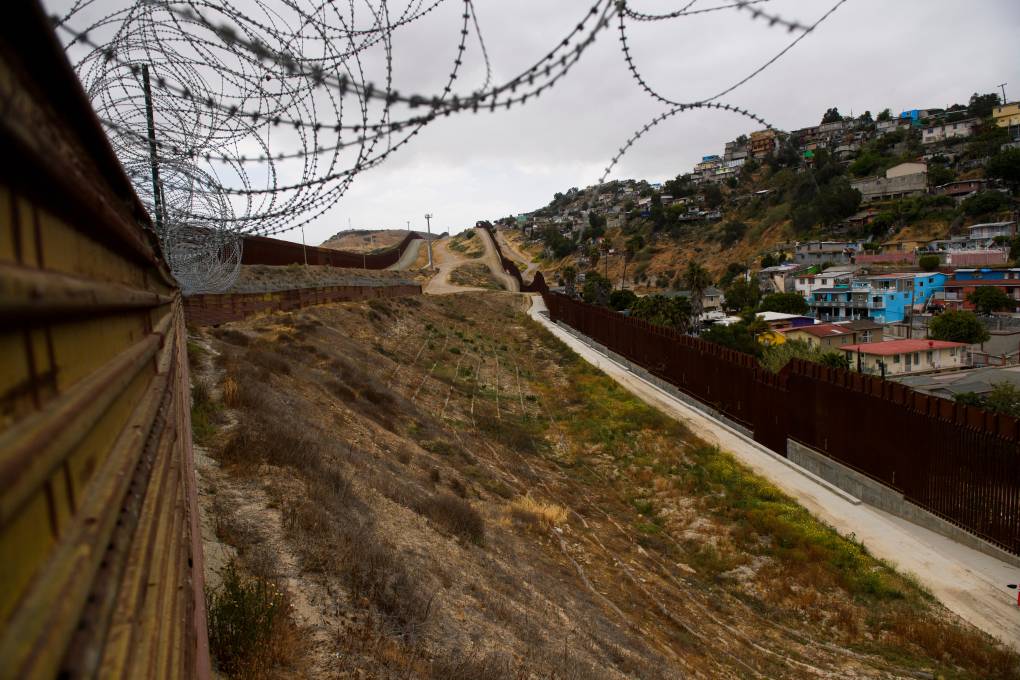
"description": "A section of an older design fence remains between new sections of the steel bollard-style border wall along the US-Mexico border between San Diego (L) and the Libertad neighborhood of Tijuana (R), during a tour with US Customs and Border Protection on May 10, 2021 in San Diego County, California. - Few issues have as long a history of bedeviling both Democrats and Republicans as immigration and asylum on the approximately 2,000-mile (3,000-kilometer) US-Mexico frontier. (Photo by Patrick T. FALLON / AFP) (Photo by PATRICK T. FALLON/AFP via Getty Images)",
"title": "Border - Migrants",
"credit": "Patrick T. Fallon/AFP/Getty Images",
"status": "inherit",
"altTag": null,
"isLoading": false,
"fetchFailed": false
},
"news_11883464": {
"type": "attachments",
"id": "news_11883464",
"meta": {
"index": "attachments_1716263798",
"site": "news",
"id": "11883464",
"found": true
},
"parent": 11883463,
"imgSizes": {
"twentyfourteen-full-width": {
"file": "https://ww2.kqed.org/app/uploads/sites/10/2021/08/ap-8c3a7eabf7a8d5aad389199dd806be57bf56c97c-1038x576.jpg",
"width": 1038,
"mimeType": "image/jpeg",
"height": 576
},
"thumbnail": {
"file": "https://ww2.kqed.org/app/uploads/sites/10/2021/08/ap-8c3a7eabf7a8d5aad389199dd806be57bf56c97c-160x120.jpg",
"width": 160,
"mimeType": "image/jpeg",
"height": 120
},
"post-thumbnail": {
"file": "https://ww2.kqed.org/app/uploads/sites/10/2021/08/ap-8c3a7eabf7a8d5aad389199dd806be57bf56c97c-672x372.jpg",
"width": 672,
"mimeType": "image/jpeg",
"height": 372
},
"kqedFullSize": {
"file": "https://ww2.kqed.org/app/uploads/sites/10/2021/08/ap-8c3a7eabf7a8d5aad389199dd806be57bf56c97c-scaled.jpg",
"width": 2560,
"height": 1920
},
"2048x2048": {
"file": "https://ww2.kqed.org/app/uploads/sites/10/2021/08/ap-8c3a7eabf7a8d5aad389199dd806be57bf56c97c-2048x1536.jpg",
"width": 2048,
"mimeType": "image/jpeg",
"height": 1536
},
"large": {
"file": "https://ww2.kqed.org/app/uploads/sites/10/2021/08/ap-8c3a7eabf7a8d5aad389199dd806be57bf56c97c-1020x765.jpg",
"width": 1020,
"mimeType": "image/jpeg",
"height": 765
},
"1536x1536": {
"file": "https://ww2.kqed.org/app/uploads/sites/10/2021/08/ap-8c3a7eabf7a8d5aad389199dd806be57bf56c97c-1536x1152.jpg",
"width": 1536,
"mimeType": "image/jpeg",
"height": 1152
},
"full-width": {
"file": "https://ww2.kqed.org/app/uploads/sites/10/2021/08/ap-8c3a7eabf7a8d5aad389199dd806be57bf56c97c-1920x1440.jpg",
"width": 1920,
"mimeType": "image/jpeg",
"height": 1440
},
"medium": {
"file": "https://ww2.kqed.org/app/uploads/sites/10/2021/08/ap-8c3a7eabf7a8d5aad389199dd806be57bf56c97c-800x600.jpg",
"width": 800,
"mimeType": "image/jpeg",
"height": 600
}
},
"publishDate": 1627945601,
"modified": 1627947097,
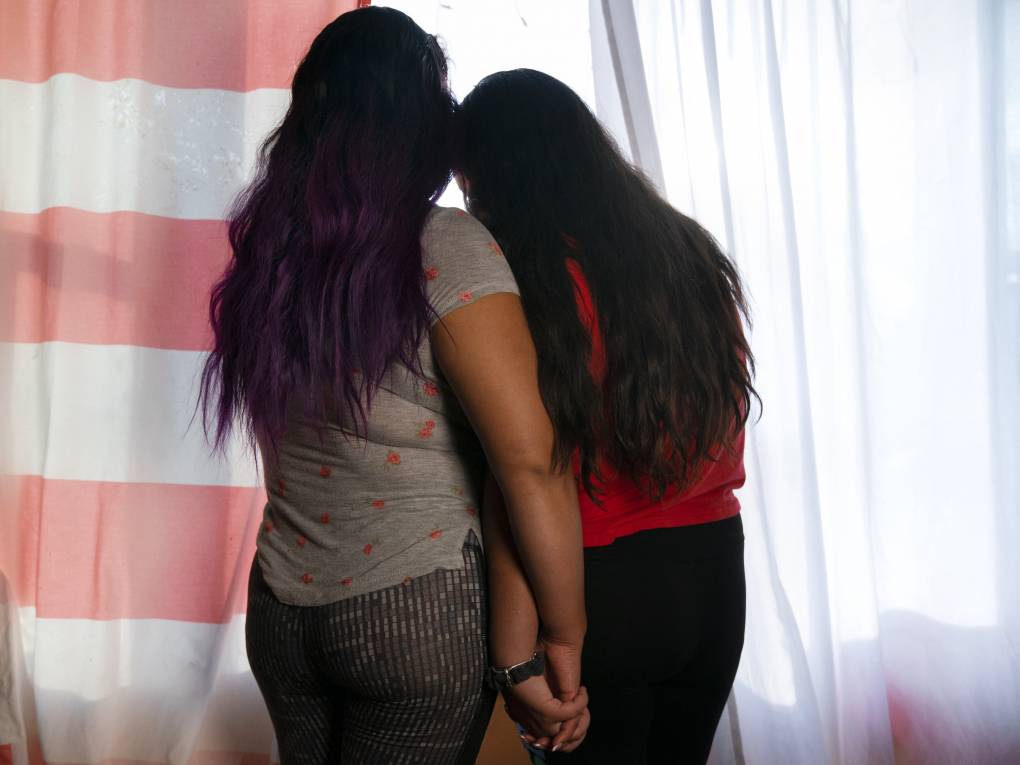
"caption": "Jacqueline Flores, left, holds hands with her daughter Nicky at their home in Virginia on Wednesday, July 14, 2021. Flores, a member of the Asylum Seeker Advocacy Project, is asking President Biden to end Title 42 and allow her family from El Salvador, along with other migrants, to ask for asylum at the border. Flores' aunt and cousin were recently expelled to Mexico at the U.S. border under the public health rule that allows border agents to turn away migrants during the pandemic.",
"description": null,
"title": "Jacqueline Flores (left) with daughter Nicky at their home in Virginia last month. They are part of the Asylum Seeker Advocacy Project, a group calling for an end to Title 42 so their family members can seek asylum.",
"credit": "Jacquelyn Martin/AP",
"status": "inherit",
"altTag": null,
"isLoading": false,
"fetchFailed": false
},
"news_11882784": {
"type": "attachments",
"id": "news_11882784",
"meta": {
"index": "attachments_1716263798",
"site": "news",
"id": "11882784",
"found": true
},
"parent": 11882773,
"imgSizes": {
"twentyfourteen-full-width": {
"file": "https://ww2.kqed.org/app/uploads/sites/10/2021/07/GettyImages-1330157179-1024x576.jpg",
"width": 1024,
"mimeType": "image/jpeg",
"height": 576
},
"thumbnail": {
"file": "https://ww2.kqed.org/app/uploads/sites/10/2021/07/GettyImages-1330157179-160x106.jpg",
"width": 160,
"mimeType": "image/jpeg",
"height": 106
},
"post-thumbnail": {
"file": "https://ww2.kqed.org/app/uploads/sites/10/2021/07/GettyImages-1330157179-672x372.jpg",
"width": 672,
"mimeType": "image/jpeg",
"height": 372
},
"kqedFullSize": {
"file": "https://ww2.kqed.org/app/uploads/sites/10/2021/07/GettyImages-1330157179.jpg",
"width": 1024,
"height": 681
},
"large": {
"file": "https://ww2.kqed.org/app/uploads/sites/10/2021/07/GettyImages-1330157179-1020x678.jpg",
"width": 1020,
"mimeType": "image/jpeg",
"height": 678
},
"medium": {
"file": "https://ww2.kqed.org/app/uploads/sites/10/2021/07/GettyImages-1330157179-800x532.jpg",
"width": 800,
"mimeType": "image/jpeg",
"height": 532
}
},
"publishDate": 1627500361,
"modified": 1627501925,
"caption": "The sun begins to set beyond the U.S.-Mexico border barrier running into the Pacific Ocean on July 22, 2021 in Tijuana, Mexico. While the Biden administration has haltingly restarted the asylum system along the southwest border, only a small number of asylum-seekers whose situations are considered the most urgent have been allowed to cross the border with Title 42 exceptions. Thousands of asylum-seekers remain stuck in Tijuana in precarious conditions.",
"description": null,
"title": "Migrants Huddle In Camps And Shelters In Tijuana Waiting To Cross Into U.S.",
"credit": "Mario Tama/Getty Images",
"status": "inherit",
"altTag": null,
"isLoading": false,
"fetchFailed": false
},
"news_11876240": {
"type": "attachments",
"id": "news_11876240",
"meta": {
"index": "attachments_1716263798",
"site": "news",
"id": "11876240",
"found": true
},
"parent": 11876226,
"imgSizes": {
"twentyfourteen-full-width": {
"file": "https://ww2.kqed.org/app/uploads/sites/10/2021/06/GettyImages-1233008043-1024x576.jpg",
"width": 1024,
"mimeType": "image/jpeg",
"height": 576
},
"thumbnail": {
"file": "https://ww2.kqed.org/app/uploads/sites/10/2021/06/GettyImages-1233008043-160x107.jpg",
"width": 160,
"mimeType": "image/jpeg",
"height": 107
},
"post-thumbnail": {
"file": "https://ww2.kqed.org/app/uploads/sites/10/2021/06/GettyImages-1233008043-672x372.jpg",
"width": 672,
"mimeType": "image/jpeg",
"height": 372
},
"kqedFullSize": {
"file": "https://ww2.kqed.org/app/uploads/sites/10/2021/06/GettyImages-1233008043.jpg",
"width": 1024,
"height": 683
},
"large": {
"file": "https://ww2.kqed.org/app/uploads/sites/10/2021/06/GettyImages-1233008043-1020x680.jpg",
"width": 1020,
"mimeType": "image/jpeg",
"height": 680
},
"medium": {
"file": "https://ww2.kqed.org/app/uploads/sites/10/2021/06/GettyImages-1233008043-800x534.jpg",
"width": 800,
"mimeType": "image/jpeg",
"height": 534
}
},
"publishDate": 1622588130,
"modified": 1622591636,
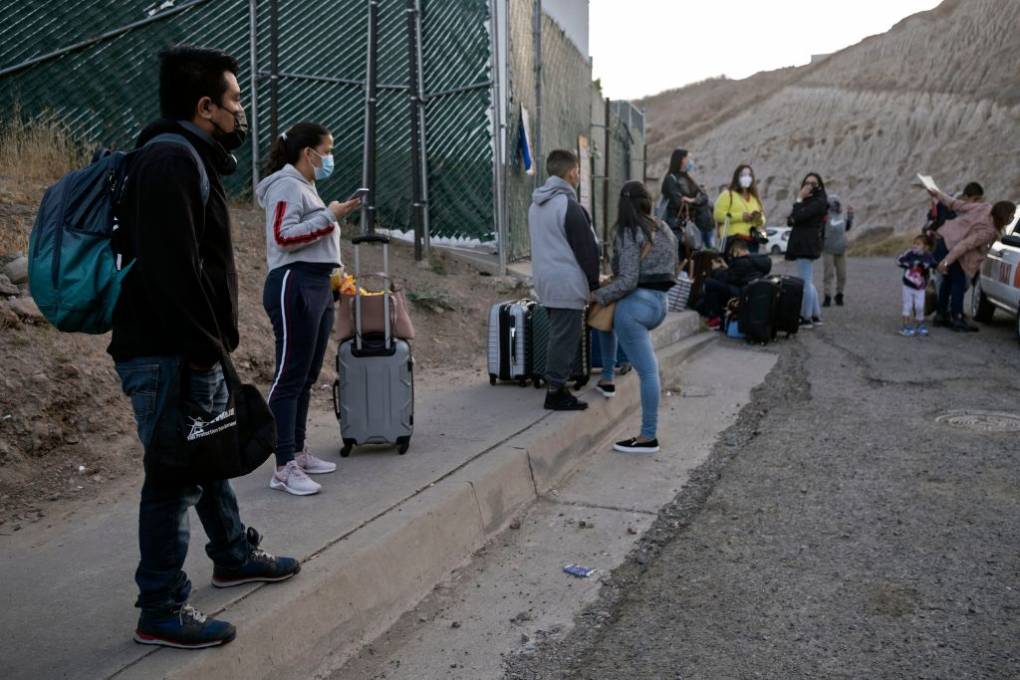
"caption": "Cruz Estuardo Tunpumay, left, a 32-year-old migrant from Guatemala, stands among other asylum-seekers on May 20, 2021, at a Mexican government facility in Tijuana, just before crossing to the United States for his asylum process. Cruz left Guatemala in March 2019 and is heading to Los Angeles where he hopes to find a job as soon as authorities allow him to, so he can send money back to his family.",
"description": null,
"title": "MEXICO-GUATEMALA-US-MIGRATION-ASYLUM",
"credit": "Guillermo Arias/AFP via Getty Images",
"status": "inherit",
"altTag": null,
"isLoading": false,
"fetchFailed": false
},
"news_11875950": {
"type": "attachments",
"id": "news_11875950",
"meta": {
"index": "attachments_1716263798",
"site": "news",
"id": "11875950",
"found": true
},
"parent": 11875913,
"imgSizes": {
"twentyfourteen-full-width": {
"file": "https://ww2.kqed.org/app/uploads/sites/10/2021/05/GettyImages-1318956214-1024x576.jpg",
"width": 1024,
"mimeType": "image/jpeg",
"height": 576
},
"thumbnail": {
"file": "https://ww2.kqed.org/app/uploads/sites/10/2021/05/GettyImages-1318956214-160x107.jpg",
"width": 160,
"mimeType": "image/jpeg",
"height": 107
},
"post-thumbnail": {
"file": "https://ww2.kqed.org/app/uploads/sites/10/2021/05/GettyImages-1318956214-672x372.jpg",
"width": 672,
"mimeType": "image/jpeg",
"height": 372
},
"kqedFullSize": {
"file": "https://ww2.kqed.org/app/uploads/sites/10/2021/05/GettyImages-1318956214.jpg",
"width": 1024,
"height": 687
},
"large": {
"file": "https://ww2.kqed.org/app/uploads/sites/10/2021/05/GettyImages-1318956214-1020x684.jpg",
"width": 1020,
"mimeType": "image/jpeg",
"height": 684
},
"medium": {
"file": "https://ww2.kqed.org/app/uploads/sites/10/2021/05/GettyImages-1318956214-800x537.jpg",
"width": 800,
"mimeType": "image/jpeg",
"height": 537
}
},
"publishDate": 1622236105,
"modified": 1622236400,
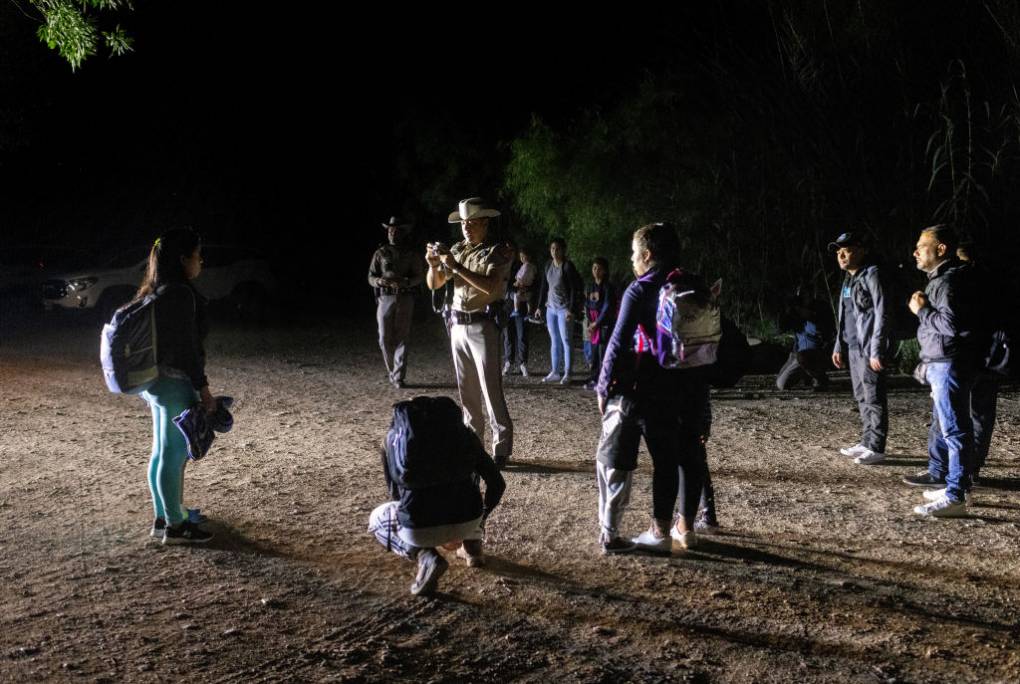
"caption": "A group of migrants who have just crossed the Rio Grande from Mexico to seek political asylum in the United States are apprehended on May 19, 2021 in Del Rio, Texas, before being taken into custody by U.S. Border Patrol agents. ",
"description": null,
"title": "Undocumented Immigrants Attempt To Cross Into U.S. Near Del Rio, Texas",
"credit": "John Moore/Getty Images",
"status": "inherit",
"altTag": null,
"isLoading": false,
"fetchFailed": false
},
"news_11852386": {
"type": "attachments",
"id": "news_11852386",
"meta": {
"index": "attachments_1716263798",
"site": "news",
"id": "11852386",
"found": true
},
"parent": 11844742,
"imgSizes": {
"apple_news_ca_square_4_0": {
"file": "https://ww2.kqed.org/app/uploads/sites/10/2020/12/LUNA-featured-edit-1020x574-1-470x470.jpg",
"width": 470,
"mimeType": "image/jpeg",
"height": 470
},
"thumbnail": {
"file": "https://ww2.kqed.org/app/uploads/sites/10/2020/12/LUNA-featured-edit-1020x574-1-160x90.jpg",
"width": 160,
"mimeType": "image/jpeg",
"height": 90
},
"post-thumbnail": {
"file": "https://ww2.kqed.org/app/uploads/sites/10/2020/12/LUNA-featured-edit-1020x574-1-672x372.jpg",
"width": 672,
"mimeType": "image/jpeg",
"height": 372
},
"kqedFullSize": {
"file": "https://ww2.kqed.org/app/uploads/sites/10/2020/12/LUNA-featured-edit-1020x574-1.jpg",
"width": 1020,
"height": 574
},
"apple_news_ca_landscape_4_7": {
"file": "https://ww2.kqed.org/app/uploads/sites/10/2020/12/LUNA-featured-edit-1020x574-1-632x474.jpg",
"width": 632,
"mimeType": "image/jpeg",
"height": 474
},
"apple_news_ca_landscape_4_0": {
"file": "https://ww2.kqed.org/app/uploads/sites/10/2020/12/LUNA-featured-edit-1020x574-1-536x402.jpg",
"width": 536,
"mimeType": "image/jpeg",
"height": 402
},
"medium": {
"file": "https://ww2.kqed.org/app/uploads/sites/10/2020/12/LUNA-featured-edit-1020x574-1-800x450.jpg",
"width": 800,
"mimeType": "image/jpeg",
"height": 450
},
"apple_news_ca_portrait_4_0": {
"file": "https://ww2.kqed.org/app/uploads/sites/10/2020/12/LUNA-featured-edit-1020x574-1-354x472.jpg",
"width": 354,
"mimeType": "image/jpeg",
"height": 472
},
"apple_news_ca_portrait_9_7": {
"file": "https://ww2.kqed.org/app/uploads/sites/10/2020/12/LUNA-featured-edit-1020x574-1-840x574.jpg",
"width": 840,
"mimeType": "image/jpeg",
"height": 574
},
"apple_news_ca_portrait_4_7": {
"file": "https://ww2.kqed.org/app/uploads/sites/10/2020/12/LUNA-featured-edit-1020x574-1-414x552.jpg",
"width": 414,
"mimeType": "image/jpeg",
"height": 552
},
"apple_news_ca_portrait_5_5": {
"file": "https://ww2.kqed.org/app/uploads/sites/10/2020/12/LUNA-featured-edit-1020x574-1-687x574.jpg",
"width": 687,
"mimeType": "image/jpeg",
"height": 574
},
"apple_news_ca_square_4_7": {
"file": "https://ww2.kqed.org/app/uploads/sites/10/2020/12/LUNA-featured-edit-1020x574-1-550x550.jpg",
"width": 550,
"mimeType": "image/jpeg",
"height": 550
},
"apple_news_ca_square_5_5": {
"file": "https://ww2.kqed.org/app/uploads/sites/10/2020/12/LUNA-featured-edit-1020x574-1-912x574.jpg",
"width": 912,
"mimeType": "image/jpeg",
"height": 574
}
},
"publishDate": 1608619592,
"modified": 1608620055,
"caption": "Luna Guzmán left Guatemala four years ago with the goal of reaching California. She had to face violence and sexual harassment while she was detained in a migrant detention center near San Diego and was later infected with COVID-19 while she waited for her asylum process in Tijuana.",
"description": "Luna Guzmán left Guatemala four years ago with the goal of reaching California. She had to face violence and sexual harassment while she was detained in a migrant detention center near San Diego and was later infected with COVID-19 while she waited for her asylum process in Tijuana.",
"title": "LUNA-featured-edit-1020x574",
"credit": "Courtest of Luna Guzmán",
"status": "inherit",
"altTag": null,
"isLoading": false,
"fetchFailed": false
},
"news_11867583": {
"type": "attachments",
"id": "news_11867583",
"meta": {
"index": "attachments_1716263798",
"site": "news",
"id": "11867583",
"found": true
},
"parent": 11867582,
"imgSizes": {
"twentyfourteen-full-width": {
"file": "https://ww2.kqed.org/app/uploads/sites/10/2021/04/gettyimages-1231458573-mayorkas-family-separation_wide-46f939e4f90b41bdb87b1c05dda7867e7ddb1afa-1038x576.jpg",
"width": 1038,
"mimeType": "image/jpeg",
"height": 576
},
"thumbnail": {
"file": "https://ww2.kqed.org/app/uploads/sites/10/2021/04/gettyimages-1231458573-mayorkas-family-separation_wide-46f939e4f90b41bdb87b1c05dda7867e7ddb1afa-160x90.jpg",
"width": 160,
"mimeType": "image/jpeg",
"height": 90
},
"post-thumbnail": {
"file": "https://ww2.kqed.org/app/uploads/sites/10/2021/04/gettyimages-1231458573-mayorkas-family-separation_wide-46f939e4f90b41bdb87b1c05dda7867e7ddb1afa-672x372.jpg",
"width": 672,
"mimeType": "image/jpeg",
"height": 372
},
"kqedFullSize": {
"file": "https://ww2.kqed.org/app/uploads/sites/10/2021/04/gettyimages-1231458573-mayorkas-family-separation_wide-46f939e4f90b41bdb87b1c05dda7867e7ddb1afa-scaled.jpg",
"width": 2560,
"height": 1440
},
"2048x2048": {
"file": "https://ww2.kqed.org/app/uploads/sites/10/2021/04/gettyimages-1231458573-mayorkas-family-separation_wide-46f939e4f90b41bdb87b1c05dda7867e7ddb1afa-2048x1152.jpg",
"width": 2048,
"mimeType": "image/jpeg",
"height": 1152
},
"large": {
"file": "https://ww2.kqed.org/app/uploads/sites/10/2021/04/gettyimages-1231458573-mayorkas-family-separation_wide-46f939e4f90b41bdb87b1c05dda7867e7ddb1afa-1020x574.jpg",
"width": 1020,
"mimeType": "image/jpeg",
"height": 574
},
"1536x1536": {
"file": "https://ww2.kqed.org/app/uploads/sites/10/2021/04/gettyimages-1231458573-mayorkas-family-separation_wide-46f939e4f90b41bdb87b1c05dda7867e7ddb1afa-1536x864.jpg",
"width": 1536,
"mimeType": "image/jpeg",
"height": 864
},
"full-width": {
"file": "https://ww2.kqed.org/app/uploads/sites/10/2021/04/gettyimages-1231458573-mayorkas-family-separation_wide-46f939e4f90b41bdb87b1c05dda7867e7ddb1afa-1920x1080.jpg",
"width": 1920,
"mimeType": "image/jpeg",
"height": 1080
},
"medium": {
"file": "https://ww2.kqed.org/app/uploads/sites/10/2021/04/gettyimages-1231458573-mayorkas-family-separation_wide-46f939e4f90b41bdb87b1c05dda7867e7ddb1afa-800x450.jpg",
"width": 800,
"mimeType": "image/jpeg",
"height": 450
}
},
"publishDate": 1617301070,
"modified": 1617310097,
"caption": "Secretary of Homeland Security Alejandro Mayorkas speaks during the daily press briefing at the White House on March 1, 2021 in Washington, D.C. Mayorkas discussed the Biden administration's plans for overhauling immigration policy. ",
"description": "Secretary of Homeland Security Alejandro Mayorkas speaks during the daily press briefing at the White House on March 1, 2021 in Washington, DC. Mayorkas discussed the Biden administration's plans for overhauling immigration policy. ",
"title": "Homeland Security Secretary Alejandro Mayorkas speaks at the White House on March 1. He has pledged to reduce the processing of many asylum cases from \"years to months.\"",
"credit": "Drew Angerer/Getty Images",
"status": "inherit",
"altTag": null,
"isLoading": false,
"fetchFailed": false
},
"news_11858317": {
"type": "attachments",
"id": "news_11858317",
"meta": {
"index": "attachments_1716263798",
"site": "news",
"id": "11858317",
"found": true
},
"parent": 11858316,
"imgSizes": {
"apple_news_ca_landscape_5_5": {
"file": "https://ww2.kqed.org/app/uploads/sites/10/2021/02/gettyimages-1230936271-66a4f28f0f4c76f8936d96115f8be7f11c103ec7-1044x783.jpg",
"width": 1044,
"mimeType": "image/jpeg",
"height": 783
},
"apple_news_ca_square_4_0": {
"file": "https://ww2.kqed.org/app/uploads/sites/10/2021/02/gettyimages-1230936271-66a4f28f0f4c76f8936d96115f8be7f11c103ec7-470x470.jpg",
"width": 470,
"mimeType": "image/jpeg",
"height": 470
},
"twentyfourteen-full-width": {
"file": "https://ww2.kqed.org/app/uploads/sites/10/2021/02/gettyimages-1230936271-66a4f28f0f4c76f8936d96115f8be7f11c103ec7-1038x576.jpg",
"width": 1038,
"mimeType": "image/jpeg",
"height": 576
},
"thumbnail": {
"file": "https://ww2.kqed.org/app/uploads/sites/10/2021/02/gettyimages-1230936271-66a4f28f0f4c76f8936d96115f8be7f11c103ec7-160x120.jpg",
"width": 160,
"mimeType": "image/jpeg",
"height": 120
},
"post-thumbnail": {
"file": "https://ww2.kqed.org/app/uploads/sites/10/2021/02/gettyimages-1230936271-66a4f28f0f4c76f8936d96115f8be7f11c103ec7-672x372.jpg",
"width": 672,
"mimeType": "image/jpeg",
"height": 372
},
"kqedFullSize": {
"file": "https://ww2.kqed.org/app/uploads/sites/10/2021/02/gettyimages-1230936271-66a4f28f0f4c76f8936d96115f8be7f11c103ec7-scaled.jpg",
"width": 2560,
"height": 1920
},
"2048x2048": {
"file": "https://ww2.kqed.org/app/uploads/sites/10/2021/02/gettyimages-1230936271-66a4f28f0f4c76f8936d96115f8be7f11c103ec7-2048x1536.jpg",
"width": 2048,
"mimeType": "image/jpeg",
"height": 1536
},
"apple_news_ca_landscape_4_7": {
"file": "https://ww2.kqed.org/app/uploads/sites/10/2021/02/gettyimages-1230936271-66a4f28f0f4c76f8936d96115f8be7f11c103ec7-632x474.jpg",
"width": 632,
"mimeType": "image/jpeg",
"height": 474
},
"large": {
"file": "https://ww2.kqed.org/app/uploads/sites/10/2021/02/gettyimages-1230936271-66a4f28f0f4c76f8936d96115f8be7f11c103ec7-1020x765.jpg",
"width": 1020,
"mimeType": "image/jpeg",
"height": 765
},
"apple_news_ca_landscape_4_0": {
"file": "https://ww2.kqed.org/app/uploads/sites/10/2021/02/gettyimages-1230936271-66a4f28f0f4c76f8936d96115f8be7f11c103ec7-536x402.jpg",
"width": 536,
"mimeType": "image/jpeg",
"height": 402
},
"apple_news_ca_portrait_12_9": {
"file": "https://ww2.kqed.org/app/uploads/sites/10/2021/02/gettyimages-1230936271-66a4f28f0f4c76f8936d96115f8be7f11c103ec7-1122x1496.jpg",
"width": 1122,
"mimeType": "image/jpeg",
"height": 1496
},
"medium": {
"file": "https://ww2.kqed.org/app/uploads/sites/10/2021/02/gettyimages-1230936271-66a4f28f0f4c76f8936d96115f8be7f11c103ec7-800x600.jpg",
"width": 800,
"mimeType": "image/jpeg",
"height": 600
},
"apple_news_ca_portrait_4_0": {
"file": "https://ww2.kqed.org/app/uploads/sites/10/2021/02/gettyimages-1230936271-66a4f28f0f4c76f8936d96115f8be7f11c103ec7-354x472.jpg",
"width": 354,
"mimeType": "image/jpeg",
"height": 472
},
"apple_news_ca_portrait_9_7": {
"file": "https://ww2.kqed.org/app/uploads/sites/10/2021/02/gettyimages-1230936271-66a4f28f0f4c76f8936d96115f8be7f11c103ec7-840x1120.jpg",
"width": 840,
"mimeType": "image/jpeg",
"height": 1120
},
"apple_news_ca_landscape_12_9": {
"file": "https://ww2.kqed.org/app/uploads/sites/10/2021/02/gettyimages-1230936271-66a4f28f0f4c76f8936d96115f8be7f11c103ec7-1832x1374.jpg",
"width": 1832,
"mimeType": "image/jpeg",
"height": 1374
},
"apple_news_ca_square_9_7": {
"file": "https://ww2.kqed.org/app/uploads/sites/10/2021/02/gettyimages-1230936271-66a4f28f0f4c76f8936d96115f8be7f11c103ec7-1104x1104.jpg",
"width": 1104,
"mimeType": "image/jpeg",
"height": 1104
},
"1536x1536": {
"file": "https://ww2.kqed.org/app/uploads/sites/10/2021/02/gettyimages-1230936271-66a4f28f0f4c76f8936d96115f8be7f11c103ec7-1536x1152.jpg",
"width": 1536,
"mimeType": "image/jpeg",
"height": 1152
},
"apple_news_ca_portrait_4_7": {
"file": "https://ww2.kqed.org/app/uploads/sites/10/2021/02/gettyimages-1230936271-66a4f28f0f4c76f8936d96115f8be7f11c103ec7-414x552.jpg",
"width": 414,
"mimeType": "image/jpeg",
"height": 552
},
"apple_news_ca_square_12_9": {
"file": "https://ww2.kqed.org/app/uploads/sites/10/2021/02/gettyimages-1230936271-66a4f28f0f4c76f8936d96115f8be7f11c103ec7-1472x1472.jpg",
"width": 1472,
"mimeType": "image/jpeg",
"height": 1472
},
"apple_news_ca_portrait_5_5": {
"file": "https://ww2.kqed.org/app/uploads/sites/10/2021/02/gettyimages-1230936271-66a4f28f0f4c76f8936d96115f8be7f11c103ec7-687x916.jpg",
"width": 687,
"mimeType": "image/jpeg",
"height": 916
},
"full-width": {
"file": "https://ww2.kqed.org/app/uploads/sites/10/2021/02/gettyimages-1230936271-66a4f28f0f4c76f8936d96115f8be7f11c103ec7-1920x1440.jpg",
"width": 1920,
"mimeType": "image/jpeg",
"height": 1440
},
"apple_news_ca_square_4_7": {
"file": "https://ww2.kqed.org/app/uploads/sites/10/2021/02/gettyimages-1230936271-66a4f28f0f4c76f8936d96115f8be7f11c103ec7-550x550.jpg",
"width": 550,
"mimeType": "image/jpeg",
"height": 550
},
"apple_news_ca_landscape_9_7": {
"file": "https://ww2.kqed.org/app/uploads/sites/10/2021/02/gettyimages-1230936271-66a4f28f0f4c76f8936d96115f8be7f11c103ec7-1376x1032.jpg",
"width": 1376,
"mimeType": "image/jpeg",
"height": 1032
},
"apple_news_ca_square_5_5": {
"file": "https://ww2.kqed.org/app/uploads/sites/10/2021/02/gettyimages-1230936271-66a4f28f0f4c76f8936d96115f8be7f11c103ec7-912x912.jpg",
"width": 912,
"mimeType": "image/jpeg",
"height": 912
}
},
"publishDate": 1612308197,
"modified": 1612313243,
"caption": "President Biden signed three executive orders related to immigration on Tuesday. His aides said work to reverse his predecessor's immigration policies has only just begun.",
"description": "President Biden signed three executive orders related to immigration on Tuesday. His aides said work to reverse his predecessor's immigration policies has only just begun.",
"title": "President Biden signed three executive orders related to immigration. His aides said work to reverse his predecessors' immigration policies has only just begun.",
"credit": "Saul Loeb/AFP via Getty Images",
"status": "inherit",
"altTag": null,
"isLoading": false,
"fetchFailed": false
},
"news_11831756": {
"type": "attachments",
"id": "news_11831756",
"meta": {
"index": "attachments_1716263798",
"site": "news",
"id": "11831756",
"found": true
},
"parent": 11831748,
"imgSizes": {
"apple_news_ca_landscape_5_5": {
"file": "https://ww2.kqed.org/app/uploads/sites/10/2020/08/Trump-Citizenship-Application-Rule-Change-1044x783.jpg",
"width": 1044,
"mimeType": "image/jpeg",
"height": 783
},
"apple_news_ca_square_4_0": {
"file": "https://ww2.kqed.org/app/uploads/sites/10/2020/08/Trump-Citizenship-Application-Rule-Change-470x470.jpg",
"width": 470,
"mimeType": "image/jpeg",
"height": 470
},
"twentyfourteen-full-width": {
"file": "https://ww2.kqed.org/app/uploads/sites/10/2020/08/Trump-Citizenship-Application-Rule-Change-1038x576.jpg",
"width": 1038,
"mimeType": "image/jpeg",
"height": 576
},
"thumbnail": {
"file": "https://ww2.kqed.org/app/uploads/sites/10/2020/08/Trump-Citizenship-Application-Rule-Change-160x107.jpg",
"width": 160,
"mimeType": "image/jpeg",
"height": 107
},
"post-thumbnail": {
"file": "https://ww2.kqed.org/app/uploads/sites/10/2020/08/Trump-Citizenship-Application-Rule-Change-672x372.jpg",
"width": 672,
"mimeType": "image/jpeg",
"height": 372
},
"kqedFullSize": {
"file": "https://ww2.kqed.org/app/uploads/sites/10/2020/08/Trump-Citizenship-Application-Rule-Change.jpg",
"width": 1920,
"height": 1280
},
"apple_news_ca_landscape_4_7": {
"file": "https://ww2.kqed.org/app/uploads/sites/10/2020/08/Trump-Citizenship-Application-Rule-Change-632x474.jpg",
"width": 632,
"mimeType": "image/jpeg",
"height": 474
},
"large": {
"file": "https://ww2.kqed.org/app/uploads/sites/10/2020/08/Trump-Citizenship-Application-Rule-Change-1020x680.jpg",
"width": 1020,
"mimeType": "image/jpeg",
"height": 680
},
"apple_news_ca_landscape_4_0": {
"file": "https://ww2.kqed.org/app/uploads/sites/10/2020/08/Trump-Citizenship-Application-Rule-Change-536x402.jpg",
"width": 536,
"mimeType": "image/jpeg",
"height": 402
},
"apple_news_ca_portrait_12_9": {
"file": "https://ww2.kqed.org/app/uploads/sites/10/2020/08/Trump-Citizenship-Application-Rule-Change-1122x1280.jpg",
"width": 1122,
"mimeType": "image/jpeg",
"height": 1280
},
"medium": {
"file": "https://ww2.kqed.org/app/uploads/sites/10/2020/08/Trump-Citizenship-Application-Rule-Change-800x533.jpg",
"width": 800,
"mimeType": "image/jpeg",
"height": 533
},
"apple_news_ca_portrait_4_0": {
"file": "https://ww2.kqed.org/app/uploads/sites/10/2020/08/Trump-Citizenship-Application-Rule-Change-354x472.jpg",
"width": 354,
"mimeType": "image/jpeg",
"height": 472
},
"apple_news_ca_portrait_9_7": {
"file": "https://ww2.kqed.org/app/uploads/sites/10/2020/08/Trump-Citizenship-Application-Rule-Change-840x1120.jpg",
"width": 840,
"mimeType": "image/jpeg",
"height": 1120
},
"apple_news_ca_landscape_12_9": {
"file": "https://ww2.kqed.org/app/uploads/sites/10/2020/08/Trump-Citizenship-Application-Rule-Change-1832x1280.jpg",
"width": 1832,
"mimeType": "image/jpeg",
"height": 1280
},
"apple_news_ca_square_9_7": {
"file": "https://ww2.kqed.org/app/uploads/sites/10/2020/08/Trump-Citizenship-Application-Rule-Change-1104x1104.jpg",
"width": 1104,
"mimeType": "image/jpeg",
"height": 1104
},
"1536x1536": {
"file": "https://ww2.kqed.org/app/uploads/sites/10/2020/08/Trump-Citizenship-Application-Rule-Change-1536x1024.jpg",
"width": 1536,
"mimeType": "image/jpeg",
"height": 1024
},
"apple_news_ca_portrait_4_7": {
"file": "https://ww2.kqed.org/app/uploads/sites/10/2020/08/Trump-Citizenship-Application-Rule-Change-414x552.jpg",
"width": 414,
"mimeType": "image/jpeg",
"height": 552
},
"apple_news_ca_square_12_9": {
"file": "https://ww2.kqed.org/app/uploads/sites/10/2020/08/Trump-Citizenship-Application-Rule-Change-1472x1280.jpg",
"width": 1472,
"mimeType": "image/jpeg",
"height": 1280
},
"apple_news_ca_portrait_5_5": {
"file": "https://ww2.kqed.org/app/uploads/sites/10/2020/08/Trump-Citizenship-Application-Rule-Change-687x916.jpg",
"width": 687,
"mimeType": "image/jpeg",
"height": 916
},
"apple_news_ca_square_4_7": {
"file": "https://ww2.kqed.org/app/uploads/sites/10/2020/08/Trump-Citizenship-Application-Rule-Change-550x550.jpg",
"width": 550,
"mimeType": "image/jpeg",
"height": 550
},
"apple_news_ca_landscape_9_7": {
"file": "https://ww2.kqed.org/app/uploads/sites/10/2020/08/Trump-Citizenship-Application-Rule-Change-1376x1032.jpg",
"width": 1376,
"mimeType": "image/jpeg",
"height": 1032
},
"apple_news_ca_square_5_5": {
"file": "https://ww2.kqed.org/app/uploads/sites/10/2020/08/Trump-Citizenship-Application-Rule-Change-912x912.jpg",
"width": 912,
"mimeType": "image/jpeg",
"height": 912
}
},
"publishDate": 1596502320,
"modified": 1596502401,
"caption": "A volunteer (R) assists an immigrant with her U.S. citizenship application in 2016. ",
"description": null,
"title": "Immigrants Apply For US Citizenship In Increasing Numbers During Election Year",
"credit": "John Moore/Getty Images",
"status": "inherit",
"isLoading": false,
"fetchFailed": false
}
},
"audioPlayerReducer": {
"postId": "stream_live",
"isPaused": true,
"isPlaying": false,
"pfsActive": false,
"pledgeModalIsOpen": true,
"playerDrawerIsOpen": false,
"liveAudioPlayStartedAt": 0,
"liveAudioPlayContext": ""
},
"authorsReducer": {
"byline_news_11899566": {
"type": "authors",
"id": "byline_news_11899566",
"meta": {
"override": true
},
"slug": "byline_news_11899566",
"name": "Joel Rose and Vanessa Romo",
"isLoading": false
},
"byline_news_11897897": {
"type": "authors",
"id": "byline_news_11897897",
"meta": {
"override": true
},
"slug": "byline_news_11897897",
"name": "Elliot Spagat\u003cbr>Associated Press",
"isLoading": false
},
"byline_news_11883463": {
"type": "authors",
"id": "byline_news_11883463",
"meta": {
"override": true
},
"slug": "byline_news_11883463",
"name": "Franco Ordoñez",
"isLoading": false
},
"byline_news_11882773": {
"type": "authors",
"id": "byline_news_11882773",
"meta": {
"override": true
},
"slug": "byline_news_11882773",
"name": "Franco Ordoñez\u003cbr>NPR",
"isLoading": false
},
"byline_news_11876226": {
"type": "authors",
"id": "byline_news_11876226",
"meta": {
"override": true
},
"slug": "byline_news_11876226",
"name": "Associated Press",
"isLoading": false
},
"byline_news_11875913": {
"type": "authors",
"id": "byline_news_11875913",
"meta": {
"override": true
},
"slug": "byline_news_11875913",
"name": "Amy Taxin and Elliot Spagat\u003cbr>Associated Press",
"isLoading": false
},
"byline_news_11844742": {
"type": "authors",
"id": "byline_news_11844742",
"meta": {
"override": true
},
"slug": "byline_news_11844742",
"name": "\u003ca href=\"https://www.kqed.org/author/sasha-khokha\">Sasha Khokha\u003c/a> and \u003ca href=\"http://erin-mcintyre.com/\">Erin Siegal McIntyre\u003c/a>",
"isLoading": false
},
"byline_news_11867582": {
"type": "authors",
"id": "byline_news_11867582",
"meta": {
"override": true
},
"slug": "byline_news_11867582",
"name": "\u003ca href=\"https://www.npr.org/people/729411445/franco-ordonez\">Franco Ordoñez\u003c/a>",
"isLoading": false
},
"kqed": {
"type": "authors",
"id": "236",
"meta": {
"index": "authors_1716337520",
"id": "236",
"found": true
},
"name": "KQED News Staff",
"firstName": "KQED News Staff",
"lastName": null,
"slug": "kqed",
"email": "faq@kqed.org",
"display_author_email": false,
"staff_mastheads": [],
"title": null,
"bio": null,
"avatar": "https://secure.gravatar.com/avatar/ef0e801a68c4c54afa9180db14084167?s=600&d=blank&r=g",
"twitter": null,
"facebook": null,
"instagram": null,
"linkedin": null,
"sites": [
{
"site": "arts",
"roles": [
"contributor"
]
},
{
"site": "news",
"roles": [
"editor"
]
},
{
"site": "futureofyou",
"roles": [
"author"
]
}
],
"headData": {
"title": "KQED News Staff | KQED",
"description": null,
"ogImgSrc": "https://secure.gravatar.com/avatar/ef0e801a68c4c54afa9180db14084167?s=600&d=blank&r=g",
"twImgSrc": "https://secure.gravatar.com/avatar/ef0e801a68c4c54afa9180db14084167?s=600&d=blank&r=g"
},
"isLoading": false,
"link": "/author/kqed"
},
"kqednewsstaffandwires": {
"type": "authors",
"id": "237",
"meta": {
"index": "authors_1716337520",
"id": "237",
"found": true
},
"name": "KQED News Staff and Wires",
"firstName": "KQED News Staff and Wires",
"lastName": null,
"slug": "kqednewsstaffandwires",
"email": "onlinenewsstaff@kqed.org",
"display_author_email": false,
"staff_mastheads": [],
"title": null,
"bio": null,
"avatar": "https://secure.gravatar.com/avatar/72295af8ebbfbd19a4948f5271285664?s=600&d=blank&r=g",
"twitter": null,
"facebook": null,
"instagram": null,
"linkedin": null,
"sites": [
{
"site": "arts",
"roles": [
"contributor"
]
},
{
"site": "news",
"roles": [
"contributor"
]
},
{
"site": "lowdown",
"roles": [
"author"
]
},
{
"site": "stateofhealth",
"roles": [
"contributor"
]
},
{
"site": "food",
"roles": [
"author"
]
}
],
"headData": {
"title": "KQED News Staff and Wires | KQED",
"description": null,
"ogImgSrc": "https://secure.gravatar.com/avatar/72295af8ebbfbd19a4948f5271285664?s=600&d=blank&r=g",
"twImgSrc": "https://secure.gravatar.com/avatar/72295af8ebbfbd19a4948f5271285664?s=600&d=blank&r=g"
},
"isLoading": false,
"link": "/author/kqednewsstaffandwires"
},
"markfiore": {
"type": "authors",
"id": "3236",
"meta": {
"index": "authors_1716337520",
"id": "3236",
"found": true
},
"name": "Mark Fiore",
"firstName": "Mark",
"lastName": "Fiore",
"slug": "markfiore",
"email": "mark@markfiore.com",
"display_author_email": false,
"staff_mastheads": [
"news"
],
"title": "KQED News Cartoonist",
"bio": "\u003ca href=\"http://www.MarkFiore.com\">MarkFiore.com\u003c/a> | \u003ca href=\"https://twitter.com/markfiore\">Follow on Twitter\u003c/a> | \u003ca href=\"https://www.facebook.com/pages/Mark-Fiore-Animated-Political-Cartoons/94451707396?ref=bookmarks\">Facebook\u003c/a> | \u003ca href=\"mailto:mark@markfiore.com\">email\u003c/a>\r\n\r\nPulitzer Prize-winner, Mark Fiore, who the Wall Street Journal has called “the undisputed guru of the form,” creates animated political cartoons in San Francisco, where his work has been featured regularly on the San Francisco Chronicle’s web site, SFGate.com. His work has appeared on Newsweek.com, Slate.com, CBSNews.com, MotherJones.com, DailyKos.com and NPR’s web site. Fiore’s political animation has appeared on CNN, Frontline, Bill Moyers Journal, Salon.com and cable and broadcast outlets across the globe.\r\n\r\nBeginning his professional life by drawing traditional political cartoons for newspapers, Fiore’s work appeared in publications ranging from the Washington Post to the Los Angeles Times. In the late 1990s, he began to experiment with animating political cartoons and, after a short stint at the San Jose Mercury News as their staff cartoonist, Fiore devoted all his energies to animation.\r\nGrowing up in California, Fiore also spent a good portion of his life in the backwoods of Idaho. It was this combination that shaped him politically. Mark majored in political science at Colorado College, where, in a perfect send-off for a cartoonist, he received his diploma in 1991 as commencement speaker Dick Cheney smiled approvingly.\r\nMark Fiore was awarded the Pulitzer Prize for political cartooning in 2010, a Robert F. Kennedy Journalism Award in 2004 and has twice received an Online Journalism Award for commentary from the Online News Association (2002, 2008). Fiore has received two awards for his work in new media from the National Cartoonists Society (2001, 2002), and in 2006 received The James Madison Freedom of Information Award from The Society of Professional Journalists.",
"avatar": "https://secure.gravatar.com/avatar/fc4e2a612b15b67bad0c6f0e1db4ca9b?s=600&d=blank&r=g",
"twitter": "MarkFiore",
"facebook": null,
"instagram": "https://www.instagram.com/markfiore/?hl=en",
"linkedin": null,
"sites": [
{
"site": "arts",
"roles": [
"contributor"
]
},
{
"site": "news",
"roles": [
"editor"
]
},
{
"site": "futureofyou",
"roles": [
"editor"
]
},
{
"site": "science",
"roles": [
"editor"
]
}
],
"headData": {
"title": "Mark Fiore | KQED",
"description": "KQED News Cartoonist",
"ogImgSrc": "https://secure.gravatar.com/avatar/fc4e2a612b15b67bad0c6f0e1db4ca9b?s=600&d=blank&r=g",
"twImgSrc": "https://secure.gravatar.com/avatar/fc4e2a612b15b67bad0c6f0e1db4ca9b?s=600&d=blank&r=g"
},
"isLoading": false,
"link": "/author/markfiore"
},
"fjhabvala": {
"type": "authors",
"id": "8659",
"meta": {
"index": "authors_1716337520",
"id": "8659",
"found": true
},
"name": "Farida Jhabvala Romero",
"firstName": "Farida",
"lastName": "Jhabvala Romero",
"slug": "fjhabvala",
"email": "fjhabvala@kqed.org",
"display_author_email": true,
"staff_mastheads": [
"news"
],
"title": "KQED Contributor",
"bio": "Farida Jhabvala Romero is a Labor Correspondent for KQED. She previously covered immigration. Farida was \u003ca href=\"https://www.ccnma.org/2022-most-influential-latina-journalists\">named\u003c/a> one of the 10 Most Influential Latina Journalists in California in 2022 by the California Chicano News Media Association. Her work has won awards from the Society of Professional Journalists (Northern California), as well as a national and regional Edward M. Murrow Award for the collaborative reporting projects “Dangerous Air” and “Graying California.” Before joining KQED, Farida worked as a producer at Radio Bilingüe, a national public radio network. Farida earned her master’s degree in journalism from Stanford University.",
"avatar": "https://secure.gravatar.com/avatar/f9f022d4e2609741874222a1e9d41f48fea74011aa7c615eef91d9a50c944ebe?s=600&d=blank&r=g",
"twitter": "FaridaJhabvala",
"bluesky": null,
"facebook": null,
"instagram": null,
"linkedin": "https://www.linkedin.com/in/faridajhabvala/",
"sites": [
{
"site": "news",
"roles": [
"editor"
]
},
{
"site": "stateofhealth",
"roles": [
"author"
]
},
{
"site": "liveblog",
"roles": [
"author"
]
}
],
"headData": {
"title": "Farida Jhabvala Romero | KQED",
"description": "KQED Contributor",
"ogImgSrc": "https://secure.gravatar.com/avatar/f9f022d4e2609741874222a1e9d41f48fea74011aa7c615eef91d9a50c944ebe?s=600&d=blank&r=g",
"twImgSrc": "https://secure.gravatar.com/avatar/f9f022d4e2609741874222a1e9d41f48fea74011aa7c615eef91d9a50c944ebe?s=600&d=blank&r=g"
},
"isLoading": false,
"link": "/author/fjhabvala"
}
},
"pagesReducer": {
"news_tag_asylum-seekers": {
"type": "terms",
"id": "news_23653",
"meta": {
"index": "terms_1716263798",
"site": "news",
"id": "23653",
"score": 9.892588
},
"featImg": null,
"name": "Asylum-seekers",
"description": null,
"taxonomy": "tag",
"headData": {
"twImgId": null,
"twTitle": null,
"ogTitle": null,
"ogImgId": null,
"twDescription": null,
"description": null,
"title": "Asylum-seekers Archives | KQED News",
"ogDescription": null
},
"ttid": 23670,
"slug": "asylum-seekers",
"isLoading": false,
"title": "Asylum-seekers",
"pageMeta": {
"site": "news",
"WpPageTemplate": "page-topic-editorial",
"currentPage": 2
},
"blocks": [
{
"blockName": "kqed/post-list",
"attrs": {
"layout": "cardArticle2",
"query": "posts/news?tag=asylum-seekers",
"seeMore": false,
"paginated": true,
"page": 2
}
},
{
"blockName": "kqed/ad"
}
]
}
},
"pfsSessionReducer": {},
"postsReducer": {
"stream_live": {
"type": "live",
"id": "stream_live",
"audioUrl": "https://streams.kqed.org/kqedradio",
"title": "Live Stream",
"excerpt": "Live Stream information currently unavailable.",
"link": "/radio",
"featImg": "",
"label": {
"name": "KQED Live",
"link": "/"
}
},
"stream_kqedNewscast": {
"type": "posts",
"id": "stream_kqedNewscast",
"audioUrl": "https://www.kqed.org/.stream/anon/radio/RDnews/newscast.mp3?_=1",
"title": "KQED Newscast",
"featImg": "",
"label": {
"name": "88.5 FM",
"link": "/"
}
},
"news_11899566": {
"type": "posts",
"id": "news_11899566",
"meta": {
"index": "posts_1716263798",
"site": "news",
"id": "11899566",
"score": null,
"sort": [
1639769941000
]
},
"guestAuthors": [],
"slug": "justice-department-breaks-off-talks-on-compensation-for-migrant-families-separated-at-us-mexico-border",
"title": "Justice Department Breaks Off Talks on Compensation for Migrant Families Separated at US-Mexico Border",
"publishDate": 1639769941,
"format": "standard",
"headTitle": "Justice Department Breaks Off Talks on Compensation for Migrant Families Separated at US-Mexico Border | KQED",
"labelTerm": {},
"content": "\u003cp>The U.S. Department of Justice has broken off negotiations to pay monetary damages to families who were forcibly separated at the border during the Trump administration.\u003c/p>\n\u003cp>The negotiations, which began in the early months of the Biden administration, \u003ca href=\"https://www.kqed.org/news/tag/family-separations\">and have been reported on extensively by KQED\u003c/a>, were aimed at settling claims brought by migrant families who were separated by U.S. authorities while seeking to enter the country for asylum and other reasons — as part of the previous administration’s “zero tolerance” policy.\u003c/p>\n\u003cp>But government officials abruptly pulled the plug on all settlement talks on Thursday, Lee Gelernt, a lawyer at the American Civil Liberties Union and one of the lead negotiators, told NPR.\u003c/p>\n\u003cp>[pullquote align=\"right\" size=\"medium\" citation=\"Lee Gelernt, ACLU attorney representing migrant families\"]‘We can see no reason for this other than this administration does not want to use any political capital to help these children. History will not judge this decision kindly.’[/pullquote]Gelernt said the Justice Department did not explain why it was walking away from the talks.\u003c/p>\n\u003cp>“We can see no reason for this other than this administration does not want to use any political capital to help these children,” Gelernt said. “History will not judge this decision kindly.”\u003c/p>\n\u003cp>In a statement, the Department of Justice said the parties have been unable to reach a settlement, but “we remain committed to engaging with the plaintiffs and to bringing justice to the victims of this abhorrent policy.”\u003c/p>\n\u003cp>The \u003ca href=\"https://www.npr.org/2021/01/27/961048895/justice-department-rescinds-trumps-zero-tolerance-immigration-policy\">controversial immigration policy was dismantled\u003c/a> within Biden’s first week as president.\u003c/p>\n\u003cp>In all, the Trump administration separated more than 5,000 families who crossed into the U.S. without visas. Under the policy, adults who entered the U.S. from the southern border were prosecuted for illegal entry. Because children cannot be imprisoned with adults, they were taken into separate federal facilities.\u003c/p>\n\u003cp>Government reports ultimately found the administration had no clear plan nor had it allocated resources to help reunite parents or guardians with their children when it implemented its zero-tolerance policy. Hundreds of families remain separated, and many more say they are still suffering the effects of the separation. And more than 100 have brought claims seeking monetary damages from the government, Gelernt said.\u003c/p>\n\u003cp>Republicans and Democrats eventually appeared united against the draconian policy, calling it a humanitarian failure. President Biden called it a “moral and national shame.” And settlement talks proceeded quietly behind closed doors for several months — until October, when The Wall Street Journal \u003ca href=\"https://www.wsj.com/articles/biden-administration-in-talks-to-pay-hundreds-of-millions-to-immigrant-families-separated-at-border-11635447591?page=1\">broke the story\u003c/a> that financial compensation amounts could reach as high as $450,000 per person in some cases.\u003cbr>\n[ad fullwidth]\u003cbr>\nAt that point, the negotiations became a political liability for Biden and his administration, who came under fire by Republicans.\u003c/p>\n\u003cp>Lawyers representing families who’d been torn apart, have insisted most settlement amounts would be far lower. But the story generated enormous outrage among GOP members, who tried to link the issue to the soaring number of arrests at the southern border. They argued that giving large cash settlements to migrant families would encourage more illegal immigration.\u003c/p>\n\u003cp>In a Department of Homeland Security \u003ca href=\"https://www.c-span.org/video/?516002-1/department-homeland-security-oversight-hearing\">hearing \u003c/a>on immigration last month, Sen. Chuck Grassley, R-Iowa, said he takes the entire concept of compensation as a personal affront.\u003c/p>\n\u003cp>“As you can imagine, many Americans think it’s a pretty outrageous idea to offer massive taxpayer-funded payments to illegal immigrants who broke our laws,” Grassley told DHS secretary Alejandro Mayorkas, blaming the Biden administration for the current immigration crisis.\u003c/p>\n\u003cp>Grassley noted that the families of service members who die on active duty receive a tax repayment of $100,000. “Under what circumstances, if any, do you think it’s appropriate for an illegal immigrant who broke our laws to receive more money from the government than the family of a fallen service member?” he asked.\u003c/p>\n\u003cp>Biden administration officials and the president himself were asked frequently about the settlement talks, which appear likely to become a midterm election-year issue in 2022.[aside label=\"related coverage\" tag=\"family-separations\"]Lawyers representing the families say they’re deeply disappointed and contend everyone who was a victim of the zero-tolerance approach deserves recompense, including financial settlements. They also say the government could easily wind up spending even more money fighting these cases than if it had simply reached a settlement.\u003c/p>\n\u003cp>The Women’s Refugee Commission condemned the Justice Department’s move to pull out of the negotiations.\u003c/p>\n\u003cp>“This move is a shameful, profound betrayal of the government’s responsibility to redress the harms of this heinous policy,” Katharina Obser, director of the group’s Migrant Rights and Justice program, said in a statement.\u003c/p>\n\u003cp>“While the U.S. can never undo what happened, we expected the Biden administration to engage in good faith with efforts for redress and repair,” she said, adding that “the cruelty of intentionally tearing families apart inflicted unspeakable and permanent trauma on children and their parents coming to the U.S. border seeking safety.”\u003c/p>\n\u003cp>Kathryn Hampton, deputy director of the Physicians for Human Rights Asylum Program, also noted the long-term effects of the separation on children. The organization has \u003ca href=\"https://journals.plos.org/plosone/article?id=10.1371/journal.pone.0259576\">documented\u003c/a> the psychological harms and trauma many have suffered, including PTSD, depression and anxiety.\u003c/p>\n\u003cp>“Instead of bowing to right-wing ideologues, the Biden administration should pursue justice and accountability for the deeply traumatized children and parents who endured these atrocious acts perpetrated by the United States government,” Hampton said in a statement.\u003c/p>\n\u003cp>The Biden administration says it will continue to identify and reunify families that were separated under the Trump administration.\u003c/p>\n\u003cp>Meanwhile, the ACLU is in negotiations with the administration over other issues, including the possibility of legal status for separated families. Those talks will continue, Gelernt said — but the termination of financial negotiations won’t make them any easier.\u003c/p>\n\u003cdiv class=\"fullattribution\">\u003cem>Copyright 2021 NPR. To see more, visit npr.org.\u003cimg decoding=\"async\" src=\"https://www.google-analytics.com/__utm.gif?utmac=UA-5828686-4&utmdt=Justice+Department+breaks+off+talks+on+compensation+for+separated+families+&utme=8(APIKey)9(MDAxOTAwOTE4MDEyMTkxMDAzNjczZDljZA004)\">\u003c/em>\u003c/div>\n\u003cp>\u003c/p>\n",
"blocks": [],
"excerpt": "The U.S. has left negotiations on paying monetary damages to families who were forcibly separated by U.S. authorities, under the Trump administration, while seeking to enter the country at the southern border.",
"status": "publish",
"parent": 0,
"modified": 1739475023,
"stats": {
"hasAudio": false,
"hasVideo": false,
"hasChartOrMap": false,
"iframeSrcs": [],
"hasGoogleForm": false,
"hasGallery": false,
"hasHearkenModule": false,
"hasPolis": false,
"paragraphCount": 23,
"wordCount": 1010
},
"headData": {
"title": "Justice Department Breaks Off Talks on Compensation for Migrant Families Separated at US-Mexico Border | KQED",
"description": "The U.S. has left negotiations on paying monetary damages to families who were forcibly separated by U.S. authorities, under the Trump administration, while seeking to enter the country at the southern border.",
"ogTitle": "",
"ogDescription": "",
"ogImgId": "",
"twTitle": "",
"twDescription": "",
"twImgId": "",
"schema": {
"@context": "https://schema.org",
"@type": "NewsArticle",
"headline": "Justice Department Breaks Off Talks on Compensation for Migrant Families Separated at US-Mexico Border",
"datePublished": "2021-12-17T11:39:01-08:00",
"dateModified": "2025-02-13T11:30:23-08:00",
"image": "https://cdn.kqed.org/wp-content/uploads/2020/02/KQED-OG-Image@1x.png",
"isAccessibleForFree": "True",
"publisher": {
"@type": "NewsMediaOrganization",
"@id": "https://www.kqed.org/#organization",
"name": "KQED",
"logo": "https://cdn.kqed.org/wp-content/uploads/2020/02/KQED-OG-Image@1x.png",
"url": "https://www.kqed.org",
"sameAs": [
"https://www.facebook.com/KQED",
"https://twitter.com/KQED",
"https://www.instagram.com/kqed/",
"https://www.tiktok.com/@kqedofficial",
"https://www.linkedin.com/company/kqed",
"https://www.youtube.com/channel/UCeC0IOo7i1P_61zVUWbJ4nw"
]
}
}
},
"source": "NPR",
"sourceUrl": "https://www.npr.org/",
"sticky": false,
"nprImageCredit": "Wilfredo Lee",
"nprByline": "Joel Rose and Vanessa Romo",
"nprImageAgency": "AP",
"nprStoryId": "1065044185",
"nprApiLink": "http://api.npr.org/query?id=1065044185&apiKey=MDAxOTAwOTE4MDEyMTkxMDAzNjczZDljZA004",
"nprHtmlLink": "https://www.npr.org/2021/12/16/1065044185/justice-department-breaks-off-talks-on-compensation-for-separated-families?ft=nprml&f=1065044185",
"nprRetrievedStory": "1",
"nprPubDate": "Thu, 16 Dec 2021 22:10:00 -0500",
"nprStoryDate": "Thu, 16 Dec 2021 21:13:45 -0500",
"nprLastModifiedDate": "Thu, 16 Dec 2021 22:10:39 -0500",
"excludeFromSiteSearch": "Include",
"showOnAuthorArchivePages": "No",
"path": "/news/11899566/justice-department-breaks-off-talks-on-compensation-for-migrant-families-separated-at-us-mexico-border",
"audioTrackLength": null,
"parsedContent": [
{
"type": "contentString",
"content": "\u003cdiv class=\"post-body\">\u003cp>\u003cp>The U.S. Department of Justice has broken off negotiations to pay monetary damages to families who were forcibly separated at the border during the Trump administration.\u003c/p>\n\u003cp>The negotiations, which began in the early months of the Biden administration, \u003ca href=\"https://www.kqed.org/news/tag/family-separations\">and have been reported on extensively by KQED\u003c/a>, were aimed at settling claims brought by migrant families who were separated by U.S. authorities while seeking to enter the country for asylum and other reasons — as part of the previous administration’s “zero tolerance” policy.\u003c/p>\n\u003cp>But government officials abruptly pulled the plug on all settlement talks on Thursday, Lee Gelernt, a lawyer at the American Civil Liberties Union and one of the lead negotiators, told NPR.\u003c/p>\n\u003cp>\u003c/p>\u003c/div>",
"attributes": {
"named": {},
"numeric": []
}
},
{
"type": "component",
"content": "‘We can see no reason for this other than this administration does not want to use any political capital to help these children. History will not judge this decision kindly.’",
"name": "pullquote",
"attributes": {
"named": {
"align": "right",
"size": "medium",
"citation": "Lee Gelernt, ACLU attorney representing migrant families",
"label": ""
},
"numeric": []
}
},
{
"type": "contentString",
"content": "\u003cdiv class=\"post-body\">\u003cp>Gelernt said the Justice Department did not explain why it was walking away from the talks.\u003c/p>\n\u003cp>“We can see no reason for this other than this administration does not want to use any political capital to help these children,” Gelernt said. “History will not judge this decision kindly.”\u003c/p>\n\u003cp>In a statement, the Department of Justice said the parties have been unable to reach a settlement, but “we remain committed to engaging with the plaintiffs and to bringing justice to the victims of this abhorrent policy.”\u003c/p>\n\u003cp>The \u003ca href=\"https://www.npr.org/2021/01/27/961048895/justice-department-rescinds-trumps-zero-tolerance-immigration-policy\">controversial immigration policy was dismantled\u003c/a> within Biden’s first week as president.\u003c/p>\n\u003cp>In all, the Trump administration separated more than 5,000 families who crossed into the U.S. without visas. Under the policy, adults who entered the U.S. from the southern border were prosecuted for illegal entry. Because children cannot be imprisoned with adults, they were taken into separate federal facilities.\u003c/p>\n\u003cp>Government reports ultimately found the administration had no clear plan nor had it allocated resources to help reunite parents or guardians with their children when it implemented its zero-tolerance policy. Hundreds of families remain separated, and many more say they are still suffering the effects of the separation. And more than 100 have brought claims seeking monetary damages from the government, Gelernt said.\u003c/p>\n\u003cp>Republicans and Democrats eventually appeared united against the draconian policy, calling it a humanitarian failure. President Biden called it a “moral and national shame.” And settlement talks proceeded quietly behind closed doors for several months — until October, when The Wall Street Journal \u003ca href=\"https://www.wsj.com/articles/biden-administration-in-talks-to-pay-hundreds-of-millions-to-immigrant-families-separated-at-border-11635447591?page=1\">broke the story\u003c/a> that financial compensation amounts could reach as high as $450,000 per person in some cases.\u003cbr>\n\u003c/p>\u003c/div>",
"attributes": {
"named": {},
"numeric": []
}
},
{
"type": "component",
"content": "",
"name": "ad",
"attributes": {
"named": {
"label": "fullwidth"
},
"numeric": [
"fullwidth"
]
}
},
{
"type": "contentString",
"content": "\u003cdiv class=\"post-body\">\u003cp>\u003cbr>\nAt that point, the negotiations became a political liability for Biden and his administration, who came under fire by Republicans.\u003c/p>\n\u003cp>Lawyers representing families who’d been torn apart, have insisted most settlement amounts would be far lower. But the story generated enormous outrage among GOP members, who tried to link the issue to the soaring number of arrests at the southern border. They argued that giving large cash settlements to migrant families would encourage more illegal immigration.\u003c/p>\n\u003cp>In a Department of Homeland Security \u003ca href=\"https://www.c-span.org/video/?516002-1/department-homeland-security-oversight-hearing\">hearing \u003c/a>on immigration last month, Sen. Chuck Grassley, R-Iowa, said he takes the entire concept of compensation as a personal affront.\u003c/p>\n\u003cp>“As you can imagine, many Americans think it’s a pretty outrageous idea to offer massive taxpayer-funded payments to illegal immigrants who broke our laws,” Grassley told DHS secretary Alejandro Mayorkas, blaming the Biden administration for the current immigration crisis.\u003c/p>\n\u003cp>Grassley noted that the families of service members who die on active duty receive a tax repayment of $100,000. “Under what circumstances, if any, do you think it’s appropriate for an illegal immigrant who broke our laws to receive more money from the government than the family of a fallen service member?” he asked.\u003c/p>\n\u003cp>Biden administration officials and the president himself were asked frequently about the settlement talks, which appear likely to become a midterm election-year issue in 2022.\u003c/p>\u003c/div>",
"attributes": {
"named": {},
"numeric": []
}
},
{
"type": "component",
"content": "",
"name": "aside",
"attributes": {
"named": {
"label": "related coverage ",
"tag": "family-separations"
},
"numeric": []
}
},
{
"type": "contentString",
"content": "\u003cdiv class=\"post-body\">\u003cp>Lawyers representing the families say they’re deeply disappointed and contend everyone who was a victim of the zero-tolerance approach deserves recompense, including financial settlements. They also say the government could easily wind up spending even more money fighting these cases than if it had simply reached a settlement.\u003c/p>\n\u003cp>The Women’s Refugee Commission condemned the Justice Department’s move to pull out of the negotiations.\u003c/p>\n\u003cp>“This move is a shameful, profound betrayal of the government’s responsibility to redress the harms of this heinous policy,” Katharina Obser, director of the group’s Migrant Rights and Justice program, said in a statement.\u003c/p>\n\u003cp>“While the U.S. can never undo what happened, we expected the Biden administration to engage in good faith with efforts for redress and repair,” she said, adding that “the cruelty of intentionally tearing families apart inflicted unspeakable and permanent trauma on children and their parents coming to the U.S. border seeking safety.”\u003c/p>\n\u003cp>Kathryn Hampton, deputy director of the Physicians for Human Rights Asylum Program, also noted the long-term effects of the separation on children. The organization has \u003ca href=\"https://journals.plos.org/plosone/article?id=10.1371/journal.pone.0259576\">documented\u003c/a> the psychological harms and trauma many have suffered, including PTSD, depression and anxiety.\u003c/p>\n\u003cp>“Instead of bowing to right-wing ideologues, the Biden administration should pursue justice and accountability for the deeply traumatized children and parents who endured these atrocious acts perpetrated by the United States government,” Hampton said in a statement.\u003c/p>\n\u003cp>The Biden administration says it will continue to identify and reunify families that were separated under the Trump administration.\u003c/p>\n\u003cp>Meanwhile, the ACLU is in negotiations with the administration over other issues, including the possibility of legal status for separated families. Those talks will continue, Gelernt said — but the termination of financial negotiations won’t make them any easier.\u003c/p>\n\u003cdiv class=\"fullattribution\">\u003cem>Copyright 2021 NPR. To see more, visit npr.org.\u003cimg decoding=\"async\" src=\"https://www.google-analytics.com/__utm.gif?utmac=UA-5828686-4&utmdt=Justice+Department+breaks+off+talks+on+compensation+for+separated+families+&utme=8(APIKey)9(MDAxOTAwOTE4MDEyMTkxMDAzNjczZDljZA004)\">\u003c/em>\u003c/div>\n\u003cp>\u003c/p>\n\u003c/div>\u003c/p>",
"attributes": {
"named": {},
"numeric": []
}
}
],
"link": "/news/11899566/justice-department-breaks-off-talks-on-compensation-for-migrant-families-separated-at-us-mexico-border",
"authors": [
"byline_news_11899566"
],
"categories": [
"news_1169",
"news_8"
],
"tags": [
"news_23653",
"news_23456",
"news_20202",
"news_21038"
],
"featImg": "news_11899567",
"label": "source_news_11899566"
},
"news_11897929": {
"type": "posts",
"id": "news_11897929",
"meta": {
"index": "posts_1716263798",
"site": "news",
"id": "11897929",
"score": null,
"sort": [
1638493657000
]
},
"parent": 0,
"labelTerm": {
"site": "news",
"term": 18515
},
"blocks": [],
"publishDate": 1638493657,
"format": "aside",
"disqusTitle": "Still Remaining",
"title": "Still Remaining",
"headTitle": "Mark Fiore: Drawn to the Bay | KQED News",
"content": "\u003cp>\u003ca href=\"https://ww2.kqed.org/app/uploads/sites/10/2021/12/remain_120221_final.png\">\u003cimg class=\"alignnone size-full wp-image-11897940\" src=\"https://ww2.kqed.org/app/uploads/sites/10/2021/12/remain_120221_final.png\" alt='Cartoon: shows \"then\" and \"now\" images of a \"remain in Mexico\" immigration sign. The Trump-era sign says things like \"rapists\" and \"murderers\" while the current Biden sign apologizes yet still calls on asylum-seekers to remain in Mexico.' width=\"1920\" height=\"1330\" srcset=\"https://ww2.kqed.org/app/uploads/sites/10/2021/12/remain_120221_final.png 1920w, https://ww2.kqed.org/app/uploads/sites/10/2021/12/remain_120221_final-800x554.png 800w, https://ww2.kqed.org/app/uploads/sites/10/2021/12/remain_120221_final-1020x707.png 1020w, https://ww2.kqed.org/app/uploads/sites/10/2021/12/remain_120221_final-160x111.png 160w, https://ww2.kqed.org/app/uploads/sites/10/2021/12/remain_120221_final-1536x1064.png 1536w\" sizes=\"(max-width: 1920px) 100vw, 1920px\">\u003c/a>\u003c/p>\n\u003cp>After suspending the Trump-era \"Remain in Mexico\" policy on President Biden's first day in office, his \u003ca href=\"https://bit.ly/fiorebidenremainmexico\">administration was forced to reinstate it due to a lawsuit brought by Texas and Missouri\u003c/a>.\u003c/p>\n\u003cp>The revived policy forces asylum-seekers, many fleeing violence and oppression, to stay in Mexico while they seek asylum in the United States.\u003c/p>\n\u003cp>This isn't just a bureaucratic hassle for people waiting for their immigration cases to be heard.\u003c/p>\n\u003cp>\u003ca href=\"https://www.humanrightsfirst.org/campaign/remain-mexico\">Human Rights First documented over 1,500 cases of \"violent attacks\"\u003c/a> on migrants who were waiting on the Mexico side of the border.\u003c/p>\n\u003cp>Even though Trump may be out of office, the damage caused by his policies is still with us.\u003c/p>\n\u003cp>And last time I checked, Missouri didn't even share a border with Mexico.\u003c/p>\n\u003cp>[ad fullwidth]\u003c/p>\n\u003cp>\u003c/p>\n",
"disqusIdentifier": "11897929 https://ww2.kqed.org/news/?p=11897929",
"disqusUrl": "https://ww2.kqed.org/news/2021/12/02/still-remaining/",
"stats": {
"hasVideo": false,
"hasChartOrMap": false,
"hasAudio": false,
"hasPolis": false,
"wordCount": 130,
"hasGoogleForm": false,
"hasGallery": false,
"hasHearkenModule": false,
"iframeSrcs": [],
"paragraphCount": 9
},
"modified": 1638833112,
"excerpt": "After suspending the Trump-era \"Remain in Mexico\" policy on President Biden's first day in office, his administration was forced to reinstate it due to a lawsuit brought by Texas and Missouri. ",
"headData": {
"twImgId": "",
"twTitle": "",
"ogTitle": "",
"ogImgId": "",
"twDescription": "",
"description": "After suspending the Trump-era "Remain in Mexico" policy on President Biden's first day in office, his administration was forced to reinstate it due to a lawsuit brought by Texas and Missouri. ",
"title": "Still Remaining | KQED",
"ogDescription": "",
"schema": {
"@context": "https://schema.org",
"@type": "NewsArticle",
"headline": "Still Remaining",
"datePublished": "2021-12-02T17:07:37-08:00",
"dateModified": "2021-12-06T15:25:12-08:00",
"image": "https://cdn.kqed.org/wp-content/uploads/2020/02/KQED-OG-Image@1x.png",
"isAccessibleForFree": "True",
"publisher": {
"@type": "NewsMediaOrganization",
"@id": "https://www.kqed.org/#organization",
"name": "KQED",
"logo": "https://cdn.kqed.org/wp-content/uploads/2020/02/KQED-OG-Image@1x.png",
"url": "https://www.kqed.org",
"sameAs": [
"https://www.facebook.com/KQED",
"https://twitter.com/KQED",
"https://www.instagram.com/kqed/",
"https://www.tiktok.com/@kqedofficial",
"https://www.linkedin.com/company/kqed",
"https://www.youtube.com/channel/UCeC0IOo7i1P_61zVUWbJ4nw"
]
}
}
},
"guestAuthors": [],
"slug": "still-remaining",
"status": "publish",
"excludeFromSiteSearch": "Include",
"path": "/news/11897929/still-remaining",
"audioTrackLength": null,
"parsedContent": [
{
"type": "contentString",
"content": "\u003cdiv class=\"post-body\">\u003cp>\u003cp>\u003ca href=\"https://ww2.kqed.org/app/uploads/sites/10/2021/12/remain_120221_final.png\">\u003cimg class=\"alignnone size-full wp-image-11897940\" src=\"https://ww2.kqed.org/app/uploads/sites/10/2021/12/remain_120221_final.png\" alt='Cartoon: shows \"then\" and \"now\" images of a \"remain in Mexico\" immigration sign. The Trump-era sign says things like \"rapists\" and \"murderers\" while the current Biden sign apologizes yet still calls on asylum-seekers to remain in Mexico.' width=\"1920\" height=\"1330\" srcset=\"https://ww2.kqed.org/app/uploads/sites/10/2021/12/remain_120221_final.png 1920w, https://ww2.kqed.org/app/uploads/sites/10/2021/12/remain_120221_final-800x554.png 800w, https://ww2.kqed.org/app/uploads/sites/10/2021/12/remain_120221_final-1020x707.png 1020w, https://ww2.kqed.org/app/uploads/sites/10/2021/12/remain_120221_final-160x111.png 160w, https://ww2.kqed.org/app/uploads/sites/10/2021/12/remain_120221_final-1536x1064.png 1536w\" sizes=\"(max-width: 1920px) 100vw, 1920px\">\u003c/a>\u003c/p>\n\u003cp>After suspending the Trump-era \"Remain in Mexico\" policy on President Biden's first day in office, his \u003ca href=\"https://bit.ly/fiorebidenremainmexico\">administration was forced to reinstate it due to a lawsuit brought by Texas and Missouri\u003c/a>.\u003c/p>\n\u003cp>The revived policy forces asylum-seekers, many fleeing violence and oppression, to stay in Mexico while they seek asylum in the United States.\u003c/p>\n\u003cp>This isn't just a bureaucratic hassle for people waiting for their immigration cases to be heard.\u003c/p>\n\u003cp>\u003ca href=\"https://www.humanrightsfirst.org/campaign/remain-mexico\">Human Rights First documented over 1,500 cases of \"violent attacks\"\u003c/a> on migrants who were waiting on the Mexico side of the border.\u003c/p>\n\u003cp>Even though Trump may be out of office, the damage caused by his policies is still with us.\u003c/p>\n\u003cp>And last time I checked, Missouri didn't even share a border with Mexico.\u003c/p>\n\u003cp>\u003c/p>\u003c/div>",
"attributes": {
"named": {},
"numeric": []
}
},
{
"type": "component",
"content": "",
"name": "ad",
"attributes": {
"named": {
"label": "fullwidth"
},
"numeric": [
"fullwidth"
]
}
},
{
"type": "contentString",
"content": "\u003cdiv class=\"post-body\">\u003cp>\u003c/p>\n\u003cp>\u003c/p>\n\u003c/div>\u003c/p>",
"attributes": {
"named": {},
"numeric": []
}
}
],
"link": "/news/11897929/still-remaining",
"authors": [
"3236"
],
"series": [
"news_18515"
],
"categories": [
"news_1169",
"news_6188",
"news_13"
],
"tags": [
"news_23087",
"news_26233",
"news_23653",
"news_20458",
"news_1323",
"news_717",
"news_20949",
"news_2403",
"news_23978",
"news_26112",
"news_21038"
],
"featImg": "news_11897940",
"label": "news_18515"
},
"news_11897897": {
"type": "posts",
"id": "news_11897897",
"meta": {
"index": "posts_1716263798",
"site": "news",
"id": "11897897",
"score": null,
"sort": [
1638486128000
]
},
"parent": 0,
"labelTerm": {
"site": "news"
},
"blocks": [],
"publishDate": 1638486128,
"format": "standard",
"disqusTitle": "US Resumes Trump-Era Policy Forcing Asylum-Seekers, Many in California, to Wait in Mexico",
"title": "US Resumes Trump-Era Policy Forcing Asylum-Seekers, Many in California, to Wait in Mexico",
"headTitle": "KQED News",
"content": "\u003cp>Migrants seeking to enter the United States will again have to stay in Mexico while they await immigration hearings, as the Biden administration reluctantly announced plans Thursday to reinstate the Trump-era policy and agreed to Mexico’s conditions for resuming it.\u003c/p>\n\u003cp>The move likely will affect thousands of migrants currently awaiting hearings in the California border cities of San Diego and Calexico, two of the seven locations being targeted. Migrants waiting in Nogales, Arizona, and the Texas border cities of Brownsville, Eagle Pass, El Paso and Laredo also will be relocated to Mexico, with the removal process expected to begin in one of those locations on Monday.\u003c/p>\n\u003cp>Revival of the “Remain in Mexico” policy comes even as the Biden administration maneuvers to end it in a way that survives legal scrutiny. President Joe Biden suspended the policy on \u003ca href=\"https://apnews.com/article/joe-biden-inauguration-day-one-d6637de1ce993d272108337c1030b79d\">his first day in office\u003c/a>, but a lawsuit by Texas and Missouri forced him to put it back into effect, subject to Mexico's acceptance.\u003c/p>\n\u003cp>Mexico’s foreign relations secretary said in light of U.S. concessions, Mexico will allow returns, expected to begin next week, “for humanitarian reasons and for temporary stays.”\u003c/p>\n\u003cp>Mexico's conditions for cooperation include COVID-19 vaccinations for all eligible migrants, more protection in dangerous Mexican border cities, better access to attorneys and quicker resolution of cases.\u003c/p>\n\u003cp>[ad fullwidth]\u003c/p>\n\u003cp>About 70,000 asylum-seekers have been subject to the policy, which President Donald Trump introduced in January 2019.\u003c/p>\n\u003cp>Illegal border crossings \u003ca href=\"https://www.cbp.gov/newsroom/stats/southwest-land-border-encounters\">fell sharply\u003c/a> after Mexico, facing Trump’s threat of higher tariffs, acquiesced in 2019 to the policy’s rapid expansion. Asylum-seekers experienced major violence while waiting in Mexico and faced a slew of legal obstacles, such as access to attorneys and case information.\u003c/p>\n\u003cp>The administration also has kept in place another Trump-era policy that allows it to return Central Americans to Mexico on the grounds of preventing the spread of COVID-19.\u003c/p>\n\u003cp>The Homeland Security Department \u003ca href=\"https://www.dhs.gov/news/2021/12/02/dhs-justice-and-state-prepare-court-ordered-reimplementation-mpp\">said Thursday\u003c/a> that it was acting to comply with a court order but that Secretary Alejandro Mayorkas believes the policy “has endemic flaws, imposed unjustifiable human costs, pulled resources and personnel away from other priority efforts, and failed to address the root causes of irregular migration.”\u003c/p>\n\u003cp>“Deeply flawed,” White House press secretary Jen Psaki said Thursday when describing the policy. “That's why we stopped enrolling individuals in the program on Day One, and subsequently issued a memorandum in June terminating the program.”\u003c/p>\n\u003cp>The administration issued another memo in October, trying again, unsuccessfully, to end the program.[aside label=\"related coverage\" tag=\"immigration\"]The dual announcements follow intense discussions between the U.S. and Mexico after U.S. District Judge Matthew Kacsmaryk, a Trump appointee based in Amarillo, Texas, ordered the policy reinstated, subject to Mexico's participation.\u003c/p>\n\u003cp>The policy's new iteration, outlined in a briefing for reporters and a court filing Thursday, promises major additions and changes that Mexico demanded.\u003c/p>\n\u003cp>Adult migrants subject to the policy will get the Johnson & Johnson COVID-19 vaccine, which requires only one shot. Children who are eligible under U.S. guidelines will get the Pfizer shot, with second shots when they come to the U.S. for their first hearings.\u003c/p>\n\u003cp>The U.S. will try to complete cases within 180 days, in response to Mexico's concerns that they will languish. The U.S. Justice Department is assigning 22 immigration judges to work on these cases exclusively.\u003c/p>\n\u003cp>U.S. authorities will ask migrants if they fear being returned to Mexico instead of relying on them to raise concerns unprompted. If the migrants express fear, they will be screened and have 24 hours to find an attorney or a representative.\u003c/p>\n\u003cp>The Biden administration is working to ensure migrants' safety when they travel to and from court, including within Mexico. Some migrants returned from Eagle Pass, Laredo and Brownsville, which border Mexican cities with particularly high rates of violent crime, will be moved to locations with less violent crime further inside Mexico.\u003c/p>\n\u003cp>The policy will apply to migrants from Western Hemisphere countries. U.S. officials haven't said how many will be processed daily.\u003c/p>\n\u003cp>Migrants will have an opportunity to meet with attorneys before each hearing. The U.S. State Department is working with Mexico on locations for video and phone access to attorneys in the U.S.\u003c/p>\n\u003cp>The changes mirror many conditions that Mexico laid out last week.\u003c/p>\n\u003cp>\"Vulnerable\" people will be exempt, including unaccompanied children, pregnant people, physically or mentally ill people, older people, Indigenous people and members of the LGBTQ+ community.\u003c/p>\n\u003cp>“The Mexican government reaffirms its commitment to migrant rights as well as to safe, orderly, regulated migration,” Mexico’s foreign relations secretary said in a statement Thursday, confirming that the country accepted the Biden administration's changes and additions.\u003c/p>\n\u003cp>Blas Nuñez-Neto, acting U.S. homeland security assistant secretary for border and immigration policy, said in the court filing that the administration shares Mexico's concerns.\u003c/p>\n\u003cp>Mexico also is seeking money from the U.S. for shelters and other organizations to substantially increase support for migrants waiting in Mexico for their U.S. asylum hearings.\u003c/p>\n\u003cp>The office of Texas Attorney General Ken Paxton didn't immediately respond to a request for comment. Last month, the judge denied his request to declare that the Biden administration was flouting the court order.\u003c/p>\n\u003cp>Paxton and Missouri Attorney General Eric Schmitt urged the judge to force the federal government “to live up to their duties by following the blueprint they previously followed.”\u003c/p>\n\u003cp>Many U.S.-based legal aid groups that have represented asylum-seekers waiting in Mexico say they will no longer take such cases, raising questions about how the U.S. can satisfy Mexico’s insistence on better access to counsel. But administration officials say they believe there are enough other lawyers who will represent asylum-seekers sent back to Mexico.\u003c/p>\n\u003cp>Many immigration advocates say the policy is beyond repair.\u003c/p>\n\u003cp>“The ‘Remain in Mexico’ policy was a humanitarian disaster when it was first implemented, and it is doomed to be so again,” said Eleanor Acer, senior director for refugee protection at Human Rights First, which has \u003ca href=\"https://www.humanrightsfirst.org/sites/default/files/PubliclyReportedMPPAttacks2.19.2021.pdf\">documented violence\u003c/a> against asylum-seekers while they were waiting in Mexico.\u003c/p>\n\u003cp>The U.N. refugee agency also renewed longstanding concerns on migrant safety and rights.\u003c/p>\n\u003cp>“The announced adjustments to the policy are not sufficient to address these fundamental concerns,” the U.N. high commissioner for refugees said \u003ca href=\"https://www.unhcr.org/news/press/2021/12/61a8eeef4/unhcr-comment-reinstatement-policy-endangers-asylum-seekers.html\">in a statement.\u003c/a>\u003c/p>\n\u003cp>[ad floatright]\u003c/p>\n\u003cp>\u003cem>Associated Press writer Darlene Superville contributed to this report.\u003c/em>\u003c/p>\n\n",
"disqusIdentifier": "11897897 https://ww2.kqed.org/news/?p=11897897",
"disqusUrl": "https://ww2.kqed.org/news/2021/12/02/us-resumes-trump-era-policy-forcing-asylum-seekers-many-in-california-to-wait-in-mexico/",
"stats": {
"hasVideo": false,
"hasChartOrMap": false,
"hasAudio": false,
"hasPolis": false,
"wordCount": 1110,
"hasGoogleForm": false,
"hasGallery": false,
"hasHearkenModule": false,
"iframeSrcs": [],
"paragraphCount": 33
},
"modified": 1638492136,
"excerpt": "The reinstatement of the policy, which President Donald Trump introduced in January 2019 and President Joe Biden suspended on his first day in office, likely will affect thousands of migrants currently awaiting hearings in seven border cities, including San Diego and Calexico.",
"headData": {
"twImgId": "",
"twTitle": "",
"ogTitle": "",
"ogImgId": "",
"twDescription": "",
"description": "The reinstatement of the policy, which President Donald Trump introduced in January 2019 and President Joe Biden suspended on his first day in office, likely will affect thousands of migrants currently awaiting hearings in seven border cities, including San Diego and Calexico.",
"title": "US Resumes Trump-Era Policy Forcing Asylum-Seekers, Many in California, to Wait in Mexico | KQED",
"ogDescription": "",
"schema": {
"@context": "https://schema.org",
"@type": "NewsArticle",
"headline": "US Resumes Trump-Era Policy Forcing Asylum-Seekers, Many in California, to Wait in Mexico",
"datePublished": "2021-12-02T15:02:08-08:00",
"dateModified": "2021-12-02T16:42:16-08:00",
"image": "https://cdn.kqed.org/wp-content/uploads/2020/02/KQED-OG-Image@1x.png",
"isAccessibleForFree": "True",
"publisher": {
"@type": "NewsMediaOrganization",
"@id": "https://www.kqed.org/#organization",
"name": "KQED",
"logo": "https://cdn.kqed.org/wp-content/uploads/2020/02/KQED-OG-Image@1x.png",
"url": "https://www.kqed.org",
"sameAs": [
"https://www.facebook.com/KQED",
"https://twitter.com/KQED",
"https://www.instagram.com/kqed/",
"https://www.tiktok.com/@kqedofficial",
"https://www.linkedin.com/company/kqed",
"https://www.youtube.com/channel/UCeC0IOo7i1P_61zVUWbJ4nw"
]
}
}
},
"guestAuthors": [],
"slug": "us-resumes-trump-era-policy-forcing-asylum-seekers-many-in-california-to-wait-in-mexico",
"status": "publish",
"nprByline": "Elliot Spagat\u003cbr>Associated Press",
"excludeFromSiteSearch": "Include",
"showOnAuthorArchivePages": "No",
"path": "/news/11897897/us-resumes-trump-era-policy-forcing-asylum-seekers-many-in-california-to-wait-in-mexico",
"audioTrackLength": null,
"parsedContent": [
{
"type": "contentString",
"content": "\u003cdiv class=\"post-body\">\u003cp>\u003cp>Migrants seeking to enter the United States will again have to stay in Mexico while they await immigration hearings, as the Biden administration reluctantly announced plans Thursday to reinstate the Trump-era policy and agreed to Mexico’s conditions for resuming it.\u003c/p>\n\u003cp>The move likely will affect thousands of migrants currently awaiting hearings in the California border cities of San Diego and Calexico, two of the seven locations being targeted. Migrants waiting in Nogales, Arizona, and the Texas border cities of Brownsville, Eagle Pass, El Paso and Laredo also will be relocated to Mexico, with the removal process expected to begin in one of those locations on Monday.\u003c/p>\n\u003cp>Revival of the “Remain in Mexico” policy comes even as the Biden administration maneuvers to end it in a way that survives legal scrutiny. President Joe Biden suspended the policy on \u003ca href=\"https://apnews.com/article/joe-biden-inauguration-day-one-d6637de1ce993d272108337c1030b79d\">his first day in office\u003c/a>, but a lawsuit by Texas and Missouri forced him to put it back into effect, subject to Mexico's acceptance.\u003c/p>\n\u003cp>Mexico’s foreign relations secretary said in light of U.S. concessions, Mexico will allow returns, expected to begin next week, “for humanitarian reasons and for temporary stays.”\u003c/p>\n\u003cp>Mexico's conditions for cooperation include COVID-19 vaccinations for all eligible migrants, more protection in dangerous Mexican border cities, better access to attorneys and quicker resolution of cases.\u003c/p>\n\u003cp>\u003c/p>\u003c/div>",
"attributes": {
"named": {},
"numeric": []
}
},
{
"type": "component",
"content": "",
"name": "ad",
"attributes": {
"named": {
"label": "fullwidth"
},
"numeric": [
"fullwidth"
]
}
},
{
"type": "contentString",
"content": "\u003cdiv class=\"post-body\">\u003cp>\u003c/p>\n\u003cp>About 70,000 asylum-seekers have been subject to the policy, which President Donald Trump introduced in January 2019.\u003c/p>\n\u003cp>Illegal border crossings \u003ca href=\"https://www.cbp.gov/newsroom/stats/southwest-land-border-encounters\">fell sharply\u003c/a> after Mexico, facing Trump’s threat of higher tariffs, acquiesced in 2019 to the policy’s rapid expansion. Asylum-seekers experienced major violence while waiting in Mexico and faced a slew of legal obstacles, such as access to attorneys and case information.\u003c/p>\n\u003cp>The administration also has kept in place another Trump-era policy that allows it to return Central Americans to Mexico on the grounds of preventing the spread of COVID-19.\u003c/p>\n\u003cp>The Homeland Security Department \u003ca href=\"https://www.dhs.gov/news/2021/12/02/dhs-justice-and-state-prepare-court-ordered-reimplementation-mpp\">said Thursday\u003c/a> that it was acting to comply with a court order but that Secretary Alejandro Mayorkas believes the policy “has endemic flaws, imposed unjustifiable human costs, pulled resources and personnel away from other priority efforts, and failed to address the root causes of irregular migration.”\u003c/p>\n\u003cp>“Deeply flawed,” White House press secretary Jen Psaki said Thursday when describing the policy. “That's why we stopped enrolling individuals in the program on Day One, and subsequently issued a memorandum in June terminating the program.”\u003c/p>\n\u003cp>The administration issued another memo in October, trying again, unsuccessfully, to end the program.\u003c/p>\u003c/div>",
"attributes": {
"named": {},
"numeric": []
}
},
{
"type": "component",
"content": "",
"name": "aside",
"attributes": {
"named": {
"label": "related coverage ",
"tag": "immigration"
},
"numeric": []
}
},
{
"type": "contentString",
"content": "\u003cdiv class=\"post-body\">\u003cp>The dual announcements follow intense discussions between the U.S. and Mexico after U.S. District Judge Matthew Kacsmaryk, a Trump appointee based in Amarillo, Texas, ordered the policy reinstated, subject to Mexico's participation.\u003c/p>\n\u003cp>The policy's new iteration, outlined in a briefing for reporters and a court filing Thursday, promises major additions and changes that Mexico demanded.\u003c/p>\n\u003cp>Adult migrants subject to the policy will get the Johnson & Johnson COVID-19 vaccine, which requires only one shot. Children who are eligible under U.S. guidelines will get the Pfizer shot, with second shots when they come to the U.S. for their first hearings.\u003c/p>\n\u003cp>The U.S. will try to complete cases within 180 days, in response to Mexico's concerns that they will languish. The U.S. Justice Department is assigning 22 immigration judges to work on these cases exclusively.\u003c/p>\n\u003cp>U.S. authorities will ask migrants if they fear being returned to Mexico instead of relying on them to raise concerns unprompted. If the migrants express fear, they will be screened and have 24 hours to find an attorney or a representative.\u003c/p>\n\u003cp>The Biden administration is working to ensure migrants' safety when they travel to and from court, including within Mexico. Some migrants returned from Eagle Pass, Laredo and Brownsville, which border Mexican cities with particularly high rates of violent crime, will be moved to locations with less violent crime further inside Mexico.\u003c/p>\n\u003cp>The policy will apply to migrants from Western Hemisphere countries. U.S. officials haven't said how many will be processed daily.\u003c/p>\n\u003cp>Migrants will have an opportunity to meet with attorneys before each hearing. The U.S. State Department is working with Mexico on locations for video and phone access to attorneys in the U.S.\u003c/p>\n\u003cp>The changes mirror many conditions that Mexico laid out last week.\u003c/p>\n\u003cp>\"Vulnerable\" people will be exempt, including unaccompanied children, pregnant people, physically or mentally ill people, older people, Indigenous people and members of the LGBTQ+ community.\u003c/p>\n\u003cp>“The Mexican government reaffirms its commitment to migrant rights as well as to safe, orderly, regulated migration,” Mexico’s foreign relations secretary said in a statement Thursday, confirming that the country accepted the Biden administration's changes and additions.\u003c/p>\n\u003cp>Blas Nuñez-Neto, acting U.S. homeland security assistant secretary for border and immigration policy, said in the court filing that the administration shares Mexico's concerns.\u003c/p>\n\u003cp>Mexico also is seeking money from the U.S. for shelters and other organizations to substantially increase support for migrants waiting in Mexico for their U.S. asylum hearings.\u003c/p>\n\u003cp>The office of Texas Attorney General Ken Paxton didn't immediately respond to a request for comment. Last month, the judge denied his request to declare that the Biden administration was flouting the court order.\u003c/p>\n\u003cp>Paxton and Missouri Attorney General Eric Schmitt urged the judge to force the federal government “to live up to their duties by following the blueprint they previously followed.”\u003c/p>\n\u003cp>Many U.S.-based legal aid groups that have represented asylum-seekers waiting in Mexico say they will no longer take such cases, raising questions about how the U.S. can satisfy Mexico’s insistence on better access to counsel. But administration officials say they believe there are enough other lawyers who will represent asylum-seekers sent back to Mexico.\u003c/p>\n\u003cp>Many immigration advocates say the policy is beyond repair.\u003c/p>\n\u003cp>“The ‘Remain in Mexico’ policy was a humanitarian disaster when it was first implemented, and it is doomed to be so again,” said Eleanor Acer, senior director for refugee protection at Human Rights First, which has \u003ca href=\"https://www.humanrightsfirst.org/sites/default/files/PubliclyReportedMPPAttacks2.19.2021.pdf\">documented violence\u003c/a> against asylum-seekers while they were waiting in Mexico.\u003c/p>\n\u003cp>The U.N. refugee agency also renewed longstanding concerns on migrant safety and rights.\u003c/p>\n\u003cp>“The announced adjustments to the policy are not sufficient to address these fundamental concerns,” the U.N. high commissioner for refugees said \u003ca href=\"https://www.unhcr.org/news/press/2021/12/61a8eeef4/unhcr-comment-reinstatement-policy-endangers-asylum-seekers.html\">in a statement.\u003c/a>\u003c/p>\n\u003cp>\u003c/p>\u003c/div>",
"attributes": {
"named": {},
"numeric": []
}
},
{
"type": "component",
"content": "",
"name": "ad",
"attributes": {
"named": {
"label": "floatright"
},
"numeric": [
"floatright"
]
}
},
{
"type": "contentString",
"content": "\u003cdiv class=\"post-body\">\u003cp>\u003c/p>\n\u003cp>\u003cem>Associated Press writer Darlene Superville contributed to this report.\u003c/em>\u003c/p>\n\n\u003c/div>\u003c/p>",
"attributes": {
"named": {},
"numeric": []
}
}
],
"link": "/news/11897897/us-resumes-trump-era-policy-forcing-asylum-seekers-many-in-california-to-wait-in-mexico",
"authors": [
"byline_news_11897897"
],
"categories": [
"news_1169",
"news_8"
],
"tags": [
"news_23653",
"news_1323",
"news_20202",
"news_717",
"news_23978",
"news_26112"
],
"featImg": "news_11897902",
"label": "news"
},
"news_11897540": {
"type": "posts",
"id": "news_11897540",
"meta": {
"index": "posts_1716263798",
"site": "news",
"id": "11897540",
"score": null,
"sort": [
1638198097000
]
},
"parent": 0,
"labelTerm": {},
"blocks": [],
"publishDate": 1638198097,
"format": "audio",
"disqusTitle": "Migrants Desperately Seek Asylum at San Diego-Tijuana Border",
"title": "Migrants Desperately Seek Asylum at San Diego-Tijuana Border",
"headTitle": "The California Report | KQED News",
"content": "\u003ch2>Reinstatement of Remain in Mexico Program Adds Confusion for Migrants Seeking Asylum\u003c/h2>\n\u003cp>\u003cspan style=\"font-weight: 400\">In February, the Biden administration began winding down former President Donald Trump’s controversial “Remain-in-Mexico” program. It sent people seeking asylum in this country back to Mexico to wait months for their day in immigration court in the U.S. \u003c/span>\u003cspan style=\"font-weight: 400\">But over the summer, a Texas judge ordered government officials to restart the program, and the Biden administration plans to roll it back out soon.\u003c/span>\u003cbr>\n\u003cem>\u003cspan style=\"font-weight: 400\"> \u003c/span>\u003cspan style=\"font-weight: 400\">Reporter: Max Rivlin-Nadler\u003c/span>\u003c/em>\u003c/p>\n\u003ch2>Appeals Court Temporarily Blocks Vaccination Mandate for Prison Workers\u003c/h2>\n\u003cp>\u003cspan style=\"font-weight: 400\">A federal appeals court has temporarily blocked a mandate for all prison staff in California to receive a COVID-19 vaccine, or provide proof of a religious or medical exemption. Prison officials and the union representing correctional officers have argued the mandate would lead to staffing shortages.\u003c/span>\u003cbr>\n\u003cem>Reporter: \u003cspan style=\"font-weight: 400\">Kate Wolffe, KQED\u003c/span>\u003c/em>\u003c/p>\n\u003cp>[ad fullwidth]\u003c/p>\u003cp>\u003c/p>\n",
"disqusIdentifier": "11897540 https://ww2.kqed.org/news/?p=11897540",
"disqusUrl": "https://ww2.kqed.org/news/2021/11/29/migrants-desperately-seek-asylum-at-san-diego-tijuana-border/",
"stats": {
"hasVideo": false,
"hasChartOrMap": false,
"hasAudio": false,
"hasPolis": false,
"wordCount": 149,
"hasGoogleForm": false,
"hasGallery": false,
"hasHearkenModule": false,
"iframeSrcs": [],
"paragraphCount": 4
},
"modified": 1638211150,
"excerpt": null,
"headData": {
"twImgId": "",
"twTitle": "",
"ogTitle": "",
"ogImgId": "",
"twDescription": "",
"description": "Reinstatement of Remain in Mexico Program Adds Confusion for Migrants Seeking Asylum In February, the Biden administration began winding down former President Donald Trump’s controversial “Remain-in-Mexico” program. It sent people seeking asylum in this country back to Mexico to wait months for their day in immigration court in the U.S. But over the summer, a",
"title": "Migrants Desperately Seek Asylum at San Diego-Tijuana Border | KQED",
"ogDescription": "",
"schema": {
"@context": "https://schema.org",
"@type": "NewsArticle",
"headline": "Migrants Desperately Seek Asylum at San Diego-Tijuana Border",
"datePublished": "2021-11-29T07:01:37-08:00",
"dateModified": "2021-11-29T10:39:10-08:00",
"image": "https://cdn.kqed.org/wp-content/uploads/2020/02/KQED-OG-Image@1x.png",
"isAccessibleForFree": "True",
"publisher": {
"@type": "NewsMediaOrganization",
"@id": "https://www.kqed.org/#organization",
"name": "KQED",
"logo": "https://cdn.kqed.org/wp-content/uploads/2020/02/KQED-OG-Image@1x.png",
"url": "https://www.kqed.org",
"sameAs": [
"https://www.facebook.com/KQED",
"https://twitter.com/KQED",
"https://www.instagram.com/kqed/",
"https://www.tiktok.com/@kqedofficial",
"https://www.linkedin.com/company/kqed",
"https://www.youtube.com/channel/UCeC0IOo7i1P_61zVUWbJ4nw"
]
}
}
},
"guestAuthors": [],
"slug": "migrants-desperately-seek-asylum-at-san-diego-tijuana-border",
"status": "publish",
"sourceUrl": " https://www.kqed.org/news/tag/tcrarchive/",
"audioUrl": "https://www.kqed.org/.stream/anon/radio//2021/11/TCRAM20211129Podcast2loudnesscorrected.mp3",
"excludeFromSiteSearch": "Include",
"source": "Morning Report",
"path": "/news/11897540/migrants-desperately-seek-asylum-at-san-diego-tijuana-border",
"audioTrackLength": null,
"parsedContent": [
{
"type": "contentString",
"content": "\u003cdiv class=\"post-body\">\u003cp>\u003ch2>Reinstatement of Remain in Mexico Program Adds Confusion for Migrants Seeking Asylum\u003c/h2>\n\u003cp>\u003cspan style=\"font-weight: 400\">In February, the Biden administration began winding down former President Donald Trump’s controversial “Remain-in-Mexico” program. It sent people seeking asylum in this country back to Mexico to wait months for their day in immigration court in the U.S. \u003c/span>\u003cspan style=\"font-weight: 400\">But over the summer, a Texas judge ordered government officials to restart the program, and the Biden administration plans to roll it back out soon.\u003c/span>\u003cbr>\n\u003cem>\u003cspan style=\"font-weight: 400\"> \u003c/span>\u003cspan style=\"font-weight: 400\">Reporter: Max Rivlin-Nadler\u003c/span>\u003c/em>\u003c/p>\n\u003ch2>Appeals Court Temporarily Blocks Vaccination Mandate for Prison Workers\u003c/h2>\n\u003cp>\u003cspan style=\"font-weight: 400\">A federal appeals court has temporarily blocked a mandate for all prison staff in California to receive a COVID-19 vaccine, or provide proof of a religious or medical exemption. Prison officials and the union representing correctional officers have argued the mandate would lead to staffing shortages.\u003c/span>\u003cbr>\n\u003cem>Reporter: \u003cspan style=\"font-weight: 400\">Kate Wolffe, KQED\u003c/span>\u003c/em>\u003c/p>\n\u003cp>\u003c/p>\u003c/div>",
"attributes": {
"named": {},
"numeric": []
}
},
{
"type": "component",
"content": "",
"name": "ad",
"attributes": {
"named": {
"label": "fullwidth"
},
"numeric": [
"fullwidth"
]
}
},
{
"type": "contentString",
"content": "\u003cdiv class=\"post-body\">\u003cp>\u003c/p>\u003cp>\u003c/p>\n\u003c/div>\u003c/p>",
"attributes": {
"named": {},
"numeric": []
}
}
],
"link": "/news/11897540/migrants-desperately-seek-asylum-at-san-diego-tijuana-border",
"authors": [
"236"
],
"programs": [
"news_72"
],
"categories": [
"news_21291"
],
"tags": [
"news_23653",
"news_27626",
"news_21998",
"news_21268",
"news_21038"
],
"featImg": "news_11897541",
"label": "source_news_11897540"
},
"news_11883463": {
"type": "posts",
"id": "news_11883463",
"meta": {
"index": "posts_1716263798",
"site": "news",
"id": "11883463",
"score": null,
"sort": [
1627947758000
]
},
"parent": 0,
"labelTerm": {
"site": "news"
},
"blocks": [],
"publishDate": 1627947758,
"format": "standard",
"disqusTitle": "Immigration Advocates Go Back to Court in Bid to End Trump COVID Measure Blocking Asylum-Seekers",
"title": "Immigration Advocates Go Back to Court in Bid to End Trump COVID Measure Blocking Asylum-Seekers",
"headTitle": "KQED News",
"content": "\u003cp>\u003cstrong>Updated Aug. 2, 2021 at 3:34 PM PT\u003c/strong>\u003c/p>\n\u003cp>Immigration advocates who had been negotiating with the Biden administration to end a Trump-era rule that blocks most migrants from entering the United States have given up waiting.\u003c/p>\n\u003cp>The American Civil Liberties Union and other groups are going back to court. They plan to file a preliminary injunction to stop the continued use of the Title 42 public health law that has allowed border agents to swiftly remove tens of thousands of migrants and asylum-seekers arriving at the southern border.\u003c/p>\n\u003cp>\"The Biden administration has left us no choice but to go back to court. It's been seven months, and Title 42 is still in place,\" Lee Gelernt, a lawyer for the ACLU, told NPR. \"We believe this is our only option.\"\u003c/p>\n\u003cp>The Biden administration has kept the policy in place, citing concerns about the pandemic, including the explosion of cases of the contagious delta variant of the coronavirus. The new wave of cases also led the administration to extend restrictions on international tourists from many countries and impose new vaccine requirements for federal workers.\u003c/p>\n\u003cp>[ad fullwidth]\u003c/p>\n\u003cp>White House Press Secretary Jen Psaki said Monday that the administration is deferring to the Centers for Disease Control and Prevention on whether the policy is necessary.\u003c/p>\n\u003cp>\"The president views it as a public health measure where the CDC is going to continue to provide guidance on how long it needs to be in place,\" she said during Monday's briefing. \"We have not given a timeline on when ... they will lift Title 42, but we will look for them to provide us that guidance.\"\u003c/p>\n\u003ch3>CDC Say Migrants Pose Risk of Spreading the Virus\u003c/h3>\n\u003cp>The CDC issued a statement a few hours later saying that it would keep the order in place for now, and review it every 60 days. It cited the variants and risks of COVID-19 spreading in places like border stations.\u003c/p>\n\u003cp>\"Introduction of such non-citizens, regardless of their country of origin, migrating through Canada and Mexico into the United States creates a serious danger of the introduction of COVID-19 into the United States,\" the CDC statement said. \"The danger is so increased by the introduction of such non-citizens that a temporary suspension is necessary to protect the public health.\"\u003c/p>\n\u003cp>[aside label=\"related coverage\" tag=\"immigration\"]But advocates for migrants — including the Texas Civil Rights Project, RAICES, the Center for Gender and Refugee Studies, and Oxfam — argue the rule is being misused to illegally block vulnerable people from seeking humanitarian protection in the United States.\u003c/p>\n\u003cp>Spokespersons for the U.S. Justice Department and Homeland Security departments did not immediately respond to requests for comment.\u003c/p>\n\u003ch3>Advocacy Groups Say Rule Is Being Used as Excuse\u003c/h3>\n\u003cp>Groups that have pushed to end the program have long argued the administration is using Title 42 less as a way to control the spread of the coronavirus — and more to curb migration and mitigate political pressure from Republicans.\u003c/p>\n\u003cp>The Trump administration first invoked Title 42, a section of the Public Health Safety Act, early in the pandemic, arguing it was justified to block entry of certain groups \"in the interest of public health.\"\u003c/p>\n\u003cp>The groups sued the Trump administration over its use of the measure last year but put the case on hold when Biden took office, pending negotiations. Those talks are at an impasse. Gelernt, from the ACLU, said the groups now plan to seek an immediate preliminary injunction to stop the practice.\u003c/p>\n\u003cp>\"The Biden administration asked for some time to fix what it said were problems created by the prior administration. We gave them more than sufficient time,\" he said.\u003c/p>\n\u003ch3>Biden Reversed Other Trump Measures But Not This One\u003c/h3>\n\u003cp>When Biden took office, he quickly reversed several of Trump's harshest immigration policies, pledging a more \"humane\" system. But the new administration kept using Title 42 to shut out most people seeking asylum, to the consternation of advocates who had sued the U.S. government to stop it. The administration made exceptions for unaccompanied children and some families.\u003c/p>\n\u003cp>The use of Title 42 gave the Biden administration additional time to grapple with the largest surge of migrants to the border in recent history. According to U.S. Customs and Border Protection, border officials encountered migrants 188,829 times in June, the highest single month total in years.\u003c/p>\n\u003cp>https://twitter.com/OxfamAmerica/status/1418941579734233092\u003c/p>\n\u003cp>The Biden administration has pushed back on criticism that it would use Title 42 for any reason other than to protect the public health of Americans and U.S. residents. In March, Homeland Security Secretary Alejandro Mayorkas said: \"We are using it as the Title 42 authority was intended and not as a bludgeoning tool under immigration law that the prior president used.\"\u003c/p>\n\u003cp>Some advocates had expected the Biden administration to begin phasing out the program as early as last month, but the administration has since begun taking more aggressive steps against the delta variant. Gelernt said that's not a good enough reason to retain the practice.\u003c/p>\n\u003cp>\"We do not believe that the delta variant is a basis for expelling people without a hearing,\" he said. \"The country is in a much better position than when we filed the lawsuit, given the availability of vaccines and testing.\"\u003c/p>\n\u003ch3>Polls Show Concern Over Biden's Handling of Migration Surge\u003c/h3>\n\u003cp>Political opponents have used the surge in migration to attack Biden, and many Republicans see the issue as a potent weapon to use for the midterm elections next year. While Biden has high approval ratings for the way he has handled the pandemic, \u003ca href=\"https://www.npr.org/2021/03/30/982434413/npr-marist-poll-biden-gets-high-marks-on-covid-19-its-not-the-case-on-immigratio\">polls show concern about immigration\u003c/a>.\u003c/p>\n\u003cp>Biden has repeatedly defended himself against criticism of the border surge by explaining that the vast number of migrants were being returned — a defense made possible largely because of Title 42.\u003c/p>\n\u003cp>https://twitter.com/RepBarryMoore/status/1419686163426721800\u003c/p>\n\u003cp>\"Thousands, tens of thousands of people who are over 18 years of age and single, people, one at a time coming, have been sent back, sent home,\" Biden said during a March 25 news conference.\u003c/p>\n\u003cp>Out of the more than 900,000 encounters border officials have had with migrants between January and June, the public health measure has been used more than 575,000 times to return migrants back across the border. The Biden administration has made an exception for children traveling without their parents and some families.\u003c/p>\n\u003cp>Advocates for migrants have charged that the Biden administration's use of Title 42 was an extension of the Trump administration's efforts to unfairly deny asylum rights.\u003c/p>\n\u003cp>[ad floatright]\u003c/p>\n\u003cp>\"There was a lot of damage done during the Trump administration,\" said Dylan Corbett, executive director of the Hope Border Institute. \"We have to climb back from that. That means things like making sure that we are rebuilding our refugee system to receive refugees from around the world, that we are taking positive steps to receive asylum-seekers and restore the process of asylum at the border. But we've seen that politics can interfere with it.\"\u003c/p>\n\u003cdiv class=\"fullattribution\">Copyright 2021 NPR. To see more, visit https://www.npr.org.\u003cimg src=\"https://www.google-analytics.com/__utm.gif?utmac=UA-5828686-4&utmdt=Title+42+Foes+Go+Back+To+Court+To+Try+To+End+COVID+Measure+Blocking+Asylum-Seekers&utme=8(APIKey)9(MDAxOTAwOTE4MDEyMTkxMDAzNjczZDljZA004)\">\u003c/div>\n\n",
"disqusIdentifier": "11883463 https://ww2.kqed.org/news/?p=11883463",
"disqusUrl": "https://ww2.kqed.org/news/2021/08/02/immigration-advocates-go-back-to-court-in-bid-to-end-trump-covid-measure-blocking-asylum-seekers/",
"stats": {
"hasVideo": false,
"hasChartOrMap": false,
"hasAudio": false,
"hasPolis": false,
"wordCount": 1187,
"hasGoogleForm": false,
"hasGallery": false,
"hasHearkenModule": false,
"iframeSrcs": [],
"paragraphCount": 28
},
"modified": 1627952284,
"excerpt": "Advocates had put their lawsuit on hold to give the Biden administration time to phase out the Trump-era Title 42 measure. But they say they're tired of waiting.",
"headData": {
"twImgId": "",
"twTitle": "",
"ogTitle": "",
"ogImgId": "",
"twDescription": "",
"description": "Advocates had put their lawsuit on hold to give the Biden administration time to phase out the Trump-era Title 42 measure. But they say they're tired of waiting.",
"title": "Immigration Advocates Go Back to Court in Bid to End Trump COVID Measure Blocking Asylum-Seekers | KQED",
"ogDescription": "",
"schema": {
"@context": "https://schema.org",
"@type": "NewsArticle",
"headline": "Immigration Advocates Go Back to Court in Bid to End Trump COVID Measure Blocking Asylum-Seekers",
"datePublished": "2021-08-02T16:42:38-07:00",
"dateModified": "2021-08-02T17:58:04-07:00",
"image": "https://cdn.kqed.org/wp-content/uploads/2020/02/KQED-OG-Image@1x.png",
"isAccessibleForFree": "True",
"publisher": {
"@type": "NewsMediaOrganization",
"@id": "https://www.kqed.org/#organization",
"name": "KQED",
"logo": "https://cdn.kqed.org/wp-content/uploads/2020/02/KQED-OG-Image@1x.png",
"url": "https://www.kqed.org",
"sameAs": [
"https://www.facebook.com/KQED",
"https://twitter.com/KQED",
"https://www.instagram.com/kqed/",
"https://www.tiktok.com/@kqedofficial",
"https://www.linkedin.com/company/kqed",
"https://www.youtube.com/channel/UCeC0IOo7i1P_61zVUWbJ4nw"
]
}
}
},
"guestAuthors": [],
"slug": "immigration-advocates-go-back-to-court-in-bid-to-end-trump-covid-measure-blocking-asylum-seekers",
"status": "publish",
"nprApiLink": "http://api.npr.org/query?id=1023187217&apiKey=MDAxOTAwOTE4MDEyMTkxMDAzNjczZDljZA004",
"nprByline": "Franco Ordoñez",
"nprStoryDate": "Mon, 02 Aug 2021 13:05:30 -0400",
"nprLastModifiedDate": "Mon, 02 Aug 2021 18:35:34 -0400",
"nprHtmlLink": "https://www.npr.org/2021/08/02/1023187217/title-42-foes-go-back-to-court-to-try-to-end-covid-measure-blocking-asylum-seeke?ft=nprml&f=1023187217",
"nprAudio": "https://ondemand.npr.org/anon.npr-mp3/npr/atc/2021/08/20210802_atc_title_42_challenges.mp3?orgId=1&topicId=1014&d=215&p=2&story=1023187217&ft=nprml&f=1023187217",
"nprImageAgency": "AP",
"nprImageCredit": "Jacquelyn Martin",
"nprAudioM3u": "http://api.npr.org/m3u/11023948983-dc2df7.m3u?orgId=1&topicId=1014&d=215&p=2&story=1023187217&ft=nprml&f=1023187217",
"nprStoryId": "1023187217",
"nprRetrievedStory": "1",
"nprPubDate": "Mon, 02 Aug 2021 18:36:00 -0400",
"path": "/news/11883463/immigration-advocates-go-back-to-court-in-bid-to-end-trump-covid-measure-blocking-asylum-seekers",
"audioUrl": "https://ondemand.npr.org/anon.npr-mp3/npr/atc/2021/08/20210802_atc_title_42_challenges.mp3?orgId=1&topicId=1014&d=215&p=2&story=1023187217&ft=nprml&f=1023187217",
"audioTrackLength": null,
"parsedContent": [
{
"type": "contentString",
"content": "\u003cdiv class=\"post-body\">\u003cp>\u003cp>\u003cstrong>Updated Aug. 2, 2021 at 3:34 PM PT\u003c/strong>\u003c/p>\n\u003cp>Immigration advocates who had been negotiating with the Biden administration to end a Trump-era rule that blocks most migrants from entering the United States have given up waiting.\u003c/p>\n\u003cp>The American Civil Liberties Union and other groups are going back to court. They plan to file a preliminary injunction to stop the continued use of the Title 42 public health law that has allowed border agents to swiftly remove tens of thousands of migrants and asylum-seekers arriving at the southern border.\u003c/p>\n\u003cp>\"The Biden administration has left us no choice but to go back to court. It's been seven months, and Title 42 is still in place,\" Lee Gelernt, a lawyer for the ACLU, told NPR. \"We believe this is our only option.\"\u003c/p>\n\u003cp>The Biden administration has kept the policy in place, citing concerns about the pandemic, including the explosion of cases of the contagious delta variant of the coronavirus. The new wave of cases also led the administration to extend restrictions on international tourists from many countries and impose new vaccine requirements for federal workers.\u003c/p>\n\u003cp>\u003c/p>\u003c/div>",
"attributes": {
"named": {},
"numeric": []
}
},
{
"type": "component",
"content": "",
"name": "ad",
"attributes": {
"named": {
"label": "fullwidth"
},
"numeric": [
"fullwidth"
]
}
},
{
"type": "contentString",
"content": "\u003cdiv class=\"post-body\">\u003cp>\u003c/p>\n\u003cp>White House Press Secretary Jen Psaki said Monday that the administration is deferring to the Centers for Disease Control and Prevention on whether the policy is necessary.\u003c/p>\n\u003cp>\"The president views it as a public health measure where the CDC is going to continue to provide guidance on how long it needs to be in place,\" she said during Monday's briefing. \"We have not given a timeline on when ... they will lift Title 42, but we will look for them to provide us that guidance.\"\u003c/p>\n\u003ch3>CDC Say Migrants Pose Risk of Spreading the Virus\u003c/h3>\n\u003cp>The CDC issued a statement a few hours later saying that it would keep the order in place for now, and review it every 60 days. It cited the variants and risks of COVID-19 spreading in places like border stations.\u003c/p>\n\u003cp>\"Introduction of such non-citizens, regardless of their country of origin, migrating through Canada and Mexico into the United States creates a serious danger of the introduction of COVID-19 into the United States,\" the CDC statement said. \"The danger is so increased by the introduction of such non-citizens that a temporary suspension is necessary to protect the public health.\"\u003c/p>\n\u003cp>\u003c/p>\u003c/div>",
"attributes": {
"named": {},
"numeric": []
}
},
{
"type": "component",
"content": "",
"name": "aside",
"attributes": {
"named": {
"label": "related coverage ",
"tag": "immigration"
},
"numeric": []
}
},
{
"type": "contentString",
"content": "\u003cdiv class=\"post-body\">\u003cp>But advocates for migrants — including the Texas Civil Rights Project, RAICES, the Center for Gender and Refugee Studies, and Oxfam — argue the rule is being misused to illegally block vulnerable people from seeking humanitarian protection in the United States.\u003c/p>\n\u003cp>Spokespersons for the U.S. Justice Department and Homeland Security departments did not immediately respond to requests for comment.\u003c/p>\n\u003ch3>Advocacy Groups Say Rule Is Being Used as Excuse\u003c/h3>\n\u003cp>Groups that have pushed to end the program have long argued the administration is using Title 42 less as a way to control the spread of the coronavirus — and more to curb migration and mitigate political pressure from Republicans.\u003c/p>\n\u003cp>The Trump administration first invoked Title 42, a section of the Public Health Safety Act, early in the pandemic, arguing it was justified to block entry of certain groups \"in the interest of public health.\"\u003c/p>\n\u003cp>The groups sued the Trump administration over its use of the measure last year but put the case on hold when Biden took office, pending negotiations. Those talks are at an impasse. Gelernt, from the ACLU, said the groups now plan to seek an immediate preliminary injunction to stop the practice.\u003c/p>\n\u003cp>\"The Biden administration asked for some time to fix what it said were problems created by the prior administration. We gave them more than sufficient time,\" he said.\u003c/p>\n\u003ch3>Biden Reversed Other Trump Measures But Not This One\u003c/h3>\n\u003cp>When Biden took office, he quickly reversed several of Trump's harshest immigration policies, pledging a more \"humane\" system. But the new administration kept using Title 42 to shut out most people seeking asylum, to the consternation of advocates who had sued the U.S. government to stop it. The administration made exceptions for unaccompanied children and some families.\u003c/p>\n\u003cp>The use of Title 42 gave the Biden administration additional time to grapple with the largest surge of migrants to the border in recent history. According to U.S. Customs and Border Protection, border officials encountered migrants 188,829 times in June, the highest single month total in years.\u003c/p>\u003c/p>\u003c/div>",
"attributes": {
"named": {},
"numeric": []
}
},
{
"type": "component",
"content": "",
"name": "singleTwitterStatus",
"attributes": {
"named": {
"id": "1418941579734233092"
},
"numeric": []
}
},
{
"type": "contentString",
"content": "\u003cdiv class=\"post-body\">\u003cp>\n\u003cp>The Biden administration has pushed back on criticism that it would use Title 42 for any reason other than to protect the public health of Americans and U.S. residents. In March, Homeland Security Secretary Alejandro Mayorkas said: \"We are using it as the Title 42 authority was intended and not as a bludgeoning tool under immigration law that the prior president used.\"\u003c/p>\n\u003cp>Some advocates had expected the Biden administration to begin phasing out the program as early as last month, but the administration has since begun taking more aggressive steps against the delta variant. Gelernt said that's not a good enough reason to retain the practice.\u003c/p>\n\u003cp>\"We do not believe that the delta variant is a basis for expelling people without a hearing,\" he said. \"The country is in a much better position than when we filed the lawsuit, given the availability of vaccines and testing.\"\u003c/p>\n\u003ch3>Polls Show Concern Over Biden's Handling of Migration Surge\u003c/h3>\n\u003cp>Political opponents have used the surge in migration to attack Biden, and many Republicans see the issue as a potent weapon to use for the midterm elections next year. While Biden has high approval ratings for the way he has handled the pandemic, \u003ca href=\"https://www.npr.org/2021/03/30/982434413/npr-marist-poll-biden-gets-high-marks-on-covid-19-its-not-the-case-on-immigratio\">polls show concern about immigration\u003c/a>.\u003c/p>\n\u003cp>Biden has repeatedly defended himself against criticism of the border surge by explaining that the vast number of migrants were being returned — a defense made possible largely because of Title 42.\u003c/p>\u003c/p>\u003c/div>",
"attributes": {
"named": {},
"numeric": []
}
},
{
"type": "component",
"content": "",
"name": "singleTwitterStatus",
"attributes": {
"named": {
"id": "1419686163426721800"
},
"numeric": []
}
},
{
"type": "contentString",
"content": "\u003cdiv class=\"post-body\">\u003cp>\n\u003cp>\"Thousands, tens of thousands of people who are over 18 years of age and single, people, one at a time coming, have been sent back, sent home,\" Biden said during a March 25 news conference.\u003c/p>\n\u003cp>Out of the more than 900,000 encounters border officials have had with migrants between January and June, the public health measure has been used more than 575,000 times to return migrants back across the border. The Biden administration has made an exception for children traveling without their parents and some families.\u003c/p>\n\u003cp>Advocates for migrants have charged that the Biden administration's use of Title 42 was an extension of the Trump administration's efforts to unfairly deny asylum rights.\u003c/p>\n\u003cp>\u003c/p>\u003c/div>",
"attributes": {
"named": {},
"numeric": []
}
},
{
"type": "component",
"content": "",
"name": "ad",
"attributes": {
"named": {
"label": "floatright"
},
"numeric": [
"floatright"
]
}
},
{
"type": "contentString",
"content": "\u003cdiv class=\"post-body\">\u003cp>\u003c/p>\n\u003cp>\"There was a lot of damage done during the Trump administration,\" said Dylan Corbett, executive director of the Hope Border Institute. \"We have to climb back from that. That means things like making sure that we are rebuilding our refugee system to receive refugees from around the world, that we are taking positive steps to receive asylum-seekers and restore the process of asylum at the border. But we've seen that politics can interfere with it.\"\u003c/p>\n\u003cdiv class=\"fullattribution\">Copyright 2021 NPR. To see more, visit https://www.npr.org.\u003cimg src=\"https://www.google-analytics.com/__utm.gif?utmac=UA-5828686-4&utmdt=Title+42+Foes+Go+Back+To+Court+To+Try+To+End+COVID+Measure+Blocking+Asylum-Seekers&utme=8(APIKey)9(MDAxOTAwOTE4MDEyMTkxMDAzNjczZDljZA004)\">\u003c/div>\n\n\u003c/div>\u003c/p>",
"attributes": {
"named": {},
"numeric": []
}
}
],
"link": "/news/11883463/immigration-advocates-go-back-to-court-in-bid-to-end-trump-covid-measure-blocking-asylum-seekers",
"authors": [
"byline_news_11883463"
],
"categories": [
"news_1169",
"news_8"
],
"tags": [
"news_23653",
"news_20595",
"news_20202",
"news_717"
],
"featImg": "news_11883464",
"label": "news"
},
"news_11882773": {
"type": "posts",
"id": "news_11882773",
"meta": {
"index": "posts_1716263798",
"site": "news",
"id": "11882773",
"score": null,
"sort": [
1627501090000
]
},
"parent": 0,
"labelTerm": {},
"blocks": [],
"publishDate": 1627501090,
"format": "standard",
"disqusTitle": "Biden Plan Aims to Speed Up Consideration of Many Asylum Claims",
"title": "Biden Plan Aims to Speed Up Consideration of Many Asylum Claims",
"headTitle": "KQED News",
"content": "\u003cp>The White House is moving forward on a plan to have Department of Homeland Security asylum officers take over cases on the southern United States border, a change that would shift future asylum cases out of backlogged immigration courts.\u003c/p>\n\u003cp>The Biden administration's \u003ca href=\"https://www.reginfo.gov/public/do/eAgendaViewRule?pubId=202104&RIN=1125-AB20\">measure\u003c/a> is one of a series of moves to speed up consideration of asylum claims, steps it says would reduce the backlog and make the immigration system more orderly and fair.\u003c/p>\n\u003cp>As NPR \u003ca href=\"https://www.npr.org/2021/04/01/982795844/biden-administration-considers-overhaul-of-asylum-system-at-southern-border\">reported this spring\u003c/a>, the asylum officer move has been under consideration since before President Biden took office.\u003c/p>\n\u003cp>\"The administration is committed to fairly and efficiently considering asylum claims. Asylum and other legal migration pathways should remain available to those seeking protection. But those not seeking protection or who don't qualify will be returned to their country of origin,\" the White House said in a \u003ca href=\"https://www.whitehouse.gov/briefing-room/statements-releases/2021/07/27/fact-sheet-the-biden-administration-blueprint-for-a-fair-orderly-and-humane-immigration-system/\">statement\u003c/a> Tuesday.\u003c/p>\n\u003cp>Currently, asylum-seekers are turned away at the border because of Title 42, a public health order put in place by the Trump administration during the pandemic. But normally, asylum-seekers who can show what's known as \"credible fear\" are allowed to enter the country and await a court date, which can take years.\u003c/p>\n\u003cp>[ad fullwidth]\u003c/p>\n\u003cp>The new measure would vastly expand the number of officers who can determine whether a migrant at the southern U.S. border is eligible for asylum.\u003c/p>\n\u003cp>[aside label=\"related coverage\" tag=\"immigration\"]Right now, there are only \u003ca href=\"https://www.justice.gov/eoir/page/file/1242156/download\">about 540 immigration judges\u003c/a> handling nearly 1.3 million cases.\u003c/p>\n\u003cp>\"The system that we have now, which was built decades ago during the Cold War, is not functioning,\" said Cecilia Muñoz, who served as President Barack Obama's top immigration adviser and worked on the Biden transition team.\u003c/p>\n\u003cp>\"The notion that you can wait so long before you even have a chance to make your case, it kind of makes a mockery of what it is that we're trying to do,\" she said.\u003c/p>\n\u003cp>The plan the Biden administration is pursuing \u003ca href=\"https://www.migrationpolicy.org/research/us-asylum-system-crisis-charting-way-forward\">is based largely on the one\u003c/a> authored by Doris Meissner, a former commissioner of what was then called the Immigration and Naturalization Service, during the Clinton administration. Biden endorsed the plan when he was running for president.\u003c/p>\n\u003cp>\"The facts on the ground right now are if you get here, you'll be able to stay,\" Meissner said. \"That's not what our system allows for. That is not to say that people are not leaving for good reasons. There are reasons why people leave that are very sympathetic, but that does not necessarily translate into their being eligible for asylum status in the United States.\"\u003c/p>\n\u003cp>The number of pending cases in the immigration court system has exploded over the past decade, \u003ca href=\"https://www.justice.gov/eoir/page/file/1242166/download\">from more than 262,000 in 2010 to 1.26 million in 2020\u003c/a>.\u003c/p>\n\u003cp>Currently asylum officers on the border handle credible fear decisions, but then refer the cases to immigration courts.\u003c/p>\n\u003cp>https://youtu.be/mQnem4VxlBQ\u003c/p>\n\u003cp>But Meissner, who is now a senior fellow at the Migration Policy Institute, notes there are many more asylum officers with a much smaller caseload.\u003c/p>\n\u003cp>And she added they're doing this kind of work for non-border cases, including granting asylum for tens of thousands of people who are already in the U.S.\u003c/p>\n\u003cp>In 2019, asylum officers granted asylum to nearly 30,000 applicants from places such as Venezuela, China, Egypt, Turkey and Russia. This included grants of asylum to more than 3,200 applicants from Mexico, Guatemala, El Salvador and Honduras who were already in the U.S. when they applied.\u003c/p>\n\u003cp>There are concerns with the new plan. Some advocates fear it could be used in a way to speed up deportations without due process.\u003c/p>\n\u003cp>Meissner agrees that asylum-seekers' rights must be protected, including having access to legal advice and the ability to appeal.\u003c/p>\n\u003cp>\u003c/p>\n\u003cp>But she said it must be done \"in a timely fashion, within a couple of months rather than years into the future. So that they can get on with their lives if they're approved for asylum, but they're returned to their countries if they're not.\"\u003c/p>\n\u003cdiv class=\"fullattribution\">Copyright 2021 NPR. To see more, visit https://www.npr.org.\u003cimg src=\"https://www.google-analytics.com/__utm.gif?utmac=UA-5828686-4&utmdt=A+White+House+Plan+Aims+To+Speed+Up+Consideration+Of+Many+Asylum+Claims&utme=8(APIKey)9(MDAxOTAwOTE4MDEyMTkxMDAzNjczZDljZA004)\">\u003c/div>\n\n",
"disqusIdentifier": "11882773 https://ww2.kqed.org/news/?p=11882773",
"disqusUrl": "https://ww2.kqed.org/news/2021/07/28/biden-plan-aims-to-speed-up-consideration-of-many-asylum-claims/",
"stats": {
"hasVideo": false,
"hasChartOrMap": false,
"hasAudio": false,
"hasPolis": false,
"wordCount": 693,
"hasGoogleForm": false,
"hasGallery": false,
"hasHearkenModule": false,
"iframeSrcs": [],
"paragraphCount": 21
},
"modified": 1627502531,
"excerpt": "The new measure would vastly expand the number of officers who can determine whether a migrant at the southern U.S. border is eligible for asylum.",
"headData": {
"twImgId": "",
"twTitle": "",
"ogTitle": "",
"ogImgId": "",
"twDescription": "",
"description": "The new measure would vastly expand the number of officers who can determine whether a migrant at the southern U.S. border is eligible for asylum.",
"title": "Biden Plan Aims to Speed Up Consideration of Many Asylum Claims | KQED",
"ogDescription": "",
"schema": {
"@context": "https://schema.org",
"@type": "NewsArticle",
"headline": "Biden Plan Aims to Speed Up Consideration of Many Asylum Claims",
"datePublished": "2021-07-28T12:38:10-07:00",
"dateModified": "2021-07-28T13:02:11-07:00",
"image": "https://cdn.kqed.org/wp-content/uploads/2020/02/KQED-OG-Image@1x.png",
"isAccessibleForFree": "True",
"publisher": {
"@type": "NewsMediaOrganization",
"@id": "https://www.kqed.org/#organization",
"name": "KQED",
"logo": "https://cdn.kqed.org/wp-content/uploads/2020/02/KQED-OG-Image@1x.png",
"url": "https://www.kqed.org",
"sameAs": [
"https://www.facebook.com/KQED",
"https://twitter.com/KQED",
"https://www.instagram.com/kqed/",
"https://www.tiktok.com/@kqedofficial",
"https://www.linkedin.com/company/kqed",
"https://www.youtube.com/channel/UCeC0IOo7i1P_61zVUWbJ4nw"
]
}
}
},
"guestAuthors": [],
"slug": "biden-plan-aims-to-speed-up-consideration-of-many-asylum-claims",
"status": "publish",
"nprApiLink": "http://api.npr.org/query?id=1021459810&apiKey=MDAxOTAwOTE4MDEyMTkxMDAzNjczZDljZA004",
"nprStoryDate": "Wed, 28 Jul 2021 05:00:00 -0400",
"nprLastModifiedDate": "Wed, 28 Jul 2021 06:49:28 -0400",
"nprHtmlLink": "https://www.npr.org/2021/07/28/1021459810/a-white-house-plan-aims-to-speed-up-consideration-of-many-asylum-claims?ft=nprml&f=1021459810",
"nprAudio": "https://ondemand.npr.org/anon.npr-mp3/npr/me/2021/07/20210728_me_a_white_house_plan_aims_to_speed_up_consideration_of_many_asylum_claims.mp3?orgId=1&topicId=1014&d=124&p=3&story=1021459810&ft=nprml&f=1021459810",
"nprImageAgency": "CNP/Bloomberg via Getty Images",
"source": "NPR",
"nprAudioM3u": "http://api.npr.org/m3u/11021600497-30fd9e.m3u?orgId=1&topicId=1014&d=124&p=3&story=1021459810&ft=nprml&f=1021459810",
"nprStoryId": "1021459810",
"sourceUrl": "https://www.npr.org",
"nprByline": "Franco Ordoñez\u003cbr>NPR",
"nprImageCredit": "Alex Edelman",
"nprRetrievedStory": "1",
"nprPubDate": "Wed, 28 Jul 2021 08:36:00 -0400",
"path": "/news/11882773/biden-plan-aims-to-speed-up-consideration-of-many-asylum-claims",
"audioUrl": "https://ondemand.npr.org/anon.npr-mp3/npr/me/2021/07/20210728_me_a_white_house_plan_aims_to_speed_up_consideration_of_many_asylum_claims.mp3?orgId=1&topicId=1014&d=124&p=3&story=1021459810&ft=nprml&f=1021459810",
"audioTrackLength": null,
"parsedContent": [
{
"type": "contentString",
"content": "\u003cdiv class=\"post-body\">\u003cp>\u003cp>The White House is moving forward on a plan to have Department of Homeland Security asylum officers take over cases on the southern United States border, a change that would shift future asylum cases out of backlogged immigration courts.\u003c/p>\n\u003cp>The Biden administration's \u003ca href=\"https://www.reginfo.gov/public/do/eAgendaViewRule?pubId=202104&RIN=1125-AB20\">measure\u003c/a> is one of a series of moves to speed up consideration of asylum claims, steps it says would reduce the backlog and make the immigration system more orderly and fair.\u003c/p>\n\u003cp>As NPR \u003ca href=\"https://www.npr.org/2021/04/01/982795844/biden-administration-considers-overhaul-of-asylum-system-at-southern-border\">reported this spring\u003c/a>, the asylum officer move has been under consideration since before President Biden took office.\u003c/p>\n\u003cp>\"The administration is committed to fairly and efficiently considering asylum claims. Asylum and other legal migration pathways should remain available to those seeking protection. But those not seeking protection or who don't qualify will be returned to their country of origin,\" the White House said in a \u003ca href=\"https://www.whitehouse.gov/briefing-room/statements-releases/2021/07/27/fact-sheet-the-biden-administration-blueprint-for-a-fair-orderly-and-humane-immigration-system/\">statement\u003c/a> Tuesday.\u003c/p>\n\u003cp>Currently, asylum-seekers are turned away at the border because of Title 42, a public health order put in place by the Trump administration during the pandemic. But normally, asylum-seekers who can show what's known as \"credible fear\" are allowed to enter the country and await a court date, which can take years.\u003c/p>\n\u003cp>\u003c/p>\u003c/div>",
"attributes": {
"named": {},
"numeric": []
}
},
{
"type": "component",
"content": "",
"name": "ad",
"attributes": {
"named": {
"label": "fullwidth"
},
"numeric": [
"fullwidth"
]
}
},
{
"type": "contentString",
"content": "\u003cdiv class=\"post-body\">\u003cp>\u003c/p>\n\u003cp>The new measure would vastly expand the number of officers who can determine whether a migrant at the southern U.S. border is eligible for asylum.\u003c/p>\n\u003cp>\u003c/p>\u003c/div>",
"attributes": {
"named": {},
"numeric": []
}
},
{
"type": "component",
"content": "",
"name": "aside",
"attributes": {
"named": {
"label": "related coverage ",
"tag": "immigration"
},
"numeric": []
}
},
{
"type": "contentString",
"content": "\u003cdiv class=\"post-body\">\u003cp>Right now, there are only \u003ca href=\"https://www.justice.gov/eoir/page/file/1242156/download\">about 540 immigration judges\u003c/a> handling nearly 1.3 million cases.\u003c/p>\n\u003cp>\"The system that we have now, which was built decades ago during the Cold War, is not functioning,\" said Cecilia Muñoz, who served as President Barack Obama's top immigration adviser and worked on the Biden transition team.\u003c/p>\n\u003cp>\"The notion that you can wait so long before you even have a chance to make your case, it kind of makes a mockery of what it is that we're trying to do,\" she said.\u003c/p>\n\u003cp>The plan the Biden administration is pursuing \u003ca href=\"https://www.migrationpolicy.org/research/us-asylum-system-crisis-charting-way-forward\">is based largely on the one\u003c/a> authored by Doris Meissner, a former commissioner of what was then called the Immigration and Naturalization Service, during the Clinton administration. Biden endorsed the plan when he was running for president.\u003c/p>\n\u003cp>\"The facts on the ground right now are if you get here, you'll be able to stay,\" Meissner said. \"That's not what our system allows for. That is not to say that people are not leaving for good reasons. There are reasons why people leave that are very sympathetic, but that does not necessarily translate into their being eligible for asylum status in the United States.\"\u003c/p>\n\u003cp>The number of pending cases in the immigration court system has exploded over the past decade, \u003ca href=\"https://www.justice.gov/eoir/page/file/1242166/download\">from more than 262,000 in 2010 to 1.26 million in 2020\u003c/a>.\u003c/p>\n\u003cp>Currently asylum officers on the border handle credible fear decisions, but then refer the cases to immigration courts.\u003c/p>\u003c/p>\u003cp>\u003cspan class='utils-parseShortcode-shortcodes-__youtubeShortcode__embedYoutube'>\n \u003cspan class='utils-parseShortcode-shortcodes-__youtubeShortcode__embedYoutubeInside'>\n \u003ciframe\n loading='lazy'\n class='utils-parseShortcode-shortcodes-__youtubeShortcode__youtubePlayer'\n type='text/html'\n src='//www.youtube.com/embed/mQnem4VxlBQ'\n title='//www.youtube.com/embed/mQnem4VxlBQ'\n allowfullscreen='true'\n style='border:0;'>\u003c/iframe>\n \u003c/span>\n \u003c/span>\u003c/p>\u003cp>\u003cp>But Meissner, who is now a senior fellow at the Migration Policy Institute, notes there are many more asylum officers with a much smaller caseload.\u003c/p>\n\u003cp>And she added they're doing this kind of work for non-border cases, including granting asylum for tens of thousands of people who are already in the U.S.\u003c/p>\n\u003cp>In 2019, asylum officers granted asylum to nearly 30,000 applicants from places such as Venezuela, China, Egypt, Turkey and Russia. This included grants of asylum to more than 3,200 applicants from Mexico, Guatemala, El Salvador and Honduras who were already in the U.S. when they applied.\u003c/p>\n\u003cp>There are concerns with the new plan. Some advocates fear it could be used in a way to speed up deportations without due process.\u003c/p>\n\u003cp>Meissner agrees that asylum-seekers' rights must be protected, including having access to legal advice and the ability to appeal.\u003c/p>\n\u003cp>\u003c/p>\n\u003cp>But she said it must be done \"in a timely fashion, within a couple of months rather than years into the future. So that they can get on with their lives if they're approved for asylum, but they're returned to their countries if they're not.\"\u003c/p>\n\u003cdiv class=\"fullattribution\">Copyright 2021 NPR. To see more, visit https://www.npr.org.\u003cimg src=\"https://www.google-analytics.com/__utm.gif?utmac=UA-5828686-4&utmdt=A+White+House+Plan+Aims+To+Speed+Up+Consideration+Of+Many+Asylum+Claims&utme=8(APIKey)9(MDAxOTAwOTE4MDEyMTkxMDAzNjczZDljZA004)\">\u003c/div>\n\n\u003c/div>\u003c/p>",
"attributes": {
"named": {},
"numeric": []
}
}
],
"link": "/news/11882773/biden-plan-aims-to-speed-up-consideration-of-many-asylum-claims",
"authors": [
"byline_news_11882773"
],
"categories": [
"news_1169",
"news_8"
],
"tags": [
"news_23087",
"news_23653",
"news_29052",
"news_20202"
],
"featImg": "news_11882784",
"label": "source_news_11882773"
},
"news_11876226": {
"type": "posts",
"id": "news_11876226",
"meta": {
"index": "posts_1716263798",
"site": "news",
"id": "11876226",
"score": null,
"sort": [
1622588615000
]
},
"parent": 0,
"labelTerm": {
"site": "news"
},
"blocks": [],
"publishDate": 1622588615,
"format": "standard",
"disqusTitle": "US Formally Ends Policy Requiring Asylum-Seekers to Wait in Mexico",
"title": "US Formally Ends Policy Requiring Asylum-Seekers to Wait in Mexico",
"headTitle": "KQED News",
"content": "\u003cp>The Biden administration on Tuesday formally ended a Trump-era immigration policy that forced asylum-seekers to wait in Mexico for hearings in U.S. immigration court.\u003c/p>\n\u003cp>A \u003ca href=\"https://www.dhs.gov/sites/default/files/publications/21_0601_termination_of_mpp_program.pdf\">seven-page memo\u003c/a> by Homeland Security Secretary Alejandro Mayorkas marked the end of the “Migrant Protection Protocols,” which returned about 70,000 asylum-seekers to Mexico since its implementation in January 2019.\u003c/p>\n\u003cp>[aside label=\"related coverage\" tag=\"asylum-seekers\"]The announcement appeared to be a foregone conclusion after President Biden promised as a candidate to end the policy, known informally as “Remain in Mexico,” and halted it on his first day in office. But he left a window open by ordering a review before shutting it down permanently.\u003c/p>\n\u003cp>In the memo, Mayorkas said keeping the policy intact or modifying it “would not be consistent with this Administration’s vision and values and would be a poor use of the Department’s resources,” and its costs would far outweigh any benefits.\u003c/p>\n\u003cp>The policy coincided with a sharp decline of asylum-seekers at the border, but critics noted that people seeking entry into the U.S. were hampered by violent conditions in Mexico, lack of access to lawyers and difficulty making it to court. Mayorkas acknowledged those concerns by noting the high rate of denied claims for failing to appear in court and the lack of housing, income and safety in Mexico.\u003c/p>\n\u003cp>Since Feb. 19 of this year, about 11,200 people with active cases have been allowed to return to the United States to wait for a ruling, a process that can take years in the backlogged court system. The administration has yet to say if tens of thousands more whose cases were either dismissed or denied will get another chance.\u003c/p>\n\u003cp>The administration has largely kept in place pandemic-related powers introduced by former President Donald Trump in March 2020, to expel people to Mexico without an opportunity to seek asylum, which he justified on grounds of protecting public health. Mayorkas acknowledged planning for those pandemic-related powers to be lifted but was light on specifics.\u003c/p>\n\u003cp>The secretary pointed \u003ca href=\"https://apnews.com/article/ny-state-wire-immigration-health-coronavirus-pandemic-302d94dcf7b8823525e2cdd9132c758c\">to a new docket\u003c/a> in immigration court announced Friday that aims to decide asylum cases at the border within 300 days. He promised “additional anticipated regulatory and policy changes,\" but did not elaborate.[ad fullwidth]\u003c/p>\n\u003cp>\u003c/p>\n",
"disqusIdentifier": "11876226 https://ww2.kqed.org/news/?p=11876226",
"disqusUrl": "https://ww2.kqed.org/news/2021/06/01/us-formally-ends-policy-requiring-asylum-seekers-to-wait-in-mexico/",
"stats": {
"hasVideo": false,
"hasChartOrMap": false,
"hasAudio": false,
"hasPolis": false,
"wordCount": 392,
"hasGoogleForm": false,
"hasGallery": false,
"hasHearkenModule": false,
"iframeSrcs": [],
"paragraphCount": 9
},
"modified": 1622591657,
"excerpt": "A memo by Homeland Security Secretary Alejandro Mayorkas marked the end of the Trump administration's 'Migrant Protection Protocols,' which returned about 70,000 asylum-seekers to Mexico since its implementation in January 2019. ",
"headData": {
"twImgId": "",
"twTitle": "",
"ogTitle": "",
"ogImgId": "",
"twDescription": "",
"description": "A memo by Homeland Security Secretary Alejandro Mayorkas marked the end of the Trump administration's 'Migrant Protection Protocols,' which returned about 70,000 asylum-seekers to Mexico since its implementation in January 2019. ",
"title": "US Formally Ends Policy Requiring Asylum-Seekers to Wait in Mexico | KQED",
"ogDescription": "",
"schema": {
"@context": "https://schema.org",
"@type": "NewsArticle",
"headline": "US Formally Ends Policy Requiring Asylum-Seekers to Wait in Mexico",
"datePublished": "2021-06-01T16:03:35-07:00",
"dateModified": "2021-06-01T16:54:17-07:00",
"image": "https://cdn.kqed.org/wp-content/uploads/2020/02/KQED-OG-Image@1x.png",
"isAccessibleForFree": "True",
"publisher": {
"@type": "NewsMediaOrganization",
"@id": "https://www.kqed.org/#organization",
"name": "KQED",
"logo": "https://cdn.kqed.org/wp-content/uploads/2020/02/KQED-OG-Image@1x.png",
"url": "https://www.kqed.org",
"sameAs": [
"https://www.facebook.com/KQED",
"https://twitter.com/KQED",
"https://www.instagram.com/kqed/",
"https://www.tiktok.com/@kqedofficial",
"https://www.linkedin.com/company/kqed",
"https://www.youtube.com/channel/UCeC0IOo7i1P_61zVUWbJ4nw"
]
}
}
},
"guestAuthors": [],
"slug": "us-formally-ends-policy-requiring-asylum-seekers-to-wait-in-mexico",
"status": "publish",
"nprByline": "Associated Press",
"path": "/news/11876226/us-formally-ends-policy-requiring-asylum-seekers-to-wait-in-mexico",
"audioTrackLength": null,
"parsedContent": [
{
"type": "contentString",
"content": "\u003cdiv class=\"post-body\">\u003cp>\u003cp>The Biden administration on Tuesday formally ended a Trump-era immigration policy that forced asylum-seekers to wait in Mexico for hearings in U.S. immigration court.\u003c/p>\n\u003cp>A \u003ca href=\"https://www.dhs.gov/sites/default/files/publications/21_0601_termination_of_mpp_program.pdf\">seven-page memo\u003c/a> by Homeland Security Secretary Alejandro Mayorkas marked the end of the “Migrant Protection Protocols,” which returned about 70,000 asylum-seekers to Mexico since its implementation in January 2019.\u003c/p>\n\u003cp>\u003c/p>\u003c/div>",
"attributes": {
"named": {},
"numeric": []
}
},
{
"type": "component",
"content": "",
"name": "aside",
"attributes": {
"named": {
"label": "related coverage ",
"tag": "asylum-seekers"
},
"numeric": []
}
},
{
"type": "contentString",
"content": "\u003cdiv class=\"post-body\">\u003cp>The announcement appeared to be a foregone conclusion after President Biden promised as a candidate to end the policy, known informally as “Remain in Mexico,” and halted it on his first day in office. But he left a window open by ordering a review before shutting it down permanently.\u003c/p>\n\u003cp>In the memo, Mayorkas said keeping the policy intact or modifying it “would not be consistent with this Administration’s vision and values and would be a poor use of the Department’s resources,” and its costs would far outweigh any benefits.\u003c/p>\n\u003cp>The policy coincided with a sharp decline of asylum-seekers at the border, but critics noted that people seeking entry into the U.S. were hampered by violent conditions in Mexico, lack of access to lawyers and difficulty making it to court. Mayorkas acknowledged those concerns by noting the high rate of denied claims for failing to appear in court and the lack of housing, income and safety in Mexico.\u003c/p>\n\u003cp>Since Feb. 19 of this year, about 11,200 people with active cases have been allowed to return to the United States to wait for a ruling, a process that can take years in the backlogged court system. The administration has yet to say if tens of thousands more whose cases were either dismissed or denied will get another chance.\u003c/p>\n\u003cp>The administration has largely kept in place pandemic-related powers introduced by former President Donald Trump in March 2020, to expel people to Mexico without an opportunity to seek asylum, which he justified on grounds of protecting public health. Mayorkas acknowledged planning for those pandemic-related powers to be lifted but was light on specifics.\u003c/p>\n\u003cp>The secretary pointed \u003ca href=\"https://apnews.com/article/ny-state-wire-immigration-health-coronavirus-pandemic-302d94dcf7b8823525e2cdd9132c758c\">to a new docket\u003c/a> in immigration court announced Friday that aims to decide asylum cases at the border within 300 days. He promised “additional anticipated regulatory and policy changes,\" but did not elaborate.\u003c/p>\u003c/div>",
"attributes": {
"named": {},
"numeric": []
}
},
{
"type": "component",
"content": "",
"name": "ad",
"attributes": {
"named": {
"label": "fullwidth"
},
"numeric": [
"fullwidth"
]
}
},
{
"type": "contentString",
"content": "\u003cdiv class=\"post-body\">\u003cp>\u003c/p>\n\u003cp>\u003c/p>\n\u003c/div>\u003c/p>",
"attributes": {
"named": {},
"numeric": []
}
}
],
"link": "/news/11876226/us-formally-ends-policy-requiring-asylum-seekers-to-wait-in-mexico",
"authors": [
"byline_news_11876226"
],
"categories": [
"news_1169",
"news_8"
],
"tags": [
"news_23653",
"news_29052",
"news_20458",
"news_18123",
"news_20202"
],
"featImg": "news_11876240",
"label": "news"
},
"news_11875913": {
"type": "posts",
"id": "news_11875913",
"meta": {
"index": "posts_1716263798",
"site": "news",
"id": "11875913",
"score": null,
"sort": [
1622236508000
]
},
"parent": 0,
"labelTerm": {
"site": "news"
},
"blocks": [],
"publishDate": 1622236508,
"format": "standard",
"disqusTitle": "US to Expedite Immigration Cases of Families Arriving at Southern Border",
"title": "US to Expedite Immigration Cases of Families Arriving at Southern Border",
"headTitle": "KQED News",
"content": "\u003cp>Families arriving at the U.S. border with Mexico will have their cases fast-tracked in immigration court, the Biden administration said Friday, less than two weeks after it said it was easing pandemic-related restrictions on seeking asylum.\u003c/p>\n\u003cp>Under the plan, which goes into effect Friday, families stopped on the border could be placed in expedited proceedings aimed at determining whether they can remain in the United States. Immigration judges would generally decide these cases within 300 days of an initial hearing in one of 10 cities including New York, Los Angeles and border communities such as El Paso, Texas, and San Diego, according to a joint statement from the U.S. Department of Justice and Homeland Security.\u003c/p>\n\u003cp>It isn't the first time U.S. officials have sought to expedite the immigration cases of families arriving on the Southwest border. The Trump and Obama administrations previously created dockets aimed at quickly deciding these cases in immigration courts, which are notoriously backlogged; cases can take years to resolve.\u003c/p>\n\u003cp>The latest iteration, which the administration is calling a “dedicated docket,” lets judges grant continuances “for good cause,” according to \u003ca href=\"https://www.justice.gov/eoir/book/file/1399361/download\">instructions\u003c/a> sent by the Justice Department. It calls the 300-day timeline “an internal goal.”\u003c/p>\n\u003cp>The \u003ca href=\"https://www.justice.gov/eoir/book/file/1399361/download\">announcement \u003c/a>comes as President Biden is under mounting pressure to lift pandemic-related restrictions on seeking asylum at the border that were put in place by the Trump administration in March 2020. Under the rules, citizens of Mexico, Guatemala, Honduras and El Salvador are typically expelled to Mexico within two hours without any opportunity to seek asylum or other humanitarian protections.\u003c/p>\n\u003cp>[ad fullwidth]\u003c/p>\n\u003cp>Biden exempted unaccompanied children, but about a third of people who arrive with their families are still subject to them, as is nearly every single adult. Last week, the administration took steps to ease the rules and agreed to eventually allow 250 people a day through border crossings to seek refuge in the U.S.\u003c/p>\n\u003cp>But immigrant advocates said creating dockets to speed asylum seekers through the courts isn't fair and in the past has created delays for other migrants already waiting years for their cases to be heard.\u003c/p>\n\u003cp>Eleanor Acer, senior director for refugee protection at Human Rights First, urged Biden to roll back Trump administration measures that make it difficult for Central American migrants fleeing violence to qualify for humanitarian protection in the U.S.\u003c/p>\n\u003cp>“U.S. asylum proceedings cannot be considered fair when the Biden administration continues to blatantly violate U.S. refugee laws and treaties,” she said in a statement.\u003c/p>\n\u003cp>[aside label=\"related coverage\" tag=\"asylum\"]The U.S. Border Patrol had more than 170,000 encounters in April, its highest tally since March 2001, including 50,000 with people traveling in families. Many are repeat crossers because getting expelled carries no legal consequences.\u003c/p>\n\u003cp>Friday's announcement gives families at the border a higher priority than other cases in an immigration court system with about 1.3 million pending cases. Attorney General Merrick Garland said the effort aligns with his goal of immigration courts deciding cases “promptly and fairly.”\u003c/p>\n\u003cp>The National Association of Immigration Judges is studying the proposal, said Dana Marks, an immigration judge and the group's executive vice president. She said the group was not consulted about the plan.\u003c/p>\n\u003cp>Immigrants were issued deportation orders in more than 90% of the cases that were decided in the Trump administration’s family unit dockets, according to statistics from the Justice Department's Executive Office for Immigration Review, which runs immigration courts.\u003c/p>\n\u003cp>Aaron Reichlin-Melnick, policy counsel at American Immigration Council, a pro-immigration group, said the new plan appears to give judges more discretion to grant continuances in families' cases. But he said he's concerned because many asylum seekers placed in these special dockets during the last two administrations wound up representing themselves in court.\u003c/p>\n\u003cp>“We are very skeptical about yet another attempt to create a ‘rocket docket’ and continued to believe rushed justice is no justice at all,” he said.\u003c/p>\n\u003cp>\u003c/p>\n\u003cp>In addition to courts in New York, Los Angeles, San Diego and El Paso, the docket is also being introduced in Denver; Detroit; Miami; Newark, New Jersey; San Francisco and Seattle.\u003c/p>\n\n",
"disqusIdentifier": "11875913 https://ww2.kqed.org/news/?p=11875913",
"disqusUrl": "https://ww2.kqed.org/news/2021/05/28/us-to-expedite-immigration-cases-of-families-arriving-at-southern-border/",
"stats": {
"hasVideo": false,
"hasChartOrMap": false,
"hasAudio": false,
"hasPolis": false,
"wordCount": 715,
"hasGoogleForm": false,
"hasGallery": false,
"hasHearkenModule": false,
"iframeSrcs": [],
"paragraphCount": 18
},
"modified": 1622238778,
"excerpt": "The move comes as President Biden is under mounting pressure to lift pandemic-related restrictions on seeking asylum at the border that the Trump administration put in place in March 2020.",
"headData": {
"twImgId": "",
"twTitle": "",
"ogTitle": "",
"ogImgId": "",
"twDescription": "",
"description": "The move comes as President Biden is under mounting pressure to lift pandemic-related restrictions on seeking asylum at the border that the Trump administration put in place in March 2020.",
"title": "US to Expedite Immigration Cases of Families Arriving at Southern Border | KQED",
"ogDescription": "",
"schema": {
"@context": "https://schema.org",
"@type": "NewsArticle",
"headline": "US to Expedite Immigration Cases of Families Arriving at Southern Border",
"datePublished": "2021-05-28T14:15:08-07:00",
"dateModified": "2021-05-28T14:52:58-07:00",
"image": "https://cdn.kqed.org/wp-content/uploads/2020/02/KQED-OG-Image@1x.png",
"isAccessibleForFree": "True",
"publisher": {
"@type": "NewsMediaOrganization",
"@id": "https://www.kqed.org/#organization",
"name": "KQED",
"logo": "https://cdn.kqed.org/wp-content/uploads/2020/02/KQED-OG-Image@1x.png",
"url": "https://www.kqed.org",
"sameAs": [
"https://www.facebook.com/KQED",
"https://twitter.com/KQED",
"https://www.instagram.com/kqed/",
"https://www.tiktok.com/@kqedofficial",
"https://www.linkedin.com/company/kqed",
"https://www.youtube.com/channel/UCeC0IOo7i1P_61zVUWbJ4nw"
]
}
}
},
"guestAuthors": [],
"slug": "us-to-expedite-immigration-cases-of-families-arriving-at-southern-border",
"status": "publish",
"nprByline": "Amy Taxin and Elliot Spagat\u003cbr>Associated Press",
"path": "/news/11875913/us-to-expedite-immigration-cases-of-families-arriving-at-southern-border",
"audioTrackLength": null,
"parsedContent": [
{
"type": "contentString",
"content": "\u003cdiv class=\"post-body\">\u003cp>\u003cp>Families arriving at the U.S. border with Mexico will have their cases fast-tracked in immigration court, the Biden administration said Friday, less than two weeks after it said it was easing pandemic-related restrictions on seeking asylum.\u003c/p>\n\u003cp>Under the plan, which goes into effect Friday, families stopped on the border could be placed in expedited proceedings aimed at determining whether they can remain in the United States. Immigration judges would generally decide these cases within 300 days of an initial hearing in one of 10 cities including New York, Los Angeles and border communities such as El Paso, Texas, and San Diego, according to a joint statement from the U.S. Department of Justice and Homeland Security.\u003c/p>\n\u003cp>It isn't the first time U.S. officials have sought to expedite the immigration cases of families arriving on the Southwest border. The Trump and Obama administrations previously created dockets aimed at quickly deciding these cases in immigration courts, which are notoriously backlogged; cases can take years to resolve.\u003c/p>\n\u003cp>The latest iteration, which the administration is calling a “dedicated docket,” lets judges grant continuances “for good cause,” according to \u003ca href=\"https://www.justice.gov/eoir/book/file/1399361/download\">instructions\u003c/a> sent by the Justice Department. It calls the 300-day timeline “an internal goal.”\u003c/p>\n\u003cp>The \u003ca href=\"https://www.justice.gov/eoir/book/file/1399361/download\">announcement \u003c/a>comes as President Biden is under mounting pressure to lift pandemic-related restrictions on seeking asylum at the border that were put in place by the Trump administration in March 2020. Under the rules, citizens of Mexico, Guatemala, Honduras and El Salvador are typically expelled to Mexico within two hours without any opportunity to seek asylum or other humanitarian protections.\u003c/p>\n\u003cp>\u003c/p>\u003c/div>",
"attributes": {
"named": {},
"numeric": []
}
},
{
"type": "component",
"content": "",
"name": "ad",
"attributes": {
"named": {
"label": "fullwidth"
},
"numeric": [
"fullwidth"
]
}
},
{
"type": "contentString",
"content": "\u003cdiv class=\"post-body\">\u003cp>\u003c/p>\n\u003cp>Biden exempted unaccompanied children, but about a third of people who arrive with their families are still subject to them, as is nearly every single adult. Last week, the administration took steps to ease the rules and agreed to eventually allow 250 people a day through border crossings to seek refuge in the U.S.\u003c/p>\n\u003cp>But immigrant advocates said creating dockets to speed asylum seekers through the courts isn't fair and in the past has created delays for other migrants already waiting years for their cases to be heard.\u003c/p>\n\u003cp>Eleanor Acer, senior director for refugee protection at Human Rights First, urged Biden to roll back Trump administration measures that make it difficult for Central American migrants fleeing violence to qualify for humanitarian protection in the U.S.\u003c/p>\n\u003cp>“U.S. asylum proceedings cannot be considered fair when the Biden administration continues to blatantly violate U.S. refugee laws and treaties,” she said in a statement.\u003c/p>\n\u003cp>\u003c/p>\u003c/div>",
"attributes": {
"named": {},
"numeric": []
}
},
{
"type": "component",
"content": "",
"name": "aside",
"attributes": {
"named": {
"label": "related coverage ",
"tag": "asylum"
},
"numeric": []
}
},
{
"type": "contentString",
"content": "\u003cdiv class=\"post-body\">\u003cp>The U.S. Border Patrol had more than 170,000 encounters in April, its highest tally since March 2001, including 50,000 with people traveling in families. Many are repeat crossers because getting expelled carries no legal consequences.\u003c/p>\n\u003cp>Friday's announcement gives families at the border a higher priority than other cases in an immigration court system with about 1.3 million pending cases. Attorney General Merrick Garland said the effort aligns with his goal of immigration courts deciding cases “promptly and fairly.”\u003c/p>\n\u003cp>The National Association of Immigration Judges is studying the proposal, said Dana Marks, an immigration judge and the group's executive vice president. She said the group was not consulted about the plan.\u003c/p>\n\u003cp>Immigrants were issued deportation orders in more than 90% of the cases that were decided in the Trump administration’s family unit dockets, according to statistics from the Justice Department's Executive Office for Immigration Review, which runs immigration courts.\u003c/p>\n\u003cp>Aaron Reichlin-Melnick, policy counsel at American Immigration Council, a pro-immigration group, said the new plan appears to give judges more discretion to grant continuances in families' cases. But he said he's concerned because many asylum seekers placed in these special dockets during the last two administrations wound up representing themselves in court.\u003c/p>\n\u003cp>“We are very skeptical about yet another attempt to create a ‘rocket docket’ and continued to believe rushed justice is no justice at all,” he said.\u003c/p>\n\u003cp>\u003c/p>\n\u003cp>In addition to courts in New York, Los Angeles, San Diego and El Paso, the docket is also being introduced in Denver; Detroit; Miami; Newark, New Jersey; San Francisco and Seattle.\u003c/p>\n\n\u003c/div>\u003c/p>",
"attributes": {
"named": {},
"numeric": []
}
}
],
"link": "/news/11875913/us-to-expedite-immigration-cases-of-families-arriving-at-southern-border",
"authors": [
"byline_news_11875913"
],
"categories": [
"news_1169",
"news_8"
],
"tags": [
"news_23087",
"news_23653",
"news_29052",
"news_23629",
"news_20595",
"news_18123",
"news_6884",
"news_20202",
"news_6883",
"news_22361",
"news_2240"
],
"featImg": "news_11875950",
"label": "news"
},
"news_11844742": {
"type": "posts",
"id": "news_11844742",
"meta": {
"index": "posts_1716263798",
"site": "news",
"id": "11844742",
"score": null,
"sort": [
1618011040000
]
},
"guestAuthors": [],
"slug": "a-butterfly-with-my-wings-cut-off-a-transgender-asylum-seekers-quest-to-come-to-california",
"title": "‘A Butterfly With My Wings Cut Off’: A Transgender Asylum Seeker’s Quest to Come to California",
"publishDate": 1618011040,
"format": "audio",
"headTitle": "‘A Butterfly With My Wings Cut Off’: A Transgender Asylum Seeker’s Quest to Come to California | KQED",
"labelTerm": {
"term": 26731,
"site": "news"
},
"content": "\u003cp>\u003ca href=\"https://www.kqed.org/news/11852044/una-mariposa-con-las-alas-rotas-la-busqueda-de-una-solicitante-de-asilo-transgenera-para-llegar-a-california\">\u003cem>Leer en español\u003c/em>\u003c/a>\u003c/p>\n\u003cp>\u003cem>Since \u003ca href=\"https://podcasts.apple.com/us/podcast/the-california-report-magazine/id1314750545?mt=2\">The California Report Magazine\u003c/a> first aired this documentary in December 2020, dozens of listeners reached out to help Luna Guzmán with messages of encouragement and support. In May, 2021, Luna was \u003ca href=\"https://www.kqed.org/news/11876583/living-my-dream-after-years-transgender-asylum-seeker-finally-makes-it-to-the-us\">finally able to make it to the US\u003c/a>, where she is now waiting for another chance to go before an immigration judge and ask for protection.\u003c/em>\u003c/p>\n\u003cp>[dropcap]W[/dropcap]hen she turned 15, like so many girls in her town in Guatemala, Luna Guzmán celebrated with a quinceañera.\u003c/p>\n\u003cp>“My friend lent me the dress because she saw the way I used to cry every time we passed the dress shop on the way to school, with all those beautiful dresses,” she said in Spanish. “I would just press my hand up against the glass and stare at them for a long time.”\u003c/p>\n\u003cp>The dress she borrowed was turquoise, with a long skirt. She took off her tennies, put on heels and a tiara, and danced with her friends.\u003c/p>\n\u003cp>There was a cake, bottles of champagne and chambelanes, boys who dressed up in suits to escort her into the secret party at a friend’s house. No one was there from Luna’s family, because they couldn’t fathom her as a transgender girl.\u003c/p>\n\u003cp>[pullquote size=\"medium\" align=\"right\" citation=\"Luna Guzmán\"]‘The teacher would always ask my mom, ‘Listen, can’t you change your son? Can you take him to a psychologist? A psychiatrist? It’s making my school look bad.’[/pullquote]Moments from that birthday party still linger in Luna’s memory as a time when she truly felt delight and freedom. It was something to be savored again and again as the next decade began to unfold, even as she put back on her soccer jerseys and tried to look like the boy she knew she wasn’t inside. Even as she dealt with brutal violence and decided to take a tremendous risk and leave everything behind in Guatemala to try to find a life in California. The memories were one place in the world where she could imagine being safe, being herself.\u003c/p>\n\u003cp>We first met Luna two years ago at a migrant shelter in Tijuana and have stayed in touch with her as she’s journeyed across the border, spent months in U.S. Immigration and Customs Enforcement detention, and sought shelter in Mexico. We’ve spent weeks frantically trying to reach her in an intensive care unit, after she left a voice message that she had been diagnosed with a severe case of COVID-19. “Thank you for telling my story,” she rasped through labored breaths, her voice barely recognizable. “If I die, I hope that one day people will remember something about me.”\u003c/p>\n\u003cp>https://www.youtube.com/watch?v=8-aYksXNNUA\u003c/p>\n\u003ch3>\u003cstrong>‘Can’t You Change Your Son?’\u003c/strong>\u003c/h3>\n\u003cp>Luna grew up on the outskirts of a small city in Central Guatemala, in a house cobbled together from sticks and newspaper. Her mom sold french fries from a cart, and Luna helped care for her three siblings, including a brother with developmental disabilities. Her dad wasn’t part of her life.\u003c/p>\n\u003cp>She said she was a voracious reader, spending hours in the town library. At school she would play dress up with the other girls. Luna would transform into a butterfly, her wings made from pieces of cardboard she scavenged on the street.\u003c/p>\n\u003cp>“The teacher would always ask my mom, ‘Listen, can’t you change your son? Can you take him to a psychologist? A psychiatrist? It’s making my school look bad,’ ” she recalled.\u003c/p>\n\u003cp>[ad fullwidth]\u003c/p>\n\u003cp>Luna said her mom defended her at first. When she came out as gay at age 14, her mom gave a toast with some agua de jamaica. But as Luna got older, she said her mom disapproved of the dresses and the heels. Her son, dressing like a woman? For her, that went against nature. So Luna put back on the soccer jerseys and shorts.\u003c/p>\n\u003cp>“The hurtful things she said to me, I understand them better now,” said Luna. “She just wanted to protect me.”\u003c/p>\n\u003cfigure id=\"attachment_11849344\" class=\"wp-caption alignnone\" style=\"max-width: 800px\">\u003cimg loading=\"lazy\" decoding=\"async\" class=\"size-medium wp-image-11849344\" src=\"https://ww2.kqed.org/app/uploads/sites/10/2020/12/RS45761__MG_2008_crop-qut_v2-800x613.jpg\" alt=\"Luna Guzmán has spent most of her life fighting to be accepted as a transgender woman. She said she has often experienced brutal violence when she expresses her true gender identity as a woman.\" width=\"800\" height=\"613\" srcset=\"https://cdn.kqed.org/wp-content/uploads/sites/10/2020/12/RS45761__MG_2008_crop-qut_v2-800x613.jpg 800w, https://cdn.kqed.org/wp-content/uploads/sites/10/2020/12/RS45761__MG_2008_crop-qut_v2-1020x781.jpg 1020w, https://cdn.kqed.org/wp-content/uploads/sites/10/2020/12/RS45761__MG_2008_crop-qut_v2-160x123.jpg 160w, https://cdn.kqed.org/wp-content/uploads/sites/10/2020/12/RS45761__MG_2008_crop-qut_v2-1536x1177.jpg 1536w, https://cdn.kqed.org/wp-content/uploads/sites/10/2020/12/RS45761__MG_2008_crop-qut_v2.jpg 1856w\" sizes=\"auto, (max-width: 800px) 100vw, 800px\">\u003cfigcaption class=\"wp-caption-text\">Luna Guzmán has spent most of her life fighting to be accepted as a transgender woman. She said she has often experienced brutal violence when she expresses her true gender identity as a woman. \u003ccite>(Erin Siegal McIntyre)\u003c/cite>\u003c/figcaption>\u003c/figure>\n\u003cp>\u003cstrong>October 2007\u003c/strong>\u003c/p>\n\u003cp>When Luna was 13, just on the cusp of adolescence, she said she was raped by an older man who was a neighbor.\u003c/p>\n\u003cp>“I would ask, why me? Tell me — if anyone is up there — explain it to me,” she sighed. “I still haven’t gotten an answer to this day.”\u003c/p>\n\u003cp>Soon after, Luna said she was trafficked into prostitution. Some powerful men in her town forced her into a trafficking ring. The clients? Older men who would pay hundreds of U.S. dollars to sleep with young boys and transgender girls.\u003c/p>\n\u003cp>\u003ca href=\"https://www.reuters.com/article/us-guatemala-humantrafficking/guatemala-closes-its-eyes-to-rampant-child-sex-trafficking-u-n-idUSKCN0YU29V\">Sex trafficking is rampant in Guatemala\u003c/a>, and the United Nations has denounced the shocking number of children forced into trafficking rings because of poverty.\u003c/p>\n\u003cp>But there was no one to help. The traffickers, Luna said, had connections with the police and top public officials in town. “If anyone tried to denounce them or file a complaint, they’d throw it in the trash,” she said.\u003c/p>\n\u003cp>Many of the kids trafficked in the ring, she said, were infected with sexually transmitted diseases. When she was 16, Luna said she found out she was HIV-positive. Harassment from people in town, who had already thrown rocks at her and told her to stay away from their children, intensified. Once, she remembered, some people beat her up so badly they broke her collarbone, telling her they wanted her to behave like a “real man.”\u003c/p>\n\u003cp>“My town is so small, there was no information about sexual orientation or HIV,” Luna said. “No information about anything. It’s so close-minded.”\u003c/p>\n\u003cp>When she turned 19, she said, she was still occasionally forced into sex work. But as she reached adulthood, she started to take some small steps to wrest back control of her life. She signed up for a training course to become a volunteer firefighter.\u003c/p>\n\u003cfigure id=\"attachment_11849342\" class=\"wp-caption alignnone\" style=\"max-width: 800px\">\u003cimg loading=\"lazy\" decoding=\"async\" class=\"size-medium wp-image-11849342\" src=\"https://ww2.kqed.org/app/uploads/sites/10/2020/12/IMG_0768_v3-800x450.jpg\" alt=\"Luna Guzmán worked as a fire fighter in her home town. She said she left the department after experiencing harassment and homophobic threats.\" width=\"800\" height=\"450\" srcset=\"https://cdn.kqed.org/wp-content/uploads/sites/10/2020/12/IMG_0768_v3-800x450.jpg 800w, https://cdn.kqed.org/wp-content/uploads/sites/10/2020/12/IMG_0768_v3-1020x574.jpg 1020w, https://cdn.kqed.org/wp-content/uploads/sites/10/2020/12/IMG_0768_v3-160x90.jpg 160w, https://cdn.kqed.org/wp-content/uploads/sites/10/2020/12/IMG_0768_v3.jpg 1500w\" sizes=\"auto, (max-width: 800px) 100vw, 800px\">\u003cfigcaption class=\"wp-caption-text\">Luna Guzmán worked as a firefighter in her hometown. She said she left the department after experiencing harassment and homophobic threats. \u003ccite>(Cortesía de Luna Guzmán )\u003c/cite>\u003c/figcaption>\u003c/figure>\n\u003cp>\u003cstrong>November 2014\u003c/strong>\u003c/p>\n\u003cp>Luna graduated from the firefighting program. She felt powerful rescuing people from car accidents and hosing down burning buildings.\u003c/p>\n\u003cp>But then, she said, the other firefighters found out she was HIV-positive, and began taunting her with homophobic slurs.\u003c/p>\n\u003cp>She dreamed about a way out and set her sights on California. She’d seen videos of San Francisco’s massive pride parade. She knew in California she couldn’t be fired or evicted for being transgender, would have the right to get an ID in the name she wants to use, and use the restroom that matches her gender identity. She also hoped it was a place where she could earn enough money to pay for her transition.\u003c/p>\n\u003cp>\u003cstrong>January 2017 \u003c/strong>\u003c/p>\n\u003cp>Luna left her family, the fire department, the neighbors, the pimps. She was 22 years old.\u003c/p>\n\u003cp>She leaped onto that famous train migrants call \u003ca href=\"https://www.npr.org/sections/parallels/2014/06/05/318905712/riding-the-beast-across-mexico-to-the-u-s-border\">La Bestia\u003c/a>, or “the beast,” which travels north from Mexico’s southern border. She didn’t wear dresses on the journey. As she’s done for most of her life, she kept her hair short and wore men’s T-shirts and shorts, for safety.\u003c/p>\n\u003cfigure id=\"attachment_11849343\" class=\"wp-caption alignnone\" style=\"max-width: 694px\">\u003cimg loading=\"lazy\" decoding=\"async\" class=\"size-full wp-image-11849343\" src=\"https://ww2.kqed.org/app/uploads/sites/10/2020/12/LUNA-TRAIN-2019-03-30-12-57-30_cropped_v2.jpg\" alt=\"Luna Guzmán rides a train heading from Guatemala through Mexico in 2017. She traveled with several other LGBTQ migrants and said that at one point they were attacked by men armed with machetes. \" width=\"694\" height=\"390\" srcset=\"https://cdn.kqed.org/wp-content/uploads/sites/10/2020/12/LUNA-TRAIN-2019-03-30-12-57-30_cropped_v2.jpg 694w, https://cdn.kqed.org/wp-content/uploads/sites/10/2020/12/LUNA-TRAIN-2019-03-30-12-57-30_cropped_v2-160x90.jpg 160w\" sizes=\"auto, (max-width: 694px) 100vw, 694px\">\u003cfigcaption class=\"wp-caption-text\">Luna Guzmán rides a train heading from Guatemala through Mexico in 2017. She traveled with several other LGBTQ migrants and said that at one point they were attacked by men armed with machetes. \u003ccite>(Cortesía de Luna Guzmán)\u003c/cite>\u003c/figcaption>\u003c/figure>\n\u003ch3>\u003cstrong>\u003cstrong>Crossing the Border But Not Finding Safety \u003c/strong> \u003c/strong>\u003c/h3>\n\u003cp>\u003cstrong>August 2017\u003c/strong>\u003c/p>\n\u003cp>When Luna reached the U.S.-Mexico border crossing at Otay Mesa near San Diego, she told an officer she was running away from homophobic violence in Guatemala and was requesting asylum. But her hopes that she would feel protected as soon as she crossed into the U.S. vanished.\u003c/p>\n\u003cp>“They took me into some offices. About 30 minutes later, they arrested me. Put chains on my hands, my feet, my waist,” she recalled. “They treat you like a criminal, just for asking for help. It feels horrible, like you’re nothing.”\u003c/p>\n\u003cp>Border officials don’t decide on asylum requests — that happens later — but they are responsible for the transfer of detainees to ICE custody, where they’ll eventually speak with an asylum officer. However, border officials didn’t check the box on Luna’s intake form indicating that she identified as LGBT, nor the box indicating that she could be at increased risk of sexual abuse in detention.\u003c/p>\n\u003cfigure id=\"attachment_11846822\" class=\"wp-caption alignnone\" style=\"max-width: 800px\">\u003cimg loading=\"lazy\" decoding=\"async\" class=\"size-medium wp-image-11846822\" src=\"https://ww2.kqed.org/app/uploads/sites/10/2020/11/Detainee-Assess-Form-screen-shot-800x490.png\" alt=\"U.S. Customs and Border Patrol “Detainee Assessment” form dated Aug. 9, 2017. Although Luna Guzmán clearly told officials she feared homophobic violence, they did not check the box noting that she identified as LGBTQ. \" width=\"800\" height=\"490\" srcset=\"https://cdn.kqed.org/wp-content/uploads/sites/10/2020/11/Detainee-Assess-Form-screen-shot-800x490.png 800w, https://cdn.kqed.org/wp-content/uploads/sites/10/2020/11/Detainee-Assess-Form-screen-shot-1020x624.png 1020w, https://cdn.kqed.org/wp-content/uploads/sites/10/2020/11/Detainee-Assess-Form-screen-shot-160x98.png 160w, https://cdn.kqed.org/wp-content/uploads/sites/10/2020/11/Detainee-Assess-Form-screen-shot.png 1428w\" sizes=\"auto, (max-width: 800px) 100vw, 800px\">\u003cfigcaption class=\"wp-caption-text\">U.S. Customs and Border Protection ‘Detainee Assessment’ form dated Aug. 9, 2017. Although Luna Guzmán clearly told officials she feared homophobic violence, they did not check the box noting that she identified as LGBTQ. \u003ccite>(Solicitud de información bajo la Ley por la Libertad de la Información)\u003c/cite>\u003c/figcaption>\u003c/figure>\n\u003cp>That’s where things started to go wrong for her. ICE eventually assigned Luna a bed in a crowded men’s unit at the Otay Mesa Detention Center.\u003c/p>\n\u003cp>Ten days after she arrived at the border asking for help, an asylum officer with U.S. Citizenship and Immigration Services conducted a “credible fear” interview. That’s when Luna told her she also dressed as a woman at times. The officer found her story credible.\u003c/p>\n\u003cp>A few weeks later, a transgender Latina organization based near Los Angeles called \u003ca href=\"https://www.facebook.com/LasCrisantemas/?ref=page_internal\">Las Crisantemas\u003c/a> sent a letter of support to the immigration court identifying Luna as a trans woman.\u003c/p>\n\u003cp>But Luna was never moved to a special detention unit for transgender women, despite the fact that in 2015 ICE had agreed to \u003ca href=\"https://www.ice.gov/news/releases/ice-issues-new-guidance-care-transgender-individuals-custody\">improve standards for transgender detainees\u003c/a>, including access to separate detention units away from the general population.\u003c/p>\n\u003cp>[pullquote size=\"medium\" align=\"right\" citation=\"Luna Guzmán\"]‘They treat you like a criminal, just for asking for help. It feels horrible, like you’re nothing.’[/pullquote]\u003c/p>\n\u003cp>“They did not put her into the protective custody that is required by their own standards,” said Allegra Love, an attorney with the \u003ca href=\"http://www.santafedreamersproject.org/transdetention\">Santa Fe Dreamers Project\u003c/a>, which has represented hundreds of transgender women in detention over the last few years. She was never Luna’s lawyer, but we asked her to review Luna’s case after KQED sued ICE to obtain her immigration records.\u003c/p>\n\u003cp>“If someone expresses to them, ‘Hey, look, I am trans, I have gender dysphoria. I am not the gender you think I am,’ then the government has this responsibility acknowledged by their own hand to take that seriously and protect people from heightened danger,” said Love.\u003c/p>\n\u003cp>But Luna would spend months in the men’s unit before her asylum case could be fully heard — months when she said she was repeatedly harassed and belittled by the other detainees.\u003c/p>\n\u003cfigure id=\"attachment_11846829\" class=\"wp-caption alignnone\" style=\"max-width: 800px\">\u003cimg loading=\"lazy\" decoding=\"async\" class=\"size-medium wp-image-11846829\" src=\"https://ww2.kqed.org/app/uploads/sites/10/2020/11/RS45759__MG_0162-qut-800x533.jpg\" alt=\"Layers of security fencing at Otay Mesa immigration Detention Facility just east of San Diego, where Luna Guzmán was held for eight months while waiting to present her asylum claim.\" width=\"800\" height=\"533\" srcset=\"https://cdn.kqed.org/wp-content/uploads/sites/10/2020/11/RS45759__MG_0162-qut-800x533.jpg 800w, https://cdn.kqed.org/wp-content/uploads/sites/10/2020/11/RS45759__MG_0162-qut-1020x680.jpg 1020w, https://cdn.kqed.org/wp-content/uploads/sites/10/2020/11/RS45759__MG_0162-qut-160x107.jpg 160w, https://cdn.kqed.org/wp-content/uploads/sites/10/2020/11/RS45759__MG_0162-qut-1536x1024.jpg 1536w, https://cdn.kqed.org/wp-content/uploads/sites/10/2020/11/RS45759__MG_0162-qut.jpg 1920w\" sizes=\"auto, (max-width: 800px) 100vw, 800px\">\u003cfigcaption class=\"wp-caption-text\">Layers of security fencing at Otay Mesa Detention Center just east of San Diego, where Luna Guzmán was held for eight months while waiting to present her asylum claim. \u003ccite>(Erin Siegal McIntyre)\u003c/cite>\u003c/figcaption>\u003c/figure>\n\u003ch3>\u003cstrong>Backlogged Immigration Court, Long Months in Detention\u003c/strong>\u003c/h3>\n\u003cp>\u003cstrong>November 2017\u003c/strong>\u003c/p>\n\u003cp>Luna appeared before immigration Judge Olga Attia, appointed to the immigration court in 2017 by former Attorney General Jeff Sessions. Luna was assigned an interpreter, but no lawyer. If she had wanted one, she would have had to find and pay for one herself.\u003c/p>\n\u003cp>In the audio recordings of her hearings at the immigration court, Luna told the judge she was worried about being detained for so long.\u003c/p>\n\u003cp>“I don’t always get the medicine I need for my chronic condition [HIV],” she said.\u003c/p>\n\u003cp>“Unfortunately, I don’t have jurisdiction over such matters,” Attia told her. “You need to bring this to the attention of the detention officers.”\u003c/p>\n\u003cp>\u003cstrong>January 2018\u003c/strong>\u003c/p>\n\u003cp>Luna was in detention for five months before she was able to officially present her asylum application to Judge Attia. Then the judge informed her there were no available appointments to hear the merits of her case for another five months.\u003c/p>\n\u003cp>\u003cstrong>February 2018\u003c/strong>\u003c/p>\n\u003cp>After six months in detention, Luna was eligible to get out on bond. ICE attorneys didn’t object as she had no criminal history. The judge set the bond at $4,500, but like many asylum seekers, she had no way to pay that kind of money.\u003c/p>\n\u003cp>Luna pleaded with the judge. “It’s hurting me, psychologically,” she said. “I’ve never been locked up, your honor.”\u003c/p>\n\u003cp>\u003cstrong>March 2018\u003c/strong>\u003c/p>\n\u003cp>Unable to tolerate being in detention in a men’s unit any longer, Luna did something she never expected to do. She gave up on her asylum case and asked to be deported right away.\u003c/p>\n\u003cp>“It’s been eight months since I was detained at the detention center, your honor,” she said through an interpreter. “I feel alone. I don’t have the words to explain to you.”\u003c/p>\n\u003cp>Even as Attia accepted the withdrawal of Luna’s asylum application, it wasn’t clear that the judge understood that Luna was transgender. Even after the interpreter explained that Luna was referring to herself in the feminine pronoun, Attia kept calling Luna “sir.”\u003c/p>\n\u003cp>“I can only imagine the loss of hope that someone experiences when they’re fleeing a country where the reason their life is in danger is because their institutions refuse to acknowledge who they are,” said Love, the attorney who has represented dozens of transgender detainees from Central America. “Then to arrive with a hopeful feeling in a place where they think they are going to have a different treatment, and then to have law enforcement officers and judges — officers of the court — immediately reject them as well.”\u003c/p>\n\u003cp>Even if Luna had decided to stay in detention and pursue her asylum claim, the odds were against her, especially without a lawyer. During the last year of the Obama administration, 55% of all asylum applications were denied. Under the Trump administration, those numbers jumped to a record high of 72% in 2020, according to data from \u003ca href=\"https://trac.syr.edu/whatsnew/email.201028.html\">Syracuse University’s TRAC project\u003c/a>.\u003c/p>\n\u003cp>For asylum seekers from Guatemala, the rate is even higher: 85.8% of those applications are denied.\u003c/p>\n\u003cp>\u003cstrong>April 2018\u003c/strong>\u003c/p>\n\u003cp>On the plane ICE chartered to transport Luna and other detainees back to Guatemala, she recalled, she had a panic attack, shaking so badly she could barely walk onto the tarmac when she landed in Guatemala City.\u003c/p>\n\u003cp>She said she went to stay with her sister, who had married an evangelical Christian. After a few days, however, she said her sister gave her some money and asked her to leave.\u003c/p>\n\u003cp>“You don’t have a home with me as a sister,” Luna remembered her saying. “Only as a brother.”\u003c/p>\n\u003cp>\u003cstrong>November 2018\u003c/strong>\u003c/p>\n\u003cp>Luna had left Guatemala and had gradually made her way back to the U.S.-Mexico border, hoping to find her way to California again. We met Luna while she was staying at \u003ca href=\"https://www.facebook.com/CasadelMigranteTijuana/\">Casa del Migrante\u003c/a>, a migrant shelter in Tijuana.\u003c/p>\n\u003cp>[pullquote size=\"medium\" align=\"right\" citation=\"Luna Guzmán\"]‘I am a transgender woman. I’m not going to live dressed as a boy my whole life. One day soon I want everyone who knows me to say, “Luna made it. She fought for her dreams and they came true.”‘[/pullquote]\u003c/p>\n\u003cp>She said she was trying to make it as a dishwasher in a restaurant where the owner kept making homophobic comments. She was also scrambling to find a clinic to get her HIV medication without a Mexican ID.\u003c/p>\n\u003cp>The soles of her tennis shoes were wearing thin, and she was wearing a soccer jersey, her hair buzzed short.\u003c/p>\n\u003cp>“I am a transgender woman. I’m not going to live dressed as a boy my whole life,” Luna told us. “One day soon I want everyone who knows me to say, ‘Luna made it. She fought for her dreams and they came true.’ ”\u003c/p>\n\u003cfigure id=\"attachment_11846832\" class=\"wp-caption alignnone\" style=\"max-width: 800px\">\u003cimg loading=\"lazy\" decoding=\"async\" class=\"size-medium wp-image-11846832\" src=\"https://ww2.kqed.org/app/uploads/sites/10/2020/11/RS45762__MG_2087-qut-800x533.jpg\" alt=\"Luna Guzmán stands in front of a mural in Tijuana. As a child, she often dressed up as a butterfly. In detention, she said she felt like a “butterfly with its wings cut off.”\" width=\"800\" height=\"533\" srcset=\"https://cdn.kqed.org/wp-content/uploads/sites/10/2020/11/RS45762__MG_2087-qut-800x533.jpg 800w, https://cdn.kqed.org/wp-content/uploads/sites/10/2020/11/RS45762__MG_2087-qut-1020x680.jpg 1020w, https://cdn.kqed.org/wp-content/uploads/sites/10/2020/11/RS45762__MG_2087-qut-160x107.jpg 160w, https://cdn.kqed.org/wp-content/uploads/sites/10/2020/11/RS45762__MG_2087-qut-1536x1024.jpg 1536w, https://cdn.kqed.org/wp-content/uploads/sites/10/2020/11/RS45762__MG_2087-qut.jpg 1920w\" sizes=\"auto, (max-width: 800px) 100vw, 800px\">\u003cfigcaption class=\"wp-caption-text\">Luna Guzmán stands in front of a mural in Tijuana. As a child, she often dressed up as a butterfly. In detention, she said she felt like a “butterfly with its wings cut off.” \u003ccite>(Erin Siegal McIntyre)\u003c/cite>\u003c/figcaption>\u003c/figure>\n\u003cp>\u003cstrong>January 2019\u003c/strong>\u003c/p>\n\u003cp>A month later, Luna messaged via WhatsApp to say she knew her dream of coming to California was probably over, because she had given up her asylum case the year before.\u003c/p>\n\u003cp>But then, a few weeks later, she sent a video of herself standing someplace windy, with the border wall far behind her.\u003c/p>\n\u003cp>“Look!” she exclaimed. “I crossed! I’ll see you in San Francisco, by the Golden Gate bridge, for a coffee.”\u003c/p>\n\u003cp>Then the WhatsApp feed went quiet for weeks.\u003c/p>\n\u003cp>\u003cstrong>February 2019\u003c/strong>\u003c/p>\n\u003cp>Finally, we got a collect call from Otay Mesa Detention Center. Over the scratchy phone line, Luna said she was in the same cell and the same bed where she had stayed the year before.\u003c/p>\n\u003cp>“I feel like a butterfly who’s had her wings cut off,” she said.\u003c/p>\n\u003ch3>\u003cstrong>‘I’ve Been a Prisoner in My Own Body, Now I’m a Prisoner Here’\u003c/strong>\u003c/h3>\n\u003cp>\u003cstrong>March 12, 2019\u003c/strong>\u003c/p>\n\u003cp>After Luna had been detained for about six weeks, ICE granted us permission to interview her in person at Otay Mesa.\u003c/p>\n\u003cp>We followed a guard to a waiting room with other families. A sign above one guard’s gray metal desk proclaimed “Hope is the anchor for the soul. Be grateful.”\u003c/p>\n\u003cp>When they called our names, we walked down past a heavy door, to where Luna sat in a tiny room. She wore blue crocs, brown socks and a blue uniform with “detainee” emblazoned on the back in white letters.\u003c/p>\n\u003cfigure id=\"attachment_11846827\" class=\"wp-caption alignnone\" style=\"max-width: 800px\">\u003cimg loading=\"lazy\" decoding=\"async\" class=\"size-medium wp-image-11846827\" src=\"https://ww2.kqed.org/app/uploads/sites/10/2020/11/RS45757__MG_0143-qut-800x533.jpg\" alt=\"The California Report’s Sasha Khokha interviews Luna Guzmán inside Otay Mesa Detention Center in March 2019. \" width=\"800\" height=\"533\" srcset=\"https://cdn.kqed.org/wp-content/uploads/sites/10/2020/11/RS45757__MG_0143-qut-800x533.jpg 800w, https://cdn.kqed.org/wp-content/uploads/sites/10/2020/11/RS45757__MG_0143-qut-1020x680.jpg 1020w, https://cdn.kqed.org/wp-content/uploads/sites/10/2020/11/RS45757__MG_0143-qut-160x107.jpg 160w, https://cdn.kqed.org/wp-content/uploads/sites/10/2020/11/RS45757__MG_0143-qut-1536x1024.jpg 1536w, https://cdn.kqed.org/wp-content/uploads/sites/10/2020/11/RS45757__MG_0143-qut.jpg 1920w\" sizes=\"auto, (max-width: 800px) 100vw, 800px\">\u003cfigcaption class=\"wp-caption-text\">The California Report’s Sasha Khokha interviews Luna Guzmán inside Otay Mesa Detention Center in March 2019. \u003ccite>(Erin Siegal McIntyre.)\u003c/cite>\u003c/figcaption>\u003c/figure>\n\u003cp>She looked gaunt and exhausted, but her eyes were still bright. Her hair was shorn super-short. She had to cut it all off after a bully hacked off a chunk of it with a razor, she said.\u003c/p>\n\u003cp>“He told me he couldn’t stand homosexuals and whipped out the razor,” she said. “He told me if I complained to the guards, it would be worse.”\u003c/p>\n\u003cp>Luna said that happened at the Metropolitan Correctional Facility, a federal jail in San Diego, where she had been held for about a week after Border Patrol agents picked her up. She was charged there with the federal crime of illegally reentering the U.S., after President Trump ramped up prosecutions under a “zero tolerance” policy.\u003c/p>\n\u003cp>But the sexual harassment at the ICE detention facility, she said, was even worse.\u003c/p>\n\u003cp>“Some people here, they touch your butt, your breasts, they look at you when you’re taking a shower,” she said. “They flash us. I don’t want to be here anymore. I know if I complain they won’t listen to me.”\u003c/p>\n\u003cp>Luna told us she couldn’t afford to buy shampoo or snacks from the detention center commissary. She said other inmates offered to buy them for her, in exchange for sexual favors.\u003c/p>\n\u003cp>“I’m not going to do something I don’t want to do for a cup of soup that costs 60 cents,” she said. “I’m not going to have sex with anyone here. There’s discrimination on the outside. But here, it’s a different world. It’s worse. … You have nowhere to go to get away from it. You’re trapped.”\u003c/p>\n\u003cp>A \u003ca href=\"https://www.americanprogress.org/issues/lgbtq-rights/news/2018/05/30/451294/ices-rejection-rules-placing-lgbt-immigrants-severe-risk-sexual-abuse/\">2018 study \u003c/a>found that LGBT immigrants are nearly 100 times more likely to be sexually harassed or assaulted in ICE detention.\u003c/p>\n\u003cp>“I’ve been a prisoner in my own body, I’m now a prisoner here,” Luna said.\u003c/p>\n\u003cp>She told us she didn’t want to cry in front of us. She wanted to be the strong person who had impressed us with her courage and tenacity when we met her in Tijuana four months earlier.\u003c/p>\n\u003cp>But after our interview, we peeked back through a window of the tiny room. Her head was on the table, and she was sobbing.\u003c/p>\n\u003cfigure id=\"attachment_11846828\" class=\"wp-caption alignnone\" style=\"max-width: 800px\">\u003cimg loading=\"lazy\" decoding=\"async\" class=\"size-medium wp-image-11846828\" src=\"https://ww2.kqed.org/app/uploads/sites/10/2020/11/RS45758__MG_0156-qut-800x533.jpg\" alt=\"Luna Guzmán puts her head down and cries after her interview with reporters Sasha Khokha and Erin Siegal McIntyre. \" width=\"800\" height=\"533\" srcset=\"https://cdn.kqed.org/wp-content/uploads/sites/10/2020/11/RS45758__MG_0156-qut-800x533.jpg 800w, https://cdn.kqed.org/wp-content/uploads/sites/10/2020/11/RS45758__MG_0156-qut-1020x680.jpg 1020w, https://cdn.kqed.org/wp-content/uploads/sites/10/2020/11/RS45758__MG_0156-qut-160x107.jpg 160w, https://cdn.kqed.org/wp-content/uploads/sites/10/2020/11/RS45758__MG_0156-qut-1536x1024.jpg 1536w, https://cdn.kqed.org/wp-content/uploads/sites/10/2020/11/RS45758__MG_0156-qut.jpg 1920w\" sizes=\"auto, (max-width: 800px) 100vw, 800px\">\u003cfigcaption class=\"wp-caption-text\">Luna Guzmán puts her head down and cries after her interview with reporters Sasha Khokha and Erin Siegal McIntyre. \u003ccite>(Erin Siegal McIntyre. )\u003c/cite>\u003c/figcaption>\u003c/figure>\n\u003cp>Luna’s second stint in detention only lasted a couple months. ICE moved to deport her as soon as possible: She had re-entered the U.S. by climbing the border fence and violated the five-year bar on re-entry imposed on her when she was deported the first time. Now, she was barred from returning to the U.S. for 20 years.\u003c/p>\n\u003cp>This was her second time in detention, and she still had no lawyer. No one to tell her about an alternative to asylum — something called “\u003ca href=\"https://www.justia.com/lgbtq/immigration/transgender-rights/\">withholding of removal,\u003c/a>” which has allowed some transgender women from Central America to stay in the U.S.\u003c/p>\n\u003cp>“If she had partnered with a skilled asylum lawyer, we would be having a really different conversation right now about her,” said Love. “We might be talking about her now in 2020, enrolling in community college or, you know, getting her first apartment or, in fact, getting her legal permanent residence in the United States and having a green card. But instead, she was not provided with the due process that she was owed.”\u003c/p>\n\u003cp> \u003c/p>\n\u003ch3>\u003cstrong>‘It’s Not Safe For You To Stay in Guatemala’\u003c/strong>\u003c/h3>\n\u003cp>\u003cstrong>March 27, 2019\u003c/strong>\u003c/p>\n\u003cp>Luna was deported a second time to Guatemala City. KQED hired a film crew to meet her when she got off the plane.\u003c/p>\n\u003cp>She counted out four U.S. dollar bills from a plastic bag marked “personal property” — money she said she earned working in the laundry at the detention center. She brushed her hand over her face, as if to make it all go away.\u003c/p>\n\u003cp>Then she headed to \u003ca href=\"https://asociacionlambda.com/\">Asociación Lambda\u003c/a>, an LGBT organization in Guatemala City that helps deportees, but after hearing her story, an intake worker told Luna it was unsafe for her to stay in Guatemala.\u003c/p>\n\u003cp>“Your profile is very high risk,” he said.\u003c/p>\n\u003cp>He didn’t need to remind her about the \u003ca href=\"https://www.pri.org/stories/2020-02-13/ice-deported-trans-asylum-seeker-she-was-killed-el-salvador\">trans women who’ve been murdered\u003c/a> recently after being deported back to Central America. He also said he worried the traffickers from her hometown might have connections in Guatemala City and could track her down.\u003c/p>\n\u003cp>He arranged for a safe house in a secret location, but Luna decided to leave after just one night there. She refused to feel locked up again.\u003c/p>\n\u003cp>By now we’d been reporting on Luna’s story for five months. Some transgender California Report listeners in Modesto who heard one of the stories even reached out to her and sent her $80, money that helped her get out of Guatemala again and start another journey back to the border. They also put together a drag performance that they dedicated to her.\u003c/p>\n\u003cp>https://www.youtube.com/embed/XkR9vHtM9T8\u003c/p>\n\u003cp>\u003cstrong>April-July 2019\u003c/strong>\u003c/p>\n\u003cp>After a few more months, Luna found her way out of Guatemala and back to Mexico. She applied for a humanitarian visa to stay temporarily and found a job making tortillas in a restaurant in Tapachula. She met some new friends, other transgender migrants.\u003c/p>\n\u003cp>Soon, emboldened by her new friends, she decided to dress as a woman again, for dinner with them at a local cafe.\u003c/p>\n\u003cp>Then she called at 6 a.m. the next morning, crying. She said she had been raped by five armed men, who abducted her while she was waiting alone for a taxi after dinner. She said they beat her, kicking her in the kidneys, where she was recovering from a recent infection.\u003c/p>\n\u003cp>“Why is that every time I show the person I really am, does it go so wrong?” she sobbed. “Why is life so hard?”\u003c/p>\n\u003cp>She said she was too afraid to file a complaint with the Mexican police, that they would probably do nothing but laugh at her and say homophobic things. She sent me a Facebook post about the \u003ca href=\"https://www.diariodelsur.com.mx/local/gobierno-de-chiapas-complice-en-crimenes-de-odio-y-violencia-activistas-3949418.html\">death of a gay activist, Juan Ruiz Nicolas\u003c/a>, who was assassinated in Tapachula, the town where she was staying near the Guatemala border.\u003c/p>\n\u003cp>[pullquote size=\"small\" align=\"right\" citation=\"Allegra Love, attorney with Santa Fe Dreamers Project\"]‘If [Luna] had partnered with a skilled asylum lawyer, we would be having a really different conversation right now about her. We might be talking about her now in 2020, enrolling in community college … getting her first apartment or, in fact, getting her legal permanent residence in the United States.’[/pullquote]\u003c/p>\n\u003cp>Because she didn’t report the rape to anyone, it’s hard to confirm that Luna was assaulted. This is part of the paradox for asylum seekers. They’re expected to document and prove the horrible things that have happened to them, but all too often, the act of reporting these abuses could put them in more danger.\u003c/p>\n\u003cp>Of course, as journalists, we’ve done our best to vet her story. KQED even sued the Department of Homeland Security to obtain Luna’s records. But when it comes to what happened to Luna in Guatemala or Mexico, there’s no way to prove the trafficking and the violence. She’s been in transit so long, living on the street and in shelters, that she has little documentation of her life. Still, Luna’s story is consistent with what advocates and investigations into the treatment of transgender and \u003ca href=\"https://www.rollcall.com/2020/09/24/house-report-medical-neglect-falsified-records-harmed-detained-immigrants/\">HIV-positive immigration detainees\u003c/a> have found. Much of it is also echoed in her asylum application and in her health records.\u003c/p>\n\u003cp>Luna eventually received a temporary humanitarian visa and Mexican identification card, good for one year. The Mexican government sent her back to Tijuana, to a safe house for LGBT refugees called \u003ca href=\"https://casaarcoiris.org/en/\">Casa Arcoiris\u003c/a>, or rainbow house.\u003c/p>\n\u003cfigure id=\"attachment_11846833\" class=\"wp-caption alignnone\" style=\"max-width: 800px\">\u003cimg loading=\"lazy\" decoding=\"async\" class=\"size-medium wp-image-11846833\" src=\"https://ww2.kqed.org/app/uploads/sites/10/2020/11/RS45763__MG_2127-qut-800x533.jpg\" alt=\"Luna Guzmán walks through Tijuana with friends from Casa Arco Iris, a shelter for LGBTQ refugees from around the world waiting in Mexico to seek asylum in the U.S.\" width=\"800\" height=\"533\" srcset=\"https://cdn.kqed.org/wp-content/uploads/sites/10/2020/11/RS45763__MG_2127-qut-800x533.jpg 800w, https://cdn.kqed.org/wp-content/uploads/sites/10/2020/11/RS45763__MG_2127-qut-1020x680.jpg 1020w, https://cdn.kqed.org/wp-content/uploads/sites/10/2020/11/RS45763__MG_2127-qut-160x107.jpg 160w, https://cdn.kqed.org/wp-content/uploads/sites/10/2020/11/RS45763__MG_2127-qut-1536x1024.jpg 1536w, https://cdn.kqed.org/wp-content/uploads/sites/10/2020/11/RS45763__MG_2127-qut.jpg 1920w\" sizes=\"auto, (max-width: 800px) 100vw, 800px\">\u003cfigcaption class=\"wp-caption-text\">Luna Guzmán walks through Tijuana with friends from Casa Arcoiris, a shelter for LGBTQ refugees from around the world waiting in Mexico to seek asylum in the U.S. \u003ccite>(Erin Siegal McIntyre)\u003c/cite>\u003c/figcaption>\u003c/figure>\n\u003cp>\u003cstrong>October 2019\u003c/strong>\u003c/p>\n\u003cp>In October, we decided to visit her again in Tijuana to see how she was doing. But we couldn’t meet her at the safe house where she was staying, because they wanted to keep the location secret.\u003c/p>\n\u003cp>Instead, we met up with Luna and some of her new shelter-mates at a huge supermarket where they were shopping for dried beans, carrots and cabbage. They each took turns cooking a meal from their home country for the other residents.\u003c/p>\n\u003cp>One nonbinary friend from Honduras, who didn’t want to give their name for safety, said Luna is beloved in the house.\u003c/p>\n\u003cp>“Everybody loves her. She’s shared her history, so much we have in common,” they said. “We’ve become like family.”\u003c/p>\n\u003cp>That community, that stability, had changed things for Luna. She was wearing dresses and lipstick more often, laughing more with her new friends.\u003c/p>\n\u003cfigure id=\"attachment_11846825\" class=\"wp-caption alignnone\" style=\"max-width: 800px\">\u003cimg loading=\"lazy\" decoding=\"async\" class=\"size-medium wp-image-11846825\" src=\"https://ww2.kqed.org/app/uploads/sites/10/2020/11/Luna_diptych-800x632.jpg\" alt=\"In Tijuana, Luna Guzmán has been able to express and explore her gender identity more openly.\" width=\"800\" height=\"632\" srcset=\"https://cdn.kqed.org/wp-content/uploads/sites/10/2020/11/Luna_diptych-800x632.jpg 800w, https://cdn.kqed.org/wp-content/uploads/sites/10/2020/11/Luna_diptych-1020x805.jpg 1020w, https://cdn.kqed.org/wp-content/uploads/sites/10/2020/11/Luna_diptych-160x126.jpg 160w, https://cdn.kqed.org/wp-content/uploads/sites/10/2020/11/Luna_diptych.jpg 1368w\" sizes=\"auto, (max-width: 800px) 100vw, 800px\">\u003cfigcaption class=\"wp-caption-text\">In Tijuana, Luna Guzmán has been able to express and explore her gender identity more openly. \u003ccite>(Courtesy of Luna Guzmán)\u003c/cite>\u003c/figcaption>\u003c/figure>\n\u003cp>But she got serious again when she took us to see the section of border fence where she crossed the last time she came to California. She pointed to squirrels and dragonflies flitting between the slats of the fence, between countries, without even knowing it.\u003c/p>\n\u003cp>“It’s only we humans that don’t have that freedom,” she said.\u003c/p>\n\u003cp>We asked what she thought about as she gazed through the bars of the fence to California.\u003c/p>\n\u003cp>“This wall kills your dreams. It takes away everything,” she said. “I told myself that when I climbed over this wall. I would leave my past behind. I would be reborn. That’s California, but I can’t get there. One day I will. It might be 2050, or 2100, but I will get there.”\u003c/p>\n\u003cfigure id=\"attachment_11846830\" class=\"wp-caption alignnone\" style=\"max-width: 800px\">\u003cimg loading=\"lazy\" decoding=\"async\" class=\"size-medium wp-image-11846830\" src=\"https://ww2.kqed.org/app/uploads/sites/10/2020/11/RS45760__MG_1096-qut-800x533.jpg\" alt=\"Luna Guzmán stands at the border fence in Tijuana, at the section she had climbed across in January 2019 during her second attempt to immigrate to California. She had been deported the year before after giving up her asylum claim, unable to withstand long months of detention and sexual harassment at the detention center.\" width=\"800\" height=\"533\" srcset=\"https://cdn.kqed.org/wp-content/uploads/sites/10/2020/11/RS45760__MG_1096-qut-800x533.jpg 800w, https://cdn.kqed.org/wp-content/uploads/sites/10/2020/11/RS45760__MG_1096-qut-1020x680.jpg 1020w, https://cdn.kqed.org/wp-content/uploads/sites/10/2020/11/RS45760__MG_1096-qut-160x107.jpg 160w, https://cdn.kqed.org/wp-content/uploads/sites/10/2020/11/RS45760__MG_1096-qut-1536x1024.jpg 1536w, https://cdn.kqed.org/wp-content/uploads/sites/10/2020/11/RS45760__MG_1096-qut.jpg 1920w\" sizes=\"auto, (max-width: 800px) 100vw, 800px\">\u003cfigcaption class=\"wp-caption-text\">Luna Guzmán stands at the border fence in Tijuana, at the section she had climbed across in January 2019 during her second attempt to immigrate to California. She had been deported the year before after giving up her asylum claim, unable to withstand long months of detention and sexual harassment at the detention center. \u003ccite>(Erin Siegal McIntyre)\u003c/cite>\u003c/figcaption>\u003c/figure>\n\u003ch3>‘Thank You for Telling My Story’\u003c/h3>\n\u003cp>\u003cstrong>March 2020\u003c/strong>\u003c/p>\n\u003cp>When the COVID-19 outbreak arrived in Mexico, Luna left us a voicemail that she planned to shelter in place with a friend outside of Ensenada.\u003c/p>\n\u003cp>We talked about her relief that she was far away from the Otay Mesa Detention Center, which turned out to have one of the \u003ca href=\"https://www.kqed.org/news/11816707/man-dies-of-covid-19-in-san-diego-ice-detention-center-lawyers-say\">biggest outbreaks of COVID-19\u003c/a>. That, ironically, being deported may have saved her life.\u003c/p>\n\u003cp>On the other hand, if she had still been in detention, she might have been released to a sponsor in the U.S. — as some other transgender detainees have been — to avoid the risk of getting coronavirus.\u003c/p>\n\u003cp>But a month later, in April, Luna left a voice memo. Her breathing was so heavy and ragged it was hard to understand. She said she was in the ICU at the public hospital in Tijuana, sick with COVID-19. They were about to put her on a respirator.\u003c/p>\n\u003cp>“Thank you for everything,” she rasped. “For wanting to tell my story. Hopefully people will remember a little bit about me.”\u003c/p>\n\u003cp>Then, as has happened so many times over the last two years, the WhatsApp feed with Luna went quiet for weeks.\u003c/p>\n\u003cp>Finally, after several weeks in the hospital, Luna left another message from her hospital bed.\u003c/p>\n\u003cp>They had taken her off the ventilator.\u003c/p>\n\u003cp>“Oh God, I thought I was gonna die,” she breathed. “But nope, Luna, she’s still here, resisting everything. I’ve got a lot more life in me. A lot I still want to say.”\u003c/p>\n\u003cp>\u003cstrong>November 2020\u003c/strong>\u003c/p>\n\u003cp>Luna left us a voice message, saying the Mexican government just extended her humanitarian visa for another year. Still, it’s been difficult for her to work and pay her rent in Tijuana. She has lingering symptoms from COVID-19, including fatigue, difficulty breathing and sore vocal cords. Her immune system is also struggling to fight HIV. She’s worried her body isn’t strong enough to fight off another virus, so is staying at home as much as possible to avoid getting reinfected with COVID-19.\u003c/p>\n\u003cp>Luna also said she and other migrants are celebrating Joe Biden’s win and hoping that he will make good on his campaign pledge to “end President Trump’s detrimental asylum policies,” which included making it harder for LGBTQ migrants to seek protection.\u003c/p>\n\u003cp>Luna said she’s ready to try for asylum in the U.S. again if things change with the new administration.\u003c/p>\n\u003cp>“We’re warriors, and we’ve gotten through a lot of tough situations,” Luna said.\u003c/p>\n\u003cp>\u003cstrong>April 2021\u003c/strong>\u003c/p>\n\u003cp>Luna is still dealing with the after-effects of COVID-19. She gets out of breath easily and has to use an inhaler.\u003c/p>\n\u003cp>With the help of donations from listeners, she’s been able to find stable housing in Tijuana, where she’s working part time as a dishwasher. On April 8, Luna proudly graduated from a 12-week course in gardening, nutrition and cooking for migrants on the border.\u003c/p>\n\u003cp>https://twitter.com/Lareinaluna31/status/1380357337186140162?s=20\u003c/p>\n\u003cp>She’s sitting tight, waiting for a chance to work with an immigration lawyer to try to reopen her case. She said as more asylum seekers waiting at the border are getting a chance to present their claims, she’s hopeful the transgender migrants among them will find conditions in detention improved under the Biden administration.\u003c/p>\n\u003cp>\u003cstrong>May 2021\u003c/strong>\u003c/p>\n\u003cp>Luna calls and leaves a voice message, nearly shrieking with excitement. \u003c/p>\n\u003cp>“I am in the US! I am in San Diego. I was able to cross yesterday!”\u003c/p>\n\u003cp>This time, she had the help of an attorney, from the Oakland-based Transgender Law Center, who helped her with an application for humanitarian parole. And it was approved, allowing her to come into the United States while she waits for another chance to go in front of an immigration judge and ask for protection. \u003c/p>\n\u003cp>[aside postID=news_11876583 hero='https://ww2.kqed.org/app/uploads/sites/10/2021/06/Luna-Times-Square-1-1020x876.jpg']The Queer Detainee Empowerment Project in New York City agreed to sponsor Luna. They are helping her with housing, medical care and finding a lawyer to represent her in immigration court. \u003c/p>\n\u003cp>They sent her a plane ticket for travel from San Diego to JFK – and she boarded a flight May 17 after quarantining at a hotel in San Diego and taking a COVID test. \u003c/p>\n\u003cp>When she arrived in New York, a volunteer took her to a shelter that houses transgender women in Jamaica, Queens. She’ll eventually be able to get her own apartment, through a program in New York City that guarantees housing for people living with HIV. With her humanitarian parole status, Luna is eligible for Medicaid in New York, which can help her get HIV meds, hormones or eventually, gender-affirming surgery. QDEP can help her with English-language classes and mental health services, too. \u003c/p>\n\u003cp>She’ll still have to present her case in front of an immigration judge in New York. But this time, she’ll have a lawyer to represent her. With the pandemic, the backlog of immigration cases could take many months – even years to resolve.\u003c/p>\n\u003cp>While Luna is waiting, she can start to live the life she’s dreamed about. She’s been sending us videos of her dancing to street musicians in Times Square, and wearing her new pink high tops to take the subway.\u003c/p>\n\u003cp>“I’m living my dream, right?” Luna said in a recent voice message. “I may not be in California, but I am in New York. I know the universe will bring good things, and I’m going to be OK.”\u003c/p>\n\u003cp>\u003cem>This story was originally published on Dec. 4, 2020 and last updated on June 4, 2021.\u003c/em>\u003c/p>\n\u003cp>\u003cem>This project was supported by a grant from the \u003ca href=\"https://www.iwmf.org/\">International Women’s Media Foundation\u003c/a>. Their Reporting Grants for Women’s Stories Program is funded by the Secular Society. Luna Guzmán’s voice in English in the audio documentary was performed by pioneering transgender actress \u003ca href=\"https://www.imdb.com/name/nm10656367/\">Zoey Luna.\u003c/a>\u003c/em>\u003c/p>\n\u003cp>[ad floatright]\u003c/p>\n",
"blocks": [],
"excerpt": "We spent two years following Luna Guzmán’s harrowing journey as she fights for her dream of coming to California.",
"status": "publish",
"parent": 0,
"modified": 1739493737,
"stats": {
"hasAudio": false,
"hasVideo": true,
"hasChartOrMap": false,
"iframeSrcs": [],
"hasGoogleForm": false,
"hasGallery": false,
"hasHearkenModule": false,
"hasPolis": false,
"paragraphCount": 155,
"wordCount": 5986
},
"headData": {
"title": "‘A Butterfly With My Wings Cut Off’: A Transgender Asylum Seeker’s Quest to Come to California | KQED",
"description": "We spent two years following Luna Guzmán’s harrowing journey as she fights for her dream of coming to California.",
"ogTitle": "",
"ogDescription": "",
"ogImgId": "",
"twTitle": "",
"twDescription": "",
"twImgId": "",
"schema": {
"@context": "https://schema.org",
"@type": "NewsArticle",
"headline": "‘A Butterfly With My Wings Cut Off’: A Transgender Asylum Seeker’s Quest to Come to California",
"datePublished": "2021-04-09T16:30:40-07:00",
"dateModified": "2025-02-13T16:42:17-08:00",
"image": "https://cdn.kqed.org/wp-content/uploads/2020/02/KQED-OG-Image@1x.png",
"isAccessibleForFree": "True",
"publisher": {
"@type": "NewsMediaOrganization",
"@id": "https://www.kqed.org/#organization",
"name": "KQED",
"logo": "https://cdn.kqed.org/wp-content/uploads/2020/02/KQED-OG-Image@1x.png",
"url": "https://www.kqed.org",
"sameAs": [
"https://www.facebook.com/KQED",
"https://twitter.com/KQED",
"https://www.instagram.com/kqed/",
"https://www.tiktok.com/@kqedofficial",
"https://www.linkedin.com/company/kqed",
"https://www.youtube.com/channel/UCeC0IOo7i1P_61zVUWbJ4nw"
]
}
}
},
"audioUrl": "https://www.podtrac.com/pts/redirect.mp3/traffic.megaphone.fm/KQINC9472731956.mp3",
"sticky": false,
"nprByline": "\u003ca href=\"https://www.kqed.org/author/sasha-khokha\">Sasha Khokha\u003c/a> and \u003ca href=\"http://erin-mcintyre.com/\">Erin Siegal McIntyre\u003c/a>",
"path": "/news/11844742/a-butterfly-with-my-wings-cut-off-a-transgender-asylum-seekers-quest-to-come-to-california",
"audioDuration": 2518000,
"audioTrackLength": null,
"parsedContent": [
{
"type": "contentString",
"content": "\u003cdiv class=\"post-body\">\u003cp>\u003cp>\u003ca href=\"https://www.kqed.org/news/11852044/una-mariposa-con-las-alas-rotas-la-busqueda-de-una-solicitante-de-asilo-transgenera-para-llegar-a-california\">\u003cem>Leer en español\u003c/em>\u003c/a>\u003c/p>\n\u003cp>\u003cem>Since \u003ca href=\"https://podcasts.apple.com/us/podcast/the-california-report-magazine/id1314750545?mt=2\">The California Report Magazine\u003c/a> first aired this documentary in December 2020, dozens of listeners reached out to help Luna Guzmán with messages of encouragement and support. In May, 2021, Luna was \u003ca href=\"https://www.kqed.org/news/11876583/living-my-dream-after-years-transgender-asylum-seeker-finally-makes-it-to-the-us\">finally able to make it to the US\u003c/a>, where she is now waiting for another chance to go before an immigration judge and ask for protection.\u003c/em>\u003c/p>\n\u003cp>\u003c/p>\u003cp>\u003cspan class=\"utils-parseShortcode-shortcodes-__dropcapShortcode__dropcap\">W\u003c/span>\u003c/p>\u003cp>hen she turned 15, like so many girls in her town in Guatemala, Luna Guzmán celebrated with a quinceañera.\u003c/p>\n\u003cp>“My friend lent me the dress because she saw the way I used to cry every time we passed the dress shop on the way to school, with all those beautiful dresses,” she said in Spanish. “I would just press my hand up against the glass and stare at them for a long time.”\u003c/p>\n\u003cp>The dress she borrowed was turquoise, with a long skirt. She took off her tennies, put on heels and a tiara, and danced with her friends.\u003c/p>\n\u003cp>There was a cake, bottles of champagne and chambelanes, boys who dressed up in suits to escort her into the secret party at a friend’s house. No one was there from Luna’s family, because they couldn’t fathom her as a transgender girl.\u003c/p>\n\u003cp>\u003c/p>\u003c/div>",
"attributes": {
"named": {},
"numeric": []
}
},
{
"type": "component",
"content": "‘The teacher would always ask my mom, ‘Listen, can’t you change your son? Can you take him to a psychologist? A psychiatrist? It’s making my school look bad.’",
"name": "pullquote",
"attributes": {
"named": {
"size": "medium",
"align": "right",
"citation": "Luna Guzmán",
"label": ""
},
"numeric": []
}
},
{
"type": "contentString",
"content": "\u003cdiv class=\"post-body\">\u003cp>Moments from that birthday party still linger in Luna’s memory as a time when she truly felt delight and freedom. It was something to be savored again and again as the next decade began to unfold, even as she put back on her soccer jerseys and tried to look like the boy she knew she wasn’t inside. Even as she dealt with brutal violence and decided to take a tremendous risk and leave everything behind in Guatemala to try to find a life in California. The memories were one place in the world where she could imagine being safe, being herself.\u003c/p>\n\u003cp>We first met Luna two years ago at a migrant shelter in Tijuana and have stayed in touch with her as she’s journeyed across the border, spent months in U.S. Immigration and Customs Enforcement detention, and sought shelter in Mexico. We’ve spent weeks frantically trying to reach her in an intensive care unit, after she left a voice message that she had been diagnosed with a severe case of COVID-19. “Thank you for telling my story,” she rasped through labored breaths, her voice barely recognizable. “If I die, I hope that one day people will remember something about me.”\u003c/p>\u003c/p>\u003cp>\u003cspan class='utils-parseShortcode-shortcodes-__youtubeShortcode__embedYoutube'>\n \u003cspan class='utils-parseShortcode-shortcodes-__youtubeShortcode__embedYoutubeInside'>\n \u003ciframe\n loading='lazy'\n class='utils-parseShortcode-shortcodes-__youtubeShortcode__youtubePlayer'\n type='text/html'\n src='//www.youtube.com/embed/8-aYksXNNUA'\n title='//www.youtube.com/embed/8-aYksXNNUA'\n allowfullscreen='true'\n style='border:0;'>\u003c/iframe>\n \u003c/span>\n \u003c/span>\u003c/p>\u003cp>\u003ch3>\u003cstrong>‘Can’t You Change Your Son?’\u003c/strong>\u003c/h3>\n\u003cp>Luna grew up on the outskirts of a small city in Central Guatemala, in a house cobbled together from sticks and newspaper. Her mom sold french fries from a cart, and Luna helped care for her three siblings, including a brother with developmental disabilities. Her dad wasn’t part of her life.\u003c/p>\n\u003cp>She said she was a voracious reader, spending hours in the town library. At school she would play dress up with the other girls. Luna would transform into a butterfly, her wings made from pieces of cardboard she scavenged on the street.\u003c/p>\n\u003cp>“The teacher would always ask my mom, ‘Listen, can’t you change your son? Can you take him to a psychologist? A psychiatrist? It’s making my school look bad,’ ” she recalled.\u003c/p>\n\u003cp>\u003c/p>\u003c/div>",
"attributes": {
"named": {},
"numeric": []
}
},
{
"type": "component",
"content": "",
"name": "ad",
"attributes": {
"named": {
"label": "fullwidth"
},
"numeric": [
"fullwidth"
]
}
},
{
"type": "contentString",
"content": "\u003cdiv class=\"post-body\">\u003cp>\u003c/p>\n\u003cp>Luna said her mom defended her at first. When she came out as gay at age 14, her mom gave a toast with some agua de jamaica. But as Luna got older, she said her mom disapproved of the dresses and the heels. Her son, dressing like a woman? For her, that went against nature. So Luna put back on the soccer jerseys and shorts.\u003c/p>\n\u003cp>“The hurtful things she said to me, I understand them better now,” said Luna. “She just wanted to protect me.”\u003c/p>\n\u003cfigure id=\"attachment_11849344\" class=\"wp-caption alignnone\" style=\"max-width: 800px\">\u003cimg loading=\"lazy\" decoding=\"async\" class=\"size-medium wp-image-11849344\" src=\"https://ww2.kqed.org/app/uploads/sites/10/2020/12/RS45761__MG_2008_crop-qut_v2-800x613.jpg\" alt=\"Luna Guzmán has spent most of her life fighting to be accepted as a transgender woman. She said she has often experienced brutal violence when she expresses her true gender identity as a woman.\" width=\"800\" height=\"613\" srcset=\"https://cdn.kqed.org/wp-content/uploads/sites/10/2020/12/RS45761__MG_2008_crop-qut_v2-800x613.jpg 800w, https://cdn.kqed.org/wp-content/uploads/sites/10/2020/12/RS45761__MG_2008_crop-qut_v2-1020x781.jpg 1020w, https://cdn.kqed.org/wp-content/uploads/sites/10/2020/12/RS45761__MG_2008_crop-qut_v2-160x123.jpg 160w, https://cdn.kqed.org/wp-content/uploads/sites/10/2020/12/RS45761__MG_2008_crop-qut_v2-1536x1177.jpg 1536w, https://cdn.kqed.org/wp-content/uploads/sites/10/2020/12/RS45761__MG_2008_crop-qut_v2.jpg 1856w\" sizes=\"auto, (max-width: 800px) 100vw, 800px\">\u003cfigcaption class=\"wp-caption-text\">Luna Guzmán has spent most of her life fighting to be accepted as a transgender woman. She said she has often experienced brutal violence when she expresses her true gender identity as a woman. \u003ccite>(Erin Siegal McIntyre)\u003c/cite>\u003c/figcaption>\u003c/figure>\n\u003cp>\u003cstrong>October 2007\u003c/strong>\u003c/p>\n\u003cp>When Luna was 13, just on the cusp of adolescence, she said she was raped by an older man who was a neighbor.\u003c/p>\n\u003cp>“I would ask, why me? Tell me — if anyone is up there — explain it to me,” she sighed. “I still haven’t gotten an answer to this day.”\u003c/p>\n\u003cp>Soon after, Luna said she was trafficked into prostitution. Some powerful men in her town forced her into a trafficking ring. The clients? Older men who would pay hundreds of U.S. dollars to sleep with young boys and transgender girls.\u003c/p>\n\u003cp>\u003ca href=\"https://www.reuters.com/article/us-guatemala-humantrafficking/guatemala-closes-its-eyes-to-rampant-child-sex-trafficking-u-n-idUSKCN0YU29V\">Sex trafficking is rampant in Guatemala\u003c/a>, and the United Nations has denounced the shocking number of children forced into trafficking rings because of poverty.\u003c/p>\n\u003cp>But there was no one to help. The traffickers, Luna said, had connections with the police and top public officials in town. “If anyone tried to denounce them or file a complaint, they’d throw it in the trash,” she said.\u003c/p>\n\u003cp>Many of the kids trafficked in the ring, she said, were infected with sexually transmitted diseases. When she was 16, Luna said she found out she was HIV-positive. Harassment from people in town, who had already thrown rocks at her and told her to stay away from their children, intensified. Once, she remembered, some people beat her up so badly they broke her collarbone, telling her they wanted her to behave like a “real man.”\u003c/p>\n\u003cp>“My town is so small, there was no information about sexual orientation or HIV,” Luna said. “No information about anything. It’s so close-minded.”\u003c/p>\n\u003cp>When she turned 19, she said, she was still occasionally forced into sex work. But as she reached adulthood, she started to take some small steps to wrest back control of her life. She signed up for a training course to become a volunteer firefighter.\u003c/p>\n\u003cfigure id=\"attachment_11849342\" class=\"wp-caption alignnone\" style=\"max-width: 800px\">\u003cimg loading=\"lazy\" decoding=\"async\" class=\"size-medium wp-image-11849342\" src=\"https://ww2.kqed.org/app/uploads/sites/10/2020/12/IMG_0768_v3-800x450.jpg\" alt=\"Luna Guzmán worked as a fire fighter in her home town. She said she left the department after experiencing harassment and homophobic threats.\" width=\"800\" height=\"450\" srcset=\"https://cdn.kqed.org/wp-content/uploads/sites/10/2020/12/IMG_0768_v3-800x450.jpg 800w, https://cdn.kqed.org/wp-content/uploads/sites/10/2020/12/IMG_0768_v3-1020x574.jpg 1020w, https://cdn.kqed.org/wp-content/uploads/sites/10/2020/12/IMG_0768_v3-160x90.jpg 160w, https://cdn.kqed.org/wp-content/uploads/sites/10/2020/12/IMG_0768_v3.jpg 1500w\" sizes=\"auto, (max-width: 800px) 100vw, 800px\">\u003cfigcaption class=\"wp-caption-text\">Luna Guzmán worked as a firefighter in her hometown. She said she left the department after experiencing harassment and homophobic threats. \u003ccite>(Cortesía de Luna Guzmán )\u003c/cite>\u003c/figcaption>\u003c/figure>\n\u003cp>\u003cstrong>November 2014\u003c/strong>\u003c/p>\n\u003cp>Luna graduated from the firefighting program. She felt powerful rescuing people from car accidents and hosing down burning buildings.\u003c/p>\n\u003cp>But then, she said, the other firefighters found out she was HIV-positive, and began taunting her with homophobic slurs.\u003c/p>\n\u003cp>She dreamed about a way out and set her sights on California. She’d seen videos of San Francisco’s massive pride parade. She knew in California she couldn’t be fired or evicted for being transgender, would have the right to get an ID in the name she wants to use, and use the restroom that matches her gender identity. She also hoped it was a place where she could earn enough money to pay for her transition.\u003c/p>\n\u003cp>\u003cstrong>January 2017 \u003c/strong>\u003c/p>\n\u003cp>Luna left her family, the fire department, the neighbors, the pimps. She was 22 years old.\u003c/p>\n\u003cp>She leaped onto that famous train migrants call \u003ca href=\"https://www.npr.org/sections/parallels/2014/06/05/318905712/riding-the-beast-across-mexico-to-the-u-s-border\">La Bestia\u003c/a>, or “the beast,” which travels north from Mexico’s southern border. She didn’t wear dresses on the journey. As she’s done for most of her life, she kept her hair short and wore men’s T-shirts and shorts, for safety.\u003c/p>\n\u003cfigure id=\"attachment_11849343\" class=\"wp-caption alignnone\" style=\"max-width: 694px\">\u003cimg loading=\"lazy\" decoding=\"async\" class=\"size-full wp-image-11849343\" src=\"https://ww2.kqed.org/app/uploads/sites/10/2020/12/LUNA-TRAIN-2019-03-30-12-57-30_cropped_v2.jpg\" alt=\"Luna Guzmán rides a train heading from Guatemala through Mexico in 2017. She traveled with several other LGBTQ migrants and said that at one point they were attacked by men armed with machetes. \" width=\"694\" height=\"390\" srcset=\"https://cdn.kqed.org/wp-content/uploads/sites/10/2020/12/LUNA-TRAIN-2019-03-30-12-57-30_cropped_v2.jpg 694w, https://cdn.kqed.org/wp-content/uploads/sites/10/2020/12/LUNA-TRAIN-2019-03-30-12-57-30_cropped_v2-160x90.jpg 160w\" sizes=\"auto, (max-width: 694px) 100vw, 694px\">\u003cfigcaption class=\"wp-caption-text\">Luna Guzmán rides a train heading from Guatemala through Mexico in 2017. She traveled with several other LGBTQ migrants and said that at one point they were attacked by men armed with machetes. \u003ccite>(Cortesía de Luna Guzmán)\u003c/cite>\u003c/figcaption>\u003c/figure>\n\u003ch3>\u003cstrong>\u003cstrong>Crossing the Border But Not Finding Safety \u003c/strong> \u003c/strong>\u003c/h3>\n\u003cp>\u003cstrong>August 2017\u003c/strong>\u003c/p>\n\u003cp>When Luna reached the U.S.-Mexico border crossing at Otay Mesa near San Diego, she told an officer she was running away from homophobic violence in Guatemala and was requesting asylum. But her hopes that she would feel protected as soon as she crossed into the U.S. vanished.\u003c/p>\n\u003cp>“They took me into some offices. About 30 minutes later, they arrested me. Put chains on my hands, my feet, my waist,” she recalled. “They treat you like a criminal, just for asking for help. It feels horrible, like you’re nothing.”\u003c/p>\n\u003cp>Border officials don’t decide on asylum requests — that happens later — but they are responsible for the transfer of detainees to ICE custody, where they’ll eventually speak with an asylum officer. However, border officials didn’t check the box on Luna’s intake form indicating that she identified as LGBT, nor the box indicating that she could be at increased risk of sexual abuse in detention.\u003c/p>\n\u003cfigure id=\"attachment_11846822\" class=\"wp-caption alignnone\" style=\"max-width: 800px\">\u003cimg loading=\"lazy\" decoding=\"async\" class=\"size-medium wp-image-11846822\" src=\"https://ww2.kqed.org/app/uploads/sites/10/2020/11/Detainee-Assess-Form-screen-shot-800x490.png\" alt=\"U.S. Customs and Border Patrol “Detainee Assessment” form dated Aug. 9, 2017. Although Luna Guzmán clearly told officials she feared homophobic violence, they did not check the box noting that she identified as LGBTQ. \" width=\"800\" height=\"490\" srcset=\"https://cdn.kqed.org/wp-content/uploads/sites/10/2020/11/Detainee-Assess-Form-screen-shot-800x490.png 800w, https://cdn.kqed.org/wp-content/uploads/sites/10/2020/11/Detainee-Assess-Form-screen-shot-1020x624.png 1020w, https://cdn.kqed.org/wp-content/uploads/sites/10/2020/11/Detainee-Assess-Form-screen-shot-160x98.png 160w, https://cdn.kqed.org/wp-content/uploads/sites/10/2020/11/Detainee-Assess-Form-screen-shot.png 1428w\" sizes=\"auto, (max-width: 800px) 100vw, 800px\">\u003cfigcaption class=\"wp-caption-text\">U.S. Customs and Border Protection ‘Detainee Assessment’ form dated Aug. 9, 2017. Although Luna Guzmán clearly told officials she feared homophobic violence, they did not check the box noting that she identified as LGBTQ. \u003ccite>(Solicitud de información bajo la Ley por la Libertad de la Información)\u003c/cite>\u003c/figcaption>\u003c/figure>\n\u003cp>That’s where things started to go wrong for her. ICE eventually assigned Luna a bed in a crowded men’s unit at the Otay Mesa Detention Center.\u003c/p>\n\u003cp>Ten days after she arrived at the border asking for help, an asylum officer with U.S. Citizenship and Immigration Services conducted a “credible fear” interview. That’s when Luna told her she also dressed as a woman at times. The officer found her story credible.\u003c/p>\n\u003cp>A few weeks later, a transgender Latina organization based near Los Angeles called \u003ca href=\"https://www.facebook.com/LasCrisantemas/?ref=page_internal\">Las Crisantemas\u003c/a> sent a letter of support to the immigration court identifying Luna as a trans woman.\u003c/p>\n\u003cp>But Luna was never moved to a special detention unit for transgender women, despite the fact that in 2015 ICE had agreed to \u003ca href=\"https://www.ice.gov/news/releases/ice-issues-new-guidance-care-transgender-individuals-custody\">improve standards for transgender detainees\u003c/a>, including access to separate detention units away from the general population.\u003c/p>\n\u003cp>\u003c/p>\u003c/div>",
"attributes": {
"named": {},
"numeric": []
}
},
{
"type": "component",
"content": "‘They treat you like a criminal, just for asking for help. It feels horrible, like you’re nothing.’",
"name": "pullquote",
"attributes": {
"named": {
"size": "medium",
"align": "right",
"citation": "Luna Guzmán",
"label": ""
},
"numeric": []
}
},
{
"type": "contentString",
"content": "\u003cdiv class=\"post-body\">\u003cp>\u003c/p>\n\u003cp>“They did not put her into the protective custody that is required by their own standards,” said Allegra Love, an attorney with the \u003ca href=\"http://www.santafedreamersproject.org/transdetention\">Santa Fe Dreamers Project\u003c/a>, which has represented hundreds of transgender women in detention over the last few years. She was never Luna’s lawyer, but we asked her to review Luna’s case after KQED sued ICE to obtain her immigration records.\u003c/p>\n\u003cp>“If someone expresses to them, ‘Hey, look, I am trans, I have gender dysphoria. I am not the gender you think I am,’ then the government has this responsibility acknowledged by their own hand to take that seriously and protect people from heightened danger,” said Love.\u003c/p>\n\u003cp>But Luna would spend months in the men’s unit before her asylum case could be fully heard — months when she said she was repeatedly harassed and belittled by the other detainees.\u003c/p>\n\u003cfigure id=\"attachment_11846829\" class=\"wp-caption alignnone\" style=\"max-width: 800px\">\u003cimg loading=\"lazy\" decoding=\"async\" class=\"size-medium wp-image-11846829\" src=\"https://ww2.kqed.org/app/uploads/sites/10/2020/11/RS45759__MG_0162-qut-800x533.jpg\" alt=\"Layers of security fencing at Otay Mesa immigration Detention Facility just east of San Diego, where Luna Guzmán was held for eight months while waiting to present her asylum claim.\" width=\"800\" height=\"533\" srcset=\"https://cdn.kqed.org/wp-content/uploads/sites/10/2020/11/RS45759__MG_0162-qut-800x533.jpg 800w, https://cdn.kqed.org/wp-content/uploads/sites/10/2020/11/RS45759__MG_0162-qut-1020x680.jpg 1020w, https://cdn.kqed.org/wp-content/uploads/sites/10/2020/11/RS45759__MG_0162-qut-160x107.jpg 160w, https://cdn.kqed.org/wp-content/uploads/sites/10/2020/11/RS45759__MG_0162-qut-1536x1024.jpg 1536w, https://cdn.kqed.org/wp-content/uploads/sites/10/2020/11/RS45759__MG_0162-qut.jpg 1920w\" sizes=\"auto, (max-width: 800px) 100vw, 800px\">\u003cfigcaption class=\"wp-caption-text\">Layers of security fencing at Otay Mesa Detention Center just east of San Diego, where Luna Guzmán was held for eight months while waiting to present her asylum claim. \u003ccite>(Erin Siegal McIntyre)\u003c/cite>\u003c/figcaption>\u003c/figure>\n\u003ch3>\u003cstrong>Backlogged Immigration Court, Long Months in Detention\u003c/strong>\u003c/h3>\n\u003cp>\u003cstrong>November 2017\u003c/strong>\u003c/p>\n\u003cp>Luna appeared before immigration Judge Olga Attia, appointed to the immigration court in 2017 by former Attorney General Jeff Sessions. Luna was assigned an interpreter, but no lawyer. If she had wanted one, she would have had to find and pay for one herself.\u003c/p>\n\u003cp>In the audio recordings of her hearings at the immigration court, Luna told the judge she was worried about being detained for so long.\u003c/p>\n\u003cp>“I don’t always get the medicine I need for my chronic condition [HIV],” she said.\u003c/p>\n\u003cp>“Unfortunately, I don’t have jurisdiction over such matters,” Attia told her. “You need to bring this to the attention of the detention officers.”\u003c/p>\n\u003cp>\u003cstrong>January 2018\u003c/strong>\u003c/p>\n\u003cp>Luna was in detention for five months before she was able to officially present her asylum application to Judge Attia. Then the judge informed her there were no available appointments to hear the merits of her case for another five months.\u003c/p>\n\u003cp>\u003cstrong>February 2018\u003c/strong>\u003c/p>\n\u003cp>After six months in detention, Luna was eligible to get out on bond. ICE attorneys didn’t object as she had no criminal history. The judge set the bond at $4,500, but like many asylum seekers, she had no way to pay that kind of money.\u003c/p>\n\u003cp>Luna pleaded with the judge. “It’s hurting me, psychologically,” she said. “I’ve never been locked up, your honor.”\u003c/p>\n\u003cp>\u003cstrong>March 2018\u003c/strong>\u003c/p>\n\u003cp>Unable to tolerate being in detention in a men’s unit any longer, Luna did something she never expected to do. She gave up on her asylum case and asked to be deported right away.\u003c/p>\n\u003cp>“It’s been eight months since I was detained at the detention center, your honor,” she said through an interpreter. “I feel alone. I don’t have the words to explain to you.”\u003c/p>\n\u003cp>Even as Attia accepted the withdrawal of Luna’s asylum application, it wasn’t clear that the judge understood that Luna was transgender. Even after the interpreter explained that Luna was referring to herself in the feminine pronoun, Attia kept calling Luna “sir.”\u003c/p>\n\u003cp>“I can only imagine the loss of hope that someone experiences when they’re fleeing a country where the reason their life is in danger is because their institutions refuse to acknowledge who they are,” said Love, the attorney who has represented dozens of transgender detainees from Central America. “Then to arrive with a hopeful feeling in a place where they think they are going to have a different treatment, and then to have law enforcement officers and judges — officers of the court — immediately reject them as well.”\u003c/p>\n\u003cp>Even if Luna had decided to stay in detention and pursue her asylum claim, the odds were against her, especially without a lawyer. During the last year of the Obama administration, 55% of all asylum applications were denied. Under the Trump administration, those numbers jumped to a record high of 72% in 2020, according to data from \u003ca href=\"https://trac.syr.edu/whatsnew/email.201028.html\">Syracuse University’s TRAC project\u003c/a>.\u003c/p>\n\u003cp>For asylum seekers from Guatemala, the rate is even higher: 85.8% of those applications are denied.\u003c/p>\n\u003cp>\u003cstrong>April 2018\u003c/strong>\u003c/p>\n\u003cp>On the plane ICE chartered to transport Luna and other detainees back to Guatemala, she recalled, she had a panic attack, shaking so badly she could barely walk onto the tarmac when she landed in Guatemala City.\u003c/p>\n\u003cp>She said she went to stay with her sister, who had married an evangelical Christian. After a few days, however, she said her sister gave her some money and asked her to leave.\u003c/p>\n\u003cp>“You don’t have a home with me as a sister,” Luna remembered her saying. “Only as a brother.”\u003c/p>\n\u003cp>\u003cstrong>November 2018\u003c/strong>\u003c/p>\n\u003cp>Luna had left Guatemala and had gradually made her way back to the U.S.-Mexico border, hoping to find her way to California again. We met Luna while she was staying at \u003ca href=\"https://www.facebook.com/CasadelMigranteTijuana/\">Casa del Migrante\u003c/a>, a migrant shelter in Tijuana.\u003c/p>\n\u003cp>\u003c/p>\u003c/div>",
"attributes": {
"named": {},
"numeric": []
}
},
{
"type": "component",
"content": "‘I am a transgender woman. I’m not going to live dressed as a boy my whole life. One day soon I want everyone who knows me to say, “Luna made it. She fought for her dreams and they came true.”‘",
"name": "pullquote",
"attributes": {
"named": {
"size": "medium",
"align": "right",
"citation": "Luna Guzmán",
"label": ""
},
"numeric": []
}
},
{
"type": "contentString",
"content": "\u003cdiv class=\"post-body\">\u003cp>\u003c/p>\n\u003cp>She said she was trying to make it as a dishwasher in a restaurant where the owner kept making homophobic comments. She was also scrambling to find a clinic to get her HIV medication without a Mexican ID.\u003c/p>\n\u003cp>The soles of her tennis shoes were wearing thin, and she was wearing a soccer jersey, her hair buzzed short.\u003c/p>\n\u003cp>“I am a transgender woman. I’m not going to live dressed as a boy my whole life,” Luna told us. “One day soon I want everyone who knows me to say, ‘Luna made it. She fought for her dreams and they came true.’ ”\u003c/p>\n\u003cfigure id=\"attachment_11846832\" class=\"wp-caption alignnone\" style=\"max-width: 800px\">\u003cimg loading=\"lazy\" decoding=\"async\" class=\"size-medium wp-image-11846832\" src=\"https://ww2.kqed.org/app/uploads/sites/10/2020/11/RS45762__MG_2087-qut-800x533.jpg\" alt=\"Luna Guzmán stands in front of a mural in Tijuana. As a child, she often dressed up as a butterfly. In detention, she said she felt like a “butterfly with its wings cut off.”\" width=\"800\" height=\"533\" srcset=\"https://cdn.kqed.org/wp-content/uploads/sites/10/2020/11/RS45762__MG_2087-qut-800x533.jpg 800w, https://cdn.kqed.org/wp-content/uploads/sites/10/2020/11/RS45762__MG_2087-qut-1020x680.jpg 1020w, https://cdn.kqed.org/wp-content/uploads/sites/10/2020/11/RS45762__MG_2087-qut-160x107.jpg 160w, https://cdn.kqed.org/wp-content/uploads/sites/10/2020/11/RS45762__MG_2087-qut-1536x1024.jpg 1536w, https://cdn.kqed.org/wp-content/uploads/sites/10/2020/11/RS45762__MG_2087-qut.jpg 1920w\" sizes=\"auto, (max-width: 800px) 100vw, 800px\">\u003cfigcaption class=\"wp-caption-text\">Luna Guzmán stands in front of a mural in Tijuana. As a child, she often dressed up as a butterfly. In detention, she said she felt like a “butterfly with its wings cut off.” \u003ccite>(Erin Siegal McIntyre)\u003c/cite>\u003c/figcaption>\u003c/figure>\n\u003cp>\u003cstrong>January 2019\u003c/strong>\u003c/p>\n\u003cp>A month later, Luna messaged via WhatsApp to say she knew her dream of coming to California was probably over, because she had given up her asylum case the year before.\u003c/p>\n\u003cp>But then, a few weeks later, she sent a video of herself standing someplace windy, with the border wall far behind her.\u003c/p>\n\u003cp>“Look!” she exclaimed. “I crossed! I’ll see you in San Francisco, by the Golden Gate bridge, for a coffee.”\u003c/p>\n\u003cp>Then the WhatsApp feed went quiet for weeks.\u003c/p>\n\u003cp>\u003cstrong>February 2019\u003c/strong>\u003c/p>\n\u003cp>Finally, we got a collect call from Otay Mesa Detention Center. Over the scratchy phone line, Luna said she was in the same cell and the same bed where she had stayed the year before.\u003c/p>\n\u003cp>“I feel like a butterfly who’s had her wings cut off,” she said.\u003c/p>\n\u003ch3>\u003cstrong>‘I’ve Been a Prisoner in My Own Body, Now I’m a Prisoner Here’\u003c/strong>\u003c/h3>\n\u003cp>\u003cstrong>March 12, 2019\u003c/strong>\u003c/p>\n\u003cp>After Luna had been detained for about six weeks, ICE granted us permission to interview her in person at Otay Mesa.\u003c/p>\n\u003cp>We followed a guard to a waiting room with other families. A sign above one guard’s gray metal desk proclaimed “Hope is the anchor for the soul. Be grateful.”\u003c/p>\n\u003cp>When they called our names, we walked down past a heavy door, to where Luna sat in a tiny room. She wore blue crocs, brown socks and a blue uniform with “detainee” emblazoned on the back in white letters.\u003c/p>\n\u003cfigure id=\"attachment_11846827\" class=\"wp-caption alignnone\" style=\"max-width: 800px\">\u003cimg loading=\"lazy\" decoding=\"async\" class=\"size-medium wp-image-11846827\" src=\"https://ww2.kqed.org/app/uploads/sites/10/2020/11/RS45757__MG_0143-qut-800x533.jpg\" alt=\"The California Report’s Sasha Khokha interviews Luna Guzmán inside Otay Mesa Detention Center in March 2019. \" width=\"800\" height=\"533\" srcset=\"https://cdn.kqed.org/wp-content/uploads/sites/10/2020/11/RS45757__MG_0143-qut-800x533.jpg 800w, https://cdn.kqed.org/wp-content/uploads/sites/10/2020/11/RS45757__MG_0143-qut-1020x680.jpg 1020w, https://cdn.kqed.org/wp-content/uploads/sites/10/2020/11/RS45757__MG_0143-qut-160x107.jpg 160w, https://cdn.kqed.org/wp-content/uploads/sites/10/2020/11/RS45757__MG_0143-qut-1536x1024.jpg 1536w, https://cdn.kqed.org/wp-content/uploads/sites/10/2020/11/RS45757__MG_0143-qut.jpg 1920w\" sizes=\"auto, (max-width: 800px) 100vw, 800px\">\u003cfigcaption class=\"wp-caption-text\">The California Report’s Sasha Khokha interviews Luna Guzmán inside Otay Mesa Detention Center in March 2019. \u003ccite>(Erin Siegal McIntyre.)\u003c/cite>\u003c/figcaption>\u003c/figure>\n\u003cp>She looked gaunt and exhausted, but her eyes were still bright. Her hair was shorn super-short. She had to cut it all off after a bully hacked off a chunk of it with a razor, she said.\u003c/p>\n\u003cp>“He told me he couldn’t stand homosexuals and whipped out the razor,” she said. “He told me if I complained to the guards, it would be worse.”\u003c/p>\n\u003cp>Luna said that happened at the Metropolitan Correctional Facility, a federal jail in San Diego, where she had been held for about a week after Border Patrol agents picked her up. She was charged there with the federal crime of illegally reentering the U.S., after President Trump ramped up prosecutions under a “zero tolerance” policy.\u003c/p>\n\u003cp>But the sexual harassment at the ICE detention facility, she said, was even worse.\u003c/p>\n\u003cp>“Some people here, they touch your butt, your breasts, they look at you when you’re taking a shower,” she said. “They flash us. I don’t want to be here anymore. I know if I complain they won’t listen to me.”\u003c/p>\n\u003cp>Luna told us she couldn’t afford to buy shampoo or snacks from the detention center commissary. She said other inmates offered to buy them for her, in exchange for sexual favors.\u003c/p>\n\u003cp>“I’m not going to do something I don’t want to do for a cup of soup that costs 60 cents,” she said. “I’m not going to have sex with anyone here. There’s discrimination on the outside. But here, it’s a different world. It’s worse. … You have nowhere to go to get away from it. You’re trapped.”\u003c/p>\n\u003cp>A \u003ca href=\"https://www.americanprogress.org/issues/lgbtq-rights/news/2018/05/30/451294/ices-rejection-rules-placing-lgbt-immigrants-severe-risk-sexual-abuse/\">2018 study \u003c/a>found that LGBT immigrants are nearly 100 times more likely to be sexually harassed or assaulted in ICE detention.\u003c/p>\n\u003cp>“I’ve been a prisoner in my own body, I’m now a prisoner here,” Luna said.\u003c/p>\n\u003cp>She told us she didn’t want to cry in front of us. She wanted to be the strong person who had impressed us with her courage and tenacity when we met her in Tijuana four months earlier.\u003c/p>\n\u003cp>But after our interview, we peeked back through a window of the tiny room. Her head was on the table, and she was sobbing.\u003c/p>\n\u003cfigure id=\"attachment_11846828\" class=\"wp-caption alignnone\" style=\"max-width: 800px\">\u003cimg loading=\"lazy\" decoding=\"async\" class=\"size-medium wp-image-11846828\" src=\"https://ww2.kqed.org/app/uploads/sites/10/2020/11/RS45758__MG_0156-qut-800x533.jpg\" alt=\"Luna Guzmán puts her head down and cries after her interview with reporters Sasha Khokha and Erin Siegal McIntyre. \" width=\"800\" height=\"533\" srcset=\"https://cdn.kqed.org/wp-content/uploads/sites/10/2020/11/RS45758__MG_0156-qut-800x533.jpg 800w, https://cdn.kqed.org/wp-content/uploads/sites/10/2020/11/RS45758__MG_0156-qut-1020x680.jpg 1020w, https://cdn.kqed.org/wp-content/uploads/sites/10/2020/11/RS45758__MG_0156-qut-160x107.jpg 160w, https://cdn.kqed.org/wp-content/uploads/sites/10/2020/11/RS45758__MG_0156-qut-1536x1024.jpg 1536w, https://cdn.kqed.org/wp-content/uploads/sites/10/2020/11/RS45758__MG_0156-qut.jpg 1920w\" sizes=\"auto, (max-width: 800px) 100vw, 800px\">\u003cfigcaption class=\"wp-caption-text\">Luna Guzmán puts her head down and cries after her interview with reporters Sasha Khokha and Erin Siegal McIntyre. \u003ccite>(Erin Siegal McIntyre. )\u003c/cite>\u003c/figcaption>\u003c/figure>\n\u003cp>Luna’s second stint in detention only lasted a couple months. ICE moved to deport her as soon as possible: She had re-entered the U.S. by climbing the border fence and violated the five-year bar on re-entry imposed on her when she was deported the first time. Now, she was barred from returning to the U.S. for 20 years.\u003c/p>\n\u003cp>This was her second time in detention, and she still had no lawyer. No one to tell her about an alternative to asylum — something called “\u003ca href=\"https://www.justia.com/lgbtq/immigration/transgender-rights/\">withholding of removal,\u003c/a>” which has allowed some transgender women from Central America to stay in the U.S.\u003c/p>\n\u003cp>“If she had partnered with a skilled asylum lawyer, we would be having a really different conversation right now about her,” said Love. “We might be talking about her now in 2020, enrolling in community college or, you know, getting her first apartment or, in fact, getting her legal permanent residence in the United States and having a green card. But instead, she was not provided with the due process that she was owed.”\u003c/p>\n\u003cp> \u003c/p>\n\u003ch3>\u003cstrong>‘It’s Not Safe For You To Stay in Guatemala’\u003c/strong>\u003c/h3>\n\u003cp>\u003cstrong>March 27, 2019\u003c/strong>\u003c/p>\n\u003cp>Luna was deported a second time to Guatemala City. KQED hired a film crew to meet her when she got off the plane.\u003c/p>\n\u003cp>She counted out four U.S. dollar bills from a plastic bag marked “personal property” — money she said she earned working in the laundry at the detention center. She brushed her hand over her face, as if to make it all go away.\u003c/p>\n\u003cp>Then she headed to \u003ca href=\"https://asociacionlambda.com/\">Asociación Lambda\u003c/a>, an LGBT organization in Guatemala City that helps deportees, but after hearing her story, an intake worker told Luna it was unsafe for her to stay in Guatemala.\u003c/p>\n\u003cp>“Your profile is very high risk,” he said.\u003c/p>\n\u003cp>He didn’t need to remind her about the \u003ca href=\"https://www.pri.org/stories/2020-02-13/ice-deported-trans-asylum-seeker-she-was-killed-el-salvador\">trans women who’ve been murdered\u003c/a> recently after being deported back to Central America. He also said he worried the traffickers from her hometown might have connections in Guatemala City and could track her down.\u003c/p>\n\u003cp>He arranged for a safe house in a secret location, but Luna decided to leave after just one night there. She refused to feel locked up again.\u003c/p>\n\u003cp>By now we’d been reporting on Luna’s story for five months. Some transgender California Report listeners in Modesto who heard one of the stories even reached out to her and sent her $80, money that helped her get out of Guatemala again and start another journey back to the border. They also put together a drag performance that they dedicated to her.\u003c/p>\u003c/p>\u003cp>\u003cspan class='utils-parseShortcode-shortcodes-__youtubeShortcode__embedYoutube'>\n \u003cspan class='utils-parseShortcode-shortcodes-__youtubeShortcode__embedYoutubeInside'>\n \u003ciframe\n loading='lazy'\n class='utils-parseShortcode-shortcodes-__youtubeShortcode__youtubePlayer'\n type='text/html'\n src='//www.youtube.com/embed/XkR9vHtM9T8'\n title='//www.youtube.com/embed/XkR9vHtM9T8'\n allowfullscreen='true'\n style='border:0;'>\u003c/iframe>\n \u003c/span>\n \u003c/span>\u003c/p>\u003cp>\u003cp>\u003cstrong>April-July 2019\u003c/strong>\u003c/p>\n\u003cp>After a few more months, Luna found her way out of Guatemala and back to Mexico. She applied for a humanitarian visa to stay temporarily and found a job making tortillas in a restaurant in Tapachula. She met some new friends, other transgender migrants.\u003c/p>\n\u003cp>Soon, emboldened by her new friends, she decided to dress as a woman again, for dinner with them at a local cafe.\u003c/p>\n\u003cp>Then she called at 6 a.m. the next morning, crying. She said she had been raped by five armed men, who abducted her while she was waiting alone for a taxi after dinner. She said they beat her, kicking her in the kidneys, where she was recovering from a recent infection.\u003c/p>\n\u003cp>“Why is that every time I show the person I really am, does it go so wrong?” she sobbed. “Why is life so hard?”\u003c/p>\n\u003cp>She said she was too afraid to file a complaint with the Mexican police, that they would probably do nothing but laugh at her and say homophobic things. She sent me a Facebook post about the \u003ca href=\"https://www.diariodelsur.com.mx/local/gobierno-de-chiapas-complice-en-crimenes-de-odio-y-violencia-activistas-3949418.html\">death of a gay activist, Juan Ruiz Nicolas\u003c/a>, who was assassinated in Tapachula, the town where she was staying near the Guatemala border.\u003c/p>\n\u003cp>\u003c/p>\u003c/div>",
"attributes": {
"named": {},
"numeric": []
}
},
{
"type": "component",
"content": "‘If [Luna] had partnered with a skilled asylum lawyer, we would be having a really different conversation right now about her. We might be talking about her now in 2020, enrolling in community college … getting her first apartment or, in fact, getting her legal permanent residence in the United States.’",
"name": "pullquote",
"attributes": {
"named": {
"size": "small",
"align": "right",
"citation": "Allegra Love, attorney with Santa Fe Dreamers Project",
"label": ""
},
"numeric": []
}
},
{
"type": "contentString",
"content": "\u003cdiv class=\"post-body\">\u003cp>\u003c/p>\n\u003cp>Because she didn’t report the rape to anyone, it’s hard to confirm that Luna was assaulted. This is part of the paradox for asylum seekers. They’re expected to document and prove the horrible things that have happened to them, but all too often, the act of reporting these abuses could put them in more danger.\u003c/p>\n\u003cp>Of course, as journalists, we’ve done our best to vet her story. KQED even sued the Department of Homeland Security to obtain Luna’s records. But when it comes to what happened to Luna in Guatemala or Mexico, there’s no way to prove the trafficking and the violence. She’s been in transit so long, living on the street and in shelters, that she has little documentation of her life. Still, Luna’s story is consistent with what advocates and investigations into the treatment of transgender and \u003ca href=\"https://www.rollcall.com/2020/09/24/house-report-medical-neglect-falsified-records-harmed-detained-immigrants/\">HIV-positive immigration detainees\u003c/a> have found. Much of it is also echoed in her asylum application and in her health records.\u003c/p>\n\u003cp>Luna eventually received a temporary humanitarian visa and Mexican identification card, good for one year. The Mexican government sent her back to Tijuana, to a safe house for LGBT refugees called \u003ca href=\"https://casaarcoiris.org/en/\">Casa Arcoiris\u003c/a>, or rainbow house.\u003c/p>\n\u003cfigure id=\"attachment_11846833\" class=\"wp-caption alignnone\" style=\"max-width: 800px\">\u003cimg loading=\"lazy\" decoding=\"async\" class=\"size-medium wp-image-11846833\" src=\"https://ww2.kqed.org/app/uploads/sites/10/2020/11/RS45763__MG_2127-qut-800x533.jpg\" alt=\"Luna Guzmán walks through Tijuana with friends from Casa Arco Iris, a shelter for LGBTQ refugees from around the world waiting in Mexico to seek asylum in the U.S.\" width=\"800\" height=\"533\" srcset=\"https://cdn.kqed.org/wp-content/uploads/sites/10/2020/11/RS45763__MG_2127-qut-800x533.jpg 800w, https://cdn.kqed.org/wp-content/uploads/sites/10/2020/11/RS45763__MG_2127-qut-1020x680.jpg 1020w, https://cdn.kqed.org/wp-content/uploads/sites/10/2020/11/RS45763__MG_2127-qut-160x107.jpg 160w, https://cdn.kqed.org/wp-content/uploads/sites/10/2020/11/RS45763__MG_2127-qut-1536x1024.jpg 1536w, https://cdn.kqed.org/wp-content/uploads/sites/10/2020/11/RS45763__MG_2127-qut.jpg 1920w\" sizes=\"auto, (max-width: 800px) 100vw, 800px\">\u003cfigcaption class=\"wp-caption-text\">Luna Guzmán walks through Tijuana with friends from Casa Arcoiris, a shelter for LGBTQ refugees from around the world waiting in Mexico to seek asylum in the U.S. \u003ccite>(Erin Siegal McIntyre)\u003c/cite>\u003c/figcaption>\u003c/figure>\n\u003cp>\u003cstrong>October 2019\u003c/strong>\u003c/p>\n\u003cp>In October, we decided to visit her again in Tijuana to see how she was doing. But we couldn’t meet her at the safe house where she was staying, because they wanted to keep the location secret.\u003c/p>\n\u003cp>Instead, we met up with Luna and some of her new shelter-mates at a huge supermarket where they were shopping for dried beans, carrots and cabbage. They each took turns cooking a meal from their home country for the other residents.\u003c/p>\n\u003cp>One nonbinary friend from Honduras, who didn’t want to give their name for safety, said Luna is beloved in the house.\u003c/p>\n\u003cp>“Everybody loves her. She’s shared her history, so much we have in common,” they said. “We’ve become like family.”\u003c/p>\n\u003cp>That community, that stability, had changed things for Luna. She was wearing dresses and lipstick more often, laughing more with her new friends.\u003c/p>\n\u003cfigure id=\"attachment_11846825\" class=\"wp-caption alignnone\" style=\"max-width: 800px\">\u003cimg loading=\"lazy\" decoding=\"async\" class=\"size-medium wp-image-11846825\" src=\"https://ww2.kqed.org/app/uploads/sites/10/2020/11/Luna_diptych-800x632.jpg\" alt=\"In Tijuana, Luna Guzmán has been able to express and explore her gender identity more openly.\" width=\"800\" height=\"632\" srcset=\"https://cdn.kqed.org/wp-content/uploads/sites/10/2020/11/Luna_diptych-800x632.jpg 800w, https://cdn.kqed.org/wp-content/uploads/sites/10/2020/11/Luna_diptych-1020x805.jpg 1020w, https://cdn.kqed.org/wp-content/uploads/sites/10/2020/11/Luna_diptych-160x126.jpg 160w, https://cdn.kqed.org/wp-content/uploads/sites/10/2020/11/Luna_diptych.jpg 1368w\" sizes=\"auto, (max-width: 800px) 100vw, 800px\">\u003cfigcaption class=\"wp-caption-text\">In Tijuana, Luna Guzmán has been able to express and explore her gender identity more openly. \u003ccite>(Courtesy of Luna Guzmán)\u003c/cite>\u003c/figcaption>\u003c/figure>\n\u003cp>But she got serious again when she took us to see the section of border fence where she crossed the last time she came to California. She pointed to squirrels and dragonflies flitting between the slats of the fence, between countries, without even knowing it.\u003c/p>\n\u003cp>“It’s only we humans that don’t have that freedom,” she said.\u003c/p>\n\u003cp>We asked what she thought about as she gazed through the bars of the fence to California.\u003c/p>\n\u003cp>“This wall kills your dreams. It takes away everything,” she said. “I told myself that when I climbed over this wall. I would leave my past behind. I would be reborn. That’s California, but I can’t get there. One day I will. It might be 2050, or 2100, but I will get there.”\u003c/p>\n\u003cfigure id=\"attachment_11846830\" class=\"wp-caption alignnone\" style=\"max-width: 800px\">\u003cimg loading=\"lazy\" decoding=\"async\" class=\"size-medium wp-image-11846830\" src=\"https://ww2.kqed.org/app/uploads/sites/10/2020/11/RS45760__MG_1096-qut-800x533.jpg\" alt=\"Luna Guzmán stands at the border fence in Tijuana, at the section she had climbed across in January 2019 during her second attempt to immigrate to California. She had been deported the year before after giving up her asylum claim, unable to withstand long months of detention and sexual harassment at the detention center.\" width=\"800\" height=\"533\" srcset=\"https://cdn.kqed.org/wp-content/uploads/sites/10/2020/11/RS45760__MG_1096-qut-800x533.jpg 800w, https://cdn.kqed.org/wp-content/uploads/sites/10/2020/11/RS45760__MG_1096-qut-1020x680.jpg 1020w, https://cdn.kqed.org/wp-content/uploads/sites/10/2020/11/RS45760__MG_1096-qut-160x107.jpg 160w, https://cdn.kqed.org/wp-content/uploads/sites/10/2020/11/RS45760__MG_1096-qut-1536x1024.jpg 1536w, https://cdn.kqed.org/wp-content/uploads/sites/10/2020/11/RS45760__MG_1096-qut.jpg 1920w\" sizes=\"auto, (max-width: 800px) 100vw, 800px\">\u003cfigcaption class=\"wp-caption-text\">Luna Guzmán stands at the border fence in Tijuana, at the section she had climbed across in January 2019 during her second attempt to immigrate to California. She had been deported the year before after giving up her asylum claim, unable to withstand long months of detention and sexual harassment at the detention center. \u003ccite>(Erin Siegal McIntyre)\u003c/cite>\u003c/figcaption>\u003c/figure>\n\u003ch3>‘Thank You for Telling My Story’\u003c/h3>\n\u003cp>\u003cstrong>March 2020\u003c/strong>\u003c/p>\n\u003cp>When the COVID-19 outbreak arrived in Mexico, Luna left us a voicemail that she planned to shelter in place with a friend outside of Ensenada.\u003c/p>\n\u003cp>We talked about her relief that she was far away from the Otay Mesa Detention Center, which turned out to have one of the \u003ca href=\"https://www.kqed.org/news/11816707/man-dies-of-covid-19-in-san-diego-ice-detention-center-lawyers-say\">biggest outbreaks of COVID-19\u003c/a>. That, ironically, being deported may have saved her life.\u003c/p>\n\u003cp>On the other hand, if she had still been in detention, she might have been released to a sponsor in the U.S. — as some other transgender detainees have been — to avoid the risk of getting coronavirus.\u003c/p>\n\u003cp>But a month later, in April, Luna left a voice memo. Her breathing was so heavy and ragged it was hard to understand. She said she was in the ICU at the public hospital in Tijuana, sick with COVID-19. They were about to put her on a respirator.\u003c/p>\n\u003cp>“Thank you for everything,” she rasped. “For wanting to tell my story. Hopefully people will remember a little bit about me.”\u003c/p>\n\u003cp>Then, as has happened so many times over the last two years, the WhatsApp feed with Luna went quiet for weeks.\u003c/p>\n\u003cp>Finally, after several weeks in the hospital, Luna left another message from her hospital bed.\u003c/p>\n\u003cp>They had taken her off the ventilator.\u003c/p>\n\u003cp>“Oh God, I thought I was gonna die,” she breathed. “But nope, Luna, she’s still here, resisting everything. I’ve got a lot more life in me. A lot I still want to say.”\u003c/p>\n\u003cp>\u003cstrong>November 2020\u003c/strong>\u003c/p>\n\u003cp>Luna left us a voice message, saying the Mexican government just extended her humanitarian visa for another year. Still, it’s been difficult for her to work and pay her rent in Tijuana. She has lingering symptoms from COVID-19, including fatigue, difficulty breathing and sore vocal cords. Her immune system is also struggling to fight HIV. She’s worried her body isn’t strong enough to fight off another virus, so is staying at home as much as possible to avoid getting reinfected with COVID-19.\u003c/p>\n\u003cp>Luna also said she and other migrants are celebrating Joe Biden’s win and hoping that he will make good on his campaign pledge to “end President Trump’s detrimental asylum policies,” which included making it harder for LGBTQ migrants to seek protection.\u003c/p>\n\u003cp>Luna said she’s ready to try for asylum in the U.S. again if things change with the new administration.\u003c/p>\n\u003cp>“We’re warriors, and we’ve gotten through a lot of tough situations,” Luna said.\u003c/p>\n\u003cp>\u003cstrong>April 2021\u003c/strong>\u003c/p>\n\u003cp>Luna is still dealing with the after-effects of COVID-19. She gets out of breath easily and has to use an inhaler.\u003c/p>\n\u003cp>With the help of donations from listeners, she’s been able to find stable housing in Tijuana, where she’s working part time as a dishwasher. On April 8, Luna proudly graduated from a 12-week course in gardening, nutrition and cooking for migrants on the border.\u003c/p>\u003c/p>\u003c/div>",
"attributes": {
"named": {},
"numeric": []
}
},
{
"type": "component",
"content": "",
"name": "singleTwitterStatus",
"attributes": {
"named": {
"id": "1380357337186140162"
},
"numeric": []
}
},
{
"type": "contentString",
"content": "\u003cdiv class=\"post-body\">\u003cp>\n\u003cp>She’s sitting tight, waiting for a chance to work with an immigration lawyer to try to reopen her case. She said as more asylum seekers waiting at the border are getting a chance to present their claims, she’s hopeful the transgender migrants among them will find conditions in detention improved under the Biden administration.\u003c/p>\n\u003cp>\u003cstrong>May 2021\u003c/strong>\u003c/p>\n\u003cp>Luna calls and leaves a voice message, nearly shrieking with excitement. \u003c/p>\n\u003cp>“I am in the US! I am in San Diego. I was able to cross yesterday!”\u003c/p>\n\u003cp>This time, she had the help of an attorney, from the Oakland-based Transgender Law Center, who helped her with an application for humanitarian parole. And it was approved, allowing her to come into the United States while she waits for another chance to go in front of an immigration judge and ask for protection. \u003c/p>\n\u003cp>\u003c/p>\u003c/div>",
"attributes": {
"named": {},
"numeric": []
}
},
{
"type": "component",
"content": "",
"name": "aside",
"attributes": {
"named": {
"postid": "news_11876583",
"hero": "https://ww2.kqed.org/app/uploads/sites/10/2021/06/Luna-Times-Square-1-1020x876.jpg",
"label": ""
},
"numeric": []
}
},
{
"type": "contentString",
"content": "\u003cdiv class=\"post-body\">\u003cp>The Queer Detainee Empowerment Project in New York City agreed to sponsor Luna. They are helping her with housing, medical care and finding a lawyer to represent her in immigration court. \u003c/p>\n\u003cp>They sent her a plane ticket for travel from San Diego to JFK – and she boarded a flight May 17 after quarantining at a hotel in San Diego and taking a COVID test. \u003c/p>\n\u003cp>When she arrived in New York, a volunteer took her to a shelter that houses transgender women in Jamaica, Queens. She’ll eventually be able to get her own apartment, through a program in New York City that guarantees housing for people living with HIV. With her humanitarian parole status, Luna is eligible for Medicaid in New York, which can help her get HIV meds, hormones or eventually, gender-affirming surgery. QDEP can help her with English-language classes and mental health services, too. \u003c/p>\n\u003cp>She’ll still have to present her case in front of an immigration judge in New York. But this time, she’ll have a lawyer to represent her. With the pandemic, the backlog of immigration cases could take many months – even years to resolve.\u003c/p>\n\u003cp>While Luna is waiting, she can start to live the life she’s dreamed about. She’s been sending us videos of her dancing to street musicians in Times Square, and wearing her new pink high tops to take the subway.\u003c/p>\n\u003cp>“I’m living my dream, right?” Luna said in a recent voice message. “I may not be in California, but I am in New York. I know the universe will bring good things, and I’m going to be OK.”\u003c/p>\n\u003cp>\u003cem>This story was originally published on Dec. 4, 2020 and last updated on June 4, 2021.\u003c/em>\u003c/p>\n\u003cp>\u003cem>This project was supported by a grant from the \u003ca href=\"https://www.iwmf.org/\">International Women’s Media Foundation\u003c/a>. Their Reporting Grants for Women’s Stories Program is funded by the Secular Society. Luna Guzmán’s voice in English in the audio documentary was performed by pioneering transgender actress \u003ca href=\"https://www.imdb.com/name/nm10656367/\">Zoey Luna.\u003c/a>\u003c/em>\u003c/p>\n\u003cp>\u003c/p>\u003c/div>",
"attributes": {
"named": {},
"numeric": []
}
},
{
"type": "component",
"content": "",
"name": "ad",
"attributes": {
"named": {
"label": "floatright"
},
"numeric": [
"floatright"
]
}
},
{
"type": "contentString",
"content": "\u003cdiv class=\"post-body\">\u003cp>\u003c/p>\n\u003c/div>\u003c/p>",
"attributes": {
"named": {},
"numeric": []
}
}
],
"link": "/news/11844742/a-butterfly-with-my-wings-cut-off-a-transgender-asylum-seekers-quest-to-come-to-california",
"authors": [
"byline_news_11844742"
],
"programs": [
"news_26731"
],
"categories": [
"news_457",
"news_1169",
"news_8"
],
"tags": [
"news_23087",
"news_23653",
"news_20458",
"news_18538",
"news_20575",
"news_24253",
"news_27626",
"news_21691",
"news_21027",
"news_20202",
"news_20004",
"news_1435",
"news_23797",
"news_24942",
"news_2486",
"news_244"
],
"featImg": "news_11852386",
"label": "news_26731"
},
"news_11867582": {
"type": "posts",
"id": "news_11867582",
"meta": {
"index": "posts_1716263798",
"site": "news",
"id": "11867582",
"score": null,
"sort": [
1617309502000
]
},
"parent": 0,
"labelTerm": {},
"blocks": [],
"publishDate": 1617309502,
"format": "standard",
"disqusTitle": "Biden Administration Considers Overhaul of Asylum System at Southern Border",
"title": "Biden Administration Considers Overhaul of Asylum System at Southern Border",
"headTitle": "KQED News",
"content": "\u003cp>\u003cem>Updated April 1, 2021 at 11:43 AM ET\u003c/em>\u003c/p>\n\u003cp>President Biden's top advisers promise \"long-needed systemic reforms\" to address a backlog of more than 1 million asylum cases in the immigration court system, which often keeps people applying for asylum waiting years to resolve their cases. That could mean some big changes to how asylum cases are processed at the southern border.\u003c/p>\n\u003cp>The plan the Biden administration is considering to speed up the process would take some asylum cases from the southern border out of the hands of the overloaded immigration courts under the Department of Justice. Instead, it would handle them under the purview of the Department of Homeland Security, where asylum officers already process tens of thousands of cases a year, two people familiar with the discussions who were not authorized to speak about administration plans told NPR exclusively.\u003c/p>\n\u003cp>Those familiar with the discussions say one outcome of this plan could be to discourage unauthorized migration. That's because currently those who can argue for a certain fear of persecution are able to gain temporary residence and often a work permit as they wait out their cases. [aside tag=\"immigration\" label=\"more coverage\"]\u003c/p>\n\u003cp>\"The big flaw in the system right now is your family comes in, they're going to process you, you may end up with an ankle bracelet and an asylum hearing in three years,\" said a source familiar with the discussions. \"And so it's really hard to explain to the country that it's not just an open door.\"\u003c/p>\n\u003cp>Homeland Security Secretary Alejandro Mayorkas seemed to tease the plan earlier this month, promising to reengineer the asylum system.\u003c/p>\n\u003cp>\"We will shorten from years to months the time it takes to adjudicate an asylum claim while ensuring procedural safeguards and enhancing access to counsel,\" Mayorkas said in a statement.\u003c/p>\n\u003cp>There are currently about \u003ca href=\"https://www.justice.gov/eoir/page/file/1242156/download\">530 judges\u003c/a> in the immigration courts that handle a caseload that is now backed up \u003ca href=\"https://www.justice.gov/eoir/page/file/1242166/download\">to more than 1.2 million cases\u003c/a>, according to the Justice Department. Meanwhile, the asylum office that could take on some of those cases under this plan has about 860 officers and a pending caseload of about 350,000, \u003ca href=\"https://www.dhs.gov/sites/default/files/publications/20_0630_cisomb-2020-annual-report-to-congress.pdf\">according to the Department of Homeland Security.\u003c/a>\u003c/p>\n\u003cp>\"So it's a much more flexible system,\" said Doris Meissner, a former commissioner of the Immigration and Naturalization Service during the Clinton administration.\u003c/p>\n\u003cp>The plan the Biden administration is considering \u003ca href=\"https://www.migrationpolicy.org/research/us-asylum-system-crisis-charting-way-forward\">is based largely on the one\u003c/a> authored by Meissner, who is now a senior fellow at the Migration Policy Institute. Biden endorsed the plan when he was running for president.\u003c/p>\n\u003cp>Meissner says the majority of Central Americans who arrive at the border are not going to be eligible for asylum, but some percentage will be eligible.\u003c/p>\n\u003cp>\"And so that means that they would be able to get the protection they need in a prompt fashion, get on with their lives,\" Meissner said. \"And then, of course, it's the responsibility of the government to return those people who are not eligible unless that migrant wants to appeal.\"\u003c/p>\n\u003cp>She says the administration could dramatically reduce the caseload by making a regulatory change to allow cases along the border to be handled by asylum officers in the Department of Homeland Security instead of the immigration courts.\u003c/p>\n\u003cp>Meissner and her colleagues say problems with the system were exacerbated by the Trump administration, which expanded controversial programs that fast-tracked the return of asylum-seekers at the southern border. [ad fullwidth]\u003c/p>\n\u003cp>The number of cases in the immigration courts has exploded over the past decade \u003ca href=\"https://www.justice.gov/eoir/page/file/1242166/download\">from more than 262,000 in 2010 to 1.26 million in 2020\u003c/a>. Meanwhile, just over 231,000 cases were completed in 2020.\u003c/p>\n\u003cp>Currently, asylum officers for border cases are in charge of making credible-fear decisions, but then refer the cases to immigration courts.\u003c/p>\n\u003cp>However, Meissner points out that asylum officers are already doing fuller reviews, including granting asylum for tens of thousands of people who already are in the United States.\u003c/p>\n\u003cp>\"Asylum officers do exactly this work for cases that arise in other parts of the country, except at the southern border, because of this way that the statutes were written that didn't anticipate cases across the southern border,\" she said.\u003c/p>\n\u003cp>In 2019, asylum officers granted asylum to nearly 30,000 applicants from places such as Venezuela, China, Egypt, Turkey and Russia.\u003c/p>\n\u003cp>This included grants of asylum to more than 3,200 applicants from Mexico, Guatemala, El Salvador and Honduras who were already in the U.S. when they applied.\u003c/p>\n\u003cp>Advocates say they welcome a more efficient system, provided changes are not used as a way to expedite removals as the Trump administration did.\u003c/p>\n\u003cp>[pullquote size='medium' align='right' citation='Eleanor Acer, Human Rights First']'The massive backlog must be dealt with ... But the answer to that problem is not to deprive asylum-seekers of due process and a fair hearing, or to weaponize the asylum process to try to deter other people from seeking U.S. protection.'[/pullquote]\u003c/p>\n\u003cp>Eleanor Acer of Human Rights First says there are a host of reasons to allow asylum officers to conduct the first set of interviews and reduce the numbers, but she says it's important that applicants have a chance to appeal to the court before being removed.\u003c/p>\n\u003cp>\"The massive backlog must be dealt with,\" she said. \"But the answer to that problem is not to deprive asylum-seekers of due process and a fair hearing, or to weaponize the asylum process to try to deter other people from seeking U.S. protection.\"\u003c/p>\n\u003cp>The Biden administration has already ended two of the Trump administration's programs, the Prompt Asylum Case Review and the Humanitarian Asylum Review Program, that were designed to quickly return Mexican and Central American asylum-seekers suspected of having invalid claims.\u003c/p>\n\u003cp>Department of Homeland Security officials declined to discuss plans to shift border cases to the asylum division.\u003c/p>\n\u003cp>But an administration official said last week they are now working on a number of policies and regulations to create \"a better functioning asylum system.\"\u003c/p>\n\u003cp>That includes establishing refugee processing in the region and strengthening other countries' asylum systems.\u003c/p>\n\u003cp>Biden also resurrected the Central American Minors program that reunited children with parents who are in the United States legally.\u003c/p>\n\u003cp>The Biden administration is now seeking to \"pick up the pieces\" after the Trump administration, with a different set of policies that abide by U.S. law but also international obligations, Meissner said.\u003c/p>\n\u003cp>\"We need to have access to asylum,\" Meissner said, \"but it needs to be done in a way that can be prompt and fair, not in a way that leads to waits of years and years and court backlogs.\"\u003c/p>\n\u003cdiv class=\"fullattribution\">Copyright 2021 NPR. To see more, visit https://www.npr.org.\u003cimg src=\"https://www.google-analytics.com/__utm.gif?utmac=UA-5828686-4&utmdt=Biden+Administration+Considers+Overhaul+Of+Asylum+System+At+Southern+Border&utme=8(APIKey)9(MDAxOTAwOTE4MDEyMTkxMDAzNjczZDljZA004)\">\u003c/div>\n\u003cp>[ad floatright]\u003c/p>\n",
"disqusIdentifier": "11867582 https://ww2.kqed.org/news/?p=11867582",
"disqusUrl": "https://ww2.kqed.org/news/2021/04/01/biden-administration-considers-overhaul-of-asylum-system-at-southern-border/",
"stats": {
"hasVideo": false,
"hasChartOrMap": false,
"hasAudio": false,
"hasPolis": false,
"wordCount": 1129,
"hasGoogleForm": false,
"hasGallery": false,
"hasHearkenModule": false,
"iframeSrcs": [],
"paragraphCount": 32
},
"modified": 1617311764,
"excerpt": "Officials are trying to shrink the timetable for many asylum cases from 'years to months.' That could benefit people with legitimate asylum claims and discourage some unauthorized migration.",
"headData": {
"twImgId": "",
"twTitle": "",
"ogTitle": "",
"ogImgId": "",
"twDescription": "",
"description": "Officials are trying to shrink the timetable for many asylum cases from 'years to months.' That could benefit people with legitimate asylum claims and discourage some unauthorized migration.",
"title": "Biden Administration Considers Overhaul of Asylum System at Southern Border | KQED",
"ogDescription": "",
"schema": {
"@context": "https://schema.org",
"@type": "NewsArticle",
"headline": "Biden Administration Considers Overhaul of Asylum System at Southern Border",
"datePublished": "2021-04-01T13:38:22-07:00",
"dateModified": "2021-04-01T14:16:04-07:00",
"image": "https://cdn.kqed.org/wp-content/uploads/2020/02/KQED-OG-Image@1x.png",
"isAccessibleForFree": "True",
"publisher": {
"@type": "NewsMediaOrganization",
"@id": "https://www.kqed.org/#organization",
"name": "KQED",
"logo": "https://cdn.kqed.org/wp-content/uploads/2020/02/KQED-OG-Image@1x.png",
"url": "https://www.kqed.org",
"sameAs": [
"https://www.facebook.com/KQED",
"https://twitter.com/KQED",
"https://www.instagram.com/kqed/",
"https://www.tiktok.com/@kqedofficial",
"https://www.linkedin.com/company/kqed",
"https://www.youtube.com/channel/UCeC0IOo7i1P_61zVUWbJ4nw"
]
}
}
},
"guestAuthors": [],
"slug": "biden-administration-considers-overhaul-of-asylum-system-at-southern-border",
"status": "publish",
"sourceUrl": "https://www.npr.org",
"nprApiLink": "http://api.npr.org/query?id=982795844&apiKey=MDAxOTAwOTE4MDEyMTkxMDAzNjczZDljZA004",
"nprByline": "\u003ca href=\"https://www.npr.org/people/729411445/franco-ordonez\">Franco Ordoñez\u003c/a>",
"nprStoryDate": "Thu, 01 Apr 2021 08:00:54 -0400",
"nprLastModifiedDate": "Thu, 01 Apr 2021 11:44:16 -0400",
"nprHtmlLink": "https://www.npr.org/2021/04/01/982795844/biden-administration-considers-overhaul-of-asylum-system-at-southern-border?ft=nprml&f=982795844",
"nprImageAgency": "Getty Images",
"nprImageCredit": "Drew Angerer",
"source": "NPR",
"nprStoryId": "982795844",
"nprRetrievedStory": "1",
"nprPubDate": "Thu, 01 Apr 2021 11:44:00 -0400",
"path": "/news/11867582/biden-administration-considers-overhaul-of-asylum-system-at-southern-border",
"audioTrackLength": null,
"parsedContent": [
{
"type": "contentString",
"content": "\u003cdiv class=\"post-body\">\u003cp>\u003cp>\u003cem>Updated April 1, 2021 at 11:43 AM ET\u003c/em>\u003c/p>\n\u003cp>President Biden's top advisers promise \"long-needed systemic reforms\" to address a backlog of more than 1 million asylum cases in the immigration court system, which often keeps people applying for asylum waiting years to resolve their cases. That could mean some big changes to how asylum cases are processed at the southern border.\u003c/p>\n\u003cp>The plan the Biden administration is considering to speed up the process would take some asylum cases from the southern border out of the hands of the overloaded immigration courts under the Department of Justice. Instead, it would handle them under the purview of the Department of Homeland Security, where asylum officers already process tens of thousands of cases a year, two people familiar with the discussions who were not authorized to speak about administration plans told NPR exclusively.\u003c/p>\n\u003cp>Those familiar with the discussions say one outcome of this plan could be to discourage unauthorized migration. That's because currently those who can argue for a certain fear of persecution are able to gain temporary residence and often a work permit as they wait out their cases. \u003c/p>\u003c/div>",
"attributes": {
"named": {},
"numeric": []
}
},
{
"type": "component",
"content": "",
"name": "aside",
"attributes": {
"named": {
"tag": "immigration",
"label": "more coverage "
},
"numeric": []
}
},
{
"type": "contentString",
"content": "\u003cdiv class=\"post-body\">\u003cp>\u003c/p>\n\u003cp>\"The big flaw in the system right now is your family comes in, they're going to process you, you may end up with an ankle bracelet and an asylum hearing in three years,\" said a source familiar with the discussions. \"And so it's really hard to explain to the country that it's not just an open door.\"\u003c/p>\n\u003cp>Homeland Security Secretary Alejandro Mayorkas seemed to tease the plan earlier this month, promising to reengineer the asylum system.\u003c/p>\n\u003cp>\"We will shorten from years to months the time it takes to adjudicate an asylum claim while ensuring procedural safeguards and enhancing access to counsel,\" Mayorkas said in a statement.\u003c/p>\n\u003cp>There are currently about \u003ca href=\"https://www.justice.gov/eoir/page/file/1242156/download\">530 judges\u003c/a> in the immigration courts that handle a caseload that is now backed up \u003ca href=\"https://www.justice.gov/eoir/page/file/1242166/download\">to more than 1.2 million cases\u003c/a>, according to the Justice Department. Meanwhile, the asylum office that could take on some of those cases under this plan has about 860 officers and a pending caseload of about 350,000, \u003ca href=\"https://www.dhs.gov/sites/default/files/publications/20_0630_cisomb-2020-annual-report-to-congress.pdf\">according to the Department of Homeland Security.\u003c/a>\u003c/p>\n\u003cp>\"So it's a much more flexible system,\" said Doris Meissner, a former commissioner of the Immigration and Naturalization Service during the Clinton administration.\u003c/p>\n\u003cp>The plan the Biden administration is considering \u003ca href=\"https://www.migrationpolicy.org/research/us-asylum-system-crisis-charting-way-forward\">is based largely on the one\u003c/a> authored by Meissner, who is now a senior fellow at the Migration Policy Institute. Biden endorsed the plan when he was running for president.\u003c/p>\n\u003cp>Meissner says the majority of Central Americans who arrive at the border are not going to be eligible for asylum, but some percentage will be eligible.\u003c/p>\n\u003cp>\"And so that means that they would be able to get the protection they need in a prompt fashion, get on with their lives,\" Meissner said. \"And then, of course, it's the responsibility of the government to return those people who are not eligible unless that migrant wants to appeal.\"\u003c/p>\n\u003cp>She says the administration could dramatically reduce the caseload by making a regulatory change to allow cases along the border to be handled by asylum officers in the Department of Homeland Security instead of the immigration courts.\u003c/p>\n\u003cp>Meissner and her colleagues say problems with the system were exacerbated by the Trump administration, which expanded controversial programs that fast-tracked the return of asylum-seekers at the southern border. \u003c/p>\u003c/div>",
"attributes": {
"named": {},
"numeric": []
}
},
{
"type": "component",
"content": "",
"name": "ad",
"attributes": {
"named": {
"label": "fullwidth"
},
"numeric": [
"fullwidth"
]
}
},
{
"type": "contentString",
"content": "\u003cdiv class=\"post-body\">\u003cp>\u003c/p>\n\u003cp>The number of cases in the immigration courts has exploded over the past decade \u003ca href=\"https://www.justice.gov/eoir/page/file/1242166/download\">from more than 262,000 in 2010 to 1.26 million in 2020\u003c/a>. Meanwhile, just over 231,000 cases were completed in 2020.\u003c/p>\n\u003cp>Currently, asylum officers for border cases are in charge of making credible-fear decisions, but then refer the cases to immigration courts.\u003c/p>\n\u003cp>However, Meissner points out that asylum officers are already doing fuller reviews, including granting asylum for tens of thousands of people who already are in the United States.\u003c/p>\n\u003cp>\"Asylum officers do exactly this work for cases that arise in other parts of the country, except at the southern border, because of this way that the statutes were written that didn't anticipate cases across the southern border,\" she said.\u003c/p>\n\u003cp>In 2019, asylum officers granted asylum to nearly 30,000 applicants from places such as Venezuela, China, Egypt, Turkey and Russia.\u003c/p>\n\u003cp>This included grants of asylum to more than 3,200 applicants from Mexico, Guatemala, El Salvador and Honduras who were already in the U.S. when they applied.\u003c/p>\n\u003cp>Advocates say they welcome a more efficient system, provided changes are not used as a way to expedite removals as the Trump administration did.\u003c/p>\n\u003cp>\u003c/p>\u003c/div>",
"attributes": {
"named": {},
"numeric": []
}
},
{
"type": "component",
"content": "'The massive backlog must be dealt with ... But the answer to that problem is not to deprive asylum-seekers of due process and a fair hearing, or to weaponize the asylum process to try to deter other people from seeking U.S. protection.'",
"name": "pullquote",
"attributes": {
"named": {
"size": "medium",
"align": "right",
"citation": "Eleanor Acer, Human Rights First",
"label": ""
},
"numeric": []
}
},
{
"type": "contentString",
"content": "\u003cdiv class=\"post-body\">\u003cp>\u003c/p>\n\u003cp>Eleanor Acer of Human Rights First says there are a host of reasons to allow asylum officers to conduct the first set of interviews and reduce the numbers, but she says it's important that applicants have a chance to appeal to the court before being removed.\u003c/p>\n\u003cp>\"The massive backlog must be dealt with,\" she said. \"But the answer to that problem is not to deprive asylum-seekers of due process and a fair hearing, or to weaponize the asylum process to try to deter other people from seeking U.S. protection.\"\u003c/p>\n\u003cp>The Biden administration has already ended two of the Trump administration's programs, the Prompt Asylum Case Review and the Humanitarian Asylum Review Program, that were designed to quickly return Mexican and Central American asylum-seekers suspected of having invalid claims.\u003c/p>\n\u003cp>Department of Homeland Security officials declined to discuss plans to shift border cases to the asylum division.\u003c/p>\n\u003cp>But an administration official said last week they are now working on a number of policies and regulations to create \"a better functioning asylum system.\"\u003c/p>\n\u003cp>That includes establishing refugee processing in the region and strengthening other countries' asylum systems.\u003c/p>\n\u003cp>Biden also resurrected the Central American Minors program that reunited children with parents who are in the United States legally.\u003c/p>\n\u003cp>The Biden administration is now seeking to \"pick up the pieces\" after the Trump administration, with a different set of policies that abide by U.S. law but also international obligations, Meissner said.\u003c/p>\n\u003cp>\"We need to have access to asylum,\" Meissner said, \"but it needs to be done in a way that can be prompt and fair, not in a way that leads to waits of years and years and court backlogs.\"\u003c/p>\n\u003cdiv class=\"fullattribution\">Copyright 2021 NPR. To see more, visit https://www.npr.org.\u003cimg src=\"https://www.google-analytics.com/__utm.gif?utmac=UA-5828686-4&utmdt=Biden+Administration+Considers+Overhaul+Of+Asylum+System+At+Southern+Border&utme=8(APIKey)9(MDAxOTAwOTE4MDEyMTkxMDAzNjczZDljZA004)\">\u003c/div>\n\u003cp>\u003c/p>\u003c/div>",
"attributes": {
"named": {},
"numeric": []
}
},
{
"type": "component",
"content": "",
"name": "ad",
"attributes": {
"named": {
"label": "floatright"
},
"numeric": [
"floatright"
]
}
},
{
"type": "contentString",
"content": "\u003cdiv class=\"post-body\">\u003cp>\u003c/p>\n\u003c/div>\u003c/p>",
"attributes": {
"named": {},
"numeric": []
}
}
],
"link": "/news/11867582/biden-administration-considers-overhaul-of-asylum-system-at-southern-border",
"authors": [
"byline_news_11867582"
],
"categories": [
"news_1169",
"news_8"
],
"tags": [
"news_23087",
"news_26233",
"news_23653",
"news_20202",
"news_21038"
],
"featImg": "news_11867583",
"label": "source_news_11867582"
},
"news_11858316": {
"type": "posts",
"id": "news_11858316",
"meta": {
"index": "posts_1716263798",
"site": "news",
"id": "11858316",
"score": null,
"sort": [
1612314347000
]
},
"guestAuthors": [],
"slug": "biden-signs-immigration-executive-orders-establishes-task-force-to-reunite-separated-families",
"title": "Biden Signs Immigration Executive Orders, Establishes Task Force to Reunite Separated Families",
"publishDate": 1612314347,
"format": "audio",
"headTitle": "Biden Signs Immigration Executive Orders, Establishes Task Force to Reunite Separated Families | KQED",
"labelTerm": {
"site": "news"
},
"content": "\u003cp>President Biden signed three executive orders on Tuesday that he said he would lead to a more “fair, orderly, humane” immigration system, including one that would begin the difficult process of reuniting migrant children separated from their parents after crossing the United States border.\u003c/p>\n\u003cp>“There’s a lot of talk, with good reason, about the number of executive orders that I’ve signed. I’m not making new law — I’m eliminating bad policy,” Biden told reporters in the Oval Office before signing three actions to begin to roll back former President Donald Trump’s hard-line immigration measures.\u003c/p>\n\u003cp>One of the orders creates a task force to find ways to reunite children in the U.S. with their parents who have been deported without them — something Biden said was a “moral and national shame.”\u003c/p>\n\u003cp>The job is made challenging by a lack of records. Details of how reunifications will happen are still to be determined. The task force will make recommendations on how to do it, working with representatives of families and other stakeholders.\u003c/p>\n\u003cp>[pullquote size=\"medium\" align=\"right\" citation=\"Cathleen Caron, director of Justice in Motion, a nonprofit working to reunite separated families\"]‘They were deeply, deeply scarred by having their children taken away. So they don’t have any reason to believe the U.S. government is going to do anything to help them.’[/pullquote]The task force will issue a report on its progress in 120 days, and every 60 days thereafter, White House press secretary Jen Psaki told reporters.\u003c/p>\n\u003cp>But advocates said urgent action is needed.\u003c/p>\n\u003cp>“What we need now is an immediate commitment to specific remedies, including reunification in the U.S., permanent legal status, and restitution for all of the 5,500-plus families separated by the Trump administration,” said the ACLU’s Lee Gelernt, who fought the issue in court.\u003c/p>\n\u003cp>“Anything short of that will be extremely troubling given that the U.S. government engaged in deliberate child abuse,” Gelernt said in a statement.\u003c/p>\n\u003cp>Officials who previewed the executive actions to reporters said change won’t happen overnight. In fact, more actions are almost certain to follow. “It takes time to review everything, so we are starting with these right now, but that doesn’t mean it’s the end of it,” one of the officials said.\u003c/p>\n\u003ch3>Confronting a Deep Lack of Trust\u003c/h3>\n\u003cp>Cathleen Caron, founder and director of Justice in Motion, a U.S.-based nonprofit working to reunify separated families, emphasized how important it is that Biden’s task force plans to work with representatives of families who were separated from their children.\u003c/p>\n\u003cp>She said many of those families have difficulty trusting people from the United States — and especially the government — after everything that has happened to them.\u003c/p>\n\u003cp>“They were deeply, deeply scarred by having their children taken away,” she said. “So they don’t have any reason to believe the U.S. government is going to do anything to help them. Why should they, right?”\u003c/p>\n\u003cp>[ad fullwidth]\u003c/p>\n\u003cp>Caron said relying on trusted partners and advocates in separated families’ countries of origin will be key.\u003c/p>\n\u003cp>“What we want are partners that will support what the affected migrant families need and want,” she said. “Partners in the countries of origin who are from there and have been communicating with these families… And the families themselves. They need to be at the center of this so the families aren’t unintentionally traumatized [and] hurt again.”\u003c/p>\n\u003cp>As to one possible avenue for beginning to rebuild trust with separated families? University of San Francisco law and migration studies Professor Bill Hing suggested offering visas to parents who were deported to return to the U.S.\u003c/p>\n\u003cp>“We’ve damaged them. And there are visas in our law already, for example, [for] victims of crime, victims of domestic violence… Well, why not a visa for someone who has been victimized by the United States government?” Hing said. “That might add some incentives. And if you couple that with most likely much needed mental health counseling, regular health counseling, of course, they all need that.”\u003c/p>\n\u003cp>[aside label='Related Coverage' tag='family-separations']\u003c/p>\n\u003ch3>Restoring Asylum\u003c/h3>\n\u003cp>A second order Biden signed Tuesday looks at how to address the surge of migrants seeking asylum in the U.S. in recent years and will look at how to replace the Migrant Protection Protocols program — what Trump referred to as “Remain in Mexico.”\u003c/p>\n\u003cp>Biden suspended that program on his first day in office. He has vowed to help countries in Central America address the underlying causes of migration. But the administration wants to restore the asylum system, officials said — and do something to help people stuck in camps at the border. The details of how that will happen are not yet clear.\u003c/p>\n\u003cp>“We want to put in place an immigration process here that is humane, that is moral, that considers applications for refugees, applications for people to come into this country at the border in a way that treat people as human beings. That’s going to take some time. It’s not going to happen overnight,” Psaki told reporters.\u003c/p>\n\u003cp>The third order requires agencies to do a “top-to-bottom review of recent regulations, policies and guidance that have set up barriers to our legal immigration system.” The first one to go: Trump’s \u003ca href=\"https://www.npr.org/2019/08/12/748328652/trump-administration-rule-would-penalize-immigrants-for-using-benefits\">“public charge” rule\u003c/a>, which prevented immigrants from getting permanent resident or “green card” status if they had or were likely to require public benefits such as housing subsidies.\u003c/p>\n\u003cp>Advocacy groups said ending the public charge rule would help immigrants struggling with health care and food insecurity amid the COVID-19 crisis.\u003c/p>\n\u003cp>The new administration is \u003ca href=\"https://www.npr.org/2020/12/13/944791054/on-immigration-activists-demands-may-exceed-biden-realities\">under pressure from immigration activists\u003c/a> who are worried that reforms will stall as Biden rushes to deal with the response to the health and economic crises caused by the COVID-19 pandemic — as well as climate change and racial equity priorities.\u003c/p>\n\u003cp>Biden sent a \u003ca href=\"https://www.npr.org/sections/inauguration-day-live-updates/2021/01/20/958626092/on-immigration-biden-goes-big-in-opening-bid-to-congress\">sweeping immigration legislative proposal\u003c/a> to Congress the day he was sworn into office, but it’s unclear how quickly the plan may be considered.\u003c/p>\n\u003cp>\u003cem>This story includes reporting from NPR’s Franco Ordoñez and Joel Rose, and KQED’s Michelle Wiley. \u003c/em>\u003c/p>\n\u003cp>[ad floatright]\u003c/p>\n",
"blocks": [],
"excerpt": "President Biden has been working to unwind many of the executive actions taken by former President Donald Trump. But the administration has warned that the changes will take time.",
"status": "publish",
"parent": 0,
"modified": 1739475073,
"stats": {
"hasAudio": false,
"hasVideo": false,
"hasChartOrMap": false,
"iframeSrcs": [],
"hasGoogleForm": false,
"hasGallery": false,
"hasHearkenModule": false,
"hasPolis": false,
"paragraphCount": 27,
"wordCount": 1093
},
"headData": {
"title": "Biden Signs Immigration Executive Orders, Establishes Task Force to Reunite Separated Families | KQED",
"description": "President Biden has been working to unwind many of the executive actions taken by former President Donald Trump. But the administration has warned that the changes will take time.",
"ogTitle": "",
"ogDescription": "",
"ogImgId": "",
"twTitle": "",
"twDescription": "",
"twImgId": "",
"schema": {
"@context": "https://schema.org",
"@type": "NewsArticle",
"headline": "Biden Signs Immigration Executive Orders, Establishes Task Force to Reunite Separated Families",
"datePublished": "2021-02-02T17:05:47-08:00",
"dateModified": "2025-02-13T11:31:13-08:00",
"image": "https://cdn.kqed.org/wp-content/uploads/2020/02/KQED-OG-Image@1x.png",
"isAccessibleForFree": "True",
"publisher": {
"@type": "NewsMediaOrganization",
"@id": "https://www.kqed.org/#organization",
"name": "KQED",
"logo": "https://cdn.kqed.org/wp-content/uploads/2020/02/KQED-OG-Image@1x.png",
"url": "https://www.kqed.org",
"sameAs": [
"https://www.facebook.com/KQED",
"https://twitter.com/KQED",
"https://www.instagram.com/kqed/",
"https://www.tiktok.com/@kqedofficial",
"https://www.linkedin.com/company/kqed",
"https://www.youtube.com/channel/UCeC0IOo7i1P_61zVUWbJ4nw"
]
}
}
},
"audioUrl": "https://traffic.omny.fm/d/clips/0af137ef-751e-4b19-a055-aaef00d2d578/ffca7e9f-6831-41c5-bcaf-aaef00f5a073/648f1d35-e8a9-442b-8ae9-acc4011b1541/audio.mp3",
"sticky": false,
"nprImageCredit": "Saul Loeb",
"nprImageAgency": "AFP via Getty Images",
"nprStoryId": "962995562",
"nprApiLink": "http://api.npr.org/query?id=962995562&apiKey=MDAxOTAwOTE4MDEyMTkxMDAzNjczZDljZA004",
"nprHtmlLink": "https://www.npr.org/sections/president-biden-takes-office/2021/02/02/962995562/here-are-the-immigration-actions-president-biden-plans-to-sign?ft=nprml&f=962995562",
"nprRetrievedStory": "1",
"nprPubDate": "Tue, 02 Feb 2021 18:19:00 -0500",
"nprStoryDate": "Tue, 02 Feb 2021 05:01:00 -0500",
"nprLastModifiedDate": "Tue, 02 Feb 2021 18:19:15 -0500",
"nprAudio": "https://ondemand.npr.org/anon.npr-mp3/npr/me/2021/02/20210202_me_here_are_the_immigration_actions_president_biden_plans_to_sign.mp3?orgId=1&topicId=1014&d=219&p=3&story=962995562&ft=nprml&f=962995562",
"nprAudioM3u": "http://api.npr.org/m3u/1963115568-d4d368.m3u?orgId=1&topicId=1014&d=219&p=3&story=962995562&ft=nprml&f=962995562",
"path": "/news/11858316/biden-signs-immigration-executive-orders-establishes-task-force-to-reunite-separated-families",
"audioDuration": 94000,
"audioTrackLength": null,
"parsedContent": [
{
"type": "contentString",
"content": "\u003cdiv class=\"post-body\">\u003cp>\u003cp>President Biden signed three executive orders on Tuesday that he said he would lead to a more “fair, orderly, humane” immigration system, including one that would begin the difficult process of reuniting migrant children separated from their parents after crossing the United States border.\u003c/p>\n\u003cp>“There’s a lot of talk, with good reason, about the number of executive orders that I’ve signed. I’m not making new law — I’m eliminating bad policy,” Biden told reporters in the Oval Office before signing three actions to begin to roll back former President Donald Trump’s hard-line immigration measures.\u003c/p>\n\u003cp>One of the orders creates a task force to find ways to reunite children in the U.S. with their parents who have been deported without them — something Biden said was a “moral and national shame.”\u003c/p>\n\u003cp>The job is made challenging by a lack of records. Details of how reunifications will happen are still to be determined. The task force will make recommendations on how to do it, working with representatives of families and other stakeholders.\u003c/p>\n\u003cp>\u003c/p>\u003c/div>",
"attributes": {
"named": {},
"numeric": []
}
},
{
"type": "component",
"content": "‘They were deeply, deeply scarred by having their children taken away. So they don’t have any reason to believe the U.S. government is going to do anything to help them.’",
"name": "pullquote",
"attributes": {
"named": {
"size": "medium",
"align": "right",
"citation": "Cathleen Caron, director of Justice in Motion, a nonprofit working to reunite separated families",
"label": ""
},
"numeric": []
}
},
{
"type": "contentString",
"content": "\u003cdiv class=\"post-body\">\u003cp>The task force will issue a report on its progress in 120 days, and every 60 days thereafter, White House press secretary Jen Psaki told reporters.\u003c/p>\n\u003cp>But advocates said urgent action is needed.\u003c/p>\n\u003cp>“What we need now is an immediate commitment to specific remedies, including reunification in the U.S., permanent legal status, and restitution for all of the 5,500-plus families separated by the Trump administration,” said the ACLU’s Lee Gelernt, who fought the issue in court.\u003c/p>\n\u003cp>“Anything short of that will be extremely troubling given that the U.S. government engaged in deliberate child abuse,” Gelernt said in a statement.\u003c/p>\n\u003cp>Officials who previewed the executive actions to reporters said change won’t happen overnight. In fact, more actions are almost certain to follow. “It takes time to review everything, so we are starting with these right now, but that doesn’t mean it’s the end of it,” one of the officials said.\u003c/p>\n\u003ch3>Confronting a Deep Lack of Trust\u003c/h3>\n\u003cp>Cathleen Caron, founder and director of Justice in Motion, a U.S.-based nonprofit working to reunify separated families, emphasized how important it is that Biden’s task force plans to work with representatives of families who were separated from their children.\u003c/p>\n\u003cp>She said many of those families have difficulty trusting people from the United States — and especially the government — after everything that has happened to them.\u003c/p>\n\u003cp>“They were deeply, deeply scarred by having their children taken away,” she said. “So they don’t have any reason to believe the U.S. government is going to do anything to help them. Why should they, right?”\u003c/p>\n\u003cp>\u003c/p>\u003c/div>",
"attributes": {
"named": {},
"numeric": []
}
},
{
"type": "component",
"content": "",
"name": "ad",
"attributes": {
"named": {
"label": "fullwidth"
},
"numeric": [
"fullwidth"
]
}
},
{
"type": "contentString",
"content": "\u003cdiv class=\"post-body\">\u003cp>\u003c/p>\n\u003cp>Caron said relying on trusted partners and advocates in separated families’ countries of origin will be key.\u003c/p>\n\u003cp>“What we want are partners that will support what the affected migrant families need and want,” she said. “Partners in the countries of origin who are from there and have been communicating with these families… And the families themselves. They need to be at the center of this so the families aren’t unintentionally traumatized [and] hurt again.”\u003c/p>\n\u003cp>As to one possible avenue for beginning to rebuild trust with separated families? University of San Francisco law and migration studies Professor Bill Hing suggested offering visas to parents who were deported to return to the U.S.\u003c/p>\n\u003cp>“We’ve damaged them. And there are visas in our law already, for example, [for] victims of crime, victims of domestic violence… Well, why not a visa for someone who has been victimized by the United States government?” Hing said. “That might add some incentives. And if you couple that with most likely much needed mental health counseling, regular health counseling, of course, they all need that.”\u003c/p>\n\u003cp>\u003c/p>\u003c/div>",
"attributes": {
"named": {},
"numeric": []
}
},
{
"type": "component",
"content": "",
"name": "aside",
"attributes": {
"named": {
"label": "Related Coverage ",
"tag": "family-separations"
},
"numeric": []
}
},
{
"type": "contentString",
"content": "\u003cdiv class=\"post-body\">\u003cp>\u003c/p>\n\u003ch3>Restoring Asylum\u003c/h3>\n\u003cp>A second order Biden signed Tuesday looks at how to address the surge of migrants seeking asylum in the U.S. in recent years and will look at how to replace the Migrant Protection Protocols program — what Trump referred to as “Remain in Mexico.”\u003c/p>\n\u003cp>Biden suspended that program on his first day in office. He has vowed to help countries in Central America address the underlying causes of migration. But the administration wants to restore the asylum system, officials said — and do something to help people stuck in camps at the border. The details of how that will happen are not yet clear.\u003c/p>\n\u003cp>“We want to put in place an immigration process here that is humane, that is moral, that considers applications for refugees, applications for people to come into this country at the border in a way that treat people as human beings. That’s going to take some time. It’s not going to happen overnight,” Psaki told reporters.\u003c/p>\n\u003cp>The third order requires agencies to do a “top-to-bottom review of recent regulations, policies and guidance that have set up barriers to our legal immigration system.” The first one to go: Trump’s \u003ca href=\"https://www.npr.org/2019/08/12/748328652/trump-administration-rule-would-penalize-immigrants-for-using-benefits\">“public charge” rule\u003c/a>, which prevented immigrants from getting permanent resident or “green card” status if they had or were likely to require public benefits such as housing subsidies.\u003c/p>\n\u003cp>Advocacy groups said ending the public charge rule would help immigrants struggling with health care and food insecurity amid the COVID-19 crisis.\u003c/p>\n\u003cp>The new administration is \u003ca href=\"https://www.npr.org/2020/12/13/944791054/on-immigration-activists-demands-may-exceed-biden-realities\">under pressure from immigration activists\u003c/a> who are worried that reforms will stall as Biden rushes to deal with the response to the health and economic crises caused by the COVID-19 pandemic — as well as climate change and racial equity priorities.\u003c/p>\n\u003cp>Biden sent a \u003ca href=\"https://www.npr.org/sections/inauguration-day-live-updates/2021/01/20/958626092/on-immigration-biden-goes-big-in-opening-bid-to-congress\">sweeping immigration legislative proposal\u003c/a> to Congress the day he was sworn into office, but it’s unclear how quickly the plan may be considered.\u003c/p>\n\u003cp>\u003cem>This story includes reporting from NPR’s Franco Ordoñez and Joel Rose, and KQED’s Michelle Wiley. \u003c/em>\u003c/p>\n\u003cp>\u003c/p>\u003c/div>",
"attributes": {
"named": {},
"numeric": []
}
},
{
"type": "component",
"content": "",
"name": "ad",
"attributes": {
"named": {
"label": "floatright"
},
"numeric": [
"floatright"
]
}
},
{
"type": "contentString",
"content": "\u003cdiv class=\"post-body\">\u003cp>\u003c/p>\n\u003c/div>\u003c/p>",
"attributes": {
"named": {},
"numeric": []
}
}
],
"link": "/news/11858316/biden-signs-immigration-executive-orders-establishes-task-force-to-reunite-separated-families",
"authors": [
"237"
],
"categories": [
"news_1169",
"news_8",
"news_13"
],
"tags": [
"news_26233",
"news_23653",
"news_24736",
"news_23456",
"news_20202",
"news_717"
],
"featImg": "news_11858317",
"label": "news"
},
"news_11831748": {
"type": "posts",
"id": "news_11831748",
"meta": {
"index": "posts_1716263798",
"site": "news",
"id": "11831748",
"score": null,
"sort": [
1596542487000
]
},
"parent": 0,
"labelTerm": {
"site": "news"
},
"blocks": [],
"publishDate": 1596542487,
"format": "standard",
"disqusTitle": "A 'Wealth Test for Citizenship': California Advocates Slam Trump Plan to Hike Fees",
"title": "A 'Wealth Test for Citizenship': California Advocates Slam Trump Plan to Hike Fees",
"headTitle": "KQED News",
"content": "\u003cp>Immigration advocates in California decried the Trump administration’s decision to sharply increase the cost of U.S. citizenship, work permits and other immigration benefits at a time when non-citizens face particularly devastating job losses because of the coronavirus pandemic.\u003c/p>\n\u003cp>U.S. Citizenship and Immigration Services (USCIS), the agency that oversees lawful immigration to this country, plans to eliminate most of the fee waivers that have helped millions of low-income immigrants afford these petitions in the past.\u003c/p>\n\u003cp>The changes, set to go into effect on Oct. 2, will nearly double the naturalization fee to up to $1,170, and start charging asylum seekers $550 to request an initial work permit, according to a \u003ca href=\"https://www.federalregister.gov/documents/2020/08/03/2020-16389/us-citizenship-and-immigration-services-fee-schedule-and-changes-to-certain-other-immigration#footnote-11-p46792\" target=\"_blank\" rel=\"noopener noreferrer\">new rule published Monday\u003c/a> after an eight-month review.\u003c/p>\n\u003cp>[pullquote size=\"medium\" align=\"right\" citation=\"Melissa Rodgers, New Americans Campaign\"]'We have the Trump administration creating the United States’ first-ever wealth test for citizenship.'[/pullquote]\u003c/p>\n\u003cp>“It’s a terrible, terrible rule,” said Melissa Rodgers, who directs the New Americans Campaign, a nationwide network of organizations helping immigrants apply for naturalization. “We have the Trump administration creating the United States’ first-ever wealth test for citizenship, and that in a year when more than 50 million residents have filed for unemployment.”\u003c/p>\n\u003cp>Under the new rule, applicants for lawful permanent residency – also known as a green card – will be charged an additional $550 for work authorization, raising the total cost of the application to at least $1,680.\u003c/p>\n\u003cp>For the first time ever, asylum seekers will be charged $50 to apply for the protections. Only \u003ca href=\"https://www.cnn.com/2020/07/31/politics/uscis-new-fees/index.html\" target=\"_blank\" rel=\"noopener noreferrer\">three other countries\u003c/a> – Australia, Fiji and Iran – charge fees for asylum seekers.\u003c/p>\n\u003cp>[ad fullwidth]\u003c/p>\n\u003cp>The fee increases come at a time when USCIS is \u003ca href=\"https://www.kqed.org/news/11830463/federal-citizenship-agency-delays-furloughs-for-two-thirds-of-its-staff\" target=\"_blank\" rel=\"noopener noreferrer\">threatening to furlough\u003c/a> more than two-thirds of its staff later this month, unless Congress provides it with a $1.2 billion bailout to sustain operations.\u003c/p>\n\u003cp>Unlike other federal agencies, USCIS depends on application fees to fund the vast majority of its operations. In its new rule, the Department of Homeland Security, which oversees USCIS, said getting rid of fee exemptions and raising charges will help the agency recuperate the full costs of adjudicating petitions.\u003c/p>\n\u003cp>[aside postID=news_11830463 hero='https://ww2.kqed.org/app/uploads/sites/10/2020/07/RS44036_GettyImages-1257627413-qut-1020x680.jpg']After DHS proposed most of the changes back in November, many raised concerns eligible immigrants would be discouraged or priced out from U.S. citizenship and other petitions. But DHS largely dismissed those public comments.\u003c/p>\n\u003cp>“DHS believes that immigration to the United States remains attractive to millions of individuals around the world and that its benefits continue to outweigh the costs noted by the commenters,” according to the rule.\u003c/p>\n\u003cp>In California, more than \u003ca href=\"https://dornsife.usc.edu/csii/eligible-to-naturalize-map/\" target=\"_blank\" rel=\"noopener noreferrer\">2.2 million immigrants\u003c/a> are eligible to become U.S. citizens, the most of any state nationwide.\u003c/p>\n\u003cp>The current cost of applying, $725, \u003ca href=\"https://www.kqed.org/news/11660853/immigrants-seek-stability-of-u-s-citizenship-but-cost-is-often-a-barrier\" target=\"_blank\" rel=\"noopener noreferrer\">is a barrier\u003c/a> to many low-income immigrants who are eligible to naturalize as American citizens.\u003c/p>\n\u003cp>USCIS may waive the fees associated with processing an application if the individual proves they are unable to pay. Between 2013 and 2016, the agency approved 2 million requests for fee waivers, foregoing more than $1 billion in revenue, according to the \u003ca href=\"https://www.dhs.gov/sites/default/files/publications/USCIS%20-%20Fee%20Waiver%20Policies%20and%20Data.pdf\" target=\"_blank\" rel=\"noopener noreferrer\">agency\u003c/a>.\u003c/p>\n\u003cp>Under the new rule, only victims of domestic violence or severe human trafficking crimes and other vulnerable populations who are very low income will be eligible for fee waivers. Green card, naturalization and other applicants will no longer have the option of fee exemptions regardless of their income level, while facing dramatically higher charges.\u003c/p>\n\u003cp>“The increases are sending a really loud message that there is a paywall to receive immigration benefits,” said Elena Fairley, programs director at Mission Asset Fund, a nonprofit in San Francisco that provided 0% interest loans to hundreds of people to apply for U.S. citizenship last year.\u003c/p>\n\u003cp>“And that combined with other policies from the current administration, is making it exceedingly difficult for people to become citizens in this country and participate fully,” she added.\u003c/p>\n\u003cp>Fairley said her organization expects more immigrants will need financial help to afford application fees, but she anticipates raising funds to cover those loans will become more difficult because of the pandemic.\u003c/p>\n\u003cp>Immigrants have faced deeper job cuts than U.S.-born workers during the COVID-19 recession: a 19% drop in employment compared to 12%, according to the Pew Research Center. In California, UC Merced researchers estimate 688,000 non-citizens lost jobs during the first weeks of the pandemic, with the highest impact among immigrant women.\u003c/p>\n\u003cp>\u003c/p>\n",
"disqusIdentifier": "11831748 https://ww2.kqed.org/news/?p=11831748",
"disqusUrl": "https://ww2.kqed.org/news/2020/08/04/a-wealth-test-for-citizenship-california-advocates-slam-trump-plan-to-hike-fees/",
"stats": {
"hasVideo": false,
"hasChartOrMap": false,
"hasAudio": false,
"hasPolis": false,
"wordCount": 767,
"hasGoogleForm": false,
"hasGallery": false,
"hasHearkenModule": false,
"iframeSrcs": [],
"paragraphCount": 21
},
"modified": 1596583785,
"excerpt": "A rule set to go into effect on Oct. 2 will nearly double the naturalization fee to up to $1,170, and start charging asylum seekers $500 to request a work permit.",
"headData": {
"twImgId": "",
"twTitle": "",
"ogTitle": "",
"ogImgId": "",
"twDescription": "",
"description": "A new federal rule is set to nearly double the naturalization fee to up to $1,170, and start charging asylum seekers $500 to request a work permit.",
"title": "A 'Wealth Test for Citizenship': California Advocates Slam Trump Plan to Hike Fees | KQED",
"ogDescription": "",
"schema": {
"@context": "https://schema.org",
"@type": "NewsArticle",
"headline": "A 'Wealth Test for Citizenship': California Advocates Slam Trump Plan to Hike Fees",
"datePublished": "2020-08-04T05:01:27-07:00",
"dateModified": "2020-08-04T16:29:45-07:00",
"image": "https://cdn.kqed.org/wp-content/uploads/2020/02/KQED-OG-Image@1x.png",
"isAccessibleForFree": "True",
"publisher": {
"@type": "NewsMediaOrganization",
"@id": "https://www.kqed.org/#organization",
"name": "KQED",
"logo": "https://cdn.kqed.org/wp-content/uploads/2020/02/KQED-OG-Image@1x.png",
"url": "https://www.kqed.org",
"sameAs": [
"https://www.facebook.com/KQED",
"https://twitter.com/KQED",
"https://www.instagram.com/kqed/",
"https://www.tiktok.com/@kqedofficial",
"https://www.linkedin.com/company/kqed",
"https://www.youtube.com/channel/UCeC0IOo7i1P_61zVUWbJ4nw"
]
}
}
},
"guestAuthors": [],
"slug": "a-wealth-test-for-citizenship-california-advocates-slam-trump-plan-to-hike-fees",
"status": "publish",
"audioUrl": "https://traffic.omny.fm/d/clips/0af137ef-751e-4b19-a055-aaef00d2d578/ffca7e9f-6831-41c5-bcaf-aaef00f5a073/4c787d96-9588-4c76-8f98-ac0d0113e7c1/audio.mp3",
"path": "/news/11831748/a-wealth-test-for-citizenship-california-advocates-slam-trump-plan-to-hike-fees",
"audioTrackLength": null,
"parsedContent": [
{
"type": "contentString",
"content": "\u003cdiv class=\"post-body\">\u003cp>\u003cp>Immigration advocates in California decried the Trump administration’s decision to sharply increase the cost of U.S. citizenship, work permits and other immigration benefits at a time when non-citizens face particularly devastating job losses because of the coronavirus pandemic.\u003c/p>\n\u003cp>U.S. Citizenship and Immigration Services (USCIS), the agency that oversees lawful immigration to this country, plans to eliminate most of the fee waivers that have helped millions of low-income immigrants afford these petitions in the past.\u003c/p>\n\u003cp>The changes, set to go into effect on Oct. 2, will nearly double the naturalization fee to up to $1,170, and start charging asylum seekers $550 to request an initial work permit, according to a \u003ca href=\"https://www.federalregister.gov/documents/2020/08/03/2020-16389/us-citizenship-and-immigration-services-fee-schedule-and-changes-to-certain-other-immigration#footnote-11-p46792\" target=\"_blank\" rel=\"noopener noreferrer\">new rule published Monday\u003c/a> after an eight-month review.\u003c/p>\n\u003cp>\u003c/p>\u003c/div>",
"attributes": {
"named": {},
"numeric": []
}
},
{
"type": "component",
"content": "'We have the Trump administration creating the United States’ first-ever wealth test for citizenship.'",
"name": "pullquote",
"attributes": {
"named": {
"size": "medium",
"align": "right",
"citation": "Melissa Rodgers, New Americans Campaign",
"label": ""
},
"numeric": []
}
},
{
"type": "contentString",
"content": "\u003cdiv class=\"post-body\">\u003cp>\u003c/p>\n\u003cp>“It’s a terrible, terrible rule,” said Melissa Rodgers, who directs the New Americans Campaign, a nationwide network of organizations helping immigrants apply for naturalization. “We have the Trump administration creating the United States’ first-ever wealth test for citizenship, and that in a year when more than 50 million residents have filed for unemployment.”\u003c/p>\n\u003cp>Under the new rule, applicants for lawful permanent residency – also known as a green card – will be charged an additional $550 for work authorization, raising the total cost of the application to at least $1,680.\u003c/p>\n\u003cp>For the first time ever, asylum seekers will be charged $50 to apply for the protections. Only \u003ca href=\"https://www.cnn.com/2020/07/31/politics/uscis-new-fees/index.html\" target=\"_blank\" rel=\"noopener noreferrer\">three other countries\u003c/a> – Australia, Fiji and Iran – charge fees for asylum seekers.\u003c/p>\n\u003cp>\u003c/p>\u003c/div>",
"attributes": {
"named": {},
"numeric": []
}
},
{
"type": "component",
"content": "",
"name": "ad",
"attributes": {
"named": {
"label": "fullwidth"
},
"numeric": [
"fullwidth"
]
}
},
{
"type": "contentString",
"content": "\u003cdiv class=\"post-body\">\u003cp>\u003c/p>\n\u003cp>The fee increases come at a time when USCIS is \u003ca href=\"https://www.kqed.org/news/11830463/federal-citizenship-agency-delays-furloughs-for-two-thirds-of-its-staff\" target=\"_blank\" rel=\"noopener noreferrer\">threatening to furlough\u003c/a> more than two-thirds of its staff later this month, unless Congress provides it with a $1.2 billion bailout to sustain operations.\u003c/p>\n\u003cp>Unlike other federal agencies, USCIS depends on application fees to fund the vast majority of its operations. In its new rule, the Department of Homeland Security, which oversees USCIS, said getting rid of fee exemptions and raising charges will help the agency recuperate the full costs of adjudicating petitions.\u003c/p>\n\u003cp>\u003c/p>\u003c/div>",
"attributes": {
"named": {},
"numeric": []
}
},
{
"type": "component",
"content": "",
"name": "aside",
"attributes": {
"named": {
"postid": "news_11830463",
"hero": "https://ww2.kqed.org/app/uploads/sites/10/2020/07/RS44036_GettyImages-1257627413-qut-1020x680.jpg",
"label": ""
},
"numeric": []
}
},
{
"type": "contentString",
"content": "\u003cdiv class=\"post-body\">\u003cp>After DHS proposed most of the changes back in November, many raised concerns eligible immigrants would be discouraged or priced out from U.S. citizenship and other petitions. But DHS largely dismissed those public comments.\u003c/p>\n\u003cp>“DHS believes that immigration to the United States remains attractive to millions of individuals around the world and that its benefits continue to outweigh the costs noted by the commenters,” according to the rule.\u003c/p>\n\u003cp>In California, more than \u003ca href=\"https://dornsife.usc.edu/csii/eligible-to-naturalize-map/\" target=\"_blank\" rel=\"noopener noreferrer\">2.2 million immigrants\u003c/a> are eligible to become U.S. citizens, the most of any state nationwide.\u003c/p>\n\u003cp>The current cost of applying, $725, \u003ca href=\"https://www.kqed.org/news/11660853/immigrants-seek-stability-of-u-s-citizenship-but-cost-is-often-a-barrier\" target=\"_blank\" rel=\"noopener noreferrer\">is a barrier\u003c/a> to many low-income immigrants who are eligible to naturalize as American citizens.\u003c/p>\n\u003cp>USCIS may waive the fees associated with processing an application if the individual proves they are unable to pay. Between 2013 and 2016, the agency approved 2 million requests for fee waivers, foregoing more than $1 billion in revenue, according to the \u003ca href=\"https://www.dhs.gov/sites/default/files/publications/USCIS%20-%20Fee%20Waiver%20Policies%20and%20Data.pdf\" target=\"_blank\" rel=\"noopener noreferrer\">agency\u003c/a>.\u003c/p>\n\u003cp>Under the new rule, only victims of domestic violence or severe human trafficking crimes and other vulnerable populations who are very low income will be eligible for fee waivers. Green card, naturalization and other applicants will no longer have the option of fee exemptions regardless of their income level, while facing dramatically higher charges.\u003c/p>\n\u003cp>“The increases are sending a really loud message that there is a paywall to receive immigration benefits,” said Elena Fairley, programs director at Mission Asset Fund, a nonprofit in San Francisco that provided 0% interest loans to hundreds of people to apply for U.S. citizenship last year.\u003c/p>\n\u003cp>“And that combined with other policies from the current administration, is making it exceedingly difficult for people to become citizens in this country and participate fully,” she added.\u003c/p>\n\u003cp>Fairley said her organization expects more immigrants will need financial help to afford application fees, but she anticipates raising funds to cover those loans will become more difficult because of the pandemic.\u003c/p>\n\u003cp>Immigrants have faced deeper job cuts than U.S.-born workers during the COVID-19 recession: a 19% drop in employment compared to 12%, according to the Pew Research Center. In California, UC Merced researchers estimate 688,000 non-citizens lost jobs during the first weeks of the pandemic, with the highest impact among immigrant women.\u003c/p>\n\u003cp>\u003c/p>\n\u003c/div>\u003c/p>",
"attributes": {
"named": {},
"numeric": []
}
}
],
"link": "/news/11831748/a-wealth-test-for-citizenship-california-advocates-slam-trump-plan-to-hike-fees",
"authors": [
"8659"
],
"categories": [
"news_1169",
"news_6188",
"news_8",
"news_13"
],
"tags": [
"news_23087",
"news_23653",
"news_18538",
"news_22883",
"news_1323",
"news_27626",
"news_20202",
"news_22530",
"news_26537"
],
"featImg": "news_11831756",
"label": "news"
}
},
"podcastsReducer": {
"isFetching": false,
"fetchFailed": false,
"hasFetched": false,
"podcasts": {}
},
"radioProgramsReducer": {
"isFetching": false,
"fetchFailed": false,
"hasFetched": false,
"radioPrograms": {}
},
"radioSearchSegmentsReducer": {},
"programsReducer": {
"all-things-considered": {
"id": "all-things-considered",
"title": "All Things Considered",
"info": "Every weekday, \u003cem>All Things Considered\u003c/em> hosts Robert Siegel, Audie Cornish, Ari Shapiro, and Kelly McEvers present the program's trademark mix of news, interviews, commentaries, reviews, and offbeat features. Michel Martin hosts on the weekends.",
"airtime": "MON-FRI 1pm-2pm, 4:30pm-6:30pm\u003cbr />SAT-SUN 5pm-6pm",
"imageSrc": "https://cdn.kqed.org/wp-content/uploads/2024/04/All-Things-Considered-Podcast-Tile-360x360-1.jpg",
"officialWebsiteLink": "https://www.npr.org/programs/all-things-considered/",
"meta": {
"site": "news",
"source": "npr"
},
"link": "/radio/program/all-things-considered"
},
"american-suburb-podcast": {
"id": "american-suburb-podcast",
"title": "American Suburb: The Podcast",
"tagline": "The flip side of gentrification, told through one town",
"info": "Gentrification is changing cities across America, forcing people from neighborhoods they have long called home. Call them the displaced. Now those priced out of the Bay Area are looking for a better life in an unlikely place. American Suburb follows this migration to one California town along the Delta, 45 miles from San Francisco. But is this once sleepy suburb ready for them?",
"imageSrc": "https://cdn.kqed.org/wp-content/uploads/2024/04/American-Suburb-Podcast-Tile-703x703-1.jpg",
"officialWebsiteLink": "/news/series/american-suburb-podcast",
"meta": {
"site": "news",
"source": "kqed",
"order": 19
},
"link": "/news/series/american-suburb-podcast/",
"subscribe": {
"npr": "https://rpb3r.app.goo.gl/RBrW",
"apple": "https://itunes.apple.com/WebObjects/MZStore.woa/wa/viewPodcast?mt=2&id=1287748328",
"tuneIn": "https://tunein.com/radio/American-Suburb-p1086805/",
"rss": "https://ww2.kqed.org/news/series/american-suburb-podcast/feed/podcast",
"google": "https://podcasts.google.com/feed/aHR0cHM6Ly9mZWVkcy5tZWdhcGhvbmUuZm0vS1FJTkMzMDExODgxNjA5"
}
},
"baycurious": {
"id": "baycurious",
"title": "Bay Curious",
"tagline": "Exploring the Bay Area, one question at a time",
"info": "KQED’s new podcast, Bay Curious, gets to the bottom of the mysteries — both profound and peculiar — that give the Bay Area its unique identity. And we’ll do it with your help! You ask the questions. You decide what Bay Curious investigates. And you join us on the journey to find the answers.",
"imageSrc": "https://cdn.kqed.org/wp-content/uploads/2024/04/Bay-Curious-Podcast-Tile-703x703-1.jpg",
"imageAlt": "KQED Bay Curious",
"officialWebsiteLink": "/news/series/baycurious",
"meta": {
"site": "news",
"source": "kqed",
"order": 3
},
"link": "/podcasts/baycurious",
"subscribe": {
"apple": "https://podcasts.apple.com/us/podcast/bay-curious/id1172473406",
"npr": "https://www.npr.org/podcasts/500557090/bay-curious",
"rss": "https://ww2.kqed.org/news/category/bay-curious-podcast/feed/podcast",
"amazon": "https://music.amazon.com/podcasts/9a90d476-aa04-455d-9a4c-0871ed6216d4/bay-curious",
"stitcher": "https://www.stitcher.com/podcast/kqed/bay-curious",
"spotify": "https://open.spotify.com/show/6O76IdmhixfijmhTZLIJ8k"
}
},
"bbc-world-service": {
"id": "bbc-world-service",
"title": "BBC World Service",
"info": "The day's top stories from BBC News compiled twice daily in the week, once at weekends.",
"airtime": "MON-FRI 9pm-10pm, TUE-FRI 1am-2am",
"imageSrc": "https://cdn.kqed.org/wp-content/uploads/2024/04/BBC-World-Service-Podcast-Tile-360x360-1.jpg",
"officialWebsiteLink": "https://www.bbc.co.uk/sounds/play/live:bbc_world_service",
"meta": {
"site": "news",
"source": "BBC World Service"
},
"link": "/radio/program/bbc-world-service",
"subscribe": {
"apple": "https://itunes.apple.com/us/podcast/global-news-podcast/id135067274?mt=2",
"tuneIn": "https://tunein.com/radio/BBC-World-Service-p455581/",
"rss": "https://podcasts.files.bbci.co.uk/p02nq0gn.rss"
}
},
"californiareport": {
"id": "californiareport",
"title": "The California Report",
"tagline": "California, day by day",
"info": "KQED’s statewide radio news program providing daily coverage of issues, trends and public policy decisions.",
"imageSrc": "https://cdn.kqed.org/wp-content/uploads/2024/04/The-California-Report-Podcast-Tile-703x703-1.jpg",
"imageAlt": "KQED The California Report",
"officialWebsiteLink": "/californiareport",
"meta": {
"site": "news",
"source": "kqed",
"order": 8
},
"link": "/californiareport",
"subscribe": {
"apple": "https://podcasts.apple.com/us/podcast/kqeds-the-california-report/id79681292",
"amazon": "https://music.amazon.com/podcasts/26099305-72af-4542-9dde-ac1807fe36d5/kqed-s-the-california-report",
"npr": "https://www.npr.org/podcasts/432285393/the-california-report",
"stitcher": "https://www.stitcher.com/podcast/kqedfm-kqeds-the-california-report-podcast-8838",
"rss": "https://ww2.kqed.org/news/tag/tcram/feed/podcast"
}
},
"californiareportmagazine": {
"id": "californiareportmagazine",
"title": "The California Report Magazine",
"tagline": "Your state, your stories",
"info": "Every week, The California Report Magazine takes you on a road trip for the ears: to visit the places and meet the people who make California unique. The in-depth storytelling podcast from the California Report.",
"airtime": "FRI 4:30pm-5pm, 6:30pm-7pm, 11pm-11:30pm",
"imageSrc": "https://cdn.kqed.org/wp-content/uploads/2024/04/The-California-Report-Magazine-Podcast-Tile-703x703-1.jpg",
"imageAlt": "KQED The California Report Magazine",
"officialWebsiteLink": "/californiareportmagazine",
"meta": {
"site": "news",
"source": "kqed",
"order": 10
},
"link": "/californiareportmagazine",
"subscribe": {
"apple": "https://podcasts.apple.com/us/podcast/the-california-report-magazine/id1314750545",
"google": "https://podcasts.google.com/feed/aHR0cHM6Ly9mZWVkcy5tZWdhcGhvbmUuZm0vS1FJTkM3NjkwNjk1OTAz",
"npr": "https://www.npr.org/podcasts/564733126/the-california-report-magazine",
"stitcher": "https://www.stitcher.com/podcast/kqed/the-california-report-magazine",
"rss": "https://ww2.kqed.org/news/tag/tcrmag/feed/podcast"
}
},
"city-arts": {
"id": "city-arts",
"title": "City Arts & Lectures",
"info": "A one-hour radio program to hear celebrated writers, artists and thinkers address contemporary ideas and values, often discussing the creative process. Please note: tapes or transcripts are not available",
"imageSrc": "https://ww2.kqed.org/radio/wp-content/uploads/sites/50/2018/05/cityartsandlecture-300x300.jpg",
"officialWebsiteLink": "https://www.cityarts.net/",
"airtime": "SUN 1pm-2pm, TUE 10pm, WED 1am",
"meta": {
"site": "news",
"source": "City Arts & Lectures"
},
"link": "https://www.cityarts.net",
"subscribe": {
"tuneIn": "https://tunein.com/radio/City-Arts-and-Lectures-p692/",
"rss": "https://www.cityarts.net/feed/"
}
},
"closealltabs": {
"id": "closealltabs",
"title": "Close All Tabs",
"tagline": "Your irreverent guide to the trends redefining our world",
"info": "Close All Tabs breaks down how digital culture shapes our world through thoughtful insights and irreverent humor.",
"imageSrc": "https://cdn.kqed.org/wp-content/uploads/2025/02/CAT_2_Tile-scaled.jpg",
"imageAlt": "KQED Close All Tabs",
"officialWebsiteLink": "/podcasts/closealltabs",
"meta": {
"site": "news",
"source": "kqed",
"order": 1
},
"link": "/podcasts/closealltabs",
"subscribe": {
"apple": "https://podcasts.apple.com/us/podcast/close-all-tabs/id214663465",
"rss": "https://feeds.megaphone.fm/KQINC6993880386",
"amazon": "https://music.amazon.com/podcasts/92d9d4ac-67a3-4eed-b10a-fb45d45b1ef2/close-all-tabs",
"spotify": "https://open.spotify.com/show/6LAJFHnGK1pYXYzv6SIol6?si=deb0cae19813417c"
}
},
"code-switch-life-kit": {
"id": "code-switch-life-kit",
"title": "Code Switch / Life Kit",
"info": "\u003cem>Code Switch\u003c/em>, which listeners will hear in the first part of the hour, has fearless and much-needed conversations about race. Hosted by journalists of color, the show tackles the subject of race head-on, exploring how it impacts every part of society — from politics and pop culture to history, sports and more.\u003cbr />\u003cbr />\u003cem>Life Kit\u003c/em>, which will be in the second part of the hour, guides you through spaces and feelings no one prepares you for — from finances to mental health, from workplace microaggressions to imposter syndrome, from relationships to parenting. The show features experts with real world experience and shares their knowledge. Because everyone needs a little help being human.\u003cbr />\u003cbr />\u003ca href=\"https://www.npr.org/podcasts/510312/codeswitch\">\u003cem>Code Switch\u003c/em> offical site and podcast\u003c/a>\u003cbr />\u003ca href=\"https://www.npr.org/lifekit\">\u003cem>Life Kit\u003c/em> offical site and podcast\u003c/a>\u003cbr />",
"airtime": "SUN 9pm-10pm",
"imageSrc": "https://cdn.kqed.org/wp-content/uploads/2024/04/Code-Switch-Life-Kit-Podcast-Tile-360x360-1.jpg",
"meta": {
"site": "radio",
"source": "npr"
},
"link": "/radio/program/code-switch-life-kit",
"subscribe": {
"apple": "https://podcasts.apple.com/podcast/1112190608?mt=2&at=11l79Y&ct=nprdirectory",
"google": "https://podcasts.google.com/feed/aHR0cHM6Ly93d3cubnByLm9yZy9yc3MvcG9kY2FzdC5waHA_aWQ9NTEwMzEy",
"spotify": "https://open.spotify.com/show/3bExJ9JQpkwNhoHvaIIuyV",
"rss": "https://feeds.npr.org/510312/podcast.xml"
}
},
"commonwealth-club": {
"id": "commonwealth-club",
"title": "Commonwealth Club of California Podcast",
"info": "The Commonwealth Club of California is the nation's oldest and largest public affairs forum. As a non-partisan forum, The Club brings to the public airwaves diverse viewpoints on important topics. The Club's weekly radio broadcast - the oldest in the U.S., dating back to 1924 - is carried across the nation on public radio stations and is now podcasting. Our website archive features audio of our recent programs, as well as selected speeches from our long and distinguished history. This podcast feed is usually updated twice a week and is always un-edited.",
"airtime": "THU 10pm, FRI 1am",
"imageSrc": "https://cdn.kqed.org/wp-content/uploads/2024/04/Commonwealth-Club-Podcast-Tile-360x360-1.jpg",
"officialWebsiteLink": "https://www.commonwealthclub.org/podcasts",
"meta": {
"site": "news",
"source": "Commonwealth Club of California"
},
"link": "/radio/program/commonwealth-club",
"subscribe": {
"apple": "https://itunes.apple.com/us/podcast/commonwealth-club-of-california-podcast/id976334034?mt=2",
"google": "https://podcasts.google.com/feed/aHR0cDovL3d3dy5jb21tb253ZWFsdGhjbHViLm9yZy9hdWRpby9wb2RjYXN0L3dlZWtseS54bWw",
"tuneIn": "https://tunein.com/radio/Commonwealth-Club-of-California-p1060/"
}
},
"forum": {
"id": "forum",
"title": "Forum",
"tagline": "The conversation starts here",
"info": "KQED’s live call-in program discussing local, state, national and international issues, as well as in-depth interviews.",
"airtime": "MON-FRI 9am-11am, 10pm-11pm",
"imageSrc": "https://cdn.kqed.org/wp-content/uploads/2024/04/Forum-Podcast-Tile-703x703-1.jpg",
"imageAlt": "KQED Forum with Mina Kim and Alexis Madrigal",
"officialWebsiteLink": "/forum",
"meta": {
"site": "news",
"source": "kqed",
"order": 9
},
"link": "/forum",
"subscribe": {
"apple": "https://podcasts.apple.com/us/podcast/kqeds-forum/id73329719",
"google": "https://podcasts.google.com/feed/aHR0cHM6Ly9mZWVkcy5tZWdhcGhvbmUuZm0vS1FJTkM5NTU3MzgxNjMz",
"npr": "https://www.npr.org/podcasts/432307980/forum",
"stitcher": "https://www.stitcher.com/podcast/kqedfm-kqeds-forum-podcast",
"rss": "https://feeds.megaphone.fm/KQINC9557381633"
}
},
"freakonomics-radio": {
"id": "freakonomics-radio",
"title": "Freakonomics Radio",
"info": "Freakonomics Radio is a one-hour award-winning podcast and public-radio project hosted by Stephen Dubner, with co-author Steve Levitt as a regular guest. It is produced in partnership with WNYC.",
"imageSrc": "https://ww2.kqed.org/news/wp-content/uploads/sites/10/2018/05/freakonomicsRadio.png",
"officialWebsiteLink": "http://freakonomics.com/",
"airtime": "SUN 1am-2am, SAT 3pm-4pm",
"meta": {
"site": "radio",
"source": "WNYC"
},
"link": "/radio/program/freakonomics-radio",
"subscribe": {
"npr": "https://rpb3r.app.goo.gl/4s8b",
"apple": "https://itunes.apple.com/us/podcast/freakonomics-radio/id354668519",
"tuneIn": "https://tunein.com/podcasts/WNYC-Podcasts/Freakonomics-Radio-p272293/",
"rss": "https://feeds.feedburner.com/freakonomicsradio"
}
},
"fresh-air": {
"id": "fresh-air",
"title": "Fresh Air",
"info": "Hosted by Terry Gross, \u003cem>Fresh Air from WHYY\u003c/em> is the Peabody Award-winning weekday magazine of contemporary arts and issues. One of public radio's most popular programs, Fresh Air features intimate conversations with today's biggest luminaries.",
"airtime": "MON-FRI 7pm-8pm",
"imageSrc": "https://cdn.kqed.org/wp-content/uploads/2024/04/Fresh-Air-Podcast-Tile-360x360-1.jpg",
"officialWebsiteLink": "https://www.npr.org/programs/fresh-air/",
"meta": {
"site": "radio",
"source": "npr"
},
"link": "/radio/program/fresh-air",
"subscribe": {
"npr": "https://rpb3r.app.goo.gl/4s8b",
"apple": "https://itunes.apple.com/WebObjects/MZStore.woa/wa/viewPodcast?s=143441&mt=2&id=214089682&at=11l79Y&ct=nprdirectory",
"tuneIn": "https://tunein.com/radio/Fresh-Air-p17/",
"rss": "https://feeds.npr.org/381444908/podcast.xml"
}
},
"here-and-now": {
"id": "here-and-now",
"title": "Here & Now",
"info": "A live production of NPR and WBUR Boston, in collaboration with stations across the country, Here & Now reflects the fluid world of news as it's happening in the middle of the day, with timely, in-depth news, interviews and conversation. Hosted by Robin Young, Jeremy Hobson and Tonya Mosley.",
"airtime": "MON-THU 11am-12pm",
"imageSrc": "https://cdn.kqed.org/wp-content/uploads/2024/04/Here-And-Now-Podcast-Tile-360x360-1.jpg",
"officialWebsiteLink": "http://www.wbur.org/hereandnow",
"meta": {
"site": "news",
"source": "npr"
},
"link": "/radio/program/here-and-now",
"subsdcribe": {
"apple": "https://itunes.apple.com/WebObjects/MZStore.woa/wa/viewPodcast?mt=2&id=426698661",
"tuneIn": "https://tunein.com/radio/Here--Now-p211/",
"rss": "https://feeds.npr.org/510051/podcast.xml"
}
},
"hidden-brain": {
"id": "hidden-brain",
"title": "Hidden Brain",
"info": "Shankar Vedantam uses science and storytelling to reveal the unconscious patterns that drive human behavior, shape our choices and direct our relationships.",
"imageSrc": "https://ww2.kqed.org/radio/wp-content/uploads/sites/50/2018/05/hiddenbrain.jpg",
"officialWebsiteLink": "https://www.npr.org/series/423302056/hidden-brain",
"airtime": "SUN 7pm-8pm",
"meta": {
"site": "news",
"source": "NPR"
},
"link": "/radio/program/hidden-brain",
"subscribe": {
"apple": "https://itunes.apple.com/us/podcast/hidden-brain/id1028908750?mt=2",
"tuneIn": "https://tunein.com/podcasts/Science-Podcasts/Hidden-Brain-p787503/",
"rss": "https://feeds.npr.org/510308/podcast.xml"
}
},
"how-i-built-this": {
"id": "how-i-built-this",
"title": "How I Built This with Guy Raz",
"info": "Guy Raz dives into the stories behind some of the world's best known companies. How I Built This weaves a narrative journey about innovators, entrepreneurs and idealists—and the movements they built.",
"imageSrc": "https://ww2.kqed.org/news/wp-content/uploads/sites/10/2018/05/howIBuiltThis.png",
"officialWebsiteLink": "https://www.npr.org/podcasts/510313/how-i-built-this",
"airtime": "SUN 7:30pm-8pm",
"meta": {
"site": "news",
"source": "npr"
},
"link": "/radio/program/how-i-built-this",
"subscribe": {
"npr": "https://rpb3r.app.goo.gl/3zxy",
"apple": "https://itunes.apple.com/us/podcast/how-i-built-this-with-guy-raz/id1150510297?mt=2",
"tuneIn": "https://tunein.com/podcasts/Arts--Culture-Podcasts/How-I-Built-This-p910896/",
"rss": "https://feeds.npr.org/510313/podcast.xml"
}
},
"hyphenacion": {
"id": "hyphenacion",
"title": "Hyphenación",
"tagline": "Where conversation and cultura meet",
"info": "What kind of no sabo word is Hyphenación? For us, it’s about living within a hyphenation. Like being a third-gen Mexican-American from the Texas border now living that Bay Area Chicano life. Like Xorje! Each week we bring together a couple of hyphenated Latinos to talk all about personal life choices: family, careers, relationships, belonging … everything is on the table. ",
"imageSrc": "https://cdn.kqed.org/wp-content/uploads/2025/03/Hyphenacion_FinalAssets_PodcastTile.png",
"imageAlt": "KQED Hyphenación",
"officialWebsiteLink": "/podcasts/hyphenacion",
"meta": {
"site": "news",
"source": "kqed",
"order": 15
},
"link": "/podcasts/hyphenacion",
"subscribe": {
"apple": "https://podcasts.apple.com/us/podcast/hyphenaci%C3%B3n/id1191591838",
"spotify": "https://open.spotify.com/show/2p3Fifq96nw9BPcmFdIq0o?si=39209f7b25774f38",
"youtube": "https://www.youtube.com/c/kqedarts",
"amazon": "https://music.amazon.com/podcasts/6c3dd23c-93fb-4aab-97ba-1725fa6315f1/hyphenaci%C3%B3n",
"rss": "https://feeds.megaphone.fm/KQINC2275451163"
}
},
"jerrybrown": {
"id": "jerrybrown",
"title": "The Political Mind of Jerry Brown",
"tagline": "Lessons from a lifetime in politics",
"info": "The Political Mind of Jerry Brown brings listeners the wisdom of the former Governor, Mayor, and presidential candidate. Scott Shafer interviewed Brown for more than 40 hours, covering the former governor's life and half-century in the political game – and Brown has some lessons he'd like to share. ",
"imageSrc": "https://cdn.kqed.org/wp-content/uploads/2024/04/The-Political-Mind-of-Jerry-Brown-Podcast-Tile-703x703-1.jpg",
"imageAlt": "KQED The Political Mind of Jerry Brown",
"officialWebsiteLink": "/podcasts/jerrybrown",
"meta": {
"site": "news",
"source": "kqed",
"order": 18
},
"link": "/podcasts/jerrybrown",
"subscribe": {
"npr": "https://www.npr.org/podcasts/790253322/the-political-mind-of-jerry-brown",
"apple": "https://itunes.apple.com/us/podcast/id1492194549",
"rss": "https://ww2.kqed.org/news/series/jerrybrown/feed/podcast/",
"tuneIn": "http://tun.in/pjGcK",
"stitcher": "https://www.stitcher.com/podcast/kqed/the-political-mind-of-jerry-brown",
"spotify": "https://open.spotify.com/show/54C1dmuyFyKMFttY6X2j6r?si=K8SgRCoISNK6ZbjpXrX5-w",
"amazon": "https://music.amazon.com/podcasts/44420f75-3b0e-4301-ab3b-16da6b09e543/the-political-mind-of-jerry-brown"
}
},
"latino-usa": {
"id": "latino-usa",
"title": "Latino USA",
"airtime": "MON 1am-2am, SUN 6pm-7pm",
"info": "Latino USA, the radio journal of news and culture, is the only national, English-language radio program produced from a Latino perspective.",
"imageSrc": "https://ww2.kqed.org/radio/wp-content/uploads/sites/50/2018/04/latinoUsa.jpg",
"officialWebsiteLink": "http://latinousa.org/",
"meta": {
"site": "news",
"source": "npr"
},
"link": "/radio/program/latino-usa",
"subscribe": {
"npr": "https://rpb3r.app.goo.gl/xtTd",
"apple": "https://itunes.apple.com/WebObjects/MZStore.woa/wa/viewPodcast?s=143441&mt=2&id=79681317&at=11l79Y&ct=nprdirectory",
"tuneIn": "https://tunein.com/radio/Latino-USA-p621/",
"rss": "https://feeds.npr.org/510016/podcast.xml"
}
},
"marketplace": {
"id": "marketplace",
"title": "Marketplace",
"info": "Our flagship program, helmed by Kai Ryssdal, examines what the day in money delivered, through stories, conversations, newsworthy numbers and more. Updated Monday through Friday at about 3:30 p.m. PT.",
"airtime": "MON-FRI 4pm-4:30pm, MON-WED 6:30pm-7pm",
"imageSrc": "https://cdn.kqed.org/wp-content/uploads/2024/04/Marketplace-Podcast-Tile-360x360-1.jpg",
"officialWebsiteLink": "https://www.marketplace.org/",
"meta": {
"site": "news",
"source": "American Public Media"
},
"link": "/radio/program/marketplace",
"subscribe": {
"apple": "https://itunes.apple.com/WebObjects/MZStore.woa/wa/viewPodcast?s=143441&mt=2&id=201853034&at=11l79Y&ct=nprdirectory",
"tuneIn": "https://tunein.com/radio/APM-Marketplace-p88/",
"rss": "https://feeds.publicradio.org/public_feeds/marketplace-pm/rss/rss"
}
},
"masters-of-scale": {
"id": "masters-of-scale",
"title": "Masters of Scale",
"info": "Masters of Scale is an original podcast in which LinkedIn co-founder and Greylock Partner Reid Hoffman sets out to describe and prove theories that explain how great entrepreneurs take their companies from zero to a gazillion in ingenious fashion.",
"airtime": "Every other Wednesday June 12 through October 16 at 8pm (repeats Thursdays at 2am)",
"imageSrc": "https://cdn.kqed.org/wp-content/uploads/2024/04/Masters-of-Scale-Podcast-Tile-360x360-1.jpg",
"officialWebsiteLink": "https://mastersofscale.com/",
"meta": {
"site": "radio",
"source": "WaitWhat"
},
"link": "/radio/program/masters-of-scale",
"subscribe": {
"apple": "http://mastersofscale.app.link/",
"rss": "https://rss.art19.com/masters-of-scale"
}
},
"mindshift": {
"id": "mindshift",
"title": "MindShift",
"tagline": "A podcast about the future of learning and how we raise our kids",
"info": "The MindShift podcast explores the innovations in education that are shaping how kids learn. Hosts Ki Sung and Katrina Schwartz introduce listeners to educators, researchers, parents and students who are developing effective ways to improve how kids learn. We cover topics like how fed-up administrators are developing surprising tactics to deal with classroom disruptions; how listening to podcasts are helping kids develop reading skills; the consequences of overparenting; and why interdisciplinary learning can engage students on all ends of the traditional achievement spectrum. This podcast is part of the MindShift education site, a division of KQED News. KQED is an NPR/PBS member station based in San Francisco. You can also visit the MindShift website for episodes and supplemental blog posts or tweet us \u003ca href=\"https://twitter.com/MindShiftKQED\">@MindShiftKQED\u003c/a> or visit us at \u003ca href=\"/mindshift\">MindShift.KQED.org\u003c/a>",
"imageSrc": "https://cdn.kqed.org/wp-content/uploads/2024/04/Mindshift-Podcast-Tile-703x703-1.jpg",
"imageAlt": "KQED MindShift: How We Will Learn",
"officialWebsiteLink": "/mindshift/",
"meta": {
"site": "news",
"source": "kqed",
"order": 12
},
"link": "/podcasts/mindshift",
"subscribe": {
"apple": "https://podcasts.apple.com/us/podcast/mindshift-podcast/id1078765985",
"google": "https://podcasts.google.com/feed/aHR0cHM6Ly9mZWVkcy5tZWdhcGhvbmUuZm0vS1FJTkM1NzY0NjAwNDI5",
"npr": "https://www.npr.org/podcasts/464615685/mind-shift-podcast",
"stitcher": "https://www.stitcher.com/podcast/kqed/stories-teachers-share",
"spotify": "https://open.spotify.com/show/0MxSpNYZKNprFLCl7eEtyx"
}
},
"morning-edition": {
"id": "morning-edition",
"title": "Morning Edition",
"info": "\u003cem>Morning Edition\u003c/em> takes listeners around the country and the world with multi-faceted stories and commentaries every weekday. Hosts Steve Inskeep, David Greene and Rachel Martin bring you the latest breaking news and features to prepare you for the day.",
"airtime": "MON-FRI 3am-9am",
"imageSrc": "https://cdn.kqed.org/wp-content/uploads/2024/04/Morning-Edition-Podcast-Tile-360x360-1.jpg",
"officialWebsiteLink": "https://www.npr.org/programs/morning-edition/",
"meta": {
"site": "news",
"source": "npr"
},
"link": "/radio/program/morning-edition"
},
"onourwatch": {
"id": "onourwatch",
"title": "On Our Watch",
"tagline": "Deeply-reported investigative journalism",
"info": "For decades, the process for how police police themselves has been inconsistent – if not opaque. In some states, like California, these proceedings were completely hidden. After a new police transparency law unsealed scores of internal affairs files, our reporters set out to examine these cases and the shadow world of police discipline. On Our Watch brings listeners into the rooms where officers are questioned and witnesses are interrogated to find out who this system is really protecting. Is it the officers, or the public they've sworn to serve?",
"imageSrc": "https://cdn.kqed.org/wp-content/uploads/2024/04/On-Our-Watch-Podcast-Tile-703x703-1.jpg",
"imageAlt": "On Our Watch from NPR and KQED",
"officialWebsiteLink": "/podcasts/onourwatch",
"meta": {
"site": "news",
"source": "kqed",
"order": 11
},
"link": "/podcasts/onourwatch",
"subscribe": {
"apple": "https://podcasts.apple.com/podcast/id1567098962",
"google": "https://podcasts.google.com/feed/aHR0cHM6Ly9mZWVkcy5ucHIub3JnLzUxMDM2MC9wb2RjYXN0LnhtbD9zYz1nb29nbGVwb2RjYXN0cw",
"npr": "https://rpb3r.app.goo.gl/onourwatch",
"spotify": "https://open.spotify.com/show/0OLWoyizopu6tY1XiuX70x",
"tuneIn": "https://tunein.com/radio/On-Our-Watch-p1436229/",
"stitcher": "https://www.stitcher.com/show/on-our-watch",
"rss": "https://feeds.npr.org/510360/podcast.xml"
}
},
"on-the-media": {
"id": "on-the-media",
"title": "On The Media",
"info": "Our weekly podcast explores how the media 'sausage' is made, casts an incisive eye on fluctuations in the marketplace of ideas, and examines threats to the freedom of information and expression in America and abroad. For one hour a week, the show tries to lift the veil from the process of \"making media,\" especially news media, because it's through that lens that we see the world and the world sees us",
"airtime": "SUN 2pm-3pm, MON 12am-1am",
"imageSrc": "https://ww2.kqed.org/radio/wp-content/uploads/sites/50/2018/04/onTheMedia.png",
"officialWebsiteLink": "https://www.wnycstudios.org/shows/otm",
"meta": {
"site": "news",
"source": "wnyc"
},
"link": "/radio/program/on-the-media",
"subscribe": {
"apple": "https://itunes.apple.com/us/podcast/on-the-media/id73330715?mt=2",
"tuneIn": "https://tunein.com/radio/On-the-Media-p69/",
"rss": "http://feeds.wnyc.org/onthemedia"
}
},
"pbs-newshour": {
"id": "pbs-newshour",
"title": "PBS NewsHour",
"info": "Analysis, background reports and updates from the PBS NewsHour putting today's news in context.",
"airtime": "MON-FRI 3pm-4pm",
"imageSrc": "https://cdn.kqed.org/wp-content/uploads/2024/04/PBS-News-Hour-Podcast-Tile-360x360-1.jpg",
"officialWebsiteLink": "https://www.pbs.org/newshour/",
"meta": {
"site": "news",
"source": "pbs"
},
"link": "/radio/program/pbs-newshour",
"subscribe": {
"apple": "https://itunes.apple.com/us/podcast/pbs-newshour-full-show/id394432287?mt=2",
"tuneIn": "https://tunein.com/radio/PBS-NewsHour---Full-Show-p425698/",
"rss": "https://www.pbs.org/newshour/feeds/rss/podcasts/show"
}
},
"perspectives": {
"id": "perspectives",
"title": "Perspectives",
"tagline": "KQED's series of daily listener commentaries since 1991",
"info": "KQED's series of daily listener commentaries since 1991.",
"imageSrc": "https://cdn.kqed.org/wp-content/uploads/2025/01/Perspectives_Tile_Final.jpg",
"imageAlt": "KQED Perspectives",
"officialWebsiteLink": "/perspectives/",
"meta": {
"site": "radio",
"source": "kqed",
"order": 14
},
"link": "/perspectives",
"subscribe": {
"apple": "https://podcasts.apple.com/us/podcast/id73801135",
"npr": "https://www.npr.org/podcasts/432309616/perspectives",
"rss": "https://ww2.kqed.org/perspectives/category/perspectives/feed/",
"google": "https://podcasts.google.com/feed/aHR0cHM6Ly93dzIua3FlZC5vcmcvcGVyc3BlY3RpdmVzL2NhdGVnb3J5L3BlcnNwZWN0aXZlcy9mZWVkLw"
}
},
"planet-money": {
"id": "planet-money",
"title": "Planet Money",
"info": "The economy explained. Imagine you could call up a friend and say, Meet me at the bar and tell me what's going on with the economy. Now imagine that's actually a fun evening.",
"airtime": "SUN 3pm-4pm",
"imageSrc": "https://ww2.kqed.org/radio/wp-content/uploads/sites/50/2018/04/planetmoney.jpg",
"officialWebsiteLink": "https://www.npr.org/sections/money/",
"meta": {
"site": "news",
"source": "npr"
},
"link": "/radio/program/planet-money",
"subscribe": {
"npr": "https://rpb3r.app.goo.gl/M4f5",
"apple": "https://itunes.apple.com/us/podcast/planet-money/id290783428?mt=2",
"tuneIn": "https://tunein.com/podcasts/Business--Economics-Podcasts/Planet-Money-p164680/",
"rss": "https://feeds.npr.org/510289/podcast.xml"
}
},
"politicalbreakdown": {
"id": "politicalbreakdown",
"title": "Political Breakdown",
"tagline": "Politics from a personal perspective",
"info": "Political Breakdown is a new series that explores the political intersection of California and the nation. Each week hosts Scott Shafer and Marisa Lagos are joined with a new special guest to unpack politics -- with personality — and offer an insider’s glimpse at how politics happens.",
"airtime": "THU 6:30pm-7pm",
"imageSrc": "https://cdn.kqed.org/wp-content/uploads/2024/04/Political-Breakdown-2024-Podcast-Tile-703x703-1.jpg",
"imageAlt": "KQED Political Breakdown",
"officialWebsiteLink": "/podcasts/politicalbreakdown",
"meta": {
"site": "radio",
"source": "kqed",
"order": 5
},
"link": "/podcasts/politicalbreakdown",
"subscribe": {
"apple": "https://podcasts.apple.com/us/podcast/political-breakdown/id1327641087",
"amazon": "https://music.amazon.com/podcasts/e0c2d153-ad36-4c8d-901d-f1da6a724824/political-breakdown",
"npr": "https://www.npr.org/podcasts/572155894/political-breakdown",
"stitcher": "https://www.stitcher.com/podcast/kqed/political-breakdown",
"spotify": "https://open.spotify.com/show/07RVyIjIdk2WDuVehvBMoN",
"rss": "https://ww2.kqed.org/news/tag/political-breakdown/feed/podcast"
}
},
"possible": {
"id": "possible",
"title": "Possible",
"info": "Possible is hosted by entrepreneur Reid Hoffman and writer Aria Finger. Together in Possible, Hoffman and Finger lead enlightening discussions about building a brighter collective future. The show features interviews with visionary guests like Trevor Noah, Sam Altman and Janette Sadik-Khan. Possible paints an optimistic portrait of the world we can create through science, policy, business, art and our shared humanity. It asks: What if everything goes right for once? How can we get there? Each episode also includes a short fiction story generated by advanced AI GPT-4, serving as a thought-provoking springboard to speculate how humanity could leverage technology for good.",
"airtime": "SUN 2pm",
"imageSrc": "https://cdn.kqed.org/wp-content/uploads/2024/04/Possible-Podcast-Tile-360x360-1.jpg",
"officialWebsiteLink": "https://www.possible.fm/",
"meta": {
"site": "news",
"source": "Possible"
},
"link": "/radio/program/possible",
"subscribe": {
"apple": "https://podcasts.apple.com/us/podcast/possible/id1677184070",
"spotify": "https://open.spotify.com/show/730YpdUSNlMyPQwNnyjp4k"
}
},
"pri-the-world": {
"id": "pri-the-world",
"title": "PRI's The World: Latest Edition",
"info": "Each weekday, host Marco Werman and his team of producers bring you the world's most interesting stories in an hour of radio that reminds us just how small our planet really is.",
"airtime": "MON-FRI 2pm-3pm",
"imageSrc": "https://cdn.kqed.org/wp-content/uploads/2024/04/The-World-Podcast-Tile-360x360-1.jpg",
"officialWebsiteLink": "https://www.pri.org/programs/the-world",
"meta": {
"site": "news",
"source": "PRI"
},
"link": "/radio/program/pri-the-world",
"subscribe": {
"apple": "https://itunes.apple.com/us/podcast/pris-the-world-latest-edition/id278196007?mt=2",
"tuneIn": "https://tunein.com/podcasts/News--Politics-Podcasts/PRIs-The-World-p24/",
"rss": "http://feeds.feedburner.com/pri/theworld"
}
},
"radiolab": {
"id": "radiolab",
"title": "Radiolab",
"info": "A two-time Peabody Award-winner, Radiolab is an investigation told through sounds and stories, and centered around one big idea. In the Radiolab world, information sounds like music and science and culture collide. Hosted by Jad Abumrad and Robert Krulwich, the show is designed for listeners who demand skepticism, but appreciate wonder. WNYC Studios is the producer of other leading podcasts including Freakonomics Radio, Death, Sex & Money, On the Media and many more.",
"airtime": "SUN 12am-1am, SAT 2pm-3pm",
"imageSrc": "https://ww2.kqed.org/radio/wp-content/uploads/sites/50/2018/04/radiolab1400.png",
"officialWebsiteLink": "https://www.wnycstudios.org/shows/radiolab/",
"meta": {
"site": "science",
"source": "WNYC"
},
"link": "/radio/program/radiolab",
"subscribe": {
"apple": "https://itunes.apple.com/us/podcast/radiolab/id152249110?mt=2",
"tuneIn": "https://tunein.com/radio/RadioLab-p68032/",
"rss": "https://feeds.wnyc.org/radiolab"
}
},
"reveal": {
"id": "reveal",
"title": "Reveal",
"info": "Created by The Center for Investigative Reporting and PRX, Reveal is public radios first one-hour weekly radio show and podcast dedicated to investigative reporting. Credible, fact based and without a partisan agenda, Reveal combines the power and artistry of driveway moment storytelling with data-rich reporting on critically important issues. The result is stories that inform and inspire, arming our listeners with information to right injustices, hold the powerful accountable and improve lives.Reveal is hosted by Al Letson and showcases the award-winning work of CIR and newsrooms large and small across the nation. In a radio and podcast market crowded with choices, Reveal focuses on important and often surprising stories that illuminate the world for our listeners.",
"airtime": "SAT 4pm-5pm",
"imageSrc": "https://ww2.kqed.org/radio/wp-content/uploads/sites/50/2018/04/reveal300px.png",
"officialWebsiteLink": "https://www.revealnews.org/episodes/",
"meta": {
"site": "news",
"source": "npr"
},
"link": "/radio/program/reveal",
"subscribe": {
"apple": "https://itunes.apple.com/us/podcast/reveal/id886009669",
"tuneIn": "https://tunein.com/radio/Reveal-p679597/",
"rss": "http://feeds.revealradio.org/revealpodcast"
}
},
"rightnowish": {
"id": "rightnowish",
"title": "Rightnowish",
"tagline": "Art is where you find it",
"info": "Rightnowish digs into life in the Bay Area right now… ish. Journalist Pendarvis Harshaw takes us to galleries painted on the sides of liquor stores in West Oakland. We'll dance in warehouses in the Bayview, make smoothies with kids in South Berkeley, and listen to classical music in a 1984 Cutlass Supreme in Richmond. Every week, Pen talks to movers and shakers about how the Bay Area shapes what they create, and how they shape the place we call home.",
"imageSrc": "https://cdn.kqed.org/wp-content/uploads/2024/04/Rightnowish-Podcast-Tile-500x500-1.jpg",
"imageAlt": "KQED Rightnowish with Pendarvis Harshaw",
"officialWebsiteLink": "/podcasts/rightnowish",
"meta": {
"site": "arts",
"source": "kqed",
"order": 16
},
"link": "/podcasts/rightnowish",
"subscribe": {
"npr": "https://www.npr.org/podcasts/721590300/rightnowish",
"rss": "https://ww2.kqed.org/arts/programs/rightnowish/feed/podcast",
"apple": "https://podcasts.apple.com/us/podcast/rightnowish/id1482187648",
"stitcher": "https://www.stitcher.com/podcast/kqed/rightnowish",
"google": "https://podcasts.google.com/feed/aHR0cHM6Ly9mZWVkcy5tZWdhcGhvbmUuZm0vS1FJTkMxMjU5MTY3NDc4",
"spotify": "https://open.spotify.com/show/7kEJuafTzTVan7B78ttz1I"
}
},
"science-friday": {
"id": "science-friday",
"title": "Science Friday",
"info": "Science Friday is a weekly science talk show, broadcast live over public radio stations nationwide. Each week, the show focuses on science topics that are in the news and tries to bring an educated, balanced discussion to bear on the scientific issues at hand. Panels of expert guests join host Ira Flatow, a veteran science journalist, to discuss science and to take questions from listeners during the call-in portion of the program.",
"airtime": "FRI 11am-1pm",
"imageSrc": "https://cdn.kqed.org/wp-content/uploads/2024/04/Science-Friday-Podcast-Tile-360x360-1.jpg",
"officialWebsiteLink": "https://www.wnycstudios.org/shows/science-friday",
"meta": {
"site": "news",
"source": "npr"
},
"link": "/radio/program/science-friday",
"subscribe": {
"apple": "https://itunes.apple.com/WebObjects/MZStore.woa/wa/viewPodcast?s=143441&mt=2&id=73329284&at=11l79Y&ct=nprdirectory",
"tuneIn": "https://tunein.com/radio/Science-Friday-p394/",
"rss": "http://feeds.wnyc.org/science-friday"
}
},
"snap-judgment": {
"id": "snap-judgment",
"title": "Snap Judgment",
"tagline": "Real stories with killer beats",
"info": "The Snap Judgment radio show and podcast mixes real stories with killer beats to produce cinematic, dramatic radio. Snap's musical brand of storytelling dares listeners to see the world through the eyes of another. This is storytelling... with a BEAT!! Snap first aired on public radio stations nationwide in July 2010. Today, Snap Judgment airs on over 450 public radio stations and is brought to the airwaves by KQED & PRX.",
"airtime": "SAT 1pm-2pm, 9pm-10pm",
"imageSrc": "https://cdn.kqed.org/wp-content/uploads/2024/05/Snap-Judgment-Podcast-Tile-703x703-1.jpg",
"imageAlt": "KQED Snap Judgment",
"officialWebsiteLink": "https://snapjudgment.org",
"meta": {
"site": "arts",
"source": "kqed",
"order": 4
},
"link": "https://snapjudgment.org",
"subscribe": {
"apple": "https://podcasts.apple.com/us/podcast/snap-judgment/id283657561",
"npr": "https://www.npr.org/podcasts/449018144/snap-judgment",
"stitcher": "https://www.pandora.com/podcast/snap-judgment/PC:241?source=stitcher-sunset",
"spotify": "https://open.spotify.com/show/3Cct7ZWmxHNAtLgBTqjC5v",
"rss": "https://snap.feed.snapjudgment.org/"
}
},
"soldout": {
"id": "soldout",
"title": "SOLD OUT: Rethinking Housing in America",
"tagline": "A new future for housing",
"info": "Sold Out: Rethinking Housing in America",
"imageSrc": "https://cdn.kqed.org/wp-content/uploads/2024/04/Sold-Out-Podcast-Tile-703x703-1.jpg",
"imageAlt": "KQED Sold Out: Rethinking Housing in America",
"officialWebsiteLink": "/podcasts/soldout",
"meta": {
"site": "news",
"source": "kqed",
"order": 13
},
"link": "/podcasts/soldout",
"subscribe": {
"npr": "https://www.npr.org/podcasts/911586047/s-o-l-d-o-u-t-a-new-future-for-housing",
"apple": "https://podcasts.apple.com/us/podcast/introducing-sold-out-rethinking-housing-in-america/id1531354937",
"rss": "https://feeds.megaphone.fm/soldout",
"spotify": "https://open.spotify.com/show/38dTBSk2ISFoPiyYNoKn1X",
"stitcher": "https://www.stitcher.com/podcast/kqed/sold-out-rethinking-housing-in-america",
"tunein": "https://tunein.com/radio/SOLD-OUT-Rethinking-Housing-in-America-p1365871/"
}
},
"spooked": {
"id": "spooked",
"title": "Spooked",
"tagline": "True-life supernatural stories",
"info": "",
"imageSrc": "https://cdn.kqed.org/wp-content/uploads/2024/10/Spooked-Podcast-Tile-703x703-1.jpg",
"imageAlt": "KQED Spooked",
"officialWebsiteLink": "https://spookedpodcast.org/",
"meta": {
"site": "news",
"source": "kqed",
"order": 7
},
"link": "https://spookedpodcast.org/",
"subscribe": {
"apple": "https://podcasts.apple.com/us/podcast/spooked/id1279361017",
"npr": "https://www.npr.org/podcasts/549547848/snap-judgment-presents-spooked",
"spotify": "https://open.spotify.com/show/76571Rfl3m7PLJQZKQIGCT",
"rss": "https://feeds.simplecast.com/TBotaapn"
}
},
"tech-nation": {
"id": "tech-nation",
"title": "Tech Nation Radio Podcast",
"info": "Tech Nation is a weekly public radio program, hosted by Dr. Moira Gunn. Founded in 1993, it has grown from a simple interview show to a multi-faceted production, featuring conversations with noted technology and science leaders, and a weekly science and technology-related commentary.",
"airtime": "FRI 10pm",
"imageSrc": "https://cdn.kqed.org/wp-content/uploads/2024/04/Tech-Nation-Radio-Podcast-Tile-360x360-1.jpg",
"officialWebsiteLink": "http://technation.podomatic.com/",
"meta": {
"site": "science",
"source": "Tech Nation Media"
},
"link": "/radio/program/tech-nation",
"subscribe": {
"rss": "https://technation.podomatic.com/rss2.xml"
}
},
"ted-radio-hour": {
"id": "ted-radio-hour",
"title": "TED Radio Hour",
"info": "The TED Radio Hour is a journey through fascinating ideas, astonishing inventions, fresh approaches to old problems, and new ways to think and create.",
"airtime": "SUN 3pm-4pm, SAT 10pm-11pm",
"imageSrc": "https://ww2.kqed.org/radio/wp-content/uploads/sites/50/2018/04/tedRadioHour.jpg",
"officialWebsiteLink": "https://www.npr.org/programs/ted-radio-hour/?showDate=2018-06-22",
"meta": {
"site": "news",
"source": "npr"
},
"link": "/radio/program/ted-radio-hour",
"subscribe": {
"npr": "https://rpb3r.app.goo.gl/8vsS",
"apple": "https://itunes.apple.com/WebObjects/MZStore.woa/wa/viewPodcast?s=143441&mt=2&id=523121474&at=11l79Y&ct=nprdirectory",
"tuneIn": "https://tunein.com/radio/TED-Radio-Hour-p418021/",
"rss": "https://feeds.npr.org/510298/podcast.xml"
}
},
"thebay": {
"id": "thebay",
"title": "The Bay",
"tagline": "Local news to keep you rooted",
"info": "Host Devin Katayama walks you through the biggest story of the day with reporters and newsmakers.",
"imageSrc": "https://cdn.kqed.org/wp-content/uploads/2024/04/The-Bay-Podcast-Tile-703x703-1.jpg",
"imageAlt": "KQED The Bay",
"officialWebsiteLink": "/podcasts/thebay",
"meta": {
"site": "radio",
"source": "kqed",
"order": 2
},
"link": "/podcasts/thebay",
"subscribe": {
"apple": "https://podcasts.apple.com/us/podcast/the-bay/id1350043452",
"amazon": "https://music.amazon.com/podcasts/d800ea4c-7a2c-42f2-b861-edaf78a5db0b/the-bay",
"npr": "https://www.npr.org/podcasts/586725995/the-bay",
"stitcher": "https://www.stitcher.com/podcast/kqed/the-bay",
"spotify": "https://open.spotify.com/show/4BIKBKIujizLHlIlBNaAqQ",
"rss": "https://feeds.megaphone.fm/KQINC8259786327"
}
},
"thelatest": {
"id": "thelatest",
"title": "The Latest",
"tagline": "Trusted local news in real time",
"info": "",
"imageSrc": "https://cdn.kqed.org/wp-content/uploads/2025/05/The-Latest-2025-Podcast-Tile-703x703-1.jpg",
"imageAlt": "KQED The Latest",
"officialWebsiteLink": "/thelatest",
"meta": {
"site": "news",
"source": "kqed",
"order": 6
},
"link": "/thelatest",
"subscribe": {
"apple": "https://podcasts.apple.com/us/podcast/the-latest-from-kqed/id1197721799",
"npr": "https://www.npr.org/podcasts/1257949365/the-latest-from-k-q-e-d",
"spotify": "https://open.spotify.com/show/5KIIXMgM9GTi5AepwOYvIZ?si=bd3053fec7244dba",
"rss": "https://feeds.megaphone.fm/KQINC9137121918"
}
},
"theleap": {
"id": "theleap",
"title": "The Leap",
"tagline": "What if you closed your eyes, and jumped?",
"info": "Stories about people making dramatic, risky changes, told by award-winning public radio reporter Judy Campbell.",
"imageSrc": "https://cdn.kqed.org/wp-content/uploads/2024/04/The-Leap-Podcast-Tile-703x703-1.jpg",
"imageAlt": "KQED The Leap",
"officialWebsiteLink": "/podcasts/theleap",
"meta": {
"site": "news",
"source": "kqed",
"order": 17
},
"link": "/podcasts/theleap",
"subscribe": {
"apple": "https://podcasts.apple.com/us/podcast/the-leap/id1046668171",
"npr": "https://www.npr.org/podcasts/447248267/the-leap",
"stitcher": "https://www.stitcher.com/podcast/kqed/the-leap",
"spotify": "https://open.spotify.com/show/3sSlVHHzU0ytLwuGs1SD1U",
"rss": "https://ww2.kqed.org/news/programs/the-leap/feed/podcast"
}
},
"the-moth-radio-hour": {
"id": "the-moth-radio-hour",
"title": "The Moth Radio Hour",
"info": "Since its launch in 1997, The Moth has presented thousands of true stories, told live and without notes, to standing-room-only crowds worldwide. Moth storytellers stand alone, under a spotlight, with only a microphone and a roomful of strangers. The storyteller and the audience embark on a high-wire act of shared experience which is both terrifying and exhilarating. Since 2008, The Moth podcast has featured many of our favorite stories told live on Moth stages around the country. For information on all of our programs and live events, visit themoth.org.",
"airtime": "SAT 8pm-9pm and SUN 11am-12pm",
"imageSrc": "https://ww2.kqed.org/radio/wp-content/uploads/sites/50/2018/04/theMoth.jpg",
"officialWebsiteLink": "https://themoth.org/",
"meta": {
"site": "arts",
"source": "prx"
},
"link": "/radio/program/the-moth-radio-hour",
"subscribe": {
"apple": "https://itunes.apple.com/us/podcast/the-moth-podcast/id275699983?mt=2",
"tuneIn": "https://tunein.com/radio/The-Moth-p273888/",
"rss": "http://feeds.themoth.org/themothpodcast"
}
},
"the-new-yorker-radio-hour": {
"id": "the-new-yorker-radio-hour",
"title": "The New Yorker Radio Hour",
"info": "The New Yorker Radio Hour is a weekly program presented by the magazine's editor, David Remnick, and produced by WNYC Studios and The New Yorker. Each episode features a diverse mix of interviews, profiles, storytelling, and an occasional burst of humor inspired by the magazine, and shaped by its writers, artists, and editors. This isn't a radio version of a magazine, but something all its own, reflecting the rich possibilities of audio storytelling and conversation. Theme music for the show was composed and performed by Merrill Garbus of tUnE-YArDs.",
"airtime": "SAT 10am-11am",
"imageSrc": "https://cdn.kqed.org/wp-content/uploads/2024/04/The-New-Yorker-Podcast-Tile-360x360-1.jpg",
"officialWebsiteLink": "https://www.wnycstudios.org/shows/tnyradiohour",
"meta": {
"site": "arts",
"source": "WNYC"
},
"link": "/radio/program/the-new-yorker-radio-hour",
"subscribe": {
"apple": "https://itunes.apple.com/us/podcast/id1050430296",
"tuneIn": "https://tunein.com/podcasts/WNYC-Podcasts/New-Yorker-Radio-Hour-p803804/",
"rss": "https://feeds.feedburner.com/newyorkerradiohour"
}
},
"the-sam-sanders-show": {
"id": "the-sam-sanders-show",
"title": "The Sam Sanders Show",
"info": "One of public radio's most dynamic voices, Sam Sanders helped launch The NPR Politics Podcast and hosted NPR's hit show It's Been A Minute. Now, the award-winning host returns with something brand new, The Sam Sanders Show. Every week, Sam Sanders and friends dig into the culture that shapes our lives: what's driving the biggest trends, how artists really think, and even the memes you can't stop scrolling past. Sam is beloved for his way of unpacking the world and bringing you up close to fresh currents and engaging conversations. The Sam Sanders Show is smart, funny and always a good time.",
"airtime": "FRI 12-1pm AND SAT 11am-12pm",
"imageSrc": "https://cdn.kqed.org/wp-content/uploads/2025/11/The-Sam-Sanders-Show-Podcast-Tile-400x400-1.jpg",
"officialWebsiteLink": "https://www.kcrw.com/shows/the-sam-sanders-show/latest",
"meta": {
"site": "arts",
"source": "KCRW"
},
"link": "https://www.kcrw.com/shows/the-sam-sanders-show/latest",
"subscribe": {
"rss": "https://feed.cdnstream1.com/zjb/feed/download/ac/28/59/ac28594c-e1d0-4231-8728-61865cdc80e8.xml"
}
},
"the-splendid-table": {
"id": "the-splendid-table",
"title": "The Splendid Table",
"info": "\u003cem>The Splendid Table\u003c/em> hosts our nation's conversations about cooking, sustainability and food culture.",
"imageSrc": "https://cdn.kqed.org/wp-content/uploads/2024/04/The-Splendid-Table-Podcast-Tile-360x360-1.jpg",
"officialWebsiteLink": "https://www.splendidtable.org/",
"airtime": "SUN 10-11 pm",
"meta": {
"site": "radio",
"source": "npr"
},
"link": "/radio/program/the-splendid-table"
},
"this-american-life": {
"id": "this-american-life",
"title": "This American Life",
"info": "This American Life is a weekly public radio show, heard by 2.2 million people on more than 500 stations. Another 2.5 million people download the weekly podcast. It is hosted by Ira Glass, produced in collaboration with Chicago Public Media, delivered to stations by PRX The Public Radio Exchange, and has won all of the major broadcasting awards.",
"airtime": "SAT 12pm-1pm, 7pm-8pm",
"imageSrc": "https://ww2.kqed.org/radio/wp-content/uploads/sites/50/2018/04/thisAmericanLife.png",
"officialWebsiteLink": "https://www.thisamericanlife.org/",
"meta": {
"site": "news",
"source": "wbez"
},
"link": "/radio/program/this-american-life",
"subscribe": {
"apple": "https://itunes.apple.com/WebObjects/MZStore.woa/wa/viewPodcast?s=143441&mt=2&id=201671138&at=11l79Y&ct=nprdirectory",
"rss": "https://www.thisamericanlife.org/podcast/rss.xml"
}
},
"tinydeskradio": {
"id": "tinydeskradio",
"title": "Tiny Desk Radio",
"info": "We're bringing the best of Tiny Desk to the airwaves, only on public radio.",
"airtime": "SUN 8pm and SAT 9pm",
"imageSrc": "https://cdn.kqed.org/wp-content/uploads/2025/04/300x300-For-Member-Station-Logo-Tiny-Desk-Radio-@2x.png",
"officialWebsiteLink": "https://www.npr.org/series/g-s1-52030/tiny-desk-radio",
"meta": {
"site": "news",
"source": "npr"
},
"link": "/radio/program/tinydeskradio",
"subscribe": {
"rss": "https://feeds.npr.org/g-s1-52030/rss.xml"
}
},
"wait-wait-dont-tell-me": {
"id": "wait-wait-dont-tell-me",
"title": "Wait Wait... Don't Tell Me!",
"info": "Peter Sagal and Bill Kurtis host the weekly NPR News quiz show alongside some of the best and brightest news and entertainment personalities.",
"airtime": "SUN 10am-11am, SAT 11am-12pm, SAT 6pm-7pm",
"imageSrc": "https://cdn.kqed.org/wp-content/uploads/2024/04/Wait-Wait-Podcast-Tile-300x300-1.jpg",
"officialWebsiteLink": "https://www.npr.org/programs/wait-wait-dont-tell-me/",
"meta": {
"site": "news",
"source": "npr"
},
"link": "/radio/program/wait-wait-dont-tell-me",
"subscribe": {
"npr": "https://rpb3r.app.goo.gl/Xogv",
"apple": "https://itunes.apple.com/WebObjects/MZStore.woa/wa/viewPodcast?s=143441&mt=2&id=121493804&at=11l79Y&ct=nprdirectory",
"tuneIn": "https://tunein.com/radio/Wait-Wait-Dont-Tell-Me-p46/",
"rss": "https://feeds.npr.org/344098539/podcast.xml"
}
},
"weekend-edition-saturday": {
"id": "weekend-edition-saturday",
"title": "Weekend Edition Saturday",
"info": "Weekend Edition Saturday wraps up the week's news and offers a mix of analysis and features on a wide range of topics, including arts, sports, entertainment, and human interest stories. The two-hour program is hosted by NPR's Peabody Award-winning Scott Simon.",
"airtime": "SAT 5am-10am",
"imageSrc": "https://cdn.kqed.org/wp-content/uploads/2024/04/Weekend-Edition-Podcast-Tile-360x360-1.jpg",
"officialWebsiteLink": "https://www.npr.org/programs/weekend-edition-saturday/",
"meta": {
"site": "news",
"source": "npr"
},
"link": "/radio/program/weekend-edition-saturday"
},
"weekend-edition-sunday": {
"id": "weekend-edition-sunday",
"title": "Weekend Edition Sunday",
"info": "Weekend Edition Sunday features interviews with newsmakers, artists, scientists, politicians, musicians, writers, theologians and historians. The program has covered news events from Nelson Mandela's 1990 release from a South African prison to the capture of Saddam Hussein.",
"airtime": "SUN 5am-10am",
"imageSrc": "https://cdn.kqed.org/wp-content/uploads/2024/04/Weekend-Edition-Podcast-Tile-360x360-1.jpg",
"officialWebsiteLink": "https://www.npr.org/programs/weekend-edition-sunday/",
"meta": {
"site": "news",
"source": "npr"
},
"link": "/radio/program/weekend-edition-sunday"
}
},
"racesReducer": {},
"racesGenElectionReducer": {},
"racesGenElection2026Reducer": {},
"radioSchedulesReducer": {},
"listsReducer": {
"posts/news?tag=asylum-seekers": {
"isFetching": false,
"latestQuery": {
"from": 12,
"size": 12
},
"vitalsOnly": false,
"totalRequested": 12,
"isLoading": false,
"isLoadingMore": true,
"total": {
"value": 92,
"relation": "eq"
},
"items": [
"news_11899566",
"news_11897929",
"news_11897897",
"news_11897540",
"news_11883463",
"news_11882773",
"news_11876226",
"news_11875913",
"news_11844742",
"news_11867582",
"news_11858316",
"news_11831748"
],
"complete": true
}
},
"recallGuideReducer": {
"intros": {},
"policy": {},
"candidates": {}
},
"savedArticleReducer": {
"articles": [],
"status": {}
},
"newslettersReducer": {
"isFetching": false,
"fetchFailed": false,
"hasFetched": false,
"newsletters": {},
"isSubscribing": false,
"isUnsubscribing": false,
"subscribedNewsletters": {}
},
"termsReducer": {
"about": {
"name": "About",
"type": "terms",
"id": "about",
"slug": "about",
"link": "/about",
"taxonomy": "site"
},
"arts": {
"name": "Arts & Culture",
"grouping": [
"arts",
"pop",
"trulyca"
],
"description": "KQED Arts provides daily in-depth coverage of the Bay Area's music, art, film, performing arts, literature and arts news, as well as cultural commentary and criticism.",
"type": "terms",
"id": "arts",
"slug": "arts",
"link": "/arts",
"taxonomy": "site"
},
"artschool": {
"name": "Art School",
"parent": "arts",
"type": "terms",
"id": "artschool",
"slug": "artschool",
"link": "/artschool",
"taxonomy": "site"
},
"bayareabites": {
"name": "KQED food",
"grouping": [
"food",
"bayareabites",
"checkplease"
],
"parent": "food",
"type": "terms",
"id": "bayareabites",
"slug": "bayareabites",
"link": "/food",
"taxonomy": "site"
},
"bayareahiphop": {
"name": "Bay Area Hiphop",
"type": "terms",
"id": "bayareahiphop",
"slug": "bayareahiphop",
"link": "/bayareahiphop",
"taxonomy": "site"
},
"campaign21": {
"name": "Campaign 21",
"type": "terms",
"id": "campaign21",
"slug": "campaign21",
"link": "/campaign21",
"taxonomy": "site"
},
"careers": {
"name": "Careers",
"type": "terms",
"id": "careers",
"slug": "careers",
"link": "/careers",
"taxonomy": "site"
},
"checkplease": {
"name": "KQED food",
"grouping": [
"food",
"bayareabites",
"checkplease"
],
"parent": "food",
"type": "terms",
"id": "checkplease",
"slug": "checkplease",
"link": "/food",
"taxonomy": "site"
},
"education": {
"name": "Education",
"grouping": [
"education"
],
"type": "terms",
"id": "education",
"slug": "education",
"link": "/education",
"taxonomy": "site"
},
"elections": {
"name": "Elections",
"type": "terms",
"id": "elections",
"slug": "elections",
"link": "/elections",
"taxonomy": "site"
},
"events": {
"name": "Events",
"type": "terms",
"id": "events",
"slug": "events",
"link": "/events",
"taxonomy": "site"
},
"event": {
"name": "Event",
"alias": "events",
"type": "terms",
"id": "event",
"slug": "event",
"link": "/event",
"taxonomy": "site"
},
"filmschoolshorts": {
"name": "Film School Shorts",
"type": "terms",
"id": "filmschoolshorts",
"slug": "filmschoolshorts",
"link": "/filmschoolshorts",
"taxonomy": "site"
},
"food": {
"name": "KQED food",
"grouping": [
"food",
"bayareabites",
"checkplease"
],
"type": "terms",
"id": "food",
"slug": "food",
"link": "/food",
"taxonomy": "site"
},
"forum": {
"name": "Forum",
"relatedContentQuery": "posts/forum?",
"parent": "news",
"type": "terms",
"id": "forum",
"slug": "forum",
"link": "/forum",
"taxonomy": "site"
},
"futureofyou": {
"name": "Future of You",
"grouping": [
"science",
"futureofyou"
],
"parent": "science",
"type": "terms",
"id": "futureofyou",
"slug": "futureofyou",
"link": "/futureofyou",
"taxonomy": "site"
},
"jpepinheart": {
"name": "KQED food",
"relatedContentQuery": "posts/food,bayareabites,checkplease",
"parent": "food",
"type": "terms",
"id": "jpepinheart",
"slug": "jpepinheart",
"link": "/food",
"taxonomy": "site"
},
"liveblog": {
"name": "Live Blog",
"type": "terms",
"id": "liveblog",
"slug": "liveblog",
"link": "/liveblog",
"taxonomy": "site"
},
"livetv": {
"name": "Live TV",
"parent": "tv",
"type": "terms",
"id": "livetv",
"slug": "livetv",
"link": "/livetv",
"taxonomy": "site"
},
"lowdown": {
"name": "The Lowdown",
"relatedContentQuery": "posts/lowdown?",
"parent": "news",
"type": "terms",
"id": "lowdown",
"slug": "lowdown",
"link": "/lowdown",
"taxonomy": "site"
},
"mindshift": {
"name": "Mindshift",
"parent": "news",
"description": "MindShift explores the future of education by highlighting the innovative – and sometimes counterintuitive – ways educators and parents are helping all children succeed.",
"type": "terms",
"id": "mindshift",
"slug": "mindshift",
"link": "/mindshift",
"taxonomy": "site"
},
"news": {
"name": "News",
"grouping": [
"news",
"forum"
],
"type": "terms",
"id": "news",
"slug": "news",
"link": "/news",
"taxonomy": "site"
},
"newsletters": {
"name": "newsletters",
"type": "terms",
"id": "newsletters",
"slug": "newsletters",
"link": "/newsletters",
"taxonomy": "site"
},
"perspectives": {
"name": "Perspectives",
"parent": "radio",
"type": "terms",
"id": "perspectives",
"slug": "perspectives",
"link": "/perspectives",
"taxonomy": "site"
},
"podcasts": {
"name": "Podcasts",
"type": "terms",
"id": "podcasts",
"slug": "podcasts",
"link": "/podcasts",
"taxonomy": "site"
},
"pop": {
"name": "Pop",
"parent": "arts",
"type": "terms",
"id": "pop",
"slug": "pop",
"link": "/pop",
"taxonomy": "site"
},
"pressroom": {
"name": "Pressroom",
"type": "terms",
"id": "pressroom",
"slug": "pressroom",
"link": "/pressroom",
"taxonomy": "site"
},
"quest": {
"name": "Quest",
"parent": "science",
"type": "terms",
"id": "quest",
"slug": "quest",
"link": "/quest",
"taxonomy": "site"
},
"radio": {
"name": "Radio",
"grouping": [
"forum",
"perspectives"
],
"description": "Listen to KQED Public Radio – home of Forum and The California Report – on 88.5 FM in San Francisco, 89.3 FM in Sacramento, 88.3 FM in Santa Rosa and 88.1 FM in Martinez.",
"type": "terms",
"id": "radio",
"slug": "radio",
"link": "/radio",
"taxonomy": "site"
},
"root": {
"name": "KQED",
"image": "https://ww2.kqed.org/app/uploads/2020/02/KQED-OG-Image@1x.png",
"imageWidth": 1200,
"imageHeight": 630,
"headData": {
"title": "KQED | News, Radio, Podcasts, TV | Public Media for Northern California",
"description": "KQED provides public radio, television, and independent reporting on issues that matter to the Bay Area. We’re the NPR and PBS member station for Northern California."
},
"type": "terms",
"id": "root",
"slug": "root",
"link": "/root",
"taxonomy": "site"
},
"science": {
"name": "Science",
"grouping": [
"science",
"futureofyou"
],
"description": "KQED Science brings you award-winning science and environment coverage from the Bay Area and beyond.",
"type": "terms",
"id": "science",
"slug": "science",
"link": "/science",
"taxonomy": "site"
},
"stateofhealth": {
"name": "State of Health",
"parent": "science",
"type": "terms",
"id": "stateofhealth",
"slug": "stateofhealth",
"link": "/stateofhealth",
"taxonomy": "site"
},
"support": {
"name": "Support",
"type": "terms",
"id": "support",
"slug": "support",
"link": "/support",
"taxonomy": "site"
},
"thedolist": {
"name": "The Do List",
"parent": "arts",
"type": "terms",
"id": "thedolist",
"slug": "thedolist",
"link": "/thedolist",
"taxonomy": "site"
},
"trulyca": {
"name": "Truly CA",
"grouping": [
"arts",
"pop",
"trulyca"
],
"parent": "arts",
"type": "terms",
"id": "trulyca",
"slug": "trulyca",
"link": "/trulyca",
"taxonomy": "site"
},
"tv": {
"name": "TV",
"type": "terms",
"id": "tv",
"slug": "tv",
"link": "/tv",
"taxonomy": "site"
},
"voterguide": {
"name": "Voter Guide",
"parent": "elections",
"alias": "elections",
"type": "terms",
"id": "voterguide",
"slug": "voterguide",
"link": "/voterguide",
"taxonomy": "site"
},
"guiaelectoral": {
"name": "Guia Electoral",
"parent": "elections",
"alias": "elections",
"type": "terms",
"id": "guiaelectoral",
"slug": "guiaelectoral",
"link": "/guiaelectoral",
"taxonomy": "site"
},
"news_tag_asylum-seekers": {
"isLoading": true
},
"news_23653": {
"type": "terms",
"id": "news_23653",
"meta": {
"index": "terms_1716263798",
"site": "news",
"id": "23653",
"found": true
},
"relationships": {},
"featImg": null,
"name": "Asylum-seekers",
"description": null,
"taxonomy": "tag",
"headData": {
"twImgId": null,
"twTitle": null,
"ogTitle": null,
"ogImgId": null,
"twDescription": null,
"description": null,
"title": "Asylum-seekers Archives | KQED News",
"ogDescription": null
},
"ttid": 23670,
"slug": "asylum-seekers",
"isLoading": false,
"link": "/news/tag/asylum-seekers"
},
"source_news_11899566": {
"type": "terms",
"id": "source_news_11899566",
"meta": {
"override": true
},
"name": "NPR",
"link": "https://www.npr.org/",
"isLoading": false
},
"source_news_11897540": {
"type": "terms",
"id": "source_news_11897540",
"meta": {
"override": true
},
"name": "Morning Report",
"link": " https://www.kqed.org/news/tag/tcrarchive/",
"isLoading": false
},
"source_news_11882773": {
"type": "terms",
"id": "source_news_11882773",
"meta": {
"override": true
},
"name": "NPR",
"link": "https://www.npr.org",
"isLoading": false
},
"source_news_11867582": {
"type": "terms",
"id": "source_news_11867582",
"meta": {
"override": true
},
"name": "NPR",
"link": "https://www.npr.org",
"isLoading": false
},
"news_1169": {
"type": "terms",
"id": "news_1169",
"meta": {
"index": "terms_1716263798",
"site": "news",
"id": "1169",
"found": true
},
"relationships": {},
"featImg": null,
"name": "Immigration",
"description": null,
"taxonomy": "category",
"headData": {
"twImgId": null,
"twTitle": null,
"ogTitle": null,
"ogImgId": null,
"twDescription": null,
"description": null,
"title": "Immigration Archives | KQED News",
"ogDescription": null
},
"ttid": 1180,
"slug": "immigration",
"isLoading": false,
"link": "/news/category/immigration"
},
"news_8": {
"type": "terms",
"id": "news_8",
"meta": {
"index": "terms_1716263798",
"site": "news",
"id": "8",
"found": true
},
"relationships": {},
"featImg": null,
"name": "News",
"description": null,
"taxonomy": "category",
"headData": {
"twImgId": null,
"twTitle": null,
"ogTitle": null,
"ogImgId": null,
"twDescription": null,
"description": null,
"title": "News Archives | KQED News",
"ogDescription": null
},
"ttid": 8,
"slug": "news",
"isLoading": false,
"link": "/news/category/news"
},
"news_23456": {
"type": "terms",
"id": "news_23456",
"meta": {
"index": "terms_1716263798",
"site": "news",
"id": "23456",
"found": true
},
"relationships": {},
"featImg": null,
"name": "family separation",
"description": null,
"taxonomy": "tag",
"headData": {
"twImgId": null,
"twTitle": null,
"ogTitle": null,
"ogImgId": null,
"twDescription": null,
"description": null,
"title": "family separation Archives | KQED News",
"ogDescription": null
},
"ttid": 23473,
"slug": "family-separation",
"isLoading": false,
"link": "/news/tag/family-separation"
},
"news_20202": {
"type": "terms",
"id": "news_20202",
"meta": {
"index": "terms_1716263798",
"site": "news",
"id": "20202",
"found": true
},
"relationships": {},
"featImg": null,
"name": "immigration",
"description": null,
"taxonomy": "tag",
"headData": {
"twImgId": null,
"twTitle": null,
"ogTitle": null,
"ogImgId": null,
"twDescription": null,
"description": null,
"title": "immigration Archives | KQED News",
"ogDescription": null
},
"ttid": 20219,
"slug": "immigration",
"isLoading": false,
"link": "/news/tag/immigration"
},
"news_21038": {
"type": "terms",
"id": "news_21038",
"meta": {
"index": "terms_1716263798",
"site": "news",
"id": "21038",
"found": true
},
"relationships": {},
"featImg": null,
"name": "U.S. Mexico border",
"description": null,
"taxonomy": "tag",
"headData": {
"twImgId": null,
"twTitle": null,
"ogTitle": null,
"ogImgId": null,
"twDescription": null,
"description": null,
"title": "U.S. Mexico border Archives | KQED News",
"ogDescription": null
},
"ttid": 21055,
"slug": "u-s-mexico-border",
"isLoading": false,
"link": "/news/tag/u-s-mexico-border"
},
"news_18515": {
"type": "terms",
"id": "news_18515",
"meta": {
"index": "terms_1716263798",
"site": "news",
"id": "18515",
"found": true
},
"relationships": {},
"featImg": "https://ww2.kqed.org/app/uploads/sites/10/2015/09/DrawnBayHeader.jpg",
"name": "Mark Fiore: Drawn to the Bay",
"description": "\"Mark Fiore: Drawn to the Bay\" is a look at the Bay Area through the eyes of a longtime local cartoonist. Sometimes current, sometimes quirky, always interesting and engaging, you can find Drawn to the Bay here and on KQED’s Facebook, Twitter and Instagram feeds Monday through Friday. Mark Fiore is a Pulitzer Prize-winning political animator and cartoonist who hatched in California before the Intertubes were even invented.\r\n",
"taxonomy": "series",
"headData": {
"twImgId": null,
"twTitle": null,
"ogTitle": null,
"ogImgId": null,
"twDescription": null,
"description": "\"Mark Fiore: Drawn to the Bay\" is a look at the Bay Area through the eyes of a longtime local cartoonist. Sometimes current, sometimes quirky, always interesting and engaging, you can find Drawn to the Bay here and on KQED’s Facebook, Twitter and Instagram feeds Monday through Friday. Mark Fiore is a Pulitzer Prize-winning political animator and cartoonist who hatched in California before the Intertubes were even invented.",
"title": "Mark Fiore: Drawn to the Bay Archives | KQED News",
"ogDescription": null
},
"ttid": 18549,
"slug": "mark-fiore-drawn-to-the-bay",
"isLoading": false,
"link": "/news/series/mark-fiore-drawn-to-the-bay"
},
"news_6188": {
"type": "terms",
"id": "news_6188",
"meta": {
"index": "terms_1716263798",
"site": "news",
"id": "6188",
"found": true
},
"relationships": {},
"featImg": null,
"name": "Law and Justice",
"description": null,
"taxonomy": "category",
"headData": {
"twImgId": null,
"twTitle": null,
"ogTitle": null,
"ogImgId": null,
"twDescription": null,
"description": null,
"title": "Law and Justice Archives | KQED News",
"ogDescription": null
},
"ttid": 6212,
"slug": "law-and-justice",
"isLoading": false,
"link": "/news/category/law-and-justice"
},
"news_13": {
"type": "terms",
"id": "news_13",
"meta": {
"index": "terms_1716263798",
"site": "news",
"id": "13",
"found": true
},
"relationships": {},
"name": "Politics",
"slug": "politics",
"taxonomy": "category",
"description": null,
"featImg": null,
"headData": {
"title": "Politics | KQED News",
"description": null,
"ogTitle": null,
"ogDescription": null,
"ogImgId": null,
"twTitle": null,
"twDescription": null,
"twImgId": null
},
"ttid": 13,
"isLoading": false,
"link": "/news/category/politics"
},
"news_23087": {
"type": "terms",
"id": "news_23087",
"meta": {
"index": "terms_1716263798",
"site": "news",
"id": "23087",
"found": true
},
"relationships": {},
"featImg": null,
"name": "Asylum",
"description": null,
"taxonomy": "tag",
"headData": {
"twImgId": null,
"twTitle": null,
"ogTitle": null,
"ogImgId": null,
"twDescription": null,
"description": null,
"title": "Asylum Archives | KQED News",
"ogDescription": null
},
"ttid": 23104,
"slug": "asylum",
"isLoading": false,
"link": "/news/tag/asylum"
},
"news_26233": {
"type": "terms",
"id": "news_26233",
"meta": {
"index": "terms_1716263798",
"site": "news",
"id": "26233",
"found": true
},
"relationships": {},
"featImg": null,
"name": "asylum seeker",
"description": null,
"taxonomy": "tag",
"headData": {
"twImgId": null,
"twTitle": null,
"ogTitle": null,
"ogImgId": null,
"twDescription": null,
"description": null,
"title": "asylum seeker Archives | KQED News",
"ogDescription": null
},
"ttid": 26250,
"slug": "asylum-seeker",
"isLoading": false,
"link": "/news/tag/asylum-seeker"
},
"news_20458": {
"type": "terms",
"id": "news_20458",
"meta": {
"index": "terms_1716263798",
"site": "news",
"id": "20458",
"found": true
},
"relationships": {},
"featImg": null,
"name": "border",
"description": null,
"taxonomy": "tag",
"headData": {
"twImgId": null,
"twTitle": null,
"ogTitle": null,
"ogImgId": null,
"twDescription": null,
"description": null,
"title": "border Archives | KQED News",
"ogDescription": null
},
"ttid": 20475,
"slug": "border",
"isLoading": false,
"link": "/news/tag/border"
},
"news_1323": {
"type": "terms",
"id": "news_1323",
"meta": {
"index": "terms_1716263798",
"site": "news",
"id": "1323",
"found": true
},
"relationships": {},
"featImg": null,
"name": "Donald Trump",
"description": null,
"taxonomy": "tag",
"headData": {
"twImgId": null,
"twTitle": null,
"ogTitle": null,
"ogImgId": null,
"twDescription": null,
"description": null,
"title": "Donald Trump Archives | KQED News",
"ogDescription": null
},
"ttid": 1335,
"slug": "donald-trump",
"isLoading": false,
"link": "/news/tag/donald-trump"
},
"news_717": {
"type": "terms",
"id": "news_717",
"meta": {
"index": "terms_1716263798",
"site": "news",
"id": "717",
"found": true
},
"relationships": {},
"featImg": null,
"name": "Joe Biden",
"description": null,
"taxonomy": "tag",
"headData": {
"twImgId": null,
"twTitle": null,
"ogTitle": null,
"ogImgId": null,
"twDescription": null,
"description": null,
"title": "Joe Biden Archives | KQED News",
"ogDescription": null
},
"ttid": 726,
"slug": "joe-biden",
"isLoading": false,
"link": "/news/tag/joe-biden"
},
"news_20949": {
"type": "terms",
"id": "news_20949",
"meta": {
"index": "terms_1716263798",
"site": "news",
"id": "20949",
"found": true
},
"relationships": {},
"featImg": null,
"name": "mark-fiore-drawn-to-the-bay-featured",
"description": null,
"taxonomy": "tag",
"headData": {
"twImgId": null,
"twTitle": null,
"ogTitle": null,
"ogImgId": null,
"twDescription": null,
"description": null,
"title": "mark-fiore-drawn-to-the-bay-featured Archives | KQED News",
"ogDescription": null
},
"ttid": 20966,
"slug": "mark-fiore-drawn-to-the-bay-featured",
"isLoading": false,
"link": "/news/tag/mark-fiore-drawn-to-the-bay-featured"
},
"news_2403": {
"type": "terms",
"id": "news_2403",
"meta": {
"index": "terms_1716263798",
"site": "news",
"id": "2403",
"found": true
},
"relationships": {},
"featImg": null,
"name": "Mexico",
"description": null,
"taxonomy": "tag",
"headData": {
"twImgId": null,
"twTitle": null,
"ogTitle": null,
"ogImgId": null,
"twDescription": null,
"description": null,
"title": "Mexico Archives | KQED News",
"ogDescription": null
},
"ttid": 2418,
"slug": "mexico",
"isLoading": false,
"link": "/news/tag/mexico"
},
"news_23978": {
"type": "terms",
"id": "news_23978",
"meta": {
"index": "terms_1716263798",
"site": "news",
"id": "23978",
"found": true
},
"relationships": {},
"featImg": null,
"name": "migrants",
"description": null,
"taxonomy": "tag",
"headData": {
"twImgId": null,
"twTitle": null,
"ogTitle": null,
"ogImgId": null,
"twDescription": null,
"description": null,
"title": "migrants Archives | KQED News",
"ogDescription": null
},
"ttid": 23995,
"slug": "migrants",
"isLoading": false,
"link": "/news/tag/migrants"
},
"news_26112": {
"type": "terms",
"id": "news_26112",
"meta": {
"index": "terms_1716263798",
"site": "news",
"id": "26112",
"found": true
},
"relationships": {},
"featImg": null,
"name": "Remain in Mexico",
"description": null,
"taxonomy": "tag",
"headData": {
"twImgId": null,
"twTitle": null,
"ogTitle": null,
"ogImgId": null,
"twDescription": null,
"description": null,
"title": "Remain in Mexico Archives | KQED News",
"ogDescription": null
},
"ttid": 26129,
"slug": "remain-in-mexico",
"isLoading": false,
"link": "/news/tag/remain-in-mexico"
},
"news_72": {
"type": "terms",
"id": "news_72",
"meta": {
"index": "terms_1716263798",
"site": "news",
"id": "72",
"found": true
},
"relationships": {},
"featImg": "https://ww2.kqed.org/app/uploads/sites/10/2014/10/TCR-2-Logo-Web-Banners-03.png",
"name": "The California Report",
"description": null,
"taxonomy": "program",
"headData": {
"twImgId": null,
"twTitle": null,
"ogTitle": null,
"ogImgId": null,
"twDescription": null,
"description": null,
"title": "The California Report Archives | KQED News",
"ogDescription": null
},
"ttid": 6969,
"slug": "the-california-report",
"isLoading": false,
"link": "/news/program/the-california-report"
},
"news_21291": {
"type": "terms",
"id": "news_21291",
"meta": {
"index": "terms_1716263798",
"site": "news",
"id": "21291",
"found": true
},
"relationships": {},
"featImg": null,
"name": "Uncategorized",
"description": null,
"taxonomy": "category",
"headData": {
"twImgId": null,
"twTitle": null,
"ogTitle": null,
"ogImgId": null,
"twDescription": null,
"description": null,
"title": "Uncategorized Archives | KQED News",
"ogDescription": null
},
"ttid": 21308,
"slug": "uncategorized",
"isLoading": false,
"link": "/news/category/uncategorized"
},
"news_27626": {
"type": "terms",
"id": "news_27626",
"meta": {
"index": "terms_1716263798",
"site": "news",
"id": "27626",
"found": true
},
"relationships": {},
"featImg": null,
"name": "featured-news",
"description": null,
"taxonomy": "tag",
"headData": {
"twImgId": null,
"twTitle": null,
"ogTitle": null,
"ogImgId": null,
"twDescription": null,
"description": null,
"title": "featured-news Archives | KQED News",
"ogDescription": null
},
"ttid": 27643,
"slug": "featured-news",
"isLoading": false,
"link": "/news/tag/featured-news"
},
"news_21998": {
"type": "terms",
"id": "news_21998",
"meta": {
"index": "terms_1716263798",
"site": "news",
"id": "21998",
"found": true
},
"relationships": {},
"featImg": null,
"name": "TCRAM",
"description": null,
"taxonomy": "tag",
"headData": {
"twImgId": null,
"twTitle": null,
"ogTitle": null,
"ogImgId": null,
"twDescription": null,
"description": null,
"title": "TCRAM Archives | KQED News",
"ogDescription": null
},
"ttid": 22015,
"slug": "tcram",
"isLoading": false,
"link": "/news/tag/tcram"
},
"news_21268": {
"type": "terms",
"id": "news_21268",
"meta": {
"index": "terms_1716263798",
"site": "news",
"id": "21268",
"found": true
},
"relationships": {},
"featImg": null,
"name": "tcrarchive",
"description": null,
"taxonomy": "tag",
"headData": {
"twImgId": null,
"twTitle": null,
"ogTitle": null,
"ogImgId": null,
"twDescription": null,
"description": null,
"title": "tcrarchive Archives | KQED News",
"ogDescription": null
},
"ttid": 21285,
"slug": "tcrarchive",
"isLoading": false,
"link": "/news/tag/tcrarchive"
},
"news_20595": {
"type": "terms",
"id": "news_20595",
"meta": {
"index": "terms_1716263798",
"site": "news",
"id": "20595",
"found": true
},
"relationships": {},
"featImg": null,
"name": "border patrol",
"description": null,
"taxonomy": "tag",
"headData": {
"twImgId": null,
"twTitle": null,
"ogTitle": null,
"ogImgId": null,
"twDescription": null,
"description": null,
"title": "border patrol Archives | KQED News",
"ogDescription": null
},
"ttid": 20612,
"slug": "border-patrol",
"isLoading": false,
"link": "/news/tag/border-patrol"
},
"news_29052": {
"type": "terms",
"id": "news_29052",
"meta": {
"index": "terms_1716263798",
"site": "news",
"id": "29052",
"found": true
},
"relationships": {},
"featImg": null,
"name": "biden administration",
"description": null,
"taxonomy": "tag",
"headData": {
"twImgId": null,
"twTitle": null,
"ogTitle": null,
"ogImgId": null,
"twDescription": null,
"description": null,
"title": "biden administration Archives | KQED News",
"ogDescription": null
},
"ttid": 29069,
"slug": "biden-administration",
"isLoading": false,
"link": "/news/tag/biden-administration"
},
"news_18123": {
"type": "terms",
"id": "news_18123",
"meta": {
"index": "terms_1716263798",
"site": "news",
"id": "18123",
"found": true
},
"relationships": {},
"featImg": null,
"name": "deportation",
"description": null,
"taxonomy": "tag",
"headData": {
"twImgId": null,
"twTitle": null,
"ogTitle": null,
"ogImgId": null,
"twDescription": null,
"description": null,
"title": "deportation Archives | KQED News",
"ogDescription": null
},
"ttid": 18157,
"slug": "deportation",
"isLoading": false,
"link": "/news/tag/deportation"
},
"news_23629": {
"type": "terms",
"id": "news_23629",
"meta": {
"index": "terms_1716263798",
"site": "news",
"id": "23629",
"found": true
},
"relationships": {},
"featImg": null,
"name": "border crossings",
"description": null,
"taxonomy": "tag",
"headData": {
"twImgId": null,
"twTitle": null,
"ogTitle": null,
"ogImgId": null,
"twDescription": null,
"description": null,
"title": "border crossings Archives | KQED News",
"ogDescription": null
},
"ttid": 23646,
"slug": "border-crossings",
"isLoading": false,
"link": "/news/tag/border-crossings"
},
"news_6884": {
"type": "terms",
"id": "news_6884",
"meta": {
"index": "terms_1716263798",
"site": "news",
"id": "6884",
"found": true
},
"relationships": {},
"featImg": null,
"name": "ICE detention",
"description": null,
"taxonomy": "tag",
"headData": {
"twImgId": null,
"twTitle": null,
"ogTitle": null,
"ogImgId": null,
"twDescription": null,
"description": null,
"title": "ICE detention Archives | KQED News",
"ogDescription": null
},
"ttid": 6908,
"slug": "ice-detention",
"isLoading": false,
"link": "/news/tag/ice-detention"
},
"news_6883": {
"type": "terms",
"id": "news_6883",
"meta": {
"index": "terms_1716263798",
"site": "news",
"id": "6883",
"found": true
},
"relationships": {},
"featImg": null,
"name": "immigration courts",
"description": null,
"taxonomy": "tag",
"headData": {
"twImgId": null,
"twTitle": null,
"ogTitle": null,
"ogImgId": null,
"twDescription": null,
"description": null,
"title": "immigration courts Archives | KQED News",
"ogDescription": null
},
"ttid": 6907,
"slug": "immigration-courts",
"isLoading": false,
"link": "/news/tag/immigration-courts"
},
"news_22361": {
"type": "terms",
"id": "news_22361",
"meta": {
"index": "terms_1716263798",
"site": "news",
"id": "22361",
"found": true
},
"relationships": {},
"featImg": null,
"name": "Immigration reform",
"description": null,
"taxonomy": "tag",
"headData": {
"twImgId": null,
"twTitle": null,
"ogTitle": null,
"ogImgId": null,
"twDescription": null,
"description": null,
"title": "Immigration reform Archives | KQED News",
"ogDescription": null
},
"ttid": 22378,
"slug": "immigration-reform",
"isLoading": false,
"link": "/news/tag/immigration-reform"
},
"news_2240": {
"type": "terms",
"id": "news_2240",
"meta": {
"index": "terms_1716263798",
"site": "news",
"id": "2240",
"found": true
},
"relationships": {},
"featImg": null,
"name": "Justice Department",
"description": null,
"taxonomy": "tag",
"headData": {
"twImgId": null,
"twTitle": null,
"ogTitle": null,
"ogImgId": null,
"twDescription": null,
"description": null,
"title": "Justice Department Archives | KQED News",
"ogDescription": null
},
"ttid": 2255,
"slug": "justice-department",
"isLoading": false,
"link": "/news/tag/justice-department"
},
"news_26731": {
"type": "terms",
"id": "news_26731",
"meta": {
"index": "terms_1716263798",
"site": "news",
"id": "26731",
"found": true
},
"relationships": {},
"featImg": null,
"name": "The California Report Magazine",
"description": null,
"taxonomy": "program",
"headData": {
"twImgId": null,
"twTitle": null,
"ogTitle": null,
"ogImgId": null,
"twDescription": null,
"description": null,
"title": "The California Report Magazine Archives | KQED News",
"ogDescription": null
},
"ttid": 26748,
"slug": "the-california-report-magazine",
"isLoading": false,
"link": "/news/program/the-california-report-magazine"
},
"news_457": {
"type": "terms",
"id": "news_457",
"meta": {
"index": "terms_1716263798",
"site": "news",
"id": "457",
"found": true
},
"relationships": {},
"featImg": null,
"name": "Health",
"description": null,
"taxonomy": "category",
"headData": {
"twImgId": null,
"twTitle": null,
"ogTitle": null,
"ogImgId": null,
"twDescription": null,
"description": null,
"title": "Health Archives | KQED News",
"ogDescription": null
},
"ttid": 16998,
"slug": "health",
"isLoading": false,
"link": "/news/category/health"
},
"news_18538": {
"type": "terms",
"id": "news_18538",
"meta": {
"index": "terms_1716263798",
"site": "news",
"id": "18538",
"found": true
},
"relationships": {},
"featImg": null,
"name": "California",
"description": null,
"taxonomy": "tag",
"headData": {
"twImgId": null,
"twTitle": null,
"ogTitle": null,
"ogImgId": null,
"twDescription": null,
"description": null,
"title": "California Archives | KQED News",
"ogDescription": null
},
"ttid": 31,
"slug": "california",
"isLoading": false,
"link": "/news/tag/california"
},
"news_20575": {
"type": "terms",
"id": "news_20575",
"meta": {
"index": "terms_1716263798",
"site": "news",
"id": "20575",
"found": true
},
"relationships": {},
"featImg": null,
"name": "Central America",
"description": null,
"taxonomy": "tag",
"headData": {
"twImgId": null,
"twTitle": null,
"ogTitle": null,
"ogImgId": null,
"twDescription": null,
"description": null,
"title": "Central America Archives | KQED News",
"ogDescription": null
},
"ttid": 20592,
"slug": "central-america",
"isLoading": false,
"link": "/news/tag/central-america"
},
"news_24253": {
"type": "terms",
"id": "news_24253",
"meta": {
"index": "terms_1716263798",
"site": "news",
"id": "24253",
"found": true
},
"relationships": {},
"featImg": null,
"name": "detention",
"description": null,
"taxonomy": "tag",
"headData": {
"twImgId": null,
"twTitle": null,
"ogTitle": null,
"ogImgId": null,
"twDescription": null,
"description": null,
"title": "detention Archives | KQED News",
"ogDescription": null
},
"ttid": 24270,
"slug": "detention",
"isLoading": false,
"link": "/news/tag/detention"
},
"news_21691": {
"type": "terms",
"id": "news_21691",
"meta": {
"index": "terms_1716263798",
"site": "news",
"id": "21691",
"found": true
},
"relationships": {},
"featImg": null,
"name": "Guatemala",
"description": null,
"taxonomy": "tag",
"headData": {
"twImgId": null,
"twTitle": null,
"ogTitle": null,
"ogImgId": null,
"twDescription": null,
"description": null,
"title": "Guatemala Archives | KQED News",
"ogDescription": null
},
"ttid": 21708,
"slug": "guatemala",
"isLoading": false,
"link": "/news/tag/guatemala"
},
"news_21027": {
"type": "terms",
"id": "news_21027",
"meta": {
"index": "terms_1716263798",
"site": "news",
"id": "21027",
"found": true
},
"relationships": {},
"featImg": null,
"name": "ICE",
"description": null,
"taxonomy": "tag",
"headData": {
"twImgId": null,
"twTitle": null,
"ogTitle": null,
"ogImgId": null,
"twDescription": null,
"description": null,
"title": "ICE Archives | KQED News",
"ogDescription": null
},
"ttid": 21044,
"slug": "ice",
"isLoading": false,
"link": "/news/tag/ice"
},
"news_20004": {
"type": "terms",
"id": "news_20004",
"meta": {
"index": "terms_1716263798",
"site": "news",
"id": "20004",
"found": true
},
"relationships": {},
"featImg": null,
"name": "LGBTQ",
"description": null,
"taxonomy": "tag",
"headData": {
"twImgId": null,
"twTitle": null,
"ogTitle": null,
"ogImgId": null,
"twDescription": null,
"description": null,
"title": "LGBTQ Archives | KQED News",
"ogDescription": null
},
"ttid": 20021,
"slug": "lgbtq",
"isLoading": false,
"link": "/news/tag/lgbtq"
},
"news_1435": {
"type": "terms",
"id": "news_1435",
"meta": {
"index": "terms_1716263798",
"site": "news",
"id": "1435",
"found": true
},
"relationships": {},
"featImg": null,
"name": "Modesto",
"description": null,
"taxonomy": "tag",
"headData": {
"twImgId": null,
"twTitle": null,
"ogTitle": null,
"ogImgId": null,
"twDescription": null,
"description": null,
"title": "Modesto Archives | KQED News",
"ogDescription": null
},
"ttid": 1447,
"slug": "modesto",
"isLoading": false,
"link": "/news/tag/modesto"
},
"news_23797": {
"type": "terms",
"id": "news_23797",
"meta": {
"index": "terms_1716263798",
"site": "news",
"id": "23797",
"found": true
},
"relationships": {},
"featImg": null,
"name": "Otay Mesa",
"description": null,
"taxonomy": "tag",
"headData": {
"twImgId": null,
"twTitle": null,
"ogTitle": null,
"ogImgId": null,
"twDescription": null,
"description": null,
"title": "Otay Mesa Archives | KQED News",
"ogDescription": null
},
"ttid": 23814,
"slug": "otay-mesa",
"isLoading": false,
"link": "/news/tag/otay-mesa"
},
"news_24942": {
"type": "terms",
"id": "news_24942",
"meta": {
"index": "terms_1716263798",
"site": "news",
"id": "24942",
"found": true
},
"relationships": {},
"featImg": null,
"name": "San Diego-Tijuana Border",
"description": null,
"taxonomy": "tag",
"headData": {
"twImgId": null,
"twTitle": null,
"ogTitle": null,
"ogImgId": null,
"twDescription": null,
"description": null,
"title": "San Diego-Tijuana Border Archives | KQED News",
"ogDescription": null
},
"ttid": 24959,
"slug": "san-diego-tijuana-border",
"isLoading": false,
"link": "/news/tag/san-diego-tijuana-border"
},
"news_2486": {
"type": "terms",
"id": "news_2486",
"meta": {
"index": "terms_1716263798",
"site": "news",
"id": "2486",
"found": true
},
"relationships": {},
"featImg": null,
"name": "transgender",
"description": null,
"taxonomy": "tag",
"headData": {
"twImgId": null,
"twTitle": null,
"ogTitle": null,
"ogImgId": null,
"twDescription": null,
"description": null,
"title": "transgender Archives | KQED News",
"ogDescription": null
},
"ttid": 2501,
"slug": "transgender",
"isLoading": false,
"link": "/news/tag/transgender"
},
"news_244": {
"type": "terms",
"id": "news_244",
"meta": {
"index": "terms_1716263798",
"site": "news",
"id": "244",
"found": true
},
"relationships": {},
"featImg": null,
"name": "undocumented immigrants",
"description": null,
"taxonomy": "tag",
"headData": {
"twImgId": null,
"twTitle": null,
"ogTitle": null,
"ogImgId": null,
"twDescription": null,
"description": null,
"title": "undocumented immigrants Archives | KQED News",
"ogDescription": null
},
"ttid": 252,
"slug": "undocumented-immigrants",
"isLoading": false,
"link": "/news/tag/undocumented-immigrants"
},
"news_24736": {
"type": "terms",
"id": "news_24736",
"meta": {
"index": "terms_1716263798",
"site": "news",
"id": "24736",
"found": true
},
"relationships": {},
"featImg": null,
"name": "CBP",
"description": null,
"taxonomy": "tag",
"headData": {
"twImgId": null,
"twTitle": null,
"ogTitle": null,
"ogImgId": null,
"twDescription": null,
"description": null,
"title": "CBP Archives | KQED News",
"ogDescription": null
},
"ttid": 24753,
"slug": "cbp",
"isLoading": false,
"link": "/news/tag/cbp"
},
"news_22883": {
"type": "terms",
"id": "news_22883",
"meta": {
"index": "terms_1716263798",
"site": "news",
"id": "22883",
"found": true
},
"relationships": {},
"featImg": null,
"name": "citizenship",
"description": null,
"taxonomy": "tag",
"headData": {
"twImgId": null,
"twTitle": null,
"ogTitle": null,
"ogImgId": null,
"twDescription": null,
"description": null,
"title": "citizenship Archives | KQED News",
"ogDescription": null
},
"ttid": 22900,
"slug": "citizenship",
"isLoading": false,
"link": "/news/tag/citizenship"
},
"news_22530": {
"type": "terms",
"id": "news_22530",
"meta": {
"index": "terms_1716263798",
"site": "news",
"id": "22530",
"found": true
},
"relationships": {},
"featImg": null,
"name": "U.S.Citizenship and Immigration Services",
"description": null,
"taxonomy": "tag",
"headData": {
"twImgId": null,
"twTitle": null,
"ogTitle": null,
"ogImgId": null,
"twDescription": null,
"description": null,
"title": "U.S.Citizenship and Immigration Services Archives | KQED News",
"ogDescription": null
},
"ttid": 22547,
"slug": "u-s-citizenship-and-immigration-services",
"isLoading": false,
"link": "/news/tag/u-s-citizenship-and-immigration-services"
},
"news_26537": {
"type": "terms",
"id": "news_26537",
"meta": {
"index": "terms_1716263798",
"site": "news",
"id": "26537",
"found": true
},
"relationships": {},
"featImg": null,
"name": "USCIS",
"description": null,
"taxonomy": "tag",
"headData": {
"twImgId": null,
"twTitle": null,
"ogTitle": null,
"ogImgId": null,
"twDescription": null,
"description": null,
"title": "USCIS Archives | KQED News",
"ogDescription": null
},
"ttid": 26554,
"slug": "uscis",
"isLoading": false,
"link": "/news/tag/uscis"
}
},
"userPermissionsReducer": {
"wpLoggedIn": false
},
"eventsReducer": {},
"fssReducer": {},
"tvDailyScheduleReducer": {},
"tvWeeklyScheduleReducer": {},
"tvPrimetimeScheduleReducer": {},
"tvMonthlyScheduleReducer": {},
"userAccountReducer": {
"user": {
"email": null,
"emailStatus": "EMAIL_UNVALIDATED",
"loggedStatus": "LOGGED_OUT",
"loggingChecked": false,
"articles": [],
"firstName": null,
"lastName": null,
"phoneNumber": null,
"fetchingMembership": false,
"membershipError": false,
"memberships": [
{
"id": null,
"startDate": null,
"firstName": null,
"lastName": null,
"familyNumber": null,
"memberNumber": null,
"memberSince": null,
"expirationDate": null,
"pfsEligible": false,
"isSustaining": false,
"membershipLevel": "Prospect",
"membershipStatus": "Non Member",
"lastGiftDate": null,
"renewalDate": null,
"lastDonationAmount": null
}
]
},
"authModal": {
"isOpen": false,
"view": "LANDING_VIEW"
},
"error": null
},
"youthMediaReducer": {},
"checkPleaseReducer": {
"filterData": {
"region": {
"key": "Restaurant Region",
"filters": [
"Any Region"
]
},
"cuisine": {
"key": "Restaurant Cuisine",
"filters": [
"Any Cuisine"
]
}
},
"restaurantDataById": {},
"restaurantIdsSorted": [],
"error": null
},
"userAgentReducer": {
"userAgent": "Mozilla/5.0 AppleWebKit/537.36 (KHTML, like Gecko; compatible; ClaudeBot/1.0; +claudebot@anthropic.com)",
"isBot": true
},
"requestOutcomesReducer": {
"notFound": []
}
}