window.__IS_SSR__=true
window.__INITIAL_STATE__={
"attachmentsReducer": {
"audio_0": {
"type": "attachments",
"id": "audio_0",
"imgSizes": {
"kqedFullSize": {
"file": "https://ww2.kqed.org/news/wp-content/themes/KQED-unified/img/audio_bgs/background0.jpg"
}
}
},
"audio_1": {
"type": "attachments",
"id": "audio_1",
"imgSizes": {
"kqedFullSize": {
"file": "https://ww2.kqed.org/news/wp-content/themes/KQED-unified/img/audio_bgs/background1.jpg"
}
}
},
"audio_2": {
"type": "attachments",
"id": "audio_2",
"imgSizes": {
"kqedFullSize": {
"file": "https://ww2.kqed.org/news/wp-content/themes/KQED-unified/img/audio_bgs/background2.jpg"
}
}
},
"audio_3": {
"type": "attachments",
"id": "audio_3",
"imgSizes": {
"kqedFullSize": {
"file": "https://ww2.kqed.org/news/wp-content/themes/KQED-unified/img/audio_bgs/background3.jpg"
}
}
},
"audio_4": {
"type": "attachments",
"id": "audio_4",
"imgSizes": {
"kqedFullSize": {
"file": "https://ww2.kqed.org/news/wp-content/themes/KQED-unified/img/audio_bgs/background4.jpg"
}
}
},
"placeholder": {
"type": "attachments",
"id": "placeholder",
"imgSizes": {
"thumbnail": {
"file": "https://cdn.kqed.org/wp-content/uploads/2024/12/KQED-Default-Image-816638274-2000x1333-1-160x107.jpg",
"width": 160,
"height": 107,
"mimeType": "image/jpeg"
},
"medium": {
"file": "https://cdn.kqed.org/wp-content/uploads/2024/12/KQED-Default-Image-816638274-2000x1333-1-800x533.jpg",
"width": 800,
"height": 533,
"mimeType": "image/jpeg"
},
"medium_large": {
"file": "https://cdn.kqed.org/wp-content/uploads/2024/12/KQED-Default-Image-816638274-2000x1333-1-768x512.jpg",
"width": 768,
"height": 512,
"mimeType": "image/jpeg"
},
"large": {
"file": "https://cdn.kqed.org/wp-content/uploads/2024/12/KQED-Default-Image-816638274-2000x1333-1-1020x680.jpg",
"width": 1020,
"height": 680,
"mimeType": "image/jpeg"
},
"1536x1536": {
"file": "https://cdn.kqed.org/wp-content/uploads/2024/12/KQED-Default-Image-816638274-2000x1333-1-1536x1024.jpg",
"width": 1536,
"height": 1024,
"mimeType": "image/jpeg"
},
"fd-lrg": {
"file": "https://cdn.kqed.org/wp-content/uploads/2024/12/KQED-Default-Image-816638274-2000x1333-1-1536x1024.jpg",
"width": 1536,
"height": 1024,
"mimeType": "image/jpeg"
},
"fd-med": {
"file": "https://cdn.kqed.org/wp-content/uploads/2024/12/KQED-Default-Image-816638274-2000x1333-1-1020x680.jpg",
"width": 1020,
"height": 680,
"mimeType": "image/jpeg"
},
"fd-sm": {
"file": "https://cdn.kqed.org/wp-content/uploads/2024/12/KQED-Default-Image-816638274-2000x1333-1-800x533.jpg",
"width": 800,
"height": 533,
"mimeType": "image/jpeg"
},
"post-thumbnail": {
"file": "https://cdn.kqed.org/wp-content/uploads/2024/12/KQED-Default-Image-816638274-2000x1333-1-672x372.jpg",
"width": 672,
"height": 372,
"mimeType": "image/jpeg"
},
"twentyfourteen-full-width": {
"file": "https://cdn.kqed.org/wp-content/uploads/2024/12/KQED-Default-Image-816638274-2000x1333-1-1038x576.jpg",
"width": 1038,
"height": 576,
"mimeType": "image/jpeg"
},
"xxsmall": {
"file": "https://cdn.kqed.org/wp-content/uploads/2024/12/KQED-Default-Image-816638274-2000x1333-1-160x107.jpg",
"width": 160,
"height": 107,
"mimeType": "image/jpeg"
},
"xsmall": {
"file": "https://cdn.kqed.org/wp-content/uploads/2024/12/KQED-Default-Image-816638274-2000x1333-1-672x372.jpg",
"width": 672,
"height": 372,
"mimeType": "image/jpeg"
},
"small": {
"file": "https://cdn.kqed.org/wp-content/uploads/2024/12/KQED-Default-Image-816638274-2000x1333-1-672x372.jpg",
"width": 672,
"height": 372,
"mimeType": "image/jpeg"
},
"xlarge": {
"file": "https://cdn.kqed.org/wp-content/uploads/2024/12/KQED-Default-Image-816638274-2000x1333-1-1020x680.jpg",
"width": 1020,
"height": 680,
"mimeType": "image/jpeg"
},
"full-width": {
"file": "https://cdn.kqed.org/wp-content/uploads/2024/12/KQED-Default-Image-816638274-2000x1333-1-1920x1280.jpg",
"width": 1920,
"height": 1280,
"mimeType": "image/jpeg"
},
"guest-author-32": {
"file": "https://cdn.kqed.org/wp-content/uploads/2025/01/KQED-Default-Image-816638274-1333x1333-1-160x160.jpg",
"width": 32,
"height": 32,
"mimeType": "image/jpeg"
},
"guest-author-50": {
"file": "https://cdn.kqed.org/wp-content/uploads/2025/01/KQED-Default-Image-816638274-1333x1333-1-160x160.jpg",
"width": 50,
"height": 50,
"mimeType": "image/jpeg"
},
"guest-author-64": {
"file": "https://cdn.kqed.org/wp-content/uploads/2025/01/KQED-Default-Image-816638274-1333x1333-1-160x160.jpg",
"width": 64,
"height": 64,
"mimeType": "image/jpeg"
},
"guest-author-96": {
"file": "https://cdn.kqed.org/wp-content/uploads/2025/01/KQED-Default-Image-816638274-1333x1333-1-160x160.jpg",
"width": 96,
"height": 96,
"mimeType": "image/jpeg"
},
"guest-author-128": {
"file": "https://cdn.kqed.org/wp-content/uploads/2025/01/KQED-Default-Image-816638274-1333x1333-1-160x160.jpg",
"width": 128,
"height": 128,
"mimeType": "image/jpeg"
},
"detail": {
"file": "https://cdn.kqed.org/wp-content/uploads/2025/01/KQED-Default-Image-816638274-1333x1333-1-160x160.jpg",
"width": 160,
"height": 160,
"mimeType": "image/jpeg"
},
"kqedFullSize": {
"file": "https://cdn.kqed.org/wp-content/uploads/2024/12/KQED-Default-Image-816638274-2000x1333-1.jpg",
"width": 2000,
"height": 1333
}
}
},
"news_11897653": {
"type": "attachments",
"id": "news_11897653",
"meta": {
"index": "attachments_1716263798",
"site": "news",
"id": "11897653",
"found": true
},
"title": "Waymo-car",
"publishDate": 1638234660,
"status": "inherit",
"parent": 11897647,
"modified": 1747702021,
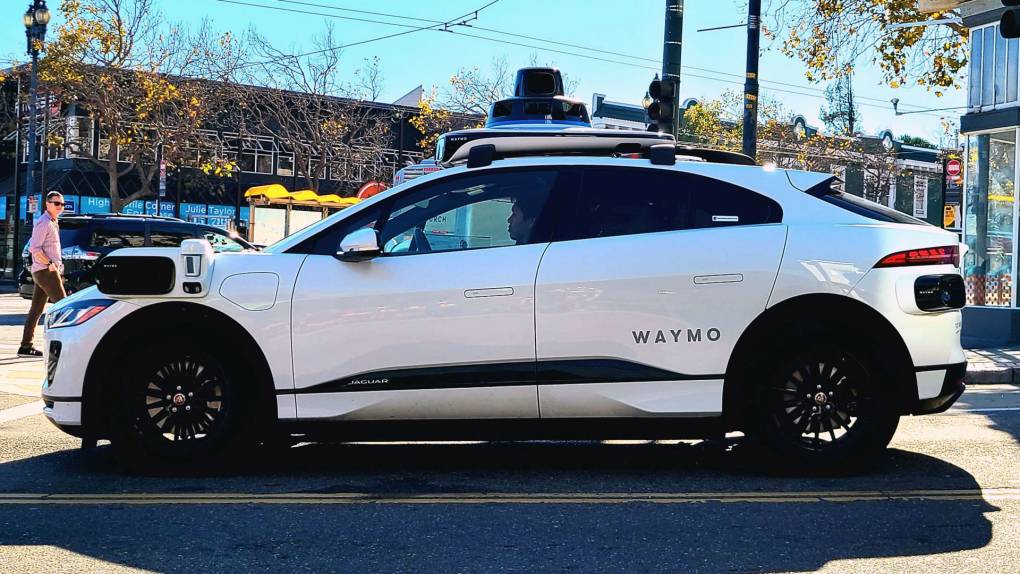
"caption": "A Waymo-brand car sits at an intersection in San Francisco's Castro neighborhood.",
"credit": "Christopher Beale/KQED",
"altTag": "A white SUV with tech gadgets and cameras sticking out from the sides and roof waits at a stoplight in San Francisco's Castro neighborhood.",
"description": null,
"imgSizes": {
"medium": {
"file": "https://cdn.kqed.org/wp-content/uploads/sites/10/2021/11/Waymo-car-800x450.jpg",
"width": 800,
"height": 450,
"mimeType": "image/jpeg"
},
"large": {
"file": "https://cdn.kqed.org/wp-content/uploads/sites/10/2021/11/Waymo-car-1020x574.jpg",
"width": 1020,
"height": 574,
"mimeType": "image/jpeg"
},
"thumbnail": {
"file": "https://cdn.kqed.org/wp-content/uploads/sites/10/2021/11/Waymo-car-160x90.jpg",
"width": 160,
"height": 90,
"mimeType": "image/jpeg"
},
"1536x1536": {
"file": "https://cdn.kqed.org/wp-content/uploads/sites/10/2021/11/Waymo-car-1536x864.jpg",
"width": 1536,
"height": 864,
"mimeType": "image/jpeg"
},
"post-thumbnail": {
"file": "https://cdn.kqed.org/wp-content/uploads/sites/10/2021/11/Waymo-car-672x372.jpg",
"width": 672,
"height": 372,
"mimeType": "image/jpeg"
},
"twentyfourteen-full-width": {
"file": "https://cdn.kqed.org/wp-content/uploads/sites/10/2021/11/Waymo-car-1038x576.jpg",
"width": 1038,
"height": 576,
"mimeType": "image/jpeg"
},
"kqedFullSize": {
"file": "https://cdn.kqed.org/wp-content/uploads/sites/10/2021/11/Waymo-car.jpg",
"width": 1920,
"height": 1080
}
},
"isLoading": false,
"fetchFailed": false
},
"news_11896368": {
"type": "attachments",
"id": "news_11896368",
"meta": {
"index": "attachments_1716263798",
"site": "news",
"id": "11896368",
"found": true
},
"parent": 11896338,
"imgSizes": {
"twentyfourteen-full-width": {
"file": "https://ww2.kqed.org/app/uploads/sites/10/2021/11/dead-gray-whale2019-1038x576.jpg",
"width": 1038,
"mimeType": "image/jpeg",
"height": 576
},
"thumbnail": {
"file": "https://ww2.kqed.org/app/uploads/sites/10/2021/11/dead-gray-whale2019-160x107.jpg",
"width": 160,
"mimeType": "image/jpeg",
"height": 107
},
"post-thumbnail": {
"file": "https://ww2.kqed.org/app/uploads/sites/10/2021/11/dead-gray-whale2019-672x372.jpg",
"width": 672,
"mimeType": "image/jpeg",
"height": 372
},
"kqedFullSize": {
"file": "https://ww2.kqed.org/app/uploads/sites/10/2021/11/dead-gray-whale2019.jpg",
"width": 1920,
"height": 1280
},
"large": {
"file": "https://ww2.kqed.org/app/uploads/sites/10/2021/11/dead-gray-whale2019-1020x680.jpg",
"width": 1020,
"mimeType": "image/jpeg",
"height": 680
},
"1536x1536": {
"file": "https://ww2.kqed.org/app/uploads/sites/10/2021/11/dead-gray-whale2019-1536x1024.jpg",
"width": 1536,
"mimeType": "image/jpeg",
"height": 1024
},
"medium": {
"file": "https://ww2.kqed.org/app/uploads/sites/10/2021/11/dead-gray-whale2019-800x533.jpg",
"width": 800,
"mimeType": "image/jpeg",
"height": 533
}
},
"publishDate": 1637092494,
"modified": 1637282437,
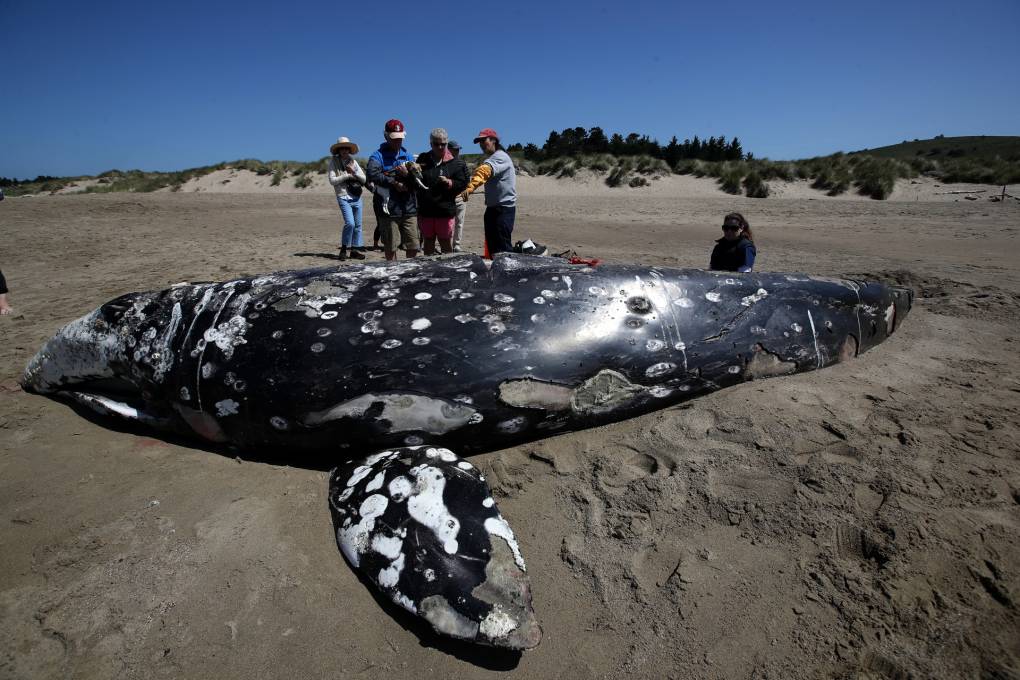
"caption": "Barbie Halaska (center), necropsy manager with The Marine Mammal Center, talks to beachgoers about a dead juvenile gray whale on Limantour Beach at Point Reyes National Seashore on May 25, 2019. Scientists all along the whales' migration route are working to figure out why more whales have died recently.",
"description": null,
"title": "Scientists Examine 13th Dead Whale To Wash Up In Bay Area In 2019",
"credit": "Justin Sullivan/Getty Images",
"status": "inherit",
"altTag": "The carcass of a gray whale sits in foreground with a huddle of people talking beyond it.",
"isLoading": false,
"fetchFailed": false
},
"news_11895711": {
"type": "attachments",
"id": "news_11895711",
"meta": {
"index": "attachments_1716263798",
"site": "news",
"id": "11895711",
"found": true
},
"parent": 11895704,
"imgSizes": {
"twentyfourteen-full-width": {
"file": "https://ww2.kqed.org/app/uploads/sites/10/2021/11/street-stamps1-1038x576.jpg",
"width": 1038,
"mimeType": "image/jpeg",
"height": 576
},
"thumbnail": {
"file": "https://ww2.kqed.org/app/uploads/sites/10/2021/11/street-stamps1-160x90.jpg",
"width": 160,
"mimeType": "image/jpeg",
"height": 90
},
"post-thumbnail": {
"file": "https://ww2.kqed.org/app/uploads/sites/10/2021/11/street-stamps1-672x372.jpg",
"width": 672,
"mimeType": "image/jpeg",
"height": 372
},
"kqedFullSize": {
"file": "https://ww2.kqed.org/app/uploads/sites/10/2021/11/street-stamps1.jpg",
"width": 1920,
"height": 1080
},
"large": {
"file": "https://ww2.kqed.org/app/uploads/sites/10/2021/11/street-stamps1-1020x574.jpg",
"width": 1020,
"mimeType": "image/jpeg",
"height": 574
},
"1536x1536": {
"file": "https://ww2.kqed.org/app/uploads/sites/10/2021/11/street-stamps1-1536x864.jpg",
"width": 1536,
"mimeType": "image/jpeg",
"height": 864
},
"medium": {
"file": "https://ww2.kqed.org/app/uploads/sites/10/2021/11/street-stamps1-800x450.jpg",
"width": 800,
"mimeType": "image/jpeg",
"height": 450
}
},
"publishDate": 1636497715,
"modified": 1636498547,
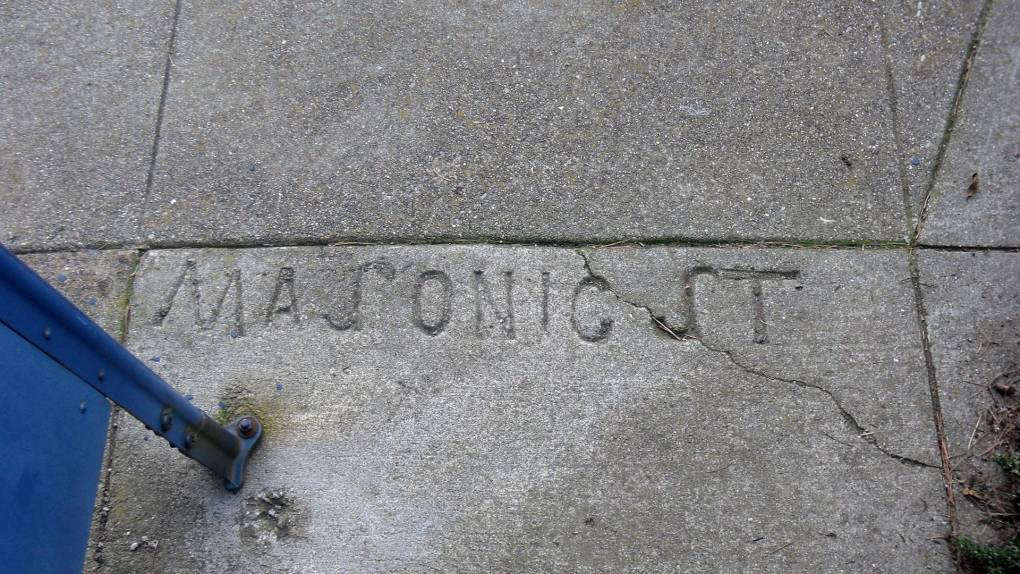
"caption": "Sometimes stamp installers don't have the correct letters when they're completing the job. That leads to creative solutions.",
"description": null,
"title": "street-stamps1",
"credit": "Erica Fischer/\u003ca href=\"https://www.flickr.com/photos/walkingsf/5362050951/in/album-72157622518303519/\">Flickr\u003c/a>",
"status": "inherit",
"altTag": "The name \"Masonic St\" is stamped into the sidewalk. Two Js have been used to create the S.",
"isLoading": false,
"fetchFailed": false
},
"news_11895802": {
"type": "attachments",
"id": "news_11895802",
"meta": {
"index": "attachments_1716263798",
"site": "news",
"id": "11895802",
"found": true
},
"parent": 11895675,
"imgSizes": {
"twentyfourteen-full-width": {
"file": "https://ww2.kqed.org/app/uploads/sites/10/2021/11/Clementina-Street-1038x576.jpg",
"width": 1038,
"mimeType": "image/jpeg",
"height": 576
},
"thumbnail": {
"file": "https://ww2.kqed.org/app/uploads/sites/10/2021/11/Clementina-Street-160x90.jpg",
"width": 160,
"mimeType": "image/jpeg",
"height": 90
},
"post-thumbnail": {
"file": "https://ww2.kqed.org/app/uploads/sites/10/2021/11/Clementina-Street-672x372.jpg",
"width": 672,
"mimeType": "image/jpeg",
"height": 372
},
"kqedFullSize": {
"file": "https://ww2.kqed.org/app/uploads/sites/10/2021/11/Clementina-Street.jpg",
"width": 1920,
"height": 1080
},
"large": {
"file": "https://ww2.kqed.org/app/uploads/sites/10/2021/11/Clementina-Street-1020x574.jpg",
"width": 1020,
"mimeType": "image/jpeg",
"height": 574
},
"1536x1536": {
"file": "https://ww2.kqed.org/app/uploads/sites/10/2021/11/Clementina-Street-1536x864.jpg",
"width": 1536,
"mimeType": "image/jpeg",
"height": 864
},
"medium": {
"file": "https://ww2.kqed.org/app/uploads/sites/10/2021/11/Clementina-Street-800x450.jpg",
"width": 800,
"mimeType": "image/jpeg",
"height": 450
}
},
"publishDate": 1636572572,
"modified": 1636572658,
"caption": "Clementina street south of market is only a few blocks long.",
"description": null,
"title": "Clementina-Street",
"credit": "Sebastian Miño-Bucheli/KQED",
"status": "inherit",
"altTag": "Street sign reads Clementina with tall glass building in background.",
"isLoading": false,
"fetchFailed": false
},
"news_11782636": {
"type": "attachments",
"id": "news_11782636",
"meta": {
"index": "attachments_1716263798",
"site": "news",
"id": "11782636",
"found": true
},
"parent": 11782405,
"imgSizes": {
"apple_news_ca_landscape_5_5": {
"file": "https://ww2.kqed.org/app/uploads/sites/10/2019/10/RS39771_4.34-qut-1044x783.jpg",
"width": 1044,
"mimeType": "image/jpeg",
"height": 783
},
"apple_news_ca_square_4_0": {
"file": "https://ww2.kqed.org/app/uploads/sites/10/2019/10/RS39771_4.34-qut-470x470.jpg",
"width": 470,
"mimeType": "image/jpeg",
"height": 470
},
"twentyfourteen-full-width": {
"file": "https://ww2.kqed.org/app/uploads/sites/10/2019/10/RS39771_4.34-qut-1038x576.jpg",
"width": 1038,
"mimeType": "image/jpeg",
"height": 576
},
"thumbnail": {
"file": "https://ww2.kqed.org/app/uploads/sites/10/2019/10/RS39771_4.34-qut-160x90.jpg",
"width": 160,
"mimeType": "image/jpeg",
"height": 90
},
"post-thumbnail": {
"file": "https://ww2.kqed.org/app/uploads/sites/10/2019/10/RS39771_4.34-qut-672x372.jpg",
"width": 672,
"mimeType": "image/jpeg",
"height": 372
},
"kqedFullSize": {
"file": "https://ww2.kqed.org/app/uploads/sites/10/2019/10/RS39771_4.34-qut.jpg",
"width": 1846,
"height": 1038
},
"apple_news_ca_landscape_4_7": {
"file": "https://ww2.kqed.org/app/uploads/sites/10/2019/10/RS39771_4.34-qut-632x474.jpg",
"width": 632,
"mimeType": "image/jpeg",
"height": 474
},
"large": {
"file": "https://ww2.kqed.org/app/uploads/sites/10/2019/10/RS39771_4.34-qut-1020x574.jpg",
"width": 1020,
"mimeType": "image/jpeg",
"height": 574
},
"complete_open_graph": {
"file": "https://ww2.kqed.org/app/uploads/sites/10/2019/10/RS39771_4.34-qut-1200x675.jpg",
"width": 1200,
"mimeType": "image/jpeg",
"height": 675
},
"apple_news_ca_landscape_4_0": {
"file": "https://ww2.kqed.org/app/uploads/sites/10/2019/10/RS39771_4.34-qut-536x402.jpg",
"width": 536,
"mimeType": "image/jpeg",
"height": 402
},
"apple_news_ca_portrait_12_9": {
"file": "https://ww2.kqed.org/app/uploads/sites/10/2019/10/RS39771_4.34-qut-1122x1038.jpg",
"width": 1122,
"mimeType": "image/jpeg",
"height": 1038
},
"medium": {
"file": "https://ww2.kqed.org/app/uploads/sites/10/2019/10/RS39771_4.34-qut-800x450.jpg",
"width": 800,
"mimeType": "image/jpeg",
"height": 450
},
"apple_news_ca_portrait_4_0": {
"file": "https://ww2.kqed.org/app/uploads/sites/10/2019/10/RS39771_4.34-qut-354x472.jpg",
"width": 354,
"mimeType": "image/jpeg",
"height": 472
},
"apple_news_ca_portrait_9_7": {
"file": "https://ww2.kqed.org/app/uploads/sites/10/2019/10/RS39771_4.34-qut-840x1038.jpg",
"width": 840,
"mimeType": "image/jpeg",
"height": 1038
},
"apple_news_ca_landscape_12_9": {
"file": "https://ww2.kqed.org/app/uploads/sites/10/2019/10/RS39771_4.34-qut-1832x1038.jpg",
"width": 1832,
"mimeType": "image/jpeg",
"height": 1038
},
"apple_news_ca_square_9_7": {
"file": "https://ww2.kqed.org/app/uploads/sites/10/2019/10/RS39771_4.34-qut-1104x1038.jpg",
"width": 1104,
"mimeType": "image/jpeg",
"height": 1038
},
"apple_news_ca_portrait_4_7": {
"file": "https://ww2.kqed.org/app/uploads/sites/10/2019/10/RS39771_4.34-qut-414x552.jpg",
"width": 414,
"mimeType": "image/jpeg",
"height": 552
},
"apple_news_ca_square_12_9": {
"file": "https://ww2.kqed.org/app/uploads/sites/10/2019/10/RS39771_4.34-qut-1472x1038.jpg",
"width": 1472,
"mimeType": "image/jpeg",
"height": 1038
},
"apple_news_ca_portrait_5_5": {
"file": "https://ww2.kqed.org/app/uploads/sites/10/2019/10/RS39771_4.34-qut-687x916.jpg",
"width": 687,
"mimeType": "image/jpeg",
"height": 916
},
"apple_news_ca_square_4_7": {
"file": "https://ww2.kqed.org/app/uploads/sites/10/2019/10/RS39771_4.34-qut-550x550.jpg",
"width": 550,
"mimeType": "image/jpeg",
"height": 550
},
"apple_news_ca_landscape_9_7": {
"file": "https://ww2.kqed.org/app/uploads/sites/10/2019/10/RS39771_4.34-qut-1376x1032.jpg",
"width": 1376,
"mimeType": "image/jpeg",
"height": 1032
},
"apple_news_ca_square_5_5": {
"file": "https://ww2.kqed.org/app/uploads/sites/10/2019/10/RS39771_4.34-qut-912x912.jpg",
"width": 912,
"mimeType": "image/jpeg",
"height": 912
}
},
"publishDate": 1571964513,
"modified": 1635299199,
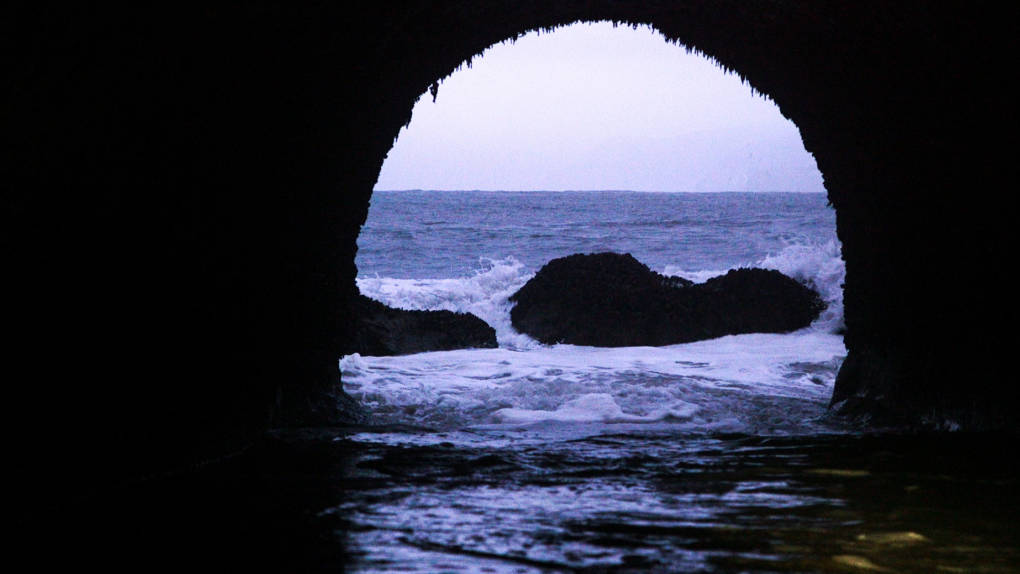
"caption": "A view of the Pacific Ocean at dawn, from inside a dark tunnel below San Francisco.",
"description": null,
"title": "ghost-stories-san-francisco",
"credit": "Sruti Mamidanna/KQED",
"status": "inherit",
"altTag": null,
"isLoading": false,
"fetchFailed": false
},
"news_11891332": {
"type": "attachments",
"id": "news_11891332",
"meta": {
"index": "attachments_1716263798",
"site": "news",
"id": "11891332",
"found": true
},
"parent": 11891329,
"imgSizes": {
"twentyfourteen-full-width": {
"file": "https://ww2.kqed.org/app/uploads/sites/10/2021/10/DragonTunnel-closeup-1038x576.jpg",
"width": 1038,
"mimeType": "image/jpeg",
"height": 576
},
"thumbnail": {
"file": "https://ww2.kqed.org/app/uploads/sites/10/2021/10/DragonTunnel-closeup-160x90.jpg",
"width": 160,
"mimeType": "image/jpeg",
"height": 90
},
"post-thumbnail": {
"file": "https://ww2.kqed.org/app/uploads/sites/10/2021/10/DragonTunnel-closeup-672x372.jpg",
"width": 672,
"mimeType": "image/jpeg",
"height": 372
},
"kqedFullSize": {
"file": "https://ww2.kqed.org/app/uploads/sites/10/2021/10/DragonTunnel-closeup.jpg",
"width": 1920,
"height": 1080
},
"large": {
"file": "https://ww2.kqed.org/app/uploads/sites/10/2021/10/DragonTunnel-closeup-1020x574.jpg",
"width": 1020,
"mimeType": "image/jpeg",
"height": 574
},
"1536x1536": {
"file": "https://ww2.kqed.org/app/uploads/sites/10/2021/10/DragonTunnel-closeup-1536x864.jpg",
"width": 1536,
"mimeType": "image/jpeg",
"height": 864
},
"medium": {
"file": "https://ww2.kqed.org/app/uploads/sites/10/2021/10/DragonTunnel-closeup-800x450.jpg",
"width": 800,
"mimeType": "image/jpeg",
"height": 450
}
},
"publishDate": 1633562885,
"modified": 1634240230,
"caption": "San Francisco-born artist Patti Bowler designed \"Dragon Relief,\" a metal sculpture hanging above the Broadway tunnel.",
"description": "An abstract metal dragon sculpture is mounted above a tunnel with cars driving through.",
"title": "DragonTunnel-closeup",
"credit": "Google Street View",
"status": "inherit",
"altTag": "An abstract metal dragon sculpture is mounted above a tunnel with cars driving through.",
"isLoading": false,
"fetchFailed": false
},
"news_11892163": {
"type": "attachments",
"id": "news_11892163",
"meta": {
"index": "attachments_1716263798",
"site": "news",
"id": "11892163",
"found": true
},
"parent": 11892152,
"imgSizes": {
"twentyfourteen-full-width": {
"file": "https://ww2.kqed.org/app/uploads/sites/10/2021/10/20210930_093846-1038x576.jpeg",
"width": 1038,
"mimeType": "image/jpeg",
"height": 576
},
"thumbnail": {
"file": "https://ww2.kqed.org/app/uploads/sites/10/2021/10/20210930_093846-160x120.jpeg",
"width": 160,
"mimeType": "image/jpeg",
"height": 120
},
"post-thumbnail": {
"file": "https://ww2.kqed.org/app/uploads/sites/10/2021/10/20210930_093846-672x372.jpeg",
"width": 672,
"mimeType": "image/jpeg",
"height": 372
},
"kqedFullSize": {
"file": "https://ww2.kqed.org/app/uploads/sites/10/2021/10/20210930_093846.jpeg",
"width": 1890,
"height": 1418
},
"large": {
"file": "https://ww2.kqed.org/app/uploads/sites/10/2021/10/20210930_093846-1020x765.jpeg",
"width": 1020,
"mimeType": "image/jpeg",
"height": 765
},
"1536x1536": {
"file": "https://ww2.kqed.org/app/uploads/sites/10/2021/10/20210930_093846-1536x1152.jpeg",
"width": 1536,
"mimeType": "image/jpeg",
"height": 1152
},
"medium": {
"file": "https://ww2.kqed.org/app/uploads/sites/10/2021/10/20210930_093846-800x600.jpeg",
"width": 800,
"mimeType": "image/jpeg",
"height": 600
}
},
"publishDate": 1634159169,
"modified": 1634237914,
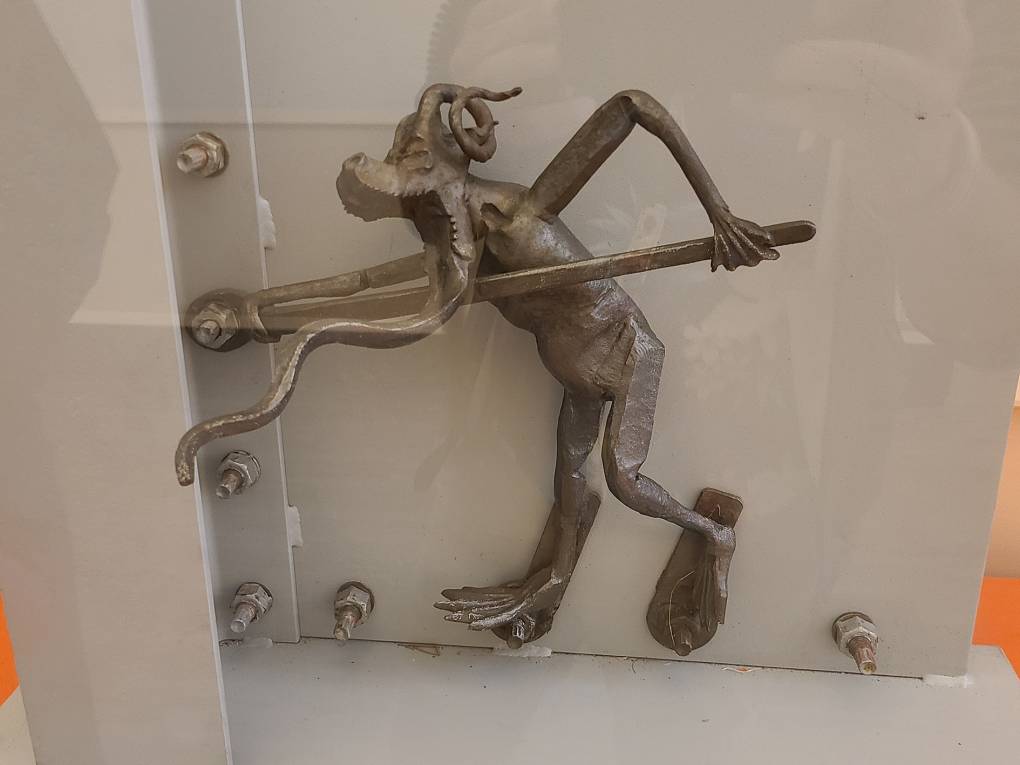
"caption": "The original Bay Bridge troll guarded over the bridge for 24 years. When the new eastern span was completed, he was retired and now lives at the Caltrans office at 111 Grand Ave. in Oakland.",
"description": "A skinny troll made of steel. He has a long tongue and is holding a metal tool. ",
"title": "20210930_093846",
"credit": "Christopher Beale/KQED",
"status": "inherit",
"altTag": "A light-colored metal figurine with two arms and two legs, holding a very long wrench to turn a bolt.",
"isLoading": false,
"fetchFailed": false
},
"news_11891300": {
"type": "attachments",
"id": "news_11891300",
"meta": {
"index": "attachments_1716263798",
"site": "news",
"id": "11891300",
"found": true
},
"parent": 11891074,
"imgSizes": {
"twentyfourteen-full-width": {
"file": "https://ww2.kqed.org/app/uploads/sites/10/2021/10/AngelsRest-1038x576.jpg",
"width": 1038,
"mimeType": "image/jpeg",
"height": 576
},
"thumbnail": {
"file": "https://ww2.kqed.org/app/uploads/sites/10/2021/10/AngelsRest-160x90.jpg",
"width": 160,
"mimeType": "image/jpeg",
"height": 90
},
"post-thumbnail": {
"file": "https://ww2.kqed.org/app/uploads/sites/10/2021/10/AngelsRest-672x372.jpg",
"width": 672,
"mimeType": "image/jpeg",
"height": 372
},
"kqedFullSize": {
"file": "https://ww2.kqed.org/app/uploads/sites/10/2021/10/AngelsRest.jpg",
"width": 1920,
"height": 1080
},
"large": {
"file": "https://ww2.kqed.org/app/uploads/sites/10/2021/10/AngelsRest-1020x574.jpg",
"width": 1020,
"mimeType": "image/jpeg",
"height": 574
},
"1536x1536": {
"file": "https://ww2.kqed.org/app/uploads/sites/10/2021/10/AngelsRest-1536x864.jpg",
"width": 1536,
"mimeType": "image/jpeg",
"height": 864
},
"medium": {
"file": "https://ww2.kqed.org/app/uploads/sites/10/2021/10/AngelsRest-800x450.jpg",
"width": 800,
"mimeType": "image/jpeg",
"height": 450
}
},
"publishDate": 1633553778,
"modified": 1633553868,
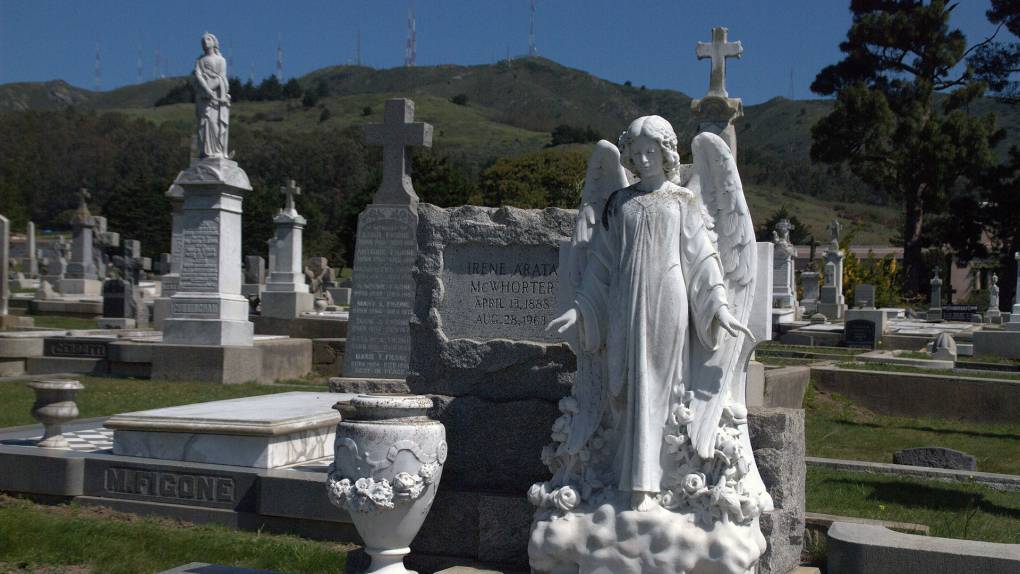
"caption": "Holy Cross Cemetery in Colma, California.",
"description": null,
"title": "AngelsRest",
"credit": "Ed Bierman/\u003ca href=\"https://www.flickr.com/photos/edbierman/3417086778/\">Flickr\u003c/a>",
"status": "inherit",
"altTag": "A stone statue of an angel in the foreground with many gravestones behind it.",
"isLoading": false,
"fetchFailed": false
},
"news_10795862": {
"type": "attachments",
"id": "news_10795862",
"meta": {
"index": "attachments_1716263798",
"site": "news",
"id": "10795862",
"found": true
},
"parent": 10779164,
"imgSizes": {
"twentyfourteen-full-width": {
"file": "https://ww2.kqed.org/app/uploads/sites/10/2026/12/exhume-1038x576.jpg",
"width": 1038,
"mimeType": "image/jpeg",
"height": 576
},
"thumbnail": {
"file": "https://ww2.kqed.org/app/uploads/sites/10/2026/12/exhume-400x338.jpg",
"width": 400,
"mimeType": "image/jpeg",
"height": 338
},
"fd-sm": {
"file": "https://ww2.kqed.org/app/uploads/sites/10/2026/12/exhume-960x812.jpg",
"width": 960,
"mimeType": "image/jpeg",
"height": 812
},
"post-thumbnail": {
"file": "https://ww2.kqed.org/app/uploads/sites/10/2026/12/exhume-672x372.jpg",
"width": 672,
"mimeType": "image/jpeg",
"height": 372
},
"kqedFullSize": {
"file": "https://ww2.kqed.org/app/uploads/sites/10/2026/12/exhume.jpg",
"width": 3356,
"height": 2838
},
"large": {
"file": "https://ww2.kqed.org/app/uploads/sites/10/2026/12/exhume-1440x1218.jpg",
"width": 1440,
"mimeType": "image/jpeg",
"height": 1218
},
"guest-author-96": {
"file": "https://ww2.kqed.org/app/uploads/sites/10/2026/12/exhume-96x96.jpg",
"width": 96,
"mimeType": "image/jpeg",
"height": 96
},
"medium": {
"file": "https://ww2.kqed.org/app/uploads/sites/10/2026/12/exhume-800x677.jpg",
"width": 800,
"mimeType": "image/jpeg",
"height": 677
},
"guest-author-64": {
"file": "https://ww2.kqed.org/app/uploads/sites/10/2026/12/exhume-64x64.jpg",
"width": 64,
"mimeType": "image/jpeg",
"height": 64
},
"guest-author-32": {
"file": "https://ww2.kqed.org/app/uploads/sites/10/2026/12/exhume-32x32.jpg",
"width": 32,
"mimeType": "image/jpeg",
"height": 32
},
"jmtc-small-thumb": {
"file": "https://ww2.kqed.org/app/uploads/sites/10/2026/12/exhume-280x150.jpg",
"width": 280,
"mimeType": "image/jpeg",
"height": 150
},
"fd-lrg": {
"file": "https://ww2.kqed.org/app/uploads/sites/10/2026/12/exhume-1920x1624.jpg",
"width": 1920,
"mimeType": "image/jpeg",
"height": 1624
},
"fd-med": {
"file": "https://ww2.kqed.org/app/uploads/sites/10/2026/12/exhume-1180x998.jpg",
"width": 1180,
"mimeType": "image/jpeg",
"height": 998
},
"detail": {
"file": "https://ww2.kqed.org/app/uploads/sites/10/2026/12/exhume-75x75.jpg",
"width": 75,
"mimeType": "image/jpeg",
"height": 75
},
"medium_large": {
"file": "https://ww2.kqed.org/app/uploads/sites/10/2026/12/exhume-768x649.jpg",
"width": 768,
"mimeType": "image/jpeg",
"height": 649
},
"guest-author-128": {
"file": "https://ww2.kqed.org/app/uploads/sites/10/2026/12/exhume-128x128.jpg",
"width": 128,
"mimeType": "image/jpeg",
"height": 128
}
},
"publishDate": 1450228012,
"modified": 1450295952,
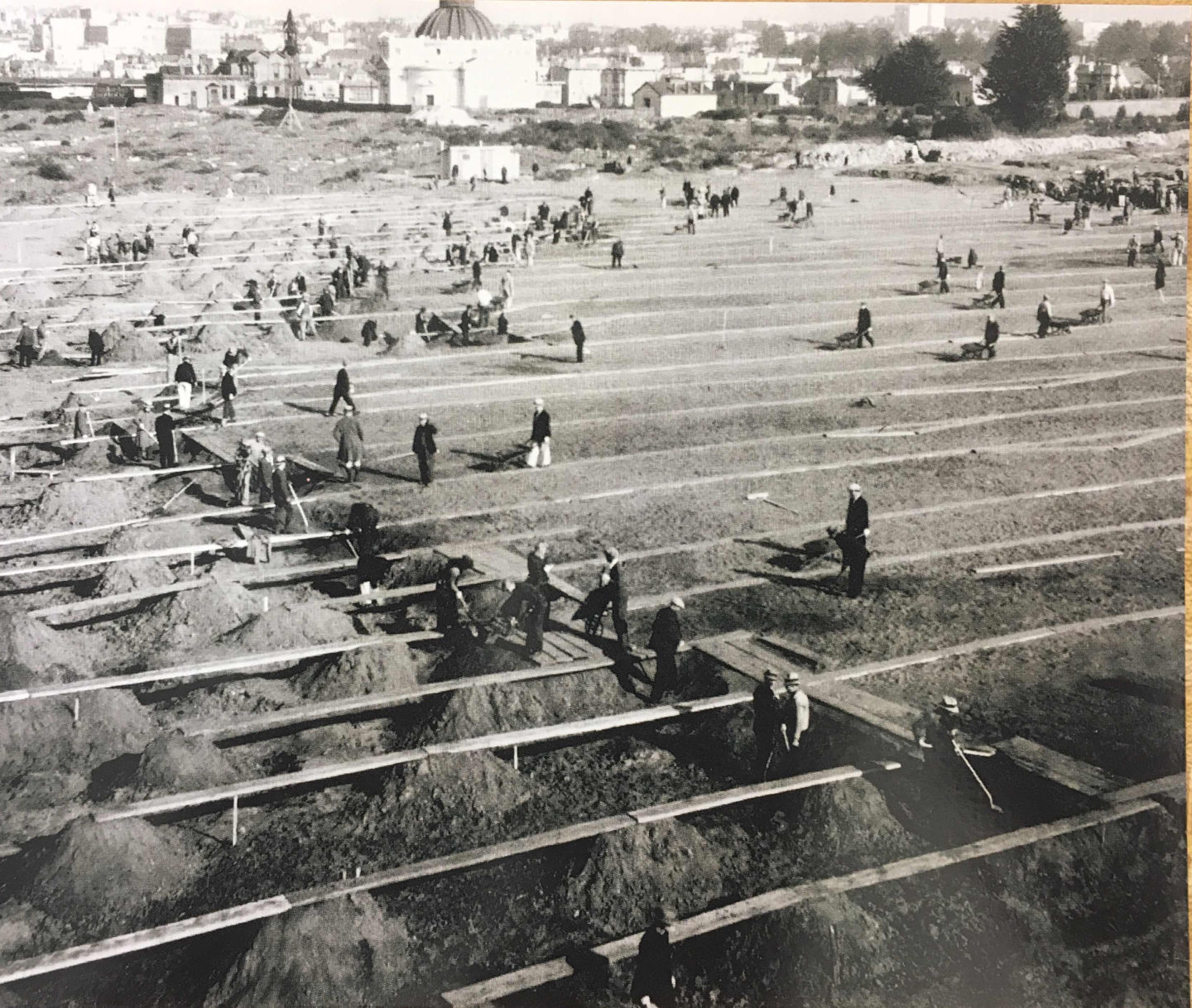
"caption": "Workers remove bodies from a San Francisco graveyard. ",
"description": "Workers remove bodies from a San Francisco graveyard. ",
"title": "Dig",
"credit": "Colma Historical Association",
"status": "inherit",
"isLoading": false,
"fetchFailed": false
},
"news_11890412": {
"type": "attachments",
"id": "news_11890412",
"meta": {
"index": "attachments_1716263798",
"site": "news",
"id": "11890412",
"found": true
},
"parent": 11889712,
"imgSizes": {
"twentyfourteen-full-width": {
"file": "https://ww2.kqed.org/app/uploads/sites/10/2021/09/7714839914_be59a06c0a_h-1038x576.jpg",
"width": 1038,
"mimeType": "image/jpeg",
"height": 576
},
"thumbnail": {
"file": "https://ww2.kqed.org/app/uploads/sites/10/2021/09/7714839914_be59a06c0a_h-160x112.jpg",
"width": 160,
"mimeType": "image/jpeg",
"height": 112
},
"post-thumbnail": {
"file": "https://ww2.kqed.org/app/uploads/sites/10/2021/09/7714839914_be59a06c0a_h-672x372.jpg",
"width": 672,
"mimeType": "image/jpeg",
"height": 372
},
"kqedFullSize": {
"file": "https://ww2.kqed.org/app/uploads/sites/10/2021/09/7714839914_be59a06c0a_h.jpg",
"width": 1600,
"height": 1120
},
"large": {
"file": "https://ww2.kqed.org/app/uploads/sites/10/2021/09/7714839914_be59a06c0a_h-1020x714.jpg",
"width": 1020,
"mimeType": "image/jpeg",
"height": 714
},
"1536x1536": {
"file": "https://ww2.kqed.org/app/uploads/sites/10/2021/09/7714839914_be59a06c0a_h-1536x1075.jpg",
"width": 1536,
"mimeType": "image/jpeg",
"height": 1075
},
"medium": {
"file": "https://ww2.kqed.org/app/uploads/sites/10/2021/09/7714839914_be59a06c0a_h-800x560.jpg",
"width": 800,
"mimeType": "image/jpeg",
"height": 560
}
},
"publishDate": 1632937541,
"modified": 1632949251,
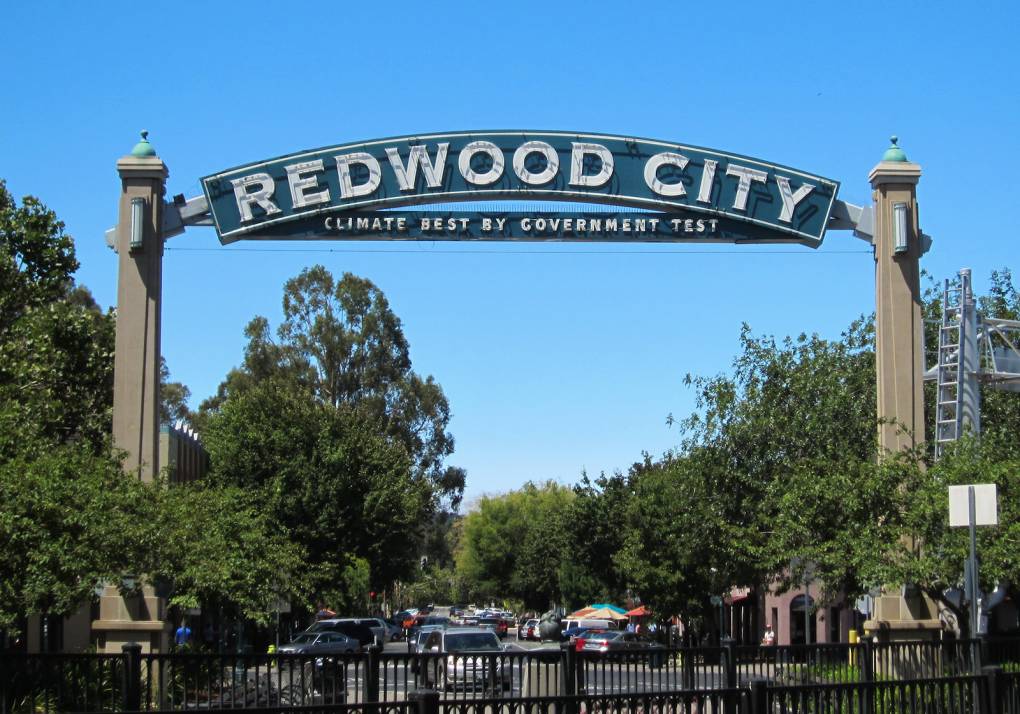
"caption": "How did Redwood City fix on the slogan \"Climate Best by Government Test\"?",
"description": "A green arching sign with white lettering that says \"Redwood City Climate Best By Government Test\".",
"title": "7714839914_be59a06c0a_h",
"credit": "\u003ca href=\"https://www.flickr.com/photos/donbrr/7714839914/in/photolist-8QVzeP-iRbj2-2jHSXME-reZH4B-oz8PAd-51szs5-51onL4-51ooTn-51oo32-Vf41cu-51szE1-51okhB-51sx9f-51ooAr-51sxqq-BaGwqh-51okB4-81ENa4-7nWKRX-28AwUGF-28AwUzM-6wPYyM-2iw8kHk-qUKgW-cKJz8h-5yAQGL-6xcF5U-dBmjaN-6KVkhL-2UaKoG-aDRpt6-cKF3G-d5DLr-riKw-6za6b\">Don Barrett\u003c/a>/Flickr",
"status": "inherit",
"altTag": "A long sign across a leafy street that says \"Redwood City,\" with the famous slogan in smaller type beneath.",
"isLoading": false,
"fetchFailed": false
},
"news_11889778": {
"type": "attachments",
"id": "news_11889778",
"meta": {
"index": "attachments_1716263798",
"site": "news",
"id": "11889778",
"found": true
},
"parent": 11889508,
"imgSizes": {
"thumbnail": {
"file": "https://ww2.kqed.org/app/uploads/sites/10/2021/09/pacifica-castle-azzaro-160x107.jpg",
"width": 160,
"mimeType": "image/jpeg",
"height": 107
},
"post-thumbnail": {
"file": "https://ww2.kqed.org/app/uploads/sites/10/2021/09/pacifica-castle-azzaro-672x372.jpg",
"width": 672,
"mimeType": "image/jpeg",
"height": 372
},
"kqedFullSize": {
"file": "https://ww2.kqed.org/app/uploads/sites/10/2021/09/pacifica-castle-azzaro.jpg",
"width": 800,
"height": 537
}
},
"publishDate": 1632436350,
"modified": 1632436415,
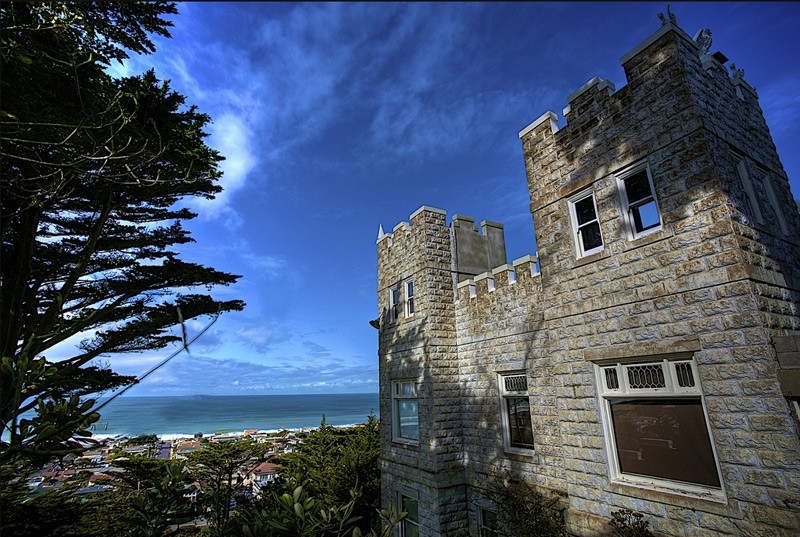
"caption": "The Sam Mazza Castle sits high on a hill in Pacifica's Sharp Pointe neighborhood. It has been here since 1908 and has had many lives.",
"description": null,
"title": "pacifica-castle-azzaro",
"credit": "Robert Azzaro/Courtesy Sam Mazza Foundation",
"status": "inherit",
"altTag": "A blue sky and ocean behind a castle like building.",
"isLoading": false,
"fetchFailed": false
},
"news_11888757": {
"type": "attachments",
"id": "news_11888757",
"meta": {
"index": "attachments_1716263798",
"site": "news",
"id": "11888757",
"found": true
},
"parent": 11888753,
"imgSizes": {
"twentyfourteen-full-width": {
"file": "https://ww2.kqed.org/app/uploads/sites/10/2021/09/SanQuentin-flickr-1038x576.jpg",
"width": 1038,
"mimeType": "image/jpeg",
"height": 576
},
"thumbnail": {
"file": "https://ww2.kqed.org/app/uploads/sites/10/2021/09/SanQuentin-flickr-160x90.jpg",
"width": 160,
"mimeType": "image/jpeg",
"height": 90
},
"post-thumbnail": {
"file": "https://ww2.kqed.org/app/uploads/sites/10/2021/09/SanQuentin-flickr-672x372.jpg",
"width": 672,
"mimeType": "image/jpeg",
"height": 372
},
"kqedFullSize": {
"file": "https://ww2.kqed.org/app/uploads/sites/10/2021/09/SanQuentin-flickr.jpg",
"width": 1920,
"height": 1080
},
"large": {
"file": "https://ww2.kqed.org/app/uploads/sites/10/2021/09/SanQuentin-flickr-1020x574.jpg",
"width": 1020,
"mimeType": "image/jpeg",
"height": 574
},
"1536x1536": {
"file": "https://ww2.kqed.org/app/uploads/sites/10/2021/09/SanQuentin-flickr-1536x864.jpg",
"width": 1536,
"mimeType": "image/jpeg",
"height": 864
},
"medium": {
"file": "https://ww2.kqed.org/app/uploads/sites/10/2021/09/SanQuentin-flickr-800x450.jpg",
"width": 800,
"mimeType": "image/jpeg",
"height": 450
}
},
"publishDate": 1631745374,
"modified": 1631824115,
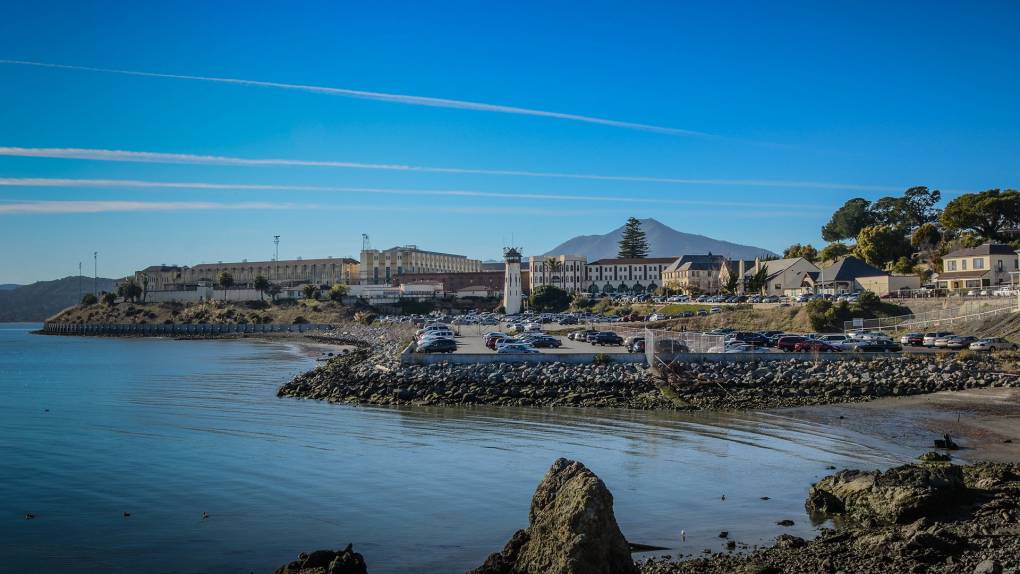
"caption": "San Quentin State Prison sits on prime bayfront real estate. It has been there over 160 years.",
"description": null,
"title": "SanQuentin-flickr",
"credit": "\u003ca href=\"https://www.flickr.com/photos/livenature/11660594894/\">Franco Folini\u003c/a>/Flickr",
"status": "inherit",
"altTag": "A lush view of San Quentin, jutting out into serene blue water.",
"isLoading": false,
"fetchFailed": false
}
},
"audioPlayerReducer": {
"postId": "stream_live",
"isPaused": true,
"isPlaying": false,
"pfsActive": false,
"pledgeModalIsOpen": true,
"playerDrawerIsOpen": false,
"liveAudioPlayStartedAt": 0,
"liveAudioPlayContext": ""
},
"authorsReducer": {
"byline_news_11896338": {
"type": "authors",
"id": "byline_news_11896338",
"meta": {
"override": true
},
"slug": "byline_news_11896338",
"name": "Amy Mayer",
"isLoading": false
},
"byline_news_11888753": {
"type": "authors",
"id": "byline_news_11888753",
"meta": {
"override": true
},
"slug": "byline_news_11888753",
"name": "Katrina Schwartz and Kelly O'Mara",
"isLoading": false
},
"jbrooks": {
"type": "authors",
"id": "80",
"meta": {
"index": "authors_1716337520",
"id": "80",
"found": true
},
"name": "Jon Brooks",
"firstName": "Jon",
"lastName": "Brooks",
"slug": "jbrooks",
"email": "jbrooks@kqed.org",
"display_author_email": true,
"staff_mastheads": [
"science"
],
"title": "Digital Editor",
"bio": "Jon Brooks is a former Digital Editor for KQED Science. He is the former editor of KQED’s daily news blog, News Fix. In 2014, he won a California Journalism Award for his coverage of ride services like Uber and Lyft and the taxi industry. A veteran blogger, he previously worked for Yahoo! in various news writing and editing roles. Jon is also a playwright whose work has been produced in San Francisco, New York, Italy, and around the U.S. He has written about film for his own blog and studied film at Boston University.",
"avatar": "https://secure.gravatar.com/avatar/98887f7ed1c876ed414d4c915e969584?s=600&d=blank&r=g",
"twitter": "jbrooksfoy",
"facebook": null,
"instagram": null,
"linkedin": null,
"sites": [
{
"site": "arts",
"roles": [
"Contributor",
"editor"
]
},
{
"site": "news",
"roles": [
"author"
]
},
{
"site": "futureofyou",
"roles": [
"administrator"
]
},
{
"site": "mindshift",
"roles": [
"editor"
]
},
{
"site": "stateofhealth",
"roles": [
"editor"
]
},
{
"site": "science",
"roles": [
"administrator"
]
},
{
"site": "quest",
"roles": [
"editor"
]
}
],
"headData": {
"title": "Jon Brooks | KQED",
"description": "Digital Editor",
"ogImgSrc": "https://secure.gravatar.com/avatar/98887f7ed1c876ed414d4c915e969584?s=600&d=blank&r=g",
"twImgSrc": "https://secure.gravatar.com/avatar/98887f7ed1c876ed414d4c915e969584?s=600&d=blank&r=g"
},
"isLoading": false,
"link": "/author/jbrooks"
},
"katrinaschwartz": {
"type": "authors",
"id": "234",
"meta": {
"index": "authors_1716337520",
"id": "234",
"found": true
},
"name": "Katrina Schwartz",
"firstName": "Katrina",
"lastName": "Schwartz",
"slug": "katrinaschwartz",
"email": "kschwartz@kqed.org",
"display_author_email": false,
"staff_mastheads": [
"news"
],
"title": "Producer",
"bio": "Katrina Schwartz is a journalist based in San Francisco. She's worked at KPCC public radio in LA and has reported on air and online for KQED since 2010. She covered how teaching and learning is changing for MindShift between 2012 and 2020. She is the co-host of the MindShift podcast and now produces KQED's Bay Curious podcast.",
"avatar": "https://secure.gravatar.com/avatar/edb4ee79070447a018538c9aae6eeecf28786515b8a0c30e43b6b7dce5aa44c8?s=600&d=blank&r=g",
"twitter": "kschwart",
"bluesky": null,
"facebook": null,
"instagram": null,
"linkedin": null,
"sites": [
{
"site": "",
"roles": [
"editor"
]
},
{
"site": "news",
"roles": [
"editor"
]
},
{
"site": "mindshift",
"roles": [
"administrator"
]
},
{
"site": "stateofhealth",
"roles": [
"author"
]
},
{
"site": "science",
"roles": [
"editor"
]
}
],
"headData": {
"title": "Katrina Schwartz | KQED",
"description": "Producer",
"ogImgSrc": "https://secure.gravatar.com/avatar/edb4ee79070447a018538c9aae6eeecf28786515b8a0c30e43b6b7dce5aa44c8?s=600&d=blank&r=g",
"twImgSrc": "https://secure.gravatar.com/avatar/edb4ee79070447a018538c9aae6eeecf28786515b8a0c30e43b6b7dce5aa44c8?s=600&d=blank&r=g"
},
"isLoading": false,
"link": "/author/katrinaschwartz"
},
"rachael-myrow": {
"type": "authors",
"id": "251",
"meta": {
"index": "authors_1716337520",
"id": "251",
"found": true
},
"name": "Rachael Myrow",
"firstName": "Rachael",
"lastName": "Myrow",
"slug": "rachael-myrow",
"email": "rmyrow@kqed.org",
"display_author_email": true,
"staff_mastheads": [
"news"
],
"title": "Senior Editor of KQED's Silicon Valley News Desk",
"bio": "• I write and edit stories about how Silicon Valley power and policies shape everyday life in California. I’m also passionate about making Bay Area history and culture more accessible to a broad public. • I’ve been a journalist for most of my life, starting in high school with The Franklin Press in Los Angeles, where I grew up. While earning my first degree in English at UC Berkeley, I got my start in public radio at KALX-FM. After completing a second degree in journalism at Cal, I landed my first professional job at Marketplace, then moved on to KPCC (now LAist), and then KQED, where I hosted The California Report for more than seven years. • My reporting has appeared on NPR, The World, WBUR’s \u003ci>Here & Now\u003c/i>, and the BBC. I also guest host for KQED’s \u003ci>Forum\u003c/i>, as well as the Commonwealth Club in San Francisco. • I speak periodically on media, democracy and technology issues, and do voiceover work for documentaries and educational video projects. • Outside of the studio, you'll find me hiking Bay Area trails and whipping up Insta-ready meals in my kitchen. • I do not accept gifts, money, or favors from anyone connected to my reporting, I don't pay people for information, and I do not support or donate to political causes. • I strive to treat the people I report on with fairness, honesty, and respect. I also recognize there are often multiple sides to a story and work to verify information through multiple sources and documentation. If I get something wrong, I correct it.",
"avatar": "https://secure.gravatar.com/avatar/3ed8a3c5f26025e4a805ba634cda8cd764906b97438a6d9ce216b044e340da4e?s=600&d=blank&r=g",
"twitter": "rachaelmyrow",
"bluesky": null,
"facebook": null,
"instagram": null,
"linkedin": "https://www.linkedin.com/in/rachaelmyrow/",
"sites": [
{
"site": "arts",
"roles": [
"administrator"
]
},
{
"site": "news",
"roles": [
"edit_others_posts",
"editor"
]
},
{
"site": "futureofyou",
"roles": [
"editor"
]
},
{
"site": "bayareabites",
"roles": [
"editor"
]
},
{
"site": "stateofhealth",
"roles": [
"editor"
]
},
{
"site": "science",
"roles": [
"editor"
]
},
{
"site": "food",
"roles": [
"editor"
]
},
{
"site": "forum",
"roles": [
"editor"
]
},
{
"site": "liveblog",
"roles": [
"author"
]
}
],
"headData": {
"title": "Rachael Myrow | KQED",
"description": "Senior Editor of KQED's Silicon Valley News Desk",
"ogImgSrc": "https://secure.gravatar.com/avatar/3ed8a3c5f26025e4a805ba634cda8cd764906b97438a6d9ce216b044e340da4e?s=600&d=blank&r=g",
"twImgSrc": "https://secure.gravatar.com/avatar/3ed8a3c5f26025e4a805ba634cda8cd764906b97438a6d9ce216b044e340da4e?s=600&d=blank&r=g"
},
"isLoading": false,
"link": "/author/rachael-myrow"
},
"carlysevern": {
"type": "authors",
"id": "3243",
"meta": {
"index": "authors_1716337520",
"id": "3243",
"found": true
},
"name": "Carly Severn",
"firstName": "Carly",
"lastName": "Severn",
"slug": "carlysevern",
"email": "csevern@kqed.org",
"display_author_email": false,
"staff_mastheads": [
"news"
],
"title": "Senior Editor, Audience News ",
"bio": "Carly is KQED's Senior Editor of Audience News on the Digital News team, and has reported for the California Report Magazine, Bay Curious and KQED Arts. She's formerly the host of \u003ca href=\"http://ww2.kqed.org/pop/category/the-cooler/\" rel=\"noopener noreferrer\">The Cooler\u003c/a> podcast.",
"avatar": "https://secure.gravatar.com/avatar/54037bf5c128fe678f0ef26cec97a93f2e7f220a22d7285703328f12c42c1b1d?s=600&d=blank&r=g",
"twitter": "teacupinthebay",
"bluesky": null,
"facebook": null,
"instagram": null,
"linkedin": null,
"sites": [
{
"site": "",
"roles": [
"editor"
]
},
{
"site": "arts",
"roles": [
"editor"
]
},
{
"site": "news",
"roles": [
"administrator"
]
},
{
"site": "pop",
"roles": [
"editor"
]
},
{
"site": "futureofyou",
"roles": [
"editor"
]
},
{
"site": "about",
"roles": [
"administrator"
]
},
{
"site": "mindshift",
"roles": [
"editor"
]
},
{
"site": "bayareabites",
"roles": [
"editor"
]
},
{
"site": "stateofhealth",
"roles": [
"editor"
]
},
{
"site": "science",
"roles": [
"editor"
]
},
{
"site": "food",
"roles": [
"contributor"
]
},
{
"site": "forum",
"roles": [
"editor"
]
},
{
"site": "perspectives",
"roles": [
"administrator"
]
},
{
"site": "liveblog",
"roles": [
"editor"
]
}
],
"headData": {
"title": "Carly Severn | KQED",
"description": "Senior Editor, Audience News ",
"ogImgSrc": "https://secure.gravatar.com/avatar/54037bf5c128fe678f0ef26cec97a93f2e7f220a22d7285703328f12c42c1b1d?s=600&d=blank&r=g",
"twImgSrc": "https://secure.gravatar.com/avatar/54037bf5c128fe678f0ef26cec97a93f2e7f220a22d7285703328f12c42c1b1d?s=600&d=blank&r=g"
},
"isLoading": false,
"link": "/author/carlysevern"
},
"ralexandra": {
"type": "authors",
"id": "11242",
"meta": {
"index": "authors_1716337520",
"id": "11242",
"found": true
},
"name": "Rae Alexandra",
"firstName": "Rae",
"lastName": "Alexandra",
"slug": "ralexandra",
"email": "ralexandra@kqed.org",
"display_author_email": true,
"staff_mastheads": [],
"title": "Reporter/Producer",
"bio": "Rae Alexandra is a Reporter/Producer for KQED Arts & Culture, and the creator/author of the \u003ca href=\"https://www.kqed.org/arts/program/rebel-girls-from-bay-area-history\">Rebel Girls From Bay Area History\u003c/a> and \u003ca href=\"https://www.kqed.org/bizarrebayarea\">Bizarre Bay Area\u003c/a> series. Her debut book, \u003ca href=\"https://citylights.com/politics-current-events-history/unsung-heroines35-women-who-changed/\">Unsung Heroines: 35 Women Who Changed the Bay Area\u003c/a> was published by City Lights in March 2026. In 2023, Rae was awarded an SPJ Excellence in Journalism Award for Arts & Culture. Rae was born and raised in Wales and subsequently — even after two decades in Northern California — still uses phrases that regularly baffle her coworkers.",
"avatar": "https://secure.gravatar.com/avatar/edfee8176c80cc0a382b051190f5341997df378a934a5774dcb0977732dfd401?s=600&d=blank&r=g",
"twitter": null,
"bluesky": null,
"facebook": null,
"instagram": null,
"linkedin": null,
"sites": [
{
"site": "arts",
"roles": [
"subscriber"
]
},
{
"site": "news",
"roles": [
"subscriber"
]
},
{
"site": "pop",
"roles": [
"subscriber"
]
},
{
"site": "bayareabites",
"roles": [
"subscriber"
]
},
{
"site": "science",
"roles": [
"subscriber"
]
}
],
"headData": {
"title": "Rae Alexandra | KQED",
"description": "Reporter/Producer",
"ogImgSrc": "https://secure.gravatar.com/avatar/edfee8176c80cc0a382b051190f5341997df378a934a5774dcb0977732dfd401?s=600&d=blank&r=g",
"twImgSrc": "https://secure.gravatar.com/avatar/edfee8176c80cc0a382b051190f5341997df378a934a5774dcb0977732dfd401?s=600&d=blank&r=g"
},
"isLoading": false,
"link": "/author/ralexandra"
},
"cbeale": {
"type": "authors",
"id": "11749",
"meta": {
"index": "authors_1716337520",
"id": "11749",
"found": true
},
"name": "Christopher Beale",
"firstName": "Christopher",
"lastName": "Beale",
"slug": "cbeale",
"email": "cbeale@kqed.org",
"display_author_email": true,
"staff_mastheads": [
"news"
],
"title": "Engineer/Producer/Reporter",
"bio": "\u003ca href=\"https://linktr.ee/realchrisjbeale\" rel=\"noopener noreferrer\">Christopher J. Beale\u003c/a> is an award winning journalist, audio engineer, and media host living in San Francisco. \r\n\r\nChristopher works primarily as an audio engineer at KQED and serves as the sound designer for both the Bay Curious and Rightnowish podcasts. He is the host and producer of the LGBTQIA podcast and radio segment \u003ca href=\"https://stereotypespodcast.org\">Stereotypes\u003c/a>.",
"avatar": "https://secure.gravatar.com/avatar/dc485bf84788eb7e7414eb638e72407e?s=600&d=blank&r=g",
"twitter": "realchrisjbeale",
"facebook": null,
"instagram": "http://instagram.com/realchrisjbeale",
"linkedin": null,
"sites": [
{
"site": "arts",
"roles": [
"contributor"
]
},
{
"site": "news",
"roles": [
"editor"
]
},
{
"site": "forum",
"roles": [
"editor"
]
}
],
"headData": {
"title": "Christopher Beale | KQED",
"description": "Engineer/Producer/Reporter",
"ogImgSrc": "https://secure.gravatar.com/avatar/dc485bf84788eb7e7414eb638e72407e?s=600&d=blank&r=g",
"twImgSrc": "https://secure.gravatar.com/avatar/dc485bf84788eb7e7414eb638e72407e?s=600&d=blank&r=g"
},
"isLoading": false,
"link": "/author/cbeale"
},
"sminobucheli": {
"type": "authors",
"id": "11764",
"meta": {
"index": "authors_1716337520",
"id": "11764",
"found": true
},
"name": "Sebastian Miño-Bucheli",
"firstName": "Sebastian",
"lastName": "Miño-Bucheli",
"slug": "sminobucheli",
"email": "sminobucheli@kqed.org",
"display_author_email": false,
"staff_mastheads": [],
"title": "KQED Contributor",
"bio": "Sebastian Miño-Bucheli is a bilingual multimedia reporter and contributor to KQED Digital News. His reporting has been featured for Bay Curious, the California Report Magazine and KQED Arts. ",
"avatar": "https://secure.gravatar.com/avatar/4d433e33876cb631fbbe1ab7b9ddf7a1616f5e270c709b89ee147c0489875612?s=600&d=blank&r=g",
"twitter": "@BucheliMino",
"bluesky": null,
"facebook": null,
"instagram": null,
"linkedin": null,
"sites": [
{
"site": "arts",
"roles": [
"subscriber"
]
},
{
"site": "news",
"roles": [
"subscriber"
]
}
],
"headData": {
"title": "Sebastian Miño-Bucheli | KQED",
"description": "KQED Contributor",
"ogImgSrc": "https://secure.gravatar.com/avatar/4d433e33876cb631fbbe1ab7b9ddf7a1616f5e270c709b89ee147c0489875612?s=600&d=blank&r=g",
"twImgSrc": "https://secure.gravatar.com/avatar/4d433e33876cb631fbbe1ab7b9ddf7a1616f5e270c709b89ee147c0489875612?s=600&d=blank&r=g"
},
"isLoading": false,
"link": "/author/sminobucheli"
}
},
"pagesReducer": {
"news_program_bay-curious": {
"type": "terms",
"id": "news_33523",
"meta": {
"index": "terms_1716263798",
"site": "news",
"id": "33523",
"score": 15.085786
},
"featImg": null,
"name": "Bay Curious",
"description": null,
"taxonomy": "program",
"headData": {
"twImgId": null,
"twTitle": null,
"ogTitle": null,
"ogImgId": null,
"twDescription": null,
"description": null,
"title": "Bay Curious Archives | KQED News",
"ogDescription": null
},
"ttid": 33540,
"slug": "bay-curious",
"isLoading": false,
"title": "Bay Curious",
"pageMeta": {
"site": "news",
"WpPageTemplate": "page-topic-editorial",
"currentPage": 21
},
"blocks": [
{
"blockName": "kqed/post-list",
"attrs": {
"layout": "cardArticle2",
"query": "posts/news?program=bay-curious",
"seeMore": false,
"paginated": true,
"page": 21
}
},
{
"blockName": "kqed/ad"
}
]
}
},
"pfsSessionReducer": {},
"postsReducer": {
"stream_live": {
"type": "live",
"id": "stream_live",
"audioUrl": "https://streams.kqed.org/kqedradio",
"title": "Live Stream",
"excerpt": "Live Stream information currently unavailable.",
"link": "/radio",
"featImg": "",
"label": {
"name": "KQED Live",
"link": "/"
}
},
"stream_kqedNewscast": {
"type": "posts",
"id": "stream_kqedNewscast",
"audioUrl": "https://www.kqed.org/.stream/anon/radio/RDnews/newscast.mp3?_=1",
"title": "KQED Newscast",
"featImg": "",
"label": {
"name": "88.5 FM",
"link": "/"
}
},
"news_11897647": {
"type": "posts",
"id": "news_11897647",
"meta": {
"index": "posts_1716263798",
"site": "news",
"id": "11897647",
"score": null,
"sort": [
1638442820000
]
},
"parent": 0,
"labelTerm": {},
"blocks": [],
"publishDate": 1638442820,
"format": "standard",
"title": "You're Not Imagining It: There Are More Driverless Cars in SF Now",
"headTitle": "You’re Not Imagining It: There Are More Driverless Cars in SF Now | KQED",
"content": "\u003cp>If you’ve driven around San Francisco recently, you may have noticed a fleet of white Jaguar SUVs with spinning gadgetry on top and lots of other tech sticking off the back and sides. If you pull up next to one of these, you might notice that even though a person is sitting in the driver’s seat, they aren’t really controlling the car.\u003c/p>\n\u003cp>These are self-driving cars — or autonomous vehicles, as they are known more formally — from a company called Waymo.\u003c/p>\n\u003cp>Bay Curious listener Lenore Kenny says she’s noticed a lot more of these on San Francisco streets than she used to see. She’s wondering, why are there so many? And what are they doing?\u003c/p>\n\u003cp>[baycuriouspodcastinfo]\u003c/p>\n\u003cp>Lenore’s right: There are more autonomous vehicles, or AVs, on our roads. More than 1,400 are registered in California, up from 900 last November, according to the DMV. But San Francisco alone has more than 400,000 registered vehicles; the number of AVs is small by comparison. Still, in some parts of the city, you can count on seeing AVs every few minutes.\u003c/p>\n\u003cp>[ad fullwidth]\u003c/p>\n\u003cp>Waymo is not the only culprit. Nine AV companies are testing driverless tech in California right now, according to the California Public Utilities Commission. Companies like Cruise, Argo AI and Zoox are competing to crack the automated vehicle market.\u003c/p>\n\u003cp>Lenore wants to know why more cars are on the road than before. The short answer is that companies developing AVs need data — lots of data — to ensure the cars can handle any driving situation. And, as anybody who has driven in San Francisco can attest, there’s a lot to think about when driving here.\u003c/p>\n\u003cp>“San Francisco is an incredibly diverse driving environment,” says Sam Kansara, senior product manager for Waymo, which is owned by Google’s parent company, Alphabet. “Part of our increase in presence in San Francisco is about making sure our software and technology can perform well in all of those different environments.”\u003c/p>\n\u003cp>The AV experiment uses the idea of machine learning. \u003ca href=\"https://www.bu.edu/articles/2021/self-taught-self-driving-cars/\">Engineers created an algorithm that continues to get better as the test vehicles collect data.\u003c/a> The car “learns” from its experiences driving, building new scenarios into its algorithm and making it more reliable and safer over time. The more miles the cars drive, the more data they collect.\u003c/p>\n\u003cp>“The key of the algorithms is that in order to be efficient, they need to have a pretty big database of learning examples,” says Alexandre Bayen, director of the \u003ca href=\"https://its.berkeley.edu/\">UC Berkeley Institute of Transportation Studies\u003c/a>. “That’s why you see so many of them collecting that data right now, because we’re not there yet.”\u003c/p>\n\u003cp>It has been a long road to development for autonomous vehicles. They are certainly more visible on streets today, but AVs have been on California’s roads in one form or another for almost 30 years, beginning in 1997 in San Diego. The HOV lanes on I-15 were closed during the day, which allowed scientists and research engineers like Steven Shladover from \u003ca href=\"https://path.berkeley.edu/\">UC Berkeley’s California Partners for Advanced Transportation Technology program\u003c/a> to run vehicles for “a big public demonstration.” Until then testing had taken place primarily on test tracks.\u003c/p>\n\u003cp>The technology has evolved from those early years and spawned things like adaptive cruise control — available on many modern automobiles — to cars that can drive themselves.\u003c/p>\n\u003ch3>Are autonomous vehicles safe?\u003c/h3>\n\u003cp>At this point, companies and scientists have been testing AVs on California streets since the 1990s, always with a human operator in the car in case of emergencies. But cars can be deadly, so regulators are being cautious about approving AVs in their current state.\u003c/p>\n\u003cp>“They’re going to have to have some minimum standards set so that riders who aren’t specialists in this field can be given some reassurance that this is actually a safe system,” says Shladover. He wouldn’t name specific brands but cautioned, “some of the companies that work in this space don’t know what they’re doing.”\u003c/p>\n\u003cp>[emailsignup newslettername=\"baycurious\" align=\"right\"]\u003c/p>\n\u003cp>The California DMV says \u003ca href=\"https://www.dmv.ca.gov/portal/vehicle-industry-services/autonomous-vehicles/california-autonomous-vehicle-regulations/\">a variety of safety protocols are in place\u003c/a> and bad actors can lose their permits to operate. But Shladover cautions, “The state cannot ensure the safety of the automated driving systems entirely by themselves.” He says it will take cooperation between the federal government and the state government to make AVs truly safe. “They will need federal safety regulations to complement the state regulations in areas that the state does not have the authority or the expertise to regulate,” he says.\u003c/p>\n\u003cp>As the software algorithms improve, safety should improve along with it. Still, the rollout likely will remain a gradual process, with certain types of vehicles allowed to operate in certain areas under certain conditions and at certain times of day. If AVs are going to truly become a viable transportation option, they’ll need to be able to drive everywhere, on any type of road, in many weather conditions.\u003c/p>\n\u003cp>“That means not only driving here in the Bay Area, but driving up to Tahoe,” says Shladover, “driving up to Yosemite, the rural roads in central California, going through the Bay Bridge toll plaza around sunset when the sun is shining straight in your eyes.” All of these scenarios need to be accounted for, for a driverless vehicle to drive solo.\u003c/p>\n\u003cp>When could we see driverless AVs on the road all around us, safely ferrying zoned-out passengers to their destinations? Estimates vary, with regulatory agencies like the CPUC and DMV, as well as the AV companies themselves, apprehensive to discuss concrete timelines. Meanwhile, observing experts, like Shladover, say we have a long way to go.\u003c/p>\n\u003cp>When pressed for a date, he says 2075, but adds his gut answer: “Probably never.”\u003c/p>\n\u003cp>\u003c/p>\n\u003cp>[baycuriousquestion]\u003c/p>\n\n",
"stats": {
"hasVideo": false,
"hasChartOrMap": false,
"hasAudio": false,
"hasPolis": false,
"wordCount": 1012,
"hasGoogleForm": false,
"hasGallery": false,
"hasHearkenModule": true,
"iframeSrcs": [],
"paragraphCount": 23
},
"modified": 1700534561,
"excerpt": "Self-driving cars are all over San Francisco's streets these days. Why are there so many, and what's the latest with autonomous vehicle development?",
"headData": {
"twImgId": "",
"twTitle": "",
"ogTitle": "",
"ogImgId": "",
"twDescription": "",
"description": "Self-driving cars are all over San Francisco's streets these days. Why are there so many, and what's the latest with autonomous vehicle development?",
"title": "You're Not Imagining It: There Are More Driverless Cars in SF Now | KQED",
"ogDescription": "",
"schema": {
"@context": "https://schema.org",
"@type": "NewsArticle",
"headline": "You're Not Imagining It: There Are More Driverless Cars in SF Now",
"datePublished": "2021-12-02T03:00:20-08:00",
"dateModified": "2023-11-20T18:42:41-08:00",
"image": "https://cdn.kqed.org/wp-content/uploads/2020/02/KQED-OG-Image@1x.png",
"isAccessibleForFree": "True",
"publisher": {
"@type": "NewsMediaOrganization",
"@id": "https://www.kqed.org/#organization",
"name": "KQED",
"logo": "https://cdn.kqed.org/wp-content/uploads/2020/02/KQED-OG-Image@1x.png",
"url": "https://www.kqed.org",
"sameAs": [
"https://www.facebook.com/KQED",
"https://twitter.com/KQED",
"https://www.instagram.com/kqed/",
"https://www.tiktok.com/@kqedofficial",
"https://www.linkedin.com/company/kqed",
"https://www.youtube.com/channel/UCeC0IOo7i1P_61zVUWbJ4nw"
]
}
}
},
"guestAuthors": [],
"slug": "youre-not-imagining-it-there-are-more-driverless-cars-in-sf-now",
"status": "publish",
"sourceUrl": "https://www.kqed.org/podcasts/baycurious",
"audioUrl": "https://dcs.megaphone.fm/KQINC3719514861.mp3?key=f6d33efc1487612ed08f1d67e20ee7da",
"excludeFromSiteSearch": "Include",
"subhead": "Waymo, Cruise, Argo AI, Zoox — autonomous cars are hard to miss in some Bay Area cities.",
"source": "Bay Curious",
"path": "/news/11897647/youre-not-imagining-it-there-are-more-driverless-cars-in-sf-now",
"audioTrackLength": null,
"parsedContent": [
{
"type": "contentString",
"content": "\u003cdiv class=\"post-body\">\u003cp>\u003cp>If you’ve driven around San Francisco recently, you may have noticed a fleet of white Jaguar SUVs with spinning gadgetry on top and lots of other tech sticking off the back and sides. If you pull up next to one of these, you might notice that even though a person is sitting in the driver’s seat, they aren’t really controlling the car.\u003c/p>\n\u003cp>These are self-driving cars — or autonomous vehicles, as they are known more formally — from a company called Waymo.\u003c/p>\n\u003cp>Bay Curious listener Lenore Kenny says she’s noticed a lot more of these on San Francisco streets than she used to see. She’s wondering, why are there so many? And what are they doing?\u003c/p>\n\u003cp>\u003c/p>\u003cp>\u003caside class=\"alignleft utils-parseShortcode-shortcodes-__bayCuriousPodcastShortcode__bayCurious\">\u003cimg src=https://cdn.kqed.org/wp-content/uploads/2023/02/bayCuriousLogo.png alt=\"Bay Curious Podcast\" loading=\"lazy\" />\n \u003ca href=\"/news/series/baycurious\">Bay Curious\u003c/a> is a podcast that answers your questions about the Bay Area.\n Subscribe on \u003ca href=\"https://itunes.apple.com/us/podcast/bay-curious/id1172473406\" target=\"_blank\" rel=\"noopener noreferrer\">Apple Podcasts\u003c/a>,\n \u003ca href=\"http://www.npr.org/podcasts/500557090/bay-curious\" target=\"_blank\" rel=\"noopener noreferrer\">NPR One\u003c/a> or your favorite podcast platform.\u003c/aside>\u003c/p>\u003cp>\u003c/p>\n\u003cp>Lenore’s right: There are more autonomous vehicles, or AVs, on our roads. More than 1,400 are registered in California, up from 900 last November, according to the DMV. But San Francisco alone has more than 400,000 registered vehicles; the number of AVs is small by comparison. Still, in some parts of the city, you can count on seeing AVs every few minutes.\u003c/p>\n\u003cp>\u003c/p>\u003c/div>",
"attributes": {
"named": {},
"numeric": []
}
},
{
"type": "component",
"content": "",
"name": "ad",
"attributes": {
"named": {
"label": "fullwidth"
},
"numeric": [
"fullwidth"
]
}
},
{
"type": "contentString",
"content": "\u003cdiv class=\"post-body\">\u003cp>\u003c/p>\n\u003cp>Waymo is not the only culprit. Nine AV companies are testing driverless tech in California right now, according to the California Public Utilities Commission. Companies like Cruise, Argo AI and Zoox are competing to crack the automated vehicle market.\u003c/p>\n\u003cp>Lenore wants to know why more cars are on the road than before. The short answer is that companies developing AVs need data — lots of data — to ensure the cars can handle any driving situation. And, as anybody who has driven in San Francisco can attest, there’s a lot to think about when driving here.\u003c/p>\n\u003cp>“San Francisco is an incredibly diverse driving environment,” says Sam Kansara, senior product manager for Waymo, which is owned by Google’s parent company, Alphabet. “Part of our increase in presence in San Francisco is about making sure our software and technology can perform well in all of those different environments.”\u003c/p>\n\u003cp>The AV experiment uses the idea of machine learning. \u003ca href=\"https://www.bu.edu/articles/2021/self-taught-self-driving-cars/\">Engineers created an algorithm that continues to get better as the test vehicles collect data.\u003c/a> The car “learns” from its experiences driving, building new scenarios into its algorithm and making it more reliable and safer over time. The more miles the cars drive, the more data they collect.\u003c/p>\n\u003cp>“The key of the algorithms is that in order to be efficient, they need to have a pretty big database of learning examples,” says Alexandre Bayen, director of the \u003ca href=\"https://its.berkeley.edu/\">UC Berkeley Institute of Transportation Studies\u003c/a>. “That’s why you see so many of them collecting that data right now, because we’re not there yet.”\u003c/p>\n\u003cp>It has been a long road to development for autonomous vehicles. They are certainly more visible on streets today, but AVs have been on California’s roads in one form or another for almost 30 years, beginning in 1997 in San Diego. The HOV lanes on I-15 were closed during the day, which allowed scientists and research engineers like Steven Shladover from \u003ca href=\"https://path.berkeley.edu/\">UC Berkeley’s California Partners for Advanced Transportation Technology program\u003c/a> to run vehicles for “a big public demonstration.” Until then testing had taken place primarily on test tracks.\u003c/p>\n\u003cp>The technology has evolved from those early years and spawned things like adaptive cruise control — available on many modern automobiles — to cars that can drive themselves.\u003c/p>\n\u003ch3>Are autonomous vehicles safe?\u003c/h3>\n\u003cp>At this point, companies and scientists have been testing AVs on California streets since the 1990s, always with a human operator in the car in case of emergencies. But cars can be deadly, so regulators are being cautious about approving AVs in their current state.\u003c/p>\n\u003cp>“They’re going to have to have some minimum standards set so that riders who aren’t specialists in this field can be given some reassurance that this is actually a safe system,” says Shladover. He wouldn’t name specific brands but cautioned, “some of the companies that work in this space don’t know what they’re doing.”\u003c/p>\n\u003cp>\u003c/p>\u003c/div>",
"attributes": {
"named": {},
"numeric": []
}
},
{
"type": "component",
"content": "",
"name": "emailsignup",
"attributes": {
"named": {
"newslettername": "baycurious",
"align": "right",
"label": ""
},
"numeric": []
}
},
{
"type": "contentString",
"content": "\u003cdiv class=\"post-body\">\u003cp>\u003c/p>\n\u003cp>The California DMV says \u003ca href=\"https://www.dmv.ca.gov/portal/vehicle-industry-services/autonomous-vehicles/california-autonomous-vehicle-regulations/\">a variety of safety protocols are in place\u003c/a> and bad actors can lose their permits to operate. But Shladover cautions, “The state cannot ensure the safety of the automated driving systems entirely by themselves.” He says it will take cooperation between the federal government and the state government to make AVs truly safe. “They will need federal safety regulations to complement the state regulations in areas that the state does not have the authority or the expertise to regulate,” he says.\u003c/p>\n\u003cp>As the software algorithms improve, safety should improve along with it. Still, the rollout likely will remain a gradual process, with certain types of vehicles allowed to operate in certain areas under certain conditions and at certain times of day. If AVs are going to truly become a viable transportation option, they’ll need to be able to drive everywhere, on any type of road, in many weather conditions.\u003c/p>\n\u003cp>“That means not only driving here in the Bay Area, but driving up to Tahoe,” says Shladover, “driving up to Yosemite, the rural roads in central California, going through the Bay Bridge toll plaza around sunset when the sun is shining straight in your eyes.” All of these scenarios need to be accounted for, for a driverless vehicle to drive solo.\u003c/p>\n\u003cp>When could we see driverless AVs on the road all around us, safely ferrying zoned-out passengers to their destinations? Estimates vary, with regulatory agencies like the CPUC and DMV, as well as the AV companies themselves, apprehensive to discuss concrete timelines. Meanwhile, observing experts, like Shladover, say we have a long way to go.\u003c/p>\n\u003cp>When pressed for a date, he says 2075, but adds his gut answer: “Probably never.”\u003c/p>\n\u003cp>\u003c/p>\n\u003cp>\u003c/p>\u003c/div>",
"attributes": {
"named": {},
"numeric": []
}
},
{
"type": "component",
"content": "",
"name": "baycuriousquestion",
"attributes": {
"named": {
"label": ""
},
"numeric": []
}
},
{
"type": "contentString",
"content": "\u003cdiv class=\"post-body\">\u003cp>\u003c/p>\n\n\u003c/div>\u003c/p>",
"attributes": {
"named": {},
"numeric": []
}
}
],
"link": "/news/11897647/youre-not-imagining-it-there-are-more-driverless-cars-in-sf-now",
"authors": [
"11749"
],
"programs": [
"news_33523"
],
"series": [
"news_17986"
],
"categories": [
"news_8",
"news_33520",
"news_248"
],
"tags": [
"news_20291",
"news_18078",
"news_20576"
],
"featImg": "news_11897653",
"label": "source_news_11897647"
},
"news_11896338": {
"type": "posts",
"id": "news_11896338",
"meta": {
"index": "posts_1716263798",
"site": "news",
"id": "11896338",
"score": null,
"sort": [
1637233236000
]
},
"guestAuthors": [],
"slug": "more-whales-are-washing-up-dead-on-bay-area-beaches-why",
"title": "More Whales Are Washing Up Dead on Bay Area Beaches. Why?",
"publishDate": 1637233236,
"format": "image",
"headTitle": "More Whales Are Washing Up Dead on Bay Area Beaches. Why? | KQED",
"labelTerm": {},
"content": "\u003cp>[dropcap]S[/dropcap]pring and fall can be magical times along California’s coast. Gazing out to sea, you might glimpse a spout of seawater or a glistening fin slice through the waves — whales! It’s thrilling to spot these massive mammals as they migrate from Alaska to Mexico in the fall and back north in the spring. But gray whales, in particular, have been washing up dead on Bay Area beaches at alarming rates over the past several years.\u003c/p>\n\u003cp>[baycuriouspodcastinfo]\u003c/p>\n\u003cp>Five-year-old Caleb Whan is \u003cem>very\u003c/em> interested in whales. He asked Bay Curious a bevy of questions about what they eat and where they live, which is how he ends up trudging across a windy Sausalito beach with a veterinary pathologist, his dad and me. We soon reach the large, smelly marine mammal carcass.\u003c/p>\n\u003cfigure id=\"attachment_11896373\" class=\"wp-caption aligncenter\" style=\"max-width: 1920px\">\u003cimg loading=\"lazy\" decoding=\"async\" class=\"wp-image-11896373 size-full\" src=\"https://ww2.kqed.org/app/uploads/sites/10/2021/11/whale-carcass-w-ocean-sized.jpg\" alt=\"In the foreground on a dark gray pebbly beach lies a long, crumpled orange-and-black strip of dried skin, with a hump in the middle of what could be ribs. In the distance, a rocky outcropping rises, almost completely blurred, from the white surf.\" width=\"1920\" height=\"1080\" srcset=\"https://cdn.kqed.org/wp-content/uploads/sites/10/2021/11/whale-carcass-w-ocean-sized.jpg 1920w, https://cdn.kqed.org/wp-content/uploads/sites/10/2021/11/whale-carcass-w-ocean-sized-800x450.jpg 800w, https://cdn.kqed.org/wp-content/uploads/sites/10/2021/11/whale-carcass-w-ocean-sized-1020x574.jpg 1020w, https://cdn.kqed.org/wp-content/uploads/sites/10/2021/11/whale-carcass-w-ocean-sized-160x90.jpg 160w, https://cdn.kqed.org/wp-content/uploads/sites/10/2021/11/whale-carcass-w-ocean-sized-1536x864.jpg 1536w\" sizes=\"(max-width: 1920px) 100vw, 1920px\">\u003cfigcaption class=\"wp-caption-text\">This whale carcass on Rodeo Beach likely washed ashore some days after the animal died. \u003ccite>(Amy Mayer/KQED)\u003c/cite>\u003c/figcaption>\u003c/figure>\n\u003cp>“Hey, that whale looks so funny,” says Caleb. The whale carcass has decomposed so much that it’s difficult for us to identify its parts, but the Marine Mammal Center’s Pádraig Duignan points out where the gray whale’s bones are broken.\u003c/p>\n\u003cp>Gray whales can sometimes be spotted in San Francisco Bay, though Duignan says this isn’t usually one of their stops along their long migration route.\u003c/p>\n\u003cp>[ad fullwidth]\u003c/p>\n\u003cp>“But last year, or last season, several did [enter the bay],” he says. “They were looking for food.”\u003c/p>\n\u003cp>“What do they eat?” Caleb asks.\u003c/p>\n\u003cp>“They will eat these guys,” Duignan says, pointing to tiny oysters in his hand as he lets sand filter through his fingers. “Shellfish and little shrimp, all sorts of little creatures that live on the bottom.”\u003c/p>\n\u003cp>Looking at the damaged body, Caleb has another question: “What happened to this whale?”\u003c/p>\n\u003cp>“Unfortunately, it was hit by a ship and the ship broke some of its bones,” Duignan says, adding the animal likely died at sea and only washed ashore some days later. When it did, Duignan and his colleagues performed a necropsy — that’s an animal autopsy — as they do whenever whales or other dead marine mammals wash ashore in the area.\u003c/p>\n\u003cfigure id=\"attachment_11896366\" class=\"wp-caption aligncenter\" style=\"max-width: 1920px\">\u003cimg loading=\"lazy\" decoding=\"async\" class=\"wp-image-11896366 size-full\" src=\"https://ww2.kqed.org/app/uploads/sites/10/2021/11/Caleb-Duignan-carass-sized.jpg\" alt=\"Five year old child in green jacket poses on a pebbly beach with older man in a blue vest, white baseball cap, and knee high rubber boots. Behind them is the decomposing carcass of a whale.\" width=\"1920\" height=\"1280\" srcset=\"https://cdn.kqed.org/wp-content/uploads/sites/10/2021/11/Caleb-Duignan-carass-sized.jpg 1920w, https://cdn.kqed.org/wp-content/uploads/sites/10/2021/11/Caleb-Duignan-carass-sized-800x533.jpg 800w, https://cdn.kqed.org/wp-content/uploads/sites/10/2021/11/Caleb-Duignan-carass-sized-1020x680.jpg 1020w, https://cdn.kqed.org/wp-content/uploads/sites/10/2021/11/Caleb-Duignan-carass-sized-160x107.jpg 160w, https://cdn.kqed.org/wp-content/uploads/sites/10/2021/11/Caleb-Duignan-carass-sized-1536x1024.jpg 1536w\" sizes=\"(max-width: 1920px) 100vw, 1920px\">\u003cfigcaption class=\"wp-caption-text\">San Francisco kindergartner Caleb Whan (left) and veterinary pathologist Pádraig Duignan from the Marine Mammal Center pose in front of a decomposing whale carcass on a foggy day. \u003ccite>(Amy Mayer/KQED)\u003c/cite>\u003c/figcaption>\u003c/figure>\n\u003cp>“We collect a lot of samples, run a lot of laboratory tests,” he says. “This one was convenient for us in that it was literally right beside our center, but often we have to travel to where they are.”\u003c/p>\n\u003cp>The Marine Mammal Center is just half a mile up the hill from Rodeo Beach and responds to whale deaths from Pacifica to Point Reyes, with occasional trips as far north as Mendocino County and as far south as San Luis Obispo. Whales that die within San Francisco Bay are generally towed to Angel Island, where the necropsies are performed. In 2021, gray whale deaths occurred at Crissy Field and Ocean Beach in the city, Muir Beach and McClures Beach in Marin County, and the Fitzgerald Marine Reserve in San Mateo County, among other locations.\u003c/p>\n\u003cp>It’s easy to see the blunt trauma that killed the Rodeo Beach whale, but other animals present more of a mystery to Duignan and his colleagues. The recent uptick in whale deaths has even prompted an international investigation.\u003c/p>\n\u003cp>Nineteen gray whales have washed up on California’s coast this year, and in many cases there were no clear signs of what killed them. Communities all along the whales’ long migration route are noticing a similar trend, and whale deaths have been above normal for the past three years.\u003c/p>\n\u003cp>Duignan says about a third of the gray whales have been hit by ships. But that leaves a lot more fatalities unexplained.\u003c/p>\n\u003cp>“We’re not seeing any one particular cause of death in all of these whales that we see, some of them in San Francisco Bay, some of them outside the bay,” says Moe Flannery, senior collections manager for birds and mammals at the California Academy of Sciences. She’s also been looking into the spate of gray whale deaths, what the National Oceanic and Atmospheric Administration calls an “unusual mortality event.” In fact, scientists from Alaska to Mexico are working together to unravel the mystery.\u003c/p>\n\u003cfigure id=\"attachment_11896378\" class=\"wp-caption aligncenter\" style=\"max-width: 1920px\">\u003cimg loading=\"lazy\" decoding=\"async\" class=\"size-full wp-image-11896378\" src=\"https://ww2.kqed.org/app/uploads/sites/10/2021/11/Moe-Flannery-on-roof-sized.jpg\" alt=\"Woman looks at piece of whale bone.\" width=\"1920\" height=\"1280\" srcset=\"https://cdn.kqed.org/wp-content/uploads/sites/10/2021/11/Moe-Flannery-on-roof-sized.jpg 1920w, https://cdn.kqed.org/wp-content/uploads/sites/10/2021/11/Moe-Flannery-on-roof-sized-800x533.jpg 800w, https://cdn.kqed.org/wp-content/uploads/sites/10/2021/11/Moe-Flannery-on-roof-sized-1020x680.jpg 1020w, https://cdn.kqed.org/wp-content/uploads/sites/10/2021/11/Moe-Flannery-on-roof-sized-160x107.jpg 160w, https://cdn.kqed.org/wp-content/uploads/sites/10/2021/11/Moe-Flannery-on-roof-sized-1536x1024.jpg 1536w\" sizes=\"(max-width: 1920px) 100vw, 1920px\">\u003cfigcaption class=\"wp-caption-text\">Moe Flannery, senior collections manager for birds and mammals at the California Academy of Sciences, tugs at dried tissue clinging to a whale bone left on the museum’s roof. She says sometimes her team leaves bones out for the weather, and critters, to clean and dry. \u003ccite>(Amy Mayer/KQED)\u003c/cite>\u003c/figcaption>\u003c/figure>\n\u003cp>When a dead whale is reported in the Bay Area, the necropsy team heads out to take photos, measurements and samples. Flannery’s group focuses on bones and muscle systems, while the folks from the Marine Mammal Center look at stomach contents and test for diseases.\u003c/p>\n\u003cp>“We are seeing some [whales] that are showing signs of malnutrition or emaciation,” Flannery says. “We are seeing some that are showing signs of trauma from, like, an orca predation. We are seeing some with signs of trauma from possibly a ship strike. And there are a lot of them that we just don’t know why they died.”\u003c/p>\n\u003ch3>Crabbers team up with scientists\u003c/h3>\n\u003cp>[dropcap]E[/dropcap]ven as the scientists puzzle out what’s going on, there is some good news.\u003c/p>\n\u003cp>Back in 2016, there was a spike in West Coast whale entanglements — 48 of the big animals got caught in fishing lines and gear, some of them fatally. Of those, 19 were traced to commercial Dungeness crab gear. So the state worked with fishermen to try to understand what was happening, and what they could all do to prevent the problem.\u003c/p>\n\u003cp>Dick Ogg is a commercial Dungeness crab fisherman who got involved with the state effort. On a clear morning, with the sun just rising, Ogg maneuvers his boat out of the harbor in Bodega Bay. He’s been fishing these waters for more than two decades, captaining his small boat with two hired workers. He says he often sees whales.\u003c/p>\n\u003cfigure id=\"attachment_11896369\" class=\"wp-caption aligncenter\" style=\"max-width: 1920px\">\u003cimg loading=\"lazy\" decoding=\"async\" class=\"wp-image-11896369 size-full\" src=\"https://ww2.kqed.org/app/uploads/sites/10/2021/11/Ogg-crab-team-sized.jpg\" alt=\"Three fisherman pose on a pier with their crab pots in the foreground.\" width=\"1920\" height=\"1080\" srcset=\"https://cdn.kqed.org/wp-content/uploads/sites/10/2021/11/Ogg-crab-team-sized.jpg 1920w, https://cdn.kqed.org/wp-content/uploads/sites/10/2021/11/Ogg-crab-team-sized-800x450.jpg 800w, https://cdn.kqed.org/wp-content/uploads/sites/10/2021/11/Ogg-crab-team-sized-1020x574.jpg 1020w, https://cdn.kqed.org/wp-content/uploads/sites/10/2021/11/Ogg-crab-team-sized-160x90.jpg 160w, https://cdn.kqed.org/wp-content/uploads/sites/10/2021/11/Ogg-crab-team-sized-1536x864.jpg 1536w\" sizes=\"(max-width: 1920px) 100vw, 1920px\">\u003cfigcaption class=\"wp-caption-text\">Boat captain Dick Ogg (center) with his crabbing team, Blair Wilmer (left) and Zach Herbert. Ogg helped develop new crab gear recommendations after studying how whales may have gotten tangled up in the old system. The crabbing gear was implicated in many deaths in 2016, but in zero gray whale deaths this year. \u003ccite>(Amy Mayer/KQED)\u003c/cite>\u003c/figcaption>\u003c/figure>\n\u003cp>“I would say 99.9% of the time you’ll see whales at one point or another,” he says. He claims he can even smell a whale, noting that what comes out their blowholes can be rather pungent. But there are no breeches or other obvious whale sightings on this Saturday.\u003c/p>\n\u003cp>When the 2016 data implicating crabbers in whale deaths came out, he and others started taking a closer look at their setups. Ogg explains that the standard crab gear kit used to include lead weights that would cause the lines to form a W-shape in the water as the crab pots sank to the ocean floor.\u003c/p>\n\u003cp>“We began to think that that might be a potential place where interaction could occur,” he says. The looping line “could wrap around an animal.”\u003c/p>\n\u003cp>Ogg and other crabbers voluntarily switched to a system that allows the lines to run taught from the 100-pound crab pot to a buoy floating on the water’s surface.\u003c/p>\n\u003cp>If a whale hits that, he says, “it tends to want to roll off rather than whip around with the lead.” That means the whale is more likely to safely swim away rather than getting so tangled that it’s either injured or killed.\u003c/p>\n\u003cfigure id=\"attachment_11896367\" class=\"wp-caption aligncenter\" style=\"max-width: 1920px\">\u003cimg loading=\"lazy\" decoding=\"async\" class=\"size-full wp-image-11896367\" src=\"https://ww2.kqed.org/app/uploads/sites/10/2021/11/crabs-sized.jpg\" alt=\"A man in orange raincoat holds up two crabs.\" width=\"1920\" height=\"1280\" srcset=\"https://cdn.kqed.org/wp-content/uploads/sites/10/2021/11/crabs-sized.jpg 1920w, https://cdn.kqed.org/wp-content/uploads/sites/10/2021/11/crabs-sized-800x533.jpg 800w, https://cdn.kqed.org/wp-content/uploads/sites/10/2021/11/crabs-sized-1020x680.jpg 1020w, https://cdn.kqed.org/wp-content/uploads/sites/10/2021/11/crabs-sized-160x107.jpg 160w, https://cdn.kqed.org/wp-content/uploads/sites/10/2021/11/crabs-sized-1536x1024.jpg 1536w\" sizes=\"(max-width: 1920px) 100vw, 1920px\">\u003cfigcaption class=\"wp-caption-text\">Blair Wilmer, a crew member on Dick Ogg’s boat, shows off a few of their Dungeness crab. \u003ccite>(Amy Mayer/KQED)\u003c/cite>\u003c/figcaption>\u003c/figure>\n\u003cp>The switch seems to be helping. This year’s gray whale necropsies in California have not found any evidence implicating crab gear. However, the Dungeness fishery can still be subject to delays or closures if whales or other protected species are present.\u003c/p>\n\u003cp>Flannery, at the Cal Academy, says there are still many hypotheses about why the gray whales are dying. Maybe it’s climate change: Gray whales typically eat a year’s worth of nutrition in Alaska, but it’s possible the waters there have become too warm to support the food they need. Or, it could be a natural population cycle: Flannery says scientists saw a similar sudden increase in deaths about 20 years ago, also for about three years.\u003c/p>\n\u003cp>Overall 2021 has not been as bad as last year, and 2019 was the worst. The international network of pathologists and scientists continues to look for answers to gray whale deaths. For his part, Duignan thinks climate change is a likely suspect, because the warming planet already has changed arctic ecosystems dramatically.\u003c/p>\n\u003cp>“[A changing climate] could affect where they [whales] find their food, how much food is available to them and, in the long run, if they’ll be able to sustain their population,” he says.\u003c/p>\n\u003cp>[ad floatright]\u003c/p>\n\u003cp>[baycuriousquestion]\u003c/p>\n\n",
"blocks": [],
"excerpt": "More gray whales have been washing up dead on Bay Area shores than usual in the past three years. Scientists think a combination of climate change, ship strikes and natural breeding cycles could be to blame.",
"status": "publish",
"parent": 0,
"modified": 1721150116,
"stats": {
"hasAudio": false,
"hasVideo": false,
"hasChartOrMap": false,
"iframeSrcs": [],
"hasGoogleForm": false,
"hasGallery": false,
"hasHearkenModule": true,
"hasPolis": false,
"paragraphCount": 33,
"wordCount": 1587
},
"headData": {
"title": "More Whales Are Washing Up Dead on Bay Area Beaches. Why? | KQED",
"description": "More gray whales have been washing up dead on Bay Area shores than usual in the past three years. Scientists think a combination of climate change, ship strikes and natural breeding cycles could be to blame.",
"ogTitle": "",
"ogDescription": "",
"ogImgId": "",
"twTitle": "",
"twDescription": "",
"twImgId": "",
"schema": {
"@context": "https://schema.org",
"@type": "NewsArticle",
"headline": "More Whales Are Washing Up Dead on Bay Area Beaches. Why?",
"datePublished": "2021-11-18T03:00:36-08:00",
"dateModified": "2024-07-16T10:15:16-07:00",
"image": "https://cdn.kqed.org/wp-content/uploads/2020/02/KQED-OG-Image@1x.png",
"isAccessibleForFree": "True",
"publisher": {
"@type": "NewsMediaOrganization",
"@id": "https://www.kqed.org/#organization",
"name": "KQED",
"logo": "https://cdn.kqed.org/wp-content/uploads/2020/02/KQED-OG-Image@1x.png",
"url": "https://www.kqed.org",
"sameAs": [
"https://www.facebook.com/KQED",
"https://twitter.com/KQED",
"https://www.instagram.com/kqed/",
"https://www.tiktok.com/@kqedofficial",
"https://www.linkedin.com/company/kqed",
"https://www.youtube.com/channel/UCeC0IOo7i1P_61zVUWbJ4nw"
]
}
}
},
"source": "Bay Curious",
"sourceUrl": "https://www.kqed.org/podcasts/baycurious",
"audioUrl": "https://dcs.megaphone.fm/KQINC9139059117.mp3?key=46070f14778cf2fa3748702b8ffc7fde",
"sticky": false,
"nprByline": "Amy Mayer",
"subhead": "And How Crab Fisherman Are Working to Prevent More Whale Deaths",
"excludeFromSiteSearch": "Include",
"path": "/news/11896338/more-whales-are-washing-up-dead-on-bay-area-beaches-why",
"audioTrackLength": null,
"parsedContent": [
{
"type": "contentString",
"content": "\u003cdiv class=\"post-body\">\u003cp>\u003cp>\u003c/p>\u003cp>\u003cspan class=\"utils-parseShortcode-shortcodes-__dropcapShortcode__dropcap\">S\u003c/span>\u003c/p>\u003cp>pring and fall can be magical times along California’s coast. Gazing out to sea, you might glimpse a spout of seawater or a glistening fin slice through the waves — whales! It’s thrilling to spot these massive mammals as they migrate from Alaska to Mexico in the fall and back north in the spring. But gray whales, in particular, have been washing up dead on Bay Area beaches at alarming rates over the past several years.\u003c/p>\n\u003cp>\u003c/p>\u003cp>\u003caside class=\"alignleft utils-parseShortcode-shortcodes-__bayCuriousPodcastShortcode__bayCurious\">\u003cimg src=https://cdn.kqed.org/wp-content/uploads/2023/02/bayCuriousLogo.png alt=\"Bay Curious Podcast\" loading=\"lazy\" />\n \u003ca href=\"/news/series/baycurious\">Bay Curious\u003c/a> is a podcast that answers your questions about the Bay Area.\n Subscribe on \u003ca href=\"https://itunes.apple.com/us/podcast/bay-curious/id1172473406\" target=\"_blank\" rel=\"noopener noreferrer\">Apple Podcasts\u003c/a>,\n \u003ca href=\"http://www.npr.org/podcasts/500557090/bay-curious\" target=\"_blank\" rel=\"noopener noreferrer\">NPR One\u003c/a> or your favorite podcast platform.\u003c/aside>\u003c/p>\u003cp>\u003c/p>\n\u003cp>Five-year-old Caleb Whan is \u003cem>very\u003c/em> interested in whales. He asked Bay Curious a bevy of questions about what they eat and where they live, which is how he ends up trudging across a windy Sausalito beach with a veterinary pathologist, his dad and me. We soon reach the large, smelly marine mammal carcass.\u003c/p>\n\u003cfigure id=\"attachment_11896373\" class=\"wp-caption aligncenter\" style=\"max-width: 1920px\">\u003cimg loading=\"lazy\" decoding=\"async\" class=\"wp-image-11896373 size-full\" src=\"https://ww2.kqed.org/app/uploads/sites/10/2021/11/whale-carcass-w-ocean-sized.jpg\" alt=\"In the foreground on a dark gray pebbly beach lies a long, crumpled orange-and-black strip of dried skin, with a hump in the middle of what could be ribs. In the distance, a rocky outcropping rises, almost completely blurred, from the white surf.\" width=\"1920\" height=\"1080\" srcset=\"https://cdn.kqed.org/wp-content/uploads/sites/10/2021/11/whale-carcass-w-ocean-sized.jpg 1920w, https://cdn.kqed.org/wp-content/uploads/sites/10/2021/11/whale-carcass-w-ocean-sized-800x450.jpg 800w, https://cdn.kqed.org/wp-content/uploads/sites/10/2021/11/whale-carcass-w-ocean-sized-1020x574.jpg 1020w, https://cdn.kqed.org/wp-content/uploads/sites/10/2021/11/whale-carcass-w-ocean-sized-160x90.jpg 160w, https://cdn.kqed.org/wp-content/uploads/sites/10/2021/11/whale-carcass-w-ocean-sized-1536x864.jpg 1536w\" sizes=\"(max-width: 1920px) 100vw, 1920px\">\u003cfigcaption class=\"wp-caption-text\">This whale carcass on Rodeo Beach likely washed ashore some days after the animal died. \u003ccite>(Amy Mayer/KQED)\u003c/cite>\u003c/figcaption>\u003c/figure>\n\u003cp>“Hey, that whale looks so funny,” says Caleb. The whale carcass has decomposed so much that it’s difficult for us to identify its parts, but the Marine Mammal Center’s Pádraig Duignan points out where the gray whale’s bones are broken.\u003c/p>\n\u003cp>Gray whales can sometimes be spotted in San Francisco Bay, though Duignan says this isn’t usually one of their stops along their long migration route.\u003c/p>\n\u003cp>\u003c/p>\u003c/div>",
"attributes": {
"named": {},
"numeric": []
}
},
{
"type": "component",
"content": "",
"name": "ad",
"attributes": {
"named": {
"label": "fullwidth"
},
"numeric": [
"fullwidth"
]
}
},
{
"type": "contentString",
"content": "\u003cdiv class=\"post-body\">\u003cp>\u003c/p>\n\u003cp>“But last year, or last season, several did [enter the bay],” he says. “They were looking for food.”\u003c/p>\n\u003cp>“What do they eat?” Caleb asks.\u003c/p>\n\u003cp>“They will eat these guys,” Duignan says, pointing to tiny oysters in his hand as he lets sand filter through his fingers. “Shellfish and little shrimp, all sorts of little creatures that live on the bottom.”\u003c/p>\n\u003cp>Looking at the damaged body, Caleb has another question: “What happened to this whale?”\u003c/p>\n\u003cp>“Unfortunately, it was hit by a ship and the ship broke some of its bones,” Duignan says, adding the animal likely died at sea and only washed ashore some days later. When it did, Duignan and his colleagues performed a necropsy — that’s an animal autopsy — as they do whenever whales or other dead marine mammals wash ashore in the area.\u003c/p>\n\u003cfigure id=\"attachment_11896366\" class=\"wp-caption aligncenter\" style=\"max-width: 1920px\">\u003cimg loading=\"lazy\" decoding=\"async\" class=\"wp-image-11896366 size-full\" src=\"https://ww2.kqed.org/app/uploads/sites/10/2021/11/Caleb-Duignan-carass-sized.jpg\" alt=\"Five year old child in green jacket poses on a pebbly beach with older man in a blue vest, white baseball cap, and knee high rubber boots. Behind them is the decomposing carcass of a whale.\" width=\"1920\" height=\"1280\" srcset=\"https://cdn.kqed.org/wp-content/uploads/sites/10/2021/11/Caleb-Duignan-carass-sized.jpg 1920w, https://cdn.kqed.org/wp-content/uploads/sites/10/2021/11/Caleb-Duignan-carass-sized-800x533.jpg 800w, https://cdn.kqed.org/wp-content/uploads/sites/10/2021/11/Caleb-Duignan-carass-sized-1020x680.jpg 1020w, https://cdn.kqed.org/wp-content/uploads/sites/10/2021/11/Caleb-Duignan-carass-sized-160x107.jpg 160w, https://cdn.kqed.org/wp-content/uploads/sites/10/2021/11/Caleb-Duignan-carass-sized-1536x1024.jpg 1536w\" sizes=\"(max-width: 1920px) 100vw, 1920px\">\u003cfigcaption class=\"wp-caption-text\">San Francisco kindergartner Caleb Whan (left) and veterinary pathologist Pádraig Duignan from the Marine Mammal Center pose in front of a decomposing whale carcass on a foggy day. \u003ccite>(Amy Mayer/KQED)\u003c/cite>\u003c/figcaption>\u003c/figure>\n\u003cp>“We collect a lot of samples, run a lot of laboratory tests,” he says. “This one was convenient for us in that it was literally right beside our center, but often we have to travel to where they are.”\u003c/p>\n\u003cp>The Marine Mammal Center is just half a mile up the hill from Rodeo Beach and responds to whale deaths from Pacifica to Point Reyes, with occasional trips as far north as Mendocino County and as far south as San Luis Obispo. Whales that die within San Francisco Bay are generally towed to Angel Island, where the necropsies are performed. In 2021, gray whale deaths occurred at Crissy Field and Ocean Beach in the city, Muir Beach and McClures Beach in Marin County, and the Fitzgerald Marine Reserve in San Mateo County, among other locations.\u003c/p>\n\u003cp>It’s easy to see the blunt trauma that killed the Rodeo Beach whale, but other animals present more of a mystery to Duignan and his colleagues. The recent uptick in whale deaths has even prompted an international investigation.\u003c/p>\n\u003cp>Nineteen gray whales have washed up on California’s coast this year, and in many cases there were no clear signs of what killed them. Communities all along the whales’ long migration route are noticing a similar trend, and whale deaths have been above normal for the past three years.\u003c/p>\n\u003cp>Duignan says about a third of the gray whales have been hit by ships. But that leaves a lot more fatalities unexplained.\u003c/p>\n\u003cp>“We’re not seeing any one particular cause of death in all of these whales that we see, some of them in San Francisco Bay, some of them outside the bay,” says Moe Flannery, senior collections manager for birds and mammals at the California Academy of Sciences. She’s also been looking into the spate of gray whale deaths, what the National Oceanic and Atmospheric Administration calls an “unusual mortality event.” In fact, scientists from Alaska to Mexico are working together to unravel the mystery.\u003c/p>\n\u003cfigure id=\"attachment_11896378\" class=\"wp-caption aligncenter\" style=\"max-width: 1920px\">\u003cimg loading=\"lazy\" decoding=\"async\" class=\"size-full wp-image-11896378\" src=\"https://ww2.kqed.org/app/uploads/sites/10/2021/11/Moe-Flannery-on-roof-sized.jpg\" alt=\"Woman looks at piece of whale bone.\" width=\"1920\" height=\"1280\" srcset=\"https://cdn.kqed.org/wp-content/uploads/sites/10/2021/11/Moe-Flannery-on-roof-sized.jpg 1920w, https://cdn.kqed.org/wp-content/uploads/sites/10/2021/11/Moe-Flannery-on-roof-sized-800x533.jpg 800w, https://cdn.kqed.org/wp-content/uploads/sites/10/2021/11/Moe-Flannery-on-roof-sized-1020x680.jpg 1020w, https://cdn.kqed.org/wp-content/uploads/sites/10/2021/11/Moe-Flannery-on-roof-sized-160x107.jpg 160w, https://cdn.kqed.org/wp-content/uploads/sites/10/2021/11/Moe-Flannery-on-roof-sized-1536x1024.jpg 1536w\" sizes=\"(max-width: 1920px) 100vw, 1920px\">\u003cfigcaption class=\"wp-caption-text\">Moe Flannery, senior collections manager for birds and mammals at the California Academy of Sciences, tugs at dried tissue clinging to a whale bone left on the museum’s roof. She says sometimes her team leaves bones out for the weather, and critters, to clean and dry. \u003ccite>(Amy Mayer/KQED)\u003c/cite>\u003c/figcaption>\u003c/figure>\n\u003cp>When a dead whale is reported in the Bay Area, the necropsy team heads out to take photos, measurements and samples. Flannery’s group focuses on bones and muscle systems, while the folks from the Marine Mammal Center look at stomach contents and test for diseases.\u003c/p>\n\u003cp>“We are seeing some [whales] that are showing signs of malnutrition or emaciation,” Flannery says. “We are seeing some that are showing signs of trauma from, like, an orca predation. We are seeing some with signs of trauma from possibly a ship strike. And there are a lot of them that we just don’t know why they died.”\u003c/p>\n\u003ch3>Crabbers team up with scientists\u003c/h3>\n\u003cp>\u003c/p>\u003cp>\u003cspan class=\"utils-parseShortcode-shortcodes-__dropcapShortcode__dropcap\">E\u003c/span>\u003c/p>\u003cp>ven as the scientists puzzle out what’s going on, there is some good news.\u003c/p>\n\u003cp>Back in 2016, there was a spike in West Coast whale entanglements — 48 of the big animals got caught in fishing lines and gear, some of them fatally. Of those, 19 were traced to commercial Dungeness crab gear. So the state worked with fishermen to try to understand what was happening, and what they could all do to prevent the problem.\u003c/p>\n\u003cp>Dick Ogg is a commercial Dungeness crab fisherman who got involved with the state effort. On a clear morning, with the sun just rising, Ogg maneuvers his boat out of the harbor in Bodega Bay. He’s been fishing these waters for more than two decades, captaining his small boat with two hired workers. He says he often sees whales.\u003c/p>\n\u003cfigure id=\"attachment_11896369\" class=\"wp-caption aligncenter\" style=\"max-width: 1920px\">\u003cimg loading=\"lazy\" decoding=\"async\" class=\"wp-image-11896369 size-full\" src=\"https://ww2.kqed.org/app/uploads/sites/10/2021/11/Ogg-crab-team-sized.jpg\" alt=\"Three fisherman pose on a pier with their crab pots in the foreground.\" width=\"1920\" height=\"1080\" srcset=\"https://cdn.kqed.org/wp-content/uploads/sites/10/2021/11/Ogg-crab-team-sized.jpg 1920w, https://cdn.kqed.org/wp-content/uploads/sites/10/2021/11/Ogg-crab-team-sized-800x450.jpg 800w, https://cdn.kqed.org/wp-content/uploads/sites/10/2021/11/Ogg-crab-team-sized-1020x574.jpg 1020w, https://cdn.kqed.org/wp-content/uploads/sites/10/2021/11/Ogg-crab-team-sized-160x90.jpg 160w, https://cdn.kqed.org/wp-content/uploads/sites/10/2021/11/Ogg-crab-team-sized-1536x864.jpg 1536w\" sizes=\"(max-width: 1920px) 100vw, 1920px\">\u003cfigcaption class=\"wp-caption-text\">Boat captain Dick Ogg (center) with his crabbing team, Blair Wilmer (left) and Zach Herbert. Ogg helped develop new crab gear recommendations after studying how whales may have gotten tangled up in the old system. The crabbing gear was implicated in many deaths in 2016, but in zero gray whale deaths this year. \u003ccite>(Amy Mayer/KQED)\u003c/cite>\u003c/figcaption>\u003c/figure>\n\u003cp>“I would say 99.9% of the time you’ll see whales at one point or another,” he says. He claims he can even smell a whale, noting that what comes out their blowholes can be rather pungent. But there are no breeches or other obvious whale sightings on this Saturday.\u003c/p>\n\u003cp>When the 2016 data implicating crabbers in whale deaths came out, he and others started taking a closer look at their setups. Ogg explains that the standard crab gear kit used to include lead weights that would cause the lines to form a W-shape in the water as the crab pots sank to the ocean floor.\u003c/p>\n\u003cp>“We began to think that that might be a potential place where interaction could occur,” he says. The looping line “could wrap around an animal.”\u003c/p>\n\u003cp>Ogg and other crabbers voluntarily switched to a system that allows the lines to run taught from the 100-pound crab pot to a buoy floating on the water’s surface.\u003c/p>\n\u003cp>If a whale hits that, he says, “it tends to want to roll off rather than whip around with the lead.” That means the whale is more likely to safely swim away rather than getting so tangled that it’s either injured or killed.\u003c/p>\n\u003cfigure id=\"attachment_11896367\" class=\"wp-caption aligncenter\" style=\"max-width: 1920px\">\u003cimg loading=\"lazy\" decoding=\"async\" class=\"size-full wp-image-11896367\" src=\"https://ww2.kqed.org/app/uploads/sites/10/2021/11/crabs-sized.jpg\" alt=\"A man in orange raincoat holds up two crabs.\" width=\"1920\" height=\"1280\" srcset=\"https://cdn.kqed.org/wp-content/uploads/sites/10/2021/11/crabs-sized.jpg 1920w, https://cdn.kqed.org/wp-content/uploads/sites/10/2021/11/crabs-sized-800x533.jpg 800w, https://cdn.kqed.org/wp-content/uploads/sites/10/2021/11/crabs-sized-1020x680.jpg 1020w, https://cdn.kqed.org/wp-content/uploads/sites/10/2021/11/crabs-sized-160x107.jpg 160w, https://cdn.kqed.org/wp-content/uploads/sites/10/2021/11/crabs-sized-1536x1024.jpg 1536w\" sizes=\"(max-width: 1920px) 100vw, 1920px\">\u003cfigcaption class=\"wp-caption-text\">Blair Wilmer, a crew member on Dick Ogg’s boat, shows off a few of their Dungeness crab. \u003ccite>(Amy Mayer/KQED)\u003c/cite>\u003c/figcaption>\u003c/figure>\n\u003cp>The switch seems to be helping. This year’s gray whale necropsies in California have not found any evidence implicating crab gear. However, the Dungeness fishery can still be subject to delays or closures if whales or other protected species are present.\u003c/p>\n\u003cp>Flannery, at the Cal Academy, says there are still many hypotheses about why the gray whales are dying. Maybe it’s climate change: Gray whales typically eat a year’s worth of nutrition in Alaska, but it’s possible the waters there have become too warm to support the food they need. Or, it could be a natural population cycle: Flannery says scientists saw a similar sudden increase in deaths about 20 years ago, also for about three years.\u003c/p>\n\u003cp>Overall 2021 has not been as bad as last year, and 2019 was the worst. The international network of pathologists and scientists continues to look for answers to gray whale deaths. For his part, Duignan thinks climate change is a likely suspect, because the warming planet already has changed arctic ecosystems dramatically.\u003c/p>\n\u003cp>“[A changing climate] could affect where they [whales] find their food, how much food is available to them and, in the long run, if they’ll be able to sustain their population,” he says.\u003c/p>\n\u003cp>\u003c/p>\u003c/div>",
"attributes": {
"named": {},
"numeric": []
}
},
{
"type": "component",
"content": "",
"name": "ad",
"attributes": {
"named": {
"label": "floatright"
},
"numeric": [
"floatright"
]
}
},
{
"type": "contentString",
"content": "\u003cdiv class=\"post-body\">\u003cp>\u003c/p>\n\u003cp>\u003c/p>\u003c/div>",
"attributes": {
"named": {},
"numeric": []
}
},
{
"type": "component",
"content": "",
"name": "baycuriousquestion",
"attributes": {
"named": {
"label": ""
},
"numeric": []
}
},
{
"type": "contentString",
"content": "\u003cdiv class=\"post-body\">\u003cp>\u003c/p>\n\n\u003c/div>\u003c/p>",
"attributes": {
"named": {},
"numeric": []
}
}
],
"link": "/news/11896338/more-whales-are-washing-up-dead-on-bay-area-beaches-why",
"authors": [
"byline_news_11896338"
],
"programs": [
"news_33523"
],
"series": [
"news_17986"
],
"categories": [
"news_28250",
"news_8",
"news_33520",
"news_356"
],
"tags": [
"news_23288",
"news_901"
],
"featImg": "news_11896368",
"label": "source_news_11896338"
},
"news_11895704": {
"type": "posts",
"id": "news_11895704",
"meta": {
"index": "posts_1716263798",
"site": "news",
"id": "11895704",
"score": null,
"sort": [
1636628740000
]
},
"guestAuthors": [],
"slug": "why-are-street-names-stamped-into-san-francisco-sidewalks",
"title": "Why Are Street Names Stamped Into San Francisco Sidewalks?",
"publishDate": 1636628740,
"format": "standard",
"headTitle": "Why Are Street Names Stamped Into San Francisco Sidewalks? | KQED",
"labelTerm": {},
"content": "\u003cp>If you look down while walking around Bay Area cities like San Francisco, Berkeley, Oakland and Alameda, you often see the names of the two intersecting streets stamped into the concrete where the sidewalks meet. It can seem … redundant. There are overhead signs after all.\u003c/p>\n\u003cp>Bay Curious listener Heidi Hagberg got to wondering why we do things this way: “I’ve heard that it’s because of earthquakes and the potential for street signs to fall. Is that true?”\u003c/p>\n\u003cp>Answering Heidi’s question took us into the weird world of sidewalk stamps, which, it turns out, can be full of mistakes!\u003c/p>\n\u003cp>[baycuriouspodcastinfo]\u003c/p>\n\u003cp>And Heidi heard right — it’s because of earthquakes. In 1905, San Francisco officials passed an ordinance requiring that street stamps be used when new sidewalks were built. The ordinance passed \u003cem>before \u003c/em>the 1906 earthquake and fire. There were quakes before the big one that probably influenced city lawmakers.\u003c/p>\n\u003cp>[ad fullwidth]\u003c/p>\n\u003cp>San Francisco’s streets were laid out just before the Gold Rush, but “there were not traditional street signs like we have today,” says Rachel Gordon, the director of policy and communications for San Francisco Public Works. People used buildings as landmarks back then, and city leaders worried that if the buildings fell down, people wouldn’t know where they were after an earthquake.\u003c/p>\n\u003cp>After the 1906 earthquake and fire, there was a lot of rebuilding to do and lawmakers made sure that all intersections got street stamps.\u003c/p>\n\u003cp>These days Gordon says San Francisco still stamps street names into sidewalks when intersections are changed or repaired. The Department of Public Works does some of the work itself, but also contracts out sidewalk construction. But there are about 18,000 intersections in the city and sometimes the installers make mistakes — or improvise.\u003c/p>\n\u003cp>“It’s a hard thing to get right,” says Erica Fischer, who likes to find and photograph quirky mess-ups around the city. “You’re putting the letters in mirrored when you’re trying to stamp it on the sidewalk.”\u003c/p>\n\u003cp>Some of the wonky stamps are just misspellings, but others show ingenuity. Stampers have used M’s with one arm brushed out for N’s, the number 1 for a lowercase L and so many other weird workarounds.\u003c/p>\n\u003cfigure id=\"attachment_11895712\" class=\"wp-caption aligncenter\" style=\"max-width: 1920px\">\u003cimg loading=\"lazy\" decoding=\"async\" class=\"wp-image-11895712 size-full\" src=\"https://ww2.kqed.org/app/uploads/sites/10/2021/11/C7ement-stamp.jpg\" alt=\"The name Clement is stamped into a sidewalk with an upside down 7 as an L.\" width=\"1920\" height=\"1080\" srcset=\"https://cdn.kqed.org/wp-content/uploads/sites/10/2021/11/C7ement-stamp.jpg 1920w, https://cdn.kqed.org/wp-content/uploads/sites/10/2021/11/C7ement-stamp-800x450.jpg 800w, https://cdn.kqed.org/wp-content/uploads/sites/10/2021/11/C7ement-stamp-1020x574.jpg 1020w, https://cdn.kqed.org/wp-content/uploads/sites/10/2021/11/C7ement-stamp-160x90.jpg 160w, https://cdn.kqed.org/wp-content/uploads/sites/10/2021/11/C7ement-stamp-1536x864.jpg 1536w\" sizes=\"(max-width: 1920px) 100vw, 1920px\">\u003cfigcaption class=\"wp-caption-text\">Another creative workaround where an installer used an upside-down 7 for an L. (Erica Fischer/\u003ca href=\"https://www.flickr.com/photos/walkingsf/5165604779/in/album-72157622518303519/\">Flickr\u003c/a>) \u003ccite>(Erica Fischer/\u003ca href=\"https://www.flickr.com/photos/walkingsf/5165604779/in/album-72157622518303519/\">Flickr\u003c/a>)\u003c/cite>\u003c/figcaption>\u003c/figure>\n\u003cp>One of Fischer’s favorites is in the Haight, where whoever did the stamping must not have had an S on hand. Instead, the person used two J’s, one with the hook facing down, and one with the hook up. Meshed together, they make a slanted S.\u003c/p>\n\u003cp>“There’s lots of those sort of improvised pieces out there,” Fischer says. She became obsessed with them when she made it a goal to walk every street in San Francisco and take photographs of interesting things along the way. Once Fischer started noticing all the funny things stamped in the streets, she couldn’t stop looking for more oddities.\u003c/p>\n\u003cp>Rachel Gordon with the city’s Department of Public Works says there are fewer mistakes than there used to be. “What we’re supposed to do is have our inspectors go out and make sure that the name is spelled correctly,” she says. “That started to happen a little more frequently when people were making fun of San Francisco for not having all the names spelled correctly.”\u003c/p>\n\u003cp>Still, with 18,000 intersections there are bound to be some quirks, so keep your eyes peeled!\u003c/p>\n\u003cp>\u003c/p>\n\u003cp>[baycuriousquestion]\u003c/p>\n\n",
"blocks": [],
"excerpt": "Have you ever noticed that the names of San Francisco streets are stamped into the sidewalks? Well, there's a good reason for it.",
"status": "publish",
"parent": 0,
"modified": 1721104879,
"stats": {
"hasAudio": false,
"hasVideo": false,
"hasChartOrMap": false,
"iframeSrcs": [],
"hasGoogleForm": false,
"hasGallery": false,
"hasHearkenModule": true,
"hasPolis": false,
"paragraphCount": 17,
"wordCount": 619
},
"headData": {
"title": "Why Are Street Names Stamped Into San Francisco Sidewalks? | KQED",
"description": "Have you ever noticed that the names of San Francisco streets are stamped into the sidewalks? Well, there's a good reason for it.",
"ogTitle": "",
"ogDescription": "",
"ogImgId": "",
"twTitle": "",
"twDescription": "",
"twImgId": "",
"schema": {
"@context": "https://schema.org",
"@type": "NewsArticle",
"headline": "Why Are Street Names Stamped Into San Francisco Sidewalks?",
"datePublished": "2021-11-11T03:05:40-08:00",
"dateModified": "2024-07-15T21:41:19-07:00",
"image": "https://cdn.kqed.org/wp-content/uploads/2020/02/KQED-OG-Image@1x.png",
"isAccessibleForFree": "True",
"publisher": {
"@type": "NewsMediaOrganization",
"@id": "https://www.kqed.org/#organization",
"name": "KQED",
"logo": "https://cdn.kqed.org/wp-content/uploads/2020/02/KQED-OG-Image@1x.png",
"url": "https://www.kqed.org",
"sameAs": [
"https://www.facebook.com/KQED",
"https://twitter.com/KQED",
"https://www.instagram.com/kqed/",
"https://www.tiktok.com/@kqedofficial",
"https://www.linkedin.com/company/kqed",
"https://www.youtube.com/channel/UCeC0IOo7i1P_61zVUWbJ4nw"
]
}
}
},
"source": "Bay Curious",
"sourceUrl": "https://www.kqed.org/podcasts/baycurious",
"audioUrl": "https://www.podtrac.com/pts/redirect.mp3/traffic.megaphone.fm/KQINC3538513461.mp3?updated=1636576273",
"sticky": false,
"excludeFromSiteSearch": "Include",
"path": "/news/11895704/why-are-street-names-stamped-into-san-francisco-sidewalks",
"audioTrackLength": null,
"parsedContent": [
{
"type": "contentString",
"content": "\u003cdiv class=\"post-body\">\u003cp>\u003cp>If you look down while walking around Bay Area cities like San Francisco, Berkeley, Oakland and Alameda, you often see the names of the two intersecting streets stamped into the concrete where the sidewalks meet. It can seem … redundant. There are overhead signs after all.\u003c/p>\n\u003cp>Bay Curious listener Heidi Hagberg got to wondering why we do things this way: “I’ve heard that it’s because of earthquakes and the potential for street signs to fall. Is that true?”\u003c/p>\n\u003cp>Answering Heidi’s question took us into the weird world of sidewalk stamps, which, it turns out, can be full of mistakes!\u003c/p>\n\u003cp>\u003c/p>\u003cp>\u003caside class=\"alignleft utils-parseShortcode-shortcodes-__bayCuriousPodcastShortcode__bayCurious\">\u003cimg src=https://cdn.kqed.org/wp-content/uploads/2023/02/bayCuriousLogo.png alt=\"Bay Curious Podcast\" loading=\"lazy\" />\n \u003ca href=\"/news/series/baycurious\">Bay Curious\u003c/a> is a podcast that answers your questions about the Bay Area.\n Subscribe on \u003ca href=\"https://itunes.apple.com/us/podcast/bay-curious/id1172473406\" target=\"_blank\" rel=\"noopener noreferrer\">Apple Podcasts\u003c/a>,\n \u003ca href=\"http://www.npr.org/podcasts/500557090/bay-curious\" target=\"_blank\" rel=\"noopener noreferrer\">NPR One\u003c/a> or your favorite podcast platform.\u003c/aside>\u003c/p>\u003cp>\u003c/p>\n\u003cp>And Heidi heard right — it’s because of earthquakes. In 1905, San Francisco officials passed an ordinance requiring that street stamps be used when new sidewalks were built. The ordinance passed \u003cem>before \u003c/em>the 1906 earthquake and fire. There were quakes before the big one that probably influenced city lawmakers.\u003c/p>\n\u003cp>\u003c/p>\u003c/div>",
"attributes": {
"named": {},
"numeric": []
}
},
{
"type": "component",
"content": "",
"name": "ad",
"attributes": {
"named": {
"label": "fullwidth"
},
"numeric": [
"fullwidth"
]
}
},
{
"type": "contentString",
"content": "\u003cdiv class=\"post-body\">\u003cp>\u003c/p>\n\u003cp>San Francisco’s streets were laid out just before the Gold Rush, but “there were not traditional street signs like we have today,” says Rachel Gordon, the director of policy and communications for San Francisco Public Works. People used buildings as landmarks back then, and city leaders worried that if the buildings fell down, people wouldn’t know where they were after an earthquake.\u003c/p>\n\u003cp>After the 1906 earthquake and fire, there was a lot of rebuilding to do and lawmakers made sure that all intersections got street stamps.\u003c/p>\n\u003cp>These days Gordon says San Francisco still stamps street names into sidewalks when intersections are changed or repaired. The Department of Public Works does some of the work itself, but also contracts out sidewalk construction. But there are about 18,000 intersections in the city and sometimes the installers make mistakes — or improvise.\u003c/p>\n\u003cp>“It’s a hard thing to get right,” says Erica Fischer, who likes to find and photograph quirky mess-ups around the city. “You’re putting the letters in mirrored when you’re trying to stamp it on the sidewalk.”\u003c/p>\n\u003cp>Some of the wonky stamps are just misspellings, but others show ingenuity. Stampers have used M’s with one arm brushed out for N’s, the number 1 for a lowercase L and so many other weird workarounds.\u003c/p>\n\u003cfigure id=\"attachment_11895712\" class=\"wp-caption aligncenter\" style=\"max-width: 1920px\">\u003cimg loading=\"lazy\" decoding=\"async\" class=\"wp-image-11895712 size-full\" src=\"https://ww2.kqed.org/app/uploads/sites/10/2021/11/C7ement-stamp.jpg\" alt=\"The name Clement is stamped into a sidewalk with an upside down 7 as an L.\" width=\"1920\" height=\"1080\" srcset=\"https://cdn.kqed.org/wp-content/uploads/sites/10/2021/11/C7ement-stamp.jpg 1920w, https://cdn.kqed.org/wp-content/uploads/sites/10/2021/11/C7ement-stamp-800x450.jpg 800w, https://cdn.kqed.org/wp-content/uploads/sites/10/2021/11/C7ement-stamp-1020x574.jpg 1020w, https://cdn.kqed.org/wp-content/uploads/sites/10/2021/11/C7ement-stamp-160x90.jpg 160w, https://cdn.kqed.org/wp-content/uploads/sites/10/2021/11/C7ement-stamp-1536x864.jpg 1536w\" sizes=\"(max-width: 1920px) 100vw, 1920px\">\u003cfigcaption class=\"wp-caption-text\">Another creative workaround where an installer used an upside-down 7 for an L. (Erica Fischer/\u003ca href=\"https://www.flickr.com/photos/walkingsf/5165604779/in/album-72157622518303519/\">Flickr\u003c/a>) \u003ccite>(Erica Fischer/\u003ca href=\"https://www.flickr.com/photos/walkingsf/5165604779/in/album-72157622518303519/\">Flickr\u003c/a>)\u003c/cite>\u003c/figcaption>\u003c/figure>\n\u003cp>One of Fischer’s favorites is in the Haight, where whoever did the stamping must not have had an S on hand. Instead, the person used two J’s, one with the hook facing down, and one with the hook up. Meshed together, they make a slanted S.\u003c/p>\n\u003cp>“There’s lots of those sort of improvised pieces out there,” Fischer says. She became obsessed with them when she made it a goal to walk every street in San Francisco and take photographs of interesting things along the way. Once Fischer started noticing all the funny things stamped in the streets, she couldn’t stop looking for more oddities.\u003c/p>\n\u003cp>Rachel Gordon with the city’s Department of Public Works says there are fewer mistakes than there used to be. “What we’re supposed to do is have our inspectors go out and make sure that the name is spelled correctly,” she says. “That started to happen a little more frequently when people were making fun of San Francisco for not having all the names spelled correctly.”\u003c/p>\n\u003cp>Still, with 18,000 intersections there are bound to be some quirks, so keep your eyes peeled!\u003c/p>\n\u003cp>\u003c/p>\n\u003cp>\u003c/p>\u003c/div>",
"attributes": {
"named": {},
"numeric": []
}
},
{
"type": "component",
"content": "",
"name": "baycuriousquestion",
"attributes": {
"named": {
"label": ""
},
"numeric": []
}
},
{
"type": "contentString",
"content": "\u003cdiv class=\"post-body\">\u003cp>\u003c/p>\n\n\u003c/div>\u003c/p>",
"attributes": {
"named": {},
"numeric": []
}
}
],
"link": "/news/11895704/why-are-street-names-stamped-into-san-francisco-sidewalks",
"authors": [
"234"
],
"programs": [
"news_33523"
],
"series": [
"news_17986"
],
"categories": [
"news_28250",
"news_8",
"news_33520"
],
"tags": [
"news_993",
"news_27411",
"news_20517"
],
"featImg": "news_11895711",
"label": "source_news_11895704"
},
"news_11895675": {
"type": "posts",
"id": "news_11895675",
"meta": {
"index": "posts_1716263798",
"site": "news",
"id": "11895675",
"score": null,
"sort": [
1636628412000
]
},
"parent": 0,
"labelTerm": {},
"blocks": [],
"publishDate": 1636628412,
"format": "standard",
"title": "Were S.F. Streets Named After Gold Rush-Era Sex Workers?",
"headTitle": "Were S.F. Streets Named After Gold Rush-Era Sex Workers? | KQED",
"content": "\u003cp>Bay Curious gets a lot of questions about why various landmarks and streets are named the way they are. \u003ca href=\"https://www.kqed.org/news/11837958/berkeley-renames-downtown-street-kala-bagai-way-after-south-asian-immigrant-activist\">Recent renaming of streets\u003c/a> and controversies over \u003ca href=\"https://www.kqed.org/news/11857527/san-francisco-may-rename-schools-named-after-washington-lincoln-and-others\">school names\u003c/a> have shown us, there’s a lot wrapped up in a name.\u003c/p>\n\u003cp>Ron Hewlett lives in San Francisco’s South of Market neighborhood and wondered about a rumor he’s heard about a cluster of streets nearby that feature women’s names: Could it be that some of the alleys like Natoma and Clementina are named for Gold Rush-era sex workers?\u003c/p>\n\u003cp>[baycuriouspodcastinfo]\u003c/p>\n\u003cp>Ron isn’t the only one who’s heard this story.\u003c/p>\n\u003cp>“It’s hard to pin down the origin of why we want to believe in a romantic myth that early San Francisco lives on through its debauchery,” says LisaRuth Elliott, co-director of \u003ca href=\"http://www.shapingsf.org/\">Shaping San Francisco\u003c/a>, a community history project.\u003c/p>\n\u003cp>[ad fullwidth]\u003c/p>\n\u003cp>She understands the appeal of the sex worker theory — she even believed it herself for the first decade and a half she lived in San Francisco — but then she started asking where the myth originated and why it has persisted. If these women were that popular, she figured there would be more stories about them in the historical record. But there really aren’t.\u003c/p>\n\u003cp>In reality, Elliott says, \u003ca href=\"https://www.foundsf.org/index.php?title=BARBARY_COAST\">the Barbary Coast\u003c/a>, which holds romantic appeal in the modern day, was dirty and unsafe for most citizens. While the early days of San Francisco life did include many saloons and brothels, she thinks it’s unlikely that the city’s founders would memorialize that aspect of life in its formal names.\u003c/p>\n\u003cfigure id=\"attachment_11895803\" class=\"wp-caption aligncenter\" style=\"max-width: 1920px\">\u003cimg decoding=\"async\" loading=\"lazy\" class=\"size-full wp-image-11895803\" src=\"https://ww2.kqed.org/app/uploads/sites/10/2021/11/SOMA-map.jpg\" alt=\"\" width=\"1920\" height=\"1280\" srcset=\"https://ww2.kqed.org/app/uploads/sites/10/2021/11/SOMA-map.jpg 1920w, https://ww2.kqed.org/app/uploads/sites/10/2021/11/SOMA-map-800x533.jpg 800w, https://ww2.kqed.org/app/uploads/sites/10/2021/11/SOMA-map-1020x680.jpg 1020w, https://ww2.kqed.org/app/uploads/sites/10/2021/11/SOMA-map-160x107.jpg 160w, https://ww2.kqed.org/app/uploads/sites/10/2021/11/SOMA-map-1536x1024.jpg 1536w\" sizes=\"(max-width: 1920px) 100vw, 1920px\">\u003cfigcaption class=\"wp-caption-text\">LisaRuth Elliott, co-director of Shaping San Francisco, points out large areas of San Francisco that used to be marshy waterways before being filled with landfill. \u003ccite>(Sebastian Miño-Bucheli)\u003c/cite>\u003c/figcaption>\u003c/figure>\n\u003cp>There are three main reasons \u003ca href=\"https://www.foundsf.org/index.php?title=SOMA_Side_Streets_Named_After_Ladies\">Elliott suspects the “ladies of the night” theory is wrong\u003c/a>. First, San Francisco in the 1840s and 1850s was a transient place. People were coming in and out of the city all the time and it’s unlikely that any one woman would have been around long enough to gain the notoriety required for a street to be named after her. Second, many of the names in question appear to be first names, an odd choice at any time. Most eponymous places and things are given the last names of people. Third, and most compelling to Elliott, is that when San Francisco first began booming, the entire city would have been oriented toward shipping.\u003c/p>\n\u003cfigure id=\"attachment_11895824\" class=\"wp-caption aligncenter\" style=\"max-width: 494px\">\u003cimg decoding=\"async\" loading=\"lazy\" class=\"size-full wp-image-11895824\" src=\"https://ww2.kqed.org/app/uploads/sites/10/2021/11/steamboat-point.jpg\" alt=\"Black and white photo of old shipbuilding operation and San Francisco Bay.\" width=\"494\" height=\"400\" srcset=\"https://ww2.kqed.org/app/uploads/sites/10/2021/11/steamboat-point.jpg 494w, https://ww2.kqed.org/app/uploads/sites/10/2021/11/steamboat-point-160x130.jpg 160w\" sizes=\"(max-width: 494px) 100vw, 494px\">\u003cfigcaption class=\"wp-caption-text\">View from Steamboat Point in 1870, looking north. Tichenor’s Shipway, erected in 1859, at what is now 2nd + King Streets. \u003ccite>(\u003ca href=\"http://sflib1.sfpl.org:82/search/?searchtype=X&searcharg=%22Tichenor%27s%22+Shipway&sortdropdown=-&SORT=D&extended=0&SUBMIT=Search&searchlimits=&searchorigarg=X%22steamboat%22+point%26SORT%3DD\">Courtesy San Francisco History Center\u003c/a>, San Francisco Public Library)\u003c/cite>\u003c/figcaption>\u003c/figure>\n\u003cp>“There’s a lot of ships coming into Yerba Buena Cove and a lot of ship traffic and trade,” Elliott says.\u003c/p>\n\u003cp>In fact, there may have been more ships than women in San Francisco in the mid-1840s. That got Elliott thinking about the fact that boats are often given women’s first names. It’s common even now. So she started looking at old newspaper records, searching for names like “Jessie” and “Clementina,” two names often cited as potential sex workers. She didn’t find every name, but about 90% of the female first names on the South of Market streets seemed to be associated with ships.\u003c/p>\n\u003cp>For example, in 1851 the Daily Alta California published this announcement: “Starkey Brothers and Co., offer for sale the entire cargo of the ship Jessie, from Liverpool, in lots to suit purchasers.”\u003c/p>\n\u003cfigure id=\"attachment_11895804\" class=\"wp-caption aligncenter\" style=\"max-width: 590px\">\u003cimg decoding=\"async\" loading=\"lazy\" class=\"size-full wp-image-11895804\" src=\"https://ww2.kqed.org/app/uploads/sites/10/2021/11/Daily_Alta_California_March_14_1851_Vol._2_No._95_Jessie-590.jpg\" alt=\"Old timey newspaper announcement of the ship Jesse and her cargo.\" width=\"590\" height=\"280\" srcset=\"https://ww2.kqed.org/app/uploads/sites/10/2021/11/Daily_Alta_California_March_14_1851_Vol._2_No._95_Jessie-590.jpg 590w, https://ww2.kqed.org/app/uploads/sites/10/2021/11/Daily_Alta_California_March_14_1851_Vol._2_No._95_Jessie-590-160x76.jpg 160w\" sizes=\"(max-width: 590px) 100vw, 590px\">\u003cfigcaption class=\"wp-caption-text\">Screenshot of the Daily Alta California from March 14, 1851 that proclaims the goods for sale on the ship “Jesse.”\u003c/figcaption>\u003c/figure>\n\u003cp>“And what was also common in my research among the ship names that matched the street names is that they all came in around the same time,” Elliott says. One of the earliest records was from 1847, and the later ones she found came from around 1851.\u003c/p>\n\u003cp>“So they were all centered in the time period when shipbuilding was the main industry of South of Market, when it drove industry around that area, when people would have been thinking very regularly about ships as ways to get in and out of the city, as ways to procure what they needed within the city, as the places they were working themselves,” she said.\u003c/p>\n\u003cp>It’s also about the time period when city founders were naming streets.\u003c/p>\n\u003cfigure id=\"attachment_11895807\" class=\"wp-caption aligncenter\" style=\"max-width: 1920px\">\u003cimg decoding=\"async\" loading=\"lazy\" class=\"size-full wp-image-11895807\" src=\"https://ww2.kqed.org/app/uploads/sites/10/2021/11/old-shoreline.jpg\" alt=\"\" width=\"1920\" height=\"1280\" srcset=\"https://ww2.kqed.org/app/uploads/sites/10/2021/11/old-shoreline.jpg 1920w, https://ww2.kqed.org/app/uploads/sites/10/2021/11/old-shoreline-800x533.jpg 800w, https://ww2.kqed.org/app/uploads/sites/10/2021/11/old-shoreline-1020x680.jpg 1020w, https://ww2.kqed.org/app/uploads/sites/10/2021/11/old-shoreline-160x107.jpg 160w, https://ww2.kqed.org/app/uploads/sites/10/2021/11/old-shoreline-1536x1024.jpg 1536w\" sizes=\"(max-width: 1920px) 100vw, 1920px\">\u003cfigcaption class=\"wp-caption-text\">LisaRuth Elliott shows Katrina Schwartz a public art installation on King Street across from Oracle Park. The bronze line in the sidewalk shows where the shoreline used to be when this area was dedicated to shipbuilding before the bay was filled in to create more land. \u003ccite>(Sebastian Miño-Bucheli)\u003c/cite>\u003c/figcaption>\u003c/figure>\n\u003cp>Elliott is careful to say that hers is just a theory, not proven fact, but she thinks there’s far more evidence to support the idea that SOMA’s alleys are named for ships than that they were named for sex workers. \u003ca href=\"https://www.sfgate.com/local/slideshow/San-Francisco-streets-named-after-gold-rush-era-201481.php\">Efforts to corroborate the sex worker theory fall short\u003c/a>, she says, because they rely on photographic evidence from the 1870s, which would have been long after these streets were named.\u003c/p>\n\u003cp>Some of the earliest maps of this part of the city were made in 1854, and street names like “Jessie,” “Minna,” “Tehama” and “Clementina” already appear on them. That makes the ship narrative a compelling alternative theory based on what life really would have been like in San Francisco at the time.\u003c/p>\n\u003cp>“People are so interested in getting into the fabric, the texture of how life was. And I think that this story really does that,” Elliott says. “Beyond that Barbary Coast nostalgia, you really get a sense of what it would have been like if ships were our main source of transportation, and our main source of news and goods.”\u003c/p>\n\u003cp>\u003c/p>\n\u003cp>[baycuriousquestion]\u003c/p>\n\n",
"stats": {
"hasVideo": false,
"hasChartOrMap": false,
"hasAudio": false,
"hasPolis": false,
"wordCount": 1015,
"hasGoogleForm": false,
"hasGallery": false,
"hasHearkenModule": true,
"iframeSrcs": [],
"paragraphCount": 20
},
"modified": 1700534607,
"excerpt": "There's a pervasive myth that several alleys South of Market are named for Gold Rush era sex workers. But is it true?",
"headData": {
"twImgId": "",
"twTitle": "",
"ogTitle": "",
"ogImgId": "",
"twDescription": "",
"description": "There's a pervasive myth that several alleys South of Market are named for Gold Rush era sex workers. But is it true?",
"title": "Were S.F. Streets Named After Gold Rush-Era Sex Workers? | KQED",
"ogDescription": "",
"schema": {
"@context": "https://schema.org",
"@type": "NewsArticle",
"headline": "Were S.F. Streets Named After Gold Rush-Era Sex Workers?",
"datePublished": "2021-11-11T03:00:12-08:00",
"dateModified": "2023-11-20T18:43:27-08:00",
"image": "https://cdn.kqed.org/wp-content/uploads/2020/02/KQED-OG-Image@1x.png",
"isAccessibleForFree": "True",
"publisher": {
"@type": "NewsMediaOrganization",
"@id": "https://www.kqed.org/#organization",
"name": "KQED",
"logo": "https://cdn.kqed.org/wp-content/uploads/2020/02/KQED-OG-Image@1x.png",
"url": "https://www.kqed.org",
"sameAs": [
"https://www.facebook.com/KQED",
"https://twitter.com/KQED",
"https://www.instagram.com/kqed/",
"https://www.tiktok.com/@kqedofficial",
"https://www.linkedin.com/company/kqed",
"https://www.youtube.com/channel/UCeC0IOo7i1P_61zVUWbJ4nw"
]
}
}
},
"guestAuthors": [],
"slug": "were-s-f-streets-really-named-after-gold-rush-era-sex-workers",
"status": "publish",
"sourceUrl": "https://www.kqed.org/podcasts/baycurious",
"audioUrl": "https://www.podtrac.com/pts/redirect.mp3/traffic.megaphone.fm/KQINC3538513461.mp3?updated=1636576273",
"excludeFromSiteSearch": "Include",
"source": "Bay Curious",
"path": "/news/11895675/were-s-f-streets-really-named-after-gold-rush-era-sex-workers",
"audioTrackLength": null,
"parsedContent": [
{
"type": "contentString",
"content": "\u003cdiv class=\"post-body\">\u003cp>\u003cp>Bay Curious gets a lot of questions about why various landmarks and streets are named the way they are. \u003ca href=\"https://www.kqed.org/news/11837958/berkeley-renames-downtown-street-kala-bagai-way-after-south-asian-immigrant-activist\">Recent renaming of streets\u003c/a> and controversies over \u003ca href=\"https://www.kqed.org/news/11857527/san-francisco-may-rename-schools-named-after-washington-lincoln-and-others\">school names\u003c/a> have shown us, there’s a lot wrapped up in a name.\u003c/p>\n\u003cp>Ron Hewlett lives in San Francisco’s South of Market neighborhood and wondered about a rumor he’s heard about a cluster of streets nearby that feature women’s names: Could it be that some of the alleys like Natoma and Clementina are named for Gold Rush-era sex workers?\u003c/p>\n\u003cp>\u003c/p>\u003cp>\u003caside class=\"alignleft utils-parseShortcode-shortcodes-__bayCuriousPodcastShortcode__bayCurious\">\u003cimg src=https://cdn.kqed.org/wp-content/uploads/2023/02/bayCuriousLogo.png alt=\"Bay Curious Podcast\" loading=\"lazy\" />\n \u003ca href=\"/news/series/baycurious\">Bay Curious\u003c/a> is a podcast that answers your questions about the Bay Area.\n Subscribe on \u003ca href=\"https://itunes.apple.com/us/podcast/bay-curious/id1172473406\" target=\"_blank\" rel=\"noopener noreferrer\">Apple Podcasts\u003c/a>,\n \u003ca href=\"http://www.npr.org/podcasts/500557090/bay-curious\" target=\"_blank\" rel=\"noopener noreferrer\">NPR One\u003c/a> or your favorite podcast platform.\u003c/aside>\u003c/p>\u003cp>\u003c/p>\n\u003cp>Ron isn’t the only one who’s heard this story.\u003c/p>\n\u003cp>“It’s hard to pin down the origin of why we want to believe in a romantic myth that early San Francisco lives on through its debauchery,” says LisaRuth Elliott, co-director of \u003ca href=\"http://www.shapingsf.org/\">Shaping San Francisco\u003c/a>, a community history project.\u003c/p>\n\u003cp>\u003c/p>\u003c/div>",
"attributes": {
"named": {},
"numeric": []
}
},
{
"type": "component",
"content": "",
"name": "ad",
"attributes": {
"named": {
"label": "fullwidth"
},
"numeric": [
"fullwidth"
]
}
},
{
"type": "contentString",
"content": "\u003cdiv class=\"post-body\">\u003cp>\u003c/p>\n\u003cp>She understands the appeal of the sex worker theory — she even believed it herself for the first decade and a half she lived in San Francisco — but then she started asking where the myth originated and why it has persisted. If these women were that popular, she figured there would be more stories about them in the historical record. But there really aren’t.\u003c/p>\n\u003cp>In reality, Elliott says, \u003ca href=\"https://www.foundsf.org/index.php?title=BARBARY_COAST\">the Barbary Coast\u003c/a>, which holds romantic appeal in the modern day, was dirty and unsafe for most citizens. While the early days of San Francisco life did include many saloons and brothels, she thinks it’s unlikely that the city’s founders would memorialize that aspect of life in its formal names.\u003c/p>\n\u003cfigure id=\"attachment_11895803\" class=\"wp-caption aligncenter\" style=\"max-width: 1920px\">\u003cimg decoding=\"async\" loading=\"lazy\" class=\"size-full wp-image-11895803\" src=\"https://ww2.kqed.org/app/uploads/sites/10/2021/11/SOMA-map.jpg\" alt=\"\" width=\"1920\" height=\"1280\" srcset=\"https://ww2.kqed.org/app/uploads/sites/10/2021/11/SOMA-map.jpg 1920w, https://ww2.kqed.org/app/uploads/sites/10/2021/11/SOMA-map-800x533.jpg 800w, https://ww2.kqed.org/app/uploads/sites/10/2021/11/SOMA-map-1020x680.jpg 1020w, https://ww2.kqed.org/app/uploads/sites/10/2021/11/SOMA-map-160x107.jpg 160w, https://ww2.kqed.org/app/uploads/sites/10/2021/11/SOMA-map-1536x1024.jpg 1536w\" sizes=\"(max-width: 1920px) 100vw, 1920px\">\u003cfigcaption class=\"wp-caption-text\">LisaRuth Elliott, co-director of Shaping San Francisco, points out large areas of San Francisco that used to be marshy waterways before being filled with landfill. \u003ccite>(Sebastian Miño-Bucheli)\u003c/cite>\u003c/figcaption>\u003c/figure>\n\u003cp>There are three main reasons \u003ca href=\"https://www.foundsf.org/index.php?title=SOMA_Side_Streets_Named_After_Ladies\">Elliott suspects the “ladies of the night” theory is wrong\u003c/a>. First, San Francisco in the 1840s and 1850s was a transient place. People were coming in and out of the city all the time and it’s unlikely that any one woman would have been around long enough to gain the notoriety required for a street to be named after her. Second, many of the names in question appear to be first names, an odd choice at any time. Most eponymous places and things are given the last names of people. Third, and most compelling to Elliott, is that when San Francisco first began booming, the entire city would have been oriented toward shipping.\u003c/p>\n\u003cfigure id=\"attachment_11895824\" class=\"wp-caption aligncenter\" style=\"max-width: 494px\">\u003cimg decoding=\"async\" loading=\"lazy\" class=\"size-full wp-image-11895824\" src=\"https://ww2.kqed.org/app/uploads/sites/10/2021/11/steamboat-point.jpg\" alt=\"Black and white photo of old shipbuilding operation and San Francisco Bay.\" width=\"494\" height=\"400\" srcset=\"https://ww2.kqed.org/app/uploads/sites/10/2021/11/steamboat-point.jpg 494w, https://ww2.kqed.org/app/uploads/sites/10/2021/11/steamboat-point-160x130.jpg 160w\" sizes=\"(max-width: 494px) 100vw, 494px\">\u003cfigcaption class=\"wp-caption-text\">View from Steamboat Point in 1870, looking north. Tichenor’s Shipway, erected in 1859, at what is now 2nd + King Streets. \u003ccite>(\u003ca href=\"http://sflib1.sfpl.org:82/search/?searchtype=X&searcharg=%22Tichenor%27s%22+Shipway&sortdropdown=-&SORT=D&extended=0&SUBMIT=Search&searchlimits=&searchorigarg=X%22steamboat%22+point%26SORT%3DD\">Courtesy San Francisco History Center\u003c/a>, San Francisco Public Library)\u003c/cite>\u003c/figcaption>\u003c/figure>\n\u003cp>“There’s a lot of ships coming into Yerba Buena Cove and a lot of ship traffic and trade,” Elliott says.\u003c/p>\n\u003cp>In fact, there may have been more ships than women in San Francisco in the mid-1840s. That got Elliott thinking about the fact that boats are often given women’s first names. It’s common even now. So she started looking at old newspaper records, searching for names like “Jessie” and “Clementina,” two names often cited as potential sex workers. She didn’t find every name, but about 90% of the female first names on the South of Market streets seemed to be associated with ships.\u003c/p>\n\u003cp>For example, in 1851 the Daily Alta California published this announcement: “Starkey Brothers and Co., offer for sale the entire cargo of the ship Jessie, from Liverpool, in lots to suit purchasers.”\u003c/p>\n\u003cfigure id=\"attachment_11895804\" class=\"wp-caption aligncenter\" style=\"max-width: 590px\">\u003cimg decoding=\"async\" loading=\"lazy\" class=\"size-full wp-image-11895804\" src=\"https://ww2.kqed.org/app/uploads/sites/10/2021/11/Daily_Alta_California_March_14_1851_Vol._2_No._95_Jessie-590.jpg\" alt=\"Old timey newspaper announcement of the ship Jesse and her cargo.\" width=\"590\" height=\"280\" srcset=\"https://ww2.kqed.org/app/uploads/sites/10/2021/11/Daily_Alta_California_March_14_1851_Vol._2_No._95_Jessie-590.jpg 590w, https://ww2.kqed.org/app/uploads/sites/10/2021/11/Daily_Alta_California_March_14_1851_Vol._2_No._95_Jessie-590-160x76.jpg 160w\" sizes=\"(max-width: 590px) 100vw, 590px\">\u003cfigcaption class=\"wp-caption-text\">Screenshot of the Daily Alta California from March 14, 1851 that proclaims the goods for sale on the ship “Jesse.”\u003c/figcaption>\u003c/figure>\n\u003cp>“And what was also common in my research among the ship names that matched the street names is that they all came in around the same time,” Elliott says. One of the earliest records was from 1847, and the later ones she found came from around 1851.\u003c/p>\n\u003cp>“So they were all centered in the time period when shipbuilding was the main industry of South of Market, when it drove industry around that area, when people would have been thinking very regularly about ships as ways to get in and out of the city, as ways to procure what they needed within the city, as the places they were working themselves,” she said.\u003c/p>\n\u003cp>It’s also about the time period when city founders were naming streets.\u003c/p>\n\u003cfigure id=\"attachment_11895807\" class=\"wp-caption aligncenter\" style=\"max-width: 1920px\">\u003cimg decoding=\"async\" loading=\"lazy\" class=\"size-full wp-image-11895807\" src=\"https://ww2.kqed.org/app/uploads/sites/10/2021/11/old-shoreline.jpg\" alt=\"\" width=\"1920\" height=\"1280\" srcset=\"https://ww2.kqed.org/app/uploads/sites/10/2021/11/old-shoreline.jpg 1920w, https://ww2.kqed.org/app/uploads/sites/10/2021/11/old-shoreline-800x533.jpg 800w, https://ww2.kqed.org/app/uploads/sites/10/2021/11/old-shoreline-1020x680.jpg 1020w, https://ww2.kqed.org/app/uploads/sites/10/2021/11/old-shoreline-160x107.jpg 160w, https://ww2.kqed.org/app/uploads/sites/10/2021/11/old-shoreline-1536x1024.jpg 1536w\" sizes=\"(max-width: 1920px) 100vw, 1920px\">\u003cfigcaption class=\"wp-caption-text\">LisaRuth Elliott shows Katrina Schwartz a public art installation on King Street across from Oracle Park. The bronze line in the sidewalk shows where the shoreline used to be when this area was dedicated to shipbuilding before the bay was filled in to create more land. \u003ccite>(Sebastian Miño-Bucheli)\u003c/cite>\u003c/figcaption>\u003c/figure>\n\u003cp>Elliott is careful to say that hers is just a theory, not proven fact, but she thinks there’s far more evidence to support the idea that SOMA’s alleys are named for ships than that they were named for sex workers. \u003ca href=\"https://www.sfgate.com/local/slideshow/San-Francisco-streets-named-after-gold-rush-era-201481.php\">Efforts to corroborate the sex worker theory fall short\u003c/a>, she says, because they rely on photographic evidence from the 1870s, which would have been long after these streets were named.\u003c/p>\n\u003cp>Some of the earliest maps of this part of the city were made in 1854, and street names like “Jessie,” “Minna,” “Tehama” and “Clementina” already appear on them. That makes the ship narrative a compelling alternative theory based on what life really would have been like in San Francisco at the time.\u003c/p>\n\u003cp>“People are so interested in getting into the fabric, the texture of how life was. And I think that this story really does that,” Elliott says. “Beyond that Barbary Coast nostalgia, you really get a sense of what it would have been like if ships were our main source of transportation, and our main source of news and goods.”\u003c/p>\n\u003cp>\u003c/p>\n\u003cp>\u003c/p>\u003c/div>",
"attributes": {
"named": {},
"numeric": []
}
},
{
"type": "component",
"content": "",
"name": "baycuriousquestion",
"attributes": {
"named": {
"label": ""
},
"numeric": []
}
},
{
"type": "contentString",
"content": "\u003cdiv class=\"post-body\">\u003cp>\u003c/p>\n\n\u003c/div>\u003c/p>",
"attributes": {
"named": {},
"numeric": []
}
}
],
"link": "/news/11895675/were-s-f-streets-really-named-after-gold-rush-era-sex-workers",
"authors": [
"234"
],
"programs": [
"news_33523"
],
"series": [
"news_17986"
],
"categories": [
"news_28250",
"news_33520"
],
"tags": [
"news_3631",
"news_22761"
],
"featImg": "news_11895802",
"label": "source_news_11895675"
},
"news_11893685": {
"type": "posts",
"id": "news_11893685",
"meta": {
"index": "posts_1716263798",
"site": "news",
"id": "11893685",
"score": null,
"sort": [
1635415213000
]
},
"guestAuthors": [],
"slug": "ghost-stories-and-macabre-tales-to-binge-this-halloween",
"title": "Ghost Stories and Macabre Tales to Binge This Halloween",
"publishDate": 1635415213,
"format": "image",
"headTitle": "Ghost Stories and Macabre Tales to Binge This Halloween | KQED",
"labelTerm": {},
"content": "\u003cp>Today, Bay Curious is releasing a special Halloween episode — and it delves deep into a few of the Bay Area’s local legends and supernatural stories.\u003c/p>\n\u003cp>You can listen to our Bay Area Ghost Stories episode by hitting the play button above, or wherever you get your podcasts. The episode features stories from Wes Leslie of \u003ca href=\"https://thehauntghosttours.com/\">The Haunt Ghost Tours\u003c/a>, Tommy Netzband of the \u003ca href=\"https://hauntedhaight.com/\">Haunted Haight Walking Tour\u003c/a> and Bay Area storyteller \u003ca href=\"https://jpfrary.com/\">JP Frary\u003c/a>.\u003c/p>\n\u003cp>If this audio special has got you in the mood for more macabre tales, read on for our seven suggestions on how to get into the Halloween spirit this week.\u003c/p>\n\u003ch3>Livestream our Chilling Histories of California storytelling night\u003c/h3>\n\u003cp>\u003cimg loading=\"lazy\" decoding=\"async\" class=\"alignnone size-full wp-image-11893728\" src=\"https://ww2.kqed.org/app/uploads/sites/10/2021/10/https___cdn.evbuc_.com_images_165895179_367916542203_1_original.jpg\" alt=\"\" width=\"1000\" height=\"500\" srcset=\"https://cdn.kqed.org/wp-content/uploads/sites/10/2021/10/https___cdn.evbuc_.com_images_165895179_367916542203_1_original.jpg 1000w, https://cdn.kqed.org/wp-content/uploads/sites/10/2021/10/https___cdn.evbuc_.com_images_165895179_367916542203_1_original-800x400.jpg 800w, https://cdn.kqed.org/wp-content/uploads/sites/10/2021/10/https___cdn.evbuc_.com_images_165895179_367916542203_1_original-160x80.jpg 160w\" sizes=\"(max-width: 1000px) 100vw, 1000px\">\u003c/p>\n\u003cp>On Thursday, October 28, KQED is holding \u003ca href=\"https://www.kqed.org/events/167829457425\">a live storytelling night of haunting and curious California tales\u003c/a>, with a lineup that includes Glynn Washington (Spooked, Snap Judgment), Ying Liu (The Haunted Bay) and the San Francisco Chronicle’s Kevin Fagan, as well as several KQED storytellers. Bay Curious’s Olivia Allen-Price will also be making an appearance. (Proof of vaccination and masking will be requested from all attendees.)\u003c/p>\n\u003cp>But if you can’t make the event in person, or aren’t ready to attend an event like this right now during the pandemic, you can \u003ca href=\"https://www.kqed.org/events/167829457425\">livestream the night for free\u003c/a>. Just make sure to turn your lights down \u003cem>low\u003c/em>.\u003c/p>\n\u003cul>\n\u003cli>\u003cstrong>\u003ca href=\"https://www.kqed.org/events/167829457425\">Get tickets or a livestream link for Chilling Histories of California.\u003c/a>\u003c/strong>\u003c/li>\n\u003c/ul>\n\u003ch3>Test your trivia knowledge of the Bay Area’s haunted history\u003c/h3>\n\u003cfigure id=\"attachment_11893767\" class=\"wp-caption alignnone\" style=\"max-width: 1020px\">\u003cimg loading=\"lazy\" decoding=\"async\" class=\"size-full wp-image-11893767\" src=\"https://ww2.kqed.org/app/uploads/sites/10/2021/10/eric-carlson-xVvj8yvkWvo-unsplash_hauntedquiz-1020x574-1.jpg\" alt=\"\" width=\"1020\" height=\"574\" srcset=\"https://cdn.kqed.org/wp-content/uploads/sites/10/2021/10/eric-carlson-xVvj8yvkWvo-unsplash_hauntedquiz-1020x574-1.jpg 1020w, https://cdn.kqed.org/wp-content/uploads/sites/10/2021/10/eric-carlson-xVvj8yvkWvo-unsplash_hauntedquiz-1020x574-1-800x450.jpg 800w, https://cdn.kqed.org/wp-content/uploads/sites/10/2021/10/eric-carlson-xVvj8yvkWvo-unsplash_hauntedquiz-1020x574-1-160x90.jpg 160w\" sizes=\"(max-width: 1020px) 100vw, 1020px\">\u003cfigcaption class=\"wp-caption-text\">Fog hovers over the Golden Gate Bridge at twilight. \u003ccite>(Eric Carlson/Unsplash)\u003c/cite>\u003c/figcaption>\u003c/figure>\n\u003cp>From the San Francisco mansion that inspired horror writer Shirley Jackson to the secret buried under the Legion of Honor, the Bay Area has no shortage of macabre legends.\u003c/p>\n\u003cp>Test your knowledge of the darker side of local history with this trivia set compiled by our friends at KQED Arts.\u003c/p>\n\u003cp>[ad fullwidth]\u003c/p>\n\u003cul>\n\u003cli>\u003cstrong>\u003ca href=\"https://www.kqed.org/arts/13888121/quiz-how-well-do-you-know-the-bay-areas-haunted-history\">Try the Bay Area Haunted History quiz for yourself.\u003c/a>\u003c/strong>\u003c/li>\n\u003c/ul>\n\u003ch3>Learn why your mind plays tricks on you deep in the Santa Cruz redwoods\u003c/h3>\n\u003cfigure id=\"attachment_11889342\" class=\"wp-caption alignnone\" style=\"max-width: 1920px\">\u003cimg loading=\"lazy\" decoding=\"async\" class=\"size-full wp-image-11889342\" src=\"https://ww2.kqed.org/app/uploads/sites/10/2021/09/Mystery-Spot-Entrance-Sign.jpg\" alt='A large yellow-and-black sign reads \"Welcome to Mystery Spot, Santa Cruz, California U.S.A.\"' width=\"1920\" height=\"1441\" srcset=\"https://cdn.kqed.org/wp-content/uploads/sites/10/2021/09/Mystery-Spot-Entrance-Sign.jpg 1920w, https://cdn.kqed.org/wp-content/uploads/sites/10/2021/09/Mystery-Spot-Entrance-Sign-800x600.jpg 800w, https://cdn.kqed.org/wp-content/uploads/sites/10/2021/09/Mystery-Spot-Entrance-Sign-1020x766.jpg 1020w, https://cdn.kqed.org/wp-content/uploads/sites/10/2021/09/Mystery-Spot-Entrance-Sign-160x120.jpg 160w, https://cdn.kqed.org/wp-content/uploads/sites/10/2021/09/Mystery-Spot-Entrance-Sign-1536x1153.jpg 1536w\" sizes=\"(max-width: 1920px) 100vw, 1920px\">\u003cfigcaption class=\"wp-caption-text\">The iconic yellow-and-black sign welcomes visitors to the Mystery Spot in Santa Cruz, California. \u003ccite>(Amanda Font/KQED)\u003c/cite>\u003c/figcaption>\u003c/figure>\n\u003cp>Nestled under the trees in the Santa Cruz Mountains lies one of the greater Bay Area’s most beloved attractions: the Santa Cruz Mystery Spot. And if you haven’t visited yet, you’ve almost certainly seen those ubiquitous bumper stickers.\u003c/p>\n\u003cp>In this place, your eyes and brain will play tricks on you, and make games of your powers of perception. But why does this happen? We dived into (some of) the possible answers.\u003c/p>\n\u003cul>\n\u003cli>\u003cstrong>\u003ca href=\"https://tools.applemediaservices.com/podcast-episode/1000539271730?country=us\">Listen to the episode\u003c/a>, and \u003ca href=\"https://www.kqed.org/news/11889331/whats-behind-one-of-californias-most-ubiquitous-bumper-stickers\">read more about the Mystery Spot.\u003c/a>\u003c/strong>\u003c/li>\n\u003c/ul>\n\u003ch3>From rumrunning to ghosts and speakeasies, uncover the many lives of Pacifica’s castle\u003c/h3>\n\u003cfigure id=\"attachment_11889778\" class=\"wp-caption alignnone\" style=\"max-width: 800px\">\u003cimg loading=\"lazy\" decoding=\"async\" class=\"size-full wp-image-11889778\" src=\"https://ww2.kqed.org/app/uploads/sites/10/2021/09/pacifica-castle-azzaro.jpg\" alt=\"A blue sky and ocean behind a castle like building.\" width=\"800\" height=\"537\" srcset=\"https://cdn.kqed.org/wp-content/uploads/sites/10/2021/09/pacifica-castle-azzaro.jpg 800w, https://cdn.kqed.org/wp-content/uploads/sites/10/2021/09/pacifica-castle-azzaro-160x107.jpg 160w\" sizes=\"(max-width: 800px) 100vw, 800px\">\u003cfigcaption class=\"wp-caption-text\">The Sam Mazza Castle sits high on a hill in Pacifica’s Sharp Pointe neighborhood. It has been here since 1908 and has had many lives. \u003ccite>(Robert Azzaro/Courtesy Sam Mazza Foundation)\u003c/cite>\u003c/figcaption>\u003c/figure>\n\u003cp>Ever driven Highway 1 through the city of Pacifica and wondered what that great stone castle is? You’re not alone: Many Bay Curious listeners wanted to know, too.\u003c/p>\n\u003cp>This is the tale of how that castle first came to have a reputation, how foggy Pacifica became a smuggler’s paradise, and why the castle’s historian is convinced these stones are haunted.\u003c/p>\n\u003cul>\n\u003cli>\u003cstrong>\u003ca href=\"https://www.kqed.org/news/11889508/rumrunning-ghosts-and-speakeasies-the-many-lives-of-pacificas-castle\">Hear or read about the mysterious castle of Pacifica.\u003c/a>\u003c/strong>\u003c/li>\n\u003c/ul>\n\u003ch3>Uncover the famous dead of Colma\u003c/h3>\n\u003cfigure id=\"attachment_10795849\" class=\"wp-caption alignnone\" style=\"max-width: 5760px\">\u003cimg loading=\"lazy\" decoding=\"async\" class=\"size-full wp-image-10795849\" src=\"https://ww2.kqed.org/app/uploads/sites/10/2026/12/V0A9321.jpg\" alt=\"\" width=\"5760\" height=\"3840\" srcset=\"https://cdn.kqed.org/wp-content/uploads/sites/10/2026/12/V0A9321.jpg 5760w, https://cdn.kqed.org/wp-content/uploads/sites/10/2026/12/V0A9321-400x267.jpg 400w, https://cdn.kqed.org/wp-content/uploads/sites/10/2026/12/V0A9321-800x533.jpg 800w, https://cdn.kqed.org/wp-content/uploads/sites/10/2026/12/V0A9321-768x512.jpg 768w, https://cdn.kqed.org/wp-content/uploads/sites/10/2026/12/V0A9321-1440x960.jpg 1440w, https://cdn.kqed.org/wp-content/uploads/sites/10/2026/12/V0A9321-1920x1280.jpg 1920w, https://cdn.kqed.org/wp-content/uploads/sites/10/2026/12/V0A9321-1180x787.jpg 1180w, https://cdn.kqed.org/wp-content/uploads/sites/10/2026/12/V0A9321-960x640.jpg 960w\" sizes=\"(max-width: 5760px) 100vw, 5760px\">\u003cfigcaption class=\"wp-caption-text\">In many parts of Colma, neat rows of gravestones are visible as far as the eye can see. \u003ccite>(Olivia Allen-Price/KQED)\u003c/cite>\u003c/figcaption>\u003c/figure>\n\u003cp>In the early 1920s the land in the city of Colma, just south of San Francisco, was set aside specifically for cemeteries. \u003ca href=\"https://www.kqed.org/news/10779164/why-are-so-many-dead-people-in-colma-and-so-few-in-san-francisco\">Over 100,000 bodies were exhumed and moved there\u003c/a> after SF evicted their dead to make room for more housing.\u003c/p>\n\u003cp>But who, exactly, is buried in Colma? It turns out there are more household names there than you might first think.\u003c/p>\n\u003cul>\n\u003cli>\u003ca href=\"https://www.kqed.org/news/11891074/some-of-the-most-famous-people-buried-in-colma-with-map\">\u003cstrong>Read about the graves of Colma, and see the map.\u003c/strong>\u003c/a>\u003c/li>\n\u003c/ul>\n\u003ch3>Descend into the dark tunnels below San Francisco\u003c/h3>\n\u003cfigure id=\"attachment_11782625\" class=\"wp-caption alignnone\" style=\"max-width: 1920px\">\u003cimg loading=\"lazy\" decoding=\"async\" class=\"size-full wp-image-11782625\" src=\"https://ww2.kqed.org/app/uploads/sites/10/2019/10/RS39796_Tunnel_02-qut.jpg\" alt=\"\" width=\"1920\" height=\"1080\" srcset=\"https://cdn.kqed.org/wp-content/uploads/sites/10/2019/10/RS39796_Tunnel_02-qut.jpg 1920w, https://cdn.kqed.org/wp-content/uploads/sites/10/2019/10/RS39796_Tunnel_02-qut-160x90.jpg 160w, https://cdn.kqed.org/wp-content/uploads/sites/10/2019/10/RS39796_Tunnel_02-qut-800x450.jpg 800w, https://cdn.kqed.org/wp-content/uploads/sites/10/2019/10/RS39796_Tunnel_02-qut-1020x574.jpg 1020w, https://cdn.kqed.org/wp-content/uploads/sites/10/2019/10/RS39796_Tunnel_02-qut-1200x675.jpg 1200w\" sizes=\"(max-width: 1920px) 100vw, 1920px\">\u003cfigcaption class=\"wp-caption-text\">Megan Abadie in the San Francisco sewers. \u003ccite>(Sruti Mamidanna/KQED)\u003c/cite>\u003c/figcaption>\u003c/figure>\n\u003cp>The myth of the underground — a silent world hidden under our feet — continues to fascinate people, not least because there are very real labyrinths under major world cities — like the infamous catacombs of Paris, lined with the bones of the city’s dead, or the terrifying catacombs under Odessa, in Ukraine.\u003c/p>\n\u003cp>Bay Curious listeners told us they’d heard stories of secret passageways running under San Francisco, so we investigated — and what we found led us into the darkest stretches of the subterranean sewer network. Come with us if you dare.\u003c/p>\n\u003cul>\n\u003cli>\u003cstrong>\u003ca href=\"https://www.kqed.org/news/11782405/tunnels-under-san-francisco-inside-the-dark-dangerous-world-of-the-sewers\">See the story of the sewers with underground photos\u003c/a>, and \u003ca href=\"https://www.youtube.com/watch?v=726sQLKGAjk\">watch the video.\u003c/a>\u003c/strong>\u003c/li>\n\u003c/ul>\n\u003ch3>Discover a ‘haunted’ lighthouse on the Big Sur coast\u003c/h3>\n\u003cfigure id=\"attachment_11701904\" class=\"wp-caption alignnone\" style=\"max-width: 1200px\">\u003cimg loading=\"lazy\" decoding=\"async\" class=\"size-full wp-image-11701904\" src=\"https://ww2.kqed.org/app/uploads/sites/10/2018/10/Lighthouse.jpg\" alt=\"The Point Sur Lighthouse has been operating since 1889. It's one of California's oldest and most remote light stations.\" width=\"1200\" height=\"900\" srcset=\"https://cdn.kqed.org/wp-content/uploads/sites/10/2018/10/Lighthouse.jpg 1200w, https://cdn.kqed.org/wp-content/uploads/sites/10/2018/10/Lighthouse-160x120.jpg 160w, https://cdn.kqed.org/wp-content/uploads/sites/10/2018/10/Lighthouse-800x600.jpg 800w, https://cdn.kqed.org/wp-content/uploads/sites/10/2018/10/Lighthouse-1020x765.jpg 1020w, https://cdn.kqed.org/wp-content/uploads/sites/10/2018/10/Lighthouse-1180x885.jpg 1180w, https://cdn.kqed.org/wp-content/uploads/sites/10/2018/10/Lighthouse-960x720.jpg 960w, https://cdn.kqed.org/wp-content/uploads/sites/10/2018/10/Lighthouse-240x180.jpg 240w, https://cdn.kqed.org/wp-content/uploads/sites/10/2018/10/Lighthouse-375x281.jpg 375w, https://cdn.kqed.org/wp-content/uploads/sites/10/2018/10/Lighthouse-520x390.jpg 520w\" sizes=\"(max-width: 1200px) 100vw, 1200px\">\u003cfigcaption class=\"wp-caption-text\">The Point Sur Lighthouse has been operating since 1889. It’s one of California’s oldest and most remote light stations. \u003ccite>(Sasha Khokha/KQED)\u003c/cite>\u003c/figcaption>\u003c/figure>\n\u003cp>Perched on the rocky coastline between Carmel and Big Sur, Point Sur Lighthouse has been guiding ships into the Pacific Coast since 1889. But the treacherous landscape and rough weather have meant the lighthouse also has seen many shipwrecks — and up to 11 ships have been lost near its coast.\u003c/p>\n\u003cp>People claim the lighthouse is haunted by the ghosts of people who died in those shipwrecks, as well as the ghosts of the former lighthouse keepers who lived and worked on the isolated station. KQED’s California Report Magazine went to investigate.\u003c/p>\n\u003cul>\n\u003cli>\u003cstrong>\u003ca href=\"https://www.kqed.org/news/11701114/a-lighthouse-so-beautiful-ghosts-come-back-to-haunt-it\">Read or hear about the place that’s been called “one of the most haunted lighthouses in the United States.”\u003c/a>\u003c/strong>\u003c/li>\n\u003c/ul>\n\u003cp>\u003c/p>\n",
"blocks": [],
"excerpt": "Get into the spirit of Halloween this week with our supernatural-themed story recommendations.",
"status": "publish",
"parent": 0,
"modified": 1721158022,
"stats": {
"hasAudio": false,
"hasVideo": false,
"hasChartOrMap": false,
"iframeSrcs": [],
"hasGoogleForm": false,
"hasGallery": false,
"hasHearkenModule": false,
"hasPolis": false,
"paragraphCount": 20,
"wordCount": 952
},
"headData": {
"title": "Ghost Stories and Macabre Tales to Binge This Halloween | KQED",
"description": "Get into the spirit of Halloween this week with our supernatural-themed story recommendations.",
"ogTitle": "",
"ogDescription": "",
"ogImgId": "",
"twTitle": "",
"twDescription": "",
"twImgId": "",
"schema": {
"@context": "https://schema.org",
"@type": "NewsArticle",
"headline": "Ghost Stories and Macabre Tales to Binge This Halloween",
"datePublished": "2021-10-28T03:00:13-07:00",
"dateModified": "2024-07-16T12:27:02-07:00",
"image": "https://cdn.kqed.org/wp-content/uploads/2020/02/KQED-OG-Image@1x.png",
"isAccessibleForFree": "True",
"publisher": {
"@type": "NewsMediaOrganization",
"@id": "https://www.kqed.org/#organization",
"name": "KQED",
"logo": "https://cdn.kqed.org/wp-content/uploads/2020/02/KQED-OG-Image@1x.png",
"url": "https://www.kqed.org",
"sameAs": [
"https://www.facebook.com/KQED",
"https://twitter.com/KQED",
"https://www.instagram.com/kqed/",
"https://www.tiktok.com/@kqedofficial",
"https://www.linkedin.com/company/kqed",
"https://www.youtube.com/channel/UCeC0IOo7i1P_61zVUWbJ4nw"
]
}
}
},
"source": "Bay Curious",
"sourceUrl": "http://baycurious.org/",
"audioUrl": "https://www.podtrac.com/pts/redirect.mp3/traffic.megaphone.fm/KQINC8731631995.mp3?updated=1635391812",
"sticky": false,
"excludeFromSiteSearch": "Include",
"path": "/news/11893685/ghost-stories-and-macabre-tales-to-binge-this-halloween",
"audioTrackLength": null,
"parsedContent": [
{
"type": "contentString",
"content": "\u003cdiv class=\"post-body\">\u003cp>\u003cp>Today, Bay Curious is releasing a special Halloween episode — and it delves deep into a few of the Bay Area’s local legends and supernatural stories.\u003c/p>\n\u003cp>You can listen to our Bay Area Ghost Stories episode by hitting the play button above, or wherever you get your podcasts. The episode features stories from Wes Leslie of \u003ca href=\"https://thehauntghosttours.com/\">The Haunt Ghost Tours\u003c/a>, Tommy Netzband of the \u003ca href=\"https://hauntedhaight.com/\">Haunted Haight Walking Tour\u003c/a> and Bay Area storyteller \u003ca href=\"https://jpfrary.com/\">JP Frary\u003c/a>.\u003c/p>\n\u003cp>If this audio special has got you in the mood for more macabre tales, read on for our seven suggestions on how to get into the Halloween spirit this week.\u003c/p>\n\u003ch3>Livestream our Chilling Histories of California storytelling night\u003c/h3>\n\u003cp>\u003cimg loading=\"lazy\" decoding=\"async\" class=\"alignnone size-full wp-image-11893728\" src=\"https://ww2.kqed.org/app/uploads/sites/10/2021/10/https___cdn.evbuc_.com_images_165895179_367916542203_1_original.jpg\" alt=\"\" width=\"1000\" height=\"500\" srcset=\"https://cdn.kqed.org/wp-content/uploads/sites/10/2021/10/https___cdn.evbuc_.com_images_165895179_367916542203_1_original.jpg 1000w, https://cdn.kqed.org/wp-content/uploads/sites/10/2021/10/https___cdn.evbuc_.com_images_165895179_367916542203_1_original-800x400.jpg 800w, https://cdn.kqed.org/wp-content/uploads/sites/10/2021/10/https___cdn.evbuc_.com_images_165895179_367916542203_1_original-160x80.jpg 160w\" sizes=\"(max-width: 1000px) 100vw, 1000px\">\u003c/p>\n\u003cp>On Thursday, October 28, KQED is holding \u003ca href=\"https://www.kqed.org/events/167829457425\">a live storytelling night of haunting and curious California tales\u003c/a>, with a lineup that includes Glynn Washington (Spooked, Snap Judgment), Ying Liu (The Haunted Bay) and the San Francisco Chronicle’s Kevin Fagan, as well as several KQED storytellers. Bay Curious’s Olivia Allen-Price will also be making an appearance. (Proof of vaccination and masking will be requested from all attendees.)\u003c/p>\n\u003cp>But if you can’t make the event in person, or aren’t ready to attend an event like this right now during the pandemic, you can \u003ca href=\"https://www.kqed.org/events/167829457425\">livestream the night for free\u003c/a>. Just make sure to turn your lights down \u003cem>low\u003c/em>.\u003c/p>\n\u003cul>\n\u003cli>\u003cstrong>\u003ca href=\"https://www.kqed.org/events/167829457425\">Get tickets or a livestream link for Chilling Histories of California.\u003c/a>\u003c/strong>\u003c/li>\n\u003c/ul>\n\u003ch3>Test your trivia knowledge of the Bay Area’s haunted history\u003c/h3>\n\u003cfigure id=\"attachment_11893767\" class=\"wp-caption alignnone\" style=\"max-width: 1020px\">\u003cimg loading=\"lazy\" decoding=\"async\" class=\"size-full wp-image-11893767\" src=\"https://ww2.kqed.org/app/uploads/sites/10/2021/10/eric-carlson-xVvj8yvkWvo-unsplash_hauntedquiz-1020x574-1.jpg\" alt=\"\" width=\"1020\" height=\"574\" srcset=\"https://cdn.kqed.org/wp-content/uploads/sites/10/2021/10/eric-carlson-xVvj8yvkWvo-unsplash_hauntedquiz-1020x574-1.jpg 1020w, https://cdn.kqed.org/wp-content/uploads/sites/10/2021/10/eric-carlson-xVvj8yvkWvo-unsplash_hauntedquiz-1020x574-1-800x450.jpg 800w, https://cdn.kqed.org/wp-content/uploads/sites/10/2021/10/eric-carlson-xVvj8yvkWvo-unsplash_hauntedquiz-1020x574-1-160x90.jpg 160w\" sizes=\"(max-width: 1020px) 100vw, 1020px\">\u003cfigcaption class=\"wp-caption-text\">Fog hovers over the Golden Gate Bridge at twilight. \u003ccite>(Eric Carlson/Unsplash)\u003c/cite>\u003c/figcaption>\u003c/figure>\n\u003cp>From the San Francisco mansion that inspired horror writer Shirley Jackson to the secret buried under the Legion of Honor, the Bay Area has no shortage of macabre legends.\u003c/p>\n\u003cp>Test your knowledge of the darker side of local history with this trivia set compiled by our friends at KQED Arts.\u003c/p>\n\u003cp>\u003c/p>\u003c/div>",
"attributes": {
"named": {},
"numeric": []
}
},
{
"type": "component",
"content": "",
"name": "ad",
"attributes": {
"named": {
"label": "fullwidth"
},
"numeric": [
"fullwidth"
]
}
},
{
"type": "contentString",
"content": "\u003cdiv class=\"post-body\">\u003cp>\u003c/p>\n\u003cul>\n\u003cli>\u003cstrong>\u003ca href=\"https://www.kqed.org/arts/13888121/quiz-how-well-do-you-know-the-bay-areas-haunted-history\">Try the Bay Area Haunted History quiz for yourself.\u003c/a>\u003c/strong>\u003c/li>\n\u003c/ul>\n\u003ch3>Learn why your mind plays tricks on you deep in the Santa Cruz redwoods\u003c/h3>\n\u003cfigure id=\"attachment_11889342\" class=\"wp-caption alignnone\" style=\"max-width: 1920px\">\u003cimg loading=\"lazy\" decoding=\"async\" class=\"size-full wp-image-11889342\" src=\"https://ww2.kqed.org/app/uploads/sites/10/2021/09/Mystery-Spot-Entrance-Sign.jpg\" alt='A large yellow-and-black sign reads \"Welcome to Mystery Spot, Santa Cruz, California U.S.A.\"' width=\"1920\" height=\"1441\" srcset=\"https://cdn.kqed.org/wp-content/uploads/sites/10/2021/09/Mystery-Spot-Entrance-Sign.jpg 1920w, https://cdn.kqed.org/wp-content/uploads/sites/10/2021/09/Mystery-Spot-Entrance-Sign-800x600.jpg 800w, https://cdn.kqed.org/wp-content/uploads/sites/10/2021/09/Mystery-Spot-Entrance-Sign-1020x766.jpg 1020w, https://cdn.kqed.org/wp-content/uploads/sites/10/2021/09/Mystery-Spot-Entrance-Sign-160x120.jpg 160w, https://cdn.kqed.org/wp-content/uploads/sites/10/2021/09/Mystery-Spot-Entrance-Sign-1536x1153.jpg 1536w\" sizes=\"(max-width: 1920px) 100vw, 1920px\">\u003cfigcaption class=\"wp-caption-text\">The iconic yellow-and-black sign welcomes visitors to the Mystery Spot in Santa Cruz, California. \u003ccite>(Amanda Font/KQED)\u003c/cite>\u003c/figcaption>\u003c/figure>\n\u003cp>Nestled under the trees in the Santa Cruz Mountains lies one of the greater Bay Area’s most beloved attractions: the Santa Cruz Mystery Spot. And if you haven’t visited yet, you’ve almost certainly seen those ubiquitous bumper stickers.\u003c/p>\n\u003cp>In this place, your eyes and brain will play tricks on you, and make games of your powers of perception. But why does this happen? We dived into (some of) the possible answers.\u003c/p>\n\u003cul>\n\u003cli>\u003cstrong>\u003ca href=\"https://tools.applemediaservices.com/podcast-episode/1000539271730?country=us\">Listen to the episode\u003c/a>, and \u003ca href=\"https://www.kqed.org/news/11889331/whats-behind-one-of-californias-most-ubiquitous-bumper-stickers\">read more about the Mystery Spot.\u003c/a>\u003c/strong>\u003c/li>\n\u003c/ul>\n\u003ch3>From rumrunning to ghosts and speakeasies, uncover the many lives of Pacifica’s castle\u003c/h3>\n\u003cfigure id=\"attachment_11889778\" class=\"wp-caption alignnone\" style=\"max-width: 800px\">\u003cimg loading=\"lazy\" decoding=\"async\" class=\"size-full wp-image-11889778\" src=\"https://ww2.kqed.org/app/uploads/sites/10/2021/09/pacifica-castle-azzaro.jpg\" alt=\"A blue sky and ocean behind a castle like building.\" width=\"800\" height=\"537\" srcset=\"https://cdn.kqed.org/wp-content/uploads/sites/10/2021/09/pacifica-castle-azzaro.jpg 800w, https://cdn.kqed.org/wp-content/uploads/sites/10/2021/09/pacifica-castle-azzaro-160x107.jpg 160w\" sizes=\"(max-width: 800px) 100vw, 800px\">\u003cfigcaption class=\"wp-caption-text\">The Sam Mazza Castle sits high on a hill in Pacifica’s Sharp Pointe neighborhood. It has been here since 1908 and has had many lives. \u003ccite>(Robert Azzaro/Courtesy Sam Mazza Foundation)\u003c/cite>\u003c/figcaption>\u003c/figure>\n\u003cp>Ever driven Highway 1 through the city of Pacifica and wondered what that great stone castle is? You’re not alone: Many Bay Curious listeners wanted to know, too.\u003c/p>\n\u003cp>This is the tale of how that castle first came to have a reputation, how foggy Pacifica became a smuggler’s paradise, and why the castle’s historian is convinced these stones are haunted.\u003c/p>\n\u003cul>\n\u003cli>\u003cstrong>\u003ca href=\"https://www.kqed.org/news/11889508/rumrunning-ghosts-and-speakeasies-the-many-lives-of-pacificas-castle\">Hear or read about the mysterious castle of Pacifica.\u003c/a>\u003c/strong>\u003c/li>\n\u003c/ul>\n\u003ch3>Uncover the famous dead of Colma\u003c/h3>\n\u003cfigure id=\"attachment_10795849\" class=\"wp-caption alignnone\" style=\"max-width: 5760px\">\u003cimg loading=\"lazy\" decoding=\"async\" class=\"size-full wp-image-10795849\" src=\"https://ww2.kqed.org/app/uploads/sites/10/2026/12/V0A9321.jpg\" alt=\"\" width=\"5760\" height=\"3840\" srcset=\"https://cdn.kqed.org/wp-content/uploads/sites/10/2026/12/V0A9321.jpg 5760w, https://cdn.kqed.org/wp-content/uploads/sites/10/2026/12/V0A9321-400x267.jpg 400w, https://cdn.kqed.org/wp-content/uploads/sites/10/2026/12/V0A9321-800x533.jpg 800w, https://cdn.kqed.org/wp-content/uploads/sites/10/2026/12/V0A9321-768x512.jpg 768w, https://cdn.kqed.org/wp-content/uploads/sites/10/2026/12/V0A9321-1440x960.jpg 1440w, https://cdn.kqed.org/wp-content/uploads/sites/10/2026/12/V0A9321-1920x1280.jpg 1920w, https://cdn.kqed.org/wp-content/uploads/sites/10/2026/12/V0A9321-1180x787.jpg 1180w, https://cdn.kqed.org/wp-content/uploads/sites/10/2026/12/V0A9321-960x640.jpg 960w\" sizes=\"(max-width: 5760px) 100vw, 5760px\">\u003cfigcaption class=\"wp-caption-text\">In many parts of Colma, neat rows of gravestones are visible as far as the eye can see. \u003ccite>(Olivia Allen-Price/KQED)\u003c/cite>\u003c/figcaption>\u003c/figure>\n\u003cp>In the early 1920s the land in the city of Colma, just south of San Francisco, was set aside specifically for cemeteries. \u003ca href=\"https://www.kqed.org/news/10779164/why-are-so-many-dead-people-in-colma-and-so-few-in-san-francisco\">Over 100,000 bodies were exhumed and moved there\u003c/a> after SF evicted their dead to make room for more housing.\u003c/p>\n\u003cp>But who, exactly, is buried in Colma? It turns out there are more household names there than you might first think.\u003c/p>\n\u003cul>\n\u003cli>\u003ca href=\"https://www.kqed.org/news/11891074/some-of-the-most-famous-people-buried-in-colma-with-map\">\u003cstrong>Read about the graves of Colma, and see the map.\u003c/strong>\u003c/a>\u003c/li>\n\u003c/ul>\n\u003ch3>Descend into the dark tunnels below San Francisco\u003c/h3>\n\u003cfigure id=\"attachment_11782625\" class=\"wp-caption alignnone\" style=\"max-width: 1920px\">\u003cimg loading=\"lazy\" decoding=\"async\" class=\"size-full wp-image-11782625\" src=\"https://ww2.kqed.org/app/uploads/sites/10/2019/10/RS39796_Tunnel_02-qut.jpg\" alt=\"\" width=\"1920\" height=\"1080\" srcset=\"https://cdn.kqed.org/wp-content/uploads/sites/10/2019/10/RS39796_Tunnel_02-qut.jpg 1920w, https://cdn.kqed.org/wp-content/uploads/sites/10/2019/10/RS39796_Tunnel_02-qut-160x90.jpg 160w, https://cdn.kqed.org/wp-content/uploads/sites/10/2019/10/RS39796_Tunnel_02-qut-800x450.jpg 800w, https://cdn.kqed.org/wp-content/uploads/sites/10/2019/10/RS39796_Tunnel_02-qut-1020x574.jpg 1020w, https://cdn.kqed.org/wp-content/uploads/sites/10/2019/10/RS39796_Tunnel_02-qut-1200x675.jpg 1200w\" sizes=\"(max-width: 1920px) 100vw, 1920px\">\u003cfigcaption class=\"wp-caption-text\">Megan Abadie in the San Francisco sewers. \u003ccite>(Sruti Mamidanna/KQED)\u003c/cite>\u003c/figcaption>\u003c/figure>\n\u003cp>The myth of the underground — a silent world hidden under our feet — continues to fascinate people, not least because there are very real labyrinths under major world cities — like the infamous catacombs of Paris, lined with the bones of the city’s dead, or the terrifying catacombs under Odessa, in Ukraine.\u003c/p>\n\u003cp>Bay Curious listeners told us they’d heard stories of secret passageways running under San Francisco, so we investigated — and what we found led us into the darkest stretches of the subterranean sewer network. Come with us if you dare.\u003c/p>\n\u003cul>\n\u003cli>\u003cstrong>\u003ca href=\"https://www.kqed.org/news/11782405/tunnels-under-san-francisco-inside-the-dark-dangerous-world-of-the-sewers\">See the story of the sewers with underground photos\u003c/a>, and \u003ca href=\"https://www.youtube.com/watch?v=726sQLKGAjk\">watch the video.\u003c/a>\u003c/strong>\u003c/li>\n\u003c/ul>\n\u003ch3>Discover a ‘haunted’ lighthouse on the Big Sur coast\u003c/h3>\n\u003cfigure id=\"attachment_11701904\" class=\"wp-caption alignnone\" style=\"max-width: 1200px\">\u003cimg loading=\"lazy\" decoding=\"async\" class=\"size-full wp-image-11701904\" src=\"https://ww2.kqed.org/app/uploads/sites/10/2018/10/Lighthouse.jpg\" alt=\"The Point Sur Lighthouse has been operating since 1889. It's one of California's oldest and most remote light stations.\" width=\"1200\" height=\"900\" srcset=\"https://cdn.kqed.org/wp-content/uploads/sites/10/2018/10/Lighthouse.jpg 1200w, https://cdn.kqed.org/wp-content/uploads/sites/10/2018/10/Lighthouse-160x120.jpg 160w, https://cdn.kqed.org/wp-content/uploads/sites/10/2018/10/Lighthouse-800x600.jpg 800w, https://cdn.kqed.org/wp-content/uploads/sites/10/2018/10/Lighthouse-1020x765.jpg 1020w, https://cdn.kqed.org/wp-content/uploads/sites/10/2018/10/Lighthouse-1180x885.jpg 1180w, https://cdn.kqed.org/wp-content/uploads/sites/10/2018/10/Lighthouse-960x720.jpg 960w, https://cdn.kqed.org/wp-content/uploads/sites/10/2018/10/Lighthouse-240x180.jpg 240w, https://cdn.kqed.org/wp-content/uploads/sites/10/2018/10/Lighthouse-375x281.jpg 375w, https://cdn.kqed.org/wp-content/uploads/sites/10/2018/10/Lighthouse-520x390.jpg 520w\" sizes=\"(max-width: 1200px) 100vw, 1200px\">\u003cfigcaption class=\"wp-caption-text\">The Point Sur Lighthouse has been operating since 1889. It’s one of California’s oldest and most remote light stations. \u003ccite>(Sasha Khokha/KQED)\u003c/cite>\u003c/figcaption>\u003c/figure>\n\u003cp>Perched on the rocky coastline between Carmel and Big Sur, Point Sur Lighthouse has been guiding ships into the Pacific Coast since 1889. But the treacherous landscape and rough weather have meant the lighthouse also has seen many shipwrecks — and up to 11 ships have been lost near its coast.\u003c/p>\n\u003cp>People claim the lighthouse is haunted by the ghosts of people who died in those shipwrecks, as well as the ghosts of the former lighthouse keepers who lived and worked on the isolated station. KQED’s California Report Magazine went to investigate.\u003c/p>\n\u003cul>\n\u003cli>\u003cstrong>\u003ca href=\"https://www.kqed.org/news/11701114/a-lighthouse-so-beautiful-ghosts-come-back-to-haunt-it\">Read or hear about the place that’s been called “one of the most haunted lighthouses in the United States.”\u003c/a>\u003c/strong>\u003c/li>\n\u003c/ul>\n\u003cp>\u003c/p>\n\u003c/div>\u003c/p>",
"attributes": {
"named": {},
"numeric": []
}
}
],
"link": "/news/11893685/ghost-stories-and-macabre-tales-to-binge-this-halloween",
"authors": [
"3243"
],
"programs": [
"news_33523"
],
"series": [
"news_17986"
],
"categories": [
"news_8",
"news_33520"
],
"tags": [
"news_18426",
"news_18816"
],
"featImg": "news_11782636",
"label": "source_news_11893685"
},
"news_11891329": {
"type": "posts",
"id": "news_11891329",
"meta": {
"index": "posts_1716263798",
"site": "news",
"id": "11891329",
"score": null,
"sort": [
1634205644000
]
},
"guestAuthors": [],
"slug": "hiding-in-plain-sight-the-dragon-sitting-on-top-of-s-fs-broadway-tunnel",
"title": "Hiding In Plain Sight: The Dragon Sitting on Top of SF’s Broadway Tunnel",
"publishDate": 1634205644,
"format": "standard",
"headTitle": "Hiding In Plain Sight: The Dragon Sitting on Top of SF’s Broadway Tunnel | KQED",
"labelTerm": {},
"content": "\u003cp>Stretching 56 feet across the Chinatown side of the Broadway Tunnel is a bronze and brass sculpture of a dragon, silently towering over the cars rumbling below. It’s been poised there — a stoic sort of guardian — since 1970. Bay Curious listener Sandi Sewell asked us to find out more about how it got there.\u003c/p>\n\u003cp>The dragon was designed by San Francisco-born artist Patti Bowler, and lovingly constructed by Santa Rosa metal worker Wade Lux. Sandi, our question asker, grew up with the Lux family and recently found out about the commission from some old photos. She was charmed to learn her old friend had a hand in making such a prestigious piece of art.\u003c/p>\n\u003cp>[baycuriouspodcastinfo]\u003c/p>\n\u003cp>The San Francisco Arts Commission says the imposing piece was one of the first public artworks to result from the city’s Art Enrichment Ordinance. The 1969 ordinance required every civic construction project in the city to dedicate two per cent of its budget to a piece of public art.\u003c/p>\n\u003cp>When the city approved the Chinatown Public Health Center to sit above the Broadway tunnel, architect Clarence Mayhew nominated Bowler to design the accompanying $27,500 artwork. (Mayhew’s judgment in such matters was trusted, thanks in part to his seat on the board of the SFMOMA.) The piece would be titled simply, “Dragon Relief.”\u003c/p>\n\u003cfigure id=\"attachment_11891330\" class=\"wp-caption aligncenter\" style=\"max-width: 1454px\">\u003cimg loading=\"lazy\" decoding=\"async\" class=\"size-full wp-image-11891330\" src=\"https://ww2.kqed.org/app/uploads/sites/10/2021/10/BroadwayDragon2-JohnnyDismal.jpg\" alt=\"The sun shines out from behind a large building with a dragon relief on it.\" width=\"1454\" height=\"1938\" srcset=\"https://cdn.kqed.org/wp-content/uploads/sites/10/2021/10/BroadwayDragon2-JohnnyDismal.jpg 1454w, https://cdn.kqed.org/wp-content/uploads/sites/10/2021/10/BroadwayDragon2-JohnnyDismal-800x1066.jpg 800w, https://cdn.kqed.org/wp-content/uploads/sites/10/2021/10/BroadwayDragon2-JohnnyDismal-1020x1360.jpg 1020w, https://cdn.kqed.org/wp-content/uploads/sites/10/2021/10/BroadwayDragon2-JohnnyDismal-160x213.jpg 160w, https://cdn.kqed.org/wp-content/uploads/sites/10/2021/10/BroadwayDragon2-JohnnyDismal-1152x1536.jpg 1152w\" sizes=\"(max-width: 1454px) 100vw, 1454px\">\u003cfigcaption class=\"wp-caption-text\">A dragon relief guards the Broadway tunnel and Chinatown Public Health Center that sits above. \u003ccite>(Courtesy Johnny Dismal)\u003c/cite>\u003c/figcaption>\u003c/figure>\n\u003cp>At that time, Bowler was a fashionable and forward-thinking mixed media artist and designer, whose most talked about pieces were created using a new kind of paint she had invented. Bowler manipulated her special combination of polyester resin and dry pigments using brushes and bamboo. The end results were three-dimensional, multi-colored and abstract works that were on regular display in galleries around the Bay Area.\u003c/p>\n\u003cp>[ad fullwidth]\u003c/p>\n\u003cp>[emailsignup newslettername=\"baycurious\" align=\"right\"]\u003c/p>\n\u003cp>In 1961, the San Francisco Examiner wrote that Bowler’s “striking designs” were “unusually dynamic, lucid and handsome.” Pennsylvania’s Republican and Herald newspaper once described Bowler as an “exceptionally talented artist … that seems to thrive on hard work.” Bowler had experience working on large-scale murals and construction projects too, so the size of the dragon wasn’t a source of intimidation. After she had finalized the design, it was up to Lux — a self-described “tin-bender” — to build something that would last, scales and all.\u003c/p>\n\u003cp>There is, however, a small twist in this tale—Bowler’s design might never have graced the tunnel if not for a dash of nepotism. It turns out that Clarence Mayhew — the architect who chose Bowler to helm the project — was both a friend and former employer of Bowler’s architect husband, J. Carson Bowler. Mayhew gave Mr. Bowler his first major architecture job, just two years after the Bowlers were married. By awarding the “Dragon Relief” commission to Patti Bowler, he offered his protégé’s wife a hand into the big leagues as well.\u003c/p>\n\u003cp>Regardless of how it ended up there, Bowler and Lux’s dragon continues to guard the Robert C. Levy tunnel today, beneath the tall windows of the health center. And while their creation has outlived them both, it remains a testament to Patti Bowler’s artistic vision and Wade Lux’s impeccable metal skills. It also, rather helpfully, serves as a symbol of strength and luck for all of the patients being treated above.\u003c/p>\n\u003cp>\u003c/p>\n\u003cp>[baycuriousquestion]\u003c/p>\n\n",
"blocks": [],
"excerpt": "It's easy to miss the large abstract metal sculpture of a dragon that hangs on the Chinatown Public Health Center building above the Broadway tunnel. But it's worth a closer look.",
"status": "publish",
"parent": 0,
"modified": 1721112444,
"stats": {
"hasAudio": false,
"hasVideo": false,
"hasChartOrMap": false,
"iframeSrcs": [],
"hasGoogleForm": false,
"hasGallery": false,
"hasHearkenModule": true,
"hasPolis": false,
"paragraphCount": 13,
"wordCount": 608
},
"headData": {
"title": "Hiding In Plain Sight: The Dragon Sitting on Top of SF’s Broadway Tunnel | KQED",
"description": "It's easy to miss the large abstract metal sculpture of a dragon that hangs on the Chinatown Public Health Center building above the Broadway tunnel. But it's worth a closer look.",
"ogTitle": "",
"ogDescription": "",
"ogImgId": "",
"twTitle": "",
"twDescription": "",
"twImgId": "",
"schema": {
"@context": "https://schema.org",
"@type": "NewsArticle",
"headline": "Hiding In Plain Sight: The Dragon Sitting on Top of SF’s Broadway Tunnel",
"datePublished": "2021-10-14T03:00:44-07:00",
"dateModified": "2024-07-15T23:47:24-07:00",
"image": "https://cdn.kqed.org/wp-content/uploads/2020/02/KQED-OG-Image@1x.png",
"isAccessibleForFree": "True",
"publisher": {
"@type": "NewsMediaOrganization",
"@id": "https://www.kqed.org/#organization",
"name": "KQED",
"logo": "https://cdn.kqed.org/wp-content/uploads/2020/02/KQED-OG-Image@1x.png",
"url": "https://www.kqed.org",
"sameAs": [
"https://www.facebook.com/KQED",
"https://twitter.com/KQED",
"https://www.instagram.com/kqed/",
"https://www.tiktok.com/@kqedofficial",
"https://www.linkedin.com/company/kqed",
"https://www.youtube.com/channel/UCeC0IOo7i1P_61zVUWbJ4nw"
]
}
}
},
"source": "Bay Curious",
"sourceUrl": "https://www.kqed.org/podcasts/baycurious",
"audioUrl": "https://www.podtrac.com/pts/redirect.mp3/traffic.megaphone.fm/KQINC8652651281.mp3?updated=1634164025",
"sticky": false,
"templateType": "standard",
"featuredImageType": "standard",
"excludeFromSiteSearch": "Include",
"articleAge": "0",
"path": "/news/11891329/hiding-in-plain-sight-the-dragon-sitting-on-top-of-s-fs-broadway-tunnel",
"audioTrackLength": null,
"parsedContent": [
{
"type": "contentString",
"content": "\u003cdiv class=\"post-body\">\u003cp>\u003cp>Stretching 56 feet across the Chinatown side of the Broadway Tunnel is a bronze and brass sculpture of a dragon, silently towering over the cars rumbling below. It’s been poised there — a stoic sort of guardian — since 1970. Bay Curious listener Sandi Sewell asked us to find out more about how it got there.\u003c/p>\n\u003cp>The dragon was designed by San Francisco-born artist Patti Bowler, and lovingly constructed by Santa Rosa metal worker Wade Lux. Sandi, our question asker, grew up with the Lux family and recently found out about the commission from some old photos. She was charmed to learn her old friend had a hand in making such a prestigious piece of art.\u003c/p>\n\u003cp>\u003c/p>\u003cp>\u003caside class=\"alignleft utils-parseShortcode-shortcodes-__bayCuriousPodcastShortcode__bayCurious\">\u003cimg src=https://cdn.kqed.org/wp-content/uploads/2023/02/bayCuriousLogo.png alt=\"Bay Curious Podcast\" loading=\"lazy\" />\n \u003ca href=\"/news/series/baycurious\">Bay Curious\u003c/a> is a podcast that answers your questions about the Bay Area.\n Subscribe on \u003ca href=\"https://itunes.apple.com/us/podcast/bay-curious/id1172473406\" target=\"_blank\" rel=\"noopener noreferrer\">Apple Podcasts\u003c/a>,\n \u003ca href=\"http://www.npr.org/podcasts/500557090/bay-curious\" target=\"_blank\" rel=\"noopener noreferrer\">NPR One\u003c/a> or your favorite podcast platform.\u003c/aside>\u003c/p>\u003cp>\u003c/p>\n\u003cp>The San Francisco Arts Commission says the imposing piece was one of the first public artworks to result from the city’s Art Enrichment Ordinance. The 1969 ordinance required every civic construction project in the city to dedicate two per cent of its budget to a piece of public art.\u003c/p>\n\u003cp>When the city approved the Chinatown Public Health Center to sit above the Broadway tunnel, architect Clarence Mayhew nominated Bowler to design the accompanying $27,500 artwork. (Mayhew’s judgment in such matters was trusted, thanks in part to his seat on the board of the SFMOMA.) The piece would be titled simply, “Dragon Relief.”\u003c/p>\n\u003cfigure id=\"attachment_11891330\" class=\"wp-caption aligncenter\" style=\"max-width: 1454px\">\u003cimg loading=\"lazy\" decoding=\"async\" class=\"size-full wp-image-11891330\" src=\"https://ww2.kqed.org/app/uploads/sites/10/2021/10/BroadwayDragon2-JohnnyDismal.jpg\" alt=\"The sun shines out from behind a large building with a dragon relief on it.\" width=\"1454\" height=\"1938\" srcset=\"https://cdn.kqed.org/wp-content/uploads/sites/10/2021/10/BroadwayDragon2-JohnnyDismal.jpg 1454w, https://cdn.kqed.org/wp-content/uploads/sites/10/2021/10/BroadwayDragon2-JohnnyDismal-800x1066.jpg 800w, https://cdn.kqed.org/wp-content/uploads/sites/10/2021/10/BroadwayDragon2-JohnnyDismal-1020x1360.jpg 1020w, https://cdn.kqed.org/wp-content/uploads/sites/10/2021/10/BroadwayDragon2-JohnnyDismal-160x213.jpg 160w, https://cdn.kqed.org/wp-content/uploads/sites/10/2021/10/BroadwayDragon2-JohnnyDismal-1152x1536.jpg 1152w\" sizes=\"(max-width: 1454px) 100vw, 1454px\">\u003cfigcaption class=\"wp-caption-text\">A dragon relief guards the Broadway tunnel and Chinatown Public Health Center that sits above. \u003ccite>(Courtesy Johnny Dismal)\u003c/cite>\u003c/figcaption>\u003c/figure>\n\u003cp>At that time, Bowler was a fashionable and forward-thinking mixed media artist and designer, whose most talked about pieces were created using a new kind of paint she had invented. Bowler manipulated her special combination of polyester resin and dry pigments using brushes and bamboo. The end results were three-dimensional, multi-colored and abstract works that were on regular display in galleries around the Bay Area.\u003c/p>\n\u003cp>\u003c/p>\u003c/div>",
"attributes": {
"named": {},
"numeric": []
}
},
{
"type": "component",
"content": "",
"name": "ad",
"attributes": {
"named": {
"label": "fullwidth"
},
"numeric": [
"fullwidth"
]
}
},
{
"type": "contentString",
"content": "\u003cdiv class=\"post-body\">\u003cp>\u003c/p>\n\u003cp>\u003c/p>\u003c/div>",
"attributes": {
"named": {},
"numeric": []
}
},
{
"type": "component",
"content": "",
"name": "emailsignup",
"attributes": {
"named": {
"newslettername": "baycurious",
"align": "right",
"label": ""
},
"numeric": []
}
},
{
"type": "contentString",
"content": "\u003cdiv class=\"post-body\">\u003cp>\u003c/p>\n\u003cp>In 1961, the San Francisco Examiner wrote that Bowler’s “striking designs” were “unusually dynamic, lucid and handsome.” Pennsylvania’s Republican and Herald newspaper once described Bowler as an “exceptionally talented artist … that seems to thrive on hard work.” Bowler had experience working on large-scale murals and construction projects too, so the size of the dragon wasn’t a source of intimidation. After she had finalized the design, it was up to Lux — a self-described “tin-bender” — to build something that would last, scales and all.\u003c/p>\n\u003cp>There is, however, a small twist in this tale—Bowler’s design might never have graced the tunnel if not for a dash of nepotism. It turns out that Clarence Mayhew — the architect who chose Bowler to helm the project — was both a friend and former employer of Bowler’s architect husband, J. Carson Bowler. Mayhew gave Mr. Bowler his first major architecture job, just two years after the Bowlers were married. By awarding the “Dragon Relief” commission to Patti Bowler, he offered his protégé’s wife a hand into the big leagues as well.\u003c/p>\n\u003cp>Regardless of how it ended up there, Bowler and Lux’s dragon continues to guard the Robert C. Levy tunnel today, beneath the tall windows of the health center. And while their creation has outlived them both, it remains a testament to Patti Bowler’s artistic vision and Wade Lux’s impeccable metal skills. It also, rather helpfully, serves as a symbol of strength and luck for all of the patients being treated above.\u003c/p>\n\u003cp>\u003c/p>\n\u003cp>\u003c/p>\u003c/div>",
"attributes": {
"named": {},
"numeric": []
}
},
{
"type": "component",
"content": "",
"name": "baycuriousquestion",
"attributes": {
"named": {
"label": ""
},
"numeric": []
}
},
{
"type": "contentString",
"content": "\u003cdiv class=\"post-body\">\u003cp>\u003c/p>\n\n\u003c/div>\u003c/p>",
"attributes": {
"named": {},
"numeric": []
}
}
],
"link": "/news/11891329/hiding-in-plain-sight-the-dragon-sitting-on-top-of-s-fs-broadway-tunnel",
"authors": [
"11242"
],
"programs": [
"news_33523"
],
"series": [
"news_17986"
],
"categories": [
"news_29992",
"news_223",
"news_28250",
"news_33520"
],
"tags": [
"news_19133",
"news_393"
],
"featImg": "news_11891332",
"label": "source_news_11891329"
},
"news_11892152": {
"type": "posts",
"id": "news_11892152",
"meta": {
"index": "posts_1716263798",
"site": "news",
"id": "11892152",
"score": null,
"sort": [
1634205604000
]
},
"guestAuthors": [],
"slug": "the-tale-of-the-bay-bridge-troll",
"title": "The Tale of the Bay Bridge Troll",
"publishDate": 1634205604,
"format": "standard",
"headTitle": "The Tale of the Bay Bridge Troll | KQED",
"labelTerm": {},
"content": "\u003cp>Every month, about 4 million trips are made across the San Francisco Bay Bridge — making it the busiest bridge in the Bay Area.\u003c/p>\n\u003cp>It’s a beautiful bridge with sweeping views, but driving across it can be harrowing. All those drivers, rushing to their busy lives. It can get a little dicey out there! So you might be relieved to hear this bridge has a secret guardian lurking under the eastern span, keeping us all safe: the Bay Bridge troll.\u003c/p>\n\u003cp>There have been a few trolls on the bridge over the years, but the legend of the first Bay Bridge troll begins in 1989.\u003c/p>\n\u003cp>The Loma Prieta earthquake — a magnitude 6.9 on the Richter scale — collapsed a large section of the upper deck of the Bay Bridge, “and honestly, if the earthquake would have continued for a few more seconds, the entire Eastern span would have collapsed,” said Bart Ney of Caltrans.\u003c/p>\n\u003cp>The repair work was done in about a month.\u003c/p>\n\u003cp>[ad fullwidth]\u003c/p>\n\u003cp>“The contractors and the state were working together out there around the clock, seven days a week,” said Ney. Crews on the bridge worked to install steel pieces fabricated, in part, at a shop in Oakland.\u003c/p>\n\u003cp>Workers from the Oakland shop contacted a local blacksmith and artist named Bill Roan with an idea — to build a gargoyle to protect the repaired bridge section.\u003c/p>\n\u003cp>Roan did his research and found that gargoyles are not typically bridge guardians, so he proposed something a little more useful.\u003c/p>\n\u003ch2>The troll is born\u003c/h2>\n\u003cblockquote>\u003cp>\u003cem>“Who’s that tripping over my bridge?” roared the troll … “Now, I’m coming to gobble you up.” — from “The Three Billy Goats Gruff”\u003c/em>\u003c/p>\u003c/blockquote>\n\u003cp>The connection between trolls and bridges reaches back to the Norwegian fairy tale “The Three Billy Goats Gruff,” published in the 1840s. The tale finds three billy goats trying to cross a bridge under which lives a scary troll. The three goats outsmart the troll to pass. The story was translated into English in the 1850s, and since then, trolls and bridges became inextricably linked in pop culture. As for what a troll actually looks like or does, that changes from culture to culture, bridge to bridge.\u003c/p>\n\u003cp>Roan decided a troll was what the repaired Bay Bridge needed to ward off evil spirits — seismic or supernatural. The result, said Ney, was, “particularly special. It was crafted out of a piece of metal that was from the [collapsed] bridge. Bill said he was trying to make a particularly fierce troll.”\u003c/p>\n\u003cp>Ney said the troll has webbed feet and hands, for swimming. He’s holding “a giant wrench welded into a bolt. And, he has a really long tongue, I mean his tongue is almost as long as half of his body.”\u003c/p>\n\u003cp>One night, under the cover of darkness, “[the troll] was placed on the bridge segment, facing the outside so no one else would really see it,” said Ney. After the retrofit was completed, the troll stayed on the bridge.\u003c/p>\n\u003cp>“Ultimately (the troll) did a good job out there for 24 years because we had no further, bigger earthquakes that impacted the structure,” said Ney.\u003c/p>\n\u003cp>When Caltrans began construction on the new eastern span of the San Francisco-Oakland Bay Bridge in 2002, the troll’s artist, Bill Roan, offered to make a new troll for the new bridge. Ney said they turned him down: “You can’t bring that sort of thing in the front door! This is where we talk about science and technology. That’s magic. The original troll came to Caltrans, we didn’t ask for him, and a new troll would need to be of the same ilk.”\u003c/p>\n\u003cp>No formal plans were made for a new troll. In fact, Caltrans’s official policy was “benign noninterference.” But when the new eastern span opened in 2013, a new, slightly taller troll was unveiled one night. Perched high atop a pier, the 2-foot troll is made of solid steel. He’s got a beard and tools in his hands.\u003c/p>\n\u003ch2>Finding the troll\u003c/h2>\n\u003cp>https://twitter.com/realchrisjbeale/status/1448421406631292928?t=Ud8Cy-cZn2nY-479Mp0V_g&s=19\u003c/p>\n\u003cp> \u003c/p>\n\u003cfigure id=\"attachment_11892166\" class=\"wp-caption aligncenter\" style=\"max-width: 800px\">\u003cimg loading=\"lazy\" decoding=\"async\" class=\"wp-image-11892166 size-medium\" src=\"https://ww2.kqed.org/app/uploads/sites/10/2021/10/20210929_121734-800x600.jpeg\" alt=\"A view of painted white iron beams, with one metal figurine of a troll on a lower level in shadow, and a white-painted one in the light.\" width=\"800\" height=\"600\" srcset=\"https://cdn.kqed.org/wp-content/uploads/sites/10/2021/10/20210929_121734-800x600.jpeg 800w, https://cdn.kqed.org/wp-content/uploads/sites/10/2021/10/20210929_121734-1020x765.jpeg 1020w, https://cdn.kqed.org/wp-content/uploads/sites/10/2021/10/20210929_121734-160x120.jpeg 160w, https://cdn.kqed.org/wp-content/uploads/sites/10/2021/10/20210929_121734-1536x1152.jpeg 1536w, https://cdn.kqed.org/wp-content/uploads/sites/10/2021/10/20210929_121734.jpeg 1890w\" sizes=\"(max-width: 800px) 100vw, 800px\">\u003cfigcaption class=\"wp-caption-text\">When searching for the Bay Bridge troll, you’ll find that there are at least two on the bridge. The lower troll is considered “the” troll. \u003ccite>(Christopher Beale/KQED)\u003c/cite>\u003c/figcaption>\u003c/figure>\n\u003cp>Head out onto the \u003ca href=\"https://511.org/biking/bay-bridge-trail\">Bay Bridge Trail\u003c/a>, a few miles in, \u003ca href=\"https://maps.app.goo.gl/WSghR5uRTkX3w5rn8\">where the cable connects to the bridge deck\u003c/a>, look down under the roadway, and you’ll spot the modern Bay Bridge troll in the shadows, spinning magic to this day.\u003c/p>\n\u003cfigure id=\"attachment_11892167\" class=\"wp-caption aligncenter\" style=\"max-width: 800px\">\u003cimg loading=\"lazy\" decoding=\"async\" class=\"wp-image-11892167 size-medium\" src=\"https://ww2.kqed.org/app/uploads/sites/10/2021/10/20210929_121724-800x600.jpeg\" alt=\"An angular dark metal figurine with legs and arms, holding tools, its feet affixed to the cement below it.\" width=\"800\" height=\"600\" srcset=\"https://cdn.kqed.org/wp-content/uploads/sites/10/2021/10/20210929_121724-800x600.jpeg 800w, https://cdn.kqed.org/wp-content/uploads/sites/10/2021/10/20210929_121724-1020x765.jpeg 1020w, https://cdn.kqed.org/wp-content/uploads/sites/10/2021/10/20210929_121724-160x120.jpeg 160w, https://cdn.kqed.org/wp-content/uploads/sites/10/2021/10/20210929_121724-1536x1152.jpeg 1536w, https://cdn.kqed.org/wp-content/uploads/sites/10/2021/10/20210929_121724.jpeg 1890w\" sizes=\"(max-width: 800px) 100vw, 800px\">\u003cfigcaption class=\"wp-caption-text\">The troll is always in shadow. Apparently trolls don’t like the sun. \u003ccite>(Christopher Beale/KQED)\u003c/cite>\u003c/figcaption>\u003c/figure>\n\u003cp>The original troll, from the old bridge, now lives in retirement at the Caltrans office in Oakland, where Ney said the troll never allows himself to be forgotten.\u003c/p>\n\u003cp>“I’ll be dead and gone and people will still be talking about the troll,” Ney said. “Every time I get off the elevator and I see him there, I just have to give him a wink. I never miss him.”\u003c/p>\n\u003cp>\u003c/p>\n\u003cp>If you’d like to visit the original troll, visit him at the Caltrans office at 111 Grand Ave. in Oakland, California.\u003c/p>\n\u003cfigure id=\"attachment_11892168\" class=\"wp-caption aligncenter\" style=\"max-width: 800px\">\u003cimg loading=\"lazy\" decoding=\"async\" class=\"wp-image-11892168 size-medium\" src=\"https://ww2.kqed.org/app/uploads/sites/10/2021/10/20210930_095400-800x600.jpeg\" alt=\"A smiling man in a black jacket and black pants poses in front of a glass case that hold a metal figurine of a fairly human-looking troll.\" width=\"800\" height=\"600\" srcset=\"https://cdn.kqed.org/wp-content/uploads/sites/10/2021/10/20210930_095400-800x600.jpeg 800w, https://cdn.kqed.org/wp-content/uploads/sites/10/2021/10/20210930_095400-1020x765.jpeg 1020w, https://cdn.kqed.org/wp-content/uploads/sites/10/2021/10/20210930_095400-160x120.jpeg 160w, https://cdn.kqed.org/wp-content/uploads/sites/10/2021/10/20210930_095400-1536x1152.jpeg 1536w, https://cdn.kqed.org/wp-content/uploads/sites/10/2021/10/20210930_095400.jpeg 1890w\" sizes=\"(max-width: 800px) 100vw, 800px\">\u003cfigcaption class=\"wp-caption-text\">Talking about the troll can be a bit of an annoyance for Bart Ney, the chief of public affairs at Caltrans District 4. But he admits that he gives the troll a wink every time he gets off the elevator. \u003ccite>(Christopher Beale/KQED)\u003c/cite>\u003c/figcaption>\u003c/figure>\n\n",
"blocks": [],
"excerpt": "A sculpture has been guarding the bridge since the old eastern span was repaired following the Loma Prieta earthquake. ",
"status": "publish",
"parent": 0,
"modified": 1721110497,
"stats": {
"hasAudio": false,
"hasVideo": false,
"hasChartOrMap": false,
"iframeSrcs": [],
"hasGoogleForm": false,
"hasGallery": false,
"hasHearkenModule": false,
"hasPolis": false,
"paragraphCount": 22,
"wordCount": 957
},
"headData": {
"title": "The Tale of the Bay Bridge Troll | KQED",
"description": "A sculpture has been guarding the bridge since the old eastern span was repaired following the Loma Prieta earthquake. ",
"ogTitle": "",
"ogDescription": "",
"ogImgId": "",
"twTitle": "",
"twDescription": "",
"twImgId": "",
"schema": {
"@context": "https://schema.org",
"@type": "NewsArticle",
"headline": "The Tale of the Bay Bridge Troll",
"datePublished": "2021-10-14T03:00:04-07:00",
"dateModified": "2024-07-15T23:14:57-07:00",
"image": "https://cdn.kqed.org/wp-content/uploads/2020/02/KQED-OG-Image@1x.png",
"isAccessibleForFree": "True",
"publisher": {
"@type": "NewsMediaOrganization",
"@id": "https://www.kqed.org/#organization",
"name": "KQED",
"logo": "https://cdn.kqed.org/wp-content/uploads/2020/02/KQED-OG-Image@1x.png",
"url": "https://www.kqed.org",
"sameAs": [
"https://www.facebook.com/KQED",
"https://twitter.com/KQED",
"https://www.instagram.com/kqed/",
"https://www.tiktok.com/@kqedofficial",
"https://www.linkedin.com/company/kqed",
"https://www.youtube.com/channel/UCeC0IOo7i1P_61zVUWbJ4nw"
]
}
}
},
"source": "Bay Curious",
"sourceUrl": "https://www.kqed.org/podcasts/baycurious",
"audioUrl": "https://www.podtrac.com/pts/redirect.mp3/traffic.megaphone.fm/KQINC8652651281.mp3?updated=1634164480",
"sticky": false,
"path": "/news/11892152/the-tale-of-the-bay-bridge-troll",
"audioTrackLength": null,
"parsedContent": [
{
"type": "contentString",
"content": "\u003cdiv class=\"post-body\">\u003cp>\u003cp>Every month, about 4 million trips are made across the San Francisco Bay Bridge — making it the busiest bridge in the Bay Area.\u003c/p>\n\u003cp>It’s a beautiful bridge with sweeping views, but driving across it can be harrowing. All those drivers, rushing to their busy lives. It can get a little dicey out there! So you might be relieved to hear this bridge has a secret guardian lurking under the eastern span, keeping us all safe: the Bay Bridge troll.\u003c/p>\n\u003cp>There have been a few trolls on the bridge over the years, but the legend of the first Bay Bridge troll begins in 1989.\u003c/p>\n\u003cp>The Loma Prieta earthquake — a magnitude 6.9 on the Richter scale — collapsed a large section of the upper deck of the Bay Bridge, “and honestly, if the earthquake would have continued for a few more seconds, the entire Eastern span would have collapsed,” said Bart Ney of Caltrans.\u003c/p>\n\u003cp>The repair work was done in about a month.\u003c/p>\n\u003cp>\u003c/p>\u003c/div>",
"attributes": {
"named": {},
"numeric": []
}
},
{
"type": "component",
"content": "",
"name": "ad",
"attributes": {
"named": {
"label": "fullwidth"
},
"numeric": [
"fullwidth"
]
}
},
{
"type": "contentString",
"content": "\u003cdiv class=\"post-body\">\u003cp>\u003c/p>\n\u003cp>“The contractors and the state were working together out there around the clock, seven days a week,” said Ney. Crews on the bridge worked to install steel pieces fabricated, in part, at a shop in Oakland.\u003c/p>\n\u003cp>Workers from the Oakland shop contacted a local blacksmith and artist named Bill Roan with an idea — to build a gargoyle to protect the repaired bridge section.\u003c/p>\n\u003cp>Roan did his research and found that gargoyles are not typically bridge guardians, so he proposed something a little more useful.\u003c/p>\n\u003ch2>The troll is born\u003c/h2>\n\u003cblockquote>\u003cp>\u003cem>“Who’s that tripping over my bridge?” roared the troll … “Now, I’m coming to gobble you up.” — from “The Three Billy Goats Gruff”\u003c/em>\u003c/p>\u003c/blockquote>\n\u003cp>The connection between trolls and bridges reaches back to the Norwegian fairy tale “The Three Billy Goats Gruff,” published in the 1840s. The tale finds three billy goats trying to cross a bridge under which lives a scary troll. The three goats outsmart the troll to pass. The story was translated into English in the 1850s, and since then, trolls and bridges became inextricably linked in pop culture. As for what a troll actually looks like or does, that changes from culture to culture, bridge to bridge.\u003c/p>\n\u003cp>Roan decided a troll was what the repaired Bay Bridge needed to ward off evil spirits — seismic or supernatural. The result, said Ney, was, “particularly special. It was crafted out of a piece of metal that was from the [collapsed] bridge. Bill said he was trying to make a particularly fierce troll.”\u003c/p>\n\u003cp>Ney said the troll has webbed feet and hands, for swimming. He’s holding “a giant wrench welded into a bolt. And, he has a really long tongue, I mean his tongue is almost as long as half of his body.”\u003c/p>\n\u003cp>One night, under the cover of darkness, “[the troll] was placed on the bridge segment, facing the outside so no one else would really see it,” said Ney. After the retrofit was completed, the troll stayed on the bridge.\u003c/p>\n\u003cp>“Ultimately (the troll) did a good job out there for 24 years because we had no further, bigger earthquakes that impacted the structure,” said Ney.\u003c/p>\n\u003cp>When Caltrans began construction on the new eastern span of the San Francisco-Oakland Bay Bridge in 2002, the troll’s artist, Bill Roan, offered to make a new troll for the new bridge. Ney said they turned him down: “You can’t bring that sort of thing in the front door! This is where we talk about science and technology. That’s magic. The original troll came to Caltrans, we didn’t ask for him, and a new troll would need to be of the same ilk.”\u003c/p>\n\u003cp>No formal plans were made for a new troll. In fact, Caltrans’s official policy was “benign noninterference.” But when the new eastern span opened in 2013, a new, slightly taller troll was unveiled one night. Perched high atop a pier, the 2-foot troll is made of solid steel. He’s got a beard and tools in his hands.\u003c/p>\n\u003ch2>Finding the troll\u003c/h2>\u003c/p>\u003c/div>",
"attributes": {
"named": {},
"numeric": []
}
},
{
"type": "component",
"content": "",
"name": "singleTwitterStatus",
"attributes": {
"named": {
"id": "1448421406631292928"
},
"numeric": []
}
},
{
"type": "contentString",
"content": "\u003cdiv class=\"post-body\">\u003cp>\n\u003cp> \u003c/p>\n\u003cfigure id=\"attachment_11892166\" class=\"wp-caption aligncenter\" style=\"max-width: 800px\">\u003cimg loading=\"lazy\" decoding=\"async\" class=\"wp-image-11892166 size-medium\" src=\"https://ww2.kqed.org/app/uploads/sites/10/2021/10/20210929_121734-800x600.jpeg\" alt=\"A view of painted white iron beams, with one metal figurine of a troll on a lower level in shadow, and a white-painted one in the light.\" width=\"800\" height=\"600\" srcset=\"https://cdn.kqed.org/wp-content/uploads/sites/10/2021/10/20210929_121734-800x600.jpeg 800w, https://cdn.kqed.org/wp-content/uploads/sites/10/2021/10/20210929_121734-1020x765.jpeg 1020w, https://cdn.kqed.org/wp-content/uploads/sites/10/2021/10/20210929_121734-160x120.jpeg 160w, https://cdn.kqed.org/wp-content/uploads/sites/10/2021/10/20210929_121734-1536x1152.jpeg 1536w, https://cdn.kqed.org/wp-content/uploads/sites/10/2021/10/20210929_121734.jpeg 1890w\" sizes=\"(max-width: 800px) 100vw, 800px\">\u003cfigcaption class=\"wp-caption-text\">When searching for the Bay Bridge troll, you’ll find that there are at least two on the bridge. The lower troll is considered “the” troll. \u003ccite>(Christopher Beale/KQED)\u003c/cite>\u003c/figcaption>\u003c/figure>\n\u003cp>Head out onto the \u003ca href=\"https://511.org/biking/bay-bridge-trail\">Bay Bridge Trail\u003c/a>, a few miles in, \u003ca href=\"https://maps.app.goo.gl/WSghR5uRTkX3w5rn8\">where the cable connects to the bridge deck\u003c/a>, look down under the roadway, and you’ll spot the modern Bay Bridge troll in the shadows, spinning magic to this day.\u003c/p>\n\u003cfigure id=\"attachment_11892167\" class=\"wp-caption aligncenter\" style=\"max-width: 800px\">\u003cimg loading=\"lazy\" decoding=\"async\" class=\"wp-image-11892167 size-medium\" src=\"https://ww2.kqed.org/app/uploads/sites/10/2021/10/20210929_121724-800x600.jpeg\" alt=\"An angular dark metal figurine with legs and arms, holding tools, its feet affixed to the cement below it.\" width=\"800\" height=\"600\" srcset=\"https://cdn.kqed.org/wp-content/uploads/sites/10/2021/10/20210929_121724-800x600.jpeg 800w, https://cdn.kqed.org/wp-content/uploads/sites/10/2021/10/20210929_121724-1020x765.jpeg 1020w, https://cdn.kqed.org/wp-content/uploads/sites/10/2021/10/20210929_121724-160x120.jpeg 160w, https://cdn.kqed.org/wp-content/uploads/sites/10/2021/10/20210929_121724-1536x1152.jpeg 1536w, https://cdn.kqed.org/wp-content/uploads/sites/10/2021/10/20210929_121724.jpeg 1890w\" sizes=\"(max-width: 800px) 100vw, 800px\">\u003cfigcaption class=\"wp-caption-text\">The troll is always in shadow. Apparently trolls don’t like the sun. \u003ccite>(Christopher Beale/KQED)\u003c/cite>\u003c/figcaption>\u003c/figure>\n\u003cp>The original troll, from the old bridge, now lives in retirement at the Caltrans office in Oakland, where Ney said the troll never allows himself to be forgotten.\u003c/p>\n\u003cp>“I’ll be dead and gone and people will still be talking about the troll,” Ney said. “Every time I get off the elevator and I see him there, I just have to give him a wink. I never miss him.”\u003c/p>\n\u003cp>\u003c/p>\n\u003cp>If you’d like to visit the original troll, visit him at the Caltrans office at 111 Grand Ave. in Oakland, California.\u003c/p>\n\u003cfigure id=\"attachment_11892168\" class=\"wp-caption aligncenter\" style=\"max-width: 800px\">\u003cimg loading=\"lazy\" decoding=\"async\" class=\"wp-image-11892168 size-medium\" src=\"https://ww2.kqed.org/app/uploads/sites/10/2021/10/20210930_095400-800x600.jpeg\" alt=\"A smiling man in a black jacket and black pants poses in front of a glass case that hold a metal figurine of a fairly human-looking troll.\" width=\"800\" height=\"600\" srcset=\"https://cdn.kqed.org/wp-content/uploads/sites/10/2021/10/20210930_095400-800x600.jpeg 800w, https://cdn.kqed.org/wp-content/uploads/sites/10/2021/10/20210930_095400-1020x765.jpeg 1020w, https://cdn.kqed.org/wp-content/uploads/sites/10/2021/10/20210930_095400-160x120.jpeg 160w, https://cdn.kqed.org/wp-content/uploads/sites/10/2021/10/20210930_095400-1536x1152.jpeg 1536w, https://cdn.kqed.org/wp-content/uploads/sites/10/2021/10/20210930_095400.jpeg 1890w\" sizes=\"(max-width: 800px) 100vw, 800px\">\u003cfigcaption class=\"wp-caption-text\">Talking about the troll can be a bit of an annoyance for Bart Ney, the chief of public affairs at Caltrans District 4. But he admits that he gives the troll a wink every time he gets off the elevator. \u003ccite>(Christopher Beale/KQED)\u003c/cite>\u003c/figcaption>\u003c/figure>\n\n\u003c/div>\u003c/p>",
"attributes": {
"named": {},
"numeric": []
}
}
],
"link": "/news/11892152/the-tale-of-the-bay-bridge-troll",
"authors": [
"11749"
],
"programs": [
"news_33523"
],
"series": [
"news_17986"
],
"categories": [
"news_223",
"news_8",
"news_33520",
"news_1397"
],
"tags": [
"news_19133",
"news_231",
"news_943"
],
"featImg": "news_11892163",
"label": "source_news_11892152"
},
"news_11891074": {
"type": "posts",
"id": "news_11891074",
"meta": {
"index": "posts_1716263798",
"site": "news",
"id": "11891074",
"score": null,
"sort": [
1633600844000
]
},
"guestAuthors": [],
"slug": "some-of-the-most-famous-people-buried-in-colma-with-map",
"title": "Some of the Most Famous People Buried in Colma (With Map)",
"publishDate": 1633600844,
"format": "image",
"headTitle": "Some of the Most Famous People Buried in Colma (With Map) | KQED",
"labelTerm": {},
"content": "\u003cp>Cruise south of Daly City on El Camino Real and at some point you’ll notice a shift from business and apartment complexes to florists and cemeteries. You’ve entered the town of Colma, California.\u003c/p>\n\u003cp>In the early 1920s, Colma’s land was set aside specifically for cemeteries. \u003ca href=\"https://www.kqed.org/news/10779164/why-are-so-many-dead-people-in-colma-and-so-few-in-san-francisco\">Over 100,000 bodies were exhumed and moved there\u003c/a> after the city of San Francisco evicted their dead to make room for more housing.\u003c/p>\n\u003cp>[baycuriouspodcastinfo]\u003c/p>\n\u003cp>These days, there are more than a million dead buried in Colma. It’s living population, on the other hand? \u003ca href=\"https://www.census.gov/data/tables/time-series/demo/popest/2010s-total-cities-and-towns.html#tables\">The 2020 census puts the population at 1,792 residents.\u003c/a> In July of this year, I became one of those “aboveground” residents.\u003c/p>\n\u003cp>While cutting my hair one day, my barber asked me if I knew of any famous people buried in Colma. It got me wondering, so I called up Michael Svanevik, a local historian and co-author of \u003ca href=\"https://www.goodreads.com/book/show/6325025-city-of-souls\">“City of Souls: San Francisco’s Necropolis at Colma.”\u003c/a> He told me there’s two categories of famous dead folks in Colma: the household names and the people who’ve made a mark on San Francisco in particular.\u003c/p>\n\u003cp>[ad fullwidth]\u003c/p>\n\u003cp>\u003cem>Find a map of these graves at the bottom of this post.\u003c/em>\u003c/p>\n\u003ch3>Joshua Abraham Norton, aka Emperor Norton\u003c/h3>\n\u003cfigure id=\"attachment_11653321\" class=\"wp-caption aligncenter\" style=\"max-width: 522px\">\u003cimg loading=\"lazy\" decoding=\"async\" class=\"wp-image-11653321 size-full\" src=\"https://ww2.kqed.org/app/uploads/sites/10/2018/03/His-Imperial-Majesty-Emperor-Norton-I-portrait-crop-e1519862812657-JJJH.jpg\" alt=\"A black-and-white photo of a man with puffy hair and a puffy beard wearing a Civil War-era cap.\" width=\"522\" height=\"405\" srcset=\"https://cdn.kqed.org/wp-content/uploads/sites/10/2018/03/His-Imperial-Majesty-Emperor-Norton-I-portrait-crop-e1519862812657-JJJH.jpg 522w, https://cdn.kqed.org/wp-content/uploads/sites/10/2018/03/His-Imperial-Majesty-Emperor-Norton-I-portrait-crop-e1519862812657-JJJH-160x124.jpg 160w, https://cdn.kqed.org/wp-content/uploads/sites/10/2018/03/His-Imperial-Majesty-Emperor-Norton-I-portrait-crop-e1519862812657-JJJH-240x186.jpg 240w, https://cdn.kqed.org/wp-content/uploads/sites/10/2018/03/His-Imperial-Majesty-Emperor-Norton-I-portrait-crop-e1519862812657-JJJH-375x291.jpg 375w, https://cdn.kqed.org/wp-content/uploads/sites/10/2018/03/His-Imperial-Majesty-Emperor-Norton-I-portrait-crop-e1519862812657-JJJH-520x403.jpg 520w\" sizes=\"(max-width: 522px) 100vw, 522px\">\u003cfigcaption class=\"wp-caption-text\">Joshua Abraham Norton, better known as San Francisco’s Emperor Norton. \u003ccite>(Wikimedia Commons)\u003c/cite>\u003c/figcaption>\u003c/figure>\n\u003cp>Joshua Abraham Norton arrived in San Francisco just before he turned 30. He had done business in South Africa before immigrating and started investing in commodities when he arrived in San Francisco. He was quite wealthy and influential during the early years of the Gold Rush. But a bad investment and subsequent legal battles left him bankrupt at the age of 38. Norton went quiet for a time, but \u003ca href=\"https://www.kqed.org/news/11652705/americas-emperor-san-franciscos-treasure-who-was-emperor-norton\">reemerged on the scene by proclaiming himself to be the first emperor of the United States\u003c/a> in San Francisco’s Daily Evening Bulletin.\u003c/p>\n\u003cp>He issued many proclamations after that, many of them quite progressive for his time. He was a well-known character around town, so when he collapsed on the street and died of a suspected stroke, thousands of people attended his funeral. By then he was a poor man, but his old friends in the business community interceded and paid for his burial.\u003c/p>\n\u003cp>Since his death more than 140 years ago, Emperor Norton has become a beloved San Francisco icon. Respected for his panache and tolerant views, he has captured the imaginations of generations of San Franciscans.\u003c/p>\n\u003cp>\u003cem>His grave is at Woodlawn Memorial Park Cemetery.\u003c/em>\u003c/p>\n\u003ch3>Francis Joseph “Lefty” O’Doul\u003c/h3>\n\u003cfigure id=\"attachment_11891301\" class=\"wp-caption aligncenter\" style=\"max-width: 381px\">\u003cimg loading=\"lazy\" decoding=\"async\" class=\"size-full wp-image-11891301\" src=\"https://ww2.kqed.org/app/uploads/sites/10/2021/10/Lefty-odoul.jpg\" alt=\"Black and white photo of a man with black baseball cap looking into the distance.\" width=\"381\" height=\"559\" srcset=\"https://cdn.kqed.org/wp-content/uploads/sites/10/2021/10/Lefty-odoul.jpg 381w, https://cdn.kqed.org/wp-content/uploads/sites/10/2021/10/Lefty-odoul-160x235.jpg 160w\" sizes=\"(max-width: 381px) 100vw, 381px\">\u003cfigcaption class=\"wp-caption-text\">Photo of Lefty O’Doul, a San Francisco baseball icon. \u003ccite>(Wikimedia Commons)\u003c/cite>\u003c/figcaption>\u003c/figure>\n\u003cp>Born in the Bayview-Hunter’s Point neighborhood of San Francisco in 1897, \u003ca href=\"https://leftyodoulsabr.com/chapter-information/about-lefty-odoul/#:~:text=He%20ended%20his%20career%20in,in%2011%20major%20league%20seasons.\">Joseph “Lefty” O’Doul was known for his pitching and hitting\u003c/a> while playing baseball for the San Francisco Seals, a Pacific Coast League team. Eventually he was drafted into the major league and moved to the East Coast. O’Doul spent time playing for the New York Giants, Brooklyn Dodgers, Phillies and Yankees throughout the 1920s and ‘30s. In 1935, O’Doul took a job managing the San Francisco Seals, solidifying his status as a hometown hero. He was also a baseball ambassador to Japan both before and after World War II. He was inducted into both the U.S. and Japanese Halls of Fame. Look for Lefty’s name on the Oracle Park entrance near the Third Street drawbridge, which is also named after O’Doul.\u003c/p>\n\u003cp>\u003cem>O’Doul is buried at Cypress Lawn Memorial Park.\u003c/em>\u003c/p>\n\u003ch3>Joe DiMaggio\u003c/h3>\n\u003cp>Born in Martinez and raised in San Francisco’s North Beach neighborhood, Joe DiMaggio is a celebrated baseball player known for his hitting. He started his career as a player with the San Francisco Seals. In 1935, \u003ca href=\"https://www.joedimaggio.com/the-man/childhood/\">DiMaggio became the Pacific Coast League MVP\u003c/a> after helping the Seals win the team’s ninth consecutive championship. This was the same time that “Lefty” O’Doul was managing the team. DiMaggio went on to play professionally for the New York Yankees, becoming a household name after the team’s 56-game winning streak. He’s also known for his marriage to film star Marilyn Monroe — the couple were even married at San Francisco City Hall — although the marriage lasted less than a year.\u003c/p>\n\u003cp>\u003cem>DiMaggio is buried in Holy Cross Catholic Cemetery.\u003c/em>\u003c/p>\n\u003ch3>The Hearst family (George, Phoebe and William Randolph)\u003c/h3>\n\u003cp>Many in the Hearst family have achieved fame and fortune, starting with George, a miner who made smart investments in gold, silver and copper mines. He acquired large swaths of land in California and the West, and soon became a millionaire. George bought The San Francisco Examiner in 1880 and then went on to serve as a U.S. senator. George’s wife, Phoebe Apperson Hearst, used the family’s wealth to fund local philanthropic projects. \u003ca href=\"https://www.ucberkeleyfoundation.org/history-mission/\">She put up a big portion of the money that started the University of California, Berkeley.\u003c/a>\u003c/p>\n\u003cp>George and Phoebe’s son, William Randolph, took over ownership of The San Francisco Examiner from his father. He built the paper into a successful enterprise and then expanded into the East Coast media market when he purchased The New York Daily Journal. Today, Hearst Communications owns more than 360 businesses.\u003c/p>\n\u003cp>\u003cem>The Hearst family is buried in a mausoleum in Cypress Lawn Memorial Park that looks like part of the Acropolis in Athens, Greece, and is made entirely of marble.\u003c/em>\u003c/p>\n\u003ch2>Local people history forgot\u003c/h2>\n\u003cp>While there’s at least a chance you’ve heard of Joe DiMaggio or William Randolph Hearst, chances are you may not have heard of some other local legends buried in Colma. They may not be as famous nationally, but they made a mark locally.\u003c/p>\n\u003ch3>Lincoln Beachey\u003c/h3>\n\u003cfigure id=\"attachment_11891302\" class=\"wp-caption aligncenter\" style=\"max-width: 1024px\">\u003cimg loading=\"lazy\" decoding=\"async\" class=\"size-full wp-image-11891302\" src=\"https://ww2.kqed.org/app/uploads/sites/10/2021/10/Lincoln_Beachey_at_Grant_Park_in_1911.jpg\" alt=\"Black and white photo of a man sitting on an early model airplane.\" width=\"1024\" height=\"818\" srcset=\"https://cdn.kqed.org/wp-content/uploads/sites/10/2021/10/Lincoln_Beachey_at_Grant_Park_in_1911.jpg 1024w, https://cdn.kqed.org/wp-content/uploads/sites/10/2021/10/Lincoln_Beachey_at_Grant_Park_in_1911-800x639.jpg 800w, https://cdn.kqed.org/wp-content/uploads/sites/10/2021/10/Lincoln_Beachey_at_Grant_Park_in_1911-1020x815.jpg 1020w, https://cdn.kqed.org/wp-content/uploads/sites/10/2021/10/Lincoln_Beachey_at_Grant_Park_in_1911-160x128.jpg 160w\" sizes=\"(max-width: 1024px) 100vw, 1024px\">\u003cfigcaption class=\"wp-caption-text\">Lincoln Beachey was a famous stunt pilot in his day. \u003ccite>(Wikimedia Commons)\u003c/cite>\u003c/figcaption>\u003c/figure>\n\u003cp>Born in San Francisco in 1887, \u003ca href=\"https://www.nationalaviation.org/our-enshrinees/beachey-lincoln/\">Beachey was a well-known stunt pilot\u003c/a>. He was best known for a trick called the “suicide dive,” in which he would fly as high as he could, turn off his engine and then hurtle toward the ground. Just before impact, he would switch the engine back on and pull out of the dive. The trick gave crowds a thrill. He performed it at the Panama-Pacific International Exposition of 1915 in front of thousands of fans. Sadly, this would be his last attempt. When Beachy went to restart the motor after his free fall it malfunctioned and he crashed to his death.\u003c/p>\n\u003cp>\u003cem>Beachy is buried at Cypress Lawn Memorial Park. Look for a grave with a biplane engraved on it.\u003c/em>\u003c/p>\n\u003ch3>The dual: U.S. Senator David C. Broderick\u003c/h3>\n\u003cp>When you have beef with someone, hopefully you settle it peacefully. Back in the day, you might have settled it with guns. Dueling was illegal in San Francisco in 1859, so \u003ca href=\"https://www.foundsf.org/index.php?title=The_Duel\">when U.S. Senator David C. Broderick and California Supreme Court Justice David S. Terry had an argument, they took it over the San Mateo County line\u003c/a>.\u003c/p>\n\u003cp>Local historian Svanevik says, “This duel was a personal thing.” It may have been a personal dislike, but it also was political. The two men were members of opposite political parties and regularly argued about the issue of slavery, then a hotly debated topic throughout the country. Both men had written harsh things about one another in the press, and their arguments were highly publicized.\u003c/p>\n\u003cp>The opponents met at Lake Merced on September 13, 1859, along with a surgeon and witnesses. 3 … 2 … 1 … boom! Terry fired a fatal bullet, puncturing Broderick’s lung. The senator would die three days later and be buried in Lone Mountain Cemetery in San Francisco under a huge monument. When the city of San Francisco dug up its buried bodies, Broderick was transferred to Cypress Lawn Memorial Park in Colma. There’s a monument marking \u003ca href=\"https://www.google.com/maps/place/Broderick-Terry+Duel+Site/@37.7080262,-122.4839742,15z/data=!4m5!3m4!1s0x0:0xc893cb70461ff213!8m2!3d37.7080262!4d-122.4839742\">the site of the duel near Lake Merced\u003c/a>.\u003c/p>\n\u003ch3>Arthur Brown\u003c/h3>\n\u003cfigure id=\"attachment_11891304\" class=\"wp-caption aligncenter\" style=\"max-width: 1920px\">\u003cimg loading=\"lazy\" decoding=\"async\" class=\"size-full wp-image-11891304\" src=\"https://ww2.kqed.org/app/uploads/sites/10/2021/10/cityhall.jpg\" alt=\"Rainbow flags fly in front of an impressive white stone building with a dome.\" width=\"1920\" height=\"1280\" srcset=\"https://cdn.kqed.org/wp-content/uploads/sites/10/2021/10/cityhall.jpg 1920w, https://cdn.kqed.org/wp-content/uploads/sites/10/2021/10/cityhall-800x533.jpg 800w, https://cdn.kqed.org/wp-content/uploads/sites/10/2021/10/cityhall-1020x680.jpg 1020w, https://cdn.kqed.org/wp-content/uploads/sites/10/2021/10/cityhall-160x107.jpg 160w, https://cdn.kqed.org/wp-content/uploads/sites/10/2021/10/cityhall-1536x1024.jpg 1536w\" sizes=\"(max-width: 1920px) 100vw, 1920px\">\u003cfigcaption class=\"wp-caption-text\">Arthur Brown designed San Francisco City Hall. \u003ccite>(Deborah Svoboda/KQED)\u003c/cite>\u003c/figcaption>\u003c/figure>\n\u003cp>Some of the Bay Area’s most iconic buildings are the work of architect, and local notable, Arthur Brown. San Francisco City Hall, the War Memorial Opera House, Berkeley City Hall and Hoover Tower at Stanford all are his designs. He also was involved with designing Coit Tower. Svanevik calls Brown “the architect that designed San Francisco.”\u003c/p>\n\u003cp>\u003cem>Brown is buried in Cypress Lawn Memorial Park.\u003c/em>\u003c/p>\n\u003ch3>Betty Ong\u003c/h3>\n\u003cp>Born and raised in San Francisco’s Chinatown, \u003ca href=\"https://www.911memorial.org/connect/blog/remembering-911-hero-flight-attendant-betty-ong\">Betty Ong was a flight attendant on American Airlines Flight 11\u003c/a>, the first plane to be hijacked on September 11, 2001. She became a national hero after alerting authorities about what was going on, leading the Federal Aviation Administration to close the national airspace. The information she provided also helped the FBI in their investigation of the attacks.\u003c/p>\n\u003cp>\u003cem>Ong’s body was never found, but her family has memorialized her at Cypress Lawn Memorial Park.\u003c/em>\u003c/p>\n\u003cp>\u003c!-- iframe plugin v.4.3 wordpress.org/plugins/iframe/ -->\u003cbr>\n\u003ciframe loading=\"lazy\" src=\"https://www.google.com/maps/d/embed?mid=1v_xNKp8QfkRWl62v8w6EOB4UeZkoouhY\" width=\"640\" height=\"480\" scrolling=\"yes\" class=\"iframe-class\" frameborder=\"0\">\u003c/iframe>\u003c/p>\n\u003cp>[ad floatright]\u003c/p>\n\u003cp>[baycuriousquestion]\u003c/p>\n\n",
"blocks": [],
"excerpt": "Many famous people are buried in Colma's cemeteries, including household names like Joe DiMaggio and William Randolph Hearst, as well as lesser known local celebrities like Lincoln Beachey and Betty Ong.",
"status": "publish",
"parent": 0,
"modified": 1721119246,
"stats": {
"hasAudio": false,
"hasVideo": false,
"hasChartOrMap": true,
"iframeSrcs": [
"https://www.google.com/maps/d/embed"
],
"hasGoogleForm": false,
"hasGallery": false,
"hasHearkenModule": true,
"hasPolis": false,
"paragraphCount": 31,
"wordCount": 1521
},
"headData": {
"title": "Some of the Most Famous People Buried in Colma (With Map) | KQED",
"description": "Many famous people are buried in Colma's cemeteries, including household names like Joe DiMaggio and William Randolph Hearst, as well as lesser known local celebrities like Lincoln Beachey and Betty Ong.",
"ogTitle": "",
"ogDescription": "",
"ogImgId": "",
"twTitle": "",
"twDescription": "",
"twImgId": "",
"schema": {
"@context": "https://schema.org",
"@type": "NewsArticle",
"headline": "Some of the Most Famous People Buried in Colma (With Map)",
"datePublished": "2021-10-07T03:00:44-07:00",
"dateModified": "2024-07-16T01:40:46-07:00",
"image": "https://cdn.kqed.org/wp-content/uploads/2020/02/KQED-OG-Image@1x.png",
"isAccessibleForFree": "True",
"publisher": {
"@type": "NewsMediaOrganization",
"@id": "https://www.kqed.org/#organization",
"name": "KQED",
"logo": "https://cdn.kqed.org/wp-content/uploads/2020/02/KQED-OG-Image@1x.png",
"url": "https://www.kqed.org",
"sameAs": [
"https://www.facebook.com/KQED",
"https://twitter.com/KQED",
"https://www.instagram.com/kqed/",
"https://www.tiktok.com/@kqedofficial",
"https://www.linkedin.com/company/kqed",
"https://www.youtube.com/channel/UCeC0IOo7i1P_61zVUWbJ4nw"
]
}
}
},
"source": "Bay Curious",
"sourceUrl": "https://www.kqed.org/podcasts/baycurious",
"audioUrl": "https://www.podtrac.com/pts/redirect.mp3/traffic.megaphone.fm/KQINC3931491809.mp3?updated=1633543172",
"sticky": false,
"path": "/news/11891074/some-of-the-most-famous-people-buried-in-colma-with-map",
"audioTrackLength": null,
"parsedContent": [
{
"type": "contentString",
"content": "\u003cdiv class=\"post-body\">\u003cp>\u003cp>Cruise south of Daly City on El Camino Real and at some point you’ll notice a shift from business and apartment complexes to florists and cemeteries. You’ve entered the town of Colma, California.\u003c/p>\n\u003cp>In the early 1920s, Colma’s land was set aside specifically for cemeteries. \u003ca href=\"https://www.kqed.org/news/10779164/why-are-so-many-dead-people-in-colma-and-so-few-in-san-francisco\">Over 100,000 bodies were exhumed and moved there\u003c/a> after the city of San Francisco evicted their dead to make room for more housing.\u003c/p>\n\u003cp>\u003c/p>\u003cp>\u003caside class=\"alignleft utils-parseShortcode-shortcodes-__bayCuriousPodcastShortcode__bayCurious\">\u003cimg src=https://cdn.kqed.org/wp-content/uploads/2023/02/bayCuriousLogo.png alt=\"Bay Curious Podcast\" loading=\"lazy\" />\n \u003ca href=\"/news/series/baycurious\">Bay Curious\u003c/a> is a podcast that answers your questions about the Bay Area.\n Subscribe on \u003ca href=\"https://itunes.apple.com/us/podcast/bay-curious/id1172473406\" target=\"_blank\" rel=\"noopener noreferrer\">Apple Podcasts\u003c/a>,\n \u003ca href=\"http://www.npr.org/podcasts/500557090/bay-curious\" target=\"_blank\" rel=\"noopener noreferrer\">NPR One\u003c/a> or your favorite podcast platform.\u003c/aside>\u003c/p>\u003cp>\u003c/p>\n\u003cp>These days, there are more than a million dead buried in Colma. It’s living population, on the other hand? \u003ca href=\"https://www.census.gov/data/tables/time-series/demo/popest/2010s-total-cities-and-towns.html#tables\">The 2020 census puts the population at 1,792 residents.\u003c/a> In July of this year, I became one of those “aboveground” residents.\u003c/p>\n\u003cp>While cutting my hair one day, my barber asked me if I knew of any famous people buried in Colma. It got me wondering, so I called up Michael Svanevik, a local historian and co-author of \u003ca href=\"https://www.goodreads.com/book/show/6325025-city-of-souls\">“City of Souls: San Francisco’s Necropolis at Colma.”\u003c/a> He told me there’s two categories of famous dead folks in Colma: the household names and the people who’ve made a mark on San Francisco in particular.\u003c/p>\n\u003cp>\u003c/p>\u003c/div>",
"attributes": {
"named": {},
"numeric": []
}
},
{
"type": "component",
"content": "",
"name": "ad",
"attributes": {
"named": {
"label": "fullwidth"
},
"numeric": [
"fullwidth"
]
}
},
{
"type": "contentString",
"content": "\u003cdiv class=\"post-body\">\u003cp>\u003c/p>\n\u003cp>\u003cem>Find a map of these graves at the bottom of this post.\u003c/em>\u003c/p>\n\u003ch3>Joshua Abraham Norton, aka Emperor Norton\u003c/h3>\n\u003cfigure id=\"attachment_11653321\" class=\"wp-caption aligncenter\" style=\"max-width: 522px\">\u003cimg loading=\"lazy\" decoding=\"async\" class=\"wp-image-11653321 size-full\" src=\"https://ww2.kqed.org/app/uploads/sites/10/2018/03/His-Imperial-Majesty-Emperor-Norton-I-portrait-crop-e1519862812657-JJJH.jpg\" alt=\"A black-and-white photo of a man with puffy hair and a puffy beard wearing a Civil War-era cap.\" width=\"522\" height=\"405\" srcset=\"https://cdn.kqed.org/wp-content/uploads/sites/10/2018/03/His-Imperial-Majesty-Emperor-Norton-I-portrait-crop-e1519862812657-JJJH.jpg 522w, https://cdn.kqed.org/wp-content/uploads/sites/10/2018/03/His-Imperial-Majesty-Emperor-Norton-I-portrait-crop-e1519862812657-JJJH-160x124.jpg 160w, https://cdn.kqed.org/wp-content/uploads/sites/10/2018/03/His-Imperial-Majesty-Emperor-Norton-I-portrait-crop-e1519862812657-JJJH-240x186.jpg 240w, https://cdn.kqed.org/wp-content/uploads/sites/10/2018/03/His-Imperial-Majesty-Emperor-Norton-I-portrait-crop-e1519862812657-JJJH-375x291.jpg 375w, https://cdn.kqed.org/wp-content/uploads/sites/10/2018/03/His-Imperial-Majesty-Emperor-Norton-I-portrait-crop-e1519862812657-JJJH-520x403.jpg 520w\" sizes=\"(max-width: 522px) 100vw, 522px\">\u003cfigcaption class=\"wp-caption-text\">Joshua Abraham Norton, better known as San Francisco’s Emperor Norton. \u003ccite>(Wikimedia Commons)\u003c/cite>\u003c/figcaption>\u003c/figure>\n\u003cp>Joshua Abraham Norton arrived in San Francisco just before he turned 30. He had done business in South Africa before immigrating and started investing in commodities when he arrived in San Francisco. He was quite wealthy and influential during the early years of the Gold Rush. But a bad investment and subsequent legal battles left him bankrupt at the age of 38. Norton went quiet for a time, but \u003ca href=\"https://www.kqed.org/news/11652705/americas-emperor-san-franciscos-treasure-who-was-emperor-norton\">reemerged on the scene by proclaiming himself to be the first emperor of the United States\u003c/a> in San Francisco’s Daily Evening Bulletin.\u003c/p>\n\u003cp>He issued many proclamations after that, many of them quite progressive for his time. He was a well-known character around town, so when he collapsed on the street and died of a suspected stroke, thousands of people attended his funeral. By then he was a poor man, but his old friends in the business community interceded and paid for his burial.\u003c/p>\n\u003cp>Since his death more than 140 years ago, Emperor Norton has become a beloved San Francisco icon. Respected for his panache and tolerant views, he has captured the imaginations of generations of San Franciscans.\u003c/p>\n\u003cp>\u003cem>His grave is at Woodlawn Memorial Park Cemetery.\u003c/em>\u003c/p>\n\u003ch3>Francis Joseph “Lefty” O’Doul\u003c/h3>\n\u003cfigure id=\"attachment_11891301\" class=\"wp-caption aligncenter\" style=\"max-width: 381px\">\u003cimg loading=\"lazy\" decoding=\"async\" class=\"size-full wp-image-11891301\" src=\"https://ww2.kqed.org/app/uploads/sites/10/2021/10/Lefty-odoul.jpg\" alt=\"Black and white photo of a man with black baseball cap looking into the distance.\" width=\"381\" height=\"559\" srcset=\"https://cdn.kqed.org/wp-content/uploads/sites/10/2021/10/Lefty-odoul.jpg 381w, https://cdn.kqed.org/wp-content/uploads/sites/10/2021/10/Lefty-odoul-160x235.jpg 160w\" sizes=\"(max-width: 381px) 100vw, 381px\">\u003cfigcaption class=\"wp-caption-text\">Photo of Lefty O’Doul, a San Francisco baseball icon. \u003ccite>(Wikimedia Commons)\u003c/cite>\u003c/figcaption>\u003c/figure>\n\u003cp>Born in the Bayview-Hunter’s Point neighborhood of San Francisco in 1897, \u003ca href=\"https://leftyodoulsabr.com/chapter-information/about-lefty-odoul/#:~:text=He%20ended%20his%20career%20in,in%2011%20major%20league%20seasons.\">Joseph “Lefty” O’Doul was known for his pitching and hitting\u003c/a> while playing baseball for the San Francisco Seals, a Pacific Coast League team. Eventually he was drafted into the major league and moved to the East Coast. O’Doul spent time playing for the New York Giants, Brooklyn Dodgers, Phillies and Yankees throughout the 1920s and ‘30s. In 1935, O’Doul took a job managing the San Francisco Seals, solidifying his status as a hometown hero. He was also a baseball ambassador to Japan both before and after World War II. He was inducted into both the U.S. and Japanese Halls of Fame. Look for Lefty’s name on the Oracle Park entrance near the Third Street drawbridge, which is also named after O’Doul.\u003c/p>\n\u003cp>\u003cem>O’Doul is buried at Cypress Lawn Memorial Park.\u003c/em>\u003c/p>\n\u003ch3>Joe DiMaggio\u003c/h3>\n\u003cp>Born in Martinez and raised in San Francisco’s North Beach neighborhood, Joe DiMaggio is a celebrated baseball player known for his hitting. He started his career as a player with the San Francisco Seals. In 1935, \u003ca href=\"https://www.joedimaggio.com/the-man/childhood/\">DiMaggio became the Pacific Coast League MVP\u003c/a> after helping the Seals win the team’s ninth consecutive championship. This was the same time that “Lefty” O’Doul was managing the team. DiMaggio went on to play professionally for the New York Yankees, becoming a household name after the team’s 56-game winning streak. He’s also known for his marriage to film star Marilyn Monroe — the couple were even married at San Francisco City Hall — although the marriage lasted less than a year.\u003c/p>\n\u003cp>\u003cem>DiMaggio is buried in Holy Cross Catholic Cemetery.\u003c/em>\u003c/p>\n\u003ch3>The Hearst family (George, Phoebe and William Randolph)\u003c/h3>\n\u003cp>Many in the Hearst family have achieved fame and fortune, starting with George, a miner who made smart investments in gold, silver and copper mines. He acquired large swaths of land in California and the West, and soon became a millionaire. George bought The San Francisco Examiner in 1880 and then went on to serve as a U.S. senator. George’s wife, Phoebe Apperson Hearst, used the family’s wealth to fund local philanthropic projects. \u003ca href=\"https://www.ucberkeleyfoundation.org/history-mission/\">She put up a big portion of the money that started the University of California, Berkeley.\u003c/a>\u003c/p>\n\u003cp>George and Phoebe’s son, William Randolph, took over ownership of The San Francisco Examiner from his father. He built the paper into a successful enterprise and then expanded into the East Coast media market when he purchased The New York Daily Journal. Today, Hearst Communications owns more than 360 businesses.\u003c/p>\n\u003cp>\u003cem>The Hearst family is buried in a mausoleum in Cypress Lawn Memorial Park that looks like part of the Acropolis in Athens, Greece, and is made entirely of marble.\u003c/em>\u003c/p>\n\u003ch2>Local people history forgot\u003c/h2>\n\u003cp>While there’s at least a chance you’ve heard of Joe DiMaggio or William Randolph Hearst, chances are you may not have heard of some other local legends buried in Colma. They may not be as famous nationally, but they made a mark locally.\u003c/p>\n\u003ch3>Lincoln Beachey\u003c/h3>\n\u003cfigure id=\"attachment_11891302\" class=\"wp-caption aligncenter\" style=\"max-width: 1024px\">\u003cimg loading=\"lazy\" decoding=\"async\" class=\"size-full wp-image-11891302\" src=\"https://ww2.kqed.org/app/uploads/sites/10/2021/10/Lincoln_Beachey_at_Grant_Park_in_1911.jpg\" alt=\"Black and white photo of a man sitting on an early model airplane.\" width=\"1024\" height=\"818\" srcset=\"https://cdn.kqed.org/wp-content/uploads/sites/10/2021/10/Lincoln_Beachey_at_Grant_Park_in_1911.jpg 1024w, https://cdn.kqed.org/wp-content/uploads/sites/10/2021/10/Lincoln_Beachey_at_Grant_Park_in_1911-800x639.jpg 800w, https://cdn.kqed.org/wp-content/uploads/sites/10/2021/10/Lincoln_Beachey_at_Grant_Park_in_1911-1020x815.jpg 1020w, https://cdn.kqed.org/wp-content/uploads/sites/10/2021/10/Lincoln_Beachey_at_Grant_Park_in_1911-160x128.jpg 160w\" sizes=\"(max-width: 1024px) 100vw, 1024px\">\u003cfigcaption class=\"wp-caption-text\">Lincoln Beachey was a famous stunt pilot in his day. \u003ccite>(Wikimedia Commons)\u003c/cite>\u003c/figcaption>\u003c/figure>\n\u003cp>Born in San Francisco in 1887, \u003ca href=\"https://www.nationalaviation.org/our-enshrinees/beachey-lincoln/\">Beachey was a well-known stunt pilot\u003c/a>. He was best known for a trick called the “suicide dive,” in which he would fly as high as he could, turn off his engine and then hurtle toward the ground. Just before impact, he would switch the engine back on and pull out of the dive. The trick gave crowds a thrill. He performed it at the Panama-Pacific International Exposition of 1915 in front of thousands of fans. Sadly, this would be his last attempt. When Beachy went to restart the motor after his free fall it malfunctioned and he crashed to his death.\u003c/p>\n\u003cp>\u003cem>Beachy is buried at Cypress Lawn Memorial Park. Look for a grave with a biplane engraved on it.\u003c/em>\u003c/p>\n\u003ch3>The dual: U.S. Senator David C. Broderick\u003c/h3>\n\u003cp>When you have beef with someone, hopefully you settle it peacefully. Back in the day, you might have settled it with guns. Dueling was illegal in San Francisco in 1859, so \u003ca href=\"https://www.foundsf.org/index.php?title=The_Duel\">when U.S. Senator David C. Broderick and California Supreme Court Justice David S. Terry had an argument, they took it over the San Mateo County line\u003c/a>.\u003c/p>\n\u003cp>Local historian Svanevik says, “This duel was a personal thing.” It may have been a personal dislike, but it also was political. The two men were members of opposite political parties and regularly argued about the issue of slavery, then a hotly debated topic throughout the country. Both men had written harsh things about one another in the press, and their arguments were highly publicized.\u003c/p>\n\u003cp>The opponents met at Lake Merced on September 13, 1859, along with a surgeon and witnesses. 3 … 2 … 1 … boom! Terry fired a fatal bullet, puncturing Broderick’s lung. The senator would die three days later and be buried in Lone Mountain Cemetery in San Francisco under a huge monument. When the city of San Francisco dug up its buried bodies, Broderick was transferred to Cypress Lawn Memorial Park in Colma. There’s a monument marking \u003ca href=\"https://www.google.com/maps/place/Broderick-Terry+Duel+Site/@37.7080262,-122.4839742,15z/data=!4m5!3m4!1s0x0:0xc893cb70461ff213!8m2!3d37.7080262!4d-122.4839742\">the site of the duel near Lake Merced\u003c/a>.\u003c/p>\n\u003ch3>Arthur Brown\u003c/h3>\n\u003cfigure id=\"attachment_11891304\" class=\"wp-caption aligncenter\" style=\"max-width: 1920px\">\u003cimg loading=\"lazy\" decoding=\"async\" class=\"size-full wp-image-11891304\" src=\"https://ww2.kqed.org/app/uploads/sites/10/2021/10/cityhall.jpg\" alt=\"Rainbow flags fly in front of an impressive white stone building with a dome.\" width=\"1920\" height=\"1280\" srcset=\"https://cdn.kqed.org/wp-content/uploads/sites/10/2021/10/cityhall.jpg 1920w, https://cdn.kqed.org/wp-content/uploads/sites/10/2021/10/cityhall-800x533.jpg 800w, https://cdn.kqed.org/wp-content/uploads/sites/10/2021/10/cityhall-1020x680.jpg 1020w, https://cdn.kqed.org/wp-content/uploads/sites/10/2021/10/cityhall-160x107.jpg 160w, https://cdn.kqed.org/wp-content/uploads/sites/10/2021/10/cityhall-1536x1024.jpg 1536w\" sizes=\"(max-width: 1920px) 100vw, 1920px\">\u003cfigcaption class=\"wp-caption-text\">Arthur Brown designed San Francisco City Hall. \u003ccite>(Deborah Svoboda/KQED)\u003c/cite>\u003c/figcaption>\u003c/figure>\n\u003cp>Some of the Bay Area’s most iconic buildings are the work of architect, and local notable, Arthur Brown. San Francisco City Hall, the War Memorial Opera House, Berkeley City Hall and Hoover Tower at Stanford all are his designs. He also was involved with designing Coit Tower. Svanevik calls Brown “the architect that designed San Francisco.”\u003c/p>\n\u003cp>\u003cem>Brown is buried in Cypress Lawn Memorial Park.\u003c/em>\u003c/p>\n\u003ch3>Betty Ong\u003c/h3>\n\u003cp>Born and raised in San Francisco’s Chinatown, \u003ca href=\"https://www.911memorial.org/connect/blog/remembering-911-hero-flight-attendant-betty-ong\">Betty Ong was a flight attendant on American Airlines Flight 11\u003c/a>, the first plane to be hijacked on September 11, 2001. She became a national hero after alerting authorities about what was going on, leading the Federal Aviation Administration to close the national airspace. The information she provided also helped the FBI in their investigation of the attacks.\u003c/p>\n\u003cp>\u003cem>Ong’s body was never found, but her family has memorialized her at Cypress Lawn Memorial Park.\u003c/em>\u003c/p>\n\u003cp>\u003c!-- iframe plugin v.4.3 wordpress.org/plugins/iframe/ -->\u003cbr>\n\u003ciframe loading=\"lazy\" src=\"https://www.google.com/maps/d/embed?mid=1v_xNKp8QfkRWl62v8w6EOB4UeZkoouhY\" width=\"640\" height=\"480\" scrolling=\"yes\" class=\"iframe-class\" frameborder=\"0\">\u003c/iframe>\u003c/p>\n\u003cp>\u003c/p>\u003c/div>",
"attributes": {
"named": {},
"numeric": []
}
},
{
"type": "component",
"content": "",
"name": "ad",
"attributes": {
"named": {
"label": "floatright"
},
"numeric": [
"floatright"
]
}
},
{
"type": "contentString",
"content": "\u003cdiv class=\"post-body\">\u003cp>\u003c/p>\n\u003cp>\u003c/p>\u003c/div>",
"attributes": {
"named": {},
"numeric": []
}
},
{
"type": "component",
"content": "",
"name": "baycuriousquestion",
"attributes": {
"named": {
"label": ""
},
"numeric": []
}
},
{
"type": "contentString",
"content": "\u003cdiv class=\"post-body\">\u003cp>\u003c/p>\n\n\u003c/div>\u003c/p>",
"attributes": {
"named": {},
"numeric": []
}
}
],
"link": "/news/11891074/some-of-the-most-famous-people-buried-in-colma-with-map",
"authors": [
"11764"
],
"programs": [
"news_33523"
],
"series": [
"news_17986"
],
"categories": [
"news_8",
"news_33520"
],
"tags": [
"news_18203",
"news_3631",
"news_3070",
"news_20023"
],
"featImg": "news_11891300",
"label": "source_news_11891074"
},
"news_10779164": {
"type": "posts",
"id": "news_10779164",
"meta": {
"index": "posts_1716263798",
"site": "news",
"id": "10779164",
"score": null,
"sort": [
1633600807000
]
},
"parent": 0,
"labelTerm": {},
"blocks": [],
"publishDate": 1633600807,
"format": "standard",
"title": "Why Are There So Many Graves in Colma? And So Few in San Francisco?",
"headTitle": "Why Are There So Many Graves in Colma? And So Few in San Francisco? | KQED",
"content": "\u003cp>\u003cem>This article was originally published Oct. 26, 2017. \u003c/em>\u003c/p>\n\u003cp>When you drive around the tiny town of Colma, just south of Daly City, you can’t help but notice a certain redundancy of scenery.\u003c/p>\n\u003cp>Tombstones. A florist …\u003c/p>\n\u003cp>More tombstones … another florist.\u003c/p>\n\u003cp>What Las Vegas is to gambling, Colma is to death.\u003c/p>\n\u003cp>[ad fullwidth]\u003c/p>\n\u003cp>Nearly three-quarters of the 2.2-square-mile town is zoned for cemeteries — of which there are 17.\u003c/p>\n\u003cp>Colma is the last place you want to be when the zombie apocalypse goes down.\u003c/p>\n\u003cp>[baycuriouspodcastinfo]\u003c/p>\n\u003cp>The town’s population is 1,431, says Pat Hatfield of the local historical association.\u003c/p>\n\u003cp>“Of the living …,” I clarify.\u003c/p>\n\u003cp>She nods. “Above-ground residents, we call them. Maybe a million and a half underground, so we’re a little bit outgunned.”\u003c/p>\n\u003cfigure id=\"attachment_10795849\" class=\"wp-caption alignright\" style=\"max-width: 800px\">\u003ca href=\"http://ww2.kqed.org/news/wp-content/uploads/sites/10/2026/12/V0A9321.jpg\" rel=\"attachment wp-att-10795849\">\u003cimg decoding=\"async\" loading=\"lazy\" class=\"size-medium wp-image-10795849\" src=\"http://ww2.kqed.org/news/wp-content/uploads/sites/10/2026/12/V0A9321-800x533.jpg\" alt=\"In many parts of Colma, neat rows of gravestones are visible for as far as the eye can see.\" width=\"800\" height=\"533\" srcset=\"https://ww2.kqed.org/app/uploads/sites/10/2026/12/V0A9321-800x533.jpg 800w, https://ww2.kqed.org/app/uploads/sites/10/2026/12/V0A9321-400x267.jpg 400w, https://ww2.kqed.org/app/uploads/sites/10/2026/12/V0A9321-768x512.jpg 768w, https://ww2.kqed.org/app/uploads/sites/10/2026/12/V0A9321-1440x960.jpg 1440w, https://ww2.kqed.org/app/uploads/sites/10/2026/12/V0A9321-1920x1280.jpg 1920w, https://ww2.kqed.org/app/uploads/sites/10/2026/12/V0A9321-1180x787.jpg 1180w, https://ww2.kqed.org/app/uploads/sites/10/2026/12/V0A9321-960x640.jpg 960w\" sizes=\"(max-width: 800px) 100vw, 800px\">\u003c/a>\u003cfigcaption class=\"wp-caption-text\">In many parts of Colma, neat rows of gravestones are visible for as far as the eye can see. \u003ccite>(Olivia Allen-Price/KQED)\u003c/cite>\u003c/figcaption>\u003c/figure>\n\u003cp>The association’s headquarters sits quietly between two cemeteries. It doubles as a museum, with binders on display for each of the town’s final resting places. Flip through and your eye catches on bold-letter names like Joe DiMaggio and William Randolph Hearst. When death got the drop on Wyatt Earp, the legendary Old West lawman was buried in Hills of Eternity Memorial Park, a Jewish cemetery. (\u003ca href=\"http://www.neatorama.com/2011/11/16/why-wyatt-earp-is-buried-in-a-jewish-cemetery/\" target=\"_blank\" rel=\"noopener noreferrer\">Here’s why\u003c/a>.)\u003c/p>\n\u003cp>On the other hand, if you want to browse graves in San Francisco, your choices are limited.\u003c/p>\n\u003cp>There’s \u003ca href=\"http://www.cem.va.gov/cems/nchp/sanfrancisco.asp\" target=\"_blank\" rel=\"noopener noreferrer\">San Francisco National Cemetery\u003c/a> in the Presidio, but that’s technically on federal land.\u003c/p>\n\u003cp>The lone cemetery in the city proper is at \u003ca href=\"http://cemeterytravel.com/2011/04/27/cemetery-of-the-week-13-mission-dolores-cemetery/\" target=\"_blank\" rel=\"noopener noreferrer\">Mission Dolores\u003c/a>. But the cemetery is just one-sixth its original size, says Andrew Galvan, the Mission Dolores curator. Eleven thousand dead people were buried there from 1782 to 1898.\u003c/p>\n\u003cp>All right. That accounts for thousands of expired locals.\u003c/p>\n\u003cp>Where’s everybody else?\u003c/p>\n\u003ch3>San Francisco Graveyards of the Past\u003c/h3>\n\u003cp>San Francisco was once \u003ca href=\"http://www.sanfranciscocemeteries.com/\" target=\"_blank\" rel=\"noopener noreferrer\">full of cemeteries\u003c/a>.\u003c/p>\n\u003cp>“In the Gold Rush days they decided to build cemeteries in the western part of the city, where nobody would ever want to live,” says Michael Svanevik, a San Mateo County historian who’s the go-to guy on this topic.\u003c/p>\n\u003cp>Four huge cemeteries — Laurel Hill, Calvary, the Independent Order of Odd Fellows and the Masonic Cemetery — were established on land the University of San Francisco occupies today. These cemeteries took up between 60 and 70 square blocks. Golden Gate Cemetery, out by Lands End, took up a similar swath of space.\u003c/p>\n\u003cfigure id=\"attachment_10785902\" class=\"wp-caption aligncenter\" style=\"max-width: 720px\">\u003ca href=\"http://www.davidrumsey.com/luna/servlet/view/search?QuickSearchA=QuickSearchA&q=san+francisco+cemeteries&sort=pub_list_no_initialsort%2Cpub_list_no_initialsort%2Cpub_list_no_initialsort%2Cpub_date&search=Search\">\u003cimg decoding=\"async\" loading=\"lazy\" class=\"wp-image-10785902\" src=\"http://ww2.kqed.org/news/wp-content/uploads/sites/10/2015/12/Cemetery-map-highlighted_1873.jpg\" alt=\"Cemetery-map-highlighted_1873\" width=\"720\" height=\"513\" srcset=\"https://ww2.kqed.org/app/uploads/sites/10/2015/12/Cemetery-map-highlighted_1873.jpg 720w, https://ww2.kqed.org/app/uploads/sites/10/2015/12/Cemetery-map-highlighted_1873-400x285.jpg 400w\" sizes=\"(max-width: 720px) 100vw, 720px\">\u003c/a>\u003cfigcaption class=\"wp-caption-text\">An 1873 map shows the ‘Big Four’ cemeteries in San Francisco. (David Rumsey Map Collection) \u003ccite>(David Rumsey Historical Map Collection)\u003c/cite>\u003c/figcaption>\u003c/figure>\n\u003cp>As San Francisco’s population rapidly grew, homes were built on all sides of the cemetery complex. Streetcars had to navigate around these islands of the dead to transport residents to work and back.\u003c/p>\n\u003cp>“This now became very valuable land, and people turned against the cemeteries,” Svanevik says.\u003c/p>\n\u003cp>Just when you think the living have a hard time holding onto their place in San Francisco, imagine how the \u003cem>dead\u003c/em> fared.\u003c/p>\n\u003cfigure id=\"attachment_10787031\" class=\"wp-caption aligncenter\" style=\"max-width: 640px\">\u003ca href=\"http://ww2.kqed.org/news/wp-content/uploads/sites/10/2015/12/San-Francisco-Golden-Gate-Cemetery.png\" rel=\"attachment wp-att-10787031\">\u003cimg decoding=\"async\" loading=\"lazy\" class=\"wp-image-10787031 size-large\" src=\"http://ww2.kqed.org/news/wp-content/uploads/sites/10/2026/12/00944023-1440x879.jpg\" alt=\"Golden Gate, or City Cemetery, shown in an 1876 map by William P. Humphreys & Co.\" width=\"640\" height=\"391\" srcset=\"https://ww2.kqed.org/app/uploads/sites/10/2026/12/00944023-1440x879.jpg 1440w, https://ww2.kqed.org/app/uploads/sites/10/2026/12/00944023-400x244.jpg 400w, https://ww2.kqed.org/app/uploads/sites/10/2026/12/00944023-800x489.jpg 800w, https://ww2.kqed.org/app/uploads/sites/10/2026/12/00944023-1180x721.jpg 1180w, https://ww2.kqed.org/app/uploads/sites/10/2026/12/00944023-960x586.jpg 960w, https://ww2.kqed.org/app/uploads/sites/10/2026/12/00944023.jpg 1536w\" sizes=\"(max-width: 640px) 100vw, 640px\">\u003c/a>\u003cfigcaption class=\"wp-caption-text\">Golden Gate, or City Cemetery, shown in an 1876 map by William P. Humphreys & Co. (David Rumsey Map Collection) \u003ccite>(David Rumsey Historical Map Collection)\u003c/cite>\u003c/figcaption>\u003c/figure>\n\u003ch3>Public Opinion Turns\u003c/h3>\n\u003cp>By 1880, San Franciscans had grown disenchanted with its burgeoning population of dead folks.\u003c/p>\n\u003cp>Headlines like “Cemeteries must go!” began to show up in local newspapers, and residents became concerned over hysterical claims about health hazards.\u003c/p>\n\u003cp>“Scientists warned that throat maladies constantly assume a malignant type … when the patients are exposed to a wind that blows from a crowded cemetery,” wrote Svanevik and co-author Shirley Burgett in their book “\u003ca href=\"https://books.google.com/books?id=A_AXAQAAMAAJ&q=city+of+souls+colma&dq=city+of+souls+colma&hl=en&sa=X&ved=0ahUKEwjWhai10srJAhUBUmMKHS-cAc4Q6AEIHDAA\" target=\"_blank\" rel=\"noopener noreferrer\">City of Souls\u003c/a>.”\u003c/p>\n\u003cp>In 1901, San Francisco banned any new burials within city limits, part of what Svanevik and Burgett call a relentless assault on the city’s “belt of death.” For several decades, what to do with the cemeteries was a hot-button issue.\u003c/p>\n\u003cfigure id=\"attachment_10795858\" class=\"wp-caption alignright\" style=\"max-width: 800px\">\u003ca href=\"http://ww2.kqed.org/news/wp-content/uploads/sites/10/2026/12/lonehill.jpg\" rel=\"attachment wp-att-10795858\">\u003cimg decoding=\"async\" loading=\"lazy\" class=\"wp-image-10795858 size-medium\" src=\"http://ww2.kqed.org/news/wp-content/uploads/sites/10/2026/12/lonehill-800x606.jpg\" alt=\"With no endowments to pay for upkeep, cemeteries like Laurel Hill pictured here, fell into ruin. (Colma Historical Association)\" width=\"800\" height=\"606\" srcset=\"https://ww2.kqed.org/app/uploads/sites/10/2026/12/lonehill-800x606.jpg 800w, https://ww2.kqed.org/app/uploads/sites/10/2026/12/lonehill-400x303.jpg 400w, https://ww2.kqed.org/app/uploads/sites/10/2026/12/lonehill-768x582.jpg 768w, https://ww2.kqed.org/app/uploads/sites/10/2026/12/lonehill-1440x1091.jpg 1440w, https://ww2.kqed.org/app/uploads/sites/10/2026/12/lonehill-1920x1454.jpg 1920w, https://ww2.kqed.org/app/uploads/sites/10/2026/12/lonehill-1180x894.jpg 1180w, https://ww2.kqed.org/app/uploads/sites/10/2026/12/lonehill-960x727.jpg 960w\" sizes=\"(max-width: 800px) 100vw, 800px\">\u003c/a>\u003cfigcaption class=\"wp-caption-text\">With no endowments to pay for upkeep, cemeteries like Laurel Hill, pictured here, fell into ruin. (Colma Historical Association) \u003ccite>(CREDIT)\u003c/cite>\u003c/figcaption>\u003c/figure>\n\u003cp>Those who coveted valuable graveyard land could rely on at least one legitimate talking point: The cemeteries had become a real mess.\u003c/p>\n\u003cp>After San Francisco ended new burials, there was no money to care for existing cemetery grounds, and many graveyards fell into ruin. Statues and gravestones were toppled. The valuable bronze doors on private mausoleums were stolen. People would reportedly wander in and get drunk, or have late-night sex orgies.\u003c/p>\n\u003cp>“Entire skeletons were carried away to be used as Halloween decorations,” says Svanevik.\u003c/p>\n\u003cp>He’s even met people who report playing soccer with skulls.\u003c/p>\n\u003ch3>Colma: The Incorporation\u003c/h3>\n\u003cp>The first to move out of San Francisco were two Jewish cemeteries, Hills of Eternity and Home of Peace. In the 1880s, they abandoned the plots of land that now make up Dolores Park for the open farm area of Colma. A few years later, the San Francisco Archdiocese, running out of room in San Francisco, established Colma’s Holy Cross Cemetery.\u003c/p>\n\u003cp>As space for San Francisco burials grew tighter, more of San Francisco’s cemetery associations looked south, purchasing large plots of Colma’s farmland.\u003c/p>\n\u003cfigure id=\"attachment_10787086\" class=\"wp-caption aligncenter\" style=\"max-width: 640px\">\u003ca href=\"http://ww2.kqed.org/news/wp-content/uploads/sites/10/2015/12/San-Francisco-Jewish-Cemeteries.png\" rel=\"attachment wp-att-10787086\">\u003cimg decoding=\"async\" loading=\"lazy\" class=\"wp-image-10787086 size-large\" src=\"http://ww2.kqed.org/news/wp-content/uploads/sites/10/2026/12/Jewish-cemeteries-lg-1440x875.jpg\" alt=\"Until the 1880s, two Jewish cemeteries stood where Dolores Park is today. (Colma Historical Association)\" width=\"640\" height=\"389\" srcset=\"https://ww2.kqed.org/app/uploads/sites/10/2026/12/Jewish-cemeteries-lg-1440x875.jpg 1440w, https://ww2.kqed.org/app/uploads/sites/10/2026/12/Jewish-cemeteries-lg-400x243.jpg 400w, https://ww2.kqed.org/app/uploads/sites/10/2026/12/Jewish-cemeteries-lg-800x486.jpg 800w, https://ww2.kqed.org/app/uploads/sites/10/2026/12/Jewish-cemeteries-lg-1180x717.jpg 1180w, https://ww2.kqed.org/app/uploads/sites/10/2026/12/Jewish-cemeteries-lg-960x583.jpg 960w, https://ww2.kqed.org/app/uploads/sites/10/2026/12/Jewish-cemeteries-lg.jpg 1536w\" sizes=\"(max-width: 640px) 100vw, 640px\">\u003c/a>\u003cfigcaption class=\"wp-caption-text\">Until the 1880s, two Jewish cemeteries stood where Dolores Park is today. (Colma Historical Association) \u003ccite>(David Rumsey Historical Map Collection)\u003c/cite>\u003c/figcaption>\u003c/figure>\n\u003cp>In 1924, 14 cemetery associations incorporated the town of Lawndale (Colma’s original name). It is the only city incorporated for the sole purpose of preserving and protecting the dead, says the historical association’s Pat Hatfield.\u003c/p>\n\u003cp>The founders had good reason to be explicit about the new town’s purpose. After all, many of the remains that came to Colma had been moved several times. A body could have first been buried in the Gold Rush cemetery, only to be moved to Yerba Buena Cemetery, on to City Cemetery by the Legion of Honor, and finally to the cemetery complex where USF now stands.\u003c/p>\n\u003cp>“They didn’t want living people in Colma,” says Svanevik. “Every time somebody came forth and wanted to open a store, the town council voted it down, unless it was a floral shop or something associated with a cemetery.”\u003c/p>\n\u003ch3>San Francisco: And Then There Were Five\u003c/h3>\n\u003cp>By the 1920s, the only San Francisco cemeteries remaining were the so-called Big Four as well as the one at Mission Dolores. In the face of public hostility, the Odd Fellows and Masonic cemeteries agreed to move to Colma, but 17 families went to federal court to block the Masonic move. Those bodies were transferred only after sale of the land was approved in a 1930 Supreme Court ruling.\u003c/p>\n\u003cfigure id=\"attachment_10795864\" class=\"wp-caption aligncenter\" style=\"max-width: 800px\">\u003ca href=\"http://ww2.kqed.org/news/wp-content/uploads/sites/10/2026/12/calvary.jpg\" rel=\"attachment wp-att-10795864\">\u003cimg decoding=\"async\" loading=\"lazy\" class=\"wp-image-10795864 size-medium\" src=\"http://ww2.kqed.org/news/wp-content/uploads/sites/10/2026/12/calvary-800x508.jpg\" alt=\"Calvary cemetery from above in the 1930s. (Colma Historical Association)\" width=\"800\" height=\"508\" srcset=\"https://ww2.kqed.org/app/uploads/sites/10/2026/12/calvary-800x508.jpg 800w, https://ww2.kqed.org/app/uploads/sites/10/2026/12/calvary-400x254.jpg 400w, https://ww2.kqed.org/app/uploads/sites/10/2026/12/calvary-768x488.jpg 768w, https://ww2.kqed.org/app/uploads/sites/10/2026/12/calvary-1440x915.jpg 1440w, https://ww2.kqed.org/app/uploads/sites/10/2026/12/calvary-1920x1220.jpg 1920w, https://ww2.kqed.org/app/uploads/sites/10/2026/12/calvary-1180x750.jpg 1180w, https://ww2.kqed.org/app/uploads/sites/10/2026/12/calvary-960x610.jpg 960w\" sizes=\"(max-width: 800px) 100vw, 800px\">\u003c/a>\u003cfigcaption class=\"wp-caption-text\">Calvary Cemetery from above in the 1930s. (Colma Historical Association) \u003ccite>(San Francisco Public Library)\u003c/cite>\u003c/figcaption>\u003c/figure>\n\u003cp>The Catholic Church successfully made the case that the Mission Dolores cemetery should be allowed to stay for historical reasons. Andrew Galvan of Mission Dolores says just 60 bodies were moved to Colma between 1930 and 1932.\u003c/p>\n\u003cp>The Catholic Church also balked at uprooting Calvary Cemetery. The archdiocese didn’t like the idea of giving future plot owners in other cemeteries the idea that nothing is sacred or permanent — not even the place where you are laid to rest.\u003c/p>\n\u003cp>But eventually they relented, which left one cemetery — Laurel Hill. The rectangle of graves \u003ca href=\"http://www.sanfranciscocemeteries.com/laurelmap.html\" target=\"_blank\" rel=\"noopener noreferrer\">bounded by California, Geary, Parker and Presidio streets\u003c/a> was the lone holdout.\u003c/p>\n\u003caside class=\"alignleft\">\n\u003ch2>More on Colma\u003c/h2>\n\u003cp>\u003ca href=\"http://ww2.kqed.org/news/2015/12/16/is-colma-actually-shaped-like-an-angel\" target=\"_blank\" rel=\"noopener noreferrer\">\u003cimg decoding=\"async\" src=\"http://u.s.kqed.net/2015/12/16/colmaoutline.jpg\" alt=\"\">\u003c/a>\u003c/p>\n\u003ch3>Is Colma Shaped Like an Angel? Or Daemon?\u003c/h3>\n\u003cp>\u003ca href=\"http://ww2.kqed.org/news/2015/12/16/growing-up-in-colma\" target=\"_blank\" rel=\"noopener noreferrer\">\u003cimg decoding=\"async\" src=\"http://u.s.kqed.net/2015/12/16/smallcemetery.jpg\" alt=\"\">\u003c/a>\u003c/p>\n\u003ch3>What’s It Like to Grow Up in Colma?\u003c/h3>\n\u003cp> \u003c/p>\n\u003c/aside>\n\u003cp>Anti-cemetery activists made three unsuccessful attempts at ridding the city of Laurel Hill by putting the issue before voters.\u003c/p>\n\u003cp>In 1937 they \u003ca href=\"http://sfpl.org/pdf/main/gic/elections/November2_1937.pdf\" target=\"_blank\" rel=\"noopener noreferrer\">tried once more\u003c/a>. \u003cspan class=\"s1\">The official argument against the measure alluded to the many notable pioneers buried in the cemetery. “Gratitude and common decency should permit these dead to rest in honored peace,” it said.\u003c/span>\u003c/p>\n\u003cp class=\"p1\">\u003cspan class=\"s1\">On the pro-eviction side, proponents included photos of the decrepit graveyard marred by tumbled tombstones, above captions such as “Is this ‘respect for our dead’?” \u003c/span>\u003c/p>\n\u003cp class=\"p1\">This time, the measure to evict passed.\u003c/p>\n\u003ch3>Removing the Bodies\u003c/h3>\n\u003cp>Exhumation and transportation of the bodies was a very sophisticated operation.\u003c/p>\n\u003cp>If the casket was in good shape, they moved it with the body. If the casket had deteriorated, the bones were placed in boxes. Remains were required to be brought by hearse on the same day as exhumation, says Svanevik. The Catholic Church also required a priest to witness the exhumation of any bodies from Calvary Cemetery.\u003c/p>\n\u003cp>“Condition of remains disinterred varied from ‘dust’ to almost perfectly embalmed bodies, the latter resulting from filling of cast-iron caskets with groundwater acting as a preservative,” wrote William Proctor, in a 1950 \u003ca href=\"http://www.sfgenealogy.com/sf/history/hcmcpr.htm\" target=\"_blank\" rel=\"noopener noreferrer\">San Francisco Department of City Planning report\u003c/a>. “The smell of death was often present, even though the remains had been laid to rest from thirty to seventy years previously,” the head of the disinterment told Proctor.\u003c/p>\n\u003cfigure id=\"attachment_10795860\" class=\"wp-caption aligncenter\" style=\"max-width: 3723px\">\u003ca href=\"http://ww2.kqed.org/news/wp-content/uploads/sites/10/2026/12/oddfellows.jpg\" rel=\"attachment wp-att-10795860\">\u003cimg decoding=\"async\" loading=\"lazy\" class=\"wp-image-10795860 size-full\" src=\"http://ww2.kqed.org/news/wp-content/uploads/sites/10/2026/12/oddfellows.jpg\" alt=\"Workers remove bodies from the Odd Fellows cemetery. (Colma Historical Association)\" width=\"3723\" height=\"1578\" srcset=\"https://ww2.kqed.org/app/uploads/sites/10/2026/12/oddfellows.jpg 3723w, https://ww2.kqed.org/app/uploads/sites/10/2026/12/oddfellows-400x170.jpg 400w, https://ww2.kqed.org/app/uploads/sites/10/2026/12/oddfellows-800x339.jpg 800w, https://ww2.kqed.org/app/uploads/sites/10/2026/12/oddfellows-768x326.jpg 768w, https://ww2.kqed.org/app/uploads/sites/10/2026/12/oddfellows-1440x610.jpg 1440w, https://ww2.kqed.org/app/uploads/sites/10/2026/12/oddfellows-1920x814.jpg 1920w, https://ww2.kqed.org/app/uploads/sites/10/2026/12/oddfellows-1180x500.jpg 1180w, https://ww2.kqed.org/app/uploads/sites/10/2026/12/oddfellows-960x407.jpg 960w\" sizes=\"(max-width: 3723px) 100vw, 3723px\">\u003c/a>\u003cfigcaption class=\"wp-caption-text\">Workers remove bodies from the Odd Fellows Cemetery. (Colma Historical Association)\u003c/figcaption>\u003c/figure>\n\u003cp>About 130,000 bodies were disinterred from the “Big Four” cemeteries and moved to Colma. Most were reburied in mass graves, with a single monument to mark their presence.\u003c/p>\n\u003cp>For the 55,000 Catholic pioneers who were moved from San Francisco to Holy Cross in Colma, no marker identified them at their new resting place until 1993.\u003c/p>\n\u003ch3>Where the Tombstones Went\u003c/h3>\n\u003cp>When the San Francisco cemeteries were moved, the bodies were transported for free, but survivors had to pay if they wanted to keep the tombstones. Many survivors couldn’t be found, and the majority of tombstones did not make the trip to Colma. Instead, they were sold for a few pennies each to be used in public works, says Svanevik.\u003c/p>\n\u003cp>Some lined the gutters, which you can \u003ca href=\"http://www.thebolditalic.com/articles/4840-the-gutters-in-buena-vista-park-are-made-out-of-old-headstones\" target=\"_blank\" rel=\"noopener noreferrer\">still see\u003c/a>, in San Francisco’s Buena Vista Park. Others were spread around the city.\u003c/p>\n\u003cp>“Priceless crypts, tombs and private mausoleums were unceremoniously dumped in San Francisco Bay to create breakwaters at Aquatic Park and Saint Francis yacht club,” wrote Svanevik and Burgett in “City of Souls.”\u003c/p>\n\u003cp>And discarded tombstones were used to build a seawall along the Great Highway. They still resurface from time to time, as they did \u003ca href=\"http://www.sfgate.com/bayarea/article/Tombstones-from-long-ago-surfacing-on-S-F-beach-3618805.php\" target=\"_blank\" rel=\"noopener noreferrer\">in 2012 at Ocean Beach.\u003c/a>\u003c/p>\n\u003ch3>Some Left Behind\u003c/h3>\n\u003cp>“They missed a lot of the bodies,” says Alan Ziajka, the University of San Francisco’s official historian, speaking of the mass transfer to Colma. “No one knew that until 1950, when we put up our first major building after the Depression.”\u003c/p>\n\u003cp>That was \u003ca href=\"https://www.usfca.edu/virtual-tour/main-campus/gleeson-library\" target=\"_blank\" rel=\"noopener noreferrer\">Gleeson Library\u003c/a>, which like much of the university was built over what was once Masonic Cemetery. At least 200 bodies were found during excavations, when a backhoe churned up a whole mausoleum. Since then, every time a major excavation has occurred on campus, remains have been found.\u003c/p>\n\u003cp>A work crew breaking ground on the \u003ca href=\"https://www.usfca.edu/housing/residence-halls/hayes-healy\" target=\"_blank\" rel=\"noopener noreferrer\">Hayes-Healy residence hall\u003c/a> in 1966 “came upon so many bones and skulls that they refused to continue working until the human remains were moved from the site,” Ziajka wrote in his book, “Lighting the City, Changing the World, a History of the Sciences at the University of San Francisco.”\u003c/p>\n\u003cp>In 2011, when excavations began for the university’s \u003ca href=\"https://www.usfca.edu/virtual-tour/main-campus/lo-schiavo\" target=\"_blank\" rel=\"noopener noreferrer\">John Lo Schiavo, S.J. Center for Science and Innovation\u003c/a>, roughly 55 coffins, 29 skeletons and several skulls were unearthed.\u003c/p>\n\u003ch3>Legion of Honor: Where Bodies are Buried\u003c/h3>\n\u003cp>One of the most startling cemetery discoveries came in 1993, when the Legion of Honor was undergoing seismic renovation. As the dig began, about 750 bodies were discovered from the \u003ca href=\"http://www.sfgenealogy.com/sf/history/hcmcit.htm\" target=\"_blank\" rel=\"noopener noreferrer\">Golden Gate Cemetery\u003c/a>, also called City Cemetery, which was used from 1868 to 1909. About 18,000 people were buried there.\u003c/p>\n\u003cfigure class=\"wp-caption aligncenter\" style=\"max-width: 1718px\">\u003cimg decoding=\"async\" loading=\"lazy\" src=\"http://www.sfgenealogy.com/sf/history/hcmcitmap2.jpg\" alt=\"null\" width=\"1718\" height=\"1706\">\u003cfigcaption class=\"wp-caption-text\">A diagram of where human remains were found during a seismic renovation at the Legion of Honor in 1993. ( From ‘Health and Disease in 19th Century San Francisco,’ published in Historical Archaeology, 2005.)\u003c/figcaption>\u003c/figure>\n\u003cp>The \u003ca href=\"http://articles.latimes.com/1993-11-12/news/mn-56166_1_san-francisco-history\" target=\"_blank\" rel=\"noopener noreferrer\">L.A. Times reported\u003c/a> that remains included “a man who had a third arm buried with him, several medical-school cadavers and two coffins containing remnants of \u003ca href=\"http://www.history.com/this-day-in-history/levi-strauss-and-jacob-davis-receive-patent-for-blue-jeans\" target=\"_blank\" rel=\"noopener noreferrer\">denim with rivets stamped \u003c/a>\u003ci>\u003ca href=\"http://www.history.com/this-day-in-history/levi-strauss-and-jacob-davis-receive-patent-for-blue-jeans\" target=\"_blank\" rel=\"noopener noreferrer\">Levi\u003c/a>.”\u003c/i>\u003c/p>\n\u003cp>One person who got a close-up look at the Legion of Honor remains was photographer Richard Barnes. His \u003ca href=\"http://www.richardbarnes.net/still-rooms/\" target=\"_blank\" rel=\"noopener noreferrer\">exhibit on the discovery \u003c/a>has traveled around the country.\u003c/p>\n\u003cp>“I think the juxtaposition with the grand temple of art is pretty interesting,” Barnes says. “The idea of preservation of the past and what that represents. Whose past is honored and secured and whose is expendable?”\u003c/p>\n\u003cp>Barnes told \u003ca href=\"http://www.sfweekly.com/sanfrancisco/history-of-the-dead/Content?oid=2134634\" target=\"_blank\" rel=\"noopener noreferrer\">SF Weekly\u003c/a> in 1997 that the original Legion of Honor contractors, working in the early 1920s, “just plowed through burial sites, and plumbers laid pipes right through bodies and skeletons.”\u003c/p>\n\u003cp>“They threw headstones off the cliff into the ocean,” he says.\u003c/p>\n\u003cfigure id=\"attachment_10789711\" class=\"wp-caption aligncenter\" style=\"max-width: 750px\">\u003ca href=\"http://ww2.kqed.org/news/2015/12/16/why-are-so-many-dead-people-in-colma-and-so-few-in-san-francisco/stillrooms_008\" rel=\"attachment wp-att-10789711\">\u003cimg decoding=\"async\" loading=\"lazy\" class=\"wp-image-10789711 size-full\" src=\"http://ww2.kqed.org/news/wp-content/uploads/sites/10/2026/12/stillrooms_008.jpg\" alt='From the Richard Barnes exhibit \"Still Rooms & Excavations\" (Richard Barnes)' width=\"750\" height=\"571\" srcset=\"https://ww2.kqed.org/app/uploads/sites/10/2026/12/stillrooms_008.jpg 750w, https://ww2.kqed.org/app/uploads/sites/10/2026/12/stillrooms_008-400x305.jpg 400w\" sizes=\"(max-width: 750px) 100vw, 750px\">\u003c/a>\u003cfigcaption class=\"wp-caption-text\">From the Richard Barnes exhibit ‘Still Rooms & Excavations’ (Richard Barnes)\u003c/figcaption>\u003c/figure>\n\u003cfigure id=\"attachment_10789712\" class=\"wp-caption aligncenter\" style=\"max-width: 750px\">\u003ca href=\"http://ww2.kqed.org/news/2015/12/16/why-are-so-many-dead-people-in-colma-and-so-few-in-san-francisco/stillrooms_009\" rel=\"attachment wp-att-10789712\">\u003cimg decoding=\"async\" loading=\"lazy\" class=\"wp-image-10789712 size-full\" src=\"http://ww2.kqed.org/news/wp-content/uploads/sites/10/2026/12/stillrooms_009.jpg\" alt='Remains found during renovation at the Legion of Honor in San Francisco, 1993. From the Richard Barnes exhibit \"Still Rooms & Excavations.\" (Colma Historical Association)' width=\"750\" height=\"591\" srcset=\"https://ww2.kqed.org/app/uploads/sites/10/2026/12/stillrooms_009.jpg 750w, https://ww2.kqed.org/app/uploads/sites/10/2026/12/stillrooms_009-400x315.jpg 400w\" sizes=\"(max-width: 750px) 100vw, 750px\">\u003c/a>\u003cfigcaption class=\"wp-caption-text\">Remains found during renovation at the Legion of Honor in San Francisco, 1993. From the Richard Barnes exhibit ‘Still Rooms & Excavations.’ (Colma Historical Association)\u003c/figcaption>\u003c/figure>\n\u003cp>The Lincoln Park Golf Course was also built where Golden Gate Cemetery once stood.\u003c/p>\n\u003cp>From the \u003ca href=\"https://sites.google.com/site/lincolnparkgolfclub/History-of-Lincoln-Park\" target=\"_blank\" rel=\"noopener noreferrer\"> course’s website\u003c/a>:\u003c/p>\n\u003cblockquote>\u003cp>“What is presently the eighteenth fairway of the golf course was a burial ground, primarily for the city’s Italian community. The area that now constitutes the first and thirteenth fairway was the Chinese section of the cemetery and the high terrain at the fifteen fairway and thirteenth tee was a Serbian resting place.”\u003c/p>\u003c/blockquote>\n\u003ch3>Can It Happen Again?\u003c/h3>\n\u003cp>Some find the odyssey of San Francisco’s dead prior to the 20th century unnerving. Who knew that after you die, your body could be so peripatetic?\u003c/p>\n\u003cp>San Francisco is a testament to the reality that your remains may \u003cem>not\u003c/em> remain … or that they may remain when they’re not \u003cem>supposed\u003c/em> to — and you’ll get a building on top of you to boot.\u003c/p>\n\u003cp>Ensuring that your final resting place is \u003cem>really\u003c/em> your final resting place was the very idea behind establishing Colma as a modern-day necropolis.\u003c/p>\n\u003cp>Yet even in Colma, the sanctity of the grave is not what it used to be. The needs and whims of the living have encroached over the years. For example, \u003ca href=\"http://smcgs.blogspot.com/2013/11/sunset-view-cemetery-sanfranciscos.html\" target=\"_blank\" rel=\"noopener noreferrer\">Sunset View Cemetery\u003c/a>, a burial ground for paupers, in 1951 became a golf course. (\u003ca href=\"http://sflib1.sfpl.org:82/search/a?searchtype=X&searcharg=%22sunset%22+view+cemetery&SORT=D\" target=\"_blank\" rel=\"noopener noreferrer\">Photos of the defunct cemetery\u003c/a> at the San Francisco Public Library.)\u003c/p>\n\u003cp>“The question I get so frequently is: ‘Is Colma safe?’ “says Svanevik. “I want to say Colma is safe, but I’ve noticed since 1970 the largest auto row south of San Francisco is in Colma. They have a Home Depot. At one point a portion of Greenlawn cemetery was cut away to make a movie theater.\u003c/p>\n\u003cp>“I can stand in Colma cemeteries today and hear a PA system say, ‘Your car is ready to be serviced.’ ”\u003c/p>\n\u003cp>And so it goes …\u003c/p>\n\u003cp>[ad floatright]\u003c/p>\n\u003cp>[baycuriousquestion]\u003c/p>\n\n",
"stats": {
"hasVideo": false,
"hasChartOrMap": false,
"hasAudio": false,
"hasPolis": false,
"wordCount": 2643,
"hasGoogleForm": false,
"hasGallery": false,
"hasHearkenModule": true,
"iframeSrcs": [],
"paragraphCount": 76
},
"modified": 1700534668,
"excerpt": "Decades ago, hundreds of thousands of bodies were moved from San Francisco to Colma. ",
"headData": {
"twImgId": "",
"twTitle": "",
"ogTitle": "",
"ogImgId": "",
"twDescription": "",
"description": "Decades ago, hundreds of thousands of bodies were moved from San Francisco to Colma. ",
"title": "Why Are There So Many Graves in Colma? And So Few in San Francisco? | KQED",
"ogDescription": "",
"schema": {
"@context": "https://schema.org",
"@type": "NewsArticle",
"headline": "Why Are There So Many Graves in Colma? And So Few in San Francisco?",
"datePublished": "2021-10-07T03:00:07-07:00",
"dateModified": "2023-11-20T18:44:28-08:00",
"image": "https://cdn.kqed.org/wp-content/uploads/2020/02/KQED-OG-Image@1x.png",
"isAccessibleForFree": "True",
"publisher": {
"@type": "NewsMediaOrganization",
"@id": "https://www.kqed.org/#organization",
"name": "KQED",
"logo": "https://cdn.kqed.org/wp-content/uploads/2020/02/KQED-OG-Image@1x.png",
"url": "https://www.kqed.org",
"sameAs": [
"https://www.facebook.com/KQED",
"https://twitter.com/KQED",
"https://www.instagram.com/kqed/",
"https://www.tiktok.com/@kqedofficial",
"https://www.linkedin.com/company/kqed",
"https://www.youtube.com/channel/UCeC0IOo7i1P_61zVUWbJ4nw"
]
}
}
},
"guestAuthors": [],
"slug": "why-are-so-many-dead-people-in-colma-and-so-few-in-san-francisco",
"status": "publish",
"sourceUrl": "https://www.kqed.org/podcasts/baycurious",
"audioUrl": "https://www.kqed.org/.stream/anon/radio/bay-curious/2017/10/colma.mp3",
"source": "Bay Curious",
"path": "/news/10779164/why-are-so-many-dead-people-in-colma-and-so-few-in-san-francisco",
"audioDuration": 483000,
"audioTrackLength": null,
"parsedContent": [
{
"type": "contentString",
"content": "\u003cdiv class=\"post-body\">\u003cp>\u003cp>\u003cem>This article was originally published Oct. 26, 2017. \u003c/em>\u003c/p>\n\u003cp>When you drive around the tiny town of Colma, just south of Daly City, you can’t help but notice a certain redundancy of scenery.\u003c/p>\n\u003cp>Tombstones. A florist …\u003c/p>\n\u003cp>More tombstones … another florist.\u003c/p>\n\u003cp>What Las Vegas is to gambling, Colma is to death.\u003c/p>\n\u003cp>\u003c/p>\u003c/div>",
"attributes": {
"named": {},
"numeric": []
}
},
{
"type": "component",
"content": "",
"name": "ad",
"attributes": {
"named": {
"label": "fullwidth"
},
"numeric": [
"fullwidth"
]
}
},
{
"type": "contentString",
"content": "\u003cdiv class=\"post-body\">\u003cp>\u003c/p>\n\u003cp>Nearly three-quarters of the 2.2-square-mile town is zoned for cemeteries — of which there are 17.\u003c/p>\n\u003cp>Colma is the last place you want to be when the zombie apocalypse goes down.\u003c/p>\n\u003cp>\u003c/p>\u003cp>\u003caside class=\"alignleft utils-parseShortcode-shortcodes-__bayCuriousPodcastShortcode__bayCurious\">\u003cimg src=https://cdn.kqed.org/wp-content/uploads/2023/02/bayCuriousLogo.png alt=\"Bay Curious Podcast\" loading=\"lazy\" />\n \u003ca href=\"/news/series/baycurious\">Bay Curious\u003c/a> is a podcast that answers your questions about the Bay Area.\n Subscribe on \u003ca href=\"https://itunes.apple.com/us/podcast/bay-curious/id1172473406\" target=\"_blank\" rel=\"noopener noreferrer\">Apple Podcasts\u003c/a>,\n \u003ca href=\"http://www.npr.org/podcasts/500557090/bay-curious\" target=\"_blank\" rel=\"noopener noreferrer\">NPR One\u003c/a> or your favorite podcast platform.\u003c/aside>\u003c/p>\u003cp>\u003c/p>\n\u003cp>The town’s population is 1,431, says Pat Hatfield of the local historical association.\u003c/p>\n\u003cp>“Of the living …,” I clarify.\u003c/p>\n\u003cp>She nods. “Above-ground residents, we call them. Maybe a million and a half underground, so we’re a little bit outgunned.”\u003c/p>\n\u003cfigure id=\"attachment_10795849\" class=\"wp-caption alignright\" style=\"max-width: 800px\">\u003ca href=\"http://ww2.kqed.org/news/wp-content/uploads/sites/10/2026/12/V0A9321.jpg\" rel=\"attachment wp-att-10795849\">\u003cimg decoding=\"async\" loading=\"lazy\" class=\"size-medium wp-image-10795849\" src=\"http://ww2.kqed.org/news/wp-content/uploads/sites/10/2026/12/V0A9321-800x533.jpg\" alt=\"In many parts of Colma, neat rows of gravestones are visible for as far as the eye can see.\" width=\"800\" height=\"533\" srcset=\"https://ww2.kqed.org/app/uploads/sites/10/2026/12/V0A9321-800x533.jpg 800w, https://ww2.kqed.org/app/uploads/sites/10/2026/12/V0A9321-400x267.jpg 400w, https://ww2.kqed.org/app/uploads/sites/10/2026/12/V0A9321-768x512.jpg 768w, https://ww2.kqed.org/app/uploads/sites/10/2026/12/V0A9321-1440x960.jpg 1440w, https://ww2.kqed.org/app/uploads/sites/10/2026/12/V0A9321-1920x1280.jpg 1920w, https://ww2.kqed.org/app/uploads/sites/10/2026/12/V0A9321-1180x787.jpg 1180w, https://ww2.kqed.org/app/uploads/sites/10/2026/12/V0A9321-960x640.jpg 960w\" sizes=\"(max-width: 800px) 100vw, 800px\">\u003c/a>\u003cfigcaption class=\"wp-caption-text\">In many parts of Colma, neat rows of gravestones are visible for as far as the eye can see. \u003ccite>(Olivia Allen-Price/KQED)\u003c/cite>\u003c/figcaption>\u003c/figure>\n\u003cp>The association’s headquarters sits quietly between two cemeteries. It doubles as a museum, with binders on display for each of the town’s final resting places. Flip through and your eye catches on bold-letter names like Joe DiMaggio and William Randolph Hearst. When death got the drop on Wyatt Earp, the legendary Old West lawman was buried in Hills of Eternity Memorial Park, a Jewish cemetery. (\u003ca href=\"http://www.neatorama.com/2011/11/16/why-wyatt-earp-is-buried-in-a-jewish-cemetery/\" target=\"_blank\" rel=\"noopener noreferrer\">Here’s why\u003c/a>.)\u003c/p>\n\u003cp>On the other hand, if you want to browse graves in San Francisco, your choices are limited.\u003c/p>\n\u003cp>There’s \u003ca href=\"http://www.cem.va.gov/cems/nchp/sanfrancisco.asp\" target=\"_blank\" rel=\"noopener noreferrer\">San Francisco National Cemetery\u003c/a> in the Presidio, but that’s technically on federal land.\u003c/p>\n\u003cp>The lone cemetery in the city proper is at \u003ca href=\"http://cemeterytravel.com/2011/04/27/cemetery-of-the-week-13-mission-dolores-cemetery/\" target=\"_blank\" rel=\"noopener noreferrer\">Mission Dolores\u003c/a>. But the cemetery is just one-sixth its original size, says Andrew Galvan, the Mission Dolores curator. Eleven thousand dead people were buried there from 1782 to 1898.\u003c/p>\n\u003cp>All right. That accounts for thousands of expired locals.\u003c/p>\n\u003cp>Where’s everybody else?\u003c/p>\n\u003ch3>San Francisco Graveyards of the Past\u003c/h3>\n\u003cp>San Francisco was once \u003ca href=\"http://www.sanfranciscocemeteries.com/\" target=\"_blank\" rel=\"noopener noreferrer\">full of cemeteries\u003c/a>.\u003c/p>\n\u003cp>“In the Gold Rush days they decided to build cemeteries in the western part of the city, where nobody would ever want to live,” says Michael Svanevik, a San Mateo County historian who’s the go-to guy on this topic.\u003c/p>\n\u003cp>Four huge cemeteries — Laurel Hill, Calvary, the Independent Order of Odd Fellows and the Masonic Cemetery — were established on land the University of San Francisco occupies today. These cemeteries took up between 60 and 70 square blocks. Golden Gate Cemetery, out by Lands End, took up a similar swath of space.\u003c/p>\n\u003cfigure id=\"attachment_10785902\" class=\"wp-caption aligncenter\" style=\"max-width: 720px\">\u003ca href=\"http://www.davidrumsey.com/luna/servlet/view/search?QuickSearchA=QuickSearchA&q=san+francisco+cemeteries&sort=pub_list_no_initialsort%2Cpub_list_no_initialsort%2Cpub_list_no_initialsort%2Cpub_date&search=Search\">\u003cimg decoding=\"async\" loading=\"lazy\" class=\"wp-image-10785902\" src=\"http://ww2.kqed.org/news/wp-content/uploads/sites/10/2015/12/Cemetery-map-highlighted_1873.jpg\" alt=\"Cemetery-map-highlighted_1873\" width=\"720\" height=\"513\" srcset=\"https://ww2.kqed.org/app/uploads/sites/10/2015/12/Cemetery-map-highlighted_1873.jpg 720w, https://ww2.kqed.org/app/uploads/sites/10/2015/12/Cemetery-map-highlighted_1873-400x285.jpg 400w\" sizes=\"(max-width: 720px) 100vw, 720px\">\u003c/a>\u003cfigcaption class=\"wp-caption-text\">An 1873 map shows the ‘Big Four’ cemeteries in San Francisco. (David Rumsey Map Collection) \u003ccite>(David Rumsey Historical Map Collection)\u003c/cite>\u003c/figcaption>\u003c/figure>\n\u003cp>As San Francisco’s population rapidly grew, homes were built on all sides of the cemetery complex. Streetcars had to navigate around these islands of the dead to transport residents to work and back.\u003c/p>\n\u003cp>“This now became very valuable land, and people turned against the cemeteries,” Svanevik says.\u003c/p>\n\u003cp>Just when you think the living have a hard time holding onto their place in San Francisco, imagine how the \u003cem>dead\u003c/em> fared.\u003c/p>\n\u003cfigure id=\"attachment_10787031\" class=\"wp-caption aligncenter\" style=\"max-width: 640px\">\u003ca href=\"http://ww2.kqed.org/news/wp-content/uploads/sites/10/2015/12/San-Francisco-Golden-Gate-Cemetery.png\" rel=\"attachment wp-att-10787031\">\u003cimg decoding=\"async\" loading=\"lazy\" class=\"wp-image-10787031 size-large\" src=\"http://ww2.kqed.org/news/wp-content/uploads/sites/10/2026/12/00944023-1440x879.jpg\" alt=\"Golden Gate, or City Cemetery, shown in an 1876 map by William P. Humphreys & Co.\" width=\"640\" height=\"391\" srcset=\"https://ww2.kqed.org/app/uploads/sites/10/2026/12/00944023-1440x879.jpg 1440w, https://ww2.kqed.org/app/uploads/sites/10/2026/12/00944023-400x244.jpg 400w, https://ww2.kqed.org/app/uploads/sites/10/2026/12/00944023-800x489.jpg 800w, https://ww2.kqed.org/app/uploads/sites/10/2026/12/00944023-1180x721.jpg 1180w, https://ww2.kqed.org/app/uploads/sites/10/2026/12/00944023-960x586.jpg 960w, https://ww2.kqed.org/app/uploads/sites/10/2026/12/00944023.jpg 1536w\" sizes=\"(max-width: 640px) 100vw, 640px\">\u003c/a>\u003cfigcaption class=\"wp-caption-text\">Golden Gate, or City Cemetery, shown in an 1876 map by William P. Humphreys & Co. (David Rumsey Map Collection) \u003ccite>(David Rumsey Historical Map Collection)\u003c/cite>\u003c/figcaption>\u003c/figure>\n\u003ch3>Public Opinion Turns\u003c/h3>\n\u003cp>By 1880, San Franciscans had grown disenchanted with its burgeoning population of dead folks.\u003c/p>\n\u003cp>Headlines like “Cemeteries must go!” began to show up in local newspapers, and residents became concerned over hysterical claims about health hazards.\u003c/p>\n\u003cp>“Scientists warned that throat maladies constantly assume a malignant type … when the patients are exposed to a wind that blows from a crowded cemetery,” wrote Svanevik and co-author Shirley Burgett in their book “\u003ca href=\"https://books.google.com/books?id=A_AXAQAAMAAJ&q=city+of+souls+colma&dq=city+of+souls+colma&hl=en&sa=X&ved=0ahUKEwjWhai10srJAhUBUmMKHS-cAc4Q6AEIHDAA\" target=\"_blank\" rel=\"noopener noreferrer\">City of Souls\u003c/a>.”\u003c/p>\n\u003cp>In 1901, San Francisco banned any new burials within city limits, part of what Svanevik and Burgett call a relentless assault on the city’s “belt of death.” For several decades, what to do with the cemeteries was a hot-button issue.\u003c/p>\n\u003cfigure id=\"attachment_10795858\" class=\"wp-caption alignright\" style=\"max-width: 800px\">\u003ca href=\"http://ww2.kqed.org/news/wp-content/uploads/sites/10/2026/12/lonehill.jpg\" rel=\"attachment wp-att-10795858\">\u003cimg decoding=\"async\" loading=\"lazy\" class=\"wp-image-10795858 size-medium\" src=\"http://ww2.kqed.org/news/wp-content/uploads/sites/10/2026/12/lonehill-800x606.jpg\" alt=\"With no endowments to pay for upkeep, cemeteries like Laurel Hill pictured here, fell into ruin. (Colma Historical Association)\" width=\"800\" height=\"606\" srcset=\"https://ww2.kqed.org/app/uploads/sites/10/2026/12/lonehill-800x606.jpg 800w, https://ww2.kqed.org/app/uploads/sites/10/2026/12/lonehill-400x303.jpg 400w, https://ww2.kqed.org/app/uploads/sites/10/2026/12/lonehill-768x582.jpg 768w, https://ww2.kqed.org/app/uploads/sites/10/2026/12/lonehill-1440x1091.jpg 1440w, https://ww2.kqed.org/app/uploads/sites/10/2026/12/lonehill-1920x1454.jpg 1920w, https://ww2.kqed.org/app/uploads/sites/10/2026/12/lonehill-1180x894.jpg 1180w, https://ww2.kqed.org/app/uploads/sites/10/2026/12/lonehill-960x727.jpg 960w\" sizes=\"(max-width: 800px) 100vw, 800px\">\u003c/a>\u003cfigcaption class=\"wp-caption-text\">With no endowments to pay for upkeep, cemeteries like Laurel Hill, pictured here, fell into ruin. (Colma Historical Association) \u003ccite>(CREDIT)\u003c/cite>\u003c/figcaption>\u003c/figure>\n\u003cp>Those who coveted valuable graveyard land could rely on at least one legitimate talking point: The cemeteries had become a real mess.\u003c/p>\n\u003cp>After San Francisco ended new burials, there was no money to care for existing cemetery grounds, and many graveyards fell into ruin. Statues and gravestones were toppled. The valuable bronze doors on private mausoleums were stolen. People would reportedly wander in and get drunk, or have late-night sex orgies.\u003c/p>\n\u003cp>“Entire skeletons were carried away to be used as Halloween decorations,” says Svanevik.\u003c/p>\n\u003cp>He’s even met people who report playing soccer with skulls.\u003c/p>\n\u003ch3>Colma: The Incorporation\u003c/h3>\n\u003cp>The first to move out of San Francisco were two Jewish cemeteries, Hills of Eternity and Home of Peace. In the 1880s, they abandoned the plots of land that now make up Dolores Park for the open farm area of Colma. A few years later, the San Francisco Archdiocese, running out of room in San Francisco, established Colma’s Holy Cross Cemetery.\u003c/p>\n\u003cp>As space for San Francisco burials grew tighter, more of San Francisco’s cemetery associations looked south, purchasing large plots of Colma’s farmland.\u003c/p>\n\u003cfigure id=\"attachment_10787086\" class=\"wp-caption aligncenter\" style=\"max-width: 640px\">\u003ca href=\"http://ww2.kqed.org/news/wp-content/uploads/sites/10/2015/12/San-Francisco-Jewish-Cemeteries.png\" rel=\"attachment wp-att-10787086\">\u003cimg decoding=\"async\" loading=\"lazy\" class=\"wp-image-10787086 size-large\" src=\"http://ww2.kqed.org/news/wp-content/uploads/sites/10/2026/12/Jewish-cemeteries-lg-1440x875.jpg\" alt=\"Until the 1880s, two Jewish cemeteries stood where Dolores Park is today. (Colma Historical Association)\" width=\"640\" height=\"389\" srcset=\"https://ww2.kqed.org/app/uploads/sites/10/2026/12/Jewish-cemeteries-lg-1440x875.jpg 1440w, https://ww2.kqed.org/app/uploads/sites/10/2026/12/Jewish-cemeteries-lg-400x243.jpg 400w, https://ww2.kqed.org/app/uploads/sites/10/2026/12/Jewish-cemeteries-lg-800x486.jpg 800w, https://ww2.kqed.org/app/uploads/sites/10/2026/12/Jewish-cemeteries-lg-1180x717.jpg 1180w, https://ww2.kqed.org/app/uploads/sites/10/2026/12/Jewish-cemeteries-lg-960x583.jpg 960w, https://ww2.kqed.org/app/uploads/sites/10/2026/12/Jewish-cemeteries-lg.jpg 1536w\" sizes=\"(max-width: 640px) 100vw, 640px\">\u003c/a>\u003cfigcaption class=\"wp-caption-text\">Until the 1880s, two Jewish cemeteries stood where Dolores Park is today. (Colma Historical Association) \u003ccite>(David Rumsey Historical Map Collection)\u003c/cite>\u003c/figcaption>\u003c/figure>\n\u003cp>In 1924, 14 cemetery associations incorporated the town of Lawndale (Colma’s original name). It is the only city incorporated for the sole purpose of preserving and protecting the dead, says the historical association’s Pat Hatfield.\u003c/p>\n\u003cp>The founders had good reason to be explicit about the new town’s purpose. After all, many of the remains that came to Colma had been moved several times. A body could have first been buried in the Gold Rush cemetery, only to be moved to Yerba Buena Cemetery, on to City Cemetery by the Legion of Honor, and finally to the cemetery complex where USF now stands.\u003c/p>\n\u003cp>“They didn’t want living people in Colma,” says Svanevik. “Every time somebody came forth and wanted to open a store, the town council voted it down, unless it was a floral shop or something associated with a cemetery.”\u003c/p>\n\u003ch3>San Francisco: And Then There Were Five\u003c/h3>\n\u003cp>By the 1920s, the only San Francisco cemeteries remaining were the so-called Big Four as well as the one at Mission Dolores. In the face of public hostility, the Odd Fellows and Masonic cemeteries agreed to move to Colma, but 17 families went to federal court to block the Masonic move. Those bodies were transferred only after sale of the land was approved in a 1930 Supreme Court ruling.\u003c/p>\n\u003cfigure id=\"attachment_10795864\" class=\"wp-caption aligncenter\" style=\"max-width: 800px\">\u003ca href=\"http://ww2.kqed.org/news/wp-content/uploads/sites/10/2026/12/calvary.jpg\" rel=\"attachment wp-att-10795864\">\u003cimg decoding=\"async\" loading=\"lazy\" class=\"wp-image-10795864 size-medium\" src=\"http://ww2.kqed.org/news/wp-content/uploads/sites/10/2026/12/calvary-800x508.jpg\" alt=\"Calvary cemetery from above in the 1930s. (Colma Historical Association)\" width=\"800\" height=\"508\" srcset=\"https://ww2.kqed.org/app/uploads/sites/10/2026/12/calvary-800x508.jpg 800w, https://ww2.kqed.org/app/uploads/sites/10/2026/12/calvary-400x254.jpg 400w, https://ww2.kqed.org/app/uploads/sites/10/2026/12/calvary-768x488.jpg 768w, https://ww2.kqed.org/app/uploads/sites/10/2026/12/calvary-1440x915.jpg 1440w, https://ww2.kqed.org/app/uploads/sites/10/2026/12/calvary-1920x1220.jpg 1920w, https://ww2.kqed.org/app/uploads/sites/10/2026/12/calvary-1180x750.jpg 1180w, https://ww2.kqed.org/app/uploads/sites/10/2026/12/calvary-960x610.jpg 960w\" sizes=\"(max-width: 800px) 100vw, 800px\">\u003c/a>\u003cfigcaption class=\"wp-caption-text\">Calvary Cemetery from above in the 1930s. (Colma Historical Association) \u003ccite>(San Francisco Public Library)\u003c/cite>\u003c/figcaption>\u003c/figure>\n\u003cp>The Catholic Church successfully made the case that the Mission Dolores cemetery should be allowed to stay for historical reasons. Andrew Galvan of Mission Dolores says just 60 bodies were moved to Colma between 1930 and 1932.\u003c/p>\n\u003cp>The Catholic Church also balked at uprooting Calvary Cemetery. The archdiocese didn’t like the idea of giving future plot owners in other cemeteries the idea that nothing is sacred or permanent — not even the place where you are laid to rest.\u003c/p>\n\u003cp>But eventually they relented, which left one cemetery — Laurel Hill. The rectangle of graves \u003ca href=\"http://www.sanfranciscocemeteries.com/laurelmap.html\" target=\"_blank\" rel=\"noopener noreferrer\">bounded by California, Geary, Parker and Presidio streets\u003c/a> was the lone holdout.\u003c/p>\n\u003caside class=\"alignleft\">\n\u003ch2>More on Colma\u003c/h2>\n\u003cp>\u003ca href=\"http://ww2.kqed.org/news/2015/12/16/is-colma-actually-shaped-like-an-angel\" target=\"_blank\" rel=\"noopener noreferrer\">\u003cimg decoding=\"async\" src=\"http://u.s.kqed.net/2015/12/16/colmaoutline.jpg\" alt=\"\">\u003c/a>\u003c/p>\n\u003ch3>Is Colma Shaped Like an Angel? Or Daemon?\u003c/h3>\n\u003cp>\u003ca href=\"http://ww2.kqed.org/news/2015/12/16/growing-up-in-colma\" target=\"_blank\" rel=\"noopener noreferrer\">\u003cimg decoding=\"async\" src=\"http://u.s.kqed.net/2015/12/16/smallcemetery.jpg\" alt=\"\">\u003c/a>\u003c/p>\n\u003ch3>What’s It Like to Grow Up in Colma?\u003c/h3>\n\u003cp> \u003c/p>\n\u003c/aside>\n\u003cp>Anti-cemetery activists made three unsuccessful attempts at ridding the city of Laurel Hill by putting the issue before voters.\u003c/p>\n\u003cp>In 1937 they \u003ca href=\"http://sfpl.org/pdf/main/gic/elections/November2_1937.pdf\" target=\"_blank\" rel=\"noopener noreferrer\">tried once more\u003c/a>. \u003cspan class=\"s1\">The official argument against the measure alluded to the many notable pioneers buried in the cemetery. “Gratitude and common decency should permit these dead to rest in honored peace,” it said.\u003c/span>\u003c/p>\n\u003cp class=\"p1\">\u003cspan class=\"s1\">On the pro-eviction side, proponents included photos of the decrepit graveyard marred by tumbled tombstones, above captions such as “Is this ‘respect for our dead’?” \u003c/span>\u003c/p>\n\u003cp class=\"p1\">This time, the measure to evict passed.\u003c/p>\n\u003ch3>Removing the Bodies\u003c/h3>\n\u003cp>Exhumation and transportation of the bodies was a very sophisticated operation.\u003c/p>\n\u003cp>If the casket was in good shape, they moved it with the body. If the casket had deteriorated, the bones were placed in boxes. Remains were required to be brought by hearse on the same day as exhumation, says Svanevik. The Catholic Church also required a priest to witness the exhumation of any bodies from Calvary Cemetery.\u003c/p>\n\u003cp>“Condition of remains disinterred varied from ‘dust’ to almost perfectly embalmed bodies, the latter resulting from filling of cast-iron caskets with groundwater acting as a preservative,” wrote William Proctor, in a 1950 \u003ca href=\"http://www.sfgenealogy.com/sf/history/hcmcpr.htm\" target=\"_blank\" rel=\"noopener noreferrer\">San Francisco Department of City Planning report\u003c/a>. “The smell of death was often present, even though the remains had been laid to rest from thirty to seventy years previously,” the head of the disinterment told Proctor.\u003c/p>\n\u003cfigure id=\"attachment_10795860\" class=\"wp-caption aligncenter\" style=\"max-width: 3723px\">\u003ca href=\"http://ww2.kqed.org/news/wp-content/uploads/sites/10/2026/12/oddfellows.jpg\" rel=\"attachment wp-att-10795860\">\u003cimg decoding=\"async\" loading=\"lazy\" class=\"wp-image-10795860 size-full\" src=\"http://ww2.kqed.org/news/wp-content/uploads/sites/10/2026/12/oddfellows.jpg\" alt=\"Workers remove bodies from the Odd Fellows cemetery. (Colma Historical Association)\" width=\"3723\" height=\"1578\" srcset=\"https://ww2.kqed.org/app/uploads/sites/10/2026/12/oddfellows.jpg 3723w, https://ww2.kqed.org/app/uploads/sites/10/2026/12/oddfellows-400x170.jpg 400w, https://ww2.kqed.org/app/uploads/sites/10/2026/12/oddfellows-800x339.jpg 800w, https://ww2.kqed.org/app/uploads/sites/10/2026/12/oddfellows-768x326.jpg 768w, https://ww2.kqed.org/app/uploads/sites/10/2026/12/oddfellows-1440x610.jpg 1440w, https://ww2.kqed.org/app/uploads/sites/10/2026/12/oddfellows-1920x814.jpg 1920w, https://ww2.kqed.org/app/uploads/sites/10/2026/12/oddfellows-1180x500.jpg 1180w, https://ww2.kqed.org/app/uploads/sites/10/2026/12/oddfellows-960x407.jpg 960w\" sizes=\"(max-width: 3723px) 100vw, 3723px\">\u003c/a>\u003cfigcaption class=\"wp-caption-text\">Workers remove bodies from the Odd Fellows Cemetery. (Colma Historical Association)\u003c/figcaption>\u003c/figure>\n\u003cp>About 130,000 bodies were disinterred from the “Big Four” cemeteries and moved to Colma. Most were reburied in mass graves, with a single monument to mark their presence.\u003c/p>\n\u003cp>For the 55,000 Catholic pioneers who were moved from San Francisco to Holy Cross in Colma, no marker identified them at their new resting place until 1993.\u003c/p>\n\u003ch3>Where the Tombstones Went\u003c/h3>\n\u003cp>When the San Francisco cemeteries were moved, the bodies were transported for free, but survivors had to pay if they wanted to keep the tombstones. Many survivors couldn’t be found, and the majority of tombstones did not make the trip to Colma. Instead, they were sold for a few pennies each to be used in public works, says Svanevik.\u003c/p>\n\u003cp>Some lined the gutters, which you can \u003ca href=\"http://www.thebolditalic.com/articles/4840-the-gutters-in-buena-vista-park-are-made-out-of-old-headstones\" target=\"_blank\" rel=\"noopener noreferrer\">still see\u003c/a>, in San Francisco’s Buena Vista Park. Others were spread around the city.\u003c/p>\n\u003cp>“Priceless crypts, tombs and private mausoleums were unceremoniously dumped in San Francisco Bay to create breakwaters at Aquatic Park and Saint Francis yacht club,” wrote Svanevik and Burgett in “City of Souls.”\u003c/p>\n\u003cp>And discarded tombstones were used to build a seawall along the Great Highway. They still resurface from time to time, as they did \u003ca href=\"http://www.sfgate.com/bayarea/article/Tombstones-from-long-ago-surfacing-on-S-F-beach-3618805.php\" target=\"_blank\" rel=\"noopener noreferrer\">in 2012 at Ocean Beach.\u003c/a>\u003c/p>\n\u003ch3>Some Left Behind\u003c/h3>\n\u003cp>“They missed a lot of the bodies,” says Alan Ziajka, the University of San Francisco’s official historian, speaking of the mass transfer to Colma. “No one knew that until 1950, when we put up our first major building after the Depression.”\u003c/p>\n\u003cp>That was \u003ca href=\"https://www.usfca.edu/virtual-tour/main-campus/gleeson-library\" target=\"_blank\" rel=\"noopener noreferrer\">Gleeson Library\u003c/a>, which like much of the university was built over what was once Masonic Cemetery. At least 200 bodies were found during excavations, when a backhoe churned up a whole mausoleum. Since then, every time a major excavation has occurred on campus, remains have been found.\u003c/p>\n\u003cp>A work crew breaking ground on the \u003ca href=\"https://www.usfca.edu/housing/residence-halls/hayes-healy\" target=\"_blank\" rel=\"noopener noreferrer\">Hayes-Healy residence hall\u003c/a> in 1966 “came upon so many bones and skulls that they refused to continue working until the human remains were moved from the site,” Ziajka wrote in his book, “Lighting the City, Changing the World, a History of the Sciences at the University of San Francisco.”\u003c/p>\n\u003cp>In 2011, when excavations began for the university’s \u003ca href=\"https://www.usfca.edu/virtual-tour/main-campus/lo-schiavo\" target=\"_blank\" rel=\"noopener noreferrer\">John Lo Schiavo, S.J. Center for Science and Innovation\u003c/a>, roughly 55 coffins, 29 skeletons and several skulls were unearthed.\u003c/p>\n\u003ch3>Legion of Honor: Where Bodies are Buried\u003c/h3>\n\u003cp>One of the most startling cemetery discoveries came in 1993, when the Legion of Honor was undergoing seismic renovation. As the dig began, about 750 bodies were discovered from the \u003ca href=\"http://www.sfgenealogy.com/sf/history/hcmcit.htm\" target=\"_blank\" rel=\"noopener noreferrer\">Golden Gate Cemetery\u003c/a>, also called City Cemetery, which was used from 1868 to 1909. About 18,000 people were buried there.\u003c/p>\n\u003cfigure class=\"wp-caption aligncenter\" style=\"max-width: 1718px\">\u003cimg decoding=\"async\" loading=\"lazy\" src=\"http://www.sfgenealogy.com/sf/history/hcmcitmap2.jpg\" alt=\"null\" width=\"1718\" height=\"1706\">\u003cfigcaption class=\"wp-caption-text\">A diagram of where human remains were found during a seismic renovation at the Legion of Honor in 1993. ( From ‘Health and Disease in 19th Century San Francisco,’ published in Historical Archaeology, 2005.)\u003c/figcaption>\u003c/figure>\n\u003cp>The \u003ca href=\"http://articles.latimes.com/1993-11-12/news/mn-56166_1_san-francisco-history\" target=\"_blank\" rel=\"noopener noreferrer\">L.A. Times reported\u003c/a> that remains included “a man who had a third arm buried with him, several medical-school cadavers and two coffins containing remnants of \u003ca href=\"http://www.history.com/this-day-in-history/levi-strauss-and-jacob-davis-receive-patent-for-blue-jeans\" target=\"_blank\" rel=\"noopener noreferrer\">denim with rivets stamped \u003c/a>\u003ci>\u003ca href=\"http://www.history.com/this-day-in-history/levi-strauss-and-jacob-davis-receive-patent-for-blue-jeans\" target=\"_blank\" rel=\"noopener noreferrer\">Levi\u003c/a>.”\u003c/i>\u003c/p>\n\u003cp>One person who got a close-up look at the Legion of Honor remains was photographer Richard Barnes. His \u003ca href=\"http://www.richardbarnes.net/still-rooms/\" target=\"_blank\" rel=\"noopener noreferrer\">exhibit on the discovery \u003c/a>has traveled around the country.\u003c/p>\n\u003cp>“I think the juxtaposition with the grand temple of art is pretty interesting,” Barnes says. “The idea of preservation of the past and what that represents. Whose past is honored and secured and whose is expendable?”\u003c/p>\n\u003cp>Barnes told \u003ca href=\"http://www.sfweekly.com/sanfrancisco/history-of-the-dead/Content?oid=2134634\" target=\"_blank\" rel=\"noopener noreferrer\">SF Weekly\u003c/a> in 1997 that the original Legion of Honor contractors, working in the early 1920s, “just plowed through burial sites, and plumbers laid pipes right through bodies and skeletons.”\u003c/p>\n\u003cp>“They threw headstones off the cliff into the ocean,” he says.\u003c/p>\n\u003cfigure id=\"attachment_10789711\" class=\"wp-caption aligncenter\" style=\"max-width: 750px\">\u003ca href=\"http://ww2.kqed.org/news/2015/12/16/why-are-so-many-dead-people-in-colma-and-so-few-in-san-francisco/stillrooms_008\" rel=\"attachment wp-att-10789711\">\u003cimg decoding=\"async\" loading=\"lazy\" class=\"wp-image-10789711 size-full\" src=\"http://ww2.kqed.org/news/wp-content/uploads/sites/10/2026/12/stillrooms_008.jpg\" alt='From the Richard Barnes exhibit \"Still Rooms & Excavations\" (Richard Barnes)' width=\"750\" height=\"571\" srcset=\"https://ww2.kqed.org/app/uploads/sites/10/2026/12/stillrooms_008.jpg 750w, https://ww2.kqed.org/app/uploads/sites/10/2026/12/stillrooms_008-400x305.jpg 400w\" sizes=\"(max-width: 750px) 100vw, 750px\">\u003c/a>\u003cfigcaption class=\"wp-caption-text\">From the Richard Barnes exhibit ‘Still Rooms & Excavations’ (Richard Barnes)\u003c/figcaption>\u003c/figure>\n\u003cfigure id=\"attachment_10789712\" class=\"wp-caption aligncenter\" style=\"max-width: 750px\">\u003ca href=\"http://ww2.kqed.org/news/2015/12/16/why-are-so-many-dead-people-in-colma-and-so-few-in-san-francisco/stillrooms_009\" rel=\"attachment wp-att-10789712\">\u003cimg decoding=\"async\" loading=\"lazy\" class=\"wp-image-10789712 size-full\" src=\"http://ww2.kqed.org/news/wp-content/uploads/sites/10/2026/12/stillrooms_009.jpg\" alt='Remains found during renovation at the Legion of Honor in San Francisco, 1993. From the Richard Barnes exhibit \"Still Rooms & Excavations.\" (Colma Historical Association)' width=\"750\" height=\"591\" srcset=\"https://ww2.kqed.org/app/uploads/sites/10/2026/12/stillrooms_009.jpg 750w, https://ww2.kqed.org/app/uploads/sites/10/2026/12/stillrooms_009-400x315.jpg 400w\" sizes=\"(max-width: 750px) 100vw, 750px\">\u003c/a>\u003cfigcaption class=\"wp-caption-text\">Remains found during renovation at the Legion of Honor in San Francisco, 1993. From the Richard Barnes exhibit ‘Still Rooms & Excavations.’ (Colma Historical Association)\u003c/figcaption>\u003c/figure>\n\u003cp>The Lincoln Park Golf Course was also built where Golden Gate Cemetery once stood.\u003c/p>\n\u003cp>From the \u003ca href=\"https://sites.google.com/site/lincolnparkgolfclub/History-of-Lincoln-Park\" target=\"_blank\" rel=\"noopener noreferrer\"> course’s website\u003c/a>:\u003c/p>\n\u003cblockquote>\u003cp>“What is presently the eighteenth fairway of the golf course was a burial ground, primarily for the city’s Italian community. The area that now constitutes the first and thirteenth fairway was the Chinese section of the cemetery and the high terrain at the fifteen fairway and thirteenth tee was a Serbian resting place.”\u003c/p>\u003c/blockquote>\n\u003ch3>Can It Happen Again?\u003c/h3>\n\u003cp>Some find the odyssey of San Francisco’s dead prior to the 20th century unnerving. Who knew that after you die, your body could be so peripatetic?\u003c/p>\n\u003cp>San Francisco is a testament to the reality that your remains may \u003cem>not\u003c/em> remain … or that they may remain when they’re not \u003cem>supposed\u003c/em> to — and you’ll get a building on top of you to boot.\u003c/p>\n\u003cp>Ensuring that your final resting place is \u003cem>really\u003c/em> your final resting place was the very idea behind establishing Colma as a modern-day necropolis.\u003c/p>\n\u003cp>Yet even in Colma, the sanctity of the grave is not what it used to be. The needs and whims of the living have encroached over the years. For example, \u003ca href=\"http://smcgs.blogspot.com/2013/11/sunset-view-cemetery-sanfranciscos.html\" target=\"_blank\" rel=\"noopener noreferrer\">Sunset View Cemetery\u003c/a>, a burial ground for paupers, in 1951 became a golf course. (\u003ca href=\"http://sflib1.sfpl.org:82/search/a?searchtype=X&searcharg=%22sunset%22+view+cemetery&SORT=D\" target=\"_blank\" rel=\"noopener noreferrer\">Photos of the defunct cemetery\u003c/a> at the San Francisco Public Library.)\u003c/p>\n\u003cp>“The question I get so frequently is: ‘Is Colma safe?’ “says Svanevik. “I want to say Colma is safe, but I’ve noticed since 1970 the largest auto row south of San Francisco is in Colma. They have a Home Depot. At one point a portion of Greenlawn cemetery was cut away to make a movie theater.\u003c/p>\n\u003cp>“I can stand in Colma cemeteries today and hear a PA system say, ‘Your car is ready to be serviced.’ ”\u003c/p>\n\u003cp>And so it goes …\u003c/p>\n\u003cp>\u003c/p>\u003c/div>",
"attributes": {
"named": {},
"numeric": []
}
},
{
"type": "component",
"content": "",
"name": "ad",
"attributes": {
"named": {
"label": "floatright"
},
"numeric": [
"floatright"
]
}
},
{
"type": "contentString",
"content": "\u003cdiv class=\"post-body\">\u003cp>\u003c/p>\n\u003cp>\u003c/p>\u003c/div>",
"attributes": {
"named": {},
"numeric": []
}
},
{
"type": "component",
"content": "",
"name": "baycuriousquestion",
"attributes": {
"named": {
"label": ""
},
"numeric": []
}
},
{
"type": "contentString",
"content": "\u003cdiv class=\"post-body\">\u003cp>\u003c/p>\n\n\u003c/div>\u003c/p>",
"attributes": {
"named": {},
"numeric": []
}
}
],
"link": "/news/10779164/why-are-so-many-dead-people-in-colma-and-so-few-in-san-francisco",
"authors": [
"80"
],
"programs": [
"news_6944",
"news_33523"
],
"series": [
"news_17986"
],
"categories": [
"news_8",
"news_33520"
],
"tags": [
"news_18426",
"news_3070"
],
"featImg": "news_10795862",
"label": "source_news_10779164"
},
"news_11889712": {
"type": "posts",
"id": "news_11889712",
"meta": {
"index": "posts_1716263798",
"site": "news",
"id": "11889712",
"score": null,
"sort": [
1632996036000
]
},
"guestAuthors": [],
"slug": "can-redwood-city-really-boast-climate-best-by-government-test-yes-and-no",
"title": "Can Redwood City Really Boast \"Climate Best by Government Test\"? Yes and No",
"publishDate": 1632996036,
"format": "image",
"headTitle": "Can Redwood City Really Boast “Climate Best by Government Test”? Yes and No | KQED",
"labelTerm": {},
"content": "\u003cp>If you’ve spent any time at all in Redwood City, you know what we’re talking about: The sign! (Or signs, plural.) They say “Redwood City” across the top, and, in smaller font, is the city’s slogan: “Climate Best by Government Test.” Been there forever. Sounds kinda official. But is it?\u003c/p>\n\u003cp>“Does Redwood City actually have the best weather?” asks Lauren Tankeh of San Carlos, which lies just north of Redwood City. “I think it’s a little nicer in San Carlos. I think we actually have nicer weather.” There seems to be a somewhat competitive quality to Tankeh’s query. Time for a climate throw-down here in the Bay?\u003c/p>\n\u003cp>According to Michael Svanevik, historian and retired professor at the College of San Mateo, the sign’s origin dates back to 1925. At the time, Peninsula farmland had long given way to the suburbs of San Francisco, thanks to two things: the railroad that runs from San Francisco to San José (where Caltrain runs today), and \u003ca href=\"https://www.kqed.org/news/11621122/el-camino-not-so-real-the-true-story-of-the-ancient-road\" target=\"_blank\" rel=\"noopener noreferrer\">El Camino Real\u003c/a>, then called the County Road.\u003c/p>\n\u003cp>The mood of the day was growth. Many of the city founders owned a lot of real estate they bought on the cheap, and they were keen to sell it for profit. Also, there was lots of competition among the cities on the Peninsula, all vying for new residents.\u003c/p>\n\u003cp>“Right after [World War I], they started a number of advertising campaigns to attract people into their different communities,” Svanevik said.\u003c/p>\n\u003cfigure id=\"attachment_11890232\" class=\"wp-caption aligncenter\" style=\"max-width: 2560px\">\u003cimg loading=\"lazy\" decoding=\"async\" class=\"wp-image-11890232 size-full\" src=\"https://ww2.kqed.org/app/uploads/sites/10/2021/09/Doxsee-Family-@-G.-Rice-Title-Co.-scaled.jpg\" alt=\"A black-and-white photo of an office, with high windows along one wall, file cabinets, and a few desks. A man sits at one desk, a woman at another, and a second man leans against a cabinet.\" width=\"2560\" height=\"1689\" srcset=\"https://cdn.kqed.org/wp-content/uploads/sites/10/2021/09/Doxsee-Family-@-G.-Rice-Title-Co.-scaled.jpg 2560w, https://cdn.kqed.org/wp-content/uploads/sites/10/2021/09/Doxsee-Family-@-G.-Rice-Title-Co.-800x528.jpg 800w, https://cdn.kqed.org/wp-content/uploads/sites/10/2021/09/Doxsee-Family-@-G.-Rice-Title-Co.-1020x673.jpg 1020w, https://cdn.kqed.org/wp-content/uploads/sites/10/2021/09/Doxsee-Family-@-G.-Rice-Title-Co.-160x106.jpg 160w, https://cdn.kqed.org/wp-content/uploads/sites/10/2021/09/Doxsee-Family-@-G.-Rice-Title-Co.-1536x1013.jpg 1536w, https://cdn.kqed.org/wp-content/uploads/sites/10/2021/09/Doxsee-Family-@-G.-Rice-Title-Co.-2048x1351.jpg 2048w, https://cdn.kqed.org/wp-content/uploads/sites/10/2021/09/Doxsee-Family-@-G.-Rice-Title-Co.-1920x1266.jpg 1920w\" sizes=\"(max-width: 2560px) 100vw, 2560px\">\u003cfigcaption class=\"wp-caption-text\">The younger man, standing in this photo, is likely to be Wilbur Doxsee, the man who coined the phrase Redwood City is known for today. His father, Clarence, was president of the George H. Rice Abstract Company, which is pictured here. \u003ccite>(Courtesy: Redwood City Public Library)\u003c/cite>\u003c/figcaption>\u003c/figure>\n\u003cp>San Mateo built an amusement park, the ill-fated Pacific City, which may have been the most ambitious concept. Many cities just came up with slogans. Our question-asker Tankeh knows the one for her hometown, San Carlos: “The City of Good Living.”\u003c/p>\n\u003cp>[ad fullwidth]\u003c/p>\n\u003cp>[aside postID=\"news_11705654,news_11621122,news_11747125\" label=\"Related Coverage\"]In 1925, the Redwood City Chamber of Commerce and the Real Estate Board sponsored a contest for a slogan that would sum up the charms of Redwood City. Conveniently, the guy who won the contest was heavily involved in organizing the contest, in thick with the city founders because he was one himself: Wilbur Doxsee, the president of the Redwood City Chamber of Commerce.\u003c/p>\n\u003cp>Doxsee’s winning slogan? The one that beat out 78 other entries? “By Government Test, Our Climate Is Best” — later shortened to the somewhat catchier “Climate Best by Government Test.”\u003c/p>\n\u003cp>Svanevik said, “Immediately, somebody came forth and said, ‘Wilbur Doxsee, how do you know that’s true?’ And he said, ‘I don’t. I made it up.'”\u003c/p>\n\u003cp>Doxsee made the slogan up, but Svanevik suspects he was thinking of his friend, amateur meteorologist Henry C. Finkler. “He owned all the property that is today [Edgewood Park],” said Svanevik. That’s more than 450 acres.\u003c/p>\n\u003cfigure id=\"attachment_11890238\" class=\"wp-caption aligncenter\" style=\"max-width: 2560px\">\u003cimg loading=\"lazy\" decoding=\"async\" class=\"size-full wp-image-11890238\" src=\"https://ww2.kqed.org/app/uploads/sites/10/2021/09/Earliest-photo-of-Climate-Sign-scaled.jpg\" alt=\"This is believed to be the earliest known photo of Redwood City's "Climate Best by Government Test" slogan.\" width=\"2560\" height=\"1687\" srcset=\"https://cdn.kqed.org/wp-content/uploads/sites/10/2021/09/Earliest-photo-of-Climate-Sign-scaled.jpg 2560w, https://cdn.kqed.org/wp-content/uploads/sites/10/2021/09/Earliest-photo-of-Climate-Sign-800x527.jpg 800w, https://cdn.kqed.org/wp-content/uploads/sites/10/2021/09/Earliest-photo-of-Climate-Sign-1020x672.jpg 1020w, https://cdn.kqed.org/wp-content/uploads/sites/10/2021/09/Earliest-photo-of-Climate-Sign-160x105.jpg 160w, https://cdn.kqed.org/wp-content/uploads/sites/10/2021/09/Earliest-photo-of-Climate-Sign-1536x1012.jpg 1536w, https://cdn.kqed.org/wp-content/uploads/sites/10/2021/09/Earliest-photo-of-Climate-Sign-2048x1350.jpg 2048w, https://cdn.kqed.org/wp-content/uploads/sites/10/2021/09/Earliest-photo-of-Climate-Sign-1920x1265.jpg 1920w\" sizes=\"(max-width: 2560px) 100vw, 2560px\">\u003cfigcaption class=\"wp-caption-text\">This is believed to be the earliest known photo of Redwood City’s “Climate Best by Government Test” slogan. \u003ccite>(Courtesy Redwood City Library)\u003c/cite>\u003c/figcaption>\u003c/figure>\n\u003cp>“Henry C. Finkler was a bicyclist. And he became, I have to say, fanatically interested in weather. And he recorded, every day he rode down the hill, what the air temperature was, what the winds were, the number of days of rain,” Svanevik said.\u003c/p>\n\u003cp>It’s Finkler who first claimed there were only three parts of the world that had perfect weather: the Canary Islands off the coast of northwestern Africa, North Africa’s Mediterranean Coast, and anything within a 20-mile radius of Redwood City.\u003c/p>\n\u003cp>Finkler was buddies with a fellow cyclist, Franklin Lane, who was secretary of the interior under Woodrow Wilson when the U.S. got involved in World War I. Lane remembered his buddy Finkler with the weather research and, on the basis of that, convinced President Wilson to establish one of the first military bases on the West Coast, \u003ca href=\"https://www.kqed.org/news/11705654/wwi-and-the-peninsulas-forgotten-contribution-to-the-war-effort\" target=\"_blank\" rel=\"noopener noreferrer\">Camp Fremont\u003c/a>, in Menlo Park. (This put Menlo Park on the map, so to speak.)\u003c/p>\n\u003cp>Another way Doxsee may have been inspired comes from a nonmilitary, German weather survey conducted before World War I by the Kaiser Wilhelm Institute, a government research outfit in Berlin.\u003c/p>\n\u003cp>“In 1912, the German government asked counselor agents all over the world to send in statistics about weather in their area. Need I tell you not many people keep weather statistics. Well, Henry Finkler has it all,” Svanevik said.\u003c/p>\n\u003cp>Theory goes: Doxsee read an article in The San Francisco Chronicle about the climate survey, and this was how Finkler’s assessment of Redwood City got national, and even international, attention. Doxsee’s slogan sealed the deal.\u003c/p>\n\u003cp>“I feel almost cheated,” said our listener upon learning how bogus the science behind the sign was. She was thinking this story would go in an entirely different direction: “You know, is this test outdated? Has climate change shifted the best weather a little bit north to San Carlos?”\u003c/p>\n\u003cp>There is, of course, a good argument to be made that “best” weather is a purely subjective title. Lots of people love rain and fog. Some people like it hot. Speaking for myself, I think the weather on the Peninsula sits in the Goldilocks Zone: not too hot, not too cold, most of the time.\u003c/p>\n\u003cp>Which is to say, I think Finkler and Doxsee got it right. But then, I don’t live in San Carlos.\u003c/p>\n\u003cp>\u003c/p>\n\u003cp>[baycuriousquestion]\u003c/p>\n\n",
"blocks": [],
"excerpt": "The slogan has been used since the 1920s, when cities on the Peninsula were trying to lure new residents from San Francisco.",
"status": "publish",
"parent": 0,
"modified": 1729027845,
"stats": {
"hasAudio": false,
"hasVideo": false,
"hasChartOrMap": false,
"iframeSrcs": [],
"hasGoogleForm": false,
"hasGallery": false,
"hasHearkenModule": true,
"hasPolis": false,
"paragraphCount": 22,
"wordCount": 972
},
"headData": {
"title": "Can Redwood City Really Boast \"Climate Best by Government Test\"? Yes and No | KQED",
"description": "The slogan has been used since the 1920s, when cities on the Peninsula were trying to lure new residents from San Francisco.",
"ogTitle": "",
"ogDescription": "",
"ogImgId": "",
"twTitle": "",
"twDescription": "",
"twImgId": "",
"schema": {
"@context": "https://schema.org",
"@type": "NewsArticle",
"headline": "Can Redwood City Really Boast \"Climate Best by Government Test\"? Yes and No",
"datePublished": "2021-09-30T03:00:36-07:00",
"dateModified": "2024-10-15T14:30:45-07:00",
"image": "https://cdn.kqed.org/wp-content/uploads/2020/02/KQED-OG-Image@1x.png",
"isAccessibleForFree": "True",
"publisher": {
"@type": "NewsMediaOrganization",
"@id": "https://www.kqed.org/#organization",
"name": "KQED",
"logo": "https://cdn.kqed.org/wp-content/uploads/2020/02/KQED-OG-Image@1x.png",
"url": "https://www.kqed.org",
"sameAs": [
"https://www.facebook.com/KQED",
"https://twitter.com/KQED",
"https://www.instagram.com/kqed/",
"https://www.tiktok.com/@kqedofficial",
"https://www.linkedin.com/company/kqed",
"https://www.youtube.com/channel/UCeC0IOo7i1P_61zVUWbJ4nw"
]
}
}
},
"source": "Bay Curious",
"sourceUrl": "http://baycurious.org/",
"audioUrl": "https://www.podtrac.com/pts/redirect.mp3/traffic.megaphone.fm/KQINC4725240068.mp3?updated=1632937390",
"sticky": false,
"path": "/news/11889712/can-redwood-city-really-boast-climate-best-by-government-test-yes-and-no",
"audioTrackLength": null,
"parsedContent": [
{
"type": "contentString",
"content": "\u003cdiv class=\"post-body\">\u003cp>\u003cp>If you’ve spent any time at all in Redwood City, you know what we’re talking about: The sign! (Or signs, plural.) They say “Redwood City” across the top, and, in smaller font, is the city’s slogan: “Climate Best by Government Test.” Been there forever. Sounds kinda official. But is it?\u003c/p>\n\u003cp>“Does Redwood City actually have the best weather?” asks Lauren Tankeh of San Carlos, which lies just north of Redwood City. “I think it’s a little nicer in San Carlos. I think we actually have nicer weather.” There seems to be a somewhat competitive quality to Tankeh’s query. Time for a climate throw-down here in the Bay?\u003c/p>\n\u003cp>According to Michael Svanevik, historian and retired professor at the College of San Mateo, the sign’s origin dates back to 1925. At the time, Peninsula farmland had long given way to the suburbs of San Francisco, thanks to two things: the railroad that runs from San Francisco to San José (where Caltrain runs today), and \u003ca href=\"https://www.kqed.org/news/11621122/el-camino-not-so-real-the-true-story-of-the-ancient-road\" target=\"_blank\" rel=\"noopener noreferrer\">El Camino Real\u003c/a>, then called the County Road.\u003c/p>\n\u003cp>The mood of the day was growth. Many of the city founders owned a lot of real estate they bought on the cheap, and they were keen to sell it for profit. Also, there was lots of competition among the cities on the Peninsula, all vying for new residents.\u003c/p>\n\u003cp>“Right after [World War I], they started a number of advertising campaigns to attract people into their different communities,” Svanevik said.\u003c/p>\n\u003cfigure id=\"attachment_11890232\" class=\"wp-caption aligncenter\" style=\"max-width: 2560px\">\u003cimg loading=\"lazy\" decoding=\"async\" class=\"wp-image-11890232 size-full\" src=\"https://ww2.kqed.org/app/uploads/sites/10/2021/09/Doxsee-Family-@-G.-Rice-Title-Co.-scaled.jpg\" alt=\"A black-and-white photo of an office, with high windows along one wall, file cabinets, and a few desks. A man sits at one desk, a woman at another, and a second man leans against a cabinet.\" width=\"2560\" height=\"1689\" srcset=\"https://cdn.kqed.org/wp-content/uploads/sites/10/2021/09/Doxsee-Family-@-G.-Rice-Title-Co.-scaled.jpg 2560w, https://cdn.kqed.org/wp-content/uploads/sites/10/2021/09/Doxsee-Family-@-G.-Rice-Title-Co.-800x528.jpg 800w, https://cdn.kqed.org/wp-content/uploads/sites/10/2021/09/Doxsee-Family-@-G.-Rice-Title-Co.-1020x673.jpg 1020w, https://cdn.kqed.org/wp-content/uploads/sites/10/2021/09/Doxsee-Family-@-G.-Rice-Title-Co.-160x106.jpg 160w, https://cdn.kqed.org/wp-content/uploads/sites/10/2021/09/Doxsee-Family-@-G.-Rice-Title-Co.-1536x1013.jpg 1536w, https://cdn.kqed.org/wp-content/uploads/sites/10/2021/09/Doxsee-Family-@-G.-Rice-Title-Co.-2048x1351.jpg 2048w, https://cdn.kqed.org/wp-content/uploads/sites/10/2021/09/Doxsee-Family-@-G.-Rice-Title-Co.-1920x1266.jpg 1920w\" sizes=\"(max-width: 2560px) 100vw, 2560px\">\u003cfigcaption class=\"wp-caption-text\">The younger man, standing in this photo, is likely to be Wilbur Doxsee, the man who coined the phrase Redwood City is known for today. His father, Clarence, was president of the George H. Rice Abstract Company, which is pictured here. \u003ccite>(Courtesy: Redwood City Public Library)\u003c/cite>\u003c/figcaption>\u003c/figure>\n\u003cp>San Mateo built an amusement park, the ill-fated Pacific City, which may have been the most ambitious concept. Many cities just came up with slogans. Our question-asker Tankeh knows the one for her hometown, San Carlos: “The City of Good Living.”\u003c/p>\n\u003cp>\u003c/p>\u003c/div>",
"attributes": {
"named": {},
"numeric": []
}
},
{
"type": "component",
"content": "",
"name": "ad",
"attributes": {
"named": {
"label": "fullwidth"
},
"numeric": [
"fullwidth"
]
}
},
{
"type": "contentString",
"content": "\u003cdiv class=\"post-body\">\u003cp>\u003c/p>\n\u003cp>\u003c/p>\u003c/div>",
"attributes": {
"named": {},
"numeric": []
}
},
{
"type": "component",
"content": "",
"name": "aside",
"attributes": {
"named": {
"postid": "news_11705654,news_11621122,news_11747125",
"label": "Related Coverage "
},
"numeric": []
}
},
{
"type": "contentString",
"content": "\u003cdiv class=\"post-body\">\u003cp>In 1925, the Redwood City Chamber of Commerce and the Real Estate Board sponsored a contest for a slogan that would sum up the charms of Redwood City. Conveniently, the guy who won the contest was heavily involved in organizing the contest, in thick with the city founders because he was one himself: Wilbur Doxsee, the president of the Redwood City Chamber of Commerce.\u003c/p>\n\u003cp>Doxsee’s winning slogan? The one that beat out 78 other entries? “By Government Test, Our Climate Is Best” — later shortened to the somewhat catchier “Climate Best by Government Test.”\u003c/p>\n\u003cp>Svanevik said, “Immediately, somebody came forth and said, ‘Wilbur Doxsee, how do you know that’s true?’ And he said, ‘I don’t. I made it up.'”\u003c/p>\n\u003cp>Doxsee made the slogan up, but Svanevik suspects he was thinking of his friend, amateur meteorologist Henry C. Finkler. “He owned all the property that is today [Edgewood Park],” said Svanevik. That’s more than 450 acres.\u003c/p>\n\u003cfigure id=\"attachment_11890238\" class=\"wp-caption aligncenter\" style=\"max-width: 2560px\">\u003cimg loading=\"lazy\" decoding=\"async\" class=\"size-full wp-image-11890238\" src=\"https://ww2.kqed.org/app/uploads/sites/10/2021/09/Earliest-photo-of-Climate-Sign-scaled.jpg\" alt=\"This is believed to be the earliest known photo of Redwood City's "Climate Best by Government Test" slogan.\" width=\"2560\" height=\"1687\" srcset=\"https://cdn.kqed.org/wp-content/uploads/sites/10/2021/09/Earliest-photo-of-Climate-Sign-scaled.jpg 2560w, https://cdn.kqed.org/wp-content/uploads/sites/10/2021/09/Earliest-photo-of-Climate-Sign-800x527.jpg 800w, https://cdn.kqed.org/wp-content/uploads/sites/10/2021/09/Earliest-photo-of-Climate-Sign-1020x672.jpg 1020w, https://cdn.kqed.org/wp-content/uploads/sites/10/2021/09/Earliest-photo-of-Climate-Sign-160x105.jpg 160w, https://cdn.kqed.org/wp-content/uploads/sites/10/2021/09/Earliest-photo-of-Climate-Sign-1536x1012.jpg 1536w, https://cdn.kqed.org/wp-content/uploads/sites/10/2021/09/Earliest-photo-of-Climate-Sign-2048x1350.jpg 2048w, https://cdn.kqed.org/wp-content/uploads/sites/10/2021/09/Earliest-photo-of-Climate-Sign-1920x1265.jpg 1920w\" sizes=\"(max-width: 2560px) 100vw, 2560px\">\u003cfigcaption class=\"wp-caption-text\">This is believed to be the earliest known photo of Redwood City’s “Climate Best by Government Test” slogan. \u003ccite>(Courtesy Redwood City Library)\u003c/cite>\u003c/figcaption>\u003c/figure>\n\u003cp>“Henry C. Finkler was a bicyclist. And he became, I have to say, fanatically interested in weather. And he recorded, every day he rode down the hill, what the air temperature was, what the winds were, the number of days of rain,” Svanevik said.\u003c/p>\n\u003cp>It’s Finkler who first claimed there were only three parts of the world that had perfect weather: the Canary Islands off the coast of northwestern Africa, North Africa’s Mediterranean Coast, and anything within a 20-mile radius of Redwood City.\u003c/p>\n\u003cp>Finkler was buddies with a fellow cyclist, Franklin Lane, who was secretary of the interior under Woodrow Wilson when the U.S. got involved in World War I. Lane remembered his buddy Finkler with the weather research and, on the basis of that, convinced President Wilson to establish one of the first military bases on the West Coast, \u003ca href=\"https://www.kqed.org/news/11705654/wwi-and-the-peninsulas-forgotten-contribution-to-the-war-effort\" target=\"_blank\" rel=\"noopener noreferrer\">Camp Fremont\u003c/a>, in Menlo Park. (This put Menlo Park on the map, so to speak.)\u003c/p>\n\u003cp>Another way Doxsee may have been inspired comes from a nonmilitary, German weather survey conducted before World War I by the Kaiser Wilhelm Institute, a government research outfit in Berlin.\u003c/p>\n\u003cp>“In 1912, the German government asked counselor agents all over the world to send in statistics about weather in their area. Need I tell you not many people keep weather statistics. Well, Henry Finkler has it all,” Svanevik said.\u003c/p>\n\u003cp>Theory goes: Doxsee read an article in The San Francisco Chronicle about the climate survey, and this was how Finkler’s assessment of Redwood City got national, and even international, attention. Doxsee’s slogan sealed the deal.\u003c/p>\n\u003cp>“I feel almost cheated,” said our listener upon learning how bogus the science behind the sign was. She was thinking this story would go in an entirely different direction: “You know, is this test outdated? Has climate change shifted the best weather a little bit north to San Carlos?”\u003c/p>\n\u003cp>There is, of course, a good argument to be made that “best” weather is a purely subjective title. Lots of people love rain and fog. Some people like it hot. Speaking for myself, I think the weather on the Peninsula sits in the Goldilocks Zone: not too hot, not too cold, most of the time.\u003c/p>\n\u003cp>Which is to say, I think Finkler and Doxsee got it right. But then, I don’t live in San Carlos.\u003c/p>\n\u003cp>\u003c/p>\n\u003cp>\u003c/p>\u003c/div>",
"attributes": {
"named": {},
"numeric": []
}
},
{
"type": "component",
"content": "",
"name": "baycuriousquestion",
"attributes": {
"named": {
"label": ""
},
"numeric": []
}
},
{
"type": "contentString",
"content": "\u003cdiv class=\"post-body\">\u003cp>\u003c/p>\n\n\u003c/div>\u003c/p>",
"attributes": {
"named": {},
"numeric": []
}
}
],
"link": "/news/11889712/can-redwood-city-really-boast-climate-best-by-government-test-yes-and-no",
"authors": [
"251"
],
"programs": [
"news_28779",
"news_34552",
"news_33523"
],
"series": [
"news_17986"
],
"categories": [
"news_223",
"news_34165",
"news_1758",
"news_8",
"news_33520",
"news_248"
],
"tags": [
"news_3631",
"news_19204",
"news_480",
"news_2011",
"news_17867",
"news_1269",
"news_1631"
],
"featImg": "news_11890412",
"label": "source_news_11889712"
},
"news_11889508": {
"type": "posts",
"id": "news_11889508",
"meta": {
"index": "posts_1716263798",
"site": "news",
"id": "11889508",
"score": null,
"sort": [
1632391232000
]
},
"guestAuthors": [],
"slug": "rumrunning-ghosts-and-speakeasies-the-many-lives-of-pacificas-castle",
"title": "Rumrunning, Ghosts and Speakeasies: The Many Lives of Pacifica's Castle",
"publishDate": 1632391232,
"format": "standard",
"headTitle": "Rumrunning, Ghosts and Speakeasies: The Many Lives of Pacifica’s Castle | KQED",
"labelTerm": {},
"content": "\u003cp>When Krisi Riccardi was a girl, her father used to take her on leisurely Sunday drives from their home in South San Francisco. They’d cruise down Highway 1, enjoying the beautiful scenery until they hit Pacifica, where something odd always caught young Krisi’s attention.\u003c/p>\n\u003cp>“We would look at this castle but we never knew what it was,” Krisi said.\u003c/p>\n\u003cp>[baycuriouspodcastinfo]\u003c/p>\n\u003cp>That’s right, a castle — in the laid-back beach town of Pacifica. It’s made of stone and has four turrets. It looks like something out of a British novel.\u003c/p>\n\u003cp>“And as I got older we would walk up to this castle and walk around it. I’ve never been inside, but I looked over the wall. I’m now 68 and I always wondered what the history was of this castle,” Krisi said.\u003c/p>\n\u003cp>[ad fullwidth]\u003c/p>\n\u003cp>She isn’t the only one curious about this castle. Her question won a Bay Curious voting round and over the years lots of inquisitive neighbors have wanted a glimpse inside this strange structure. Indeed, for many years it was shrouded in mystery — some even claim it’s haunted.\u003c/p>\n\u003ch3>A fire proof fortress\u003c/h3>\n\u003cp>The castle was built in 1908 by Henry Harrison McCloskey, a lawyer based in San Francisco. After the 1906 earthquake and fire, McCloskey was terrified by what he’d experienced, and wanted to move his family somewhere safe.\u003c/p>\n\u003cp>There was a new railway going in to carry passengers from San Francisco down the coast to what was then known as Salada Beach, now Pacifica. McCloskey saw it as a chance to not only move his family out of San Francisco, but also get in on the ground floor of the hottest new beachside community.\u003c/p>\n\u003cp>“He wanted something that was solid as a rock that was never going to burn or come tumbling down,” said Bridget Oates, a historian and \u003ca href=\"https://www.amazon.com/Castle-Images-America-Bridget-Oates/dp/0738574864\">author of a book about the castle’s history\u003c/a>. When Oates moved to Pacifica she was as curious about the castle as Krisi. She started knocking on doors, asking to see people’s old photographs, and pieced together a timeline for the castle’s inhabitants. Her hard work earned her the nickname “Intrepid Castle Woman” from some locals.\u003c/p>\n\u003cfigure id=\"attachment_11889530\" class=\"wp-caption aligncenter\" style=\"max-width: 1920px\">\u003cimg loading=\"lazy\" decoding=\"async\" class=\"size-full wp-image-11889530\" src=\"https://ww2.kqed.org/app/uploads/sites/10/2021/09/Pacifica-castle-BridgetOates-armour.jpg\" alt=\"A woman stands next to a large suit of armor in a room full of dark wood.\" width=\"1920\" height=\"1080\" srcset=\"https://cdn.kqed.org/wp-content/uploads/sites/10/2021/09/Pacifica-castle-BridgetOates-armour.jpg 1920w, https://cdn.kqed.org/wp-content/uploads/sites/10/2021/09/Pacifica-castle-BridgetOates-armour-800x450.jpg 800w, https://cdn.kqed.org/wp-content/uploads/sites/10/2021/09/Pacifica-castle-BridgetOates-armour-1020x574.jpg 1020w, https://cdn.kqed.org/wp-content/uploads/sites/10/2021/09/Pacifica-castle-BridgetOates-armour-160x90.jpg 160w, https://cdn.kqed.org/wp-content/uploads/sites/10/2021/09/Pacifica-castle-BridgetOates-armour-1536x864.jpg 1536w\" sizes=\"(max-width: 1920px) 100vw, 1920px\">\u003cfigcaption class=\"wp-caption-text\">Historian and author Bridget Oates stands next to a suit of armor that looks heavy, but is actually a stage prop. \u003ccite>(Katrina Schwartz/KQED)\u003c/cite>\u003c/figcaption>\u003c/figure>\n\u003cp>McCloskey spent $100,000 — a lot of money back then — on the best building materials and craftsmanship to ensure his new home could withstand earthquakes. There were only six other buildings in town at the time. His son, Paul McCloskey would take the train to Lowell High School in San Francisco. That train was plagued with problems, often unable to run due to the sand blowing up on the tracks, and Paul would sometimes have to take a horse and buggy home from school.\u003c/p>\n\u003cp>Henry McCloskey died in 1914 and his wife, Emily, found it difficult to pay the mortgage on the house alone. She soon sold it to a doctor, Galen R. Hickok, who said the castle would make the perfect place for his patients to convalesce by the sea. Local newspaper archives indicate the following years were mysterious ones. Hickok didn’t live at the castle, preferring to commute from his home in Berkeley. But there were many comings and goings at the castle nonetheless.\u003c/p>\n\u003cp>https://www.youtube.com/watch?v=mN5vaWkcbCI&list=PLY7y-JfMLDd9YVO-tJsDg8iElmb94IgJO&index=8\u003c/p>\n\u003cp>“They found out later [Hickok] was not a certified medical doctor,” Oates said, “which is very scandalous because when he moved in, the sheriff noticed car lights going up and down that horrible hill. They sent out some people to investigate and that’s when they discovered the abortion clinic that he was giving here. And he was subsequently arrested.”\u003c/p>\n\u003cp>Abortions were illegal then. Women often trusted their lives to untrained people claiming they could help. When police arrested Hickok at his home in Berkeley, it caused a big stir in the press. There were rumors, later disproved, that Hickok had buried the bodies of dead women on the castle’s grounds. During this period, local people warned their kids to stay away from the castle, Oates said. It was a place to be feared.\u003c/p>\n\u003ch3>Prohibition brings more illicit activity\u003c/h3>\n\u003cp>The next occupant of the castle was an industrialist from Montana named M.L Hewitt who bought the property just when Prohibition became the law of the land. Pacifica, with its foggy weather, was a rum runner’s paradise. Oates said a local man recently found tunnels leading from his house down to the beach that date back to this time. No such tunnels have been found at the castle, but Hewitt definitely stored liquor in the basement, and may have signaled smugglers from the castle walls using a flashing light.\u003c/p>\n\u003cfigure id=\"attachment_11889505\" class=\"wp-caption aligncenter\" style=\"max-width: 1920px\">\u003cimg loading=\"lazy\" decoding=\"async\" class=\"size-full wp-image-11889505\" src=\"https://ww2.kqed.org/app/uploads/sites/10/2021/09/Pacifica-castle-view.jpg\" alt=\"A lion statue in the foreground with view of Pacific ocean behind.\" width=\"1920\" height=\"1280\" srcset=\"https://cdn.kqed.org/wp-content/uploads/sites/10/2021/09/Pacifica-castle-view.jpg 1920w, https://cdn.kqed.org/wp-content/uploads/sites/10/2021/09/Pacifica-castle-view-800x533.jpg 800w, https://cdn.kqed.org/wp-content/uploads/sites/10/2021/09/Pacifica-castle-view-1020x680.jpg 1020w, https://cdn.kqed.org/wp-content/uploads/sites/10/2021/09/Pacifica-castle-view-160x107.jpg 160w, https://cdn.kqed.org/wp-content/uploads/sites/10/2021/09/Pacifica-castle-view-1536x1024.jpg 1536w\" sizes=\"(max-width: 1920px) 100vw, 1920px\">\u003cfigcaption class=\"wp-caption-text\">The view from the castle’s balcony is expansive. This is where Hewitt most likely stood when signaling to smugglers off shore. \u003ccite>(Katrina Schwartz/KQED)\u003c/cite>\u003c/figcaption>\u003c/figure>\n\u003cp>He also took advantage of the lonely location to start a speakeasy. He called it Chateau Lafayette and it was a hit with elite San Franciscans looking to drink and party.\u003c/p>\n\u003cp>“This big old redwood door has been replaced many times,” Oates said. “And that is because Hewitt would bar it and the cops would scale the wall, bring battering rams and sledgehammers and break the door down because they knew that he was giving parties here. They would come in, confiscate the liquor, and all the San Francisco elite was here dressed to the nines. They would go running out into the night.”\u003c/p>\n\u003cp>The raids didn’t seem to bother Hewitt because the party raged at Chateau Lafayette until Hewitt died in 1924. Ironically, at that point the castle passed to Galen Hickok’s son, who also claimed to be a doctor. And, like his father, he was also arrested for performing illegal abortions at the castle. Both father and son went to San Quentin State Prison.\u003c/p>\n\u003ch3>A period of relative calm\u003c/h3>\n\u003cfigure id=\"attachment_11889502\" class=\"wp-caption aligncenter\" style=\"max-width: 1920px\">\u003cimg loading=\"lazy\" decoding=\"async\" class=\"size-full wp-image-11889502\" src=\"https://ww2.kqed.org/app/uploads/sites/10/2021/09/pacifica-castle-coastguard.jpg\" alt=\"A small room with two chairs, spyglass and desk.\" width=\"1920\" height=\"1440\" srcset=\"https://cdn.kqed.org/wp-content/uploads/sites/10/2021/09/pacifica-castle-coastguard.jpg 1920w, https://cdn.kqed.org/wp-content/uploads/sites/10/2021/09/pacifica-castle-coastguard-800x600.jpg 800w, https://cdn.kqed.org/wp-content/uploads/sites/10/2021/09/pacifica-castle-coastguard-1020x765.jpg 1020w, https://cdn.kqed.org/wp-content/uploads/sites/10/2021/09/pacifica-castle-coastguard-160x120.jpg 160w, https://cdn.kqed.org/wp-content/uploads/sites/10/2021/09/pacifica-castle-coastguard-1536x1152.jpg 1536w\" sizes=\"(max-width: 1920px) 100vw, 1920px\">\u003cfigcaption class=\"wp-caption-text\">Jeanette Cool has worked with an interior designer to theme the four turret rooms on the Castle’s roof after moments in its history. This room uses Mazza’s collection, along with curated items to give the impression of a Coast Guard soldier’s lonely perch. \u003ccite>(Katrina Schwartz/KQED)\u003c/cite>\u003c/figcaption>\u003c/figure>\n\u003cp>The castle changed hands several times after these dramatic events, and had calm owners who didn’t raise a stir. The next big moment came during World War II when the Coast Guard rented the castle to house 17 enlisted men and their patrol dogs.\u003c/p>\n\u003cp>“Each man had a dog and they had to patrol the length of town on the beach looking for enemy saboteurs,” Oates said.\u003c/p>\n\u003cp>The most experienced soldiers — known as old salts — got to stay in the four turret rooms at each corner of the castle. To get to the rooms, they had to climb a steep set of stairs to the roof and cross a windy expanse before entering the roughly 8-by-8 rooms. Still, privacy was a luxury most of the men didn’t get.\u003c/p>\n\u003ch3>The post war years\u003c/h3>\n\u003cp>After the war, several families lived in the castle, including Joe O’Brien, whose parents were both artists. Oates met Joe while working on her book. He had fond memories of the castle as a magical place to be a precocious boy. While we stood in a hallway, she told me this story:\u003c/p>\n\u003cp>“Joe O’Brien was very curious and left to his own devices because his siblings were older,” Oates said. “And so he got a stick and he ran around the castle poking, looking for secret compartments.” In the hallway where we stood, Joe poked up at a ceiling panel, which opened and then latched. It was a secret compartment. “And so he got a chair and he climbed up in there,” Oates said. He found what looked like empty poison bottles and some wanted posters displaying the faces of various women.*\u003c/p>\n\u003cp>Joe O’Brien also had some spooky stories from living in the house.\u003c/p>\n\u003cp>One night after he turned off the light and got into bed, the light flipped back on. He got up and turned it off again, but as soon as he was back in bed it switched back on. Joe was sure either his brother or nephew were playing a trick on him, so he opened his bedroom door to tell him off. But both his brother and nephew were in their own rooms, oblivious to what was happening. Joe thought it was strange, but once more he switched the light off and got back in bed. Once again the light turned on.**\u003c/p>\n\u003cp>“Then he’s scared,” Oates said. “And he’s like, ‘it scared the heck out of me. It felt like a ghost.'”\u003c/p>\n\u003cfigure id=\"attachment_11889524\" class=\"wp-caption alignright\" style=\"max-width: 320px\">\u003cimg loading=\"lazy\" decoding=\"async\" class=\"wp-image-11889524\" src=\"https://ww2.kqed.org/app/uploads/sites/10/2021/09/pacifica-castle-mazza-160x213.jpg\" alt=\"A framed black and white photograph of a young man sits on a mantel.\" width=\"320\" height=\"427\" srcset=\"https://cdn.kqed.org/wp-content/uploads/sites/10/2021/09/pacifica-castle-mazza-160x213.jpg 160w, https://cdn.kqed.org/wp-content/uploads/sites/10/2021/09/pacifica-castle-mazza-800x1067.jpg 800w, https://cdn.kqed.org/wp-content/uploads/sites/10/2021/09/pacifica-castle-mazza-1020x1360.jpg 1020w, https://cdn.kqed.org/wp-content/uploads/sites/10/2021/09/pacifica-castle-mazza-1152x1536.jpg 1152w, https://cdn.kqed.org/wp-content/uploads/sites/10/2021/09/pacifica-castle-mazza-1536x2048.jpg 1536w, https://cdn.kqed.org/wp-content/uploads/sites/10/2021/09/pacifica-castle-mazza.jpg 1920w\" sizes=\"(max-width: 320px) 100vw, 320px\">\u003cfigcaption class=\"wp-caption-text\">A photo of young Sam Mazza sits in the living room of the castle. \u003ccite>(Katrina Schwartz/KQED)\u003c/cite>\u003c/figcaption>\u003c/figure>\n\u003cp>Oates has had her own spooky experiences in the house: Floating white orbs in dark rooms, mysterious knocks when no one is there. She’s convinced the house is haunted in a friendly way. Ghost hunters have even visited to test the house. Let’s just say, they weren’t disappointed.\u003c/p>\n\u003ch3>Sam Mazza buys the castle for parties\u003c/h3>\n\u003cp>Sam Mazza, an Italian immigrant, commercial painter, real estate magnate and art collector bought the castle in 1959 for $29,000. He was a social person and thought the castle would be a fun place to host parties.\u003c/p>\n\u003cp>“His story was, ‘one day I went down to Pacifica with my girlfriend. We had a few gin fizzes and I signed on the dotted line,'” laughed Jeanette Cool, the executive director of \u003ca href=\"https://www.sammazzafoundation.org/\">the Sam Mazza Foundation\u003c/a> and a close personal friend to Mazza in his later years. She said Mazza liked to throw lavish parties for the Pacifica police and fire departments, as well as beauty queens.\u003c/p>\n\u003cp>It was during Mazza’s lifetime that much of the history about the castle began to come to light. He met local people who remembered being afraid of the castle; he would often welcome them in for a tour. Pete McCloskey, the U.S. Congressman who represented San Mateo county for 15 years and co-authored the Endangered Species Act, was a frequent visitor.\u003c/p>\n\u003cp>Funny enough, Pete McCloskey did not know his grandfather built the castle until he was campaigning in Pacifica in 1967. His father, Paul McCloskey, pointed up at the castle and told his son he’d grown up there. When Sam Mazza found out about the connection, he offered to host McCloskey’s victory party at the castle. They remained friends afterwards.\u003c/p>\n\u003cfigure id=\"attachment_11889504\" class=\"wp-caption aligncenter\" style=\"max-width: 1920px\">\u003cimg loading=\"lazy\" decoding=\"async\" class=\"size-full wp-image-11889504\" src=\"https://ww2.kqed.org/app/uploads/sites/10/2021/09/Pacifica-castle-Jeanette-Cool.jpg\" alt=\"A woman sits in a chair with the light coming in from the windo illuminating half her face.\" width=\"1920\" height=\"1280\" srcset=\"https://cdn.kqed.org/wp-content/uploads/sites/10/2021/09/Pacifica-castle-Jeanette-Cool.jpg 1920w, https://cdn.kqed.org/wp-content/uploads/sites/10/2021/09/Pacifica-castle-Jeanette-Cool-800x533.jpg 800w, https://cdn.kqed.org/wp-content/uploads/sites/10/2021/09/Pacifica-castle-Jeanette-Cool-1020x680.jpg 1020w, https://cdn.kqed.org/wp-content/uploads/sites/10/2021/09/Pacifica-castle-Jeanette-Cool-160x107.jpg 160w, https://cdn.kqed.org/wp-content/uploads/sites/10/2021/09/Pacifica-castle-Jeanette-Cool-1536x1024.jpg 1536w\" sizes=\"(max-width: 1920px) 100vw, 1920px\">\u003cfigcaption class=\"wp-caption-text\">Jeanette Cool is the Executive Director of the Sam Mazza Foundation. She was a close personal friend of Sam Mazza’s and has worked to redesign the castle to display his art collection. \u003ccite>(Katrina Schwartz/KQED)\u003c/cite>\u003c/figcaption>\u003c/figure>\n\u003cp>When Mazza died in 2002 at the age of 96 he left all his real estate holdings, including the castle, and his art to his foundation. Cool has been working with an interior designer named Scott Cunningham to refurbish the castle using Mazza’s art collection. The result is a sumptuous villa with pieces that blur the line between art and artifice.\u003c/p>\n\u003cp>“There’s definitely some eclecticism going on here,” Cool said.\u003c/p>\n\u003cp>Known by friends as the “White Elephant Collector,” Mazza had unique taste. He spent his career decorating the interiors of California movie palaces, painting the gold leafing on many of the beautiful old theaters from the 1930s and 40s. He loved artists and Hollywood. His art collection is a mix of heavy, ornate antique furniture, and kitschy stage props from the movies.\u003c/p>\n\u003cp>Walking around, it’s hard to tell what’s real and what’s a flimsy prop. There’s a suit of armor that looks like it should weigh a thousand pounds, but is actually light as a feather. And in what Cool calls the “Guns and Religion Room” there’s a glass case with old pistols. One of them was a real Nazi revolver, the others are stage props.\u003c/p>\n\u003cfigure id=\"attachment_11889503\" class=\"wp-caption aligncenter\" style=\"max-width: 1920px\">\u003cimg loading=\"lazy\" decoding=\"async\" class=\"size-full wp-image-11889503\" src=\"https://ww2.kqed.org/app/uploads/sites/10/2021/09/Pacifica-castle-harmonium.jpg\" alt=\"An ornately decorated room with a harmonium, a pump organ, dominating.\" width=\"1920\" height=\"1280\" srcset=\"https://cdn.kqed.org/wp-content/uploads/sites/10/2021/09/Pacifica-castle-harmonium.jpg 1920w, https://cdn.kqed.org/wp-content/uploads/sites/10/2021/09/Pacifica-castle-harmonium-800x533.jpg 800w, https://cdn.kqed.org/wp-content/uploads/sites/10/2021/09/Pacifica-castle-harmonium-1020x680.jpg 1020w, https://cdn.kqed.org/wp-content/uploads/sites/10/2021/09/Pacifica-castle-harmonium-160x107.jpg 160w, https://cdn.kqed.org/wp-content/uploads/sites/10/2021/09/Pacifica-castle-harmonium-1536x1024.jpg 1536w\" sizes=\"(max-width: 1920px) 100vw, 1920px\">\u003cfigcaption class=\"wp-caption-text\">Sam Mazza wanted to buy this harmonium, a type of pump organ, but the woman selling it told him it went with the house. So, he bought the house, kept the harmonium and resold the house. \u003ccite>(Katrina Schwartz/KQED)\u003c/cite>\u003c/figcaption>\u003c/figure>\n\u003cp>“He liked what he liked,” Cool said.\u003c/p>\n\u003cp>The result is nothing if not unique.\u003c/p>\n\u003cp>The Sam Mazza Castle, as it’s now known, will be closed through the end of the year due to COVID-19. Check \u003ca href=\"https://www.sammazzafoundation.org/\">the foundation’s website for up to date information on reopening in 2022.\u003c/a>\u003c/p>\n\u003cp>\u003cem>*Joe O’Brien reached out to correct a few details of his time living in the castle. This article has been updated to reflect the fact that he did not find a gun in the secret hallway compartment.\u003c/em>\u003c/p>\n\u003cp>\u003cem>**It was O’Brien’s brother and nephew, not his cousin, who may have been playing a trick on him at night.\u003c/em>\u003c/p>\n\u003cp>[ad floatright]\u003c/p>\n\u003cp>[baycuriousquestion]\u003c/p>\n\n",
"blocks": [],
"excerpt": "There's a castle in Pacifica — seriously! Many people have wondered about its history over the years. Its many owners have been an interesting bunch. ",
"status": "publish",
"parent": 0,
"modified": 1721125636,
"stats": {
"hasAudio": false,
"hasVideo": true,
"hasChartOrMap": false,
"iframeSrcs": [],
"hasGoogleForm": false,
"hasGallery": false,
"hasHearkenModule": true,
"hasPolis": false,
"paragraphCount": 42,
"wordCount": 2261
},
"headData": {
"title": "Rumrunning, Ghosts and Speakeasies: The Many Lives of Pacifica's Castle | KQED",
"description": "There’s a Castle in Pacifica! A Short History of its Odd Characters",
"ogTitle": "",
"ogDescription": "",
"ogImgId": "",
"twTitle": "",
"twDescription": "",
"twImgId": "",
"socialDescription": "There’s a Castle in Pacifica! A Short History of its Odd Characters",
"schema": {
"@context": "https://schema.org",
"@type": "NewsArticle",
"headline": "Rumrunning, Ghosts and Speakeasies: The Many Lives of Pacifica's Castle",
"datePublished": "2021-09-23T03:00:32-07:00",
"dateModified": "2024-07-16T03:27:16-07:00",
"image": "https://cdn.kqed.org/wp-content/uploads/2020/02/KQED-OG-Image@1x.png",
"isAccessibleForFree": "True",
"publisher": {
"@type": "NewsMediaOrganization",
"@id": "https://www.kqed.org/#organization",
"name": "KQED",
"logo": "https://cdn.kqed.org/wp-content/uploads/2020/02/KQED-OG-Image@1x.png",
"url": "https://www.kqed.org",
"sameAs": [
"https://www.facebook.com/KQED",
"https://twitter.com/KQED",
"https://www.instagram.com/kqed/",
"https://www.tiktok.com/@kqedofficial",
"https://www.linkedin.com/company/kqed",
"https://www.youtube.com/channel/UCeC0IOo7i1P_61zVUWbJ4nw"
]
}
}
},
"source": "Bay Curious",
"sourceUrl": "https://www.kqed.org/podcasts/baycurious",
"audioUrl": "https://www.podtrac.com/pts/redirect.mp3/traffic.megaphone.fm/KQINC9022992657.mp3?updated=1632347723",
"sticky": false,
"subhead": "There's a Castle in Pacifica! A Short History of its Odd Characters",
"excludeFromSiteSearch": "Include",
"path": "/news/11889508/rumrunning-ghosts-and-speakeasies-the-many-lives-of-pacificas-castle",
"audioTrackLength": null,
"parsedContent": [
{
"type": "contentString",
"content": "\u003cdiv class=\"post-body\">\u003cp>\u003cp>When Krisi Riccardi was a girl, her father used to take her on leisurely Sunday drives from their home in South San Francisco. They’d cruise down Highway 1, enjoying the beautiful scenery until they hit Pacifica, where something odd always caught young Krisi’s attention.\u003c/p>\n\u003cp>“We would look at this castle but we never knew what it was,” Krisi said.\u003c/p>\n\u003cp>\u003c/p>\u003cp>\u003caside class=\"alignleft utils-parseShortcode-shortcodes-__bayCuriousPodcastShortcode__bayCurious\">\u003cimg src=https://cdn.kqed.org/wp-content/uploads/2023/02/bayCuriousLogo.png alt=\"Bay Curious Podcast\" loading=\"lazy\" />\n \u003ca href=\"/news/series/baycurious\">Bay Curious\u003c/a> is a podcast that answers your questions about the Bay Area.\n Subscribe on \u003ca href=\"https://itunes.apple.com/us/podcast/bay-curious/id1172473406\" target=\"_blank\" rel=\"noopener noreferrer\">Apple Podcasts\u003c/a>,\n \u003ca href=\"http://www.npr.org/podcasts/500557090/bay-curious\" target=\"_blank\" rel=\"noopener noreferrer\">NPR One\u003c/a> or your favorite podcast platform.\u003c/aside>\u003c/p>\u003cp>\u003c/p>\n\u003cp>That’s right, a castle — in the laid-back beach town of Pacifica. It’s made of stone and has four turrets. It looks like something out of a British novel.\u003c/p>\n\u003cp>“And as I got older we would walk up to this castle and walk around it. I’ve never been inside, but I looked over the wall. I’m now 68 and I always wondered what the history was of this castle,” Krisi said.\u003c/p>\n\u003cp>\u003c/p>\u003c/div>",
"attributes": {
"named": {},
"numeric": []
}
},
{
"type": "component",
"content": "",
"name": "ad",
"attributes": {
"named": {
"label": "fullwidth"
},
"numeric": [
"fullwidth"
]
}
},
{
"type": "contentString",
"content": "\u003cdiv class=\"post-body\">\u003cp>\u003c/p>\n\u003cp>She isn’t the only one curious about this castle. Her question won a Bay Curious voting round and over the years lots of inquisitive neighbors have wanted a glimpse inside this strange structure. Indeed, for many years it was shrouded in mystery — some even claim it’s haunted.\u003c/p>\n\u003ch3>A fire proof fortress\u003c/h3>\n\u003cp>The castle was built in 1908 by Henry Harrison McCloskey, a lawyer based in San Francisco. After the 1906 earthquake and fire, McCloskey was terrified by what he’d experienced, and wanted to move his family somewhere safe.\u003c/p>\n\u003cp>There was a new railway going in to carry passengers from San Francisco down the coast to what was then known as Salada Beach, now Pacifica. McCloskey saw it as a chance to not only move his family out of San Francisco, but also get in on the ground floor of the hottest new beachside community.\u003c/p>\n\u003cp>“He wanted something that was solid as a rock that was never going to burn or come tumbling down,” said Bridget Oates, a historian and \u003ca href=\"https://www.amazon.com/Castle-Images-America-Bridget-Oates/dp/0738574864\">author of a book about the castle’s history\u003c/a>. When Oates moved to Pacifica she was as curious about the castle as Krisi. She started knocking on doors, asking to see people’s old photographs, and pieced together a timeline for the castle’s inhabitants. Her hard work earned her the nickname “Intrepid Castle Woman” from some locals.\u003c/p>\n\u003cfigure id=\"attachment_11889530\" class=\"wp-caption aligncenter\" style=\"max-width: 1920px\">\u003cimg loading=\"lazy\" decoding=\"async\" class=\"size-full wp-image-11889530\" src=\"https://ww2.kqed.org/app/uploads/sites/10/2021/09/Pacifica-castle-BridgetOates-armour.jpg\" alt=\"A woman stands next to a large suit of armor in a room full of dark wood.\" width=\"1920\" height=\"1080\" srcset=\"https://cdn.kqed.org/wp-content/uploads/sites/10/2021/09/Pacifica-castle-BridgetOates-armour.jpg 1920w, https://cdn.kqed.org/wp-content/uploads/sites/10/2021/09/Pacifica-castle-BridgetOates-armour-800x450.jpg 800w, https://cdn.kqed.org/wp-content/uploads/sites/10/2021/09/Pacifica-castle-BridgetOates-armour-1020x574.jpg 1020w, https://cdn.kqed.org/wp-content/uploads/sites/10/2021/09/Pacifica-castle-BridgetOates-armour-160x90.jpg 160w, https://cdn.kqed.org/wp-content/uploads/sites/10/2021/09/Pacifica-castle-BridgetOates-armour-1536x864.jpg 1536w\" sizes=\"(max-width: 1920px) 100vw, 1920px\">\u003cfigcaption class=\"wp-caption-text\">Historian and author Bridget Oates stands next to a suit of armor that looks heavy, but is actually a stage prop. \u003ccite>(Katrina Schwartz/KQED)\u003c/cite>\u003c/figcaption>\u003c/figure>\n\u003cp>McCloskey spent $100,000 — a lot of money back then — on the best building materials and craftsmanship to ensure his new home could withstand earthquakes. There were only six other buildings in town at the time. His son, Paul McCloskey would take the train to Lowell High School in San Francisco. That train was plagued with problems, often unable to run due to the sand blowing up on the tracks, and Paul would sometimes have to take a horse and buggy home from school.\u003c/p>\n\u003cp>Henry McCloskey died in 1914 and his wife, Emily, found it difficult to pay the mortgage on the house alone. She soon sold it to a doctor, Galen R. Hickok, who said the castle would make the perfect place for his patients to convalesce by the sea. Local newspaper archives indicate the following years were mysterious ones. Hickok didn’t live at the castle, preferring to commute from his home in Berkeley. But there were many comings and goings at the castle nonetheless.\u003c/p>\u003c/p>\u003cp>\u003cspan class='utils-parseShortcode-shortcodes-__youtubeShortcode__embedYoutube'>\n \u003cspan class='utils-parseShortcode-shortcodes-__youtubeShortcode__embedYoutubeInside'>\n \u003ciframe\n loading='lazy'\n class='utils-parseShortcode-shortcodes-__youtubeShortcode__youtubePlayer'\n type='text/html'\n src='//www.youtube.com/embed/mN5vaWkcbCI'\n title='//www.youtube.com/embed/mN5vaWkcbCI'\n allowfullscreen='true'\n style='border:0;'>\u003c/iframe>\n \u003c/span>\n \u003c/span>\u003c/p>\u003cp>\u003cp>“They found out later [Hickok] was not a certified medical doctor,” Oates said, “which is very scandalous because when he moved in, the sheriff noticed car lights going up and down that horrible hill. They sent out some people to investigate and that’s when they discovered the abortion clinic that he was giving here. And he was subsequently arrested.”\u003c/p>\n\u003cp>Abortions were illegal then. Women often trusted their lives to untrained people claiming they could help. When police arrested Hickok at his home in Berkeley, it caused a big stir in the press. There were rumors, later disproved, that Hickok had buried the bodies of dead women on the castle’s grounds. During this period, local people warned their kids to stay away from the castle, Oates said. It was a place to be feared.\u003c/p>\n\u003ch3>Prohibition brings more illicit activity\u003c/h3>\n\u003cp>The next occupant of the castle was an industrialist from Montana named M.L Hewitt who bought the property just when Prohibition became the law of the land. Pacifica, with its foggy weather, was a rum runner’s paradise. Oates said a local man recently found tunnels leading from his house down to the beach that date back to this time. No such tunnels have been found at the castle, but Hewitt definitely stored liquor in the basement, and may have signaled smugglers from the castle walls using a flashing light.\u003c/p>\n\u003cfigure id=\"attachment_11889505\" class=\"wp-caption aligncenter\" style=\"max-width: 1920px\">\u003cimg loading=\"lazy\" decoding=\"async\" class=\"size-full wp-image-11889505\" src=\"https://ww2.kqed.org/app/uploads/sites/10/2021/09/Pacifica-castle-view.jpg\" alt=\"A lion statue in the foreground with view of Pacific ocean behind.\" width=\"1920\" height=\"1280\" srcset=\"https://cdn.kqed.org/wp-content/uploads/sites/10/2021/09/Pacifica-castle-view.jpg 1920w, https://cdn.kqed.org/wp-content/uploads/sites/10/2021/09/Pacifica-castle-view-800x533.jpg 800w, https://cdn.kqed.org/wp-content/uploads/sites/10/2021/09/Pacifica-castle-view-1020x680.jpg 1020w, https://cdn.kqed.org/wp-content/uploads/sites/10/2021/09/Pacifica-castle-view-160x107.jpg 160w, https://cdn.kqed.org/wp-content/uploads/sites/10/2021/09/Pacifica-castle-view-1536x1024.jpg 1536w\" sizes=\"(max-width: 1920px) 100vw, 1920px\">\u003cfigcaption class=\"wp-caption-text\">The view from the castle’s balcony is expansive. This is where Hewitt most likely stood when signaling to smugglers off shore. \u003ccite>(Katrina Schwartz/KQED)\u003c/cite>\u003c/figcaption>\u003c/figure>\n\u003cp>He also took advantage of the lonely location to start a speakeasy. He called it Chateau Lafayette and it was a hit with elite San Franciscans looking to drink and party.\u003c/p>\n\u003cp>“This big old redwood door has been replaced many times,” Oates said. “And that is because Hewitt would bar it and the cops would scale the wall, bring battering rams and sledgehammers and break the door down because they knew that he was giving parties here. They would come in, confiscate the liquor, and all the San Francisco elite was here dressed to the nines. They would go running out into the night.”\u003c/p>\n\u003cp>The raids didn’t seem to bother Hewitt because the party raged at Chateau Lafayette until Hewitt died in 1924. Ironically, at that point the castle passed to Galen Hickok’s son, who also claimed to be a doctor. And, like his father, he was also arrested for performing illegal abortions at the castle. Both father and son went to San Quentin State Prison.\u003c/p>\n\u003ch3>A period of relative calm\u003c/h3>\n\u003cfigure id=\"attachment_11889502\" class=\"wp-caption aligncenter\" style=\"max-width: 1920px\">\u003cimg loading=\"lazy\" decoding=\"async\" class=\"size-full wp-image-11889502\" src=\"https://ww2.kqed.org/app/uploads/sites/10/2021/09/pacifica-castle-coastguard.jpg\" alt=\"A small room with two chairs, spyglass and desk.\" width=\"1920\" height=\"1440\" srcset=\"https://cdn.kqed.org/wp-content/uploads/sites/10/2021/09/pacifica-castle-coastguard.jpg 1920w, https://cdn.kqed.org/wp-content/uploads/sites/10/2021/09/pacifica-castle-coastguard-800x600.jpg 800w, https://cdn.kqed.org/wp-content/uploads/sites/10/2021/09/pacifica-castle-coastguard-1020x765.jpg 1020w, https://cdn.kqed.org/wp-content/uploads/sites/10/2021/09/pacifica-castle-coastguard-160x120.jpg 160w, https://cdn.kqed.org/wp-content/uploads/sites/10/2021/09/pacifica-castle-coastguard-1536x1152.jpg 1536w\" sizes=\"(max-width: 1920px) 100vw, 1920px\">\u003cfigcaption class=\"wp-caption-text\">Jeanette Cool has worked with an interior designer to theme the four turret rooms on the Castle’s roof after moments in its history. This room uses Mazza’s collection, along with curated items to give the impression of a Coast Guard soldier’s lonely perch. \u003ccite>(Katrina Schwartz/KQED)\u003c/cite>\u003c/figcaption>\u003c/figure>\n\u003cp>The castle changed hands several times after these dramatic events, and had calm owners who didn’t raise a stir. The next big moment came during World War II when the Coast Guard rented the castle to house 17 enlisted men and their patrol dogs.\u003c/p>\n\u003cp>“Each man had a dog and they had to patrol the length of town on the beach looking for enemy saboteurs,” Oates said.\u003c/p>\n\u003cp>The most experienced soldiers — known as old salts — got to stay in the four turret rooms at each corner of the castle. To get to the rooms, they had to climb a steep set of stairs to the roof and cross a windy expanse before entering the roughly 8-by-8 rooms. Still, privacy was a luxury most of the men didn’t get.\u003c/p>\n\u003ch3>The post war years\u003c/h3>\n\u003cp>After the war, several families lived in the castle, including Joe O’Brien, whose parents were both artists. Oates met Joe while working on her book. He had fond memories of the castle as a magical place to be a precocious boy. While we stood in a hallway, she told me this story:\u003c/p>\n\u003cp>“Joe O’Brien was very curious and left to his own devices because his siblings were older,” Oates said. “And so he got a stick and he ran around the castle poking, looking for secret compartments.” In the hallway where we stood, Joe poked up at a ceiling panel, which opened and then latched. It was a secret compartment. “And so he got a chair and he climbed up in there,” Oates said. He found what looked like empty poison bottles and some wanted posters displaying the faces of various women.*\u003c/p>\n\u003cp>Joe O’Brien also had some spooky stories from living in the house.\u003c/p>\n\u003cp>One night after he turned off the light and got into bed, the light flipped back on. He got up and turned it off again, but as soon as he was back in bed it switched back on. Joe was sure either his brother or nephew were playing a trick on him, so he opened his bedroom door to tell him off. But both his brother and nephew were in their own rooms, oblivious to what was happening. Joe thought it was strange, but once more he switched the light off and got back in bed. Once again the light turned on.**\u003c/p>\n\u003cp>“Then he’s scared,” Oates said. “And he’s like, ‘it scared the heck out of me. It felt like a ghost.'”\u003c/p>\n\u003cfigure id=\"attachment_11889524\" class=\"wp-caption alignright\" style=\"max-width: 320px\">\u003cimg loading=\"lazy\" decoding=\"async\" class=\"wp-image-11889524\" src=\"https://ww2.kqed.org/app/uploads/sites/10/2021/09/pacifica-castle-mazza-160x213.jpg\" alt=\"A framed black and white photograph of a young man sits on a mantel.\" width=\"320\" height=\"427\" srcset=\"https://cdn.kqed.org/wp-content/uploads/sites/10/2021/09/pacifica-castle-mazza-160x213.jpg 160w, https://cdn.kqed.org/wp-content/uploads/sites/10/2021/09/pacifica-castle-mazza-800x1067.jpg 800w, https://cdn.kqed.org/wp-content/uploads/sites/10/2021/09/pacifica-castle-mazza-1020x1360.jpg 1020w, https://cdn.kqed.org/wp-content/uploads/sites/10/2021/09/pacifica-castle-mazza-1152x1536.jpg 1152w, https://cdn.kqed.org/wp-content/uploads/sites/10/2021/09/pacifica-castle-mazza-1536x2048.jpg 1536w, https://cdn.kqed.org/wp-content/uploads/sites/10/2021/09/pacifica-castle-mazza.jpg 1920w\" sizes=\"(max-width: 320px) 100vw, 320px\">\u003cfigcaption class=\"wp-caption-text\">A photo of young Sam Mazza sits in the living room of the castle. \u003ccite>(Katrina Schwartz/KQED)\u003c/cite>\u003c/figcaption>\u003c/figure>\n\u003cp>Oates has had her own spooky experiences in the house: Floating white orbs in dark rooms, mysterious knocks when no one is there. She’s convinced the house is haunted in a friendly way. Ghost hunters have even visited to test the house. Let’s just say, they weren’t disappointed.\u003c/p>\n\u003ch3>Sam Mazza buys the castle for parties\u003c/h3>\n\u003cp>Sam Mazza, an Italian immigrant, commercial painter, real estate magnate and art collector bought the castle in 1959 for $29,000. He was a social person and thought the castle would be a fun place to host parties.\u003c/p>\n\u003cp>“His story was, ‘one day I went down to Pacifica with my girlfriend. We had a few gin fizzes and I signed on the dotted line,'” laughed Jeanette Cool, the executive director of \u003ca href=\"https://www.sammazzafoundation.org/\">the Sam Mazza Foundation\u003c/a> and a close personal friend to Mazza in his later years. She said Mazza liked to throw lavish parties for the Pacifica police and fire departments, as well as beauty queens.\u003c/p>\n\u003cp>It was during Mazza’s lifetime that much of the history about the castle began to come to light. He met local people who remembered being afraid of the castle; he would often welcome them in for a tour. Pete McCloskey, the U.S. Congressman who represented San Mateo county for 15 years and co-authored the Endangered Species Act, was a frequent visitor.\u003c/p>\n\u003cp>Funny enough, Pete McCloskey did not know his grandfather built the castle until he was campaigning in Pacifica in 1967. His father, Paul McCloskey, pointed up at the castle and told his son he’d grown up there. When Sam Mazza found out about the connection, he offered to host McCloskey’s victory party at the castle. They remained friends afterwards.\u003c/p>\n\u003cfigure id=\"attachment_11889504\" class=\"wp-caption aligncenter\" style=\"max-width: 1920px\">\u003cimg loading=\"lazy\" decoding=\"async\" class=\"size-full wp-image-11889504\" src=\"https://ww2.kqed.org/app/uploads/sites/10/2021/09/Pacifica-castle-Jeanette-Cool.jpg\" alt=\"A woman sits in a chair with the light coming in from the windo illuminating half her face.\" width=\"1920\" height=\"1280\" srcset=\"https://cdn.kqed.org/wp-content/uploads/sites/10/2021/09/Pacifica-castle-Jeanette-Cool.jpg 1920w, https://cdn.kqed.org/wp-content/uploads/sites/10/2021/09/Pacifica-castle-Jeanette-Cool-800x533.jpg 800w, https://cdn.kqed.org/wp-content/uploads/sites/10/2021/09/Pacifica-castle-Jeanette-Cool-1020x680.jpg 1020w, https://cdn.kqed.org/wp-content/uploads/sites/10/2021/09/Pacifica-castle-Jeanette-Cool-160x107.jpg 160w, https://cdn.kqed.org/wp-content/uploads/sites/10/2021/09/Pacifica-castle-Jeanette-Cool-1536x1024.jpg 1536w\" sizes=\"(max-width: 1920px) 100vw, 1920px\">\u003cfigcaption class=\"wp-caption-text\">Jeanette Cool is the Executive Director of the Sam Mazza Foundation. She was a close personal friend of Sam Mazza’s and has worked to redesign the castle to display his art collection. \u003ccite>(Katrina Schwartz/KQED)\u003c/cite>\u003c/figcaption>\u003c/figure>\n\u003cp>When Mazza died in 2002 at the age of 96 he left all his real estate holdings, including the castle, and his art to his foundation. Cool has been working with an interior designer named Scott Cunningham to refurbish the castle using Mazza’s art collection. The result is a sumptuous villa with pieces that blur the line between art and artifice.\u003c/p>\n\u003cp>“There’s definitely some eclecticism going on here,” Cool said.\u003c/p>\n\u003cp>Known by friends as the “White Elephant Collector,” Mazza had unique taste. He spent his career decorating the interiors of California movie palaces, painting the gold leafing on many of the beautiful old theaters from the 1930s and 40s. He loved artists and Hollywood. His art collection is a mix of heavy, ornate antique furniture, and kitschy stage props from the movies.\u003c/p>\n\u003cp>Walking around, it’s hard to tell what’s real and what’s a flimsy prop. There’s a suit of armor that looks like it should weigh a thousand pounds, but is actually light as a feather. And in what Cool calls the “Guns and Religion Room” there’s a glass case with old pistols. One of them was a real Nazi revolver, the others are stage props.\u003c/p>\n\u003cfigure id=\"attachment_11889503\" class=\"wp-caption aligncenter\" style=\"max-width: 1920px\">\u003cimg loading=\"lazy\" decoding=\"async\" class=\"size-full wp-image-11889503\" src=\"https://ww2.kqed.org/app/uploads/sites/10/2021/09/Pacifica-castle-harmonium.jpg\" alt=\"An ornately decorated room with a harmonium, a pump organ, dominating.\" width=\"1920\" height=\"1280\" srcset=\"https://cdn.kqed.org/wp-content/uploads/sites/10/2021/09/Pacifica-castle-harmonium.jpg 1920w, https://cdn.kqed.org/wp-content/uploads/sites/10/2021/09/Pacifica-castle-harmonium-800x533.jpg 800w, https://cdn.kqed.org/wp-content/uploads/sites/10/2021/09/Pacifica-castle-harmonium-1020x680.jpg 1020w, https://cdn.kqed.org/wp-content/uploads/sites/10/2021/09/Pacifica-castle-harmonium-160x107.jpg 160w, https://cdn.kqed.org/wp-content/uploads/sites/10/2021/09/Pacifica-castle-harmonium-1536x1024.jpg 1536w\" sizes=\"(max-width: 1920px) 100vw, 1920px\">\u003cfigcaption class=\"wp-caption-text\">Sam Mazza wanted to buy this harmonium, a type of pump organ, but the woman selling it told him it went with the house. So, he bought the house, kept the harmonium and resold the house. \u003ccite>(Katrina Schwartz/KQED)\u003c/cite>\u003c/figcaption>\u003c/figure>\n\u003cp>“He liked what he liked,” Cool said.\u003c/p>\n\u003cp>The result is nothing if not unique.\u003c/p>\n\u003cp>The Sam Mazza Castle, as it’s now known, will be closed through the end of the year due to COVID-19. Check \u003ca href=\"https://www.sammazzafoundation.org/\">the foundation’s website for up to date information on reopening in 2022.\u003c/a>\u003c/p>\n\u003cp>\u003cem>*Joe O’Brien reached out to correct a few details of his time living in the castle. This article has been updated to reflect the fact that he did not find a gun in the secret hallway compartment.\u003c/em>\u003c/p>\n\u003cp>\u003cem>**It was O’Brien’s brother and nephew, not his cousin, who may have been playing a trick on him at night.\u003c/em>\u003c/p>\n\u003cp>\u003c/p>\u003c/div>",
"attributes": {
"named": {},
"numeric": []
}
},
{
"type": "component",
"content": "",
"name": "ad",
"attributes": {
"named": {
"label": "floatright"
},
"numeric": [
"floatright"
]
}
},
{
"type": "contentString",
"content": "\u003cdiv class=\"post-body\">\u003cp>\u003c/p>\n\u003cp>\u003c/p>\u003c/div>",
"attributes": {
"named": {},
"numeric": []
}
},
{
"type": "component",
"content": "",
"name": "baycuriousquestion",
"attributes": {
"named": {
"label": ""
},
"numeric": []
}
},
{
"type": "contentString",
"content": "\u003cdiv class=\"post-body\">\u003cp>\u003c/p>\n\n\u003c/div>\u003c/p>",
"attributes": {
"named": {},
"numeric": []
}
}
],
"link": "/news/11889508/rumrunning-ghosts-and-speakeasies-the-many-lives-of-pacificas-castle",
"authors": [
"234"
],
"programs": [
"news_33523"
],
"series": [
"news_17986"
],
"categories": [
"news_28250",
"news_33520"
],
"tags": [
"news_160",
"news_5521"
],
"featImg": "news_11889778",
"label": "source_news_11889508"
},
"news_11888753": {
"type": "posts",
"id": "news_11888753",
"meta": {
"index": "posts_1716263798",
"site": "news",
"id": "11888753",
"score": null,
"sort": [
1631786457000
]
},
"parent": 0,
"labelTerm": {},
"blocks": [],
"publishDate": 1631786457,
"format": "image",
"title": "From Floating Prison to Million-Dollar Views: How San Quentin Ended Up in Marin County",
"headTitle": "From Floating Prison to Million-Dollar Views: How San Quentin Ended Up in Marin County | KQED",
"content": "\u003cp>The drive west across the Richmond-San Rafael Bridge offers majestic views of San Francisco’s skyline, the Bay Bridge, and the turquoise water of San Francisco Bay. Looming in the distance is Mount Tamalpais and beautiful Marin County, known for its tony real estate and great hiking. Off to the left as the bridge touches down in Marin, right on the water, is San Quentin State Prison, California’s only death row for men.\u003c/p>\n\u003cp>Terese O’Malley has long wondered how this famous prison came to be located in Marin County, and whether state officials have ever considered moving it.\u003c/p>\n\u003ch3>California’s first prison\u003c/h3>\n\u003cp>San Quentin was built more than 160 years ago, just four years after California became a state. It’s the oldest prison in California.\u003c/p>\n\u003cp>[baycuriouspodcastinfo]\u003c/p>\n\u003cp>When miners and other fortune seekers began flooding into San Francisco during the Gold Rush, crime spiked. Soon the jail in San Francisco was overflowing, so the authorities began locking people up on prison ships.\u003c/p>\n\u003cp>[ad fullwidth]\u003c/p>\n\u003cp>“San Quentin began as a private prison,” said Lieutenant Samuel Robinson, communications officer at San Quentin Prison. “It was a prison ship docked at Angel Island.” The ship was called The Waban.\u003c/p>\n\u003cp>The state Legislature approved the purchase of 20 acres at what was then called Punta de Quentin — meaning Quentin Point — in 1852. \u003ca href=\"https://teachinprison.berkeley.edu/our-work/general-resources-2/\">The site was named for a Coast Miwok chief and warrior named Quentin\u003c/a>. The “San” came from Americans’ erroneous perception that it was a Spanish name and that all Spanish names started with “San.”\u003c/p>\n\u003cp>The state paid $10,000 — about $320,000 in today’s dollars — for the land that would become San Quentin State Prison. That might seem like a steal, but back then the area was isolated. There were no bridges and overland travel was arduous. Punta de Quentin was remote.\u003c/p>\n\u003cp>“None of this was here,” Robinson said. “It was just hills and marshland. It was land that really no one wanted.”\u003c/p>\n\u003cp>The Waban docked near Punta de Quentin, and the inmates continued to live on board for another two years while they built the prison. They dug rocks from a quarry up the road and built the original cell block — now administrative buildings.\u003c/p>\n\u003cfigure id=\"attachment_11888762\" class=\"wp-caption aligncenter\" style=\"max-width: 1920px\">\u003cimg decoding=\"async\" loading=\"lazy\" class=\"wp-image-11888762 size-full\" src=\"https://ww2.kqed.org/app/uploads/sites/10/2021/09/SanQuentinFascade.jpg\" alt=\"The white turret-like facade and guard toward of the prison, beyond the parking lot.\" width=\"1920\" height=\"1280\" srcset=\"https://ww2.kqed.org/app/uploads/sites/10/2021/09/SanQuentinFascade.jpg 1920w, https://ww2.kqed.org/app/uploads/sites/10/2021/09/SanQuentinFascade-800x533.jpg 800w, https://ww2.kqed.org/app/uploads/sites/10/2021/09/SanQuentinFascade-1020x680.jpg 1020w, https://ww2.kqed.org/app/uploads/sites/10/2021/09/SanQuentinFascade-160x107.jpg 160w, https://ww2.kqed.org/app/uploads/sites/10/2021/09/SanQuentinFascade-1536x1024.jpg 1536w\" sizes=\"(max-width: 1920px) 100vw, 1920px\">\u003cfigcaption class=\"wp-caption-text\">The castle-like facade of San Quentin State Prison was added in the 1890s. \u003ccite>(Justin Sullivan/Getty Images)\u003c/cite>\u003c/figcaption>\u003c/figure>\n\u003cp>“Inmates on the boat were marched off the boat every day to the hills here around San Quentin, where they literally made big rocks into little rocks and they built, essentially, what has become the facade of our facility,” Robinson said.\u003c/p>\n\u003cp>Since that time the prison has grown and changed. The first prisoners living on the Waban numbered between 50 and 60. Now, San Quentin houses nearly 4,000 prisoners. The prison has changed in many other ways as well, starting with its status as a privately owned facility. That meant its owner could lease the inmates’ labor out to the highest bidder, \u003ca href=\"https://www.foundsf.org/index.php?title=San_Quentin_Prison:_The_Origins_of_the_California_%22Corrections%22_System\">which quickly led to corruption and abuse\u003c/a>. After numerous complaints, the state took over San Quentin in 1855.\u003c/p>\n\u003cp>All of the state’s executions take place at San Quentin. The first was back in 1893. Since then, the state has executed more than 400 people here, the last one in 2006. In 2019, Governor Gavin Newsom issued a moratorium on the death penalty. Still, more than 700 men are housed on death row at San Quentin now — awaiting an uncertain future.\u003c/p>\n\u003cp>https://www.youtube.com/watch?v=JsSw0tjBEeM\u003c/p>\n\u003ch3>Inside the prison\u003c/h3>\n\u003cp>Entering the prison is a process. Visitors pass by a guardhouse to enter the outer layer of the complex, where the administrative buildings and staff housing are located. There was once even a school here for staff children. To get to where the inmates live, visitors pass through the prison’s original gate, a portico built wide and tall enough to fit a horse and buggy, to enter the “Plaza.” On the right is a chapel, to the left the cell blocks. Straight ahead is the hospital.\u003c/p>\n\u003cp>The oldest building in the complex is the dungeon, now used for storage. But the remnants of this 1850s building are thought to be the oldest public work still standing. Its history speaks of a brutal past.\u003c/p>\n\u003cfigure id=\"attachment_11888766\" class=\"wp-caption aligncenter\" style=\"max-width: 628px\">\u003cimg decoding=\"async\" loading=\"lazy\" class=\"wp-image-11888766 size-full\" src=\"https://ww2.kqed.org/app/uploads/sites/10/2021/09/SanQuentin-constructing-spanish-blocks.jpg\" alt=\"Black-and-white photo of a dirt patch with buildings and a hill behind.\" width=\"628\" height=\"377\" srcset=\"https://ww2.kqed.org/app/uploads/sites/10/2021/09/SanQuentin-constructing-spanish-blocks.jpg 628w, https://ww2.kqed.org/app/uploads/sites/10/2021/09/SanQuentin-constructing-spanish-blocks-160x96.jpg 160w\" sizes=\"(max-width: 628px) 100vw, 628px\">\u003cfigcaption class=\"wp-caption-text\">Construction of the Old Spanish Blocks. \u003ccite>(Courtesy San Quentin State Prison)\u003c/cite>\u003c/figcaption>\u003c/figure>\n\u003cp>“Each one of these wells had big solid black doors in front of it,” Robinson explained. “So no matter what perspective you were in, you’re securely locked away in the dark. The reason why there is no bed in there, because we’d lock a minimum of one up to six guys in a well together.”\u003c/p>\n\u003cp>The prisoners slept on the floor. They were given three buckets, one with water and two that were empty. The dungeon hasn’t been used since 1943 when the warden at the time, Clinton Duffy, had the huge metal doors melted down so the dungeon could never be used again.\u003c/p>\n\u003cp>The dungeon is a reminder of California’s barbarous history and is one of the oldest remaining buildings in the state.\u003c/p>\n\u003cp>“Marin wasn’t really here before San Quentin,” Robinson said. “So really history in California — we’re standing on site right here at San Quentin. This is history.”\u003c/p>\n\u003ch3>Why is San Quentin still located in Marin?\u003c/h3>\n\u003cp>It’s pretty easy to understand how San Quentin came to be in Marin: The land was cheap, there was a deep-water port for the prison ship to dock while they built the main building, there was a quarry up the road and there was bedrock for the foundation. What’s less clear is why the state never moved the prison. It sits on valuable land and operates in an expensive region. Couldn’t the state save money by moving it somewhere cheaper and selling the land?\u003c/p>\n\u003cfigure id=\"attachment_11888764\" class=\"wp-caption aligncenter\" style=\"max-width: 720px\">\u003cimg decoding=\"async\" loading=\"lazy\" class=\"wp-image-11888764 size-full\" src=\"https://ww2.kqed.org/app/uploads/sites/10/2021/09/SanQuentin-guard-tower.jpg\" alt=\"Four black-and-white aerial photos show the parking lot, the facade, outbuildings and the bay.\" width=\"720\" height=\"576\" srcset=\"https://ww2.kqed.org/app/uploads/sites/10/2021/09/SanQuentin-guard-tower.jpg 720w, https://ww2.kqed.org/app/uploads/sites/10/2021/09/SanQuentin-guard-tower-160x128.jpg 160w\" sizes=\"(max-width: 720px) 100vw, 720px\">\u003cfigcaption class=\"wp-caption-text\">Four photos in a grid show different perspectives from guard tower No. 1 at San Quentin State Prison. \u003ccite>(Courtesy San Quentin State Prison)\u003c/cite>\u003c/figcaption>\u003c/figure>\n\u003cp>It’s not so simple. The state considered a prison expansion back in 2002. Joe Nation, Marin’s state Assemblymember at the time, had some ideas for how San Quentin could be used differently.\u003c/p>\n\u003cp>“I just thought there were other opportunities for it,” Nation said. “Part of it was the deep-water ferry port that I thought would make a lot of sense.”\u003c/p>\n\u003cp>A deep-water ferry port would allow the Larkspur ferry to avoid the shallow no wake zones it currently travels through. And, Nation thought the county could connect it to the SMART train, or maybe build some much needed housing.\u003c/p>\n\u003cp>“I thought if you made it a transit hub, if you made it so that people could actually live there, work there, or commute on the ferry to the East Bay or to San Francisco, that made a lot of sense,” Nation said.\u003c/p>\n\u003cp>But no one else in the state Legislature had much enthusiasm for his ideas and there was significant local pushback. People living nearby didn’t want the noise and congestion such a project would bring. Plus, the prison is a good neighbor. It’s tucked away, with few comings and goings. Many Marin County residents don’t think much about it.\u003c/p>\n\u003cp>Also, because San Quentin is located in the Bay Area, its inmates have access to more programs and services than many other prisons. And, the prison employs people in good jobs. If it moved, those jobs would leave, too.\u003c/p>\n\u003cp>It’s hard to change the status quo, and the prison isn’t likely to move anytime soon.\u003c/p>\n\u003cp>Meanwhile, there’s a whole world going on behind walls few Bay Area residents pass through.\u003c/p>\n\u003cp>[emailsignup newslettername=\"baycurious\" align=\"right\"]\u003c/p>\n\u003cp>“There are people who have hope in a new day and a new future,” Robinson said. “[They have hope] that laws may change to benefit them, that they’ve worked to become better people themselves. And so it’s just not this place where people are sitting in the corners conniving to do bad things all the time. I think you see humanity within the walls, all aspects of it, good and bad.”\u003c/p>\n\u003cp>Recently, San Quentin has been the site of one of the deadliest outbreaks of the coronavirus in the state’s prison system. Over 2,200 people were infected — two-thirds of the prison — and 29 people died. \u003ca href=\"https://www.kqed.org/news/11865491/after-a-year-of-covid-19-outbreaks-california-prisons-reckon-with-mistakes\">The long-term effects of the outbreak are still being felt.\u003c/a>\u003c/p>\n\u003cp>In April, our colleagues on the podcast \u003ca href=\"https://www.kqed.org/news/11871338/the-lasting-impact-of-covid-19-in-san-quentin-state-prison\">The Bay interviewed a man currently incarcerated at San Quentin\u003c/a> to learn more about what it was like to live through the last year on the inside. It’s an important perspective to hear alongside this history of the prison.\u003c/p>\n\u003cp>For more information about\u003ca href=\"https://www.kqed.org/news/11875968/court-hearing-examines-whether-san-quentins-deadly-covid-19-outbreak-could-have-been-prevented\"> the COVID-19 outbreak at San Quentin and its aftermath\u003c/a>, follow the ongoing reporting from our KQED News colleagues.\u003c/p>\n\u003cp>[ad floatright]\u003c/p>\n\u003cp>[baycuriousquestion]\u003c/p>\n\n",
"stats": {
"hasVideo": true,
"hasChartOrMap": false,
"hasAudio": false,
"hasPolis": false,
"wordCount": 1542,
"hasGoogleForm": false,
"hasGallery": false,
"hasHearkenModule": true,
"iframeSrcs": [],
"paragraphCount": 36
},
"modified": 1700534703,
"excerpt": "San Quentin State Prison sits on a beautiful point jutting out into the San Francisco Bay. How did it get such a stunning location?",
"headData": {
"twImgId": "",
"twTitle": "",
"ogTitle": "",
"ogImgId": "",
"twDescription": "",
"description": "San Quentin State Prison sits on a beautiful point jutting out into the San Francisco Bay. How did it get such a stunning location?",
"title": "From Floating Prison to Million-Dollar Views: How San Quentin Ended Up in Marin County | KQED",
"ogDescription": "",
"schema": {
"@context": "https://schema.org",
"@type": "NewsArticle",
"headline": "From Floating Prison to Million-Dollar Views: How San Quentin Ended Up in Marin County",
"datePublished": "2021-09-16T03:00:57-07:00",
"dateModified": "2023-11-20T18:45:03-08:00",
"image": "https://cdn.kqed.org/wp-content/uploads/2020/02/KQED-OG-Image@1x.png",
"isAccessibleForFree": "True",
"publisher": {
"@type": "NewsMediaOrganization",
"@id": "https://www.kqed.org/#organization",
"name": "KQED",
"logo": "https://cdn.kqed.org/wp-content/uploads/2020/02/KQED-OG-Image@1x.png",
"url": "https://www.kqed.org",
"sameAs": [
"https://www.facebook.com/KQED",
"https://twitter.com/KQED",
"https://www.instagram.com/kqed/",
"https://www.tiktok.com/@kqedofficial",
"https://www.linkedin.com/company/kqed",
"https://www.youtube.com/channel/UCeC0IOo7i1P_61zVUWbJ4nw"
]
}
}
},
"guestAuthors": [],
"slug": "how-san-quentin-prison-got-its-primo-real-estate",
"status": "publish",
"sourceUrl": "https://www.kqed.org/podcasts/baycurious",
"audioUrl": "https://www.podtrac.com/pts/redirect.mp3/traffic.megaphone.fm/KQINC1199028791.mp3?updated=1631743552",
"nprByline": "Katrina Schwartz and Kelly O'Mara",
"source": "Bay Curious",
"path": "/news/11888753/how-san-quentin-prison-got-its-primo-real-estate",
"audioTrackLength": null,
"parsedContent": [
{
"type": "contentString",
"content": "\u003cdiv class=\"post-body\">\u003cp>\u003cp>The drive west across the Richmond-San Rafael Bridge offers majestic views of San Francisco’s skyline, the Bay Bridge, and the turquoise water of San Francisco Bay. Looming in the distance is Mount Tamalpais and beautiful Marin County, known for its tony real estate and great hiking. Off to the left as the bridge touches down in Marin, right on the water, is San Quentin State Prison, California’s only death row for men.\u003c/p>\n\u003cp>Terese O’Malley has long wondered how this famous prison came to be located in Marin County, and whether state officials have ever considered moving it.\u003c/p>\n\u003ch3>California’s first prison\u003c/h3>\n\u003cp>San Quentin was built more than 160 years ago, just four years after California became a state. It’s the oldest prison in California.\u003c/p>\n\u003cp>\u003c/p>\u003cp>\u003caside class=\"alignleft utils-parseShortcode-shortcodes-__bayCuriousPodcastShortcode__bayCurious\">\u003cimg src=https://cdn.kqed.org/wp-content/uploads/2023/02/bayCuriousLogo.png alt=\"Bay Curious Podcast\" loading=\"lazy\" />\n \u003ca href=\"/news/series/baycurious\">Bay Curious\u003c/a> is a podcast that answers your questions about the Bay Area.\n Subscribe on \u003ca href=\"https://itunes.apple.com/us/podcast/bay-curious/id1172473406\" target=\"_blank\" rel=\"noopener noreferrer\">Apple Podcasts\u003c/a>,\n \u003ca href=\"http://www.npr.org/podcasts/500557090/bay-curious\" target=\"_blank\" rel=\"noopener noreferrer\">NPR One\u003c/a> or your favorite podcast platform.\u003c/aside>\u003c/p>\u003cp>\u003c/p>\n\u003cp>When miners and other fortune seekers began flooding into San Francisco during the Gold Rush, crime spiked. Soon the jail in San Francisco was overflowing, so the authorities began locking people up on prison ships.\u003c/p>\n\u003cp>\u003c/p>\u003c/div>",
"attributes": {
"named": {},
"numeric": []
}
},
{
"type": "component",
"content": "",
"name": "ad",
"attributes": {
"named": {
"label": "fullwidth"
},
"numeric": [
"fullwidth"
]
}
},
{
"type": "contentString",
"content": "\u003cdiv class=\"post-body\">\u003cp>\u003c/p>\n\u003cp>“San Quentin began as a private prison,” said Lieutenant Samuel Robinson, communications officer at San Quentin Prison. “It was a prison ship docked at Angel Island.” The ship was called The Waban.\u003c/p>\n\u003cp>The state Legislature approved the purchase of 20 acres at what was then called Punta de Quentin — meaning Quentin Point — in 1852. \u003ca href=\"https://teachinprison.berkeley.edu/our-work/general-resources-2/\">The site was named for a Coast Miwok chief and warrior named Quentin\u003c/a>. The “San” came from Americans’ erroneous perception that it was a Spanish name and that all Spanish names started with “San.”\u003c/p>\n\u003cp>The state paid $10,000 — about $320,000 in today’s dollars — for the land that would become San Quentin State Prison. That might seem like a steal, but back then the area was isolated. There were no bridges and overland travel was arduous. Punta de Quentin was remote.\u003c/p>\n\u003cp>“None of this was here,” Robinson said. “It was just hills and marshland. It was land that really no one wanted.”\u003c/p>\n\u003cp>The Waban docked near Punta de Quentin, and the inmates continued to live on board for another two years while they built the prison. They dug rocks from a quarry up the road and built the original cell block — now administrative buildings.\u003c/p>\n\u003cfigure id=\"attachment_11888762\" class=\"wp-caption aligncenter\" style=\"max-width: 1920px\">\u003cimg decoding=\"async\" loading=\"lazy\" class=\"wp-image-11888762 size-full\" src=\"https://ww2.kqed.org/app/uploads/sites/10/2021/09/SanQuentinFascade.jpg\" alt=\"The white turret-like facade and guard toward of the prison, beyond the parking lot.\" width=\"1920\" height=\"1280\" srcset=\"https://ww2.kqed.org/app/uploads/sites/10/2021/09/SanQuentinFascade.jpg 1920w, https://ww2.kqed.org/app/uploads/sites/10/2021/09/SanQuentinFascade-800x533.jpg 800w, https://ww2.kqed.org/app/uploads/sites/10/2021/09/SanQuentinFascade-1020x680.jpg 1020w, https://ww2.kqed.org/app/uploads/sites/10/2021/09/SanQuentinFascade-160x107.jpg 160w, https://ww2.kqed.org/app/uploads/sites/10/2021/09/SanQuentinFascade-1536x1024.jpg 1536w\" sizes=\"(max-width: 1920px) 100vw, 1920px\">\u003cfigcaption class=\"wp-caption-text\">The castle-like facade of San Quentin State Prison was added in the 1890s. \u003ccite>(Justin Sullivan/Getty Images)\u003c/cite>\u003c/figcaption>\u003c/figure>\n\u003cp>“Inmates on the boat were marched off the boat every day to the hills here around San Quentin, where they literally made big rocks into little rocks and they built, essentially, what has become the facade of our facility,” Robinson said.\u003c/p>\n\u003cp>Since that time the prison has grown and changed. The first prisoners living on the Waban numbered between 50 and 60. Now, San Quentin houses nearly 4,000 prisoners. The prison has changed in many other ways as well, starting with its status as a privately owned facility. That meant its owner could lease the inmates’ labor out to the highest bidder, \u003ca href=\"https://www.foundsf.org/index.php?title=San_Quentin_Prison:_The_Origins_of_the_California_%22Corrections%22_System\">which quickly led to corruption and abuse\u003c/a>. After numerous complaints, the state took over San Quentin in 1855.\u003c/p>\n\u003cp>All of the state’s executions take place at San Quentin. The first was back in 1893. Since then, the state has executed more than 400 people here, the last one in 2006. In 2019, Governor Gavin Newsom issued a moratorium on the death penalty. Still, more than 700 men are housed on death row at San Quentin now — awaiting an uncertain future.\u003c/p>\u003c/p>\u003cp>\u003cspan class='utils-parseShortcode-shortcodes-__youtubeShortcode__embedYoutube'>\n \u003cspan class='utils-parseShortcode-shortcodes-__youtubeShortcode__embedYoutubeInside'>\n \u003ciframe\n loading='lazy'\n class='utils-parseShortcode-shortcodes-__youtubeShortcode__youtubePlayer'\n type='text/html'\n src='//www.youtube.com/embed/JsSw0tjBEeM'\n title='//www.youtube.com/embed/JsSw0tjBEeM'\n allowfullscreen='true'\n style='border:0;'>\u003c/iframe>\n \u003c/span>\n \u003c/span>\u003c/p>\u003cp>\u003ch3>Inside the prison\u003c/h3>\n\u003cp>Entering the prison is a process. Visitors pass by a guardhouse to enter the outer layer of the complex, where the administrative buildings and staff housing are located. There was once even a school here for staff children. To get to where the inmates live, visitors pass through the prison’s original gate, a portico built wide and tall enough to fit a horse and buggy, to enter the “Plaza.” On the right is a chapel, to the left the cell blocks. Straight ahead is the hospital.\u003c/p>\n\u003cp>The oldest building in the complex is the dungeon, now used for storage. But the remnants of this 1850s building are thought to be the oldest public work still standing. Its history speaks of a brutal past.\u003c/p>\n\u003cfigure id=\"attachment_11888766\" class=\"wp-caption aligncenter\" style=\"max-width: 628px\">\u003cimg decoding=\"async\" loading=\"lazy\" class=\"wp-image-11888766 size-full\" src=\"https://ww2.kqed.org/app/uploads/sites/10/2021/09/SanQuentin-constructing-spanish-blocks.jpg\" alt=\"Black-and-white photo of a dirt patch with buildings and a hill behind.\" width=\"628\" height=\"377\" srcset=\"https://ww2.kqed.org/app/uploads/sites/10/2021/09/SanQuentin-constructing-spanish-blocks.jpg 628w, https://ww2.kqed.org/app/uploads/sites/10/2021/09/SanQuentin-constructing-spanish-blocks-160x96.jpg 160w\" sizes=\"(max-width: 628px) 100vw, 628px\">\u003cfigcaption class=\"wp-caption-text\">Construction of the Old Spanish Blocks. \u003ccite>(Courtesy San Quentin State Prison)\u003c/cite>\u003c/figcaption>\u003c/figure>\n\u003cp>“Each one of these wells had big solid black doors in front of it,” Robinson explained. “So no matter what perspective you were in, you’re securely locked away in the dark. The reason why there is no bed in there, because we’d lock a minimum of one up to six guys in a well together.”\u003c/p>\n\u003cp>The prisoners slept on the floor. They were given three buckets, one with water and two that were empty. The dungeon hasn’t been used since 1943 when the warden at the time, Clinton Duffy, had the huge metal doors melted down so the dungeon could never be used again.\u003c/p>\n\u003cp>The dungeon is a reminder of California’s barbarous history and is one of the oldest remaining buildings in the state.\u003c/p>\n\u003cp>“Marin wasn’t really here before San Quentin,” Robinson said. “So really history in California — we’re standing on site right here at San Quentin. This is history.”\u003c/p>\n\u003ch3>Why is San Quentin still located in Marin?\u003c/h3>\n\u003cp>It’s pretty easy to understand how San Quentin came to be in Marin: The land was cheap, there was a deep-water port for the prison ship to dock while they built the main building, there was a quarry up the road and there was bedrock for the foundation. What’s less clear is why the state never moved the prison. It sits on valuable land and operates in an expensive region. Couldn’t the state save money by moving it somewhere cheaper and selling the land?\u003c/p>\n\u003cfigure id=\"attachment_11888764\" class=\"wp-caption aligncenter\" style=\"max-width: 720px\">\u003cimg decoding=\"async\" loading=\"lazy\" class=\"wp-image-11888764 size-full\" src=\"https://ww2.kqed.org/app/uploads/sites/10/2021/09/SanQuentin-guard-tower.jpg\" alt=\"Four black-and-white aerial photos show the parking lot, the facade, outbuildings and the bay.\" width=\"720\" height=\"576\" srcset=\"https://ww2.kqed.org/app/uploads/sites/10/2021/09/SanQuentin-guard-tower.jpg 720w, https://ww2.kqed.org/app/uploads/sites/10/2021/09/SanQuentin-guard-tower-160x128.jpg 160w\" sizes=\"(max-width: 720px) 100vw, 720px\">\u003cfigcaption class=\"wp-caption-text\">Four photos in a grid show different perspectives from guard tower No. 1 at San Quentin State Prison. \u003ccite>(Courtesy San Quentin State Prison)\u003c/cite>\u003c/figcaption>\u003c/figure>\n\u003cp>It’s not so simple. The state considered a prison expansion back in 2002. Joe Nation, Marin’s state Assemblymember at the time, had some ideas for how San Quentin could be used differently.\u003c/p>\n\u003cp>“I just thought there were other opportunities for it,” Nation said. “Part of it was the deep-water ferry port that I thought would make a lot of sense.”\u003c/p>\n\u003cp>A deep-water ferry port would allow the Larkspur ferry to avoid the shallow no wake zones it currently travels through. And, Nation thought the county could connect it to the SMART train, or maybe build some much needed housing.\u003c/p>\n\u003cp>“I thought if you made it a transit hub, if you made it so that people could actually live there, work there, or commute on the ferry to the East Bay or to San Francisco, that made a lot of sense,” Nation said.\u003c/p>\n\u003cp>But no one else in the state Legislature had much enthusiasm for his ideas and there was significant local pushback. People living nearby didn’t want the noise and congestion such a project would bring. Plus, the prison is a good neighbor. It’s tucked away, with few comings and goings. Many Marin County residents don’t think much about it.\u003c/p>\n\u003cp>Also, because San Quentin is located in the Bay Area, its inmates have access to more programs and services than many other prisons. And, the prison employs people in good jobs. If it moved, those jobs would leave, too.\u003c/p>\n\u003cp>It’s hard to change the status quo, and the prison isn’t likely to move anytime soon.\u003c/p>\n\u003cp>Meanwhile, there’s a whole world going on behind walls few Bay Area residents pass through.\u003c/p>\n\u003cp>\u003c/p>\u003c/div>",
"attributes": {
"named": {},
"numeric": []
}
},
{
"type": "component",
"content": "",
"name": "emailsignup",
"attributes": {
"named": {
"newslettername": "baycurious",
"align": "right",
"label": ""
},
"numeric": []
}
},
{
"type": "contentString",
"content": "\u003cdiv class=\"post-body\">\u003cp>\u003c/p>\n\u003cp>“There are people who have hope in a new day and a new future,” Robinson said. “[They have hope] that laws may change to benefit them, that they’ve worked to become better people themselves. And so it’s just not this place where people are sitting in the corners conniving to do bad things all the time. I think you see humanity within the walls, all aspects of it, good and bad.”\u003c/p>\n\u003cp>Recently, San Quentin has been the site of one of the deadliest outbreaks of the coronavirus in the state’s prison system. Over 2,200 people were infected — two-thirds of the prison — and 29 people died. \u003ca href=\"https://www.kqed.org/news/11865491/after-a-year-of-covid-19-outbreaks-california-prisons-reckon-with-mistakes\">The long-term effects of the outbreak are still being felt.\u003c/a>\u003c/p>\n\u003cp>In April, our colleagues on the podcast \u003ca href=\"https://www.kqed.org/news/11871338/the-lasting-impact-of-covid-19-in-san-quentin-state-prison\">The Bay interviewed a man currently incarcerated at San Quentin\u003c/a> to learn more about what it was like to live through the last year on the inside. It’s an important perspective to hear alongside this history of the prison.\u003c/p>\n\u003cp>For more information about\u003ca href=\"https://www.kqed.org/news/11875968/court-hearing-examines-whether-san-quentins-deadly-covid-19-outbreak-could-have-been-prevented\"> the COVID-19 outbreak at San Quentin and its aftermath\u003c/a>, follow the ongoing reporting from our KQED News colleagues.\u003c/p>\n\u003cp>\u003c/p>\u003c/div>",
"attributes": {
"named": {},
"numeric": []
}
},
{
"type": "component",
"content": "",
"name": "ad",
"attributes": {
"named": {
"label": "floatright"
},
"numeric": [
"floatright"
]
}
},
{
"type": "contentString",
"content": "\u003cdiv class=\"post-body\">\u003cp>\u003c/p>\n\u003cp>\u003c/p>\u003c/div>",
"attributes": {
"named": {},
"numeric": []
}
},
{
"type": "component",
"content": "",
"name": "baycuriousquestion",
"attributes": {
"named": {
"label": ""
},
"numeric": []
}
},
{
"type": "contentString",
"content": "\u003cdiv class=\"post-body\">\u003cp>\u003c/p>\n\n\u003c/div>\u003c/p>",
"attributes": {
"named": {},
"numeric": []
}
}
],
"link": "/news/11888753/how-san-quentin-prison-got-its-primo-real-estate",
"authors": [
"byline_news_11888753"
],
"programs": [
"news_33523"
],
"series": [
"news_17986"
],
"categories": [
"news_28250",
"news_8",
"news_33520"
],
"tags": [
"news_3631",
"news_616",
"news_23"
],
"featImg": "news_11888757",
"label": "source_news_11888753"
}
},
"podcastsReducer": {
"isFetching": false,
"fetchFailed": false,
"hasFetched": false,
"podcasts": {}
},
"radioProgramsReducer": {
"isFetching": false,
"fetchFailed": false,
"hasFetched": false,
"radioPrograms": {}
},
"radioSearchSegmentsReducer": {},
"programsReducer": {
"all-things-considered": {
"id": "all-things-considered",
"title": "All Things Considered",
"info": "Every weekday, \u003cem>All Things Considered\u003c/em> hosts Robert Siegel, Audie Cornish, Ari Shapiro, and Kelly McEvers present the program's trademark mix of news, interviews, commentaries, reviews, and offbeat features. Michel Martin hosts on the weekends.",
"airtime": "MON-FRI 1pm-2pm, 4:30pm-6:30pm\u003cbr />SAT-SUN 5pm-6pm",
"imageSrc": "https://cdn.kqed.org/wp-content/uploads/2024/04/All-Things-Considered-Podcast-Tile-360x360-1.jpg",
"officialWebsiteLink": "https://www.npr.org/programs/all-things-considered/",
"meta": {
"site": "news",
"source": "npr"
},
"link": "/radio/program/all-things-considered"
},
"american-suburb-podcast": {
"id": "american-suburb-podcast",
"title": "American Suburb: The Podcast",
"tagline": "The flip side of gentrification, told through one town",
"info": "Gentrification is changing cities across America, forcing people from neighborhoods they have long called home. Call them the displaced. Now those priced out of the Bay Area are looking for a better life in an unlikely place. American Suburb follows this migration to one California town along the Delta, 45 miles from San Francisco. But is this once sleepy suburb ready for them?",
"imageSrc": "https://cdn.kqed.org/wp-content/uploads/2024/04/American-Suburb-Podcast-Tile-703x703-1.jpg",
"officialWebsiteLink": "/news/series/american-suburb-podcast",
"meta": {
"site": "news",
"source": "kqed",
"order": 19
},
"link": "/news/series/american-suburb-podcast/",
"subscribe": {
"npr": "https://rpb3r.app.goo.gl/RBrW",
"apple": "https://itunes.apple.com/WebObjects/MZStore.woa/wa/viewPodcast?mt=2&id=1287748328",
"tuneIn": "https://tunein.com/radio/American-Suburb-p1086805/",
"rss": "https://ww2.kqed.org/news/series/american-suburb-podcast/feed/podcast",
"google": "https://podcasts.google.com/feed/aHR0cHM6Ly9mZWVkcy5tZWdhcGhvbmUuZm0vS1FJTkMzMDExODgxNjA5"
}
},
"baycurious": {
"id": "baycurious",
"title": "Bay Curious",
"tagline": "Exploring the Bay Area, one question at a time",
"info": "KQED’s new podcast, Bay Curious, gets to the bottom of the mysteries — both profound and peculiar — that give the Bay Area its unique identity. And we’ll do it with your help! You ask the questions. You decide what Bay Curious investigates. And you join us on the journey to find the answers.",
"imageSrc": "https://cdn.kqed.org/wp-content/uploads/2024/04/Bay-Curious-Podcast-Tile-703x703-1.jpg",
"imageAlt": "KQED Bay Curious",
"officialWebsiteLink": "/news/series/baycurious",
"meta": {
"site": "news",
"source": "kqed",
"order": 3
},
"link": "/podcasts/baycurious",
"subscribe": {
"apple": "https://podcasts.apple.com/us/podcast/bay-curious/id1172473406",
"npr": "https://www.npr.org/podcasts/500557090/bay-curious",
"rss": "https://ww2.kqed.org/news/category/bay-curious-podcast/feed/podcast",
"amazon": "https://music.amazon.com/podcasts/9a90d476-aa04-455d-9a4c-0871ed6216d4/bay-curious",
"stitcher": "https://www.stitcher.com/podcast/kqed/bay-curious",
"spotify": "https://open.spotify.com/show/6O76IdmhixfijmhTZLIJ8k"
}
},
"bbc-world-service": {
"id": "bbc-world-service",
"title": "BBC World Service",
"info": "The day's top stories from BBC News compiled twice daily in the week, once at weekends.",
"airtime": "MON-FRI 9pm-10pm, TUE-FRI 1am-2am",
"imageSrc": "https://cdn.kqed.org/wp-content/uploads/2024/04/BBC-World-Service-Podcast-Tile-360x360-1.jpg",
"officialWebsiteLink": "https://www.bbc.co.uk/sounds/play/live:bbc_world_service",
"meta": {
"site": "news",
"source": "BBC World Service"
},
"link": "/radio/program/bbc-world-service",
"subscribe": {
"apple": "https://itunes.apple.com/us/podcast/global-news-podcast/id135067274?mt=2",
"tuneIn": "https://tunein.com/radio/BBC-World-Service-p455581/",
"rss": "https://podcasts.files.bbci.co.uk/p02nq0gn.rss"
}
},
"californiareport": {
"id": "californiareport",
"title": "The California Report",
"tagline": "California, day by day",
"info": "KQED’s statewide radio news program providing daily coverage of issues, trends and public policy decisions.",
"imageSrc": "https://cdn.kqed.org/wp-content/uploads/2024/04/The-California-Report-Podcast-Tile-703x703-1.jpg",
"imageAlt": "KQED The California Report",
"officialWebsiteLink": "/californiareport",
"meta": {
"site": "news",
"source": "kqed",
"order": 8
},
"link": "/californiareport",
"subscribe": {
"apple": "https://podcasts.apple.com/us/podcast/kqeds-the-california-report/id79681292",
"amazon": "https://music.amazon.com/podcasts/26099305-72af-4542-9dde-ac1807fe36d5/kqed-s-the-california-report",
"npr": "https://www.npr.org/podcasts/432285393/the-california-report",
"stitcher": "https://www.stitcher.com/podcast/kqedfm-kqeds-the-california-report-podcast-8838",
"rss": "https://ww2.kqed.org/news/tag/tcram/feed/podcast"
}
},
"californiareportmagazine": {
"id": "californiareportmagazine",
"title": "The California Report Magazine",
"tagline": "Your state, your stories",
"info": "Every week, The California Report Magazine takes you on a road trip for the ears: to visit the places and meet the people who make California unique. The in-depth storytelling podcast from the California Report.",
"airtime": "FRI 4:30pm-5pm, 6:30pm-7pm, 11pm-11:30pm",
"imageSrc": "https://cdn.kqed.org/wp-content/uploads/2024/04/The-California-Report-Magazine-Podcast-Tile-703x703-1.jpg",
"imageAlt": "KQED The California Report Magazine",
"officialWebsiteLink": "/californiareportmagazine",
"meta": {
"site": "news",
"source": "kqed",
"order": 10
},
"link": "/californiareportmagazine",
"subscribe": {
"apple": "https://podcasts.apple.com/us/podcast/the-california-report-magazine/id1314750545",
"google": "https://podcasts.google.com/feed/aHR0cHM6Ly9mZWVkcy5tZWdhcGhvbmUuZm0vS1FJTkM3NjkwNjk1OTAz",
"npr": "https://www.npr.org/podcasts/564733126/the-california-report-magazine",
"stitcher": "https://www.stitcher.com/podcast/kqed/the-california-report-magazine",
"rss": "https://ww2.kqed.org/news/tag/tcrmag/feed/podcast"
}
},
"city-arts": {
"id": "city-arts",
"title": "City Arts & Lectures",
"info": "A one-hour radio program to hear celebrated writers, artists and thinkers address contemporary ideas and values, often discussing the creative process. Please note: tapes or transcripts are not available",
"imageSrc": "https://ww2.kqed.org/radio/wp-content/uploads/sites/50/2018/05/cityartsandlecture-300x300.jpg",
"officialWebsiteLink": "https://www.cityarts.net/",
"airtime": "SUN 1pm-2pm, TUE 10pm, WED 1am",
"meta": {
"site": "news",
"source": "City Arts & Lectures"
},
"link": "https://www.cityarts.net",
"subscribe": {
"tuneIn": "https://tunein.com/radio/City-Arts-and-Lectures-p692/",
"rss": "https://www.cityarts.net/feed/"
}
},
"closealltabs": {
"id": "closealltabs",
"title": "Close All Tabs",
"tagline": "Your irreverent guide to the trends redefining our world",
"info": "Close All Tabs breaks down how digital culture shapes our world through thoughtful insights and irreverent humor.",
"imageSrc": "https://cdn.kqed.org/wp-content/uploads/2025/02/CAT_2_Tile-scaled.jpg",
"imageAlt": "KQED Close All Tabs",
"officialWebsiteLink": "/podcasts/closealltabs",
"meta": {
"site": "news",
"source": "kqed",
"order": 1
},
"link": "/podcasts/closealltabs",
"subscribe": {
"apple": "https://podcasts.apple.com/us/podcast/close-all-tabs/id214663465",
"rss": "https://feeds.megaphone.fm/KQINC6993880386",
"amazon": "https://music.amazon.com/podcasts/92d9d4ac-67a3-4eed-b10a-fb45d45b1ef2/close-all-tabs",
"spotify": "https://open.spotify.com/show/6LAJFHnGK1pYXYzv6SIol6?si=deb0cae19813417c"
}
},
"code-switch-life-kit": {
"id": "code-switch-life-kit",
"title": "Code Switch / Life Kit",
"info": "\u003cem>Code Switch\u003c/em>, which listeners will hear in the first part of the hour, has fearless and much-needed conversations about race. Hosted by journalists of color, the show tackles the subject of race head-on, exploring how it impacts every part of society — from politics and pop culture to history, sports and more.\u003cbr />\u003cbr />\u003cem>Life Kit\u003c/em>, which will be in the second part of the hour, guides you through spaces and feelings no one prepares you for — from finances to mental health, from workplace microaggressions to imposter syndrome, from relationships to parenting. The show features experts with real world experience and shares their knowledge. Because everyone needs a little help being human.\u003cbr />\u003cbr />\u003ca href=\"https://www.npr.org/podcasts/510312/codeswitch\">\u003cem>Code Switch\u003c/em> offical site and podcast\u003c/a>\u003cbr />\u003ca href=\"https://www.npr.org/lifekit\">\u003cem>Life Kit\u003c/em> offical site and podcast\u003c/a>\u003cbr />",
"airtime": "SUN 9pm-10pm",
"imageSrc": "https://cdn.kqed.org/wp-content/uploads/2024/04/Code-Switch-Life-Kit-Podcast-Tile-360x360-1.jpg",
"meta": {
"site": "radio",
"source": "npr"
},
"link": "/radio/program/code-switch-life-kit",
"subscribe": {
"apple": "https://podcasts.apple.com/podcast/1112190608?mt=2&at=11l79Y&ct=nprdirectory",
"google": "https://podcasts.google.com/feed/aHR0cHM6Ly93d3cubnByLm9yZy9yc3MvcG9kY2FzdC5waHA_aWQ9NTEwMzEy",
"spotify": "https://open.spotify.com/show/3bExJ9JQpkwNhoHvaIIuyV",
"rss": "https://feeds.npr.org/510312/podcast.xml"
}
},
"commonwealth-club": {
"id": "commonwealth-club",
"title": "Commonwealth Club of California Podcast",
"info": "The Commonwealth Club of California is the nation's oldest and largest public affairs forum. As a non-partisan forum, The Club brings to the public airwaves diverse viewpoints on important topics. The Club's weekly radio broadcast - the oldest in the U.S., dating back to 1924 - is carried across the nation on public radio stations and is now podcasting. Our website archive features audio of our recent programs, as well as selected speeches from our long and distinguished history. This podcast feed is usually updated twice a week and is always un-edited.",
"airtime": "THU 10pm, FRI 1am",
"imageSrc": "https://cdn.kqed.org/wp-content/uploads/2024/04/Commonwealth-Club-Podcast-Tile-360x360-1.jpg",
"officialWebsiteLink": "https://www.commonwealthclub.org/podcasts",
"meta": {
"site": "news",
"source": "Commonwealth Club of California"
},
"link": "/radio/program/commonwealth-club",
"subscribe": {
"apple": "https://itunes.apple.com/us/podcast/commonwealth-club-of-california-podcast/id976334034?mt=2",
"google": "https://podcasts.google.com/feed/aHR0cDovL3d3dy5jb21tb253ZWFsdGhjbHViLm9yZy9hdWRpby9wb2RjYXN0L3dlZWtseS54bWw",
"tuneIn": "https://tunein.com/radio/Commonwealth-Club-of-California-p1060/"
}
},
"forum": {
"id": "forum",
"title": "Forum",
"tagline": "The conversation starts here",
"info": "KQED’s live call-in program discussing local, state, national and international issues, as well as in-depth interviews.",
"airtime": "MON-FRI 9am-11am, 10pm-11pm",
"imageSrc": "https://cdn.kqed.org/wp-content/uploads/2024/04/Forum-Podcast-Tile-703x703-1.jpg",
"imageAlt": "KQED Forum with Mina Kim and Alexis Madrigal",
"officialWebsiteLink": "/forum",
"meta": {
"site": "news",
"source": "kqed",
"order": 9
},
"link": "/forum",
"subscribe": {
"apple": "https://podcasts.apple.com/us/podcast/kqeds-forum/id73329719",
"google": "https://podcasts.google.com/feed/aHR0cHM6Ly9mZWVkcy5tZWdhcGhvbmUuZm0vS1FJTkM5NTU3MzgxNjMz",
"npr": "https://www.npr.org/podcasts/432307980/forum",
"stitcher": "https://www.stitcher.com/podcast/kqedfm-kqeds-forum-podcast",
"rss": "https://feeds.megaphone.fm/KQINC9557381633"
}
},
"freakonomics-radio": {
"id": "freakonomics-radio",
"title": "Freakonomics Radio",
"info": "Freakonomics Radio is a one-hour award-winning podcast and public-radio project hosted by Stephen Dubner, with co-author Steve Levitt as a regular guest. It is produced in partnership with WNYC.",
"imageSrc": "https://ww2.kqed.org/news/wp-content/uploads/sites/10/2018/05/freakonomicsRadio.png",
"officialWebsiteLink": "http://freakonomics.com/",
"airtime": "SUN 1am-2am, SAT 3pm-4pm",
"meta": {
"site": "radio",
"source": "WNYC"
},
"link": "/radio/program/freakonomics-radio",
"subscribe": {
"npr": "https://rpb3r.app.goo.gl/4s8b",
"apple": "https://itunes.apple.com/us/podcast/freakonomics-radio/id354668519",
"tuneIn": "https://tunein.com/podcasts/WNYC-Podcasts/Freakonomics-Radio-p272293/",
"rss": "https://feeds.feedburner.com/freakonomicsradio"
}
},
"fresh-air": {
"id": "fresh-air",
"title": "Fresh Air",
"info": "Hosted by Terry Gross, \u003cem>Fresh Air from WHYY\u003c/em> is the Peabody Award-winning weekday magazine of contemporary arts and issues. One of public radio's most popular programs, Fresh Air features intimate conversations with today's biggest luminaries.",
"airtime": "MON-FRI 7pm-8pm",
"imageSrc": "https://cdn.kqed.org/wp-content/uploads/2024/04/Fresh-Air-Podcast-Tile-360x360-1.jpg",
"officialWebsiteLink": "https://www.npr.org/programs/fresh-air/",
"meta": {
"site": "radio",
"source": "npr"
},
"link": "/radio/program/fresh-air",
"subscribe": {
"npr": "https://rpb3r.app.goo.gl/4s8b",
"apple": "https://itunes.apple.com/WebObjects/MZStore.woa/wa/viewPodcast?s=143441&mt=2&id=214089682&at=11l79Y&ct=nprdirectory",
"tuneIn": "https://tunein.com/radio/Fresh-Air-p17/",
"rss": "https://feeds.npr.org/381444908/podcast.xml"
}
},
"here-and-now": {
"id": "here-and-now",
"title": "Here & Now",
"info": "A live production of NPR and WBUR Boston, in collaboration with stations across the country, Here & Now reflects the fluid world of news as it's happening in the middle of the day, with timely, in-depth news, interviews and conversation. Hosted by Robin Young, Jeremy Hobson and Tonya Mosley.",
"airtime": "MON-THU 11am-12pm",
"imageSrc": "https://cdn.kqed.org/wp-content/uploads/2024/04/Here-And-Now-Podcast-Tile-360x360-1.jpg",
"officialWebsiteLink": "http://www.wbur.org/hereandnow",
"meta": {
"site": "news",
"source": "npr"
},
"link": "/radio/program/here-and-now",
"subsdcribe": {
"apple": "https://itunes.apple.com/WebObjects/MZStore.woa/wa/viewPodcast?mt=2&id=426698661",
"tuneIn": "https://tunein.com/radio/Here--Now-p211/",
"rss": "https://feeds.npr.org/510051/podcast.xml"
}
},
"hidden-brain": {
"id": "hidden-brain",
"title": "Hidden Brain",
"info": "Shankar Vedantam uses science and storytelling to reveal the unconscious patterns that drive human behavior, shape our choices and direct our relationships.",
"imageSrc": "https://ww2.kqed.org/radio/wp-content/uploads/sites/50/2018/05/hiddenbrain.jpg",
"officialWebsiteLink": "https://www.npr.org/series/423302056/hidden-brain",
"airtime": "SUN 7pm-8pm",
"meta": {
"site": "news",
"source": "NPR"
},
"link": "/radio/program/hidden-brain",
"subscribe": {
"apple": "https://itunes.apple.com/us/podcast/hidden-brain/id1028908750?mt=2",
"tuneIn": "https://tunein.com/podcasts/Science-Podcasts/Hidden-Brain-p787503/",
"rss": "https://feeds.npr.org/510308/podcast.xml"
}
},
"how-i-built-this": {
"id": "how-i-built-this",
"title": "How I Built This with Guy Raz",
"info": "Guy Raz dives into the stories behind some of the world's best known companies. How I Built This weaves a narrative journey about innovators, entrepreneurs and idealists—and the movements they built.",
"imageSrc": "https://ww2.kqed.org/news/wp-content/uploads/sites/10/2018/05/howIBuiltThis.png",
"officialWebsiteLink": "https://www.npr.org/podcasts/510313/how-i-built-this",
"airtime": "SUN 7:30pm-8pm",
"meta": {
"site": "news",
"source": "npr"
},
"link": "/radio/program/how-i-built-this",
"subscribe": {
"npr": "https://rpb3r.app.goo.gl/3zxy",
"apple": "https://itunes.apple.com/us/podcast/how-i-built-this-with-guy-raz/id1150510297?mt=2",
"tuneIn": "https://tunein.com/podcasts/Arts--Culture-Podcasts/How-I-Built-This-p910896/",
"rss": "https://feeds.npr.org/510313/podcast.xml"
}
},
"hyphenacion": {
"id": "hyphenacion",
"title": "Hyphenación",
"tagline": "Where conversation and cultura meet",
"info": "What kind of no sabo word is Hyphenación? For us, it’s about living within a hyphenation. Like being a third-gen Mexican-American from the Texas border now living that Bay Area Chicano life. Like Xorje! Each week we bring together a couple of hyphenated Latinos to talk all about personal life choices: family, careers, relationships, belonging … everything is on the table. ",
"imageSrc": "https://cdn.kqed.org/wp-content/uploads/2025/03/Hyphenacion_FinalAssets_PodcastTile.png",
"imageAlt": "KQED Hyphenación",
"officialWebsiteLink": "/podcasts/hyphenacion",
"meta": {
"site": "news",
"source": "kqed",
"order": 15
},
"link": "/podcasts/hyphenacion",
"subscribe": {
"apple": "https://podcasts.apple.com/us/podcast/hyphenaci%C3%B3n/id1191591838",
"spotify": "https://open.spotify.com/show/2p3Fifq96nw9BPcmFdIq0o?si=39209f7b25774f38",
"youtube": "https://www.youtube.com/c/kqedarts",
"amazon": "https://music.amazon.com/podcasts/6c3dd23c-93fb-4aab-97ba-1725fa6315f1/hyphenaci%C3%B3n",
"rss": "https://feeds.megaphone.fm/KQINC2275451163"
}
},
"jerrybrown": {
"id": "jerrybrown",
"title": "The Political Mind of Jerry Brown",
"tagline": "Lessons from a lifetime in politics",
"info": "The Political Mind of Jerry Brown brings listeners the wisdom of the former Governor, Mayor, and presidential candidate. Scott Shafer interviewed Brown for more than 40 hours, covering the former governor's life and half-century in the political game – and Brown has some lessons he'd like to share. ",
"imageSrc": "https://cdn.kqed.org/wp-content/uploads/2024/04/The-Political-Mind-of-Jerry-Brown-Podcast-Tile-703x703-1.jpg",
"imageAlt": "KQED The Political Mind of Jerry Brown",
"officialWebsiteLink": "/podcasts/jerrybrown",
"meta": {
"site": "news",
"source": "kqed",
"order": 18
},
"link": "/podcasts/jerrybrown",
"subscribe": {
"npr": "https://www.npr.org/podcasts/790253322/the-political-mind-of-jerry-brown",
"apple": "https://itunes.apple.com/us/podcast/id1492194549",
"rss": "https://ww2.kqed.org/news/series/jerrybrown/feed/podcast/",
"tuneIn": "http://tun.in/pjGcK",
"stitcher": "https://www.stitcher.com/podcast/kqed/the-political-mind-of-jerry-brown",
"spotify": "https://open.spotify.com/show/54C1dmuyFyKMFttY6X2j6r?si=K8SgRCoISNK6ZbjpXrX5-w",
"amazon": "https://music.amazon.com/podcasts/44420f75-3b0e-4301-ab3b-16da6b09e543/the-political-mind-of-jerry-brown"
}
},
"latino-usa": {
"id": "latino-usa",
"title": "Latino USA",
"airtime": "MON 1am-2am, SUN 6pm-7pm",
"info": "Latino USA, the radio journal of news and culture, is the only national, English-language radio program produced from a Latino perspective.",
"imageSrc": "https://ww2.kqed.org/radio/wp-content/uploads/sites/50/2018/04/latinoUsa.jpg",
"officialWebsiteLink": "http://latinousa.org/",
"meta": {
"site": "news",
"source": "npr"
},
"link": "/radio/program/latino-usa",
"subscribe": {
"npr": "https://rpb3r.app.goo.gl/xtTd",
"apple": "https://itunes.apple.com/WebObjects/MZStore.woa/wa/viewPodcast?s=143441&mt=2&id=79681317&at=11l79Y&ct=nprdirectory",
"tuneIn": "https://tunein.com/radio/Latino-USA-p621/",
"rss": "https://feeds.npr.org/510016/podcast.xml"
}
},
"marketplace": {
"id": "marketplace",
"title": "Marketplace",
"info": "Our flagship program, helmed by Kai Ryssdal, examines what the day in money delivered, through stories, conversations, newsworthy numbers and more. Updated Monday through Friday at about 3:30 p.m. PT.",
"airtime": "MON-FRI 4pm-4:30pm, MON-WED 6:30pm-7pm",
"imageSrc": "https://cdn.kqed.org/wp-content/uploads/2024/04/Marketplace-Podcast-Tile-360x360-1.jpg",
"officialWebsiteLink": "https://www.marketplace.org/",
"meta": {
"site": "news",
"source": "American Public Media"
},
"link": "/radio/program/marketplace",
"subscribe": {
"apple": "https://itunes.apple.com/WebObjects/MZStore.woa/wa/viewPodcast?s=143441&mt=2&id=201853034&at=11l79Y&ct=nprdirectory",
"tuneIn": "https://tunein.com/radio/APM-Marketplace-p88/",
"rss": "https://feeds.publicradio.org/public_feeds/marketplace-pm/rss/rss"
}
},
"masters-of-scale": {
"id": "masters-of-scale",
"title": "Masters of Scale",
"info": "Masters of Scale is an original podcast in which LinkedIn co-founder and Greylock Partner Reid Hoffman sets out to describe and prove theories that explain how great entrepreneurs take their companies from zero to a gazillion in ingenious fashion.",
"airtime": "Every other Wednesday June 12 through October 16 at 8pm (repeats Thursdays at 2am)",
"imageSrc": "https://cdn.kqed.org/wp-content/uploads/2024/04/Masters-of-Scale-Podcast-Tile-360x360-1.jpg",
"officialWebsiteLink": "https://mastersofscale.com/",
"meta": {
"site": "radio",
"source": "WaitWhat"
},
"link": "/radio/program/masters-of-scale",
"subscribe": {
"apple": "http://mastersofscale.app.link/",
"rss": "https://rss.art19.com/masters-of-scale"
}
},
"mindshift": {
"id": "mindshift",
"title": "MindShift",
"tagline": "A podcast about the future of learning and how we raise our kids",
"info": "The MindShift podcast explores the innovations in education that are shaping how kids learn. Hosts Ki Sung and Katrina Schwartz introduce listeners to educators, researchers, parents and students who are developing effective ways to improve how kids learn. We cover topics like how fed-up administrators are developing surprising tactics to deal with classroom disruptions; how listening to podcasts are helping kids develop reading skills; the consequences of overparenting; and why interdisciplinary learning can engage students on all ends of the traditional achievement spectrum. This podcast is part of the MindShift education site, a division of KQED News. KQED is an NPR/PBS member station based in San Francisco. You can also visit the MindShift website for episodes and supplemental blog posts or tweet us \u003ca href=\"https://twitter.com/MindShiftKQED\">@MindShiftKQED\u003c/a> or visit us at \u003ca href=\"/mindshift\">MindShift.KQED.org\u003c/a>",
"imageSrc": "https://cdn.kqed.org/wp-content/uploads/2024/04/Mindshift-Podcast-Tile-703x703-1.jpg",
"imageAlt": "KQED MindShift: How We Will Learn",
"officialWebsiteLink": "/mindshift/",
"meta": {
"site": "news",
"source": "kqed",
"order": 12
},
"link": "/podcasts/mindshift",
"subscribe": {
"apple": "https://podcasts.apple.com/us/podcast/mindshift-podcast/id1078765985",
"google": "https://podcasts.google.com/feed/aHR0cHM6Ly9mZWVkcy5tZWdhcGhvbmUuZm0vS1FJTkM1NzY0NjAwNDI5",
"npr": "https://www.npr.org/podcasts/464615685/mind-shift-podcast",
"stitcher": "https://www.stitcher.com/podcast/kqed/stories-teachers-share",
"spotify": "https://open.spotify.com/show/0MxSpNYZKNprFLCl7eEtyx"
}
},
"morning-edition": {
"id": "morning-edition",
"title": "Morning Edition",
"info": "\u003cem>Morning Edition\u003c/em> takes listeners around the country and the world with multi-faceted stories and commentaries every weekday. Hosts Steve Inskeep, David Greene and Rachel Martin bring you the latest breaking news and features to prepare you for the day.",
"airtime": "MON-FRI 3am-9am",
"imageSrc": "https://cdn.kqed.org/wp-content/uploads/2024/04/Morning-Edition-Podcast-Tile-360x360-1.jpg",
"officialWebsiteLink": "https://www.npr.org/programs/morning-edition/",
"meta": {
"site": "news",
"source": "npr"
},
"link": "/radio/program/morning-edition"
},
"onourwatch": {
"id": "onourwatch",
"title": "On Our Watch",
"tagline": "Deeply-reported investigative journalism",
"info": "For decades, the process for how police police themselves has been inconsistent – if not opaque. In some states, like California, these proceedings were completely hidden. After a new police transparency law unsealed scores of internal affairs files, our reporters set out to examine these cases and the shadow world of police discipline. On Our Watch brings listeners into the rooms where officers are questioned and witnesses are interrogated to find out who this system is really protecting. Is it the officers, or the public they've sworn to serve?",
"imageSrc": "https://cdn.kqed.org/wp-content/uploads/2024/04/On-Our-Watch-Podcast-Tile-703x703-1.jpg",
"imageAlt": "On Our Watch from NPR and KQED",
"officialWebsiteLink": "/podcasts/onourwatch",
"meta": {
"site": "news",
"source": "kqed",
"order": 11
},
"link": "/podcasts/onourwatch",
"subscribe": {
"apple": "https://podcasts.apple.com/podcast/id1567098962",
"google": "https://podcasts.google.com/feed/aHR0cHM6Ly9mZWVkcy5ucHIub3JnLzUxMDM2MC9wb2RjYXN0LnhtbD9zYz1nb29nbGVwb2RjYXN0cw",
"npr": "https://rpb3r.app.goo.gl/onourwatch",
"spotify": "https://open.spotify.com/show/0OLWoyizopu6tY1XiuX70x",
"tuneIn": "https://tunein.com/radio/On-Our-Watch-p1436229/",
"stitcher": "https://www.stitcher.com/show/on-our-watch",
"rss": "https://feeds.npr.org/510360/podcast.xml"
}
},
"on-the-media": {
"id": "on-the-media",
"title": "On The Media",
"info": "Our weekly podcast explores how the media 'sausage' is made, casts an incisive eye on fluctuations in the marketplace of ideas, and examines threats to the freedom of information and expression in America and abroad. For one hour a week, the show tries to lift the veil from the process of \"making media,\" especially news media, because it's through that lens that we see the world and the world sees us",
"airtime": "SUN 2pm-3pm, MON 12am-1am",
"imageSrc": "https://ww2.kqed.org/radio/wp-content/uploads/sites/50/2018/04/onTheMedia.png",
"officialWebsiteLink": "https://www.wnycstudios.org/shows/otm",
"meta": {
"site": "news",
"source": "wnyc"
},
"link": "/radio/program/on-the-media",
"subscribe": {
"apple": "https://itunes.apple.com/us/podcast/on-the-media/id73330715?mt=2",
"tuneIn": "https://tunein.com/radio/On-the-Media-p69/",
"rss": "http://feeds.wnyc.org/onthemedia"
}
},
"pbs-newshour": {
"id": "pbs-newshour",
"title": "PBS NewsHour",
"info": "Analysis, background reports and updates from the PBS NewsHour putting today's news in context.",
"airtime": "MON-FRI 3pm-4pm",
"imageSrc": "https://cdn.kqed.org/wp-content/uploads/2024/04/PBS-News-Hour-Podcast-Tile-360x360-1.jpg",
"officialWebsiteLink": "https://www.pbs.org/newshour/",
"meta": {
"site": "news",
"source": "pbs"
},
"link": "/radio/program/pbs-newshour",
"subscribe": {
"apple": "https://itunes.apple.com/us/podcast/pbs-newshour-full-show/id394432287?mt=2",
"tuneIn": "https://tunein.com/radio/PBS-NewsHour---Full-Show-p425698/",
"rss": "https://www.pbs.org/newshour/feeds/rss/podcasts/show"
}
},
"perspectives": {
"id": "perspectives",
"title": "Perspectives",
"tagline": "KQED's series of daily listener commentaries since 1991",
"info": "KQED's series of daily listener commentaries since 1991.",
"imageSrc": "https://cdn.kqed.org/wp-content/uploads/2025/01/Perspectives_Tile_Final.jpg",
"imageAlt": "KQED Perspectives",
"officialWebsiteLink": "/perspectives/",
"meta": {
"site": "radio",
"source": "kqed",
"order": 14
},
"link": "/perspectives",
"subscribe": {
"apple": "https://podcasts.apple.com/us/podcast/id73801135",
"npr": "https://www.npr.org/podcasts/432309616/perspectives",
"rss": "https://ww2.kqed.org/perspectives/category/perspectives/feed/",
"google": "https://podcasts.google.com/feed/aHR0cHM6Ly93dzIua3FlZC5vcmcvcGVyc3BlY3RpdmVzL2NhdGVnb3J5L3BlcnNwZWN0aXZlcy9mZWVkLw"
}
},
"planet-money": {
"id": "planet-money",
"title": "Planet Money",
"info": "The economy explained. Imagine you could call up a friend and say, Meet me at the bar and tell me what's going on with the economy. Now imagine that's actually a fun evening.",
"airtime": "SUN 3pm-4pm",
"imageSrc": "https://ww2.kqed.org/radio/wp-content/uploads/sites/50/2018/04/planetmoney.jpg",
"officialWebsiteLink": "https://www.npr.org/sections/money/",
"meta": {
"site": "news",
"source": "npr"
},
"link": "/radio/program/planet-money",
"subscribe": {
"npr": "https://rpb3r.app.goo.gl/M4f5",
"apple": "https://itunes.apple.com/us/podcast/planet-money/id290783428?mt=2",
"tuneIn": "https://tunein.com/podcasts/Business--Economics-Podcasts/Planet-Money-p164680/",
"rss": "https://feeds.npr.org/510289/podcast.xml"
}
},
"politicalbreakdown": {
"id": "politicalbreakdown",
"title": "Political Breakdown",
"tagline": "Politics from a personal perspective",
"info": "Political Breakdown is a new series that explores the political intersection of California and the nation. Each week hosts Scott Shafer and Marisa Lagos are joined with a new special guest to unpack politics -- with personality — and offer an insider’s glimpse at how politics happens.",
"airtime": "THU 6:30pm-7pm",
"imageSrc": "https://cdn.kqed.org/wp-content/uploads/2024/04/Political-Breakdown-2024-Podcast-Tile-703x703-1.jpg",
"imageAlt": "KQED Political Breakdown",
"officialWebsiteLink": "/podcasts/politicalbreakdown",
"meta": {
"site": "radio",
"source": "kqed",
"order": 5
},
"link": "/podcasts/politicalbreakdown",
"subscribe": {
"apple": "https://podcasts.apple.com/us/podcast/political-breakdown/id1327641087",
"amazon": "https://music.amazon.com/podcasts/e0c2d153-ad36-4c8d-901d-f1da6a724824/political-breakdown",
"npr": "https://www.npr.org/podcasts/572155894/political-breakdown",
"stitcher": "https://www.stitcher.com/podcast/kqed/political-breakdown",
"spotify": "https://open.spotify.com/show/07RVyIjIdk2WDuVehvBMoN",
"rss": "https://ww2.kqed.org/news/tag/political-breakdown/feed/podcast"
}
},
"possible": {
"id": "possible",
"title": "Possible",
"info": "Possible is hosted by entrepreneur Reid Hoffman and writer Aria Finger. Together in Possible, Hoffman and Finger lead enlightening discussions about building a brighter collective future. The show features interviews with visionary guests like Trevor Noah, Sam Altman and Janette Sadik-Khan. Possible paints an optimistic portrait of the world we can create through science, policy, business, art and our shared humanity. It asks: What if everything goes right for once? How can we get there? Each episode also includes a short fiction story generated by advanced AI GPT-4, serving as a thought-provoking springboard to speculate how humanity could leverage technology for good.",
"airtime": "SUN 2pm",
"imageSrc": "https://cdn.kqed.org/wp-content/uploads/2024/04/Possible-Podcast-Tile-360x360-1.jpg",
"officialWebsiteLink": "https://www.possible.fm/",
"meta": {
"site": "news",
"source": "Possible"
},
"link": "/radio/program/possible",
"subscribe": {
"apple": "https://podcasts.apple.com/us/podcast/possible/id1677184070",
"spotify": "https://open.spotify.com/show/730YpdUSNlMyPQwNnyjp4k"
}
},
"pri-the-world": {
"id": "pri-the-world",
"title": "PRI's The World: Latest Edition",
"info": "Each weekday, host Marco Werman and his team of producers bring you the world's most interesting stories in an hour of radio that reminds us just how small our planet really is.",
"airtime": "MON-FRI 2pm-3pm",
"imageSrc": "https://cdn.kqed.org/wp-content/uploads/2024/04/The-World-Podcast-Tile-360x360-1.jpg",
"officialWebsiteLink": "https://www.pri.org/programs/the-world",
"meta": {
"site": "news",
"source": "PRI"
},
"link": "/radio/program/pri-the-world",
"subscribe": {
"apple": "https://itunes.apple.com/us/podcast/pris-the-world-latest-edition/id278196007?mt=2",
"tuneIn": "https://tunein.com/podcasts/News--Politics-Podcasts/PRIs-The-World-p24/",
"rss": "http://feeds.feedburner.com/pri/theworld"
}
},
"radiolab": {
"id": "radiolab",
"title": "Radiolab",
"info": "A two-time Peabody Award-winner, Radiolab is an investigation told through sounds and stories, and centered around one big idea. In the Radiolab world, information sounds like music and science and culture collide. Hosted by Jad Abumrad and Robert Krulwich, the show is designed for listeners who demand skepticism, but appreciate wonder. WNYC Studios is the producer of other leading podcasts including Freakonomics Radio, Death, Sex & Money, On the Media and many more.",
"airtime": "SUN 12am-1am, SAT 2pm-3pm",
"imageSrc": "https://ww2.kqed.org/radio/wp-content/uploads/sites/50/2018/04/radiolab1400.png",
"officialWebsiteLink": "https://www.wnycstudios.org/shows/radiolab/",
"meta": {
"site": "science",
"source": "WNYC"
},
"link": "/radio/program/radiolab",
"subscribe": {
"apple": "https://itunes.apple.com/us/podcast/radiolab/id152249110?mt=2",
"tuneIn": "https://tunein.com/radio/RadioLab-p68032/",
"rss": "https://feeds.wnyc.org/radiolab"
}
},
"reveal": {
"id": "reveal",
"title": "Reveal",
"info": "Created by The Center for Investigative Reporting and PRX, Reveal is public radios first one-hour weekly radio show and podcast dedicated to investigative reporting. Credible, fact based and without a partisan agenda, Reveal combines the power and artistry of driveway moment storytelling with data-rich reporting on critically important issues. The result is stories that inform and inspire, arming our listeners with information to right injustices, hold the powerful accountable and improve lives.Reveal is hosted by Al Letson and showcases the award-winning work of CIR and newsrooms large and small across the nation. In a radio and podcast market crowded with choices, Reveal focuses on important and often surprising stories that illuminate the world for our listeners.",
"airtime": "SAT 4pm-5pm",
"imageSrc": "https://ww2.kqed.org/radio/wp-content/uploads/sites/50/2018/04/reveal300px.png",
"officialWebsiteLink": "https://www.revealnews.org/episodes/",
"meta": {
"site": "news",
"source": "npr"
},
"link": "/radio/program/reveal",
"subscribe": {
"apple": "https://itunes.apple.com/us/podcast/reveal/id886009669",
"tuneIn": "https://tunein.com/radio/Reveal-p679597/",
"rss": "http://feeds.revealradio.org/revealpodcast"
}
},
"rightnowish": {
"id": "rightnowish",
"title": "Rightnowish",
"tagline": "Art is where you find it",
"info": "Rightnowish digs into life in the Bay Area right now… ish. Journalist Pendarvis Harshaw takes us to galleries painted on the sides of liquor stores in West Oakland. We'll dance in warehouses in the Bayview, make smoothies with kids in South Berkeley, and listen to classical music in a 1984 Cutlass Supreme in Richmond. Every week, Pen talks to movers and shakers about how the Bay Area shapes what they create, and how they shape the place we call home.",
"imageSrc": "https://cdn.kqed.org/wp-content/uploads/2024/04/Rightnowish-Podcast-Tile-500x500-1.jpg",
"imageAlt": "KQED Rightnowish with Pendarvis Harshaw",
"officialWebsiteLink": "/podcasts/rightnowish",
"meta": {
"site": "arts",
"source": "kqed",
"order": 16
},
"link": "/podcasts/rightnowish",
"subscribe": {
"npr": "https://www.npr.org/podcasts/721590300/rightnowish",
"rss": "https://ww2.kqed.org/arts/programs/rightnowish/feed/podcast",
"apple": "https://podcasts.apple.com/us/podcast/rightnowish/id1482187648",
"stitcher": "https://www.stitcher.com/podcast/kqed/rightnowish",
"google": "https://podcasts.google.com/feed/aHR0cHM6Ly9mZWVkcy5tZWdhcGhvbmUuZm0vS1FJTkMxMjU5MTY3NDc4",
"spotify": "https://open.spotify.com/show/7kEJuafTzTVan7B78ttz1I"
}
},
"science-friday": {
"id": "science-friday",
"title": "Science Friday",
"info": "Science Friday is a weekly science talk show, broadcast live over public radio stations nationwide. Each week, the show focuses on science topics that are in the news and tries to bring an educated, balanced discussion to bear on the scientific issues at hand. Panels of expert guests join host Ira Flatow, a veteran science journalist, to discuss science and to take questions from listeners during the call-in portion of the program.",
"airtime": "FRI 11am-1pm",
"imageSrc": "https://cdn.kqed.org/wp-content/uploads/2024/04/Science-Friday-Podcast-Tile-360x360-1.jpg",
"officialWebsiteLink": "https://www.wnycstudios.org/shows/science-friday",
"meta": {
"site": "news",
"source": "npr"
},
"link": "/radio/program/science-friday",
"subscribe": {
"apple": "https://itunes.apple.com/WebObjects/MZStore.woa/wa/viewPodcast?s=143441&mt=2&id=73329284&at=11l79Y&ct=nprdirectory",
"tuneIn": "https://tunein.com/radio/Science-Friday-p394/",
"rss": "http://feeds.wnyc.org/science-friday"
}
},
"snap-judgment": {
"id": "snap-judgment",
"title": "Snap Judgment",
"tagline": "Real stories with killer beats",
"info": "The Snap Judgment radio show and podcast mixes real stories with killer beats to produce cinematic, dramatic radio. Snap's musical brand of storytelling dares listeners to see the world through the eyes of another. This is storytelling... with a BEAT!! Snap first aired on public radio stations nationwide in July 2010. Today, Snap Judgment airs on over 450 public radio stations and is brought to the airwaves by KQED & PRX.",
"airtime": "SAT 1pm-2pm, 9pm-10pm",
"imageSrc": "https://cdn.kqed.org/wp-content/uploads/2024/05/Snap-Judgment-Podcast-Tile-703x703-1.jpg",
"imageAlt": "KQED Snap Judgment",
"officialWebsiteLink": "https://snapjudgment.org",
"meta": {
"site": "arts",
"source": "kqed",
"order": 4
},
"link": "https://snapjudgment.org",
"subscribe": {
"apple": "https://podcasts.apple.com/us/podcast/snap-judgment/id283657561",
"npr": "https://www.npr.org/podcasts/449018144/snap-judgment",
"stitcher": "https://www.pandora.com/podcast/snap-judgment/PC:241?source=stitcher-sunset",
"spotify": "https://open.spotify.com/show/3Cct7ZWmxHNAtLgBTqjC5v",
"rss": "https://snap.feed.snapjudgment.org/"
}
},
"soldout": {
"id": "soldout",
"title": "SOLD OUT: Rethinking Housing in America",
"tagline": "A new future for housing",
"info": "Sold Out: Rethinking Housing in America",
"imageSrc": "https://cdn.kqed.org/wp-content/uploads/2024/04/Sold-Out-Podcast-Tile-703x703-1.jpg",
"imageAlt": "KQED Sold Out: Rethinking Housing in America",
"officialWebsiteLink": "/podcasts/soldout",
"meta": {
"site": "news",
"source": "kqed",
"order": 13
},
"link": "/podcasts/soldout",
"subscribe": {
"npr": "https://www.npr.org/podcasts/911586047/s-o-l-d-o-u-t-a-new-future-for-housing",
"apple": "https://podcasts.apple.com/us/podcast/introducing-sold-out-rethinking-housing-in-america/id1531354937",
"rss": "https://feeds.megaphone.fm/soldout",
"spotify": "https://open.spotify.com/show/38dTBSk2ISFoPiyYNoKn1X",
"stitcher": "https://www.stitcher.com/podcast/kqed/sold-out-rethinking-housing-in-america",
"tunein": "https://tunein.com/radio/SOLD-OUT-Rethinking-Housing-in-America-p1365871/"
}
},
"spooked": {
"id": "spooked",
"title": "Spooked",
"tagline": "True-life supernatural stories",
"info": "",
"imageSrc": "https://cdn.kqed.org/wp-content/uploads/2024/10/Spooked-Podcast-Tile-703x703-1.jpg",
"imageAlt": "KQED Spooked",
"officialWebsiteLink": "https://spookedpodcast.org/",
"meta": {
"site": "news",
"source": "kqed",
"order": 7
},
"link": "https://spookedpodcast.org/",
"subscribe": {
"apple": "https://podcasts.apple.com/us/podcast/spooked/id1279361017",
"npr": "https://www.npr.org/podcasts/549547848/snap-judgment-presents-spooked",
"spotify": "https://open.spotify.com/show/76571Rfl3m7PLJQZKQIGCT",
"rss": "https://feeds.simplecast.com/TBotaapn"
}
},
"tech-nation": {
"id": "tech-nation",
"title": "Tech Nation Radio Podcast",
"info": "Tech Nation is a weekly public radio program, hosted by Dr. Moira Gunn. Founded in 1993, it has grown from a simple interview show to a multi-faceted production, featuring conversations with noted technology and science leaders, and a weekly science and technology-related commentary.",
"airtime": "FRI 10pm",
"imageSrc": "https://cdn.kqed.org/wp-content/uploads/2024/04/Tech-Nation-Radio-Podcast-Tile-360x360-1.jpg",
"officialWebsiteLink": "http://technation.podomatic.com/",
"meta": {
"site": "science",
"source": "Tech Nation Media"
},
"link": "/radio/program/tech-nation",
"subscribe": {
"rss": "https://technation.podomatic.com/rss2.xml"
}
},
"ted-radio-hour": {
"id": "ted-radio-hour",
"title": "TED Radio Hour",
"info": "The TED Radio Hour is a journey through fascinating ideas, astonishing inventions, fresh approaches to old problems, and new ways to think and create.",
"airtime": "SUN 3pm-4pm, SAT 10pm-11pm",
"imageSrc": "https://ww2.kqed.org/radio/wp-content/uploads/sites/50/2018/04/tedRadioHour.jpg",
"officialWebsiteLink": "https://www.npr.org/programs/ted-radio-hour/?showDate=2018-06-22",
"meta": {
"site": "news",
"source": "npr"
},
"link": "/radio/program/ted-radio-hour",
"subscribe": {
"npr": "https://rpb3r.app.goo.gl/8vsS",
"apple": "https://itunes.apple.com/WebObjects/MZStore.woa/wa/viewPodcast?s=143441&mt=2&id=523121474&at=11l79Y&ct=nprdirectory",
"tuneIn": "https://tunein.com/radio/TED-Radio-Hour-p418021/",
"rss": "https://feeds.npr.org/510298/podcast.xml"
}
},
"thebay": {
"id": "thebay",
"title": "The Bay",
"tagline": "Local news to keep you rooted",
"info": "Host Devin Katayama walks you through the biggest story of the day with reporters and newsmakers.",
"imageSrc": "https://cdn.kqed.org/wp-content/uploads/2024/04/The-Bay-Podcast-Tile-703x703-1.jpg",
"imageAlt": "KQED The Bay",
"officialWebsiteLink": "/podcasts/thebay",
"meta": {
"site": "radio",
"source": "kqed",
"order": 2
},
"link": "/podcasts/thebay",
"subscribe": {
"apple": "https://podcasts.apple.com/us/podcast/the-bay/id1350043452",
"amazon": "https://music.amazon.com/podcasts/d800ea4c-7a2c-42f2-b861-edaf78a5db0b/the-bay",
"npr": "https://www.npr.org/podcasts/586725995/the-bay",
"stitcher": "https://www.stitcher.com/podcast/kqed/the-bay",
"spotify": "https://open.spotify.com/show/4BIKBKIujizLHlIlBNaAqQ",
"rss": "https://feeds.megaphone.fm/KQINC8259786327"
}
},
"thelatest": {
"id": "thelatest",
"title": "The Latest",
"tagline": "Trusted local news in real time",
"info": "",
"imageSrc": "https://cdn.kqed.org/wp-content/uploads/2025/05/The-Latest-2025-Podcast-Tile-703x703-1.jpg",
"imageAlt": "KQED The Latest",
"officialWebsiteLink": "/thelatest",
"meta": {
"site": "news",
"source": "kqed",
"order": 6
},
"link": "/thelatest",
"subscribe": {
"apple": "https://podcasts.apple.com/us/podcast/the-latest-from-kqed/id1197721799",
"npr": "https://www.npr.org/podcasts/1257949365/the-latest-from-k-q-e-d",
"spotify": "https://open.spotify.com/show/5KIIXMgM9GTi5AepwOYvIZ?si=bd3053fec7244dba",
"rss": "https://feeds.megaphone.fm/KQINC9137121918"
}
},
"theleap": {
"id": "theleap",
"title": "The Leap",
"tagline": "What if you closed your eyes, and jumped?",
"info": "Stories about people making dramatic, risky changes, told by award-winning public radio reporter Judy Campbell.",
"imageSrc": "https://cdn.kqed.org/wp-content/uploads/2024/04/The-Leap-Podcast-Tile-703x703-1.jpg",
"imageAlt": "KQED The Leap",
"officialWebsiteLink": "/podcasts/theleap",
"meta": {
"site": "news",
"source": "kqed",
"order": 17
},
"link": "/podcasts/theleap",
"subscribe": {
"apple": "https://podcasts.apple.com/us/podcast/the-leap/id1046668171",
"npr": "https://www.npr.org/podcasts/447248267/the-leap",
"stitcher": "https://www.stitcher.com/podcast/kqed/the-leap",
"spotify": "https://open.spotify.com/show/3sSlVHHzU0ytLwuGs1SD1U",
"rss": "https://ww2.kqed.org/news/programs/the-leap/feed/podcast"
}
},
"the-moth-radio-hour": {
"id": "the-moth-radio-hour",
"title": "The Moth Radio Hour",
"info": "Since its launch in 1997, The Moth has presented thousands of true stories, told live and without notes, to standing-room-only crowds worldwide. Moth storytellers stand alone, under a spotlight, with only a microphone and a roomful of strangers. The storyteller and the audience embark on a high-wire act of shared experience which is both terrifying and exhilarating. Since 2008, The Moth podcast has featured many of our favorite stories told live on Moth stages around the country. For information on all of our programs and live events, visit themoth.org.",
"airtime": "SAT 8pm-9pm and SUN 11am-12pm",
"imageSrc": "https://ww2.kqed.org/radio/wp-content/uploads/sites/50/2018/04/theMoth.jpg",
"officialWebsiteLink": "https://themoth.org/",
"meta": {
"site": "arts",
"source": "prx"
},
"link": "/radio/program/the-moth-radio-hour",
"subscribe": {
"apple": "https://itunes.apple.com/us/podcast/the-moth-podcast/id275699983?mt=2",
"tuneIn": "https://tunein.com/radio/The-Moth-p273888/",
"rss": "http://feeds.themoth.org/themothpodcast"
}
},
"the-new-yorker-radio-hour": {
"id": "the-new-yorker-radio-hour",
"title": "The New Yorker Radio Hour",
"info": "The New Yorker Radio Hour is a weekly program presented by the magazine's editor, David Remnick, and produced by WNYC Studios and The New Yorker. Each episode features a diverse mix of interviews, profiles, storytelling, and an occasional burst of humor inspired by the magazine, and shaped by its writers, artists, and editors. This isn't a radio version of a magazine, but something all its own, reflecting the rich possibilities of audio storytelling and conversation. Theme music for the show was composed and performed by Merrill Garbus of tUnE-YArDs.",
"airtime": "SAT 10am-11am",
"imageSrc": "https://cdn.kqed.org/wp-content/uploads/2024/04/The-New-Yorker-Podcast-Tile-360x360-1.jpg",
"officialWebsiteLink": "https://www.wnycstudios.org/shows/tnyradiohour",
"meta": {
"site": "arts",
"source": "WNYC"
},
"link": "/radio/program/the-new-yorker-radio-hour",
"subscribe": {
"apple": "https://itunes.apple.com/us/podcast/id1050430296",
"tuneIn": "https://tunein.com/podcasts/WNYC-Podcasts/New-Yorker-Radio-Hour-p803804/",
"rss": "https://feeds.feedburner.com/newyorkerradiohour"
}
},
"the-sam-sanders-show": {
"id": "the-sam-sanders-show",
"title": "The Sam Sanders Show",
"info": "One of public radio's most dynamic voices, Sam Sanders helped launch The NPR Politics Podcast and hosted NPR's hit show It's Been A Minute. Now, the award-winning host returns with something brand new, The Sam Sanders Show. Every week, Sam Sanders and friends dig into the culture that shapes our lives: what's driving the biggest trends, how artists really think, and even the memes you can't stop scrolling past. Sam is beloved for his way of unpacking the world and bringing you up close to fresh currents and engaging conversations. The Sam Sanders Show is smart, funny and always a good time.",
"airtime": "FRI 12-1pm AND SAT 11am-12pm",
"imageSrc": "https://cdn.kqed.org/wp-content/uploads/2025/11/The-Sam-Sanders-Show-Podcast-Tile-400x400-1.jpg",
"officialWebsiteLink": "https://www.kcrw.com/shows/the-sam-sanders-show/latest",
"meta": {
"site": "arts",
"source": "KCRW"
},
"link": "https://www.kcrw.com/shows/the-sam-sanders-show/latest",
"subscribe": {
"rss": "https://feed.cdnstream1.com/zjb/feed/download/ac/28/59/ac28594c-e1d0-4231-8728-61865cdc80e8.xml"
}
},
"the-splendid-table": {
"id": "the-splendid-table",
"title": "The Splendid Table",
"info": "\u003cem>The Splendid Table\u003c/em> hosts our nation's conversations about cooking, sustainability and food culture.",
"imageSrc": "https://cdn.kqed.org/wp-content/uploads/2024/04/The-Splendid-Table-Podcast-Tile-360x360-1.jpg",
"officialWebsiteLink": "https://www.splendidtable.org/",
"airtime": "SUN 10-11 pm",
"meta": {
"site": "radio",
"source": "npr"
},
"link": "/radio/program/the-splendid-table"
},
"this-american-life": {
"id": "this-american-life",
"title": "This American Life",
"info": "This American Life is a weekly public radio show, heard by 2.2 million people on more than 500 stations. Another 2.5 million people download the weekly podcast. It is hosted by Ira Glass, produced in collaboration with Chicago Public Media, delivered to stations by PRX The Public Radio Exchange, and has won all of the major broadcasting awards.",
"airtime": "SAT 12pm-1pm, 7pm-8pm",
"imageSrc": "https://ww2.kqed.org/radio/wp-content/uploads/sites/50/2018/04/thisAmericanLife.png",
"officialWebsiteLink": "https://www.thisamericanlife.org/",
"meta": {
"site": "news",
"source": "wbez"
},
"link": "/radio/program/this-american-life",
"subscribe": {
"apple": "https://itunes.apple.com/WebObjects/MZStore.woa/wa/viewPodcast?s=143441&mt=2&id=201671138&at=11l79Y&ct=nprdirectory",
"rss": "https://www.thisamericanlife.org/podcast/rss.xml"
}
},
"tinydeskradio": {
"id": "tinydeskradio",
"title": "Tiny Desk Radio",
"info": "We're bringing the best of Tiny Desk to the airwaves, only on public radio.",
"airtime": "SUN 8pm and SAT 9pm",
"imageSrc": "https://cdn.kqed.org/wp-content/uploads/2025/04/300x300-For-Member-Station-Logo-Tiny-Desk-Radio-@2x.png",
"officialWebsiteLink": "https://www.npr.org/series/g-s1-52030/tiny-desk-radio",
"meta": {
"site": "news",
"source": "npr"
},
"link": "/radio/program/tinydeskradio",
"subscribe": {
"rss": "https://feeds.npr.org/g-s1-52030/rss.xml"
}
},
"wait-wait-dont-tell-me": {
"id": "wait-wait-dont-tell-me",
"title": "Wait Wait... Don't Tell Me!",
"info": "Peter Sagal and Bill Kurtis host the weekly NPR News quiz show alongside some of the best and brightest news and entertainment personalities.",
"airtime": "SUN 10am-11am, SAT 11am-12pm, SAT 6pm-7pm",
"imageSrc": "https://cdn.kqed.org/wp-content/uploads/2024/04/Wait-Wait-Podcast-Tile-300x300-1.jpg",
"officialWebsiteLink": "https://www.npr.org/programs/wait-wait-dont-tell-me/",
"meta": {
"site": "news",
"source": "npr"
},
"link": "/radio/program/wait-wait-dont-tell-me",
"subscribe": {
"npr": "https://rpb3r.app.goo.gl/Xogv",
"apple": "https://itunes.apple.com/WebObjects/MZStore.woa/wa/viewPodcast?s=143441&mt=2&id=121493804&at=11l79Y&ct=nprdirectory",
"tuneIn": "https://tunein.com/radio/Wait-Wait-Dont-Tell-Me-p46/",
"rss": "https://feeds.npr.org/344098539/podcast.xml"
}
},
"weekend-edition-saturday": {
"id": "weekend-edition-saturday",
"title": "Weekend Edition Saturday",
"info": "Weekend Edition Saturday wraps up the week's news and offers a mix of analysis and features on a wide range of topics, including arts, sports, entertainment, and human interest stories. The two-hour program is hosted by NPR's Peabody Award-winning Scott Simon.",
"airtime": "SAT 5am-10am",
"imageSrc": "https://cdn.kqed.org/wp-content/uploads/2024/04/Weekend-Edition-Podcast-Tile-360x360-1.jpg",
"officialWebsiteLink": "https://www.npr.org/programs/weekend-edition-saturday/",
"meta": {
"site": "news",
"source": "npr"
},
"link": "/radio/program/weekend-edition-saturday"
},
"weekend-edition-sunday": {
"id": "weekend-edition-sunday",
"title": "Weekend Edition Sunday",
"info": "Weekend Edition Sunday features interviews with newsmakers, artists, scientists, politicians, musicians, writers, theologians and historians. The program has covered news events from Nelson Mandela's 1990 release from a South African prison to the capture of Saddam Hussein.",
"airtime": "SUN 5am-10am",
"imageSrc": "https://cdn.kqed.org/wp-content/uploads/2024/04/Weekend-Edition-Podcast-Tile-360x360-1.jpg",
"officialWebsiteLink": "https://www.npr.org/programs/weekend-edition-sunday/",
"meta": {
"site": "news",
"source": "npr"
},
"link": "/radio/program/weekend-edition-sunday"
}
},
"racesReducer": {},
"racesGenElectionReducer": {},
"racesGenElection2026Reducer": {},
"radioSchedulesReducer": {},
"listsReducer": {
"posts/news?program=bay-curious": {
"isFetching": false,
"latestQuery": {
"from": 240,
"size": 12
},
"vitalsOnly": false,
"totalRequested": 12,
"isLoading": false,
"isLoadingMore": true,
"total": {
"value": 497,
"relation": "eq"
},
"items": [
"news_11897647",
"news_11896338",
"news_11895704",
"news_11895675",
"news_11893685",
"news_11891329",
"news_11892152",
"news_11891074",
"news_10779164",
"news_11889712",
"news_11889508",
"news_11888753"
],
"complete": true
}
},
"recallGuideReducer": {
"intros": {},
"policy": {},
"candidates": {}
},
"savedArticleReducer": {
"articles": [],
"status": {}
},
"newslettersReducer": {
"isFetching": false,
"fetchFailed": false,
"hasFetched": false,
"newsletters": {},
"isSubscribing": false,
"isUnsubscribing": false,
"subscribedNewsletters": {}
},
"termsReducer": {
"about": {
"name": "About",
"type": "terms",
"id": "about",
"slug": "about",
"link": "/about",
"taxonomy": "site"
},
"arts": {
"name": "Arts & Culture",
"grouping": [
"arts",
"pop",
"trulyca"
],
"description": "KQED Arts provides daily in-depth coverage of the Bay Area's music, art, film, performing arts, literature and arts news, as well as cultural commentary and criticism.",
"type": "terms",
"id": "arts",
"slug": "arts",
"link": "/arts",
"taxonomy": "site"
},
"artschool": {
"name": "Art School",
"parent": "arts",
"type": "terms",
"id": "artschool",
"slug": "artschool",
"link": "/artschool",
"taxonomy": "site"
},
"bayareabites": {
"name": "KQED food",
"grouping": [
"food",
"bayareabites",
"checkplease"
],
"parent": "food",
"type": "terms",
"id": "bayareabites",
"slug": "bayareabites",
"link": "/food",
"taxonomy": "site"
},
"bayareahiphop": {
"name": "Bay Area Hiphop",
"type": "terms",
"id": "bayareahiphop",
"slug": "bayareahiphop",
"link": "/bayareahiphop",
"taxonomy": "site"
},
"campaign21": {
"name": "Campaign 21",
"type": "terms",
"id": "campaign21",
"slug": "campaign21",
"link": "/campaign21",
"taxonomy": "site"
},
"careers": {
"name": "Careers",
"type": "terms",
"id": "careers",
"slug": "careers",
"link": "/careers",
"taxonomy": "site"
},
"checkplease": {
"name": "KQED food",
"grouping": [
"food",
"bayareabites",
"checkplease"
],
"parent": "food",
"type": "terms",
"id": "checkplease",
"slug": "checkplease",
"link": "/food",
"taxonomy": "site"
},
"education": {
"name": "Education",
"grouping": [
"education"
],
"type": "terms",
"id": "education",
"slug": "education",
"link": "/education",
"taxonomy": "site"
},
"elections": {
"name": "Elections",
"type": "terms",
"id": "elections",
"slug": "elections",
"link": "/elections",
"taxonomy": "site"
},
"events": {
"name": "Events",
"type": "terms",
"id": "events",
"slug": "events",
"link": "/events",
"taxonomy": "site"
},
"event": {
"name": "Event",
"alias": "events",
"type": "terms",
"id": "event",
"slug": "event",
"link": "/event",
"taxonomy": "site"
},
"filmschoolshorts": {
"name": "Film School Shorts",
"type": "terms",
"id": "filmschoolshorts",
"slug": "filmschoolshorts",
"link": "/filmschoolshorts",
"taxonomy": "site"
},
"food": {
"name": "KQED food",
"grouping": [
"food",
"bayareabites",
"checkplease"
],
"type": "terms",
"id": "food",
"slug": "food",
"link": "/food",
"taxonomy": "site"
},
"forum": {
"name": "Forum",
"relatedContentQuery": "posts/forum?",
"parent": "news",
"type": "terms",
"id": "forum",
"slug": "forum",
"link": "/forum",
"taxonomy": "site"
},
"futureofyou": {
"name": "Future of You",
"grouping": [
"science",
"futureofyou"
],
"parent": "science",
"type": "terms",
"id": "futureofyou",
"slug": "futureofyou",
"link": "/futureofyou",
"taxonomy": "site"
},
"jpepinheart": {
"name": "KQED food",
"relatedContentQuery": "posts/food,bayareabites,checkplease",
"parent": "food",
"type": "terms",
"id": "jpepinheart",
"slug": "jpepinheart",
"link": "/food",
"taxonomy": "site"
},
"liveblog": {
"name": "Live Blog",
"type": "terms",
"id": "liveblog",
"slug": "liveblog",
"link": "/liveblog",
"taxonomy": "site"
},
"livetv": {
"name": "Live TV",
"parent": "tv",
"type": "terms",
"id": "livetv",
"slug": "livetv",
"link": "/livetv",
"taxonomy": "site"
},
"lowdown": {
"name": "The Lowdown",
"relatedContentQuery": "posts/lowdown?",
"parent": "news",
"type": "terms",
"id": "lowdown",
"slug": "lowdown",
"link": "/lowdown",
"taxonomy": "site"
},
"mindshift": {
"name": "Mindshift",
"parent": "news",
"description": "MindShift explores the future of education by highlighting the innovative – and sometimes counterintuitive – ways educators and parents are helping all children succeed.",
"type": "terms",
"id": "mindshift",
"slug": "mindshift",
"link": "/mindshift",
"taxonomy": "site"
},
"news": {
"name": "News",
"grouping": [
"news",
"forum"
],
"type": "terms",
"id": "news",
"slug": "news",
"link": "/news",
"taxonomy": "site"
},
"newsletters": {
"name": "newsletters",
"type": "terms",
"id": "newsletters",
"slug": "newsletters",
"link": "/newsletters",
"taxonomy": "site"
},
"perspectives": {
"name": "Perspectives",
"parent": "radio",
"type": "terms",
"id": "perspectives",
"slug": "perspectives",
"link": "/perspectives",
"taxonomy": "site"
},
"podcasts": {
"name": "Podcasts",
"type": "terms",
"id": "podcasts",
"slug": "podcasts",
"link": "/podcasts",
"taxonomy": "site"
},
"pop": {
"name": "Pop",
"parent": "arts",
"type": "terms",
"id": "pop",
"slug": "pop",
"link": "/pop",
"taxonomy": "site"
},
"pressroom": {
"name": "Pressroom",
"type": "terms",
"id": "pressroom",
"slug": "pressroom",
"link": "/pressroom",
"taxonomy": "site"
},
"quest": {
"name": "Quest",
"parent": "science",
"type": "terms",
"id": "quest",
"slug": "quest",
"link": "/quest",
"taxonomy": "site"
},
"radio": {
"name": "Radio",
"grouping": [
"forum",
"perspectives"
],
"description": "Listen to KQED Public Radio – home of Forum and The California Report – on 88.5 FM in San Francisco, 89.3 FM in Sacramento, 88.3 FM in Santa Rosa and 88.1 FM in Martinez.",
"type": "terms",
"id": "radio",
"slug": "radio",
"link": "/radio",
"taxonomy": "site"
},
"root": {
"name": "KQED",
"image": "https://ww2.kqed.org/app/uploads/2020/02/KQED-OG-Image@1x.png",
"imageWidth": 1200,
"imageHeight": 630,
"headData": {
"title": "KQED | News, Radio, Podcasts, TV | Public Media for Northern California",
"description": "KQED provides public radio, television, and independent reporting on issues that matter to the Bay Area. We’re the NPR and PBS member station for Northern California."
},
"type": "terms",
"id": "root",
"slug": "root",
"link": "/root",
"taxonomy": "site"
},
"science": {
"name": "Science",
"grouping": [
"science",
"futureofyou"
],
"description": "KQED Science brings you award-winning science and environment coverage from the Bay Area and beyond.",
"type": "terms",
"id": "science",
"slug": "science",
"link": "/science",
"taxonomy": "site"
},
"stateofhealth": {
"name": "State of Health",
"parent": "science",
"type": "terms",
"id": "stateofhealth",
"slug": "stateofhealth",
"link": "/stateofhealth",
"taxonomy": "site"
},
"support": {
"name": "Support",
"type": "terms",
"id": "support",
"slug": "support",
"link": "/support",
"taxonomy": "site"
},
"thedolist": {
"name": "The Do List",
"parent": "arts",
"type": "terms",
"id": "thedolist",
"slug": "thedolist",
"link": "/thedolist",
"taxonomy": "site"
},
"trulyca": {
"name": "Truly CA",
"grouping": [
"arts",
"pop",
"trulyca"
],
"parent": "arts",
"type": "terms",
"id": "trulyca",
"slug": "trulyca",
"link": "/trulyca",
"taxonomy": "site"
},
"tv": {
"name": "TV",
"type": "terms",
"id": "tv",
"slug": "tv",
"link": "/tv",
"taxonomy": "site"
},
"voterguide": {
"name": "Voter Guide",
"parent": "elections",
"alias": "elections",
"type": "terms",
"id": "voterguide",
"slug": "voterguide",
"link": "/voterguide",
"taxonomy": "site"
},
"guiaelectoral": {
"name": "Guia Electoral",
"parent": "elections",
"alias": "elections",
"type": "terms",
"id": "guiaelectoral",
"slug": "guiaelectoral",
"link": "/guiaelectoral",
"taxonomy": "site"
},
"news_program_bay-curious": {
"isLoading": true
},
"news_33523": {
"type": "terms",
"id": "news_33523",
"meta": {
"index": "terms_1716263798",
"site": "news",
"id": "33523",
"found": true
},
"relationships": {},
"featImg": null,
"name": "Bay Curious",
"description": null,
"taxonomy": "program",
"headData": {
"twImgId": null,
"twTitle": null,
"ogTitle": null,
"ogImgId": null,
"twDescription": null,
"description": null,
"title": "Bay Curious Archives | KQED News",
"ogDescription": null
},
"ttid": 33540,
"slug": "bay-curious",
"isLoading": false,
"link": "/news/program/bay-curious"
},
"source_news_11897647": {
"type": "terms",
"id": "source_news_11897647",
"meta": {
"override": true
},
"name": "Bay Curious",
"link": "https://www.kqed.org/podcasts/baycurious",
"isLoading": false
},
"source_news_11896338": {
"type": "terms",
"id": "source_news_11896338",
"meta": {
"override": true
},
"name": "Bay Curious",
"link": "https://www.kqed.org/podcasts/baycurious",
"isLoading": false
},
"source_news_11895704": {
"type": "terms",
"id": "source_news_11895704",
"meta": {
"override": true
},
"name": "Bay Curious",
"link": "https://www.kqed.org/podcasts/baycurious",
"isLoading": false
},
"source_news_11895675": {
"type": "terms",
"id": "source_news_11895675",
"meta": {
"override": true
},
"name": "Bay Curious",
"link": "https://www.kqed.org/podcasts/baycurious",
"isLoading": false
},
"source_news_11893685": {
"type": "terms",
"id": "source_news_11893685",
"meta": {
"override": true
},
"name": "Bay Curious",
"link": "http://baycurious.org/",
"isLoading": false
},
"source_news_11891329": {
"type": "terms",
"id": "source_news_11891329",
"meta": {
"override": true
},
"name": "Bay Curious",
"link": "https://www.kqed.org/podcasts/baycurious",
"isLoading": false
},
"source_news_11892152": {
"type": "terms",
"id": "source_news_11892152",
"meta": {
"override": true
},
"name": "Bay Curious",
"link": "https://www.kqed.org/podcasts/baycurious",
"isLoading": false
},
"source_news_11891074": {
"type": "terms",
"id": "source_news_11891074",
"meta": {
"override": true
},
"name": "Bay Curious",
"link": "https://www.kqed.org/podcasts/baycurious",
"isLoading": false
},
"source_news_10779164": {
"type": "terms",
"id": "source_news_10779164",
"meta": {
"override": true
},
"name": "Bay Curious",
"link": "https://www.kqed.org/podcasts/baycurious",
"isLoading": false
},
"source_news_11889712": {
"type": "terms",
"id": "source_news_11889712",
"meta": {
"override": true
},
"name": "Bay Curious",
"link": "http://baycurious.org/",
"isLoading": false
},
"source_news_11889508": {
"type": "terms",
"id": "source_news_11889508",
"meta": {
"override": true
},
"name": "Bay Curious",
"link": "https://www.kqed.org/podcasts/baycurious",
"isLoading": false
},
"source_news_11888753": {
"type": "terms",
"id": "source_news_11888753",
"meta": {
"override": true
},
"name": "Bay Curious",
"link": "https://www.kqed.org/podcasts/baycurious",
"isLoading": false
},
"news_17986": {
"type": "terms",
"id": "news_17986",
"meta": {
"index": "terms_1716263798",
"site": "news",
"id": "17986",
"found": true
},
"relationships": {},
"featImg": "https://ww2.kqed.org/app/uploads/sites/10/2016/11/BayCuriousLogoFinal01-e1493662037229.png",
"name": "Bay Curious",
"description": "\u003ch2>A podcast exploring the Bay Area one question at a time\u003c/h2>\r\n\r\n\u003caside>\r\n\u003cdiv style=\"width: 100%; padding-right: 20px;\">\r\n\r\nKQED’s \u003cstrong>Bay Curious\u003c/strong> gets to the bottom of the mysteries — both profound and peculiar — that give the Bay Area its unique identity. And we’ll do it with your help! You ask the questions. You decide what Bay Curious investigates. And you join us on the journey to find the answers.\r\n\u003cbr />\r\n\u003cspan class=\"alignleft\">\u003ca href=\"https://itunes.apple.com/us/podcast/id1172473406\">\u003cimg width=\"75px\" src=\"https://ww2.kqed.org/news/wp-content/uploads/sites/10/2016/11/DownloadOniTunes_100x100.png\">\u003c/a> \u003ca href=\"https://goo.gl/app/playmusic?ibi=com.google.PlayMusic&isi=691797987&ius=googleplaymusic&link=https://play.google.com/music/m/Ipi2mc5aqfen4nr2daayiziiyuy?t%3DBay_Curious\">\u003cimg width=\"75px\" src=\"https://ww2.kqed.org/news/wp-content/uploads/sites/10/2016/11/Google_Play_100x100.png\">\u003c/a>\u003c/span>\u003c/div>\r\n\u003c/aside> \r\n\u003ch2>What's your question?\u003c/h2>\r\n\u003cdiv id=\"huxq6\" class=\"curiosity-module\" data-pym-src=\"//modules.wearehearken.com/kqed/curiosity_modules/133\">\u003c/div>\r\n\u003cscript src=\"//assets.wearehearken.com/production/thirdparty/p.m.js\">\u003c/script>\r\n\u003ch2>Bay Curious monthly newsletter\u003c/h2>\r\nWe're launching it soon! \u003ca href=\"https://docs.google.com/forms/d/e/1FAIpQLSdEtzbyNbSQkRHCCAkKhoGiAl3Bd0zWxhk0ZseJ1KH_o_ZDjQ/viewform\" target=\"_blank\">Sign up\u003c/a> so you don't miss it when it drops.\r\n",
"taxonomy": "series",
"headData": {
"twImgId": null,
"twTitle": null,
"ogTitle": null,
"ogImgId": null,
"twDescription": null,
"description": "A podcast exploring the Bay Area one question at a time KQED’s Bay Curious gets to the bottom of the mysteries — both profound and peculiar — that give the Bay Area its unique identity. And we’ll do it with your help! You ask the questions. You decide what Bay Curious investigates. And you join us on the journey to find the answers. What's your question? Bay Curious monthly newsletter We're launching it soon! Sign up so you don't miss it when it drops.",
"title": "Bay Curious Archives | KQED News",
"ogDescription": null
},
"ttid": 18020,
"slug": "baycurious",
"isLoading": false,
"link": "/news/series/baycurious"
},
"news_8": {
"type": "terms",
"id": "news_8",
"meta": {
"index": "terms_1716263798",
"site": "news",
"id": "8",
"found": true
},
"relationships": {},
"featImg": null,
"name": "News",
"description": null,
"taxonomy": "category",
"headData": {
"twImgId": null,
"twTitle": null,
"ogTitle": null,
"ogImgId": null,
"twDescription": null,
"description": null,
"title": "News Archives | KQED News",
"ogDescription": null
},
"ttid": 8,
"slug": "news",
"isLoading": false,
"link": "/news/category/news"
},
"news_33520": {
"type": "terms",
"id": "news_33520",
"meta": {
"index": "terms_1716263798",
"site": "news",
"id": "33520",
"found": true
},
"relationships": {},
"featImg": null,
"name": "Podcast",
"description": null,
"taxonomy": "category",
"headData": {
"twImgId": null,
"twTitle": null,
"ogTitle": null,
"ogImgId": null,
"twDescription": null,
"description": null,
"title": "Podcast Archives | KQED News",
"ogDescription": null
},
"ttid": 33537,
"slug": "podcast",
"isLoading": false,
"link": "/news/category/podcast"
},
"news_248": {
"type": "terms",
"id": "news_248",
"meta": {
"index": "terms_1716263798",
"site": "news",
"id": "248",
"found": true
},
"relationships": {},
"featImg": null,
"name": "Technology",
"description": null,
"taxonomy": "category",
"headData": {
"twImgId": null,
"twTitle": null,
"ogTitle": null,
"ogImgId": null,
"twDescription": null,
"description": null,
"title": "Technology Archives | KQED News",
"ogDescription": null
},
"ttid": 256,
"slug": "technology",
"isLoading": false,
"link": "/news/category/technology"
},
"news_18078": {
"type": "terms",
"id": "news_18078",
"meta": {
"index": "terms_1716263798",
"site": "news",
"id": "18078",
"found": true
},
"relationships": {},
"featImg": null,
"name": "self-driving cars",
"description": null,
"taxonomy": "tag",
"headData": {
"twImgId": null,
"twTitle": null,
"ogTitle": null,
"ogImgId": null,
"twDescription": null,
"description": null,
"title": "self-driving cars Archives | KQED News",
"ogDescription": null
},
"ttid": 18112,
"slug": "self-driving-cars",
"isLoading": false,
"link": "/news/tag/self-driving-cars"
},
"news_20576": {
"type": "terms",
"id": "news_20576",
"meta": {
"index": "terms_1716263798",
"site": "news",
"id": "20576",
"found": true
},
"relationships": {},
"featImg": null,
"name": "Waymo",
"description": null,
"taxonomy": "tag",
"headData": {
"twImgId": null,
"twTitle": null,
"ogTitle": null,
"ogImgId": null,
"twDescription": null,
"description": null,
"title": "Waymo Archives | KQED News",
"ogDescription": null
},
"ttid": 20593,
"slug": "waymo",
"isLoading": false,
"link": "/news/tag/waymo"
},
"news_28250": {
"type": "terms",
"id": "news_28250",
"meta": {
"index": "terms_1716263798",
"site": "news",
"id": "28250",
"found": true
},
"relationships": {},
"featImg": null,
"name": "Local",
"description": null,
"taxonomy": "category",
"headData": {
"twImgId": null,
"twTitle": null,
"ogTitle": null,
"ogImgId": null,
"twDescription": null,
"description": null,
"title": "Local Archives | KQED News",
"ogDescription": null
},
"ttid": 28267,
"slug": "local",
"isLoading": false,
"link": "/news/category/local"
},
"news_356": {
"type": "terms",
"id": "news_356",
"meta": {
"index": "terms_1716263798",
"site": "news",
"id": "356",
"found": true
},
"relationships": {},
"featImg": null,
"name": "Science",
"description": null,
"taxonomy": "category",
"headData": {
"twImgId": null,
"twTitle": null,
"ogTitle": null,
"ogImgId": null,
"twDescription": null,
"description": null,
"title": "Science Archives | KQED News",
"ogDescription": null
},
"ttid": 364,
"slug": "science",
"isLoading": false,
"link": "/news/category/science"
},
"news_23288": {
"type": "terms",
"id": "news_23288",
"meta": {
"index": "terms_1716263798",
"site": "news",
"id": "23288",
"found": true
},
"relationships": {},
"featImg": null,
"name": "gray whale",
"description": null,
"taxonomy": "tag",
"headData": {
"twImgId": null,
"twTitle": null,
"ogTitle": null,
"ogImgId": null,
"twDescription": null,
"description": null,
"title": "gray whale Archives | KQED News",
"ogDescription": null
},
"ttid": 23305,
"slug": "gray-whale",
"isLoading": false,
"link": "/news/tag/gray-whale"
},
"news_901": {
"type": "terms",
"id": "news_901",
"meta": {
"index": "terms_1716263798",
"site": "news",
"id": "901",
"found": true
},
"relationships": {},
"featImg": null,
"name": "Marine Mammal Center",
"description": null,
"taxonomy": "tag",
"headData": {
"twImgId": null,
"twTitle": null,
"ogTitle": null,
"ogImgId": null,
"twDescription": null,
"description": null,
"title": "Marine Mammal Center Archives | KQED News",
"ogDescription": null
},
"ttid": 911,
"slug": "marine-mammal-center",
"isLoading": false,
"link": "/news/tag/marine-mammal-center"
},
"news_993": {
"type": "terms",
"id": "news_993",
"meta": {
"index": "terms_1716263798",
"site": "news",
"id": "993",
"found": true
},
"relationships": {},
"featImg": null,
"name": "1906 earthquake",
"description": null,
"taxonomy": "tag",
"headData": {
"twImgId": null,
"twTitle": null,
"ogTitle": null,
"ogImgId": null,
"twDescription": null,
"description": null,
"title": "1906 earthquake Archives | KQED News",
"ogDescription": null
},
"ttid": 1003,
"slug": "1906-earthquake",
"isLoading": false,
"link": "/news/tag/1906-earthquake"
},
"news_27411": {
"type": "terms",
"id": "news_27411",
"meta": {
"index": "terms_1716263798",
"site": "news",
"id": "27411",
"found": true
},
"relationships": {},
"name": "san francisco department of public works",
"slug": "san-francisco-department-of-public-works",
"taxonomy": "tag",
"description": null,
"featImg": null,
"headData": {
"title": "san francisco department of public works | KQED News",
"description": null,
"ogTitle": null,
"ogDescription": null,
"ogImgId": null,
"twTitle": null,
"twDescription": null,
"twImgId": null,
"metaRobotsNoIndex": "noindex"
},
"ttid": 27428,
"isLoading": false,
"link": "/news/tag/san-francisco-department-of-public-works"
},
"news_20517": {
"type": "terms",
"id": "news_20517",
"meta": {
"index": "terms_1716263798",
"site": "news",
"id": "20517",
"found": true
},
"relationships": {},
"featImg": null,
"name": "transportation",
"description": null,
"taxonomy": "tag",
"headData": {
"twImgId": null,
"twTitle": null,
"ogTitle": null,
"ogImgId": null,
"twDescription": null,
"description": null,
"title": "transportation Archives | KQED News",
"ogDescription": null
},
"ttid": 20534,
"slug": "transportation",
"isLoading": false,
"link": "/news/tag/transportation"
},
"news_3631": {
"type": "terms",
"id": "news_3631",
"meta": {
"index": "terms_1716263798",
"site": "news",
"id": "3631",
"found": true
},
"relationships": {},
"featImg": null,
"name": "Bay Area History",
"description": null,
"taxonomy": "tag",
"headData": {
"twImgId": null,
"twTitle": null,
"ogTitle": null,
"ogImgId": null,
"twDescription": null,
"description": null,
"title": "Bay Area History Archives | KQED News",
"ogDescription": null
},
"ttid": 3649,
"slug": "bay-area-history",
"isLoading": false,
"link": "/news/tag/bay-area-history"
},
"news_22761": {
"type": "terms",
"id": "news_22761",
"meta": {
"index": "terms_1716263798",
"site": "news",
"id": "22761",
"found": true
},
"relationships": {},
"featImg": null,
"name": "The Gold Rush",
"description": null,
"taxonomy": "tag",
"headData": {
"twImgId": null,
"twTitle": null,
"ogTitle": null,
"ogImgId": null,
"twDescription": null,
"description": null,
"title": "The Gold Rush Archives | KQED News",
"ogDescription": null
},
"ttid": 22778,
"slug": "the-gold-rush",
"isLoading": false,
"link": "/news/tag/the-gold-rush"
},
"news_18426": {
"type": "terms",
"id": "news_18426",
"meta": {
"index": "terms_1716263798",
"site": "news",
"id": "18426",
"found": true
},
"relationships": {},
"featImg": null,
"name": "Bay Curious",
"description": null,
"taxonomy": "tag",
"headData": {
"twImgId": null,
"twTitle": null,
"ogTitle": null,
"ogImgId": null,
"twDescription": null,
"description": null,
"title": "Bay Curious Archives | KQED News",
"ogDescription": null
},
"ttid": 18460,
"slug": "bay-curious",
"isLoading": false,
"link": "/news/tag/bay-curious"
},
"news_18816": {
"type": "terms",
"id": "news_18816",
"meta": {
"index": "terms_1716263798",
"site": "news",
"id": "18816",
"found": true
},
"relationships": {},
"featImg": null,
"name": "Halloween",
"description": null,
"taxonomy": "tag",
"headData": {
"twImgId": null,
"twTitle": null,
"ogTitle": null,
"ogImgId": null,
"twDescription": null,
"description": null,
"title": "Halloween Archives | KQED News",
"ogDescription": null
},
"ttid": 18833,
"slug": "halloween",
"isLoading": false,
"link": "/news/tag/halloween"
},
"news_29992": {
"type": "terms",
"id": "news_29992",
"meta": {
"index": "terms_1716263798",
"site": "news",
"id": "29992",
"found": true
},
"relationships": {},
"featImg": null,
"name": "Arts",
"description": null,
"taxonomy": "category",
"headData": {
"twImgId": null,
"twTitle": null,
"ogTitle": null,
"ogImgId": null,
"twDescription": null,
"description": null,
"title": "Arts Archives | KQED News",
"ogDescription": null
},
"ttid": 30009,
"slug": "arts",
"isLoading": false,
"link": "/news/category/arts"
},
"news_223": {
"type": "terms",
"id": "news_223",
"meta": {
"index": "terms_1716263798",
"site": "news",
"id": "223",
"found": true
},
"relationships": {},
"featImg": null,
"name": "Arts and Culture",
"description": null,
"taxonomy": "category",
"headData": {
"twImgId": null,
"twTitle": null,
"ogTitle": null,
"ogImgId": null,
"twDescription": null,
"description": null,
"title": "Arts and Culture Archives | KQED News",
"ogDescription": null
},
"ttid": 231,
"slug": "arts-and-culture",
"isLoading": false,
"link": "/news/category/arts-and-culture"
},
"news_19133": {
"type": "terms",
"id": "news_19133",
"meta": {
"index": "terms_1716263798",
"site": "news",
"id": "19133",
"found": true
},
"relationships": {},
"featImg": null,
"name": "Arts",
"description": null,
"taxonomy": "tag",
"headData": {
"twImgId": null,
"twTitle": null,
"ogTitle": null,
"ogImgId": null,
"twDescription": null,
"description": null,
"title": "Arts Archives | KQED News",
"ogDescription": null
},
"ttid": 19150,
"slug": "arts",
"isLoading": false,
"link": "/news/tag/arts"
},
"news_393": {
"type": "terms",
"id": "news_393",
"meta": {
"index": "terms_1716263798",
"site": "news",
"id": "393",
"found": true
},
"relationships": {},
"featImg": null,
"name": "Chinatown",
"description": null,
"taxonomy": "tag",
"headData": {
"twImgId": null,
"twTitle": null,
"ogTitle": null,
"ogImgId": null,
"twDescription": null,
"description": null,
"title": "Chinatown Archives | KQED News",
"ogDescription": null
},
"ttid": 401,
"slug": "chinatown",
"isLoading": false,
"link": "/news/tag/chinatown"
},
"news_1397": {
"type": "terms",
"id": "news_1397",
"meta": {
"index": "terms_1716263798",
"site": "news",
"id": "1397",
"found": true
},
"relationships": {},
"featImg": null,
"name": "Transportation",
"description": null,
"taxonomy": "category",
"headData": {
"twImgId": null,
"twTitle": null,
"ogTitle": null,
"ogImgId": null,
"twDescription": null,
"description": null,
"title": "Transportation Archives | KQED News",
"ogDescription": null
},
"ttid": 1409,
"slug": "transportation",
"isLoading": false,
"link": "/news/category/transportation"
},
"news_231": {
"type": "terms",
"id": "news_231",
"meta": {
"index": "terms_1716263798",
"site": "news",
"id": "231",
"found": true
},
"relationships": {},
"featImg": null,
"name": "Bay Bridge",
"description": null,
"taxonomy": "tag",
"headData": {
"twImgId": null,
"twTitle": null,
"ogTitle": null,
"ogImgId": null,
"twDescription": null,
"description": null,
"title": "Bay Bridge Archives | KQED News",
"ogDescription": null
},
"ttid": 239,
"slug": "bay-bridge",
"isLoading": false,
"link": "/news/tag/bay-bridge"
},
"news_943": {
"type": "terms",
"id": "news_943",
"meta": {
"index": "terms_1716263798",
"site": "news",
"id": "943",
"found": true
},
"relationships": {},
"featImg": null,
"name": "Caltrans",
"description": null,
"taxonomy": "tag",
"headData": {
"twImgId": null,
"twTitle": null,
"ogTitle": null,
"ogImgId": null,
"twDescription": null,
"description": null,
"title": "Caltrans Archives | KQED News",
"ogDescription": null
},
"ttid": 953,
"slug": "caltrans",
"isLoading": false,
"link": "/news/tag/caltrans"
},
"news_18203": {
"type": "terms",
"id": "news_18203",
"meta": {
"index": "terms_1716263798",
"site": "news",
"id": "18203",
"found": true
},
"relationships": {},
"featImg": null,
"name": "baseball",
"description": null,
"taxonomy": "tag",
"headData": {
"twImgId": null,
"twTitle": null,
"ogTitle": null,
"ogImgId": null,
"twDescription": null,
"description": null,
"title": "baseball Archives | KQED News",
"ogDescription": null
},
"ttid": 18237,
"slug": "baseball",
"isLoading": false,
"link": "/news/tag/baseball"
},
"news_3070": {
"type": "terms",
"id": "news_3070",
"meta": {
"index": "terms_1716263798",
"site": "news",
"id": "3070",
"found": true
},
"relationships": {},
"featImg": null,
"name": "Colma",
"description": null,
"taxonomy": "tag",
"headData": {
"twImgId": null,
"twTitle": null,
"ogTitle": null,
"ogImgId": null,
"twDescription": null,
"description": null,
"title": "Colma Archives | KQED News",
"ogDescription": null
},
"ttid": 3088,
"slug": "colma",
"isLoading": false,
"link": "/news/tag/colma"
},
"news_20023": {
"type": "terms",
"id": "news_20023",
"meta": {
"index": "terms_1716263798",
"site": "news",
"id": "20023",
"found": true
},
"relationships": {},
"featImg": null,
"name": "environment",
"description": null,
"taxonomy": "tag",
"headData": {
"twImgId": null,
"twTitle": null,
"ogTitle": null,
"ogImgId": null,
"twDescription": null,
"description": null,
"title": "environment Archives | KQED News",
"ogDescription": null
},
"ttid": 20040,
"slug": "environment",
"isLoading": false,
"link": "/news/tag/environment"
},
"news_6944": {
"type": "terms",
"id": "news_6944",
"meta": {
"index": "terms_1716263798",
"site": "news",
"id": "6944",
"found": true
},
"relationships": {},
"featImg": "https://ww2.kqed.org/app/uploads/sites/10/2014/10/News-Fix-Logo-Web-Banners-04.png",
"name": "News Fix",
"description": null,
"taxonomy": "program",
"headData": {
"twImgId": null,
"twTitle": null,
"ogTitle": null,
"ogImgId": null,
"twDescription": null,
"description": "The News Fix is a daily news podcast from KQED that breaks down the latest headlines and provides in-depth analysis of the stories that matter to the Bay Area.",
"title": "News Fix - Daily Dose of Bay Area News | KQED",
"ogDescription": null
},
"ttid": 6968,
"slug": "news-fix",
"isLoading": false,
"link": "/news/program/news-fix"
},
"news_28779": {
"type": "terms",
"id": "news_28779",
"meta": {
"index": "terms_1716263798",
"site": "news",
"id": "28779",
"found": true
},
"relationships": {},
"featImg": null,
"name": "The Bay",
"description": null,
"taxonomy": "program",
"headData": {
"twImgId": null,
"twTitle": null,
"ogTitle": null,
"ogImgId": null,
"twDescription": null,
"description": "The Bay is a daily news and culture program from KQED that covers the latest headlines, trends, and stories that matter to the Bay Area.",
"title": "The Bay Area Archives | KQED",
"ogDescription": null
},
"ttid": 28796,
"slug": "the-bay",
"isLoading": false,
"link": "/news/program/the-bay"
},
"news_34552": {
"type": "terms",
"id": "news_34552",
"meta": {
"index": "terms_1716263798",
"site": "news",
"id": "34552",
"found": true
},
"relationships": {},
"name": "baycurious",
"slug": "baycurious",
"taxonomy": "program",
"description": null,
"featImg": null,
"headData": {
"title": "baycurious | KQED News",
"description": null,
"ogTitle": null,
"ogDescription": null,
"ogImgId": null,
"twTitle": null,
"twDescription": null,
"twImgId": null
},
"ttid": 34569,
"isLoading": false,
"link": "/news/program/baycurious"
},
"news_34165": {
"type": "terms",
"id": "news_34165",
"meta": {
"index": "terms_1716263798",
"site": "news",
"id": "34165",
"found": true
},
"relationships": {},
"name": "Climate",
"slug": "climate",
"taxonomy": "category",
"description": null,
"featImg": null,
"headData": {
"title": "Climate Archives | KQED News",
"description": null,
"ogTitle": null,
"ogDescription": null,
"ogImgId": null,
"twTitle": null,
"twDescription": null,
"twImgId": null
},
"ttid": 34182,
"isLoading": false,
"link": "/news/category/climate"
},
"news_1758": {
"type": "terms",
"id": "news_1758",
"meta": {
"index": "terms_1716263798",
"site": "news",
"id": "1758",
"found": true
},
"relationships": {},
"featImg": null,
"name": "Economy",
"description": null,
"taxonomy": "category",
"headData": {
"twImgId": null,
"twTitle": null,
"ogTitle": null,
"ogImgId": null,
"twDescription": null,
"description": "Full coverage of the economy",
"title": "Economy Archives | KQED News",
"ogDescription": null
},
"ttid": 2648,
"slug": "economy",
"isLoading": false,
"link": "/news/category/economy"
},
"news_19204": {
"type": "terms",
"id": "news_19204",
"meta": {
"index": "terms_1716263798",
"site": "news",
"id": "19204",
"found": true
},
"relationships": {},
"featImg": null,
"name": "climate",
"description": null,
"taxonomy": "tag",
"headData": {
"twImgId": null,
"twTitle": null,
"ogTitle": null,
"ogImgId": null,
"twDescription": null,
"description": null,
"title": "climate Archives | KQED News",
"ogDescription": null
},
"ttid": 19221,
"slug": "climate",
"isLoading": false,
"link": "/news/tag/climate"
},
"news_480": {
"type": "terms",
"id": "news_480",
"meta": {
"index": "terms_1716263798",
"site": "news",
"id": "480",
"found": true
},
"relationships": {},
"featImg": null,
"name": "Menlo Park",
"description": null,
"taxonomy": "tag",
"headData": {
"twImgId": null,
"twTitle": null,
"ogTitle": null,
"ogImgId": null,
"twDescription": null,
"description": null,
"title": "Menlo Park Archives | KQED News",
"ogDescription": null
},
"ttid": 489,
"slug": "menlo-park",
"isLoading": false,
"link": "/news/tag/menlo-park"
},
"news_2011": {
"type": "terms",
"id": "news_2011",
"meta": {
"index": "terms_1716263798",
"site": "news",
"id": "2011",
"found": true
},
"relationships": {},
"featImg": null,
"name": "Rachael Myrow",
"description": null,
"taxonomy": "tag",
"headData": {
"twImgId": null,
"twTitle": null,
"ogTitle": null,
"ogImgId": null,
"twDescription": null,
"description": null,
"title": "Rachael Myrow Archives | KQED News",
"ogDescription": null
},
"ttid": 2026,
"slug": "rachael-myrow-2",
"isLoading": false,
"link": "/news/tag/rachael-myrow-2"
},
"news_17867": {
"type": "terms",
"id": "news_17867",
"meta": {
"index": "terms_1716263798",
"site": "news",
"id": "17867",
"found": true
},
"relationships": {},
"featImg": null,
"name": "Redwood City",
"description": null,
"taxonomy": "tag",
"headData": {
"twImgId": null,
"twTitle": null,
"ogTitle": null,
"ogImgId": null,
"twDescription": null,
"description": null,
"title": "Redwood City Archives | KQED News",
"ogDescription": null
},
"ttid": 17901,
"slug": "redwood-city",
"isLoading": false,
"link": "/news/tag/redwood-city"
},
"news_1269": {
"type": "terms",
"id": "news_1269",
"meta": {
"index": "terms_1716263798",
"site": "news",
"id": "1269",
"found": true
},
"relationships": {},
"name": "San Carlos",
"slug": "san-carlos",
"taxonomy": "tag",
"description": null,
"featImg": null,
"headData": {
"title": "San Carlos | KQED News",
"description": null,
"ogTitle": null,
"ogDescription": null,
"ogImgId": null,
"twTitle": null,
"twDescription": null,
"twImgId": null,
"metaRobotsNoIndex": "noindex"
},
"ttid": 1281,
"isLoading": false,
"link": "/news/tag/san-carlos"
},
"news_1631": {
"type": "terms",
"id": "news_1631",
"meta": {
"index": "terms_1716263798",
"site": "news",
"id": "1631",
"found": true
},
"relationships": {},
"name": "Technology",
"slug": "technology",
"taxonomy": "tag",
"description": null,
"featImg": null,
"headData": {
"title": "Technology | KQED News",
"description": null,
"ogTitle": null,
"ogDescription": null,
"ogImgId": null,
"twTitle": null,
"twDescription": null,
"twImgId": null
},
"ttid": 1643,
"isLoading": false,
"link": "/news/tag/technology"
},
"news_160": {
"type": "terms",
"id": "news_160",
"meta": {
"index": "terms_1716263798",
"site": "news",
"id": "160",
"found": true
},
"relationships": {},
"featImg": null,
"name": "history",
"description": null,
"taxonomy": "tag",
"headData": {
"twImgId": null,
"twTitle": null,
"ogTitle": null,
"ogImgId": null,
"twDescription": null,
"description": null,
"title": "history Archives | KQED News",
"ogDescription": null
},
"ttid": 167,
"slug": "history",
"isLoading": false,
"link": "/news/tag/history"
},
"news_5521": {
"type": "terms",
"id": "news_5521",
"meta": {
"index": "terms_1716263798",
"site": "news",
"id": "5521",
"found": true
},
"relationships": {},
"featImg": null,
"name": "Pacifica",
"description": null,
"taxonomy": "tag",
"headData": {
"twImgId": null,
"twTitle": null,
"ogTitle": null,
"ogImgId": null,
"twDescription": null,
"description": null,
"title": "Pacifica Archives | KQED News",
"ogDescription": null
},
"ttid": 5544,
"slug": "pacifica",
"isLoading": false,
"link": "/news/tag/pacifica"
},
"news_616": {
"type": "terms",
"id": "news_616",
"meta": {
"index": "terms_1716263798",
"site": "news",
"id": "616",
"found": true
},
"relationships": {},
"featImg": null,
"name": "California prisons",
"description": null,
"taxonomy": "tag",
"headData": {
"twImgId": null,
"twTitle": null,
"ogTitle": null,
"ogImgId": null,
"twDescription": null,
"description": null,
"title": "California prisons Archives | KQED News",
"ogDescription": null
},
"ttid": 625,
"slug": "california-prisons",
"isLoading": false,
"link": "/news/tag/california-prisons"
},
"news_23": {
"type": "terms",
"id": "news_23",
"meta": {
"index": "terms_1716263798",
"site": "news",
"id": "23",
"found": true
},
"relationships": {},
"featImg": null,
"name": "San Quentin State Prison",
"description": null,
"taxonomy": "tag",
"headData": {
"twImgId": null,
"twTitle": null,
"ogTitle": null,
"ogImgId": null,
"twDescription": null,
"description": null,
"title": "San Quentin State Prison Archives | KQED News",
"ogDescription": null
},
"ttid": 23,
"slug": "san-quentin-state-prison",
"isLoading": false,
"link": "/news/tag/san-quentin-state-prison"
}
},
"userPermissionsReducer": {
"wpLoggedIn": false
},
"eventsReducer": {},
"fssReducer": {},
"tvDailyScheduleReducer": {},
"tvWeeklyScheduleReducer": {},
"tvPrimetimeScheduleReducer": {},
"tvMonthlyScheduleReducer": {},
"userAccountReducer": {
"user": {
"email": null,
"emailStatus": "EMAIL_UNVALIDATED",
"loggedStatus": "LOGGED_OUT",
"loggingChecked": false,
"articles": [],
"firstName": null,
"lastName": null,
"phoneNumber": null,
"fetchingMembership": false,
"membershipError": false,
"memberships": [
{
"id": null,
"startDate": null,
"firstName": null,
"lastName": null,
"familyNumber": null,
"memberNumber": null,
"memberSince": null,
"expirationDate": null,
"pfsEligible": false,
"isSustaining": false,
"membershipLevel": "Prospect",
"membershipStatus": "Non Member",
"lastGiftDate": null,
"renewalDate": null,
"lastDonationAmount": null
}
]
},
"authModal": {
"isOpen": false,
"view": "LANDING_VIEW"
},
"error": null
},
"youthMediaReducer": {},
"checkPleaseReducer": {
"filterData": {
"region": {
"key": "Restaurant Region",
"filters": [
"Any Region"
]
},
"cuisine": {
"key": "Restaurant Cuisine",
"filters": [
"Any Cuisine"
]
}
},
"restaurantDataById": {},
"restaurantIdsSorted": [],
"error": null
},
"userAgentReducer": {
"userAgent": "Mozilla/5.0 AppleWebKit/537.36 (KHTML, like Gecko; compatible; ClaudeBot/1.0; +claudebot@anthropic.com)",
"isBot": true
},
"requestOutcomesReducer": {
"notFound": []
}
}