window.__IS_SSR__=true
window.__INITIAL_STATE__={
"attachmentsReducer": {
"audio_0": {
"type": "attachments",
"id": "audio_0",
"imgSizes": {
"kqedFullSize": {
"file": "https://ww2.kqed.org/news/wp-content/themes/KQED-unified/img/audio_bgs/background0.jpg"
}
}
},
"audio_1": {
"type": "attachments",
"id": "audio_1",
"imgSizes": {
"kqedFullSize": {
"file": "https://ww2.kqed.org/news/wp-content/themes/KQED-unified/img/audio_bgs/background1.jpg"
}
}
},
"audio_2": {
"type": "attachments",
"id": "audio_2",
"imgSizes": {
"kqedFullSize": {
"file": "https://ww2.kqed.org/news/wp-content/themes/KQED-unified/img/audio_bgs/background2.jpg"
}
}
},
"audio_3": {
"type": "attachments",
"id": "audio_3",
"imgSizes": {
"kqedFullSize": {
"file": "https://ww2.kqed.org/news/wp-content/themes/KQED-unified/img/audio_bgs/background3.jpg"
}
}
},
"audio_4": {
"type": "attachments",
"id": "audio_4",
"imgSizes": {
"kqedFullSize": {
"file": "https://ww2.kqed.org/news/wp-content/themes/KQED-unified/img/audio_bgs/background4.jpg"
}
}
},
"placeholder": {
"type": "attachments",
"id": "placeholder",
"imgSizes": {
"thumbnail": {
"file": "https://cdn.kqed.org/wp-content/uploads/2024/12/KQED-Default-Image-816638274-2000x1333-1-160x107.jpg",
"width": 160,
"height": 107,
"mimeType": "image/jpeg"
},
"medium": {
"file": "https://cdn.kqed.org/wp-content/uploads/2024/12/KQED-Default-Image-816638274-2000x1333-1-800x533.jpg",
"width": 800,
"height": 533,
"mimeType": "image/jpeg"
},
"medium_large": {
"file": "https://cdn.kqed.org/wp-content/uploads/2024/12/KQED-Default-Image-816638274-2000x1333-1-768x512.jpg",
"width": 768,
"height": 512,
"mimeType": "image/jpeg"
},
"large": {
"file": "https://cdn.kqed.org/wp-content/uploads/2024/12/KQED-Default-Image-816638274-2000x1333-1-1020x680.jpg",
"width": 1020,
"height": 680,
"mimeType": "image/jpeg"
},
"1536x1536": {
"file": "https://cdn.kqed.org/wp-content/uploads/2024/12/KQED-Default-Image-816638274-2000x1333-1-1536x1024.jpg",
"width": 1536,
"height": 1024,
"mimeType": "image/jpeg"
},
"fd-lrg": {
"file": "https://cdn.kqed.org/wp-content/uploads/2024/12/KQED-Default-Image-816638274-2000x1333-1-1536x1024.jpg",
"width": 1536,
"height": 1024,
"mimeType": "image/jpeg"
},
"fd-med": {
"file": "https://cdn.kqed.org/wp-content/uploads/2024/12/KQED-Default-Image-816638274-2000x1333-1-1020x680.jpg",
"width": 1020,
"height": 680,
"mimeType": "image/jpeg"
},
"fd-sm": {
"file": "https://cdn.kqed.org/wp-content/uploads/2024/12/KQED-Default-Image-816638274-2000x1333-1-800x533.jpg",
"width": 800,
"height": 533,
"mimeType": "image/jpeg"
},
"post-thumbnail": {
"file": "https://cdn.kqed.org/wp-content/uploads/2024/12/KQED-Default-Image-816638274-2000x1333-1-672x372.jpg",
"width": 672,
"height": 372,
"mimeType": "image/jpeg"
},
"twentyfourteen-full-width": {
"file": "https://cdn.kqed.org/wp-content/uploads/2024/12/KQED-Default-Image-816638274-2000x1333-1-1038x576.jpg",
"width": 1038,
"height": 576,
"mimeType": "image/jpeg"
},
"xxsmall": {
"file": "https://cdn.kqed.org/wp-content/uploads/2024/12/KQED-Default-Image-816638274-2000x1333-1-160x107.jpg",
"width": 160,
"height": 107,
"mimeType": "image/jpeg"
},
"xsmall": {
"file": "https://cdn.kqed.org/wp-content/uploads/2024/12/KQED-Default-Image-816638274-2000x1333-1-672x372.jpg",
"width": 672,
"height": 372,
"mimeType": "image/jpeg"
},
"small": {
"file": "https://cdn.kqed.org/wp-content/uploads/2024/12/KQED-Default-Image-816638274-2000x1333-1-672x372.jpg",
"width": 672,
"height": 372,
"mimeType": "image/jpeg"
},
"xlarge": {
"file": "https://cdn.kqed.org/wp-content/uploads/2024/12/KQED-Default-Image-816638274-2000x1333-1-1020x680.jpg",
"width": 1020,
"height": 680,
"mimeType": "image/jpeg"
},
"full-width": {
"file": "https://cdn.kqed.org/wp-content/uploads/2024/12/KQED-Default-Image-816638274-2000x1333-1-1920x1280.jpg",
"width": 1920,
"height": 1280,
"mimeType": "image/jpeg"
},
"guest-author-32": {
"file": "https://cdn.kqed.org/wp-content/uploads/2025/01/KQED-Default-Image-816638274-1333x1333-1-160x160.jpg",
"width": 32,
"height": 32,
"mimeType": "image/jpeg"
},
"guest-author-50": {
"file": "https://cdn.kqed.org/wp-content/uploads/2025/01/KQED-Default-Image-816638274-1333x1333-1-160x160.jpg",
"width": 50,
"height": 50,
"mimeType": "image/jpeg"
},
"guest-author-64": {
"file": "https://cdn.kqed.org/wp-content/uploads/2025/01/KQED-Default-Image-816638274-1333x1333-1-160x160.jpg",
"width": 64,
"height": 64,
"mimeType": "image/jpeg"
},
"guest-author-96": {
"file": "https://cdn.kqed.org/wp-content/uploads/2025/01/KQED-Default-Image-816638274-1333x1333-1-160x160.jpg",
"width": 96,
"height": 96,
"mimeType": "image/jpeg"
},
"guest-author-128": {
"file": "https://cdn.kqed.org/wp-content/uploads/2025/01/KQED-Default-Image-816638274-1333x1333-1-160x160.jpg",
"width": 128,
"height": 128,
"mimeType": "image/jpeg"
},
"detail": {
"file": "https://cdn.kqed.org/wp-content/uploads/2025/01/KQED-Default-Image-816638274-1333x1333-1-160x160.jpg",
"width": 160,
"height": 160,
"mimeType": "image/jpeg"
},
"kqedFullSize": {
"file": "https://cdn.kqed.org/wp-content/uploads/2024/12/KQED-Default-Image-816638274-2000x1333-1.jpg",
"width": 2000,
"height": 1333
}
}
},
"news_11887471": {
"type": "attachments",
"id": "news_11887471",
"meta": {
"index": "attachments_1716263798",
"site": "news",
"id": "11887471",
"found": true
},
"parent": 11887467,
"imgSizes": {
"twentyfourteen-full-width": {
"file": "https://ww2.kqed.org/app/uploads/sites/10/2021/09/dry-mendo-lake-1038x576.jpg",
"width": 1038,
"mimeType": "image/jpeg",
"height": 576
},
"thumbnail": {
"file": "https://ww2.kqed.org/app/uploads/sites/10/2021/09/dry-mendo-lake-160x107.jpg",
"width": 160,
"mimeType": "image/jpeg",
"height": 107
},
"post-thumbnail": {
"file": "https://ww2.kqed.org/app/uploads/sites/10/2021/09/dry-mendo-lake-672x372.jpg",
"width": 672,
"mimeType": "image/jpeg",
"height": 372
},
"kqedFullSize": {
"file": "https://ww2.kqed.org/app/uploads/sites/10/2021/09/dry-mendo-lake.jpg",
"width": 1920,
"height": 1278
},
"large": {
"file": "https://ww2.kqed.org/app/uploads/sites/10/2021/09/dry-mendo-lake-1020x679.jpg",
"width": 1020,
"mimeType": "image/jpeg",
"height": 679
},
"1536x1536": {
"file": "https://ww2.kqed.org/app/uploads/sites/10/2021/09/dry-mendo-lake-1536x1022.jpg",
"width": 1536,
"mimeType": "image/jpeg",
"height": 1022
},
"medium": {
"file": "https://ww2.kqed.org/app/uploads/sites/10/2021/09/dry-mendo-lake-800x533.jpg",
"width": 800,
"mimeType": "image/jpeg",
"height": 533
}
},
"publishDate": 1630624937,
"modified": 1630624963,
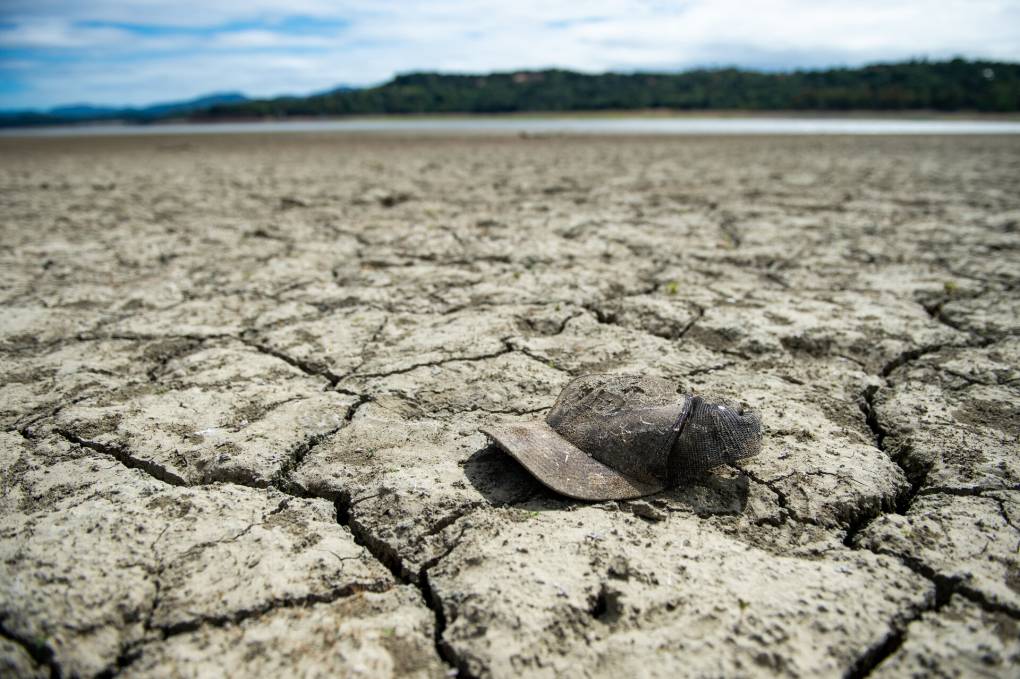
"caption": "A baseball cap sits on the dry, cracked earth visible on the lake bed of Lake Mendocino on June 11, 2021.",
"description": null,
"title": "dry-mendo-lake",
"credit": "Beth LaBerge/KQED",
"status": "inherit",
"altTag": null,
"isLoading": false,
"fetchFailed": false
},
"news_11887452": {
"type": "attachments",
"id": "news_11887452",
"meta": {
"index": "attachments_1716263798",
"site": "news",
"id": "11887452",
"found": true
},
"parent": 11887435,
"imgSizes": {
"twentyfourteen-full-width": {
"file": "https://ww2.kqed.org/app/uploads/sites/10/2021/09/Dry-Wildcat-Canyon-1038x576.jpg",
"width": 1038,
"mimeType": "image/jpeg",
"height": 576
},
"thumbnail": {
"file": "https://ww2.kqed.org/app/uploads/sites/10/2021/09/Dry-Wildcat-Canyon-160x107.jpg",
"width": 160,
"mimeType": "image/jpeg",
"height": 107
},
"post-thumbnail": {
"file": "https://ww2.kqed.org/app/uploads/sites/10/2021/09/Dry-Wildcat-Canyon-672x372.jpg",
"width": 672,
"mimeType": "image/jpeg",
"height": 372
},
"kqedFullSize": {
"file": "https://ww2.kqed.org/app/uploads/sites/10/2021/09/Dry-Wildcat-Canyon.jpg",
"width": 1920,
"height": 1280
},
"large": {
"file": "https://ww2.kqed.org/app/uploads/sites/10/2021/09/Dry-Wildcat-Canyon-1020x680.jpg",
"width": 1020,
"mimeType": "image/jpeg",
"height": 680
},
"1536x1536": {
"file": "https://ww2.kqed.org/app/uploads/sites/10/2021/09/Dry-Wildcat-Canyon-1536x1024.jpg",
"width": 1536,
"mimeType": "image/jpeg",
"height": 1024
},
"medium": {
"file": "https://ww2.kqed.org/app/uploads/sites/10/2021/09/Dry-Wildcat-Canyon-800x533.jpg",
"width": 800,
"mimeType": "image/jpeg",
"height": 533
}
},
"publishDate": 1630621668,
"modified": 1630621745,
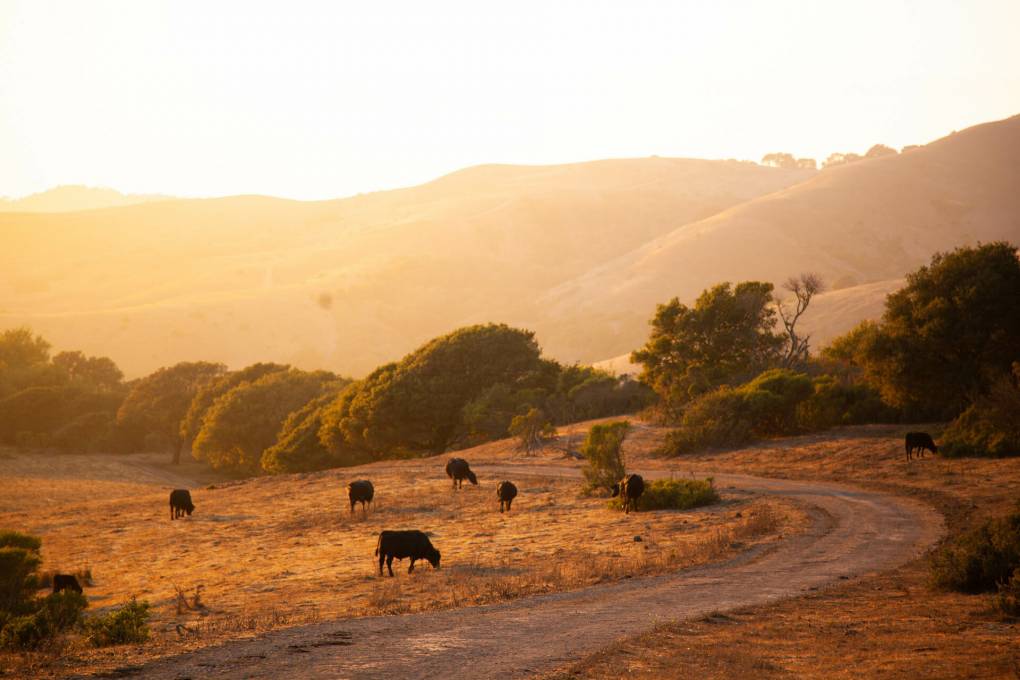
"caption": "Cattle grazing on the yellowing and dried-out hillsides of Wildcat Canyon Regional Park in Richmond, Calif., at sunset on Tuesday, July 27, 2021. The wildlife in the canyon and throughout the state are threatened with dwindling water reserves because of the severe drought conditions that have hit the San Francisco Bay Area this year.",
"description": null,
"title": "Wildcat Canyon Cattle grazing at sunset",
"credit": "Joyce Tsai/KQED",
"status": "inherit",
"altTag": null,
"isLoading": false,
"fetchFailed": false
},
"news_11887269": {
"type": "attachments",
"id": "news_11887269",
"meta": {
"index": "attachments_1716263798",
"site": "news",
"id": "11887269",
"found": true
},
"parent": 11887265,
"imgSizes": {
"twentyfourteen-full-width": {
"file": "https://ww2.kqed.org/app/uploads/sites/10/2021/09/Desalination-plant-Newark-1920x1080-1-1038x576.jpg",
"width": 1038,
"mimeType": "image/jpeg",
"height": 576
},
"thumbnail": {
"file": "https://ww2.kqed.org/app/uploads/sites/10/2021/09/Desalination-plant-Newark-1920x1080-1-160x90.jpg",
"width": 160,
"mimeType": "image/jpeg",
"height": 90
},
"post-thumbnail": {
"file": "https://ww2.kqed.org/app/uploads/sites/10/2021/09/Desalination-plant-Newark-1920x1080-1-672x372.jpg",
"width": 672,
"mimeType": "image/jpeg",
"height": 372
},
"kqedFullSize": {
"file": "https://ww2.kqed.org/app/uploads/sites/10/2021/09/Desalination-plant-Newark-1920x1080-1.jpg",
"width": 1920,
"height": 1080
},
"large": {
"file": "https://ww2.kqed.org/app/uploads/sites/10/2021/09/Desalination-plant-Newark-1920x1080-1-1020x574.jpg",
"width": 1020,
"mimeType": "image/jpeg",
"height": 574
},
"1536x1536": {
"file": "https://ww2.kqed.org/app/uploads/sites/10/2021/09/Desalination-plant-Newark-1920x1080-1-1536x864.jpg",
"width": 1536,
"mimeType": "image/jpeg",
"height": 864
},
"medium": {
"file": "https://ww2.kqed.org/app/uploads/sites/10/2021/09/Desalination-plant-Newark-1920x1080-1-800x450.jpg",
"width": 800,
"mimeType": "image/jpeg",
"height": 450
}
},
"publishDate": 1630528062,
"modified": 1630528139,
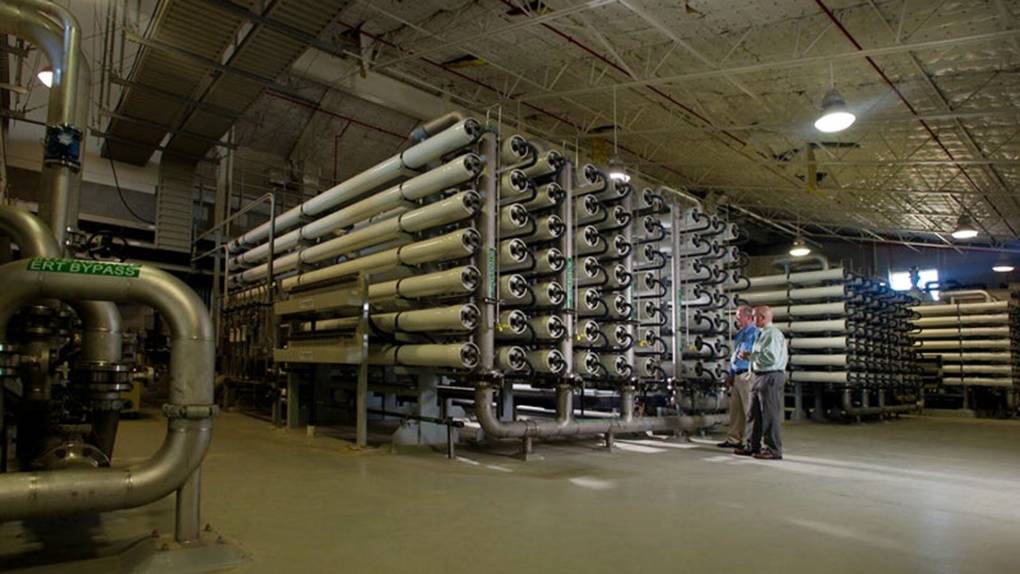
"caption": "The Alameda County Water District’s Newark Desalination Facility, which treats brackish water. ",
"description": null,
"title": "Desalination-plant-Newark-1920x1080",
"credit": "John Chacon/California Department of Water Resources",
"status": "inherit",
"altTag": "Two workers looking at a series of pipes inside a desalination plant.",
"isLoading": false,
"fetchFailed": false
},
"news_11887100": {
"type": "attachments",
"id": "news_11887100",
"meta": {
"index": "attachments_1716263798",
"site": "news",
"id": "11887100",
"found": true
},
"parent": 11887053,
"imgSizes": {
"twentyfourteen-full-width": {
"file": "https://ww2.kqed.org/app/uploads/sites/10/2021/08/drought-tolerant-yard-1038x576.jpg",
"width": 1038,
"mimeType": "image/jpeg",
"height": 576
},
"thumbnail": {
"file": "https://ww2.kqed.org/app/uploads/sites/10/2021/08/drought-tolerant-yard-160x90.jpg",
"width": 160,
"mimeType": "image/jpeg",
"height": 90
},
"post-thumbnail": {
"file": "https://ww2.kqed.org/app/uploads/sites/10/2021/08/drought-tolerant-yard-672x372.jpg",
"width": 672,
"mimeType": "image/jpeg",
"height": 372
},
"kqedFullSize": {
"file": "https://ww2.kqed.org/app/uploads/sites/10/2021/08/drought-tolerant-yard.jpg",
"width": 1920,
"height": 1080
},
"large": {
"file": "https://ww2.kqed.org/app/uploads/sites/10/2021/08/drought-tolerant-yard-1020x574.jpg",
"width": 1020,
"mimeType": "image/jpeg",
"height": 574
},
"1536x1536": {
"file": "https://ww2.kqed.org/app/uploads/sites/10/2021/08/drought-tolerant-yard-1536x864.jpg",
"width": 1536,
"mimeType": "image/jpeg",
"height": 864
},
"medium": {
"file": "https://ww2.kqed.org/app/uploads/sites/10/2021/08/drought-tolerant-yard-800x450.jpg",
"width": 800,
"mimeType": "image/jpeg",
"height": 450
}
},
"publishDate": 1630448796,
"modified": 1630518754,
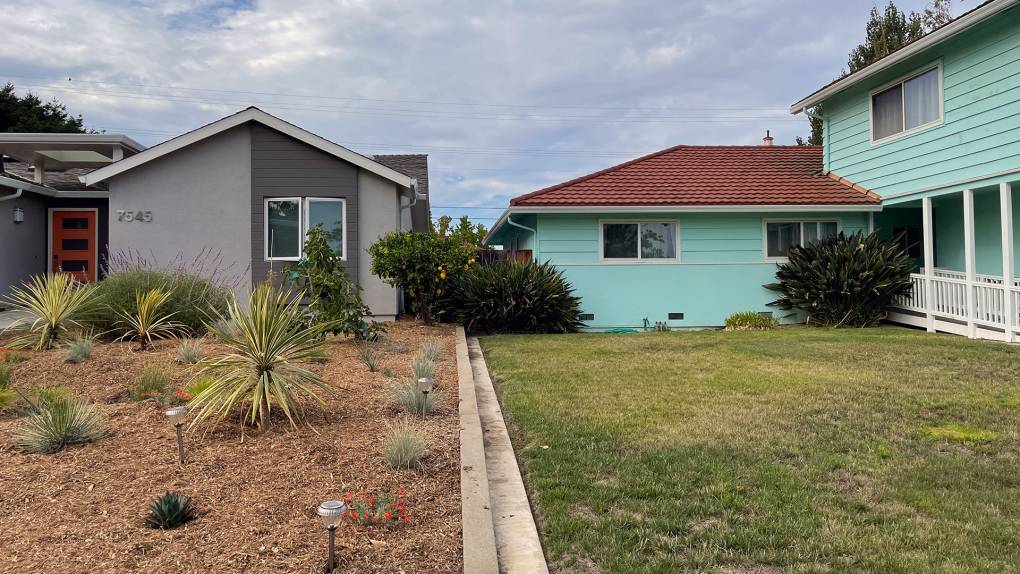
"caption": "Water experts say landscaping accounts for half of urban water use and lawns are the biggest culprit. Some homeowners are switching to drought tolerant landscaping to save water and money.",
"description": null,
"title": "drought-tolerant-yard",
"credit": "Nina Sparling/KQED",
"status": "inherit",
"altTag": "Side-by-side yards, one with drought-tolerant plants amid wood chips, the other a green lawn.",
"isLoading": false,
"fetchFailed": false
},
"news_11886659": {
"type": "attachments",
"id": "news_11886659",
"meta": {
"index": "attachments_1716263798",
"site": "news",
"id": "11886659",
"found": true
},
"parent": 11886636,
"imgSizes": {
"twentyfourteen-full-width": {
"file": "https://ww2.kqed.org/app/uploads/sites/10/2021/08/GettyImages-1330125868-1-1038x576.jpg",
"width": 1038,
"mimeType": "image/jpeg",
"height": 576
},
"thumbnail": {
"file": "https://ww2.kqed.org/app/uploads/sites/10/2021/08/GettyImages-1330125868-1-160x107.jpg",
"width": 160,
"mimeType": "image/jpeg",
"height": 107
},
"post-thumbnail": {
"file": "https://ww2.kqed.org/app/uploads/sites/10/2021/08/GettyImages-1330125868-1-672x372.jpg",
"width": 672,
"mimeType": "image/jpeg",
"height": 372
},
"kqedFullSize": {
"file": "https://ww2.kqed.org/app/uploads/sites/10/2021/08/GettyImages-1330125868-1.jpg",
"width": 2000,
"height": 1333
},
"large": {
"file": "https://ww2.kqed.org/app/uploads/sites/10/2021/08/GettyImages-1330125868-1-1020x680.jpg",
"width": 1020,
"mimeType": "image/jpeg",
"height": 680
},
"1536x1536": {
"file": "https://ww2.kqed.org/app/uploads/sites/10/2021/08/GettyImages-1330125868-1-1536x1024.jpg",
"width": 1536,
"mimeType": "image/jpeg",
"height": 1024
},
"full-width": {
"file": "https://ww2.kqed.org/app/uploads/sites/10/2021/08/GettyImages-1330125868-1-1920x1280.jpg",
"width": 1920,
"mimeType": "image/jpeg",
"height": 1280
},
"medium": {
"file": "https://ww2.kqed.org/app/uploads/sites/10/2021/08/GettyImages-1330125868-1-800x533.jpg",
"width": 800,
"mimeType": "image/jpeg",
"height": 533
}
},
"publishDate": 1630104508,
"modified": 1630104572,
"caption": "Water lines are visible on the steep banks of Lake Oroville. As the extreme drought emergency continues in California, Lake Oroville's water levels are continuing to drop to 28 percent of capacity.",
"description": "An empty reservoir.",
"title": "California's Drought Brings Lake Oroville To Historic Low Level",
"credit": "Justin Sullivan/Getty Images",
"status": "inherit",
"altTag": null,
"isLoading": false,
"fetchFailed": false
},
"news_11886547": {
"type": "attachments",
"id": "news_11886547",
"meta": {
"index": "attachments_1716263798",
"site": "news",
"id": "11886547",
"found": true
},
"parent": 11886536,
"imgSizes": {
"twentyfourteen-full-width": {
"file": "https://ww2.kqed.org/app/uploads/sites/10/2021/08/delta-1038x576.jpg",
"width": 1038,
"mimeType": "image/jpeg",
"height": 576
},
"thumbnail": {
"file": "https://ww2.kqed.org/app/uploads/sites/10/2021/08/delta-160x90.jpg",
"width": 160,
"mimeType": "image/jpeg",
"height": 90
},
"post-thumbnail": {
"file": "https://ww2.kqed.org/app/uploads/sites/10/2021/08/delta-672x372.jpg",
"width": 672,
"mimeType": "image/jpeg",
"height": 372
},
"kqedFullSize": {
"file": "https://ww2.kqed.org/app/uploads/sites/10/2021/08/delta.jpg",
"width": 1920,
"height": 1080
},
"large": {
"file": "https://ww2.kqed.org/app/uploads/sites/10/2021/08/delta-1020x574.jpg",
"width": 1020,
"mimeType": "image/jpeg",
"height": 574
},
"1536x1536": {
"file": "https://ww2.kqed.org/app/uploads/sites/10/2021/08/delta-1536x864.jpg",
"width": 1536,
"mimeType": "image/jpeg",
"height": 864
},
"medium": {
"file": "https://ww2.kqed.org/app/uploads/sites/10/2021/08/delta-800x450.jpg",
"width": 800,
"mimeType": "image/jpeg",
"height": 450
}
},
"publishDate": 1630024618,
"modified": 1630024710,
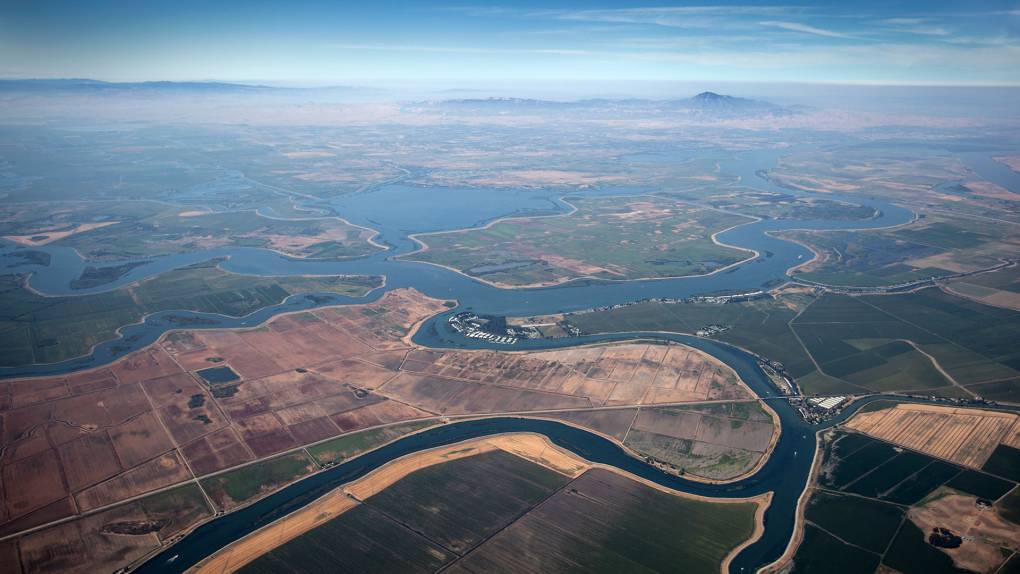
"caption": "Aerial view of the Sacramento-San Joaquin Bay Delta. Two-thirds of Californians get some water from here.",
"description": null,
"title": "delta",
"credit": "Mark Andrew Boyer/KQED",
"status": "inherit",
"altTag": null,
"isLoading": false,
"fetchFailed": false
},
"news_11886325": {
"type": "attachments",
"id": "news_11886325",
"meta": {
"index": "attachments_1716263798",
"site": "news",
"id": "11886325",
"found": true
},
"parent": 11886317,
"imgSizes": {
"twentyfourteen-full-width": {
"file": "https://ww2.kqed.org/app/uploads/sites/10/2021/08/drought-lake-mendocino-1038x576.jpg",
"width": 1038,
"mimeType": "image/jpeg",
"height": 576
},
"thumbnail": {
"file": "https://ww2.kqed.org/app/uploads/sites/10/2021/08/drought-lake-mendocino-160x107.jpg",
"width": 160,
"mimeType": "image/jpeg",
"height": 107
},
"post-thumbnail": {
"file": "https://ww2.kqed.org/app/uploads/sites/10/2021/08/drought-lake-mendocino-672x372.jpg",
"width": 672,
"mimeType": "image/jpeg",
"height": 372
},
"kqedFullSize": {
"file": "https://ww2.kqed.org/app/uploads/sites/10/2021/08/drought-lake-mendocino.jpg",
"width": 1920,
"height": 1278
},
"large": {
"file": "https://ww2.kqed.org/app/uploads/sites/10/2021/08/drought-lake-mendocino-1020x679.jpg",
"width": 1020,
"mimeType": "image/jpeg",
"height": 679
},
"1536x1536": {
"file": "https://ww2.kqed.org/app/uploads/sites/10/2021/08/drought-lake-mendocino-1536x1022.jpg",
"width": 1536,
"mimeType": "image/jpeg",
"height": 1022
},
"medium": {
"file": "https://ww2.kqed.org/app/uploads/sites/10/2021/08/drought-lake-mendocino-800x533.jpg",
"width": 800,
"mimeType": "image/jpeg",
"height": 533
}
},
"publishDate": 1629927875,
"modified": 1629927930,
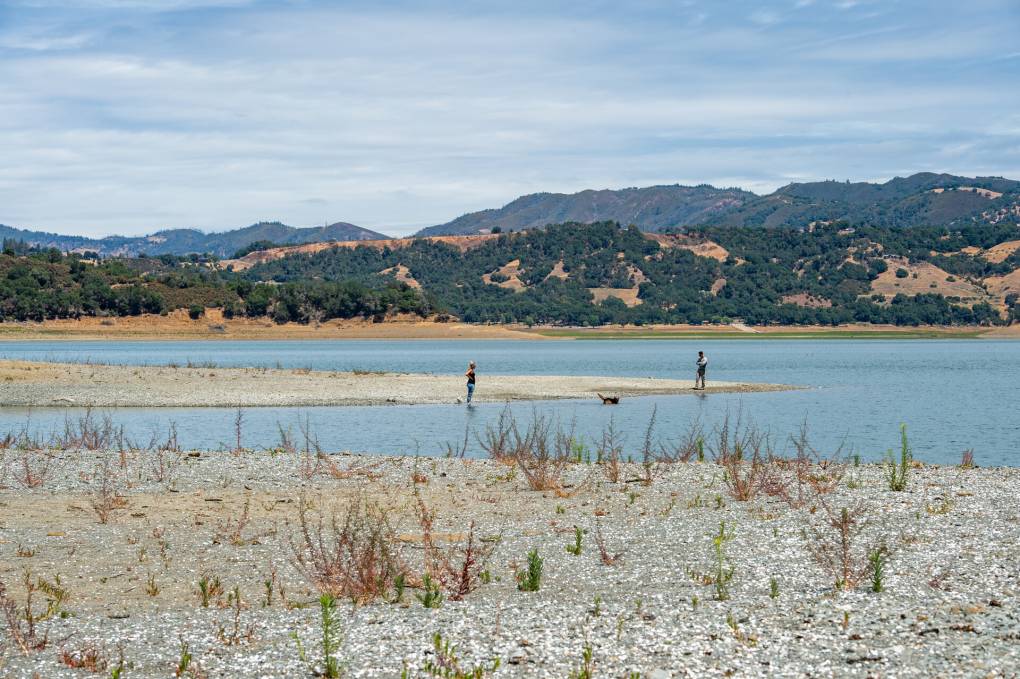
"caption": "A couple walks their dog near the coast of Lake Mendocino on June 11, 2021. Water officials say the reservoir could go dry by the end of the summer.",
"description": "A couple walks their dog near the coast of Lake Mendocino on June 11, 2021. Water officials say the reservoir could go dry by the end of the summer.",
"title": "A couple walks their dog near the coast of Lake Mendocino on June 11, 2021.",
"credit": "Beth LaBerge/KQED",
"status": "inherit",
"altTag": "A couple walks their dog near the coast of Lake Mendocino on June 11, 2021.",
"isLoading": false,
"fetchFailed": false
},
"news_11761535": {
"type": "attachments",
"id": "news_11761535",
"meta": {
"index": "attachments_1716263798",
"site": "news",
"id": "11761535",
"found": true
},
"parent": 0,
"imgSizes": {
"apple_news_ca_landscape_5_5": {
"file": "https://ww2.kqed.org/app/uploads/sites/10/2019/07/IMG_2431-1044x783.jpg",
"width": 1044,
"mimeType": "image/jpeg",
"height": 783
},
"apple_news_ca_square_4_0": {
"file": "https://ww2.kqed.org/app/uploads/sites/10/2019/07/IMG_2431-470x470.jpg",
"width": 470,
"mimeType": "image/jpeg",
"height": 470
},
"twentyfourteen-full-width": {
"file": "https://ww2.kqed.org/app/uploads/sites/10/2019/07/IMG_2431-1038x576.jpg",
"width": 1038,
"mimeType": "image/jpeg",
"height": 576
},
"thumbnail": {
"file": "https://ww2.kqed.org/app/uploads/sites/10/2019/07/IMG_2431-160x120.jpg",
"width": 160,
"mimeType": "image/jpeg",
"height": 120
},
"post-thumbnail": {
"file": "https://ww2.kqed.org/app/uploads/sites/10/2019/07/IMG_2431-672x372.jpg",
"width": 672,
"mimeType": "image/jpeg",
"height": 372
},
"kqedFullSize": {
"file": "https://ww2.kqed.org/app/uploads/sites/10/2019/07/IMG_2431-e1563235114141.jpg",
"width": 1920,
"height": 1440
},
"apple_news_ca_landscape_4_7": {
"file": "https://ww2.kqed.org/app/uploads/sites/10/2019/07/IMG_2431-632x474.jpg",
"width": 632,
"mimeType": "image/jpeg",
"height": 474
},
"large": {
"file": "https://ww2.kqed.org/app/uploads/sites/10/2019/07/IMG_2431-1020x765.jpg",
"width": 1020,
"mimeType": "image/jpeg",
"height": 765
},
"complete_open_graph": {
"file": "https://ww2.kqed.org/app/uploads/sites/10/2019/07/IMG_2431-1200x900.jpg",
"width": 1200,
"mimeType": "image/jpeg",
"height": 900
},
"apple_news_ca_landscape_4_0": {
"file": "https://ww2.kqed.org/app/uploads/sites/10/2019/07/IMG_2431-536x402.jpg",
"width": 536,
"mimeType": "image/jpeg",
"height": 402
},
"apple_news_ca_portrait_12_9": {
"file": "https://ww2.kqed.org/app/uploads/sites/10/2019/07/IMG_2431-1122x1496.jpg",
"width": 1122,
"mimeType": "image/jpeg",
"height": 1496
},
"medium": {
"file": "https://ww2.kqed.org/app/uploads/sites/10/2019/07/IMG_2431-800x600.jpg",
"width": 800,
"mimeType": "image/jpeg",
"height": 600
},
"apple_news_ca_portrait_4_0": {
"file": "https://ww2.kqed.org/app/uploads/sites/10/2019/07/IMG_2431-354x472.jpg",
"width": 354,
"mimeType": "image/jpeg",
"height": 472
},
"apple_news_ca_portrait_9_7": {
"file": "https://ww2.kqed.org/app/uploads/sites/10/2019/07/IMG_2431-840x1120.jpg",
"width": 840,
"mimeType": "image/jpeg",
"height": 1120
},
"apple_news_ca_landscape_12_9": {
"file": "https://ww2.kqed.org/app/uploads/sites/10/2019/07/IMG_2431-1832x1374.jpg",
"width": 1832,
"mimeType": "image/jpeg",
"height": 1374
},
"apple_news_ca_square_9_7": {
"file": "https://ww2.kqed.org/app/uploads/sites/10/2019/07/IMG_2431-1104x1104.jpg",
"width": 1104,
"mimeType": "image/jpeg",
"height": 1104
},
"apple_news_ca_portrait_4_7": {
"file": "https://ww2.kqed.org/app/uploads/sites/10/2019/07/IMG_2431-414x552.jpg",
"width": 414,
"mimeType": "image/jpeg",
"height": 552
},
"apple_news_ca_square_12_9": {
"file": "https://ww2.kqed.org/app/uploads/sites/10/2019/07/IMG_2431-1472x1472.jpg",
"width": 1472,
"mimeType": "image/jpeg",
"height": 1472
},
"apple_news_ca_portrait_5_5": {
"file": "https://ww2.kqed.org/app/uploads/sites/10/2019/07/IMG_2431-687x916.jpg",
"width": 687,
"mimeType": "image/jpeg",
"height": 916
},
"full-width": {
"file": "https://ww2.kqed.org/app/uploads/sites/10/2019/07/IMG_2431-1920x1440.jpg",
"width": 1920,
"mimeType": "image/jpeg",
"height": 1440
},
"apple_news_ca_square_4_7": {
"file": "https://ww2.kqed.org/app/uploads/sites/10/2019/07/IMG_2431-550x550.jpg",
"width": 550,
"mimeType": "image/jpeg",
"height": 550
},
"apple_news_ca_landscape_9_7": {
"file": "https://ww2.kqed.org/app/uploads/sites/10/2019/07/IMG_2431-1376x1032.jpg",
"width": 1376,
"mimeType": "image/jpeg",
"height": 1032
},
"apple_news_ca_square_5_5": {
"file": "https://ww2.kqed.org/app/uploads/sites/10/2019/07/IMG_2431-912x912.jpg",
"width": 912,
"mimeType": "image/jpeg",
"height": 912
}
},
"publishDate": 1563235069,
"modified": 1563409111,
"caption": "Mike Rose, co-owner of Semifreddi's Bakery, holds a tray of fresh Dutch Crunch rolls. ",
"description": null,
"title": "Fresh Dutch Crunch rolls",
"credit": "Amanda Font/KQED",
"status": "inherit",
"isLoading": false,
"fetchFailed": false
},
"news_11884525": {
"type": "attachments",
"id": "news_11884525",
"meta": {
"index": "attachments_1716263798",
"site": "news",
"id": "11884525",
"found": true
},
"parent": 11884520,
"imgSizes": {
"twentyfourteen-full-width": {
"file": "https://ww2.kqed.org/app/uploads/sites/10/2021/08/GettyImages-1307489157-1038x576.jpg",
"width": 1038,
"mimeType": "image/jpeg",
"height": 576
},
"thumbnail": {
"file": "https://ww2.kqed.org/app/uploads/sites/10/2021/08/GettyImages-1307489157-160x107.jpg",
"width": 160,
"mimeType": "image/jpeg",
"height": 107
},
"post-thumbnail": {
"file": "https://ww2.kqed.org/app/uploads/sites/10/2021/08/GettyImages-1307489157-672x372.jpg",
"width": 672,
"mimeType": "image/jpeg",
"height": 372
},
"kqedFullSize": {
"file": "https://ww2.kqed.org/app/uploads/sites/10/2021/08/GettyImages-1307489157.jpg",
"width": 2000,
"height": 1333
},
"large": {
"file": "https://ww2.kqed.org/app/uploads/sites/10/2021/08/GettyImages-1307489157-1020x680.jpg",
"width": 1020,
"mimeType": "image/jpeg",
"height": 680
},
"1536x1536": {
"file": "https://ww2.kqed.org/app/uploads/sites/10/2021/08/GettyImages-1307489157-1536x1024.jpg",
"width": 1536,
"mimeType": "image/jpeg",
"height": 1024
},
"full-width": {
"file": "https://ww2.kqed.org/app/uploads/sites/10/2021/08/GettyImages-1307489157-1920x1280.jpg",
"width": 1920,
"mimeType": "image/jpeg",
"height": 1280
},
"medium": {
"file": "https://ww2.kqed.org/app/uploads/sites/10/2021/08/GettyImages-1307489157-800x533.jpg",
"width": 800,
"mimeType": "image/jpeg",
"height": 533
}
},
"publishDate": 1628626581,
"modified": 1628626627,
"caption": "Gov. Gavin Newsom will face a recall election on Sept. 14, 2021. ",
"description": "Gov. Gavin Newsom will face a recall election on Sept. 14, 2021. ",
"title": "Governor Gavin Newsom Visits School To Highlight State's Reopening Efforts",
"credit": "Justin Sullivan/Getty Images",
"status": "inherit",
"altTag": null,
"isLoading": false,
"fetchFailed": false
},
"news_11883786": {
"type": "attachments",
"id": "news_11883786",
"meta": {
"index": "attachments_1716263798",
"site": "news",
"id": "11883786",
"found": true
},
"parent": 11883780,
"imgSizes": {
"twentyfourteen-full-width": {
"file": "https://ww2.kqed.org/app/uploads/sites/10/2021/08/PG_FrancisCustodio-sized-1038x576.jpg",
"width": 1038,
"mimeType": "image/jpeg",
"height": 576
},
"thumbnail": {
"file": "https://ww2.kqed.org/app/uploads/sites/10/2021/08/PG_FrancisCustodio-sized-160x90.jpg",
"width": 160,
"mimeType": "image/jpeg",
"height": 90
},
"post-thumbnail": {
"file": "https://ww2.kqed.org/app/uploads/sites/10/2021/08/PG_FrancisCustodio-sized-672x372.jpg",
"width": 672,
"mimeType": "image/jpeg",
"height": 372
},
"kqedFullSize": {
"file": "https://ww2.kqed.org/app/uploads/sites/10/2021/08/PG_FrancisCustodio-sized.jpg",
"width": 1920,
"height": 1080
},
"large": {
"file": "https://ww2.kqed.org/app/uploads/sites/10/2021/08/PG_FrancisCustodio-sized-1020x574.jpg",
"width": 1020,
"mimeType": "image/jpeg",
"height": 574
},
"1536x1536": {
"file": "https://ww2.kqed.org/app/uploads/sites/10/2021/08/PG_FrancisCustodio-sized-1536x864.jpg",
"width": 1536,
"mimeType": "image/jpeg",
"height": 864
},
"medium": {
"file": "https://ww2.kqed.org/app/uploads/sites/10/2021/08/PG_FrancisCustodio-sized-800x450.jpg",
"width": 800,
"mimeType": "image/jpeg",
"height": 450
}
},
"publishDate": 1628119836,
"modified": 1628271775,
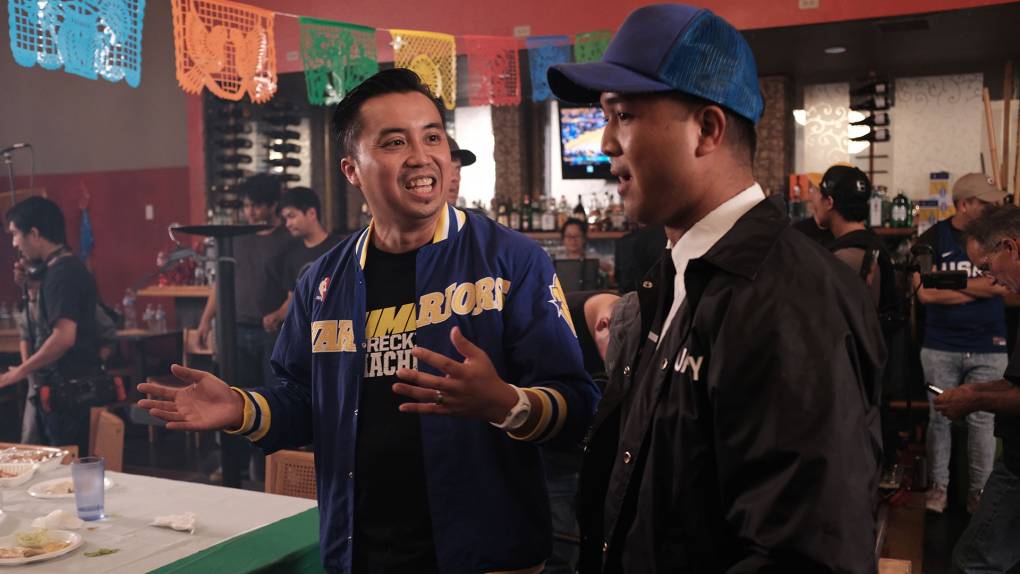
"caption": "Patricio Ginelsa (left) directs childhood friend Francis Custodio in \u003ci>Lumpia With a Vengeance\u003c/i>.",
"description": "Patricio Ginelsa (left) directs childhood friend Francis Custodio in \u003ci>Lumpia With a Vengeance\u003c/i>.",
"title": "PG_FrancisCustodio-sized",
"credit": "\u003ca href=\"https://jcasasphotography.com/\">J.J Casas\u003c/a>/Courtesy \u003ca href=\"https://www.kidheroes.net/\">Kid Heroes Productions\u003c/a>",
"status": "inherit",
"altTag": "Patricio Ginelsa (left) directs childhood friend Francis Custodio in \"Lumpia With a Vengeance.\"",
"isLoading": false,
"fetchFailed": false
},
"news_11882808": {
"type": "attachments",
"id": "news_11882808",
"meta": {
"index": "attachments_1716263798",
"site": "news",
"id": "11882808",
"found": true
},
"parent": 11882379,
"imgSizes": {
"twentyfourteen-full-width": {
"file": "https://ww2.kqed.org/app/uploads/sites/10/2021/07/07272021_MinoBucheli_DalyCity-0272-1038x576.jpg",
"width": 1038,
"mimeType": "image/jpeg",
"height": 576
},
"thumbnail": {
"file": "https://ww2.kqed.org/app/uploads/sites/10/2021/07/07272021_MinoBucheli_DalyCity-0272-160x107.jpg",
"width": 160,
"mimeType": "image/jpeg",
"height": 107
},
"post-thumbnail": {
"file": "https://ww2.kqed.org/app/uploads/sites/10/2021/07/07272021_MinoBucheli_DalyCity-0272-672x372.jpg",
"width": 672,
"mimeType": "image/jpeg",
"height": 372
},
"kqedFullSize": {
"file": "https://ww2.kqed.org/app/uploads/sites/10/2021/07/07272021_MinoBucheli_DalyCity-0272.jpg",
"width": 2500,
"height": 1667
},
"2048x2048": {
"file": "https://ww2.kqed.org/app/uploads/sites/10/2021/07/07272021_MinoBucheli_DalyCity-0272-2048x1366.jpg",
"width": 2048,
"mimeType": "image/jpeg",
"height": 1366
},
"large": {
"file": "https://ww2.kqed.org/app/uploads/sites/10/2021/07/07272021_MinoBucheli_DalyCity-0272-1020x680.jpg",
"width": 1020,
"mimeType": "image/jpeg",
"height": 680
},
"1536x1536": {
"file": "https://ww2.kqed.org/app/uploads/sites/10/2021/07/07272021_MinoBucheli_DalyCity-0272-1536x1024.jpg",
"width": 1536,
"mimeType": "image/jpeg",
"height": 1024
},
"full-width": {
"file": "https://ww2.kqed.org/app/uploads/sites/10/2021/07/07272021_MinoBucheli_DalyCity-0272-1920x1280.jpg",
"width": 1920,
"mimeType": "image/jpeg",
"height": 1280
},
"medium": {
"file": "https://ww2.kqed.org/app/uploads/sites/10/2021/07/07272021_MinoBucheli_DalyCity-0272-800x533.jpg",
"width": 800,
"mimeType": "image/jpeg",
"height": 533
}
},
"publishDate": 1627503119,
"modified": 1628104133,
"caption": "A view from the Saint Francis neighborhood in Daly City. ",
"description": "A view from the Saint Francis neighborhood in Daly City. ",
"title": "07272021_MinoBucheli_DalyCity-0272",
"credit": "Sebastian Miño-Bucheli/KQED",
"status": "inherit",
"altTag": "A view from the Saint Francis neighborhood in Daly City.",
"isLoading": false,
"fetchFailed": false
},
"news_11882075": {
"type": "attachments",
"id": "news_11882075",
"meta": {
"index": "attachments_1716263798",
"site": "news",
"id": "11882075",
"found": true
},
"parent": 11881696,
"imgSizes": {
"twentyfourteen-full-width": {
"file": "https://ww2.kqed.org/app/uploads/sites/10/2021/07/E-40.DeFremery-1038x576.jpg",
"width": 1038,
"mimeType": "image/jpeg",
"height": 576
},
"thumbnail": {
"file": "https://ww2.kqed.org/app/uploads/sites/10/2021/07/E-40.DeFremery-160x107.jpg",
"width": 160,
"mimeType": "image/jpeg",
"height": 107
},
"post-thumbnail": {
"file": "https://ww2.kqed.org/app/uploads/sites/10/2021/07/E-40.DeFremery-672x372.jpg",
"width": 672,
"mimeType": "image/jpeg",
"height": 372
},
"kqedFullSize": {
"file": "https://ww2.kqed.org/app/uploads/sites/10/2021/07/E-40.DeFremery.jpg",
"width": 1920,
"height": 1283
},
"large": {
"file": "https://ww2.kqed.org/app/uploads/sites/10/2021/07/E-40.DeFremery-1020x682.jpg",
"width": 1020,
"mimeType": "image/jpeg",
"height": 682
},
"1536x1536": {
"file": "https://ww2.kqed.org/app/uploads/sites/10/2021/07/E-40.DeFremery-1536x1026.jpg",
"width": 1536,
"mimeType": "image/jpeg",
"height": 1026
},
"medium": {
"file": "https://ww2.kqed.org/app/uploads/sites/10/2021/07/E-40.DeFremery-800x535.jpg",
"width": 800,
"mimeType": "image/jpeg",
"height": 535
}
},
"publishDate": 1626933789,
"modified": 1626933814,
"caption": "E-40 at DeFremery Park in West Oakland, Oct. 12, 2018.",
"description": "E-40 at DeFremery Park in West Oakland, Oct. 12, 2018.",
"title": "E-40.DeFremery",
"credit": "Pendarvis Harshaw/KQED",
"status": "inherit",
"altTag": null,
"isLoading": false,
"fetchFailed": false
}
},
"audioPlayerReducer": {
"postId": "stream_live",
"isPaused": true,
"isPlaying": false,
"pfsActive": false,
"pledgeModalIsOpen": true,
"playerDrawerIsOpen": false,
"liveAudioPlayStartedAt": 0,
"liveAudioPlayContext": ""
},
"authorsReducer": {
"byline_news_11887467": {
"type": "authors",
"id": "byline_news_11887467",
"meta": {
"override": true
},
"slug": "byline_news_11887467",
"name": "Amy Mayer",
"isLoading": false
},
"byline_news_11887053": {
"type": "authors",
"id": "byline_news_11887053",
"meta": {
"override": true
},
"slug": "byline_news_11887053",
"name": "Nina Sparling",
"isLoading": false
},
"byline_news_11886636": {
"type": "authors",
"id": "byline_news_11886636",
"meta": {
"override": true
},
"slug": "byline_news_11886636",
"name": "Amy Mayer",
"isLoading": false
},
"byline_news_11886536": {
"type": "authors",
"id": "byline_news_11886536",
"meta": {
"override": true
},
"slug": "byline_news_11886536",
"name": "Lauren Sommer, Ezra David Romero, Katrina Schwartz",
"isLoading": false
},
"byline_news_11881696": {
"type": "authors",
"id": "byline_news_11881696",
"meta": {
"override": true
},
"slug": "byline_news_11881696",
"name": "Pendarvis Harshaw and Olivia Allen-Price",
"isLoading": false
},
"astupi": {
"type": "authors",
"id": "70",
"meta": {
"index": "authors_1716337520",
"id": "70",
"found": true
},
"name": "Amanda Stupi",
"firstName": "Amanda",
"lastName": "Stupi",
"slug": "astupi",
"email": "astupi@kqed.org",
"display_author_email": false,
"staff_mastheads": [],
"title": "Senior Engagement Producer",
"bio": "Amanda joined KQED Science’s engagement team as a Senior Audience Engagement Strategist in the spring of 2019. She has helped craft messaging around wildfires, the coronavirus pandemic, climate change and many other stories. She has also brought KQED Science to new platforms such as Reddit’s Ask Me Anything series. Prior to joining KQED Science, Amanda spent seven years as an engagement producer with Forum, KQED’s daily live call-in show. She got her start in radio at KALW's weekly call in show, City Visions, before going on to an internship and stint at NPR's Talk of the Nation.\r\n\r\nPrior to journalism, Amanda taught English at Lowell High School. She's a native of Petaluma and currently lives under the \"South San Francisco the Industrial City\" sign in South City. She believes that engagement is vital to news’s future and that good journalism listens as much as it asks questions.",
"avatar": "https://secure.gravatar.com/avatar/e981c503e5c162da701dcaccfbf87e35?s=600&d=blank&r=g",
"twitter": null,
"facebook": null,
"instagram": null,
"linkedin": null,
"sites": [
{
"site": "arts",
"roles": [
"Contributor"
]
},
{
"site": "news",
"roles": [
"editor"
]
},
{
"site": "pop",
"roles": [
"contributor"
]
},
{
"site": "stateofhealth",
"roles": [
"editor"
]
},
{
"site": "science",
"roles": []
},
{
"site": "perspectives",
"roles": [
"editor"
]
}
],
"headData": {
"title": "Amanda Stupi | KQED",
"description": "Senior Engagement Producer",
"ogImgSrc": "https://secure.gravatar.com/avatar/e981c503e5c162da701dcaccfbf87e35?s=600&d=blank&r=g",
"twImgSrc": "https://secure.gravatar.com/avatar/e981c503e5c162da701dcaccfbf87e35?s=600&d=blank&r=g"
},
"isLoading": false,
"link": "/author/astupi"
},
"ohubertallen": {
"type": "authors",
"id": "102",
"meta": {
"index": "authors_1716337520",
"id": "102",
"found": true
},
"name": "Olivia Allen-Price",
"firstName": "Olivia",
"lastName": "Allen-Price",
"slug": "ohubertallen",
"email": "oallenprice@kqed.org",
"display_author_email": false,
"staff_mastheads": [
"news"
],
"title": "Senior Editor",
"bio": "Olivia Allen-Price is senior editor and host of the award-winning Bay Curious podcast. Prior to joining KQED in 2013, Olivia worked at The Baltimore Sun and The Virginian-Pilot in Norfolk, Va. She holds degrees in journalism and political science from Elon University. Her work has earned awards from the Society of Professional Journalists, the Hearst Foundation and Hearken. She loves to talk about running and curly hair.\r\n\r\nFollow: \u003ca href=\"https://twitter.com/oallenprice\">@oallenprice\u003c/a>\r\nEmail: \u003ca href=\"mailto:oallenprice@kqed.org\">oallenprice@kqed.org\u003c/a>",
"avatar": "https://secure.gravatar.com/avatar/07f7803c1f6be56f3be58ef276dfa64dce898502e0554408ef4858451a8294f7?s=600&d=blank&r=g",
"twitter": "oallenprice",
"bluesky": null,
"facebook": null,
"instagram": null,
"linkedin": null,
"sites": [
{
"site": "",
"roles": [
"editor"
]
},
{
"site": "arts",
"roles": [
"subscriber"
]
},
{
"site": "news",
"roles": [
"administrator"
]
},
{
"site": "pop",
"roles": [
"administrator"
]
},
{
"site": "bayareabites",
"roles": [
"contributor"
]
},
{
"site": "stateofhealth",
"roles": [
"administrator"
]
},
{
"site": "science",
"roles": [
"editor"
]
}
],
"headData": {
"title": "Olivia Allen-Price | KQED",
"description": "Senior Editor",
"ogImgSrc": "https://secure.gravatar.com/avatar/07f7803c1f6be56f3be58ef276dfa64dce898502e0554408ef4858451a8294f7?s=600&d=blank&r=g",
"twImgSrc": "https://secure.gravatar.com/avatar/07f7803c1f6be56f3be58ef276dfa64dce898502e0554408ef4858451a8294f7?s=600&d=blank&r=g"
},
"isLoading": false,
"link": "/author/ohubertallen"
},
"katrinaschwartz": {
"type": "authors",
"id": "234",
"meta": {
"index": "authors_1716337520",
"id": "234",
"found": true
},
"name": "Katrina Schwartz",
"firstName": "Katrina",
"lastName": "Schwartz",
"slug": "katrinaschwartz",
"email": "kschwartz@kqed.org",
"display_author_email": false,
"staff_mastheads": [
"news"
],
"title": "Producer",
"bio": "Katrina Schwartz is a journalist based in San Francisco. She's worked at KPCC public radio in LA and has reported on air and online for KQED since 2010. She covered how teaching and learning is changing for MindShift between 2012 and 2020. She is the co-host of the MindShift podcast and now produces KQED's Bay Curious podcast.",
"avatar": "https://secure.gravatar.com/avatar/edb4ee79070447a018538c9aae6eeecf28786515b8a0c30e43b6b7dce5aa44c8?s=600&d=blank&r=g",
"twitter": "kschwart",
"bluesky": null,
"facebook": null,
"instagram": null,
"linkedin": null,
"sites": [
{
"site": "",
"roles": [
"editor"
]
},
{
"site": "news",
"roles": [
"editor"
]
},
{
"site": "mindshift",
"roles": [
"administrator"
]
},
{
"site": "stateofhealth",
"roles": [
"author"
]
},
{
"site": "science",
"roles": [
"editor"
]
}
],
"headData": {
"title": "Katrina Schwartz | KQED",
"description": "Producer",
"ogImgSrc": "https://secure.gravatar.com/avatar/edb4ee79070447a018538c9aae6eeecf28786515b8a0c30e43b6b7dce5aa44c8?s=600&d=blank&r=g",
"twImgSrc": "https://secure.gravatar.com/avatar/edb4ee79070447a018538c9aae6eeecf28786515b8a0c30e43b6b7dce5aa44c8?s=600&d=blank&r=g"
},
"isLoading": false,
"link": "/author/katrinaschwartz"
},
"afont": {
"type": "authors",
"id": "8637",
"meta": {
"index": "authors_1716337520",
"id": "8637",
"found": true
},
"name": "Amanda Font",
"firstName": "Amanda",
"lastName": "Font",
"slug": "afont",
"email": "afont@kqed.org",
"display_author_email": false,
"staff_mastheads": [],
"title": "KQED Contributor",
"bio": "Amanda Font is a producer on \u003cem>The Latest\u003c/em> podcast, and the host and co-producer of the series \u003cem>Audible Cosmos\u003c/em>. She has previously worked as a producer and reporter on the \u003cem>Bay Curious\u003c/em> podcast, and director of \u003cem>The California Report Magazine\u003c/em>. She grew up in the deserts of Southern California and moved north for the trees. Amanda earned a B.A. from the BECA program at San Francisco State, where she worked in the university's radio station. Amanda Font is represented by SAG-AFTRA.",
"avatar": "https://secure.gravatar.com/avatar/d9e81cf0117d5849b9cfb7ab4b1422f1?s=600&d=blank&r=g",
"twitter": null,
"facebook": null,
"instagram": null,
"linkedin": null,
"sites": [
{
"site": "news",
"roles": [
"add_users",
"create_users"
]
},
{
"site": "science",
"roles": []
},
{
"site": "forum",
"roles": [
"administrator"
]
},
{
"site": "perspectives",
"roles": [
"administrator"
]
},
{
"site": "radio",
"roles": [
"administrator"
]
}
],
"headData": {
"title": "Amanda Font | KQED",
"description": "KQED Contributor",
"ogImgSrc": "https://secure.gravatar.com/avatar/d9e81cf0117d5849b9cfb7ab4b1422f1?s=600&d=blank&r=g",
"twImgSrc": "https://secure.gravatar.com/avatar/d9e81cf0117d5849b9cfb7ab4b1422f1?s=600&d=blank&r=g"
},
"isLoading": false,
"link": "/author/afont"
}
},
"pagesReducer": {
"news_program_bay-curious": {
"type": "terms",
"id": "news_33523",
"meta": {
"index": "terms_1716263798",
"site": "news",
"id": "33523",
"score": 15.085828
},
"featImg": null,
"name": "Bay Curious",
"description": null,
"taxonomy": "program",
"headData": {
"twImgId": null,
"twTitle": null,
"ogTitle": null,
"ogImgId": null,
"twDescription": null,
"description": null,
"title": "Bay Curious Archives | KQED News",
"ogDescription": null
},
"ttid": 33540,
"slug": "bay-curious",
"isLoading": false,
"title": "Bay Curious",
"pageMeta": {
"site": "news",
"WpPageTemplate": "page-topic-editorial",
"currentPage": 22
},
"blocks": [
{
"blockName": "kqed/post-list",
"attrs": {
"layout": "cardArticle2",
"query": "posts/news?program=bay-curious",
"seeMore": false,
"paginated": true,
"page": 22
}
},
{
"blockName": "kqed/ad"
}
]
}
},
"pfsSessionReducer": {},
"postsReducer": {
"stream_live": {
"type": "live",
"id": "stream_live",
"audioUrl": "https://streams.kqed.org/kqedradio",
"title": "Live Stream",
"excerpt": "Live Stream information currently unavailable.",
"link": "/radio",
"featImg": "",
"label": {
"name": "KQED Live",
"link": "/"
}
},
"stream_kqedNewscast": {
"type": "posts",
"id": "stream_kqedNewscast",
"audioUrl": "https://www.kqed.org/.stream/anon/radio/RDnews/newscast.mp3?_=1",
"title": "KQED Newscast",
"featImg": "",
"label": {
"name": "88.5 FM",
"link": "/"
}
},
"news_11887467": {
"type": "posts",
"id": "news_11887467",
"meta": {
"index": "posts_1716263798",
"site": "news",
"id": "11887467",
"score": null,
"sort": [
1630663515000
]
},
"guestAuthors": [],
"slug": "whats-a-megadrought-are-we-in-one",
"title": "What's a Megadrought? Are We in One?",
"publishDate": 1630663515,
"format": "standard",
"headTitle": "What’s a Megadrought? Are We in One? | KQED",
"labelTerm": {},
"content": "\u003cp>\u003cem>\u003ca href=\"https://open.spotify.com/playlist/2QoyW8Jt9q3Tq11l8ws3wc?si=3d913de8a11c45a8&nd=1\">Listen to all six episodes of our State of Drought series on Spotify.\u003c/a>\u003c/em>\u003c/p>\n\u003cp>When summer is hot and dry, Californians have reason to think about drought — what it means to be in one, and what it means to come out of one.\u003c/p>\n\u003cp>In 2017, the state emerged from a nearly six-year seasonal drought. Then we had a few years that saw more water across much of the state. Now in 2021, we’ve hit another significant drought year.\u003c/p>\n\u003cp>[baycuriouspodcastinfo]\u003c/p>\n\u003cp>That led Bay Curious listener Nicholas Hardy to ask: Are we in the start of a drought or are we actually in the middle of a megadrought with some wet years thrown in?\u003c/p>\n\u003cp>[ad fullwidth]\u003c/p>\n\u003cp>When we examine the long-term history of California’s relationship with water, or the lack thereof, we can start to piece together what’s going on.\u003c/p>\n\u003ch3>How do we know we’re in a drought?\u003c/h3>\n\u003cp>Weather conditions, such as day-to-day rainfall and heat, tell us if we’re currently in a drought. What little snow fell in the Sierra Nevada melted and quickly soaked into the ground this year, never reaching reservoirs. That plus meager rainfall over the winter set the stage for bone dry summer conditions in California and across the West. By the end of August, \u003ca href=\"https://droughtmonitor.unl.edu/CurrentMap/StateDroughtMonitor.aspx?West\">the national Drought Monitor\u003c/a>, showed the entire state of California was at least in moderate drought, with a significant swath ranked in “exceptional drought,” the highest level.\u003c/p>\n\u003cp>https://twitter.com/NWSBayArea/status/1433411032773316614?s=20\u003c/p>\n\u003cp>Oregon and Nevada had similar conditions. The Drought Monitor is a map that federal agencies and university scientists pull together from actual weather data such as temperatures and rainfall and also on-the-ground observations, such as those made by UC Cooperative Extension agents throughout the state.\u003c/p>\n\u003ch3>What is a megadrought, and are we in one?\u003c/h3>\n\u003cp>Over the long-term, it’s climate science that paints the picture of how long droughts in the past have lasted, and to some extent how severe they were. While “drought” refers to one season or one year’s conditions, climate scientists use the term “megadrought” when drought conditions last for decades.\u003c/p>\n\u003cp>“In the southwest, it’s been overall drier since the late 1990s. So we’re talking about a 20 year dry period here now,” said Richard Seager, a climate scientist at the Lamont Doherty Earth Observatory at Columbia University, “and using the term megadrought is justifiable because it stacks up in terms of the severity and the length with the ones that we’ve inferred from tree ring data back in the Medieval period.”\u003c/p>\n\u003cp>[baycuriousbug]\u003c/p>\n\u003cp>Last year, a study published in the journal Science \u003ca href=\"https://science.sciencemag.org/content/368/6488/314\">described how tree rings allowed researchers to conclude that the last time the West experienced sustained arid conditions over decades was a 28-year dry spell\u003c/a> that ended in the year 1603.\u003c/p>\n\u003cp>“We now have a full, uninterrupted record of soil moisture across western North America that extends from 800 A.D. all the way up to the near present,” Park Williams, who led the study, \u003ca href=\"https://www.kqed.org/science/1962273/megadrought-conditions-not-seen-for-400-years-have-returned-to-the-west-scientists-say\">told KQED at the time\u003c/a>. He’s now a bioclimatologist at UCLA. “That allows us to compare for the first time this drought event to the big megadroughts.” Williams said the current megadrought looks “indistinguishable from those big megadroughts.”\u003c/p>\n\u003cp>The study looked at California, eight other states and Northern Mexico and it corroborates what scientists have long feared and warned policymakers: \u003ca href=\"https://blogs.ei.columbia.edu/2019/07/24/medieval-megadroughts-climate-change/\">Extreme warming will exacerbate any dry spell making it longer, severer and more widespread\u003c/a>, and this will bake states in the Western U.S. and areas of Mexico with a punishingly long drought.\u003c/p>\n\u003cp>\u003ca href=\"https://www.ppic.org/publication/californias-latest-drought/\">While the occasional wet period punctuates a long run of below-average precipitation\u003c/a>, for the past two decades the region has been consistently dry and hot. In response, thirsty farms and cities have drawn down the Colorado River, putting the water supply for 40 million people in California alone at risk.\u003c/p>\n\u003cp>For the first time, in August 2021 \u003ca href=\"https://www.npr.org/2021/08/23/1030223380/farmers-in-arizona-face-cuts-because-of-colorado-river-water-shortages\">the federal government declared a water shortage on the river\u003c/a> and some farmers, particularly in Arizona, are already feeling the impact.\u003c/p>\n\u003ch3>California Boomed During Unusually Wet Times\u003c/h3>\n\u003cfigure id=\"attachment_11861878\" class=\"wp-caption aligncenter\" style=\"max-width: 2560px\">\u003cimg loading=\"lazy\" decoding=\"async\" class=\"size-full wp-image-11861878\" src=\"https://ww2.kqed.org/app/uploads/sites/10/2021/02/Lake-Chabot-scaled.jpg\" alt=\"A black and white photo of lake chabot nestled below rolling hills.\" width=\"2560\" height=\"2240\" srcset=\"https://cdn.kqed.org/wp-content/uploads/sites/10/2021/02/Lake-Chabot-scaled.jpg 2560w, https://cdn.kqed.org/wp-content/uploads/sites/10/2021/02/Lake-Chabot-800x700.jpg 800w, https://cdn.kqed.org/wp-content/uploads/sites/10/2021/02/Lake-Chabot-1020x892.jpg 1020w, https://cdn.kqed.org/wp-content/uploads/sites/10/2021/02/Lake-Chabot-160x140.jpg 160w, https://cdn.kqed.org/wp-content/uploads/sites/10/2021/02/Lake-Chabot-1536x1344.jpg 1536w, https://cdn.kqed.org/wp-content/uploads/sites/10/2021/02/Lake-Chabot-2048x1792.jpg 2048w, https://cdn.kqed.org/wp-content/uploads/sites/10/2021/02/Lake-Chabot-1920x1680.jpg 1920w\" sizes=\"(max-width: 2560px) 100vw, 2560px\">\u003cfigcaption class=\"wp-caption-text\">A 1920s view of Lake Chabot, in the East Bay Hills above San Leandro. The main embankment of Chabot Dam is at the lower right. \u003ccite>(East Bay Municipal Utility District)\u003c/cite>\u003c/figcaption>\u003c/figure>\n\u003cp>The 20th century saw California grow to be the most populous state in the nation, says Scott Stine, a professor of geography and environmental studies at Cal State East Bay, and that coincided with an especially wet century.\u003c/p>\n\u003cp>“We built this phenomenal infrastructure, second to none in the world, here in California and in other parts of the West,” he said. “All of it based on the diversion of water and all of it based on the assumption that the 20th century was normal. And the 20th century is not normal.”\u003c/p>\n\u003cp>“The problem of the present day and the coming droughts is that we are set up to need far more water than we should expect at any time in the coming decades and centuries,” he said. “Particularly with the higher temperatures. We’ve created a monster that we have to continue to feed with water, and the water is just not going to be there.”\u003c/p>\n\u003cp>That likely means changes to the ways water is consumed in California.\u003c/p>\n\u003cp>“A lot of agriculture in the United States is going to have to move from California and the southwest to other water rich areas,” Seager said.\u003c/p>\n\u003cp>But already farmers across the state are finding different ways to use their land and water, by choice, circumstance or legal requirement. \u003ca href=\"https://news.ucmerced.edu/news/2021/new-ai-institute-expands-uc-merced%E2%80%99s-smart-sustainable-agriculture-effort\">Researchers at UC Merced hope the “smart farm” they are building on campus\u003c/a> will help them develop strategies to improve the ways agriculture makes use of scarce natural resources, including water.\u003c/p>\n\u003cp>John Abatzoglou, a climate scientist at UC Merced, who collaborated on the Science paper, said people may yet innovate their way through the new conditions.\u003c/p>\n\u003cp>“Some of these changes could actually lead to beneficial climate adaptation strategies, being more efficient, like revolutionizing how we work with land, how we work with water,” Abatzoglou said. “So there may be some good things that come out of dealing with hardship, which is what we’re going through in California.”\u003c/p>\n\u003cp>An example would be custom micro-irrigation so that sensors determine exactly how much water a plant needs and only that amount is slowly dribbled out into the soil.\u003c/p>\n\u003ch3>When will this megadrought end?\u003c/h3>\n\u003cp>One challenge for residents, farmers and water managers alike is that neither weather nor climate forecasting is very good at giving us advanced drought warnings or predictions for when megadroughts will end.\u003c/p>\n\u003cp>Abatzoglou says he and others are refining their ability to forecast into a coming “water year” (October through September), which would help people make smarter decisions. He says those could range from farmers switching up what they plant in the fall to reduce water demand in the winter and reservoir operators being better informed as they balance how much water to reserve and how much to distribute.\u003c/p>\n\u003cp>[emailsignup newslettername=\"baycurious\" align=\"right\"]\u003c/p>\n\u003cp>Because drought is a creeping phenomena, he said. “Usually you don’t know you’re in a drought until it’s a little bit too late.”\u003c/p>\n\u003cp>Longer-term, climate scientists are developing tools to better forecast ocean temperatures in the tropical Pacific, Seager says, because they have a big influence on drought conditions on land. Right now, they can only see about a year into the future, but with a better system, scientists hope to predict when overall California drought conditions might change.\u003c/p>\n\u003cp>“There are big international research efforts to do that,” Seager said. “But in the Pacific Ocean, that research to date has not met with a tremendous amount of success. [It] has been rather disappointing in progress.”\u003c/p>\n\u003cp>Gov. Gavin Newsom has already said that another dry winter could lead him to impose mandatory water reductions, which will be a tricky thing to impose unilaterally as in the state’s driest regions (think Imperial Valley as one example), many people have already made changes to reduce their water use and they won’t take kindly to being asked to make more significant reductions when residents of wetter areas are just taking their first major steps toward water conservation.\u003c/p>\n\u003cp>\u003cem>\u003ca href=\"https://www.kqed.org/science/1962273/megadrought-conditions-not-seen-for-400-years-have-returned-to-the-west-scientists-say\">This post is adapted from an earlier post published in 2020.\u003c/a> \u003c/em>\u003c/p>\n\u003cp>[ad floatright]\u003c/p>\n\u003cp>[baycuriousquestion]\u003c/p>\n\n",
"blocks": [],
"excerpt": "When we examine the long-term history of California’s relationship with water, or the lack thereof, we can start to answer listener Nicholas Hardy's question: \"Are we in a megadrought?\"",
"status": "publish",
"parent": 0,
"modified": 1726001012,
"stats": {
"hasAudio": false,
"hasVideo": false,
"hasChartOrMap": false,
"iframeSrcs": [],
"hasGoogleForm": false,
"hasGallery": false,
"hasHearkenModule": true,
"hasPolis": false,
"paragraphCount": 36,
"wordCount": 1452
},
"headData": {
"title": "What's a Megadrought? Are We in One? | KQED",
"description": "When we examine the long-term history of California’s relationship with water, or the lack thereof, we can start to answer listener Nicholas Hardy's question: "Are we in a megadrought?"",
"ogTitle": "",
"ogDescription": "",
"ogImgId": "",
"twTitle": "",
"twDescription": "",
"twImgId": "",
"schema": {
"@context": "https://schema.org",
"@type": "NewsArticle",
"headline": "What's a Megadrought? Are We in One?",
"datePublished": "2021-09-03T03:05:15-07:00",
"dateModified": "2024-09-10T13:43:32-07:00",
"image": "https://cdn.kqed.org/wp-content/uploads/2020/02/KQED-OG-Image@1x.png",
"isAccessibleForFree": "True",
"publisher": {
"@type": "NewsMediaOrganization",
"@id": "https://www.kqed.org/#organization",
"name": "KQED",
"logo": "https://cdn.kqed.org/wp-content/uploads/2020/02/KQED-OG-Image@1x.png",
"url": "https://www.kqed.org",
"sameAs": [
"https://www.facebook.com/KQED",
"https://twitter.com/KQED",
"https://www.instagram.com/kqed/",
"https://www.tiktok.com/@kqedofficial",
"https://www.linkedin.com/company/kqed",
"https://www.youtube.com/channel/UCeC0IOo7i1P_61zVUWbJ4nw"
]
}
}
},
"source": "Bay Curious",
"sourceUrl": "https://www.kqed.org/podcasts/baycurious",
"audioUrl": "https://www.podtrac.com/pts/redirect.mp3/traffic.megaphone.fm/KQINC3142023629.mp3?updated=1630529464",
"sticky": false,
"nprByline": "Amy Mayer",
"path": "/news/11887467/whats-a-megadrought-are-we-in-one",
"audioTrackLength": null,
"parsedContent": [
{
"type": "contentString",
"content": "\u003cdiv class=\"post-body\">\u003cp>\u003cp>\u003cem>\u003ca href=\"https://open.spotify.com/playlist/2QoyW8Jt9q3Tq11l8ws3wc?si=3d913de8a11c45a8&nd=1\">Listen to all six episodes of our State of Drought series on Spotify.\u003c/a>\u003c/em>\u003c/p>\n\u003cp>When summer is hot and dry, Californians have reason to think about drought — what it means to be in one, and what it means to come out of one.\u003c/p>\n\u003cp>In 2017, the state emerged from a nearly six-year seasonal drought. Then we had a few years that saw more water across much of the state. Now in 2021, we’ve hit another significant drought year.\u003c/p>\n\u003cp>\u003c/p>\u003cp>\u003caside class=\"alignleft utils-parseShortcode-shortcodes-__bayCuriousPodcastShortcode__bayCurious\">\u003cimg src=https://cdn.kqed.org/wp-content/uploads/2023/02/bayCuriousLogo.png alt=\"Bay Curious Podcast\" loading=\"lazy\" />\n \u003ca href=\"/news/series/baycurious\">Bay Curious\u003c/a> is a podcast that answers your questions about the Bay Area.\n Subscribe on \u003ca href=\"https://itunes.apple.com/us/podcast/bay-curious/id1172473406\" target=\"_blank\" rel=\"noopener noreferrer\">Apple Podcasts\u003c/a>,\n \u003ca href=\"http://www.npr.org/podcasts/500557090/bay-curious\" target=\"_blank\" rel=\"noopener noreferrer\">NPR One\u003c/a> or your favorite podcast platform.\u003c/aside>\u003c/p>\u003cp>\u003c/p>\n\u003cp>That led Bay Curious listener Nicholas Hardy to ask: Are we in the start of a drought or are we actually in the middle of a megadrought with some wet years thrown in?\u003c/p>\n\u003cp>\u003c/p>\u003c/div>",
"attributes": {
"named": {},
"numeric": []
}
},
{
"type": "component",
"content": "",
"name": "ad",
"attributes": {
"named": {
"label": "fullwidth"
},
"numeric": [
"fullwidth"
]
}
},
{
"type": "contentString",
"content": "\u003cdiv class=\"post-body\">\u003cp>\u003c/p>\n\u003cp>When we examine the long-term history of California’s relationship with water, or the lack thereof, we can start to piece together what’s going on.\u003c/p>\n\u003ch3>How do we know we’re in a drought?\u003c/h3>\n\u003cp>Weather conditions, such as day-to-day rainfall and heat, tell us if we’re currently in a drought. What little snow fell in the Sierra Nevada melted and quickly soaked into the ground this year, never reaching reservoirs. That plus meager rainfall over the winter set the stage for bone dry summer conditions in California and across the West. By the end of August, \u003ca href=\"https://droughtmonitor.unl.edu/CurrentMap/StateDroughtMonitor.aspx?West\">the national Drought Monitor\u003c/a>, showed the entire state of California was at least in moderate drought, with a significant swath ranked in “exceptional drought,” the highest level.\u003c/p>\u003c/p>\u003c/div>",
"attributes": {
"named": {},
"numeric": []
}
},
{
"type": "component",
"content": "",
"name": "singleTwitterStatus",
"attributes": {
"named": {
"id": "1433411032773316614"
},
"numeric": []
}
},
{
"type": "contentString",
"content": "\u003cdiv class=\"post-body\">\u003cp>\n\u003cp>Oregon and Nevada had similar conditions. The Drought Monitor is a map that federal agencies and university scientists pull together from actual weather data such as temperatures and rainfall and also on-the-ground observations, such as those made by UC Cooperative Extension agents throughout the state.\u003c/p>\n\u003ch3>What is a megadrought, and are we in one?\u003c/h3>\n\u003cp>Over the long-term, it’s climate science that paints the picture of how long droughts in the past have lasted, and to some extent how severe they were. While “drought” refers to one season or one year’s conditions, climate scientists use the term “megadrought” when drought conditions last for decades.\u003c/p>\n\u003cp>“In the southwest, it’s been overall drier since the late 1990s. So we’re talking about a 20 year dry period here now,” said Richard Seager, a climate scientist at the Lamont Doherty Earth Observatory at Columbia University, “and using the term megadrought is justifiable because it stacks up in terms of the severity and the length with the ones that we’ve inferred from tree ring data back in the Medieval period.”\u003c/p>\n\u003cp>\u003c/p>\u003cp>\u003caside class=\"alignleft utils-parseShortcode-shortcodes-__bayCuriousPodcastShortcode__bayCurious\">\u003cimg src=https://cdn.kqed.org/wp-content/uploads/2023/02/bayCuriousLogo.png alt=\"Bay Curious Podcast\" loading=\"lazy\" />\n What do you wonder about the Bay Area, its culture or people that you want KQED to investigate?\n \u003ca href=\"/news/series/baycurious\">Ask Bay Curious.\u003c/a>\u003c/aside>\u003c/p>\u003cp>\u003c/p>\n\u003cp>Last year, a study published in the journal Science \u003ca href=\"https://science.sciencemag.org/content/368/6488/314\">described how tree rings allowed researchers to conclude that the last time the West experienced sustained arid conditions over decades was a 28-year dry spell\u003c/a> that ended in the year 1603.\u003c/p>\n\u003cp>“We now have a full, uninterrupted record of soil moisture across western North America that extends from 800 A.D. all the way up to the near present,” Park Williams, who led the study, \u003ca href=\"https://www.kqed.org/science/1962273/megadrought-conditions-not-seen-for-400-years-have-returned-to-the-west-scientists-say\">told KQED at the time\u003c/a>. He’s now a bioclimatologist at UCLA. “That allows us to compare for the first time this drought event to the big megadroughts.” Williams said the current megadrought looks “indistinguishable from those big megadroughts.”\u003c/p>\n\u003cp>The study looked at California, eight other states and Northern Mexico and it corroborates what scientists have long feared and warned policymakers: \u003ca href=\"https://blogs.ei.columbia.edu/2019/07/24/medieval-megadroughts-climate-change/\">Extreme warming will exacerbate any dry spell making it longer, severer and more widespread\u003c/a>, and this will bake states in the Western U.S. and areas of Mexico with a punishingly long drought.\u003c/p>\n\u003cp>\u003ca href=\"https://www.ppic.org/publication/californias-latest-drought/\">While the occasional wet period punctuates a long run of below-average precipitation\u003c/a>, for the past two decades the region has been consistently dry and hot. In response, thirsty farms and cities have drawn down the Colorado River, putting the water supply for 40 million people in California alone at risk.\u003c/p>\n\u003cp>For the first time, in August 2021 \u003ca href=\"https://www.npr.org/2021/08/23/1030223380/farmers-in-arizona-face-cuts-because-of-colorado-river-water-shortages\">the federal government declared a water shortage on the river\u003c/a> and some farmers, particularly in Arizona, are already feeling the impact.\u003c/p>\n\u003ch3>California Boomed During Unusually Wet Times\u003c/h3>\n\u003cfigure id=\"attachment_11861878\" class=\"wp-caption aligncenter\" style=\"max-width: 2560px\">\u003cimg loading=\"lazy\" decoding=\"async\" class=\"size-full wp-image-11861878\" src=\"https://ww2.kqed.org/app/uploads/sites/10/2021/02/Lake-Chabot-scaled.jpg\" alt=\"A black and white photo of lake chabot nestled below rolling hills.\" width=\"2560\" height=\"2240\" srcset=\"https://cdn.kqed.org/wp-content/uploads/sites/10/2021/02/Lake-Chabot-scaled.jpg 2560w, https://cdn.kqed.org/wp-content/uploads/sites/10/2021/02/Lake-Chabot-800x700.jpg 800w, https://cdn.kqed.org/wp-content/uploads/sites/10/2021/02/Lake-Chabot-1020x892.jpg 1020w, https://cdn.kqed.org/wp-content/uploads/sites/10/2021/02/Lake-Chabot-160x140.jpg 160w, https://cdn.kqed.org/wp-content/uploads/sites/10/2021/02/Lake-Chabot-1536x1344.jpg 1536w, https://cdn.kqed.org/wp-content/uploads/sites/10/2021/02/Lake-Chabot-2048x1792.jpg 2048w, https://cdn.kqed.org/wp-content/uploads/sites/10/2021/02/Lake-Chabot-1920x1680.jpg 1920w\" sizes=\"(max-width: 2560px) 100vw, 2560px\">\u003cfigcaption class=\"wp-caption-text\">A 1920s view of Lake Chabot, in the East Bay Hills above San Leandro. The main embankment of Chabot Dam is at the lower right. \u003ccite>(East Bay Municipal Utility District)\u003c/cite>\u003c/figcaption>\u003c/figure>\n\u003cp>The 20th century saw California grow to be the most populous state in the nation, says Scott Stine, a professor of geography and environmental studies at Cal State East Bay, and that coincided with an especially wet century.\u003c/p>\n\u003cp>“We built this phenomenal infrastructure, second to none in the world, here in California and in other parts of the West,” he said. “All of it based on the diversion of water and all of it based on the assumption that the 20th century was normal. And the 20th century is not normal.”\u003c/p>\n\u003cp>“The problem of the present day and the coming droughts is that we are set up to need far more water than we should expect at any time in the coming decades and centuries,” he said. “Particularly with the higher temperatures. We’ve created a monster that we have to continue to feed with water, and the water is just not going to be there.”\u003c/p>\n\u003cp>That likely means changes to the ways water is consumed in California.\u003c/p>\n\u003cp>“A lot of agriculture in the United States is going to have to move from California and the southwest to other water rich areas,” Seager said.\u003c/p>\n\u003cp>But already farmers across the state are finding different ways to use their land and water, by choice, circumstance or legal requirement. \u003ca href=\"https://news.ucmerced.edu/news/2021/new-ai-institute-expands-uc-merced%E2%80%99s-smart-sustainable-agriculture-effort\">Researchers at UC Merced hope the “smart farm” they are building on campus\u003c/a> will help them develop strategies to improve the ways agriculture makes use of scarce natural resources, including water.\u003c/p>\n\u003cp>John Abatzoglou, a climate scientist at UC Merced, who collaborated on the Science paper, said people may yet innovate their way through the new conditions.\u003c/p>\n\u003cp>“Some of these changes could actually lead to beneficial climate adaptation strategies, being more efficient, like revolutionizing how we work with land, how we work with water,” Abatzoglou said. “So there may be some good things that come out of dealing with hardship, which is what we’re going through in California.”\u003c/p>\n\u003cp>An example would be custom micro-irrigation so that sensors determine exactly how much water a plant needs and only that amount is slowly dribbled out into the soil.\u003c/p>\n\u003ch3>When will this megadrought end?\u003c/h3>\n\u003cp>One challenge for residents, farmers and water managers alike is that neither weather nor climate forecasting is very good at giving us advanced drought warnings or predictions for when megadroughts will end.\u003c/p>\n\u003cp>Abatzoglou says he and others are refining their ability to forecast into a coming “water year” (October through September), which would help people make smarter decisions. He says those could range from farmers switching up what they plant in the fall to reduce water demand in the winter and reservoir operators being better informed as they balance how much water to reserve and how much to distribute.\u003c/p>\n\u003cp>\u003c/p>\u003c/div>",
"attributes": {
"named": {},
"numeric": []
}
},
{
"type": "component",
"content": "",
"name": "emailsignup",
"attributes": {
"named": {
"newslettername": "baycurious",
"align": "right",
"label": ""
},
"numeric": []
}
},
{
"type": "contentString",
"content": "\u003cdiv class=\"post-body\">\u003cp>\u003c/p>\n\u003cp>Because drought is a creeping phenomena, he said. “Usually you don’t know you’re in a drought until it’s a little bit too late.”\u003c/p>\n\u003cp>Longer-term, climate scientists are developing tools to better forecast ocean temperatures in the tropical Pacific, Seager says, because they have a big influence on drought conditions on land. Right now, they can only see about a year into the future, but with a better system, scientists hope to predict when overall California drought conditions might change.\u003c/p>\n\u003cp>“There are big international research efforts to do that,” Seager said. “But in the Pacific Ocean, that research to date has not met with a tremendous amount of success. [It] has been rather disappointing in progress.”\u003c/p>\n\u003cp>Gov. Gavin Newsom has already said that another dry winter could lead him to impose mandatory water reductions, which will be a tricky thing to impose unilaterally as in the state’s driest regions (think Imperial Valley as one example), many people have already made changes to reduce their water use and they won’t take kindly to being asked to make more significant reductions when residents of wetter areas are just taking their first major steps toward water conservation.\u003c/p>\n\u003cp>\u003cem>\u003ca href=\"https://www.kqed.org/science/1962273/megadrought-conditions-not-seen-for-400-years-have-returned-to-the-west-scientists-say\">This post is adapted from an earlier post published in 2020.\u003c/a> \u003c/em>\u003c/p>\n\u003cp>\u003c/p>\u003c/div>",
"attributes": {
"named": {},
"numeric": []
}
},
{
"type": "component",
"content": "",
"name": "ad",
"attributes": {
"named": {
"label": "floatright"
},
"numeric": [
"floatright"
]
}
},
{
"type": "contentString",
"content": "\u003cdiv class=\"post-body\">\u003cp>\u003c/p>\n\u003cp>\u003c/p>\u003c/div>",
"attributes": {
"named": {},
"numeric": []
}
},
{
"type": "component",
"content": "",
"name": "baycuriousquestion",
"attributes": {
"named": {
"label": ""
},
"numeric": []
}
},
{
"type": "contentString",
"content": "\u003cdiv class=\"post-body\">\u003cp>\u003c/p>\n\n\u003c/div>\u003c/p>",
"attributes": {
"named": {},
"numeric": []
}
}
],
"link": "/news/11887467/whats-a-megadrought-are-we-in-one",
"authors": [
"byline_news_11887467"
],
"programs": [
"news_33523"
],
"series": [
"news_17986"
],
"categories": [
"news_34165",
"news_33520",
"news_356"
],
"tags": [
"news_255",
"news_28199",
"news_29387",
"news_6739"
],
"featImg": "news_11887471",
"label": "source_news_11887467"
},
"news_11887435": {
"type": "posts",
"id": "news_11887435",
"meta": {
"index": "posts_1716263798",
"site": "news",
"id": "11887435",
"score": null,
"sort": [
1630663227000
]
},
"guestAuthors": [],
"slug": "12-important-things-to-know-about-californias-drought",
"title": "12 Important Things to Know About California's Drought",
"publishDate": 1630663227,
"format": "standard",
"headTitle": "12 Important Things to Know About California’s Drought | KQED",
"labelTerm": {},
"content": "\u003cp>California is in a second year of drought. Gov. Gavin Newsom has asked residents to voluntarily cut water use by 15% across the state to try to shore up our reserves in case of another dry winter. In the meantime, fires are raging around California as bone-dry forests go up like tinderboxes. How did we get here?\u003c/p>\n\u003cp>\u003ca href=\"https://www.kqed.org/science/1975970/climate-scientists-meet-as-dangerous-fires-floods-and-droughts-test-the-world\">As climate change scrambles weather patterns and adds more variability to our lives\u003c/a>, it’s time to take stock of what we know about our state’s frequent hot, dry periods so that we can begin planning for a future with less consistent water supplies.\u003c/p>\n\u003cp>[baycuriouspodcastinfo]\u003c/p>\n\u003cp>Bay Curious just finished up \u003ca href=\"https://open.spotify.com/playlist/2QoyW8Jt9q3Tq11l8ws3wc?si=3d913de8a11c45a8&nd=1\">a six-part State of Drought series examining the issues\u003c/a>. Here’s what we learned.\u003c/p>\n\u003ch3>We are experiencing megadrought conditions\u003c/h3>\n\u003cp>Californians are no strangers to droughts, but we tend to think of them as limited periods of abnormal dryness.\u003c/p>\n\u003cp>[ad fullwidth]\u003c/p>\n\u003cp>While “drought” refers to one season or one year’s conditions, climate scientists use the term “megadrought” when arid conditions last for decades. A megadrought might be punctuated by a wet year here or there, but overall the conditions are dry.\u003c/p>\n\u003cp>“In the southwest, it’s been overall drier since the late 1990s. So we’re talking about a 20-year dry period here now,” said Richard Seager, a climate scientist at the Lamont Doherty Earth Observatory at Columbia University, “and using the term megadrought is justifiable because it stacks up in terms of the severity and the length with the ones that we’ve inferred from tree ring data back in the medieval period.”\u003c/p>\n\u003cp>Last year, a study published in the journal Science described how \u003ca href=\"https://www.kqed.org/science/1962273/megadrought-conditions-not-seen-for-400-years-have-returned-to-the-west-scientists-say\">tree rings allowed researchers to conclude that the last time the West experienced sustained arid conditions over decades was a 28-year dry spell\u003c/a> that ended in the year 1603.\u003c/p>\n\u003cp>The study looked at California, eight other states and Northern Mexico and corroborates what scientists have long feared and warned policymakers: Extreme warming will exacerbate any dry spell, making it longer, more severe and more widespread, and this will bake states in the Western U.S. and areas of Mexico with a punishingly long drought.\u003c/p>\n\u003ch3>California was developed during an abnormally wet time\u003c/h3>\n\u003cp>The 20th century saw California grow to become the most populous state in the nation, says Scott Stine, professor emeritus of geography and environmental studies at Cal State East Bay, and that coincided with an especially wet century.\u003c/p>\n\u003cp>“We built this phenomenal infrastructure, second to none in the world, here in California and in other parts of the West,” he said, “all of it based on the diversion of water and all of it based on the assumption that the 20th century was normal. And the 20th century is not normal.”\u003c/p>\n\u003ch3>We’re feeling the drought more because we use a lot of water\u003c/h3>\n\u003cfigure id=\"attachment_11887455\" class=\"wp-caption aligncenter\" style=\"max-width: 1920px\">\u003cimg loading=\"lazy\" decoding=\"async\" class=\"wp-image-11887455 size-full\" src=\"https://ww2.kqed.org/app/uploads/sites/10/2021/09/Irrigation-Klamath-river.jpg\" alt=\"Water sprays across a field with blue mountains looming behind and puffy clouds overhead.\" width=\"1920\" height=\"1080\" srcset=\"https://cdn.kqed.org/wp-content/uploads/sites/10/2021/09/Irrigation-Klamath-river.jpg 1920w, https://cdn.kqed.org/wp-content/uploads/sites/10/2021/09/Irrigation-Klamath-river-800x450.jpg 800w, https://cdn.kqed.org/wp-content/uploads/sites/10/2021/09/Irrigation-Klamath-river-1020x574.jpg 1020w, https://cdn.kqed.org/wp-content/uploads/sites/10/2021/09/Irrigation-Klamath-river-160x90.jpg 160w, https://cdn.kqed.org/wp-content/uploads/sites/10/2021/09/Irrigation-Klamath-river-1536x864.jpg 1536w\" sizes=\"(max-width: 1920px) 100vw, 1920px\">\u003cfigcaption class=\"wp-caption-text\">Sprinklers water crops in the Tulelake Irrigation District with water from the Klamath River. \u003ccite>(Craig Miller/KQED)\u003c/cite>\u003c/figcaption>\u003c/figure>\n\u003cp>Climate scientists say a megadrought was in the cards for California and the West because of climate cycles, but our large population and dependence on agriculture make the dryness feel more painful. Forty million people living and working in the state, along with so many of the country’s fruits, vegetables and nuts being grown here, mean water levels going into this megadrought may be lower than they were in previous eras.\u003c/p>\n\u003cp>“The problem of the present day and the coming droughts is that we are set up to need far more water than we should expect at any time in the coming decades and centuries, particularly with the higher temperatures,” Stine said. “We’ve created a monster that we have to continue to feed with water, and the water is just not going to be there.”\u003c/p>\n\u003ch3>California has enough water, but we have to conserve\u003c/h3>\n\u003cp>The idea of prolonged drought is a scary one, but water management \u003ca href=\"https://www.kqed.org/news/11886317/how-should-we-be-thinking-about-a-hotter-drier-future-transcript\">experts say we will have enough water if we conserve what we have, using every drop wisely\u003c/a>. That’s going to take sacrifice from all Californians, whether they live in cities or farm in the state’s rural areas. All of us are guilty of wastefulness when it comes to water.\u003c/p>\n\u003cp>“There’s a lot of inefficiencies in our current system that can be fixed,” says Newsha Ajami, director of urban water policy at Stanford University. “We definitely can do a lot more just to make sure we use every drop of water properly. And if we do all the right things, we can survive. But if we don’t, we can actually have a serious breakdown in the system. So we have to be able to adapt to this new reality, which means that we have to rethink how we’re using the water in different ways and reduce waste.”\u003c/p>\n\u003ch3>We need to change how we manage our reservoirs\u003c/h3>\n\u003cfigure id=\"attachment_11887458\" class=\"wp-caption aligncenter\" style=\"max-width: 1920px\">\u003cimg loading=\"lazy\" decoding=\"async\" class=\"wp-image-11887458 size-full\" src=\"https://ww2.kqed.org/app/uploads/sites/10/2021/09/shasta.jpg\" alt=\"Aerial view of a lake. The dam is visible and a dry shoreline peeks out above the water.\" width=\"1920\" height=\"1080\" srcset=\"https://cdn.kqed.org/wp-content/uploads/sites/10/2021/09/shasta.jpg 1920w, https://cdn.kqed.org/wp-content/uploads/sites/10/2021/09/shasta-800x450.jpg 800w, https://cdn.kqed.org/wp-content/uploads/sites/10/2021/09/shasta-1020x574.jpg 1020w, https://cdn.kqed.org/wp-content/uploads/sites/10/2021/09/shasta-160x90.jpg 160w, https://cdn.kqed.org/wp-content/uploads/sites/10/2021/09/shasta-1536x864.jpg 1536w\" sizes=\"(max-width: 1920px) 100vw, 1920px\">\u003cfigcaption class=\"wp-caption-text\">An aerial view of the Shasta Dam and Reservoir in 1976, with low water levels due to drought. Shasta Dam is located about nine miles northwest of Redding on the Sacramento River. \u003ccite>(U.S. Bureau of Reclamation)\u003c/cite>\u003c/figcaption>\u003c/figure>\n\u003cp>California’s water infrastructure was designed under the assumption that about 30% of our water would naturally be stored in the form of snow in the mountains. Each spring, as the snow melts, it flows into the streams and rivers and is collected in reservoirs and lakes for use during drier periods. \u003ca href=\"https://www.kqed.org/science/1431369/californias-water-system-built-for-a-climate-we-no-longer-have\">But that infrastructure is increasingly ill-suited to our weather patterns, due to climate change.\u003c/a>\u003c/p>\n\u003cp>In the past, water was let out of the reservoir whether or not storms were in the forecast to make room for rainwater. That’s because dams both collect water in reservoirs and protect downstream communities from flooding. Increasingly, California’s rainy season is more concentrated and its dry season prolonged, a result of climate change. The state now relies on big, soaking atmospheric rivers for much of its precipitation.\u003c/p>\n\u003cp>\u003ca href=\"https://www.kqed.org/science/1975549/russian-river-drought-sonoma-and-mendocino-residents-save-the-little-water-they-have\">Several reservoirs around the state, including Lake Mendocino, are piloting what’s called Forecast-Informed Reservoir Operations\u003c/a>. Basically, water managers are waiting to let water out of the reservoirs until they see a big storm coming. That way they can preserve every drop.\u003c/p>\n\u003ch3>There are some big things agriculture can do to manage water better\u003c/h3>\n\u003cp>Agriculture uses 40% of the state’s water, urban areas use 10% and 50% goes back into the environment to support natural ecosystems. Because the farming industry’s water footprint is so large, it’s going to have to cut usage to survive a megadrought, according to Jay Lund, a professor of civil and environmental engineering at UC Davis. That’s because some irrigated land is much more productive than other land.\u003c/p>\n\u003cp>[baycuriousbug]\u003c/p>\n\u003cp>“We can have a tremendous amount of reduction in irrigated acreage,” he said. “If you take it out of the less productive crops on the least productive land, you’re going to have much less of an economic impact than if you took it out of almonds.”\u003c/p>\n\u003cp>He says farmers make 90% of their revenue from the crops grown on only 50% of the land. That means we can cut back on irrigating that other half — where we grow the lower-value crops that use a lot of water.\u003c/p>\n\u003cp>“I think we’re probably going to see on the order of 20% of the irrigated agriculture go out of production in order to keep water for other, more productive economic purposes,” Lund says.\u003c/p>\n\u003cp>That might mean growing fewer of some crops California has become known for: processed tomatoes, vegetables, melons, onions and garlic.\u003c/p>\n\u003ch3>We have to manage our groundwater better\u003c/h3>\n\u003cp>We often talk about farmers pumping groundwater, but many urban areas rely on groundwater as well. In the Bay Area, Santa Clara County — and its biggest city, San José — depend on groundwater for a portion of its drinking water. It’s important to protect our groundwater from pollution and to replenish the aquifers during wet years.\u003c/p>\n\u003cp>Changes are coming to how the state manages its groundwater. Farmers have long used groundwater stored in underground aquifers during dry years when they receive less water from reservoirs. In fact, \u003ca href=\"https://www.kqed.org/science/1976429/with-a-deepening-drought-california-has-few-protections-for-depleted-groundwater\">some land in the Central Valley is sinking because of overpumping\u003c/a>. That’s one reason the state legislature passed a law seven years ago intended to restore balance to the state’s aquifers. \u003ca href=\"https://www.kqed.org/science/1955916/times-up-on-groundwater-plans-one-of-the-most-important-new-california-water-laws-in-50-years-explained\">The Sustainable Groundwater Management Act requires water districts to limit the water they pump.\u003c/a>\u003c/p>\n\u003cp>If users in a water district pump a lot of water during dry years to water their crops, they’ll have to refrain from growing some crops during wet years to allow the aquifers to refill with rainwater. This new way to manage groundwater will likely have farmers change what they grow over the next two decades.\u003c/p>\n\u003ch3>How we use water in our homes matters, too\u003c/h3>\n\u003cp>Despite a larger population, Californians statewide are using 16% less water than during the last drought, which ended in 2017. That’s because some of the water conservation habits that took off then have stuck around. Low-flow appliances like toilets, dishwashers, washing machines and showerheads are making a difference.\u003c/p>\n\u003cp>Still, there are \u003ca href=\"https://www.kqed.org/news/11887053/three-big-ways-to-save-water-at-home\">more ways urban water users can conserve\u003c/a>. One is to install gray water systems that reuse water from activities like laundry or showering for outdoor watering. Many cities and water agencies offer rebates to help cover the costs of such conversions.\u003c/p>\n\u003cp>And, since half of all urban water use goes to landscaping, homeowners can see big water savings by converting their yards to drought-tolerant landscaping that features native plants adapted to our region’s climate patterns. As a bonus, native plants provide habitat for helpful butterflies and insects.\u003c/p>\n\u003ch3>Maybe it’s time to rethink our lawns\u003c/h3>\n\u003cfigure id=\"attachment_11887461\" class=\"wp-caption aligncenter\" style=\"max-width: 1920px\">\u003cimg loading=\"lazy\" decoding=\"async\" class=\"size-full wp-image-11887461\" src=\"https://ww2.kqed.org/app/uploads/sites/10/2021/09/rethink-lawns.jpg\" alt=\"\" width=\"1920\" height=\"1280\" srcset=\"https://cdn.kqed.org/wp-content/uploads/sites/10/2021/09/rethink-lawns.jpg 1920w, https://cdn.kqed.org/wp-content/uploads/sites/10/2021/09/rethink-lawns-800x533.jpg 800w, https://cdn.kqed.org/wp-content/uploads/sites/10/2021/09/rethink-lawns-1020x680.jpg 1020w, https://cdn.kqed.org/wp-content/uploads/sites/10/2021/09/rethink-lawns-160x107.jpg 160w, https://cdn.kqed.org/wp-content/uploads/sites/10/2021/09/rethink-lawns-1536x1024.jpg 1536w\" sizes=\"(max-width: 1920px) 100vw, 1920px\">\u003cfigcaption class=\"wp-caption-text\">A yard of dried grass sits next door to a lawn of green grass on July 21, 2021, in the Cambrian neighborhood of San Jose, where water restrictions limit the length of watering and the timing. \u003ccite>(Beth LaBerge/KQED)\u003c/cite>\u003c/figcaption>\u003c/figure>\n\u003cp>“Lawns should be banned,” said Newsha Ajami of Stanford. “Every drop of water that’s used to maintain that lawn can be a drop of water that we can leave in the reservoir if this drought ends up being a 10-year drought.”\u003c/p>\n\u003cp>Lush lawns require consistent, deep watering to stay nice. Water experts say it’s time to accept the climate we live in and landscape our yards accordingly. Basically: This isn’t the East Coast, people.\u003c/p>\n\u003cp>“We can have lawns at the parks, places that the public as a whole can benefit from,” says Ajami. “But if you have a personal lawn that you use once a week, during the weekend, then that’s wrong. You shouldn’t have it.”\u003c/p>\n\u003ch3>Local water agencies are considering ways to boost supply\u003c/h3>\n\u003cp>The \u003ca href=\"https://www.kqed.org/news/11887265/what-can-local-water-agencies-do-to-boost-water-supply-transcript\">mission of our local water agencies\u003c/a> is to provide customers with safe, affordable water. As we continue to experience dry weather, that’s getting harder in some areas. \u003ca href=\"https://www.kqed.org/news/11886536/bay-area-do-you-know-where-your-water-comes-from-2\">Sonoma, Marin and Santa Clara counties are in tough spots right now.\u003c/a> That’s led water managers and community members to wonder about bigger solutions to ensure a resilient supply of water long term.\u003c/p>\n\u003cp>\u003ca href=\"https://www.kqed.org/science/tag/desalination\">One idea that comes up often is desalination.\u003c/a> With the ocean so close, it’s tempting to think that pumping water out and stripping it of salt would be an easy way to ensure we always have water. But desalination is controversial for several reasons.\u003c/p>\n\u003cp>First, it’s energy intensive and expensive: Desalination plants cost a lot to build and run. And by some estimates, the water they produce costs consumers twice as much. That’s led water agency leaders to think twice about investing in desalination plants that must be run all the time, even in wet years. \u003ca href=\"https://www.kqed.org/science/1921626/desalinated-water-doesnt-have-to-come-from-the-ocean\">Desalination might make more sense when a community’s water is brackish\u003c/a>, but not as salty as ocean water. That’s the case in Antioch and Newark where desalination plants are part of the local mix.\u003c/p>\n\u003cp>The other reason many experts don’t think desalination should be our go-to fix is it can harm sea life. The briny byproduct of desalination is twice as salty as ocean water and often dumped back into the sea. Many marine species cannot survive in water with such high salinity. And, sucking in millions of gallons of ocean water means the small organisms that form the building blocks of the food chain are removed.\u003c/p>\n\u003cp>\u003ca href=\"https://www.kqed.org/quest/57789/toilet-to-tap\">Recycling our wastewater to potable standards would be a less expensive way to boost our supply.\u003c/a> It’s still more expensive than conserving, but many experts think we’ll see more of it in the future. Other dry parts of the world already do this.\u003c/p>\n\u003ch3>We are disconnected from the complicated system that brings us our water\u003c/h3>\n\u003cp>No matter where you live in California, you are benefiting from a massive, complex infrastructure that moves water from water-rich areas of the state to dryer areas, both for agricultural purposes and to sustain urban centers and industry. Very few places in California naturally have enough water to sustain their activities and population.\u003c/p>\n\u003cp>But this complex system acts in the background, and many of us go about our lives using water without thought. We turn on the tap and the water flows. \u003ca href=\"https://www.kqed.org/news/11886536/bay-area-do-you-know-where-your-water-comes-from-2\">We don’t often think about how far our water has traveled to reach us.\u003c/a>\u003c/p>\n\u003cp>To make it even more complex, \u003ca href=\"https://www.kqed.org/science/24520/how-californias-water-rights-make-it-tough-to-manage-drought\">California has a long history of water rights that means some people have better access to water than others\u003c/a>. We now have a complicated water market, where people with better water rights can sell their water to junior rights holders and get rich in the process. Several Bay Area water districts depend on buying water to ensure they can meet demand.\u003c/p>\n\u003cp>If everyone knew where their water came from, and the tentativeness of the supply, it could help with conservation efforts.\u003c/p>\n\u003ch3>The environment is suffering\u003c/h3>\n\u003cfigure id=\"attachment_11887463\" class=\"wp-caption aligncenter\" style=\"max-width: 1024px\">\u003cimg loading=\"lazy\" decoding=\"async\" class=\"wp-image-11887463 size-full\" src=\"https://ww2.kqed.org/app/uploads/sites/10/2021/09/wildfire.jpg\" alt=\"Two people and a tree are backlit by the bright orange flare of a wildfire.\" width=\"1024\" height=\"768\" srcset=\"https://cdn.kqed.org/wp-content/uploads/sites/10/2021/09/wildfire.jpg 1024w, https://cdn.kqed.org/wp-content/uploads/sites/10/2021/09/wildfire-800x600.jpg 800w, https://cdn.kqed.org/wp-content/uploads/sites/10/2021/09/wildfire-1020x765.jpg 1020w, https://cdn.kqed.org/wp-content/uploads/sites/10/2021/09/wildfire-160x120.jpg 160w\" sizes=\"(max-width: 1024px) 100vw, 1024px\">\u003cfigcaption class=\"wp-caption-text\">Firefighters battle flames from the Thomas Fire as they advance on homes atop Shepard Mesa Road in Carpinteria on Dec. 10, 2017. \u003ccite>(Santa Barbara County Fire Department via Twitter)\u003c/cite>\u003c/figcaption>\u003c/figure>\n\u003cp>Our State of Drought series focused on how humans can survive on more limited water supplies in a hotter, drier, more variable future. But humans use only half of the state’s water. The other half goes (theoretically) to the environment, to sustain wildlife and ecosystems crucial to California’s identity as a state. But our environment is suffering under climate change, ecosystem mismanagement and too many claims on limited water. Here are just some of the things our natural world grapples with.\u003c/p>\n\u003cul>\n\u003cli>The Sacramento-San Joaquin River Delta looks nothing like the vibrant marshland of the past, but it’s still the largest freshwater estuary on the West Coast. It’s also California’s most crucial water source, supplying two-thirds of the state’s cities and millions of acres of farmland with drinking and irrigation water. But \u003ca href=\"https://www.kqed.org/science/1975761/a-delta-in-distress\">the human engineering that harnessed the delta’s bounty for cities and farms has contributed to its current fragility and challenges\u003c/a>.\u003c/li>\n\u003cli>Drought has taken a toll on our forests, too. \u003ca href=\"https://www.kqed.org/science/1944993/study-climate-change-a-leading-driver-of-californias-wildfires\">Prolonged dry periods have dried out the trees and soil\u003c/a>, weakening their defenses against fire. Bone-dry forests are prone to hotter and more destructive wildfires.\u003c/li>\n\u003cli>Scientists aren’t yet sure of the long-term impacts on the environment of smoke and ash from wildfires. But \u003ca href=\"https://www.kqed.org/news/11887060/how-the-caldor-fire-could-pollute-lake-tahoes-iconic-blue-waters\">they do know the Caldor Fire that is burning near Lake Tahoe will likely affect the lake’s renowned clear waters\u003c/a> for years to come.\u003c/li>\n\u003cli>\u003ca href=\"https://www.kqed.org/news/11882491/warming-rivers-killing-juvenile-salmon-in-california-imperiling-fish-industry\">Poor water conditions and increasing heat threaten to destroy salmon populations.\u003c/a> Blistering heat waves and extended drought in the western U.S. are raising water temperatures and imperiling fish from Idaho to California.\u003c/li>\n\u003c/ul>\n\u003cp>[ad floatright]\u003c/p>\n\u003cp>\u003cem>\u003ca href=\"https://open.spotify.com/playlist/2QoyW8Jt9q3Tq11l8ws3wc?si=3d913de8a11c45a8&nd=1\">Listen to all six episodes of our State of Drought series on Spotify.\u003c/a>\u003c/em>\u003cbr>\n[baycuriousquestion]\u003c/p>\n\n",
"blocks": [],
"excerpt": "As climate change scrambles weather patterns and adds more variability to our lives, it's time to take stock of what we know about drought so that we can begin planning for a future with less consistent access to water.",
"status": "publish",
"parent": 0,
"modified": 1721130444,
"stats": {
"hasAudio": false,
"hasVideo": false,
"hasChartOrMap": false,
"iframeSrcs": [],
"hasGoogleForm": false,
"hasGallery": false,
"hasHearkenModule": true,
"hasPolis": false,
"paragraphCount": 46,
"wordCount": 2713
},
"headData": {
"title": "12 Important Things to Know About California's Drought | KQED",
"description": "As climate change scrambles weather patterns and adds more variability to our lives, it's time to take stock of what we know about drought so that we can begin planning for a future with less consistent access to water.",
"ogTitle": "",
"ogDescription": "",
"ogImgId": "",
"twTitle": "",
"twDescription": "",
"twImgId": "",
"schema": {
"@context": "https://schema.org",
"@type": "NewsArticle",
"headline": "12 Important Things to Know About California's Drought",
"datePublished": "2021-09-03T03:00:27-07:00",
"dateModified": "2024-07-16T04:47:24-07:00",
"image": "https://cdn.kqed.org/wp-content/uploads/2020/02/KQED-OG-Image@1x.png",
"isAccessibleForFree": "True",
"publisher": {
"@type": "NewsMediaOrganization",
"@id": "https://www.kqed.org/#organization",
"name": "KQED",
"logo": "https://cdn.kqed.org/wp-content/uploads/2020/02/KQED-OG-Image@1x.png",
"url": "https://www.kqed.org",
"sameAs": [
"https://www.facebook.com/KQED",
"https://twitter.com/KQED",
"https://www.instagram.com/kqed/",
"https://www.tiktok.com/@kqedofficial",
"https://www.linkedin.com/company/kqed",
"https://www.youtube.com/channel/UCeC0IOo7i1P_61zVUWbJ4nw"
]
}
}
},
"source": "Bay Curious",
"sourceUrl": "https://www.kqed.org/podcasts/baycurious",
"audioUrl": "https://dcs.megaphone.fm/KQINC1232200065.mp3?key=c99df250e0dcbc7062274ae6bdf5ad4d",
"sticky": false,
"path": "/news/11887435/12-important-things-to-know-about-californias-drought",
"audioTrackLength": null,
"parsedContent": [
{
"type": "contentString",
"content": "\u003cdiv class=\"post-body\">\u003cp>\u003cp>California is in a second year of drought. Gov. Gavin Newsom has asked residents to voluntarily cut water use by 15% across the state to try to shore up our reserves in case of another dry winter. In the meantime, fires are raging around California as bone-dry forests go up like tinderboxes. How did we get here?\u003c/p>\n\u003cp>\u003ca href=\"https://www.kqed.org/science/1975970/climate-scientists-meet-as-dangerous-fires-floods-and-droughts-test-the-world\">As climate change scrambles weather patterns and adds more variability to our lives\u003c/a>, it’s time to take stock of what we know about our state’s frequent hot, dry periods so that we can begin planning for a future with less consistent water supplies.\u003c/p>\n\u003cp>\u003c/p>\u003cp>\u003caside class=\"alignleft utils-parseShortcode-shortcodes-__bayCuriousPodcastShortcode__bayCurious\">\u003cimg src=https://cdn.kqed.org/wp-content/uploads/2023/02/bayCuriousLogo.png alt=\"Bay Curious Podcast\" loading=\"lazy\" />\n \u003ca href=\"/news/series/baycurious\">Bay Curious\u003c/a> is a podcast that answers your questions about the Bay Area.\n Subscribe on \u003ca href=\"https://itunes.apple.com/us/podcast/bay-curious/id1172473406\" target=\"_blank\" rel=\"noopener noreferrer\">Apple Podcasts\u003c/a>,\n \u003ca href=\"http://www.npr.org/podcasts/500557090/bay-curious\" target=\"_blank\" rel=\"noopener noreferrer\">NPR One\u003c/a> or your favorite podcast platform.\u003c/aside>\u003c/p>\u003cp>\u003c/p>\n\u003cp>Bay Curious just finished up \u003ca href=\"https://open.spotify.com/playlist/2QoyW8Jt9q3Tq11l8ws3wc?si=3d913de8a11c45a8&nd=1\">a six-part State of Drought series examining the issues\u003c/a>. Here’s what we learned.\u003c/p>\n\u003ch3>We are experiencing megadrought conditions\u003c/h3>\n\u003cp>Californians are no strangers to droughts, but we tend to think of them as limited periods of abnormal dryness.\u003c/p>\n\u003cp>\u003c/p>\u003c/div>",
"attributes": {
"named": {},
"numeric": []
}
},
{
"type": "component",
"content": "",
"name": "ad",
"attributes": {
"named": {
"label": "fullwidth"
},
"numeric": [
"fullwidth"
]
}
},
{
"type": "contentString",
"content": "\u003cdiv class=\"post-body\">\u003cp>\u003c/p>\n\u003cp>While “drought” refers to one season or one year’s conditions, climate scientists use the term “megadrought” when arid conditions last for decades. A megadrought might be punctuated by a wet year here or there, but overall the conditions are dry.\u003c/p>\n\u003cp>“In the southwest, it’s been overall drier since the late 1990s. So we’re talking about a 20-year dry period here now,” said Richard Seager, a climate scientist at the Lamont Doherty Earth Observatory at Columbia University, “and using the term megadrought is justifiable because it stacks up in terms of the severity and the length with the ones that we’ve inferred from tree ring data back in the medieval period.”\u003c/p>\n\u003cp>Last year, a study published in the journal Science described how \u003ca href=\"https://www.kqed.org/science/1962273/megadrought-conditions-not-seen-for-400-years-have-returned-to-the-west-scientists-say\">tree rings allowed researchers to conclude that the last time the West experienced sustained arid conditions over decades was a 28-year dry spell\u003c/a> that ended in the year 1603.\u003c/p>\n\u003cp>The study looked at California, eight other states and Northern Mexico and corroborates what scientists have long feared and warned policymakers: Extreme warming will exacerbate any dry spell, making it longer, more severe and more widespread, and this will bake states in the Western U.S. and areas of Mexico with a punishingly long drought.\u003c/p>\n\u003ch3>California was developed during an abnormally wet time\u003c/h3>\n\u003cp>The 20th century saw California grow to become the most populous state in the nation, says Scott Stine, professor emeritus of geography and environmental studies at Cal State East Bay, and that coincided with an especially wet century.\u003c/p>\n\u003cp>“We built this phenomenal infrastructure, second to none in the world, here in California and in other parts of the West,” he said, “all of it based on the diversion of water and all of it based on the assumption that the 20th century was normal. And the 20th century is not normal.”\u003c/p>\n\u003ch3>We’re feeling the drought more because we use a lot of water\u003c/h3>\n\u003cfigure id=\"attachment_11887455\" class=\"wp-caption aligncenter\" style=\"max-width: 1920px\">\u003cimg loading=\"lazy\" decoding=\"async\" class=\"wp-image-11887455 size-full\" src=\"https://ww2.kqed.org/app/uploads/sites/10/2021/09/Irrigation-Klamath-river.jpg\" alt=\"Water sprays across a field with blue mountains looming behind and puffy clouds overhead.\" width=\"1920\" height=\"1080\" srcset=\"https://cdn.kqed.org/wp-content/uploads/sites/10/2021/09/Irrigation-Klamath-river.jpg 1920w, https://cdn.kqed.org/wp-content/uploads/sites/10/2021/09/Irrigation-Klamath-river-800x450.jpg 800w, https://cdn.kqed.org/wp-content/uploads/sites/10/2021/09/Irrigation-Klamath-river-1020x574.jpg 1020w, https://cdn.kqed.org/wp-content/uploads/sites/10/2021/09/Irrigation-Klamath-river-160x90.jpg 160w, https://cdn.kqed.org/wp-content/uploads/sites/10/2021/09/Irrigation-Klamath-river-1536x864.jpg 1536w\" sizes=\"(max-width: 1920px) 100vw, 1920px\">\u003cfigcaption class=\"wp-caption-text\">Sprinklers water crops in the Tulelake Irrigation District with water from the Klamath River. \u003ccite>(Craig Miller/KQED)\u003c/cite>\u003c/figcaption>\u003c/figure>\n\u003cp>Climate scientists say a megadrought was in the cards for California and the West because of climate cycles, but our large population and dependence on agriculture make the dryness feel more painful. Forty million people living and working in the state, along with so many of the country’s fruits, vegetables and nuts being grown here, mean water levels going into this megadrought may be lower than they were in previous eras.\u003c/p>\n\u003cp>“The problem of the present day and the coming droughts is that we are set up to need far more water than we should expect at any time in the coming decades and centuries, particularly with the higher temperatures,” Stine said. “We’ve created a monster that we have to continue to feed with water, and the water is just not going to be there.”\u003c/p>\n\u003ch3>California has enough water, but we have to conserve\u003c/h3>\n\u003cp>The idea of prolonged drought is a scary one, but water management \u003ca href=\"https://www.kqed.org/news/11886317/how-should-we-be-thinking-about-a-hotter-drier-future-transcript\">experts say we will have enough water if we conserve what we have, using every drop wisely\u003c/a>. That’s going to take sacrifice from all Californians, whether they live in cities or farm in the state’s rural areas. All of us are guilty of wastefulness when it comes to water.\u003c/p>\n\u003cp>“There’s a lot of inefficiencies in our current system that can be fixed,” says Newsha Ajami, director of urban water policy at Stanford University. “We definitely can do a lot more just to make sure we use every drop of water properly. And if we do all the right things, we can survive. But if we don’t, we can actually have a serious breakdown in the system. So we have to be able to adapt to this new reality, which means that we have to rethink how we’re using the water in different ways and reduce waste.”\u003c/p>\n\u003ch3>We need to change how we manage our reservoirs\u003c/h3>\n\u003cfigure id=\"attachment_11887458\" class=\"wp-caption aligncenter\" style=\"max-width: 1920px\">\u003cimg loading=\"lazy\" decoding=\"async\" class=\"wp-image-11887458 size-full\" src=\"https://ww2.kqed.org/app/uploads/sites/10/2021/09/shasta.jpg\" alt=\"Aerial view of a lake. The dam is visible and a dry shoreline peeks out above the water.\" width=\"1920\" height=\"1080\" srcset=\"https://cdn.kqed.org/wp-content/uploads/sites/10/2021/09/shasta.jpg 1920w, https://cdn.kqed.org/wp-content/uploads/sites/10/2021/09/shasta-800x450.jpg 800w, https://cdn.kqed.org/wp-content/uploads/sites/10/2021/09/shasta-1020x574.jpg 1020w, https://cdn.kqed.org/wp-content/uploads/sites/10/2021/09/shasta-160x90.jpg 160w, https://cdn.kqed.org/wp-content/uploads/sites/10/2021/09/shasta-1536x864.jpg 1536w\" sizes=\"(max-width: 1920px) 100vw, 1920px\">\u003cfigcaption class=\"wp-caption-text\">An aerial view of the Shasta Dam and Reservoir in 1976, with low water levels due to drought. Shasta Dam is located about nine miles northwest of Redding on the Sacramento River. \u003ccite>(U.S. Bureau of Reclamation)\u003c/cite>\u003c/figcaption>\u003c/figure>\n\u003cp>California’s water infrastructure was designed under the assumption that about 30% of our water would naturally be stored in the form of snow in the mountains. Each spring, as the snow melts, it flows into the streams and rivers and is collected in reservoirs and lakes for use during drier periods. \u003ca href=\"https://www.kqed.org/science/1431369/californias-water-system-built-for-a-climate-we-no-longer-have\">But that infrastructure is increasingly ill-suited to our weather patterns, due to climate change.\u003c/a>\u003c/p>\n\u003cp>In the past, water was let out of the reservoir whether or not storms were in the forecast to make room for rainwater. That’s because dams both collect water in reservoirs and protect downstream communities from flooding. Increasingly, California’s rainy season is more concentrated and its dry season prolonged, a result of climate change. The state now relies on big, soaking atmospheric rivers for much of its precipitation.\u003c/p>\n\u003cp>\u003ca href=\"https://www.kqed.org/science/1975549/russian-river-drought-sonoma-and-mendocino-residents-save-the-little-water-they-have\">Several reservoirs around the state, including Lake Mendocino, are piloting what’s called Forecast-Informed Reservoir Operations\u003c/a>. Basically, water managers are waiting to let water out of the reservoirs until they see a big storm coming. That way they can preserve every drop.\u003c/p>\n\u003ch3>There are some big things agriculture can do to manage water better\u003c/h3>\n\u003cp>Agriculture uses 40% of the state’s water, urban areas use 10% and 50% goes back into the environment to support natural ecosystems. Because the farming industry’s water footprint is so large, it’s going to have to cut usage to survive a megadrought, according to Jay Lund, a professor of civil and environmental engineering at UC Davis. That’s because some irrigated land is much more productive than other land.\u003c/p>\n\u003cp>\u003c/p>\u003cp>\u003caside class=\"alignleft utils-parseShortcode-shortcodes-__bayCuriousPodcastShortcode__bayCurious\">\u003cimg src=https://cdn.kqed.org/wp-content/uploads/2023/02/bayCuriousLogo.png alt=\"Bay Curious Podcast\" loading=\"lazy\" />\n What do you wonder about the Bay Area, its culture or people that you want KQED to investigate?\n \u003ca href=\"/news/series/baycurious\">Ask Bay Curious.\u003c/a>\u003c/aside>\u003c/p>\u003cp>\u003c/p>\n\u003cp>“We can have a tremendous amount of reduction in irrigated acreage,” he said. “If you take it out of the less productive crops on the least productive land, you’re going to have much less of an economic impact than if you took it out of almonds.”\u003c/p>\n\u003cp>He says farmers make 90% of their revenue from the crops grown on only 50% of the land. That means we can cut back on irrigating that other half — where we grow the lower-value crops that use a lot of water.\u003c/p>\n\u003cp>“I think we’re probably going to see on the order of 20% of the irrigated agriculture go out of production in order to keep water for other, more productive economic purposes,” Lund says.\u003c/p>\n\u003cp>That might mean growing fewer of some crops California has become known for: processed tomatoes, vegetables, melons, onions and garlic.\u003c/p>\n\u003ch3>We have to manage our groundwater better\u003c/h3>\n\u003cp>We often talk about farmers pumping groundwater, but many urban areas rely on groundwater as well. In the Bay Area, Santa Clara County — and its biggest city, San José — depend on groundwater for a portion of its drinking water. It’s important to protect our groundwater from pollution and to replenish the aquifers during wet years.\u003c/p>\n\u003cp>Changes are coming to how the state manages its groundwater. Farmers have long used groundwater stored in underground aquifers during dry years when they receive less water from reservoirs. In fact, \u003ca href=\"https://www.kqed.org/science/1976429/with-a-deepening-drought-california-has-few-protections-for-depleted-groundwater\">some land in the Central Valley is sinking because of overpumping\u003c/a>. That’s one reason the state legislature passed a law seven years ago intended to restore balance to the state’s aquifers. \u003ca href=\"https://www.kqed.org/science/1955916/times-up-on-groundwater-plans-one-of-the-most-important-new-california-water-laws-in-50-years-explained\">The Sustainable Groundwater Management Act requires water districts to limit the water they pump.\u003c/a>\u003c/p>\n\u003cp>If users in a water district pump a lot of water during dry years to water their crops, they’ll have to refrain from growing some crops during wet years to allow the aquifers to refill with rainwater. This new way to manage groundwater will likely have farmers change what they grow over the next two decades.\u003c/p>\n\u003ch3>How we use water in our homes matters, too\u003c/h3>\n\u003cp>Despite a larger population, Californians statewide are using 16% less water than during the last drought, which ended in 2017. That’s because some of the water conservation habits that took off then have stuck around. Low-flow appliances like toilets, dishwashers, washing machines and showerheads are making a difference.\u003c/p>\n\u003cp>Still, there are \u003ca href=\"https://www.kqed.org/news/11887053/three-big-ways-to-save-water-at-home\">more ways urban water users can conserve\u003c/a>. One is to install gray water systems that reuse water from activities like laundry or showering for outdoor watering. Many cities and water agencies offer rebates to help cover the costs of such conversions.\u003c/p>\n\u003cp>And, since half of all urban water use goes to landscaping, homeowners can see big water savings by converting their yards to drought-tolerant landscaping that features native plants adapted to our region’s climate patterns. As a bonus, native plants provide habitat for helpful butterflies and insects.\u003c/p>\n\u003ch3>Maybe it’s time to rethink our lawns\u003c/h3>\n\u003cfigure id=\"attachment_11887461\" class=\"wp-caption aligncenter\" style=\"max-width: 1920px\">\u003cimg loading=\"lazy\" decoding=\"async\" class=\"size-full wp-image-11887461\" src=\"https://ww2.kqed.org/app/uploads/sites/10/2021/09/rethink-lawns.jpg\" alt=\"\" width=\"1920\" height=\"1280\" srcset=\"https://cdn.kqed.org/wp-content/uploads/sites/10/2021/09/rethink-lawns.jpg 1920w, https://cdn.kqed.org/wp-content/uploads/sites/10/2021/09/rethink-lawns-800x533.jpg 800w, https://cdn.kqed.org/wp-content/uploads/sites/10/2021/09/rethink-lawns-1020x680.jpg 1020w, https://cdn.kqed.org/wp-content/uploads/sites/10/2021/09/rethink-lawns-160x107.jpg 160w, https://cdn.kqed.org/wp-content/uploads/sites/10/2021/09/rethink-lawns-1536x1024.jpg 1536w\" sizes=\"(max-width: 1920px) 100vw, 1920px\">\u003cfigcaption class=\"wp-caption-text\">A yard of dried grass sits next door to a lawn of green grass on July 21, 2021, in the Cambrian neighborhood of San Jose, where water restrictions limit the length of watering and the timing. \u003ccite>(Beth LaBerge/KQED)\u003c/cite>\u003c/figcaption>\u003c/figure>\n\u003cp>“Lawns should be banned,” said Newsha Ajami of Stanford. “Every drop of water that’s used to maintain that lawn can be a drop of water that we can leave in the reservoir if this drought ends up being a 10-year drought.”\u003c/p>\n\u003cp>Lush lawns require consistent, deep watering to stay nice. Water experts say it’s time to accept the climate we live in and landscape our yards accordingly. Basically: This isn’t the East Coast, people.\u003c/p>\n\u003cp>“We can have lawns at the parks, places that the public as a whole can benefit from,” says Ajami. “But if you have a personal lawn that you use once a week, during the weekend, then that’s wrong. You shouldn’t have it.”\u003c/p>\n\u003ch3>Local water agencies are considering ways to boost supply\u003c/h3>\n\u003cp>The \u003ca href=\"https://www.kqed.org/news/11887265/what-can-local-water-agencies-do-to-boost-water-supply-transcript\">mission of our local water agencies\u003c/a> is to provide customers with safe, affordable water. As we continue to experience dry weather, that’s getting harder in some areas. \u003ca href=\"https://www.kqed.org/news/11886536/bay-area-do-you-know-where-your-water-comes-from-2\">Sonoma, Marin and Santa Clara counties are in tough spots right now.\u003c/a> That’s led water managers and community members to wonder about bigger solutions to ensure a resilient supply of water long term.\u003c/p>\n\u003cp>\u003ca href=\"https://www.kqed.org/science/tag/desalination\">One idea that comes up often is desalination.\u003c/a> With the ocean so close, it’s tempting to think that pumping water out and stripping it of salt would be an easy way to ensure we always have water. But desalination is controversial for several reasons.\u003c/p>\n\u003cp>First, it’s energy intensive and expensive: Desalination plants cost a lot to build and run. And by some estimates, the water they produce costs consumers twice as much. That’s led water agency leaders to think twice about investing in desalination plants that must be run all the time, even in wet years. \u003ca href=\"https://www.kqed.org/science/1921626/desalinated-water-doesnt-have-to-come-from-the-ocean\">Desalination might make more sense when a community’s water is brackish\u003c/a>, but not as salty as ocean water. That’s the case in Antioch and Newark where desalination plants are part of the local mix.\u003c/p>\n\u003cp>The other reason many experts don’t think desalination should be our go-to fix is it can harm sea life. The briny byproduct of desalination is twice as salty as ocean water and often dumped back into the sea. Many marine species cannot survive in water with such high salinity. And, sucking in millions of gallons of ocean water means the small organisms that form the building blocks of the food chain are removed.\u003c/p>\n\u003cp>\u003ca href=\"https://www.kqed.org/quest/57789/toilet-to-tap\">Recycling our wastewater to potable standards would be a less expensive way to boost our supply.\u003c/a> It’s still more expensive than conserving, but many experts think we’ll see more of it in the future. Other dry parts of the world already do this.\u003c/p>\n\u003ch3>We are disconnected from the complicated system that brings us our water\u003c/h3>\n\u003cp>No matter where you live in California, you are benefiting from a massive, complex infrastructure that moves water from water-rich areas of the state to dryer areas, both for agricultural purposes and to sustain urban centers and industry. Very few places in California naturally have enough water to sustain their activities and population.\u003c/p>\n\u003cp>But this complex system acts in the background, and many of us go about our lives using water without thought. We turn on the tap and the water flows. \u003ca href=\"https://www.kqed.org/news/11886536/bay-area-do-you-know-where-your-water-comes-from-2\">We don’t often think about how far our water has traveled to reach us.\u003c/a>\u003c/p>\n\u003cp>To make it even more complex, \u003ca href=\"https://www.kqed.org/science/24520/how-californias-water-rights-make-it-tough-to-manage-drought\">California has a long history of water rights that means some people have better access to water than others\u003c/a>. We now have a complicated water market, where people with better water rights can sell their water to junior rights holders and get rich in the process. Several Bay Area water districts depend on buying water to ensure they can meet demand.\u003c/p>\n\u003cp>If everyone knew where their water came from, and the tentativeness of the supply, it could help with conservation efforts.\u003c/p>\n\u003ch3>The environment is suffering\u003c/h3>\n\u003cfigure id=\"attachment_11887463\" class=\"wp-caption aligncenter\" style=\"max-width: 1024px\">\u003cimg loading=\"lazy\" decoding=\"async\" class=\"wp-image-11887463 size-full\" src=\"https://ww2.kqed.org/app/uploads/sites/10/2021/09/wildfire.jpg\" alt=\"Two people and a tree are backlit by the bright orange flare of a wildfire.\" width=\"1024\" height=\"768\" srcset=\"https://cdn.kqed.org/wp-content/uploads/sites/10/2021/09/wildfire.jpg 1024w, https://cdn.kqed.org/wp-content/uploads/sites/10/2021/09/wildfire-800x600.jpg 800w, https://cdn.kqed.org/wp-content/uploads/sites/10/2021/09/wildfire-1020x765.jpg 1020w, https://cdn.kqed.org/wp-content/uploads/sites/10/2021/09/wildfire-160x120.jpg 160w\" sizes=\"(max-width: 1024px) 100vw, 1024px\">\u003cfigcaption class=\"wp-caption-text\">Firefighters battle flames from the Thomas Fire as they advance on homes atop Shepard Mesa Road in Carpinteria on Dec. 10, 2017. \u003ccite>(Santa Barbara County Fire Department via Twitter)\u003c/cite>\u003c/figcaption>\u003c/figure>\n\u003cp>Our State of Drought series focused on how humans can survive on more limited water supplies in a hotter, drier, more variable future. But humans use only half of the state’s water. The other half goes (theoretically) to the environment, to sustain wildlife and ecosystems crucial to California’s identity as a state. But our environment is suffering under climate change, ecosystem mismanagement and too many claims on limited water. Here are just some of the things our natural world grapples with.\u003c/p>\n\u003cul>\n\u003cli>The Sacramento-San Joaquin River Delta looks nothing like the vibrant marshland of the past, but it’s still the largest freshwater estuary on the West Coast. It’s also California’s most crucial water source, supplying two-thirds of the state’s cities and millions of acres of farmland with drinking and irrigation water. But \u003ca href=\"https://www.kqed.org/science/1975761/a-delta-in-distress\">the human engineering that harnessed the delta’s bounty for cities and farms has contributed to its current fragility and challenges\u003c/a>.\u003c/li>\n\u003cli>Drought has taken a toll on our forests, too. \u003ca href=\"https://www.kqed.org/science/1944993/study-climate-change-a-leading-driver-of-californias-wildfires\">Prolonged dry periods have dried out the trees and soil\u003c/a>, weakening their defenses against fire. Bone-dry forests are prone to hotter and more destructive wildfires.\u003c/li>\n\u003cli>Scientists aren’t yet sure of the long-term impacts on the environment of smoke and ash from wildfires. But \u003ca href=\"https://www.kqed.org/news/11887060/how-the-caldor-fire-could-pollute-lake-tahoes-iconic-blue-waters\">they do know the Caldor Fire that is burning near Lake Tahoe will likely affect the lake’s renowned clear waters\u003c/a> for years to come.\u003c/li>\n\u003cli>\u003ca href=\"https://www.kqed.org/news/11882491/warming-rivers-killing-juvenile-salmon-in-california-imperiling-fish-industry\">Poor water conditions and increasing heat threaten to destroy salmon populations.\u003c/a> Blistering heat waves and extended drought in the western U.S. are raising water temperatures and imperiling fish from Idaho to California.\u003c/li>\n\u003c/ul>\n\u003cp>\u003c/p>\u003c/div>",
"attributes": {
"named": {},
"numeric": []
}
},
{
"type": "component",
"content": "",
"name": "ad",
"attributes": {
"named": {
"label": "floatright"
},
"numeric": [
"floatright"
]
}
},
{
"type": "contentString",
"content": "\u003cdiv class=\"post-body\">\u003cp>\u003c/p>\n\u003cp>\u003cem>\u003ca href=\"https://open.spotify.com/playlist/2QoyW8Jt9q3Tq11l8ws3wc?si=3d913de8a11c45a8&nd=1\">Listen to all six episodes of our State of Drought series on Spotify.\u003c/a>\u003c/em>\u003cbr>\n\u003c/p>\u003c/div>",
"attributes": {
"named": {},
"numeric": []
}
},
{
"type": "component",
"content": "",
"name": "baycuriousquestion",
"attributes": {
"named": {
"label": ""
},
"numeric": []
}
},
{
"type": "contentString",
"content": "\u003cdiv class=\"post-body\">\u003cp>\u003c/p>\n\n\u003c/div>\u003c/p>",
"attributes": {
"named": {},
"numeric": []
}
}
],
"link": "/news/11887435/12-important-things-to-know-about-californias-drought",
"authors": [
"234"
],
"programs": [
"news_33523"
],
"series": [
"news_17986"
],
"categories": [
"news_19906",
"news_33520",
"news_356"
],
"tags": [
"news_17601",
"news_20023",
"news_29387",
"news_6739",
"news_6442"
],
"featImg": "news_11887452",
"label": "source_news_11887435"
},
"news_11887265": {
"type": "posts",
"id": "news_11887265",
"meta": {
"index": "posts_1716263798",
"site": "news",
"id": "11887265",
"score": null,
"sort": [
1630576855000
]
},
"parent": 0,
"labelTerm": {},
"blocks": [],
"publishDate": 1630576855,
"format": "standard",
"title": "What Can Local Water Agencies Do to Boost Water Supply? (Transcript)",
"headTitle": "What Can Local Water Agencies Do to Boost Water Supply? (Transcript) | KQED",
"content": "\u003cp>California is in drought. Again. And the infrastructure used to sustain the state’s 40 million residents — and $50 billion agriculture industry — hasn’t kept up with changing climate patterns. The Bay Curious podcast will explore new ways of thinking about the future of water in our state as part of a \u003ca href=\"https://open.spotify.com/playlist/2QoyW8Jt9q3Tq11l8ws3wc?si=3d913de8a11c45a8&nd=1\">six part series: State of Drought.\u003c/a>\u003c/p>\n\u003cp>\u003c!-- iframe plugin v.4.3 wordpress.org/plugins/iframe/ -->\u003cbr>\n\u003ciframe loading=\"lazy\" frameborder=\"0\" height=\"200\" scrolling=\"no\" src=\"https://playlist.megaphone.fm?e=KQINC1281002593\" width=\"100%\" class=\"iframe-class\">\u003c/iframe>\u003c/p>\n\u003cp>\u003cem>Music starts\u003c/em>\u003c/p>\n\u003cp>\u003cb>Olivia Allen-Price\u003c/b>: \u003cem>[00:00:05] \u003c/em>Water districts around the Bay Area are asking communities to conserve, and we’re seeing some of the usual go to conservation steps, you might have to request water at a restaurant instead of getting it automatically. We are watering grass less often that many of our parks, decorative fountains and water play features might be turned off. All things that move the needle in the right direction, all things that we’ve seen before. When we asked you, our listeners, what you wanted to know about the drought, many of you asked about what we haven’t done much of before.\u003c/p>\n\u003cp>\u003cb>Steve: \u003c/b>\u003cem>[00:00:43] \u003c/em>Why is no one talking about desalination? We have potentially millions of gallons right on our doorstep.\u003c/p>\n\u003cp>[ad fullwidth]\u003c/p>\n\u003cp>\u003cb>Aris: \u003c/b>\u003cem>[00:00:49] \u003c/em>We know that California is returning to a whiplash precipitation weather pattern. What is the current plan for our water supply?\u003c/p>\n\u003cp>\u003cb>Alex: \u003c/b>\u003cem>[00:00:56] \u003c/em>I understand that the sewage water in the Bay Area is cleaned before it’s put back into the ocean. If it is clean, why not put it back into the water supply? Thank you for answering my question.\u003c/p>\n\u003cp>\u003cb>Olivia Allen-Price: \u003c/b>\u003cem>[00:01:07] \u003c/em>That was Steve, Aris, and 11-year-old, Max, all looking for how we can increase our water supply. In our last episode, we started looking at ways to ease our water woes by conserving at home. Today, we widen our scope to what can be done by our cities and local water agencies. We’ve got a quick break, but when we come back, we’ll get cracking on some answers. I’m Olivia Allen-Price.\u003c/p>\n\u003cp>[baycuriouspodcastinfo]\u003c/p>\n\u003cp>\u003cb>Olivia Allen-Price: \u003c/b>\u003cem>[00:01:42] \u003c/em>We’re answering questions from Steve, Aris and Max about the things local water districts can do to make us more resilient during these hotter, drier periods. Bay Curious producer Katrina Schwartz looked into some of those plans. And she’s here. Hey, Katrina. \u003cem> [00:01:57]\u003c/em>\u003cem>[14.2]\u003c/em>\u003c/p>\n\u003cp>\u003cb>Katrina Schwartz: \u003c/b>\u003cem>[00:01:57] \u003c/em>Hey, Olivia.\u003c/p>\n\u003cp>\u003cb>Olivia Allen-Price: \u003c/b>\u003cem>[00:01:59] \u003c/em>So when we asked the Bay Curious audience what they wanted to know about drought, we heard back from so many people, including Steve, wanting to know about desalination plants. We are a state with 840 miles of coastline. Many of our big population areas are right near the ocean. Why don’t we have more desalination plants?\u003c/p>\n\u003cp>\u003cb>Katrina Schwartz: \u003c/b>\u003cem>[00:02:20] \u003c/em>Well, desalination plants are actually pretty controversial. I mean, you’re right. They sound good. We live next to the ocean. It’s a huge body of water. Why not just use that as a water source, especially because we do have the technology to do it. But the reason that it’s controversial kind of falls into two categories. One is that it’s very expensive both to build these plants and to run them. And then second, they can be pretty hard on the environment.\u003c/p>\n\u003cp>\u003cb>Olivia Allen-Price: \u003c/b>\u003cem>[00:02:44] \u003c/em>When you say it’s expensive, what are we talking about for the average consumer?\u003c/p>\n\u003cp>\u003cb>Katrina Schwartz: \u003c/b>\u003cem>[00:02:48] \u003c/em>Well, figuring out what goes into water rates can be pretty complicated. But we do know that San Diego has a functioning desalination plant right now. Water officials there said that they built it because they wanted to diversify their water sources and be less dependent on buying water from their neighbors. The water that that desalination plant produces costs at least two times more than water from other sources. And some residents down there in San Diego are pretty upset about it.\u003c/p>\n\u003cp>\u003cb>Olivia Allen-Price: \u003c/b>\u003cem>[00:03:16] \u003c/em>You also mentioned the environment. How is desalinating ocean water bad for the environment?\u003c/p>\n\u003cp>\u003cb>Katrina Schwartz: \u003c/b>\u003cem>[00:03:22] \u003c/em>OK, well, first, it takes a lot of energy to strip the salt out of the water. So these plants have big carbon footprints. And until we have cleaner energy sources, that’s a problem. But also, Daniel Ellis, who’s a senior scientist with the State Water Board, explains that these plants can hurt marine ecosystems.\u003c/p>\n\u003cp>\u003cb>Daniel Ellis: \u003c/b>\u003cem>[00:03:38] \u003c/em>That’s a huge issue. You have very salty ocean water, and then when you desalinate it, you take out the salt. So what you’re left with is a byproduct brine that’s about twice as salty as the ocean water.\u003c/p>\n\u003cp>\u003cb>Katrina Schwartz: \u003c/b>\u003cem>[00:03:51] \u003c/em>That briny byproduct gets put back into the ocean.\u003c/p>\n\u003cp>\u003cb>Daniel Ellis: \u003c/b>\u003cem>[00:03:54] \u003c/em>And that has an impact on the environment. A lot of marine organisms are not built to live in 66 parts per thousand salinity. They’re built to live in 33.\u003c/p>\n\u003cp>\u003cb>Katrina Schwartz: \u003c/b>\u003cem>[00:04:03] \u003c/em>And then there’s the other side of it.\u003c/p>\n\u003cp>\u003cb>Daniel Ellis: \u003c/b>\u003cem>[00:04:05] \u003c/em>Oftentimes, it’s even bigger: the impact of taking in the water. You know, you suck in twice as much water as you make. So you take in 110 million gallons a day of water. There’s marine life living in there.\u003c/p>\n\u003cp>\u003cb>Katrina Schwartz: \u003c/b>\u003cem>[00:04:18] \u003c/em>So the water that the plant takes in has small organisms that, you know, make up the food chain for the rest of the marine ecosystem. So Ellis says that whole process can have these cascading impacts on all of the sea life.\u003c/p>\n\u003cp>\u003cb>Olivia Allen-Price: \u003c/b>\u003cem>[00:04:31] \u003c/em>All right. So those are some definite drawbacks. But there are some times where desal might make sense, right? I mean, it would definitely be an investment in a very reliable water source, if nothing else.\u003c/p>\n\u003cp>\u003cb>Katrina Schwartz: \u003c/b>\u003cem>[00:04:42] \u003c/em>Yeah, and some places in the Bay Area are considering it. So Marin considered it 10 years ago, but then decided against it for all of the reasons that we’ve already talked about, namely cost, environmental impact and high energy requirements. Now they’re flirting with the idea again, but sort of on a temporary basis. So the plant that they’re considering is projected to cost $37 million dollars. It would not be permanent. They would lease it to help them get through the next few years. And it would provide about a third of the county’s drinking water, but it wouldn’t be ready for another year or so.\u003c/p>\n\u003cp>[baycuriousbug]\u003c/p>\n\u003cp>\u003cb>Olivia Allen-Price: \u003c/b>\u003cem>[00:05:15] \u003c/em>And for comparison, that temporary diesel plant is still way cheaper than the permanent one that Marin was considering, which was expected to cost up to $173 million dollars. And that estimate is from 10 years ago. Now, I know cleaning water that is less salty might make sense in some places. Can you tell us some about that?\u003c/p>\n\u003cp>\u003cb>Katrina Schwartz: \u003c/b>\u003cem>[00:05:34] \u003c/em>Yeah, Antioch is in that position. So they’re building a $100 million desalination plant right now that would allow them to clean the brackish water that they have at the mouth of the San Joaquin River. So that’s a mix of fresh water coming out of the delta and ocean water coming in with the tides. And, you know, in a drought, there’s less water coming through the delta. So that makes their water saltier. Officials there are projecting that that plant will be completed in 2023 and Antioch would get all of its water from that plant. Also, I should mention that there is a functioning desalination plant in Newark that also cleans brackish water and turns it into drinking water. But ultimately, again, a lot of this comes back to equity for a lot of Bay Area residents, water that costs twice as much could be a real deal breaker. And at the same time, experts estimate that we can save half the water we currently use, which would be way cheaper. And it wouldn’t require saddling ourselves with a super expensive desalination plant that we have to run all the time, even when water is plentiful. So, you know, some experts think desalination will be part of the mix of solutions down the road. But a lot of people say, given the array of options we have at our disposal right now, desalination shouldn’t really be the first choice.\u003c/p>\n\u003cp>\u003cb>Olivia Allen-Price: \u003c/b>\u003cem>[00:06:48] \u003c/em>If desal isn’t the answer, what are some other options we’ve got?\u003c/p>\n\u003cp>\u003cb>Katrina Schwartz: \u003c/b>\u003cem>[00:06:52] \u003c/em>Well, a big one is recycling our wastewater.\u003c/p>\n\u003cp>\u003cb>Olivia Allen-Price: \u003c/b>\u003cem>[00:06:54] \u003c/em>And that’s what our listener Max was asking about. That’s cleaning up the water that we flush down the toilet, or wash down the drain, so that we can drink it again?\u003c/p>\n\u003cp>\u003cb>Katrina Schwartz: \u003c/b>\u003cem>[00:07:03] \u003c/em>Yeah, and I know some people find that gross, but wastewater treatment plants are capable of making the water potable again. The Bay Area Council is a business and industry group. They recently evaluated desalination regionally and found that wastewater treatment makes more sense. Adrian Covert is a senior vice president of public policy there. He says the Bay Area dumps enough treated wastewater into the bay each year to fill Hetch Hetchy twice over.\u003c/p>\n\u003cp>\u003cb>Adrian Covert: \u003c/b>\u003cem>[00:07:30] \u003c/em>And it’s also more than enough to meet the Bay Area’s water demand through 2040. And because wastewater is cleaner than ocean water, treating it to potable standards is also about 20% cheaper than desalinating water.\u003c/p>\n\u003cp>\u003cb>Katrina Schwartz: \u003c/b>\u003cem>[00:07:45] \u003c/em>This is such a good option and honestly, one that a lot of other parts of the world are already using that we’re going to talk about it more in tomorrow’s episode.\u003c/p>\n\u003cp>\u003cb>Adrian Covert: \u003c/b>\u003cem>[00:07:52] \u003c/em>So I think, in short, desalinated water could make more sense and in a few localized scenarios. But when it comes to scaling the Bay Area’s entire water system for climate change and adding drought proof supplies, I think recycled water is probably a better bet.\u003c/p>\n\u003cp>\u003cb>Olivia Allen-Price: \u003c/b>\u003cem>[00:08:10] \u003c/em>All right, Katrina, we’ve talked about desalination and wastewater recycling. Are there any other ideas that local agencies are thinking about as they plan for the future?\u003c/p>\n\u003cp>\u003cb>Katrina Schwartz: \u003c/b>\u003cem>[00:08:20] \u003c/em>Well, yeah. So Cynthia Koehler, who’s the president of the Marin Water Board of Directors, is interested in doing more with water budgeting. They do this in some places in Southern California already. Basically, the idea is that each home is allotted an amount of water based on a calculation of efficient use for its size and the number of people who live there. Then it’s up to the individuals to stay within their budget.\u003c/p>\n\u003cp>\u003cb>Cynthia Koehler: \u003c/b>\u003cem>[00:08:42] \u003c/em>The advantage of that is that connects businesses, institutions, households more directly with their water use.\u003c/p>\n\u003cp>\u003cb>Katrina Schwartz: \u003c/b>\u003cem>[00:08:50] \u003c/em>This idea works on the principle that people will find ways to conserve that fit their lifestyle. So, for example, if you want to have your lawn, you’ve got to find some other way to conserve all that water. Or maybe you take shorter showers if you want to do a slip and slide on the weekend. Because if they go over their budgeted amount of water, it gets way more expensive.\u003c/p>\n\u003cp>\u003cb>Cynthia Koehler: \u003c/b>\u003cem>[00:09:08] \u003c/em>Nothing’s a silver bullet. There’s not going to be one thing that solves all the problems. But it is it is a tool that has been underutilized so far. And I think that’ll get more play going forward.\u003c/p>\n\u003cp>\u003cb>Olivia Allen-Price: \u003c/b>\u003cem>[00:09:17] \u003c/em>Interesting. So really just taking things a step further than asking people to conserve and sort of crossing your fingers and hoping they do it.\u003c/p>\n\u003cp>[emailsignup newslettername=\"baycurious\" align=\"right\"]\u003c/p>\n\u003cp>\u003cb>Katrina Schwartz: \u003c/b>\u003cem>[00:09:24] \u003c/em>Exactly.\u003c/p>\n\u003cp>\u003cb>Olivia Allen-Price: \u003c/b>\u003cem>[00:09:25] \u003c/em>All right. Well, it sounds like we have a decent amount of options at our disposal if we need them. Thanks, Katrina.\u003c/p>\n\u003cp>\u003cb>Katrina Schwartz: \u003c/b>\u003cem>[00:09:31] \u003c/em>My pleasure.\u003c/p>\n\u003cp>\u003cb>Olivia Allen-Price: \u003c/b>\u003cem>[00:09:42] \u003c/em>Are you thirsty for more solutions? Well, you are in luck. Tomorrow we finish off our solutions parade with Ezra David Romero, a climate reporter at KQED. He’ll talk us through some of the big changes the state can make to help us survive a megadrought. Thanks to the question askers, whose voices you heard at the top of this episode, Steve, Aris and Max … And the other question askers who helped us shape this episode, Alex and Eileen. Bay Curious is made by Katrina Schwartz, Brendan Willard, Sebastian Miño-Bucheli and me, Olivia Allen-Price.\u003c/p>\n\u003cp>\u003cb>Aris: \u003c/b>\u003cem>[00:10:16] \u003c/em>Bay Curious is produced at member-supported KQED in San Francisco.\u003c/p>\n\u003cp>\u003cb>Olivia Allen-Price: \u003c/b>\u003cem>[00:10:23] \u003c/em>We’ll see you tomorrow.\u003c/p>\n\u003cp>[ad floatright]\u003c/p>\n\u003cp>\u003cb>Alex: \u003c/b>\u003cem>[00:10:25] \u003c/em>I love Bay Curious.\u003c/p>\n\n",
"stats": {
"hasVideo": false,
"hasChartOrMap": false,
"hasAudio": true,
"hasPolis": false,
"wordCount": 2259,
"hasGoogleForm": false,
"hasGallery": false,
"hasHearkenModule": false,
"iframeSrcs": [],
"paragraphCount": 51
},
"modified": 1700588085,
"excerpt": "A look at the pros and cons of desalination, wastewater recycling and water budgeting.",
"headData": {
"twImgId": "",
"twTitle": "",
"ogTitle": "",
"ogImgId": "",
"twDescription": "",
"description": "A look at the pros and cons of desalination, wastewater recycling and water budgeting for Bay Area communities.",
"socialDescription": "A look at the pros and cons of desalination, wastewater recycling and water budgeting for Bay Area communities.",
"title": "What Can Local Water Agencies Do to Boost Water Supply? (Transcript) | KQED",
"ogDescription": "",
"schema": {
"@context": "https://schema.org",
"@type": "NewsArticle",
"headline": "What Can Local Water Agencies Do to Boost Water Supply? (Transcript)",
"datePublished": "2021-09-02T03:00:55-07:00",
"dateModified": "2023-11-21T09:34:45-08:00",
"image": "https://cdn.kqed.org/wp-content/uploads/2020/02/KQED-OG-Image@1x.png",
"isAccessibleForFree": "True",
"publisher": {
"@type": "NewsMediaOrganization",
"@id": "https://www.kqed.org/#organization",
"name": "KQED",
"logo": "https://cdn.kqed.org/wp-content/uploads/2020/02/KQED-OG-Image@1x.png",
"url": "https://www.kqed.org",
"sameAs": [
"https://www.facebook.com/KQED",
"https://twitter.com/KQED",
"https://www.instagram.com/kqed/",
"https://www.tiktok.com/@kqedofficial",
"https://www.linkedin.com/company/kqed",
"https://www.youtube.com/channel/UCeC0IOo7i1P_61zVUWbJ4nw"
]
}
}
},
"guestAuthors": [],
"slug": "what-can-local-water-agencies-do-to-boost-water-supply-transcript",
"status": "publish",
"sourceUrl": "http://baycurious.org/",
"audioUrl": "https://www.podtrac.com/pts/redirect.mp3/traffic.megaphone.fm/KQINC1281002593.mp3?updated=1630529448",
"source": "Bay Curious",
"path": "/news/11887265/what-can-local-water-agencies-do-to-boost-water-supply-transcript",
"audioTrackLength": null,
"parsedContent": [
{
"type": "contentString",
"content": "\u003cdiv class=\"post-body\">\u003cp>\u003cp>California is in drought. Again. And the infrastructure used to sustain the state’s 40 million residents — and $50 billion agriculture industry — hasn’t kept up with changing climate patterns. The Bay Curious podcast will explore new ways of thinking about the future of water in our state as part of a \u003ca href=\"https://open.spotify.com/playlist/2QoyW8Jt9q3Tq11l8ws3wc?si=3d913de8a11c45a8&nd=1\">six part series: State of Drought.\u003c/a>\u003c/p>\n\u003cp>\u003c!-- iframe plugin v.4.3 wordpress.org/plugins/iframe/ -->\u003cbr>\n\u003ciframe loading=\"lazy\" frameborder=\"0\" height=\"200\" scrolling=\"no\" src=\"https://playlist.megaphone.fm?e=KQINC1281002593\" width=\"100%\" class=\"iframe-class\">\u003c/iframe>\u003c/p>\n\u003cp>\u003cem>Music starts\u003c/em>\u003c/p>\n\u003cp>\u003cb>Olivia Allen-Price\u003c/b>: \u003cem>[00:00:05] \u003c/em>Water districts around the Bay Area are asking communities to conserve, and we’re seeing some of the usual go to conservation steps, you might have to request water at a restaurant instead of getting it automatically. We are watering grass less often that many of our parks, decorative fountains and water play features might be turned off. All things that move the needle in the right direction, all things that we’ve seen before. When we asked you, our listeners, what you wanted to know about the drought, many of you asked about what we haven’t done much of before.\u003c/p>\n\u003cp>\u003cb>Steve: \u003c/b>\u003cem>[00:00:43] \u003c/em>Why is no one talking about desalination? We have potentially millions of gallons right on our doorstep.\u003c/p>\n\u003cp>\u003c/p>\u003c/div>",
"attributes": {
"named": {},
"numeric": []
}
},
{
"type": "component",
"content": "",
"name": "ad",
"attributes": {
"named": {
"label": "fullwidth"
},
"numeric": [
"fullwidth"
]
}
},
{
"type": "contentString",
"content": "\u003cdiv class=\"post-body\">\u003cp>\u003c/p>\n\u003cp>\u003cb>Aris: \u003c/b>\u003cem>[00:00:49] \u003c/em>We know that California is returning to a whiplash precipitation weather pattern. What is the current plan for our water supply?\u003c/p>\n\u003cp>\u003cb>Alex: \u003c/b>\u003cem>[00:00:56] \u003c/em>I understand that the sewage water in the Bay Area is cleaned before it’s put back into the ocean. If it is clean, why not put it back into the water supply? Thank you for answering my question.\u003c/p>\n\u003cp>\u003cb>Olivia Allen-Price: \u003c/b>\u003cem>[00:01:07] \u003c/em>That was Steve, Aris, and 11-year-old, Max, all looking for how we can increase our water supply. In our last episode, we started looking at ways to ease our water woes by conserving at home. Today, we widen our scope to what can be done by our cities and local water agencies. We’ve got a quick break, but when we come back, we’ll get cracking on some answers. I’m Olivia Allen-Price.\u003c/p>\n\u003cp>\u003c/p>\u003cp>\u003caside class=\"alignleft utils-parseShortcode-shortcodes-__bayCuriousPodcastShortcode__bayCurious\">\u003cimg src=https://cdn.kqed.org/wp-content/uploads/2023/02/bayCuriousLogo.png alt=\"Bay Curious Podcast\" loading=\"lazy\" />\n \u003ca href=\"/news/series/baycurious\">Bay Curious\u003c/a> is a podcast that answers your questions about the Bay Area.\n Subscribe on \u003ca href=\"https://itunes.apple.com/us/podcast/bay-curious/id1172473406\" target=\"_blank\" rel=\"noopener noreferrer\">Apple Podcasts\u003c/a>,\n \u003ca href=\"http://www.npr.org/podcasts/500557090/bay-curious\" target=\"_blank\" rel=\"noopener noreferrer\">NPR One\u003c/a> or your favorite podcast platform.\u003c/aside>\u003c/p>\u003cp>\u003c/p>\n\u003cp>\u003cb>Olivia Allen-Price: \u003c/b>\u003cem>[00:01:42] \u003c/em>We’re answering questions from Steve, Aris and Max about the things local water districts can do to make us more resilient during these hotter, drier periods. Bay Curious producer Katrina Schwartz looked into some of those plans. And she’s here. Hey, Katrina. \u003cem> [00:01:57]\u003c/em>\u003cem>[14.2]\u003c/em>\u003c/p>\n\u003cp>\u003cb>Katrina Schwartz: \u003c/b>\u003cem>[00:01:57] \u003c/em>Hey, Olivia.\u003c/p>\n\u003cp>\u003cb>Olivia Allen-Price: \u003c/b>\u003cem>[00:01:59] \u003c/em>So when we asked the Bay Curious audience what they wanted to know about drought, we heard back from so many people, including Steve, wanting to know about desalination plants. We are a state with 840 miles of coastline. Many of our big population areas are right near the ocean. Why don’t we have more desalination plants?\u003c/p>\n\u003cp>\u003cb>Katrina Schwartz: \u003c/b>\u003cem>[00:02:20] \u003c/em>Well, desalination plants are actually pretty controversial. I mean, you’re right. They sound good. We live next to the ocean. It’s a huge body of water. Why not just use that as a water source, especially because we do have the technology to do it. But the reason that it’s controversial kind of falls into two categories. One is that it’s very expensive both to build these plants and to run them. And then second, they can be pretty hard on the environment.\u003c/p>\n\u003cp>\u003cb>Olivia Allen-Price: \u003c/b>\u003cem>[00:02:44] \u003c/em>When you say it’s expensive, what are we talking about for the average consumer?\u003c/p>\n\u003cp>\u003cb>Katrina Schwartz: \u003c/b>\u003cem>[00:02:48] \u003c/em>Well, figuring out what goes into water rates can be pretty complicated. But we do know that San Diego has a functioning desalination plant right now. Water officials there said that they built it because they wanted to diversify their water sources and be less dependent on buying water from their neighbors. The water that that desalination plant produces costs at least two times more than water from other sources. And some residents down there in San Diego are pretty upset about it.\u003c/p>\n\u003cp>\u003cb>Olivia Allen-Price: \u003c/b>\u003cem>[00:03:16] \u003c/em>You also mentioned the environment. How is desalinating ocean water bad for the environment?\u003c/p>\n\u003cp>\u003cb>Katrina Schwartz: \u003c/b>\u003cem>[00:03:22] \u003c/em>OK, well, first, it takes a lot of energy to strip the salt out of the water. So these plants have big carbon footprints. And until we have cleaner energy sources, that’s a problem. But also, Daniel Ellis, who’s a senior scientist with the State Water Board, explains that these plants can hurt marine ecosystems.\u003c/p>\n\u003cp>\u003cb>Daniel Ellis: \u003c/b>\u003cem>[00:03:38] \u003c/em>That’s a huge issue. You have very salty ocean water, and then when you desalinate it, you take out the salt. So what you’re left with is a byproduct brine that’s about twice as salty as the ocean water.\u003c/p>\n\u003cp>\u003cb>Katrina Schwartz: \u003c/b>\u003cem>[00:03:51] \u003c/em>That briny byproduct gets put back into the ocean.\u003c/p>\n\u003cp>\u003cb>Daniel Ellis: \u003c/b>\u003cem>[00:03:54] \u003c/em>And that has an impact on the environment. A lot of marine organisms are not built to live in 66 parts per thousand salinity. They’re built to live in 33.\u003c/p>\n\u003cp>\u003cb>Katrina Schwartz: \u003c/b>\u003cem>[00:04:03] \u003c/em>And then there’s the other side of it.\u003c/p>\n\u003cp>\u003cb>Daniel Ellis: \u003c/b>\u003cem>[00:04:05] \u003c/em>Oftentimes, it’s even bigger: the impact of taking in the water. You know, you suck in twice as much water as you make. So you take in 110 million gallons a day of water. There’s marine life living in there.\u003c/p>\n\u003cp>\u003cb>Katrina Schwartz: \u003c/b>\u003cem>[00:04:18] \u003c/em>So the water that the plant takes in has small organisms that, you know, make up the food chain for the rest of the marine ecosystem. So Ellis says that whole process can have these cascading impacts on all of the sea life.\u003c/p>\n\u003cp>\u003cb>Olivia Allen-Price: \u003c/b>\u003cem>[00:04:31] \u003c/em>All right. So those are some definite drawbacks. But there are some times where desal might make sense, right? I mean, it would definitely be an investment in a very reliable water source, if nothing else.\u003c/p>\n\u003cp>\u003cb>Katrina Schwartz: \u003c/b>\u003cem>[00:04:42] \u003c/em>Yeah, and some places in the Bay Area are considering it. So Marin considered it 10 years ago, but then decided against it for all of the reasons that we’ve already talked about, namely cost, environmental impact and high energy requirements. Now they’re flirting with the idea again, but sort of on a temporary basis. So the plant that they’re considering is projected to cost $37 million dollars. It would not be permanent. They would lease it to help them get through the next few years. And it would provide about a third of the county’s drinking water, but it wouldn’t be ready for another year or so.\u003c/p>\n\u003cp>\u003c/p>\u003cp>\u003caside class=\"alignleft utils-parseShortcode-shortcodes-__bayCuriousPodcastShortcode__bayCurious\">\u003cimg src=https://cdn.kqed.org/wp-content/uploads/2023/02/bayCuriousLogo.png alt=\"Bay Curious Podcast\" loading=\"lazy\" />\n What do you wonder about the Bay Area, its culture or people that you want KQED to investigate?\n \u003ca href=\"/news/series/baycurious\">Ask Bay Curious.\u003c/a>\u003c/aside>\u003c/p>\u003cp>\u003c/p>\n\u003cp>\u003cb>Olivia Allen-Price: \u003c/b>\u003cem>[00:05:15] \u003c/em>And for comparison, that temporary diesel plant is still way cheaper than the permanent one that Marin was considering, which was expected to cost up to $173 million dollars. And that estimate is from 10 years ago. Now, I know cleaning water that is less salty might make sense in some places. Can you tell us some about that?\u003c/p>\n\u003cp>\u003cb>Katrina Schwartz: \u003c/b>\u003cem>[00:05:34] \u003c/em>Yeah, Antioch is in that position. So they’re building a $100 million desalination plant right now that would allow them to clean the brackish water that they have at the mouth of the San Joaquin River. So that’s a mix of fresh water coming out of the delta and ocean water coming in with the tides. And, you know, in a drought, there’s less water coming through the delta. So that makes their water saltier. Officials there are projecting that that plant will be completed in 2023 and Antioch would get all of its water from that plant. Also, I should mention that there is a functioning desalination plant in Newark that also cleans brackish water and turns it into drinking water. But ultimately, again, a lot of this comes back to equity for a lot of Bay Area residents, water that costs twice as much could be a real deal breaker. And at the same time, experts estimate that we can save half the water we currently use, which would be way cheaper. And it wouldn’t require saddling ourselves with a super expensive desalination plant that we have to run all the time, even when water is plentiful. So, you know, some experts think desalination will be part of the mix of solutions down the road. But a lot of people say, given the array of options we have at our disposal right now, desalination shouldn’t really be the first choice.\u003c/p>\n\u003cp>\u003cb>Olivia Allen-Price: \u003c/b>\u003cem>[00:06:48] \u003c/em>If desal isn’t the answer, what are some other options we’ve got?\u003c/p>\n\u003cp>\u003cb>Katrina Schwartz: \u003c/b>\u003cem>[00:06:52] \u003c/em>Well, a big one is recycling our wastewater.\u003c/p>\n\u003cp>\u003cb>Olivia Allen-Price: \u003c/b>\u003cem>[00:06:54] \u003c/em>And that’s what our listener Max was asking about. That’s cleaning up the water that we flush down the toilet, or wash down the drain, so that we can drink it again?\u003c/p>\n\u003cp>\u003cb>Katrina Schwartz: \u003c/b>\u003cem>[00:07:03] \u003c/em>Yeah, and I know some people find that gross, but wastewater treatment plants are capable of making the water potable again. The Bay Area Council is a business and industry group. They recently evaluated desalination regionally and found that wastewater treatment makes more sense. Adrian Covert is a senior vice president of public policy there. He says the Bay Area dumps enough treated wastewater into the bay each year to fill Hetch Hetchy twice over.\u003c/p>\n\u003cp>\u003cb>Adrian Covert: \u003c/b>\u003cem>[00:07:30] \u003c/em>And it’s also more than enough to meet the Bay Area’s water demand through 2040. And because wastewater is cleaner than ocean water, treating it to potable standards is also about 20% cheaper than desalinating water.\u003c/p>\n\u003cp>\u003cb>Katrina Schwartz: \u003c/b>\u003cem>[00:07:45] \u003c/em>This is such a good option and honestly, one that a lot of other parts of the world are already using that we’re going to talk about it more in tomorrow’s episode.\u003c/p>\n\u003cp>\u003cb>Adrian Covert: \u003c/b>\u003cem>[00:07:52] \u003c/em>So I think, in short, desalinated water could make more sense and in a few localized scenarios. But when it comes to scaling the Bay Area’s entire water system for climate change and adding drought proof supplies, I think recycled water is probably a better bet.\u003c/p>\n\u003cp>\u003cb>Olivia Allen-Price: \u003c/b>\u003cem>[00:08:10] \u003c/em>All right, Katrina, we’ve talked about desalination and wastewater recycling. Are there any other ideas that local agencies are thinking about as they plan for the future?\u003c/p>\n\u003cp>\u003cb>Katrina Schwartz: \u003c/b>\u003cem>[00:08:20] \u003c/em>Well, yeah. So Cynthia Koehler, who’s the president of the Marin Water Board of Directors, is interested in doing more with water budgeting. They do this in some places in Southern California already. Basically, the idea is that each home is allotted an amount of water based on a calculation of efficient use for its size and the number of people who live there. Then it’s up to the individuals to stay within their budget.\u003c/p>\n\u003cp>\u003cb>Cynthia Koehler: \u003c/b>\u003cem>[00:08:42] \u003c/em>The advantage of that is that connects businesses, institutions, households more directly with their water use.\u003c/p>\n\u003cp>\u003cb>Katrina Schwartz: \u003c/b>\u003cem>[00:08:50] \u003c/em>This idea works on the principle that people will find ways to conserve that fit their lifestyle. So, for example, if you want to have your lawn, you’ve got to find some other way to conserve all that water. Or maybe you take shorter showers if you want to do a slip and slide on the weekend. Because if they go over their budgeted amount of water, it gets way more expensive.\u003c/p>\n\u003cp>\u003cb>Cynthia Koehler: \u003c/b>\u003cem>[00:09:08] \u003c/em>Nothing’s a silver bullet. There’s not going to be one thing that solves all the problems. But it is it is a tool that has been underutilized so far. And I think that’ll get more play going forward.\u003c/p>\n\u003cp>\u003cb>Olivia Allen-Price: \u003c/b>\u003cem>[00:09:17] \u003c/em>Interesting. So really just taking things a step further than asking people to conserve and sort of crossing your fingers and hoping they do it.\u003c/p>\n\u003cp>\u003c/p>\u003c/div>",
"attributes": {
"named": {},
"numeric": []
}
},
{
"type": "component",
"content": "",
"name": "emailsignup",
"attributes": {
"named": {
"newslettername": "baycurious",
"align": "right",
"label": ""
},
"numeric": []
}
},
{
"type": "contentString",
"content": "\u003cdiv class=\"post-body\">\u003cp>\u003c/p>\n\u003cp>\u003cb>Katrina Schwartz: \u003c/b>\u003cem>[00:09:24] \u003c/em>Exactly.\u003c/p>\n\u003cp>\u003cb>Olivia Allen-Price: \u003c/b>\u003cem>[00:09:25] \u003c/em>All right. Well, it sounds like we have a decent amount of options at our disposal if we need them. Thanks, Katrina.\u003c/p>\n\u003cp>\u003cb>Katrina Schwartz: \u003c/b>\u003cem>[00:09:31] \u003c/em>My pleasure.\u003c/p>\n\u003cp>\u003cb>Olivia Allen-Price: \u003c/b>\u003cem>[00:09:42] \u003c/em>Are you thirsty for more solutions? Well, you are in luck. Tomorrow we finish off our solutions parade with Ezra David Romero, a climate reporter at KQED. He’ll talk us through some of the big changes the state can make to help us survive a megadrought. Thanks to the question askers, whose voices you heard at the top of this episode, Steve, Aris and Max … And the other question askers who helped us shape this episode, Alex and Eileen. Bay Curious is made by Katrina Schwartz, Brendan Willard, Sebastian Miño-Bucheli and me, Olivia Allen-Price.\u003c/p>\n\u003cp>\u003cb>Aris: \u003c/b>\u003cem>[00:10:16] \u003c/em>Bay Curious is produced at member-supported KQED in San Francisco.\u003c/p>\n\u003cp>\u003cb>Olivia Allen-Price: \u003c/b>\u003cem>[00:10:23] \u003c/em>We’ll see you tomorrow.\u003c/p>\n\u003cp>\u003c/p>\u003c/div>",
"attributes": {
"named": {},
"numeric": []
}
},
{
"type": "component",
"content": "",
"name": "ad",
"attributes": {
"named": {
"label": "floatright"
},
"numeric": [
"floatright"
]
}
},
{
"type": "contentString",
"content": "\u003cdiv class=\"post-body\">\u003cp>\u003c/p>\n\u003cp>\u003cb>Alex: \u003c/b>\u003cem>[00:10:25] \u003c/em>I love Bay Curious.\u003c/p>\n\n\u003c/div>\u003c/p>",
"attributes": {
"named": {},
"numeric": []
}
}
],
"link": "/news/11887265/what-can-local-water-agencies-do-to-boost-water-supply-transcript",
"authors": [
"102"
],
"programs": [
"news_33523"
],
"series": [
"news_17986"
],
"categories": [
"news_8",
"news_33520"
],
"tags": [
"news_6739"
],
"featImg": "news_11887269",
"label": "source_news_11887265"
},
"news_11887053": {
"type": "posts",
"id": "news_11887053",
"meta": {
"index": "posts_1716263798",
"site": "news",
"id": "11887053",
"score": null,
"sort": [
1630490453000
]
},
"guestAuthors": [],
"slug": "three-big-ways-to-save-water-at-home",
"title": "Three Big Ways to Save Water at Home",
"publishDate": 1630490453,
"format": "standard",
"headTitle": "Three Big Ways to Save Water at Home | KQED",
"labelTerm": {
"term": 33523,
"site": "news"
},
"content": "\u003cp>\u003cem>\u003ca href=\"https://open.spotify.com/playlist/2QoyW8Jt9q3Tq11l8ws3wc?si=3d913de8a11c45a8&nd=1\">Listen to all six episodes of our State of Drought series on Spotify.\u003c/a>\u003c/em>\u003c/p>\n\u003cp>Despite a growing population, urban Californians are using far less water than in decades past. That’s in some measure thanks to straightforward changes people have made at home — like installing new toilets. The humble tool uses more water than any other, but over the years, \u003ca href=\"https://elemental.green/all-you-need-to-know-about-low-flow-toilets/\">toilets have dropped from using as many as 8 gallons per flush to as little as 0.8 gallons per flush\u003c/a>.\u003c/p>\n\u003cp>[baycuriouspodcastinfo]\u003c/p>\n\u003cp>But water conservation at home extends far beyond a low-flow toilet. Some upgrades require nothing more than switching out a showerhead or \u003ca href=\"https://www.kqed.org/news/11874287/12-simple-ways-to-conserve-water-at-home-during-a-california-drought\">keeping water cold in the fridge\u003c/a> — others involve a little more legwork. Water conservationists point to three big ways that homeowners can cut back.\u003c/p>\n\u003ch3>Using water twice\u003c/h3>\n\u003cfigure id=\"attachment_11887108\" class=\"wp-caption aligncenter\" style=\"max-width: 1920px\">\u003cimg loading=\"lazy\" decoding=\"async\" class=\"wp-image-11887108 size-full\" src=\"https://ww2.kqed.org/app/uploads/sites/10/2021/08/greywater-system.jpg\" alt=\"A woman holds a hose connected through a utility sink on the back of her house to water her lawn\" width=\"1920\" height=\"1080\" srcset=\"https://cdn.kqed.org/wp-content/uploads/sites/10/2021/08/greywater-system.jpg 1920w, https://cdn.kqed.org/wp-content/uploads/sites/10/2021/08/greywater-system-800x450.jpg 800w, https://cdn.kqed.org/wp-content/uploads/sites/10/2021/08/greywater-system-1020x574.jpg 1020w, https://cdn.kqed.org/wp-content/uploads/sites/10/2021/08/greywater-system-160x90.jpg 160w, https://cdn.kqed.org/wp-content/uploads/sites/10/2021/08/greywater-system-1536x864.jpg 1536w\" sizes=\"(max-width: 1920px) 100vw, 1920px\">\u003cfigcaption class=\"wp-caption-text\">Amelia Terkel uses shower water on her trees through a homemade gray water system. \u003ccite>(Courtesy Amir Terkel)\u003c/cite>\u003c/figcaption>\u003c/figure>\n\u003cp>Normally, the leftover water from a load of laundry, a bath or a shower runs down the drain and into the sewer system. But it doesn’t have to. In California, that water — the official name for it is gray water, or sometimes “greywater” — is perfect for watering most gardens. On average, \u003ca href=\"https://greywateraction.org/wp-content/uploads/2019/12/GW_Study_revised1.pdf\">a gray water system can save a household over 14,000 gallons of water a year\u003c/a>, by simply redirecting that lightly used water into a yard.\u003c/p>\n\u003cp>[ad fullwidth]\u003c/p>\n\u003cp>“Gray water can offer you this source to [water] your fruit trees or berries or plants that need more irrigation water without using fresh water from the tap,” says Laura Allen of Greywater Action, an advocacy group in California.\u003c/p>\n\u003cp>The most common type of gray water system is a “laundry to landscape” setup, where the water from a load of laundry flows down a set of pipes into a yard or garden. Depending on specifics like the location of the washing machine in a home, \u003ca href=\"https://www.urbanfarmerstore.com/wp-content/uploads/2021/05/6_Graywater-L2L_RGW3-Graywater-Design-Manual-SFPUC.pdf\">homeowners can install a gray water system on their own\u003c/a>. The most straightforward projects don’t require a permit and can cost just a few hundred dollars. \u003ca href=\"https://greywateraction.org/greywater-system-examples/\">Other types of systems are more involved\u003c/a> and require permits and professional installation.\u003c/p>\n\u003cp>But the most cost-efficient way to start using gray water immediately? Put a bucket in the shower while you’re waiting for the water to heat up. Then, use it to flush the toilet or water plants. Gray water should never be stored for more than 24 hours, and laundry-to-landscape systems do require a switch to eco-friendly detergent.\u003c/p>\n\u003ch3>Upgrade equipment\u003c/h3>\n\u003cfigure id=\"attachment_11887105\" class=\"wp-caption aligncenter\" style=\"max-width: 1920px\">\u003cimg loading=\"lazy\" decoding=\"async\" class=\"wp-image-11887105 size-full\" src=\"https://ww2.kqed.org/app/uploads/sites/10/2021/08/leaky-faucet.jpg\" alt=\"A leaky faucet\" width=\"1920\" height=\"1080\" srcset=\"https://cdn.kqed.org/wp-content/uploads/sites/10/2021/08/leaky-faucet.jpg 1920w, https://cdn.kqed.org/wp-content/uploads/sites/10/2021/08/leaky-faucet-800x450.jpg 800w, https://cdn.kqed.org/wp-content/uploads/sites/10/2021/08/leaky-faucet-1020x574.jpg 1020w, https://cdn.kqed.org/wp-content/uploads/sites/10/2021/08/leaky-faucet-160x90.jpg 160w, https://cdn.kqed.org/wp-content/uploads/sites/10/2021/08/leaky-faucet-1536x864.jpg 1536w\" sizes=\"(max-width: 1920px) 100vw, 1920px\">\u003cfigcaption class=\"wp-caption-text\">Household leaks waste more water than many people know. For example, a toilet leak can waste about a gallon of water per hour. \u003ccite>(iStock/banusevim)\u003c/cite>\u003c/figcaption>\u003c/figure>\n\u003cp>Toilets aren’t the only fixtures that have evolved in the past several decades. \u003ca href=\"https://www.circleofblue.org/2016/water-management/infrastructure/study-efficient-fixtures-cut-u-s-indoor-water-use/\">One analysis found that residential water use nationwide dropped by 22% between 1999 and 2016\u003c/a> — and that’s by and large because appliances have gotten more water-efficient.\u003c/p>\n\u003cp>So has outdoor irrigation. But we don’t always jump to make fixes and upgrades that can save money — and water in the long run — says Justin Burks of Valley Water in Santa Clara County.\u003c/p>\n\u003cp>“A new smartphone comes out [and] a lot of us will go out and get that new version,” Burks says. “But many of us live with the same irrigation equipment from 20 or 40 years ago.”\u003c/p>\n\u003cp>\u003ca href=\"https://www.epa.gov/sites/default/files/2020-05/documents/ws-products-irrigation-outdoor-wbic-mini-report.pdf\">Newer irrigation systems come with smart controllers\u003c/a> that respond to the weather and measure moisture content in the soil, so the landscape only gets watered when it really needs it. Drip irrigation and high-efficiency sprinklers can also have a significant impact.\u003c/p>\n\u003cp>Other small fixes to cut back on water use: \u003ca href=\"https://www.lowes.com/n/how-to/test-toilet-for-leaks\">check your toilet for leaks (a simple dye test kit does the trick)\u003c/a>. An estimated \u003ca href=\"https://www.kirklandwa.gov/Government/Departments/Public-Works-Department/Water/Why-was-my-water-bill-high\">20% of all toilets leak\u003c/a>, and in some cases, a leak can waste a gallon of water every hour. \u003ca href=\"https://www.denverwater.org/tap/big-benefits-cleaning-and-updating-faucet-aerators\">Another quick fix is to install a faucet aerator\u003c/a>, which limits the flow of water.\u003c/p>\n\u003ch3>Turf’s up\u003c/h3>\n\u003cfigure id=\"attachment_11887109\" class=\"wp-caption aligncenter\" style=\"max-width: 1920px\">\u003cimg loading=\"lazy\" decoding=\"async\" class=\"wp-image-11887109 size-full\" src=\"https://ww2.kqed.org/app/uploads/sites/10/2021/08/lawn-watering.jpg\" alt=\"Row of sprinklers watering a lawn\" width=\"1920\" height=\"1080\" srcset=\"https://cdn.kqed.org/wp-content/uploads/sites/10/2021/08/lawn-watering.jpg 1920w, https://cdn.kqed.org/wp-content/uploads/sites/10/2021/08/lawn-watering-800x450.jpg 800w, https://cdn.kqed.org/wp-content/uploads/sites/10/2021/08/lawn-watering-1020x574.jpg 1020w, https://cdn.kqed.org/wp-content/uploads/sites/10/2021/08/lawn-watering-160x90.jpg 160w, https://cdn.kqed.org/wp-content/uploads/sites/10/2021/08/lawn-watering-1536x864.jpg 1536w\" sizes=\"(max-width: 1920px) 100vw, 1920px\">\u003cfigcaption class=\"wp-caption-text\">Californians living in more urban environments use a lot of water on lawns. Outdoor watering accounts for half of all urban water use, so it’s an easy place to save. Some people are planting drought-tolerant gardens instead. \u003ccite>(Marcutti/KQED)\u003c/cite>\u003c/figcaption>\u003c/figure>\n\u003cp>About \u003ca href=\"https://www.ppic.org/publication/water-use-in-california/\">half of all the water used in urban California goes to one place: landscaping\u003c/a>. Oftentimes, that means watering a wide, flat, lawn that requires consistent, and heavy, water use. Switching out the lawn for a garden featuring California native plants can save significant amounts of water, and bring a host of other benefits.\u003c/p>\n\u003cp>A nine-year study conducted by the city of Santa Monica found that \u003ca href=\"https://www.smgov.net/uploadedFiles/Departments/OSE/Categories/Landscape/garden-garden-2013.pdf\">a California native plant garden not only used 83% less water than one with a lawn and shrubs, but also created far less waste and required less maintenance\u003c/a>.\u003c/p>\n\u003cp>Wildlife and insects thrive in gardens with California native plants, too, says Julie Saare-Edmonds, an environmental scientist with the California Department of Water Resources. She says she’s seen a growing interest in native plant gardens — especially in drought years.\u003c/p>\n\u003cp>The best native plants vary significantly depending on location. The California Native Plant Society maintains a vast database, called \u003ca href=\"https://calscape.org/\">Calscape\u003c/a>, of regionally appropriate native plants. Gardners can decide whether they want to see plants that attract butterflies, plants with extremely low water needs, as well as low-maintenance options. And the \u003ca href=\"https://water.ca.gov/water-basics/conservation-tips/plant-and-landscape-guide\">California Department of Water Resources has a comprehensive guide\u003c/a> for how to make the transition.\u003c/p>\n\u003cp>And if you want to go further, each Bay Area county has a \u003ca href=\"http://mg.ucanr.edu/index.cfm\">master gardener program\u003c/a>. Seasoned gardeners are available to answer questions about designing native plant and drought-friendly gardens. Many also have demonstration gardens where newcomers can learn about their options, and find some inspiration.\u003c/p>\n\u003cp>[baycuriousbug]\u003c/p>\n\u003ch3>How to pay for it\u003c/h3>\n\u003cp>Many water agencies in the Bay Area will help you cover the costs of using less water at home. Most often, this comes in the form of a rebate for projects like gray water installation, a smart flow meter, or a switch to a drought-friendly garden.\u003c/p>\n\u003cp>Renters can take advantage of some of these programs, too, by switching in a free, water-efficient showerhead (that you can swap out when you leave) or tipping your landlord off to how they can replace an old toilet at no cost.\u003c/p>\n\u003cp>We’re highlighting a few programs offered by local water agencies, but check your provider for even more deals and specifics.\u003c/p>\n\u003cp>The \u003ca href=\"https://www.ebmud.com/water/conservation-and-rebates/rebates/\">\u003cstrong>East Bay Municipal Utility District\u003c/strong> offers rebates for flow meters\u003c/a> that collect data on how much water you use, and where in your home. The agency has also doubled its rebate for converting yards into drought-friendly gardens.\u003c/p>\n\u003cp>\u003ca href=\"https://www.ccwater.com/157/Rebates-and-Coupons\">\u003cstrong>Contra Costa County\u003c/strong> offers rebates\u003c/a> up to $1,000 for homeowners to ditch the front lawn.\u003c/p>\n\u003cp>\u003ca href=\"https://www.marinwater.org/rebates\">In \u003cstrong>Marin County\u003c/strong>, the water district has rebates\u003c/a> for rainwater storage systems and free mulching services — another way to have a drought-friendly yard.\u003c/p>\n\u003cp>\u003ca href=\"https://www.acwd.org/134/Conservation-at-Home\">Free water conservation kits are available in \u003cstrong>Alameda County\u003c/strong>\u003c/a>, as are \u003ca href=\"https://www.acwd.org/145/Rebates\">numerous rebates\u003c/a>.\u003c/p>\n\u003cp>\u003ca href=\"https://www.valleywater.org/saving-water/rebates-surveys\">Valley Water in \u003cstrong>Santa Clara County\u003c/strong> offers rebates\u003c/a> up to $400 for installing gray water systems.\u003c/p>\n\u003cp>\u003ca href=\"https://sfpuc.org/sites/default/files/learning/conservation/2021-0723-SFPUCs%20DROUGHT%20RESOURCE%20GUIDE_v2.pdf\">\u003cstrong>San Francisco\u003c/strong>‘s Public Utilities Commission has a range of options\u003c/a> — including free toilet replacement.\u003c/p>\n\u003cp>\u003ca href=\"https://www.pressdemocrat.com/article/news/sonoma-county-cities-offer-freebies-and-rebates-to-help-you-save-water/\">Many cities in \u003cstrong>Sonoma County\u003c/strong> have their own programs\u003c/a>, which include rebates for turf removal and free fixtures like showerheads and faucets.\u003c/p>\n\u003cp>\u003ca href=\"https://www.cityofsanmateo.org/2714/Water-Conservation\">Options in \u003cstrong>San Mateo County\u003c/strong> include rebates for rain barrels.\u003c/a>\u003c/p>\n\u003cp>\u003ca href=\"https://www.cityofnapa.org/595/Residential-Programs\">\u003cstrong>Napa County\u003c/strong> will evaluate your water use at home for free\u003c/a> and help you strategize how to cut back on water use.\u003c/p>\n\u003cp>\u003ca href=\"https://www.scwa2.com/water-efficiency/rebates-programs/residential-rebates/\">\u003cstrong>Solano County\u003c/strong> offers rebates\u003c/a> to upgrade to a high-efficiency washing machine and switch to smart irrigation controllers.\u003c/p>\n\u003cp>[ad floatright]\u003c/p>\n\u003cp>[baycuriousquestion]\u003c/p>\n\n",
"blocks": [],
"excerpt": "Water conservation at home extends far beyond low-flow fixtures like toilets and showerheads. Water conservationists point to three big ways homeowners can cut back. ",
"status": "publish",
"parent": 0,
"modified": 1721130370,
"stats": {
"hasAudio": false,
"hasVideo": false,
"hasChartOrMap": false,
"iframeSrcs": [],
"hasGoogleForm": false,
"hasGallery": false,
"hasHearkenModule": true,
"hasPolis": false,
"paragraphCount": 35,
"wordCount": 1293
},
"headData": {
"title": "Three Big Ways to Save Water at Home | KQED",
"description": "Water conservation at home extends far beyond low-flow fixtures like toilets and showerheads. Water conservationists point to three big ways homeowners can cut back. ",
"ogTitle": "",
"ogDescription": "",
"ogImgId": "",
"twTitle": "",
"twDescription": "",
"twImgId": "",
"schema": {
"@context": "https://schema.org",
"@type": "NewsArticle",
"headline": "Three Big Ways to Save Water at Home",
"datePublished": "2021-09-01T03:00:53-07:00",
"dateModified": "2024-07-16T04:46:10-07:00",
"image": "https://cdn.kqed.org/wp-content/uploads/2020/02/KQED-OG-Image@1x.png",
"isAccessibleForFree": "True",
"publisher": {
"@type": "NewsMediaOrganization",
"@id": "https://www.kqed.org/#organization",
"name": "KQED",
"logo": "https://cdn.kqed.org/wp-content/uploads/2020/02/KQED-OG-Image@1x.png",
"url": "https://www.kqed.org",
"sameAs": [
"https://www.facebook.com/KQED",
"https://twitter.com/KQED",
"https://www.instagram.com/kqed/",
"https://www.tiktok.com/@kqedofficial",
"https://www.linkedin.com/company/kqed",
"https://www.youtube.com/channel/UCeC0IOo7i1P_61zVUWbJ4nw"
]
}
}
},
"audioUrl": "https://www.podtrac.com/pts/redirect.mp3/traffic.megaphone.fm/KQINC7904503243.mp3?updated=1630451858",
"sticky": false,
"nprByline": "Nina Sparling",
"subhead": "Gray water systems, updating fixtures and getting rid of lawns are three big ways to save water at home.",
"path": "/news/11887053/three-big-ways-to-save-water-at-home",
"audioTrackLength": null,
"parsedContent": [
{
"type": "contentString",
"content": "\u003cdiv class=\"post-body\">\u003cp>\u003cp>\u003cem>\u003ca href=\"https://open.spotify.com/playlist/2QoyW8Jt9q3Tq11l8ws3wc?si=3d913de8a11c45a8&nd=1\">Listen to all six episodes of our State of Drought series on Spotify.\u003c/a>\u003c/em>\u003c/p>\n\u003cp>Despite a growing population, urban Californians are using far less water than in decades past. That’s in some measure thanks to straightforward changes people have made at home — like installing new toilets. The humble tool uses more water than any other, but over the years, \u003ca href=\"https://elemental.green/all-you-need-to-know-about-low-flow-toilets/\">toilets have dropped from using as many as 8 gallons per flush to as little as 0.8 gallons per flush\u003c/a>.\u003c/p>\n\u003cp>\u003c/p>\u003cp>\u003caside class=\"alignleft utils-parseShortcode-shortcodes-__bayCuriousPodcastShortcode__bayCurious\">\u003cimg src=https://cdn.kqed.org/wp-content/uploads/2023/02/bayCuriousLogo.png alt=\"Bay Curious Podcast\" loading=\"lazy\" />\n \u003ca href=\"/news/series/baycurious\">Bay Curious\u003c/a> is a podcast that answers your questions about the Bay Area.\n Subscribe on \u003ca href=\"https://itunes.apple.com/us/podcast/bay-curious/id1172473406\" target=\"_blank\" rel=\"noopener noreferrer\">Apple Podcasts\u003c/a>,\n \u003ca href=\"http://www.npr.org/podcasts/500557090/bay-curious\" target=\"_blank\" rel=\"noopener noreferrer\">NPR One\u003c/a> or your favorite podcast platform.\u003c/aside>\u003c/p>\u003cp>\u003c/p>\n\u003cp>But water conservation at home extends far beyond a low-flow toilet. Some upgrades require nothing more than switching out a showerhead or \u003ca href=\"https://www.kqed.org/news/11874287/12-simple-ways-to-conserve-water-at-home-during-a-california-drought\">keeping water cold in the fridge\u003c/a> — others involve a little more legwork. Water conservationists point to three big ways that homeowners can cut back.\u003c/p>\n\u003ch3>Using water twice\u003c/h3>\n\u003cfigure id=\"attachment_11887108\" class=\"wp-caption aligncenter\" style=\"max-width: 1920px\">\u003cimg loading=\"lazy\" decoding=\"async\" class=\"wp-image-11887108 size-full\" src=\"https://ww2.kqed.org/app/uploads/sites/10/2021/08/greywater-system.jpg\" alt=\"A woman holds a hose connected through a utility sink on the back of her house to water her lawn\" width=\"1920\" height=\"1080\" srcset=\"https://cdn.kqed.org/wp-content/uploads/sites/10/2021/08/greywater-system.jpg 1920w, https://cdn.kqed.org/wp-content/uploads/sites/10/2021/08/greywater-system-800x450.jpg 800w, https://cdn.kqed.org/wp-content/uploads/sites/10/2021/08/greywater-system-1020x574.jpg 1020w, https://cdn.kqed.org/wp-content/uploads/sites/10/2021/08/greywater-system-160x90.jpg 160w, https://cdn.kqed.org/wp-content/uploads/sites/10/2021/08/greywater-system-1536x864.jpg 1536w\" sizes=\"(max-width: 1920px) 100vw, 1920px\">\u003cfigcaption class=\"wp-caption-text\">Amelia Terkel uses shower water on her trees through a homemade gray water system. \u003ccite>(Courtesy Amir Terkel)\u003c/cite>\u003c/figcaption>\u003c/figure>\n\u003cp>Normally, the leftover water from a load of laundry, a bath or a shower runs down the drain and into the sewer system. But it doesn’t have to. In California, that water — the official name for it is gray water, or sometimes “greywater” — is perfect for watering most gardens. On average, \u003ca href=\"https://greywateraction.org/wp-content/uploads/2019/12/GW_Study_revised1.pdf\">a gray water system can save a household over 14,000 gallons of water a year\u003c/a>, by simply redirecting that lightly used water into a yard.\u003c/p>\n\u003cp>\u003c/p>\u003c/div>",
"attributes": {
"named": {},
"numeric": []
}
},
{
"type": "component",
"content": "",
"name": "ad",
"attributes": {
"named": {
"label": "fullwidth"
},
"numeric": [
"fullwidth"
]
}
},
{
"type": "contentString",
"content": "\u003cdiv class=\"post-body\">\u003cp>\u003c/p>\n\u003cp>“Gray water can offer you this source to [water] your fruit trees or berries or plants that need more irrigation water without using fresh water from the tap,” says Laura Allen of Greywater Action, an advocacy group in California.\u003c/p>\n\u003cp>The most common type of gray water system is a “laundry to landscape” setup, where the water from a load of laundry flows down a set of pipes into a yard or garden. Depending on specifics like the location of the washing machine in a home, \u003ca href=\"https://www.urbanfarmerstore.com/wp-content/uploads/2021/05/6_Graywater-L2L_RGW3-Graywater-Design-Manual-SFPUC.pdf\">homeowners can install a gray water system on their own\u003c/a>. The most straightforward projects don’t require a permit and can cost just a few hundred dollars. \u003ca href=\"https://greywateraction.org/greywater-system-examples/\">Other types of systems are more involved\u003c/a> and require permits and professional installation.\u003c/p>\n\u003cp>But the most cost-efficient way to start using gray water immediately? Put a bucket in the shower while you’re waiting for the water to heat up. Then, use it to flush the toilet or water plants. Gray water should never be stored for more than 24 hours, and laundry-to-landscape systems do require a switch to eco-friendly detergent.\u003c/p>\n\u003ch3>Upgrade equipment\u003c/h3>\n\u003cfigure id=\"attachment_11887105\" class=\"wp-caption aligncenter\" style=\"max-width: 1920px\">\u003cimg loading=\"lazy\" decoding=\"async\" class=\"wp-image-11887105 size-full\" src=\"https://ww2.kqed.org/app/uploads/sites/10/2021/08/leaky-faucet.jpg\" alt=\"A leaky faucet\" width=\"1920\" height=\"1080\" srcset=\"https://cdn.kqed.org/wp-content/uploads/sites/10/2021/08/leaky-faucet.jpg 1920w, https://cdn.kqed.org/wp-content/uploads/sites/10/2021/08/leaky-faucet-800x450.jpg 800w, https://cdn.kqed.org/wp-content/uploads/sites/10/2021/08/leaky-faucet-1020x574.jpg 1020w, https://cdn.kqed.org/wp-content/uploads/sites/10/2021/08/leaky-faucet-160x90.jpg 160w, https://cdn.kqed.org/wp-content/uploads/sites/10/2021/08/leaky-faucet-1536x864.jpg 1536w\" sizes=\"(max-width: 1920px) 100vw, 1920px\">\u003cfigcaption class=\"wp-caption-text\">Household leaks waste more water than many people know. For example, a toilet leak can waste about a gallon of water per hour. \u003ccite>(iStock/banusevim)\u003c/cite>\u003c/figcaption>\u003c/figure>\n\u003cp>Toilets aren’t the only fixtures that have evolved in the past several decades. \u003ca href=\"https://www.circleofblue.org/2016/water-management/infrastructure/study-efficient-fixtures-cut-u-s-indoor-water-use/\">One analysis found that residential water use nationwide dropped by 22% between 1999 and 2016\u003c/a> — and that’s by and large because appliances have gotten more water-efficient.\u003c/p>\n\u003cp>So has outdoor irrigation. But we don’t always jump to make fixes and upgrades that can save money — and water in the long run — says Justin Burks of Valley Water in Santa Clara County.\u003c/p>\n\u003cp>“A new smartphone comes out [and] a lot of us will go out and get that new version,” Burks says. “But many of us live with the same irrigation equipment from 20 or 40 years ago.”\u003c/p>\n\u003cp>\u003ca href=\"https://www.epa.gov/sites/default/files/2020-05/documents/ws-products-irrigation-outdoor-wbic-mini-report.pdf\">Newer irrigation systems come with smart controllers\u003c/a> that respond to the weather and measure moisture content in the soil, so the landscape only gets watered when it really needs it. Drip irrigation and high-efficiency sprinklers can also have a significant impact.\u003c/p>\n\u003cp>Other small fixes to cut back on water use: \u003ca href=\"https://www.lowes.com/n/how-to/test-toilet-for-leaks\">check your toilet for leaks (a simple dye test kit does the trick)\u003c/a>. An estimated \u003ca href=\"https://www.kirklandwa.gov/Government/Departments/Public-Works-Department/Water/Why-was-my-water-bill-high\">20% of all toilets leak\u003c/a>, and in some cases, a leak can waste a gallon of water every hour. \u003ca href=\"https://www.denverwater.org/tap/big-benefits-cleaning-and-updating-faucet-aerators\">Another quick fix is to install a faucet aerator\u003c/a>, which limits the flow of water.\u003c/p>\n\u003ch3>Turf’s up\u003c/h3>\n\u003cfigure id=\"attachment_11887109\" class=\"wp-caption aligncenter\" style=\"max-width: 1920px\">\u003cimg loading=\"lazy\" decoding=\"async\" class=\"wp-image-11887109 size-full\" src=\"https://ww2.kqed.org/app/uploads/sites/10/2021/08/lawn-watering.jpg\" alt=\"Row of sprinklers watering a lawn\" width=\"1920\" height=\"1080\" srcset=\"https://cdn.kqed.org/wp-content/uploads/sites/10/2021/08/lawn-watering.jpg 1920w, https://cdn.kqed.org/wp-content/uploads/sites/10/2021/08/lawn-watering-800x450.jpg 800w, https://cdn.kqed.org/wp-content/uploads/sites/10/2021/08/lawn-watering-1020x574.jpg 1020w, https://cdn.kqed.org/wp-content/uploads/sites/10/2021/08/lawn-watering-160x90.jpg 160w, https://cdn.kqed.org/wp-content/uploads/sites/10/2021/08/lawn-watering-1536x864.jpg 1536w\" sizes=\"(max-width: 1920px) 100vw, 1920px\">\u003cfigcaption class=\"wp-caption-text\">Californians living in more urban environments use a lot of water on lawns. Outdoor watering accounts for half of all urban water use, so it’s an easy place to save. Some people are planting drought-tolerant gardens instead. \u003ccite>(Marcutti/KQED)\u003c/cite>\u003c/figcaption>\u003c/figure>\n\u003cp>About \u003ca href=\"https://www.ppic.org/publication/water-use-in-california/\">half of all the water used in urban California goes to one place: landscaping\u003c/a>. Oftentimes, that means watering a wide, flat, lawn that requires consistent, and heavy, water use. Switching out the lawn for a garden featuring California native plants can save significant amounts of water, and bring a host of other benefits.\u003c/p>\n\u003cp>A nine-year study conducted by the city of Santa Monica found that \u003ca href=\"https://www.smgov.net/uploadedFiles/Departments/OSE/Categories/Landscape/garden-garden-2013.pdf\">a California native plant garden not only used 83% less water than one with a lawn and shrubs, but also created far less waste and required less maintenance\u003c/a>.\u003c/p>\n\u003cp>Wildlife and insects thrive in gardens with California native plants, too, says Julie Saare-Edmonds, an environmental scientist with the California Department of Water Resources. She says she’s seen a growing interest in native plant gardens — especially in drought years.\u003c/p>\n\u003cp>The best native plants vary significantly depending on location. The California Native Plant Society maintains a vast database, called \u003ca href=\"https://calscape.org/\">Calscape\u003c/a>, of regionally appropriate native plants. Gardners can decide whether they want to see plants that attract butterflies, plants with extremely low water needs, as well as low-maintenance options. And the \u003ca href=\"https://water.ca.gov/water-basics/conservation-tips/plant-and-landscape-guide\">California Department of Water Resources has a comprehensive guide\u003c/a> for how to make the transition.\u003c/p>\n\u003cp>And if you want to go further, each Bay Area county has a \u003ca href=\"http://mg.ucanr.edu/index.cfm\">master gardener program\u003c/a>. Seasoned gardeners are available to answer questions about designing native plant and drought-friendly gardens. Many also have demonstration gardens where newcomers can learn about their options, and find some inspiration.\u003c/p>\n\u003cp>\u003c/p>\u003cp>\u003caside class=\"alignleft utils-parseShortcode-shortcodes-__bayCuriousPodcastShortcode__bayCurious\">\u003cimg src=https://cdn.kqed.org/wp-content/uploads/2023/02/bayCuriousLogo.png alt=\"Bay Curious Podcast\" loading=\"lazy\" />\n What do you wonder about the Bay Area, its culture or people that you want KQED to investigate?\n \u003ca href=\"/news/series/baycurious\">Ask Bay Curious.\u003c/a>\u003c/aside>\u003c/p>\u003cp>\u003c/p>\n\u003ch3>How to pay for it\u003c/h3>\n\u003cp>Many water agencies in the Bay Area will help you cover the costs of using less water at home. Most often, this comes in the form of a rebate for projects like gray water installation, a smart flow meter, or a switch to a drought-friendly garden.\u003c/p>\n\u003cp>Renters can take advantage of some of these programs, too, by switching in a free, water-efficient showerhead (that you can swap out when you leave) or tipping your landlord off to how they can replace an old toilet at no cost.\u003c/p>\n\u003cp>We’re highlighting a few programs offered by local water agencies, but check your provider for even more deals and specifics.\u003c/p>\n\u003cp>The \u003ca href=\"https://www.ebmud.com/water/conservation-and-rebates/rebates/\">\u003cstrong>East Bay Municipal Utility District\u003c/strong> offers rebates for flow meters\u003c/a> that collect data on how much water you use, and where in your home. The agency has also doubled its rebate for converting yards into drought-friendly gardens.\u003c/p>\n\u003cp>\u003ca href=\"https://www.ccwater.com/157/Rebates-and-Coupons\">\u003cstrong>Contra Costa County\u003c/strong> offers rebates\u003c/a> up to $1,000 for homeowners to ditch the front lawn.\u003c/p>\n\u003cp>\u003ca href=\"https://www.marinwater.org/rebates\">In \u003cstrong>Marin County\u003c/strong>, the water district has rebates\u003c/a> for rainwater storage systems and free mulching services — another way to have a drought-friendly yard.\u003c/p>\n\u003cp>\u003ca href=\"https://www.acwd.org/134/Conservation-at-Home\">Free water conservation kits are available in \u003cstrong>Alameda County\u003c/strong>\u003c/a>, as are \u003ca href=\"https://www.acwd.org/145/Rebates\">numerous rebates\u003c/a>.\u003c/p>\n\u003cp>\u003ca href=\"https://www.valleywater.org/saving-water/rebates-surveys\">Valley Water in \u003cstrong>Santa Clara County\u003c/strong> offers rebates\u003c/a> up to $400 for installing gray water systems.\u003c/p>\n\u003cp>\u003ca href=\"https://sfpuc.org/sites/default/files/learning/conservation/2021-0723-SFPUCs%20DROUGHT%20RESOURCE%20GUIDE_v2.pdf\">\u003cstrong>San Francisco\u003c/strong>‘s Public Utilities Commission has a range of options\u003c/a> — including free toilet replacement.\u003c/p>\n\u003cp>\u003ca href=\"https://www.pressdemocrat.com/article/news/sonoma-county-cities-offer-freebies-and-rebates-to-help-you-save-water/\">Many cities in \u003cstrong>Sonoma County\u003c/strong> have their own programs\u003c/a>, which include rebates for turf removal and free fixtures like showerheads and faucets.\u003c/p>\n\u003cp>\u003ca href=\"https://www.cityofsanmateo.org/2714/Water-Conservation\">Options in \u003cstrong>San Mateo County\u003c/strong> include rebates for rain barrels.\u003c/a>\u003c/p>\n\u003cp>\u003ca href=\"https://www.cityofnapa.org/595/Residential-Programs\">\u003cstrong>Napa County\u003c/strong> will evaluate your water use at home for free\u003c/a> and help you strategize how to cut back on water use.\u003c/p>\n\u003cp>\u003ca href=\"https://www.scwa2.com/water-efficiency/rebates-programs/residential-rebates/\">\u003cstrong>Solano County\u003c/strong> offers rebates\u003c/a> to upgrade to a high-efficiency washing machine and switch to smart irrigation controllers.\u003c/p>\n\u003cp>\u003c/p>\u003c/div>",
"attributes": {
"named": {},
"numeric": []
}
},
{
"type": "component",
"content": "",
"name": "ad",
"attributes": {
"named": {
"label": "floatright"
},
"numeric": [
"floatright"
]
}
},
{
"type": "contentString",
"content": "\u003cdiv class=\"post-body\">\u003cp>\u003c/p>\n\u003cp>\u003c/p>\u003c/div>",
"attributes": {
"named": {},
"numeric": []
}
},
{
"type": "component",
"content": "",
"name": "baycuriousquestion",
"attributes": {
"named": {
"label": ""
},
"numeric": []
}
},
{
"type": "contentString",
"content": "\u003cdiv class=\"post-body\">\u003cp>\u003c/p>\n\n\u003c/div>\u003c/p>",
"attributes": {
"named": {},
"numeric": []
}
}
],
"link": "/news/11887053/three-big-ways-to-save-water-at-home",
"authors": [
"byline_news_11887053"
],
"programs": [
"news_33523"
],
"series": [
"news_17986"
],
"categories": [
"news_28250",
"news_8",
"news_33520",
"news_356"
],
"tags": [
"news_17601",
"news_20023",
"news_28199",
"news_6739",
"news_6442"
],
"featImg": "news_11887100",
"label": "news_33523"
},
"news_11886636": {
"type": "posts",
"id": "news_11886636",
"meta": {
"index": "posts_1716263798",
"site": "news",
"id": "11886636",
"score": null,
"sort": [
1630404046000
]
},
"guestAuthors": [],
"slug": "is-california-in-a-megadrought-transcript",
"title": "Is California in a Megadrought? (Transcript)",
"publishDate": 1630404046,
"format": "standard",
"headTitle": "Is California in a Megadrought? (Transcript) | KQED",
"labelTerm": {},
"content": "\u003cp>California is in drought. Again. And the infrastructure used to sustain the state’s 40 million residents — and $50 billion agriculture industry — hasn’t kept up with changing climate patterns. The Bay Curious podcast will explore new ways of thinking about the future of water in \u003ca href=\"https://open.spotify.com/playlist/2QoyW8Jt9q3Tq11l8ws3wc?si=3d913de8a11c45a8&nd=1\">our state as part of a six part series: State of Drought.\u003c/a>\u003c/p>\n\u003cp>\u003c!-- iframe plugin v.4.3 wordpress.org/plugins/iframe/ -->\u003cbr>\n\u003ciframe loading=\"lazy\" frameborder=\"0\" height=\"200\" scrolling=\"no\" src=\"https://playlist.megaphone.fm?e=KQINC3142023629\" width=\"100%\" class=\"iframe-class\">\u003c/iframe>\u003c/p>\n\u003cp>\u003cem>Music starts\u003c/em>\u003cb>\u003c/b>\u003c/p>\n\u003cp>Olivia Allen-Price: \u003cem>[00:00:02] \u003c/em>You’re listening to the Bay Curious State of Drought series, I’m \u003ca href=\"https://twitter.com/oallenprice\">Olivia Allen Price\u003c/a>. A few weeks ago, we asked you, our audience, what you wanted to know about drought in California. And there was one question that came in that really caught my eye. It came from Nicholas Hardy. \u003c/p>\n\u003cp>\u003cb>Nicholas Hardy\u003c/b> \u003cem>[00:00:18] \u003c/em>Are we in the start of a drought or are we actually in the middle of a megadrought with some wet years thrown in?\u003c/p>\n\u003cp>[ad fullwidth]\u003c/p>\n\u003cp>\u003cb>Olivia Allen-Price: \u003c/b>\u003cem>[00:00:26] \u003c/em>Megadrought. The word alone sounds almost like a science fiction movie … something you’d spot at a video store alongside the movies Sharknado and San Andreas … if video stores still existed, that is. But megadrought is not fiction. It is a very real climate phenomenon. Today, we find the answer to Nicholas’s question and learn some fascinating things about our long term climate along the way. \u003c/p>\n\u003cp>Music ends\u003c/p>\n\u003cp>\u003cb>Olivia Allen-Price: \u003c/b>\u003cem>[00:00:50] \u003c/em>All right, so we’re setting out to answer Nicholas’s question about megadrought. Here to help us out as reporter Amy Mayer. Hey, Amy. \u003c/p>\n\u003cp>\u003cb>Amy Mayer: \u003c/b>\u003cem>[00:00:58] \u003c/em>Hi, Olivia. \u003c/p>\n\u003cp>[baycuriouspodcastinfo]\u003c/p>\n\u003cp>\u003cb>Olivia Allen-Price: \u003c/b>\u003cem>[00:00:59] \u003c/em>So looking around, I see the hills are dry and brown, but they’re always brown this time of year. Can you first explain how do we know it’s because of a drought and not just seasonal dryness? \u003c/p>\n\u003cp>\u003cb>Amy Mayer: \u003c/b>\u003cem>[00:01:10] \u003c/em>You really have to go back to the past winter. We didn’t have a lot of rain here, and especially in the mountains, there wasn’t a lot of snow. Plus parts of the state have really been hot this summer. So those are some of the measurements that go into something called the Drought Monitor, which is a map put together by a bunch of federal agencies and university scientists. They update it weekly based on certain concrete measurements, like soil moisture and stream flow, but also observations. They have UC Extension agents all over the state who are watching for different things. So the end of August of 2021, the whole state was in at least moderate drought.\u003c/p>\n\u003cp>\u003cb>Olivia Allen-Price: \u003c/b>\u003cem>[00:01:45] \u003c/em>And it’s not just California. Right. I know I’ve heard about low water levels across a lot of the West.\u003c/p>\n\u003cp>\u003cb>Amy Mayer: \u003c/b>\u003cem>[00:01:51] \u003c/em>That’s right. Yeah. The drought conditions extend across Arizona and Nevada, even Oregon. And the heat and low water obviously also have an impact on the Colorado River and everyone who uses water from that river.\u003c/p>\n\u003cp>\u003cb>Newscaster: \u003c/b>\u003cem>[00:02:04] \u003c/em>For the first time ever, the federal government has declared a water shortage on the Colorado River. Two decades of drought means reservoirs that store runoff are depleted and there’s not enough water to meet demand. \u003c/p>\n\u003cp>\u003cb>Amy Mayer: \u003c/b>\u003cem>[00:02:18] \u003c/em>So there’s five stages in that drought monitor. Nearly half of California, plus a large swath of Nevada right now, are in exceptional drought. That’s the top category. That includes six Bay Area counties. Paul Rogers of the San Jose Mercury News pulled out some old data showing that San Francisco is seeing its third driest year since the gold rush and San Jose experienced its driest year in 128 years of record keeping. \u003c/p>\n\u003cp>\u003cb>Olivia Allen-Price: \u003c/b>\u003cem>[00:02:47] \u003c/em>All right, so it’s bad. I know that we’ve been flirting with exceptional drought on and off for many years now, so much so that people, like our question asker Nicholas, bring up this term megadrought. What is a megadrought and are we in one? \u003c/p>\n\u003cp>\u003cb>Amy Mayer: \u003c/b>\u003cem>[00:03:03] \u003c/em>Well, yes, we are in a megadrought and it’s not really because of this summer’s conditions or the things we’ve been talking about this year. Megadrought is not a weather term. Mega drought is a climate word. And we’re in one now because across the southwest, these drier conditions and these hotter conditions have been going on for decades. So, Olivia, you might remember after what seemed like the last drought, roughly 2011 to 2017, we got some wet years. But it turns out they weren’t enough to overcome these drought conditions. Richard Seager is a climate scientist at the Lamont-Doherty Earth Observatory in New York. \u003c/p>\n\u003cp>\u003cb>Richard Seager: \u003c/b>\u003cem>[00:03:41] \u003c/em>In the Southwest, it’s been overall drier since the late 1990s. So we’re talking about a 20 year dry period here now. And using the term megadrought is justifiable because it stacks up in terms of the severity and the length with the ones that we’ve inferred from tree ring data back in the medieval period. \u003c/p>\n\u003cp>\u003cb>Olivia Allen-Price: \u003c/b>\u003cem>[00:04:04] \u003c/em>Tell me more about those tree rings. What’s that about? \u003c/p>\n\u003cp>\u003cb>Amy Mayer: \u003c/b>\u003cem>[00:04:07] \u003c/em>Well, in a dry year, trees just don’t grow as much. A lot of people are familiar with the rings that a tree adds each year, and when they’re closer together or they’re thinner, that tells scientists that a drought has happened and it can allow them to figure out how long a drought lasted. John Abatzoglou, is a professor at UC Merced and he looks at droughts both past and present. He was part of a big team that published a look at historic megadroughts. The paper came out last year and they looked at a lot of tree records across the southwest. \u003c/p>\n\u003cp>\u003cb>John Abatzoglou: \u003c/b>\u003cem>[00:04:35] \u003c/em>We can actually compile trees both that are living today, as well as trees that may have died, but their skeletons remain and sort of piece those together to go back a bit further through time. \u003c/p>\n\u003cp>\u003cb>Amy Mayer: \u003c/b>\u003cem>[00:04:46] \u003c/em>So these tree skeletons led them back thousands of years to droughts during medieval times that lasted for decades. And that helped them conclude the 20th century was anomalous for its lack of droughts in this area. \u003c/p>\n\u003cp>\u003cb>Olivia Allen-Price: \u003c/b>\u003cem>[00:04:59] \u003c/em>Wow. So that really turns everything on its head. I mean, really, California became what it is during a time when there was more water than historically there would have been. \u003c/p>\n\u003cp>\u003cb>Amy Mayer: \u003c/b>\u003cem>[00:05:09] \u003c/em>Yeah, that’s exactly what their studies have found. Even though we thought of California as dry. \u003c/p>\n\u003cp>\u003cb>Olivia Allen-Price: \u003c/b>\u003cem>[00:05:14] \u003c/em>Huh. So have we as humans played a factor in this megadrought? \u003c/p>\n\u003cp>[baycuriousbug]\u003c/p>\n\u003cp>\u003cb>Amy Mayer: \u003c/b>\u003cem>[00:05:19] \u003c/em>Well, these climate guys are confident that a megadrought would have come regardless. It’s just part of the climate cycle. But, yeah, having so many people and also the fact that we grow so much of the country’s fruits and vegetables and nuts, that likely makes it worse because we’re used to using more water and the water has always been there to use … even though this region was generally considered rather dry. So Abatzoglou says the water supply coming into this megadrought may have actually been lower than it was in the past when the area entered other megadroughts. \u003c/p>\n\u003cp>\u003cb>John Abatzoglou: \u003c/b>\u003cem>[00:05:52] \u003c/em>We have increased population. We have the bountiful Central Valley that is basically all irrigated. That has increased the demand through time, right? A human driven increase in demand. And that makes it easier to actually realize drought impacts. \u003c/p>\n\u003cp>\u003cb>Olivia Allen-Price: \u003c/b>\u003cem>[00:06:09] \u003c/em>That really gets us to a question that we heard from a lot of listeners, which was: long term, can a drier California be home to so many people?\u003c/p>\n\u003cp>\u003cb>Amy Mayer: \u003c/b>\u003cem>[00:06:19] \u003c/em>Well, both Seager and Abatzoglou think so, but how water is used and for what is probably going to need to change some. And of course, they both mentioned farming. Here’s Seager again. \u003c/p>\n\u003cp>\u003cb>Richard Seager: \u003c/b>\u003cem>[00:06:30] \u003c/em>A lot of agriculture in the United States is going to have to move from California in the southwest to other water rich areas of the United States. \u003c/p>\n\u003cp>\u003cb>Amy Mayer: \u003c/b>\u003cem>[00:06:38] \u003c/em>That would be a huge change for a lot of people. But Abatzoglou says maybe not so fast. Ingenuity and engineering might offer some solutions. And at UC Merced they’re actually putting in a smart farm to test a wide variety of ag tech research efforts, a lot of them aimed at better resource use, including water. \u003c/p>\n\u003cp>\u003cb>John Abatzoglou: \u003c/b>\u003cem>[00:06:58] \u003c/em>Some of these changes could actually lead to beneficial climate adaptation strategies being more efficient, like revolutionizing how we work with land, how we work with water. So there may be some good things that come out of dealing with hardship, which is what we’re going through in California.\u003c/p>\n\u003cp>[emailsignup newslettername=\"baycurious\" align=\"right\"]\u003c/p>\n\u003cp>\u003cb>Amy Mayer: \u003c/b>\u003cem>[00:07:14] \u003c/em>For example, sensors that could determine exactly how much water a specific plant needs so that custom micro irrigation can deliver just that amount and at the right time. \u003c/p>\n\u003cp>\u003cb>Olivia Allen-Price: \u003c/b>\u003cem>[00:07:24] \u003c/em>That’s a really cool idea. But ultimately, I think a lot of people want to know when are we going to get out of this? Are we going to get out of this? \u003c/p>\n\u003cp>\u003cb>Amy Mayer: \u003c/b>\u003cem>[00:07:32] \u003c/em>Right. Sure. That’s the big question. And again, there’s two parts to it, the short term and the long term. So first, when is there going to be more water? When are we going to get out of this acute drought situation? Abatzoglou says he and others are working on better ways to tell us what’s coming in the next water year. If we knew, then we could make smart decisions and he says that could help us not feel the impacts quite so severely. \u003c/p>\n\u003cp>\u003cb>John Abatzoglou: \u003c/b>\u003cem>[00:07:55] \u003c/em>Because drought is one of these sort of sneaking phenomenas or creeping phenomenas. Usually you don’t know you’re in a drought until it’s a little bit too late.\u003c/p>\n\u003cp>\u003cb>Amy Mayer: \u003c/b>\u003cem>[00:08:04] \u003c/em>But longer term, climate scientists are trying to develop tools to predict when overall drought conditions might change. That would help to define, you know, how long a megadrought might last year when another one might be starting. That would mean they would need better ways to forecast the ocean temperatures, because that’s one of the things that controls drought conditions. Seager says so far they just can’t project that out more than about a year. \u003c/p>\n\u003cp>\u003cb>Richard Seager: \u003c/b>\u003cem>[00:08:27] \u003c/em>There are big international research efforts to do that. But in the Pacific Ocean, that research to date has not met with a tremendous amount of success. It’s been rather disappointing in progress. \u003c/p>\n\u003cp>\u003cb>Amy Mayer: \u003c/b>\u003cem>[00:08:45] \u003c/em>We’ve got a new water year starting October 1st, and Governor Newsom is already saying that if it’s dry again this winter, he might need to impose some mandatory water reductions, possibly statewide. \u003c/p>\n\u003cp>\u003cb>Olivia Allen-Price: \u003c/b>\u003cem>[00:08:56] \u003c/em>Well, something to keep our eyes on. Reporter Amy Mayer, thanks for speaking with me. \u003c/p>\n\u003cp>\u003cb>Amy Mayer: \u003c/b>\u003cem>[00:09:01] \u003c/em>Thanks for having me. \u003c/p>\n\u003cp>\u003cb>Olivia Allen-Price: \u003c/b>\u003cem>[00:09:05] \u003c/em>That’s it for the third installment in our State of Drought series. Tomorrow, we’re going to start talking about solutions, beginning with what we as individuals can do in our own homes. Bay Curious is made by Katrina Schwartz, Brendan Willard, Sebastian Miño-Bucheli and me, Olivia Allen-Price. We’re a production of member-supported KQED in San Francisco. \u003c/p>\n\u003cp>[ad floatright]\u003c/p>\n\u003cp>[baycuriousquestion]\u003c/p>\n\n",
"blocks": [],
"excerpt": "Is California's current drought part of a bigger period of dryness in our climate? Reporter Amy Mayer brings us some answers. ",
"status": "publish",
"parent": 0,
"modified": 1727905482,
"stats": {
"hasAudio": true,
"hasVideo": false,
"hasChartOrMap": false,
"iframeSrcs": [],
"hasGoogleForm": false,
"hasGallery": false,
"hasHearkenModule": true,
"hasPolis": false,
"paragraphCount": 48,
"wordCount": 2059
},
"headData": {
"title": "Is California in a Megadrought? (Transcript) | KQED",
"description": "Is California's current drought part of a bigger period of dryness in our climate? Reporter Amy Mayer brings us some answers. ",
"ogTitle": "",
"ogDescription": "",
"ogImgId": "",
"twTitle": "",
"twDescription": "",
"twImgId": "",
"schema": {
"@context": "https://schema.org",
"@type": "NewsArticle",
"headline": "Is California in a Megadrought? (Transcript)",
"datePublished": "2021-08-31T03:00:46-07:00",
"dateModified": "2024-10-02T14:44:42-07:00",
"image": "https://cdn.kqed.org/wp-content/uploads/2020/02/KQED-OG-Image@1x.png",
"isAccessibleForFree": "True",
"publisher": {
"@type": "NewsMediaOrganization",
"@id": "https://www.kqed.org/#organization",
"name": "KQED",
"logo": "https://cdn.kqed.org/wp-content/uploads/2020/02/KQED-OG-Image@1x.png",
"url": "https://www.kqed.org",
"sameAs": [
"https://www.facebook.com/KQED",
"https://twitter.com/KQED",
"https://www.instagram.com/kqed/",
"https://www.tiktok.com/@kqedofficial",
"https://www.linkedin.com/company/kqed",
"https://www.youtube.com/channel/UCeC0IOo7i1P_61zVUWbJ4nw"
]
}
}
},
"source": "Bay Curious",
"sourceUrl": "http://baycurious.org/",
"audioUrl": "https://www.podtrac.com/pts/redirect.mp3/traffic.megaphone.fm/KQINC3142023629.mp3?updated=1630361169",
"sticky": false,
"nprByline": "Amy Mayer",
"path": "/news/11886636/is-california-in-a-megadrought-transcript",
"audioTrackLength": null,
"parsedContent": [
{
"type": "contentString",
"content": "\u003cdiv class=\"post-body\">\u003cp>\u003cp>California is in drought. Again. And the infrastructure used to sustain the state’s 40 million residents — and $50 billion agriculture industry — hasn’t kept up with changing climate patterns. The Bay Curious podcast will explore new ways of thinking about the future of water in \u003ca href=\"https://open.spotify.com/playlist/2QoyW8Jt9q3Tq11l8ws3wc?si=3d913de8a11c45a8&nd=1\">our state as part of a six part series: State of Drought.\u003c/a>\u003c/p>\n\u003cp>\u003c!-- iframe plugin v.4.3 wordpress.org/plugins/iframe/ -->\u003cbr>\n\u003ciframe loading=\"lazy\" frameborder=\"0\" height=\"200\" scrolling=\"no\" src=\"https://playlist.megaphone.fm?e=KQINC3142023629\" width=\"100%\" class=\"iframe-class\">\u003c/iframe>\u003c/p>\n\u003cp>\u003cem>Music starts\u003c/em>\u003cb>\u003c/b>\u003c/p>\n\u003cp>Olivia Allen-Price: \u003cem>[00:00:02] \u003c/em>You’re listening to the Bay Curious State of Drought series, I’m \u003ca href=\"https://twitter.com/oallenprice\">Olivia Allen Price\u003c/a>. A few weeks ago, we asked you, our audience, what you wanted to know about drought in California. And there was one question that came in that really caught my eye. It came from Nicholas Hardy. \u003c/p>\n\u003cp>\u003cb>Nicholas Hardy\u003c/b> \u003cem>[00:00:18] \u003c/em>Are we in the start of a drought or are we actually in the middle of a megadrought with some wet years thrown in?\u003c/p>\n\u003cp>\u003c/p>\u003c/div>",
"attributes": {
"named": {},
"numeric": []
}
},
{
"type": "component",
"content": "",
"name": "ad",
"attributes": {
"named": {
"label": "fullwidth"
},
"numeric": [
"fullwidth"
]
}
},
{
"type": "contentString",
"content": "\u003cdiv class=\"post-body\">\u003cp>\u003c/p>\n\u003cp>\u003cb>Olivia Allen-Price: \u003c/b>\u003cem>[00:00:26] \u003c/em>Megadrought. The word alone sounds almost like a science fiction movie … something you’d spot at a video store alongside the movies Sharknado and San Andreas … if video stores still existed, that is. But megadrought is not fiction. It is a very real climate phenomenon. Today, we find the answer to Nicholas’s question and learn some fascinating things about our long term climate along the way. \u003c/p>\n\u003cp>Music ends\u003c/p>\n\u003cp>\u003cb>Olivia Allen-Price: \u003c/b>\u003cem>[00:00:50] \u003c/em>All right, so we’re setting out to answer Nicholas’s question about megadrought. Here to help us out as reporter Amy Mayer. Hey, Amy. \u003c/p>\n\u003cp>\u003cb>Amy Mayer: \u003c/b>\u003cem>[00:00:58] \u003c/em>Hi, Olivia. \u003c/p>\n\u003cp>\u003c/p>\u003cp>\u003caside class=\"alignleft utils-parseShortcode-shortcodes-__bayCuriousPodcastShortcode__bayCurious\">\u003cimg src=https://cdn.kqed.org/wp-content/uploads/2023/02/bayCuriousLogo.png alt=\"Bay Curious Podcast\" loading=\"lazy\" />\n \u003ca href=\"/news/series/baycurious\">Bay Curious\u003c/a> is a podcast that answers your questions about the Bay Area.\n Subscribe on \u003ca href=\"https://itunes.apple.com/us/podcast/bay-curious/id1172473406\" target=\"_blank\" rel=\"noopener noreferrer\">Apple Podcasts\u003c/a>,\n \u003ca href=\"http://www.npr.org/podcasts/500557090/bay-curious\" target=\"_blank\" rel=\"noopener noreferrer\">NPR One\u003c/a> or your favorite podcast platform.\u003c/aside>\u003c/p>\u003cp>\u003c/p>\n\u003cp>\u003cb>Olivia Allen-Price: \u003c/b>\u003cem>[00:00:59] \u003c/em>So looking around, I see the hills are dry and brown, but they’re always brown this time of year. Can you first explain how do we know it’s because of a drought and not just seasonal dryness? \u003c/p>\n\u003cp>\u003cb>Amy Mayer: \u003c/b>\u003cem>[00:01:10] \u003c/em>You really have to go back to the past winter. We didn’t have a lot of rain here, and especially in the mountains, there wasn’t a lot of snow. Plus parts of the state have really been hot this summer. So those are some of the measurements that go into something called the Drought Monitor, which is a map put together by a bunch of federal agencies and university scientists. They update it weekly based on certain concrete measurements, like soil moisture and stream flow, but also observations. They have UC Extension agents all over the state who are watching for different things. So the end of August of 2021, the whole state was in at least moderate drought.\u003c/p>\n\u003cp>\u003cb>Olivia Allen-Price: \u003c/b>\u003cem>[00:01:45] \u003c/em>And it’s not just California. Right. I know I’ve heard about low water levels across a lot of the West.\u003c/p>\n\u003cp>\u003cb>Amy Mayer: \u003c/b>\u003cem>[00:01:51] \u003c/em>That’s right. Yeah. The drought conditions extend across Arizona and Nevada, even Oregon. And the heat and low water obviously also have an impact on the Colorado River and everyone who uses water from that river.\u003c/p>\n\u003cp>\u003cb>Newscaster: \u003c/b>\u003cem>[00:02:04] \u003c/em>For the first time ever, the federal government has declared a water shortage on the Colorado River. Two decades of drought means reservoirs that store runoff are depleted and there’s not enough water to meet demand. \u003c/p>\n\u003cp>\u003cb>Amy Mayer: \u003c/b>\u003cem>[00:02:18] \u003c/em>So there’s five stages in that drought monitor. Nearly half of California, plus a large swath of Nevada right now, are in exceptional drought. That’s the top category. That includes six Bay Area counties. Paul Rogers of the San Jose Mercury News pulled out some old data showing that San Francisco is seeing its third driest year since the gold rush and San Jose experienced its driest year in 128 years of record keeping. \u003c/p>\n\u003cp>\u003cb>Olivia Allen-Price: \u003c/b>\u003cem>[00:02:47] \u003c/em>All right, so it’s bad. I know that we’ve been flirting with exceptional drought on and off for many years now, so much so that people, like our question asker Nicholas, bring up this term megadrought. What is a megadrought and are we in one? \u003c/p>\n\u003cp>\u003cb>Amy Mayer: \u003c/b>\u003cem>[00:03:03] \u003c/em>Well, yes, we are in a megadrought and it’s not really because of this summer’s conditions or the things we’ve been talking about this year. Megadrought is not a weather term. Mega drought is a climate word. And we’re in one now because across the southwest, these drier conditions and these hotter conditions have been going on for decades. So, Olivia, you might remember after what seemed like the last drought, roughly 2011 to 2017, we got some wet years. But it turns out they weren’t enough to overcome these drought conditions. Richard Seager is a climate scientist at the Lamont-Doherty Earth Observatory in New York. \u003c/p>\n\u003cp>\u003cb>Richard Seager: \u003c/b>\u003cem>[00:03:41] \u003c/em>In the Southwest, it’s been overall drier since the late 1990s. So we’re talking about a 20 year dry period here now. And using the term megadrought is justifiable because it stacks up in terms of the severity and the length with the ones that we’ve inferred from tree ring data back in the medieval period. \u003c/p>\n\u003cp>\u003cb>Olivia Allen-Price: \u003c/b>\u003cem>[00:04:04] \u003c/em>Tell me more about those tree rings. What’s that about? \u003c/p>\n\u003cp>\u003cb>Amy Mayer: \u003c/b>\u003cem>[00:04:07] \u003c/em>Well, in a dry year, trees just don’t grow as much. A lot of people are familiar with the rings that a tree adds each year, and when they’re closer together or they’re thinner, that tells scientists that a drought has happened and it can allow them to figure out how long a drought lasted. John Abatzoglou, is a professor at UC Merced and he looks at droughts both past and present. He was part of a big team that published a look at historic megadroughts. The paper came out last year and they looked at a lot of tree records across the southwest. \u003c/p>\n\u003cp>\u003cb>John Abatzoglou: \u003c/b>\u003cem>[00:04:35] \u003c/em>We can actually compile trees both that are living today, as well as trees that may have died, but their skeletons remain and sort of piece those together to go back a bit further through time. \u003c/p>\n\u003cp>\u003cb>Amy Mayer: \u003c/b>\u003cem>[00:04:46] \u003c/em>So these tree skeletons led them back thousands of years to droughts during medieval times that lasted for decades. And that helped them conclude the 20th century was anomalous for its lack of droughts in this area. \u003c/p>\n\u003cp>\u003cb>Olivia Allen-Price: \u003c/b>\u003cem>[00:04:59] \u003c/em>Wow. So that really turns everything on its head. I mean, really, California became what it is during a time when there was more water than historically there would have been. \u003c/p>\n\u003cp>\u003cb>Amy Mayer: \u003c/b>\u003cem>[00:05:09] \u003c/em>Yeah, that’s exactly what their studies have found. Even though we thought of California as dry. \u003c/p>\n\u003cp>\u003cb>Olivia Allen-Price: \u003c/b>\u003cem>[00:05:14] \u003c/em>Huh. So have we as humans played a factor in this megadrought? \u003c/p>\n\u003cp>\u003c/p>\u003cp>\u003caside class=\"alignleft utils-parseShortcode-shortcodes-__bayCuriousPodcastShortcode__bayCurious\">\u003cimg src=https://cdn.kqed.org/wp-content/uploads/2023/02/bayCuriousLogo.png alt=\"Bay Curious Podcast\" loading=\"lazy\" />\n What do you wonder about the Bay Area, its culture or people that you want KQED to investigate?\n \u003ca href=\"/news/series/baycurious\">Ask Bay Curious.\u003c/a>\u003c/aside>\u003c/p>\u003cp>\u003c/p>\n\u003cp>\u003cb>Amy Mayer: \u003c/b>\u003cem>[00:05:19] \u003c/em>Well, these climate guys are confident that a megadrought would have come regardless. It’s just part of the climate cycle. But, yeah, having so many people and also the fact that we grow so much of the country’s fruits and vegetables and nuts, that likely makes it worse because we’re used to using more water and the water has always been there to use … even though this region was generally considered rather dry. So Abatzoglou says the water supply coming into this megadrought may have actually been lower than it was in the past when the area entered other megadroughts. \u003c/p>\n\u003cp>\u003cb>John Abatzoglou: \u003c/b>\u003cem>[00:05:52] \u003c/em>We have increased population. We have the bountiful Central Valley that is basically all irrigated. That has increased the demand through time, right? A human driven increase in demand. And that makes it easier to actually realize drought impacts. \u003c/p>\n\u003cp>\u003cb>Olivia Allen-Price: \u003c/b>\u003cem>[00:06:09] \u003c/em>That really gets us to a question that we heard from a lot of listeners, which was: long term, can a drier California be home to so many people?\u003c/p>\n\u003cp>\u003cb>Amy Mayer: \u003c/b>\u003cem>[00:06:19] \u003c/em>Well, both Seager and Abatzoglou think so, but how water is used and for what is probably going to need to change some. And of course, they both mentioned farming. Here’s Seager again. \u003c/p>\n\u003cp>\u003cb>Richard Seager: \u003c/b>\u003cem>[00:06:30] \u003c/em>A lot of agriculture in the United States is going to have to move from California in the southwest to other water rich areas of the United States. \u003c/p>\n\u003cp>\u003cb>Amy Mayer: \u003c/b>\u003cem>[00:06:38] \u003c/em>That would be a huge change for a lot of people. But Abatzoglou says maybe not so fast. Ingenuity and engineering might offer some solutions. And at UC Merced they’re actually putting in a smart farm to test a wide variety of ag tech research efforts, a lot of them aimed at better resource use, including water. \u003c/p>\n\u003cp>\u003cb>John Abatzoglou: \u003c/b>\u003cem>[00:06:58] \u003c/em>Some of these changes could actually lead to beneficial climate adaptation strategies being more efficient, like revolutionizing how we work with land, how we work with water. So there may be some good things that come out of dealing with hardship, which is what we’re going through in California.\u003c/p>\n\u003cp>\u003c/p>\u003c/div>",
"attributes": {
"named": {},
"numeric": []
}
},
{
"type": "component",
"content": "",
"name": "emailsignup",
"attributes": {
"named": {
"newslettername": "baycurious",
"align": "right",
"label": ""
},
"numeric": []
}
},
{
"type": "contentString",
"content": "\u003cdiv class=\"post-body\">\u003cp>\u003c/p>\n\u003cp>\u003cb>Amy Mayer: \u003c/b>\u003cem>[00:07:14] \u003c/em>For example, sensors that could determine exactly how much water a specific plant needs so that custom micro irrigation can deliver just that amount and at the right time. \u003c/p>\n\u003cp>\u003cb>Olivia Allen-Price: \u003c/b>\u003cem>[00:07:24] \u003c/em>That’s a really cool idea. But ultimately, I think a lot of people want to know when are we going to get out of this? Are we going to get out of this? \u003c/p>\n\u003cp>\u003cb>Amy Mayer: \u003c/b>\u003cem>[00:07:32] \u003c/em>Right. Sure. That’s the big question. And again, there’s two parts to it, the short term and the long term. So first, when is there going to be more water? When are we going to get out of this acute drought situation? Abatzoglou says he and others are working on better ways to tell us what’s coming in the next water year. If we knew, then we could make smart decisions and he says that could help us not feel the impacts quite so severely. \u003c/p>\n\u003cp>\u003cb>John Abatzoglou: \u003c/b>\u003cem>[00:07:55] \u003c/em>Because drought is one of these sort of sneaking phenomenas or creeping phenomenas. Usually you don’t know you’re in a drought until it’s a little bit too late.\u003c/p>\n\u003cp>\u003cb>Amy Mayer: \u003c/b>\u003cem>[00:08:04] \u003c/em>But longer term, climate scientists are trying to develop tools to predict when overall drought conditions might change. That would help to define, you know, how long a megadrought might last year when another one might be starting. That would mean they would need better ways to forecast the ocean temperatures, because that’s one of the things that controls drought conditions. Seager says so far they just can’t project that out more than about a year. \u003c/p>\n\u003cp>\u003cb>Richard Seager: \u003c/b>\u003cem>[00:08:27] \u003c/em>There are big international research efforts to do that. But in the Pacific Ocean, that research to date has not met with a tremendous amount of success. It’s been rather disappointing in progress. \u003c/p>\n\u003cp>\u003cb>Amy Mayer: \u003c/b>\u003cem>[00:08:45] \u003c/em>We’ve got a new water year starting October 1st, and Governor Newsom is already saying that if it’s dry again this winter, he might need to impose some mandatory water reductions, possibly statewide. \u003c/p>\n\u003cp>\u003cb>Olivia Allen-Price: \u003c/b>\u003cem>[00:08:56] \u003c/em>Well, something to keep our eyes on. Reporter Amy Mayer, thanks for speaking with me. \u003c/p>\n\u003cp>\u003cb>Amy Mayer: \u003c/b>\u003cem>[00:09:01] \u003c/em>Thanks for having me. \u003c/p>\n\u003cp>\u003cb>Olivia Allen-Price: \u003c/b>\u003cem>[00:09:05] \u003c/em>That’s it for the third installment in our State of Drought series. Tomorrow, we’re going to start talking about solutions, beginning with what we as individuals can do in our own homes. Bay Curious is made by Katrina Schwartz, Brendan Willard, Sebastian Miño-Bucheli and me, Olivia Allen-Price. We’re a production of member-supported KQED in San Francisco. \u003c/p>\n\u003cp>\u003c/p>\u003c/div>",
"attributes": {
"named": {},
"numeric": []
}
},
{
"type": "component",
"content": "",
"name": "ad",
"attributes": {
"named": {
"label": "floatright"
},
"numeric": [
"floatright"
]
}
},
{
"type": "contentString",
"content": "\u003cdiv class=\"post-body\">\u003cp>\u003c/p>\n\u003cp>\u003c/p>\u003c/div>",
"attributes": {
"named": {},
"numeric": []
}
},
{
"type": "component",
"content": "",
"name": "baycuriousquestion",
"attributes": {
"named": {
"label": ""
},
"numeric": []
}
},
{
"type": "contentString",
"content": "\u003cdiv class=\"post-body\">\u003cp>\u003c/p>\n\n\u003c/div>\u003c/p>",
"attributes": {
"named": {},
"numeric": []
}
}
],
"link": "/news/11886636/is-california-in-a-megadrought-transcript",
"authors": [
"byline_news_11886636"
],
"programs": [
"news_33523",
"news_34552",
"news_28779"
],
"series": [
"news_17986"
],
"categories": [
"news_34165",
"news_8",
"news_33520"
],
"tags": [
"news_4092",
"news_19204",
"news_29387",
"news_6739"
],
"featImg": "news_11886659",
"label": "source_news_11886636"
},
"news_11886536": {
"type": "posts",
"id": "news_11886536",
"meta": {
"index": "posts_1716263798",
"site": "news",
"id": "11886536",
"score": null,
"sort": [
1630058452000
]
},
"parent": 0,
"labelTerm": {},
"blocks": [],
"publishDate": 1630058452,
"format": "image",
"title": "Bay Area: Do You Know Where Your Water Comes From?",
"headTitle": "Bay Area: Do You Know Where Your Water Comes From? | KQED",
"content": "\u003cp>\u003cem>\u003ca href=\"https://open.spotify.com/playlist/2QoyW8Jt9q3Tq11l8ws3wc?si=3d913de8a11c45a8&nd=1\">Listen to all six episodes of our State of Drought series on Spotify. \u003c/a>\u003ca href=\"https://bit.ly/39fV5VD\">Episode transcript\u003c/a>.\u003c/em>\u003c/p>\n\u003cp>The Bay Area water system is a byzantine patchwork of agencies — more than 50 in all — that provides water to customers. Some are the ones you see on your water bill. Others are middlemen that provide water to local agencies at the wholesale level.\u003c/p>\n\u003cp>And some of that water makes a long journey. Southern California has the reputation for tapping far-flung sources for its water needs, but the Bay Area is in the same boat.\u003c/p>\n\u003cp>[baycuriouspodcastinfo]\u003c/p>\n\u003cp>More than two-thirds of the Bay Area’s water supply comes from outside the region, which means in extreme drought years, local water districts are competing with many others around the state for limited supplies.\u003c/p>\n\u003cp>[ad fullwidth]\u003c/p>\n\u003cp>As we suffer under another dry period, some parts of the Bay Area are experiencing the drought more acutely because of where they get their water. We’re going to break it down for you.\u003c/p>\n\u003ch3>Bay Area Water Districts By Major Source of Supply\u003c/h3>\n\u003cfigure id=\"attachment_11886556\" class=\"wp-caption aligncenter\" style=\"max-width: 817px\">\u003cimg decoding=\"async\" loading=\"lazy\" class=\"size-full wp-image-11886556\" src=\"https://ww2.kqed.org/app/uploads/sites/10/2021/08/Screen-Shot-2021-08-26-at-5.45.48-PM.png\" alt=\"Graphic showing where bay area water districts get their water.\" width=\"817\" height=\"791\" srcset=\"https://ww2.kqed.org/app/uploads/sites/10/2021/08/Screen-Shot-2021-08-26-at-5.45.48-PM.png 817w, https://ww2.kqed.org/app/uploads/sites/10/2021/08/Screen-Shot-2021-08-26-at-5.45.48-PM-800x775.png 800w, https://ww2.kqed.org/app/uploads/sites/10/2021/08/Screen-Shot-2021-08-26-at-5.45.48-PM-160x155.png 160w\" sizes=\"(max-width: 817px) 100vw, 817px\">\u003cfigcaption class=\"wp-caption-text\">A breakdown of where different regions of the Bay Area get their water. \u003ccite>(Source: \u003ca href=\"https://wrpinfo.org/media/1283/abag-webinar-2015.pdf\">ABAG Infrastructure Vulnerability & Interdependencies Study (2014)\u003c/a>)\u003c/cite>\u003c/figcaption>\u003c/figure>\n\u003ch3>Hetch Hetchy Water System\u003c/h3>\n\u003cp>The system originates more than 100 miles from its primary customers, in Yosemite National Park. O’Shaughnessy Dam was built on the Tuolumne River in 1923 to create Hetch Hetchy Reservoir. The water travels through a series of pipelines before it reaches the Bay Area and blends with five local reservoirs. The Tuolumne River joins the San Joaquin River and flows into the Delta.\u003c/p>\n\u003cp>San Francisco depends on Hetch Hetchy for its water. The city’s direct access to a large amount of stored water means that even when precipitation levels are lower than average, residents don’t start seeing mandatory water restrictions right away. The San Francisco Public Utilities Commission is also a water wholesaler, selling water to places on the peninsula like Burlingame, Palo Alto, Hillsborough and Redwood City.\u003c/p>\n\u003cp>The city has long resisted proposals to drain Hetch Hetchy. In 2012, advocates of restoring Hetch Hetchy Valley \u003ca href=\"http://science.kqed.org/quest/audio/century-old-battle-over-yosemites-second-valley-heats-up/\">put a measure on the San Francisco ballot\u003c/a> that would have required the San Francisco Public Utilities Commission to study draining the reservoir and shifting the water to other storage facilities. The measure was defeated. In 2018, then Interior Secretary Ryan Zinke met with proponents of restoration, but \u003ca href=\"https://www.sfchronicle.com/bayarea/article/No-real-worry-that-Hetch-Hetchy-will-be-drained-13105043.php\">the discussions didn’t lead anywhere\u003c/a>.\u003c/p>\n\u003cfigure id=\"attachment_14633\" class=\"wp-caption aligncenter\" style=\"max-width: 1024px\">\u003ca href=\"http://ww2.kqed.org/science/wp-content/uploads/sites/35/2014/02/HetchHetchy-1024x368.jpg\">\u003cimg decoding=\"async\" loading=\"lazy\" class=\"size-large wp-image-14633\" src=\"http://ww2.kqed.org/science/wp-content/uploads/sites/35/2014/02/HetchHetchy-1024x368.jpg\" alt=\"Click to enlarge map. (Credit: By Shannon1 [GFDL or CC-BY-SA-3.0-2.5-2.0-1.0], via Wikimedia Commons)\" width=\"1024\" height=\"368\">\u003c/a>\u003cfigcaption class=\"wp-caption-text\">Click to enlarge map. (Credit: By Shannon1 \u003ca href=\"http://commons.wikimedia.org/wiki/File%3AHetchhetchyprojmap.jpg\">via Wikimedia Commons\u003c/a>)\u003c/figcaption>\u003c/figure>\n\u003ch3>The Sacramento-San Joaquin Delta\u003c/h3>\n\u003cp>California’s two major rivers, the Sacramento and San Joaquin, fed by half a dozen others, \u003ca href=\"http://ww2.kqed.org/science/series/ca-delta/\">come together in this inland delta \u003c/a>just east of San Francisco Bay. The Delta’s watershed makes up about 45 percent of the state in all. Two-thirds of Californians use Delta water, delivered mainly through two major canal systems, the State Water Project and the Central Valley Project.\u003c/p>\n\u003cfigure id=\"attachment_1976534\" class=\"wp-caption aligncenter\" style=\"max-width: 826px\">\u003cimg decoding=\"async\" loading=\"lazy\" class=\"size-full wp-image-1976534\" src=\"https://ww2.kqed.org/app/uploads/sites/35/2014/02/DWR_USGS_bay_deltamap-826x1024-1.jpg\" alt=\"Map of the Sacramento-San Joaquin Bay Delta\" width=\"826\" height=\"1024\">\u003cfigcaption class=\"wp-caption-text\">The Sacramento-San Joaquin Bay Delta is a massive system of waterways that provides water to fish, wildlife and people throughout California.\u003c/figcaption>\u003c/figure>\n\u003cp>When we have prolonged drought, \u003ca href=\"http://ww2.kqed.org/news/2014/01/31/state-water-project-deliveries-canceled-because-of-drought\">water deliveries\u003c/a> from both these projects diminish, except for some drinking water supplies. Napa, Santa Clara, and Contra Costa counties all get some water out of the Delta. The Sacramento-San Joaquin Delta has seen \u003ca href=\"http://ww2.kqed.org/science/series/ca-delta/\">dramatic ecological decline\u003c/a> due to habitat loss, invasive species and highly altered water flow.\u003c/p>\n\u003cp>Santa Clara County — and \u003ca href=\"https://www.kqed.org/science/1975989/san-jose-relies-on-water-from-the-sierra-nevada-climate-change-is-challenging-that-system\">San Jose, its largest city \u003c/a>— are in a particularly difficult water situation. In 2021, Santa Clara Valley Water, the water agency that serves San Jose, only received 5% of the water it contracts from the state, a quarter of what it sources from the feds, and has seen little local rainfall.\u003cbr>\nOn top of all that, the largest reservoir in Valley Water’s system is virtually empty at 3% full, after it was emptied so that the Anderson Dam near Morgan Hill could undergo seismic retrofitting. Valley Water is asking Santa Clara residents to cut water use by 15% to help stretch their water supplies in case we have another dry winter.\u003c/p>\n\u003ch3>\u003cstrong>Russian River Water System\u003c/strong>\u003c/h3>\n\u003cfigure id=\"attachment_1976536\" class=\"wp-caption aligncenter\" style=\"max-width: 1920px\">\u003cimg decoding=\"async\" loading=\"lazy\" class=\"size-full wp-image-1976536\" src=\"https://ww2.kqed.org/app/uploads/sites/35/2014/02/RS49926_030_MendocinoCounty_LakeMendocinoDrought_06112021-qut.jpg\" alt=\"New vegetation grows on what was once the lake bed of Lake Mendocino on June 11, 2021.\" width=\"1920\" height=\"1278\">\u003cfigcaption class=\"wp-caption-text\">New vegetation grows on what was once the lake bed of Lake Mendocino on June 11, 2021.\u003c/figcaption>\u003c/figure>\n\u003cp>The 110-mile Russian River begins north of the Bay Area in Mendocino County and flows south until it reaches the Pacific Ocean west of Santa Rosa. The water system consists of reservoirs at Lake Sonoma, Lake Mendocino, and water diverted from the Eel River into the Russian River.\u003c/p>\n\u003cp>This region is unique in that no water comes from the Sierra Nevada snowmelt. The Russian River watershed sits isolated from the rest of the state, and in dry times, communities in the region are on their own. In normal years, Sonoma also sells water to Marin County, so in dry years both counties feel the pinch.\u003c/p>\n\u003cp>Marin Water officials are concerned enough about their situation to be \u003ca href=\"https://www.kqed.org/science/1976066/gripped-by-drought-marin-considers-desalination-water-pipeline-over-the-richmond-bridge\">considering two pricey options\u003c/a>. One is to lease a desalination plant for $37 million. That would provide a third of the county’s drinking water needs. The other option is to build a water pipeline over the Richmond-San Rafael Bridge to transport water purchased from an entity with access to Delta water. That pipeline would cost between $66 – $88 million. Marin built a similar pipeline back in the late 1970s when it was especially dry.\u003c/p>\n\u003ch3>Mokelumne River Water System\u003c/h3>\n\u003cp>This river originates in the Central Sierra Nevada and flows west until it reaches the Sacramento-San Joaquin Delta and San Francisco Bay. The East Bay Municipal Utility District built Pardee Dam on the river near Stockton in 1929. Water is delivered to the Bay Area through the 85-mile Mokelumne Aqueduct, which diverts the river’s water before it reaches the Delta.\u003c/p>\n\u003cfigure id=\"attachment_11886541\" class=\"wp-caption aligncenter\" style=\"max-width: 900px\">\u003cimg decoding=\"async\" loading=\"lazy\" class=\"size-full wp-image-11886541\" src=\"https://ww2.kqed.org/app/uploads/sites/10/2021/08/EBMUD-water.jpg\" alt=\"Map of the EBMUD aqueducts from the Mokelumne River Watershed.\" width=\"900\" height=\"390\" srcset=\"https://ww2.kqed.org/app/uploads/sites/10/2021/08/EBMUD-water.jpg 900w, https://ww2.kqed.org/app/uploads/sites/10/2021/08/EBMUD-water-800x347.jpg 800w, https://ww2.kqed.org/app/uploads/sites/10/2021/08/EBMUD-water-160x69.jpg 160w\" sizes=\"(max-width: 900px) 100vw, 900px\">\u003cfigcaption class=\"wp-caption-text\">Map of the EBMUD aqueducts from the Mokelumne River Watershed. \u003ccite>(Courtesy EBMUD)\u003c/cite>\u003c/figcaption>\u003c/figure>\n\u003ch3>Lake Berryessa\u003c/h3>\n\u003cp>The 23 mile-long reservoir was created in Napa County in the 1950s, when the U.S. Bureau of Reclamation built Monticello Dam on Putah Creek. Lake Berryessa water feeds several big cities in Solano County.\u003c/p>\n\u003ch3>Local Water Supplies\u003c/h3>\n\u003cp>Many water districts use water from the surrounding watershed. It comes from local streams and rivers, fed by rainfall or is pumped from underground aquifers. Some districts also recycle water, which is primarily used for landscape irrigation.\u003c/p>\n\u003cp>\u003cem>Additional research by Shara Tonn.\u003c/em>\u003c/p>\n\u003cp>\u003cem>\u003ca href=\"https://www.kqed.org/science/14623/bay-area-do-you-know-where-your-water-comes-from\">A version of this article originally published in 2014\u003c/a>.\u003c/em>\u003c/p>\n\u003cp>[ad floatright]\u003c/p>\n\u003cp>[baycuriousquestion]\u003c/p>\n\n",
"stats": {
"hasVideo": false,
"hasChartOrMap": false,
"hasAudio": false,
"hasPolis": false,
"wordCount": 1078,
"hasGoogleForm": false,
"hasGallery": false,
"hasHearkenModule": true,
"iframeSrcs": [],
"paragraphCount": 23
},
"modified": 1700588114,
"excerpt": "For most of us in the Bay Area, the journey our water takes to reach us is hidden from view. It travels long distances, sometimes more than a hundred miles! That can leave us disconnected from the source. We go about our days oblivious to how precarious our water resources might be.",
"headData": {
"twImgId": "",
"twTitle": "",
"ogTitle": "",
"ogImgId": "",
"twDescription": "",
"description": "For most of us in the Bay Area, the journey our water takes to reach us is hidden from view. It travels long distances, sometimes more than a hundred miles! That can leave us disconnected from the source. We go about our days oblivious to how precarious our water resources might be.",
"title": "Bay Area: Do You Know Where Your Water Comes From? | KQED",
"ogDescription": "",
"schema": {
"@context": "https://schema.org",
"@type": "NewsArticle",
"headline": "Bay Area: Do You Know Where Your Water Comes From?",
"datePublished": "2021-08-27T03:00:52-07:00",
"dateModified": "2023-11-21T09:35:14-08:00",
"image": "https://cdn.kqed.org/wp-content/uploads/2020/02/KQED-OG-Image@1x.png",
"isAccessibleForFree": "True",
"publisher": {
"@type": "NewsMediaOrganization",
"@id": "https://www.kqed.org/#organization",
"name": "KQED",
"logo": "https://cdn.kqed.org/wp-content/uploads/2020/02/KQED-OG-Image@1x.png",
"url": "https://www.kqed.org",
"sameAs": [
"https://www.facebook.com/KQED",
"https://twitter.com/KQED",
"https://www.instagram.com/kqed/",
"https://www.tiktok.com/@kqedofficial",
"https://www.linkedin.com/company/kqed",
"https://www.youtube.com/channel/UCeC0IOo7i1P_61zVUWbJ4nw"
]
}
}
},
"guestAuthors": [],
"slug": "bay-area-do-you-know-where-your-water-comes-from-2",
"status": "publish",
"sourceUrl": "https://www.kqed.org/podcasts/baycurious",
"audioUrl": "https://dcs.megaphone.fm/KQINC1083924910.mp3?key=f1b5fe5c9c47704bcf2b0a37fa982e0e",
"nprByline": "Lauren Sommer, Ezra David Romero, Katrina Schwartz",
"source": "Bay Curious",
"path": "/news/11886536/bay-area-do-you-know-where-your-water-comes-from-2",
"audioTrackLength": null,
"parsedContent": [
{
"type": "contentString",
"content": "\u003cdiv class=\"post-body\">\u003cp>\u003cp>\u003cem>\u003ca href=\"https://open.spotify.com/playlist/2QoyW8Jt9q3Tq11l8ws3wc?si=3d913de8a11c45a8&nd=1\">Listen to all six episodes of our State of Drought series on Spotify. \u003c/a>\u003ca href=\"https://bit.ly/39fV5VD\">Episode transcript\u003c/a>.\u003c/em>\u003c/p>\n\u003cp>The Bay Area water system is a byzantine patchwork of agencies — more than 50 in all — that provides water to customers. Some are the ones you see on your water bill. Others are middlemen that provide water to local agencies at the wholesale level.\u003c/p>\n\u003cp>And some of that water makes a long journey. Southern California has the reputation for tapping far-flung sources for its water needs, but the Bay Area is in the same boat.\u003c/p>\n\u003cp>\u003c/p>\u003cp>\u003caside class=\"alignleft utils-parseShortcode-shortcodes-__bayCuriousPodcastShortcode__bayCurious\">\u003cimg src=https://cdn.kqed.org/wp-content/uploads/2023/02/bayCuriousLogo.png alt=\"Bay Curious Podcast\" loading=\"lazy\" />\n \u003ca href=\"/news/series/baycurious\">Bay Curious\u003c/a> is a podcast that answers your questions about the Bay Area.\n Subscribe on \u003ca href=\"https://itunes.apple.com/us/podcast/bay-curious/id1172473406\" target=\"_blank\" rel=\"noopener noreferrer\">Apple Podcasts\u003c/a>,\n \u003ca href=\"http://www.npr.org/podcasts/500557090/bay-curious\" target=\"_blank\" rel=\"noopener noreferrer\">NPR One\u003c/a> or your favorite podcast platform.\u003c/aside>\u003c/p>\u003cp>\u003c/p>\n\u003cp>More than two-thirds of the Bay Area’s water supply comes from outside the region, which means in extreme drought years, local water districts are competing with many others around the state for limited supplies.\u003c/p>\n\u003cp>\u003c/p>\u003c/div>",
"attributes": {
"named": {},
"numeric": []
}
},
{
"type": "component",
"content": "",
"name": "ad",
"attributes": {
"named": {
"label": "fullwidth"
},
"numeric": [
"fullwidth"
]
}
},
{
"type": "contentString",
"content": "\u003cdiv class=\"post-body\">\u003cp>\u003c/p>\n\u003cp>As we suffer under another dry period, some parts of the Bay Area are experiencing the drought more acutely because of where they get their water. We’re going to break it down for you.\u003c/p>\n\u003ch3>Bay Area Water Districts By Major Source of Supply\u003c/h3>\n\u003cfigure id=\"attachment_11886556\" class=\"wp-caption aligncenter\" style=\"max-width: 817px\">\u003cimg decoding=\"async\" loading=\"lazy\" class=\"size-full wp-image-11886556\" src=\"https://ww2.kqed.org/app/uploads/sites/10/2021/08/Screen-Shot-2021-08-26-at-5.45.48-PM.png\" alt=\"Graphic showing where bay area water districts get their water.\" width=\"817\" height=\"791\" srcset=\"https://ww2.kqed.org/app/uploads/sites/10/2021/08/Screen-Shot-2021-08-26-at-5.45.48-PM.png 817w, https://ww2.kqed.org/app/uploads/sites/10/2021/08/Screen-Shot-2021-08-26-at-5.45.48-PM-800x775.png 800w, https://ww2.kqed.org/app/uploads/sites/10/2021/08/Screen-Shot-2021-08-26-at-5.45.48-PM-160x155.png 160w\" sizes=\"(max-width: 817px) 100vw, 817px\">\u003cfigcaption class=\"wp-caption-text\">A breakdown of where different regions of the Bay Area get their water. \u003ccite>(Source: \u003ca href=\"https://wrpinfo.org/media/1283/abag-webinar-2015.pdf\">ABAG Infrastructure Vulnerability & Interdependencies Study (2014)\u003c/a>)\u003c/cite>\u003c/figcaption>\u003c/figure>\n\u003ch3>Hetch Hetchy Water System\u003c/h3>\n\u003cp>The system originates more than 100 miles from its primary customers, in Yosemite National Park. O’Shaughnessy Dam was built on the Tuolumne River in 1923 to create Hetch Hetchy Reservoir. The water travels through a series of pipelines before it reaches the Bay Area and blends with five local reservoirs. The Tuolumne River joins the San Joaquin River and flows into the Delta.\u003c/p>\n\u003cp>San Francisco depends on Hetch Hetchy for its water. The city’s direct access to a large amount of stored water means that even when precipitation levels are lower than average, residents don’t start seeing mandatory water restrictions right away. The San Francisco Public Utilities Commission is also a water wholesaler, selling water to places on the peninsula like Burlingame, Palo Alto, Hillsborough and Redwood City.\u003c/p>\n\u003cp>The city has long resisted proposals to drain Hetch Hetchy. In 2012, advocates of restoring Hetch Hetchy Valley \u003ca href=\"http://science.kqed.org/quest/audio/century-old-battle-over-yosemites-second-valley-heats-up/\">put a measure on the San Francisco ballot\u003c/a> that would have required the San Francisco Public Utilities Commission to study draining the reservoir and shifting the water to other storage facilities. The measure was defeated. In 2018, then Interior Secretary Ryan Zinke met with proponents of restoration, but \u003ca href=\"https://www.sfchronicle.com/bayarea/article/No-real-worry-that-Hetch-Hetchy-will-be-drained-13105043.php\">the discussions didn’t lead anywhere\u003c/a>.\u003c/p>\n\u003cfigure id=\"attachment_14633\" class=\"wp-caption aligncenter\" style=\"max-width: 1024px\">\u003ca href=\"http://ww2.kqed.org/science/wp-content/uploads/sites/35/2014/02/HetchHetchy-1024x368.jpg\">\u003cimg decoding=\"async\" loading=\"lazy\" class=\"size-large wp-image-14633\" src=\"http://ww2.kqed.org/science/wp-content/uploads/sites/35/2014/02/HetchHetchy-1024x368.jpg\" alt=\"Click to enlarge map. (Credit: By Shannon1 [GFDL or CC-BY-SA-3.0-2.5-2.0-1.0], via Wikimedia Commons)\" width=\"1024\" height=\"368\">\u003c/a>\u003cfigcaption class=\"wp-caption-text\">Click to enlarge map. (Credit: By Shannon1 \u003ca href=\"http://commons.wikimedia.org/wiki/File%3AHetchhetchyprojmap.jpg\">via Wikimedia Commons\u003c/a>)\u003c/figcaption>\u003c/figure>\n\u003ch3>The Sacramento-San Joaquin Delta\u003c/h3>\n\u003cp>California’s two major rivers, the Sacramento and San Joaquin, fed by half a dozen others, \u003ca href=\"http://ww2.kqed.org/science/series/ca-delta/\">come together in this inland delta \u003c/a>just east of San Francisco Bay. The Delta’s watershed makes up about 45 percent of the state in all. Two-thirds of Californians use Delta water, delivered mainly through two major canal systems, the State Water Project and the Central Valley Project.\u003c/p>\n\u003cfigure id=\"attachment_1976534\" class=\"wp-caption aligncenter\" style=\"max-width: 826px\">\u003cimg decoding=\"async\" loading=\"lazy\" class=\"size-full wp-image-1976534\" src=\"https://ww2.kqed.org/app/uploads/sites/35/2014/02/DWR_USGS_bay_deltamap-826x1024-1.jpg\" alt=\"Map of the Sacramento-San Joaquin Bay Delta\" width=\"826\" height=\"1024\">\u003cfigcaption class=\"wp-caption-text\">The Sacramento-San Joaquin Bay Delta is a massive system of waterways that provides water to fish, wildlife and people throughout California.\u003c/figcaption>\u003c/figure>\n\u003cp>When we have prolonged drought, \u003ca href=\"http://ww2.kqed.org/news/2014/01/31/state-water-project-deliveries-canceled-because-of-drought\">water deliveries\u003c/a> from both these projects diminish, except for some drinking water supplies. Napa, Santa Clara, and Contra Costa counties all get some water out of the Delta. The Sacramento-San Joaquin Delta has seen \u003ca href=\"http://ww2.kqed.org/science/series/ca-delta/\">dramatic ecological decline\u003c/a> due to habitat loss, invasive species and highly altered water flow.\u003c/p>\n\u003cp>Santa Clara County — and \u003ca href=\"https://www.kqed.org/science/1975989/san-jose-relies-on-water-from-the-sierra-nevada-climate-change-is-challenging-that-system\">San Jose, its largest city \u003c/a>— are in a particularly difficult water situation. In 2021, Santa Clara Valley Water, the water agency that serves San Jose, only received 5% of the water it contracts from the state, a quarter of what it sources from the feds, and has seen little local rainfall.\u003cbr>\nOn top of all that, the largest reservoir in Valley Water’s system is virtually empty at 3% full, after it was emptied so that the Anderson Dam near Morgan Hill could undergo seismic retrofitting. Valley Water is asking Santa Clara residents to cut water use by 15% to help stretch their water supplies in case we have another dry winter.\u003c/p>\n\u003ch3>\u003cstrong>Russian River Water System\u003c/strong>\u003c/h3>\n\u003cfigure id=\"attachment_1976536\" class=\"wp-caption aligncenter\" style=\"max-width: 1920px\">\u003cimg decoding=\"async\" loading=\"lazy\" class=\"size-full wp-image-1976536\" src=\"https://ww2.kqed.org/app/uploads/sites/35/2014/02/RS49926_030_MendocinoCounty_LakeMendocinoDrought_06112021-qut.jpg\" alt=\"New vegetation grows on what was once the lake bed of Lake Mendocino on June 11, 2021.\" width=\"1920\" height=\"1278\">\u003cfigcaption class=\"wp-caption-text\">New vegetation grows on what was once the lake bed of Lake Mendocino on June 11, 2021.\u003c/figcaption>\u003c/figure>\n\u003cp>The 110-mile Russian River begins north of the Bay Area in Mendocino County and flows south until it reaches the Pacific Ocean west of Santa Rosa. The water system consists of reservoirs at Lake Sonoma, Lake Mendocino, and water diverted from the Eel River into the Russian River.\u003c/p>\n\u003cp>This region is unique in that no water comes from the Sierra Nevada snowmelt. The Russian River watershed sits isolated from the rest of the state, and in dry times, communities in the region are on their own. In normal years, Sonoma also sells water to Marin County, so in dry years both counties feel the pinch.\u003c/p>\n\u003cp>Marin Water officials are concerned enough about their situation to be \u003ca href=\"https://www.kqed.org/science/1976066/gripped-by-drought-marin-considers-desalination-water-pipeline-over-the-richmond-bridge\">considering two pricey options\u003c/a>. One is to lease a desalination plant for $37 million. That would provide a third of the county’s drinking water needs. The other option is to build a water pipeline over the Richmond-San Rafael Bridge to transport water purchased from an entity with access to Delta water. That pipeline would cost between $66 – $88 million. Marin built a similar pipeline back in the late 1970s when it was especially dry.\u003c/p>\n\u003ch3>Mokelumne River Water System\u003c/h3>\n\u003cp>This river originates in the Central Sierra Nevada and flows west until it reaches the Sacramento-San Joaquin Delta and San Francisco Bay. The East Bay Municipal Utility District built Pardee Dam on the river near Stockton in 1929. Water is delivered to the Bay Area through the 85-mile Mokelumne Aqueduct, which diverts the river’s water before it reaches the Delta.\u003c/p>\n\u003cfigure id=\"attachment_11886541\" class=\"wp-caption aligncenter\" style=\"max-width: 900px\">\u003cimg decoding=\"async\" loading=\"lazy\" class=\"size-full wp-image-11886541\" src=\"https://ww2.kqed.org/app/uploads/sites/10/2021/08/EBMUD-water.jpg\" alt=\"Map of the EBMUD aqueducts from the Mokelumne River Watershed.\" width=\"900\" height=\"390\" srcset=\"https://ww2.kqed.org/app/uploads/sites/10/2021/08/EBMUD-water.jpg 900w, https://ww2.kqed.org/app/uploads/sites/10/2021/08/EBMUD-water-800x347.jpg 800w, https://ww2.kqed.org/app/uploads/sites/10/2021/08/EBMUD-water-160x69.jpg 160w\" sizes=\"(max-width: 900px) 100vw, 900px\">\u003cfigcaption class=\"wp-caption-text\">Map of the EBMUD aqueducts from the Mokelumne River Watershed. \u003ccite>(Courtesy EBMUD)\u003c/cite>\u003c/figcaption>\u003c/figure>\n\u003ch3>Lake Berryessa\u003c/h3>\n\u003cp>The 23 mile-long reservoir was created in Napa County in the 1950s, when the U.S. Bureau of Reclamation built Monticello Dam on Putah Creek. Lake Berryessa water feeds several big cities in Solano County.\u003c/p>\n\u003ch3>Local Water Supplies\u003c/h3>\n\u003cp>Many water districts use water from the surrounding watershed. It comes from local streams and rivers, fed by rainfall or is pumped from underground aquifers. Some districts also recycle water, which is primarily used for landscape irrigation.\u003c/p>\n\u003cp>\u003cem>Additional research by Shara Tonn.\u003c/em>\u003c/p>\n\u003cp>\u003cem>\u003ca href=\"https://www.kqed.org/science/14623/bay-area-do-you-know-where-your-water-comes-from\">A version of this article originally published in 2014\u003c/a>.\u003c/em>\u003c/p>\n\u003cp>\u003c/p>\u003c/div>",
"attributes": {
"named": {},
"numeric": []
}
},
{
"type": "component",
"content": "",
"name": "ad",
"attributes": {
"named": {
"label": "floatright"
},
"numeric": [
"floatright"
]
}
},
{
"type": "contentString",
"content": "\u003cdiv class=\"post-body\">\u003cp>\u003c/p>\n\u003cp>\u003c/p>\u003c/div>",
"attributes": {
"named": {},
"numeric": []
}
},
{
"type": "component",
"content": "",
"name": "baycuriousquestion",
"attributes": {
"named": {
"label": ""
},
"numeric": []
}
},
{
"type": "contentString",
"content": "\u003cdiv class=\"post-body\">\u003cp>\u003c/p>\n\n\u003c/div>\u003c/p>",
"attributes": {
"named": {},
"numeric": []
}
}
],
"link": "/news/11886536/bay-area-do-you-know-where-your-water-comes-from-2",
"authors": [
"byline_news_11886536"
],
"programs": [
"news_33523"
],
"series": [
"news_17986"
],
"categories": [
"news_33520",
"news_356"
],
"tags": [
"news_20447",
"news_19232",
"news_17601",
"news_28199",
"news_5892",
"news_464",
"news_6739"
],
"featImg": "news_11886547",
"label": "source_news_11886536"
},
"news_11886317": {
"type": "posts",
"id": "news_11886317",
"meta": {
"index": "posts_1716263798",
"site": "news",
"id": "11886317",
"score": null,
"sort": [
1629972046000
]
},
"parent": 0,
"labelTerm": {},
"blocks": [],
"publishDate": 1629972046,
"format": "standard",
"title": "How Should We Be Thinking About A Hotter, Drier Future? (Transcript)",
"headTitle": "How Should We Be Thinking About A Hotter, Drier Future? (Transcript) | KQED",
"content": "\u003cp>California is in drought. Again. And the infrastructure used to sustain the state’s 40 million residents — and $50 billion agriculture industry — hasn’t kept up with changing climate patterns. The Bay Curious podcast will explore new ways of thinking about the future of water \u003ca href=\"https://open.spotify.com/playlist/2QoyW8Jt9q3Tq11l8ws3wc?si=3d913de8a11c45a8&nd=1\">in our state as part of a six part series: State of Drought.\u003c/a>\u003c/p>\n\u003cp>\u003c!-- iframe plugin v.4.3 wordpress.org/plugins/iframe/ -->\u003cbr>\n\u003ciframe loading=\"lazy\" src=\"https://playlist.megaphone.fm?e=KQINC7646401792\" width=\"100%\" height=\"200\" frameborder=\"0\" scrolling=\"yes\" class=\"iframe-class\">\u003c/iframe>\u003c/p>\n\u003ch3>Transcript\u003c/h3>\n\u003cp>\u003cstrong>\u003cbr>\nOlivia Allen-Price:\u003c/strong> [00:00:00] You’re listening to Bay Curious, I’m \u003ca href=\"https://twitter.com/oallenprice?lang=en\">Olivia Allen Price\u003c/a>.\u003c/p>\n\u003cp>\u003cem>Sounds of rain\u003c/em>\u003c/p>\n\u003cp>Olivia Allen-Price: Isn’t that nice? It’s been a while since I heard that sound. It’s the time of year where every part of me starts craving the rain. But this year, that feeling is especially strong because \u003ca href=\"https://www.kqed.org/science/1975782/drought-stricken-california-hasnt-mandated-statewide-water-restrictions-heres-why\">we are in a drought\u003c/a>. And if we don’t have a wet winter ahead of us, it could get really bad. Already wells are running dry, reservoirs are concerningly low, and some parts of the Bay Area are \u003ca href=\"https://www.kqed.org/science/1975989/san-jose-relies-on-water-from-the-sierra-nevada-climate-change-is-challenging-that-system\">facing mandatory water restrictions\u003c/a>.\u003c/p>\n\u003cblockquote class=\"twitter-tweet\">\n\u003cp dir=\"ltr\" lang=\"en\">The graphics of Lake Mendocino and Lake Sonoma in this article by \u003ca href=\"https://twitter.com/ezraromero?ref_src=twsrc%5Etfw\">@ezraromero\u003c/a> are scary. The lakes are 35% and 54% full respectively and people are feeling the pinch 😓\u003ca href=\"https://t.co/Z22eNqLrvZ\">https://t.co/Z22eNqLrvZ\u003c/a> \u003ca href=\"https://t.co/m4CWCZXBqz\">pic.twitter.com/m4CWCZXBqz\u003c/a>\u003c/p>\n\u003cp>— Katrina Schwartz (@Kschwart) \u003ca href=\"https://twitter.com/Kschwart/status/1413218874460315649?ref_src=twsrc%5Etfw\">July 8, 2021\u003c/a>\u003c/p>\u003c/blockquote>\n\u003cp>\u003cstrong>Olivia Allen-Price:\u003c/strong> [00:00:38] A few weeks ago, we asked you what you wanted to learn about drought in California, and we got dozens of smart and insightful questions. Now it’s time for some answers.\u003c/p>\n\u003cp>[ad fullwidth]\u003c/p>\n\u003cp>\u003cem>Theme song starts\u003c/em>\u003c/p>\n\u003cp>Over the next two weeks, we’ll be sharing five episodes in our series State of Drought. We’ll be focusing on why we’re at a turning point in water management, how different parts of the Bay Area are feeling this drought differently, and — what I’m most excited about — we’ll talk solutions.\u003c/p>\n\u003cp>[baycuriouspodcastinfo]\u003c/p>\n\u003cp>Now, anyone who is even a little familiar with water management in the state knows that it’s a big, complex issue that touches almost everything. So unfortunately, we’re not able to get into some really important parts of the picture, like the needs of wildlife and fish or the complicated system of water rights in the state. But check our show notes and, of course, website for more reading on those topics.\u003c/p>\n\u003cp>I’ll be honest, I thought the series was going to be all doom and gloom, and there was a part of me that was really dreading it. But I’ve learned there’s a lot within our control if we’re smart and plan ahead. Hang on tight. We’re about to get started.\u003c/p>\n\u003cp>\u003cem>Theme song ends\u003c/em>\u003c/p>\n\u003cp>\u003cstrong>Olivia Allen-Price:\u003c/strong> [00:01:50] I’ve got a confession to make. I’ve lived in California for seven years and I only just saw the movie Chinatown. If you haven’t seen it, know this: It’s considered among the greatest movies of all time. And it’s probably \u003cem>the\u003c/em> movie that people think of when they think of California and water. The film is loosely based on true events, when Los Angeles bought up water rights in the rural Owens Valley and then stole its water.\u003c/p>\n\u003cp>\u003cstrong>Chinatown clip:\u003c/strong> [00:02:29] You steal water from the valley, ruin the grazing, starve our livestock.\u003c/p>\n\u003cp>\u003cstrong>Olivia Allen-Price:\u003c/strong> [00:02:33] It may be Hollywood, but the water wars are very much alive. But here’s the thing, almost every expert that we spoke with for this series has said this kind of thinking, this us versus them mentality, it’s not helpful if we want to make sure that all 40 million Californians can keep living and working in California. We need a new approach. Producer \u003ca href=\"https://twitter.com/kschwart?lang=en\">Katrina Schwartz\u003c/a> is here to help us think through it. Hi, Katrina.\u003c/p>\n\u003cp>\u003cstrong>Katrina Schwartz:\u003c/strong> [00:02:58] Hi, Olivia.\u003c/p>\n\u003cp>\u003cstrong>Olivia Allen-Price:\u003c/strong> [00:03:00] Didn’t we just get through a drought? Like, how are we here again?\u003c/p>\n\u003cp>\u003cstrong>Katrina Schwartz:\u003c/strong> [00:03:04] We did, and it didn’t officially end until 2017. But here we are again because we’re seeing more frequent, hot, dry periods. And that’s in part because of our changing climate. The problem is that a lot of the state’s water infrastructure, that’s like the dams, the aqueducts, the pipelines, they were all built with the belief that California would always get lots of snow in the mountains each winter. The system is built under the assumption that about 30 percent of our water will slowly melt each spring and fill up the reservoirs.\u003c/p>\n\u003cp>\u003cstrong>Olivia Allen-Price:\u003c/strong> [00:03:35] But it’s not happening like that anymore. As the climate changes, we’re seeing these dramatic swings between wet and dry. Take this last year, we saw a few big storms and not much else. [00:03:46][10.1]\u003c/p>\n\u003cp>\u003cstrong>Katrina Schwartz:\u003c/strong> [00:03:46] Yeah, and it was good skiing when it happened, but then there was nothing. So our infrastructure isn’t built to handle that. I spoke with Newsha Ajami about this. She’s the director of Urban Water Policy at Stanford.\u003c/p>\n\u003cp>\u003cstrong>Katrina Schwartz:\u003c/strong> [00:03:57] Newsha, tell us a little bit about how California has traditionally thought about drought and help us to understand why we can’t really think about it that way anymore.\u003c/p>\n\u003cp>\u003cstrong>Newsha Ajami:\u003c/strong> [00:04:10] Droughts used to be these events that would occasionally happen. And we would always have long enough wet periods, or normal periods, in between that our groundwater basically could recover. Our ecosystem could recover. Generally speaking, we could recover from the stress that was put on us by the drought. Unfortunately, what we are seeing now is more frequent droughts and drier and hotter droughts, which means that there is very limited time for any part of our system to fully recover. It’s becoming something much more frequent and maybe our new normal, so we have to actually shift our mindset. We have to rethink the way we as individuals behave. We have to sort of embrace this as our new reality. And if we actually take this as a new normal, we will certainly don’t function and govern and manage our resources the way we are doing it right now.\u003c/p>\n\u003cp>\u003cstrong>Katrina Schwartz:\u003c/strong> [00:05:19] I know it’s tempting to look at another part of the state and say, look, they are the problem, but in reality, everything we’ve talked about from the changing weather patterns to the outdated infrastructure, all that impacts both cities and farmers.\u003c/p>\n\u003cp>\u003cstrong>Newsha Ajami:\u003c/strong> [00:05:34] If you think about it, in California, we have this is very, very impressive, sophisticated and complex water infrastructure network and water system that moves water from water rich areas to areas that don’t necessarily have a lot of water. And that infrastructure design has enabled population growth in regions that don’t naturally would be able to maintain the amount of population that they have, or be able to function as they do. So every part of the state sort of experiencing this from our Bay Area to all the way to Southern California.\u003c/p>\n\u003cp>\u003cstrong>Katrina Schwartz:\u003c/strong> [00:06:10] which also sort of means that we can’t afford to be divided on this anymore. I mean, I think you see a lot of conflict over water, and finger pointing about who wastes more water, who’s more responsible for being irresponsible with water. But it sort of seems like we’re all in the same boat here.\u003c/p>\n\u003cp>\u003cstrong>Newsha Ajami:\u003c/strong> [00:06:25] Yeah, we all in the same boat here. There are definitely groups that they can do better, cities that they can do better, agricultural practices that can be improved, industries that can do better. But there are always people out there that can do better. Agriculture does consume about 70 percent of our water. And the urban areas, around 20 percent. In between is some industries. The reality is in our cities that we live in, we use the products from agriculture. We change our diet patterns based on the agricultural products that we want. And also we actually have a lot of food waste, which also has a significant water footprint. We are part of this cycle no matter what we do, and we have to shift this paradigm together.\u003c/p>\n\u003cp>\u003cstrong>Katrina Schwartz:\u003c/strong> [00:07:09] One quick note about consumption numbers here. Newsha is talking about the water humans use, but when we look at \u003cem>all\u003c/em> the water in the state, you’ll often hear a different breakdown. About half of all the water in the state goes back into the environment, 40 percent is used by agriculture and 10 percent is used in urban centers.\u003c/p>\n\u003cp>\u003cstrong>Katrina Schwartz:\u003c/strong> [00:07:27] What are like one or two big dramatic changes that agriculture could do to conserve water and play their part in the fact that we’re all in this together? [00:07:41][31.8]\u003c/p>\n\u003cp>\u003cstrong>Newsha Ajami:\u003c/strong> [00:07:42] Agriculture can do a lot more to recharge groundwater, to actually preserve groundwater, to not use a lot of groundwater. Now that we’re moving to more permanent crops such as orchards and trees, those kind of crops, they require a lot of water and are permanent. So you can’t really not water them. So as far as we have a lot of those already, that’s I guess it’s the reality. But you should actually not grow more. Maybe we should not transition to a lot of these permanent crops. And also, there’s a lot of waste in this process as well. How can we reduce that waste, therefore sort of harness that water or reduce their water footprint, which is like extremely important because there’s a lot of products that actually are grown use water and soil and also the resources, but they never make it to the market and they’re actually go to waste. [00:08:34][52.6]\u003c/p>\n\u003cp>\u003cstrong>Katrina Schwartz:\u003c/strong> [00:08:35] OK, some good ideas for agriculture, but I know that there’s a lot that we who live in cities can do as well. So in the spirit of everyone kind of playing their part, how do you recommend that we approach the future?\u003c/p>\n\u003cp>\u003cstrong>Newsha Ajami:\u003c/strong> [00:08:48] I would say no matter where we are looking, always conservation and efficiency comes first. It is the cheapest water that we can have. It’s the best water that we can have. And actually it reduces the amount of degradation we are causing to the environment or the quality of the water. Another one that is actually sort of the same level is protecting our water supplies. We have a lot of water supplies that are impacted by various industrial activities or the quality of the water has been degraded for various reasons. So as we’re thinking about solutions, one other thing, one other way to think about it is as we’re building future cities, future communities, new housing developments, do we really need to build it the same way we build it 50 years ago, 100 years ago? Or do we need to rethink the way we do things that can very much change the way we use water and we consume water.\u003c/p>\n\u003cp>\u003cstrong>Katrina Schwartz:\u003c/strong> [00:09:41] As we’re thinking about these solutions for the future, building for the future, planning for the future, how do we keep equity at the center and make sure that we don’t leave behind the folks who maybe can’t buy their way out of this problem?\u003c/p>\n\u003cp>\u003cstrong>Newsha Ajami:\u003c/strong> [00:09:53] That is actually a very, very important point that you brought up. A couple of things. One is, as I was listing my priorities on how to deal with future water needs, you noticed I started some conservation efficiency and then went down to like reuse, recycling. The reality is whatever we do ends up adding to the cost of infrastructure that we have now. The “haves” can do it, maybe. But within all those communities that major water utilities, there are also people who cannot afford to pay for the water.\u003c/p>\n\u003cp>\u003cstrong>Katrina Schwartz:\u003c/strong> [00:10:26] This is kind of a complicated point she’s making. The rate we pay for water isn’t just for the water itself. It’s also for the stuff we do to get the water here and to clean it up. The more we have to treat the water, the more expensive it is. Newsha is worried that water districts will invest in big, expensive projects like desalination plants based on the current demand numbers. But then down the road, as people figure out ways to gradually get off the grid, like by installing a greywater water system, only the poorest people will be paying for that very expensive water.\u003c/p>\n\u003cp>\u003cstrong>Newsha Ajami:\u003c/strong> [00:10:59] So if we end up investing in infrastructure that’s not needed, then some of these people will be left to pay for this legacy infrastructure or pay for infrastructure that we don’t need. So it’s very, very important as we are transitioning, we do this in a very strategic way.\u003c/p>\n\u003cp>\u003cstrong>Katrina Schwartz:\u003c/strong> [00:11:25] You know, as we’re thinking about the future, are we doomed or can we get out of this if we do the right things?\u003cbr>\n\u003cstrong>\u003cbr>\nNewsha Ajami:\u003c/strong> [00:11:31] Yeah, I mean, look, there’s a lot of inefficiencies in our current system that can be fixed. We definitely can do a lot more. And just to sort of make sure we use every drop of water properly. And if we do all the right things, we can survive. But if we don’t, we can actually have a serious breakdown in the system. So we have to be able to adapt to this new reality, which means that we have to rethink how we’re using the water in different ways and reduce waste. That’s the most important part of this process.\u003c/p>\n\u003cp>\u003cstrong>Olivia Allen-Price:\u003c/strong> [00:12:11] That was Newsha Ajami, the director of Urban Water Policy at Stanford. Tomorrow, we’ll be talking about where our water here in the Bay Area comes from specifically and why it matters. Bay Curious is made by Katrina Schwartz, Brendan Willard, Sebastian Miño-Buchelli, and me, Olivia Allen Price. We are a production of member-supported KQED in San Francisco. We’ll be back tomorrow.\u003c/p>\n\u003cp>[ad floatright]\u003c/p>\n\u003cp>[baycuriousquestion] \u003c/p>\n\n",
"stats": {
"hasVideo": false,
"hasChartOrMap": false,
"hasAudio": true,
"hasPolis": false,
"wordCount": 2517,
"hasGoogleForm": false,
"hasGallery": false,
"hasHearkenModule": true,
"iframeSrcs": [],
"paragraphCount": 41
},
"modified": 1700588124,
"excerpt": "California is in drought. Again. And the infrastructure used to sustain the state’s 40 million residents — and $50 billion agriculture industry — hasn’t kept up with new climate patterns. To adapt to this changing reality Californians need to pull together and make changes to how we manage our water.",
"headData": {
"twImgId": "",
"twTitle": "",
"ogTitle": "",
"ogImgId": "",
"twDescription": "",
"description": "California is in drought. Again. And the infrastructure used to sustain the state’s 40 million residents — and $50 billion agriculture industry — hasn’t kept up with new climate patterns. To adapt to this changing reality Californians need to pull together and make changes to how we manage our water.",
"title": "How Should We Be Thinking About A Hotter, Drier Future? (Transcript) | KQED",
"ogDescription": "",
"schema": {
"@context": "https://schema.org",
"@type": "NewsArticle",
"headline": "How Should We Be Thinking About A Hotter, Drier Future? (Transcript)",
"datePublished": "2021-08-26T03:00:46-07:00",
"dateModified": "2023-11-21T09:35:24-08:00",
"image": "https://cdn.kqed.org/wp-content/uploads/2020/02/KQED-OG-Image@1x.png",
"isAccessibleForFree": "True",
"publisher": {
"@type": "NewsMediaOrganization",
"@id": "https://www.kqed.org/#organization",
"name": "KQED",
"logo": "https://cdn.kqed.org/wp-content/uploads/2020/02/KQED-OG-Image@1x.png",
"url": "https://www.kqed.org",
"sameAs": [
"https://www.facebook.com/KQED",
"https://twitter.com/KQED",
"https://www.instagram.com/kqed/",
"https://www.tiktok.com/@kqedofficial",
"https://www.linkedin.com/company/kqed",
"https://www.youtube.com/channel/UCeC0IOo7i1P_61zVUWbJ4nw"
]
}
}
},
"guestAuthors": [],
"slug": "how-should-we-be-thinking-about-a-hotter-drier-future-transcript",
"status": "publish",
"sourceUrl": "https://www.kqed.org/podcasts/baycurious",
"audioUrl": "https://www.podtrac.com/pts/redirect.mp3/traffic.megaphone.fm/KQINC7646401792.mp3?updated=1629933133",
"source": "Bay Curious",
"path": "/news/11886317/how-should-we-be-thinking-about-a-hotter-drier-future-transcript",
"audioTrackLength": null,
"parsedContent": [
{
"type": "contentString",
"content": "\u003cdiv class=\"post-body\">\u003cp>\u003cp>California is in drought. Again. And the infrastructure used to sustain the state’s 40 million residents — and $50 billion agriculture industry — hasn’t kept up with changing climate patterns. The Bay Curious podcast will explore new ways of thinking about the future of water \u003ca href=\"https://open.spotify.com/playlist/2QoyW8Jt9q3Tq11l8ws3wc?si=3d913de8a11c45a8&nd=1\">in our state as part of a six part series: State of Drought.\u003c/a>\u003c/p>\n\u003cp>\u003c!-- iframe plugin v.4.3 wordpress.org/plugins/iframe/ -->\u003cbr>\n\u003ciframe loading=\"lazy\" src=\"https://playlist.megaphone.fm?e=KQINC7646401792\" width=\"100%\" height=\"200\" frameborder=\"0\" scrolling=\"yes\" class=\"iframe-class\">\u003c/iframe>\u003c/p>\n\u003ch3>Transcript\u003c/h3>\n\u003cp>\u003cstrong>\u003cbr>\nOlivia Allen-Price:\u003c/strong> [00:00:00] You’re listening to Bay Curious, I’m \u003ca href=\"https://twitter.com/oallenprice?lang=en\">Olivia Allen Price\u003c/a>.\u003c/p>\n\u003cp>\u003cem>Sounds of rain\u003c/em>\u003c/p>\n\u003cp>Olivia Allen-Price: Isn’t that nice? It’s been a while since I heard that sound. It’s the time of year where every part of me starts craving the rain. But this year, that feeling is especially strong because \u003ca href=\"https://www.kqed.org/science/1975782/drought-stricken-california-hasnt-mandated-statewide-water-restrictions-heres-why\">we are in a drought\u003c/a>. And if we don’t have a wet winter ahead of us, it could get really bad. Already wells are running dry, reservoirs are concerningly low, and some parts of the Bay Area are \u003ca href=\"https://www.kqed.org/science/1975989/san-jose-relies-on-water-from-the-sierra-nevada-climate-change-is-challenging-that-system\">facing mandatory water restrictions\u003c/a>.\u003c/p>\n\u003cblockquote class=\"twitter-tweet\">\n\u003cp dir=\"ltr\" lang=\"en\">The graphics of Lake Mendocino and Lake Sonoma in this article by \u003ca href=\"https://twitter.com/ezraromero?ref_src=twsrc%5Etfw\">@ezraromero\u003c/a> are scary. The lakes are 35% and 54% full respectively and people are feeling the pinch 😓\u003ca href=\"https://t.co/Z22eNqLrvZ\">https://t.co/Z22eNqLrvZ\u003c/a> \u003ca href=\"https://t.co/m4CWCZXBqz\">pic.twitter.com/m4CWCZXBqz\u003c/a>\u003c/p>\n\u003cp>— Katrina Schwartz (@Kschwart) \u003ca href=\"https://twitter.com/Kschwart/status/1413218874460315649?ref_src=twsrc%5Etfw\">July 8, 2021\u003c/a>\u003c/p>\u003c/blockquote>\n\u003cp>\u003cstrong>Olivia Allen-Price:\u003c/strong> [00:00:38] A few weeks ago, we asked you what you wanted to learn about drought in California, and we got dozens of smart and insightful questions. Now it’s time for some answers.\u003c/p>\n\u003cp>\u003c/p>\u003c/div>",
"attributes": {
"named": {},
"numeric": []
}
},
{
"type": "component",
"content": "",
"name": "ad",
"attributes": {
"named": {
"label": "fullwidth"
},
"numeric": [
"fullwidth"
]
}
},
{
"type": "contentString",
"content": "\u003cdiv class=\"post-body\">\u003cp>\u003c/p>\n\u003cp>\u003cem>Theme song starts\u003c/em>\u003c/p>\n\u003cp>Over the next two weeks, we’ll be sharing five episodes in our series State of Drought. We’ll be focusing on why we’re at a turning point in water management, how different parts of the Bay Area are feeling this drought differently, and — what I’m most excited about — we’ll talk solutions.\u003c/p>\n\u003cp>\u003c/p>\u003cp>\u003caside class=\"alignleft utils-parseShortcode-shortcodes-__bayCuriousPodcastShortcode__bayCurious\">\u003cimg src=https://cdn.kqed.org/wp-content/uploads/2023/02/bayCuriousLogo.png alt=\"Bay Curious Podcast\" loading=\"lazy\" />\n \u003ca href=\"/news/series/baycurious\">Bay Curious\u003c/a> is a podcast that answers your questions about the Bay Area.\n Subscribe on \u003ca href=\"https://itunes.apple.com/us/podcast/bay-curious/id1172473406\" target=\"_blank\" rel=\"noopener noreferrer\">Apple Podcasts\u003c/a>,\n \u003ca href=\"http://www.npr.org/podcasts/500557090/bay-curious\" target=\"_blank\" rel=\"noopener noreferrer\">NPR One\u003c/a> or your favorite podcast platform.\u003c/aside>\u003c/p>\u003cp>\u003c/p>\n\u003cp>Now, anyone who is even a little familiar with water management in the state knows that it’s a big, complex issue that touches almost everything. So unfortunately, we’re not able to get into some really important parts of the picture, like the needs of wildlife and fish or the complicated system of water rights in the state. But check our show notes and, of course, website for more reading on those topics.\u003c/p>\n\u003cp>I’ll be honest, I thought the series was going to be all doom and gloom, and there was a part of me that was really dreading it. But I’ve learned there’s a lot within our control if we’re smart and plan ahead. Hang on tight. We’re about to get started.\u003c/p>\n\u003cp>\u003cem>Theme song ends\u003c/em>\u003c/p>\n\u003cp>\u003cstrong>Olivia Allen-Price:\u003c/strong> [00:01:50] I’ve got a confession to make. I’ve lived in California for seven years and I only just saw the movie Chinatown. If you haven’t seen it, know this: It’s considered among the greatest movies of all time. And it’s probably \u003cem>the\u003c/em> movie that people think of when they think of California and water. The film is loosely based on true events, when Los Angeles bought up water rights in the rural Owens Valley and then stole its water.\u003c/p>\n\u003cp>\u003cstrong>Chinatown clip:\u003c/strong> [00:02:29] You steal water from the valley, ruin the grazing, starve our livestock.\u003c/p>\n\u003cp>\u003cstrong>Olivia Allen-Price:\u003c/strong> [00:02:33] It may be Hollywood, but the water wars are very much alive. But here’s the thing, almost every expert that we spoke with for this series has said this kind of thinking, this us versus them mentality, it’s not helpful if we want to make sure that all 40 million Californians can keep living and working in California. We need a new approach. Producer \u003ca href=\"https://twitter.com/kschwart?lang=en\">Katrina Schwartz\u003c/a> is here to help us think through it. Hi, Katrina.\u003c/p>\n\u003cp>\u003cstrong>Katrina Schwartz:\u003c/strong> [00:02:58] Hi, Olivia.\u003c/p>\n\u003cp>\u003cstrong>Olivia Allen-Price:\u003c/strong> [00:03:00] Didn’t we just get through a drought? Like, how are we here again?\u003c/p>\n\u003cp>\u003cstrong>Katrina Schwartz:\u003c/strong> [00:03:04] We did, and it didn’t officially end until 2017. But here we are again because we’re seeing more frequent, hot, dry periods. And that’s in part because of our changing climate. The problem is that a lot of the state’s water infrastructure, that’s like the dams, the aqueducts, the pipelines, they were all built with the belief that California would always get lots of snow in the mountains each winter. The system is built under the assumption that about 30 percent of our water will slowly melt each spring and fill up the reservoirs.\u003c/p>\n\u003cp>\u003cstrong>Olivia Allen-Price:\u003c/strong> [00:03:35] But it’s not happening like that anymore. As the climate changes, we’re seeing these dramatic swings between wet and dry. Take this last year, we saw a few big storms and not much else. [00:03:46][10.1]\u003c/p>\n\u003cp>\u003cstrong>Katrina Schwartz:\u003c/strong> [00:03:46] Yeah, and it was good skiing when it happened, but then there was nothing. So our infrastructure isn’t built to handle that. I spoke with Newsha Ajami about this. She’s the director of Urban Water Policy at Stanford.\u003c/p>\n\u003cp>\u003cstrong>Katrina Schwartz:\u003c/strong> [00:03:57] Newsha, tell us a little bit about how California has traditionally thought about drought and help us to understand why we can’t really think about it that way anymore.\u003c/p>\n\u003cp>\u003cstrong>Newsha Ajami:\u003c/strong> [00:04:10] Droughts used to be these events that would occasionally happen. And we would always have long enough wet periods, or normal periods, in between that our groundwater basically could recover. Our ecosystem could recover. Generally speaking, we could recover from the stress that was put on us by the drought. Unfortunately, what we are seeing now is more frequent droughts and drier and hotter droughts, which means that there is very limited time for any part of our system to fully recover. It’s becoming something much more frequent and maybe our new normal, so we have to actually shift our mindset. We have to rethink the way we as individuals behave. We have to sort of embrace this as our new reality. And if we actually take this as a new normal, we will certainly don’t function and govern and manage our resources the way we are doing it right now.\u003c/p>\n\u003cp>\u003cstrong>Katrina Schwartz:\u003c/strong> [00:05:19] I know it’s tempting to look at another part of the state and say, look, they are the problem, but in reality, everything we’ve talked about from the changing weather patterns to the outdated infrastructure, all that impacts both cities and farmers.\u003c/p>\n\u003cp>\u003cstrong>Newsha Ajami:\u003c/strong> [00:05:34] If you think about it, in California, we have this is very, very impressive, sophisticated and complex water infrastructure network and water system that moves water from water rich areas to areas that don’t necessarily have a lot of water. And that infrastructure design has enabled population growth in regions that don’t naturally would be able to maintain the amount of population that they have, or be able to function as they do. So every part of the state sort of experiencing this from our Bay Area to all the way to Southern California.\u003c/p>\n\u003cp>\u003cstrong>Katrina Schwartz:\u003c/strong> [00:06:10] which also sort of means that we can’t afford to be divided on this anymore. I mean, I think you see a lot of conflict over water, and finger pointing about who wastes more water, who’s more responsible for being irresponsible with water. But it sort of seems like we’re all in the same boat here.\u003c/p>\n\u003cp>\u003cstrong>Newsha Ajami:\u003c/strong> [00:06:25] Yeah, we all in the same boat here. There are definitely groups that they can do better, cities that they can do better, agricultural practices that can be improved, industries that can do better. But there are always people out there that can do better. Agriculture does consume about 70 percent of our water. And the urban areas, around 20 percent. In between is some industries. The reality is in our cities that we live in, we use the products from agriculture. We change our diet patterns based on the agricultural products that we want. And also we actually have a lot of food waste, which also has a significant water footprint. We are part of this cycle no matter what we do, and we have to shift this paradigm together.\u003c/p>\n\u003cp>\u003cstrong>Katrina Schwartz:\u003c/strong> [00:07:09] One quick note about consumption numbers here. Newsha is talking about the water humans use, but when we look at \u003cem>all\u003c/em> the water in the state, you’ll often hear a different breakdown. About half of all the water in the state goes back into the environment, 40 percent is used by agriculture and 10 percent is used in urban centers.\u003c/p>\n\u003cp>\u003cstrong>Katrina Schwartz:\u003c/strong> [00:07:27] What are like one or two big dramatic changes that agriculture could do to conserve water and play their part in the fact that we’re all in this together? [00:07:41][31.8]\u003c/p>\n\u003cp>\u003cstrong>Newsha Ajami:\u003c/strong> [00:07:42] Agriculture can do a lot more to recharge groundwater, to actually preserve groundwater, to not use a lot of groundwater. Now that we’re moving to more permanent crops such as orchards and trees, those kind of crops, they require a lot of water and are permanent. So you can’t really not water them. So as far as we have a lot of those already, that’s I guess it’s the reality. But you should actually not grow more. Maybe we should not transition to a lot of these permanent crops. And also, there’s a lot of waste in this process as well. How can we reduce that waste, therefore sort of harness that water or reduce their water footprint, which is like extremely important because there’s a lot of products that actually are grown use water and soil and also the resources, but they never make it to the market and they’re actually go to waste. [00:08:34][52.6]\u003c/p>\n\u003cp>\u003cstrong>Katrina Schwartz:\u003c/strong> [00:08:35] OK, some good ideas for agriculture, but I know that there’s a lot that we who live in cities can do as well. So in the spirit of everyone kind of playing their part, how do you recommend that we approach the future?\u003c/p>\n\u003cp>\u003cstrong>Newsha Ajami:\u003c/strong> [00:08:48] I would say no matter where we are looking, always conservation and efficiency comes first. It is the cheapest water that we can have. It’s the best water that we can have. And actually it reduces the amount of degradation we are causing to the environment or the quality of the water. Another one that is actually sort of the same level is protecting our water supplies. We have a lot of water supplies that are impacted by various industrial activities or the quality of the water has been degraded for various reasons. So as we’re thinking about solutions, one other thing, one other way to think about it is as we’re building future cities, future communities, new housing developments, do we really need to build it the same way we build it 50 years ago, 100 years ago? Or do we need to rethink the way we do things that can very much change the way we use water and we consume water.\u003c/p>\n\u003cp>\u003cstrong>Katrina Schwartz:\u003c/strong> [00:09:41] As we’re thinking about these solutions for the future, building for the future, planning for the future, how do we keep equity at the center and make sure that we don’t leave behind the folks who maybe can’t buy their way out of this problem?\u003c/p>\n\u003cp>\u003cstrong>Newsha Ajami:\u003c/strong> [00:09:53] That is actually a very, very important point that you brought up. A couple of things. One is, as I was listing my priorities on how to deal with future water needs, you noticed I started some conservation efficiency and then went down to like reuse, recycling. The reality is whatever we do ends up adding to the cost of infrastructure that we have now. The “haves” can do it, maybe. But within all those communities that major water utilities, there are also people who cannot afford to pay for the water.\u003c/p>\n\u003cp>\u003cstrong>Katrina Schwartz:\u003c/strong> [00:10:26] This is kind of a complicated point she’s making. The rate we pay for water isn’t just for the water itself. It’s also for the stuff we do to get the water here and to clean it up. The more we have to treat the water, the more expensive it is. Newsha is worried that water districts will invest in big, expensive projects like desalination plants based on the current demand numbers. But then down the road, as people figure out ways to gradually get off the grid, like by installing a greywater water system, only the poorest people will be paying for that very expensive water.\u003c/p>\n\u003cp>\u003cstrong>Newsha Ajami:\u003c/strong> [00:10:59] So if we end up investing in infrastructure that’s not needed, then some of these people will be left to pay for this legacy infrastructure or pay for infrastructure that we don’t need. So it’s very, very important as we are transitioning, we do this in a very strategic way.\u003c/p>\n\u003cp>\u003cstrong>Katrina Schwartz:\u003c/strong> [00:11:25] You know, as we’re thinking about the future, are we doomed or can we get out of this if we do the right things?\u003cbr>\n\u003cstrong>\u003cbr>\nNewsha Ajami:\u003c/strong> [00:11:31] Yeah, I mean, look, there’s a lot of inefficiencies in our current system that can be fixed. We definitely can do a lot more. And just to sort of make sure we use every drop of water properly. And if we do all the right things, we can survive. But if we don’t, we can actually have a serious breakdown in the system. So we have to be able to adapt to this new reality, which means that we have to rethink how we’re using the water in different ways and reduce waste. That’s the most important part of this process.\u003c/p>\n\u003cp>\u003cstrong>Olivia Allen-Price:\u003c/strong> [00:12:11] That was Newsha Ajami, the director of Urban Water Policy at Stanford. Tomorrow, we’ll be talking about where our water here in the Bay Area comes from specifically and why it matters. Bay Curious is made by Katrina Schwartz, Brendan Willard, Sebastian Miño-Buchelli, and me, Olivia Allen Price. We are a production of member-supported KQED in San Francisco. We’ll be back tomorrow.\u003c/p>\n\u003cp>\u003c/p>\u003c/div>",
"attributes": {
"named": {},
"numeric": []
}
},
{
"type": "component",
"content": "",
"name": "ad",
"attributes": {
"named": {
"label": "floatright"
},
"numeric": [
"floatright"
]
}
},
{
"type": "contentString",
"content": "\u003cdiv class=\"post-body\">\u003cp>\u003c/p>\n\u003cp>\u003c/p>\u003c/div>",
"attributes": {
"named": {},
"numeric": []
}
},
{
"type": "component",
"content": "",
"name": "baycuriousquestion",
"attributes": {
"named": {
"label": ""
},
"numeric": []
}
},
{
"type": "contentString",
"content": "\u003cdiv class=\"post-body\">\u003cp> \u003c/p>\n\n\u003c/div>\u003c/p>",
"attributes": {
"named": {},
"numeric": []
}
}
],
"link": "/news/11886317/how-should-we-be-thinking-about-a-hotter-drier-future-transcript",
"authors": [
"234"
],
"programs": [
"news_33523"
],
"series": [
"news_17986"
],
"categories": [
"news_33520",
"news_356"
],
"tags": [
"news_19232",
"news_17601",
"news_28199",
"news_5892",
"news_29387",
"news_464",
"news_6739"
],
"featImg": "news_11886325",
"label": "source_news_11886317"
},
"news_11761468": {
"type": "posts",
"id": "news_11761468",
"meta": {
"index": "posts_1716263798",
"site": "news",
"id": "11761468",
"score": null,
"sort": [
1629367211000
]
},
"guestAuthors": [],
"slug": "dutch-crunch-a-bay-area-favorite-but-not-a-bay-area-original",
"title": "Dutch Crunch: A Bay Area Favorite, But Not a Bay Area Original",
"publishDate": 1629367211,
"format": "standard",
"headTitle": "Dutch Crunch: A Bay Area Favorite, But Not a Bay Area Original | KQED",
"labelTerm": {},
"content": "\u003cp>\u003cem>This story originally published on July 18, 2019. Dutch Crunch is still delighting sandwich lovers around the Bay Area.\u003c/em>\u003c/p>\n\u003cp>[dropcap]S[/dropcap]ay you’re standing at a sandwich counter and ordering lunch. What kind of bread do you choose? Maybe sourdough, or wheat if you’re trying to be “good,” or — if you’re in the Bay Area — you might go with Dutch Crunch. It’s a pretty common find at sandwich shops and deli counters in San Francisco or Oakland … but get about 10 miles outside the Bay and that option disappears.\u003c/p>\n\u003cp>[baycuriouspodcastinfo]“It’s a very pleasant combination of a crunchy exterior and a soft, slightly sweet white bread on the inside,” says Jonathan Hillis of Oakland.\u003c/p>\n\u003cp>He and his fiancee, Lauren Alexander, originally from Austin, Texas and Boston respectively, stepped into the golden light of knowledge when they became Bay Area transplants and discovered Dutch Crunch at sandwich shops like Ike’s and Mr. Pickles. The couple were delighted with the texture and flavor.[aside postID='news_11401794,news_11679195' label='More Bread?']\u003c/p>\n\u003cp>“It holds up to cheese, avocado, any of the kind of soft things that you put on a sandwich,” says Lauren, “And it has a nice bite, but it’s not too crunchy.”\u003c/p>\n\u003cp>But with the revelation of discovery comes more questions. Where did it come from and why had they never heard of it before? So they turned to Bay Curious: “Where does Dutch Crunch bread come from?” ask Jonathan and Lauren. “How does everyone know about San Francisco sourdough, but not about the Bay Area’s best bread?”\u003c/p>\n\u003ch2>What makes it so dang good?\u003c/h2>\n\u003cp>Local bread comes from local bakers, and \u003ca href=\"http://www.semifreddis.com/\" target=\"_blank\" rel=\"noopener noreferrer\">Semifreddi’s \u003c/a>is a Bay Area institution. At their world headquarters in Alameda they’re turning out loads of loaves daily, including about 6,000 Dutch Crunch rolls. They let us into their huge, airy bakery to see what makes this particular bread unique.\u003c/p>\n\u003cfigure id=\"attachment_11762005\" class=\"wp-caption aligncenter\" style=\"max-width: 800px\">\u003cimg loading=\"lazy\" decoding=\"async\" class=\"size-medium wp-image-11762005\" src=\"https://ww2.kqed.org/news/wp-content/uploads/sites/10/2020/07/IMG_2403-800x600.jpg\" alt=\"Step 1: Rice flour, sugar, water, yeast, oil and salt are mixed together to make the Dutch crunch paste. \" width=\"800\" height=\"600\">\u003cfigcaption class=\"wp-caption-text\">Step 1: Rice flour, sugar, water, yeast, oil and salt are mixed together to make the Dutch crunch paste. \u003ccite>(Amanda Font/KQED)\u003c/cite>\u003c/figcaption>\u003c/figure>\n\u003cfigure id=\"attachment_11762072\" class=\"wp-caption aligncenter\" style=\"max-width: 800px\">\u003cimg loading=\"lazy\" decoding=\"async\" class=\"size-medium wp-image-11762072\" src=\"https://ww2.kqed.org/news/wp-content/uploads/sites/10/2019/07/IMG_2417-800x600.jpg\" alt=\"Step 2: Rice flour topping is scooped into a pastry bag for application. \" width=\"800\" height=\"600\" srcset=\"https://cdn.kqed.org/wp-content/uploads/sites/10/2019/07/IMG_2417-800x600.jpg 800w, https://cdn.kqed.org/wp-content/uploads/sites/10/2019/07/IMG_2417-160x120.jpg 160w, https://cdn.kqed.org/wp-content/uploads/sites/10/2019/07/IMG_2417-1020x765.jpg 1020w, https://cdn.kqed.org/wp-content/uploads/sites/10/2019/07/IMG_2417-1200x900.jpg 1200w, https://cdn.kqed.org/wp-content/uploads/sites/10/2019/07/IMG_2417-1920x1440.jpg 1920w, https://cdn.kqed.org/wp-content/uploads/sites/10/2019/07/IMG_2417-1832x1374.jpg 1832w, https://cdn.kqed.org/wp-content/uploads/sites/10/2019/07/IMG_2417-1376x1032.jpg 1376w, https://cdn.kqed.org/wp-content/uploads/sites/10/2019/07/IMG_2417-1044x783.jpg 1044w, https://cdn.kqed.org/wp-content/uploads/sites/10/2019/07/IMG_2417-632x474.jpg 632w, https://cdn.kqed.org/wp-content/uploads/sites/10/2019/07/IMG_2417-536x402.jpg 536w, https://cdn.kqed.org/wp-content/uploads/sites/10/2019/07/IMG_2417.jpg 2048w\" sizes=\"(max-width: 800px) 100vw, 800px\">\u003cfigcaption class=\"wp-caption-text\">Step 2: Rice flour topping is scooped into a pastry bag for application. \u003ccite>(Amanda Font/KQED)\u003c/cite>\u003c/figcaption>\u003c/figure>\n\u003cfigure id=\"attachment_11762002\" class=\"wp-caption aligncenter\" style=\"max-width: 800px\">\u003cimg loading=\"lazy\" decoding=\"async\" class=\"size-medium wp-image-11762002\" src=\"https://ww2.kqed.org/news/wp-content/uploads/sites/10/2020/07/IMG_2423-800x600.jpg\" alt=\"Step 3: The topping is applied to the raw dough. \" width=\"800\" height=\"600\">\u003cfigcaption class=\"wp-caption-text\">Step 3: The topping is applied to the raw dough. \u003ccite>(Amanda Font/KQED)\u003c/cite>\u003c/figcaption>\u003c/figure>\n\u003cfigure id=\"attachment_11762001\" class=\"wp-caption aligncenter\" style=\"max-width: 800px\">\u003cimg loading=\"lazy\" decoding=\"async\" class=\"size-medium wp-image-11762001\" src=\"https://ww2.kqed.org/news/wp-content/uploads/sites/10/2020/07/IMG_2432-800x600.jpg\" alt=\"Step 4: Finished Dutch crunch rolls. Look at that crackle!\" width=\"800\" height=\"600\">\u003cfigcaption class=\"wp-caption-text\">Step 4: Finished Dutch crunch rolls. Look at that crackle! \u003ccite>(Amanda Font/KQED)\u003c/cite>\u003c/figcaption>\u003c/figure>\n\u003cp>The signature crunchy, crackly topping of a Dutch Crunch roll is the result of a special paste that’s applied to rolled dough while it rises. The topping ingredients are rice flour, water, sugar, yeast, oil and salt. All of those things get mixed together and then sit for a few minutes to let the yeast develop.\u003c/p>\n\u003cfigure class=\"wp-caption alignright\" style=\"max-width: 400px\">\u003cimg loading=\"lazy\" decoding=\"async\" src=\"https://u.s.kqed.net/2019/07/15/dutchcrunchpastebig.gif\" alt=\"\" width=\"400\" height=\"400\">\u003cfigcaption class=\"wp-caption-text\">Layering on that special paste.\u003c/figcaption>\u003c/figure>\n\u003cp>Meanwhile, the dough is poured into a large machine that portions out roll-sized pieces and rolls them along a conveyor line to the waiting hands of a bakery employee. They get a final hand-shaping before pastry bags are used to apply the topping mixture to each roll.\u003c/p>\n\u003cp>Once they’re fully risen, they’ll go into the oven and emerge like beautiful crackly phoenixes from the fire.\u003c/p>\n\u003ch2>Is it Dutch?\u003c/h2>\n\u003cp>It seems to be. The earliest mention of a bread with a crispy, rice flour topping comes from the Netherlands in the early part of the 20th century. Over there they call it Tiger Bread (in Dutch: Tijgerbrood), which is a nod to the sort of stripy topping pattern. \u003ca href=\"https://www.ah.nl/producten/product/wi234164/ah-tijgerbrood-bruin-heel-vers-ingevroren\">It can still be found\u003c/a> there under that name and in some other countries, including the United Kingdom, where it is \u003ca href=\"https://www.tesco.com/groceries/en-GB/products/261326837\">widely available\u003c/a> in sliced loaf, roll and large loaf forms.\u003c/p>\n\u003cp>\u003cimg loading=\"lazy\" decoding=\"async\" class=\"size-medium alignleft\" src=\"https://media.giphy.com/media/dZLfyy5E2cb9L24szZ/source.gif\" width=\"200\" height=\"200\">\u003c/p>\n\u003cp>In 2012, the grocery chain Sainsbury’s \u003ca href=\"https://www.bbc.com/news/business-16812545\">renamed their version\u003c/a> “giraffe bread” at the suggestion of a 3-year-old girl who astutely pointed out the much closer resemblance in pattern to the long-necked ungulate.\u003c/p>\n\u003ch2>How did it get here?\u003c/h2>\n\u003cp>It’s difficult to trace Dutch Crunch’s emergence in the United States, but it was first mentioned in newspapers from Eugene, Oregon, in the 1930s. In 1941, we get the first clear reference to what makes the bread special — the topping — in some enticing ads. Eventually the bread makes it way to California and the Bay Area, but the recipe changes. Instead of the rice flour topping giving Dutch Crunch its crunch, local bakers use sesame seeds, possibly in an effort to differentiate the California recipe from the Oregon version. However, by the 1970s the rice topping recipe becomes the dominant form in the Bay Area, and it really takes off from there.\u003c/p>\n\u003ch2>Why can’t you find it other places?\u003c/h2>\n\u003cp>It’s not impossible to find it outside the Bay Area, but it’s very uncommon. Just ask your relatives from exotic locations as close as Southern California and as far away as Pennsylvania.\u003c/p>\n\u003cfigure id=\"attachment_11762210\" class=\"wp-caption aligncenter\" style=\"max-width: 375px\">\u003ca href=\"https://ww2.kqed.org/news/wp-content/uploads/sites/10/2019/07/IMG_3054.jpg\">\u003cimg loading=\"lazy\" decoding=\"async\" class=\"size-full wp-image-11762210\" src=\"https://ww2.kqed.org/news/wp-content/uploads/sites/10/2019/07/IMG_3054.jpg\" alt=\"\" width=\"375\" height=\"280\" srcset=\"https://cdn.kqed.org/wp-content/uploads/sites/10/2019/07/IMG_3054.jpg 750w, https://cdn.kqed.org/wp-content/uploads/sites/10/2019/07/IMG_3054-160x119.jpg 160w, https://cdn.kqed.org/wp-content/uploads/sites/10/2019/07/IMG_3054-632x474.jpg 632w, https://cdn.kqed.org/wp-content/uploads/sites/10/2019/07/IMG_3054-536x402.jpg 536w\" sizes=\"(max-width: 375px) 100vw, 375px\">\u003c/a>\u003cfigcaption class=\"wp-caption-text\">They’re really missing out in Pennsylvania.\u003c/figcaption>\u003c/figure>\n\u003cp>There’s no explanation why the secret of Dutch Crunch’s deliciousness hasn’t gotten out and gone viral. Some similar forms of bread are commercially available around the country, and a small number of sandwich shops appear to offer it as an option in Portland, but it appears most frequently in sandwich shops in the Bay Area. Maybe it’s better that way.\u003c/p>\n\u003cp>[baycuriousquestion]\u003c/p>\n\u003cp>[ad fullwidth]\u003c/p>\n\u003cp>\u003c/p>\n",
"blocks": [],
"excerpt": "Dutch Crunch is a common find at Bay Area sandwich shops, but get 10 miles outside of the Bay and that option disappears.",
"status": "publish",
"parent": 0,
"modified": 1721117273,
"stats": {
"hasAudio": false,
"hasVideo": false,
"hasChartOrMap": false,
"iframeSrcs": [],
"hasGoogleForm": false,
"hasGallery": false,
"hasHearkenModule": true,
"hasPolis": false,
"paragraphCount": 19,
"wordCount": 916
},
"headData": {
"title": "Dutch Crunch: A Bay Area Favorite, But Not a Bay Area Original | KQED",
"description": "Dutch Crunch is a common find at Bay Area sandwich shops, but get 10 miles outside of the Bay and that option disappears.",
"ogTitle": "",
"ogDescription": "",
"ogImgId": "",
"twTitle": "",
"twDescription": "",
"twImgId": "",
"schema": {
"@context": "https://schema.org",
"@type": "NewsArticle",
"headline": "Dutch Crunch: A Bay Area Favorite, But Not a Bay Area Original",
"datePublished": "2021-08-19T03:00:11-07:00",
"dateModified": "2024-07-16T01:07:53-07:00",
"image": "https://cdn.kqed.org/wp-content/uploads/2020/02/KQED-OG-Image@1x.png",
"isAccessibleForFree": "True",
"publisher": {
"@type": "NewsMediaOrganization",
"@id": "https://www.kqed.org/#organization",
"name": "KQED",
"logo": "https://cdn.kqed.org/wp-content/uploads/2020/02/KQED-OG-Image@1x.png",
"url": "https://www.kqed.org",
"sameAs": [
"https://www.facebook.com/KQED",
"https://twitter.com/KQED",
"https://www.instagram.com/kqed/",
"https://www.tiktok.com/@kqedofficial",
"https://www.linkedin.com/company/kqed",
"https://www.youtube.com/channel/UCeC0IOo7i1P_61zVUWbJ4nw"
]
}
}
},
"source": "Bay Curious",
"sourceUrl": "https://www.kqed.org/news/series/baycurious",
"sticky": false,
"audioTrackLength": 454,
"path": "/news/11761468/dutch-crunch-a-bay-area-favorite-but-not-a-bay-area-original",
"audioUrl": "https://www.kqed.org/.stream/anon/radio/new-bay-curious/2019/07/DutchCrunch.mp3",
"audioDuration": 454000,
"parsedContent": [
{
"type": "contentString",
"content": "\u003cdiv class=\"post-body\">\u003cp>\u003cp>\u003cem>This story originally published on July 18, 2019. Dutch Crunch is still delighting sandwich lovers around the Bay Area.\u003c/em>\u003c/p>\n\u003cp>\u003c/p>\u003cp>\u003cspan class=\"utils-parseShortcode-shortcodes-__dropcapShortcode__dropcap\">S\u003c/span>\u003c/p>\u003cp>ay you’re standing at a sandwich counter and ordering lunch. What kind of bread do you choose? Maybe sourdough, or wheat if you’re trying to be “good,” or — if you’re in the Bay Area — you might go with Dutch Crunch. It’s a pretty common find at sandwich shops and deli counters in San Francisco or Oakland … but get about 10 miles outside the Bay and that option disappears.\u003c/p>\n\u003cp>\u003c/p>\u003cp>\u003caside class=\"alignleft utils-parseShortcode-shortcodes-__bayCuriousPodcastShortcode__bayCurious\">\u003cimg src=https://cdn.kqed.org/wp-content/uploads/2023/02/bayCuriousLogo.png alt=\"Bay Curious Podcast\" loading=\"lazy\" />\n \u003ca href=\"/news/series/baycurious\">Bay Curious\u003c/a> is a podcast that answers your questions about the Bay Area.\n Subscribe on \u003ca href=\"https://itunes.apple.com/us/podcast/bay-curious/id1172473406\" target=\"_blank\" rel=\"noopener noreferrer\">Apple Podcasts\u003c/a>,\n \u003ca href=\"http://www.npr.org/podcasts/500557090/bay-curious\" target=\"_blank\" rel=\"noopener noreferrer\">NPR One\u003c/a> or your favorite podcast platform.\u003c/aside>\u003c/p>\u003cp>“It’s a very pleasant combination of a crunchy exterior and a soft, slightly sweet white bread on the inside,” says Jonathan Hillis of Oakland.\u003c/p>\n\u003cp>He and his fiancee, Lauren Alexander, originally from Austin, Texas and Boston respectively, stepped into the golden light of knowledge when they became Bay Area transplants and discovered Dutch Crunch at sandwich shops like Ike’s and Mr. Pickles. The couple were delighted with the texture and flavor.\u003c/p>\u003c/div>",
"attributes": {
"named": {},
"numeric": []
}
},
{
"type": "component",
"content": "",
"name": "aside",
"attributes": {
"named": {
"postid": "news_11401794,news_11679195",
"label": "More Bread? "
},
"numeric": []
}
},
{
"type": "contentString",
"content": "\u003cdiv class=\"post-body\">\u003cp>\u003c/p>\n\u003cp>“It holds up to cheese, avocado, any of the kind of soft things that you put on a sandwich,” says Lauren, “And it has a nice bite, but it’s not too crunchy.”\u003c/p>\n\u003cp>But with the revelation of discovery comes more questions. Where did it come from and why had they never heard of it before? So they turned to Bay Curious: “Where does Dutch Crunch bread come from?” ask Jonathan and Lauren. “How does everyone know about San Francisco sourdough, but not about the Bay Area’s best bread?”\u003c/p>\n\u003ch2>What makes it so dang good?\u003c/h2>\n\u003cp>Local bread comes from local bakers, and \u003ca href=\"http://www.semifreddis.com/\" target=\"_blank\" rel=\"noopener noreferrer\">Semifreddi’s \u003c/a>is a Bay Area institution. At their world headquarters in Alameda they’re turning out loads of loaves daily, including about 6,000 Dutch Crunch rolls. They let us into their huge, airy bakery to see what makes this particular bread unique.\u003c/p>\n\u003cfigure id=\"attachment_11762005\" class=\"wp-caption aligncenter\" style=\"max-width: 800px\">\u003cimg loading=\"lazy\" decoding=\"async\" class=\"size-medium wp-image-11762005\" src=\"https://ww2.kqed.org/news/wp-content/uploads/sites/10/2020/07/IMG_2403-800x600.jpg\" alt=\"Step 1: Rice flour, sugar, water, yeast, oil and salt are mixed together to make the Dutch crunch paste. \" width=\"800\" height=\"600\">\u003cfigcaption class=\"wp-caption-text\">Step 1: Rice flour, sugar, water, yeast, oil and salt are mixed together to make the Dutch crunch paste. \u003ccite>(Amanda Font/KQED)\u003c/cite>\u003c/figcaption>\u003c/figure>\n\u003cfigure id=\"attachment_11762072\" class=\"wp-caption aligncenter\" style=\"max-width: 800px\">\u003cimg loading=\"lazy\" decoding=\"async\" class=\"size-medium wp-image-11762072\" src=\"https://ww2.kqed.org/news/wp-content/uploads/sites/10/2019/07/IMG_2417-800x600.jpg\" alt=\"Step 2: Rice flour topping is scooped into a pastry bag for application. \" width=\"800\" height=\"600\" srcset=\"https://cdn.kqed.org/wp-content/uploads/sites/10/2019/07/IMG_2417-800x600.jpg 800w, https://cdn.kqed.org/wp-content/uploads/sites/10/2019/07/IMG_2417-160x120.jpg 160w, https://cdn.kqed.org/wp-content/uploads/sites/10/2019/07/IMG_2417-1020x765.jpg 1020w, https://cdn.kqed.org/wp-content/uploads/sites/10/2019/07/IMG_2417-1200x900.jpg 1200w, https://cdn.kqed.org/wp-content/uploads/sites/10/2019/07/IMG_2417-1920x1440.jpg 1920w, https://cdn.kqed.org/wp-content/uploads/sites/10/2019/07/IMG_2417-1832x1374.jpg 1832w, https://cdn.kqed.org/wp-content/uploads/sites/10/2019/07/IMG_2417-1376x1032.jpg 1376w, https://cdn.kqed.org/wp-content/uploads/sites/10/2019/07/IMG_2417-1044x783.jpg 1044w, https://cdn.kqed.org/wp-content/uploads/sites/10/2019/07/IMG_2417-632x474.jpg 632w, https://cdn.kqed.org/wp-content/uploads/sites/10/2019/07/IMG_2417-536x402.jpg 536w, https://cdn.kqed.org/wp-content/uploads/sites/10/2019/07/IMG_2417.jpg 2048w\" sizes=\"(max-width: 800px) 100vw, 800px\">\u003cfigcaption class=\"wp-caption-text\">Step 2: Rice flour topping is scooped into a pastry bag for application. \u003ccite>(Amanda Font/KQED)\u003c/cite>\u003c/figcaption>\u003c/figure>\n\u003cfigure id=\"attachment_11762002\" class=\"wp-caption aligncenter\" style=\"max-width: 800px\">\u003cimg loading=\"lazy\" decoding=\"async\" class=\"size-medium wp-image-11762002\" src=\"https://ww2.kqed.org/news/wp-content/uploads/sites/10/2020/07/IMG_2423-800x600.jpg\" alt=\"Step 3: The topping is applied to the raw dough. \" width=\"800\" height=\"600\">\u003cfigcaption class=\"wp-caption-text\">Step 3: The topping is applied to the raw dough. \u003ccite>(Amanda Font/KQED)\u003c/cite>\u003c/figcaption>\u003c/figure>\n\u003cfigure id=\"attachment_11762001\" class=\"wp-caption aligncenter\" style=\"max-width: 800px\">\u003cimg loading=\"lazy\" decoding=\"async\" class=\"size-medium wp-image-11762001\" src=\"https://ww2.kqed.org/news/wp-content/uploads/sites/10/2020/07/IMG_2432-800x600.jpg\" alt=\"Step 4: Finished Dutch crunch rolls. Look at that crackle!\" width=\"800\" height=\"600\">\u003cfigcaption class=\"wp-caption-text\">Step 4: Finished Dutch crunch rolls. Look at that crackle! \u003ccite>(Amanda Font/KQED)\u003c/cite>\u003c/figcaption>\u003c/figure>\n\u003cp>The signature crunchy, crackly topping of a Dutch Crunch roll is the result of a special paste that’s applied to rolled dough while it rises. The topping ingredients are rice flour, water, sugar, yeast, oil and salt. All of those things get mixed together and then sit for a few minutes to let the yeast develop.\u003c/p>\n\u003cfigure class=\"wp-caption alignright\" style=\"max-width: 400px\">\u003cimg loading=\"lazy\" decoding=\"async\" src=\"https://u.s.kqed.net/2019/07/15/dutchcrunchpastebig.gif\" alt=\"\" width=\"400\" height=\"400\">\u003cfigcaption class=\"wp-caption-text\">Layering on that special paste.\u003c/figcaption>\u003c/figure>\n\u003cp>Meanwhile, the dough is poured into a large machine that portions out roll-sized pieces and rolls them along a conveyor line to the waiting hands of a bakery employee. They get a final hand-shaping before pastry bags are used to apply the topping mixture to each roll.\u003c/p>\n\u003cp>Once they’re fully risen, they’ll go into the oven and emerge like beautiful crackly phoenixes from the fire.\u003c/p>\n\u003ch2>Is it Dutch?\u003c/h2>\n\u003cp>It seems to be. The earliest mention of a bread with a crispy, rice flour topping comes from the Netherlands in the early part of the 20th century. Over there they call it Tiger Bread (in Dutch: Tijgerbrood), which is a nod to the sort of stripy topping pattern. \u003ca href=\"https://www.ah.nl/producten/product/wi234164/ah-tijgerbrood-bruin-heel-vers-ingevroren\">It can still be found\u003c/a> there under that name and in some other countries, including the United Kingdom, where it is \u003ca href=\"https://www.tesco.com/groceries/en-GB/products/261326837\">widely available\u003c/a> in sliced loaf, roll and large loaf forms.\u003c/p>\n\u003cp>\u003cimg loading=\"lazy\" decoding=\"async\" class=\"size-medium alignleft\" src=\"https://media.giphy.com/media/dZLfyy5E2cb9L24szZ/source.gif\" width=\"200\" height=\"200\">\u003c/p>\n\u003cp>In 2012, the grocery chain Sainsbury’s \u003ca href=\"https://www.bbc.com/news/business-16812545\">renamed their version\u003c/a> “giraffe bread” at the suggestion of a 3-year-old girl who astutely pointed out the much closer resemblance in pattern to the long-necked ungulate.\u003c/p>\n\u003ch2>How did it get here?\u003c/h2>\n\u003cp>It’s difficult to trace Dutch Crunch’s emergence in the United States, but it was first mentioned in newspapers from Eugene, Oregon, in the 1930s. In 1941, we get the first clear reference to what makes the bread special — the topping — in some enticing ads. Eventually the bread makes it way to California and the Bay Area, but the recipe changes. Instead of the rice flour topping giving Dutch Crunch its crunch, local bakers use sesame seeds, possibly in an effort to differentiate the California recipe from the Oregon version. However, by the 1970s the rice topping recipe becomes the dominant form in the Bay Area, and it really takes off from there.\u003c/p>\n\u003ch2>Why can’t you find it other places?\u003c/h2>\n\u003cp>It’s not impossible to find it outside the Bay Area, but it’s very uncommon. Just ask your relatives from exotic locations as close as Southern California and as far away as Pennsylvania.\u003c/p>\n\u003cfigure id=\"attachment_11762210\" class=\"wp-caption aligncenter\" style=\"max-width: 375px\">\u003ca href=\"https://ww2.kqed.org/news/wp-content/uploads/sites/10/2019/07/IMG_3054.jpg\">\u003cimg loading=\"lazy\" decoding=\"async\" class=\"size-full wp-image-11762210\" src=\"https://ww2.kqed.org/news/wp-content/uploads/sites/10/2019/07/IMG_3054.jpg\" alt=\"\" width=\"375\" height=\"280\" srcset=\"https://cdn.kqed.org/wp-content/uploads/sites/10/2019/07/IMG_3054.jpg 750w, https://cdn.kqed.org/wp-content/uploads/sites/10/2019/07/IMG_3054-160x119.jpg 160w, https://cdn.kqed.org/wp-content/uploads/sites/10/2019/07/IMG_3054-632x474.jpg 632w, https://cdn.kqed.org/wp-content/uploads/sites/10/2019/07/IMG_3054-536x402.jpg 536w\" sizes=\"(max-width: 375px) 100vw, 375px\">\u003c/a>\u003cfigcaption class=\"wp-caption-text\">They’re really missing out in Pennsylvania.\u003c/figcaption>\u003c/figure>\n\u003cp>There’s no explanation why the secret of Dutch Crunch’s deliciousness hasn’t gotten out and gone viral. Some similar forms of bread are commercially available around the country, and a small number of sandwich shops appear to offer it as an option in Portland, but it appears most frequently in sandwich shops in the Bay Area. Maybe it’s better that way.\u003c/p>\n\u003cp>\u003c/p>\u003c/div>",
"attributes": {
"named": {},
"numeric": []
}
},
{
"type": "component",
"content": "",
"name": "baycuriousquestion",
"attributes": {
"named": {
"label": ""
},
"numeric": []
}
},
{
"type": "contentString",
"content": "\u003cdiv class=\"post-body\">\u003cp>\u003c/p>\n\u003cp>\u003c/p>\u003c/div>",
"attributes": {
"named": {},
"numeric": []
}
},
{
"type": "component",
"content": "",
"name": "ad",
"attributes": {
"named": {
"label": "fullwidth"
},
"numeric": [
"fullwidth"
]
}
},
{
"type": "contentString",
"content": "\u003cdiv class=\"post-body\">\u003cp>\u003c/p>\n\u003cp>\u003c/p>\n\u003c/div>\u003c/p>",
"attributes": {
"named": {},
"numeric": []
}
}
],
"link": "/news/11761468/dutch-crunch-a-bay-area-favorite-but-not-a-bay-area-original",
"authors": [
"8637"
],
"programs": [
"news_33523"
],
"series": [
"news_17986"
],
"categories": [
"news_223",
"news_24114",
"news_8",
"news_33520"
],
"tags": [
"news_24312",
"news_18426",
"news_24374",
"news_333"
],
"featImg": "news_11761535",
"label": "source_news_11761468"
},
"news_11884520": {
"type": "posts",
"id": "news_11884520",
"meta": {
"index": "posts_1716263798",
"site": "news",
"id": "11884520",
"score": null,
"sort": [
1628762428000
]
},
"parent": 0,
"labelTerm": {},
"blocks": [],
"publishDate": 1628762428,
"format": "standard",
"title": "Your Guide to the Gavin Newsom Recall Election",
"headTitle": "Your Guide to the Gavin Newsom Recall Election | KQED",
"content": "\u003cp>Just when Californians thought they were done with elections for a while, a new one pops on the scene. If you haven’t been paying attention, there’s an election to recall Governor Gavin Newsom coming up. Here’s a primer with nitty-gritty voting details, some context for the campaign, and what you’ll find on your ballot.\u003c/p>\n\u003ch3>When Is the Recall Election?\u003c/h3>\n\u003cp>Sept. 14, 2021. Local election officials will begin sending out vote-by-mail ballots by Aug. 16.\u003c/p>\n\u003ch3>How Do I Vote?\u003c/h3>\n\u003cp>You can vote by mail or in person.\u003c/p>\n\u003cp>For voting by mail: If you’re registered to vote, you will receive a mail-in ballot at the \u003ca href=\"https://voterstatus.sos.ca.gov/\">address you have registered\u003c/a> with the state. Be sure to \u003ca href=\"https://www.kqed.org/news/11840343/how-to-make-sure-your-mail-in-ballot-isnt-rejected-in-california\">sign and date your election envelope\u003c/a> before sending it back. Drop your completed ballot off at any U.S. Postal Service mailbox, or at the post office. There will also be ballot drop-off locations available in your county. Check with your county’s election office for details.\u003c/p>\n\u003cp>For in-person voting: Some counties have in-person voting sites that will open Sept. 4. Many also offer curbside ballot drop-off. Again, check with your county’s election office for details.\u003c/p>\n\u003ch3>Are Recalls Common in California?\u003c/h3>\n\u003cp>Recall attempts are very common, but it’s rare for a petition to collect enough signatures to go to a ballot. According to the secretary of state: “Since 1913, there have been 179 recall attempts of state elected officials in California. Eleven recall efforts collected enough signatures to qualify for the ballot and of those, the elected official was recalled in six instances.”\u003c/p>\n\u003cp>[ad fullwidth]\u003c/p>\n\u003cp>It’s worth noting the number of signatures needed to recall a governor in California is among the lowest in the nation. Only Montana and Virginia require a smaller percentage of signatures. Still, California is a large state, and running a recall campaign across many large media markets is an expensive proposition.\u003c/p>\n\u003ch3>How Did This Recall Attempt Make It to the Ballot?\u003c/h3>\n\u003cp>There have been five other signature-gathering attempts to recall Governor Gavin Newsom since he took office in 2019. Those efforts failed to collect the 1,495,709 signatures needed (that’s 12% of the number of people who voted in the last gubernatorial election) within 160 days.\u003c/p>\n\u003cp>This petition was led by Orrin Heatlie, a retired Yolo county sheriff’s sergeant. Initially, it looked like it would also fail to collect enough signatures, but in November, a Sacramento judge gave recall proponents four additional months to gather signatures. The judge said arguments that the pandemic had inhibited proponents’ ability to gather signatures were “persuasive.”\u003c/p>\n\u003cfigure id=\"attachment_11883827\" class=\"wp-caption aligncenter\" style=\"max-width: 800px\">\u003cimg decoding=\"async\" loading=\"lazy\" class=\"size-medium wp-image-11883827\" src=\"https://ww2.kqed.org/app/uploads/sites/10/2021/08/RS50551_GettyImages-1231446905-qut-800x534.jpg\" alt=\"\" width=\"800\" height=\"534\" srcset=\"https://ww2.kqed.org/app/uploads/sites/10/2021/08/RS50551_GettyImages-1231446905-qut-800x534.jpg 800w, https://ww2.kqed.org/app/uploads/sites/10/2021/08/RS50551_GettyImages-1231446905-qut-1020x681.jpg 1020w, https://ww2.kqed.org/app/uploads/sites/10/2021/08/RS50551_GettyImages-1231446905-qut-160x107.jpg 160w, https://ww2.kqed.org/app/uploads/sites/10/2021/08/RS50551_GettyImages-1231446905-qut-1536x1025.jpg 1536w, https://ww2.kqed.org/app/uploads/sites/10/2021/08/RS50551_GettyImages-1231446905-qut.jpg 1920w\" sizes=\"(max-width: 800px) 100vw, 800px\">\u003cfigcaption class=\"wp-caption-text\">Paul Von Lutzow signs a petition in a recall effort against California Governor Gavin Newsom near Pasadena City Hall in Pasadena, California, on Feb. 28, 2021. (Photo by David McNew/AFP via Getty Images) \u003ccite>(David McNew/AFP via Getty Images)\u003c/cite>\u003c/figcaption>\u003c/figure>\n\u003cp>“The extension really coincided with COVID-19, the pandemic, really hitting its worst stage in California,” says Guy Marzorati, reporter and producer with KQED’s California politics and government desk. “And Newsom started to make some self-inflicted errors.”\u003c/p>\n\u003cp>On the same day recall organizers were given the signature-gathering extension, Newsom visited the French Laundry, an expensive Napa Valley restaurant. Photos were taken of the governor mingling, unmasked, with a large group of friends — at a time when he was urging Californians to stay home and wear masks to avoid spreading the virus. It was a scandal.\u003c/p>\n\u003cp>According to the secretary of state, recall organizers ultimately turned in 2,161,349 signatures. Following verification and withdrawals, 1,719,900 valid signatures remained — more than enough to get the recall on the ballot.\u003c/p>\n\u003ch3>Why Is the Election in September?\u003c/h3>\n\u003cp>Many expected the election to be held in November or early December, a time of year when elections are often held. But Democratic lawmakers changed election laws so they could speed up the timeline for the recall.\u003c/p>\n\u003cp>By holding the election in September, Democrats hope to take advantage of the governor’s rising approval rating. Republicans have \u003ca href=\"https://www.npr.org/2021/07/01/1012338448/california-sets-sept-14-as-the-date-for-the-recall-election-targeting-gov-newsom\">cried foul\u003c/a>, but the Sept. 14 election date has stuck.\u003c/p>\n\u003ch3>What Will Voters See on the Ballot?\u003c/h3>\n\u003cp>There are two things to vote on:\u003c/p>\n\u003cul>\n\u003cli style=\"list-style-type: none;\">\n\u003cul>\n\u003cli>“Shall GAVIN NEWSOM be recalled (removed) from the office of Governor?” Yes or no.\u003c/li>\n\u003cli>Then, there’s a list of 46 candidates who could succeed Newsom if he is recalled. Voters can choose one.\u003c/li>\n\u003c/ul>\n\u003c/li>\n\u003c/ul>\n\u003cp>Voters who vote against the recall can still choose a successor candidate.\u003c/p>\n\u003ch3>Who Is Running Against Newsom?\u003c/h3>\n\u003cp>Republicans dominate the \u003ca href=\"https://elections.cdn.sos.ca.gov/statewide-elections/2021-recall/certified-list.pdf\">field of 46 candidates\u003c/a>, which has no establishment Democrats — a win for the Newsom camp. They didn’t want a well known Democrat to run as a replacement candidate, thinking it would give credence to a recall they’re trying to frame as a Republican power grab. However it leaves Democrats with no recognizable backup candidate if Newsom is recalled.\u003c/p>\n\u003cp>Finance YouTuber Kevin Paffrath is trying to fill that void, positioning himself as the Democratic alternative to Newsom. Notably, \u003ca href=\"https://www.kqed.org/news/11880918/judge-denies-newsoms-request-to-identify-himself-as-a-democratic-on-recall-ballot\">Newsom won’t be listed as a Democrat\u003c/a> on the ballot.\u003c/p>\n\u003cp>“We see [the Republicans] broken down into two buckets,” says Marzorati. “Traditional politicians, and then entertainers, celebrity types.”\u003c/p>\n\u003cp>Among the traditional politicians are: former San Diego Mayor Kevin Faulconer, who was long discussed as a potential opponent for Newsom; former gubernatorial candidate John Cox, who lost to Newsom in 2018; state Assemblymember Kevin Kiley of Rocklin; and former U.S. Rep. Doug Ose.\u003c/p>\n\u003cp>The bigger names in the entertainment set are: Larry Elder, conservative talk radio show host; and Caitlyn Jenner, reality TV star and former Olympian.\u003c/p>\n\u003cp>“It will be interesting to see who Californians voting on these replacement candidates go for: the traditional politicians, or as we saw in 2003 [when Arnold Schwarzenegger beat Gray Davis], someone who is coming from outside the world of politics,” says Marzorati.\u003c/p>\n\u003cp>On Aug. 4, Kevin Faulconer, John Cox, Kevin Kiley and Doug Ose faced off in a \u003ca href=\"https://www.youtube.com/watch?v=QwEMO-K22uQ\">televised debate\u003c/a>.\u003c/p>\n\u003ch3>What Do the Polls Say?\u003c/h3>\n\u003cp>While polls a few months ago showed the recall was unlikely to be successful, Newsom now has reason to worry. Two new polls, one from the \u003ca href=\"https://escholarship.org/uc/item/27x9k5qt\">UC Berkeley Institute of Governmental Studies\u003c/a> and the other from \u003ca href=\"https://emersonpolling.reportablenews.com/pr/california-voters-split-on-recalling-governor-newsom\">Emerson College\u003c/a>, show it’s a close race among likely voters, with Republicans showing more interest in voting than Democrats or those with No Party Preference.\u003c/p>\n\u003cp>[ad floatright]\u003c/p>\n\u003cp>Of the replacement candidates, the polls show Larry Elder, John Cox and Kevin Faulconer leading in the race to replace Newsom.\u003c/p>\n\n",
"stats": {
"hasVideo": false,
"hasChartOrMap": false,
"hasAudio": false,
"hasPolis": false,
"wordCount": 1119,
"hasGoogleForm": false,
"hasGallery": false,
"hasHearkenModule": false,
"iframeSrcs": [],
"paragraphCount": 27
},
"modified": 1700588144,
"excerpt": "On Sept. 14, Californians will vote on whether or not to recall Gov. Gavin Newsom, and whom should replace him if he is recalled.",
"headData": {
"twImgId": "",
"twTitle": "",
"ogTitle": "",
"ogImgId": "",
"twDescription": "",
"description": "On Sept. 14, Californians will vote on whether or not to recall Gov. Gavin Newsom, and whom should replace him if he is recalled.",
"title": "Your Guide to the Gavin Newsom Recall Election | KQED",
"ogDescription": "",
"schema": {
"@context": "https://schema.org",
"@type": "NewsArticle",
"headline": "Your Guide to the Gavin Newsom Recall Election",
"datePublished": "2021-08-12T03:00:28-07:00",
"dateModified": "2023-11-21T09:35:44-08:00",
"image": "https://cdn.kqed.org/wp-content/uploads/2020/02/KQED-OG-Image@1x.png",
"isAccessibleForFree": "True",
"publisher": {
"@type": "NewsMediaOrganization",
"@id": "https://www.kqed.org/#organization",
"name": "KQED",
"logo": "https://cdn.kqed.org/wp-content/uploads/2020/02/KQED-OG-Image@1x.png",
"url": "https://www.kqed.org",
"sameAs": [
"https://www.facebook.com/KQED",
"https://twitter.com/KQED",
"https://www.instagram.com/kqed/",
"https://www.tiktok.com/@kqedofficial",
"https://www.linkedin.com/company/kqed",
"https://www.youtube.com/channel/UCeC0IOo7i1P_61zVUWbJ4nw"
]
}
}
},
"guestAuthors": [],
"slug": "your-guide-to-the-gavin-newsom-recall-election",
"status": "publish",
"sourceUrl": "/food/",
"audioUrl": "https://www.podtrac.com/pts/redirect.mp3/traffic.megaphone.fm/KQINC8242822501.mp3?updated=1628721831",
"source": "Food",
"path": "/news/11884520/your-guide-to-the-gavin-newsom-recall-election",
"audioTrackLength": null,
"parsedContent": [
{
"type": "contentString",
"content": "\u003cdiv class=\"post-body\">\u003cp>\u003cp>Just when Californians thought they were done with elections for a while, a new one pops on the scene. If you haven’t been paying attention, there’s an election to recall Governor Gavin Newsom coming up. Here’s a primer with nitty-gritty voting details, some context for the campaign, and what you’ll find on your ballot.\u003c/p>\n\u003ch3>When Is the Recall Election?\u003c/h3>\n\u003cp>Sept. 14, 2021. Local election officials will begin sending out vote-by-mail ballots by Aug. 16.\u003c/p>\n\u003ch3>How Do I Vote?\u003c/h3>\n\u003cp>You can vote by mail or in person.\u003c/p>\n\u003cp>For voting by mail: If you’re registered to vote, you will receive a mail-in ballot at the \u003ca href=\"https://voterstatus.sos.ca.gov/\">address you have registered\u003c/a> with the state. Be sure to \u003ca href=\"https://www.kqed.org/news/11840343/how-to-make-sure-your-mail-in-ballot-isnt-rejected-in-california\">sign and date your election envelope\u003c/a> before sending it back. Drop your completed ballot off at any U.S. Postal Service mailbox, or at the post office. There will also be ballot drop-off locations available in your county. Check with your county’s election office for details.\u003c/p>\n\u003cp>For in-person voting: Some counties have in-person voting sites that will open Sept. 4. Many also offer curbside ballot drop-off. Again, check with your county’s election office for details.\u003c/p>\n\u003ch3>Are Recalls Common in California?\u003c/h3>\n\u003cp>Recall attempts are very common, but it’s rare for a petition to collect enough signatures to go to a ballot. According to the secretary of state: “Since 1913, there have been 179 recall attempts of state elected officials in California. Eleven recall efforts collected enough signatures to qualify for the ballot and of those, the elected official was recalled in six instances.”\u003c/p>\n\u003cp>\u003c/p>\u003c/div>",
"attributes": {
"named": {},
"numeric": []
}
},
{
"type": "component",
"content": "",
"name": "ad",
"attributes": {
"named": {
"label": "fullwidth"
},
"numeric": [
"fullwidth"
]
}
},
{
"type": "contentString",
"content": "\u003cdiv class=\"post-body\">\u003cp>\u003c/p>\n\u003cp>It’s worth noting the number of signatures needed to recall a governor in California is among the lowest in the nation. Only Montana and Virginia require a smaller percentage of signatures. Still, California is a large state, and running a recall campaign across many large media markets is an expensive proposition.\u003c/p>\n\u003ch3>How Did This Recall Attempt Make It to the Ballot?\u003c/h3>\n\u003cp>There have been five other signature-gathering attempts to recall Governor Gavin Newsom since he took office in 2019. Those efforts failed to collect the 1,495,709 signatures needed (that’s 12% of the number of people who voted in the last gubernatorial election) within 160 days.\u003c/p>\n\u003cp>This petition was led by Orrin Heatlie, a retired Yolo county sheriff’s sergeant. Initially, it looked like it would also fail to collect enough signatures, but in November, a Sacramento judge gave recall proponents four additional months to gather signatures. The judge said arguments that the pandemic had inhibited proponents’ ability to gather signatures were “persuasive.”\u003c/p>\n\u003cfigure id=\"attachment_11883827\" class=\"wp-caption aligncenter\" style=\"max-width: 800px\">\u003cimg decoding=\"async\" loading=\"lazy\" class=\"size-medium wp-image-11883827\" src=\"https://ww2.kqed.org/app/uploads/sites/10/2021/08/RS50551_GettyImages-1231446905-qut-800x534.jpg\" alt=\"\" width=\"800\" height=\"534\" srcset=\"https://ww2.kqed.org/app/uploads/sites/10/2021/08/RS50551_GettyImages-1231446905-qut-800x534.jpg 800w, https://ww2.kqed.org/app/uploads/sites/10/2021/08/RS50551_GettyImages-1231446905-qut-1020x681.jpg 1020w, https://ww2.kqed.org/app/uploads/sites/10/2021/08/RS50551_GettyImages-1231446905-qut-160x107.jpg 160w, https://ww2.kqed.org/app/uploads/sites/10/2021/08/RS50551_GettyImages-1231446905-qut-1536x1025.jpg 1536w, https://ww2.kqed.org/app/uploads/sites/10/2021/08/RS50551_GettyImages-1231446905-qut.jpg 1920w\" sizes=\"(max-width: 800px) 100vw, 800px\">\u003cfigcaption class=\"wp-caption-text\">Paul Von Lutzow signs a petition in a recall effort against California Governor Gavin Newsom near Pasadena City Hall in Pasadena, California, on Feb. 28, 2021. (Photo by David McNew/AFP via Getty Images) \u003ccite>(David McNew/AFP via Getty Images)\u003c/cite>\u003c/figcaption>\u003c/figure>\n\u003cp>“The extension really coincided with COVID-19, the pandemic, really hitting its worst stage in California,” says Guy Marzorati, reporter and producer with KQED’s California politics and government desk. “And Newsom started to make some self-inflicted errors.”\u003c/p>\n\u003cp>On the same day recall organizers were given the signature-gathering extension, Newsom visited the French Laundry, an expensive Napa Valley restaurant. Photos were taken of the governor mingling, unmasked, with a large group of friends — at a time when he was urging Californians to stay home and wear masks to avoid spreading the virus. It was a scandal.\u003c/p>\n\u003cp>According to the secretary of state, recall organizers ultimately turned in 2,161,349 signatures. Following verification and withdrawals, 1,719,900 valid signatures remained — more than enough to get the recall on the ballot.\u003c/p>\n\u003ch3>Why Is the Election in September?\u003c/h3>\n\u003cp>Many expected the election to be held in November or early December, a time of year when elections are often held. But Democratic lawmakers changed election laws so they could speed up the timeline for the recall.\u003c/p>\n\u003cp>By holding the election in September, Democrats hope to take advantage of the governor’s rising approval rating. Republicans have \u003ca href=\"https://www.npr.org/2021/07/01/1012338448/california-sets-sept-14-as-the-date-for-the-recall-election-targeting-gov-newsom\">cried foul\u003c/a>, but the Sept. 14 election date has stuck.\u003c/p>\n\u003ch3>What Will Voters See on the Ballot?\u003c/h3>\n\u003cp>There are two things to vote on:\u003c/p>\n\u003cul>\n\u003cli style=\"list-style-type: none;\">\n\u003cul>\n\u003cli>“Shall GAVIN NEWSOM be recalled (removed) from the office of Governor?” Yes or no.\u003c/li>\n\u003cli>Then, there’s a list of 46 candidates who could succeed Newsom if he is recalled. Voters can choose one.\u003c/li>\n\u003c/ul>\n\u003c/li>\n\u003c/ul>\n\u003cp>Voters who vote against the recall can still choose a successor candidate.\u003c/p>\n\u003ch3>Who Is Running Against Newsom?\u003c/h3>\n\u003cp>Republicans dominate the \u003ca href=\"https://elections.cdn.sos.ca.gov/statewide-elections/2021-recall/certified-list.pdf\">field of 46 candidates\u003c/a>, which has no establishment Democrats — a win for the Newsom camp. They didn’t want a well known Democrat to run as a replacement candidate, thinking it would give credence to a recall they’re trying to frame as a Republican power grab. However it leaves Democrats with no recognizable backup candidate if Newsom is recalled.\u003c/p>\n\u003cp>Finance YouTuber Kevin Paffrath is trying to fill that void, positioning himself as the Democratic alternative to Newsom. Notably, \u003ca href=\"https://www.kqed.org/news/11880918/judge-denies-newsoms-request-to-identify-himself-as-a-democratic-on-recall-ballot\">Newsom won’t be listed as a Democrat\u003c/a> on the ballot.\u003c/p>\n\u003cp>“We see [the Republicans] broken down into two buckets,” says Marzorati. “Traditional politicians, and then entertainers, celebrity types.”\u003c/p>\n\u003cp>Among the traditional politicians are: former San Diego Mayor Kevin Faulconer, who was long discussed as a potential opponent for Newsom; former gubernatorial candidate John Cox, who lost to Newsom in 2018; state Assemblymember Kevin Kiley of Rocklin; and former U.S. Rep. Doug Ose.\u003c/p>\n\u003cp>The bigger names in the entertainment set are: Larry Elder, conservative talk radio show host; and Caitlyn Jenner, reality TV star and former Olympian.\u003c/p>\n\u003cp>“It will be interesting to see who Californians voting on these replacement candidates go for: the traditional politicians, or as we saw in 2003 [when Arnold Schwarzenegger beat Gray Davis], someone who is coming from outside the world of politics,” says Marzorati.\u003c/p>\n\u003cp>On Aug. 4, Kevin Faulconer, John Cox, Kevin Kiley and Doug Ose faced off in a \u003ca href=\"https://www.youtube.com/watch?v=QwEMO-K22uQ\">televised debate\u003c/a>.\u003c/p>\n\u003ch3>What Do the Polls Say?\u003c/h3>\n\u003cp>While polls a few months ago showed the recall was unlikely to be successful, Newsom now has reason to worry. Two new polls, one from the \u003ca href=\"https://escholarship.org/uc/item/27x9k5qt\">UC Berkeley Institute of Governmental Studies\u003c/a> and the other from \u003ca href=\"https://emersonpolling.reportablenews.com/pr/california-voters-split-on-recalling-governor-newsom\">Emerson College\u003c/a>, show it’s a close race among likely voters, with Republicans showing more interest in voting than Democrats or those with No Party Preference.\u003c/p>\n\u003cp>\u003c/p>\u003c/div>",
"attributes": {
"named": {},
"numeric": []
}
},
{
"type": "component",
"content": "",
"name": "ad",
"attributes": {
"named": {
"label": "floatright"
},
"numeric": [
"floatright"
]
}
},
{
"type": "contentString",
"content": "\u003cdiv class=\"post-body\">\u003cp>\u003c/p>\n\u003cp>Of the replacement candidates, the polls show Larry Elder, John Cox and Kevin Faulconer leading in the race to replace Newsom.\u003c/p>\n\n\u003c/div>\u003c/p>",
"attributes": {
"named": {},
"numeric": []
}
}
],
"link": "/news/11884520/your-guide-to-the-gavin-newsom-recall-election",
"authors": [
"102"
],
"programs": [
"news_33523"
],
"series": [
"news_17986"
],
"categories": [
"news_8",
"news_33520",
"news_13"
],
"tags": [
"news_18538",
"news_29465",
"news_27626",
"news_16",
"news_28988",
"news_17968",
"news_29647",
"news_2027"
],
"featImg": "news_11884525",
"label": "source_news_11884520"
},
"news_11883780": {
"type": "posts",
"id": "news_11883780",
"meta": {
"index": "posts_1716263798",
"site": "news",
"id": "11883780",
"score": null,
"sort": [
1628244028000
]
},
"parent": 0,
"labelTerm": {},
"blocks": [],
"publishDate": 1628244028,
"format": "standard",
"title": "How Growing Up in Daly City Influenced Filmmaker Patricio Ginelsa",
"headTitle": "How Growing Up in Daly City Influenced Filmmaker Patricio Ginelsa | KQED",
"content": "\u003cp>I met up with \u003ca href=\"http://www.patricioginelsa.com/\">Patricio Ginelsa\u003c/a> at his alma mater, Jefferson High School in Daly City. There’s a flagpole out front, a big box of a gymnasium, and a central courtyard where Ginelsa said “the cool kids” hung out. From the outside, it looks like a lot of Bay Area high schools. But for Ginelsa, it’s more than that. It’s where he fell in love with filmmaking.\u003c/p>\n\u003cp>Ginelsa pointed to a ground-level outdoor walkway at the front of the school: “We definitely shot around this area here.” Ginelsa is best known for his feature-length film “Lumpia,” first filmed in 1996 when he was home for summer break from the University of Southern California’s film school and completed in 2003.\u003c/p>\n\u003cp>“This is where we first meet the protagonist, when he trips,” he said. “It does bring back memories.”\u003c/p>\n\u003cp>[baycuriouspodcastinfo]\u003c/p>\n\u003cp>The film’s fictional Fogtown is Ginelsa’s hometown of Daly City, where \u003ca href=\"https://www.kqed.org/news/11883382/in-daly-city-the-bayanihan-spirit-is-alive-and-well\">about 30% of the population is Filipino\u003c/a>, like he is. “Lumpia,” a fun action-comedy, deals with discrimination against newer immigrants within the Filipino community.\u003c/p>\n\u003cp>[ad fullwidth]\u003c/p>\n\u003cp>“I’m a nerd at heart and I just felt it would be so much cooler and wackier to have a Filipino American as the central hero in this comic book world,” Ginelsa said. “And also some of the things I tackle are very serious in tone and I wanted to kind of make it more lighthearted and fun.”\u003c/p>\n\u003cfigure id=\"attachment_11883795\" class=\"wp-caption aligncenter\" style=\"max-width: 900px\">\u003cimg decoding=\"async\" loading=\"lazy\" class=\"size-full wp-image-11883795\" src=\"https://ww2.kqed.org/app/uploads/sites/10/2021/08/LUMPIA_MoviePoster-sm-1.jpg\" alt=\"A life-long comic book fan, Patricio Ginelsa featured a Filipino American hero in his first movie, making the weapon of choice the Filipino food staple lumpia.\" width=\"900\" height=\"1184\" srcset=\"https://ww2.kqed.org/app/uploads/sites/10/2021/08/LUMPIA_MoviePoster-sm-1.jpg 900w, https://ww2.kqed.org/app/uploads/sites/10/2021/08/LUMPIA_MoviePoster-sm-1-800x1052.jpg 800w, https://ww2.kqed.org/app/uploads/sites/10/2021/08/LUMPIA_MoviePoster-sm-1-160x210.jpg 160w\" sizes=\"(max-width: 900px) 100vw, 900px\">\u003cfigcaption class=\"wp-caption-text\">A life-long comic book fan, Patricio Ginelsa featured a Filipino American hero in his first movie, making the weapon of choice the Filipino food staple lumpia. \u003ccite>(Courtesy Kid Heroes Productions)\u003c/cite>\u003c/figcaption>\u003c/figure>\n\u003cp>Ginelsa said that, growing up in Daly City, he didn’t realize how special it was to be surrounded by such a large and vibrant Filipino community. All the student body officers he remembers were Filipino, and “the most popular person in high school was never the football jock — it was the Filipino deejay that would get you into the dance parties.”\u003c/p>\n\u003cp>It was only after Ginelsa left for film school that he understood what he’d taken for granted. At USC, he joined some Filipino student groups, something he’d never felt the need to do before, to try to build a similar community.\u003c/p>\n\u003ch3>Ginelsa’s Filmmaking Goes Way Back\u003c/h3>\n\u003cp>Ginelsa grew up near Hillside Park surrounded by other families with kids. He says that, more than any other place in his life, that park represents community. He and his friends would play baseball, then run to one of their houses for a snack. One summer, Ginelsa coordinated his friends to make a superhero movie they called “Kid Heroes.” Moviemaking soon became a summer tradition.\u003c/p>\n\u003cp>“And these superhero movies we would do during the summer started becoming popular,” Ginelsa said.\u003c/p>\n\u003cfigure id=\"attachment_11883799\" class=\"wp-caption aligncenter\" style=\"max-width: 1920px\">\u003cimg decoding=\"async\" loading=\"lazy\" class=\"size-full wp-image-11883799\" src=\"https://ww2.kqed.org/app/uploads/sites/10/2021/08/LumpiaVengeance_JeffersonHS.jpg\" alt=\"The cast and crew shot scenes at Ginelsa's alma mater, Jefferson High School in Daly City, for both the first "Lumpia" movie and "Lumpia With a Vengeance."\" width=\"1920\" height=\"1080\" srcset=\"https://ww2.kqed.org/app/uploads/sites/10/2021/08/LumpiaVengeance_JeffersonHS.jpg 1920w, https://ww2.kqed.org/app/uploads/sites/10/2021/08/LumpiaVengeance_JeffersonHS-800x450.jpg 800w, https://ww2.kqed.org/app/uploads/sites/10/2021/08/LumpiaVengeance_JeffersonHS-1020x574.jpg 1020w, https://ww2.kqed.org/app/uploads/sites/10/2021/08/LumpiaVengeance_JeffersonHS-160x90.jpg 160w, https://ww2.kqed.org/app/uploads/sites/10/2021/08/LumpiaVengeance_JeffersonHS-1536x864.jpg 1536w\" sizes=\"(max-width: 1920px) 100vw, 1920px\">\u003cfigcaption class=\"wp-caption-text\">The cast and crew shot scenes at Ginelsa’s alma mater, Jefferson High School in Daly City, for both the first “Lumpia” movie and “Lumpia With a Vengeance.” \u003ccite>(\u003ca href=\"https://www.jdbcreativity.com/\">Jamison Boyer\u003c/a>/Courtesy Kid Heroes Productions)\u003c/cite>\u003c/figcaption>\u003c/figure>\n\u003cp>They’d premier the movie on VHS at his house at the end of the summer and then pass it around to friends once school started in the fall. Each kid who watched had to sign a “slam book” where they wrote their favorite scenes and gave feedback on how Ginelsa and his friends could improve. By the end of the school year, everyone wanted to be in the next film.\u003c/p>\n\u003cp>So, when Ginelsa came home from USC, he and his friends decided to create a reunion summer movie — footage that was eventually added to the final cut of “Lumpia.”\u003c/p>\n\u003cp>“It started out with a bunch of Filipino kids in the neighborhood just making movies together. And now we’re playing on a playground that’s just a little bit bigger,” Ginelsa said.\u003c/p>\n\u003ch3>Fighting for Representation\u003c/h3>\n\u003cp>Ginelsa said that when he first showed up at USC, he felt pressure to make things that were more mainstream. It was hard to push back against critiques that no one would want to watch movies about Filipino characters.\u003c/p>\n\u003cp>“I didn’t find my voice until I got involved with the movie called ‘The Debut’,” he said. Ginelsa interned on the independent feature-length film starring Dante Basco (of “Hook” fame), the first Filipino American film to be released theatrically nationwide.\u003c/p>\n\u003cp>Working on that film, touring with it, meeting pockets of Filipino Americans around the country and selling the film to business people: “That was my real film school,” Ginelsa said. “Seeing what it takes to make a Filipino American film and getting it out there. And that gave me the confidence to put out this homemade movie I shot [“Lumpia”] and to finish it.”\u003c/p>\n\u003cp>Energized by what he’d learned on tour with “The Debut,” Ginelsa rewrote the third act of “Lumpia” and reconvened his friends and neighbors to shoot the end seven years after capturing the original scenes at Jefferson High.\u003c/p>\n\u003ch3>Infusing Filipino Heritage Into Other Projects\u003c/h3>\n\u003cp>“Lumpia” became a cult classic, and Ginelsa went on to work on some other big projects, including directing two music videos for the Black Eyed Peas, including “Bebot.”\u003c/p>\n\u003cp>https://www.youtube.com/watch?v=sV_Jh51XyBo\u003c/p>\n\u003cp>“I set it in Stockton, California,” he said of “Bebot.” “There’s a whole history of this where, you know, back in the ’30s, that’s where asparagus farmers came in. I felt like even though it’s a commercial to sell music for the Black Eyed Peas, at least I feel like I did some part to shine a light on that history that you don’t normally read in history books.”\u003c/p>\n\u003cp>In 2013, to honor the 10-year anniversary of “Lumpia,” Ginelsa started crowdfunding to make a sequel — what would eventually become “Lumpia With a Vengeance.” He raised $50,000 to make the movie and started shooting it in 2017. Now, he’s touring the country screening it at film festivals and seeking a distributor.\u003c/p>\n\u003cp>https://www.youtube.com/watch?v=IjiRMHszDJk\u003c/p>\n\u003ch3>On His Daly City Roots\u003c/h3>\n\u003cp>Ginelsa has come a long way from the “Kid Heroes” summer movie project, but Daly City has left an indelible stamp on his identity and his art. He lives in Los Angeles now, but when he returns to Daly City to visit family, he revels in the fog and makes sure to visit his old stomping grounds — Hillside Park, Jefferson High, and, of course, the Serramonte mall.\u003c/p>\n\u003cp>“Growing up here, I just felt like it boosted my pride in terms of being Fil-Am,” Ginelsa said. “As a filmmaker, it became almost like a responsibility to use my platform to tell my stories.”\u003c/p>\n\u003cp>[ad floatright]\u003c/p>\n\u003cp>[baycuriousquestion]\u003c/p>\n\n",
"stats": {
"hasVideo": true,
"hasChartOrMap": false,
"hasAudio": false,
"hasPolis": false,
"wordCount": 1201,
"hasGoogleForm": false,
"hasGallery": false,
"hasHearkenModule": true,
"iframeSrcs": [],
"paragraphCount": 25
},
"modified": 1700588155,
"excerpt": "Patricio Ginelsa draws inspiration for his movies from his experiences growing up in Daly City's large Filipino community.",
"headData": {
"twImgId": "",
"twTitle": "",
"ogTitle": "",
"ogImgId": "",
"twDescription": "",
"description": "Patricio Ginelsa draws inspiration for his movies from his experiences growing up in Daly City's large Filipino community.",
"title": "How Growing Up in Daly City Influenced Filmmaker Patricio Ginelsa | KQED",
"ogDescription": "",
"schema": {
"@context": "https://schema.org",
"@type": "NewsArticle",
"headline": "How Growing Up in Daly City Influenced Filmmaker Patricio Ginelsa",
"datePublished": "2021-08-06T03:00:28-07:00",
"dateModified": "2023-11-21T09:35:55-08:00",
"image": "https://cdn.kqed.org/wp-content/uploads/2020/02/KQED-OG-Image@1x.png",
"isAccessibleForFree": "True",
"publisher": {
"@type": "NewsMediaOrganization",
"@id": "https://www.kqed.org/#organization",
"name": "KQED",
"logo": "https://cdn.kqed.org/wp-content/uploads/2020/02/KQED-OG-Image@1x.png",
"url": "https://www.kqed.org",
"sameAs": [
"https://www.facebook.com/KQED",
"https://twitter.com/KQED",
"https://www.instagram.com/kqed/",
"https://www.tiktok.com/@kqedofficial",
"https://www.linkedin.com/company/kqed",
"https://www.youtube.com/channel/UCeC0IOo7i1P_61zVUWbJ4nw"
]
}
}
},
"guestAuthors": [],
"slug": "how-growing-up-in-daly-city-influenced-filmmaker-patricio-ginelsa",
"status": "publish",
"sourceUrl": "https://www.kqed.org/podcasts/baycurious",
"audioUrl": "https://www.podtrac.com/pts/redirect.mp3/traffic.megaphone.fm/KQINC1406853302.mp3?updated=1627082759",
"source": "Bay Curious",
"path": "/news/11883780/how-growing-up-in-daly-city-influenced-filmmaker-patricio-ginelsa",
"audioTrackLength": null,
"parsedContent": [
{
"type": "contentString",
"content": "\u003cdiv class=\"post-body\">\u003cp>\u003cp>I met up with \u003ca href=\"http://www.patricioginelsa.com/\">Patricio Ginelsa\u003c/a> at his alma mater, Jefferson High School in Daly City. There’s a flagpole out front, a big box of a gymnasium, and a central courtyard where Ginelsa said “the cool kids” hung out. From the outside, it looks like a lot of Bay Area high schools. But for Ginelsa, it’s more than that. It’s where he fell in love with filmmaking.\u003c/p>\n\u003cp>Ginelsa pointed to a ground-level outdoor walkway at the front of the school: “We definitely shot around this area here.” Ginelsa is best known for his feature-length film “Lumpia,” first filmed in 1996 when he was home for summer break from the University of Southern California’s film school and completed in 2003.\u003c/p>\n\u003cp>“This is where we first meet the protagonist, when he trips,” he said. “It does bring back memories.”\u003c/p>\n\u003cp>\u003c/p>\u003cp>\u003caside class=\"alignleft utils-parseShortcode-shortcodes-__bayCuriousPodcastShortcode__bayCurious\">\u003cimg src=https://cdn.kqed.org/wp-content/uploads/2023/02/bayCuriousLogo.png alt=\"Bay Curious Podcast\" loading=\"lazy\" />\n \u003ca href=\"/news/series/baycurious\">Bay Curious\u003c/a> is a podcast that answers your questions about the Bay Area.\n Subscribe on \u003ca href=\"https://itunes.apple.com/us/podcast/bay-curious/id1172473406\" target=\"_blank\" rel=\"noopener noreferrer\">Apple Podcasts\u003c/a>,\n \u003ca href=\"http://www.npr.org/podcasts/500557090/bay-curious\" target=\"_blank\" rel=\"noopener noreferrer\">NPR One\u003c/a> or your favorite podcast platform.\u003c/aside>\u003c/p>\u003cp>\u003c/p>\n\u003cp>The film’s fictional Fogtown is Ginelsa’s hometown of Daly City, where \u003ca href=\"https://www.kqed.org/news/11883382/in-daly-city-the-bayanihan-spirit-is-alive-and-well\">about 30% of the population is Filipino\u003c/a>, like he is. “Lumpia,” a fun action-comedy, deals with discrimination against newer immigrants within the Filipino community.\u003c/p>\n\u003cp>\u003c/p>\u003c/div>",
"attributes": {
"named": {},
"numeric": []
}
},
{
"type": "component",
"content": "",
"name": "ad",
"attributes": {
"named": {
"label": "fullwidth"
},
"numeric": [
"fullwidth"
]
}
},
{
"type": "contentString",
"content": "\u003cdiv class=\"post-body\">\u003cp>\u003c/p>\n\u003cp>“I’m a nerd at heart and I just felt it would be so much cooler and wackier to have a Filipino American as the central hero in this comic book world,” Ginelsa said. “And also some of the things I tackle are very serious in tone and I wanted to kind of make it more lighthearted and fun.”\u003c/p>\n\u003cfigure id=\"attachment_11883795\" class=\"wp-caption aligncenter\" style=\"max-width: 900px\">\u003cimg decoding=\"async\" loading=\"lazy\" class=\"size-full wp-image-11883795\" src=\"https://ww2.kqed.org/app/uploads/sites/10/2021/08/LUMPIA_MoviePoster-sm-1.jpg\" alt=\"A life-long comic book fan, Patricio Ginelsa featured a Filipino American hero in his first movie, making the weapon of choice the Filipino food staple lumpia.\" width=\"900\" height=\"1184\" srcset=\"https://ww2.kqed.org/app/uploads/sites/10/2021/08/LUMPIA_MoviePoster-sm-1.jpg 900w, https://ww2.kqed.org/app/uploads/sites/10/2021/08/LUMPIA_MoviePoster-sm-1-800x1052.jpg 800w, https://ww2.kqed.org/app/uploads/sites/10/2021/08/LUMPIA_MoviePoster-sm-1-160x210.jpg 160w\" sizes=\"(max-width: 900px) 100vw, 900px\">\u003cfigcaption class=\"wp-caption-text\">A life-long comic book fan, Patricio Ginelsa featured a Filipino American hero in his first movie, making the weapon of choice the Filipino food staple lumpia. \u003ccite>(Courtesy Kid Heroes Productions)\u003c/cite>\u003c/figcaption>\u003c/figure>\n\u003cp>Ginelsa said that, growing up in Daly City, he didn’t realize how special it was to be surrounded by such a large and vibrant Filipino community. All the student body officers he remembers were Filipino, and “the most popular person in high school was never the football jock — it was the Filipino deejay that would get you into the dance parties.”\u003c/p>\n\u003cp>It was only after Ginelsa left for film school that he understood what he’d taken for granted. At USC, he joined some Filipino student groups, something he’d never felt the need to do before, to try to build a similar community.\u003c/p>\n\u003ch3>Ginelsa’s Filmmaking Goes Way Back\u003c/h3>\n\u003cp>Ginelsa grew up near Hillside Park surrounded by other families with kids. He says that, more than any other place in his life, that park represents community. He and his friends would play baseball, then run to one of their houses for a snack. One summer, Ginelsa coordinated his friends to make a superhero movie they called “Kid Heroes.” Moviemaking soon became a summer tradition.\u003c/p>\n\u003cp>“And these superhero movies we would do during the summer started becoming popular,” Ginelsa said.\u003c/p>\n\u003cfigure id=\"attachment_11883799\" class=\"wp-caption aligncenter\" style=\"max-width: 1920px\">\u003cimg decoding=\"async\" loading=\"lazy\" class=\"size-full wp-image-11883799\" src=\"https://ww2.kqed.org/app/uploads/sites/10/2021/08/LumpiaVengeance_JeffersonHS.jpg\" alt=\"The cast and crew shot scenes at Ginelsa's alma mater, Jefferson High School in Daly City, for both the first "Lumpia" movie and "Lumpia With a Vengeance."\" width=\"1920\" height=\"1080\" srcset=\"https://ww2.kqed.org/app/uploads/sites/10/2021/08/LumpiaVengeance_JeffersonHS.jpg 1920w, https://ww2.kqed.org/app/uploads/sites/10/2021/08/LumpiaVengeance_JeffersonHS-800x450.jpg 800w, https://ww2.kqed.org/app/uploads/sites/10/2021/08/LumpiaVengeance_JeffersonHS-1020x574.jpg 1020w, https://ww2.kqed.org/app/uploads/sites/10/2021/08/LumpiaVengeance_JeffersonHS-160x90.jpg 160w, https://ww2.kqed.org/app/uploads/sites/10/2021/08/LumpiaVengeance_JeffersonHS-1536x864.jpg 1536w\" sizes=\"(max-width: 1920px) 100vw, 1920px\">\u003cfigcaption class=\"wp-caption-text\">The cast and crew shot scenes at Ginelsa’s alma mater, Jefferson High School in Daly City, for both the first “Lumpia” movie and “Lumpia With a Vengeance.” \u003ccite>(\u003ca href=\"https://www.jdbcreativity.com/\">Jamison Boyer\u003c/a>/Courtesy Kid Heroes Productions)\u003c/cite>\u003c/figcaption>\u003c/figure>\n\u003cp>They’d premier the movie on VHS at his house at the end of the summer and then pass it around to friends once school started in the fall. Each kid who watched had to sign a “slam book” where they wrote their favorite scenes and gave feedback on how Ginelsa and his friends could improve. By the end of the school year, everyone wanted to be in the next film.\u003c/p>\n\u003cp>So, when Ginelsa came home from USC, he and his friends decided to create a reunion summer movie — footage that was eventually added to the final cut of “Lumpia.”\u003c/p>\n\u003cp>“It started out with a bunch of Filipino kids in the neighborhood just making movies together. And now we’re playing on a playground that’s just a little bit bigger,” Ginelsa said.\u003c/p>\n\u003ch3>Fighting for Representation\u003c/h3>\n\u003cp>Ginelsa said that when he first showed up at USC, he felt pressure to make things that were more mainstream. It was hard to push back against critiques that no one would want to watch movies about Filipino characters.\u003c/p>\n\u003cp>“I didn’t find my voice until I got involved with the movie called ‘The Debut’,” he said. Ginelsa interned on the independent feature-length film starring Dante Basco (of “Hook” fame), the first Filipino American film to be released theatrically nationwide.\u003c/p>\n\u003cp>Working on that film, touring with it, meeting pockets of Filipino Americans around the country and selling the film to business people: “That was my real film school,” Ginelsa said. “Seeing what it takes to make a Filipino American film and getting it out there. And that gave me the confidence to put out this homemade movie I shot [“Lumpia”] and to finish it.”\u003c/p>\n\u003cp>Energized by what he’d learned on tour with “The Debut,” Ginelsa rewrote the third act of “Lumpia” and reconvened his friends and neighbors to shoot the end seven years after capturing the original scenes at Jefferson High.\u003c/p>\n\u003ch3>Infusing Filipino Heritage Into Other Projects\u003c/h3>\n\u003cp>“Lumpia” became a cult classic, and Ginelsa went on to work on some other big projects, including directing two music videos for the Black Eyed Peas, including “Bebot.”\u003c/p>\u003c/p>\u003cp>\u003cspan class='utils-parseShortcode-shortcodes-__youtubeShortcode__embedYoutube'>\n \u003cspan class='utils-parseShortcode-shortcodes-__youtubeShortcode__embedYoutubeInside'>\n \u003ciframe\n loading='lazy'\n class='utils-parseShortcode-shortcodes-__youtubeShortcode__youtubePlayer'\n type='text/html'\n src='//www.youtube.com/embed/sV_Jh51XyBo'\n title='//www.youtube.com/embed/sV_Jh51XyBo'\n allowfullscreen='true'\n style='border:0;'>\u003c/iframe>\n \u003c/span>\n \u003c/span>\u003c/p>\u003cp>\u003cp>“I set it in Stockton, California,” he said of “Bebot.” “There’s a whole history of this where, you know, back in the ’30s, that’s where asparagus farmers came in. I felt like even though it’s a commercial to sell music for the Black Eyed Peas, at least I feel like I did some part to shine a light on that history that you don’t normally read in history books.”\u003c/p>\n\u003cp>In 2013, to honor the 10-year anniversary of “Lumpia,” Ginelsa started crowdfunding to make a sequel — what would eventually become “Lumpia With a Vengeance.” He raised $50,000 to make the movie and started shooting it in 2017. Now, he’s touring the country screening it at film festivals and seeking a distributor.\u003c/p>\u003c/p>\u003cp>\u003cspan class='utils-parseShortcode-shortcodes-__youtubeShortcode__embedYoutube'>\n \u003cspan class='utils-parseShortcode-shortcodes-__youtubeShortcode__embedYoutubeInside'>\n \u003ciframe\n loading='lazy'\n class='utils-parseShortcode-shortcodes-__youtubeShortcode__youtubePlayer'\n type='text/html'\n src='//www.youtube.com/embed/IjiRMHszDJk'\n title='//www.youtube.com/embed/IjiRMHszDJk'\n allowfullscreen='true'\n style='border:0;'>\u003c/iframe>\n \u003c/span>\n \u003c/span>\u003c/p>\u003cp>\u003ch3>On His Daly City Roots\u003c/h3>\n\u003cp>Ginelsa has come a long way from the “Kid Heroes” summer movie project, but Daly City has left an indelible stamp on his identity and his art. He lives in Los Angeles now, but when he returns to Daly City to visit family, he revels in the fog and makes sure to visit his old stomping grounds — Hillside Park, Jefferson High, and, of course, the Serramonte mall.\u003c/p>\n\u003cp>“Growing up here, I just felt like it boosted my pride in terms of being Fil-Am,” Ginelsa said. “As a filmmaker, it became almost like a responsibility to use my platform to tell my stories.”\u003c/p>\n\u003cp>\u003c/p>\u003c/div>",
"attributes": {
"named": {},
"numeric": []
}
},
{
"type": "component",
"content": "",
"name": "ad",
"attributes": {
"named": {
"label": "floatright"
},
"numeric": [
"floatright"
]
}
},
{
"type": "contentString",
"content": "\u003cdiv class=\"post-body\">\u003cp>\u003c/p>\n\u003cp>\u003c/p>\u003c/div>",
"attributes": {
"named": {},
"numeric": []
}
},
{
"type": "component",
"content": "",
"name": "baycuriousquestion",
"attributes": {
"named": {
"label": ""
},
"numeric": []
}
},
{
"type": "contentString",
"content": "\u003cdiv class=\"post-body\">\u003cp>\u003c/p>\n\n\u003c/div>\u003c/p>",
"attributes": {
"named": {},
"numeric": []
}
}
],
"link": "/news/11883780/how-growing-up-in-daly-city-influenced-filmmaker-patricio-ginelsa",
"authors": [
"234"
],
"programs": [
"news_33523"
],
"series": [
"news_17986"
],
"categories": [
"news_223",
"news_8",
"news_33520"
],
"tags": [
"news_2567",
"news_5056",
"news_701"
],
"featImg": "news_11883786",
"label": "source_news_11883780"
},
"news_11882379": {
"type": "posts",
"id": "news_11882379",
"meta": {
"index": "posts_1716263798",
"site": "news",
"id": "11882379",
"score": null,
"sort": [
1627552812000
]
},
"parent": 0,
"labelTerm": {},
"blocks": [],
"publishDate": 1627552812,
"format": "image",
"title": "How Daly City Became One of the Most Densely Populated Cities in the Country",
"headTitle": "How Daly City Became One of the Most Densely Populated Cities in the Country | KQED",
"content": "\u003cp>In Daly City, looking down a block of manicured lawns and “cookie cutter houses,” it’s easy to feel like you’re in the heart of suburbia. That’s why listener Nick Crescenzi was surprised when a few years ago he read that Daly City is one of the densest cities in the country.\u003c/p>\n\u003cp>Nick, who works for the city’s parks and recreation department, wanted to know how this suburb, with its malls, cineplex and drive-through restaurants came to \u003ca href=\"https://www.census.gov/content/dam/Census/library/publications/2015/demo/p25-1142.pdf\" target=\"_blank\" rel=\"noopener noreferrer\">rank alongside places like Boston, Chicago and, yes, San Francisco\u003c/a>, in terms of the number of residents per square mile. According to a 2015 analysis of U.S. cities with populations over 100,000 people, Daly City is the 6th most densely populated.\u003c/p>\n\u003cp>[baycuriouspodcastinfo]\u003c/p>\n\u003cp>The answer leads to a history unknown to many who haven’t lived it, or to those who mistakenly choose to brush Daly City off like a B-side of a chart-topping single. And perhaps most importantly, the history shines light on some of America’s cruelest policies.\u003c/p>\n\u003ch2>Smaller Lots but Lots of Them\u003c/h2>\n\u003cp>Daly City came to be densely populated for four main reasons, says Tatum Mothershead, director of economic and community development for Daly City: A relatively high percentage of land in Daly City is used for housing; on average, families in Daly City have more people in them than families in other places; the average lot size in Daly City is small; and lastly, the architecture of the homes that were built.\u003c/p>\n\u003cp>[ad fullwidth]\u003c/p>\n\u003cp>The amount of land used in Daly City for residential purposes is apparent to anyone who has driven through the city. If you’re driving on the freeway or staring out a BART window, hill after hill reveals itself, each one dotted with lines of houses, like cars on an endless train. Those rows of houses are said to have inspired Malvina Reynolds’ anti-conformity song, “Little Boxes.”\u003c/p>\n\u003cp>The average lot size for a house in Daly City is well below that in the rest of San Mateo County. If you drive down Mission Street, through the neighborhood that long-time residents call “Top of the Hill” and take a left on any of the side streets, many of the houses you’ll see are either connected or within an arm’s length of one another. Most of those residences were built before World War II, and on lots around 2,500 square feet.\u003c/p>\n\u003cp>Even when Daly City expanded in the the post-World War II housing boom, Daly City’s parcel size stayed small, in large part because of the success of a housing developer named Henry Doelger.\u003c/p>\n\u003cfigure id=\"attachment_11882836\" class=\"wp-caption aligncenter\" style=\"max-width: 800px\">\u003cimg decoding=\"async\" loading=\"lazy\" class=\"size-medium wp-image-11882836\" src=\"https://ww2.kqed.org/app/uploads/sites/10/2021/07/07272021_MinoBucheli_DalyCity-0333-800x533.jpg\" alt=\"\" width=\"800\" height=\"533\" srcset=\"https://ww2.kqed.org/app/uploads/sites/10/2021/07/07272021_MinoBucheli_DalyCity-0333-800x533.jpg 800w, https://ww2.kqed.org/app/uploads/sites/10/2021/07/07272021_MinoBucheli_DalyCity-0333-1020x680.jpg 1020w, https://ww2.kqed.org/app/uploads/sites/10/2021/07/07272021_MinoBucheli_DalyCity-0333-160x107.jpg 160w, https://ww2.kqed.org/app/uploads/sites/10/2021/07/07272021_MinoBucheli_DalyCity-0333-1536x1024.jpg 1536w, https://ww2.kqed.org/app/uploads/sites/10/2021/07/07272021_MinoBucheli_DalyCity-0333-2048x1366.jpg 2048w, https://ww2.kqed.org/app/uploads/sites/10/2021/07/07272021_MinoBucheli_DalyCity-0333-1920x1280.jpg 1920w\" sizes=\"(max-width: 800px) 100vw, 800px\">\u003cfigcaption class=\"wp-caption-text\">For decades, a homeowners association enforced limits on the type of exterior changes that could be made to houses in Westlake, including what kind of trees could be planted. \u003ccite>((Sebastian Miño-Bucheli/KQED))\u003c/cite>\u003c/figcaption>\u003c/figure>\n\u003ch2>The Henry Ford of Housing\u003c/h2>\n\u003cp>If Daly City owes \u003ca href=\"https://youtu.be/DUiay1VPHUw\" target=\"_blank\" rel=\"noopener noreferrer\">its founding to John Daly\u003c/a>, it owes its expansion to Henry Doelger.\u003c/p>\n\u003cp>“Henry Doelger was a very smart man and he could see the World War II housing boom coming,” says Rob Keil, author of the book “Little Boxes: The Architecture of a Classic Midcentury Suburb,” which was also made into a movie.\u003c/p>\n\u003cp>Doelger built a lot of military housing — very quickly — in the Bay Area during World War II. He also built about 11,000 homes in San Francisco, largely in the Sunset and Richmond districts. There’s even a section deemed Doelger City, and Herb Caen, the former San Francisco Chronicle columnist, jokingly called the city’s western coast line “the white cliffs of Doelger.” But land in San Francisco was starting to be in short supply and Doelger was able to secure 1,350 acres of land just to the south of the city for a good price.\u003c/p>\n\u003cp>https://youtu.be/nsPO8-CXpM0\u003c/p>\n\u003cp>There, Doelger aimed to build Westlake, a city unto itself, that would be affordable for first-time homebuyers.\u003c/p>\n\u003cp>“From an economic standpoint, you obviously want to build as many homes on a piece of land as you can because you make money by selling homes,” says Keil. “However, he had to give people a reason to leave [San Francisco.]”\u003c/p>\n\u003cp>That reason for many customers was a yard and the opportunity to own a stand-alone house that didn’t share walls with the neighbors.\u003c/p>\n\u003cfigure id=\"attachment_11882845\" class=\"wp-caption aligncenter\" style=\"max-width: 800px\">\u003cimg decoding=\"async\" loading=\"lazy\" class=\"size-medium wp-image-11882845\" src=\"https://ww2.kqed.org/app/uploads/sites/10/2021/07/WestlakeConstruction-800x423.jpg\" alt=\"\" width=\"800\" height=\"423\" srcset=\"https://ww2.kqed.org/app/uploads/sites/10/2021/07/WestlakeConstruction-800x423.jpg 800w, https://ww2.kqed.org/app/uploads/sites/10/2021/07/WestlakeConstruction-160x85.jpg 160w, https://ww2.kqed.org/app/uploads/sites/10/2021/07/WestlakeConstruction.jpg 1000w\" sizes=\"(max-width: 800px) 100vw, 800px\">\u003cfigcaption class=\"wp-caption-text\">A view of Westlake while under construction, near the intersection of Higate Drive and Southdale Avenue. The undeveloped area would become Westmoor High School. \u003ccite>(OpenSFHistory / wnp25.6643)\u003c/cite>\u003c/figcaption>\u003c/figure>\n\u003cp>In Westlake, Doelger gave people \u003cem>juuust\u003c/em> enough room for a lawn and a bit of privacy. But not much.\u003c/p>\n\u003cp>“The lotting size attributed to the homes that Doelger built … was 3,300 square feet, which is still significantly smaller than what we’re seeing in other communities down the peninsula,” says Mothershead. The tendency toward smaller parcels was continued by developers like the Gellert Brothers who began building in Daly City after Doelger.\u003c/p>\n\u003cp>As decades passed and Bay Area wealth grew, houses and their yards did, too.\u003c/p>\n\u003cp>“It’s pretty typical that some of our neighboring communities have lots that are 5,000 square feet or greater,” Mothershead said.\u003c/p>\n\u003cp>But 40% of Daly City’s housing stock was built before 1950, before a super-sized McMansion was even something one might aspire to.\u003c/p>\n\u003cfigure id=\"attachment_11882837\" class=\"wp-caption aligncenter\" style=\"max-width: 800px\">\u003cimg decoding=\"async\" loading=\"lazy\" class=\"size-medium wp-image-11882837\" src=\"https://ww2.kqed.org/app/uploads/sites/10/2021/07/07272021_MinoBucheli_DalyCity-0427-800x533.jpg\" alt=\"\" width=\"800\" height=\"533\" srcset=\"https://ww2.kqed.org/app/uploads/sites/10/2021/07/07272021_MinoBucheli_DalyCity-0427-800x533.jpg 800w, https://ww2.kqed.org/app/uploads/sites/10/2021/07/07272021_MinoBucheli_DalyCity-0427-1020x680.jpg 1020w, https://ww2.kqed.org/app/uploads/sites/10/2021/07/07272021_MinoBucheli_DalyCity-0427-160x107.jpg 160w, https://ww2.kqed.org/app/uploads/sites/10/2021/07/07272021_MinoBucheli_DalyCity-0427-1536x1024.jpg 1536w, https://ww2.kqed.org/app/uploads/sites/10/2021/07/07272021_MinoBucheli_DalyCity-0427-2048x1366.jpg 2048w, https://ww2.kqed.org/app/uploads/sites/10/2021/07/07272021_MinoBucheli_DalyCity-0427-1920x1280.jpg 1920w\" sizes=\"(max-width: 800px) 100vw, 800px\">\u003cfigcaption class=\"wp-caption-text\">A house in Daly City’s Westlake neighborhood. \u003ccite>((Sebastian Miño-Bucheli/KQED))\u003c/cite>\u003c/figcaption>\u003c/figure>\n\u003cp>The nickname “The Henry Ford of Housing” was given to Doelger because he created so many ways to streamline the building process, saving himself time and money. Those innovations, coupled with the small houses and yards, allowed Doelger to make high-quality houses that first-time buyers could afford … but that still made him a profit.\u003c/p>\n\u003cp>Doelger’s innovations ran the gamut, from process to plumbing.\u003c/p>\n\u003cp>Waiting for trucks to be fixed could stall operations, so Doelger included a car repair shop in his operations. He built with redwood, but to keep costs down, he put his own lumber mill on what is now John Daly Boulevard. That mill would cut wood into pre-labeled components that were delivered straight to the worksites, where workers could start framing houses right away. Doelger even manufactured his own windows and doors.\u003c/p>\n\u003cfigure id=\"attachment_11882838\" class=\"wp-caption aligncenter\" style=\"max-width: 800px\">\u003cimg decoding=\"async\" loading=\"lazy\" class=\"size-medium wp-image-11882838\" src=\"https://ww2.kqed.org/app/uploads/sites/10/2021/07/07272021_MinoBucheli_DalyCity-0431-800x468.jpg\" alt=\"\" width=\"800\" height=\"468\" srcset=\"https://ww2.kqed.org/app/uploads/sites/10/2021/07/07272021_MinoBucheli_DalyCity-0431-800x468.jpg 800w, https://ww2.kqed.org/app/uploads/sites/10/2021/07/07272021_MinoBucheli_DalyCity-0431-1020x597.jpg 1020w, https://ww2.kqed.org/app/uploads/sites/10/2021/07/07272021_MinoBucheli_DalyCity-0431-160x94.jpg 160w, https://ww2.kqed.org/app/uploads/sites/10/2021/07/07272021_MinoBucheli_DalyCity-0431-1536x899.jpg 1536w, https://ww2.kqed.org/app/uploads/sites/10/2021/07/07272021_MinoBucheli_DalyCity-0431-2048x1198.jpg 2048w, https://ww2.kqed.org/app/uploads/sites/10/2021/07/07272021_MinoBucheli_DalyCity-0431-1920x1124.jpg 1920w\" sizes=\"(max-width: 800px) 100vw, 800px\">\u003cfigcaption class=\"wp-caption-text\">Today The Boulevard Cafe sits on the location where Henry Doelger built a former lumber yard to help streamline the construction of the Westlake subdivision. \u003ccite>((Sebastian Miño-Bucheli/KQED))\u003c/cite>\u003c/figcaption>\u003c/figure>\n\u003cp>The quest for efficiency carried into the floor plans that Doelger created. He was one of the first West Coast developers to use sheetrock, and because sheetrock came in 8-foot pieces, Doelger rarely incorporated ceilings that were taller than 8 feet high.\u003c/p>\n\u003cp>Bathrooms shared walls with kitchens to centralize a house’s plumbing, a big cost cutter, says Keil. And the houses were “designed in such a way that they were easy to build.”\u003c/p>\n\u003cp>Those easy-to-build floor plans often put all of the living space upstairs while the downstairs remained open as a basement or a garage. That design, in turn, contributes to how Daly City became so densely populated (and to the city’s propensity for \u003ca href=\"https://www.kqed.org/arts/13812554/how-daly-citys-filipino-mobile-dj-scene-changed-hip-hop-forever\">garage parties\u003c/a>).\u003c/p>\n\u003cp>“Over time, people were finding that they could add habitable space at the ground floor level and they could do it for a very low cost,” says Mothershead. “You can drive by a modest-looking house in Daly City and, you know, it probably doesn’t look any different than a home you might see somewhere else that’s three bedrooms, two baths, but [in Daly City] you could easily have six bedrooms in that house.”\u003c/p>\n\u003cp>That’s space that families can use for bedrooms as they grow, or rent out for supplemental income.\u003c/p>\n\u003ch2>A City Within a City\u003c/h2>\n\u003cp>Doelger’s vision for Westlake was much grander than what he had built before; he imagined a city within a city, and in many ways delivered on that idea.\u003c/p>\n\u003cp>“There was a bank, there was a post office, there were grocery stores,” says Keil. “All the stuff was planned in advance so that the people who moved in right from the beginning had access to these things.”\u003c/p>\n\u003cp>Doelger planned for parks and schools, and an outdoor shopping mall, a novelty at the time.\u003c/p>\n\u003cp>“If you lived out there, you were not in no man’s land,” says Keil. “You could go out and buy things you needed and not have to travel into San Francisco.”\u003c/p>\n\u003cp>Soon, Daly City was getting noticed.\u003c/p>\n\u003cp>The Ladies’ Home Journal magazine put it on its list of Top Ten Suburbs in America in 1975. Its schools were designed by architect Mario Ciampi and were featured in LIFE magazine. Community gatherings were held at the mall. Though many architects derided Doelger’s designs, his attention to detail shone through — and still does — when one walks through Westlake. The corner windows, slanted roofs, detailed facades — buyers loved it all.\u003c/p>\n\u003cp>\u003cem>White\u003c/em> buyers that is.\u003c/p>\n\u003cfigure id=\"attachment_11882841\" class=\"wp-caption aligncenter\" style=\"max-width: 800px\">\u003cimg decoding=\"async\" loading=\"lazy\" class=\"size-medium wp-image-11882841\" src=\"https://ww2.kqed.org/app/uploads/sites/10/2021/07/07272021_MinoBucheli_DalyCity-0376-800x533.jpg\" alt=\"\" width=\"800\" height=\"533\" srcset=\"https://ww2.kqed.org/app/uploads/sites/10/2021/07/07272021_MinoBucheli_DalyCity-0376-800x533.jpg 800w, https://ww2.kqed.org/app/uploads/sites/10/2021/07/07272021_MinoBucheli_DalyCity-0376-1020x680.jpg 1020w, https://ww2.kqed.org/app/uploads/sites/10/2021/07/07272021_MinoBucheli_DalyCity-0376-160x107.jpg 160w, https://ww2.kqed.org/app/uploads/sites/10/2021/07/07272021_MinoBucheli_DalyCity-0376-1536x1024.jpg 1536w, https://ww2.kqed.org/app/uploads/sites/10/2021/07/07272021_MinoBucheli_DalyCity-0376-2048x1366.jpg 2048w, https://ww2.kqed.org/app/uploads/sites/10/2021/07/07272021_MinoBucheli_DalyCity-0376-1920x1280.jpg 1920w\" sizes=\"(max-width: 800px) 100vw, 800px\">\u003cfigcaption class=\"wp-caption-text\">A Westlake entry sign near Eastgate Drive and John Daly Boulevard. Black, Indigenous and other people of color were banned from owning houses in Westlake, as in most suburbs built during the post-World War II housing boom. \u003ccite>((Sebastian Miño-Bucheli/KQED))\u003c/cite>\u003c/figcaption>\u003c/figure>\n\u003ch2>Discrimination by Law\u003c/h2>\n\u003cp>“The federal government required Doelger not only to refuse to sell homes to African Americans, but to put a clause in every deed that prohibited the owner from reselling to African Americans or renting to African Americans,” said Richard Rothstein, author of “The Color of Law,” on \u003ca href=\"https://www.kqed.org/forum/2010101866675/from-historical-redlining-to-modern-day-discrimination-how-race-affects-homeownership\">KQED’s Forum\u003c/a>.\u003c/p>\n\u003cp>A lot of “The Color of Law: A Forgotten History of How Our Government Segregated America” is devoted to housing policy, with post-war housing developments like New York’s Levittown and Daly City’s Westlake serving as Rothstein’s evidence that federal policy — not personal preference or economic differences — is largely what segregated America.\u003c/p>\n\u003cp>Rothstein focuses on African Americans in his book, because in a lot of places, that’s who racial covenants and deeds specified. But in Daly City, and across the Bay Area, it wasn’t just African Americans who were excluded — it was anyone who couldn’t pass as white. That included Filipinos — who make up about 30% of Daly City’s current population — as well as Latinos and Asians.\u003c/p>\n\u003cp>“The only way someone like Doelger could have gotten the capital to build that subdivision was by going to the federal government and getting a guarantee loan,” said Rothstein. And that was true for almost any developer who wanted to build on a large scale at that time.\u003c/p>\n\u003cp>In “The Color of Law,” Rothstein discusses two attempts to build integrated housing developments in the Bay Area, one by the writer Wallace Stegner and the other by a local union. Both failed, Rothstein writes, as just about all attempts to build integrated housing did.\u003c/p>\n\u003cp>Other than architect and developer \u003ca href=\"https://www.kqed.org/news/11635574/how-joseph-eichler-introduced-stylish-housing-for-the-masses\">Joseph Eichler (the subject of another Bay Curious episode\u003c/a>), Keil doesn’t know of a housing developer who would sell to buyers of color. He adds that discrimination was so prevalent that even Willie Mays, the beloved Say Hey Kid, was barred from buying a house in San Francisco.\u003c/p>\n\u003cp>Racist policies not only kept families of color out of suburban neighborhoods like Westlake, they blocked families of color from one of the most consistent ways to build wealth in America.\u003c/p>\n\u003cfigure id=\"attachment_11882843\" class=\"wp-caption aligncenter\" style=\"max-width: 800px\">\u003cimg decoding=\"async\" loading=\"lazy\" class=\"size-medium wp-image-11882843\" src=\"https://ww2.kqed.org/app/uploads/sites/10/2021/07/07272021_MinoBucheli_DalyCity-0102-800x533.jpg\" alt=\"\" width=\"800\" height=\"533\" srcset=\"https://ww2.kqed.org/app/uploads/sites/10/2021/07/07272021_MinoBucheli_DalyCity-0102-800x533.jpg 800w, https://ww2.kqed.org/app/uploads/sites/10/2021/07/07272021_MinoBucheli_DalyCity-0102-1020x680.jpg 1020w, https://ww2.kqed.org/app/uploads/sites/10/2021/07/07272021_MinoBucheli_DalyCity-0102-160x107.jpg 160w, https://ww2.kqed.org/app/uploads/sites/10/2021/07/07272021_MinoBucheli_DalyCity-0102-1536x1024.jpg 1536w, https://ww2.kqed.org/app/uploads/sites/10/2021/07/07272021_MinoBucheli_DalyCity-0102-2048x1366.jpg 2048w, https://ww2.kqed.org/app/uploads/sites/10/2021/07/07272021_MinoBucheli_DalyCity-0102-1920x1280.jpg 1920w\" sizes=\"(max-width: 800px) 100vw, 800px\">\u003cfigcaption class=\"wp-caption-text\">Daly City is said to have inspired the singer Malvina Reynolds to write “Little Boxes.” \u003ccite>((Sebastian Miño-Bucheli/KQED))\u003c/cite>\u003c/figcaption>\u003c/figure>\n\u003cp>Rothstein notes that white families that bought homes in the mid-20th century used their equity and earnings to great advantage: “They used it to send their children to college. They use that to take care of emergencies and they use it to bequeath it to their children, who [use it for] down payments for their own homes. African Americans were explicitly denied those opportunities by federal government, not by banks, but by federal government in the mid-20th century.”\u003c/p>\n\u003cp>Eventually, in 1968, the Fair Housing Act outlawed denying housing to someone based on their race.\u003c/p>\n\u003cp>Next week on the Bay Curious podcast, we’ll look into how Daly City went from a predominantly whites-only population, to having a thriving Filipino community.\u003c/p>\n\u003cp>[baycuriousbug]\u003c/p>\n\u003cp>[ad floatright]\u003c/p>\n\u003cp>[baycuriousquestion]\u003c/p>\n\n",
"stats": {
"hasVideo": false,
"hasChartOrMap": false,
"hasAudio": false,
"hasPolis": false,
"wordCount": 2134,
"hasGoogleForm": false,
"hasGallery": false,
"hasHearkenModule": true,
"iframeSrcs": [],
"paragraphCount": 48
},
"modified": 1700588178,
"excerpt": "Daly City is one of the most densely populated places in the country. Bay Curious finds out why.",
"headData": {
"twImgId": "",
"twTitle": "",
"ogTitle": "",
"ogImgId": "",
"twDescription": "",
"description": "Daly City is one of the most densely populated places in the country. Bay Curious finds out why.",
"title": "How Daly City Became One of the Most Densely Populated Cities in the Country | KQED",
"ogDescription": "",
"schema": {
"@context": "https://schema.org",
"@type": "NewsArticle",
"headline": "How Daly City Became One of the Most Densely Populated Cities in the Country",
"datePublished": "2021-07-29T03:00:12-07:00",
"dateModified": "2023-11-21T09:36:18-08:00",
"image": "https://cdn.kqed.org/wp-content/uploads/2020/02/KQED-OG-Image@1x.png",
"isAccessibleForFree": "True",
"publisher": {
"@type": "NewsMediaOrganization",
"@id": "https://www.kqed.org/#organization",
"name": "KQED",
"logo": "https://cdn.kqed.org/wp-content/uploads/2020/02/KQED-OG-Image@1x.png",
"url": "https://www.kqed.org",
"sameAs": [
"https://www.facebook.com/KQED",
"https://twitter.com/KQED",
"https://www.instagram.com/kqed/",
"https://www.tiktok.com/@kqedofficial",
"https://www.linkedin.com/company/kqed",
"https://www.youtube.com/channel/UCeC0IOo7i1P_61zVUWbJ4nw"
]
}
}
},
"guestAuthors": [],
"slug": "how-daly-city-became-one-of-the-most-densely-populated-cities-in-the-country",
"status": "publish",
"sourceUrl": "https://www.kqed.org/podcasts/baycurious",
"audioUrl": "https://www.podtrac.com/pts/redirect.mp3/traffic.megaphone.fm/KQINC3758342445.mp3?updated=1627082817",
"source": "Bay Curious",
"path": "/news/11882379/how-daly-city-became-one-of-the-most-densely-populated-cities-in-the-country",
"audioTrackLength": null,
"parsedContent": [
{
"type": "contentString",
"content": "\u003cdiv class=\"post-body\">\u003cp>\u003cp>In Daly City, looking down a block of manicured lawns and “cookie cutter houses,” it’s easy to feel like you’re in the heart of suburbia. That’s why listener Nick Crescenzi was surprised when a few years ago he read that Daly City is one of the densest cities in the country.\u003c/p>\n\u003cp>Nick, who works for the city’s parks and recreation department, wanted to know how this suburb, with its malls, cineplex and drive-through restaurants came to \u003ca href=\"https://www.census.gov/content/dam/Census/library/publications/2015/demo/p25-1142.pdf\" target=\"_blank\" rel=\"noopener noreferrer\">rank alongside places like Boston, Chicago and, yes, San Francisco\u003c/a>, in terms of the number of residents per square mile. According to a 2015 analysis of U.S. cities with populations over 100,000 people, Daly City is the 6th most densely populated.\u003c/p>\n\u003cp>\u003c/p>\u003cp>\u003caside class=\"alignleft utils-parseShortcode-shortcodes-__bayCuriousPodcastShortcode__bayCurious\">\u003cimg src=https://cdn.kqed.org/wp-content/uploads/2023/02/bayCuriousLogo.png alt=\"Bay Curious Podcast\" loading=\"lazy\" />\n \u003ca href=\"/news/series/baycurious\">Bay Curious\u003c/a> is a podcast that answers your questions about the Bay Area.\n Subscribe on \u003ca href=\"https://itunes.apple.com/us/podcast/bay-curious/id1172473406\" target=\"_blank\" rel=\"noopener noreferrer\">Apple Podcasts\u003c/a>,\n \u003ca href=\"http://www.npr.org/podcasts/500557090/bay-curious\" target=\"_blank\" rel=\"noopener noreferrer\">NPR One\u003c/a> or your favorite podcast platform.\u003c/aside>\u003c/p>\u003cp>\u003c/p>\n\u003cp>The answer leads to a history unknown to many who haven’t lived it, or to those who mistakenly choose to brush Daly City off like a B-side of a chart-topping single. And perhaps most importantly, the history shines light on some of America’s cruelest policies.\u003c/p>\n\u003ch2>Smaller Lots but Lots of Them\u003c/h2>\n\u003cp>Daly City came to be densely populated for four main reasons, says Tatum Mothershead, director of economic and community development for Daly City: A relatively high percentage of land in Daly City is used for housing; on average, families in Daly City have more people in them than families in other places; the average lot size in Daly City is small; and lastly, the architecture of the homes that were built.\u003c/p>\n\u003cp>\u003c/p>\u003c/div>",
"attributes": {
"named": {},
"numeric": []
}
},
{
"type": "component",
"content": "",
"name": "ad",
"attributes": {
"named": {
"label": "fullwidth"
},
"numeric": [
"fullwidth"
]
}
},
{
"type": "contentString",
"content": "\u003cdiv class=\"post-body\">\u003cp>\u003c/p>\n\u003cp>The amount of land used in Daly City for residential purposes is apparent to anyone who has driven through the city. If you’re driving on the freeway or staring out a BART window, hill after hill reveals itself, each one dotted with lines of houses, like cars on an endless train. Those rows of houses are said to have inspired Malvina Reynolds’ anti-conformity song, “Little Boxes.”\u003c/p>\n\u003cp>The average lot size for a house in Daly City is well below that in the rest of San Mateo County. If you drive down Mission Street, through the neighborhood that long-time residents call “Top of the Hill” and take a left on any of the side streets, many of the houses you’ll see are either connected or within an arm’s length of one another. Most of those residences were built before World War II, and on lots around 2,500 square feet.\u003c/p>\n\u003cp>Even when Daly City expanded in the the post-World War II housing boom, Daly City’s parcel size stayed small, in large part because of the success of a housing developer named Henry Doelger.\u003c/p>\n\u003cfigure id=\"attachment_11882836\" class=\"wp-caption aligncenter\" style=\"max-width: 800px\">\u003cimg decoding=\"async\" loading=\"lazy\" class=\"size-medium wp-image-11882836\" src=\"https://ww2.kqed.org/app/uploads/sites/10/2021/07/07272021_MinoBucheli_DalyCity-0333-800x533.jpg\" alt=\"\" width=\"800\" height=\"533\" srcset=\"https://ww2.kqed.org/app/uploads/sites/10/2021/07/07272021_MinoBucheli_DalyCity-0333-800x533.jpg 800w, https://ww2.kqed.org/app/uploads/sites/10/2021/07/07272021_MinoBucheli_DalyCity-0333-1020x680.jpg 1020w, https://ww2.kqed.org/app/uploads/sites/10/2021/07/07272021_MinoBucheli_DalyCity-0333-160x107.jpg 160w, https://ww2.kqed.org/app/uploads/sites/10/2021/07/07272021_MinoBucheli_DalyCity-0333-1536x1024.jpg 1536w, https://ww2.kqed.org/app/uploads/sites/10/2021/07/07272021_MinoBucheli_DalyCity-0333-2048x1366.jpg 2048w, https://ww2.kqed.org/app/uploads/sites/10/2021/07/07272021_MinoBucheli_DalyCity-0333-1920x1280.jpg 1920w\" sizes=\"(max-width: 800px) 100vw, 800px\">\u003cfigcaption class=\"wp-caption-text\">For decades, a homeowners association enforced limits on the type of exterior changes that could be made to houses in Westlake, including what kind of trees could be planted. \u003ccite>((Sebastian Miño-Bucheli/KQED))\u003c/cite>\u003c/figcaption>\u003c/figure>\n\u003ch2>The Henry Ford of Housing\u003c/h2>\n\u003cp>If Daly City owes \u003ca href=\"https://youtu.be/DUiay1VPHUw\" target=\"_blank\" rel=\"noopener noreferrer\">its founding to John Daly\u003c/a>, it owes its expansion to Henry Doelger.\u003c/p>\n\u003cp>“Henry Doelger was a very smart man and he could see the World War II housing boom coming,” says Rob Keil, author of the book “Little Boxes: The Architecture of a Classic Midcentury Suburb,” which was also made into a movie.\u003c/p>\n\u003cp>Doelger built a lot of military housing — very quickly — in the Bay Area during World War II. He also built about 11,000 homes in San Francisco, largely in the Sunset and Richmond districts. There’s even a section deemed Doelger City, and Herb Caen, the former San Francisco Chronicle columnist, jokingly called the city’s western coast line “the white cliffs of Doelger.” But land in San Francisco was starting to be in short supply and Doelger was able to secure 1,350 acres of land just to the south of the city for a good price.\u003c/p>\u003c/p>\u003cp>\u003cspan class='utils-parseShortcode-shortcodes-__youtubeShortcode__embedYoutube'>\n \u003cspan class='utils-parseShortcode-shortcodes-__youtubeShortcode__embedYoutubeInside'>\n \u003ciframe\n loading='lazy'\n class='utils-parseShortcode-shortcodes-__youtubeShortcode__youtubePlayer'\n type='text/html'\n src='//www.youtube.com/embed/nsPO8-CXpM0'\n title='//www.youtube.com/embed/nsPO8-CXpM0'\n allowfullscreen='true'\n style='border:0;'>\u003c/iframe>\n \u003c/span>\n \u003c/span>\u003c/p>\u003cp>\u003cp>There, Doelger aimed to build Westlake, a city unto itself, that would be affordable for first-time homebuyers.\u003c/p>\n\u003cp>“From an economic standpoint, you obviously want to build as many homes on a piece of land as you can because you make money by selling homes,” says Keil. “However, he had to give people a reason to leave [San Francisco.]”\u003c/p>\n\u003cp>That reason for many customers was a yard and the opportunity to own a stand-alone house that didn’t share walls with the neighbors.\u003c/p>\n\u003cfigure id=\"attachment_11882845\" class=\"wp-caption aligncenter\" style=\"max-width: 800px\">\u003cimg decoding=\"async\" loading=\"lazy\" class=\"size-medium wp-image-11882845\" src=\"https://ww2.kqed.org/app/uploads/sites/10/2021/07/WestlakeConstruction-800x423.jpg\" alt=\"\" width=\"800\" height=\"423\" srcset=\"https://ww2.kqed.org/app/uploads/sites/10/2021/07/WestlakeConstruction-800x423.jpg 800w, https://ww2.kqed.org/app/uploads/sites/10/2021/07/WestlakeConstruction-160x85.jpg 160w, https://ww2.kqed.org/app/uploads/sites/10/2021/07/WestlakeConstruction.jpg 1000w\" sizes=\"(max-width: 800px) 100vw, 800px\">\u003cfigcaption class=\"wp-caption-text\">A view of Westlake while under construction, near the intersection of Higate Drive and Southdale Avenue. The undeveloped area would become Westmoor High School. \u003ccite>(OpenSFHistory / wnp25.6643)\u003c/cite>\u003c/figcaption>\u003c/figure>\n\u003cp>In Westlake, Doelger gave people \u003cem>juuust\u003c/em> enough room for a lawn and a bit of privacy. But not much.\u003c/p>\n\u003cp>“The lotting size attributed to the homes that Doelger built … was 3,300 square feet, which is still significantly smaller than what we’re seeing in other communities down the peninsula,” says Mothershead. The tendency toward smaller parcels was continued by developers like the Gellert Brothers who began building in Daly City after Doelger.\u003c/p>\n\u003cp>As decades passed and Bay Area wealth grew, houses and their yards did, too.\u003c/p>\n\u003cp>“It’s pretty typical that some of our neighboring communities have lots that are 5,000 square feet or greater,” Mothershead said.\u003c/p>\n\u003cp>But 40% of Daly City’s housing stock was built before 1950, before a super-sized McMansion was even something one might aspire to.\u003c/p>\n\u003cfigure id=\"attachment_11882837\" class=\"wp-caption aligncenter\" style=\"max-width: 800px\">\u003cimg decoding=\"async\" loading=\"lazy\" class=\"size-medium wp-image-11882837\" src=\"https://ww2.kqed.org/app/uploads/sites/10/2021/07/07272021_MinoBucheli_DalyCity-0427-800x533.jpg\" alt=\"\" width=\"800\" height=\"533\" srcset=\"https://ww2.kqed.org/app/uploads/sites/10/2021/07/07272021_MinoBucheli_DalyCity-0427-800x533.jpg 800w, https://ww2.kqed.org/app/uploads/sites/10/2021/07/07272021_MinoBucheli_DalyCity-0427-1020x680.jpg 1020w, https://ww2.kqed.org/app/uploads/sites/10/2021/07/07272021_MinoBucheli_DalyCity-0427-160x107.jpg 160w, https://ww2.kqed.org/app/uploads/sites/10/2021/07/07272021_MinoBucheli_DalyCity-0427-1536x1024.jpg 1536w, https://ww2.kqed.org/app/uploads/sites/10/2021/07/07272021_MinoBucheli_DalyCity-0427-2048x1366.jpg 2048w, https://ww2.kqed.org/app/uploads/sites/10/2021/07/07272021_MinoBucheli_DalyCity-0427-1920x1280.jpg 1920w\" sizes=\"(max-width: 800px) 100vw, 800px\">\u003cfigcaption class=\"wp-caption-text\">A house in Daly City’s Westlake neighborhood. \u003ccite>((Sebastian Miño-Bucheli/KQED))\u003c/cite>\u003c/figcaption>\u003c/figure>\n\u003cp>The nickname “The Henry Ford of Housing” was given to Doelger because he created so many ways to streamline the building process, saving himself time and money. Those innovations, coupled with the small houses and yards, allowed Doelger to make high-quality houses that first-time buyers could afford … but that still made him a profit.\u003c/p>\n\u003cp>Doelger’s innovations ran the gamut, from process to plumbing.\u003c/p>\n\u003cp>Waiting for trucks to be fixed could stall operations, so Doelger included a car repair shop in his operations. He built with redwood, but to keep costs down, he put his own lumber mill on what is now John Daly Boulevard. That mill would cut wood into pre-labeled components that were delivered straight to the worksites, where workers could start framing houses right away. Doelger even manufactured his own windows and doors.\u003c/p>\n\u003cfigure id=\"attachment_11882838\" class=\"wp-caption aligncenter\" style=\"max-width: 800px\">\u003cimg decoding=\"async\" loading=\"lazy\" class=\"size-medium wp-image-11882838\" src=\"https://ww2.kqed.org/app/uploads/sites/10/2021/07/07272021_MinoBucheli_DalyCity-0431-800x468.jpg\" alt=\"\" width=\"800\" height=\"468\" srcset=\"https://ww2.kqed.org/app/uploads/sites/10/2021/07/07272021_MinoBucheli_DalyCity-0431-800x468.jpg 800w, https://ww2.kqed.org/app/uploads/sites/10/2021/07/07272021_MinoBucheli_DalyCity-0431-1020x597.jpg 1020w, https://ww2.kqed.org/app/uploads/sites/10/2021/07/07272021_MinoBucheli_DalyCity-0431-160x94.jpg 160w, https://ww2.kqed.org/app/uploads/sites/10/2021/07/07272021_MinoBucheli_DalyCity-0431-1536x899.jpg 1536w, https://ww2.kqed.org/app/uploads/sites/10/2021/07/07272021_MinoBucheli_DalyCity-0431-2048x1198.jpg 2048w, https://ww2.kqed.org/app/uploads/sites/10/2021/07/07272021_MinoBucheli_DalyCity-0431-1920x1124.jpg 1920w\" sizes=\"(max-width: 800px) 100vw, 800px\">\u003cfigcaption class=\"wp-caption-text\">Today The Boulevard Cafe sits on the location where Henry Doelger built a former lumber yard to help streamline the construction of the Westlake subdivision. \u003ccite>((Sebastian Miño-Bucheli/KQED))\u003c/cite>\u003c/figcaption>\u003c/figure>\n\u003cp>The quest for efficiency carried into the floor plans that Doelger created. He was one of the first West Coast developers to use sheetrock, and because sheetrock came in 8-foot pieces, Doelger rarely incorporated ceilings that were taller than 8 feet high.\u003c/p>\n\u003cp>Bathrooms shared walls with kitchens to centralize a house’s plumbing, a big cost cutter, says Keil. And the houses were “designed in such a way that they were easy to build.”\u003c/p>\n\u003cp>Those easy-to-build floor plans often put all of the living space upstairs while the downstairs remained open as a basement or a garage. That design, in turn, contributes to how Daly City became so densely populated (and to the city’s propensity for \u003ca href=\"https://www.kqed.org/arts/13812554/how-daly-citys-filipino-mobile-dj-scene-changed-hip-hop-forever\">garage parties\u003c/a>).\u003c/p>\n\u003cp>“Over time, people were finding that they could add habitable space at the ground floor level and they could do it for a very low cost,” says Mothershead. “You can drive by a modest-looking house in Daly City and, you know, it probably doesn’t look any different than a home you might see somewhere else that’s three bedrooms, two baths, but [in Daly City] you could easily have six bedrooms in that house.”\u003c/p>\n\u003cp>That’s space that families can use for bedrooms as they grow, or rent out for supplemental income.\u003c/p>\n\u003ch2>A City Within a City\u003c/h2>\n\u003cp>Doelger’s vision for Westlake was much grander than what he had built before; he imagined a city within a city, and in many ways delivered on that idea.\u003c/p>\n\u003cp>“There was a bank, there was a post office, there were grocery stores,” says Keil. “All the stuff was planned in advance so that the people who moved in right from the beginning had access to these things.”\u003c/p>\n\u003cp>Doelger planned for parks and schools, and an outdoor shopping mall, a novelty at the time.\u003c/p>\n\u003cp>“If you lived out there, you were not in no man’s land,” says Keil. “You could go out and buy things you needed and not have to travel into San Francisco.”\u003c/p>\n\u003cp>Soon, Daly City was getting noticed.\u003c/p>\n\u003cp>The Ladies’ Home Journal magazine put it on its list of Top Ten Suburbs in America in 1975. Its schools were designed by architect Mario Ciampi and were featured in LIFE magazine. Community gatherings were held at the mall. Though many architects derided Doelger’s designs, his attention to detail shone through — and still does — when one walks through Westlake. The corner windows, slanted roofs, detailed facades — buyers loved it all.\u003c/p>\n\u003cp>\u003cem>White\u003c/em> buyers that is.\u003c/p>\n\u003cfigure id=\"attachment_11882841\" class=\"wp-caption aligncenter\" style=\"max-width: 800px\">\u003cimg decoding=\"async\" loading=\"lazy\" class=\"size-medium wp-image-11882841\" src=\"https://ww2.kqed.org/app/uploads/sites/10/2021/07/07272021_MinoBucheli_DalyCity-0376-800x533.jpg\" alt=\"\" width=\"800\" height=\"533\" srcset=\"https://ww2.kqed.org/app/uploads/sites/10/2021/07/07272021_MinoBucheli_DalyCity-0376-800x533.jpg 800w, https://ww2.kqed.org/app/uploads/sites/10/2021/07/07272021_MinoBucheli_DalyCity-0376-1020x680.jpg 1020w, https://ww2.kqed.org/app/uploads/sites/10/2021/07/07272021_MinoBucheli_DalyCity-0376-160x107.jpg 160w, https://ww2.kqed.org/app/uploads/sites/10/2021/07/07272021_MinoBucheli_DalyCity-0376-1536x1024.jpg 1536w, https://ww2.kqed.org/app/uploads/sites/10/2021/07/07272021_MinoBucheli_DalyCity-0376-2048x1366.jpg 2048w, https://ww2.kqed.org/app/uploads/sites/10/2021/07/07272021_MinoBucheli_DalyCity-0376-1920x1280.jpg 1920w\" sizes=\"(max-width: 800px) 100vw, 800px\">\u003cfigcaption class=\"wp-caption-text\">A Westlake entry sign near Eastgate Drive and John Daly Boulevard. Black, Indigenous and other people of color were banned from owning houses in Westlake, as in most suburbs built during the post-World War II housing boom. \u003ccite>((Sebastian Miño-Bucheli/KQED))\u003c/cite>\u003c/figcaption>\u003c/figure>\n\u003ch2>Discrimination by Law\u003c/h2>\n\u003cp>“The federal government required Doelger not only to refuse to sell homes to African Americans, but to put a clause in every deed that prohibited the owner from reselling to African Americans or renting to African Americans,” said Richard Rothstein, author of “The Color of Law,” on \u003ca href=\"https://www.kqed.org/forum/2010101866675/from-historical-redlining-to-modern-day-discrimination-how-race-affects-homeownership\">KQED’s Forum\u003c/a>.\u003c/p>\n\u003cp>A lot of “The Color of Law: A Forgotten History of How Our Government Segregated America” is devoted to housing policy, with post-war housing developments like New York’s Levittown and Daly City’s Westlake serving as Rothstein’s evidence that federal policy — not personal preference or economic differences — is largely what segregated America.\u003c/p>\n\u003cp>Rothstein focuses on African Americans in his book, because in a lot of places, that’s who racial covenants and deeds specified. But in Daly City, and across the Bay Area, it wasn’t just African Americans who were excluded — it was anyone who couldn’t pass as white. That included Filipinos — who make up about 30% of Daly City’s current population — as well as Latinos and Asians.\u003c/p>\n\u003cp>“The only way someone like Doelger could have gotten the capital to build that subdivision was by going to the federal government and getting a guarantee loan,” said Rothstein. And that was true for almost any developer who wanted to build on a large scale at that time.\u003c/p>\n\u003cp>In “The Color of Law,” Rothstein discusses two attempts to build integrated housing developments in the Bay Area, one by the writer Wallace Stegner and the other by a local union. Both failed, Rothstein writes, as just about all attempts to build integrated housing did.\u003c/p>\n\u003cp>Other than architect and developer \u003ca href=\"https://www.kqed.org/news/11635574/how-joseph-eichler-introduced-stylish-housing-for-the-masses\">Joseph Eichler (the subject of another Bay Curious episode\u003c/a>), Keil doesn’t know of a housing developer who would sell to buyers of color. He adds that discrimination was so prevalent that even Willie Mays, the beloved Say Hey Kid, was barred from buying a house in San Francisco.\u003c/p>\n\u003cp>Racist policies not only kept families of color out of suburban neighborhoods like Westlake, they blocked families of color from one of the most consistent ways to build wealth in America.\u003c/p>\n\u003cfigure id=\"attachment_11882843\" class=\"wp-caption aligncenter\" style=\"max-width: 800px\">\u003cimg decoding=\"async\" loading=\"lazy\" class=\"size-medium wp-image-11882843\" src=\"https://ww2.kqed.org/app/uploads/sites/10/2021/07/07272021_MinoBucheli_DalyCity-0102-800x533.jpg\" alt=\"\" width=\"800\" height=\"533\" srcset=\"https://ww2.kqed.org/app/uploads/sites/10/2021/07/07272021_MinoBucheli_DalyCity-0102-800x533.jpg 800w, https://ww2.kqed.org/app/uploads/sites/10/2021/07/07272021_MinoBucheli_DalyCity-0102-1020x680.jpg 1020w, https://ww2.kqed.org/app/uploads/sites/10/2021/07/07272021_MinoBucheli_DalyCity-0102-160x107.jpg 160w, https://ww2.kqed.org/app/uploads/sites/10/2021/07/07272021_MinoBucheli_DalyCity-0102-1536x1024.jpg 1536w, https://ww2.kqed.org/app/uploads/sites/10/2021/07/07272021_MinoBucheli_DalyCity-0102-2048x1366.jpg 2048w, https://ww2.kqed.org/app/uploads/sites/10/2021/07/07272021_MinoBucheli_DalyCity-0102-1920x1280.jpg 1920w\" sizes=\"(max-width: 800px) 100vw, 800px\">\u003cfigcaption class=\"wp-caption-text\">Daly City is said to have inspired the singer Malvina Reynolds to write “Little Boxes.” \u003ccite>((Sebastian Miño-Bucheli/KQED))\u003c/cite>\u003c/figcaption>\u003c/figure>\n\u003cp>Rothstein notes that white families that bought homes in the mid-20th century used their equity and earnings to great advantage: “They used it to send their children to college. They use that to take care of emergencies and they use it to bequeath it to their children, who [use it for] down payments for their own homes. African Americans were explicitly denied those opportunities by federal government, not by banks, but by federal government in the mid-20th century.”\u003c/p>\n\u003cp>Eventually, in 1968, the Fair Housing Act outlawed denying housing to someone based on their race.\u003c/p>\n\u003cp>Next week on the Bay Curious podcast, we’ll look into how Daly City went from a predominantly whites-only population, to having a thriving Filipino community.\u003c/p>\n\u003cp>\u003c/p>\u003cp>\u003caside class=\"alignleft utils-parseShortcode-shortcodes-__bayCuriousPodcastShortcode__bayCurious\">\u003cimg src=https://cdn.kqed.org/wp-content/uploads/2023/02/bayCuriousLogo.png alt=\"Bay Curious Podcast\" loading=\"lazy\" />\n What do you wonder about the Bay Area, its culture or people that you want KQED to investigate?\n \u003ca href=\"/news/series/baycurious\">Ask Bay Curious.\u003c/a>\u003c/aside>\u003c/p>\u003cp>\u003c/p>\n\u003cp>\u003c/p>\u003c/div>",
"attributes": {
"named": {},
"numeric": []
}
},
{
"type": "component",
"content": "",
"name": "ad",
"attributes": {
"named": {
"label": "floatright"
},
"numeric": [
"floatright"
]
}
},
{
"type": "contentString",
"content": "\u003cdiv class=\"post-body\">\u003cp>\u003c/p>\n\u003cp>\u003c/p>\u003c/div>",
"attributes": {
"named": {},
"numeric": []
}
},
{
"type": "component",
"content": "",
"name": "baycuriousquestion",
"attributes": {
"named": {
"label": ""
},
"numeric": []
}
},
{
"type": "contentString",
"content": "\u003cdiv class=\"post-body\">\u003cp>\u003c/p>\n\n\u003c/div>\u003c/p>",
"attributes": {
"named": {},
"numeric": []
}
}
],
"link": "/news/11882379/how-daly-city-became-one-of-the-most-densely-populated-cities-in-the-country",
"authors": [
"70"
],
"programs": [
"news_33523"
],
"series": [
"news_17986"
],
"categories": [
"news_223",
"news_28250",
"news_8",
"news_33520",
"news_1397"
],
"tags": [
"news_17657",
"news_18426",
"news_27626"
],
"featImg": "news_11882808",
"label": "source_news_11882379"
},
"news_11881696": {
"type": "posts",
"id": "news_11881696",
"meta": {
"index": "posts_1716263798",
"site": "news",
"id": "11881696",
"score": null,
"sort": [
1626948012000
]
},
"guestAuthors": [],
"slug": "how-hyphy-came-to-define-bay-area-hip-hop",
"title": "‘It’s Pure Energy’: How Hyphy Came to Define Bay Area Hip-Hop",
"publishDate": 1626948012,
"format": "standard",
"headTitle": "‘It’s Pure Energy’: How Hyphy Came to Define Bay Area Hip-Hop | KQED",
"labelTerm": {},
"content": "\u003cp>When it comes to cultural exports of the Bay Area, hyphy is in a league of its own.\u003c/p>\n\u003cp>The subgenre of hip-hop has an up-tempo, hyperactive beat that makes you want to dance. In the early 2000s, artists like E-40 and Too Short had audiences around the world loving this distinctly Bay Area sound. But to locals who lived through the hyphy movement, it was much bigger than music.\u003c/p>\n\u003cp>“It’s an energy. It’s a culture. It’s a dance. It’s expression,” E-40 \u003ca href=\"https://www.youtube.com/watch?v=djs_t8MSvfw\">said in an interview posted by Artisan News Service\u003c/a>. “It’s cars. It’s the sideshows. It’s the swinging of donuts. It’s scraper cars — the Buick LeSabres, the Park Avenues, the old-school muscle cars … It’s the struggle. It’s the way we dress. It’s our lingo. It’s a culture, man.”\u003c/p>\n\u003cp>\u003ca href=\"https://twitter.com/ogpenn\">Pendarvis Harshaw\u003c/a>, who is now host of \u003ca href=\"https://www.kqed.org/podcasts/rightnowish\">KQED’s Rightnowish podcast\u003c/a>, recalled growing up in the midst of the hyphy movement.\u003c/p>\n\u003cp>“The scrapers getting sideways, airbrushed T-shirts, big stunna shades, all of that — that was my teenage experience,” he said. “I remember being in Emeryville at the record release party for E-40’s “My Ghetto Report Card” … which was arguably the height of the hyphy movement.”\u003c/p>\n\u003cp>[ad fullwidth]\u003c/p>\n\u003cp>He’s watched the culture and music evolve over the past 20 years. Now, young people who were just babies at the height of the hyphy movement are rediscovering it.\u003c/p>\n\u003cp>“To this new generation of young adults, what’s old is new again,” Harshaw said.\u003c/p>\n\u003cp>That’s also true for Bay Curious listener Lauren Tankeh. She grew up in San Carlos and remembers starting to listen to hyphy in high school. Now, she’s in college at Cal Poly and says when a hyphy song gets played at a party, all the Bay Area kids go crazy. She wants to know more about how the culture became so synonymous with the Bay.\u003c/p>\n\u003cp>\u003cem>Below is a conversation Pendarvis had with music producer Trackademicks for the Rightnowish podcast. They’ll answer Lauren’s question, taking us through the hip-hop legacy of Northern California, and dig in on the etymology of the word “hyphy.”\u003c/em>\u003c/p>\n\u003cfigure id=\"attachment_11882076\" class=\"wp-caption aligncenter\" style=\"max-width: 800px\">\u003cimg loading=\"lazy\" decoding=\"async\" class=\"size-medium wp-image-11882076\" src=\"https://ww2.kqed.org/app/uploads/sites/10/2021/07/EJbsFORUEAApF9v-1020x680-1-800x533.jpeg\" alt=\"\" width=\"800\" height=\"533\" srcset=\"https://cdn.kqed.org/wp-content/uploads/sites/10/2021/07/EJbsFORUEAApF9v-1020x680-1-800x533.jpeg 800w, https://cdn.kqed.org/wp-content/uploads/sites/10/2021/07/EJbsFORUEAApF9v-1020x680-1-160x107.jpeg 160w, https://cdn.kqed.org/wp-content/uploads/sites/10/2021/07/EJbsFORUEAApF9v-1020x680-1.jpeg 1020w\" sizes=\"(max-width: 800px) 100vw, 800px\">\u003cfigcaption class=\"wp-caption-text\">Jesus El stares into the camera as Pendarvis Harshaw does a video interview with E-40 at Youth Uprising in Deep East Oakland. \u003ccite>(Courtesy of Jacky Johnson.)\u003c/cite>\u003c/figcaption>\u003c/figure>\n\u003cp>\u003cstrong>Pendarvis:\u003c/strong> I think it’s time for a Bay Area history lesson on hyphy music, and who better to talk to than the cool collar scholar himself, the HNRL producer who has worked with J. Stalin, Kamaiyah, Mistah F.A.B. and more. His name is Trackademicks, and he knows a thing or two about hip-hop history in this region.\u003c/p>\n\u003cp>\u003cstrong>Pendarvis:\u003c/strong> What’s the first hyphy song you ever heard?\u003c/p>\n\u003cp>\u003cstrong>Trackademicks:\u003c/strong> I’d have to say that E-40 album … it had the song “Gasoline” with Turf Talk. That’s when I first started hearing like, ‘oh, this is an actual crazy sound.’ The hyphy sound. Turf Talk’s voice next to E-40’s voice, it just kind of created this crazy tone where it’s just unruly. It was in your face.\u003c/p>\n\u003cp>https://www.youtube.com/watch?v=ySel0OB-TDw\u003c/p>\n\u003cp>\u003cstrong>Trackademicks:\u003c/strong> The beat’s by Rick Rock.\u003c/p>\n\u003cp>\u003cstrong>Pendarvis:\u003c/strong> Rick Rock was the Northern California producer behind classic old-school songs, contemporary hits, and a ton of songs from major hip-hop artists, like Tupac, Jay-Z … even \u003ca href=\"https://www.youtube.com/watch?v=WDaNJW_jEBo\">Busta Rhymes and Mariah Carey\u003c/a>. Rick Rock was one of the producers who laid the cornerstone to the hyphy sound — producing songs like \u003ca href=\"https://www.youtube.com/watch?v=oe7ohnlZhBc\">“Hyphy”\u003c/a> and \u003ca href=\"https://www.youtube.com/watch?v=0vtZ0bYEW28\">“Go Dumb”\u003c/a> by The Federation, as well as E-40’s “Yay Area.”\u003c/p>\n\u003cp>https://www.youtube.com/watch?v=K71IXLQpGss\u003c/p>\n\u003cp>\u003cstrong>Trackademicks:\u003c/strong> Rick Rock was making crazy beats. He was making more uptempo songs with wacky, wacky sounds and crazy percussion. This is something different, it’s hyphy. I mean, we didn’t have the terminology yet. But it slapped.\u003c/p>\n\u003ch3>Where Did the Word “Hyphy” Come From?\u003c/h3>\n\u003cp>\u003cstrong>Pendarvis:\u003c/strong> “Hyphy” the word was first said on record by East Oakland’s Keak Da Sneak in the mid-’90s. It gained popularity in the early 2000s. But in the early days when Keak started using it, “hyphy” didn’t mean what it means now.\u003c/p>\n\u003cp>\u003cstrong>Trackademicks:\u003c/strong> He’s the one who created the hyphy terminology. In Oakland, hyphy … didn’t mean fun. Hyphy meant … “They hyphy over there.” Like I’m not trying to go over there. They might rob you. You never know what’s going on.\u003c/p>\n\u003cp>\u003cstrong>Pendarvis:\u003c/strong> But, as language does, the term evolved to mean hyperactive — in a good way. Full of exuberant energy, the life of the party.\u003c/p>\n\u003cp>\u003cstrong>Trackademicks:\u003c/strong> Hyphy is pure energy. It’s not a clap sound or ghostriding whips and all that … it’s pure energy.\u003c/p>\n\u003ch3>The Musical Lineage that Created Hyphy\u003c/h3>\n\u003cp>\u003cstrong>Pendarvis:\u003c/strong> The hyphy sound in the mid-2000s didn’t come out of nowhere; it was a combination of the energy of the people and the evolution of music styles happening locally. To start us off, back in the day, there was funk music…\u003c/p>\n\u003cp>https://www.youtube.com/watch?v=AoQ4AtsFWVM\u003c/p>\n\u003cp>\u003cstrong>Pendarvis:\u003c/strong> The heavy bass and synthesizers from funk shifted into a darker tone… becoming \u003ca href=\"https://www.criticalminded.com/2016/11/27/bay-area-mobb-music/\" target=\"_blank\" rel=\"noopener noreferrer\">mobb music\u003c/a>.\u003c/p>\n\u003cp>\u003cstrong>Trackademicks:\u003c/strong> In the ’80s, you had prehistoric mobb music. I call it prehistoric, Cro-Magnon mobb music, where it was influenced by East Coast rap like Whodini.\u003c/p>\n\u003cp>https://www.youtube.com/watch?v=qMnTawcUZLQ\u003c/p>\n\u003cp>\u003cstrong>Trackademicks:\u003c/strong> Specifically here, it’s just the bass lines, and the ominous sounds … the Moog synths, and the different synthesizers that they were using back then. So that’s the first iteration, like that mobb, that ’80s, you know, Too Short.\u003c/p>\n\u003cp>https://www.youtube.com/watch?v=1b8kTV4VtKA\u003c/p>\n\u003cp>\u003cstrong>Pendarvis:\u003c/strong> Everyone knows Short sampled Parliament Funkadelic and James Brown, but it’s the deep cuts that show how foundational the funk was. Tracks like the Conscious Daughters’ “\u003ca href=\"https://www.youtube.com/watch?v=p8KZ2CIpjto\">Somethin’ to Ride To (Fonky Expedition)\u003c/a>”. That song is built off a sample of the S.O.S. Band’s “\u003ca href=\"https://www.youtube.com/watch?v=JSEbDN49bYM\">No One’s Going to Love You\u003c/a>.”\u003c/p>\n\u003cp>\u003cstrong>Trackademicks:\u003c/strong> As it went through the late ’90s, mobb music started re-interpolating a lot of things. Musicians like Ant Banks and Khayree were producing very lavish productions.\u003c/p>\n\u003cp>https://www.youtube.com/watch?v=v2QjOclOzkU\u003c/p>\n\u003cp>\u003cstrong>Pendarvis: \u003c/strong>That sound got juiced up and grew into what we know as hyphy — same bass, more tempo, not as dark, and a lot more fun. The mobb era came with different flavors from all across Northern California. Similarly, the hyphy movement had different flavors from different towns too. There was \u003ca href=\"https://www.youtube.com/watch?v=mLRCIja0Eb4\">Dem Hoodstarz\u003c/a> out of East Palo Alto. \u003ca href=\"https://www.youtube.com/watch?v=o6FDYlpKek0\">J. Stalin and Livewire Records\u003c/a> out of West Oakland, and \u003ca href=\"https://www.youtube.com/watch?v=oe7ohnlZhBc\">The Federation\u003c/a> out of Fairfield, to name a few. And many artists had careers that spanned both mobb music and the hyphy movement — like Too Short, E-40, and this one guy whose birth name is Andre Hicks. But you might know him as the Furly Ghost, Ronald Dregan, Thizzelle Washington, Andre Macassi, the Cold Crest Creeper, or simply: Mac Dre.\u003c/p>\n\u003cp>\u003cstrong>Trackademicks:\u003c/strong> The thing that Mac Dre brought was the energy of hyphy, the caricature, the character of hyphy. He kind of set the groundwork of the fun aspect of it. And as the music started to catch up, with Rick Rock and E-40 bringing that actual sonic sound of hyphy, that connected with the characters that Mac Dre gave F.A.B in the 2000s. The baton from Mac Dre was kind of passed to Mistah F.A.B, and in that regard, everybody else.\u003c/p>\n\u003cp>https://www.youtube.com/watch?v=v37_C3WaTNk\u003c/p>\n\u003ch3>Music Today\u003c/h3>\n\u003cp>\u003cstrong>Pendarvis:\u003c/strong> What’s going on right now in terms of the Bay Area sound?\u003c/p>\n\u003cp>[ad floatright]\u003c/p>\n\u003cp>\u003cstrong>Trackademicks:\u003c/strong> It’s all like a post-mobb and hyphy sound kind of mixed together. So you have a lot of the slap and kind of the general rhythmic disposition. We’re back to the ominous chords and the pianos. It’s undeniable that the sonic backdrop of it all is a direct descendant of the older Bay Area music. Even someone like Rexx Life Raj, where it’s almost like soulful mobb or soulful hyphy. It amazes me how much it stays ingrained in our music. And I believe that it’s going to stay, because it actually has influenced the whole landscape of music.\u003c/p>\n\n",
"blocks": [],
"excerpt": "Over 15 years ago, Bay Area rappers put hyphy music and culture on the map. How did hyphy get its start here? ",
"status": "publish",
"parent": 0,
"modified": 1721159098,
"stats": {
"hasAudio": false,
"hasVideo": true,
"hasChartOrMap": false,
"iframeSrcs": [],
"hasGoogleForm": false,
"hasGallery": false,
"hasHearkenModule": false,
"hasPolis": false,
"paragraphCount": 31,
"wordCount": 1498
},
"headData": {
"title": "‘It’s Pure Energy’: How Hyphy Came to Define Bay Area Hip-Hop | KQED",
"description": "In the early 2000s, artists like E-40 and Too $hort had audiences around the world loving this distinctly Bay Area sound. But where did that sound come from? And what was Hyphy culture like more broadly?",
"ogTitle": "",
"ogDescription": "",
"ogImgId": "",
"twTitle": "",
"twDescription": "",
"twImgId": "",
"socialDescription": "In the early 2000s, artists like E-40 and Too $hort had audiences around the world loving this distinctly Bay Area sound. But where did that sound come from? And what was Hyphy culture like more broadly?",
"schema": {
"@context": "https://schema.org",
"@type": "NewsArticle",
"headline": "‘It’s Pure Energy’: How Hyphy Came to Define Bay Area Hip-Hop",
"datePublished": "2021-07-22T03:00:12-07:00",
"dateModified": "2024-07-16T12:44:58-07:00",
"image": "https://cdn.kqed.org/wp-content/uploads/2020/02/KQED-OG-Image@1x.png",
"isAccessibleForFree": "True",
"publisher": {
"@type": "NewsMediaOrganization",
"@id": "https://www.kqed.org/#organization",
"name": "KQED",
"logo": "https://cdn.kqed.org/wp-content/uploads/2020/02/KQED-OG-Image@1x.png",
"url": "https://www.kqed.org",
"sameAs": [
"https://www.facebook.com/KQED",
"https://twitter.com/KQED",
"https://www.instagram.com/kqed/",
"https://www.tiktok.com/@kqedofficial",
"https://www.linkedin.com/company/kqed",
"https://www.youtube.com/channel/UCeC0IOo7i1P_61zVUWbJ4nw"
]
}
}
},
"source": "Bay Curious",
"sourceUrl": "http://baycurious.org/",
"audioUrl": "https://www.podtrac.com/pts/redirect.mp3/traffic.megaphone.fm/KQINC9455293592.mp3?updated=1626883508",
"sticky": false,
"nprByline": "Pendarvis Harshaw and Olivia Allen-Price",
"templateType": "standard",
"featuredImageType": "standard",
"excludeFromSiteSearch": "Include",
"showOnAuthorArchivePages": "No",
"articleAge": "0",
"path": "/news/11881696/how-hyphy-came-to-define-bay-area-hip-hop",
"audioTrackLength": null,
"parsedContent": [
{
"type": "contentString",
"content": "\u003cdiv class=\"post-body\">\u003cp>\u003cp>When it comes to cultural exports of the Bay Area, hyphy is in a league of its own.\u003c/p>\n\u003cp>The subgenre of hip-hop has an up-tempo, hyperactive beat that makes you want to dance. In the early 2000s, artists like E-40 and Too Short had audiences around the world loving this distinctly Bay Area sound. But to locals who lived through the hyphy movement, it was much bigger than music.\u003c/p>\n\u003cp>“It’s an energy. It’s a culture. It’s a dance. It’s expression,” E-40 \u003ca href=\"https://www.youtube.com/watch?v=djs_t8MSvfw\">said in an interview posted by Artisan News Service\u003c/a>. “It’s cars. It’s the sideshows. It’s the swinging of donuts. It’s scraper cars — the Buick LeSabres, the Park Avenues, the old-school muscle cars … It’s the struggle. It’s the way we dress. It’s our lingo. It’s a culture, man.”\u003c/p>\n\u003cp>\u003ca href=\"https://twitter.com/ogpenn\">Pendarvis Harshaw\u003c/a>, who is now host of \u003ca href=\"https://www.kqed.org/podcasts/rightnowish\">KQED’s Rightnowish podcast\u003c/a>, recalled growing up in the midst of the hyphy movement.\u003c/p>\n\u003cp>“The scrapers getting sideways, airbrushed T-shirts, big stunna shades, all of that — that was my teenage experience,” he said. “I remember being in Emeryville at the record release party for E-40’s “My Ghetto Report Card” … which was arguably the height of the hyphy movement.”\u003c/p>\n\u003cp>\u003c/p>\u003c/div>",
"attributes": {
"named": {},
"numeric": []
}
},
{
"type": "component",
"content": "",
"name": "ad",
"attributes": {
"named": {
"label": "fullwidth"
},
"numeric": [
"fullwidth"
]
}
},
{
"type": "contentString",
"content": "\u003cdiv class=\"post-body\">\u003cp>\u003c/p>\n\u003cp>He’s watched the culture and music evolve over the past 20 years. Now, young people who were just babies at the height of the hyphy movement are rediscovering it.\u003c/p>\n\u003cp>“To this new generation of young adults, what’s old is new again,” Harshaw said.\u003c/p>\n\u003cp>That’s also true for Bay Curious listener Lauren Tankeh. She grew up in San Carlos and remembers starting to listen to hyphy in high school. Now, she’s in college at Cal Poly and says when a hyphy song gets played at a party, all the Bay Area kids go crazy. She wants to know more about how the culture became so synonymous with the Bay.\u003c/p>\n\u003cp>\u003cem>Below is a conversation Pendarvis had with music producer Trackademicks for the Rightnowish podcast. They’ll answer Lauren’s question, taking us through the hip-hop legacy of Northern California, and dig in on the etymology of the word “hyphy.”\u003c/em>\u003c/p>\n\u003cfigure id=\"attachment_11882076\" class=\"wp-caption aligncenter\" style=\"max-width: 800px\">\u003cimg loading=\"lazy\" decoding=\"async\" class=\"size-medium wp-image-11882076\" src=\"https://ww2.kqed.org/app/uploads/sites/10/2021/07/EJbsFORUEAApF9v-1020x680-1-800x533.jpeg\" alt=\"\" width=\"800\" height=\"533\" srcset=\"https://cdn.kqed.org/wp-content/uploads/sites/10/2021/07/EJbsFORUEAApF9v-1020x680-1-800x533.jpeg 800w, https://cdn.kqed.org/wp-content/uploads/sites/10/2021/07/EJbsFORUEAApF9v-1020x680-1-160x107.jpeg 160w, https://cdn.kqed.org/wp-content/uploads/sites/10/2021/07/EJbsFORUEAApF9v-1020x680-1.jpeg 1020w\" sizes=\"(max-width: 800px) 100vw, 800px\">\u003cfigcaption class=\"wp-caption-text\">Jesus El stares into the camera as Pendarvis Harshaw does a video interview with E-40 at Youth Uprising in Deep East Oakland. \u003ccite>(Courtesy of Jacky Johnson.)\u003c/cite>\u003c/figcaption>\u003c/figure>\n\u003cp>\u003cstrong>Pendarvis:\u003c/strong> I think it’s time for a Bay Area history lesson on hyphy music, and who better to talk to than the cool collar scholar himself, the HNRL producer who has worked with J. Stalin, Kamaiyah, Mistah F.A.B. and more. His name is Trackademicks, and he knows a thing or two about hip-hop history in this region.\u003c/p>\n\u003cp>\u003cstrong>Pendarvis:\u003c/strong> What’s the first hyphy song you ever heard?\u003c/p>\n\u003cp>\u003cstrong>Trackademicks:\u003c/strong> I’d have to say that E-40 album … it had the song “Gasoline” with Turf Talk. That’s when I first started hearing like, ‘oh, this is an actual crazy sound.’ The hyphy sound. Turf Talk’s voice next to E-40’s voice, it just kind of created this crazy tone where it’s just unruly. It was in your face.\u003c/p>\u003c/p>\u003cp>\u003cspan class='utils-parseShortcode-shortcodes-__youtubeShortcode__embedYoutube'>\n \u003cspan class='utils-parseShortcode-shortcodes-__youtubeShortcode__embedYoutubeInside'>\n \u003ciframe\n loading='lazy'\n class='utils-parseShortcode-shortcodes-__youtubeShortcode__youtubePlayer'\n type='text/html'\n src='//www.youtube.com/embed/ySel0OB-TDw'\n title='//www.youtube.com/embed/ySel0OB-TDw'\n allowfullscreen='true'\n style='border:0;'>\u003c/iframe>\n \u003c/span>\n \u003c/span>\u003c/p>\u003cp>\u003cp>\u003cstrong>Trackademicks:\u003c/strong> The beat’s by Rick Rock.\u003c/p>\n\u003cp>\u003cstrong>Pendarvis:\u003c/strong> Rick Rock was the Northern California producer behind classic old-school songs, contemporary hits, and a ton of songs from major hip-hop artists, like Tupac, Jay-Z … even \u003ca href=\"https://www.youtube.com/watch?v=WDaNJW_jEBo\">Busta Rhymes and Mariah Carey\u003c/a>. Rick Rock was one of the producers who laid the cornerstone to the hyphy sound — producing songs like \u003ca href=\"https://www.youtube.com/watch?v=oe7ohnlZhBc\">“Hyphy”\u003c/a> and \u003ca href=\"https://www.youtube.com/watch?v=0vtZ0bYEW28\">“Go Dumb”\u003c/a> by The Federation, as well as E-40’s “Yay Area.”\u003c/p>\u003c/p>\u003cp>\u003cspan class='utils-parseShortcode-shortcodes-__youtubeShortcode__embedYoutube'>\n \u003cspan class='utils-parseShortcode-shortcodes-__youtubeShortcode__embedYoutubeInside'>\n \u003ciframe\n loading='lazy'\n class='utils-parseShortcode-shortcodes-__youtubeShortcode__youtubePlayer'\n type='text/html'\n src='//www.youtube.com/embed/K71IXLQpGss'\n title='//www.youtube.com/embed/K71IXLQpGss'\n allowfullscreen='true'\n style='border:0;'>\u003c/iframe>\n \u003c/span>\n \u003c/span>\u003c/p>\u003cp>\u003cp>\u003cstrong>Trackademicks:\u003c/strong> Rick Rock was making crazy beats. He was making more uptempo songs with wacky, wacky sounds and crazy percussion. This is something different, it’s hyphy. I mean, we didn’t have the terminology yet. But it slapped.\u003c/p>\n\u003ch3>Where Did the Word “Hyphy” Come From?\u003c/h3>\n\u003cp>\u003cstrong>Pendarvis:\u003c/strong> “Hyphy” the word was first said on record by East Oakland’s Keak Da Sneak in the mid-’90s. It gained popularity in the early 2000s. But in the early days when Keak started using it, “hyphy” didn’t mean what it means now.\u003c/p>\n\u003cp>\u003cstrong>Trackademicks:\u003c/strong> He’s the one who created the hyphy terminology. In Oakland, hyphy … didn’t mean fun. Hyphy meant … “They hyphy over there.” Like I’m not trying to go over there. They might rob you. You never know what’s going on.\u003c/p>\n\u003cp>\u003cstrong>Pendarvis:\u003c/strong> But, as language does, the term evolved to mean hyperactive — in a good way. Full of exuberant energy, the life of the party.\u003c/p>\n\u003cp>\u003cstrong>Trackademicks:\u003c/strong> Hyphy is pure energy. It’s not a clap sound or ghostriding whips and all that … it’s pure energy.\u003c/p>\n\u003ch3>The Musical Lineage that Created Hyphy\u003c/h3>\n\u003cp>\u003cstrong>Pendarvis:\u003c/strong> The hyphy sound in the mid-2000s didn’t come out of nowhere; it was a combination of the energy of the people and the evolution of music styles happening locally. To start us off, back in the day, there was funk music…\u003c/p>\u003c/p>\u003cp>\u003cspan class='utils-parseShortcode-shortcodes-__youtubeShortcode__embedYoutube'>\n \u003cspan class='utils-parseShortcode-shortcodes-__youtubeShortcode__embedYoutubeInside'>\n \u003ciframe\n loading='lazy'\n class='utils-parseShortcode-shortcodes-__youtubeShortcode__youtubePlayer'\n type='text/html'\n src='//www.youtube.com/embed/AoQ4AtsFWVM'\n title='//www.youtube.com/embed/AoQ4AtsFWVM'\n allowfullscreen='true'\n style='border:0;'>\u003c/iframe>\n \u003c/span>\n \u003c/span>\u003c/p>\u003cp>\u003cp>\u003cstrong>Pendarvis:\u003c/strong> The heavy bass and synthesizers from funk shifted into a darker tone… becoming \u003ca href=\"https://www.criticalminded.com/2016/11/27/bay-area-mobb-music/\" target=\"_blank\" rel=\"noopener noreferrer\">mobb music\u003c/a>.\u003c/p>\n\u003cp>\u003cstrong>Trackademicks:\u003c/strong> In the ’80s, you had prehistoric mobb music. I call it prehistoric, Cro-Magnon mobb music, where it was influenced by East Coast rap like Whodini.\u003c/p>\u003c/p>\u003cp>\u003cspan class='utils-parseShortcode-shortcodes-__youtubeShortcode__embedYoutube'>\n \u003cspan class='utils-parseShortcode-shortcodes-__youtubeShortcode__embedYoutubeInside'>\n \u003ciframe\n loading='lazy'\n class='utils-parseShortcode-shortcodes-__youtubeShortcode__youtubePlayer'\n type='text/html'\n src='//www.youtube.com/embed/qMnTawcUZLQ'\n title='//www.youtube.com/embed/qMnTawcUZLQ'\n allowfullscreen='true'\n style='border:0;'>\u003c/iframe>\n \u003c/span>\n \u003c/span>\u003c/p>\u003cp>\u003cp>\u003cstrong>Trackademicks:\u003c/strong> Specifically here, it’s just the bass lines, and the ominous sounds … the Moog synths, and the different synthesizers that they were using back then. So that’s the first iteration, like that mobb, that ’80s, you know, Too Short.\u003c/p>\u003c/p>\u003cp>\u003cspan class='utils-parseShortcode-shortcodes-__youtubeShortcode__embedYoutube'>\n \u003cspan class='utils-parseShortcode-shortcodes-__youtubeShortcode__embedYoutubeInside'>\n \u003ciframe\n loading='lazy'\n class='utils-parseShortcode-shortcodes-__youtubeShortcode__youtubePlayer'\n type='text/html'\n src='//www.youtube.com/embed/1b8kTV4VtKA'\n title='//www.youtube.com/embed/1b8kTV4VtKA'\n allowfullscreen='true'\n style='border:0;'>\u003c/iframe>\n \u003c/span>\n \u003c/span>\u003c/p>\u003cp>\u003cp>\u003cstrong>Pendarvis:\u003c/strong> Everyone knows Short sampled Parliament Funkadelic and James Brown, but it’s the deep cuts that show how foundational the funk was. Tracks like the Conscious Daughters’ “\u003ca href=\"https://www.youtube.com/watch?v=p8KZ2CIpjto\">Somethin’ to Ride To (Fonky Expedition)\u003c/a>”. That song is built off a sample of the S.O.S. Band’s “\u003ca href=\"https://www.youtube.com/watch?v=JSEbDN49bYM\">No One’s Going to Love You\u003c/a>.”\u003c/p>\n\u003cp>\u003cstrong>Trackademicks:\u003c/strong> As it went through the late ’90s, mobb music started re-interpolating a lot of things. Musicians like Ant Banks and Khayree were producing very lavish productions.\u003c/p>\u003c/p>\u003cp>\u003cspan class='utils-parseShortcode-shortcodes-__youtubeShortcode__embedYoutube'>\n \u003cspan class='utils-parseShortcode-shortcodes-__youtubeShortcode__embedYoutubeInside'>\n \u003ciframe\n loading='lazy'\n class='utils-parseShortcode-shortcodes-__youtubeShortcode__youtubePlayer'\n type='text/html'\n src='//www.youtube.com/embed/v2QjOclOzkU'\n title='//www.youtube.com/embed/v2QjOclOzkU'\n allowfullscreen='true'\n style='border:0;'>\u003c/iframe>\n \u003c/span>\n \u003c/span>\u003c/p>\u003cp>\u003cp>\u003cstrong>Pendarvis: \u003c/strong>That sound got juiced up and grew into what we know as hyphy — same bass, more tempo, not as dark, and a lot more fun. The mobb era came with different flavors from all across Northern California. Similarly, the hyphy movement had different flavors from different towns too. There was \u003ca href=\"https://www.youtube.com/watch?v=mLRCIja0Eb4\">Dem Hoodstarz\u003c/a> out of East Palo Alto. \u003ca href=\"https://www.youtube.com/watch?v=o6FDYlpKek0\">J. Stalin and Livewire Records\u003c/a> out of West Oakland, and \u003ca href=\"https://www.youtube.com/watch?v=oe7ohnlZhBc\">The Federation\u003c/a> out of Fairfield, to name a few. And many artists had careers that spanned both mobb music and the hyphy movement — like Too Short, E-40, and this one guy whose birth name is Andre Hicks. But you might know him as the Furly Ghost, Ronald Dregan, Thizzelle Washington, Andre Macassi, the Cold Crest Creeper, or simply: Mac Dre.\u003c/p>\n\u003cp>\u003cstrong>Trackademicks:\u003c/strong> The thing that Mac Dre brought was the energy of hyphy, the caricature, the character of hyphy. He kind of set the groundwork of the fun aspect of it. And as the music started to catch up, with Rick Rock and E-40 bringing that actual sonic sound of hyphy, that connected with the characters that Mac Dre gave F.A.B in the 2000s. The baton from Mac Dre was kind of passed to Mistah F.A.B, and in that regard, everybody else.\u003c/p>\u003c/p>\u003cp>\u003cspan class='utils-parseShortcode-shortcodes-__youtubeShortcode__embedYoutube'>\n \u003cspan class='utils-parseShortcode-shortcodes-__youtubeShortcode__embedYoutubeInside'>\n \u003ciframe\n loading='lazy'\n class='utils-parseShortcode-shortcodes-__youtubeShortcode__youtubePlayer'\n type='text/html'\n src='//www.youtube.com/embed/v37_C3WaTNk'\n title='//www.youtube.com/embed/v37_C3WaTNk'\n allowfullscreen='true'\n style='border:0;'>\u003c/iframe>\n \u003c/span>\n \u003c/span>\u003c/p>\u003cp>\u003ch3>Music Today\u003c/h3>\n\u003cp>\u003cstrong>Pendarvis:\u003c/strong> What’s going on right now in terms of the Bay Area sound?\u003c/p>\n\u003cp>\u003c/p>\u003c/div>",
"attributes": {
"named": {},
"numeric": []
}
},
{
"type": "component",
"content": "",
"name": "ad",
"attributes": {
"named": {
"label": "floatright"
},
"numeric": [
"floatright"
]
}
},
{
"type": "contentString",
"content": "\u003cdiv class=\"post-body\">\u003cp>\u003c/p>\n\u003cp>\u003cstrong>Trackademicks:\u003c/strong> It’s all like a post-mobb and hyphy sound kind of mixed together. So you have a lot of the slap and kind of the general rhythmic disposition. We’re back to the ominous chords and the pianos. It’s undeniable that the sonic backdrop of it all is a direct descendant of the older Bay Area music. Even someone like Rexx Life Raj, where it’s almost like soulful mobb or soulful hyphy. It amazes me how much it stays ingrained in our music. And I believe that it’s going to stay, because it actually has influenced the whole landscape of music.\u003c/p>\n\n\u003c/div>\u003c/p>",
"attributes": {
"named": {},
"numeric": []
}
}
],
"link": "/news/11881696/how-hyphy-came-to-define-bay-area-hip-hop",
"authors": [
"byline_news_11881696"
],
"programs": [
"news_33523"
],
"series": [
"news_17986"
],
"categories": [
"news_223",
"news_8",
"news_33520"
],
"tags": [
"news_19133",
"news_26456",
"news_24374",
"news_27626",
"news_18477",
"news_1425"
],
"featImg": "news_11882075",
"label": "source_news_11881696"
}
},
"podcastsReducer": {
"isFetching": false,
"fetchFailed": false,
"hasFetched": false,
"podcasts": {}
},
"radioProgramsReducer": {
"isFetching": false,
"fetchFailed": false,
"hasFetched": false,
"radioPrograms": {}
},
"radioSearchSegmentsReducer": {},
"programsReducer": {
"all-things-considered": {
"id": "all-things-considered",
"title": "All Things Considered",
"info": "Every weekday, \u003cem>All Things Considered\u003c/em> hosts Robert Siegel, Audie Cornish, Ari Shapiro, and Kelly McEvers present the program's trademark mix of news, interviews, commentaries, reviews, and offbeat features. Michel Martin hosts on the weekends.",
"airtime": "MON-FRI 1pm-2pm, 4:30pm-6:30pm\u003cbr />SAT-SUN 5pm-6pm",
"imageSrc": "https://cdn.kqed.org/wp-content/uploads/2024/04/All-Things-Considered-Podcast-Tile-360x360-1.jpg",
"officialWebsiteLink": "https://www.npr.org/programs/all-things-considered/",
"meta": {
"site": "news",
"source": "npr"
},
"link": "/radio/program/all-things-considered"
},
"american-suburb-podcast": {
"id": "american-suburb-podcast",
"title": "American Suburb: The Podcast",
"tagline": "The flip side of gentrification, told through one town",
"info": "Gentrification is changing cities across America, forcing people from neighborhoods they have long called home. Call them the displaced. Now those priced out of the Bay Area are looking for a better life in an unlikely place. American Suburb follows this migration to one California town along the Delta, 45 miles from San Francisco. But is this once sleepy suburb ready for them?",
"imageSrc": "https://cdn.kqed.org/wp-content/uploads/2024/04/American-Suburb-Podcast-Tile-703x703-1.jpg",
"officialWebsiteLink": "/news/series/american-suburb-podcast",
"meta": {
"site": "news",
"source": "kqed",
"order": 19
},
"link": "/news/series/american-suburb-podcast/",
"subscribe": {
"npr": "https://rpb3r.app.goo.gl/RBrW",
"apple": "https://itunes.apple.com/WebObjects/MZStore.woa/wa/viewPodcast?mt=2&id=1287748328",
"tuneIn": "https://tunein.com/radio/American-Suburb-p1086805/",
"rss": "https://ww2.kqed.org/news/series/american-suburb-podcast/feed/podcast",
"google": "https://podcasts.google.com/feed/aHR0cHM6Ly9mZWVkcy5tZWdhcGhvbmUuZm0vS1FJTkMzMDExODgxNjA5"
}
},
"baycurious": {
"id": "baycurious",
"title": "Bay Curious",
"tagline": "Exploring the Bay Area, one question at a time",
"info": "KQED’s new podcast, Bay Curious, gets to the bottom of the mysteries — both profound and peculiar — that give the Bay Area its unique identity. And we’ll do it with your help! You ask the questions. You decide what Bay Curious investigates. And you join us on the journey to find the answers.",
"imageSrc": "https://cdn.kqed.org/wp-content/uploads/2024/04/Bay-Curious-Podcast-Tile-703x703-1.jpg",
"imageAlt": "KQED Bay Curious",
"officialWebsiteLink": "/news/series/baycurious",
"meta": {
"site": "news",
"source": "kqed",
"order": 3
},
"link": "/podcasts/baycurious",
"subscribe": {
"apple": "https://podcasts.apple.com/us/podcast/bay-curious/id1172473406",
"npr": "https://www.npr.org/podcasts/500557090/bay-curious",
"rss": "https://ww2.kqed.org/news/category/bay-curious-podcast/feed/podcast",
"amazon": "https://music.amazon.com/podcasts/9a90d476-aa04-455d-9a4c-0871ed6216d4/bay-curious",
"stitcher": "https://www.stitcher.com/podcast/kqed/bay-curious",
"spotify": "https://open.spotify.com/show/6O76IdmhixfijmhTZLIJ8k"
}
},
"bbc-world-service": {
"id": "bbc-world-service",
"title": "BBC World Service",
"info": "The day's top stories from BBC News compiled twice daily in the week, once at weekends.",
"airtime": "MON-FRI 9pm-10pm, TUE-FRI 1am-2am",
"imageSrc": "https://cdn.kqed.org/wp-content/uploads/2024/04/BBC-World-Service-Podcast-Tile-360x360-1.jpg",
"officialWebsiteLink": "https://www.bbc.co.uk/sounds/play/live:bbc_world_service",
"meta": {
"site": "news",
"source": "BBC World Service"
},
"link": "/radio/program/bbc-world-service",
"subscribe": {
"apple": "https://itunes.apple.com/us/podcast/global-news-podcast/id135067274?mt=2",
"tuneIn": "https://tunein.com/radio/BBC-World-Service-p455581/",
"rss": "https://podcasts.files.bbci.co.uk/p02nq0gn.rss"
}
},
"californiareport": {
"id": "californiareport",
"title": "The California Report",
"tagline": "California, day by day",
"info": "KQED’s statewide radio news program providing daily coverage of issues, trends and public policy decisions.",
"imageSrc": "https://cdn.kqed.org/wp-content/uploads/2024/04/The-California-Report-Podcast-Tile-703x703-1.jpg",
"imageAlt": "KQED The California Report",
"officialWebsiteLink": "/californiareport",
"meta": {
"site": "news",
"source": "kqed",
"order": 8
},
"link": "/californiareport",
"subscribe": {
"apple": "https://podcasts.apple.com/us/podcast/kqeds-the-california-report/id79681292",
"amazon": "https://music.amazon.com/podcasts/26099305-72af-4542-9dde-ac1807fe36d5/kqed-s-the-california-report",
"npr": "https://www.npr.org/podcasts/432285393/the-california-report",
"stitcher": "https://www.stitcher.com/podcast/kqedfm-kqeds-the-california-report-podcast-8838",
"rss": "https://ww2.kqed.org/news/tag/tcram/feed/podcast"
}
},
"californiareportmagazine": {
"id": "californiareportmagazine",
"title": "The California Report Magazine",
"tagline": "Your state, your stories",
"info": "Every week, The California Report Magazine takes you on a road trip for the ears: to visit the places and meet the people who make California unique. The in-depth storytelling podcast from the California Report.",
"airtime": "FRI 4:30pm-5pm, 6:30pm-7pm, 11pm-11:30pm",
"imageSrc": "https://cdn.kqed.org/wp-content/uploads/2024/04/The-California-Report-Magazine-Podcast-Tile-703x703-1.jpg",
"imageAlt": "KQED The California Report Magazine",
"officialWebsiteLink": "/californiareportmagazine",
"meta": {
"site": "news",
"source": "kqed",
"order": 10
},
"link": "/californiareportmagazine",
"subscribe": {
"apple": "https://podcasts.apple.com/us/podcast/the-california-report-magazine/id1314750545",
"google": "https://podcasts.google.com/feed/aHR0cHM6Ly9mZWVkcy5tZWdhcGhvbmUuZm0vS1FJTkM3NjkwNjk1OTAz",
"npr": "https://www.npr.org/podcasts/564733126/the-california-report-magazine",
"stitcher": "https://www.stitcher.com/podcast/kqed/the-california-report-magazine",
"rss": "https://ww2.kqed.org/news/tag/tcrmag/feed/podcast"
}
},
"city-arts": {
"id": "city-arts",
"title": "City Arts & Lectures",
"info": "A one-hour radio program to hear celebrated writers, artists and thinkers address contemporary ideas and values, often discussing the creative process. Please note: tapes or transcripts are not available",
"imageSrc": "https://ww2.kqed.org/radio/wp-content/uploads/sites/50/2018/05/cityartsandlecture-300x300.jpg",
"officialWebsiteLink": "https://www.cityarts.net/",
"airtime": "SUN 1pm-2pm, TUE 10pm, WED 1am",
"meta": {
"site": "news",
"source": "City Arts & Lectures"
},
"link": "https://www.cityarts.net",
"subscribe": {
"tuneIn": "https://tunein.com/radio/City-Arts-and-Lectures-p692/",
"rss": "https://www.cityarts.net/feed/"
}
},
"closealltabs": {
"id": "closealltabs",
"title": "Close All Tabs",
"tagline": "Your irreverent guide to the trends redefining our world",
"info": "Close All Tabs breaks down how digital culture shapes our world through thoughtful insights and irreverent humor.",
"imageSrc": "https://cdn.kqed.org/wp-content/uploads/2025/02/CAT_2_Tile-scaled.jpg",
"imageAlt": "KQED Close All Tabs",
"officialWebsiteLink": "/podcasts/closealltabs",
"meta": {
"site": "news",
"source": "kqed",
"order": 1
},
"link": "/podcasts/closealltabs",
"subscribe": {
"apple": "https://podcasts.apple.com/us/podcast/close-all-tabs/id214663465",
"rss": "https://feeds.megaphone.fm/KQINC6993880386",
"amazon": "https://music.amazon.com/podcasts/92d9d4ac-67a3-4eed-b10a-fb45d45b1ef2/close-all-tabs",
"spotify": "https://open.spotify.com/show/6LAJFHnGK1pYXYzv6SIol6?si=deb0cae19813417c"
}
},
"code-switch-life-kit": {
"id": "code-switch-life-kit",
"title": "Code Switch / Life Kit",
"info": "\u003cem>Code Switch\u003c/em>, which listeners will hear in the first part of the hour, has fearless and much-needed conversations about race. Hosted by journalists of color, the show tackles the subject of race head-on, exploring how it impacts every part of society — from politics and pop culture to history, sports and more.\u003cbr />\u003cbr />\u003cem>Life Kit\u003c/em>, which will be in the second part of the hour, guides you through spaces and feelings no one prepares you for — from finances to mental health, from workplace microaggressions to imposter syndrome, from relationships to parenting. The show features experts with real world experience and shares their knowledge. Because everyone needs a little help being human.\u003cbr />\u003cbr />\u003ca href=\"https://www.npr.org/podcasts/510312/codeswitch\">\u003cem>Code Switch\u003c/em> offical site and podcast\u003c/a>\u003cbr />\u003ca href=\"https://www.npr.org/lifekit\">\u003cem>Life Kit\u003c/em> offical site and podcast\u003c/a>\u003cbr />",
"airtime": "SUN 9pm-10pm",
"imageSrc": "https://cdn.kqed.org/wp-content/uploads/2024/04/Code-Switch-Life-Kit-Podcast-Tile-360x360-1.jpg",
"meta": {
"site": "radio",
"source": "npr"
},
"link": "/radio/program/code-switch-life-kit",
"subscribe": {
"apple": "https://podcasts.apple.com/podcast/1112190608?mt=2&at=11l79Y&ct=nprdirectory",
"google": "https://podcasts.google.com/feed/aHR0cHM6Ly93d3cubnByLm9yZy9yc3MvcG9kY2FzdC5waHA_aWQ9NTEwMzEy",
"spotify": "https://open.spotify.com/show/3bExJ9JQpkwNhoHvaIIuyV",
"rss": "https://feeds.npr.org/510312/podcast.xml"
}
},
"commonwealth-club": {
"id": "commonwealth-club",
"title": "Commonwealth Club of California Podcast",
"info": "The Commonwealth Club of California is the nation's oldest and largest public affairs forum. As a non-partisan forum, The Club brings to the public airwaves diverse viewpoints on important topics. The Club's weekly radio broadcast - the oldest in the U.S., dating back to 1924 - is carried across the nation on public radio stations and is now podcasting. Our website archive features audio of our recent programs, as well as selected speeches from our long and distinguished history. This podcast feed is usually updated twice a week and is always un-edited.",
"airtime": "THU 10pm, FRI 1am",
"imageSrc": "https://cdn.kqed.org/wp-content/uploads/2024/04/Commonwealth-Club-Podcast-Tile-360x360-1.jpg",
"officialWebsiteLink": "https://www.commonwealthclub.org/podcasts",
"meta": {
"site": "news",
"source": "Commonwealth Club of California"
},
"link": "/radio/program/commonwealth-club",
"subscribe": {
"apple": "https://itunes.apple.com/us/podcast/commonwealth-club-of-california-podcast/id976334034?mt=2",
"google": "https://podcasts.google.com/feed/aHR0cDovL3d3dy5jb21tb253ZWFsdGhjbHViLm9yZy9hdWRpby9wb2RjYXN0L3dlZWtseS54bWw",
"tuneIn": "https://tunein.com/radio/Commonwealth-Club-of-California-p1060/"
}
},
"forum": {
"id": "forum",
"title": "Forum",
"tagline": "The conversation starts here",
"info": "KQED’s live call-in program discussing local, state, national and international issues, as well as in-depth interviews.",
"airtime": "MON-FRI 9am-11am, 10pm-11pm",
"imageSrc": "https://cdn.kqed.org/wp-content/uploads/2024/04/Forum-Podcast-Tile-703x703-1.jpg",
"imageAlt": "KQED Forum with Mina Kim and Alexis Madrigal",
"officialWebsiteLink": "/forum",
"meta": {
"site": "news",
"source": "kqed",
"order": 9
},
"link": "/forum",
"subscribe": {
"apple": "https://podcasts.apple.com/us/podcast/kqeds-forum/id73329719",
"google": "https://podcasts.google.com/feed/aHR0cHM6Ly9mZWVkcy5tZWdhcGhvbmUuZm0vS1FJTkM5NTU3MzgxNjMz",
"npr": "https://www.npr.org/podcasts/432307980/forum",
"stitcher": "https://www.stitcher.com/podcast/kqedfm-kqeds-forum-podcast",
"rss": "https://feeds.megaphone.fm/KQINC9557381633"
}
},
"freakonomics-radio": {
"id": "freakonomics-radio",
"title": "Freakonomics Radio",
"info": "Freakonomics Radio is a one-hour award-winning podcast and public-radio project hosted by Stephen Dubner, with co-author Steve Levitt as a regular guest. It is produced in partnership with WNYC.",
"imageSrc": "https://ww2.kqed.org/news/wp-content/uploads/sites/10/2018/05/freakonomicsRadio.png",
"officialWebsiteLink": "http://freakonomics.com/",
"airtime": "SUN 1am-2am, SAT 3pm-4pm",
"meta": {
"site": "radio",
"source": "WNYC"
},
"link": "/radio/program/freakonomics-radio",
"subscribe": {
"npr": "https://rpb3r.app.goo.gl/4s8b",
"apple": "https://itunes.apple.com/us/podcast/freakonomics-radio/id354668519",
"tuneIn": "https://tunein.com/podcasts/WNYC-Podcasts/Freakonomics-Radio-p272293/",
"rss": "https://feeds.feedburner.com/freakonomicsradio"
}
},
"fresh-air": {
"id": "fresh-air",
"title": "Fresh Air",
"info": "Hosted by Terry Gross, \u003cem>Fresh Air from WHYY\u003c/em> is the Peabody Award-winning weekday magazine of contemporary arts and issues. One of public radio's most popular programs, Fresh Air features intimate conversations with today's biggest luminaries.",
"airtime": "MON-FRI 7pm-8pm",
"imageSrc": "https://cdn.kqed.org/wp-content/uploads/2024/04/Fresh-Air-Podcast-Tile-360x360-1.jpg",
"officialWebsiteLink": "https://www.npr.org/programs/fresh-air/",
"meta": {
"site": "radio",
"source": "npr"
},
"link": "/radio/program/fresh-air",
"subscribe": {
"npr": "https://rpb3r.app.goo.gl/4s8b",
"apple": "https://itunes.apple.com/WebObjects/MZStore.woa/wa/viewPodcast?s=143441&mt=2&id=214089682&at=11l79Y&ct=nprdirectory",
"tuneIn": "https://tunein.com/radio/Fresh-Air-p17/",
"rss": "https://feeds.npr.org/381444908/podcast.xml"
}
},
"here-and-now": {
"id": "here-and-now",
"title": "Here & Now",
"info": "A live production of NPR and WBUR Boston, in collaboration with stations across the country, Here & Now reflects the fluid world of news as it's happening in the middle of the day, with timely, in-depth news, interviews and conversation. Hosted by Robin Young, Jeremy Hobson and Tonya Mosley.",
"airtime": "MON-THU 11am-12pm",
"imageSrc": "https://cdn.kqed.org/wp-content/uploads/2024/04/Here-And-Now-Podcast-Tile-360x360-1.jpg",
"officialWebsiteLink": "http://www.wbur.org/hereandnow",
"meta": {
"site": "news",
"source": "npr"
},
"link": "/radio/program/here-and-now",
"subsdcribe": {
"apple": "https://itunes.apple.com/WebObjects/MZStore.woa/wa/viewPodcast?mt=2&id=426698661",
"tuneIn": "https://tunein.com/radio/Here--Now-p211/",
"rss": "https://feeds.npr.org/510051/podcast.xml"
}
},
"hidden-brain": {
"id": "hidden-brain",
"title": "Hidden Brain",
"info": "Shankar Vedantam uses science and storytelling to reveal the unconscious patterns that drive human behavior, shape our choices and direct our relationships.",
"imageSrc": "https://ww2.kqed.org/radio/wp-content/uploads/sites/50/2018/05/hiddenbrain.jpg",
"officialWebsiteLink": "https://www.npr.org/series/423302056/hidden-brain",
"airtime": "SUN 7pm-8pm",
"meta": {
"site": "news",
"source": "NPR"
},
"link": "/radio/program/hidden-brain",
"subscribe": {
"apple": "https://itunes.apple.com/us/podcast/hidden-brain/id1028908750?mt=2",
"tuneIn": "https://tunein.com/podcasts/Science-Podcasts/Hidden-Brain-p787503/",
"rss": "https://feeds.npr.org/510308/podcast.xml"
}
},
"how-i-built-this": {
"id": "how-i-built-this",
"title": "How I Built This with Guy Raz",
"info": "Guy Raz dives into the stories behind some of the world's best known companies. How I Built This weaves a narrative journey about innovators, entrepreneurs and idealists—and the movements they built.",
"imageSrc": "https://ww2.kqed.org/news/wp-content/uploads/sites/10/2018/05/howIBuiltThis.png",
"officialWebsiteLink": "https://www.npr.org/podcasts/510313/how-i-built-this",
"airtime": "SUN 7:30pm-8pm",
"meta": {
"site": "news",
"source": "npr"
},
"link": "/radio/program/how-i-built-this",
"subscribe": {
"npr": "https://rpb3r.app.goo.gl/3zxy",
"apple": "https://itunes.apple.com/us/podcast/how-i-built-this-with-guy-raz/id1150510297?mt=2",
"tuneIn": "https://tunein.com/podcasts/Arts--Culture-Podcasts/How-I-Built-This-p910896/",
"rss": "https://feeds.npr.org/510313/podcast.xml"
}
},
"hyphenacion": {
"id": "hyphenacion",
"title": "Hyphenación",
"tagline": "Where conversation and cultura meet",
"info": "What kind of no sabo word is Hyphenación? For us, it’s about living within a hyphenation. Like being a third-gen Mexican-American from the Texas border now living that Bay Area Chicano life. Like Xorje! Each week we bring together a couple of hyphenated Latinos to talk all about personal life choices: family, careers, relationships, belonging … everything is on the table. ",
"imageSrc": "https://cdn.kqed.org/wp-content/uploads/2025/03/Hyphenacion_FinalAssets_PodcastTile.png",
"imageAlt": "KQED Hyphenación",
"officialWebsiteLink": "/podcasts/hyphenacion",
"meta": {
"site": "news",
"source": "kqed",
"order": 15
},
"link": "/podcasts/hyphenacion",
"subscribe": {
"apple": "https://podcasts.apple.com/us/podcast/hyphenaci%C3%B3n/id1191591838",
"spotify": "https://open.spotify.com/show/2p3Fifq96nw9BPcmFdIq0o?si=39209f7b25774f38",
"youtube": "https://www.youtube.com/c/kqedarts",
"amazon": "https://music.amazon.com/podcasts/6c3dd23c-93fb-4aab-97ba-1725fa6315f1/hyphenaci%C3%B3n",
"rss": "https://feeds.megaphone.fm/KQINC2275451163"
}
},
"jerrybrown": {
"id": "jerrybrown",
"title": "The Political Mind of Jerry Brown",
"tagline": "Lessons from a lifetime in politics",
"info": "The Political Mind of Jerry Brown brings listeners the wisdom of the former Governor, Mayor, and presidential candidate. Scott Shafer interviewed Brown for more than 40 hours, covering the former governor's life and half-century in the political game – and Brown has some lessons he'd like to share. ",
"imageSrc": "https://cdn.kqed.org/wp-content/uploads/2024/04/The-Political-Mind-of-Jerry-Brown-Podcast-Tile-703x703-1.jpg",
"imageAlt": "KQED The Political Mind of Jerry Brown",
"officialWebsiteLink": "/podcasts/jerrybrown",
"meta": {
"site": "news",
"source": "kqed",
"order": 18
},
"link": "/podcasts/jerrybrown",
"subscribe": {
"npr": "https://www.npr.org/podcasts/790253322/the-political-mind-of-jerry-brown",
"apple": "https://itunes.apple.com/us/podcast/id1492194549",
"rss": "https://ww2.kqed.org/news/series/jerrybrown/feed/podcast/",
"tuneIn": "http://tun.in/pjGcK",
"stitcher": "https://www.stitcher.com/podcast/kqed/the-political-mind-of-jerry-brown",
"spotify": "https://open.spotify.com/show/54C1dmuyFyKMFttY6X2j6r?si=K8SgRCoISNK6ZbjpXrX5-w",
"amazon": "https://music.amazon.com/podcasts/44420f75-3b0e-4301-ab3b-16da6b09e543/the-political-mind-of-jerry-brown"
}
},
"latino-usa": {
"id": "latino-usa",
"title": "Latino USA",
"airtime": "MON 1am-2am, SUN 6pm-7pm",
"info": "Latino USA, the radio journal of news and culture, is the only national, English-language radio program produced from a Latino perspective.",
"imageSrc": "https://ww2.kqed.org/radio/wp-content/uploads/sites/50/2018/04/latinoUsa.jpg",
"officialWebsiteLink": "http://latinousa.org/",
"meta": {
"site": "news",
"source": "npr"
},
"link": "/radio/program/latino-usa",
"subscribe": {
"npr": "https://rpb3r.app.goo.gl/xtTd",
"apple": "https://itunes.apple.com/WebObjects/MZStore.woa/wa/viewPodcast?s=143441&mt=2&id=79681317&at=11l79Y&ct=nprdirectory",
"tuneIn": "https://tunein.com/radio/Latino-USA-p621/",
"rss": "https://feeds.npr.org/510016/podcast.xml"
}
},
"marketplace": {
"id": "marketplace",
"title": "Marketplace",
"info": "Our flagship program, helmed by Kai Ryssdal, examines what the day in money delivered, through stories, conversations, newsworthy numbers and more. Updated Monday through Friday at about 3:30 p.m. PT.",
"airtime": "MON-FRI 4pm-4:30pm, MON-WED 6:30pm-7pm",
"imageSrc": "https://cdn.kqed.org/wp-content/uploads/2024/04/Marketplace-Podcast-Tile-360x360-1.jpg",
"officialWebsiteLink": "https://www.marketplace.org/",
"meta": {
"site": "news",
"source": "American Public Media"
},
"link": "/radio/program/marketplace",
"subscribe": {
"apple": "https://itunes.apple.com/WebObjects/MZStore.woa/wa/viewPodcast?s=143441&mt=2&id=201853034&at=11l79Y&ct=nprdirectory",
"tuneIn": "https://tunein.com/radio/APM-Marketplace-p88/",
"rss": "https://feeds.publicradio.org/public_feeds/marketplace-pm/rss/rss"
}
},
"masters-of-scale": {
"id": "masters-of-scale",
"title": "Masters of Scale",
"info": "Masters of Scale is an original podcast in which LinkedIn co-founder and Greylock Partner Reid Hoffman sets out to describe and prove theories that explain how great entrepreneurs take their companies from zero to a gazillion in ingenious fashion.",
"airtime": "Every other Wednesday June 12 through October 16 at 8pm (repeats Thursdays at 2am)",
"imageSrc": "https://cdn.kqed.org/wp-content/uploads/2024/04/Masters-of-Scale-Podcast-Tile-360x360-1.jpg",
"officialWebsiteLink": "https://mastersofscale.com/",
"meta": {
"site": "radio",
"source": "WaitWhat"
},
"link": "/radio/program/masters-of-scale",
"subscribe": {
"apple": "http://mastersofscale.app.link/",
"rss": "https://rss.art19.com/masters-of-scale"
}
},
"mindshift": {
"id": "mindshift",
"title": "MindShift",
"tagline": "A podcast about the future of learning and how we raise our kids",
"info": "The MindShift podcast explores the innovations in education that are shaping how kids learn. Hosts Ki Sung and Katrina Schwartz introduce listeners to educators, researchers, parents and students who are developing effective ways to improve how kids learn. We cover topics like how fed-up administrators are developing surprising tactics to deal with classroom disruptions; how listening to podcasts are helping kids develop reading skills; the consequences of overparenting; and why interdisciplinary learning can engage students on all ends of the traditional achievement spectrum. This podcast is part of the MindShift education site, a division of KQED News. KQED is an NPR/PBS member station based in San Francisco. You can also visit the MindShift website for episodes and supplemental blog posts or tweet us \u003ca href=\"https://twitter.com/MindShiftKQED\">@MindShiftKQED\u003c/a> or visit us at \u003ca href=\"/mindshift\">MindShift.KQED.org\u003c/a>",
"imageSrc": "https://cdn.kqed.org/wp-content/uploads/2024/04/Mindshift-Podcast-Tile-703x703-1.jpg",
"imageAlt": "KQED MindShift: How We Will Learn",
"officialWebsiteLink": "/mindshift/",
"meta": {
"site": "news",
"source": "kqed",
"order": 12
},
"link": "/podcasts/mindshift",
"subscribe": {
"apple": "https://podcasts.apple.com/us/podcast/mindshift-podcast/id1078765985",
"google": "https://podcasts.google.com/feed/aHR0cHM6Ly9mZWVkcy5tZWdhcGhvbmUuZm0vS1FJTkM1NzY0NjAwNDI5",
"npr": "https://www.npr.org/podcasts/464615685/mind-shift-podcast",
"stitcher": "https://www.stitcher.com/podcast/kqed/stories-teachers-share",
"spotify": "https://open.spotify.com/show/0MxSpNYZKNprFLCl7eEtyx"
}
},
"morning-edition": {
"id": "morning-edition",
"title": "Morning Edition",
"info": "\u003cem>Morning Edition\u003c/em> takes listeners around the country and the world with multi-faceted stories and commentaries every weekday. Hosts Steve Inskeep, David Greene and Rachel Martin bring you the latest breaking news and features to prepare you for the day.",
"airtime": "MON-FRI 3am-9am",
"imageSrc": "https://cdn.kqed.org/wp-content/uploads/2024/04/Morning-Edition-Podcast-Tile-360x360-1.jpg",
"officialWebsiteLink": "https://www.npr.org/programs/morning-edition/",
"meta": {
"site": "news",
"source": "npr"
},
"link": "/radio/program/morning-edition"
},
"onourwatch": {
"id": "onourwatch",
"title": "On Our Watch",
"tagline": "Deeply-reported investigative journalism",
"info": "For decades, the process for how police police themselves has been inconsistent – if not opaque. In some states, like California, these proceedings were completely hidden. After a new police transparency law unsealed scores of internal affairs files, our reporters set out to examine these cases and the shadow world of police discipline. On Our Watch brings listeners into the rooms where officers are questioned and witnesses are interrogated to find out who this system is really protecting. Is it the officers, or the public they've sworn to serve?",
"imageSrc": "https://cdn.kqed.org/wp-content/uploads/2024/04/On-Our-Watch-Podcast-Tile-703x703-1.jpg",
"imageAlt": "On Our Watch from NPR and KQED",
"officialWebsiteLink": "/podcasts/onourwatch",
"meta": {
"site": "news",
"source": "kqed",
"order": 11
},
"link": "/podcasts/onourwatch",
"subscribe": {
"apple": "https://podcasts.apple.com/podcast/id1567098962",
"google": "https://podcasts.google.com/feed/aHR0cHM6Ly9mZWVkcy5ucHIub3JnLzUxMDM2MC9wb2RjYXN0LnhtbD9zYz1nb29nbGVwb2RjYXN0cw",
"npr": "https://rpb3r.app.goo.gl/onourwatch",
"spotify": "https://open.spotify.com/show/0OLWoyizopu6tY1XiuX70x",
"tuneIn": "https://tunein.com/radio/On-Our-Watch-p1436229/",
"stitcher": "https://www.stitcher.com/show/on-our-watch",
"rss": "https://feeds.npr.org/510360/podcast.xml"
}
},
"on-the-media": {
"id": "on-the-media",
"title": "On The Media",
"info": "Our weekly podcast explores how the media 'sausage' is made, casts an incisive eye on fluctuations in the marketplace of ideas, and examines threats to the freedom of information and expression in America and abroad. For one hour a week, the show tries to lift the veil from the process of \"making media,\" especially news media, because it's through that lens that we see the world and the world sees us",
"airtime": "SUN 2pm-3pm, MON 12am-1am",
"imageSrc": "https://ww2.kqed.org/radio/wp-content/uploads/sites/50/2018/04/onTheMedia.png",
"officialWebsiteLink": "https://www.wnycstudios.org/shows/otm",
"meta": {
"site": "news",
"source": "wnyc"
},
"link": "/radio/program/on-the-media",
"subscribe": {
"apple": "https://itunes.apple.com/us/podcast/on-the-media/id73330715?mt=2",
"tuneIn": "https://tunein.com/radio/On-the-Media-p69/",
"rss": "http://feeds.wnyc.org/onthemedia"
}
},
"pbs-newshour": {
"id": "pbs-newshour",
"title": "PBS NewsHour",
"info": "Analysis, background reports and updates from the PBS NewsHour putting today's news in context.",
"airtime": "MON-FRI 3pm-4pm",
"imageSrc": "https://cdn.kqed.org/wp-content/uploads/2024/04/PBS-News-Hour-Podcast-Tile-360x360-1.jpg",
"officialWebsiteLink": "https://www.pbs.org/newshour/",
"meta": {
"site": "news",
"source": "pbs"
},
"link": "/radio/program/pbs-newshour",
"subscribe": {
"apple": "https://itunes.apple.com/us/podcast/pbs-newshour-full-show/id394432287?mt=2",
"tuneIn": "https://tunein.com/radio/PBS-NewsHour---Full-Show-p425698/",
"rss": "https://www.pbs.org/newshour/feeds/rss/podcasts/show"
}
},
"perspectives": {
"id": "perspectives",
"title": "Perspectives",
"tagline": "KQED's series of daily listener commentaries since 1991",
"info": "KQED's series of daily listener commentaries since 1991.",
"imageSrc": "https://cdn.kqed.org/wp-content/uploads/2025/01/Perspectives_Tile_Final.jpg",
"imageAlt": "KQED Perspectives",
"officialWebsiteLink": "/perspectives/",
"meta": {
"site": "radio",
"source": "kqed",
"order": 14
},
"link": "/perspectives",
"subscribe": {
"apple": "https://podcasts.apple.com/us/podcast/id73801135",
"npr": "https://www.npr.org/podcasts/432309616/perspectives",
"rss": "https://ww2.kqed.org/perspectives/category/perspectives/feed/",
"google": "https://podcasts.google.com/feed/aHR0cHM6Ly93dzIua3FlZC5vcmcvcGVyc3BlY3RpdmVzL2NhdGVnb3J5L3BlcnNwZWN0aXZlcy9mZWVkLw"
}
},
"planet-money": {
"id": "planet-money",
"title": "Planet Money",
"info": "The economy explained. Imagine you could call up a friend and say, Meet me at the bar and tell me what's going on with the economy. Now imagine that's actually a fun evening.",
"airtime": "SUN 3pm-4pm",
"imageSrc": "https://ww2.kqed.org/radio/wp-content/uploads/sites/50/2018/04/planetmoney.jpg",
"officialWebsiteLink": "https://www.npr.org/sections/money/",
"meta": {
"site": "news",
"source": "npr"
},
"link": "/radio/program/planet-money",
"subscribe": {
"npr": "https://rpb3r.app.goo.gl/M4f5",
"apple": "https://itunes.apple.com/us/podcast/planet-money/id290783428?mt=2",
"tuneIn": "https://tunein.com/podcasts/Business--Economics-Podcasts/Planet-Money-p164680/",
"rss": "https://feeds.npr.org/510289/podcast.xml"
}
},
"politicalbreakdown": {
"id": "politicalbreakdown",
"title": "Political Breakdown",
"tagline": "Politics from a personal perspective",
"info": "Political Breakdown is a new series that explores the political intersection of California and the nation. Each week hosts Scott Shafer and Marisa Lagos are joined with a new special guest to unpack politics -- with personality — and offer an insider’s glimpse at how politics happens.",
"airtime": "THU 6:30pm-7pm",
"imageSrc": "https://cdn.kqed.org/wp-content/uploads/2024/04/Political-Breakdown-2024-Podcast-Tile-703x703-1.jpg",
"imageAlt": "KQED Political Breakdown",
"officialWebsiteLink": "/podcasts/politicalbreakdown",
"meta": {
"site": "radio",
"source": "kqed",
"order": 5
},
"link": "/podcasts/politicalbreakdown",
"subscribe": {
"apple": "https://podcasts.apple.com/us/podcast/political-breakdown/id1327641087",
"amazon": "https://music.amazon.com/podcasts/e0c2d153-ad36-4c8d-901d-f1da6a724824/political-breakdown",
"npr": "https://www.npr.org/podcasts/572155894/political-breakdown",
"stitcher": "https://www.stitcher.com/podcast/kqed/political-breakdown",
"spotify": "https://open.spotify.com/show/07RVyIjIdk2WDuVehvBMoN",
"rss": "https://ww2.kqed.org/news/tag/political-breakdown/feed/podcast"
}
},
"possible": {
"id": "possible",
"title": "Possible",
"info": "Possible is hosted by entrepreneur Reid Hoffman and writer Aria Finger. Together in Possible, Hoffman and Finger lead enlightening discussions about building a brighter collective future. The show features interviews with visionary guests like Trevor Noah, Sam Altman and Janette Sadik-Khan. Possible paints an optimistic portrait of the world we can create through science, policy, business, art and our shared humanity. It asks: What if everything goes right for once? How can we get there? Each episode also includes a short fiction story generated by advanced AI GPT-4, serving as a thought-provoking springboard to speculate how humanity could leverage technology for good.",
"airtime": "SUN 2pm",
"imageSrc": "https://cdn.kqed.org/wp-content/uploads/2024/04/Possible-Podcast-Tile-360x360-1.jpg",
"officialWebsiteLink": "https://www.possible.fm/",
"meta": {
"site": "news",
"source": "Possible"
},
"link": "/radio/program/possible",
"subscribe": {
"apple": "https://podcasts.apple.com/us/podcast/possible/id1677184070",
"spotify": "https://open.spotify.com/show/730YpdUSNlMyPQwNnyjp4k"
}
},
"pri-the-world": {
"id": "pri-the-world",
"title": "PRI's The World: Latest Edition",
"info": "Each weekday, host Marco Werman and his team of producers bring you the world's most interesting stories in an hour of radio that reminds us just how small our planet really is.",
"airtime": "MON-FRI 2pm-3pm",
"imageSrc": "https://cdn.kqed.org/wp-content/uploads/2024/04/The-World-Podcast-Tile-360x360-1.jpg",
"officialWebsiteLink": "https://www.pri.org/programs/the-world",
"meta": {
"site": "news",
"source": "PRI"
},
"link": "/radio/program/pri-the-world",
"subscribe": {
"apple": "https://itunes.apple.com/us/podcast/pris-the-world-latest-edition/id278196007?mt=2",
"tuneIn": "https://tunein.com/podcasts/News--Politics-Podcasts/PRIs-The-World-p24/",
"rss": "http://feeds.feedburner.com/pri/theworld"
}
},
"radiolab": {
"id": "radiolab",
"title": "Radiolab",
"info": "A two-time Peabody Award-winner, Radiolab is an investigation told through sounds and stories, and centered around one big idea. In the Radiolab world, information sounds like music and science and culture collide. Hosted by Jad Abumrad and Robert Krulwich, the show is designed for listeners who demand skepticism, but appreciate wonder. WNYC Studios is the producer of other leading podcasts including Freakonomics Radio, Death, Sex & Money, On the Media and many more.",
"airtime": "SUN 12am-1am, SAT 2pm-3pm",
"imageSrc": "https://ww2.kqed.org/radio/wp-content/uploads/sites/50/2018/04/radiolab1400.png",
"officialWebsiteLink": "https://www.wnycstudios.org/shows/radiolab/",
"meta": {
"site": "science",
"source": "WNYC"
},
"link": "/radio/program/radiolab",
"subscribe": {
"apple": "https://itunes.apple.com/us/podcast/radiolab/id152249110?mt=2",
"tuneIn": "https://tunein.com/radio/RadioLab-p68032/",
"rss": "https://feeds.wnyc.org/radiolab"
}
},
"reveal": {
"id": "reveal",
"title": "Reveal",
"info": "Created by The Center for Investigative Reporting and PRX, Reveal is public radios first one-hour weekly radio show and podcast dedicated to investigative reporting. Credible, fact based and without a partisan agenda, Reveal combines the power and artistry of driveway moment storytelling with data-rich reporting on critically important issues. The result is stories that inform and inspire, arming our listeners with information to right injustices, hold the powerful accountable and improve lives.Reveal is hosted by Al Letson and showcases the award-winning work of CIR and newsrooms large and small across the nation. In a radio and podcast market crowded with choices, Reveal focuses on important and often surprising stories that illuminate the world for our listeners.",
"airtime": "SAT 4pm-5pm",
"imageSrc": "https://ww2.kqed.org/radio/wp-content/uploads/sites/50/2018/04/reveal300px.png",
"officialWebsiteLink": "https://www.revealnews.org/episodes/",
"meta": {
"site": "news",
"source": "npr"
},
"link": "/radio/program/reveal",
"subscribe": {
"apple": "https://itunes.apple.com/us/podcast/reveal/id886009669",
"tuneIn": "https://tunein.com/radio/Reveal-p679597/",
"rss": "http://feeds.revealradio.org/revealpodcast"
}
},
"rightnowish": {
"id": "rightnowish",
"title": "Rightnowish",
"tagline": "Art is where you find it",
"info": "Rightnowish digs into life in the Bay Area right now… ish. Journalist Pendarvis Harshaw takes us to galleries painted on the sides of liquor stores in West Oakland. We'll dance in warehouses in the Bayview, make smoothies with kids in South Berkeley, and listen to classical music in a 1984 Cutlass Supreme in Richmond. Every week, Pen talks to movers and shakers about how the Bay Area shapes what they create, and how they shape the place we call home.",
"imageSrc": "https://cdn.kqed.org/wp-content/uploads/2024/04/Rightnowish-Podcast-Tile-500x500-1.jpg",
"imageAlt": "KQED Rightnowish with Pendarvis Harshaw",
"officialWebsiteLink": "/podcasts/rightnowish",
"meta": {
"site": "arts",
"source": "kqed",
"order": 16
},
"link": "/podcasts/rightnowish",
"subscribe": {
"npr": "https://www.npr.org/podcasts/721590300/rightnowish",
"rss": "https://ww2.kqed.org/arts/programs/rightnowish/feed/podcast",
"apple": "https://podcasts.apple.com/us/podcast/rightnowish/id1482187648",
"stitcher": "https://www.stitcher.com/podcast/kqed/rightnowish",
"google": "https://podcasts.google.com/feed/aHR0cHM6Ly9mZWVkcy5tZWdhcGhvbmUuZm0vS1FJTkMxMjU5MTY3NDc4",
"spotify": "https://open.spotify.com/show/7kEJuafTzTVan7B78ttz1I"
}
},
"science-friday": {
"id": "science-friday",
"title": "Science Friday",
"info": "Science Friday is a weekly science talk show, broadcast live over public radio stations nationwide. Each week, the show focuses on science topics that are in the news and tries to bring an educated, balanced discussion to bear on the scientific issues at hand. Panels of expert guests join host Ira Flatow, a veteran science journalist, to discuss science and to take questions from listeners during the call-in portion of the program.",
"airtime": "FRI 11am-1pm",
"imageSrc": "https://cdn.kqed.org/wp-content/uploads/2024/04/Science-Friday-Podcast-Tile-360x360-1.jpg",
"officialWebsiteLink": "https://www.wnycstudios.org/shows/science-friday",
"meta": {
"site": "news",
"source": "npr"
},
"link": "/radio/program/science-friday",
"subscribe": {
"apple": "https://itunes.apple.com/WebObjects/MZStore.woa/wa/viewPodcast?s=143441&mt=2&id=73329284&at=11l79Y&ct=nprdirectory",
"tuneIn": "https://tunein.com/radio/Science-Friday-p394/",
"rss": "http://feeds.wnyc.org/science-friday"
}
},
"snap-judgment": {
"id": "snap-judgment",
"title": "Snap Judgment",
"tagline": "Real stories with killer beats",
"info": "The Snap Judgment radio show and podcast mixes real stories with killer beats to produce cinematic, dramatic radio. Snap's musical brand of storytelling dares listeners to see the world through the eyes of another. This is storytelling... with a BEAT!! Snap first aired on public radio stations nationwide in July 2010. Today, Snap Judgment airs on over 450 public radio stations and is brought to the airwaves by KQED & PRX.",
"airtime": "SAT 1pm-2pm, 9pm-10pm",
"imageSrc": "https://cdn.kqed.org/wp-content/uploads/2024/05/Snap-Judgment-Podcast-Tile-703x703-1.jpg",
"imageAlt": "KQED Snap Judgment",
"officialWebsiteLink": "https://snapjudgment.org",
"meta": {
"site": "arts",
"source": "kqed",
"order": 4
},
"link": "https://snapjudgment.org",
"subscribe": {
"apple": "https://podcasts.apple.com/us/podcast/snap-judgment/id283657561",
"npr": "https://www.npr.org/podcasts/449018144/snap-judgment",
"stitcher": "https://www.pandora.com/podcast/snap-judgment/PC:241?source=stitcher-sunset",
"spotify": "https://open.spotify.com/show/3Cct7ZWmxHNAtLgBTqjC5v",
"rss": "https://snap.feed.snapjudgment.org/"
}
},
"soldout": {
"id": "soldout",
"title": "SOLD OUT: Rethinking Housing in America",
"tagline": "A new future for housing",
"info": "Sold Out: Rethinking Housing in America",
"imageSrc": "https://cdn.kqed.org/wp-content/uploads/2024/04/Sold-Out-Podcast-Tile-703x703-1.jpg",
"imageAlt": "KQED Sold Out: Rethinking Housing in America",
"officialWebsiteLink": "/podcasts/soldout",
"meta": {
"site": "news",
"source": "kqed",
"order": 13
},
"link": "/podcasts/soldout",
"subscribe": {
"npr": "https://www.npr.org/podcasts/911586047/s-o-l-d-o-u-t-a-new-future-for-housing",
"apple": "https://podcasts.apple.com/us/podcast/introducing-sold-out-rethinking-housing-in-america/id1531354937",
"rss": "https://feeds.megaphone.fm/soldout",
"spotify": "https://open.spotify.com/show/38dTBSk2ISFoPiyYNoKn1X",
"stitcher": "https://www.stitcher.com/podcast/kqed/sold-out-rethinking-housing-in-america",
"tunein": "https://tunein.com/radio/SOLD-OUT-Rethinking-Housing-in-America-p1365871/"
}
},
"spooked": {
"id": "spooked",
"title": "Spooked",
"tagline": "True-life supernatural stories",
"info": "",
"imageSrc": "https://cdn.kqed.org/wp-content/uploads/2024/10/Spooked-Podcast-Tile-703x703-1.jpg",
"imageAlt": "KQED Spooked",
"officialWebsiteLink": "https://spookedpodcast.org/",
"meta": {
"site": "news",
"source": "kqed",
"order": 7
},
"link": "https://spookedpodcast.org/",
"subscribe": {
"apple": "https://podcasts.apple.com/us/podcast/spooked/id1279361017",
"npr": "https://www.npr.org/podcasts/549547848/snap-judgment-presents-spooked",
"spotify": "https://open.spotify.com/show/76571Rfl3m7PLJQZKQIGCT",
"rss": "https://feeds.simplecast.com/TBotaapn"
}
},
"tech-nation": {
"id": "tech-nation",
"title": "Tech Nation Radio Podcast",
"info": "Tech Nation is a weekly public radio program, hosted by Dr. Moira Gunn. Founded in 1993, it has grown from a simple interview show to a multi-faceted production, featuring conversations with noted technology and science leaders, and a weekly science and technology-related commentary.",
"airtime": "FRI 10pm",
"imageSrc": "https://cdn.kqed.org/wp-content/uploads/2024/04/Tech-Nation-Radio-Podcast-Tile-360x360-1.jpg",
"officialWebsiteLink": "http://technation.podomatic.com/",
"meta": {
"site": "science",
"source": "Tech Nation Media"
},
"link": "/radio/program/tech-nation",
"subscribe": {
"rss": "https://technation.podomatic.com/rss2.xml"
}
},
"ted-radio-hour": {
"id": "ted-radio-hour",
"title": "TED Radio Hour",
"info": "The TED Radio Hour is a journey through fascinating ideas, astonishing inventions, fresh approaches to old problems, and new ways to think and create.",
"airtime": "SUN 3pm-4pm, SAT 10pm-11pm",
"imageSrc": "https://ww2.kqed.org/radio/wp-content/uploads/sites/50/2018/04/tedRadioHour.jpg",
"officialWebsiteLink": "https://www.npr.org/programs/ted-radio-hour/?showDate=2018-06-22",
"meta": {
"site": "news",
"source": "npr"
},
"link": "/radio/program/ted-radio-hour",
"subscribe": {
"npr": "https://rpb3r.app.goo.gl/8vsS",
"apple": "https://itunes.apple.com/WebObjects/MZStore.woa/wa/viewPodcast?s=143441&mt=2&id=523121474&at=11l79Y&ct=nprdirectory",
"tuneIn": "https://tunein.com/radio/TED-Radio-Hour-p418021/",
"rss": "https://feeds.npr.org/510298/podcast.xml"
}
},
"thebay": {
"id": "thebay",
"title": "The Bay",
"tagline": "Local news to keep you rooted",
"info": "Host Devin Katayama walks you through the biggest story of the day with reporters and newsmakers.",
"imageSrc": "https://cdn.kqed.org/wp-content/uploads/2024/04/The-Bay-Podcast-Tile-703x703-1.jpg",
"imageAlt": "KQED The Bay",
"officialWebsiteLink": "/podcasts/thebay",
"meta": {
"site": "radio",
"source": "kqed",
"order": 2
},
"link": "/podcasts/thebay",
"subscribe": {
"apple": "https://podcasts.apple.com/us/podcast/the-bay/id1350043452",
"amazon": "https://music.amazon.com/podcasts/d800ea4c-7a2c-42f2-b861-edaf78a5db0b/the-bay",
"npr": "https://www.npr.org/podcasts/586725995/the-bay",
"stitcher": "https://www.stitcher.com/podcast/kqed/the-bay",
"spotify": "https://open.spotify.com/show/4BIKBKIujizLHlIlBNaAqQ",
"rss": "https://feeds.megaphone.fm/KQINC8259786327"
}
},
"thelatest": {
"id": "thelatest",
"title": "The Latest",
"tagline": "Trusted local news in real time",
"info": "",
"imageSrc": "https://cdn.kqed.org/wp-content/uploads/2025/05/The-Latest-2025-Podcast-Tile-703x703-1.jpg",
"imageAlt": "KQED The Latest",
"officialWebsiteLink": "/thelatest",
"meta": {
"site": "news",
"source": "kqed",
"order": 6
},
"link": "/thelatest",
"subscribe": {
"apple": "https://podcasts.apple.com/us/podcast/the-latest-from-kqed/id1197721799",
"npr": "https://www.npr.org/podcasts/1257949365/the-latest-from-k-q-e-d",
"spotify": "https://open.spotify.com/show/5KIIXMgM9GTi5AepwOYvIZ?si=bd3053fec7244dba",
"rss": "https://feeds.megaphone.fm/KQINC9137121918"
}
},
"theleap": {
"id": "theleap",
"title": "The Leap",
"tagline": "What if you closed your eyes, and jumped?",
"info": "Stories about people making dramatic, risky changes, told by award-winning public radio reporter Judy Campbell.",
"imageSrc": "https://cdn.kqed.org/wp-content/uploads/2024/04/The-Leap-Podcast-Tile-703x703-1.jpg",
"imageAlt": "KQED The Leap",
"officialWebsiteLink": "/podcasts/theleap",
"meta": {
"site": "news",
"source": "kqed",
"order": 17
},
"link": "/podcasts/theleap",
"subscribe": {
"apple": "https://podcasts.apple.com/us/podcast/the-leap/id1046668171",
"npr": "https://www.npr.org/podcasts/447248267/the-leap",
"stitcher": "https://www.stitcher.com/podcast/kqed/the-leap",
"spotify": "https://open.spotify.com/show/3sSlVHHzU0ytLwuGs1SD1U",
"rss": "https://ww2.kqed.org/news/programs/the-leap/feed/podcast"
}
},
"the-moth-radio-hour": {
"id": "the-moth-radio-hour",
"title": "The Moth Radio Hour",
"info": "Since its launch in 1997, The Moth has presented thousands of true stories, told live and without notes, to standing-room-only crowds worldwide. Moth storytellers stand alone, under a spotlight, with only a microphone and a roomful of strangers. The storyteller and the audience embark on a high-wire act of shared experience which is both terrifying and exhilarating. Since 2008, The Moth podcast has featured many of our favorite stories told live on Moth stages around the country. For information on all of our programs and live events, visit themoth.org.",
"airtime": "SAT 8pm-9pm and SUN 11am-12pm",
"imageSrc": "https://ww2.kqed.org/radio/wp-content/uploads/sites/50/2018/04/theMoth.jpg",
"officialWebsiteLink": "https://themoth.org/",
"meta": {
"site": "arts",
"source": "prx"
},
"link": "/radio/program/the-moth-radio-hour",
"subscribe": {
"apple": "https://itunes.apple.com/us/podcast/the-moth-podcast/id275699983?mt=2",
"tuneIn": "https://tunein.com/radio/The-Moth-p273888/",
"rss": "http://feeds.themoth.org/themothpodcast"
}
},
"the-new-yorker-radio-hour": {
"id": "the-new-yorker-radio-hour",
"title": "The New Yorker Radio Hour",
"info": "The New Yorker Radio Hour is a weekly program presented by the magazine's editor, David Remnick, and produced by WNYC Studios and The New Yorker. Each episode features a diverse mix of interviews, profiles, storytelling, and an occasional burst of humor inspired by the magazine, and shaped by its writers, artists, and editors. This isn't a radio version of a magazine, but something all its own, reflecting the rich possibilities of audio storytelling and conversation. Theme music for the show was composed and performed by Merrill Garbus of tUnE-YArDs.",
"airtime": "SAT 10am-11am",
"imageSrc": "https://cdn.kqed.org/wp-content/uploads/2024/04/The-New-Yorker-Podcast-Tile-360x360-1.jpg",
"officialWebsiteLink": "https://www.wnycstudios.org/shows/tnyradiohour",
"meta": {
"site": "arts",
"source": "WNYC"
},
"link": "/radio/program/the-new-yorker-radio-hour",
"subscribe": {
"apple": "https://itunes.apple.com/us/podcast/id1050430296",
"tuneIn": "https://tunein.com/podcasts/WNYC-Podcasts/New-Yorker-Radio-Hour-p803804/",
"rss": "https://feeds.feedburner.com/newyorkerradiohour"
}
},
"the-sam-sanders-show": {
"id": "the-sam-sanders-show",
"title": "The Sam Sanders Show",
"info": "One of public radio's most dynamic voices, Sam Sanders helped launch The NPR Politics Podcast and hosted NPR's hit show It's Been A Minute. Now, the award-winning host returns with something brand new, The Sam Sanders Show. Every week, Sam Sanders and friends dig into the culture that shapes our lives: what's driving the biggest trends, how artists really think, and even the memes you can't stop scrolling past. Sam is beloved for his way of unpacking the world and bringing you up close to fresh currents and engaging conversations. The Sam Sanders Show is smart, funny and always a good time.",
"airtime": "FRI 12-1pm AND SAT 11am-12pm",
"imageSrc": "https://cdn.kqed.org/wp-content/uploads/2025/11/The-Sam-Sanders-Show-Podcast-Tile-400x400-1.jpg",
"officialWebsiteLink": "https://www.kcrw.com/shows/the-sam-sanders-show/latest",
"meta": {
"site": "arts",
"source": "KCRW"
},
"link": "https://www.kcrw.com/shows/the-sam-sanders-show/latest",
"subscribe": {
"rss": "https://feed.cdnstream1.com/zjb/feed/download/ac/28/59/ac28594c-e1d0-4231-8728-61865cdc80e8.xml"
}
},
"the-splendid-table": {
"id": "the-splendid-table",
"title": "The Splendid Table",
"info": "\u003cem>The Splendid Table\u003c/em> hosts our nation's conversations about cooking, sustainability and food culture.",
"imageSrc": "https://cdn.kqed.org/wp-content/uploads/2024/04/The-Splendid-Table-Podcast-Tile-360x360-1.jpg",
"officialWebsiteLink": "https://www.splendidtable.org/",
"airtime": "SUN 10-11 pm",
"meta": {
"site": "radio",
"source": "npr"
},
"link": "/radio/program/the-splendid-table"
},
"this-american-life": {
"id": "this-american-life",
"title": "This American Life",
"info": "This American Life is a weekly public radio show, heard by 2.2 million people on more than 500 stations. Another 2.5 million people download the weekly podcast. It is hosted by Ira Glass, produced in collaboration with Chicago Public Media, delivered to stations by PRX The Public Radio Exchange, and has won all of the major broadcasting awards.",
"airtime": "SAT 12pm-1pm, 7pm-8pm",
"imageSrc": "https://ww2.kqed.org/radio/wp-content/uploads/sites/50/2018/04/thisAmericanLife.png",
"officialWebsiteLink": "https://www.thisamericanlife.org/",
"meta": {
"site": "news",
"source": "wbez"
},
"link": "/radio/program/this-american-life",
"subscribe": {
"apple": "https://itunes.apple.com/WebObjects/MZStore.woa/wa/viewPodcast?s=143441&mt=2&id=201671138&at=11l79Y&ct=nprdirectory",
"rss": "https://www.thisamericanlife.org/podcast/rss.xml"
}
},
"tinydeskradio": {
"id": "tinydeskradio",
"title": "Tiny Desk Radio",
"info": "We're bringing the best of Tiny Desk to the airwaves, only on public radio.",
"airtime": "SUN 8pm and SAT 9pm",
"imageSrc": "https://cdn.kqed.org/wp-content/uploads/2025/04/300x300-For-Member-Station-Logo-Tiny-Desk-Radio-@2x.png",
"officialWebsiteLink": "https://www.npr.org/series/g-s1-52030/tiny-desk-radio",
"meta": {
"site": "news",
"source": "npr"
},
"link": "/radio/program/tinydeskradio",
"subscribe": {
"rss": "https://feeds.npr.org/g-s1-52030/rss.xml"
}
},
"wait-wait-dont-tell-me": {
"id": "wait-wait-dont-tell-me",
"title": "Wait Wait... Don't Tell Me!",
"info": "Peter Sagal and Bill Kurtis host the weekly NPR News quiz show alongside some of the best and brightest news and entertainment personalities.",
"airtime": "SUN 10am-11am, SAT 11am-12pm, SAT 6pm-7pm",
"imageSrc": "https://cdn.kqed.org/wp-content/uploads/2024/04/Wait-Wait-Podcast-Tile-300x300-1.jpg",
"officialWebsiteLink": "https://www.npr.org/programs/wait-wait-dont-tell-me/",
"meta": {
"site": "news",
"source": "npr"
},
"link": "/radio/program/wait-wait-dont-tell-me",
"subscribe": {
"npr": "https://rpb3r.app.goo.gl/Xogv",
"apple": "https://itunes.apple.com/WebObjects/MZStore.woa/wa/viewPodcast?s=143441&mt=2&id=121493804&at=11l79Y&ct=nprdirectory",
"tuneIn": "https://tunein.com/radio/Wait-Wait-Dont-Tell-Me-p46/",
"rss": "https://feeds.npr.org/344098539/podcast.xml"
}
},
"weekend-edition-saturday": {
"id": "weekend-edition-saturday",
"title": "Weekend Edition Saturday",
"info": "Weekend Edition Saturday wraps up the week's news and offers a mix of analysis and features on a wide range of topics, including arts, sports, entertainment, and human interest stories. The two-hour program is hosted by NPR's Peabody Award-winning Scott Simon.",
"airtime": "SAT 5am-10am",
"imageSrc": "https://cdn.kqed.org/wp-content/uploads/2024/04/Weekend-Edition-Podcast-Tile-360x360-1.jpg",
"officialWebsiteLink": "https://www.npr.org/programs/weekend-edition-saturday/",
"meta": {
"site": "news",
"source": "npr"
},
"link": "/radio/program/weekend-edition-saturday"
},
"weekend-edition-sunday": {
"id": "weekend-edition-sunday",
"title": "Weekend Edition Sunday",
"info": "Weekend Edition Sunday features interviews with newsmakers, artists, scientists, politicians, musicians, writers, theologians and historians. The program has covered news events from Nelson Mandela's 1990 release from a South African prison to the capture of Saddam Hussein.",
"airtime": "SUN 5am-10am",
"imageSrc": "https://cdn.kqed.org/wp-content/uploads/2024/04/Weekend-Edition-Podcast-Tile-360x360-1.jpg",
"officialWebsiteLink": "https://www.npr.org/programs/weekend-edition-sunday/",
"meta": {
"site": "news",
"source": "npr"
},
"link": "/radio/program/weekend-edition-sunday"
}
},
"racesReducer": {},
"racesGenElectionReducer": {},
"racesGenElection2026Reducer": {},
"radioSchedulesReducer": {},
"listsReducer": {
"posts/news?program=bay-curious": {
"isFetching": false,
"latestQuery": {
"from": 252,
"size": 12
},
"vitalsOnly": false,
"totalRequested": 12,
"isLoading": false,
"isLoadingMore": true,
"total": {
"value": 497,
"relation": "eq"
},
"items": [
"news_11887467",
"news_11887435",
"news_11887265",
"news_11887053",
"news_11886636",
"news_11886536",
"news_11886317",
"news_11761468",
"news_11884520",
"news_11883780",
"news_11882379",
"news_11881696"
],
"complete": true
}
},
"recallGuideReducer": {
"intros": {},
"policy": {},
"candidates": {}
},
"savedArticleReducer": {
"articles": [],
"status": {}
},
"newslettersReducer": {
"isFetching": false,
"fetchFailed": false,
"hasFetched": false,
"newsletters": {},
"isSubscribing": false,
"isUnsubscribing": false,
"subscribedNewsletters": {}
},
"termsReducer": {
"about": {
"name": "About",
"type": "terms",
"id": "about",
"slug": "about",
"link": "/about",
"taxonomy": "site"
},
"arts": {
"name": "Arts & Culture",
"grouping": [
"arts",
"pop",
"trulyca"
],
"description": "KQED Arts provides daily in-depth coverage of the Bay Area's music, art, film, performing arts, literature and arts news, as well as cultural commentary and criticism.",
"type": "terms",
"id": "arts",
"slug": "arts",
"link": "/arts",
"taxonomy": "site"
},
"artschool": {
"name": "Art School",
"parent": "arts",
"type": "terms",
"id": "artschool",
"slug": "artschool",
"link": "/artschool",
"taxonomy": "site"
},
"bayareabites": {
"name": "KQED food",
"grouping": [
"food",
"bayareabites",
"checkplease"
],
"parent": "food",
"type": "terms",
"id": "bayareabites",
"slug": "bayareabites",
"link": "/food",
"taxonomy": "site"
},
"bayareahiphop": {
"name": "Bay Area Hiphop",
"type": "terms",
"id": "bayareahiphop",
"slug": "bayareahiphop",
"link": "/bayareahiphop",
"taxonomy": "site"
},
"campaign21": {
"name": "Campaign 21",
"type": "terms",
"id": "campaign21",
"slug": "campaign21",
"link": "/campaign21",
"taxonomy": "site"
},
"careers": {
"name": "Careers",
"type": "terms",
"id": "careers",
"slug": "careers",
"link": "/careers",
"taxonomy": "site"
},
"checkplease": {
"name": "KQED food",
"grouping": [
"food",
"bayareabites",
"checkplease"
],
"parent": "food",
"type": "terms",
"id": "checkplease",
"slug": "checkplease",
"link": "/food",
"taxonomy": "site"
},
"education": {
"name": "Education",
"grouping": [
"education"
],
"type": "terms",
"id": "education",
"slug": "education",
"link": "/education",
"taxonomy": "site"
},
"elections": {
"name": "Elections",
"type": "terms",
"id": "elections",
"slug": "elections",
"link": "/elections",
"taxonomy": "site"
},
"events": {
"name": "Events",
"type": "terms",
"id": "events",
"slug": "events",
"link": "/events",
"taxonomy": "site"
},
"event": {
"name": "Event",
"alias": "events",
"type": "terms",
"id": "event",
"slug": "event",
"link": "/event",
"taxonomy": "site"
},
"filmschoolshorts": {
"name": "Film School Shorts",
"type": "terms",
"id": "filmschoolshorts",
"slug": "filmschoolshorts",
"link": "/filmschoolshorts",
"taxonomy": "site"
},
"food": {
"name": "KQED food",
"grouping": [
"food",
"bayareabites",
"checkplease"
],
"type": "terms",
"id": "food",
"slug": "food",
"link": "/food",
"taxonomy": "site"
},
"forum": {
"name": "Forum",
"relatedContentQuery": "posts/forum?",
"parent": "news",
"type": "terms",
"id": "forum",
"slug": "forum",
"link": "/forum",
"taxonomy": "site"
},
"futureofyou": {
"name": "Future of You",
"grouping": [
"science",
"futureofyou"
],
"parent": "science",
"type": "terms",
"id": "futureofyou",
"slug": "futureofyou",
"link": "/futureofyou",
"taxonomy": "site"
},
"jpepinheart": {
"name": "KQED food",
"relatedContentQuery": "posts/food,bayareabites,checkplease",
"parent": "food",
"type": "terms",
"id": "jpepinheart",
"slug": "jpepinheart",
"link": "/food",
"taxonomy": "site"
},
"liveblog": {
"name": "Live Blog",
"type": "terms",
"id": "liveblog",
"slug": "liveblog",
"link": "/liveblog",
"taxonomy": "site"
},
"livetv": {
"name": "Live TV",
"parent": "tv",
"type": "terms",
"id": "livetv",
"slug": "livetv",
"link": "/livetv",
"taxonomy": "site"
},
"lowdown": {
"name": "The Lowdown",
"relatedContentQuery": "posts/lowdown?",
"parent": "news",
"type": "terms",
"id": "lowdown",
"slug": "lowdown",
"link": "/lowdown",
"taxonomy": "site"
},
"mindshift": {
"name": "Mindshift",
"parent": "news",
"description": "MindShift explores the future of education by highlighting the innovative – and sometimes counterintuitive – ways educators and parents are helping all children succeed.",
"type": "terms",
"id": "mindshift",
"slug": "mindshift",
"link": "/mindshift",
"taxonomy": "site"
},
"news": {
"name": "News",
"grouping": [
"news",
"forum"
],
"type": "terms",
"id": "news",
"slug": "news",
"link": "/news",
"taxonomy": "site"
},
"newsletters": {
"name": "newsletters",
"type": "terms",
"id": "newsletters",
"slug": "newsletters",
"link": "/newsletters",
"taxonomy": "site"
},
"perspectives": {
"name": "Perspectives",
"parent": "radio",
"type": "terms",
"id": "perspectives",
"slug": "perspectives",
"link": "/perspectives",
"taxonomy": "site"
},
"podcasts": {
"name": "Podcasts",
"type": "terms",
"id": "podcasts",
"slug": "podcasts",
"link": "/podcasts",
"taxonomy": "site"
},
"pop": {
"name": "Pop",
"parent": "arts",
"type": "terms",
"id": "pop",
"slug": "pop",
"link": "/pop",
"taxonomy": "site"
},
"pressroom": {
"name": "Pressroom",
"type": "terms",
"id": "pressroom",
"slug": "pressroom",
"link": "/pressroom",
"taxonomy": "site"
},
"quest": {
"name": "Quest",
"parent": "science",
"type": "terms",
"id": "quest",
"slug": "quest",
"link": "/quest",
"taxonomy": "site"
},
"radio": {
"name": "Radio",
"grouping": [
"forum",
"perspectives"
],
"description": "Listen to KQED Public Radio – home of Forum and The California Report – on 88.5 FM in San Francisco, 89.3 FM in Sacramento, 88.3 FM in Santa Rosa and 88.1 FM in Martinez.",
"type": "terms",
"id": "radio",
"slug": "radio",
"link": "/radio",
"taxonomy": "site"
},
"root": {
"name": "KQED",
"image": "https://ww2.kqed.org/app/uploads/2020/02/KQED-OG-Image@1x.png",
"imageWidth": 1200,
"imageHeight": 630,
"headData": {
"title": "KQED | News, Radio, Podcasts, TV | Public Media for Northern California",
"description": "KQED provides public radio, television, and independent reporting on issues that matter to the Bay Area. We’re the NPR and PBS member station for Northern California."
},
"type": "terms",
"id": "root",
"slug": "root",
"link": "/root",
"taxonomy": "site"
},
"science": {
"name": "Science",
"grouping": [
"science",
"futureofyou"
],
"description": "KQED Science brings you award-winning science and environment coverage from the Bay Area and beyond.",
"type": "terms",
"id": "science",
"slug": "science",
"link": "/science",
"taxonomy": "site"
},
"stateofhealth": {
"name": "State of Health",
"parent": "science",
"type": "terms",
"id": "stateofhealth",
"slug": "stateofhealth",
"link": "/stateofhealth",
"taxonomy": "site"
},
"support": {
"name": "Support",
"type": "terms",
"id": "support",
"slug": "support",
"link": "/support",
"taxonomy": "site"
},
"thedolist": {
"name": "The Do List",
"parent": "arts",
"type": "terms",
"id": "thedolist",
"slug": "thedolist",
"link": "/thedolist",
"taxonomy": "site"
},
"trulyca": {
"name": "Truly CA",
"grouping": [
"arts",
"pop",
"trulyca"
],
"parent": "arts",
"type": "terms",
"id": "trulyca",
"slug": "trulyca",
"link": "/trulyca",
"taxonomy": "site"
},
"tv": {
"name": "TV",
"type": "terms",
"id": "tv",
"slug": "tv",
"link": "/tv",
"taxonomy": "site"
},
"voterguide": {
"name": "Voter Guide",
"parent": "elections",
"alias": "elections",
"type": "terms",
"id": "voterguide",
"slug": "voterguide",
"link": "/voterguide",
"taxonomy": "site"
},
"guiaelectoral": {
"name": "Guia Electoral",
"parent": "elections",
"alias": "elections",
"type": "terms",
"id": "guiaelectoral",
"slug": "guiaelectoral",
"link": "/guiaelectoral",
"taxonomy": "site"
},
"news_program_bay-curious": {
"isLoading": true
},
"news_33523": {
"type": "terms",
"id": "news_33523",
"meta": {
"index": "terms_1716263798",
"site": "news",
"id": "33523",
"found": true
},
"relationships": {},
"featImg": null,
"name": "Bay Curious",
"description": null,
"taxonomy": "program",
"headData": {
"twImgId": null,
"twTitle": null,
"ogTitle": null,
"ogImgId": null,
"twDescription": null,
"description": null,
"title": "Bay Curious Archives | KQED News",
"ogDescription": null
},
"ttid": 33540,
"slug": "bay-curious",
"isLoading": false,
"link": "/news/program/bay-curious"
},
"source_news_11887467": {
"type": "terms",
"id": "source_news_11887467",
"meta": {
"override": true
},
"name": "Bay Curious",
"link": "https://www.kqed.org/podcasts/baycurious",
"isLoading": false
},
"source_news_11887435": {
"type": "terms",
"id": "source_news_11887435",
"meta": {
"override": true
},
"name": "Bay Curious",
"link": "https://www.kqed.org/podcasts/baycurious",
"isLoading": false
},
"source_news_11887265": {
"type": "terms",
"id": "source_news_11887265",
"meta": {
"override": true
},
"name": "Bay Curious",
"link": "http://baycurious.org/",
"isLoading": false
},
"source_news_11886636": {
"type": "terms",
"id": "source_news_11886636",
"meta": {
"override": true
},
"name": "Bay Curious",
"link": "http://baycurious.org/",
"isLoading": false
},
"source_news_11886536": {
"type": "terms",
"id": "source_news_11886536",
"meta": {
"override": true
},
"name": "Bay Curious",
"link": "https://www.kqed.org/podcasts/baycurious",
"isLoading": false
},
"source_news_11886317": {
"type": "terms",
"id": "source_news_11886317",
"meta": {
"override": true
},
"name": "Bay Curious",
"link": "https://www.kqed.org/podcasts/baycurious",
"isLoading": false
},
"source_news_11761468": {
"type": "terms",
"id": "source_news_11761468",
"meta": {
"override": true
},
"name": "Bay Curious",
"link": "https://www.kqed.org/news/series/baycurious",
"isLoading": false
},
"source_news_11884520": {
"type": "terms",
"id": "source_news_11884520",
"meta": {
"override": true
},
"name": "Food",
"link": "/food/",
"isLoading": false
},
"source_news_11883780": {
"type": "terms",
"id": "source_news_11883780",
"meta": {
"override": true
},
"name": "Bay Curious",
"link": "https://www.kqed.org/podcasts/baycurious",
"isLoading": false
},
"source_news_11882379": {
"type": "terms",
"id": "source_news_11882379",
"meta": {
"override": true
},
"name": "Bay Curious",
"link": "https://www.kqed.org/podcasts/baycurious",
"isLoading": false
},
"source_news_11881696": {
"type": "terms",
"id": "source_news_11881696",
"meta": {
"override": true
},
"name": "Bay Curious",
"link": "http://baycurious.org/",
"isLoading": false
},
"news_17986": {
"type": "terms",
"id": "news_17986",
"meta": {
"index": "terms_1716263798",
"site": "news",
"id": "17986",
"found": true
},
"relationships": {},
"featImg": "https://ww2.kqed.org/app/uploads/sites/10/2016/11/BayCuriousLogoFinal01-e1493662037229.png",
"name": "Bay Curious",
"description": "\u003ch2>A podcast exploring the Bay Area one question at a time\u003c/h2>\r\n\r\n\u003caside>\r\n\u003cdiv style=\"width: 100%; padding-right: 20px;\">\r\n\r\nKQED’s \u003cstrong>Bay Curious\u003c/strong> gets to the bottom of the mysteries — both profound and peculiar — that give the Bay Area its unique identity. And we’ll do it with your help! You ask the questions. You decide what Bay Curious investigates. And you join us on the journey to find the answers.\r\n\u003cbr />\r\n\u003cspan class=\"alignleft\">\u003ca href=\"https://itunes.apple.com/us/podcast/id1172473406\">\u003cimg width=\"75px\" src=\"https://ww2.kqed.org/news/wp-content/uploads/sites/10/2016/11/DownloadOniTunes_100x100.png\">\u003c/a> \u003ca href=\"https://goo.gl/app/playmusic?ibi=com.google.PlayMusic&isi=691797987&ius=googleplaymusic&link=https://play.google.com/music/m/Ipi2mc5aqfen4nr2daayiziiyuy?t%3DBay_Curious\">\u003cimg width=\"75px\" src=\"https://ww2.kqed.org/news/wp-content/uploads/sites/10/2016/11/Google_Play_100x100.png\">\u003c/a>\u003c/span>\u003c/div>\r\n\u003c/aside> \r\n\u003ch2>What's your question?\u003c/h2>\r\n\u003cdiv id=\"huxq6\" class=\"curiosity-module\" data-pym-src=\"//modules.wearehearken.com/kqed/curiosity_modules/133\">\u003c/div>\r\n\u003cscript src=\"//assets.wearehearken.com/production/thirdparty/p.m.js\">\u003c/script>\r\n\u003ch2>Bay Curious monthly newsletter\u003c/h2>\r\nWe're launching it soon! \u003ca href=\"https://docs.google.com/forms/d/e/1FAIpQLSdEtzbyNbSQkRHCCAkKhoGiAl3Bd0zWxhk0ZseJ1KH_o_ZDjQ/viewform\" target=\"_blank\">Sign up\u003c/a> so you don't miss it when it drops.\r\n",
"taxonomy": "series",
"headData": {
"twImgId": null,
"twTitle": null,
"ogTitle": null,
"ogImgId": null,
"twDescription": null,
"description": "A podcast exploring the Bay Area one question at a time KQED’s Bay Curious gets to the bottom of the mysteries — both profound and peculiar — that give the Bay Area its unique identity. And we’ll do it with your help! You ask the questions. You decide what Bay Curious investigates. And you join us on the journey to find the answers. What's your question? Bay Curious monthly newsletter We're launching it soon! Sign up so you don't miss it when it drops.",
"title": "Bay Curious Archives | KQED News",
"ogDescription": null
},
"ttid": 18020,
"slug": "baycurious",
"isLoading": false,
"link": "/news/series/baycurious"
},
"news_34165": {
"type": "terms",
"id": "news_34165",
"meta": {
"index": "terms_1716263798",
"site": "news",
"id": "34165",
"found": true
},
"relationships": {},
"name": "Climate",
"slug": "climate",
"taxonomy": "category",
"description": null,
"featImg": null,
"headData": {
"title": "Climate Archives | KQED News",
"description": null,
"ogTitle": null,
"ogDescription": null,
"ogImgId": null,
"twTitle": null,
"twDescription": null,
"twImgId": null
},
"ttid": 34182,
"isLoading": false,
"link": "/news/category/climate"
},
"news_33520": {
"type": "terms",
"id": "news_33520",
"meta": {
"index": "terms_1716263798",
"site": "news",
"id": "33520",
"found": true
},
"relationships": {},
"featImg": null,
"name": "Podcast",
"description": null,
"taxonomy": "category",
"headData": {
"twImgId": null,
"twTitle": null,
"ogTitle": null,
"ogImgId": null,
"twDescription": null,
"description": null,
"title": "Podcast Archives | KQED News",
"ogDescription": null
},
"ttid": 33537,
"slug": "podcast",
"isLoading": false,
"link": "/news/category/podcast"
},
"news_356": {
"type": "terms",
"id": "news_356",
"meta": {
"index": "terms_1716263798",
"site": "news",
"id": "356",
"found": true
},
"relationships": {},
"featImg": null,
"name": "Science",
"description": null,
"taxonomy": "category",
"headData": {
"twImgId": null,
"twTitle": null,
"ogTitle": null,
"ogImgId": null,
"twDescription": null,
"description": null,
"title": "Science Archives | KQED News",
"ogDescription": null
},
"ttid": 364,
"slug": "science",
"isLoading": false,
"link": "/news/category/science"
},
"news_255": {
"type": "terms",
"id": "news_255",
"meta": {
"index": "terms_1716263798",
"site": "news",
"id": "255",
"found": true
},
"relationships": {},
"featImg": null,
"name": "climate change",
"description": null,
"taxonomy": "tag",
"headData": {
"twImgId": null,
"twTitle": null,
"ogTitle": null,
"ogImgId": null,
"twDescription": null,
"description": null,
"title": "climate change Archives | KQED News",
"ogDescription": null
},
"ttid": 263,
"slug": "climate-change",
"isLoading": false,
"link": "/news/tag/climate-change"
},
"news_28199": {
"type": "terms",
"id": "news_28199",
"meta": {
"index": "terms_1716263798",
"site": "news",
"id": "28199",
"found": true
},
"relationships": {},
"featImg": null,
"name": "featured-science",
"description": null,
"taxonomy": "tag",
"headData": {
"twImgId": null,
"twTitle": null,
"ogTitle": null,
"ogImgId": null,
"twDescription": null,
"description": null,
"title": "featured-science Archives | KQED News",
"ogDescription": null
},
"ttid": 28216,
"slug": "featured-science",
"isLoading": false,
"link": "/news/tag/featured-science"
},
"news_29387": {
"type": "terms",
"id": "news_29387",
"meta": {
"index": "terms_1716263798",
"site": "news",
"id": "29387",
"found": true
},
"relationships": {},
"featImg": null,
"name": "megadrought",
"description": null,
"taxonomy": "tag",
"headData": {
"twImgId": null,
"twTitle": null,
"ogTitle": null,
"ogImgId": null,
"twDescription": null,
"description": null,
"title": "megadrought Archives | KQED News",
"ogDescription": null
},
"ttid": 29404,
"slug": "megadrought",
"isLoading": false,
"link": "/news/tag/megadrought"
},
"news_6739": {
"type": "terms",
"id": "news_6739",
"meta": {
"index": "terms_1716263798",
"site": "news",
"id": "6739",
"found": true
},
"relationships": {},
"featImg": null,
"name": "State of Drought",
"description": "\u003cp class=\"p1\">California is in drought. Again. And the infrastructure used to sustain the state’s 40 million residents — and its $50 billion agriculture industry — hasn’t kept up with new climate patterns. Join the Bay Curious podcast as we explore new ways of thinking about water management and the future of our state.\u003c/p>",
"taxonomy": "tag",
"headData": {
"twImgId": null,
"twTitle": null,
"ogTitle": null,
"ogImgId": null,
"twDescription": null,
"description": "California is in drought. Again. And the infrastructure used to sustain the state’s 40 million residents — and its $50 billion agriculture industry — hasn’t kept up with new climate patterns. Join the Bay Curious podcast as we explore new ways of thinking about water management and the future of our state.",
"title": "State of Drought Archives | KQED News",
"ogDescription": null
},
"ttid": 6763,
"slug": "state-of-drought",
"isLoading": false,
"link": "/news/tag/state-of-drought"
},
"news_19906": {
"type": "terms",
"id": "news_19906",
"meta": {
"index": "terms_1716263798",
"site": "news",
"id": "19906",
"found": true
},
"relationships": {},
"featImg": null,
"name": "Environment",
"description": null,
"taxonomy": "category",
"headData": {
"twImgId": null,
"twTitle": null,
"ogTitle": null,
"ogImgId": null,
"twDescription": null,
"description": null,
"title": "Environment Archives | KQED News",
"ogDescription": null
},
"ttid": 19923,
"slug": "environment",
"isLoading": false,
"link": "/news/category/environment"
},
"news_17601": {
"type": "terms",
"id": "news_17601",
"meta": {
"index": "terms_1716263798",
"site": "news",
"id": "17601",
"found": true
},
"relationships": {},
"featImg": null,
"name": "Drought",
"description": null,
"taxonomy": "tag",
"headData": {
"twImgId": null,
"twTitle": null,
"ogTitle": null,
"ogImgId": null,
"twDescription": null,
"description": null,
"title": "Drought Archives | KQED News",
"ogDescription": null
},
"ttid": 17635,
"slug": "drought",
"isLoading": false,
"link": "/news/tag/drought"
},
"news_20023": {
"type": "terms",
"id": "news_20023",
"meta": {
"index": "terms_1716263798",
"site": "news",
"id": "20023",
"found": true
},
"relationships": {},
"featImg": null,
"name": "environment",
"description": null,
"taxonomy": "tag",
"headData": {
"twImgId": null,
"twTitle": null,
"ogTitle": null,
"ogImgId": null,
"twDescription": null,
"description": null,
"title": "environment Archives | KQED News",
"ogDescription": null
},
"ttid": 20040,
"slug": "environment",
"isLoading": false,
"link": "/news/tag/environment"
},
"news_6442": {
"type": "terms",
"id": "news_6442",
"meta": {
"index": "terms_1716263798",
"site": "news",
"id": "6442",
"found": true
},
"relationships": {},
"featImg": null,
"name": "water conservation",
"description": null,
"taxonomy": "tag",
"headData": {
"twImgId": null,
"twTitle": null,
"ogTitle": null,
"ogImgId": null,
"twDescription": null,
"description": null,
"title": "water conservation Archives | KQED News",
"ogDescription": null
},
"ttid": 6466,
"slug": "water-conservation",
"isLoading": false,
"link": "/news/tag/water-conservation"
},
"news_8": {
"type": "terms",
"id": "news_8",
"meta": {
"index": "terms_1716263798",
"site": "news",
"id": "8",
"found": true
},
"relationships": {},
"featImg": null,
"name": "News",
"description": null,
"taxonomy": "category",
"headData": {
"twImgId": null,
"twTitle": null,
"ogTitle": null,
"ogImgId": null,
"twDescription": null,
"description": null,
"title": "News Archives | KQED News",
"ogDescription": null
},
"ttid": 8,
"slug": "news",
"isLoading": false,
"link": "/news/category/news"
},
"news_28250": {
"type": "terms",
"id": "news_28250",
"meta": {
"index": "terms_1716263798",
"site": "news",
"id": "28250",
"found": true
},
"relationships": {},
"featImg": null,
"name": "Local",
"description": null,
"taxonomy": "category",
"headData": {
"twImgId": null,
"twTitle": null,
"ogTitle": null,
"ogImgId": null,
"twDescription": null,
"description": null,
"title": "Local Archives | KQED News",
"ogDescription": null
},
"ttid": 28267,
"slug": "local",
"isLoading": false,
"link": "/news/category/local"
},
"news_34552": {
"type": "terms",
"id": "news_34552",
"meta": {
"index": "terms_1716263798",
"site": "news",
"id": "34552",
"found": true
},
"relationships": {},
"name": "baycurious",
"slug": "baycurious",
"taxonomy": "program",
"description": null,
"featImg": null,
"headData": {
"title": "baycurious | KQED News",
"description": null,
"ogTitle": null,
"ogDescription": null,
"ogImgId": null,
"twTitle": null,
"twDescription": null,
"twImgId": null
},
"ttid": 34569,
"isLoading": false,
"link": "/news/program/baycurious"
},
"news_28779": {
"type": "terms",
"id": "news_28779",
"meta": {
"index": "terms_1716263798",
"site": "news",
"id": "28779",
"found": true
},
"relationships": {},
"featImg": null,
"name": "The Bay",
"description": null,
"taxonomy": "program",
"headData": {
"twImgId": null,
"twTitle": null,
"ogTitle": null,
"ogImgId": null,
"twDescription": null,
"description": "The Bay is a daily news and culture program from KQED that covers the latest headlines, trends, and stories that matter to the Bay Area.",
"title": "The Bay Area Archives | KQED",
"ogDescription": null
},
"ttid": 28796,
"slug": "the-bay",
"isLoading": false,
"link": "/news/program/the-bay"
},
"news_4092": {
"type": "terms",
"id": "news_4092",
"meta": {
"index": "terms_1716263798",
"site": "news",
"id": "4092",
"found": true
},
"relationships": {},
"featImg": null,
"name": "agriculture",
"description": null,
"taxonomy": "tag",
"headData": {
"twImgId": null,
"twTitle": null,
"ogTitle": null,
"ogImgId": null,
"twDescription": null,
"description": null,
"title": "agriculture Archives | KQED News",
"ogDescription": null
},
"ttid": 4111,
"slug": "agriculture-2",
"isLoading": false,
"link": "/news/tag/agriculture-2"
},
"news_19204": {
"type": "terms",
"id": "news_19204",
"meta": {
"index": "terms_1716263798",
"site": "news",
"id": "19204",
"found": true
},
"relationships": {},
"featImg": null,
"name": "climate",
"description": null,
"taxonomy": "tag",
"headData": {
"twImgId": null,
"twTitle": null,
"ogTitle": null,
"ogImgId": null,
"twDescription": null,
"description": null,
"title": "climate Archives | KQED News",
"ogDescription": null
},
"ttid": 19221,
"slug": "climate",
"isLoading": false,
"link": "/news/tag/climate"
},
"news_20447": {
"type": "terms",
"id": "news_20447",
"meta": {
"index": "terms_1716263798",
"site": "news",
"id": "20447",
"found": true
},
"relationships": {},
"featImg": null,
"name": "California water",
"description": null,
"taxonomy": "tag",
"headData": {
"twImgId": null,
"twTitle": null,
"ogTitle": null,
"ogImgId": null,
"twDescription": null,
"description": null,
"title": "California water Archives | KQED News",
"ogDescription": null
},
"ttid": 20464,
"slug": "california-water",
"isLoading": false,
"link": "/news/tag/california-water"
},
"news_19232": {
"type": "terms",
"id": "news_19232",
"meta": {
"index": "terms_1716263798",
"site": "news",
"id": "19232",
"found": true
},
"relationships": {},
"featImg": null,
"name": "drinking water",
"description": null,
"taxonomy": "tag",
"headData": {
"twImgId": null,
"twTitle": null,
"ogTitle": null,
"ogImgId": null,
"twDescription": null,
"description": null,
"title": "drinking water Archives | KQED News",
"ogDescription": null
},
"ttid": 19249,
"slug": "drinking-water",
"isLoading": false,
"link": "/news/tag/drinking-water"
},
"news_5892": {
"type": "terms",
"id": "news_5892",
"meta": {
"index": "terms_1716263798",
"site": "news",
"id": "5892",
"found": true
},
"relationships": {},
"featImg": null,
"name": "groundwater",
"description": null,
"taxonomy": "tag",
"headData": {
"twImgId": null,
"twTitle": null,
"ogTitle": null,
"ogImgId": null,
"twDescription": null,
"description": null,
"title": "groundwater Archives | KQED News",
"ogDescription": null
},
"ttid": 5916,
"slug": "groundwater",
"isLoading": false,
"link": "/news/tag/groundwater"
},
"news_464": {
"type": "terms",
"id": "news_464",
"meta": {
"index": "terms_1716263798",
"site": "news",
"id": "464",
"found": true
},
"relationships": {},
"featImg": null,
"name": "reservoirs",
"description": null,
"taxonomy": "tag",
"headData": {
"twImgId": null,
"twTitle": null,
"ogTitle": null,
"ogImgId": null,
"twDescription": null,
"description": null,
"title": "reservoirs Archives | KQED News",
"ogDescription": null
},
"ttid": 473,
"slug": "reservoirs",
"isLoading": false,
"link": "/news/tag/reservoirs"
},
"news_223": {
"type": "terms",
"id": "news_223",
"meta": {
"index": "terms_1716263798",
"site": "news",
"id": "223",
"found": true
},
"relationships": {},
"featImg": null,
"name": "Arts and Culture",
"description": null,
"taxonomy": "category",
"headData": {
"twImgId": null,
"twTitle": null,
"ogTitle": null,
"ogImgId": null,
"twDescription": null,
"description": null,
"title": "Arts and Culture Archives | KQED News",
"ogDescription": null
},
"ttid": 231,
"slug": "arts-and-culture",
"isLoading": false,
"link": "/news/category/arts-and-culture"
},
"news_24114": {
"type": "terms",
"id": "news_24114",
"meta": {
"index": "terms_1716263798",
"site": "news",
"id": "24114",
"found": true
},
"relationships": {},
"featImg": null,
"name": "Food",
"description": null,
"taxonomy": "category",
"headData": {
"twImgId": null,
"twTitle": null,
"ogTitle": null,
"ogImgId": null,
"twDescription": null,
"description": null,
"title": "Food Archives | KQED News",
"ogDescription": null
},
"ttid": 24131,
"slug": "food",
"isLoading": false,
"link": "/news/category/food"
},
"news_24312": {
"type": "terms",
"id": "news_24312",
"meta": {
"index": "terms_1716263798",
"site": "news",
"id": "24312",
"found": true
},
"relationships": {},
"featImg": null,
"name": "Bay Area Food",
"description": null,
"taxonomy": "tag",
"headData": {
"twImgId": null,
"twTitle": null,
"ogTitle": null,
"ogImgId": null,
"twDescription": null,
"description": null,
"title": "Bay Area Food Archives | KQED News",
"ogDescription": null
},
"ttid": 24329,
"slug": "bay-area-food",
"isLoading": false,
"link": "/news/tag/bay-area-food"
},
"news_18426": {
"type": "terms",
"id": "news_18426",
"meta": {
"index": "terms_1716263798",
"site": "news",
"id": "18426",
"found": true
},
"relationships": {},
"featImg": null,
"name": "Bay Curious",
"description": null,
"taxonomy": "tag",
"headData": {
"twImgId": null,
"twTitle": null,
"ogTitle": null,
"ogImgId": null,
"twDescription": null,
"description": null,
"title": "Bay Curious Archives | KQED News",
"ogDescription": null
},
"ttid": 18460,
"slug": "bay-curious",
"isLoading": false,
"link": "/news/tag/bay-curious"
},
"news_24374": {
"type": "terms",
"id": "news_24374",
"meta": {
"index": "terms_1716263798",
"site": "news",
"id": "24374",
"found": true
},
"relationships": {},
"featImg": null,
"name": "Bay Curious featured",
"description": null,
"taxonomy": "tag",
"headData": {
"twImgId": null,
"twTitle": null,
"ogTitle": null,
"ogImgId": null,
"twDescription": null,
"description": null,
"title": "Bay Curious featured Archives | KQED News",
"ogDescription": null
},
"ttid": 24391,
"slug": "bay-curious-featured",
"isLoading": false,
"link": "/news/tag/bay-curious-featured"
},
"news_333": {
"type": "terms",
"id": "news_333",
"meta": {
"index": "terms_1716263798",
"site": "news",
"id": "333",
"found": true
},
"relationships": {},
"featImg": null,
"name": "Food",
"description": null,
"taxonomy": "tag",
"headData": {
"twImgId": null,
"twTitle": null,
"ogTitle": null,
"ogImgId": null,
"twDescription": null,
"description": null,
"title": "Food Archives | KQED News",
"ogDescription": null
},
"ttid": 341,
"slug": "food",
"isLoading": false,
"link": "/news/tag/food"
},
"news_13": {
"type": "terms",
"id": "news_13",
"meta": {
"index": "terms_1716263798",
"site": "news",
"id": "13",
"found": true
},
"relationships": {},
"name": "Politics",
"slug": "politics",
"taxonomy": "category",
"description": null,
"featImg": null,
"headData": {
"title": "Politics | KQED News",
"description": null,
"ogTitle": null,
"ogDescription": null,
"ogImgId": null,
"twTitle": null,
"twDescription": null,
"twImgId": null
},
"ttid": 13,
"isLoading": false,
"link": "/news/category/politics"
},
"news_18538": {
"type": "terms",
"id": "news_18538",
"meta": {
"index": "terms_1716263798",
"site": "news",
"id": "18538",
"found": true
},
"relationships": {},
"featImg": null,
"name": "California",
"description": null,
"taxonomy": "tag",
"headData": {
"twImgId": null,
"twTitle": null,
"ogTitle": null,
"ogImgId": null,
"twDescription": null,
"description": null,
"title": "California Archives | KQED News",
"ogDescription": null
},
"ttid": 31,
"slug": "california",
"isLoading": false,
"link": "/news/tag/california"
},
"news_29465": {
"type": "terms",
"id": "news_29465",
"meta": {
"index": "terms_1716263798",
"site": "news",
"id": "29465",
"found": true
},
"relationships": {},
"featImg": null,
"name": "california recall",
"description": null,
"taxonomy": "tag",
"headData": {
"twImgId": null,
"twTitle": null,
"ogTitle": null,
"ogImgId": null,
"twDescription": null,
"description": null,
"title": "california recall Archives | KQED News",
"ogDescription": null
},
"ttid": 29482,
"slug": "california-recall",
"isLoading": false,
"link": "/news/tag/california-recall"
},
"news_27626": {
"type": "terms",
"id": "news_27626",
"meta": {
"index": "terms_1716263798",
"site": "news",
"id": "27626",
"found": true
},
"relationships": {},
"featImg": null,
"name": "featured-news",
"description": null,
"taxonomy": "tag",
"headData": {
"twImgId": null,
"twTitle": null,
"ogTitle": null,
"ogImgId": null,
"twDescription": null,
"description": null,
"title": "featured-news Archives | KQED News",
"ogDescription": null
},
"ttid": 27643,
"slug": "featured-news",
"isLoading": false,
"link": "/news/tag/featured-news"
},
"news_16": {
"type": "terms",
"id": "news_16",
"meta": {
"index": "terms_1716263798",
"site": "news",
"id": "16",
"found": true
},
"relationships": {},
"featImg": null,
"name": "Gavin Newsom",
"description": null,
"taxonomy": "tag",
"headData": {
"twImgId": null,
"twTitle": null,
"ogTitle": null,
"ogImgId": null,
"twDescription": null,
"description": null,
"title": "Gavin Newsom Archives | KQED News",
"ogDescription": null
},
"ttid": 16,
"slug": "gavin-newsom",
"isLoading": false,
"link": "/news/tag/gavin-newsom"
},
"news_28988": {
"type": "terms",
"id": "news_28988",
"meta": {
"index": "terms_1716263798",
"site": "news",
"id": "28988",
"found": true
},
"relationships": {},
"featImg": null,
"name": "Newsom Recall",
"description": "KQED's coverage of the 2021 recall election.",
"taxonomy": "tag",
"headData": {
"twImgId": null,
"twTitle": null,
"ogTitle": null,
"ogImgId": null,
"twDescription": null,
"description": "KQED's coverage of the 2021 recall election.",
"title": "Newsom Recall Archives | KQED News",
"ogDescription": null
},
"ttid": 29005,
"slug": "newsom-recall",
"isLoading": false,
"link": "/news/tag/newsom-recall"
},
"news_17968": {
"type": "terms",
"id": "news_17968",
"meta": {
"index": "terms_1716263798",
"site": "news",
"id": "17968",
"found": true
},
"relationships": {},
"name": "Politics",
"slug": "politics",
"taxonomy": "tag",
"description": null,
"featImg": null,
"headData": {
"title": "Politics | KQED News",
"description": null,
"ogTitle": null,
"ogDescription": null,
"ogImgId": null,
"twTitle": null,
"twDescription": null,
"twImgId": null
},
"ttid": 18002,
"isLoading": false,
"link": "/news/tag/politics"
},
"news_29647": {
"type": "terms",
"id": "news_29647",
"meta": {
"index": "terms_1716263798",
"site": "news",
"id": "29647",
"found": true
},
"relationships": {},
"featImg": null,
"name": "Recall election",
"description": null,
"taxonomy": "tag",
"headData": {
"twImgId": null,
"twTitle": null,
"ogTitle": null,
"ogImgId": null,
"twDescription": null,
"description": null,
"title": "Recall election Archives | KQED News",
"ogDescription": null
},
"ttid": 29664,
"slug": "recall-election",
"isLoading": false,
"link": "/news/tag/recall-election"
},
"news_2027": {
"type": "terms",
"id": "news_2027",
"meta": {
"index": "terms_1716263798",
"site": "news",
"id": "2027",
"found": true
},
"relationships": {},
"featImg": null,
"name": "voting",
"description": null,
"taxonomy": "tag",
"headData": {
"twImgId": null,
"twTitle": null,
"ogTitle": null,
"ogImgId": null,
"twDescription": null,
"description": null,
"title": "voting Archives | KQED News",
"ogDescription": null
},
"ttid": 2042,
"slug": "voting",
"isLoading": false,
"link": "/news/tag/voting"
},
"news_2567": {
"type": "terms",
"id": "news_2567",
"meta": {
"index": "terms_1716263798",
"site": "news",
"id": "2567",
"found": true
},
"relationships": {},
"featImg": null,
"name": "Daly City",
"description": null,
"taxonomy": "tag",
"headData": {
"twImgId": null,
"twTitle": null,
"ogTitle": null,
"ogImgId": null,
"twDescription": null,
"description": null,
"title": "Daly City Archives | KQED News",
"ogDescription": null
},
"ttid": 2582,
"slug": "daly-city",
"isLoading": false,
"link": "/news/tag/daly-city"
},
"news_5056": {
"type": "terms",
"id": "news_5056",
"meta": {
"index": "terms_1716263798",
"site": "news",
"id": "5056",
"found": true
},
"relationships": {},
"featImg": null,
"name": "Filipino Americans",
"description": null,
"taxonomy": "tag",
"headData": {
"twImgId": null,
"twTitle": null,
"ogTitle": null,
"ogImgId": null,
"twDescription": null,
"description": null,
"title": "Filipino Americans Archives | KQED News",
"ogDescription": null
},
"ttid": 5077,
"slug": "filipino-americans",
"isLoading": false,
"link": "/news/tag/filipino-americans"
},
"news_701": {
"type": "terms",
"id": "news_701",
"meta": {
"index": "terms_1716263798",
"site": "news",
"id": "701",
"found": true
},
"relationships": {},
"featImg": null,
"name": "movies",
"description": null,
"taxonomy": "tag",
"headData": {
"twImgId": null,
"twTitle": null,
"ogTitle": null,
"ogImgId": null,
"twDescription": null,
"description": null,
"title": "movies Archives | KQED News",
"ogDescription": null
},
"ttid": 710,
"slug": "movies",
"isLoading": false,
"link": "/news/tag/movies"
},
"news_1397": {
"type": "terms",
"id": "news_1397",
"meta": {
"index": "terms_1716263798",
"site": "news",
"id": "1397",
"found": true
},
"relationships": {},
"featImg": null,
"name": "Transportation",
"description": null,
"taxonomy": "category",
"headData": {
"twImgId": null,
"twTitle": null,
"ogTitle": null,
"ogImgId": null,
"twDescription": null,
"description": null,
"title": "Transportation Archives | KQED News",
"ogDescription": null
},
"ttid": 1409,
"slug": "transportation",
"isLoading": false,
"link": "/news/category/transportation"
},
"news_17657": {
"type": "terms",
"id": "news_17657",
"meta": {
"index": "terms_1716263798",
"site": "news",
"id": "17657",
"found": true
},
"relationships": {},
"featImg": null,
"name": "architecture",
"description": null,
"taxonomy": "tag",
"headData": {
"twImgId": null,
"twTitle": null,
"ogTitle": null,
"ogImgId": null,
"twDescription": null,
"description": null,
"title": "architecture Archives | KQED News",
"ogDescription": null
},
"ttid": 17691,
"slug": "architecture",
"isLoading": false,
"link": "/news/tag/architecture"
},
"news_19133": {
"type": "terms",
"id": "news_19133",
"meta": {
"index": "terms_1716263798",
"site": "news",
"id": "19133",
"found": true
},
"relationships": {},
"featImg": null,
"name": "Arts",
"description": null,
"taxonomy": "tag",
"headData": {
"twImgId": null,
"twTitle": null,
"ogTitle": null,
"ogImgId": null,
"twDescription": null,
"description": null,
"title": "Arts Archives | KQED News",
"ogDescription": null
},
"ttid": 19150,
"slug": "arts",
"isLoading": false,
"link": "/news/tag/arts"
},
"news_26456": {
"type": "terms",
"id": "news_26456",
"meta": {
"index": "terms_1716263798",
"site": "news",
"id": "26456",
"found": true
},
"relationships": {},
"name": "Bay Curious Feature",
"slug": "bay-curious-feature",
"taxonomy": "tag",
"description": null,
"featImg": null,
"headData": {
"title": "Bay Curious Feature | KQED News",
"description": null,
"ogTitle": null,
"ogDescription": null,
"ogImgId": null,
"twTitle": null,
"twDescription": null,
"twImgId": null,
"metaRobotsNoIndex": "noindex"
},
"ttid": 26473,
"isLoading": false,
"link": "/news/tag/bay-curious-feature"
},
"news_18477": {
"type": "terms",
"id": "news_18477",
"meta": {
"index": "terms_1716263798",
"site": "news",
"id": "18477",
"found": true
},
"relationships": {},
"featImg": null,
"name": "hip-hop",
"description": null,
"taxonomy": "tag",
"headData": {
"twImgId": null,
"twTitle": null,
"ogTitle": null,
"ogImgId": null,
"twDescription": null,
"description": null,
"title": "hip-hop Archives | KQED News",
"ogDescription": null
},
"ttid": 18511,
"slug": "hip-hop",
"isLoading": false,
"link": "/news/tag/hip-hop"
},
"news_1425": {
"type": "terms",
"id": "news_1425",
"meta": {
"index": "terms_1716263798",
"site": "news",
"id": "1425",
"found": true
},
"relationships": {},
"featImg": null,
"name": "music",
"description": null,
"taxonomy": "tag",
"headData": {
"twImgId": null,
"twTitle": null,
"ogTitle": null,
"ogImgId": null,
"twDescription": null,
"description": null,
"title": "music Archives | KQED News",
"ogDescription": null
},
"ttid": 1437,
"slug": "music",
"isLoading": false,
"link": "/news/tag/music"
}
},
"userPermissionsReducer": {
"wpLoggedIn": false
},
"eventsReducer": {},
"fssReducer": {},
"tvDailyScheduleReducer": {},
"tvWeeklyScheduleReducer": {},
"tvPrimetimeScheduleReducer": {},
"tvMonthlyScheduleReducer": {},
"userAccountReducer": {
"user": {
"email": null,
"emailStatus": "EMAIL_UNVALIDATED",
"loggedStatus": "LOGGED_OUT",
"loggingChecked": false,
"articles": [],
"firstName": null,
"lastName": null,
"phoneNumber": null,
"fetchingMembership": false,
"membershipError": false,
"memberships": [
{
"id": null,
"startDate": null,
"firstName": null,
"lastName": null,
"familyNumber": null,
"memberNumber": null,
"memberSince": null,
"expirationDate": null,
"pfsEligible": false,
"isSustaining": false,
"membershipLevel": "Prospect",
"membershipStatus": "Non Member",
"lastGiftDate": null,
"renewalDate": null,
"lastDonationAmount": null
}
]
},
"authModal": {
"isOpen": false,
"view": "LANDING_VIEW"
},
"error": null
},
"youthMediaReducer": {},
"checkPleaseReducer": {
"filterData": {
"region": {
"key": "Restaurant Region",
"filters": [
"Any Region"
]
},
"cuisine": {
"key": "Restaurant Cuisine",
"filters": [
"Any Cuisine"
]
}
},
"restaurantDataById": {},
"restaurantIdsSorted": [],
"error": null
},
"userAgentReducer": {
"userAgent": "Mozilla/5.0 AppleWebKit/537.36 (KHTML, like Gecko; compatible; ClaudeBot/1.0; +claudebot@anthropic.com)",
"isBot": true
},
"requestOutcomesReducer": {
"notFound": []
}
}