window.__IS_SSR__=true
window.__INITIAL_STATE__={
"attachmentsReducer": {
"audio_0": {
"type": "attachments",
"id": "audio_0",
"imgSizes": {
"kqedFullSize": {
"file": "https://ww2.kqed.org/news/wp-content/themes/KQED-unified/img/audio_bgs/background0.jpg"
}
}
},
"audio_1": {
"type": "attachments",
"id": "audio_1",
"imgSizes": {
"kqedFullSize": {
"file": "https://ww2.kqed.org/news/wp-content/themes/KQED-unified/img/audio_bgs/background1.jpg"
}
}
},
"audio_2": {
"type": "attachments",
"id": "audio_2",
"imgSizes": {
"kqedFullSize": {
"file": "https://ww2.kqed.org/news/wp-content/themes/KQED-unified/img/audio_bgs/background2.jpg"
}
}
},
"audio_3": {
"type": "attachments",
"id": "audio_3",
"imgSizes": {
"kqedFullSize": {
"file": "https://ww2.kqed.org/news/wp-content/themes/KQED-unified/img/audio_bgs/background3.jpg"
}
}
},
"audio_4": {
"type": "attachments",
"id": "audio_4",
"imgSizes": {
"kqedFullSize": {
"file": "https://ww2.kqed.org/news/wp-content/themes/KQED-unified/img/audio_bgs/background4.jpg"
}
}
},
"placeholder": {
"type": "attachments",
"id": "placeholder",
"imgSizes": {
"thumbnail": {
"file": "https://cdn.kqed.org/wp-content/uploads/2024/12/KQED-Default-Image-816638274-2000x1333-1-160x107.jpg",
"width": 160,
"height": 107,
"mimeType": "image/jpeg"
},
"medium": {
"file": "https://cdn.kqed.org/wp-content/uploads/2024/12/KQED-Default-Image-816638274-2000x1333-1-800x533.jpg",
"width": 800,
"height": 533,
"mimeType": "image/jpeg"
},
"medium_large": {
"file": "https://cdn.kqed.org/wp-content/uploads/2024/12/KQED-Default-Image-816638274-2000x1333-1-768x512.jpg",
"width": 768,
"height": 512,
"mimeType": "image/jpeg"
},
"large": {
"file": "https://cdn.kqed.org/wp-content/uploads/2024/12/KQED-Default-Image-816638274-2000x1333-1-1020x680.jpg",
"width": 1020,
"height": 680,
"mimeType": "image/jpeg"
},
"1536x1536": {
"file": "https://cdn.kqed.org/wp-content/uploads/2024/12/KQED-Default-Image-816638274-2000x1333-1-1536x1024.jpg",
"width": 1536,
"height": 1024,
"mimeType": "image/jpeg"
},
"fd-lrg": {
"file": "https://cdn.kqed.org/wp-content/uploads/2024/12/KQED-Default-Image-816638274-2000x1333-1-1536x1024.jpg",
"width": 1536,
"height": 1024,
"mimeType": "image/jpeg"
},
"fd-med": {
"file": "https://cdn.kqed.org/wp-content/uploads/2024/12/KQED-Default-Image-816638274-2000x1333-1-1020x680.jpg",
"width": 1020,
"height": 680,
"mimeType": "image/jpeg"
},
"fd-sm": {
"file": "https://cdn.kqed.org/wp-content/uploads/2024/12/KQED-Default-Image-816638274-2000x1333-1-800x533.jpg",
"width": 800,
"height": 533,
"mimeType": "image/jpeg"
},
"post-thumbnail": {
"file": "https://cdn.kqed.org/wp-content/uploads/2024/12/KQED-Default-Image-816638274-2000x1333-1-672x372.jpg",
"width": 672,
"height": 372,
"mimeType": "image/jpeg"
},
"twentyfourteen-full-width": {
"file": "https://cdn.kqed.org/wp-content/uploads/2024/12/KQED-Default-Image-816638274-2000x1333-1-1038x576.jpg",
"width": 1038,
"height": 576,
"mimeType": "image/jpeg"
},
"xxsmall": {
"file": "https://cdn.kqed.org/wp-content/uploads/2024/12/KQED-Default-Image-816638274-2000x1333-1-160x107.jpg",
"width": 160,
"height": 107,
"mimeType": "image/jpeg"
},
"xsmall": {
"file": "https://cdn.kqed.org/wp-content/uploads/2024/12/KQED-Default-Image-816638274-2000x1333-1-672x372.jpg",
"width": 672,
"height": 372,
"mimeType": "image/jpeg"
},
"small": {
"file": "https://cdn.kqed.org/wp-content/uploads/2024/12/KQED-Default-Image-816638274-2000x1333-1-672x372.jpg",
"width": 672,
"height": 372,
"mimeType": "image/jpeg"
},
"xlarge": {
"file": "https://cdn.kqed.org/wp-content/uploads/2024/12/KQED-Default-Image-816638274-2000x1333-1-1020x680.jpg",
"width": 1020,
"height": 680,
"mimeType": "image/jpeg"
},
"full-width": {
"file": "https://cdn.kqed.org/wp-content/uploads/2024/12/KQED-Default-Image-816638274-2000x1333-1-1920x1280.jpg",
"width": 1920,
"height": 1280,
"mimeType": "image/jpeg"
},
"guest-author-32": {
"file": "https://cdn.kqed.org/wp-content/uploads/2025/01/KQED-Default-Image-816638274-1333x1333-1-160x160.jpg",
"width": 32,
"height": 32,
"mimeType": "image/jpeg"
},
"guest-author-50": {
"file": "https://cdn.kqed.org/wp-content/uploads/2025/01/KQED-Default-Image-816638274-1333x1333-1-160x160.jpg",
"width": 50,
"height": 50,
"mimeType": "image/jpeg"
},
"guest-author-64": {
"file": "https://cdn.kqed.org/wp-content/uploads/2025/01/KQED-Default-Image-816638274-1333x1333-1-160x160.jpg",
"width": 64,
"height": 64,
"mimeType": "image/jpeg"
},
"guest-author-96": {
"file": "https://cdn.kqed.org/wp-content/uploads/2025/01/KQED-Default-Image-816638274-1333x1333-1-160x160.jpg",
"width": 96,
"height": 96,
"mimeType": "image/jpeg"
},
"guest-author-128": {
"file": "https://cdn.kqed.org/wp-content/uploads/2025/01/KQED-Default-Image-816638274-1333x1333-1-160x160.jpg",
"width": 128,
"height": 128,
"mimeType": "image/jpeg"
},
"detail": {
"file": "https://cdn.kqed.org/wp-content/uploads/2025/01/KQED-Default-Image-816638274-1333x1333-1-160x160.jpg",
"width": 160,
"height": 160,
"mimeType": "image/jpeg"
},
"kqedFullSize": {
"file": "https://cdn.kqed.org/wp-content/uploads/2024/12/KQED-Default-Image-816638274-2000x1333-1.jpg",
"width": 2000,
"height": 1333
}
}
},
"news_11928851": {
"type": "attachments",
"id": "news_11928851",
"meta": {
"index": "attachments_1716263798",
"site": "news",
"id": "11928851",
"found": true
},
"parent": 11928844,
"imgSizes": {
"twentyfourteen-full-width": {
"file": "https://ww2.kqed.org/app/uploads/sites/10/2022/10/RS59361_IMG_5929-qut-1038x576.jpg",
"width": 1038,
"mimeType": "image/jpeg",
"height": 576
},
"thumbnail": {
"file": "https://ww2.kqed.org/app/uploads/sites/10/2022/10/RS59361_IMG_5929-qut-160x120.jpg",
"width": 160,
"mimeType": "image/jpeg",
"height": 120
},
"post-thumbnail": {
"file": "https://ww2.kqed.org/app/uploads/sites/10/2022/10/RS59361_IMG_5929-qut-672x372.jpg",
"width": 672,
"mimeType": "image/jpeg",
"height": 372
},
"kqedFullSize": {
"file": "https://ww2.kqed.org/app/uploads/sites/10/2022/10/RS59361_IMG_5929-qut.jpg",
"width": 1920,
"height": 1440
},
"large": {
"file": "https://ww2.kqed.org/app/uploads/sites/10/2022/10/RS59361_IMG_5929-qut-1020x765.jpg",
"width": 1020,
"mimeType": "image/jpeg",
"height": 765
},
"1536x1536": {
"file": "https://ww2.kqed.org/app/uploads/sites/10/2022/10/RS59361_IMG_5929-qut-1536x1152.jpg",
"width": 1536,
"mimeType": "image/jpeg",
"height": 1152
},
"medium": {
"file": "https://ww2.kqed.org/app/uploads/sites/10/2022/10/RS59361_IMG_5929-qut-800x600.jpg",
"width": 800,
"mimeType": "image/jpeg",
"height": 600
}
},
"publishDate": 1665710540,
"modified": 1665711909,
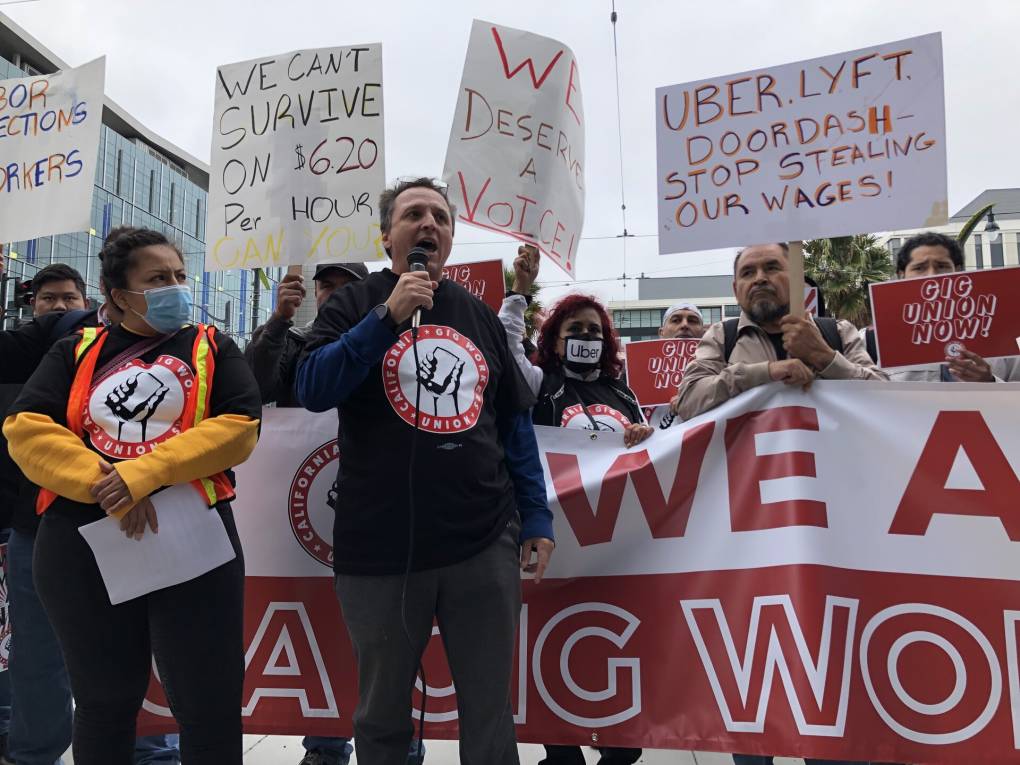
"caption": "Hector Castellanos, an Uber and Lyft driver from Antioch, speaks at a rally to announce the formation of the California Gig Workers Union before Uber's headquarters in San Francisco on Oct. 12, 2022.",
"description": null,
"title": "RS59361_IMG_5929-qut",
"credit": "Farida Jhabvala Romero/KQED",
"status": "inherit",
"altTag": "A man with a microphone speaks while protestors holding signs rally behind him.",
"isLoading": false,
"fetchFailed": false
},
"news_11927665": {
"type": "attachments",
"id": "news_11927665",
"meta": {
"index": "attachments_1716263798",
"site": "news",
"id": "11927665",
"found": true
},
"parent": 11927664,
"imgSizes": {
"twentyfourteen-full-width": {
"file": "https://ww2.kqed.org/app/uploads/sites/10/2022/10/gettyimages-1240649087-562ad186ebb4d575d473dd82897a4303ec164f7f-1038x576.jpg",
"width": 1038,
"mimeType": "image/jpeg",
"height": 576
},
"thumbnail": {
"file": "https://ww2.kqed.org/app/uploads/sites/10/2022/10/gettyimages-1240649087-562ad186ebb4d575d473dd82897a4303ec164f7f-160x120.jpg",
"width": 160,
"mimeType": "image/jpeg",
"height": 120
},
"post-thumbnail": {
"file": "https://ww2.kqed.org/app/uploads/sites/10/2022/10/gettyimages-1240649087-562ad186ebb4d575d473dd82897a4303ec164f7f-672x372.jpg",
"width": 672,
"mimeType": "image/jpeg",
"height": 372
},
"kqedFullSize": {
"file": "https://ww2.kqed.org/app/uploads/sites/10/2022/10/gettyimages-1240649087-562ad186ebb4d575d473dd82897a4303ec164f7f-scaled.jpg",
"width": 2560,
"height": 1919
},
"2048x2048": {
"file": "https://ww2.kqed.org/app/uploads/sites/10/2022/10/gettyimages-1240649087-562ad186ebb4d575d473dd82897a4303ec164f7f-2048x1535.jpg",
"width": 2048,
"mimeType": "image/jpeg",
"height": 1535
},
"large": {
"file": "https://ww2.kqed.org/app/uploads/sites/10/2022/10/gettyimages-1240649087-562ad186ebb4d575d473dd82897a4303ec164f7f-1020x764.jpg",
"width": 1020,
"mimeType": "image/jpeg",
"height": 764
},
"1536x1536": {
"file": "https://ww2.kqed.org/app/uploads/sites/10/2022/10/gettyimages-1240649087-562ad186ebb4d575d473dd82897a4303ec164f7f-1536x1151.jpg",
"width": 1536,
"mimeType": "image/jpeg",
"height": 1151
},
"full-width": {
"file": "https://ww2.kqed.org/app/uploads/sites/10/2022/10/gettyimages-1240649087-562ad186ebb4d575d473dd82897a4303ec164f7f-1920x1439.jpg",
"width": 1920,
"mimeType": "image/jpeg",
"height": 1439
},
"medium": {
"file": "https://ww2.kqed.org/app/uploads/sites/10/2022/10/gettyimages-1240649087-562ad186ebb4d575d473dd82897a4303ec164f7f-800x600.jpg",
"width": 800,
"mimeType": "image/jpeg",
"height": 600
}
},
"publishDate": 1664910032,
"modified": 1669767607,
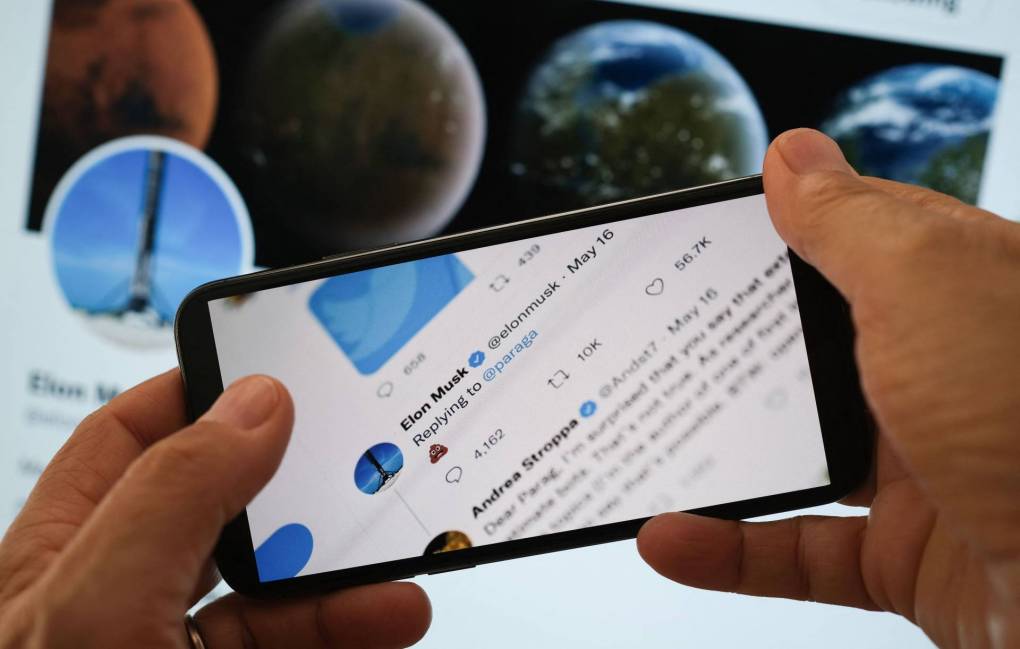
"caption": "Under Twitter's new owner, Elon Musk — who himself has spread COVID misinformation — the platform has rolled back its policy banning the spread of misinformation related to the pandemic.",
"description": "This illustration photo taken May 13, 2022, displays Elon Musks Twitter account with a Twitter logo in the background. Under new owner Musk — who has spread COVID misinformation — the platform has rolled back its policy banning the spread of misinformation related to the pandemic.",
"title": "Billionaire Elon Musk has told Twitter he's willing to buy the company after all, and at the originally agreed upon price of $54.20 per share.",
"credit": "Chris Delmas/AFP via Getty Images",
"status": "inherit",
"altTag": "A hand holding a smartphone showing Elon Musks Twitter account.",
"isLoading": false,
"fetchFailed": false
},
"news_11926686": {
"type": "attachments",
"id": "news_11926686",
"meta": {
"index": "attachments_1716263798",
"site": "news",
"id": "11926686",
"found": true
},
"parent": 11926565,
"imgSizes": {
"twentyfourteen-full-width": {
"file": "https://ww2.kqed.org/app/uploads/sites/10/2022/09/dalle-1038x576.jpg",
"width": 1038,
"mimeType": "image/jpeg",
"height": 576
},
"thumbnail": {
"file": "https://ww2.kqed.org/app/uploads/sites/10/2022/09/dalle-160x107.jpg",
"width": 160,
"mimeType": "image/jpeg",
"height": 107
},
"post-thumbnail": {
"file": "https://ww2.kqed.org/app/uploads/sites/10/2022/09/dalle-672x372.jpg",
"width": 672,
"mimeType": "image/jpeg",
"height": 372
},
"kqedFullSize": {
"file": "https://ww2.kqed.org/app/uploads/sites/10/2022/09/dalle.jpg",
"width": 1920,
"height": 1280
},
"large": {
"file": "https://ww2.kqed.org/app/uploads/sites/10/2022/09/dalle-1020x680.jpg",
"width": 1020,
"mimeType": "image/jpeg",
"height": 680
},
"1536x1536": {
"file": "https://ww2.kqed.org/app/uploads/sites/10/2022/09/dalle-1536x1024.jpg",
"width": 1536,
"mimeType": "image/jpeg",
"height": 1024
},
"medium": {
"file": "https://ww2.kqed.org/app/uploads/sites/10/2022/09/dalle-800x533.jpg",
"width": 800,
"mimeType": "image/jpeg",
"height": 533
}
},
"publishDate": 1664214982,
"modified": 1664225133,
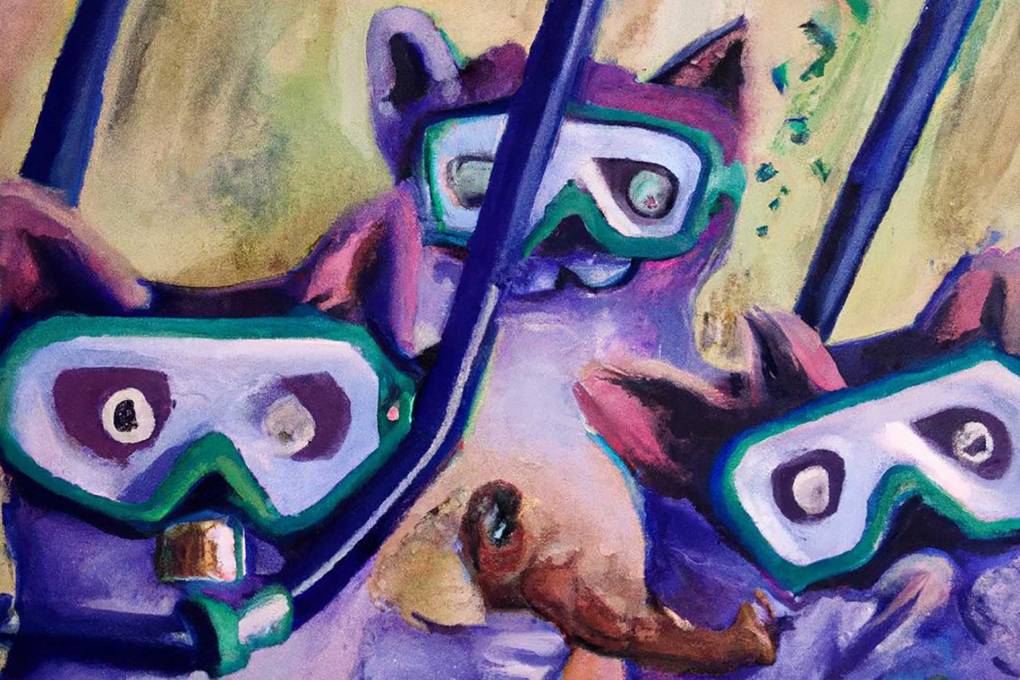
"caption": "\"Purple kittens snorkeling in the style of Picasso,\" an image generated by OpenAI's DALL-E 2.",
"description": null,
"title": "dalle-ai",
"credit": "Image via OpenAI",
"status": "inherit",
"altTag": "An illustration of three purple kittens wearing snorkeling masks. The illustration is in a style reminiscent of Pablo Picasso's artwork.",
"isLoading": false,
"fetchFailed": false
},
"news_11926622": {
"type": "attachments",
"id": "news_11926622",
"meta": {
"index": "attachments_1716263798",
"site": "news",
"id": "11926622",
"found": true
},
"parent": 11926610,
"imgSizes": {
"thumbnail": {
"file": "https://ww2.kqed.org/app/uploads/sites/10/2022/09/marquee-1-160x90.jpg",
"width": 160,
"mimeType": "image/jpeg",
"height": 90
},
"post-thumbnail": {
"file": "https://ww2.kqed.org/app/uploads/sites/10/2022/09/marquee-1-672x372.jpg",
"width": 672,
"mimeType": "image/jpeg",
"height": 372
},
"kqedFullSize": {
"file": "https://ww2.kqed.org/app/uploads/sites/10/2022/09/marquee-1.jpg",
"width": 940,
"height": 529
},
"medium": {
"file": "https://ww2.kqed.org/app/uploads/sites/10/2022/09/marquee-1-800x450.jpg",
"width": 800,
"mimeType": "image/jpeg",
"height": 450
}
},
"publishDate": 1663980117,
"modified": 1663980117,
"caption": null,
"description": null,
"title": "marquee",
"credit": null,
"status": "inherit",
"altTag": null,
"isLoading": false,
"fetchFailed": false
},
"news_11926415": {
"type": "attachments",
"id": "news_11926415",
"meta": {
"index": "attachments_1716263798",
"site": "news",
"id": "11926415",
"found": true
},
"parent": 11926357,
"imgSizes": {
"twentyfourteen-full-width": {
"file": "https://ww2.kqed.org/app/uploads/sites/10/2022/09/SFPD-Surveillance-1038x576.jpg",
"width": 1038,
"mimeType": "image/jpeg",
"height": 576
},
"thumbnail": {
"file": "https://ww2.kqed.org/app/uploads/sites/10/2022/09/SFPD-Surveillance-160x107.jpg",
"width": 160,
"mimeType": "image/jpeg",
"height": 107
},
"post-thumbnail": {
"file": "https://ww2.kqed.org/app/uploads/sites/10/2022/09/SFPD-Surveillance-672x372.jpg",
"width": 672,
"mimeType": "image/jpeg",
"height": 372
},
"kqedFullSize": {
"file": "https://ww2.kqed.org/app/uploads/sites/10/2022/09/SFPD-Surveillance.jpg",
"width": 1920,
"height": 1281
},
"large": {
"file": "https://ww2.kqed.org/app/uploads/sites/10/2022/09/SFPD-Surveillance-1020x681.jpg",
"width": 1020,
"mimeType": "image/jpeg",
"height": 681
},
"1536x1536": {
"file": "https://ww2.kqed.org/app/uploads/sites/10/2022/09/SFPD-Surveillance-1536x1025.jpg",
"width": 1536,
"mimeType": "image/jpeg",
"height": 1025
},
"medium": {
"file": "https://ww2.kqed.org/app/uploads/sites/10/2022/09/SFPD-Surveillance-800x534.jpg",
"width": 800,
"mimeType": "image/jpeg",
"height": 534
}
},
"publishDate": 1663793340,
"modified": 1663801183,
"caption": "A surveillance camera on Howard Street in San Francisco.",
"description": "A surveillance camera on Howard Street in San Francisco, Calif., on Wednesday, October 7, 2020.",
"title": "SFPD Surveillance",
"credit": "Scott Strazzante/The San Francisco Chronicle via Getty Images",
"status": "inherit",
"altTag": "An upward-angled photo of a black almost round surveillance camera attached to the side of a darkly painted building. The camera points directly at the camera that took the picture. To the right appear to be two more surveillance cameras, white bases with rounded domes attached to the same building.",
"isLoading": false,
"fetchFailed": false
},
"news_11925527": {
"type": "attachments",
"id": "news_11925527",
"meta": {
"index": "attachments_1716263798",
"site": "news",
"id": "11925527",
"found": true
},
"parent": 11925476,
"imgSizes": {
"thumbnail": {
"file": "https://ww2.kqed.org/app/uploads/sites/10/2022/09/image-160x78.png",
"width": 160,
"mimeType": "image/png",
"height": 78
},
"post-thumbnail": {
"file": "https://ww2.kqed.org/app/uploads/sites/10/2022/09/image-672x372.png",
"width": 672,
"mimeType": "image/png",
"height": 372
},
"kqedFullSize": {
"file": "https://ww2.kqed.org/app/uploads/sites/10/2022/09/image.png",
"width": 800,
"height": 389
}
},
"publishDate": 1663110363,
"modified": 1663176180,
"caption": "A screenshot from a Facebook account message.",
"description": null,
"title": "image",
"credit": "Courtesy of Nick Wright/Image from Facebook",
"status": "inherit",
"altTag": "A screenshot from a Facebook account message, with an image of a lock and the text, 'Nick, your account has been locked.'",
"isLoading": false,
"fetchFailed": false
},
"news_11925046": {
"type": "attachments",
"id": "news_11925046",
"meta": {
"index": "attachments_1716263798",
"site": "news",
"id": "11925046",
"found": true
},
"parent": 11925038,
"imgSizes": {
"twentyfourteen-full-width": {
"file": "https://ww2.kqed.org/app/uploads/sites/10/2022/09/Collage-Maker-08-Sep-2022-04.09-PM-1038x576.jpg",
"width": 1038,
"mimeType": "image/jpeg",
"height": 576
},
"thumbnail": {
"file": "https://ww2.kqed.org/app/uploads/sites/10/2022/09/Collage-Maker-08-Sep-2022-04.09-PM-160x90.jpg",
"width": 160,
"mimeType": "image/jpeg",
"height": 90
},
"post-thumbnail": {
"file": "https://ww2.kqed.org/app/uploads/sites/10/2022/09/Collage-Maker-08-Sep-2022-04.09-PM-672x372.jpg",
"width": 672,
"mimeType": "image/jpeg",
"height": 372
},
"kqedFullSize": {
"file": "https://ww2.kqed.org/app/uploads/sites/10/2022/09/Collage-Maker-08-Sep-2022-04.09-PM.jpg",
"width": 2560,
"height": 1440
},
"2048x2048": {
"file": "https://ww2.kqed.org/app/uploads/sites/10/2022/09/Collage-Maker-08-Sep-2022-04.09-PM-2048x1152.jpg",
"width": 2048,
"mimeType": "image/jpeg",
"height": 1152
},
"large": {
"file": "https://ww2.kqed.org/app/uploads/sites/10/2022/09/Collage-Maker-08-Sep-2022-04.09-PM-1020x574.jpg",
"width": 1020,
"mimeType": "image/jpeg",
"height": 574
},
"1536x1536": {
"file": "https://ww2.kqed.org/app/uploads/sites/10/2022/09/Collage-Maker-08-Sep-2022-04.09-PM-1536x864.jpg",
"width": 1536,
"mimeType": "image/jpeg",
"height": 864
},
"full-width": {
"file": "https://ww2.kqed.org/app/uploads/sites/10/2022/09/Collage-Maker-08-Sep-2022-04.09-PM-1920x1080.jpg",
"width": 1920,
"mimeType": "image/jpeg",
"height": 1080
},
"medium": {
"file": "https://ww2.kqed.org/app/uploads/sites/10/2022/09/Collage-Maker-08-Sep-2022-04.09-PM-800x450.jpg",
"width": 800,
"mimeType": "image/jpeg",
"height": 450
}
},
"publishDate": 1662679261,
"modified": 1662679305,
"caption": null,
"description": null,
"title": "Collage Maker-08-Sep-2022-04.09-PM",
"credit": "Courtesy of Naatak",
"status": "inherit",
"altTag": null,
"isLoading": false,
"fetchFailed": false
},
"news_11924293": {
"type": "attachments",
"id": "news_11924293",
"meta": {
"index": "attachments_1716263798",
"site": "news",
"id": "11924293",
"found": true
},
"parent": 11924242,
"imgSizes": {
"twentyfourteen-full-width": {
"file": "https://ww2.kqed.org/app/uploads/sites/10/2022/08/Photo-Aug-01-10-32-06-AM-1038x576.jpg",
"width": 1038,
"mimeType": "image/jpeg",
"height": 576
},
"thumbnail": {
"file": "https://ww2.kqed.org/app/uploads/sites/10/2022/08/Photo-Aug-01-10-32-06-AM-160x120.jpg",
"width": 160,
"mimeType": "image/jpeg",
"height": 120
},
"post-thumbnail": {
"file": "https://ww2.kqed.org/app/uploads/sites/10/2022/08/Photo-Aug-01-10-32-06-AM-672x372.jpg",
"width": 672,
"mimeType": "image/jpeg",
"height": 372
},
"kqedFullSize": {
"file": "https://ww2.kqed.org/app/uploads/sites/10/2022/08/Photo-Aug-01-10-32-06-AM-scaled.jpg",
"width": 2560,
"height": 1920
},
"2048x2048": {
"file": "https://ww2.kqed.org/app/uploads/sites/10/2022/08/Photo-Aug-01-10-32-06-AM-2048x1536.jpg",
"width": 2048,
"mimeType": "image/jpeg",
"height": 1536
},
"large": {
"file": "https://ww2.kqed.org/app/uploads/sites/10/2022/08/Photo-Aug-01-10-32-06-AM-1020x765.jpg",
"width": 1020,
"mimeType": "image/jpeg",
"height": 765
},
"1536x1536": {
"file": "https://ww2.kqed.org/app/uploads/sites/10/2022/08/Photo-Aug-01-10-32-06-AM-1536x1152.jpg",
"width": 1536,
"mimeType": "image/jpeg",
"height": 1152
},
"full-width": {
"file": "https://ww2.kqed.org/app/uploads/sites/10/2022/08/Photo-Aug-01-10-32-06-AM-1920x1440.jpg",
"width": 1920,
"mimeType": "image/jpeg",
"height": 1440
},
"medium": {
"file": "https://ww2.kqed.org/app/uploads/sites/10/2022/08/Photo-Aug-01-10-32-06-AM-800x600.jpg",
"width": 800,
"mimeType": "image/jpeg",
"height": 600
}
},
"publishDate": 1661977382,
"modified": 1662496349,
"caption": "A cluster of 19th-century gravestones sits amid Monterey cypress trees dripping with moss in the Purissima Cemetery, located 4 miles south of Half Moon Bay.",
"description": "A cluster of 19th century gravestones sit amidst Monterey cypress trees dripping with moss in the Purissima Cemetery, located four miles south of Half Moon Bay.",
"title": "Photo Aug 01, 10 32 06 AM",
"credit": "Rachael Myrow/KQED",
"status": "inherit",
"altTag": "Old gravestones sit in a cemetery filled with Monterey cypress trees dripping with moss.",
"isLoading": false,
"fetchFailed": false
},
"news_11889587": {
"type": "attachments",
"id": "news_11889587",
"meta": {
"index": "attachments_1716263798",
"site": "news",
"id": "11889587",
"found": true
},
"parent": 11889586,
"imgSizes": {
"twentyfourteen-full-width": {
"file": "https://ww2.kqed.org/app/uploads/sites/10/2021/09/GettyImages-1307637767-1038x576.jpg",
"width": 1038,
"mimeType": "image/jpeg",
"height": 576
},
"thumbnail": {
"file": "https://ww2.kqed.org/app/uploads/sites/10/2021/09/GettyImages-1307637767-160x107.jpg",
"width": 160,
"mimeType": "image/jpeg",
"height": 107
},
"post-thumbnail": {
"file": "https://ww2.kqed.org/app/uploads/sites/10/2021/09/GettyImages-1307637767-672x372.jpg",
"width": 672,
"mimeType": "image/jpeg",
"height": 372
},
"kqedFullSize": {
"file": "https://ww2.kqed.org/app/uploads/sites/10/2021/09/GettyImages-1307637767-scaled.jpg",
"width": 2560,
"height": 1706
},
"2048x2048": {
"file": "https://ww2.kqed.org/app/uploads/sites/10/2021/09/GettyImages-1307637767-2048x1365.jpg",
"width": 2048,
"mimeType": "image/jpeg",
"height": 1365
},
"large": {
"file": "https://ww2.kqed.org/app/uploads/sites/10/2021/09/GettyImages-1307637767-1020x680.jpg",
"width": 1020,
"mimeType": "image/jpeg",
"height": 680
},
"1536x1536": {
"file": "https://ww2.kqed.org/app/uploads/sites/10/2021/09/GettyImages-1307637767-1536x1024.jpg",
"width": 1536,
"mimeType": "image/jpeg",
"height": 1024
},
"full-width": {
"file": "https://ww2.kqed.org/app/uploads/sites/10/2021/09/GettyImages-1307637767-1920x1280.jpg",
"width": 1920,
"mimeType": "image/jpeg",
"height": 1280
},
"medium": {
"file": "https://ww2.kqed.org/app/uploads/sites/10/2021/09/GettyImages-1307637767-800x533.jpg",
"width": 800,
"mimeType": "image/jpeg",
"height": 533
}
},
"publishDate": 1632356545,
"modified": 1632421326,
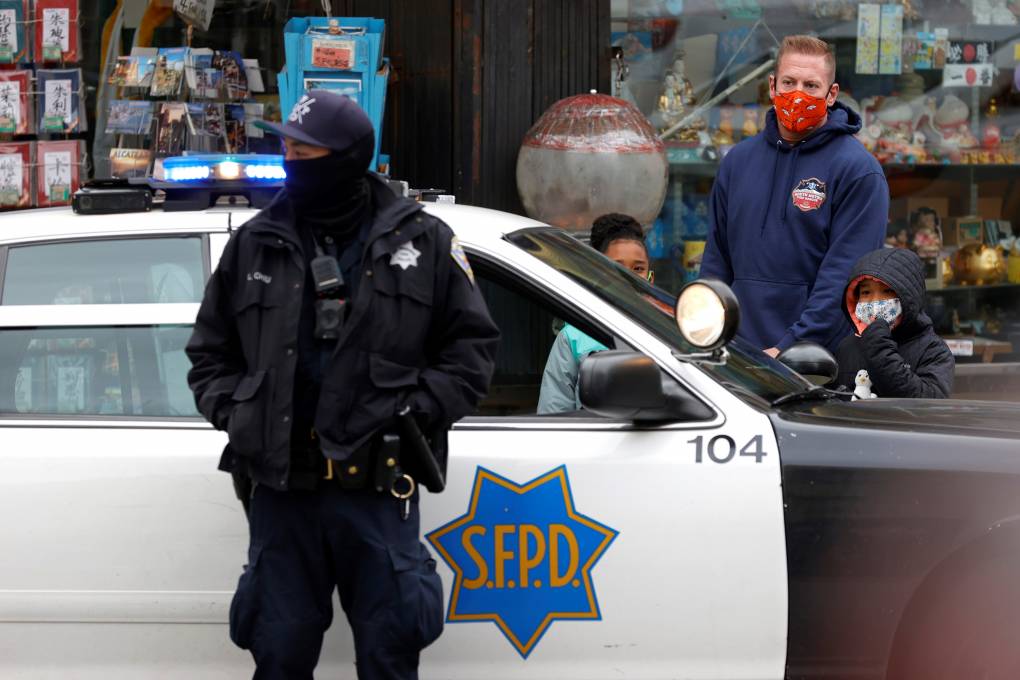
"caption": "Pedestrians wait to cross the street as a San Francisco police officer stands guard on Grant Avenue in Chinatown on March 17, 2021, in San Francisco.",
"description": "Pedestrians wait to cross the street as a San Francisco police officer stands guard on Grant Avenue in Chinatown on March 17, 2021 in San Francisco, California.",
"title": "Asian Communities Respond To Recent Rise In Hate Crimes",
"credit": "Justin Sullivan/Getty Images",
"status": "inherit",
"altTag": "A police officer in a black face covering leans against his car door as a man with two small kids stands on the other side of the car.",
"isLoading": false,
"fetchFailed": false
},
"news_11922435": {
"type": "attachments",
"id": "news_11922435",
"meta": {
"index": "attachments_1716263798",
"site": "news",
"id": "11922435",
"found": true
},
"parent": 11922427,
"imgSizes": {
"twentyfourteen-full-width": {
"file": "https://ww2.kqed.org/app/uploads/sites/10/2022/08/Sophia-S-Image-1038x576.jpeg",
"width": 1038,
"mimeType": "image/jpeg",
"height": 576
},
"thumbnail": {
"file": "https://ww2.kqed.org/app/uploads/sites/10/2022/08/Sophia-S-Image-160x122.jpeg",
"width": 160,
"mimeType": "image/jpeg",
"height": 122
},
"post-thumbnail": {
"file": "https://ww2.kqed.org/app/uploads/sites/10/2022/08/Sophia-S-Image-672x372.jpeg",
"width": 672,
"mimeType": "image/jpeg",
"height": 372
},
"kqedFullSize": {
"file": "https://ww2.kqed.org/app/uploads/sites/10/2022/08/Sophia-S-Image-scaled.jpeg",
"width": 2560,
"height": 1946
},
"2048x2048": {
"file": "https://ww2.kqed.org/app/uploads/sites/10/2022/08/Sophia-S-Image-2048x1557.jpeg",
"width": 2048,
"mimeType": "image/jpeg",
"height": 1557
},
"large": {
"file": "https://ww2.kqed.org/app/uploads/sites/10/2022/08/Sophia-S-Image-1020x775.jpeg",
"width": 1020,
"mimeType": "image/jpeg",
"height": 775
},
"1536x1536": {
"file": "https://ww2.kqed.org/app/uploads/sites/10/2022/08/Sophia-S-Image-1536x1168.jpeg",
"width": 1536,
"mimeType": "image/jpeg",
"height": 1168
},
"full-width": {
"file": "https://ww2.kqed.org/app/uploads/sites/10/2022/08/Sophia-S-Image-1920x1460.jpeg",
"width": 1920,
"mimeType": "image/jpeg",
"height": 1460
},
"medium": {
"file": "https://ww2.kqed.org/app/uploads/sites/10/2022/08/Sophia-S-Image-800x608.jpeg",
"width": 800,
"mimeType": "image/jpeg",
"height": 608
}
},
"publishDate": 1660342294,
"modified": 1660342351,
"caption": "Sophia Shao is a senior at Los Altos High School.",
"description": null,
"title": "Sophia S - Image",
"credit": null,
"status": "inherit",
"altTag": null,
"isLoading": false,
"fetchFailed": false
},
"news_11919899": {
"type": "attachments",
"id": "news_11919899",
"meta": {
"index": "attachments_1716263798",
"site": "news",
"id": "11919899",
"found": true
},
"parent": 11919886,
"imgSizes": {
"twentyfourteen-full-width": {
"file": "https://ww2.kqed.org/app/uploads/sites/10/2022/07/GettyImages-1241980380-1038x576.jpg",
"width": 1038,
"mimeType": "image/jpeg",
"height": 576
},
"thumbnail": {
"file": "https://ww2.kqed.org/app/uploads/sites/10/2022/07/GettyImages-1241980380-160x102.jpg",
"width": 160,
"mimeType": "image/jpeg",
"height": 102
},
"post-thumbnail": {
"file": "https://ww2.kqed.org/app/uploads/sites/10/2022/07/GettyImages-1241980380-672x372.jpg",
"width": 672,
"mimeType": "image/jpeg",
"height": 372
},
"kqedFullSize": {
"file": "https://ww2.kqed.org/app/uploads/sites/10/2022/07/GettyImages-1241980380.jpg",
"width": 1920,
"height": 1222
},
"large": {
"file": "https://ww2.kqed.org/app/uploads/sites/10/2022/07/GettyImages-1241980380-1020x649.jpg",
"width": 1020,
"mimeType": "image/jpeg",
"height": 649
},
"1536x1536": {
"file": "https://ww2.kqed.org/app/uploads/sites/10/2022/07/GettyImages-1241980380-1536x978.jpg",
"width": 1536,
"mimeType": "image/jpeg",
"height": 978
},
"medium": {
"file": "https://ww2.kqed.org/app/uploads/sites/10/2022/07/GettyImages-1241980380-800x509.jpg",
"width": 800,
"mimeType": "image/jpeg",
"height": 509
}
},
"publishDate": 1658257645,
"modified": 1658257699,
"caption": "In this illustration photo taken on July 18, 2022 Elon Musk's reply Tweet to Parag Agrawal, the CEO of Twitter, showing a poop emoji is displayed on the screen of a smartphone with Musk Twitter page in the background in Los Angeles. ",
"description": null,
"title": "GettyImages-1241980380",
"credit": "Chris Delmas/AFP/Getty Images",
"status": "inherit",
"altTag": "A smart phone showing an Elon Musk tweet",
"isLoading": false,
"fetchFailed": false
},
"news_11919744": {
"type": "attachments",
"id": "news_11919744",
"meta": {
"index": "attachments_1716263798",
"site": "news",
"id": "11919744",
"found": true
},
"parent": 11919743,
"imgSizes": {
"twentyfourteen-full-width": {
"file": "https://ww2.kqed.org/app/uploads/sites/10/2022/07/Jenkins2-1-1038x576.png",
"width": 1038,
"mimeType": "image/png",
"height": 576
},
"thumbnail": {
"file": "https://ww2.kqed.org/app/uploads/sites/10/2022/07/Jenkins2-1-160x90.png",
"width": 160,
"mimeType": "image/png",
"height": 90
},
"post-thumbnail": {
"file": "https://ww2.kqed.org/app/uploads/sites/10/2022/07/Jenkins2-1-672x372.png",
"width": 672,
"mimeType": "image/png",
"height": 372
},
"kqedFullSize": {
"file": "https://ww2.kqed.org/app/uploads/sites/10/2022/07/Jenkins2-1.png",
"width": 1920,
"height": 1080
},
"large": {
"file": "https://ww2.kqed.org/app/uploads/sites/10/2022/07/Jenkins2-1-1020x574.png",
"width": 1020,
"mimeType": "image/png",
"height": 574
},
"1536x1536": {
"file": "https://ww2.kqed.org/app/uploads/sites/10/2022/07/Jenkins2-1-1536x864.png",
"width": 1536,
"mimeType": "image/png",
"height": 864
},
"medium": {
"file": "https://ww2.kqed.org/app/uploads/sites/10/2022/07/Jenkins2-1-800x450.png",
"width": 800,
"mimeType": "image/png",
"height": 450
}
},
"publishDate": 1657930771,
"modified": 1657930771,
"caption": null,
"description": null,
"title": "Jenkins2 (1)",
"credit": null,
"status": "inherit",
"altTag": null,
"isLoading": false,
"fetchFailed": false
}
},
"audioPlayerReducer": {
"postId": "stream_live",
"isPaused": true,
"isPlaying": false,
"pfsActive": false,
"pledgeModalIsOpen": true,
"playerDrawerIsOpen": false,
"liveAudioPlayStartedAt": 0,
"liveAudioPlayContext": ""
},
"authorsReducer": {
"byline_news_11927664": {
"type": "authors",
"id": "byline_news_11927664",
"meta": {
"override": true
},
"slug": "byline_news_11927664",
"name": "Raquel Maria Dillon and Shannon Bond",
"isLoading": false
},
"byline_news_11926357": {
"type": "authors",
"id": "byline_news_11926357",
"meta": {
"override": true
},
"slug": "byline_news_11926357",
"name": "Janie Har, Associated Press and KQED Staff",
"isLoading": false
},
"byline_news_11924380": {
"type": "authors",
"id": "byline_news_11924380",
"meta": {
"override": true
},
"slug": "byline_news_11924380",
"name": "Garance Burke and Jason Dearen\u003cbr>The Associated Press",
"isLoading": false
},
"byline_news_11919886": {
"type": "authors",
"id": "byline_news_11919886",
"meta": {
"override": true
},
"slug": "byline_news_11919886",
"name": "Shannon Bond",
"isLoading": false
},
"kqed": {
"type": "authors",
"id": "236",
"meta": {
"index": "authors_1716337520",
"id": "236",
"found": true
},
"name": "KQED News Staff",
"firstName": "KQED News Staff",
"lastName": null,
"slug": "kqed",
"email": "faq@kqed.org",
"display_author_email": false,
"staff_mastheads": [],
"title": null,
"bio": null,
"avatar": "https://secure.gravatar.com/avatar/ef0e801a68c4c54afa9180db14084167?s=600&d=blank&r=g",
"twitter": null,
"facebook": null,
"instagram": null,
"linkedin": null,
"sites": [
{
"site": "arts",
"roles": [
"contributor"
]
},
{
"site": "news",
"roles": [
"editor"
]
},
{
"site": "futureofyou",
"roles": [
"author"
]
}
],
"headData": {
"title": "KQED News Staff | KQED",
"description": null,
"ogImgSrc": "https://secure.gravatar.com/avatar/ef0e801a68c4c54afa9180db14084167?s=600&d=blank&r=g",
"twImgSrc": "https://secure.gravatar.com/avatar/ef0e801a68c4c54afa9180db14084167?s=600&d=blank&r=g"
},
"isLoading": false,
"link": "/author/kqed"
},
"minakim": {
"type": "authors",
"id": "243",
"meta": {
"index": "authors_1716337520",
"id": "243",
"found": true
},
"name": "Mina Kim",
"firstName": "Mina",
"lastName": "Kim",
"slug": "minakim",
"email": "mkim@kqed.org",
"display_author_email": false,
"staff_mastheads": [
"news"
],
"title": "Host, Forum",
"bio": "Mina Kim is host of the 10 a.m. statewide hour of Forum; a live daily talk show for curious Californians on issues that matter to the state and nation, with a particular emphasis on race and equity.\r\n\r\nBefore joining the Forum team, Mina was KQED’s evening news anchor, and health reporter for The California Report. Her award-winning work has included natural disasters in Napa and gun violence in Oakland. Mina grew up in St. John’s, Newfoundland.",
"avatar": "https://secure.gravatar.com/avatar/145ce657a2d08cb86d93686beb958982?s=600&d=blank&r=g",
"twitter": "mkimreporter",
"facebook": null,
"instagram": null,
"linkedin": null,
"sites": [
{
"site": "news",
"roles": [
"contributor"
]
},
{
"site": "stateofhealth",
"roles": [
"author"
]
},
{
"site": "forum",
"roles": [
"editor"
]
}
],
"headData": {
"title": "Mina Kim | KQED",
"description": "Host, Forum",
"ogImgSrc": "https://secure.gravatar.com/avatar/145ce657a2d08cb86d93686beb958982?s=600&d=blank&r=g",
"twImgSrc": "https://secure.gravatar.com/avatar/145ce657a2d08cb86d93686beb958982?s=600&d=blank&r=g"
},
"isLoading": false,
"link": "/author/minakim"
},
"rachael-myrow": {
"type": "authors",
"id": "251",
"meta": {
"index": "authors_1716337520",
"id": "251",
"found": true
},
"name": "Rachael Myrow",
"firstName": "Rachael",
"lastName": "Myrow",
"slug": "rachael-myrow",
"email": "rmyrow@kqed.org",
"display_author_email": true,
"staff_mastheads": [
"news"
],
"title": "Senior Editor of KQED's Silicon Valley News Desk",
"bio": "• I write and edit stories about how Silicon Valley power and policies shape everyday life in California. I’m also passionate about making Bay Area history and culture more accessible to a broad public. • I’ve been a journalist for most of my life, starting in high school with The Franklin Press in Los Angeles, where I grew up. While earning my first degree in English at UC Berkeley, I got my start in public radio at KALX-FM. After completing a second degree in journalism at Cal, I landed my first professional job at Marketplace, then moved on to KPCC (now LAist), and then KQED, where I hosted The California Report for more than seven years. • My reporting has appeared on NPR, The World, WBUR’s \u003ci>Here & Now\u003c/i>, and the BBC. I also guest host for KQED’s \u003ci>Forum\u003c/i>, as well as the Commonwealth Club in San Francisco. • I speak periodically on media, democracy and technology issues, and do voiceover work for documentaries and educational video projects. • Outside of the studio, you'll find me hiking Bay Area trails and whipping up Insta-ready meals in my kitchen. • I do not accept gifts, money, or favors from anyone connected to my reporting, I don't pay people for information, and I do not support or donate to political causes. • I strive to treat the people I report on with fairness, honesty, and respect. I also recognize there are often multiple sides to a story and work to verify information through multiple sources and documentation. If I get something wrong, I correct it.",
"avatar": "https://secure.gravatar.com/avatar/3ed8a3c5f26025e4a805ba634cda8cd764906b97438a6d9ce216b044e340da4e?s=600&d=blank&r=g",
"twitter": "rachaelmyrow",
"bluesky": null,
"facebook": null,
"instagram": null,
"linkedin": "https://www.linkedin.com/in/rachaelmyrow/",
"sites": [
{
"site": "arts",
"roles": [
"administrator"
]
},
{
"site": "news",
"roles": [
"edit_others_posts",
"editor"
]
},
{
"site": "futureofyou",
"roles": [
"editor"
]
},
{
"site": "bayareabites",
"roles": [
"editor"
]
},
{
"site": "stateofhealth",
"roles": [
"editor"
]
},
{
"site": "science",
"roles": [
"editor"
]
},
{
"site": "food",
"roles": [
"editor"
]
},
{
"site": "forum",
"roles": [
"editor"
]
},
{
"site": "liveblog",
"roles": [
"author"
]
}
],
"headData": {
"title": "Rachael Myrow | KQED",
"description": "Senior Editor of KQED's Silicon Valley News Desk",
"ogImgSrc": "https://secure.gravatar.com/avatar/3ed8a3c5f26025e4a805ba634cda8cd764906b97438a6d9ce216b044e340da4e?s=600&d=blank&r=g",
"twImgSrc": "https://secure.gravatar.com/avatar/3ed8a3c5f26025e4a805ba634cda8cd764906b97438a6d9ce216b044e340da4e?s=600&d=blank&r=g"
},
"isLoading": false,
"link": "/author/rachael-myrow"
},
"ecruzguevarra": {
"type": "authors",
"id": "8654",
"meta": {
"index": "authors_1716337520",
"id": "8654",
"found": true
},
"name": "Ericka Cruz Guevarra",
"firstName": "Ericka",
"lastName": "Cruz Guevarra",
"slug": "ecruzguevarra",
"email": "ecruzguevarra@kqed.org",
"display_author_email": true,
"staff_mastheads": [
"news"
],
"title": "Producer, The Bay Podcast",
"bio": "Ericka Cruz Guevarra is host of \u003ca href=\"https://www.kqed.org/podcasts/thebay\">\u003cem>The Bay\u003c/em>\u003c/a> podcast at KQED. Before host, she was the show’s producer. Her work in that capacity includes a three-part reported series on policing in Vallejo, which won a 2020 excellence in journalism award from the Society of Professional Journalists. Ericka has worked as a breaking news reporter at Oregon Public Broadcasting, helped produce the Code Switch podcast, and was KQED’s inaugural Raul Ramirez Diversity Fund intern. She’s also an alumna of NPR’s Next Generation Radio program. Send her an email if you have strong feelings about whether Fairfield and Suisun City are the Bay. Ericka is represented by SAG-AFTRA.",
"avatar": "https://secure.gravatar.com/avatar/accefc1de4bafc7e234b69bcb9b6f6536c130fd84709bc3069ef11a78787e1bb?s=600&d=blank&r=g",
"twitter": "NotoriousECG",
"bluesky": null,
"facebook": null,
"instagram": null,
"linkedin": null,
"sites": [
{
"site": "arts",
"roles": [
"subscriber"
]
},
{
"site": "news",
"roles": [
"editor",
"manage_categories"
]
},
{
"site": "futureofyou",
"roles": [
"subscriber"
]
},
{
"site": "stateofhealth",
"roles": [
"subscriber"
]
},
{
"site": "science",
"roles": [
"editor"
]
},
{
"site": "forum",
"roles": [
"subscriber"
]
}
],
"headData": {
"title": "Ericka Cruz Guevarra | KQED",
"description": "Producer, The Bay Podcast",
"ogImgSrc": "https://secure.gravatar.com/avatar/accefc1de4bafc7e234b69bcb9b6f6536c130fd84709bc3069ef11a78787e1bb?s=600&d=blank&r=g",
"twImgSrc": "https://secure.gravatar.com/avatar/accefc1de4bafc7e234b69bcb9b6f6536c130fd84709bc3069ef11a78787e1bb?s=600&d=blank&r=g"
},
"isLoading": false,
"link": "/author/ecruzguevarra"
},
"fjhabvala": {
"type": "authors",
"id": "8659",
"meta": {
"index": "authors_1716337520",
"id": "8659",
"found": true
},
"name": "Farida Jhabvala Romero",
"firstName": "Farida",
"lastName": "Jhabvala Romero",
"slug": "fjhabvala",
"email": "fjhabvala@kqed.org",
"display_author_email": true,
"staff_mastheads": [
"news"
],
"title": "KQED Contributor",
"bio": "Farida Jhabvala Romero is a Labor Correspondent for KQED. She previously covered immigration. Farida was \u003ca href=\"https://www.ccnma.org/2022-most-influential-latina-journalists\">named\u003c/a> one of the 10 Most Influential Latina Journalists in California in 2022 by the California Chicano News Media Association. Her work has won awards from the Society of Professional Journalists (Northern California), as well as a national and regional Edward M. Murrow Award for the collaborative reporting projects “Dangerous Air” and “Graying California.” Before joining KQED, Farida worked as a producer at Radio Bilingüe, a national public radio network. Farida earned her master’s degree in journalism from Stanford University.",
"avatar": "https://secure.gravatar.com/avatar/f9f022d4e2609741874222a1e9d41f48fea74011aa7c615eef91d9a50c944ebe?s=600&d=blank&r=g",
"twitter": "FaridaJhabvala",
"bluesky": null,
"facebook": null,
"instagram": null,
"linkedin": "https://www.linkedin.com/in/faridajhabvala/",
"sites": [
{
"site": "news",
"roles": [
"editor"
]
},
{
"site": "stateofhealth",
"roles": [
"author"
]
},
{
"site": "liveblog",
"roles": [
"author"
]
}
],
"headData": {
"title": "Farida Jhabvala Romero | KQED",
"description": "KQED Contributor",
"ogImgSrc": "https://secure.gravatar.com/avatar/f9f022d4e2609741874222a1e9d41f48fea74011aa7c615eef91d9a50c944ebe?s=600&d=blank&r=g",
"twImgSrc": "https://secure.gravatar.com/avatar/f9f022d4e2609741874222a1e9d41f48fea74011aa7c615eef91d9a50c944ebe?s=600&d=blank&r=g"
},
"isLoading": false,
"link": "/author/fjhabvala"
},
"smohamad": {
"type": "authors",
"id": "11631",
"meta": {
"index": "authors_1716337520",
"id": "11631",
"found": true
},
"name": "Sarah Mohamad",
"firstName": "Sarah",
"lastName": "Mohamad",
"slug": "smohamad",
"email": "smohamad@KQED.org",
"display_author_email": true,
"staff_mastheads": [],
"title": "Engagement Producer and Reporter, KQED Science",
"bio": "Sarah Mohamad is an audience engagement reporter and producer for KQED Science. She reports on audience-focused science and environment stories and manages the team's social media, newsletter, and engagement efforts. Prior to this role, she played a key role as project manager for NSF's \u003ca href=\"https://www.kqed.org/crackingthecode\">\u003cem>Cracking the Code: Influencing Millennial Science Engagement\u003c/em> \u003c/a>audience research.",
"avatar": "https://secure.gravatar.com/avatar/e6224957cd82d015183756ddde1f928013a563d7ca2e4565f8c4de1ec64886c5?s=600&d=blank&r=g",
"twitter": "sarahkmohamad",
"bluesky": null,
"facebook": null,
"instagram": null,
"linkedin": null,
"sites": [
{
"site": "",
"roles": [
"editor"
]
},
{
"site": "arts",
"roles": [
"editor"
]
},
{
"site": "news",
"roles": [
"editor"
]
},
{
"site": "about",
"roles": [
"editor"
]
},
{
"site": "science",
"roles": [
"editor"
]
}
],
"headData": {
"title": "Sarah Mohamad | KQED",
"description": "Engagement Producer and Reporter, KQED Science",
"ogImgSrc": "https://secure.gravatar.com/avatar/e6224957cd82d015183756ddde1f928013a563d7ca2e4565f8c4de1ec64886c5?s=600&d=blank&r=g",
"twImgSrc": "https://secure.gravatar.com/avatar/e6224957cd82d015183756ddde1f928013a563d7ca2e4565f8c4de1ec64886c5?s=600&d=blank&r=g"
},
"isLoading": false,
"link": "/author/smohamad"
},
"amontecillo": {
"type": "authors",
"id": "11649",
"meta": {
"index": "authors_1716337520",
"id": "11649",
"found": true
},
"name": "Alan Montecillo",
"firstName": "Alan",
"lastName": "Montecillo",
"slug": "amontecillo",
"email": "amontecillo@kqed.org",
"display_author_email": false,
"staff_mastheads": [
"news"
],
"title": "KQED Contributor",
"bio": "Alan Montecillo is the senior editor of \u003cem>\u003ca href=\"http://kqed.org/thebay\">The Bay\u003c/a>, \u003c/em> KQED's local news podcast. Before moving to the Bay Area, he worked as a senior talk show producer for WILL in Champaign-Urbana, Illinois and at Oregon Public Broadcasting in Portland, Oregon. He has won journalism awards from the Society of Professional Journalists Northern California, the Public Media Journalists Association, The Signal Awards, and has also received a regional Edward R. Murrow award. Alan is a Filipino American from Hong Kong and a graduate of Reed College.",
"avatar": "https://secure.gravatar.com/avatar/268f53a2066899ea9efdd8a5900218b17c822d9862cbc9326cccec53ef41d349?s=600&d=blank&r=g",
"twitter": "alanmontecillo",
"bluesky": null,
"facebook": null,
"instagram": null,
"linkedin": null,
"sites": [
{
"site": "",
"roles": [
"editor"
]
},
{
"site": "news",
"roles": [
"editor",
"manage_categories"
]
}
],
"headData": {
"title": "Alan Montecillo | KQED",
"description": "KQED Contributor",
"ogImgSrc": "https://secure.gravatar.com/avatar/268f53a2066899ea9efdd8a5900218b17c822d9862cbc9326cccec53ef41d349?s=600&d=blank&r=g",
"twImgSrc": "https://secure.gravatar.com/avatar/268f53a2066899ea9efdd8a5900218b17c822d9862cbc9326cccec53ef41d349?s=600&d=blank&r=g"
},
"isLoading": false,
"link": "/author/amontecillo"
},
"mesquinca": {
"type": "authors",
"id": "11802",
"meta": {
"index": "authors_1716337520",
"id": "11802",
"found": true
},
"name": "Maria Esquinca",
"firstName": "Maria",
"lastName": "Esquinca",
"slug": "mesquinca",
"email": "mesquinca@kqed.org",
"display_author_email": false,
"staff_mastheads": [],
"title": "Producer, The Bay",
"bio": "María Esquinca is a producer of The Bay. Before that, she was a New York Women’s Foundation IGNITE Fellow at Latino USA. She worked at Radio Bilingue where she covered the San Joaquin Valley. Maria has interned at WLRN, News 21, The New York Times Student Journalism Institute and at Crain’s Detroit Business as a Dow Jones News Fund Business Reporting Intern. She is an MFA graduate from the University of Miami. In 2017, she graduated from the Walter Cronkite School of Journalism and Mass Communication with a Master of Mass Communication. A fronteriza, she was born in Ciudad Juárez, Chihuahua, Mexico and grew up in El Paso, Texas.",
"avatar": "https://secure.gravatar.com/avatar/77cedba18aae91da775038ba06dcd8d0?s=600&d=blank&r=g",
"twitter": "@m_esquinca",
"facebook": null,
"instagram": null,
"linkedin": null,
"sites": [
{
"site": "news",
"roles": []
}
],
"headData": {
"title": "Maria Esquinca | KQED",
"description": "Producer, The Bay",
"ogImgSrc": "https://secure.gravatar.com/avatar/77cedba18aae91da775038ba06dcd8d0?s=600&d=blank&r=g",
"twImgSrc": "https://secure.gravatar.com/avatar/77cedba18aae91da775038ba06dcd8d0?s=600&d=blank&r=g"
},
"isLoading": false,
"link": "/author/mesquinca"
}
},
"pagesReducer": {
"news_category_technology": {
"type": "terms",
"id": "news_248",
"meta": {
"index": "terms_1716263798",
"site": "news",
"id": "248",
"score": 10.931152
},
"featImg": null,
"name": "Technology",
"description": null,
"taxonomy": "category",
"headData": {
"twImgId": null,
"twTitle": null,
"ogTitle": null,
"ogImgId": null,
"twDescription": null,
"description": null,
"title": "Technology Archives | KQED News",
"ogDescription": null
},
"ttid": 256,
"slug": "technology",
"isLoading": false,
"title": "Technology",
"pageMeta": {
"site": "news",
"WpPageTemplate": "page-topic-editorial",
"currentPage": 37
},
"blocks": [
{
"blockName": "kqed/post-list",
"attrs": {
"layout": "cardArticle2",
"query": "posts/news?category=technology",
"seeMore": false,
"paginated": true,
"page": 37
}
},
{
"blockName": "kqed/ad"
}
]
}
},
"pfsSessionReducer": {},
"postsReducer": {
"stream_live": {
"type": "live",
"id": "stream_live",
"audioUrl": "https://streams.kqed.org/kqedradio",
"title": "Live Stream",
"excerpt": "Live Stream information currently unavailable.",
"link": "/radio",
"featImg": "",
"label": {
"name": "KQED Live",
"link": "/"
}
},
"stream_kqedNewscast": {
"type": "posts",
"id": "stream_kqedNewscast",
"audioUrl": "https://www.kqed.org/.stream/anon/radio/RDnews/newscast.mp3?_=1",
"title": "KQED Newscast",
"featImg": "",
"label": {
"name": "88.5 FM",
"link": "/"
}
},
"news_11928844": {
"type": "posts",
"id": "news_11928844",
"meta": {
"index": "posts_1716263798",
"site": "news",
"id": "11928844",
"score": null,
"sort": [
1665752417000
]
},
"guestAuthors": [],
"slug": "rideshare-drivers-rally-for-rights-announce-new-statewide-union",
"title": "Gig Workers Rally for Rights, Announce New Statewide Union",
"publishDate": 1665752417,
"format": "standard",
"headTitle": "Gig Workers Rally for Rights, Announce New Statewide Union | KQED",
"labelTerm": {
"site": "news"
},
"content": "\u003cp>Dozens of ride-hailing and delivery drivers rallied Wednesday outside of Uber’s headquarters in San Francisco, calling on the company and others that employ them like Lyft and DoorDash to recognize a new statewide gig workers union that seeks better wages and protections in the industry.\u003c/p>\n\u003cp>The protesters, including some who traveled from Los Angeles, held signs that read “We deserve job security” and “We can’t survive on $6.20 per hour” as they announced the California Gig Workers Union. Later, they marched to the offices of Lyft and DoorDash in the Mission Bay neighborhood.\u003c/p>\n\u003cp>Uber and Lyft driver Hector Castellanos said he hopes the new union will lead to benefits for workers like himself, who are labeled independent contractors, whereas companies currently are required only to provide \u003cspan style=\"font-weight: 400\">benefits\u003c/span> to employees.\u003c/p>\n\u003cp>“We deserve basic rights like good health care, workers’ compensation, sick days, vacations,” said Castellanos, 55, from Antioch. “These companies are taking more and more advantage of us. So that’s why I’m here, because I want to fight against this.”\u003c/p>\n\u003cp>San Francisco Democratic Party Chair Honey Mahogany, a candidate in the supervisor race for District 6 encompassing Mission Bay, and District 4 Supervisor Gordon Mar spoke at the event in support of drivers’ organizing efforts.\u003c/p>\n\u003cp>Mar said that the city provided tax breaks and other benefits about a decade ago so start-ups like Uber could grow and get established, and that now those companies should “share the wealth” with their drivers.\u003c/p>\n\u003cp>“We are demanding that they give back to San Francisco, that they comply with San Francisco values, and that’s supporting the workers,” he said.[pullquote size=\"medium\" align=\"right\" citation=\"Hector Castellanos, driver for Uber and Lyft\"]‘We deserve basic rights like good health care, workers’ compensation, sick days, vacations … These companies are taking more and more advantage of us. So that’s why I’m here, because I want to fight against this.’[/pullquote]The rally comes during a week when \u003ca href=\"https://techcrunch.com/2022/10/11/uber-lyft-doordash-stock-tank-gig-worker-rules/\">Uber, Lyft and DoorDash stock prices\u003c/a> plunged after the federal government unveiled proposed rules that \u003ca href=\"https://www.nytimes.com/2022/10/11/business/economy/biden-gig-workers-contractors-employees.html?login=smartlock&auth=login-smartlock\">could make it easier\u003c/a> for gig drivers, as well as millions of construction and home care workers, to be treated as employees.\u003c/p>\n\u003cp>The proposed changes aim to “combat misclassification,” which also \u003ca href=\"https://www.dol.gov/newsroom/releases/WHD/WHD20221011-0\">hurts the economy\u003c/a>, according to a statement by the U.S. Department of Labor.\u003c/p>\n\u003cp>“We have seen in many cases that employers misclassify their employees as independent contractors, particularly among our nation’s most vulnerable workers,” wrote Secretary of Labor Marty Walsh. “Misclassification deprives workers of their federal labor protections, including their right to be paid their full, legally earned wages.”\u003c/p>\n\u003cp>An estimated \u003ca href=\"https://ucreconomicforecast.org/wp-content/uploads/2022/02/UCR_CEFD_CA_AppDrivers_Analysis_2_17_2022.pdf\">1.37 million people worked on at least one ride or delivery\u003c/a> for DoorDash, Instacart, Lyft and Uber platforms in California between 2020 and 2021.\u003c/p>\n\u003cp>Nearly two years ago, California voters approved a ballot initiative that exempted Uber, Lyft, DoorDash, Instacart and other app-based businesses from having to treat drivers as employees. Proposition 22 is currently in effect but is being challenged in state court.\u003c/p>\n\u003cp>The companies, which spent more than $200 million to get that measure passed, say changing how they classify drivers threatens the survival of their businesses. In addition, they argue most drivers prefer to remain as independent contractors.\u003c/p>\n\u003cp>“With more than 1 million unfilled traditional jobs and record low unemployment in the state, drivers are still choosing this work because of the earning potential, benefits, independence, and flexibility it provides,” wrote a spokesperson for Lyft. “The special interest groups that claim to support drivers should listen to the vast majority of them who want to keep what they have under Prop 22.”\u003c/p>\n\u003cp>Lydia Olson, who owns a consulting business in Sacramento, fears that becoming an employee would mean she could no longer drive for Uber and Lyft, as she has done for the past five years. She worries that the legal challenge to Proposition 22 or changes to federal rules could strip her of her choice to supplement her income when and where she chooses, for as long as she wants.\u003c/p>\n\u003cp>“It’s a scary time,” said Olson, 55. “I mean, how would you feel if you knew that the politicians could turn off your ability to work permanently overnight? And there’s nothing you could do about it, because that’s what we are looking at.”\u003c/p>\n\u003cp>Olson said a flexible schedule allows her to care for her husband, who has multiple sclerosis. She estimates she makes $30 an hour in net income as a driver, even with recent increases in gas prices.\u003c/p>\n\u003cp>“There’s a reason why so many people choose independent contracting and that’s because it works for them, and that’s their choice. And we all know there’s trade-offs,” she said. “So it makes no sense to force us to be employees, because we didn’t choose that.”\u003c/p>\n\u003cp>Spokespeople for Uber, Lyft and DoorDash said Proposition 22 delivered a 120% minimum wage guarantee for drivers, while offering health care subsidies and other benefits. They pointed to a UC Riverside analysis that concluded \u003ca href=\"https://ucreconomicforecast.org/wp-content/uploads/2022/02/UCR_CEFD_CA_AppDrivers_Analysis_2_17_2022.pdf\">drivers earned $25.17 per active hour\u003c/a> in 2021, not including tips. The study was commissioned by the \u003ca href=\"https://protectdriversandservices.com/about/our-coalition/\">Protect App-Based Drivers and Services\u003c/a> coalition, of which Uber, Lyft, DoorDash and Instacart are members.\u003c/p>\n\u003cp>However, a separate report authored by researchers at PolicyLink and Rideshare Drivers United last month \u003ca href=\"https://nationalequityatlas.org/prop22-paystudy\">estimated drastically lower earnings\u003c/a> for these gig workers. According to that study, typical rideshare drivers in California are taking home just $6.20 an hour, in part because they are not paid for the total time they are working.\u003c/p>\n\u003cp>In statements, Uber, Lyft and DoorDash spokespeople slammed those findings as “deeply flawed,” criticizing the small sample used for the analysis, which was based on data from 3,020 trips by 21 drivers.\u003c/p>\n\u003cp>But several full-time drivers at the protest told KQED that they make significantly less than $15 an hour after they deduct the costs of driving, such as gas and car maintenance, and must work long days to make ends meet.\u003c/p>\n\u003cp>“If you’re not going to work 12, 13 hours a day, you’re not going to survive,” said Armen Oganesyan, 57, who drives for Uber and Lyft in Los Angeles. “We basically live in the car … We are working every day from Monday to Sunday.”\u003c/p>\n\u003cp>The California Gig Workers Union, which representatives said is a movement of tens of thousands of people\u003cb data-stringify-type=\"bold\">, \u003c/b>merges two groups that had operated in the southern and northern regions of the state for years: the Mobile Workers Alliance and We Drive Progress.\u003c/p>\n\u003cp>[ad fullwidth]\u003c/p>\n\u003cp>[ad floatright]\u003c/p>\n",
"blocks": [],
"excerpt": "Dozens of ride and delivery drivers rallied outside Uber's headquarters in San Franicsco, calling for gig companies to recognize a new union they're forming.",
"status": "publish",
"parent": 0,
"modified": 1740699868,
"stats": {
"hasAudio": false,
"hasVideo": false,
"hasChartOrMap": false,
"iframeSrcs": [],
"hasGoogleForm": false,
"hasGallery": false,
"hasHearkenModule": false,
"hasPolis": false,
"paragraphCount": 25,
"wordCount": 1160
},
"headData": {
"title": "Gig Workers Rally for Rights, Announce New Statewide Union | KQED",
"description": "Dozens of ride and delivery drivers rallied outside Uber's headquarters in San Franicsco, calling for gig companies to recognize a new union they're forming.",
"ogTitle": "",
"ogDescription": "",
"ogImgId": "",
"twTitle": "",
"twDescription": "",
"twImgId": "",
"schema": {
"@context": "https://schema.org",
"@type": "NewsArticle",
"headline": "Gig Workers Rally for Rights, Announce New Statewide Union",
"datePublished": "2022-10-14T06:00:17-07:00",
"dateModified": "2025-02-27T15:44:28-08:00",
"image": "https://cdn.kqed.org/wp-content/uploads/2020/02/KQED-OG-Image@1x.png",
"isAccessibleForFree": "True",
"publisher": {
"@type": "NewsMediaOrganization",
"@id": "https://www.kqed.org/#organization",
"name": "KQED",
"logo": "https://cdn.kqed.org/wp-content/uploads/2020/02/KQED-OG-Image@1x.png",
"url": "https://www.kqed.org",
"sameAs": [
"https://www.facebook.com/KQED",
"https://twitter.com/KQED",
"https://www.instagram.com/kqed/",
"https://www.tiktok.com/@kqedofficial",
"https://www.linkedin.com/company/kqed",
"https://www.youtube.com/channel/UCeC0IOo7i1P_61zVUWbJ4nw"
]
}
}
},
"audioUrl": "https://traffic.omny.fm/d/clips/0af137ef-751e-4b19-a055-aaef00d2d578/ffca7e9f-6831-4[…]f-aaef00f5a073/ffc37339-08d2-40c2-9b80-af2d000081a8/audio.mp3",
"sticky": false,
"excludeFromSiteSearch": "Include",
"path": "/news/11928844/rideshare-drivers-rally-for-rights-announce-new-statewide-union",
"audioTrackLength": null,
"parsedContent": [
{
"type": "contentString",
"content": "\u003cdiv class=\"post-body\">\u003cp>\u003cp>Dozens of ride-hailing and delivery drivers rallied Wednesday outside of Uber’s headquarters in San Francisco, calling on the company and others that employ them like Lyft and DoorDash to recognize a new statewide gig workers union that seeks better wages and protections in the industry.\u003c/p>\n\u003cp>The protesters, including some who traveled from Los Angeles, held signs that read “We deserve job security” and “We can’t survive on $6.20 per hour” as they announced the California Gig Workers Union. Later, they marched to the offices of Lyft and DoorDash in the Mission Bay neighborhood.\u003c/p>\n\u003cp>Uber and Lyft driver Hector Castellanos said he hopes the new union will lead to benefits for workers like himself, who are labeled independent contractors, whereas companies currently are required only to provide \u003cspan style=\"font-weight: 400\">benefits\u003c/span> to employees.\u003c/p>\n\u003cp>“We deserve basic rights like good health care, workers’ compensation, sick days, vacations,” said Castellanos, 55, from Antioch. “These companies are taking more and more advantage of us. So that’s why I’m here, because I want to fight against this.”\u003c/p>\n\u003cp>San Francisco Democratic Party Chair Honey Mahogany, a candidate in the supervisor race for District 6 encompassing Mission Bay, and District 4 Supervisor Gordon Mar spoke at the event in support of drivers’ organizing efforts.\u003c/p>\n\u003cp>Mar said that the city provided tax breaks and other benefits about a decade ago so start-ups like Uber could grow and get established, and that now those companies should “share the wealth” with their drivers.\u003c/p>\n\u003cp>“We are demanding that they give back to San Francisco, that they comply with San Francisco values, and that’s supporting the workers,” he said.\u003c/p>\u003c/div>",
"attributes": {
"named": {},
"numeric": []
}
},
{
"type": "component",
"content": "‘We deserve basic rights like good health care, workers’ compensation, sick days, vacations … These companies are taking more and more advantage of us. So that’s why I’m here, because I want to fight against this.’",
"name": "pullquote",
"attributes": {
"named": {
"size": "medium",
"align": "right",
"citation": "Hector Castellanos, driver for Uber and Lyft",
"label": ""
},
"numeric": []
}
},
{
"type": "contentString",
"content": "\u003cdiv class=\"post-body\">\u003cp>The rally comes during a week when \u003ca href=\"https://techcrunch.com/2022/10/11/uber-lyft-doordash-stock-tank-gig-worker-rules/\">Uber, Lyft and DoorDash stock prices\u003c/a> plunged after the federal government unveiled proposed rules that \u003ca href=\"https://www.nytimes.com/2022/10/11/business/economy/biden-gig-workers-contractors-employees.html?login=smartlock&auth=login-smartlock\">could make it easier\u003c/a> for gig drivers, as well as millions of construction and home care workers, to be treated as employees.\u003c/p>\n\u003cp>The proposed changes aim to “combat misclassification,” which also \u003ca href=\"https://www.dol.gov/newsroom/releases/WHD/WHD20221011-0\">hurts the economy\u003c/a>, according to a statement by the U.S. Department of Labor.\u003c/p>\n\u003cp>“We have seen in many cases that employers misclassify their employees as independent contractors, particularly among our nation’s most vulnerable workers,” wrote Secretary of Labor Marty Walsh. “Misclassification deprives workers of their federal labor protections, including their right to be paid their full, legally earned wages.”\u003c/p>\n\u003cp>An estimated \u003ca href=\"https://ucreconomicforecast.org/wp-content/uploads/2022/02/UCR_CEFD_CA_AppDrivers_Analysis_2_17_2022.pdf\">1.37 million people worked on at least one ride or delivery\u003c/a> for DoorDash, Instacart, Lyft and Uber platforms in California between 2020 and 2021.\u003c/p>\n\u003cp>Nearly two years ago, California voters approved a ballot initiative that exempted Uber, Lyft, DoorDash, Instacart and other app-based businesses from having to treat drivers as employees. Proposition 22 is currently in effect but is being challenged in state court.\u003c/p>\n\u003cp>The companies, which spent more than $200 million to get that measure passed, say changing how they classify drivers threatens the survival of their businesses. In addition, they argue most drivers prefer to remain as independent contractors.\u003c/p>\n\u003cp>“With more than 1 million unfilled traditional jobs and record low unemployment in the state, drivers are still choosing this work because of the earning potential, benefits, independence, and flexibility it provides,” wrote a spokesperson for Lyft. “The special interest groups that claim to support drivers should listen to the vast majority of them who want to keep what they have under Prop 22.”\u003c/p>\n\u003cp>Lydia Olson, who owns a consulting business in Sacramento, fears that becoming an employee would mean she could no longer drive for Uber and Lyft, as she has done for the past five years. She worries that the legal challenge to Proposition 22 or changes to federal rules could strip her of her choice to supplement her income when and where she chooses, for as long as she wants.\u003c/p>\n\u003cp>“It’s a scary time,” said Olson, 55. “I mean, how would you feel if you knew that the politicians could turn off your ability to work permanently overnight? And there’s nothing you could do about it, because that’s what we are looking at.”\u003c/p>\n\u003cp>Olson said a flexible schedule allows her to care for her husband, who has multiple sclerosis. She estimates she makes $30 an hour in net income as a driver, even with recent increases in gas prices.\u003c/p>\n\u003cp>“There’s a reason why so many people choose independent contracting and that’s because it works for them, and that’s their choice. And we all know there’s trade-offs,” she said. “So it makes no sense to force us to be employees, because we didn’t choose that.”\u003c/p>\n\u003cp>Spokespeople for Uber, Lyft and DoorDash said Proposition 22 delivered a 120% minimum wage guarantee for drivers, while offering health care subsidies and other benefits. They pointed to a UC Riverside analysis that concluded \u003ca href=\"https://ucreconomicforecast.org/wp-content/uploads/2022/02/UCR_CEFD_CA_AppDrivers_Analysis_2_17_2022.pdf\">drivers earned $25.17 per active hour\u003c/a> in 2021, not including tips. The study was commissioned by the \u003ca href=\"https://protectdriversandservices.com/about/our-coalition/\">Protect App-Based Drivers and Services\u003c/a> coalition, of which Uber, Lyft, DoorDash and Instacart are members.\u003c/p>\n\u003cp>However, a separate report authored by researchers at PolicyLink and Rideshare Drivers United last month \u003ca href=\"https://nationalequityatlas.org/prop22-paystudy\">estimated drastically lower earnings\u003c/a> for these gig workers. According to that study, typical rideshare drivers in California are taking home just $6.20 an hour, in part because they are not paid for the total time they are working.\u003c/p>\n\u003cp>In statements, Uber, Lyft and DoorDash spokespeople slammed those findings as “deeply flawed,” criticizing the small sample used for the analysis, which was based on data from 3,020 trips by 21 drivers.\u003c/p>\n\u003cp>But several full-time drivers at the protest told KQED that they make significantly less than $15 an hour after they deduct the costs of driving, such as gas and car maintenance, and must work long days to make ends meet.\u003c/p>\n\u003cp>“If you’re not going to work 12, 13 hours a day, you’re not going to survive,” said Armen Oganesyan, 57, who drives for Uber and Lyft in Los Angeles. “We basically live in the car … We are working every day from Monday to Sunday.”\u003c/p>\n\u003cp>The California Gig Workers Union, which representatives said is a movement of tens of thousands of people\u003cb data-stringify-type=\"bold\">, \u003c/b>merges two groups that had operated in the southern and northern regions of the state for years: the Mobile Workers Alliance and We Drive Progress.\u003c/p>\n\u003cp>\u003c/p>\u003c/div>",
"attributes": {
"named": {},
"numeric": []
}
},
{
"type": "component",
"content": "",
"name": "ad",
"attributes": {
"named": {
"label": "fullwidth"
},
"numeric": [
"fullwidth"
]
}
},
{
"type": "contentString",
"content": "\u003cdiv class=\"post-body\">\u003cp>\u003c/p>\n\u003cp>\u003c/p>\u003c/div>",
"attributes": {
"named": {},
"numeric": []
}
},
{
"type": "component",
"content": "",
"name": "ad",
"attributes": {
"named": {
"label": "floatright"
},
"numeric": [
"floatright"
]
}
},
{
"type": "contentString",
"content": "\u003cdiv class=\"post-body\">\u003cp>\u003c/p>\n\u003c/div>\u003c/p>",
"attributes": {
"named": {},
"numeric": []
}
}
],
"link": "/news/11928844/rideshare-drivers-rally-for-rights-announce-new-statewide-union",
"authors": [
"8659"
],
"categories": [
"news_1758",
"news_6188",
"news_8",
"news_248"
],
"tags": [
"news_26532",
"news_26585",
"news_4524",
"news_25675",
"news_1631",
"news_4523",
"news_794"
],
"featImg": "news_11928851",
"label": "news"
},
"news_11927664": {
"type": "posts",
"id": "news_11927664",
"meta": {
"index": "posts_1716263798",
"site": "news",
"id": "11927664",
"score": null,
"sort": [
1664911145000
]
},
"guestAuthors": [],
"slug": "elon-musk-says-hes-willing-to-buy-twitter-after-all",
"title": "Elon Musk Says He's Willing to Buy Twitter After All",
"publishDate": 1664911145,
"format": "standard",
"headTitle": "Elon Musk Says He’s Willing to Buy Twitter After All | KQED",
"labelTerm": {},
"content": "\u003cdiv class=\"storyMajorUpdateDate\">\u003cstrong>Updated October 4, 2022 at 1:56 PM ET\u003c/strong>\u003c/div>\n\u003cp>Elon Musk now wants to go through with his original offer to buy Twitter for the previously agreed upon price, a source close to the deal tells NPR.\u003c/p>\n\u003cp>The billionaire Tesla CEO sent a letter to Twitter Monday night, the person said, which could put an end to the knock-down, drag-out legal fight over the merger that he tried to abandon in July.\u003c/p>\n\u003cp>The news, first reported by Bloomberg, sent shares of the struggling social media company soaring 13% before the Nasdaq halted trading.\u003c/p>\n\u003cp>Musk had agreed to buy Twitter for $54.20 per share, or about $44 billion, in May, but then tried to back out of the deal after the company’s value sank, along with other tech stocks and the broader market.\u003c/p>\n\u003cp>Twitter sued to force Musk to abide by the deal. A trial is scheduled to begin in less than two weeks. It’s now up to the company to accept Musk’s renewed offer or force the billionaire to go to court in an effort to seal the deal.\u003c/p>\n\u003cp>Representatives for Musk and Twitter didn’t respond to requests for comment.\u003c/p>\n\u003ch2>A tumultuous courtship Twitter never sought\u003c/h2>\n\u003cp>Musk and Twitter have been at odds almost since Musk first revealed his interest in the company in early April. In the course of just a few months, Musk went from being Twitter’s largest individual shareholder to would-be board member to unsolicited bidder to unwilling buyer.\u003c/p>\n\u003cp>Twitter, which never put itself up for sale in the first place, found itself in the awkward position of trying to force Musk to buy it, even as it acknowledged the specter of his ownership was causing disruption to its already \u003ca href=\"https://www.npr.org/2022/04/23/1094324614/twitter-elon-musk-old-problems\">struggling business\u003c/a>.\u003c/p>\n\u003cp>[aside label=\"related coverage\" tag=\"elon-musk\"]Along the way, Musk has used his Twitter account – which now boasts nearly 108 million followers – to mock the company, critique its products, attack its executives and keep the world guessing about what he’d do next.\u003c/p>\n\u003cp>The billionaire began buying Twitter shares in January. By spring, he’d become its biggest individual shareholder, but delayed notifying regulators or the public until early April. At that point, he told Twitter he saw three options: join its board, buy the company and take it private, or start a competing social network, according to Twitter’s lawsuit.\u003c/p>\n\u003cp>After accepting and then reneging an invitation to \u003ca href=\"https://www.npr.org/2022/04/11/1091969075/elon-musk-will-not-join-twitter-board\">join the company’s board\u003c/a>, Musk made an unsolicited offer to buy Twitter for $54.20 a share, or about $44 billion.\u003c/p>\n\u003cp>Twitter initially resisted, adopting a so-called \u003ca href=\"https://www.npr.org/2022/04/19/1093408513/twitter-elon-musk-explainer-investors-shareholders\">“poison pill”\u003c/a> to slow down Musk’s advances and give the board and management time to evaluate his offer against other prospects. Musk started tweeting veiled references to making a tender offer directly to Twitter shareholders to get his way.\u003c/p>\n\u003cp>Finally, Twitter \u003ca href=\"https://www.npr.org/2022/04/25/1094604406/twitter-elon-musk-deal\">agreed to sell\u003c/a> to Musk in late April. The company and Musk signed a deal in which Musk waived any further due diligence, pledged tens of billions of his own money, and promised not to use his Twitter megaphone to disparage the company. The deal included another important protection for Twitter: it said if Musk tried to back out, with few exceptions, the company could take him to court to force him to complete the purchase.\u003c/p>\n\u003ch2>Musk’s change-of-heart led to high-stakes legal battle, with trial scheduled for this month\u003c/h2>\n\u003cp>The ink was barely dry on the agreement when Musk began suggesting he had cold feet. When he struck the deal, he said one of his goals in owning Twitter was to clean up its longstanding problems with spam and automated bot accounts. Soon, he began saying he didn’t want to buy Twitter \u003ca href=\"https://www.npr.org/2022/05/13/1098741154/elon-musk-twitter-deal-hold-pause\">because of the bots\u003c/a> – and accused the company of misleading him and the public about the scale of the problem. (Twitter has for years said it estimates about 5% of daily users are not real people.)\u003c/p>\n\u003cp>In early July, he announced he was \u003ca href=\"https://www.npr.org/2022/07/08/1110539504/twitter-elon-musk-deal-jeopardy\">terminating the deal\u003c/a>, citing his concerns over Twitter’s user numbers and his allegations that Twitter deceived him. Twitter hit back two days later with a \u003ca href=\"https://www.npr.org/2022/07/12/1111032233/elon-musk-twitter-lawsuit-deal\">lawsuit\u003c/a> seeking to hold Musk to the terms of the sale.\u003c/p>\n\u003cp>Twitter accused Musk of suffering from buyer’s remorse, noting that the stock market rout since the deal was signed made the price Musk had agreed to pay look high and dented the value of his \u003ca href=\"https://www.npr.org/2022/04/26/1094870412/tesla-shares-sink-twitter-elon-musk\">Tesla stake\u003c/a> – his primary source of wealth.\u003c/p>\n\u003cp>The company argued Musk’s claims about bots were irrelevant to the question of whether he broke the legal agreement, which made no mention of how many accounts on Twitter aren’t real.\u003c/p>\n\u003cp>Indeed, Musk amended his legal argument in August, after Twitter’s former security chief filed a federal complaint contending Twitter was putting users’ privacy and sensitive company information at risk through lax security practices. (Twitter has called the allegations inaccurate, inconsistent and opportunistic.)\u003c/p>\n\u003cp>Musk’s reversal comes after an unusually eventful discovery phase of the case, in which attorneys for both sides filed more than a hundred subpoenas and took dozens of depositions.\u003c/p>\n\u003cp>Internal emails and texts were beginning to pour out of the case, including a cache of Musk’s texts in which some of the richest, most powerful, boldface names in Silicon Valley begged to get in on the deal, handed out free advice and generally kissed up to him.\u003c/p>\n\u003cp>Musk is scheduled to sit for a deposition this week. A five-day trial is slated to begin Oct. 17.\u003c/p>\n\u003cdiv class=\"fullattribution\">Copyright 2022 NPR. To see more, visit https://www.npr.org.\u003cimg decoding=\"async\" src=\"https://www.google-analytics.com/__utm.gif?utmac=UA-5828686-4&utmdt=Elon+Musk+says+he%27s+willing+to+buy+Twitter+after+all&utme=8(APIKey)9(MDAxOTAwOTE4MDEyMTkxMDAzNjczZDljZA004)\">\u003c/div>\n\u003cp>[ad fullwidth]\u003c/p>\n\u003cp>\u003c/p>\n",
"blocks": [],
"excerpt": "The Tesla CEO tells Twitter that he'll go ahead with the original deal to buy the company for $54.20 a share, possibly averting a trial. The news led Twitter stock to soar before trading was halted. ",
"status": "publish",
"parent": 0,
"modified": 1740180487,
"stats": {
"hasAudio": false,
"hasVideo": false,
"hasChartOrMap": false,
"iframeSrcs": [],
"hasGoogleForm": false,
"hasGallery": false,
"hasHearkenModule": false,
"hasPolis": false,
"paragraphCount": 23,
"wordCount": 959
},
"headData": {
"title": "Elon Musk Says He's Willing to Buy Twitter After All | KQED",
"description": "The Tesla CEO tells Twitter that he'll go ahead with the original deal to buy the company for $54.20 a share, possibly averting a trial. The news led Twitter stock to soar before trading was halted. ",
"ogTitle": "",
"ogDescription": "",
"ogImgId": "",
"twTitle": "",
"twDescription": "",
"twImgId": "",
"schema": {
"@context": "https://schema.org",
"@type": "NewsArticle",
"headline": "Elon Musk Says He's Willing to Buy Twitter After All",
"datePublished": "2022-10-04T12:19:05-07:00",
"dateModified": "2025-02-21T15:28:07-08:00",
"image": "https://cdn.kqed.org/wp-content/uploads/2020/02/KQED-OG-Image@1x.png",
"isAccessibleForFree": "True",
"publisher": {
"@type": "NewsMediaOrganization",
"@id": "https://www.kqed.org/#organization",
"name": "KQED",
"logo": "https://cdn.kqed.org/wp-content/uploads/2020/02/KQED-OG-Image@1x.png",
"url": "https://www.kqed.org",
"sameAs": [
"https://www.facebook.com/KQED",
"https://twitter.com/KQED",
"https://www.instagram.com/kqed/",
"https://www.tiktok.com/@kqedofficial",
"https://www.linkedin.com/company/kqed",
"https://www.youtube.com/channel/UCeC0IOo7i1P_61zVUWbJ4nw"
]
}
}
},
"source": "American Suburb",
"sourceUrl": "https://www.kqed.org/news/series/american-suburb-podcast/",
"sticky": false,
"nprImageCredit": "CHRIS DELMAS",
"nprByline": "Raquel Maria Dillon and Shannon Bond",
"nprImageAgency": "AFP via Getty Images",
"nprStoryId": "1126752359",
"nprApiLink": "http://api.npr.org/query?id=1126752359&apiKey=MDAxOTAwOTE4MDEyMTkxMDAzNjczZDljZA004",
"nprHtmlLink": "https://www.npr.org/2022/10/04/1126752359/elon-musk-twitter-trading-stops?ft=nprml&f=1126752359",
"nprRetrievedStory": "1",
"nprPubDate": "Tue, 04 Oct 2022 14:53:00 -0400",
"nprStoryDate": "Tue, 04 Oct 2022 13:21:57 -0400",
"nprLastModifiedDate": "Tue, 04 Oct 2022 14:53:11 -0400",
"templateType": "standard",
"featuredImageType": "standard",
"excludeFromSiteSearch": "Include",
"showOnAuthorArchivePages": "No",
"articleAge": "0",
"path": "/news/11927664/elon-musk-says-hes-willing-to-buy-twitter-after-all",
"audioTrackLength": null,
"parsedContent": [
{
"type": "contentString",
"content": "\u003cdiv class=\"post-body\">\u003cp>\u003cdiv class=\"storyMajorUpdateDate\">\u003cstrong>Updated October 4, 2022 at 1:56 PM ET\u003c/strong>\u003c/div>\n\u003cp>Elon Musk now wants to go through with his original offer to buy Twitter for the previously agreed upon price, a source close to the deal tells NPR.\u003c/p>\n\u003cp>The billionaire Tesla CEO sent a letter to Twitter Monday night, the person said, which could put an end to the knock-down, drag-out legal fight over the merger that he tried to abandon in July.\u003c/p>\n\u003cp>The news, first reported by Bloomberg, sent shares of the struggling social media company soaring 13% before the Nasdaq halted trading.\u003c/p>\n\u003cp>Musk had agreed to buy Twitter for $54.20 per share, or about $44 billion, in May, but then tried to back out of the deal after the company’s value sank, along with other tech stocks and the broader market.\u003c/p>\n\u003cp>Twitter sued to force Musk to abide by the deal. A trial is scheduled to begin in less than two weeks. It’s now up to the company to accept Musk’s renewed offer or force the billionaire to go to court in an effort to seal the deal.\u003c/p>\n\u003cp>Representatives for Musk and Twitter didn’t respond to requests for comment.\u003c/p>\n\u003ch2>A tumultuous courtship Twitter never sought\u003c/h2>\n\u003cp>Musk and Twitter have been at odds almost since Musk first revealed his interest in the company in early April. In the course of just a few months, Musk went from being Twitter’s largest individual shareholder to would-be board member to unsolicited bidder to unwilling buyer.\u003c/p>\n\u003cp>Twitter, which never put itself up for sale in the first place, found itself in the awkward position of trying to force Musk to buy it, even as it acknowledged the specter of his ownership was causing disruption to its already \u003ca href=\"https://www.npr.org/2022/04/23/1094324614/twitter-elon-musk-old-problems\">struggling business\u003c/a>.\u003c/p>\n\u003cp>\u003c/p>\u003c/div>",
"attributes": {
"named": {},
"numeric": []
}
},
{
"type": "component",
"content": "",
"name": "aside",
"attributes": {
"named": {
"label": "related coverage ",
"tag": "elon-musk"
},
"numeric": []
}
},
{
"type": "contentString",
"content": "\u003cdiv class=\"post-body\">\u003cp>Along the way, Musk has used his Twitter account – which now boasts nearly 108 million followers – to mock the company, critique its products, attack its executives and keep the world guessing about what he’d do next.\u003c/p>\n\u003cp>The billionaire began buying Twitter shares in January. By spring, he’d become its biggest individual shareholder, but delayed notifying regulators or the public until early April. At that point, he told Twitter he saw three options: join its board, buy the company and take it private, or start a competing social network, according to Twitter’s lawsuit.\u003c/p>\n\u003cp>After accepting and then reneging an invitation to \u003ca href=\"https://www.npr.org/2022/04/11/1091969075/elon-musk-will-not-join-twitter-board\">join the company’s board\u003c/a>, Musk made an unsolicited offer to buy Twitter for $54.20 a share, or about $44 billion.\u003c/p>\n\u003cp>Twitter initially resisted, adopting a so-called \u003ca href=\"https://www.npr.org/2022/04/19/1093408513/twitter-elon-musk-explainer-investors-shareholders\">“poison pill”\u003c/a> to slow down Musk’s advances and give the board and management time to evaluate his offer against other prospects. Musk started tweeting veiled references to making a tender offer directly to Twitter shareholders to get his way.\u003c/p>\n\u003cp>Finally, Twitter \u003ca href=\"https://www.npr.org/2022/04/25/1094604406/twitter-elon-musk-deal\">agreed to sell\u003c/a> to Musk in late April. The company and Musk signed a deal in which Musk waived any further due diligence, pledged tens of billions of his own money, and promised not to use his Twitter megaphone to disparage the company. The deal included another important protection for Twitter: it said if Musk tried to back out, with few exceptions, the company could take him to court to force him to complete the purchase.\u003c/p>\n\u003ch2>Musk’s change-of-heart led to high-stakes legal battle, with trial scheduled for this month\u003c/h2>\n\u003cp>The ink was barely dry on the agreement when Musk began suggesting he had cold feet. When he struck the deal, he said one of his goals in owning Twitter was to clean up its longstanding problems with spam and automated bot accounts. Soon, he began saying he didn’t want to buy Twitter \u003ca href=\"https://www.npr.org/2022/05/13/1098741154/elon-musk-twitter-deal-hold-pause\">because of the bots\u003c/a> – and accused the company of misleading him and the public about the scale of the problem. (Twitter has for years said it estimates about 5% of daily users are not real people.)\u003c/p>\n\u003cp>In early July, he announced he was \u003ca href=\"https://www.npr.org/2022/07/08/1110539504/twitter-elon-musk-deal-jeopardy\">terminating the deal\u003c/a>, citing his concerns over Twitter’s user numbers and his allegations that Twitter deceived him. Twitter hit back two days later with a \u003ca href=\"https://www.npr.org/2022/07/12/1111032233/elon-musk-twitter-lawsuit-deal\">lawsuit\u003c/a> seeking to hold Musk to the terms of the sale.\u003c/p>\n\u003cp>Twitter accused Musk of suffering from buyer’s remorse, noting that the stock market rout since the deal was signed made the price Musk had agreed to pay look high and dented the value of his \u003ca href=\"https://www.npr.org/2022/04/26/1094870412/tesla-shares-sink-twitter-elon-musk\">Tesla stake\u003c/a> – his primary source of wealth.\u003c/p>\n\u003cp>The company argued Musk’s claims about bots were irrelevant to the question of whether he broke the legal agreement, which made no mention of how many accounts on Twitter aren’t real.\u003c/p>\n\u003cp>Indeed, Musk amended his legal argument in August, after Twitter’s former security chief filed a federal complaint contending Twitter was putting users’ privacy and sensitive company information at risk through lax security practices. (Twitter has called the allegations inaccurate, inconsistent and opportunistic.)\u003c/p>\n\u003cp>Musk’s reversal comes after an unusually eventful discovery phase of the case, in which attorneys for both sides filed more than a hundred subpoenas and took dozens of depositions.\u003c/p>\n\u003cp>Internal emails and texts were beginning to pour out of the case, including a cache of Musk’s texts in which some of the richest, most powerful, boldface names in Silicon Valley begged to get in on the deal, handed out free advice and generally kissed up to him.\u003c/p>\n\u003cp>Musk is scheduled to sit for a deposition this week. A five-day trial is slated to begin Oct. 17.\u003c/p>\n\u003cdiv class=\"fullattribution\">Copyright 2022 NPR. To see more, visit https://www.npr.org.\u003cimg decoding=\"async\" src=\"https://www.google-analytics.com/__utm.gif?utmac=UA-5828686-4&utmdt=Elon+Musk+says+he%27s+willing+to+buy+Twitter+after+all&utme=8(APIKey)9(MDAxOTAwOTE4MDEyMTkxMDAzNjczZDljZA004)\">\u003c/div>\n\u003cp>\u003c/p>\u003c/div>",
"attributes": {
"named": {},
"numeric": []
}
},
{
"type": "component",
"content": "",
"name": "ad",
"attributes": {
"named": {
"label": "fullwidth"
},
"numeric": [
"fullwidth"
]
}
},
{
"type": "contentString",
"content": "\u003cdiv class=\"post-body\">\u003cp>\u003c/p>\n\u003cp>\u003c/p>\n\u003c/div>\u003c/p>",
"attributes": {
"named": {},
"numeric": []
}
}
],
"link": "/news/11927664/elon-musk-says-hes-willing-to-buy-twitter-after-all",
"authors": [
"byline_news_11927664"
],
"programs": [
"news_33547"
],
"series": [
"news_21576"
],
"categories": [
"news_8",
"news_33520",
"news_248"
],
"tags": [
"news_3897",
"news_1089",
"news_1631",
"news_57",
"news_346"
],
"affiliates": [
"news_253"
],
"featImg": "news_11927665",
"label": "source_news_11927664"
},
"news_11926565": {
"type": "posts",
"id": "news_11926565",
"meta": {
"index": "posts_1716263798",
"site": "news",
"id": "11926565",
"score": null,
"sort": [
1664226666000
]
},
"guestAuthors": [],
"slug": "the-cat-is-out-of-the-bag-the-possibilities-and-pitfalls-of-ai-imagery",
"title": "'The Cat Is Out of the Bag': As DALL-E Becomes Public, the Possibilities — and Pitfalls — of AI Imagery",
"publishDate": 1664226666,
"format": "standard",
"headTitle": "‘The Cat Is Out of the Bag’: As DALL-E Becomes Public, the Possibilities — and Pitfalls — of AI Imagery | KQED",
"labelTerm": {
"site": "news"
},
"content": "\u003cp>\u003cstrong>Update, 11:50 a.m. Wednesday:\u003c/strong> DALL-E was previously only accessible to the public via invite, but the AI generator has now been made available to all without a waitlist. \u003ca href=\"https://openai.com/blog/dall-e-now-available-without-waitlist/\">Read more about signing up to use DALL-E here.\u003c/a>\u003c/p>\n\u003cp>\u003cb>Original post, 2:10 p.m. Monday: \u003c/b>Think of something, type it in, and wait for it …\u003c/p>\n\u003cp>Imagine an image generated from your thoughts and words in just minutes, all ready for the world to see. That’s what \u003ca href=\"https://openai.com/dall-e-2/\">OpenAI’s DALL-E \u003c/a>— a neural network designed to convert text descriptions into images — and its newest version, DALL-E 2, is for.\u003c/p>\n\u003cp>This artificial intelligence-powered image generator seems futuristic and fun, but is it necessary? More importantly, is it \u003cem>safe\u003c/em>? And how can technologies like these handle things like online disinformation, bias, violent content and other harms?\u003c/p>\n\u003cp>In \u003ca href=\"https://www.kqed.org/forum/2010101890327/dall-e-deepfakes-and-the-new-frontier-of-online-misinformation\">a recent episode of KQED Forum\u003c/a>, host Mina Kim hosted a conversation on the possibilities and pitfalls of this technology with:\u003c/p>\n\u003cul>\n\u003cli>Lama Ahmad, policy researcher from DALL-E creator OpenAI;\u003c/li>\n\u003cli>Hany Farid, deepfake expert at UC Berkeley.\u003c/li>\n\u003c/ul>\n\u003cp>\u003cem>The following interview has been edited for length and clarity.\u003c/em>\u003c/p>\n\u003cp>\u003cstrong>MINA KIN: What is DALL-E, and how does it work?\u003c/strong>\u003c/p>\n\u003cp>\u003cstrong>LAMA AHMAD:\u003c/strong> DALL-E is an AI that basically does text-to-image. So someone can type in a prompt and the output would be anything you can imagine. It learned from pairs of lots and lots of images, and lots and lots of captions, and basically is able to construct those concepts entirely from scratch. Even though it learned from existing images, words and language, it will be able to construct what that image \u003cem>would\u003c/em> look like.\u003c/p>\n\u003cp>You can also use \u003ca href=\"https://theinpaint.com/\">Inpaint\u003c/a> to select a region of an image and modify it also using words. And you can also create variations on existing images, or images generated by the software itself.\u003c/p>\n\u003cp>The images can look hyperrealistic, fantastical or abstract, if that’s what you would like. Sort of all in the words that you use and how you craft your prompts.\u003c/p>\n\u003cp>https://twitter.com/OpenAI/status/1511714516345651204\u003c/p>\n\u003cp>You can also upload images to DALL-E. That goes to that Inpainting functionality where you can edit regions of an image. That being said, you cannot upload images of people, and that was a concerted effort on the part of OpenAI to really combat misinformation and disinformation related to people.\u003c/p>\n\u003cp>It was really important to OpenAI that we are putting out the AI that is most helpful, and most beneficial to people. And at the end of the day, uploading images of people was not something we wanted to allow.\u003c/p>\n\u003cp>\u003cstrong>DALL-E doesn’t allow uploading images of people. But, how can DALL-E be used in a malicious way?\u003c/strong>\u003c/p>\n\u003cp>\u003cstrong>LAMA AHMAD:\u003c/strong> Before we even deployed DALL-E, we worked with researchers at lots of universities, academic institutions, civil society organizations that have been thinking deeply about these problems. Not just disinformation, but things like bias, things like representations of harmful imagery around children, violent content — a whole host of things.\u003c/p>\n\u003cp>And so we really thought about this, all the way from training the model and what sorts of images we include, all the way up into the development of the system, and how it would be presented to the world.\u003c/p>\n\u003cp>Including external researchers was a really important part of that because it’s not just people at OpenAI who are thinking about it, it’s the minds of lots of great people that helped us to develop our mitigations and make sure that they were working.\u003c/p>\n\u003cp>\u003cstrong>What benefit does DALL-E provide?\u003c/strong>\u003c/p>\n\u003cp>\u003cstrong>LAMA AHMAD:\u003c/strong> I think some of the exciting things that we’ve seen happen with DALL-E are changes in how artists are doing their work, a new genre of art, and the emerging accessibility of creating images. Not everyone has the skills to do Photoshop. I certainly don’t.\u003c/p>\n\u003cp>Being able to make those kinds of things accessible to a broad range of people is something that we hope will be unlocked as a benefit of models like DALL-E. But it’s certainly something that we think about, like, how do you deploy? Or should you even deploy at all?\u003c/p>\n\u003cp>https://twitter.com/OpenAI/status/1565009366951989248\u003c/p>\n\u003cp> \u003c/p>\n\u003cp>\u003cstrong>Are the safeguards really good that DALL-E puts in?\u003c/strong>\u003c/p>\n\u003cp>\u003cstrong>HANY FARID:\u003c/strong> They’re not perfect.\u003c/p>\n\u003cp>Shortly after DALL-E was released, another version of this image synthesis was released called Stable Diffusion, with zero guardrails. You can put in anybody’s name, create violent or sexually explicit material — no rules. And it’s completely open-source. It took us all of an hour to get one running up on one of our computers, and all of the safeguards — that OpenAI very thoughtfully put in — in some ways don’t matter anymore.\u003c/p>\n\u003cp>We’ve seen three very different approaches to this technology. We’ve been talking about OpenAI’s thoughtful methods with safeguards; I’ve mentioned Stable Diffusion with zero safeguards; Google has a version of this and they refuse to release it. I couldn’t even get access as a forensic scientist saying I wanted to just do forensic analysis. Google’s rationale was they are concerned about misuse and they are not releasing it.\u003c/p>\n\u003cp>And so now you’ve seen three very different approaches to this. But of course, it’s the lowest common denominator that matters. And the lowest common denominator is, no rules.\u003c/p>\n\u003cp>\u003cstrong>Can you talk a little bit about regulating tools like this?\u003c/strong>\u003c/p>\n\u003cp>\u003cstrong>HANY FARID:\u003c/strong> What we spend most of our time doing here in my lab is, somebody sends me an image or a video, and we try to determine if it’s real or fake.\u003c/p>\n\u003cp>Another way to think about this problem is that when you record an image or a video at the point of recording, you can authenticate. And there’s a really nice initiative called the \u003ca href=\"https://c2pa.org/\">C2PA, the Coalition for Content Provenance and Authenticity\u003c/a>, building a system that would allow your device so that when I take an image or a video or audio, it will authenticate the date and time, the location, who took it, and all the pixels are authentic so that when that piece of content makes its way onto the internet, then I can trust that it has been authentic. And I like that technology a lot because it’s here, it works, and it will scale. But it doesn’t mean we can simply ignore all the other problems.\u003c/p>\n\u003cp>But I think it’s part of a larger solution that includes education, government regulation and technology. And also, more corporate responsibility. OpenAI has done a good job, but I don’t think you can say that all companies have the same thoughtfulness that we have seen coming out of OpenAI.\u003c/p>\n\u003cp>https://twitter.com/OpenAI/status/1511714540785860611\u003c/p>\n\u003cp> \u003c/p>\n\u003cp>\u003cstrong>What are the dangers of tools like DALL-E in cases like predictive policing, facial recognition and surveillance regimes?\u003c/strong>\u003c/p>\n\u003cp>\u003cstrong>HANY FARID:\u003c/strong> I think that a legitimate point to make is, how are these systems being trained? And also is there bias in the data?\u003c/p>\n\u003cp>So for example, in policing, if we use historical data, that historical data is biased against people of color. And if you simply train an AI algorithm, you are simply going to repeat history. So I think that it’s a legitimate and reasonable concern to have, both from a bias perspective, but also from a fairness perspective.\u003c/p>\n\u003cp>\u003cstrong>California does have two laws about deepfakes. One allows anyone whose images are nonconsensually used in pornography to sue, and the other prohibits the malicious use of deepfakes for a candidate for office. What do you think of those?\u003c/strong>\u003c/p>\n\u003cp>\u003cstrong>HANY FARID:\u003c/strong> There are some problems with the laws. You have to prove intent to harm. It’s not just that it’s illegal to create it. You have to prove that it was in your intent to harm somebody. And proving intent is very, very difficult.\u003c/p>\n\u003cp>And also, this works within the borders of California. What happens when this is coming from wherever — Romania? Russia? China? We have no ability to litigate this here. Once those images are on the internet, they don’t come down and the harm is done and maybe you’ll have some retribution a year, 10 years from now. But it doesn’t really deal with the problem.\u003cspan style=\"font-weight: 400\">[pullquote size='medium' align='right' citation=\"Hany Farid, deepfake expert, UC Berkeley\"]‘If we enter this world where any image, any audio, any video, any tweet, any article can be fake, well, then — nothing has to be real.’[/pullquote]\u003c/span>\u003c/p>\n\u003cp>I think also the deepfake bill on politics is problematic, because it’s very narrowly tailored. There are all kinds of things you have to show. And again, within the California borders, I think they were well-intentioned. But I think they are largely impotent.\u003c/p>\n\u003cp>\u003cstrong>You’ve talked about “the liar’s dividend.” Can you explain what that is?\u003c/strong>\u003c/p>\n\u003cp>\u003cstrong>HANY FARID:\u003c/strong> The thing I really worry about is that if we enter this world where any image, any audio, any video, any tweet, any article can be fake, well, then — nothing has to be real. We can simply dismiss things that we don’t like or agree with. And now we are living in a completely alternate universe relative to those around us.\u003c/p>\n\u003cp>You see this playing out on a regular basis. For example, in 2015 Trump gets himself in trouble for the act of saying awful things about women on the “Access Hollywood” tape. A year and a half later, deepfakes are now on the horizon — they come into our vocabulary. He’s asked about the audio and he says it’s fake.\u003c/p>\n\u003cp>Now we are living in alternate realities, the so-called “liar’s dividend.” And now we have a double-fisted weapon. I can create fake content and I can deny reality by using exactly the same specter of that technology.\u003c/p>\n\u003cp>https://www.instagram.com/p/CgZmhlmrcWx\u003c/p>\n\u003cp>\u003cstrong>What about democratizing access to knowledge?\u003c/strong>\u003c/p>\n\u003cp>\u003cstrong>HANY FARID:\u003c/strong> I think the paradox of the internet was that the idea was to democratize access to knowledge and information and to wrestle away from the handful of publishers the ability to publish. And therefore, that was a big leap. Now the world would be better off.\u003c/p>\n\u003cp>But of course, what we’ve done is we’ve just traded off who controls information. It went from CBS, ABC, NBC Nightly News to Facebook. And if you asked me which one I would prefer, I would rather go back to the nightly news. Why? Because they have editorial standards.\u003c/p>\n\u003cp>There are now five tech companies that control the internet, and I think that has been to the detriment, because they have not brought in the editorial standards and the journalistic standards that, although they are not perfect, the mainstream media has.\u003c/p>\n\u003cp>\u003cstrong>In which ways do you see this technology being used for good?\u003c/strong>\u003c/p>\n\u003cp>\u003cstrong>HANY FARID:\u003c/strong> I’m not 100% convinced that we should have done this stuff. And I’m not referring specifically to DALL-E. I’m referring to the general world of synthetic media.\u003c/p>\n\u003cp>If you go back for decades now, the computer-graphics community has developed technology that allows for really cool special effects and Hollywood studios. And now we’ve just democratized access to that.\u003c/p>\n\u003cp>I think it’s fun and creative. But are those outweighed by the downsides, and if so, by how much? And if so, then what do we do about it?\u003c/p>\n\u003cp>I admit that I have a biased worldview because I come at it from the other side. I see more on the downside than the upside. That’s not to say that we can’t mitigate the harm. But the reality today is the cat is out of the bag. We’re not putting this technology back in, and we’re going to have to start to get more serious about dealing with and mitigating the harm that is coming from these types of technologies.\u003c/p>\n\u003cp>[ad fullwidth]\u003c/p>\n\u003cp>\u003cstrong>What about the impact on manual and creative labor?\u003c/strong>\u003c/p>\n\u003cp>\u003cstrong>HANY FARID: \u003c/strong>We tend to think of the disruption of technology impacting manual labor. But now we’re talking about AI disrupting creative tasks — the one thing that we thought we had over the machines.\u003c/p>\n\u003cp>By the way, it’s not just creative, it’s doctors, radiologists. AI systems are getting so good now that they can read X-rays and CT scans and MRIs on par with or better than physicians. So you are talking about disrupting not just what would be considered manual labor, but also things that we thought were safe for a while.\u003c/p>\n\u003cp>Also \u003cem>my\u003c/em> job: Computer scientists are now starting to develop technology to write computer code that will then build the next generation of AI. And so it’s a really interesting landscape because you’re seeing how AI is starting to disrupt.\u003c/p>\n\u003cp>I don’t think you can stop this. So it’s a question of how we come to grips with this massive disruption on the scale of the industrial revolution.\u003c/p>\n\u003cp>\u003cstrong>You are constantly deep in it and you see some of the worst things that people can generate using these kinds of technologies. So how do you not freak out?\u003c/strong>\u003c/p>\n\u003cp>\u003cstrong>HANY FARID: \u003c/strong>It’s been a rough few years, in combination with COVID and world events. And while I am quick to blame the Mark Zuckerbergs and the Facebooks of the world for that, the chaos that they have induced on society, at the end of the day, we as individuals can’t escape responsibility. We’re the idiots on Facebook clicking on this stuff. We’re the jerks on Twitter yelling and screaming at each other. We are contributing to this.\u003c/p>\n\u003cp>So I think we all have to look inward and also outward. And I think we have to look to our government regulators, to do a better job than they have done over the last 20 years.\u003c/p>\n\u003cp>[ad floatright]\u003c/p>\n",
"blocks": [],
"excerpt": "You've probably encountered images made by DALL-E, a neural network designed to convert text descriptions into images. But what are the implications of this artificial intelligence-powered image generator?",
"status": "publish",
"parent": 0,
"modified": 1729027634,
"stats": {
"hasAudio": false,
"hasVideo": false,
"hasChartOrMap": false,
"iframeSrcs": [],
"hasGoogleForm": false,
"hasGallery": false,
"hasHearkenModule": false,
"hasPolis": false,
"paragraphCount": 58,
"wordCount": 2418
},
"headData": {
"title": "'The Cat Is Out of the Bag': As DALL-E Becomes Public, the Possibilities — and Pitfalls — of AI Imagery | KQED",
"description": "You've probably encountered images made by DALL-E, a neural network designed to convert text descriptions into images. But what are the implications of this artificial intelligence-powered image generator?",
"ogTitle": "",
"ogDescription": "",
"ogImgId": "",
"twTitle": "",
"twDescription": "",
"twImgId": "",
"schema": {
"@context": "https://schema.org",
"@type": "NewsArticle",
"headline": "'The Cat Is Out of the Bag': As DALL-E Becomes Public, the Possibilities — and Pitfalls — of AI Imagery",
"datePublished": "2022-09-26T14:11:06-07:00",
"dateModified": "2024-10-15T14:27:14-07:00",
"image": "https://cdn.kqed.org/wp-content/uploads/2020/02/KQED-OG-Image@1x.png",
"isAccessibleForFree": "True",
"publisher": {
"@type": "NewsMediaOrganization",
"@id": "https://www.kqed.org/#organization",
"name": "KQED",
"logo": "https://cdn.kqed.org/wp-content/uploads/2020/02/KQED-OG-Image@1x.png",
"url": "https://www.kqed.org",
"sameAs": [
"https://www.facebook.com/KQED",
"https://twitter.com/KQED",
"https://www.instagram.com/kqed/",
"https://www.tiktok.com/@kqedofficial",
"https://www.linkedin.com/company/kqed",
"https://www.youtube.com/channel/UCeC0IOo7i1P_61zVUWbJ4nw"
]
}
}
},
"sticky": false,
"excludeFromSiteSearch": "Include",
"path": "/news/11926565/the-cat-is-out-of-the-bag-the-possibilities-and-pitfalls-of-ai-imagery",
"audioTrackLength": null,
"parsedContent": [
{
"type": "contentString",
"content": "\u003cdiv class=\"post-body\">\u003cp>\u003cp>\u003cstrong>Update, 11:50 a.m. Wednesday:\u003c/strong> DALL-E was previously only accessible to the public via invite, but the AI generator has now been made available to all without a waitlist. \u003ca href=\"https://openai.com/blog/dall-e-now-available-without-waitlist/\">Read more about signing up to use DALL-E here.\u003c/a>\u003c/p>\n\u003cp>\u003cb>Original post, 2:10 p.m. Monday: \u003c/b>Think of something, type it in, and wait for it …\u003c/p>\n\u003cp>Imagine an image generated from your thoughts and words in just minutes, all ready for the world to see. That’s what \u003ca href=\"https://openai.com/dall-e-2/\">OpenAI’s DALL-E \u003c/a>— a neural network designed to convert text descriptions into images — and its newest version, DALL-E 2, is for.\u003c/p>\n\u003cp>This artificial intelligence-powered image generator seems futuristic and fun, but is it necessary? More importantly, is it \u003cem>safe\u003c/em>? And how can technologies like these handle things like online disinformation, bias, violent content and other harms?\u003c/p>\n\u003cp>In \u003ca href=\"https://www.kqed.org/forum/2010101890327/dall-e-deepfakes-and-the-new-frontier-of-online-misinformation\">a recent episode of KQED Forum\u003c/a>, host Mina Kim hosted a conversation on the possibilities and pitfalls of this technology with:\u003c/p>\n\u003cul>\n\u003cli>Lama Ahmad, policy researcher from DALL-E creator OpenAI;\u003c/li>\n\u003cli>Hany Farid, deepfake expert at UC Berkeley.\u003c/li>\n\u003c/ul>\n\u003cp>\u003cem>The following interview has been edited for length and clarity.\u003c/em>\u003c/p>\n\u003cp>\u003cstrong>MINA KIN: What is DALL-E, and how does it work?\u003c/strong>\u003c/p>\n\u003cp>\u003cstrong>LAMA AHMAD:\u003c/strong> DALL-E is an AI that basically does text-to-image. So someone can type in a prompt and the output would be anything you can imagine. It learned from pairs of lots and lots of images, and lots and lots of captions, and basically is able to construct those concepts entirely from scratch. Even though it learned from existing images, words and language, it will be able to construct what that image \u003cem>would\u003c/em> look like.\u003c/p>\n\u003cp>You can also use \u003ca href=\"https://theinpaint.com/\">Inpaint\u003c/a> to select a region of an image and modify it also using words. And you can also create variations on existing images, or images generated by the software itself.\u003c/p>\n\u003cp>The images can look hyperrealistic, fantastical or abstract, if that’s what you would like. Sort of all in the words that you use and how you craft your prompts.\u003c/p>\u003c/p>\u003c/div>",
"attributes": {
"named": {},
"numeric": []
}
},
{
"type": "component",
"content": "",
"name": "singleTwitterStatus",
"attributes": {
"named": {
"id": "1511714516345651204"
},
"numeric": []
}
},
{
"type": "contentString",
"content": "\u003cdiv class=\"post-body\">\u003cp>\n\u003cp>You can also upload images to DALL-E. That goes to that Inpainting functionality where you can edit regions of an image. That being said, you cannot upload images of people, and that was a concerted effort on the part of OpenAI to really combat misinformation and disinformation related to people.\u003c/p>\n\u003cp>It was really important to OpenAI that we are putting out the AI that is most helpful, and most beneficial to people. And at the end of the day, uploading images of people was not something we wanted to allow.\u003c/p>\n\u003cp>\u003cstrong>DALL-E doesn’t allow uploading images of people. But, how can DALL-E be used in a malicious way?\u003c/strong>\u003c/p>\n\u003cp>\u003cstrong>LAMA AHMAD:\u003c/strong> Before we even deployed DALL-E, we worked with researchers at lots of universities, academic institutions, civil society organizations that have been thinking deeply about these problems. Not just disinformation, but things like bias, things like representations of harmful imagery around children, violent content — a whole host of things.\u003c/p>\n\u003cp>And so we really thought about this, all the way from training the model and what sorts of images we include, all the way up into the development of the system, and how it would be presented to the world.\u003c/p>\n\u003cp>Including external researchers was a really important part of that because it’s not just people at OpenAI who are thinking about it, it’s the minds of lots of great people that helped us to develop our mitigations and make sure that they were working.\u003c/p>\n\u003cp>\u003cstrong>What benefit does DALL-E provide?\u003c/strong>\u003c/p>\n\u003cp>\u003cstrong>LAMA AHMAD:\u003c/strong> I think some of the exciting things that we’ve seen happen with DALL-E are changes in how artists are doing their work, a new genre of art, and the emerging accessibility of creating images. Not everyone has the skills to do Photoshop. I certainly don’t.\u003c/p>\n\u003cp>Being able to make those kinds of things accessible to a broad range of people is something that we hope will be unlocked as a benefit of models like DALL-E. But it’s certainly something that we think about, like, how do you deploy? Or should you even deploy at all?\u003c/p>\u003c/p>\u003c/div>",
"attributes": {
"named": {},
"numeric": []
}
},
{
"type": "component",
"content": "",
"name": "singleTwitterStatus",
"attributes": {
"named": {
"id": "1565009366951989248"
},
"numeric": []
}
},
{
"type": "contentString",
"content": "\u003cdiv class=\"post-body\">\u003cp>\n\u003cp> \u003c/p>\n\u003cp>\u003cstrong>Are the safeguards really good that DALL-E puts in?\u003c/strong>\u003c/p>\n\u003cp>\u003cstrong>HANY FARID:\u003c/strong> They’re not perfect.\u003c/p>\n\u003cp>Shortly after DALL-E was released, another version of this image synthesis was released called Stable Diffusion, with zero guardrails. You can put in anybody’s name, create violent or sexually explicit material — no rules. And it’s completely open-source. It took us all of an hour to get one running up on one of our computers, and all of the safeguards — that OpenAI very thoughtfully put in — in some ways don’t matter anymore.\u003c/p>\n\u003cp>We’ve seen three very different approaches to this technology. We’ve been talking about OpenAI’s thoughtful methods with safeguards; I’ve mentioned Stable Diffusion with zero safeguards; Google has a version of this and they refuse to release it. I couldn’t even get access as a forensic scientist saying I wanted to just do forensic analysis. Google’s rationale was they are concerned about misuse and they are not releasing it.\u003c/p>\n\u003cp>And so now you’ve seen three very different approaches to this. But of course, it’s the lowest common denominator that matters. And the lowest common denominator is, no rules.\u003c/p>\n\u003cp>\u003cstrong>Can you talk a little bit about regulating tools like this?\u003c/strong>\u003c/p>\n\u003cp>\u003cstrong>HANY FARID:\u003c/strong> What we spend most of our time doing here in my lab is, somebody sends me an image or a video, and we try to determine if it’s real or fake.\u003c/p>\n\u003cp>Another way to think about this problem is that when you record an image or a video at the point of recording, you can authenticate. And there’s a really nice initiative called the \u003ca href=\"https://c2pa.org/\">C2PA, the Coalition for Content Provenance and Authenticity\u003c/a>, building a system that would allow your device so that when I take an image or a video or audio, it will authenticate the date and time, the location, who took it, and all the pixels are authentic so that when that piece of content makes its way onto the internet, then I can trust that it has been authentic. And I like that technology a lot because it’s here, it works, and it will scale. But it doesn’t mean we can simply ignore all the other problems.\u003c/p>\n\u003cp>But I think it’s part of a larger solution that includes education, government regulation and technology. And also, more corporate responsibility. OpenAI has done a good job, but I don’t think you can say that all companies have the same thoughtfulness that we have seen coming out of OpenAI.\u003c/p>\u003c/p>\u003c/div>",
"attributes": {
"named": {},
"numeric": []
}
},
{
"type": "component",
"content": "",
"name": "singleTwitterStatus",
"attributes": {
"named": {
"id": "1511714540785860611"
},
"numeric": []
}
},
{
"type": "contentString",
"content": "\u003cdiv class=\"post-body\">\u003cp>\n\u003cp> \u003c/p>\n\u003cp>\u003cstrong>What are the dangers of tools like DALL-E in cases like predictive policing, facial recognition and surveillance regimes?\u003c/strong>\u003c/p>\n\u003cp>\u003cstrong>HANY FARID:\u003c/strong> I think that a legitimate point to make is, how are these systems being trained? And also is there bias in the data?\u003c/p>\n\u003cp>So for example, in policing, if we use historical data, that historical data is biased against people of color. And if you simply train an AI algorithm, you are simply going to repeat history. So I think that it’s a legitimate and reasonable concern to have, both from a bias perspective, but also from a fairness perspective.\u003c/p>\n\u003cp>\u003cstrong>California does have two laws about deepfakes. One allows anyone whose images are nonconsensually used in pornography to sue, and the other prohibits the malicious use of deepfakes for a candidate for office. What do you think of those?\u003c/strong>\u003c/p>\n\u003cp>\u003cstrong>HANY FARID:\u003c/strong> There are some problems with the laws. You have to prove intent to harm. It’s not just that it’s illegal to create it. You have to prove that it was in your intent to harm somebody. And proving intent is very, very difficult.\u003c/p>\n\u003cp>And also, this works within the borders of California. What happens when this is coming from wherever — Romania? Russia? China? We have no ability to litigate this here. Once those images are on the internet, they don’t come down and the harm is done and maybe you’ll have some retribution a year, 10 years from now. But it doesn’t really deal with the problem.\u003cspan style=\"font-weight: 400\">\u003c/p>\u003c/div>",
"attributes": {
"named": {},
"numeric": []
}
},
{
"type": "component",
"content": "‘If we enter this world where any image, any audio, any video, any tweet, any article can be fake, well, then — nothing has to be real.’",
"name": "pullquote",
"attributes": {
"named": {
"size": "medium",
"align": "right",
"citation": "Hany Farid, deepfake expert, UC Berkeley",
"label": ""
},
"numeric": []
}
},
{
"type": "contentString",
"content": "\u003cdiv class=\"post-body\">\u003cp>\u003c/span>\u003c/p>\n\u003cp>I think also the deepfake bill on politics is problematic, because it’s very narrowly tailored. There are all kinds of things you have to show. And again, within the California borders, I think they were well-intentioned. But I think they are largely impotent.\u003c/p>\n\u003cp>\u003cstrong>You’ve talked about “the liar’s dividend.” Can you explain what that is?\u003c/strong>\u003c/p>\n\u003cp>\u003cstrong>HANY FARID:\u003c/strong> The thing I really worry about is that if we enter this world where any image, any audio, any video, any tweet, any article can be fake, well, then — nothing has to be real. We can simply dismiss things that we don’t like or agree with. And now we are living in a completely alternate universe relative to those around us.\u003c/p>\n\u003cp>You see this playing out on a regular basis. For example, in 2015 Trump gets himself in trouble for the act of saying awful things about women on the “Access Hollywood” tape. A year and a half later, deepfakes are now on the horizon — they come into our vocabulary. He’s asked about the audio and he says it’s fake.\u003c/p>\n\u003cp>Now we are living in alternate realities, the so-called “liar’s dividend.” And now we have a double-fisted weapon. I can create fake content and I can deny reality by using exactly the same specter of that technology.\u003c/p>\u003c/p>\u003c/div>",
"attributes": {
"named": {},
"numeric": []
}
},
{
"type": "component",
"content": "",
"name": "instagramLink",
"attributes": {
"named": {
"instagramUrl": "https://www.instagram.com/p/CgZmhlmrcWx"
},
"numeric": []
}
},
{
"type": "contentString",
"content": "\u003cdiv class=\"post-body\">\u003cp>\u003cp>\u003cstrong>What about democratizing access to knowledge?\u003c/strong>\u003c/p>\n\u003cp>\u003cstrong>HANY FARID:\u003c/strong> I think the paradox of the internet was that the idea was to democratize access to knowledge and information and to wrestle away from the handful of publishers the ability to publish. And therefore, that was a big leap. Now the world would be better off.\u003c/p>\n\u003cp>But of course, what we’ve done is we’ve just traded off who controls information. It went from CBS, ABC, NBC Nightly News to Facebook. And if you asked me which one I would prefer, I would rather go back to the nightly news. Why? Because they have editorial standards.\u003c/p>\n\u003cp>There are now five tech companies that control the internet, and I think that has been to the detriment, because they have not brought in the editorial standards and the journalistic standards that, although they are not perfect, the mainstream media has.\u003c/p>\n\u003cp>\u003cstrong>In which ways do you see this technology being used for good?\u003c/strong>\u003c/p>\n\u003cp>\u003cstrong>HANY FARID:\u003c/strong> I’m not 100% convinced that we should have done this stuff. And I’m not referring specifically to DALL-E. I’m referring to the general world of synthetic media.\u003c/p>\n\u003cp>If you go back for decades now, the computer-graphics community has developed technology that allows for really cool special effects and Hollywood studios. And now we’ve just democratized access to that.\u003c/p>\n\u003cp>I think it’s fun and creative. But are those outweighed by the downsides, and if so, by how much? And if so, then what do we do about it?\u003c/p>\n\u003cp>I admit that I have a biased worldview because I come at it from the other side. I see more on the downside than the upside. That’s not to say that we can’t mitigate the harm. But the reality today is the cat is out of the bag. We’re not putting this technology back in, and we’re going to have to start to get more serious about dealing with and mitigating the harm that is coming from these types of technologies.\u003c/p>\n\u003cp>\u003c/p>\u003c/div>",
"attributes": {
"named": {},
"numeric": []
}
},
{
"type": "component",
"content": "",
"name": "ad",
"attributes": {
"named": {
"label": "fullwidth"
},
"numeric": [
"fullwidth"
]
}
},
{
"type": "contentString",
"content": "\u003cdiv class=\"post-body\">\u003cp>\u003c/p>\n\u003cp>\u003cstrong>What about the impact on manual and creative labor?\u003c/strong>\u003c/p>\n\u003cp>\u003cstrong>HANY FARID: \u003c/strong>We tend to think of the disruption of technology impacting manual labor. But now we’re talking about AI disrupting creative tasks — the one thing that we thought we had over the machines.\u003c/p>\n\u003cp>By the way, it’s not just creative, it’s doctors, radiologists. AI systems are getting so good now that they can read X-rays and CT scans and MRIs on par with or better than physicians. So you are talking about disrupting not just what would be considered manual labor, but also things that we thought were safe for a while.\u003c/p>\n\u003cp>Also \u003cem>my\u003c/em> job: Computer scientists are now starting to develop technology to write computer code that will then build the next generation of AI. And so it’s a really interesting landscape because you’re seeing how AI is starting to disrupt.\u003c/p>\n\u003cp>I don’t think you can stop this. So it’s a question of how we come to grips with this massive disruption on the scale of the industrial revolution.\u003c/p>\n\u003cp>\u003cstrong>You are constantly deep in it and you see some of the worst things that people can generate using these kinds of technologies. So how do you not freak out?\u003c/strong>\u003c/p>\n\u003cp>\u003cstrong>HANY FARID: \u003c/strong>It’s been a rough few years, in combination with COVID and world events. And while I am quick to blame the Mark Zuckerbergs and the Facebooks of the world for that, the chaos that they have induced on society, at the end of the day, we as individuals can’t escape responsibility. We’re the idiots on Facebook clicking on this stuff. We’re the jerks on Twitter yelling and screaming at each other. We are contributing to this.\u003c/p>\n\u003cp>So I think we all have to look inward and also outward. And I think we have to look to our government regulators, to do a better job than they have done over the last 20 years.\u003c/p>\n\u003cp>\u003c/p>\u003c/div>",
"attributes": {
"named": {},
"numeric": []
}
},
{
"type": "component",
"content": "",
"name": "ad",
"attributes": {
"named": {
"label": "floatright"
},
"numeric": [
"floatright"
]
}
},
{
"type": "contentString",
"content": "\u003cdiv class=\"post-body\">\u003cp>\u003c/p>\n\u003c/div>\u003c/p>",
"attributes": {
"named": {},
"numeric": []
}
}
],
"link": "/news/11926565/the-cat-is-out-of-the-bag-the-possibilities-and-pitfalls-of-ai-imagery",
"authors": [
"243",
"11631"
],
"categories": [
"news_34167",
"news_8",
"news_248"
],
"tags": [
"news_25184",
"news_17725",
"news_1631"
],
"featImg": "news_11926686",
"label": "news"
},
"news_11926610": {
"type": "posts",
"id": "news_11926610",
"meta": {
"index": "posts_1716263798",
"site": "news",
"id": "11926610",
"score": null,
"sort": [
1663980133000
]
},
"parent": 0,
"labelTerm": {},
"blocks": [],
"publishDate": 1663980133,
"format": "video",
"disqusTitle": "San Francisco Opera | Dreamforce, Inflation and the Gig Economy",
"title": "San Francisco Opera | Dreamforce, Inflation and the Gig Economy",
"headTitle": "KQED Newsroom | KQED News",
"content": "\u003cp>\u003cb>SF Opera Centennial Celebration\u003cbr>\n\u003c/b>\u003cspan style=\"font-weight: 400\">Nearly 100 years ago, the San Francisco Opera was born with a \u003c/span>performance of \"La Bohème\" in the city's Civic Auditorium. To celebrate its 100th birthday, the SFO has planned free activities and new performances designed to honor its past while also welcoming newcomers to the opera. We’ll hear about these plans, and about bringing the passionate love affair of \"Antony and Cleopatra\" to the stage.\u003c/p>\n\u003cp>\u003cspan style=\"font-weight: 400\">Guests:\u003c/span>\u003c/p>\n\u003cul>\n\u003cli style=\"font-weight: 400\">\u003cspan style=\"font-weight: 400\">Elkhanah Pulitzer, \"Antony and Cleopatra\" director\u003c/span>\u003c/li>\n\u003cli style=\"font-weight: 400\">\u003cspan style=\"font-weight: 400\">Matthew Shilvock, San Francisco Opera general director\u003c/span>\u003c/li>\n\u003c/ul>\n\u003cp>\u003cb>Dreamforce, Inflation and the Gig Economy\u003cbr>\n\u003c/b>\u003cspan style=\"font-weight: 400\">MarketWatch’s Levi Sumagaysay joins us to discuss how farmers and the Federal Reserve are adjusting to continuing inflation. Also, a look at Dreamforce’s return to San Francisco and how Prop. 22 is affecting gig economy workers two years after its passage.\u003c/span>\u003c/p>\n\u003cp>\u003cb>Something Beautiful: SFMOMA Diego Rivera Exhibit\u003cbr>\n\u003c/b>\u003cspan style=\"font-weight: 400\">San Francisco was a beloved city to renowned Mexican artist Diego Rivera. He painted his first murals in the city, and he and Frida Kahlo remarried here. San Francisco's Museum of Modern Art currently has a 150-piece collection of Rivera's work on display, focusing on his vision for the United States. This week’s Something Beautiful is the Diego Rivera exhibit at SFMOMA.\u003c/span>\u003c/p>\n\u003cp>[ad fullwidth]\u003c/p>\u003cp>\u003c/p>\n",
"disqusIdentifier": "11926610 https://ww2.kqed.org/news/?p=11926610",
"disqusUrl": "https://ww2.kqed.org/news/2022/09/23/san-francisco-opera-dreamforce-inflation-and-the-gig-economy/",
"stats": {
"hasVideo": false,
"hasChartOrMap": false,
"hasAudio": false,
"hasPolis": false,
"wordCount": 215,
"hasGoogleForm": false,
"hasGallery": false,
"hasHearkenModule": false,
"iframeSrcs": [],
"paragraphCount": 6
},
"modified": 1664211965,
"excerpt": null,
"headData": {
"twImgId": "",
"twTitle": "",
"ogTitle": "",
"ogImgId": "",
"twDescription": "",
"description": "SF Opera Centennial Celebration Nearly 100 years ago, the San Francisco Opera was born with a performance of "La Bohème" in the city's Civic Auditorium. To celebrate its 100th birthday, the SFO has planned free activities and new performances designed to honor its past while also welcoming newcomers to the opera. We’ll hear about these",
"title": "San Francisco Opera | Dreamforce, Inflation and the Gig Economy | KQED",
"ogDescription": "",
"schema": {
"@context": "https://schema.org",
"@type": "NewsArticle",
"headline": "San Francisco Opera | Dreamforce, Inflation and the Gig Economy",
"datePublished": "2022-09-23T17:42:13-07:00",
"dateModified": "2022-09-26T10:06:05-07:00",
"image": "https://cdn.kqed.org/wp-content/uploads/2020/02/KQED-OG-Image@1x.png",
"isAccessibleForFree": "True",
"publisher": {
"@type": "NewsMediaOrganization",
"@id": "https://www.kqed.org/#organization",
"name": "KQED",
"logo": "https://cdn.kqed.org/wp-content/uploads/2020/02/KQED-OG-Image@1x.png",
"url": "https://www.kqed.org",
"sameAs": [
"https://www.facebook.com/KQED",
"https://twitter.com/KQED",
"https://www.instagram.com/kqed/",
"https://www.tiktok.com/@kqedofficial",
"https://www.linkedin.com/company/kqed",
"https://www.youtube.com/channel/UCeC0IOo7i1P_61zVUWbJ4nw"
]
}
}
},
"guestAuthors": [],
"slug": "san-francisco-opera-dreamforce-inflation-and-the-gig-economy",
"status": "publish",
"sourceUrl": "/food/",
"templateType": "standard",
"videoEmbed": "https://youtu.be/YHRZCKsU6k0",
"excludeFromSiteSearch": "Include",
"featuredImageType": "standard",
"source": "Food",
"path": "/news/11926610/san-francisco-opera-dreamforce-inflation-and-the-gig-economy",
"audioTrackLength": null,
"parsedContent": [
{
"type": "contentString",
"content": "\u003cdiv class=\"post-body\">\u003cp>\u003cp>\u003cb>SF Opera Centennial Celebration\u003cbr>\n\u003c/b>\u003cspan style=\"font-weight: 400\">Nearly 100 years ago, the San Francisco Opera was born with a \u003c/span>performance of \"La Bohème\" in the city's Civic Auditorium. To celebrate its 100th birthday, the SFO has planned free activities and new performances designed to honor its past while also welcoming newcomers to the opera. We’ll hear about these plans, and about bringing the passionate love affair of \"Antony and Cleopatra\" to the stage.\u003c/p>\n\u003cp>\u003cspan style=\"font-weight: 400\">Guests:\u003c/span>\u003c/p>\n\u003cul>\n\u003cli style=\"font-weight: 400\">\u003cspan style=\"font-weight: 400\">Elkhanah Pulitzer, \"Antony and Cleopatra\" director\u003c/span>\u003c/li>\n\u003cli style=\"font-weight: 400\">\u003cspan style=\"font-weight: 400\">Matthew Shilvock, San Francisco Opera general director\u003c/span>\u003c/li>\n\u003c/ul>\n\u003cp>\u003cb>Dreamforce, Inflation and the Gig Economy\u003cbr>\n\u003c/b>\u003cspan style=\"font-weight: 400\">MarketWatch’s Levi Sumagaysay joins us to discuss how farmers and the Federal Reserve are adjusting to continuing inflation. Also, a look at Dreamforce’s return to San Francisco and how Prop. 22 is affecting gig economy workers two years after its passage.\u003c/span>\u003c/p>\n\u003cp>\u003cb>Something Beautiful: SFMOMA Diego Rivera Exhibit\u003cbr>\n\u003c/b>\u003cspan style=\"font-weight: 400\">San Francisco was a beloved city to renowned Mexican artist Diego Rivera. He painted his first murals in the city, and he and Frida Kahlo remarried here. San Francisco's Museum of Modern Art currently has a 150-piece collection of Rivera's work on display, focusing on his vision for the United States. This week’s Something Beautiful is the Diego Rivera exhibit at SFMOMA.\u003c/span>\u003c/p>\n\u003cp>\u003c/p>\u003c/div>",
"attributes": {
"named": {},
"numeric": []
}
},
{
"type": "component",
"content": "",
"name": "ad",
"attributes": {
"named": {
"label": "fullwidth"
},
"numeric": [
"fullwidth"
]
}
},
{
"type": "contentString",
"content": "\u003cdiv class=\"post-body\">\u003cp>\u003c/p>\u003cp>\u003c/p>\n\u003c/div>\u003c/p>",
"attributes": {
"named": {},
"numeric": []
}
}
],
"link": "/news/11926610/san-francisco-opera-dreamforce-inflation-and-the-gig-economy",
"authors": [
"236"
],
"programs": [
"news_7052"
],
"categories": [
"news_223",
"news_1758",
"news_19906",
"news_24114",
"news_248"
],
"tags": [
"news_20297",
"news_19177"
],
"featImg": "news_11926622",
"label": "source_news_11926610"
},
"news_11926357": {
"type": "posts",
"id": "news_11926357",
"meta": {
"index": "posts_1716263798",
"site": "news",
"id": "11926357",
"score": null,
"sort": [
1663802124000
]
},
"guestAuthors": [],
"slug": "despite-privacy-concerns-san-francisco-supervisors-expand-police-access-to-live-camera-feeds",
"title": "Despite Privacy Concerns, San Francisco Supervisors Expand Police Access to Live Camera Feeds",
"publishDate": 1663802124,
"format": "standard",
"headTitle": "Despite Privacy Concerns, San Francisco Supervisors Expand Police Access to Live Camera Feeds | KQED",
"labelTerm": {
"site": "news"
},
"content": "\u003cp>San Francisco \u003ca href=\"https://sfgov.legistar.com/View.ashx?M=F&ID=11240602&GUID=8E192C3D-24AF-4851-A25A-DC5DA85E7E77\">supervisors voted Tuesday for a trial run allowing police to monitor, in real time, private surveillance cameras\u003c/a> in certain circumstances, despite strong objections from civil liberties groups alarmed by the potential impact on privacy.\u003c/p>\n\u003cp>Mayor London Breed requested the ability to monitor in real time and was supported by merchants and residents who say police officers need more tools to combat drug dealing and retail theft they say have marred the city’s quality of life. It is temporary and will sunset in 15 months.\u003c/p>\n\u003cp>The vote was 7-4, with some supervisors astonished that the governing board of politically liberal San Francisco would consider granting more powers to law enforcement in a city that celebrates its activism. Others pushed back, saying they were tired of sophisticated criminal networks taking advantage of San Francisco’s lax attitude toward retail theft and other property crimes.\u003c/p>\n\u003cp>Supervisor Aaron Peskin, a privacy advocate who successfully passed legislation in 2019 to \u003ca href=\"https://www.kqed.org/news/11746658/san-francisco-may-ban-police-city-use-of-facial-recognition-technology\">ban the use of facial recognition software\u003c/a> by San Francisco police and other city departments, voted for the expansion. He said his team worked hard with the mayor and other members of the board to negotiate safeguards, including strict reporting requirements on when live monitoring was used and whether it improved safety.\u003c/p>\n\u003cp>“I realized that is anathema to some,” said Peskin. “I am willing to give it a try.”\u003c/p>\n\u003cp>[ad fullwidth]\u003c/p>\n\u003cp>Police use of private surveillance equipment has ramped up across the country as a way to deter and investigate crime. Most use is voluntary, as it is in San Francisco, although a new ordinance in Houston, Texas, mandates certain businesses — bars, nightclubs and convenience stores — to record outside their premises at all times and share footage with police when requested.\u003c/p>\n\u003cp>In San Francisco, the new policy comes after years of a tumultuous pandemic in which viral footage of rampant shoplifting and brutal attacks on Asian Americans fueled a sense of unease and lawlessness.\u003c/p>\n\u003cp>Under the new rules, police can monitor live for up to 24 hours, but only in emergencies where lives are at stake or in criminal investigations with a captain’s written approval. They can also monitor high-profile events to decide where to deploy officers. Permission must be received from the individual, business or community district for access to their cameras. Only outdoor areas can be monitored.[aside label=\"Related Stories\" postID=\"news_11841385,news_11899726,news_11747249\"]The trial period will last 15 months, giving supervisors about a year’s worth of data to review before they decide whether to extend the pilot program, tweak it or end it, Peskin said.\u003c/p>\n\u003cp>The ACLU of Northern California was among more than two dozen groups that called on supervisors to prohibit live surveillance except in emergencies, saying it would disproportionately affect African Americans and other vulnerable communities.\u003c/p>\n\u003cp>The ACLU and the Electronic Frontier Foundation sued San Francisco on behalf of protestors in 2020, claiming \u003ca href=\"https://www.kqed.org/news/11841385/sf-police-used-camera-network-to-illegally-spy-on-protestors-new-lawsuit-alleges\">San Francisco police illegally monitored live feeds of protestors\u003c/a> who were marching in the wake of George Floyd’s death.\u003c/p>\n\u003cp>Privacy advocates argued that police violated a local ordinance requiring the department to gain permission from the Board of Supervisors to monitor live feeds when they accessed a camera network operated by the Union Square Business Improvement District.\u003c/p>\n\u003cp>They also said police surveillance of public demonstrations can discourage people from exercising their rights to free speech and assembly.\u003c/p>\n\u003cp>In February, a judge decided in favor of San Francisco. In his ruling, San Francisco Superior Court Judge Richard Ulmer said the Union Square group gave police access to the cameras for the 2019 Pride Parade, before the ordinance was implemented, and therefore the police were allowed to continue accessing the network.\u003c/p>\n\u003cp>The two advocacy groups announced last month that they will appeal the decision.\u003c/p>\n\u003cp>Board President Shamann Walton, who is Black and voted against the legislation, said police already have the tools to request video footage from private citizens and make arrests.\u003c/p>\n\u003cp>“I know the thought process is, ‘Just trust us, just trust the police department.’ But the reality is people have been violating civil liberties since my ancestors were brought here from an entirely, completely different continent,” he said.\u003c/p>\n\u003cp>Mayor Breed thanked the board, saying live surveillance would allow the police “to respond to the challenges presented by organized criminal activity, homicides, gun violence,” and even officer misconduct.\u003c/p>\n\u003cp>\u003ca href=\"https://www.kqed.org/news/11899726/sf-mayor-breed-declares-state-of-emergency-in-tenderloin\">In December, the mayor called for a crackdown\u003c/a> on illegal vending and drug dealing in the Tenderloin, one of the most economically disadvantaged neighborhoods in the city with among the highest overdose rates. At the time, she announced she would seek legislation allowing law enforcement real-time access to surveillance video.\u003c/p>\n\u003cp>Despite her harsh words — Breed said it was time to be “less tolerant of all the bull— that has destroyed our city” — the neighborhood remains troubled.\u003c/p>\n\u003cp>In June, \u003ca href=\"https://www.kqed.org/news/11916212/chesa-boudin-recall-sf-voters-on-track-to-oust-district-attorney\">San Francisco’s progressive prosecutor Chesa Boudin was ousted\u003c/a> from the district attorney’s office in a rare recall and replaced by Brooke Jenkins, who supports the trial program.\u003c/p>\n\u003cp>\u003c/p>\n\u003cp>To become law, the proposal needs a second vote, which is usually perfunctory and given the following week. Two members of the city’s five-member police commission, a citizen-led oversight body, have requested that the board hold off on the final vote until they have an opportunity to review the legislation.\u003c/p>\n\n",
"blocks": [],
"excerpt": "For the next 15 months, San Francisco police will be allowed to monitor live feeds from camera networks in cases of life-threatening emergencies, large events with safety concerns and criminal investigations with a captain's written approval.",
"status": "publish",
"parent": 0,
"modified": 1729027639,
"stats": {
"hasAudio": false,
"hasVideo": false,
"hasChartOrMap": false,
"iframeSrcs": [],
"hasGoogleForm": false,
"hasGallery": false,
"hasHearkenModule": false,
"hasPolis": false,
"paragraphCount": 23,
"wordCount": 909
},
"headData": {
"title": "Despite Privacy Concerns, San Francisco Supervisors Expand Police Access to Live Camera Feeds | KQED",
"description": "For the next 15 months, San Francisco police will be allowed to monitor live feeds from camera networks in cases of life-threatening emergencies, large events with safety concerns and criminal investigations with a captain's written approval.",
"ogTitle": "",
"ogDescription": "",
"ogImgId": "",
"twTitle": "",
"twDescription": "",
"twImgId": "",
"schema": {
"@context": "https://schema.org",
"@type": "NewsArticle",
"headline": "Despite Privacy Concerns, San Francisco Supervisors Expand Police Access to Live Camera Feeds",
"datePublished": "2022-09-21T16:15:24-07:00",
"dateModified": "2024-10-15T14:27:19-07:00",
"image": "https://cdn.kqed.org/wp-content/uploads/2020/02/KQED-OG-Image@1x.png",
"isAccessibleForFree": "True",
"publisher": {
"@type": "NewsMediaOrganization",
"@id": "https://www.kqed.org/#organization",
"name": "KQED",
"logo": "https://cdn.kqed.org/wp-content/uploads/2020/02/KQED-OG-Image@1x.png",
"url": "https://www.kqed.org",
"sameAs": [
"https://www.facebook.com/KQED",
"https://twitter.com/KQED",
"https://www.instagram.com/kqed/",
"https://www.tiktok.com/@kqedofficial",
"https://www.linkedin.com/company/kqed",
"https://www.youtube.com/channel/UCeC0IOo7i1P_61zVUWbJ4nw"
]
}
}
},
"sticky": false,
"nprByline": "Janie Har, Associated Press and KQED Staff",
"excludeFromSiteSearch": "Include",
"showOnAuthorArchivePages": "No",
"path": "/news/11926357/despite-privacy-concerns-san-francisco-supervisors-expand-police-access-to-live-camera-feeds",
"audioTrackLength": null,
"parsedContent": [
{
"type": "contentString",
"content": "\u003cdiv class=\"post-body\">\u003cp>\u003cp>San Francisco \u003ca href=\"https://sfgov.legistar.com/View.ashx?M=F&ID=11240602&GUID=8E192C3D-24AF-4851-A25A-DC5DA85E7E77\">supervisors voted Tuesday for a trial run allowing police to monitor, in real time, private surveillance cameras\u003c/a> in certain circumstances, despite strong objections from civil liberties groups alarmed by the potential impact on privacy.\u003c/p>\n\u003cp>Mayor London Breed requested the ability to monitor in real time and was supported by merchants and residents who say police officers need more tools to combat drug dealing and retail theft they say have marred the city’s quality of life. It is temporary and will sunset in 15 months.\u003c/p>\n\u003cp>The vote was 7-4, with some supervisors astonished that the governing board of politically liberal San Francisco would consider granting more powers to law enforcement in a city that celebrates its activism. Others pushed back, saying they were tired of sophisticated criminal networks taking advantage of San Francisco’s lax attitude toward retail theft and other property crimes.\u003c/p>\n\u003cp>Supervisor Aaron Peskin, a privacy advocate who successfully passed legislation in 2019 to \u003ca href=\"https://www.kqed.org/news/11746658/san-francisco-may-ban-police-city-use-of-facial-recognition-technology\">ban the use of facial recognition software\u003c/a> by San Francisco police and other city departments, voted for the expansion. He said his team worked hard with the mayor and other members of the board to negotiate safeguards, including strict reporting requirements on when live monitoring was used and whether it improved safety.\u003c/p>\n\u003cp>“I realized that is anathema to some,” said Peskin. “I am willing to give it a try.”\u003c/p>\n\u003cp>\u003c/p>\u003c/div>",
"attributes": {
"named": {},
"numeric": []
}
},
{
"type": "component",
"content": "",
"name": "ad",
"attributes": {
"named": {
"label": "fullwidth"
},
"numeric": [
"fullwidth"
]
}
},
{
"type": "contentString",
"content": "\u003cdiv class=\"post-body\">\u003cp>\u003c/p>\n\u003cp>Police use of private surveillance equipment has ramped up across the country as a way to deter and investigate crime. Most use is voluntary, as it is in San Francisco, although a new ordinance in Houston, Texas, mandates certain businesses — bars, nightclubs and convenience stores — to record outside their premises at all times and share footage with police when requested.\u003c/p>\n\u003cp>In San Francisco, the new policy comes after years of a tumultuous pandemic in which viral footage of rampant shoplifting and brutal attacks on Asian Americans fueled a sense of unease and lawlessness.\u003c/p>\n\u003cp>Under the new rules, police can monitor live for up to 24 hours, but only in emergencies where lives are at stake or in criminal investigations with a captain’s written approval. They can also monitor high-profile events to decide where to deploy officers. Permission must be received from the individual, business or community district for access to their cameras. Only outdoor areas can be monitored.\u003c/p>\u003c/div>",
"attributes": {
"named": {},
"numeric": []
}
},
{
"type": "component",
"content": "",
"name": "aside",
"attributes": {
"named": {
"label": "Related Stories ",
"postid": "news_11841385,news_11899726,news_11747249"
},
"numeric": []
}
},
{
"type": "contentString",
"content": "\u003cdiv class=\"post-body\">\u003cp>The trial period will last 15 months, giving supervisors about a year’s worth of data to review before they decide whether to extend the pilot program, tweak it or end it, Peskin said.\u003c/p>\n\u003cp>The ACLU of Northern California was among more than two dozen groups that called on supervisors to prohibit live surveillance except in emergencies, saying it would disproportionately affect African Americans and other vulnerable communities.\u003c/p>\n\u003cp>The ACLU and the Electronic Frontier Foundation sued San Francisco on behalf of protestors in 2020, claiming \u003ca href=\"https://www.kqed.org/news/11841385/sf-police-used-camera-network-to-illegally-spy-on-protestors-new-lawsuit-alleges\">San Francisco police illegally monitored live feeds of protestors\u003c/a> who were marching in the wake of George Floyd’s death.\u003c/p>\n\u003cp>Privacy advocates argued that police violated a local ordinance requiring the department to gain permission from the Board of Supervisors to monitor live feeds when they accessed a camera network operated by the Union Square Business Improvement District.\u003c/p>\n\u003cp>They also said police surveillance of public demonstrations can discourage people from exercising their rights to free speech and assembly.\u003c/p>\n\u003cp>In February, a judge decided in favor of San Francisco. In his ruling, San Francisco Superior Court Judge Richard Ulmer said the Union Square group gave police access to the cameras for the 2019 Pride Parade, before the ordinance was implemented, and therefore the police were allowed to continue accessing the network.\u003c/p>\n\u003cp>The two advocacy groups announced last month that they will appeal the decision.\u003c/p>\n\u003cp>Board President Shamann Walton, who is Black and voted against the legislation, said police already have the tools to request video footage from private citizens and make arrests.\u003c/p>\n\u003cp>“I know the thought process is, ‘Just trust us, just trust the police department.’ But the reality is people have been violating civil liberties since my ancestors were brought here from an entirely, completely different continent,” he said.\u003c/p>\n\u003cp>Mayor Breed thanked the board, saying live surveillance would allow the police “to respond to the challenges presented by organized criminal activity, homicides, gun violence,” and even officer misconduct.\u003c/p>\n\u003cp>\u003ca href=\"https://www.kqed.org/news/11899726/sf-mayor-breed-declares-state-of-emergency-in-tenderloin\">In December, the mayor called for a crackdown\u003c/a> on illegal vending and drug dealing in the Tenderloin, one of the most economically disadvantaged neighborhoods in the city with among the highest overdose rates. At the time, she announced she would seek legislation allowing law enforcement real-time access to surveillance video.\u003c/p>\n\u003cp>Despite her harsh words — Breed said it was time to be “less tolerant of all the bull— that has destroyed our city” — the neighborhood remains troubled.\u003c/p>\n\u003cp>In June, \u003ca href=\"https://www.kqed.org/news/11916212/chesa-boudin-recall-sf-voters-on-track-to-oust-district-attorney\">San Francisco’s progressive prosecutor Chesa Boudin was ousted\u003c/a> from the district attorney’s office in a rare recall and replaced by Brooke Jenkins, who supports the trial program.\u003c/p>\n\u003cp>\u003c/p>\n\u003cp>To become law, the proposal needs a second vote, which is usually perfunctory and given the following week. Two members of the city’s five-member police commission, a citizen-led oversight body, have requested that the board hold off on the final vote until they have an opportunity to review the legislation.\u003c/p>\n\n\u003c/div>\u003c/p>",
"attributes": {
"named": {},
"numeric": []
}
}
],
"link": "/news/11926357/despite-privacy-concerns-san-francisco-supervisors-expand-police-access-to-live-camera-feeds",
"authors": [
"byline_news_11926357"
],
"categories": [
"news_6188",
"news_8",
"news_13",
"news_248"
],
"tags": [
"news_196",
"news_545",
"news_168",
"news_20331",
"news_4289",
"news_1631"
],
"featImg": "news_11926415",
"label": "news"
},
"news_11925476": {
"type": "posts",
"id": "news_11925476",
"meta": {
"index": "posts_1716263798",
"site": "news",
"id": "11925476",
"score": null,
"sort": [
1663182350000
]
},
"guestAuthors": [],
"slug": "facebooks-group-admins-at-their-wits-end-over-content-moderation",
"title": "Popular Facebook Group Admin Pulls Plug on Groups Over Content Moderation",
"publishDate": 1663182350,
"format": "audio",
"headTitle": "Popular Facebook Group Admin Pulls Plug on Groups Over Content Moderation | KQED",
"labelTerm": {
"site": "news"
},
"content": "\u003cp>History fans who frequent Facebook’s popular history Groups are in for a shock when they next log in. Nick Wright, founder of \u003ca class=\"c-link\" href=\"https://www.facebook.com/HistoryAlliance\" target=\"_blank\" rel=\"noopener noreferrer\" data-stringify-link=\"https://www.facebook.com/HistoryAlliance\" data-sk=\"tooltip_parent\" data-remove-tab-index=\"true\">History Alliance\u003c/a> — an umbrella group that, until recently, boasted more than two dozen history groups and 1.3 million members — shut down a host of Groups Tuesday night.\u003c/p>\n\u003cp>The Groups closed include SF Photography (with 141,500 members), World History (104,000), Yosemite Photo (35,500), San Francisco Current Events (20,500) and California History (120,000).\u003c/p>\n\u003cp>“That is a good start,” Wright wrote to KQED. Already, in mid-August, he shut down WWII (85,000 members), and then, just a few days ago, Oakland History (61,400). “I think I need to shut all these 1.3 million member groups down. There is just no end game that ends well in this.”\u003c/p>\n\u003cp>Wright, who lives in San José, says he and more than 30 fellow volunteer group administrators have been engaged in a war of attrition with Facebook because of the platform’s AI-led content moderation.\u003c/p>\n\u003cp>\u003cspan style=\"font-weight: 400\">Facebook’s users are not really customers in the traditional sense. They don’t pay to be on the platform, which boasts close to 3 billion users. \u003c/span>\u003cspan style=\"font-weight: 400\">\u003ca href=\"https://www.theverge.com/2021/12/10/22827708/meta-facebook-instagram-account-lockout-support-tools\">Facebook has been criticized for years for its limited human customer support\u003c/a>, and \u003c/span>\u003cspan style=\"font-weight: 400\">even the power users who run Facebook Groups sometimes struggle to get help.\u003c/span>\u003c/p>\n\u003cfigure id=\"attachment_11925514\" class=\"wp-caption aligncenter\" style=\"max-width: 800px\">\u003ca href=\"https://ww2.kqed.org/app/uploads/sites/10/2022/09/Screen-Shot-2022-09-13-at-3.30.05-PM.png\">\u003cimg loading=\"lazy\" decoding=\"async\" class=\"size-medium wp-image-11925514\" src=\"https://ww2.kqed.org/app/uploads/sites/10/2022/09/Screen-Shot-2022-09-13-at-3.30.05-PM-800x524.png\" alt=\"A screenshot of a post on a Facebook page.\" width=\"800\" height=\"524\" srcset=\"https://cdn.kqed.org/wp-content/uploads/sites/10/2022/09/Screen-Shot-2022-09-13-at-3.30.05-PM-800x524.png 800w, https://cdn.kqed.org/wp-content/uploads/sites/10/2022/09/Screen-Shot-2022-09-13-at-3.30.05-PM-1020x667.png 1020w, https://cdn.kqed.org/wp-content/uploads/sites/10/2022/09/Screen-Shot-2022-09-13-at-3.30.05-PM-160x105.png 160w, https://cdn.kqed.org/wp-content/uploads/sites/10/2022/09/Screen-Shot-2022-09-13-at-3.30.05-PM.png 1250w\" sizes=\"(max-width: 800px) 100vw, 800px\">\u003c/a>\u003cfigcaption class=\"wp-caption-text\">Facebook history Group fans may have noticed recently that their Groups have been paused. The administrators claim the platform’s content-moderation software is driving them to distraction. \u003ccite>(Courtesy of Nick Wright/Image from Facebook)\u003c/cite>\u003c/figcaption>\u003c/figure>\n\u003cp>\u003cspan style=\"font-weight: 400\">In a lot of ways, Facebook Groups would seem to be the best example of organic user engagement on the platform: real people talking to each other about common interests. It’s Facebook as the company wants to be seen, judging from its “More Together” ad campaign.\u003c/span>\u003c/p>\n\u003cp>https://www.youtube.com/watch?v=PgGAZOIHxTs\u003c/p>\n\u003cp>In this ad, young hipsters support each other in the search for mental health. But running a bunch of groups has not been good for Nick Wright’s mental health the last couple of years.\u003c/p>\n\u003cp>“They should be encouraging and mentoring us, not putting their foot on our necks,” Wright said. “You would think they were doing us a favor. Somehow they lost sight that we are doing them a favor.”\u003c/p>\n\u003ch2>A failure to communicate\u003c/h2>\n\u003cp>For example, Wright said, a photo with something flesh-colored in it can sometimes “read” as porn to the software. Or let’s say Wright, a \u003ca href=\"https://www.nbcbayarea.com/news/local/san-jose-man-uses-old-pictures-to-create-new-views-of-early-san-francisco/202451/\" target=\"_blank\" rel=\"noopener noreferrer\">self-taught digital stitcher of historic photographs\u003c/a>, writes a mini-essay on a photo of San Francisco long out of copyright protection he’s unearthed. Then he posts that in SF Photography, SF History, California History and other groups in the History Alliance that seem a likely fit.\u003c/p>\n\u003cp>The software may well read these repeat posts as spam, and take action against his account if he keeps doing this kind of thing.\u003c/p>\n\u003cp>A Facebook spokesperson said this would be a “correct” determination on the part of the software, even though Wright is a). an administrator, and b). posting about history in c). history groups.\u003c/p>\n\u003cfigure id=\"attachment_11925516\" class=\"wp-caption aligncenter\" style=\"max-width: 800px\">\u003ca href=\"https://ww2.kqed.org/app/uploads/sites/10/2022/09/Screen-Shot-2022-09-13-at-3.39.09-PM.png\">\u003cimg loading=\"lazy\" decoding=\"async\" class=\"size-medium wp-image-11925516\" src=\"https://ww2.kqed.org/app/uploads/sites/10/2022/09/Screen-Shot-2022-09-13-at-3.39.09-PM-800x1099.png\" alt=\"A screenshot from a Facebook message to another user.\" width=\"800\" height=\"1099\" srcset=\"https://cdn.kqed.org/wp-content/uploads/sites/10/2022/09/Screen-Shot-2022-09-13-at-3.39.09-PM-800x1099.png 800w, https://cdn.kqed.org/wp-content/uploads/sites/10/2022/09/Screen-Shot-2022-09-13-at-3.39.09-PM-160x220.png 160w, https://cdn.kqed.org/wp-content/uploads/sites/10/2022/09/Screen-Shot-2022-09-13-at-3.39.09-PM.png 830w\" sizes=\"(max-width: 800px) 100vw, 800px\">\u003c/a>\u003cfigcaption class=\"wp-caption-text\">A Facebook Messenger exchange between Nick Wright and fellow Facebook user Mark Reed: ‘He did a nice post of an 1860s house that I saw and right while we were talking, FB removed it for Spam. Completely unwarranted,’ Wright wrote. ‘This is a great way to kill a group and stop people from posting and interacting.’ \u003ccite>(Courtesy of Nick Wright/Image from Facebook)\u003c/cite>\u003c/figcaption>\u003c/figure>\n\u003cp>\u003cspan style=\"font-weight: 400\">The flesh-colored photo reading as porn, though, would be an example of a “\u003c/span>\u003ca href=\"https://transparency.fb.com/data/community-standards-enforcement/spam/facebook/#restored-content\">\u003cspan style=\"font-weight: 400\">false positive\u003c/span>\u003c/a>\u003cspan style=\"font-weight: 400\">,” a legitimate post the software incorrectly flags as suspicious. \u003ca href=\"https://www.kqed.org/arts/13907310/facebook-account-deletion-ai-content-moderation-failure\">\u003cspan style=\"font-weight: 400\">It happens.\u003c/span>\u003c/a>\u003cspan style=\"font-weight: 400\"> The rules that govern Facebook content moderation are also notoriously \u003ca href=\"https://www.washingtonpost.com/technology/2022/08/25/facebook-newsworthiness-politicians-exemption-cross-check/\" target=\"_blank\" rel=\"noopener noreferrer\">inconsistently applied\u003c/a>. Wright also has a host of screenshots to back up his claims that Facebook’s software sometimes temporarily restricts moderators’ personal accounts for failing to stop false positives, or even restricts offending groups. \u003c/span>\u003c/span>\u003c/p>\n\u003cp>\u003cspan style=\"font-weight: 400\">“We have spent tens of thousands of hours to create these groups without any pay or reward from Facebook,” Wright wrote KQED. “We are now being penalized by Facebook for running these groups, as they hold us accountable for applying their community standards to user posts and regularly victimize us with their erroneous and anemic AI, yet give us no recourse. Now they are stopping new members from joining our groups and threatening to close our groups.”\u003c/span>\u003c/p>\n\u003cp>\u003cspan style=\"font-weight: 400\">A Facebook spokesperson who dug into his claims rejects Wright’s characterization of what’s happening. The spokesperson wrote that the company recognizes there’s no one-size-fits-all approach to being a group administrator, and that Facebook has a number of resources available to help them run the groups and get help when problems arise — but, no, hands-on human tech support is not often available, even to power users like those in History Alliance.\u003c/span>\u003c/p>\n\u003cfigure id=\"attachment_11925558\" class=\"wp-caption aligncenter\" style=\"max-width: 800px\">\u003ca href=\"https://ww2.kqed.org/app/uploads/sites/10/2023/09/Screen-Shot-2022-09-13-at-4.32.45-PM.jpeg\">\u003cimg loading=\"lazy\" decoding=\"async\" class=\"size-medium wp-image-11925558\" src=\"https://ww2.kqed.org/app/uploads/sites/10/2023/09/Screen-Shot-2022-09-13-at-4.32.45-PM-800x1160.jpeg\" alt='An alert from Facebook reads \"A group participant shared a comment that goes against our Community Standards on violence and incitement.\"' width=\"800\" height=\"1160\" srcset=\"https://cdn.kqed.org/wp-content/uploads/sites/10/2023/09/Screen-Shot-2022-09-13-at-4.32.45-PM-800x1160.jpeg 800w, https://cdn.kqed.org/wp-content/uploads/sites/10/2023/09/Screen-Shot-2022-09-13-at-4.32.45-PM-160x232.jpeg 160w, https://cdn.kqed.org/wp-content/uploads/sites/10/2023/09/Screen-Shot-2022-09-13-at-4.32.45-PM.jpeg 888w\" sizes=\"(max-width: 800px) 100vw, 800px\">\u003c/a>\u003cfigcaption class=\"wp-caption-text\">A screenshot of a flagged Facebook post in the San Francisco Current Events group. \u003ccite>(Courtesy of Nick Wright/Image from Facebook)\u003c/cite>\u003c/figcaption>\u003c/figure>\n\u003cp>The Facebook spokesperson also argued that the history moderators are bringing trouble on themselves in a variety of ways: using more than one personal Facebook account, a violation of \u003ca href=\"https://transparency.fb.com/policies/community-standards/account-integrity-and-authentic-identity/\">Facebook terms\u003c/a>; uploading the same posts in multiple groups at “high frequency,” which qualifies as \u003ca href=\"https://transparency.fb.com/policies/community-standards/spam/\">\u003cspan style=\"font-weight: 400\">spam\u003c/span>\u003c/a>\u003cspan style=\"font-weight: 400\">; and repeatedly posting material that Facebook AI believes they don’t have the copyright to.\u003c/span>\u003c/p>\n\u003cp>\u003cspan style=\"font-weight: 400\">Here’s an example of the kind of alert Wright’s administrators receive when a post is deleted by the content-moderation software:\u003c/span>\u003c/p>\n\u003cp>\u003ci>\u003cspan style=\"font-weight: 400\">Hello,\u003c/span>\u003c/i>\u003c/p>\n\u003cp>\u003ci>\u003cspan style=\"font-weight: 400\">We’ve removed content posted on your Facebook group San Francisco Music because we received a report that it infringes someone else’s intellectual property rights. Please ensure content posted on your group does not infringe someone else’s intellectual property rights. If additional content is posted to this group that infringes or violates someone else’s rights or otherwise violates the law, Facebook may be required to remove the group entirely.\u003c/span>\u003c/i>\u003c/p>\n\u003cp>\u003ci>\u003cspan style=\"font-weight: 400\">The content was posted by ________. The responsible party who posted the content also has been notified about this report.\u003c/span>\u003c/i>\u003c/p>\n\u003cp>\u003ci>\u003cspan style=\"font-weight: 400\">Thanks,\u003c/span>\u003c/i>\u003c/p>\n\u003cp>\u003ci>\u003cspan style=\"font-weight: 400\">The Facebook Team\u003c/span>\u003c/i>\u003c/p>\n\u003cp>\u003cspan style=\"font-weight: 400\">Wright started moderating in 2013, and claims Facebook used to provide a number of tools to help him manage groups that are no longer available to him. These days, for example, he uses his own Excel spreadsheet to track membership in the various groups. \u003c/span>\u003c/p>\n\u003cp>\u003ca href=\"https://www.kqed.org/news/11855408/social-media-giants-banned-trump-but-they-still-have-lots-of-problems\">\u003cspan style=\"font-weight: 400\">All social platforms face immense pressure\u003c/span>\u003c/a>\u003cspan style=\"font-weight: 400\"> — from politicians, human rights advocates and, even, \u003c/span>\u003ca href=\"https://www.kqed.org/news/11746028/as-facebook-pivots-to-private-platforms-how-will-we-monitor-fake-news-and-hate-speech\">\u003cspan style=\"font-weight: 400\">journalists like myself\u003c/span>\u003c/a>\u003cspan style=\"font-weight: 400\"> — to weed out all sorts of \u003c/span>\u003ca href=\"https://www.kqed.org/news/11702239/why-its-so-hard-to-scrub-hate-speech-off-social-media\">\u003cspan style=\"font-weight: 400\">toxic things\u003c/span>\u003c/a>\u003cspan style=\"font-weight: 400\">: porn, spam, \u003c/span>\u003ca href=\"https://www.kqed.org/news/11919374/report-anti-hindu-hate-speech-surges-on-social-media\">\u003cspan style=\"font-weight: 400\">hate speech\u003c/span>\u003c/a>\u003cspan style=\"font-weight: 400\">, \u003c/span>\u003ca href=\"https://www.kqed.org/news/11806039/coronavirus-conspiracies-and-misinformation-what-social-media-companies-are-doing-about-it\">\u003cspan style=\"font-weight: 400\">health-related misinformation\u003c/span>\u003c/a>\u003cspan style=\"font-weight: 400\"> and political disinformation. Major platforms all at least attempt to moderate content to ensure civil discourse. In some cases, laws require them to.[pullquote size=\"medium\" align=\"right\" citation=\"Nick Wright, founder, History Alliance Groups on Facebook\"]‘We are now being penalized by Facebook for running these groups as they hold us accountable for applying their community standards to user posts and regularly victimize us with their erroneous and anemic AI, yet give us no recourse.’[/pullquote]\u003c/span>\u003cspan style=\"font-weight: 400\">So, it bears acknowledging that real violations will happen in Facebook Groups, and happen all the time. But the automatic flagging is incessant, according to Wright, leading to something akin to alert fatigue — but also fatigue with the automated relationship he has with the platform’s software.\u003c/span>\u003cspan style=\"font-weight: 400\"> \u003c/span>\u003c/p>\n\u003cp>\u003cspan style=\"font-weight: 400\">“It’s a judgment call, right and wrong half the time. Then they’re, like, you know, ‘You made a bad call. You approved this thing. And we’re going to hold it against you for the next three months.’ Every time you log on, it shows that you’ve got demerits against the group. It’s just annoying, right?” Wright said.\u003c/span>\u003c/p>\n\u003cp>\u003cspan style=\"font-weight: 400\">He first decided to take down a history group in mid-August, and shared a screenshot of his announcement to his secret group for fellow history administrators. \u003c/span>\u003cspan style=\"font-weight: 400\">Everything shared in a secret group is visible only to its members — and, it turns out, the content-moderation software\u003c/span>\u003cspan style=\"font-weight: 400\">:\u003c/span>\u003c/p>\n\u003cfigure id=\"attachment_11925518\" class=\"wp-caption aligncenter\" style=\"max-width: 800px\">\u003ca href=\"https://ww2.kqed.org/app/uploads/sites/10/2022/09/Screen-Shot-2022-09-13-at-3.42.09-PM.png\">\u003cimg loading=\"lazy\" decoding=\"async\" class=\"wp-image-11925518 size-medium\" src=\"https://ww2.kqed.org/app/uploads/sites/10/2022/09/Screen-Shot-2022-09-13-at-3.42.09-PM-800x948.png\" alt='A screenshot from Facebook that reads \"This post goes against our Community Standards on spam\" at the top.' width=\"800\" height=\"948\" srcset=\"https://cdn.kqed.org/wp-content/uploads/sites/10/2022/09/Screen-Shot-2022-09-13-at-3.42.09-PM-800x948.png 800w, https://cdn.kqed.org/wp-content/uploads/sites/10/2022/09/Screen-Shot-2022-09-13-at-3.42.09-PM-1020x1208.png 1020w, https://cdn.kqed.org/wp-content/uploads/sites/10/2022/09/Screen-Shot-2022-09-13-at-3.42.09-PM-160x190.png 160w, https://cdn.kqed.org/wp-content/uploads/sites/10/2022/09/Screen-Shot-2022-09-13-at-3.42.09-PM.png 1258w\" sizes=\"(max-width: 800px) 100vw, 800px\">\u003c/a>\u003cfigcaption class=\"wp-caption-text\">A screenshot of a message to Nick Wright alerting him that his post had been flagged as spam. \u003ccite>(Courtesy of Nick Wright/Image from Facebook)\u003c/cite>\u003c/figcaption>\u003c/figure>\n\u003cp>\u003cspan style=\"font-weight: 400\">The Facebook spokesperson wrote that it’s up to Wright and his colleagues to take better advantage of \u003ca href=\"https://www.facebook.com/community/whats-new/new-tools-features-nurture-community/\">an ever-growing host of software tools\u003c/a>\u003c/span>\u003cspan style=\"font-weight: 400\"> like “\u003c/span>\u003ca href=\"https://www.facebook.com/community/using-key-groups-tools/using-facebook-admin-support/\">\u003cspan style=\"font-weight: 400\">Admin Support\u003c/span>\u003c/a>\u003cspan style=\"font-weight: 400\">,” to educate themselves as to why they and their groups are getting repeatedly dinged by the software. \u003c/span>\u003c/p>\n\u003cp>Occasionally, a rank-and-file Facebook user becomes so upset with the lack of human customer support, \u003ca href=\"https://www.kron4.com/news/bay-area/enraged-facebook-user-convicted-of-threatening-menlo-park-campus/\">they show up at headquarters making physical threats (and get arrested)\u003c/a>. Meta’s independent \u003ca href=\"https://www.bloomberg.com/news/articles/2022-08-25/facebook-meta-is-building-a-customer-service-group-for-content-complaints\">Oversight Board has reportedly received more than a million appeals from users\u003c/a>, many of them related to account support.\u003c/p>\n\u003cp>\u003cspan style=\"font-weight: 400\">Facebook did offer this comment from the company’s Vice President of Governance Brent Harris: “Meta is investing into improving customer support for our platforms. This is something the board has asked for briefings on and continues to advocate for. The sheer volume of appeals to the board shows that the public sees them as a voice for users on this issue.”\u003c/span>\u003c/p>\n\u003ch2>If users aren’t Meta’s customers, who are?\u003c/h2>\n\u003cp>\u003cspan style=\"font-weight: 400\">However, users aren’t Meta’s customers — advertisers are. During \u003c/span>\u003ca href=\"https://investor.fb.com/investor-events/default.aspx\">\u003cspan style=\"font-weight: 400\">Meta Platforms’ second-quarter 2022 earnings conference call\u003c/span>\u003c/a>\u003cspan style=\"font-weight: 400\">, CEO Mark Zuckerberg said he was pleased with how the company’s content-moderation efforts are coming along. \u003c/span>\u003c/p>\n\u003cp>\u003cspan style=\"font-weight: 400\">“Every quarter, we release a \u003c/span>\u003ca href=\"https://about.fb.com/news/2022/08/community-standards-enforcement-report-q2-2022/\">\u003cspan style=\"font-weight: 400\">community standards enforcement report\u003c/span>\u003c/a>\u003cspan style=\"font-weight: 400\"> where, basically, the main metric is identifying what percent of the harmful content do our systems identify and take action on before someone has to report it to us?” said Zuckerberg. “And those metrics are generally moving in the right direction.” \u003c/span>\u003c/p>\n\u003cp>\u003cspan style=\"font-weight: 400\">Subbu Vincent, director of the Journalism and Media Ethics program at the Markkula Center for Applied Ethics at Santa Clara University, suggests a different set of metrics. \u003c/span>\u003c/p>\n\u003cp>\u003cspan style=\"font-weight: 400\">“It would be good for the Oversight Board to ask them to disclose every quarter how many users complained, what were the types of complaints, how many did they process humanly, how many did they process by machine, how many resulted in a reversal of the initial decision because it was a mistake by the company,” Vincent said.\u003c/span>\u003c/p>\n\u003cp>[ad fullwidth]\u003c/p>\n\u003cp>[ad floatright]\u003c/p>\n",
"blocks": [],
"excerpt": "Facebook's been criticized for years for its limited human customer support, but even the power users who run Facebook Groups sometimes struggle to get help.",
"status": "publish",
"parent": 0,
"modified": 1729027642,
"stats": {
"hasAudio": false,
"hasVideo": true,
"hasChartOrMap": false,
"iframeSrcs": [],
"hasGoogleForm": false,
"hasGallery": false,
"hasHearkenModule": false,
"hasPolis": false,
"paragraphCount": 34,
"wordCount": 1782
},
"headData": {
"title": "Popular Facebook Group Admin Pulls Plug on Groups Over Content Moderation | KQED",
"description": "Facebook's been criticized for years for its limited human customer support, but even the power users who run Facebook Groups sometimes struggle to get help.",
"ogTitle": "",
"ogDescription": "",
"ogImgId": "",
"twTitle": "",
"twDescription": "",
"twImgId": "",
"schema": {
"@context": "https://schema.org",
"@type": "NewsArticle",
"headline": "Popular Facebook Group Admin Pulls Plug on Groups Over Content Moderation",
"datePublished": "2022-09-14T12:05:50-07:00",
"dateModified": "2024-10-15T14:27:22-07:00",
"image": "https://cdn.kqed.org/wp-content/uploads/2020/02/KQED-OG-Image@1x.png",
"isAccessibleForFree": "True",
"publisher": {
"@type": "NewsMediaOrganization",
"@id": "https://www.kqed.org/#organization",
"name": "KQED",
"logo": "https://cdn.kqed.org/wp-content/uploads/2020/02/KQED-OG-Image@1x.png",
"url": "https://www.kqed.org",
"sameAs": [
"https://www.facebook.com/KQED",
"https://twitter.com/KQED",
"https://www.instagram.com/kqed/",
"https://www.tiktok.com/@kqedofficial",
"https://www.linkedin.com/company/kqed",
"https://www.youtube.com/channel/UCeC0IOo7i1P_61zVUWbJ4nw"
]
}
}
},
"audioUrl": "https://traffic.omny.fm/d/clips/0af137ef-751e-4b19-a055-aaef00d2d578/ffca7e9f-6831-4[…]f-aaef00f5a073/1d654e1e-a935-4528-aa13-af160126aff8/audio.mp3",
"sticky": false,
"excludeFromSiteSearch": "Include",
"path": "/news/11925476/facebooks-group-admins-at-their-wits-end-over-content-moderation",
"audioTrackLength": null,
"parsedContent": [
{
"type": "contentString",
"content": "\u003cdiv class=\"post-body\">\u003cp>\u003cp>History fans who frequent Facebook’s popular history Groups are in for a shock when they next log in. Nick Wright, founder of \u003ca class=\"c-link\" href=\"https://www.facebook.com/HistoryAlliance\" target=\"_blank\" rel=\"noopener noreferrer\" data-stringify-link=\"https://www.facebook.com/HistoryAlliance\" data-sk=\"tooltip_parent\" data-remove-tab-index=\"true\">History Alliance\u003c/a> — an umbrella group that, until recently, boasted more than two dozen history groups and 1.3 million members — shut down a host of Groups Tuesday night.\u003c/p>\n\u003cp>The Groups closed include SF Photography (with 141,500 members), World History (104,000), Yosemite Photo (35,500), San Francisco Current Events (20,500) and California History (120,000).\u003c/p>\n\u003cp>“That is a good start,” Wright wrote to KQED. Already, in mid-August, he shut down WWII (85,000 members), and then, just a few days ago, Oakland History (61,400). “I think I need to shut all these 1.3 million member groups down. There is just no end game that ends well in this.”\u003c/p>\n\u003cp>Wright, who lives in San José, says he and more than 30 fellow volunteer group administrators have been engaged in a war of attrition with Facebook because of the platform’s AI-led content moderation.\u003c/p>\n\u003cp>\u003cspan style=\"font-weight: 400\">Facebook’s users are not really customers in the traditional sense. They don’t pay to be on the platform, which boasts close to 3 billion users. \u003c/span>\u003cspan style=\"font-weight: 400\">\u003ca href=\"https://www.theverge.com/2021/12/10/22827708/meta-facebook-instagram-account-lockout-support-tools\">Facebook has been criticized for years for its limited human customer support\u003c/a>, and \u003c/span>\u003cspan style=\"font-weight: 400\">even the power users who run Facebook Groups sometimes struggle to get help.\u003c/span>\u003c/p>\n\u003cfigure id=\"attachment_11925514\" class=\"wp-caption aligncenter\" style=\"max-width: 800px\">\u003ca href=\"https://ww2.kqed.org/app/uploads/sites/10/2022/09/Screen-Shot-2022-09-13-at-3.30.05-PM.png\">\u003cimg loading=\"lazy\" decoding=\"async\" class=\"size-medium wp-image-11925514\" src=\"https://ww2.kqed.org/app/uploads/sites/10/2022/09/Screen-Shot-2022-09-13-at-3.30.05-PM-800x524.png\" alt=\"A screenshot of a post on a Facebook page.\" width=\"800\" height=\"524\" srcset=\"https://cdn.kqed.org/wp-content/uploads/sites/10/2022/09/Screen-Shot-2022-09-13-at-3.30.05-PM-800x524.png 800w, https://cdn.kqed.org/wp-content/uploads/sites/10/2022/09/Screen-Shot-2022-09-13-at-3.30.05-PM-1020x667.png 1020w, https://cdn.kqed.org/wp-content/uploads/sites/10/2022/09/Screen-Shot-2022-09-13-at-3.30.05-PM-160x105.png 160w, https://cdn.kqed.org/wp-content/uploads/sites/10/2022/09/Screen-Shot-2022-09-13-at-3.30.05-PM.png 1250w\" sizes=\"(max-width: 800px) 100vw, 800px\">\u003c/a>\u003cfigcaption class=\"wp-caption-text\">Facebook history Group fans may have noticed recently that their Groups have been paused. The administrators claim the platform’s content-moderation software is driving them to distraction. \u003ccite>(Courtesy of Nick Wright/Image from Facebook)\u003c/cite>\u003c/figcaption>\u003c/figure>\n\u003cp>\u003cspan style=\"font-weight: 400\">In a lot of ways, Facebook Groups would seem to be the best example of organic user engagement on the platform: real people talking to each other about common interests. It’s Facebook as the company wants to be seen, judging from its “More Together” ad campaign.\u003c/span>\u003c/p>\u003c/p>\u003cp>\u003cspan class='utils-parseShortcode-shortcodes-__youtubeShortcode__embedYoutube'>\n \u003cspan class='utils-parseShortcode-shortcodes-__youtubeShortcode__embedYoutubeInside'>\n \u003ciframe\n loading='lazy'\n class='utils-parseShortcode-shortcodes-__youtubeShortcode__youtubePlayer'\n type='text/html'\n src='//www.youtube.com/embed/PgGAZOIHxTs'\n title='//www.youtube.com/embed/PgGAZOIHxTs'\n allowfullscreen='true'\n style='border:0;'>\u003c/iframe>\n \u003c/span>\n \u003c/span>\u003c/p>\u003cp>\u003cp>In this ad, young hipsters support each other in the search for mental health. But running a bunch of groups has not been good for Nick Wright’s mental health the last couple of years.\u003c/p>\n\u003cp>“They should be encouraging and mentoring us, not putting their foot on our necks,” Wright said. “You would think they were doing us a favor. Somehow they lost sight that we are doing them a favor.”\u003c/p>\n\u003ch2>A failure to communicate\u003c/h2>\n\u003cp>For example, Wright said, a photo with something flesh-colored in it can sometimes “read” as porn to the software. Or let’s say Wright, a \u003ca href=\"https://www.nbcbayarea.com/news/local/san-jose-man-uses-old-pictures-to-create-new-views-of-early-san-francisco/202451/\" target=\"_blank\" rel=\"noopener noreferrer\">self-taught digital stitcher of historic photographs\u003c/a>, writes a mini-essay on a photo of San Francisco long out of copyright protection he’s unearthed. Then he posts that in SF Photography, SF History, California History and other groups in the History Alliance that seem a likely fit.\u003c/p>\n\u003cp>The software may well read these repeat posts as spam, and take action against his account if he keeps doing this kind of thing.\u003c/p>\n\u003cp>A Facebook spokesperson said this would be a “correct” determination on the part of the software, even though Wright is a). an administrator, and b). posting about history in c). history groups.\u003c/p>\n\u003cfigure id=\"attachment_11925516\" class=\"wp-caption aligncenter\" style=\"max-width: 800px\">\u003ca href=\"https://ww2.kqed.org/app/uploads/sites/10/2022/09/Screen-Shot-2022-09-13-at-3.39.09-PM.png\">\u003cimg loading=\"lazy\" decoding=\"async\" class=\"size-medium wp-image-11925516\" src=\"https://ww2.kqed.org/app/uploads/sites/10/2022/09/Screen-Shot-2022-09-13-at-3.39.09-PM-800x1099.png\" alt=\"A screenshot from a Facebook message to another user.\" width=\"800\" height=\"1099\" srcset=\"https://cdn.kqed.org/wp-content/uploads/sites/10/2022/09/Screen-Shot-2022-09-13-at-3.39.09-PM-800x1099.png 800w, https://cdn.kqed.org/wp-content/uploads/sites/10/2022/09/Screen-Shot-2022-09-13-at-3.39.09-PM-160x220.png 160w, https://cdn.kqed.org/wp-content/uploads/sites/10/2022/09/Screen-Shot-2022-09-13-at-3.39.09-PM.png 830w\" sizes=\"(max-width: 800px) 100vw, 800px\">\u003c/a>\u003cfigcaption class=\"wp-caption-text\">A Facebook Messenger exchange between Nick Wright and fellow Facebook user Mark Reed: ‘He did a nice post of an 1860s house that I saw and right while we were talking, FB removed it for Spam. Completely unwarranted,’ Wright wrote. ‘This is a great way to kill a group and stop people from posting and interacting.’ \u003ccite>(Courtesy of Nick Wright/Image from Facebook)\u003c/cite>\u003c/figcaption>\u003c/figure>\n\u003cp>\u003cspan style=\"font-weight: 400\">The flesh-colored photo reading as porn, though, would be an example of a “\u003c/span>\u003ca href=\"https://transparency.fb.com/data/community-standards-enforcement/spam/facebook/#restored-content\">\u003cspan style=\"font-weight: 400\">false positive\u003c/span>\u003c/a>\u003cspan style=\"font-weight: 400\">,” a legitimate post the software incorrectly flags as suspicious. \u003ca href=\"https://www.kqed.org/arts/13907310/facebook-account-deletion-ai-content-moderation-failure\">\u003cspan style=\"font-weight: 400\">It happens.\u003c/span>\u003c/a>\u003cspan style=\"font-weight: 400\"> The rules that govern Facebook content moderation are also notoriously \u003ca href=\"https://www.washingtonpost.com/technology/2022/08/25/facebook-newsworthiness-politicians-exemption-cross-check/\" target=\"_blank\" rel=\"noopener noreferrer\">inconsistently applied\u003c/a>. Wright also has a host of screenshots to back up his claims that Facebook’s software sometimes temporarily restricts moderators’ personal accounts for failing to stop false positives, or even restricts offending groups. \u003c/span>\u003c/span>\u003c/p>\n\u003cp>\u003cspan style=\"font-weight: 400\">“We have spent tens of thousands of hours to create these groups without any pay or reward from Facebook,” Wright wrote KQED. “We are now being penalized by Facebook for running these groups, as they hold us accountable for applying their community standards to user posts and regularly victimize us with their erroneous and anemic AI, yet give us no recourse. Now they are stopping new members from joining our groups and threatening to close our groups.”\u003c/span>\u003c/p>\n\u003cp>\u003cspan style=\"font-weight: 400\">A Facebook spokesperson who dug into his claims rejects Wright’s characterization of what’s happening. The spokesperson wrote that the company recognizes there’s no one-size-fits-all approach to being a group administrator, and that Facebook has a number of resources available to help them run the groups and get help when problems arise — but, no, hands-on human tech support is not often available, even to power users like those in History Alliance.\u003c/span>\u003c/p>\n\u003cfigure id=\"attachment_11925558\" class=\"wp-caption aligncenter\" style=\"max-width: 800px\">\u003ca href=\"https://ww2.kqed.org/app/uploads/sites/10/2023/09/Screen-Shot-2022-09-13-at-4.32.45-PM.jpeg\">\u003cimg loading=\"lazy\" decoding=\"async\" class=\"size-medium wp-image-11925558\" src=\"https://ww2.kqed.org/app/uploads/sites/10/2023/09/Screen-Shot-2022-09-13-at-4.32.45-PM-800x1160.jpeg\" alt='An alert from Facebook reads \"A group participant shared a comment that goes against our Community Standards on violence and incitement.\"' width=\"800\" height=\"1160\" srcset=\"https://cdn.kqed.org/wp-content/uploads/sites/10/2023/09/Screen-Shot-2022-09-13-at-4.32.45-PM-800x1160.jpeg 800w, https://cdn.kqed.org/wp-content/uploads/sites/10/2023/09/Screen-Shot-2022-09-13-at-4.32.45-PM-160x232.jpeg 160w, https://cdn.kqed.org/wp-content/uploads/sites/10/2023/09/Screen-Shot-2022-09-13-at-4.32.45-PM.jpeg 888w\" sizes=\"(max-width: 800px) 100vw, 800px\">\u003c/a>\u003cfigcaption class=\"wp-caption-text\">A screenshot of a flagged Facebook post in the San Francisco Current Events group. \u003ccite>(Courtesy of Nick Wright/Image from Facebook)\u003c/cite>\u003c/figcaption>\u003c/figure>\n\u003cp>The Facebook spokesperson also argued that the history moderators are bringing trouble on themselves in a variety of ways: using more than one personal Facebook account, a violation of \u003ca href=\"https://transparency.fb.com/policies/community-standards/account-integrity-and-authentic-identity/\">Facebook terms\u003c/a>; uploading the same posts in multiple groups at “high frequency,” which qualifies as \u003ca href=\"https://transparency.fb.com/policies/community-standards/spam/\">\u003cspan style=\"font-weight: 400\">spam\u003c/span>\u003c/a>\u003cspan style=\"font-weight: 400\">; and repeatedly posting material that Facebook AI believes they don’t have the copyright to.\u003c/span>\u003c/p>\n\u003cp>\u003cspan style=\"font-weight: 400\">Here’s an example of the kind of alert Wright’s administrators receive when a post is deleted by the content-moderation software:\u003c/span>\u003c/p>\n\u003cp>\u003ci>\u003cspan style=\"font-weight: 400\">Hello,\u003c/span>\u003c/i>\u003c/p>\n\u003cp>\u003ci>\u003cspan style=\"font-weight: 400\">We’ve removed content posted on your Facebook group San Francisco Music because we received a report that it infringes someone else’s intellectual property rights. Please ensure content posted on your group does not infringe someone else’s intellectual property rights. If additional content is posted to this group that infringes or violates someone else’s rights or otherwise violates the law, Facebook may be required to remove the group entirely.\u003c/span>\u003c/i>\u003c/p>\n\u003cp>\u003ci>\u003cspan style=\"font-weight: 400\">The content was posted by ________. The responsible party who posted the content also has been notified about this report.\u003c/span>\u003c/i>\u003c/p>\n\u003cp>\u003ci>\u003cspan style=\"font-weight: 400\">Thanks,\u003c/span>\u003c/i>\u003c/p>\n\u003cp>\u003ci>\u003cspan style=\"font-weight: 400\">The Facebook Team\u003c/span>\u003c/i>\u003c/p>\n\u003cp>\u003cspan style=\"font-weight: 400\">Wright started moderating in 2013, and claims Facebook used to provide a number of tools to help him manage groups that are no longer available to him. These days, for example, he uses his own Excel spreadsheet to track membership in the various groups. \u003c/span>\u003c/p>\n\u003cp>\u003ca href=\"https://www.kqed.org/news/11855408/social-media-giants-banned-trump-but-they-still-have-lots-of-problems\">\u003cspan style=\"font-weight: 400\">All social platforms face immense pressure\u003c/span>\u003c/a>\u003cspan style=\"font-weight: 400\"> — from politicians, human rights advocates and, even, \u003c/span>\u003ca href=\"https://www.kqed.org/news/11746028/as-facebook-pivots-to-private-platforms-how-will-we-monitor-fake-news-and-hate-speech\">\u003cspan style=\"font-weight: 400\">journalists like myself\u003c/span>\u003c/a>\u003cspan style=\"font-weight: 400\"> — to weed out all sorts of \u003c/span>\u003ca href=\"https://www.kqed.org/news/11702239/why-its-so-hard-to-scrub-hate-speech-off-social-media\">\u003cspan style=\"font-weight: 400\">toxic things\u003c/span>\u003c/a>\u003cspan style=\"font-weight: 400\">: porn, spam, \u003c/span>\u003ca href=\"https://www.kqed.org/news/11919374/report-anti-hindu-hate-speech-surges-on-social-media\">\u003cspan style=\"font-weight: 400\">hate speech\u003c/span>\u003c/a>\u003cspan style=\"font-weight: 400\">, \u003c/span>\u003ca href=\"https://www.kqed.org/news/11806039/coronavirus-conspiracies-and-misinformation-what-social-media-companies-are-doing-about-it\">\u003cspan style=\"font-weight: 400\">health-related misinformation\u003c/span>\u003c/a>\u003cspan style=\"font-weight: 400\"> and political disinformation. Major platforms all at least attempt to moderate content to ensure civil discourse. In some cases, laws require them to.\u003c/p>\u003c/div>",
"attributes": {
"named": {},
"numeric": []
}
},
{
"type": "component",
"content": "‘We are now being penalized by Facebook for running these groups as they hold us accountable for applying their community standards to user posts and regularly victimize us with their erroneous and anemic AI, yet give us no recourse.’",
"name": "pullquote",
"attributes": {
"named": {
"size": "medium",
"align": "right",
"citation": "Nick Wright, founder, History Alliance Groups on Facebook",
"label": ""
},
"numeric": []
}
},
{
"type": "contentString",
"content": "\u003cdiv class=\"post-body\">\u003cp>\u003c/span>\u003cspan style=\"font-weight: 400\">So, it bears acknowledging that real violations will happen in Facebook Groups, and happen all the time. But the automatic flagging is incessant, according to Wright, leading to something akin to alert fatigue — but also fatigue with the automated relationship he has with the platform’s software.\u003c/span>\u003cspan style=\"font-weight: 400\"> \u003c/span>\u003c/p>\n\u003cp>\u003cspan style=\"font-weight: 400\">“It’s a judgment call, right and wrong half the time. Then they’re, like, you know, ‘You made a bad call. You approved this thing. And we’re going to hold it against you for the next three months.’ Every time you log on, it shows that you’ve got demerits against the group. It’s just annoying, right?” Wright said.\u003c/span>\u003c/p>\n\u003cp>\u003cspan style=\"font-weight: 400\">He first decided to take down a history group in mid-August, and shared a screenshot of his announcement to his secret group for fellow history administrators. \u003c/span>\u003cspan style=\"font-weight: 400\">Everything shared in a secret group is visible only to its members — and, it turns out, the content-moderation software\u003c/span>\u003cspan style=\"font-weight: 400\">:\u003c/span>\u003c/p>\n\u003cfigure id=\"attachment_11925518\" class=\"wp-caption aligncenter\" style=\"max-width: 800px\">\u003ca href=\"https://ww2.kqed.org/app/uploads/sites/10/2022/09/Screen-Shot-2022-09-13-at-3.42.09-PM.png\">\u003cimg loading=\"lazy\" decoding=\"async\" class=\"wp-image-11925518 size-medium\" src=\"https://ww2.kqed.org/app/uploads/sites/10/2022/09/Screen-Shot-2022-09-13-at-3.42.09-PM-800x948.png\" alt='A screenshot from Facebook that reads \"This post goes against our Community Standards on spam\" at the top.' width=\"800\" height=\"948\" srcset=\"https://cdn.kqed.org/wp-content/uploads/sites/10/2022/09/Screen-Shot-2022-09-13-at-3.42.09-PM-800x948.png 800w, https://cdn.kqed.org/wp-content/uploads/sites/10/2022/09/Screen-Shot-2022-09-13-at-3.42.09-PM-1020x1208.png 1020w, https://cdn.kqed.org/wp-content/uploads/sites/10/2022/09/Screen-Shot-2022-09-13-at-3.42.09-PM-160x190.png 160w, https://cdn.kqed.org/wp-content/uploads/sites/10/2022/09/Screen-Shot-2022-09-13-at-3.42.09-PM.png 1258w\" sizes=\"(max-width: 800px) 100vw, 800px\">\u003c/a>\u003cfigcaption class=\"wp-caption-text\">A screenshot of a message to Nick Wright alerting him that his post had been flagged as spam. \u003ccite>(Courtesy of Nick Wright/Image from Facebook)\u003c/cite>\u003c/figcaption>\u003c/figure>\n\u003cp>\u003cspan style=\"font-weight: 400\">The Facebook spokesperson wrote that it’s up to Wright and his colleagues to take better advantage of \u003ca href=\"https://www.facebook.com/community/whats-new/new-tools-features-nurture-community/\">an ever-growing host of software tools\u003c/a>\u003c/span>\u003cspan style=\"font-weight: 400\"> like “\u003c/span>\u003ca href=\"https://www.facebook.com/community/using-key-groups-tools/using-facebook-admin-support/\">\u003cspan style=\"font-weight: 400\">Admin Support\u003c/span>\u003c/a>\u003cspan style=\"font-weight: 400\">,” to educate themselves as to why they and their groups are getting repeatedly dinged by the software. \u003c/span>\u003c/p>\n\u003cp>Occasionally, a rank-and-file Facebook user becomes so upset with the lack of human customer support, \u003ca href=\"https://www.kron4.com/news/bay-area/enraged-facebook-user-convicted-of-threatening-menlo-park-campus/\">they show up at headquarters making physical threats (and get arrested)\u003c/a>. Meta’s independent \u003ca href=\"https://www.bloomberg.com/news/articles/2022-08-25/facebook-meta-is-building-a-customer-service-group-for-content-complaints\">Oversight Board has reportedly received more than a million appeals from users\u003c/a>, many of them related to account support.\u003c/p>\n\u003cp>\u003cspan style=\"font-weight: 400\">Facebook did offer this comment from the company’s Vice President of Governance Brent Harris: “Meta is investing into improving customer support for our platforms. This is something the board has asked for briefings on and continues to advocate for. The sheer volume of appeals to the board shows that the public sees them as a voice for users on this issue.”\u003c/span>\u003c/p>\n\u003ch2>If users aren’t Meta’s customers, who are?\u003c/h2>\n\u003cp>\u003cspan style=\"font-weight: 400\">However, users aren’t Meta’s customers — advertisers are. During \u003c/span>\u003ca href=\"https://investor.fb.com/investor-events/default.aspx\">\u003cspan style=\"font-weight: 400\">Meta Platforms’ second-quarter 2022 earnings conference call\u003c/span>\u003c/a>\u003cspan style=\"font-weight: 400\">, CEO Mark Zuckerberg said he was pleased with how the company’s content-moderation efforts are coming along. \u003c/span>\u003c/p>\n\u003cp>\u003cspan style=\"font-weight: 400\">“Every quarter, we release a \u003c/span>\u003ca href=\"https://about.fb.com/news/2022/08/community-standards-enforcement-report-q2-2022/\">\u003cspan style=\"font-weight: 400\">community standards enforcement report\u003c/span>\u003c/a>\u003cspan style=\"font-weight: 400\"> where, basically, the main metric is identifying what percent of the harmful content do our systems identify and take action on before someone has to report it to us?” said Zuckerberg. “And those metrics are generally moving in the right direction.” \u003c/span>\u003c/p>\n\u003cp>\u003cspan style=\"font-weight: 400\">Subbu Vincent, director of the Journalism and Media Ethics program at the Markkula Center for Applied Ethics at Santa Clara University, suggests a different set of metrics. \u003c/span>\u003c/p>\n\u003cp>\u003cspan style=\"font-weight: 400\">“It would be good for the Oversight Board to ask them to disclose every quarter how many users complained, what were the types of complaints, how many did they process humanly, how many did they process by machine, how many resulted in a reversal of the initial decision because it was a mistake by the company,” Vincent said.\u003c/span>\u003c/p>\n\u003cp>\u003c/p>\u003c/div>",
"attributes": {
"named": {},
"numeric": []
}
},
{
"type": "component",
"content": "",
"name": "ad",
"attributes": {
"named": {
"label": "fullwidth"
},
"numeric": [
"fullwidth"
]
}
},
{
"type": "contentString",
"content": "\u003cdiv class=\"post-body\">\u003cp>\u003c/p>\n\u003cp>\u003c/p>\u003c/div>",
"attributes": {
"named": {},
"numeric": []
}
},
{
"type": "component",
"content": "",
"name": "ad",
"attributes": {
"named": {
"label": "floatright"
},
"numeric": [
"floatright"
]
}
},
{
"type": "contentString",
"content": "\u003cdiv class=\"post-body\">\u003cp>\u003c/p>\n\u003c/div>\u003c/p>",
"attributes": {
"named": {},
"numeric": []
}
}
],
"link": "/news/11925476/facebooks-group-admins-at-their-wits-end-over-content-moderation",
"authors": [
"251"
],
"categories": [
"news_8",
"news_248"
],
"tags": [
"news_25184",
"news_249",
"news_30214",
"news_2011",
"news_1631"
],
"featImg": "news_11925527",
"label": "news"
},
"news_11925038": {
"type": "posts",
"id": "news_11925038",
"meta": {
"index": "posts_1716263798",
"site": "news",
"id": "11925038",
"score": null,
"sort": [
1662717656000
]
},
"guestAuthors": [],
"slug": "100-productions-of-indian-american-theater-in-silicon-valley",
"title": "Naatak Marks 100 Productions of Indian American Theater in the Bay Area",
"publishDate": 1662717656,
"format": "audio",
"headTitle": "Naatak Marks 100 Productions of Indian American Theater in the Bay Area | KQED",
"labelTerm": {},
"content": "\u003cp>\u003cspan style=\"font-weight: 400\">Naatak is one of the largest Indian American theater companies in the country. Started in 1995 out of a dorm room at UC Berkeley, Naatak is staging its 100th production this month. \u003c/span>\u003c/p>\n\u003cp>\u003cspan style=\"font-weight: 400\">In that time, an estimated 1,000 people have participated in Naatak’s productions — all volunteers, many of whom have day jobs in the tech industry. It’s become an important part of the Indian American community in Silicon Valley, by and for people who do this in their free time.\u003c/span>\u003c/p>\n\u003cp>\u003cb>Guest: \u003c/b>\u003cspan style=\"font-weight: 400\">\u003ca href=\"https://twitter.com/rachaelmyrow\">Rachael Myrow\u003c/a>, KQED Silicon Valley senior editor\u003c/span>\u003c/p>\n\u003cdiv class=\"card card--enclosed grey\">\n\u003cp>\u003ca href=\"https://drive.google.com/file/d/1LLxVpzPbZ2WJX26fEeOa7fzIy8XOgepv/view\" target=\"_blank\" rel=\"noopener noreferrer\">\u003cem>Read the Transcript \u003c/em>\u003c/a>\u003c/p>\n\u003cp id=\"embed-code\" class=\"inconsolata\">\n\u003c!-- iframe plugin v.4.3 wordpress.org/plugins/iframe/ -->\u003cbr>\n\u003ciframe loading=\"lazy\" frameborder=\"0\" height=\"200\" scrolling=\"no\" src=\"https://playlist.megaphone.fm?e=KQINC3337321635&light=true\" width=\"100%\" class=\"iframe-class\">\u003c/iframe>\n\u003c/p>\n\u003c/div>\n\u003cp>\u003cstrong>Links:\u003c/strong>\u003c/p>\n\u003cul>\n\u003cli>\u003cstrong>\u003ca href=\"https://www.naatak.org/2022-ramayan/\">\u003ci>Naatak performs \u003c/i>Ramayan\u003c/a>\u003c/strong>\u003ci>\u003cspan style=\"font-weight: 400\"> at Cubberley Theatre in Palo Alto from September 4-25, 2022.\u003c/span>\u003c/i>\u003c/li>\n\u003cli>\u003cstrong>\u003cem>\u003ca href=\"https://www.kqed.org/arts/13918308/south-bays-naatak-debuts-its-100th-theater-production-the-epic-ramayan\">South Bay’s Naatak Debuts Its 100th Theater Production: The Epic ‘Ramayan,\u003c/a>\u003c/em>‘ \u003c/strong>by Rachael Myrow\u003c/li>\n\u003c/ul>\n\u003cp>\u003cem>Your support makes KQED podcasts possible. You can show your love by going to \u003ca class=\"c-link\" href=\"https://kqed.org/donate/podcasts\" target=\"_blank\" rel=\"noopener noreferrer\" data-stringify-link=\"https://kqed.org/donate/podcasts\" data-sk=\"tooltip_parent\" data-remove-tab-index=\"true\">https://kqed.org/donate/podcasts.\u003c/a>\u003c/em>\u003c/p>\n\u003cp>[ad fullwidth]\u003c/p>\u003cp>\u003c/p>\n",
"blocks": [],
"excerpt": null,
"status": "publish",
"parent": 0,
"modified": 1729027646,
"stats": {
"hasAudio": true,
"hasVideo": false,
"hasChartOrMap": false,
"iframeSrcs": [],
"hasGoogleForm": false,
"hasGallery": false,
"hasHearkenModule": false,
"hasPolis": false,
"paragraphCount": 8,
"wordCount": 157
},
"headData": {
"title": "Naatak Marks 100 Productions of Indian American Theater in the Bay Area | KQED",
"description": "Naatak is one of the largest Indian American theater companies in the country. Started in 1995 out of a dorm room at UC Berkeley, Naatak is staging its 100th production this month. In that time, an estimated 1,000 people have participated in Naatak’s productions — all volunteers, many of whom have day jobs in the tech industry. It’s become an important part of the Indian American community in Silicon Valley, by and for people who do this in their free time. Guest: Rachael Myrow, KQED Silicon Valley senior editor Read the Transcript Links: Naatak performs Ramayan at Cubberley Theatre in Palo",
"ogTitle": "",
"ogDescription": "",
"ogImgId": "",
"twTitle": "",
"twDescription": "",
"twImgId": "",
"schema": {
"@context": "https://schema.org",
"@type": "NewsArticle",
"headline": "Naatak Marks 100 Productions of Indian American Theater in the Bay Area",
"datePublished": "2022-09-09T03:00:56-07:00",
"dateModified": "2024-10-15T14:27:26-07:00",
"image": "https://cdn.kqed.org/wp-content/uploads/2020/02/KQED-OG-Image@1x.png",
"isAccessibleForFree": "True",
"publisher": {
"@type": "NewsMediaOrganization",
"@id": "https://www.kqed.org/#organization",
"name": "KQED",
"logo": "https://cdn.kqed.org/wp-content/uploads/2020/02/KQED-OG-Image@1x.png",
"url": "https://www.kqed.org",
"sameAs": [
"https://www.facebook.com/KQED",
"https://twitter.com/KQED",
"https://www.instagram.com/kqed/",
"https://www.tiktok.com/@kqedofficial",
"https://www.linkedin.com/company/kqed",
"https://www.youtube.com/channel/UCeC0IOo7i1P_61zVUWbJ4nw"
]
}
}
},
"source": "The Bay",
"sourceUrl": "https://www.kqed.org/podcasts/thebay",
"audioUrl": "https://www.podtrac.com/pts/redirect.mp3/traffic.megaphone.fm/KQINC3337321635.mp3",
"sticky": false,
"excludeFromSiteSearch": "Include",
"path": "/news/11925038/100-productions-of-indian-american-theater-in-silicon-valley",
"audioTrackLength": null,
"parsedContent": [
{
"type": "contentString",
"content": "\u003cdiv class=\"post-body\">\u003cp>\u003cp>\u003cspan style=\"font-weight: 400\">Naatak is one of the largest Indian American theater companies in the country. Started in 1995 out of a dorm room at UC Berkeley, Naatak is staging its 100th production this month. \u003c/span>\u003c/p>\n\u003cp>\u003cspan style=\"font-weight: 400\">In that time, an estimated 1,000 people have participated in Naatak’s productions — all volunteers, many of whom have day jobs in the tech industry. It’s become an important part of the Indian American community in Silicon Valley, by and for people who do this in their free time.\u003c/span>\u003c/p>\n\u003cp>\u003cb>Guest: \u003c/b>\u003cspan style=\"font-weight: 400\">\u003ca href=\"https://twitter.com/rachaelmyrow\">Rachael Myrow\u003c/a>, KQED Silicon Valley senior editor\u003c/span>\u003c/p>\n\u003cdiv class=\"card card--enclosed grey\">\n\u003cp>\u003ca href=\"https://drive.google.com/file/d/1LLxVpzPbZ2WJX26fEeOa7fzIy8XOgepv/view\" target=\"_blank\" rel=\"noopener noreferrer\">\u003cem>Read the Transcript \u003c/em>\u003c/a>\u003c/p>\n\u003cp id=\"embed-code\" class=\"inconsolata\">\n\u003c!-- iframe plugin v.4.3 wordpress.org/plugins/iframe/ -->\u003cbr>\n\u003ciframe loading=\"lazy\" frameborder=\"0\" height=\"200\" scrolling=\"no\" src=\"https://playlist.megaphone.fm?e=KQINC3337321635&light=true\" width=\"100%\" class=\"iframe-class\">\u003c/iframe>\n\u003c/p>\n\u003c/div>\n\u003cp>\u003cstrong>Links:\u003c/strong>\u003c/p>\n\u003cul>\n\u003cli>\u003cstrong>\u003ca href=\"https://www.naatak.org/2022-ramayan/\">\u003ci>Naatak performs \u003c/i>Ramayan\u003c/a>\u003c/strong>\u003ci>\u003cspan style=\"font-weight: 400\"> at Cubberley Theatre in Palo Alto from September 4-25, 2022.\u003c/span>\u003c/i>\u003c/li>\n\u003cli>\u003cstrong>\u003cem>\u003ca href=\"https://www.kqed.org/arts/13918308/south-bays-naatak-debuts-its-100th-theater-production-the-epic-ramayan\">South Bay’s Naatak Debuts Its 100th Theater Production: The Epic ‘Ramayan,\u003c/a>\u003c/em>‘ \u003c/strong>by Rachael Myrow\u003c/li>\n\u003c/ul>\n\u003cp>\u003cem>Your support makes KQED podcasts possible. You can show your love by going to \u003ca class=\"c-link\" href=\"https://kqed.org/donate/podcasts\" target=\"_blank\" rel=\"noopener noreferrer\" data-stringify-link=\"https://kqed.org/donate/podcasts\" data-sk=\"tooltip_parent\" data-remove-tab-index=\"true\">https://kqed.org/donate/podcasts.\u003c/a>\u003c/em>\u003c/p>\n\u003cp>\u003c/p>\u003c/div>",
"attributes": {
"named": {},
"numeric": []
}
},
{
"type": "component",
"content": "",
"name": "ad",
"attributes": {
"named": {
"label": "fullwidth"
},
"numeric": [
"fullwidth"
]
}
},
{
"type": "contentString",
"content": "\u003cdiv class=\"post-body\">\u003cp>\u003c/p>\u003cp>\u003c/p>\n\u003c/div>\u003c/p>",
"attributes": {
"named": {},
"numeric": []
}
}
],
"link": "/news/11925038/100-productions-of-indian-american-theater-in-silicon-valley",
"authors": [
"8654",
"251",
"11802",
"11649"
],
"programs": [
"news_28779"
],
"categories": [
"news_8",
"news_33520",
"news_248"
],
"tags": [
"news_19133",
"news_1631",
"news_22598",
"news_4731"
],
"featImg": "news_11925046",
"label": "source_news_11925038"
},
"news_11924242": {
"type": "posts",
"id": "news_11924242",
"meta": {
"index": "posts_1716263798",
"site": "news",
"id": "11924242",
"score": null,
"sort": [
1662631262000
]
},
"guestAuthors": [],
"slug": "purissima-the-ghost-town-hidden-near-half-moon-bay",
"title": "Purissima: The Ghost Town Hidden Near Half Moon Bay",
"publishDate": 1662631262,
"format": "standard",
"headTitle": "Purissima: The Ghost Town Hidden Near Half Moon Bay | KQED",
"labelTerm": {
"term": 33523,
"site": "news"
},
"content": "\u003cp>\u003cem>Read the transcript\u003ca href=\"https://bit.ly/3TO7JkR\"> here\u003c/a>.\u003c/em>\u003c/p>\n\u003cp>Most people who visit Half Moon Bay today head to the beach for surf, sand and a snack. But another, spooky adventure awaits those who peel off Highway 1 and take a windy road up into the hills, especially on one of those days when the fog hangs low.\u003c/p>\n\u003cp>You’ll find working farms and ranches and old homes from the 19th century — some still lived in, others not so much. And if you drive up Verde Road just a little ways, not even a quarter mile, there’s a cemetery that used to be part of a town that no longer exists.\u003c/p>\n\u003cp>“What happened to the ghost town of Purissima? I know that it was intended to be a much bigger town, but the railroad didn’t go all the way there, or something?” asks Julia Thollaug of Montara, on the coast. She’s a local teacher and choreographer who’s been aware of the cemetery for years, but not its backstory.\u003c/p>\n\u003cp>[baycuriouspodcastinfo]\u003c/p>\n\u003cp>“I don’t know anything about who lived there, or why they left,” she said. “That’s the thing that’s so interesting to me. Because Pescadero is still there [on the San Mateo County coast]. Half Moon Bay is there. So, like, why did they leave?”\u003c/p>\n\u003cfigure id=\"attachment_11924294\" class=\"wp-caption aligncenter\" style=\"max-width: 2560px\">\u003cimg loading=\"lazy\" decoding=\"async\" class=\"size-full wp-image-11924294\" src=\"https://ww2.kqed.org/app/uploads/sites/10/2022/08/Photo-Aug-01-9-45-21-AM-scaled.jpg\" alt='A small sign that says \"Purissima Cemetery\" sits on a free-standing gate amidst hedgerows of poison oak.' width=\"2560\" height=\"1920\" srcset=\"https://cdn.kqed.org/wp-content/uploads/sites/10/2022/08/Photo-Aug-01-9-45-21-AM-scaled.jpg 2560w, https://cdn.kqed.org/wp-content/uploads/sites/10/2022/08/Photo-Aug-01-9-45-21-AM-800x600.jpg 800w, https://cdn.kqed.org/wp-content/uploads/sites/10/2022/08/Photo-Aug-01-9-45-21-AM-1020x765.jpg 1020w, https://cdn.kqed.org/wp-content/uploads/sites/10/2022/08/Photo-Aug-01-9-45-21-AM-160x120.jpg 160w, https://cdn.kqed.org/wp-content/uploads/sites/10/2022/08/Photo-Aug-01-9-45-21-AM-1536x1152.jpg 1536w, https://cdn.kqed.org/wp-content/uploads/sites/10/2022/08/Photo-Aug-01-9-45-21-AM-2048x1536.jpg 2048w, https://cdn.kqed.org/wp-content/uploads/sites/10/2022/08/Photo-Aug-01-9-45-21-AM-1920x1440.jpg 1920w\" sizes=\"(max-width: 2560px) 100vw, 2560px\">\u003cfigcaption class=\"wp-caption-text\">A small sign that says ‘Purissima Cemetery’ sits on a freestanding gate amid hedgerows of poison oak. \u003ccite>(Rachael Myrow/KQED)\u003c/cite>\u003c/figcaption>\u003c/figure>\n\u003cp>If you weren’t looking for the Purissima Cemetery, you would probably fly right past the signs facing the road. Even if you did stop, by then you’d already have passed the town!\u003c/p>\n\u003cp>[ad fullwidth]\u003c/p>\n\u003cp>Mitch Postel, president of the \u003ca href=\"https://historysmc.org\" target=\"_blank\" rel=\"noopener noreferrer\">San Mateo County Historical Association\u003c/a>, joined me on a tour of Purissima Cemetery on an unseasonably wet August day. We started by reading from a plaque laid here in the 1960s by the Yerba Buena chapter of \u003ca href=\"https://www.ecvyb1.com\" target=\"_blank\" rel=\"noopener noreferrer\">E Clampus Vitus\u003c/a>, a fraternal organization dedicated to the preservation of the heritage of the American West:\u003c/p>\n\u003cblockquote>\u003cp>The town with stores, school, hotel, saloon, dance hall, harness, shop and blacksmith shop flourished from the early 1860s until the age of the motorcar.\u003c/p>\u003c/blockquote>\n\u003cp>“Actually, I would say it was just a little bit of an exaggeration to say ‘flourished’ from the early 1860s until the age of the motorcar, because it was certainly up and down,” Postel said.\u003c/p>\n\u003cfigure id=\"attachment_11924295\" class=\"wp-caption aligncenter\" style=\"max-width: 2560px\">\u003cimg loading=\"lazy\" decoding=\"async\" class=\"size-full wp-image-11924295\" src=\"https://ww2.kqed.org/app/uploads/sites/10/2022/08/Photo-Aug-01-10-33-39-AM-scaled.jpg\" alt=\"An older man stands in a creepy cemetery\" width=\"2560\" height=\"1920\" srcset=\"https://cdn.kqed.org/wp-content/uploads/sites/10/2022/08/Photo-Aug-01-10-33-39-AM-scaled.jpg 2560w, https://cdn.kqed.org/wp-content/uploads/sites/10/2022/08/Photo-Aug-01-10-33-39-AM-800x600.jpg 800w, https://cdn.kqed.org/wp-content/uploads/sites/10/2022/08/Photo-Aug-01-10-33-39-AM-1020x765.jpg 1020w, https://cdn.kqed.org/wp-content/uploads/sites/10/2022/08/Photo-Aug-01-10-33-39-AM-160x120.jpg 160w, https://cdn.kqed.org/wp-content/uploads/sites/10/2022/08/Photo-Aug-01-10-33-39-AM-1536x1152.jpg 1536w, https://cdn.kqed.org/wp-content/uploads/sites/10/2022/08/Photo-Aug-01-10-33-39-AM-2048x1536.jpg 2048w, https://cdn.kqed.org/wp-content/uploads/sites/10/2022/08/Photo-Aug-01-10-33-39-AM-1920x1440.jpg 1920w\" sizes=\"(max-width: 2560px) 100vw, 2560px\">\u003cfigcaption class=\"wp-caption-text\">Mitch Postel, president of the San Mateo County Historical Association, stands in Purissima Cemetery. \u003ccite>(Rachael Myrow/KQED)\u003c/cite>\u003c/figcaption>\u003c/figure>\n\u003cp>Purissima was pretty much washed up by the turn of the 20th century, though it was not entirely abandoned until the late 1930s, sometime before World War II.\u003c/p>\n\u003cp>The first written mention of the area was by Spaniards on the Portolá expedition of 1769:\u003c/p>\n\u003cblockquote>\u003cp>The country had a gloomy aspect; the hills were bare and treeless, and, consequently, without fire-wood. On the northern side of this stream there were some abandoned Indian huts.\u003cbr>\n— Diary of Miguel Costansó\u003c/p>\u003c/blockquote>\n\u003cp>By the time these men explored what we now know as San Mateo County, the huts were already abandoned. The Ramaytush Ohlone peoples who lived in them were already gone. They might have left for any number of reasons: key people in the settlement dying, leaving to marry, opting for better fishing down the coast. But it wasn’t long before a bunch of European-style villages sprang up on or near the coast, wherever there was a creek, often on the very spots where the Chiguan and Cotegen who lived in this area had been. And when I say villages, I mean a clutch of farmhouses and barns and maybe a school or a stagecoach stop.\u003c/p>\n\u003cfigure id=\"attachment_11924296\" class=\"wp-caption aligncenter\" style=\"max-width: 2560px\">\u003cimg loading=\"lazy\" decoding=\"async\" class=\"size-full wp-image-11924296\" src=\"https://ww2.kqed.org/app/uploads/sites/10/2022/08/Photo-Aug-01-10-25-17-AM-scaled.jpg\" alt=\"Orange lichen crowns an old tombstone.\" width=\"2560\" height=\"1920\" srcset=\"https://cdn.kqed.org/wp-content/uploads/sites/10/2022/08/Photo-Aug-01-10-25-17-AM-scaled.jpg 2560w, https://cdn.kqed.org/wp-content/uploads/sites/10/2022/08/Photo-Aug-01-10-25-17-AM-800x600.jpg 800w, https://cdn.kqed.org/wp-content/uploads/sites/10/2022/08/Photo-Aug-01-10-25-17-AM-1020x765.jpg 1020w, https://cdn.kqed.org/wp-content/uploads/sites/10/2022/08/Photo-Aug-01-10-25-17-AM-160x120.jpg 160w, https://cdn.kqed.org/wp-content/uploads/sites/10/2022/08/Photo-Aug-01-10-25-17-AM-1536x1152.jpg 1536w, https://cdn.kqed.org/wp-content/uploads/sites/10/2022/08/Photo-Aug-01-10-25-17-AM-2048x1536.jpg 2048w, https://cdn.kqed.org/wp-content/uploads/sites/10/2022/08/Photo-Aug-01-10-25-17-AM-1920x1440.jpg 1920w\" sizes=\"(max-width: 2560px) 100vw, 2560px\">\u003cfigcaption class=\"wp-caption-text\">The Dobbel family tombstone sits in a field of cracked cement in Purissima Cemetery. Multiple family members might be buried under the same stone. Each side of the obelisk is engraved with details about a different Dobbel. \u003ccite>(Rachael Myrow/KQED)\u003c/cite>\u003c/figcaption>\u003c/figure>\n\u003cp>Around 1868, a German immigrant named Henry Dobbel bought 1,000 acres and built a mansion on the south bank of Purissima Creek. This place was huge and opulent: 17 large rooms, indoor plumbing, imported carpets, even a ballroom.\u003c/p>\n\u003cp>There isn’t much in the \u003ca href=\"https://www.coastsidebuzz.com/history-lecture-the-lost-town-of-purissima/\" target=\"_blank\" rel=\"noopener noreferrer\">historical records\u003c/a> about Dobbel’s personality, or that of his wife, but it is widely believed Dobbel made his money off the first restaurant to serve waffles in San Francisco. What we do know is that he built many of the buildings in Purissima, like the saloon across the way from the mansion. Also, the Dobbels employed 50 men to farm wheat, barley and potatoes. The waffle king was essentially the economic pillar of Purissima during its founding years. South of Half Moon Bay, the little town appealed to more folks than Dobbel’s family.\u003c/p>\n\u003cp>“Half Moon Bay was known as Spanish Town because that was a place where a lot of people that were of Mexican heritage, Spanish heritage [lived],” Postel said. “They wanted to get away from what was happening with the Anglo-ization of California, so forth. They wanted to have a place.”\u003c/p>\n\u003cp>A diverse group of people moved to Half Moon Bay in the years that followed, many of them Roman Catholics, and — it’s a tale as old as California — when the Protestants made their way to the coast, “they didn’t feel quite comfortable in Spanish Town. So they created another place just a little bit further south, but right on a creek, a little bit inland,” Postel said.\u003c/p>\n\u003cfigure id=\"attachment_11924297\" class=\"wp-caption aligncenter\" style=\"max-width: 2560px\">\u003cimg loading=\"lazy\" decoding=\"async\" class=\"size-full wp-image-11924297\" src=\"https://ww2.kqed.org/app/uploads/sites/10/2022/08/rghfn4Zo-scaled.jpeg\" alt=\"A huge Monterey cypress in the foreground dwarfs a rotting 19th century structure in the background.\" width=\"2560\" height=\"1920\" srcset=\"https://cdn.kqed.org/wp-content/uploads/sites/10/2022/08/rghfn4Zo-scaled.jpeg 2560w, https://cdn.kqed.org/wp-content/uploads/sites/10/2022/08/rghfn4Zo-800x600.jpeg 800w, https://cdn.kqed.org/wp-content/uploads/sites/10/2022/08/rghfn4Zo-1020x765.jpeg 1020w, https://cdn.kqed.org/wp-content/uploads/sites/10/2022/08/rghfn4Zo-160x120.jpeg 160w, https://cdn.kqed.org/wp-content/uploads/sites/10/2022/08/rghfn4Zo-1536x1152.jpeg 1536w, https://cdn.kqed.org/wp-content/uploads/sites/10/2022/08/rghfn4Zo-2048x1536.jpeg 2048w, https://cdn.kqed.org/wp-content/uploads/sites/10/2022/08/rghfn4Zo-1920x1440.jpeg 1920w\" sizes=\"(max-width: 2560px) 100vw, 2560px\">\u003cfigcaption class=\"wp-caption-text\">Up Verde Road a ways and across from the cemetery, this rotting wood structure is believed by some to be one of two schools built in Purissima. But nobody knows for sure. It looks to me like a barn. \u003ccite>(Rachael Myrow/KQED)\u003c/cite>\u003c/figcaption>\u003c/figure>\n\u003cp>Over the years that followed, the people of Purissima farmed, and logged redwoods, in the nearby Santa Cruz Mountains. Some oil was discovered, but it\u003ca href=\"https://www.kqed.org/news/11658023/oil-beneath-san-mateo-county-you-betcha\" target=\"_blank\" rel=\"noopener noreferrer\"> wasn’t enough to make anybody rich\u003c/a>. And there were several, devastating crop failures, not to mention the time the Purissima Creek flooded.\u003c/p>\n\u003cp>Henry Dobbel, still the town’s biggest employer, went bankrupt. He was forced to sell his estate in 1890, and he died in 1891. Both he and his wife are buried in the village cemetery, along with a sobering number of people who died young.\u003c/p>\n\u003cp>What killed people back then at such young ages? “A lot of the young women that you might see that are buried here could have died in childbirth,” Postel said. There were also workplace injuries, he said: “Farming accidents. Logging accidents. But I think most of it was disease. You know, medical assistance was very sparse. There was a town doctor in Half Moon Bay. There was one in Pescadero, too. But that’s a lot of miles between some of these remote farmhouses and a doctor.”\u003c/p>\n\u003cp>In the end, Purissima lasted all of 70 years, give or take. Because the town was never officially incorporated, we don’t know the population figures. The gravestones feature some of the big-for-the-coast Protestant names of the 19th century, though: Dobbel, of course, and Hutch, and \u003ca href=\"http://www.johnstonhouse.org\" target=\"_blank\" rel=\"noopener noreferrer\">Johnston\u003c/a>.\u003c/p>\n\u003cfigure id=\"attachment_11924302\" class=\"wp-caption aligncenter\" style=\"max-width: 2011px\">\u003cimg loading=\"lazy\" decoding=\"async\" class=\"size-full wp-image-11924302\" src=\"https://ww2.kqed.org/app/uploads/sites/10/2022/08/Photo-Jun-17-10-16-52-AM-2.jpg\" alt=\"A 1930s era photograph of a saloon.\" width=\"2011\" height=\"1459\" srcset=\"https://cdn.kqed.org/wp-content/uploads/sites/10/2022/08/Photo-Jun-17-10-16-52-AM-2.jpg 2011w, https://cdn.kqed.org/wp-content/uploads/sites/10/2022/08/Photo-Jun-17-10-16-52-AM-2-800x580.jpg 800w, https://cdn.kqed.org/wp-content/uploads/sites/10/2022/08/Photo-Jun-17-10-16-52-AM-2-1020x740.jpg 1020w, https://cdn.kqed.org/wp-content/uploads/sites/10/2022/08/Photo-Jun-17-10-16-52-AM-2-160x116.jpg 160w, https://cdn.kqed.org/wp-content/uploads/sites/10/2022/08/Photo-Jun-17-10-16-52-AM-2-1536x1114.jpg 1536w, https://cdn.kqed.org/wp-content/uploads/sites/10/2022/08/Photo-Jun-17-10-16-52-AM-2-1920x1393.jpg 1920w\" sizes=\"(max-width: 2011px) 100vw, 2011px\">\u003cfigcaption class=\"wp-caption-text\">San Mateo County’s archives contain a student monograph written by Blair Hyde, a 1939 student at San Mateo Junior College. At that time, there were a number of abandoned buildings still standing in Purissima. \u003ccite>(Rachael Myrow/KQED)\u003c/cite>\u003c/figcaption>\u003c/figure>\n\u003cp>Heads up to our question asker, Julia: The Ocean Shore Railroad, which took locals up to San Francisco and back in the early 20th century, did include a stop here. Highway 1 used to run through here, until it didn’t.\u003c/p>\n\u003cp>I paid a visit to the San Mateo County archives in downtown Redwood City, where I read a student report on Purissima by Blair Hyde of San Mateo Junior College, written in 1939. Back then, the buildings were still standing, but Hyde explains that the people of Purissima gradually came to the inevitable conclusion that Half Moon Bay was the better place to be.\u003c/p>\n\u003cp>Today, the Coastside Land Trust owns much of what used to be the town. The 5-acre cemetery was acquired by Ed Bixby of the \u003ca href=\"https://www.steelmantowncemetery.com/purissima_cemetery.html\" target=\"_blank\" rel=\"noopener noreferrer\">Steelmantown Cemetery Company\u003c/a>, which has provided natural burials on the site for a number of years now, having cleared away enough poison oak to make space for them. There are now clear paths around the old gravestones, too.\u003c/p>\n\u003cfigure id=\"attachment_11924300\" class=\"wp-caption aligncenter\" style=\"max-width: 2560px\">\u003cimg loading=\"lazy\" decoding=\"async\" class=\"size-full wp-image-11924300\" src=\"https://ww2.kqed.org/app/uploads/sites/10/2022/08/Photo-Aug-01-10-28-23-AM-scaled.jpg\" alt=\"A grave festooned with living, planted flowers and carefully arranged pinecones.\" width=\"2560\" height=\"1920\" srcset=\"https://cdn.kqed.org/wp-content/uploads/sites/10/2022/08/Photo-Aug-01-10-28-23-AM-scaled.jpg 2560w, https://cdn.kqed.org/wp-content/uploads/sites/10/2022/08/Photo-Aug-01-10-28-23-AM-800x600.jpg 800w, https://cdn.kqed.org/wp-content/uploads/sites/10/2022/08/Photo-Aug-01-10-28-23-AM-1020x765.jpg 1020w, https://cdn.kqed.org/wp-content/uploads/sites/10/2022/08/Photo-Aug-01-10-28-23-AM-160x120.jpg 160w, https://cdn.kqed.org/wp-content/uploads/sites/10/2022/08/Photo-Aug-01-10-28-23-AM-1536x1152.jpg 1536w, https://cdn.kqed.org/wp-content/uploads/sites/10/2022/08/Photo-Aug-01-10-28-23-AM-2048x1536.jpg 2048w, https://cdn.kqed.org/wp-content/uploads/sites/10/2022/08/Photo-Aug-01-10-28-23-AM-1920x1440.jpg 1920w\" sizes=\"(max-width: 2560px) 100vw, 2560px\">\u003cfigcaption class=\"wp-caption-text\">Purissima Cemetery was acquired by the Steelmantown Cemetery Company, which provides natural burials in a number of cemeteries nationwide. \u003ccite>(Rachael Myrow/KQED)\u003c/cite>\u003c/figcaption>\u003c/figure>\n\u003cp>[ad floatright]\u003c/p>\n\u003cp>[baycuriousquestion]\u003c/p>\n\n",
"blocks": [],
"excerpt": "All that's left of the ghostly town of Purissima in San Mateo County is a 5-acre cemetery by the side of Verde Road near Highway 1.",
"status": "publish",
"parent": 0,
"modified": 1729027653,
"stats": {
"hasAudio": false,
"hasVideo": false,
"hasChartOrMap": false,
"iframeSrcs": [],
"hasGoogleForm": false,
"hasGallery": false,
"hasHearkenModule": true,
"hasPolis": false,
"paragraphCount": 28,
"wordCount": 1456
},
"headData": {
"title": "Purissima: The Ghost Town Hidden Near Half Moon Bay | KQED",
"description": "All that's left of the ghostly town of Purissima in San Mateo County is a 5-acre cemetery by the side of Verde Road near Highway 1.",
"ogTitle": "",
"ogDescription": "",
"ogImgId": "",
"twTitle": "",
"twDescription": "",
"twImgId": "",
"schema": {
"@context": "https://schema.org",
"@type": "NewsArticle",
"headline": "Purissima: The Ghost Town Hidden Near Half Moon Bay",
"datePublished": "2022-09-08T03:01:02-07:00",
"dateModified": "2024-10-15T14:27:33-07:00",
"image": "https://cdn.kqed.org/wp-content/uploads/2020/02/KQED-OG-Image@1x.png",
"isAccessibleForFree": "True",
"publisher": {
"@type": "NewsMediaOrganization",
"@id": "https://www.kqed.org/#organization",
"name": "KQED",
"logo": "https://cdn.kqed.org/wp-content/uploads/2020/02/KQED-OG-Image@1x.png",
"url": "https://www.kqed.org",
"sameAs": [
"https://www.facebook.com/KQED",
"https://twitter.com/KQED",
"https://www.instagram.com/kqed/",
"https://www.tiktok.com/@kqedofficial",
"https://www.linkedin.com/company/kqed",
"https://www.youtube.com/channel/UCeC0IOo7i1P_61zVUWbJ4nw"
]
}
}
},
"audioUrl": "https://dcs.megaphone.fm/KQINC2823459480.mp3?key=67356180cf8a427b108b0ceeca5de7d6",
"sticky": false,
"excludeFromSiteSearch": "Include",
"path": "/news/11924242/purissima-the-ghost-town-hidden-near-half-moon-bay",
"audioTrackLength": null,
"parsedContent": [
{
"type": "contentString",
"content": "\u003cdiv class=\"post-body\">\u003cp>\u003cp>\u003cem>Read the transcript\u003ca href=\"https://bit.ly/3TO7JkR\"> here\u003c/a>.\u003c/em>\u003c/p>\n\u003cp>Most people who visit Half Moon Bay today head to the beach for surf, sand and a snack. But another, spooky adventure awaits those who peel off Highway 1 and take a windy road up into the hills, especially on one of those days when the fog hangs low.\u003c/p>\n\u003cp>You’ll find working farms and ranches and old homes from the 19th century — some still lived in, others not so much. And if you drive up Verde Road just a little ways, not even a quarter mile, there’s a cemetery that used to be part of a town that no longer exists.\u003c/p>\n\u003cp>“What happened to the ghost town of Purissima? I know that it was intended to be a much bigger town, but the railroad didn’t go all the way there, or something?” asks Julia Thollaug of Montara, on the coast. She’s a local teacher and choreographer who’s been aware of the cemetery for years, but not its backstory.\u003c/p>\n\u003cp>\u003c/p>\u003cp>\u003caside class=\"alignleft utils-parseShortcode-shortcodes-__bayCuriousPodcastShortcode__bayCurious\">\u003cimg src=https://cdn.kqed.org/wp-content/uploads/2023/02/bayCuriousLogo.png alt=\"Bay Curious Podcast\" loading=\"lazy\" />\n \u003ca href=\"/news/series/baycurious\">Bay Curious\u003c/a> is a podcast that answers your questions about the Bay Area.\n Subscribe on \u003ca href=\"https://itunes.apple.com/us/podcast/bay-curious/id1172473406\" target=\"_blank\" rel=\"noopener noreferrer\">Apple Podcasts\u003c/a>,\n \u003ca href=\"http://www.npr.org/podcasts/500557090/bay-curious\" target=\"_blank\" rel=\"noopener noreferrer\">NPR One\u003c/a> or your favorite podcast platform.\u003c/aside>\u003c/p>\u003cp>\u003c/p>\n\u003cp>“I don’t know anything about who lived there, or why they left,” she said. “That’s the thing that’s so interesting to me. Because Pescadero is still there [on the San Mateo County coast]. Half Moon Bay is there. So, like, why did they leave?”\u003c/p>\n\u003cfigure id=\"attachment_11924294\" class=\"wp-caption aligncenter\" style=\"max-width: 2560px\">\u003cimg loading=\"lazy\" decoding=\"async\" class=\"size-full wp-image-11924294\" src=\"https://ww2.kqed.org/app/uploads/sites/10/2022/08/Photo-Aug-01-9-45-21-AM-scaled.jpg\" alt='A small sign that says \"Purissima Cemetery\" sits on a free-standing gate amidst hedgerows of poison oak.' width=\"2560\" height=\"1920\" srcset=\"https://cdn.kqed.org/wp-content/uploads/sites/10/2022/08/Photo-Aug-01-9-45-21-AM-scaled.jpg 2560w, https://cdn.kqed.org/wp-content/uploads/sites/10/2022/08/Photo-Aug-01-9-45-21-AM-800x600.jpg 800w, https://cdn.kqed.org/wp-content/uploads/sites/10/2022/08/Photo-Aug-01-9-45-21-AM-1020x765.jpg 1020w, https://cdn.kqed.org/wp-content/uploads/sites/10/2022/08/Photo-Aug-01-9-45-21-AM-160x120.jpg 160w, https://cdn.kqed.org/wp-content/uploads/sites/10/2022/08/Photo-Aug-01-9-45-21-AM-1536x1152.jpg 1536w, https://cdn.kqed.org/wp-content/uploads/sites/10/2022/08/Photo-Aug-01-9-45-21-AM-2048x1536.jpg 2048w, https://cdn.kqed.org/wp-content/uploads/sites/10/2022/08/Photo-Aug-01-9-45-21-AM-1920x1440.jpg 1920w\" sizes=\"(max-width: 2560px) 100vw, 2560px\">\u003cfigcaption class=\"wp-caption-text\">A small sign that says ‘Purissima Cemetery’ sits on a freestanding gate amid hedgerows of poison oak. \u003ccite>(Rachael Myrow/KQED)\u003c/cite>\u003c/figcaption>\u003c/figure>\n\u003cp>If you weren’t looking for the Purissima Cemetery, you would probably fly right past the signs facing the road. Even if you did stop, by then you’d already have passed the town!\u003c/p>\n\u003cp>\u003c/p>\u003c/div>",
"attributes": {
"named": {},
"numeric": []
}
},
{
"type": "component",
"content": "",
"name": "ad",
"attributes": {
"named": {
"label": "fullwidth"
},
"numeric": [
"fullwidth"
]
}
},
{
"type": "contentString",
"content": "\u003cdiv class=\"post-body\">\u003cp>\u003c/p>\n\u003cp>Mitch Postel, president of the \u003ca href=\"https://historysmc.org\" target=\"_blank\" rel=\"noopener noreferrer\">San Mateo County Historical Association\u003c/a>, joined me on a tour of Purissima Cemetery on an unseasonably wet August day. We started by reading from a plaque laid here in the 1960s by the Yerba Buena chapter of \u003ca href=\"https://www.ecvyb1.com\" target=\"_blank\" rel=\"noopener noreferrer\">E Clampus Vitus\u003c/a>, a fraternal organization dedicated to the preservation of the heritage of the American West:\u003c/p>\n\u003cblockquote>\u003cp>The town with stores, school, hotel, saloon, dance hall, harness, shop and blacksmith shop flourished from the early 1860s until the age of the motorcar.\u003c/p>\u003c/blockquote>\n\u003cp>“Actually, I would say it was just a little bit of an exaggeration to say ‘flourished’ from the early 1860s until the age of the motorcar, because it was certainly up and down,” Postel said.\u003c/p>\n\u003cfigure id=\"attachment_11924295\" class=\"wp-caption aligncenter\" style=\"max-width: 2560px\">\u003cimg loading=\"lazy\" decoding=\"async\" class=\"size-full wp-image-11924295\" src=\"https://ww2.kqed.org/app/uploads/sites/10/2022/08/Photo-Aug-01-10-33-39-AM-scaled.jpg\" alt=\"An older man stands in a creepy cemetery\" width=\"2560\" height=\"1920\" srcset=\"https://cdn.kqed.org/wp-content/uploads/sites/10/2022/08/Photo-Aug-01-10-33-39-AM-scaled.jpg 2560w, https://cdn.kqed.org/wp-content/uploads/sites/10/2022/08/Photo-Aug-01-10-33-39-AM-800x600.jpg 800w, https://cdn.kqed.org/wp-content/uploads/sites/10/2022/08/Photo-Aug-01-10-33-39-AM-1020x765.jpg 1020w, https://cdn.kqed.org/wp-content/uploads/sites/10/2022/08/Photo-Aug-01-10-33-39-AM-160x120.jpg 160w, https://cdn.kqed.org/wp-content/uploads/sites/10/2022/08/Photo-Aug-01-10-33-39-AM-1536x1152.jpg 1536w, https://cdn.kqed.org/wp-content/uploads/sites/10/2022/08/Photo-Aug-01-10-33-39-AM-2048x1536.jpg 2048w, https://cdn.kqed.org/wp-content/uploads/sites/10/2022/08/Photo-Aug-01-10-33-39-AM-1920x1440.jpg 1920w\" sizes=\"(max-width: 2560px) 100vw, 2560px\">\u003cfigcaption class=\"wp-caption-text\">Mitch Postel, president of the San Mateo County Historical Association, stands in Purissima Cemetery. \u003ccite>(Rachael Myrow/KQED)\u003c/cite>\u003c/figcaption>\u003c/figure>\n\u003cp>Purissima was pretty much washed up by the turn of the 20th century, though it was not entirely abandoned until the late 1930s, sometime before World War II.\u003c/p>\n\u003cp>The first written mention of the area was by Spaniards on the Portolá expedition of 1769:\u003c/p>\n\u003cblockquote>\u003cp>The country had a gloomy aspect; the hills were bare and treeless, and, consequently, without fire-wood. On the northern side of this stream there were some abandoned Indian huts.\u003cbr>\n— Diary of Miguel Costansó\u003c/p>\u003c/blockquote>\n\u003cp>By the time these men explored what we now know as San Mateo County, the huts were already abandoned. The Ramaytush Ohlone peoples who lived in them were already gone. They might have left for any number of reasons: key people in the settlement dying, leaving to marry, opting for better fishing down the coast. But it wasn’t long before a bunch of European-style villages sprang up on or near the coast, wherever there was a creek, often on the very spots where the Chiguan and Cotegen who lived in this area had been. And when I say villages, I mean a clutch of farmhouses and barns and maybe a school or a stagecoach stop.\u003c/p>\n\u003cfigure id=\"attachment_11924296\" class=\"wp-caption aligncenter\" style=\"max-width: 2560px\">\u003cimg loading=\"lazy\" decoding=\"async\" class=\"size-full wp-image-11924296\" src=\"https://ww2.kqed.org/app/uploads/sites/10/2022/08/Photo-Aug-01-10-25-17-AM-scaled.jpg\" alt=\"Orange lichen crowns an old tombstone.\" width=\"2560\" height=\"1920\" srcset=\"https://cdn.kqed.org/wp-content/uploads/sites/10/2022/08/Photo-Aug-01-10-25-17-AM-scaled.jpg 2560w, https://cdn.kqed.org/wp-content/uploads/sites/10/2022/08/Photo-Aug-01-10-25-17-AM-800x600.jpg 800w, https://cdn.kqed.org/wp-content/uploads/sites/10/2022/08/Photo-Aug-01-10-25-17-AM-1020x765.jpg 1020w, https://cdn.kqed.org/wp-content/uploads/sites/10/2022/08/Photo-Aug-01-10-25-17-AM-160x120.jpg 160w, https://cdn.kqed.org/wp-content/uploads/sites/10/2022/08/Photo-Aug-01-10-25-17-AM-1536x1152.jpg 1536w, https://cdn.kqed.org/wp-content/uploads/sites/10/2022/08/Photo-Aug-01-10-25-17-AM-2048x1536.jpg 2048w, https://cdn.kqed.org/wp-content/uploads/sites/10/2022/08/Photo-Aug-01-10-25-17-AM-1920x1440.jpg 1920w\" sizes=\"(max-width: 2560px) 100vw, 2560px\">\u003cfigcaption class=\"wp-caption-text\">The Dobbel family tombstone sits in a field of cracked cement in Purissima Cemetery. Multiple family members might be buried under the same stone. Each side of the obelisk is engraved with details about a different Dobbel. \u003ccite>(Rachael Myrow/KQED)\u003c/cite>\u003c/figcaption>\u003c/figure>\n\u003cp>Around 1868, a German immigrant named Henry Dobbel bought 1,000 acres and built a mansion on the south bank of Purissima Creek. This place was huge and opulent: 17 large rooms, indoor plumbing, imported carpets, even a ballroom.\u003c/p>\n\u003cp>There isn’t much in the \u003ca href=\"https://www.coastsidebuzz.com/history-lecture-the-lost-town-of-purissima/\" target=\"_blank\" rel=\"noopener noreferrer\">historical records\u003c/a> about Dobbel’s personality, or that of his wife, but it is widely believed Dobbel made his money off the first restaurant to serve waffles in San Francisco. What we do know is that he built many of the buildings in Purissima, like the saloon across the way from the mansion. Also, the Dobbels employed 50 men to farm wheat, barley and potatoes. The waffle king was essentially the economic pillar of Purissima during its founding years. South of Half Moon Bay, the little town appealed to more folks than Dobbel’s family.\u003c/p>\n\u003cp>“Half Moon Bay was known as Spanish Town because that was a place where a lot of people that were of Mexican heritage, Spanish heritage [lived],” Postel said. “They wanted to get away from what was happening with the Anglo-ization of California, so forth. They wanted to have a place.”\u003c/p>\n\u003cp>A diverse group of people moved to Half Moon Bay in the years that followed, many of them Roman Catholics, and — it’s a tale as old as California — when the Protestants made their way to the coast, “they didn’t feel quite comfortable in Spanish Town. So they created another place just a little bit further south, but right on a creek, a little bit inland,” Postel said.\u003c/p>\n\u003cfigure id=\"attachment_11924297\" class=\"wp-caption aligncenter\" style=\"max-width: 2560px\">\u003cimg loading=\"lazy\" decoding=\"async\" class=\"size-full wp-image-11924297\" src=\"https://ww2.kqed.org/app/uploads/sites/10/2022/08/rghfn4Zo-scaled.jpeg\" alt=\"A huge Monterey cypress in the foreground dwarfs a rotting 19th century structure in the background.\" width=\"2560\" height=\"1920\" srcset=\"https://cdn.kqed.org/wp-content/uploads/sites/10/2022/08/rghfn4Zo-scaled.jpeg 2560w, https://cdn.kqed.org/wp-content/uploads/sites/10/2022/08/rghfn4Zo-800x600.jpeg 800w, https://cdn.kqed.org/wp-content/uploads/sites/10/2022/08/rghfn4Zo-1020x765.jpeg 1020w, https://cdn.kqed.org/wp-content/uploads/sites/10/2022/08/rghfn4Zo-160x120.jpeg 160w, https://cdn.kqed.org/wp-content/uploads/sites/10/2022/08/rghfn4Zo-1536x1152.jpeg 1536w, https://cdn.kqed.org/wp-content/uploads/sites/10/2022/08/rghfn4Zo-2048x1536.jpeg 2048w, https://cdn.kqed.org/wp-content/uploads/sites/10/2022/08/rghfn4Zo-1920x1440.jpeg 1920w\" sizes=\"(max-width: 2560px) 100vw, 2560px\">\u003cfigcaption class=\"wp-caption-text\">Up Verde Road a ways and across from the cemetery, this rotting wood structure is believed by some to be one of two schools built in Purissima. But nobody knows for sure. It looks to me like a barn. \u003ccite>(Rachael Myrow/KQED)\u003c/cite>\u003c/figcaption>\u003c/figure>\n\u003cp>Over the years that followed, the people of Purissima farmed, and logged redwoods, in the nearby Santa Cruz Mountains. Some oil was discovered, but it\u003ca href=\"https://www.kqed.org/news/11658023/oil-beneath-san-mateo-county-you-betcha\" target=\"_blank\" rel=\"noopener noreferrer\"> wasn’t enough to make anybody rich\u003c/a>. And there were several, devastating crop failures, not to mention the time the Purissima Creek flooded.\u003c/p>\n\u003cp>Henry Dobbel, still the town’s biggest employer, went bankrupt. He was forced to sell his estate in 1890, and he died in 1891. Both he and his wife are buried in the village cemetery, along with a sobering number of people who died young.\u003c/p>\n\u003cp>What killed people back then at such young ages? “A lot of the young women that you might see that are buried here could have died in childbirth,” Postel said. There were also workplace injuries, he said: “Farming accidents. Logging accidents. But I think most of it was disease. You know, medical assistance was very sparse. There was a town doctor in Half Moon Bay. There was one in Pescadero, too. But that’s a lot of miles between some of these remote farmhouses and a doctor.”\u003c/p>\n\u003cp>In the end, Purissima lasted all of 70 years, give or take. Because the town was never officially incorporated, we don’t know the population figures. The gravestones feature some of the big-for-the-coast Protestant names of the 19th century, though: Dobbel, of course, and Hutch, and \u003ca href=\"http://www.johnstonhouse.org\" target=\"_blank\" rel=\"noopener noreferrer\">Johnston\u003c/a>.\u003c/p>\n\u003cfigure id=\"attachment_11924302\" class=\"wp-caption aligncenter\" style=\"max-width: 2011px\">\u003cimg loading=\"lazy\" decoding=\"async\" class=\"size-full wp-image-11924302\" src=\"https://ww2.kqed.org/app/uploads/sites/10/2022/08/Photo-Jun-17-10-16-52-AM-2.jpg\" alt=\"A 1930s era photograph of a saloon.\" width=\"2011\" height=\"1459\" srcset=\"https://cdn.kqed.org/wp-content/uploads/sites/10/2022/08/Photo-Jun-17-10-16-52-AM-2.jpg 2011w, https://cdn.kqed.org/wp-content/uploads/sites/10/2022/08/Photo-Jun-17-10-16-52-AM-2-800x580.jpg 800w, https://cdn.kqed.org/wp-content/uploads/sites/10/2022/08/Photo-Jun-17-10-16-52-AM-2-1020x740.jpg 1020w, https://cdn.kqed.org/wp-content/uploads/sites/10/2022/08/Photo-Jun-17-10-16-52-AM-2-160x116.jpg 160w, https://cdn.kqed.org/wp-content/uploads/sites/10/2022/08/Photo-Jun-17-10-16-52-AM-2-1536x1114.jpg 1536w, https://cdn.kqed.org/wp-content/uploads/sites/10/2022/08/Photo-Jun-17-10-16-52-AM-2-1920x1393.jpg 1920w\" sizes=\"(max-width: 2011px) 100vw, 2011px\">\u003cfigcaption class=\"wp-caption-text\">San Mateo County’s archives contain a student monograph written by Blair Hyde, a 1939 student at San Mateo Junior College. At that time, there were a number of abandoned buildings still standing in Purissima. \u003ccite>(Rachael Myrow/KQED)\u003c/cite>\u003c/figcaption>\u003c/figure>\n\u003cp>Heads up to our question asker, Julia: The Ocean Shore Railroad, which took locals up to San Francisco and back in the early 20th century, did include a stop here. Highway 1 used to run through here, until it didn’t.\u003c/p>\n\u003cp>I paid a visit to the San Mateo County archives in downtown Redwood City, where I read a student report on Purissima by Blair Hyde of San Mateo Junior College, written in 1939. Back then, the buildings were still standing, but Hyde explains that the people of Purissima gradually came to the inevitable conclusion that Half Moon Bay was the better place to be.\u003c/p>\n\u003cp>Today, the Coastside Land Trust owns much of what used to be the town. The 5-acre cemetery was acquired by Ed Bixby of the \u003ca href=\"https://www.steelmantowncemetery.com/purissima_cemetery.html\" target=\"_blank\" rel=\"noopener noreferrer\">Steelmantown Cemetery Company\u003c/a>, which has provided natural burials on the site for a number of years now, having cleared away enough poison oak to make space for them. There are now clear paths around the old gravestones, too.\u003c/p>\n\u003cfigure id=\"attachment_11924300\" class=\"wp-caption aligncenter\" style=\"max-width: 2560px\">\u003cimg loading=\"lazy\" decoding=\"async\" class=\"size-full wp-image-11924300\" src=\"https://ww2.kqed.org/app/uploads/sites/10/2022/08/Photo-Aug-01-10-28-23-AM-scaled.jpg\" alt=\"A grave festooned with living, planted flowers and carefully arranged pinecones.\" width=\"2560\" height=\"1920\" srcset=\"https://cdn.kqed.org/wp-content/uploads/sites/10/2022/08/Photo-Aug-01-10-28-23-AM-scaled.jpg 2560w, https://cdn.kqed.org/wp-content/uploads/sites/10/2022/08/Photo-Aug-01-10-28-23-AM-800x600.jpg 800w, https://cdn.kqed.org/wp-content/uploads/sites/10/2022/08/Photo-Aug-01-10-28-23-AM-1020x765.jpg 1020w, https://cdn.kqed.org/wp-content/uploads/sites/10/2022/08/Photo-Aug-01-10-28-23-AM-160x120.jpg 160w, https://cdn.kqed.org/wp-content/uploads/sites/10/2022/08/Photo-Aug-01-10-28-23-AM-1536x1152.jpg 1536w, https://cdn.kqed.org/wp-content/uploads/sites/10/2022/08/Photo-Aug-01-10-28-23-AM-2048x1536.jpg 2048w, https://cdn.kqed.org/wp-content/uploads/sites/10/2022/08/Photo-Aug-01-10-28-23-AM-1920x1440.jpg 1920w\" sizes=\"(max-width: 2560px) 100vw, 2560px\">\u003cfigcaption class=\"wp-caption-text\">Purissima Cemetery was acquired by the Steelmantown Cemetery Company, which provides natural burials in a number of cemeteries nationwide. \u003ccite>(Rachael Myrow/KQED)\u003c/cite>\u003c/figcaption>\u003c/figure>\n\u003cp>\u003c/p>\u003c/div>",
"attributes": {
"named": {},
"numeric": []
}
},
{
"type": "component",
"content": "",
"name": "ad",
"attributes": {
"named": {
"label": "floatright"
},
"numeric": [
"floatright"
]
}
},
{
"type": "contentString",
"content": "\u003cdiv class=\"post-body\">\u003cp>\u003c/p>\n\u003cp>\u003c/p>\u003c/div>",
"attributes": {
"named": {},
"numeric": []
}
},
{
"type": "component",
"content": "",
"name": "baycuriousquestion",
"attributes": {
"named": {
"label": ""
},
"numeric": []
}
},
{
"type": "contentString",
"content": "\u003cdiv class=\"post-body\">\u003cp>\u003c/p>\n\n\u003c/div>\u003c/p>",
"attributes": {
"named": {},
"numeric": []
}
}
],
"link": "/news/11924242/purissima-the-ghost-town-hidden-near-half-moon-bay",
"authors": [
"251"
],
"programs": [
"news_28779",
"news_34552",
"news_33523"
],
"series": [
"news_17986"
],
"categories": [
"news_1758",
"news_8",
"news_33520",
"news_248"
],
"tags": [
"news_3631",
"news_1164",
"news_551",
"news_32749",
"news_1631"
],
"featImg": "news_11924293",
"label": "news_33523"
},
"news_11924380": {
"type": "posts",
"id": "news_11924380",
"meta": {
"index": "posts_1716263798",
"site": "news",
"id": "11924380",
"score": null,
"sort": [
1662071855000
]
},
"guestAuthors": [],
"slug": "cell-phone-tracking-tool-offers-police-mass-surveillance-on-a-budget",
"title": "Cellphone-Tracking Tool Offers Police 'Mass Surveillance on a Budget'",
"publishDate": 1662071855,
"format": "standard",
"headTitle": "Cellphone-Tracking Tool Offers Police ‘Mass Surveillance on a Budget’ | KQED",
"labelTerm": {
"site": "news"
},
"content": "\u003cp>Local law enforcement agencies from suburban Southern California to rural North Carolina have been using an obscure cellphone-tracking tool, at times without search warrants, that gives them the power to follow people’s movements months back in time, according to public records and internal emails obtained by The Associated Press.\u003c/p>\n\u003cp>Police have used Fog Reveal to search hundreds of billions of records from 250 million mobile devices, and harnessed the data to create location analyses known among law enforcement as “patterns of life,” according to thousands of pages of records about the company.[pullquote size=\"medium\" align=\"right\" citation=\"Bennett Cyphers, special advisor, Electronic Frontier Foundation\"]‘It’s sort of a mass surveillance program on a budget.’[/pullquote]\u003c/p>\n\u003cp>Sold by Virginia-based Fog Data Science LLC, Fog Reveal has been used since at least 2018 in criminal investigations ranging from the murder of a nurse in Arkansas to the movements of a potential participant in the Jan. 6 insurrection at the Capitol. The tool is rarely, if ever, mentioned in court records, something that defense attorneys say makes it harder for them to properly defend their clients in cases in which the technology was used.\u003c/p>\n\u003cp>The company was developed by two former high-ranking Department of Homeland Security officials under former President George W. Bush. It relies on advertising identification numbers, which Fog officials say are culled from popular cellphone apps such as Waze, Starbucks and hundreds of others that target ads based on a person’s movements and interests, according to police emails. That information is then sold to companies like Fog.\u003c/p>\n\u003cp>“It’s sort of a mass surveillance program on a budget,” said Bennett Cyphers, a special advisor at the Electronic Frontier Foundation, a digital privacy rights advocacy group.\u003c/p>\n\u003cp>The documents and emails were obtained by EFF through Freedom of Information Act requests. The group shared the files with AP, which independently found that Fog sold its software in about 40 contracts to nearly two dozen agencies, according to GovSpend, a company that keeps tabs on government spending. The records and AP’s reporting provide the first public account of the extensive use of Fog Reveal by local police, according to analysts and legal experts who scrutinize such technologies.[aside postID=\"forum_2010101889275\" label=\"Related Post\"]Federal oversight of companies like Fog is an evolving legal landscape. On Monday, the Federal Trade Commission sued a data broker called Kochava that, like Fog, provides its clients with advertising IDs that authorities say can easily be used to find where a mobile device user lives, which violates rules the commission enforces. And there are bills before Congress now that, if passed, would regulate the industry.\u003c/p>\n\u003cp>“Local law enforcement is at the front lines of trafficking and missing persons cases, yet these departments are often behind in technology adoption,” Matthew Broderick, a Fog managing partner, said in an email. “We fill a gap for underfunded and understaffed departments.”\u003c/p>\n\u003cp>Because of the secrecy surrounding Fog, however, there are scant details about its use, and most law enforcement agencies won’t discuss it, raising concerns among privacy advocates that it violates the Fourth Amendment to the U.S. Constitution, which protects against unreasonable search and seizure.\u003c/p>\n\u003cp>What distinguishes Fog Reveal from other cellphone location technologies used by police is that it follows the devices through their advertising IDs, unique numbers assigned to each device. These numbers do not contain the name of the phone’s user, but can be traced to homes and workplaces to help police establish pattern-of-life analyses.\u003c/p>\n\u003cp>“The capability that it had for bringing up just anybody in an area whether they were in public or at home seemed to me to be a very clear violation of the Fourth Amendment,” said Davin Hall, a former crime data analysis supervisor for the Greensboro, North Carolina, Police Department. “I just feel angry and betrayed and lied to.”\u003c/p>\n\u003cp>Hall resigned in late 2020 after months of voicing concerns about the department’s use of Fog to police attorneys and the city council.\u003c/p>\n\u003cp>While Greensboro officials acknowledged Fog’s use and initially defended it, the police department said it allowed its subscription to expire earlier this year because it didn’t “independently benefit investigations.”\u003c/p>\n\u003cp>But federal, state and local police agencies around the U.S. continue to use Fog with very little public accountability. Local police agencies have been enticed by Fog’s affordable price: It can start as low as $7,500 a year. And some departments that license it have shared access with other nearby law enforcement agencies, the emails show.\u003c/p>\n\u003cp>Police departments also like how quickly they can access detailed location information from Fog. Geofence warrants, which tap into GPS and other sources to track a device, are accessed by obtaining such data from companies, like Google or Apple. This requires police to obtain a warrant and ask the tech companies for the specific data they want, which can take days or weeks.\u003c/p>\n\u003cp>Using Fog’s data, which the company claims is anonymized, police can geofence an area or search by a specific device’s ad ID numbers, according to a user agreement obtained by AP. But, Fog maintains that “we have no way of linking signals back to a specific device or owner,” according to a sales representative who emailed the California Highway Patrol in 2018, after a lieutenant asked whether the tool could be legally used.\u003c/p>\n\u003cp>Despite such privacy assurances, the records show that law enforcement can use Fog’s data as a clue to find identifying information. “There is no (personal information) linked to the (ad ID),” wrote a Missouri official about Fog in 2019. “But if we are good at what we do, we should be able to figure out the owner.”\u003c/p>\n\u003cp>Fog’s Broderick said in an email that the company does not have access to people’s personal information, and draws from “commercially available data without restrictions to use,” from data brokers “that legitimately purchase data from apps in accordance with their legal agreements.” The company refused to share information about how many police agencies it works with.\u003c/p>\n\u003cp>“We are confident Law Enforcement has the responsible leadership, constraints, and political guidance at the municipal, state, and federal level to ensure that any law enforcement tool and method is appropriately used in accordance with the laws in their respective jurisdictions,” Broderick said.\u003c/p>\n\u003ch2>How Fog aids police investigations\u003c/h2>\n\u003cp>Kevin Metcalf, a prosecutor in Washington County, Arkansas, said he has used Fog Reveal without a warrant, especially in “exigent circumstances.” In these cases, the law provides a warrant exemption when a crime-in-process endangers people or an officer.\u003c/p>\n\u003cp>Metcalf also leads the National Child Protection Task Force, a nonprofit that combats child exploitation and trafficking. Fog is listed on its website as a task force sponsor, and a company executive chairs the nonprofit’s board. Metcalf said Fog has been invaluable to cracking missing children cases and homicides.\u003c/p>\n\u003cp>“We push the limits, but we do them in a way that we target the bad guys,” he said. “Time is of the essence in those situations. We can’t wait on the traditional search warrant route.”\u003c/p>\n\u003cp>Fog was used successfully in the murder case of 25-year-old nurse Sydney Sutherland, who had last been seen jogging near Newport, Arkansas, before she disappeared, Metcalf said.\u003c/p>\n\u003cp>Police had little evidence to go on when they found her phone in a ditch, so Metcalf said he shared his agency’s access to Fog with the U.S. Marshals Service to figure out which other devices had been nearby at the time she was killed. He said Fog helped lead authorities to arrest a farmer in Sutherland’s rape and murder in August 2020, but its use was not documented in court records reviewed by AP.\u003c/p>\n\u003cp>Cyphers, who led EFF’s public records work, said there hasn’t been any previous record of companies selling this kind of granular data directly to local law enforcement.\u003c/p>\n\u003cp>“We’re seeing counties with less than 100,000 people where the sheriff is using this extremely high-tech, extremely invasive, secretive surveillance tool to chase down local crime,” Cyphers said.\u003c/p>\n\u003cp>One such customer is the sheriff’s office in rural Rockingham County, North Carolina, population 91,000 and just north of Greensboro, where Hall still lives. The county bought a one-year license for $9,000 last year and recently renewed it.\u003c/p>\n\u003cp>“Rockingham County is tiny in terms of population. It never ceases to amaze me how small agencies will scoop up tools that they just absolutely don’t need, and nobody needs this one,” Hall said.\u003c/p>\n\u003cp>Sheriff’s spokesperson Lt. Kevin Suthard confirmed the department recently renewed its license but declined to offer specifics about the use of Fog Reveal or how the office protects individuals’ rights.\u003c/p>\n\u003cp>“Because it would then be less effective as criminals could be cognizant that we have the device and adjust their commission of the crimes accordingly. Make sense?” Suthard said.\u003c/p>\n\u003cp>Fog has aggressively marketed its tool to police, even beta testing it with law enforcement, records show. The Dallas Police Department bought a Fog license in February after getting a free trial and “seeing a demonstration and hearing of success stories from the company,” Senior Cpl. Melinda Gutierrez, a department spokesperson, said in an email.\u003c/p>\n\u003cp>Fog’s tool is accessed through a web portal. Investigators can enter a crime scene’s coordinates into the database, which brings back search results showing a device’s Fog ID, which is based on its unique ad ID number.\u003c/p>\n\u003cp>Police can see which device IDs were found near the location of the crime. Detectives or other officers can also search the location for IDs going forward from the time of the crime and back at least 180 days, according to the company’s user license agreement. But, Fog’s data can go back as far as June 2017, according to emails from a Fog representative to Florida and California law enforcement agencies.\u003c/p>\n\u003cp>While the data does not directly identify who owns a device, the company often gives law enforcement information it needs to connect it to addresses and other clues that help detectives figure out people’s identities, according to company representatives’ emails.\u003c/p>\n\u003cp>It is unclear how Fog makes these connections, but a company it refers to as its “data partner” called Venntel Inc. has access to an even greater trove of users’ mobile data.\u003c/p>\n\u003cp>Venntel is a large broker that has supplied location data to agencies such as Immigration and Customs Enforcement and the FBI. The Department of Homeland Security’s watchdog is auditing how the offices under its control have used commercial data. That comes after some Democratic lawmakers asked it to investigate U.S. Customs and Border Protection’s use of Venntel data to track people without a search warrant in 2020. The company also has faced congressional inquiries about privacy concerns tied to federal law enforcement agencies’ use of its data.\u003c/p>\n\u003cp>Venntel and Fog work closely together to aid police detectives during investigations, emails show. Their marketing brochures are nearly identical, too, and Venntel staff have recommended Fog to law enforcement, according to the emails. Venntel said “the confidential nature of our business relationships” prevented it from responding to AP’s specific questions, and Fog would not comment on the relationship.\u003c/p>\n\u003cp>While Fog says in its marketing materials that it collects data from thousands of apps, like Starbucks and Waze, companies are not always aware of who is using their data. Venntel and Fog can collect billions of data points filled with detailed information because many apps embed invisible tracking software that follows users’ behavior. This software also lets the apps sell customized ads that are targeted to a person’s current location. In turn, data brokers’ software can hoover up personal data that can be used for other purposes. Fog did not specifically say how it got the data from Starbucks and Waze.\u003c/p>\n\u003cp>For their part, Starbucks and Waze denied any relationship to Fog. Starbucks said it had not given permission to its business partners to share customer information with Fog.\u003c/p>\n\u003cp>“Starbucks has not approved Ad ID data generated by our app to be used in this way by Fog Data Science LLC. In our review to date, we have no relationship with this company,” said Megan Adams, a Starbucks spokesperson.\u003c/p>\n\u003cp>“We have never had a relationship with Fog Data Science, have not worked with them in any capacity, and have not shared information with them,” a Waze spokesperson said.\u003c/p>\n\u003ch2>Predicting crime hot spots\u003c/h2>\n\u003cp>Fog Data Science LLC is headquartered in a nondescript brick building in Leesburg, Virginia. It also has related entities in New Jersey, Ohio and Texas.\u003c/p>\n\u003cp>It was founded in 2016 by Robert Liscouski, who led the Department of Homeland Security’s National Cyber Security Division in the George W. Bush administration. His colleague, Broderick, is a former U.S. Marine brigadier general who ran DHS’s tech hub, the Homeland Security Operations Center, during Hurricane Katrina in 2005. A House bipartisan committee report cited Broderick among others for failing to coordinate a swift federal response to the deadly hurricane. Broderick resigned from DHS shortly thereafter.\u003c/p>\n\u003cp>In marketing materials, Fog also has touted its ability to offer police “predictive analytics,” a buzzword often used to describe high-tech policing tools that purport to predict crime hot spots. Liscouski and another Fog official have worked at companies focused on predictive analytics, machine learning and software platforms supporting artificial intelligence.\u003c/p>\n\u003cp>“It is capable of delivering both forensic and predictive analytics and near real-time insights on the daily movements of the people identified with those mobile devices,” reads an email announcing a Fog training last year for members of the National Fusion Center Association, which represents a network of intelligence-sharing partnerships created after the Sept. 11 attacks.\u003c/p>\n\u003cp>Fog’s Broderick said the company had not invested in predictive applications, and provided no details about any uses the tool had for predicting crime.\u003c/p>\n\u003cp>Despite privacy advocates’ concerns about warrantless surveillance, Fog Reveal has caught on with local and state police forces. It’s been used in a number of high-profile criminal cases, including one that was the subject of the television program “48 Hours.”\u003c/p>\n\u003cp>In 2017, a world-renowned exotic snake breeder was found dead, lying in a pool of blood in his reptile breeding facility in rural Missouri. Police initially thought the breeder, Ben Renick, might have died from a poisonous snake bite. But the evidence soon pointed to murder.\u003c/p>\n\u003cp>During its investigation, emails show the Missouri State Highway Patrol used Fog’s portal to search for cellphones at Renick’s home and breeding facility and zeroed in on a mobile device. Working with Fog, investigators used the data to identify the phone owner’s identity: It was the Renicks’ babysitter.\u003c/p>\n\u003cp>Police were able to log the babysitter’s whereabouts over time to create a pattern of life analysis. It turned out to be a dead-end lead. Renick’s wife, Lynlee, later was charged and convicted of the murder.\u003c/p>\n\u003cp>Prosecutors did not cite Fog in a list of other tools they used in the investigation, according to trial exhibits examined by AP.\u003c/p>\n\u003cp>But Missouri officials seemed pleased with Fog’s capabilities, even though it didn’t directly lead to an arrest.\u003c/p>\n\u003cp>“It was interesting to see that the system did pick up a device that was absolutely in the area that day. Too bad it did not belong to a suspect!” a Missouri State Highway Patrol analyst wrote in an email to Fog.\u003c/p>\n\u003cp>In another high-profile criminal probe, records show the FBI asked state intelligence officials in Iowa for help with Fog as it investigated potential participants in the events at the U.S. Capitol on Jan. 6.\u003c/p>\n\u003cp>“Not definitive but still waiting to talk things over with a FOG rep,” wrote Justin Parker, deputy director of the Iowa Department of Public Safety, in an email to an FBI official in September 2021. It was unclear from the emails whether Fog’s data factored into an arrest. Iowa officials did not respond and the FBI declined to comment.\u003c/p>\n\u003ch2>No expectation of privacy\u003c/h2>\n\u003cp>Metcalf, the Arkansas prosecutor, has argued against congressional efforts to require search warrants when using technologies like Fog Reveal.\u003c/p>\n\u003cp>He believes Americans have given up any reasonable expectation of privacy when they use free apps and likens EFF’s objections to tech like Fog to a “cult of privacy.”\u003c/p>\n\u003cp>“I think people are going to have to make a decision on whether we want all this free technology, we want all this free stuff, we want all the selfies,” he said. “But we can’t have that and at the same time say, ‘I’m a private person, so you can’t look at any of that.’ That just seems crazy.”\u003c/p>\n\u003cp>Although he is not an official Fog employee, Metcalf said he would step in to lead training sessions including the tool for federal prosecutors, federal agencies and police, including the Chicago Police Department, the emails show.\u003c/p>\n\u003cp>That kind of hands-on service and word-of-mouth marketing in tight-knit law enforcement circles seems to have helped increase Fog’s popularity.\u003c/p>\n\u003cp>The Maryland State Police is among the many agencies that have had contracts for Fog Reveal, and records show investigators believed it had a lot of potential.\u003c/p>\n\u003cp>“Companies have receptors all over. Malls, shopping centers, etc. They’re all around you,” wrote Sgt. John Bedell of the Criminal Enforcement Division, in an email to a colleague. The agency purchased a year of access to Fog in 2018.\u003c/p>\n\u003cp>“Picture getting a suspect’s phone then in the extraction being able to see everyplace they’d been in the last 18 months plotted on a map you filter by date ranges,” wrote Bedell. “The success lies in the secrecy.”\u003c/p>\n\u003cp>Elena Russo, a spokesperson for the agency, confirmed it had a Fog license previously but that it had lapsed. “Unfortunately, it was not helpful in solving any crimes,” she wrote in an email.\u003c/p>\n\u003cp>Still, as more local policing agencies sign up for Fog, some elected officials said they have been left in the dark. Several officials said there wasn’t enough information to grasp what services Fog actually provides.\u003c/p>\n\u003cp>“‘Who is this company? What are the track records? What are the privacy protections?'” asked Anaheim council member Jose Moreno, remembering his confusion about Fog during a 2020 council meeting. “That night our chief had very little information for us.”\u003c/p>\n\u003cp>In Anaheim, the Fog license was paid for by a federal “Urban Area Security Initiative,” a DHS grant that helps localities fund efforts to prevent terrorism. A police spokesperson said the department has not used it. Defense attorneys worry there are few legal restrictions on law enforcement’s use of location data. It’s a gap that police agencies exploit, and often don’t disclose in court, said Michael Price, litigation director of the National Association of Criminal Defense Lawyers’ Fourth Amendment Center.\u003c/p>\n\u003cp>“(Fog) is exceedingly rare to see in the wild because the cops often don’t get warrants,” said Price. “Even if you do ask for (information), sometimes they say, ‘We don’t know what you are talking about.'”\u003c/p>\n\u003cp>Privacy advocates worry Fog’s location tracking could be put to other novel uses, like keeping tabs on people who seek abortions in states where it is now illegal. These concerns were heightened when a Nebraska woman was charged in August with helping her teenage daughter end a pregnancy after investigators got hold of their Facebook messages.\u003c/p>\n\u003cp>Government’s use of location data is still being weighed by the courts, too. In 2018, the Supreme Court ruled that police generally need a warrant to look at records that reveal where cellphone users have been.\u003c/p>\n\u003cp>Nearly two years after walking off the crime data analysis supervisor job with the Greensboro police force, Hall still worries about police surveillance in neighboring communities.\u003c/p>\n\u003cp>“Anyone with that login information can do as many searches as they want,” Hall said. “I don’t believe the police have earned the trust to use that, and I don’t believe it should be legal.”\u003c/p>\n\u003cp>\u003cem>AP National Writer Allen G. Breed contributed from Greensboro, North Carolina. Dearen reported from New York and Burke reported from San Francisco.\u003c/em>\u003c/p>\n\u003cp>\u003cem>This story, supported by the Pulitzer Center for Crisis Reporting, is part of an ongoing Associated Press series, “Tracked,” that investigates the power and consequences of decisions driven by algorithms on people’s everyday lives.\u003c/em>\u003c/p>\n\u003cp>\u003cem>This reporting was produced in collaboration with researchers Janine Graham, Nicole Waddick and Jane Yang as well as the University of California, Berkeley’s Human Rights Center Investigations Lab and School of Law.\u003c/em>\u003c/p>\n\u003cp>\u003cem>Follow Garance Burke and Jason Dearen on Twitter at @garanceburke and @jhdearen. Contact AP’s global investigative team at investigative@ap.org or https://www.ap.org/tips/.\u003c/em>\u003c/p>\n\u003cp>[ad fullwidth]\u003c/p>\n\u003cp>[ad floatright]\u003c/p>\n",
"blocks": [],
"excerpt": "Local law enforcement agencies from suburban Southern California to rural North Carolina have been using an obscure cellphone-tracking tool, at times without search warrants, that empowers them to follow people's movements months back in time.",
"status": "publish",
"parent": 0,
"modified": 1729027656,
"stats": {
"hasAudio": false,
"hasVideo": false,
"hasChartOrMap": false,
"iframeSrcs": [],
"hasGoogleForm": false,
"hasGallery": false,
"hasHearkenModule": false,
"hasPolis": false,
"paragraphCount": 77,
"wordCount": 3654
},
"headData": {
"title": "Cellphone-Tracking Tool Offers Police 'Mass Surveillance on a Budget' | KQED",
"description": "Local law enforcement agencies from suburban Southern California to rural North Carolina have been using an obscure cellphone-tracking tool, at times without search warrants, that empowers them to follow people's movements months back in time.",
"ogTitle": "",
"ogDescription": "",
"ogImgId": "",
"twTitle": "",
"twDescription": "",
"twImgId": "",
"schema": {
"@context": "https://schema.org",
"@type": "NewsArticle",
"headline": "Cellphone-Tracking Tool Offers Police 'Mass Surveillance on a Budget'",
"datePublished": "2022-09-01T15:37:35-07:00",
"dateModified": "2024-10-15T14:27:36-07:00",
"image": "https://cdn.kqed.org/wp-content/uploads/2020/02/KQED-OG-Image@1x.png",
"isAccessibleForFree": "True",
"publisher": {
"@type": "NewsMediaOrganization",
"@id": "https://www.kqed.org/#organization",
"name": "KQED",
"logo": "https://cdn.kqed.org/wp-content/uploads/2020/02/KQED-OG-Image@1x.png",
"url": "https://www.kqed.org",
"sameAs": [
"https://www.facebook.com/KQED",
"https://twitter.com/KQED",
"https://www.instagram.com/kqed/",
"https://www.tiktok.com/@kqedofficial",
"https://www.linkedin.com/company/kqed",
"https://www.youtube.com/channel/UCeC0IOo7i1P_61zVUWbJ4nw"
]
}
}
},
"sticky": false,
"nprByline": "Garance Burke and Jason Dearen\u003cbr>The Associated Press",
"excludeFromSiteSearch": "Include",
"showOnAuthorArchivePages": "No",
"path": "/news/11924380/cell-phone-tracking-tool-offers-police-mass-surveillance-on-a-budget",
"audioTrackLength": null,
"parsedContent": [
{
"type": "contentString",
"content": "\u003cdiv class=\"post-body\">\u003cp>\u003cp>Local law enforcement agencies from suburban Southern California to rural North Carolina have been using an obscure cellphone-tracking tool, at times without search warrants, that gives them the power to follow people’s movements months back in time, according to public records and internal emails obtained by The Associated Press.\u003c/p>\n\u003cp>Police have used Fog Reveal to search hundreds of billions of records from 250 million mobile devices, and harnessed the data to create location analyses known among law enforcement as “patterns of life,” according to thousands of pages of records about the company.\u003c/p>\u003c/div>",
"attributes": {
"named": {},
"numeric": []
}
},
{
"type": "component",
"content": "‘It’s sort of a mass surveillance program on a budget.’",
"name": "pullquote",
"attributes": {
"named": {
"size": "medium",
"align": "right",
"citation": "Bennett Cyphers, special advisor, Electronic Frontier Foundation",
"label": ""
},
"numeric": []
}
},
{
"type": "contentString",
"content": "\u003cdiv class=\"post-body\">\u003cp>\u003c/p>\n\u003cp>Sold by Virginia-based Fog Data Science LLC, Fog Reveal has been used since at least 2018 in criminal investigations ranging from the murder of a nurse in Arkansas to the movements of a potential participant in the Jan. 6 insurrection at the Capitol. The tool is rarely, if ever, mentioned in court records, something that defense attorneys say makes it harder for them to properly defend their clients in cases in which the technology was used.\u003c/p>\n\u003cp>The company was developed by two former high-ranking Department of Homeland Security officials under former President George W. Bush. It relies on advertising identification numbers, which Fog officials say are culled from popular cellphone apps such as Waze, Starbucks and hundreds of others that target ads based on a person’s movements and interests, according to police emails. That information is then sold to companies like Fog.\u003c/p>\n\u003cp>“It’s sort of a mass surveillance program on a budget,” said Bennett Cyphers, a special advisor at the Electronic Frontier Foundation, a digital privacy rights advocacy group.\u003c/p>\n\u003cp>The documents and emails were obtained by EFF through Freedom of Information Act requests. The group shared the files with AP, which independently found that Fog sold its software in about 40 contracts to nearly two dozen agencies, according to GovSpend, a company that keeps tabs on government spending. The records and AP’s reporting provide the first public account of the extensive use of Fog Reveal by local police, according to analysts and legal experts who scrutinize such technologies.\u003c/p>\u003c/div>",
"attributes": {
"named": {},
"numeric": []
}
},
{
"type": "component",
"content": "",
"name": "aside",
"attributes": {
"named": {
"postid": "forum_2010101889275",
"label": "Related Post "
},
"numeric": []
}
},
{
"type": "contentString",
"content": "\u003cdiv class=\"post-body\">\u003cp>Federal oversight of companies like Fog is an evolving legal landscape. On Monday, the Federal Trade Commission sued a data broker called Kochava that, like Fog, provides its clients with advertising IDs that authorities say can easily be used to find where a mobile device user lives, which violates rules the commission enforces. And there are bills before Congress now that, if passed, would regulate the industry.\u003c/p>\n\u003cp>“Local law enforcement is at the front lines of trafficking and missing persons cases, yet these departments are often behind in technology adoption,” Matthew Broderick, a Fog managing partner, said in an email. “We fill a gap for underfunded and understaffed departments.”\u003c/p>\n\u003cp>Because of the secrecy surrounding Fog, however, there are scant details about its use, and most law enforcement agencies won’t discuss it, raising concerns among privacy advocates that it violates the Fourth Amendment to the U.S. Constitution, which protects against unreasonable search and seizure.\u003c/p>\n\u003cp>What distinguishes Fog Reveal from other cellphone location technologies used by police is that it follows the devices through their advertising IDs, unique numbers assigned to each device. These numbers do not contain the name of the phone’s user, but can be traced to homes and workplaces to help police establish pattern-of-life analyses.\u003c/p>\n\u003cp>“The capability that it had for bringing up just anybody in an area whether they were in public or at home seemed to me to be a very clear violation of the Fourth Amendment,” said Davin Hall, a former crime data analysis supervisor for the Greensboro, North Carolina, Police Department. “I just feel angry and betrayed and lied to.”\u003c/p>\n\u003cp>Hall resigned in late 2020 after months of voicing concerns about the department’s use of Fog to police attorneys and the city council.\u003c/p>\n\u003cp>While Greensboro officials acknowledged Fog’s use and initially defended it, the police department said it allowed its subscription to expire earlier this year because it didn’t “independently benefit investigations.”\u003c/p>\n\u003cp>But federal, state and local police agencies around the U.S. continue to use Fog with very little public accountability. Local police agencies have been enticed by Fog’s affordable price: It can start as low as $7,500 a year. And some departments that license it have shared access with other nearby law enforcement agencies, the emails show.\u003c/p>\n\u003cp>Police departments also like how quickly they can access detailed location information from Fog. Geofence warrants, which tap into GPS and other sources to track a device, are accessed by obtaining such data from companies, like Google or Apple. This requires police to obtain a warrant and ask the tech companies for the specific data they want, which can take days or weeks.\u003c/p>\n\u003cp>Using Fog’s data, which the company claims is anonymized, police can geofence an area or search by a specific device’s ad ID numbers, according to a user agreement obtained by AP. But, Fog maintains that “we have no way of linking signals back to a specific device or owner,” according to a sales representative who emailed the California Highway Patrol in 2018, after a lieutenant asked whether the tool could be legally used.\u003c/p>\n\u003cp>Despite such privacy assurances, the records show that law enforcement can use Fog’s data as a clue to find identifying information. “There is no (personal information) linked to the (ad ID),” wrote a Missouri official about Fog in 2019. “But if we are good at what we do, we should be able to figure out the owner.”\u003c/p>\n\u003cp>Fog’s Broderick said in an email that the company does not have access to people’s personal information, and draws from “commercially available data without restrictions to use,” from data brokers “that legitimately purchase data from apps in accordance with their legal agreements.” The company refused to share information about how many police agencies it works with.\u003c/p>\n\u003cp>“We are confident Law Enforcement has the responsible leadership, constraints, and political guidance at the municipal, state, and federal level to ensure that any law enforcement tool and method is appropriately used in accordance with the laws in their respective jurisdictions,” Broderick said.\u003c/p>\n\u003ch2>How Fog aids police investigations\u003c/h2>\n\u003cp>Kevin Metcalf, a prosecutor in Washington County, Arkansas, said he has used Fog Reveal without a warrant, especially in “exigent circumstances.” In these cases, the law provides a warrant exemption when a crime-in-process endangers people or an officer.\u003c/p>\n\u003cp>Metcalf also leads the National Child Protection Task Force, a nonprofit that combats child exploitation and trafficking. Fog is listed on its website as a task force sponsor, and a company executive chairs the nonprofit’s board. Metcalf said Fog has been invaluable to cracking missing children cases and homicides.\u003c/p>\n\u003cp>“We push the limits, but we do them in a way that we target the bad guys,” he said. “Time is of the essence in those situations. We can’t wait on the traditional search warrant route.”\u003c/p>\n\u003cp>Fog was used successfully in the murder case of 25-year-old nurse Sydney Sutherland, who had last been seen jogging near Newport, Arkansas, before she disappeared, Metcalf said.\u003c/p>\n\u003cp>Police had little evidence to go on when they found her phone in a ditch, so Metcalf said he shared his agency’s access to Fog with the U.S. Marshals Service to figure out which other devices had been nearby at the time she was killed. He said Fog helped lead authorities to arrest a farmer in Sutherland’s rape and murder in August 2020, but its use was not documented in court records reviewed by AP.\u003c/p>\n\u003cp>Cyphers, who led EFF’s public records work, said there hasn’t been any previous record of companies selling this kind of granular data directly to local law enforcement.\u003c/p>\n\u003cp>“We’re seeing counties with less than 100,000 people where the sheriff is using this extremely high-tech, extremely invasive, secretive surveillance tool to chase down local crime,” Cyphers said.\u003c/p>\n\u003cp>One such customer is the sheriff’s office in rural Rockingham County, North Carolina, population 91,000 and just north of Greensboro, where Hall still lives. The county bought a one-year license for $9,000 last year and recently renewed it.\u003c/p>\n\u003cp>“Rockingham County is tiny in terms of population. It never ceases to amaze me how small agencies will scoop up tools that they just absolutely don’t need, and nobody needs this one,” Hall said.\u003c/p>\n\u003cp>Sheriff’s spokesperson Lt. Kevin Suthard confirmed the department recently renewed its license but declined to offer specifics about the use of Fog Reveal or how the office protects individuals’ rights.\u003c/p>\n\u003cp>“Because it would then be less effective as criminals could be cognizant that we have the device and adjust their commission of the crimes accordingly. Make sense?” Suthard said.\u003c/p>\n\u003cp>Fog has aggressively marketed its tool to police, even beta testing it with law enforcement, records show. The Dallas Police Department bought a Fog license in February after getting a free trial and “seeing a demonstration and hearing of success stories from the company,” Senior Cpl. Melinda Gutierrez, a department spokesperson, said in an email.\u003c/p>\n\u003cp>Fog’s tool is accessed through a web portal. Investigators can enter a crime scene’s coordinates into the database, which brings back search results showing a device’s Fog ID, which is based on its unique ad ID number.\u003c/p>\n\u003cp>Police can see which device IDs were found near the location of the crime. Detectives or other officers can also search the location for IDs going forward from the time of the crime and back at least 180 days, according to the company’s user license agreement. But, Fog’s data can go back as far as June 2017, according to emails from a Fog representative to Florida and California law enforcement agencies.\u003c/p>\n\u003cp>While the data does not directly identify who owns a device, the company often gives law enforcement information it needs to connect it to addresses and other clues that help detectives figure out people’s identities, according to company representatives’ emails.\u003c/p>\n\u003cp>It is unclear how Fog makes these connections, but a company it refers to as its “data partner” called Venntel Inc. has access to an even greater trove of users’ mobile data.\u003c/p>\n\u003cp>Venntel is a large broker that has supplied location data to agencies such as Immigration and Customs Enforcement and the FBI. The Department of Homeland Security’s watchdog is auditing how the offices under its control have used commercial data. That comes after some Democratic lawmakers asked it to investigate U.S. Customs and Border Protection’s use of Venntel data to track people without a search warrant in 2020. The company also has faced congressional inquiries about privacy concerns tied to federal law enforcement agencies’ use of its data.\u003c/p>\n\u003cp>Venntel and Fog work closely together to aid police detectives during investigations, emails show. Their marketing brochures are nearly identical, too, and Venntel staff have recommended Fog to law enforcement, according to the emails. Venntel said “the confidential nature of our business relationships” prevented it from responding to AP’s specific questions, and Fog would not comment on the relationship.\u003c/p>\n\u003cp>While Fog says in its marketing materials that it collects data from thousands of apps, like Starbucks and Waze, companies are not always aware of who is using their data. Venntel and Fog can collect billions of data points filled with detailed information because many apps embed invisible tracking software that follows users’ behavior. This software also lets the apps sell customized ads that are targeted to a person’s current location. In turn, data brokers’ software can hoover up personal data that can be used for other purposes. Fog did not specifically say how it got the data from Starbucks and Waze.\u003c/p>\n\u003cp>For their part, Starbucks and Waze denied any relationship to Fog. Starbucks said it had not given permission to its business partners to share customer information with Fog.\u003c/p>\n\u003cp>“Starbucks has not approved Ad ID data generated by our app to be used in this way by Fog Data Science LLC. In our review to date, we have no relationship with this company,” said Megan Adams, a Starbucks spokesperson.\u003c/p>\n\u003cp>“We have never had a relationship with Fog Data Science, have not worked with them in any capacity, and have not shared information with them,” a Waze spokesperson said.\u003c/p>\n\u003ch2>Predicting crime hot spots\u003c/h2>\n\u003cp>Fog Data Science LLC is headquartered in a nondescript brick building in Leesburg, Virginia. It also has related entities in New Jersey, Ohio and Texas.\u003c/p>\n\u003cp>It was founded in 2016 by Robert Liscouski, who led the Department of Homeland Security’s National Cyber Security Division in the George W. Bush administration. His colleague, Broderick, is a former U.S. Marine brigadier general who ran DHS’s tech hub, the Homeland Security Operations Center, during Hurricane Katrina in 2005. A House bipartisan committee report cited Broderick among others for failing to coordinate a swift federal response to the deadly hurricane. Broderick resigned from DHS shortly thereafter.\u003c/p>\n\u003cp>In marketing materials, Fog also has touted its ability to offer police “predictive analytics,” a buzzword often used to describe high-tech policing tools that purport to predict crime hot spots. Liscouski and another Fog official have worked at companies focused on predictive analytics, machine learning and software platforms supporting artificial intelligence.\u003c/p>\n\u003cp>“It is capable of delivering both forensic and predictive analytics and near real-time insights on the daily movements of the people identified with those mobile devices,” reads an email announcing a Fog training last year for members of the National Fusion Center Association, which represents a network of intelligence-sharing partnerships created after the Sept. 11 attacks.\u003c/p>\n\u003cp>Fog’s Broderick said the company had not invested in predictive applications, and provided no details about any uses the tool had for predicting crime.\u003c/p>\n\u003cp>Despite privacy advocates’ concerns about warrantless surveillance, Fog Reveal has caught on with local and state police forces. It’s been used in a number of high-profile criminal cases, including one that was the subject of the television program “48 Hours.”\u003c/p>\n\u003cp>In 2017, a world-renowned exotic snake breeder was found dead, lying in a pool of blood in his reptile breeding facility in rural Missouri. Police initially thought the breeder, Ben Renick, might have died from a poisonous snake bite. But the evidence soon pointed to murder.\u003c/p>\n\u003cp>During its investigation, emails show the Missouri State Highway Patrol used Fog’s portal to search for cellphones at Renick’s home and breeding facility and zeroed in on a mobile device. Working with Fog, investigators used the data to identify the phone owner’s identity: It was the Renicks’ babysitter.\u003c/p>\n\u003cp>Police were able to log the babysitter’s whereabouts over time to create a pattern of life analysis. It turned out to be a dead-end lead. Renick’s wife, Lynlee, later was charged and convicted of the murder.\u003c/p>\n\u003cp>Prosecutors did not cite Fog in a list of other tools they used in the investigation, according to trial exhibits examined by AP.\u003c/p>\n\u003cp>But Missouri officials seemed pleased with Fog’s capabilities, even though it didn’t directly lead to an arrest.\u003c/p>\n\u003cp>“It was interesting to see that the system did pick up a device that was absolutely in the area that day. Too bad it did not belong to a suspect!” a Missouri State Highway Patrol analyst wrote in an email to Fog.\u003c/p>\n\u003cp>In another high-profile criminal probe, records show the FBI asked state intelligence officials in Iowa for help with Fog as it investigated potential participants in the events at the U.S. Capitol on Jan. 6.\u003c/p>\n\u003cp>“Not definitive but still waiting to talk things over with a FOG rep,” wrote Justin Parker, deputy director of the Iowa Department of Public Safety, in an email to an FBI official in September 2021. It was unclear from the emails whether Fog’s data factored into an arrest. Iowa officials did not respond and the FBI declined to comment.\u003c/p>\n\u003ch2>No expectation of privacy\u003c/h2>\n\u003cp>Metcalf, the Arkansas prosecutor, has argued against congressional efforts to require search warrants when using technologies like Fog Reveal.\u003c/p>\n\u003cp>He believes Americans have given up any reasonable expectation of privacy when they use free apps and likens EFF’s objections to tech like Fog to a “cult of privacy.”\u003c/p>\n\u003cp>“I think people are going to have to make a decision on whether we want all this free technology, we want all this free stuff, we want all the selfies,” he said. “But we can’t have that and at the same time say, ‘I’m a private person, so you can’t look at any of that.’ That just seems crazy.”\u003c/p>\n\u003cp>Although he is not an official Fog employee, Metcalf said he would step in to lead training sessions including the tool for federal prosecutors, federal agencies and police, including the Chicago Police Department, the emails show.\u003c/p>\n\u003cp>That kind of hands-on service and word-of-mouth marketing in tight-knit law enforcement circles seems to have helped increase Fog’s popularity.\u003c/p>\n\u003cp>The Maryland State Police is among the many agencies that have had contracts for Fog Reveal, and records show investigators believed it had a lot of potential.\u003c/p>\n\u003cp>“Companies have receptors all over. Malls, shopping centers, etc. They’re all around you,” wrote Sgt. John Bedell of the Criminal Enforcement Division, in an email to a colleague. The agency purchased a year of access to Fog in 2018.\u003c/p>\n\u003cp>“Picture getting a suspect’s phone then in the extraction being able to see everyplace they’d been in the last 18 months plotted on a map you filter by date ranges,” wrote Bedell. “The success lies in the secrecy.”\u003c/p>\n\u003cp>Elena Russo, a spokesperson for the agency, confirmed it had a Fog license previously but that it had lapsed. “Unfortunately, it was not helpful in solving any crimes,” she wrote in an email.\u003c/p>\n\u003cp>Still, as more local policing agencies sign up for Fog, some elected officials said they have been left in the dark. Several officials said there wasn’t enough information to grasp what services Fog actually provides.\u003c/p>\n\u003cp>“‘Who is this company? What are the track records? What are the privacy protections?'” asked Anaheim council member Jose Moreno, remembering his confusion about Fog during a 2020 council meeting. “That night our chief had very little information for us.”\u003c/p>\n\u003cp>In Anaheim, the Fog license was paid for by a federal “Urban Area Security Initiative,” a DHS grant that helps localities fund efforts to prevent terrorism. A police spokesperson said the department has not used it. Defense attorneys worry there are few legal restrictions on law enforcement’s use of location data. It’s a gap that police agencies exploit, and often don’t disclose in court, said Michael Price, litigation director of the National Association of Criminal Defense Lawyers’ Fourth Amendment Center.\u003c/p>\n\u003cp>“(Fog) is exceedingly rare to see in the wild because the cops often don’t get warrants,” said Price. “Even if you do ask for (information), sometimes they say, ‘We don’t know what you are talking about.'”\u003c/p>\n\u003cp>Privacy advocates worry Fog’s location tracking could be put to other novel uses, like keeping tabs on people who seek abortions in states where it is now illegal. These concerns were heightened when a Nebraska woman was charged in August with helping her teenage daughter end a pregnancy after investigators got hold of their Facebook messages.\u003c/p>\n\u003cp>Government’s use of location data is still being weighed by the courts, too. In 2018, the Supreme Court ruled that police generally need a warrant to look at records that reveal where cellphone users have been.\u003c/p>\n\u003cp>Nearly two years after walking off the crime data analysis supervisor job with the Greensboro police force, Hall still worries about police surveillance in neighboring communities.\u003c/p>\n\u003cp>“Anyone with that login information can do as many searches as they want,” Hall said. “I don’t believe the police have earned the trust to use that, and I don’t believe it should be legal.”\u003c/p>\n\u003cp>\u003cem>AP National Writer Allen G. Breed contributed from Greensboro, North Carolina. Dearen reported from New York and Burke reported from San Francisco.\u003c/em>\u003c/p>\n\u003cp>\u003cem>This story, supported by the Pulitzer Center for Crisis Reporting, is part of an ongoing Associated Press series, “Tracked,” that investigates the power and consequences of decisions driven by algorithms on people’s everyday lives.\u003c/em>\u003c/p>\n\u003cp>\u003cem>This reporting was produced in collaboration with researchers Janine Graham, Nicole Waddick and Jane Yang as well as the University of California, Berkeley’s Human Rights Center Investigations Lab and School of Law.\u003c/em>\u003c/p>\n\u003cp>\u003cem>Follow Garance Burke and Jason Dearen on Twitter at @garanceburke and @jhdearen. Contact AP’s global investigative team at investigative@ap.org or https://www.ap.org/tips/.\u003c/em>\u003c/p>\n\u003cp>\u003c/p>\u003c/div>",
"attributes": {
"named": {},
"numeric": []
}
},
{
"type": "component",
"content": "",
"name": "ad",
"attributes": {
"named": {
"label": "fullwidth"
},
"numeric": [
"fullwidth"
]
}
},
{
"type": "contentString",
"content": "\u003cdiv class=\"post-body\">\u003cp>\u003c/p>\n\u003cp>\u003c/p>\u003c/div>",
"attributes": {
"named": {},
"numeric": []
}
},
{
"type": "component",
"content": "",
"name": "ad",
"attributes": {
"named": {
"label": "floatright"
},
"numeric": [
"floatright"
]
}
},
{
"type": "contentString",
"content": "\u003cdiv class=\"post-body\">\u003cp>\u003c/p>\n\u003c/div>\u003c/p>",
"attributes": {
"named": {},
"numeric": []
}
}
],
"link": "/news/11924380/cell-phone-tracking-tool-offers-police-mass-surveillance-on-a-budget",
"authors": [
"byline_news_11924380"
],
"categories": [
"news_8",
"news_248"
],
"tags": [
"news_2103",
"news_19903",
"news_1631"
],
"featImg": "news_11889587",
"label": "news"
},
"news_11922427": {
"type": "posts",
"id": "news_11922427",
"meta": {
"index": "posts_1716263798",
"site": "news",
"id": "11922427",
"score": null,
"sort": [
1660557642000
]
},
"guestAuthors": [],
"slug": "high-school-in-the-shadows-of-silicon-valley",
"title": "High School in the Shadows of Silicon Valley",
"publishDate": 1660557642,
"format": "audio",
"headTitle": "High School in the Shadows of Silicon Valley | KQED",
"labelTerm": {},
"content": "\u003cp>\u003cspan style=\"font-weight: 400\">At elite high schools in Silicon Valley, the pressure to succeed is intense. And according to Sophia Shao, a senior at Los Altos High School, her proximity to California’s tech capital is a big reason why.\u003c/span>\u003c/p>\n\u003cp>\u003cspan style=\"font-weight: 400\">In this special collaboration with \u003c/span>\u003ca href=\"http://kqed.org/youthtakeover\">\u003cspan style=\"font-weight: 400\">KQED’s Youth Takeover\u003c/span>\u003c/a>\u003cspan style=\"font-weight: 400\">, a yearlong project to highlight compelling stories written and produced by local teens, Shao talks with us about going to school in a place where everyone is expected to succeed.\u003c/span>\u003c/p>\n\u003cp>\u003cb>Guest: \u003c/b>\u003cspan style=\"font-weight: 400\">Sophia Shao, senior at Los Altos High School\u003c/span>\u003c/p>\n\u003cp>\u003ca href=\"https://bit.ly/3QptDJe\">\u003cem>Read the transcript\u003c/em>\u003c/a>\u003c/p>\n\u003cp id=\"embed-code\" class=\"inconsolata\">\n\u003c!-- iframe plugin v.4.3 wordpress.org/plugins/iframe/ -->\u003cbr>\n\u003ciframe loading=\"lazy\" frameborder=\"0\" height=\"200\" scrolling=\"no\" src=\"https://playlist.megaphone.fm?e=KQINC1960602728&light=true\" width=\"100%\" class=\"iframe-class\">\u003c/iframe>\u003c/p>\n\u003cp>[ad fullwidth]\u003c/p>\u003cp>\u003c/p>\n",
"blocks": [],
"excerpt": null,
"status": "publish",
"parent": 0,
"modified": 1740178533,
"stats": {
"hasAudio": true,
"hasVideo": false,
"hasChartOrMap": false,
"iframeSrcs": [],
"hasGoogleForm": false,
"hasGallery": false,
"hasHearkenModule": false,
"hasPolis": false,
"paragraphCount": 6,
"wordCount": 92
},
"headData": {
"title": "High School in the Shadows of Silicon Valley | KQED",
"description": "At elite high schools in Silicon Valley, the pressure to succeed is intense. And according to Sophia Shao, a senior at Los Altos High School, her proximity to California’s tech capital is a big reason why. In this special collaboration with KQED’s Youth Takeover, a yearlong project to highlight compelling stories written and produced by local teens, Shao talks with us about going to school in a place where everyone is expected to succeed. Guest: Sophia Shao, senior at Los Altos High School Read the transcript",
"ogTitle": "",
"ogDescription": "",
"ogImgId": "",
"twTitle": "",
"twDescription": "",
"twImgId": "",
"schema": {
"@context": "https://schema.org",
"@type": "NewsArticle",
"headline": "High School in the Shadows of Silicon Valley",
"datePublished": "2022-08-15T03:00:42-07:00",
"dateModified": "2025-02-21T14:55:33-08:00",
"image": "https://cdn.kqed.org/wp-content/uploads/2020/02/KQED-OG-Image@1x.png",
"isAccessibleForFree": "True",
"publisher": {
"@type": "NewsMediaOrganization",
"@id": "https://www.kqed.org/#organization",
"name": "KQED",
"logo": "https://cdn.kqed.org/wp-content/uploads/2020/02/KQED-OG-Image@1x.png",
"url": "https://www.kqed.org",
"sameAs": [
"https://www.facebook.com/KQED",
"https://twitter.com/KQED",
"https://www.instagram.com/kqed/",
"https://www.tiktok.com/@kqedofficial",
"https://www.linkedin.com/company/kqed",
"https://www.youtube.com/channel/UCeC0IOo7i1P_61zVUWbJ4nw"
]
}
}
},
"source": "The Bay",
"sourceUrl": "https://www.kqed.org/podcasts/thebay",
"audioUrl": "https://www.podtrac.com/pts/redirect.mp3/traffic.megaphone.fm/KQINC1960602728.mp3?updated=1660349729",
"sticky": false,
"excludeFromSiteSearch": "Include",
"path": "/news/11922427/high-school-in-the-shadows-of-silicon-valley",
"audioTrackLength": null,
"parsedContent": [
{
"type": "contentString",
"content": "\u003cdiv class=\"post-body\">\u003cp>\u003cp>\u003cspan style=\"font-weight: 400\">At elite high schools in Silicon Valley, the pressure to succeed is intense. And according to Sophia Shao, a senior at Los Altos High School, her proximity to California’s tech capital is a big reason why.\u003c/span>\u003c/p>\n\u003cp>\u003cspan style=\"font-weight: 400\">In this special collaboration with \u003c/span>\u003ca href=\"http://kqed.org/youthtakeover\">\u003cspan style=\"font-weight: 400\">KQED’s Youth Takeover\u003c/span>\u003c/a>\u003cspan style=\"font-weight: 400\">, a yearlong project to highlight compelling stories written and produced by local teens, Shao talks with us about going to school in a place where everyone is expected to succeed.\u003c/span>\u003c/p>\n\u003cp>\u003cb>Guest: \u003c/b>\u003cspan style=\"font-weight: 400\">Sophia Shao, senior at Los Altos High School\u003c/span>\u003c/p>\n\u003cp>\u003ca href=\"https://bit.ly/3QptDJe\">\u003cem>Read the transcript\u003c/em>\u003c/a>\u003c/p>\n\u003cp id=\"embed-code\" class=\"inconsolata\">\n\u003c!-- iframe plugin v.4.3 wordpress.org/plugins/iframe/ -->\u003cbr>\n\u003ciframe loading=\"lazy\" frameborder=\"0\" height=\"200\" scrolling=\"no\" src=\"https://playlist.megaphone.fm?e=KQINC1960602728&light=true\" width=\"100%\" class=\"iframe-class\">\u003c/iframe>\u003c/p>\n\u003cp>\u003c/p>\u003c/div>",
"attributes": {
"named": {},
"numeric": []
}
},
{
"type": "component",
"content": "",
"name": "ad",
"attributes": {
"named": {
"label": "fullwidth"
},
"numeric": [
"fullwidth"
]
}
},
{
"type": "contentString",
"content": "\u003cdiv class=\"post-body\">\u003cp>\u003c/p>\u003cp>\u003c/p>\n\u003c/div>\u003c/p>",
"attributes": {
"named": {},
"numeric": []
}
}
],
"link": "/news/11922427/high-school-in-the-shadows-of-silicon-valley",
"authors": [
"8654",
"11649",
"11802"
],
"programs": [
"news_28779"
],
"categories": [
"news_18540",
"news_8",
"news_33520",
"news_248"
],
"tags": [
"news_20013",
"news_1631",
"news_22598",
"news_23013"
],
"featImg": "news_11922435",
"label": "source_news_11922427"
},
"news_11919886": {
"type": "posts",
"id": "news_11919886",
"meta": {
"index": "posts_1716263798",
"site": "news",
"id": "11919886",
"score": null,
"sort": [
1658275547000
]
},
"parent": 0,
"labelTerm": {},
"blocks": [],
"publishDate": 1658275547,
"format": "standard",
"disqusTitle": "Judge Sets October Trial Date in Twitter Lawsuit Against Elon Musk",
"title": "Judge Sets October Trial Date in Twitter Lawsuit Against Elon Musk",
"headTitle": "KQED News",
"content": "\u003cp>Twitter and Elon Musk are scheduled to face off in a five-day trial in October over the billionaire's change of heart about buying the social media company for $44 billion.\u003c/p>\n\u003cp>The decision from Chancellor Kathaleen McCormick, the chief judge at Delaware's Court of Chancery, was a blow to Musk, whose lawyers sought a trial early next year.\u003c/p>\n\u003cp>But with the Twitter deal now in limbo, McCormick agreed to fast-track the trial during a hearing over Zoom on Tuesday. \u003c/p>\n\u003cp>\"The reality is that delay threatens irreparable harm to the sellers and Twitter,\" McCormick said in her ruling from the bench. \"The longer the delay, the greater the risk.\"\u003c/p>\n\u003cp>Earlier this month, the Tesla and SpaceX CEO said he was \u003ca href=\"https://www.npr.org/2022/07/08/1110539504/twitter-elon-musk-deal-jeopardy\">calling off the deal\u003c/a> because of concerns over how many accounts on Twitter are \u003ca href=\"https://www.npr.org/2022/05/13/1098741154/elon-musk-twitter-deal-hold-pause\">fake or spam\u003c/a>. Last week, \u003ca href=\"https://www.npr.org/2022/07/12/1111032233/elon-musk-twitter-lawsuit-deal\">Twitter sued Musk\u003c/a> to force him to go through with the purchase, accusing him of using the issue of automated bot accounts as a pretext to get out of a deal that was no longer good for him financially.\u003c/p>\n\u003cp>[ad fullwidth]\u003c/p>\n\u003cp>The October trial date is a win for Twitter, which had requested an expedited four-day trial in September.\u003c/p>\n\u003cp>The uncertainty caused by Musk's threat to pull out of the deal \"inflicts harm on Twitter every hour of every day,\" Bill Savitt, Twitter's lead lawyer, said at the hearing.\u003c/p>\n\u003cp>Musk's lawyers argued they need more time to investigate his concerns over Twitter's user figures, and that a trial should not take place before February.\u003c/p>\n\u003cp>[pullquote size='medium' align='right' citation=\"Andrew Rossman, lawyer for Elon Musk\"]'The answers that he got were alarming. The runaround that he got from the company was even more alarming.'[/pullquote]\u003c/p>\n\u003cp>Andrew Rossman, Musk's lawyer, called Twitter's request for a September trial \"completely unjustifiable,\" saying it would take months to analyze Twitter's data and consult experts. He said Twitter had already dragged its feet about sharing information that Musk said he needed to vet the company's estimates of fake accounts.\u003c/p>\n\u003cp>\"The answers that he got were alarming,\" Rossman said. \"The runaround that he got from the company was even more alarming.\"\u003c/p>\n\u003cp>Savitt accused Musk of trying to \"sabotage\" the deal and run out the clock past April 2023, when the $13 billion Musk has lined up from banks to fund the deal expires. \u003c/p>\n\u003cp>\"Mr. Musk has made perfectly clear he has no intention of keeping any of his promises,\" Savitt said. \"Candidly, we suspect that Mr. Musk wants to delay this trial long enough to never really face a reckoning.\"\u003c/p>\n\u003cp>Twitter argued Musk's fixation on bots is a distraction from the question facing the court: whether Musk broke his legal agreement to buy the company.\u003c/p>\n\u003cp>[pullquote size='medium' align='left' citation=\"Bill Savitt, lead lawyer for Twitter\"]'Mr. Musk has made perfectly clear he has no intention of keeping any of his promises. Candidly, we suspect that Mr. Musk wants to delay this trial long enough to never really face a reckoning.'[/pullquote]\u003c/p>\n\u003cp>Twitter has long said that it estimates less than 5% of daily users are not real people. Musk says he believes the true figure is much higher, but has not presented any evidence for his claim that Twitter is misrepresenting the prevalence of fake accounts on the platform.\u003c/p>\n\u003cp>The question of how many accounts are not real people \"is emphatically and plainly not in front of the court,\" Savitt said, because it is not part of the agreement Musk signed. He called it \"an invented issue\" intended to \"obfuscate and delay.\"\u003c/p>\n\u003cp>Rossman countered that Twitter's user numbers are the key issue at stake in the dispute, and that the court should give Musk's team time to dig in.\u003c/p>\n\u003cp>He accused Twitter of trying to \"shroud in secrecy\" its spam estimates in order to railroad Musk into completing the deal.\u003c/p>\n\u003cp>\"We are pleased that the court agreed to expedite this trial,\" a Twitter spokesman said after the ruling.\u003c/p>\n\u003cp>\u003c/p>\n\u003cp>Musk and his lawyers did not respond to a request for comment. \u003c/p>\n\n",
"disqusIdentifier": "11919886 https://ww2.kqed.org/news/?p=11919886",
"disqusUrl": "https://ww2.kqed.org/news/2022/07/19/judge-sets-october-trial-date-in-twitter-lawsuit-against-elon-musk/",
"stats": {
"hasVideo": false,
"hasChartOrMap": false,
"hasAudio": false,
"hasPolis": false,
"wordCount": 680,
"hasGoogleForm": false,
"hasGallery": false,
"hasHearkenModule": false,
"iframeSrcs": [],
"paragraphCount": 23
},
"modified": 1658275547,
"excerpt": "A Delaware judge ruled the trial will last for five days in October, giving Twitter an early victory in its legal battle against the Tesla CEO. The company had argued that any delay would hurt it.",
"headData": {
"twImgId": "",
"twTitle": "",
"ogTitle": "",
"ogImgId": "",
"twDescription": "",
"description": "A Delaware judge ruled the trial will last for five days in October, giving Twitter an early victory in its legal battle against the Tesla CEO. The company had argued that any delay would hurt it.",
"title": "Judge Sets October Trial Date in Twitter Lawsuit Against Elon Musk | KQED",
"ogDescription": "",
"schema": {
"@context": "https://schema.org",
"@type": "NewsArticle",
"headline": "Judge Sets October Trial Date in Twitter Lawsuit Against Elon Musk",
"datePublished": "2022-07-19T17:05:47-07:00",
"dateModified": "2022-07-19T17:05:47-07:00",
"image": "https://cdn.kqed.org/wp-content/uploads/2020/02/KQED-OG-Image@1x.png",
"isAccessibleForFree": "True",
"publisher": {
"@type": "NewsMediaOrganization",
"@id": "https://www.kqed.org/#organization",
"name": "KQED",
"logo": "https://cdn.kqed.org/wp-content/uploads/2020/02/KQED-OG-Image@1x.png",
"url": "https://www.kqed.org",
"sameAs": [
"https://www.facebook.com/KQED",
"https://twitter.com/KQED",
"https://www.instagram.com/kqed/",
"https://www.tiktok.com/@kqedofficial",
"https://www.linkedin.com/company/kqed",
"https://www.youtube.com/channel/UCeC0IOo7i1P_61zVUWbJ4nw"
]
}
}
},
"guestAuthors": [],
"slug": "judge-sets-october-trial-date-in-twitter-lawsuit-against-elon-musk",
"status": "publish",
"nprApiLink": "http://api.npr.org/query?id=1112267017&apiKey=MDAxOTAwOTE4MDEyMTkxMDAzNjczZDljZA004",
"nprStoryDate": "Tue, 19 Jul 2022 13:39:43 -0400",
"excludeFromSiteSearch": "Include",
"nprLastModifiedDate": "Tue, 19 Jul 2022 13:53:01 -0400",
"nprHtmlLink": "https://www.npr.org/2022/07/19/1112267017/elon-musk-twitter-trial-october?ft=nprml&f=1112267017",
"nprImageAgency": "AFP via Getty Images",
"source": "NPR",
"nprStoryId": "1112267017",
"sourceUrl": "https://www.npr.org/2022/07/19/1112267017/elon-musk-twitter-trial-october",
"nprByline": "Shannon Bond",
"nprImageCredit": "CHRIS DELMAS",
"showOnAuthorArchivePages": "No",
"nprRetrievedStory": "1",
"nprPubDate": "Tue, 19 Jul 2022 13:53:00 -0400",
"path": "/news/11919886/judge-sets-october-trial-date-in-twitter-lawsuit-against-elon-musk",
"audioTrackLength": null,
"parsedContent": [
{
"type": "contentString",
"content": "\u003cdiv class=\"post-body\">\u003cp>\u003cp>Twitter and Elon Musk are scheduled to face off in a five-day trial in October over the billionaire's change of heart about buying the social media company for $44 billion.\u003c/p>\n\u003cp>The decision from Chancellor Kathaleen McCormick, the chief judge at Delaware's Court of Chancery, was a blow to Musk, whose lawyers sought a trial early next year.\u003c/p>\n\u003cp>But with the Twitter deal now in limbo, McCormick agreed to fast-track the trial during a hearing over Zoom on Tuesday. \u003c/p>\n\u003cp>\"The reality is that delay threatens irreparable harm to the sellers and Twitter,\" McCormick said in her ruling from the bench. \"The longer the delay, the greater the risk.\"\u003c/p>\n\u003cp>Earlier this month, the Tesla and SpaceX CEO said he was \u003ca href=\"https://www.npr.org/2022/07/08/1110539504/twitter-elon-musk-deal-jeopardy\">calling off the deal\u003c/a> because of concerns over how many accounts on Twitter are \u003ca href=\"https://www.npr.org/2022/05/13/1098741154/elon-musk-twitter-deal-hold-pause\">fake or spam\u003c/a>. Last week, \u003ca href=\"https://www.npr.org/2022/07/12/1111032233/elon-musk-twitter-lawsuit-deal\">Twitter sued Musk\u003c/a> to force him to go through with the purchase, accusing him of using the issue of automated bot accounts as a pretext to get out of a deal that was no longer good for him financially.\u003c/p>\n\u003cp>\u003c/p>\u003c/div>",
"attributes": {
"named": {},
"numeric": []
}
},
{
"type": "component",
"content": "",
"name": "ad",
"attributes": {
"named": {
"label": "fullwidth"
},
"numeric": [
"fullwidth"
]
}
},
{
"type": "contentString",
"content": "\u003cdiv class=\"post-body\">\u003cp>\u003c/p>\n\u003cp>The October trial date is a win for Twitter, which had requested an expedited four-day trial in September.\u003c/p>\n\u003cp>The uncertainty caused by Musk's threat to pull out of the deal \"inflicts harm on Twitter every hour of every day,\" Bill Savitt, Twitter's lead lawyer, said at the hearing.\u003c/p>\n\u003cp>Musk's lawyers argued they need more time to investigate his concerns over Twitter's user figures, and that a trial should not take place before February.\u003c/p>\n\u003cp>\u003c/p>\u003c/div>",
"attributes": {
"named": {},
"numeric": []
}
},
{
"type": "component",
"content": "'The answers that he got were alarming. The runaround that he got from the company was even more alarming.'",
"name": "pullquote",
"attributes": {
"named": {
"size": "medium",
"align": "right",
"citation": "Andrew Rossman, lawyer for Elon Musk",
"label": ""
},
"numeric": []
}
},
{
"type": "contentString",
"content": "\u003cdiv class=\"post-body\">\u003cp>\u003c/p>\n\u003cp>Andrew Rossman, Musk's lawyer, called Twitter's request for a September trial \"completely unjustifiable,\" saying it would take months to analyze Twitter's data and consult experts. He said Twitter had already dragged its feet about sharing information that Musk said he needed to vet the company's estimates of fake accounts.\u003c/p>\n\u003cp>\"The answers that he got were alarming,\" Rossman said. \"The runaround that he got from the company was even more alarming.\"\u003c/p>\n\u003cp>Savitt accused Musk of trying to \"sabotage\" the deal and run out the clock past April 2023, when the $13 billion Musk has lined up from banks to fund the deal expires. \u003c/p>\n\u003cp>\"Mr. Musk has made perfectly clear he has no intention of keeping any of his promises,\" Savitt said. \"Candidly, we suspect that Mr. Musk wants to delay this trial long enough to never really face a reckoning.\"\u003c/p>\n\u003cp>Twitter argued Musk's fixation on bots is a distraction from the question facing the court: whether Musk broke his legal agreement to buy the company.\u003c/p>\n\u003cp>\u003c/p>\u003c/div>",
"attributes": {
"named": {},
"numeric": []
}
},
{
"type": "component",
"content": "'Mr. Musk has made perfectly clear he has no intention of keeping any of his promises. Candidly, we suspect that Mr. Musk wants to delay this trial long enough to never really face a reckoning.'",
"name": "pullquote",
"attributes": {
"named": {
"size": "medium",
"align": "left",
"citation": "Bill Savitt, lead lawyer for Twitter",
"label": ""
},
"numeric": []
}
},
{
"type": "contentString",
"content": "\u003cdiv class=\"post-body\">\u003cp>\u003c/p>\n\u003cp>Twitter has long said that it estimates less than 5% of daily users are not real people. Musk says he believes the true figure is much higher, but has not presented any evidence for his claim that Twitter is misrepresenting the prevalence of fake accounts on the platform.\u003c/p>\n\u003cp>The question of how many accounts are not real people \"is emphatically and plainly not in front of the court,\" Savitt said, because it is not part of the agreement Musk signed. He called it \"an invented issue\" intended to \"obfuscate and delay.\"\u003c/p>\n\u003cp>Rossman countered that Twitter's user numbers are the key issue at stake in the dispute, and that the court should give Musk's team time to dig in.\u003c/p>\n\u003cp>He accused Twitter of trying to \"shroud in secrecy\" its spam estimates in order to railroad Musk into completing the deal.\u003c/p>\n\u003cp>\"We are pleased that the court agreed to expedite this trial,\" a Twitter spokesman said after the ruling.\u003c/p>\n\u003cp>\u003c/p>\n\u003cp>Musk and his lawyers did not respond to a request for comment. \u003c/p>\n\n\u003c/div>\u003c/p>",
"attributes": {
"named": {},
"numeric": []
}
}
],
"link": "/news/11919886/judge-sets-october-trial-date-in-twitter-lawsuit-against-elon-musk",
"authors": [
"byline_news_11919886"
],
"categories": [
"news_8",
"news_248"
],
"tags": [
"news_3897",
"news_57",
"news_346"
],
"featImg": "news_11919899",
"label": "source_news_11919886"
},
"news_11919743": {
"type": "posts",
"id": "news_11919743",
"meta": {
"index": "posts_1716263798",
"site": "news",
"id": "11919743",
"score": null,
"sort": [
1657931789000
]
},
"guestAuthors": [],
"slug": "sf-da-brooke-jenkins-gun-control-this-week-in-ca-news",
"title": "SF DA Brooke Jenkins | Gun Control | This Week in CA News",
"publishDate": 1657931789,
"format": "video",
"headTitle": "SF DA Brooke Jenkins | Gun Control | This Week in CA News | KQED",
"labelTerm": {
"term": 7052,
"site": "news"
},
"content": "\u003cp>\u003cb>San Francisco District Attorney Brooke Jenkins\u003c/b>\u003cb>\u003cbr>\n\u003c/b>\u003cspan style=\"font-weight: 400\">Last week, San Francisco Mayor London Breed appointed Brooke Jenkins as the city’s new district attorney, after former DA Chesa Boudin was ousted in a contentious recall election. Jenkins worked for Boudin as a prosecutor, but quit in protest over some of his decisions, and joined the effort to recall Boudin as lead spokesperson. Now that she’s got her former boss’s job, Jenkins has said she wants to review dozens of former drug cases and may overturn decisions made by her predecessor.\u003c/span>\u003c/p>\n\u003cp>\u003cb>Assemblymember Phil Ting’s New Gun Control Law\u003cbr>\n\u003c/b>\u003cspan style=\"font-weight: 400\">There have been more than 300 mass shootings in the United States so far this year, according to the \u003c/span>\u003ca href=\"https://www.gunviolencearchive.org/reports/mass-shooting\">\u003cspan style=\"font-weight: 400\">Gun Violence Archive\u003c/span>\u003c/a>\u003cspan style=\"font-weight: 400\">. \u003c/span>\u003cspan style=\"font-weight: 400\">California lawmakers have acted swiftly to respond to these recent events and pushed through a new package of gun control laws. We talk to state Assemblymember Phil Ting, D-San Francisco, about the new law he authored, which carves a pathway to sue gun makers. \u003c/span>\u003c/p>\n\u003cp>\u003cb>This Week in California News and Politics\u003cbr>\n\u003c/b>\u003cspan style=\"font-weight: 400\">The first six months of the year have been the driest in California’s recorded history, setting us up for a serious wildfire season. Crews have been battling wildfire in Yosemite National Park, where a big blaze has threatened ancient sequoias. We tackle this and more of the week’s big stories with our panel of reporters.\u003c/span>\u003c/p>\n\u003cp>\u003cspan style=\"font-weight: 400\">Guests: \u003c/span>\u003c/p>\n\u003cul>\n\u003cli style=\"font-weight: 400\">\u003cspan style=\"font-weight: 400\">Guy Marzorati, KQED politics and government reporter\u003c/span>\u003c/li>\n\u003cli style=\"font-weight: 400\">\u003cspan style=\"font-weight: 400\">Kevin Stark, KQED climate editor\u003c/span>\u003c/li>\n\u003cli style=\"font-weight: 400\">\u003cspan style=\"font-weight: 400\">Grace Toohey, Los Angeles Times breaking news reporter\u003c/span>\u003c/li>\n\u003c/ul>\n\u003cp>\u003cb>James Webb Telescope\u003cbr>\n\u003c/b>\u003cspan style=\"font-weight: 400\">Nearly a million miles away, an array of 18 hexagonal mirrors made from rare metals is capturing stunning images of our universe. There’s a special California connection to the James Webb Telescope: It was partly assembled in Southern California, and many Californian engineers worked on the project for years. This week’s Something Beautiful showcases the story of this remarkable piece of technology that taps into our collective human spirit of invention, exploration and wonder.\u003c/span>\u003c/p>\n\u003cp>[ad fullwidth]\u003c/p>\u003cp>\u003c/p>\n",
"blocks": [],
"excerpt": null,
"status": "publish",
"parent": 0,
"modified": 1721133865,
"stats": {
"hasAudio": false,
"hasVideo": false,
"hasChartOrMap": false,
"iframeSrcs": [],
"hasGoogleForm": false,
"hasGallery": false,
"hasHearkenModule": false,
"hasPolis": false,
"paragraphCount": 7,
"wordCount": 342
},
"headData": {
"title": "SF DA Brooke Jenkins | Gun Control | This Week in CA News | KQED",
"description": "San Francisco District Attorney Brooke Jenkins Last week, San Francisco Mayor London Breed appointed Brooke Jenkins as the city’s new district attorney, after former DA Chesa Boudin was ousted in a contentious recall election. Jenkins worked for Boudin as a prosecutor, but quit in protest over some of his decisions, and joined the effort to",
"ogTitle": "",
"ogDescription": "",
"ogImgId": "",
"twTitle": "",
"twDescription": "",
"twImgId": "",
"schema": {
"@context": "https://schema.org",
"@type": "NewsArticle",
"headline": "SF DA Brooke Jenkins | Gun Control | This Week in CA News",
"datePublished": "2022-07-15T17:36:29-07:00",
"dateModified": "2024-07-16T05:44:25-07:00",
"image": "https://cdn.kqed.org/wp-content/uploads/2020/02/KQED-OG-Image@1x.png",
"isAccessibleForFree": "True",
"publisher": {
"@type": "NewsMediaOrganization",
"@id": "https://www.kqed.org/#organization",
"name": "KQED",
"logo": "https://cdn.kqed.org/wp-content/uploads/2020/02/KQED-OG-Image@1x.png",
"url": "https://www.kqed.org",
"sameAs": [
"https://www.facebook.com/KQED",
"https://twitter.com/KQED",
"https://www.instagram.com/kqed/",
"https://www.tiktok.com/@kqedofficial",
"https://www.linkedin.com/company/kqed",
"https://www.youtube.com/channel/UCeC0IOo7i1P_61zVUWbJ4nw"
]
}
}
},
"videoEmbed": "https://youtu.be/Ps6vt6bv-n4",
"sticky": false,
"excludeFromSiteSearch": "Include",
"path": "/news/11919743/sf-da-brooke-jenkins-gun-control-this-week-in-ca-news",
"audioTrackLength": null,
"parsedContent": [
{
"type": "contentString",
"content": "\u003cdiv class=\"post-body\">\u003cp>\u003cp>\u003cb>San Francisco District Attorney Brooke Jenkins\u003c/b>\u003cb>\u003cbr>\n\u003c/b>\u003cspan style=\"font-weight: 400\">Last week, San Francisco Mayor London Breed appointed Brooke Jenkins as the city’s new district attorney, after former DA Chesa Boudin was ousted in a contentious recall election. Jenkins worked for Boudin as a prosecutor, but quit in protest over some of his decisions, and joined the effort to recall Boudin as lead spokesperson. Now that she’s got her former boss’s job, Jenkins has said she wants to review dozens of former drug cases and may overturn decisions made by her predecessor.\u003c/span>\u003c/p>\n\u003cp>\u003cb>Assemblymember Phil Ting’s New Gun Control Law\u003cbr>\n\u003c/b>\u003cspan style=\"font-weight: 400\">There have been more than 300 mass shootings in the United States so far this year, according to the \u003c/span>\u003ca href=\"https://www.gunviolencearchive.org/reports/mass-shooting\">\u003cspan style=\"font-weight: 400\">Gun Violence Archive\u003c/span>\u003c/a>\u003cspan style=\"font-weight: 400\">. \u003c/span>\u003cspan style=\"font-weight: 400\">California lawmakers have acted swiftly to respond to these recent events and pushed through a new package of gun control laws. We talk to state Assemblymember Phil Ting, D-San Francisco, about the new law he authored, which carves a pathway to sue gun makers. \u003c/span>\u003c/p>\n\u003cp>\u003cb>This Week in California News and Politics\u003cbr>\n\u003c/b>\u003cspan style=\"font-weight: 400\">The first six months of the year have been the driest in California’s recorded history, setting us up for a serious wildfire season. Crews have been battling wildfire in Yosemite National Park, where a big blaze has threatened ancient sequoias. We tackle this and more of the week’s big stories with our panel of reporters.\u003c/span>\u003c/p>\n\u003cp>\u003cspan style=\"font-weight: 400\">Guests: \u003c/span>\u003c/p>\n\u003cul>\n\u003cli style=\"font-weight: 400\">\u003cspan style=\"font-weight: 400\">Guy Marzorati, KQED politics and government reporter\u003c/span>\u003c/li>\n\u003cli style=\"font-weight: 400\">\u003cspan style=\"font-weight: 400\">Kevin Stark, KQED climate editor\u003c/span>\u003c/li>\n\u003cli style=\"font-weight: 400\">\u003cspan style=\"font-weight: 400\">Grace Toohey, Los Angeles Times breaking news reporter\u003c/span>\u003c/li>\n\u003c/ul>\n\u003cp>\u003cb>James Webb Telescope\u003cbr>\n\u003c/b>\u003cspan style=\"font-weight: 400\">Nearly a million miles away, an array of 18 hexagonal mirrors made from rare metals is capturing stunning images of our universe. There’s a special California connection to the James Webb Telescope: It was partly assembled in Southern California, and many Californian engineers worked on the project for years. This week’s Something Beautiful showcases the story of this remarkable piece of technology that taps into our collective human spirit of invention, exploration and wonder.\u003c/span>\u003c/p>\n\u003cp>\u003c/p>\u003c/div>",
"attributes": {
"named": {},
"numeric": []
}
},
{
"type": "component",
"content": "",
"name": "ad",
"attributes": {
"named": {
"label": "fullwidth"
},
"numeric": [
"fullwidth"
]
}
},
{
"type": "contentString",
"content": "\u003cdiv class=\"post-body\">\u003cp>\u003c/p>\u003cp>\u003c/p>\n\u003c/div>\u003c/p>",
"attributes": {
"named": {},
"numeric": []
}
}
],
"link": "/news/11919743/sf-da-brooke-jenkins-gun-control-this-week-in-ca-news",
"authors": [
"236"
],
"programs": [
"news_7052"
],
"categories": [
"news_1758",
"news_19906",
"news_457",
"news_6188",
"news_28250",
"news_8",
"news_13",
"news_248"
],
"tags": [
"news_31298",
"news_641",
"news_16",
"news_2795",
"news_23289",
"news_20297",
"news_31133",
"news_17968",
"news_559",
"news_1770",
"news_4463"
],
"featImg": "news_11919744",
"label": "news_7052"
}
},
"podcastsReducer": {
"isFetching": false,
"fetchFailed": false,
"hasFetched": false,
"podcasts": {}
},
"radioProgramsReducer": {
"isFetching": false,
"fetchFailed": false,
"hasFetched": false,
"radioPrograms": {}
},
"radioSearchSegmentsReducer": {},
"programsReducer": {
"all-things-considered": {
"id": "all-things-considered",
"title": "All Things Considered",
"info": "Every weekday, \u003cem>All Things Considered\u003c/em> hosts Robert Siegel, Audie Cornish, Ari Shapiro, and Kelly McEvers present the program's trademark mix of news, interviews, commentaries, reviews, and offbeat features. Michel Martin hosts on the weekends.",
"airtime": "MON-FRI 1pm-2pm, 4:30pm-6:30pm\u003cbr />SAT-SUN 5pm-6pm",
"imageSrc": "https://cdn.kqed.org/wp-content/uploads/2024/04/All-Things-Considered-Podcast-Tile-360x360-1.jpg",
"officialWebsiteLink": "https://www.npr.org/programs/all-things-considered/",
"meta": {
"site": "news",
"source": "npr"
},
"link": "/radio/program/all-things-considered"
},
"american-suburb-podcast": {
"id": "american-suburb-podcast",
"title": "American Suburb: The Podcast",
"tagline": "The flip side of gentrification, told through one town",
"info": "Gentrification is changing cities across America, forcing people from neighborhoods they have long called home. Call them the displaced. Now those priced out of the Bay Area are looking for a better life in an unlikely place. American Suburb follows this migration to one California town along the Delta, 45 miles from San Francisco. But is this once sleepy suburb ready for them?",
"imageSrc": "https://cdn.kqed.org/wp-content/uploads/2024/04/American-Suburb-Podcast-Tile-703x703-1.jpg",
"officialWebsiteLink": "/news/series/american-suburb-podcast",
"meta": {
"site": "news",
"source": "kqed",
"order": 19
},
"link": "/news/series/american-suburb-podcast/",
"subscribe": {
"npr": "https://rpb3r.app.goo.gl/RBrW",
"apple": "https://itunes.apple.com/WebObjects/MZStore.woa/wa/viewPodcast?mt=2&id=1287748328",
"tuneIn": "https://tunein.com/radio/American-Suburb-p1086805/",
"rss": "https://ww2.kqed.org/news/series/american-suburb-podcast/feed/podcast",
"google": "https://podcasts.google.com/feed/aHR0cHM6Ly9mZWVkcy5tZWdhcGhvbmUuZm0vS1FJTkMzMDExODgxNjA5"
}
},
"baycurious": {
"id": "baycurious",
"title": "Bay Curious",
"tagline": "Exploring the Bay Area, one question at a time",
"info": "KQED’s new podcast, Bay Curious, gets to the bottom of the mysteries — both profound and peculiar — that give the Bay Area its unique identity. And we’ll do it with your help! You ask the questions. You decide what Bay Curious investigates. And you join us on the journey to find the answers.",
"imageSrc": "https://cdn.kqed.org/wp-content/uploads/2024/04/Bay-Curious-Podcast-Tile-703x703-1.jpg",
"imageAlt": "KQED Bay Curious",
"officialWebsiteLink": "/news/series/baycurious",
"meta": {
"site": "news",
"source": "kqed",
"order": 3
},
"link": "/podcasts/baycurious",
"subscribe": {
"apple": "https://podcasts.apple.com/us/podcast/bay-curious/id1172473406",
"npr": "https://www.npr.org/podcasts/500557090/bay-curious",
"rss": "https://ww2.kqed.org/news/category/bay-curious-podcast/feed/podcast",
"amazon": "https://music.amazon.com/podcasts/9a90d476-aa04-455d-9a4c-0871ed6216d4/bay-curious",
"stitcher": "https://www.stitcher.com/podcast/kqed/bay-curious",
"spotify": "https://open.spotify.com/show/6O76IdmhixfijmhTZLIJ8k"
}
},
"bbc-world-service": {
"id": "bbc-world-service",
"title": "BBC World Service",
"info": "The day's top stories from BBC News compiled twice daily in the week, once at weekends.",
"airtime": "MON-FRI 9pm-10pm, TUE-FRI 1am-2am",
"imageSrc": "https://cdn.kqed.org/wp-content/uploads/2024/04/BBC-World-Service-Podcast-Tile-360x360-1.jpg",
"officialWebsiteLink": "https://www.bbc.co.uk/sounds/play/live:bbc_world_service",
"meta": {
"site": "news",
"source": "BBC World Service"
},
"link": "/radio/program/bbc-world-service",
"subscribe": {
"apple": "https://itunes.apple.com/us/podcast/global-news-podcast/id135067274?mt=2",
"tuneIn": "https://tunein.com/radio/BBC-World-Service-p455581/",
"rss": "https://podcasts.files.bbci.co.uk/p02nq0gn.rss"
}
},
"californiareport": {
"id": "californiareport",
"title": "The California Report",
"tagline": "California, day by day",
"info": "KQED’s statewide radio news program providing daily coverage of issues, trends and public policy decisions.",
"imageSrc": "https://cdn.kqed.org/wp-content/uploads/2024/04/The-California-Report-Podcast-Tile-703x703-1.jpg",
"imageAlt": "KQED The California Report",
"officialWebsiteLink": "/californiareport",
"meta": {
"site": "news",
"source": "kqed",
"order": 8
},
"link": "/californiareport",
"subscribe": {
"apple": "https://podcasts.apple.com/us/podcast/kqeds-the-california-report/id79681292",
"amazon": "https://music.amazon.com/podcasts/26099305-72af-4542-9dde-ac1807fe36d5/kqed-s-the-california-report",
"npr": "https://www.npr.org/podcasts/432285393/the-california-report",
"stitcher": "https://www.stitcher.com/podcast/kqedfm-kqeds-the-california-report-podcast-8838",
"rss": "https://ww2.kqed.org/news/tag/tcram/feed/podcast"
}
},
"californiareportmagazine": {
"id": "californiareportmagazine",
"title": "The California Report Magazine",
"tagline": "Your state, your stories",
"info": "Every week, The California Report Magazine takes you on a road trip for the ears: to visit the places and meet the people who make California unique. The in-depth storytelling podcast from the California Report.",
"airtime": "FRI 4:30pm-5pm, 6:30pm-7pm, 11pm-11:30pm",
"imageSrc": "https://cdn.kqed.org/wp-content/uploads/2024/04/The-California-Report-Magazine-Podcast-Tile-703x703-1.jpg",
"imageAlt": "KQED The California Report Magazine",
"officialWebsiteLink": "/californiareportmagazine",
"meta": {
"site": "news",
"source": "kqed",
"order": 10
},
"link": "/californiareportmagazine",
"subscribe": {
"apple": "https://podcasts.apple.com/us/podcast/the-california-report-magazine/id1314750545",
"google": "https://podcasts.google.com/feed/aHR0cHM6Ly9mZWVkcy5tZWdhcGhvbmUuZm0vS1FJTkM3NjkwNjk1OTAz",
"npr": "https://www.npr.org/podcasts/564733126/the-california-report-magazine",
"stitcher": "https://www.stitcher.com/podcast/kqed/the-california-report-magazine",
"rss": "https://ww2.kqed.org/news/tag/tcrmag/feed/podcast"
}
},
"city-arts": {
"id": "city-arts",
"title": "City Arts & Lectures",
"info": "A one-hour radio program to hear celebrated writers, artists and thinkers address contemporary ideas and values, often discussing the creative process. Please note: tapes or transcripts are not available",
"imageSrc": "https://ww2.kqed.org/radio/wp-content/uploads/sites/50/2018/05/cityartsandlecture-300x300.jpg",
"officialWebsiteLink": "https://www.cityarts.net/",
"airtime": "SUN 1pm-2pm, TUE 10pm, WED 1am",
"meta": {
"site": "news",
"source": "City Arts & Lectures"
},
"link": "https://www.cityarts.net",
"subscribe": {
"tuneIn": "https://tunein.com/radio/City-Arts-and-Lectures-p692/",
"rss": "https://www.cityarts.net/feed/"
}
},
"closealltabs": {
"id": "closealltabs",
"title": "Close All Tabs",
"tagline": "Your irreverent guide to the trends redefining our world",
"info": "Close All Tabs breaks down how digital culture shapes our world through thoughtful insights and irreverent humor.",
"imageSrc": "https://cdn.kqed.org/wp-content/uploads/2025/02/CAT_2_Tile-scaled.jpg",
"imageAlt": "KQED Close All Tabs",
"officialWebsiteLink": "/podcasts/closealltabs",
"meta": {
"site": "news",
"source": "kqed",
"order": 1
},
"link": "/podcasts/closealltabs",
"subscribe": {
"apple": "https://podcasts.apple.com/us/podcast/close-all-tabs/id214663465",
"rss": "https://feeds.megaphone.fm/KQINC6993880386",
"amazon": "https://music.amazon.com/podcasts/92d9d4ac-67a3-4eed-b10a-fb45d45b1ef2/close-all-tabs",
"spotify": "https://open.spotify.com/show/6LAJFHnGK1pYXYzv6SIol6?si=deb0cae19813417c"
}
},
"code-switch-life-kit": {
"id": "code-switch-life-kit",
"title": "Code Switch / Life Kit",
"info": "\u003cem>Code Switch\u003c/em>, which listeners will hear in the first part of the hour, has fearless and much-needed conversations about race. Hosted by journalists of color, the show tackles the subject of race head-on, exploring how it impacts every part of society — from politics and pop culture to history, sports and more.\u003cbr />\u003cbr />\u003cem>Life Kit\u003c/em>, which will be in the second part of the hour, guides you through spaces and feelings no one prepares you for — from finances to mental health, from workplace microaggressions to imposter syndrome, from relationships to parenting. The show features experts with real world experience and shares their knowledge. Because everyone needs a little help being human.\u003cbr />\u003cbr />\u003ca href=\"https://www.npr.org/podcasts/510312/codeswitch\">\u003cem>Code Switch\u003c/em> offical site and podcast\u003c/a>\u003cbr />\u003ca href=\"https://www.npr.org/lifekit\">\u003cem>Life Kit\u003c/em> offical site and podcast\u003c/a>\u003cbr />",
"airtime": "SUN 9pm-10pm",
"imageSrc": "https://cdn.kqed.org/wp-content/uploads/2024/04/Code-Switch-Life-Kit-Podcast-Tile-360x360-1.jpg",
"meta": {
"site": "radio",
"source": "npr"
},
"link": "/radio/program/code-switch-life-kit",
"subscribe": {
"apple": "https://podcasts.apple.com/podcast/1112190608?mt=2&at=11l79Y&ct=nprdirectory",
"google": "https://podcasts.google.com/feed/aHR0cHM6Ly93d3cubnByLm9yZy9yc3MvcG9kY2FzdC5waHA_aWQ9NTEwMzEy",
"spotify": "https://open.spotify.com/show/3bExJ9JQpkwNhoHvaIIuyV",
"rss": "https://feeds.npr.org/510312/podcast.xml"
}
},
"commonwealth-club": {
"id": "commonwealth-club",
"title": "Commonwealth Club of California Podcast",
"info": "The Commonwealth Club of California is the nation's oldest and largest public affairs forum. As a non-partisan forum, The Club brings to the public airwaves diverse viewpoints on important topics. The Club's weekly radio broadcast - the oldest in the U.S., dating back to 1924 - is carried across the nation on public radio stations and is now podcasting. Our website archive features audio of our recent programs, as well as selected speeches from our long and distinguished history. This podcast feed is usually updated twice a week and is always un-edited.",
"airtime": "THU 10pm, FRI 1am",
"imageSrc": "https://cdn.kqed.org/wp-content/uploads/2024/04/Commonwealth-Club-Podcast-Tile-360x360-1.jpg",
"officialWebsiteLink": "https://www.commonwealthclub.org/podcasts",
"meta": {
"site": "news",
"source": "Commonwealth Club of California"
},
"link": "/radio/program/commonwealth-club",
"subscribe": {
"apple": "https://itunes.apple.com/us/podcast/commonwealth-club-of-california-podcast/id976334034?mt=2",
"google": "https://podcasts.google.com/feed/aHR0cDovL3d3dy5jb21tb253ZWFsdGhjbHViLm9yZy9hdWRpby9wb2RjYXN0L3dlZWtseS54bWw",
"tuneIn": "https://tunein.com/radio/Commonwealth-Club-of-California-p1060/"
}
},
"forum": {
"id": "forum",
"title": "Forum",
"tagline": "The conversation starts here",
"info": "KQED’s live call-in program discussing local, state, national and international issues, as well as in-depth interviews.",
"airtime": "MON-FRI 9am-11am, 10pm-11pm",
"imageSrc": "https://cdn.kqed.org/wp-content/uploads/2024/04/Forum-Podcast-Tile-703x703-1.jpg",
"imageAlt": "KQED Forum with Mina Kim and Alexis Madrigal",
"officialWebsiteLink": "/forum",
"meta": {
"site": "news",
"source": "kqed",
"order": 9
},
"link": "/forum",
"subscribe": {
"apple": "https://podcasts.apple.com/us/podcast/kqeds-forum/id73329719",
"google": "https://podcasts.google.com/feed/aHR0cHM6Ly9mZWVkcy5tZWdhcGhvbmUuZm0vS1FJTkM5NTU3MzgxNjMz",
"npr": "https://www.npr.org/podcasts/432307980/forum",
"stitcher": "https://www.stitcher.com/podcast/kqedfm-kqeds-forum-podcast",
"rss": "https://feeds.megaphone.fm/KQINC9557381633"
}
},
"freakonomics-radio": {
"id": "freakonomics-radio",
"title": "Freakonomics Radio",
"info": "Freakonomics Radio is a one-hour award-winning podcast and public-radio project hosted by Stephen Dubner, with co-author Steve Levitt as a regular guest. It is produced in partnership with WNYC.",
"imageSrc": "https://ww2.kqed.org/news/wp-content/uploads/sites/10/2018/05/freakonomicsRadio.png",
"officialWebsiteLink": "http://freakonomics.com/",
"airtime": "SUN 1am-2am, SAT 3pm-4pm",
"meta": {
"site": "radio",
"source": "WNYC"
},
"link": "/radio/program/freakonomics-radio",
"subscribe": {
"npr": "https://rpb3r.app.goo.gl/4s8b",
"apple": "https://itunes.apple.com/us/podcast/freakonomics-radio/id354668519",
"tuneIn": "https://tunein.com/podcasts/WNYC-Podcasts/Freakonomics-Radio-p272293/",
"rss": "https://feeds.feedburner.com/freakonomicsradio"
}
},
"fresh-air": {
"id": "fresh-air",
"title": "Fresh Air",
"info": "Hosted by Terry Gross, \u003cem>Fresh Air from WHYY\u003c/em> is the Peabody Award-winning weekday magazine of contemporary arts and issues. One of public radio's most popular programs, Fresh Air features intimate conversations with today's biggest luminaries.",
"airtime": "MON-FRI 7pm-8pm",
"imageSrc": "https://cdn.kqed.org/wp-content/uploads/2024/04/Fresh-Air-Podcast-Tile-360x360-1.jpg",
"officialWebsiteLink": "https://www.npr.org/programs/fresh-air/",
"meta": {
"site": "radio",
"source": "npr"
},
"link": "/radio/program/fresh-air",
"subscribe": {
"npr": "https://rpb3r.app.goo.gl/4s8b",
"apple": "https://itunes.apple.com/WebObjects/MZStore.woa/wa/viewPodcast?s=143441&mt=2&id=214089682&at=11l79Y&ct=nprdirectory",
"tuneIn": "https://tunein.com/radio/Fresh-Air-p17/",
"rss": "https://feeds.npr.org/381444908/podcast.xml"
}
},
"here-and-now": {
"id": "here-and-now",
"title": "Here & Now",
"info": "A live production of NPR and WBUR Boston, in collaboration with stations across the country, Here & Now reflects the fluid world of news as it's happening in the middle of the day, with timely, in-depth news, interviews and conversation. Hosted by Robin Young, Jeremy Hobson and Tonya Mosley.",
"airtime": "MON-THU 11am-12pm",
"imageSrc": "https://cdn.kqed.org/wp-content/uploads/2024/04/Here-And-Now-Podcast-Tile-360x360-1.jpg",
"officialWebsiteLink": "http://www.wbur.org/hereandnow",
"meta": {
"site": "news",
"source": "npr"
},
"link": "/radio/program/here-and-now",
"subsdcribe": {
"apple": "https://itunes.apple.com/WebObjects/MZStore.woa/wa/viewPodcast?mt=2&id=426698661",
"tuneIn": "https://tunein.com/radio/Here--Now-p211/",
"rss": "https://feeds.npr.org/510051/podcast.xml"
}
},
"hidden-brain": {
"id": "hidden-brain",
"title": "Hidden Brain",
"info": "Shankar Vedantam uses science and storytelling to reveal the unconscious patterns that drive human behavior, shape our choices and direct our relationships.",
"imageSrc": "https://ww2.kqed.org/radio/wp-content/uploads/sites/50/2018/05/hiddenbrain.jpg",
"officialWebsiteLink": "https://www.npr.org/series/423302056/hidden-brain",
"airtime": "SUN 7pm-8pm",
"meta": {
"site": "news",
"source": "NPR"
},
"link": "/radio/program/hidden-brain",
"subscribe": {
"apple": "https://itunes.apple.com/us/podcast/hidden-brain/id1028908750?mt=2",
"tuneIn": "https://tunein.com/podcasts/Science-Podcasts/Hidden-Brain-p787503/",
"rss": "https://feeds.npr.org/510308/podcast.xml"
}
},
"how-i-built-this": {
"id": "how-i-built-this",
"title": "How I Built This with Guy Raz",
"info": "Guy Raz dives into the stories behind some of the world's best known companies. How I Built This weaves a narrative journey about innovators, entrepreneurs and idealists—and the movements they built.",
"imageSrc": "https://ww2.kqed.org/news/wp-content/uploads/sites/10/2018/05/howIBuiltThis.png",
"officialWebsiteLink": "https://www.npr.org/podcasts/510313/how-i-built-this",
"airtime": "SUN 7:30pm-8pm",
"meta": {
"site": "news",
"source": "npr"
},
"link": "/radio/program/how-i-built-this",
"subscribe": {
"npr": "https://rpb3r.app.goo.gl/3zxy",
"apple": "https://itunes.apple.com/us/podcast/how-i-built-this-with-guy-raz/id1150510297?mt=2",
"tuneIn": "https://tunein.com/podcasts/Arts--Culture-Podcasts/How-I-Built-This-p910896/",
"rss": "https://feeds.npr.org/510313/podcast.xml"
}
},
"hyphenacion": {
"id": "hyphenacion",
"title": "Hyphenación",
"tagline": "Where conversation and cultura meet",
"info": "What kind of no sabo word is Hyphenación? For us, it’s about living within a hyphenation. Like being a third-gen Mexican-American from the Texas border now living that Bay Area Chicano life. Like Xorje! Each week we bring together a couple of hyphenated Latinos to talk all about personal life choices: family, careers, relationships, belonging … everything is on the table. ",
"imageSrc": "https://cdn.kqed.org/wp-content/uploads/2025/03/Hyphenacion_FinalAssets_PodcastTile.png",
"imageAlt": "KQED Hyphenación",
"officialWebsiteLink": "/podcasts/hyphenacion",
"meta": {
"site": "news",
"source": "kqed",
"order": 15
},
"link": "/podcasts/hyphenacion",
"subscribe": {
"apple": "https://podcasts.apple.com/us/podcast/hyphenaci%C3%B3n/id1191591838",
"spotify": "https://open.spotify.com/show/2p3Fifq96nw9BPcmFdIq0o?si=39209f7b25774f38",
"youtube": "https://www.youtube.com/c/kqedarts",
"amazon": "https://music.amazon.com/podcasts/6c3dd23c-93fb-4aab-97ba-1725fa6315f1/hyphenaci%C3%B3n",
"rss": "https://feeds.megaphone.fm/KQINC2275451163"
}
},
"jerrybrown": {
"id": "jerrybrown",
"title": "The Political Mind of Jerry Brown",
"tagline": "Lessons from a lifetime in politics",
"info": "The Political Mind of Jerry Brown brings listeners the wisdom of the former Governor, Mayor, and presidential candidate. Scott Shafer interviewed Brown for more than 40 hours, covering the former governor's life and half-century in the political game – and Brown has some lessons he'd like to share. ",
"imageSrc": "https://cdn.kqed.org/wp-content/uploads/2024/04/The-Political-Mind-of-Jerry-Brown-Podcast-Tile-703x703-1.jpg",
"imageAlt": "KQED The Political Mind of Jerry Brown",
"officialWebsiteLink": "/podcasts/jerrybrown",
"meta": {
"site": "news",
"source": "kqed",
"order": 18
},
"link": "/podcasts/jerrybrown",
"subscribe": {
"npr": "https://www.npr.org/podcasts/790253322/the-political-mind-of-jerry-brown",
"apple": "https://itunes.apple.com/us/podcast/id1492194549",
"rss": "https://ww2.kqed.org/news/series/jerrybrown/feed/podcast/",
"tuneIn": "http://tun.in/pjGcK",
"stitcher": "https://www.stitcher.com/podcast/kqed/the-political-mind-of-jerry-brown",
"spotify": "https://open.spotify.com/show/54C1dmuyFyKMFttY6X2j6r?si=K8SgRCoISNK6ZbjpXrX5-w",
"amazon": "https://music.amazon.com/podcasts/44420f75-3b0e-4301-ab3b-16da6b09e543/the-political-mind-of-jerry-brown"
}
},
"latino-usa": {
"id": "latino-usa",
"title": "Latino USA",
"airtime": "MON 1am-2am, SUN 6pm-7pm",
"info": "Latino USA, the radio journal of news and culture, is the only national, English-language radio program produced from a Latino perspective.",
"imageSrc": "https://ww2.kqed.org/radio/wp-content/uploads/sites/50/2018/04/latinoUsa.jpg",
"officialWebsiteLink": "http://latinousa.org/",
"meta": {
"site": "news",
"source": "npr"
},
"link": "/radio/program/latino-usa",
"subscribe": {
"npr": "https://rpb3r.app.goo.gl/xtTd",
"apple": "https://itunes.apple.com/WebObjects/MZStore.woa/wa/viewPodcast?s=143441&mt=2&id=79681317&at=11l79Y&ct=nprdirectory",
"tuneIn": "https://tunein.com/radio/Latino-USA-p621/",
"rss": "https://feeds.npr.org/510016/podcast.xml"
}
},
"marketplace": {
"id": "marketplace",
"title": "Marketplace",
"info": "Our flagship program, helmed by Kai Ryssdal, examines what the day in money delivered, through stories, conversations, newsworthy numbers and more. Updated Monday through Friday at about 3:30 p.m. PT.",
"airtime": "MON-FRI 4pm-4:30pm, MON-WED 6:30pm-7pm",
"imageSrc": "https://cdn.kqed.org/wp-content/uploads/2024/04/Marketplace-Podcast-Tile-360x360-1.jpg",
"officialWebsiteLink": "https://www.marketplace.org/",
"meta": {
"site": "news",
"source": "American Public Media"
},
"link": "/radio/program/marketplace",
"subscribe": {
"apple": "https://itunes.apple.com/WebObjects/MZStore.woa/wa/viewPodcast?s=143441&mt=2&id=201853034&at=11l79Y&ct=nprdirectory",
"tuneIn": "https://tunein.com/radio/APM-Marketplace-p88/",
"rss": "https://feeds.publicradio.org/public_feeds/marketplace-pm/rss/rss"
}
},
"masters-of-scale": {
"id": "masters-of-scale",
"title": "Masters of Scale",
"info": "Masters of Scale is an original podcast in which LinkedIn co-founder and Greylock Partner Reid Hoffman sets out to describe and prove theories that explain how great entrepreneurs take their companies from zero to a gazillion in ingenious fashion.",
"airtime": "Every other Wednesday June 12 through October 16 at 8pm (repeats Thursdays at 2am)",
"imageSrc": "https://cdn.kqed.org/wp-content/uploads/2024/04/Masters-of-Scale-Podcast-Tile-360x360-1.jpg",
"officialWebsiteLink": "https://mastersofscale.com/",
"meta": {
"site": "radio",
"source": "WaitWhat"
},
"link": "/radio/program/masters-of-scale",
"subscribe": {
"apple": "http://mastersofscale.app.link/",
"rss": "https://rss.art19.com/masters-of-scale"
}
},
"mindshift": {
"id": "mindshift",
"title": "MindShift",
"tagline": "A podcast about the future of learning and how we raise our kids",
"info": "The MindShift podcast explores the innovations in education that are shaping how kids learn. Hosts Ki Sung and Katrina Schwartz introduce listeners to educators, researchers, parents and students who are developing effective ways to improve how kids learn. We cover topics like how fed-up administrators are developing surprising tactics to deal with classroom disruptions; how listening to podcasts are helping kids develop reading skills; the consequences of overparenting; and why interdisciplinary learning can engage students on all ends of the traditional achievement spectrum. This podcast is part of the MindShift education site, a division of KQED News. KQED is an NPR/PBS member station based in San Francisco. You can also visit the MindShift website for episodes and supplemental blog posts or tweet us \u003ca href=\"https://twitter.com/MindShiftKQED\">@MindShiftKQED\u003c/a> or visit us at \u003ca href=\"/mindshift\">MindShift.KQED.org\u003c/a>",
"imageSrc": "https://cdn.kqed.org/wp-content/uploads/2024/04/Mindshift-Podcast-Tile-703x703-1.jpg",
"imageAlt": "KQED MindShift: How We Will Learn",
"officialWebsiteLink": "/mindshift/",
"meta": {
"site": "news",
"source": "kqed",
"order": 12
},
"link": "/podcasts/mindshift",
"subscribe": {
"apple": "https://podcasts.apple.com/us/podcast/mindshift-podcast/id1078765985",
"google": "https://podcasts.google.com/feed/aHR0cHM6Ly9mZWVkcy5tZWdhcGhvbmUuZm0vS1FJTkM1NzY0NjAwNDI5",
"npr": "https://www.npr.org/podcasts/464615685/mind-shift-podcast",
"stitcher": "https://www.stitcher.com/podcast/kqed/stories-teachers-share",
"spotify": "https://open.spotify.com/show/0MxSpNYZKNprFLCl7eEtyx"
}
},
"morning-edition": {
"id": "morning-edition",
"title": "Morning Edition",
"info": "\u003cem>Morning Edition\u003c/em> takes listeners around the country and the world with multi-faceted stories and commentaries every weekday. Hosts Steve Inskeep, David Greene and Rachel Martin bring you the latest breaking news and features to prepare you for the day.",
"airtime": "MON-FRI 3am-9am",
"imageSrc": "https://cdn.kqed.org/wp-content/uploads/2024/04/Morning-Edition-Podcast-Tile-360x360-1.jpg",
"officialWebsiteLink": "https://www.npr.org/programs/morning-edition/",
"meta": {
"site": "news",
"source": "npr"
},
"link": "/radio/program/morning-edition"
},
"onourwatch": {
"id": "onourwatch",
"title": "On Our Watch",
"tagline": "Deeply-reported investigative journalism",
"info": "For decades, the process for how police police themselves has been inconsistent – if not opaque. In some states, like California, these proceedings were completely hidden. After a new police transparency law unsealed scores of internal affairs files, our reporters set out to examine these cases and the shadow world of police discipline. On Our Watch brings listeners into the rooms where officers are questioned and witnesses are interrogated to find out who this system is really protecting. Is it the officers, or the public they've sworn to serve?",
"imageSrc": "https://cdn.kqed.org/wp-content/uploads/2024/04/On-Our-Watch-Podcast-Tile-703x703-1.jpg",
"imageAlt": "On Our Watch from NPR and KQED",
"officialWebsiteLink": "/podcasts/onourwatch",
"meta": {
"site": "news",
"source": "kqed",
"order": 11
},
"link": "/podcasts/onourwatch",
"subscribe": {
"apple": "https://podcasts.apple.com/podcast/id1567098962",
"google": "https://podcasts.google.com/feed/aHR0cHM6Ly9mZWVkcy5ucHIub3JnLzUxMDM2MC9wb2RjYXN0LnhtbD9zYz1nb29nbGVwb2RjYXN0cw",
"npr": "https://rpb3r.app.goo.gl/onourwatch",
"spotify": "https://open.spotify.com/show/0OLWoyizopu6tY1XiuX70x",
"tuneIn": "https://tunein.com/radio/On-Our-Watch-p1436229/",
"stitcher": "https://www.stitcher.com/show/on-our-watch",
"rss": "https://feeds.npr.org/510360/podcast.xml"
}
},
"on-the-media": {
"id": "on-the-media",
"title": "On The Media",
"info": "Our weekly podcast explores how the media 'sausage' is made, casts an incisive eye on fluctuations in the marketplace of ideas, and examines threats to the freedom of information and expression in America and abroad. For one hour a week, the show tries to lift the veil from the process of \"making media,\" especially news media, because it's through that lens that we see the world and the world sees us",
"airtime": "SUN 2pm-3pm, MON 12am-1am",
"imageSrc": "https://ww2.kqed.org/radio/wp-content/uploads/sites/50/2018/04/onTheMedia.png",
"officialWebsiteLink": "https://www.wnycstudios.org/shows/otm",
"meta": {
"site": "news",
"source": "wnyc"
},
"link": "/radio/program/on-the-media",
"subscribe": {
"apple": "https://itunes.apple.com/us/podcast/on-the-media/id73330715?mt=2",
"tuneIn": "https://tunein.com/radio/On-the-Media-p69/",
"rss": "http://feeds.wnyc.org/onthemedia"
}
},
"pbs-newshour": {
"id": "pbs-newshour",
"title": "PBS NewsHour",
"info": "Analysis, background reports and updates from the PBS NewsHour putting today's news in context.",
"airtime": "MON-FRI 3pm-4pm",
"imageSrc": "https://cdn.kqed.org/wp-content/uploads/2024/04/PBS-News-Hour-Podcast-Tile-360x360-1.jpg",
"officialWebsiteLink": "https://www.pbs.org/newshour/",
"meta": {
"site": "news",
"source": "pbs"
},
"link": "/radio/program/pbs-newshour",
"subscribe": {
"apple": "https://itunes.apple.com/us/podcast/pbs-newshour-full-show/id394432287?mt=2",
"tuneIn": "https://tunein.com/radio/PBS-NewsHour---Full-Show-p425698/",
"rss": "https://www.pbs.org/newshour/feeds/rss/podcasts/show"
}
},
"perspectives": {
"id": "perspectives",
"title": "Perspectives",
"tagline": "KQED's series of daily listener commentaries since 1991",
"info": "KQED's series of daily listener commentaries since 1991.",
"imageSrc": "https://cdn.kqed.org/wp-content/uploads/2025/01/Perspectives_Tile_Final.jpg",
"imageAlt": "KQED Perspectives",
"officialWebsiteLink": "/perspectives/",
"meta": {
"site": "radio",
"source": "kqed",
"order": 14
},
"link": "/perspectives",
"subscribe": {
"apple": "https://podcasts.apple.com/us/podcast/id73801135",
"npr": "https://www.npr.org/podcasts/432309616/perspectives",
"rss": "https://ww2.kqed.org/perspectives/category/perspectives/feed/",
"google": "https://podcasts.google.com/feed/aHR0cHM6Ly93dzIua3FlZC5vcmcvcGVyc3BlY3RpdmVzL2NhdGVnb3J5L3BlcnNwZWN0aXZlcy9mZWVkLw"
}
},
"planet-money": {
"id": "planet-money",
"title": "Planet Money",
"info": "The economy explained. Imagine you could call up a friend and say, Meet me at the bar and tell me what's going on with the economy. Now imagine that's actually a fun evening.",
"airtime": "SUN 3pm-4pm",
"imageSrc": "https://ww2.kqed.org/radio/wp-content/uploads/sites/50/2018/04/planetmoney.jpg",
"officialWebsiteLink": "https://www.npr.org/sections/money/",
"meta": {
"site": "news",
"source": "npr"
},
"link": "/radio/program/planet-money",
"subscribe": {
"npr": "https://rpb3r.app.goo.gl/M4f5",
"apple": "https://itunes.apple.com/us/podcast/planet-money/id290783428?mt=2",
"tuneIn": "https://tunein.com/podcasts/Business--Economics-Podcasts/Planet-Money-p164680/",
"rss": "https://feeds.npr.org/510289/podcast.xml"
}
},
"politicalbreakdown": {
"id": "politicalbreakdown",
"title": "Political Breakdown",
"tagline": "Politics from a personal perspective",
"info": "Political Breakdown is a new series that explores the political intersection of California and the nation. Each week hosts Scott Shafer and Marisa Lagos are joined with a new special guest to unpack politics -- with personality — and offer an insider’s glimpse at how politics happens.",
"airtime": "THU 6:30pm-7pm",
"imageSrc": "https://cdn.kqed.org/wp-content/uploads/2024/04/Political-Breakdown-2024-Podcast-Tile-703x703-1.jpg",
"imageAlt": "KQED Political Breakdown",
"officialWebsiteLink": "/podcasts/politicalbreakdown",
"meta": {
"site": "radio",
"source": "kqed",
"order": 5
},
"link": "/podcasts/politicalbreakdown",
"subscribe": {
"apple": "https://podcasts.apple.com/us/podcast/political-breakdown/id1327641087",
"amazon": "https://music.amazon.com/podcasts/e0c2d153-ad36-4c8d-901d-f1da6a724824/political-breakdown",
"npr": "https://www.npr.org/podcasts/572155894/political-breakdown",
"stitcher": "https://www.stitcher.com/podcast/kqed/political-breakdown",
"spotify": "https://open.spotify.com/show/07RVyIjIdk2WDuVehvBMoN",
"rss": "https://ww2.kqed.org/news/tag/political-breakdown/feed/podcast"
}
},
"possible": {
"id": "possible",
"title": "Possible",
"info": "Possible is hosted by entrepreneur Reid Hoffman and writer Aria Finger. Together in Possible, Hoffman and Finger lead enlightening discussions about building a brighter collective future. The show features interviews with visionary guests like Trevor Noah, Sam Altman and Janette Sadik-Khan. Possible paints an optimistic portrait of the world we can create through science, policy, business, art and our shared humanity. It asks: What if everything goes right for once? How can we get there? Each episode also includes a short fiction story generated by advanced AI GPT-4, serving as a thought-provoking springboard to speculate how humanity could leverage technology for good.",
"airtime": "SUN 2pm",
"imageSrc": "https://cdn.kqed.org/wp-content/uploads/2024/04/Possible-Podcast-Tile-360x360-1.jpg",
"officialWebsiteLink": "https://www.possible.fm/",
"meta": {
"site": "news",
"source": "Possible"
},
"link": "/radio/program/possible",
"subscribe": {
"apple": "https://podcasts.apple.com/us/podcast/possible/id1677184070",
"spotify": "https://open.spotify.com/show/730YpdUSNlMyPQwNnyjp4k"
}
},
"pri-the-world": {
"id": "pri-the-world",
"title": "PRI's The World: Latest Edition",
"info": "Each weekday, host Marco Werman and his team of producers bring you the world's most interesting stories in an hour of radio that reminds us just how small our planet really is.",
"airtime": "MON-FRI 2pm-3pm",
"imageSrc": "https://cdn.kqed.org/wp-content/uploads/2024/04/The-World-Podcast-Tile-360x360-1.jpg",
"officialWebsiteLink": "https://www.pri.org/programs/the-world",
"meta": {
"site": "news",
"source": "PRI"
},
"link": "/radio/program/pri-the-world",
"subscribe": {
"apple": "https://itunes.apple.com/us/podcast/pris-the-world-latest-edition/id278196007?mt=2",
"tuneIn": "https://tunein.com/podcasts/News--Politics-Podcasts/PRIs-The-World-p24/",
"rss": "http://feeds.feedburner.com/pri/theworld"
}
},
"radiolab": {
"id": "radiolab",
"title": "Radiolab",
"info": "A two-time Peabody Award-winner, Radiolab is an investigation told through sounds and stories, and centered around one big idea. In the Radiolab world, information sounds like music and science and culture collide. Hosted by Jad Abumrad and Robert Krulwich, the show is designed for listeners who demand skepticism, but appreciate wonder. WNYC Studios is the producer of other leading podcasts including Freakonomics Radio, Death, Sex & Money, On the Media and many more.",
"airtime": "SUN 12am-1am, SAT 2pm-3pm",
"imageSrc": "https://ww2.kqed.org/radio/wp-content/uploads/sites/50/2018/04/radiolab1400.png",
"officialWebsiteLink": "https://www.wnycstudios.org/shows/radiolab/",
"meta": {
"site": "science",
"source": "WNYC"
},
"link": "/radio/program/radiolab",
"subscribe": {
"apple": "https://itunes.apple.com/us/podcast/radiolab/id152249110?mt=2",
"tuneIn": "https://tunein.com/radio/RadioLab-p68032/",
"rss": "https://feeds.wnyc.org/radiolab"
}
},
"reveal": {
"id": "reveal",
"title": "Reveal",
"info": "Created by The Center for Investigative Reporting and PRX, Reveal is public radios first one-hour weekly radio show and podcast dedicated to investigative reporting. Credible, fact based and without a partisan agenda, Reveal combines the power and artistry of driveway moment storytelling with data-rich reporting on critically important issues. The result is stories that inform and inspire, arming our listeners with information to right injustices, hold the powerful accountable and improve lives.Reveal is hosted by Al Letson and showcases the award-winning work of CIR and newsrooms large and small across the nation. In a radio and podcast market crowded with choices, Reveal focuses on important and often surprising stories that illuminate the world for our listeners.",
"airtime": "SAT 4pm-5pm",
"imageSrc": "https://ww2.kqed.org/radio/wp-content/uploads/sites/50/2018/04/reveal300px.png",
"officialWebsiteLink": "https://www.revealnews.org/episodes/",
"meta": {
"site": "news",
"source": "npr"
},
"link": "/radio/program/reveal",
"subscribe": {
"apple": "https://itunes.apple.com/us/podcast/reveal/id886009669",
"tuneIn": "https://tunein.com/radio/Reveal-p679597/",
"rss": "http://feeds.revealradio.org/revealpodcast"
}
},
"rightnowish": {
"id": "rightnowish",
"title": "Rightnowish",
"tagline": "Art is where you find it",
"info": "Rightnowish digs into life in the Bay Area right now… ish. Journalist Pendarvis Harshaw takes us to galleries painted on the sides of liquor stores in West Oakland. We'll dance in warehouses in the Bayview, make smoothies with kids in South Berkeley, and listen to classical music in a 1984 Cutlass Supreme in Richmond. Every week, Pen talks to movers and shakers about how the Bay Area shapes what they create, and how they shape the place we call home.",
"imageSrc": "https://cdn.kqed.org/wp-content/uploads/2024/04/Rightnowish-Podcast-Tile-500x500-1.jpg",
"imageAlt": "KQED Rightnowish with Pendarvis Harshaw",
"officialWebsiteLink": "/podcasts/rightnowish",
"meta": {
"site": "arts",
"source": "kqed",
"order": 16
},
"link": "/podcasts/rightnowish",
"subscribe": {
"npr": "https://www.npr.org/podcasts/721590300/rightnowish",
"rss": "https://ww2.kqed.org/arts/programs/rightnowish/feed/podcast",
"apple": "https://podcasts.apple.com/us/podcast/rightnowish/id1482187648",
"stitcher": "https://www.stitcher.com/podcast/kqed/rightnowish",
"google": "https://podcasts.google.com/feed/aHR0cHM6Ly9mZWVkcy5tZWdhcGhvbmUuZm0vS1FJTkMxMjU5MTY3NDc4",
"spotify": "https://open.spotify.com/show/7kEJuafTzTVan7B78ttz1I"
}
},
"science-friday": {
"id": "science-friday",
"title": "Science Friday",
"info": "Science Friday is a weekly science talk show, broadcast live over public radio stations nationwide. Each week, the show focuses on science topics that are in the news and tries to bring an educated, balanced discussion to bear on the scientific issues at hand. Panels of expert guests join host Ira Flatow, a veteran science journalist, to discuss science and to take questions from listeners during the call-in portion of the program.",
"airtime": "FRI 11am-1pm",
"imageSrc": "https://cdn.kqed.org/wp-content/uploads/2024/04/Science-Friday-Podcast-Tile-360x360-1.jpg",
"officialWebsiteLink": "https://www.wnycstudios.org/shows/science-friday",
"meta": {
"site": "news",
"source": "npr"
},
"link": "/radio/program/science-friday",
"subscribe": {
"apple": "https://itunes.apple.com/WebObjects/MZStore.woa/wa/viewPodcast?s=143441&mt=2&id=73329284&at=11l79Y&ct=nprdirectory",
"tuneIn": "https://tunein.com/radio/Science-Friday-p394/",
"rss": "http://feeds.wnyc.org/science-friday"
}
},
"snap-judgment": {
"id": "snap-judgment",
"title": "Snap Judgment",
"tagline": "Real stories with killer beats",
"info": "The Snap Judgment radio show and podcast mixes real stories with killer beats to produce cinematic, dramatic radio. Snap's musical brand of storytelling dares listeners to see the world through the eyes of another. This is storytelling... with a BEAT!! Snap first aired on public radio stations nationwide in July 2010. Today, Snap Judgment airs on over 450 public radio stations and is brought to the airwaves by KQED & PRX.",
"airtime": "SAT 1pm-2pm, 9pm-10pm",
"imageSrc": "https://cdn.kqed.org/wp-content/uploads/2024/05/Snap-Judgment-Podcast-Tile-703x703-1.jpg",
"imageAlt": "KQED Snap Judgment",
"officialWebsiteLink": "https://snapjudgment.org",
"meta": {
"site": "arts",
"source": "kqed",
"order": 4
},
"link": "https://snapjudgment.org",
"subscribe": {
"apple": "https://podcasts.apple.com/us/podcast/snap-judgment/id283657561",
"npr": "https://www.npr.org/podcasts/449018144/snap-judgment",
"stitcher": "https://www.pandora.com/podcast/snap-judgment/PC:241?source=stitcher-sunset",
"spotify": "https://open.spotify.com/show/3Cct7ZWmxHNAtLgBTqjC5v",
"rss": "https://snap.feed.snapjudgment.org/"
}
},
"soldout": {
"id": "soldout",
"title": "SOLD OUT: Rethinking Housing in America",
"tagline": "A new future for housing",
"info": "Sold Out: Rethinking Housing in America",
"imageSrc": "https://cdn.kqed.org/wp-content/uploads/2024/04/Sold-Out-Podcast-Tile-703x703-1.jpg",
"imageAlt": "KQED Sold Out: Rethinking Housing in America",
"officialWebsiteLink": "/podcasts/soldout",
"meta": {
"site": "news",
"source": "kqed",
"order": 13
},
"link": "/podcasts/soldout",
"subscribe": {
"npr": "https://www.npr.org/podcasts/911586047/s-o-l-d-o-u-t-a-new-future-for-housing",
"apple": "https://podcasts.apple.com/us/podcast/introducing-sold-out-rethinking-housing-in-america/id1531354937",
"rss": "https://feeds.megaphone.fm/soldout",
"spotify": "https://open.spotify.com/show/38dTBSk2ISFoPiyYNoKn1X",
"stitcher": "https://www.stitcher.com/podcast/kqed/sold-out-rethinking-housing-in-america",
"tunein": "https://tunein.com/radio/SOLD-OUT-Rethinking-Housing-in-America-p1365871/"
}
},
"spooked": {
"id": "spooked",
"title": "Spooked",
"tagline": "True-life supernatural stories",
"info": "",
"imageSrc": "https://cdn.kqed.org/wp-content/uploads/2024/10/Spooked-Podcast-Tile-703x703-1.jpg",
"imageAlt": "KQED Spooked",
"officialWebsiteLink": "https://spookedpodcast.org/",
"meta": {
"site": "news",
"source": "kqed",
"order": 7
},
"link": "https://spookedpodcast.org/",
"subscribe": {
"apple": "https://podcasts.apple.com/us/podcast/spooked/id1279361017",
"npr": "https://www.npr.org/podcasts/549547848/snap-judgment-presents-spooked",
"spotify": "https://open.spotify.com/show/76571Rfl3m7PLJQZKQIGCT",
"rss": "https://feeds.simplecast.com/TBotaapn"
}
},
"tech-nation": {
"id": "tech-nation",
"title": "Tech Nation Radio Podcast",
"info": "Tech Nation is a weekly public radio program, hosted by Dr. Moira Gunn. Founded in 1993, it has grown from a simple interview show to a multi-faceted production, featuring conversations with noted technology and science leaders, and a weekly science and technology-related commentary.",
"airtime": "FRI 10pm",
"imageSrc": "https://cdn.kqed.org/wp-content/uploads/2024/04/Tech-Nation-Radio-Podcast-Tile-360x360-1.jpg",
"officialWebsiteLink": "http://technation.podomatic.com/",
"meta": {
"site": "science",
"source": "Tech Nation Media"
},
"link": "/radio/program/tech-nation",
"subscribe": {
"rss": "https://technation.podomatic.com/rss2.xml"
}
},
"ted-radio-hour": {
"id": "ted-radio-hour",
"title": "TED Radio Hour",
"info": "The TED Radio Hour is a journey through fascinating ideas, astonishing inventions, fresh approaches to old problems, and new ways to think and create.",
"airtime": "SUN 3pm-4pm, SAT 10pm-11pm",
"imageSrc": "https://ww2.kqed.org/radio/wp-content/uploads/sites/50/2018/04/tedRadioHour.jpg",
"officialWebsiteLink": "https://www.npr.org/programs/ted-radio-hour/?showDate=2018-06-22",
"meta": {
"site": "news",
"source": "npr"
},
"link": "/radio/program/ted-radio-hour",
"subscribe": {
"npr": "https://rpb3r.app.goo.gl/8vsS",
"apple": "https://itunes.apple.com/WebObjects/MZStore.woa/wa/viewPodcast?s=143441&mt=2&id=523121474&at=11l79Y&ct=nprdirectory",
"tuneIn": "https://tunein.com/radio/TED-Radio-Hour-p418021/",
"rss": "https://feeds.npr.org/510298/podcast.xml"
}
},
"thebay": {
"id": "thebay",
"title": "The Bay",
"tagline": "Local news to keep you rooted",
"info": "Host Devin Katayama walks you through the biggest story of the day with reporters and newsmakers.",
"imageSrc": "https://cdn.kqed.org/wp-content/uploads/2024/04/The-Bay-Podcast-Tile-703x703-1.jpg",
"imageAlt": "KQED The Bay",
"officialWebsiteLink": "/podcasts/thebay",
"meta": {
"site": "radio",
"source": "kqed",
"order": 2
},
"link": "/podcasts/thebay",
"subscribe": {
"apple": "https://podcasts.apple.com/us/podcast/the-bay/id1350043452",
"amazon": "https://music.amazon.com/podcasts/d800ea4c-7a2c-42f2-b861-edaf78a5db0b/the-bay",
"npr": "https://www.npr.org/podcasts/586725995/the-bay",
"stitcher": "https://www.stitcher.com/podcast/kqed/the-bay",
"spotify": "https://open.spotify.com/show/4BIKBKIujizLHlIlBNaAqQ",
"rss": "https://feeds.megaphone.fm/KQINC8259786327"
}
},
"thelatest": {
"id": "thelatest",
"title": "The Latest",
"tagline": "Trusted local news in real time",
"info": "",
"imageSrc": "https://cdn.kqed.org/wp-content/uploads/2025/05/The-Latest-2025-Podcast-Tile-703x703-1.jpg",
"imageAlt": "KQED The Latest",
"officialWebsiteLink": "/thelatest",
"meta": {
"site": "news",
"source": "kqed",
"order": 6
},
"link": "/thelatest",
"subscribe": {
"apple": "https://podcasts.apple.com/us/podcast/the-latest-from-kqed/id1197721799",
"npr": "https://www.npr.org/podcasts/1257949365/the-latest-from-k-q-e-d",
"spotify": "https://open.spotify.com/show/5KIIXMgM9GTi5AepwOYvIZ?si=bd3053fec7244dba",
"rss": "https://feeds.megaphone.fm/KQINC9137121918"
}
},
"theleap": {
"id": "theleap",
"title": "The Leap",
"tagline": "What if you closed your eyes, and jumped?",
"info": "Stories about people making dramatic, risky changes, told by award-winning public radio reporter Judy Campbell.",
"imageSrc": "https://cdn.kqed.org/wp-content/uploads/2024/04/The-Leap-Podcast-Tile-703x703-1.jpg",
"imageAlt": "KQED The Leap",
"officialWebsiteLink": "/podcasts/theleap",
"meta": {
"site": "news",
"source": "kqed",
"order": 17
},
"link": "/podcasts/theleap",
"subscribe": {
"apple": "https://podcasts.apple.com/us/podcast/the-leap/id1046668171",
"npr": "https://www.npr.org/podcasts/447248267/the-leap",
"stitcher": "https://www.stitcher.com/podcast/kqed/the-leap",
"spotify": "https://open.spotify.com/show/3sSlVHHzU0ytLwuGs1SD1U",
"rss": "https://ww2.kqed.org/news/programs/the-leap/feed/podcast"
}
},
"the-moth-radio-hour": {
"id": "the-moth-radio-hour",
"title": "The Moth Radio Hour",
"info": "Since its launch in 1997, The Moth has presented thousands of true stories, told live and without notes, to standing-room-only crowds worldwide. Moth storytellers stand alone, under a spotlight, with only a microphone and a roomful of strangers. The storyteller and the audience embark on a high-wire act of shared experience which is both terrifying and exhilarating. Since 2008, The Moth podcast has featured many of our favorite stories told live on Moth stages around the country. For information on all of our programs and live events, visit themoth.org.",
"airtime": "SAT 8pm-9pm and SUN 11am-12pm",
"imageSrc": "https://ww2.kqed.org/radio/wp-content/uploads/sites/50/2018/04/theMoth.jpg",
"officialWebsiteLink": "https://themoth.org/",
"meta": {
"site": "arts",
"source": "prx"
},
"link": "/radio/program/the-moth-radio-hour",
"subscribe": {
"apple": "https://itunes.apple.com/us/podcast/the-moth-podcast/id275699983?mt=2",
"tuneIn": "https://tunein.com/radio/The-Moth-p273888/",
"rss": "http://feeds.themoth.org/themothpodcast"
}
},
"the-new-yorker-radio-hour": {
"id": "the-new-yorker-radio-hour",
"title": "The New Yorker Radio Hour",
"info": "The New Yorker Radio Hour is a weekly program presented by the magazine's editor, David Remnick, and produced by WNYC Studios and The New Yorker. Each episode features a diverse mix of interviews, profiles, storytelling, and an occasional burst of humor inspired by the magazine, and shaped by its writers, artists, and editors. This isn't a radio version of a magazine, but something all its own, reflecting the rich possibilities of audio storytelling and conversation. Theme music for the show was composed and performed by Merrill Garbus of tUnE-YArDs.",
"airtime": "SAT 10am-11am",
"imageSrc": "https://cdn.kqed.org/wp-content/uploads/2024/04/The-New-Yorker-Podcast-Tile-360x360-1.jpg",
"officialWebsiteLink": "https://www.wnycstudios.org/shows/tnyradiohour",
"meta": {
"site": "arts",
"source": "WNYC"
},
"link": "/radio/program/the-new-yorker-radio-hour",
"subscribe": {
"apple": "https://itunes.apple.com/us/podcast/id1050430296",
"tuneIn": "https://tunein.com/podcasts/WNYC-Podcasts/New-Yorker-Radio-Hour-p803804/",
"rss": "https://feeds.feedburner.com/newyorkerradiohour"
}
},
"the-sam-sanders-show": {
"id": "the-sam-sanders-show",
"title": "The Sam Sanders Show",
"info": "One of public radio's most dynamic voices, Sam Sanders helped launch The NPR Politics Podcast and hosted NPR's hit show It's Been A Minute. Now, the award-winning host returns with something brand new, The Sam Sanders Show. Every week, Sam Sanders and friends dig into the culture that shapes our lives: what's driving the biggest trends, how artists really think, and even the memes you can't stop scrolling past. Sam is beloved for his way of unpacking the world and bringing you up close to fresh currents and engaging conversations. The Sam Sanders Show is smart, funny and always a good time.",
"airtime": "FRI 12-1pm AND SAT 11am-12pm",
"imageSrc": "https://cdn.kqed.org/wp-content/uploads/2025/11/The-Sam-Sanders-Show-Podcast-Tile-400x400-1.jpg",
"officialWebsiteLink": "https://www.kcrw.com/shows/the-sam-sanders-show/latest",
"meta": {
"site": "arts",
"source": "KCRW"
},
"link": "https://www.kcrw.com/shows/the-sam-sanders-show/latest",
"subscribe": {
"rss": "https://feed.cdnstream1.com/zjb/feed/download/ac/28/59/ac28594c-e1d0-4231-8728-61865cdc80e8.xml"
}
},
"the-splendid-table": {
"id": "the-splendid-table",
"title": "The Splendid Table",
"info": "\u003cem>The Splendid Table\u003c/em> hosts our nation's conversations about cooking, sustainability and food culture.",
"imageSrc": "https://cdn.kqed.org/wp-content/uploads/2024/04/The-Splendid-Table-Podcast-Tile-360x360-1.jpg",
"officialWebsiteLink": "https://www.splendidtable.org/",
"airtime": "SUN 10-11 pm",
"meta": {
"site": "radio",
"source": "npr"
},
"link": "/radio/program/the-splendid-table"
},
"this-american-life": {
"id": "this-american-life",
"title": "This American Life",
"info": "This American Life is a weekly public radio show, heard by 2.2 million people on more than 500 stations. Another 2.5 million people download the weekly podcast. It is hosted by Ira Glass, produced in collaboration with Chicago Public Media, delivered to stations by PRX The Public Radio Exchange, and has won all of the major broadcasting awards.",
"airtime": "SAT 12pm-1pm, 7pm-8pm",
"imageSrc": "https://ww2.kqed.org/radio/wp-content/uploads/sites/50/2018/04/thisAmericanLife.png",
"officialWebsiteLink": "https://www.thisamericanlife.org/",
"meta": {
"site": "news",
"source": "wbez"
},
"link": "/radio/program/this-american-life",
"subscribe": {
"apple": "https://itunes.apple.com/WebObjects/MZStore.woa/wa/viewPodcast?s=143441&mt=2&id=201671138&at=11l79Y&ct=nprdirectory",
"rss": "https://www.thisamericanlife.org/podcast/rss.xml"
}
},
"tinydeskradio": {
"id": "tinydeskradio",
"title": "Tiny Desk Radio",
"info": "We're bringing the best of Tiny Desk to the airwaves, only on public radio.",
"airtime": "SUN 8pm and SAT 9pm",
"imageSrc": "https://cdn.kqed.org/wp-content/uploads/2025/04/300x300-For-Member-Station-Logo-Tiny-Desk-Radio-@2x.png",
"officialWebsiteLink": "https://www.npr.org/series/g-s1-52030/tiny-desk-radio",
"meta": {
"site": "news",
"source": "npr"
},
"link": "/radio/program/tinydeskradio",
"subscribe": {
"rss": "https://feeds.npr.org/g-s1-52030/rss.xml"
}
},
"wait-wait-dont-tell-me": {
"id": "wait-wait-dont-tell-me",
"title": "Wait Wait... Don't Tell Me!",
"info": "Peter Sagal and Bill Kurtis host the weekly NPR News quiz show alongside some of the best and brightest news and entertainment personalities.",
"airtime": "SUN 10am-11am, SAT 11am-12pm, SAT 6pm-7pm",
"imageSrc": "https://cdn.kqed.org/wp-content/uploads/2024/04/Wait-Wait-Podcast-Tile-300x300-1.jpg",
"officialWebsiteLink": "https://www.npr.org/programs/wait-wait-dont-tell-me/",
"meta": {
"site": "news",
"source": "npr"
},
"link": "/radio/program/wait-wait-dont-tell-me",
"subscribe": {
"npr": "https://rpb3r.app.goo.gl/Xogv",
"apple": "https://itunes.apple.com/WebObjects/MZStore.woa/wa/viewPodcast?s=143441&mt=2&id=121493804&at=11l79Y&ct=nprdirectory",
"tuneIn": "https://tunein.com/radio/Wait-Wait-Dont-Tell-Me-p46/",
"rss": "https://feeds.npr.org/344098539/podcast.xml"
}
},
"weekend-edition-saturday": {
"id": "weekend-edition-saturday",
"title": "Weekend Edition Saturday",
"info": "Weekend Edition Saturday wraps up the week's news and offers a mix of analysis and features on a wide range of topics, including arts, sports, entertainment, and human interest stories. The two-hour program is hosted by NPR's Peabody Award-winning Scott Simon.",
"airtime": "SAT 5am-10am",
"imageSrc": "https://cdn.kqed.org/wp-content/uploads/2024/04/Weekend-Edition-Podcast-Tile-360x360-1.jpg",
"officialWebsiteLink": "https://www.npr.org/programs/weekend-edition-saturday/",
"meta": {
"site": "news",
"source": "npr"
},
"link": "/radio/program/weekend-edition-saturday"
},
"weekend-edition-sunday": {
"id": "weekend-edition-sunday",
"title": "Weekend Edition Sunday",
"info": "Weekend Edition Sunday features interviews with newsmakers, artists, scientists, politicians, musicians, writers, theologians and historians. The program has covered news events from Nelson Mandela's 1990 release from a South African prison to the capture of Saddam Hussein.",
"airtime": "SUN 5am-10am",
"imageSrc": "https://cdn.kqed.org/wp-content/uploads/2024/04/Weekend-Edition-Podcast-Tile-360x360-1.jpg",
"officialWebsiteLink": "https://www.npr.org/programs/weekend-edition-sunday/",
"meta": {
"site": "news",
"source": "npr"
},
"link": "/radio/program/weekend-edition-sunday"
}
},
"racesReducer": {},
"racesGenElectionReducer": {},
"racesGenElection2026Reducer": {},
"racesGenElection2026PresidentialReducer": {},
"radioSchedulesReducer": {},
"listsReducer": {
"posts/news?category=technology": {
"isFetching": false,
"latestQuery": {
"from": 432,
"size": 12
},
"vitalsOnly": false,
"totalRequested": 12,
"isLoading": false,
"isLoadingMore": true,
"total": {
"value": 2461,
"relation": "eq"
},
"items": [
"news_11928844",
"news_11927664",
"news_11926565",
"news_11926610",
"news_11926357",
"news_11925476",
"news_11925038",
"news_11924242",
"news_11924380",
"news_11922427",
"news_11919886",
"news_11919743"
],
"complete": true
}
},
"recallGuideReducer": {
"intros": {},
"policy": {},
"candidates": {}
},
"savedArticleReducer": {
"articles": [],
"status": {}
},
"newslettersReducer": {
"isFetching": false,
"fetchFailed": false,
"hasFetched": false,
"newsletters": {},
"isSubscribing": false,
"isUnsubscribing": false,
"subscribedNewsletters": {}
},
"termsReducer": {
"about": {
"name": "About",
"type": "terms",
"id": "about",
"slug": "about",
"link": "/about",
"taxonomy": "site"
},
"arts": {
"name": "Arts & Culture",
"grouping": [
"arts",
"pop",
"trulyca"
],
"description": "KQED Arts provides daily in-depth coverage of the Bay Area's music, art, film, performing arts, literature and arts news, as well as cultural commentary and criticism.",
"type": "terms",
"id": "arts",
"slug": "arts",
"link": "/arts",
"taxonomy": "site"
},
"artschool": {
"name": "Art School",
"parent": "arts",
"type": "terms",
"id": "artschool",
"slug": "artschool",
"link": "/artschool",
"taxonomy": "site"
},
"bayareabites": {
"name": "KQED food",
"grouping": [
"food",
"bayareabites",
"checkplease"
],
"parent": "food",
"type": "terms",
"id": "bayareabites",
"slug": "bayareabites",
"link": "/food",
"taxonomy": "site"
},
"bayareahiphop": {
"name": "Bay Area Hiphop",
"type": "terms",
"id": "bayareahiphop",
"slug": "bayareahiphop",
"link": "/bayareahiphop",
"taxonomy": "site"
},
"campaign21": {
"name": "Campaign 21",
"type": "terms",
"id": "campaign21",
"slug": "campaign21",
"link": "/campaign21",
"taxonomy": "site"
},
"careers": {
"name": "Careers",
"type": "terms",
"id": "careers",
"slug": "careers",
"link": "/careers",
"taxonomy": "site"
},
"checkplease": {
"name": "KQED food",
"grouping": [
"food",
"bayareabites",
"checkplease"
],
"parent": "food",
"type": "terms",
"id": "checkplease",
"slug": "checkplease",
"link": "/food",
"taxonomy": "site"
},
"education": {
"name": "Education",
"grouping": [
"education"
],
"type": "terms",
"id": "education",
"slug": "education",
"link": "/education",
"taxonomy": "site"
},
"elections": {
"name": "Elections",
"type": "terms",
"id": "elections",
"slug": "elections",
"link": "/elections",
"taxonomy": "site"
},
"events": {
"name": "Events",
"type": "terms",
"id": "events",
"slug": "events",
"link": "/events",
"taxonomy": "site"
},
"event": {
"name": "Event",
"alias": "events",
"type": "terms",
"id": "event",
"slug": "event",
"link": "/event",
"taxonomy": "site"
},
"filmschoolshorts": {
"name": "Film School Shorts",
"type": "terms",
"id": "filmschoolshorts",
"slug": "filmschoolshorts",
"link": "/filmschoolshorts",
"taxonomy": "site"
},
"food": {
"name": "KQED food",
"grouping": [
"food",
"bayareabites",
"checkplease"
],
"type": "terms",
"id": "food",
"slug": "food",
"link": "/food",
"taxonomy": "site"
},
"forum": {
"name": "Forum",
"relatedContentQuery": "posts/forum?",
"parent": "news",
"type": "terms",
"id": "forum",
"slug": "forum",
"link": "/forum",
"taxonomy": "site"
},
"futureofyou": {
"name": "Future of You",
"grouping": [
"science",
"futureofyou"
],
"parent": "science",
"type": "terms",
"id": "futureofyou",
"slug": "futureofyou",
"link": "/futureofyou",
"taxonomy": "site"
},
"jpepinheart": {
"name": "KQED food",
"relatedContentQuery": "posts/food,bayareabites,checkplease",
"parent": "food",
"type": "terms",
"id": "jpepinheart",
"slug": "jpepinheart",
"link": "/food",
"taxonomy": "site"
},
"liveblog": {
"name": "Live Blog",
"type": "terms",
"id": "liveblog",
"slug": "liveblog",
"link": "/liveblog",
"taxonomy": "site"
},
"livetv": {
"name": "Live TV",
"parent": "tv",
"type": "terms",
"id": "livetv",
"slug": "livetv",
"link": "/livetv",
"taxonomy": "site"
},
"lowdown": {
"name": "The Lowdown",
"relatedContentQuery": "posts/lowdown?",
"parent": "news",
"type": "terms",
"id": "lowdown",
"slug": "lowdown",
"link": "/lowdown",
"taxonomy": "site"
},
"mindshift": {
"name": "Mindshift",
"parent": "news",
"description": "MindShift explores the future of education by highlighting the innovative – and sometimes counterintuitive – ways educators and parents are helping all children succeed.",
"type": "terms",
"id": "mindshift",
"slug": "mindshift",
"link": "/mindshift",
"taxonomy": "site"
},
"news": {
"name": "News",
"grouping": [
"news",
"forum"
],
"type": "terms",
"id": "news",
"slug": "news",
"link": "/news",
"taxonomy": "site"
},
"newsletters": {
"name": "newsletters",
"type": "terms",
"id": "newsletters",
"slug": "newsletters",
"link": "/newsletters",
"taxonomy": "site"
},
"perspectives": {
"name": "Perspectives",
"parent": "radio",
"type": "terms",
"id": "perspectives",
"slug": "perspectives",
"link": "/perspectives",
"taxonomy": "site"
},
"podcasts": {
"name": "Podcasts",
"type": "terms",
"id": "podcasts",
"slug": "podcasts",
"link": "/podcasts",
"taxonomy": "site"
},
"pop": {
"name": "Pop",
"parent": "arts",
"type": "terms",
"id": "pop",
"slug": "pop",
"link": "/pop",
"taxonomy": "site"
},
"pressroom": {
"name": "Pressroom",
"type": "terms",
"id": "pressroom",
"slug": "pressroom",
"link": "/pressroom",
"taxonomy": "site"
},
"quest": {
"name": "Quest",
"parent": "science",
"type": "terms",
"id": "quest",
"slug": "quest",
"link": "/quest",
"taxonomy": "site"
},
"radio": {
"name": "Radio",
"grouping": [
"forum",
"perspectives"
],
"description": "Listen to KQED Public Radio – home of Forum and The California Report – on 88.5 FM in San Francisco, 89.3 FM in Sacramento, 88.3 FM in Santa Rosa and 88.1 FM in Martinez.",
"type": "terms",
"id": "radio",
"slug": "radio",
"link": "/radio",
"taxonomy": "site"
},
"root": {
"name": "KQED",
"image": "https://ww2.kqed.org/app/uploads/2020/02/KQED-OG-Image@1x.png",
"imageWidth": 1200,
"imageHeight": 630,
"headData": {
"title": "KQED | News, Radio, Podcasts, TV | Public Media for Northern California",
"description": "KQED provides public radio, television, and independent reporting on issues that matter to the Bay Area. We’re the NPR and PBS member station for Northern California."
},
"type": "terms",
"id": "root",
"slug": "root",
"link": "/root",
"taxonomy": "site"
},
"science": {
"name": "Science",
"grouping": [
"science",
"futureofyou"
],
"description": "KQED Science brings you award-winning science and environment coverage from the Bay Area and beyond.",
"type": "terms",
"id": "science",
"slug": "science",
"link": "/science",
"taxonomy": "site"
},
"stateofhealth": {
"name": "State of Health",
"parent": "science",
"type": "terms",
"id": "stateofhealth",
"slug": "stateofhealth",
"link": "/stateofhealth",
"taxonomy": "site"
},
"support": {
"name": "Support",
"type": "terms",
"id": "support",
"slug": "support",
"link": "/support",
"taxonomy": "site"
},
"thedolist": {
"name": "The Do List",
"parent": "arts",
"type": "terms",
"id": "thedolist",
"slug": "thedolist",
"link": "/thedolist",
"taxonomy": "site"
},
"trulyca": {
"name": "Truly CA",
"grouping": [
"arts",
"pop",
"trulyca"
],
"parent": "arts",
"type": "terms",
"id": "trulyca",
"slug": "trulyca",
"link": "/trulyca",
"taxonomy": "site"
},
"tv": {
"name": "TV",
"type": "terms",
"id": "tv",
"slug": "tv",
"link": "/tv",
"taxonomy": "site"
},
"voterguide": {
"name": "Voter Guide",
"parent": "elections",
"alias": "elections",
"type": "terms",
"id": "voterguide",
"slug": "voterguide",
"link": "/voterguide",
"taxonomy": "site"
},
"guiaelectoral": {
"name": "Guia Electoral",
"parent": "elections",
"alias": "elections",
"type": "terms",
"id": "guiaelectoral",
"slug": "guiaelectoral",
"link": "/guiaelectoral",
"taxonomy": "site"
},
"news_category_technology": {
"isLoading": true
},
"news_248": {
"type": "terms",
"id": "news_248",
"meta": {
"index": "terms_1716263798",
"site": "news",
"id": "248",
"found": true
},
"relationships": {},
"featImg": null,
"name": "Technology",
"description": null,
"taxonomy": "category",
"headData": {
"twImgId": null,
"twTitle": null,
"ogTitle": null,
"ogImgId": null,
"twDescription": null,
"description": null,
"title": "Technology Archives | KQED News",
"ogDescription": null
},
"ttid": 256,
"slug": "technology",
"isLoading": false,
"link": "/news/category/technology"
},
"source_news_11927664": {
"type": "terms",
"id": "source_news_11927664",
"meta": {
"override": true
},
"name": "American Suburb",
"link": "https://www.kqed.org/news/series/american-suburb-podcast/",
"isLoading": false
},
"source_news_11926610": {
"type": "terms",
"id": "source_news_11926610",
"meta": {
"override": true
},
"name": "Food",
"link": "/food/",
"isLoading": false
},
"source_news_11925038": {
"type": "terms",
"id": "source_news_11925038",
"meta": {
"override": true
},
"name": "The Bay",
"link": "https://www.kqed.org/podcasts/thebay",
"isLoading": false
},
"source_news_11922427": {
"type": "terms",
"id": "source_news_11922427",
"meta": {
"override": true
},
"name": "The Bay",
"link": "https://www.kqed.org/podcasts/thebay",
"isLoading": false
},
"source_news_11919886": {
"type": "terms",
"id": "source_news_11919886",
"meta": {
"override": true
},
"name": "NPR",
"link": "https://www.npr.org/2022/07/19/1112267017/elon-musk-twitter-trial-october",
"isLoading": false
},
"news_1758": {
"type": "terms",
"id": "news_1758",
"meta": {
"index": "terms_1716263798",
"site": "news",
"id": "1758",
"found": true
},
"relationships": {},
"featImg": null,
"name": "Economy",
"description": null,
"taxonomy": "category",
"headData": {
"twImgId": null,
"twTitle": null,
"ogTitle": null,
"ogImgId": null,
"twDescription": null,
"description": "Full coverage of the economy",
"title": "Economy Archives | KQED News",
"ogDescription": null
},
"ttid": 2648,
"slug": "economy",
"isLoading": false,
"link": "/news/category/economy"
},
"news_6188": {
"type": "terms",
"id": "news_6188",
"meta": {
"index": "terms_1716263798",
"site": "news",
"id": "6188",
"found": true
},
"relationships": {},
"featImg": null,
"name": "Law and Justice",
"description": null,
"taxonomy": "category",
"headData": {
"twImgId": null,
"twTitle": null,
"ogTitle": null,
"ogImgId": null,
"twDescription": null,
"description": null,
"title": "Law and Justice Archives | KQED News",
"ogDescription": null
},
"ttid": 6212,
"slug": "law-and-justice",
"isLoading": false,
"link": "/news/category/law-and-justice"
},
"news_8": {
"type": "terms",
"id": "news_8",
"meta": {
"index": "terms_1716263798",
"site": "news",
"id": "8",
"found": true
},
"relationships": {},
"featImg": null,
"name": "News",
"description": null,
"taxonomy": "category",
"headData": {
"twImgId": null,
"twTitle": null,
"ogTitle": null,
"ogImgId": null,
"twDescription": null,
"description": null,
"title": "News Archives | KQED News",
"ogDescription": null
},
"ttid": 8,
"slug": "news",
"isLoading": false,
"link": "/news/category/news"
},
"news_26532": {
"type": "terms",
"id": "news_26532",
"meta": {
"index": "terms_1716263798",
"site": "news",
"id": "26532",
"found": true
},
"relationships": {},
"featImg": null,
"name": "doordash",
"description": null,
"taxonomy": "tag",
"headData": {
"twImgId": null,
"twTitle": null,
"ogTitle": null,
"ogImgId": null,
"twDescription": null,
"description": null,
"title": "doordash Archives | KQED News",
"ogDescription": null
},
"ttid": 26549,
"slug": "doordash",
"isLoading": false,
"link": "/news/tag/doordash"
},
"news_26585": {
"type": "terms",
"id": "news_26585",
"meta": {
"index": "terms_1716263798",
"site": "news",
"id": "26585",
"found": true
},
"relationships": {},
"featImg": null,
"name": "gig workers",
"description": null,
"taxonomy": "tag",
"headData": {
"twImgId": null,
"twTitle": null,
"ogTitle": null,
"ogImgId": null,
"twDescription": null,
"description": null,
"title": "gig workers Archives | KQED News",
"ogDescription": null
},
"ttid": 26602,
"slug": "gig-workers",
"isLoading": false,
"link": "/news/tag/gig-workers"
},
"news_4524": {
"type": "terms",
"id": "news_4524",
"meta": {
"index": "terms_1716263798",
"site": "news",
"id": "4524",
"found": true
},
"relationships": {},
"featImg": null,
"name": "Lyft",
"description": null,
"taxonomy": "tag",
"headData": {
"twImgId": null,
"twTitle": null,
"ogTitle": null,
"ogImgId": null,
"twDescription": null,
"description": null,
"title": "Lyft Archives | KQED News",
"ogDescription": null
},
"ttid": 4543,
"slug": "lyft",
"isLoading": false,
"link": "/news/tag/lyft"
},
"news_25675": {
"type": "terms",
"id": "news_25675",
"meta": {
"index": "terms_1716263798",
"site": "news",
"id": "25675",
"found": true
},
"relationships": {},
"featImg": null,
"name": "rideshare",
"description": null,
"taxonomy": "tag",
"headData": {
"twImgId": null,
"twTitle": null,
"ogTitle": null,
"ogImgId": null,
"twDescription": null,
"description": null,
"title": "rideshare Archives | KQED News",
"ogDescription": null
},
"ttid": 25692,
"slug": "rideshare",
"isLoading": false,
"link": "/news/tag/rideshare"
},
"news_1631": {
"type": "terms",
"id": "news_1631",
"meta": {
"index": "terms_1716263798",
"site": "news",
"id": "1631",
"found": true
},
"relationships": {},
"name": "Technology",
"slug": "technology",
"taxonomy": "tag",
"description": null,
"featImg": null,
"headData": {
"title": "Technology | KQED News",
"description": null,
"ogTitle": null,
"ogDescription": null,
"ogImgId": null,
"twTitle": null,
"twDescription": null,
"twImgId": null
},
"ttid": 1643,
"isLoading": false,
"link": "/news/tag/technology"
},
"news_4523": {
"type": "terms",
"id": "news_4523",
"meta": {
"index": "terms_1716263798",
"site": "news",
"id": "4523",
"found": true
},
"relationships": {},
"featImg": null,
"name": "Uber",
"description": null,
"taxonomy": "tag",
"headData": {
"twImgId": null,
"twTitle": null,
"ogTitle": null,
"ogImgId": null,
"twDescription": null,
"description": null,
"title": "Uber Archives | KQED News",
"ogDescription": null
},
"ttid": 4542,
"slug": "uber",
"isLoading": false,
"link": "/news/tag/uber"
},
"news_794": {
"type": "terms",
"id": "news_794",
"meta": {
"index": "terms_1716263798",
"site": "news",
"id": "794",
"found": true
},
"relationships": {},
"name": "Unions",
"slug": "unions",
"taxonomy": "tag",
"description": null,
"featImg": null,
"headData": {
"title": "Unions | KQED News",
"description": null,
"ogTitle": null,
"ogDescription": null,
"ogImgId": null,
"twTitle": null,
"twDescription": null,
"twImgId": null
},
"ttid": 804,
"isLoading": false,
"link": "/news/tag/unions"
},
"news_33547": {
"type": "terms",
"id": "news_33547",
"meta": {
"index": "terms_1716263798",
"site": "news",
"id": "33547",
"found": true
},
"relationships": {},
"featImg": null,
"name": "American Suburb",
"description": null,
"taxonomy": "program",
"headData": {
"twImgId": null,
"twTitle": null,
"ogTitle": null,
"ogImgId": null,
"twDescription": null,
"description": null,
"title": "American Suburb Archives | KQED News",
"ogDescription": null
},
"ttid": 33564,
"slug": "american-suburb",
"isLoading": false,
"link": "/news/program/american-suburb"
},
"news_21576": {
"type": "terms",
"id": "news_21576",
"meta": {
"index": "terms_1716263798",
"site": "news",
"id": "21576",
"found": true
},
"relationships": {},
"featImg": "https://ww2.kqed.org/app/uploads/sites/10/2017/09/AmericanSuburb_LandingPageImage_01-1.jpg",
"name": "American Suburb: The Podcast",
"description": "Gentrification is changing cities across America, forcing people from neighborhoods they have long called home. Call them the displaced. Now those priced out of the Bay Area are looking for a better life in an unlikely place. American Suburb follows this migration to one California town along the Delta, 45 miles from San Francisco. But is this once sleepy suburb ready for them?\r\n\r\n\u003ca href=\"https://itunes.apple.com/WebObjects/MZStore.woa/wa/viewPodcast?mt=2&id=1287748328\">\u003cimg src=\"https://ww2.kqed.org/news/wp-content/uploads/sites/10/2016/11/DownloadOniTunes_100x100.png\" width=\"75px\" />\u003c/a>\u003ca href=\"https://play.google.com/music/listen?u=0#/ps/Iwsknw544wnn7npbw7m4cdtul5u\">\u003cimg src=\"https://ww2.kqed.org/news/wp-content/uploads/sites/10/2016/11/Google_Play_100x100.png\" width=\"75px\" />\u003c/a>",
"taxonomy": "series",
"headData": {
"twImgId": null,
"twTitle": null,
"ogTitle": null,
"ogImgId": null,
"twDescription": null,
"description": "Explore the impact of gentrification and migration in the series \"American Suburb.\" Witness how displaced individuals seek new life in surburban California towns.",
"title": "American Suburb: A Podcast on Gentrification and Migration | KQED",
"ogDescription": null
},
"ttid": 21593,
"slug": "american-suburb-podcast",
"isLoading": false,
"link": "/news/series/american-suburb-podcast"
},
"news_33520": {
"type": "terms",
"id": "news_33520",
"meta": {
"index": "terms_1716263798",
"site": "news",
"id": "33520",
"found": true
},
"relationships": {},
"featImg": null,
"name": "Podcast",
"description": null,
"taxonomy": "category",
"headData": {
"twImgId": null,
"twTitle": null,
"ogTitle": null,
"ogImgId": null,
"twDescription": null,
"description": null,
"title": "Podcast Archives | KQED News",
"ogDescription": null
},
"ttid": 33537,
"slug": "podcast",
"isLoading": false,
"link": "/news/category/podcast"
},
"news_3897": {
"type": "terms",
"id": "news_3897",
"meta": {
"index": "terms_1716263798",
"site": "news",
"id": "3897",
"found": true
},
"relationships": {},
"featImg": null,
"name": "Elon Musk",
"description": null,
"taxonomy": "tag",
"headData": {
"twImgId": null,
"twTitle": null,
"ogTitle": null,
"ogImgId": null,
"twDescription": null,
"description": null,
"title": "Elon Musk Archives | KQED News",
"ogDescription": null
},
"ttid": 3916,
"slug": "elon-musk",
"isLoading": false,
"link": "/news/tag/elon-musk"
},
"news_1089": {
"type": "terms",
"id": "news_1089",
"meta": {
"index": "terms_1716263798",
"site": "news",
"id": "1089",
"found": true
},
"relationships": {},
"featImg": null,
"name": "social media",
"description": null,
"taxonomy": "tag",
"headData": {
"twImgId": null,
"twTitle": null,
"ogTitle": null,
"ogImgId": null,
"twDescription": null,
"description": null,
"title": "social media Archives | KQED News",
"ogDescription": null
},
"ttid": 1100,
"slug": "social-media",
"isLoading": false,
"link": "/news/tag/social-media"
},
"news_57": {
"type": "terms",
"id": "news_57",
"meta": {
"index": "terms_1716263798",
"site": "news",
"id": "57",
"found": true
},
"relationships": {},
"featImg": null,
"name": "Tesla",
"description": null,
"taxonomy": "tag",
"headData": {
"twImgId": null,
"twTitle": null,
"ogTitle": null,
"ogImgId": null,
"twDescription": null,
"description": null,
"title": "Tesla Archives | KQED News",
"ogDescription": null
},
"ttid": 57,
"slug": "tesla",
"isLoading": false,
"link": "/news/tag/tesla"
},
"news_346": {
"type": "terms",
"id": "news_346",
"meta": {
"index": "terms_1716263798",
"site": "news",
"id": "346",
"found": true
},
"relationships": {},
"featImg": null,
"name": "Twitter",
"description": null,
"taxonomy": "tag",
"headData": {
"twImgId": null,
"twTitle": null,
"ogTitle": null,
"ogImgId": null,
"twDescription": null,
"description": null,
"title": "Twitter Archives | KQED News",
"ogDescription": null
},
"ttid": 354,
"slug": "twitter",
"isLoading": false,
"link": "/news/tag/twitter"
},
"news_253": {
"type": "terms",
"id": "news_253",
"meta": {
"index": "terms_1716263798",
"site": "news",
"id": "253",
"found": true
},
"relationships": {},
"featImg": null,
"name": "NPR",
"description": null,
"taxonomy": "affiliate",
"headData": {
"twImgId": null,
"twTitle": null,
"ogTitle": null,
"ogImgId": null,
"twDescription": null,
"description": "KQED is the NPR station for the Bay Area, providing award-winning news, programming, and community engagement.",
"title": "NPR Archives - Get the Latest News and Reports from California | KQED",
"ogDescription": null
},
"ttid": 7083,
"slug": "npr",
"isLoading": false,
"link": "/news/affiliate/npr"
},
"news_34167": {
"type": "terms",
"id": "news_34167",
"meta": {
"index": "terms_1716263798",
"site": "news",
"id": "34167",
"found": true
},
"relationships": {},
"name": "Criminal Justice",
"slug": "criminal-justice",
"taxonomy": "category",
"description": null,
"featImg": null,
"headData": {
"title": "Criminal Justice Archives | KQED News",
"description": null,
"ogTitle": null,
"ogDescription": null,
"ogImgId": null,
"twTitle": null,
"twDescription": null,
"twImgId": null
},
"ttid": 34184,
"isLoading": false,
"link": "/news/category/criminal-justice"
},
"news_25184": {
"type": "terms",
"id": "news_25184",
"meta": {
"index": "terms_1716263798",
"site": "news",
"id": "25184",
"found": true
},
"relationships": {},
"featImg": null,
"name": "AI",
"description": null,
"taxonomy": "tag",
"headData": {
"twImgId": null,
"twTitle": null,
"ogTitle": null,
"ogImgId": null,
"twDescription": null,
"description": null,
"title": "AI Archives | KQED News",
"ogDescription": null
},
"ttid": 25201,
"slug": "ai",
"isLoading": false,
"link": "/news/tag/ai"
},
"news_17725": {
"type": "terms",
"id": "news_17725",
"meta": {
"index": "terms_1716263798",
"site": "news",
"id": "17725",
"found": true
},
"relationships": {},
"featImg": null,
"name": "criminal justice",
"description": null,
"taxonomy": "tag",
"headData": {
"twImgId": null,
"twTitle": null,
"ogTitle": null,
"ogImgId": null,
"twDescription": null,
"description": null,
"title": "criminal justice Archives | KQED News",
"ogDescription": null
},
"ttid": 17759,
"slug": "criminal-justice",
"isLoading": false,
"link": "/news/tag/criminal-justice"
},
"news_7052": {
"type": "terms",
"id": "news_7052",
"meta": {
"index": "terms_1716263798",
"site": "news",
"id": "7052",
"found": true
},
"relationships": {
"ogImgId": {
"data": {
"type": "attachments",
"id": "news_117396"
}
}
},
"featImg": "https://ww2.kqed.org/app/uploads/sites/10/2014/10/KQED-Newsroom-Logo-Web-Banners-051.png",
"name": "KQED Newsroom",
"description": null,
"taxonomy": "program",
"headData": {
"twImgId": null,
"twTitle": null,
"ogTitle": "KQED Newsroom",
"ogImgId": "news_117396",
"twDescription": null,
"description": "KQED Newsroom airs every Friday on KQED-9",
"title": "KQED Newsroom | KQED Arts",
"ogDescription": "KQED Newsroom is our weekly show highlighting the issues that matter most to the people of Northern California."
},
"ttid": 7078,
"slug": "kqed-newsroom",
"isLoading": false,
"link": "/news/program/kqed-newsroom"
},
"news_223": {
"type": "terms",
"id": "news_223",
"meta": {
"index": "terms_1716263798",
"site": "news",
"id": "223",
"found": true
},
"relationships": {},
"featImg": null,
"name": "Arts and Culture",
"description": null,
"taxonomy": "category",
"headData": {
"twImgId": null,
"twTitle": null,
"ogTitle": null,
"ogImgId": null,
"twDescription": null,
"description": null,
"title": "Arts and Culture Archives | KQED News",
"ogDescription": null
},
"ttid": 231,
"slug": "arts-and-culture",
"isLoading": false,
"link": "/news/category/arts-and-culture"
},
"news_19906": {
"type": "terms",
"id": "news_19906",
"meta": {
"index": "terms_1716263798",
"site": "news",
"id": "19906",
"found": true
},
"relationships": {},
"featImg": null,
"name": "Environment",
"description": null,
"taxonomy": "category",
"headData": {
"twImgId": null,
"twTitle": null,
"ogTitle": null,
"ogImgId": null,
"twDescription": null,
"description": null,
"title": "Environment Archives | KQED News",
"ogDescription": null
},
"ttid": 19923,
"slug": "environment",
"isLoading": false,
"link": "/news/category/environment"
},
"news_24114": {
"type": "terms",
"id": "news_24114",
"meta": {
"index": "terms_1716263798",
"site": "news",
"id": "24114",
"found": true
},
"relationships": {},
"featImg": null,
"name": "Food",
"description": null,
"taxonomy": "category",
"headData": {
"twImgId": null,
"twTitle": null,
"ogTitle": null,
"ogImgId": null,
"twDescription": null,
"description": null,
"title": "Food Archives | KQED News",
"ogDescription": null
},
"ttid": 24131,
"slug": "food",
"isLoading": false,
"link": "/news/category/food"
},
"news_20297": {
"type": "terms",
"id": "news_20297",
"meta": {
"index": "terms_1716263798",
"site": "news",
"id": "20297",
"found": true
},
"relationships": {},
"featImg": "https://ww2.kqed.org/app/uploads/sites/10/2014/10/KQED-Newsroom-Logo-Web-Banners-051.png",
"name": "KQED Newsroom Full Episodes",
"description": null,
"taxonomy": "tag",
"headData": {
"twImgId": null,
"twTitle": null,
"ogTitle": null,
"ogImgId": null,
"twDescription": null,
"description": null,
"title": "KQED Newsroom Full Episodes Archives | KQED News",
"ogDescription": null
},
"ttid": 20314,
"slug": "kqed-newsroom-episode",
"isLoading": false,
"link": "/news/tag/kqed-newsroom-episode"
},
"news_19177": {
"type": "terms",
"id": "news_19177",
"meta": {
"index": "terms_1716263798",
"site": "news",
"id": "19177",
"found": true
},
"relationships": {},
"featImg": null,
"name": "kqed-newsroom-featured",
"description": null,
"taxonomy": "tag",
"headData": {
"twImgId": null,
"twTitle": null,
"ogTitle": null,
"ogImgId": null,
"twDescription": null,
"description": null,
"title": "kqed-newsroom-featured Archives | KQED News",
"ogDescription": null
},
"ttid": 19194,
"slug": "kqed-newsroom-featured",
"isLoading": false,
"link": "/news/tag/kqed-newsroom-featured"
},
"news_13": {
"type": "terms",
"id": "news_13",
"meta": {
"index": "terms_1716263798",
"site": "news",
"id": "13",
"found": true
},
"relationships": {},
"name": "Politics",
"slug": "politics",
"taxonomy": "category",
"description": null,
"featImg": null,
"headData": {
"title": "Politics | KQED News",
"description": null,
"ogTitle": null,
"ogDescription": null,
"ogImgId": null,
"twTitle": null,
"twDescription": null,
"twImgId": null
},
"ttid": 13,
"isLoading": false,
"link": "/news/category/politics"
},
"news_196": {
"type": "terms",
"id": "news_196",
"meta": {
"index": "terms_1716263798",
"site": "news",
"id": "196",
"found": true
},
"relationships": {},
"featImg": null,
"name": "San Francisco Board of Supervisors",
"description": null,
"taxonomy": "tag",
"headData": {
"twImgId": null,
"twTitle": null,
"ogTitle": null,
"ogImgId": null,
"twDescription": null,
"description": null,
"title": "San Francisco Board of Supervisors Archives | KQED News",
"ogDescription": null
},
"ttid": 204,
"slug": "san-francisco-board-of-supervisors",
"isLoading": false,
"link": "/news/tag/san-francisco-board-of-supervisors"
},
"news_545": {
"type": "terms",
"id": "news_545",
"meta": {
"index": "terms_1716263798",
"site": "news",
"id": "545",
"found": true
},
"relationships": {},
"featImg": null,
"name": "San Francisco Police Department",
"description": null,
"taxonomy": "tag",
"headData": {
"twImgId": null,
"twTitle": null,
"ogTitle": null,
"ogImgId": null,
"twDescription": null,
"description": null,
"title": "San Francisco Police Department Archives | KQED News",
"ogDescription": null
},
"ttid": 554,
"slug": "san-francisco-police-department",
"isLoading": false,
"link": "/news/tag/san-francisco-police-department"
},
"news_168": {
"type": "terms",
"id": "news_168",
"meta": {
"index": "terms_1716263798",
"site": "news",
"id": "168",
"found": true
},
"relationships": {},
"featImg": null,
"name": "San Francisco Supervisors",
"description": null,
"taxonomy": "tag",
"headData": {
"twImgId": null,
"twTitle": null,
"ogTitle": null,
"ogImgId": null,
"twDescription": null,
"description": null,
"title": "San Francisco Supervisors Archives | KQED News",
"ogDescription": null
},
"ttid": 175,
"slug": "san-francisco-supervisors",
"isLoading": false,
"link": "/news/tag/san-francisco-supervisors"
},
"news_20331": {
"type": "terms",
"id": "news_20331",
"meta": {
"index": "terms_1716263798",
"site": "news",
"id": "20331",
"found": true
},
"relationships": {},
"featImg": null,
"name": "SFPD",
"description": null,
"taxonomy": "tag",
"headData": {
"twImgId": null,
"twTitle": null,
"ogTitle": null,
"ogImgId": null,
"twDescription": null,
"description": null,
"title": "SFPD Archives | KQED News",
"ogDescription": null
},
"ttid": 20348,
"slug": "sfpd",
"isLoading": false,
"link": "/news/tag/sfpd"
},
"news_4289": {
"type": "terms",
"id": "news_4289",
"meta": {
"index": "terms_1716263798",
"site": "news",
"id": "4289",
"found": true
},
"relationships": {},
"featImg": null,
"name": "surveillance",
"description": null,
"taxonomy": "tag",
"headData": {
"twImgId": null,
"twTitle": null,
"ogTitle": null,
"ogImgId": null,
"twDescription": null,
"description": null,
"title": "surveillance Archives | KQED News",
"ogDescription": null
},
"ttid": 4308,
"slug": "surveillance",
"isLoading": false,
"link": "/news/tag/surveillance"
},
"news_249": {
"type": "terms",
"id": "news_249",
"meta": {
"index": "terms_1716263798",
"site": "news",
"id": "249",
"found": true
},
"relationships": {},
"featImg": null,
"name": "Facebook",
"description": null,
"taxonomy": "tag",
"headData": {
"twImgId": null,
"twTitle": null,
"ogTitle": null,
"ogImgId": null,
"twDescription": null,
"description": null,
"title": "Facebook Archives | KQED News",
"ogDescription": null
},
"ttid": 257,
"slug": "facebook",
"isLoading": false,
"link": "/news/tag/facebook"
},
"news_30214": {
"type": "terms",
"id": "news_30214",
"meta": {
"index": "terms_1716263798",
"site": "news",
"id": "30214",
"found": true
},
"relationships": {},
"featImg": null,
"name": "Meta",
"description": null,
"taxonomy": "tag",
"headData": {
"twImgId": null,
"twTitle": null,
"ogTitle": null,
"ogImgId": null,
"twDescription": null,
"description": null,
"title": "Meta Archives | KQED News",
"ogDescription": null
},
"ttid": 30231,
"slug": "meta",
"isLoading": false,
"link": "/news/tag/meta"
},
"news_2011": {
"type": "terms",
"id": "news_2011",
"meta": {
"index": "terms_1716263798",
"site": "news",
"id": "2011",
"found": true
},
"relationships": {},
"featImg": null,
"name": "Rachael Myrow",
"description": null,
"taxonomy": "tag",
"headData": {
"twImgId": null,
"twTitle": null,
"ogTitle": null,
"ogImgId": null,
"twDescription": null,
"description": null,
"title": "Rachael Myrow Archives | KQED News",
"ogDescription": null
},
"ttid": 2026,
"slug": "rachael-myrow-2",
"isLoading": false,
"link": "/news/tag/rachael-myrow-2"
},
"news_28779": {
"type": "terms",
"id": "news_28779",
"meta": {
"index": "terms_1716263798",
"site": "news",
"id": "28779",
"found": true
},
"relationships": {},
"featImg": null,
"name": "The Bay",
"description": null,
"taxonomy": "program",
"headData": {
"twImgId": null,
"twTitle": null,
"ogTitle": null,
"ogImgId": null,
"twDescription": null,
"description": "The Bay is a daily news and culture program from KQED that covers the latest headlines, trends, and stories that matter to the Bay Area.",
"title": "The Bay Area Archives | KQED",
"ogDescription": null
},
"ttid": 28796,
"slug": "the-bay",
"isLoading": false,
"link": "/news/program/the-bay"
},
"news_19133": {
"type": "terms",
"id": "news_19133",
"meta": {
"index": "terms_1716263798",
"site": "news",
"id": "19133",
"found": true
},
"relationships": {},
"featImg": null,
"name": "Arts",
"description": null,
"taxonomy": "tag",
"headData": {
"twImgId": null,
"twTitle": null,
"ogTitle": null,
"ogImgId": null,
"twDescription": null,
"description": null,
"title": "Arts Archives | KQED News",
"ogDescription": null
},
"ttid": 19150,
"slug": "arts",
"isLoading": false,
"link": "/news/tag/arts"
},
"news_22598": {
"type": "terms",
"id": "news_22598",
"meta": {
"index": "terms_1716263798",
"site": "news",
"id": "22598",
"found": true
},
"relationships": {},
"featImg": null,
"name": "The Bay",
"description": "\u003cimg class=\"alignnone size-medium wp-image-11638190\" src=\"https://ww2.kqed.org/news/wp-content/uploads/sites/10/2018/02/TheBay_1200x6301.png\" alt=\"\" />\r\n\u003cbr/>\r\n\r\nEvery good story starts local. So that’s where we start. \u003ci>The Bay\u003c/i> is storytelling for daily news. KQED host Devin Katayama talks with reporters to help us make sense of what’s happening in the Bay Area. One story. One conversation. One idea.\r\n\r\n\u003cstrong>Subscribe to The Bay:\u003c/strong>\r\n\r\n\u003ca href=\"https://itunes.apple.com/us/podcast/the-bay/id1350043452?mt=2\">\u003cimg src=\"https://ww2.kqed.org/news/wp-content/uploads/sites/10/2018/01/Listen_on_Apple_Podcasts_sRGB_US-e1515635079510.png\" />\u003c/a>",
"taxonomy": "tag",
"headData": {
"twImgId": null,
"twTitle": null,
"ogTitle": null,
"ogImgId": null,
"twDescription": null,
"description": "Every good story starts local. So that’s where we start. The Bay is storytelling for daily news. KQED host Devin Katayama talks with reporters to help us make sense of what’s happening in the Bay Area. One story. One conversation. One idea. Subscribe to The Bay:",
"title": "The Bay Archives | KQED News",
"ogDescription": null
},
"ttid": 22615,
"slug": "the-bay",
"isLoading": false,
"link": "/news/tag/the-bay"
},
"news_4731": {
"type": "terms",
"id": "news_4731",
"meta": {
"index": "terms_1716263798",
"site": "news",
"id": "4731",
"found": true
},
"relationships": {},
"featImg": null,
"name": "Theater",
"description": null,
"taxonomy": "tag",
"headData": {
"twImgId": null,
"twTitle": null,
"ogTitle": null,
"ogImgId": null,
"twDescription": null,
"description": null,
"title": "Theater Archives | KQED News",
"ogDescription": null
},
"ttid": 4750,
"slug": "theater",
"isLoading": false,
"link": "/news/tag/theater"
},
"news_34552": {
"type": "terms",
"id": "news_34552",
"meta": {
"index": "terms_1716263798",
"site": "news",
"id": "34552",
"found": true
},
"relationships": {},
"name": "baycurious",
"slug": "baycurious",
"taxonomy": "program",
"description": null,
"featImg": null,
"headData": {
"title": "baycurious | KQED News",
"description": null,
"ogTitle": null,
"ogDescription": null,
"ogImgId": null,
"twTitle": null,
"twDescription": null,
"twImgId": null
},
"ttid": 34569,
"isLoading": false,
"link": "/news/program/baycurious"
},
"news_33523": {
"type": "terms",
"id": "news_33523",
"meta": {
"index": "terms_1716263798",
"site": "news",
"id": "33523",
"found": true
},
"relationships": {},
"featImg": null,
"name": "Bay Curious",
"description": null,
"taxonomy": "program",
"headData": {
"twImgId": null,
"twTitle": null,
"ogTitle": null,
"ogImgId": null,
"twDescription": null,
"description": null,
"title": "Bay Curious Archives | KQED News",
"ogDescription": null
},
"ttid": 33540,
"slug": "bay-curious",
"isLoading": false,
"link": "/news/program/bay-curious"
},
"news_17986": {
"type": "terms",
"id": "news_17986",
"meta": {
"index": "terms_1716263798",
"site": "news",
"id": "17986",
"found": true
},
"relationships": {},
"featImg": "https://ww2.kqed.org/app/uploads/sites/10/2016/11/BayCuriousLogoFinal01-e1493662037229.png",
"name": "Bay Curious",
"description": "\u003ch2>A podcast exploring the Bay Area one question at a time\u003c/h2>\r\n\r\n\u003caside>\r\n\u003cdiv style=\"width: 100%; padding-right: 20px;\">\r\n\r\nKQED’s \u003cstrong>Bay Curious\u003c/strong> gets to the bottom of the mysteries — both profound and peculiar — that give the Bay Area its unique identity. And we’ll do it with your help! You ask the questions. You decide what Bay Curious investigates. And you join us on the journey to find the answers.\r\n\u003cbr />\r\n\u003cspan class=\"alignleft\">\u003ca href=\"https://itunes.apple.com/us/podcast/id1172473406\">\u003cimg width=\"75px\" src=\"https://ww2.kqed.org/news/wp-content/uploads/sites/10/2016/11/DownloadOniTunes_100x100.png\">\u003c/a> \u003ca href=\"https://goo.gl/app/playmusic?ibi=com.google.PlayMusic&isi=691797987&ius=googleplaymusic&link=https://play.google.com/music/m/Ipi2mc5aqfen4nr2daayiziiyuy?t%3DBay_Curious\">\u003cimg width=\"75px\" src=\"https://ww2.kqed.org/news/wp-content/uploads/sites/10/2016/11/Google_Play_100x100.png\">\u003c/a>\u003c/span>\u003c/div>\r\n\u003c/aside> \r\n\u003ch2>What's your question?\u003c/h2>\r\n\u003cdiv id=\"huxq6\" class=\"curiosity-module\" data-pym-src=\"//modules.wearehearken.com/kqed/curiosity_modules/133\">\u003c/div>\r\n\u003cscript src=\"//assets.wearehearken.com/production/thirdparty/p.m.js\">\u003c/script>\r\n\u003ch2>Bay Curious monthly newsletter\u003c/h2>\r\nWe're launching it soon! \u003ca href=\"https://docs.google.com/forms/d/e/1FAIpQLSdEtzbyNbSQkRHCCAkKhoGiAl3Bd0zWxhk0ZseJ1KH_o_ZDjQ/viewform\" target=\"_blank\">Sign up\u003c/a> so you don't miss it when it drops.\r\n",
"taxonomy": "series",
"headData": {
"twImgId": null,
"twTitle": null,
"ogTitle": null,
"ogImgId": null,
"twDescription": null,
"description": "A podcast exploring the Bay Area one question at a time KQED’s Bay Curious gets to the bottom of the mysteries — both profound and peculiar — that give the Bay Area its unique identity. And we’ll do it with your help! You ask the questions. You decide what Bay Curious investigates. And you join us on the journey to find the answers. What's your question? Bay Curious monthly newsletter We're launching it soon! Sign up so you don't miss it when it drops.",
"title": "Bay Curious Archives | KQED News",
"ogDescription": null
},
"ttid": 18020,
"slug": "baycurious",
"isLoading": false,
"link": "/news/series/baycurious"
},
"news_3631": {
"type": "terms",
"id": "news_3631",
"meta": {
"index": "terms_1716263798",
"site": "news",
"id": "3631",
"found": true
},
"relationships": {},
"featImg": null,
"name": "Bay Area History",
"description": null,
"taxonomy": "tag",
"headData": {
"twImgId": null,
"twTitle": null,
"ogTitle": null,
"ogImgId": null,
"twDescription": null,
"description": null,
"title": "Bay Area History Archives | KQED News",
"ogDescription": null
},
"ttid": 3649,
"slug": "bay-area-history",
"isLoading": false,
"link": "/news/tag/bay-area-history"
},
"news_1164": {
"type": "terms",
"id": "news_1164",
"meta": {
"index": "terms_1716263798",
"site": "news",
"id": "1164",
"found": true
},
"relationships": {},
"featImg": null,
"name": "Half Moon Bay",
"description": null,
"taxonomy": "tag",
"headData": {
"twImgId": null,
"twTitle": null,
"ogTitle": null,
"ogImgId": null,
"twDescription": null,
"description": null,
"title": "Half Moon Bay Archives | KQED News",
"ogDescription": null
},
"ttid": 1175,
"slug": "half-moon-bay",
"isLoading": false,
"link": "/news/tag/half-moon-bay"
},
"news_551": {
"type": "terms",
"id": "news_551",
"meta": {
"index": "terms_1716263798",
"site": "news",
"id": "551",
"found": true
},
"relationships": {},
"featImg": null,
"name": "San Mateo County",
"description": null,
"taxonomy": "tag",
"headData": {
"twImgId": null,
"twTitle": null,
"ogTitle": null,
"ogImgId": null,
"twDescription": null,
"description": null,
"title": "San Mateo County Archives | KQED News",
"ogDescription": null
},
"ttid": 560,
"slug": "san-mateo-county",
"isLoading": false,
"link": "/news/tag/san-mateo-county"
},
"news_32749": {
"type": "terms",
"id": "news_32749",
"meta": {
"index": "terms_1716263798",
"site": "news",
"id": "32749",
"found": true
},
"relationships": {},
"featImg": null,
"name": "spooky",
"description": null,
"taxonomy": "tag",
"headData": {
"twImgId": null,
"twTitle": null,
"ogTitle": null,
"ogImgId": null,
"twDescription": null,
"description": null,
"title": "spooky Archives | KQED News",
"ogDescription": null
},
"ttid": 32766,
"slug": "spooky",
"isLoading": false,
"link": "/news/tag/spooky"
},
"news_2103": {
"type": "terms",
"id": "news_2103",
"meta": {
"index": "terms_1716263798",
"site": "news",
"id": "2103",
"found": true
},
"relationships": {},
"featImg": null,
"name": "Federal Trade Commission",
"description": null,
"taxonomy": "tag",
"headData": {
"twImgId": null,
"twTitle": null,
"ogTitle": null,
"ogImgId": null,
"twDescription": null,
"description": null,
"title": "Federal Trade Commission Archives | KQED News",
"ogDescription": null
},
"ttid": 2118,
"slug": "federal-trade-commission",
"isLoading": false,
"link": "/news/tag/federal-trade-commission"
},
"news_19903": {
"type": "terms",
"id": "news_19903",
"meta": {
"index": "terms_1716263798",
"site": "news",
"id": "19903",
"found": true
},
"relationships": {},
"featImg": null,
"name": "law enforcement",
"description": null,
"taxonomy": "tag",
"headData": {
"twImgId": null,
"twTitle": null,
"ogTitle": null,
"ogImgId": null,
"twDescription": null,
"description": null,
"title": "law enforcement Archives | KQED News",
"ogDescription": null
},
"ttid": 19920,
"slug": "law-enforcement",
"isLoading": false,
"link": "/news/tag/law-enforcement"
},
"news_18540": {
"type": "terms",
"id": "news_18540",
"meta": {
"index": "terms_1716263798",
"site": "news",
"id": "18540",
"found": true
},
"relationships": {},
"featImg": null,
"name": "Education",
"description": null,
"taxonomy": "category",
"headData": {
"twImgId": null,
"twTitle": null,
"ogTitle": null,
"ogImgId": null,
"twDescription": null,
"description": null,
"title": "Education Archives | KQED News",
"ogDescription": null
},
"ttid": 2595,
"slug": "education",
"isLoading": false,
"link": "/news/category/education"
},
"news_20013": {
"type": "terms",
"id": "news_20013",
"meta": {
"index": "terms_1716263798",
"site": "news",
"id": "20013",
"found": true
},
"relationships": {},
"featImg": null,
"name": "education",
"description": null,
"taxonomy": "tag",
"headData": {
"twImgId": null,
"twTitle": null,
"ogTitle": null,
"ogImgId": null,
"twDescription": null,
"description": null,
"title": "education Archives | KQED News",
"ogDescription": null
},
"ttid": 20030,
"slug": "education",
"isLoading": false,
"link": "/news/tag/education"
},
"news_23013": {
"type": "terms",
"id": "news_23013",
"meta": {
"index": "terms_1716263798",
"site": "news",
"id": "23013",
"found": true
},
"relationships": {},
"featImg": null,
"name": "Youth Takeover",
"description": null,
"taxonomy": "tag",
"headData": {
"twImgId": null,
"twTitle": null,
"ogTitle": null,
"ogImgId": null,
"twDescription": null,
"description": null,
"title": "Youth Takeover Archives | KQED News",
"ogDescription": null
},
"ttid": 23030,
"slug": "youth-takeover",
"isLoading": false,
"link": "/news/tag/youth-takeover"
},
"news_457": {
"type": "terms",
"id": "news_457",
"meta": {
"index": "terms_1716263798",
"site": "news",
"id": "457",
"found": true
},
"relationships": {},
"featImg": null,
"name": "Health",
"description": null,
"taxonomy": "category",
"headData": {
"twImgId": null,
"twTitle": null,
"ogTitle": null,
"ogImgId": null,
"twDescription": null,
"description": null,
"title": "Health Archives | KQED News",
"ogDescription": null
},
"ttid": 16998,
"slug": "health",
"isLoading": false,
"link": "/news/category/health"
},
"news_28250": {
"type": "terms",
"id": "news_28250",
"meta": {
"index": "terms_1716263798",
"site": "news",
"id": "28250",
"found": true
},
"relationships": {},
"featImg": null,
"name": "Local",
"description": null,
"taxonomy": "category",
"headData": {
"twImgId": null,
"twTitle": null,
"ogTitle": null,
"ogImgId": null,
"twDescription": null,
"description": null,
"title": "Local Archives | KQED News",
"ogDescription": null
},
"ttid": 28267,
"slug": "local",
"isLoading": false,
"link": "/news/category/local"
},
"news_31298": {
"type": "terms",
"id": "news_31298",
"meta": {
"index": "terms_1716263798",
"site": "news",
"id": "31298",
"found": true
},
"relationships": {},
"name": "Brooke Jenkins",
"slug": "brooke-jenkins",
"taxonomy": "tag",
"description": null,
"featImg": null,
"headData": {
"title": "Brooke Jenkins | KQED News",
"description": null,
"ogTitle": null,
"ogDescription": null,
"ogImgId": null,
"twTitle": null,
"twDescription": null,
"twImgId": null,
"metaRobotsNoIndex": "index"
},
"ttid": 31315,
"isLoading": false,
"link": "/news/tag/brooke-jenkins"
},
"news_641": {
"type": "terms",
"id": "news_641",
"meta": {
"index": "terms_1716263798",
"site": "news",
"id": "641",
"found": true
},
"relationships": {},
"featImg": null,
"name": "gas prices",
"description": null,
"taxonomy": "tag",
"headData": {
"twImgId": null,
"twTitle": null,
"ogTitle": null,
"ogImgId": null,
"twDescription": null,
"description": null,
"title": "gas prices Archives | KQED News",
"ogDescription": null
},
"ttid": 650,
"slug": "gas-prices",
"isLoading": false,
"link": "/news/tag/gas-prices"
},
"news_16": {
"type": "terms",
"id": "news_16",
"meta": {
"index": "terms_1716263798",
"site": "news",
"id": "16",
"found": true
},
"relationships": {},
"featImg": null,
"name": "Gavin Newsom",
"description": null,
"taxonomy": "tag",
"headData": {
"twImgId": null,
"twTitle": null,
"ogTitle": null,
"ogImgId": null,
"twDescription": null,
"description": null,
"title": "Gavin Newsom Archives | KQED News",
"ogDescription": null
},
"ttid": 16,
"slug": "gavin-newsom",
"isLoading": false,
"link": "/news/tag/gavin-newsom"
},
"news_2795": {
"type": "terms",
"id": "news_2795",
"meta": {
"index": "terms_1716263798",
"site": "news",
"id": "2795",
"found": true
},
"relationships": {},
"featImg": null,
"name": "gun control",
"description": null,
"taxonomy": "tag",
"headData": {
"twImgId": null,
"twTitle": null,
"ogTitle": null,
"ogImgId": null,
"twDescription": null,
"description": null,
"title": "gun control Archives | KQED News",
"ogDescription": null
},
"ttid": 2813,
"slug": "gun-control",
"isLoading": false,
"link": "/news/tag/gun-control"
},
"news_23289": {
"type": "terms",
"id": "news_23289",
"meta": {
"index": "terms_1716263798",
"site": "news",
"id": "23289",
"found": true
},
"relationships": {},
"featImg": null,
"name": "Guy Marzorati",
"description": null,
"taxonomy": "tag",
"headData": {
"twImgId": null,
"twTitle": null,
"ogTitle": null,
"ogImgId": null,
"twDescription": null,
"description": null,
"title": "Guy Marzorati Archives | KQED News",
"ogDescription": null
},
"ttid": 23306,
"slug": "guy-marzorati",
"isLoading": false,
"link": "/news/tag/guy-marzorati"
},
"news_31133": {
"type": "terms",
"id": "news_31133",
"meta": {
"index": "terms_1716263798",
"site": "news",
"id": "31133",
"found": true
},
"relationships": {},
"featImg": null,
"name": "Monkeypox",
"description": null,
"taxonomy": "tag",
"headData": {
"twImgId": null,
"twTitle": null,
"ogTitle": null,
"ogImgId": null,
"twDescription": null,
"description": null,
"title": "Monkeypox Archives | KQED News",
"ogDescription": null
},
"ttid": 31150,
"slug": "monkeypox",
"isLoading": false,
"link": "/news/tag/monkeypox"
},
"news_17968": {
"type": "terms",
"id": "news_17968",
"meta": {
"index": "terms_1716263798",
"site": "news",
"id": "17968",
"found": true
},
"relationships": {},
"name": "Politics",
"slug": "politics",
"taxonomy": "tag",
"description": null,
"featImg": null,
"headData": {
"title": "Politics | KQED News",
"description": null,
"ogTitle": null,
"ogDescription": null,
"ogImgId": null,
"twTitle": null,
"twDescription": null,
"twImgId": null
},
"ttid": 18002,
"isLoading": false,
"link": "/news/tag/politics"
},
"news_559": {
"type": "terms",
"id": "news_559",
"meta": {
"index": "terms_1716263798",
"site": "news",
"id": "559",
"found": true
},
"relationships": {},
"featImg": null,
"name": "San Francisco District Attorney",
"description": null,
"taxonomy": "tag",
"headData": {
"twImgId": null,
"twTitle": null,
"ogTitle": null,
"ogImgId": null,
"twDescription": null,
"description": null,
"title": "San Francisco District Attorney Archives | KQED News",
"ogDescription": null
},
"ttid": 568,
"slug": "san-francisco-district-attorney",
"isLoading": false,
"link": "/news/tag/san-francisco-district-attorney"
},
"news_1770": {
"type": "terms",
"id": "news_1770",
"meta": {
"index": "terms_1716263798",
"site": "news",
"id": "1770",
"found": true
},
"relationships": {},
"featImg": null,
"name": "space",
"description": null,
"taxonomy": "tag",
"headData": {
"twImgId": null,
"twTitle": null,
"ogTitle": null,
"ogImgId": null,
"twDescription": null,
"description": null,
"title": "space Archives | KQED News",
"ogDescription": null
},
"ttid": 1785,
"slug": "space",
"isLoading": false,
"link": "/news/tag/space"
},
"news_4463": {
"type": "terms",
"id": "news_4463",
"meta": {
"index": "terms_1716263798",
"site": "news",
"id": "4463",
"found": true
},
"relationships": {},
"featImg": null,
"name": "wildfires",
"description": null,
"taxonomy": "tag",
"headData": {
"twImgId": null,
"twTitle": null,
"ogTitle": null,
"ogImgId": null,
"twDescription": null,
"description": null,
"title": "wildfires Archives | KQED News",
"ogDescription": null
},
"ttid": 4482,
"slug": "wildfires",
"isLoading": false,
"link": "/news/tag/wildfires"
}
},
"userPermissionsReducer": {
"wpLoggedIn": false
},
"eventsReducer": {},
"fssReducer": {},
"tvDailyScheduleReducer": {},
"tvWeeklyScheduleReducer": {},
"tvPrimetimeScheduleReducer": {},
"tvMonthlyScheduleReducer": {},
"userAccountReducer": {
"user": {
"email": null,
"emailStatus": "EMAIL_UNVALIDATED",
"loggedStatus": "LOGGED_OUT",
"loggingChecked": false,
"articles": [],
"firstName": null,
"lastName": null,
"phoneNumber": null,
"fetchingMembership": false,
"membershipError": false,
"memberships": [
{
"id": null,
"startDate": null,
"firstName": null,
"lastName": null,
"familyNumber": null,
"memberNumber": null,
"memberSince": null,
"expirationDate": null,
"pfsEligible": false,
"isSustaining": false,
"membershipLevel": "Prospect",
"membershipStatus": "Non Member",
"lastGiftDate": null,
"renewalDate": null,
"lastDonationAmount": null
}
]
},
"authModal": {
"isOpen": false,
"view": "LANDING_VIEW"
},
"error": null
},
"youthMediaReducer": {},
"checkPleaseReducer": {
"filterData": {
"region": {
"key": "Restaurant Region",
"filters": [
"Any Region"
]
},
"cuisine": {
"key": "Restaurant Cuisine",
"filters": [
"Any Cuisine"
]
}
},
"restaurantDataById": {},
"restaurantIdsSorted": [],
"error": null
},
"userAgentReducer": {
"userAgent": "Mozilla/5.0 AppleWebKit/537.36 (KHTML, like Gecko; compatible; ClaudeBot/1.0; +claudebot@anthropic.com)",
"isBot": true
},
"requestOutcomesReducer": {
"notFound": []
}
}