window.__IS_SSR__=true
window.__INITIAL_STATE__={
"attachmentsReducer": {
"audio_0": {
"type": "attachments",
"id": "audio_0",
"imgSizes": {
"kqedFullSize": {
"file": "https://ww2.kqed.org/news/wp-content/themes/KQED-unified/img/audio_bgs/background0.jpg"
}
}
},
"audio_1": {
"type": "attachments",
"id": "audio_1",
"imgSizes": {
"kqedFullSize": {
"file": "https://ww2.kqed.org/news/wp-content/themes/KQED-unified/img/audio_bgs/background1.jpg"
}
}
},
"audio_2": {
"type": "attachments",
"id": "audio_2",
"imgSizes": {
"kqedFullSize": {
"file": "https://ww2.kqed.org/news/wp-content/themes/KQED-unified/img/audio_bgs/background2.jpg"
}
}
},
"audio_3": {
"type": "attachments",
"id": "audio_3",
"imgSizes": {
"kqedFullSize": {
"file": "https://ww2.kqed.org/news/wp-content/themes/KQED-unified/img/audio_bgs/background3.jpg"
}
}
},
"audio_4": {
"type": "attachments",
"id": "audio_4",
"imgSizes": {
"kqedFullSize": {
"file": "https://ww2.kqed.org/news/wp-content/themes/KQED-unified/img/audio_bgs/background4.jpg"
}
}
},
"placeholder": {
"type": "attachments",
"id": "placeholder",
"imgSizes": {
"thumbnail": {
"file": "https://cdn.kqed.org/wp-content/uploads/2024/12/KQED-Default-Image-816638274-2000x1333-1-160x107.jpg",
"width": 160,
"height": 107,
"mimeType": "image/jpeg"
},
"medium": {
"file": "https://cdn.kqed.org/wp-content/uploads/2024/12/KQED-Default-Image-816638274-2000x1333-1-800x533.jpg",
"width": 800,
"height": 533,
"mimeType": "image/jpeg"
},
"medium_large": {
"file": "https://cdn.kqed.org/wp-content/uploads/2024/12/KQED-Default-Image-816638274-2000x1333-1-768x512.jpg",
"width": 768,
"height": 512,
"mimeType": "image/jpeg"
},
"large": {
"file": "https://cdn.kqed.org/wp-content/uploads/2024/12/KQED-Default-Image-816638274-2000x1333-1-1020x680.jpg",
"width": 1020,
"height": 680,
"mimeType": "image/jpeg"
},
"1536x1536": {
"file": "https://cdn.kqed.org/wp-content/uploads/2024/12/KQED-Default-Image-816638274-2000x1333-1-1536x1024.jpg",
"width": 1536,
"height": 1024,
"mimeType": "image/jpeg"
},
"fd-lrg": {
"file": "https://cdn.kqed.org/wp-content/uploads/2024/12/KQED-Default-Image-816638274-2000x1333-1-1536x1024.jpg",
"width": 1536,
"height": 1024,
"mimeType": "image/jpeg"
},
"fd-med": {
"file": "https://cdn.kqed.org/wp-content/uploads/2024/12/KQED-Default-Image-816638274-2000x1333-1-1020x680.jpg",
"width": 1020,
"height": 680,
"mimeType": "image/jpeg"
},
"fd-sm": {
"file": "https://cdn.kqed.org/wp-content/uploads/2024/12/KQED-Default-Image-816638274-2000x1333-1-800x533.jpg",
"width": 800,
"height": 533,
"mimeType": "image/jpeg"
},
"post-thumbnail": {
"file": "https://cdn.kqed.org/wp-content/uploads/2024/12/KQED-Default-Image-816638274-2000x1333-1-672x372.jpg",
"width": 672,
"height": 372,
"mimeType": "image/jpeg"
},
"twentyfourteen-full-width": {
"file": "https://cdn.kqed.org/wp-content/uploads/2024/12/KQED-Default-Image-816638274-2000x1333-1-1038x576.jpg",
"width": 1038,
"height": 576,
"mimeType": "image/jpeg"
},
"xxsmall": {
"file": "https://cdn.kqed.org/wp-content/uploads/2024/12/KQED-Default-Image-816638274-2000x1333-1-160x107.jpg",
"width": 160,
"height": 107,
"mimeType": "image/jpeg"
},
"xsmall": {
"file": "https://cdn.kqed.org/wp-content/uploads/2024/12/KQED-Default-Image-816638274-2000x1333-1-672x372.jpg",
"width": 672,
"height": 372,
"mimeType": "image/jpeg"
},
"small": {
"file": "https://cdn.kqed.org/wp-content/uploads/2024/12/KQED-Default-Image-816638274-2000x1333-1-672x372.jpg",
"width": 672,
"height": 372,
"mimeType": "image/jpeg"
},
"xlarge": {
"file": "https://cdn.kqed.org/wp-content/uploads/2024/12/KQED-Default-Image-816638274-2000x1333-1-1020x680.jpg",
"width": 1020,
"height": 680,
"mimeType": "image/jpeg"
},
"full-width": {
"file": "https://cdn.kqed.org/wp-content/uploads/2024/12/KQED-Default-Image-816638274-2000x1333-1-1920x1280.jpg",
"width": 1920,
"height": 1280,
"mimeType": "image/jpeg"
},
"guest-author-32": {
"file": "https://cdn.kqed.org/wp-content/uploads/2025/01/KQED-Default-Image-816638274-1333x1333-1-160x160.jpg",
"width": 32,
"height": 32,
"mimeType": "image/jpeg"
},
"guest-author-50": {
"file": "https://cdn.kqed.org/wp-content/uploads/2025/01/KQED-Default-Image-816638274-1333x1333-1-160x160.jpg",
"width": 50,
"height": 50,
"mimeType": "image/jpeg"
},
"guest-author-64": {
"file": "https://cdn.kqed.org/wp-content/uploads/2025/01/KQED-Default-Image-816638274-1333x1333-1-160x160.jpg",
"width": 64,
"height": 64,
"mimeType": "image/jpeg"
},
"guest-author-96": {
"file": "https://cdn.kqed.org/wp-content/uploads/2025/01/KQED-Default-Image-816638274-1333x1333-1-160x160.jpg",
"width": 96,
"height": 96,
"mimeType": "image/jpeg"
},
"guest-author-128": {
"file": "https://cdn.kqed.org/wp-content/uploads/2025/01/KQED-Default-Image-816638274-1333x1333-1-160x160.jpg",
"width": 128,
"height": 128,
"mimeType": "image/jpeg"
},
"detail": {
"file": "https://cdn.kqed.org/wp-content/uploads/2025/01/KQED-Default-Image-816638274-1333x1333-1-160x160.jpg",
"width": 160,
"height": 160,
"mimeType": "image/jpeg"
},
"kqedFullSize": {
"file": "https://cdn.kqed.org/wp-content/uploads/2024/12/KQED-Default-Image-816638274-2000x1333-1.jpg",
"width": 2000,
"height": 1333
}
}
},
"news_11912745": {
"type": "attachments",
"id": "news_11912745",
"meta": {
"index": "attachments_1716263798",
"site": "news",
"id": "11912745",
"found": true
},
"parent": 11912743,
"imgSizes": {
"twentyfourteen-full-width": {
"file": "https://ww2.kqed.org/app/uploads/sites/10/2022/04/image1-3-1038x576.jpg",
"width": 1038,
"mimeType": "image/jpeg",
"height": 576
},
"thumbnail": {
"file": "https://ww2.kqed.org/app/uploads/sites/10/2022/04/image1-3-160x107.jpg",
"width": 160,
"mimeType": "image/jpeg",
"height": 107
},
"post-thumbnail": {
"file": "https://ww2.kqed.org/app/uploads/sites/10/2022/04/image1-3-672x372.jpg",
"width": 672,
"mimeType": "image/jpeg",
"height": 372
},
"kqedFullSize": {
"file": "https://ww2.kqed.org/app/uploads/sites/10/2022/04/image1-3.jpg",
"width": 1999,
"height": 1333
},
"large": {
"file": "https://ww2.kqed.org/app/uploads/sites/10/2022/04/image1-3-1020x680.jpg",
"width": 1020,
"mimeType": "image/jpeg",
"height": 680
},
"1536x1536": {
"file": "https://ww2.kqed.org/app/uploads/sites/10/2022/04/image1-3-1536x1024.jpg",
"width": 1536,
"mimeType": "image/jpeg",
"height": 1024
},
"full-width": {
"file": "https://ww2.kqed.org/app/uploads/sites/10/2022/04/image1-3-1920x1280.jpg",
"width": 1920,
"mimeType": "image/jpeg",
"height": 1280
},
"medium": {
"file": "https://ww2.kqed.org/app/uploads/sites/10/2022/04/image1-3-800x533.jpg",
"width": 800,
"mimeType": "image/jpeg",
"height": 533
}
},
"publishDate": 1651270403,
"modified": 1651270403,
"caption": null,
"description": null,
"title": "image1",
"credit": null,
"status": "inherit",
"altTag": null,
"isLoading": false,
"fetchFailed": false
},
"news_11911105": {
"type": "attachments",
"id": "news_11911105",
"meta": {
"index": "attachments_1716263798",
"site": "news",
"id": "11911105",
"found": true
},
"parent": 11911092,
"imgSizes": {
"twentyfourteen-full-width": {
"file": "https://ww2.kqed.org/app/uploads/sites/10/2022/04/RS54292_004_KQED_RachelMcLeanHarmReduction_03102022-qut-1038x576.jpg",
"width": 1038,
"mimeType": "image/jpeg",
"height": 576
},
"thumbnail": {
"file": "https://ww2.kqed.org/app/uploads/sites/10/2022/04/RS54292_004_KQED_RachelMcLeanHarmReduction_03102022-qut-160x107.jpg",
"width": 160,
"mimeType": "image/jpeg",
"height": 107
},
"post-thumbnail": {
"file": "https://ww2.kqed.org/app/uploads/sites/10/2022/04/RS54292_004_KQED_RachelMcLeanHarmReduction_03102022-qut-672x372.jpg",
"width": 672,
"mimeType": "image/jpeg",
"height": 372
},
"kqedFullSize": {
"file": "https://ww2.kqed.org/app/uploads/sites/10/2022/04/RS54292_004_KQED_RachelMcLeanHarmReduction_03102022-qut.jpg",
"width": 1920,
"height": 1280
},
"large": {
"file": "https://ww2.kqed.org/app/uploads/sites/10/2022/04/RS54292_004_KQED_RachelMcLeanHarmReduction_03102022-qut-1020x680.jpg",
"width": 1020,
"mimeType": "image/jpeg",
"height": 680
},
"1536x1536": {
"file": "https://ww2.kqed.org/app/uploads/sites/10/2022/04/RS54292_004_KQED_RachelMcLeanHarmReduction_03102022-qut-1536x1024.jpg",
"width": 1536,
"mimeType": "image/jpeg",
"height": 1024
},
"medium": {
"file": "https://ww2.kqed.org/app/uploads/sites/10/2022/04/RS54292_004_KQED_RachelMcLeanHarmReduction_03102022-qut-800x533.jpg",
"width": 800,
"mimeType": "image/jpeg",
"height": 533
}
},
"publishDate": 1649944201,
"modified": 1650487863,
"caption": "Rachel McLean holds two pins on orange fabric hearts from the memorial for Pete Morse, at her home on March 10, 2022.",
"description": null,
"title": "harm reduction",
"credit": "Beth LaBerge/KQED",
"status": "inherit",
"altTag": "Two hands hold orange hearts with pins on them. One pin is orange and says, \"got naloxone?\" The other is black with a white border and reads, \"The Dope Project.\"",
"isLoading": false,
"fetchFailed": false
},
"news_11911143": {
"type": "attachments",
"id": "news_11911143",
"meta": {
"index": "attachments_1716263798",
"site": "news",
"id": "11911143",
"found": true
},
"parent": 11909218,
"imgSizes": {
"twentyfourteen-full-width": {
"file": "https://ww2.kqed.org/app/uploads/sites/10/2022/04/RS54182_040_KQED_HomeyFoodDistribution_03052022-qut-1038x576.jpg",
"width": 1038,
"mimeType": "image/jpeg",
"height": 576
},
"thumbnail": {
"file": "https://ww2.kqed.org/app/uploads/sites/10/2022/04/RS54182_040_KQED_HomeyFoodDistribution_03052022-qut-160x107.jpg",
"width": 160,
"mimeType": "image/jpeg",
"height": 107
},
"post-thumbnail": {
"file": "https://ww2.kqed.org/app/uploads/sites/10/2022/04/RS54182_040_KQED_HomeyFoodDistribution_03052022-qut-672x372.jpg",
"width": 672,
"mimeType": "image/jpeg",
"height": 372
},
"kqedFullSize": {
"file": "https://ww2.kqed.org/app/uploads/sites/10/2022/04/RS54182_040_KQED_HomeyFoodDistribution_03052022-qut.jpg",
"width": 1920,
"height": 1280
},
"large": {
"file": "https://ww2.kqed.org/app/uploads/sites/10/2022/04/RS54182_040_KQED_HomeyFoodDistribution_03052022-qut-1020x680.jpg",
"width": 1020,
"mimeType": "image/jpeg",
"height": 680
},
"1536x1536": {
"file": "https://ww2.kqed.org/app/uploads/sites/10/2022/04/RS54182_040_KQED_HomeyFoodDistribution_03052022-qut-1536x1024.jpg",
"width": 1536,
"mimeType": "image/jpeg",
"height": 1024
},
"medium": {
"file": "https://ww2.kqed.org/app/uploads/sites/10/2022/04/RS54182_040_KQED_HomeyFoodDistribution_03052022-qut-800x533.jpg",
"width": 800,
"mimeType": "image/jpeg",
"height": 533
}
},
"publishDate": 1649971715,
"modified": 1650054010,
"caption": "Gabriela Alemán, co-founder of Mission Meals, works alongside a group of volunteers to pack bread, fruit, vegetables, eggs and milk into boxes during a Guerrer@s de la Ciudad food distribution event at Homey, a nonprofit focused on social and community justice issues in San Francisco's Mission District on March 5, 2022.",
"description": null,
"title": "RS54182_040_KQED_HomeyFoodDistribution_03052022-qut",
"credit": "Beth LaBerge/KQED",
"status": "inherit",
"altTag": "Gabriela Alemán, co-founder of Mission Meals, works alongside a group of volunteers to pack bread, fruit, vegetables, eggs and milk into boxes. A young Latina woman, she is wearing a pink shirt with a black puffy jacket over it, and looking over at a man wearing a neon orange work shirt in the foreground of the image.",
"isLoading": false,
"fetchFailed": false
},
"news_11910298": {
"type": "attachments",
"id": "news_11910298",
"meta": {
"index": "attachments_1716263798",
"site": "news",
"id": "11910298",
"found": true
},
"parent": 11910077,
"imgSizes": {
"twentyfourteen-full-width": {
"file": "https://ww2.kqed.org/app/uploads/sites/10/2022/04/KNR_Assembly-1038x576.jpg",
"width": 1038,
"mimeType": "image/jpeg",
"height": 576
},
"thumbnail": {
"file": "https://ww2.kqed.org/app/uploads/sites/10/2022/04/KNR_Assembly-160x90.jpg",
"width": 160,
"mimeType": "image/jpeg",
"height": 90
},
"post-thumbnail": {
"file": "https://ww2.kqed.org/app/uploads/sites/10/2022/04/KNR_Assembly-672x372.jpg",
"width": 672,
"mimeType": "image/jpeg",
"height": 372
},
"kqedFullSize": {
"file": "https://ww2.kqed.org/app/uploads/sites/10/2022/04/KNR_Assembly.jpg",
"width": 1920,
"height": 1080
},
"large": {
"file": "https://ww2.kqed.org/app/uploads/sites/10/2022/04/KNR_Assembly-1020x574.jpg",
"width": 1020,
"mimeType": "image/jpeg",
"height": 574
},
"1536x1536": {
"file": "https://ww2.kqed.org/app/uploads/sites/10/2022/04/KNR_Assembly-1536x864.jpg",
"width": 1536,
"mimeType": "image/jpeg",
"height": 864
},
"medium": {
"file": "https://ww2.kqed.org/app/uploads/sites/10/2022/04/KNR_Assembly-800x450.jpg",
"width": 800,
"mimeType": "image/jpeg",
"height": 450
}
},
"publishDate": 1649104555,
"modified": 1649104555,
"caption": null,
"description": null,
"title": "KNR_Assembly",
"credit": null,
"status": "inherit",
"altTag": null,
"isLoading": false,
"fetchFailed": false
},
"news_11909940": {
"type": "attachments",
"id": "news_11909940",
"meta": {
"index": "attachments_1716263798",
"site": "news",
"id": "11909940",
"found": true
},
"parent": 11909827,
"imgSizes": {
"twentyfourteen-full-width": {
"file": "https://ww2.kqed.org/app/uploads/sites/10/2022/03/RS54877_009_KQED_TenderloinRedistricting_03302022-qut-1038x576.jpg",
"width": 1038,
"mimeType": "image/jpeg",
"height": 576
},
"thumbnail": {
"file": "https://ww2.kqed.org/app/uploads/sites/10/2022/03/RS54877_009_KQED_TenderloinRedistricting_03302022-qut-160x107.jpg",
"width": 160,
"mimeType": "image/jpeg",
"height": 107
},
"post-thumbnail": {
"file": "https://ww2.kqed.org/app/uploads/sites/10/2022/03/RS54877_009_KQED_TenderloinRedistricting_03302022-qut-672x372.jpg",
"width": 672,
"mimeType": "image/jpeg",
"height": 372
},
"kqedFullSize": {
"file": "https://ww2.kqed.org/app/uploads/sites/10/2022/03/RS54877_009_KQED_TenderloinRedistricting_03302022-qut.jpg",
"width": 1920,
"height": 1280
},
"large": {
"file": "https://ww2.kqed.org/app/uploads/sites/10/2022/03/RS54877_009_KQED_TenderloinRedistricting_03302022-qut-1020x680.jpg",
"width": 1020,
"mimeType": "image/jpeg",
"height": 680
},
"1536x1536": {
"file": "https://ww2.kqed.org/app/uploads/sites/10/2022/03/RS54877_009_KQED_TenderloinRedistricting_03302022-qut-1536x1024.jpg",
"width": 1536,
"mimeType": "image/jpeg",
"height": 1024
},
"medium": {
"file": "https://ww2.kqed.org/app/uploads/sites/10/2022/03/RS54877_009_KQED_TenderloinRedistricting_03302022-qut-800x533.jpg",
"width": 800,
"mimeType": "image/jpeg",
"height": 533
}
},
"publishDate": 1648759172,
"modified": 1648773408,
"caption": "Transgender District Director of Social Justice and Empowerment Initiatives Jupiter Peraza speaks outside the site of the Compton's Cafeteria riot in San Francisco on March 30, 2022, calling for the Transgender and Leather and LGBTQ districts in the Tenderloin and Western SOMA to remain in District 6.",
"description": null,
"title": "RS54877_009_KQED_TenderloinRedistricting_03302022-qut",
"credit": "Beth LaBerge/KQED",
"status": "inherit",
"altTag": "A person stands outside holding a microphone with other people standing around and holding a rainbow colored flag.",
"isLoading": false,
"fetchFailed": false
},
"news_11909405": {
"type": "attachments",
"id": "news_11909405",
"meta": {
"index": "attachments_1716263798",
"site": "news",
"id": "11909405",
"found": true
},
"parent": 11909366,
"imgSizes": {
"twentyfourteen-full-width": {
"file": "https://ww2.kqed.org/app/uploads/sites/10/2022/03/MARQUEE-926-1038x576.jpeg",
"width": 1038,
"mimeType": "image/jpeg",
"height": 576
},
"thumbnail": {
"file": "https://ww2.kqed.org/app/uploads/sites/10/2022/03/MARQUEE-926-160x90.jpeg",
"width": 160,
"mimeType": "image/jpeg",
"height": 90
},
"post-thumbnail": {
"file": "https://ww2.kqed.org/app/uploads/sites/10/2022/03/MARQUEE-926-672x372.jpeg",
"width": 672,
"mimeType": "image/jpeg",
"height": 372
},
"kqedFullSize": {
"file": "https://ww2.kqed.org/app/uploads/sites/10/2022/03/MARQUEE-926.jpeg",
"width": 1920,
"height": 1080
},
"large": {
"file": "https://ww2.kqed.org/app/uploads/sites/10/2022/03/MARQUEE-926-1020x574.jpeg",
"width": 1020,
"mimeType": "image/jpeg",
"height": 574
},
"1536x1536": {
"file": "https://ww2.kqed.org/app/uploads/sites/10/2022/03/MARQUEE-926-1536x864.jpeg",
"width": 1536,
"mimeType": "image/jpeg",
"height": 864
},
"medium": {
"file": "https://ww2.kqed.org/app/uploads/sites/10/2022/03/MARQUEE-926-800x450.jpeg",
"width": 800,
"mimeType": "image/jpeg",
"height": 450
}
},
"publishDate": 1648250566,
"modified": 1648250566,
"caption": null,
"description": null,
"title": "MARQUEE 926",
"credit": null,
"status": "inherit",
"altTag": null,
"isLoading": false,
"fetchFailed": false
},
"news_11903874": {
"type": "attachments",
"id": "news_11903874",
"meta": {
"index": "attachments_1716263798",
"site": "news",
"id": "11903874",
"found": true
},
"parent": 11901875,
"imgSizes": {
"twentyfourteen-full-width": {
"file": "https://ww2.kqed.org/app/uploads/sites/10/2022/02/RS53159_013_Richmond_ChevronRefinery_01132022-qut-1038x576.jpg",
"width": 1038,
"mimeType": "image/jpeg",
"height": 576
},
"thumbnail": {
"file": "https://ww2.kqed.org/app/uploads/sites/10/2022/02/RS53159_013_Richmond_ChevronRefinery_01132022-qut-160x107.jpg",
"width": 160,
"mimeType": "image/jpeg",
"height": 107
},
"post-thumbnail": {
"file": "https://ww2.kqed.org/app/uploads/sites/10/2022/02/RS53159_013_Richmond_ChevronRefinery_01132022-qut-672x372.jpg",
"width": 672,
"mimeType": "image/jpeg",
"height": 372
},
"kqedFullSize": {
"file": "https://ww2.kqed.org/app/uploads/sites/10/2022/02/RS53159_013_Richmond_ChevronRefinery_01132022-qut.jpg",
"width": 1920,
"height": 1280
},
"large": {
"file": "https://ww2.kqed.org/app/uploads/sites/10/2022/02/RS53159_013_Richmond_ChevronRefinery_01132022-qut-1020x680.jpg",
"width": 1020,
"mimeType": "image/jpeg",
"height": 680
},
"1536x1536": {
"file": "https://ww2.kqed.org/app/uploads/sites/10/2022/02/RS53159_013_Richmond_ChevronRefinery_01132022-qut-1536x1024.jpg",
"width": 1536,
"mimeType": "image/jpeg",
"height": 1024
},
"medium": {
"file": "https://ww2.kqed.org/app/uploads/sites/10/2022/02/RS53159_013_Richmond_ChevronRefinery_01132022-qut-800x533.jpg",
"width": 800,
"mimeType": "image/jpeg",
"height": 533
}
},
"publishDate": 1643916781,
"modified": 1644000020,
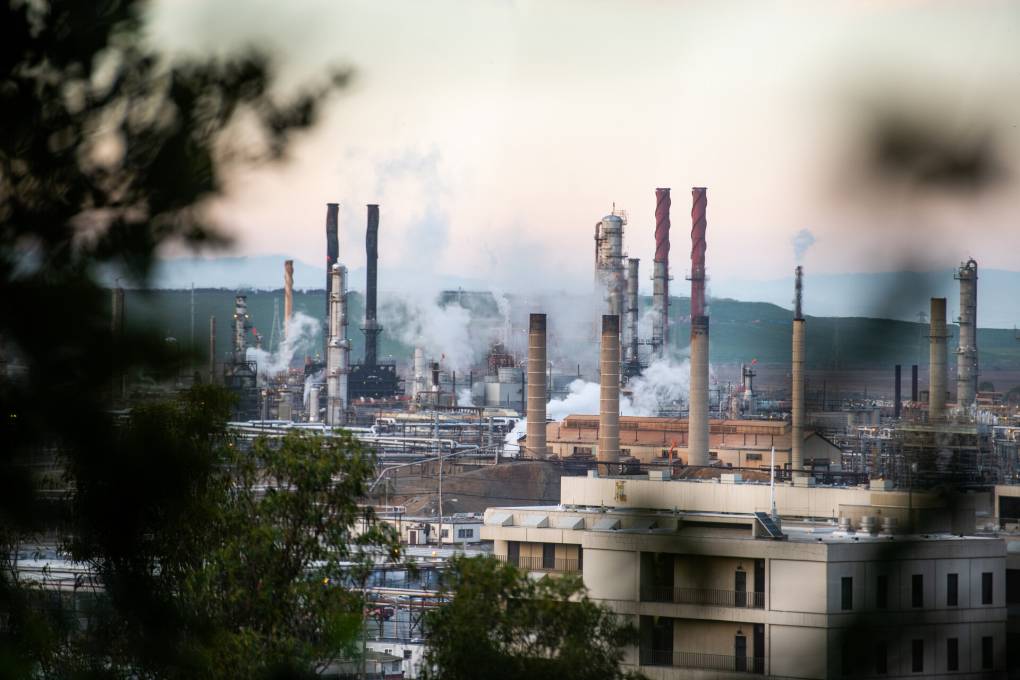
"caption": "Chevron's Richmond refinery viewed from Point Richmond in January 2022.",
"description": null,
"title": "Chevron Richmond Refinery",
"credit": "Beth LaBerge/KQED",
"status": "inherit",
"altTag": "Steam rises from Chevron's oil refinery in Richmond, California.",
"isLoading": false,
"fetchFailed": false
},
"news_11905938": {
"type": "attachments",
"id": "news_11905938",
"meta": {
"index": "attachments_1716263798",
"site": "news",
"id": "11905938",
"found": true
},
"parent": 11905929,
"imgSizes": {
"twentyfourteen-full-width": {
"file": "https://ww2.kqed.org/app/uploads/sites/10/2022/02/RS53793_018_KQED_LunarNewYearSF_02192022-qut-1038x576.jpg",
"width": 1038,
"mimeType": "image/jpeg",
"height": 576
},
"thumbnail": {
"file": "https://ww2.kqed.org/app/uploads/sites/10/2022/02/RS53793_018_KQED_LunarNewYearSF_02192022-qut-160x107.jpg",
"width": 160,
"mimeType": "image/jpeg",
"height": 107
},
"post-thumbnail": {
"file": "https://ww2.kqed.org/app/uploads/sites/10/2022/02/RS53793_018_KQED_LunarNewYearSF_02192022-qut-672x372.jpg",
"width": 672,
"mimeType": "image/jpeg",
"height": 372
},
"kqedFullSize": {
"file": "https://ww2.kqed.org/app/uploads/sites/10/2022/02/RS53793_018_KQED_LunarNewYearSF_02192022-qut.jpg",
"width": 1920,
"height": 1278
},
"large": {
"file": "https://ww2.kqed.org/app/uploads/sites/10/2022/02/RS53793_018_KQED_LunarNewYearSF_02192022-qut-1020x679.jpg",
"width": 1020,
"mimeType": "image/jpeg",
"height": 679
},
"1536x1536": {
"file": "https://ww2.kqed.org/app/uploads/sites/10/2022/02/RS53793_018_KQED_LunarNewYearSF_02192022-qut-1536x1022.jpg",
"width": 1536,
"mimeType": "image/jpeg",
"height": 1022
},
"medium": {
"file": "https://ww2.kqed.org/app/uploads/sites/10/2022/02/RS53793_018_KQED_LunarNewYearSF_02192022-qut-800x533.jpg",
"width": 800,
"mimeType": "image/jpeg",
"height": 533
}
},
"publishDate": 1645376787,
"modified": 1645557952,
"caption": "Cheyenne and her son Xavier watch the Chinese New Year Parade in San Francisco on Feb. 19, 2022.",
"description": null,
"title": "RS53793_018_KQED_LunarNewYearSF_02192022-qut",
"credit": "Beth LaBerge/KQED",
"status": "inherit",
"altTag": null,
"isLoading": false,
"fetchFailed": false
},
"news_11904279": {
"type": "attachments",
"id": "news_11904279",
"meta": {
"index": "attachments_1716263798",
"site": "news",
"id": "11904279",
"found": true
},
"parent": 11904278,
"imgSizes": {
"twentyfourteen-full-width": {
"file": "https://ww2.kqed.org/app/uploads/sites/10/2022/02/RS53503_20220204-IMG_2135-2-qut-1038x576.jpg",
"width": 1038,
"mimeType": "image/jpeg",
"height": 576
},
"thumbnail": {
"file": "https://ww2.kqed.org/app/uploads/sites/10/2022/02/RS53503_20220204-IMG_2135-2-qut-160x107.jpg",
"width": 160,
"mimeType": "image/jpeg",
"height": 107
},
"post-thumbnail": {
"file": "https://ww2.kqed.org/app/uploads/sites/10/2022/02/RS53503_20220204-IMG_2135-2-qut-672x372.jpg",
"width": 672,
"mimeType": "image/jpeg",
"height": 372
},
"kqedFullSize": {
"file": "https://ww2.kqed.org/app/uploads/sites/10/2022/02/RS53503_20220204-IMG_2135-2-qut.jpg",
"width": 1920,
"height": 1280
},
"large": {
"file": "https://ww2.kqed.org/app/uploads/sites/10/2022/02/RS53503_20220204-IMG_2135-2-qut-1020x680.jpg",
"width": 1020,
"mimeType": "image/jpeg",
"height": 680
},
"1536x1536": {
"file": "https://ww2.kqed.org/app/uploads/sites/10/2022/02/RS53503_20220204-IMG_2135-2-qut-1536x1024.jpg",
"width": 1536,
"mimeType": "image/jpeg",
"height": 1024
},
"medium": {
"file": "https://ww2.kqed.org/app/uploads/sites/10/2022/02/RS53503_20220204-IMG_2135-2-qut-800x533.jpg",
"width": 800,
"mimeType": "image/jpeg",
"height": 533
}
},
"publishDate": 1644098777,
"modified": 1644098981,
"caption": "Sasha Ritzie-Hernandez poses for a portrait during a rally at Oakland City Hall on Feb. 4, 2022.",
"description": null,
"title": "RS53503_20220204-IMG_2135-2-qut",
"credit": "Amaya Edwards/KQED",
"status": "inherit",
"altTag": "A woman in a purple shirt with the phrase 'Reparations for Black Students in Oakland' appears holding a pink protest sign with her fist up and Oakland City Hall in the background.",
"isLoading": false,
"fetchFailed": false
},
"news_11904287": {
"type": "attachments",
"id": "news_11904287",
"meta": {
"index": "attachments_1716263798",
"site": "news",
"id": "11904287",
"found": true
},
"parent": 11904277,
"imgSizes": {
"twentyfourteen-full-width": {
"file": "https://ww2.kqed.org/app/uploads/sites/10/2022/02/IMG_0755-1038x576.jpg",
"width": 1038,
"mimeType": "image/jpeg",
"height": 576
},
"thumbnail": {
"file": "https://ww2.kqed.org/app/uploads/sites/10/2022/02/IMG_0755-160x120.jpg",
"width": 160,
"mimeType": "image/jpeg",
"height": 120
},
"post-thumbnail": {
"file": "https://ww2.kqed.org/app/uploads/sites/10/2022/02/IMG_0755-672x372.jpg",
"width": 672,
"mimeType": "image/jpeg",
"height": 372
},
"kqedFullSize": {
"file": "https://ww2.kqed.org/app/uploads/sites/10/2022/02/IMG_0755-scaled.jpg",
"width": 2560,
"height": 1920
},
"2048x2048": {
"file": "https://ww2.kqed.org/app/uploads/sites/10/2022/02/IMG_0755-2048x1536.jpg",
"width": 2048,
"mimeType": "image/jpeg",
"height": 1536
},
"large": {
"file": "https://ww2.kqed.org/app/uploads/sites/10/2022/02/IMG_0755-1020x765.jpg",
"width": 1020,
"mimeType": "image/jpeg",
"height": 765
},
"1536x1536": {
"file": "https://ww2.kqed.org/app/uploads/sites/10/2022/02/IMG_0755-1536x1152.jpg",
"width": 1536,
"mimeType": "image/jpeg",
"height": 1152
},
"full-width": {
"file": "https://ww2.kqed.org/app/uploads/sites/10/2022/02/IMG_0755-1920x1440.jpg",
"width": 1920,
"mimeType": "image/jpeg",
"height": 1440
},
"medium": {
"file": "https://ww2.kqed.org/app/uploads/sites/10/2022/02/IMG_0755-800x600.jpg",
"width": 800,
"mimeType": "image/jpeg",
"height": 600
}
},
"publishDate": 1644111501,
"modified": 1644275871,
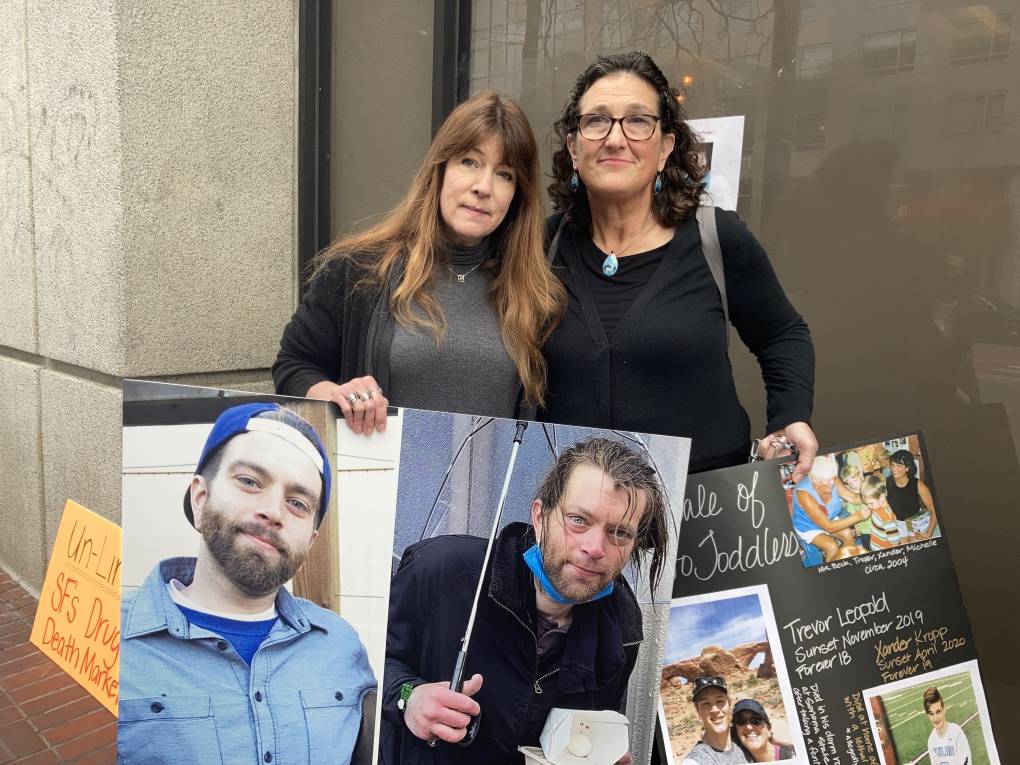
"caption": "Jacqui Berlinn and Michelle Leopold, two of the organizers with the protest against drug use at the Tenderloin Linkage Center, Feb. 5, 2022.",
"description": null,
"title": "IMG_0755",
"credit": "Holly J. McDede/KQED",
"status": "inherit",
"altTag": null,
"isLoading": false,
"fetchFailed": false
},
"news_11903751": {
"type": "attachments",
"id": "news_11903751",
"meta": {
"index": "attachments_1716263798",
"site": "news",
"id": "11903751",
"found": true
},
"parent": 11903718,
"imgSizes": {
"twentyfourteen-full-width": {
"file": "https://ww2.kqed.org/app/uploads/sites/10/2022/02/RS53402_001_KQED_CAReparatioinsTaskForce_01282022-qut-1038x576.jpg",
"width": 1038,
"mimeType": "image/jpeg",
"height": 576
},
"thumbnail": {
"file": "https://ww2.kqed.org/app/uploads/sites/10/2022/02/RS53402_001_KQED_CAReparatioinsTaskForce_01282022-qut-160x107.jpg",
"width": 160,
"mimeType": "image/jpeg",
"height": 107
},
"post-thumbnail": {
"file": "https://ww2.kqed.org/app/uploads/sites/10/2022/02/RS53402_001_KQED_CAReparatioinsTaskForce_01282022-qut-672x372.jpg",
"width": 672,
"mimeType": "image/jpeg",
"height": 372
},
"kqedFullSize": {
"file": "https://ww2.kqed.org/app/uploads/sites/10/2022/02/RS53402_001_KQED_CAReparatioinsTaskForce_01282022-qut.jpg",
"width": 1920,
"height": 1280
},
"large": {
"file": "https://ww2.kqed.org/app/uploads/sites/10/2022/02/RS53402_001_KQED_CAReparatioinsTaskForce_01282022-qut-1020x680.jpg",
"width": 1020,
"mimeType": "image/jpeg",
"height": 680
},
"1536x1536": {
"file": "https://ww2.kqed.org/app/uploads/sites/10/2022/02/RS53402_001_KQED_CAReparatioinsTaskForce_01282022-qut-1536x1024.jpg",
"width": 1536,
"mimeType": "image/jpeg",
"height": 1024
},
"medium": {
"file": "https://ww2.kqed.org/app/uploads/sites/10/2022/02/RS53402_001_KQED_CAReparatioinsTaskForce_01282022-qut-800x533.jpg",
"width": 800,
"mimeType": "image/jpeg",
"height": 533
}
},
"publishDate": 1643834956,
"modified": 1643835048,
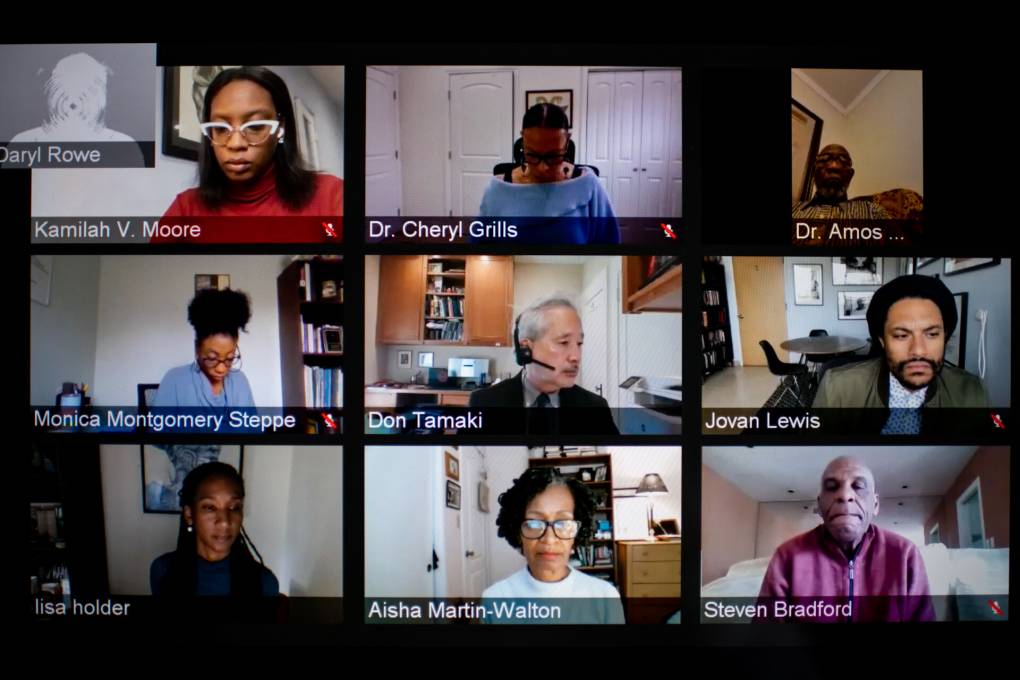
"caption": "The California Reparations Task Force members listen to public comment during a virtual meeting on Jan. 28, 2022.",
"description": null,
"title": "RS53402_001_KQED_CAReparatioinsTaskForce_01282022-qut",
"credit": "Beth LaBerge/KQED",
"status": "inherit",
"altTag": "Several people from California's Reparations Task Force in their virtual boxes during a meeting.",
"isLoading": false,
"fetchFailed": false
}
},
"audioPlayerReducer": {
"postId": "stream_live",
"isPaused": true,
"isPlaying": false,
"pfsActive": false,
"pledgeModalIsOpen": true,
"playerDrawerIsOpen": false,
"liveAudioPlayStartedAt": 0,
"liveAudioPlayContext": ""
},
"authorsReducer": {
"kqed": {
"type": "authors",
"id": "236",
"meta": {
"index": "authors_1716337520",
"id": "236",
"found": true
},
"name": "KQED News Staff",
"firstName": "KQED News Staff",
"lastName": null,
"slug": "kqed",
"email": "faq@kqed.org",
"display_author_email": false,
"staff_mastheads": [],
"title": null,
"bio": null,
"avatar": "https://secure.gravatar.com/avatar/ef0e801a68c4c54afa9180db14084167?s=600&d=blank&r=g",
"twitter": null,
"facebook": null,
"instagram": null,
"linkedin": null,
"sites": [
{
"site": "arts",
"roles": [
"contributor"
]
},
{
"site": "news",
"roles": [
"editor"
]
},
{
"site": "futureofyou",
"roles": [
"author"
]
}
],
"headData": {
"title": "KQED News Staff | KQED",
"description": null,
"ogImgSrc": "https://secure.gravatar.com/avatar/ef0e801a68c4c54afa9180db14084167?s=600&d=blank&r=g",
"twImgSrc": "https://secure.gravatar.com/avatar/ef0e801a68c4c54afa9180db14084167?s=600&d=blank&r=g"
},
"isLoading": false,
"link": "/author/kqed"
},
"tgoldberg": {
"type": "authors",
"id": "258",
"meta": {
"index": "authors_1716337520",
"id": "258",
"found": true
},
"name": "Ted Goldberg",
"firstName": "Ted",
"lastName": "Goldberg",
"slug": "tgoldberg",
"email": "tgoldberg@kqed.org",
"display_author_email": true,
"staff_mastheads": [
"news"
],
"title": "KQED Managing Editor, News and Newscasts",
"bio": "Ted Goldberg is Managing Editor of News and Newscasts at KQED. His main reporting beat is the Bay Area's oil refining industry.\r\n\r\nPrior to joining KQED in 2014, Ted worked at CBS News and WCBS AM in New York and Bay City News and KCBS Radio in San Francisco. He graduated from Oberlin College in Ohio in 1998.",
"avatar": "https://secure.gravatar.com/avatar/30ce2e4fe89135e104f89be2394d16225b9d36c121b5b3cb7651ce642978b96f?s=600&d=blank&r=g",
"twitter": "TedrickG",
"bluesky": null,
"facebook": null,
"instagram": null,
"linkedin": null,
"sites": [
{
"site": "news",
"roles": [
"editor"
]
},
{
"site": "science",
"roles": [
"editor"
]
}
],
"headData": {
"title": "Ted Goldberg | KQED",
"description": "KQED Managing Editor, News and Newscasts",
"ogImgSrc": "https://secure.gravatar.com/avatar/30ce2e4fe89135e104f89be2394d16225b9d36c121b5b3cb7651ce642978b96f?s=600&d=blank&r=g",
"twImgSrc": "https://secure.gravatar.com/avatar/30ce2e4fe89135e104f89be2394d16225b9d36c121b5b3cb7651ce642978b96f?s=600&d=blank&r=g"
},
"isLoading": false,
"link": "/author/tgoldberg"
},
"lsarah": {
"type": "authors",
"id": "11626",
"meta": {
"index": "authors_1716337520",
"id": "11626",
"found": true
},
"name": "Lakshmi Sarah",
"firstName": "Lakshmi",
"lastName": "Sarah",
"slug": "lsarah",
"email": "lsarah@kqed.org",
"display_author_email": false,
"staff_mastheads": [],
"title": "Digital Producer",
"bio": "Lakshmi Sarah is an educator, author and journalist with a focus on innovative storytelling. She has worked with newspapers, radio and magazines from Ahmedabad, India to Los Angeles, California. She has written and produced for Die Zeit, Global Voices, AJ+, KQED, Fusion Media Group and the New York Times.",
"avatar": "https://secure.gravatar.com/avatar/652dcaecd8b28826fc17a8b2d6bb4e93?s=600&d=blank&r=g",
"twitter": "lakitalki",
"facebook": null,
"instagram": "https://www.instagram.com/laki.talki/",
"linkedin": "https://www.linkedin.com/in/lakisarah/",
"sites": [
{
"site": "arts",
"roles": []
},
{
"site": "news",
"roles": []
},
{
"site": "bayareabites",
"roles": []
},
{
"site": "science",
"roles": []
}
],
"headData": {
"title": "Lakshmi Sarah | KQED",
"description": "Digital Producer",
"ogImgSrc": "https://secure.gravatar.com/avatar/652dcaecd8b28826fc17a8b2d6bb4e93?s=600&d=blank&r=g",
"twImgSrc": "https://secure.gravatar.com/avatar/652dcaecd8b28826fc17a8b2d6bb4e93?s=600&d=blank&r=g"
},
"isLoading": false,
"link": "/author/lsarah"
},
"hmcdede": {
"type": "authors",
"id": "11635",
"meta": {
"index": "authors_1716337520",
"id": "11635",
"found": true
},
"name": "Holly McDede",
"firstName": "Holly",
"lastName": "McDede",
"slug": "hmcdede",
"email": "hmcdede@KQED.org",
"display_author_email": false,
"staff_mastheads": [],
"title": "KQED Contributor",
"bio": null,
"avatar": "https://secure.gravatar.com/avatar/35d1a1f5422c9d266f7ace9348d170f2136671a65fffc90a592e4d7fbf8dc3f6?s=600&d=blank&r=g",
"twitter": null,
"bluesky": null,
"facebook": null,
"instagram": null,
"linkedin": null,
"sites": [
{
"site": "arts",
"roles": [
"editor"
]
},
{
"site": "news",
"roles": [
"edit_others_posts",
"editor"
]
},
{
"site": "science",
"roles": [
"editor"
]
},
{
"site": "forum",
"roles": [
"editor"
]
},
{
"site": "perspectives",
"roles": [
"administrator"
]
}
],
"headData": {
"title": "Holly McDede | KQED",
"description": "KQED Contributor",
"ogImgSrc": "https://secure.gravatar.com/avatar/35d1a1f5422c9d266f7ace9348d170f2136671a65fffc90a592e4d7fbf8dc3f6?s=600&d=blank&r=g",
"twImgSrc": "https://secure.gravatar.com/avatar/35d1a1f5422c9d266f7ace9348d170f2136671a65fffc90a592e4d7fbf8dc3f6?s=600&d=blank&r=g"
},
"isLoading": false,
"link": "/author/hmcdede"
},
"blaberge": {
"type": "authors",
"id": "11667",
"meta": {
"index": "authors_1716337520",
"id": "11667",
"found": true
},
"name": "Beth LaBerge",
"firstName": "Beth",
"lastName": "LaBerge",
"slug": "blaberge",
"email": "blaberge@KQED.org",
"display_author_email": true,
"staff_mastheads": [
"news"
],
"title": "Photographer, News",
"bio": "Beth LaBerge is a visual journalist for \u003ca href=\"https://www.kqed.org/news\">KQED News\u003c/a>.",
"avatar": "https://secure.gravatar.com/avatar/ce49ecd7a1306685637b45a1f6f5dedfc4ae9481966eb596fea5160466dd6319?s=600&d=blank&r=g",
"twitter": null,
"bluesky": null,
"facebook": null,
"instagram": "https://www.instagram.com/bethlaberge/",
"linkedin": null,
"sites": [
{
"site": "arts",
"roles": [
"editor",
"manage_categories"
]
},
{
"site": "news",
"roles": [
"editor",
"edit_plugins",
"manage_categories"
]
},
{
"site": "science",
"roles": [
"editor",
"contributor",
"author",
"manage_categories"
]
},
{
"site": "perspectives",
"roles": [
"editor"
]
},
{
"site": "liveblog",
"roles": [
"editor"
]
}
],
"headData": {
"title": "Beth LaBerge | KQED",
"description": "Photographer, News",
"ogImgSrc": "https://secure.gravatar.com/avatar/ce49ecd7a1306685637b45a1f6f5dedfc4ae9481966eb596fea5160466dd6319?s=600&d=blank&r=g",
"twImgSrc": "https://secure.gravatar.com/avatar/ce49ecd7a1306685637b45a1f6f5dedfc4ae9481966eb596fea5160466dd6319?s=600&d=blank&r=g"
},
"isLoading": false,
"link": "/author/blaberge"
},
"jrodriguez": {
"type": "authors",
"id": "11690",
"meta": {
"index": "authors_1716337520",
"id": "11690",
"found": true
},
"name": "Joe Fitzgerald Rodriguez",
"firstName": "Joe",
"lastName": "Fitzgerald Rodriguez",
"slug": "jrodriguez",
"email": "jrodriguez@kqed.org",
"display_author_email": true,
"staff_mastheads": [
"news"
],
"title": "Reporter and Producer",
"bio": "Joe Fitzgerald Rodriguez is a reporter and digital producer for KQED covering politics. Joe most recently wrote for the \u003cem>San Francisco Examiner\u003c/em> as a political columnist covering The City. He was raised in San Francisco and has spent his reporting career in his beloved, foggy, city by the bay. Joe was 12-years-old when he conducted his first interview in journalism, grilling former San Francisco Mayor Willie Brown for the Marina Middle School newspaper, \u003cem>The Penguin Press, \u003c/em>and he continues to report on the San Francisco Bay Area to this day.",
"avatar": "https://secure.gravatar.com/avatar/2247beb0564c1e9c62228d5649d2edac?s=600&d=blank&r=g",
"twitter": "FitztheReporter",
"facebook": null,
"instagram": "https://www.instagram.com/fitzthereporter/",
"linkedin": null,
"sites": [
{
"site": "",
"roles": [
"editor"
]
},
{
"site": "arts",
"roles": [
"editor"
]
},
{
"site": "news",
"roles": [
"editor"
]
},
{
"site": "science",
"roles": [
"editor"
]
},
{
"site": "elections",
"roles": [
"editor"
]
},
{
"site": "liveblog",
"roles": [
"editor"
]
}
],
"headData": {
"title": "Joe Fitzgerald Rodriguez | KQED",
"description": "Reporter and Producer",
"ogImgSrc": "https://secure.gravatar.com/avatar/2247beb0564c1e9c62228d5649d2edac?s=600&d=blank&r=g",
"twImgSrc": "https://secure.gravatar.com/avatar/2247beb0564c1e9c62228d5649d2edac?s=600&d=blank&r=g"
},
"isLoading": false,
"link": "/author/jrodriguez"
},
"ccabreralomeli": {
"type": "authors",
"id": "11708",
"meta": {
"index": "authors_1716337520",
"id": "11708",
"found": true
},
"name": "Carlos Cabrera-Lomelí",
"firstName": "Carlos",
"lastName": "Cabrera-Lomelí",
"slug": "ccabreralomeli",
"email": "ccabreralomeli@KQED.org",
"display_author_email": true,
"staff_mastheads": [
"news"
],
"title": "Community Reporter",
"bio": "Carlos Cabrera-Lomelí is a community reporter with KQED's digital engagement team. He also reports and co-produces for KQED's bilingual news hub KQED en Español. He grew up in San Francisco's Mission District and has previously worked with Univision, 48 Hills and REFORMA in Mexico City.",
"avatar": "https://secure.gravatar.com/avatar/c309be9665e484f887b818c89e273ecc673004f426f36b24d00a4d813a2e0518?s=600&d=blank&r=g",
"twitter": "@LomeliCabrera",
"bluesky": null,
"facebook": null,
"instagram": null,
"linkedin": null,
"sites": [
{
"site": "arts",
"roles": [
"editor"
]
},
{
"site": "news",
"roles": [
"editor"
]
},
{
"site": "about",
"roles": [
"editor"
]
},
{
"site": "science",
"roles": [
"editor"
]
},
{
"site": "perspectives",
"roles": [
"editor"
]
},
{
"site": "elections",
"roles": [
"editor"
]
},
{
"site": "liveblog",
"roles": [
"contributor"
]
}
],
"headData": {
"title": "Carlos Cabrera-Lomelí | KQED",
"description": "Community Reporter",
"ogImgSrc": "https://secure.gravatar.com/avatar/c309be9665e484f887b818c89e273ecc673004f426f36b24d00a4d813a2e0518?s=600&d=blank&r=g",
"twImgSrc": "https://secure.gravatar.com/avatar/c309be9665e484f887b818c89e273ecc673004f426f36b24d00a4d813a2e0518?s=600&d=blank&r=g"
},
"isLoading": false,
"link": "/author/ccabreralomeli"
},
"afinney": {
"type": "authors",
"id": "11772",
"meta": {
"index": "authors_1716337520",
"id": "11772",
"found": true
},
"name": "Annelise Finney",
"firstName": "Annelise",
"lastName": "Finney",
"slug": "afinney",
"email": "afinney@kqed.org",
"display_author_email": false,
"staff_mastheads": [],
"title": "Reporter",
"bio": "Annelise reports on reparations in California and East Bay politics. She co-produced the Sunday Music Drop, a limited-term radio series featuring Bay Area musicians that aired between Sept 2022 and Oct 2024. She joined KQED in 2021 as a general assignment reporter and is an alumna of KALW's Audio Academy. She was born and raised in the East Bay. She is currently away from KQED completing a year-long reporting project in Berlin, Germany as a Alexander Von Humboldt German Chancellor Fellow.",
"avatar": "https://secure.gravatar.com/avatar/b439010ea6540bec1060ee74b3c94314480991106a4a84e774fe5a0fd6605878?s=600&d=mm&r=g",
"twitter": null,
"bluesky": null,
"facebook": null,
"instagram": null,
"linkedin": null,
"sites": [
{
"site": "news",
"roles": [
"subscriber"
]
},
{
"site": "liveblog",
"roles": [
"subscriber"
]
}
],
"headData": {
"title": "Annelise Finney | KQED",
"description": "Reporter",
"ogImgSrc": "https://secure.gravatar.com/avatar/b439010ea6540bec1060ee74b3c94314480991106a4a84e774fe5a0fd6605878?s=600&d=mm&r=g",
"twImgSrc": "https://secure.gravatar.com/avatar/b439010ea6540bec1060ee74b3c94314480991106a4a84e774fe5a0fd6605878?s=600&d=mm&r=g"
},
"isLoading": false,
"link": "/author/afinney"
}
},
"pagesReducer": {
"news_category_local": {
"type": "terms",
"id": "news_28250",
"meta": {
"index": "terms_1716263798",
"site": "news",
"id": "28250",
"score": 12.940872
},
"featImg": null,
"name": "Local",
"description": null,
"taxonomy": "category",
"headData": {
"twImgId": null,
"twTitle": null,
"ogTitle": null,
"ogImgId": null,
"twDescription": null,
"description": null,
"title": "Local Archives | KQED News",
"ogDescription": null
},
"ttid": 28267,
"slug": "local",
"isLoading": false,
"title": "Local",
"pageMeta": {
"site": "news",
"WpPageTemplate": "page-topic-editorial",
"currentPage": 151
},
"blocks": [
{
"blockName": "kqed/post-list",
"attrs": {
"layout": "cardArticle2",
"query": "posts/news?category=local",
"seeMore": false,
"paginated": true,
"page": 151
}
},
{
"blockName": "kqed/ad"
}
]
}
},
"pfsSessionReducer": {},
"postsReducer": {
"stream_live": {
"type": "live",
"id": "stream_live",
"audioUrl": "https://streams.kqed.org/kqedradio",
"title": "Live Stream",
"excerpt": "Live Stream information currently unavailable.",
"link": "/radio",
"featImg": "",
"label": {
"name": "KQED Live",
"link": "/"
}
},
"stream_kqedNewscast": {
"type": "posts",
"id": "stream_kqedNewscast",
"audioUrl": "https://www.kqed.org/.stream/anon/radio/RDnews/newscast.mp3?_=1",
"title": "KQED Newscast",
"featImg": "",
"label": {
"name": "88.5 FM",
"link": "/"
}
},
"news_11912743": {
"type": "posts",
"id": "news_11912743",
"meta": {
"index": "posts_1716263798",
"site": "news",
"id": "11912743",
"score": null,
"sort": [
1651279153000
]
},
"guestAuthors": [],
"slug": "alexandra-cousteau-this-week-in-ca-news",
"title": "Alexandra Cousteau | This Week in CA News",
"publishDate": 1651279153,
"format": "video",
"headTitle": "Alexandra Cousteau | This Week in CA News | KQED",
"labelTerm": {
"term": 7052,
"site": "news"
},
"content": "\u003cp>\u003cb>Alexandra Cousteau\u003cbr>\n\u003c/b>\u003cspan style=\"font-weight: 400\">Many environmental advocates are shifting their stance from sustainability to regeneration — the idea that our land and oceans have become so depleted of biodiversity that it’s not enough to simply sustain the status quo. Instead, advocates like Alexandra Cousteau argue that we need to actively repair the damage we’ve done and regenerate the earth. Cousteau, an ocean advocate, explorer, and also the granddaughter of underwater cinematographer and scientist Jacques Cousteau, has launched a mission to restore the abundance of the oceans by 2050.\u003c/span>\u003c/p>\n\u003cp>\u003cb>This Week in California News and Politics\u003cbr>\n\u003c/b>\u003cspan style=\"font-weight: 400\">What’s the long game for Twitter, now that Elon Musk has shaken the tech world with his planned $44 billion acquisition of the social media company? We chew on this and the week’s other big stories with our panel of reporters.\u003c/span>\u003c/p>\n\u003cp>\u003cspan style=\"font-weight: 400\">Guests: \u003c/span>\u003c/p>\n\u003cul>\n\u003cli style=\"font-weight: 400\">\u003cspan style=\"font-weight: 400\">Otis R. Taylor Jr., KQED \u003c/span>\u003cspan style=\"font-weight: 400\">supervising senior editor of race and equity\u003c/span>\u003c/li>\n\u003cli style=\"font-weight: 400\">\u003cspan style=\"font-weight: 400\">Marisa Lagos, KQED government and politics correspondent \u003c/span>\u003c/li>\n\u003cli style=\"font-weight: 400\">\u003cspan style=\"font-weight: 400\">Jeremy C. Owens, MarketWatch San Francisco bureau chief\u003c/span>\u003c/li>\n\u003c/ul>\n\u003cp>\u003cb>Something Beautiful: SF Coast Guard\u003cbr>\n\u003c/b>\u003cspan style=\"font-weight: 400\">The San Francisco Coast Guard often battles the waves and weather in their work on rescue missions. In this week’s Something Beautiful, shot by \u003c/span>\u003ca href=\"https://www.youtube.com/channel/UCAF737_DNTdD4R186tb3M7A\">\u003cspan style=\"font-weight: 400\">Jamy Donaldson\u003c/span>\u003c/a>\u003cspan style=\"font-weight: 400\">, ships practice maneuvers on crashing waves off the shore of Ocean Beach in San Francisco.\u003c/span>\u003c/p>\n\u003cp>[ad fullwidth]\u003c/p>\u003cp>\u003c/p>\n",
"blocks": [],
"excerpt": null,
"status": "publish",
"parent": 0,
"modified": 1721158640,
"stats": {
"hasAudio": false,
"hasVideo": false,
"hasChartOrMap": false,
"iframeSrcs": [],
"hasGoogleForm": false,
"hasGallery": false,
"hasHearkenModule": false,
"hasPolis": false,
"paragraphCount": 6,
"wordCount": 222
},
"headData": {
"title": "Alexandra Cousteau | This Week in CA News | KQED",
"description": "Alexandra Cousteau Many environmental advocates are shifting their stance from sustainability to regeneration — the idea that our land and oceans have become so depleted of biodiversity that it’s not enough to simply sustain the status quo. Instead, advocates like Alexandra Cousteau argue that we need to actively repair the damage we’ve done and regenerate",
"ogTitle": "",
"ogDescription": "",
"ogImgId": "",
"twTitle": "",
"twDescription": "",
"twImgId": "",
"schema": {
"@context": "https://schema.org",
"@type": "NewsArticle",
"headline": "Alexandra Cousteau | This Week in CA News",
"datePublished": "2022-04-29T17:39:13-07:00",
"dateModified": "2024-07-16T12:37:20-07:00",
"image": "https://cdn.kqed.org/wp-content/uploads/2020/02/KQED-OG-Image@1x.png",
"isAccessibleForFree": "True",
"publisher": {
"@type": "NewsMediaOrganization",
"@id": "https://www.kqed.org/#organization",
"name": "KQED",
"logo": "https://cdn.kqed.org/wp-content/uploads/2020/02/KQED-OG-Image@1x.png",
"url": "https://www.kqed.org",
"sameAs": [
"https://www.facebook.com/KQED",
"https://twitter.com/KQED",
"https://www.instagram.com/kqed/",
"https://www.tiktok.com/@kqedofficial",
"https://www.linkedin.com/company/kqed",
"https://www.youtube.com/channel/UCeC0IOo7i1P_61zVUWbJ4nw"
]
}
}
},
"videoEmbed": "https://youtu.be/a-NJSpEeCcQ",
"sticky": false,
"excludeFromSiteSearch": "Include",
"path": "/news/11912743/alexandra-cousteau-this-week-in-ca-news",
"audioTrackLength": null,
"parsedContent": [
{
"type": "contentString",
"content": "\u003cdiv class=\"post-body\">\u003cp>\u003cp>\u003cb>Alexandra Cousteau\u003cbr>\n\u003c/b>\u003cspan style=\"font-weight: 400\">Many environmental advocates are shifting their stance from sustainability to regeneration — the idea that our land and oceans have become so depleted of biodiversity that it’s not enough to simply sustain the status quo. Instead, advocates like Alexandra Cousteau argue that we need to actively repair the damage we’ve done and regenerate the earth. Cousteau, an ocean advocate, explorer, and also the granddaughter of underwater cinematographer and scientist Jacques Cousteau, has launched a mission to restore the abundance of the oceans by 2050.\u003c/span>\u003c/p>\n\u003cp>\u003cb>This Week in California News and Politics\u003cbr>\n\u003c/b>\u003cspan style=\"font-weight: 400\">What’s the long game for Twitter, now that Elon Musk has shaken the tech world with his planned $44 billion acquisition of the social media company? We chew on this and the week’s other big stories with our panel of reporters.\u003c/span>\u003c/p>\n\u003cp>\u003cspan style=\"font-weight: 400\">Guests: \u003c/span>\u003c/p>\n\u003cul>\n\u003cli style=\"font-weight: 400\">\u003cspan style=\"font-weight: 400\">Otis R. Taylor Jr., KQED \u003c/span>\u003cspan style=\"font-weight: 400\">supervising senior editor of race and equity\u003c/span>\u003c/li>\n\u003cli style=\"font-weight: 400\">\u003cspan style=\"font-weight: 400\">Marisa Lagos, KQED government and politics correspondent \u003c/span>\u003c/li>\n\u003cli style=\"font-weight: 400\">\u003cspan style=\"font-weight: 400\">Jeremy C. Owens, MarketWatch San Francisco bureau chief\u003c/span>\u003c/li>\n\u003c/ul>\n\u003cp>\u003cb>Something Beautiful: SF Coast Guard\u003cbr>\n\u003c/b>\u003cspan style=\"font-weight: 400\">The San Francisco Coast Guard often battles the waves and weather in their work on rescue missions. In this week’s Something Beautiful, shot by \u003c/span>\u003ca href=\"https://www.youtube.com/channel/UCAF737_DNTdD4R186tb3M7A\">\u003cspan style=\"font-weight: 400\">Jamy Donaldson\u003c/span>\u003c/a>\u003cspan style=\"font-weight: 400\">, ships practice maneuvers on crashing waves off the shore of Ocean Beach in San Francisco.\u003c/span>\u003c/p>\n\u003cp>\u003c/p>\u003c/div>",
"attributes": {
"named": {},
"numeric": []
}
},
{
"type": "component",
"content": "",
"name": "ad",
"attributes": {
"named": {
"label": "fullwidth"
},
"numeric": [
"fullwidth"
]
}
},
{
"type": "contentString",
"content": "\u003cdiv class=\"post-body\">\u003cp>\u003c/p>\u003cp>\u003c/p>\n\u003c/div>\u003c/p>",
"attributes": {
"named": {},
"numeric": []
}
}
],
"link": "/news/11912743/alexandra-cousteau-this-week-in-ca-news",
"authors": [
"236"
],
"programs": [
"news_7052"
],
"categories": [
"news_1758",
"news_19906",
"news_28250",
"news_13",
"news_248"
],
"tags": [
"news_18538",
"news_3897",
"news_20297",
"news_19177",
"news_20562",
"news_240",
"news_38",
"news_30632",
"news_346"
],
"featImg": "news_11912745",
"label": "news_7052"
},
"news_11911092": {
"type": "posts",
"id": "news_11911092",
"meta": {
"index": "posts_1716263798",
"site": "news",
"id": "11911092",
"score": null,
"sort": [
1650499316000
]
},
"guestAuthors": [],
"slug": "from-the-underground-to-public-health-policy-a-history-of-harm-reduction-in-san-francisco",
"title": "From the Underground to Public Health Policy: A History of Harm Reduction in San Francisco",
"publishDate": 1650499316,
"format": "standard",
"headTitle": "From the Underground to Public Health Policy: A History of Harm Reduction in San Francisco | KQED",
"labelTerm": {
"site": "news"
},
"content": "\u003cp>It was 1998, and San Francisco was in the midst of a heroin overdose crisis. Rachel McLean was an outreach worker in the Haight, and she says it felt like a war zone.\u003c/p>\n\u003cp>When youth in the neighborhood fatally overdosed, outreach workers would host memorials by a bench in Golden Gate Park’s Panhandle.\u003c/p>\n\u003cp>They’d order pizza, tell stories, make zines and write poetry. But then came one three-week stretch with a new overdose death each week.\u003c/p>\n\u003cp>“And by the time we got to the third memorial, no one could even talk about what they loved and remembered about that person because it was just too much,” McLean said. “And I remember a bunch of kids were like, ‘You know, ‘eff this, I’m just going to go and get high.'”\u003c/p>\n\u003cp>Heroin prices had dropped and the purity had doubled. From 1997 to 2000, 384 people died from heroin-related causes in San Francisco, making it the city’s single-largest cause of accidental death.\u003c/p>\n\u003cp>[ad fullwidth]\u003c/p>\n\u003cp>In 2000, the San Francisco Health Commission made harm reduction — a philosophy that advocates for making it safer to use drugs rather than criminalizing those who do — an official public health policy. It’s an approach with roots spanning from the Summer of Love in 1967, to the beginning of the AIDS pandemic in the 1980s, to the present-day fight to open sites in San Francisco for people to use drugs safely.\u003c/p>\n\u003cfigure id=\"attachment_11911094\" class=\"wp-caption alignright\" style=\"max-width: 800px\">\u003cimg loading=\"lazy\" decoding=\"async\" class=\"size-medium wp-image-11911094\" src=\"https://ww2.kqed.org/app/uploads/sites/10/2022/04/RS54198_007_KQED_VitkaEisenHealthRight360_03092022-qut-800x533.jpg\" alt=\"\" width=\"800\" height=\"533\" srcset=\"https://cdn.kqed.org/wp-content/uploads/sites/10/2022/04/RS54198_007_KQED_VitkaEisenHealthRight360_03092022-qut-800x533.jpg 800w, https://cdn.kqed.org/wp-content/uploads/sites/10/2022/04/RS54198_007_KQED_VitkaEisenHealthRight360_03092022-qut-1020x680.jpg 1020w, https://cdn.kqed.org/wp-content/uploads/sites/10/2022/04/RS54198_007_KQED_VitkaEisenHealthRight360_03092022-qut-160x107.jpg 160w, https://cdn.kqed.org/wp-content/uploads/sites/10/2022/04/RS54198_007_KQED_VitkaEisenHealthRight360_03092022-qut-1536x1024.jpg 1536w, https://cdn.kqed.org/wp-content/uploads/sites/10/2022/04/RS54198_007_KQED_VitkaEisenHealthRight360_03092022-qut.jpg 1920w\" sizes=\"(max-width: 800px) 100vw, 800px\">\u003cfigcaption class=\"wp-caption-text\">Vitka Eisen, president and CEO of HealthRIGHT 360, poses for a portrait at the medical clinic in San Francisco on March 9, 2022. HealthRIGHT 360 is a health care provider for lower-income and otherwise marginalized Californians. \u003ccite>(Beth LaBerge/KQED)\u003c/cite>\u003c/figcaption>\u003c/figure>\n\u003ch2>Inside a ‘hippie’ clinic, health care was a right\u003c/h2>\n\u003cp>The Haight Ashbury Free Medical Clinic opened its doors in 1967, committed to an ethos where health care was a right, not a privilege. Tens of thousands of flower children and teenage runaways were flocking to San Francisco to “drop out” of everyday society and experiment with drugs, sex and rock ‘n’ roll.\u003c/p>\n\u003cp>The clinic offered people who used drugs health care at a time when the city’s health department worried compassion would encourage the hippies to stay. It provided a safe space for people dealing with bad trips and heroin withdrawal and, later, for veterans returning from Vietnam with post-traumatic stress disorder.\u003c/p>\n\u003cp>Founder Dr. David Smith said it was illegal for physicians to treat people with substance use disorder with prescription drugs in the 1960s. Clinic volunteers were so worried police would shut the clinic down if people used drugs inside that the door was painted to read: “No dealing!/No holding drugs/No using drugs/No alcohol/No pets/Any of these can close the clinic/We Love You.”\u003c/p>\n\u003cp>When the Summer of Love ended, many people went home, but generations of people searching for meaning stayed behind in San Francisco, where the hard drugs moved in and people’s health care needs overwhelmed the clinic.\u003c/p>\n\u003cfigure id=\"attachment_11611310\" class=\"wp-caption alignright\" style=\"max-width: 355px\">\u003cimg loading=\"lazy\" decoding=\"async\" class=\"size-full wp-image-11611310\" src=\"https://ww2.kqed.org/app/uploads/sites/10/2017/08/RS26138_Detox-Door-Trimed-2-DSC_0018-qut.jpg\" alt=\"\" width=\"355\" height=\"800\" srcset=\"https://cdn.kqed.org/wp-content/uploads/sites/10/2017/08/RS26138_Detox-Door-Trimed-2-DSC_0018-qut.jpg 355w, https://cdn.kqed.org/wp-content/uploads/sites/10/2017/08/RS26138_Detox-Door-Trimed-2-DSC_0018-qut-160x361.jpg 160w, https://cdn.kqed.org/wp-content/uploads/sites/10/2017/08/RS26138_Detox-Door-Trimed-2-DSC_0018-qut-240x541.jpg 240w\" sizes=\"(max-width: 355px) 100vw, 355px\">\u003cfigcaption class=\"wp-caption-text\">This painted door marked the entrance to the Haight Ashbury Free Medical Clinic. \u003ccite>(Courtesy of David Smith archives)\u003c/cite>\u003c/figcaption>\u003c/figure>\n\u003cp>“More than three years of life in the Haight, once the flower pot of America, now shattered into fragments of terror and despair, a ‘behavioral sink’ of pathologies feeding off the pill and the needle,” read a 1971 New York Times piece.\u003c/p>\n\u003cp>Still, the philosophy of the clinic — not only that health care is a right but also that addiction can be treated with medicine — persisted.\u003c/p>\n\u003cp>“It was harm reduction before there was such a term. It was never like, ‘When are you going to get your shit together?’ It was always, ‘Hey, can I see what’s going on?'” said Vitka Eisen, who was a patient at the Haight Ashbury Free Medical Clinic, as it was called in the 1980s.\u003c/p>\n\u003cp>The clinic smelled of patchouli, and a counselor walked around in a leather fringe jacket, Eisen recalled. She would go to the clinic before visiting her family in New York because she didn’t want to be strung out on heroin when she went to see them. She’d pick up a “kick pack” of medicine to fight stomach cramping and nausea, and to help her sleep during withdrawal.\u003c/p>\n\u003cp>“After the seventh or eighth time, I was like, ‘I can’t do this anymore,’” she said.\u003c/p>\n\u003cp>She got treatment at Walden House, an addiction and mental health treatment program in San Francisco, and said she never used drugs again. Now she runs the treatment provider HealthRIGHT 360, the umbrella organization that includes what is known today as the Haight Ashbury Free Clinics.\u003c/p>\n\u003ch2>‘Carrying bleach was like having aspirin’\u003c/h2>\n\u003cp>The philosophy of harm reduction spread internationally when activists and caregivers sought ways to reduce suffering and health risks during the AIDS crisis in the ’80s. Volunteers handed out clean needles and encouraged cleaning needles with bleach.\u003c/p>\n\u003cp>Maia Szalavitz, the author of “Undoing Drugs: The Untold Story of Harm Reduction and the Future of Addiction,” says she was addicted to cocaine and heroin at the time. She was unaware that sharing needles put her at risk of contracting HIV until 1986, when she met Maureen Gammon with the San Francisco-based group Mid-City Consortium to Combat AIDS.\u003c/p>\n\u003cfigure id=\"attachment_11911096\" class=\"wp-caption alignright\" style=\"max-width: 800px\">\u003cimg loading=\"lazy\" decoding=\"async\" class=\"size-medium wp-image-11911096\" src=\"https://ww2.kqed.org/app/uploads/sites/10/2022/04/Maia-wig-85-or-86-1-800x846.jpeg\" alt=\"\" width=\"800\" height=\"846\" srcset=\"https://cdn.kqed.org/wp-content/uploads/sites/10/2022/04/Maia-wig-85-or-86-1-800x846.jpeg 800w, https://cdn.kqed.org/wp-content/uploads/sites/10/2022/04/Maia-wig-85-or-86-1-1020x1079.jpeg 1020w, https://cdn.kqed.org/wp-content/uploads/sites/10/2022/04/Maia-wig-85-or-86-1-160x169.jpeg 160w, https://cdn.kqed.org/wp-content/uploads/sites/10/2022/04/Maia-wig-85-or-86-1-1452x1536.jpeg 1452w, https://cdn.kqed.org/wp-content/uploads/sites/10/2022/04/Maia-wig-85-or-86-1.jpeg 1859w\" sizes=\"(max-width: 800px) 100vw, 800px\">\u003cfigcaption class=\"wp-caption-text\">Maia Szalavitz, author of ‘Undoing Drugs: The Untold Story of Harm Reduction and the Future of Addiction,’ in the 1980s. \u003ccite>(Courtesy of Maia Szalavitz)\u003c/cite>\u003c/figcaption>\u003c/figure>\n\u003cp>“She told me I shouldn’t share, but if you have to share, clean the needle with bleach and then with water,” Szalavitz said. “Shooting up is a pretty compulsive thing, so I immediately incorporated this into my compulsive routine and she probably saved my life.”\u003c/p>\n\u003cp>Gammon said carrying bleach was as common as having aspirin.\u003c/p>\n\u003cp>“People just had [bleach], and it was not unusual to go into a corner store or taqueria or bar and ask for a bottle of beach and be able to get it,” Gammon said.\u003c/p>\n\u003ch2>Inside the Ambassador Hotel\u003c/h2>\n\u003cp>The AIDS crisis also forged a new generation of physicians, said Joshua Bamberger, an associate clinical professor of family and community medicine at UCSF.\u003c/p>\n\u003cp>He began his residency at San Francisco General Hospital in 1989, and said all his energy and focus went into caring for men who were dying of AIDS.\u003c/p>\n\u003cp>“Much of my work was really holding men in my arms as they died,” he said. “And as awful as that was, it also created an era of physicians and other healers who bonded over the important things in medicine, which isn’t necessarily slinging medication but providing love and care for people who are really suffering.”\u003c/p>\n\u003cp>Some hospices refused to take in people who had a history of drug use, or had clauses saying they’d only accept people on the condition they’d been sober for six months before being referred. But the people who needed to be referred often had two or three months left to live.\u003c/p>\n\u003cp>So, many people found refuge at the Ambassador Hotel, an SRO in the Tenderloin run by gay rights activist Hank Wilson beginning in 1978. It became one of the few places where AIDS patients who used drugs could live without having to die on the streets. In the 1996 documentary “Life and Death at the Ambassador Hotel,” the site is described as a model in harm-reduction housing.\u003c/p>\n\u003cp>“The Ambassador was sort of a de facto AIDS hospital,” said Bamberger, who did rounds there, providing care alongside community members and friends of those dying. “When treatment options were limited, and [people] didn’t have a home, the Ambassador was a place where they could land.”\u003c/p>\n\u003cp>https://www.youtube.com/watch?v=5XiwqOu_R7I\u003c/p>\n\u003cp>Val Robb, a nurse at the Ambassador Hotel, said she had to learn the culture of the people who stayed there. Many people who used drugs were distrustful of a health care system that considered them not worth treating.\u003c/p>\n\u003cp>“I started speaking the language more, which is, ‘Let me work out a deal. You need me to do this. I want you to do that,'” Robb said. “I need you to go to the doctor. If you go to the doctor, if you let them examine you, then let’s get you some codeine. It wasn’t like, ‘I’m Nurse Nancy doing this thing for you.'”\u003c/p>\n\u003cp>There were times Robb had to go against what she knew about health, such as offering guests cigarettes if they would let her examine them. But she said she still had to draw the line.\u003c/p>\n\u003cp>“Another guy, he says, ‘Val, I’m trying to get high, and my partner couldn’t hit the vein. Can’t you?’ I said, ‘No, I’m a nurse with kids and a license, I can’t do that,'” she recalled.\u003c/p>\n\u003cp>It took years before the city approved or funded some of the harm-reduction practices happening underground. The AIDS crisis hit its peak in San Francisco in 1992, and the following year Mayor Frank Jordan declared a state of emergency and announced that San Francisco would back a program to give clean needles to people who used drugs.\u003c/p>\n\u003ch2>‘Call it Lazarus in a hypodermic’\u003c/h2>\n\u003cp>Meanwhile, naloxone, the medication used to reverse overdoses, was still only widely available in medical settings. Rachel McLean, the outreach worker, said she and others attended a conference on drug policy reform in 1999 where an Italian man gave a presentation on naloxone.\u003c/p>\n\u003cp>“None of us could even understand what he was saying because his accent was so strong. But we understood that he said that in Italy, community health workers give out naloxone on the street,” she said. “And all of us, our minds were just blown by that.”\u003c/p>\n\u003cp>At the conference, Dan Bigg with the Chicago Recovery Alliance brought a duffle bag full of naloxone.\u003c/p>\n\u003cp>“And people would just come and take it, and that’s how underground naloxone started in San Francisco,” McLean said.\u003c/p>\n\u003cfigure id=\"attachment_11911104\" class=\"wp-caption alignnone\" style=\"max-width: 800px\">\u003cimg loading=\"lazy\" decoding=\"async\" class=\"size-medium wp-image-11911104\" src=\"https://ww2.kqed.org/app/uploads/sites/10/2022/04/Screenshot-2022-04-14-at-06.42.10-800x454.png\" alt=\"\" width=\"800\" height=\"454\" srcset=\"https://cdn.kqed.org/wp-content/uploads/sites/10/2022/04/Screenshot-2022-04-14-at-06.42.10-800x454.png 800w, https://cdn.kqed.org/wp-content/uploads/sites/10/2022/04/Screenshot-2022-04-14-at-06.42.10-1020x579.png 1020w, https://cdn.kqed.org/wp-content/uploads/sites/10/2022/04/Screenshot-2022-04-14-at-06.42.10-160x91.png 160w, https://cdn.kqed.org/wp-content/uploads/sites/10/2022/04/Screenshot-2022-04-14-at-06.42.10.png 1522w\" sizes=\"(max-width: 800px) 100vw, 800px\">\u003cfigcaption class=\"wp-caption-text\">Naloxone education material used in San Francisco from the Massachusetts Department of Public Health. \u003ccite>(Courtesy of Joshua Bamberger)\u003c/cite>\u003c/figcaption>\u003c/figure>\n\u003cp>\u003cspan style=\"font-weight: 400\">“It’s a mission that’s part Che Guevara, part Mother Teresa. The guerrillas aren’t doctors. Nonphysicians, obviously, are barred by law from handing out prescription drugs — it’s a felony that can carry up to 10 years in federal prison,” reads a 2003 article from A.C. Thompson in The San Francisco Bay Guardian on a visit to a San Francisco needle exchange site where volunteers were distributing naloxone. \u003c/span>\u003c/p>\n\u003cp>Critics said providing people who used drugs with naloxone, more commonly known by the brand name Narcan, would encourage drug use. Clinicians worried about \u003ca href=\"https://papers.ssrn.com/sol3/papers.cfm?abstract_id=286850\">liability\u003c/a> if people had an adverse reaction to the naloxone, or if they died even after naloxone was used.\u003c/p>\n\u003cp>While studying at San Francisco State University in the same year as the conference on drug policy reform, McLean was assigned to write a paper analyzing a public health problem. She drafted some ideas based on the knowledge she had absorbed from the community, and proposed opening safe injection rooms, testing drug supplies and training people who inject drugs in administering naloxone.\u003c/p>\n\u003cp>She presented the paper to members of a so-called “heroin subcommittee” created by the city to address overdose deaths, and members included the ideas in their final recommendations.\u003c/p>\n\u003cfigure id=\"attachment_11911100\" class=\"wp-caption alignright\" style=\"max-width: 800px\">\u003cimg loading=\"lazy\" decoding=\"async\" class=\"size-medium wp-image-11911100\" src=\"https://ww2.kqed.org/app/uploads/sites/10/2022/04/RS54296_009_KQED_RachelMcLeanHarmReduction_03102022-qut-800x533.jpg\" alt=\"\" width=\"800\" height=\"533\" srcset=\"https://cdn.kqed.org/wp-content/uploads/sites/10/2022/04/RS54296_009_KQED_RachelMcLeanHarmReduction_03102022-qut-800x533.jpg 800w, https://cdn.kqed.org/wp-content/uploads/sites/10/2022/04/RS54296_009_KQED_RachelMcLeanHarmReduction_03102022-qut-1020x680.jpg 1020w, https://cdn.kqed.org/wp-content/uploads/sites/10/2022/04/RS54296_009_KQED_RachelMcLeanHarmReduction_03102022-qut-160x107.jpg 160w, https://cdn.kqed.org/wp-content/uploads/sites/10/2022/04/RS54296_009_KQED_RachelMcLeanHarmReduction_03102022-qut-1536x1024.jpg 1536w, https://cdn.kqed.org/wp-content/uploads/sites/10/2022/04/RS54296_009_KQED_RachelMcLeanHarmReduction_03102022-qut.jpg 1920w\" sizes=\"(max-width: 800px) 100vw, 800px\">\u003cfigcaption class=\"wp-caption-text\">Rachel McLean looks through her archive of flyers, zines, educational information, and research on harm reduction at her home on March 10, 2022. A photo of friend and colleague Pete Morse can be seen, as can a zine about Matty Luv, singer of the San Francisco punk band Hickey, who passed away from a heroin overdose in 2002. \u003ccite>(Beth LaBerge/KQED)\u003c/cite>\u003c/figcaption>\u003c/figure>\n\u003cp>Soon after turning in her paper, McLean graduated from college, quit her job as an outreach worker and went to Mexico for three months, burned out by the trauma. But she would sometimes wake up at night to scribble notes about what an overdose prevention program would look like.\u003c/p>\n\u003cp>“The fire was still there,” she said.\u003c/p>\n\u003cp class=\"p1\">Members of the heroin subcommittee ended up calling McLean. They remembered her recommendations from several years before and asked McLean if she would implement some of her ideas.\u003c/p>\n\u003cp>With a $30,000 annual budget, the Drug Overdose Prevention and Education (DOPE) Project began in a makeshift office in McLean’s kitchen in 2002. She started making phone calls to overdose prevention workers, and put together a curriculum to teach drug and alcohol treatment providers, sheriffs and deputies, the probation department, homeless shelter staff, and others how to reverse overdoses through rescue breathing. Without naloxone widely available, rescue breathing was something anyone could do to reverse overdoses, with some training.\u003c/p>\n\u003ch2>Heroin overdose deaths plummet\u003c/h2>\n\u003cp>Alex Kral, then a researcher with the Urban Health Study at UCSF, conducted a pilot study with other researchers in 2001 to 2002, training 24 people to use naloxone. There were 20 overdoses during the study. Trainees reversed all of them, 15 with naloxone, and most of those with an additional rescue method. The researchers presented the findings to the county’s public health director.\u003c/p>\n\u003cp>“We said, ‘Look … you’ve got people dying of overdoses and you’re not able to do anything about that,'” said Kral, who is now an epidemiologist with the nonprofit health research institute RTI International. “‘Why don’t you do something about it?’ And [the director] said, ‘Yeah, let’s do it.'”\u003c/p>\n\u003cp>One year later, the San Francisco Department of Public Health partnered with the DOPE Project to distribute naloxone at syringe-exchange programs, SROs, reentry programs and other sites in the community.\u003c/p>\n\u003cp>Joshua Bamberger, who oversaw the program with San Francisco’s DPH, said heroin overdose deaths dropped “unbelievably down,” plummeting from a peak of 155 in 1995 to 10 in 2010.\u003c/p>\n\u003cfigure id=\"attachment_11911101\" class=\"wp-caption alignright\" style=\"max-width: 800px\">\u003cimg loading=\"lazy\" decoding=\"async\" class=\"size-medium wp-image-11911101\" src=\"https://ww2.kqed.org/app/uploads/sites/10/2022/04/RS54290_003_KQED_RachelMcLeanHarmReduction_03102022-qut-800x533.jpg\" alt=\"\" width=\"800\" height=\"533\" srcset=\"https://cdn.kqed.org/wp-content/uploads/sites/10/2022/04/RS54290_003_KQED_RachelMcLeanHarmReduction_03102022-qut-800x533.jpg 800w, https://cdn.kqed.org/wp-content/uploads/sites/10/2022/04/RS54290_003_KQED_RachelMcLeanHarmReduction_03102022-qut-1020x680.jpg 1020w, https://cdn.kqed.org/wp-content/uploads/sites/10/2022/04/RS54290_003_KQED_RachelMcLeanHarmReduction_03102022-qut-160x107.jpg 160w, https://cdn.kqed.org/wp-content/uploads/sites/10/2022/04/RS54290_003_KQED_RachelMcLeanHarmReduction_03102022-qut-1536x1024.jpg 1536w, https://cdn.kqed.org/wp-content/uploads/sites/10/2022/04/RS54290_003_KQED_RachelMcLeanHarmReduction_03102022-qut.jpg 1920w\" sizes=\"(max-width: 800px) 100vw, 800px\">\u003cfigcaption class=\"wp-caption-text\">An altar includes a candle from a memorial for Pete Morse on the mantel of Rachel McLean’s home on March 10, 2022. \u003ccite>(Beth LaBerge/KQED)\u003c/cite>\u003c/figcaption>\u003c/figure>\n\u003cp>“Nothing’s gonna reduce death to the extent that getting 10,000 doses of naloxone out there in San Francisco in the early 2000s will ever do,” Bamberger said.\u003c/p>\n\u003cp>McLean, who now works for the state health department, still keeps a picture on her mantel of Pete Morse, who was at the forefront of bringing naloxone to the streets of San Francisco. He died of a drug overdose in 2007.\u003c/p>\n\u003cp>“I think about him all the time. I want to make sure that his contributions are remembered,” McLean said. “I don’t want to say that it broke my heart the most because I don’t want to compare it to all of the other deaths, but it’s still with me.”\u003c/p>\n\u003ch2>The fentanyl overdose crisis\u003c/h2>\n\u003cp>Naloxone has become a key tool in reducing overdose deaths nationwide. For years, it helped stave off the worst of the opioid crisis in San Francisco. But geography also helped for a time. On the West Coast, black tar heroin was the most common type of heroin, and that black color made it more difficult to hide white-powdered fentanyl inside.\u003c/p>\n\u003cp>Still, the number of people who injected drugs in San Francisco — mostly heroin — more than doubled early in this century, from 10,158 in 2005 to 22,000 in 2012.\u003c/p>\n\u003cp>By 2017, fentanyl had crept in to begin its rampage. That year, the city reported 36 deaths linked to fentanyl. That jumped to 90 in 2018. In 2020, the number of fentanyl-related deaths skyrocketed to 518.\u003c/p>\n\u003cp>An estimated 650 people overdosed and died in San Francisco last year, a spike driven by fentanyl, according to data from the San Francisco Medical Examiner’s Office.\u003c/p>\n\u003cfigure id=\"attachment_11911293\" class=\"wp-caption alignnone\" style=\"max-width: 800px\">\u003cimg loading=\"lazy\" decoding=\"async\" class=\"size-medium wp-image-11911293\" src=\"https://ww2.kqed.org/app/uploads/sites/10/2022/04/n3ivi-sf-overdose-deaths-from-fentanyl-and-other-drugs-nbsp-__2_-1-800x384.png\" alt=\"\" width=\"800\" height=\"384\" srcset=\"https://cdn.kqed.org/wp-content/uploads/sites/10/2022/04/n3ivi-sf-overdose-deaths-from-fentanyl-and-other-drugs-nbsp-__2_-1-800x384.png 800w, https://cdn.kqed.org/wp-content/uploads/sites/10/2022/04/n3ivi-sf-overdose-deaths-from-fentanyl-and-other-drugs-nbsp-__2_-1-1020x489.png 1020w, https://cdn.kqed.org/wp-content/uploads/sites/10/2022/04/n3ivi-sf-overdose-deaths-from-fentanyl-and-other-drugs-nbsp-__2_-1-160x77.png 160w, https://cdn.kqed.org/wp-content/uploads/sites/10/2022/04/n3ivi-sf-overdose-deaths-from-fentanyl-and-other-drugs-nbsp-__2_-1-1536x737.png 1536w, https://cdn.kqed.org/wp-content/uploads/sites/10/2022/04/n3ivi-sf-overdose-deaths-from-fentanyl-and-other-drugs-nbsp-__2_-1.png 1626w\" sizes=\"(max-width: 800px) 100vw, 800px\">\u003cfigcaption class=\"wp-caption-text\">Data on fentanyl-related and non-fentanyl-related overdose deaths from the San Francisco Department of Public Health and San Francisco Medical Examiner’s Office. \u003ccite>(Chart by Matthew Green/KQED)\u003c/cite>\u003c/figcaption>\u003c/figure>\n\u003cp>“I lost so many people to just fentanyl,” said Joel Webber, who goes by Turtle. He sat on a curb recently near Hotel Whitcomb, a city-run hotel on Market Street. People regularly gather nearby to use or sell drugs.\u003c/p>\n\u003cp>Webber said he received methadone treatment for 22 years, then started using fentanyl when he stopped his methadone treatment.\u003c/p>\n\u003cp>“If I could, I would blow up every f—ing fentanyl lab up with a button and end it. I’d get sick, but I’ll take it,” Webber said. “I just want it gone.”\u003c/p>\n\u003cp>Drugs like fentanyl are unlikely to disappear, and that means the city will need to try new strategies to prevent overdoses. A river of naloxone is not enough to confront the crisis, said Keith Humphreys, an addiction researcher at Stanford University School of Medicine.\u003c/p>\n\u003cp>One dose of naloxone often is not enough to reverse a fentanyl overdose.\u003c/p>\n\u003cp>“Maybe we can’t make fentanyl use safe,” he said. “Let’s say you make it twice as safe. It’s still just so deadly it just overwhelms the capacity of what we know how to do.”\u003c/p>\n\u003ch2>Community and trauma in harm-reduction work\u003c/h2>\n\u003cp>In 2021, President Joe Biden became the first president to make expanding harm reduction one of his drug-policy priorities. But people still argue that harm reduction encourages drug use. Several city leaders in San Francisco have criticized an overreliance on harm-reduction services and a lack of abstinence-based treatment options.\u003c/p>\n\u003cfigure id=\"attachment_11911102\" class=\"wp-caption alignnone\" style=\"max-width: 800px\">\u003cimg loading=\"lazy\" decoding=\"async\" class=\"size-medium wp-image-11911102\" src=\"https://ww2.kqed.org/app/uploads/sites/10/2022/04/RS54382_TheDopeProjectSF2020-qut-800x534.jpg\" alt=\"\" width=\"800\" height=\"534\" srcset=\"https://cdn.kqed.org/wp-content/uploads/sites/10/2022/04/RS54382_TheDopeProjectSF2020-qut-800x534.jpg 800w, https://cdn.kqed.org/wp-content/uploads/sites/10/2022/04/RS54382_TheDopeProjectSF2020-qut-1020x681.jpg 1020w, https://cdn.kqed.org/wp-content/uploads/sites/10/2022/04/RS54382_TheDopeProjectSF2020-qut-160x107.jpg 160w, https://cdn.kqed.org/wp-content/uploads/sites/10/2022/04/RS54382_TheDopeProjectSF2020-qut-1536x1025.jpg 1536w, https://cdn.kqed.org/wp-content/uploads/sites/10/2022/04/RS54382_TheDopeProjectSF2020-qut.jpg 1920w\" sizes=\"(max-width: 800px) 100vw, 800px\">\u003cfigcaption class=\"wp-caption-text\">Kristen Marshall and the Dope Project team pose for a portrait during Overdose Awareness Day in 2020. The event gathers providers and community members to hold space for those lost and celebrate people still with them. \u003ccite>(Courtesy of Kristen Marshall)\u003c/cite>\u003c/figcaption>\u003c/figure>\n\u003cp>Kristen Marshall was the program manager for the DOPE Project until last winter.\u003c/p>\n\u003cp>“When you do this work, it’s your life, even if you try to fight it. It’s a lot of grief, it’s a lot of pain, it’s a lot of trauma. And that breaks a person down,” she said. “It feels really hard for me as someone who is in this position when suddenly people are like, ‘Well, this is your job. If overdose prevention is your job, what do you do? Harm reduction must not work.'”\u003c/p>\n\u003cp>Still, because of the vast supply of naloxone in the community, people are reversing more drug overdoses, many fentanyl-related, in San Francisco than ever before. The DOPE Project reported 81 overdose reversals in 2006. In the year 2021 alone, the group reported 8,985 reversals. Many of those overdoses were reversed by people who use drugs. In comparison, San Francisco police, who by then were carrying naloxone, reversed 144 overdoses in 2021.\u003c/p>\n\u003cfigure id=\"attachment_11911286\" class=\"wp-caption alignnone\" style=\"max-width: 800px\">\u003cimg loading=\"lazy\" decoding=\"async\" class=\"size-medium wp-image-11911286\" src=\"https://ww2.kqed.org/app/uploads/sites/10/2022/04/xHw1R-narcan-refills-and-reversals-in-san-francisco-800x581.png\" alt=\"\" width=\"800\" height=\"581\" srcset=\"https://cdn.kqed.org/wp-content/uploads/sites/10/2022/04/xHw1R-narcan-refills-and-reversals-in-san-francisco-800x581.png 800w, https://cdn.kqed.org/wp-content/uploads/sites/10/2022/04/xHw1R-narcan-refills-and-reversals-in-san-francisco-1020x740.png 1020w, https://cdn.kqed.org/wp-content/uploads/sites/10/2022/04/xHw1R-narcan-refills-and-reversals-in-san-francisco-160x116.png 160w, https://cdn.kqed.org/wp-content/uploads/sites/10/2022/04/xHw1R-narcan-refills-and-reversals-in-san-francisco-1536x1115.png 1536w, https://cdn.kqed.org/wp-content/uploads/sites/10/2022/04/xHw1R-narcan-refills-and-reversals-in-san-francisco.png 1634w\" sizes=\"(max-width: 800px) 100vw, 800px\">\u003cfigcaption class=\"wp-caption-text\">Reporting data from the Drug Overdose Prevention and Education Project, as documented in a San Francisco Department of Public Health report. \u003ccite>(Chart by Matthew Green/KQED)\u003c/cite>\u003c/figcaption>\u003c/figure>\n\u003cp>Marshall said the larger question she keeps asking herself is what happens after overdoses are reversed.\u003c/p>\n\u003cp>“So they go to treatment, then what? Where’s their housing? So they go right back outside,” she said.\u003c/p>\n\u003cp>She believes overdose prevention efforts will inevitably fall short until root causes such as poverty, racism and isolation are addressed.\u003c/p>\n\u003cp>“We’re giving people Narcan and saying, ‘Live, live, live, live — you have to live,’” she said. “The question that I want to ask everyone is, ‘What are we living for? What is there for people to grasp?’”\u003c/p>\n\u003cp>[ad floatright]\u003c/p>\n\u003cp>\u003cem>This reporting was produced as a project for the USC Annenberg Center for Health Journalism’s 2021 Data Fellowship. KQED’s Kate Wolffe contributed to this story. \u003c/em>\u003c/p>\n\n",
"blocks": [],
"excerpt": "The use of Narcan to reverse drug overdoses in San Francisco began as an underground movement more than two decades ago. It's part of a long history of harm reduction that stretches from the Summer of Love in 1967 to today's fentanyl crisis.",
"status": "publish",
"parent": 0,
"modified": 1726005742,
"stats": {
"hasAudio": false,
"hasVideo": true,
"hasChartOrMap": false,
"iframeSrcs": [],
"hasGoogleForm": false,
"hasGallery": false,
"hasHearkenModule": false,
"hasPolis": false,
"paragraphCount": 71,
"wordCount": 3410
},
"headData": {
"title": "From the Underground to Public Health Policy: A History of Harm Reduction in San Francisco | KQED",
"description": "The use of Narcan to reverse drug overdoses in San Francisco began as an underground movement more than two decades ago. It's part of a long history of harm reduction that stretches from the Summer of Love in 1967 to today's fentanyl crisis.",
"ogTitle": "",
"ogDescription": "",
"ogImgId": "",
"twTitle": "",
"twDescription": "",
"twImgId": "",
"schema": {
"@context": "https://schema.org",
"@type": "NewsArticle",
"headline": "From the Underground to Public Health Policy: A History of Harm Reduction in San Francisco",
"datePublished": "2022-04-20T17:01:56-07:00",
"dateModified": "2024-09-10T15:02:22-07:00",
"image": "https://cdn.kqed.org/wp-content/uploads/2020/02/KQED-OG-Image@1x.png",
"isAccessibleForFree": "True",
"publisher": {
"@type": "NewsMediaOrganization",
"@id": "https://www.kqed.org/#organization",
"name": "KQED",
"logo": "https://cdn.kqed.org/wp-content/uploads/2020/02/KQED-OG-Image@1x.png",
"url": "https://www.kqed.org",
"sameAs": [
"https://www.facebook.com/KQED",
"https://twitter.com/KQED",
"https://www.instagram.com/kqed/",
"https://www.tiktok.com/@kqedofficial",
"https://www.linkedin.com/company/kqed",
"https://www.youtube.com/channel/UCeC0IOo7i1P_61zVUWbJ4nw"
]
}
}
},
"sticky": false,
"excludeFromSiteSearch": "Include",
"path": "/news/11911092/from-the-underground-to-public-health-policy-a-history-of-harm-reduction-in-san-francisco",
"audioTrackLength": null,
"parsedContent": [
{
"type": "contentString",
"content": "\u003cdiv class=\"post-body\">\u003cp>\u003cp>It was 1998, and San Francisco was in the midst of a heroin overdose crisis. Rachel McLean was an outreach worker in the Haight, and she says it felt like a war zone.\u003c/p>\n\u003cp>When youth in the neighborhood fatally overdosed, outreach workers would host memorials by a bench in Golden Gate Park’s Panhandle.\u003c/p>\n\u003cp>They’d order pizza, tell stories, make zines and write poetry. But then came one three-week stretch with a new overdose death each week.\u003c/p>\n\u003cp>“And by the time we got to the third memorial, no one could even talk about what they loved and remembered about that person because it was just too much,” McLean said. “And I remember a bunch of kids were like, ‘You know, ‘eff this, I’m just going to go and get high.'”\u003c/p>\n\u003cp>Heroin prices had dropped and the purity had doubled. From 1997 to 2000, 384 people died from heroin-related causes in San Francisco, making it the city’s single-largest cause of accidental death.\u003c/p>\n\u003cp>\u003c/p>\u003c/div>",
"attributes": {
"named": {},
"numeric": []
}
},
{
"type": "component",
"content": "",
"name": "ad",
"attributes": {
"named": {
"label": "fullwidth"
},
"numeric": [
"fullwidth"
]
}
},
{
"type": "contentString",
"content": "\u003cdiv class=\"post-body\">\u003cp>\u003c/p>\n\u003cp>In 2000, the San Francisco Health Commission made harm reduction — a philosophy that advocates for making it safer to use drugs rather than criminalizing those who do — an official public health policy. It’s an approach with roots spanning from the Summer of Love in 1967, to the beginning of the AIDS pandemic in the 1980s, to the present-day fight to open sites in San Francisco for people to use drugs safely.\u003c/p>\n\u003cfigure id=\"attachment_11911094\" class=\"wp-caption alignright\" style=\"max-width: 800px\">\u003cimg loading=\"lazy\" decoding=\"async\" class=\"size-medium wp-image-11911094\" src=\"https://ww2.kqed.org/app/uploads/sites/10/2022/04/RS54198_007_KQED_VitkaEisenHealthRight360_03092022-qut-800x533.jpg\" alt=\"\" width=\"800\" height=\"533\" srcset=\"https://cdn.kqed.org/wp-content/uploads/sites/10/2022/04/RS54198_007_KQED_VitkaEisenHealthRight360_03092022-qut-800x533.jpg 800w, https://cdn.kqed.org/wp-content/uploads/sites/10/2022/04/RS54198_007_KQED_VitkaEisenHealthRight360_03092022-qut-1020x680.jpg 1020w, https://cdn.kqed.org/wp-content/uploads/sites/10/2022/04/RS54198_007_KQED_VitkaEisenHealthRight360_03092022-qut-160x107.jpg 160w, https://cdn.kqed.org/wp-content/uploads/sites/10/2022/04/RS54198_007_KQED_VitkaEisenHealthRight360_03092022-qut-1536x1024.jpg 1536w, https://cdn.kqed.org/wp-content/uploads/sites/10/2022/04/RS54198_007_KQED_VitkaEisenHealthRight360_03092022-qut.jpg 1920w\" sizes=\"(max-width: 800px) 100vw, 800px\">\u003cfigcaption class=\"wp-caption-text\">Vitka Eisen, president and CEO of HealthRIGHT 360, poses for a portrait at the medical clinic in San Francisco on March 9, 2022. HealthRIGHT 360 is a health care provider for lower-income and otherwise marginalized Californians. \u003ccite>(Beth LaBerge/KQED)\u003c/cite>\u003c/figcaption>\u003c/figure>\n\u003ch2>Inside a ‘hippie’ clinic, health care was a right\u003c/h2>\n\u003cp>The Haight Ashbury Free Medical Clinic opened its doors in 1967, committed to an ethos where health care was a right, not a privilege. Tens of thousands of flower children and teenage runaways were flocking to San Francisco to “drop out” of everyday society and experiment with drugs, sex and rock ‘n’ roll.\u003c/p>\n\u003cp>The clinic offered people who used drugs health care at a time when the city’s health department worried compassion would encourage the hippies to stay. It provided a safe space for people dealing with bad trips and heroin withdrawal and, later, for veterans returning from Vietnam with post-traumatic stress disorder.\u003c/p>\n\u003cp>Founder Dr. David Smith said it was illegal for physicians to treat people with substance use disorder with prescription drugs in the 1960s. Clinic volunteers were so worried police would shut the clinic down if people used drugs inside that the door was painted to read: “No dealing!/No holding drugs/No using drugs/No alcohol/No pets/Any of these can close the clinic/We Love You.”\u003c/p>\n\u003cp>When the Summer of Love ended, many people went home, but generations of people searching for meaning stayed behind in San Francisco, where the hard drugs moved in and people’s health care needs overwhelmed the clinic.\u003c/p>\n\u003cfigure id=\"attachment_11611310\" class=\"wp-caption alignright\" style=\"max-width: 355px\">\u003cimg loading=\"lazy\" decoding=\"async\" class=\"size-full wp-image-11611310\" src=\"https://ww2.kqed.org/app/uploads/sites/10/2017/08/RS26138_Detox-Door-Trimed-2-DSC_0018-qut.jpg\" alt=\"\" width=\"355\" height=\"800\" srcset=\"https://cdn.kqed.org/wp-content/uploads/sites/10/2017/08/RS26138_Detox-Door-Trimed-2-DSC_0018-qut.jpg 355w, https://cdn.kqed.org/wp-content/uploads/sites/10/2017/08/RS26138_Detox-Door-Trimed-2-DSC_0018-qut-160x361.jpg 160w, https://cdn.kqed.org/wp-content/uploads/sites/10/2017/08/RS26138_Detox-Door-Trimed-2-DSC_0018-qut-240x541.jpg 240w\" sizes=\"(max-width: 355px) 100vw, 355px\">\u003cfigcaption class=\"wp-caption-text\">This painted door marked the entrance to the Haight Ashbury Free Medical Clinic. \u003ccite>(Courtesy of David Smith archives)\u003c/cite>\u003c/figcaption>\u003c/figure>\n\u003cp>“More than three years of life in the Haight, once the flower pot of America, now shattered into fragments of terror and despair, a ‘behavioral sink’ of pathologies feeding off the pill and the needle,” read a 1971 New York Times piece.\u003c/p>\n\u003cp>Still, the philosophy of the clinic — not only that health care is a right but also that addiction can be treated with medicine — persisted.\u003c/p>\n\u003cp>“It was harm reduction before there was such a term. It was never like, ‘When are you going to get your shit together?’ It was always, ‘Hey, can I see what’s going on?'” said Vitka Eisen, who was a patient at the Haight Ashbury Free Medical Clinic, as it was called in the 1980s.\u003c/p>\n\u003cp>The clinic smelled of patchouli, and a counselor walked around in a leather fringe jacket, Eisen recalled. She would go to the clinic before visiting her family in New York because she didn’t want to be strung out on heroin when she went to see them. She’d pick up a “kick pack” of medicine to fight stomach cramping and nausea, and to help her sleep during withdrawal.\u003c/p>\n\u003cp>“After the seventh or eighth time, I was like, ‘I can’t do this anymore,’” she said.\u003c/p>\n\u003cp>She got treatment at Walden House, an addiction and mental health treatment program in San Francisco, and said she never used drugs again. Now she runs the treatment provider HealthRIGHT 360, the umbrella organization that includes what is known today as the Haight Ashbury Free Clinics.\u003c/p>\n\u003ch2>‘Carrying bleach was like having aspirin’\u003c/h2>\n\u003cp>The philosophy of harm reduction spread internationally when activists and caregivers sought ways to reduce suffering and health risks during the AIDS crisis in the ’80s. Volunteers handed out clean needles and encouraged cleaning needles with bleach.\u003c/p>\n\u003cp>Maia Szalavitz, the author of “Undoing Drugs: The Untold Story of Harm Reduction and the Future of Addiction,” says she was addicted to cocaine and heroin at the time. She was unaware that sharing needles put her at risk of contracting HIV until 1986, when she met Maureen Gammon with the San Francisco-based group Mid-City Consortium to Combat AIDS.\u003c/p>\n\u003cfigure id=\"attachment_11911096\" class=\"wp-caption alignright\" style=\"max-width: 800px\">\u003cimg loading=\"lazy\" decoding=\"async\" class=\"size-medium wp-image-11911096\" src=\"https://ww2.kqed.org/app/uploads/sites/10/2022/04/Maia-wig-85-or-86-1-800x846.jpeg\" alt=\"\" width=\"800\" height=\"846\" srcset=\"https://cdn.kqed.org/wp-content/uploads/sites/10/2022/04/Maia-wig-85-or-86-1-800x846.jpeg 800w, https://cdn.kqed.org/wp-content/uploads/sites/10/2022/04/Maia-wig-85-or-86-1-1020x1079.jpeg 1020w, https://cdn.kqed.org/wp-content/uploads/sites/10/2022/04/Maia-wig-85-or-86-1-160x169.jpeg 160w, https://cdn.kqed.org/wp-content/uploads/sites/10/2022/04/Maia-wig-85-or-86-1-1452x1536.jpeg 1452w, https://cdn.kqed.org/wp-content/uploads/sites/10/2022/04/Maia-wig-85-or-86-1.jpeg 1859w\" sizes=\"(max-width: 800px) 100vw, 800px\">\u003cfigcaption class=\"wp-caption-text\">Maia Szalavitz, author of ‘Undoing Drugs: The Untold Story of Harm Reduction and the Future of Addiction,’ in the 1980s. \u003ccite>(Courtesy of Maia Szalavitz)\u003c/cite>\u003c/figcaption>\u003c/figure>\n\u003cp>“She told me I shouldn’t share, but if you have to share, clean the needle with bleach and then with water,” Szalavitz said. “Shooting up is a pretty compulsive thing, so I immediately incorporated this into my compulsive routine and she probably saved my life.”\u003c/p>\n\u003cp>Gammon said carrying bleach was as common as having aspirin.\u003c/p>\n\u003cp>“People just had [bleach], and it was not unusual to go into a corner store or taqueria or bar and ask for a bottle of beach and be able to get it,” Gammon said.\u003c/p>\n\u003ch2>Inside the Ambassador Hotel\u003c/h2>\n\u003cp>The AIDS crisis also forged a new generation of physicians, said Joshua Bamberger, an associate clinical professor of family and community medicine at UCSF.\u003c/p>\n\u003cp>He began his residency at San Francisco General Hospital in 1989, and said all his energy and focus went into caring for men who were dying of AIDS.\u003c/p>\n\u003cp>“Much of my work was really holding men in my arms as they died,” he said. “And as awful as that was, it also created an era of physicians and other healers who bonded over the important things in medicine, which isn’t necessarily slinging medication but providing love and care for people who are really suffering.”\u003c/p>\n\u003cp>Some hospices refused to take in people who had a history of drug use, or had clauses saying they’d only accept people on the condition they’d been sober for six months before being referred. But the people who needed to be referred often had two or three months left to live.\u003c/p>\n\u003cp>So, many people found refuge at the Ambassador Hotel, an SRO in the Tenderloin run by gay rights activist Hank Wilson beginning in 1978. It became one of the few places where AIDS patients who used drugs could live without having to die on the streets. In the 1996 documentary “Life and Death at the Ambassador Hotel,” the site is described as a model in harm-reduction housing.\u003c/p>\n\u003cp>“The Ambassador was sort of a de facto AIDS hospital,” said Bamberger, who did rounds there, providing care alongside community members and friends of those dying. “When treatment options were limited, and [people] didn’t have a home, the Ambassador was a place where they could land.”\u003c/p>\u003c/p>\u003cp>\u003cspan class='utils-parseShortcode-shortcodes-__youtubeShortcode__embedYoutube'>\n \u003cspan class='utils-parseShortcode-shortcodes-__youtubeShortcode__embedYoutubeInside'>\n \u003ciframe\n loading='lazy'\n class='utils-parseShortcode-shortcodes-__youtubeShortcode__youtubePlayer'\n type='text/html'\n src='//www.youtube.com/embed/5XiwqOu_R7I'\n title='//www.youtube.com/embed/5XiwqOu_R7I'\n allowfullscreen='true'\n style='border:0;'>\u003c/iframe>\n \u003c/span>\n \u003c/span>\u003c/p>\u003cp>\u003cp>Val Robb, a nurse at the Ambassador Hotel, said she had to learn the culture of the people who stayed there. Many people who used drugs were distrustful of a health care system that considered them not worth treating.\u003c/p>\n\u003cp>“I started speaking the language more, which is, ‘Let me work out a deal. You need me to do this. I want you to do that,'” Robb said. “I need you to go to the doctor. If you go to the doctor, if you let them examine you, then let’s get you some codeine. It wasn’t like, ‘I’m Nurse Nancy doing this thing for you.'”\u003c/p>\n\u003cp>There were times Robb had to go against what she knew about health, such as offering guests cigarettes if they would let her examine them. But she said she still had to draw the line.\u003c/p>\n\u003cp>“Another guy, he says, ‘Val, I’m trying to get high, and my partner couldn’t hit the vein. Can’t you?’ I said, ‘No, I’m a nurse with kids and a license, I can’t do that,'” she recalled.\u003c/p>\n\u003cp>It took years before the city approved or funded some of the harm-reduction practices happening underground. The AIDS crisis hit its peak in San Francisco in 1992, and the following year Mayor Frank Jordan declared a state of emergency and announced that San Francisco would back a program to give clean needles to people who used drugs.\u003c/p>\n\u003ch2>‘Call it Lazarus in a hypodermic’\u003c/h2>\n\u003cp>Meanwhile, naloxone, the medication used to reverse overdoses, was still only widely available in medical settings. Rachel McLean, the outreach worker, said she and others attended a conference on drug policy reform in 1999 where an Italian man gave a presentation on naloxone.\u003c/p>\n\u003cp>“None of us could even understand what he was saying because his accent was so strong. But we understood that he said that in Italy, community health workers give out naloxone on the street,” she said. “And all of us, our minds were just blown by that.”\u003c/p>\n\u003cp>At the conference, Dan Bigg with the Chicago Recovery Alliance brought a duffle bag full of naloxone.\u003c/p>\n\u003cp>“And people would just come and take it, and that’s how underground naloxone started in San Francisco,” McLean said.\u003c/p>\n\u003cfigure id=\"attachment_11911104\" class=\"wp-caption alignnone\" style=\"max-width: 800px\">\u003cimg loading=\"lazy\" decoding=\"async\" class=\"size-medium wp-image-11911104\" src=\"https://ww2.kqed.org/app/uploads/sites/10/2022/04/Screenshot-2022-04-14-at-06.42.10-800x454.png\" alt=\"\" width=\"800\" height=\"454\" srcset=\"https://cdn.kqed.org/wp-content/uploads/sites/10/2022/04/Screenshot-2022-04-14-at-06.42.10-800x454.png 800w, https://cdn.kqed.org/wp-content/uploads/sites/10/2022/04/Screenshot-2022-04-14-at-06.42.10-1020x579.png 1020w, https://cdn.kqed.org/wp-content/uploads/sites/10/2022/04/Screenshot-2022-04-14-at-06.42.10-160x91.png 160w, https://cdn.kqed.org/wp-content/uploads/sites/10/2022/04/Screenshot-2022-04-14-at-06.42.10.png 1522w\" sizes=\"(max-width: 800px) 100vw, 800px\">\u003cfigcaption class=\"wp-caption-text\">Naloxone education material used in San Francisco from the Massachusetts Department of Public Health. \u003ccite>(Courtesy of Joshua Bamberger)\u003c/cite>\u003c/figcaption>\u003c/figure>\n\u003cp>\u003cspan style=\"font-weight: 400\">“It’s a mission that’s part Che Guevara, part Mother Teresa. The guerrillas aren’t doctors. Nonphysicians, obviously, are barred by law from handing out prescription drugs — it’s a felony that can carry up to 10 years in federal prison,” reads a 2003 article from A.C. Thompson in The San Francisco Bay Guardian on a visit to a San Francisco needle exchange site where volunteers were distributing naloxone. \u003c/span>\u003c/p>\n\u003cp>Critics said providing people who used drugs with naloxone, more commonly known by the brand name Narcan, would encourage drug use. Clinicians worried about \u003ca href=\"https://papers.ssrn.com/sol3/papers.cfm?abstract_id=286850\">liability\u003c/a> if people had an adverse reaction to the naloxone, or if they died even after naloxone was used.\u003c/p>\n\u003cp>While studying at San Francisco State University in the same year as the conference on drug policy reform, McLean was assigned to write a paper analyzing a public health problem. She drafted some ideas based on the knowledge she had absorbed from the community, and proposed opening safe injection rooms, testing drug supplies and training people who inject drugs in administering naloxone.\u003c/p>\n\u003cp>She presented the paper to members of a so-called “heroin subcommittee” created by the city to address overdose deaths, and members included the ideas in their final recommendations.\u003c/p>\n\u003cfigure id=\"attachment_11911100\" class=\"wp-caption alignright\" style=\"max-width: 800px\">\u003cimg loading=\"lazy\" decoding=\"async\" class=\"size-medium wp-image-11911100\" src=\"https://ww2.kqed.org/app/uploads/sites/10/2022/04/RS54296_009_KQED_RachelMcLeanHarmReduction_03102022-qut-800x533.jpg\" alt=\"\" width=\"800\" height=\"533\" srcset=\"https://cdn.kqed.org/wp-content/uploads/sites/10/2022/04/RS54296_009_KQED_RachelMcLeanHarmReduction_03102022-qut-800x533.jpg 800w, https://cdn.kqed.org/wp-content/uploads/sites/10/2022/04/RS54296_009_KQED_RachelMcLeanHarmReduction_03102022-qut-1020x680.jpg 1020w, https://cdn.kqed.org/wp-content/uploads/sites/10/2022/04/RS54296_009_KQED_RachelMcLeanHarmReduction_03102022-qut-160x107.jpg 160w, https://cdn.kqed.org/wp-content/uploads/sites/10/2022/04/RS54296_009_KQED_RachelMcLeanHarmReduction_03102022-qut-1536x1024.jpg 1536w, https://cdn.kqed.org/wp-content/uploads/sites/10/2022/04/RS54296_009_KQED_RachelMcLeanHarmReduction_03102022-qut.jpg 1920w\" sizes=\"(max-width: 800px) 100vw, 800px\">\u003cfigcaption class=\"wp-caption-text\">Rachel McLean looks through her archive of flyers, zines, educational information, and research on harm reduction at her home on March 10, 2022. A photo of friend and colleague Pete Morse can be seen, as can a zine about Matty Luv, singer of the San Francisco punk band Hickey, who passed away from a heroin overdose in 2002. \u003ccite>(Beth LaBerge/KQED)\u003c/cite>\u003c/figcaption>\u003c/figure>\n\u003cp>Soon after turning in her paper, McLean graduated from college, quit her job as an outreach worker and went to Mexico for three months, burned out by the trauma. But she would sometimes wake up at night to scribble notes about what an overdose prevention program would look like.\u003c/p>\n\u003cp>“The fire was still there,” she said.\u003c/p>\n\u003cp class=\"p1\">Members of the heroin subcommittee ended up calling McLean. They remembered her recommendations from several years before and asked McLean if she would implement some of her ideas.\u003c/p>\n\u003cp>With a $30,000 annual budget, the Drug Overdose Prevention and Education (DOPE) Project began in a makeshift office in McLean’s kitchen in 2002. She started making phone calls to overdose prevention workers, and put together a curriculum to teach drug and alcohol treatment providers, sheriffs and deputies, the probation department, homeless shelter staff, and others how to reverse overdoses through rescue breathing. Without naloxone widely available, rescue breathing was something anyone could do to reverse overdoses, with some training.\u003c/p>\n\u003ch2>Heroin overdose deaths plummet\u003c/h2>\n\u003cp>Alex Kral, then a researcher with the Urban Health Study at UCSF, conducted a pilot study with other researchers in 2001 to 2002, training 24 people to use naloxone. There were 20 overdoses during the study. Trainees reversed all of them, 15 with naloxone, and most of those with an additional rescue method. The researchers presented the findings to the county’s public health director.\u003c/p>\n\u003cp>“We said, ‘Look … you’ve got people dying of overdoses and you’re not able to do anything about that,'” said Kral, who is now an epidemiologist with the nonprofit health research institute RTI International. “‘Why don’t you do something about it?’ And [the director] said, ‘Yeah, let’s do it.'”\u003c/p>\n\u003cp>One year later, the San Francisco Department of Public Health partnered with the DOPE Project to distribute naloxone at syringe-exchange programs, SROs, reentry programs and other sites in the community.\u003c/p>\n\u003cp>Joshua Bamberger, who oversaw the program with San Francisco’s DPH, said heroin overdose deaths dropped “unbelievably down,” plummeting from a peak of 155 in 1995 to 10 in 2010.\u003c/p>\n\u003cfigure id=\"attachment_11911101\" class=\"wp-caption alignright\" style=\"max-width: 800px\">\u003cimg loading=\"lazy\" decoding=\"async\" class=\"size-medium wp-image-11911101\" src=\"https://ww2.kqed.org/app/uploads/sites/10/2022/04/RS54290_003_KQED_RachelMcLeanHarmReduction_03102022-qut-800x533.jpg\" alt=\"\" width=\"800\" height=\"533\" srcset=\"https://cdn.kqed.org/wp-content/uploads/sites/10/2022/04/RS54290_003_KQED_RachelMcLeanHarmReduction_03102022-qut-800x533.jpg 800w, https://cdn.kqed.org/wp-content/uploads/sites/10/2022/04/RS54290_003_KQED_RachelMcLeanHarmReduction_03102022-qut-1020x680.jpg 1020w, https://cdn.kqed.org/wp-content/uploads/sites/10/2022/04/RS54290_003_KQED_RachelMcLeanHarmReduction_03102022-qut-160x107.jpg 160w, https://cdn.kqed.org/wp-content/uploads/sites/10/2022/04/RS54290_003_KQED_RachelMcLeanHarmReduction_03102022-qut-1536x1024.jpg 1536w, https://cdn.kqed.org/wp-content/uploads/sites/10/2022/04/RS54290_003_KQED_RachelMcLeanHarmReduction_03102022-qut.jpg 1920w\" sizes=\"(max-width: 800px) 100vw, 800px\">\u003cfigcaption class=\"wp-caption-text\">An altar includes a candle from a memorial for Pete Morse on the mantel of Rachel McLean’s home on March 10, 2022. \u003ccite>(Beth LaBerge/KQED)\u003c/cite>\u003c/figcaption>\u003c/figure>\n\u003cp>“Nothing’s gonna reduce death to the extent that getting 10,000 doses of naloxone out there in San Francisco in the early 2000s will ever do,” Bamberger said.\u003c/p>\n\u003cp>McLean, who now works for the state health department, still keeps a picture on her mantel of Pete Morse, who was at the forefront of bringing naloxone to the streets of San Francisco. He died of a drug overdose in 2007.\u003c/p>\n\u003cp>“I think about him all the time. I want to make sure that his contributions are remembered,” McLean said. “I don’t want to say that it broke my heart the most because I don’t want to compare it to all of the other deaths, but it’s still with me.”\u003c/p>\n\u003ch2>The fentanyl overdose crisis\u003c/h2>\n\u003cp>Naloxone has become a key tool in reducing overdose deaths nationwide. For years, it helped stave off the worst of the opioid crisis in San Francisco. But geography also helped for a time. On the West Coast, black tar heroin was the most common type of heroin, and that black color made it more difficult to hide white-powdered fentanyl inside.\u003c/p>\n\u003cp>Still, the number of people who injected drugs in San Francisco — mostly heroin — more than doubled early in this century, from 10,158 in 2005 to 22,000 in 2012.\u003c/p>\n\u003cp>By 2017, fentanyl had crept in to begin its rampage. That year, the city reported 36 deaths linked to fentanyl. That jumped to 90 in 2018. In 2020, the number of fentanyl-related deaths skyrocketed to 518.\u003c/p>\n\u003cp>An estimated 650 people overdosed and died in San Francisco last year, a spike driven by fentanyl, according to data from the San Francisco Medical Examiner’s Office.\u003c/p>\n\u003cfigure id=\"attachment_11911293\" class=\"wp-caption alignnone\" style=\"max-width: 800px\">\u003cimg loading=\"lazy\" decoding=\"async\" class=\"size-medium wp-image-11911293\" src=\"https://ww2.kqed.org/app/uploads/sites/10/2022/04/n3ivi-sf-overdose-deaths-from-fentanyl-and-other-drugs-nbsp-__2_-1-800x384.png\" alt=\"\" width=\"800\" height=\"384\" srcset=\"https://cdn.kqed.org/wp-content/uploads/sites/10/2022/04/n3ivi-sf-overdose-deaths-from-fentanyl-and-other-drugs-nbsp-__2_-1-800x384.png 800w, https://cdn.kqed.org/wp-content/uploads/sites/10/2022/04/n3ivi-sf-overdose-deaths-from-fentanyl-and-other-drugs-nbsp-__2_-1-1020x489.png 1020w, https://cdn.kqed.org/wp-content/uploads/sites/10/2022/04/n3ivi-sf-overdose-deaths-from-fentanyl-and-other-drugs-nbsp-__2_-1-160x77.png 160w, https://cdn.kqed.org/wp-content/uploads/sites/10/2022/04/n3ivi-sf-overdose-deaths-from-fentanyl-and-other-drugs-nbsp-__2_-1-1536x737.png 1536w, https://cdn.kqed.org/wp-content/uploads/sites/10/2022/04/n3ivi-sf-overdose-deaths-from-fentanyl-and-other-drugs-nbsp-__2_-1.png 1626w\" sizes=\"(max-width: 800px) 100vw, 800px\">\u003cfigcaption class=\"wp-caption-text\">Data on fentanyl-related and non-fentanyl-related overdose deaths from the San Francisco Department of Public Health and San Francisco Medical Examiner’s Office. \u003ccite>(Chart by Matthew Green/KQED)\u003c/cite>\u003c/figcaption>\u003c/figure>\n\u003cp>“I lost so many people to just fentanyl,” said Joel Webber, who goes by Turtle. He sat on a curb recently near Hotel Whitcomb, a city-run hotel on Market Street. People regularly gather nearby to use or sell drugs.\u003c/p>\n\u003cp>Webber said he received methadone treatment for 22 years, then started using fentanyl when he stopped his methadone treatment.\u003c/p>\n\u003cp>“If I could, I would blow up every f—ing fentanyl lab up with a button and end it. I’d get sick, but I’ll take it,” Webber said. “I just want it gone.”\u003c/p>\n\u003cp>Drugs like fentanyl are unlikely to disappear, and that means the city will need to try new strategies to prevent overdoses. A river of naloxone is not enough to confront the crisis, said Keith Humphreys, an addiction researcher at Stanford University School of Medicine.\u003c/p>\n\u003cp>One dose of naloxone often is not enough to reverse a fentanyl overdose.\u003c/p>\n\u003cp>“Maybe we can’t make fentanyl use safe,” he said. “Let’s say you make it twice as safe. It’s still just so deadly it just overwhelms the capacity of what we know how to do.”\u003c/p>\n\u003ch2>Community and trauma in harm-reduction work\u003c/h2>\n\u003cp>In 2021, President Joe Biden became the first president to make expanding harm reduction one of his drug-policy priorities. But people still argue that harm reduction encourages drug use. Several city leaders in San Francisco have criticized an overreliance on harm-reduction services and a lack of abstinence-based treatment options.\u003c/p>\n\u003cfigure id=\"attachment_11911102\" class=\"wp-caption alignnone\" style=\"max-width: 800px\">\u003cimg loading=\"lazy\" decoding=\"async\" class=\"size-medium wp-image-11911102\" src=\"https://ww2.kqed.org/app/uploads/sites/10/2022/04/RS54382_TheDopeProjectSF2020-qut-800x534.jpg\" alt=\"\" width=\"800\" height=\"534\" srcset=\"https://cdn.kqed.org/wp-content/uploads/sites/10/2022/04/RS54382_TheDopeProjectSF2020-qut-800x534.jpg 800w, https://cdn.kqed.org/wp-content/uploads/sites/10/2022/04/RS54382_TheDopeProjectSF2020-qut-1020x681.jpg 1020w, https://cdn.kqed.org/wp-content/uploads/sites/10/2022/04/RS54382_TheDopeProjectSF2020-qut-160x107.jpg 160w, https://cdn.kqed.org/wp-content/uploads/sites/10/2022/04/RS54382_TheDopeProjectSF2020-qut-1536x1025.jpg 1536w, https://cdn.kqed.org/wp-content/uploads/sites/10/2022/04/RS54382_TheDopeProjectSF2020-qut.jpg 1920w\" sizes=\"(max-width: 800px) 100vw, 800px\">\u003cfigcaption class=\"wp-caption-text\">Kristen Marshall and the Dope Project team pose for a portrait during Overdose Awareness Day in 2020. The event gathers providers and community members to hold space for those lost and celebrate people still with them. \u003ccite>(Courtesy of Kristen Marshall)\u003c/cite>\u003c/figcaption>\u003c/figure>\n\u003cp>Kristen Marshall was the program manager for the DOPE Project until last winter.\u003c/p>\n\u003cp>“When you do this work, it’s your life, even if you try to fight it. It’s a lot of grief, it’s a lot of pain, it’s a lot of trauma. And that breaks a person down,” she said. “It feels really hard for me as someone who is in this position when suddenly people are like, ‘Well, this is your job. If overdose prevention is your job, what do you do? Harm reduction must not work.'”\u003c/p>\n\u003cp>Still, because of the vast supply of naloxone in the community, people are reversing more drug overdoses, many fentanyl-related, in San Francisco than ever before. The DOPE Project reported 81 overdose reversals in 2006. In the year 2021 alone, the group reported 8,985 reversals. Many of those overdoses were reversed by people who use drugs. In comparison, San Francisco police, who by then were carrying naloxone, reversed 144 overdoses in 2021.\u003c/p>\n\u003cfigure id=\"attachment_11911286\" class=\"wp-caption alignnone\" style=\"max-width: 800px\">\u003cimg loading=\"lazy\" decoding=\"async\" class=\"size-medium wp-image-11911286\" src=\"https://ww2.kqed.org/app/uploads/sites/10/2022/04/xHw1R-narcan-refills-and-reversals-in-san-francisco-800x581.png\" alt=\"\" width=\"800\" height=\"581\" srcset=\"https://cdn.kqed.org/wp-content/uploads/sites/10/2022/04/xHw1R-narcan-refills-and-reversals-in-san-francisco-800x581.png 800w, https://cdn.kqed.org/wp-content/uploads/sites/10/2022/04/xHw1R-narcan-refills-and-reversals-in-san-francisco-1020x740.png 1020w, https://cdn.kqed.org/wp-content/uploads/sites/10/2022/04/xHw1R-narcan-refills-and-reversals-in-san-francisco-160x116.png 160w, https://cdn.kqed.org/wp-content/uploads/sites/10/2022/04/xHw1R-narcan-refills-and-reversals-in-san-francisco-1536x1115.png 1536w, https://cdn.kqed.org/wp-content/uploads/sites/10/2022/04/xHw1R-narcan-refills-and-reversals-in-san-francisco.png 1634w\" sizes=\"(max-width: 800px) 100vw, 800px\">\u003cfigcaption class=\"wp-caption-text\">Reporting data from the Drug Overdose Prevention and Education Project, as documented in a San Francisco Department of Public Health report. \u003ccite>(Chart by Matthew Green/KQED)\u003c/cite>\u003c/figcaption>\u003c/figure>\n\u003cp>Marshall said the larger question she keeps asking herself is what happens after overdoses are reversed.\u003c/p>\n\u003cp>“So they go to treatment, then what? Where’s their housing? So they go right back outside,” she said.\u003c/p>\n\u003cp>She believes overdose prevention efforts will inevitably fall short until root causes such as poverty, racism and isolation are addressed.\u003c/p>\n\u003cp>“We’re giving people Narcan and saying, ‘Live, live, live, live — you have to live,’” she said. “The question that I want to ask everyone is, ‘What are we living for? What is there for people to grasp?’”\u003c/p>\n\u003cp>\u003c/p>\u003c/div>",
"attributes": {
"named": {},
"numeric": []
}
},
{
"type": "component",
"content": "",
"name": "ad",
"attributes": {
"named": {
"label": "floatright"
},
"numeric": [
"floatright"
]
}
},
{
"type": "contentString",
"content": "\u003cdiv class=\"post-body\">\u003cp>\u003c/p>\n\u003cp>\u003cem>This reporting was produced as a project for the USC Annenberg Center for Health Journalism’s 2021 Data Fellowship. KQED’s Kate Wolffe contributed to this story. \u003c/em>\u003c/p>\n\n\u003c/div>\u003c/p>",
"attributes": {
"named": {},
"numeric": []
}
}
],
"link": "/news/11911092/from-the-underground-to-public-health-policy-a-history-of-harm-reduction-in-san-francisco",
"authors": [
"11635"
],
"categories": [
"news_457",
"news_28250",
"news_8",
"news_356"
],
"tags": [
"news_27626",
"news_28199",
"news_23051",
"news_18543",
"news_30252",
"news_30965",
"news_21150"
],
"featImg": "news_11911105",
"label": "news"
},
"news_11909218": {
"type": "posts",
"id": "news_11909218",
"meta": {
"index": "posts_1716263798",
"site": "news",
"id": "11909218",
"score": null,
"sort": [
1650027947000
]
},
"guestAuthors": [],
"slug": "in-2020-mutual-aid-was-in-the-spotlight-how-are-organizers-holding-up-in-2022",
"title": "In 2020, Mutual Aid Was in the Spotlight. How Are Organizers Holding Up in 2022?",
"publishDate": 1650027947,
"format": "image",
"headTitle": "In 2020, Mutual Aid Was in the Spotlight. How Are Organizers Holding Up in 2022? | KQED",
"labelTerm": {
"site": "news"
},
"content": "\u003cp>Ngûyen Pham remembers where he was on March 16, 2020.\u003c/p>\n\u003cp>He was at his house in San José when he got a call from his workplace. “I was told to stay home and work from home,” he said. Santa Clara County had just ordered all residents to shelter in place for the next few weeks.\u003c/p>\n\u003cp>Pham works with the \u003ca href=\"https://varoundtable.org/\">Vietnamese American Roundtable\u003c/a>, a group that promotes workers’ rights and cultural programs for the Vietnamese community in the South Bay — \u003ca href=\"https://en.wikipedia.org/wiki/List_of_U.S._cities_with_large_Vietnamese-American_populations#Cities_with_more_than_10,000_Vietnamese_Americans\">one of the biggest Vietnamese enclaves in the country\u003c/a>.\u003c/p>\n\u003cp>As nonprofits, churches and libraries closed their physical doors and turned online to keep operating, Pham realized that thousands in his community could potentially lose access to food and other essential services these places provided them with. And he knew elders in the Vietnamese community with limited access to the internet were especially vulnerable to losing this aid when they needed it most.\u003c/p>\n\u003cp>He started making calls. He reached out to friends and old colleagues he knew from years of being involved in social work across Santa Clara County to figure out exactly what families and elderly neighbors would need during lockdown, and how to get these services out in the spirit of mutual aid.\u003c/p>\n\u003cp>People responded.\u003c/p>\n\u003cp>Friends were delivering hot meals to the elderly and translating critical information about the coronavirus into Vietnamese. They were even collecting funds to build coffins, for those who lost their lives to COVID-19 but whose families had limited financial resources.\u003c/p>\n\u003cfigure id=\"attachment_11911164\" class=\"wp-caption alignnone\" style=\"max-width: 1920px\">\u003cimg loading=\"lazy\" decoding=\"async\" class=\"size-full wp-image-11911164\" src=\"https://ww2.kqed.org/app/uploads/sites/10/2022/04/RS55311_RS54092_VASC_MutualAid-11-qut-qut.jpg\" alt=\"\" width=\"1920\" height=\"1280\" srcset=\"https://cdn.kqed.org/wp-content/uploads/sites/10/2022/04/RS55311_RS54092_VASC_MutualAid-11-qut-qut.jpg 1920w, https://cdn.kqed.org/wp-content/uploads/sites/10/2022/04/RS55311_RS54092_VASC_MutualAid-11-qut-qut-800x533.jpg 800w, https://cdn.kqed.org/wp-content/uploads/sites/10/2022/04/RS55311_RS54092_VASC_MutualAid-11-qut-qut-1020x680.jpg 1020w, https://cdn.kqed.org/wp-content/uploads/sites/10/2022/04/RS55311_RS54092_VASC_MutualAid-11-qut-qut-160x107.jpg 160w, https://cdn.kqed.org/wp-content/uploads/sites/10/2022/04/RS55311_RS54092_VASC_MutualAid-11-qut-qut-1536x1024.jpg 1536w\" sizes=\"(max-width: 1920px) 100vw, 1920px\">\u003cfigcaption class=\"wp-caption-text\">Ngûyen Pham pictured at a desk in the Vietnamese American Service Center on March 4, 2022. \u003ccite>(Amaya Edwards/KQED)\u003c/cite>\u003c/figcaption>\u003c/figure>\n\u003cp>“Mutual aid, historically — it’s been there in the community,” Pham said. And in the Vietnamese community, he notes, “the mutual aid effort really started out from helping underprivileged folks here and in Vietnam.”\u003c/p>\n\u003cp>After North Vietnamese forces took control in Vietnam in 1975, the Bay Area saw an influx of Vietnamese migrants. But traditional financial institutions like banks made it difficult for recent arrivals to access credit when they needed it the most.\u003c/p>\n\u003cp>“Small groups would … put money together to fundraise,” said Pham. “They would request from members a donation monthly and would use that money for scholarships, to build houses and things like that.”\u003c/p>\n\u003cp>These strategies employed by Vietnamese families to survive tough times in the U.S. served as the blueprint for young people like Pham to organize at the start of the pandemic — a time when the Bay Area saw many mutual aid efforts spring up.\u003c/p>\n\u003cp>The jarring nature of a global pandemic, paired with an economic downturn that left millions unemployed and unable to pay for basic necessities, left many to turn to mutual aid when local, state and federal governments fell short of providing the kind of support they needed. Many of these efforts received widespread media attention and subsequent financial support throughout 2020.\u003c/p>\n\u003cp>“The pandemic really taught us a lesson that everybody really needs to rely on one another,” Pham said. “When one person is hurt, the rest of the community is in pain.”\u003c/p>\n\u003cp>As time went on, though, organizers say that mainstream coverage — and funding — slowly started to fizzle out in many ways. But those involved in mutual aid work, like Pham and his friends, haven’t stopped organizing.\u003c/p>\n\u003ch2>‘Romanticized’ vs. reality\u003c/h2>\n\u003cp>Mutual aid is work.\u003c/p>\n\u003cp>Organizers invest countless hours each week to raise funds, find food and other essential goods, and maintain an online presence to let folks know what resources are available.\u003c/p>\n\u003cfigure id=\"attachment_11911145\" class=\"wp-caption alignnone\" style=\"max-width: 1920px\">\u003cimg loading=\"lazy\" decoding=\"async\" class=\"size-full wp-image-11911145\" src=\"https://ww2.kqed.org/app/uploads/sites/10/2022/04/RS54181_038_KQED_HomeyFoodDistribution_03052022-qut.jpg\" alt=\"\" width=\"1920\" height=\"1280\" srcset=\"https://cdn.kqed.org/wp-content/uploads/sites/10/2022/04/RS54181_038_KQED_HomeyFoodDistribution_03052022-qut.jpg 1920w, https://cdn.kqed.org/wp-content/uploads/sites/10/2022/04/RS54181_038_KQED_HomeyFoodDistribution_03052022-qut-800x533.jpg 800w, https://cdn.kqed.org/wp-content/uploads/sites/10/2022/04/RS54181_038_KQED_HomeyFoodDistribution_03052022-qut-1020x680.jpg 1020w, https://cdn.kqed.org/wp-content/uploads/sites/10/2022/04/RS54181_038_KQED_HomeyFoodDistribution_03052022-qut-160x107.jpg 160w, https://cdn.kqed.org/wp-content/uploads/sites/10/2022/04/RS54181_038_KQED_HomeyFoodDistribution_03052022-qut-1536x1024.jpg 1536w\" sizes=\"(max-width: 1920px) 100vw, 1920px\">\u003cfigcaption class=\"wp-caption-text\">Gabriela Alemán, alongside a group of volunteers, packs bread, fruit, vegetables, eggs and milk into boxes during a Guerrer@s de la Ciudad food distribution event at Homey, a nonprofit focused on social and community justice issues in San Francisco’s Mission District on March 5, 2022. \u003ccite>(Beth LaBerge/KQED)\u003c/cite>\u003c/figcaption>\u003c/figure>\n\u003cp>No one knows that as well Gabriela Alemán, co-founder of the \u003ca href=\"https://missionmealscoalition.org/\">Mission Meals Coalition\u003c/a> (MMC), a mutual aid network created in San Francisco’s Mission District a few weeks after city officials announced its shelter-in-place order in March 2020.\u003c/p>\n\u003cp>“People see the pictures and they like to hear the updates. But the reality is mutual aid is really, really hard,” she said.\u003c/p>\n\u003cp>Alemán, along with her sister Xiomara and her friend María Castro Noboa, began MMC by connecting immigrant families and seniors across the Bay Area to free warm meals and fresh groceries.\u003c/p>\n\u003cp>They later opened up \u003ca href=\"https://www.kqed.org/news/11853703/support-is-the-force-at-family-led-mission-meals-coalition-serving-the-community-runs-deep\">a free fridge in the Mission where residents could drop off food so others could take what they needed\u003c/a> — at a time when many residents had lost their jobs, and were struggling to keep up with expenses.\u003c/p>\n\u003cp>The group started MMC while they were holding down full-time jobs. They were doing all of this in their free time.\u003c/p>\n\u003cp>Soon after the fridge opened, news outlets across the region — including KQED — were drawn to MMC. Alemán acknowledges that media coverage played a big role in spreading the word about the group, but says there’s a lot more to the story.\u003c/p>\n\u003cp>“Mutual aid was really romanticized, especially with the fridge program,” she said. “Across the country, people were covering these fridges. They had gorgeous images of the fridges.”\u003c/p>\n\u003cp>“But the reality is it’s really hard to maintain a free fridge. There’s so many safety concerns around fridges — and I like to use that kind of as a metaphor for what mutual aid is,” said Alemán.\u003c/p>\n\u003cp>While the group still operates the fridge, they’ve grown to now distribute boxes of food to hundreds of families and workers in San Francisco and the North Bay. This also includes boxes catered specifically to folks with diabetes or prediabetes; baby food for new parents; and dental kits to promote oral health.\u003c/p>\n\u003cfigure id=\"attachment_11911147\" class=\"wp-caption alignnone\" style=\"max-width: 1920px\">\u003cimg loading=\"lazy\" decoding=\"async\" class=\"size-full wp-image-11911147\" src=\"https://ww2.kqed.org/app/uploads/sites/10/2022/04/RS54171_028_KQED_HomeyFoodDistribution_03052022-qut.jpg\" alt=\"\" width=\"1920\" height=\"1280\" srcset=\"https://cdn.kqed.org/wp-content/uploads/sites/10/2022/04/RS54171_028_KQED_HomeyFoodDistribution_03052022-qut.jpg 1920w, https://cdn.kqed.org/wp-content/uploads/sites/10/2022/04/RS54171_028_KQED_HomeyFoodDistribution_03052022-qut-800x533.jpg 800w, https://cdn.kqed.org/wp-content/uploads/sites/10/2022/04/RS54171_028_KQED_HomeyFoodDistribution_03052022-qut-1020x680.jpg 1020w, https://cdn.kqed.org/wp-content/uploads/sites/10/2022/04/RS54171_028_KQED_HomeyFoodDistribution_03052022-qut-160x107.jpg 160w, https://cdn.kqed.org/wp-content/uploads/sites/10/2022/04/RS54171_028_KQED_HomeyFoodDistribution_03052022-qut-1536x1024.jpg 1536w\" sizes=\"(max-width: 1920px) 100vw, 1920px\">\u003cfigcaption class=\"wp-caption-text\">Community members repack food boxes into bags they can carry home during a Guerrer@s de la Ciudad food distribution event at Homey, a nonprofit focused on social and community justice issues, in San Francisco’s Mission District on March 5, 2022. \u003ccite>(Beth LaBerge/KQED)\u003c/cite>\u003c/figcaption>\u003c/figure>\n\u003cp>Food justice goes beyond providing a single meal, Alemán explains. While folks could signal what their food needs are by what they take from the fridge, there’s a lot groups like MMC could miss. Who doesn’t have access to a kitchen? Who doesn’t have time to cook a healthy meal because they work two or three jobs to make rent?\u003c/p>\n\u003cp>This is where the preestablished connections within the community came in. “Our community engagement comes from our señoras,” she said. “The relationships they have built across the neighborhood and WhatsApp groups is incredible. You can’t find that anywhere else.\u003c/p>\n\u003cp>That’s some of the critical work that was left out during the flurry of media coverage in 2020, says Alemán. And it hasn’t gotten better since.\u003c/p>\n\u003cp>“I feel like people have moved on from the pandemic, from talking about food equity and food work,” she said.\u003c/p>\n\u003ch2>‘An undying love for our people’\u003c/h2>\n\u003cp>Mutual aid must also be a revolutionary act.\u003c/p>\n\u003cp>That’s according to Yemi Belachew, director of operations for \u003ca href=\"https://www.peoplesprograms.com/\">People’s Programs\u003c/a> — a West Oakland-based group founded by Delency Parham and Blake Simons in 2017 that provides free meals, organizes political education workshops and organizes bail funds for detained Black protesters.\u003c/p>\n\u003cp>When many homeless shelters closed at the start of the pandemic, \u003ca href=\"https://www.kqed.org/bayareabites/137476/for-peoples-breakfast-black-liberation-food-access-and-bail-funds-intersect\">People’s Programs quickly organized to get food, shelter supplies and other goods to unhoused residents across the East Bay\u003c/a>.\u003c/p>\n\u003cfigure id=\"attachment_11911169\" class=\"wp-caption alignnone\" style=\"max-width: 1170px\">\u003cimg loading=\"lazy\" decoding=\"async\" class=\"size-full wp-image-11911169\" src=\"https://ww2.kqed.org/app/uploads/sites/10/2022/04/RS55312_Image-from-iOS-23-qut.jpg\" alt=\"\" width=\"1170\" height=\"1162\" srcset=\"https://cdn.kqed.org/wp-content/uploads/sites/10/2022/04/RS55312_Image-from-iOS-23-qut.jpg 1170w, https://cdn.kqed.org/wp-content/uploads/sites/10/2022/04/RS55312_Image-from-iOS-23-qut-800x795.jpg 800w, https://cdn.kqed.org/wp-content/uploads/sites/10/2022/04/RS55312_Image-from-iOS-23-qut-1020x1013.jpg 1020w, https://cdn.kqed.org/wp-content/uploads/sites/10/2022/04/RS55312_Image-from-iOS-23-qut-160x159.jpg 160w\" sizes=\"(max-width: 1170px) 100vw, 1170px\">\u003cfigcaption class=\"wp-caption-text\">Members of the West Oakland-based mutual aid organization People’s Programs. \u003ccite>(Courtesy Yemi Belachew)\u003c/cite>\u003c/figcaption>\u003c/figure>\n\u003cp>“We’re organizing for independence,” Belachew said. And each of the resources offered by People’s Programs plays a role in the group’s goal of securing Black liberation in Oakland.\u003c/p>\n\u003cp>“Yes, there are people who are hungry. Yes, there are people who need these material needs,” she explained. “But we’re doing that with a political objective.”\u003c/p>\n\u003cp>The People’s Programs’ efforts to bail out Black people arrested in the summer of 2020 during protests following the murder of George Floyd by a Minneapolis police officer garnered \u003ca href=\"https://www.npr.org/local/305/2020/09/18/914028936/local-mutual-aid-groups-face-dwindling-funds-and-burnout-months-into-the-pandemic\">widespread attention across social media\u003c/a>. That visibility helped raise awareness about the food distribution work the group was doing — and folks outside of West Oakland started volunteering.\u003c/p>\n\u003cp>Volunteers and donations from outside the community have shifted in the past two years, but Belachew says that the support from within West Oakland among residents has stayed strong.\u003c/p>\n\u003cp>“When you build with us, you’re not here for one summer, one event, one moment. You’re here for the entirety of the organization,” she said. “And we’re investing in you as well.”\u003c/p>\n\u003cp>From the beginning, People’s Programs has envisioned creating permanent support networks for Black people in the Bay Area, Belachew says. And the media buzz around mutual aid efforts during 2020 — amplified by protests after George Floyd’s murder and the accompanying reckoning with racial justice in the country — did introduce this work to a wider audience.\u003c/p>\n\u003cfigure id=\"attachment_11911171\" class=\"wp-caption alignnone\" style=\"max-width: 1170px\">\u003cimg loading=\"lazy\" decoding=\"async\" class=\"size-full wp-image-11911171\" src=\"https://ww2.kqed.org/app/uploads/sites/10/2022/04/RS55313_Image-from-iOS-22-qut.jpg\" alt=\"\" width=\"1170\" height=\"1166\" srcset=\"https://cdn.kqed.org/wp-content/uploads/sites/10/2022/04/RS55313_Image-from-iOS-22-qut.jpg 1170w, https://cdn.kqed.org/wp-content/uploads/sites/10/2022/04/RS55313_Image-from-iOS-22-qut-800x797.jpg 800w, https://cdn.kqed.org/wp-content/uploads/sites/10/2022/04/RS55313_Image-from-iOS-22-qut-1020x1017.jpg 1020w, https://cdn.kqed.org/wp-content/uploads/sites/10/2022/04/RS55313_Image-from-iOS-22-qut-160x159.jpg 160w\" sizes=\"(max-width: 1170px) 100vw, 1170px\">\u003cfigcaption class=\"wp-caption-text\">Members of the West Oakland-based mutual aid organization People’s Programs. \u003ccite>(Courtesy Yemi Belachew)\u003c/cite>\u003c/figcaption>\u003c/figure>\n\u003cp>But Belachew says that this profile also made it easier for institutions like governments and corporations to appropriate the term, and use it for purposes that weren’t necessarily rooted in community.\u003c/p>\n\u003cp>[aside postID=\"bayareabites_139183\" hero=\"https://ww2.kqed.org/app/uploads/sites/24/2020/10/iStock-1165146004-1020x574.jpg\"]“Mutual aid as a concept has been co-opted by the state, by the media and other organizations,” she said. “Originally, the idea of mutual aid was that we were creating systems of support outside of this genocidal government — that we were supporting each other.”\u003c/p>\n\u003cp>She says that she’s continuing to learn what mutual aid can look like from other folks doing the work on the ground around the Bay Area and the country. Ultimately, a love for one’s people is why you do this work, said Belachew.\u003c/p>\n\u003cp>“An undying love for our people and our people’s liberation. It fuels you in times where your body might not,” she said.\u003c/p>\n\u003ch2>Adapting — and partnering — to survive\u003c/h2>\n\u003cp>As inflation rapidly drives up the cost of food and \u003ca href=\"https://www.kqed.org/news/11908640\">COVID-19 public benefits like eviction protections and unemployment benefits come to an end\u003c/a>, the need for mutual aid keeps growing.\u003c/p>\n\u003cp>Many families in San Francisco are turning to Mission Meals as they once again have to decide between buying groceries or making rent. Alemán makes it clear that the collective will always find a way to fill these needs — but stresses that with limited budgets, it’s not easy keeping up with the growing needs of the community.\u003c/p>\n\u003cfigure id=\"attachment_11911146\" class=\"wp-caption alignnone\" style=\"max-width: 1920px\">\u003cimg loading=\"lazy\" decoding=\"async\" class=\"size-full wp-image-11911146\" src=\"https://ww2.kqed.org/app/uploads/sites/10/2022/04/RS54175_032_KQED_HomeyFoodDistribution_03052022-qut.jpg\" alt=\"\" width=\"1920\" height=\"1280\" srcset=\"https://cdn.kqed.org/wp-content/uploads/sites/10/2022/04/RS54175_032_KQED_HomeyFoodDistribution_03052022-qut.jpg 1920w, https://cdn.kqed.org/wp-content/uploads/sites/10/2022/04/RS54175_032_KQED_HomeyFoodDistribution_03052022-qut-800x533.jpg 800w, https://cdn.kqed.org/wp-content/uploads/sites/10/2022/04/RS54175_032_KQED_HomeyFoodDistribution_03052022-qut-1020x680.jpg 1020w, https://cdn.kqed.org/wp-content/uploads/sites/10/2022/04/RS54175_032_KQED_HomeyFoodDistribution_03052022-qut-160x107.jpg 160w, https://cdn.kqed.org/wp-content/uploads/sites/10/2022/04/RS54175_032_KQED_HomeyFoodDistribution_03052022-qut-1536x1024.jpg 1536w\" sizes=\"(max-width: 1920px) 100vw, 1920px\">\u003cfigcaption class=\"wp-caption-text\">Volunteers help keep a long line moving during a Guerrer@s de la Ciudad food distribution event at Homey, a nonprofit focused on social and community justice issues, in San Francisco’s Mission District on March 5, 2022. \u003ccite>(Beth LaBerge/KQED)\u003c/cite>\u003c/figcaption>\u003c/figure>\n\u003cp>There were times last year where the group was not sure whether they’d make it to the next week, Alemán says. Neighbors and friends would pitch in when they could, and donations would come in through social media, but it was a constant battle to stay afloat and have enough food available for everyone who needed it.\u003c/p>\n\u003cp>[aside postID=\"news_11910942\" hero=\"https://ww2.kqed.org/app/uploads/sites/10/2022/04/gettyimages-1239161116-b8a59eaa6f071f0d7d4d3c37a8b5d53b308502e9-1020x764.jpg\"]Alemán says that stress, along with all their other personal and work responsibilities, was very difficult for the group to manage. “Managing burnout in mutual aid is very real,” said Alemán.\u003c/p>\n\u003cp>So the group sought out help themselves.\u003c/p>\n\u003cp>They formed a partnership last year with \u003ca href=\"https://www.homey-sf.org/\">HOMEY, a 501(c)(3) nonprofit in the Mission that offers social services with a focus on violence prevention\u003c/a>. Thanks to this collaboration, MMC has found a much bigger base to collect and distribute food for, along with mentorship on how to navigate funding and community outreach.\u003c/p>\n\u003cp>“Mission Meals are the next generation of organizers and leaders in our community,” said Roberto Alfaro, executive director of HOMEY. He’s been involved in organizing spaces in the Mission for three decades and says that “it’s our duty and responsibility to support them and to show as much love as we can.”\u003c/p>\n\u003cp>In addition to physical space and guidance, HOMEY provides a stable source of financial support for Mission Meals. Funds granted by the San Francisco Human Services Agency (HSA) finance biweekly meal distributions held at HOMEY’s offices on Mission Street that are organized and led by Mission Meals.\u003c/p>\n\u003cp>While the collective still prioritizes community fundraising, Alemán shares that members of the collective had several conversations before establishing a partnership with HOMEY.\u003c/p>\n\u003cfigure id=\"attachment_11911159\" class=\"wp-caption alignnone\" style=\"max-width: 1920px\">\u003cimg loading=\"lazy\" decoding=\"async\" class=\"size-full wp-image-11911159\" src=\"https://ww2.kqed.org/app/uploads/sites/10/2022/04/RS54185_042_KQED_HomeyFoodDistribution_03052022-qut.jpg\" alt=\"\" width=\"1920\" height=\"1280\" srcset=\"https://cdn.kqed.org/wp-content/uploads/sites/10/2022/04/RS54185_042_KQED_HomeyFoodDistribution_03052022-qut.jpg 1920w, https://cdn.kqed.org/wp-content/uploads/sites/10/2022/04/RS54185_042_KQED_HomeyFoodDistribution_03052022-qut-800x533.jpg 800w, https://cdn.kqed.org/wp-content/uploads/sites/10/2022/04/RS54185_042_KQED_HomeyFoodDistribution_03052022-qut-1020x680.jpg 1020w, https://cdn.kqed.org/wp-content/uploads/sites/10/2022/04/RS54185_042_KQED_HomeyFoodDistribution_03052022-qut-160x107.jpg 160w, https://cdn.kqed.org/wp-content/uploads/sites/10/2022/04/RS54185_042_KQED_HomeyFoodDistribution_03052022-qut-1536x1024.jpg 1536w\" sizes=\"(max-width: 1920px) 100vw, 1920px\">\u003cfigcaption class=\"wp-caption-text\">Volunteers pack bread, fruit, vegetables, eggs and milk into boxes during a Guerrer@s de la Ciudad food distribution event at Homey, a nonprofit focused on social and community justice issues in San Francisco’s Mission District on March 5, 2022. \u003ccite>(Beth LaBerge/KQED)\u003c/cite>\u003c/figcaption>\u003c/figure>\n\u003cp>Alemán echoes Belachew from People’s Programs: Mutual aid is meant to be the antithesis to institutions. With this in mind, members of the collective discussed whether working with financial resources provided to HOMEY by HSA would alter the foundation or independence of Mission Meals.\u003c/p>\n\u003cp>“We had a lot of conversations with our elders,” she said, “and came to the conclusion after seeing the corruption happening in local politics: Would we rather see this money go towards those hands, or for tax dollars to be put back into the community and in the hands of the people?”\u003c/p>\n\u003cp>The experiences of these past two years have transformed Alemán’s understanding of what mutual aid can look like — and what it takes to make sure this work continues to flourish. For her, a mutual aid network for the Mission should be powered by both the needs and dreams of the Mission’s residents, she explains.\u003c/p>\n\u003cp>“We’ve seen kids grow up … they’re 3 years old now. When they were infants we provided them with their first foods, and now they’re eating solids,” she said. “That’s been a really beautiful thing to see [despite these] circumstances.”\u003c/p>\n\u003cp>[ad fullwidth]\u003c/p>\n\u003ch2>‘What keeps me going’\u003c/h2>\n\u003cp>On the Friday morning that San José’s Ngûyen Pham spoke with KQED, he was working on behalf of the Vietnamese American Roundtable at the \u003ca href=\"https://vasc.sccgov.org/home\">Vietnamese American Service Center\u003c/a> — a resource hub opened last fall by Santa Clara County that serves as a one-stop shop for Asian and Latino residents in the area to connect with a variety of health and social services.\u003c/p>\n\u003cp>Pham sat at a booth near the lobby, where he offered information on what additional rights workers have during the pandemic. Switching to Vietnamese, he listened to questions folks have about their jobs. He noted that there are many words and phrases in English that do not have a direct translation in Vietnamese — just one reason these conversations are critical for monolingual residents to feel fully prepared when standing up for themselves at their workplace.\u003c/p>\n\u003cp>“When we talk about mutual aid, it’s not just putting funds together, but also putting our heads together … to get accurate information to the community so that they can understand the pandemic,” Pham said.\u003c/p>\n\u003cfigure id=\"attachment_11911165\" class=\"wp-caption alignnone\" style=\"max-width: 1920px\">\u003cimg loading=\"lazy\" decoding=\"async\" class=\"size-full wp-image-11911165\" src=\"https://ww2.kqed.org/app/uploads/sites/10/2022/04/RS55310_RS54088_VASC_MutualAid-10-qut-qut-1.jpg\" alt=\"\" width=\"1920\" height=\"1280\" srcset=\"https://cdn.kqed.org/wp-content/uploads/sites/10/2022/04/RS55310_RS54088_VASC_MutualAid-10-qut-qut-1.jpg 1920w, https://cdn.kqed.org/wp-content/uploads/sites/10/2022/04/RS55310_RS54088_VASC_MutualAid-10-qut-qut-1-800x533.jpg 800w, https://cdn.kqed.org/wp-content/uploads/sites/10/2022/04/RS55310_RS54088_VASC_MutualAid-10-qut-qut-1-1020x680.jpg 1020w, https://cdn.kqed.org/wp-content/uploads/sites/10/2022/04/RS55310_RS54088_VASC_MutualAid-10-qut-qut-1-160x107.jpg 160w, https://cdn.kqed.org/wp-content/uploads/sites/10/2022/04/RS55310_RS54088_VASC_MutualAid-10-qut-qut-1-1536x1024.jpg 1536w\" sizes=\"(max-width: 1920px) 100vw, 1920px\">\u003cfigcaption class=\"wp-caption-text\">Ngûyen Pham of the Vietnamese American Roundtable, pictured at work in the Vietnamese American Service Center on March 4, 2022. \u003ccite>(Amaya Edwards/KQED)\u003c/cite>\u003c/figcaption>\u003c/figure>\n\u003cp>When translating complicated labor laws, it’s not easy to balance both the original meaning in English \u003cem>and\u003c/em> cultural or linguistic cues in Vietnamese. But Pham and his colleagues at the Vietnamese American Roundtable have gotten a lot of practice in the past two years from \u003ca href=\"https://www.kqed.org/news/11872941/cultural-brokers-for-our-families-young-vietnamese-americans-fight-online-misinformation-for-the-community\">translating public health updates on COVID-19\u003c/a>.\u003c/p>\n\u003cp>They’re also using these skills to tackle tough conversations with older generations. “The younger Vietnamese generations who were born here, or who came here at a young age — there is some misunderstanding between them and the seniors who came here after 1975 with a lot of trauma from the war,” Pham explained.\u003c/p>\n\u003cp>“How do you even explain racial equity in Vietnamese?” he asks. “How do you bridge that gap?”\u003c/p>\n\u003cp>Pham remains hopeful that mutual aid has the power to change how many in his community think. His elders who first set up the first mutual aid networks in the South Bay Vietnamese community taught him that this work can take years, decades and even generations.\u003c/p>\n\u003cp>He now mentors high school students to pass on this knowledge, to make this work easier for younger folks. “It’s just a labor of love,” Pham said. “They are what keeps me going.”\u003c/p>\n\u003cp>[ad floatright]\u003c/p>\n",
"blocks": [],
"excerpt": "When COVID hit, mutual aid — communities helping communities — attained a kind of mainstream recognition. Local organizers say it's been a long road since.",
"status": "publish",
"parent": 0,
"modified": 1726005747,
"stats": {
"hasAudio": false,
"hasVideo": false,
"hasChartOrMap": false,
"iframeSrcs": [],
"hasGoogleForm": false,
"hasGallery": false,
"hasHearkenModule": false,
"hasPolis": false,
"paragraphCount": 65,
"wordCount": 2933
},
"headData": {
"title": "In 2020, Mutual Aid Was in the Spotlight. How Are Organizers Holding Up in 2022? | KQED",
"description": "When COVID hit, mutual aid — communities helping communities — attained a kind of mainstream recognition. Local organizers say it's been a long road since.",
"ogTitle": "",
"ogDescription": "",
"ogImgId": "",
"twTitle": "",
"twDescription": "",
"twImgId": "",
"schema": {
"@context": "https://schema.org",
"@type": "NewsArticle",
"headline": "In 2020, Mutual Aid Was in the Spotlight. How Are Organizers Holding Up in 2022?",
"datePublished": "2022-04-15T06:05:47-07:00",
"dateModified": "2024-09-10T15:02:27-07:00",
"image": "https://cdn.kqed.org/wp-content/uploads/2020/02/KQED-OG-Image@1x.png",
"isAccessibleForFree": "True",
"publisher": {
"@type": "NewsMediaOrganization",
"@id": "https://www.kqed.org/#organization",
"name": "KQED",
"logo": "https://cdn.kqed.org/wp-content/uploads/2020/02/KQED-OG-Image@1x.png",
"url": "https://www.kqed.org",
"sameAs": [
"https://www.facebook.com/KQED",
"https://twitter.com/KQED",
"https://www.instagram.com/kqed/",
"https://www.tiktok.com/@kqedofficial",
"https://www.linkedin.com/company/kqed",
"https://www.youtube.com/channel/UCeC0IOo7i1P_61zVUWbJ4nw"
]
}
}
},
"audioUrl": "https://www.podtrac.com/pts/redirect.mp3/traffic.megaphone.fm/KQINC9346688488.mp3?updated=1649464095",
"sticky": false,
"excludeFromSiteSearch": "Include",
"path": "/news/11909218/in-2020-mutual-aid-was-in-the-spotlight-how-are-organizers-holding-up-in-2022",
"audioTrackLength": null,
"parsedContent": [
{
"type": "contentString",
"content": "\u003cdiv class=\"post-body\">\u003cp>\u003cp>Ngûyen Pham remembers where he was on March 16, 2020.\u003c/p>\n\u003cp>He was at his house in San José when he got a call from his workplace. “I was told to stay home and work from home,” he said. Santa Clara County had just ordered all residents to shelter in place for the next few weeks.\u003c/p>\n\u003cp>Pham works with the \u003ca href=\"https://varoundtable.org/\">Vietnamese American Roundtable\u003c/a>, a group that promotes workers’ rights and cultural programs for the Vietnamese community in the South Bay — \u003ca href=\"https://en.wikipedia.org/wiki/List_of_U.S._cities_with_large_Vietnamese-American_populations#Cities_with_more_than_10,000_Vietnamese_Americans\">one of the biggest Vietnamese enclaves in the country\u003c/a>.\u003c/p>\n\u003cp>As nonprofits, churches and libraries closed their physical doors and turned online to keep operating, Pham realized that thousands in his community could potentially lose access to food and other essential services these places provided them with. And he knew elders in the Vietnamese community with limited access to the internet were especially vulnerable to losing this aid when they needed it most.\u003c/p>\n\u003cp>He started making calls. He reached out to friends and old colleagues he knew from years of being involved in social work across Santa Clara County to figure out exactly what families and elderly neighbors would need during lockdown, and how to get these services out in the spirit of mutual aid.\u003c/p>\n\u003cp>People responded.\u003c/p>\n\u003cp>Friends were delivering hot meals to the elderly and translating critical information about the coronavirus into Vietnamese. They were even collecting funds to build coffins, for those who lost their lives to COVID-19 but whose families had limited financial resources.\u003c/p>\n\u003cfigure id=\"attachment_11911164\" class=\"wp-caption alignnone\" style=\"max-width: 1920px\">\u003cimg loading=\"lazy\" decoding=\"async\" class=\"size-full wp-image-11911164\" src=\"https://ww2.kqed.org/app/uploads/sites/10/2022/04/RS55311_RS54092_VASC_MutualAid-11-qut-qut.jpg\" alt=\"\" width=\"1920\" height=\"1280\" srcset=\"https://cdn.kqed.org/wp-content/uploads/sites/10/2022/04/RS55311_RS54092_VASC_MutualAid-11-qut-qut.jpg 1920w, https://cdn.kqed.org/wp-content/uploads/sites/10/2022/04/RS55311_RS54092_VASC_MutualAid-11-qut-qut-800x533.jpg 800w, https://cdn.kqed.org/wp-content/uploads/sites/10/2022/04/RS55311_RS54092_VASC_MutualAid-11-qut-qut-1020x680.jpg 1020w, https://cdn.kqed.org/wp-content/uploads/sites/10/2022/04/RS55311_RS54092_VASC_MutualAid-11-qut-qut-160x107.jpg 160w, https://cdn.kqed.org/wp-content/uploads/sites/10/2022/04/RS55311_RS54092_VASC_MutualAid-11-qut-qut-1536x1024.jpg 1536w\" sizes=\"(max-width: 1920px) 100vw, 1920px\">\u003cfigcaption class=\"wp-caption-text\">Ngûyen Pham pictured at a desk in the Vietnamese American Service Center on March 4, 2022. \u003ccite>(Amaya Edwards/KQED)\u003c/cite>\u003c/figcaption>\u003c/figure>\n\u003cp>“Mutual aid, historically — it’s been there in the community,” Pham said. And in the Vietnamese community, he notes, “the mutual aid effort really started out from helping underprivileged folks here and in Vietnam.”\u003c/p>\n\u003cp>After North Vietnamese forces took control in Vietnam in 1975, the Bay Area saw an influx of Vietnamese migrants. But traditional financial institutions like banks made it difficult for recent arrivals to access credit when they needed it the most.\u003c/p>\n\u003cp>“Small groups would … put money together to fundraise,” said Pham. “They would request from members a donation monthly and would use that money for scholarships, to build houses and things like that.”\u003c/p>\n\u003cp>These strategies employed by Vietnamese families to survive tough times in the U.S. served as the blueprint for young people like Pham to organize at the start of the pandemic — a time when the Bay Area saw many mutual aid efforts spring up.\u003c/p>\n\u003cp>The jarring nature of a global pandemic, paired with an economic downturn that left millions unemployed and unable to pay for basic necessities, left many to turn to mutual aid when local, state and federal governments fell short of providing the kind of support they needed. Many of these efforts received widespread media attention and subsequent financial support throughout 2020.\u003c/p>\n\u003cp>“The pandemic really taught us a lesson that everybody really needs to rely on one another,” Pham said. “When one person is hurt, the rest of the community is in pain.”\u003c/p>\n\u003cp>As time went on, though, organizers say that mainstream coverage — and funding — slowly started to fizzle out in many ways. But those involved in mutual aid work, like Pham and his friends, haven’t stopped organizing.\u003c/p>\n\u003ch2>‘Romanticized’ vs. reality\u003c/h2>\n\u003cp>Mutual aid is work.\u003c/p>\n\u003cp>Organizers invest countless hours each week to raise funds, find food and other essential goods, and maintain an online presence to let folks know what resources are available.\u003c/p>\n\u003cfigure id=\"attachment_11911145\" class=\"wp-caption alignnone\" style=\"max-width: 1920px\">\u003cimg loading=\"lazy\" decoding=\"async\" class=\"size-full wp-image-11911145\" src=\"https://ww2.kqed.org/app/uploads/sites/10/2022/04/RS54181_038_KQED_HomeyFoodDistribution_03052022-qut.jpg\" alt=\"\" width=\"1920\" height=\"1280\" srcset=\"https://cdn.kqed.org/wp-content/uploads/sites/10/2022/04/RS54181_038_KQED_HomeyFoodDistribution_03052022-qut.jpg 1920w, https://cdn.kqed.org/wp-content/uploads/sites/10/2022/04/RS54181_038_KQED_HomeyFoodDistribution_03052022-qut-800x533.jpg 800w, https://cdn.kqed.org/wp-content/uploads/sites/10/2022/04/RS54181_038_KQED_HomeyFoodDistribution_03052022-qut-1020x680.jpg 1020w, https://cdn.kqed.org/wp-content/uploads/sites/10/2022/04/RS54181_038_KQED_HomeyFoodDistribution_03052022-qut-160x107.jpg 160w, https://cdn.kqed.org/wp-content/uploads/sites/10/2022/04/RS54181_038_KQED_HomeyFoodDistribution_03052022-qut-1536x1024.jpg 1536w\" sizes=\"(max-width: 1920px) 100vw, 1920px\">\u003cfigcaption class=\"wp-caption-text\">Gabriela Alemán, alongside a group of volunteers, packs bread, fruit, vegetables, eggs and milk into boxes during a Guerrer@s de la Ciudad food distribution event at Homey, a nonprofit focused on social and community justice issues in San Francisco’s Mission District on March 5, 2022. \u003ccite>(Beth LaBerge/KQED)\u003c/cite>\u003c/figcaption>\u003c/figure>\n\u003cp>No one knows that as well Gabriela Alemán, co-founder of the \u003ca href=\"https://missionmealscoalition.org/\">Mission Meals Coalition\u003c/a> (MMC), a mutual aid network created in San Francisco’s Mission District a few weeks after city officials announced its shelter-in-place order in March 2020.\u003c/p>\n\u003cp>“People see the pictures and they like to hear the updates. But the reality is mutual aid is really, really hard,” she said.\u003c/p>\n\u003cp>Alemán, along with her sister Xiomara and her friend María Castro Noboa, began MMC by connecting immigrant families and seniors across the Bay Area to free warm meals and fresh groceries.\u003c/p>\n\u003cp>They later opened up \u003ca href=\"https://www.kqed.org/news/11853703/support-is-the-force-at-family-led-mission-meals-coalition-serving-the-community-runs-deep\">a free fridge in the Mission where residents could drop off food so others could take what they needed\u003c/a> — at a time when many residents had lost their jobs, and were struggling to keep up with expenses.\u003c/p>\n\u003cp>The group started MMC while they were holding down full-time jobs. They were doing all of this in their free time.\u003c/p>\n\u003cp>Soon after the fridge opened, news outlets across the region — including KQED — were drawn to MMC. Alemán acknowledges that media coverage played a big role in spreading the word about the group, but says there’s a lot more to the story.\u003c/p>\n\u003cp>“Mutual aid was really romanticized, especially with the fridge program,” she said. “Across the country, people were covering these fridges. They had gorgeous images of the fridges.”\u003c/p>\n\u003cp>“But the reality is it’s really hard to maintain a free fridge. There’s so many safety concerns around fridges — and I like to use that kind of as a metaphor for what mutual aid is,” said Alemán.\u003c/p>\n\u003cp>While the group still operates the fridge, they’ve grown to now distribute boxes of food to hundreds of families and workers in San Francisco and the North Bay. This also includes boxes catered specifically to folks with diabetes or prediabetes; baby food for new parents; and dental kits to promote oral health.\u003c/p>\n\u003cfigure id=\"attachment_11911147\" class=\"wp-caption alignnone\" style=\"max-width: 1920px\">\u003cimg loading=\"lazy\" decoding=\"async\" class=\"size-full wp-image-11911147\" src=\"https://ww2.kqed.org/app/uploads/sites/10/2022/04/RS54171_028_KQED_HomeyFoodDistribution_03052022-qut.jpg\" alt=\"\" width=\"1920\" height=\"1280\" srcset=\"https://cdn.kqed.org/wp-content/uploads/sites/10/2022/04/RS54171_028_KQED_HomeyFoodDistribution_03052022-qut.jpg 1920w, https://cdn.kqed.org/wp-content/uploads/sites/10/2022/04/RS54171_028_KQED_HomeyFoodDistribution_03052022-qut-800x533.jpg 800w, https://cdn.kqed.org/wp-content/uploads/sites/10/2022/04/RS54171_028_KQED_HomeyFoodDistribution_03052022-qut-1020x680.jpg 1020w, https://cdn.kqed.org/wp-content/uploads/sites/10/2022/04/RS54171_028_KQED_HomeyFoodDistribution_03052022-qut-160x107.jpg 160w, https://cdn.kqed.org/wp-content/uploads/sites/10/2022/04/RS54171_028_KQED_HomeyFoodDistribution_03052022-qut-1536x1024.jpg 1536w\" sizes=\"(max-width: 1920px) 100vw, 1920px\">\u003cfigcaption class=\"wp-caption-text\">Community members repack food boxes into bags they can carry home during a Guerrer@s de la Ciudad food distribution event at Homey, a nonprofit focused on social and community justice issues, in San Francisco’s Mission District on March 5, 2022. \u003ccite>(Beth LaBerge/KQED)\u003c/cite>\u003c/figcaption>\u003c/figure>\n\u003cp>Food justice goes beyond providing a single meal, Alemán explains. While folks could signal what their food needs are by what they take from the fridge, there’s a lot groups like MMC could miss. Who doesn’t have access to a kitchen? Who doesn’t have time to cook a healthy meal because they work two or three jobs to make rent?\u003c/p>\n\u003cp>This is where the preestablished connections within the community came in. “Our community engagement comes from our señoras,” she said. “The relationships they have built across the neighborhood and WhatsApp groups is incredible. You can’t find that anywhere else.\u003c/p>\n\u003cp>That’s some of the critical work that was left out during the flurry of media coverage in 2020, says Alemán. And it hasn’t gotten better since.\u003c/p>\n\u003cp>“I feel like people have moved on from the pandemic, from talking about food equity and food work,” she said.\u003c/p>\n\u003ch2>‘An undying love for our people’\u003c/h2>\n\u003cp>Mutual aid must also be a revolutionary act.\u003c/p>\n\u003cp>That’s according to Yemi Belachew, director of operations for \u003ca href=\"https://www.peoplesprograms.com/\">People’s Programs\u003c/a> — a West Oakland-based group founded by Delency Parham and Blake Simons in 2017 that provides free meals, organizes political education workshops and organizes bail funds for detained Black protesters.\u003c/p>\n\u003cp>When many homeless shelters closed at the start of the pandemic, \u003ca href=\"https://www.kqed.org/bayareabites/137476/for-peoples-breakfast-black-liberation-food-access-and-bail-funds-intersect\">People’s Programs quickly organized to get food, shelter supplies and other goods to unhoused residents across the East Bay\u003c/a>.\u003c/p>\n\u003cfigure id=\"attachment_11911169\" class=\"wp-caption alignnone\" style=\"max-width: 1170px\">\u003cimg loading=\"lazy\" decoding=\"async\" class=\"size-full wp-image-11911169\" src=\"https://ww2.kqed.org/app/uploads/sites/10/2022/04/RS55312_Image-from-iOS-23-qut.jpg\" alt=\"\" width=\"1170\" height=\"1162\" srcset=\"https://cdn.kqed.org/wp-content/uploads/sites/10/2022/04/RS55312_Image-from-iOS-23-qut.jpg 1170w, https://cdn.kqed.org/wp-content/uploads/sites/10/2022/04/RS55312_Image-from-iOS-23-qut-800x795.jpg 800w, https://cdn.kqed.org/wp-content/uploads/sites/10/2022/04/RS55312_Image-from-iOS-23-qut-1020x1013.jpg 1020w, https://cdn.kqed.org/wp-content/uploads/sites/10/2022/04/RS55312_Image-from-iOS-23-qut-160x159.jpg 160w\" sizes=\"(max-width: 1170px) 100vw, 1170px\">\u003cfigcaption class=\"wp-caption-text\">Members of the West Oakland-based mutual aid organization People’s Programs. \u003ccite>(Courtesy Yemi Belachew)\u003c/cite>\u003c/figcaption>\u003c/figure>\n\u003cp>“We’re organizing for independence,” Belachew said. And each of the resources offered by People’s Programs plays a role in the group’s goal of securing Black liberation in Oakland.\u003c/p>\n\u003cp>“Yes, there are people who are hungry. Yes, there are people who need these material needs,” she explained. “But we’re doing that with a political objective.”\u003c/p>\n\u003cp>The People’s Programs’ efforts to bail out Black people arrested in the summer of 2020 during protests following the murder of George Floyd by a Minneapolis police officer garnered \u003ca href=\"https://www.npr.org/local/305/2020/09/18/914028936/local-mutual-aid-groups-face-dwindling-funds-and-burnout-months-into-the-pandemic\">widespread attention across social media\u003c/a>. That visibility helped raise awareness about the food distribution work the group was doing — and folks outside of West Oakland started volunteering.\u003c/p>\n\u003cp>Volunteers and donations from outside the community have shifted in the past two years, but Belachew says that the support from within West Oakland among residents has stayed strong.\u003c/p>\n\u003cp>“When you build with us, you’re not here for one summer, one event, one moment. You’re here for the entirety of the organization,” she said. “And we’re investing in you as well.”\u003c/p>\n\u003cp>From the beginning, People’s Programs has envisioned creating permanent support networks for Black people in the Bay Area, Belachew says. And the media buzz around mutual aid efforts during 2020 — amplified by protests after George Floyd’s murder and the accompanying reckoning with racial justice in the country — did introduce this work to a wider audience.\u003c/p>\n\u003cfigure id=\"attachment_11911171\" class=\"wp-caption alignnone\" style=\"max-width: 1170px\">\u003cimg loading=\"lazy\" decoding=\"async\" class=\"size-full wp-image-11911171\" src=\"https://ww2.kqed.org/app/uploads/sites/10/2022/04/RS55313_Image-from-iOS-22-qut.jpg\" alt=\"\" width=\"1170\" height=\"1166\" srcset=\"https://cdn.kqed.org/wp-content/uploads/sites/10/2022/04/RS55313_Image-from-iOS-22-qut.jpg 1170w, https://cdn.kqed.org/wp-content/uploads/sites/10/2022/04/RS55313_Image-from-iOS-22-qut-800x797.jpg 800w, https://cdn.kqed.org/wp-content/uploads/sites/10/2022/04/RS55313_Image-from-iOS-22-qut-1020x1017.jpg 1020w, https://cdn.kqed.org/wp-content/uploads/sites/10/2022/04/RS55313_Image-from-iOS-22-qut-160x159.jpg 160w\" sizes=\"(max-width: 1170px) 100vw, 1170px\">\u003cfigcaption class=\"wp-caption-text\">Members of the West Oakland-based mutual aid organization People’s Programs. \u003ccite>(Courtesy Yemi Belachew)\u003c/cite>\u003c/figcaption>\u003c/figure>\n\u003cp>But Belachew says that this profile also made it easier for institutions like governments and corporations to appropriate the term, and use it for purposes that weren’t necessarily rooted in community.\u003c/p>\n\u003cp>\u003c/p>\u003c/div>",
"attributes": {
"named": {},
"numeric": []
}
},
{
"type": "component",
"content": "",
"name": "aside",
"attributes": {
"named": {
"postid": "bayareabites_139183",
"hero": "https://ww2.kqed.org/app/uploads/sites/24/2020/10/iStock-1165146004-1020x574.jpg",
"label": ""
},
"numeric": []
}
},
{
"type": "contentString",
"content": "\u003cdiv class=\"post-body\">\u003cp>“Mutual aid as a concept has been co-opted by the state, by the media and other organizations,” she said. “Originally, the idea of mutual aid was that we were creating systems of support outside of this genocidal government — that we were supporting each other.”\u003c/p>\n\u003cp>She says that she’s continuing to learn what mutual aid can look like from other folks doing the work on the ground around the Bay Area and the country. Ultimately, a love for one’s people is why you do this work, said Belachew.\u003c/p>\n\u003cp>“An undying love for our people and our people’s liberation. It fuels you in times where your body might not,” she said.\u003c/p>\n\u003ch2>Adapting — and partnering — to survive\u003c/h2>\n\u003cp>As inflation rapidly drives up the cost of food and \u003ca href=\"https://www.kqed.org/news/11908640\">COVID-19 public benefits like eviction protections and unemployment benefits come to an end\u003c/a>, the need for mutual aid keeps growing.\u003c/p>\n\u003cp>Many families in San Francisco are turning to Mission Meals as they once again have to decide between buying groceries or making rent. Alemán makes it clear that the collective will always find a way to fill these needs — but stresses that with limited budgets, it’s not easy keeping up with the growing needs of the community.\u003c/p>\n\u003cfigure id=\"attachment_11911146\" class=\"wp-caption alignnone\" style=\"max-width: 1920px\">\u003cimg loading=\"lazy\" decoding=\"async\" class=\"size-full wp-image-11911146\" src=\"https://ww2.kqed.org/app/uploads/sites/10/2022/04/RS54175_032_KQED_HomeyFoodDistribution_03052022-qut.jpg\" alt=\"\" width=\"1920\" height=\"1280\" srcset=\"https://cdn.kqed.org/wp-content/uploads/sites/10/2022/04/RS54175_032_KQED_HomeyFoodDistribution_03052022-qut.jpg 1920w, https://cdn.kqed.org/wp-content/uploads/sites/10/2022/04/RS54175_032_KQED_HomeyFoodDistribution_03052022-qut-800x533.jpg 800w, https://cdn.kqed.org/wp-content/uploads/sites/10/2022/04/RS54175_032_KQED_HomeyFoodDistribution_03052022-qut-1020x680.jpg 1020w, https://cdn.kqed.org/wp-content/uploads/sites/10/2022/04/RS54175_032_KQED_HomeyFoodDistribution_03052022-qut-160x107.jpg 160w, https://cdn.kqed.org/wp-content/uploads/sites/10/2022/04/RS54175_032_KQED_HomeyFoodDistribution_03052022-qut-1536x1024.jpg 1536w\" sizes=\"(max-width: 1920px) 100vw, 1920px\">\u003cfigcaption class=\"wp-caption-text\">Volunteers help keep a long line moving during a Guerrer@s de la Ciudad food distribution event at Homey, a nonprofit focused on social and community justice issues, in San Francisco’s Mission District on March 5, 2022. \u003ccite>(Beth LaBerge/KQED)\u003c/cite>\u003c/figcaption>\u003c/figure>\n\u003cp>There were times last year where the group was not sure whether they’d make it to the next week, Alemán says. Neighbors and friends would pitch in when they could, and donations would come in through social media, but it was a constant battle to stay afloat and have enough food available for everyone who needed it.\u003c/p>\n\u003cp>\u003c/p>\u003c/div>",
"attributes": {
"named": {},
"numeric": []
}
},
{
"type": "component",
"content": "",
"name": "aside",
"attributes": {
"named": {
"postid": "news_11910942",
"hero": "https://ww2.kqed.org/app/uploads/sites/10/2022/04/gettyimages-1239161116-b8a59eaa6f071f0d7d4d3c37a8b5d53b308502e9-1020x764.jpg",
"label": ""
},
"numeric": []
}
},
{
"type": "contentString",
"content": "\u003cdiv class=\"post-body\">\u003cp>Alemán says that stress, along with all their other personal and work responsibilities, was very difficult for the group to manage. “Managing burnout in mutual aid is very real,” said Alemán.\u003c/p>\n\u003cp>So the group sought out help themselves.\u003c/p>\n\u003cp>They formed a partnership last year with \u003ca href=\"https://www.homey-sf.org/\">HOMEY, a 501(c)(3) nonprofit in the Mission that offers social services with a focus on violence prevention\u003c/a>. Thanks to this collaboration, MMC has found a much bigger base to collect and distribute food for, along with mentorship on how to navigate funding and community outreach.\u003c/p>\n\u003cp>“Mission Meals are the next generation of organizers and leaders in our community,” said Roberto Alfaro, executive director of HOMEY. He’s been involved in organizing spaces in the Mission for three decades and says that “it’s our duty and responsibility to support them and to show as much love as we can.”\u003c/p>\n\u003cp>In addition to physical space and guidance, HOMEY provides a stable source of financial support for Mission Meals. Funds granted by the San Francisco Human Services Agency (HSA) finance biweekly meal distributions held at HOMEY’s offices on Mission Street that are organized and led by Mission Meals.\u003c/p>\n\u003cp>While the collective still prioritizes community fundraising, Alemán shares that members of the collective had several conversations before establishing a partnership with HOMEY.\u003c/p>\n\u003cfigure id=\"attachment_11911159\" class=\"wp-caption alignnone\" style=\"max-width: 1920px\">\u003cimg loading=\"lazy\" decoding=\"async\" class=\"size-full wp-image-11911159\" src=\"https://ww2.kqed.org/app/uploads/sites/10/2022/04/RS54185_042_KQED_HomeyFoodDistribution_03052022-qut.jpg\" alt=\"\" width=\"1920\" height=\"1280\" srcset=\"https://cdn.kqed.org/wp-content/uploads/sites/10/2022/04/RS54185_042_KQED_HomeyFoodDistribution_03052022-qut.jpg 1920w, https://cdn.kqed.org/wp-content/uploads/sites/10/2022/04/RS54185_042_KQED_HomeyFoodDistribution_03052022-qut-800x533.jpg 800w, https://cdn.kqed.org/wp-content/uploads/sites/10/2022/04/RS54185_042_KQED_HomeyFoodDistribution_03052022-qut-1020x680.jpg 1020w, https://cdn.kqed.org/wp-content/uploads/sites/10/2022/04/RS54185_042_KQED_HomeyFoodDistribution_03052022-qut-160x107.jpg 160w, https://cdn.kqed.org/wp-content/uploads/sites/10/2022/04/RS54185_042_KQED_HomeyFoodDistribution_03052022-qut-1536x1024.jpg 1536w\" sizes=\"(max-width: 1920px) 100vw, 1920px\">\u003cfigcaption class=\"wp-caption-text\">Volunteers pack bread, fruit, vegetables, eggs and milk into boxes during a Guerrer@s de la Ciudad food distribution event at Homey, a nonprofit focused on social and community justice issues in San Francisco’s Mission District on March 5, 2022. \u003ccite>(Beth LaBerge/KQED)\u003c/cite>\u003c/figcaption>\u003c/figure>\n\u003cp>Alemán echoes Belachew from People’s Programs: Mutual aid is meant to be the antithesis to institutions. With this in mind, members of the collective discussed whether working with financial resources provided to HOMEY by HSA would alter the foundation or independence of Mission Meals.\u003c/p>\n\u003cp>“We had a lot of conversations with our elders,” she said, “and came to the conclusion after seeing the corruption happening in local politics: Would we rather see this money go towards those hands, or for tax dollars to be put back into the community and in the hands of the people?”\u003c/p>\n\u003cp>The experiences of these past two years have transformed Alemán’s understanding of what mutual aid can look like — and what it takes to make sure this work continues to flourish. For her, a mutual aid network for the Mission should be powered by both the needs and dreams of the Mission’s residents, she explains.\u003c/p>\n\u003cp>“We’ve seen kids grow up … they’re 3 years old now. When they were infants we provided them with their first foods, and now they’re eating solids,” she said. “That’s been a really beautiful thing to see [despite these] circumstances.”\u003c/p>\n\u003cp>\u003c/p>\u003c/div>",
"attributes": {
"named": {},
"numeric": []
}
},
{
"type": "component",
"content": "",
"name": "ad",
"attributes": {
"named": {
"label": "fullwidth"
},
"numeric": [
"fullwidth"
]
}
},
{
"type": "contentString",
"content": "\u003cdiv class=\"post-body\">\u003cp>\u003c/p>\n\u003ch2>‘What keeps me going’\u003c/h2>\n\u003cp>On the Friday morning that San José’s Ngûyen Pham spoke with KQED, he was working on behalf of the Vietnamese American Roundtable at the \u003ca href=\"https://vasc.sccgov.org/home\">Vietnamese American Service Center\u003c/a> — a resource hub opened last fall by Santa Clara County that serves as a one-stop shop for Asian and Latino residents in the area to connect with a variety of health and social services.\u003c/p>\n\u003cp>Pham sat at a booth near the lobby, where he offered information on what additional rights workers have during the pandemic. Switching to Vietnamese, he listened to questions folks have about their jobs. He noted that there are many words and phrases in English that do not have a direct translation in Vietnamese — just one reason these conversations are critical for monolingual residents to feel fully prepared when standing up for themselves at their workplace.\u003c/p>\n\u003cp>“When we talk about mutual aid, it’s not just putting funds together, but also putting our heads together … to get accurate information to the community so that they can understand the pandemic,” Pham said.\u003c/p>\n\u003cfigure id=\"attachment_11911165\" class=\"wp-caption alignnone\" style=\"max-width: 1920px\">\u003cimg loading=\"lazy\" decoding=\"async\" class=\"size-full wp-image-11911165\" src=\"https://ww2.kqed.org/app/uploads/sites/10/2022/04/RS55310_RS54088_VASC_MutualAid-10-qut-qut-1.jpg\" alt=\"\" width=\"1920\" height=\"1280\" srcset=\"https://cdn.kqed.org/wp-content/uploads/sites/10/2022/04/RS55310_RS54088_VASC_MutualAid-10-qut-qut-1.jpg 1920w, https://cdn.kqed.org/wp-content/uploads/sites/10/2022/04/RS55310_RS54088_VASC_MutualAid-10-qut-qut-1-800x533.jpg 800w, https://cdn.kqed.org/wp-content/uploads/sites/10/2022/04/RS55310_RS54088_VASC_MutualAid-10-qut-qut-1-1020x680.jpg 1020w, https://cdn.kqed.org/wp-content/uploads/sites/10/2022/04/RS55310_RS54088_VASC_MutualAid-10-qut-qut-1-160x107.jpg 160w, https://cdn.kqed.org/wp-content/uploads/sites/10/2022/04/RS55310_RS54088_VASC_MutualAid-10-qut-qut-1-1536x1024.jpg 1536w\" sizes=\"(max-width: 1920px) 100vw, 1920px\">\u003cfigcaption class=\"wp-caption-text\">Ngûyen Pham of the Vietnamese American Roundtable, pictured at work in the Vietnamese American Service Center on March 4, 2022. \u003ccite>(Amaya Edwards/KQED)\u003c/cite>\u003c/figcaption>\u003c/figure>\n\u003cp>When translating complicated labor laws, it’s not easy to balance both the original meaning in English \u003cem>and\u003c/em> cultural or linguistic cues in Vietnamese. But Pham and his colleagues at the Vietnamese American Roundtable have gotten a lot of practice in the past two years from \u003ca href=\"https://www.kqed.org/news/11872941/cultural-brokers-for-our-families-young-vietnamese-americans-fight-online-misinformation-for-the-community\">translating public health updates on COVID-19\u003c/a>.\u003c/p>\n\u003cp>They’re also using these skills to tackle tough conversations with older generations. “The younger Vietnamese generations who were born here, or who came here at a young age — there is some misunderstanding between them and the seniors who came here after 1975 with a lot of trauma from the war,” Pham explained.\u003c/p>\n\u003cp>“How do you even explain racial equity in Vietnamese?” he asks. “How do you bridge that gap?”\u003c/p>\n\u003cp>Pham remains hopeful that mutual aid has the power to change how many in his community think. His elders who first set up the first mutual aid networks in the South Bay Vietnamese community taught him that this work can take years, decades and even generations.\u003c/p>\n\u003cp>He now mentors high school students to pass on this knowledge, to make this work easier for younger folks. “It’s just a labor of love,” Pham said. “They are what keeps me going.”\u003c/p>\n\u003cp>\u003c/p>\u003c/div>",
"attributes": {
"named": {},
"numeric": []
}
},
{
"type": "component",
"content": "",
"name": "ad",
"attributes": {
"named": {
"label": "floatright"
},
"numeric": [
"floatright"
]
}
},
{
"type": "contentString",
"content": "\u003cdiv class=\"post-body\">\u003cp>\u003c/p>\n\u003c/div>\u003c/p>",
"attributes": {
"named": {},
"numeric": []
}
}
],
"link": "/news/11909218/in-2020-mutual-aid-was-in-the-spotlight-how-are-organizers-holding-up-in-2022",
"authors": [
"11708"
],
"categories": [
"news_457",
"news_28250",
"news_8"
],
"tags": [
"news_20013",
"news_27626",
"news_27970",
"news_18543",
"news_28508",
"news_23732",
"news_38",
"news_18541",
"news_20043"
],
"featImg": "news_11911143",
"label": "news"
},
"news_11910077": {
"type": "posts",
"id": "news_11910077",
"meta": {
"index": "posts_1716263798",
"site": "news",
"id": "11910077",
"score": null,
"sort": [
1648855357000
]
},
"guestAuthors": [],
"slug": "sf-assembly-race-congressmember-eric-swalwell",
"title": "SF Assembly Race | Congressmember Eric Swalwell",
"publishDate": 1648855357,
"format": "video",
"headTitle": "SF Assembly Race | Congressmember Eric Swalwell | KQED",
"labelTerm": {},
"content": "\u003cp>\u003cb>U.S. Response to Conflict in Ukraine\u003cbr>\n\u003c/b>\u003cspan style=\"font-weight: 400\">A group of lawmakers from the House Intelligence Committee recently traveled to the Ukrainian border for a firsthand look at the devastation. Among the bipartisan group was Bay Area Congressmember Eric Swalwell. He’s calling on President Biden to accept more refugees and apply more stringent economic sanctions on Russia.\u003c/span>\u003c/p>\n\u003cp>\u003cspan style=\"font-weight: 400\">Guest:\u003c/span>\u003c/p>\n\u003cul>\n\u003cli style=\"font-weight: 400\">\u003cspan style=\"font-weight: 400\">U.S. Rep. Eric Swalwell, D-Calif.\u003c/span>\u003c/li>\n\u003c/ul>\n\u003cp>\u003cb>San Francisco Assembly Race\u003cbr>\n\u003c/b>\u003cspan style=\"font-weight: 400\">In just over two weeks, San Francisco voters will decide who’s going to replace David Chiu as the state Assemblymember representing the eastern half of the city. The choices are San Francisco Supervisor Matt Haney and former Supervisor David Campos. Both are Democrats but only one will head to Sacramento to tackle issues like affordable housing, health care, homelessness and more.\u003c/span>\u003c/p>\n\u003cp>\u003cspan style=\"font-weight: 400\">Guest:\u003c/span>\u003c/p>\n\u003cul>\n\u003cli style=\"font-weight: 400\">\u003cspan style=\"font-weight: 400\">David Campos, former supervisor, D-San Francisco\u003c/span>\u003c/li>\n\u003cli style=\"font-weight: 400\">\u003cspan style=\"font-weight: 400\">Matt Haney, supervisor, D-San Francisco\u003c/span>\u003c/li>\n\u003c/ul>\n\u003cp>\u003cb>Something Beautiful: Golden Gate Fortune Cookie Factory\u003cbr>\n\u003c/b>\u003cspan style=\"font-weight: 400\">Did you know that fortune cookies have California roots? We look at San Francisco’s Golden Gate Fortune Cookie Factory in this week’s edition of Something Beautiful.\u003c/span>\u003c/p>\n\u003cp>[ad fullwidth]\u003c/p>\u003cp>\u003c/p>\n",
"blocks": [],
"excerpt": null,
"status": "publish",
"parent": 0,
"modified": 1727130521,
"stats": {
"hasAudio": false,
"hasVideo": false,
"hasChartOrMap": false,
"iframeSrcs": [],
"hasGoogleForm": false,
"hasGallery": false,
"hasHearkenModule": false,
"hasPolis": false,
"paragraphCount": 7,
"wordCount": 186
},
"headData": {
"title": "SF Assembly Race | Congressmember Eric Swalwell | KQED",
"description": "U.S. Response to Conflict in Ukraine A group of lawmakers from the House Intelligence Committee recently traveled to the Ukrainian border for a firsthand look at the devastation. Among the bipartisan group was Bay Area Congressmember Eric Swalwell. He's calling on President Biden to accept more refugees and apply more stringent economic sanctions on Russia. Guest: U.S. Rep. Eric Swalwell, D-Calif. San Francisco Assembly Race In just over two weeks, San Francisco voters will decide who's going to replace David Chiu as the state Assemblymember representing the eastern half of the city. The choices are San Francisco Supervisor Matt Haney",
"ogTitle": "",
"ogDescription": "",
"ogImgId": "",
"twTitle": "",
"twDescription": "",
"twImgId": "",
"schema": {
"@context": "https://schema.org",
"@type": "NewsArticle",
"headline": "SF Assembly Race | Congressmember Eric Swalwell",
"datePublished": "2022-04-01T16:22:37-07:00",
"dateModified": "2024-09-23T15:28:41-07:00",
"image": "https://cdn.kqed.org/wp-content/uploads/2020/02/KQED-OG-Image@1x.png",
"isAccessibleForFree": "True",
"publisher": {
"@type": "NewsMediaOrganization",
"@id": "https://www.kqed.org/#organization",
"name": "KQED",
"logo": "https://cdn.kqed.org/wp-content/uploads/2020/02/KQED-OG-Image@1x.png",
"url": "https://www.kqed.org",
"sameAs": [
"https://www.facebook.com/KQED",
"https://twitter.com/KQED",
"https://www.instagram.com/kqed/",
"https://www.tiktok.com/@kqedofficial",
"https://www.linkedin.com/company/kqed",
"https://www.youtube.com/channel/UCeC0IOo7i1P_61zVUWbJ4nw"
]
}
}
},
"videoEmbed": "https://youtu.be/NpD6PhPUnng",
"source": "Food",
"sourceUrl": "/food/",
"sticky": false,
"excludeFromSiteSearch": "Include",
"path": "/news/11910077/sf-assembly-race-congressmember-eric-swalwell",
"audioTrackLength": null,
"parsedContent": [
{
"type": "contentString",
"content": "\u003cdiv class=\"post-body\">\u003cp>\u003cp>\u003cb>U.S. Response to Conflict in Ukraine\u003cbr>\n\u003c/b>\u003cspan style=\"font-weight: 400\">A group of lawmakers from the House Intelligence Committee recently traveled to the Ukrainian border for a firsthand look at the devastation. Among the bipartisan group was Bay Area Congressmember Eric Swalwell. He’s calling on President Biden to accept more refugees and apply more stringent economic sanctions on Russia.\u003c/span>\u003c/p>\n\u003cp>\u003cspan style=\"font-weight: 400\">Guest:\u003c/span>\u003c/p>\n\u003cul>\n\u003cli style=\"font-weight: 400\">\u003cspan style=\"font-weight: 400\">U.S. Rep. Eric Swalwell, D-Calif.\u003c/span>\u003c/li>\n\u003c/ul>\n\u003cp>\u003cb>San Francisco Assembly Race\u003cbr>\n\u003c/b>\u003cspan style=\"font-weight: 400\">In just over two weeks, San Francisco voters will decide who’s going to replace David Chiu as the state Assemblymember representing the eastern half of the city. The choices are San Francisco Supervisor Matt Haney and former Supervisor David Campos. Both are Democrats but only one will head to Sacramento to tackle issues like affordable housing, health care, homelessness and more.\u003c/span>\u003c/p>\n\u003cp>\u003cspan style=\"font-weight: 400\">Guest:\u003c/span>\u003c/p>\n\u003cul>\n\u003cli style=\"font-weight: 400\">\u003cspan style=\"font-weight: 400\">David Campos, former supervisor, D-San Francisco\u003c/span>\u003c/li>\n\u003cli style=\"font-weight: 400\">\u003cspan style=\"font-weight: 400\">Matt Haney, supervisor, D-San Francisco\u003c/span>\u003c/li>\n\u003c/ul>\n\u003cp>\u003cb>Something Beautiful: Golden Gate Fortune Cookie Factory\u003cbr>\n\u003c/b>\u003cspan style=\"font-weight: 400\">Did you know that fortune cookies have California roots? We look at San Francisco’s Golden Gate Fortune Cookie Factory in this week’s edition of Something Beautiful.\u003c/span>\u003c/p>\n\u003cp>\u003c/p>\u003c/div>",
"attributes": {
"named": {},
"numeric": []
}
},
{
"type": "component",
"content": "",
"name": "ad",
"attributes": {
"named": {
"label": "fullwidth"
},
"numeric": [
"fullwidth"
]
}
},
{
"type": "contentString",
"content": "\u003cdiv class=\"post-body\">\u003cp>\u003c/p>\u003cp>\u003c/p>\n\u003c/div>\u003c/p>",
"attributes": {
"named": {},
"numeric": []
}
}
],
"link": "/news/11910077/sf-assembly-race-congressmember-eric-swalwell",
"authors": [
"236"
],
"programs": [
"news_7052"
],
"categories": [
"news_1758",
"news_24114",
"news_457",
"news_6266",
"news_1169",
"news_28250",
"news_13"
],
"tags": [
"news_1386",
"news_4367",
"news_167",
"news_20910",
"news_20742",
"news_717",
"news_20297",
"news_19177",
"news_25468",
"news_20279",
"news_95",
"news_26723"
],
"featImg": "news_11910298",
"label": "source_news_11910077"
},
"news_11909827": {
"type": "posts",
"id": "news_11909827",
"meta": {
"index": "posts_1716263798",
"site": "news",
"id": "11909827",
"score": null,
"sort": [
1648771020000
]
},
"guestAuthors": [],
"slug": "it-seeks-to-diminish-us-san-francisco-lgbtq-groups-protest-citys-redistricting-plans",
"title": "'It Seeks to Diminish Us': San Francisco LGBTQ Groups Protest City's Redistricting Plans",
"publishDate": 1648771020,
"format": "standard",
"headTitle": "‘It Seeks to Diminish Us’: San Francisco LGBTQ Groups Protest City’s Redistricting Plans | KQED",
"labelTerm": {
"site": "news"
},
"content": "\u003cp>A coalition of San Francisco LGBTQ organizations rallied Wednesday to protest the city’s current redistricting plans, which they say will sever neighborhood ties between longstanding transgender and queer communities and dilute those communities’ political power.\u003c/p>\n\u003cp>Recently, the city’s nine-member Redistricting Task Force approved moving forward with a \u003ca href=\"https://sfgov.maps.arcgis.com/apps/webappviewer/index.html?id=57159538a9a3422a9d22ef75d66565b6\">draft map\u003c/a> that would move the Tenderloin from District 6 to a newly redrawn District 5, separating the Tenderloin from the South of Market area and enjoining it with the Western Addition neighborhood. The task force is set to approve the new district map in mid-April.\u003c/p>\n\u003cp>Opponents of the proposed map say the move could displace some of the city’s most marginalized residents, split the political power of LGBTQ residents in those areas, and disconnect the Transgender District — the world’s first and only transgender cultural district — from the Leather and LGBTQ Cultural District in nearby SoMa.\u003c/p>\n\u003cp>[pullquote size=\"medium\" align=\"right\" citation=\"Jupiter Peraza, director of social justice and empowerment initiatives, Transgender District\"]‘Without proper representation, we run the risk of being overlooked in the decision-making process that molds the future of our communities.’[/pullquote]The coalition — including leaders from the Transgender District, the Leather and LGBTQ Cultural District, the Harvey Milk LGBTQ Democratic Club, the Alice B. Toklas LGBTQ Democratic Club and the Tenderloin People’s Congress — called for the Tenderloin neighborhood and SOMA to be kept together in the same district.\u003c/p>\n\u003cp>“The redistricting task force continues to ignore overwhelming testimony from community members to keep the Tenderloin and SOMA together in District 6,” said Jupiter Peraza, director of social justice and empowerment initiatives at the Transgender District, at Wednesday’s press conference.\u003c/p>\n\u003cp>“We need comprehensive district boundaries to ensure vulnerable communities are represented adequately. Without proper representation, we run the risk of being overlooked in the decision-making process that molds the future of our communities.”\u003c/p>\n\u003cp>[ad fullwidth]\u003c/p>\n\u003cp>Edward Wright, president of the Harvey Milk LGBTQ Democratic Club, said the task force must listen to queer and trans residents.\u003c/p>\n\u003cp>“We are here today because we have not been heard, and it’s critical that the task force knows as they move forward in this process that they cannot divide the LGBTQ community,” Wright said at Wednesday’s event.\u003c/p>\n\u003cp>“That potential separation would furthermore divide the Transgender District, which is again the first recognized transgender cultural district anywhere in the world, from the Leather and LGBTQ Cultural District, which is also the first of it’s kind recognized anywhere in the world.”\u003c/p>\n\u003cfigure id=\"attachment_11909996\" class=\"wp-caption aligncenter\" style=\"max-width: 1920px\">\u003cimg loading=\"lazy\" decoding=\"async\" class=\"size-full wp-image-11909996\" src=\"https://ww2.kqed.org/app/uploads/sites/10/2022/03/RS54871_006_KQED_TenderloinRedistricting_03302022-qut.jpg\" alt=\"Black and brown people stand listening with stern faces as a pride flag is held in the background\" width=\"1920\" height=\"1280\" srcset=\"https://cdn.kqed.org/wp-content/uploads/sites/10/2022/03/RS54871_006_KQED_TenderloinRedistricting_03302022-qut.jpg 1920w, https://cdn.kqed.org/wp-content/uploads/sites/10/2022/03/RS54871_006_KQED_TenderloinRedistricting_03302022-qut-800x533.jpg 800w, https://cdn.kqed.org/wp-content/uploads/sites/10/2022/03/RS54871_006_KQED_TenderloinRedistricting_03302022-qut-1020x680.jpg 1020w, https://cdn.kqed.org/wp-content/uploads/sites/10/2022/03/RS54871_006_KQED_TenderloinRedistricting_03302022-qut-160x107.jpg 160w, https://cdn.kqed.org/wp-content/uploads/sites/10/2022/03/RS54871_006_KQED_TenderloinRedistricting_03302022-qut-1536x1024.jpg 1536w\" sizes=\"auto, (max-width: 1920px) 100vw, 1920px\">\u003cfigcaption class=\"wp-caption-text\">Staff members of the Transgender District listen to speakers outside the site of the Compton’s Cafeteria riot, San Francisco, March 30, 2022, during a press conference calling for the Transgender and Leather and LGBTQ districts in the Tenderloin and Western SOMA to remain in District 6. \u003ccite>(Beth LaBerge/KQED)\u003c/cite>\u003c/figcaption>\u003c/figure>\n\u003cp>The press event took place at the site of the \u003ca href=\"https://www.kqed.org/arts/11838357/in-66-on-one-hot-august-night-trans-women-fought-for-their-rights\">Compton’s Cafeteria riot\u003c/a>, a historic area for queer history and the LGBTQ civil rights movement.\u003c/p>\n\u003cp>Compton’s Cafeteria served as a meeting place for drag queens, trans women, sex workers and other marginalized individuals in the 1960s. In August 1966, a riot occurred in response to police harassment against the trans community. After the riot, local LGBTQ advocacy gained a stronger foothold, and more support services for the community were established.\u003c/p>\n\u003cp>[aside postID=arts_11838357 hero='https://ww2.kqed.org/app/uploads/sites/2/2016/07/Drag-demonstrationCOVER-1180x664.jpg']“The Tenderloin represents one of the last vestiges of housing affordability, socioeconomic and racial diversity, trans and queer cultural heritage, and a dense concentration of legacy businesses that have been long-lasting community centers for all of San Francisco,” said Peraza in a statement.\u003c/p>\n\u003cp>“Keeping the Tenderloin and SoMa together in District 6 is an urgent and imperative matter — one that if not defended, could displace vulnerable communities that are already fleeing San Francisco at alarming rates.”\u003c/p>\n\u003cp>[aside postID=\"news_11899971,news_11898480,news_11898329\" label=\"Related Posts\"]“The redistricting task force was knowingly drawing an imaginary line through the middle of our community, dividing us in half,” said Curtis Bradford, co-chair of the Tenderloin People’s Congress during Wednesday’s press conference. “It seeks to diminish us, it seeks to do harm to our community, it seeks to silence our voices. We can’t let the city break up our community, diminish our voice at a time like now when we need it so much.”\u003c/p>\n\u003cp>Organizers invited their supporters to attend the next task force meeting this Saturday morning. The final plan is due April 15.\u003c/p>\n\u003cp>\u003cem>This story includes reporting from KQED’s Juan Carlos Lara and Spencer Whitney, and from Bay City News.\u003c/em>\u003c/p>\n\u003cp>\u003c/p>\n",
"blocks": [],
"excerpt": "A coalition of LGBTQ organizations jointly condemned efforts by the San Francisco Redistricting Task Force to redraw district lines in ways that would sever long-standing transgender and queer communities and cultural districts.",
"status": "publish",
"parent": 0,
"modified": 1738777339,
"stats": {
"hasAudio": false,
"hasVideo": false,
"hasChartOrMap": false,
"iframeSrcs": [],
"hasGoogleForm": false,
"hasGallery": false,
"hasHearkenModule": false,
"hasPolis": false,
"paragraphCount": 18,
"wordCount": 810
},
"headData": {
"title": "'It Seeks to Diminish Us': San Francisco LGBTQ Groups Protest City's Redistricting Plans | KQED",
"description": "A coalition of LGBTQ organizations jointly condemned efforts by the San Francisco Redistricting Task Force to redraw district lines in ways that would sever long-standing transgender and queer communities and cultural districts.",
"ogTitle": "",
"ogDescription": "",
"ogImgId": "",
"twTitle": "",
"twDescription": "",
"twImgId": "",
"schema": {
"@context": "https://schema.org",
"@type": "NewsArticle",
"headline": "'It Seeks to Diminish Us': San Francisco LGBTQ Groups Protest City's Redistricting Plans",
"datePublished": "2022-03-31T16:57:00-07:00",
"dateModified": "2025-02-05T09:42:19-08:00",
"image": "https://cdn.kqed.org/wp-content/uploads/2020/02/KQED-OG-Image@1x.png",
"isAccessibleForFree": "True",
"publisher": {
"@type": "NewsMediaOrganization",
"@id": "https://www.kqed.org/#organization",
"name": "KQED",
"logo": "https://cdn.kqed.org/wp-content/uploads/2020/02/KQED-OG-Image@1x.png",
"url": "https://www.kqed.org",
"sameAs": [
"https://www.facebook.com/KQED",
"https://twitter.com/KQED",
"https://www.instagram.com/kqed/",
"https://www.tiktok.com/@kqedofficial",
"https://www.linkedin.com/company/kqed",
"https://www.youtube.com/channel/UCeC0IOo7i1P_61zVUWbJ4nw"
]
}
}
},
"sticky": false,
"excludeFromSiteSearch": "Include",
"path": "/news/11909827/it-seeks-to-diminish-us-san-francisco-lgbtq-groups-protest-citys-redistricting-plans",
"audioTrackLength": null,
"parsedContent": [
{
"type": "contentString",
"content": "\u003cdiv class=\"post-body\">\u003cp>\u003cp>A coalition of San Francisco LGBTQ organizations rallied Wednesday to protest the city’s current redistricting plans, which they say will sever neighborhood ties between longstanding transgender and queer communities and dilute those communities’ political power.\u003c/p>\n\u003cp>Recently, the city’s nine-member Redistricting Task Force approved moving forward with a \u003ca href=\"https://sfgov.maps.arcgis.com/apps/webappviewer/index.html?id=57159538a9a3422a9d22ef75d66565b6\">draft map\u003c/a> that would move the Tenderloin from District 6 to a newly redrawn District 5, separating the Tenderloin from the South of Market area and enjoining it with the Western Addition neighborhood. The task force is set to approve the new district map in mid-April.\u003c/p>\n\u003cp>Opponents of the proposed map say the move could displace some of the city’s most marginalized residents, split the political power of LGBTQ residents in those areas, and disconnect the Transgender District — the world’s first and only transgender cultural district — from the Leather and LGBTQ Cultural District in nearby SoMa.\u003c/p>\n\u003cp>\u003c/p>\u003c/div>",
"attributes": {
"named": {},
"numeric": []
}
},
{
"type": "component",
"content": "‘Without proper representation, we run the risk of being overlooked in the decision-making process that molds the future of our communities.’",
"name": "pullquote",
"attributes": {
"named": {
"size": "medium",
"align": "right",
"citation": "Jupiter Peraza, director of social justice and empowerment initiatives, Transgender District",
"label": ""
},
"numeric": []
}
},
{
"type": "contentString",
"content": "\u003cdiv class=\"post-body\">\u003cp>The coalition — including leaders from the Transgender District, the Leather and LGBTQ Cultural District, the Harvey Milk LGBTQ Democratic Club, the Alice B. Toklas LGBTQ Democratic Club and the Tenderloin People’s Congress — called for the Tenderloin neighborhood and SOMA to be kept together in the same district.\u003c/p>\n\u003cp>“The redistricting task force continues to ignore overwhelming testimony from community members to keep the Tenderloin and SOMA together in District 6,” said Jupiter Peraza, director of social justice and empowerment initiatives at the Transgender District, at Wednesday’s press conference.\u003c/p>\n\u003cp>“We need comprehensive district boundaries to ensure vulnerable communities are represented adequately. Without proper representation, we run the risk of being overlooked in the decision-making process that molds the future of our communities.”\u003c/p>\n\u003cp>\u003c/p>\u003c/div>",
"attributes": {
"named": {},
"numeric": []
}
},
{
"type": "component",
"content": "",
"name": "ad",
"attributes": {
"named": {
"label": "fullwidth"
},
"numeric": [
"fullwidth"
]
}
},
{
"type": "contentString",
"content": "\u003cdiv class=\"post-body\">\u003cp>\u003c/p>\n\u003cp>Edward Wright, president of the Harvey Milk LGBTQ Democratic Club, said the task force must listen to queer and trans residents.\u003c/p>\n\u003cp>“We are here today because we have not been heard, and it’s critical that the task force knows as they move forward in this process that they cannot divide the LGBTQ community,” Wright said at Wednesday’s event.\u003c/p>\n\u003cp>“That potential separation would furthermore divide the Transgender District, which is again the first recognized transgender cultural district anywhere in the world, from the Leather and LGBTQ Cultural District, which is also the first of it’s kind recognized anywhere in the world.”\u003c/p>\n\u003cfigure id=\"attachment_11909996\" class=\"wp-caption aligncenter\" style=\"max-width: 1920px\">\u003cimg loading=\"lazy\" decoding=\"async\" class=\"size-full wp-image-11909996\" src=\"https://ww2.kqed.org/app/uploads/sites/10/2022/03/RS54871_006_KQED_TenderloinRedistricting_03302022-qut.jpg\" alt=\"Black and brown people stand listening with stern faces as a pride flag is held in the background\" width=\"1920\" height=\"1280\" srcset=\"https://cdn.kqed.org/wp-content/uploads/sites/10/2022/03/RS54871_006_KQED_TenderloinRedistricting_03302022-qut.jpg 1920w, https://cdn.kqed.org/wp-content/uploads/sites/10/2022/03/RS54871_006_KQED_TenderloinRedistricting_03302022-qut-800x533.jpg 800w, https://cdn.kqed.org/wp-content/uploads/sites/10/2022/03/RS54871_006_KQED_TenderloinRedistricting_03302022-qut-1020x680.jpg 1020w, https://cdn.kqed.org/wp-content/uploads/sites/10/2022/03/RS54871_006_KQED_TenderloinRedistricting_03302022-qut-160x107.jpg 160w, https://cdn.kqed.org/wp-content/uploads/sites/10/2022/03/RS54871_006_KQED_TenderloinRedistricting_03302022-qut-1536x1024.jpg 1536w\" sizes=\"auto, (max-width: 1920px) 100vw, 1920px\">\u003cfigcaption class=\"wp-caption-text\">Staff members of the Transgender District listen to speakers outside the site of the Compton’s Cafeteria riot, San Francisco, March 30, 2022, during a press conference calling for the Transgender and Leather and LGBTQ districts in the Tenderloin and Western SOMA to remain in District 6. \u003ccite>(Beth LaBerge/KQED)\u003c/cite>\u003c/figcaption>\u003c/figure>\n\u003cp>The press event took place at the site of the \u003ca href=\"https://www.kqed.org/arts/11838357/in-66-on-one-hot-august-night-trans-women-fought-for-their-rights\">Compton’s Cafeteria riot\u003c/a>, a historic area for queer history and the LGBTQ civil rights movement.\u003c/p>\n\u003cp>Compton’s Cafeteria served as a meeting place for drag queens, trans women, sex workers and other marginalized individuals in the 1960s. In August 1966, a riot occurred in response to police harassment against the trans community. After the riot, local LGBTQ advocacy gained a stronger foothold, and more support services for the community were established.\u003c/p>\n\u003cp>\u003c/p>\u003c/div>",
"attributes": {
"named": {},
"numeric": []
}
},
{
"type": "component",
"content": "",
"name": "aside",
"attributes": {
"named": {
"postid": "arts_11838357",
"hero": "https://ww2.kqed.org/app/uploads/sites/2/2016/07/Drag-demonstrationCOVER-1180x664.jpg",
"label": ""
},
"numeric": []
}
},
{
"type": "contentString",
"content": "\u003cdiv class=\"post-body\">\u003cp>“The Tenderloin represents one of the last vestiges of housing affordability, socioeconomic and racial diversity, trans and queer cultural heritage, and a dense concentration of legacy businesses that have been long-lasting community centers for all of San Francisco,” said Peraza in a statement.\u003c/p>\n\u003cp>“Keeping the Tenderloin and SoMa together in District 6 is an urgent and imperative matter — one that if not defended, could displace vulnerable communities that are already fleeing San Francisco at alarming rates.”\u003c/p>\n\u003cp>\u003c/p>\u003c/div>",
"attributes": {
"named": {},
"numeric": []
}
},
{
"type": "component",
"content": "",
"name": "aside",
"attributes": {
"named": {
"postid": "news_11899971,news_11898480,news_11898329",
"label": "Related Posts "
},
"numeric": []
}
},
{
"type": "contentString",
"content": "\u003cdiv class=\"post-body\">\u003cp>“The redistricting task force was knowingly drawing an imaginary line through the middle of our community, dividing us in half,” said Curtis Bradford, co-chair of the Tenderloin People’s Congress during Wednesday’s press conference. “It seeks to diminish us, it seeks to do harm to our community, it seeks to silence our voices. We can’t let the city break up our community, diminish our voice at a time like now when we need it so much.”\u003c/p>\n\u003cp>Organizers invited their supporters to attend the next task force meeting this Saturday morning. The final plan is due April 15.\u003c/p>\n\u003cp>\u003cem>This story includes reporting from KQED’s Juan Carlos Lara and Spencer Whitney, and from Bay City News.\u003c/em>\u003c/p>\n\u003cp>\u003c/p>\n\u003c/div>\u003c/p>",
"attributes": {
"named": {},
"numeric": []
}
}
],
"link": "/news/11909827/it-seeks-to-diminish-us-san-francisco-lgbtq-groups-protest-citys-redistricting-plans",
"authors": [
"236"
],
"categories": [
"news_28250",
"news_8",
"news_13"
],
"tags": [
"news_20003",
"news_17968",
"news_282",
"news_3181",
"news_2486"
],
"featImg": "news_11909940",
"label": "news"
},
"news_11909366": {
"type": "posts",
"id": "news_11909366",
"meta": {
"index": "posts_1716263798",
"site": "news",
"id": "11909366",
"score": null,
"sort": [
1648254140000
]
},
"guestAuthors": [],
"slug": "rep-adam-schiff-state-sen-sydney-kamlager-this-week-in-california-news",
"title": "Rep. Adam Schiff | State Sen. Sydney Kamlager | This Week in California News",
"publishDate": 1648254140,
"format": "video",
"headTitle": "Rep. Adam Schiff | State Sen. Sydney Kamlager | This Week in California News | KQED",
"labelTerm": {
"term": 7052,
"site": "news"
},
"content": "\u003cp>\u003cb>U.S. Response to War in Ukraine\u003cbr>\n\u003c/b>\u003cspan style=\"font-weight: 400\">This week, President Joe Biden traveled to Europe for emergency summits with other world leaders. He announced plans to ship liquified natural gas to Europe to reduce dependence on Russian oil and gas as well as more sanctions. We get reaction from California Congressmember Adam Schiff, D-Burbank, on how the U.S. is responding to the conflict in Ukraine.\u003c/span>\u003c/p>\n\u003cp>\u003cspan style=\"font-weight: 400\">Guest:\u003c/span>\u003c/p>\n\u003cul>\n\u003cli style=\"font-weight: 400\">\u003cspan style=\"font-weight: 400\">U.S. Rep. Adam Schiff, D-Calif.\u003c/span>\u003c/li>\n\u003c/ul>\n\u003cp> \u003c/p>\n\u003cp>\u003cb>California Cryptocurrency Bill\u003cbr>\n\u003c/b>\u003cspan style=\"font-weight: 400\">What if you could pay your state taxes using digital money? Colorado Gov. \u003c/span>\u003cspan style=\"font-weight: 400\">Jared Polis says his state will begin to accept cryptocurrency payments for state taxes and fees as early as this summer. Here\u003c/span>\u003cspan style=\"font-weight: 400\"> in the Golden State\u003c/span>\u003cspan style=\"font-weight: 400\">, \u003c/span>\u003cspan style=\"font-weight: 400\">State Sen. Sydney Kamlager has introduced a bill that aims to do something similar. \u003c/span>\u003c/p>\n\u003cp>\u003cspan style=\"font-weight: 400\">Guest:\u003c/span>\u003c/p>\n\u003cul>\n\u003cli style=\"font-weight: 400\">\u003cspan style=\"font-weight: 400\">State Sen. Sydney Kamlager, D-Los Angeles\u003c/span>\u003c/li>\n\u003c/ul>\n\u003cp> \u003c/p>\n\u003cp>[ad fullwidth]\u003c/p>\n\u003cp>\u003cb>This Week in California News and Politics\u003c/b>\u003cspan style=\"font-weight: 400\">\u003cbr>\n\u003c/span>\u003cspan style=\"font-weight: 400\">This week, Gov. Gavin Newsom proposed an $11 billion package to offset the burden of gas prices that have been rising over the past several weeks. His plan would send up to two $400 payments to registered vehicle owners and includes grants and reduced fares for public transit users. We also discuss international attempts to regulate high-tech companies, and the Los Angeles mayor’s race.\u003c/span>\u003c/p>\n\u003cp>\u003cspan style=\"font-weight: 400\">Guests:\u003c/span>\u003c/p>\n\u003cul>\n\u003cli style=\"font-weight: 400\">\u003cspan style=\"font-weight: 400\">Jeremy B. White, Politico California politics reporter\u003c/span>\u003c/li>\n\u003cli style=\"font-weight: 400\">\u003cspan style=\"font-weight: 400\">Rachael Myrow, KQED Silicon Valley News Desk senior editor\u003c/span>\u003c/li>\n\u003c/ul>\n\u003cp> \u003c/p>\n\u003cp>\u003c/p>\n\u003cp>\u003cb>Something Beautiful: Happy Hollow Park and Zoo\u003cbr>\n\u003c/b>\u003cspan style=\"font-weight: 400\">In this week’s Something Beautiful, we visit Happy Hollow, a small zoo and amusement park in San Jose that features rides for young children.\u003c/span>\u003c/p>\n\n",
"blocks": [],
"excerpt": null,
"status": "publish",
"parent": 0,
"modified": 1722645198,
"stats": {
"hasAudio": false,
"hasVideo": false,
"hasChartOrMap": false,
"iframeSrcs": [],
"hasGoogleForm": false,
"hasGallery": false,
"hasHearkenModule": false,
"hasPolis": false,
"paragraphCount": 9,
"wordCount": 269
},
"headData": {
"title": "Rep. Adam Schiff | State Sen. Sydney Kamlager | This Week in California News | KQED",
"description": "U.S. Response to War in Ukraine This week, President Joe Biden traveled to Europe for emergency summits with other world leaders. He announced plans to ship liquified natural gas to Europe to reduce dependence on Russian oil and gas as well as more sanctions. We get reaction from California Congressmember Adam Schiff, D-Burbank, on how the U.S. is responding to the conflict in Ukraine. Guest: U.S. Rep. Adam Schiff, D-Calif. California Cryptocurrency Bill What if you could pay your state taxes using digital money? Colorado Gov. Jared Polis says his state will begin to accept cryptocurrency payments for state",
"ogTitle": "",
"ogDescription": "",
"ogImgId": "",
"twTitle": "",
"twDescription": "",
"twImgId": "",
"schema": {
"@context": "https://schema.org",
"@type": "NewsArticle",
"headline": "Rep. Adam Schiff | State Sen. Sydney Kamlager | This Week in California News",
"datePublished": "2022-03-25T17:22:20-07:00",
"dateModified": "2024-08-02T17:33:18-07:00",
"image": "https://cdn.kqed.org/wp-content/uploads/2020/02/KQED-OG-Image@1x.png",
"isAccessibleForFree": "True",
"publisher": {
"@type": "NewsMediaOrganization",
"@id": "https://www.kqed.org/#organization",
"name": "KQED",
"logo": "https://cdn.kqed.org/wp-content/uploads/2020/02/KQED-OG-Image@1x.png",
"url": "https://www.kqed.org",
"sameAs": [
"https://www.facebook.com/KQED",
"https://twitter.com/KQED",
"https://www.instagram.com/kqed/",
"https://www.tiktok.com/@kqedofficial",
"https://www.linkedin.com/company/kqed",
"https://www.youtube.com/channel/UCeC0IOo7i1P_61zVUWbJ4nw"
]
}
}
},
"videoEmbed": "https://www.youtube.com/embed/KLccuIP250o",
"sticky": false,
"templateType": "standard",
"featuredImageType": "standard",
"excludeFromSiteSearch": "Include",
"path": "/news/11909366/rep-adam-schiff-state-sen-sydney-kamlager-this-week-in-california-news",
"audioTrackLength": null,
"parsedContent": [
{
"type": "contentString",
"content": "\u003cdiv class=\"post-body\">\u003cp>\u003cp>\u003cb>U.S. Response to War in Ukraine\u003cbr>\n\u003c/b>\u003cspan style=\"font-weight: 400\">This week, President Joe Biden traveled to Europe for emergency summits with other world leaders. He announced plans to ship liquified natural gas to Europe to reduce dependence on Russian oil and gas as well as more sanctions. We get reaction from California Congressmember Adam Schiff, D-Burbank, on how the U.S. is responding to the conflict in Ukraine.\u003c/span>\u003c/p>\n\u003cp>\u003cspan style=\"font-weight: 400\">Guest:\u003c/span>\u003c/p>\n\u003cul>\n\u003cli style=\"font-weight: 400\">\u003cspan style=\"font-weight: 400\">U.S. Rep. Adam Schiff, D-Calif.\u003c/span>\u003c/li>\n\u003c/ul>\n\u003cp> \u003c/p>\n\u003cp>\u003cb>California Cryptocurrency Bill\u003cbr>\n\u003c/b>\u003cspan style=\"font-weight: 400\">What if you could pay your state taxes using digital money? Colorado Gov. \u003c/span>\u003cspan style=\"font-weight: 400\">Jared Polis says his state will begin to accept cryptocurrency payments for state taxes and fees as early as this summer. Here\u003c/span>\u003cspan style=\"font-weight: 400\"> in the Golden State\u003c/span>\u003cspan style=\"font-weight: 400\">, \u003c/span>\u003cspan style=\"font-weight: 400\">State Sen. Sydney Kamlager has introduced a bill that aims to do something similar. \u003c/span>\u003c/p>\n\u003cp>\u003cspan style=\"font-weight: 400\">Guest:\u003c/span>\u003c/p>\n\u003cul>\n\u003cli style=\"font-weight: 400\">\u003cspan style=\"font-weight: 400\">State Sen. Sydney Kamlager, D-Los Angeles\u003c/span>\u003c/li>\n\u003c/ul>\n\u003cp> \u003c/p>\n\u003cp>\u003c/p>\u003c/div>",
"attributes": {
"named": {},
"numeric": []
}
},
{
"type": "component",
"content": "",
"name": "ad",
"attributes": {
"named": {
"label": "fullwidth"
},
"numeric": [
"fullwidth"
]
}
},
{
"type": "contentString",
"content": "\u003cdiv class=\"post-body\">\u003cp>\u003c/p>\n\u003cp>\u003cb>This Week in California News and Politics\u003c/b>\u003cspan style=\"font-weight: 400\">\u003cbr>\n\u003c/span>\u003cspan style=\"font-weight: 400\">This week, Gov. Gavin Newsom proposed an $11 billion package to offset the burden of gas prices that have been rising over the past several weeks. His plan would send up to two $400 payments to registered vehicle owners and includes grants and reduced fares for public transit users. We also discuss international attempts to regulate high-tech companies, and the Los Angeles mayor’s race.\u003c/span>\u003c/p>\n\u003cp>\u003cspan style=\"font-weight: 400\">Guests:\u003c/span>\u003c/p>\n\u003cul>\n\u003cli style=\"font-weight: 400\">\u003cspan style=\"font-weight: 400\">Jeremy B. White, Politico California politics reporter\u003c/span>\u003c/li>\n\u003cli style=\"font-weight: 400\">\u003cspan style=\"font-weight: 400\">Rachael Myrow, KQED Silicon Valley News Desk senior editor\u003c/span>\u003c/li>\n\u003c/ul>\n\u003cp> \u003c/p>\n\u003cp>\u003c/p>\n\u003cp>\u003cb>Something Beautiful: Happy Hollow Park and Zoo\u003cbr>\n\u003c/b>\u003cspan style=\"font-weight: 400\">In this week’s Something Beautiful, we visit Happy Hollow, a small zoo and amusement park in San Jose that features rides for young children.\u003c/span>\u003c/p>\n\n\u003c/div>\u003c/p>",
"attributes": {
"named": {},
"numeric": []
}
}
],
"link": "/news/11909366/rep-adam-schiff-state-sen-sydney-kamlager-this-week-in-california-news",
"authors": [
"236"
],
"programs": [
"news_7052"
],
"categories": [
"news_1758",
"news_457",
"news_6188",
"news_28250",
"news_8",
"news_13",
"news_248"
],
"tags": [
"news_20716",
"news_26650",
"news_19105",
"news_16",
"news_717",
"news_9",
"news_20297",
"news_19177",
"news_4",
"news_17968",
"news_2011",
"news_20279",
"news_18541",
"news_30632",
"news_26723"
],
"featImg": "news_11909405",
"label": "news_7052"
},
"news_11908722": {
"type": "posts",
"id": "news_11908722",
"meta": {
"index": "posts_1716263798",
"site": "news",
"id": "11908722",
"score": null,
"sort": [
1647888039000
]
},
"guestAuthors": [],
"slug": "they-own-the-oil-but-the-people-are-ours-workers-strike-at-chevrons-richmond-refinery",
"title": "‘They Own the Oil, but the People Are Ours’: Workers Strike at Chevron's Richmond Refinery",
"publishDate": 1647888039,
"format": "standard",
"headTitle": "‘They Own the Oil, but the People Are Ours’: Workers Strike at Chevron’s Richmond Refinery | KQED",
"labelTerm": {
"site": "news"
},
"content": "\u003cp>Unionized workers at Chevron’s Richmond refinery went on strike early Monday, marking the most significant labor action by employees of a major oil-processing facility in California in seven years.\u003c/p>\n\u003cp>The action involves some 500 members of the United Steelworkers (USW) Local 5, whose leaders have been in contract talks with Chevron executives for months.[pullquote align=\"right\" size=\"medium\" citation=\"B.K. White, negotiator, United Steelworkers Local 5\"]‘The fight has begun. A fight for maintaining a standard of living.’[/pullquote]Negotiations between the two sides broke down over the weekend, after the union rejected an offer by Chevron. The company told labor leaders they would not resume talks the following day, prompting the union on Saturday night to give notice of the strike.\u003c/p>\n\u003cp>“We have nothing left but to withhold our labor,” B.K. White, a USW negotiator, said in an interview with KQED last month. “That’s the only thing we’ve got. They own the oil. They own the equipment. It’s their land. But the people are ours.”\u003c/p>\n\u003cp>In late February, the national USW union reached a nationwide agreement with a group of oil industry companies on a framework for wage increases and working conditions. The union’s 200 or so regional chapters bargain over local issues before they agree on individual contracts.\u003c/p>\n\u003cp>USW Local 5 and Chevron have not released the specific details of their contract proposals. The union says the sticking points center on worker safety and pay for some employees.\u003c/p>\n\u003cp>[ad fullwidth]\u003c/p>\n\u003cp>“Our people are working 12-hour shifts,” said Tracy Scott, president of USW Local 5, in an interview last month. “They’re asking them to come out on their days off and work additional 12-hour shifts, which compromises their efficiency and effectiveness by fatigue.”\u003c/p>\n\u003cp>White said \u003ca href=\"https://www.reuters.com/business/energy/union-workers-chevron-refinery-prepare-strike-monday-2022-03-20/\" target=\"_blank\" rel=\"noopener noreferrer\">his local chapter asked for a 5% pay increase above what was agreed to in the national deal\u003c/a> because of the higher cost of living in the Bay Area.\u003c/p>\n\u003cp>“The fight has begun. A fight for maintaining a standard of living,” White said in a text message to KQED Monday morning.\u003c/p>\n\u003cp>Chevron executives say their contract offer is fair, competitive and responsive to the union’s concerns.\u003c/p>\n\u003cp>“However, the union’s demands exceeded what the company believes to be reasonable and beyond what was agreed to as part of the national pattern bargaining agreement,” said Chevron spokesperson Linsi Crain.\u003c/p>\n\u003cp>The strike is taking place amid significant increases in gasoline prices nationwide, particularly in California, where the cost at the pump is higher than in any other state. The average price per gallon of gasoline in the state \u003ca href=\"https://gasprices.aaa.com/?state=CA\">reached $5.85 on Monday\u003c/a>, according to AAA. The average in San Francisco is now $5.92.\u003c/p>\n\u003cp>If the strike causes the refinery to shut down, that would be bad news for the state’s consumers, said Severin Borenstein, an energy economist at UC Berkeley Haas School of Business.\u003c/p>\n\u003cp>“It’s one of the major producers in the state, and California spot prices for wholesale gasoline are unusually high right now relative to the rest of the country, which indicates tight refining capacity,” he said. “Losing a major refinery would almost certainly push prices up substantially.”\u003c/p>\n\u003cp>Chevron has emphasized it plans to continue normal operations at the Richmond plant.\u003c/p>\n\u003cp>“We anticipate no issues in maintaining a reliable supply of products to the market,” Crain, from Chevron, said.\u003c/p>\n\u003cp>Tolly Graves, director of the Richmond facility, on Sunday told refinery workers the company had “notified USW that it will proceed with a safe and orderly refinery turnover,” according to a memo to employees obtained by KQED — implying that Chevron planned to transfer operations from union workers to managers.\u003c/p>\n\u003cp>“Employees scheduled to work Sunday night should not report,” Graves said in the memo.\u003c/p>\n\u003cp>The union, along with its supporters and some elected leaders, have raised concerns about the increased risk of accidents if operations are handled by refinery managers and possibly other workers less familiar with the facility.\u003c/p>\n\u003cp>Contra Costa County Supervisor John Gioia, who represents the district where the facility is located, says he’s concerned “the highly trained and experienced USW workers will not be operating the refinery.”\u003c/p>\n\u003cp>“I continue to urge a resolution of the labor issues so that the Richmond community can feel secure that the most experienced refinery operators remain on the job running the facility,” he said in an email.[aside label=\"related coverage\" tag=\"chevron\"]Contra Costa County industrial regulators have been in touch with Chevron for weeks about the potential for a strike, according to Matthew Kaufmann, director of the county’s Hazardous Materials Programs.\u003c/p>\n\u003cp>The agency requires refineries to submit facility management change plans that address staffing levels, duties and training for people who would hold new roles in the event of a labor action. Kaufmann says Chevron had taken the necessary steps in preparation for a strike.\u003c/p>\n\u003cp>Because of the labor action, inspectors with the Bay Area Air Quality Management District will monitor operations at the Chevron refinery more closely than they normally do, according to agency spokesperson Kristine Roselius.\u003c/p>\n\u003cp>The labor dispute laid bare the extreme tension that exists between some of Richmond’s city leaders and the refinery.\u003c/p>\n\u003cp>“Chevron has used Richmond as a personal piggy bank for generations,” Councilmember Claudia Jimenez said.\u003c/p>\n\u003cp>“Our community is on the front lines of the climate crisis and environmental justice and we have Chevron to thank for it,” she added. “USW Local 5 workers are telling Chevron and the rest of the city that their bodies and minds have a limit, and our city does, too.”\u003c/p>\n\u003cp>Another council member, Eduardo Martinez, who’s running for mayor, said Chevron was indifferent to worker safety and the health of city residents.\u003c/p>\n\u003cp>“It is a myth that we rely on Chevron for our economic well-being. They rely on us, the residents and the workers. I support USW Local 5 as they refuse to sacrifice all of our health for corporate profit,” Martinez said.\u003c/p>\n\u003cp>The city’s current mayor, Tom Butt, seemed unaware of the status of the labor dispute, as of Sunday.\u003c/p>\n\u003cp>“Last I heard from USW, they told me it was settled,” Butt said in an email.\u003c/p>\n\u003cp>[ad floatright]\u003c/p>\n\u003cp>The last California refinery strike took place in February of 2015 when work was halted at what was then Tesoro’s Martinez refinery, which is now owned by Marathon Petroleum.\u003c/p>\n\n",
"blocks": [],
"excerpt": "Hundreds of workers at the Bay Area's largest refinery began striking Monday, after contract negotiations broke down over the weekend.",
"status": "publish",
"parent": 0,
"modified": 1721132429,
"stats": {
"hasAudio": false,
"hasVideo": false,
"hasChartOrMap": false,
"iframeSrcs": [],
"hasGoogleForm": false,
"hasGallery": false,
"hasHearkenModule": false,
"hasPolis": false,
"paragraphCount": 32,
"wordCount": 1115
},
"headData": {
"title": "‘They Own the Oil, but the People Are Ours’: Workers Strike at Chevron's Richmond Refinery | KQED",
"description": "Hundreds of workers at the Bay Area's largest refinery began striking Monday, after contract negotiations broke down over the weekend.",
"ogTitle": "",
"ogDescription": "",
"ogImgId": "",
"twTitle": "",
"twDescription": "",
"twImgId": "",
"schema": {
"@context": "https://schema.org",
"@type": "NewsArticle",
"headline": "‘They Own the Oil, but the People Are Ours’: Workers Strike at Chevron's Richmond Refinery",
"datePublished": "2022-03-21T11:40:39-07:00",
"dateModified": "2024-07-16T05:20:29-07:00",
"image": "https://cdn.kqed.org/wp-content/uploads/2020/02/KQED-OG-Image@1x.png",
"isAccessibleForFree": "True",
"publisher": {
"@type": "NewsMediaOrganization",
"@id": "https://www.kqed.org/#organization",
"name": "KQED",
"logo": "https://cdn.kqed.org/wp-content/uploads/2020/02/KQED-OG-Image@1x.png",
"url": "https://www.kqed.org",
"sameAs": [
"https://www.facebook.com/KQED",
"https://twitter.com/KQED",
"https://www.instagram.com/kqed/",
"https://www.tiktok.com/@kqedofficial",
"https://www.linkedin.com/company/kqed",
"https://www.youtube.com/channel/UCeC0IOo7i1P_61zVUWbJ4nw"
]
}
}
},
"sticky": false,
"excludeFromSiteSearch": "Include",
"path": "/news/11908722/they-own-the-oil-but-the-people-are-ours-workers-strike-at-chevrons-richmond-refinery",
"audioTrackLength": null,
"parsedContent": [
{
"type": "contentString",
"content": "\u003cdiv class=\"post-body\">\u003cp>\u003cp>Unionized workers at Chevron’s Richmond refinery went on strike early Monday, marking the most significant labor action by employees of a major oil-processing facility in California in seven years.\u003c/p>\n\u003cp>The action involves some 500 members of the United Steelworkers (USW) Local 5, whose leaders have been in contract talks with Chevron executives for months.\u003c/p>\u003c/div>",
"attributes": {
"named": {},
"numeric": []
}
},
{
"type": "component",
"content": "‘The fight has begun. A fight for maintaining a standard of living.’",
"name": "pullquote",
"attributes": {
"named": {
"align": "right",
"size": "medium",
"citation": "B.K. White, negotiator, United Steelworkers Local 5",
"label": ""
},
"numeric": []
}
},
{
"type": "contentString",
"content": "\u003cdiv class=\"post-body\">\u003cp>Negotiations between the two sides broke down over the weekend, after the union rejected an offer by Chevron. The company told labor leaders they would not resume talks the following day, prompting the union on Saturday night to give notice of the strike.\u003c/p>\n\u003cp>“We have nothing left but to withhold our labor,” B.K. White, a USW negotiator, said in an interview with KQED last month. “That’s the only thing we’ve got. They own the oil. They own the equipment. It’s their land. But the people are ours.”\u003c/p>\n\u003cp>In late February, the national USW union reached a nationwide agreement with a group of oil industry companies on a framework for wage increases and working conditions. The union’s 200 or so regional chapters bargain over local issues before they agree on individual contracts.\u003c/p>\n\u003cp>USW Local 5 and Chevron have not released the specific details of their contract proposals. The union says the sticking points center on worker safety and pay for some employees.\u003c/p>\n\u003cp>\u003c/p>\u003c/div>",
"attributes": {
"named": {},
"numeric": []
}
},
{
"type": "component",
"content": "",
"name": "ad",
"attributes": {
"named": {
"label": "fullwidth"
},
"numeric": [
"fullwidth"
]
}
},
{
"type": "contentString",
"content": "\u003cdiv class=\"post-body\">\u003cp>\u003c/p>\n\u003cp>“Our people are working 12-hour shifts,” said Tracy Scott, president of USW Local 5, in an interview last month. “They’re asking them to come out on their days off and work additional 12-hour shifts, which compromises their efficiency and effectiveness by fatigue.”\u003c/p>\n\u003cp>White said \u003ca href=\"https://www.reuters.com/business/energy/union-workers-chevron-refinery-prepare-strike-monday-2022-03-20/\" target=\"_blank\" rel=\"noopener noreferrer\">his local chapter asked for a 5% pay increase above what was agreed to in the national deal\u003c/a> because of the higher cost of living in the Bay Area.\u003c/p>\n\u003cp>“The fight has begun. A fight for maintaining a standard of living,” White said in a text message to KQED Monday morning.\u003c/p>\n\u003cp>Chevron executives say their contract offer is fair, competitive and responsive to the union’s concerns.\u003c/p>\n\u003cp>“However, the union’s demands exceeded what the company believes to be reasonable and beyond what was agreed to as part of the national pattern bargaining agreement,” said Chevron spokesperson Linsi Crain.\u003c/p>\n\u003cp>The strike is taking place amid significant increases in gasoline prices nationwide, particularly in California, where the cost at the pump is higher than in any other state. The average price per gallon of gasoline in the state \u003ca href=\"https://gasprices.aaa.com/?state=CA\">reached $5.85 on Monday\u003c/a>, according to AAA. The average in San Francisco is now $5.92.\u003c/p>\n\u003cp>If the strike causes the refinery to shut down, that would be bad news for the state’s consumers, said Severin Borenstein, an energy economist at UC Berkeley Haas School of Business.\u003c/p>\n\u003cp>“It’s one of the major producers in the state, and California spot prices for wholesale gasoline are unusually high right now relative to the rest of the country, which indicates tight refining capacity,” he said. “Losing a major refinery would almost certainly push prices up substantially.”\u003c/p>\n\u003cp>Chevron has emphasized it plans to continue normal operations at the Richmond plant.\u003c/p>\n\u003cp>“We anticipate no issues in maintaining a reliable supply of products to the market,” Crain, from Chevron, said.\u003c/p>\n\u003cp>Tolly Graves, director of the Richmond facility, on Sunday told refinery workers the company had “notified USW that it will proceed with a safe and orderly refinery turnover,” according to a memo to employees obtained by KQED — implying that Chevron planned to transfer operations from union workers to managers.\u003c/p>\n\u003cp>“Employees scheduled to work Sunday night should not report,” Graves said in the memo.\u003c/p>\n\u003cp>The union, along with its supporters and some elected leaders, have raised concerns about the increased risk of accidents if operations are handled by refinery managers and possibly other workers less familiar with the facility.\u003c/p>\n\u003cp>Contra Costa County Supervisor John Gioia, who represents the district where the facility is located, says he’s concerned “the highly trained and experienced USW workers will not be operating the refinery.”\u003c/p>\n\u003cp>“I continue to urge a resolution of the labor issues so that the Richmond community can feel secure that the most experienced refinery operators remain on the job running the facility,” he said in an email.\u003c/p>\u003c/div>",
"attributes": {
"named": {},
"numeric": []
}
},
{
"type": "component",
"content": "",
"name": "aside",
"attributes": {
"named": {
"label": "related coverage ",
"tag": "chevron"
},
"numeric": []
}
},
{
"type": "contentString",
"content": "\u003cdiv class=\"post-body\">\u003cp>Contra Costa County industrial regulators have been in touch with Chevron for weeks about the potential for a strike, according to Matthew Kaufmann, director of the county’s Hazardous Materials Programs.\u003c/p>\n\u003cp>The agency requires refineries to submit facility management change plans that address staffing levels, duties and training for people who would hold new roles in the event of a labor action. Kaufmann says Chevron had taken the necessary steps in preparation for a strike.\u003c/p>\n\u003cp>Because of the labor action, inspectors with the Bay Area Air Quality Management District will monitor operations at the Chevron refinery more closely than they normally do, according to agency spokesperson Kristine Roselius.\u003c/p>\n\u003cp>The labor dispute laid bare the extreme tension that exists between some of Richmond’s city leaders and the refinery.\u003c/p>\n\u003cp>“Chevron has used Richmond as a personal piggy bank for generations,” Councilmember Claudia Jimenez said.\u003c/p>\n\u003cp>“Our community is on the front lines of the climate crisis and environmental justice and we have Chevron to thank for it,” she added. “USW Local 5 workers are telling Chevron and the rest of the city that their bodies and minds have a limit, and our city does, too.”\u003c/p>\n\u003cp>Another council member, Eduardo Martinez, who’s running for mayor, said Chevron was indifferent to worker safety and the health of city residents.\u003c/p>\n\u003cp>“It is a myth that we rely on Chevron for our economic well-being. They rely on us, the residents and the workers. I support USW Local 5 as they refuse to sacrifice all of our health for corporate profit,” Martinez said.\u003c/p>\n\u003cp>The city’s current mayor, Tom Butt, seemed unaware of the status of the labor dispute, as of Sunday.\u003c/p>\n\u003cp>“Last I heard from USW, they told me it was settled,” Butt said in an email.\u003c/p>\n\u003cp>\u003c/p>\u003c/div>",
"attributes": {
"named": {},
"numeric": []
}
},
{
"type": "component",
"content": "",
"name": "ad",
"attributes": {
"named": {
"label": "floatright"
},
"numeric": [
"floatright"
]
}
},
{
"type": "contentString",
"content": "\u003cdiv class=\"post-body\">\u003cp>\u003c/p>\n\u003cp>The last California refinery strike took place in February of 2015 when work was halted at what was then Tesoro’s Martinez refinery, which is now owned by Marathon Petroleum.\u003c/p>\n\n\u003c/div>\u003c/p>",
"attributes": {
"named": {},
"numeric": []
}
}
],
"link": "/news/11908722/they-own-the-oil-but-the-people-are-ours-workers-strike-at-chevrons-richmond-refinery",
"authors": [
"258"
],
"categories": [
"news_1758",
"news_19906",
"news_28250",
"news_8",
"news_13",
"news_356"
],
"tags": [
"news_424",
"news_27626",
"news_24863",
"news_3111"
],
"featImg": "news_11903874",
"label": "news"
},
"news_11905929": {
"type": "posts",
"id": "news_11905929",
"meta": {
"index": "posts_1716263798",
"site": "news",
"id": "11905929",
"score": null,
"sort": [
1645396604000
]
},
"guestAuthors": [],
"slug": "photos-year-of-the-tiger-sees-community-rise-up-for-joyous-chinese-new-year-parade",
"title": "Photos: Year of the Tiger Sees Community Come Together for Joyous Chinese New Year Parade",
"publishDate": 1645396604,
"format": "standard",
"headTitle": "Photos: Year of the Tiger Sees Community Come Together for Joyous Chinese New Year Parade | KQED",
"labelTerm": {
"site": "news"
},
"content": "\u003cp>For the first time in two years, the San Francisco Chinese New Year Parade saw acrobats and small children alike leaping across the city as they celebrated the Year of the Tiger, on Saturday night.\u003c/p>\n\u003cp>And much like that striped predator from the zodiac calendar, the community roared back with joy and love over the two-year din of rising anti-AAPI hate and pandemic fear.\u003c/p>\n\u003cp>“I think that being able to start the tiger year with something bold like a parade is really significant,” said Connie Shieh, a parade attendee who was born and raised in the Bay Area.[pullquote size=\"medium\" align=\"right\" citation=\"Assemblymember Phil Ting\"]‘We’ve masked, we vaccinated, we’ve tested. And I think we’ve demonstrated how to get through a pandemic.’[/pullquote]\u003c/p>\n\u003cp>She brought her 3-year-old daughter alongside her. The event was unusual for her daughter, Shieh said, because she’s spent over half of her life in some kind of quarantine, she said.\u003c/p>\n\u003cp>“It’s been a while since we’ve come out to things like this, and it’s really, really nice to be able to come out and celebrate,” Shieh added.\u003c/p>\n\u003cp>Stephanie Kim, \u003ca href=\"https://www.missasianglobal.com/legacy/\">a “Miss Asian Global” 2019 pageant winner\u003c/a>, said it was awesome to see everyone celebrating their heritage and their culture, after being isolated for so long.\u003c/p>\n\u003cp>“This year, there’s so much more energy … in the city in general, and I feel like there’s a lot more excitement. Everyone’s just kind of looking forward to doing this [parade],” Kim said.\u003cbr>\n[ad fullwidth]\u003c/p>\n\u003cp>Lily Li, who was named Miss Asian Best in Cultural Attire and Miss Asian Charity in 2020, said some pageants weren’t held the past few years and it is nice to see more people in Chinatown. The pageant community is like a family to her, she added: “I am able to meet a lot of successful women, and also the pageant leadership really cares about mentoring us and helping us develop our leadership skills.”\u003c/p>\n\u003cp>https://twitter.com/bethlaberge/status/1495224961098678272\u003c/p>\n\u003cp>Li said it was also nice to see many more people in the area. “There has been a lot of reduced business in Chinatown because of the pandemic, and it’s really great to have these community events to draw a lot of more traffic for people to come to San Francisco and to Chinatown,” she said.\u003c/p>\n\u003cp>Assemblymember Phil Ting told KQED that two years ago, restaurants in Chinatown saw their business plummet. “We were wondering how we were going to weather the storm,” he said.\u003c/p>\n\u003cp>But this weekend’s Chinese New Year Parade, and the fairs leading up to it, brought some of the largest crowds he has seen — and he’s been attending this parade for 20 years. That’s a big boon to local merchants represented by the Chinese Chamber of Commerce, the organizers of the parade.\u003c/p>\n\u003cp>“We’ve masked, we vaccinated, we’ve tested. And I think we’ve demonstrated how to get through a pandemic,” he said.\u003c/p>\n\u003cp>https://twitter.com/FitzTheReporter/status/1495232710431821826\u003c/p>\n\u003cp>Still, he said, the community is not completely safe.\u003c/p>\n\u003cp>“We still have seniors who are afraid to do their morning walk, ride the bus and go the grocery store,” he said.[aside tag=\"lunar-new-year, chinese\" label=\"More Related Stories\"]Cynthia Choi with Stop AAPI Hate echoed this sentiment on a call with KQED before the event. Her organization continues to receive incident reports of hate and discrimination. “Over 60% of our respondents are women who report the harassment and discrimination,” she said. “What’s also notable is that a majority of the incidents are taking place in public spaces.”\u003c/p>\n\u003cp>To combat that, Sen. Dave Min, D-Irvine, \u003ca href=\"https://www.nbcnews.com/news/asian-america/california-bills-aim-curb-anti-asian-attacks-women-vulnerable-groups-rcna16571\">introduced a bill this past week\u003c/a> to require 10 of California’s largest transit districts to study commuter harassment, and use that data to find solutions for more safety aboard transit. That’s key in San Francisco, as the Chinese community depends heavily on Muni, and \u003ca href=\"https://www.kqed.org/news/11885947/survey-most-sf-families-living-in-chinatown-communal-housing-dont-want-their-kids-back-in-school\">fear of assaults aboard buses and trains has dissuaded some from riding\u003c/a>.\u003c/p>\n\u003cp>Another legislative effort to support the Asian community came from Assemblymember Evan Low, D-Campbell, and \u003ca href=\"https://sfstandard.com/politics/lunar-new-year-a-state-holiday-in-california-bay-area-legislator-evan-low-introduces-bill/\">aims to make Lunar New Year’s Day a state holiday\u003c/a>.\u003c/p>\n\u003cp>Choi said it’s important to recognize that hate against the AAPI community is not new, acknowledging the historical precedent of an entire ethnic or racial group being scapegoated.\u003c/p>\n\u003cp>But at this moment in history, Choi said there’s a general sense of pandemic fatigue: “What we are seeing everywhere is the mental health toll that this is taking on our community.”\u003c/p>\n\u003cp>[ad fullwidth]\u003c/p>\n\u003cp>She said the organization has held several meetings to process grief, sadness, anger and the horror communities are experiencing.\u003c/p>\n\u003cp>This is why, she said, it’s so important to come together as a community and celebrate and experience joy “especially during an extended period of what we’ve felt like is a never-ending crisis.”\u003c/p>\n\u003cp>“Healing actually happens when we’re in community, and this has never been more true,” Choi said.\u003c/p>\n\u003cfigure id=\"attachment_11905930\" class=\"wp-caption alignnone\" style=\"max-width: 800px\">\u003cimg loading=\"lazy\" decoding=\"async\" class=\"size-medium wp-image-11905930\" src=\"https://ww2.kqed.org/app/uploads/sites/10/2022/02/02_Image-from-iOS-800x533.jpg\" alt=\"Heads of brightly colored lion costums sit on the cement sidewalk.\" width=\"800\" height=\"533\" srcset=\"https://cdn.kqed.org/wp-content/uploads/sites/10/2022/02/02_Image-from-iOS-800x533.jpg 800w, https://cdn.kqed.org/wp-content/uploads/sites/10/2022/02/02_Image-from-iOS-1020x680.jpg 1020w, https://cdn.kqed.org/wp-content/uploads/sites/10/2022/02/02_Image-from-iOS-160x107.jpg 160w, https://cdn.kqed.org/wp-content/uploads/sites/10/2022/02/02_Image-from-iOS-1536x1024.jpg 1536w, https://cdn.kqed.org/wp-content/uploads/sites/10/2022/02/02_Image-from-iOS-2048x1365.jpg 2048w, https://cdn.kqed.org/wp-content/uploads/sites/10/2022/02/02_Image-from-iOS-1920x1280.jpg 1920w\" sizes=\"(max-width: 800px) 100vw, 800px\">\u003cfigcaption class=\"wp-caption-text\">Lion dance costume heads line Market Street before the Chinese New Year Parade in San Francisco on Feb. 19, 2022. \u003ccite>(Amaya Edwards/KQED)\u003c/cite>\u003c/figcaption>\u003c/figure>\n\u003cfigure id=\"attachment_11905931\" class=\"wp-caption alignnone\" style=\"max-width: 800px\">\u003cimg loading=\"lazy\" decoding=\"async\" class=\"size-medium wp-image-11905931\" src=\"https://ww2.kqed.org/app/uploads/sites/10/2022/02/02_RS53779_004_KQED_LunarNewYearSF_02192022-qut-800x533.jpg\" alt=\"\" width=\"800\" height=\"533\" srcset=\"https://cdn.kqed.org/wp-content/uploads/sites/10/2022/02/02_RS53779_004_KQED_LunarNewYearSF_02192022-qut-800x533.jpg 800w, https://cdn.kqed.org/wp-content/uploads/sites/10/2022/02/02_RS53779_004_KQED_LunarNewYearSF_02192022-qut-1020x679.jpg 1020w, https://cdn.kqed.org/wp-content/uploads/sites/10/2022/02/02_RS53779_004_KQED_LunarNewYearSF_02192022-qut-160x107.jpg 160w, https://cdn.kqed.org/wp-content/uploads/sites/10/2022/02/02_RS53779_004_KQED_LunarNewYearSF_02192022-qut-1536x1022.jpg 1536w, https://cdn.kqed.org/wp-content/uploads/sites/10/2022/02/02_RS53779_004_KQED_LunarNewYearSF_02192022-qut.jpg 1920w\" sizes=\"(max-width: 800px) 100vw, 800px\">\u003cfigcaption class=\"wp-caption-text\">The Yau Kung Moon martial arts group prepare for their performance in the staging area for the Chinese New Year Parade in San Francisco on Feb. 19, 2022. \u003ccite>(Beth LaBerge/KQED)\u003c/cite>\u003c/figcaption>\u003c/figure>\n\u003cfigure id=\"attachment_11905932\" class=\"wp-caption alignnone\" style=\"max-width: 800px\">\u003cimg loading=\"lazy\" decoding=\"async\" class=\"size-medium wp-image-11905932\" src=\"https://ww2.kqed.org/app/uploads/sites/10/2022/02/RS53782_001_KQED_LunarNewYearSF_02192022-qut-800x533.jpg\" alt=\"\" width=\"800\" height=\"533\" srcset=\"https://cdn.kqed.org/wp-content/uploads/sites/10/2022/02/RS53782_001_KQED_LunarNewYearSF_02192022-qut-800x533.jpg 800w, https://cdn.kqed.org/wp-content/uploads/sites/10/2022/02/RS53782_001_KQED_LunarNewYearSF_02192022-qut-1020x680.jpg 1020w, https://cdn.kqed.org/wp-content/uploads/sites/10/2022/02/RS53782_001_KQED_LunarNewYearSF_02192022-qut-160x107.jpg 160w, https://cdn.kqed.org/wp-content/uploads/sites/10/2022/02/RS53782_001_KQED_LunarNewYearSF_02192022-qut-1536x1024.jpg 1536w, https://cdn.kqed.org/wp-content/uploads/sites/10/2022/02/RS53782_001_KQED_LunarNewYearSF_02192022-qut.jpg 1920w\" sizes=\"(max-width: 800px) 100vw, 800px\">\u003cfigcaption class=\"wp-caption-text\">The Yau Kung Moon martial arts group make their way through Chinatown to the staging area for the Chinese New Year Parade in San Francisco on Feb. 19, 2022. \u003ccite>(Beth LaBerge/KQED)\u003c/cite>\u003c/figcaption>\u003c/figure>\n\u003cfigure id=\"attachment_11905933\" class=\"wp-caption alignnone\" style=\"max-width: 800px\">\u003cimg loading=\"lazy\" decoding=\"async\" class=\"size-medium wp-image-11905933\" src=\"https://ww2.kqed.org/app/uploads/sites/10/2022/02/RS53783_002_KQED_LunarNewYearSF_02192022-qut-800x533.jpg\" alt=\"People walk down the street in bright colors with Chinatown in the background.\" width=\"800\" height=\"533\" srcset=\"https://cdn.kqed.org/wp-content/uploads/sites/10/2022/02/RS53783_002_KQED_LunarNewYearSF_02192022-qut-800x533.jpg 800w, https://cdn.kqed.org/wp-content/uploads/sites/10/2022/02/RS53783_002_KQED_LunarNewYearSF_02192022-qut-1020x680.jpg 1020w, https://cdn.kqed.org/wp-content/uploads/sites/10/2022/02/RS53783_002_KQED_LunarNewYearSF_02192022-qut-160x107.jpg 160w, https://cdn.kqed.org/wp-content/uploads/sites/10/2022/02/RS53783_002_KQED_LunarNewYearSF_02192022-qut-1536x1024.jpg 1536w, https://cdn.kqed.org/wp-content/uploads/sites/10/2022/02/RS53783_002_KQED_LunarNewYearSF_02192022-qut.jpg 1920w\" sizes=\"(max-width: 800px) 100vw, 800px\">\u003cfigcaption class=\"wp-caption-text\">The Yau Kung Moon martial arts group make their way through Chinatown to the staging area for the Chinese New Year Parade in San Francisco on Feb. 19, 2022. \u003ccite>(Beth LaBerge/KQED)\u003c/cite>\u003c/figcaption>\u003c/figure>\n\u003cfigure id=\"attachment_11905935\" class=\"wp-caption alignnone\" style=\"max-width: 800px\">\u003cimg loading=\"lazy\" decoding=\"async\" class=\"size-medium wp-image-11905935\" src=\"https://ww2.kqed.org/app/uploads/sites/10/2022/02/RS53786_009_KQED_LunarNewYearSF_02192022-qut-800x533.jpg\" alt=\"A woman in a bright pink sweater walks while waving.\" width=\"800\" height=\"533\" srcset=\"https://cdn.kqed.org/wp-content/uploads/sites/10/2022/02/RS53786_009_KQED_LunarNewYearSF_02192022-qut-800x533.jpg 800w, https://cdn.kqed.org/wp-content/uploads/sites/10/2022/02/RS53786_009_KQED_LunarNewYearSF_02192022-qut-1020x680.jpg 1020w, https://cdn.kqed.org/wp-content/uploads/sites/10/2022/02/RS53786_009_KQED_LunarNewYearSF_02192022-qut-160x107.jpg 160w, https://cdn.kqed.org/wp-content/uploads/sites/10/2022/02/RS53786_009_KQED_LunarNewYearSF_02192022-qut-1536x1024.jpg 1536w, https://cdn.kqed.org/wp-content/uploads/sites/10/2022/02/RS53786_009_KQED_LunarNewYearSF_02192022-qut.jpg 1920w\" sizes=\"(max-width: 800px) 100vw, 800px\">\u003cfigcaption class=\"wp-caption-text\">Parade participants walk down Kearny Street in San Francisco during the Chinese New Year Parade on Feb. 19, 2022. \u003ccite>(Beth LaBerge/KQED)\u003c/cite>\u003c/figcaption>\u003c/figure>\n\u003cfigure id=\"attachment_11905944\" class=\"wp-caption alignnone\" style=\"max-width: 1920px\">\u003cimg loading=\"lazy\" decoding=\"async\" class=\"size-full wp-image-11905944\" src=\"https://ww2.kqed.org/app/uploads/sites/10/2022/02/01_Feature_RS53805_031_KQED_LunarNewYearSF_02192022-qut.jpg\" alt=\"A yellow-colored dragon head glows with light against a dark background.\" width=\"1920\" height=\"1280\" srcset=\"https://cdn.kqed.org/wp-content/uploads/sites/10/2022/02/01_Feature_RS53805_031_KQED_LunarNewYearSF_02192022-qut.jpg 1920w, https://cdn.kqed.org/wp-content/uploads/sites/10/2022/02/01_Feature_RS53805_031_KQED_LunarNewYearSF_02192022-qut-800x533.jpg 800w, https://cdn.kqed.org/wp-content/uploads/sites/10/2022/02/01_Feature_RS53805_031_KQED_LunarNewYearSF_02192022-qut-1020x680.jpg 1020w, https://cdn.kqed.org/wp-content/uploads/sites/10/2022/02/01_Feature_RS53805_031_KQED_LunarNewYearSF_02192022-qut-160x107.jpg 160w, https://cdn.kqed.org/wp-content/uploads/sites/10/2022/02/01_Feature_RS53805_031_KQED_LunarNewYearSF_02192022-qut-1536x1024.jpg 1536w\" sizes=\"(max-width: 1920px) 100vw, 1920px\">\u003cfigcaption class=\"wp-caption-text\">A group performs a dragon dance during the Chinese New Year Parade in San Francisco on Feb. 19, 2022. \u003ccite>(Beth LaBerge/KQED)\u003c/cite>\u003c/figcaption>\u003c/figure>\n\u003cfigure id=\"attachment_11905936\" class=\"wp-caption alignnone\" style=\"max-width: 800px\">\u003cimg loading=\"lazy\" decoding=\"async\" class=\"size-medium wp-image-11905936\" src=\"https://ww2.kqed.org/app/uploads/sites/10/2022/02/RS53791_012_KQED_LunarNewYearSF_02192022-qut-800x533.jpg\" alt=\"Participants march down the road holding a 'we are one' sign.\" width=\"800\" height=\"533\" srcset=\"https://cdn.kqed.org/wp-content/uploads/sites/10/2022/02/RS53791_012_KQED_LunarNewYearSF_02192022-qut-800x533.jpg 800w, https://cdn.kqed.org/wp-content/uploads/sites/10/2022/02/RS53791_012_KQED_LunarNewYearSF_02192022-qut-1020x680.jpg 1020w, https://cdn.kqed.org/wp-content/uploads/sites/10/2022/02/RS53791_012_KQED_LunarNewYearSF_02192022-qut-160x107.jpg 160w, https://cdn.kqed.org/wp-content/uploads/sites/10/2022/02/RS53791_012_KQED_LunarNewYearSF_02192022-qut-1536x1024.jpg 1536w, https://cdn.kqed.org/wp-content/uploads/sites/10/2022/02/RS53791_012_KQED_LunarNewYearSF_02192022-qut.jpg 1920w\" sizes=\"(max-width: 800px) 100vw, 800px\">\u003cfigcaption class=\"wp-caption-text\">Members of the organization We Are One march in the Chinese New Year Parade in San Francisco on Feb. 19, 2022. \u003ccite>(Beth LaBerge/KQED)\u003c/cite>\u003c/figcaption>\u003c/figure>\n\u003cfigure id=\"attachment_11905941\" class=\"wp-caption alignnone\" style=\"max-width: 800px\">\u003cimg loading=\"lazy\" decoding=\"async\" class=\"size-medium wp-image-11905941\" src=\"https://ww2.kqed.org/app/uploads/sites/10/2022/02/RS53809_035_KQED_LunarNewYearSF_02192022-qut-800x533.jpg\" alt=\"Two people stand holding a match.\" width=\"800\" height=\"533\" srcset=\"https://cdn.kqed.org/wp-content/uploads/sites/10/2022/02/RS53809_035_KQED_LunarNewYearSF_02192022-qut-800x533.jpg 800w, https://cdn.kqed.org/wp-content/uploads/sites/10/2022/02/RS53809_035_KQED_LunarNewYearSF_02192022-qut-1020x680.jpg 1020w, https://cdn.kqed.org/wp-content/uploads/sites/10/2022/02/RS53809_035_KQED_LunarNewYearSF_02192022-qut-160x107.jpg 160w, https://cdn.kqed.org/wp-content/uploads/sites/10/2022/02/RS53809_035_KQED_LunarNewYearSF_02192022-qut-1536x1024.jpg 1536w, https://cdn.kqed.org/wp-content/uploads/sites/10/2022/02/RS53809_035_KQED_LunarNewYearSF_02192022-qut.jpg 1920w\" sizes=\"(max-width: 800px) 100vw, 800px\">\u003cfigcaption class=\"wp-caption-text\">Mayor London Breed helps light fireworks at the finale of the Chinese New Year Parade in San Francisco on Feb. 19, 2022. \u003ccite>(Beth LaBerge/KQED)\u003c/cite>\u003c/figcaption>\u003c/figure>\n\u003cfigure id=\"attachment_11905939\" class=\"wp-caption alignnone\" style=\"max-width: 800px\">\u003cimg loading=\"lazy\" decoding=\"async\" class=\"size-medium wp-image-11905939\" src=\"https://ww2.kqed.org/app/uploads/sites/10/2022/02/RS53799_023_KQED_LunarNewYearSF_02192022-qut-800x533.jpg\" alt=\"Someone stands holding a lion costume with a mask on their face.\" width=\"800\" height=\"533\" srcset=\"https://cdn.kqed.org/wp-content/uploads/sites/10/2022/02/RS53799_023_KQED_LunarNewYearSF_02192022-qut-800x533.jpg 800w, https://cdn.kqed.org/wp-content/uploads/sites/10/2022/02/RS53799_023_KQED_LunarNewYearSF_02192022-qut-1020x679.jpg 1020w, https://cdn.kqed.org/wp-content/uploads/sites/10/2022/02/RS53799_023_KQED_LunarNewYearSF_02192022-qut-160x107.jpg 160w, https://cdn.kqed.org/wp-content/uploads/sites/10/2022/02/RS53799_023_KQED_LunarNewYearSF_02192022-qut-1536x1022.jpg 1536w, https://cdn.kqed.org/wp-content/uploads/sites/10/2022/02/RS53799_023_KQED_LunarNewYearSF_02192022-qut.jpg 1920w\" sizes=\"(max-width: 800px) 100vw, 800px\">\u003cfigcaption class=\"wp-caption-text\">Parade participants perform a lion dance during the Chinese New Year Parade in San Francisco on Feb. 19, 2022. \u003ccite>(Beth LaBerge/KQED)\u003c/cite>\u003c/figcaption>\u003c/figure>\n\u003cfigure id=\"attachment_11905940\" class=\"wp-caption alignnone\" style=\"max-width: 800px\">\u003cimg loading=\"lazy\" decoding=\"async\" class=\"size-medium wp-image-11905940\" src=\"https://ww2.kqed.org/app/uploads/sites/10/2022/02/RS53807_026_KQED_LunarNewYearSF_02192022-qut-800x533.jpg\" alt=\"An older woman smiles while slightly pulling her mask down with a lantern in front of her.\" width=\"800\" height=\"533\" srcset=\"https://cdn.kqed.org/wp-content/uploads/sites/10/2022/02/RS53807_026_KQED_LunarNewYearSF_02192022-qut-800x533.jpg 800w, https://cdn.kqed.org/wp-content/uploads/sites/10/2022/02/RS53807_026_KQED_LunarNewYearSF_02192022-qut-1020x680.jpg 1020w, https://cdn.kqed.org/wp-content/uploads/sites/10/2022/02/RS53807_026_KQED_LunarNewYearSF_02192022-qut-160x107.jpg 160w, https://cdn.kqed.org/wp-content/uploads/sites/10/2022/02/RS53807_026_KQED_LunarNewYearSF_02192022-qut-1536x1024.jpg 1536w, https://cdn.kqed.org/wp-content/uploads/sites/10/2022/02/RS53807_026_KQED_LunarNewYearSF_02192022-qut.jpg 1920w\" sizes=\"(max-width: 800px) 100vw, 800px\">\u003cfigcaption class=\"wp-caption-text\">Janet Lem sits on the back of a parade float during the Chinese New Year Parade in San Francisco on Feb. 19, 2022. \u003ccite>(Beth LaBerge/KQED)\u003c/cite>\u003c/figcaption>\u003c/figure>\n\u003cfigure id=\"attachment_11905942\" class=\"wp-caption alignnone\" style=\"max-width: 800px\">\u003cimg loading=\"lazy\" decoding=\"async\" class=\"size-medium wp-image-11905942\" src=\"https://ww2.kqed.org/app/uploads/sites/10/2022/02/RS53810_033_KQED_LunarNewYearSF_02192022-qut-800x533.jpg\" alt=\"A lion costume looks into a bright fire.\" width=\"800\" height=\"533\" srcset=\"https://cdn.kqed.org/wp-content/uploads/sites/10/2022/02/RS53810_033_KQED_LunarNewYearSF_02192022-qut-800x533.jpg 800w, https://cdn.kqed.org/wp-content/uploads/sites/10/2022/02/RS53810_033_KQED_LunarNewYearSF_02192022-qut-1020x680.jpg 1020w, https://cdn.kqed.org/wp-content/uploads/sites/10/2022/02/RS53810_033_KQED_LunarNewYearSF_02192022-qut-160x107.jpg 160w, https://cdn.kqed.org/wp-content/uploads/sites/10/2022/02/RS53810_033_KQED_LunarNewYearSF_02192022-qut-1536x1024.jpg 1536w, https://cdn.kqed.org/wp-content/uploads/sites/10/2022/02/RS53810_033_KQED_LunarNewYearSF_02192022-qut.jpg 1920w\" sizes=\"(max-width: 800px) 100vw, 800px\">\u003cfigcaption class=\"wp-caption-text\">A lion dance team performs while fireworks explode during the Chinese New Year Parade in San Francisco on Feb. 19, 2022. \u003ccite>(Beth LaBerge/KQED)\u003c/cite>\u003c/figcaption>\u003c/figure>\n\u003cp>[ad floatright]\u003c/p>\n",
"blocks": [],
"excerpt": "The parade celebrating the Lunar New Year saw acrobats and small children alike leaping across downtown and Chinatown for the Year of the Tiger on Saturday night, for the first time in two years.",
"status": "publish",
"parent": 0,
"modified": 1718399298,
"stats": {
"hasAudio": false,
"hasVideo": false,
"hasChartOrMap": false,
"iframeSrcs": [],
"hasGoogleForm": false,
"hasGallery": false,
"hasHearkenModule": false,
"hasPolis": false,
"paragraphCount": 23,
"wordCount": 1183
},
"headData": {
"title": "Photos: Year of the Tiger Sees Community Come Together for Joyous Chinese New Year Parade | KQED",
"description": "The parade celebrating the Lunar New Year saw acrobats and small children alike leaping across downtown and Chinatown for the Year of the Tiger on Saturday night, for the first time in two years.",
"ogTitle": "",
"ogDescription": "",
"ogImgId": "",
"twTitle": "",
"twDescription": "",
"twImgId": "",
"schema": {
"@context": "https://schema.org",
"@type": "NewsArticle",
"headline": "Photos: Year of the Tiger Sees Community Come Together for Joyous Chinese New Year Parade",
"datePublished": "2022-02-20T14:36:44-08:00",
"dateModified": "2024-06-14T14:08:18-07:00",
"image": "https://cdn.kqed.org/wp-content/uploads/2020/02/KQED-OG-Image@1x.png",
"isAccessibleForFree": "True",
"publisher": {
"@type": "NewsMediaOrganization",
"@id": "https://www.kqed.org/#organization",
"name": "KQED",
"logo": "https://cdn.kqed.org/wp-content/uploads/2020/02/KQED-OG-Image@1x.png",
"url": "https://www.kqed.org",
"sameAs": [
"https://www.facebook.com/KQED",
"https://twitter.com/KQED",
"https://www.instagram.com/kqed/",
"https://www.tiktok.com/@kqedofficial",
"https://www.linkedin.com/company/kqed",
"https://www.youtube.com/channel/UCeC0IOo7i1P_61zVUWbJ4nw"
]
}
}
},
"sticky": false,
"excludeFromSiteSearch": "Include",
"articleAge": "0",
"path": "/news/11905929/photos-year-of-the-tiger-sees-community-rise-up-for-joyous-chinese-new-year-parade",
"audioTrackLength": null,
"parsedContent": [
{
"type": "contentString",
"content": "\u003cdiv class=\"post-body\">\u003cp>\u003cp>For the first time in two years, the San Francisco Chinese New Year Parade saw acrobats and small children alike leaping across the city as they celebrated the Year of the Tiger, on Saturday night.\u003c/p>\n\u003cp>And much like that striped predator from the zodiac calendar, the community roared back with joy and love over the two-year din of rising anti-AAPI hate and pandemic fear.\u003c/p>\n\u003cp>“I think that being able to start the tiger year with something bold like a parade is really significant,” said Connie Shieh, a parade attendee who was born and raised in the Bay Area.\u003c/p>\u003c/div>",
"attributes": {
"named": {},
"numeric": []
}
},
{
"type": "component",
"content": "‘We’ve masked, we vaccinated, we’ve tested. And I think we’ve demonstrated how to get through a pandemic.’",
"name": "pullquote",
"attributes": {
"named": {
"size": "medium",
"align": "right",
"citation": "Assemblymember Phil Ting",
"label": ""
},
"numeric": []
}
},
{
"type": "contentString",
"content": "\u003cdiv class=\"post-body\">\u003cp>\u003c/p>\n\u003cp>She brought her 3-year-old daughter alongside her. The event was unusual for her daughter, Shieh said, because she’s spent over half of her life in some kind of quarantine, she said.\u003c/p>\n\u003cp>“It’s been a while since we’ve come out to things like this, and it’s really, really nice to be able to come out and celebrate,” Shieh added.\u003c/p>\n\u003cp>Stephanie Kim, \u003ca href=\"https://www.missasianglobal.com/legacy/\">a “Miss Asian Global” 2019 pageant winner\u003c/a>, said it was awesome to see everyone celebrating their heritage and their culture, after being isolated for so long.\u003c/p>\n\u003cp>“This year, there’s so much more energy … in the city in general, and I feel like there’s a lot more excitement. Everyone’s just kind of looking forward to doing this [parade],” Kim said.\u003cbr>\n\u003c/p>\u003c/div>",
"attributes": {
"named": {},
"numeric": []
}
},
{
"type": "component",
"content": "",
"name": "ad",
"attributes": {
"named": {
"label": "fullwidth"
},
"numeric": [
"fullwidth"
]
}
},
{
"type": "contentString",
"content": "\u003cdiv class=\"post-body\">\u003cp>\u003c/p>\n\u003cp>Lily Li, who was named Miss Asian Best in Cultural Attire and Miss Asian Charity in 2020, said some pageants weren’t held the past few years and it is nice to see more people in Chinatown. The pageant community is like a family to her, she added: “I am able to meet a lot of successful women, and also the pageant leadership really cares about mentoring us and helping us develop our leadership skills.”\u003c/p>\u003c/p>\u003c/div>",
"attributes": {
"named": {},
"numeric": []
}
},
{
"type": "component",
"content": "",
"name": "singleTwitterStatus",
"attributes": {
"named": {
"id": "1495224961098678272"
},
"numeric": []
}
},
{
"type": "contentString",
"content": "\u003cdiv class=\"post-body\">\u003cp>\n\u003cp>Li said it was also nice to see many more people in the area. “There has been a lot of reduced business in Chinatown because of the pandemic, and it’s really great to have these community events to draw a lot of more traffic for people to come to San Francisco and to Chinatown,” she said.\u003c/p>\n\u003cp>Assemblymember Phil Ting told KQED that two years ago, restaurants in Chinatown saw their business plummet. “We were wondering how we were going to weather the storm,” he said.\u003c/p>\n\u003cp>But this weekend’s Chinese New Year Parade, and the fairs leading up to it, brought some of the largest crowds he has seen — and he’s been attending this parade for 20 years. That’s a big boon to local merchants represented by the Chinese Chamber of Commerce, the organizers of the parade.\u003c/p>\n\u003cp>“We’ve masked, we vaccinated, we’ve tested. And I think we’ve demonstrated how to get through a pandemic,” he said.\u003c/p>\u003c/p>\u003c/div>",
"attributes": {
"named": {},
"numeric": []
}
},
{
"type": "component",
"content": "",
"name": "singleTwitterStatus",
"attributes": {
"named": {
"id": "1495232710431821826"
},
"numeric": []
}
},
{
"type": "contentString",
"content": "\u003cdiv class=\"post-body\">\u003cp>\n\u003cp>Still, he said, the community is not completely safe.\u003c/p>\n\u003cp>“We still have seniors who are afraid to do their morning walk, ride the bus and go the grocery store,” he said.\u003c/p>\u003c/div>",
"attributes": {
"named": {},
"numeric": []
}
},
{
"type": "component",
"content": "",
"name": "aside",
"attributes": {
"named": {
"tag": "lunar-new-year, chinese",
"label": "More Related Stories "
},
"numeric": []
}
},
{
"type": "contentString",
"content": "\u003cdiv class=\"post-body\">\u003cp>Cynthia Choi with Stop AAPI Hate echoed this sentiment on a call with KQED before the event. Her organization continues to receive incident reports of hate and discrimination. “Over 60% of our respondents are women who report the harassment and discrimination,” she said. “What’s also notable is that a majority of the incidents are taking place in public spaces.”\u003c/p>\n\u003cp>To combat that, Sen. Dave Min, D-Irvine, \u003ca href=\"https://www.nbcnews.com/news/asian-america/california-bills-aim-curb-anti-asian-attacks-women-vulnerable-groups-rcna16571\">introduced a bill this past week\u003c/a> to require 10 of California’s largest transit districts to study commuter harassment, and use that data to find solutions for more safety aboard transit. That’s key in San Francisco, as the Chinese community depends heavily on Muni, and \u003ca href=\"https://www.kqed.org/news/11885947/survey-most-sf-families-living-in-chinatown-communal-housing-dont-want-their-kids-back-in-school\">fear of assaults aboard buses and trains has dissuaded some from riding\u003c/a>.\u003c/p>\n\u003cp>Another legislative effort to support the Asian community came from Assemblymember Evan Low, D-Campbell, and \u003ca href=\"https://sfstandard.com/politics/lunar-new-year-a-state-holiday-in-california-bay-area-legislator-evan-low-introduces-bill/\">aims to make Lunar New Year’s Day a state holiday\u003c/a>.\u003c/p>\n\u003cp>Choi said it’s important to recognize that hate against the AAPI community is not new, acknowledging the historical precedent of an entire ethnic or racial group being scapegoated.\u003c/p>\n\u003cp>But at this moment in history, Choi said there’s a general sense of pandemic fatigue: “What we are seeing everywhere is the mental health toll that this is taking on our community.”\u003c/p>\n\u003cp>\u003c/p>\u003c/div>",
"attributes": {
"named": {},
"numeric": []
}
},
{
"type": "component",
"content": "",
"name": "ad",
"attributes": {
"named": {
"label": "fullwidth"
},
"numeric": [
"fullwidth"
]
}
},
{
"type": "contentString",
"content": "\u003cdiv class=\"post-body\">\u003cp>\u003c/p>\n\u003cp>She said the organization has held several meetings to process grief, sadness, anger and the horror communities are experiencing.\u003c/p>\n\u003cp>This is why, she said, it’s so important to come together as a community and celebrate and experience joy “especially during an extended period of what we’ve felt like is a never-ending crisis.”\u003c/p>\n\u003cp>“Healing actually happens when we’re in community, and this has never been more true,” Choi said.\u003c/p>\n\u003cfigure id=\"attachment_11905930\" class=\"wp-caption alignnone\" style=\"max-width: 800px\">\u003cimg loading=\"lazy\" decoding=\"async\" class=\"size-medium wp-image-11905930\" src=\"https://ww2.kqed.org/app/uploads/sites/10/2022/02/02_Image-from-iOS-800x533.jpg\" alt=\"Heads of brightly colored lion costums sit on the cement sidewalk.\" width=\"800\" height=\"533\" srcset=\"https://cdn.kqed.org/wp-content/uploads/sites/10/2022/02/02_Image-from-iOS-800x533.jpg 800w, https://cdn.kqed.org/wp-content/uploads/sites/10/2022/02/02_Image-from-iOS-1020x680.jpg 1020w, https://cdn.kqed.org/wp-content/uploads/sites/10/2022/02/02_Image-from-iOS-160x107.jpg 160w, https://cdn.kqed.org/wp-content/uploads/sites/10/2022/02/02_Image-from-iOS-1536x1024.jpg 1536w, https://cdn.kqed.org/wp-content/uploads/sites/10/2022/02/02_Image-from-iOS-2048x1365.jpg 2048w, https://cdn.kqed.org/wp-content/uploads/sites/10/2022/02/02_Image-from-iOS-1920x1280.jpg 1920w\" sizes=\"(max-width: 800px) 100vw, 800px\">\u003cfigcaption class=\"wp-caption-text\">Lion dance costume heads line Market Street before the Chinese New Year Parade in San Francisco on Feb. 19, 2022. \u003ccite>(Amaya Edwards/KQED)\u003c/cite>\u003c/figcaption>\u003c/figure>\n\u003cfigure id=\"attachment_11905931\" class=\"wp-caption alignnone\" style=\"max-width: 800px\">\u003cimg loading=\"lazy\" decoding=\"async\" class=\"size-medium wp-image-11905931\" src=\"https://ww2.kqed.org/app/uploads/sites/10/2022/02/02_RS53779_004_KQED_LunarNewYearSF_02192022-qut-800x533.jpg\" alt=\"\" width=\"800\" height=\"533\" srcset=\"https://cdn.kqed.org/wp-content/uploads/sites/10/2022/02/02_RS53779_004_KQED_LunarNewYearSF_02192022-qut-800x533.jpg 800w, https://cdn.kqed.org/wp-content/uploads/sites/10/2022/02/02_RS53779_004_KQED_LunarNewYearSF_02192022-qut-1020x679.jpg 1020w, https://cdn.kqed.org/wp-content/uploads/sites/10/2022/02/02_RS53779_004_KQED_LunarNewYearSF_02192022-qut-160x107.jpg 160w, https://cdn.kqed.org/wp-content/uploads/sites/10/2022/02/02_RS53779_004_KQED_LunarNewYearSF_02192022-qut-1536x1022.jpg 1536w, https://cdn.kqed.org/wp-content/uploads/sites/10/2022/02/02_RS53779_004_KQED_LunarNewYearSF_02192022-qut.jpg 1920w\" sizes=\"(max-width: 800px) 100vw, 800px\">\u003cfigcaption class=\"wp-caption-text\">The Yau Kung Moon martial arts group prepare for their performance in the staging area for the Chinese New Year Parade in San Francisco on Feb. 19, 2022. \u003ccite>(Beth LaBerge/KQED)\u003c/cite>\u003c/figcaption>\u003c/figure>\n\u003cfigure id=\"attachment_11905932\" class=\"wp-caption alignnone\" style=\"max-width: 800px\">\u003cimg loading=\"lazy\" decoding=\"async\" class=\"size-medium wp-image-11905932\" src=\"https://ww2.kqed.org/app/uploads/sites/10/2022/02/RS53782_001_KQED_LunarNewYearSF_02192022-qut-800x533.jpg\" alt=\"\" width=\"800\" height=\"533\" srcset=\"https://cdn.kqed.org/wp-content/uploads/sites/10/2022/02/RS53782_001_KQED_LunarNewYearSF_02192022-qut-800x533.jpg 800w, https://cdn.kqed.org/wp-content/uploads/sites/10/2022/02/RS53782_001_KQED_LunarNewYearSF_02192022-qut-1020x680.jpg 1020w, https://cdn.kqed.org/wp-content/uploads/sites/10/2022/02/RS53782_001_KQED_LunarNewYearSF_02192022-qut-160x107.jpg 160w, https://cdn.kqed.org/wp-content/uploads/sites/10/2022/02/RS53782_001_KQED_LunarNewYearSF_02192022-qut-1536x1024.jpg 1536w, https://cdn.kqed.org/wp-content/uploads/sites/10/2022/02/RS53782_001_KQED_LunarNewYearSF_02192022-qut.jpg 1920w\" sizes=\"(max-width: 800px) 100vw, 800px\">\u003cfigcaption class=\"wp-caption-text\">The Yau Kung Moon martial arts group make their way through Chinatown to the staging area for the Chinese New Year Parade in San Francisco on Feb. 19, 2022. \u003ccite>(Beth LaBerge/KQED)\u003c/cite>\u003c/figcaption>\u003c/figure>\n\u003cfigure id=\"attachment_11905933\" class=\"wp-caption alignnone\" style=\"max-width: 800px\">\u003cimg loading=\"lazy\" decoding=\"async\" class=\"size-medium wp-image-11905933\" src=\"https://ww2.kqed.org/app/uploads/sites/10/2022/02/RS53783_002_KQED_LunarNewYearSF_02192022-qut-800x533.jpg\" alt=\"People walk down the street in bright colors with Chinatown in the background.\" width=\"800\" height=\"533\" srcset=\"https://cdn.kqed.org/wp-content/uploads/sites/10/2022/02/RS53783_002_KQED_LunarNewYearSF_02192022-qut-800x533.jpg 800w, https://cdn.kqed.org/wp-content/uploads/sites/10/2022/02/RS53783_002_KQED_LunarNewYearSF_02192022-qut-1020x680.jpg 1020w, https://cdn.kqed.org/wp-content/uploads/sites/10/2022/02/RS53783_002_KQED_LunarNewYearSF_02192022-qut-160x107.jpg 160w, https://cdn.kqed.org/wp-content/uploads/sites/10/2022/02/RS53783_002_KQED_LunarNewYearSF_02192022-qut-1536x1024.jpg 1536w, https://cdn.kqed.org/wp-content/uploads/sites/10/2022/02/RS53783_002_KQED_LunarNewYearSF_02192022-qut.jpg 1920w\" sizes=\"(max-width: 800px) 100vw, 800px\">\u003cfigcaption class=\"wp-caption-text\">The Yau Kung Moon martial arts group make their way through Chinatown to the staging area for the Chinese New Year Parade in San Francisco on Feb. 19, 2022. \u003ccite>(Beth LaBerge/KQED)\u003c/cite>\u003c/figcaption>\u003c/figure>\n\u003cfigure id=\"attachment_11905935\" class=\"wp-caption alignnone\" style=\"max-width: 800px\">\u003cimg loading=\"lazy\" decoding=\"async\" class=\"size-medium wp-image-11905935\" src=\"https://ww2.kqed.org/app/uploads/sites/10/2022/02/RS53786_009_KQED_LunarNewYearSF_02192022-qut-800x533.jpg\" alt=\"A woman in a bright pink sweater walks while waving.\" width=\"800\" height=\"533\" srcset=\"https://cdn.kqed.org/wp-content/uploads/sites/10/2022/02/RS53786_009_KQED_LunarNewYearSF_02192022-qut-800x533.jpg 800w, https://cdn.kqed.org/wp-content/uploads/sites/10/2022/02/RS53786_009_KQED_LunarNewYearSF_02192022-qut-1020x680.jpg 1020w, https://cdn.kqed.org/wp-content/uploads/sites/10/2022/02/RS53786_009_KQED_LunarNewYearSF_02192022-qut-160x107.jpg 160w, https://cdn.kqed.org/wp-content/uploads/sites/10/2022/02/RS53786_009_KQED_LunarNewYearSF_02192022-qut-1536x1024.jpg 1536w, https://cdn.kqed.org/wp-content/uploads/sites/10/2022/02/RS53786_009_KQED_LunarNewYearSF_02192022-qut.jpg 1920w\" sizes=\"(max-width: 800px) 100vw, 800px\">\u003cfigcaption class=\"wp-caption-text\">Parade participants walk down Kearny Street in San Francisco during the Chinese New Year Parade on Feb. 19, 2022. \u003ccite>(Beth LaBerge/KQED)\u003c/cite>\u003c/figcaption>\u003c/figure>\n\u003cfigure id=\"attachment_11905944\" class=\"wp-caption alignnone\" style=\"max-width: 1920px\">\u003cimg loading=\"lazy\" decoding=\"async\" class=\"size-full wp-image-11905944\" src=\"https://ww2.kqed.org/app/uploads/sites/10/2022/02/01_Feature_RS53805_031_KQED_LunarNewYearSF_02192022-qut.jpg\" alt=\"A yellow-colored dragon head glows with light against a dark background.\" width=\"1920\" height=\"1280\" srcset=\"https://cdn.kqed.org/wp-content/uploads/sites/10/2022/02/01_Feature_RS53805_031_KQED_LunarNewYearSF_02192022-qut.jpg 1920w, https://cdn.kqed.org/wp-content/uploads/sites/10/2022/02/01_Feature_RS53805_031_KQED_LunarNewYearSF_02192022-qut-800x533.jpg 800w, https://cdn.kqed.org/wp-content/uploads/sites/10/2022/02/01_Feature_RS53805_031_KQED_LunarNewYearSF_02192022-qut-1020x680.jpg 1020w, https://cdn.kqed.org/wp-content/uploads/sites/10/2022/02/01_Feature_RS53805_031_KQED_LunarNewYearSF_02192022-qut-160x107.jpg 160w, https://cdn.kqed.org/wp-content/uploads/sites/10/2022/02/01_Feature_RS53805_031_KQED_LunarNewYearSF_02192022-qut-1536x1024.jpg 1536w\" sizes=\"(max-width: 1920px) 100vw, 1920px\">\u003cfigcaption class=\"wp-caption-text\">A group performs a dragon dance during the Chinese New Year Parade in San Francisco on Feb. 19, 2022. \u003ccite>(Beth LaBerge/KQED)\u003c/cite>\u003c/figcaption>\u003c/figure>\n\u003cfigure id=\"attachment_11905936\" class=\"wp-caption alignnone\" style=\"max-width: 800px\">\u003cimg loading=\"lazy\" decoding=\"async\" class=\"size-medium wp-image-11905936\" src=\"https://ww2.kqed.org/app/uploads/sites/10/2022/02/RS53791_012_KQED_LunarNewYearSF_02192022-qut-800x533.jpg\" alt=\"Participants march down the road holding a 'we are one' sign.\" width=\"800\" height=\"533\" srcset=\"https://cdn.kqed.org/wp-content/uploads/sites/10/2022/02/RS53791_012_KQED_LunarNewYearSF_02192022-qut-800x533.jpg 800w, https://cdn.kqed.org/wp-content/uploads/sites/10/2022/02/RS53791_012_KQED_LunarNewYearSF_02192022-qut-1020x680.jpg 1020w, https://cdn.kqed.org/wp-content/uploads/sites/10/2022/02/RS53791_012_KQED_LunarNewYearSF_02192022-qut-160x107.jpg 160w, https://cdn.kqed.org/wp-content/uploads/sites/10/2022/02/RS53791_012_KQED_LunarNewYearSF_02192022-qut-1536x1024.jpg 1536w, https://cdn.kqed.org/wp-content/uploads/sites/10/2022/02/RS53791_012_KQED_LunarNewYearSF_02192022-qut.jpg 1920w\" sizes=\"(max-width: 800px) 100vw, 800px\">\u003cfigcaption class=\"wp-caption-text\">Members of the organization We Are One march in the Chinese New Year Parade in San Francisco on Feb. 19, 2022. \u003ccite>(Beth LaBerge/KQED)\u003c/cite>\u003c/figcaption>\u003c/figure>\n\u003cfigure id=\"attachment_11905941\" class=\"wp-caption alignnone\" style=\"max-width: 800px\">\u003cimg loading=\"lazy\" decoding=\"async\" class=\"size-medium wp-image-11905941\" src=\"https://ww2.kqed.org/app/uploads/sites/10/2022/02/RS53809_035_KQED_LunarNewYearSF_02192022-qut-800x533.jpg\" alt=\"Two people stand holding a match.\" width=\"800\" height=\"533\" srcset=\"https://cdn.kqed.org/wp-content/uploads/sites/10/2022/02/RS53809_035_KQED_LunarNewYearSF_02192022-qut-800x533.jpg 800w, https://cdn.kqed.org/wp-content/uploads/sites/10/2022/02/RS53809_035_KQED_LunarNewYearSF_02192022-qut-1020x680.jpg 1020w, https://cdn.kqed.org/wp-content/uploads/sites/10/2022/02/RS53809_035_KQED_LunarNewYearSF_02192022-qut-160x107.jpg 160w, https://cdn.kqed.org/wp-content/uploads/sites/10/2022/02/RS53809_035_KQED_LunarNewYearSF_02192022-qut-1536x1024.jpg 1536w, https://cdn.kqed.org/wp-content/uploads/sites/10/2022/02/RS53809_035_KQED_LunarNewYearSF_02192022-qut.jpg 1920w\" sizes=\"(max-width: 800px) 100vw, 800px\">\u003cfigcaption class=\"wp-caption-text\">Mayor London Breed helps light fireworks at the finale of the Chinese New Year Parade in San Francisco on Feb. 19, 2022. \u003ccite>(Beth LaBerge/KQED)\u003c/cite>\u003c/figcaption>\u003c/figure>\n\u003cfigure id=\"attachment_11905939\" class=\"wp-caption alignnone\" style=\"max-width: 800px\">\u003cimg loading=\"lazy\" decoding=\"async\" class=\"size-medium wp-image-11905939\" src=\"https://ww2.kqed.org/app/uploads/sites/10/2022/02/RS53799_023_KQED_LunarNewYearSF_02192022-qut-800x533.jpg\" alt=\"Someone stands holding a lion costume with a mask on their face.\" width=\"800\" height=\"533\" srcset=\"https://cdn.kqed.org/wp-content/uploads/sites/10/2022/02/RS53799_023_KQED_LunarNewYearSF_02192022-qut-800x533.jpg 800w, https://cdn.kqed.org/wp-content/uploads/sites/10/2022/02/RS53799_023_KQED_LunarNewYearSF_02192022-qut-1020x679.jpg 1020w, https://cdn.kqed.org/wp-content/uploads/sites/10/2022/02/RS53799_023_KQED_LunarNewYearSF_02192022-qut-160x107.jpg 160w, https://cdn.kqed.org/wp-content/uploads/sites/10/2022/02/RS53799_023_KQED_LunarNewYearSF_02192022-qut-1536x1022.jpg 1536w, https://cdn.kqed.org/wp-content/uploads/sites/10/2022/02/RS53799_023_KQED_LunarNewYearSF_02192022-qut.jpg 1920w\" sizes=\"(max-width: 800px) 100vw, 800px\">\u003cfigcaption class=\"wp-caption-text\">Parade participants perform a lion dance during the Chinese New Year Parade in San Francisco on Feb. 19, 2022. \u003ccite>(Beth LaBerge/KQED)\u003c/cite>\u003c/figcaption>\u003c/figure>\n\u003cfigure id=\"attachment_11905940\" class=\"wp-caption alignnone\" style=\"max-width: 800px\">\u003cimg loading=\"lazy\" decoding=\"async\" class=\"size-medium wp-image-11905940\" src=\"https://ww2.kqed.org/app/uploads/sites/10/2022/02/RS53807_026_KQED_LunarNewYearSF_02192022-qut-800x533.jpg\" alt=\"An older woman smiles while slightly pulling her mask down with a lantern in front of her.\" width=\"800\" height=\"533\" srcset=\"https://cdn.kqed.org/wp-content/uploads/sites/10/2022/02/RS53807_026_KQED_LunarNewYearSF_02192022-qut-800x533.jpg 800w, https://cdn.kqed.org/wp-content/uploads/sites/10/2022/02/RS53807_026_KQED_LunarNewYearSF_02192022-qut-1020x680.jpg 1020w, https://cdn.kqed.org/wp-content/uploads/sites/10/2022/02/RS53807_026_KQED_LunarNewYearSF_02192022-qut-160x107.jpg 160w, https://cdn.kqed.org/wp-content/uploads/sites/10/2022/02/RS53807_026_KQED_LunarNewYearSF_02192022-qut-1536x1024.jpg 1536w, https://cdn.kqed.org/wp-content/uploads/sites/10/2022/02/RS53807_026_KQED_LunarNewYearSF_02192022-qut.jpg 1920w\" sizes=\"(max-width: 800px) 100vw, 800px\">\u003cfigcaption class=\"wp-caption-text\">Janet Lem sits on the back of a parade float during the Chinese New Year Parade in San Francisco on Feb. 19, 2022. \u003ccite>(Beth LaBerge/KQED)\u003c/cite>\u003c/figcaption>\u003c/figure>\n\u003cfigure id=\"attachment_11905942\" class=\"wp-caption alignnone\" style=\"max-width: 800px\">\u003cimg loading=\"lazy\" decoding=\"async\" class=\"size-medium wp-image-11905942\" src=\"https://ww2.kqed.org/app/uploads/sites/10/2022/02/RS53810_033_KQED_LunarNewYearSF_02192022-qut-800x533.jpg\" alt=\"A lion costume looks into a bright fire.\" width=\"800\" height=\"533\" srcset=\"https://cdn.kqed.org/wp-content/uploads/sites/10/2022/02/RS53810_033_KQED_LunarNewYearSF_02192022-qut-800x533.jpg 800w, https://cdn.kqed.org/wp-content/uploads/sites/10/2022/02/RS53810_033_KQED_LunarNewYearSF_02192022-qut-1020x680.jpg 1020w, https://cdn.kqed.org/wp-content/uploads/sites/10/2022/02/RS53810_033_KQED_LunarNewYearSF_02192022-qut-160x107.jpg 160w, https://cdn.kqed.org/wp-content/uploads/sites/10/2022/02/RS53810_033_KQED_LunarNewYearSF_02192022-qut-1536x1024.jpg 1536w, https://cdn.kqed.org/wp-content/uploads/sites/10/2022/02/RS53810_033_KQED_LunarNewYearSF_02192022-qut.jpg 1920w\" sizes=\"(max-width: 800px) 100vw, 800px\">\u003cfigcaption class=\"wp-caption-text\">A lion dance team performs while fireworks explode during the Chinese New Year Parade in San Francisco on Feb. 19, 2022. \u003ccite>(Beth LaBerge/KQED)\u003c/cite>\u003c/figcaption>\u003c/figure>\n\u003cp>\u003c/p>\u003c/div>",
"attributes": {
"named": {},
"numeric": []
}
},
{
"type": "component",
"content": "",
"name": "ad",
"attributes": {
"named": {
"label": "floatright"
},
"numeric": [
"floatright"
]
}
},
{
"type": "contentString",
"content": "\u003cdiv class=\"post-body\">\u003cp>\u003c/p>\n\u003c/div>\u003c/p>",
"attributes": {
"named": {},
"numeric": []
}
}
],
"link": "/news/11905929/photos-year-of-the-tiger-sees-community-rise-up-for-joyous-chinese-new-year-parade",
"authors": [
"11667",
"11690",
"11626"
],
"categories": [
"news_28250",
"news_8"
],
"tags": [
"news_19133",
"news_393",
"news_2293",
"news_27626",
"news_24932",
"news_2672",
"news_38"
],
"featImg": "news_11905938",
"label": "news"
},
"news_11904278": {
"type": "posts",
"id": "news_11904278",
"meta": {
"index": "posts_1716263798",
"site": "news",
"id": "11904278",
"score": null,
"sort": [
1644339627000
]
},
"guestAuthors": [],
"slug": "teachers-and-families-rally-ahead-of-upcoming-vote-on-oakland-school-closures",
"title": "Teachers and Families Rally Ahead of Upcoming Vote on Oakland School Closures",
"publishDate": 1644339627,
"format": "standard",
"headTitle": "Teachers and Families Rally Ahead of Upcoming Vote on Oakland School Closures | KQED",
"labelTerm": {
"site": "news"
},
"content": "\u003cp>\u003cspan style=\"font-weight: 400\">Rachel Mann, a fourth grade teacher at Allendale Elementary, sat on the concrete steps of the amphitheater in front of Oakland’s City Hall on Friday, among the roughly 200 people gathered to protest the city’s recently announced school closure plans. \u003c/span>\u003c/p>\n\u003cp>\u003cspan style=\"font-weight: 400\">“We are a school district,” Mann said. “We should be keeping schools open and cutting everything else we could possibly cut.” \u003c/span>\u003c/p>\n\u003cp>\u003cspan style=\"font-weight: 400\">At the end of January, the Oakland Unified School District announced its controversial \u003c/span>\u003ca href=\"https://drive.google.com/file/d/1pWL0ZdDNCWBGV4OgE3oyQ0nNgHi4F-Nj/view?usp=sharing\">\u003cspan style=\"font-weight: 400\">plan to close eight schools and merge six others over the next two years\u003c/span>\u003c/a>\u003cspan style=\"font-weight: 400\">. If approved, the move would disproportionately affect Black students, who make up only 22% of the district’s enrollees, but about 43% of students at the eight schools slated for closure. \u003c/span>\u003c/p>\n\u003cp>\u003cspan style=\"font-weight: 400\">The \u003c/span>\u003ca href=\"https://oaklandside.org/2021/01/12/how-to-watch-and-participate-in-oakland-school-board-meetings/?gclid=Cj0KCQiAgP6PBhDmARIsAPWMq6l80j09E4PPDprx-M-slG7l7Ah3rqM0OtHxTiE_6wHP_MVq0izmCHAaAlsTEALw_wcB\">\u003cspan style=\"font-weight: 400\">school board\u003c/span>\u003c/a>\u003cspan style=\"font-weight: 400\"> will vote on the plan on Tuesday at 5 p.m. in a meeting open to the public virtually via \u003c/span>\u003ca href=\"https://www.ousd.org/boewatch\">\u003cspan style=\"font-weight: 400\">Zoom\u003c/span>\u003c/a>\u003cspan style=\"font-weight: 400\">.\u003c/span>\u003c/p>\n\u003cfigure id=\"attachment_11904280\" class=\"wp-caption alignnone\" style=\"max-width: 800px\">\u003cimg loading=\"lazy\" decoding=\"async\" class=\"size-medium wp-image-11904280\" src=\"https://ww2.kqed.org/app/uploads/sites/10/2022/02/RS53505_20220204-IMG_2199-2-qut-800x533.jpg\" alt=\"\" width=\"800\" height=\"533\" srcset=\"https://cdn.kqed.org/wp-content/uploads/sites/10/2022/02/RS53505_20220204-IMG_2199-2-qut-800x533.jpg 800w, https://cdn.kqed.org/wp-content/uploads/sites/10/2022/02/RS53505_20220204-IMG_2199-2-qut-1020x680.jpg 1020w, https://cdn.kqed.org/wp-content/uploads/sites/10/2022/02/RS53505_20220204-IMG_2199-2-qut-160x107.jpg 160w, https://cdn.kqed.org/wp-content/uploads/sites/10/2022/02/RS53505_20220204-IMG_2199-2-qut-1536x1024.jpg 1536w, https://cdn.kqed.org/wp-content/uploads/sites/10/2022/02/RS53505_20220204-IMG_2199-2-qut.jpg 1920w\" sizes=\"auto, (max-width: 800px) 100vw, 800px\">\u003cfigcaption class=\"wp-caption-text\">Keith Brown, Oakland Education Association President, speaks to the crowd during a citywide rally at Oakland City Hall on Feb. 4, 2022. \u003ccite>(Amaya Edwards/KQED)\u003c/cite>\u003c/figcaption>\u003c/figure>\n\u003cp>\u003cspan style=\"font-weight: 400\">Since the announcement, families and teachers opposing the proposal have demonstrated on school campuses, \u003ca href=\"https://oaklandside.org/2022/02/03/protesters-caravan-to-denounce-ousd-school-closures/\">in car caravans and outside the homes of school board members\u003c/a>.\u003c/span>[pullquote size=\"medium\" align=\"right\" citation=\"Mike Hutchinson, OUSD school board director\"]‘We forget the real services that our public schools provide, everything from a community meeting space to educating generations of kids, to the anchor and the source of pride for a lot of communities.’[/pullquote]\u003c/p>\n\u003cp>\u003cspan style=\"font-weight: 400\">Mann said she’d rather see cuts come from the salaries of district administrators or from the money OUSD pays to lease and operate its downtown headquarters. \u003c/span>\u003c/p>\n\u003cp>\u003cspan style=\"font-weight: 400\">“I think those things should be cut first before actual humans are made to change their whole entire lives and go to a new school or have no school in their neighborhood,” she said. \u003c/span>\u003c/p>\n\u003cp>\u003cspan style=\"font-weight: 400\">Standing nearby was Audrey Darnis, a teacher at Manzanita Community School, which serves students in Fruitvale and East Oakland. The district’s proposal would merge her school with Fruitvale Elementary, starting in the 2023-2024 school year.\u003c/span>\u003c/p>\n\u003cp>\u003cspan style=\"font-weight: 400\">“Many of the students live right in the neighborhood, right? So they walk to school. A majority of my students’ families do not have cars,” Darnis said, noting that Fruitvale Elementary is about a mile away from Manzanita. “If their school shuts down, it’s going to be very hard for them to get to another school.” \u003c/span>\u003c/p>\n\u003cfigure id=\"attachment_11904281\" class=\"wp-caption alignnone\" style=\"max-width: 800px\">\u003cimg loading=\"lazy\" decoding=\"async\" class=\"size-medium wp-image-11904281\" src=\"https://ww2.kqed.org/app/uploads/sites/10/2022/02/RS53509_20220204-IMG_2284-2-qut-800x550.jpg\" alt='Three young people stand with their signs. One in a purple jacket, one in a red jacket and one person in a jean jacket with a sign saying \"Hands off our schools.\"' width=\"800\" height=\"550\" srcset=\"https://cdn.kqed.org/wp-content/uploads/sites/10/2022/02/RS53509_20220204-IMG_2284-2-qut-800x550.jpg 800w, https://cdn.kqed.org/wp-content/uploads/sites/10/2022/02/RS53509_20220204-IMG_2284-2-qut-1020x701.jpg 1020w, https://cdn.kqed.org/wp-content/uploads/sites/10/2022/02/RS53509_20220204-IMG_2284-2-qut-160x110.jpg 160w, https://cdn.kqed.org/wp-content/uploads/sites/10/2022/02/RS53509_20220204-IMG_2284-2-qut-1536x1056.jpg 1536w, https://cdn.kqed.org/wp-content/uploads/sites/10/2022/02/RS53509_20220204-IMG_2284-2-qut.jpg 1920w\" sizes=\"auto, (max-width: 800px) 100vw, 800px\">\u003cfigcaption class=\"wp-caption-text\">Malou, a Melrose Leadership Academy student, listens to speeches with two friends during a rally at Oakland City Hall on Feb. 4, 2022. \u003ccite>(Amaya Edwards/KQED)\u003c/cite>\u003c/figcaption>\u003c/figure>\n\u003cp>\u003cspan style=\"font-weight: 400\">Oakland Mayor Libby Schaaf says she understands the district’s proposal is hard on students and teachers, especially given Oakland’s history of school closures over the last two decades — many of them campuses where the majority of students were Black. \u003c/span>[aside postID=\"forum_2010101887739,news_11900752\" label=\"Related Posts\"]\u003c/p>\n\u003cp>\u003cspan style=\"font-weight: 400\">“We have been through so much trauma and they have every right to feel distrustful and fearful about this decision,” she said in an interview with KQED on Friday.\u003c/span>\u003c/p>\n\u003cp>\u003cspan style=\"font-weight: 400\">Enrollment in OUSD has declined by nearly 20,000 students over the last two decades, from over 52,000 in 2002 to just under 35,500 now, according to \u003c/span>\u003ca href=\"https://dashboards.ousd.org/views/Enrollment/Historic?%3Aembed=y&%3AshowShareOptions=true&%3Adisplay_count=no&%3AshowVizHome=no&%3Arender=false#7\">\u003cspan style=\"font-weight: 400\">district data\u003c/span>\u003c/a>\u003cspan style=\"font-weight: 400\">. And because state funding for public schools is tied to attendance, as students left the district, so did a lot of money. \u003c/span>\u003c/p>\n\u003cp>\u003cspan style=\"font-weight: 400\">Schaaf says consolidating schools is necessary to fix structural problems in the district’s budget. “When you look at districts like Stockton, Fremont, San Jose, they serve roughly the same number of students — about 33,000,” she said. “But they do it in almost half the campuses — between 41 and 48 campuses — in those three districts, whereas Oakland has 80 campuses.”\u003c/span>\u003c/p>\n\u003cp>\u003cspan style=\"font-weight: 400\">According to Schaaf, the consolidation would allow the district to redirect more funds from building upkeep and redundant administrative costs to student services. “This is an opportunity to do better for our students, our educators, and our families,” she said. \u003c/span>\u003c/p>\n\u003cfigure id=\"attachment_11904283\" class=\"wp-caption alignnone\" style=\"max-width: 800px\">\u003cimg loading=\"lazy\" decoding=\"async\" class=\"size-medium wp-image-11904283\" src=\"https://ww2.kqed.org/app/uploads/sites/10/2022/02/RS53515_20220204-IMG_2539-2-qut-800x559.jpg\" alt=\"Several red and white signs shown from a distance with many people standing in front of City Hall in Oakland\" width=\"800\" height=\"559\" srcset=\"https://cdn.kqed.org/wp-content/uploads/sites/10/2022/02/RS53515_20220204-IMG_2539-2-qut-800x559.jpg 800w, https://cdn.kqed.org/wp-content/uploads/sites/10/2022/02/RS53515_20220204-IMG_2539-2-qut-1020x713.jpg 1020w, https://cdn.kqed.org/wp-content/uploads/sites/10/2022/02/RS53515_20220204-IMG_2539-2-qut-160x112.jpg 160w, https://cdn.kqed.org/wp-content/uploads/sites/10/2022/02/RS53515_20220204-IMG_2539-2-qut-1536x1074.jpg 1536w, https://cdn.kqed.org/wp-content/uploads/sites/10/2022/02/RS53515_20220204-IMG_2539-2-qut.jpg 1920w\" sizes=\"auto, (max-width: 800px) 100vw, 800px\">\u003cfigcaption class=\"wp-caption-text\">Educators, parents and youth gather in protest during a citywide rally at Oakland City Hall on Feb. 4, 2022. \u003ccite>(Amaya Edwards/KQED)\u003c/cite>\u003c/figcaption>\u003c/figure>\n\u003cp>\u003cspan style=\"font-weight: 400\">School board member Mike Hutchinson, who is opposed to the consolidation plan, said it breaks promises the district made to the community. \u003c/span>\u003c/p>\n\u003cp>\u003cspan style=\"font-weight: 400\">In March 2021, the school board passed the \u003c/span>\u003ca href=\"https://drive.google.com/file/d/1knTRaGliW06LnPCATRmaILnwrgViLgsC/view\">\u003cspan style=\"font-weight: 400\">Reparations for Black Students Resolution\u003c/span>\u003c/a>\u003cspan style=\"font-weight: 400\">, a response to longtime efforts by community activists to call attention to the displacement of Black students and the disproportionate impact school closures in the district have had on them. \u003c/span>\u003c/p>\n\u003cp>\u003cspan style=\"font-weight: 400\">As part of the resolution, the board promised, among other things, to work with the newly created Black Students and Families Thriving Task Force to develop an equity impact analysis before announcing additional school closures. \u003c/span>\u003c/p>\n\u003cp>\u003cspan style=\"font-weight: 400\">But on January 12, \u003c/span>\u003ca href=\"https://drive.google.com/file/d/19DPEJIKPw_pyiS_6ZTzya59OpvIAYtPC/view\">\u003cspan style=\"font-weight: 400\">the board instructed the superintendent\u003c/span>\u003c/a>\u003cspan style=\"font-weight: 400\"> to move forward on a consolidation plan, in spite of its commitments made in the Reparations for Black Students resolution. They also instructed the district to do so without consideration for previous resolutions designed to improve community engagement ahead of school closures. Instead, the board asked for a plan as soon as possible, that could be put into action in the next school year and the year after. \u003c/span>\u003c/p>\n\u003cfigure id=\"attachment_11904318\" class=\"wp-caption alignnone\" style=\"max-width: 800px\">\u003cimg loading=\"lazy\" decoding=\"async\" class=\"size-medium wp-image-11904318\" src=\"https://ww2.kqed.org/app/uploads/sites/10/2022/02/IMG_7844-2-800x589.jpeg\" alt=\"A bald man in a light blue hoodie stands for a portrait. Behind him a scattered crowd stands on blacktop at Prescott School. \" width=\"800\" height=\"589\" srcset=\"https://cdn.kqed.org/wp-content/uploads/sites/10/2022/02/IMG_7844-2-800x589.jpeg 800w, https://cdn.kqed.org/wp-content/uploads/sites/10/2022/02/IMG_7844-2-1020x751.jpeg 1020w, https://cdn.kqed.org/wp-content/uploads/sites/10/2022/02/IMG_7844-2-160x118.jpeg 160w, https://cdn.kqed.org/wp-content/uploads/sites/10/2022/02/IMG_7844-2-1536x1131.jpeg 1536w, https://cdn.kqed.org/wp-content/uploads/sites/10/2022/02/IMG_7844-2-2048x1508.jpeg 2048w, https://cdn.kqed.org/wp-content/uploads/sites/10/2022/02/IMG_7844-2-1920x1413.jpeg 1920w\" sizes=\"auto, (max-width: 800px) 100vw, 800px\">\u003cfigcaption class=\"wp-caption-text\">Mike Hutchinson, school board director for District 5, stands on the blacktop of Prescott School in West Oakland during a rally there on Feb. 5, 2022. \u003ccite>(Annelise Finney/KQED)\u003c/cite>\u003c/figcaption>\u003c/figure>\n\u003cp>\u003cspan style=\"font-weight: 400\">Hutchinson says the rush is eroding community trust in the board. \u003c/span>\u003c/p>\n\u003cp>\u003cspan style=\"font-weight: 400\">“We forget the real services that our public schools provide, everything from a community meeting space to educating generations of kids, to the anchor and the source of pride for a lot of communities,” Hutchinson said at a rally on Saturday. \u003c/span>\u003c/p>\n\u003cp>\u003cspan style=\"font-weight: 400\">Prescott, an elementary school in West Oakland, is a prime example. The school, which has served Oakland students for more than a century, is where Ida Louise Jackson, Oakland’s first Black teacher, began teaching in the 1920s. Now it’s on the chopping block.\u003c/span>\u003c/p>\n\u003cp>\u003cspan style=\"font-weight: 400\">Lavena Brown, who attended a rally at Prescott on Saturday morning, says she lives near the school and was once a student there. \u003c/span>\u003c/p>\n\u003cp>\u003cspan style=\"font-weight: 400\">“There’s a lot of memories here,” she said of Prescott, the only elementary school in the Lower Bottoms neighborhood of West Oakland. “All my family, my parents went to this school. I went to this school in the ’70s, my parents way before me.”\u003c/span>\u003c/p>\n\u003cp>\u003cspan style=\"font-weight: 400\">Under the district’s plan, Prescott students would go to either Martin Luther King Jr. Elementary — about a mile away — or Hoover Elementary — about two miles away — starting next school year.\u003c/span>\u003c/p>\n\u003cfigure id=\"attachment_11904314\" class=\"wp-caption alignnone\" style=\"max-width: 800px\">\u003cimg loading=\"lazy\" decoding=\"async\" class=\"wp-image-11904314 size-medium\" src=\"https://ww2.kqed.org/app/uploads/sites/10/2022/02/IMG_7838-800x600.jpeg\" alt=\"A woman wearing a black head scarf and a black hoodie with images from Mario Kart poses for a portrait the a young child wearing glasses. The child is holding a sign that reads, "Don't cut our kids." Stick into the frame above them is the top of a basketball hoop. Behind them are two cream and blue portable classrooms. \" width=\"800\" height=\"600\" srcset=\"https://cdn.kqed.org/wp-content/uploads/sites/10/2022/02/IMG_7838-800x600.jpeg 800w, https://cdn.kqed.org/wp-content/uploads/sites/10/2022/02/IMG_7838-1020x765.jpeg 1020w, https://cdn.kqed.org/wp-content/uploads/sites/10/2022/02/IMG_7838-160x120.jpeg 160w, https://cdn.kqed.org/wp-content/uploads/sites/10/2022/02/IMG_7838-1536x1152.jpeg 1536w, https://cdn.kqed.org/wp-content/uploads/sites/10/2022/02/IMG_7838-2048x1536.jpeg 2048w, https://cdn.kqed.org/wp-content/uploads/sites/10/2022/02/IMG_7838-1920x1440.jpeg 1920w\" sizes=\"auto, (max-width: 800px) 100vw, 800px\">\u003cfigcaption class=\"wp-caption-text\">Erica Wade and her son Samuel pose for a portrait during a rally at Prescott School on Feb. 5, 2022. Wade is a graduate of Prescott and Samuel is a student at OUSD’s Martin Luther King Jr. Elementary School. \u003ccite>(Annelise Finney/KQED)\u003c/cite>\u003c/figcaption>\u003c/figure>\n\u003cp>\u003cspan style=\"font-weight: 400\">Hutchinson says keeping neighborhood schools open is a basic issue of fairness. “Every community pays taxes. Every community deserves the same access to resources,” he says. “If our anchor public elementary schools close, that leaves that community, that neighborhood, without access to public resources.”\u003c/span>\u003c/p>\n\u003cp>\u003cspan style=\"font-weight: 400\">Across town, two OUSD staff members have turned to more drastic methods to protest the closure plan: Moses Omolade, OUSD’s program director for community schools, and Maurice André San-Chez, a choir and dance teacher at Westlake Middle School, have been on a hunger strike since last Monday. The two are camped out on the front lawn of the school, which, under the district’s proposal, would be merged with West Oakland Middle School, roughly two miles away. \u003c/span>\u003c/p>\n\u003cfigure id=\"attachment_11904317\" class=\"wp-caption alignnone\" style=\"max-width: 800px\">\u003cimg loading=\"lazy\" decoding=\"async\" class=\"wp-image-11904317 size-medium\" src=\"https://ww2.kqed.org/app/uploads/sites/10/2022/02/IMG_7847-800x600.jpeg\" alt='Two tents, one gray and one red stand on a lawn above a small retaining wall. A sign next to the tents reads, \"Westlake Middle School, Westlake convocation hunger strike day 5.\" In front of the tents a line of protest signs lines the edge of the retaining wall. Two read, \"No cuts, no closures.\" Behind the tents and one story white and green school building is visible. ' width=\"800\" height=\"600\" srcset=\"https://cdn.kqed.org/wp-content/uploads/sites/10/2022/02/IMG_7847-800x600.jpeg 800w, https://cdn.kqed.org/wp-content/uploads/sites/10/2022/02/IMG_7847-1020x765.jpeg 1020w, https://cdn.kqed.org/wp-content/uploads/sites/10/2022/02/IMG_7847-160x120.jpeg 160w, https://cdn.kqed.org/wp-content/uploads/sites/10/2022/02/IMG_7847-1536x1152.jpeg 1536w, https://cdn.kqed.org/wp-content/uploads/sites/10/2022/02/IMG_7847-2048x1536.jpeg 2048w, https://cdn.kqed.org/wp-content/uploads/sites/10/2022/02/IMG_7847-1920x1440.jpeg 1920w\" sizes=\"auto, (max-width: 800px) 100vw, 800px\">\u003cfigcaption class=\"wp-caption-text\">The OUSD staff members engaged in a hunger strike have set up a camp on the front lawn of Westlake Middle School. \u003ccite>(Annelise Finney/KQED)\u003c/cite>\u003c/figcaption>\u003c/figure>\n\u003cp>\u003cspan style=\"font-weight: 400\">Omolade says the short timeline for the approval of the plan and the lack of community engagement in the process has backed the families and teachers into a corner. When the plan was announced, he says, his world was turned upside down. “The community was struck. Kids freaking out, parents freaking out, staff freaking out,” he said. “Prescott, 150 years! At the stroke of a pen and a Zoom call, you think you’re about to take Prescott?”\u003c/span>\u003c/p>\n\u003cp>\u003cspan style=\"font-weight: 400\">In thinking about how to protest, Omolade said he reflected on how his body has always been politicized. “I’m in a really large Black body — 6’8”, 210, and dark as night. And it’s a beautiful thing, but that hasn’t always been the messaging.”\u003c/span>\u003c/p>\n\u003cfigure id=\"attachment_11904316\" class=\"wp-caption alignnone\" style=\"max-width: 800px\">\u003cimg loading=\"lazy\" decoding=\"async\" class=\"wp-image-11904316 size-medium\" src=\"https://ww2.kqed.org/app/uploads/sites/10/2022/02/IMG_7846-2-800x600.jpeg\" alt=\"A waist-up photo of a man wearing a maroon beanie and a gray Westlake Middle School t-shirt. He's sitting in a green armchair. He has two nose piercings and septum piercing. He has beaded necklaces around his neck and his arms are spread out over the arms of the armchair. \" width=\"800\" height=\"600\" srcset=\"https://cdn.kqed.org/wp-content/uploads/sites/10/2022/02/IMG_7846-2-800x600.jpeg 800w, https://cdn.kqed.org/wp-content/uploads/sites/10/2022/02/IMG_7846-2-1020x765.jpeg 1020w, https://cdn.kqed.org/wp-content/uploads/sites/10/2022/02/IMG_7846-2-160x120.jpeg 160w, https://cdn.kqed.org/wp-content/uploads/sites/10/2022/02/IMG_7846-2-1536x1152.jpeg 1536w, https://cdn.kqed.org/wp-content/uploads/sites/10/2022/02/IMG_7846-2-2048x1536.jpeg 2048w, https://cdn.kqed.org/wp-content/uploads/sites/10/2022/02/IMG_7846-2-1920x1440.jpeg 1920w\" sizes=\"auto, (max-width: 800px) 100vw, 800px\">\u003cfigcaption class=\"wp-caption-text\">Moses Omolade, OUSD program director of community schools, sits in an armchair outside Westlake Middle School. Omolade is one of two OUSD staff members on a hunger strike. \u003ccite>(Annelise Finney/KQED)\u003c/cite>\u003c/figcaption>\u003c/figure>\n\u003cp>\u003cspan style=\"font-weight: 400\">He says his decision to go on hunger strike is a way to show the board how much these closures will affect the community. \u003c/span>\u003c/p>\n\u003cp>\u003cspan style=\"font-weight: 400\">“This is what it looks like when you continue to make choices that create harm that you are so far removed from,” he said. “You don’t get to see those children and those families hurt and cry and travel across Oakland, lose hubs, community hubs, that produced their ancestors. So now this is what it looks like. I want you to see my body.”\u003c/span>\u003c/p>\n\u003cp>[ad fullwidth]\u003c/p>\n\u003cp>[ad floatright]\u003c/p>\n",
"blocks": [],
"excerpt": "The Oakland Unified School District announced its controversial plan to close eight schools and merge six others over the next two years. If approved, the move would disproportionately affect Black students, who make up only 22% of the district's enrollees, but about 43% of students at the eight schools slated for closure. ",
"status": "publish",
"parent": 0,
"modified": 1740613015,
"stats": {
"hasAudio": false,
"hasVideo": false,
"hasChartOrMap": false,
"iframeSrcs": [],
"hasGoogleForm": false,
"hasGallery": false,
"hasHearkenModule": false,
"hasPolis": false,
"paragraphCount": 32,
"wordCount": 1616
},
"headData": {
"title": "Teachers and Families Rally Ahead of Upcoming Vote on Oakland School Closures | KQED",
"description": "The Oakland Unified School District announced its controversial plan to close eight schools and merge six others over the next two years. If approved, the move would disproportionately affect Black students, who make up only 22% of the district's enrollees, but about 43% of students at the eight schools slated for closure. ",
"ogTitle": "",
"ogDescription": "",
"ogImgId": "",
"twTitle": "",
"twDescription": "",
"twImgId": "",
"schema": {
"@context": "https://schema.org",
"@type": "NewsArticle",
"headline": "Teachers and Families Rally Ahead of Upcoming Vote on Oakland School Closures",
"datePublished": "2022-02-08T09:00:27-08:00",
"dateModified": "2025-02-26T15:36:55-08:00",
"image": "https://cdn.kqed.org/wp-content/uploads/2020/02/KQED-OG-Image@1x.png",
"isAccessibleForFree": "True",
"publisher": {
"@type": "NewsMediaOrganization",
"@id": "https://www.kqed.org/#organization",
"name": "KQED",
"logo": "https://cdn.kqed.org/wp-content/uploads/2020/02/KQED-OG-Image@1x.png",
"url": "https://www.kqed.org",
"sameAs": [
"https://www.facebook.com/KQED",
"https://twitter.com/KQED",
"https://www.instagram.com/kqed/",
"https://www.tiktok.com/@kqedofficial",
"https://www.linkedin.com/company/kqed",
"https://www.youtube.com/channel/UCeC0IOo7i1P_61zVUWbJ4nw"
]
}
}
},
"sticky": false,
"excludeFromSiteSearch": "Include",
"path": "/news/11904278/teachers-and-families-rally-ahead-of-upcoming-vote-on-oakland-school-closures",
"audioTrackLength": null,
"parsedContent": [
{
"type": "contentString",
"content": "\u003cdiv class=\"post-body\">\u003cp>\u003cp>\u003cspan style=\"font-weight: 400\">Rachel Mann, a fourth grade teacher at Allendale Elementary, sat on the concrete steps of the amphitheater in front of Oakland’s City Hall on Friday, among the roughly 200 people gathered to protest the city’s recently announced school closure plans. \u003c/span>\u003c/p>\n\u003cp>\u003cspan style=\"font-weight: 400\">“We are a school district,” Mann said. “We should be keeping schools open and cutting everything else we could possibly cut.” \u003c/span>\u003c/p>\n\u003cp>\u003cspan style=\"font-weight: 400\">At the end of January, the Oakland Unified School District announced its controversial \u003c/span>\u003ca href=\"https://drive.google.com/file/d/1pWL0ZdDNCWBGV4OgE3oyQ0nNgHi4F-Nj/view?usp=sharing\">\u003cspan style=\"font-weight: 400\">plan to close eight schools and merge six others over the next two years\u003c/span>\u003c/a>\u003cspan style=\"font-weight: 400\">. If approved, the move would disproportionately affect Black students, who make up only 22% of the district’s enrollees, but about 43% of students at the eight schools slated for closure. \u003c/span>\u003c/p>\n\u003cp>\u003cspan style=\"font-weight: 400\">The \u003c/span>\u003ca href=\"https://oaklandside.org/2021/01/12/how-to-watch-and-participate-in-oakland-school-board-meetings/?gclid=Cj0KCQiAgP6PBhDmARIsAPWMq6l80j09E4PPDprx-M-slG7l7Ah3rqM0OtHxTiE_6wHP_MVq0izmCHAaAlsTEALw_wcB\">\u003cspan style=\"font-weight: 400\">school board\u003c/span>\u003c/a>\u003cspan style=\"font-weight: 400\"> will vote on the plan on Tuesday at 5 p.m. in a meeting open to the public virtually via \u003c/span>\u003ca href=\"https://www.ousd.org/boewatch\">\u003cspan style=\"font-weight: 400\">Zoom\u003c/span>\u003c/a>\u003cspan style=\"font-weight: 400\">.\u003c/span>\u003c/p>\n\u003cfigure id=\"attachment_11904280\" class=\"wp-caption alignnone\" style=\"max-width: 800px\">\u003cimg loading=\"lazy\" decoding=\"async\" class=\"size-medium wp-image-11904280\" src=\"https://ww2.kqed.org/app/uploads/sites/10/2022/02/RS53505_20220204-IMG_2199-2-qut-800x533.jpg\" alt=\"\" width=\"800\" height=\"533\" srcset=\"https://cdn.kqed.org/wp-content/uploads/sites/10/2022/02/RS53505_20220204-IMG_2199-2-qut-800x533.jpg 800w, https://cdn.kqed.org/wp-content/uploads/sites/10/2022/02/RS53505_20220204-IMG_2199-2-qut-1020x680.jpg 1020w, https://cdn.kqed.org/wp-content/uploads/sites/10/2022/02/RS53505_20220204-IMG_2199-2-qut-160x107.jpg 160w, https://cdn.kqed.org/wp-content/uploads/sites/10/2022/02/RS53505_20220204-IMG_2199-2-qut-1536x1024.jpg 1536w, https://cdn.kqed.org/wp-content/uploads/sites/10/2022/02/RS53505_20220204-IMG_2199-2-qut.jpg 1920w\" sizes=\"auto, (max-width: 800px) 100vw, 800px\">\u003cfigcaption class=\"wp-caption-text\">Keith Brown, Oakland Education Association President, speaks to the crowd during a citywide rally at Oakland City Hall on Feb. 4, 2022. \u003ccite>(Amaya Edwards/KQED)\u003c/cite>\u003c/figcaption>\u003c/figure>\n\u003cp>\u003cspan style=\"font-weight: 400\">Since the announcement, families and teachers opposing the proposal have demonstrated on school campuses, \u003ca href=\"https://oaklandside.org/2022/02/03/protesters-caravan-to-denounce-ousd-school-closures/\">in car caravans and outside the homes of school board members\u003c/a>.\u003c/span>\u003c/p>\u003c/div>",
"attributes": {
"named": {},
"numeric": []
}
},
{
"type": "component",
"content": "‘We forget the real services that our public schools provide, everything from a community meeting space to educating generations of kids, to the anchor and the source of pride for a lot of communities.’",
"name": "pullquote",
"attributes": {
"named": {
"size": "medium",
"align": "right",
"citation": "Mike Hutchinson, OUSD school board director",
"label": ""
},
"numeric": []
}
},
{
"type": "contentString",
"content": "\u003cdiv class=\"post-body\">\u003cp>\u003c/p>\n\u003cp>\u003cspan style=\"font-weight: 400\">Mann said she’d rather see cuts come from the salaries of district administrators or from the money OUSD pays to lease and operate its downtown headquarters. \u003c/span>\u003c/p>\n\u003cp>\u003cspan style=\"font-weight: 400\">“I think those things should be cut first before actual humans are made to change their whole entire lives and go to a new school or have no school in their neighborhood,” she said. \u003c/span>\u003c/p>\n\u003cp>\u003cspan style=\"font-weight: 400\">Standing nearby was Audrey Darnis, a teacher at Manzanita Community School, which serves students in Fruitvale and East Oakland. The district’s proposal would merge her school with Fruitvale Elementary, starting in the 2023-2024 school year.\u003c/span>\u003c/p>\n\u003cp>\u003cspan style=\"font-weight: 400\">“Many of the students live right in the neighborhood, right? So they walk to school. A majority of my students’ families do not have cars,” Darnis said, noting that Fruitvale Elementary is about a mile away from Manzanita. “If their school shuts down, it’s going to be very hard for them to get to another school.” \u003c/span>\u003c/p>\n\u003cfigure id=\"attachment_11904281\" class=\"wp-caption alignnone\" style=\"max-width: 800px\">\u003cimg loading=\"lazy\" decoding=\"async\" class=\"size-medium wp-image-11904281\" src=\"https://ww2.kqed.org/app/uploads/sites/10/2022/02/RS53509_20220204-IMG_2284-2-qut-800x550.jpg\" alt='Three young people stand with their signs. One in a purple jacket, one in a red jacket and one person in a jean jacket with a sign saying \"Hands off our schools.\"' width=\"800\" height=\"550\" srcset=\"https://cdn.kqed.org/wp-content/uploads/sites/10/2022/02/RS53509_20220204-IMG_2284-2-qut-800x550.jpg 800w, https://cdn.kqed.org/wp-content/uploads/sites/10/2022/02/RS53509_20220204-IMG_2284-2-qut-1020x701.jpg 1020w, https://cdn.kqed.org/wp-content/uploads/sites/10/2022/02/RS53509_20220204-IMG_2284-2-qut-160x110.jpg 160w, https://cdn.kqed.org/wp-content/uploads/sites/10/2022/02/RS53509_20220204-IMG_2284-2-qut-1536x1056.jpg 1536w, https://cdn.kqed.org/wp-content/uploads/sites/10/2022/02/RS53509_20220204-IMG_2284-2-qut.jpg 1920w\" sizes=\"auto, (max-width: 800px) 100vw, 800px\">\u003cfigcaption class=\"wp-caption-text\">Malou, a Melrose Leadership Academy student, listens to speeches with two friends during a rally at Oakland City Hall on Feb. 4, 2022. \u003ccite>(Amaya Edwards/KQED)\u003c/cite>\u003c/figcaption>\u003c/figure>\n\u003cp>\u003cspan style=\"font-weight: 400\">Oakland Mayor Libby Schaaf says she understands the district’s proposal is hard on students and teachers, especially given Oakland’s history of school closures over the last two decades — many of them campuses where the majority of students were Black. \u003c/span>\u003c/p>\u003c/div>",
"attributes": {
"named": {},
"numeric": []
}
},
{
"type": "component",
"content": "",
"name": "aside",
"attributes": {
"named": {
"postid": "forum_2010101887739,news_11900752",
"label": "Related Posts "
},
"numeric": []
}
},
{
"type": "contentString",
"content": "\u003cdiv class=\"post-body\">\u003cp>\u003c/p>\n\u003cp>\u003cspan style=\"font-weight: 400\">“We have been through so much trauma and they have every right to feel distrustful and fearful about this decision,” she said in an interview with KQED on Friday.\u003c/span>\u003c/p>\n\u003cp>\u003cspan style=\"font-weight: 400\">Enrollment in OUSD has declined by nearly 20,000 students over the last two decades, from over 52,000 in 2002 to just under 35,500 now, according to \u003c/span>\u003ca href=\"https://dashboards.ousd.org/views/Enrollment/Historic?%3Aembed=y&%3AshowShareOptions=true&%3Adisplay_count=no&%3AshowVizHome=no&%3Arender=false#7\">\u003cspan style=\"font-weight: 400\">district data\u003c/span>\u003c/a>\u003cspan style=\"font-weight: 400\">. And because state funding for public schools is tied to attendance, as students left the district, so did a lot of money. \u003c/span>\u003c/p>\n\u003cp>\u003cspan style=\"font-weight: 400\">Schaaf says consolidating schools is necessary to fix structural problems in the district’s budget. “When you look at districts like Stockton, Fremont, San Jose, they serve roughly the same number of students — about 33,000,” she said. “But they do it in almost half the campuses — between 41 and 48 campuses — in those three districts, whereas Oakland has 80 campuses.”\u003c/span>\u003c/p>\n\u003cp>\u003cspan style=\"font-weight: 400\">According to Schaaf, the consolidation would allow the district to redirect more funds from building upkeep and redundant administrative costs to student services. “This is an opportunity to do better for our students, our educators, and our families,” she said. \u003c/span>\u003c/p>\n\u003cfigure id=\"attachment_11904283\" class=\"wp-caption alignnone\" style=\"max-width: 800px\">\u003cimg loading=\"lazy\" decoding=\"async\" class=\"size-medium wp-image-11904283\" src=\"https://ww2.kqed.org/app/uploads/sites/10/2022/02/RS53515_20220204-IMG_2539-2-qut-800x559.jpg\" alt=\"Several red and white signs shown from a distance with many people standing in front of City Hall in Oakland\" width=\"800\" height=\"559\" srcset=\"https://cdn.kqed.org/wp-content/uploads/sites/10/2022/02/RS53515_20220204-IMG_2539-2-qut-800x559.jpg 800w, https://cdn.kqed.org/wp-content/uploads/sites/10/2022/02/RS53515_20220204-IMG_2539-2-qut-1020x713.jpg 1020w, https://cdn.kqed.org/wp-content/uploads/sites/10/2022/02/RS53515_20220204-IMG_2539-2-qut-160x112.jpg 160w, https://cdn.kqed.org/wp-content/uploads/sites/10/2022/02/RS53515_20220204-IMG_2539-2-qut-1536x1074.jpg 1536w, https://cdn.kqed.org/wp-content/uploads/sites/10/2022/02/RS53515_20220204-IMG_2539-2-qut.jpg 1920w\" sizes=\"auto, (max-width: 800px) 100vw, 800px\">\u003cfigcaption class=\"wp-caption-text\">Educators, parents and youth gather in protest during a citywide rally at Oakland City Hall on Feb. 4, 2022. \u003ccite>(Amaya Edwards/KQED)\u003c/cite>\u003c/figcaption>\u003c/figure>\n\u003cp>\u003cspan style=\"font-weight: 400\">School board member Mike Hutchinson, who is opposed to the consolidation plan, said it breaks promises the district made to the community. \u003c/span>\u003c/p>\n\u003cp>\u003cspan style=\"font-weight: 400\">In March 2021, the school board passed the \u003c/span>\u003ca href=\"https://drive.google.com/file/d/1knTRaGliW06LnPCATRmaILnwrgViLgsC/view\">\u003cspan style=\"font-weight: 400\">Reparations for Black Students Resolution\u003c/span>\u003c/a>\u003cspan style=\"font-weight: 400\">, a response to longtime efforts by community activists to call attention to the displacement of Black students and the disproportionate impact school closures in the district have had on them. \u003c/span>\u003c/p>\n\u003cp>\u003cspan style=\"font-weight: 400\">As part of the resolution, the board promised, among other things, to work with the newly created Black Students and Families Thriving Task Force to develop an equity impact analysis before announcing additional school closures. \u003c/span>\u003c/p>\n\u003cp>\u003cspan style=\"font-weight: 400\">But on January 12, \u003c/span>\u003ca href=\"https://drive.google.com/file/d/19DPEJIKPw_pyiS_6ZTzya59OpvIAYtPC/view\">\u003cspan style=\"font-weight: 400\">the board instructed the superintendent\u003c/span>\u003c/a>\u003cspan style=\"font-weight: 400\"> to move forward on a consolidation plan, in spite of its commitments made in the Reparations for Black Students resolution. They also instructed the district to do so without consideration for previous resolutions designed to improve community engagement ahead of school closures. Instead, the board asked for a plan as soon as possible, that could be put into action in the next school year and the year after. \u003c/span>\u003c/p>\n\u003cfigure id=\"attachment_11904318\" class=\"wp-caption alignnone\" style=\"max-width: 800px\">\u003cimg loading=\"lazy\" decoding=\"async\" class=\"size-medium wp-image-11904318\" src=\"https://ww2.kqed.org/app/uploads/sites/10/2022/02/IMG_7844-2-800x589.jpeg\" alt=\"A bald man in a light blue hoodie stands for a portrait. Behind him a scattered crowd stands on blacktop at Prescott School. \" width=\"800\" height=\"589\" srcset=\"https://cdn.kqed.org/wp-content/uploads/sites/10/2022/02/IMG_7844-2-800x589.jpeg 800w, https://cdn.kqed.org/wp-content/uploads/sites/10/2022/02/IMG_7844-2-1020x751.jpeg 1020w, https://cdn.kqed.org/wp-content/uploads/sites/10/2022/02/IMG_7844-2-160x118.jpeg 160w, https://cdn.kqed.org/wp-content/uploads/sites/10/2022/02/IMG_7844-2-1536x1131.jpeg 1536w, https://cdn.kqed.org/wp-content/uploads/sites/10/2022/02/IMG_7844-2-2048x1508.jpeg 2048w, https://cdn.kqed.org/wp-content/uploads/sites/10/2022/02/IMG_7844-2-1920x1413.jpeg 1920w\" sizes=\"auto, (max-width: 800px) 100vw, 800px\">\u003cfigcaption class=\"wp-caption-text\">Mike Hutchinson, school board director for District 5, stands on the blacktop of Prescott School in West Oakland during a rally there on Feb. 5, 2022. \u003ccite>(Annelise Finney/KQED)\u003c/cite>\u003c/figcaption>\u003c/figure>\n\u003cp>\u003cspan style=\"font-weight: 400\">Hutchinson says the rush is eroding community trust in the board. \u003c/span>\u003c/p>\n\u003cp>\u003cspan style=\"font-weight: 400\">“We forget the real services that our public schools provide, everything from a community meeting space to educating generations of kids, to the anchor and the source of pride for a lot of communities,” Hutchinson said at a rally on Saturday. \u003c/span>\u003c/p>\n\u003cp>\u003cspan style=\"font-weight: 400\">Prescott, an elementary school in West Oakland, is a prime example. The school, which has served Oakland students for more than a century, is where Ida Louise Jackson, Oakland’s first Black teacher, began teaching in the 1920s. Now it’s on the chopping block.\u003c/span>\u003c/p>\n\u003cp>\u003cspan style=\"font-weight: 400\">Lavena Brown, who attended a rally at Prescott on Saturday morning, says she lives near the school and was once a student there. \u003c/span>\u003c/p>\n\u003cp>\u003cspan style=\"font-weight: 400\">“There’s a lot of memories here,” she said of Prescott, the only elementary school in the Lower Bottoms neighborhood of West Oakland. “All my family, my parents went to this school. I went to this school in the ’70s, my parents way before me.”\u003c/span>\u003c/p>\n\u003cp>\u003cspan style=\"font-weight: 400\">Under the district’s plan, Prescott students would go to either Martin Luther King Jr. Elementary — about a mile away — or Hoover Elementary — about two miles away — starting next school year.\u003c/span>\u003c/p>\n\u003cfigure id=\"attachment_11904314\" class=\"wp-caption alignnone\" style=\"max-width: 800px\">\u003cimg loading=\"lazy\" decoding=\"async\" class=\"wp-image-11904314 size-medium\" src=\"https://ww2.kqed.org/app/uploads/sites/10/2022/02/IMG_7838-800x600.jpeg\" alt=\"A woman wearing a black head scarf and a black hoodie with images from Mario Kart poses for a portrait the a young child wearing glasses. The child is holding a sign that reads, "Don't cut our kids." Stick into the frame above them is the top of a basketball hoop. Behind them are two cream and blue portable classrooms. \" width=\"800\" height=\"600\" srcset=\"https://cdn.kqed.org/wp-content/uploads/sites/10/2022/02/IMG_7838-800x600.jpeg 800w, https://cdn.kqed.org/wp-content/uploads/sites/10/2022/02/IMG_7838-1020x765.jpeg 1020w, https://cdn.kqed.org/wp-content/uploads/sites/10/2022/02/IMG_7838-160x120.jpeg 160w, https://cdn.kqed.org/wp-content/uploads/sites/10/2022/02/IMG_7838-1536x1152.jpeg 1536w, https://cdn.kqed.org/wp-content/uploads/sites/10/2022/02/IMG_7838-2048x1536.jpeg 2048w, https://cdn.kqed.org/wp-content/uploads/sites/10/2022/02/IMG_7838-1920x1440.jpeg 1920w\" sizes=\"auto, (max-width: 800px) 100vw, 800px\">\u003cfigcaption class=\"wp-caption-text\">Erica Wade and her son Samuel pose for a portrait during a rally at Prescott School on Feb. 5, 2022. Wade is a graduate of Prescott and Samuel is a student at OUSD’s Martin Luther King Jr. Elementary School. \u003ccite>(Annelise Finney/KQED)\u003c/cite>\u003c/figcaption>\u003c/figure>\n\u003cp>\u003cspan style=\"font-weight: 400\">Hutchinson says keeping neighborhood schools open is a basic issue of fairness. “Every community pays taxes. Every community deserves the same access to resources,” he says. “If our anchor public elementary schools close, that leaves that community, that neighborhood, without access to public resources.”\u003c/span>\u003c/p>\n\u003cp>\u003cspan style=\"font-weight: 400\">Across town, two OUSD staff members have turned to more drastic methods to protest the closure plan: Moses Omolade, OUSD’s program director for community schools, and Maurice André San-Chez, a choir and dance teacher at Westlake Middle School, have been on a hunger strike since last Monday. The two are camped out on the front lawn of the school, which, under the district’s proposal, would be merged with West Oakland Middle School, roughly two miles away. \u003c/span>\u003c/p>\n\u003cfigure id=\"attachment_11904317\" class=\"wp-caption alignnone\" style=\"max-width: 800px\">\u003cimg loading=\"lazy\" decoding=\"async\" class=\"wp-image-11904317 size-medium\" src=\"https://ww2.kqed.org/app/uploads/sites/10/2022/02/IMG_7847-800x600.jpeg\" alt='Two tents, one gray and one red stand on a lawn above a small retaining wall. A sign next to the tents reads, \"Westlake Middle School, Westlake convocation hunger strike day 5.\" In front of the tents a line of protest signs lines the edge of the retaining wall. Two read, \"No cuts, no closures.\" Behind the tents and one story white and green school building is visible. ' width=\"800\" height=\"600\" srcset=\"https://cdn.kqed.org/wp-content/uploads/sites/10/2022/02/IMG_7847-800x600.jpeg 800w, https://cdn.kqed.org/wp-content/uploads/sites/10/2022/02/IMG_7847-1020x765.jpeg 1020w, https://cdn.kqed.org/wp-content/uploads/sites/10/2022/02/IMG_7847-160x120.jpeg 160w, https://cdn.kqed.org/wp-content/uploads/sites/10/2022/02/IMG_7847-1536x1152.jpeg 1536w, https://cdn.kqed.org/wp-content/uploads/sites/10/2022/02/IMG_7847-2048x1536.jpeg 2048w, https://cdn.kqed.org/wp-content/uploads/sites/10/2022/02/IMG_7847-1920x1440.jpeg 1920w\" sizes=\"auto, (max-width: 800px) 100vw, 800px\">\u003cfigcaption class=\"wp-caption-text\">The OUSD staff members engaged in a hunger strike have set up a camp on the front lawn of Westlake Middle School. \u003ccite>(Annelise Finney/KQED)\u003c/cite>\u003c/figcaption>\u003c/figure>\n\u003cp>\u003cspan style=\"font-weight: 400\">Omolade says the short timeline for the approval of the plan and the lack of community engagement in the process has backed the families and teachers into a corner. When the plan was announced, he says, his world was turned upside down. “The community was struck. Kids freaking out, parents freaking out, staff freaking out,” he said. “Prescott, 150 years! At the stroke of a pen and a Zoom call, you think you’re about to take Prescott?”\u003c/span>\u003c/p>\n\u003cp>\u003cspan style=\"font-weight: 400\">In thinking about how to protest, Omolade said he reflected on how his body has always been politicized. “I’m in a really large Black body — 6’8”, 210, and dark as night. And it’s a beautiful thing, but that hasn’t always been the messaging.”\u003c/span>\u003c/p>\n\u003cfigure id=\"attachment_11904316\" class=\"wp-caption alignnone\" style=\"max-width: 800px\">\u003cimg loading=\"lazy\" decoding=\"async\" class=\"wp-image-11904316 size-medium\" src=\"https://ww2.kqed.org/app/uploads/sites/10/2022/02/IMG_7846-2-800x600.jpeg\" alt=\"A waist-up photo of a man wearing a maroon beanie and a gray Westlake Middle School t-shirt. He's sitting in a green armchair. He has two nose piercings and septum piercing. He has beaded necklaces around his neck and his arms are spread out over the arms of the armchair. \" width=\"800\" height=\"600\" srcset=\"https://cdn.kqed.org/wp-content/uploads/sites/10/2022/02/IMG_7846-2-800x600.jpeg 800w, https://cdn.kqed.org/wp-content/uploads/sites/10/2022/02/IMG_7846-2-1020x765.jpeg 1020w, https://cdn.kqed.org/wp-content/uploads/sites/10/2022/02/IMG_7846-2-160x120.jpeg 160w, https://cdn.kqed.org/wp-content/uploads/sites/10/2022/02/IMG_7846-2-1536x1152.jpeg 1536w, https://cdn.kqed.org/wp-content/uploads/sites/10/2022/02/IMG_7846-2-2048x1536.jpeg 2048w, https://cdn.kqed.org/wp-content/uploads/sites/10/2022/02/IMG_7846-2-1920x1440.jpeg 1920w\" sizes=\"auto, (max-width: 800px) 100vw, 800px\">\u003cfigcaption class=\"wp-caption-text\">Moses Omolade, OUSD program director of community schools, sits in an armchair outside Westlake Middle School. Omolade is one of two OUSD staff members on a hunger strike. \u003ccite>(Annelise Finney/KQED)\u003c/cite>\u003c/figcaption>\u003c/figure>\n\u003cp>\u003cspan style=\"font-weight: 400\">He says his decision to go on hunger strike is a way to show the board how much these closures will affect the community. \u003c/span>\u003c/p>\n\u003cp>\u003cspan style=\"font-weight: 400\">“This is what it looks like when you continue to make choices that create harm that you are so far removed from,” he said. “You don’t get to see those children and those families hurt and cry and travel across Oakland, lose hubs, community hubs, that produced their ancestors. So now this is what it looks like. I want you to see my body.”\u003c/span>\u003c/p>\n\u003cp>\u003c/p>\u003c/div>",
"attributes": {
"named": {},
"numeric": []
}
},
{
"type": "component",
"content": "",
"name": "ad",
"attributes": {
"named": {
"label": "fullwidth"
},
"numeric": [
"fullwidth"
]
}
},
{
"type": "contentString",
"content": "\u003cdiv class=\"post-body\">\u003cp>\u003c/p>\n\u003cp>\u003c/p>\u003c/div>",
"attributes": {
"named": {},
"numeric": []
}
},
{
"type": "component",
"content": "",
"name": "ad",
"attributes": {
"named": {
"label": "floatright"
},
"numeric": [
"floatright"
]
}
},
{
"type": "contentString",
"content": "\u003cdiv class=\"post-body\">\u003cp>\u003c/p>\n\u003c/div>\u003c/p>",
"attributes": {
"named": {},
"numeric": []
}
}
],
"link": "/news/11904278/teachers-and-families-rally-ahead-of-upcoming-vote-on-oakland-school-closures",
"authors": [
"11772"
],
"categories": [
"news_18540",
"news_28250",
"news_8",
"news_13"
],
"tags": [
"news_20013",
"news_27626",
"news_3202",
"news_3366",
"news_1100",
"news_2923",
"news_24524",
"news_2998",
"news_3457"
],
"featImg": "news_11904279",
"label": "news"
},
"news_11904277": {
"type": "posts",
"id": "news_11904277",
"meta": {
"index": "posts_1716263798",
"site": "news",
"id": "11904277",
"score": null,
"sort": [
1644177046000
]
},
"guestAuthors": [],
"slug": "whats-the-end-goal-a-group-of-mothers-protest-drug-use-at-the-tenderloin-linkage-center",
"title": "'What's the End Goal?': Mothers Protest Drug Use at the Tenderloin Linkage Center",
"publishDate": 1644177046,
"format": "standard",
"headTitle": "‘What’s the End Goal?’: Mothers Protest Drug Use at the Tenderloin Linkage Center | KQED",
"labelTerm": {
"site": "news"
},
"content": "\u003cp>A group of five mothers staged a protest on Saturday outside the Tenderloin Linkage Center to call for an end to drug use at the site. The center was set up as part of San Francisco Mayor London Breed’s emergency declaration to address a rise in drug overdoses. The site is meant to help connect people to drug treatment, housing and other services.[pullquote size=\"medium\" align=\"right\" citation=\"Gina McDonald, mother\"]‘If you want to open a safe consumption site, don’t do it here. You don’t offer services and allow open-air drug dealing in the same place. What’s the end goal?’[/pullquote]\u003c/p>\n\u003cp>The mothers who organized the protest have all been affected by the drug epidemic, and say they support the center but believe allowing drug use will make it more difficult for people to get help. People have been using drugs on the center property in a fenced-off area outside the building and have not been asked to leave.\u003c/p>\n\u003cp>“I think linking people to services is great and it’s way past time,” said Gina McDonald, a former heroin user whose daughter is in treatment for addiction. “If you want to open a safe consumption site, don’t do it here. You don’t offer services and allow open-air drug dealing in the same place. What’s the end goal?”\u003c/p>\n\u003cp>About a dozen people also arrived as part of a counterprotest in an effort to show support for the center, which they said has been effective at offering people the services they need.\u003c/p>\n\u003cp>On Tuesday, the San Francisco Board of Supervisors is holding a hearing over the emergency declaration that fast-tracked this site and sparked a debate over how best to address drug dealing and addiction.\u003c/p>\n\u003cp>Jacqui Berlinn is one of the organizers of the protest and founders of the group Mothers Against Drug Deaths. Her son, Corey, lives on the streets of San Francisco and is addicted to fentanyl. She says that when she heard about the linkage center, she was excited that her son might have a safe space to go and get some help.\u003c/p>\n\u003cp>But then when she learned people were using drugs at the site, she said, her heart dropped.\u003c/p>\n\u003cp>“I know that my son will say it’s just more of the same,” she said. “It’s just what the city’s been doing, enabling and encouraging. They’re not serious about helping them get well.”\u003c/p>\n\u003cp>Berlinn said that Corey did drop by the site, but left when he saw people in the fenced-off area outside the building using drugs.\u003c/p>\n\u003cp>“My hope was that it was going to be a safe space for him just to have 30 minutes, 60 minutes, two hours free of drugs in his face,” she said.\u003c/p>\n\u003cp>Laura Thomas, the director of harm reduction policy at the San Francisco AIDS Foundation, came to the linkage center because she said it’s important to support evidence-based practices like harm reduction. The idea of low barriers to service and “meeting people where they’re at” is a core harm reduction practice.\u003c/p>\n\u003cp>“Treating people with dignity and respect is more of a value issue than an evidence issue, but the evidence backs that up,” she said. When you meet people where they are, they are able to make positive steps, she added. “The linkage center is being effective at connecting people to services, whether that’s showers or laundry or housing or substance use treatment.”\u003c/p>\n\u003cp>Thomas worried that because of the protest and the increased police presence, less people were showing up for services. Few people entered the site during the protest.[aside tag=\"tenderloin\" label=\"More Related Stories\"]But before the linkage center opened and the protest started, about six people waited in line to get in. Willie Penilton had come to the linkage center to sleep and get some breakfast. He uses crystal meth, and says he’s seen too many people overdose. At the center, he said, people are safe. He said he couldn’t understand why people were protesting the site.\u003c/p>\n\u003cp>“We’re using drugs anywhere on the street anyway. Now people don’t get to walk out and see it. You’ve got a safe environment,” he said.\u003c/p>\n\u003cp>In a statement, Kristin Hogan Schildwachter, a spokesperson with the Department of Emergency Management, said the linkage center offers low-barrier access for those ready to receive support and care.\u003c/p>\n\u003cp>Former San Francisco Supervisor David Campos, who is running for State Assembly, came to the site and was approached by Berlinn while she was holding a poster that showed photos of her son. She described how she supports harm reduction, but her son was discouraged by the people using drugs at the center.\u003c/p>\n\u003cp>Campos said he first proposed a safe consumption site in 2016 while a San Francisco supervisor, and thousands of lives could have been saved if that had happened.\u003c/p>\n\u003cp>“My issue that I’m addressing right now is the fact that this should be a safe space for [people] to go,” Berlinn replied.\u003c/p>\n\u003cp>Campos said the Board of Supervisors have the same goal.\u003c/p>\n\u003cp>[ad fullwidth]\u003c/p>\n\u003cp>\u003c/p>\n",
"blocks": [],
"excerpt": "The mothers who organized the protest have all been affected by the drug epidemic, and say they support the center but believe allowing drug use will make it more difficult for people to get help.",
"status": "publish",
"parent": 0,
"modified": 1726005787,
"stats": {
"hasAudio": false,
"hasVideo": false,
"hasChartOrMap": false,
"iframeSrcs": [],
"hasGoogleForm": false,
"hasGallery": false,
"hasHearkenModule": false,
"hasPolis": false,
"paragraphCount": 21,
"wordCount": 901
},
"headData": {
"title": "'What's the End Goal?': Mothers Protest Drug Use at the Tenderloin Linkage Center | KQED",
"description": "The mothers who organized the protest have all been affected by the drug epidemic, and say they support the center but believe allowing drug use will make it more difficult for people to get help.",
"ogTitle": "",
"ogDescription": "",
"ogImgId": "",
"twTitle": "",
"twDescription": "",
"twImgId": "",
"schema": {
"@context": "https://schema.org",
"@type": "NewsArticle",
"headline": "'What's the End Goal?': Mothers Protest Drug Use at the Tenderloin Linkage Center",
"datePublished": "2022-02-06T11:50:46-08:00",
"dateModified": "2024-09-10T15:03:07-07:00",
"image": "https://cdn.kqed.org/wp-content/uploads/2020/02/KQED-OG-Image@1x.png",
"isAccessibleForFree": "True",
"publisher": {
"@type": "NewsMediaOrganization",
"@id": "https://www.kqed.org/#organization",
"name": "KQED",
"logo": "https://cdn.kqed.org/wp-content/uploads/2020/02/KQED-OG-Image@1x.png",
"url": "https://www.kqed.org",
"sameAs": [
"https://www.facebook.com/KQED",
"https://twitter.com/KQED",
"https://www.instagram.com/kqed/",
"https://www.tiktok.com/@kqedofficial",
"https://www.linkedin.com/company/kqed",
"https://www.youtube.com/channel/UCeC0IOo7i1P_61zVUWbJ4nw"
]
}
}
},
"sticky": false,
"excludeFromSiteSearch": "Include",
"path": "/news/11904277/whats-the-end-goal-a-group-of-mothers-protest-drug-use-at-the-tenderloin-linkage-center",
"audioTrackLength": null,
"parsedContent": [
{
"type": "contentString",
"content": "\u003cdiv class=\"post-body\">\u003cp>\u003cp>A group of five mothers staged a protest on Saturday outside the Tenderloin Linkage Center to call for an end to drug use at the site. The center was set up as part of San Francisco Mayor London Breed’s emergency declaration to address a rise in drug overdoses. The site is meant to help connect people to drug treatment, housing and other services.\u003c/p>\u003c/div>",
"attributes": {
"named": {},
"numeric": []
}
},
{
"type": "component",
"content": "‘If you want to open a safe consumption site, don’t do it here. You don’t offer services and allow open-air drug dealing in the same place. What’s the end goal?’",
"name": "pullquote",
"attributes": {
"named": {
"size": "medium",
"align": "right",
"citation": "Gina McDonald, mother",
"label": ""
},
"numeric": []
}
},
{
"type": "contentString",
"content": "\u003cdiv class=\"post-body\">\u003cp>\u003c/p>\n\u003cp>The mothers who organized the protest have all been affected by the drug epidemic, and say they support the center but believe allowing drug use will make it more difficult for people to get help. People have been using drugs on the center property in a fenced-off area outside the building and have not been asked to leave.\u003c/p>\n\u003cp>“I think linking people to services is great and it’s way past time,” said Gina McDonald, a former heroin user whose daughter is in treatment for addiction. “If you want to open a safe consumption site, don’t do it here. You don’t offer services and allow open-air drug dealing in the same place. What’s the end goal?”\u003c/p>\n\u003cp>About a dozen people also arrived as part of a counterprotest in an effort to show support for the center, which they said has been effective at offering people the services they need.\u003c/p>\n\u003cp>On Tuesday, the San Francisco Board of Supervisors is holding a hearing over the emergency declaration that fast-tracked this site and sparked a debate over how best to address drug dealing and addiction.\u003c/p>\n\u003cp>Jacqui Berlinn is one of the organizers of the protest and founders of the group Mothers Against Drug Deaths. Her son, Corey, lives on the streets of San Francisco and is addicted to fentanyl. She says that when she heard about the linkage center, she was excited that her son might have a safe space to go and get some help.\u003c/p>\n\u003cp>But then when she learned people were using drugs at the site, she said, her heart dropped.\u003c/p>\n\u003cp>“I know that my son will say it’s just more of the same,” she said. “It’s just what the city’s been doing, enabling and encouraging. They’re not serious about helping them get well.”\u003c/p>\n\u003cp>Berlinn said that Corey did drop by the site, but left when he saw people in the fenced-off area outside the building using drugs.\u003c/p>\n\u003cp>“My hope was that it was going to be a safe space for him just to have 30 minutes, 60 minutes, two hours free of drugs in his face,” she said.\u003c/p>\n\u003cp>Laura Thomas, the director of harm reduction policy at the San Francisco AIDS Foundation, came to the linkage center because she said it’s important to support evidence-based practices like harm reduction. The idea of low barriers to service and “meeting people where they’re at” is a core harm reduction practice.\u003c/p>\n\u003cp>“Treating people with dignity and respect is more of a value issue than an evidence issue, but the evidence backs that up,” she said. When you meet people where they are, they are able to make positive steps, she added. “The linkage center is being effective at connecting people to services, whether that’s showers or laundry or housing or substance use treatment.”\u003c/p>\n\u003cp>Thomas worried that because of the protest and the increased police presence, less people were showing up for services. Few people entered the site during the protest.\u003c/p>\u003c/div>",
"attributes": {
"named": {},
"numeric": []
}
},
{
"type": "component",
"content": "",
"name": "aside",
"attributes": {
"named": {
"tag": "tenderloin",
"label": "More Related Stories "
},
"numeric": []
}
},
{
"type": "contentString",
"content": "\u003cdiv class=\"post-body\">\u003cp>But before the linkage center opened and the protest started, about six people waited in line to get in. Willie Penilton had come to the linkage center to sleep and get some breakfast. He uses crystal meth, and says he’s seen too many people overdose. At the center, he said, people are safe. He said he couldn’t understand why people were protesting the site.\u003c/p>\n\u003cp>“We’re using drugs anywhere on the street anyway. Now people don’t get to walk out and see it. You’ve got a safe environment,” he said.\u003c/p>\n\u003cp>In a statement, Kristin Hogan Schildwachter, a spokesperson with the Department of Emergency Management, said the linkage center offers low-barrier access for those ready to receive support and care.\u003c/p>\n\u003cp>Former San Francisco Supervisor David Campos, who is running for State Assembly, came to the site and was approached by Berlinn while she was holding a poster that showed photos of her son. She described how she supports harm reduction, but her son was discouraged by the people using drugs at the center.\u003c/p>\n\u003cp>Campos said he first proposed a safe consumption site in 2016 while a San Francisco supervisor, and thousands of lives could have been saved if that had happened.\u003c/p>\n\u003cp>“My issue that I’m addressing right now is the fact that this should be a safe space for [people] to go,” Berlinn replied.\u003c/p>\n\u003cp>Campos said the Board of Supervisors have the same goal.\u003c/p>\n\u003cp>\u003c/p>\u003c/div>",
"attributes": {
"named": {},
"numeric": []
}
},
{
"type": "component",
"content": "",
"name": "ad",
"attributes": {
"named": {
"label": "fullwidth"
},
"numeric": [
"fullwidth"
]
}
},
{
"type": "contentString",
"content": "\u003cdiv class=\"post-body\">\u003cp>\u003c/p>\n\u003cp>\u003c/p>\n\u003c/div>\u003c/p>",
"attributes": {
"named": {},
"numeric": []
}
}
],
"link": "/news/11904277/whats-the-end-goal-a-group-of-mothers-protest-drug-use-at-the-tenderloin-linkage-center",
"authors": [
"11635"
],
"categories": [
"news_457",
"news_28250",
"news_8"
],
"tags": [
"news_18543",
"news_1100",
"news_38",
"news_3181"
],
"featImg": "news_11904287",
"label": "news"
},
"news_11901875": {
"type": "posts",
"id": "news_11901875",
"meta": {
"index": "posts_1716263798",
"site": "news",
"id": "11901875",
"score": null,
"sort": [
1643983222000
]
},
"parent": 0,
"labelTerm": {
"site": "news"
},
"blocks": [],
"publishDate": 1643983222,
"format": "standard",
"disqusTitle": "A Leaking Roof During October Deluge Triggered Shutdowns at Chevron's Richmond Refinery",
"title": "A Leaking Roof During October Deluge Triggered Shutdowns at Chevron's Richmond Refinery",
"headTitle": "KQED News",
"content": "\u003cp>Last October's prolonged heavy rain leaked through a roof into a key part of Chevron's Richmond refinery, leading to several days of pollution releases, according to reports the company recently filed with local regulators.\u003c/p>\n\u003cp>Water pouring through the leaky roof triggered a series of problems at the plant, including the sudden shutdown of an on-site unit that generates electricity and steam and the loss of a backup power supply. Those malfunctions knocked half a dozen of the facility's petroleum processing units offline. That in turn led to a small fire and prompted the refinery to flare off gases for three days.\u003c/p>\n\u003cp>Chevron says it plans to look into building a stronger roof and improving its backup power supply, but the incident has raised concerns with a leading refinery safety expert and a top climate scientist, as well as the county agency tasked with regulating the refinery.\u003c/p>\n\u003cp>The failures led the Contra Costa Hazardous Materials Program to send letters to more than 30 industrial facilities in the county asking them to outline how their plants would run if they lost power during significant weather events.\u003c/p>\n\u003cp>Chevron should have been able to better protect the Richmond refinery from the storm, according to Bill Hoyle, a retired senior investigator at the U.S. Chemical Safety Board.\u003c/p>\n\u003cp>[ad fullwidth]\u003c/p>\n\u003cp>\"Chevron is a major corporation with extensive experience, with lessons that should have been learned over many years regarding heavy rain events, in particular at their Pascagoula refinery in Mississippi,\" Hoyle said in an email.\u003c/p>\n\u003cp>Daniel Swain, a climate scientist at UCLA, said the roof failure is worrisome given the future potential for stronger storms.\u003c/p>\n\u003cp>\"It is somewhat alarming that basic infrastructural components of a facility like this are not designed to handle heavy precipitation just slightly beyond historical bounds, especially since we're going to see events like this, and larger, in the coming years,\" Swain said in an email.\u003c/p>\n\u003cp>\"This is a common thread across petrochemical facilities all around the world,\" Swain said. \"They both facilitate our fossil fuel-dependent economy but also appear to be quite vulnerable to the increasingly extreme weather and climate conditions brought about by global warming.\"\u003c/p>\n\u003cp>Word of the cause of the October power failure comes amid a \u003ca href=\"https://twitter.com/TedrickG/status/1488620221682253826?s=20&t=JSghp-Ju87k57e04qdtnAA\">labor dispute between Chevron management and the union\u003c/a> representing its employees, in which worker safety is one of the key issues.\u003c/p>\n\u003ch2>\u003cstrong>Chevron: 'Robust efforts' to prepare for storm \u003c/strong>\u003c/h2>\n\u003cp>The \u003ca href=\"https://www.kqed.org/news/11893553/historic-rain-drenches-bay-area-amid-evacuations-and-power-outages\">storm that slammed into the Bay Area in October\u003c/a> toppled trees and caused power outages affecting hundreds of thousands of local residents. Some locations experienced their rainiest day on record on Oct. 24.[aside label=\"related coverage\" tag=\"chevron\"]Chevron says it made \"robust efforts\" to prepare for the storm but the rain that fell on Oct. 24 — a refinery weather station recorded 4.2 inches of rain that day — was too much for a key part of the complex.\u003c/p>\n\u003cp>\"The roof on the building housing critical electrical components for the [cogeneration plant] was not able to handle the severe weather that occurred,\" \u003ca href=\"https://cchealth.org/hazmat/pdf/chevron-incident-2021-1024-30day-followup-2022-0114.pdf\">Chevron said in its report\u003c/a> to the county's hazardous materials program.\u003c/p>\n\u003cp>Shortly after 8 a.m. that day, water from the leaking roof caused an electrical ground fault, which led to the shutdown of several parts of one of the cogeneration plants. Those plants are designed to consume gases produced during refinery operations and generate steam and electricity for the facility.\u003c/p>\n\u003cp>The loss of power and steam from the cogeneration plants triggered more problems.\u003c/p>\n\u003cp>Eric Smith, associate director of Tulane University's Energy Institute, said the sudden loss of electricity and steam \"has drastic negative effects on the downstream process units.\"\u003c/p>\n\u003cp>Several parts of the refinery shut down. Then a backup power system for the cogeneration plants failed, too.\u003c/p>\n\u003cp>The \u003ca href=\"https://www.baaqmd.gov/~/media/files/compliance-and-enforcement/flares/causal-reports/2021_1024_a0010_s6013_01-pdf.pdf?la=en&rev=c52b590f82d84a7a9841a8676d1bd04c\" target=\"_blank\" rel=\"noopener noreferrer\">refinery then routed gases to six refinery flares\u003c/a> on and off for more than 48 hours. The flames and smoke bursting from the facility could be seen for miles.\u003c/p>\n\u003cp>\u003ca href=\"https://www.baaqmd.gov/plans-and-climate/emission-tracking-and-monitoring/flare-minimization-plans\" target=\"_blank\" rel=\"noopener noreferrer\">Flaring\u003c/a> is a measure refineries use to stabilize operations when they suffer malfunctions. Flaring can help prevent catastrophic failures in refinery units, but major incidents like the one in October release large volumes of toxic material into the air.\u003c/p>\n\u003cp>Oil companies and refinery experts have emphasized that flaring is a necessary safety feature.\u003c/p>\n\u003cp>\"Without the ability to flare hot, high-pressure gases, the whole site would have become a smoldering ruin\" during the October incident, Tulane's Smith said.\u003c/p>\n\u003cp>Chevron reported months after the incident that the Richmond refinery's flares released at least 23,800 pounds of sulfur dioxide during the three-day incident.\u003c/p>\n\u003cp>Air district officials said they were investigating to determine whether Chevron's flaring created a strong fuel-like odor that prompted the West Contra Costa Unified School District to close three schools the day after the storm.\u003c/p>\n\u003cp>Refinery officials have said their testing did not suggest the releases led to violations of air quality standards. County officials have said they did not detect any problems either.\u003c/p>\n\u003cp>The company told county hazardous materials regulators that it repaired the roof on the cogeneration plant that leaked and over the next year it will look into potential design changes for the roof so it can withstand future storms and see whether it needs to adjust its roof inspections, among other improvements.\u003c/p>\n\u003cp>A Chevron representative said the refinery conducts regular building inspections and that it has safety controls in place — and emphasized the October storm was an extreme event.\u003c/p>\n\u003cp>\"The October 24 event was a rare convergence of two storms and the first significant winter storm, which resulted in historic, rapid rainfall. Chevron Richmond has robust operating plans in place to safely run the facility during power disruptions,\" Linsi Crain, a refinery spokesperson, said in an emailed statement.\u003c/p>\n\u003cp>\"These operating plans prioritize critical equipment in an effort to minimize any potential impact, and if necessary, direct process streams to safety flares,\" Crain said.\u003c/p>\n\u003cp>\"Maintaining a reliable facility is a top focus item and we have dedicated teams that work to ensure the reliability of our operations under various circumstances.\"\u003c/p>\n\u003ch2>\u003cstrong>Air district flaring data\u003c/strong>\u003c/h2>\n\u003cp>Chevron's October releases renewed focus on the Chevron facility's flaring. Weeks after the storm, \u003ca href=\"https://www.kqed.org/news/11895438/richmond-to-chevron-listen-to-our-residents-concerns-about-your-problems\" target=\"_blank\" rel=\"noopener noreferrer\">the Richmond City Council sent Chevron a video\u003c/a> of a meeting in which residents complained that the company was not providing enough information about the plant's problems.\u003c/p>\n\u003cp>Recently published data from the Bay Area Air Quality Management District shows the \u003ca href=\"https://www.baaqmd.gov/~/media/files/board-of-directors/2021/sscic_presentations_122021_op-pdf.pdf?la=en&rev=3e743e562a434c52b56e4e3968b9e191\">Chevron refinery experienced 93 flaring events\u003c/a> from 2016 through late 2021, compared to 122 for the other four local refineries combined. Last year, Chevron Richmond recorded 25 flaring incidents, one every two weeks on average. The other four refineries had a combined total of five.\u003c/p>\n\u003cp>October's storm came nearly a year after \u003ca href=\"https://www.kqed.org/news/11860389/chevron-says-flawed-electrical-diagram-triggered-major-flaring-incident\">another power problem at Chevron\u003c/a> triggered a series of flaring incidents. The refinery blamed an incorrectly labeled electrical diagram for causing an outage in November 2020 that led to the release of 100,000 pounds of toxic gases.\u003c/p>\n\u003cp>[ad floatright]\u003c/p>\n\u003cp>Many residents, environmentalists and public health advocates have expressed concern about refinery flaring and have called on Chevron, air district officials and industrial regulators to provide more timely and detailed information about refinery problems that lead to the pollution releases.\u003c/p>\n\n",
"disqusIdentifier": "11901875 https://ww2.kqed.org/news/?p=11901875",
"disqusUrl": "https://ww2.kqed.org/news/2022/02/04/chevron-richmond-refinery-roof-leak-october-2021-flaring-incident/",
"stats": {
"hasVideo": false,
"hasChartOrMap": false,
"hasAudio": false,
"hasPolis": false,
"wordCount": 1205,
"hasGoogleForm": false,
"hasGallery": false,
"hasHearkenModule": false,
"iframeSrcs": [],
"paragraphCount": 34
},
"modified": 1644000552,
"excerpt": "Experts say the facility should have been ready for heavy rain and that better preparations are necessary given the likelihood that climate change will produce bigger storms in the future.",
"headData": {
"twImgId": "",
"twTitle": "",
"ogTitle": "",
"ogImgId": "",
"twDescription": "",
"description": "Experts say the facility should have been ready for heavy rain and that better preparations are necessary given the likelihood that climate change will produce bigger storms in the future.",
"title": "A Leaking Roof During October Deluge Triggered Shutdowns at Chevron's Richmond Refinery | KQED",
"ogDescription": "",
"schema": {
"@context": "https://schema.org",
"@type": "NewsArticle",
"headline": "A Leaking Roof During October Deluge Triggered Shutdowns at Chevron's Richmond Refinery",
"datePublished": "2022-02-04T06:00:22-08:00",
"dateModified": "2022-02-04T10:49:12-08:00",
"image": "https://cdn.kqed.org/wp-content/uploads/2020/02/KQED-OG-Image@1x.png",
"isAccessibleForFree": "True",
"publisher": {
"@type": "NewsMediaOrganization",
"@id": "https://www.kqed.org/#organization",
"name": "KQED",
"logo": "https://cdn.kqed.org/wp-content/uploads/2020/02/KQED-OG-Image@1x.png",
"url": "https://www.kqed.org",
"sameAs": [
"https://www.facebook.com/KQED",
"https://twitter.com/KQED",
"https://www.instagram.com/kqed/",
"https://www.tiktok.com/@kqedofficial",
"https://www.linkedin.com/company/kqed",
"https://www.youtube.com/channel/UCeC0IOo7i1P_61zVUWbJ4nw"
]
}
}
},
"guestAuthors": [],
"slug": "chevron-richmond-refinery-roof-leak-october-2021-flaring-incident",
"status": "publish",
"excludeFromSiteSearch": "Include",
"path": "/news/11901875/chevron-richmond-refinery-roof-leak-october-2021-flaring-incident",
"audioTrackLength": null,
"parsedContent": [
{
"type": "contentString",
"content": "\u003cdiv class=\"post-body\">\u003cp>\u003cp>Last October's prolonged heavy rain leaked through a roof into a key part of Chevron's Richmond refinery, leading to several days of pollution releases, according to reports the company recently filed with local regulators.\u003c/p>\n\u003cp>Water pouring through the leaky roof triggered a series of problems at the plant, including the sudden shutdown of an on-site unit that generates electricity and steam and the loss of a backup power supply. Those malfunctions knocked half a dozen of the facility's petroleum processing units offline. That in turn led to a small fire and prompted the refinery to flare off gases for three days.\u003c/p>\n\u003cp>Chevron says it plans to look into building a stronger roof and improving its backup power supply, but the incident has raised concerns with a leading refinery safety expert and a top climate scientist, as well as the county agency tasked with regulating the refinery.\u003c/p>\n\u003cp>The failures led the Contra Costa Hazardous Materials Program to send letters to more than 30 industrial facilities in the county asking them to outline how their plants would run if they lost power during significant weather events.\u003c/p>\n\u003cp>Chevron should have been able to better protect the Richmond refinery from the storm, according to Bill Hoyle, a retired senior investigator at the U.S. Chemical Safety Board.\u003c/p>\n\u003cp>\u003c/p>\u003c/div>",
"attributes": {
"named": {},
"numeric": []
}
},
{
"type": "component",
"content": "",
"name": "ad",
"attributes": {
"named": {
"label": "fullwidth"
},
"numeric": [
"fullwidth"
]
}
},
{
"type": "contentString",
"content": "\u003cdiv class=\"post-body\">\u003cp>\u003c/p>\n\u003cp>\"Chevron is a major corporation with extensive experience, with lessons that should have been learned over many years regarding heavy rain events, in particular at their Pascagoula refinery in Mississippi,\" Hoyle said in an email.\u003c/p>\n\u003cp>Daniel Swain, a climate scientist at UCLA, said the roof failure is worrisome given the future potential for stronger storms.\u003c/p>\n\u003cp>\"It is somewhat alarming that basic infrastructural components of a facility like this are not designed to handle heavy precipitation just slightly beyond historical bounds, especially since we're going to see events like this, and larger, in the coming years,\" Swain said in an email.\u003c/p>\n\u003cp>\"This is a common thread across petrochemical facilities all around the world,\" Swain said. \"They both facilitate our fossil fuel-dependent economy but also appear to be quite vulnerable to the increasingly extreme weather and climate conditions brought about by global warming.\"\u003c/p>\n\u003cp>Word of the cause of the October power failure comes amid a \u003ca href=\"https://twitter.com/TedrickG/status/1488620221682253826?s=20&t=JSghp-Ju87k57e04qdtnAA\">labor dispute between Chevron management and the union\u003c/a> representing its employees, in which worker safety is one of the key issues.\u003c/p>\n\u003ch2>\u003cstrong>Chevron: 'Robust efforts' to prepare for storm \u003c/strong>\u003c/h2>\n\u003cp>The \u003ca href=\"https://www.kqed.org/news/11893553/historic-rain-drenches-bay-area-amid-evacuations-and-power-outages\">storm that slammed into the Bay Area in October\u003c/a> toppled trees and caused power outages affecting hundreds of thousands of local residents. Some locations experienced their rainiest day on record on Oct. 24.\u003c/p>\u003c/div>",
"attributes": {
"named": {},
"numeric": []
}
},
{
"type": "component",
"content": "",
"name": "aside",
"attributes": {
"named": {
"label": "related coverage ",
"tag": "chevron"
},
"numeric": []
}
},
{
"type": "contentString",
"content": "\u003cdiv class=\"post-body\">\u003cp>Chevron says it made \"robust efforts\" to prepare for the storm but the rain that fell on Oct. 24 — a refinery weather station recorded 4.2 inches of rain that day — was too much for a key part of the complex.\u003c/p>\n\u003cp>\"The roof on the building housing critical electrical components for the [cogeneration plant] was not able to handle the severe weather that occurred,\" \u003ca href=\"https://cchealth.org/hazmat/pdf/chevron-incident-2021-1024-30day-followup-2022-0114.pdf\">Chevron said in its report\u003c/a> to the county's hazardous materials program.\u003c/p>\n\u003cp>Shortly after 8 a.m. that day, water from the leaking roof caused an electrical ground fault, which led to the shutdown of several parts of one of the cogeneration plants. Those plants are designed to consume gases produced during refinery operations and generate steam and electricity for the facility.\u003c/p>\n\u003cp>The loss of power and steam from the cogeneration plants triggered more problems.\u003c/p>\n\u003cp>Eric Smith, associate director of Tulane University's Energy Institute, said the sudden loss of electricity and steam \"has drastic negative effects on the downstream process units.\"\u003c/p>\n\u003cp>Several parts of the refinery shut down. Then a backup power system for the cogeneration plants failed, too.\u003c/p>\n\u003cp>The \u003ca href=\"https://www.baaqmd.gov/~/media/files/compliance-and-enforcement/flares/causal-reports/2021_1024_a0010_s6013_01-pdf.pdf?la=en&rev=c52b590f82d84a7a9841a8676d1bd04c\" target=\"_blank\" rel=\"noopener noreferrer\">refinery then routed gases to six refinery flares\u003c/a> on and off for more than 48 hours. The flames and smoke bursting from the facility could be seen for miles.\u003c/p>\n\u003cp>\u003ca href=\"https://www.baaqmd.gov/plans-and-climate/emission-tracking-and-monitoring/flare-minimization-plans\" target=\"_blank\" rel=\"noopener noreferrer\">Flaring\u003c/a> is a measure refineries use to stabilize operations when they suffer malfunctions. Flaring can help prevent catastrophic failures in refinery units, but major incidents like the one in October release large volumes of toxic material into the air.\u003c/p>\n\u003cp>Oil companies and refinery experts have emphasized that flaring is a necessary safety feature.\u003c/p>\n\u003cp>\"Without the ability to flare hot, high-pressure gases, the whole site would have become a smoldering ruin\" during the October incident, Tulane's Smith said.\u003c/p>\n\u003cp>Chevron reported months after the incident that the Richmond refinery's flares released at least 23,800 pounds of sulfur dioxide during the three-day incident.\u003c/p>\n\u003cp>Air district officials said they were investigating to determine whether Chevron's flaring created a strong fuel-like odor that prompted the West Contra Costa Unified School District to close three schools the day after the storm.\u003c/p>\n\u003cp>Refinery officials have said their testing did not suggest the releases led to violations of air quality standards. County officials have said they did not detect any problems either.\u003c/p>\n\u003cp>The company told county hazardous materials regulators that it repaired the roof on the cogeneration plant that leaked and over the next year it will look into potential design changes for the roof so it can withstand future storms and see whether it needs to adjust its roof inspections, among other improvements.\u003c/p>\n\u003cp>A Chevron representative said the refinery conducts regular building inspections and that it has safety controls in place — and emphasized the October storm was an extreme event.\u003c/p>\n\u003cp>\"The October 24 event was a rare convergence of two storms and the first significant winter storm, which resulted in historic, rapid rainfall. Chevron Richmond has robust operating plans in place to safely run the facility during power disruptions,\" Linsi Crain, a refinery spokesperson, said in an emailed statement.\u003c/p>\n\u003cp>\"These operating plans prioritize critical equipment in an effort to minimize any potential impact, and if necessary, direct process streams to safety flares,\" Crain said.\u003c/p>\n\u003cp>\"Maintaining a reliable facility is a top focus item and we have dedicated teams that work to ensure the reliability of our operations under various circumstances.\"\u003c/p>\n\u003ch2>\u003cstrong>Air district flaring data\u003c/strong>\u003c/h2>\n\u003cp>Chevron's October releases renewed focus on the Chevron facility's flaring. Weeks after the storm, \u003ca href=\"https://www.kqed.org/news/11895438/richmond-to-chevron-listen-to-our-residents-concerns-about-your-problems\" target=\"_blank\" rel=\"noopener noreferrer\">the Richmond City Council sent Chevron a video\u003c/a> of a meeting in which residents complained that the company was not providing enough information about the plant's problems.\u003c/p>\n\u003cp>Recently published data from the Bay Area Air Quality Management District shows the \u003ca href=\"https://www.baaqmd.gov/~/media/files/board-of-directors/2021/sscic_presentations_122021_op-pdf.pdf?la=en&rev=3e743e562a434c52b56e4e3968b9e191\">Chevron refinery experienced 93 flaring events\u003c/a> from 2016 through late 2021, compared to 122 for the other four local refineries combined. Last year, Chevron Richmond recorded 25 flaring incidents, one every two weeks on average. The other four refineries had a combined total of five.\u003c/p>\n\u003cp>October's storm came nearly a year after \u003ca href=\"https://www.kqed.org/news/11860389/chevron-says-flawed-electrical-diagram-triggered-major-flaring-incident\">another power problem at Chevron\u003c/a> triggered a series of flaring incidents. The refinery blamed an incorrectly labeled electrical diagram for causing an outage in November 2020 that led to the release of 100,000 pounds of toxic gases.\u003c/p>\n\u003cp>\u003c/p>\u003c/div>",
"attributes": {
"named": {},
"numeric": []
}
},
{
"type": "component",
"content": "",
"name": "ad",
"attributes": {
"named": {
"label": "floatright"
},
"numeric": [
"floatright"
]
}
},
{
"type": "contentString",
"content": "\u003cdiv class=\"post-body\">\u003cp>\u003c/p>\n\u003cp>Many residents, environmentalists and public health advocates have expressed concern about refinery flaring and have called on Chevron, air district officials and industrial regulators to provide more timely and detailed information about refinery problems that lead to the pollution releases.\u003c/p>\n\n\u003c/div>\u003c/p>",
"attributes": {
"named": {},
"numeric": []
}
}
],
"link": "/news/11901875/chevron-richmond-refinery-roof-leak-october-2021-flaring-incident",
"authors": [
"258"
],
"categories": [
"news_19906",
"news_28250",
"news_8",
"news_356"
],
"tags": [
"news_424",
"news_29152",
"news_1467",
"news_579"
],
"featImg": "news_11903874",
"label": "news"
},
"news_11903718": {
"type": "posts",
"id": "news_11903718",
"meta": {
"index": "posts_1716263798",
"site": "news",
"id": "11903718",
"score": null,
"sort": [
1643919783000
]
},
"guestAuthors": [],
"slug": "from-credit-scores-to-job-applications-californias-reparations-task-force-looks-to-algorithms",
"title": "From Credit Scores to Job Applications: California's Reparations Task Force Looks to Algorithms",
"publishDate": 1643919783,
"format": "standard",
"headTitle": "From Credit Scores to Job Applications: California’s Reparations Task Force Looks to Algorithms | KQED",
"labelTerm": {
"term": 34369,
"site": "news"
},
"content": "\u003cp>The tech industry is intricately linked to California’s identity and economy, bringing in an estimated \u003ca href=\"https://www.cyberstates.org/#interactiveMap?geoid=6__california\" target=\"_blank\" rel=\"noopener noreferrer\">$520 billion\u003c/a> per year according to the Computing Technology Industry Association, a nonprofit trade association specializing in IT.\u003c/p>\n\u003cp>Roughly 2 million Californians have jobs because of the state’s tech economy.\u003c/p>\n\u003cp>The lack of Black representation in technology jobs has long been a point of contention for racial equity advocates, and claims of racial bias and discrimination within the industry remain persistent. In recent years, technology experts have raised alarms about racism being baked into the algorithms that determine credit worthiness, health treatments, job application status and more.[pullquote size=\"medium\" align=\"right\" citation=\"Yeshimabeit Milner, co-founder of Data for Black Lives\"]‘Data has been weaponized against Black communities, because the bullets, police dogs and fire hoses of the past have become the predictive policing, data-driven voter suppression and facial recognition of the present.’[/pullquote]\u003c/p>\n\u003cp>Discrimination in technology was featured at the January meetings of California’s Reparations Task Force, a nine-member body assigned the daunting job of conducting public meetings to study and develop reparation proposals for Black Californians. The task force, established by \u003ca href=\"https://leginfo.legislature.ca.gov/faces/billTextClient.xhtml?bill_id=201920200AB3121\" target=\"_blank\" rel=\"noopener noreferrer\">AB 3121\u003c/a>, held meetings on Jan. 27 and 28 focused on public health and eligibility, in addition to technology.\u003c/p>\n\u003cp>As part of their scope of work, the task force is examining discriminatory practices in the public and private sectors, such as redlining and predatory lending, from 1868 to the present.\u003c/p>\n\u003cp>The expert technology panel included Yeshimabeit Milner, co-founder of \u003ca href=\"https://d4bl.org/about.html\" target=\"_blank\" rel=\"noopener noreferrer\">Data for Black Lives\u003c/a>, a organization that seeks to use data science to improve the lives of Black people; Vinhcent Le and Debra Gore-Mann from \u003ca href=\"https://greenlining.org/\" target=\"_blank\" rel=\"noopener noreferrer\">The Greenlining Institute\u003c/a>, an Oakland-based public policy and advocacy group focused on the economic empowerment of people of color; and \u003ca href=\"https://safiyaunoble.com/\" target=\"_blank\" rel=\"noopener noreferrer\">Safiya U. Noble\u003c/a>, a MacArthur Foundation Fellow and professor of gender studies and African American studies at UCLA.\u003c/p>\n\u003cp>There are many ways the technology industry perpetuates the wealth gap, the experts told the task force. But, as Le and Gore-Mann said, harnessing technology may also be used as a reinvestment tool.\u003c/p>\n\u003cp>Before testifying about racism and discrimination in the tech industry, Noble, the author of “Algorithms of Oppression,” shared an anecdote about her family.\u003c/p>\n\u003cp>“I’m a descendant of enslaved Black Americans,” she said. “My paternal grandmother was born into sharecropping, and she and my grandfather bought many of our relatives out of this de facto system of slavery in Mississippi.”\u003c/p>\n\u003cp>Noble spoke about how algorithms used in criminal justice, resource allocation and surveillance can often lead to disparate outcomes for Black people.[aside postID=\"news_11898258,forum_2010101887335,news_11897977\" label=\"Related Posts\"]“Each of these types of carceral technology are unfairly pointed at vulnerable Black people,” she said. “California is central to the origin story of the tech industry, and so it must be understood as a powerful element in California history.”\u003c/p>\n\u003cp>“Technology often allows systems to operate at a much faster speed and at a much higher scale, while also making the ability to intervene and question more difficult.”\u003c/p>\n\u003cp>Milner explained some of the nuances of algorithms to the task force and the audience watching from their computer screens. A simple definition for algorithms, Milner said, is that they are “a set of step-by-step instructions to solve a problem.”\u003c/p>\n\u003cp>“A recipe is an algorithm, a list of instructions … the result is based on what we define from the beginning of the recipe as a success,” she added. “Data has been weaponized against Black communities, because the bullets, police dogs and fire hoses of the past have become the predictive policing, data-driven voter suppression and facial recognition of the present.”\u003c/p>\n\u003cp>https://vimeo.com/670990780\u003c/p>\n\u003cp>There’s a lack of transparency, accountability and clarity on what exactly goes into algorithms that are used to determine outcomes.\u003c/p>\n\u003cp>“While it is in violation of federal law to deny people housing, employment and education based on race, you can’t sue an algorithm,” Milner said. “You don’t even need to use race as a variable. The legacy of slavery [has] made ZIP codes proxies for race.”\u003c/p>\n\u003cp>Le and Gore-Mann pointed out how racism in the tech industry can be traced back to redlining.\u003c/p>\n\u003cp>“Redlining lives on in the data that determines which neighborhoods get good access to the internet or new services and technologies,” Le said. “This is why the reparations work is so important. It gives us a chance to change the data points that give rise to data-driven discrimination.”\u003c/p>\n\u003cp>Without proper oversight, systems can embed the history of discrimination and redlining into decisions, Le added.\u003c/p>\n\u003cp>“We need race-aware data so we can test these systems that control access to economic opportunity for bias and discrimination,” he said. “The housing discrimination and the redlining of the past is still quite well and alive today. Our anti-discrimination laws have not kept pace with these technologies.”\u003c/p>\n\u003cp>One solution Gore-Mann and Le recognized is a mapping tool designed with social equity in mind.\u003c/p>\n\u003cp>\u003ca href=\"https://oehha.ca.gov/calenviroscreen/about-calenviroscreen\" target=\"_blank\" rel=\"noopener noreferrer\">CalEnviroScreen\u003c/a> uses equity indicators like poverty, unemployment and exposure to pollution to identify marginalized communities that are eligible for increased investment from the state’s Greenhouse Gas Reduction Fund. With the help of this algorithm, over $4.5 billion in state funding has gone toward investments in Black and Latino communities.\u003c/p>\n\u003cp>This program is a potential template to undo past discrimination and drive more investments into communities to improve economic opportunities.\u003c/p>\n\u003cp>“The reparations solutions will not close the gap if we’re continually allowing technology to widen the gap,” Gore-Mann said. “We see our praxis as the intersection between that economic equity, racial equity and building wealth.\u003c/p>\n\u003cp>“The data goes both ways — to help us analyze and create good policies and remove disparate impacts, but also to hold companies accountable.”\u003c/p>\n\u003cp>[ad fullwidth]\u003c/p>\n\u003cp>\u003c/p>\n",
"blocks": [],
"excerpt": "California's Reparations Task Force looked at discrimination in technology at their January meetings. \r\n",
"status": "publish",
"parent": 0,
"modified": 1725920393,
"stats": {
"hasAudio": false,
"hasVideo": false,
"hasChartOrMap": false,
"iframeSrcs": [],
"hasGoogleForm": false,
"hasGallery": false,
"hasHearkenModule": false,
"hasPolis": false,
"paragraphCount": 26,
"wordCount": 1018
},
"headData": {
"title": "From Credit Scores to Job Applications: California's Reparations Task Force Looks to Algorithms | KQED",
"description": "California's Reparations Task Force looked at discrimination in technology at their January meetings. \r\n",
"ogTitle": "",
"ogDescription": "",
"ogImgId": "",
"twTitle": "",
"twDescription": "",
"twImgId": "",
"schema": {
"@context": "https://schema.org",
"@type": "NewsArticle",
"headline": "From Credit Scores to Job Applications: California's Reparations Task Force Looks to Algorithms",
"datePublished": "2022-02-03T12:23:03-08:00",
"dateModified": "2024-09-09T15:19:53-07:00",
"image": "https://cdn.kqed.org/wp-content/uploads/2020/02/KQED-OG-Image@1x.png",
"isAccessibleForFree": "True",
"publisher": {
"@type": "NewsMediaOrganization",
"@id": "https://www.kqed.org/#organization",
"name": "KQED",
"logo": "https://cdn.kqed.org/wp-content/uploads/2020/02/KQED-OG-Image@1x.png",
"url": "https://www.kqed.org",
"sameAs": [
"https://www.facebook.com/KQED",
"https://twitter.com/KQED",
"https://www.instagram.com/kqed/",
"https://www.tiktok.com/@kqedofficial",
"https://www.linkedin.com/company/kqed",
"https://www.youtube.com/channel/UCeC0IOo7i1P_61zVUWbJ4nw"
]
}
}
},
"sticky": false,
"excludeFromSiteSearch": "Include",
"path": "/news/11903718/from-credit-scores-to-job-applications-californias-reparations-task-force-looks-to-algorithms",
"audioTrackLength": null,
"parsedContent": [
{
"type": "contentString",
"content": "\u003cdiv class=\"post-body\">\u003cp>\u003cp>The tech industry is intricately linked to California’s identity and economy, bringing in an estimated \u003ca href=\"https://www.cyberstates.org/#interactiveMap?geoid=6__california\" target=\"_blank\" rel=\"noopener noreferrer\">$520 billion\u003c/a> per year according to the Computing Technology Industry Association, a nonprofit trade association specializing in IT.\u003c/p>\n\u003cp>Roughly 2 million Californians have jobs because of the state’s tech economy.\u003c/p>\n\u003cp>The lack of Black representation in technology jobs has long been a point of contention for racial equity advocates, and claims of racial bias and discrimination within the industry remain persistent. In recent years, technology experts have raised alarms about racism being baked into the algorithms that determine credit worthiness, health treatments, job application status and more.\u003c/p>\u003c/div>",
"attributes": {
"named": {},
"numeric": []
}
},
{
"type": "component",
"content": "‘Data has been weaponized against Black communities, because the bullets, police dogs and fire hoses of the past have become the predictive policing, data-driven voter suppression and facial recognition of the present.’",
"name": "pullquote",
"attributes": {
"named": {
"size": "medium",
"align": "right",
"citation": "Yeshimabeit Milner, co-founder of Data for Black Lives",
"label": ""
},
"numeric": []
}
},
{
"type": "contentString",
"content": "\u003cdiv class=\"post-body\">\u003cp>\u003c/p>\n\u003cp>Discrimination in technology was featured at the January meetings of California’s Reparations Task Force, a nine-member body assigned the daunting job of conducting public meetings to study and develop reparation proposals for Black Californians. The task force, established by \u003ca href=\"https://leginfo.legislature.ca.gov/faces/billTextClient.xhtml?bill_id=201920200AB3121\" target=\"_blank\" rel=\"noopener noreferrer\">AB 3121\u003c/a>, held meetings on Jan. 27 and 28 focused on public health and eligibility, in addition to technology.\u003c/p>\n\u003cp>As part of their scope of work, the task force is examining discriminatory practices in the public and private sectors, such as redlining and predatory lending, from 1868 to the present.\u003c/p>\n\u003cp>The expert technology panel included Yeshimabeit Milner, co-founder of \u003ca href=\"https://d4bl.org/about.html\" target=\"_blank\" rel=\"noopener noreferrer\">Data for Black Lives\u003c/a>, a organization that seeks to use data science to improve the lives of Black people; Vinhcent Le and Debra Gore-Mann from \u003ca href=\"https://greenlining.org/\" target=\"_blank\" rel=\"noopener noreferrer\">The Greenlining Institute\u003c/a>, an Oakland-based public policy and advocacy group focused on the economic empowerment of people of color; and \u003ca href=\"https://safiyaunoble.com/\" target=\"_blank\" rel=\"noopener noreferrer\">Safiya U. Noble\u003c/a>, a MacArthur Foundation Fellow and professor of gender studies and African American studies at UCLA.\u003c/p>\n\u003cp>There are many ways the technology industry perpetuates the wealth gap, the experts told the task force. But, as Le and Gore-Mann said, harnessing technology may also be used as a reinvestment tool.\u003c/p>\n\u003cp>Before testifying about racism and discrimination in the tech industry, Noble, the author of “Algorithms of Oppression,” shared an anecdote about her family.\u003c/p>\n\u003cp>“I’m a descendant of enslaved Black Americans,” she said. “My paternal grandmother was born into sharecropping, and she and my grandfather bought many of our relatives out of this de facto system of slavery in Mississippi.”\u003c/p>\n\u003cp>Noble spoke about how algorithms used in criminal justice, resource allocation and surveillance can often lead to disparate outcomes for Black people.\u003c/p>\u003c/div>",
"attributes": {
"named": {},
"numeric": []
}
},
{
"type": "component",
"content": "",
"name": "aside",
"attributes": {
"named": {
"postid": "news_11898258,forum_2010101887335,news_11897977",
"label": "Related Posts "
},
"numeric": []
}
},
{
"type": "contentString",
"content": "\u003cdiv class=\"post-body\">\u003cp>“Each of these types of carceral technology are unfairly pointed at vulnerable Black people,” she said. “California is central to the origin story of the tech industry, and so it must be understood as a powerful element in California history.”\u003c/p>\n\u003cp>“Technology often allows systems to operate at a much faster speed and at a much higher scale, while also making the ability to intervene and question more difficult.”\u003c/p>\n\u003cp>Milner explained some of the nuances of algorithms to the task force and the audience watching from their computer screens. A simple definition for algorithms, Milner said, is that they are “a set of step-by-step instructions to solve a problem.”\u003c/p>\n\u003cp>“A recipe is an algorithm, a list of instructions … the result is based on what we define from the beginning of the recipe as a success,” she added. “Data has been weaponized against Black communities, because the bullets, police dogs and fire hoses of the past have become the predictive policing, data-driven voter suppression and facial recognition of the present.”\u003c/p>\u003c/p>\u003c/div>",
"attributes": {
"named": {},
"numeric": []
}
},
{
"type": "component",
"content": "",
"name": "vimeoLink",
"attributes": {
"named": {
"vimeoId": "670990780"
},
"numeric": []
}
},
{
"type": "contentString",
"content": "\u003cdiv class=\"post-body\">\u003cp>\u003cp>There’s a lack of transparency, accountability and clarity on what exactly goes into algorithms that are used to determine outcomes.\u003c/p>\n\u003cp>“While it is in violation of federal law to deny people housing, employment and education based on race, you can’t sue an algorithm,” Milner said. “You don’t even need to use race as a variable. The legacy of slavery [has] made ZIP codes proxies for race.”\u003c/p>\n\u003cp>Le and Gore-Mann pointed out how racism in the tech industry can be traced back to redlining.\u003c/p>\n\u003cp>“Redlining lives on in the data that determines which neighborhoods get good access to the internet or new services and technologies,” Le said. “This is why the reparations work is so important. It gives us a chance to change the data points that give rise to data-driven discrimination.”\u003c/p>\n\u003cp>Without proper oversight, systems can embed the history of discrimination and redlining into decisions, Le added.\u003c/p>\n\u003cp>“We need race-aware data so we can test these systems that control access to economic opportunity for bias and discrimination,” he said. “The housing discrimination and the redlining of the past is still quite well and alive today. Our anti-discrimination laws have not kept pace with these technologies.”\u003c/p>\n\u003cp>One solution Gore-Mann and Le recognized is a mapping tool designed with social equity in mind.\u003c/p>\n\u003cp>\u003ca href=\"https://oehha.ca.gov/calenviroscreen/about-calenviroscreen\" target=\"_blank\" rel=\"noopener noreferrer\">CalEnviroScreen\u003c/a> uses equity indicators like poverty, unemployment and exposure to pollution to identify marginalized communities that are eligible for increased investment from the state’s Greenhouse Gas Reduction Fund. With the help of this algorithm, over $4.5 billion in state funding has gone toward investments in Black and Latino communities.\u003c/p>\n\u003cp>This program is a potential template to undo past discrimination and drive more investments into communities to improve economic opportunities.\u003c/p>\n\u003cp>“The reparations solutions will not close the gap if we’re continually allowing technology to widen the gap,” Gore-Mann said. “We see our praxis as the intersection between that economic equity, racial equity and building wealth.\u003c/p>\n\u003cp>“The data goes both ways — to help us analyze and create good policies and remove disparate impacts, but also to hold companies accountable.”\u003c/p>\n\u003cp>\u003c/p>\u003c/div>",
"attributes": {
"named": {},
"numeric": []
}
},
{
"type": "component",
"content": "",
"name": "ad",
"attributes": {
"named": {
"label": "fullwidth"
},
"numeric": [
"fullwidth"
]
}
},
{
"type": "contentString",
"content": "\u003cdiv class=\"post-body\">\u003cp>\u003c/p>\n\u003cp>\u003c/p>\n\u003c/div>\u003c/p>",
"attributes": {
"named": {},
"numeric": []
}
}
],
"link": "/news/11903718/from-credit-scores-to-job-applications-californias-reparations-task-force-looks-to-algorithms",
"authors": [
"11626"
],
"series": [
"news_34369"
],
"categories": [
"news_1758",
"news_6188",
"news_28250",
"news_8"
],
"tags": [
"news_30345",
"news_30652",
"news_17725",
"news_20228",
"news_27626",
"news_1631"
],
"featImg": "news_11903751",
"label": "news_34369"
}
},
"podcastsReducer": {
"isFetching": false,
"fetchFailed": false,
"hasFetched": false,
"podcasts": {}
},
"radioProgramsReducer": {
"isFetching": false,
"fetchFailed": false,
"hasFetched": false,
"radioPrograms": {}
},
"radioSearchSegmentsReducer": {},
"programsReducer": {
"all-things-considered": {
"id": "all-things-considered",
"title": "All Things Considered",
"info": "Every weekday, \u003cem>All Things Considered\u003c/em> hosts Robert Siegel, Audie Cornish, Ari Shapiro, and Kelly McEvers present the program's trademark mix of news, interviews, commentaries, reviews, and offbeat features. Michel Martin hosts on the weekends.",
"airtime": "MON-FRI 1pm-2pm, 4:30pm-6:30pm\u003cbr />SAT-SUN 5pm-6pm",
"imageSrc": "https://cdn.kqed.org/wp-content/uploads/2024/04/All-Things-Considered-Podcast-Tile-360x360-1.jpg",
"officialWebsiteLink": "https://www.npr.org/programs/all-things-considered/",
"meta": {
"site": "news",
"source": "npr"
},
"link": "/radio/program/all-things-considered"
},
"american-suburb-podcast": {
"id": "american-suburb-podcast",
"title": "American Suburb: The Podcast",
"tagline": "The flip side of gentrification, told through one town",
"info": "Gentrification is changing cities across America, forcing people from neighborhoods they have long called home. Call them the displaced. Now those priced out of the Bay Area are looking for a better life in an unlikely place. American Suburb follows this migration to one California town along the Delta, 45 miles from San Francisco. But is this once sleepy suburb ready for them?",
"imageSrc": "https://cdn.kqed.org/wp-content/uploads/2024/04/American-Suburb-Podcast-Tile-703x703-1.jpg",
"officialWebsiteLink": "/news/series/american-suburb-podcast",
"meta": {
"site": "news",
"source": "kqed",
"order": 19
},
"link": "/news/series/american-suburb-podcast/",
"subscribe": {
"npr": "https://rpb3r.app.goo.gl/RBrW",
"apple": "https://itunes.apple.com/WebObjects/MZStore.woa/wa/viewPodcast?mt=2&id=1287748328",
"tuneIn": "https://tunein.com/radio/American-Suburb-p1086805/",
"rss": "https://ww2.kqed.org/news/series/american-suburb-podcast/feed/podcast",
"google": "https://podcasts.google.com/feed/aHR0cHM6Ly9mZWVkcy5tZWdhcGhvbmUuZm0vS1FJTkMzMDExODgxNjA5"
}
},
"baycurious": {
"id": "baycurious",
"title": "Bay Curious",
"tagline": "Exploring the Bay Area, one question at a time",
"info": "KQED’s new podcast, Bay Curious, gets to the bottom of the mysteries — both profound and peculiar — that give the Bay Area its unique identity. And we’ll do it with your help! You ask the questions. You decide what Bay Curious investigates. And you join us on the journey to find the answers.",
"imageSrc": "https://cdn.kqed.org/wp-content/uploads/2024/04/Bay-Curious-Podcast-Tile-703x703-1.jpg",
"imageAlt": "KQED Bay Curious",
"officialWebsiteLink": "/news/series/baycurious",
"meta": {
"site": "news",
"source": "kqed",
"order": 3
},
"link": "/podcasts/baycurious",
"subscribe": {
"apple": "https://podcasts.apple.com/us/podcast/bay-curious/id1172473406",
"npr": "https://www.npr.org/podcasts/500557090/bay-curious",
"rss": "https://ww2.kqed.org/news/category/bay-curious-podcast/feed/podcast",
"amazon": "https://music.amazon.com/podcasts/9a90d476-aa04-455d-9a4c-0871ed6216d4/bay-curious",
"stitcher": "https://www.stitcher.com/podcast/kqed/bay-curious",
"spotify": "https://open.spotify.com/show/6O76IdmhixfijmhTZLIJ8k"
}
},
"bbc-world-service": {
"id": "bbc-world-service",
"title": "BBC World Service",
"info": "The day's top stories from BBC News compiled twice daily in the week, once at weekends.",
"airtime": "MON-FRI 9pm-10pm, TUE-FRI 1am-2am",
"imageSrc": "https://cdn.kqed.org/wp-content/uploads/2024/04/BBC-World-Service-Podcast-Tile-360x360-1.jpg",
"officialWebsiteLink": "https://www.bbc.co.uk/sounds/play/live:bbc_world_service",
"meta": {
"site": "news",
"source": "BBC World Service"
},
"link": "/radio/program/bbc-world-service",
"subscribe": {
"apple": "https://itunes.apple.com/us/podcast/global-news-podcast/id135067274?mt=2",
"tuneIn": "https://tunein.com/radio/BBC-World-Service-p455581/",
"rss": "https://podcasts.files.bbci.co.uk/p02nq0gn.rss"
}
},
"californiareport": {
"id": "californiareport",
"title": "The California Report",
"tagline": "California, day by day",
"info": "KQED’s statewide radio news program providing daily coverage of issues, trends and public policy decisions.",
"imageSrc": "https://cdn.kqed.org/wp-content/uploads/2024/04/The-California-Report-Podcast-Tile-703x703-1.jpg",
"imageAlt": "KQED The California Report",
"officialWebsiteLink": "/californiareport",
"meta": {
"site": "news",
"source": "kqed",
"order": 8
},
"link": "/californiareport",
"subscribe": {
"apple": "https://podcasts.apple.com/us/podcast/kqeds-the-california-report/id79681292",
"amazon": "https://music.amazon.com/podcasts/26099305-72af-4542-9dde-ac1807fe36d5/kqed-s-the-california-report",
"npr": "https://www.npr.org/podcasts/432285393/the-california-report",
"stitcher": "https://www.stitcher.com/podcast/kqedfm-kqeds-the-california-report-podcast-8838",
"rss": "https://ww2.kqed.org/news/tag/tcram/feed/podcast"
}
},
"californiareportmagazine": {
"id": "californiareportmagazine",
"title": "The California Report Magazine",
"tagline": "Your state, your stories",
"info": "Every week, The California Report Magazine takes you on a road trip for the ears: to visit the places and meet the people who make California unique. The in-depth storytelling podcast from the California Report.",
"airtime": "FRI 4:30pm-5pm, 6:30pm-7pm, 11pm-11:30pm",
"imageSrc": "https://cdn.kqed.org/wp-content/uploads/2024/04/The-California-Report-Magazine-Podcast-Tile-703x703-1.jpg",
"imageAlt": "KQED The California Report Magazine",
"officialWebsiteLink": "/californiareportmagazine",
"meta": {
"site": "news",
"source": "kqed",
"order": 10
},
"link": "/californiareportmagazine",
"subscribe": {
"apple": "https://podcasts.apple.com/us/podcast/the-california-report-magazine/id1314750545",
"google": "https://podcasts.google.com/feed/aHR0cHM6Ly9mZWVkcy5tZWdhcGhvbmUuZm0vS1FJTkM3NjkwNjk1OTAz",
"npr": "https://www.npr.org/podcasts/564733126/the-california-report-magazine",
"stitcher": "https://www.stitcher.com/podcast/kqed/the-california-report-magazine",
"rss": "https://ww2.kqed.org/news/tag/tcrmag/feed/podcast"
}
},
"city-arts": {
"id": "city-arts",
"title": "City Arts & Lectures",
"info": "A one-hour radio program to hear celebrated writers, artists and thinkers address contemporary ideas and values, often discussing the creative process. Please note: tapes or transcripts are not available",
"imageSrc": "https://ww2.kqed.org/radio/wp-content/uploads/sites/50/2018/05/cityartsandlecture-300x300.jpg",
"officialWebsiteLink": "https://www.cityarts.net/",
"airtime": "SUN 1pm-2pm, TUE 10pm, WED 1am",
"meta": {
"site": "news",
"source": "City Arts & Lectures"
},
"link": "https://www.cityarts.net",
"subscribe": {
"tuneIn": "https://tunein.com/radio/City-Arts-and-Lectures-p692/",
"rss": "https://www.cityarts.net/feed/"
}
},
"closealltabs": {
"id": "closealltabs",
"title": "Close All Tabs",
"tagline": "Your irreverent guide to the trends redefining our world",
"info": "Close All Tabs breaks down how digital culture shapes our world through thoughtful insights and irreverent humor.",
"imageSrc": "https://cdn.kqed.org/wp-content/uploads/2025/02/CAT_2_Tile-scaled.jpg",
"imageAlt": "KQED Close All Tabs",
"officialWebsiteLink": "/podcasts/closealltabs",
"meta": {
"site": "news",
"source": "kqed",
"order": 1
},
"link": "/podcasts/closealltabs",
"subscribe": {
"apple": "https://podcasts.apple.com/us/podcast/close-all-tabs/id214663465",
"rss": "https://feeds.megaphone.fm/KQINC6993880386",
"amazon": "https://music.amazon.com/podcasts/92d9d4ac-67a3-4eed-b10a-fb45d45b1ef2/close-all-tabs",
"spotify": "https://open.spotify.com/show/6LAJFHnGK1pYXYzv6SIol6?si=deb0cae19813417c"
}
},
"code-switch-life-kit": {
"id": "code-switch-life-kit",
"title": "Code Switch / Life Kit",
"info": "\u003cem>Code Switch\u003c/em>, which listeners will hear in the first part of the hour, has fearless and much-needed conversations about race. Hosted by journalists of color, the show tackles the subject of race head-on, exploring how it impacts every part of society — from politics and pop culture to history, sports and more.\u003cbr />\u003cbr />\u003cem>Life Kit\u003c/em>, which will be in the second part of the hour, guides you through spaces and feelings no one prepares you for — from finances to mental health, from workplace microaggressions to imposter syndrome, from relationships to parenting. The show features experts with real world experience and shares their knowledge. Because everyone needs a little help being human.\u003cbr />\u003cbr />\u003ca href=\"https://www.npr.org/podcasts/510312/codeswitch\">\u003cem>Code Switch\u003c/em> offical site and podcast\u003c/a>\u003cbr />\u003ca href=\"https://www.npr.org/lifekit\">\u003cem>Life Kit\u003c/em> offical site and podcast\u003c/a>\u003cbr />",
"airtime": "SUN 9pm-10pm",
"imageSrc": "https://cdn.kqed.org/wp-content/uploads/2024/04/Code-Switch-Life-Kit-Podcast-Tile-360x360-1.jpg",
"meta": {
"site": "radio",
"source": "npr"
},
"link": "/radio/program/code-switch-life-kit",
"subscribe": {
"apple": "https://podcasts.apple.com/podcast/1112190608?mt=2&at=11l79Y&ct=nprdirectory",
"google": "https://podcasts.google.com/feed/aHR0cHM6Ly93d3cubnByLm9yZy9yc3MvcG9kY2FzdC5waHA_aWQ9NTEwMzEy",
"spotify": "https://open.spotify.com/show/3bExJ9JQpkwNhoHvaIIuyV",
"rss": "https://feeds.npr.org/510312/podcast.xml"
}
},
"commonwealth-club": {
"id": "commonwealth-club",
"title": "Commonwealth Club of California Podcast",
"info": "The Commonwealth Club of California is the nation's oldest and largest public affairs forum. As a non-partisan forum, The Club brings to the public airwaves diverse viewpoints on important topics. The Club's weekly radio broadcast - the oldest in the U.S., dating back to 1924 - is carried across the nation on public radio stations and is now podcasting. Our website archive features audio of our recent programs, as well as selected speeches from our long and distinguished history. This podcast feed is usually updated twice a week and is always un-edited.",
"airtime": "THU 10pm, FRI 1am",
"imageSrc": "https://cdn.kqed.org/wp-content/uploads/2024/04/Commonwealth-Club-Podcast-Tile-360x360-1.jpg",
"officialWebsiteLink": "https://www.commonwealthclub.org/podcasts",
"meta": {
"site": "news",
"source": "Commonwealth Club of California"
},
"link": "/radio/program/commonwealth-club",
"subscribe": {
"apple": "https://itunes.apple.com/us/podcast/commonwealth-club-of-california-podcast/id976334034?mt=2",
"google": "https://podcasts.google.com/feed/aHR0cDovL3d3dy5jb21tb253ZWFsdGhjbHViLm9yZy9hdWRpby9wb2RjYXN0L3dlZWtseS54bWw",
"tuneIn": "https://tunein.com/radio/Commonwealth-Club-of-California-p1060/"
}
},
"forum": {
"id": "forum",
"title": "Forum",
"tagline": "The conversation starts here",
"info": "KQED’s live call-in program discussing local, state, national and international issues, as well as in-depth interviews.",
"airtime": "MON-FRI 9am-11am, 10pm-11pm",
"imageSrc": "https://cdn.kqed.org/wp-content/uploads/2024/04/Forum-Podcast-Tile-703x703-1.jpg",
"imageAlt": "KQED Forum with Mina Kim and Alexis Madrigal",
"officialWebsiteLink": "/forum",
"meta": {
"site": "news",
"source": "kqed",
"order": 9
},
"link": "/forum",
"subscribe": {
"apple": "https://podcasts.apple.com/us/podcast/kqeds-forum/id73329719",
"google": "https://podcasts.google.com/feed/aHR0cHM6Ly9mZWVkcy5tZWdhcGhvbmUuZm0vS1FJTkM5NTU3MzgxNjMz",
"npr": "https://www.npr.org/podcasts/432307980/forum",
"stitcher": "https://www.stitcher.com/podcast/kqedfm-kqeds-forum-podcast",
"rss": "https://feeds.megaphone.fm/KQINC9557381633"
}
},
"freakonomics-radio": {
"id": "freakonomics-radio",
"title": "Freakonomics Radio",
"info": "Freakonomics Radio is a one-hour award-winning podcast and public-radio project hosted by Stephen Dubner, with co-author Steve Levitt as a regular guest. It is produced in partnership with WNYC.",
"imageSrc": "https://ww2.kqed.org/news/wp-content/uploads/sites/10/2018/05/freakonomicsRadio.png",
"officialWebsiteLink": "http://freakonomics.com/",
"airtime": "SUN 1am-2am, SAT 3pm-4pm",
"meta": {
"site": "radio",
"source": "WNYC"
},
"link": "/radio/program/freakonomics-radio",
"subscribe": {
"npr": "https://rpb3r.app.goo.gl/4s8b",
"apple": "https://itunes.apple.com/us/podcast/freakonomics-radio/id354668519",
"tuneIn": "https://tunein.com/podcasts/WNYC-Podcasts/Freakonomics-Radio-p272293/",
"rss": "https://feeds.feedburner.com/freakonomicsradio"
}
},
"fresh-air": {
"id": "fresh-air",
"title": "Fresh Air",
"info": "Hosted by Terry Gross, \u003cem>Fresh Air from WHYY\u003c/em> is the Peabody Award-winning weekday magazine of contemporary arts and issues. One of public radio's most popular programs, Fresh Air features intimate conversations with today's biggest luminaries.",
"airtime": "MON-FRI 7pm-8pm",
"imageSrc": "https://cdn.kqed.org/wp-content/uploads/2024/04/Fresh-Air-Podcast-Tile-360x360-1.jpg",
"officialWebsiteLink": "https://www.npr.org/programs/fresh-air/",
"meta": {
"site": "radio",
"source": "npr"
},
"link": "/radio/program/fresh-air",
"subscribe": {
"npr": "https://rpb3r.app.goo.gl/4s8b",
"apple": "https://itunes.apple.com/WebObjects/MZStore.woa/wa/viewPodcast?s=143441&mt=2&id=214089682&at=11l79Y&ct=nprdirectory",
"tuneIn": "https://tunein.com/radio/Fresh-Air-p17/",
"rss": "https://feeds.npr.org/381444908/podcast.xml"
}
},
"here-and-now": {
"id": "here-and-now",
"title": "Here & Now",
"info": "A live production of NPR and WBUR Boston, in collaboration with stations across the country, Here & Now reflects the fluid world of news as it's happening in the middle of the day, with timely, in-depth news, interviews and conversation. Hosted by Robin Young, Jeremy Hobson and Tonya Mosley.",
"airtime": "MON-THU 11am-12pm",
"imageSrc": "https://cdn.kqed.org/wp-content/uploads/2024/04/Here-And-Now-Podcast-Tile-360x360-1.jpg",
"officialWebsiteLink": "http://www.wbur.org/hereandnow",
"meta": {
"site": "news",
"source": "npr"
},
"link": "/radio/program/here-and-now",
"subsdcribe": {
"apple": "https://itunes.apple.com/WebObjects/MZStore.woa/wa/viewPodcast?mt=2&id=426698661",
"tuneIn": "https://tunein.com/radio/Here--Now-p211/",
"rss": "https://feeds.npr.org/510051/podcast.xml"
}
},
"hidden-brain": {
"id": "hidden-brain",
"title": "Hidden Brain",
"info": "Shankar Vedantam uses science and storytelling to reveal the unconscious patterns that drive human behavior, shape our choices and direct our relationships.",
"imageSrc": "https://ww2.kqed.org/radio/wp-content/uploads/sites/50/2018/05/hiddenbrain.jpg",
"officialWebsiteLink": "https://www.npr.org/series/423302056/hidden-brain",
"airtime": "SUN 7pm-8pm",
"meta": {
"site": "news",
"source": "NPR"
},
"link": "/radio/program/hidden-brain",
"subscribe": {
"apple": "https://itunes.apple.com/us/podcast/hidden-brain/id1028908750?mt=2",
"tuneIn": "https://tunein.com/podcasts/Science-Podcasts/Hidden-Brain-p787503/",
"rss": "https://feeds.npr.org/510308/podcast.xml"
}
},
"how-i-built-this": {
"id": "how-i-built-this",
"title": "How I Built This with Guy Raz",
"info": "Guy Raz dives into the stories behind some of the world's best known companies. How I Built This weaves a narrative journey about innovators, entrepreneurs and idealists—and the movements they built.",
"imageSrc": "https://ww2.kqed.org/news/wp-content/uploads/sites/10/2018/05/howIBuiltThis.png",
"officialWebsiteLink": "https://www.npr.org/podcasts/510313/how-i-built-this",
"airtime": "SUN 7:30pm-8pm",
"meta": {
"site": "news",
"source": "npr"
},
"link": "/radio/program/how-i-built-this",
"subscribe": {
"npr": "https://rpb3r.app.goo.gl/3zxy",
"apple": "https://itunes.apple.com/us/podcast/how-i-built-this-with-guy-raz/id1150510297?mt=2",
"tuneIn": "https://tunein.com/podcasts/Arts--Culture-Podcasts/How-I-Built-This-p910896/",
"rss": "https://feeds.npr.org/510313/podcast.xml"
}
},
"hyphenacion": {
"id": "hyphenacion",
"title": "Hyphenación",
"tagline": "Where conversation and cultura meet",
"info": "What kind of no sabo word is Hyphenación? For us, it’s about living within a hyphenation. Like being a third-gen Mexican-American from the Texas border now living that Bay Area Chicano life. Like Xorje! Each week we bring together a couple of hyphenated Latinos to talk all about personal life choices: family, careers, relationships, belonging … everything is on the table. ",
"imageSrc": "https://cdn.kqed.org/wp-content/uploads/2025/03/Hyphenacion_FinalAssets_PodcastTile.png",
"imageAlt": "KQED Hyphenación",
"officialWebsiteLink": "/podcasts/hyphenacion",
"meta": {
"site": "news",
"source": "kqed",
"order": 15
},
"link": "/podcasts/hyphenacion",
"subscribe": {
"apple": "https://podcasts.apple.com/us/podcast/hyphenaci%C3%B3n/id1191591838",
"spotify": "https://open.spotify.com/show/2p3Fifq96nw9BPcmFdIq0o?si=39209f7b25774f38",
"youtube": "https://www.youtube.com/c/kqedarts",
"amazon": "https://music.amazon.com/podcasts/6c3dd23c-93fb-4aab-97ba-1725fa6315f1/hyphenaci%C3%B3n",
"rss": "https://feeds.megaphone.fm/KQINC2275451163"
}
},
"jerrybrown": {
"id": "jerrybrown",
"title": "The Political Mind of Jerry Brown",
"tagline": "Lessons from a lifetime in politics",
"info": "The Political Mind of Jerry Brown brings listeners the wisdom of the former Governor, Mayor, and presidential candidate. Scott Shafer interviewed Brown for more than 40 hours, covering the former governor's life and half-century in the political game – and Brown has some lessons he'd like to share. ",
"imageSrc": "https://cdn.kqed.org/wp-content/uploads/2024/04/The-Political-Mind-of-Jerry-Brown-Podcast-Tile-703x703-1.jpg",
"imageAlt": "KQED The Political Mind of Jerry Brown",
"officialWebsiteLink": "/podcasts/jerrybrown",
"meta": {
"site": "news",
"source": "kqed",
"order": 18
},
"link": "/podcasts/jerrybrown",
"subscribe": {
"npr": "https://www.npr.org/podcasts/790253322/the-political-mind-of-jerry-brown",
"apple": "https://itunes.apple.com/us/podcast/id1492194549",
"rss": "https://ww2.kqed.org/news/series/jerrybrown/feed/podcast/",
"tuneIn": "http://tun.in/pjGcK",
"stitcher": "https://www.stitcher.com/podcast/kqed/the-political-mind-of-jerry-brown",
"spotify": "https://open.spotify.com/show/54C1dmuyFyKMFttY6X2j6r?si=K8SgRCoISNK6ZbjpXrX5-w",
"amazon": "https://music.amazon.com/podcasts/44420f75-3b0e-4301-ab3b-16da6b09e543/the-political-mind-of-jerry-brown"
}
},
"latino-usa": {
"id": "latino-usa",
"title": "Latino USA",
"airtime": "MON 1am-2am, SUN 6pm-7pm",
"info": "Latino USA, the radio journal of news and culture, is the only national, English-language radio program produced from a Latino perspective.",
"imageSrc": "https://ww2.kqed.org/radio/wp-content/uploads/sites/50/2018/04/latinoUsa.jpg",
"officialWebsiteLink": "http://latinousa.org/",
"meta": {
"site": "news",
"source": "npr"
},
"link": "/radio/program/latino-usa",
"subscribe": {
"npr": "https://rpb3r.app.goo.gl/xtTd",
"apple": "https://itunes.apple.com/WebObjects/MZStore.woa/wa/viewPodcast?s=143441&mt=2&id=79681317&at=11l79Y&ct=nprdirectory",
"tuneIn": "https://tunein.com/radio/Latino-USA-p621/",
"rss": "https://feeds.npr.org/510016/podcast.xml"
}
},
"marketplace": {
"id": "marketplace",
"title": "Marketplace",
"info": "Our flagship program, helmed by Kai Ryssdal, examines what the day in money delivered, through stories, conversations, newsworthy numbers and more. Updated Monday through Friday at about 3:30 p.m. PT.",
"airtime": "MON-FRI 4pm-4:30pm, MON-WED 6:30pm-7pm",
"imageSrc": "https://cdn.kqed.org/wp-content/uploads/2024/04/Marketplace-Podcast-Tile-360x360-1.jpg",
"officialWebsiteLink": "https://www.marketplace.org/",
"meta": {
"site": "news",
"source": "American Public Media"
},
"link": "/radio/program/marketplace",
"subscribe": {
"apple": "https://itunes.apple.com/WebObjects/MZStore.woa/wa/viewPodcast?s=143441&mt=2&id=201853034&at=11l79Y&ct=nprdirectory",
"tuneIn": "https://tunein.com/radio/APM-Marketplace-p88/",
"rss": "https://feeds.publicradio.org/public_feeds/marketplace-pm/rss/rss"
}
},
"masters-of-scale": {
"id": "masters-of-scale",
"title": "Masters of Scale",
"info": "Masters of Scale is an original podcast in which LinkedIn co-founder and Greylock Partner Reid Hoffman sets out to describe and prove theories that explain how great entrepreneurs take their companies from zero to a gazillion in ingenious fashion.",
"airtime": "Every other Wednesday June 12 through October 16 at 8pm (repeats Thursdays at 2am)",
"imageSrc": "https://cdn.kqed.org/wp-content/uploads/2024/04/Masters-of-Scale-Podcast-Tile-360x360-1.jpg",
"officialWebsiteLink": "https://mastersofscale.com/",
"meta": {
"site": "radio",
"source": "WaitWhat"
},
"link": "/radio/program/masters-of-scale",
"subscribe": {
"apple": "http://mastersofscale.app.link/",
"rss": "https://rss.art19.com/masters-of-scale"
}
},
"mindshift": {
"id": "mindshift",
"title": "MindShift",
"tagline": "A podcast about the future of learning and how we raise our kids",
"info": "The MindShift podcast explores the innovations in education that are shaping how kids learn. Hosts Ki Sung and Katrina Schwartz introduce listeners to educators, researchers, parents and students who are developing effective ways to improve how kids learn. We cover topics like how fed-up administrators are developing surprising tactics to deal with classroom disruptions; how listening to podcasts are helping kids develop reading skills; the consequences of overparenting; and why interdisciplinary learning can engage students on all ends of the traditional achievement spectrum. This podcast is part of the MindShift education site, a division of KQED News. KQED is an NPR/PBS member station based in San Francisco. You can also visit the MindShift website for episodes and supplemental blog posts or tweet us \u003ca href=\"https://twitter.com/MindShiftKQED\">@MindShiftKQED\u003c/a> or visit us at \u003ca href=\"/mindshift\">MindShift.KQED.org\u003c/a>",
"imageSrc": "https://cdn.kqed.org/wp-content/uploads/2024/04/Mindshift-Podcast-Tile-703x703-1.jpg",
"imageAlt": "KQED MindShift: How We Will Learn",
"officialWebsiteLink": "/mindshift/",
"meta": {
"site": "news",
"source": "kqed",
"order": 12
},
"link": "/podcasts/mindshift",
"subscribe": {
"apple": "https://podcasts.apple.com/us/podcast/mindshift-podcast/id1078765985",
"google": "https://podcasts.google.com/feed/aHR0cHM6Ly9mZWVkcy5tZWdhcGhvbmUuZm0vS1FJTkM1NzY0NjAwNDI5",
"npr": "https://www.npr.org/podcasts/464615685/mind-shift-podcast",
"stitcher": "https://www.stitcher.com/podcast/kqed/stories-teachers-share",
"spotify": "https://open.spotify.com/show/0MxSpNYZKNprFLCl7eEtyx"
}
},
"morning-edition": {
"id": "morning-edition",
"title": "Morning Edition",
"info": "\u003cem>Morning Edition\u003c/em> takes listeners around the country and the world with multi-faceted stories and commentaries every weekday. Hosts Steve Inskeep, David Greene and Rachel Martin bring you the latest breaking news and features to prepare you for the day.",
"airtime": "MON-FRI 3am-9am",
"imageSrc": "https://cdn.kqed.org/wp-content/uploads/2024/04/Morning-Edition-Podcast-Tile-360x360-1.jpg",
"officialWebsiteLink": "https://www.npr.org/programs/morning-edition/",
"meta": {
"site": "news",
"source": "npr"
},
"link": "/radio/program/morning-edition"
},
"onourwatch": {
"id": "onourwatch",
"title": "On Our Watch",
"tagline": "Deeply-reported investigative journalism",
"info": "For decades, the process for how police police themselves has been inconsistent – if not opaque. In some states, like California, these proceedings were completely hidden. After a new police transparency law unsealed scores of internal affairs files, our reporters set out to examine these cases and the shadow world of police discipline. On Our Watch brings listeners into the rooms where officers are questioned and witnesses are interrogated to find out who this system is really protecting. Is it the officers, or the public they've sworn to serve?",
"imageSrc": "https://cdn.kqed.org/wp-content/uploads/2024/04/On-Our-Watch-Podcast-Tile-703x703-1.jpg",
"imageAlt": "On Our Watch from NPR and KQED",
"officialWebsiteLink": "/podcasts/onourwatch",
"meta": {
"site": "news",
"source": "kqed",
"order": 11
},
"link": "/podcasts/onourwatch",
"subscribe": {
"apple": "https://podcasts.apple.com/podcast/id1567098962",
"google": "https://podcasts.google.com/feed/aHR0cHM6Ly9mZWVkcy5ucHIub3JnLzUxMDM2MC9wb2RjYXN0LnhtbD9zYz1nb29nbGVwb2RjYXN0cw",
"npr": "https://rpb3r.app.goo.gl/onourwatch",
"spotify": "https://open.spotify.com/show/0OLWoyizopu6tY1XiuX70x",
"tuneIn": "https://tunein.com/radio/On-Our-Watch-p1436229/",
"stitcher": "https://www.stitcher.com/show/on-our-watch",
"rss": "https://feeds.npr.org/510360/podcast.xml"
}
},
"on-the-media": {
"id": "on-the-media",
"title": "On The Media",
"info": "Our weekly podcast explores how the media 'sausage' is made, casts an incisive eye on fluctuations in the marketplace of ideas, and examines threats to the freedom of information and expression in America and abroad. For one hour a week, the show tries to lift the veil from the process of \"making media,\" especially news media, because it's through that lens that we see the world and the world sees us",
"airtime": "SUN 2pm-3pm, MON 12am-1am",
"imageSrc": "https://ww2.kqed.org/radio/wp-content/uploads/sites/50/2018/04/onTheMedia.png",
"officialWebsiteLink": "https://www.wnycstudios.org/shows/otm",
"meta": {
"site": "news",
"source": "wnyc"
},
"link": "/radio/program/on-the-media",
"subscribe": {
"apple": "https://itunes.apple.com/us/podcast/on-the-media/id73330715?mt=2",
"tuneIn": "https://tunein.com/radio/On-the-Media-p69/",
"rss": "http://feeds.wnyc.org/onthemedia"
}
},
"pbs-newshour": {
"id": "pbs-newshour",
"title": "PBS NewsHour",
"info": "Analysis, background reports and updates from the PBS NewsHour putting today's news in context.",
"airtime": "MON-FRI 3pm-4pm",
"imageSrc": "https://cdn.kqed.org/wp-content/uploads/2024/04/PBS-News-Hour-Podcast-Tile-360x360-1.jpg",
"officialWebsiteLink": "https://www.pbs.org/newshour/",
"meta": {
"site": "news",
"source": "pbs"
},
"link": "/radio/program/pbs-newshour",
"subscribe": {
"apple": "https://itunes.apple.com/us/podcast/pbs-newshour-full-show/id394432287?mt=2",
"tuneIn": "https://tunein.com/radio/PBS-NewsHour---Full-Show-p425698/",
"rss": "https://www.pbs.org/newshour/feeds/rss/podcasts/show"
}
},
"perspectives": {
"id": "perspectives",
"title": "Perspectives",
"tagline": "KQED's series of daily listener commentaries since 1991",
"info": "KQED's series of daily listener commentaries since 1991.",
"imageSrc": "https://cdn.kqed.org/wp-content/uploads/2025/01/Perspectives_Tile_Final.jpg",
"imageAlt": "KQED Perspectives",
"officialWebsiteLink": "/perspectives/",
"meta": {
"site": "radio",
"source": "kqed",
"order": 14
},
"link": "/perspectives",
"subscribe": {
"apple": "https://podcasts.apple.com/us/podcast/id73801135",
"npr": "https://www.npr.org/podcasts/432309616/perspectives",
"rss": "https://ww2.kqed.org/perspectives/category/perspectives/feed/",
"google": "https://podcasts.google.com/feed/aHR0cHM6Ly93dzIua3FlZC5vcmcvcGVyc3BlY3RpdmVzL2NhdGVnb3J5L3BlcnNwZWN0aXZlcy9mZWVkLw"
}
},
"planet-money": {
"id": "planet-money",
"title": "Planet Money",
"info": "The economy explained. Imagine you could call up a friend and say, Meet me at the bar and tell me what's going on with the economy. Now imagine that's actually a fun evening.",
"airtime": "SUN 3pm-4pm",
"imageSrc": "https://ww2.kqed.org/radio/wp-content/uploads/sites/50/2018/04/planetmoney.jpg",
"officialWebsiteLink": "https://www.npr.org/sections/money/",
"meta": {
"site": "news",
"source": "npr"
},
"link": "/radio/program/planet-money",
"subscribe": {
"npr": "https://rpb3r.app.goo.gl/M4f5",
"apple": "https://itunes.apple.com/us/podcast/planet-money/id290783428?mt=2",
"tuneIn": "https://tunein.com/podcasts/Business--Economics-Podcasts/Planet-Money-p164680/",
"rss": "https://feeds.npr.org/510289/podcast.xml"
}
},
"politicalbreakdown": {
"id": "politicalbreakdown",
"title": "Political Breakdown",
"tagline": "Politics from a personal perspective",
"info": "Political Breakdown is a new series that explores the political intersection of California and the nation. Each week hosts Scott Shafer and Marisa Lagos are joined with a new special guest to unpack politics -- with personality — and offer an insider’s glimpse at how politics happens.",
"airtime": "THU 6:30pm-7pm",
"imageSrc": "https://cdn.kqed.org/wp-content/uploads/2024/04/Political-Breakdown-2024-Podcast-Tile-703x703-1.jpg",
"imageAlt": "KQED Political Breakdown",
"officialWebsiteLink": "/podcasts/politicalbreakdown",
"meta": {
"site": "radio",
"source": "kqed",
"order": 5
},
"link": "/podcasts/politicalbreakdown",
"subscribe": {
"apple": "https://podcasts.apple.com/us/podcast/political-breakdown/id1327641087",
"amazon": "https://music.amazon.com/podcasts/e0c2d153-ad36-4c8d-901d-f1da6a724824/political-breakdown",
"npr": "https://www.npr.org/podcasts/572155894/political-breakdown",
"stitcher": "https://www.stitcher.com/podcast/kqed/political-breakdown",
"spotify": "https://open.spotify.com/show/07RVyIjIdk2WDuVehvBMoN",
"rss": "https://ww2.kqed.org/news/tag/political-breakdown/feed/podcast"
}
},
"possible": {
"id": "possible",
"title": "Possible",
"info": "Possible is hosted by entrepreneur Reid Hoffman and writer Aria Finger. Together in Possible, Hoffman and Finger lead enlightening discussions about building a brighter collective future. The show features interviews with visionary guests like Trevor Noah, Sam Altman and Janette Sadik-Khan. Possible paints an optimistic portrait of the world we can create through science, policy, business, art and our shared humanity. It asks: What if everything goes right for once? How can we get there? Each episode also includes a short fiction story generated by advanced AI GPT-4, serving as a thought-provoking springboard to speculate how humanity could leverage technology for good.",
"airtime": "SUN 2pm",
"imageSrc": "https://cdn.kqed.org/wp-content/uploads/2024/04/Possible-Podcast-Tile-360x360-1.jpg",
"officialWebsiteLink": "https://www.possible.fm/",
"meta": {
"site": "news",
"source": "Possible"
},
"link": "/radio/program/possible",
"subscribe": {
"apple": "https://podcasts.apple.com/us/podcast/possible/id1677184070",
"spotify": "https://open.spotify.com/show/730YpdUSNlMyPQwNnyjp4k"
}
},
"pri-the-world": {
"id": "pri-the-world",
"title": "PRI's The World: Latest Edition",
"info": "Each weekday, host Marco Werman and his team of producers bring you the world's most interesting stories in an hour of radio that reminds us just how small our planet really is.",
"airtime": "MON-FRI 2pm-3pm",
"imageSrc": "https://cdn.kqed.org/wp-content/uploads/2024/04/The-World-Podcast-Tile-360x360-1.jpg",
"officialWebsiteLink": "https://www.pri.org/programs/the-world",
"meta": {
"site": "news",
"source": "PRI"
},
"link": "/radio/program/pri-the-world",
"subscribe": {
"apple": "https://itunes.apple.com/us/podcast/pris-the-world-latest-edition/id278196007?mt=2",
"tuneIn": "https://tunein.com/podcasts/News--Politics-Podcasts/PRIs-The-World-p24/",
"rss": "http://feeds.feedburner.com/pri/theworld"
}
},
"radiolab": {
"id": "radiolab",
"title": "Radiolab",
"info": "A two-time Peabody Award-winner, Radiolab is an investigation told through sounds and stories, and centered around one big idea. In the Radiolab world, information sounds like music and science and culture collide. Hosted by Jad Abumrad and Robert Krulwich, the show is designed for listeners who demand skepticism, but appreciate wonder. WNYC Studios is the producer of other leading podcasts including Freakonomics Radio, Death, Sex & Money, On the Media and many more.",
"airtime": "SUN 12am-1am, SAT 2pm-3pm",
"imageSrc": "https://ww2.kqed.org/radio/wp-content/uploads/sites/50/2018/04/radiolab1400.png",
"officialWebsiteLink": "https://www.wnycstudios.org/shows/radiolab/",
"meta": {
"site": "science",
"source": "WNYC"
},
"link": "/radio/program/radiolab",
"subscribe": {
"apple": "https://itunes.apple.com/us/podcast/radiolab/id152249110?mt=2",
"tuneIn": "https://tunein.com/radio/RadioLab-p68032/",
"rss": "https://feeds.wnyc.org/radiolab"
}
},
"reveal": {
"id": "reveal",
"title": "Reveal",
"info": "Created by The Center for Investigative Reporting and PRX, Reveal is public radios first one-hour weekly radio show and podcast dedicated to investigative reporting. Credible, fact based and without a partisan agenda, Reveal combines the power and artistry of driveway moment storytelling with data-rich reporting on critically important issues. The result is stories that inform and inspire, arming our listeners with information to right injustices, hold the powerful accountable and improve lives.Reveal is hosted by Al Letson and showcases the award-winning work of CIR and newsrooms large and small across the nation. In a radio and podcast market crowded with choices, Reveal focuses on important and often surprising stories that illuminate the world for our listeners.",
"airtime": "SAT 4pm-5pm",
"imageSrc": "https://ww2.kqed.org/radio/wp-content/uploads/sites/50/2018/04/reveal300px.png",
"officialWebsiteLink": "https://www.revealnews.org/episodes/",
"meta": {
"site": "news",
"source": "npr"
},
"link": "/radio/program/reveal",
"subscribe": {
"apple": "https://itunes.apple.com/us/podcast/reveal/id886009669",
"tuneIn": "https://tunein.com/radio/Reveal-p679597/",
"rss": "http://feeds.revealradio.org/revealpodcast"
}
},
"rightnowish": {
"id": "rightnowish",
"title": "Rightnowish",
"tagline": "Art is where you find it",
"info": "Rightnowish digs into life in the Bay Area right now… ish. Journalist Pendarvis Harshaw takes us to galleries painted on the sides of liquor stores in West Oakland. We'll dance in warehouses in the Bayview, make smoothies with kids in South Berkeley, and listen to classical music in a 1984 Cutlass Supreme in Richmond. Every week, Pen talks to movers and shakers about how the Bay Area shapes what they create, and how they shape the place we call home.",
"imageSrc": "https://cdn.kqed.org/wp-content/uploads/2024/04/Rightnowish-Podcast-Tile-500x500-1.jpg",
"imageAlt": "KQED Rightnowish with Pendarvis Harshaw",
"officialWebsiteLink": "/podcasts/rightnowish",
"meta": {
"site": "arts",
"source": "kqed",
"order": 16
},
"link": "/podcasts/rightnowish",
"subscribe": {
"npr": "https://www.npr.org/podcasts/721590300/rightnowish",
"rss": "https://ww2.kqed.org/arts/programs/rightnowish/feed/podcast",
"apple": "https://podcasts.apple.com/us/podcast/rightnowish/id1482187648",
"stitcher": "https://www.stitcher.com/podcast/kqed/rightnowish",
"google": "https://podcasts.google.com/feed/aHR0cHM6Ly9mZWVkcy5tZWdhcGhvbmUuZm0vS1FJTkMxMjU5MTY3NDc4",
"spotify": "https://open.spotify.com/show/7kEJuafTzTVan7B78ttz1I"
}
},
"science-friday": {
"id": "science-friday",
"title": "Science Friday",
"info": "Science Friday is a weekly science talk show, broadcast live over public radio stations nationwide. Each week, the show focuses on science topics that are in the news and tries to bring an educated, balanced discussion to bear on the scientific issues at hand. Panels of expert guests join host Ira Flatow, a veteran science journalist, to discuss science and to take questions from listeners during the call-in portion of the program.",
"airtime": "FRI 11am-1pm",
"imageSrc": "https://cdn.kqed.org/wp-content/uploads/2024/04/Science-Friday-Podcast-Tile-360x360-1.jpg",
"officialWebsiteLink": "https://www.wnycstudios.org/shows/science-friday",
"meta": {
"site": "news",
"source": "npr"
},
"link": "/radio/program/science-friday",
"subscribe": {
"apple": "https://itunes.apple.com/WebObjects/MZStore.woa/wa/viewPodcast?s=143441&mt=2&id=73329284&at=11l79Y&ct=nprdirectory",
"tuneIn": "https://tunein.com/radio/Science-Friday-p394/",
"rss": "http://feeds.wnyc.org/science-friday"
}
},
"snap-judgment": {
"id": "snap-judgment",
"title": "Snap Judgment",
"tagline": "Real stories with killer beats",
"info": "The Snap Judgment radio show and podcast mixes real stories with killer beats to produce cinematic, dramatic radio. Snap's musical brand of storytelling dares listeners to see the world through the eyes of another. This is storytelling... with a BEAT!! Snap first aired on public radio stations nationwide in July 2010. Today, Snap Judgment airs on over 450 public radio stations and is brought to the airwaves by KQED & PRX.",
"airtime": "SAT 1pm-2pm, 9pm-10pm",
"imageSrc": "https://cdn.kqed.org/wp-content/uploads/2024/05/Snap-Judgment-Podcast-Tile-703x703-1.jpg",
"imageAlt": "KQED Snap Judgment",
"officialWebsiteLink": "https://snapjudgment.org",
"meta": {
"site": "arts",
"source": "kqed",
"order": 4
},
"link": "https://snapjudgment.org",
"subscribe": {
"apple": "https://podcasts.apple.com/us/podcast/snap-judgment/id283657561",
"npr": "https://www.npr.org/podcasts/449018144/snap-judgment",
"stitcher": "https://www.pandora.com/podcast/snap-judgment/PC:241?source=stitcher-sunset",
"spotify": "https://open.spotify.com/show/3Cct7ZWmxHNAtLgBTqjC5v",
"rss": "https://snap.feed.snapjudgment.org/"
}
},
"soldout": {
"id": "soldout",
"title": "SOLD OUT: Rethinking Housing in America",
"tagline": "A new future for housing",
"info": "Sold Out: Rethinking Housing in America",
"imageSrc": "https://cdn.kqed.org/wp-content/uploads/2024/04/Sold-Out-Podcast-Tile-703x703-1.jpg",
"imageAlt": "KQED Sold Out: Rethinking Housing in America",
"officialWebsiteLink": "/podcasts/soldout",
"meta": {
"site": "news",
"source": "kqed",
"order": 13
},
"link": "/podcasts/soldout",
"subscribe": {
"npr": "https://www.npr.org/podcasts/911586047/s-o-l-d-o-u-t-a-new-future-for-housing",
"apple": "https://podcasts.apple.com/us/podcast/introducing-sold-out-rethinking-housing-in-america/id1531354937",
"rss": "https://feeds.megaphone.fm/soldout",
"spotify": "https://open.spotify.com/show/38dTBSk2ISFoPiyYNoKn1X",
"stitcher": "https://www.stitcher.com/podcast/kqed/sold-out-rethinking-housing-in-america",
"tunein": "https://tunein.com/radio/SOLD-OUT-Rethinking-Housing-in-America-p1365871/"
}
},
"spooked": {
"id": "spooked",
"title": "Spooked",
"tagline": "True-life supernatural stories",
"info": "",
"imageSrc": "https://cdn.kqed.org/wp-content/uploads/2024/10/Spooked-Podcast-Tile-703x703-1.jpg",
"imageAlt": "KQED Spooked",
"officialWebsiteLink": "https://spookedpodcast.org/",
"meta": {
"site": "news",
"source": "kqed",
"order": 7
},
"link": "https://spookedpodcast.org/",
"subscribe": {
"apple": "https://podcasts.apple.com/us/podcast/spooked/id1279361017",
"npr": "https://www.npr.org/podcasts/549547848/snap-judgment-presents-spooked",
"spotify": "https://open.spotify.com/show/76571Rfl3m7PLJQZKQIGCT",
"rss": "https://feeds.simplecast.com/TBotaapn"
}
},
"tech-nation": {
"id": "tech-nation",
"title": "Tech Nation Radio Podcast",
"info": "Tech Nation is a weekly public radio program, hosted by Dr. Moira Gunn. Founded in 1993, it has grown from a simple interview show to a multi-faceted production, featuring conversations with noted technology and science leaders, and a weekly science and technology-related commentary.",
"airtime": "FRI 10pm",
"imageSrc": "https://cdn.kqed.org/wp-content/uploads/2024/04/Tech-Nation-Radio-Podcast-Tile-360x360-1.jpg",
"officialWebsiteLink": "http://technation.podomatic.com/",
"meta": {
"site": "science",
"source": "Tech Nation Media"
},
"link": "/radio/program/tech-nation",
"subscribe": {
"rss": "https://technation.podomatic.com/rss2.xml"
}
},
"ted-radio-hour": {
"id": "ted-radio-hour",
"title": "TED Radio Hour",
"info": "The TED Radio Hour is a journey through fascinating ideas, astonishing inventions, fresh approaches to old problems, and new ways to think and create.",
"airtime": "SUN 3pm-4pm, SAT 10pm-11pm",
"imageSrc": "https://ww2.kqed.org/radio/wp-content/uploads/sites/50/2018/04/tedRadioHour.jpg",
"officialWebsiteLink": "https://www.npr.org/programs/ted-radio-hour/?showDate=2018-06-22",
"meta": {
"site": "news",
"source": "npr"
},
"link": "/radio/program/ted-radio-hour",
"subscribe": {
"npr": "https://rpb3r.app.goo.gl/8vsS",
"apple": "https://itunes.apple.com/WebObjects/MZStore.woa/wa/viewPodcast?s=143441&mt=2&id=523121474&at=11l79Y&ct=nprdirectory",
"tuneIn": "https://tunein.com/radio/TED-Radio-Hour-p418021/",
"rss": "https://feeds.npr.org/510298/podcast.xml"
}
},
"thebay": {
"id": "thebay",
"title": "The Bay",
"tagline": "Local news to keep you rooted",
"info": "Host Devin Katayama walks you through the biggest story of the day with reporters and newsmakers.",
"imageSrc": "https://cdn.kqed.org/wp-content/uploads/2024/04/The-Bay-Podcast-Tile-703x703-1.jpg",
"imageAlt": "KQED The Bay",
"officialWebsiteLink": "/podcasts/thebay",
"meta": {
"site": "radio",
"source": "kqed",
"order": 2
},
"link": "/podcasts/thebay",
"subscribe": {
"apple": "https://podcasts.apple.com/us/podcast/the-bay/id1350043452",
"amazon": "https://music.amazon.com/podcasts/d800ea4c-7a2c-42f2-b861-edaf78a5db0b/the-bay",
"npr": "https://www.npr.org/podcasts/586725995/the-bay",
"stitcher": "https://www.stitcher.com/podcast/kqed/the-bay",
"spotify": "https://open.spotify.com/show/4BIKBKIujizLHlIlBNaAqQ",
"rss": "https://feeds.megaphone.fm/KQINC8259786327"
}
},
"thelatest": {
"id": "thelatest",
"title": "The Latest",
"tagline": "Trusted local news in real time",
"info": "",
"imageSrc": "https://cdn.kqed.org/wp-content/uploads/2025/05/The-Latest-2025-Podcast-Tile-703x703-1.jpg",
"imageAlt": "KQED The Latest",
"officialWebsiteLink": "/thelatest",
"meta": {
"site": "news",
"source": "kqed",
"order": 6
},
"link": "/thelatest",
"subscribe": {
"apple": "https://podcasts.apple.com/us/podcast/the-latest-from-kqed/id1197721799",
"npr": "https://www.npr.org/podcasts/1257949365/the-latest-from-k-q-e-d",
"spotify": "https://open.spotify.com/show/5KIIXMgM9GTi5AepwOYvIZ?si=bd3053fec7244dba",
"rss": "https://feeds.megaphone.fm/KQINC9137121918"
}
},
"theleap": {
"id": "theleap",
"title": "The Leap",
"tagline": "What if you closed your eyes, and jumped?",
"info": "Stories about people making dramatic, risky changes, told by award-winning public radio reporter Judy Campbell.",
"imageSrc": "https://cdn.kqed.org/wp-content/uploads/2024/04/The-Leap-Podcast-Tile-703x703-1.jpg",
"imageAlt": "KQED The Leap",
"officialWebsiteLink": "/podcasts/theleap",
"meta": {
"site": "news",
"source": "kqed",
"order": 17
},
"link": "/podcasts/theleap",
"subscribe": {
"apple": "https://podcasts.apple.com/us/podcast/the-leap/id1046668171",
"npr": "https://www.npr.org/podcasts/447248267/the-leap",
"stitcher": "https://www.stitcher.com/podcast/kqed/the-leap",
"spotify": "https://open.spotify.com/show/3sSlVHHzU0ytLwuGs1SD1U",
"rss": "https://ww2.kqed.org/news/programs/the-leap/feed/podcast"
}
},
"the-moth-radio-hour": {
"id": "the-moth-radio-hour",
"title": "The Moth Radio Hour",
"info": "Since its launch in 1997, The Moth has presented thousands of true stories, told live and without notes, to standing-room-only crowds worldwide. Moth storytellers stand alone, under a spotlight, with only a microphone and a roomful of strangers. The storyteller and the audience embark on a high-wire act of shared experience which is both terrifying and exhilarating. Since 2008, The Moth podcast has featured many of our favorite stories told live on Moth stages around the country. For information on all of our programs and live events, visit themoth.org.",
"airtime": "SAT 8pm-9pm and SUN 11am-12pm",
"imageSrc": "https://ww2.kqed.org/radio/wp-content/uploads/sites/50/2018/04/theMoth.jpg",
"officialWebsiteLink": "https://themoth.org/",
"meta": {
"site": "arts",
"source": "prx"
},
"link": "/radio/program/the-moth-radio-hour",
"subscribe": {
"apple": "https://itunes.apple.com/us/podcast/the-moth-podcast/id275699983?mt=2",
"tuneIn": "https://tunein.com/radio/The-Moth-p273888/",
"rss": "http://feeds.themoth.org/themothpodcast"
}
},
"the-new-yorker-radio-hour": {
"id": "the-new-yorker-radio-hour",
"title": "The New Yorker Radio Hour",
"info": "The New Yorker Radio Hour is a weekly program presented by the magazine's editor, David Remnick, and produced by WNYC Studios and The New Yorker. Each episode features a diverse mix of interviews, profiles, storytelling, and an occasional burst of humor inspired by the magazine, and shaped by its writers, artists, and editors. This isn't a radio version of a magazine, but something all its own, reflecting the rich possibilities of audio storytelling and conversation. Theme music for the show was composed and performed by Merrill Garbus of tUnE-YArDs.",
"airtime": "SAT 10am-11am",
"imageSrc": "https://cdn.kqed.org/wp-content/uploads/2024/04/The-New-Yorker-Podcast-Tile-360x360-1.jpg",
"officialWebsiteLink": "https://www.wnycstudios.org/shows/tnyradiohour",
"meta": {
"site": "arts",
"source": "WNYC"
},
"link": "/radio/program/the-new-yorker-radio-hour",
"subscribe": {
"apple": "https://itunes.apple.com/us/podcast/id1050430296",
"tuneIn": "https://tunein.com/podcasts/WNYC-Podcasts/New-Yorker-Radio-Hour-p803804/",
"rss": "https://feeds.feedburner.com/newyorkerradiohour"
}
},
"the-sam-sanders-show": {
"id": "the-sam-sanders-show",
"title": "The Sam Sanders Show",
"info": "One of public radio's most dynamic voices, Sam Sanders helped launch The NPR Politics Podcast and hosted NPR's hit show It's Been A Minute. Now, the award-winning host returns with something brand new, The Sam Sanders Show. Every week, Sam Sanders and friends dig into the culture that shapes our lives: what's driving the biggest trends, how artists really think, and even the memes you can't stop scrolling past. Sam is beloved for his way of unpacking the world and bringing you up close to fresh currents and engaging conversations. The Sam Sanders Show is smart, funny and always a good time.",
"airtime": "FRI 12-1pm AND SAT 11am-12pm",
"imageSrc": "https://cdn.kqed.org/wp-content/uploads/2025/11/The-Sam-Sanders-Show-Podcast-Tile-400x400-1.jpg",
"officialWebsiteLink": "https://www.kcrw.com/shows/the-sam-sanders-show/latest",
"meta": {
"site": "arts",
"source": "KCRW"
},
"link": "https://www.kcrw.com/shows/the-sam-sanders-show/latest",
"subscribe": {
"rss": "https://feed.cdnstream1.com/zjb/feed/download/ac/28/59/ac28594c-e1d0-4231-8728-61865cdc80e8.xml"
}
},
"the-splendid-table": {
"id": "the-splendid-table",
"title": "The Splendid Table",
"info": "\u003cem>The Splendid Table\u003c/em> hosts our nation's conversations about cooking, sustainability and food culture.",
"imageSrc": "https://cdn.kqed.org/wp-content/uploads/2024/04/The-Splendid-Table-Podcast-Tile-360x360-1.jpg",
"officialWebsiteLink": "https://www.splendidtable.org/",
"airtime": "SUN 10-11 pm",
"meta": {
"site": "radio",
"source": "npr"
},
"link": "/radio/program/the-splendid-table"
},
"this-american-life": {
"id": "this-american-life",
"title": "This American Life",
"info": "This American Life is a weekly public radio show, heard by 2.2 million people on more than 500 stations. Another 2.5 million people download the weekly podcast. It is hosted by Ira Glass, produced in collaboration with Chicago Public Media, delivered to stations by PRX The Public Radio Exchange, and has won all of the major broadcasting awards.",
"airtime": "SAT 12pm-1pm, 7pm-8pm",
"imageSrc": "https://ww2.kqed.org/radio/wp-content/uploads/sites/50/2018/04/thisAmericanLife.png",
"officialWebsiteLink": "https://www.thisamericanlife.org/",
"meta": {
"site": "news",
"source": "wbez"
},
"link": "/radio/program/this-american-life",
"subscribe": {
"apple": "https://itunes.apple.com/WebObjects/MZStore.woa/wa/viewPodcast?s=143441&mt=2&id=201671138&at=11l79Y&ct=nprdirectory",
"rss": "https://www.thisamericanlife.org/podcast/rss.xml"
}
},
"tinydeskradio": {
"id": "tinydeskradio",
"title": "Tiny Desk Radio",
"info": "We're bringing the best of Tiny Desk to the airwaves, only on public radio.",
"airtime": "SUN 8pm and SAT 9pm",
"imageSrc": "https://cdn.kqed.org/wp-content/uploads/2025/04/300x300-For-Member-Station-Logo-Tiny-Desk-Radio-@2x.png",
"officialWebsiteLink": "https://www.npr.org/series/g-s1-52030/tiny-desk-radio",
"meta": {
"site": "news",
"source": "npr"
},
"link": "/radio/program/tinydeskradio",
"subscribe": {
"rss": "https://feeds.npr.org/g-s1-52030/rss.xml"
}
},
"wait-wait-dont-tell-me": {
"id": "wait-wait-dont-tell-me",
"title": "Wait Wait... Don't Tell Me!",
"info": "Peter Sagal and Bill Kurtis host the weekly NPR News quiz show alongside some of the best and brightest news and entertainment personalities.",
"airtime": "SUN 10am-11am, SAT 11am-12pm, SAT 6pm-7pm",
"imageSrc": "https://cdn.kqed.org/wp-content/uploads/2024/04/Wait-Wait-Podcast-Tile-300x300-1.jpg",
"officialWebsiteLink": "https://www.npr.org/programs/wait-wait-dont-tell-me/",
"meta": {
"site": "news",
"source": "npr"
},
"link": "/radio/program/wait-wait-dont-tell-me",
"subscribe": {
"npr": "https://rpb3r.app.goo.gl/Xogv",
"apple": "https://itunes.apple.com/WebObjects/MZStore.woa/wa/viewPodcast?s=143441&mt=2&id=121493804&at=11l79Y&ct=nprdirectory",
"tuneIn": "https://tunein.com/radio/Wait-Wait-Dont-Tell-Me-p46/",
"rss": "https://feeds.npr.org/344098539/podcast.xml"
}
},
"weekend-edition-saturday": {
"id": "weekend-edition-saturday",
"title": "Weekend Edition Saturday",
"info": "Weekend Edition Saturday wraps up the week's news and offers a mix of analysis and features on a wide range of topics, including arts, sports, entertainment, and human interest stories. The two-hour program is hosted by NPR's Peabody Award-winning Scott Simon.",
"airtime": "SAT 5am-10am",
"imageSrc": "https://cdn.kqed.org/wp-content/uploads/2024/04/Weekend-Edition-Podcast-Tile-360x360-1.jpg",
"officialWebsiteLink": "https://www.npr.org/programs/weekend-edition-saturday/",
"meta": {
"site": "news",
"source": "npr"
},
"link": "/radio/program/weekend-edition-saturday"
},
"weekend-edition-sunday": {
"id": "weekend-edition-sunday",
"title": "Weekend Edition Sunday",
"info": "Weekend Edition Sunday features interviews with newsmakers, artists, scientists, politicians, musicians, writers, theologians and historians. The program has covered news events from Nelson Mandela's 1990 release from a South African prison to the capture of Saddam Hussein.",
"airtime": "SUN 5am-10am",
"imageSrc": "https://cdn.kqed.org/wp-content/uploads/2024/04/Weekend-Edition-Podcast-Tile-360x360-1.jpg",
"officialWebsiteLink": "https://www.npr.org/programs/weekend-edition-sunday/",
"meta": {
"site": "news",
"source": "npr"
},
"link": "/radio/program/weekend-edition-sunday"
}
},
"racesReducer": {},
"racesGenElectionReducer": {},
"racesGenElection2026Reducer": {},
"racesGenElection2026PresidentialReducer": {},
"radioSchedulesReducer": {},
"listsReducer": {
"posts/news?category=local": {
"isFetching": false,
"latestQuery": {
"from": 1800,
"size": 12
},
"vitalsOnly": false,
"totalRequested": 12,
"isLoading": false,
"isLoadingMore": true,
"total": {
"value": 1998,
"relation": "eq"
},
"items": [
"news_11912743",
"news_11911092",
"news_11909218",
"news_11910077",
"news_11909827",
"news_11909366",
"news_11908722",
"news_11905929",
"news_11904278",
"news_11904277",
"news_11901875",
"news_11903718"
],
"complete": true
}
},
"recallGuideReducer": {
"intros": {},
"policy": {},
"candidates": {}
},
"savedArticleReducer": {
"articles": [],
"status": {}
},
"newslettersReducer": {
"isFetching": false,
"fetchFailed": false,
"hasFetched": false,
"newsletters": {},
"isSubscribing": false,
"isUnsubscribing": false,
"subscribedNewsletters": {}
},
"termsReducer": {
"about": {
"name": "About",
"type": "terms",
"id": "about",
"slug": "about",
"link": "/about",
"taxonomy": "site"
},
"arts": {
"name": "Arts & Culture",
"grouping": [
"arts",
"pop",
"trulyca"
],
"description": "KQED Arts provides daily in-depth coverage of the Bay Area's music, art, film, performing arts, literature and arts news, as well as cultural commentary and criticism.",
"type": "terms",
"id": "arts",
"slug": "arts",
"link": "/arts",
"taxonomy": "site"
},
"artschool": {
"name": "Art School",
"parent": "arts",
"type": "terms",
"id": "artschool",
"slug": "artschool",
"link": "/artschool",
"taxonomy": "site"
},
"bayareabites": {
"name": "KQED food",
"grouping": [
"food",
"bayareabites",
"checkplease"
],
"parent": "food",
"type": "terms",
"id": "bayareabites",
"slug": "bayareabites",
"link": "/food",
"taxonomy": "site"
},
"bayareahiphop": {
"name": "Bay Area Hiphop",
"type": "terms",
"id": "bayareahiphop",
"slug": "bayareahiphop",
"link": "/bayareahiphop",
"taxonomy": "site"
},
"campaign21": {
"name": "Campaign 21",
"type": "terms",
"id": "campaign21",
"slug": "campaign21",
"link": "/campaign21",
"taxonomy": "site"
},
"careers": {
"name": "Careers",
"type": "terms",
"id": "careers",
"slug": "careers",
"link": "/careers",
"taxonomy": "site"
},
"checkplease": {
"name": "KQED food",
"grouping": [
"food",
"bayareabites",
"checkplease"
],
"parent": "food",
"type": "terms",
"id": "checkplease",
"slug": "checkplease",
"link": "/food",
"taxonomy": "site"
},
"education": {
"name": "Education",
"grouping": [
"education"
],
"type": "terms",
"id": "education",
"slug": "education",
"link": "/education",
"taxonomy": "site"
},
"elections": {
"name": "Elections",
"type": "terms",
"id": "elections",
"slug": "elections",
"link": "/elections",
"taxonomy": "site"
},
"events": {
"name": "Events",
"type": "terms",
"id": "events",
"slug": "events",
"link": "/events",
"taxonomy": "site"
},
"event": {
"name": "Event",
"alias": "events",
"type": "terms",
"id": "event",
"slug": "event",
"link": "/event",
"taxonomy": "site"
},
"filmschoolshorts": {
"name": "Film School Shorts",
"type": "terms",
"id": "filmschoolshorts",
"slug": "filmschoolshorts",
"link": "/filmschoolshorts",
"taxonomy": "site"
},
"food": {
"name": "KQED food",
"grouping": [
"food",
"bayareabites",
"checkplease"
],
"type": "terms",
"id": "food",
"slug": "food",
"link": "/food",
"taxonomy": "site"
},
"forum": {
"name": "Forum",
"relatedContentQuery": "posts/forum?",
"parent": "news",
"type": "terms",
"id": "forum",
"slug": "forum",
"link": "/forum",
"taxonomy": "site"
},
"futureofyou": {
"name": "Future of You",
"grouping": [
"science",
"futureofyou"
],
"parent": "science",
"type": "terms",
"id": "futureofyou",
"slug": "futureofyou",
"link": "/futureofyou",
"taxonomy": "site"
},
"jpepinheart": {
"name": "KQED food",
"relatedContentQuery": "posts/food,bayareabites,checkplease",
"parent": "food",
"type": "terms",
"id": "jpepinheart",
"slug": "jpepinheart",
"link": "/food",
"taxonomy": "site"
},
"liveblog": {
"name": "Live Blog",
"type": "terms",
"id": "liveblog",
"slug": "liveblog",
"link": "/liveblog",
"taxonomy": "site"
},
"livetv": {
"name": "Live TV",
"parent": "tv",
"type": "terms",
"id": "livetv",
"slug": "livetv",
"link": "/livetv",
"taxonomy": "site"
},
"lowdown": {
"name": "The Lowdown",
"relatedContentQuery": "posts/lowdown?",
"parent": "news",
"type": "terms",
"id": "lowdown",
"slug": "lowdown",
"link": "/lowdown",
"taxonomy": "site"
},
"mindshift": {
"name": "Mindshift",
"parent": "news",
"description": "MindShift explores the future of education by highlighting the innovative – and sometimes counterintuitive – ways educators and parents are helping all children succeed.",
"type": "terms",
"id": "mindshift",
"slug": "mindshift",
"link": "/mindshift",
"taxonomy": "site"
},
"news": {
"name": "News",
"grouping": [
"news",
"forum"
],
"type": "terms",
"id": "news",
"slug": "news",
"link": "/news",
"taxonomy": "site"
},
"newsletters": {
"name": "newsletters",
"type": "terms",
"id": "newsletters",
"slug": "newsletters",
"link": "/newsletters",
"taxonomy": "site"
},
"perspectives": {
"name": "Perspectives",
"parent": "radio",
"type": "terms",
"id": "perspectives",
"slug": "perspectives",
"link": "/perspectives",
"taxonomy": "site"
},
"podcasts": {
"name": "Podcasts",
"type": "terms",
"id": "podcasts",
"slug": "podcasts",
"link": "/podcasts",
"taxonomy": "site"
},
"pop": {
"name": "Pop",
"parent": "arts",
"type": "terms",
"id": "pop",
"slug": "pop",
"link": "/pop",
"taxonomy": "site"
},
"pressroom": {
"name": "Pressroom",
"type": "terms",
"id": "pressroom",
"slug": "pressroom",
"link": "/pressroom",
"taxonomy": "site"
},
"quest": {
"name": "Quest",
"parent": "science",
"type": "terms",
"id": "quest",
"slug": "quest",
"link": "/quest",
"taxonomy": "site"
},
"radio": {
"name": "Radio",
"grouping": [
"forum",
"perspectives"
],
"description": "Listen to KQED Public Radio – home of Forum and The California Report – on 88.5 FM in San Francisco, 89.3 FM in Sacramento, 88.3 FM in Santa Rosa and 88.1 FM in Martinez.",
"type": "terms",
"id": "radio",
"slug": "radio",
"link": "/radio",
"taxonomy": "site"
},
"root": {
"name": "KQED",
"image": "https://ww2.kqed.org/app/uploads/2020/02/KQED-OG-Image@1x.png",
"imageWidth": 1200,
"imageHeight": 630,
"headData": {
"title": "KQED | News, Radio, Podcasts, TV | Public Media for Northern California",
"description": "KQED provides public radio, television, and independent reporting on issues that matter to the Bay Area. We’re the NPR and PBS member station for Northern California."
},
"type": "terms",
"id": "root",
"slug": "root",
"link": "/root",
"taxonomy": "site"
},
"science": {
"name": "Science",
"grouping": [
"science",
"futureofyou"
],
"description": "KQED Science brings you award-winning science and environment coverage from the Bay Area and beyond.",
"type": "terms",
"id": "science",
"slug": "science",
"link": "/science",
"taxonomy": "site"
},
"stateofhealth": {
"name": "State of Health",
"parent": "science",
"type": "terms",
"id": "stateofhealth",
"slug": "stateofhealth",
"link": "/stateofhealth",
"taxonomy": "site"
},
"support": {
"name": "Support",
"type": "terms",
"id": "support",
"slug": "support",
"link": "/support",
"taxonomy": "site"
},
"thedolist": {
"name": "The Do List",
"parent": "arts",
"type": "terms",
"id": "thedolist",
"slug": "thedolist",
"link": "/thedolist",
"taxonomy": "site"
},
"trulyca": {
"name": "Truly CA",
"grouping": [
"arts",
"pop",
"trulyca"
],
"parent": "arts",
"type": "terms",
"id": "trulyca",
"slug": "trulyca",
"link": "/trulyca",
"taxonomy": "site"
},
"tv": {
"name": "TV",
"type": "terms",
"id": "tv",
"slug": "tv",
"link": "/tv",
"taxonomy": "site"
},
"voterguide": {
"name": "Voter Guide",
"parent": "elections",
"alias": "elections",
"type": "terms",
"id": "voterguide",
"slug": "voterguide",
"link": "/voterguide",
"taxonomy": "site"
},
"guiaelectoral": {
"name": "Guia Electoral",
"parent": "elections",
"alias": "elections",
"type": "terms",
"id": "guiaelectoral",
"slug": "guiaelectoral",
"link": "/guiaelectoral",
"taxonomy": "site"
},
"news_category_local": {
"isLoading": true
},
"news_28250": {
"type": "terms",
"id": "news_28250",
"meta": {
"index": "terms_1716263798",
"site": "news",
"id": "28250",
"found": true
},
"relationships": {},
"featImg": null,
"name": "Local",
"description": null,
"taxonomy": "category",
"headData": {
"twImgId": null,
"twTitle": null,
"ogTitle": null,
"ogImgId": null,
"twDescription": null,
"description": null,
"title": "Local Archives | KQED News",
"ogDescription": null
},
"ttid": 28267,
"slug": "local",
"isLoading": false,
"link": "/news/category/local"
},
"source_news_11910077": {
"type": "terms",
"id": "source_news_11910077",
"meta": {
"override": true
},
"name": "Food",
"link": "/food/",
"isLoading": false
},
"news_7052": {
"type": "terms",
"id": "news_7052",
"meta": {
"index": "terms_1716263798",
"site": "news",
"id": "7052",
"found": true
},
"relationships": {
"ogImgId": {
"data": {
"type": "attachments",
"id": "news_117396"
}
}
},
"featImg": "https://ww2.kqed.org/app/uploads/sites/10/2014/10/KQED-Newsroom-Logo-Web-Banners-051.png",
"name": "KQED Newsroom",
"description": null,
"taxonomy": "program",
"headData": {
"twImgId": null,
"twTitle": null,
"ogTitle": "KQED Newsroom",
"ogImgId": "news_117396",
"twDescription": null,
"description": "KQED Newsroom airs every Friday on KQED-9",
"title": "KQED Newsroom | KQED Arts",
"ogDescription": "KQED Newsroom is our weekly show highlighting the issues that matter most to the people of Northern California."
},
"ttid": 7078,
"slug": "kqed-newsroom",
"isLoading": false,
"link": "/news/program/kqed-newsroom"
},
"news_1758": {
"type": "terms",
"id": "news_1758",
"meta": {
"index": "terms_1716263798",
"site": "news",
"id": "1758",
"found": true
},
"relationships": {},
"featImg": null,
"name": "Economy",
"description": null,
"taxonomy": "category",
"headData": {
"twImgId": null,
"twTitle": null,
"ogTitle": null,
"ogImgId": null,
"twDescription": null,
"description": "Full coverage of the economy",
"title": "Economy Archives | KQED News",
"ogDescription": null
},
"ttid": 2648,
"slug": "economy",
"isLoading": false,
"link": "/news/category/economy"
},
"news_19906": {
"type": "terms",
"id": "news_19906",
"meta": {
"index": "terms_1716263798",
"site": "news",
"id": "19906",
"found": true
},
"relationships": {},
"featImg": null,
"name": "Environment",
"description": null,
"taxonomy": "category",
"headData": {
"twImgId": null,
"twTitle": null,
"ogTitle": null,
"ogImgId": null,
"twDescription": null,
"description": null,
"title": "Environment Archives | KQED News",
"ogDescription": null
},
"ttid": 19923,
"slug": "environment",
"isLoading": false,
"link": "/news/category/environment"
},
"news_13": {
"type": "terms",
"id": "news_13",
"meta": {
"index": "terms_1716263798",
"site": "news",
"id": "13",
"found": true
},
"relationships": {},
"name": "Politics",
"slug": "politics",
"taxonomy": "category",
"description": null,
"featImg": null,
"headData": {
"title": "Politics | KQED News",
"description": null,
"ogTitle": null,
"ogDescription": null,
"ogImgId": null,
"twTitle": null,
"twDescription": null,
"twImgId": null
},
"ttid": 13,
"isLoading": false,
"link": "/news/category/politics"
},
"news_248": {
"type": "terms",
"id": "news_248",
"meta": {
"index": "terms_1716263798",
"site": "news",
"id": "248",
"found": true
},
"relationships": {},
"featImg": null,
"name": "Technology",
"description": null,
"taxonomy": "category",
"headData": {
"twImgId": null,
"twTitle": null,
"ogTitle": null,
"ogImgId": null,
"twDescription": null,
"description": null,
"title": "Technology Archives | KQED News",
"ogDescription": null
},
"ttid": 256,
"slug": "technology",
"isLoading": false,
"link": "/news/category/technology"
},
"news_18538": {
"type": "terms",
"id": "news_18538",
"meta": {
"index": "terms_1716263798",
"site": "news",
"id": "18538",
"found": true
},
"relationships": {},
"featImg": null,
"name": "California",
"description": null,
"taxonomy": "tag",
"headData": {
"twImgId": null,
"twTitle": null,
"ogTitle": null,
"ogImgId": null,
"twDescription": null,
"description": null,
"title": "California Archives | KQED News",
"ogDescription": null
},
"ttid": 31,
"slug": "california",
"isLoading": false,
"link": "/news/tag/california"
},
"news_3897": {
"type": "terms",
"id": "news_3897",
"meta": {
"index": "terms_1716263798",
"site": "news",
"id": "3897",
"found": true
},
"relationships": {},
"featImg": null,
"name": "Elon Musk",
"description": null,
"taxonomy": "tag",
"headData": {
"twImgId": null,
"twTitle": null,
"ogTitle": null,
"ogImgId": null,
"twDescription": null,
"description": null,
"title": "Elon Musk Archives | KQED News",
"ogDescription": null
},
"ttid": 3916,
"slug": "elon-musk",
"isLoading": false,
"link": "/news/tag/elon-musk"
},
"news_20297": {
"type": "terms",
"id": "news_20297",
"meta": {
"index": "terms_1716263798",
"site": "news",
"id": "20297",
"found": true
},
"relationships": {},
"featImg": "https://ww2.kqed.org/app/uploads/sites/10/2014/10/KQED-Newsroom-Logo-Web-Banners-051.png",
"name": "KQED Newsroom Full Episodes",
"description": null,
"taxonomy": "tag",
"headData": {
"twImgId": null,
"twTitle": null,
"ogTitle": null,
"ogImgId": null,
"twDescription": null,
"description": null,
"title": "KQED Newsroom Full Episodes Archives | KQED News",
"ogDescription": null
},
"ttid": 20314,
"slug": "kqed-newsroom-episode",
"isLoading": false,
"link": "/news/tag/kqed-newsroom-episode"
},
"news_19177": {
"type": "terms",
"id": "news_19177",
"meta": {
"index": "terms_1716263798",
"site": "news",
"id": "19177",
"found": true
},
"relationships": {},
"featImg": null,
"name": "kqed-newsroom-featured",
"description": null,
"taxonomy": "tag",
"headData": {
"twImgId": null,
"twTitle": null,
"ogTitle": null,
"ogImgId": null,
"twDescription": null,
"description": null,
"title": "kqed-newsroom-featured Archives | KQED News",
"ogDescription": null
},
"ttid": 19194,
"slug": "kqed-newsroom-featured",
"isLoading": false,
"link": "/news/tag/kqed-newsroom-featured"
},
"news_20562": {
"type": "terms",
"id": "news_20562",
"meta": {
"index": "terms_1716263798",
"site": "news",
"id": "20562",
"found": true
},
"relationships": {},
"featImg": null,
"name": "Marisa Lagos",
"description": null,
"taxonomy": "tag",
"headData": {
"twImgId": null,
"twTitle": null,
"ogTitle": null,
"ogImgId": null,
"twDescription": null,
"description": null,
"title": "Marisa Lagos Archives | KQED News",
"ogDescription": null
},
"ttid": 20579,
"slug": "marisa-lagos",
"isLoading": false,
"link": "/news/tag/marisa-lagos"
},
"news_240": {
"type": "terms",
"id": "news_240",
"meta": {
"index": "terms_1716263798",
"site": "news",
"id": "240",
"found": true
},
"relationships": {},
"featImg": null,
"name": "Ocean Beach",
"description": null,
"taxonomy": "tag",
"headData": {
"twImgId": null,
"twTitle": null,
"ogTitle": null,
"ogImgId": null,
"twDescription": null,
"description": null,
"title": "Ocean Beach Archives | KQED News",
"ogDescription": null
},
"ttid": 248,
"slug": "ocean-beach",
"isLoading": false,
"link": "/news/tag/ocean-beach"
},
"news_38": {
"type": "terms",
"id": "news_38",
"meta": {
"index": "terms_1716263798",
"site": "news",
"id": "38",
"found": true
},
"relationships": {},
"featImg": null,
"name": "San Francisco",
"description": null,
"taxonomy": "tag",
"headData": {
"twImgId": null,
"twTitle": null,
"ogTitle": null,
"ogImgId": null,
"twDescription": null,
"description": null,
"title": "San Francisco Archives | KQED News",
"ogDescription": null
},
"ttid": 58,
"slug": "san-francisco",
"isLoading": false,
"link": "/news/tag/san-francisco"
},
"news_30632": {
"type": "terms",
"id": "news_30632",
"meta": {
"index": "terms_1716263798",
"site": "news",
"id": "30632",
"found": true
},
"relationships": {},
"featImg": null,
"name": "Something Beautiful",
"description": null,
"taxonomy": "tag",
"headData": {
"twImgId": null,
"twTitle": null,
"ogTitle": null,
"ogImgId": null,
"twDescription": null,
"description": null,
"title": "Something Beautiful Archives | KQED News",
"ogDescription": null
},
"ttid": 30649,
"slug": "something-beautiful",
"isLoading": false,
"link": "/news/tag/something-beautiful"
},
"news_346": {
"type": "terms",
"id": "news_346",
"meta": {
"index": "terms_1716263798",
"site": "news",
"id": "346",
"found": true
},
"relationships": {},
"featImg": null,
"name": "Twitter",
"description": null,
"taxonomy": "tag",
"headData": {
"twImgId": null,
"twTitle": null,
"ogTitle": null,
"ogImgId": null,
"twDescription": null,
"description": null,
"title": "Twitter Archives | KQED News",
"ogDescription": null
},
"ttid": 354,
"slug": "twitter",
"isLoading": false,
"link": "/news/tag/twitter"
},
"news_457": {
"type": "terms",
"id": "news_457",
"meta": {
"index": "terms_1716263798",
"site": "news",
"id": "457",
"found": true
},
"relationships": {},
"featImg": null,
"name": "Health",
"description": null,
"taxonomy": "category",
"headData": {
"twImgId": null,
"twTitle": null,
"ogTitle": null,
"ogImgId": null,
"twDescription": null,
"description": null,
"title": "Health Archives | KQED News",
"ogDescription": null
},
"ttid": 16998,
"slug": "health",
"isLoading": false,
"link": "/news/category/health"
},
"news_8": {
"type": "terms",
"id": "news_8",
"meta": {
"index": "terms_1716263798",
"site": "news",
"id": "8",
"found": true
},
"relationships": {},
"featImg": null,
"name": "News",
"description": null,
"taxonomy": "category",
"headData": {
"twImgId": null,
"twTitle": null,
"ogTitle": null,
"ogImgId": null,
"twDescription": null,
"description": null,
"title": "News Archives | KQED News",
"ogDescription": null
},
"ttid": 8,
"slug": "news",
"isLoading": false,
"link": "/news/category/news"
},
"news_356": {
"type": "terms",
"id": "news_356",
"meta": {
"index": "terms_1716263798",
"site": "news",
"id": "356",
"found": true
},
"relationships": {},
"featImg": null,
"name": "Science",
"description": null,
"taxonomy": "category",
"headData": {
"twImgId": null,
"twTitle": null,
"ogTitle": null,
"ogImgId": null,
"twDescription": null,
"description": null,
"title": "Science Archives | KQED News",
"ogDescription": null
},
"ttid": 364,
"slug": "science",
"isLoading": false,
"link": "/news/category/science"
},
"news_27626": {
"type": "terms",
"id": "news_27626",
"meta": {
"index": "terms_1716263798",
"site": "news",
"id": "27626",
"found": true
},
"relationships": {},
"featImg": null,
"name": "featured-news",
"description": null,
"taxonomy": "tag",
"headData": {
"twImgId": null,
"twTitle": null,
"ogTitle": null,
"ogImgId": null,
"twDescription": null,
"description": null,
"title": "featured-news Archives | KQED News",
"ogDescription": null
},
"ttid": 27643,
"slug": "featured-news",
"isLoading": false,
"link": "/news/tag/featured-news"
},
"news_28199": {
"type": "terms",
"id": "news_28199",
"meta": {
"index": "terms_1716263798",
"site": "news",
"id": "28199",
"found": true
},
"relationships": {},
"featImg": null,
"name": "featured-science",
"description": null,
"taxonomy": "tag",
"headData": {
"twImgId": null,
"twTitle": null,
"ogTitle": null,
"ogImgId": null,
"twDescription": null,
"description": null,
"title": "featured-science Archives | KQED News",
"ogDescription": null
},
"ttid": 28216,
"slug": "featured-science",
"isLoading": false,
"link": "/news/tag/featured-science"
},
"news_23051": {
"type": "terms",
"id": "news_23051",
"meta": {
"index": "terms_1716263798",
"site": "news",
"id": "23051",
"found": true
},
"relationships": {},
"featImg": null,
"name": "fentanyl",
"description": null,
"taxonomy": "tag",
"headData": {
"twImgId": null,
"twTitle": null,
"ogTitle": null,
"ogImgId": null,
"twDescription": null,
"description": null,
"title": "fentanyl Archives | KQED News",
"ogDescription": null
},
"ttid": 23068,
"slug": "fentanyl",
"isLoading": false,
"link": "/news/tag/fentanyl"
},
"news_18543": {
"type": "terms",
"id": "news_18543",
"meta": {
"index": "terms_1716263798",
"site": "news",
"id": "18543",
"found": true
},
"relationships": {},
"featImg": null,
"name": "Health",
"description": null,
"taxonomy": "tag",
"headData": {
"twImgId": null,
"twTitle": null,
"ogTitle": null,
"ogImgId": null,
"twDescription": null,
"description": null,
"title": "Health Archives | KQED News",
"ogDescription": null
},
"ttid": 466,
"slug": "health",
"isLoading": false,
"link": "/news/tag/health"
},
"news_30252": {
"type": "terms",
"id": "news_30252",
"meta": {
"index": "terms_1716263798",
"site": "news",
"id": "30252",
"found": true
},
"relationships": {},
"featImg": null,
"name": "Naloxone",
"description": null,
"taxonomy": "tag",
"headData": {
"twImgId": null,
"twTitle": null,
"ogTitle": null,
"ogImgId": null,
"twDescription": null,
"description": null,
"title": "Naloxone Archives | KQED News",
"ogDescription": null
},
"ttid": 30269,
"slug": "naloxone",
"isLoading": false,
"link": "/news/tag/naloxone"
},
"news_30965": {
"type": "terms",
"id": "news_30965",
"meta": {
"index": "terms_1716263798",
"site": "news",
"id": "30965",
"found": true
},
"relationships": {},
"featImg": null,
"name": "Narcan",
"description": null,
"taxonomy": "tag",
"headData": {
"twImgId": null,
"twTitle": null,
"ogTitle": null,
"ogImgId": null,
"twDescription": null,
"description": null,
"title": "Narcan Archives | KQED News",
"ogDescription": null
},
"ttid": 30982,
"slug": "narcan",
"isLoading": false,
"link": "/news/tag/narcan"
},
"news_21150": {
"type": "terms",
"id": "news_21150",
"meta": {
"index": "terms_1716263798",
"site": "news",
"id": "21150",
"found": true
},
"relationships": {},
"name": "Summer of Love",
"slug": "summer-of-love",
"taxonomy": "tag",
"description": null,
"featImg": null,
"headData": {
"title": "Summer of Love | KQED News",
"description": null,
"ogTitle": null,
"ogDescription": null,
"ogImgId": null,
"twTitle": null,
"twDescription": null,
"twImgId": null,
"metaRobotsNoIndex": "noindex"
},
"ttid": 21167,
"isLoading": false,
"link": "/news/tag/summer-of-love"
},
"news_20013": {
"type": "terms",
"id": "news_20013",
"meta": {
"index": "terms_1716263798",
"site": "news",
"id": "20013",
"found": true
},
"relationships": {},
"featImg": null,
"name": "education",
"description": null,
"taxonomy": "tag",
"headData": {
"twImgId": null,
"twTitle": null,
"ogTitle": null,
"ogImgId": null,
"twDescription": null,
"description": null,
"title": "education Archives | KQED News",
"ogDescription": null
},
"ttid": 20030,
"slug": "education",
"isLoading": false,
"link": "/news/tag/education"
},
"news_27970": {
"type": "terms",
"id": "news_27970",
"meta": {
"index": "terms_1716263798",
"site": "news",
"id": "27970",
"found": true
},
"relationships": {},
"name": "food justice",
"slug": "food-justice",
"taxonomy": "tag",
"description": null,
"featImg": null,
"headData": {
"title": "food justice | KQED News",
"description": null,
"ogTitle": null,
"ogDescription": null,
"ogImgId": null,
"twTitle": null,
"twDescription": null,
"twImgId": null,
"metaRobotsNoIndex": "noindex"
},
"ttid": 27987,
"isLoading": false,
"link": "/news/tag/food-justice"
},
"news_28508": {
"type": "terms",
"id": "news_28508",
"meta": {
"index": "terms_1716263798",
"site": "news",
"id": "28508",
"found": true
},
"relationships": {},
"featImg": null,
"name": "mutual aid",
"description": null,
"taxonomy": "tag",
"headData": {
"twImgId": null,
"twTitle": null,
"ogTitle": null,
"ogImgId": null,
"twDescription": null,
"description": null,
"title": "mutual aid Archives | KQED News",
"ogDescription": null
},
"ttid": 28525,
"slug": "mutual-aid",
"isLoading": false,
"link": "/news/tag/mutual-aid"
},
"news_23732": {
"type": "terms",
"id": "news_23732",
"meta": {
"index": "terms_1716263798",
"site": "news",
"id": "23732",
"found": true
},
"relationships": {},
"featImg": null,
"name": "Organizing",
"description": null,
"taxonomy": "tag",
"headData": {
"twImgId": null,
"twTitle": null,
"ogTitle": null,
"ogImgId": null,
"twDescription": null,
"description": null,
"title": "Organizing Archives | KQED News",
"ogDescription": null
},
"ttid": 23749,
"slug": "organizing",
"isLoading": false,
"link": "/news/tag/organizing"
},
"news_18541": {
"type": "terms",
"id": "news_18541",
"meta": {
"index": "terms_1716263798",
"site": "news",
"id": "18541",
"found": true
},
"relationships": {},
"featImg": null,
"name": "San Jose",
"description": null,
"taxonomy": "tag",
"headData": {
"twImgId": null,
"twTitle": null,
"ogTitle": null,
"ogImgId": null,
"twDescription": null,
"description": null,
"title": "San Jose Archives | KQED News",
"ogDescription": null
},
"ttid": 91,
"slug": "san-jose",
"isLoading": false,
"link": "/news/tag/san-jose"
},
"news_20043": {
"type": "terms",
"id": "news_20043",
"meta": {
"index": "terms_1716263798",
"site": "news",
"id": "20043",
"found": true
},
"relationships": {},
"featImg": null,
"name": "Vietnamese-Americans",
"description": null,
"taxonomy": "tag",
"headData": {
"twImgId": null,
"twTitle": null,
"ogTitle": null,
"ogImgId": null,
"twDescription": null,
"description": null,
"title": "Vietnamese-Americans Archives | KQED News",
"ogDescription": null
},
"ttid": 20060,
"slug": "vietnamese-americans",
"isLoading": false,
"link": "/news/tag/vietnamese-americans"
},
"news_24114": {
"type": "terms",
"id": "news_24114",
"meta": {
"index": "terms_1716263798",
"site": "news",
"id": "24114",
"found": true
},
"relationships": {},
"featImg": null,
"name": "Food",
"description": null,
"taxonomy": "category",
"headData": {
"twImgId": null,
"twTitle": null,
"ogTitle": null,
"ogImgId": null,
"twDescription": null,
"description": null,
"title": "Food Archives | KQED News",
"ogDescription": null
},
"ttid": 24131,
"slug": "food",
"isLoading": false,
"link": "/news/category/food"
},
"news_6266": {
"type": "terms",
"id": "news_6266",
"meta": {
"index": "terms_1716263798",
"site": "news",
"id": "6266",
"found": true
},
"relationships": {},
"featImg": null,
"name": "Housing",
"description": null,
"taxonomy": "category",
"headData": {
"twImgId": null,
"twTitle": null,
"ogTitle": null,
"ogImgId": null,
"twDescription": null,
"description": null,
"title": "Housing Archives | KQED News",
"ogDescription": null
},
"ttid": 6290,
"slug": "housing",
"isLoading": false,
"link": "/news/category/housing"
},
"news_1169": {
"type": "terms",
"id": "news_1169",
"meta": {
"index": "terms_1716263798",
"site": "news",
"id": "1169",
"found": true
},
"relationships": {},
"featImg": null,
"name": "Immigration",
"description": null,
"taxonomy": "category",
"headData": {
"twImgId": null,
"twTitle": null,
"ogTitle": null,
"ogImgId": null,
"twDescription": null,
"description": null,
"title": "Immigration Archives | KQED News",
"ogDescription": null
},
"ttid": 1180,
"slug": "immigration",
"isLoading": false,
"link": "/news/category/immigration"
},
"news_1386": {
"type": "terms",
"id": "news_1386",
"meta": {
"index": "terms_1716263798",
"site": "news",
"id": "1386",
"found": true
},
"relationships": {},
"featImg": null,
"name": "Bay Area",
"description": null,
"taxonomy": "tag",
"headData": {
"twImgId": null,
"twTitle": null,
"ogTitle": null,
"ogImgId": null,
"twDescription": null,
"description": null,
"title": "Bay Area Archives | KQED News",
"ogDescription": null
},
"ttid": 1398,
"slug": "bay-area",
"isLoading": false,
"link": "/news/tag/bay-area"
},
"news_4367": {
"type": "terms",
"id": "news_4367",
"meta": {
"index": "terms_1716263798",
"site": "news",
"id": "4367",
"found": true
},
"relationships": {},
"featImg": null,
"name": "David Campos",
"description": null,
"taxonomy": "tag",
"headData": {
"twImgId": null,
"twTitle": null,
"ogTitle": null,
"ogImgId": null,
"twDescription": null,
"description": null,
"title": "David Campos Archives | KQED News",
"ogDescription": null
},
"ttid": 4386,
"slug": "david-campos",
"isLoading": false,
"link": "/news/tag/david-campos"
},
"news_167": {
"type": "terms",
"id": "news_167",
"meta": {
"index": "terms_1716263798",
"site": "news",
"id": "167",
"found": true
},
"relationships": {},
"featImg": null,
"name": "David Chiu",
"description": null,
"taxonomy": "tag",
"headData": {
"twImgId": null,
"twTitle": null,
"ogTitle": null,
"ogImgId": null,
"twDescription": null,
"description": null,
"title": "David Chiu Archives | KQED News",
"ogDescription": null
},
"ttid": 174,
"slug": "david-chiu",
"isLoading": false,
"link": "/news/tag/david-chiu"
},
"news_20910": {
"type": "terms",
"id": "news_20910",
"meta": {
"index": "terms_1716263798",
"site": "news",
"id": "20910",
"found": true
},
"relationships": {},
"featImg": null,
"name": "Eric Swalwell",
"description": null,
"taxonomy": "tag",
"headData": {
"twImgId": null,
"twTitle": null,
"ogTitle": null,
"ogImgId": null,
"twDescription": null,
"description": null,
"title": "Eric Swalwell Archives | KQED News",
"ogDescription": null
},
"ttid": 20927,
"slug": "eric-swalwell",
"isLoading": false,
"link": "/news/tag/eric-swalwell"
},
"news_20742": {
"type": "terms",
"id": "news_20742",
"meta": {
"index": "terms_1716263798",
"site": "news",
"id": "20742",
"found": true
},
"relationships": {},
"featImg": null,
"name": "House Intelligence Committee",
"description": null,
"taxonomy": "tag",
"headData": {
"twImgId": null,
"twTitle": null,
"ogTitle": null,
"ogImgId": null,
"twDescription": null,
"description": null,
"title": "House Intelligence Committee Archives | KQED News",
"ogDescription": null
},
"ttid": 20759,
"slug": "house-intelligence-committee",
"isLoading": false,
"link": "/news/tag/house-intelligence-committee"
},
"news_717": {
"type": "terms",
"id": "news_717",
"meta": {
"index": "terms_1716263798",
"site": "news",
"id": "717",
"found": true
},
"relationships": {},
"featImg": null,
"name": "Joe Biden",
"description": null,
"taxonomy": "tag",
"headData": {
"twImgId": null,
"twTitle": null,
"ogTitle": null,
"ogImgId": null,
"twDescription": null,
"description": null,
"title": "Joe Biden Archives | KQED News",
"ogDescription": null
},
"ttid": 726,
"slug": "joe-biden",
"isLoading": false,
"link": "/news/tag/joe-biden"
},
"news_25468": {
"type": "terms",
"id": "news_25468",
"meta": {
"index": "terms_1716263798",
"site": "news",
"id": "25468",
"found": true
},
"relationships": {},
"featImg": null,
"name": "Matt Haney",
"description": null,
"taxonomy": "tag",
"headData": {
"twImgId": null,
"twTitle": null,
"ogTitle": null,
"ogImgId": null,
"twDescription": null,
"description": null,
"title": "Matt Haney Archives | KQED News",
"ogDescription": null
},
"ttid": 25485,
"slug": "matt-haney",
"isLoading": false,
"link": "/news/tag/matt-haney"
},
"news_20279": {
"type": "terms",
"id": "news_20279",
"meta": {
"index": "terms_1716263798",
"site": "news",
"id": "20279",
"found": true
},
"relationships": {},
"featImg": null,
"name": "Russia",
"description": null,
"taxonomy": "tag",
"headData": {
"twImgId": null,
"twTitle": null,
"ogTitle": null,
"ogImgId": null,
"twDescription": null,
"description": null,
"title": "Russia Archives | KQED News",
"ogDescription": null
},
"ttid": 20296,
"slug": "russia",
"isLoading": false,
"link": "/news/tag/russia"
},
"news_95": {
"type": "terms",
"id": "news_95",
"meta": {
"index": "terms_1716263798",
"site": "news",
"id": "95",
"found": true
},
"relationships": {},
"featImg": null,
"name": "Sacramento",
"description": null,
"taxonomy": "tag",
"headData": {
"twImgId": null,
"twTitle": null,
"ogTitle": null,
"ogImgId": null,
"twDescription": null,
"description": null,
"title": "Sacramento Archives | KQED News",
"ogDescription": null
},
"ttid": 411,
"slug": "sacramento",
"isLoading": false,
"link": "/news/tag/sacramento"
},
"news_26723": {
"type": "terms",
"id": "news_26723",
"meta": {
"index": "terms_1716263798",
"site": "news",
"id": "26723",
"found": true
},
"relationships": {},
"featImg": null,
"name": "ukraine",
"description": null,
"taxonomy": "tag",
"headData": {
"twImgId": null,
"twTitle": null,
"ogTitle": null,
"ogImgId": null,
"twDescription": null,
"description": null,
"title": "ukraine Archives | KQED News",
"ogDescription": null
},
"ttid": 26740,
"slug": "ukraine",
"isLoading": false,
"link": "/news/tag/ukraine"
},
"news_20003": {
"type": "terms",
"id": "news_20003",
"meta": {
"index": "terms_1716263798",
"site": "news",
"id": "20003",
"found": true
},
"relationships": {},
"featImg": null,
"name": "LGBTQ community",
"description": null,
"taxonomy": "tag",
"headData": {
"twImgId": null,
"twTitle": null,
"ogTitle": null,
"ogImgId": null,
"twDescription": null,
"description": null,
"title": "LGBTQ community Archives | KQED News",
"ogDescription": null
},
"ttid": 20020,
"slug": "lgbtq-community",
"isLoading": false,
"link": "/news/tag/lgbtq-community"
},
"news_17968": {
"type": "terms",
"id": "news_17968",
"meta": {
"index": "terms_1716263798",
"site": "news",
"id": "17968",
"found": true
},
"relationships": {},
"name": "Politics",
"slug": "politics",
"taxonomy": "tag",
"description": null,
"featImg": null,
"headData": {
"title": "Politics | KQED News",
"description": null,
"ogTitle": null,
"ogDescription": null,
"ogImgId": null,
"twTitle": null,
"twDescription": null,
"twImgId": null
},
"ttid": 18002,
"isLoading": false,
"link": "/news/tag/politics"
},
"news_282": {
"type": "terms",
"id": "news_282",
"meta": {
"index": "terms_1716263798",
"site": "news",
"id": "282",
"found": true
},
"relationships": {},
"featImg": null,
"name": "redistricting",
"description": null,
"taxonomy": "tag",
"headData": {
"twImgId": null,
"twTitle": null,
"ogTitle": null,
"ogImgId": null,
"twDescription": null,
"description": null,
"title": "redistricting Archives | KQED News",
"ogDescription": null
},
"ttid": 290,
"slug": "redistricting",
"isLoading": false,
"link": "/news/tag/redistricting"
},
"news_3181": {
"type": "terms",
"id": "news_3181",
"meta": {
"index": "terms_1716263798",
"site": "news",
"id": "3181",
"found": true
},
"relationships": {},
"featImg": null,
"name": "Tenderloin",
"description": null,
"taxonomy": "tag",
"headData": {
"twImgId": null,
"twTitle": null,
"ogTitle": null,
"ogImgId": null,
"twDescription": null,
"description": null,
"title": "Tenderloin Archives | KQED News",
"ogDescription": null
},
"ttid": 3199,
"slug": "tenderloin",
"isLoading": false,
"link": "/news/tag/tenderloin"
},
"news_2486": {
"type": "terms",
"id": "news_2486",
"meta": {
"index": "terms_1716263798",
"site": "news",
"id": "2486",
"found": true
},
"relationships": {},
"featImg": null,
"name": "transgender",
"description": null,
"taxonomy": "tag",
"headData": {
"twImgId": null,
"twTitle": null,
"ogTitle": null,
"ogImgId": null,
"twDescription": null,
"description": null,
"title": "transgender Archives | KQED News",
"ogDescription": null
},
"ttid": 2501,
"slug": "transgender",
"isLoading": false,
"link": "/news/tag/transgender"
},
"news_6188": {
"type": "terms",
"id": "news_6188",
"meta": {
"index": "terms_1716263798",
"site": "news",
"id": "6188",
"found": true
},
"relationships": {},
"featImg": null,
"name": "Law and Justice",
"description": null,
"taxonomy": "category",
"headData": {
"twImgId": null,
"twTitle": null,
"ogTitle": null,
"ogImgId": null,
"twDescription": null,
"description": null,
"title": "Law and Justice Archives | KQED News",
"ogDescription": null
},
"ttid": 6212,
"slug": "law-and-justice",
"isLoading": false,
"link": "/news/category/law-and-justice"
},
"news_20716": {
"type": "terms",
"id": "news_20716",
"meta": {
"index": "terms_1716263798",
"site": "news",
"id": "20716",
"found": true
},
"relationships": {},
"featImg": null,
"name": "Adam Schiff",
"description": null,
"taxonomy": "tag",
"headData": {
"twImgId": null,
"twTitle": null,
"ogTitle": null,
"ogImgId": null,
"twDescription": null,
"description": null,
"title": "Adam Schiff Archives | KQED News",
"ogDescription": null
},
"ttid": 20733,
"slug": "adam-schiff",
"isLoading": false,
"link": "/news/tag/adam-schiff"
},
"news_26650": {
"type": "terms",
"id": "news_26650",
"meta": {
"index": "terms_1716263798",
"site": "news",
"id": "26650",
"found": true
},
"relationships": {},
"featImg": null,
"name": "California State Legislature",
"description": null,
"taxonomy": "tag",
"headData": {
"twImgId": null,
"twTitle": null,
"ogTitle": null,
"ogImgId": null,
"twDescription": null,
"description": null,
"title": "California State Legislature Archives | KQED News",
"ogDescription": null
},
"ttid": 26667,
"slug": "california-state-legislature",
"isLoading": false,
"link": "/news/tag/california-state-legislature"
},
"news_19105": {
"type": "terms",
"id": "news_19105",
"meta": {
"index": "terms_1716263798",
"site": "news",
"id": "19105",
"found": true
},
"relationships": {},
"featImg": null,
"name": "gas tax",
"description": null,
"taxonomy": "tag",
"headData": {
"twImgId": null,
"twTitle": null,
"ogTitle": null,
"ogImgId": null,
"twDescription": null,
"description": null,
"title": "gas tax Archives | KQED News",
"ogDescription": null
},
"ttid": 19122,
"slug": "gas-tax",
"isLoading": false,
"link": "/news/tag/gas-tax"
},
"news_16": {
"type": "terms",
"id": "news_16",
"meta": {
"index": "terms_1716263798",
"site": "news",
"id": "16",
"found": true
},
"relationships": {},
"featImg": null,
"name": "Gavin Newsom",
"description": null,
"taxonomy": "tag",
"headData": {
"twImgId": null,
"twTitle": null,
"ogTitle": null,
"ogImgId": null,
"twDescription": null,
"description": null,
"title": "Gavin Newsom Archives | KQED News",
"ogDescription": null
},
"ttid": 16,
"slug": "gavin-newsom",
"isLoading": false,
"link": "/news/tag/gavin-newsom"
},
"news_9": {
"type": "terms",
"id": "news_9",
"meta": {
"index": "terms_1716263798",
"site": "news",
"id": "9",
"found": true
},
"relationships": {},
"featImg": null,
"name": "KQED",
"description": null,
"taxonomy": "tag",
"headData": {
"twImgId": null,
"twTitle": null,
"ogTitle": null,
"ogImgId": null,
"twDescription": null,
"description": null,
"title": "KQED Archives | KQED News",
"ogDescription": null
},
"ttid": 150,
"slug": "kqed",
"isLoading": false,
"link": "/news/tag/kqed"
},
"news_4": {
"type": "terms",
"id": "news_4",
"meta": {
"index": "terms_1716263798",
"site": "news",
"id": "4",
"found": true
},
"relationships": {},
"featImg": null,
"name": "los angeles",
"description": null,
"taxonomy": "tag",
"headData": {
"twImgId": null,
"twTitle": null,
"ogTitle": null,
"ogImgId": null,
"twDescription": null,
"description": null,
"title": "los angeles Archives | KQED News",
"ogDescription": null
},
"ttid": 4,
"slug": "los-angeles",
"isLoading": false,
"link": "/news/tag/los-angeles"
},
"news_2011": {
"type": "terms",
"id": "news_2011",
"meta": {
"index": "terms_1716263798",
"site": "news",
"id": "2011",
"found": true
},
"relationships": {},
"featImg": null,
"name": "Rachael Myrow",
"description": null,
"taxonomy": "tag",
"headData": {
"twImgId": null,
"twTitle": null,
"ogTitle": null,
"ogImgId": null,
"twDescription": null,
"description": null,
"title": "Rachael Myrow Archives | KQED News",
"ogDescription": null
},
"ttid": 2026,
"slug": "rachael-myrow-2",
"isLoading": false,
"link": "/news/tag/rachael-myrow-2"
},
"news_424": {
"type": "terms",
"id": "news_424",
"meta": {
"index": "terms_1716263798",
"site": "news",
"id": "424",
"found": true
},
"relationships": {},
"featImg": null,
"name": "Chevron",
"description": null,
"taxonomy": "tag",
"headData": {
"twImgId": null,
"twTitle": null,
"ogTitle": null,
"ogImgId": null,
"twDescription": null,
"description": null,
"title": "Chevron Archives | KQED News",
"ogDescription": null
},
"ttid": 433,
"slug": "chevron",
"isLoading": false,
"link": "/news/tag/chevron"
},
"news_24863": {
"type": "terms",
"id": "news_24863",
"meta": {
"index": "terms_1716263798",
"site": "news",
"id": "24863",
"found": true
},
"relationships": {},
"featImg": null,
"name": "labor disputes",
"description": null,
"taxonomy": "tag",
"headData": {
"twImgId": null,
"twTitle": null,
"ogTitle": null,
"ogImgId": null,
"twDescription": null,
"description": null,
"title": "labor disputes Archives | KQED News",
"ogDescription": null
},
"ttid": 24880,
"slug": "labor-disputes",
"isLoading": false,
"link": "/news/tag/labor-disputes"
},
"news_3111": {
"type": "terms",
"id": "news_3111",
"meta": {
"index": "terms_1716263798",
"site": "news",
"id": "3111",
"found": true
},
"relationships": {},
"featImg": null,
"name": "oil",
"description": null,
"taxonomy": "tag",
"headData": {
"twImgId": null,
"twTitle": null,
"ogTitle": null,
"ogImgId": null,
"twDescription": null,
"description": null,
"title": "oil Archives | KQED News",
"ogDescription": null
},
"ttid": 3129,
"slug": "oil",
"isLoading": false,
"link": "/news/tag/oil"
},
"news_19133": {
"type": "terms",
"id": "news_19133",
"meta": {
"index": "terms_1716263798",
"site": "news",
"id": "19133",
"found": true
},
"relationships": {},
"featImg": null,
"name": "Arts",
"description": null,
"taxonomy": "tag",
"headData": {
"twImgId": null,
"twTitle": null,
"ogTitle": null,
"ogImgId": null,
"twDescription": null,
"description": null,
"title": "Arts Archives | KQED News",
"ogDescription": null
},
"ttid": 19150,
"slug": "arts",
"isLoading": false,
"link": "/news/tag/arts"
},
"news_393": {
"type": "terms",
"id": "news_393",
"meta": {
"index": "terms_1716263798",
"site": "news",
"id": "393",
"found": true
},
"relationships": {},
"featImg": null,
"name": "Chinatown",
"description": null,
"taxonomy": "tag",
"headData": {
"twImgId": null,
"twTitle": null,
"ogTitle": null,
"ogImgId": null,
"twDescription": null,
"description": null,
"title": "Chinatown Archives | KQED News",
"ogDescription": null
},
"ttid": 401,
"slug": "chinatown",
"isLoading": false,
"link": "/news/tag/chinatown"
},
"news_2293": {
"type": "terms",
"id": "news_2293",
"meta": {
"index": "terms_1716263798",
"site": "news",
"id": "2293",
"found": true
},
"relationships": {},
"featImg": null,
"name": "Chinese New Year",
"description": null,
"taxonomy": "tag",
"headData": {
"twImgId": null,
"twTitle": null,
"ogTitle": null,
"ogImgId": null,
"twDescription": null,
"description": null,
"title": "Chinese New Year Archives | KQED News",
"ogDescription": null
},
"ttid": 2308,
"slug": "chinese-new-year",
"isLoading": false,
"link": "/news/tag/chinese-new-year"
},
"news_24932": {
"type": "terms",
"id": "news_24932",
"meta": {
"index": "terms_1716263798",
"site": "news",
"id": "24932",
"found": true
},
"relationships": {},
"featImg": null,
"name": "Lunar new year",
"description": null,
"taxonomy": "tag",
"headData": {
"twImgId": null,
"twTitle": null,
"ogTitle": null,
"ogImgId": null,
"twDescription": null,
"description": null,
"title": "Lunar new year Archives | KQED News",
"ogDescription": null
},
"ttid": 24949,
"slug": "lunar-new-year",
"isLoading": false,
"link": "/news/tag/lunar-new-year"
},
"news_2672": {
"type": "terms",
"id": "news_2672",
"meta": {
"index": "terms_1716263798",
"site": "news",
"id": "2672",
"found": true
},
"relationships": {},
"featImg": null,
"name": "Photography",
"description": "Witness the Bay Area through captivating images and compelling narratives. Explore the latest visually-driven storytelling by KQED and immerse yourself in the heart of our community.",
"taxonomy": "tag",
"headData": {
"twImgId": null,
"twTitle": null,
"ogTitle": null,
"ogImgId": null,
"twDescription": null,
"description": "Witness the Bay Area through captivating images and compelling narratives. Explore the latest visually-driven storytelling by KQED and immerse yourself in the heart of our community.",
"title": "Photography Archives | KQED News",
"ogDescription": null
},
"ttid": 2689,
"slug": "photography",
"isLoading": false,
"link": "/news/tag/photography"
},
"news_18540": {
"type": "terms",
"id": "news_18540",
"meta": {
"index": "terms_1716263798",
"site": "news",
"id": "18540",
"found": true
},
"relationships": {},
"featImg": null,
"name": "Education",
"description": null,
"taxonomy": "category",
"headData": {
"twImgId": null,
"twTitle": null,
"ogTitle": null,
"ogImgId": null,
"twDescription": null,
"description": null,
"title": "Education Archives | KQED News",
"ogDescription": null
},
"ttid": 2595,
"slug": "education",
"isLoading": false,
"link": "/news/category/education"
},
"news_3202": {
"type": "terms",
"id": "news_3202",
"meta": {
"index": "terms_1716263798",
"site": "news",
"id": "3202",
"found": true
},
"relationships": {},
"featImg": null,
"name": "Oakland schools",
"description": null,
"taxonomy": "tag",
"headData": {
"twImgId": null,
"twTitle": null,
"ogTitle": null,
"ogImgId": null,
"twDescription": null,
"description": null,
"title": "Oakland schools Archives | KQED News",
"ogDescription": null
},
"ttid": 3220,
"slug": "oakland-schools",
"isLoading": false,
"link": "/news/tag/oakland-schools"
},
"news_3366": {
"type": "terms",
"id": "news_3366",
"meta": {
"index": "terms_1716263798",
"site": "news",
"id": "3366",
"found": true
},
"relationships": {},
"featImg": null,
"name": "OUSD",
"description": null,
"taxonomy": "tag",
"headData": {
"twImgId": null,
"twTitle": null,
"ogTitle": null,
"ogImgId": null,
"twDescription": null,
"description": null,
"title": "OUSD Archives | KQED News",
"ogDescription": null
},
"ttid": 3384,
"slug": "ousd",
"isLoading": false,
"link": "/news/tag/ousd"
},
"news_1100": {
"type": "terms",
"id": "news_1100",
"meta": {
"index": "terms_1716263798",
"site": "news",
"id": "1100",
"found": true
},
"relationships": {},
"featImg": null,
"name": "protest",
"description": null,
"taxonomy": "tag",
"headData": {
"twImgId": null,
"twTitle": null,
"ogTitle": null,
"ogImgId": null,
"twDescription": null,
"description": null,
"title": "protest Archives | KQED News",
"ogDescription": null
},
"ttid": 1111,
"slug": "protest",
"isLoading": false,
"link": "/news/tag/protest"
},
"news_2923": {
"type": "terms",
"id": "news_2923",
"meta": {
"index": "terms_1716263798",
"site": "news",
"id": "2923",
"found": true
},
"relationships": {},
"featImg": null,
"name": "reparations",
"description": null,
"taxonomy": "tag",
"headData": {
"twImgId": null,
"twTitle": null,
"ogTitle": null,
"ogImgId": null,
"twDescription": null,
"description": null,
"title": "reparations Archives | KQED News",
"ogDescription": null
},
"ttid": 2941,
"slug": "reparations",
"isLoading": false,
"link": "/news/tag/reparations"
},
"news_24524": {
"type": "terms",
"id": "news_24524",
"meta": {
"index": "terms_1716263798",
"site": "news",
"id": "24524",
"found": true
},
"relationships": {},
"featImg": null,
"name": "school closures",
"description": null,
"taxonomy": "tag",
"headData": {
"twImgId": null,
"twTitle": null,
"ogTitle": null,
"ogImgId": null,
"twDescription": null,
"description": null,
"title": "school closures Archives | KQED News",
"ogDescription": null
},
"ttid": 24541,
"slug": "school-closures",
"isLoading": false,
"link": "/news/tag/school-closures"
},
"news_2998": {
"type": "terms",
"id": "news_2998",
"meta": {
"index": "terms_1716263798",
"site": "news",
"id": "2998",
"found": true
},
"relationships": {},
"featImg": null,
"name": "schools",
"description": null,
"taxonomy": "tag",
"headData": {
"twImgId": null,
"twTitle": null,
"ogTitle": null,
"ogImgId": null,
"twDescription": null,
"description": null,
"title": "schools Archives | KQED News",
"ogDescription": null
},
"ttid": 3016,
"slug": "schools",
"isLoading": false,
"link": "/news/tag/schools"
},
"news_3457": {
"type": "terms",
"id": "news_3457",
"meta": {
"index": "terms_1716263798",
"site": "news",
"id": "3457",
"found": true
},
"relationships": {},
"name": "Students",
"slug": "students",
"taxonomy": "tag",
"description": null,
"featImg": null,
"headData": {
"title": "Students | KQED News",
"description": null,
"ogTitle": null,
"ogDescription": null,
"ogImgId": null,
"twTitle": null,
"twDescription": null,
"twImgId": null
},
"ttid": 3475,
"isLoading": false,
"link": "/news/tag/students"
},
"news_29152": {
"type": "terms",
"id": "news_29152",
"meta": {
"index": "terms_1716263798",
"site": "news",
"id": "29152",
"found": true
},
"relationships": {},
"featImg": null,
"name": "Chevron Richmond refinery",
"description": null,
"taxonomy": "tag",
"headData": {
"twImgId": null,
"twTitle": null,
"ogTitle": null,
"ogImgId": null,
"twDescription": null,
"description": null,
"title": "Chevron Richmond refinery Archives | KQED News",
"ogDescription": null
},
"ttid": 29169,
"slug": "chevron-richmond-refinery",
"isLoading": false,
"link": "/news/tag/chevron-richmond-refinery"
},
"news_1467": {
"type": "terms",
"id": "news_1467",
"meta": {
"index": "terms_1716263798",
"site": "news",
"id": "1467",
"found": true
},
"relationships": {},
"featImg": null,
"name": "Contra Costa County",
"description": null,
"taxonomy": "tag",
"headData": {
"twImgId": null,
"twTitle": null,
"ogTitle": null,
"ogImgId": null,
"twDescription": null,
"description": null,
"title": "Contra Costa County Archives | KQED News",
"ogDescription": null
},
"ttid": 1479,
"slug": "contra-costa-county",
"isLoading": false,
"link": "/news/tag/contra-costa-county"
},
"news_579": {
"type": "terms",
"id": "news_579",
"meta": {
"index": "terms_1716263798",
"site": "news",
"id": "579",
"found": true
},
"relationships": {},
"featImg": null,
"name": "Richmond",
"description": null,
"taxonomy": "tag",
"headData": {
"twImgId": null,
"twTitle": null,
"ogTitle": null,
"ogImgId": null,
"twDescription": null,
"description": null,
"title": "Richmond Archives | KQED News",
"ogDescription": null
},
"ttid": 2717,
"slug": "richmond",
"isLoading": false,
"link": "/news/tag/richmond"
},
"news_34369": {
"type": "terms",
"id": "news_34369",
"meta": {
"index": "terms_1716263798",
"site": "news",
"id": "34369",
"found": true
},
"relationships": {},
"name": "Reparations",
"slug": "reparations",
"taxonomy": "series",
"description": null,
"featImg": null,
"headData": {
"title": "Reparations Archives | KQED News",
"description": null,
"ogTitle": null,
"ogDescription": null,
"ogImgId": null,
"twTitle": null,
"twDescription": null,
"twImgId": null
},
"ttid": 34386,
"isLoading": false,
"link": "/news/series/reparations"
},
"news_30345": {
"type": "terms",
"id": "news_30345",
"meta": {
"index": "terms_1716263798",
"site": "news",
"id": "30345",
"found": true
},
"relationships": {},
"featImg": null,
"name": "California reparations task force",
"description": null,
"taxonomy": "tag",
"headData": {
"twImgId": null,
"twTitle": null,
"ogTitle": null,
"ogImgId": null,
"twDescription": null,
"description": null,
"title": "California reparations task force Archives | KQED News",
"ogDescription": null
},
"ttid": 30362,
"slug": "california-reparations-task-force",
"isLoading": false,
"link": "/news/tag/california-reparations-task-force"
},
"news_30652": {
"type": "terms",
"id": "news_30652",
"meta": {
"index": "terms_1716263798",
"site": "news",
"id": "30652",
"found": true
},
"relationships": {},
"featImg": null,
"name": "california-reparations",
"description": null,
"taxonomy": "tag",
"headData": {
"twImgId": null,
"twTitle": null,
"ogTitle": null,
"ogImgId": null,
"twDescription": null,
"description": null,
"title": "california-reparations Archives | KQED News",
"ogDescription": null
},
"ttid": 30669,
"slug": "california-reparations",
"isLoading": false,
"link": "/news/tag/california-reparations"
},
"news_17725": {
"type": "terms",
"id": "news_17725",
"meta": {
"index": "terms_1716263798",
"site": "news",
"id": "17725",
"found": true
},
"relationships": {},
"featImg": null,
"name": "criminal justice",
"description": null,
"taxonomy": "tag",
"headData": {
"twImgId": null,
"twTitle": null,
"ogTitle": null,
"ogImgId": null,
"twDescription": null,
"description": null,
"title": "criminal justice Archives | KQED News",
"ogDescription": null
},
"ttid": 17759,
"slug": "criminal-justice",
"isLoading": false,
"link": "/news/tag/criminal-justice"
},
"news_20228": {
"type": "terms",
"id": "news_20228",
"meta": {
"index": "terms_1716263798",
"site": "news",
"id": "20228",
"found": true
},
"relationships": {},
"featImg": null,
"name": "discrimination",
"description": null,
"taxonomy": "tag",
"headData": {
"twImgId": null,
"twTitle": null,
"ogTitle": null,
"ogImgId": null,
"twDescription": null,
"description": null,
"title": "discrimination Archives | KQED News",
"ogDescription": null
},
"ttid": 20245,
"slug": "discrimination",
"isLoading": false,
"link": "/news/tag/discrimination"
},
"news_1631": {
"type": "terms",
"id": "news_1631",
"meta": {
"index": "terms_1716263798",
"site": "news",
"id": "1631",
"found": true
},
"relationships": {},
"name": "Technology",
"slug": "technology",
"taxonomy": "tag",
"description": null,
"featImg": null,
"headData": {
"title": "Technology | KQED News",
"description": null,
"ogTitle": null,
"ogDescription": null,
"ogImgId": null,
"twTitle": null,
"twDescription": null,
"twImgId": null
},
"ttid": 1643,
"isLoading": false,
"link": "/news/tag/technology"
}
},
"userPermissionsReducer": {
"wpLoggedIn": false
},
"eventsReducer": {},
"fssReducer": {},
"tvDailyScheduleReducer": {},
"tvWeeklyScheduleReducer": {},
"tvPrimetimeScheduleReducer": {},
"tvMonthlyScheduleReducer": {},
"userAccountReducer": {
"user": {
"email": null,
"emailStatus": "EMAIL_UNVALIDATED",
"loggedStatus": "LOGGED_OUT",
"loggingChecked": false,
"articles": [],
"firstName": null,
"lastName": null,
"phoneNumber": null,
"fetchingMembership": false,
"membershipError": false,
"memberships": [
{
"id": null,
"startDate": null,
"firstName": null,
"lastName": null,
"familyNumber": null,
"memberNumber": null,
"memberSince": null,
"expirationDate": null,
"pfsEligible": false,
"isSustaining": false,
"membershipLevel": "Prospect",
"membershipStatus": "Non Member",
"lastGiftDate": null,
"renewalDate": null,
"lastDonationAmount": null
}
]
},
"authModal": {
"isOpen": false,
"view": "LANDING_VIEW"
},
"error": null
},
"youthMediaReducer": {},
"checkPleaseReducer": {
"filterData": {
"region": {
"key": "Restaurant Region",
"filters": [
"Any Region"
]
},
"cuisine": {
"key": "Restaurant Cuisine",
"filters": [
"Any Cuisine"
]
}
},
"restaurantDataById": {},
"restaurantIdsSorted": [],
"error": null
},
"userAgentReducer": {
"userAgent": "Mozilla/5.0 AppleWebKit/537.36 (KHTML, like Gecko; compatible; ClaudeBot/1.0; +claudebot@anthropic.com)",
"isBot": true
},
"requestOutcomesReducer": {
"notFound": []
}
}