window.__IS_SSR__=true
window.__INITIAL_STATE__={
"attachmentsReducer": {
"audio_0": {
"type": "attachments",
"id": "audio_0",
"imgSizes": {
"kqedFullSize": {
"file": "https://ww2.kqed.org/news/wp-content/themes/KQED-unified/img/audio_bgs/background0.jpg"
}
}
},
"audio_1": {
"type": "attachments",
"id": "audio_1",
"imgSizes": {
"kqedFullSize": {
"file": "https://ww2.kqed.org/news/wp-content/themes/KQED-unified/img/audio_bgs/background1.jpg"
}
}
},
"audio_2": {
"type": "attachments",
"id": "audio_2",
"imgSizes": {
"kqedFullSize": {
"file": "https://ww2.kqed.org/news/wp-content/themes/KQED-unified/img/audio_bgs/background2.jpg"
}
}
},
"audio_3": {
"type": "attachments",
"id": "audio_3",
"imgSizes": {
"kqedFullSize": {
"file": "https://ww2.kqed.org/news/wp-content/themes/KQED-unified/img/audio_bgs/background3.jpg"
}
}
},
"audio_4": {
"type": "attachments",
"id": "audio_4",
"imgSizes": {
"kqedFullSize": {
"file": "https://ww2.kqed.org/news/wp-content/themes/KQED-unified/img/audio_bgs/background4.jpg"
}
}
},
"placeholder": {
"type": "attachments",
"id": "placeholder",
"imgSizes": {
"thumbnail": {
"file": "https://cdn.kqed.org/wp-content/uploads/2024/12/KQED-Default-Image-816638274-2000x1333-1-160x107.jpg",
"width": 160,
"height": 107,
"mimeType": "image/jpeg"
},
"medium": {
"file": "https://cdn.kqed.org/wp-content/uploads/2024/12/KQED-Default-Image-816638274-2000x1333-1-800x533.jpg",
"width": 800,
"height": 533,
"mimeType": "image/jpeg"
},
"medium_large": {
"file": "https://cdn.kqed.org/wp-content/uploads/2024/12/KQED-Default-Image-816638274-2000x1333-1-768x512.jpg",
"width": 768,
"height": 512,
"mimeType": "image/jpeg"
},
"large": {
"file": "https://cdn.kqed.org/wp-content/uploads/2024/12/KQED-Default-Image-816638274-2000x1333-1-1020x680.jpg",
"width": 1020,
"height": 680,
"mimeType": "image/jpeg"
},
"1536x1536": {
"file": "https://cdn.kqed.org/wp-content/uploads/2024/12/KQED-Default-Image-816638274-2000x1333-1-1536x1024.jpg",
"width": 1536,
"height": 1024,
"mimeType": "image/jpeg"
},
"fd-lrg": {
"file": "https://cdn.kqed.org/wp-content/uploads/2024/12/KQED-Default-Image-816638274-2000x1333-1-1536x1024.jpg",
"width": 1536,
"height": 1024,
"mimeType": "image/jpeg"
},
"fd-med": {
"file": "https://cdn.kqed.org/wp-content/uploads/2024/12/KQED-Default-Image-816638274-2000x1333-1-1020x680.jpg",
"width": 1020,
"height": 680,
"mimeType": "image/jpeg"
},
"fd-sm": {
"file": "https://cdn.kqed.org/wp-content/uploads/2024/12/KQED-Default-Image-816638274-2000x1333-1-800x533.jpg",
"width": 800,
"height": 533,
"mimeType": "image/jpeg"
},
"post-thumbnail": {
"file": "https://cdn.kqed.org/wp-content/uploads/2024/12/KQED-Default-Image-816638274-2000x1333-1-672x372.jpg",
"width": 672,
"height": 372,
"mimeType": "image/jpeg"
},
"twentyfourteen-full-width": {
"file": "https://cdn.kqed.org/wp-content/uploads/2024/12/KQED-Default-Image-816638274-2000x1333-1-1038x576.jpg",
"width": 1038,
"height": 576,
"mimeType": "image/jpeg"
},
"xxsmall": {
"file": "https://cdn.kqed.org/wp-content/uploads/2024/12/KQED-Default-Image-816638274-2000x1333-1-160x107.jpg",
"width": 160,
"height": 107,
"mimeType": "image/jpeg"
},
"xsmall": {
"file": "https://cdn.kqed.org/wp-content/uploads/2024/12/KQED-Default-Image-816638274-2000x1333-1-672x372.jpg",
"width": 672,
"height": 372,
"mimeType": "image/jpeg"
},
"small": {
"file": "https://cdn.kqed.org/wp-content/uploads/2024/12/KQED-Default-Image-816638274-2000x1333-1-672x372.jpg",
"width": 672,
"height": 372,
"mimeType": "image/jpeg"
},
"xlarge": {
"file": "https://cdn.kqed.org/wp-content/uploads/2024/12/KQED-Default-Image-816638274-2000x1333-1-1020x680.jpg",
"width": 1020,
"height": 680,
"mimeType": "image/jpeg"
},
"full-width": {
"file": "https://cdn.kqed.org/wp-content/uploads/2024/12/KQED-Default-Image-816638274-2000x1333-1-1920x1280.jpg",
"width": 1920,
"height": 1280,
"mimeType": "image/jpeg"
},
"guest-author-32": {
"file": "https://cdn.kqed.org/wp-content/uploads/2025/01/KQED-Default-Image-816638274-1333x1333-1-160x160.jpg",
"width": 32,
"height": 32,
"mimeType": "image/jpeg"
},
"guest-author-50": {
"file": "https://cdn.kqed.org/wp-content/uploads/2025/01/KQED-Default-Image-816638274-1333x1333-1-160x160.jpg",
"width": 50,
"height": 50,
"mimeType": "image/jpeg"
},
"guest-author-64": {
"file": "https://cdn.kqed.org/wp-content/uploads/2025/01/KQED-Default-Image-816638274-1333x1333-1-160x160.jpg",
"width": 64,
"height": 64,
"mimeType": "image/jpeg"
},
"guest-author-96": {
"file": "https://cdn.kqed.org/wp-content/uploads/2025/01/KQED-Default-Image-816638274-1333x1333-1-160x160.jpg",
"width": 96,
"height": 96,
"mimeType": "image/jpeg"
},
"guest-author-128": {
"file": "https://cdn.kqed.org/wp-content/uploads/2025/01/KQED-Default-Image-816638274-1333x1333-1-160x160.jpg",
"width": 128,
"height": 128,
"mimeType": "image/jpeg"
},
"detail": {
"file": "https://cdn.kqed.org/wp-content/uploads/2025/01/KQED-Default-Image-816638274-1333x1333-1-160x160.jpg",
"width": 160,
"height": 160,
"mimeType": "image/jpeg"
},
"kqedFullSize": {
"file": "https://cdn.kqed.org/wp-content/uploads/2024/12/KQED-Default-Image-816638274-2000x1333-1.jpg",
"width": 2000,
"height": 1333
}
}
},
"news_12020121": {
"type": "attachments",
"id": "news_12020121",
"meta": {
"index": "attachments_1716263798",
"site": "news",
"id": "12020121",
"found": true
},
"title": "240819-DanielLuriePresser-03-BL_qed",
"publishDate": 1735843012,
"status": "inherit",
"parent": 12020118,
"modified": 1735843049,
"caption": "Former San Francisco Police Commander Paul Yep speaks during a press conference supporting then-mayoral candidate Daniel Lurie in San Francisco on Aug. 19, 2024. Mayor-elect Lurie announced on Thursday that he chose Yep to direct policy dealing with police, fire and emergency management — filling one of four new policy director roles.",
"credit": "Beth LaBerge/KQED",
"altTag": null,
"description": null,
"imgSizes": {
"medium": {
"file": "https://cdn.kqed.org/wp-content/uploads/sites/10/2025/01/240819-DanielLuriePresser-03-BL_qed-800x533.jpg",
"width": 800,
"height": 533,
"mimeType": "image/jpeg"
},
"large": {
"file": "https://cdn.kqed.org/wp-content/uploads/sites/10/2025/01/240819-DanielLuriePresser-03-BL_qed-1020x680.jpg",
"width": 1020,
"height": 680,
"mimeType": "image/jpeg"
},
"thumbnail": {
"file": "https://cdn.kqed.org/wp-content/uploads/sites/10/2025/01/240819-DanielLuriePresser-03-BL_qed-160x107.jpg",
"width": 160,
"height": 107,
"mimeType": "image/jpeg"
},
"1536x1536": {
"file": "https://cdn.kqed.org/wp-content/uploads/sites/10/2025/01/240819-DanielLuriePresser-03-BL_qed-1536x1024.jpg",
"width": 1536,
"height": 1024,
"mimeType": "image/jpeg"
},
"post-thumbnail": {
"file": "https://cdn.kqed.org/wp-content/uploads/sites/10/2025/01/240819-DanielLuriePresser-03-BL_qed-672x372.jpg",
"width": 672,
"height": 372,
"mimeType": "image/jpeg"
},
"twentyfourteen-full-width": {
"file": "https://cdn.kqed.org/wp-content/uploads/sites/10/2025/01/240819-DanielLuriePresser-03-BL_qed-1038x576.jpg",
"width": 1038,
"height": 576,
"mimeType": "image/jpeg"
},
"full-width": {
"file": "https://cdn.kqed.org/wp-content/uploads/sites/10/2025/01/240819-DanielLuriePresser-03-BL_qed-1920x1280.jpg",
"width": 1920,
"height": 1280,
"mimeType": "image/jpeg"
},
"kqedFullSize": {
"file": "https://cdn.kqed.org/wp-content/uploads/sites/10/2025/01/240819-DanielLuriePresser-03-BL_qed.jpg",
"width": 1999,
"height": 1333
}
},
"isLoading": false,
"fetchFailed": false
},
"news_12020168": {
"type": "attachments",
"id": "news_12020168",
"meta": {
"index": "attachments_1716263798",
"site": "news",
"id": "12020168",
"found": true
},
"title": "20250102_AlemanyShooting_GC-9",
"publishDate": 1735852962,
"status": "inherit",
"parent": 0,
"modified": 1735854794,
"caption": "Anthony Thomas, who said his son appeared to have killed himself in a San Francisco shooting early on Jan. 2, 2025, hugs his 4-year-old grandson. The shooting, at the 1000 block of Tompkins Avenue, left one man dead at the scene and a woman hospitalized with life-threatening injuries.",
"credit": "Gina Castro/KQED",
"altTag": null,
"description": null,
"imgSizes": {
"medium": {
"file": "https://cdn.kqed.org/wp-content/uploads/sites/10/2025/01/20250102_AlemanyShooting_GC-9-800x533.jpg",
"width": 800,
"height": 533,
"mimeType": "image/jpeg"
},
"large": {
"file": "https://cdn.kqed.org/wp-content/uploads/sites/10/2025/01/20250102_AlemanyShooting_GC-9-1020x680.jpg",
"width": 1020,
"height": 680,
"mimeType": "image/jpeg"
},
"thumbnail": {
"file": "https://cdn.kqed.org/wp-content/uploads/sites/10/2025/01/20250102_AlemanyShooting_GC-9-160x107.jpg",
"width": 160,
"height": 107,
"mimeType": "image/jpeg"
},
"1536x1536": {
"file": "https://cdn.kqed.org/wp-content/uploads/sites/10/2025/01/20250102_AlemanyShooting_GC-9-1536x1024.jpg",
"width": 1536,
"height": 1024,
"mimeType": "image/jpeg"
},
"post-thumbnail": {
"file": "https://cdn.kqed.org/wp-content/uploads/sites/10/2025/01/20250102_AlemanyShooting_GC-9-672x372.jpg",
"width": 672,
"height": 372,
"mimeType": "image/jpeg"
},
"twentyfourteen-full-width": {
"file": "https://cdn.kqed.org/wp-content/uploads/sites/10/2025/01/20250102_AlemanyShooting_GC-9-1038x576.jpg",
"width": 1038,
"height": 576,
"mimeType": "image/jpeg"
},
"full-width": {
"file": "https://cdn.kqed.org/wp-content/uploads/sites/10/2025/01/20250102_AlemanyShooting_GC-9-1920x1280.jpg",
"width": 1920,
"height": 1280,
"mimeType": "image/jpeg"
},
"kqedFullSize": {
"file": "https://cdn.kqed.org/wp-content/uploads/sites/10/2025/01/20250102_AlemanyShooting_GC-9.jpg",
"width": 2000,
"height": 1333
}
},
"isLoading": false,
"fetchFailed": false
},
"news_12019722": {
"type": "attachments",
"id": "news_12019722",
"meta": {
"index": "attachments_1716263798",
"site": "news",
"id": "12019722",
"found": true
},
"title": "20240612_DosRios_GC-11_qed",
"publishDate": 1735013011,
"status": "inherit",
"parent": 12019661,
"modified": 1735013240,
"caption": "Matt McDonnal, a California State Parks employee, leads a walking tour at Dos Rios, one of California’s newest state parks in Modesto. Dos Rios is California’s 281st state park and the first park to open in over a decade.",
"credit": "Gina Castro/KQED",
"altTag": "A person in a hat walks ahead of several others with a background of blue sky.",
"description": null,
"imgSizes": {
"medium": {
"file": "https://cdn.kqed.org/wp-content/uploads/sites/10/2024/12/20240612_DosRios_GC-11_qed-800x533.jpg",
"width": 800,
"height": 533,
"mimeType": "image/jpeg"
},
"large": {
"file": "https://cdn.kqed.org/wp-content/uploads/sites/10/2024/12/20240612_DosRios_GC-11_qed-1020x680.jpg",
"width": 1020,
"height": 680,
"mimeType": "image/jpeg"
},
"thumbnail": {
"file": "https://cdn.kqed.org/wp-content/uploads/sites/10/2024/12/20240612_DosRios_GC-11_qed-160x107.jpg",
"width": 160,
"height": 107,
"mimeType": "image/jpeg"
},
"1536x1536": {
"file": "https://cdn.kqed.org/wp-content/uploads/sites/10/2024/12/20240612_DosRios_GC-11_qed-1536x1024.jpg",
"width": 1536,
"height": 1024,
"mimeType": "image/jpeg"
},
"post-thumbnail": {
"file": "https://cdn.kqed.org/wp-content/uploads/sites/10/2024/12/20240612_DosRios_GC-11_qed-672x372.jpg",
"width": 672,
"height": 372,
"mimeType": "image/jpeg"
},
"twentyfourteen-full-width": {
"file": "https://cdn.kqed.org/wp-content/uploads/sites/10/2024/12/20240612_DosRios_GC-11_qed-1038x576.jpg",
"width": 1038,
"height": 576,
"mimeType": "image/jpeg"
},
"full-width": {
"file": "https://cdn.kqed.org/wp-content/uploads/sites/10/2024/12/20240612_DosRios_GC-11_qed-1920x1280.jpg",
"width": 1920,
"height": 1280,
"mimeType": "image/jpeg"
},
"kqedFullSize": {
"file": "https://cdn.kqed.org/wp-content/uploads/sites/10/2024/12/20240612_DosRios_GC-11_qed.jpg",
"width": 2000,
"height": 1333
}
},
"isLoading": false,
"fetchFailed": false
},
"news_12019737": {
"type": "attachments",
"id": "news_12019737",
"meta": {
"index": "attachments_1716263798",
"site": "news",
"id": "12019737",
"found": true
},
"title": "20241223-USPSHoliday-JY-021",
"publishDate": 1735019074,
"status": "inherit",
"parent": 0,
"modified": 1735084855,
"caption": "USPS clerk Maria Maldonado processes packages at her station during the holiday rush at the Processing and Distribution Center in Oakland, on Monday, Dec. 23, 2024.",
"credit": "Juliana Yamada/KQED",
"altTag": null,
"description": null,
"imgSizes": {
"medium": {
"file": "https://cdn.kqed.org/wp-content/uploads/sites/10/2024/12/20241223-USPSHoliday-JY-021-800x533.jpg",
"width": 800,
"height": 533,
"mimeType": "image/jpeg"
},
"large": {
"file": "https://cdn.kqed.org/wp-content/uploads/sites/10/2024/12/20241223-USPSHoliday-JY-021-1020x679.jpg",
"width": 1020,
"height": 679,
"mimeType": "image/jpeg"
},
"thumbnail": {
"file": "https://cdn.kqed.org/wp-content/uploads/sites/10/2024/12/20241223-USPSHoliday-JY-021-160x107.jpg",
"width": 160,
"height": 107,
"mimeType": "image/jpeg"
},
"1536x1536": {
"file": "https://cdn.kqed.org/wp-content/uploads/sites/10/2024/12/20241223-USPSHoliday-JY-021-1536x1023.jpg",
"width": 1536,
"height": 1023,
"mimeType": "image/jpeg"
},
"post-thumbnail": {
"file": "https://cdn.kqed.org/wp-content/uploads/sites/10/2024/12/20241223-USPSHoliday-JY-021-672x372.jpg",
"width": 672,
"height": 372,
"mimeType": "image/jpeg"
},
"twentyfourteen-full-width": {
"file": "https://cdn.kqed.org/wp-content/uploads/sites/10/2024/12/20241223-USPSHoliday-JY-021-1038x576.jpg",
"width": 1038,
"height": 576,
"mimeType": "image/jpeg"
},
"full-width": {
"file": "https://cdn.kqed.org/wp-content/uploads/sites/10/2024/12/20241223-USPSHoliday-JY-021-1920x1279.jpg",
"width": 1920,
"height": 1279,
"mimeType": "image/jpeg"
},
"kqedFullSize": {
"file": "https://cdn.kqed.org/wp-content/uploads/sites/10/2024/12/20241223-USPSHoliday-JY-021.jpg",
"width": 2000,
"height": 1332
}
},
"isLoading": false,
"fetchFailed": false
},
"news_12019011": {
"type": "attachments",
"id": "news_12019011",
"meta": {
"index": "attachments_1716263798",
"site": "news",
"id": "12019011",
"found": true
},
"title": "Palestinian-Christmas-Trees",
"publishDate": 1734620903,
"status": "inherit",
"parent": 0,
"modified": 1734975540,
"caption": "A tree decorated with photos and other ornaments to raise awareness of the plight of children in Gaza is one of many trees decorated by community members at this year’s Christmas in the Park celebration at Plaza de Cesar Chavez in downtown San José on Wednesday, Dec. 18, 2024. ",
"credit": "David M. Barreda/KQED",
"altTag": null,
"description": null,
"imgSizes": {
"medium": {
"file": "https://cdn.kqed.org/wp-content/uploads/sites/10/2024/12/20241218_Palestinian-Christmas-Trees_0078-800x533.jpg",
"width": 800,
"height": 533,
"mimeType": "image/jpeg"
},
"large": {
"file": "https://cdn.kqed.org/wp-content/uploads/sites/10/2024/12/20241218_Palestinian-Christmas-Trees_0078-1020x679.jpg",
"width": 1020,
"height": 679,
"mimeType": "image/jpeg"
},
"thumbnail": {
"file": "https://cdn.kqed.org/wp-content/uploads/sites/10/2024/12/20241218_Palestinian-Christmas-Trees_0078-160x107.jpg",
"width": 160,
"height": 107,
"mimeType": "image/jpeg"
},
"1536x1536": {
"file": "https://cdn.kqed.org/wp-content/uploads/sites/10/2024/12/20241218_Palestinian-Christmas-Trees_0078-1536x1023.jpg",
"width": 1536,
"height": 1023,
"mimeType": "image/jpeg"
},
"post-thumbnail": {
"file": "https://cdn.kqed.org/wp-content/uploads/sites/10/2024/12/20241218_Palestinian-Christmas-Trees_0078-672x372.jpg",
"width": 672,
"height": 372,
"mimeType": "image/jpeg"
},
"twentyfourteen-full-width": {
"file": "https://cdn.kqed.org/wp-content/uploads/sites/10/2024/12/20241218_Palestinian-Christmas-Trees_0078-1038x576.jpg",
"width": 1038,
"height": 576,
"mimeType": "image/jpeg"
},
"full-width": {
"file": "https://cdn.kqed.org/wp-content/uploads/sites/10/2024/12/20241218_Palestinian-Christmas-Trees_0078-1920x1279.jpg",
"width": 1920,
"height": 1279,
"mimeType": "image/jpeg"
},
"kqedFullSize": {
"file": "https://cdn.kqed.org/wp-content/uploads/sites/10/2024/12/20241218_Palestinian-Christmas-Trees_0078.jpg",
"width": 2000,
"height": 1332
}
},
"isLoading": false,
"fetchFailed": false
},
"news_12019077": {
"type": "attachments",
"id": "news_12019077",
"meta": {
"index": "attachments_1716263798",
"site": "news",
"id": "12019077",
"found": true
},
"title": "120324_CivicsClass_FM_CM_1",
"publishDate": 1734640788,
"status": "inherit",
"parent": 12019076,
"modified": 1734745859,
"caption": "Posters on the wall in the classroom of government and economics teacher, Judy Smith, at San Lorenzo High School in San Lorenzo on Dec. 3, 2024. All California high school students are required to take civics, but how it is taught varies widely throughout the state. ",
"credit": "Florence Middleton for CalMatters",
"altTag": null,
"description": "Posters on the wall in the classroom of government and economics teacher, Judy Smith, at San Lorenzo High School in San Lorenzo on Dec. 3, 2024. All California high school students are required to take civics, but how it is taught varies widely throughout the state. ",
"imgSizes": {
"medium": {
"file": "https://cdn.kqed.org/wp-content/uploads/sites/10/2024/12/120324_CivicsClass_FM_CM_1-800x533.jpg",
"width": 800,
"height": 533,
"mimeType": "image/jpeg"
},
"large": {
"file": "https://cdn.kqed.org/wp-content/uploads/sites/10/2024/12/120324_CivicsClass_FM_CM_1-1020x680.jpg",
"width": 1020,
"height": 680,
"mimeType": "image/jpeg"
},
"thumbnail": {
"file": "https://cdn.kqed.org/wp-content/uploads/sites/10/2024/12/120324_CivicsClass_FM_CM_1-160x107.jpg",
"width": 160,
"height": 107,
"mimeType": "image/jpeg"
},
"1536x1536": {
"file": "https://cdn.kqed.org/wp-content/uploads/sites/10/2024/12/120324_CivicsClass_FM_CM_1-1536x1024.jpg",
"width": 1536,
"height": 1024,
"mimeType": "image/jpeg"
},
"post-thumbnail": {
"file": "https://cdn.kqed.org/wp-content/uploads/sites/10/2024/12/120324_CivicsClass_FM_CM_1-672x372.jpg",
"width": 672,
"height": 372,
"mimeType": "image/jpeg"
},
"twentyfourteen-full-width": {
"file": "https://cdn.kqed.org/wp-content/uploads/sites/10/2024/12/120324_CivicsClass_FM_CM_1-1038x576.jpg",
"width": 1038,
"height": 576,
"mimeType": "image/jpeg"
},
"full-width": {
"file": "https://cdn.kqed.org/wp-content/uploads/sites/10/2024/12/120324_CivicsClass_FM_CM_1-1920x1280.jpg",
"width": 1920,
"height": 1280,
"mimeType": "image/jpeg"
},
"kqedFullSize": {
"file": "https://cdn.kqed.org/wp-content/uploads/sites/10/2024/12/120324_CivicsClass_FM_CM_1.jpg",
"width": 2000,
"height": 1333
}
},
"isLoading": false,
"fetchFailed": false
},
"news_12009080": {
"type": "attachments",
"id": "news_12009080",
"meta": {
"index": "attachments_1716263798",
"site": "news",
"id": "12009080",
"found": true
},
"title": "012_Alameda_MarioGonzalezPressConf_04272021_qed",
"publishDate": 1728667209,
"status": "inherit",
"parent": 12009076,
"modified": 1728667258,
"caption": "Friends, family and supporters of Mario Gonzalez gather outside of the Alameda Police Department on April 27, 2021.",
"credit": "Beth LaBerge/KQED",
"altTag": null,
"description": null,
"imgSizes": {
"medium": {
"file": "https://cdn.kqed.org/wp-content/uploads/sites/10/2024/10/012_Alameda_MarioGonzalezPressConf_04272021_qed-800x533.jpg",
"width": 800,
"height": 533,
"mimeType": "image/jpeg"
},
"large": {
"file": "https://cdn.kqed.org/wp-content/uploads/sites/10/2024/10/012_Alameda_MarioGonzalezPressConf_04272021_qed-1020x680.jpg",
"width": 1020,
"height": 680,
"mimeType": "image/jpeg"
},
"thumbnail": {
"file": "https://cdn.kqed.org/wp-content/uploads/sites/10/2024/10/012_Alameda_MarioGonzalezPressConf_04272021_qed-160x107.jpg",
"width": 160,
"height": 107,
"mimeType": "image/jpeg"
},
"1536x1536": {
"file": "https://cdn.kqed.org/wp-content/uploads/sites/10/2024/10/012_Alameda_MarioGonzalezPressConf_04272021_qed-1536x1024.jpg",
"width": 1536,
"height": 1024,
"mimeType": "image/jpeg"
},
"post-thumbnail": {
"file": "https://cdn.kqed.org/wp-content/uploads/sites/10/2024/10/012_Alameda_MarioGonzalezPressConf_04272021_qed-672x372.jpg",
"width": 672,
"height": 372,
"mimeType": "image/jpeg"
},
"twentyfourteen-full-width": {
"file": "https://cdn.kqed.org/wp-content/uploads/sites/10/2024/10/012_Alameda_MarioGonzalezPressConf_04272021_qed-1038x576.jpg",
"width": 1038,
"height": 576,
"mimeType": "image/jpeg"
},
"full-width": {
"file": "https://cdn.kqed.org/wp-content/uploads/sites/10/2024/10/012_Alameda_MarioGonzalezPressConf_04272021_qed-1920x1280.jpg",
"width": 1920,
"height": 1280,
"mimeType": "image/jpeg"
},
"kqedFullSize": {
"file": "https://cdn.kqed.org/wp-content/uploads/sites/10/2024/10/012_Alameda_MarioGonzalezPressConf_04272021_qed.jpg",
"width": 2000,
"height": 1333
}
},
"isLoading": false,
"fetchFailed": false
},
"news_12018920": {
"type": "attachments",
"id": "news_12018920",
"meta": {
"index": "attachments_1716263798",
"site": "news",
"id": "12018920",
"found": true
},
"title": "241217-ProfsandPints-09-BL",
"publishDate": 1734561924,
"status": "inherit",
"parent": 0,
"modified": 1734562260,
"caption": "Tim Tangherlini, professor of Nordic folklore at the University of California at Berkeley, gives a talk about the historical origins of American holiday practices during Profs and Pints at Barlett Hall in San Francisco on Dec. 18, 2024.",
"credit": "Beth LaBerge/KQED",
"altTag": null,
"description": null,
"imgSizes": {
"medium": {
"file": "https://cdn.kqed.org/wp-content/uploads/sites/10/2024/12/241217-ProfsandPints-09-BL-800x533.jpg",
"width": 800,
"height": 533,
"mimeType": "image/jpeg"
},
"large": {
"file": "https://cdn.kqed.org/wp-content/uploads/sites/10/2024/12/241217-ProfsandPints-09-BL-1020x679.jpg",
"width": 1020,
"height": 679,
"mimeType": "image/jpeg"
},
"thumbnail": {
"file": "https://cdn.kqed.org/wp-content/uploads/sites/10/2024/12/241217-ProfsandPints-09-BL-160x107.jpg",
"width": 160,
"height": 107,
"mimeType": "image/jpeg"
},
"1536x1536": {
"file": "https://cdn.kqed.org/wp-content/uploads/sites/10/2024/12/241217-ProfsandPints-09-BL-1536x1023.jpg",
"width": 1536,
"height": 1023,
"mimeType": "image/jpeg"
},
"post-thumbnail": {
"file": "https://cdn.kqed.org/wp-content/uploads/sites/10/2024/12/241217-ProfsandPints-09-BL-672x372.jpg",
"width": 672,
"height": 372,
"mimeType": "image/jpeg"
},
"twentyfourteen-full-width": {
"file": "https://cdn.kqed.org/wp-content/uploads/sites/10/2024/12/241217-ProfsandPints-09-BL-1038x576.jpg",
"width": 1038,
"height": 576,
"mimeType": "image/jpeg"
},
"full-width": {
"file": "https://cdn.kqed.org/wp-content/uploads/sites/10/2024/12/241217-ProfsandPints-09-BL-1920x1279.jpg",
"width": 1920,
"height": 1279,
"mimeType": "image/jpeg"
},
"kqedFullSize": {
"file": "https://cdn.kqed.org/wp-content/uploads/sites/10/2024/12/241217-ProfsandPints-09-BL.jpg",
"width": 2000,
"height": 1332
}
},
"isLoading": false,
"fetchFailed": false
},
"news_12019023": {
"type": "attachments",
"id": "news_12019023",
"meta": {
"index": "attachments_1716263798",
"site": "news",
"id": "12019023",
"found": true
},
"title": "BirdFlu",
"publishDate": 1734631822,
"status": "inherit",
"parent": 12019022,
"modified": 1734631847,
"caption": "This colorized electron microscope image released by the National Institute of Allergy and Infectious Diseases in March shows avian influenza A H5N1 virus particles (in yellow).",
"credit": "AP/National Institute of Allergy and Infectious Diseases",
"altTag": null,
"description": null,
"imgSizes": {
"medium": {
"file": "https://cdn.kqed.org/wp-content/uploads/sites/10/2024/12/BirdFlu-800x638.jpg",
"width": 800,
"height": 638,
"mimeType": "image/jpeg"
},
"large": {
"file": "https://cdn.kqed.org/wp-content/uploads/sites/10/2024/12/BirdFlu-1020x813.jpg",
"width": 1020,
"height": 813,
"mimeType": "image/jpeg"
},
"thumbnail": {
"file": "https://cdn.kqed.org/wp-content/uploads/sites/10/2024/12/BirdFlu-160x128.jpg",
"width": 160,
"height": 128,
"mimeType": "image/jpeg"
},
"post-thumbnail": {
"file": "https://cdn.kqed.org/wp-content/uploads/sites/10/2024/12/BirdFlu-672x372.jpg",
"width": 672,
"height": 372,
"mimeType": "image/jpeg"
},
"twentyfourteen-full-width": {
"file": "https://cdn.kqed.org/wp-content/uploads/sites/10/2024/12/BirdFlu-1038x576.jpg",
"width": 1038,
"height": 576,
"mimeType": "image/jpeg"
},
"kqedFullSize": {
"file": "https://cdn.kqed.org/wp-content/uploads/sites/10/2024/12/BirdFlu.jpg",
"width": 1100,
"height": 877
}
},
"isLoading": false,
"fetchFailed": false
},
"news_11996083": {
"type": "attachments",
"id": "news_11996083",
"meta": {
"index": "attachments_1716263798",
"site": "news",
"id": "11996083",
"found": true
},
"title": "SFPD",
"publishDate": 1721246365,
"status": "inherit",
"parent": 11996060,
"modified": 1743029026,
"caption": "Law enforcement arrested about 40 people in a large drug raid at Market and Van Ness in San Francisco last week, but prosecutors say there isn’t enough evidence to file charges.",
"credit": "Alex Emslie/KQED",
"altTag": null,
"description": null,
"imgSizes": {
"medium": {
"file": "https://cdn.kqed.org/wp-content/uploads/sites/10/2024/07/SFPD-800x600.jpg",
"width": 800,
"height": 600,
"mimeType": "image/jpeg"
},
"large": {
"file": "https://cdn.kqed.org/wp-content/uploads/sites/10/2024/07/SFPD-1020x765.jpg",
"width": 1020,
"height": 765,
"mimeType": "image/jpeg"
},
"thumbnail": {
"file": "https://cdn.kqed.org/wp-content/uploads/sites/10/2024/07/SFPD-160x120.jpg",
"width": 160,
"height": 120,
"mimeType": "image/jpeg"
},
"1536x1536": {
"file": "https://cdn.kqed.org/wp-content/uploads/sites/10/2024/07/SFPD-1536x1152.jpg",
"width": 1536,
"height": 1152,
"mimeType": "image/jpeg"
},
"post-thumbnail": {
"file": "https://cdn.kqed.org/wp-content/uploads/sites/10/2024/07/SFPD-672x372.jpg",
"width": 672,
"height": 372,
"mimeType": "image/jpeg"
},
"twentyfourteen-full-width": {
"file": "https://cdn.kqed.org/wp-content/uploads/sites/10/2024/07/SFPD-1038x576.jpg",
"width": 1038,
"height": 576,
"mimeType": "image/jpeg"
},
"full-width": {
"file": "https://cdn.kqed.org/wp-content/uploads/sites/10/2024/07/SFPD-1920x1440.jpg",
"width": 1920,
"height": 1440,
"mimeType": "image/jpeg"
},
"kqedFullSize": {
"file": "https://cdn.kqed.org/wp-content/uploads/sites/10/2024/07/SFPD.jpg",
"width": 2000,
"height": 1500
}
},
"isLoading": false,
"fetchFailed": false
},
"news_12018872": {
"type": "attachments",
"id": "news_12018872",
"meta": {
"index": "attachments_1716263798",
"site": "news",
"id": "12018872",
"found": true
},
"title": "SFPD-video_0003",
"publishDate": 1734556415,
"status": "inherit",
"parent": 0,
"modified": 1734566680,
"caption": "A still from police body-worn camera footage by Officer Robards released by SFPD on YouTube, Dec. 18, 2024. Officer Williams is standing to the right.",
"credit": "Courtesy of San Francisco Police Department",
"altTag": null,
"description": null,
"imgSizes": {
"medium": {
"file": "https://cdn.kqed.org/wp-content/uploads/sites/10/2024/12/SFPD-video_0003-800x533.jpg",
"width": 800,
"height": 533,
"mimeType": "image/jpeg"
},
"large": {
"file": "https://cdn.kqed.org/wp-content/uploads/sites/10/2024/12/SFPD-video_0003-1020x680.jpg",
"width": 1020,
"height": 680,
"mimeType": "image/jpeg"
},
"thumbnail": {
"file": "https://cdn.kqed.org/wp-content/uploads/sites/10/2024/12/SFPD-video_0003-160x107.jpg",
"width": 160,
"height": 107,
"mimeType": "image/jpeg"
},
"1536x1536": {
"file": "https://cdn.kqed.org/wp-content/uploads/sites/10/2024/12/SFPD-video_0003-1536x1024.jpg",
"width": 1536,
"height": 1024,
"mimeType": "image/jpeg"
},
"post-thumbnail": {
"file": "https://cdn.kqed.org/wp-content/uploads/sites/10/2024/12/SFPD-video_0003-672x372.jpg",
"width": 672,
"height": 372,
"mimeType": "image/jpeg"
},
"twentyfourteen-full-width": {
"file": "https://cdn.kqed.org/wp-content/uploads/sites/10/2024/12/SFPD-video_0003-1038x576.jpg",
"width": 1038,
"height": 576,
"mimeType": "image/jpeg"
},
"full-width": {
"file": "https://cdn.kqed.org/wp-content/uploads/sites/10/2024/12/SFPD-video_0003-1920x1280.jpg",
"width": 1920,
"height": 1280,
"mimeType": "image/jpeg"
},
"kqedFullSize": {
"file": "https://cdn.kqed.org/wp-content/uploads/sites/10/2024/12/SFPD-video_0003.jpg",
"width": 2000,
"height": 1333
}
},
"isLoading": false,
"fetchFailed": false
},
"news_12018933": {
"type": "attachments",
"id": "news_12018933",
"meta": {
"index": "attachments_1716263798",
"site": "news",
"id": "12018933",
"found": true
},
"title": "squirrel runs with vole-0797-(c) Sonja Wild, UC Davis (1)",
"publishDate": 1734562762,
"status": "inherit",
"parent": 12018923,
"modified": 1734563025,
"caption": "A ground squirrel runs with a vole in its mouth in Briones Regional Park, where researchers have witnessed the new carnivorous behavior. ",
"credit": "Sonja Wild/UC Davis",
"altTag": null,
"description": null,
"imgSizes": {
"medium": {
"file": "https://cdn.kqed.org/wp-content/uploads/sites/10/2024/12/squirrel-runs-with-vole-0797-c-Sonja-Wild-UC-Davis-1-800x533.jpg",
"width": 800,
"height": 533,
"mimeType": "image/jpeg"
},
"large": {
"file": "https://cdn.kqed.org/wp-content/uploads/sites/10/2024/12/squirrel-runs-with-vole-0797-c-Sonja-Wild-UC-Davis-1-1020x680.jpg",
"width": 1020,
"height": 680,
"mimeType": "image/jpeg"
},
"thumbnail": {
"file": "https://cdn.kqed.org/wp-content/uploads/sites/10/2024/12/squirrel-runs-with-vole-0797-c-Sonja-Wild-UC-Davis-1-160x107.jpg",
"width": 160,
"height": 107,
"mimeType": "image/jpeg"
},
"1536x1536": {
"file": "https://cdn.kqed.org/wp-content/uploads/sites/10/2024/12/squirrel-runs-with-vole-0797-c-Sonja-Wild-UC-Davis-1-1536x1024.jpg",
"width": 1536,
"height": 1024,
"mimeType": "image/jpeg"
},
"post-thumbnail": {
"file": "https://cdn.kqed.org/wp-content/uploads/sites/10/2024/12/squirrel-runs-with-vole-0797-c-Sonja-Wild-UC-Davis-1-672x372.jpg",
"width": 672,
"height": 372,
"mimeType": "image/jpeg"
},
"twentyfourteen-full-width": {
"file": "https://cdn.kqed.org/wp-content/uploads/sites/10/2024/12/squirrel-runs-with-vole-0797-c-Sonja-Wild-UC-Davis-1-1038x576.jpg",
"width": 1038,
"height": 576,
"mimeType": "image/jpeg"
},
"full-width": {
"file": "https://cdn.kqed.org/wp-content/uploads/sites/10/2024/12/squirrel-runs-with-vole-0797-c-Sonja-Wild-UC-Davis-1-1920x1280.jpg",
"width": 1920,
"height": 1280,
"mimeType": "image/jpeg"
},
"kqedFullSize": {
"file": "https://cdn.kqed.org/wp-content/uploads/sites/10/2024/12/squirrel-runs-with-vole-0797-c-Sonja-Wild-UC-Davis-1.jpg",
"width": 2000,
"height": 1333
}
},
"isLoading": false,
"fetchFailed": false
}
},
"audioPlayerReducer": {
"postId": "stream_live",
"isPaused": true,
"isPlaying": false,
"pfsActive": false,
"pledgeModalIsOpen": true,
"playerDrawerIsOpen": false,
"liveAudioPlayStartedAt": 0,
"liveAudioPlayContext": ""
},
"authorsReducer": {
"byline_news_12019076": {
"type": "authors",
"id": "byline_news_12019076",
"meta": {
"override": true
},
"slug": "byline_news_12019076",
"name": "\u003ca href=\"https://calmatters.org/author/carolyn-jones/\">Carolyn Jones\u003c/a>, CalMatters",
"isLoading": false
},
"byline_news_12019022": {
"type": "authors",
"id": "byline_news_12019022",
"meta": {
"override": true
},
"slug": "byline_news_12019022",
"name": "Will Stone",
"isLoading": false
},
"lsarah": {
"type": "authors",
"id": "11626",
"meta": {
"index": "authors_1716337520",
"id": "11626",
"found": true
},
"name": "Lakshmi Sarah",
"firstName": "Lakshmi",
"lastName": "Sarah",
"slug": "lsarah",
"email": "lsarah@kqed.org",
"display_author_email": false,
"staff_mastheads": [],
"title": "Digital Producer",
"bio": "Lakshmi Sarah is an educator, author and journalist with a focus on innovative storytelling. She has worked with newspapers, radio and magazines from Ahmedabad, India to Los Angeles, California. She has written and produced for Die Zeit, Global Voices, AJ+, KQED, Fusion Media Group and the New York Times.",
"avatar": "https://secure.gravatar.com/avatar/652dcaecd8b28826fc17a8b2d6bb4e93?s=600&d=blank&r=g",
"twitter": "lakitalki",
"facebook": null,
"instagram": "https://www.instagram.com/laki.talki/",
"linkedin": "https://www.linkedin.com/in/lakisarah/",
"sites": [
{
"site": "arts",
"roles": []
},
{
"site": "news",
"roles": []
},
{
"site": "bayareabites",
"roles": []
},
{
"site": "science",
"roles": []
}
],
"headData": {
"title": "Lakshmi Sarah | KQED",
"description": "Digital Producer",
"ogImgSrc": "https://secure.gravatar.com/avatar/652dcaecd8b28826fc17a8b2d6bb4e93?s=600&d=blank&r=g",
"twImgSrc": "https://secure.gravatar.com/avatar/652dcaecd8b28826fc17a8b2d6bb4e93?s=600&d=blank&r=g"
},
"isLoading": false,
"link": "/author/lsarah"
},
"smohamad": {
"type": "authors",
"id": "11631",
"meta": {
"index": "authors_1716337520",
"id": "11631",
"found": true
},
"name": "Sarah Mohamad",
"firstName": "Sarah",
"lastName": "Mohamad",
"slug": "smohamad",
"email": "smohamad@KQED.org",
"display_author_email": true,
"staff_mastheads": [],
"title": "Engagement Producer and Reporter, KQED Science",
"bio": "Sarah Mohamad is an audience engagement reporter and producer for KQED Science. She reports on audience-focused science and environment stories and manages the team's social media, newsletter, and engagement efforts. Prior to this role, she played a key role as project manager for NSF's \u003ca href=\"https://www.kqed.org/crackingthecode\">\u003cem>Cracking the Code: Influencing Millennial Science Engagement\u003c/em> \u003c/a>audience research.",
"avatar": "https://secure.gravatar.com/avatar/e6224957cd82d015183756ddde1f928013a563d7ca2e4565f8c4de1ec64886c5?s=600&d=blank&r=g",
"twitter": "sarahkmohamad",
"bluesky": null,
"facebook": null,
"instagram": null,
"linkedin": null,
"sites": [
{
"site": "",
"roles": [
"editor"
]
},
{
"site": "arts",
"roles": [
"editor"
]
},
{
"site": "news",
"roles": [
"editor"
]
},
{
"site": "about",
"roles": [
"editor"
]
},
{
"site": "science",
"roles": [
"editor"
]
}
],
"headData": {
"title": "Sarah Mohamad | KQED",
"description": "Engagement Producer and Reporter, KQED Science",
"ogImgSrc": "https://secure.gravatar.com/avatar/e6224957cd82d015183756ddde1f928013a563d7ca2e4565f8c4de1ec64886c5?s=600&d=blank&r=g",
"twImgSrc": "https://secure.gravatar.com/avatar/e6224957cd82d015183756ddde1f928013a563d7ca2e4565f8c4de1ec64886c5?s=600&d=blank&r=g"
},
"isLoading": false,
"link": "/author/smohamad"
},
"jlara": {
"type": "authors",
"id": "11761",
"meta": {
"index": "authors_1716337520",
"id": "11761",
"found": true
},
"name": "Juan Carlos Lara",
"firstName": "Juan Carlos",
"lastName": "Lara",
"slug": "jlara",
"email": "jlara@kqed.org",
"display_author_email": false,
"staff_mastheads": [],
"title": "KQED Contributor",
"bio": null,
"avatar": "https://secure.gravatar.com/avatar/19e2052b9b05657c5ff2af2121846e9c?s=600&d=blank&r=g",
"twitter": null,
"facebook": null,
"instagram": null,
"linkedin": null,
"sites": [
{
"site": "arts",
"roles": [
"editor"
]
},
{
"site": "news",
"roles": [
"editor"
]
},
{
"site": "forum",
"roles": [
"editor"
]
},
{
"site": "liveblog",
"roles": [
"contributor"
]
}
],
"headData": {
"title": "Juan Carlos Lara | KQED",
"description": "KQED Contributor",
"ogImgSrc": "https://secure.gravatar.com/avatar/19e2052b9b05657c5ff2af2121846e9c?s=600&d=blank&r=g",
"twImgSrc": "https://secure.gravatar.com/avatar/19e2052b9b05657c5ff2af2121846e9c?s=600&d=blank&r=g"
},
"isLoading": false,
"link": "/author/jlara"
},
"adahlstromeckman": {
"type": "authors",
"id": "11785",
"meta": {
"index": "authors_1716337520",
"id": "11785",
"found": true
},
"name": "Azul Dahlstrom-Eckman",
"firstName": "Azul",
"lastName": "Dahlstrom-Eckman",
"slug": "adahlstromeckman",
"email": "adahlstrom-eckman@kqed.org",
"display_author_email": true,
"staff_mastheads": [],
"title": "Reporter",
"bio": "Azul is a reporter for KQED focusing on transportation and features. He joined KQED in 2021 as an alumnus of KALW's Audio Academy radio journalism training program.",
"avatar": "https://secure.gravatar.com/avatar/9cb750298435add7815a777f55bf1f46845c1386bb8452555c60a7b820b5aba3?s=600&d=blank&r=g",
"twitter": "@zuliemann",
"bluesky": "@azul415.bsky.social",
"facebook": null,
"instagram": null,
"linkedin": null,
"sites": [
{
"site": "arts",
"roles": [
"editor"
]
},
{
"site": "news",
"roles": [
"editor"
]
},
{
"site": "science",
"roles": [
"editor"
]
},
{
"site": "liveblog",
"roles": [
"author"
]
}
],
"headData": {
"title": "Azul Dahlstrom-Eckman | KQED",
"description": "Reporter",
"ogImgSrc": "https://secure.gravatar.com/avatar/9cb750298435add7815a777f55bf1f46845c1386bb8452555c60a7b820b5aba3?s=600&d=blank&r=g",
"twImgSrc": "https://secure.gravatar.com/avatar/9cb750298435add7815a777f55bf1f46845c1386bb8452555c60a7b820b5aba3?s=600&d=blank&r=g"
},
"isLoading": false,
"link": "/author/adahlstromeckman"
},
"sjohnson": {
"type": "authors",
"id": "11840",
"meta": {
"index": "authors_1716337520",
"id": "11840",
"found": true
},
"name": "Sydney Johnson",
"firstName": "Sydney",
"lastName": "Johnson",
"slug": "sjohnson",
"email": "sjohnson@kqed.org",
"display_author_email": false,
"staff_mastheads": [
"news"
],
"title": "KQED Reporter",
"bio": "Sydney Johnson is a general assignment reporter at KQED. She previously reported on public health and city government at the San Francisco Examiner, and before that, she covered statewide education policy for EdSource. Her reporting has won multiple local, state and national awards. Sydney is a graduate of the University of California, Berkeley and lives in San Francisco.",
"avatar": "https://secure.gravatar.com/avatar/97855f2719b72ad6190b7c535fe642c8?s=600&d=blank&r=g",
"twitter": "sydneyfjohnson",
"facebook": null,
"instagram": null,
"linkedin": null,
"sites": [
{
"site": "news",
"roles": [
"editor"
]
}
],
"headData": {
"title": "Sydney Johnson | KQED",
"description": "KQED Reporter",
"ogImgSrc": "https://secure.gravatar.com/avatar/97855f2719b72ad6190b7c535fe642c8?s=600&d=blank&r=g",
"twImgSrc": "https://secure.gravatar.com/avatar/97855f2719b72ad6190b7c535fe642c8?s=600&d=blank&r=g"
},
"isLoading": false,
"link": "/author/sjohnson"
},
"jyamada": {
"type": "authors",
"id": "11876",
"meta": {
"index": "authors_1716337520",
"id": "11876",
"found": true
},
"name": "Juliana Yamada",
"firstName": "Juliana",
"lastName": "Yamada",
"slug": "jyamada",
"email": "julianayamada@kqed.org",
"display_author_email": false,
"staff_mastheads": [],
"title": "KQED Photojournalist",
"bio": null,
"avatar": "https://secure.gravatar.com/avatar/cf3070075b6f3d12aac4e1e40079b3ba5fd828442b579f0ce48c293178a5f269?s=600&d=blank&r=g",
"twitter": "julianayphoto",
"bluesky": null,
"facebook": null,
"instagram": "https://www.instagram.com/julianayamadaphoto/",
"linkedin": null,
"sites": [
{
"site": "arts",
"roles": [
"editor"
]
},
{
"site": "news",
"roles": [
"editor"
]
},
{
"site": "science",
"roles": [
"editor"
]
},
{
"site": "perspectives",
"roles": [
"editor"
]
}
],
"headData": {
"title": "Juliana Yamada | KQED",
"description": "KQED Photojournalist",
"ogImgSrc": "https://secure.gravatar.com/avatar/cf3070075b6f3d12aac4e1e40079b3ba5fd828442b579f0ce48c293178a5f269?s=600&d=blank&r=g",
"twImgSrc": "https://secure.gravatar.com/avatar/cf3070075b6f3d12aac4e1e40079b3ba5fd828442b579f0ce48c293178a5f269?s=600&d=blank&r=g"
},
"isLoading": false,
"link": "/author/jyamada"
},
"jservantez": {
"type": "authors",
"id": "11909",
"meta": {
"index": "authors_1716337520",
"id": "11909",
"found": true
},
"name": "Jared Servantez",
"firstName": "Jared",
"lastName": "Servantez",
"slug": "jservantez",
"email": "jservantez@kqed.org",
"display_author_email": true,
"staff_mastheads": [
"news"
],
"title": "KQED Contributor",
"bio": "Jared Servantez is the editor of KQED's Express Desk, leading the newsroom's online breaking news operation. He most recently worked for the Los Angeles Times, where he served as a breaking news editor, the Metro Desk's night editor, and a copy editor. Jared is a graduate of the USC Annenberg School for Communication and Journalism.",
"avatar": "https://secure.gravatar.com/avatar/f0e317c67bb498c3f077f033d1cc79e62f3bc1303fa20a14e8880d31fbe7e01e?s=600&d=blank&r=g",
"twitter": "jservantez",
"bluesky": null,
"facebook": null,
"instagram": null,
"linkedin": null,
"sites": [
{
"site": "news",
"roles": [
"editor"
]
},
{
"site": "science",
"roles": [
"editor",
"author"
]
},
{
"site": "liveblog",
"roles": [
"editor"
]
}
],
"headData": {
"title": "Jared Servantez | KQED",
"description": "KQED Contributor",
"ogImgSrc": "https://secure.gravatar.com/avatar/f0e317c67bb498c3f077f033d1cc79e62f3bc1303fa20a14e8880d31fbe7e01e?s=600&d=blank&r=g",
"twImgSrc": "https://secure.gravatar.com/avatar/f0e317c67bb498c3f077f033d1cc79e62f3bc1303fa20a14e8880d31fbe7e01e?s=600&d=blank&r=g"
},
"isLoading": false,
"link": "/author/jservantez"
},
"kdebenedetti": {
"type": "authors",
"id": "11913",
"meta": {
"index": "authors_1716337520",
"id": "11913",
"found": true
},
"name": "Katie DeBenedetti",
"firstName": "Katie",
"lastName": "DeBenedetti",
"slug": "kdebenedetti",
"email": "kdebenedetti@kqed.org",
"display_author_email": false,
"staff_mastheads": [
"news",
"science"
],
"title": "KQED Contributor",
"bio": "Katie DeBenedetti is a digital reporter covering daily news for the Express Desk. Prior to joining KQED as a culture reporting intern in January 2024, she covered education and city government for the Napa Valley Register.",
"avatar": "https://secure.gravatar.com/avatar/6e31073cb8f7e4214ab03f42771d0f45?s=600&d=blank&r=g",
"twitter": null,
"facebook": null,
"instagram": null,
"linkedin": null,
"sites": [
{
"site": "news",
"roles": [
"author"
]
},
{
"site": "science",
"roles": [
"author"
]
},
{
"site": "liveblog",
"roles": [
"author"
]
}
],
"headData": {
"title": "Katie DeBenedetti | KQED",
"description": "KQED Contributor",
"ogImgSrc": "https://secure.gravatar.com/avatar/6e31073cb8f7e4214ab03f42771d0f45?s=600&d=blank&r=g",
"twImgSrc": "https://secure.gravatar.com/avatar/6e31073cb8f7e4214ab03f42771d0f45?s=600&d=blank&r=g"
},
"isLoading": false,
"link": "/author/kdebenedetti"
},
"rcooke": {
"type": "authors",
"id": "11921",
"meta": {
"index": "authors_1716337520",
"id": "11921",
"found": true
},
"name": "Riley Cooke",
"firstName": "Riley",
"lastName": "Cooke",
"slug": "rcooke",
"email": "rcooke@kqed.org",
"display_author_email": true,
"staff_mastheads": [
"news"
],
"title": "KQED Contributor",
"bio": "Riley is a senior at UC Berkeley, where she studies political science and journalism. Her work has appeared in SFGate, NBC Bay Area, Local News Matters and more. She enjoys reporting on politics, housing and homelessness — and using as many em dashes as her editors will allow.",
"avatar": "https://secure.gravatar.com/avatar/792f98c126cc5e270a8a96f77f7224ea?s=600&d=blank&r=g",
"twitter": "rrileycooke",
"facebook": null,
"instagram": null,
"linkedin": null,
"sites": [
{
"site": "arts",
"roles": [
"author"
]
},
{
"site": "news",
"roles": [
"author"
]
}
],
"headData": {
"title": "Riley Cooke | KQED",
"description": "KQED Contributor",
"ogImgSrc": "https://secure.gravatar.com/avatar/792f98c126cc5e270a8a96f77f7224ea?s=600&d=blank&r=g",
"twImgSrc": "https://secure.gravatar.com/avatar/792f98c126cc5e270a8a96f77f7224ea?s=600&d=blank&r=g"
},
"isLoading": false,
"link": "/author/rcooke"
}
},
"pagesReducer": {
"news_category_local": {
"type": "terms",
"id": "news_28250",
"meta": {
"index": "terms_1716263798",
"site": "news",
"id": "28250",
"score": 12.795576
},
"featImg": null,
"name": "Local",
"description": null,
"taxonomy": "category",
"headData": {
"twImgId": null,
"twTitle": null,
"ogTitle": null,
"ogImgId": null,
"twDescription": null,
"description": null,
"title": "Local Archives | KQED News",
"ogDescription": null
},
"ttid": 28267,
"slug": "local",
"isLoading": false,
"title": "Local",
"pageMeta": {
"site": "news",
"WpPageTemplate": "page-topic-editorial",
"currentPage": 152
},
"blocks": [
{
"blockName": "kqed/post-list",
"attrs": {
"layout": "cardArticle2",
"query": "posts/news?category=local",
"seeMore": false,
"paginated": true,
"page": 152
}
},
{
"blockName": "kqed/ad"
}
]
}
},
"pfsSessionReducer": {},
"postsReducer": {
"stream_live": {
"type": "live",
"id": "stream_live",
"audioUrl": "https://hls.kqed.org/hls/kqed_app/playlist.m3u8",
"title": "Live Stream",
"excerpt": "Live Stream information currently unavailable.",
"link": "/radio",
"featImg": "",
"label": {
"name": "KQED Live",
"link": "/"
}
},
"stream_kqedNewscast": {
"type": "posts",
"id": "stream_kqedNewscast",
"audioUrl": "https://www.kqed.org/.stream/anon/radio/RDnews/newscast.mp3?_=1",
"title": "KQED Newscast",
"featImg": "",
"label": {
"name": "88.5 FM",
"link": "/"
}
},
"news_12020118": {
"type": "posts",
"id": "news_12020118",
"meta": {
"index": "posts_1716263798",
"site": "news",
"id": "12020118",
"score": null,
"sort": [
1735854079000
]
},
"guestAuthors": [],
"slug": "lurie-names-sf-first-chief-public-safety-tapping-former-police-commander",
"title": "Lurie Names SF’s 1st Chief of Public Safety, Tapping Former Police Commander",
"publishDate": 1735854079,
"format": "standard",
"headTitle": "Lurie Names SF’s 1st Chief of Public Safety, Tapping Former Police Commander | KQED",
"labelTerm": {
"site": "news"
},
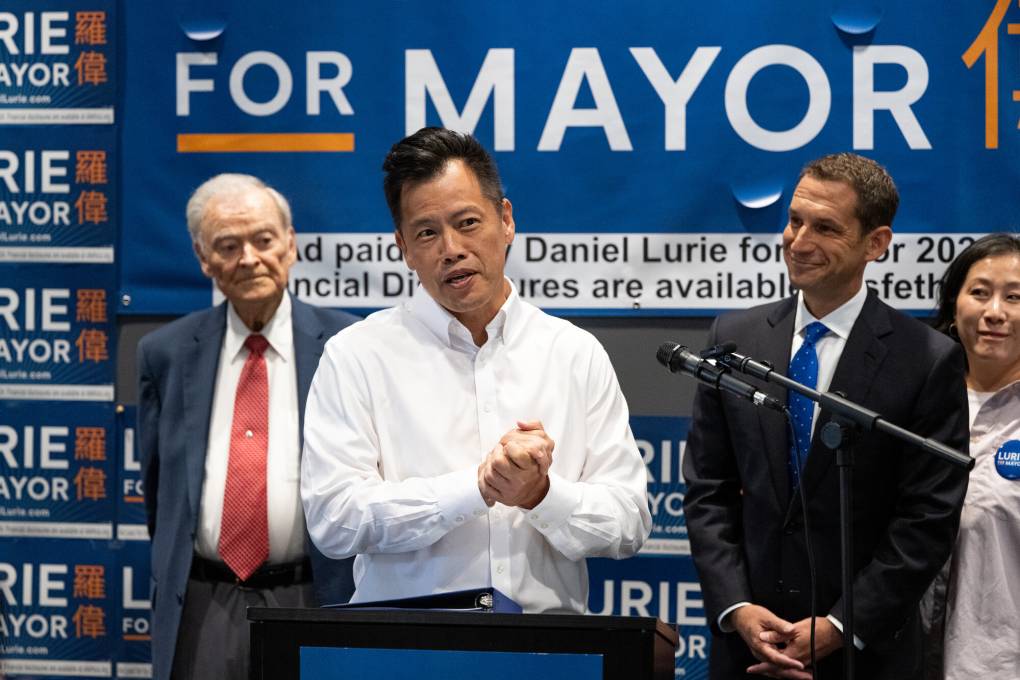
"content": "\u003cp>San Francisco Mayor-elect \u003ca href=\"https://www.kqed.org/news/tag/daniel-lurie\">Daniel Lurie\u003c/a> is assembling the top brass for his incoming administration, announcing Thursday that retired Police Department commander Paul Yep will oversee public safety efforts in the mayor’s office.\u003c/p>\n\u003cp>The SFPD veteran will direct policy dealing with the Police Department as well as the Fire Department and emergency management at a time when public safety is a top issue among many San Franciscans — and also as the city is reporting significant decreases in crime, including the lowest number of \u003ca href=\"https://www.youtube.com/watch?v=E1HoZztrys0\">homicides in nearly 60 years\u003c/a> in 2024.\u003c/p>\n\u003cp>“I’m deeply honored that Mayor-elect Lurie has entrusted this position with me, and I am super excited and optimistic about our city under his leadership,” Yep said in an interview. “I want to ensure that everyone that lives, works and visits our city is safe when they are in San Francisco.”\u003c/p>\n\u003cp>[ad fullwidth]\u003c/p>\n\u003cp>Yep is the second person named to fill \u003ca href=\"https://www.kqed.org/news/12017698/lurie-unveils-major-shakeup-san-francisco-mayors-office\">four new policy director roles\u003c/a> that Lurie has created for his administration; the mayor-elect is expected to soon name his director of infrastructure, climate and mobility, as well as director of public health and well-being. Lurie recently \u003ca href=\"https://www.kqed.org/news/12018617/lurie-taps-ex-twitter-exec-tackle-sfs-housing-shortage-economic-rebound\">named former Twitter executive Ned Segal\u003c/a> as his director of housing and economic development and \u003ca href=\"https://www.kqed.org/news/12017884/sf-mayor-elect-daniel-lurie-taps-former-giants-executive-lead-staff\">former Giants vice president Staci Slaughter as his chief of staff\u003c/a>.\u003c/p>\n\u003cp>The four new policy directors will oversee the city’s 56 agencies and, alongside Slaughter, will report directly to the mayor. Lurie’s first day in office is Jan. 8.\u003c/p>\n\u003cp>“I’m proud to announce Paul Yep as the first ever Chief of Public Safety. Paul has dedicated his career to keeping San Franciscans safe and there is no one better for this critical job,” Lurie said in a statement. “Together, we will support our law enforcement and ensure that every resident, worker, and visitor is safe in our city.”\u003c/p>\n\u003cp>[aside postID=news_12020128 hero='https://cdn.kqed.org/wp-content/uploads/sites/10/2025/01/20250102_AlemanyShooting_GC-9-1020x680.jpg']\u003c/p>\n\u003cp>Coupled with a devastating housing crisis and overdose epidemic, the COVID-19 pandemic ushered in \u003ca href=\"https://www.kqed.org/news/11906253/violent-crime-soared-during-the-pandemic-but-does-the-political-debate-reflect-the-data\">spikes in property theft and retail crim\u003c/a>e, putting many voters on edge over the street conditions they witnessed.\u003c/p>\n\u003cp>In the last year, however, theft and property crimes, as well as violent crime in San Francisco, have all dropped, according to SFPD data.\u003c/p>\n\u003cp>Despite those gradual declines, Mayor London Breed \u003ca href=\"https://www.kqed.org/news/12005687/sf-homicides-are-on-track-for-60-year-low-why-does-crime-still-dominate-the-discourse\">struggled to reassure residents that safety was improving\u003c/a>, and in November, voters opted for a fresh start with Lurie, an heir to the Levi Strauss fortune with no prior experience in government.\u003c/p>\n\u003cp>Yep worked closely with Lurie on the campaign trail and endorsed his run for mayor. In addition to having nearly 28 years with the Police Department, Yep also brings to City Hall his ties to the city’s Asian American communities. That will be critical as he helps Lurie navigate challenges that his predecessor also encountered, like rising incidents of \u003ca href=\"https://www.kqed.org/news/12003096/public-safety-takes-center-stage-as-sf-mayoral-hopefuls-court-chinese-american-voters\">anti-Asian hate\u003c/a>.\u003c/p>\n\u003cp>“On issues concerning public safety and so much more, Paul has been a trusted ally to the Chinese community for years,” said Anni Chung, president and CEO of Self-Help for the Elderly, a community-based organization for mostly immigrant and monolingual Asian seniors. “I’m excited to hear that he’ll continue to serve not just our community but every San Franciscan in this critical role.”\u003c/p>\n\u003cp>Yep said addressing \u003ca href=\"https://www.kqed.org/news/12014887/sf-report-offers-zurich-style-overdose-prevention-plan\">the city’s fentanyl crisis\u003c/a> will be one of his top priorities in the mayor’s office, but he did not provide specific details about what the administration’s response will look like. He said he wants to increase police staffing overall but also supports the city’s \u003ca href=\"https://www.kqed.org/science/1994288/you-mean-something-to-someone-overcoming-homelessness-and-addiction-this-san-francisco-woman-now-helps-others-heal\">street crisis response teams\u003c/a> that offer an alternative to police for calls relating to mental health and other nonviolent emergencies.\u003c/p>\n\u003cp>“We’re going to have to leverage our resources to address these issues in a really smart, smart way moving forward and immediately,” Yep said.\u003c/p>\n\u003cp>\u003c/p>\n",
"blocks": [],
"excerpt": "San Francisco Mayor-elect Daniel Lurie chose SFPD veteran Paul Yep to direct policy dealing with police, fire and emergency management — filling one of four new policy director roles.",
"status": "publish",
"parent": 0,
"modified": 1735855674,
"stats": {
"hasAudio": false,
"hasVideo": false,
"hasChartOrMap": false,
"iframeSrcs": [],
"hasGoogleForm": false,
"hasGallery": false,
"hasHearkenModule": false,
"hasPolis": false,
"paragraphCount": 16,
"wordCount": 678
},
"headData": {
"title": "Lurie Names SF’s 1st Chief of Public Safety, Tapping Former Police Commander | KQED",
"description": "San Francisco Mayor-elect Daniel Lurie chose SFPD veteran Paul Yep to direct policy dealing with police, fire and emergency management — filling one of four new policy director roles.",
"ogTitle": "",
"ogDescription": "",
"ogImgId": "",
"twTitle": "",
"twDescription": "",
"twImgId": "",
"schema": {
"@context": "https://schema.org",
"@type": "NewsArticle",
"headline": "Lurie Names SF’s 1st Chief of Public Safety, Tapping Former Police Commander",
"datePublished": "2025-01-02T13:41:19-08:00",
"dateModified": "2025-01-02T14:07:54-08:00",
"image": "https://cdn.kqed.org/wp-content/uploads/2020/02/KQED-OG-Image@1x.png",
"isAccessibleForFree": "True",
"publisher": {
"@type": "NewsMediaOrganization",
"@id": "https://www.kqed.org/#organization",
"name": "KQED",
"logo": "https://cdn.kqed.org/wp-content/uploads/2020/02/KQED-OG-Image@1x.png",
"url": "https://www.kqed.org",
"sameAs": [
"https://www.facebook.com/KQED",
"https://twitter.com/KQED",
"https://www.instagram.com/kqed/",
"https://www.tiktok.com/@kqedofficial",
"https://www.linkedin.com/company/kqed",
"https://www.youtube.com/channel/UCeC0IOo7i1P_61zVUWbJ4nw"
]
}
}
},
"sticky": false,
"nprStoryId": "kqed-12020118",
"excludeFromSiteSearch": "Include",
"articleAge": "0",
"path": "/news/12020118/lurie-names-sf-first-chief-public-safety-tapping-former-police-commander",
"audioTrackLength": null,
"parsedContent": [
{
"type": "contentString",
"content": "\u003cdiv class=\"post-body\">\u003cp>\u003cp>San Francisco Mayor-elect \u003ca href=\"https://www.kqed.org/news/tag/daniel-lurie\">Daniel Lurie\u003c/a> is assembling the top brass for his incoming administration, announcing Thursday that retired Police Department commander Paul Yep will oversee public safety efforts in the mayor’s office.\u003c/p>\n\u003cp>The SFPD veteran will direct policy dealing with the Police Department as well as the Fire Department and emergency management at a time when public safety is a top issue among many San Franciscans — and also as the city is reporting significant decreases in crime, including the lowest number of \u003ca href=\"https://www.youtube.com/watch?v=E1HoZztrys0\">homicides in nearly 60 years\u003c/a> in 2024.\u003c/p>\n\u003cp>“I’m deeply honored that Mayor-elect Lurie has entrusted this position with me, and I am super excited and optimistic about our city under his leadership,” Yep said in an interview. “I want to ensure that everyone that lives, works and visits our city is safe when they are in San Francisco.”\u003c/p>\n\u003cp>\u003c/p>\u003c/div>",
"attributes": {
"named": {},
"numeric": []
}
},
{
"type": "component",
"content": "",
"name": "ad",
"attributes": {
"named": {
"label": "fullwidth"
},
"numeric": [
"fullwidth"
]
}
},
{
"type": "contentString",
"content": "\u003cdiv class=\"post-body\">\u003cp>\u003c/p>\n\u003cp>Yep is the second person named to fill \u003ca href=\"https://www.kqed.org/news/12017698/lurie-unveils-major-shakeup-san-francisco-mayors-office\">four new policy director roles\u003c/a> that Lurie has created for his administration; the mayor-elect is expected to soon name his director of infrastructure, climate and mobility, as well as director of public health and well-being. Lurie recently \u003ca href=\"https://www.kqed.org/news/12018617/lurie-taps-ex-twitter-exec-tackle-sfs-housing-shortage-economic-rebound\">named former Twitter executive Ned Segal\u003c/a> as his director of housing and economic development and \u003ca href=\"https://www.kqed.org/news/12017884/sf-mayor-elect-daniel-lurie-taps-former-giants-executive-lead-staff\">former Giants vice president Staci Slaughter as his chief of staff\u003c/a>.\u003c/p>\n\u003cp>The four new policy directors will oversee the city’s 56 agencies and, alongside Slaughter, will report directly to the mayor. Lurie’s first day in office is Jan. 8.\u003c/p>\n\u003cp>“I’m proud to announce Paul Yep as the first ever Chief of Public Safety. Paul has dedicated his career to keeping San Franciscans safe and there is no one better for this critical job,” Lurie said in a statement. “Together, we will support our law enforcement and ensure that every resident, worker, and visitor is safe in our city.”\u003c/p>\n\u003cp>\u003c/p>\u003c/div>",
"attributes": {
"named": {},
"numeric": []
}
},
{
"type": "component",
"content": "",
"name": "aside",
"attributes": {
"named": {
"postid": "news_12020128",
"hero": "https://cdn.kqed.org/wp-content/uploads/sites/10/2025/01/20250102_AlemanyShooting_GC-9-1020x680.jpg",
"label": ""
},
"numeric": []
}
},
{
"type": "contentString",
"content": "\u003cdiv class=\"post-body\">\u003cp>\u003c/p>\n\u003cp>Coupled with a devastating housing crisis and overdose epidemic, the COVID-19 pandemic ushered in \u003ca href=\"https://www.kqed.org/news/11906253/violent-crime-soared-during-the-pandemic-but-does-the-political-debate-reflect-the-data\">spikes in property theft and retail crim\u003c/a>e, putting many voters on edge over the street conditions they witnessed.\u003c/p>\n\u003cp>In the last year, however, theft and property crimes, as well as violent crime in San Francisco, have all dropped, according to SFPD data.\u003c/p>\n\u003cp>Despite those gradual declines, Mayor London Breed \u003ca href=\"https://www.kqed.org/news/12005687/sf-homicides-are-on-track-for-60-year-low-why-does-crime-still-dominate-the-discourse\">struggled to reassure residents that safety was improving\u003c/a>, and in November, voters opted for a fresh start with Lurie, an heir to the Levi Strauss fortune with no prior experience in government.\u003c/p>\n\u003cp>Yep worked closely with Lurie on the campaign trail and endorsed his run for mayor. In addition to having nearly 28 years with the Police Department, Yep also brings to City Hall his ties to the city’s Asian American communities. That will be critical as he helps Lurie navigate challenges that his predecessor also encountered, like rising incidents of \u003ca href=\"https://www.kqed.org/news/12003096/public-safety-takes-center-stage-as-sf-mayoral-hopefuls-court-chinese-american-voters\">anti-Asian hate\u003c/a>.\u003c/p>\n\u003cp>“On issues concerning public safety and so much more, Paul has been a trusted ally to the Chinese community for years,” said Anni Chung, president and CEO of Self-Help for the Elderly, a community-based organization for mostly immigrant and monolingual Asian seniors. “I’m excited to hear that he’ll continue to serve not just our community but every San Franciscan in this critical role.”\u003c/p>\n\u003cp>Yep said addressing \u003ca href=\"https://www.kqed.org/news/12014887/sf-report-offers-zurich-style-overdose-prevention-plan\">the city’s fentanyl crisis\u003c/a> will be one of his top priorities in the mayor’s office, but he did not provide specific details about what the administration’s response will look like. He said he wants to increase police staffing overall but also supports the city’s \u003ca href=\"https://www.kqed.org/science/1994288/you-mean-something-to-someone-overcoming-homelessness-and-addiction-this-san-francisco-woman-now-helps-others-heal\">street crisis response teams\u003c/a> that offer an alternative to police for calls relating to mental health and other nonviolent emergencies.\u003c/p>\n\u003cp>“We’re going to have to leverage our resources to address these issues in a really smart, smart way moving forward and immediately,” Yep said.\u003c/p>\n\u003cp>\u003c/p>\n\u003c/div>\u003c/p>",
"attributes": {
"named": {},
"numeric": []
}
}
],
"link": "/news/12020118/lurie-names-sf-first-chief-public-safety-tapping-former-police-commander",
"authors": [
"11840"
],
"categories": [
"news_28250",
"news_8",
"news_13"
],
"tags": [
"news_17725",
"news_34055",
"news_34377",
"news_17968",
"news_22456",
"news_38",
"news_545"
],
"featImg": "news_12020121",
"label": "news"
},
"news_12020128": {
"type": "posts",
"id": "news_12020128",
"meta": {
"index": "posts_1716263798",
"site": "news",
"id": "12020128",
"score": null,
"sort": [
1735851305000
]
},
"guestAuthors": [],
"slug": "shooting-san-francisco-home-leaves-man-dead-woman-seriously-injured",
"title": "Shooting at San Francisco Home Leaves Man Dead, Woman Seriously Injured",
"publishDate": 1735851305,
"format": "standard",
"headTitle": "Shooting at San Francisco Home Leaves Man Dead, Woman Seriously Injured | KQED",
"labelTerm": {
"site": "news"
},
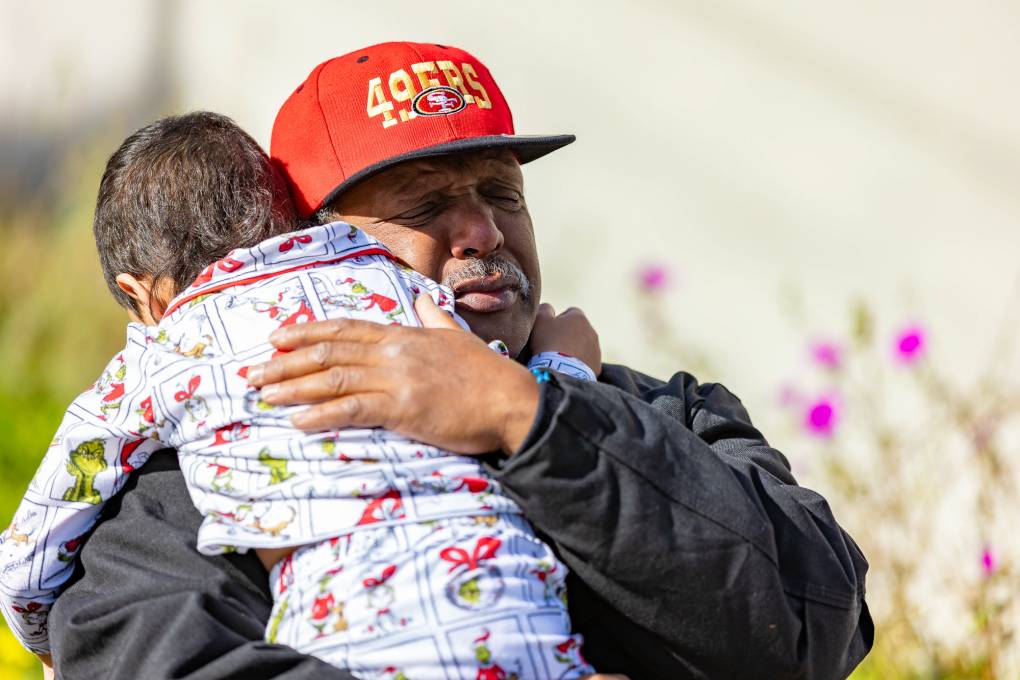
"content": "\u003cp>\u003cem>Updated at 3:57 p.m. Thursday\u003c/em>\u003c/p>\n\u003cp>A man was killed and a woman was seriously injured in a shooting Thursday morning at a home in \u003ca href=\"https://www.kqed.org/news/tag/san-francisco\">San Francisco\u003c/a>’s Bernal Heights neighborhood, police said.\u003c/p>\n\u003cp>A toddler was also hospitalized with a gunshot wound that was not expected to be life-threatening. Police believe it is connected to the fatal shooting, although details were not clear.\u003c/p>\n\u003cp>Around 8:12 a.m., officers responded to a report of a shooting at a home on the 1000 block of Tompkins Avenue, said Eve Laokwansathitaya, a spokesperson for the \u003ca href=\"https://www.kqed.org/news/tag/san-francisco-police-department\">San Francisco Police Department.\u003c/a>\u003c/p>\n\u003cp>[ad fullwidth]\u003c/p>\n\u003cp>“Just due to the nature of details that were being shared by the caller to the 911 dispatcher, law enforcement was sent into the scene before rescuers,” said San Francisco Fire Department Rescue Capt. Justin Schorr.\u003c/p>\n\u003cp>Police found a woman suffering from gunshot wounds and rendered first aid until paramedics took over and transported her to a hospital with life-threatening injuries, Laokwansathitaya said.\u003c/p>\n\u003cp>[aside postID=news_12020017 hero='https://cdn.kqed.org/wp-content/uploads/sites/10/2024/12/SFGovTV_1-1020x662.jpg']\u003c/p>\n\u003cp>Officers also found a man suffering from an apparent gunshot wound. He was declared dead at the scene.\u003c/p>\n\u003cp>While at the home on Tompkins Avenue, SFPD officers were notified that the Daly City Police Department had responded to a toddler suffering from a gunshot wound that was possibly related, Laokwansathitaya said. She added that the toddler was at a different location but did not say where that was.\u003c/p>\n\u003cp>Daly City officers rendered first aid and the toddler was also taken to a hospital, Laokwansathitaya said. The Daly City Police Department did not respond to a request for comment.\u003c/p>\n\u003cp>Police did not identify any of the people who were shot or specify the relationship between them.\u003c/p>\n\u003cp>Anthony Thomas, standing outside the scene, told reporters that his 24-year-old son had died in the shooting, and that it appeared he had shot the woman and their child before shooting himself, which the SFPD did not confirm. Thomas also said his son had been bullied.\u003c/p>\n\u003cp>Police believe the shooting was an isolated incident, and officers are still at the scene investigating. Anyone with information is asked to contact SFPD at 415-575-4444 or text a tip to TIP411 and begin the message with SFPD.\u003c/p>\n\u003cp>\u003cem>KQED’s Gina Castro contributed to this report.\u003c/em>\u003c/p>\n\u003cp>\u003c/p>\n",
"blocks": [],
"excerpt": "San Francisco police responded to a shooting in Bernal Heights around 8:12 a.m. A toddler was also hospitalized with a gunshot wound that was believed to be related.",
"status": "publish",
"parent": 0,
"modified": 1735862269,
"stats": {
"hasAudio": false,
"hasVideo": false,
"hasChartOrMap": false,
"iframeSrcs": [],
"hasGoogleForm": false,
"hasGallery": false,
"hasHearkenModule": false,
"hasPolis": false,
"paragraphCount": 16,
"wordCount": 398
},
"headData": {
"title": "Shooting at San Francisco Home Leaves Man Dead, Woman Seriously Injured | KQED",
"description": "San Francisco police responded to a shooting in Bernal Heights around 8:12 a.m. A toddler was also hospitalized with a gunshot wound that was believed to be related.",
"ogTitle": "",
"ogDescription": "",
"ogImgId": "",
"twTitle": "",
"twDescription": "",
"twImgId": "",
"schema": {
"@context": "https://schema.org",
"@type": "NewsArticle",
"headline": "Shooting at San Francisco Home Leaves Man Dead, Woman Seriously Injured",
"datePublished": "2025-01-02T12:55:05-08:00",
"dateModified": "2025-01-02T15:57:49-08:00",
"image": "https://cdn.kqed.org/wp-content/uploads/2020/02/KQED-OG-Image@1x.png",
"isAccessibleForFree": "True",
"publisher": {
"@type": "NewsMediaOrganization",
"@id": "https://www.kqed.org/#organization",
"name": "KQED",
"logo": "https://cdn.kqed.org/wp-content/uploads/2020/02/KQED-OG-Image@1x.png",
"url": "https://www.kqed.org",
"sameAs": [
"https://www.facebook.com/KQED",
"https://twitter.com/KQED",
"https://www.instagram.com/kqed/",
"https://www.tiktok.com/@kqedofficial",
"https://www.linkedin.com/company/kqed",
"https://www.youtube.com/channel/UCeC0IOo7i1P_61zVUWbJ4nw"
]
}
}
},
"sticky": false,
"nprStoryId": "kqed-12020128",
"excludeFromSiteSearch": "Include",
"articleAge": "0",
"path": "/news/12020128/shooting-san-francisco-home-leaves-man-dead-woman-seriously-injured",
"audioTrackLength": null,
"parsedContent": [
{
"type": "contentString",
"content": "\u003cdiv class=\"post-body\">\u003cp>\u003cp>\u003cem>Updated at 3:57 p.m. Thursday\u003c/em>\u003c/p>\n\u003cp>A man was killed and a woman was seriously injured in a shooting Thursday morning at a home in \u003ca href=\"https://www.kqed.org/news/tag/san-francisco\">San Francisco\u003c/a>’s Bernal Heights neighborhood, police said.\u003c/p>\n\u003cp>A toddler was also hospitalized with a gunshot wound that was not expected to be life-threatening. Police believe it is connected to the fatal shooting, although details were not clear.\u003c/p>\n\u003cp>Around 8:12 a.m., officers responded to a report of a shooting at a home on the 1000 block of Tompkins Avenue, said Eve Laokwansathitaya, a spokesperson for the \u003ca href=\"https://www.kqed.org/news/tag/san-francisco-police-department\">San Francisco Police Department.\u003c/a>\u003c/p>\n\u003cp>\u003c/p>\u003c/div>",
"attributes": {
"named": {},
"numeric": []
}
},
{
"type": "component",
"content": "",
"name": "ad",
"attributes": {
"named": {
"label": "fullwidth"
},
"numeric": [
"fullwidth"
]
}
},
{
"type": "contentString",
"content": "\u003cdiv class=\"post-body\">\u003cp>\u003c/p>\n\u003cp>“Just due to the nature of details that were being shared by the caller to the 911 dispatcher, law enforcement was sent into the scene before rescuers,” said San Francisco Fire Department Rescue Capt. Justin Schorr.\u003c/p>\n\u003cp>Police found a woman suffering from gunshot wounds and rendered first aid until paramedics took over and transported her to a hospital with life-threatening injuries, Laokwansathitaya said.\u003c/p>\n\u003cp>\u003c/p>\u003c/div>",
"attributes": {
"named": {},
"numeric": []
}
},
{
"type": "component",
"content": "",
"name": "aside",
"attributes": {
"named": {
"postid": "news_12020017",
"hero": "https://cdn.kqed.org/wp-content/uploads/sites/10/2024/12/SFGovTV_1-1020x662.jpg",
"label": ""
},
"numeric": []
}
},
{
"type": "contentString",
"content": "\u003cdiv class=\"post-body\">\u003cp>\u003c/p>\n\u003cp>Officers also found a man suffering from an apparent gunshot wound. He was declared dead at the scene.\u003c/p>\n\u003cp>While at the home on Tompkins Avenue, SFPD officers were notified that the Daly City Police Department had responded to a toddler suffering from a gunshot wound that was possibly related, Laokwansathitaya said. She added that the toddler was at a different location but did not say where that was.\u003c/p>\n\u003cp>Daly City officers rendered first aid and the toddler was also taken to a hospital, Laokwansathitaya said. The Daly City Police Department did not respond to a request for comment.\u003c/p>\n\u003cp>Police did not identify any of the people who were shot or specify the relationship between them.\u003c/p>\n\u003cp>Anthony Thomas, standing outside the scene, told reporters that his 24-year-old son had died in the shooting, and that it appeared he had shot the woman and their child before shooting himself, which the SFPD did not confirm. Thomas also said his son had been bullied.\u003c/p>\n\u003cp>Police believe the shooting was an isolated incident, and officers are still at the scene investigating. Anyone with information is asked to contact SFPD at 415-575-4444 or text a tip to TIP411 and begin the message with SFPD.\u003c/p>\n\u003cp>\u003cem>KQED’s Gina Castro contributed to this report.\u003c/em>\u003c/p>\n\u003cp>\u003c/p>\n\u003c/div>\u003c/p>",
"attributes": {
"named": {},
"numeric": []
}
}
],
"link": "/news/12020128/shooting-san-francisco-home-leaves-man-dead-woman-seriously-injured",
"authors": [
"11761",
"11909"
],
"categories": [
"news_34167",
"news_28250",
"news_8"
],
"tags": [
"news_27626",
"news_4245",
"news_18029"
],
"featImg": "news_12020168",
"label": "news"
},
"news_12019661": {
"type": "posts",
"id": "news_12019661",
"meta": {
"index": "posts_1716263798",
"site": "news",
"id": "12019661",
"score": null,
"sort": [
1735313430000
]
},
"guestAuthors": [],
"slug": "free-guided-hikes-for-new-years-day-in-california-state-parks",
"title": "Free Guided Hikes for New Year's Day in California State Parks",
"publishDate": 1735313430,
"format": "standard",
"headTitle": "Free Guided Hikes for New Year’s Day in California State Parks | KQED",
"labelTerm": {
"site": "news"
},
"content": "\u003cp>On New Year’s Day — Wednesday, Jan. 1 — California State Parks will be offering First Day Hikes: a nationwide initiative that invites the public to experience the first day of 2025 out in nature with guided hikes, for free.\u003c/p>\n\u003cp>During these guided hikes, you’ll be able to enjoy the outdoors and learn about local geology, wildlife and cultural treasures around California’s state parks — which could spark some inspiration for exploring our state parks all year round.\u003c/p>\n\u003cp>You can find a free guided hike with \u003ca href=\"https://www.parks.ca.gov/?page_id=30737\">California State Parks’ interactive map\u003c/a>, which allows you to search for the best hikes near you by park, county or region.\u003c/p>\n\u003cp>When you’ve found a guided New Year’s Day hike that interests you, be sure to click through for important information including:\u003c/p>\n\u003cul>\n\u003cli>How long and strenuous the hike is, and which ages it’s suitable for.\u003c/li>\n\u003cli>Whether pre-registration is necessary.\u003c/li>\n\u003cli>Any parking fees at the facility.\u003c/li>\n\u003cli>Whether pets are allowed (before you leash up your pup).\u003c/li>\n\u003cli>Where and when you can meet to start the hike.\u003c/li>\n\u003cli>Any recommended clothing, footwear and food.\u003c/li>\n\u003c/ul>\n\u003cp>Don’t forget to dress for cool weather, wear comfortable supportive shoes and bring snacks and water — plus plenty of enthusiasm.\u003c/p>\n\u003cp>[ad fullwidth]\u003c/p>\n\u003ch2>8 ideas for guided hikes in California State Parks for New Year’s Day\u003c/h2>\n\u003cp>There’s a large amount of free guided hikes to choose from, but here are eight picks around the wider Bay Area that you can join on New Year’s Day:\u003c/p>\n\u003cp>\u003ca href=\"http://www.parks.ca.gov/?page_id=540\">Big Basin State Park:\u003c/a> Join a 5.5-mile guided hike on Jan. 1 at 11 a.m., or a shorter 0.7-mile one at 8 a.m. Parking is $10. You’ll learn about the devastating CZU fire that hit areas of the park, see the park’s recovery and regrowth up-close and discuss the role that fire plays in the area’s ecology.\u003c/p>\n\u003cp>\u003ca href=\"http://www.parks.ca.gov/?page_id=517\">Mount Diablo State Park:\u003c/a> Join a 4-mile guided hike on Jan. 1 at 9 a.m. to search for signs of winter: mistletoe, beard lichen, California holly and more. You can also join a shorter 1.5-mile hike at noon, to learn about how fire has helped the park.\u003c/p>\n\u003cp>\u003ca href=\"http://www.parks.ca.gov/?page_id=546\">Henry Cowell Redwoods State Park:\u003c/a> Join a 1-mile guided hike on Jan. 1 at noon. Participants can meet in front of the visitor center, a one-minute walk from the main parking lot. Walk under giant trees to learn about coastal redwoods.\u003c/p>\n\u003cp>\u003ca href=\"http://www.parks.ca.gov/?page_id=666\">The Forest of Nisene Marks State Park:\u003c/a> Join a 4-mile guided hike on Jan. 1 at 9 a.m. During the hike, you’ll see the site where the town of Loma Prieta was located and a hidden spot deep in the redwood forest where marine fossils can be found.\u003c/p>\n\u003cp>\u003ca href=\"http://www.parks.ca.gov/?page_id=538\">Castle Rock State Park:\u003c/a> There will be two guided hikes available on Jan. 1 at 10 a.m. One is 5.2 miles long with views of the San Lorenzo Valley and Pacific, and the other is a shorter 2.5-mile one where you’ll learn about the rich native history of the park’s land. Parking is $10.\u003c/p>\n\u003cp>\u003ca href=\"https://www.parks.ca.gov/?page_id=30737\">See all of California State Parks’ free guided hikes on New Year’s Day.\u003c/a>\u003c/p>\n\u003cp>\u003c/p>\n",
"blocks": [],
"excerpt": "Enjoy the outdoors and learn about local geology, wildlife and cultural treasures around California’s state parks to start the year off right. ",
"status": "publish",
"parent": 0,
"modified": 1735263129,
"stats": {
"hasAudio": false,
"hasVideo": false,
"hasChartOrMap": false,
"iframeSrcs": [],
"hasGoogleForm": false,
"hasGallery": false,
"hasHearkenModule": false,
"hasPolis": false,
"paragraphCount": 14,
"wordCount": 557
},
"headData": {
"title": "Free Guided Hikes for New Year's Day in California State Parks | KQED",
"description": "Enjoy the outdoors and learn about local geology, wildlife and cultural treasures around California’s state parks to start the year off right. ",
"ogTitle": "",
"ogDescription": "",
"ogImgId": "",
"twTitle": "",
"twDescription": "",
"twImgId": "",
"schema": {
"@context": "https://schema.org",
"@type": "NewsArticle",
"headline": "Free Guided Hikes for New Year's Day in California State Parks",
"datePublished": "2024-12-27T07:30:30-08:00",
"dateModified": "2024-12-26T17:32:09-08:00",
"image": "https://cdn.kqed.org/wp-content/uploads/2020/02/KQED-OG-Image@1x.png",
"isAccessibleForFree": "True",
"publisher": {
"@type": "NewsMediaOrganization",
"@id": "https://www.kqed.org/#organization",
"name": "KQED",
"logo": "https://cdn.kqed.org/wp-content/uploads/2020/02/KQED-OG-Image@1x.png",
"url": "https://www.kqed.org",
"sameAs": [
"https://www.facebook.com/KQED",
"https://twitter.com/KQED",
"https://www.instagram.com/kqed/",
"https://www.tiktok.com/@kqedofficial",
"https://www.linkedin.com/company/kqed",
"https://www.youtube.com/channel/UCeC0IOo7i1P_61zVUWbJ4nw"
]
}
}
},
"sticky": false,
"excludeFromSiteSearch": "Include",
"articleAge": "0",
"path": "/news/12019661/free-guided-hikes-for-new-years-day-in-california-state-parks",
"audioTrackLength": null,
"parsedContent": [
{
"type": "contentString",
"content": "\u003cdiv class=\"post-body\">\u003cp>\u003cp>On New Year’s Day — Wednesday, Jan. 1 — California State Parks will be offering First Day Hikes: a nationwide initiative that invites the public to experience the first day of 2025 out in nature with guided hikes, for free.\u003c/p>\n\u003cp>During these guided hikes, you’ll be able to enjoy the outdoors and learn about local geology, wildlife and cultural treasures around California’s state parks — which could spark some inspiration for exploring our state parks all year round.\u003c/p>\n\u003cp>You can find a free guided hike with \u003ca href=\"https://www.parks.ca.gov/?page_id=30737\">California State Parks’ interactive map\u003c/a>, which allows you to search for the best hikes near you by park, county or region.\u003c/p>\n\u003cp>When you’ve found a guided New Year’s Day hike that interests you, be sure to click through for important information including:\u003c/p>\n\u003cul>\n\u003cli>How long and strenuous the hike is, and which ages it’s suitable for.\u003c/li>\n\u003cli>Whether pre-registration is necessary.\u003c/li>\n\u003cli>Any parking fees at the facility.\u003c/li>\n\u003cli>Whether pets are allowed (before you leash up your pup).\u003c/li>\n\u003cli>Where and when you can meet to start the hike.\u003c/li>\n\u003cli>Any recommended clothing, footwear and food.\u003c/li>\n\u003c/ul>\n\u003cp>Don’t forget to dress for cool weather, wear comfortable supportive shoes and bring snacks and water — plus plenty of enthusiasm.\u003c/p>\n\u003cp>\u003c/p>\u003c/div>",
"attributes": {
"named": {},
"numeric": []
}
},
{
"type": "component",
"content": "",
"name": "ad",
"attributes": {
"named": {
"label": "fullwidth"
},
"numeric": [
"fullwidth"
]
}
},
{
"type": "contentString",
"content": "\u003cdiv class=\"post-body\">\u003cp>\u003c/p>\n\u003ch2>8 ideas for guided hikes in California State Parks for New Year’s Day\u003c/h2>\n\u003cp>There’s a large amount of free guided hikes to choose from, but here are eight picks around the wider Bay Area that you can join on New Year’s Day:\u003c/p>\n\u003cp>\u003ca href=\"http://www.parks.ca.gov/?page_id=540\">Big Basin State Park:\u003c/a> Join a 5.5-mile guided hike on Jan. 1 at 11 a.m., or a shorter 0.7-mile one at 8 a.m. Parking is $10. You’ll learn about the devastating CZU fire that hit areas of the park, see the park’s recovery and regrowth up-close and discuss the role that fire plays in the area’s ecology.\u003c/p>\n\u003cp>\u003ca href=\"http://www.parks.ca.gov/?page_id=517\">Mount Diablo State Park:\u003c/a> Join a 4-mile guided hike on Jan. 1 at 9 a.m. to search for signs of winter: mistletoe, beard lichen, California holly and more. You can also join a shorter 1.5-mile hike at noon, to learn about how fire has helped the park.\u003c/p>\n\u003cp>\u003ca href=\"http://www.parks.ca.gov/?page_id=546\">Henry Cowell Redwoods State Park:\u003c/a> Join a 1-mile guided hike on Jan. 1 at noon. Participants can meet in front of the visitor center, a one-minute walk from the main parking lot. Walk under giant trees to learn about coastal redwoods.\u003c/p>\n\u003cp>\u003ca href=\"http://www.parks.ca.gov/?page_id=666\">The Forest of Nisene Marks State Park:\u003c/a> Join a 4-mile guided hike on Jan. 1 at 9 a.m. During the hike, you’ll see the site where the town of Loma Prieta was located and a hidden spot deep in the redwood forest where marine fossils can be found.\u003c/p>\n\u003cp>\u003ca href=\"http://www.parks.ca.gov/?page_id=538\">Castle Rock State Park:\u003c/a> There will be two guided hikes available on Jan. 1 at 10 a.m. One is 5.2 miles long with views of the San Lorenzo Valley and Pacific, and the other is a shorter 2.5-mile one where you’ll learn about the rich native history of the park’s land. Parking is $10.\u003c/p>\n\u003cp>\u003ca href=\"https://www.parks.ca.gov/?page_id=30737\">See all of California State Parks’ free guided hikes on New Year’s Day.\u003c/a>\u003c/p>\n\u003cp>\u003c/p>\n\u003c/div>\u003c/p>",
"attributes": {
"named": {},
"numeric": []
}
}
],
"link": "/news/12019661/free-guided-hikes-for-new-years-day-in-california-state-parks",
"authors": [
"11631"
],
"categories": [
"news_31795",
"news_18540",
"news_19906",
"news_28250",
"news_8"
],
"tags": [
"news_27626",
"news_17925",
"news_21950",
"news_3187"
],
"featImg": "news_12019722",
"label": "news"
},
"news_12019738": {
"type": "posts",
"id": "news_12019738",
"meta": {
"index": "posts_1716263798",
"site": "news",
"id": "12019738",
"score": null,
"sort": [
1735077306000
]
},
"guestAuthors": [],
"slug": "the-holiday-rush-in-photos-every-day-is-christmas-at-this-oakland-postal-service-center",
"title": "The Holiday Rush in Photos: ‘Every Day Is Christmas’ at This Oakland Postal Service Center",
"publishDate": 1735077306,
"format": "image",
"headTitle": "The Holiday Rush in Photos: ‘Every Day Is Christmas’ at This Oakland Postal Service Center | KQED",
"labelTerm": {
"site": "news"
},
"content": "\u003cp>At the Oakland United States Postal Service Processing and Distribution Center workers have been celebrating Christmas every day since December 1st. Different units within the processing plant hold potlucks during their breaks, so they have a chance to celebrate and share food with each other. The facility feels like it’s Christmas time throughout the year, because of the number of mail that whirs through the system.\u003c/p>\n\u003cfigure id=\"attachment_12019736\" class=\"wp-caption aligncenter\" style=\"max-width: 2560px\">\u003ca href=\"https://cdn.kqed.org/wp-content/uploads/sites/10/2024/12/20241223-USPSHoliday-JY-338_duo-scaled.jpg\">\u003cimg loading=\"lazy\" decoding=\"async\" class=\"size-full wp-image-12019736\" src=\"https://cdn.kqed.org/wp-content/uploads/sites/10/2024/12/20241223-USPSHoliday-JY-338_duo-scaled.jpg\" alt=\"\" width=\"2560\" height=\"844\" srcset=\"https://cdn.kqed.org/wp-content/uploads/sites/10/2024/12/20241223-USPSHoliday-JY-338_duo-scaled.jpg 2560w, https://cdn.kqed.org/wp-content/uploads/sites/10/2024/12/20241223-USPSHoliday-JY-338_duo-800x264.jpg 800w, https://cdn.kqed.org/wp-content/uploads/sites/10/2024/12/20241223-USPSHoliday-JY-338_duo-1020x336.jpg 1020w, https://cdn.kqed.org/wp-content/uploads/sites/10/2024/12/20241223-USPSHoliday-JY-338_duo-160x53.jpg 160w, https://cdn.kqed.org/wp-content/uploads/sites/10/2024/12/20241223-USPSHoliday-JY-338_duo-1536x506.jpg 1536w, https://cdn.kqed.org/wp-content/uploads/sites/10/2024/12/20241223-USPSHoliday-JY-338_duo-2048x675.jpg 2048w, https://cdn.kqed.org/wp-content/uploads/sites/10/2024/12/20241223-USPSHoliday-JY-338_duo-1920x633.jpg 1920w\" sizes=\"auto, (max-width: 2560px) 100vw, 2560px\">\u003c/a>\u003cfigcaption class=\"wp-caption-text\">Left: Rejected letters and cards are stamped with a ‘Happy Holidays’ after processing at the USPS Processing and Distribution Center in Oakland. Mail can be rejected for a variety of reasons, but most commonly due to incorrect address or insufficient postage. Right: USPS clerk Muoi Tang processes letters and holiday cards during the holiday rush. \u003ccite>(Juliana Yamada/KQED)\u003c/cite>\u003c/figcaption>\u003c/figure>\n\u003cp>“Christmas for us, is basically every day,” said senior manager Nancy Canales-Nelson. The sheer volume of mail coming in and being processed is what makes each day feel like Christmas time.\u003c/p>\n\u003cp>Unlike a typical post office, this facility runs 24/7. Over a thousand employees process packages and letters every day of the year.\u003c/p>\n\u003cfigure id=\"attachment_12019743\" class=\"wp-caption aligncenter\" style=\"max-width: 2000px\">\u003ca href=\"https://cdn.kqed.org/wp-content/uploads/sites/10/2024/12/20241223-USPSHoliday-JY-163.jpg\">\u003cimg loading=\"lazy\" decoding=\"async\" class=\"size-full wp-image-12019743\" src=\"https://cdn.kqed.org/wp-content/uploads/sites/10/2024/12/20241223-USPSHoliday-JY-163.jpg\" alt=\"\" width=\"2000\" height=\"1333\" srcset=\"https://cdn.kqed.org/wp-content/uploads/sites/10/2024/12/20241223-USPSHoliday-JY-163.jpg 2000w, https://cdn.kqed.org/wp-content/uploads/sites/10/2024/12/20241223-USPSHoliday-JY-163-800x533.jpg 800w, https://cdn.kqed.org/wp-content/uploads/sites/10/2024/12/20241223-USPSHoliday-JY-163-1020x680.jpg 1020w, https://cdn.kqed.org/wp-content/uploads/sites/10/2024/12/20241223-USPSHoliday-JY-163-160x107.jpg 160w, https://cdn.kqed.org/wp-content/uploads/sites/10/2024/12/20241223-USPSHoliday-JY-163-1536x1024.jpg 1536w, https://cdn.kqed.org/wp-content/uploads/sites/10/2024/12/20241223-USPSHoliday-JY-163-1920x1280.jpg 1920w\" sizes=\"auto, (max-width: 2000px) 100vw, 2000px\">\u003c/a>\u003cfigcaption class=\"wp-caption-text\">USPS workers process packages and letters during the holiday rush. \u003ccite>(Juliana Yamada/KQED)\u003c/cite>\u003c/figcaption>\u003c/figure>\n\u003cfigure id=\"attachment_12019744\" class=\"wp-caption aligncenter\" style=\"max-width: 2000px\">\u003ca href=\"https://cdn.kqed.org/wp-content/uploads/sites/10/2024/12/20241223-USPSHoliday-JY-183_duoB.jpg\">\u003cimg loading=\"lazy\" decoding=\"async\" class=\"size-full wp-image-12019744\" src=\"https://cdn.kqed.org/wp-content/uploads/sites/10/2024/12/20241223-USPSHoliday-JY-183_duoB.jpg\" alt=\"\" width=\"2000\" height=\"660\" srcset=\"https://cdn.kqed.org/wp-content/uploads/sites/10/2024/12/20241223-USPSHoliday-JY-183_duoB.jpg 2000w, https://cdn.kqed.org/wp-content/uploads/sites/10/2024/12/20241223-USPSHoliday-JY-183_duoB-800x264.jpg 800w, https://cdn.kqed.org/wp-content/uploads/sites/10/2024/12/20241223-USPSHoliday-JY-183_duoB-1020x337.jpg 1020w, https://cdn.kqed.org/wp-content/uploads/sites/10/2024/12/20241223-USPSHoliday-JY-183_duoB-160x53.jpg 160w, https://cdn.kqed.org/wp-content/uploads/sites/10/2024/12/20241223-USPSHoliday-JY-183_duoB-1536x507.jpg 1536w, https://cdn.kqed.org/wp-content/uploads/sites/10/2024/12/20241223-USPSHoliday-JY-183_duoB-1920x634.jpg 1920w\" sizes=\"auto, (max-width: 2000px) 100vw, 2000px\">\u003c/a>\u003cfigcaption class=\"wp-caption-text\">Left: USPS clerk Maria Maldonado processes packages at her station during the holiday rush at the Processing and Distribution Center in Oakland, Calif., on Monday, December 23, 2024. Right: Packages and cards stream through the facility 365 days a year. \u003ccite>(Juliana Yamada/KQED)\u003c/cite>\u003c/figcaption>\u003c/figure>\n\u003cp>In December, the facility typically processes hundreds of thousands of parcels every day with three loud, industrial size processing machines on each floor. Bay Area Communications Specialist Kristina Uppal attributes the craze to the continuous rise of online shopping and early Black Friday sales. Three shifts per day of USPS workers keep things running, and ensure presents arrive in time for Christmas.\u003c/p>\n\u003cp>“We connect every piece to every door,” Uppal said. “We definitely give Santa a little extra lift.”\u003c/p>\n\u003cfigure id=\"attachment_12019731\" class=\"wp-caption aligncenter\" style=\"max-width: 2000px\">\u003ca href=\"https://cdn.kqed.org/wp-content/uploads/sites/10/2024/12/20241223-USPSHoliday-JY-426.jpg\">\u003cimg loading=\"lazy\" decoding=\"async\" class=\"size-full wp-image-12019731\" src=\"https://cdn.kqed.org/wp-content/uploads/sites/10/2024/12/20241223-USPSHoliday-JY-426.jpg\" alt=\"\" width=\"2000\" height=\"1332\" srcset=\"https://cdn.kqed.org/wp-content/uploads/sites/10/2024/12/20241223-USPSHoliday-JY-426.jpg 2000w, https://cdn.kqed.org/wp-content/uploads/sites/10/2024/12/20241223-USPSHoliday-JY-426-800x533.jpg 800w, https://cdn.kqed.org/wp-content/uploads/sites/10/2024/12/20241223-USPSHoliday-JY-426-1020x679.jpg 1020w, https://cdn.kqed.org/wp-content/uploads/sites/10/2024/12/20241223-USPSHoliday-JY-426-160x107.jpg 160w, https://cdn.kqed.org/wp-content/uploads/sites/10/2024/12/20241223-USPSHoliday-JY-426-1536x1023.jpg 1536w, https://cdn.kqed.org/wp-content/uploads/sites/10/2024/12/20241223-USPSHoliday-JY-426-1920x1279.jpg 1920w\" sizes=\"auto, (max-width: 2000px) 100vw, 2000px\">\u003c/a>\u003cfigcaption class=\"wp-caption-text\">USPS supervisor Rhonda Blackwood, center, serves food to her colleagues at a holiday potluck during their break. Each unit inside the processing facility has been having potlucks this holiday season during their breaks this month. \u003ccite>(Juliana Yamada/KQED)\u003c/cite>\u003c/figcaption>\u003c/figure>\n\u003cfigure id=\"attachment_12019732\" class=\"wp-caption aligncenter\" style=\"max-width: 2000px\">\u003ca href=\"https://cdn.kqed.org/wp-content/uploads/sites/10/2024/12/20241223-USPSHoliday-JY-587_duo.jpg\">\u003cimg loading=\"lazy\" decoding=\"async\" class=\"size-full wp-image-12019732\" src=\"https://cdn.kqed.org/wp-content/uploads/sites/10/2024/12/20241223-USPSHoliday-JY-587_duo.jpg\" alt=\"\" width=\"2000\" height=\"660\" srcset=\"https://cdn.kqed.org/wp-content/uploads/sites/10/2024/12/20241223-USPSHoliday-JY-587_duo.jpg 2000w, https://cdn.kqed.org/wp-content/uploads/sites/10/2024/12/20241223-USPSHoliday-JY-587_duo-800x264.jpg 800w, https://cdn.kqed.org/wp-content/uploads/sites/10/2024/12/20241223-USPSHoliday-JY-587_duo-1020x337.jpg 1020w, https://cdn.kqed.org/wp-content/uploads/sites/10/2024/12/20241223-USPSHoliday-JY-587_duo-160x53.jpg 160w, https://cdn.kqed.org/wp-content/uploads/sites/10/2024/12/20241223-USPSHoliday-JY-587_duo-1536x507.jpg 1536w, https://cdn.kqed.org/wp-content/uploads/sites/10/2024/12/20241223-USPSHoliday-JY-587_duo-1920x634.jpg 1920w\" sizes=\"auto, (max-width: 2000px) 100vw, 2000px\">\u003c/a>\u003cfigcaption class=\"wp-caption-text\">USPS workers process packages and letters during the holiday rush at the Processing and Distribution Center. \u003ccite>(Juliana Yamada/KQED)\u003c/cite>\u003c/figcaption>\u003c/figure>\n\u003cfigure id=\"attachment_12019730\" class=\"wp-caption alignnone\" style=\"max-width: 2000px\">\u003ca href=\"https://cdn.kqed.org/wp-content/uploads/sites/10/2024/12/20241223-USPSHoliday-JY-605.jpg\">\u003cimg loading=\"lazy\" decoding=\"async\" class=\"size-full wp-image-12019730\" src=\"https://cdn.kqed.org/wp-content/uploads/sites/10/2024/12/20241223-USPSHoliday-JY-605.jpg\" alt=\"\" width=\"2000\" height=\"1332\" srcset=\"https://cdn.kqed.org/wp-content/uploads/sites/10/2024/12/20241223-USPSHoliday-JY-605.jpg 2000w, https://cdn.kqed.org/wp-content/uploads/sites/10/2024/12/20241223-USPSHoliday-JY-605-800x533.jpg 800w, https://cdn.kqed.org/wp-content/uploads/sites/10/2024/12/20241223-USPSHoliday-JY-605-1020x679.jpg 1020w, https://cdn.kqed.org/wp-content/uploads/sites/10/2024/12/20241223-USPSHoliday-JY-605-160x107.jpg 160w, https://cdn.kqed.org/wp-content/uploads/sites/10/2024/12/20241223-USPSHoliday-JY-605-1536x1023.jpg 1536w, https://cdn.kqed.org/wp-content/uploads/sites/10/2024/12/20241223-USPSHoliday-JY-605-1920x1279.jpg 1920w\" sizes=\"auto, (max-width: 2000px) 100vw, 2000px\">\u003c/a>\u003cfigcaption class=\"wp-caption-text\">A USPS worker walks out of the Processing and Distribution Center in Oakland, on Monday, Dec. 23, 2024. \u003ccite>(Juliana Yamada/KQED)\u003c/cite>\u003c/figcaption>\u003c/figure>\n\u003cp>[ad fullwidth]\u003c/p>\u003cp>\u003c/p>\n",
"blocks": [],
"excerpt": "‘We connect every piece to every door,’ Kristina Uppal said. ‘We definitely give Santa a little extra lift.’",
"status": "publish",
"parent": 0,
"modified": 1735116943,
"stats": {
"hasAudio": false,
"hasVideo": false,
"hasChartOrMap": false,
"iframeSrcs": [],
"hasGoogleForm": false,
"hasGallery": false,
"hasHearkenModule": false,
"hasPolis": false,
"paragraphCount": 7,
"wordCount": 404
},
"headData": {
"title": "The Holiday Rush in Photos: ‘Every Day Is Christmas’ at This Oakland Postal Service Center | KQED",
"description": "‘We connect every piece to every door,’ Kristina Uppal said. ‘We definitely give Santa a little extra lift.’",
"ogTitle": "",
"ogDescription": "",
"ogImgId": "",
"twTitle": "",
"twDescription": "",
"twImgId": "",
"schema": {
"@context": "https://schema.org",
"@type": "NewsArticle",
"headline": "The Holiday Rush in Photos: ‘Every Day Is Christmas’ at This Oakland Postal Service Center",
"datePublished": "2024-12-24T13:55:06-08:00",
"dateModified": "2024-12-25T00:55:43-08:00",
"image": "https://cdn.kqed.org/wp-content/uploads/2020/02/KQED-OG-Image@1x.png",
"isAccessibleForFree": "True",
"publisher": {
"@type": "NewsMediaOrganization",
"@id": "https://www.kqed.org/#organization",
"name": "KQED",
"logo": "https://cdn.kqed.org/wp-content/uploads/2020/02/KQED-OG-Image@1x.png",
"url": "https://www.kqed.org",
"sameAs": [
"https://www.facebook.com/KQED",
"https://twitter.com/KQED",
"https://www.instagram.com/kqed/",
"https://www.tiktok.com/@kqedofficial",
"https://www.linkedin.com/company/kqed",
"https://www.youtube.com/channel/UCeC0IOo7i1P_61zVUWbJ4nw"
]
}
}
},
"sticky": false,
"nprStoryId": "kqed-12019738",
"excludeFromSiteSearch": "Include",
"articleAge": "0",
"path": "/news/12019738/the-holiday-rush-in-photos-every-day-is-christmas-at-this-oakland-postal-service-center",
"audioTrackLength": null,
"parsedContent": [
{
"type": "contentString",
"content": "\u003cdiv class=\"post-body\">\u003cp>\u003cp>At the Oakland United States Postal Service Processing and Distribution Center workers have been celebrating Christmas every day since December 1st. Different units within the processing plant hold potlucks during their breaks, so they have a chance to celebrate and share food with each other. The facility feels like it’s Christmas time throughout the year, because of the number of mail that whirs through the system.\u003c/p>\n\u003cfigure id=\"attachment_12019736\" class=\"wp-caption aligncenter\" style=\"max-width: 2560px\">\u003ca href=\"https://cdn.kqed.org/wp-content/uploads/sites/10/2024/12/20241223-USPSHoliday-JY-338_duo-scaled.jpg\">\u003cimg loading=\"lazy\" decoding=\"async\" class=\"size-full wp-image-12019736\" src=\"https://cdn.kqed.org/wp-content/uploads/sites/10/2024/12/20241223-USPSHoliday-JY-338_duo-scaled.jpg\" alt=\"\" width=\"2560\" height=\"844\" srcset=\"https://cdn.kqed.org/wp-content/uploads/sites/10/2024/12/20241223-USPSHoliday-JY-338_duo-scaled.jpg 2560w, https://cdn.kqed.org/wp-content/uploads/sites/10/2024/12/20241223-USPSHoliday-JY-338_duo-800x264.jpg 800w, https://cdn.kqed.org/wp-content/uploads/sites/10/2024/12/20241223-USPSHoliday-JY-338_duo-1020x336.jpg 1020w, https://cdn.kqed.org/wp-content/uploads/sites/10/2024/12/20241223-USPSHoliday-JY-338_duo-160x53.jpg 160w, https://cdn.kqed.org/wp-content/uploads/sites/10/2024/12/20241223-USPSHoliday-JY-338_duo-1536x506.jpg 1536w, https://cdn.kqed.org/wp-content/uploads/sites/10/2024/12/20241223-USPSHoliday-JY-338_duo-2048x675.jpg 2048w, https://cdn.kqed.org/wp-content/uploads/sites/10/2024/12/20241223-USPSHoliday-JY-338_duo-1920x633.jpg 1920w\" sizes=\"auto, (max-width: 2560px) 100vw, 2560px\">\u003c/a>\u003cfigcaption class=\"wp-caption-text\">Left: Rejected letters and cards are stamped with a ‘Happy Holidays’ after processing at the USPS Processing and Distribution Center in Oakland. Mail can be rejected for a variety of reasons, but most commonly due to incorrect address or insufficient postage. Right: USPS clerk Muoi Tang processes letters and holiday cards during the holiday rush. \u003ccite>(Juliana Yamada/KQED)\u003c/cite>\u003c/figcaption>\u003c/figure>\n\u003cp>“Christmas for us, is basically every day,” said senior manager Nancy Canales-Nelson. The sheer volume of mail coming in and being processed is what makes each day feel like Christmas time.\u003c/p>\n\u003cp>Unlike a typical post office, this facility runs 24/7. Over a thousand employees process packages and letters every day of the year.\u003c/p>\n\u003cfigure id=\"attachment_12019743\" class=\"wp-caption aligncenter\" style=\"max-width: 2000px\">\u003ca href=\"https://cdn.kqed.org/wp-content/uploads/sites/10/2024/12/20241223-USPSHoliday-JY-163.jpg\">\u003cimg loading=\"lazy\" decoding=\"async\" class=\"size-full wp-image-12019743\" src=\"https://cdn.kqed.org/wp-content/uploads/sites/10/2024/12/20241223-USPSHoliday-JY-163.jpg\" alt=\"\" width=\"2000\" height=\"1333\" srcset=\"https://cdn.kqed.org/wp-content/uploads/sites/10/2024/12/20241223-USPSHoliday-JY-163.jpg 2000w, https://cdn.kqed.org/wp-content/uploads/sites/10/2024/12/20241223-USPSHoliday-JY-163-800x533.jpg 800w, https://cdn.kqed.org/wp-content/uploads/sites/10/2024/12/20241223-USPSHoliday-JY-163-1020x680.jpg 1020w, https://cdn.kqed.org/wp-content/uploads/sites/10/2024/12/20241223-USPSHoliday-JY-163-160x107.jpg 160w, https://cdn.kqed.org/wp-content/uploads/sites/10/2024/12/20241223-USPSHoliday-JY-163-1536x1024.jpg 1536w, https://cdn.kqed.org/wp-content/uploads/sites/10/2024/12/20241223-USPSHoliday-JY-163-1920x1280.jpg 1920w\" sizes=\"auto, (max-width: 2000px) 100vw, 2000px\">\u003c/a>\u003cfigcaption class=\"wp-caption-text\">USPS workers process packages and letters during the holiday rush. \u003ccite>(Juliana Yamada/KQED)\u003c/cite>\u003c/figcaption>\u003c/figure>\n\u003cfigure id=\"attachment_12019744\" class=\"wp-caption aligncenter\" style=\"max-width: 2000px\">\u003ca href=\"https://cdn.kqed.org/wp-content/uploads/sites/10/2024/12/20241223-USPSHoliday-JY-183_duoB.jpg\">\u003cimg loading=\"lazy\" decoding=\"async\" class=\"size-full wp-image-12019744\" src=\"https://cdn.kqed.org/wp-content/uploads/sites/10/2024/12/20241223-USPSHoliday-JY-183_duoB.jpg\" alt=\"\" width=\"2000\" height=\"660\" srcset=\"https://cdn.kqed.org/wp-content/uploads/sites/10/2024/12/20241223-USPSHoliday-JY-183_duoB.jpg 2000w, https://cdn.kqed.org/wp-content/uploads/sites/10/2024/12/20241223-USPSHoliday-JY-183_duoB-800x264.jpg 800w, https://cdn.kqed.org/wp-content/uploads/sites/10/2024/12/20241223-USPSHoliday-JY-183_duoB-1020x337.jpg 1020w, https://cdn.kqed.org/wp-content/uploads/sites/10/2024/12/20241223-USPSHoliday-JY-183_duoB-160x53.jpg 160w, https://cdn.kqed.org/wp-content/uploads/sites/10/2024/12/20241223-USPSHoliday-JY-183_duoB-1536x507.jpg 1536w, https://cdn.kqed.org/wp-content/uploads/sites/10/2024/12/20241223-USPSHoliday-JY-183_duoB-1920x634.jpg 1920w\" sizes=\"auto, (max-width: 2000px) 100vw, 2000px\">\u003c/a>\u003cfigcaption class=\"wp-caption-text\">Left: USPS clerk Maria Maldonado processes packages at her station during the holiday rush at the Processing and Distribution Center in Oakland, Calif., on Monday, December 23, 2024. Right: Packages and cards stream through the facility 365 days a year. \u003ccite>(Juliana Yamada/KQED)\u003c/cite>\u003c/figcaption>\u003c/figure>\n\u003cp>In December, the facility typically processes hundreds of thousands of parcels every day with three loud, industrial size processing machines on each floor. Bay Area Communications Specialist Kristina Uppal attributes the craze to the continuous rise of online shopping and early Black Friday sales. Three shifts per day of USPS workers keep things running, and ensure presents arrive in time for Christmas.\u003c/p>\n\u003cp>“We connect every piece to every door,” Uppal said. “We definitely give Santa a little extra lift.”\u003c/p>\n\u003cfigure id=\"attachment_12019731\" class=\"wp-caption aligncenter\" style=\"max-width: 2000px\">\u003ca href=\"https://cdn.kqed.org/wp-content/uploads/sites/10/2024/12/20241223-USPSHoliday-JY-426.jpg\">\u003cimg loading=\"lazy\" decoding=\"async\" class=\"size-full wp-image-12019731\" src=\"https://cdn.kqed.org/wp-content/uploads/sites/10/2024/12/20241223-USPSHoliday-JY-426.jpg\" alt=\"\" width=\"2000\" height=\"1332\" srcset=\"https://cdn.kqed.org/wp-content/uploads/sites/10/2024/12/20241223-USPSHoliday-JY-426.jpg 2000w, https://cdn.kqed.org/wp-content/uploads/sites/10/2024/12/20241223-USPSHoliday-JY-426-800x533.jpg 800w, https://cdn.kqed.org/wp-content/uploads/sites/10/2024/12/20241223-USPSHoliday-JY-426-1020x679.jpg 1020w, https://cdn.kqed.org/wp-content/uploads/sites/10/2024/12/20241223-USPSHoliday-JY-426-160x107.jpg 160w, https://cdn.kqed.org/wp-content/uploads/sites/10/2024/12/20241223-USPSHoliday-JY-426-1536x1023.jpg 1536w, https://cdn.kqed.org/wp-content/uploads/sites/10/2024/12/20241223-USPSHoliday-JY-426-1920x1279.jpg 1920w\" sizes=\"auto, (max-width: 2000px) 100vw, 2000px\">\u003c/a>\u003cfigcaption class=\"wp-caption-text\">USPS supervisor Rhonda Blackwood, center, serves food to her colleagues at a holiday potluck during their break. Each unit inside the processing facility has been having potlucks this holiday season during their breaks this month. \u003ccite>(Juliana Yamada/KQED)\u003c/cite>\u003c/figcaption>\u003c/figure>\n\u003cfigure id=\"attachment_12019732\" class=\"wp-caption aligncenter\" style=\"max-width: 2000px\">\u003ca href=\"https://cdn.kqed.org/wp-content/uploads/sites/10/2024/12/20241223-USPSHoliday-JY-587_duo.jpg\">\u003cimg loading=\"lazy\" decoding=\"async\" class=\"size-full wp-image-12019732\" src=\"https://cdn.kqed.org/wp-content/uploads/sites/10/2024/12/20241223-USPSHoliday-JY-587_duo.jpg\" alt=\"\" width=\"2000\" height=\"660\" srcset=\"https://cdn.kqed.org/wp-content/uploads/sites/10/2024/12/20241223-USPSHoliday-JY-587_duo.jpg 2000w, https://cdn.kqed.org/wp-content/uploads/sites/10/2024/12/20241223-USPSHoliday-JY-587_duo-800x264.jpg 800w, https://cdn.kqed.org/wp-content/uploads/sites/10/2024/12/20241223-USPSHoliday-JY-587_duo-1020x337.jpg 1020w, https://cdn.kqed.org/wp-content/uploads/sites/10/2024/12/20241223-USPSHoliday-JY-587_duo-160x53.jpg 160w, https://cdn.kqed.org/wp-content/uploads/sites/10/2024/12/20241223-USPSHoliday-JY-587_duo-1536x507.jpg 1536w, https://cdn.kqed.org/wp-content/uploads/sites/10/2024/12/20241223-USPSHoliday-JY-587_duo-1920x634.jpg 1920w\" sizes=\"auto, (max-width: 2000px) 100vw, 2000px\">\u003c/a>\u003cfigcaption class=\"wp-caption-text\">USPS workers process packages and letters during the holiday rush at the Processing and Distribution Center. \u003ccite>(Juliana Yamada/KQED)\u003c/cite>\u003c/figcaption>\u003c/figure>\n\u003cfigure id=\"attachment_12019730\" class=\"wp-caption alignnone\" style=\"max-width: 2000px\">\u003ca href=\"https://cdn.kqed.org/wp-content/uploads/sites/10/2024/12/20241223-USPSHoliday-JY-605.jpg\">\u003cimg loading=\"lazy\" decoding=\"async\" class=\"size-full wp-image-12019730\" src=\"https://cdn.kqed.org/wp-content/uploads/sites/10/2024/12/20241223-USPSHoliday-JY-605.jpg\" alt=\"\" width=\"2000\" height=\"1332\" srcset=\"https://cdn.kqed.org/wp-content/uploads/sites/10/2024/12/20241223-USPSHoliday-JY-605.jpg 2000w, https://cdn.kqed.org/wp-content/uploads/sites/10/2024/12/20241223-USPSHoliday-JY-605-800x533.jpg 800w, https://cdn.kqed.org/wp-content/uploads/sites/10/2024/12/20241223-USPSHoliday-JY-605-1020x679.jpg 1020w, https://cdn.kqed.org/wp-content/uploads/sites/10/2024/12/20241223-USPSHoliday-JY-605-160x107.jpg 160w, https://cdn.kqed.org/wp-content/uploads/sites/10/2024/12/20241223-USPSHoliday-JY-605-1536x1023.jpg 1536w, https://cdn.kqed.org/wp-content/uploads/sites/10/2024/12/20241223-USPSHoliday-JY-605-1920x1279.jpg 1920w\" sizes=\"auto, (max-width: 2000px) 100vw, 2000px\">\u003c/a>\u003cfigcaption class=\"wp-caption-text\">A USPS worker walks out of the Processing and Distribution Center in Oakland, on Monday, Dec. 23, 2024. \u003ccite>(Juliana Yamada/KQED)\u003c/cite>\u003c/figcaption>\u003c/figure>\n\u003cp>\u003c/p>\u003c/div>",
"attributes": {
"named": {},
"numeric": []
}
},
{
"type": "component",
"content": "",
"name": "ad",
"attributes": {
"named": {
"label": "fullwidth"
},
"numeric": [
"fullwidth"
]
}
},
{
"type": "contentString",
"content": "\u003cdiv class=\"post-body\">\u003cp>\u003c/p>\u003cp>\u003c/p>\n\u003c/div>\u003c/p>",
"attributes": {
"named": {},
"numeric": []
}
}
],
"link": "/news/12019738/the-holiday-rush-in-photos-every-day-is-christmas-at-this-oakland-postal-service-center",
"authors": [
"11876"
],
"categories": [
"news_1758",
"news_28250",
"news_8"
],
"tags": [
"news_27626",
"news_19904",
"news_34054",
"news_2672",
"news_5539"
],
"featImg": "news_12019737",
"label": "news"
},
"news_12019573": {
"type": "posts",
"id": "news_12019573",
"meta": {
"index": "posts_1716263798",
"site": "news",
"id": "12019573",
"score": null,
"sort": [
1734905554000
]
},
"guestAuthors": [],
"slug": "in-downtown-san-jose-two-christmas-trees-make-space-for-community-grief",
"title": "In Downtown San José, 2 Christmas Trees Make Space for Community Grief",
"publishDate": 1734905554,
"format": "standard",
"headTitle": "In Downtown San José, 2 Christmas Trees Make Space for Community Grief | KQED",
"labelTerm": {
"site": "news"
},
"content": "\u003cp>Walking through San José’s Plaza de Cesar Chavez, there’s all the sparkle and gleam of the holidays: brightly colored bulbs, shimmering ornaments and the familiar melody of Christmas music.\u003c/p>\n\u003cp>But as you snake through the paths of community-decorated Christmas trees and light displays for the city’s annual \u003ca href=\"https://christmasinthepark.com/\">Christmas in the Park\u003c/a>, there are two trees with a deeper message.\u003c/p>\n\u003cp>“It’s a non-threatening way to learn about Palestine,” said Dina Saba, a Palestinian Christian resident of San José. She’s standing in front of two Christmas trees she and a group of 15 volunteers decorated to highlight the ongoing violence in Gaza and the West Bank.\u003c/p>\n\u003cfigure id=\"attachment_12019575\" class=\"wp-caption alignnone\" style=\"max-width: 2560px\">\u003cimg loading=\"lazy\" decoding=\"async\" class=\"size-full wp-image-12019575\" src=\"https://cdn.kqed.org/wp-content/uploads/sites/10/2024/12/05_IMG_2263-scaled.jpg\" alt=\"\" width=\"2560\" height=\"1920\" srcset=\"https://cdn.kqed.org/wp-content/uploads/sites/10/2024/12/05_IMG_2263-scaled.jpg 2560w, https://cdn.kqed.org/wp-content/uploads/sites/10/2024/12/05_IMG_2263-800x600.jpg 800w, https://cdn.kqed.org/wp-content/uploads/sites/10/2024/12/05_IMG_2263-1020x765.jpg 1020w, https://cdn.kqed.org/wp-content/uploads/sites/10/2024/12/05_IMG_2263-160x120.jpg 160w, https://cdn.kqed.org/wp-content/uploads/sites/10/2024/12/05_IMG_2263-1536x1152.jpg 1536w, https://cdn.kqed.org/wp-content/uploads/sites/10/2024/12/05_IMG_2263-2048x1536.jpg 2048w, https://cdn.kqed.org/wp-content/uploads/sites/10/2024/12/05_IMG_2263-1920x1440.jpg 1920w\" sizes=\"auto, (max-width: 2560px) 100vw, 2560px\">\u003cfigcaption class=\"wp-caption-text\">Dina Saba adjusts the top of one of the tree she and volunteers decorated to bring attention to ongoing violence in the West Bank and Gaza at San José’s Christmas in the Park on Dec. 15, 2024. \u003ccite>(Lakshmi Sarah/KQED)\u003c/cite>\u003c/figcaption>\u003c/figure>\n\u003cp>The first, dedicated to Gaza, is covered with ornaments showing pictures of smiling, happy children, all of whom have been killed.\u003c/p>\n\u003cp>“It’s devastating to see the children’s faces before they were killed,” she said. “They’re just beautiful faces. We wanted to honor them.”\u003c/p>\n\u003cp>Not far away is their second tree, dedicated to the West Bank, with images of the wall between Israel and Palestinian territories, ornaments with Palestinian traditional dress and an olive branch at the top.\u003c/p>\n\u003cp>She and the volunteers spent a month preparing ornaments and printing out images to adorn the trees to honor those who have died and shine a light on continuing violence.\u003c/p>\n\u003cp>“I felt that it was actually imperative to recognize, honor and raise awareness on what is actually happening in Gaza — which is a genocide,” Saba said. The United Nations found \u003ca href=\"https://www.ohchr.org/en/press-releases/2024/11/un-special-committee-finds-israels-warfare-methods-gaza-consistent-genocide\">Israel’s warfare in Gaza\u003c/a> “consistent with the characteristics of genocide, with mass civilian casualties and life-threatening conditions intentionally imposed on Palestinians.”\u003c/p>\n\u003cfigure id=\"attachment_12019013\" class=\"wp-caption alignnone\" style=\"max-width: 1600px\">\u003cimg loading=\"lazy\" decoding=\"async\" class=\"size-full wp-image-12019013\" src=\"https://cdn.kqed.org/wp-content/uploads/sites/10/2024/12/20241218_Palestinian-Christmas-Trees_0064.jpg\" alt=\"\" width=\"1600\" height=\"2000\" srcset=\"https://cdn.kqed.org/wp-content/uploads/sites/10/2024/12/20241218_Palestinian-Christmas-Trees_0064.jpg 1600w, https://cdn.kqed.org/wp-content/uploads/sites/10/2024/12/20241218_Palestinian-Christmas-Trees_0064-800x1000.jpg 800w, https://cdn.kqed.org/wp-content/uploads/sites/10/2024/12/20241218_Palestinian-Christmas-Trees_0064-1020x1275.jpg 1020w, https://cdn.kqed.org/wp-content/uploads/sites/10/2024/12/20241218_Palestinian-Christmas-Trees_0064-160x200.jpg 160w, https://cdn.kqed.org/wp-content/uploads/sites/10/2024/12/20241218_Palestinian-Christmas-Trees_0064-1229x1536.jpg 1229w\" sizes=\"auto, (max-width: 1600px) 100vw, 1600px\">\u003cfigcaption class=\"wp-caption-text\">A tree decorated with photos and other ornaments to raise awareness of the plight of children in Gaza is one of the many trees decorated by members of the community at this year’s Christmas in the Park celebration at Plaza de Cesar Chavez in downtown San José on Wednesday, Dec. 18, 2024. \u003ccite>(David M. Barreda/KQED)\u003c/cite>\u003c/figcaption>\u003c/figure>\n\u003cp>Violence in the region worsened after the Oct. 7, 2023 Hamas-led cross-border attack into Southern Israel — killing more than 1,200 people and taking approximately 240 hostages, according to the Israeli government.\u003c/p>\n\u003cp>“It’s emotional for us because these are our people and our families,” Saba tears up looking at the tree honoring Gaza. “I have relatives in Gaza that have been killed.”[aside tag=\"israel-hamas,palestine\" label=\"More Related Stories\"]Last October, Palestinian Christians in Gaza dedicated services to the victims of a nearby airstrike that damaged an Orthodox church compound \u003ca href=\"https://www.npr.org/2023/10/22/1207912701/churchgoers-dedicate-prayers-to-palestinian-christians-who-died-in-airstrike\">and killed at least 18 people\u003c/a>. The Church of the Holy Sepulchre in the Old City of Jerusalem plays an important role in Christian faith. It is said to be where Jesus was crucified and laid to rest, then rose again.\u003c/p>\n\u003cp>Though normally she celebrates Christmas every year, Saba said this marks the second year in a row she won’t be.\u003c/p>\n\u003cp>Saba says it’s mentally and emotionally exhausting to grapple with the idea that U.S. tax dollars, that she contributes to, are “killing her own people,” as she says.\u003c/p>\n\u003cp>“We’re devastated. Our people are being annihilated,” she said. “It’s hard for us to celebrate while knowing that our family, our community, our people are being completely slaughtered.”\u003c/p>\n\u003cp>The trees are on display until January 1.\u003c/p>\n\u003cp>[ad fullwidth]\u003c/p>\n\u003cp>\u003c/p>\n",
"blocks": [],
"excerpt": "Dina Saba decorated two Christmas trees to highlight the ongoing violence in Gaza and the West Bank. 'We're devastated. Our people are being annihilated,' she said. ",
"status": "publish",
"parent": 0,
"modified": 1734975543,
"stats": {
"hasAudio": false,
"hasVideo": false,
"hasChartOrMap": false,
"iframeSrcs": [],
"hasGoogleForm": false,
"hasGallery": false,
"hasHearkenModule": false,
"hasPolis": false,
"paragraphCount": 16,
"wordCount": 641
},
"headData": {
"title": "In Downtown San José, 2 Christmas Trees Make Space for Community Grief | KQED",
"description": "Dina Saba decorated two Christmas trees to highlight the ongoing violence in Gaza and the West Bank. 'We're devastated. Our people are being annihilated,' she said. ",
"ogTitle": "",
"ogDescription": "",
"ogImgId": "",
"twTitle": "",
"twDescription": "",
"twImgId": "",
"schema": {
"@context": "https://schema.org",
"@type": "NewsArticle",
"headline": "In Downtown San José, 2 Christmas Trees Make Space for Community Grief",
"datePublished": "2024-12-22T14:12:34-08:00",
"dateModified": "2024-12-23T09:39:03-08:00",
"image": "https://cdn.kqed.org/wp-content/uploads/2020/02/KQED-OG-Image@1x.png",
"isAccessibleForFree": "True",
"publisher": {
"@type": "NewsMediaOrganization",
"@id": "https://www.kqed.org/#organization",
"name": "KQED",
"logo": "https://cdn.kqed.org/wp-content/uploads/2020/02/KQED-OG-Image@1x.png",
"url": "https://www.kqed.org",
"sameAs": [
"https://www.facebook.com/KQED",
"https://twitter.com/KQED",
"https://www.instagram.com/kqed/",
"https://www.tiktok.com/@kqedofficial",
"https://www.linkedin.com/company/kqed",
"https://www.youtube.com/channel/UCeC0IOo7i1P_61zVUWbJ4nw"
]
}
}
},
"sticky": false,
"nprStoryId": "kqed-12019573",
"excludeFromSiteSearch": "Include",
"articleAge": "0",
"path": "/news/12019573/in-downtown-san-jose-two-christmas-trees-make-space-for-community-grief",
"audioTrackLength": null,
"parsedContent": [
{
"type": "contentString",
"content": "\u003cdiv class=\"post-body\">\u003cp>\u003cp>Walking through San José’s Plaza de Cesar Chavez, there’s all the sparkle and gleam of the holidays: brightly colored bulbs, shimmering ornaments and the familiar melody of Christmas music.\u003c/p>\n\u003cp>But as you snake through the paths of community-decorated Christmas trees and light displays for the city’s annual \u003ca href=\"https://christmasinthepark.com/\">Christmas in the Park\u003c/a>, there are two trees with a deeper message.\u003c/p>\n\u003cp>“It’s a non-threatening way to learn about Palestine,” said Dina Saba, a Palestinian Christian resident of San José. She’s standing in front of two Christmas trees she and a group of 15 volunteers decorated to highlight the ongoing violence in Gaza and the West Bank.\u003c/p>\n\u003cfigure id=\"attachment_12019575\" class=\"wp-caption alignnone\" style=\"max-width: 2560px\">\u003cimg loading=\"lazy\" decoding=\"async\" class=\"size-full wp-image-12019575\" src=\"https://cdn.kqed.org/wp-content/uploads/sites/10/2024/12/05_IMG_2263-scaled.jpg\" alt=\"\" width=\"2560\" height=\"1920\" srcset=\"https://cdn.kqed.org/wp-content/uploads/sites/10/2024/12/05_IMG_2263-scaled.jpg 2560w, https://cdn.kqed.org/wp-content/uploads/sites/10/2024/12/05_IMG_2263-800x600.jpg 800w, https://cdn.kqed.org/wp-content/uploads/sites/10/2024/12/05_IMG_2263-1020x765.jpg 1020w, https://cdn.kqed.org/wp-content/uploads/sites/10/2024/12/05_IMG_2263-160x120.jpg 160w, https://cdn.kqed.org/wp-content/uploads/sites/10/2024/12/05_IMG_2263-1536x1152.jpg 1536w, https://cdn.kqed.org/wp-content/uploads/sites/10/2024/12/05_IMG_2263-2048x1536.jpg 2048w, https://cdn.kqed.org/wp-content/uploads/sites/10/2024/12/05_IMG_2263-1920x1440.jpg 1920w\" sizes=\"auto, (max-width: 2560px) 100vw, 2560px\">\u003cfigcaption class=\"wp-caption-text\">Dina Saba adjusts the top of one of the tree she and volunteers decorated to bring attention to ongoing violence in the West Bank and Gaza at San José’s Christmas in the Park on Dec. 15, 2024. \u003ccite>(Lakshmi Sarah/KQED)\u003c/cite>\u003c/figcaption>\u003c/figure>\n\u003cp>The first, dedicated to Gaza, is covered with ornaments showing pictures of smiling, happy children, all of whom have been killed.\u003c/p>\n\u003cp>“It’s devastating to see the children’s faces before they were killed,” she said. “They’re just beautiful faces. We wanted to honor them.”\u003c/p>\n\u003cp>Not far away is their second tree, dedicated to the West Bank, with images of the wall between Israel and Palestinian territories, ornaments with Palestinian traditional dress and an olive branch at the top.\u003c/p>\n\u003cp>She and the volunteers spent a month preparing ornaments and printing out images to adorn the trees to honor those who have died and shine a light on continuing violence.\u003c/p>\n\u003cp>“I felt that it was actually imperative to recognize, honor and raise awareness on what is actually happening in Gaza — which is a genocide,” Saba said. The United Nations found \u003ca href=\"https://www.ohchr.org/en/press-releases/2024/11/un-special-committee-finds-israels-warfare-methods-gaza-consistent-genocide\">Israel’s warfare in Gaza\u003c/a> “consistent with the characteristics of genocide, with mass civilian casualties and life-threatening conditions intentionally imposed on Palestinians.”\u003c/p>\n\u003cfigure id=\"attachment_12019013\" class=\"wp-caption alignnone\" style=\"max-width: 1600px\">\u003cimg loading=\"lazy\" decoding=\"async\" class=\"size-full wp-image-12019013\" src=\"https://cdn.kqed.org/wp-content/uploads/sites/10/2024/12/20241218_Palestinian-Christmas-Trees_0064.jpg\" alt=\"\" width=\"1600\" height=\"2000\" srcset=\"https://cdn.kqed.org/wp-content/uploads/sites/10/2024/12/20241218_Palestinian-Christmas-Trees_0064.jpg 1600w, https://cdn.kqed.org/wp-content/uploads/sites/10/2024/12/20241218_Palestinian-Christmas-Trees_0064-800x1000.jpg 800w, https://cdn.kqed.org/wp-content/uploads/sites/10/2024/12/20241218_Palestinian-Christmas-Trees_0064-1020x1275.jpg 1020w, https://cdn.kqed.org/wp-content/uploads/sites/10/2024/12/20241218_Palestinian-Christmas-Trees_0064-160x200.jpg 160w, https://cdn.kqed.org/wp-content/uploads/sites/10/2024/12/20241218_Palestinian-Christmas-Trees_0064-1229x1536.jpg 1229w\" sizes=\"auto, (max-width: 1600px) 100vw, 1600px\">\u003cfigcaption class=\"wp-caption-text\">A tree decorated with photos and other ornaments to raise awareness of the plight of children in Gaza is one of the many trees decorated by members of the community at this year’s Christmas in the Park celebration at Plaza de Cesar Chavez in downtown San José on Wednesday, Dec. 18, 2024. \u003ccite>(David M. Barreda/KQED)\u003c/cite>\u003c/figcaption>\u003c/figure>\n\u003cp>Violence in the region worsened after the Oct. 7, 2023 Hamas-led cross-border attack into Southern Israel — killing more than 1,200 people and taking approximately 240 hostages, according to the Israeli government.\u003c/p>\n\u003cp>“It’s emotional for us because these are our people and our families,” Saba tears up looking at the tree honoring Gaza. “I have relatives in Gaza that have been killed.”\u003c/p>\u003c/div>",
"attributes": {
"named": {},
"numeric": []
}
},
{
"type": "component",
"content": "",
"name": "aside",
"attributes": {
"named": {
"tag": "israel-hamas,palestine",
"label": "More Related Stories "
},
"numeric": []
}
},
{
"type": "contentString",
"content": "\u003cdiv class=\"post-body\">\u003cp>Last October, Palestinian Christians in Gaza dedicated services to the victims of a nearby airstrike that damaged an Orthodox church compound \u003ca href=\"https://www.npr.org/2023/10/22/1207912701/churchgoers-dedicate-prayers-to-palestinian-christians-who-died-in-airstrike\">and killed at least 18 people\u003c/a>. The Church of the Holy Sepulchre in the Old City of Jerusalem plays an important role in Christian faith. It is said to be where Jesus was crucified and laid to rest, then rose again.\u003c/p>\n\u003cp>Though normally she celebrates Christmas every year, Saba said this marks the second year in a row she won’t be.\u003c/p>\n\u003cp>Saba says it’s mentally and emotionally exhausting to grapple with the idea that U.S. tax dollars, that she contributes to, are “killing her own people,” as she says.\u003c/p>\n\u003cp>“We’re devastated. Our people are being annihilated,” she said. “It’s hard for us to celebrate while knowing that our family, our community, our people are being completely slaughtered.”\u003c/p>\n\u003cp>The trees are on display until January 1.\u003c/p>\n\u003cp>\u003c/p>\u003c/div>",
"attributes": {
"named": {},
"numeric": []
}
},
{
"type": "component",
"content": "",
"name": "ad",
"attributes": {
"named": {
"label": "fullwidth"
},
"numeric": [
"fullwidth"
]
}
},
{
"type": "contentString",
"content": "\u003cdiv class=\"post-body\">\u003cp>\u003c/p>\n\u003cp>\u003c/p>\n\u003c/div>\u003c/p>",
"attributes": {
"named": {},
"numeric": []
}
}
],
"link": "/news/12019573/in-downtown-san-jose-two-christmas-trees-make-space-for-community-grief",
"authors": [
"11626"
],
"categories": [
"news_29992",
"news_223",
"news_31795",
"news_28250",
"news_8"
],
"tags": [
"news_6631",
"news_33641",
"news_33673"
],
"featImg": "news_12019011",
"label": "news"
},
"news_12019076": {
"type": "posts",
"id": "news_12019076",
"meta": {
"index": "posts_1716263798",
"site": "news",
"id": "12019076",
"score": null,
"sort": [
1734789610000
]
},
"guestAuthors": [],
"slug": "not-all-california-schools-get-the-same-civics-lessons-heres-why",
"title": "Not All California Schools Get the Same Civics Lessons. Here's Why",
"publishDate": 1734789610,
"format": "standard",
"headTitle": "Not All California Schools Get the Same Civics Lessons. Here’s Why | KQED",
"labelTerm": {},
"content": "\u003cp>At some high schools in California, civics is everywhere. It’s part of science and history classes. It’s after school at student council and newspaper meetings. It even happens outside of school, on field trips to the Capitol and volunteer projects in the community. And after four years, it’s recognized with a gold seal on students’ diplomas.\u003c/p>\n\u003cp>But most California high school students don’t have those opportunities. Lower-income students and those in politically mixed — or “purple” — areas where parent pushback is more common often miss out on a comprehensive education on how government works and why it matters. \u003ca href=\"https://www.pewresearch.org/politics/2023/07/12/voter-turnout-2018-2022/\">Voter turnout\u003c/a> among adults nationwide might reflect that disparity in civic engagement, although there are many factors that influence people’s decision to vote and be civically engaged.\u003c/p>\n\u003cp>The stakes are high, as \u003ca href=\"https://sps.columbia.edu/news/real-impact-fake-news-rise-political-misinformation-and-how-we-can-combat-its-influence\">misinformation\u003c/a> and \u003ca href=\"https://www.cde.ca.gov/be/cc/rd/index.asp\">mistrust in government\u003c/a> are on the rise, and the country reflects on a particularly divisive election season.\u003c/p>\n\u003cp>“At a time when we need civics the most, it’s become harder to deliver for everyone,” said Joseph Kahne, an education professor at UC Riverside who’s extensively studied civics education in California.\u003c/p>\n\u003cp>[ad fullwidth]\u003c/p>\n\u003cp>All high school students in California are required to take a one-semester government course to graduate. But there’s wide variation in how schools teach that class. For example, some of those classes include hands-on projects that show how the Constitution is relevant today, while others adhere to dry textbook material that’s less engaging.\u003c/p>\n\u003cp>Many lower-income students don’t have access to extracurricular activities, the backbone of civics education outside the classroom. Schools that mostly serve lower-income students are \u003ca href=\"https://www.rand.org/pubs/commentary/2024/03/many-high-schools-across-the-united-states-offer-limited.html\">less likely to have those activities\u003c/a> because they typically require resources like a faculty advisor or money for materials. Nearly 60% of wealthier schools, for example, have a student news outlet, while only 39% of lower-income schools do, \u003ca href=\"https://www.rand.org/pubs/commentary/2024/03/many-high-schools-across-the-united-states-offer-limited.html\">RAND found\u003c/a>. Eighty-five percent of wealthier schools have a student council, but only 73% of lower-income schools do.\u003c/p>\n\u003cp>Even at wealthier schools, there’s a disparity in who participates. Lower-income students tend to have after-school jobs or family obligations, so they can’t take advantage of the same opportunities as their wealthier classmates.\u003c/p>\n\u003cp>“Civics education needs to be woven into the existing school day, in all subjects, so it’s accessible to all students,” said Michelle Herczog, program director of Californians for Civic Learning, which promotes civic education for all grades. “That’s the only way to make it equitable.”\u003c/p>\n\u003cp>The inequities are reflected in adults’ rates of civic engagement nationwide. Americans from both parties who are financially secure are \u003ca href=\"https://www.urban.org/urban-wire/civic-engagement-higher-among-americans-who-are-financially-secure#:~:text=In%20a%20nationally%20representative%20survey,those%20who%20are%20financially%20insecure.\">more likely to vote, volunteer\u003c/a>, trust election results and support democracy, according to the Urban Institute. Latinos are especially affected. According to the Latino Policy and Politics Institute at UCLA, Latinos have the lowest voter registration rate of any ethnic group.\u003c/p>\n\u003cp>“We know that some groups of people are less likely to be civically engaged. It isn’t fair to have your voice not heard,” Kahne said.\u003c/p>\n\u003ch2>Empathy and activism in San Lorenzo\u003c/h2>\n\u003cp>Some schools that serve low-income students have embraced civics education even without a surplus of funding. Students in Judy Smith’s civics classes at San Lorenzo High in the East Bay spend their days delving into issues they care about: homelessness, air pollution, police brutality, drug abuse and other topics.\u003c/p>\n\u003cp>After spending a few weeks learning the nuts-and-bolts of government and democracy, students pick their research topics and set about their plans for addressing the issues. They grill politicians, survey their classmates, write letters to government officials and present their findings to the community.\u003c/p>\n\u003cp>On a recent morning, students were busy debating the subtleties of various policies, and poring over survey results. In a week they were scheduled to make their presentations in the school library, and Smith encouraged them to wear professional attire for the occasion.\u003c/p>\n\u003cp>Armando Espinoza, a senior, said the class has been life-changing. His group was looking into gun violence and its impact on young people, exploring existing laws and legal failures to restrict firearms, especially ghost guns.\u003c/p>\n\u003cp>“At the beginning of the year, it was like, oh, this is just for a grade,” he said. “But as I started learning more, I got engaged in how this problem affects our community. No teenager should have to live through a shooting. For me, it’s been empowering.”\u003c/p>\n\u003cfigure id=\"attachment_12019090\" class=\"wp-caption aligncenter\" style=\"max-width: 1200px\">\u003cimg loading=\"lazy\" decoding=\"async\" class=\"size-full wp-image-12019090\" src=\"https://cdn.kqed.org/wp-content/uploads/sites/10/2024/12/120324_CivicsClass_FM_CM_2.jpg\" alt=\"\" width=\"1200\" height=\"800\" srcset=\"https://cdn.kqed.org/wp-content/uploads/sites/10/2024/12/120324_CivicsClass_FM_CM_2.jpg 1200w, https://cdn.kqed.org/wp-content/uploads/sites/10/2024/12/120324_CivicsClass_FM_CM_2-800x533.jpg 800w, https://cdn.kqed.org/wp-content/uploads/sites/10/2024/12/120324_CivicsClass_FM_CM_2-1020x680.jpg 1020w, https://cdn.kqed.org/wp-content/uploads/sites/10/2024/12/120324_CivicsClass_FM_CM_2-160x107.jpg 160w\" sizes=\"auto, (max-width: 1200px) 100vw, 1200px\">\u003cfigcaption class=\"wp-caption-text\">A student works on their storyboard about gun violence, during government and economics teacher Judy Smith’s 3rd period government class at San Lorenzo High School in San Lorenzo on Dec. 3, 2024. \u003ccite>(Florence Middleton for CalMatters)\u003c/cite>\u003c/figcaption>\u003c/figure>\n\u003cp>His classmate Moniba Hussain said she chose the topic because gun violence is what drove her family from Oakland to the quiet, working-class community of San Lorenzo. Talking to politicians and debating laws with her classmates brought the issue into focus.\u003c/p>\n\u003cp>“We learn that it could be us someday, affected by a shooting,” Hussain said. “This class has pushed us to be more passionate about issues in our community. We learn how issues affect people. We learn empathy.”\u003c/p>\n\u003cp>She was so inspired by the class, in fact, she’s decided to become a lawyer.\u003c/p>\n\u003cp>Meanwhile, another group of students was researching domestic violence against immigrant women, an issue that resonates in a community where more than a third of families are immigrants. Surveying more than 120 classmates, the students learned that 59% had either been a victim of domestic violence or knew someone who was, yet very few knew that there was help available for women who need it.\u003c/p>\n\u003cp>That told them that outreach needed improvement.\u003c/p>\n\u003cp>“Women need to know there’s support for them, that they won’t be deported,” said senior Shary Cetino. “But what we learned is that there really needs to be more outreach and awareness. That’s what we’re hoping for.”\u003c/p>\n\u003ch2>Pushback from parents\u003c/h2>\n\u003cp>For students in politically mixed areas of California, the obstacle isn’t money — it’s often parents. Purple areas tend to see more political conflicts, \u003ca href=\"https://calmatters.org/education/k-12-education/2024/07/trans-youth-california/\">which often play out at schools\u003c/a> in the form of parental protests over “woke” curriculum, trans students’ rights or so-called culture war issues. In a 2023 RAND survey, two-thirds of teachers nationwide said they limit discussions of politics and social issues in the classroom for fear of being attacked by parents and not supported by their administrators.\u003c/p>\n\u003cp>“Among some parents, on the left and right, there’s a fear that civics education includes indoctrination,” said Keri Doggett, vice president of Teach Democracy, which promotes civic education. “Both Democrats and Republicans support civics education. So it’s important, now maybe more than ever, to provide a balanced point of view with multiple perspectives so students can reach their own conclusions.”\u003c/p>\n\u003cp>Shawn Healy, senior policy director at the nonprofit iCivics, which provides civics curriculum, said that declining trust in institutions is at the crux of the debate. Why teach about elections, for example, if elections are rigged? But civics education “is not about teaching blind allegiance to these institutions,” he said, “It’s about improving these institutions.”\u003c/p>\n\u003cfigure id=\"attachment_12019096\" class=\"wp-caption aligncenter\" style=\"max-width: 1200px\">\u003cimg loading=\"lazy\" decoding=\"async\" class=\"size-full wp-image-12019096\" src=\"https://cdn.kqed.org/wp-content/uploads/sites/10/2024/12/120324_CivicsClass_FM_CM_3.jpg\" alt=\"\" width=\"1200\" height=\"800\" srcset=\"https://cdn.kqed.org/wp-content/uploads/sites/10/2024/12/120324_CivicsClass_FM_CM_3.jpg 1200w, https://cdn.kqed.org/wp-content/uploads/sites/10/2024/12/120324_CivicsClass_FM_CM_3-800x533.jpg 800w, https://cdn.kqed.org/wp-content/uploads/sites/10/2024/12/120324_CivicsClass_FM_CM_3-1020x680.jpg 1020w, https://cdn.kqed.org/wp-content/uploads/sites/10/2024/12/120324_CivicsClass_FM_CM_3-160x107.jpg 160w\" sizes=\"auto, (max-width: 1200px) 100vw, 1200px\">\u003cfigcaption class=\"wp-caption-text\">San Lorenzo High School teacher Judy Smith teaches her 3rd period government class in San Lorenzo on Dec. 3, 2024, as they develop civic action infographics on topics ranging from gun violence to vaping. \u003ccite>(Florence Middleton for CalMatters)\u003c/cite>\u003c/figcaption>\u003c/figure>\n\u003cp>“That’s what makes this work difficult,” Healy added. “There’s a sense that there’s a political agenda, that schools are trying to lead students in one direction or another. The reaction has been to pull back.”\u003c/p>\n\u003cp>Addressing controversial issues in class is a core part of civics education, Healy said. It’s how students learn to articulate their viewpoints about important issues, listen to those they don’t agree with and even occasionally change their minds. Avoiding classroom debates is “educational malpractice,” he said.\u003c/p>\n\u003ch2>Giving students a voice\u003c/h2>\n\u003cp>At Sierra Vista Middle School in Covina in the San Gabriel Valley, social studies teacher Sheila Edwards has been able to minimize pushback from parents by inviting them into the classroom, sharing lesson plans and generally being transparent about what happens in the classroom.\u003c/p>\n\u003cp>Edwards leads her classes in monthly “civil dialogues,” where students study multiple sides of an issue, such as Supreme Court rulings or the practice of reciting the Pledge of Allegiance in school, and then debate their viewpoints. The general rules, created by students, are that speakers should be polite, attack ideas and not people, and not monopolize the discussion.\u003c/p>\n\u003cp>“When students create their own guidelines and lead the conversations, I’ve found that they really buy into it,” Edwards said. “When you give them a voice, they will use it.”\u003c/p>\n\u003cfigure id=\"attachment_12019102\" class=\"wp-caption aligncenter\" style=\"max-width: 1200px\">\u003cimg loading=\"lazy\" decoding=\"async\" class=\"size-full wp-image-12019102\" src=\"https://cdn.kqed.org/wp-content/uploads/sites/10/2024/12/120324_CivicsClass_FM_CM_4.jpg\" alt=\"\" width=\"1200\" height=\"800\" srcset=\"https://cdn.kqed.org/wp-content/uploads/sites/10/2024/12/120324_CivicsClass_FM_CM_4.jpg 1200w, https://cdn.kqed.org/wp-content/uploads/sites/10/2024/12/120324_CivicsClass_FM_CM_4-800x533.jpg 800w, https://cdn.kqed.org/wp-content/uploads/sites/10/2024/12/120324_CivicsClass_FM_CM_4-1020x680.jpg 1020w, https://cdn.kqed.org/wp-content/uploads/sites/10/2024/12/120324_CivicsClass_FM_CM_4-160x107.jpg 160w\" sizes=\"auto, (max-width: 1200px) 100vw, 1200px\">\u003cfigcaption class=\"wp-caption-text\">Posters on the wall in the classroom of government and economics teacher, Judy Smith, at San Lorenzo High School in San Lorenzo on Dec. 3, 2024. Smith challenges her students to do innovative civic engagement projects like interviewing local politicians about social issues and creating civic action infographics. \u003ccite>(Florence Middleton for CalMatters)\u003c/cite>\u003c/figcaption>\u003c/figure>\n\u003cp>As an adviser for the National Constitution Center, a national civics education organization, Edwards has trained hundreds of teachers to lead class discussions of contentious issues. She advises teachers to stick to the facts, whether it’s curriculum standards or primary sources like party platforms or the Declaration of Independence, rather than focus on individuals. If a student says they like a politician, for example, she asks them to talk about specific issues instead of their support for the person generally.\u003c/p>\n\u003cp>Still, it’s always dicey discussing issues like gun control or LGBTQ rights in classrooms, she said, especially in conservative areas. She often hears from teachers who feel beleaguered because of pushback from parents.\u003c/p>\n\u003cp>“It’s a hard time to be a teacher, social studies teachers in particular,” said Edwards, who’s been a teacher for three decades. “We are on the hot seat. But I like to think of it as an opportunity.”\u003c/p>\n\u003ch2>Struggles in California\u003c/h2>\n\u003cp>Nationwide, 24 states have strengthened their civics education programs in the past few years, and the federal government has quadrupled its grant money for civics education in the last decade.\u003c/p>\n\u003cp>The picture in California is less rosy.[aside tag='education' label='More Education Coverage']Five years ago, California adopted a “seal of civic engagement” for high school students as an incentive for schools to beef up their civics programs. Modeled on the state’s popular seal of biliteracy, the civics seal allows students to receive a badge on their diplomas indicating that they understand how government and citizenship works, and have researched and taken action on a problem that affects their community. The seal is meant to make the student more competitive on college and job applications.\u003c/p>\n\u003cp>But last year, just 2% — or 11,000 — of graduating seniors \u003ca href=\"https://www.cde.ca.gov/ci/pl/hssstateseal.asp\">received a seal\u003c/a>. Only 86 districts, out of 1,000, participated. The state paperwork is fairly simple, Herczog said, but money and potential backlash from parents is often a deterrent. Although there are plenty of free and low-cost options available, some hands-on civics projects cost money, whether it’s for teacher training or for hiring a bus to take students to the capitol, and districts are reluctant to commit to new expenses.\u003c/p>\n\u003cp>“Who wouldn’t love getting a seal on their diploma? Students love it, but sometimes it comes down to district leadership,” Herczog said.\u003c/p>\n\u003cfigure id=\"attachment_12019107\" class=\"wp-caption aligncenter\" style=\"max-width: 1200px\">\u003cimg loading=\"lazy\" decoding=\"async\" class=\"size-full wp-image-12019107\" src=\"https://cdn.kqed.org/wp-content/uploads/sites/10/2024/12/120324_CivicsClass_FM_CM_5.jpg\" alt=\"\" width=\"1200\" height=\"800\" srcset=\"https://cdn.kqed.org/wp-content/uploads/sites/10/2024/12/120324_CivicsClass_FM_CM_5.jpg 1200w, https://cdn.kqed.org/wp-content/uploads/sites/10/2024/12/120324_CivicsClass_FM_CM_5-800x533.jpg 800w, https://cdn.kqed.org/wp-content/uploads/sites/10/2024/12/120324_CivicsClass_FM_CM_5-1020x680.jpg 1020w, https://cdn.kqed.org/wp-content/uploads/sites/10/2024/12/120324_CivicsClass_FM_CM_5-160x107.jpg 160w\" sizes=\"auto, (max-width: 1200px) 100vw, 1200px\">\u003cfigcaption class=\"wp-caption-text\">Paloma Esqueda and her classmates work on developing a storyboard to plan their civic action infographic during government and economics teacher Judy Smith’s 3rd period government class at San Lorenzo High School in San Lorenzo on Dec. 3, 2024. \u003ccite>(Florence Middleton for CalMatters)\u003c/cite>\u003c/figcaption>\u003c/figure>\n\u003cp>In addition, a number of bills to strengthen civic engagement have failed in recent years. One would have \u003ca href=\"https://digitaldemocracy.calmatters.org/bills/ca_202320240ab1520?_gl=1*es1vus*_gcl_au*Nzk3MzE2MDMuMTczMTAyMjU2Mg..*_ga*Mjk2NjI4MjAxLjE3MzEwMjI1NjI.*_ga_5TKXNLE5NK*MTczNDYzOTk0OC4yNC4xLjE3MzQ2NDExMzQuMzIuMC4w*_ga_DX0K9PCWYH*MTczNDYzOTk0OC4yNC4xLjE3MzQ2NDA1MTQuMC4wLjA.*_ga_GNY4L81DZE*MTczNDYzOTk0OC4yNC4xLjE3MzQ2NDA1MTQuMC4wLjA.\">created a new position\u003c/a> at the California Department of Education to help school districts build their seal of civic engagement programs. Another would have required schools to offer \u003ca href=\"https://digitaldemocracy.calmatters.org/bills/ca_202320240sb1094?_gl=1*es1vus*_gcl_au*Nzk3MzE2MDMuMTczMTAyMjU2Mg..*_ga*Mjk2NjI4MjAxLjE3MzEwMjI1NjI.*_ga_5TKXNLE5NK*MTczNDYzOTk0OC4yNC4xLjE3MzQ2NDExMzQuMzIuMC4w*_ga_DX0K9PCWYH*MTczNDYzOTk0OC4yNC4xLjE3MzQ2NDA1MTQuMC4wLjA.*_ga_GNY4L81DZE*MTczNDYzOTk0OC4yNC4xLjE3MzQ2NDA1MTQuMC4wLjA.\">hands-on civics projects\u003c/a> to complement their textbook lessons, beginning in elementary school. Both bills died in the Assembly Appropriations Committee.\u003c/p>\n\u003cp>“California absolutely has a ways to go,” Healy said.\u003c/p>\n\u003cp>Change might be tough to come by. While some states teach civics as a year-long course, that’s not likely to happen in California because students’ schedules are so packed with other requirements. Anything that requires money, even if it’s minimal, is likely to face opposition in the \u003ca href=\"https://calmatters.org/politics/capitol/2024/11/california-budget-deficit-legislative-analyst/\">current budget climate\u003c/a>.\u003c/p>\n\u003cp>But advocates need to persist, Herczog said, because there’s a lot at stake.\u003c/p>\n\u003cp>“The future of our democracy is threatened if civic education is not made a priority,” she said. “But it takes wisdom and bold leadership to make it happen.”\u003c/p>\n\u003cp>Smith, the San Lorenzo High civics teacher, started including hands-on projects in her civics class 15 years ago, but expanded it to include \u003ca href=\"https://calmatters.org/education/k-12-education/2023/11/fake-news-california-school/\">media literacy\u003c/a> recently when she noticed the rise of misinformation on social media and in public discourse. She wanted her students to understand how to research issues they care about, and know how to lobby for change.\u003c/p>\n\u003cp>“I get lots of help, but it’s extra work and I do have high standards for the students. I want them to push themselves,” Smith said. “There are so many skills they need to be effective participants in our democracy. My hope is that this class plants the seeds.”\u003c/p>\n\u003cp>[ad floatright]\u003c/p>\n",
"blocks": [],
"excerpt": "All high school students are required to take civics, but a lack of money can limit opportunities. And in some communities, parent objections pressure teachers to avoid certain topics.",
"status": "publish",
"parent": 0,
"modified": 1734745968,
"stats": {
"hasAudio": false,
"hasVideo": false,
"hasChartOrMap": false,
"iframeSrcs": [],
"hasGoogleForm": false,
"hasGallery": false,
"hasHearkenModule": false,
"hasPolis": false,
"paragraphCount": 45,
"wordCount": 2337
},
"headData": {
"title": "Not All California Schools Get the Same Civics Lessons. Here's Why | KQED",
"description": "All high school students are required to take civics, but a lack of money can limit opportunities. And in some communities, parent objections pressure teachers to avoid certain topics.",
"ogTitle": "",
"ogDescription": "",
"ogImgId": "",
"twTitle": "",
"twDescription": "",
"twImgId": "",
"schema": {
"@context": "https://schema.org",
"@type": "NewsArticle",
"headline": "Not All California Schools Get the Same Civics Lessons. Here's Why",
"datePublished": "2024-12-21T06:00:10-08:00",
"dateModified": "2024-12-20T17:52:48-08:00",
"image": "https://cdn.kqed.org/wp-content/uploads/2020/02/KQED-OG-Image@1x.png",
"isAccessibleForFree": "True",
"publisher": {
"@type": "NewsMediaOrganization",
"@id": "https://www.kqed.org/#organization",
"name": "KQED",
"logo": "https://cdn.kqed.org/wp-content/uploads/2020/02/KQED-OG-Image@1x.png",
"url": "https://www.kqed.org",
"sameAs": [
"https://www.facebook.com/KQED",
"https://twitter.com/KQED",
"https://www.instagram.com/kqed/",
"https://www.tiktok.com/@kqedofficial",
"https://www.linkedin.com/company/kqed",
"https://www.youtube.com/channel/UCeC0IOo7i1P_61zVUWbJ4nw"
]
}
}
},
"source": "CalMatters",
"sourceUrl": "https://calmatters.org/",
"sticky": false,
"nprByline": "\u003ca href=\"https://calmatters.org/author/carolyn-jones/\">Carolyn Jones\u003c/a>, CalMatters",
"excludeFromSiteSearch": "Include",
"showOnAuthorArchivePages": "No",
"articleAge": "0",
"path": "/news/12019076/not-all-california-schools-get-the-same-civics-lessons-heres-why",
"audioTrackLength": null,
"parsedContent": [
{
"type": "contentString",
"content": "\u003cdiv class=\"post-body\">\u003cp>\u003cp>At some high schools in California, civics is everywhere. It’s part of science and history classes. It’s after school at student council and newspaper meetings. It even happens outside of school, on field trips to the Capitol and volunteer projects in the community. And after four years, it’s recognized with a gold seal on students’ diplomas.\u003c/p>\n\u003cp>But most California high school students don’t have those opportunities. Lower-income students and those in politically mixed — or “purple” — areas where parent pushback is more common often miss out on a comprehensive education on how government works and why it matters. \u003ca href=\"https://www.pewresearch.org/politics/2023/07/12/voter-turnout-2018-2022/\">Voter turnout\u003c/a> among adults nationwide might reflect that disparity in civic engagement, although there are many factors that influence people’s decision to vote and be civically engaged.\u003c/p>\n\u003cp>The stakes are high, as \u003ca href=\"https://sps.columbia.edu/news/real-impact-fake-news-rise-political-misinformation-and-how-we-can-combat-its-influence\">misinformation\u003c/a> and \u003ca href=\"https://www.cde.ca.gov/be/cc/rd/index.asp\">mistrust in government\u003c/a> are on the rise, and the country reflects on a particularly divisive election season.\u003c/p>\n\u003cp>“At a time when we need civics the most, it’s become harder to deliver for everyone,” said Joseph Kahne, an education professor at UC Riverside who’s extensively studied civics education in California.\u003c/p>\n\u003cp>\u003c/p>\u003c/div>",
"attributes": {
"named": {},
"numeric": []
}
},
{
"type": "component",
"content": "",
"name": "ad",
"attributes": {
"named": {
"label": "fullwidth"
},
"numeric": [
"fullwidth"
]
}
},
{
"type": "contentString",
"content": "\u003cdiv class=\"post-body\">\u003cp>\u003c/p>\n\u003cp>All high school students in California are required to take a one-semester government course to graduate. But there’s wide variation in how schools teach that class. For example, some of those classes include hands-on projects that show how the Constitution is relevant today, while others adhere to dry textbook material that’s less engaging.\u003c/p>\n\u003cp>Many lower-income students don’t have access to extracurricular activities, the backbone of civics education outside the classroom. Schools that mostly serve lower-income students are \u003ca href=\"https://www.rand.org/pubs/commentary/2024/03/many-high-schools-across-the-united-states-offer-limited.html\">less likely to have those activities\u003c/a> because they typically require resources like a faculty advisor or money for materials. Nearly 60% of wealthier schools, for example, have a student news outlet, while only 39% of lower-income schools do, \u003ca href=\"https://www.rand.org/pubs/commentary/2024/03/many-high-schools-across-the-united-states-offer-limited.html\">RAND found\u003c/a>. Eighty-five percent of wealthier schools have a student council, but only 73% of lower-income schools do.\u003c/p>\n\u003cp>Even at wealthier schools, there’s a disparity in who participates. Lower-income students tend to have after-school jobs or family obligations, so they can’t take advantage of the same opportunities as their wealthier classmates.\u003c/p>\n\u003cp>“Civics education needs to be woven into the existing school day, in all subjects, so it’s accessible to all students,” said Michelle Herczog, program director of Californians for Civic Learning, which promotes civic education for all grades. “That’s the only way to make it equitable.”\u003c/p>\n\u003cp>The inequities are reflected in adults’ rates of civic engagement nationwide. Americans from both parties who are financially secure are \u003ca href=\"https://www.urban.org/urban-wire/civic-engagement-higher-among-americans-who-are-financially-secure#:~:text=In%20a%20nationally%20representative%20survey,those%20who%20are%20financially%20insecure.\">more likely to vote, volunteer\u003c/a>, trust election results and support democracy, according to the Urban Institute. Latinos are especially affected. According to the Latino Policy and Politics Institute at UCLA, Latinos have the lowest voter registration rate of any ethnic group.\u003c/p>\n\u003cp>“We know that some groups of people are less likely to be civically engaged. It isn’t fair to have your voice not heard,” Kahne said.\u003c/p>\n\u003ch2>Empathy and activism in San Lorenzo\u003c/h2>\n\u003cp>Some schools that serve low-income students have embraced civics education even without a surplus of funding. Students in Judy Smith’s civics classes at San Lorenzo High in the East Bay spend their days delving into issues they care about: homelessness, air pollution, police brutality, drug abuse and other topics.\u003c/p>\n\u003cp>After spending a few weeks learning the nuts-and-bolts of government and democracy, students pick their research topics and set about their plans for addressing the issues. They grill politicians, survey their classmates, write letters to government officials and present their findings to the community.\u003c/p>\n\u003cp>On a recent morning, students were busy debating the subtleties of various policies, and poring over survey results. In a week they were scheduled to make their presentations in the school library, and Smith encouraged them to wear professional attire for the occasion.\u003c/p>\n\u003cp>Armando Espinoza, a senior, said the class has been life-changing. His group was looking into gun violence and its impact on young people, exploring existing laws and legal failures to restrict firearms, especially ghost guns.\u003c/p>\n\u003cp>“At the beginning of the year, it was like, oh, this is just for a grade,” he said. “But as I started learning more, I got engaged in how this problem affects our community. No teenager should have to live through a shooting. For me, it’s been empowering.”\u003c/p>\n\u003cfigure id=\"attachment_12019090\" class=\"wp-caption aligncenter\" style=\"max-width: 1200px\">\u003cimg loading=\"lazy\" decoding=\"async\" class=\"size-full wp-image-12019090\" src=\"https://cdn.kqed.org/wp-content/uploads/sites/10/2024/12/120324_CivicsClass_FM_CM_2.jpg\" alt=\"\" width=\"1200\" height=\"800\" srcset=\"https://cdn.kqed.org/wp-content/uploads/sites/10/2024/12/120324_CivicsClass_FM_CM_2.jpg 1200w, https://cdn.kqed.org/wp-content/uploads/sites/10/2024/12/120324_CivicsClass_FM_CM_2-800x533.jpg 800w, https://cdn.kqed.org/wp-content/uploads/sites/10/2024/12/120324_CivicsClass_FM_CM_2-1020x680.jpg 1020w, https://cdn.kqed.org/wp-content/uploads/sites/10/2024/12/120324_CivicsClass_FM_CM_2-160x107.jpg 160w\" sizes=\"auto, (max-width: 1200px) 100vw, 1200px\">\u003cfigcaption class=\"wp-caption-text\">A student works on their storyboard about gun violence, during government and economics teacher Judy Smith’s 3rd period government class at San Lorenzo High School in San Lorenzo on Dec. 3, 2024. \u003ccite>(Florence Middleton for CalMatters)\u003c/cite>\u003c/figcaption>\u003c/figure>\n\u003cp>His classmate Moniba Hussain said she chose the topic because gun violence is what drove her family from Oakland to the quiet, working-class community of San Lorenzo. Talking to politicians and debating laws with her classmates brought the issue into focus.\u003c/p>\n\u003cp>“We learn that it could be us someday, affected by a shooting,” Hussain said. “This class has pushed us to be more passionate about issues in our community. We learn how issues affect people. We learn empathy.”\u003c/p>\n\u003cp>She was so inspired by the class, in fact, she’s decided to become a lawyer.\u003c/p>\n\u003cp>Meanwhile, another group of students was researching domestic violence against immigrant women, an issue that resonates in a community where more than a third of families are immigrants. Surveying more than 120 classmates, the students learned that 59% had either been a victim of domestic violence or knew someone who was, yet very few knew that there was help available for women who need it.\u003c/p>\n\u003cp>That told them that outreach needed improvement.\u003c/p>\n\u003cp>“Women need to know there’s support for them, that they won’t be deported,” said senior Shary Cetino. “But what we learned is that there really needs to be more outreach and awareness. That’s what we’re hoping for.”\u003c/p>\n\u003ch2>Pushback from parents\u003c/h2>\n\u003cp>For students in politically mixed areas of California, the obstacle isn’t money — it’s often parents. Purple areas tend to see more political conflicts, \u003ca href=\"https://calmatters.org/education/k-12-education/2024/07/trans-youth-california/\">which often play out at schools\u003c/a> in the form of parental protests over “woke” curriculum, trans students’ rights or so-called culture war issues. In a 2023 RAND survey, two-thirds of teachers nationwide said they limit discussions of politics and social issues in the classroom for fear of being attacked by parents and not supported by their administrators.\u003c/p>\n\u003cp>“Among some parents, on the left and right, there’s a fear that civics education includes indoctrination,” said Keri Doggett, vice president of Teach Democracy, which promotes civic education. “Both Democrats and Republicans support civics education. So it’s important, now maybe more than ever, to provide a balanced point of view with multiple perspectives so students can reach their own conclusions.”\u003c/p>\n\u003cp>Shawn Healy, senior policy director at the nonprofit iCivics, which provides civics curriculum, said that declining trust in institutions is at the crux of the debate. Why teach about elections, for example, if elections are rigged? But civics education “is not about teaching blind allegiance to these institutions,” he said, “It’s about improving these institutions.”\u003c/p>\n\u003cfigure id=\"attachment_12019096\" class=\"wp-caption aligncenter\" style=\"max-width: 1200px\">\u003cimg loading=\"lazy\" decoding=\"async\" class=\"size-full wp-image-12019096\" src=\"https://cdn.kqed.org/wp-content/uploads/sites/10/2024/12/120324_CivicsClass_FM_CM_3.jpg\" alt=\"\" width=\"1200\" height=\"800\" srcset=\"https://cdn.kqed.org/wp-content/uploads/sites/10/2024/12/120324_CivicsClass_FM_CM_3.jpg 1200w, https://cdn.kqed.org/wp-content/uploads/sites/10/2024/12/120324_CivicsClass_FM_CM_3-800x533.jpg 800w, https://cdn.kqed.org/wp-content/uploads/sites/10/2024/12/120324_CivicsClass_FM_CM_3-1020x680.jpg 1020w, https://cdn.kqed.org/wp-content/uploads/sites/10/2024/12/120324_CivicsClass_FM_CM_3-160x107.jpg 160w\" sizes=\"auto, (max-width: 1200px) 100vw, 1200px\">\u003cfigcaption class=\"wp-caption-text\">San Lorenzo High School teacher Judy Smith teaches her 3rd period government class in San Lorenzo on Dec. 3, 2024, as they develop civic action infographics on topics ranging from gun violence to vaping. \u003ccite>(Florence Middleton for CalMatters)\u003c/cite>\u003c/figcaption>\u003c/figure>\n\u003cp>“That’s what makes this work difficult,” Healy added. “There’s a sense that there’s a political agenda, that schools are trying to lead students in one direction or another. The reaction has been to pull back.”\u003c/p>\n\u003cp>Addressing controversial issues in class is a core part of civics education, Healy said. It’s how students learn to articulate their viewpoints about important issues, listen to those they don’t agree with and even occasionally change their minds. Avoiding classroom debates is “educational malpractice,” he said.\u003c/p>\n\u003ch2>Giving students a voice\u003c/h2>\n\u003cp>At Sierra Vista Middle School in Covina in the San Gabriel Valley, social studies teacher Sheila Edwards has been able to minimize pushback from parents by inviting them into the classroom, sharing lesson plans and generally being transparent about what happens in the classroom.\u003c/p>\n\u003cp>Edwards leads her classes in monthly “civil dialogues,” where students study multiple sides of an issue, such as Supreme Court rulings or the practice of reciting the Pledge of Allegiance in school, and then debate their viewpoints. The general rules, created by students, are that speakers should be polite, attack ideas and not people, and not monopolize the discussion.\u003c/p>\n\u003cp>“When students create their own guidelines and lead the conversations, I’ve found that they really buy into it,” Edwards said. “When you give them a voice, they will use it.”\u003c/p>\n\u003cfigure id=\"attachment_12019102\" class=\"wp-caption aligncenter\" style=\"max-width: 1200px\">\u003cimg loading=\"lazy\" decoding=\"async\" class=\"size-full wp-image-12019102\" src=\"https://cdn.kqed.org/wp-content/uploads/sites/10/2024/12/120324_CivicsClass_FM_CM_4.jpg\" alt=\"\" width=\"1200\" height=\"800\" srcset=\"https://cdn.kqed.org/wp-content/uploads/sites/10/2024/12/120324_CivicsClass_FM_CM_4.jpg 1200w, https://cdn.kqed.org/wp-content/uploads/sites/10/2024/12/120324_CivicsClass_FM_CM_4-800x533.jpg 800w, https://cdn.kqed.org/wp-content/uploads/sites/10/2024/12/120324_CivicsClass_FM_CM_4-1020x680.jpg 1020w, https://cdn.kqed.org/wp-content/uploads/sites/10/2024/12/120324_CivicsClass_FM_CM_4-160x107.jpg 160w\" sizes=\"auto, (max-width: 1200px) 100vw, 1200px\">\u003cfigcaption class=\"wp-caption-text\">Posters on the wall in the classroom of government and economics teacher, Judy Smith, at San Lorenzo High School in San Lorenzo on Dec. 3, 2024. Smith challenges her students to do innovative civic engagement projects like interviewing local politicians about social issues and creating civic action infographics. \u003ccite>(Florence Middleton for CalMatters)\u003c/cite>\u003c/figcaption>\u003c/figure>\n\u003cp>As an adviser for the National Constitution Center, a national civics education organization, Edwards has trained hundreds of teachers to lead class discussions of contentious issues. She advises teachers to stick to the facts, whether it’s curriculum standards or primary sources like party platforms or the Declaration of Independence, rather than focus on individuals. If a student says they like a politician, for example, she asks them to talk about specific issues instead of their support for the person generally.\u003c/p>\n\u003cp>Still, it’s always dicey discussing issues like gun control or LGBTQ rights in classrooms, she said, especially in conservative areas. She often hears from teachers who feel beleaguered because of pushback from parents.\u003c/p>\n\u003cp>“It’s a hard time to be a teacher, social studies teachers in particular,” said Edwards, who’s been a teacher for three decades. “We are on the hot seat. But I like to think of it as an opportunity.”\u003c/p>\n\u003ch2>Struggles in California\u003c/h2>\n\u003cp>Nationwide, 24 states have strengthened their civics education programs in the past few years, and the federal government has quadrupled its grant money for civics education in the last decade.\u003c/p>\n\u003cp>The picture in California is less rosy.\u003c/p>\u003c/div>",
"attributes": {
"named": {},
"numeric": []
}
},
{
"type": "component",
"content": "",
"name": "aside",
"attributes": {
"named": {
"tag": "education",
"label": "More Education Coverage "
},
"numeric": []
}
},
{
"type": "contentString",
"content": "\u003cdiv class=\"post-body\">\u003cp>Five years ago, California adopted a “seal of civic engagement” for high school students as an incentive for schools to beef up their civics programs. Modeled on the state’s popular seal of biliteracy, the civics seal allows students to receive a badge on their diplomas indicating that they understand how government and citizenship works, and have researched and taken action on a problem that affects their community. The seal is meant to make the student more competitive on college and job applications.\u003c/p>\n\u003cp>But last year, just 2% — or 11,000 — of graduating seniors \u003ca href=\"https://www.cde.ca.gov/ci/pl/hssstateseal.asp\">received a seal\u003c/a>. Only 86 districts, out of 1,000, participated. The state paperwork is fairly simple, Herczog said, but money and potential backlash from parents is often a deterrent. Although there are plenty of free and low-cost options available, some hands-on civics projects cost money, whether it’s for teacher training or for hiring a bus to take students to the capitol, and districts are reluctant to commit to new expenses.\u003c/p>\n\u003cp>“Who wouldn’t love getting a seal on their diploma? Students love it, but sometimes it comes down to district leadership,” Herczog said.\u003c/p>\n\u003cfigure id=\"attachment_12019107\" class=\"wp-caption aligncenter\" style=\"max-width: 1200px\">\u003cimg loading=\"lazy\" decoding=\"async\" class=\"size-full wp-image-12019107\" src=\"https://cdn.kqed.org/wp-content/uploads/sites/10/2024/12/120324_CivicsClass_FM_CM_5.jpg\" alt=\"\" width=\"1200\" height=\"800\" srcset=\"https://cdn.kqed.org/wp-content/uploads/sites/10/2024/12/120324_CivicsClass_FM_CM_5.jpg 1200w, https://cdn.kqed.org/wp-content/uploads/sites/10/2024/12/120324_CivicsClass_FM_CM_5-800x533.jpg 800w, https://cdn.kqed.org/wp-content/uploads/sites/10/2024/12/120324_CivicsClass_FM_CM_5-1020x680.jpg 1020w, https://cdn.kqed.org/wp-content/uploads/sites/10/2024/12/120324_CivicsClass_FM_CM_5-160x107.jpg 160w\" sizes=\"auto, (max-width: 1200px) 100vw, 1200px\">\u003cfigcaption class=\"wp-caption-text\">Paloma Esqueda and her classmates work on developing a storyboard to plan their civic action infographic during government and economics teacher Judy Smith’s 3rd period government class at San Lorenzo High School in San Lorenzo on Dec. 3, 2024. \u003ccite>(Florence Middleton for CalMatters)\u003c/cite>\u003c/figcaption>\u003c/figure>\n\u003cp>In addition, a number of bills to strengthen civic engagement have failed in recent years. One would have \u003ca href=\"https://digitaldemocracy.calmatters.org/bills/ca_202320240ab1520?_gl=1*es1vus*_gcl_au*Nzk3MzE2MDMuMTczMTAyMjU2Mg..*_ga*Mjk2NjI4MjAxLjE3MzEwMjI1NjI.*_ga_5TKXNLE5NK*MTczNDYzOTk0OC4yNC4xLjE3MzQ2NDExMzQuMzIuMC4w*_ga_DX0K9PCWYH*MTczNDYzOTk0OC4yNC4xLjE3MzQ2NDA1MTQuMC4wLjA.*_ga_GNY4L81DZE*MTczNDYzOTk0OC4yNC4xLjE3MzQ2NDA1MTQuMC4wLjA.\">created a new position\u003c/a> at the California Department of Education to help school districts build their seal of civic engagement programs. Another would have required schools to offer \u003ca href=\"https://digitaldemocracy.calmatters.org/bills/ca_202320240sb1094?_gl=1*es1vus*_gcl_au*Nzk3MzE2MDMuMTczMTAyMjU2Mg..*_ga*Mjk2NjI4MjAxLjE3MzEwMjI1NjI.*_ga_5TKXNLE5NK*MTczNDYzOTk0OC4yNC4xLjE3MzQ2NDExMzQuMzIuMC4w*_ga_DX0K9PCWYH*MTczNDYzOTk0OC4yNC4xLjE3MzQ2NDA1MTQuMC4wLjA.*_ga_GNY4L81DZE*MTczNDYzOTk0OC4yNC4xLjE3MzQ2NDA1MTQuMC4wLjA.\">hands-on civics projects\u003c/a> to complement their textbook lessons, beginning in elementary school. Both bills died in the Assembly Appropriations Committee.\u003c/p>\n\u003cp>“California absolutely has a ways to go,” Healy said.\u003c/p>\n\u003cp>Change might be tough to come by. While some states teach civics as a year-long course, that’s not likely to happen in California because students’ schedules are so packed with other requirements. Anything that requires money, even if it’s minimal, is likely to face opposition in the \u003ca href=\"https://calmatters.org/politics/capitol/2024/11/california-budget-deficit-legislative-analyst/\">current budget climate\u003c/a>.\u003c/p>\n\u003cp>But advocates need to persist, Herczog said, because there’s a lot at stake.\u003c/p>\n\u003cp>“The future of our democracy is threatened if civic education is not made a priority,” she said. “But it takes wisdom and bold leadership to make it happen.”\u003c/p>\n\u003cp>Smith, the San Lorenzo High civics teacher, started including hands-on projects in her civics class 15 years ago, but expanded it to include \u003ca href=\"https://calmatters.org/education/k-12-education/2023/11/fake-news-california-school/\">media literacy\u003c/a> recently when she noticed the rise of misinformation on social media and in public discourse. She wanted her students to understand how to research issues they care about, and know how to lobby for change.\u003c/p>\n\u003cp>“I get lots of help, but it’s extra work and I do have high standards for the students. I want them to push themselves,” Smith said. “There are so many skills they need to be effective participants in our democracy. My hope is that this class plants the seeds.”\u003c/p>\n\u003cp>\u003c/p>\u003c/div>",
"attributes": {
"named": {},
"numeric": []
}
},
{
"type": "component",
"content": "",
"name": "ad",
"attributes": {
"named": {
"label": "floatright"
},
"numeric": [
"floatright"
]
}
},
{
"type": "contentString",
"content": "\u003cdiv class=\"post-body\">\u003cp>\u003c/p>\n\u003c/div>\u003c/p>",
"attributes": {
"named": {},
"numeric": []
}
}
],
"link": "/news/12019076/not-all-california-schools-get-the-same-civics-lessons-heres-why",
"authors": [
"byline_news_12019076"
],
"categories": [
"news_31795",
"news_18540",
"news_28250",
"news_8",
"news_13"
],
"tags": [
"news_18538",
"news_20013",
"news_27626",
"news_152"
],
"affiliates": [
"news_18481"
],
"featImg": "news_12019077",
"label": "source_news_12019076"
},
"news_12019342": {
"type": "posts",
"id": "news_12019342",
"meta": {
"index": "posts_1716263798",
"site": "news",
"id": "12019342",
"score": null,
"sort": [
1734722754000
]
},
"guestAuthors": [],
"slug": "manslaughter-case-dropped-against-last-alameda-officer-charged-mario-gonzalez-death",
"title": "Manslaughter Case Dropped Against Last Alameda Officer Charged in Mario Gonzalez Death",
"publishDate": 1734722754,
"format": "standard",
"headTitle": "Manslaughter Case Dropped Against Last Alameda Officer Charged in Mario Gonzalez Death | KQED",
"labelTerm": {
"site": "news"
},
"content": "\u003cp>\u003cem>Updated 3:58 p.m. Friday\u003c/em>\u003c/p>\n\u003cp>The Alameda County District Attorney’s Office on Friday dropped \u003ca href=\"https://www.kqed.org/news/11983439/alameda-county-da-files-manslaughter-charges-against-police-officers-in-mario-gonzalezs-death\">charges\u003c/a> against the final officer who was still facing prosecution in the 2021 death of \u003ca href=\"https://www.kqed.org/news/tag/mario-gonzalez\">Mario Gonzalez\u003c/a>.\u003c/p>\n\u003cp>Prosecutors decided to dismiss the involuntary manslaughter charge after a forensic pathology expert, Dr. Bennet Omalu, \u003ca href=\"https://www.kqed.org/news/12016811/officers-defense-mario-gonzalez-case-claims-das-office-withholding-key-evidence\">made inconsistent statements\u003c/a> about the case under penalty of perjury, they said. Officer Eric McKinley’s defense \u003ca href=\"https://www.kqed.org/news/12016811/officers-defense-mario-gonzalez-case-claims-das-office-withholding-key-evidence\">argued this month\u003c/a> that Omalu had recently met with the district attorney’s office and called the prosecution “political.”\u003c/p>\n\u003cp>Omalu, whose independent second autopsy showed that Gonzalez died as a result of “restraint asphyxiation,” not the “toxic effects of methamphetamine,” as the coroner’s initial autopsy suggested, was a key witness for the defense.\u003c/p>\n\u003cp>[ad fullwidth]\u003c/p>\n\u003cp>“Although Dr. Omalu did not change his ultimate opinion on the cause of death, multiple key inconsistencies by this now hostile yet necessary witness led the People to conclude they could not meet their burden of proving Officer McKinley committed involuntary manslaughter beyond a reasonable doubt,” the office said in a statement.\u003c/p>\n\u003cp>Gonzalez, 26, \u003ca href=\"https://www.kqed.org/news/11870691/we-need-justice-mourners-demand-alameda-police-provide-answers-in-death-of-mario-gonzalez\">died after police pinned him to the ground\u003c/a> in an Alameda park. The prosecution of those officers on involuntary manslaughter charges has been fraught with problems since the case against two of the three officers was \u003ca href=\"https://www.kqed.org/news/12008407/2-of-3-alameda-officers-charged-in-mario-gonzalez-death-have-their-case-dismissed\">thrown out in October\u003c/a>.\u003c/p>\n\u003cfigure id=\"attachment_11970187\" class=\"wp-caption aligncenter\" style=\"max-width: 1920px\">\u003cimg loading=\"lazy\" decoding=\"async\" class=\"size-full wp-image-11970187\" src=\"https://cdn.kqed.org/wp-content/uploads/sites/10/2023/12/033_Alameda_MarioGonzalezPressConf_04272021-qut.jpg\" alt=\"A Latina woman and a Latino man touch heads as they mourn with masks on.\" width=\"1920\" height=\"1278\" srcset=\"https://cdn.kqed.org/wp-content/uploads/sites/10/2023/12/033_Alameda_MarioGonzalezPressConf_04272021-qut.jpg 1920w, https://cdn.kqed.org/wp-content/uploads/sites/10/2023/12/033_Alameda_MarioGonzalezPressConf_04272021-qut-800x533.jpg 800w, https://cdn.kqed.org/wp-content/uploads/sites/10/2023/12/033_Alameda_MarioGonzalezPressConf_04272021-qut-1020x679.jpg 1020w, https://cdn.kqed.org/wp-content/uploads/sites/10/2023/12/033_Alameda_MarioGonzalezPressConf_04272021-qut-160x107.jpg 160w, https://cdn.kqed.org/wp-content/uploads/sites/10/2023/12/033_Alameda_MarioGonzalezPressConf_04272021-qut-1536x1022.jpg 1536w\" sizes=\"auto, (max-width: 1920px) 100vw, 1920px\">\u003cfigcaption class=\"wp-caption-text\">The mother of Mario Gonzalez, Edith Arenales, puts her head together with her son Geraldo Gonzalez before speaking at a news conference outside the Alameda Police Department on April 27, 2021. \u003ccite>(Beth LaBerge/KQED)\u003c/cite>\u003c/figcaption>\u003c/figure>\n\u003cp>Former Alameda County District Attorney Pamela Price — who was recalled from office last month — charged McKinley, James Fisher and Cameron Leahy with involuntary manslaughter for the death of Gonzalez in April. That reversed a decision by her predecessor, Nancy O’Malley, who cleared the officers of criminal liability after finding no evidence of wrongdoing.\u003c/p>\n\u003cp>The cases against Fisher and Leahy were dismissed after a judge ruled that the district attorney’s office failed to file arrest warrants that would have commenced felony prosecution within the three-year statute of limitations. The case against McKinley was allowed to move forward because he had been out of the country for months within that three-year period, effectively pausing the clock.\u003c/p>\n\u003cp>Earlier this month, McKinley’s defense accused the district attorney’s office of withholding statements Omalu made criticizing the prosecution. They said Omalu told the office that he “believes this case to be a ‘political’ prosecution,” according to a defense motion. Omalu also said the officers did not commit criminal misconduct and should not be prosecuted, the motion said.\u003c/p>\n\u003cp>In November, Omalu filed a motion to quash a district attorney’s office subpoena that compelled him to testify in the criminal case. The office said that because his declaration submitted under penalty of perjury in that motion contained inconsistencies with his sworn deposition in the civil case, he would have “more than likely” been impeached if he had been forced to testify.\u003c/p>\n\u003cp>[aside postID=news_12016811 hero='https://cdn.kqed.org/wp-content/uploads/sites/10/2024/09/021_Alameda_MarioGonzalezPressConf_04272021_qed-1020x679.jpg']\u003c/p>\n\u003cp>“Another possible forensic pathology expert who could testify on cause of death for the prosecution relied on Dr. Omalu for review, leaving no way to avoid calling Dr. Omalu to the witness stand,” the statement reads.\u003c/p>\n\u003cp>Omalu did not respond to a request for comment.\u003c/p>\n\u003cp>Gonzalez’s death caused outrage and \u003ca href=\"https://www.kqed.org/news/11871576/deadly-alameda-police-encounter-carries-echoes-of-george-floyd-case\">drew comparisons\u003c/a> to the Minneapolis police killing of George Floyd in 2020. He was unarmed when officers responded to a 911 call of a man behaving strangely in an Alameda park. \u003ca href=\"https://www.kqed.org/news/11871345/city-of-alameda-releases-police-body-cam-footage-of-mario-gonzalez-death\">Body camera footage\u003c/a> released by the city shows the officers pin down Gonzalez, who is mumbling and appears not to be fully lucid after he resists being handcuffed.\u003c/p>\n\u003cp>At least one officer pressed an elbow and knee into Gonzalez’s back and shoulder, and after about five minutes, the officers rolled Gonzalez onto his side, saying he was becoming unresponsive. Officers administered CPR and at least two doses of Narcan before Gonzalez was taken to a hospital, where he was later declared dead.\u003c/p>\n\u003cp>The video footage spurred Gonzalez’s family to accuse the officers of murder, calling it a clear case of police brutality.\u003c/p>\n\u003cp>The initial autopsy by the Alameda County coroner classified Gonzalez’s death as a homicide but noted contributing factors to his cardiac arrest were the “toxic effects of methamphetamine,” stress related to altercation and restraint, obesity and alcoholism. Omalu’s autopsy, independently requested by Gonzalez’s family, showed that his death had been “a result of restraint asphyxiation.”\u003c/p>\n\u003cp>After O’Malley declined to file charges, Price reopened the case shortly after she took office in 2023 as part of a new Police Accountability Unit, which reopened eight police shootings or in-custody death cases in early 2023.\u003c/p>\n\u003cp>The decision from the district attorney’s office to drop charges against McKinley comes just weeks after Royl Roberts, who was Price’s second in command, took over as the interim head of the office.\u003c/p>\n\u003cp>\u003c/p>\n",
"blocks": [],
"excerpt": "The Alameda County District Attorney’s Office dropped charges against Officer Eric McKinley, citing inconsistent statements made by a forensic pathologist who was key to the case.",
"status": "publish",
"parent": 0,
"modified": 1738092898,
"stats": {
"hasAudio": false,
"hasVideo": false,
"hasChartOrMap": false,
"iframeSrcs": [],
"hasGoogleForm": false,
"hasGallery": false,
"hasHearkenModule": false,
"hasPolis": false,
"paragraphCount": 21,
"wordCount": 869
},
"headData": {
"title": "Manslaughter Case Dropped Against Last Alameda Officer Charged in Mario Gonzalez Death | KQED",
"description": "The Alameda County District Attorney’s Office dropped charges against Officer Eric McKinley, citing inconsistent statements made by a forensic pathologist who was key to the case.",
"ogTitle": "",
"ogDescription": "",
"ogImgId": "",
"twTitle": "",
"twDescription": "",
"twImgId": "",
"schema": {
"@context": "https://schema.org",
"@type": "NewsArticle",
"headline": "Manslaughter Case Dropped Against Last Alameda Officer Charged in Mario Gonzalez Death",
"datePublished": "2024-12-20T11:25:54-08:00",
"dateModified": "2025-01-28T11:34:58-08:00",
"image": "https://cdn.kqed.org/wp-content/uploads/2020/02/KQED-OG-Image@1x.png",
"isAccessibleForFree": "True",
"publisher": {
"@type": "NewsMediaOrganization",
"@id": "https://www.kqed.org/#organization",
"name": "KQED",
"logo": "https://cdn.kqed.org/wp-content/uploads/2020/02/KQED-OG-Image@1x.png",
"url": "https://www.kqed.org",
"sameAs": [
"https://www.facebook.com/KQED",
"https://twitter.com/KQED",
"https://www.instagram.com/kqed/",
"https://www.tiktok.com/@kqedofficial",
"https://www.linkedin.com/company/kqed",
"https://www.youtube.com/channel/UCeC0IOo7i1P_61zVUWbJ4nw"
]
}
}
},
"sticky": false,
"nprStoryId": "kqed-12019342",
"excludeFromSiteSearch": "Include",
"articleAge": "0",
"path": "/news/12019342/manslaughter-case-dropped-against-last-alameda-officer-charged-mario-gonzalez-death",
"audioTrackLength": null,
"parsedContent": [
{
"type": "contentString",
"content": "\u003cdiv class=\"post-body\">\u003cp>\u003cp>\u003cem>Updated 3:58 p.m. Friday\u003c/em>\u003c/p>\n\u003cp>The Alameda County District Attorney’s Office on Friday dropped \u003ca href=\"https://www.kqed.org/news/11983439/alameda-county-da-files-manslaughter-charges-against-police-officers-in-mario-gonzalezs-death\">charges\u003c/a> against the final officer who was still facing prosecution in the 2021 death of \u003ca href=\"https://www.kqed.org/news/tag/mario-gonzalez\">Mario Gonzalez\u003c/a>.\u003c/p>\n\u003cp>Prosecutors decided to dismiss the involuntary manslaughter charge after a forensic pathology expert, Dr. Bennet Omalu, \u003ca href=\"https://www.kqed.org/news/12016811/officers-defense-mario-gonzalez-case-claims-das-office-withholding-key-evidence\">made inconsistent statements\u003c/a> about the case under penalty of perjury, they said. Officer Eric McKinley’s defense \u003ca href=\"https://www.kqed.org/news/12016811/officers-defense-mario-gonzalez-case-claims-das-office-withholding-key-evidence\">argued this month\u003c/a> that Omalu had recently met with the district attorney’s office and called the prosecution “political.”\u003c/p>\n\u003cp>Omalu, whose independent second autopsy showed that Gonzalez died as a result of “restraint asphyxiation,” not the “toxic effects of methamphetamine,” as the coroner’s initial autopsy suggested, was a key witness for the defense.\u003c/p>\n\u003cp>\u003c/p>\u003c/div>",
"attributes": {
"named": {},
"numeric": []
}
},
{
"type": "component",
"content": "",
"name": "ad",
"attributes": {
"named": {
"label": "fullwidth"
},
"numeric": [
"fullwidth"
]
}
},
{
"type": "contentString",
"content": "\u003cdiv class=\"post-body\">\u003cp>\u003c/p>\n\u003cp>“Although Dr. Omalu did not change his ultimate opinion on the cause of death, multiple key inconsistencies by this now hostile yet necessary witness led the People to conclude they could not meet their burden of proving Officer McKinley committed involuntary manslaughter beyond a reasonable doubt,” the office said in a statement.\u003c/p>\n\u003cp>Gonzalez, 26, \u003ca href=\"https://www.kqed.org/news/11870691/we-need-justice-mourners-demand-alameda-police-provide-answers-in-death-of-mario-gonzalez\">died after police pinned him to the ground\u003c/a> in an Alameda park. The prosecution of those officers on involuntary manslaughter charges has been fraught with problems since the case against two of the three officers was \u003ca href=\"https://www.kqed.org/news/12008407/2-of-3-alameda-officers-charged-in-mario-gonzalez-death-have-their-case-dismissed\">thrown out in October\u003c/a>.\u003c/p>\n\u003cfigure id=\"attachment_11970187\" class=\"wp-caption aligncenter\" style=\"max-width: 1920px\">\u003cimg loading=\"lazy\" decoding=\"async\" class=\"size-full wp-image-11970187\" src=\"https://cdn.kqed.org/wp-content/uploads/sites/10/2023/12/033_Alameda_MarioGonzalezPressConf_04272021-qut.jpg\" alt=\"A Latina woman and a Latino man touch heads as they mourn with masks on.\" width=\"1920\" height=\"1278\" srcset=\"https://cdn.kqed.org/wp-content/uploads/sites/10/2023/12/033_Alameda_MarioGonzalezPressConf_04272021-qut.jpg 1920w, https://cdn.kqed.org/wp-content/uploads/sites/10/2023/12/033_Alameda_MarioGonzalezPressConf_04272021-qut-800x533.jpg 800w, https://cdn.kqed.org/wp-content/uploads/sites/10/2023/12/033_Alameda_MarioGonzalezPressConf_04272021-qut-1020x679.jpg 1020w, https://cdn.kqed.org/wp-content/uploads/sites/10/2023/12/033_Alameda_MarioGonzalezPressConf_04272021-qut-160x107.jpg 160w, https://cdn.kqed.org/wp-content/uploads/sites/10/2023/12/033_Alameda_MarioGonzalezPressConf_04272021-qut-1536x1022.jpg 1536w\" sizes=\"auto, (max-width: 1920px) 100vw, 1920px\">\u003cfigcaption class=\"wp-caption-text\">The mother of Mario Gonzalez, Edith Arenales, puts her head together with her son Geraldo Gonzalez before speaking at a news conference outside the Alameda Police Department on April 27, 2021. \u003ccite>(Beth LaBerge/KQED)\u003c/cite>\u003c/figcaption>\u003c/figure>\n\u003cp>Former Alameda County District Attorney Pamela Price — who was recalled from office last month — charged McKinley, James Fisher and Cameron Leahy with involuntary manslaughter for the death of Gonzalez in April. That reversed a decision by her predecessor, Nancy O’Malley, who cleared the officers of criminal liability after finding no evidence of wrongdoing.\u003c/p>\n\u003cp>The cases against Fisher and Leahy were dismissed after a judge ruled that the district attorney’s office failed to file arrest warrants that would have commenced felony prosecution within the three-year statute of limitations. The case against McKinley was allowed to move forward because he had been out of the country for months within that three-year period, effectively pausing the clock.\u003c/p>\n\u003cp>Earlier this month, McKinley’s defense accused the district attorney’s office of withholding statements Omalu made criticizing the prosecution. They said Omalu told the office that he “believes this case to be a ‘political’ prosecution,” according to a defense motion. Omalu also said the officers did not commit criminal misconduct and should not be prosecuted, the motion said.\u003c/p>\n\u003cp>In November, Omalu filed a motion to quash a district attorney’s office subpoena that compelled him to testify in the criminal case. The office said that because his declaration submitted under penalty of perjury in that motion contained inconsistencies with his sworn deposition in the civil case, he would have “more than likely” been impeached if he had been forced to testify.\u003c/p>\n\u003cp>\u003c/p>\u003c/div>",
"attributes": {
"named": {},
"numeric": []
}
},
{
"type": "component",
"content": "",
"name": "aside",
"attributes": {
"named": {
"postid": "news_12016811",
"hero": "https://cdn.kqed.org/wp-content/uploads/sites/10/2024/09/021_Alameda_MarioGonzalezPressConf_04272021_qed-1020x679.jpg",
"label": ""
},
"numeric": []
}
},
{
"type": "contentString",
"content": "\u003cdiv class=\"post-body\">\u003cp>\u003c/p>\n\u003cp>“Another possible forensic pathology expert who could testify on cause of death for the prosecution relied on Dr. Omalu for review, leaving no way to avoid calling Dr. Omalu to the witness stand,” the statement reads.\u003c/p>\n\u003cp>Omalu did not respond to a request for comment.\u003c/p>\n\u003cp>Gonzalez’s death caused outrage and \u003ca href=\"https://www.kqed.org/news/11871576/deadly-alameda-police-encounter-carries-echoes-of-george-floyd-case\">drew comparisons\u003c/a> to the Minneapolis police killing of George Floyd in 2020. He was unarmed when officers responded to a 911 call of a man behaving strangely in an Alameda park. \u003ca href=\"https://www.kqed.org/news/11871345/city-of-alameda-releases-police-body-cam-footage-of-mario-gonzalez-death\">Body camera footage\u003c/a> released by the city shows the officers pin down Gonzalez, who is mumbling and appears not to be fully lucid after he resists being handcuffed.\u003c/p>\n\u003cp>At least one officer pressed an elbow and knee into Gonzalez’s back and shoulder, and after about five minutes, the officers rolled Gonzalez onto his side, saying he was becoming unresponsive. Officers administered CPR and at least two doses of Narcan before Gonzalez was taken to a hospital, where he was later declared dead.\u003c/p>\n\u003cp>The video footage spurred Gonzalez’s family to accuse the officers of murder, calling it a clear case of police brutality.\u003c/p>\n\u003cp>The initial autopsy by the Alameda County coroner classified Gonzalez’s death as a homicide but noted contributing factors to his cardiac arrest were the “toxic effects of methamphetamine,” stress related to altercation and restraint, obesity and alcoholism. Omalu’s autopsy, independently requested by Gonzalez’s family, showed that his death had been “a result of restraint asphyxiation.”\u003c/p>\n\u003cp>After O’Malley declined to file charges, Price reopened the case shortly after she took office in 2023 as part of a new Police Accountability Unit, which reopened eight police shootings or in-custody death cases in early 2023.\u003c/p>\n\u003cp>The decision from the district attorney’s office to drop charges against McKinley comes just weeks after Royl Roberts, who was Price’s second in command, took over as the interim head of the office.\u003c/p>\n\u003cp>\u003c/p>\n\u003c/div>\u003c/p>",
"attributes": {
"named": {},
"numeric": []
}
}
],
"link": "/news/12019342/manslaughter-case-dropped-against-last-alameda-officer-charged-mario-gonzalez-death",
"authors": [
"11913"
],
"categories": [
"news_34167",
"news_28250",
"news_8"
],
"tags": [
"news_18848",
"news_17626",
"news_29381"
],
"featImg": "news_12009080",
"label": "news"
},
"news_12019160": {
"type": "posts",
"id": "news_12019160",
"meta": {
"index": "posts_1716263798",
"site": "news",
"id": "12019160",
"score": null,
"sort": [
1734696048000
]
},
"guestAuthors": [],
"slug": "before-elf-on-a-shelf-there-were-homicidal-house-elves-professor-at-bar-explains",
"title": "Before Elf on a Shelf, There Were Homicidal House Elves, Professor at Brewery Explains",
"publishDate": 1734696048,
"format": "standard",
"headTitle": "Before Elf on a Shelf, There Were Homicidal House Elves, Professor at Brewery Explains | KQED",
"labelTerm": {
"site": "news"
},
"content": "\u003cp>Every morning during the holidays, KQED’s Senior Operations Manager Tiff Mitchell wakes up her seven-year-old daughter Kahlea with a mission: find Cookie, their elf, on a shelf.\u003c/p>\n\u003cp>Cookie is a miniature doll with a perpetual smile dressed in a red costume with white trim. Every night, Mitchell hides Cookie in a new place. The story goes that Cookie watches Kahlea during the day and reports back to Santa at night whether she has been naughty or nice.\u003c/p>\n\u003cfigure id=\"attachment_12019214\" class=\"wp-caption alignright\" style=\"max-width: 2000px\">\u003cimg loading=\"lazy\" decoding=\"async\" class=\"size-full wp-image-12019214\" src=\"https://cdn.kqed.org/wp-content/uploads/sites/10/2024/12/IMG_2018_sized.jpg\" alt=\"\" width=\"2000\" height=\"1333\" srcset=\"https://cdn.kqed.org/wp-content/uploads/sites/10/2024/12/IMG_2018_sized.jpg 2000w, https://cdn.kqed.org/wp-content/uploads/sites/10/2024/12/IMG_2018_sized-800x533.jpg 800w, https://cdn.kqed.org/wp-content/uploads/sites/10/2024/12/IMG_2018_sized-1020x680.jpg 1020w, https://cdn.kqed.org/wp-content/uploads/sites/10/2024/12/IMG_2018_sized-160x107.jpg 160w, https://cdn.kqed.org/wp-content/uploads/sites/10/2024/12/IMG_2018_sized-1536x1024.jpg 1536w, https://cdn.kqed.org/wp-content/uploads/sites/10/2024/12/IMG_2018_sized-1920x1280.jpg 1920w\" sizes=\"auto, (max-width: 2000px) 100vw, 2000px\">\u003cfigcaption class=\"wp-caption-text\">Tiff Mitchell’s Elf on a Shelf ‘Cookie’ takes a relaxing bubble bath. \u003ccite>(Tiff Mitchell/KQED)\u003c/cite>\u003c/figcaption>\u003c/figure>\n\u003cp>This is only the second year Mitchell has done Elf on a Shelf, and while both mother and daughter enjoy the tradition, Mitchell admits she has no idea where it comes from. She has questions.\u003c/p>\n\u003cp>“ Who thought of this, and how did it get here? Were there older elves?” Mitchell wondered.\u003c/p>\n\u003cp>While Elf on a Shelf is a relatively new tradition here in the United States (it gained popularity after the publication of a \u003ca href=\"https://en.wikipedia.org/wiki/The_Elf_on_the_Shelf#cite_note-utk-1\">book\u003c/a> in 2005), the cute elf is a descendant of a much more mischievous and, at times, homicidal brand of elves stretching all the way back to folk tales from 15th century Scandinavia.\u003c/p>\n\u003cp>That, and the Scandinavian origins of other Christmas traditions, was the subject of a recent talk by Timothy Tangherlini, a professor of Scandinavian folklore at UC Berkeley.\u003c/p>\n\u003cp>\u003cspan style=\"font-weight: 400;\">[ad fullwidth]\u003c/span>\u003c/p>\n\u003cp>Instead of a college lecture hall, the talk was held at a downtown San Francisco brewery, called Bartlett Hall, as part of the Profs and Pints lecture series, which hosts college professors to talk about their field of study in bars, cafés, company offices, and other off-campus venues across the country.\u003c/p>\n\u003cfigure id=\"attachment_12018925\" class=\"wp-caption aligncenter\" style=\"max-width: 2000px\">\u003cimg loading=\"lazy\" decoding=\"async\" class=\"size-full wp-image-12018925\" src=\"https://cdn.kqed.org/wp-content/uploads/sites/10/2024/12/241217-ProfsandPints-15-BL.jpg\" alt=\"\" width=\"2000\" height=\"1332\" srcset=\"https://cdn.kqed.org/wp-content/uploads/sites/10/2024/12/241217-ProfsandPints-15-BL.jpg 2000w, https://cdn.kqed.org/wp-content/uploads/sites/10/2024/12/241217-ProfsandPints-15-BL-800x533.jpg 800w, https://cdn.kqed.org/wp-content/uploads/sites/10/2024/12/241217-ProfsandPints-15-BL-1020x679.jpg 1020w, https://cdn.kqed.org/wp-content/uploads/sites/10/2024/12/241217-ProfsandPints-15-BL-160x107.jpg 160w, https://cdn.kqed.org/wp-content/uploads/sites/10/2024/12/241217-ProfsandPints-15-BL-1536x1023.jpg 1536w, https://cdn.kqed.org/wp-content/uploads/sites/10/2024/12/241217-ProfsandPints-15-BL-1920x1279.jpg 1920w\" sizes=\"auto, (max-width: 2000px) 100vw, 2000px\">\u003cfigcaption class=\"wp-caption-text\">Tim Tangherlini, professor of Nordic folklore at the University of California at Berkeley, gives a talk about the historical origins of American holiday practices during a Profs and Pints event at Barlett Hall in San Francisco on Dec. 18, 2024. \u003ccite>(Beth LaBerge/KQED)\u003c/cite>\u003c/figcaption>\u003c/figure>\n\u003cp>“This is not something I usually do,” Tangherlini admitted at the start of the talk.\u003c/p>\n\u003cp>“While my students might be drinking heavily while I lecture, they’re probably doing it clandestinely,” Tangherlini joked. “But I understand the beer here is very good, and I think the more beer we have, the better this lecture will be.”\u003c/p>\n\u003cp>Tangherlini said the Christmas elves we know today are folklore descendants of household spirits known throughout Scandinavia since the 15th century. They’re called \u003cem>Nisse\u003c/em> in Denmark.\u003c/p>\n\u003cp>“The Nisse doesn’t really care about the humans,” Tangherlini said. “They really care about the farm.”\u003c/p>\n\u003cp>They were about the size of children, had beards, were exclusively male, and were very strong — Tangherlini said they could do the work of 10 or 15 farm hands.\u003c/p>\n\u003cp>“Nisse weren’t really tied to Christmas except that they would expect to get their annual bowl of porridge either on Christmas Eve or New Years,” Tangherlini said.\u003c/p>\n\u003cp>The price for not keeping the Nisse happy could be fatal.\u003c/p>\n\u003cp>“If you don’t feed him the porridge with butter, he gets pissed off in ways that you can’t even imagine,” Tangherlini explained. “They were more than mischievous. They would kill you.”\u003c/p>\n\u003cfigure id=\"attachment_12018921\" class=\"wp-caption aligncenter\" style=\"max-width: 2000px\">\u003cimg loading=\"lazy\" decoding=\"async\" class=\"size-full wp-image-12018921\" src=\"https://cdn.kqed.org/wp-content/uploads/sites/10/2024/12/241217-ProfsandPints-11-BL.jpg\" alt=\"\" width=\"2000\" height=\"1332\" srcset=\"https://cdn.kqed.org/wp-content/uploads/sites/10/2024/12/241217-ProfsandPints-11-BL.jpg 2000w, https://cdn.kqed.org/wp-content/uploads/sites/10/2024/12/241217-ProfsandPints-11-BL-800x533.jpg 800w, https://cdn.kqed.org/wp-content/uploads/sites/10/2024/12/241217-ProfsandPints-11-BL-1020x679.jpg 1020w, https://cdn.kqed.org/wp-content/uploads/sites/10/2024/12/241217-ProfsandPints-11-BL-160x107.jpg 160w, https://cdn.kqed.org/wp-content/uploads/sites/10/2024/12/241217-ProfsandPints-11-BL-1536x1023.jpg 1536w, https://cdn.kqed.org/wp-content/uploads/sites/10/2024/12/241217-ProfsandPints-11-BL-1920x1279.jpg 1920w\" sizes=\"auto, (max-width: 2000px) 100vw, 2000px\">\u003cfigcaption class=\"wp-caption-text\">Shalaka Phadnis listens to Tim Tangherlini, professor of Nordic folklore at the University of California at Berkeley, give a talk about the historical origins of American holiday practices during a Profs and Pints event at Barlett Hall in San Francisco on Dec. 18, 2024. \u003ccite>(Beth LaBerge/KQED)\u003c/cite>\u003c/figcaption>\u003c/figure>\n\u003cp>Tangherlini said the Nisse folklore also served an important function for rural farmers in helping explain their lives.\u003c/p>\n\u003cp>“People try to understand why the farm over there seems to be doing so well, and you’ve got a ready-made story in the idea that ‘Oh, they must have a Nisse,’” Tangherlini said.\u003c/p>\n\u003cp>The stories and depictions of Nisse began to change in the 1800s. Tangherlini describes it as the Nisse becoming domesticated. They lost their beards, they got smaller, cuter, and they started being associated with Christmas.\u003c/p>\n\u003cp>“It’s the rise of both a reading public and a middle class that has disposable income to spend on things like Christmas presents and Christmas decorations, that creates a demand for various types of decorations, and the Nisse kind of gets caught up in that,” Tangherlini said.\u003c/p>\n\u003cp>One of those decorations involved paper cutouts of Danish Nisse that had tabs on them so you could hang them on your bookshelf. Once American advertising got a hold of the Nisse, the change was irreversible.\u003c/p>\n\u003cp>“ The Coca-Cola ads of the mid-20th century are the best known, where Santa has all of these elves helping him out at the North Pole,” Tangherlini said. “Those images of elves are mapped directly from this emerging sort of commercialization and domestication of the Danish Nisse.”\u003c/p>\n\u003cfigure id=\"attachment_12018919\" class=\"wp-caption aligncenter\" style=\"max-width: 2000px\">\u003cimg loading=\"lazy\" decoding=\"async\" class=\"size-full wp-image-12018919\" src=\"https://cdn.kqed.org/wp-content/uploads/sites/10/2024/12/241217-ProfsandPints-14-BL.jpg\" alt=\"\" width=\"2000\" height=\"1332\" srcset=\"https://cdn.kqed.org/wp-content/uploads/sites/10/2024/12/241217-ProfsandPints-14-BL.jpg 2000w, https://cdn.kqed.org/wp-content/uploads/sites/10/2024/12/241217-ProfsandPints-14-BL-800x533.jpg 800w, https://cdn.kqed.org/wp-content/uploads/sites/10/2024/12/241217-ProfsandPints-14-BL-1020x679.jpg 1020w, https://cdn.kqed.org/wp-content/uploads/sites/10/2024/12/241217-ProfsandPints-14-BL-160x107.jpg 160w, https://cdn.kqed.org/wp-content/uploads/sites/10/2024/12/241217-ProfsandPints-14-BL-1536x1023.jpg 1536w, https://cdn.kqed.org/wp-content/uploads/sites/10/2024/12/241217-ProfsandPints-14-BL-1920x1279.jpg 1920w\" sizes=\"auto, (max-width: 2000px) 100vw, 2000px\">\u003cfigcaption class=\"wp-caption-text\">A crowd listens to Tim Tangherlini, professor of Nordic folklore at the University of California at Berkeley, give a talk about the historical origins of American holiday practices during a Profs and Pints event at Barlett Hall in San Francisco on Dec. 18, 2024. \u003ccite>(Beth LaBerge/KQED)\u003c/cite>\u003c/figcaption>\u003c/figure>\n\u003cp>Among those attending the talk was Orion West. She said she wanted to learn more about the non-Christian roots of holiday traditions, as she originally thought Elf on a Shelf came from the movie “\u003ca href=\"https://www.imdb.com/title/tt0319343/\">Elf.\u003c/a>”\u003c/p>\n\u003cp>“It’s much more sinister than I realized,” West said. “I thought it was a tradition from a modern kids movie, and to know it comes from a Scandinavian tradition of elves who will murder you if you offend them and who have different morals from ours — so they’re easy to offend — that’s really interesting. Much scarier than I thought.”\u003c/p>\n\u003cp>Tangherlini said he enjoyed giving a lesson outside the classroom and that the boisterous holiday crowd that showed up on a dark, cold night — beers and food in hand — shows why people are so drawn to folk stories, especially during the holidays.\u003c/p>\n\u003cp>“These are the things that help us create identity and create community,” Tangherlini said, “and they’re these practices that might seem inconsequential but actually have a huge importance in our everyday life.”\u003c/p>\n\u003cp>[ad floatright]\u003c/p>\n",
"blocks": [],
"excerpt": "At a recent talk held by the group Profs and Pints, a professor of Scandinavian folklore explained how the cute holiday tradition has a much darker past. ",
"status": "publish",
"parent": 0,
"modified": 1734717134,
"stats": {
"hasAudio": false,
"hasVideo": false,
"hasChartOrMap": false,
"iframeSrcs": [],
"hasGoogleForm": false,
"hasGallery": false,
"hasHearkenModule": false,
"hasPolis": false,
"paragraphCount": 27,
"wordCount": 1080
},
"headData": {
"title": "Before Elf on a Shelf, There Were Homicidal House Elves, Professor at Brewery Explains | KQED",
"description": "At a recent talk held by the group Profs and Pints, a professor of Scandinavian folklore explained how the cute holiday tradition has a much darker past. ",
"ogTitle": "",
"ogDescription": "",
"ogImgId": "",
"twTitle": "",
"twDescription": "",
"twImgId": "",
"schema": {
"@context": "https://schema.org",
"@type": "NewsArticle",
"headline": "Before Elf on a Shelf, There Were Homicidal House Elves, Professor at Brewery Explains",
"datePublished": "2024-12-20T04:00:48-08:00",
"dateModified": "2024-12-20T09:52:14-08:00",
"image": "https://cdn.kqed.org/wp-content/uploads/2020/02/KQED-OG-Image@1x.png",
"isAccessibleForFree": "True",
"publisher": {
"@type": "NewsMediaOrganization",
"@id": "https://www.kqed.org/#organization",
"name": "KQED",
"logo": "https://cdn.kqed.org/wp-content/uploads/2020/02/KQED-OG-Image@1x.png",
"url": "https://www.kqed.org",
"sameAs": [
"https://www.facebook.com/KQED",
"https://twitter.com/KQED",
"https://www.instagram.com/kqed/",
"https://www.tiktok.com/@kqedofficial",
"https://www.linkedin.com/company/kqed",
"https://www.youtube.com/channel/UCeC0IOo7i1P_61zVUWbJ4nw"
]
}
}
},
"audioUrl": "https://traffic.omny.fm/d/clips/0af137ef-751e-4b19-a055-aaef00d2d578/ffca7e9f-6831-41c5-bcaf-aaef00f5a073/862faa38-9d50-49a8-818a-b24c011d977c/audio.mp3?download=true",
"sticky": false,
"nprStoryId": "kqed-12019160",
"excludeFromSiteSearch": "Include",
"articleAge": "0",
"path": "/news/12019160/before-elf-on-a-shelf-there-were-homicidal-house-elves-professor-at-bar-explains",
"audioTrackLength": null,
"parsedContent": [
{
"type": "contentString",
"content": "\u003cdiv class=\"post-body\">\u003cp>\u003cp>Every morning during the holidays, KQED’s Senior Operations Manager Tiff Mitchell wakes up her seven-year-old daughter Kahlea with a mission: find Cookie, their elf, on a shelf.\u003c/p>\n\u003cp>Cookie is a miniature doll with a perpetual smile dressed in a red costume with white trim. Every night, Mitchell hides Cookie in a new place. The story goes that Cookie watches Kahlea during the day and reports back to Santa at night whether she has been naughty or nice.\u003c/p>\n\u003cfigure id=\"attachment_12019214\" class=\"wp-caption alignright\" style=\"max-width: 2000px\">\u003cimg loading=\"lazy\" decoding=\"async\" class=\"size-full wp-image-12019214\" src=\"https://cdn.kqed.org/wp-content/uploads/sites/10/2024/12/IMG_2018_sized.jpg\" alt=\"\" width=\"2000\" height=\"1333\" srcset=\"https://cdn.kqed.org/wp-content/uploads/sites/10/2024/12/IMG_2018_sized.jpg 2000w, https://cdn.kqed.org/wp-content/uploads/sites/10/2024/12/IMG_2018_sized-800x533.jpg 800w, https://cdn.kqed.org/wp-content/uploads/sites/10/2024/12/IMG_2018_sized-1020x680.jpg 1020w, https://cdn.kqed.org/wp-content/uploads/sites/10/2024/12/IMG_2018_sized-160x107.jpg 160w, https://cdn.kqed.org/wp-content/uploads/sites/10/2024/12/IMG_2018_sized-1536x1024.jpg 1536w, https://cdn.kqed.org/wp-content/uploads/sites/10/2024/12/IMG_2018_sized-1920x1280.jpg 1920w\" sizes=\"auto, (max-width: 2000px) 100vw, 2000px\">\u003cfigcaption class=\"wp-caption-text\">Tiff Mitchell’s Elf on a Shelf ‘Cookie’ takes a relaxing bubble bath. \u003ccite>(Tiff Mitchell/KQED)\u003c/cite>\u003c/figcaption>\u003c/figure>\n\u003cp>This is only the second year Mitchell has done Elf on a Shelf, and while both mother and daughter enjoy the tradition, Mitchell admits she has no idea where it comes from. She has questions.\u003c/p>\n\u003cp>“ Who thought of this, and how did it get here? Were there older elves?” Mitchell wondered.\u003c/p>\n\u003cp>While Elf on a Shelf is a relatively new tradition here in the United States (it gained popularity after the publication of a \u003ca href=\"https://en.wikipedia.org/wiki/The_Elf_on_the_Shelf#cite_note-utk-1\">book\u003c/a> in 2005), the cute elf is a descendant of a much more mischievous and, at times, homicidal brand of elves stretching all the way back to folk tales from 15th century Scandinavia.\u003c/p>\n\u003cp>That, and the Scandinavian origins of other Christmas traditions, was the subject of a recent talk by Timothy Tangherlini, a professor of Scandinavian folklore at UC Berkeley.\u003c/p>\n\u003cp>\u003cspan style=\"font-weight: 400;\">\u003c/p>\u003c/div>",
"attributes": {
"named": {},
"numeric": []
}
},
{
"type": "component",
"content": "",
"name": "ad",
"attributes": {
"named": {
"label": "fullwidth"
},
"numeric": [
"fullwidth"
]
}
},
{
"type": "contentString",
"content": "\u003cdiv class=\"post-body\">\u003cp>\u003c/span>\u003c/p>\n\u003cp>Instead of a college lecture hall, the talk was held at a downtown San Francisco brewery, called Bartlett Hall, as part of the Profs and Pints lecture series, which hosts college professors to talk about their field of study in bars, cafés, company offices, and other off-campus venues across the country.\u003c/p>\n\u003cfigure id=\"attachment_12018925\" class=\"wp-caption aligncenter\" style=\"max-width: 2000px\">\u003cimg loading=\"lazy\" decoding=\"async\" class=\"size-full wp-image-12018925\" src=\"https://cdn.kqed.org/wp-content/uploads/sites/10/2024/12/241217-ProfsandPints-15-BL.jpg\" alt=\"\" width=\"2000\" height=\"1332\" srcset=\"https://cdn.kqed.org/wp-content/uploads/sites/10/2024/12/241217-ProfsandPints-15-BL.jpg 2000w, https://cdn.kqed.org/wp-content/uploads/sites/10/2024/12/241217-ProfsandPints-15-BL-800x533.jpg 800w, https://cdn.kqed.org/wp-content/uploads/sites/10/2024/12/241217-ProfsandPints-15-BL-1020x679.jpg 1020w, https://cdn.kqed.org/wp-content/uploads/sites/10/2024/12/241217-ProfsandPints-15-BL-160x107.jpg 160w, https://cdn.kqed.org/wp-content/uploads/sites/10/2024/12/241217-ProfsandPints-15-BL-1536x1023.jpg 1536w, https://cdn.kqed.org/wp-content/uploads/sites/10/2024/12/241217-ProfsandPints-15-BL-1920x1279.jpg 1920w\" sizes=\"auto, (max-width: 2000px) 100vw, 2000px\">\u003cfigcaption class=\"wp-caption-text\">Tim Tangherlini, professor of Nordic folklore at the University of California at Berkeley, gives a talk about the historical origins of American holiday practices during a Profs and Pints event at Barlett Hall in San Francisco on Dec. 18, 2024. \u003ccite>(Beth LaBerge/KQED)\u003c/cite>\u003c/figcaption>\u003c/figure>\n\u003cp>“This is not something I usually do,” Tangherlini admitted at the start of the talk.\u003c/p>\n\u003cp>“While my students might be drinking heavily while I lecture, they’re probably doing it clandestinely,” Tangherlini joked. “But I understand the beer here is very good, and I think the more beer we have, the better this lecture will be.”\u003c/p>\n\u003cp>Tangherlini said the Christmas elves we know today are folklore descendants of household spirits known throughout Scandinavia since the 15th century. They’re called \u003cem>Nisse\u003c/em> in Denmark.\u003c/p>\n\u003cp>“The Nisse doesn’t really care about the humans,” Tangherlini said. “They really care about the farm.”\u003c/p>\n\u003cp>They were about the size of children, had beards, were exclusively male, and were very strong — Tangherlini said they could do the work of 10 or 15 farm hands.\u003c/p>\n\u003cp>“Nisse weren’t really tied to Christmas except that they would expect to get their annual bowl of porridge either on Christmas Eve or New Years,” Tangherlini said.\u003c/p>\n\u003cp>The price for not keeping the Nisse happy could be fatal.\u003c/p>\n\u003cp>“If you don’t feed him the porridge with butter, he gets pissed off in ways that you can’t even imagine,” Tangherlini explained. “They were more than mischievous. They would kill you.”\u003c/p>\n\u003cfigure id=\"attachment_12018921\" class=\"wp-caption aligncenter\" style=\"max-width: 2000px\">\u003cimg loading=\"lazy\" decoding=\"async\" class=\"size-full wp-image-12018921\" src=\"https://cdn.kqed.org/wp-content/uploads/sites/10/2024/12/241217-ProfsandPints-11-BL.jpg\" alt=\"\" width=\"2000\" height=\"1332\" srcset=\"https://cdn.kqed.org/wp-content/uploads/sites/10/2024/12/241217-ProfsandPints-11-BL.jpg 2000w, https://cdn.kqed.org/wp-content/uploads/sites/10/2024/12/241217-ProfsandPints-11-BL-800x533.jpg 800w, https://cdn.kqed.org/wp-content/uploads/sites/10/2024/12/241217-ProfsandPints-11-BL-1020x679.jpg 1020w, https://cdn.kqed.org/wp-content/uploads/sites/10/2024/12/241217-ProfsandPints-11-BL-160x107.jpg 160w, https://cdn.kqed.org/wp-content/uploads/sites/10/2024/12/241217-ProfsandPints-11-BL-1536x1023.jpg 1536w, https://cdn.kqed.org/wp-content/uploads/sites/10/2024/12/241217-ProfsandPints-11-BL-1920x1279.jpg 1920w\" sizes=\"auto, (max-width: 2000px) 100vw, 2000px\">\u003cfigcaption class=\"wp-caption-text\">Shalaka Phadnis listens to Tim Tangherlini, professor of Nordic folklore at the University of California at Berkeley, give a talk about the historical origins of American holiday practices during a Profs and Pints event at Barlett Hall in San Francisco on Dec. 18, 2024. \u003ccite>(Beth LaBerge/KQED)\u003c/cite>\u003c/figcaption>\u003c/figure>\n\u003cp>Tangherlini said the Nisse folklore also served an important function for rural farmers in helping explain their lives.\u003c/p>\n\u003cp>“People try to understand why the farm over there seems to be doing so well, and you’ve got a ready-made story in the idea that ‘Oh, they must have a Nisse,’” Tangherlini said.\u003c/p>\n\u003cp>The stories and depictions of Nisse began to change in the 1800s. Tangherlini describes it as the Nisse becoming domesticated. They lost their beards, they got smaller, cuter, and they started being associated with Christmas.\u003c/p>\n\u003cp>“It’s the rise of both a reading public and a middle class that has disposable income to spend on things like Christmas presents and Christmas decorations, that creates a demand for various types of decorations, and the Nisse kind of gets caught up in that,” Tangherlini said.\u003c/p>\n\u003cp>One of those decorations involved paper cutouts of Danish Nisse that had tabs on them so you could hang them on your bookshelf. Once American advertising got a hold of the Nisse, the change was irreversible.\u003c/p>\n\u003cp>“ The Coca-Cola ads of the mid-20th century are the best known, where Santa has all of these elves helping him out at the North Pole,” Tangherlini said. “Those images of elves are mapped directly from this emerging sort of commercialization and domestication of the Danish Nisse.”\u003c/p>\n\u003cfigure id=\"attachment_12018919\" class=\"wp-caption aligncenter\" style=\"max-width: 2000px\">\u003cimg loading=\"lazy\" decoding=\"async\" class=\"size-full wp-image-12018919\" src=\"https://cdn.kqed.org/wp-content/uploads/sites/10/2024/12/241217-ProfsandPints-14-BL.jpg\" alt=\"\" width=\"2000\" height=\"1332\" srcset=\"https://cdn.kqed.org/wp-content/uploads/sites/10/2024/12/241217-ProfsandPints-14-BL.jpg 2000w, https://cdn.kqed.org/wp-content/uploads/sites/10/2024/12/241217-ProfsandPints-14-BL-800x533.jpg 800w, https://cdn.kqed.org/wp-content/uploads/sites/10/2024/12/241217-ProfsandPints-14-BL-1020x679.jpg 1020w, https://cdn.kqed.org/wp-content/uploads/sites/10/2024/12/241217-ProfsandPints-14-BL-160x107.jpg 160w, https://cdn.kqed.org/wp-content/uploads/sites/10/2024/12/241217-ProfsandPints-14-BL-1536x1023.jpg 1536w, https://cdn.kqed.org/wp-content/uploads/sites/10/2024/12/241217-ProfsandPints-14-BL-1920x1279.jpg 1920w\" sizes=\"auto, (max-width: 2000px) 100vw, 2000px\">\u003cfigcaption class=\"wp-caption-text\">A crowd listens to Tim Tangherlini, professor of Nordic folklore at the University of California at Berkeley, give a talk about the historical origins of American holiday practices during a Profs and Pints event at Barlett Hall in San Francisco on Dec. 18, 2024. \u003ccite>(Beth LaBerge/KQED)\u003c/cite>\u003c/figcaption>\u003c/figure>\n\u003cp>Among those attending the talk was Orion West. She said she wanted to learn more about the non-Christian roots of holiday traditions, as she originally thought Elf on a Shelf came from the movie “\u003ca href=\"https://www.imdb.com/title/tt0319343/\">Elf.\u003c/a>”\u003c/p>\n\u003cp>“It’s much more sinister than I realized,” West said. “I thought it was a tradition from a modern kids movie, and to know it comes from a Scandinavian tradition of elves who will murder you if you offend them and who have different morals from ours — so they’re easy to offend — that’s really interesting. Much scarier than I thought.”\u003c/p>\n\u003cp>Tangherlini said he enjoyed giving a lesson outside the classroom and that the boisterous holiday crowd that showed up on a dark, cold night — beers and food in hand — shows why people are so drawn to folk stories, especially during the holidays.\u003c/p>\n\u003cp>“These are the things that help us create identity and create community,” Tangherlini said, “and they’re these practices that might seem inconsequential but actually have a huge importance in our everyday life.”\u003c/p>\n\u003cp>\u003c/p>\u003c/div>",
"attributes": {
"named": {},
"numeric": []
}
},
{
"type": "component",
"content": "",
"name": "ad",
"attributes": {
"named": {
"label": "floatright"
},
"numeric": [
"floatright"
]
}
},
{
"type": "contentString",
"content": "\u003cdiv class=\"post-body\">\u003cp>\u003c/p>\n\u003c/div>\u003c/p>",
"attributes": {
"named": {},
"numeric": []
}
}
],
"link": "/news/12019160/before-elf-on-a-shelf-there-were-homicidal-house-elves-professor-at-bar-explains",
"authors": [
"11785"
],
"categories": [
"news_223",
"news_34169",
"news_28250",
"news_8"
],
"tags": [
"news_18909",
"news_20138"
],
"featImg": "news_12018920",
"label": "news"
},
"news_12019022": {
"type": "posts",
"id": "news_12019022",
"meta": {
"index": "posts_1716263798",
"site": "news",
"id": "12019022",
"score": null,
"sort": [
1734633397000
]
},
"guestAuthors": [],
"slug": "newsom-declares-bird-flu-emergency-as-u-s-sees-1st-severe-human-case",
"title": "Newsom Declares Bird Flu Emergency as US Sees 1st Severe Human Case",
"publishDate": 1734633397,
"format": "standard",
"headTitle": "Newsom Declares Bird Flu Emergency as US Sees 1st Severe Human Case | KQED",
"labelTerm": {},
"content": "\u003cp>Gov. Gavin Newsom has declared a state of emergency in response to the ongoing spread of bird flu among dairy cattle.\u003c/p>\n\u003cp>The \u003ca href=\"https://www.gov.ca.gov/2024/12/18/governor-newsom-takes-proactive-action-to-strengthen-robust-state-response-to-bird-flu/\">declaration is a sign of growing concern\u003c/a> over the situation in California, which has become the epicenter of the nation’s outbreak in cattle.\u003c/p>\n\u003cp>More than 300 dairy herds \u003ca href=\"https://www.aphis.usda.gov/livestock-poultry-disease/avian/avian-influenza/hpai-detections/hpai-confirmed-cases-livestock\">have tested positive\u003c/a> in the state in the last 30 days alone.\u003c/p>\n\u003cp>Newsom said that cases detected in dairy cows on farms in Southern California showed that expanded monitoring and a more coordinated statewide response is needed in response to the outbreak.\u003c/p>\n\u003cp>“This proclamation is a targeted action to ensure government agencies have the resources and flexibility they need,” Newsom said in the statement. “While the risk to the public remains low, we will continue to take all necessary steps to prevent the spread of this virus.”\u003c/p>\n\u003cp>[ad fullwidth]\u003c/p>\n\u003cp>California currently accounts for about \u003ca href=\"https://www.cdc.gov/bird-flu/situation-summary/index.html\">half of known human infections\u003c/a> in the U.S.\u003c/p>\n\u003cp>There’s no evidence of ongoing human-to-human spread in California or the rest of the country. However, scientists warn that uncontrolled spread in dairy cattle heightens the risk of spillover into humans, which could give the virus a chance to acquire dangerous mutations.\u003c/p>\n\u003cp>The move also comes on the heels of another troubling development — the country’s first case of severe illness detected in a human.\u003c/p>\n\u003cp>On Wednesday, officials with the Centers for Disease Control and Prevention shared additional findings about that infection in a resident of Louisiana who was hospitalized after being exposed to sick and dead birds in backyard flocks.\u003c/p>\n\u003cp>Genetic sequencing indicates the H5N1 virus responsible for the illness belongs to a genetic lineage that’s circulating in wild birds and poultry — different from what’s spreading in dairy cattle and driving the majority of infections in agricultural workers.\u003c/p>\n\u003cp>In the U.S., more than \u003ca href=\"https://www.cdc.gov/bird-flu/situation-summary/index.html\">60 people have been infected\u003c/a> so far, although some research \u003ca href=\"https://www.cdc.gov/mmwr/volumes/73/wr/mm7344a3.htm\">suggests\u003c/a> the official tally may be an undercount.\u003c/p>\n\u003cp>The illnesses linked to dairy cattle have largely led to mild illnesses in humans.\u003c/p>\n\u003cp>The version of the virus in the Louisiana case is the D1.1 genotype. It has previously popped up in poultry workers in Washington state, who \u003ca href=\"https://doh.wa.gov/newsroom/first-presumed-human-infections-avian-influenza-under-investigation-washington-state\">developed mild symptoms\u003c/a> after testing positive in October. More recently, however, a teenager in British Columbia was hospitalized after contracting this D1.1 strain of the virus.\u003c/p>\n\u003cp>Canadian health officials were unable to figure out how that person was infected.\u003c/p>\n\u003cp>[aside tag='bird-flu' label='Bird Flu Coverage']\u003c/p>\n\u003cp>The case in southwest Louisiana was detected during routine flu surveillance and eventually sent to the CDC for confirmation. The case doesn’t change the CDC’s assessment that the risk to the general public remains low.\u003c/p>\n\u003cp>Still, the hospitalization is a reminder that bird flu has a well-established history of leading to severe illness and death over the past 20 years in other countries, Dr. Demetre Daskalakis with the CDC, told reporters on Wednesday during a press call.\u003c/p>\n\u003cp>Daskalakis said his agency is doing additional sequencing to look for any worrying changes in the virus that could signal it’s evolving to better infect humans or cause more severe disease.\u003c/p>\n\u003cp>Scientists were concerned that the case in British Columbia exhibited certain mutations that could spell trouble, although more research was needed to understand the exact implications.\u003c/p>\n\u003cp>Daskalakis referred reporters to Louisiana officials conducting the investigation into the case for further details on how the person caught the virus and their symptoms.\u003c/p>\n\u003cp>As with the Louisiana infection, most cases have been linked back to some kind of exposure to sick animals. Dairy cattle harbor high loads of virus in their milk and that’s suspected to be causing infections in farm workers. Those working with infected poultry can also catch the virus.\u003c/p>\n\u003cp>However, several cases have cropped up in the U.S. that can’t be tracked back to infected farm animals, including in California and Missouri.\u003c/p>\n\u003cp>\u003c/p>\n\u003cp>“Infections without a clear source of exposure do occur; neither these cases nor the cases with known animal or animal products exposure have resulted in human-to-human transmission,” Daskalakis said.\u003c/p>\n\n",
"blocks": [],
"excerpt": "More than 300 herds of cattle have tested positive for H5N1 in California in the last 30 days alone.",
"status": "publish",
"parent": 0,
"modified": 1738185705,
"stats": {
"hasAudio": false,
"hasVideo": false,
"hasChartOrMap": false,
"iframeSrcs": [],
"hasGoogleForm": false,
"hasGallery": false,
"hasHearkenModule": false,
"hasPolis": false,
"paragraphCount": 25,
"wordCount": 697
},
"headData": {
"title": "Newsom Declares Bird Flu Emergency as US Sees 1st Severe Human Case | KQED",
"description": "More than 300 herds of cattle have tested positive for H5N1 in California in the last 30 days alone.",
"ogTitle": "",
"ogDescription": "",
"ogImgId": "",
"twTitle": "",
"twDescription": "",
"twImgId": "",
"schema": {
"@context": "https://schema.org",
"@type": "NewsArticle",
"headline": "Newsom Declares Bird Flu Emergency as US Sees 1st Severe Human Case",
"datePublished": "2024-12-19T10:36:37-08:00",
"dateModified": "2025-01-29T13:21:45-08:00",
"image": "https://cdn.kqed.org/wp-content/uploads/2020/02/KQED-OG-Image@1x.png",
"isAccessibleForFree": "True",
"publisher": {
"@type": "NewsMediaOrganization",
"@id": "https://www.kqed.org/#organization",
"name": "KQED",
"logo": "https://cdn.kqed.org/wp-content/uploads/2020/02/KQED-OG-Image@1x.png",
"url": "https://www.kqed.org",
"sameAs": [
"https://www.facebook.com/KQED",
"https://twitter.com/KQED",
"https://www.instagram.com/kqed/",
"https://www.tiktok.com/@kqedofficial",
"https://www.linkedin.com/company/kqed",
"https://www.youtube.com/channel/UCeC0IOo7i1P_61zVUWbJ4nw"
]
}
}
},
"source": "NPR",
"sourceUrl": "http://www.npr.org",
"sticky": false,
"nprByline": "Will Stone",
"nprStoryId": "kqed-12019022",
"excludeFromSiteSearch": "Include",
"showOnAuthorArchivePages": "No",
"articleAge": "0",
"path": "/news/12019022/newsom-declares-bird-flu-emergency-as-u-s-sees-1st-severe-human-case",
"audioTrackLength": null,
"parsedContent": [
{
"type": "contentString",
"content": "\u003cdiv class=\"post-body\">\u003cp>\u003cp>Gov. Gavin Newsom has declared a state of emergency in response to the ongoing spread of bird flu among dairy cattle.\u003c/p>\n\u003cp>The \u003ca href=\"https://www.gov.ca.gov/2024/12/18/governor-newsom-takes-proactive-action-to-strengthen-robust-state-response-to-bird-flu/\">declaration is a sign of growing concern\u003c/a> over the situation in California, which has become the epicenter of the nation’s outbreak in cattle.\u003c/p>\n\u003cp>More than 300 dairy herds \u003ca href=\"https://www.aphis.usda.gov/livestock-poultry-disease/avian/avian-influenza/hpai-detections/hpai-confirmed-cases-livestock\">have tested positive\u003c/a> in the state in the last 30 days alone.\u003c/p>\n\u003cp>Newsom said that cases detected in dairy cows on farms in Southern California showed that expanded monitoring and a more coordinated statewide response is needed in response to the outbreak.\u003c/p>\n\u003cp>“This proclamation is a targeted action to ensure government agencies have the resources and flexibility they need,” Newsom said in the statement. “While the risk to the public remains low, we will continue to take all necessary steps to prevent the spread of this virus.”\u003c/p>\n\u003cp>\u003c/p>\u003c/div>",
"attributes": {
"named": {},
"numeric": []
}
},
{
"type": "component",
"content": "",
"name": "ad",
"attributes": {
"named": {
"label": "fullwidth"
},
"numeric": [
"fullwidth"
]
}
},
{
"type": "contentString",
"content": "\u003cdiv class=\"post-body\">\u003cp>\u003c/p>\n\u003cp>California currently accounts for about \u003ca href=\"https://www.cdc.gov/bird-flu/situation-summary/index.html\">half of known human infections\u003c/a> in the U.S.\u003c/p>\n\u003cp>There’s no evidence of ongoing human-to-human spread in California or the rest of the country. However, scientists warn that uncontrolled spread in dairy cattle heightens the risk of spillover into humans, which could give the virus a chance to acquire dangerous mutations.\u003c/p>\n\u003cp>The move also comes on the heels of another troubling development — the country’s first case of severe illness detected in a human.\u003c/p>\n\u003cp>On Wednesday, officials with the Centers for Disease Control and Prevention shared additional findings about that infection in a resident of Louisiana who was hospitalized after being exposed to sick and dead birds in backyard flocks.\u003c/p>\n\u003cp>Genetic sequencing indicates the H5N1 virus responsible for the illness belongs to a genetic lineage that’s circulating in wild birds and poultry — different from what’s spreading in dairy cattle and driving the majority of infections in agricultural workers.\u003c/p>\n\u003cp>In the U.S., more than \u003ca href=\"https://www.cdc.gov/bird-flu/situation-summary/index.html\">60 people have been infected\u003c/a> so far, although some research \u003ca href=\"https://www.cdc.gov/mmwr/volumes/73/wr/mm7344a3.htm\">suggests\u003c/a> the official tally may be an undercount.\u003c/p>\n\u003cp>The illnesses linked to dairy cattle have largely led to mild illnesses in humans.\u003c/p>\n\u003cp>The version of the virus in the Louisiana case is the D1.1 genotype. It has previously popped up in poultry workers in Washington state, who \u003ca href=\"https://doh.wa.gov/newsroom/first-presumed-human-infections-avian-influenza-under-investigation-washington-state\">developed mild symptoms\u003c/a> after testing positive in October. More recently, however, a teenager in British Columbia was hospitalized after contracting this D1.1 strain of the virus.\u003c/p>\n\u003cp>Canadian health officials were unable to figure out how that person was infected.\u003c/p>\n\u003cp>\u003c/p>\u003c/div>",
"attributes": {
"named": {},
"numeric": []
}
},
{
"type": "component",
"content": "",
"name": "aside",
"attributes": {
"named": {
"tag": "bird-flu",
"label": "Bird Flu Coverage "
},
"numeric": []
}
},
{
"type": "contentString",
"content": "\u003cdiv class=\"post-body\">\u003cp>\u003c/p>\n\u003cp>The case in southwest Louisiana was detected during routine flu surveillance and eventually sent to the CDC for confirmation. The case doesn’t change the CDC’s assessment that the risk to the general public remains low.\u003c/p>\n\u003cp>Still, the hospitalization is a reminder that bird flu has a well-established history of leading to severe illness and death over the past 20 years in other countries, Dr. Demetre Daskalakis with the CDC, told reporters on Wednesday during a press call.\u003c/p>\n\u003cp>Daskalakis said his agency is doing additional sequencing to look for any worrying changes in the virus that could signal it’s evolving to better infect humans or cause more severe disease.\u003c/p>\n\u003cp>Scientists were concerned that the case in British Columbia exhibited certain mutations that could spell trouble, although more research was needed to understand the exact implications.\u003c/p>\n\u003cp>Daskalakis referred reporters to Louisiana officials conducting the investigation into the case for further details on how the person caught the virus and their symptoms.\u003c/p>\n\u003cp>As with the Louisiana infection, most cases have been linked back to some kind of exposure to sick animals. Dairy cattle harbor high loads of virus in their milk and that’s suspected to be causing infections in farm workers. Those working with infected poultry can also catch the virus.\u003c/p>\n\u003cp>However, several cases have cropped up in the U.S. that can’t be tracked back to infected farm animals, including in California and Missouri.\u003c/p>\n\u003cp>\u003c/p>\n\u003cp>“Infections without a clear source of exposure do occur; neither these cases nor the cases with known animal or animal products exposure have resulted in human-to-human transmission,” Daskalakis said.\u003c/p>\n\n\u003c/div>\u003c/p>",
"attributes": {
"named": {},
"numeric": []
}
}
],
"link": "/news/12019022/newsom-declares-bird-flu-emergency-as-u-s-sees-1st-severe-human-case",
"authors": [
"byline_news_12019022"
],
"categories": [
"news_31795",
"news_457",
"news_28250",
"news_8",
"news_356"
],
"tags": [
"news_33648",
"news_22221",
"news_34683",
"news_16",
"news_34617",
"news_18543"
],
"affiliates": [
"news_253"
],
"featImg": "news_12019023",
"label": "source_news_12019022"
},
"news_12018833": {
"type": "posts",
"id": "news_12018833",
"meta": {
"index": "posts_1716263798",
"site": "news",
"id": "12018833",
"score": null,
"sort": [
1734567363000
]
},
"guestAuthors": [],
"slug": "sf-pedestrian-fatalities-hit-10-year-high-as-on-duty-officer-strikes-kills-65-year-old",
"title": "SF Pedestrian Fatalities Hit 10-Year High as On-Duty Officer Strikes, Kills 65-Year-Old",
"publishDate": 1734567363,
"format": "standard",
"headTitle": "SF Pedestrian Fatalities Hit 10-Year High as On-Duty Officer Strikes, Kills 65-Year-Old | KQED",
"labelTerm": {
"site": "news"
},
"content": "\u003cp>After an on-duty police officer fatally hit a pedestrian last weekend, one pedestrian advocacy group said it is waiting for the San Francisco Police Department and other city leaders to respond to the 10-year high in pedestrian fatalities.\u003c/p>\n\u003cp>Around 6:20 a.m. Sunday, San Francisco resident Walter Castillo, 65, was hit by an on-duty officer while walking in the Bernal Heights neighborhood near Bayshore Boulevard and Industrial Street.\u003c/p>\n\u003cp>After receiving medical treatment for life-threatening injuries at the scene, Castillo was transferred to a local hospital, where he died.\u003c/p>\n\u003cp>[ad fullwidth]\u003c/p>\n\u003cp>SFPD launched an investigation into the incident, but Jodie Medeiros, the executive director of Walk SF, said that it can be very difficult to get justice for victims of traffic violence since the driver is often not charged with a crime.\u003c/p>\n\u003cp>“The law protects the driver,” Medeiros said. “Lawyers and the law says [it’s] a quote-unquote accident, it was not intentional. If there’s no intentionality, then it is not a crime. This upsets Walk SF. It upsets members of Families for Safe Streets [and] the families left behind after somebody kills their son, their daughter, their mother, their father.”\u003c/p>\n\u003cp>[aside postID=news_12018845 hero='https://cdn.kqed.org/wp-content/uploads/sites/10/2024/12/SFPD-video_0003-1020x680.jpg']\u003c/p>\n\u003cp>SFPD is not releasing the name of the officer involved and said the officer is not being placed on administrative leave.\u003c/p>\n\u003cp>Still, Medeiros hopes that city leaders, many of whom have been quiet thus far, will respond seriously to the incident. Castillo’s death was the 23rd pedestrian fatality in San Francisco this year — the highest number since at least 2014, according to city data.\u003c/p>\n\u003cp>“It would be great to hear from not only the SFPD but the other decision makers in San Francisco about how they’re going to respond to a year where more pedestrians were killed, more people were killed in traffic crashes in San Francisco than gun violence,” she told KQED.\u003c/p>\n\u003cp>“We need to hear that something is happening, that things are going to change because it is completely unfair for the people of San Francisco,” Medeiros continued.\u003c/p>\n\u003cp>\u003cem>KQED’s \u003c/em>\u003ca href=\"https://www.kqed.org/author/dcronin\">\u003cem>Dana Cronin\u003c/em>\u003c/a>\u003cem> contributed to this report.\u003c/em>\u003c/p>\n\u003cp>\u003c/p>\n",
"blocks": [],
"excerpt": "A San Francisco pedestrian advocacy group calls on city leaders to address a sharp rise in pedestrian deaths, underscored by a recent fatal officer-involved collision.",
"status": "publish",
"parent": 0,
"modified": 1734568306,
"stats": {
"hasAudio": false,
"hasVideo": false,
"hasChartOrMap": false,
"iframeSrcs": [],
"hasGoogleForm": false,
"hasGallery": false,
"hasHearkenModule": false,
"hasPolis": false,
"paragraphCount": 13,
"wordCount": 380
},
"headData": {
"title": "SF Pedestrian Fatalities Hit 10-Year High as On-Duty Officer Strikes, Kills 65-Year-Old | KQED",
"description": "A San Francisco pedestrian advocacy group calls on city leaders to address a sharp rise in pedestrian deaths, underscored by a recent fatal officer-involved collision.",
"ogTitle": "",
"ogDescription": "",
"ogImgId": "",
"twTitle": "",
"twDescription": "",
"twImgId": "",
"schema": {
"@context": "https://schema.org",
"@type": "NewsArticle",
"headline": "SF Pedestrian Fatalities Hit 10-Year High as On-Duty Officer Strikes, Kills 65-Year-Old",
"datePublished": "2024-12-18T16:16:03-08:00",
"dateModified": "2024-12-18T16:31:46-08:00",
"image": "https://cdn.kqed.org/wp-content/uploads/2020/02/KQED-OG-Image@1x.png",
"isAccessibleForFree": "True",
"publisher": {
"@type": "NewsMediaOrganization",
"@id": "https://www.kqed.org/#organization",
"name": "KQED",
"logo": "https://cdn.kqed.org/wp-content/uploads/2020/02/KQED-OG-Image@1x.png",
"url": "https://www.kqed.org",
"sameAs": [
"https://www.facebook.com/KQED",
"https://twitter.com/KQED",
"https://www.instagram.com/kqed/",
"https://www.tiktok.com/@kqedofficial",
"https://www.linkedin.com/company/kqed",
"https://www.youtube.com/channel/UCeC0IOo7i1P_61zVUWbJ4nw"
]
}
}
},
"sticky": false,
"nprStoryId": "kqed-12018833",
"excludeFromSiteSearch": "Include",
"articleAge": "0",
"path": "/news/12018833/sf-pedestrian-fatalities-hit-10-year-high-as-on-duty-officer-strikes-kills-65-year-old",
"audioTrackLength": null,
"parsedContent": [
{
"type": "contentString",
"content": "\u003cdiv class=\"post-body\">\u003cp>\u003cp>After an on-duty police officer fatally hit a pedestrian last weekend, one pedestrian advocacy group said it is waiting for the San Francisco Police Department and other city leaders to respond to the 10-year high in pedestrian fatalities.\u003c/p>\n\u003cp>Around 6:20 a.m. Sunday, San Francisco resident Walter Castillo, 65, was hit by an on-duty officer while walking in the Bernal Heights neighborhood near Bayshore Boulevard and Industrial Street.\u003c/p>\n\u003cp>After receiving medical treatment for life-threatening injuries at the scene, Castillo was transferred to a local hospital, where he died.\u003c/p>\n\u003cp>\u003c/p>\u003c/div>",
"attributes": {
"named": {},
"numeric": []
}
},
{
"type": "component",
"content": "",
"name": "ad",
"attributes": {
"named": {
"label": "fullwidth"
},
"numeric": [
"fullwidth"
]
}
},
{
"type": "contentString",
"content": "\u003cdiv class=\"post-body\">\u003cp>\u003c/p>\n\u003cp>SFPD launched an investigation into the incident, but Jodie Medeiros, the executive director of Walk SF, said that it can be very difficult to get justice for victims of traffic violence since the driver is often not charged with a crime.\u003c/p>\n\u003cp>“The law protects the driver,” Medeiros said. “Lawyers and the law says [it’s] a quote-unquote accident, it was not intentional. If there’s no intentionality, then it is not a crime. This upsets Walk SF. It upsets members of Families for Safe Streets [and] the families left behind after somebody kills their son, their daughter, their mother, their father.”\u003c/p>\n\u003cp>\u003c/p>\u003c/div>",
"attributes": {
"named": {},
"numeric": []
}
},
{
"type": "component",
"content": "",
"name": "aside",
"attributes": {
"named": {
"postid": "news_12018845",
"hero": "https://cdn.kqed.org/wp-content/uploads/sites/10/2024/12/SFPD-video_0003-1020x680.jpg",
"label": ""
},
"numeric": []
}
},
{
"type": "contentString",
"content": "\u003cdiv class=\"post-body\">\u003cp>\u003c/p>\n\u003cp>SFPD is not releasing the name of the officer involved and said the officer is not being placed on administrative leave.\u003c/p>\n\u003cp>Still, Medeiros hopes that city leaders, many of whom have been quiet thus far, will respond seriously to the incident. Castillo’s death was the 23rd pedestrian fatality in San Francisco this year — the highest number since at least 2014, according to city data.\u003c/p>\n\u003cp>“It would be great to hear from not only the SFPD but the other decision makers in San Francisco about how they’re going to respond to a year where more pedestrians were killed, more people were killed in traffic crashes in San Francisco than gun violence,” she told KQED.\u003c/p>\n\u003cp>“We need to hear that something is happening, that things are going to change because it is completely unfair for the people of San Francisco,” Medeiros continued.\u003c/p>\n\u003cp>\u003cem>KQED’s \u003c/em>\u003ca href=\"https://www.kqed.org/author/dcronin\">\u003cem>Dana Cronin\u003c/em>\u003c/a>\u003cem> contributed to this report.\u003c/em>\u003c/p>\n\u003cp>\u003c/p>\n\u003c/div>\u003c/p>",
"attributes": {
"named": {},
"numeric": []
}
}
],
"link": "/news/12018833/sf-pedestrian-fatalities-hit-10-year-high-as-on-duty-officer-strikes-kills-65-year-old",
"authors": [
"11913"
],
"categories": [
"news_6188",
"news_28250",
"news_8"
],
"tags": [
"news_5535",
"news_22456",
"news_38",
"news_545",
"news_20331"
],
"featImg": "news_11996083",
"label": "news"
},
"news_12018845": {
"type": "posts",
"id": "news_12018845",
"meta": {
"index": "posts_1716263798",
"site": "news",
"id": "12018845",
"score": null,
"sort": [
1734566248000
]
},
"guestAuthors": [],
"slug": "sf-police-accused-using-excessive-force-woman-who-walked-up-protest-arrest",
"title": "SF Police Accused of Using Excessive Force on Woman Who Walked Up on Protest Arrest",
"publishDate": 1734566248,
"format": "standard",
"headTitle": "SF Police Accused of Using Excessive Force on Woman Who Walked Up on Protest Arrest | KQED",
"labelTerm": {
"site": "news"
},
"content": "\u003cp>Several \u003ca href=\"https://www.kqed.org/news/tag/san-francisco-police-department\">San Francisco police\u003c/a> officers are accused of using excessive force when arresting a woman near a protest at the Israeli Consulate in July,\u003ca href=\"https://sfpublicdefender.org/wp-content/uploads/sites/2/2024/12/Complaint.Amelia.Jones-Final_12.17.24.pdf\"> according to a complaint filed\u003c/a> by the public defender’s office.\u003c/p>\n\u003cp>The complaint filed Tuesday with the city’s Department of Police Accountability alleges that along with the unnecessary force, the officers violated policy by failing to de-escalate the situation and writing dishonest accounts of the arrest.\u003c/p>\n\u003cp>“San Francisco police in riot gear repeatedly shoved a woman, violently tackled her to the ground, and ridiculed her while she was in handcuffs,” the public defender’s office wrote in a press release announcing the complaint.\u003c/p>\n\u003cp>Amelia Jones, who said she was on her way to work when she came across the protest, was jailed for 36 hours and charged with four misdemeanors, including resisting arrest and battery on a peace officer. A public defender representing Jones challenged the charges, citing officers’ body-worn camera footage, and a judge dismissed them.\u003c/p>\n\u003cp>[ad fullwidth]\u003c/p>\n\u003cp>“I would like to hold police accountable for their misconduct, which has caused me a lot of anguish and pain,” Jones said in a statement. “Our police are trained to react with aggression and violence. That erodes trust.”\u003c/p>\n\u003cp>On July 24, about a dozen San Francisco Police Department officers were positioned near the Israeli Consulate in response to a protest happening outside, according to the complaint.\u003c/p>\n\u003cp>\u003ca href=\"https://www.youtube.com/playlist?list=PL8b1O7j6Ql3etNsJsVSb1mct9IBsCUeSx\">Body-worn camera footage\u003c/a> shows officers pulling a person to the ground after suspecting that they had taken a bag of police equipment. Jones, walking with her bicycle toward the officers, shouts at them to stop and leave the person alone. The complaint estimates that Jones never got closer than 30 to 40 feet from that arrest.\u003c/p>\n\u003cp>[aside postID=news_12017456 hero='https://cdn.kqed.org/wp-content/uploads/sites/10/2024/12/475371681_qed-1020x681.jpg']\u003c/p>\n\u003cp>Officer Jasmine Williams then approaches Jones and appears to push her with a baton as another officer shouts, “Back up!”\u003c/p>\n\u003cp>“I’m trying to get to my office building. It’s right there!” Jones said, pointing in the direction of the recent arrest where officers had formed a line.\u003c/p>\n\u003cp>“Go down Spring, go around,” an officer responds, pointing back in the direction she came from.\u003c/p>\n\u003cp>Another person is seen standing nearby and then walking in the direction Jones meant to go without being stopped by police.\u003c/p>\n\u003cp>Williams continues to press her baton against Jones and, along with another officer, obstructs her path.\u003c/p>\n\u003cp>Zac Dillon, a senior law and policy analyst with the public defender’s office, said this is where the officers failed to de-escalate.\u003c/p>\n\u003cp>“The core elements of de-escalation are time and distance,” Dillon said. “And both of those were taken away in this situation by getting closer and hemming her in closer to the building, essentially corralling her up against the wall.”\u003c/p>\n\u003cp>The footage shows Jones, appearing increasingly distressed, beginning to yell for help and waving her arm above her head. She tries to move left and right to get around the officers, but Williams stays directly in front of her with her arm pushing Jones. Williams repeatedly said, “Get out of my face.”\u003c/p>\n\u003cp>As Jones brings her arm down, it seems to land on Williams’ helmet, and the footage shows Williams’ head briefly getting pulled with it. The officers then pull Jones to the ground, pin her and handcuff her.\u003c/p>\n\u003cp>According to the public defender’s office’s complaint, officers described that moment in their reports as Jones violently yanking at Williams’ helmet, but the complaint said it was nothing more than incidental contact.\u003c/p>\n\u003cp>Williams also accused Jones of reaching for her neck, although that isn’t apparent in the footage.\u003c/p>\n\u003cp>Several officers failed to document the repeated force Williams used against Jones before that moment, according to the complaint.\u003c/p>\n\u003cp>“They were dressed for violence. They were dressed for confrontations. They were out there in their riot gear, and so I think they see threats where there aren’t necessarily threats … so they’re more inclined to escalate,” Dillon said.\u003c/p>\n\u003cp>Now that a complaint has been filed, the Department of Police Accountability will likely review the footage, conduct interviews and make a decision within about nine months to a year, according to Dillon.\u003c/p>\n\u003cp>That could mean deciding the police were either in the right or violated policy — in which case the department would recommend disciplinary action.\u003c/p>\n\u003cp>“If they do find a policy violation, then it would be referred to either the chief for meting out discipline if it’s under a certain amount of 10 days suspension, which I imagine it would be in this case,” Dillon said. “In more serious cases, it’s referred directly to the Police Commission, who will then have a sort of mini-trial.”\u003c/p>\n\u003cp>In a statement, the San Francisco Police Department said it is unable to talk about open investigations.\u003c/p>\n\u003cp>\u003c/p>\n",
"blocks": [],
"excerpt": "The complaint also alleges San Francisco police officers wrote dishonest accounts of the arrest at a protest at the Israeli Consulate in July.",
"status": "publish",
"parent": 0,
"modified": 1734571346,
"stats": {
"hasAudio": false,
"hasVideo": false,
"hasChartOrMap": false,
"iframeSrcs": [],
"hasGoogleForm": false,
"hasGallery": false,
"hasHearkenModule": false,
"hasPolis": false,
"paragraphCount": 27,
"wordCount": 851
},
"headData": {
"title": "SF Police Accused of Using Excessive Force on Woman Who Walked Up on Protest Arrest | KQED",
"description": "The complaint also alleges San Francisco police officers wrote dishonest accounts of the arrest at a protest at the Israeli Consulate in July.",
"ogTitle": "",
"ogDescription": "",
"ogImgId": "",
"twTitle": "",
"twDescription": "",
"twImgId": "",
"schema": {
"@context": "https://schema.org",
"@type": "NewsArticle",
"headline": "SF Police Accused of Using Excessive Force on Woman Who Walked Up on Protest Arrest",
"datePublished": "2024-12-18T15:57:28-08:00",
"dateModified": "2024-12-18T17:22:26-08:00",
"image": "https://cdn.kqed.org/wp-content/uploads/2020/02/KQED-OG-Image@1x.png",
"isAccessibleForFree": "True",
"publisher": {
"@type": "NewsMediaOrganization",
"@id": "https://www.kqed.org/#organization",
"name": "KQED",
"logo": "https://cdn.kqed.org/wp-content/uploads/2020/02/KQED-OG-Image@1x.png",
"url": "https://www.kqed.org",
"sameAs": [
"https://www.facebook.com/KQED",
"https://twitter.com/KQED",
"https://www.instagram.com/kqed/",
"https://www.tiktok.com/@kqedofficial",
"https://www.linkedin.com/company/kqed",
"https://www.youtube.com/channel/UCeC0IOo7i1P_61zVUWbJ4nw"
]
}
}
},
"sticky": false,
"nprStoryId": "kqed-12018845",
"excludeFromSiteSearch": "Include",
"articleAge": "0",
"path": "/news/12018845/sf-police-accused-using-excessive-force-woman-who-walked-up-protest-arrest",
"audioTrackLength": null,
"parsedContent": [
{
"type": "contentString",
"content": "\u003cdiv class=\"post-body\">\u003cp>\u003cp>Several \u003ca href=\"https://www.kqed.org/news/tag/san-francisco-police-department\">San Francisco police\u003c/a> officers are accused of using excessive force when arresting a woman near a protest at the Israeli Consulate in July,\u003ca href=\"https://sfpublicdefender.org/wp-content/uploads/sites/2/2024/12/Complaint.Amelia.Jones-Final_12.17.24.pdf\"> according to a complaint filed\u003c/a> by the public defender’s office.\u003c/p>\n\u003cp>The complaint filed Tuesday with the city’s Department of Police Accountability alleges that along with the unnecessary force, the officers violated policy by failing to de-escalate the situation and writing dishonest accounts of the arrest.\u003c/p>\n\u003cp>“San Francisco police in riot gear repeatedly shoved a woman, violently tackled her to the ground, and ridiculed her while she was in handcuffs,” the public defender’s office wrote in a press release announcing the complaint.\u003c/p>\n\u003cp>Amelia Jones, who said she was on her way to work when she came across the protest, was jailed for 36 hours and charged with four misdemeanors, including resisting arrest and battery on a peace officer. A public defender representing Jones challenged the charges, citing officers’ body-worn camera footage, and a judge dismissed them.\u003c/p>\n\u003cp>\u003c/p>\u003c/div>",
"attributes": {
"named": {},
"numeric": []
}
},
{
"type": "component",
"content": "",
"name": "ad",
"attributes": {
"named": {
"label": "fullwidth"
},
"numeric": [
"fullwidth"
]
}
},
{
"type": "contentString",
"content": "\u003cdiv class=\"post-body\">\u003cp>\u003c/p>\n\u003cp>“I would like to hold police accountable for their misconduct, which has caused me a lot of anguish and pain,” Jones said in a statement. “Our police are trained to react with aggression and violence. That erodes trust.”\u003c/p>\n\u003cp>On July 24, about a dozen San Francisco Police Department officers were positioned near the Israeli Consulate in response to a protest happening outside, according to the complaint.\u003c/p>\n\u003cp>\u003ca href=\"https://www.youtube.com/playlist?list=PL8b1O7j6Ql3etNsJsVSb1mct9IBsCUeSx\">Body-worn camera footage\u003c/a> shows officers pulling a person to the ground after suspecting that they had taken a bag of police equipment. Jones, walking with her bicycle toward the officers, shouts at them to stop and leave the person alone. The complaint estimates that Jones never got closer than 30 to 40 feet from that arrest.\u003c/p>\n\u003cp>\u003c/p>\u003c/div>",
"attributes": {
"named": {},
"numeric": []
}
},
{
"type": "component",
"content": "",
"name": "aside",
"attributes": {
"named": {
"postid": "news_12017456",
"hero": "https://cdn.kqed.org/wp-content/uploads/sites/10/2024/12/475371681_qed-1020x681.jpg",
"label": ""
},
"numeric": []
}
},
{
"type": "contentString",
"content": "\u003cdiv class=\"post-body\">\u003cp>\u003c/p>\n\u003cp>Officer Jasmine Williams then approaches Jones and appears to push her with a baton as another officer shouts, “Back up!”\u003c/p>\n\u003cp>“I’m trying to get to my office building. It’s right there!” Jones said, pointing in the direction of the recent arrest where officers had formed a line.\u003c/p>\n\u003cp>“Go down Spring, go around,” an officer responds, pointing back in the direction she came from.\u003c/p>\n\u003cp>Another person is seen standing nearby and then walking in the direction Jones meant to go without being stopped by police.\u003c/p>\n\u003cp>Williams continues to press her baton against Jones and, along with another officer, obstructs her path.\u003c/p>\n\u003cp>Zac Dillon, a senior law and policy analyst with the public defender’s office, said this is where the officers failed to de-escalate.\u003c/p>\n\u003cp>“The core elements of de-escalation are time and distance,” Dillon said. “And both of those were taken away in this situation by getting closer and hemming her in closer to the building, essentially corralling her up against the wall.”\u003c/p>\n\u003cp>The footage shows Jones, appearing increasingly distressed, beginning to yell for help and waving her arm above her head. She tries to move left and right to get around the officers, but Williams stays directly in front of her with her arm pushing Jones. Williams repeatedly said, “Get out of my face.”\u003c/p>\n\u003cp>As Jones brings her arm down, it seems to land on Williams’ helmet, and the footage shows Williams’ head briefly getting pulled with it. The officers then pull Jones to the ground, pin her and handcuff her.\u003c/p>\n\u003cp>According to the public defender’s office’s complaint, officers described that moment in their reports as Jones violently yanking at Williams’ helmet, but the complaint said it was nothing more than incidental contact.\u003c/p>\n\u003cp>Williams also accused Jones of reaching for her neck, although that isn’t apparent in the footage.\u003c/p>\n\u003cp>Several officers failed to document the repeated force Williams used against Jones before that moment, according to the complaint.\u003c/p>\n\u003cp>“They were dressed for violence. They were dressed for confrontations. They were out there in their riot gear, and so I think they see threats where there aren’t necessarily threats … so they’re more inclined to escalate,” Dillon said.\u003c/p>\n\u003cp>Now that a complaint has been filed, the Department of Police Accountability will likely review the footage, conduct interviews and make a decision within about nine months to a year, according to Dillon.\u003c/p>\n\u003cp>That could mean deciding the police were either in the right or violated policy — in which case the department would recommend disciplinary action.\u003c/p>\n\u003cp>“If they do find a policy violation, then it would be referred to either the chief for meting out discipline if it’s under a certain amount of 10 days suspension, which I imagine it would be in this case,” Dillon said. “In more serious cases, it’s referred directly to the Police Commission, who will then have a sort of mini-trial.”\u003c/p>\n\u003cp>In a statement, the San Francisco Police Department said it is unable to talk about open investigations.\u003c/p>\n\u003cp>\u003c/p>\n\u003c/div>\u003c/p>",
"attributes": {
"named": {},
"numeric": []
}
}
],
"link": "/news/12018845/sf-police-accused-using-excessive-force-woman-who-walked-up-protest-arrest",
"authors": [
"11761"
],
"categories": [
"news_31795",
"news_28250",
"news_8"
],
"tags": [
"news_22009",
"news_22456",
"news_38",
"news_545"
],
"featImg": "news_12018872",
"label": "news"
},
"news_12018923": {
"type": "posts",
"id": "news_12018923",
"meta": {
"index": "posts_1716263798",
"site": "news",
"id": "12018923",
"score": null,
"sort": [
1734564277000
]
},
"guestAuthors": [],
"slug": "researchers-find-vole-munching-squirrels-in-east-bay-park",
"title": "Researchers Find Vole-Munching Squirrels in East Bay Park",
"publishDate": 1734564277,
"format": "standard",
"headTitle": "Researchers Find Vole-Munching Squirrels in East Bay Park | KQED",
"labelTerm": {
"site": "news"
},
"content": "\u003cp>Its fluffy body stays low to the ground, silently stalking its prey. While the small rodent remains unaware, the predator goes in for the kill, pouncing quickly, pinning the animal to the ground before brutally decapitating it and starting to feast.\u003c/p>\n\u003cp>It’s all light work for this unlikely predator: the California ground squirrel.\u003c/p>\n\u003cp>“I could barely believe my eyes,” said Sonja Wild, a postdoctoral research fellow at UC Davis. “Once we started looking, we saw it everywhere.”\u003c/p>\n\u003cp>For the first time, researchers at UC Davis and the University of Wisconsin-Eau Claire captured squirrels in Contra Costa County hunting and killing voles, small rodents related to hamsters that typically weigh less than two ounces.\u003c/p>\n\u003cp>https://www.youtube.com/watch?v=hvul3dkzDrk\u003c/p>\n\u003cp>[ad fullwidth]\u003c/p>\n\u003cp>Wild worked on the study with lead author Jennifer Smith, an associate professor of biology at UW-Eau Claire.\u003c/p>\n\u003cp>But it was undergraduates on their team that first discovered the behavior, Smith said.\u003c/p>\n\u003cp>“I was very excited to hear about it and also a little bit taken aback about how these cute squirrels that we’ve been studying for over a decade were engaging in this carnivorous behavior,” Smith said.\u003c/p>\n\u003cp>Researchers — affectionately dubbed “Team Squirrel” — have been observing the creatures in \u003ca href=\"https://www.ebparks.org/parks/briones\">Briones Regional Park\u003c/a> for 12 years as part of the \u003ca href=\"https://www.jenniferelainesmith.com/research.html\">Long-term Behavioral Ecology of California Ground Squirrels Project\u003c/a>, which Wild and Smith co-lead.\u003c/p>\n\u003cfigure id=\"attachment_12018934\" class=\"wp-caption aligncenter\" style=\"max-width: 2560px\">\u003cimg loading=\"lazy\" decoding=\"async\" class=\"size-full wp-image-12018934\" src=\"https://cdn.kqed.org/wp-content/uploads/sites/10/2024/12/Tia-Ravara-UW-EauClaire-and-Ryann-Su-UC-Davis-watch-squirrel-c-Sonja-Wild-UC-Davis-scaled.jpg\" alt=\"\" width=\"2560\" height=\"1707\" srcset=\"https://cdn.kqed.org/wp-content/uploads/sites/10/2024/12/Tia-Ravara-UW-EauClaire-and-Ryann-Su-UC-Davis-watch-squirrel-c-Sonja-Wild-UC-Davis-scaled.jpg 2560w, https://cdn.kqed.org/wp-content/uploads/sites/10/2024/12/Tia-Ravara-UW-EauClaire-and-Ryann-Su-UC-Davis-watch-squirrel-c-Sonja-Wild-UC-Davis-800x533.jpg 800w, https://cdn.kqed.org/wp-content/uploads/sites/10/2024/12/Tia-Ravara-UW-EauClaire-and-Ryann-Su-UC-Davis-watch-squirrel-c-Sonja-Wild-UC-Davis-1020x680.jpg 1020w, https://cdn.kqed.org/wp-content/uploads/sites/10/2024/12/Tia-Ravara-UW-EauClaire-and-Ryann-Su-UC-Davis-watch-squirrel-c-Sonja-Wild-UC-Davis-160x107.jpg 160w, https://cdn.kqed.org/wp-content/uploads/sites/10/2024/12/Tia-Ravara-UW-EauClaire-and-Ryann-Su-UC-Davis-watch-squirrel-c-Sonja-Wild-UC-Davis-1536x1024.jpg 1536w, https://cdn.kqed.org/wp-content/uploads/sites/10/2024/12/Tia-Ravara-UW-EauClaire-and-Ryann-Su-UC-Davis-watch-squirrel-c-Sonja-Wild-UC-Davis-2048x1365.jpg 2048w, https://cdn.kqed.org/wp-content/uploads/sites/10/2024/12/Tia-Ravara-UW-EauClaire-and-Ryann-Su-UC-Davis-watch-squirrel-c-Sonja-Wild-UC-Davis-1920x1280.jpg 1920w\" sizes=\"auto, (max-width: 2560px) 100vw, 2560px\">\u003cfigcaption class=\"wp-caption-text\">Tia Ravara (left), a University of Wisconsin-Eau Claire student researcher, and Ryann Su of UC Davis, are approached by a squirrel at Briones Regional Park. \u003ccite>(Sonja Wild/UC Davis)\u003c/cite>\u003c/figcaption>\u003c/figure>\n\u003cp>This summer was the first time they observed widespread carnivorous behavior among the ground squirrel population.\u003c/p>\n\u003cp>“It really helps to have the study subjects habituated to us,” Smith said. “There are humans in the park all of the time, but the squirrels respond differently to members of Team Squirrel. We walk differently. We are very, very cautious. We observe at a distance.”\u003c/p>\n\u003cp>Their findings turn the common understanding of squirrel foraging behavior on its head. Previously, the consensus was that ground squirrels primarily ate seeds and other vegetation — only occasionally scavenging for lizards, birds, eggs and bugs.\u003c/p>\n\u003cp>[aside tag='animals' label='More Animal News']\u003c/p>\n\u003cp>“We’ve known for a long time that they are omnivores, and they can eat meat, and they can scavenge all of these things,” Smith said. “But the missing link was: do these squirrels actively target and pursue prey in their natural habitat?”\u003c/p>\n\u003cp>A peak in the carnivorous behavior coincided with an explosion of the vole population in the park at the beginning of July, suggesting that it may have been in response to the prey being more available than usual, the authors wrote in the \u003ca href=\"https://link.springer.com/article/10.1007/s10164-024-00832-6#Sec11\">study published in the Journal of Ethology\u003c/a>.\u003c/p>\n\u003cp>Besides hunting and killing voles, researchers also observed the squirrels competing over their prey.\u003c/p>\n\u003cp>Squirrels are also social mammals, so researchers are interested in further understanding how the hunting behavior became so widespread throughout the population.\u003c/p>\n\u003cp>Smith said another potential area of future research is the impact of hunting voles on the survival of ground squirrels.\u003c/p>\n\u003cp>Researchers expect the vole population to crash next summer due to population cycles, so Smith said it will be interesting to see how the squirrels respond and pivot their eating habits.\u003c/p>\n\u003cp>\u003c/p>\n\u003cp>“They’re incredibly behaviorally flexible,” Smith said, “and my guess is they’ll just take advantage of whatever foods are around.”\u003c/p>\n\n",
"blocks": [],
"excerpt": "Researchers studying ground squirrels at Briones Regional Park were alarmed to learn they’re now eating a surplus of voles in the area.",
"status": "publish",
"parent": 0,
"modified": 1734565328,
"stats": {
"hasAudio": false,
"hasVideo": true,
"hasChartOrMap": false,
"iframeSrcs": [],
"hasGoogleForm": false,
"hasGallery": false,
"hasHearkenModule": false,
"hasPolis": false,
"paragraphCount": 21,
"wordCount": 593
},
"headData": {
"title": "Researchers Find Vole-Munching Squirrels in East Bay Park | KQED",
"description": "Researchers studying ground squirrels at Briones Regional Park were alarmed to learn they’re now eating a surplus of voles in the area.",
"ogTitle": "",
"ogDescription": "",
"ogImgId": "",
"twTitle": "",
"twDescription": "",
"twImgId": "",
"schema": {
"@context": "https://schema.org",
"@type": "NewsArticle",
"headline": "Researchers Find Vole-Munching Squirrels in East Bay Park",
"datePublished": "2024-12-18T15:24:37-08:00",
"dateModified": "2024-12-18T15:42:08-08:00",
"image": "https://cdn.kqed.org/wp-content/uploads/2020/02/KQED-OG-Image@1x.png",
"isAccessibleForFree": "True",
"publisher": {
"@type": "NewsMediaOrganization",
"@id": "https://www.kqed.org/#organization",
"name": "KQED",
"logo": "https://cdn.kqed.org/wp-content/uploads/2020/02/KQED-OG-Image@1x.png",
"url": "https://www.kqed.org",
"sameAs": [
"https://www.facebook.com/KQED",
"https://twitter.com/KQED",
"https://www.instagram.com/kqed/",
"https://www.tiktok.com/@kqedofficial",
"https://www.linkedin.com/company/kqed",
"https://www.youtube.com/channel/UCeC0IOo7i1P_61zVUWbJ4nw"
]
}
}
},
"sticky": false,
"nprStoryId": "kqed-12018923",
"excludeFromSiteSearch": "Include",
"articleAge": "0",
"path": "/news/12018923/researchers-find-vole-munching-squirrels-in-east-bay-park",
"audioTrackLength": null,
"parsedContent": [
{
"type": "contentString",
"content": "\u003cdiv class=\"post-body\">\u003cp>\u003cp>Its fluffy body stays low to the ground, silently stalking its prey. While the small rodent remains unaware, the predator goes in for the kill, pouncing quickly, pinning the animal to the ground before brutally decapitating it and starting to feast.\u003c/p>\n\u003cp>It’s all light work for this unlikely predator: the California ground squirrel.\u003c/p>\n\u003cp>“I could barely believe my eyes,” said Sonja Wild, a postdoctoral research fellow at UC Davis. “Once we started looking, we saw it everywhere.”\u003c/p>\n\u003cp>For the first time, researchers at UC Davis and the University of Wisconsin-Eau Claire captured squirrels in Contra Costa County hunting and killing voles, small rodents related to hamsters that typically weigh less than two ounces.\u003c/p>\u003c/p>\u003cp>\u003cspan class='utils-parseShortcode-shortcodes-__youtubeShortcode__embedYoutube'>\n \u003cspan class='utils-parseShortcode-shortcodes-__youtubeShortcode__embedYoutubeInside'>\n \u003ciframe\n loading='lazy'\n class='utils-parseShortcode-shortcodes-__youtubeShortcode__youtubePlayer'\n type='text/html'\n src='//www.youtube.com/embed/hvul3dkzDrk'\n title='//www.youtube.com/embed/hvul3dkzDrk'\n allowfullscreen='true'\n style='border:0;'>\u003c/iframe>\n \u003c/span>\n \u003c/span>\u003c/p>\u003cp>\u003cp>\u003c/p>\u003c/div>",
"attributes": {
"named": {},
"numeric": []
}
},
{
"type": "component",
"content": "",
"name": "ad",
"attributes": {
"named": {
"label": "fullwidth"
},
"numeric": [
"fullwidth"
]
}
},
{
"type": "contentString",
"content": "\u003cdiv class=\"post-body\">\u003cp>\u003c/p>\n\u003cp>Wild worked on the study with lead author Jennifer Smith, an associate professor of biology at UW-Eau Claire.\u003c/p>\n\u003cp>But it was undergraduates on their team that first discovered the behavior, Smith said.\u003c/p>\n\u003cp>“I was very excited to hear about it and also a little bit taken aback about how these cute squirrels that we’ve been studying for over a decade were engaging in this carnivorous behavior,” Smith said.\u003c/p>\n\u003cp>Researchers — affectionately dubbed “Team Squirrel” — have been observing the creatures in \u003ca href=\"https://www.ebparks.org/parks/briones\">Briones Regional Park\u003c/a> for 12 years as part of the \u003ca href=\"https://www.jenniferelainesmith.com/research.html\">Long-term Behavioral Ecology of California Ground Squirrels Project\u003c/a>, which Wild and Smith co-lead.\u003c/p>\n\u003cfigure id=\"attachment_12018934\" class=\"wp-caption aligncenter\" style=\"max-width: 2560px\">\u003cimg loading=\"lazy\" decoding=\"async\" class=\"size-full wp-image-12018934\" src=\"https://cdn.kqed.org/wp-content/uploads/sites/10/2024/12/Tia-Ravara-UW-EauClaire-and-Ryann-Su-UC-Davis-watch-squirrel-c-Sonja-Wild-UC-Davis-scaled.jpg\" alt=\"\" width=\"2560\" height=\"1707\" srcset=\"https://cdn.kqed.org/wp-content/uploads/sites/10/2024/12/Tia-Ravara-UW-EauClaire-and-Ryann-Su-UC-Davis-watch-squirrel-c-Sonja-Wild-UC-Davis-scaled.jpg 2560w, https://cdn.kqed.org/wp-content/uploads/sites/10/2024/12/Tia-Ravara-UW-EauClaire-and-Ryann-Su-UC-Davis-watch-squirrel-c-Sonja-Wild-UC-Davis-800x533.jpg 800w, https://cdn.kqed.org/wp-content/uploads/sites/10/2024/12/Tia-Ravara-UW-EauClaire-and-Ryann-Su-UC-Davis-watch-squirrel-c-Sonja-Wild-UC-Davis-1020x680.jpg 1020w, https://cdn.kqed.org/wp-content/uploads/sites/10/2024/12/Tia-Ravara-UW-EauClaire-and-Ryann-Su-UC-Davis-watch-squirrel-c-Sonja-Wild-UC-Davis-160x107.jpg 160w, https://cdn.kqed.org/wp-content/uploads/sites/10/2024/12/Tia-Ravara-UW-EauClaire-and-Ryann-Su-UC-Davis-watch-squirrel-c-Sonja-Wild-UC-Davis-1536x1024.jpg 1536w, https://cdn.kqed.org/wp-content/uploads/sites/10/2024/12/Tia-Ravara-UW-EauClaire-and-Ryann-Su-UC-Davis-watch-squirrel-c-Sonja-Wild-UC-Davis-2048x1365.jpg 2048w, https://cdn.kqed.org/wp-content/uploads/sites/10/2024/12/Tia-Ravara-UW-EauClaire-and-Ryann-Su-UC-Davis-watch-squirrel-c-Sonja-Wild-UC-Davis-1920x1280.jpg 1920w\" sizes=\"auto, (max-width: 2560px) 100vw, 2560px\">\u003cfigcaption class=\"wp-caption-text\">Tia Ravara (left), a University of Wisconsin-Eau Claire student researcher, and Ryann Su of UC Davis, are approached by a squirrel at Briones Regional Park. \u003ccite>(Sonja Wild/UC Davis)\u003c/cite>\u003c/figcaption>\u003c/figure>\n\u003cp>This summer was the first time they observed widespread carnivorous behavior among the ground squirrel population.\u003c/p>\n\u003cp>“It really helps to have the study subjects habituated to us,” Smith said. “There are humans in the park all of the time, but the squirrels respond differently to members of Team Squirrel. We walk differently. We are very, very cautious. We observe at a distance.”\u003c/p>\n\u003cp>Their findings turn the common understanding of squirrel foraging behavior on its head. Previously, the consensus was that ground squirrels primarily ate seeds and other vegetation — only occasionally scavenging for lizards, birds, eggs and bugs.\u003c/p>\n\u003cp>\u003c/p>\u003c/div>",
"attributes": {
"named": {},
"numeric": []
}
},
{
"type": "component",
"content": "",
"name": "aside",
"attributes": {
"named": {
"tag": "animals",
"label": "More Animal News "
},
"numeric": []
}
},
{
"type": "contentString",
"content": "\u003cdiv class=\"post-body\">\u003cp>\u003c/p>\n\u003cp>“We’ve known for a long time that they are omnivores, and they can eat meat, and they can scavenge all of these things,” Smith said. “But the missing link was: do these squirrels actively target and pursue prey in their natural habitat?”\u003c/p>\n\u003cp>A peak in the carnivorous behavior coincided with an explosion of the vole population in the park at the beginning of July, suggesting that it may have been in response to the prey being more available than usual, the authors wrote in the \u003ca href=\"https://link.springer.com/article/10.1007/s10164-024-00832-6#Sec11\">study published in the Journal of Ethology\u003c/a>.\u003c/p>\n\u003cp>Besides hunting and killing voles, researchers also observed the squirrels competing over their prey.\u003c/p>\n\u003cp>Squirrels are also social mammals, so researchers are interested in further understanding how the hunting behavior became so widespread throughout the population.\u003c/p>\n\u003cp>Smith said another potential area of future research is the impact of hunting voles on the survival of ground squirrels.\u003c/p>\n\u003cp>Researchers expect the vole population to crash next summer due to population cycles, so Smith said it will be interesting to see how the squirrels respond and pivot their eating habits.\u003c/p>\n\u003cp>\u003c/p>\n\u003cp>“They’re incredibly behaviorally flexible,” Smith said, “and my guess is they’ll just take advantage of whatever foods are around.”\u003c/p>\n\n\u003c/div>\u003c/p>",
"attributes": {
"named": {},
"numeric": []
}
}
],
"link": "/news/12018923/researchers-find-vole-munching-squirrels-in-east-bay-park",
"authors": [
"11921"
],
"categories": [
"news_31795",
"news_28250",
"news_8",
"news_356"
],
"tags": [
"news_18132",
"news_18352",
"news_697"
],
"featImg": "news_12018933",
"label": "news"
}
},
"podcastsReducer": {
"isFetching": false,
"fetchFailed": false,
"hasFetched": false,
"podcasts": {}
},
"radioProgramsReducer": {
"isFetching": false,
"fetchFailed": false,
"hasFetched": false,
"radioPrograms": {}
},
"radioSearchSegmentsReducer": {},
"programsReducer": {
"all-things-considered": {
"id": "all-things-considered",
"title": "All Things Considered",
"info": "Every weekday, \u003cem>All Things Considered\u003c/em> hosts Robert Siegel, Audie Cornish, Ari Shapiro, and Kelly McEvers present the program's trademark mix of news, interviews, commentaries, reviews, and offbeat features. Michel Martin hosts on the weekends.",
"airtime": "MON-FRI 1pm-2pm, 4:30pm-6:30pm\u003cbr />SAT-SUN 5pm-6pm",
"imageSrc": "https://cdn.kqed.org/wp-content/uploads/2024/04/All-Things-Considered-Podcast-Tile-360x360-1.jpg",
"officialWebsiteLink": "https://www.npr.org/programs/all-things-considered/",
"meta": {
"site": "news",
"source": "npr"
},
"link": "/radio/program/all-things-considered"
},
"american-suburb-podcast": {
"id": "american-suburb-podcast",
"title": "American Suburb: The Podcast",
"tagline": "The flip side of gentrification, told through one town",
"info": "Gentrification is changing cities across America, forcing people from neighborhoods they have long called home. Call them the displaced. Now those priced out of the Bay Area are looking for a better life in an unlikely place. American Suburb follows this migration to one California town along the Delta, 45 miles from San Francisco. But is this once sleepy suburb ready for them?",
"imageSrc": "https://cdn.kqed.org/wp-content/uploads/2024/04/American-Suburb-Podcast-Tile-703x703-1.jpg",
"officialWebsiteLink": "/news/series/american-suburb-podcast",
"meta": {
"site": "news",
"source": "kqed",
"order": 19
},
"link": "/news/series/american-suburb-podcast/",
"subscribe": {
"npr": "https://rpb3r.app.goo.gl/RBrW",
"apple": "https://itunes.apple.com/WebObjects/MZStore.woa/wa/viewPodcast?mt=2&id=1287748328",
"tuneIn": "https://tunein.com/radio/American-Suburb-p1086805/",
"rss": "https://ww2.kqed.org/news/series/american-suburb-podcast/feed/podcast",
"google": "https://podcasts.google.com/feed/aHR0cHM6Ly9mZWVkcy5tZWdhcGhvbmUuZm0vS1FJTkMzMDExODgxNjA5"
}
},
"baycurious": {
"id": "baycurious",
"title": "Bay Curious",
"tagline": "Exploring the Bay Area, one question at a time",
"info": "KQED’s new podcast, Bay Curious, gets to the bottom of the mysteries — both profound and peculiar — that give the Bay Area its unique identity. And we’ll do it with your help! You ask the questions. You decide what Bay Curious investigates. And you join us on the journey to find the answers.",
"imageSrc": "https://cdn.kqed.org/wp-content/uploads/2024/04/Bay-Curious-Podcast-Tile-703x703-1.jpg",
"imageAlt": "KQED Bay Curious",
"officialWebsiteLink": "/news/series/baycurious",
"meta": {
"site": "news",
"source": "kqed",
"order": 3
},
"link": "/podcasts/baycurious",
"subscribe": {
"apple": "https://podcasts.apple.com/us/podcast/bay-curious/id1172473406",
"npr": "https://www.npr.org/podcasts/500557090/bay-curious",
"rss": "https://ww2.kqed.org/news/category/bay-curious-podcast/feed/podcast",
"amazon": "https://music.amazon.com/podcasts/9a90d476-aa04-455d-9a4c-0871ed6216d4/bay-curious",
"stitcher": "https://www.stitcher.com/podcast/kqed/bay-curious",
"spotify": "https://open.spotify.com/show/6O76IdmhixfijmhTZLIJ8k"
}
},
"bbc-world-service": {
"id": "bbc-world-service",
"title": "BBC World Service",
"info": "The day's top stories from BBC News compiled twice daily in the week, once at weekends.",
"airtime": "MON-FRI 9pm-10pm, TUE-FRI 1am-2am",
"imageSrc": "https://cdn.kqed.org/wp-content/uploads/2024/04/BBC-World-Service-Podcast-Tile-360x360-1.jpg",
"officialWebsiteLink": "https://www.bbc.co.uk/sounds/play/live:bbc_world_service",
"meta": {
"site": "news",
"source": "BBC World Service"
},
"link": "/radio/program/bbc-world-service",
"subscribe": {
"apple": "https://itunes.apple.com/us/podcast/global-news-podcast/id135067274?mt=2",
"tuneIn": "https://tunein.com/radio/BBC-World-Service-p455581/",
"rss": "https://podcasts.files.bbci.co.uk/p02nq0gn.rss"
}
},
"californiareport": {
"id": "californiareport",
"title": "The California Report",
"tagline": "California, day by day",
"info": "KQED’s statewide radio news program providing daily coverage of issues, trends and public policy decisions.",
"imageSrc": "https://cdn.kqed.org/wp-content/uploads/2024/04/The-California-Report-Podcast-Tile-703x703-1.jpg",
"imageAlt": "KQED The California Report",
"officialWebsiteLink": "/californiareport",
"meta": {
"site": "news",
"source": "kqed",
"order": 8
},
"link": "/californiareport",
"subscribe": {
"apple": "https://podcasts.apple.com/us/podcast/kqeds-the-california-report/id79681292",
"amazon": "https://music.amazon.com/podcasts/26099305-72af-4542-9dde-ac1807fe36d5/kqed-s-the-california-report",
"npr": "https://www.npr.org/podcasts/432285393/the-california-report",
"stitcher": "https://www.stitcher.com/podcast/kqedfm-kqeds-the-california-report-podcast-8838",
"rss": "https://ww2.kqed.org/news/tag/tcram/feed/podcast"
}
},
"californiareportmagazine": {
"id": "californiareportmagazine",
"title": "The California Report Magazine",
"tagline": "Your state, your stories",
"info": "Every week, The California Report Magazine takes you on a road trip for the ears: to visit the places and meet the people who make California unique. The in-depth storytelling podcast from the California Report.",
"airtime": "FRI 4:30pm-5pm, 6:30pm-7pm, 11pm-11:30pm",
"imageSrc": "https://cdn.kqed.org/wp-content/uploads/2024/04/The-California-Report-Magazine-Podcast-Tile-703x703-1.jpg",
"imageAlt": "KQED The California Report Magazine",
"officialWebsiteLink": "/californiareportmagazine",
"meta": {
"site": "news",
"source": "kqed",
"order": 10
},
"link": "/californiareportmagazine",
"subscribe": {
"apple": "https://podcasts.apple.com/us/podcast/the-california-report-magazine/id1314750545",
"google": "https://podcasts.google.com/feed/aHR0cHM6Ly9mZWVkcy5tZWdhcGhvbmUuZm0vS1FJTkM3NjkwNjk1OTAz",
"npr": "https://www.npr.org/podcasts/564733126/the-california-report-magazine",
"stitcher": "https://www.stitcher.com/podcast/kqed/the-california-report-magazine",
"rss": "https://ww2.kqed.org/news/tag/tcrmag/feed/podcast"
}
},
"city-arts": {
"id": "city-arts",
"title": "City Arts & Lectures",
"info": "A one-hour radio program to hear celebrated writers, artists and thinkers address contemporary ideas and values, often discussing the creative process. Please note: tapes or transcripts are not available",
"imageSrc": "https://ww2.kqed.org/radio/wp-content/uploads/sites/50/2018/05/cityartsandlecture-300x300.jpg",
"officialWebsiteLink": "https://www.cityarts.net/",
"airtime": "SUN 1pm-2pm, TUE 10pm, WED 1am",
"meta": {
"site": "news",
"source": "City Arts & Lectures"
},
"link": "https://www.cityarts.net",
"subscribe": {
"tuneIn": "https://tunein.com/radio/City-Arts-and-Lectures-p692/",
"rss": "https://www.cityarts.net/feed/"
}
},
"closealltabs": {
"id": "closealltabs",
"title": "Close All Tabs",
"tagline": "Your irreverent guide to the trends redefining our world",
"info": "Close All Tabs breaks down how digital culture shapes our world through thoughtful insights and irreverent humor.",
"imageSrc": "https://cdn.kqed.org/wp-content/uploads/2025/02/CAT_2_Tile-scaled.jpg",
"imageAlt": "KQED Close All Tabs",
"officialWebsiteLink": "/podcasts/closealltabs",
"meta": {
"site": "news",
"source": "kqed",
"order": 1
},
"link": "/podcasts/closealltabs",
"subscribe": {
"apple": "https://podcasts.apple.com/us/podcast/close-all-tabs/id214663465",
"rss": "https://feeds.megaphone.fm/KQINC6993880386",
"amazon": "https://music.amazon.com/podcasts/92d9d4ac-67a3-4eed-b10a-fb45d45b1ef2/close-all-tabs",
"spotify": "https://open.spotify.com/show/6LAJFHnGK1pYXYzv6SIol6?si=deb0cae19813417c"
}
},
"code-switch-life-kit": {
"id": "code-switch-life-kit",
"title": "Code Switch / Life Kit",
"info": "\u003cem>Code Switch\u003c/em>, which listeners will hear in the first part of the hour, has fearless and much-needed conversations about race. Hosted by journalists of color, the show tackles the subject of race head-on, exploring how it impacts every part of society — from politics and pop culture to history, sports and more.\u003cbr />\u003cbr />\u003cem>Life Kit\u003c/em>, which will be in the second part of the hour, guides you through spaces and feelings no one prepares you for — from finances to mental health, from workplace microaggressions to imposter syndrome, from relationships to parenting. The show features experts with real world experience and shares their knowledge. Because everyone needs a little help being human.\u003cbr />\u003cbr />\u003ca href=\"https://www.npr.org/podcasts/510312/codeswitch\">\u003cem>Code Switch\u003c/em> offical site and podcast\u003c/a>\u003cbr />\u003ca href=\"https://www.npr.org/lifekit\">\u003cem>Life Kit\u003c/em> offical site and podcast\u003c/a>\u003cbr />",
"airtime": "SUN 9pm-10pm",
"imageSrc": "https://cdn.kqed.org/wp-content/uploads/2024/04/Code-Switch-Life-Kit-Podcast-Tile-360x360-1.jpg",
"meta": {
"site": "radio",
"source": "npr"
},
"link": "/radio/program/code-switch-life-kit",
"subscribe": {
"apple": "https://podcasts.apple.com/podcast/1112190608?mt=2&at=11l79Y&ct=nprdirectory",
"google": "https://podcasts.google.com/feed/aHR0cHM6Ly93d3cubnByLm9yZy9yc3MvcG9kY2FzdC5waHA_aWQ9NTEwMzEy",
"spotify": "https://open.spotify.com/show/3bExJ9JQpkwNhoHvaIIuyV",
"rss": "https://feeds.npr.org/510312/podcast.xml"
}
},
"commonwealth-club": {
"id": "commonwealth-club",
"title": "Commonwealth Club of California Podcast",
"info": "The Commonwealth Club of California is the nation's oldest and largest public affairs forum. As a non-partisan forum, The Club brings to the public airwaves diverse viewpoints on important topics. The Club's weekly radio broadcast - the oldest in the U.S., dating back to 1924 - is carried across the nation on public radio stations and is now podcasting. Our website archive features audio of our recent programs, as well as selected speeches from our long and distinguished history. This podcast feed is usually updated twice a week and is always un-edited.",
"airtime": "THU 10pm, FRI 1am",
"imageSrc": "https://cdn.kqed.org/wp-content/uploads/2024/04/Commonwealth-Club-Podcast-Tile-360x360-1.jpg",
"officialWebsiteLink": "https://www.commonwealthclub.org/podcasts",
"meta": {
"site": "news",
"source": "Commonwealth Club of California"
},
"link": "/radio/program/commonwealth-club",
"subscribe": {
"apple": "https://itunes.apple.com/us/podcast/commonwealth-club-of-california-podcast/id976334034?mt=2",
"google": "https://podcasts.google.com/feed/aHR0cDovL3d3dy5jb21tb253ZWFsdGhjbHViLm9yZy9hdWRpby9wb2RjYXN0L3dlZWtseS54bWw",
"tuneIn": "https://tunein.com/radio/Commonwealth-Club-of-California-p1060/"
}
},
"forum": {
"id": "forum",
"title": "Forum",
"tagline": "The conversation starts here",
"info": "KQED’s live call-in program discussing local, state, national and international issues, as well as in-depth interviews.",
"airtime": "MON-FRI 9am-11am, 10pm-11pm",
"imageSrc": "https://cdn.kqed.org/wp-content/uploads/2024/04/Forum-Podcast-Tile-703x703-1.jpg",
"imageAlt": "KQED Forum with Mina Kim and Alexis Madrigal",
"officialWebsiteLink": "/forum",
"meta": {
"site": "news",
"source": "kqed",
"order": 9
},
"link": "/forum",
"subscribe": {
"apple": "https://podcasts.apple.com/us/podcast/kqeds-forum/id73329719",
"google": "https://podcasts.google.com/feed/aHR0cHM6Ly9mZWVkcy5tZWdhcGhvbmUuZm0vS1FJTkM5NTU3MzgxNjMz",
"npr": "https://www.npr.org/podcasts/432307980/forum",
"stitcher": "https://www.stitcher.com/podcast/kqedfm-kqeds-forum-podcast",
"rss": "https://feeds.megaphone.fm/KQINC9557381633"
}
},
"freakonomics-radio": {
"id": "freakonomics-radio",
"title": "Freakonomics Radio",
"info": "Freakonomics Radio is a one-hour award-winning podcast and public-radio project hosted by Stephen Dubner, with co-author Steve Levitt as a regular guest. It is produced in partnership with WNYC.",
"imageSrc": "https://ww2.kqed.org/news/wp-content/uploads/sites/10/2018/05/freakonomicsRadio.png",
"officialWebsiteLink": "http://freakonomics.com/",
"airtime": "SUN 1am-2am, SAT 3pm-4pm",
"meta": {
"site": "radio",
"source": "WNYC"
},
"link": "/radio/program/freakonomics-radio",
"subscribe": {
"npr": "https://rpb3r.app.goo.gl/4s8b",
"apple": "https://itunes.apple.com/us/podcast/freakonomics-radio/id354668519",
"tuneIn": "https://tunein.com/podcasts/WNYC-Podcasts/Freakonomics-Radio-p272293/",
"rss": "https://feeds.feedburner.com/freakonomicsradio"
}
},
"fresh-air": {
"id": "fresh-air",
"title": "Fresh Air",
"info": "Hosted by Terry Gross, \u003cem>Fresh Air from WHYY\u003c/em> is the Peabody Award-winning weekday magazine of contemporary arts and issues. One of public radio's most popular programs, Fresh Air features intimate conversations with today's biggest luminaries.",
"airtime": "MON-FRI 7pm-8pm",
"imageSrc": "https://cdn.kqed.org/wp-content/uploads/2024/04/Fresh-Air-Podcast-Tile-360x360-1.jpg",
"officialWebsiteLink": "https://www.npr.org/programs/fresh-air/",
"meta": {
"site": "radio",
"source": "npr"
},
"link": "/radio/program/fresh-air",
"subscribe": {
"npr": "https://rpb3r.app.goo.gl/4s8b",
"apple": "https://itunes.apple.com/WebObjects/MZStore.woa/wa/viewPodcast?s=143441&mt=2&id=214089682&at=11l79Y&ct=nprdirectory",
"tuneIn": "https://tunein.com/radio/Fresh-Air-p17/",
"rss": "https://feeds.npr.org/381444908/podcast.xml"
}
},
"here-and-now": {
"id": "here-and-now",
"title": "Here & Now",
"info": "A live production of NPR and WBUR Boston, in collaboration with stations across the country, Here & Now reflects the fluid world of news as it's happening in the middle of the day, with timely, in-depth news, interviews and conversation. Hosted by Robin Young, Jeremy Hobson and Tonya Mosley.",
"airtime": "MON-THU 11am-12pm",
"imageSrc": "https://cdn.kqed.org/wp-content/uploads/2024/04/Here-And-Now-Podcast-Tile-360x360-1.jpg",
"officialWebsiteLink": "http://www.wbur.org/hereandnow",
"meta": {
"site": "news",
"source": "npr"
},
"link": "/radio/program/here-and-now",
"subsdcribe": {
"apple": "https://itunes.apple.com/WebObjects/MZStore.woa/wa/viewPodcast?mt=2&id=426698661",
"tuneIn": "https://tunein.com/radio/Here--Now-p211/",
"rss": "https://feeds.npr.org/510051/podcast.xml"
}
},
"hidden-brain": {
"id": "hidden-brain",
"title": "Hidden Brain",
"info": "Shankar Vedantam uses science and storytelling to reveal the unconscious patterns that drive human behavior, shape our choices and direct our relationships.",
"imageSrc": "https://ww2.kqed.org/radio/wp-content/uploads/sites/50/2018/05/hiddenbrain.jpg",
"officialWebsiteLink": "https://www.npr.org/series/423302056/hidden-brain",
"airtime": "SUN 7pm-8pm",
"meta": {
"site": "news",
"source": "NPR"
},
"link": "/radio/program/hidden-brain",
"subscribe": {
"apple": "https://itunes.apple.com/us/podcast/hidden-brain/id1028908750?mt=2",
"tuneIn": "https://tunein.com/podcasts/Science-Podcasts/Hidden-Brain-p787503/",
"rss": "https://feeds.npr.org/510308/podcast.xml"
}
},
"how-i-built-this": {
"id": "how-i-built-this",
"title": "How I Built This with Guy Raz",
"info": "Guy Raz dives into the stories behind some of the world's best known companies. How I Built This weaves a narrative journey about innovators, entrepreneurs and idealists—and the movements they built.",
"imageSrc": "https://ww2.kqed.org/news/wp-content/uploads/sites/10/2018/05/howIBuiltThis.png",
"officialWebsiteLink": "https://www.npr.org/podcasts/510313/how-i-built-this",
"airtime": "SUN 7:30pm-8pm",
"meta": {
"site": "news",
"source": "npr"
},
"link": "/radio/program/how-i-built-this",
"subscribe": {
"npr": "https://rpb3r.app.goo.gl/3zxy",
"apple": "https://itunes.apple.com/us/podcast/how-i-built-this-with-guy-raz/id1150510297?mt=2",
"tuneIn": "https://tunein.com/podcasts/Arts--Culture-Podcasts/How-I-Built-This-p910896/",
"rss": "https://feeds.npr.org/510313/podcast.xml"
}
},
"hyphenacion": {
"id": "hyphenacion",
"title": "Hyphenación",
"tagline": "Where conversation and cultura meet",
"info": "What kind of no sabo word is Hyphenación? For us, it’s about living within a hyphenation. Like being a third-gen Mexican-American from the Texas border now living that Bay Area Chicano life. Like Xorje! Each week we bring together a couple of hyphenated Latinos to talk all about personal life choices: family, careers, relationships, belonging … everything is on the table. ",
"imageSrc": "https://cdn.kqed.org/wp-content/uploads/2025/03/Hyphenacion_FinalAssets_PodcastTile.png",
"imageAlt": "KQED Hyphenación",
"officialWebsiteLink": "/podcasts/hyphenacion",
"meta": {
"site": "news",
"source": "kqed",
"order": 15
},
"link": "/podcasts/hyphenacion",
"subscribe": {
"apple": "https://podcasts.apple.com/us/podcast/hyphenaci%C3%B3n/id1191591838",
"spotify": "https://open.spotify.com/show/2p3Fifq96nw9BPcmFdIq0o?si=39209f7b25774f38",
"youtube": "https://www.youtube.com/c/kqedarts",
"amazon": "https://music.amazon.com/podcasts/6c3dd23c-93fb-4aab-97ba-1725fa6315f1/hyphenaci%C3%B3n",
"rss": "https://feeds.megaphone.fm/KQINC2275451163"
}
},
"jerrybrown": {
"id": "jerrybrown",
"title": "The Political Mind of Jerry Brown",
"tagline": "Lessons from a lifetime in politics",
"info": "The Political Mind of Jerry Brown brings listeners the wisdom of the former Governor, Mayor, and presidential candidate. Scott Shafer interviewed Brown for more than 40 hours, covering the former governor's life and half-century in the political game – and Brown has some lessons he'd like to share. ",
"imageSrc": "https://cdn.kqed.org/wp-content/uploads/2024/04/The-Political-Mind-of-Jerry-Brown-Podcast-Tile-703x703-1.jpg",
"imageAlt": "KQED The Political Mind of Jerry Brown",
"officialWebsiteLink": "/podcasts/jerrybrown",
"meta": {
"site": "news",
"source": "kqed",
"order": 18
},
"link": "/podcasts/jerrybrown",
"subscribe": {
"npr": "https://www.npr.org/podcasts/790253322/the-political-mind-of-jerry-brown",
"apple": "https://itunes.apple.com/us/podcast/id1492194549",
"rss": "https://ww2.kqed.org/news/series/jerrybrown/feed/podcast/",
"tuneIn": "http://tun.in/pjGcK",
"stitcher": "https://www.stitcher.com/podcast/kqed/the-political-mind-of-jerry-brown",
"spotify": "https://open.spotify.com/show/54C1dmuyFyKMFttY6X2j6r?si=K8SgRCoISNK6ZbjpXrX5-w",
"amazon": "https://music.amazon.com/podcasts/44420f75-3b0e-4301-ab3b-16da6b09e543/the-political-mind-of-jerry-brown"
}
},
"latino-usa": {
"id": "latino-usa",
"title": "Latino USA",
"airtime": "MON 1am-2am, SUN 6pm-7pm",
"info": "Latino USA, the radio journal of news and culture, is the only national, English-language radio program produced from a Latino perspective.",
"imageSrc": "https://ww2.kqed.org/radio/wp-content/uploads/sites/50/2018/04/latinoUsa.jpg",
"officialWebsiteLink": "http://latinousa.org/",
"meta": {
"site": "news",
"source": "npr"
},
"link": "/radio/program/latino-usa",
"subscribe": {
"npr": "https://rpb3r.app.goo.gl/xtTd",
"apple": "https://itunes.apple.com/WebObjects/MZStore.woa/wa/viewPodcast?s=143441&mt=2&id=79681317&at=11l79Y&ct=nprdirectory",
"tuneIn": "https://tunein.com/radio/Latino-USA-p621/",
"rss": "https://feeds.npr.org/510016/podcast.xml"
}
},
"marketplace": {
"id": "marketplace",
"title": "Marketplace",
"info": "Our flagship program, helmed by Kai Ryssdal, examines what the day in money delivered, through stories, conversations, newsworthy numbers and more. Updated Monday through Friday at about 3:30 p.m. PT.",
"airtime": "MON-FRI 4pm-4:30pm, MON-WED 6:30pm-7pm",
"imageSrc": "https://cdn.kqed.org/wp-content/uploads/2024/04/Marketplace-Podcast-Tile-360x360-1.jpg",
"officialWebsiteLink": "https://www.marketplace.org/",
"meta": {
"site": "news",
"source": "American Public Media"
},
"link": "/radio/program/marketplace",
"subscribe": {
"apple": "https://itunes.apple.com/WebObjects/MZStore.woa/wa/viewPodcast?s=143441&mt=2&id=201853034&at=11l79Y&ct=nprdirectory",
"tuneIn": "https://tunein.com/radio/APM-Marketplace-p88/",
"rss": "https://feeds.publicradio.org/public_feeds/marketplace-pm/rss/rss"
}
},
"masters-of-scale": {
"id": "masters-of-scale",
"title": "Masters of Scale",
"info": "Masters of Scale is an original podcast in which LinkedIn co-founder and Greylock Partner Reid Hoffman sets out to describe and prove theories that explain how great entrepreneurs take their companies from zero to a gazillion in ingenious fashion.",
"airtime": "Every other Wednesday June 12 through October 16 at 8pm (repeats Thursdays at 2am)",
"imageSrc": "https://cdn.kqed.org/wp-content/uploads/2024/04/Masters-of-Scale-Podcast-Tile-360x360-1.jpg",
"officialWebsiteLink": "https://mastersofscale.com/",
"meta": {
"site": "radio",
"source": "WaitWhat"
},
"link": "/radio/program/masters-of-scale",
"subscribe": {
"apple": "http://mastersofscale.app.link/",
"rss": "https://rss.art19.com/masters-of-scale"
}
},
"mindshift": {
"id": "mindshift",
"title": "MindShift",
"tagline": "A podcast about the future of learning and how we raise our kids",
"info": "The MindShift podcast explores the innovations in education that are shaping how kids learn. Hosts Ki Sung and Katrina Schwartz introduce listeners to educators, researchers, parents and students who are developing effective ways to improve how kids learn. We cover topics like how fed-up administrators are developing surprising tactics to deal with classroom disruptions; how listening to podcasts are helping kids develop reading skills; the consequences of overparenting; and why interdisciplinary learning can engage students on all ends of the traditional achievement spectrum. This podcast is part of the MindShift education site, a division of KQED News. KQED is an NPR/PBS member station based in San Francisco. You can also visit the MindShift website for episodes and supplemental blog posts or tweet us \u003ca href=\"https://twitter.com/MindShiftKQED\">@MindShiftKQED\u003c/a> or visit us at \u003ca href=\"/mindshift\">MindShift.KQED.org\u003c/a>",
"imageSrc": "https://cdn.kqed.org/wp-content/uploads/2024/04/Mindshift-Podcast-Tile-703x703-1.jpg",
"imageAlt": "KQED MindShift: How We Will Learn",
"officialWebsiteLink": "/mindshift/",
"meta": {
"site": "news",
"source": "kqed",
"order": 12
},
"link": "/podcasts/mindshift",
"subscribe": {
"apple": "https://podcasts.apple.com/us/podcast/mindshift-podcast/id1078765985",
"google": "https://podcasts.google.com/feed/aHR0cHM6Ly9mZWVkcy5tZWdhcGhvbmUuZm0vS1FJTkM1NzY0NjAwNDI5",
"npr": "https://www.npr.org/podcasts/464615685/mind-shift-podcast",
"stitcher": "https://www.stitcher.com/podcast/kqed/stories-teachers-share",
"spotify": "https://open.spotify.com/show/0MxSpNYZKNprFLCl7eEtyx"
}
},
"morning-edition": {
"id": "morning-edition",
"title": "Morning Edition",
"info": "\u003cem>Morning Edition\u003c/em> takes listeners around the country and the world with multi-faceted stories and commentaries every weekday. Hosts Steve Inskeep, David Greene and Rachel Martin bring you the latest breaking news and features to prepare you for the day.",
"airtime": "MON-FRI 3am-9am",
"imageSrc": "https://cdn.kqed.org/wp-content/uploads/2024/04/Morning-Edition-Podcast-Tile-360x360-1.jpg",
"officialWebsiteLink": "https://www.npr.org/programs/morning-edition/",
"meta": {
"site": "news",
"source": "npr"
},
"link": "/radio/program/morning-edition"
},
"onourwatch": {
"id": "onourwatch",
"title": "On Our Watch",
"tagline": "Deeply-reported investigative journalism",
"info": "For decades, the process for how police police themselves has been inconsistent – if not opaque. In some states, like California, these proceedings were completely hidden. After a new police transparency law unsealed scores of internal affairs files, our reporters set out to examine these cases and the shadow world of police discipline. On Our Watch brings listeners into the rooms where officers are questioned and witnesses are interrogated to find out who this system is really protecting. Is it the officers, or the public they've sworn to serve?",
"imageSrc": "https://cdn.kqed.org/wp-content/uploads/2024/04/On-Our-Watch-Podcast-Tile-703x703-1.jpg",
"imageAlt": "On Our Watch from NPR and KQED",
"officialWebsiteLink": "/podcasts/onourwatch",
"meta": {
"site": "news",
"source": "kqed",
"order": 11
},
"link": "/podcasts/onourwatch",
"subscribe": {
"apple": "https://podcasts.apple.com/podcast/id1567098962",
"google": "https://podcasts.google.com/feed/aHR0cHM6Ly9mZWVkcy5ucHIub3JnLzUxMDM2MC9wb2RjYXN0LnhtbD9zYz1nb29nbGVwb2RjYXN0cw",
"npr": "https://rpb3r.app.goo.gl/onourwatch",
"spotify": "https://open.spotify.com/show/0OLWoyizopu6tY1XiuX70x",
"tuneIn": "https://tunein.com/radio/On-Our-Watch-p1436229/",
"stitcher": "https://www.stitcher.com/show/on-our-watch",
"rss": "https://feeds.npr.org/510360/podcast.xml"
}
},
"on-the-media": {
"id": "on-the-media",
"title": "On The Media",
"info": "Our weekly podcast explores how the media 'sausage' is made, casts an incisive eye on fluctuations in the marketplace of ideas, and examines threats to the freedom of information and expression in America and abroad. For one hour a week, the show tries to lift the veil from the process of \"making media,\" especially news media, because it's through that lens that we see the world and the world sees us",
"airtime": "SUN 2pm-3pm, MON 12am-1am",
"imageSrc": "https://ww2.kqed.org/radio/wp-content/uploads/sites/50/2018/04/onTheMedia.png",
"officialWebsiteLink": "https://www.wnycstudios.org/shows/otm",
"meta": {
"site": "news",
"source": "wnyc"
},
"link": "/radio/program/on-the-media",
"subscribe": {
"apple": "https://itunes.apple.com/us/podcast/on-the-media/id73330715?mt=2",
"tuneIn": "https://tunein.com/radio/On-the-Media-p69/",
"rss": "http://feeds.wnyc.org/onthemedia"
}
},
"pbs-newshour": {
"id": "pbs-newshour",
"title": "PBS NewsHour",
"info": "Analysis, background reports and updates from the PBS NewsHour putting today's news in context.",
"airtime": "MON-FRI 3pm-4pm",
"imageSrc": "https://cdn.kqed.org/wp-content/uploads/2024/04/PBS-News-Hour-Podcast-Tile-360x360-1.jpg",
"officialWebsiteLink": "https://www.pbs.org/newshour/",
"meta": {
"site": "news",
"source": "pbs"
},
"link": "/radio/program/pbs-newshour",
"subscribe": {
"apple": "https://itunes.apple.com/us/podcast/pbs-newshour-full-show/id394432287?mt=2",
"tuneIn": "https://tunein.com/radio/PBS-NewsHour---Full-Show-p425698/",
"rss": "https://www.pbs.org/newshour/feeds/rss/podcasts/show"
}
},
"perspectives": {
"id": "perspectives",
"title": "Perspectives",
"tagline": "KQED's series of daily listener commentaries since 1991",
"info": "KQED's series of daily listener commentaries since 1991.",
"imageSrc": "https://cdn.kqed.org/wp-content/uploads/2025/01/Perspectives_Tile_Final.jpg",
"imageAlt": "KQED Perspectives",
"officialWebsiteLink": "/perspectives/",
"meta": {
"site": "radio",
"source": "kqed",
"order": 14
},
"link": "/perspectives",
"subscribe": {
"apple": "https://podcasts.apple.com/us/podcast/id73801135",
"npr": "https://www.npr.org/podcasts/432309616/perspectives",
"rss": "https://ww2.kqed.org/perspectives/category/perspectives/feed/",
"google": "https://podcasts.google.com/feed/aHR0cHM6Ly93dzIua3FlZC5vcmcvcGVyc3BlY3RpdmVzL2NhdGVnb3J5L3BlcnNwZWN0aXZlcy9mZWVkLw"
}
},
"planet-money": {
"id": "planet-money",
"title": "Planet Money",
"info": "The economy explained. Imagine you could call up a friend and say, Meet me at the bar and tell me what's going on with the economy. Now imagine that's actually a fun evening.",
"airtime": "SUN 3pm-4pm",
"imageSrc": "https://ww2.kqed.org/radio/wp-content/uploads/sites/50/2018/04/planetmoney.jpg",
"officialWebsiteLink": "https://www.npr.org/sections/money/",
"meta": {
"site": "news",
"source": "npr"
},
"link": "/radio/program/planet-money",
"subscribe": {
"npr": "https://rpb3r.app.goo.gl/M4f5",
"apple": "https://itunes.apple.com/us/podcast/planet-money/id290783428?mt=2",
"tuneIn": "https://tunein.com/podcasts/Business--Economics-Podcasts/Planet-Money-p164680/",
"rss": "https://feeds.npr.org/510289/podcast.xml"
}
},
"politicalbreakdown": {
"id": "politicalbreakdown",
"title": "Political Breakdown",
"tagline": "Politics from a personal perspective",
"info": "Political Breakdown is a new series that explores the political intersection of California and the nation. Each week hosts Scott Shafer and Marisa Lagos are joined with a new special guest to unpack politics -- with personality — and offer an insider’s glimpse at how politics happens.",
"airtime": "THU 6:30pm-7pm",
"imageSrc": "https://cdn.kqed.org/wp-content/uploads/2024/04/Political-Breakdown-2024-Podcast-Tile-703x703-1.jpg",
"imageAlt": "KQED Political Breakdown",
"officialWebsiteLink": "/podcasts/politicalbreakdown",
"meta": {
"site": "radio",
"source": "kqed",
"order": 5
},
"link": "/podcasts/politicalbreakdown",
"subscribe": {
"apple": "https://podcasts.apple.com/us/podcast/political-breakdown/id1327641087",
"amazon": "https://music.amazon.com/podcasts/e0c2d153-ad36-4c8d-901d-f1da6a724824/political-breakdown",
"npr": "https://www.npr.org/podcasts/572155894/political-breakdown",
"stitcher": "https://www.stitcher.com/podcast/kqed/political-breakdown",
"spotify": "https://open.spotify.com/show/07RVyIjIdk2WDuVehvBMoN",
"rss": "https://ww2.kqed.org/news/tag/political-breakdown/feed/podcast"
}
},
"possible": {
"id": "possible",
"title": "Possible",
"info": "Possible is hosted by entrepreneur Reid Hoffman and writer Aria Finger. Together in Possible, Hoffman and Finger lead enlightening discussions about building a brighter collective future. The show features interviews with visionary guests like Trevor Noah, Sam Altman and Janette Sadik-Khan. Possible paints an optimistic portrait of the world we can create through science, policy, business, art and our shared humanity. It asks: What if everything goes right for once? How can we get there? Each episode also includes a short fiction story generated by advanced AI GPT-4, serving as a thought-provoking springboard to speculate how humanity could leverage technology for good.",
"airtime": "SUN 2pm",
"imageSrc": "https://cdn.kqed.org/wp-content/uploads/2024/04/Possible-Podcast-Tile-360x360-1.jpg",
"officialWebsiteLink": "https://www.possible.fm/",
"meta": {
"site": "news",
"source": "Possible"
},
"link": "/radio/program/possible",
"subscribe": {
"apple": "https://podcasts.apple.com/us/podcast/possible/id1677184070",
"spotify": "https://open.spotify.com/show/730YpdUSNlMyPQwNnyjp4k"
}
},
"pri-the-world": {
"id": "pri-the-world",
"title": "PRI's The World: Latest Edition",
"info": "Each weekday, host Marco Werman and his team of producers bring you the world's most interesting stories in an hour of radio that reminds us just how small our planet really is.",
"airtime": "MON-FRI 2pm-3pm",
"imageSrc": "https://cdn.kqed.org/wp-content/uploads/2024/04/The-World-Podcast-Tile-360x360-1.jpg",
"officialWebsiteLink": "https://www.pri.org/programs/the-world",
"meta": {
"site": "news",
"source": "PRI"
},
"link": "/radio/program/pri-the-world",
"subscribe": {
"apple": "https://itunes.apple.com/us/podcast/pris-the-world-latest-edition/id278196007?mt=2",
"tuneIn": "https://tunein.com/podcasts/News--Politics-Podcasts/PRIs-The-World-p24/",
"rss": "http://feeds.feedburner.com/pri/theworld"
}
},
"radiolab": {
"id": "radiolab",
"title": "Radiolab",
"info": "A two-time Peabody Award-winner, Radiolab is an investigation told through sounds and stories, and centered around one big idea. In the Radiolab world, information sounds like music and science and culture collide. Hosted by Jad Abumrad and Robert Krulwich, the show is designed for listeners who demand skepticism, but appreciate wonder. WNYC Studios is the producer of other leading podcasts including Freakonomics Radio, Death, Sex & Money, On the Media and many more.",
"airtime": "SUN 12am-1am, SAT 2pm-3pm",
"imageSrc": "https://ww2.kqed.org/radio/wp-content/uploads/sites/50/2018/04/radiolab1400.png",
"officialWebsiteLink": "https://www.wnycstudios.org/shows/radiolab/",
"meta": {
"site": "science",
"source": "WNYC"
},
"link": "/radio/program/radiolab",
"subscribe": {
"apple": "https://itunes.apple.com/us/podcast/radiolab/id152249110?mt=2",
"tuneIn": "https://tunein.com/radio/RadioLab-p68032/",
"rss": "https://feeds.wnyc.org/radiolab"
}
},
"reveal": {
"id": "reveal",
"title": "Reveal",
"info": "Created by The Center for Investigative Reporting and PRX, Reveal is public radios first one-hour weekly radio show and podcast dedicated to investigative reporting. Credible, fact based and without a partisan agenda, Reveal combines the power and artistry of driveway moment storytelling with data-rich reporting on critically important issues. The result is stories that inform and inspire, arming our listeners with information to right injustices, hold the powerful accountable and improve lives.Reveal is hosted by Al Letson and showcases the award-winning work of CIR and newsrooms large and small across the nation. In a radio and podcast market crowded with choices, Reveal focuses on important and often surprising stories that illuminate the world for our listeners.",
"airtime": "SAT 4pm-5pm",
"imageSrc": "https://ww2.kqed.org/radio/wp-content/uploads/sites/50/2018/04/reveal300px.png",
"officialWebsiteLink": "https://www.revealnews.org/episodes/",
"meta": {
"site": "news",
"source": "npr"
},
"link": "/radio/program/reveal",
"subscribe": {
"apple": "https://itunes.apple.com/us/podcast/reveal/id886009669",
"tuneIn": "https://tunein.com/radio/Reveal-p679597/",
"rss": "http://feeds.revealradio.org/revealpodcast"
}
},
"rightnowish": {
"id": "rightnowish",
"title": "Rightnowish",
"tagline": "Art is where you find it",
"info": "Rightnowish digs into life in the Bay Area right now… ish. Journalist Pendarvis Harshaw takes us to galleries painted on the sides of liquor stores in West Oakland. We'll dance in warehouses in the Bayview, make smoothies with kids in South Berkeley, and listen to classical music in a 1984 Cutlass Supreme in Richmond. Every week, Pen talks to movers and shakers about how the Bay Area shapes what they create, and how they shape the place we call home.",
"imageSrc": "https://cdn.kqed.org/wp-content/uploads/2024/04/Rightnowish-Podcast-Tile-500x500-1.jpg",
"imageAlt": "KQED Rightnowish with Pendarvis Harshaw",
"officialWebsiteLink": "/podcasts/rightnowish",
"meta": {
"site": "arts",
"source": "kqed",
"order": 16
},
"link": "/podcasts/rightnowish",
"subscribe": {
"npr": "https://www.npr.org/podcasts/721590300/rightnowish",
"rss": "https://ww2.kqed.org/arts/programs/rightnowish/feed/podcast",
"apple": "https://podcasts.apple.com/us/podcast/rightnowish/id1482187648",
"stitcher": "https://www.stitcher.com/podcast/kqed/rightnowish",
"google": "https://podcasts.google.com/feed/aHR0cHM6Ly9mZWVkcy5tZWdhcGhvbmUuZm0vS1FJTkMxMjU5MTY3NDc4",
"spotify": "https://open.spotify.com/show/7kEJuafTzTVan7B78ttz1I"
}
},
"science-friday": {
"id": "science-friday",
"title": "Science Friday",
"info": "Science Friday is a weekly science talk show, broadcast live over public radio stations nationwide. Each week, the show focuses on science topics that are in the news and tries to bring an educated, balanced discussion to bear on the scientific issues at hand. Panels of expert guests join host Ira Flatow, a veteran science journalist, to discuss science and to take questions from listeners during the call-in portion of the program.",
"airtime": "FRI 11am-1pm",
"imageSrc": "https://cdn.kqed.org/wp-content/uploads/2024/04/Science-Friday-Podcast-Tile-360x360-1.jpg",
"officialWebsiteLink": "https://www.wnycstudios.org/shows/science-friday",
"meta": {
"site": "news",
"source": "npr"
},
"link": "/radio/program/science-friday",
"subscribe": {
"apple": "https://itunes.apple.com/WebObjects/MZStore.woa/wa/viewPodcast?s=143441&mt=2&id=73329284&at=11l79Y&ct=nprdirectory",
"tuneIn": "https://tunein.com/radio/Science-Friday-p394/",
"rss": "http://feeds.wnyc.org/science-friday"
}
},
"snap-judgment": {
"id": "snap-judgment",
"title": "Snap Judgment",
"tagline": "Real stories with killer beats",
"info": "The Snap Judgment radio show and podcast mixes real stories with killer beats to produce cinematic, dramatic radio. Snap's musical brand of storytelling dares listeners to see the world through the eyes of another. This is storytelling... with a BEAT!! Snap first aired on public radio stations nationwide in July 2010. Today, Snap Judgment airs on over 450 public radio stations and is brought to the airwaves by KQED & PRX.",
"airtime": "SAT 1pm-2pm, 9pm-10pm",
"imageSrc": "https://cdn.kqed.org/wp-content/uploads/2024/05/Snap-Judgment-Podcast-Tile-703x703-1.jpg",
"imageAlt": "KQED Snap Judgment",
"officialWebsiteLink": "https://snapjudgment.org",
"meta": {
"site": "arts",
"source": "kqed",
"order": 4
},
"link": "https://snapjudgment.org",
"subscribe": {
"apple": "https://podcasts.apple.com/us/podcast/snap-judgment/id283657561",
"npr": "https://www.npr.org/podcasts/449018144/snap-judgment",
"stitcher": "https://www.pandora.com/podcast/snap-judgment/PC:241?source=stitcher-sunset",
"spotify": "https://open.spotify.com/show/3Cct7ZWmxHNAtLgBTqjC5v",
"rss": "https://snap.feed.snapjudgment.org/"
}
},
"soldout": {
"id": "soldout",
"title": "SOLD OUT: Rethinking Housing in America",
"tagline": "A new future for housing",
"info": "Sold Out: Rethinking Housing in America",
"imageSrc": "https://cdn.kqed.org/wp-content/uploads/2024/04/Sold-Out-Podcast-Tile-703x703-1.jpg",
"imageAlt": "KQED Sold Out: Rethinking Housing in America",
"officialWebsiteLink": "/podcasts/soldout",
"meta": {
"site": "news",
"source": "kqed",
"order": 13
},
"link": "/podcasts/soldout",
"subscribe": {
"npr": "https://www.npr.org/podcasts/911586047/s-o-l-d-o-u-t-a-new-future-for-housing",
"apple": "https://podcasts.apple.com/us/podcast/introducing-sold-out-rethinking-housing-in-america/id1531354937",
"rss": "https://feeds.megaphone.fm/soldout",
"spotify": "https://open.spotify.com/show/38dTBSk2ISFoPiyYNoKn1X",
"stitcher": "https://www.stitcher.com/podcast/kqed/sold-out-rethinking-housing-in-america",
"tunein": "https://tunein.com/radio/SOLD-OUT-Rethinking-Housing-in-America-p1365871/"
}
},
"spooked": {
"id": "spooked",
"title": "Spooked",
"tagline": "True-life supernatural stories",
"info": "",
"imageSrc": "https://cdn.kqed.org/wp-content/uploads/2024/10/Spooked-Podcast-Tile-703x703-1.jpg",
"imageAlt": "KQED Spooked",
"officialWebsiteLink": "https://spookedpodcast.org/",
"meta": {
"site": "news",
"source": "kqed",
"order": 7
},
"link": "https://spookedpodcast.org/",
"subscribe": {
"apple": "https://podcasts.apple.com/us/podcast/spooked/id1279361017",
"npr": "https://www.npr.org/podcasts/549547848/snap-judgment-presents-spooked",
"spotify": "https://open.spotify.com/show/76571Rfl3m7PLJQZKQIGCT",
"rss": "https://feeds.simplecast.com/TBotaapn"
}
},
"tech-nation": {
"id": "tech-nation",
"title": "Tech Nation Radio Podcast",
"info": "Tech Nation is a weekly public radio program, hosted by Dr. Moira Gunn. Founded in 1993, it has grown from a simple interview show to a multi-faceted production, featuring conversations with noted technology and science leaders, and a weekly science and technology-related commentary.",
"airtime": "FRI 10pm",
"imageSrc": "https://cdn.kqed.org/wp-content/uploads/2024/04/Tech-Nation-Radio-Podcast-Tile-360x360-1.jpg",
"officialWebsiteLink": "http://technation.podomatic.com/",
"meta": {
"site": "science",
"source": "Tech Nation Media"
},
"link": "/radio/program/tech-nation",
"subscribe": {
"rss": "https://technation.podomatic.com/rss2.xml"
}
},
"ted-radio-hour": {
"id": "ted-radio-hour",
"title": "TED Radio Hour",
"info": "The TED Radio Hour is a journey through fascinating ideas, astonishing inventions, fresh approaches to old problems, and new ways to think and create.",
"airtime": "SUN 3pm-4pm, SAT 10pm-11pm",
"imageSrc": "https://ww2.kqed.org/radio/wp-content/uploads/sites/50/2018/04/tedRadioHour.jpg",
"officialWebsiteLink": "https://www.npr.org/programs/ted-radio-hour/?showDate=2018-06-22",
"meta": {
"site": "news",
"source": "npr"
},
"link": "/radio/program/ted-radio-hour",
"subscribe": {
"npr": "https://rpb3r.app.goo.gl/8vsS",
"apple": "https://itunes.apple.com/WebObjects/MZStore.woa/wa/viewPodcast?s=143441&mt=2&id=523121474&at=11l79Y&ct=nprdirectory",
"tuneIn": "https://tunein.com/radio/TED-Radio-Hour-p418021/",
"rss": "https://feeds.npr.org/510298/podcast.xml"
}
},
"thebay": {
"id": "thebay",
"title": "The Bay",
"tagline": "Local news to keep you rooted",
"info": "Host Devin Katayama walks you through the biggest story of the day with reporters and newsmakers.",
"imageSrc": "https://cdn.kqed.org/wp-content/uploads/2024/04/The-Bay-Podcast-Tile-703x703-1.jpg",
"imageAlt": "KQED The Bay",
"officialWebsiteLink": "/podcasts/thebay",
"meta": {
"site": "radio",
"source": "kqed",
"order": 2
},
"link": "/podcasts/thebay",
"subscribe": {
"apple": "https://podcasts.apple.com/us/podcast/the-bay/id1350043452",
"amazon": "https://music.amazon.com/podcasts/d800ea4c-7a2c-42f2-b861-edaf78a5db0b/the-bay",
"npr": "https://www.npr.org/podcasts/586725995/the-bay",
"stitcher": "https://www.stitcher.com/podcast/kqed/the-bay",
"spotify": "https://open.spotify.com/show/4BIKBKIujizLHlIlBNaAqQ",
"rss": "https://feeds.megaphone.fm/KQINC8259786327"
}
},
"thelatest": {
"id": "thelatest",
"title": "The Latest",
"tagline": "Trusted local news in real time",
"info": "",
"imageSrc": "https://cdn.kqed.org/wp-content/uploads/2025/05/The-Latest-2025-Podcast-Tile-703x703-1.jpg",
"imageAlt": "KQED The Latest",
"officialWebsiteLink": "/thelatest",
"meta": {
"site": "news",
"source": "kqed",
"order": 6
},
"link": "/thelatest",
"subscribe": {
"apple": "https://podcasts.apple.com/us/podcast/the-latest-from-kqed/id1197721799",
"npr": "https://www.npr.org/podcasts/1257949365/the-latest-from-k-q-e-d",
"spotify": "https://open.spotify.com/show/5KIIXMgM9GTi5AepwOYvIZ?si=bd3053fec7244dba",
"rss": "https://feeds.megaphone.fm/KQINC9137121918"
}
},
"theleap": {
"id": "theleap",
"title": "The Leap",
"tagline": "What if you closed your eyes, and jumped?",
"info": "Stories about people making dramatic, risky changes, told by award-winning public radio reporter Judy Campbell.",
"imageSrc": "https://cdn.kqed.org/wp-content/uploads/2024/04/The-Leap-Podcast-Tile-703x703-1.jpg",
"imageAlt": "KQED The Leap",
"officialWebsiteLink": "/podcasts/theleap",
"meta": {
"site": "news",
"source": "kqed",
"order": 17
},
"link": "/podcasts/theleap",
"subscribe": {
"apple": "https://podcasts.apple.com/us/podcast/the-leap/id1046668171",
"npr": "https://www.npr.org/podcasts/447248267/the-leap",
"stitcher": "https://www.stitcher.com/podcast/kqed/the-leap",
"spotify": "https://open.spotify.com/show/3sSlVHHzU0ytLwuGs1SD1U",
"rss": "https://ww2.kqed.org/news/programs/the-leap/feed/podcast"
}
},
"the-moth-radio-hour": {
"id": "the-moth-radio-hour",
"title": "The Moth Radio Hour",
"info": "Since its launch in 1997, The Moth has presented thousands of true stories, told live and without notes, to standing-room-only crowds worldwide. Moth storytellers stand alone, under a spotlight, with only a microphone and a roomful of strangers. The storyteller and the audience embark on a high-wire act of shared experience which is both terrifying and exhilarating. Since 2008, The Moth podcast has featured many of our favorite stories told live on Moth stages around the country. For information on all of our programs and live events, visit themoth.org.",
"airtime": "SAT 8pm-9pm and SUN 11am-12pm",
"imageSrc": "https://ww2.kqed.org/radio/wp-content/uploads/sites/50/2018/04/theMoth.jpg",
"officialWebsiteLink": "https://themoth.org/",
"meta": {
"site": "arts",
"source": "prx"
},
"link": "/radio/program/the-moth-radio-hour",
"subscribe": {
"apple": "https://itunes.apple.com/us/podcast/the-moth-podcast/id275699983?mt=2",
"tuneIn": "https://tunein.com/radio/The-Moth-p273888/",
"rss": "http://feeds.themoth.org/themothpodcast"
}
},
"the-new-yorker-radio-hour": {
"id": "the-new-yorker-radio-hour",
"title": "The New Yorker Radio Hour",
"info": "The New Yorker Radio Hour is a weekly program presented by the magazine's editor, David Remnick, and produced by WNYC Studios and The New Yorker. Each episode features a diverse mix of interviews, profiles, storytelling, and an occasional burst of humor inspired by the magazine, and shaped by its writers, artists, and editors. This isn't a radio version of a magazine, but something all its own, reflecting the rich possibilities of audio storytelling and conversation. Theme music for the show was composed and performed by Merrill Garbus of tUnE-YArDs.",
"airtime": "SAT 10am-11am",
"imageSrc": "https://cdn.kqed.org/wp-content/uploads/2024/04/The-New-Yorker-Podcast-Tile-360x360-1.jpg",
"officialWebsiteLink": "https://www.wnycstudios.org/shows/tnyradiohour",
"meta": {
"site": "arts",
"source": "WNYC"
},
"link": "/radio/program/the-new-yorker-radio-hour",
"subscribe": {
"apple": "https://itunes.apple.com/us/podcast/id1050430296",
"tuneIn": "https://tunein.com/podcasts/WNYC-Podcasts/New-Yorker-Radio-Hour-p803804/",
"rss": "https://feeds.feedburner.com/newyorkerradiohour"
}
},
"the-sam-sanders-show": {
"id": "the-sam-sanders-show",
"title": "The Sam Sanders Show",
"info": "One of public radio's most dynamic voices, Sam Sanders helped launch The NPR Politics Podcast and hosted NPR's hit show It's Been A Minute. Now, the award-winning host returns with something brand new, The Sam Sanders Show. Every week, Sam Sanders and friends dig into the culture that shapes our lives: what's driving the biggest trends, how artists really think, and even the memes you can't stop scrolling past. Sam is beloved for his way of unpacking the world and bringing you up close to fresh currents and engaging conversations. The Sam Sanders Show is smart, funny and always a good time.",
"airtime": "FRI 12-1pm AND SAT 11am-12pm",
"imageSrc": "https://cdn.kqed.org/wp-content/uploads/2025/11/The-Sam-Sanders-Show-Podcast-Tile-400x400-1.jpg",
"officialWebsiteLink": "https://www.kcrw.com/shows/the-sam-sanders-show/latest",
"meta": {
"site": "arts",
"source": "KCRW"
},
"link": "https://www.kcrw.com/shows/the-sam-sanders-show/latest",
"subscribe": {
"rss": "https://feed.cdnstream1.com/zjb/feed/download/ac/28/59/ac28594c-e1d0-4231-8728-61865cdc80e8.xml"
}
},
"the-splendid-table": {
"id": "the-splendid-table",
"title": "The Splendid Table",
"info": "\u003cem>The Splendid Table\u003c/em> hosts our nation's conversations about cooking, sustainability and food culture.",
"imageSrc": "https://cdn.kqed.org/wp-content/uploads/2024/04/The-Splendid-Table-Podcast-Tile-360x360-1.jpg",
"officialWebsiteLink": "https://www.splendidtable.org/",
"airtime": "SUN 10-11 pm",
"meta": {
"site": "radio",
"source": "npr"
},
"link": "/radio/program/the-splendid-table"
},
"this-american-life": {
"id": "this-american-life",
"title": "This American Life",
"info": "This American Life is a weekly public radio show, heard by 2.2 million people on more than 500 stations. Another 2.5 million people download the weekly podcast. It is hosted by Ira Glass, produced in collaboration with Chicago Public Media, delivered to stations by PRX The Public Radio Exchange, and has won all of the major broadcasting awards.",
"airtime": "SAT 12pm-1pm, 7pm-8pm",
"imageSrc": "https://ww2.kqed.org/radio/wp-content/uploads/sites/50/2018/04/thisAmericanLife.png",
"officialWebsiteLink": "https://www.thisamericanlife.org/",
"meta": {
"site": "news",
"source": "wbez"
},
"link": "/radio/program/this-american-life",
"subscribe": {
"apple": "https://itunes.apple.com/WebObjects/MZStore.woa/wa/viewPodcast?s=143441&mt=2&id=201671138&at=11l79Y&ct=nprdirectory",
"rss": "https://www.thisamericanlife.org/podcast/rss.xml"
}
},
"tinydeskradio": {
"id": "tinydeskradio",
"title": "Tiny Desk Radio",
"info": "We're bringing the best of Tiny Desk to the airwaves, only on public radio.",
"airtime": "SUN 8pm and SAT 9pm",
"imageSrc": "https://cdn.kqed.org/wp-content/uploads/2025/04/300x300-For-Member-Station-Logo-Tiny-Desk-Radio-@2x.png",
"officialWebsiteLink": "https://www.npr.org/series/g-s1-52030/tiny-desk-radio",
"meta": {
"site": "news",
"source": "npr"
},
"link": "/radio/program/tinydeskradio",
"subscribe": {
"rss": "https://feeds.npr.org/g-s1-52030/rss.xml"
}
},
"wait-wait-dont-tell-me": {
"id": "wait-wait-dont-tell-me",
"title": "Wait Wait... Don't Tell Me!",
"info": "Peter Sagal and Bill Kurtis host the weekly NPR News quiz show alongside some of the best and brightest news and entertainment personalities.",
"airtime": "SUN 10am-11am, SAT 11am-12pm, SAT 6pm-7pm",
"imageSrc": "https://cdn.kqed.org/wp-content/uploads/2024/04/Wait-Wait-Podcast-Tile-300x300-1.jpg",
"officialWebsiteLink": "https://www.npr.org/programs/wait-wait-dont-tell-me/",
"meta": {
"site": "news",
"source": "npr"
},
"link": "/radio/program/wait-wait-dont-tell-me",
"subscribe": {
"npr": "https://rpb3r.app.goo.gl/Xogv",
"apple": "https://itunes.apple.com/WebObjects/MZStore.woa/wa/viewPodcast?s=143441&mt=2&id=121493804&at=11l79Y&ct=nprdirectory",
"tuneIn": "https://tunein.com/radio/Wait-Wait-Dont-Tell-Me-p46/",
"rss": "https://feeds.npr.org/344098539/podcast.xml"
}
},
"weekend-edition-saturday": {
"id": "weekend-edition-saturday",
"title": "Weekend Edition Saturday",
"info": "Weekend Edition Saturday wraps up the week's news and offers a mix of analysis and features on a wide range of topics, including arts, sports, entertainment, and human interest stories. The two-hour program is hosted by NPR's Peabody Award-winning Scott Simon.",
"airtime": "SAT 5am-10am",
"imageSrc": "https://cdn.kqed.org/wp-content/uploads/2024/04/Weekend-Edition-Podcast-Tile-360x360-1.jpg",
"officialWebsiteLink": "https://www.npr.org/programs/weekend-edition-saturday/",
"meta": {
"site": "news",
"source": "npr"
},
"link": "/radio/program/weekend-edition-saturday"
},
"weekend-edition-sunday": {
"id": "weekend-edition-sunday",
"title": "Weekend Edition Sunday",
"info": "Weekend Edition Sunday features interviews with newsmakers, artists, scientists, politicians, musicians, writers, theologians and historians. The program has covered news events from Nelson Mandela's 1990 release from a South African prison to the capture of Saddam Hussein.",
"airtime": "SUN 5am-10am",
"imageSrc": "https://cdn.kqed.org/wp-content/uploads/2024/04/Weekend-Edition-Podcast-Tile-360x360-1.jpg",
"officialWebsiteLink": "https://www.npr.org/programs/weekend-edition-sunday/",
"meta": {
"site": "news",
"source": "npr"
},
"link": "/radio/program/weekend-edition-sunday"
}
},
"racesReducer": {},
"racesGenElectionReducer": {},
"racesGenElection2026Reducer": {},
"racesGeneralEl2026Reducer": {},
"radioSchedulesReducer": {},
"listsReducer": {
"posts/news?category=local": {
"isFetching": false,
"latestQuery": {
"from": 1812,
"size": 12
},
"vitalsOnly": false,
"totalRequested": 12,
"isLoading": false,
"isLoadingMore": true,
"total": {
"value": 2253,
"relation": "eq"
},
"items": [
"news_12020118",
"news_12020128",
"news_12019661",
"news_12019738",
"news_12019573",
"news_12019076",
"news_12019342",
"news_12019160",
"news_12019022",
"news_12018833",
"news_12018845",
"news_12018923"
],
"complete": true
}
},
"recallGuideReducer": {
"intros": {},
"policy": {},
"candidates": {}
},
"savedArticleReducer": {
"articles": [],
"status": {}
},
"newslettersReducer": {
"isFetching": false,
"fetchFailed": false,
"hasFetched": false,
"newsletters": {},
"isSubscribing": false,
"isUnsubscribing": false,
"subscribedNewsletters": {}
},
"termsReducer": {
"about": {
"name": "About",
"type": "terms",
"id": "about",
"slug": "about",
"link": "/about",
"taxonomy": "site"
},
"arts": {
"name": "Arts & Culture",
"grouping": [
"arts",
"pop",
"trulyca"
],
"description": "KQED Arts provides daily in-depth coverage of the Bay Area's music, art, film, performing arts, literature and arts news, as well as cultural commentary and criticism.",
"type": "terms",
"id": "arts",
"slug": "arts",
"link": "/arts",
"taxonomy": "site"
},
"artschool": {
"name": "Art School",
"parent": "arts",
"type": "terms",
"id": "artschool",
"slug": "artschool",
"link": "/artschool",
"taxonomy": "site"
},
"bayareabites": {
"name": "KQED food",
"grouping": [
"food",
"bayareabites",
"checkplease"
],
"parent": "food",
"type": "terms",
"id": "bayareabites",
"slug": "bayareabites",
"link": "/food",
"taxonomy": "site"
},
"bayareahiphop": {
"name": "Bay Area Hiphop",
"type": "terms",
"id": "bayareahiphop",
"slug": "bayareahiphop",
"link": "/bayareahiphop",
"taxonomy": "site"
},
"campaign21": {
"name": "Campaign 21",
"type": "terms",
"id": "campaign21",
"slug": "campaign21",
"link": "/campaign21",
"taxonomy": "site"
},
"careers": {
"name": "Careers",
"type": "terms",
"id": "careers",
"slug": "careers",
"link": "/careers",
"taxonomy": "site"
},
"checkplease": {
"name": "KQED food",
"grouping": [
"food",
"bayareabites",
"checkplease"
],
"parent": "food",
"type": "terms",
"id": "checkplease",
"slug": "checkplease",
"link": "/food",
"taxonomy": "site"
},
"education": {
"name": "Education",
"grouping": [
"education"
],
"type": "terms",
"id": "education",
"slug": "education",
"link": "/education",
"taxonomy": "site"
},
"elections": {
"name": "Elections",
"type": "terms",
"id": "elections",
"slug": "elections",
"link": "/elections",
"taxonomy": "site"
},
"events": {
"name": "Events",
"type": "terms",
"id": "events",
"slug": "events",
"link": "/events",
"taxonomy": "site"
},
"event": {
"name": "Event",
"alias": "events",
"type": "terms",
"id": "event",
"slug": "event",
"link": "/event",
"taxonomy": "site"
},
"filmschoolshorts": {
"name": "Film School Shorts",
"type": "terms",
"id": "filmschoolshorts",
"slug": "filmschoolshorts",
"link": "/filmschoolshorts",
"taxonomy": "site"
},
"food": {
"name": "KQED food",
"grouping": [
"food",
"bayareabites",
"checkplease"
],
"type": "terms",
"id": "food",
"slug": "food",
"link": "/food",
"taxonomy": "site"
},
"forum": {
"name": "Forum",
"relatedContentQuery": "posts/forum?",
"parent": "news",
"type": "terms",
"id": "forum",
"slug": "forum",
"link": "/forum",
"taxonomy": "site"
},
"futureofyou": {
"name": "Future of You",
"grouping": [
"science",
"futureofyou"
],
"parent": "science",
"type": "terms",
"id": "futureofyou",
"slug": "futureofyou",
"link": "/futureofyou",
"taxonomy": "site"
},
"jpepinheart": {
"name": "KQED food",
"relatedContentQuery": "posts/food,bayareabites,checkplease",
"parent": "food",
"type": "terms",
"id": "jpepinheart",
"slug": "jpepinheart",
"link": "/food",
"taxonomy": "site"
},
"liveblog": {
"name": "Live Blog",
"type": "terms",
"id": "liveblog",
"slug": "liveblog",
"link": "/liveblog",
"taxonomy": "site"
},
"livetv": {
"name": "Live TV",
"parent": "tv",
"type": "terms",
"id": "livetv",
"slug": "livetv",
"link": "/livetv",
"taxonomy": "site"
},
"lowdown": {
"name": "The Lowdown",
"relatedContentQuery": "posts/lowdown?",
"parent": "news",
"type": "terms",
"id": "lowdown",
"slug": "lowdown",
"link": "/lowdown",
"taxonomy": "site"
},
"mindshift": {
"name": "Mindshift",
"parent": "news",
"description": "MindShift explores the future of education by highlighting the innovative – and sometimes counterintuitive – ways educators and parents are helping all children succeed.",
"type": "terms",
"id": "mindshift",
"slug": "mindshift",
"link": "/mindshift",
"taxonomy": "site"
},
"news": {
"name": "News",
"grouping": [
"news",
"forum"
],
"type": "terms",
"id": "news",
"slug": "news",
"link": "/news",
"taxonomy": "site"
},
"newsletters": {
"name": "newsletters",
"type": "terms",
"id": "newsletters",
"slug": "newsletters",
"link": "/newsletters",
"taxonomy": "site"
},
"perspectives": {
"name": "Perspectives",
"parent": "radio",
"type": "terms",
"id": "perspectives",
"slug": "perspectives",
"link": "/perspectives",
"taxonomy": "site"
},
"podcasts": {
"name": "Podcasts",
"type": "terms",
"id": "podcasts",
"slug": "podcasts",
"link": "/podcasts",
"taxonomy": "site"
},
"pop": {
"name": "Pop",
"parent": "arts",
"type": "terms",
"id": "pop",
"slug": "pop",
"link": "/pop",
"taxonomy": "site"
},
"pressroom": {
"name": "Pressroom",
"type": "terms",
"id": "pressroom",
"slug": "pressroom",
"link": "/pressroom",
"taxonomy": "site"
},
"quest": {
"name": "Quest",
"parent": "science",
"type": "terms",
"id": "quest",
"slug": "quest",
"link": "/quest",
"taxonomy": "site"
},
"radio": {
"name": "Radio",
"grouping": [
"forum",
"perspectives"
],
"description": "Listen to KQED Public Radio – home of Forum and The California Report – on 88.5 FM in San Francisco, 89.3 FM in Sacramento, 88.3 FM in Santa Rosa and 88.1 FM in Martinez.",
"type": "terms",
"id": "radio",
"slug": "radio",
"link": "/radio",
"taxonomy": "site"
},
"root": {
"name": "KQED",
"image": "https://ww2.kqed.org/app/uploads/2020/02/KQED-OG-Image@1x.png",
"imageWidth": 1200,
"imageHeight": 630,
"headData": {
"title": "KQED | News, Radio, Podcasts, TV | Public Media for Northern California",
"description": "KQED provides public radio, television, and independent reporting on issues that matter to the Bay Area. We’re the NPR and PBS member station for Northern California."
},
"type": "terms",
"id": "root",
"slug": "root",
"link": "/root",
"taxonomy": "site"
},
"science": {
"name": "Science",
"grouping": [
"science",
"futureofyou"
],
"description": "KQED Science brings you award-winning science and environment coverage from the Bay Area and beyond.",
"type": "terms",
"id": "science",
"slug": "science",
"link": "/science",
"taxonomy": "site"
},
"stateofhealth": {
"name": "State of Health",
"parent": "science",
"type": "terms",
"id": "stateofhealth",
"slug": "stateofhealth",
"link": "/stateofhealth",
"taxonomy": "site"
},
"support": {
"name": "Support",
"type": "terms",
"id": "support",
"slug": "support",
"link": "/support",
"taxonomy": "site"
},
"thedolist": {
"name": "The Do List",
"parent": "arts",
"type": "terms",
"id": "thedolist",
"slug": "thedolist",
"link": "/thedolist",
"taxonomy": "site"
},
"trulyca": {
"name": "Truly CA",
"grouping": [
"arts",
"pop",
"trulyca"
],
"parent": "arts",
"type": "terms",
"id": "trulyca",
"slug": "trulyca",
"link": "/trulyca",
"taxonomy": "site"
},
"tv": {
"name": "TV",
"type": "terms",
"id": "tv",
"slug": "tv",
"link": "/tv",
"taxonomy": "site"
},
"voterguide": {
"name": "Voter Guide",
"parent": "elections",
"alias": "elections",
"type": "terms",
"id": "voterguide",
"slug": "voterguide",
"link": "/voterguide",
"taxonomy": "site"
},
"guiaelectoral": {
"name": "Guia Electoral",
"parent": "elections",
"alias": "elections",
"type": "terms",
"id": "guiaelectoral",
"slug": "guiaelectoral",
"link": "/guiaelectoral",
"taxonomy": "site"
},
"news_category_local": {
"isLoading": true
},
"news_28250": {
"type": "terms",
"id": "news_28250",
"meta": {
"index": "terms_1716263798",
"site": "news",
"id": "28250",
"found": true
},
"relationships": {},
"featImg": null,
"name": "Local",
"description": null,
"taxonomy": "category",
"headData": {
"twImgId": null,
"twTitle": null,
"ogTitle": null,
"ogImgId": null,
"twDescription": null,
"description": null,
"title": "Local Archives | KQED News",
"ogDescription": null
},
"ttid": 28267,
"slug": "local",
"isLoading": false,
"link": "/news/category/local"
},
"source_news_12019076": {
"type": "terms",
"id": "source_news_12019076",
"meta": {
"override": true
},
"name": "CalMatters",
"link": "https://calmatters.org/",
"isLoading": false
},
"source_news_12019022": {
"type": "terms",
"id": "source_news_12019022",
"meta": {
"override": true
},
"name": "NPR",
"link": "http://www.npr.org",
"isLoading": false
},
"news_8": {
"type": "terms",
"id": "news_8",
"meta": {
"index": "terms_1716263798",
"site": "news",
"id": "8",
"found": true
},
"relationships": {},
"featImg": null,
"name": "News",
"description": null,
"taxonomy": "category",
"headData": {
"twImgId": null,
"twTitle": null,
"ogTitle": null,
"ogImgId": null,
"twDescription": null,
"description": null,
"title": "News Archives | KQED News",
"ogDescription": null
},
"ttid": 8,
"slug": "news",
"isLoading": false,
"link": "/news/category/news"
},
"news_13": {
"type": "terms",
"id": "news_13",
"meta": {
"index": "terms_1716263798",
"site": "news",
"id": "13",
"found": true
},
"relationships": {},
"name": "Politics",
"slug": "politics",
"taxonomy": "category",
"description": null,
"featImg": null,
"headData": {
"title": "Politics | KQED News",
"description": null,
"ogTitle": null,
"ogDescription": null,
"ogImgId": null,
"twTitle": null,
"twDescription": null,
"twImgId": null
},
"ttid": 13,
"isLoading": false,
"link": "/news/category/politics"
},
"news_17725": {
"type": "terms",
"id": "news_17725",
"meta": {
"index": "terms_1716263798",
"site": "news",
"id": "17725",
"found": true
},
"relationships": {},
"featImg": null,
"name": "criminal justice",
"description": null,
"taxonomy": "tag",
"headData": {
"twImgId": null,
"twTitle": null,
"ogTitle": null,
"ogImgId": null,
"twDescription": null,
"description": null,
"title": "criminal justice Archives | KQED News",
"ogDescription": null
},
"ttid": 17759,
"slug": "criminal-justice",
"isLoading": false,
"link": "/news/tag/criminal-justice"
},
"news_34055": {
"type": "terms",
"id": "news_34055",
"meta": {
"index": "terms_1716263798",
"site": "news",
"id": "34055",
"found": true
},
"relationships": {},
"name": "Daniel Lurie",
"slug": "daniel-lurie",
"taxonomy": "tag",
"description": null,
"featImg": null,
"headData": {
"title": "Daniel Lurie | KQED News",
"description": null,
"ogTitle": null,
"ogDescription": null,
"ogImgId": null,
"twTitle": null,
"twDescription": null,
"twImgId": null
},
"ttid": 34072,
"isLoading": false,
"link": "/news/tag/daniel-lurie"
},
"news_34377": {
"type": "terms",
"id": "news_34377",
"meta": {
"index": "terms_1716263798",
"site": "news",
"id": "34377",
"found": true
},
"relationships": {},
"name": "featured-politics",
"slug": "featured-politics",
"taxonomy": "tag",
"description": null,
"featImg": null,
"headData": {
"title": "featured-politics Archives | KQED News",
"description": null,
"ogTitle": null,
"ogDescription": null,
"ogImgId": null,
"twTitle": null,
"twDescription": null,
"twImgId": null
},
"ttid": 34394,
"isLoading": false,
"link": "/news/tag/featured-politics"
},
"news_17968": {
"type": "terms",
"id": "news_17968",
"meta": {
"index": "terms_1716263798",
"site": "news",
"id": "17968",
"found": true
},
"relationships": {},
"name": "Politics",
"slug": "politics",
"taxonomy": "tag",
"description": null,
"featImg": null,
"headData": {
"title": "Politics | KQED News",
"description": null,
"ogTitle": null,
"ogDescription": null,
"ogImgId": null,
"twTitle": null,
"twDescription": null,
"twImgId": null
},
"ttid": 18002,
"isLoading": false,
"link": "/news/tag/politics"
},
"news_22456": {
"type": "terms",
"id": "news_22456",
"meta": {
"index": "terms_1716263798",
"site": "news",
"id": "22456",
"found": true
},
"relationships": {},
"featImg": null,
"name": "public safety",
"description": null,
"taxonomy": "tag",
"headData": {
"twImgId": null,
"twTitle": null,
"ogTitle": null,
"ogImgId": null,
"twDescription": null,
"description": null,
"title": "public safety Archives | KQED News",
"ogDescription": null
},
"ttid": 22473,
"slug": "public-safety",
"isLoading": false,
"link": "/news/tag/public-safety"
},
"news_38": {
"type": "terms",
"id": "news_38",
"meta": {
"index": "terms_1716263798",
"site": "news",
"id": "38",
"found": true
},
"relationships": {},
"featImg": null,
"name": "San Francisco",
"description": null,
"taxonomy": "tag",
"headData": {
"twImgId": null,
"twTitle": null,
"ogTitle": null,
"ogImgId": null,
"twDescription": null,
"description": null,
"title": "San Francisco Archives | KQED News",
"ogDescription": null
},
"ttid": 58,
"slug": "san-francisco",
"isLoading": false,
"link": "/news/tag/san-francisco"
},
"news_545": {
"type": "terms",
"id": "news_545",
"meta": {
"index": "terms_1716263798",
"site": "news",
"id": "545",
"found": true
},
"relationships": {},
"featImg": null,
"name": "San Francisco Police Department",
"description": null,
"taxonomy": "tag",
"headData": {
"twImgId": null,
"twTitle": null,
"ogTitle": null,
"ogImgId": null,
"twDescription": null,
"description": null,
"title": "San Francisco Police Department Archives | KQED News",
"ogDescription": null
},
"ttid": 554,
"slug": "san-francisco-police-department",
"isLoading": false,
"link": "/news/tag/san-francisco-police-department"
},
"news_33734": {
"type": "terms",
"id": "news_33734",
"meta": {
"index": "terms_1716263798",
"site": "news",
"id": "33734",
"found": true
},
"relationships": {},
"featImg": null,
"name": "Local Politics",
"description": null,
"taxonomy": "interest",
"headData": {
"twImgId": null,
"twTitle": null,
"ogTitle": null,
"ogImgId": null,
"twDescription": null,
"description": null,
"title": "Local Politics Archives | KQED News",
"ogDescription": null
},
"ttid": 33751,
"slug": "local-politics",
"isLoading": false,
"link": "/news/interest/local-politics"
},
"news_33733": {
"type": "terms",
"id": "news_33733",
"meta": {
"index": "terms_1716263798",
"site": "news",
"id": "33733",
"found": true
},
"relationships": {},
"featImg": null,
"name": "News",
"description": null,
"taxonomy": "interest",
"headData": {
"twImgId": null,
"twTitle": null,
"ogTitle": null,
"ogImgId": null,
"twDescription": null,
"description": null,
"title": "News Archives | KQED News",
"ogDescription": null
},
"ttid": 33750,
"slug": "news",
"isLoading": false,
"link": "/news/interest/news"
},
"news_33729": {
"type": "terms",
"id": "news_33729",
"meta": {
"index": "terms_1716263798",
"site": "news",
"id": "33729",
"found": true
},
"relationships": {},
"featImg": null,
"name": "San Francisco",
"description": null,
"taxonomy": "interest",
"headData": {
"twImgId": null,
"twTitle": null,
"ogTitle": null,
"ogImgId": null,
"twDescription": null,
"description": null,
"title": "San Francisco Archives | KQED News",
"ogDescription": null
},
"ttid": 33746,
"slug": "san-francisco",
"isLoading": false,
"link": "/news/interest/san-francisco"
},
"news_34167": {
"type": "terms",
"id": "news_34167",
"meta": {
"index": "terms_1716263798",
"site": "news",
"id": "34167",
"found": true
},
"relationships": {},
"name": "Criminal Justice",
"slug": "criminal-justice",
"taxonomy": "category",
"description": null,
"featImg": null,
"headData": {
"title": "Criminal Justice Archives | KQED News",
"description": null,
"ogTitle": null,
"ogDescription": null,
"ogImgId": null,
"twTitle": null,
"twDescription": null,
"twImgId": null
},
"ttid": 34184,
"isLoading": false,
"link": "/news/category/criminal-justice"
},
"news_27626": {
"type": "terms",
"id": "news_27626",
"meta": {
"index": "terms_1716263798",
"site": "news",
"id": "27626",
"found": true
},
"relationships": {},
"featImg": null,
"name": "featured-news",
"description": null,
"taxonomy": "tag",
"headData": {
"twImgId": null,
"twTitle": null,
"ogTitle": null,
"ogImgId": null,
"twDescription": null,
"description": null,
"title": "featured-news Archives | KQED News",
"ogDescription": null
},
"ttid": 27643,
"slug": "featured-news",
"isLoading": false,
"link": "/news/tag/featured-news"
},
"news_4245": {
"type": "terms",
"id": "news_4245",
"meta": {
"index": "terms_1716263798",
"site": "news",
"id": "4245",
"found": true
},
"relationships": {},
"featImg": null,
"name": "gunshots",
"description": null,
"taxonomy": "tag",
"headData": {
"twImgId": null,
"twTitle": null,
"ogTitle": null,
"ogImgId": null,
"twDescription": null,
"description": null,
"title": "gunshots Archives | KQED News",
"ogDescription": null
},
"ttid": 4264,
"slug": "gunshots",
"isLoading": false,
"link": "/news/tag/gunshots"
},
"news_18029": {
"type": "terms",
"id": "news_18029",
"meta": {
"index": "terms_1716263798",
"site": "news",
"id": "18029",
"found": true
},
"relationships": {},
"featImg": null,
"name": "violence",
"description": null,
"taxonomy": "tag",
"headData": {
"twImgId": null,
"twTitle": null,
"ogTitle": null,
"ogImgId": null,
"twDescription": null,
"description": null,
"title": "violence Archives | KQED News",
"ogDescription": null
},
"ttid": 18063,
"slug": "violence",
"isLoading": false,
"link": "/news/tag/violence"
},
"news_33745": {
"type": "terms",
"id": "news_33745",
"meta": {
"index": "terms_1716263798",
"site": "news",
"id": "33745",
"found": true
},
"relationships": {},
"featImg": null,
"name": "Criminal Justice",
"description": null,
"taxonomy": "interest",
"headData": {
"twImgId": null,
"twTitle": null,
"ogTitle": null,
"ogImgId": null,
"twDescription": null,
"description": null,
"title": "Criminal Justice Archives | KQED News",
"ogDescription": null
},
"ttid": 33762,
"slug": "criminal-justice",
"isLoading": false,
"link": "/news/interest/criminal-justice"
},
"news_31795": {
"type": "terms",
"id": "news_31795",
"meta": {
"index": "terms_1716263798",
"site": "news",
"id": "31795",
"found": true
},
"relationships": {},
"featImg": null,
"name": "California",
"description": null,
"taxonomy": "category",
"headData": {
"twImgId": null,
"twTitle": null,
"ogTitle": null,
"ogImgId": null,
"twDescription": null,
"description": null,
"title": "California Archives | KQED News",
"ogDescription": null
},
"ttid": 31812,
"slug": "california",
"isLoading": false,
"link": "/news/category/california"
},
"news_18540": {
"type": "terms",
"id": "news_18540",
"meta": {
"index": "terms_1716263798",
"site": "news",
"id": "18540",
"found": true
},
"relationships": {},
"featImg": null,
"name": "Education",
"description": null,
"taxonomy": "category",
"headData": {
"twImgId": null,
"twTitle": null,
"ogTitle": null,
"ogImgId": null,
"twDescription": null,
"description": null,
"title": "Education Archives | KQED News",
"ogDescription": null
},
"ttid": 2595,
"slug": "education",
"isLoading": false,
"link": "/news/category/education"
},
"news_19906": {
"type": "terms",
"id": "news_19906",
"meta": {
"index": "terms_1716263798",
"site": "news",
"id": "19906",
"found": true
},
"relationships": {},
"featImg": null,
"name": "Environment",
"description": null,
"taxonomy": "category",
"headData": {
"twImgId": null,
"twTitle": null,
"ogTitle": null,
"ogImgId": null,
"twDescription": null,
"description": null,
"title": "Environment Archives | KQED News",
"ogDescription": null
},
"ttid": 19923,
"slug": "environment",
"isLoading": false,
"link": "/news/category/environment"
},
"news_17925": {
"type": "terms",
"id": "news_17925",
"meta": {
"index": "terms_1716263798",
"site": "news",
"id": "17925",
"found": true
},
"relationships": {},
"featImg": null,
"name": "hiking",
"description": null,
"taxonomy": "tag",
"headData": {
"twImgId": null,
"twTitle": null,
"ogTitle": null,
"ogImgId": null,
"twDescription": null,
"description": null,
"title": "hiking Archives | KQED News",
"ogDescription": null
},
"ttid": 17959,
"slug": "hiking",
"isLoading": false,
"link": "/news/tag/hiking"
},
"news_21950": {
"type": "terms",
"id": "news_21950",
"meta": {
"index": "terms_1716263798",
"site": "news",
"id": "21950",
"found": true
},
"relationships": {},
"featImg": null,
"name": "nature",
"description": null,
"taxonomy": "tag",
"headData": {
"twImgId": null,
"twTitle": null,
"ogTitle": null,
"ogImgId": null,
"twDescription": null,
"description": null,
"title": "nature Archives | KQED News",
"ogDescription": null
},
"ttid": 21967,
"slug": "nature",
"isLoading": false,
"link": "/news/tag/nature"
},
"news_3187": {
"type": "terms",
"id": "news_3187",
"meta": {
"index": "terms_1716263798",
"site": "news",
"id": "3187",
"found": true
},
"relationships": {},
"featImg": null,
"name": "science",
"description": null,
"taxonomy": "tag",
"headData": {
"twImgId": null,
"twTitle": null,
"ogTitle": null,
"ogImgId": null,
"twDescription": null,
"description": null,
"title": "science Archives | KQED News",
"ogDescription": null
},
"ttid": 3205,
"slug": "science-2",
"isLoading": false,
"link": "/news/tag/science-2"
},
"news_33738": {
"type": "terms",
"id": "news_33738",
"meta": {
"index": "terms_1716263798",
"site": "news",
"id": "33738",
"found": true
},
"relationships": {},
"featImg": null,
"name": "California",
"description": null,
"taxonomy": "interest",
"headData": {
"twImgId": null,
"twTitle": null,
"ogTitle": null,
"ogImgId": null,
"twDescription": null,
"description": null,
"title": "California Archives | KQED News",
"ogDescription": null
},
"ttid": 33755,
"slug": "california",
"isLoading": false,
"link": "/news/interest/california"
},
"news_1758": {
"type": "terms",
"id": "news_1758",
"meta": {
"index": "terms_1716263798",
"site": "news",
"id": "1758",
"found": true
},
"relationships": {},
"featImg": null,
"name": "Economy",
"description": null,
"taxonomy": "category",
"headData": {
"twImgId": null,
"twTitle": null,
"ogTitle": null,
"ogImgId": null,
"twDescription": null,
"description": "Full coverage of the economy",
"title": "Economy Archives | KQED News",
"ogDescription": null
},
"ttid": 2648,
"slug": "economy",
"isLoading": false,
"link": "/news/category/economy"
},
"news_19904": {
"type": "terms",
"id": "news_19904",
"meta": {
"index": "terms_1716263798",
"site": "news",
"id": "19904",
"found": true
},
"relationships": {},
"name": "Labor",
"slug": "labor",
"taxonomy": "tag",
"description": null,
"featImg": null,
"headData": {
"title": "Labor | KQED News",
"description": null,
"ogTitle": null,
"ogDescription": null,
"ogImgId": null,
"twTitle": null,
"twDescription": null,
"twImgId": null
},
"ttid": 19921,
"isLoading": false,
"link": "/news/tag/labor"
},
"news_34054": {
"type": "terms",
"id": "news_34054",
"meta": {
"index": "terms_1716263798",
"site": "news",
"id": "34054",
"found": true
},
"relationships": {},
"featImg": null,
"name": "oakland",
"description": null,
"taxonomy": "tag",
"headData": {
"twImgId": null,
"twTitle": null,
"ogTitle": null,
"ogImgId": null,
"twDescription": null,
"description": null,
"title": "oakland Archives | KQED News",
"ogDescription": null
},
"ttid": 34071,
"slug": "oakland",
"isLoading": false,
"link": "/news/tag/oakland"
},
"news_2672": {
"type": "terms",
"id": "news_2672",
"meta": {
"index": "terms_1716263798",
"site": "news",
"id": "2672",
"found": true
},
"relationships": {},
"featImg": null,
"name": "Photography",
"description": "Witness the Bay Area through captivating images and compelling narratives. Explore the latest visually-driven storytelling by KQED and immerse yourself in the heart of our community.",
"taxonomy": "tag",
"headData": {
"twImgId": null,
"twTitle": null,
"ogTitle": null,
"ogImgId": null,
"twDescription": null,
"description": "Witness the Bay Area through captivating images and compelling narratives. Explore the latest visually-driven storytelling by KQED and immerse yourself in the heart of our community.",
"title": "Photography Archives | KQED News",
"ogDescription": null
},
"ttid": 2689,
"slug": "photography",
"isLoading": false,
"link": "/news/tag/photography"
},
"news_5539": {
"type": "terms",
"id": "news_5539",
"meta": {
"index": "terms_1716263798",
"site": "news",
"id": "5539",
"found": true
},
"relationships": {},
"featImg": null,
"name": "U.S. Postal Service",
"description": null,
"taxonomy": "tag",
"headData": {
"twImgId": null,
"twTitle": null,
"ogTitle": null,
"ogImgId": null,
"twDescription": null,
"description": null,
"title": "U.S. Postal Service Archives | KQED News",
"ogDescription": null
},
"ttid": 5562,
"slug": "u-s-postal-service",
"isLoading": false,
"link": "/news/tag/u-s-postal-service"
},
"news_33741": {
"type": "terms",
"id": "news_33741",
"meta": {
"index": "terms_1716263798",
"site": "news",
"id": "33741",
"found": true
},
"relationships": {},
"featImg": null,
"name": "East Bay",
"description": null,
"taxonomy": "interest",
"headData": {
"twImgId": null,
"twTitle": null,
"ogTitle": null,
"ogImgId": null,
"twDescription": null,
"description": null,
"title": "East Bay Archives | KQED News",
"ogDescription": null
},
"ttid": 33758,
"slug": "east-bay",
"isLoading": false,
"link": "/news/interest/east-bay"
},
"news_33730": {
"type": "terms",
"id": "news_33730",
"meta": {
"index": "terms_1716263798",
"site": "news",
"id": "33730",
"found": true
},
"relationships": {},
"featImg": null,
"name": "Oakland",
"description": null,
"taxonomy": "interest",
"headData": {
"twImgId": null,
"twTitle": null,
"ogTitle": null,
"ogImgId": null,
"twDescription": null,
"description": null,
"title": "Oakland Archives | KQED News",
"ogDescription": null
},
"ttid": 33747,
"slug": "oakland",
"isLoading": false,
"link": "/news/interest/oakland"
},
"news_29992": {
"type": "terms",
"id": "news_29992",
"meta": {
"index": "terms_1716263798",
"site": "news",
"id": "29992",
"found": true
},
"relationships": {},
"featImg": null,
"name": "Arts",
"description": null,
"taxonomy": "category",
"headData": {
"twImgId": null,
"twTitle": null,
"ogTitle": null,
"ogImgId": null,
"twDescription": null,
"description": null,
"title": "Arts Archives | KQED News",
"ogDescription": null
},
"ttid": 30009,
"slug": "arts",
"isLoading": false,
"link": "/news/category/arts"
},
"news_223": {
"type": "terms",
"id": "news_223",
"meta": {
"index": "terms_1716263798",
"site": "news",
"id": "223",
"found": true
},
"relationships": {},
"featImg": null,
"name": "Arts and Culture",
"description": null,
"taxonomy": "category",
"headData": {
"twImgId": null,
"twTitle": null,
"ogTitle": null,
"ogImgId": null,
"twDescription": null,
"description": null,
"title": "Arts and Culture Archives | KQED News",
"ogDescription": null
},
"ttid": 231,
"slug": "arts-and-culture",
"isLoading": false,
"link": "/news/category/arts-and-culture"
},
"news_6631": {
"type": "terms",
"id": "news_6631",
"meta": {
"index": "terms_1716263798",
"site": "news",
"id": "6631",
"found": true
},
"relationships": {},
"featImg": null,
"name": "Gaza",
"description": null,
"taxonomy": "tag",
"headData": {
"twImgId": null,
"twTitle": null,
"ogTitle": null,
"ogImgId": null,
"twDescription": null,
"description": null,
"title": "Gaza Archives | KQED News",
"ogDescription": null
},
"ttid": 6655,
"slug": "gaza",
"isLoading": false,
"link": "/news/tag/gaza"
},
"news_33641": {
"type": "terms",
"id": "news_33641",
"meta": {
"index": "terms_1716263798",
"site": "news",
"id": "33641",
"found": true
},
"relationships": {},
"featImg": null,
"name": "Israel-gaza",
"description": null,
"taxonomy": "tag",
"headData": {
"twImgId": null,
"twTitle": null,
"ogTitle": null,
"ogImgId": null,
"twDescription": null,
"description": null,
"title": "Israel-gaza Archives | KQED News",
"ogDescription": null
},
"ttid": 33658,
"slug": "israel-gaza",
"isLoading": false,
"link": "/news/tag/israel-gaza"
},
"news_33673": {
"type": "terms",
"id": "news_33673",
"meta": {
"index": "terms_1716263798",
"site": "news",
"id": "33673",
"found": true
},
"relationships": {},
"featImg": null,
"name": "israel-gaza war",
"description": null,
"taxonomy": "tag",
"headData": {
"twImgId": null,
"twTitle": null,
"ogTitle": null,
"ogImgId": null,
"twDescription": null,
"description": null,
"title": "israel-gaza war Archives | KQED News",
"ogDescription": null
},
"ttid": 33690,
"slug": "israel-gaza-war",
"isLoading": false,
"link": "/news/tag/israel-gaza-war"
},
"news_33736": {
"type": "terms",
"id": "news_33736",
"meta": {
"index": "terms_1716263798",
"site": "news",
"id": "33736",
"found": true
},
"relationships": {},
"featImg": null,
"name": "Arts and Culture",
"description": null,
"taxonomy": "interest",
"headData": {
"twImgId": null,
"twTitle": null,
"ogTitle": null,
"ogImgId": null,
"twDescription": null,
"description": null,
"title": "Arts and Culture Archives | KQED News",
"ogDescription": null
},
"ttid": 33753,
"slug": "arts-and-culture",
"isLoading": false,
"link": "/news/interest/arts-and-culture"
},
"news_33731": {
"type": "terms",
"id": "news_33731",
"meta": {
"index": "terms_1716263798",
"site": "news",
"id": "33731",
"found": true
},
"relationships": {},
"featImg": null,
"name": "South Bay",
"description": null,
"taxonomy": "interest",
"headData": {
"twImgId": null,
"twTitle": null,
"ogTitle": null,
"ogImgId": null,
"twDescription": null,
"description": null,
"title": "South Bay Archives | KQED News",
"ogDescription": null
},
"ttid": 33748,
"slug": "south-bay",
"isLoading": false,
"link": "/news/interest/south-bay"
},
"news_18538": {
"type": "terms",
"id": "news_18538",
"meta": {
"index": "terms_1716263798",
"site": "news",
"id": "18538",
"found": true
},
"relationships": {},
"featImg": null,
"name": "California",
"description": null,
"taxonomy": "tag",
"headData": {
"twImgId": null,
"twTitle": null,
"ogTitle": null,
"ogImgId": null,
"twDescription": null,
"description": null,
"title": "California Archives | KQED News",
"ogDescription": null
},
"ttid": 31,
"slug": "california",
"isLoading": false,
"link": "/news/tag/california"
},
"news_20013": {
"type": "terms",
"id": "news_20013",
"meta": {
"index": "terms_1716263798",
"site": "news",
"id": "20013",
"found": true
},
"relationships": {},
"featImg": null,
"name": "education",
"description": null,
"taxonomy": "tag",
"headData": {
"twImgId": null,
"twTitle": null,
"ogTitle": null,
"ogImgId": null,
"twDescription": null,
"description": null,
"title": "education Archives | KQED News",
"ogDescription": null
},
"ttid": 20030,
"slug": "education",
"isLoading": false,
"link": "/news/tag/education"
},
"news_152": {
"type": "terms",
"id": "news_152",
"meta": {
"index": "terms_1716263798",
"site": "news",
"id": "152",
"found": true
},
"relationships": {},
"featImg": null,
"name": "Government",
"description": null,
"taxonomy": "tag",
"headData": {
"twImgId": null,
"twTitle": null,
"ogTitle": null,
"ogImgId": null,
"twDescription": null,
"description": null,
"title": "Government Archives | KQED News",
"ogDescription": null
},
"ttid": 159,
"slug": "government",
"isLoading": false,
"link": "/news/tag/government"
},
"news_18481": {
"type": "terms",
"id": "news_18481",
"meta": {
"index": "terms_1716263798",
"site": "news",
"id": "18481",
"found": true
},
"relationships": {},
"featImg": null,
"name": "CALmatters",
"description": null,
"taxonomy": "affiliate",
"headData": {
"twImgId": null,
"twTitle": null,
"ogTitle": null,
"ogImgId": null,
"twDescription": null,
"description": null,
"title": "CALmatters Archives | KQED Arts",
"ogDescription": null
},
"ttid": 18515,
"slug": "calmatters",
"isLoading": false,
"link": "/news/affiliate/calmatters"
},
"news_18848": {
"type": "terms",
"id": "news_18848",
"meta": {
"index": "terms_1716263798",
"site": "news",
"id": "18848",
"found": true
},
"relationships": {},
"featImg": null,
"name": "Alameda",
"description": null,
"taxonomy": "tag",
"headData": {
"twImgId": null,
"twTitle": null,
"ogTitle": null,
"ogImgId": null,
"twDescription": null,
"description": null,
"title": "Alameda Archives | KQED News",
"ogDescription": null
},
"ttid": 18865,
"slug": "alameda",
"isLoading": false,
"link": "/news/tag/alameda"
},
"news_17626": {
"type": "terms",
"id": "news_17626",
"meta": {
"index": "terms_1716263798",
"site": "news",
"id": "17626",
"found": true
},
"relationships": {},
"featImg": null,
"name": "crime",
"description": null,
"taxonomy": "tag",
"headData": {
"twImgId": null,
"twTitle": null,
"ogTitle": null,
"ogImgId": null,
"twDescription": null,
"description": null,
"title": "crime Archives | KQED News",
"ogDescription": null
},
"ttid": 17660,
"slug": "crime",
"isLoading": false,
"link": "/news/tag/crime"
},
"news_29381": {
"type": "terms",
"id": "news_29381",
"meta": {
"index": "terms_1716263798",
"site": "news",
"id": "29381",
"found": true
},
"relationships": {},
"featImg": null,
"name": "Mario Gonzalez",
"description": null,
"taxonomy": "tag",
"headData": {
"twImgId": null,
"twTitle": null,
"ogTitle": null,
"ogImgId": null,
"twDescription": null,
"description": null,
"title": "Mario Gonzalez Archives | KQED News",
"ogDescription": null
},
"ttid": 29398,
"slug": "mario-gonzalez",
"isLoading": false,
"link": "/news/tag/mario-gonzalez"
},
"news_34169": {
"type": "terms",
"id": "news_34169",
"meta": {
"index": "terms_1716263798",
"site": "news",
"id": "34169",
"found": true
},
"relationships": {},
"name": "Cultural Commentary",
"slug": "cultural-commentary",
"taxonomy": "category",
"description": null,
"featImg": null,
"headData": {
"title": "Cultural Commentary Archives | KQED News",
"description": null,
"ogTitle": null,
"ogDescription": null,
"ogImgId": null,
"twTitle": null,
"twDescription": null,
"twImgId": null
},
"ttid": 34186,
"isLoading": false,
"link": "/news/category/cultural-commentary"
},
"news_18909": {
"type": "terms",
"id": "news_18909",
"meta": {
"index": "terms_1716263798",
"site": "news",
"id": "18909",
"found": true
},
"relationships": {},
"featImg": null,
"name": "Christmas",
"description": null,
"taxonomy": "tag",
"headData": {
"twImgId": null,
"twTitle": null,
"ogTitle": null,
"ogImgId": null,
"twDescription": null,
"description": null,
"title": "Christmas Archives | KQED News",
"ogDescription": null
},
"ttid": 18926,
"slug": "christmas",
"isLoading": false,
"link": "/news/tag/christmas"
},
"news_20138": {
"type": "terms",
"id": "news_20138",
"meta": {
"index": "terms_1716263798",
"site": "news",
"id": "20138",
"found": true
},
"relationships": {},
"featImg": null,
"name": "holidays",
"description": null,
"taxonomy": "tag",
"headData": {
"twImgId": null,
"twTitle": null,
"ogTitle": null,
"ogImgId": null,
"twDescription": null,
"description": null,
"title": "holidays Archives | KQED News",
"ogDescription": null
},
"ttid": 20155,
"slug": "holidays",
"isLoading": false,
"link": "/news/tag/holidays"
},
"news_33742": {
"type": "terms",
"id": "news_33742",
"meta": {
"index": "terms_1716263798",
"site": "news",
"id": "33742",
"found": true
},
"relationships": {},
"featImg": null,
"name": "Berkeley",
"description": null,
"taxonomy": "interest",
"headData": {
"twImgId": null,
"twTitle": null,
"ogTitle": null,
"ogImgId": null,
"twDescription": null,
"description": null,
"title": "Berkeley Archives | KQED News",
"ogDescription": null
},
"ttid": 33759,
"slug": "berkeley",
"isLoading": false,
"link": "/news/interest/berkeley"
},
"news_33740": {
"type": "terms",
"id": "news_33740",
"meta": {
"index": "terms_1716263798",
"site": "news",
"id": "33740",
"found": true
},
"relationships": {},
"featImg": null,
"name": "Events",
"description": null,
"taxonomy": "interest",
"headData": {
"twImgId": null,
"twTitle": null,
"ogTitle": null,
"ogImgId": null,
"twDescription": null,
"description": null,
"title": "Events Archives | KQED News",
"ogDescription": null
},
"ttid": 33757,
"slug": "events",
"isLoading": false,
"link": "/news/interest/events"
},
"news_33735": {
"type": "terms",
"id": "news_33735",
"meta": {
"index": "terms_1716263798",
"site": "news",
"id": "33735",
"found": true
},
"relationships": {},
"featImg": null,
"name": "Food and Drink",
"description": null,
"taxonomy": "interest",
"headData": {
"twImgId": null,
"twTitle": null,
"ogTitle": null,
"ogImgId": null,
"twDescription": null,
"description": null,
"title": "Food and Drink Archives | KQED News",
"ogDescription": null
},
"ttid": 33752,
"slug": "food-and-drink",
"isLoading": false,
"link": "/news/interest/food-and-drink"
},
"news_457": {
"type": "terms",
"id": "news_457",
"meta": {
"index": "terms_1716263798",
"site": "news",
"id": "457",
"found": true
},
"relationships": {},
"featImg": null,
"name": "Health",
"description": null,
"taxonomy": "category",
"headData": {
"twImgId": null,
"twTitle": null,
"ogTitle": null,
"ogImgId": null,
"twDescription": null,
"description": null,
"title": "Health Archives | KQED News",
"ogDescription": null
},
"ttid": 16998,
"slug": "health",
"isLoading": false,
"link": "/news/category/health"
},
"news_356": {
"type": "terms",
"id": "news_356",
"meta": {
"index": "terms_1716263798",
"site": "news",
"id": "356",
"found": true
},
"relationships": {},
"featImg": null,
"name": "Science",
"description": null,
"taxonomy": "category",
"headData": {
"twImgId": null,
"twTitle": null,
"ogTitle": null,
"ogImgId": null,
"twDescription": null,
"description": null,
"title": "Science Archives | KQED News",
"ogDescription": null
},
"ttid": 364,
"slug": "science",
"isLoading": false,
"link": "/news/category/science"
},
"news_33648": {
"type": "terms",
"id": "news_33648",
"meta": {
"index": "terms_1716263798",
"site": "news",
"id": "33648",
"found": true
},
"relationships": {},
"featImg": null,
"name": "bird flu",
"description": null,
"taxonomy": "tag",
"headData": {
"twImgId": null,
"twTitle": null,
"ogTitle": null,
"ogImgId": null,
"twDescription": null,
"description": null,
"title": "bird flu Archives | KQED News",
"ogDescription": null
},
"ttid": 33665,
"slug": "bird-flu",
"isLoading": false,
"link": "/news/tag/bird-flu"
},
"news_22221": {
"type": "terms",
"id": "news_22221",
"meta": {
"index": "terms_1716263798",
"site": "news",
"id": "22221",
"found": true
},
"relationships": {},
"featImg": null,
"name": "cdc",
"description": null,
"taxonomy": "tag",
"headData": {
"twImgId": null,
"twTitle": null,
"ogTitle": null,
"ogImgId": null,
"twDescription": null,
"description": null,
"title": "cdc Archives | KQED News",
"ogDescription": null
},
"ttid": 22238,
"slug": "cdc",
"isLoading": false,
"link": "/news/tag/cdc"
},
"news_34683": {
"type": "terms",
"id": "news_34683",
"meta": {
"index": "terms_1716263798",
"site": "news",
"id": "34683",
"found": true
},
"relationships": {},
"name": "farming",
"slug": "farming",
"taxonomy": "tag",
"description": null,
"featImg": null,
"headData": {
"title": "farming | KQED News",
"description": null,
"ogTitle": null,
"ogDescription": null,
"ogImgId": null,
"twTitle": null,
"twDescription": null,
"twImgId": null
},
"ttid": 34700,
"isLoading": false,
"link": "/news/tag/farming"
},
"news_16": {
"type": "terms",
"id": "news_16",
"meta": {
"index": "terms_1716263798",
"site": "news",
"id": "16",
"found": true
},
"relationships": {},
"featImg": null,
"name": "Gavin Newsom",
"description": null,
"taxonomy": "tag",
"headData": {
"twImgId": null,
"twTitle": null,
"ogTitle": null,
"ogImgId": null,
"twDescription": null,
"description": null,
"title": "Gavin Newsom Archives | KQED News",
"ogDescription": null
},
"ttid": 16,
"slug": "gavin-newsom",
"isLoading": false,
"link": "/news/tag/gavin-newsom"
},
"news_34617": {
"type": "terms",
"id": "news_34617",
"meta": {
"index": "terms_1716263798",
"site": "news",
"id": "34617",
"found": true
},
"relationships": {},
"name": "H5N1",
"slug": "h5n1",
"taxonomy": "tag",
"description": null,
"featImg": null,
"headData": {
"title": "H5N1 | KQED News",
"description": null,
"ogTitle": null,
"ogDescription": null,
"ogImgId": null,
"twTitle": null,
"twDescription": null,
"twImgId": null,
"metaRobotsNoIndex": "noindex"
},
"ttid": 34634,
"isLoading": false,
"link": "/news/tag/h5n1"
},
"news_18543": {
"type": "terms",
"id": "news_18543",
"meta": {
"index": "terms_1716263798",
"site": "news",
"id": "18543",
"found": true
},
"relationships": {},
"featImg": null,
"name": "Health",
"description": null,
"taxonomy": "tag",
"headData": {
"twImgId": null,
"twTitle": null,
"ogTitle": null,
"ogImgId": null,
"twDescription": null,
"description": null,
"title": "Health Archives | KQED News",
"ogDescription": null
},
"ttid": 466,
"slug": "health",
"isLoading": false,
"link": "/news/tag/health"
},
"news_253": {
"type": "terms",
"id": "news_253",
"meta": {
"index": "terms_1716263798",
"site": "news",
"id": "253",
"found": true
},
"relationships": {},
"featImg": null,
"name": "NPR",
"description": null,
"taxonomy": "affiliate",
"headData": {
"twImgId": null,
"twTitle": null,
"ogTitle": null,
"ogImgId": null,
"twDescription": null,
"description": "KQED is the NPR station for the Bay Area, providing award-winning news, programming, and community engagement.",
"title": "NPR Archives - Get the Latest News and Reports from California | KQED",
"ogDescription": null
},
"ttid": 7083,
"slug": "npr",
"isLoading": false,
"link": "/news/affiliate/npr"
},
"news_6188": {
"type": "terms",
"id": "news_6188",
"meta": {
"index": "terms_1716263798",
"site": "news",
"id": "6188",
"found": true
},
"relationships": {},
"featImg": null,
"name": "Law and Justice",
"description": null,
"taxonomy": "category",
"headData": {
"twImgId": null,
"twTitle": null,
"ogTitle": null,
"ogImgId": null,
"twDescription": null,
"description": null,
"title": "Law and Justice Archives | KQED News",
"ogDescription": null
},
"ttid": 6212,
"slug": "law-and-justice",
"isLoading": false,
"link": "/news/category/law-and-justice"
},
"news_5535": {
"type": "terms",
"id": "news_5535",
"meta": {
"index": "terms_1716263798",
"site": "news",
"id": "5535",
"found": true
},
"relationships": {},
"featImg": null,
"name": "pedestrian safety",
"description": null,
"taxonomy": "tag",
"headData": {
"twImgId": null,
"twTitle": null,
"ogTitle": null,
"ogImgId": null,
"twDescription": null,
"description": null,
"title": "pedestrian safety Archives | KQED News",
"ogDescription": null
},
"ttid": 5558,
"slug": "pedestrian-safety",
"isLoading": false,
"link": "/news/tag/pedestrian-safety"
},
"news_20331": {
"type": "terms",
"id": "news_20331",
"meta": {
"index": "terms_1716263798",
"site": "news",
"id": "20331",
"found": true
},
"relationships": {},
"featImg": null,
"name": "SFPD",
"description": null,
"taxonomy": "tag",
"headData": {
"twImgId": null,
"twTitle": null,
"ogTitle": null,
"ogImgId": null,
"twDescription": null,
"description": null,
"title": "SFPD Archives | KQED News",
"ogDescription": null
},
"ttid": 20348,
"slug": "sfpd",
"isLoading": false,
"link": "/news/tag/sfpd"
},
"news_22009": {
"type": "terms",
"id": "news_22009",
"meta": {
"index": "terms_1716263798",
"site": "news",
"id": "22009",
"found": true
},
"relationships": {},
"featImg": null,
"name": "excessive use of force",
"description": null,
"taxonomy": "tag",
"headData": {
"twImgId": null,
"twTitle": null,
"ogTitle": null,
"ogImgId": null,
"twDescription": null,
"description": null,
"title": "excessive use of force Archives | KQED News",
"ogDescription": null
},
"ttid": 22026,
"slug": "excessive-use-of-force",
"isLoading": false,
"link": "/news/tag/excessive-use-of-force"
},
"news_18132": {
"type": "terms",
"id": "news_18132",
"meta": {
"index": "terms_1716263798",
"site": "news",
"id": "18132",
"found": true
},
"relationships": {},
"featImg": null,
"name": "animals",
"description": null,
"taxonomy": "tag",
"headData": {
"twImgId": null,
"twTitle": null,
"ogTitle": null,
"ogImgId": null,
"twDescription": null,
"description": null,
"title": "animals Archives | KQED News",
"ogDescription": null
},
"ttid": 18166,
"slug": "animals",
"isLoading": false,
"link": "/news/tag/animals"
},
"news_18352": {
"type": "terms",
"id": "news_18352",
"meta": {
"index": "terms_1716263798",
"site": "news",
"id": "18352",
"found": true
},
"relationships": {},
"featImg": null,
"name": "East Bay",
"description": null,
"taxonomy": "tag",
"headData": {
"twImgId": null,
"twTitle": null,
"ogTitle": null,
"ogImgId": null,
"twDescription": null,
"description": null,
"title": "East Bay Archives | KQED News",
"ogDescription": null
},
"ttid": 18386,
"slug": "east-bay",
"isLoading": false,
"link": "/news/tag/east-bay"
},
"news_697": {
"type": "terms",
"id": "news_697",
"meta": {
"index": "terms_1716263798",
"site": "news",
"id": "697",
"found": true
},
"relationships": {},
"featImg": null,
"name": "UC Davis",
"description": null,
"taxonomy": "tag",
"headData": {
"twImgId": null,
"twTitle": null,
"ogTitle": null,
"ogImgId": null,
"twDescription": null,
"description": null,
"title": "UC Davis Archives | KQED News",
"ogDescription": null
},
"ttid": 706,
"slug": "uc-davis",
"isLoading": false,
"link": "/news/tag/uc-davis"
},
"news_33737": {
"type": "terms",
"id": "news_33737",
"meta": {
"index": "terms_1716263798",
"site": "news",
"id": "33737",
"found": true
},
"relationships": {},
"featImg": null,
"name": "Science",
"description": null,
"taxonomy": "interest",
"headData": {
"twImgId": null,
"twTitle": null,
"ogTitle": null,
"ogImgId": null,
"twDescription": null,
"description": null,
"title": "Science Archives | KQED News",
"ogDescription": null
},
"ttid": 33754,
"slug": "science",
"isLoading": false,
"link": "/news/interest/science"
}
},
"userPermissionsReducer": {
"wpLoggedIn": false
},
"eventsReducer": {},
"fssReducer": {},
"tvDailyScheduleReducer": {},
"tvWeeklyScheduleReducer": {},
"tvPrimetimeScheduleReducer": {},
"tvMonthlyScheduleReducer": {},
"userAccountReducer": {
"user": {
"email": null,
"emailStatus": "EMAIL_UNVALIDATED",
"loggedStatus": "LOGGED_OUT",
"loggingChecked": false,
"articles": [],
"firstName": null,
"lastName": null,
"phoneNumber": null,
"fetchingMembership": false,
"membershipError": false,
"memberships": [
{
"id": null,
"startDate": null,
"firstName": null,
"lastName": null,
"familyNumber": null,
"memberNumber": null,
"memberSince": null,
"expirationDate": null,
"pfsEligible": false,
"isSustaining": false,
"membershipLevel": "Prospect",
"membershipStatus": "Non Member",
"lastGiftDate": null,
"renewalDate": null,
"lastDonationAmount": null
}
]
},
"authModal": {
"isOpen": false,
"view": "LANDING_VIEW"
},
"error": null
},
"youthMediaReducer": {},
"checkPleaseReducer": {
"filterData": {
"region": {
"key": "Restaurant Region",
"filters": [
"Any Region"
]
},
"cuisine": {
"key": "Restaurant Cuisine",
"filters": [
"Any Cuisine"
]
}
},
"restaurantDataById": {},
"restaurantIdsSorted": [],
"error": null
},
"userAgentReducer": {
"userAgent": "Mozilla/5.0 AppleWebKit/537.36 (KHTML, like Gecko; compatible; ClaudeBot/1.0; +claudebot@anthropic.com)",
"isBot": true
},
"requestOutcomesReducer": {
"notFound": []
},
"navPromosReducer": {
"isFetching": false,
"fetchFailed": false,
"hasFetched": true,
"promos": {
"news": {},
"podcasts-radio": {},
"video-tv": {},
"events": {},
"support": {
"name": "Shop exclusive Bay Area offers",
"link": "https://shop.kqed.org/",
"imageURL": "https://cdn.kqed.org/wp-content/uploads/2026/11/Nav-Support-KQED-Marketplace@2x-e29b8111.png",
"description": "100% of net proceeds go to support KQED’s mission."
}
}
}
}