window.__IS_SSR__=true
window.__INITIAL_STATE__={
"attachmentsReducer": {
"audio_0": {
"type": "attachments",
"id": "audio_0",
"imgSizes": {
"kqedFullSize": {
"file": "https://ww2.kqed.org/news/wp-content/themes/KQED-unified/img/audio_bgs/background0.jpg"
}
}
},
"audio_1": {
"type": "attachments",
"id": "audio_1",
"imgSizes": {
"kqedFullSize": {
"file": "https://ww2.kqed.org/news/wp-content/themes/KQED-unified/img/audio_bgs/background1.jpg"
}
}
},
"audio_2": {
"type": "attachments",
"id": "audio_2",
"imgSizes": {
"kqedFullSize": {
"file": "https://ww2.kqed.org/news/wp-content/themes/KQED-unified/img/audio_bgs/background2.jpg"
}
}
},
"audio_3": {
"type": "attachments",
"id": "audio_3",
"imgSizes": {
"kqedFullSize": {
"file": "https://ww2.kqed.org/news/wp-content/themes/KQED-unified/img/audio_bgs/background3.jpg"
}
}
},
"audio_4": {
"type": "attachments",
"id": "audio_4",
"imgSizes": {
"kqedFullSize": {
"file": "https://ww2.kqed.org/news/wp-content/themes/KQED-unified/img/audio_bgs/background4.jpg"
}
}
},
"placeholder": {
"type": "attachments",
"id": "placeholder",
"imgSizes": {
"thumbnail": {
"file": "https://cdn.kqed.org/wp-content/uploads/2024/12/KQED-Default-Image-816638274-2000x1333-1-160x107.jpg",
"width": 160,
"height": 107,
"mimeType": "image/jpeg"
},
"medium": {
"file": "https://cdn.kqed.org/wp-content/uploads/2024/12/KQED-Default-Image-816638274-2000x1333-1-800x533.jpg",
"width": 800,
"height": 533,
"mimeType": "image/jpeg"
},
"medium_large": {
"file": "https://cdn.kqed.org/wp-content/uploads/2024/12/KQED-Default-Image-816638274-2000x1333-1-768x512.jpg",
"width": 768,
"height": 512,
"mimeType": "image/jpeg"
},
"large": {
"file": "https://cdn.kqed.org/wp-content/uploads/2024/12/KQED-Default-Image-816638274-2000x1333-1-1020x680.jpg",
"width": 1020,
"height": 680,
"mimeType": "image/jpeg"
},
"1536x1536": {
"file": "https://cdn.kqed.org/wp-content/uploads/2024/12/KQED-Default-Image-816638274-2000x1333-1-1536x1024.jpg",
"width": 1536,
"height": 1024,
"mimeType": "image/jpeg"
},
"fd-lrg": {
"file": "https://cdn.kqed.org/wp-content/uploads/2024/12/KQED-Default-Image-816638274-2000x1333-1-1536x1024.jpg",
"width": 1536,
"height": 1024,
"mimeType": "image/jpeg"
},
"fd-med": {
"file": "https://cdn.kqed.org/wp-content/uploads/2024/12/KQED-Default-Image-816638274-2000x1333-1-1020x680.jpg",
"width": 1020,
"height": 680,
"mimeType": "image/jpeg"
},
"fd-sm": {
"file": "https://cdn.kqed.org/wp-content/uploads/2024/12/KQED-Default-Image-816638274-2000x1333-1-800x533.jpg",
"width": 800,
"height": 533,
"mimeType": "image/jpeg"
},
"post-thumbnail": {
"file": "https://cdn.kqed.org/wp-content/uploads/2024/12/KQED-Default-Image-816638274-2000x1333-1-672x372.jpg",
"width": 672,
"height": 372,
"mimeType": "image/jpeg"
},
"twentyfourteen-full-width": {
"file": "https://cdn.kqed.org/wp-content/uploads/2024/12/KQED-Default-Image-816638274-2000x1333-1-1038x576.jpg",
"width": 1038,
"height": 576,
"mimeType": "image/jpeg"
},
"xxsmall": {
"file": "https://cdn.kqed.org/wp-content/uploads/2024/12/KQED-Default-Image-816638274-2000x1333-1-160x107.jpg",
"width": 160,
"height": 107,
"mimeType": "image/jpeg"
},
"xsmall": {
"file": "https://cdn.kqed.org/wp-content/uploads/2024/12/KQED-Default-Image-816638274-2000x1333-1-672x372.jpg",
"width": 672,
"height": 372,
"mimeType": "image/jpeg"
},
"small": {
"file": "https://cdn.kqed.org/wp-content/uploads/2024/12/KQED-Default-Image-816638274-2000x1333-1-672x372.jpg",
"width": 672,
"height": 372,
"mimeType": "image/jpeg"
},
"xlarge": {
"file": "https://cdn.kqed.org/wp-content/uploads/2024/12/KQED-Default-Image-816638274-2000x1333-1-1020x680.jpg",
"width": 1020,
"height": 680,
"mimeType": "image/jpeg"
},
"full-width": {
"file": "https://cdn.kqed.org/wp-content/uploads/2024/12/KQED-Default-Image-816638274-2000x1333-1-1920x1280.jpg",
"width": 1920,
"height": 1280,
"mimeType": "image/jpeg"
},
"guest-author-32": {
"file": "https://cdn.kqed.org/wp-content/uploads/2025/01/KQED-Default-Image-816638274-1333x1333-1-160x160.jpg",
"width": 32,
"height": 32,
"mimeType": "image/jpeg"
},
"guest-author-50": {
"file": "https://cdn.kqed.org/wp-content/uploads/2025/01/KQED-Default-Image-816638274-1333x1333-1-160x160.jpg",
"width": 50,
"height": 50,
"mimeType": "image/jpeg"
},
"guest-author-64": {
"file": "https://cdn.kqed.org/wp-content/uploads/2025/01/KQED-Default-Image-816638274-1333x1333-1-160x160.jpg",
"width": 64,
"height": 64,
"mimeType": "image/jpeg"
},
"guest-author-96": {
"file": "https://cdn.kqed.org/wp-content/uploads/2025/01/KQED-Default-Image-816638274-1333x1333-1-160x160.jpg",
"width": 96,
"height": 96,
"mimeType": "image/jpeg"
},
"guest-author-128": {
"file": "https://cdn.kqed.org/wp-content/uploads/2025/01/KQED-Default-Image-816638274-1333x1333-1-160x160.jpg",
"width": 128,
"height": 128,
"mimeType": "image/jpeg"
},
"detail": {
"file": "https://cdn.kqed.org/wp-content/uploads/2025/01/KQED-Default-Image-816638274-1333x1333-1-160x160.jpg",
"width": 160,
"height": 160,
"mimeType": "image/jpeg"
},
"kqedFullSize": {
"file": "https://cdn.kqed.org/wp-content/uploads/2024/12/KQED-Default-Image-816638274-2000x1333-1.jpg",
"width": 2000,
"height": 1333
}
}
},
"news_11817277": {
"type": "attachments",
"id": "news_11817277",
"meta": {
"index": "attachments_1716263798",
"site": "news",
"id": "11817277",
"found": true
},
"parent": 11817222,
"imgSizes": {
"apple_news_ca_landscape_5_5": {
"file": "https://ww2.kqed.org/app/uploads/sites/10/2020/05/728_MARQUEE-1-1044x720.jpg",
"width": 1044,
"mimeType": "image/jpeg",
"height": 720
},
"apple_news_ca_square_4_0": {
"file": "https://ww2.kqed.org/app/uploads/sites/10/2020/05/728_MARQUEE-1-470x470.jpg",
"width": 470,
"mimeType": "image/jpeg",
"height": 470
},
"twentyfourteen-full-width": {
"file": "https://ww2.kqed.org/app/uploads/sites/10/2020/05/728_MARQUEE-1-1038x576.jpg",
"width": 1038,
"mimeType": "image/jpeg",
"height": 576
},
"thumbnail": {
"file": "https://ww2.kqed.org/app/uploads/sites/10/2020/05/728_MARQUEE-1-160x90.jpg",
"width": 160,
"mimeType": "image/jpeg",
"height": 90
},
"post-thumbnail": {
"file": "https://ww2.kqed.org/app/uploads/sites/10/2020/05/728_MARQUEE-1-672x372.jpg",
"width": 672,
"mimeType": "image/jpeg",
"height": 372
},
"kqedFullSize": {
"file": "https://ww2.kqed.org/app/uploads/sites/10/2020/05/728_MARQUEE-1.jpg",
"width": 1280,
"height": 720
},
"apple_news_ca_landscape_4_7": {
"file": "https://ww2.kqed.org/app/uploads/sites/10/2020/05/728_MARQUEE-1-632x474.jpg",
"width": 632,
"mimeType": "image/jpeg",
"height": 474
},
"large": {
"file": "https://ww2.kqed.org/app/uploads/sites/10/2020/05/728_MARQUEE-1-1020x574.jpg",
"width": 1020,
"mimeType": "image/jpeg",
"height": 574
},
"apple_news_ca_landscape_4_0": {
"file": "https://ww2.kqed.org/app/uploads/sites/10/2020/05/728_MARQUEE-1-536x402.jpg",
"width": 536,
"mimeType": "image/jpeg",
"height": 402
},
"apple_news_ca_portrait_12_9": {
"file": "https://ww2.kqed.org/app/uploads/sites/10/2020/05/728_MARQUEE-1-1122x720.jpg",
"width": 1122,
"mimeType": "image/jpeg",
"height": 720
},
"medium": {
"file": "https://ww2.kqed.org/app/uploads/sites/10/2020/05/728_MARQUEE-1-800x450.jpg",
"width": 800,
"mimeType": "image/jpeg",
"height": 450
},
"apple_news_ca_portrait_4_0": {
"file": "https://ww2.kqed.org/app/uploads/sites/10/2020/05/728_MARQUEE-1-354x472.jpg",
"width": 354,
"mimeType": "image/jpeg",
"height": 472
},
"apple_news_ca_portrait_9_7": {
"file": "https://ww2.kqed.org/app/uploads/sites/10/2020/05/728_MARQUEE-1-840x720.jpg",
"width": 840,
"mimeType": "image/jpeg",
"height": 720
},
"apple_news_ca_square_9_7": {
"file": "https://ww2.kqed.org/app/uploads/sites/10/2020/05/728_MARQUEE-1-1104x720.jpg",
"width": 1104,
"mimeType": "image/jpeg",
"height": 720
},
"apple_news_ca_portrait_4_7": {
"file": "https://ww2.kqed.org/app/uploads/sites/10/2020/05/728_MARQUEE-1-414x552.jpg",
"width": 414,
"mimeType": "image/jpeg",
"height": 552
},
"apple_news_ca_portrait_5_5": {
"file": "https://ww2.kqed.org/app/uploads/sites/10/2020/05/728_MARQUEE-1-687x720.jpg",
"width": 687,
"mimeType": "image/jpeg",
"height": 720
},
"apple_news_ca_square_4_7": {
"file": "https://ww2.kqed.org/app/uploads/sites/10/2020/05/728_MARQUEE-1-550x550.jpg",
"width": 550,
"mimeType": "image/jpeg",
"height": 550
},
"apple_news_ca_square_5_5": {
"file": "https://ww2.kqed.org/app/uploads/sites/10/2020/05/728_MARQUEE-1-912x720.jpg",
"width": 912,
"mimeType": "image/jpeg",
"height": 720
}
},
"publishDate": 1588981254,
"modified": 1588981254,
"caption": null,
"description": null,
"title": "728_MARQUEE 1",
"credit": null,
"status": "inherit",
"isLoading": false,
"fetchFailed": false
},
"news_11816992": {
"type": "attachments",
"id": "news_11816992",
"meta": {
"index": "attachments_1716263798",
"site": "news",
"id": "11816992",
"found": true
},
"parent": 11816986,
"imgSizes": {
"apple_news_ca_landscape_5_5": {
"file": "https://ww2.kqed.org/app/uploads/sites/10/2020/05/difference_050720_final-1044x783.png",
"width": 1044,
"mimeType": "image/png",
"height": 783
},
"apple_news_ca_square_4_0": {
"file": "https://ww2.kqed.org/app/uploads/sites/10/2020/05/difference_050720_final-470x470.png",
"width": 470,
"mimeType": "image/png",
"height": 470
},
"twentyfourteen-full-width": {
"file": "https://ww2.kqed.org/app/uploads/sites/10/2020/05/difference_050720_final-1038x576.png",
"width": 1038,
"mimeType": "image/png",
"height": 576
},
"thumbnail": {
"file": "https://ww2.kqed.org/app/uploads/sites/10/2020/05/difference_050720_final-160x116.png",
"width": 160,
"mimeType": "image/png",
"height": 116
},
"post-thumbnail": {
"file": "https://ww2.kqed.org/app/uploads/sites/10/2020/05/difference_050720_final-672x372.png",
"width": 672,
"mimeType": "image/png",
"height": 372
},
"kqedFullSize": {
"file": "https://ww2.kqed.org/app/uploads/sites/10/2020/05/difference_050720_final.png",
"width": 1920,
"height": 1388
},
"apple_news_ca_landscape_4_7": {
"file": "https://ww2.kqed.org/app/uploads/sites/10/2020/05/difference_050720_final-632x474.png",
"width": 632,
"mimeType": "image/png",
"height": 474
},
"large": {
"file": "https://ww2.kqed.org/app/uploads/sites/10/2020/05/difference_050720_final-1020x737.png",
"width": 1020,
"mimeType": "image/png",
"height": 737
},
"apple_news_ca_landscape_4_0": {
"file": "https://ww2.kqed.org/app/uploads/sites/10/2020/05/difference_050720_final-536x402.png",
"width": 536,
"mimeType": "image/png",
"height": 402
},
"apple_news_ca_portrait_12_9": {
"file": "https://ww2.kqed.org/app/uploads/sites/10/2020/05/difference_050720_final-1122x1388.png",
"width": 1122,
"mimeType": "image/png",
"height": 1388
},
"medium": {
"file": "https://ww2.kqed.org/app/uploads/sites/10/2020/05/difference_050720_final-800x578.png",
"width": 800,
"mimeType": "image/png",
"height": 578
},
"apple_news_ca_portrait_4_0": {
"file": "https://ww2.kqed.org/app/uploads/sites/10/2020/05/difference_050720_final-354x472.png",
"width": 354,
"mimeType": "image/png",
"height": 472
},
"apple_news_ca_portrait_9_7": {
"file": "https://ww2.kqed.org/app/uploads/sites/10/2020/05/difference_050720_final-840x1120.png",
"width": 840,
"mimeType": "image/png",
"height": 1120
},
"apple_news_ca_landscape_12_9": {
"file": "https://ww2.kqed.org/app/uploads/sites/10/2020/05/difference_050720_final-1832x1374.png",
"width": 1832,
"mimeType": "image/png",
"height": 1374
},
"apple_news_ca_square_9_7": {
"file": "https://ww2.kqed.org/app/uploads/sites/10/2020/05/difference_050720_final-1104x1104.png",
"width": 1104,
"mimeType": "image/png",
"height": 1104
},
"apple_news_ca_portrait_4_7": {
"file": "https://ww2.kqed.org/app/uploads/sites/10/2020/05/difference_050720_final-414x552.png",
"width": 414,
"mimeType": "image/png",
"height": 552
},
"apple_news_ca_square_12_9": {
"file": "https://ww2.kqed.org/app/uploads/sites/10/2020/05/difference_050720_final-1472x1388.png",
"width": 1472,
"mimeType": "image/png",
"height": 1388
},
"apple_news_ca_portrait_5_5": {
"file": "https://ww2.kqed.org/app/uploads/sites/10/2020/05/difference_050720_final-687x916.png",
"width": 687,
"mimeType": "image/png",
"height": 916
},
"full-width": {
"file": "https://ww2.kqed.org/app/uploads/sites/10/2020/05/difference_050720_final-1920x1388.png",
"width": 1920,
"mimeType": "image/png",
"height": 1388
},
"apple_news_ca_square_4_7": {
"file": "https://ww2.kqed.org/app/uploads/sites/10/2020/05/difference_050720_final-550x550.png",
"width": 550,
"mimeType": "image/png",
"height": 550
},
"apple_news_ca_landscape_9_7": {
"file": "https://ww2.kqed.org/app/uploads/sites/10/2020/05/difference_050720_final-1376x1032.png",
"width": 1376,
"mimeType": "image/png",
"height": 1032
},
"apple_news_ca_square_5_5": {
"file": "https://ww2.kqed.org/app/uploads/sites/10/2020/05/difference_050720_final-912x912.png",
"width": 912,
"mimeType": "image/png",
"height": 912
}
},
"publishDate": 1588895277,
"modified": 1588895322,
"caption": null,
"description": null,
"title": "difference_050720_final",
"credit": null,
"status": "inherit",
"isLoading": false,
"fetchFailed": false
},
"news_11816695": {
"type": "attachments",
"id": "news_11816695",
"meta": {
"index": "attachments_1716263798",
"site": "news",
"id": "11816695",
"found": true
},
"parent": 11816648,
"imgSizes": {
"apple_news_ca_landscape_5_5": {
"file": "https://ww2.kqed.org/app/uploads/sites/10/2020/05/BayView-Tents-1044x783.jpg",
"width": 1044,
"mimeType": "image/jpeg",
"height": 783
},
"apple_news_ca_square_4_0": {
"file": "https://ww2.kqed.org/app/uploads/sites/10/2020/05/BayView-Tents-470x470.jpg",
"width": 470,
"mimeType": "image/jpeg",
"height": 470
},
"twentyfourteen-full-width": {
"file": "https://ww2.kqed.org/app/uploads/sites/10/2020/05/BayView-Tents-1038x576.jpg",
"width": 1038,
"mimeType": "image/jpeg",
"height": 576
},
"thumbnail": {
"file": "https://ww2.kqed.org/app/uploads/sites/10/2020/05/BayView-Tents-160x98.jpg",
"width": 160,
"mimeType": "image/jpeg",
"height": 98
},
"post-thumbnail": {
"file": "https://ww2.kqed.org/app/uploads/sites/10/2020/05/BayView-Tents-672x372.jpg",
"width": 672,
"mimeType": "image/jpeg",
"height": 372
},
"kqedFullSize": {
"file": "https://ww2.kqed.org/app/uploads/sites/10/2020/05/BayView-Tents.jpg",
"width": 1920,
"height": 1170
},
"apple_news_ca_landscape_4_7": {
"file": "https://ww2.kqed.org/app/uploads/sites/10/2020/05/BayView-Tents-632x474.jpg",
"width": 632,
"mimeType": "image/jpeg",
"height": 474
},
"large": {
"file": "https://ww2.kqed.org/app/uploads/sites/10/2020/05/BayView-Tents-1020x622.jpg",
"width": 1020,
"mimeType": "image/jpeg",
"height": 622
},
"apple_news_ca_landscape_4_0": {
"file": "https://ww2.kqed.org/app/uploads/sites/10/2020/05/BayView-Tents-536x402.jpg",
"width": 536,
"mimeType": "image/jpeg",
"height": 402
},
"apple_news_ca_portrait_12_9": {
"file": "https://ww2.kqed.org/app/uploads/sites/10/2020/05/BayView-Tents-1122x1170.jpg",
"width": 1122,
"mimeType": "image/jpeg",
"height": 1170
},
"medium": {
"file": "https://ww2.kqed.org/app/uploads/sites/10/2020/05/BayView-Tents-800x488.jpg",
"width": 800,
"mimeType": "image/jpeg",
"height": 488
},
"apple_news_ca_portrait_4_0": {
"file": "https://ww2.kqed.org/app/uploads/sites/10/2020/05/BayView-Tents-354x472.jpg",
"width": 354,
"mimeType": "image/jpeg",
"height": 472
},
"apple_news_ca_portrait_9_7": {
"file": "https://ww2.kqed.org/app/uploads/sites/10/2020/05/BayView-Tents-840x1120.jpg",
"width": 840,
"mimeType": "image/jpeg",
"height": 1120
},
"apple_news_ca_landscape_12_9": {
"file": "https://ww2.kqed.org/app/uploads/sites/10/2020/05/BayView-Tents-1832x1170.jpg",
"width": 1832,
"mimeType": "image/jpeg",
"height": 1170
},
"apple_news_ca_square_9_7": {
"file": "https://ww2.kqed.org/app/uploads/sites/10/2020/05/BayView-Tents-1104x1104.jpg",
"width": 1104,
"mimeType": "image/jpeg",
"height": 1104
},
"apple_news_ca_portrait_4_7": {
"file": "https://ww2.kqed.org/app/uploads/sites/10/2020/05/BayView-Tents-414x552.jpg",
"width": 414,
"mimeType": "image/jpeg",
"height": 552
},
"apple_news_ca_square_12_9": {
"file": "https://ww2.kqed.org/app/uploads/sites/10/2020/05/BayView-Tents-1472x1170.jpg",
"width": 1472,
"mimeType": "image/jpeg",
"height": 1170
},
"apple_news_ca_portrait_5_5": {
"file": "https://ww2.kqed.org/app/uploads/sites/10/2020/05/BayView-Tents-687x916.jpg",
"width": 687,
"mimeType": "image/jpeg",
"height": 916
},
"full-width": {
"file": "https://ww2.kqed.org/app/uploads/sites/10/2020/05/BayView-Tents-1920x1170.jpg",
"width": 1920,
"mimeType": "image/jpeg",
"height": 1170
},
"apple_news_ca_square_4_7": {
"file": "https://ww2.kqed.org/app/uploads/sites/10/2020/05/BayView-Tents-550x550.jpg",
"width": 550,
"mimeType": "image/jpeg",
"height": 550
},
"apple_news_ca_landscape_9_7": {
"file": "https://ww2.kqed.org/app/uploads/sites/10/2020/05/BayView-Tents-1376x1032.jpg",
"width": 1376,
"mimeType": "image/jpeg",
"height": 1032
},
"apple_news_ca_square_5_5": {
"file": "https://ww2.kqed.org/app/uploads/sites/10/2020/05/BayView-Tents-912x912.jpg",
"width": 912,
"mimeType": "image/jpeg",
"height": 912
}
},
"publishDate": 1588812569,
"modified": 1588812609,
"caption": "Tents are spaced for social distancing at Bay View Park K.C. Jones Playground on May 5, 2020.",
"description": "Tents are spaced for social distancing at Bay View Park K.C. Jones Playground on May 5, 2020.",
"title": "BayView-Tents",
"credit": "Beth LaBerge/KQED",
"status": "inherit",
"isLoading": false,
"fetchFailed": false
},
"news_11816433": {
"type": "attachments",
"id": "news_11816433",
"meta": {
"index": "attachments_1716263798",
"site": "news",
"id": "11816433",
"found": true
},
"parent": 11816116,
"imgSizes": {
"apple_news_ca_landscape_5_5": {
"file": "https://ww2.kqed.org/app/uploads/sites/10/2020/05/San-Francisco-Chinatown-Meal-Delivery-1044x783.jpg",
"width": 1044,
"mimeType": "image/jpeg",
"height": 783
},
"apple_news_ca_square_4_0": {
"file": "https://ww2.kqed.org/app/uploads/sites/10/2020/05/San-Francisco-Chinatown-Meal-Delivery-470x470.jpg",
"width": 470,
"mimeType": "image/jpeg",
"height": 470
},
"twentyfourteen-full-width": {
"file": "https://ww2.kqed.org/app/uploads/sites/10/2020/05/San-Francisco-Chinatown-Meal-Delivery-1038x576.jpg",
"width": 1038,
"mimeType": "image/jpeg",
"height": 576
},
"thumbnail": {
"file": "https://ww2.kqed.org/app/uploads/sites/10/2020/05/San-Francisco-Chinatown-Meal-Delivery-160x107.jpg",
"width": 160,
"mimeType": "image/jpeg",
"height": 107
},
"post-thumbnail": {
"file": "https://ww2.kqed.org/app/uploads/sites/10/2020/05/San-Francisco-Chinatown-Meal-Delivery-672x372.jpg",
"width": 672,
"mimeType": "image/jpeg",
"height": 372
},
"kqedFullSize": {
"file": "https://ww2.kqed.org/app/uploads/sites/10/2020/05/San-Francisco-Chinatown-Meal-Delivery.jpg",
"width": 1920,
"height": 1278
},
"apple_news_ca_landscape_4_7": {
"file": "https://ww2.kqed.org/app/uploads/sites/10/2020/05/San-Francisco-Chinatown-Meal-Delivery-632x474.jpg",
"width": 632,
"mimeType": "image/jpeg",
"height": 474
},
"large": {
"file": "https://ww2.kqed.org/app/uploads/sites/10/2020/05/San-Francisco-Chinatown-Meal-Delivery-1020x679.jpg",
"width": 1020,
"mimeType": "image/jpeg",
"height": 679
},
"apple_news_ca_landscape_4_0": {
"file": "https://ww2.kqed.org/app/uploads/sites/10/2020/05/San-Francisco-Chinatown-Meal-Delivery-536x402.jpg",
"width": 536,
"mimeType": "image/jpeg",
"height": 402
},
"apple_news_ca_portrait_12_9": {
"file": "https://ww2.kqed.org/app/uploads/sites/10/2020/05/San-Francisco-Chinatown-Meal-Delivery-1122x1278.jpg",
"width": 1122,
"mimeType": "image/jpeg",
"height": 1278
},
"medium": {
"file": "https://ww2.kqed.org/app/uploads/sites/10/2020/05/San-Francisco-Chinatown-Meal-Delivery-800x533.jpg",
"width": 800,
"mimeType": "image/jpeg",
"height": 533
},
"apple_news_ca_portrait_4_0": {
"file": "https://ww2.kqed.org/app/uploads/sites/10/2020/05/San-Francisco-Chinatown-Meal-Delivery-354x472.jpg",
"width": 354,
"mimeType": "image/jpeg",
"height": 472
},
"apple_news_ca_portrait_9_7": {
"file": "https://ww2.kqed.org/app/uploads/sites/10/2020/05/San-Francisco-Chinatown-Meal-Delivery-840x1120.jpg",
"width": 840,
"mimeType": "image/jpeg",
"height": 1120
},
"apple_news_ca_landscape_12_9": {
"file": "https://ww2.kqed.org/app/uploads/sites/10/2020/05/San-Francisco-Chinatown-Meal-Delivery-1832x1278.jpg",
"width": 1832,
"mimeType": "image/jpeg",
"height": 1278
},
"apple_news_ca_square_9_7": {
"file": "https://ww2.kqed.org/app/uploads/sites/10/2020/05/San-Francisco-Chinatown-Meal-Delivery-1104x1104.jpg",
"width": 1104,
"mimeType": "image/jpeg",
"height": 1104
},
"apple_news_ca_portrait_4_7": {
"file": "https://ww2.kqed.org/app/uploads/sites/10/2020/05/San-Francisco-Chinatown-Meal-Delivery-414x552.jpg",
"width": 414,
"mimeType": "image/jpeg",
"height": 552
},
"apple_news_ca_square_12_9": {
"file": "https://ww2.kqed.org/app/uploads/sites/10/2020/05/San-Francisco-Chinatown-Meal-Delivery-1472x1278.jpg",
"width": 1472,
"mimeType": "image/jpeg",
"height": 1278
},
"apple_news_ca_portrait_5_5": {
"file": "https://ww2.kqed.org/app/uploads/sites/10/2020/05/San-Francisco-Chinatown-Meal-Delivery-687x916.jpg",
"width": 687,
"mimeType": "image/jpeg",
"height": 916
},
"full-width": {
"file": "https://ww2.kqed.org/app/uploads/sites/10/2020/05/San-Francisco-Chinatown-Meal-Delivery-1920x1278.jpg",
"width": 1920,
"mimeType": "image/jpeg",
"height": 1278
},
"apple_news_ca_square_4_7": {
"file": "https://ww2.kqed.org/app/uploads/sites/10/2020/05/San-Francisco-Chinatown-Meal-Delivery-550x550.jpg",
"width": 550,
"mimeType": "image/jpeg",
"height": 550
},
"apple_news_ca_landscape_9_7": {
"file": "https://ww2.kqed.org/app/uploads/sites/10/2020/05/San-Francisco-Chinatown-Meal-Delivery-1376x1032.jpg",
"width": 1376,
"mimeType": "image/jpeg",
"height": 1032
},
"apple_news_ca_square_5_5": {
"file": "https://ww2.kqed.org/app/uploads/sites/10/2020/05/San-Francisco-Chinatown-Meal-Delivery-912x912.jpg",
"width": 912,
"mimeType": "image/jpeg",
"height": 912
}
},
"publishDate": 1588725641,
"modified": 1590620407,
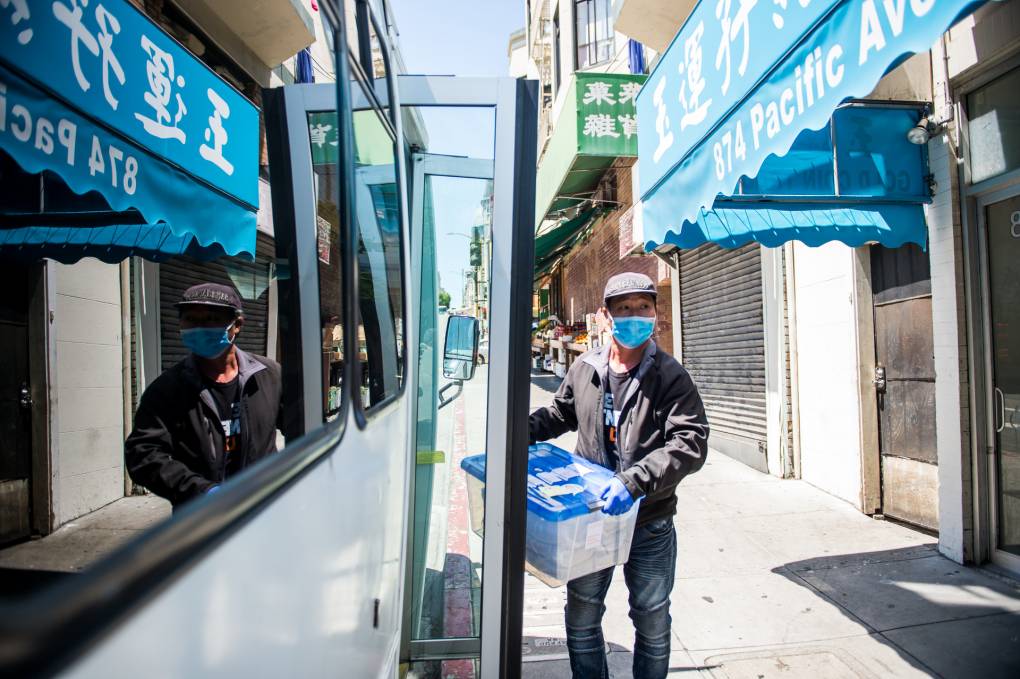
"caption": "Meals that were prepared at Far East Cafe are brought to Ping Yuen, a public housing building in San Francisco's Chinatown, where employees of a Chinatown nonprofit and volunteers help distribute meals to residents on May 5, 2020.",
"description": "Meals that were prepared at Far East Cafe are brought to Ping Yuen, a public housing building in San Francisco's Chinatown, where employees of a Chinatown nonprofit and volunteers help distribute meals to residents on May 5, 2020.",
"title": "San-Francisco-Chinatown-Meal-Delivery",
"credit": "Beth LaBerge/KQED",
"status": "inherit",
"isLoading": false,
"fetchFailed": false
},
"news_11815799": {
"type": "attachments",
"id": "news_11815799",
"meta": {
"index": "attachments_1716263798",
"site": "news",
"id": "11815799",
"found": true
},
"parent": 11815715,
"imgSizes": {
"apple_news_ca_landscape_5_5": {
"file": "https://ww2.kqed.org/app/uploads/sites/10/2020/05/CastroHouse-1044x783.jpeg",
"width": 1044,
"mimeType": "image/jpeg",
"height": 783
},
"apple_news_ca_square_4_0": {
"file": "https://ww2.kqed.org/app/uploads/sites/10/2020/05/CastroHouse-470x470.jpeg",
"width": 470,
"mimeType": "image/jpeg",
"height": 470
},
"twentyfourteen-full-width": {
"file": "https://ww2.kqed.org/app/uploads/sites/10/2020/05/CastroHouse-1038x576.jpeg",
"width": 1038,
"mimeType": "image/jpeg",
"height": 576
},
"thumbnail": {
"file": "https://ww2.kqed.org/app/uploads/sites/10/2020/05/CastroHouse-160x120.jpeg",
"width": 160,
"mimeType": "image/jpeg",
"height": 120
},
"post-thumbnail": {
"file": "https://ww2.kqed.org/app/uploads/sites/10/2020/05/CastroHouse-672x372.jpeg",
"width": 672,
"mimeType": "image/jpeg",
"height": 372
},
"kqedFullSize": {
"file": "https://ww2.kqed.org/app/uploads/sites/10/2020/05/CastroHouse.jpeg",
"width": 2048,
"height": 1536
},
"apple_news_ca_landscape_4_7": {
"file": "https://ww2.kqed.org/app/uploads/sites/10/2020/05/CastroHouse-632x474.jpeg",
"width": 632,
"mimeType": "image/jpeg",
"height": 474
},
"large": {
"file": "https://ww2.kqed.org/app/uploads/sites/10/2020/05/CastroHouse-1020x765.jpeg",
"width": 1020,
"mimeType": "image/jpeg",
"height": 765
},
"apple_news_ca_landscape_4_0": {
"file": "https://ww2.kqed.org/app/uploads/sites/10/2020/05/CastroHouse-536x402.jpeg",
"width": 536,
"mimeType": "image/jpeg",
"height": 402
},
"apple_news_ca_portrait_12_9": {
"file": "https://ww2.kqed.org/app/uploads/sites/10/2020/05/CastroHouse-1122x1496.jpeg",
"width": 1122,
"mimeType": "image/jpeg",
"height": 1496
},
"medium": {
"file": "https://ww2.kqed.org/app/uploads/sites/10/2020/05/CastroHouse-800x600.jpeg",
"width": 800,
"mimeType": "image/jpeg",
"height": 600
},
"apple_news_ca_portrait_4_0": {
"file": "https://ww2.kqed.org/app/uploads/sites/10/2020/05/CastroHouse-354x472.jpeg",
"width": 354,
"mimeType": "image/jpeg",
"height": 472
},
"apple_news_ca_portrait_9_7": {
"file": "https://ww2.kqed.org/app/uploads/sites/10/2020/05/CastroHouse-840x1120.jpeg",
"width": 840,
"mimeType": "image/jpeg",
"height": 1120
},
"apple_news_ca_landscape_12_9": {
"file": "https://ww2.kqed.org/app/uploads/sites/10/2020/05/CastroHouse-1832x1374.jpeg",
"width": 1832,
"mimeType": "image/jpeg",
"height": 1374
},
"apple_news_ca_square_9_7": {
"file": "https://ww2.kqed.org/app/uploads/sites/10/2020/05/CastroHouse-1104x1104.jpeg",
"width": 1104,
"mimeType": "image/jpeg",
"height": 1104
},
"apple_news_ca_portrait_4_7": {
"file": "https://ww2.kqed.org/app/uploads/sites/10/2020/05/CastroHouse-414x552.jpeg",
"width": 414,
"mimeType": "image/jpeg",
"height": 552
},
"apple_news_ca_square_12_9": {
"file": "https://ww2.kqed.org/app/uploads/sites/10/2020/05/CastroHouse-1472x1472.jpeg",
"width": 1472,
"mimeType": "image/jpeg",
"height": 1472
},
"apple_news_ca_portrait_5_5": {
"file": "https://ww2.kqed.org/app/uploads/sites/10/2020/05/CastroHouse-687x916.jpeg",
"width": 687,
"mimeType": "image/jpeg",
"height": 916
},
"full-width": {
"file": "https://ww2.kqed.org/app/uploads/sites/10/2020/05/CastroHouse-1920x1440.jpeg",
"width": 1920,
"mimeType": "image/jpeg",
"height": 1440
},
"apple_news_ca_square_4_7": {
"file": "https://ww2.kqed.org/app/uploads/sites/10/2020/05/CastroHouse-550x550.jpeg",
"width": 550,
"mimeType": "image/jpeg",
"height": 550
},
"apple_news_ca_landscape_9_7": {
"file": "https://ww2.kqed.org/app/uploads/sites/10/2020/05/CastroHouse-1376x1032.jpeg",
"width": 1376,
"mimeType": "image/jpeg",
"height": 1032
},
"apple_news_ca_square_5_5": {
"file": "https://ww2.kqed.org/app/uploads/sites/10/2020/05/CastroHouse-912x912.jpeg",
"width": 912,
"mimeType": "image/jpeg",
"height": 912
}
},
"publishDate": 1588372666,
"modified": 1588372741,
"caption": "Two women who are experiencing homelessness have occupied a vacant house in San Francisco's Castro District as a way to protest the lack of affordable housing in the city.",
"description": null,
"title": "CastroHouse",
"credit": "Erin Baldassari/KQED",
"status": "inherit",
"isLoading": false,
"fetchFailed": false
},
"news_11815347": {
"type": "attachments",
"id": "news_11815347",
"meta": {
"index": "attachments_1716263798",
"site": "news",
"id": "11815347",
"found": true
},
"parent": 11815334,
"imgSizes": {
"apple_news_ca_landscape_5_5": {
"file": "https://ww2.kqed.org/app/uploads/sites/10/2020/04/RS42473_007_KQED_SanFrancisco_RentStrike_03312020-qut-1-1044x783.jpg",
"width": 1044,
"mimeType": "image/jpeg",
"height": 783
},
"apple_news_ca_square_4_0": {
"file": "https://ww2.kqed.org/app/uploads/sites/10/2020/04/RS42473_007_KQED_SanFrancisco_RentStrike_03312020-qut-1-470x470.jpg",
"width": 470,
"mimeType": "image/jpeg",
"height": 470
},
"twentyfourteen-full-width": {
"file": "https://ww2.kqed.org/app/uploads/sites/10/2020/04/RS42473_007_KQED_SanFrancisco_RentStrike_03312020-qut-1-1038x576.jpg",
"width": 1038,
"mimeType": "image/jpeg",
"height": 576
},
"thumbnail": {
"file": "https://ww2.kqed.org/app/uploads/sites/10/2020/04/RS42473_007_KQED_SanFrancisco_RentStrike_03312020-qut-1-160x107.jpg",
"width": 160,
"mimeType": "image/jpeg",
"height": 107
},
"post-thumbnail": {
"file": "https://ww2.kqed.org/app/uploads/sites/10/2020/04/RS42473_007_KQED_SanFrancisco_RentStrike_03312020-qut-1-672x372.jpg",
"width": 672,
"mimeType": "image/jpeg",
"height": 372
},
"kqedFullSize": {
"file": "https://ww2.kqed.org/app/uploads/sites/10/2020/04/RS42473_007_KQED_SanFrancisco_RentStrike_03312020-qut-1.jpg",
"width": 1920,
"height": 1280
},
"apple_news_ca_landscape_4_7": {
"file": "https://ww2.kqed.org/app/uploads/sites/10/2020/04/RS42473_007_KQED_SanFrancisco_RentStrike_03312020-qut-1-632x474.jpg",
"width": 632,
"mimeType": "image/jpeg",
"height": 474
},
"large": {
"file": "https://ww2.kqed.org/app/uploads/sites/10/2020/04/RS42473_007_KQED_SanFrancisco_RentStrike_03312020-qut-1-1020x680.jpg",
"width": 1020,
"mimeType": "image/jpeg",
"height": 680
},
"apple_news_ca_landscape_4_0": {
"file": "https://ww2.kqed.org/app/uploads/sites/10/2020/04/RS42473_007_KQED_SanFrancisco_RentStrike_03312020-qut-1-536x402.jpg",
"width": 536,
"mimeType": "image/jpeg",
"height": 402
},
"apple_news_ca_portrait_12_9": {
"file": "https://ww2.kqed.org/app/uploads/sites/10/2020/04/RS42473_007_KQED_SanFrancisco_RentStrike_03312020-qut-1-1122x1280.jpg",
"width": 1122,
"mimeType": "image/jpeg",
"height": 1280
},
"medium": {
"file": "https://ww2.kqed.org/app/uploads/sites/10/2020/04/RS42473_007_KQED_SanFrancisco_RentStrike_03312020-qut-1-800x533.jpg",
"width": 800,
"mimeType": "image/jpeg",
"height": 533
},
"apple_news_ca_portrait_4_0": {
"file": "https://ww2.kqed.org/app/uploads/sites/10/2020/04/RS42473_007_KQED_SanFrancisco_RentStrike_03312020-qut-1-354x472.jpg",
"width": 354,
"mimeType": "image/jpeg",
"height": 472
},
"apple_news_ca_portrait_9_7": {
"file": "https://ww2.kqed.org/app/uploads/sites/10/2020/04/RS42473_007_KQED_SanFrancisco_RentStrike_03312020-qut-1-840x1120.jpg",
"width": 840,
"mimeType": "image/jpeg",
"height": 1120
},
"apple_news_ca_landscape_12_9": {
"file": "https://ww2.kqed.org/app/uploads/sites/10/2020/04/RS42473_007_KQED_SanFrancisco_RentStrike_03312020-qut-1-1832x1280.jpg",
"width": 1832,
"mimeType": "image/jpeg",
"height": 1280
},
"apple_news_ca_square_9_7": {
"file": "https://ww2.kqed.org/app/uploads/sites/10/2020/04/RS42473_007_KQED_SanFrancisco_RentStrike_03312020-qut-1-1104x1104.jpg",
"width": 1104,
"mimeType": "image/jpeg",
"height": 1104
},
"apple_news_ca_portrait_4_7": {
"file": "https://ww2.kqed.org/app/uploads/sites/10/2020/04/RS42473_007_KQED_SanFrancisco_RentStrike_03312020-qut-1-414x552.jpg",
"width": 414,
"mimeType": "image/jpeg",
"height": 552
},
"apple_news_ca_square_12_9": {
"file": "https://ww2.kqed.org/app/uploads/sites/10/2020/04/RS42473_007_KQED_SanFrancisco_RentStrike_03312020-qut-1-1472x1280.jpg",
"width": 1472,
"mimeType": "image/jpeg",
"height": 1280
},
"apple_news_ca_portrait_5_5": {
"file": "https://ww2.kqed.org/app/uploads/sites/10/2020/04/RS42473_007_KQED_SanFrancisco_RentStrike_03312020-qut-1-687x916.jpg",
"width": 687,
"mimeType": "image/jpeg",
"height": 916
},
"full-width": {
"file": "https://ww2.kqed.org/app/uploads/sites/10/2020/04/RS42473_007_KQED_SanFrancisco_RentStrike_03312020-qut-1-1920x1280.jpg",
"width": 1920,
"mimeType": "image/jpeg",
"height": 1280
},
"apple_news_ca_square_4_7": {
"file": "https://ww2.kqed.org/app/uploads/sites/10/2020/04/RS42473_007_KQED_SanFrancisco_RentStrike_03312020-qut-1-550x550.jpg",
"width": 550,
"mimeType": "image/jpeg",
"height": 550
},
"apple_news_ca_landscape_9_7": {
"file": "https://ww2.kqed.org/app/uploads/sites/10/2020/04/RS42473_007_KQED_SanFrancisco_RentStrike_03312020-qut-1-1376x1032.jpg",
"width": 1376,
"mimeType": "image/jpeg",
"height": 1032
},
"apple_news_ca_square_5_5": {
"file": "https://ww2.kqed.org/app/uploads/sites/10/2020/04/RS42473_007_KQED_SanFrancisco_RentStrike_03312020-qut-1-912x912.jpg",
"width": 912,
"mimeType": "image/jpeg",
"height": 912
}
},
"publishDate": 1588268779,
"modified": 1593474691,
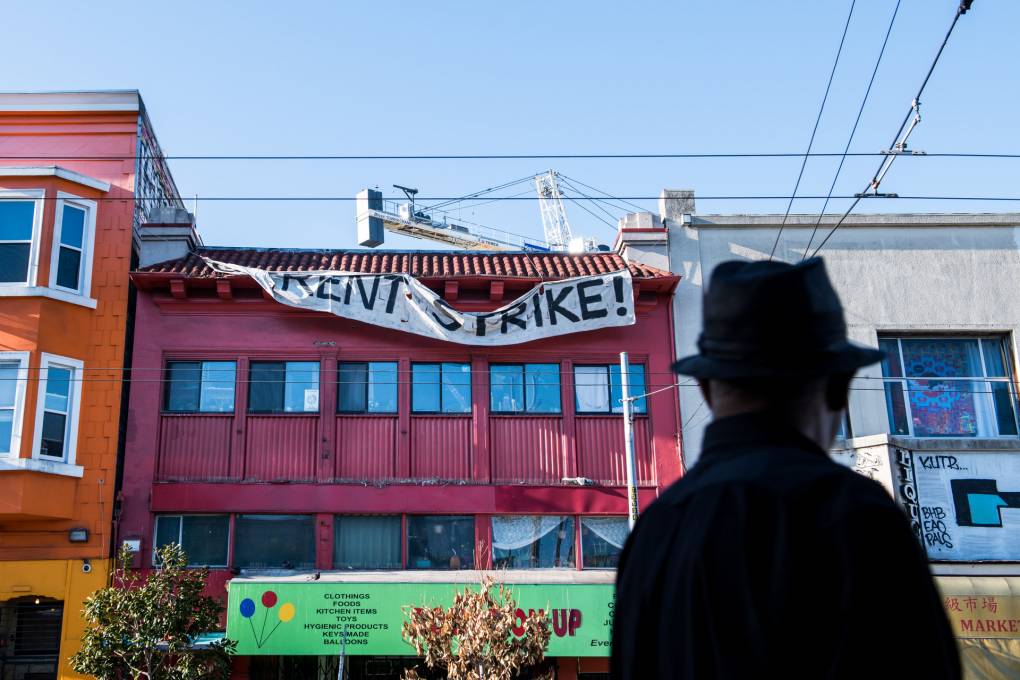
"caption": "A 'Rent Strike!' sign in the Mission District on March 31, 2020. ",
"description": "A 'Rent Strike!' sign in the Mission District on March 31, 2020. ",
"title": "RS42473_007_KQED_SanFrancisco_RentStrike_03312020-qut",
"credit": "Beth LaBerge/KQED",
"status": "inherit",
"isLoading": false,
"fetchFailed": false
},
"news_11815070": {
"type": "attachments",
"id": "news_11815070",
"meta": {
"index": "attachments_1716263798",
"site": "news",
"id": "11815070",
"found": true
},
"parent": 11815011,
"imgSizes": {
"apple_news_ca_landscape_5_5": {
"file": "https://ww2.kqed.org/app/uploads/sites/10/2020/04/RS42956_003_KQED_Alameda_PlayadelAlameda_04282020-qut-1044x783.jpg",
"width": 1044,
"mimeType": "image/jpeg",
"height": 783
},
"apple_news_ca_square_4_0": {
"file": "https://ww2.kqed.org/app/uploads/sites/10/2020/04/RS42956_003_KQED_Alameda_PlayadelAlameda_04282020-qut-470x470.jpg",
"width": 470,
"mimeType": "image/jpeg",
"height": 470
},
"twentyfourteen-full-width": {
"file": "https://ww2.kqed.org/app/uploads/sites/10/2020/04/RS42956_003_KQED_Alameda_PlayadelAlameda_04282020-qut-1038x576.jpg",
"width": 1038,
"mimeType": "image/jpeg",
"height": 576
},
"thumbnail": {
"file": "https://ww2.kqed.org/app/uploads/sites/10/2020/04/RS42956_003_KQED_Alameda_PlayadelAlameda_04282020-qut-160x107.jpg",
"width": 160,
"mimeType": "image/jpeg",
"height": 107
},
"post-thumbnail": {
"file": "https://ww2.kqed.org/app/uploads/sites/10/2020/04/RS42956_003_KQED_Alameda_PlayadelAlameda_04282020-qut-672x372.jpg",
"width": 672,
"mimeType": "image/jpeg",
"height": 372
},
"kqedFullSize": {
"file": "https://ww2.kqed.org/app/uploads/sites/10/2020/04/RS42956_003_KQED_Alameda_PlayadelAlameda_04282020-qut.jpg",
"width": 1920,
"height": 1280
},
"apple_news_ca_landscape_4_7": {
"file": "https://ww2.kqed.org/app/uploads/sites/10/2020/04/RS42956_003_KQED_Alameda_PlayadelAlameda_04282020-qut-632x474.jpg",
"width": 632,
"mimeType": "image/jpeg",
"height": 474
},
"large": {
"file": "https://ww2.kqed.org/app/uploads/sites/10/2020/04/RS42956_003_KQED_Alameda_PlayadelAlameda_04282020-qut-1020x680.jpg",
"width": 1020,
"mimeType": "image/jpeg",
"height": 680
},
"apple_news_ca_landscape_4_0": {
"file": "https://ww2.kqed.org/app/uploads/sites/10/2020/04/RS42956_003_KQED_Alameda_PlayadelAlameda_04282020-qut-536x402.jpg",
"width": 536,
"mimeType": "image/jpeg",
"height": 402
},
"apple_news_ca_portrait_12_9": {
"file": "https://ww2.kqed.org/app/uploads/sites/10/2020/04/RS42956_003_KQED_Alameda_PlayadelAlameda_04282020-qut-1122x1280.jpg",
"width": 1122,
"mimeType": "image/jpeg",
"height": 1280
},
"medium": {
"file": "https://ww2.kqed.org/app/uploads/sites/10/2020/04/RS42956_003_KQED_Alameda_PlayadelAlameda_04282020-qut-800x533.jpg",
"width": 800,
"mimeType": "image/jpeg",
"height": 533
},
"apple_news_ca_portrait_4_0": {
"file": "https://ww2.kqed.org/app/uploads/sites/10/2020/04/RS42956_003_KQED_Alameda_PlayadelAlameda_04282020-qut-354x472.jpg",
"width": 354,
"mimeType": "image/jpeg",
"height": 472
},
"apple_news_ca_portrait_9_7": {
"file": "https://ww2.kqed.org/app/uploads/sites/10/2020/04/RS42956_003_KQED_Alameda_PlayadelAlameda_04282020-qut-840x1120.jpg",
"width": 840,
"mimeType": "image/jpeg",
"height": 1120
},
"apple_news_ca_landscape_12_9": {
"file": "https://ww2.kqed.org/app/uploads/sites/10/2020/04/RS42956_003_KQED_Alameda_PlayadelAlameda_04282020-qut-1832x1280.jpg",
"width": 1832,
"mimeType": "image/jpeg",
"height": 1280
},
"apple_news_ca_square_9_7": {
"file": "https://ww2.kqed.org/app/uploads/sites/10/2020/04/RS42956_003_KQED_Alameda_PlayadelAlameda_04282020-qut-1104x1104.jpg",
"width": 1104,
"mimeType": "image/jpeg",
"height": 1104
},
"apple_news_ca_portrait_4_7": {
"file": "https://ww2.kqed.org/app/uploads/sites/10/2020/04/RS42956_003_KQED_Alameda_PlayadelAlameda_04282020-qut-414x552.jpg",
"width": 414,
"mimeType": "image/jpeg",
"height": 552
},
"apple_news_ca_square_12_9": {
"file": "https://ww2.kqed.org/app/uploads/sites/10/2020/04/RS42956_003_KQED_Alameda_PlayadelAlameda_04282020-qut-1472x1280.jpg",
"width": 1472,
"mimeType": "image/jpeg",
"height": 1280
},
"apple_news_ca_portrait_5_5": {
"file": "https://ww2.kqed.org/app/uploads/sites/10/2020/04/RS42956_003_KQED_Alameda_PlayadelAlameda_04282020-qut-687x916.jpg",
"width": 687,
"mimeType": "image/jpeg",
"height": 916
},
"full-width": {
"file": "https://ww2.kqed.org/app/uploads/sites/10/2020/04/RS42956_003_KQED_Alameda_PlayadelAlameda_04282020-qut-1920x1280.jpg",
"width": 1920,
"mimeType": "image/jpeg",
"height": 1280
},
"apple_news_ca_square_4_7": {
"file": "https://ww2.kqed.org/app/uploads/sites/10/2020/04/RS42956_003_KQED_Alameda_PlayadelAlameda_04282020-qut-550x550.jpg",
"width": 550,
"mimeType": "image/jpeg",
"height": 550
},
"apple_news_ca_landscape_9_7": {
"file": "https://ww2.kqed.org/app/uploads/sites/10/2020/04/RS42956_003_KQED_Alameda_PlayadelAlameda_04282020-qut-1376x1032.jpg",
"width": 1376,
"mimeType": "image/jpeg",
"height": 1032
},
"apple_news_ca_square_5_5": {
"file": "https://ww2.kqed.org/app/uploads/sites/10/2020/04/RS42956_003_KQED_Alameda_PlayadelAlameda_04282020-qut-912x912.jpg",
"width": 912,
"mimeType": "image/jpeg",
"height": 912
}
},
"publishDate": 1588194125,
"modified": 1588206215,
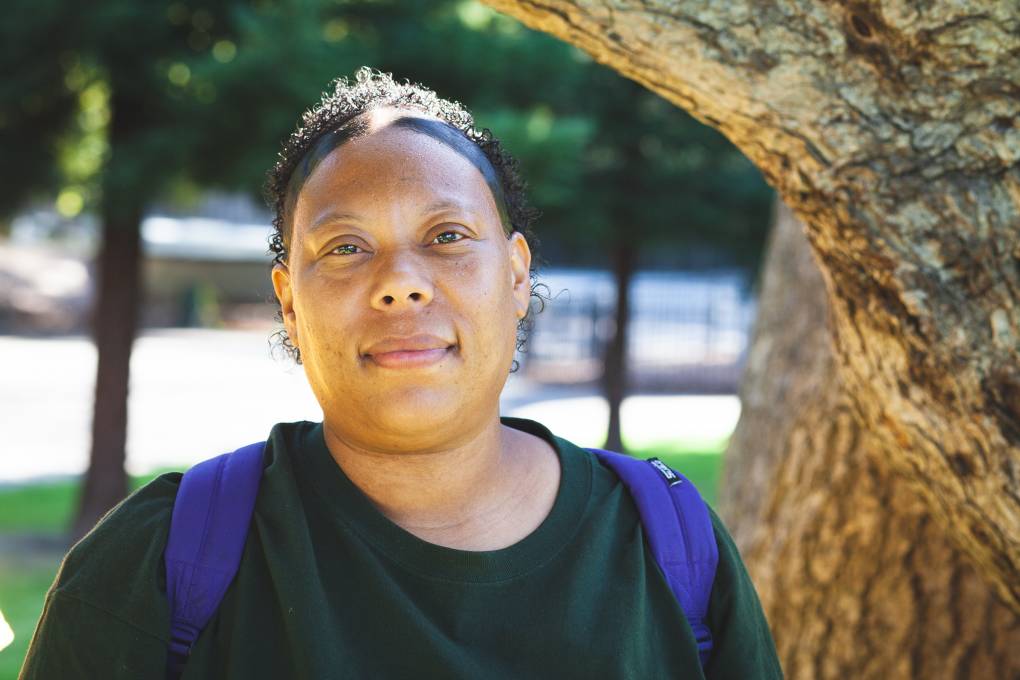
"caption": "When Krystal McMorris was fired from her job as the on-site property manager at Playa del Alameda Apartments, she lost her job and her housing.",
"description": null,
"title": "Playa del Alameda Apartments in Alameda on April 28, 2020.",
"credit": "Beth LaBerge/KQED",
"status": "inherit",
"isLoading": false,
"fetchFailed": false
},
"news_11814321": {
"type": "attachments",
"id": "news_11814321",
"meta": {
"index": "attachments_1716263798",
"site": "news",
"id": "11814321",
"found": true
},
"parent": 11814220,
"imgSizes": {
"apple_news_ca_landscape_5_5": {
"file": "https://ww2.kqed.org/app/uploads/sites/10/2020/04/MARQUEE_726_1-1044x720.jpg",
"width": 1044,
"mimeType": "image/jpeg",
"height": 720
},
"apple_news_ca_square_4_0": {
"file": "https://ww2.kqed.org/app/uploads/sites/10/2020/04/MARQUEE_726_1-470x470.jpg",
"width": 470,
"mimeType": "image/jpeg",
"height": 470
},
"twentyfourteen-full-width": {
"file": "https://ww2.kqed.org/app/uploads/sites/10/2020/04/MARQUEE_726_1-1038x576.jpg",
"width": 1038,
"mimeType": "image/jpeg",
"height": 576
},
"thumbnail": {
"file": "https://ww2.kqed.org/app/uploads/sites/10/2020/04/MARQUEE_726_1-160x90.jpg",
"width": 160,
"mimeType": "image/jpeg",
"height": 90
},
"post-thumbnail": {
"file": "https://ww2.kqed.org/app/uploads/sites/10/2020/04/MARQUEE_726_1-672x372.jpg",
"width": 672,
"mimeType": "image/jpeg",
"height": 372
},
"kqedFullSize": {
"file": "https://ww2.kqed.org/app/uploads/sites/10/2020/04/MARQUEE_726_1.jpg",
"width": 1280,
"height": 720
},
"apple_news_ca_landscape_4_7": {
"file": "https://ww2.kqed.org/app/uploads/sites/10/2020/04/MARQUEE_726_1-632x474.jpg",
"width": 632,
"mimeType": "image/jpeg",
"height": 474
},
"large": {
"file": "https://ww2.kqed.org/app/uploads/sites/10/2020/04/MARQUEE_726_1-1020x574.jpg",
"width": 1020,
"mimeType": "image/jpeg",
"height": 574
},
"apple_news_ca_landscape_4_0": {
"file": "https://ww2.kqed.org/app/uploads/sites/10/2020/04/MARQUEE_726_1-536x402.jpg",
"width": 536,
"mimeType": "image/jpeg",
"height": 402
},
"apple_news_ca_portrait_12_9": {
"file": "https://ww2.kqed.org/app/uploads/sites/10/2020/04/MARQUEE_726_1-1122x720.jpg",
"width": 1122,
"mimeType": "image/jpeg",
"height": 720
},
"medium": {
"file": "https://ww2.kqed.org/app/uploads/sites/10/2020/04/MARQUEE_726_1-800x450.jpg",
"width": 800,
"mimeType": "image/jpeg",
"height": 450
},
"apple_news_ca_portrait_4_0": {
"file": "https://ww2.kqed.org/app/uploads/sites/10/2020/04/MARQUEE_726_1-354x472.jpg",
"width": 354,
"mimeType": "image/jpeg",
"height": 472
},
"apple_news_ca_portrait_9_7": {
"file": "https://ww2.kqed.org/app/uploads/sites/10/2020/04/MARQUEE_726_1-840x720.jpg",
"width": 840,
"mimeType": "image/jpeg",
"height": 720
},
"apple_news_ca_square_9_7": {
"file": "https://ww2.kqed.org/app/uploads/sites/10/2020/04/MARQUEE_726_1-1104x720.jpg",
"width": 1104,
"mimeType": "image/jpeg",
"height": 720
},
"apple_news_ca_portrait_4_7": {
"file": "https://ww2.kqed.org/app/uploads/sites/10/2020/04/MARQUEE_726_1-414x552.jpg",
"width": 414,
"mimeType": "image/jpeg",
"height": 552
},
"apple_news_ca_portrait_5_5": {
"file": "https://ww2.kqed.org/app/uploads/sites/10/2020/04/MARQUEE_726_1-687x720.jpg",
"width": 687,
"mimeType": "image/jpeg",
"height": 720
},
"apple_news_ca_square_4_7": {
"file": "https://ww2.kqed.org/app/uploads/sites/10/2020/04/MARQUEE_726_1-550x550.jpg",
"width": 550,
"mimeType": "image/jpeg",
"height": 550
},
"apple_news_ca_square_5_5": {
"file": "https://ww2.kqed.org/app/uploads/sites/10/2020/04/MARQUEE_726_1-912x720.jpg",
"width": 912,
"mimeType": "image/jpeg",
"height": 720
}
},
"publishDate": 1587771538,
"modified": 1587771538,
"caption": null,
"description": null,
"title": "MARQUEE_726_1",
"credit": null,
"status": "inherit",
"isLoading": false,
"fetchFailed": false
},
"news_11816174": {
"type": "attachments",
"id": "news_11816174",
"meta": {
"index": "attachments_1716263798",
"site": "news",
"id": "11816174",
"found": true
},
"parent": 11813954,
"imgSizes": {
"apple_news_ca_landscape_5_5": {
"file": "https://ww2.kqed.org/app/uploads/sites/10/2020/04/Image-1-1044x783.jpeg",
"width": 1044,
"mimeType": "image/jpeg",
"height": 783
},
"apple_news_ca_square_4_0": {
"file": "https://ww2.kqed.org/app/uploads/sites/10/2020/04/Image-1-470x470.jpeg",
"width": 470,
"mimeType": "image/jpeg",
"height": 470
},
"twentyfourteen-full-width": {
"file": "https://ww2.kqed.org/app/uploads/sites/10/2020/04/Image-1-1038x576.jpeg",
"width": 1038,
"mimeType": "image/jpeg",
"height": 576
},
"thumbnail": {
"file": "https://ww2.kqed.org/app/uploads/sites/10/2020/04/Image-1-160x126.jpeg",
"width": 160,
"mimeType": "image/jpeg",
"height": 126
},
"post-thumbnail": {
"file": "https://ww2.kqed.org/app/uploads/sites/10/2020/04/Image-1-672x372.jpeg",
"width": 672,
"mimeType": "image/jpeg",
"height": 372
},
"kqedFullSize": {
"file": "https://ww2.kqed.org/app/uploads/sites/10/2020/04/Image-1.jpeg",
"width": 2132,
"height": 1674
},
"apple_news_ca_landscape_4_7": {
"file": "https://ww2.kqed.org/app/uploads/sites/10/2020/04/Image-1-632x474.jpeg",
"width": 632,
"mimeType": "image/jpeg",
"height": 474
},
"large": {
"file": "https://ww2.kqed.org/app/uploads/sites/10/2020/04/Image-1-1020x801.jpeg",
"width": 1020,
"mimeType": "image/jpeg",
"height": 801
},
"apple_news_ca_landscape_4_0": {
"file": "https://ww2.kqed.org/app/uploads/sites/10/2020/04/Image-1-536x402.jpeg",
"width": 536,
"mimeType": "image/jpeg",
"height": 402
},
"apple_news_ca_portrait_12_9": {
"file": "https://ww2.kqed.org/app/uploads/sites/10/2020/04/Image-1-1122x1496.jpeg",
"width": 1122,
"mimeType": "image/jpeg",
"height": 1496
},
"medium": {
"file": "https://ww2.kqed.org/app/uploads/sites/10/2020/04/Image-1-800x628.jpeg",
"width": 800,
"mimeType": "image/jpeg",
"height": 628
},
"apple_news_ca_portrait_4_0": {
"file": "https://ww2.kqed.org/app/uploads/sites/10/2020/04/Image-1-354x472.jpeg",
"width": 354,
"mimeType": "image/jpeg",
"height": 472
},
"apple_news_ca_portrait_9_7": {
"file": "https://ww2.kqed.org/app/uploads/sites/10/2020/04/Image-1-840x1120.jpeg",
"width": 840,
"mimeType": "image/jpeg",
"height": 1120
},
"apple_news_ca_landscape_12_9": {
"file": "https://ww2.kqed.org/app/uploads/sites/10/2020/04/Image-1-1832x1374.jpeg",
"width": 1832,
"mimeType": "image/jpeg",
"height": 1374
},
"apple_news_ca_square_9_7": {
"file": "https://ww2.kqed.org/app/uploads/sites/10/2020/04/Image-1-1104x1104.jpeg",
"width": 1104,
"mimeType": "image/jpeg",
"height": 1104
},
"apple_news_ca_portrait_4_7": {
"file": "https://ww2.kqed.org/app/uploads/sites/10/2020/04/Image-1-414x552.jpeg",
"width": 414,
"mimeType": "image/jpeg",
"height": 552
},
"apple_news_ca_square_12_9": {
"file": "https://ww2.kqed.org/app/uploads/sites/10/2020/04/Image-1-1472x1472.jpeg",
"width": 1472,
"mimeType": "image/jpeg",
"height": 1472
},
"apple_news_ca_portrait_5_5": {
"file": "https://ww2.kqed.org/app/uploads/sites/10/2020/04/Image-1-687x916.jpeg",
"width": 687,
"mimeType": "image/jpeg",
"height": 916
},
"full-width": {
"file": "https://ww2.kqed.org/app/uploads/sites/10/2020/04/Image-1-1920x1508.jpeg",
"width": 1920,
"mimeType": "image/jpeg",
"height": 1508
},
"apple_news_ca_square_4_7": {
"file": "https://ww2.kqed.org/app/uploads/sites/10/2020/04/Image-1-550x550.jpeg",
"width": 550,
"mimeType": "image/jpeg",
"height": 550
},
"apple_news_ca_landscape_9_7": {
"file": "https://ww2.kqed.org/app/uploads/sites/10/2020/04/Image-1-1376x1032.jpeg",
"width": 1376,
"mimeType": "image/jpeg",
"height": 1032
},
"apple_news_ca_square_5_5": {
"file": "https://ww2.kqed.org/app/uploads/sites/10/2020/04/Image-1-912x912.jpeg",
"width": 912,
"mimeType": "image/jpeg",
"height": 912
}
},
"publishDate": 1588634278,
"modified": 1588634303,
"caption": "San Francisco activist Brandon Lee, left, who was shot in the Philippines in August, at a digital press conference on Earth Day April 23, 2020.",
"description": null,
"title": "Image-1",
"credit": null,
"status": "inherit",
"isLoading": false,
"fetchFailed": false
},
"news_11813499": {
"type": "attachments",
"id": "news_11813499",
"meta": {
"index": "attachments_1716263798",
"site": "news",
"id": "11813499",
"found": true
},
"parent": 0,
"imgSizes": {
"apple_news_ca_landscape_5_5": {
"file": "https://ww2.kqed.org/app/uploads/sites/10/2020/04/RS42869_003_KQED_SanFrancisco_HomelessShelter_04212020-qut-1044x783.jpg",
"width": 1044,
"mimeType": "image/jpeg",
"height": 783
},
"apple_news_ca_square_4_0": {
"file": "https://ww2.kqed.org/app/uploads/sites/10/2020/04/RS42869_003_KQED_SanFrancisco_HomelessShelter_04212020-qut-470x470.jpg",
"width": 470,
"mimeType": "image/jpeg",
"height": 470
},
"twentyfourteen-full-width": {
"file": "https://ww2.kqed.org/app/uploads/sites/10/2020/04/RS42869_003_KQED_SanFrancisco_HomelessShelter_04212020-qut-1038x576.jpg",
"width": 1038,
"mimeType": "image/jpeg",
"height": 576
},
"thumbnail": {
"file": "https://ww2.kqed.org/app/uploads/sites/10/2020/04/RS42869_003_KQED_SanFrancisco_HomelessShelter_04212020-qut-160x107.jpg",
"width": 160,
"mimeType": "image/jpeg",
"height": 107
},
"post-thumbnail": {
"file": "https://ww2.kqed.org/app/uploads/sites/10/2020/04/RS42869_003_KQED_SanFrancisco_HomelessShelter_04212020-qut-672x372.jpg",
"width": 672,
"mimeType": "image/jpeg",
"height": 372
},
"kqedFullSize": {
"file": "https://ww2.kqed.org/app/uploads/sites/10/2020/04/RS42869_003_KQED_SanFrancisco_HomelessShelter_04212020-qut.jpg",
"width": 1920,
"height": 1280
},
"apple_news_ca_landscape_4_7": {
"file": "https://ww2.kqed.org/app/uploads/sites/10/2020/04/RS42869_003_KQED_SanFrancisco_HomelessShelter_04212020-qut-632x474.jpg",
"width": 632,
"mimeType": "image/jpeg",
"height": 474
},
"large": {
"file": "https://ww2.kqed.org/app/uploads/sites/10/2020/04/RS42869_003_KQED_SanFrancisco_HomelessShelter_04212020-qut-1020x680.jpg",
"width": 1020,
"mimeType": "image/jpeg",
"height": 680
},
"apple_news_ca_landscape_4_0": {
"file": "https://ww2.kqed.org/app/uploads/sites/10/2020/04/RS42869_003_KQED_SanFrancisco_HomelessShelter_04212020-qut-536x402.jpg",
"width": 536,
"mimeType": "image/jpeg",
"height": 402
},
"apple_news_ca_portrait_12_9": {
"file": "https://ww2.kqed.org/app/uploads/sites/10/2020/04/RS42869_003_KQED_SanFrancisco_HomelessShelter_04212020-qut-1122x1280.jpg",
"width": 1122,
"mimeType": "image/jpeg",
"height": 1280
},
"medium": {
"file": "https://ww2.kqed.org/app/uploads/sites/10/2020/04/RS42869_003_KQED_SanFrancisco_HomelessShelter_04212020-qut-800x533.jpg",
"width": 800,
"mimeType": "image/jpeg",
"height": 533
},
"apple_news_ca_portrait_4_0": {
"file": "https://ww2.kqed.org/app/uploads/sites/10/2020/04/RS42869_003_KQED_SanFrancisco_HomelessShelter_04212020-qut-354x472.jpg",
"width": 354,
"mimeType": "image/jpeg",
"height": 472
},
"apple_news_ca_portrait_9_7": {
"file": "https://ww2.kqed.org/app/uploads/sites/10/2020/04/RS42869_003_KQED_SanFrancisco_HomelessShelter_04212020-qut-840x1120.jpg",
"width": 840,
"mimeType": "image/jpeg",
"height": 1120
},
"apple_news_ca_landscape_12_9": {
"file": "https://ww2.kqed.org/app/uploads/sites/10/2020/04/RS42869_003_KQED_SanFrancisco_HomelessShelter_04212020-qut-1832x1280.jpg",
"width": 1832,
"mimeType": "image/jpeg",
"height": 1280
},
"apple_news_ca_square_9_7": {
"file": "https://ww2.kqed.org/app/uploads/sites/10/2020/04/RS42869_003_KQED_SanFrancisco_HomelessShelter_04212020-qut-1104x1104.jpg",
"width": 1104,
"mimeType": "image/jpeg",
"height": 1104
},
"apple_news_ca_portrait_4_7": {
"file": "https://ww2.kqed.org/app/uploads/sites/10/2020/04/RS42869_003_KQED_SanFrancisco_HomelessShelter_04212020-qut-414x552.jpg",
"width": 414,
"mimeType": "image/jpeg",
"height": 552
},
"apple_news_ca_square_12_9": {
"file": "https://ww2.kqed.org/app/uploads/sites/10/2020/04/RS42869_003_KQED_SanFrancisco_HomelessShelter_04212020-qut-1472x1280.jpg",
"width": 1472,
"mimeType": "image/jpeg",
"height": 1280
},
"apple_news_ca_portrait_5_5": {
"file": "https://ww2.kqed.org/app/uploads/sites/10/2020/04/RS42869_003_KQED_SanFrancisco_HomelessShelter_04212020-qut-687x916.jpg",
"width": 687,
"mimeType": "image/jpeg",
"height": 916
},
"full-width": {
"file": "https://ww2.kqed.org/app/uploads/sites/10/2020/04/RS42869_003_KQED_SanFrancisco_HomelessShelter_04212020-qut-1920x1280.jpg",
"width": 1920,
"mimeType": "image/jpeg",
"height": 1280
},
"apple_news_ca_square_4_7": {
"file": "https://ww2.kqed.org/app/uploads/sites/10/2020/04/RS42869_003_KQED_SanFrancisco_HomelessShelter_04212020-qut-550x550.jpg",
"width": 550,
"mimeType": "image/jpeg",
"height": 550
},
"apple_news_ca_landscape_9_7": {
"file": "https://ww2.kqed.org/app/uploads/sites/10/2020/04/RS42869_003_KQED_SanFrancisco_HomelessShelter_04212020-qut-1376x1032.jpg",
"width": 1376,
"mimeType": "image/jpeg",
"height": 1032
},
"apple_news_ca_square_5_5": {
"file": "https://ww2.kqed.org/app/uploads/sites/10/2020/04/RS42869_003_KQED_SanFrancisco_HomelessShelter_04212020-qut-912x912.jpg",
"width": 912,
"mimeType": "image/jpeg",
"height": 912
}
},
"publishDate": 1587522016,
"modified": 1587522051,
"caption": "Currently unhoused, Sue Ranek sits outside of the MSC Homeless Shelter in San Francisco on April 21, 2020.",
"description": null,
"title": "RS42869_003_KQED_SanFrancisco_HomelessShelter_04212020-qut",
"credit": "Beth LaBerge/KQED",
"status": "inherit",
"isLoading": false,
"fetchFailed": false
},
"news_11813092": {
"type": "attachments",
"id": "news_11813092",
"meta": {
"index": "attachments_1716263798",
"site": "news",
"id": "11813092",
"found": true
},
"parent": 11813091,
"imgSizes": {
"apple_news_ca_landscape_5_5": {
"file": "https://ww2.kqed.org/app/uploads/sites/10/2020/04/RS42834_016_KQED_SanFrancisco_HandSanitizer_04172020-qut-1044x783.jpg",
"width": 1044,
"mimeType": "image/jpeg",
"height": 783
},
"apple_news_ca_square_4_0": {
"file": "https://ww2.kqed.org/app/uploads/sites/10/2020/04/RS42834_016_KQED_SanFrancisco_HandSanitizer_04172020-qut-470x470.jpg",
"width": 470,
"mimeType": "image/jpeg",
"height": 470
},
"twentyfourteen-full-width": {
"file": "https://ww2.kqed.org/app/uploads/sites/10/2020/04/RS42834_016_KQED_SanFrancisco_HandSanitizer_04172020-qut-1038x576.jpg",
"width": 1038,
"mimeType": "image/jpeg",
"height": 576
},
"thumbnail": {
"file": "https://ww2.kqed.org/app/uploads/sites/10/2020/04/RS42834_016_KQED_SanFrancisco_HandSanitizer_04172020-qut-160x107.jpg",
"width": 160,
"mimeType": "image/jpeg",
"height": 107
},
"post-thumbnail": {
"file": "https://ww2.kqed.org/app/uploads/sites/10/2020/04/RS42834_016_KQED_SanFrancisco_HandSanitizer_04172020-qut-672x372.jpg",
"width": 672,
"mimeType": "image/jpeg",
"height": 372
},
"kqedFullSize": {
"file": "https://ww2.kqed.org/app/uploads/sites/10/2020/04/RS42834_016_KQED_SanFrancisco_HandSanitizer_04172020-qut.jpg",
"width": 1920,
"height": 1280
},
"apple_news_ca_landscape_4_7": {
"file": "https://ww2.kqed.org/app/uploads/sites/10/2020/04/RS42834_016_KQED_SanFrancisco_HandSanitizer_04172020-qut-632x474.jpg",
"width": 632,
"mimeType": "image/jpeg",
"height": 474
},
"large": {
"file": "https://ww2.kqed.org/app/uploads/sites/10/2020/04/RS42834_016_KQED_SanFrancisco_HandSanitizer_04172020-qut-1020x680.jpg",
"width": 1020,
"mimeType": "image/jpeg",
"height": 680
},
"apple_news_ca_landscape_4_0": {
"file": "https://ww2.kqed.org/app/uploads/sites/10/2020/04/RS42834_016_KQED_SanFrancisco_HandSanitizer_04172020-qut-536x402.jpg",
"width": 536,
"mimeType": "image/jpeg",
"height": 402
},
"apple_news_ca_portrait_12_9": {
"file": "https://ww2.kqed.org/app/uploads/sites/10/2020/04/RS42834_016_KQED_SanFrancisco_HandSanitizer_04172020-qut-1122x1280.jpg",
"width": 1122,
"mimeType": "image/jpeg",
"height": 1280
},
"medium": {
"file": "https://ww2.kqed.org/app/uploads/sites/10/2020/04/RS42834_016_KQED_SanFrancisco_HandSanitizer_04172020-qut-800x533.jpg",
"width": 800,
"mimeType": "image/jpeg",
"height": 533
},
"apple_news_ca_portrait_4_0": {
"file": "https://ww2.kqed.org/app/uploads/sites/10/2020/04/RS42834_016_KQED_SanFrancisco_HandSanitizer_04172020-qut-354x472.jpg",
"width": 354,
"mimeType": "image/jpeg",
"height": 472
},
"apple_news_ca_portrait_9_7": {
"file": "https://ww2.kqed.org/app/uploads/sites/10/2020/04/RS42834_016_KQED_SanFrancisco_HandSanitizer_04172020-qut-840x1120.jpg",
"width": 840,
"mimeType": "image/jpeg",
"height": 1120
},
"apple_news_ca_landscape_12_9": {
"file": "https://ww2.kqed.org/app/uploads/sites/10/2020/04/RS42834_016_KQED_SanFrancisco_HandSanitizer_04172020-qut-1832x1280.jpg",
"width": 1832,
"mimeType": "image/jpeg",
"height": 1280
},
"apple_news_ca_square_9_7": {
"file": "https://ww2.kqed.org/app/uploads/sites/10/2020/04/RS42834_016_KQED_SanFrancisco_HandSanitizer_04172020-qut-1104x1104.jpg",
"width": 1104,
"mimeType": "image/jpeg",
"height": 1104
},
"apple_news_ca_portrait_4_7": {
"file": "https://ww2.kqed.org/app/uploads/sites/10/2020/04/RS42834_016_KQED_SanFrancisco_HandSanitizer_04172020-qut-414x552.jpg",
"width": 414,
"mimeType": "image/jpeg",
"height": 552
},
"apple_news_ca_square_12_9": {
"file": "https://ww2.kqed.org/app/uploads/sites/10/2020/04/RS42834_016_KQED_SanFrancisco_HandSanitizer_04172020-qut-1472x1280.jpg",
"width": 1472,
"mimeType": "image/jpeg",
"height": 1280
},
"apple_news_ca_portrait_5_5": {
"file": "https://ww2.kqed.org/app/uploads/sites/10/2020/04/RS42834_016_KQED_SanFrancisco_HandSanitizer_04172020-qut-687x916.jpg",
"width": 687,
"mimeType": "image/jpeg",
"height": 916
},
"full-width": {
"file": "https://ww2.kqed.org/app/uploads/sites/10/2020/04/RS42834_016_KQED_SanFrancisco_HandSanitizer_04172020-qut-1920x1280.jpg",
"width": 1920,
"mimeType": "image/jpeg",
"height": 1280
},
"apple_news_ca_square_4_7": {
"file": "https://ww2.kqed.org/app/uploads/sites/10/2020/04/RS42834_016_KQED_SanFrancisco_HandSanitizer_04172020-qut-550x550.jpg",
"width": 550,
"mimeType": "image/jpeg",
"height": 550
},
"apple_news_ca_landscape_9_7": {
"file": "https://ww2.kqed.org/app/uploads/sites/10/2020/04/RS42834_016_KQED_SanFrancisco_HandSanitizer_04172020-qut-1376x1032.jpg",
"width": 1376,
"mimeType": "image/jpeg",
"height": 1032
},
"apple_news_ca_square_5_5": {
"file": "https://ww2.kqed.org/app/uploads/sites/10/2020/04/RS42834_016_KQED_SanFrancisco_HandSanitizer_04172020-qut-912x912.jpg",
"width": 912,
"mimeType": "image/jpeg",
"height": 912
}
},
"publishDate": 1587345442,
"modified": 1587345476,
"caption": "Jamal Trulove gives out hand sanitizer to Fillmore residents, local workers and those in need on Fillmore Street on April 17, 2020. The sanitizer is manufactured by The Science Policy Group at UCSF.",
"description": null,
"title": "RS42834_016_KQED_SanFrancisco_HandSanitizer_04172020-qut",
"credit": "Beth LaBerge/KQED",
"status": "inherit",
"isLoading": false,
"fetchFailed": false
},
"news_11812754": {
"type": "attachments",
"id": "news_11812754",
"meta": {
"index": "attachments_1716263798",
"site": "news",
"id": "11812754",
"found": true
},
"parent": 11812665,
"imgSizes": {
"apple_news_ca_landscape_5_5": {
"file": "https://ww2.kqed.org/app/uploads/sites/10/2020/04/IMG_6685-1044x783.jpg",
"width": 1044,
"mimeType": "image/jpeg",
"height": 783
},
"apple_news_ca_square_4_0": {
"file": "https://ww2.kqed.org/app/uploads/sites/10/2020/04/IMG_6685-470x470.jpg",
"width": 470,
"mimeType": "image/jpeg",
"height": 470
},
"twentyfourteen-full-width": {
"file": "https://ww2.kqed.org/app/uploads/sites/10/2020/04/IMG_6685-1038x576.jpg",
"width": 1038,
"mimeType": "image/jpeg",
"height": 576
},
"thumbnail": {
"file": "https://ww2.kqed.org/app/uploads/sites/10/2020/04/IMG_6685-160x107.jpg",
"width": 160,
"mimeType": "image/jpeg",
"height": 107
},
"post-thumbnail": {
"file": "https://ww2.kqed.org/app/uploads/sites/10/2020/04/IMG_6685-672x372.jpg",
"width": 672,
"mimeType": "image/jpeg",
"height": 372
},
"kqedFullSize": {
"file": "https://ww2.kqed.org/app/uploads/sites/10/2020/04/IMG_6685-e1587163970236.jpg",
"width": 1920,
"height": 1280
},
"apple_news_ca_landscape_4_7": {
"file": "https://ww2.kqed.org/app/uploads/sites/10/2020/04/IMG_6685-632x474.jpg",
"width": 632,
"mimeType": "image/jpeg",
"height": 474
},
"large": {
"file": "https://ww2.kqed.org/app/uploads/sites/10/2020/04/IMG_6685-1020x680.jpg",
"width": 1020,
"mimeType": "image/jpeg",
"height": 680
},
"apple_news_ca_landscape_4_0": {
"file": "https://ww2.kqed.org/app/uploads/sites/10/2020/04/IMG_6685-536x402.jpg",
"width": 536,
"mimeType": "image/jpeg",
"height": 402
},
"apple_news_ca_portrait_12_9": {
"file": "https://ww2.kqed.org/app/uploads/sites/10/2020/04/IMG_6685-1122x1365.jpg",
"width": 1122,
"mimeType": "image/jpeg",
"height": 1365
},
"medium": {
"file": "https://ww2.kqed.org/app/uploads/sites/10/2020/04/IMG_6685-800x533.jpg",
"width": 800,
"mimeType": "image/jpeg",
"height": 533
},
"apple_news_ca_portrait_4_0": {
"file": "https://ww2.kqed.org/app/uploads/sites/10/2020/04/IMG_6685-354x472.jpg",
"width": 354,
"mimeType": "image/jpeg",
"height": 472
},
"apple_news_ca_portrait_9_7": {
"file": "https://ww2.kqed.org/app/uploads/sites/10/2020/04/IMG_6685-840x1120.jpg",
"width": 840,
"mimeType": "image/jpeg",
"height": 1120
},
"apple_news_ca_landscape_12_9": {
"file": "https://ww2.kqed.org/app/uploads/sites/10/2020/04/IMG_6685-1832x1365.jpg",
"width": 1832,
"mimeType": "image/jpeg",
"height": 1365
},
"apple_news_ca_square_9_7": {
"file": "https://ww2.kqed.org/app/uploads/sites/10/2020/04/IMG_6685-1104x1104.jpg",
"width": 1104,
"mimeType": "image/jpeg",
"height": 1104
},
"apple_news_ca_portrait_4_7": {
"file": "https://ww2.kqed.org/app/uploads/sites/10/2020/04/IMG_6685-414x552.jpg",
"width": 414,
"mimeType": "image/jpeg",
"height": 552
},
"apple_news_ca_square_12_9": {
"file": "https://ww2.kqed.org/app/uploads/sites/10/2020/04/IMG_6685-1472x1365.jpg",
"width": 1472,
"mimeType": "image/jpeg",
"height": 1365
},
"apple_news_ca_portrait_5_5": {
"file": "https://ww2.kqed.org/app/uploads/sites/10/2020/04/IMG_6685-687x916.jpg",
"width": 687,
"mimeType": "image/jpeg",
"height": 916
},
"full-width": {
"file": "https://ww2.kqed.org/app/uploads/sites/10/2020/04/IMG_6685-1920x1280.jpg",
"width": 1920,
"mimeType": "image/jpeg",
"height": 1280
},
"apple_news_ca_square_4_7": {
"file": "https://ww2.kqed.org/app/uploads/sites/10/2020/04/IMG_6685-550x550.jpg",
"width": 550,
"mimeType": "image/jpeg",
"height": 550
},
"apple_news_ca_landscape_9_7": {
"file": "https://ww2.kqed.org/app/uploads/sites/10/2020/04/IMG_6685-1376x1032.jpg",
"width": 1376,
"mimeType": "image/jpeg",
"height": 1032
},
"apple_news_ca_square_5_5": {
"file": "https://ww2.kqed.org/app/uploads/sites/10/2020/04/IMG_6685-912x912.jpg",
"width": 912,
"mimeType": "image/jpeg",
"height": 912
}
},
"publishDate": 1587085017,
"modified": 1587416923,
"caption": "Monique Bryant is an outreach worker with Downtown Streets Team, a San Jose-based nonprofit working to make sure homeless people in the Bay Area are counted in the 2020 census. Homeless people are historically undercounted in the census.",
"description": "Monique Bryant is an outreach worker with Downtown Streets, a San Jose-based nonprofit working to make sure homeless people in the Bay Area are counted in the 2020 Census. Homeless people are historically undercounted in the census.",
"title": "IMG_6685",
"credit": "Courtesy of Julia Lang",
"status": "inherit",
"isLoading": false,
"fetchFailed": false
}
},
"audioPlayerReducer": {
"postId": "stream_live",
"isPaused": true,
"isPlaying": false,
"pfsActive": false,
"pledgeModalIsOpen": true,
"playerDrawerIsOpen": false,
"liveAudioPlayStartedAt": 0,
"liveAudioPlayContext": ""
},
"authorsReducer": {
"kqed": {
"type": "authors",
"id": "236",
"meta": {
"index": "authors_1716337520",
"id": "236",
"found": true
},
"name": "KQED News Staff",
"firstName": "KQED News Staff",
"lastName": null,
"slug": "kqed",
"email": "faq@kqed.org",
"display_author_email": false,
"staff_mastheads": [],
"title": null,
"bio": null,
"avatar": "https://secure.gravatar.com/avatar/ef0e801a68c4c54afa9180db14084167?s=600&d=blank&r=g",
"twitter": null,
"facebook": null,
"instagram": null,
"linkedin": null,
"sites": [
{
"site": "arts",
"roles": [
"contributor"
]
},
{
"site": "news",
"roles": [
"editor"
]
},
{
"site": "futureofyou",
"roles": [
"author"
]
}
],
"headData": {
"title": "KQED News Staff | KQED",
"description": null,
"ogImgSrc": "https://secure.gravatar.com/avatar/ef0e801a68c4c54afa9180db14084167?s=600&d=blank&r=g",
"twImgSrc": "https://secure.gravatar.com/avatar/ef0e801a68c4c54afa9180db14084167?s=600&d=blank&r=g"
},
"isLoading": false,
"link": "/author/kqed"
},
"markfiore": {
"type": "authors",
"id": "3236",
"meta": {
"index": "authors_1716337520",
"id": "3236",
"found": true
},
"name": "Mark Fiore",
"firstName": "Mark",
"lastName": "Fiore",
"slug": "markfiore",
"email": "mark@markfiore.com",
"display_author_email": false,
"staff_mastheads": [
"news"
],
"title": "KQED News Cartoonist",
"bio": "\u003ca href=\"http://www.MarkFiore.com\">MarkFiore.com\u003c/a> | \u003ca href=\"https://twitter.com/markfiore\">Follow on Twitter\u003c/a> | \u003ca href=\"https://www.facebook.com/pages/Mark-Fiore-Animated-Political-Cartoons/94451707396?ref=bookmarks\">Facebook\u003c/a> | \u003ca href=\"mailto:mark@markfiore.com\">email\u003c/a>\r\n\r\nPulitzer Prize-winner, Mark Fiore, who the Wall Street Journal has called “the undisputed guru of the form,” creates animated political cartoons in San Francisco, where his work has been featured regularly on the San Francisco Chronicle’s web site, SFGate.com. His work has appeared on Newsweek.com, Slate.com, CBSNews.com, MotherJones.com, DailyKos.com and NPR’s web site. Fiore’s political animation has appeared on CNN, Frontline, Bill Moyers Journal, Salon.com and cable and broadcast outlets across the globe.\r\n\r\nBeginning his professional life by drawing traditional political cartoons for newspapers, Fiore’s work appeared in publications ranging from the Washington Post to the Los Angeles Times. In the late 1990s, he began to experiment with animating political cartoons and, after a short stint at the San Jose Mercury News as their staff cartoonist, Fiore devoted all his energies to animation.\r\nGrowing up in California, Fiore also spent a good portion of his life in the backwoods of Idaho. It was this combination that shaped him politically. Mark majored in political science at Colorado College, where, in a perfect send-off for a cartoonist, he received his diploma in 1991 as commencement speaker Dick Cheney smiled approvingly.\r\nMark Fiore was awarded the Pulitzer Prize for political cartooning in 2010, a Robert F. Kennedy Journalism Award in 2004 and has twice received an Online Journalism Award for commentary from the Online News Association (2002, 2008). Fiore has received two awards for his work in new media from the National Cartoonists Society (2001, 2002), and in 2006 received The James Madison Freedom of Information Award from The Society of Professional Journalists.",
"avatar": "https://secure.gravatar.com/avatar/fc4e2a612b15b67bad0c6f0e1db4ca9b?s=600&d=blank&r=g",
"twitter": "MarkFiore",
"facebook": null,
"instagram": "https://www.instagram.com/markfiore/?hl=en",
"linkedin": null,
"sites": [
{
"site": "arts",
"roles": [
"contributor"
]
},
{
"site": "news",
"roles": [
"editor"
]
},
{
"site": "futureofyou",
"roles": [
"editor"
]
},
{
"site": "science",
"roles": [
"editor"
]
}
],
"headData": {
"title": "Mark Fiore | KQED",
"description": "KQED News Cartoonist",
"ogImgSrc": "https://secure.gravatar.com/avatar/fc4e2a612b15b67bad0c6f0e1db4ca9b?s=600&d=blank&r=g",
"twImgSrc": "https://secure.gravatar.com/avatar/fc4e2a612b15b67bad0c6f0e1db4ca9b?s=600&d=blank&r=g"
},
"isLoading": false,
"link": "/author/markfiore"
},
"clei": {
"type": "authors",
"id": "8617",
"meta": {
"index": "authors_1716337520",
"id": "8617",
"found": true
},
"name": "Cecilia Lei",
"firstName": "Cecilia",
"lastName": "Lei",
"slug": "clei",
"email": "clei@KQED.org",
"display_author_email": false,
"staff_mastheads": [],
"title": "KQED Contributor",
"bio": "Cecilia Lei is an on-call host and producer for KQED News and Podcasts. Previously, she was the executive producer and host of the San Francisco Chronicle's daily news podcast, 'Fifth and Mission'. Cecilia is a graduate of UC Berkeley’s Graduate School of Journalism and the former president of the Asian American Journalists Association San Francisco Bay Area chapter.",
"avatar": "https://secure.gravatar.com/avatar/40975f1f88fccf628ee537bf6ffc2af8?s=600&d=blank&r=g",
"twitter": null,
"facebook": null,
"instagram": null,
"linkedin": null,
"sites": [
{
"site": "arts",
"roles": [
"contributor"
]
},
{
"site": "news",
"roles": [
"author",
"read_private_posts"
]
},
{
"site": "about",
"roles": [
"editor"
]
}
],
"headData": {
"title": "Cecilia Lei | KQED",
"description": "KQED Contributor",
"ogImgSrc": "https://secure.gravatar.com/avatar/40975f1f88fccf628ee537bf6ffc2af8?s=600&d=blank&r=g",
"twImgSrc": "https://secure.gravatar.com/avatar/40975f1f88fccf628ee537bf6ffc2af8?s=600&d=blank&r=g"
},
"isLoading": false,
"link": "/author/clei"
},
"ecruzguevarra": {
"type": "authors",
"id": "8654",
"meta": {
"index": "authors_1716337520",
"id": "8654",
"found": true
},
"name": "Ericka Cruz Guevarra",
"firstName": "Ericka",
"lastName": "Cruz Guevarra",
"slug": "ecruzguevarra",
"email": "ecruzguevarra@kqed.org",
"display_author_email": true,
"staff_mastheads": [
"news"
],
"title": "Producer, The Bay Podcast",
"bio": "Ericka Cruz Guevarra is host of \u003ca href=\"https://www.kqed.org/podcasts/thebay\">\u003cem>The Bay\u003c/em>\u003c/a> podcast at KQED. Before host, she was the show’s producer. Her work in that capacity includes a three-part reported series on policing in Vallejo, which won a 2020 excellence in journalism award from the Society of Professional Journalists. Ericka has worked as a breaking news reporter at Oregon Public Broadcasting, helped produce the Code Switch podcast, and was KQED’s inaugural Raul Ramirez Diversity Fund intern. She’s also an alumna of NPR’s Next Generation Radio program. Send her an email if you have strong feelings about whether Fairfield and Suisun City are the Bay. Ericka is represented by SAG-AFTRA.",
"avatar": "https://secure.gravatar.com/avatar/accefc1de4bafc7e234b69bcb9b6f6536c130fd84709bc3069ef11a78787e1bb?s=600&d=blank&r=g",
"twitter": "NotoriousECG",
"bluesky": null,
"facebook": null,
"instagram": null,
"linkedin": null,
"sites": [
{
"site": "arts",
"roles": [
"subscriber"
]
},
{
"site": "news",
"roles": [
"editor",
"manage_categories"
]
},
{
"site": "futureofyou",
"roles": [
"subscriber"
]
},
{
"site": "stateofhealth",
"roles": [
"subscriber"
]
},
{
"site": "science",
"roles": [
"editor"
]
},
{
"site": "forum",
"roles": [
"subscriber"
]
}
],
"headData": {
"title": "Ericka Cruz Guevarra | KQED",
"description": "Producer, The Bay Podcast",
"ogImgSrc": "https://secure.gravatar.com/avatar/accefc1de4bafc7e234b69bcb9b6f6536c130fd84709bc3069ef11a78787e1bb?s=600&d=blank&r=g",
"twImgSrc": "https://secure.gravatar.com/avatar/accefc1de4bafc7e234b69bcb9b6f6536c130fd84709bc3069ef11a78787e1bb?s=600&d=blank&r=g"
},
"isLoading": false,
"link": "/author/ecruzguevarra"
},
"lsarah": {
"type": "authors",
"id": "11626",
"meta": {
"index": "authors_1716337520",
"id": "11626",
"found": true
},
"name": "Lakshmi Sarah",
"firstName": "Lakshmi",
"lastName": "Sarah",
"slug": "lsarah",
"email": "lsarah@kqed.org",
"display_author_email": false,
"staff_mastheads": [],
"title": "Digital Producer",
"bio": "Lakshmi Sarah is an educator, author and journalist with a focus on innovative storytelling. She has worked with newspapers, radio and magazines from Ahmedabad, India to Los Angeles, California. She has written and produced for Die Zeit, Global Voices, AJ+, KQED, Fusion Media Group and the New York Times.",
"avatar": "https://secure.gravatar.com/avatar/652dcaecd8b28826fc17a8b2d6bb4e93?s=600&d=blank&r=g",
"twitter": "lakitalki",
"facebook": null,
"instagram": "https://www.instagram.com/laki.talki/",
"linkedin": "https://www.linkedin.com/in/lakisarah/",
"sites": [
{
"site": "arts",
"roles": []
},
{
"site": "news",
"roles": []
},
{
"site": "bayareabites",
"roles": []
},
{
"site": "science",
"roles": []
}
],
"headData": {
"title": "Lakshmi Sarah | KQED",
"description": "Digital Producer",
"ogImgSrc": "https://secure.gravatar.com/avatar/652dcaecd8b28826fc17a8b2d6bb4e93?s=600&d=blank&r=g",
"twImgSrc": "https://secure.gravatar.com/avatar/652dcaecd8b28826fc17a8b2d6bb4e93?s=600&d=blank&r=g"
},
"isLoading": false,
"link": "/author/lsarah"
},
"msolomon": {
"type": "authors",
"id": "11651",
"meta": {
"index": "authors_1716337520",
"id": "11651",
"found": true
},
"name": "Molly Solomon",
"firstName": "Molly",
"lastName": "Solomon",
"slug": "msolomon",
"email": "msolomon@KQED.org",
"display_author_email": false,
"staff_mastheads": [
"news"
],
"title": "Senior Editor",
"bio": "Molly Solomon is the senior editor of KQED's California Politics and Government Desk. Previously, she was the station's editor-at-large, with a focus on editing early childhood education, politics, and criminal justice. Before that, she managed and edited statewide election coverage for The California Newsroom, a collaboration of local public radio stations, CalMatters and NPR. Molly joined KQED in 2019 to launch the station’s housing affordability desk, where she reported on homelessness, evictions and is the co-host of KQED’s housing podcast, SOLD OUT: Rethinking Housing in America. Before that, she was the Southwest Washington Bureau Chief for Oregon Public Broadcasting and a reporter at Hawaii Public Radio. Her stories have aired on NPR’s \u003cem>Morning Edition\u003c/em>, \u003cem>All Things Considered\u003c/em>, \u003cem>Here & Now\u003c/em>, \u003cem>Science Friday\u003c/em> and \u003cem>Marketplace\u003c/em>. Molly's award-winning reporting has been honored by the Best of the West, Edward R. Murrow awards, Society of Professional Journalists, National Headliner Awards, and the Asian American Journalists Association. Born and raised in Berkeley, Molly is a big fan of burritos and her scruffy terrier, Ollie.",
"avatar": "https://secure.gravatar.com/avatar/9ad9794616923d81c9a79897161545bd?s=600&d=blank&r=g",
"twitter": "solomonout",
"facebook": null,
"instagram": null,
"linkedin": null,
"sites": [
{
"site": "news",
"roles": [
"editor"
]
},
{
"site": "science",
"roles": [
"editor"
]
}
],
"headData": {
"title": "Molly Solomon | KQED",
"description": "Senior Editor",
"ogImgSrc": "https://secure.gravatar.com/avatar/9ad9794616923d81c9a79897161545bd?s=600&d=blank&r=g",
"twImgSrc": "https://secure.gravatar.com/avatar/9ad9794616923d81c9a79897161545bd?s=600&d=blank&r=g"
},
"isLoading": false,
"link": "/author/msolomon"
},
"ebaldassari": {
"type": "authors",
"id": "11652",
"meta": {
"index": "authors_1716337520",
"id": "11652",
"found": true
},
"name": "Erin Baldassari",
"firstName": "Erin",
"lastName": "Baldassari",
"slug": "ebaldassari",
"email": "ebaldassari@KQED.org",
"display_author_email": true,
"staff_mastheads": [
"news"
],
"title": "Staff Writer",
"bio": "Erin Baldassari covers housing for KQED. She's a former print journalist and most recently worked as the transportation reporter for the \u003cem>Mercury News\u003c/em> and \u003cem>East Bay Times. \u003c/em>There, she focused on how the Bay Area’s housing shortage has changed the way people move around the region. She also served on the \u003cem>East Bay Times\u003c/em>’ 2017 Pulitzer Prize-winning team for coverage of the Ghost Ship Fire in Oakland. Prior to that, Erin worked as a breaking news and general assignment reporter for a variety of outlets in the Bay Area and the greater Boston area. A Tufts University alumna, Erin grew up in the foothills of the Sierra Nevada mountains and in Sonoma County. She is a life-long KQED listener.",
"avatar": "https://secure.gravatar.com/avatar/5e95cad64a8ca08288082212e199d2b0cbeb4fd8e8ef5339395f361032bbe005?s=600&d=blank&r=g",
"twitter": "e_baldi",
"bluesky": null,
"facebook": null,
"instagram": null,
"linkedin": null,
"sites": [
{
"site": "news",
"roles": [
"edit_others_posts",
"editor"
]
},
{
"site": "science",
"roles": [
"editor"
]
},
{
"site": "liveblog",
"roles": [
"editor"
]
}
],
"headData": {
"title": "Erin Baldassari | KQED",
"description": "Staff Writer",
"ogImgSrc": "https://secure.gravatar.com/avatar/5e95cad64a8ca08288082212e199d2b0cbeb4fd8e8ef5339395f361032bbe005?s=600&d=blank&r=g",
"twImgSrc": "https://secure.gravatar.com/avatar/5e95cad64a8ca08288082212e199d2b0cbeb4fd8e8ef5339395f361032bbe005?s=600&d=blank&r=g"
},
"isLoading": false,
"link": "/author/ebaldassari"
},
"abandlamudi": {
"type": "authors",
"id": "11672",
"meta": {
"index": "authors_1716337520",
"id": "11672",
"found": true
},
"name": "Adhiti Bandlamudi",
"firstName": "Adhiti",
"lastName": "Bandlamudi",
"slug": "abandlamudi",
"email": "abandlamudi@kqed.org",
"display_author_email": false,
"staff_mastheads": [
"news"
],
"title": "KQED Housing Reporter",
"bio": "Adhiti Bandlamudi reports for KQED's Housing desk. She focuses on how housing gets built across the Bay Area. Before joining KQED in 2020, she reported for WUNC in Durham, North Carolina, WABE in Atlanta, Georgia and Capital Public Radio in Sacramento. In 2017, she was awarded a Kroc Fellowship at NPR where she reported on everything from sprinkles to the Golden State Killer's arrest. When she's not reporting, she's baking new recipes in her kitchen or watching movies with friends and family. She's originally from Georgia and has strong opinions about Great British Bake Off.",
"avatar": "https://secure.gravatar.com/avatar/868129c8b257bb99a3500e2c86a65400?s=600&d=mm&r=g",
"twitter": "oddity_adhiti",
"facebook": null,
"instagram": null,
"linkedin": null,
"sites": [
{
"site": "arts",
"roles": [
"author"
]
},
{
"site": "news",
"roles": [
"editor"
]
},
{
"site": "liveblog",
"roles": [
"author"
]
}
],
"headData": {
"title": "Adhiti Bandlamudi | KQED",
"description": "KQED Housing Reporter",
"ogImgSrc": "https://secure.gravatar.com/avatar/868129c8b257bb99a3500e2c86a65400?s=600&d=mm&r=g",
"twImgSrc": "https://secure.gravatar.com/avatar/868129c8b257bb99a3500e2c86a65400?s=600&d=mm&r=g"
},
"isLoading": false,
"link": "/author/abandlamudi"
},
"jrodriguez": {
"type": "authors",
"id": "11690",
"meta": {
"index": "authors_1716337520",
"id": "11690",
"found": true
},
"name": "Joe Fitzgerald Rodriguez",
"firstName": "Joe",
"lastName": "Fitzgerald Rodriguez",
"slug": "jrodriguez",
"email": "jrodriguez@kqed.org",
"display_author_email": true,
"staff_mastheads": [
"news"
],
"title": "Reporter and Producer",
"bio": "Joe Fitzgerald Rodriguez is a reporter and digital producer for KQED covering politics. Joe most recently wrote for the \u003cem>San Francisco Examiner\u003c/em> as a political columnist covering The City. He was raised in San Francisco and has spent his reporting career in his beloved, foggy, city by the bay. Joe was 12-years-old when he conducted his first interview in journalism, grilling former San Francisco Mayor Willie Brown for the Marina Middle School newspaper, \u003cem>The Penguin Press, \u003c/em>and he continues to report on the San Francisco Bay Area to this day.",
"avatar": "https://secure.gravatar.com/avatar/2247beb0564c1e9c62228d5649d2edac?s=600&d=blank&r=g",
"twitter": "FitztheReporter",
"facebook": null,
"instagram": "https://www.instagram.com/fitzthereporter/",
"linkedin": null,
"sites": [
{
"site": "",
"roles": [
"editor"
]
},
{
"site": "arts",
"roles": [
"editor"
]
},
{
"site": "news",
"roles": [
"editor"
]
},
{
"site": "science",
"roles": [
"editor"
]
},
{
"site": "elections",
"roles": [
"editor"
]
},
{
"site": "liveblog",
"roles": [
"editor"
]
}
],
"headData": {
"title": "Joe Fitzgerald Rodriguez | KQED",
"description": "Reporter and Producer",
"ogImgSrc": "https://secure.gravatar.com/avatar/2247beb0564c1e9c62228d5649d2edac?s=600&d=blank&r=g",
"twImgSrc": "https://secure.gravatar.com/avatar/2247beb0564c1e9c62228d5649d2edac?s=600&d=blank&r=g"
},
"isLoading": false,
"link": "/author/jrodriguez"
}
},
"pagesReducer": {
"news_category_housing": {
"type": "terms",
"id": "news_6266",
"meta": {
"index": "terms_1716263798",
"site": "news",
"id": "6266",
"score": 11.039913
},
"featImg": null,
"name": "Housing",
"description": null,
"taxonomy": "category",
"headData": {
"twImgId": null,
"twTitle": null,
"ogTitle": null,
"ogImgId": null,
"twDescription": null,
"description": null,
"title": "Housing Archives | KQED News",
"ogDescription": null
},
"ttid": 6290,
"slug": "housing",
"isLoading": false,
"title": "Housing",
"pageMeta": {
"site": "news",
"WpPageTemplate": "page-topic-editorial",
"currentPage": 80
},
"blocks": [
{
"blockName": "kqed/post-list",
"attrs": {
"layout": "cardArticle2",
"query": "posts/news?category=housing",
"seeMore": false,
"paginated": true,
"page": 80
}
},
{
"blockName": "kqed/ad"
}
]
}
},
"pfsSessionReducer": {},
"postsReducer": {
"stream_live": {
"type": "live",
"id": "stream_live",
"audioUrl": "https://streams.kqed.org/kqedradio",
"title": "Live Stream",
"excerpt": "Live Stream information currently unavailable.",
"link": "/radio",
"featImg": "",
"label": {
"name": "KQED Live",
"link": "/"
}
},
"stream_kqedNewscast": {
"type": "posts",
"id": "stream_kqedNewscast",
"audioUrl": "https://www.kqed.org/.stream/anon/radio/RDnews/newscast.mp3?_=1",
"title": "KQED Newscast",
"featImg": "",
"label": {
"name": "88.5 FM",
"link": "/"
}
},
"news_11817222": {
"type": "posts",
"id": "news_11817222",
"meta": {
"index": "posts_1716263798",
"site": "news",
"id": "11817222",
"score": null,
"sort": [
1588981896000
]
},
"guestAuthors": [],
"slug": "state-assembly-returns-reopening-businesses-caamfest",
"title": "State Assembly Returns, Reopening Businesses, CAAMFest",
"publishDate": 1588981896,
"format": "video",
"headTitle": "State Assembly Returns, Reopening Businesses, CAAMFest | KQED",
"labelTerm": {
"term": 7052,
"site": "news"
},
"content": "\u003cp>\u003cb>State Lawmakers Return to Confront Coronavirus and Budget Deficit\u003c/b>\u003cbr>\n\u003cspan style=\"font-weight: 400\">The California state Assembly headed back to Sacramento this week following a two month hiatus, which coincided with the coronavirus crisis. Among the daunting challenges they’ll have to tackle is a budgetary shortfall of more than $53 billion, according to an updated projection by the California Department of Finance. The massive fiscal hole reflects declining tax revenues, record unemployment and expenditures the state has made to address the public health crisis caused by the coronavirus. Meanwhile, other long-standing challenges loom, from boosting affordable housing to fighting climate change and helping ailing school districts.\u003c/span>\u003c/p>\n\u003cp>\u003cspan style=\"font-weight: 400\"> \u003c/span>\u003cb>Guests:\u003c/b>\u003c/p>\n\u003cul>\n\u003cli style=\"font-weight: 400\">\u003cspan style=\"font-weight: 400\">Assemblymember David Chiu, D-San Francisco\u003c/span>\u003c/li>\n\u003cli style=\"font-weight: 400\">\u003cspan style=\"font-weight: 400\">Assemblymember James Gallagher, R-Yuba City\u003c/span>\u003c/li>\n\u003c/ul>\n\u003cp>\u003cb>Not ‘Business as Usual’ for Retailers Ready to Reopen\u003c/b>\u003cbr>\n\u003cspan style=\"font-weight: 400\">Weeks of sheltering in place have taken a heavy toll on retailers. This week, Gov. Gavin Newsom began loosening restrictions for some of them as the state transitions from phase one to phase two of reopening this Friday. Clothing stores and sporting goods stores, for example, can reopen with social distancing in place for curbside pickup and delivery. Dine-in restaurants, shopping malls and offices must remain closed for now. Counties may still implement stricter rules if they feel their region is not yet prepared to reopen.\u003c/span> \u003ci>\u003cspan style=\"font-weight: 400\"> \u003c/span>\u003c/i>\u003c/p>\n\u003cp>\u003cb>Guests:\u003c/b>\u003c/p>\n\u003cul>\n\u003cli style=\"font-weight: 400\">\u003cspan style=\"font-weight: 400\">Debra Knick, owner, Sonoma Outfitters\u003c/span>\u003c/li>\n\u003cli style=\"font-weight: 400\">\u003cspan style=\"font-weight: 400\">Tina Ferguson, owner, Face in a Book\u003c/span>\u003c/li>\n\u003c/ul>\n\u003cp>\u003cb>When the Venue Is Your Home: A Film Festival Goes Virtual\u003c/b>\u003cbr>\n\u003cspan style=\"font-weight: 400\">Next week, the Center for Asian American Media launches CAAMFest, a film festival that for nearly four decades has celebrated Asian American storytelling with screenings and events for Bay Area audiences. But this year, for the first time in its history, the 10-day festival will be held entirely online because of the coronavirus pandemic. Starting next Wednesday, more than 20 free digital programs will launch, from discussions with filmmakers to live performances and watch parties that showcase the diversity and creativity of Asian American artists. With the theme of “heritage at home,” this year’s festival is also a bold experiment that may signal the future of engaging film festival audiences wherever they are. \u003c/span>\u003c/p>\n\u003cp>[ad fullwidth]\u003c/p>\n\u003cp>\u003c/p>\n\u003cp>\u003cb>Guest:\u003c/b>\u003c/p>\n\u003cul>\n\u003cli style=\"font-weight: 400\">\u003cspan style=\"font-weight: 400\">Masashi Niwano, festival director, CAAMFest\u003c/span>\u003c/li>\n\u003c/ul>\n\n",
"blocks": [],
"excerpt": " This week, Gov. Gavin Newsom began loosening restrictions for some retailers.",
"status": "publish",
"parent": 0,
"modified": 1721124616,
"stats": {
"hasAudio": false,
"hasVideo": false,
"hasChartOrMap": false,
"iframeSrcs": [],
"hasGoogleForm": false,
"hasGallery": false,
"hasHearkenModule": false,
"hasPolis": false,
"paragraphCount": 7,
"wordCount": 370
},
"headData": {
"title": "State Assembly Returns, Reopening Businesses, CAAMFest | KQED",
"description": " This week, Gov. Gavin Newsom began loosening restrictions for some retailers.",
"ogTitle": "",
"ogDescription": "",
"ogImgId": "",
"twTitle": "",
"twDescription": "",
"twImgId": "",
"schema": {
"@context": "https://schema.org",
"@type": "NewsArticle",
"headline": "State Assembly Returns, Reopening Businesses, CAAMFest",
"datePublished": "2020-05-08T16:51:36-07:00",
"dateModified": "2024-07-16T03:10:16-07:00",
"image": "https://cdn.kqed.org/wp-content/uploads/2020/02/KQED-OG-Image@1x.png",
"isAccessibleForFree": "True",
"publisher": {
"@type": "NewsMediaOrganization",
"@id": "https://www.kqed.org/#organization",
"name": "KQED",
"logo": "https://cdn.kqed.org/wp-content/uploads/2020/02/KQED-OG-Image@1x.png",
"url": "https://www.kqed.org",
"sameAs": [
"https://www.facebook.com/KQED",
"https://twitter.com/KQED",
"https://www.instagram.com/kqed/",
"https://www.tiktok.com/@kqedofficial",
"https://www.linkedin.com/company/kqed",
"https://www.youtube.com/channel/UCeC0IOo7i1P_61zVUWbJ4nw"
]
}
}
},
"videoEmbed": "https://youtu.be/TvGXY5Q1S30",
"sticky": false,
"path": "/news/11817222/state-assembly-returns-reopening-businesses-caamfest",
"audioTrackLength": null,
"parsedContent": [
{
"type": "contentString",
"content": "\u003cdiv class=\"post-body\">\u003cp>\u003cp>\u003cb>State Lawmakers Return to Confront Coronavirus and Budget Deficit\u003c/b>\u003cbr>\n\u003cspan style=\"font-weight: 400\">The California state Assembly headed back to Sacramento this week following a two month hiatus, which coincided with the coronavirus crisis. Among the daunting challenges they’ll have to tackle is a budgetary shortfall of more than $53 billion, according to an updated projection by the California Department of Finance. The massive fiscal hole reflects declining tax revenues, record unemployment and expenditures the state has made to address the public health crisis caused by the coronavirus. Meanwhile, other long-standing challenges loom, from boosting affordable housing to fighting climate change and helping ailing school districts.\u003c/span>\u003c/p>\n\u003cp>\u003cspan style=\"font-weight: 400\"> \u003c/span>\u003cb>Guests:\u003c/b>\u003c/p>\n\u003cul>\n\u003cli style=\"font-weight: 400\">\u003cspan style=\"font-weight: 400\">Assemblymember David Chiu, D-San Francisco\u003c/span>\u003c/li>\n\u003cli style=\"font-weight: 400\">\u003cspan style=\"font-weight: 400\">Assemblymember James Gallagher, R-Yuba City\u003c/span>\u003c/li>\n\u003c/ul>\n\u003cp>\u003cb>Not ‘Business as Usual’ for Retailers Ready to Reopen\u003c/b>\u003cbr>\n\u003cspan style=\"font-weight: 400\">Weeks of sheltering in place have taken a heavy toll on retailers. This week, Gov. Gavin Newsom began loosening restrictions for some of them as the state transitions from phase one to phase two of reopening this Friday. Clothing stores and sporting goods stores, for example, can reopen with social distancing in place for curbside pickup and delivery. Dine-in restaurants, shopping malls and offices must remain closed for now. Counties may still implement stricter rules if they feel their region is not yet prepared to reopen.\u003c/span> \u003ci>\u003cspan style=\"font-weight: 400\"> \u003c/span>\u003c/i>\u003c/p>\n\u003cp>\u003cb>Guests:\u003c/b>\u003c/p>\n\u003cul>\n\u003cli style=\"font-weight: 400\">\u003cspan style=\"font-weight: 400\">Debra Knick, owner, Sonoma Outfitters\u003c/span>\u003c/li>\n\u003cli style=\"font-weight: 400\">\u003cspan style=\"font-weight: 400\">Tina Ferguson, owner, Face in a Book\u003c/span>\u003c/li>\n\u003c/ul>\n\u003cp>\u003cb>When the Venue Is Your Home: A Film Festival Goes Virtual\u003c/b>\u003cbr>\n\u003cspan style=\"font-weight: 400\">Next week, the Center for Asian American Media launches CAAMFest, a film festival that for nearly four decades has celebrated Asian American storytelling with screenings and events for Bay Area audiences. But this year, for the first time in its history, the 10-day festival will be held entirely online because of the coronavirus pandemic. Starting next Wednesday, more than 20 free digital programs will launch, from discussions with filmmakers to live performances and watch parties that showcase the diversity and creativity of Asian American artists. With the theme of “heritage at home,” this year’s festival is also a bold experiment that may signal the future of engaging film festival audiences wherever they are. \u003c/span>\u003c/p>\n\u003cp>\u003c/p>\u003c/div>",
"attributes": {
"named": {},
"numeric": []
}
},
{
"type": "component",
"content": "",
"name": "ad",
"attributes": {
"named": {
"label": "fullwidth"
},
"numeric": [
"fullwidth"
]
}
},
{
"type": "contentString",
"content": "\u003cdiv class=\"post-body\">\u003cp>\u003c/p>\n\u003cp>\u003c/p>\n\u003cp>\u003cb>Guest:\u003c/b>\u003c/p>\n\u003cul>\n\u003cli style=\"font-weight: 400\">\u003cspan style=\"font-weight: 400\">Masashi Niwano, festival director, CAAMFest\u003c/span>\u003c/li>\n\u003c/ul>\n\n\u003c/div>\u003c/p>",
"attributes": {
"named": {},
"numeric": []
}
}
],
"link": "/news/11817222/state-assembly-returns-reopening-businesses-caamfest",
"authors": [
"236"
],
"programs": [
"news_7052"
],
"categories": [
"news_223",
"news_1758",
"news_18540",
"news_457",
"news_6266",
"news_8"
],
"tags": [
"news_167",
"news_20297",
"news_19177",
"news_17968"
],
"featImg": "news_11817277",
"label": "news_7052"
},
"news_11816986": {
"type": "posts",
"id": "news_11816986",
"meta": {
"index": "posts_1716263798",
"site": "news",
"id": "11816986",
"score": null,
"sort": [
1588896055000
]
},
"guestAuthors": [],
"slug": "shelter-in-the-age-of-covid-19",
"title": "Shelter in the Age of COVID-19",
"publishDate": 1588896055,
"format": "standard",
"headTitle": "Shelter in the Age of COVID-19 | KQED",
"labelTerm": {
"term": 18515,
"site": "news"
},
"content": "\u003cp>After years of police and public works employees destroying homeless tent encampments in San Francisco, \u003ca href=\"https://bit.ly/fioresafesleepingsites\">city officials will sanction open-air “Safe Sleeping Sites\u003c/a>.”\u003c/p>\n\u003cp>Ubiquitous tents have long been a symbol of the homeless problem in San Francisco and regular sweeps have been conducted throughout the city to remove them.\u003c/p>\n\u003cp>In the current climate of social distancing, however, the plan is to provide people living on the streets a safe place to shelter, complete with restrooms and showers.\u003c/p>\n\u003cp>Too bad it took a deadly pandemic for this to happen.\u003c/p>\n\u003cp>[ad fullwidth]\u003c/p>\n\u003cp>\u003c/p>\n",
"blocks": [],
"excerpt": "After years of police and public works employees destroying homeless tent encampments in San Francisco, city officials will sanction open-air 'Safe Sleeping Sites.'",
"status": "publish",
"parent": 0,
"modified": 1740520261,
"stats": {
"hasAudio": false,
"hasVideo": false,
"hasChartOrMap": false,
"iframeSrcs": [],
"hasGoogleForm": false,
"hasGallery": false,
"hasHearkenModule": false,
"hasPolis": false,
"paragraphCount": 6,
"wordCount": 93
},
"headData": {
"title": "Shelter in the Age of COVID-19 | KQED",
"description": "After years of police and public works employees destroying homeless tent encampments in San Francisco, city officials will sanction open-air 'Safe Sleeping Sites.'",
"ogTitle": "",
"ogDescription": "",
"ogImgId": "",
"twTitle": "",
"twDescription": "",
"twImgId": "",
"schema": {
"@context": "https://schema.org",
"@type": "NewsArticle",
"headline": "Shelter in the Age of COVID-19",
"datePublished": "2020-05-07T17:00:55-07:00",
"dateModified": "2025-02-25T13:51:01-08:00",
"image": "https://cdn.kqed.org/wp-content/uploads/2020/02/KQED-OG-Image@1x.png",
"isAccessibleForFree": "True",
"publisher": {
"@type": "NewsMediaOrganization",
"@id": "https://www.kqed.org/#organization",
"name": "KQED",
"logo": "https://cdn.kqed.org/wp-content/uploads/2020/02/KQED-OG-Image@1x.png",
"url": "https://www.kqed.org",
"sameAs": [
"https://www.facebook.com/KQED",
"https://twitter.com/KQED",
"https://www.instagram.com/kqed/",
"https://www.tiktok.com/@kqedofficial",
"https://www.linkedin.com/company/kqed",
"https://www.youtube.com/channel/UCeC0IOo7i1P_61zVUWbJ4nw"
]
}
}
},
"sticky": false,
"path": "/news/11816986/shelter-in-the-age-of-covid-19",
"audioTrackLength": null,
"parsedContent": [
{
"type": "contentString",
"content": "\u003cdiv class=\"post-body\">\u003cp>\u003cp>After years of police and public works employees destroying homeless tent encampments in San Francisco, \u003ca href=\"https://bit.ly/fioresafesleepingsites\">city officials will sanction open-air “Safe Sleeping Sites\u003c/a>.”\u003c/p>\n\u003cp>Ubiquitous tents have long been a symbol of the homeless problem in San Francisco and regular sweeps have been conducted throughout the city to remove them.\u003c/p>\n\u003cp>In the current climate of social distancing, however, the plan is to provide people living on the streets a safe place to shelter, complete with restrooms and showers.\u003c/p>\n\u003cp>Too bad it took a deadly pandemic for this to happen.\u003c/p>\n\u003cp>\u003c/p>\u003c/div>",
"attributes": {
"named": {},
"numeric": []
}
},
{
"type": "component",
"content": "",
"name": "ad",
"attributes": {
"named": {
"label": "fullwidth"
},
"numeric": [
"fullwidth"
]
}
},
{
"type": "contentString",
"content": "\u003cdiv class=\"post-body\">\u003cp>\u003c/p>\n\u003cp>\u003c/p>\n\u003c/div>\u003c/p>",
"attributes": {
"named": {},
"numeric": []
}
}
],
"link": "/news/11816986/shelter-in-the-age-of-covid-19",
"authors": [
"3236"
],
"series": [
"news_18515"
],
"categories": [
"news_457",
"news_6266",
"news_13"
],
"tags": [
"news_27350",
"news_27504",
"news_4020",
"news_6931",
"news_20949",
"news_38"
],
"featImg": "news_11816992",
"label": "news_18515"
},
"news_11816648": {
"type": "posts",
"id": "news_11816648",
"meta": {
"index": "posts_1716263798",
"site": "news",
"id": "11816648",
"score": null,
"sort": [
1588817392000
]
},
"guestAuthors": [],
"slug": "sf-used-to-trash-homeless-tents-now-the-city-will-sanction-these-safe-sleeping-sites",
"title": "SF Used to Trash Homeless Tents – Now the City Will Sanction These 'Safe Sleeping Sites'",
"publishDate": 1588817392,
"format": "image",
"headTitle": "SF Used to Trash Homeless Tents – Now the City Will Sanction These ‘Safe Sleeping Sites’ | KQED",
"labelTerm": {},
"content": "\u003cp>San Francisco is set to enact a homelessness solution it once thought unthinkable: city-sanctioned open-air encampments.\u003c/p>\n\u003cp>For years, San Francisco police have ordered tents removed from city streets, even at times \u003ca href=\"https://www.sfexaminer.com/news/shotwell-tents-destroyed-as-friends-mourn-homeless-man-shot-by-sfpd/\">slashing them with knives themselves\u003c/a>. Public Works employees have tossed the ever-ubiquitous nylon homes of desperate people into dump trucks on a weekly basis.\u003c/p>\n\u003cp>This week, however, San Francisco will launch the first of five planned “Safe Sleeping Sites,” KQED News has confirmed, with the hope that unhoused people will be kept socially distant amid the COVID-19 pandemic in a controlled location, replete with services like showers and food.\u003c/p>\n\u003cp>Tents, once an ultimate bogeyman of San Francisco’s government, will be revered as lifesaving.\u003c/p>\n\u003cp>The first location was announced Wednesday by Mayor London Breed: an encampment of roughly 90 tents piled nearly on top of each other near the Asian Art Museum – on City Hall’s front doorstep – will be officially sanctioned and allowed to expand onto Fulton Street, between the museum and the Main Library.\u003c/p>\n\u003cp>Safe, healthy, social distance will finally come to Civic Center’s homeless.\u003c/p>\n\u003cfigure id=\"attachment_11816697\" class=\"wp-caption aligncenter\" style=\"max-width: 1920px\">\u003cimg loading=\"lazy\" decoding=\"async\" class=\"size-full wp-image-11816697\" src=\"https://ww2.kqed.org/app/uploads/sites/10/2020/05/RS43039_009_KQED_SanFrancisco_TentEncampments_05052020-qut.jpg\" alt=\"Tents line a gravel sidewalk off Fulton Street near City Hall on May 5, 2020. On Wednesday, city staffers started drawing out socially distant spaces with chalk on the street for the tents to stay.\" width=\"1920\" height=\"1280\" srcset=\"https://cdn.kqed.org/wp-content/uploads/sites/10/2020/05/RS43039_009_KQED_SanFrancisco_TentEncampments_05052020-qut.jpg 1920w, https://cdn.kqed.org/wp-content/uploads/sites/10/2020/05/RS43039_009_KQED_SanFrancisco_TentEncampments_05052020-qut-160x107.jpg 160w, https://cdn.kqed.org/wp-content/uploads/sites/10/2020/05/RS43039_009_KQED_SanFrancisco_TentEncampments_05052020-qut-800x533.jpg 800w, https://cdn.kqed.org/wp-content/uploads/sites/10/2020/05/RS43039_009_KQED_SanFrancisco_TentEncampments_05052020-qut-1020x680.jpg 1020w\" sizes=\"auto, (max-width: 1920px) 100vw, 1920px\">\u003cfigcaption class=\"wp-caption-text\">Tents line a gravel sidewalk off Fulton Street near City Hall on May 5, 2020. On Wednesday, city staffers started drawing out socially distant spaces with chalk on the street for the tents to stay. \u003ccite>(Beth LaBerge/KQED)\u003c/cite>\u003c/figcaption>\u003c/figure>\n\u003cp>The second city-sanctioned safe sleeping site is already under operation by a local nonprofit, Mother Brown’s Dining Room in the Bayview, at a park known locally as MLK Park, on Third Street and Armstrong Avenue.\u003c/p>\n\u003cp>For now it’s a rogue operation, but later this week the official OK from San Francisco City Hall will see services, showers and other resources blow in like a breeze under the sails of that existing effort, Gwendolyn Westbrook, Mother Brown’s executive director told KQED News.\u003c/p>\n\u003cp>Those wrap-around services are planned for all of the city-sanctioned sleeping sites.\u003c/p>\n\u003cp>“I went into the park and set up the tents,” said Westbrook, who had help from Bayview advocates Gloria Berry and Michelle Pierce. “The city left us alone, and now, as a matter of fact, they’re going to help us a lot.”\u003c/p>\n\u003cp>Three other sites are now under various phases of negotiation to potentially become San Francisco’s next wave of safe sleeping sites, public documents and City Hall insiders confirmed:\u003c/p>\n\u003cul>\n\u003cli>The former Temporary Transbay Terminal at Howard and Main streets\u003c/li>\n\u003cli>Everett Middle School on Church Street\u003c/li>\n\u003cli>A former McDonald’s restaurant on Haight and Stanyan streets near an entrance to Golden Gate Park\u003c/li>\n\u003c/ul>\n\u003cp>\u003c!-- iframe plugin v.4.3 wordpress.org/plugins/iframe/ -->\u003cbr>\n\u003ciframe loading=\"lazy\" src=\"https://www.google.com/maps/d/embed?mid=1jjbKOIgxK7WIUAoDuTcW4FXVMbQgXMUM\" width=\"800\" height=\"640\" scrolling=\"yes\" class=\"iframe-class\" frameborder=\"0\">\u003c/iframe>\u003c/p>\n\u003ch3>Bayview Neighbors United\u003c/h3>\n\u003cp>Mother Brown’s shelter, nestled on Jennings Street and Van Dyke Avenue in the Bayview, sees nearly 70 people sleeping in it nightly. Westbrook, the shelter’s proprietor, said homelessness has grown in the Bayview so precipitously that people sometimes sleep in Mother Brown’s dining room and hallways.\u003c/p>\n\u003cp>But the COVID-19 pandemic has required many San Francisco establishments to close, or maintain strict social distancing, and Mother Brown’s shelter was no different.\u003c/p>\n\u003cp>[pullquote size=\"medium\" align=\"right\" citation=\"Gwendolyn Westbrook, director of Mother Brown's Dining Room in the Bayview\"]‘No one wants to die from this coronavirus. But if I had waited on the city, people out here might’ve been dead.’[/pullquote]\u003c/p>\n\u003cp>So Westbrook and other women from the Bayview took matters into their own hands. They walked over to what locals call MLK Park – which on city documentation is called Bay View Park – and measured out the distance between plots themselves.\u003c/p>\n\u003cp>A renegade camping site was born, from the community, serving the community, with roughly 60 souls sleeping there in tents for weeks.\u003c/p>\n\u003cp>“When I came in early, they were all piled up in the [shelter’s] doorway … that wasn’t working for us,” Westbrook told KQED News.\u003c/p>\n\u003cp>So she set up the open-air encampment without city approval.\u003c/p>\n\u003cp>“No one wants to die from this coronavirus,” Westbrook said. “But if I had waited on the city, people out here might’ve been dead.”\u003c/p>\n\u003cp>Eddie Tillman, 65, slipped his N95 respirator mask over and under his 49ers hat while sitting inside his blue tent on Tuesday. Tillman told KQED News that he is only a few years out of prison, where he was for “decades” after stealing cars in his troubled youth.\u003c/p>\n\u003cfigure id=\"attachment_11816699\" class=\"wp-caption aligncenter\" style=\"max-width: 1920px\">\u003cimg loading=\"lazy\" decoding=\"async\" class=\"size-full wp-image-11816699\" src=\"https://ww2.kqed.org/app/uploads/sites/10/2020/05/RS43032_002_KQED_SanFrancisco_TentEncampments_05052020-qut.jpg\" alt=\"Eddie Tillman stands outside his tent at Bay View Park K.C. Jones Playground - also known as MLK Park - on May 5, 2020.\" width=\"1920\" height=\"1280\" srcset=\"https://cdn.kqed.org/wp-content/uploads/sites/10/2020/05/RS43032_002_KQED_SanFrancisco_TentEncampments_05052020-qut.jpg 1920w, https://cdn.kqed.org/wp-content/uploads/sites/10/2020/05/RS43032_002_KQED_SanFrancisco_TentEncampments_05052020-qut-160x107.jpg 160w, https://cdn.kqed.org/wp-content/uploads/sites/10/2020/05/RS43032_002_KQED_SanFrancisco_TentEncampments_05052020-qut-800x533.jpg 800w, https://cdn.kqed.org/wp-content/uploads/sites/10/2020/05/RS43032_002_KQED_SanFrancisco_TentEncampments_05052020-qut-1020x680.jpg 1020w\" sizes=\"auto, (max-width: 1920px) 100vw, 1920px\">\u003cfigcaption class=\"wp-caption-text\">Eddie Tillman stands outside his tent at Bay View Park K.C. Jones Playground – also known as MLK Park – on May 5, 2020. \u003ccite>(Beth LaBerge/KQED)\u003c/cite>\u003c/figcaption>\u003c/figure>\n\u003cp>Tillman was raised in the Bayview – it is his home – but his extended family is largely dead or gone. He also said he doesn’t want to “burden” his adult children with his own life choices. So Tillman has been living on the streets, slowly withering away, he said. Then he found the MLK Park encampment. It not only saved him from COVID-19, he said, but from his darkest thoughts.\u003c/p>\n\u003cp>“I don’t say I was going to kill myself. But I didn’t want to live,” he said.\u003c/p>\n\u003cp>Now he says he feels upbeat once again and is better prepared to find a job. Work is also a concern for Tasha Swift, 33, who is sleeping in a tent with her boyfriend on the other side of MLK Park.\u003c/p>\n\u003cp>Swift is an Oakland native who was living with her sister in San Francisco’s Sunnydale neighborhood so the pair could support each other financially. The two parted ways amid some acrimony, and Swift found herself living in her car while still working daily shifts at Split Bread, a San Francisco restaurant.\u003c/p>\n\u003cfigure id=\"attachment_11816710\" class=\"wp-caption aligncenter\" style=\"max-width: 1920px\">\u003cimg loading=\"lazy\" decoding=\"async\" class=\"size-full wp-image-11816710\" src=\"https://ww2.kqed.org/app/uploads/sites/10/2020/05/RS43038_004_KQED_SanFrancisco_TentEncampments_05052020-qut.jpg\" alt=\"Tasha Swift sits inside her tent at the Bay View Park K.C. Jones Playground on May 5, 2020.\" width=\"1920\" height=\"1280\" srcset=\"https://cdn.kqed.org/wp-content/uploads/sites/10/2020/05/RS43038_004_KQED_SanFrancisco_TentEncampments_05052020-qut.jpg 1920w, https://cdn.kqed.org/wp-content/uploads/sites/10/2020/05/RS43038_004_KQED_SanFrancisco_TentEncampments_05052020-qut-160x107.jpg 160w, https://cdn.kqed.org/wp-content/uploads/sites/10/2020/05/RS43038_004_KQED_SanFrancisco_TentEncampments_05052020-qut-800x533.jpg 800w, https://cdn.kqed.org/wp-content/uploads/sites/10/2020/05/RS43038_004_KQED_SanFrancisco_TentEncampments_05052020-qut-1020x680.jpg 1020w\" sizes=\"auto, (max-width: 1920px) 100vw, 1920px\">\u003cfigcaption class=\"wp-caption-text\">Tasha Swift sits inside her tent at the Bay View Park K.C. Jones Playground on May 5, 2020. \u003ccite>(Beth LaBerge/KQED)\u003c/cite>\u003c/figcaption>\u003c/figure>\n\u003cp>In early March, Swift was only one tantalizing paycheck away from saving enough money with her boyfriend to go apartment hunting. The cramped confines of her car would be a dreary distant memory, her locked-up knees could heal. They saved every penny, cut every expense.\u003c/p>\n\u003cp>“You know all the things ‘normal’ people do to make themselves happy? I couldn’t do them. I didn’t even get one soda. No eating out. I cut everything,” she said.\u003c/p>\n\u003cp>Then COVID-19 hit. The Bay Area-wide shelter-in-place order was instituted March 17, and Split Bread furloughed its workers, at least, Swift still hopes, temporarily. She and her boyfriend reached into their savings to weather the financial storm, their housing dream dashed.\u003c/p>\n\u003cp>Living in her car was “really scary, I don’t like it. You never know when someone will come up to your window and rob you.” But at MLK Park she’s safer. Now she feels ready to get back to work.\u003c/p>\n\u003cp>“This isn’t a whole home, but it feels like it,” Swift said.\u003c/p>\n\u003cp>Soon, more San Francisco neighborhoods could become homes for other folks who’ve been sheltering in cars, doorways and tents.\u003c/p>\n\u003ch3>Citywide Sites in the Works\u003c/h3>\n\u003cp>Three sites across San Francisco are in the works to become safe sleeping sites like MLK Park. While not locked down as moving forward – various entities are still negotiating these safe sleep sites – KQED News has confirmed they are under consideration.\u003c/p>\n\u003cp>Perhaps the furthest along in planning stages is the former site of the Temporary Transbay Terminal. An \u003ca href=\"https://www.documentcloud.org/documents/6883382-Safe-Sleeping-Site-License-Agmt-Temp-Terminal-4.html\">agreement\u003c/a> between the Transbay Joint Powers Authority, which holds the lease to that parcel, and the City and County of San Francisco outlines the city’s right to operate it as a safe sleeping site. The document is dated April 14.\u003c/p>\n\u003cp>[ad fullwidth]\u003c/p>\n\u003cp>While a neighborhood group represented by lobbyist Chris Gruwell has not formally announced opposition, sources close to the matter say it spells a threat to the Temporary Transbay Terminal safe sleep site.\u003c/p>\n\u003cp>“Sitting on an open space in the Temporary Transbay Center is basically the same thing as being in a shelter,” said Gloria Li, a neighbor in South of Market who sits on the citizen advisory committee of the TJPA, and wrote to the agency to voice her concerns. “They’re sharing common space. It will be a train wreck for everybody.”\u003c/p>\n\u003cp>San Francisco Supervisor Matt Haney, who represents the South of Market neighborhood where the former Temporary Transbay Terminal resides, does not support the site.\u003c/p>\n\u003cp>“I think we should bring people into hotel rooms,” Haney said. “That’s safer, more cost-effective and better for public health.”\u003c/p>\n\u003cp>Everett Middle School is another site in the works. After a non-binding resolution authored by Supervisor Rafael Mandelman called for safe sleeping sites, Mandelman called for Everett Middle School’s parking lot to be open to homeless folks sleeping there.\u003c/p>\n\u003cp>“These makeshift encampments lack adequate social distancing as well as access to hygiene and sanitation, creating a public health hazard for encampment occupants and neighbors,” Mandelman said in a statement.\u003c/p>\n\u003cp>https://twitter.com/RafaelMandelman/status/1254884450330001408?s=20\u003c/p>\n\u003cp>Mark Sanchez, president of the San Francisco Board of Education, agrees. He crafted a resolution for the school board allowing the San Francisco Unified School District to enter into an agreement with the city to allow school property to be used for safe sleeping sites.\u003c/p>\n\u003cp>While he emphasized that Everett was not yet a done deal, he did say the district is looking at only “one site” – Everett.\u003c/p>\n\u003cp>“It does look like it will be a good site because of the growing number of people on the streets in that area,” he said, adding that ultimately it will need more outreach to neighbors and a vote by the Board of Education to enact.\u003c/p>\n\u003cp>The last site in the works is probably the least far along: a former McDonald’s site in the Haight neighborhood, near Golden Gate Park, on Haight and Stanyan streets. Supervisor Dean Preston has publicly touted the site, but did not respond to KQED News to speak about the effort.\u003c/p>\n\u003ch3>‘Camp Breed’ Echoes Loma Prieta Past\u003c/h3>\n\u003cp>At City Hall’s front door, just past its grand lawn, lies a homeless encampment of roughly 90 tents sitting nearly on top of one another, bunched together in a nearly textbook example of how not to socially distance safely amid a pandemic.\u003c/p>\n\u003cp>That worries Kelley Cutler, a human rights organizer with the Coalition on Homelessness. San Francisco police have parked at the encampment, and barricades have gone up, keeping people sleeping in tents penned into a tight area next to the Asian Art Museum.\u003c/p>\n\u003cp>“They’re still being contained in these small areas so they can’t socially distance,” Cutler said.\u003c/p>\n\u003cfigure id=\"attachment_11816673\" class=\"wp-caption aligncenter\" style=\"max-width: 1920px\">\u003cimg loading=\"lazy\" decoding=\"async\" class=\"size-full wp-image-11816673\" src=\"https://ww2.kqed.org/app/uploads/sites/10/2020/05/RS43046_018_KQED_SanFrancisco_TentEncampments_05052020-qut.jpg\" alt=\"Tents line a gravel sidewalk off Fulton Street near City Hall on May 5, 2020. On Wednesday, city staffers started drawing out socially distant spaces with chalk on the street for the tents to stay.\" width=\"1920\" height=\"1280\" srcset=\"https://cdn.kqed.org/wp-content/uploads/sites/10/2020/05/RS43046_018_KQED_SanFrancisco_TentEncampments_05052020-qut.jpg 1920w, https://cdn.kqed.org/wp-content/uploads/sites/10/2020/05/RS43046_018_KQED_SanFrancisco_TentEncampments_05052020-qut-160x107.jpg 160w, https://cdn.kqed.org/wp-content/uploads/sites/10/2020/05/RS43046_018_KQED_SanFrancisco_TentEncampments_05052020-qut-800x533.jpg 800w, https://cdn.kqed.org/wp-content/uploads/sites/10/2020/05/RS43046_018_KQED_SanFrancisco_TentEncampments_05052020-qut-1020x680.jpg 1020w\" sizes=\"auto, (max-width: 1920px) 100vw, 1920px\">\u003cfigcaption class=\"wp-caption-text\">Tents line a gravel sidewalk off Fulton Street near City Hall on May 5, 2020. On Wednesday, city staffers started drawing out socially distant spaces with chalk on the street for the tents to stay. \u003ccite>(Beth LaBerge/KQED)\u003c/cite>\u003c/figcaption>\u003c/figure>\n\u003cp>A woman named Stephanie, who declined to give her last name, is from Daly City but went to high school in San Francisco. She had an apartment in San Francisco before falling into a drug habit and becoming homeless. She lives in the encampment near the Asian Art Museum.\u003c/p>\n\u003cp>Stephanie wishes San Francisco would bring more services into the encampment. She spent time in a local hospital for a newly discovered diabetes diagnosis, and said navigating city services to get shelter is difficult.\u003c/p>\n\u003cp>“I’ve had highs and lows. I’ve had five years of sobriety,” Stephanie said. Now, though, she wishes she could have “harm reduction services, support services, just easy access to vocational training,” so she can work.\u003c/p>\n\u003cp>Brandon Conrad, 29, from Pacifica, also struggles with a drug problem. His mother thinks he has housing, and he doesn’t want to tell her he’s homeless. He’s trying to help himself, but wishes the city could give him a leg up to stay safe from COVID-19 during the pandemic.\u003c/p>\n\u003cp>“They won’t give the shelter. They won’t give us no hotel vouchers because not everybody here has a so-called chronic diagnosis,” he said. “You know, we’re just kind of stuck.”\u003c/p>\n\u003cfigure id=\"attachment_11816722\" class=\"wp-caption aligncenter\" style=\"max-width: 1920px\">\u003cimg loading=\"lazy\" decoding=\"async\" class=\"size-full wp-image-11816722\" src=\"https://ww2.kqed.org/app/uploads/sites/10/2020/05/RS43042_013_KQED_SanFrancisco_TentEncampments_05052020-qut.jpg\" alt=\"Brandon Conrad at a tent encampment where he currently lives on Fulton Street near City Hall on May 5, 2020.\" width=\"1920\" height=\"1280\" srcset=\"https://cdn.kqed.org/wp-content/uploads/sites/10/2020/05/RS43042_013_KQED_SanFrancisco_TentEncampments_05052020-qut.jpg 1920w, https://cdn.kqed.org/wp-content/uploads/sites/10/2020/05/RS43042_013_KQED_SanFrancisco_TentEncampments_05052020-qut-160x107.jpg 160w, https://cdn.kqed.org/wp-content/uploads/sites/10/2020/05/RS43042_013_KQED_SanFrancisco_TentEncampments_05052020-qut-800x533.jpg 800w, https://cdn.kqed.org/wp-content/uploads/sites/10/2020/05/RS43042_013_KQED_SanFrancisco_TentEncampments_05052020-qut-1020x680.jpg 1020w\" sizes=\"auto, (max-width: 1920px) 100vw, 1920px\">\u003cfigcaption class=\"wp-caption-text\">Brandon Conrad at a tent encampment where he currently lives on Fulton Street near City Hall on May 5, 2020. \u003ccite>(Beth LaBerge/KQED)\u003c/cite>\u003c/figcaption>\u003c/figure>\n\u003cp>Without adequate staffing, Conrad said, the encampment is “dangerous.”\u003c/p>\n\u003cp>Perhaps its most disturbing feature is a single bathroom for its 200 homeless dwellers.\u003c/p>\n\u003cp>“A hundred tents and just one porta-potty in it? The bathrooms are all the way filled up with, you know, remains. It’s just disgusting. Absolutely disgusting,” Conrad said.\u003c/p>\n\u003cp>People in the homeless community talking to Cutler have come up with a new name for the encampment Stephanie and Conrad live in, due to its proximity to City Hall: “Camp Breed.”\u003c/p>\n\u003cp>“Camp Breed is making it even more challenging to provide needed resources for people,” Cutler said.\u003c/p>\n\u003cp>That nickname is derived from “Camp Agnos,” the name given to a homeless encampment in front of City Hall that arose in 1989 after the Loma Prieta earthquake made San Francisco homeless shelters unlivable.\u003c/p>\n\u003cp>[aside postID=news_11765010 hero='https://ww2.kqed.org/app/uploads/sites/10/2019/08/homeless-1020x663.jpg']\u003c/p>\n\u003cp>The growing homeless camps also torpedoed Mayor Art Agnos’ second mayoral run, as his political opponents laid the burgeoning homeless problem at his feet.\u003c/p>\n\u003cp>“As Yogi Berra said famously, it’s deja vu all over again!” Agnos said.\u003c/p>\n\u003cp>Agnos likened the COVID-19 pandemic’s effect on homeless people to what happened during his tenure, post-earthquake. Shelters were unavailable then, much as they are now.\u003c/p>\n\u003cp>“The city is struggling with a much bigger number of people than I had to deal with,” he added. So will “Camp Breed” also torpedo Breed’s political future? Agnos didn’t think so.\u003c/p>\n\u003cp>And touching on the fight between the San Francisco Board of Supervisors and Mayor Breed – the former who wants the homeless to be housed in hotels, and the latter who is enacting safe sleeping sites while calling hotels for homeless unreasonable – Agnos was magnanimous to all involved.\u003c/p>\n\u003cp>“There are nuances between all their strategies, but they’re all working their asses off,” Agnos said.\u003c/p>\n\u003cp>[ad floatright]\u003c/p>\n",
"blocks": [],
"excerpt": "San Francisco is planning five city-sanctioned, open-air homeless encampments to encourage social distancing during the COVID-19 pandemic.",
"status": "publish",
"parent": 0,
"modified": 1740517243,
"stats": {
"hasAudio": false,
"hasVideo": false,
"hasChartOrMap": true,
"iframeSrcs": [
"https://www.google.com/maps/d/embed"
],
"hasGoogleForm": false,
"hasGallery": false,
"hasHearkenModule": false,
"hasPolis": false,
"paragraphCount": 66,
"wordCount": 2462
},
"headData": {
"title": "SF Used to Trash Homeless Tents – Now the City Will Sanction These 'Safe Sleeping Sites' | KQED",
"description": "San Francisco is planning five city-sanctioned, open-air homeless encampments to encourage social distancing during the COVID-19 pandemic.",
"ogTitle": "",
"ogDescription": "",
"ogImgId": "",
"twTitle": "",
"twDescription": "",
"twImgId": "",
"schema": {
"@context": "https://schema.org",
"@type": "NewsArticle",
"headline": "SF Used to Trash Homeless Tents – Now the City Will Sanction These 'Safe Sleeping Sites'",
"datePublished": "2020-05-06T19:09:52-07:00",
"dateModified": "2025-02-25T13:00:43-08:00",
"image": "https://cdn.kqed.org/wp-content/uploads/2020/02/KQED-OG-Image@1x.png",
"isAccessibleForFree": "True",
"publisher": {
"@type": "NewsMediaOrganization",
"@id": "https://www.kqed.org/#organization",
"name": "KQED",
"logo": "https://cdn.kqed.org/wp-content/uploads/2020/02/KQED-OG-Image@1x.png",
"url": "https://www.kqed.org",
"sameAs": [
"https://www.facebook.com/KQED",
"https://twitter.com/KQED",
"https://www.instagram.com/kqed/",
"https://www.tiktok.com/@kqedofficial",
"https://www.linkedin.com/company/kqed",
"https://www.youtube.com/channel/UCeC0IOo7i1P_61zVUWbJ4nw"
]
}
}
},
"source": "Coronavirus",
"sourceUrl": "https://www.kqed.org/coronavirus",
"sticky": false,
"path": "/news/11816648/sf-used-to-trash-homeless-tents-now-the-city-will-sanction-these-safe-sleeping-sites",
"audioTrackLength": null,
"parsedContent": [
{
"type": "contentString",
"content": "\u003cdiv class=\"post-body\">\u003cp>\u003cp>San Francisco is set to enact a homelessness solution it once thought unthinkable: city-sanctioned open-air encampments.\u003c/p>\n\u003cp>For years, San Francisco police have ordered tents removed from city streets, even at times \u003ca href=\"https://www.sfexaminer.com/news/shotwell-tents-destroyed-as-friends-mourn-homeless-man-shot-by-sfpd/\">slashing them with knives themselves\u003c/a>. Public Works employees have tossed the ever-ubiquitous nylon homes of desperate people into dump trucks on a weekly basis.\u003c/p>\n\u003cp>This week, however, San Francisco will launch the first of five planned “Safe Sleeping Sites,” KQED News has confirmed, with the hope that unhoused people will be kept socially distant amid the COVID-19 pandemic in a controlled location, replete with services like showers and food.\u003c/p>\n\u003cp>Tents, once an ultimate bogeyman of San Francisco’s government, will be revered as lifesaving.\u003c/p>\n\u003cp>The first location was announced Wednesday by Mayor London Breed: an encampment of roughly 90 tents piled nearly on top of each other near the Asian Art Museum – on City Hall’s front doorstep – will be officially sanctioned and allowed to expand onto Fulton Street, between the museum and the Main Library.\u003c/p>\n\u003cp>Safe, healthy, social distance will finally come to Civic Center’s homeless.\u003c/p>\n\u003cfigure id=\"attachment_11816697\" class=\"wp-caption aligncenter\" style=\"max-width: 1920px\">\u003cimg loading=\"lazy\" decoding=\"async\" class=\"size-full wp-image-11816697\" src=\"https://ww2.kqed.org/app/uploads/sites/10/2020/05/RS43039_009_KQED_SanFrancisco_TentEncampments_05052020-qut.jpg\" alt=\"Tents line a gravel sidewalk off Fulton Street near City Hall on May 5, 2020. On Wednesday, city staffers started drawing out socially distant spaces with chalk on the street for the tents to stay.\" width=\"1920\" height=\"1280\" srcset=\"https://cdn.kqed.org/wp-content/uploads/sites/10/2020/05/RS43039_009_KQED_SanFrancisco_TentEncampments_05052020-qut.jpg 1920w, https://cdn.kqed.org/wp-content/uploads/sites/10/2020/05/RS43039_009_KQED_SanFrancisco_TentEncampments_05052020-qut-160x107.jpg 160w, https://cdn.kqed.org/wp-content/uploads/sites/10/2020/05/RS43039_009_KQED_SanFrancisco_TentEncampments_05052020-qut-800x533.jpg 800w, https://cdn.kqed.org/wp-content/uploads/sites/10/2020/05/RS43039_009_KQED_SanFrancisco_TentEncampments_05052020-qut-1020x680.jpg 1020w\" sizes=\"auto, (max-width: 1920px) 100vw, 1920px\">\u003cfigcaption class=\"wp-caption-text\">Tents line a gravel sidewalk off Fulton Street near City Hall on May 5, 2020. On Wednesday, city staffers started drawing out socially distant spaces with chalk on the street for the tents to stay. \u003ccite>(Beth LaBerge/KQED)\u003c/cite>\u003c/figcaption>\u003c/figure>\n\u003cp>The second city-sanctioned safe sleeping site is already under operation by a local nonprofit, Mother Brown’s Dining Room in the Bayview, at a park known locally as MLK Park, on Third Street and Armstrong Avenue.\u003c/p>\n\u003cp>For now it’s a rogue operation, but later this week the official OK from San Francisco City Hall will see services, showers and other resources blow in like a breeze under the sails of that existing effort, Gwendolyn Westbrook, Mother Brown’s executive director told KQED News.\u003c/p>\n\u003cp>Those wrap-around services are planned for all of the city-sanctioned sleeping sites.\u003c/p>\n\u003cp>“I went into the park and set up the tents,” said Westbrook, who had help from Bayview advocates Gloria Berry and Michelle Pierce. “The city left us alone, and now, as a matter of fact, they’re going to help us a lot.”\u003c/p>\n\u003cp>Three other sites are now under various phases of negotiation to potentially become San Francisco’s next wave of safe sleeping sites, public documents and City Hall insiders confirmed:\u003c/p>\n\u003cul>\n\u003cli>The former Temporary Transbay Terminal at Howard and Main streets\u003c/li>\n\u003cli>Everett Middle School on Church Street\u003c/li>\n\u003cli>A former McDonald’s restaurant on Haight and Stanyan streets near an entrance to Golden Gate Park\u003c/li>\n\u003c/ul>\n\u003cp>\u003c!-- iframe plugin v.4.3 wordpress.org/plugins/iframe/ -->\u003cbr>\n\u003ciframe loading=\"lazy\" src=\"https://www.google.com/maps/d/embed?mid=1jjbKOIgxK7WIUAoDuTcW4FXVMbQgXMUM\" width=\"800\" height=\"640\" scrolling=\"yes\" class=\"iframe-class\" frameborder=\"0\">\u003c/iframe>\u003c/p>\n\u003ch3>Bayview Neighbors United\u003c/h3>\n\u003cp>Mother Brown’s shelter, nestled on Jennings Street and Van Dyke Avenue in the Bayview, sees nearly 70 people sleeping in it nightly. Westbrook, the shelter’s proprietor, said homelessness has grown in the Bayview so precipitously that people sometimes sleep in Mother Brown’s dining room and hallways.\u003c/p>\n\u003cp>But the COVID-19 pandemic has required many San Francisco establishments to close, or maintain strict social distancing, and Mother Brown’s shelter was no different.\u003c/p>\n\u003cp>\u003c/p>\u003c/div>",
"attributes": {
"named": {},
"numeric": []
}
},
{
"type": "component",
"content": "‘No one wants to die from this coronavirus. But if I had waited on the city, people out here might’ve been dead.’",
"name": "pullquote",
"attributes": {
"named": {
"size": "medium",
"align": "right",
"citation": "Gwendolyn Westbrook, director of Mother Brown's Dining Room in the Bayview",
"label": ""
},
"numeric": []
}
},
{
"type": "contentString",
"content": "\u003cdiv class=\"post-body\">\u003cp>\u003c/p>\n\u003cp>So Westbrook and other women from the Bayview took matters into their own hands. They walked over to what locals call MLK Park – which on city documentation is called Bay View Park – and measured out the distance between plots themselves.\u003c/p>\n\u003cp>A renegade camping site was born, from the community, serving the community, with roughly 60 souls sleeping there in tents for weeks.\u003c/p>\n\u003cp>“When I came in early, they were all piled up in the [shelter’s] doorway … that wasn’t working for us,” Westbrook told KQED News.\u003c/p>\n\u003cp>So she set up the open-air encampment without city approval.\u003c/p>\n\u003cp>“No one wants to die from this coronavirus,” Westbrook said. “But if I had waited on the city, people out here might’ve been dead.”\u003c/p>\n\u003cp>Eddie Tillman, 65, slipped his N95 respirator mask over and under his 49ers hat while sitting inside his blue tent on Tuesday. Tillman told KQED News that he is only a few years out of prison, where he was for “decades” after stealing cars in his troubled youth.\u003c/p>\n\u003cfigure id=\"attachment_11816699\" class=\"wp-caption aligncenter\" style=\"max-width: 1920px\">\u003cimg loading=\"lazy\" decoding=\"async\" class=\"size-full wp-image-11816699\" src=\"https://ww2.kqed.org/app/uploads/sites/10/2020/05/RS43032_002_KQED_SanFrancisco_TentEncampments_05052020-qut.jpg\" alt=\"Eddie Tillman stands outside his tent at Bay View Park K.C. Jones Playground - also known as MLK Park - on May 5, 2020.\" width=\"1920\" height=\"1280\" srcset=\"https://cdn.kqed.org/wp-content/uploads/sites/10/2020/05/RS43032_002_KQED_SanFrancisco_TentEncampments_05052020-qut.jpg 1920w, https://cdn.kqed.org/wp-content/uploads/sites/10/2020/05/RS43032_002_KQED_SanFrancisco_TentEncampments_05052020-qut-160x107.jpg 160w, https://cdn.kqed.org/wp-content/uploads/sites/10/2020/05/RS43032_002_KQED_SanFrancisco_TentEncampments_05052020-qut-800x533.jpg 800w, https://cdn.kqed.org/wp-content/uploads/sites/10/2020/05/RS43032_002_KQED_SanFrancisco_TentEncampments_05052020-qut-1020x680.jpg 1020w\" sizes=\"auto, (max-width: 1920px) 100vw, 1920px\">\u003cfigcaption class=\"wp-caption-text\">Eddie Tillman stands outside his tent at Bay View Park K.C. Jones Playground – also known as MLK Park – on May 5, 2020. \u003ccite>(Beth LaBerge/KQED)\u003c/cite>\u003c/figcaption>\u003c/figure>\n\u003cp>Tillman was raised in the Bayview – it is his home – but his extended family is largely dead or gone. He also said he doesn’t want to “burden” his adult children with his own life choices. So Tillman has been living on the streets, slowly withering away, he said. Then he found the MLK Park encampment. It not only saved him from COVID-19, he said, but from his darkest thoughts.\u003c/p>\n\u003cp>“I don’t say I was going to kill myself. But I didn’t want to live,” he said.\u003c/p>\n\u003cp>Now he says he feels upbeat once again and is better prepared to find a job. Work is also a concern for Tasha Swift, 33, who is sleeping in a tent with her boyfriend on the other side of MLK Park.\u003c/p>\n\u003cp>Swift is an Oakland native who was living with her sister in San Francisco’s Sunnydale neighborhood so the pair could support each other financially. The two parted ways amid some acrimony, and Swift found herself living in her car while still working daily shifts at Split Bread, a San Francisco restaurant.\u003c/p>\n\u003cfigure id=\"attachment_11816710\" class=\"wp-caption aligncenter\" style=\"max-width: 1920px\">\u003cimg loading=\"lazy\" decoding=\"async\" class=\"size-full wp-image-11816710\" src=\"https://ww2.kqed.org/app/uploads/sites/10/2020/05/RS43038_004_KQED_SanFrancisco_TentEncampments_05052020-qut.jpg\" alt=\"Tasha Swift sits inside her tent at the Bay View Park K.C. Jones Playground on May 5, 2020.\" width=\"1920\" height=\"1280\" srcset=\"https://cdn.kqed.org/wp-content/uploads/sites/10/2020/05/RS43038_004_KQED_SanFrancisco_TentEncampments_05052020-qut.jpg 1920w, https://cdn.kqed.org/wp-content/uploads/sites/10/2020/05/RS43038_004_KQED_SanFrancisco_TentEncampments_05052020-qut-160x107.jpg 160w, https://cdn.kqed.org/wp-content/uploads/sites/10/2020/05/RS43038_004_KQED_SanFrancisco_TentEncampments_05052020-qut-800x533.jpg 800w, https://cdn.kqed.org/wp-content/uploads/sites/10/2020/05/RS43038_004_KQED_SanFrancisco_TentEncampments_05052020-qut-1020x680.jpg 1020w\" sizes=\"auto, (max-width: 1920px) 100vw, 1920px\">\u003cfigcaption class=\"wp-caption-text\">Tasha Swift sits inside her tent at the Bay View Park K.C. Jones Playground on May 5, 2020. \u003ccite>(Beth LaBerge/KQED)\u003c/cite>\u003c/figcaption>\u003c/figure>\n\u003cp>In early March, Swift was only one tantalizing paycheck away from saving enough money with her boyfriend to go apartment hunting. The cramped confines of her car would be a dreary distant memory, her locked-up knees could heal. They saved every penny, cut every expense.\u003c/p>\n\u003cp>“You know all the things ‘normal’ people do to make themselves happy? I couldn’t do them. I didn’t even get one soda. No eating out. I cut everything,” she said.\u003c/p>\n\u003cp>Then COVID-19 hit. The Bay Area-wide shelter-in-place order was instituted March 17, and Split Bread furloughed its workers, at least, Swift still hopes, temporarily. She and her boyfriend reached into their savings to weather the financial storm, their housing dream dashed.\u003c/p>\n\u003cp>Living in her car was “really scary, I don’t like it. You never know when someone will come up to your window and rob you.” But at MLK Park she’s safer. Now she feels ready to get back to work.\u003c/p>\n\u003cp>“This isn’t a whole home, but it feels like it,” Swift said.\u003c/p>\n\u003cp>Soon, more San Francisco neighborhoods could become homes for other folks who’ve been sheltering in cars, doorways and tents.\u003c/p>\n\u003ch3>Citywide Sites in the Works\u003c/h3>\n\u003cp>Three sites across San Francisco are in the works to become safe sleeping sites like MLK Park. While not locked down as moving forward – various entities are still negotiating these safe sleep sites – KQED News has confirmed they are under consideration.\u003c/p>\n\u003cp>Perhaps the furthest along in planning stages is the former site of the Temporary Transbay Terminal. An \u003ca href=\"https://www.documentcloud.org/documents/6883382-Safe-Sleeping-Site-License-Agmt-Temp-Terminal-4.html\">agreement\u003c/a> between the Transbay Joint Powers Authority, which holds the lease to that parcel, and the City and County of San Francisco outlines the city’s right to operate it as a safe sleeping site. The document is dated April 14.\u003c/p>\n\u003cp>\u003c/p>\u003c/div>",
"attributes": {
"named": {},
"numeric": []
}
},
{
"type": "component",
"content": "",
"name": "ad",
"attributes": {
"named": {
"label": "fullwidth"
},
"numeric": [
"fullwidth"
]
}
},
{
"type": "contentString",
"content": "\u003cdiv class=\"post-body\">\u003cp>\u003c/p>\n\u003cp>While a neighborhood group represented by lobbyist Chris Gruwell has not formally announced opposition, sources close to the matter say it spells a threat to the Temporary Transbay Terminal safe sleep site.\u003c/p>\n\u003cp>“Sitting on an open space in the Temporary Transbay Center is basically the same thing as being in a shelter,” said Gloria Li, a neighbor in South of Market who sits on the citizen advisory committee of the TJPA, and wrote to the agency to voice her concerns. “They’re sharing common space. It will be a train wreck for everybody.”\u003c/p>\n\u003cp>San Francisco Supervisor Matt Haney, who represents the South of Market neighborhood where the former Temporary Transbay Terminal resides, does not support the site.\u003c/p>\n\u003cp>“I think we should bring people into hotel rooms,” Haney said. “That’s safer, more cost-effective and better for public health.”\u003c/p>\n\u003cp>Everett Middle School is another site in the works. After a non-binding resolution authored by Supervisor Rafael Mandelman called for safe sleeping sites, Mandelman called for Everett Middle School’s parking lot to be open to homeless folks sleeping there.\u003c/p>\n\u003cp>“These makeshift encampments lack adequate social distancing as well as access to hygiene and sanitation, creating a public health hazard for encampment occupants and neighbors,” Mandelman said in a statement.\u003c/p>\u003c/p>\u003c/div>",
"attributes": {
"named": {},
"numeric": []
}
},
{
"type": "component",
"content": "",
"name": "singleTwitterStatus",
"attributes": {
"named": {
"id": "1254884450330001408"
},
"numeric": []
}
},
{
"type": "contentString",
"content": "\u003cdiv class=\"post-body\">\u003cp>\n\u003cp>Mark Sanchez, president of the San Francisco Board of Education, agrees. He crafted a resolution for the school board allowing the San Francisco Unified School District to enter into an agreement with the city to allow school property to be used for safe sleeping sites.\u003c/p>\n\u003cp>While he emphasized that Everett was not yet a done deal, he did say the district is looking at only “one site” – Everett.\u003c/p>\n\u003cp>“It does look like it will be a good site because of the growing number of people on the streets in that area,” he said, adding that ultimately it will need more outreach to neighbors and a vote by the Board of Education to enact.\u003c/p>\n\u003cp>The last site in the works is probably the least far along: a former McDonald’s site in the Haight neighborhood, near Golden Gate Park, on Haight and Stanyan streets. Supervisor Dean Preston has publicly touted the site, but did not respond to KQED News to speak about the effort.\u003c/p>\n\u003ch3>‘Camp Breed’ Echoes Loma Prieta Past\u003c/h3>\n\u003cp>At City Hall’s front door, just past its grand lawn, lies a homeless encampment of roughly 90 tents sitting nearly on top of one another, bunched together in a nearly textbook example of how not to socially distance safely amid a pandemic.\u003c/p>\n\u003cp>That worries Kelley Cutler, a human rights organizer with the Coalition on Homelessness. San Francisco police have parked at the encampment, and barricades have gone up, keeping people sleeping in tents penned into a tight area next to the Asian Art Museum.\u003c/p>\n\u003cp>“They’re still being contained in these small areas so they can’t socially distance,” Cutler said.\u003c/p>\n\u003cfigure id=\"attachment_11816673\" class=\"wp-caption aligncenter\" style=\"max-width: 1920px\">\u003cimg loading=\"lazy\" decoding=\"async\" class=\"size-full wp-image-11816673\" src=\"https://ww2.kqed.org/app/uploads/sites/10/2020/05/RS43046_018_KQED_SanFrancisco_TentEncampments_05052020-qut.jpg\" alt=\"Tents line a gravel sidewalk off Fulton Street near City Hall on May 5, 2020. On Wednesday, city staffers started drawing out socially distant spaces with chalk on the street for the tents to stay.\" width=\"1920\" height=\"1280\" srcset=\"https://cdn.kqed.org/wp-content/uploads/sites/10/2020/05/RS43046_018_KQED_SanFrancisco_TentEncampments_05052020-qut.jpg 1920w, https://cdn.kqed.org/wp-content/uploads/sites/10/2020/05/RS43046_018_KQED_SanFrancisco_TentEncampments_05052020-qut-160x107.jpg 160w, https://cdn.kqed.org/wp-content/uploads/sites/10/2020/05/RS43046_018_KQED_SanFrancisco_TentEncampments_05052020-qut-800x533.jpg 800w, https://cdn.kqed.org/wp-content/uploads/sites/10/2020/05/RS43046_018_KQED_SanFrancisco_TentEncampments_05052020-qut-1020x680.jpg 1020w\" sizes=\"auto, (max-width: 1920px) 100vw, 1920px\">\u003cfigcaption class=\"wp-caption-text\">Tents line a gravel sidewalk off Fulton Street near City Hall on May 5, 2020. On Wednesday, city staffers started drawing out socially distant spaces with chalk on the street for the tents to stay. \u003ccite>(Beth LaBerge/KQED)\u003c/cite>\u003c/figcaption>\u003c/figure>\n\u003cp>A woman named Stephanie, who declined to give her last name, is from Daly City but went to high school in San Francisco. She had an apartment in San Francisco before falling into a drug habit and becoming homeless. She lives in the encampment near the Asian Art Museum.\u003c/p>\n\u003cp>Stephanie wishes San Francisco would bring more services into the encampment. She spent time in a local hospital for a newly discovered diabetes diagnosis, and said navigating city services to get shelter is difficult.\u003c/p>\n\u003cp>“I’ve had highs and lows. I’ve had five years of sobriety,” Stephanie said. Now, though, she wishes she could have “harm reduction services, support services, just easy access to vocational training,” so she can work.\u003c/p>\n\u003cp>Brandon Conrad, 29, from Pacifica, also struggles with a drug problem. His mother thinks he has housing, and he doesn’t want to tell her he’s homeless. He’s trying to help himself, but wishes the city could give him a leg up to stay safe from COVID-19 during the pandemic.\u003c/p>\n\u003cp>“They won’t give the shelter. They won’t give us no hotel vouchers because not everybody here has a so-called chronic diagnosis,” he said. “You know, we’re just kind of stuck.”\u003c/p>\n\u003cfigure id=\"attachment_11816722\" class=\"wp-caption aligncenter\" style=\"max-width: 1920px\">\u003cimg loading=\"lazy\" decoding=\"async\" class=\"size-full wp-image-11816722\" src=\"https://ww2.kqed.org/app/uploads/sites/10/2020/05/RS43042_013_KQED_SanFrancisco_TentEncampments_05052020-qut.jpg\" alt=\"Brandon Conrad at a tent encampment where he currently lives on Fulton Street near City Hall on May 5, 2020.\" width=\"1920\" height=\"1280\" srcset=\"https://cdn.kqed.org/wp-content/uploads/sites/10/2020/05/RS43042_013_KQED_SanFrancisco_TentEncampments_05052020-qut.jpg 1920w, https://cdn.kqed.org/wp-content/uploads/sites/10/2020/05/RS43042_013_KQED_SanFrancisco_TentEncampments_05052020-qut-160x107.jpg 160w, https://cdn.kqed.org/wp-content/uploads/sites/10/2020/05/RS43042_013_KQED_SanFrancisco_TentEncampments_05052020-qut-800x533.jpg 800w, https://cdn.kqed.org/wp-content/uploads/sites/10/2020/05/RS43042_013_KQED_SanFrancisco_TentEncampments_05052020-qut-1020x680.jpg 1020w\" sizes=\"auto, (max-width: 1920px) 100vw, 1920px\">\u003cfigcaption class=\"wp-caption-text\">Brandon Conrad at a tent encampment where he currently lives on Fulton Street near City Hall on May 5, 2020. \u003ccite>(Beth LaBerge/KQED)\u003c/cite>\u003c/figcaption>\u003c/figure>\n\u003cp>Without adequate staffing, Conrad said, the encampment is “dangerous.”\u003c/p>\n\u003cp>Perhaps its most disturbing feature is a single bathroom for its 200 homeless dwellers.\u003c/p>\n\u003cp>“A hundred tents and just one porta-potty in it? The bathrooms are all the way filled up with, you know, remains. It’s just disgusting. Absolutely disgusting,” Conrad said.\u003c/p>\n\u003cp>People in the homeless community talking to Cutler have come up with a new name for the encampment Stephanie and Conrad live in, due to its proximity to City Hall: “Camp Breed.”\u003c/p>\n\u003cp>“Camp Breed is making it even more challenging to provide needed resources for people,” Cutler said.\u003c/p>\n\u003cp>That nickname is derived from “Camp Agnos,” the name given to a homeless encampment in front of City Hall that arose in 1989 after the Loma Prieta earthquake made San Francisco homeless shelters unlivable.\u003c/p>\n\u003cp>\u003c/p>\u003c/div>",
"attributes": {
"named": {},
"numeric": []
}
},
{
"type": "component",
"content": "",
"name": "aside",
"attributes": {
"named": {
"postid": "news_11765010",
"hero": "https://ww2.kqed.org/app/uploads/sites/10/2019/08/homeless-1020x663.jpg",
"label": ""
},
"numeric": []
}
},
{
"type": "contentString",
"content": "\u003cdiv class=\"post-body\">\u003cp>\u003c/p>\n\u003cp>The growing homeless camps also torpedoed Mayor Art Agnos’ second mayoral run, as his political opponents laid the burgeoning homeless problem at his feet.\u003c/p>\n\u003cp>“As Yogi Berra said famously, it’s deja vu all over again!” Agnos said.\u003c/p>\n\u003cp>Agnos likened the COVID-19 pandemic’s effect on homeless people to what happened during his tenure, post-earthquake. Shelters were unavailable then, much as they are now.\u003c/p>\n\u003cp>“The city is struggling with a much bigger number of people than I had to deal with,” he added. So will “Camp Breed” also torpedo Breed’s political future? Agnos didn’t think so.\u003c/p>\n\u003cp>And touching on the fight between the San Francisco Board of Supervisors and Mayor Breed – the former who wants the homeless to be housed in hotels, and the latter who is enacting safe sleeping sites while calling hotels for homeless unreasonable – Agnos was magnanimous to all involved.\u003c/p>\n\u003cp>“There are nuances between all their strategies, but they’re all working their asses off,” Agnos said.\u003c/p>\n\u003cp>\u003c/p>\u003c/div>",
"attributes": {
"named": {},
"numeric": []
}
},
{
"type": "component",
"content": "",
"name": "ad",
"attributes": {
"named": {
"label": "floatright"
},
"numeric": [
"floatright"
]
}
},
{
"type": "contentString",
"content": "\u003cdiv class=\"post-body\">\u003cp>\u003c/p>\n\u003c/div>\u003c/p>",
"attributes": {
"named": {},
"numeric": []
}
}
],
"link": "/news/11816648/sf-used-to-trash-homeless-tents-now-the-city-will-sanction-these-safe-sleeping-sites",
"authors": [
"11690"
],
"categories": [
"news_457",
"news_6266",
"news_8",
"news_13"
],
"tags": [
"news_27350",
"news_27504",
"news_27626",
"news_4020",
"news_1775",
"news_38"
],
"featImg": "news_11816695",
"label": "source_news_11816648"
},
"news_11816116": {
"type": "posts",
"id": "news_11816116",
"meta": {
"index": "posts_1716263798",
"site": "news",
"id": "11816116",
"score": null,
"sort": [
1588770387000
]
},
"guestAuthors": [],
"slug": "chinatown-housing-group-feeds-vulnerable-sro-tenants-by-reviving-legacy-restaurants",
"title": "Chinatown Housing Group Feeds Vulnerable SRO Tenants – by Reviving Legacy Restaurants",
"publishDate": 1588770387,
"format": "image",
"headTitle": "Chinatown Housing Group Feeds Vulnerable SRO Tenants – by Reviving Legacy Restaurants | KQED",
"labelTerm": {},
"content": "\u003cp>To prepare meals for her family these days, San Francisco Chinatown resident Tina Yu keeps a careful watch outside of her single room occupancy unit, or SRO, on Stockton Street. Yu monitors how many of her neighbors are in the building’s communal kitchen at one time: If there are more than two people inside, she will hold off cooking and wait.\u003c/p>\n\u003cp>Before the coronavirus pandemic, Yu would usually wait in a long line in order to use the communal kitchen, but with the city’s social distancing orders in place – and \u003ca href=\"https://www.kqed.org/news/11814970/bay-area-shelter-in-place-orders-extended-through-may-31\">shelter-in-place orders extended through the end of May\u003c/a> – queuing in tight hallways and cooking shoulder-to-shoulder with neighbors is no longer a safe or viable option.\u003c/p>\n\u003cp>Yu, who shares the SRO with her husband and two young daughters, is one of roughly 13,000 residents in Chinatown who live in SROs. The one-room housing units are typically 80 square feet and make up about half of the neighborhood’s entire housing stock. As one of the last remaining affordable housing options in San Francisco, they are largely occupied by many senior residents and new Chinese immigrant families. There are no private kitchens or bathrooms. Despite being one of the densest residential neighborhoods in the nation, San Francisco Chinatown has been \u003ca href=\"https://www.kqed.org/news/11814026/how-san-franciscos-chinatown-avoided-covid-19-panic\">largely successful\u003c/a> in managing the coronavirus outbreak – but residents say cooking and eating at home often still feels like a daily gamble.\u003c/p>\n\u003cp>One form of relief has come in the form of \u003ca href=\"https://www.chinatowncdc.org/feed-fuel-chinatown\">Feed + Fuel Chinatown\u003c/a>, a free cooked-meal program organized by the \u003ca href=\"https://www.chinatowncdc.org/\">Chinatown Community Development Center (CCDC)\u003c/a>, a nonprofit affordable housing organization. CCDC owns about 465 SRO units in the neighborhood, and its leaders realized early on that food security was a key vulnerability that needed to be addressed immediately.\u003c/p>\n\u003cp>[ad fullwidth]\u003c/p>\n\u003cp>“About a week in [of the shelter-in-place order], we started hearing reports from SRO families that we’ve been working with, that they were starting to see a significant uptick in kitchen usage,” said Malcolm Yeung, CCDC’s executive director. He added that many SRO residents work in Chinatown’s restaurants – a common starter job for new Chinese immigrants – and because they recently lost their employment, they weren’t able to bring extra meals home from work. So cooking at home in risky communal kitchens became even more of a necessity.\u003c/p>\n\u003cp>[pullquote size=\"medium\" align=\"right\" citation=\"Malcolm Yeung, Chinatown Community Development Center executive director\"]‘We’re feeding the most vulnerable, we’re activating restaurants, but I think the most important thing we’re trying to do is just reduce the chances of transmission. That’s why we embarked on this effort.’[/pullquote]\u003c/p>\n\u003cp>Yeung said that although food programs that serve Chinatown are helpful, they utilize a food pantry model, which provides groceries that still need to be cooked. And so, by early March, CCDC sprung into action in an attempt to decrease kitchen usage. They pivoted their employees from their usual affordable housing work and came up with a strategy to feed their most vulnerable clients: about 300 elderly residents that live in nine of CCDC’s SRO buildings.\u003c/p>\n\u003cp>It was a huge logistical effort, according to Yeung, and it required partnering with San Francisco’s \u003ca href=\"https://www.selfhelpelderly.org/san-francisco\">Self-Help for the Elderly\u003c/a>, redeploying about 60 CCDC staff members and relying on about 100 volunteers to package meals and deliver them straight to the doorsteps of each senior resident’s SRO unit.\u003c/p>\n\u003cfigure id=\"attachment_11816448\" class=\"wp-caption aligncenter\" style=\"max-width: 1920px\">\u003cimg loading=\"lazy\" decoding=\"async\" class=\"size-full wp-image-11816448\" src=\"https://ww2.kqed.org/app/uploads/sites/10/2020/05/RS43015_030_KQED_SanFrancisco_ChinatownMeals_05052020-qut.jpg\" alt=\"CCDC community organzier Kitty Fong at New Asia restaurant in Chinatown on April 5, 2020. CCDC partnered with New Asia to form its community kitchen meal takeout program.\" width=\"1920\" height=\"1280\" srcset=\"https://cdn.kqed.org/wp-content/uploads/sites/10/2020/05/RS43015_030_KQED_SanFrancisco_ChinatownMeals_05052020-qut.jpg 1920w, https://cdn.kqed.org/wp-content/uploads/sites/10/2020/05/RS43015_030_KQED_SanFrancisco_ChinatownMeals_05052020-qut-160x107.jpg 160w, https://cdn.kqed.org/wp-content/uploads/sites/10/2020/05/RS43015_030_KQED_SanFrancisco_ChinatownMeals_05052020-qut-800x533.jpg 800w, https://cdn.kqed.org/wp-content/uploads/sites/10/2020/05/RS43015_030_KQED_SanFrancisco_ChinatownMeals_05052020-qut-1020x680.jpg 1020w\" sizes=\"(max-width: 1920px) 100vw, 1920px\">\u003cfigcaption class=\"wp-caption-text\">CCDC community organzier Kitty Fong at New Asia restaurant in Chinatown on April 5, 2020. CCDC partnered with New Asia to form its community kitchen meal takeout program. \u003ccite>(Beth LaBerge/KQED)\u003c/cite>\u003c/figcaption>\u003c/figure>\n\u003cp>Kitty Fong, a CCDC community organizer, said the transition to prioritizing a food program – a whole new line of work for the organization – was tricky at first, but now the daily weekday process has become a smooth assembly line. Fong said elderly residents eagerly express enthusiasm and gratitude for their daily meals.\u003c/p>\n\u003cp>“Whenever I get into the building, they rush out and welcome us, like, ‘Oh, you’re here, we’ve been waiting!’ They are just really welcoming, but at the same time, you’ll have to remind them: ‘OK, but please keep social distancing!’ ” Fong said.\u003c/p>\n\u003ch3>Helping Chinatown’s Anchor Businesses Stay Afloat\u003c/h3>\n\u003cp>After implementing the senior resident meal program successfully, CCDC looked at other ways of expanding the program to feed even more Chinatown SRO residents. As part of San Francisco’s \u003ca href=\"https://sfdbi.org/SRO\">SRO Families United Collaborative\u003c/a>, CCDC has a direct relationship with more than 350 Chinatown families who have children under the age of 18. Through fundraising and the support of philanthropic dollars, CCDC raised enough money to set up a takeout meal program, where SRO families can pick up two cooked meals – lunch and dinner – for each member of their families.\u003c/p>\n\u003cp>The program also has an additional benefit: CCDC reopened the doors of New Asia, one of Chinatown’s last two remaining large community banquet restaurants, and paid the restaurant’s owner to rehire some of his staff members to cook about 700 takeout meals for SRO families each day.\u003c/p>\n\u003cp>These days, New Asia looks like a shell of what it used to be: yellow tablecloths drape its table and furniture, and the lights remain mostly off until SRO families begin arriving by around 11:30 a.m. to pick up their boxed meals. Instead of its usual hectic environment, where waiters hustle in and out through its doors and cooks stir fry dishes on flaming hot woks, the kitchen is now a quiet assembly line. Last Friday afternoon, seven staff members scooped white rice, broccoli and chicken into takeout boxes, which were then placed into white “thank you” takeout bags that lined the tables at the restaurant’s entrance.\u003c/p>\n\u003cfigure id=\"attachment_11816431\" class=\"wp-caption aligncenter\" style=\"max-width: 1920px\">\u003cimg loading=\"lazy\" decoding=\"async\" class=\"size-full wp-image-11816431\" src=\"https://ww2.kqed.org/app/uploads/sites/10/2020/05/Chinatown-Meal-Pickup-new-asia.jpg\" alt=\"Meals are distrubted at New Asia restaurant in San Francisco's Chinatown on April 5, 2020. A Chinatown housing nonprofit partnered with New Asia to form the Community Kitchen Meal Takeout Program, which provides 700 takeout meals per day to families living in SROs, 5 days a week.\" width=\"1920\" height=\"1280\" srcset=\"https://cdn.kqed.org/wp-content/uploads/sites/10/2020/05/Chinatown-Meal-Pickup-new-asia.jpg 1920w, https://cdn.kqed.org/wp-content/uploads/sites/10/2020/05/Chinatown-Meal-Pickup-new-asia-160x107.jpg 160w, https://cdn.kqed.org/wp-content/uploads/sites/10/2020/05/Chinatown-Meal-Pickup-new-asia-800x533.jpg 800w, https://cdn.kqed.org/wp-content/uploads/sites/10/2020/05/Chinatown-Meal-Pickup-new-asia-1020x680.jpg 1020w\" sizes=\"(max-width: 1920px) 100vw, 1920px\">\u003cfigcaption class=\"wp-caption-text\">Meals are distrubted at New Asia restaurant in San Francisco’s Chinatown on April 5, 2020. A Chinatown housing nonprofit partnered with New Asia to form the Community Kitchen Meal Takeout Program, which provides 700 takeout meals per day to families living in SROs, 5 days a week. \u003ccite>(Beth LaBerge/KQED)\u003c/cite>\u003c/figcaption>\u003c/figure>\n\u003cp>While restaurants in other communities have relied on a similar model to keep business going during the pandemic – by feeding \u003ca href=\"https://www.kqed.org/news/11815327/jewish-deli-transforms-into-community-kitchen-to-feed-sacramentos-vulnerable\">vulnerable populations\u003c/a> and \u003ca href=\"https://www.kqed.org/news/11810730/east-bay-restaurants-and-health-care-workers-are-hurting-this-grassroots-campaign-helps-them-both\">health care workers\u003c/a>, for example – Yeung said saving Chinatown restaurants was a deeply personal mission of the CCDC’s.\u003c/p>\n\u003cp>He explained that many of the restaurants were hit especially hard, even before shelter-in-place orders took place, because of misplaced blame and xenophobic attitudes towards the neighborhood. The potential permanent closures of key Chinatown businesses like New Asia would also mean a threat to traditions that are central to the Bay Area Chinese American community.\u003c/p>\n\u003cp>“One of the unique cultural characteristics about Chinatown are the frequent number of banquets that we host, especially during the Chinese New Year’s period,” Yeung said.\u003c/p>\n\u003cp>Because New Asia is one of the only large restaurants in the city that can host so many parties at once – and at reasonable prices – Yeung said New Asia plays a critical role in keeping cultural practices alive in Chinatown.\u003c/p>\n\u003cp>“It was particularly important to make sure that unique facilities like New Asia were able to survive this pandemic,” Yeung said.\u003c/p>\n\u003cfigure id=\"attachment_11816451\" class=\"wp-caption aligncenter\" style=\"max-width: 1920px\">\u003cimg loading=\"lazy\" decoding=\"async\" class=\"size-full wp-image-11816451\" src=\"https://ww2.kqed.org/app/uploads/sites/10/2020/05/RS43010_025_KQED_SanFrancisco_ChinatownMeals_05052020-qut-1.jpg\" alt=\"Meals are distributed at New Asia restaurant in Chinatown on April 5, 2020.\" width=\"1920\" height=\"1278\" srcset=\"https://cdn.kqed.org/wp-content/uploads/sites/10/2020/05/RS43010_025_KQED_SanFrancisco_ChinatownMeals_05052020-qut-1.jpg 1920w, https://cdn.kqed.org/wp-content/uploads/sites/10/2020/05/RS43010_025_KQED_SanFrancisco_ChinatownMeals_05052020-qut-1-160x107.jpg 160w, https://cdn.kqed.org/wp-content/uploads/sites/10/2020/05/RS43010_025_KQED_SanFrancisco_ChinatownMeals_05052020-qut-1-800x533.jpg 800w, https://cdn.kqed.org/wp-content/uploads/sites/10/2020/05/RS43010_025_KQED_SanFrancisco_ChinatownMeals_05052020-qut-1-1020x679.jpg 1020w\" sizes=\"(max-width: 1920px) 100vw, 1920px\">\u003cfigcaption class=\"wp-caption-text\">Meals are distributed at New Asia restaurant in Chinatown on April 5, 2020. \u003ccite>(Beth LaBerge/KQED)\u003c/cite>\u003c/figcaption>\u003c/figure>\n\u003cp>During an average Chinese New Year celebration season – the restaurant’s busiest time of year – New Asia is normally packed and serves up to 10 full banquet tables each night of the week, said owner Hong So.\u003c/p>\n\u003cp>But this past Chinese New Year, which took place just as anxieties about the coronavirus were starting to ramp up in the Bay Area, New Asia suffered an 80% to 90% decline in revenue compared to a typical New Year season. According to So, New Asia has regained about 30% to 40% of that total revenue thanks to the meal program. Even though that’s not anywhere near where the restaurant is used to being financially this time of year, So said there is an added value in being able to serve Chinatown in a new way.\u003c/p>\n\u003cp>“Chinese people have this unique characteristic that when people have shared difficulties, we want to help the community,” So said. “Especially the SRO tenants.”\u003c/p>\n\u003cp>In addition to the New Asia takeout program for families, Feed + Fuel Chinatown also manages the meal deliveries to Chinese elderly who live in public housing buildings through the \u003ca href=\"https://sfnewdeal.org/\">SF New Deal program\u003c/a>. In a similar revival, another banquet restaurant, the Far East Cafe, and Capital Restaurant, are cooking meals for an additional 300 Chinatown seniors.\u003c/p>\n\u003cfigure id=\"attachment_11816445\" class=\"wp-caption aligncenter\" style=\"max-width: 1920px\">\u003cimg loading=\"lazy\" decoding=\"async\" class=\"size-full wp-image-11816445\" src=\"https://ww2.kqed.org/app/uploads/sites/10/2020/05/RS43024_042_KQED_SanFrancisco_ChinatownMeals_05052020-qut.jpg\" alt=\"Ruqiong Fang delivers meals to residents at Ping Yuen, a public housing building in Chinatown, on April 5, 2020. Fang volunteers five days a week to help deliver meals.\" width=\"1920\" height=\"1278\" srcset=\"https://cdn.kqed.org/wp-content/uploads/sites/10/2020/05/RS43024_042_KQED_SanFrancisco_ChinatownMeals_05052020-qut.jpg 1920w, https://cdn.kqed.org/wp-content/uploads/sites/10/2020/05/RS43024_042_KQED_SanFrancisco_ChinatownMeals_05052020-qut-160x107.jpg 160w, https://cdn.kqed.org/wp-content/uploads/sites/10/2020/05/RS43024_042_KQED_SanFrancisco_ChinatownMeals_05052020-qut-800x533.jpg 800w, https://cdn.kqed.org/wp-content/uploads/sites/10/2020/05/RS43024_042_KQED_SanFrancisco_ChinatownMeals_05052020-qut-1020x679.jpg 1020w\" sizes=\"(max-width: 1920px) 100vw, 1920px\">\u003cfigcaption class=\"wp-caption-text\">Ruqiong Fang delivers meals to residents at Ping Yuen, a public housing building in Chinatown, on April 5, 2020. Fang volunteers five days a week to help deliver meals. \u003ccite>(Beth LaBerge/KQED)\u003c/cite>\u003c/figcaption>\u003c/figure>\n\u003cp>CCDC also wanted to reach Chinatown seniors who live in privately owned SROs and recently launched a new meal voucher program that leverages the staff and kitchens of 15 additional Chinatown legacy restaurants, businesses that have been around for at least 30 years.\u003c/p>\n\u003cp>In all, Yeung estimated that the number of meals that CCDC helps manage and coordinate through the program’s different components adds up to more than 2,000 meals each day.\u003c/p>\n\u003cp>It’s been a huge and sudden shift for the housing organization.\u003c/p>\n\u003cp>“Basically, we went from zero meals as an organization to [this],” Yeung said. “We’re feeding the most vulnerable, we’re activating restaurants, but I think the most important thing we’re trying to do is just reduce the chances of transmission. That’s why we embarked on this effort.”\u003c/p>\n\u003cp>Others agree that it’s a worthy cause. CCDC has \u003ca href=\"https://www.facebook.com/donate/576781886525952/10107483608081244/\">raised more than $50,000\u003c/a>, which Facebook is matching with another $30,000. Yeung said it’s heartening to see the community’s response to CCDC’s efforts.\u003c/p>\n\u003cp>“We’ve raised more money in the two-week period from individual donations than I think we ever have in the history of the organization.”\u003c/p>\n\u003ch3>For SRO Parents, a Free Meal Is Also a Respite\u003c/h3>\n\u003cp>As SRO residents stood on blue masking tape markers measured 6 feet apart outside New Asia, volunteers and staff ensured safety precautions: They each wore masks and gloves and some even procured face shields. Their work includes checking in residents, counting out the meals for each resident and diverting away other Chinatown residents and passersby who don’t qualify to receive a share of the meals.\u003c/p>\n\u003cp>Many of the volunteers running the program are also SRO residents – in particular, mothers of young children who have been trained by CCDC to help organize and manage the needs of different SRO families.\u003c/p>\n\u003cp>One such person is Yanyu Lin, who said CCDC’s takeout meals have the additional benefit of relieving the stress of stay-at-home parenting inside an SRO. Lin, who lives with her husband and 5-year-old daughter, recently lost her job at a laundromat. She said among her chief concerns about the pandemic is the mental toll it’s taking on her daughter.\u003c/p>\n\u003cp>“Though I’m out of work right now, there is a lot for me to do and prepare at home with my child who has to still attend classes,” Lin said. “The meals from this program take one less worry off my plate so that I can tend to my daughter and her academics.”\u003c/p>\n\u003cfigure id=\"attachment_11816453\" class=\"wp-caption aligncenter\" style=\"max-width: 1920px\">\u003cimg loading=\"lazy\" decoding=\"async\" class=\"size-full wp-image-11816453\" src=\"https://ww2.kqed.org/app/uploads/sites/10/2020/05/RS42992_005_KQED_SanFrancisco_ChinatownMeals_05052020-qut-1.jpg\" alt=\"Volunteers and city employees prepare meals at Lady Shaw Senior Center to be delivered to seniors living in Chinatown Community Development Center-owned SROs on April 5, 2020.\" width=\"1920\" height=\"1280\" srcset=\"https://cdn.kqed.org/wp-content/uploads/sites/10/2020/05/RS42992_005_KQED_SanFrancisco_ChinatownMeals_05052020-qut-1.jpg 1920w, https://cdn.kqed.org/wp-content/uploads/sites/10/2020/05/RS42992_005_KQED_SanFrancisco_ChinatownMeals_05052020-qut-1-160x107.jpg 160w, https://cdn.kqed.org/wp-content/uploads/sites/10/2020/05/RS42992_005_KQED_SanFrancisco_ChinatownMeals_05052020-qut-1-800x533.jpg 800w, https://cdn.kqed.org/wp-content/uploads/sites/10/2020/05/RS42992_005_KQED_SanFrancisco_ChinatownMeals_05052020-qut-1-1020x680.jpg 1020w\" sizes=\"(max-width: 1920px) 100vw, 1920px\">\u003cfigcaption class=\"wp-caption-text\">Volunteers and city employees prepare meals at Lady Shaw Senior Center to be delivered to seniors living in Chinatown Community Development Center-owned SROs on April 5, 2020. \u003ccite>(Beth LaBerge/KQED)\u003c/cite>\u003c/figcaption>\u003c/figure>\n\u003cp>Bonnie Zhao, a stay-at-home mom who lives in an SRO unit with her husband and 8-year-old son, agreed. Like many SRO buildings, Zhao’s has the added challenge of not even having a communal kitchen – simple meals only can be quickly assembled inside her family’s room. But Zhao said that with her son staying at home from school, there isn’t much time for her to do even that while taking care of him. Zhao said the anxiety of living in a cramped building with her neighbors has started affecting her son.\u003c/p>\n\u003cp>“My biggest fear is if someone in the building became infected and spread it to the rest of us,” Zhao said. “Even now, my son hasn’t left the room.”\u003c/p>\n\u003cp>Tina Yu, who also volunteers each day for the takeout program, added that because it’s been so difficult to manage both her daughters’ school and play times in such a small room, CCDC’s meals provide a much needed peace of mind.\u003c/p>\n\u003cp>[aside postID=news_11814026 hero='https://ww2.kqed.org/app/uploads/sites/10/2020/04/image-1020x765.png']“It lessens the frequency of using the communal kitchen facilities, and I don’t have to worry about lunch,” Yu said. “In fact, I can eat a little bit of this meal and save some of it for breakfast the next day.”\u003c/p>\n\u003cp>For now, Yu said it’s fulfilling to lend a hand to a program she directly benefits from. “Because I feel like I can relate to these families’ concerns, being able to help others is a joyful thing,” she said.\u003c/p>\n\u003cp>Yu’s husband works at night as a janitor, and she’s worried that her husband many contract the coronavirus and bring it back to their SRO home. “If he becomes infected, I’d have no idea where we’d go,” she said. “My biggest hope is that one day we can move out.”\u003c/p>\n\u003cp>Yeung admits that despite all the extensive and thorough efforts that CCDC and other Chinatown community members have made to prevent a coronavirus outbreak in the neighborhood, the fear never dissipates.\u003c/p>\n\u003cp>“We’re holding our breaths,” Yeung said. “I’m just waiting for, preparing for the moment that there is an outbreak … I hope it’s not inevitable, but I think we need to keep preparing as if it was.”\u003c/p>\n\u003cp>[ad floatright]\u003c/p>\n",
"blocks": [],
"excerpt": "Many San Francisco Chinatown residents share communal kitchens, making cooking risky due to coronavirus. A nonprofit hopes a program that reopens the doors of shuttered restaurants can help.",
"status": "publish",
"parent": 0,
"modified": 1718403262,
"stats": {
"hasAudio": false,
"hasVideo": false,
"hasChartOrMap": false,
"iframeSrcs": [],
"hasGoogleForm": false,
"hasGallery": false,
"hasHearkenModule": false,
"hasPolis": false,
"paragraphCount": 42,
"wordCount": 2435
},
"headData": {
"title": "Chinatown Housing Group Feeds Vulnerable SRO Tenants – by Reviving Legacy Restaurants | KQED",
"description": "Many SF Chinatown residents share kitchens, making cooking risky due to coronavirus. A program that's also reopening shuttered restaurants aims to help.",
"ogTitle": "",
"ogDescription": "",
"ogImgId": "",
"twTitle": "",
"twDescription": "",
"twImgId": "",
"socialDescription": "Many SF Chinatown residents share kitchens, making cooking risky due to coronavirus. A program that's also reopening shuttered restaurants aims to help.",
"schema": {
"@context": "https://schema.org",
"@type": "NewsArticle",
"headline": "Chinatown Housing Group Feeds Vulnerable SRO Tenants – by Reviving Legacy Restaurants",
"datePublished": "2020-05-06T06:06:27-07:00",
"dateModified": "2024-06-14T15:14:22-07:00",
"image": "https://cdn.kqed.org/wp-content/uploads/2020/02/KQED-OG-Image@1x.png",
"isAccessibleForFree": "True",
"publisher": {
"@type": "NewsMediaOrganization",
"@id": "https://www.kqed.org/#organization",
"name": "KQED",
"logo": "https://cdn.kqed.org/wp-content/uploads/2020/02/KQED-OG-Image@1x.png",
"url": "https://www.kqed.org",
"sameAs": [
"https://www.facebook.com/KQED",
"https://twitter.com/KQED",
"https://www.instagram.com/kqed/",
"https://www.tiktok.com/@kqedofficial",
"https://www.linkedin.com/company/kqed",
"https://www.youtube.com/channel/UCeC0IOo7i1P_61zVUWbJ4nw"
]
}
}
},
"source": "Coronavirus",
"sourceUrl": "https://www.kqed.org/coronavirus",
"audioUrl": "https://www.kqed.org/.stream/anon/radio/RDnews/2020/05/LeiRestaurantsChinatown.mp3",
"sticky": false,
"excludeFromSiteSearch": "Include",
"articleAge": "0",
"path": "/news/11816116/chinatown-housing-group-feeds-vulnerable-sro-tenants-by-reviving-legacy-restaurants",
"audioDuration": 121000,
"audioTrackLength": null,
"parsedContent": [
{
"type": "contentString",
"content": "\u003cdiv class=\"post-body\">\u003cp>\u003cp>To prepare meals for her family these days, San Francisco Chinatown resident Tina Yu keeps a careful watch outside of her single room occupancy unit, or SRO, on Stockton Street. Yu monitors how many of her neighbors are in the building’s communal kitchen at one time: If there are more than two people inside, she will hold off cooking and wait.\u003c/p>\n\u003cp>Before the coronavirus pandemic, Yu would usually wait in a long line in order to use the communal kitchen, but with the city’s social distancing orders in place – and \u003ca href=\"https://www.kqed.org/news/11814970/bay-area-shelter-in-place-orders-extended-through-may-31\">shelter-in-place orders extended through the end of May\u003c/a> – queuing in tight hallways and cooking shoulder-to-shoulder with neighbors is no longer a safe or viable option.\u003c/p>\n\u003cp>Yu, who shares the SRO with her husband and two young daughters, is one of roughly 13,000 residents in Chinatown who live in SROs. The one-room housing units are typically 80 square feet and make up about half of the neighborhood’s entire housing stock. As one of the last remaining affordable housing options in San Francisco, they are largely occupied by many senior residents and new Chinese immigrant families. There are no private kitchens or bathrooms. Despite being one of the densest residential neighborhoods in the nation, San Francisco Chinatown has been \u003ca href=\"https://www.kqed.org/news/11814026/how-san-franciscos-chinatown-avoided-covid-19-panic\">largely successful\u003c/a> in managing the coronavirus outbreak – but residents say cooking and eating at home often still feels like a daily gamble.\u003c/p>\n\u003cp>One form of relief has come in the form of \u003ca href=\"https://www.chinatowncdc.org/feed-fuel-chinatown\">Feed + Fuel Chinatown\u003c/a>, a free cooked-meal program organized by the \u003ca href=\"https://www.chinatowncdc.org/\">Chinatown Community Development Center (CCDC)\u003c/a>, a nonprofit affordable housing organization. CCDC owns about 465 SRO units in the neighborhood, and its leaders realized early on that food security was a key vulnerability that needed to be addressed immediately.\u003c/p>\n\u003cp>\u003c/p>\u003c/div>",
"attributes": {
"named": {},
"numeric": []
}
},
{
"type": "component",
"content": "",
"name": "ad",
"attributes": {
"named": {
"label": "fullwidth"
},
"numeric": [
"fullwidth"
]
}
},
{
"type": "contentString",
"content": "\u003cdiv class=\"post-body\">\u003cp>\u003c/p>\n\u003cp>“About a week in [of the shelter-in-place order], we started hearing reports from SRO families that we’ve been working with, that they were starting to see a significant uptick in kitchen usage,” said Malcolm Yeung, CCDC’s executive director. He added that many SRO residents work in Chinatown’s restaurants – a common starter job for new Chinese immigrants – and because they recently lost their employment, they weren’t able to bring extra meals home from work. So cooking at home in risky communal kitchens became even more of a necessity.\u003c/p>\n\u003cp>\u003c/p>\u003c/div>",
"attributes": {
"named": {},
"numeric": []
}
},
{
"type": "component",
"content": "‘We’re feeding the most vulnerable, we’re activating restaurants, but I think the most important thing we’re trying to do is just reduce the chances of transmission. That’s why we embarked on this effort.’",
"name": "pullquote",
"attributes": {
"named": {
"size": "medium",
"align": "right",
"citation": "Malcolm Yeung, Chinatown Community Development Center executive director",
"label": ""
},
"numeric": []
}
},
{
"type": "contentString",
"content": "\u003cdiv class=\"post-body\">\u003cp>\u003c/p>\n\u003cp>Yeung said that although food programs that serve Chinatown are helpful, they utilize a food pantry model, which provides groceries that still need to be cooked. And so, by early March, CCDC sprung into action in an attempt to decrease kitchen usage. They pivoted their employees from their usual affordable housing work and came up with a strategy to feed their most vulnerable clients: about 300 elderly residents that live in nine of CCDC’s SRO buildings.\u003c/p>\n\u003cp>It was a huge logistical effort, according to Yeung, and it required partnering with San Francisco’s \u003ca href=\"https://www.selfhelpelderly.org/san-francisco\">Self-Help for the Elderly\u003c/a>, redeploying about 60 CCDC staff members and relying on about 100 volunteers to package meals and deliver them straight to the doorsteps of each senior resident’s SRO unit.\u003c/p>\n\u003cfigure id=\"attachment_11816448\" class=\"wp-caption aligncenter\" style=\"max-width: 1920px\">\u003cimg loading=\"lazy\" decoding=\"async\" class=\"size-full wp-image-11816448\" src=\"https://ww2.kqed.org/app/uploads/sites/10/2020/05/RS43015_030_KQED_SanFrancisco_ChinatownMeals_05052020-qut.jpg\" alt=\"CCDC community organzier Kitty Fong at New Asia restaurant in Chinatown on April 5, 2020. CCDC partnered with New Asia to form its community kitchen meal takeout program.\" width=\"1920\" height=\"1280\" srcset=\"https://cdn.kqed.org/wp-content/uploads/sites/10/2020/05/RS43015_030_KQED_SanFrancisco_ChinatownMeals_05052020-qut.jpg 1920w, https://cdn.kqed.org/wp-content/uploads/sites/10/2020/05/RS43015_030_KQED_SanFrancisco_ChinatownMeals_05052020-qut-160x107.jpg 160w, https://cdn.kqed.org/wp-content/uploads/sites/10/2020/05/RS43015_030_KQED_SanFrancisco_ChinatownMeals_05052020-qut-800x533.jpg 800w, https://cdn.kqed.org/wp-content/uploads/sites/10/2020/05/RS43015_030_KQED_SanFrancisco_ChinatownMeals_05052020-qut-1020x680.jpg 1020w\" sizes=\"(max-width: 1920px) 100vw, 1920px\">\u003cfigcaption class=\"wp-caption-text\">CCDC community organzier Kitty Fong at New Asia restaurant in Chinatown on April 5, 2020. CCDC partnered with New Asia to form its community kitchen meal takeout program. \u003ccite>(Beth LaBerge/KQED)\u003c/cite>\u003c/figcaption>\u003c/figure>\n\u003cp>Kitty Fong, a CCDC community organizer, said the transition to prioritizing a food program – a whole new line of work for the organization – was tricky at first, but now the daily weekday process has become a smooth assembly line. Fong said elderly residents eagerly express enthusiasm and gratitude for their daily meals.\u003c/p>\n\u003cp>“Whenever I get into the building, they rush out and welcome us, like, ‘Oh, you’re here, we’ve been waiting!’ They are just really welcoming, but at the same time, you’ll have to remind them: ‘OK, but please keep social distancing!’ ” Fong said.\u003c/p>\n\u003ch3>Helping Chinatown’s Anchor Businesses Stay Afloat\u003c/h3>\n\u003cp>After implementing the senior resident meal program successfully, CCDC looked at other ways of expanding the program to feed even more Chinatown SRO residents. As part of San Francisco’s \u003ca href=\"https://sfdbi.org/SRO\">SRO Families United Collaborative\u003c/a>, CCDC has a direct relationship with more than 350 Chinatown families who have children under the age of 18. Through fundraising and the support of philanthropic dollars, CCDC raised enough money to set up a takeout meal program, where SRO families can pick up two cooked meals – lunch and dinner – for each member of their families.\u003c/p>\n\u003cp>The program also has an additional benefit: CCDC reopened the doors of New Asia, one of Chinatown’s last two remaining large community banquet restaurants, and paid the restaurant’s owner to rehire some of his staff members to cook about 700 takeout meals for SRO families each day.\u003c/p>\n\u003cp>These days, New Asia looks like a shell of what it used to be: yellow tablecloths drape its table and furniture, and the lights remain mostly off until SRO families begin arriving by around 11:30 a.m. to pick up their boxed meals. Instead of its usual hectic environment, where waiters hustle in and out through its doors and cooks stir fry dishes on flaming hot woks, the kitchen is now a quiet assembly line. Last Friday afternoon, seven staff members scooped white rice, broccoli and chicken into takeout boxes, which were then placed into white “thank you” takeout bags that lined the tables at the restaurant’s entrance.\u003c/p>\n\u003cfigure id=\"attachment_11816431\" class=\"wp-caption aligncenter\" style=\"max-width: 1920px\">\u003cimg loading=\"lazy\" decoding=\"async\" class=\"size-full wp-image-11816431\" src=\"https://ww2.kqed.org/app/uploads/sites/10/2020/05/Chinatown-Meal-Pickup-new-asia.jpg\" alt=\"Meals are distrubted at New Asia restaurant in San Francisco's Chinatown on April 5, 2020. A Chinatown housing nonprofit partnered with New Asia to form the Community Kitchen Meal Takeout Program, which provides 700 takeout meals per day to families living in SROs, 5 days a week.\" width=\"1920\" height=\"1280\" srcset=\"https://cdn.kqed.org/wp-content/uploads/sites/10/2020/05/Chinatown-Meal-Pickup-new-asia.jpg 1920w, https://cdn.kqed.org/wp-content/uploads/sites/10/2020/05/Chinatown-Meal-Pickup-new-asia-160x107.jpg 160w, https://cdn.kqed.org/wp-content/uploads/sites/10/2020/05/Chinatown-Meal-Pickup-new-asia-800x533.jpg 800w, https://cdn.kqed.org/wp-content/uploads/sites/10/2020/05/Chinatown-Meal-Pickup-new-asia-1020x680.jpg 1020w\" sizes=\"(max-width: 1920px) 100vw, 1920px\">\u003cfigcaption class=\"wp-caption-text\">Meals are distrubted at New Asia restaurant in San Francisco’s Chinatown on April 5, 2020. A Chinatown housing nonprofit partnered with New Asia to form the Community Kitchen Meal Takeout Program, which provides 700 takeout meals per day to families living in SROs, 5 days a week. \u003ccite>(Beth LaBerge/KQED)\u003c/cite>\u003c/figcaption>\u003c/figure>\n\u003cp>While restaurants in other communities have relied on a similar model to keep business going during the pandemic – by feeding \u003ca href=\"https://www.kqed.org/news/11815327/jewish-deli-transforms-into-community-kitchen-to-feed-sacramentos-vulnerable\">vulnerable populations\u003c/a> and \u003ca href=\"https://www.kqed.org/news/11810730/east-bay-restaurants-and-health-care-workers-are-hurting-this-grassroots-campaign-helps-them-both\">health care workers\u003c/a>, for example – Yeung said saving Chinatown restaurants was a deeply personal mission of the CCDC’s.\u003c/p>\n\u003cp>He explained that many of the restaurants were hit especially hard, even before shelter-in-place orders took place, because of misplaced blame and xenophobic attitudes towards the neighborhood. The potential permanent closures of key Chinatown businesses like New Asia would also mean a threat to traditions that are central to the Bay Area Chinese American community.\u003c/p>\n\u003cp>“One of the unique cultural characteristics about Chinatown are the frequent number of banquets that we host, especially during the Chinese New Year’s period,” Yeung said.\u003c/p>\n\u003cp>Because New Asia is one of the only large restaurants in the city that can host so many parties at once – and at reasonable prices – Yeung said New Asia plays a critical role in keeping cultural practices alive in Chinatown.\u003c/p>\n\u003cp>“It was particularly important to make sure that unique facilities like New Asia were able to survive this pandemic,” Yeung said.\u003c/p>\n\u003cfigure id=\"attachment_11816451\" class=\"wp-caption aligncenter\" style=\"max-width: 1920px\">\u003cimg loading=\"lazy\" decoding=\"async\" class=\"size-full wp-image-11816451\" src=\"https://ww2.kqed.org/app/uploads/sites/10/2020/05/RS43010_025_KQED_SanFrancisco_ChinatownMeals_05052020-qut-1.jpg\" alt=\"Meals are distributed at New Asia restaurant in Chinatown on April 5, 2020.\" width=\"1920\" height=\"1278\" srcset=\"https://cdn.kqed.org/wp-content/uploads/sites/10/2020/05/RS43010_025_KQED_SanFrancisco_ChinatownMeals_05052020-qut-1.jpg 1920w, https://cdn.kqed.org/wp-content/uploads/sites/10/2020/05/RS43010_025_KQED_SanFrancisco_ChinatownMeals_05052020-qut-1-160x107.jpg 160w, https://cdn.kqed.org/wp-content/uploads/sites/10/2020/05/RS43010_025_KQED_SanFrancisco_ChinatownMeals_05052020-qut-1-800x533.jpg 800w, https://cdn.kqed.org/wp-content/uploads/sites/10/2020/05/RS43010_025_KQED_SanFrancisco_ChinatownMeals_05052020-qut-1-1020x679.jpg 1020w\" sizes=\"(max-width: 1920px) 100vw, 1920px\">\u003cfigcaption class=\"wp-caption-text\">Meals are distributed at New Asia restaurant in Chinatown on April 5, 2020. \u003ccite>(Beth LaBerge/KQED)\u003c/cite>\u003c/figcaption>\u003c/figure>\n\u003cp>During an average Chinese New Year celebration season – the restaurant’s busiest time of year – New Asia is normally packed and serves up to 10 full banquet tables each night of the week, said owner Hong So.\u003c/p>\n\u003cp>But this past Chinese New Year, which took place just as anxieties about the coronavirus were starting to ramp up in the Bay Area, New Asia suffered an 80% to 90% decline in revenue compared to a typical New Year season. According to So, New Asia has regained about 30% to 40% of that total revenue thanks to the meal program. Even though that’s not anywhere near where the restaurant is used to being financially this time of year, So said there is an added value in being able to serve Chinatown in a new way.\u003c/p>\n\u003cp>“Chinese people have this unique characteristic that when people have shared difficulties, we want to help the community,” So said. “Especially the SRO tenants.”\u003c/p>\n\u003cp>In addition to the New Asia takeout program for families, Feed + Fuel Chinatown also manages the meal deliveries to Chinese elderly who live in public housing buildings through the \u003ca href=\"https://sfnewdeal.org/\">SF New Deal program\u003c/a>. In a similar revival, another banquet restaurant, the Far East Cafe, and Capital Restaurant, are cooking meals for an additional 300 Chinatown seniors.\u003c/p>\n\u003cfigure id=\"attachment_11816445\" class=\"wp-caption aligncenter\" style=\"max-width: 1920px\">\u003cimg loading=\"lazy\" decoding=\"async\" class=\"size-full wp-image-11816445\" src=\"https://ww2.kqed.org/app/uploads/sites/10/2020/05/RS43024_042_KQED_SanFrancisco_ChinatownMeals_05052020-qut.jpg\" alt=\"Ruqiong Fang delivers meals to residents at Ping Yuen, a public housing building in Chinatown, on April 5, 2020. Fang volunteers five days a week to help deliver meals.\" width=\"1920\" height=\"1278\" srcset=\"https://cdn.kqed.org/wp-content/uploads/sites/10/2020/05/RS43024_042_KQED_SanFrancisco_ChinatownMeals_05052020-qut.jpg 1920w, https://cdn.kqed.org/wp-content/uploads/sites/10/2020/05/RS43024_042_KQED_SanFrancisco_ChinatownMeals_05052020-qut-160x107.jpg 160w, https://cdn.kqed.org/wp-content/uploads/sites/10/2020/05/RS43024_042_KQED_SanFrancisco_ChinatownMeals_05052020-qut-800x533.jpg 800w, https://cdn.kqed.org/wp-content/uploads/sites/10/2020/05/RS43024_042_KQED_SanFrancisco_ChinatownMeals_05052020-qut-1020x679.jpg 1020w\" sizes=\"(max-width: 1920px) 100vw, 1920px\">\u003cfigcaption class=\"wp-caption-text\">Ruqiong Fang delivers meals to residents at Ping Yuen, a public housing building in Chinatown, on April 5, 2020. Fang volunteers five days a week to help deliver meals. \u003ccite>(Beth LaBerge/KQED)\u003c/cite>\u003c/figcaption>\u003c/figure>\n\u003cp>CCDC also wanted to reach Chinatown seniors who live in privately owned SROs and recently launched a new meal voucher program that leverages the staff and kitchens of 15 additional Chinatown legacy restaurants, businesses that have been around for at least 30 years.\u003c/p>\n\u003cp>In all, Yeung estimated that the number of meals that CCDC helps manage and coordinate through the program’s different components adds up to more than 2,000 meals each day.\u003c/p>\n\u003cp>It’s been a huge and sudden shift for the housing organization.\u003c/p>\n\u003cp>“Basically, we went from zero meals as an organization to [this],” Yeung said. “We’re feeding the most vulnerable, we’re activating restaurants, but I think the most important thing we’re trying to do is just reduce the chances of transmission. That’s why we embarked on this effort.”\u003c/p>\n\u003cp>Others agree that it’s a worthy cause. CCDC has \u003ca href=\"https://www.facebook.com/donate/576781886525952/10107483608081244/\">raised more than $50,000\u003c/a>, which Facebook is matching with another $30,000. Yeung said it’s heartening to see the community’s response to CCDC’s efforts.\u003c/p>\n\u003cp>“We’ve raised more money in the two-week period from individual donations than I think we ever have in the history of the organization.”\u003c/p>\n\u003ch3>For SRO Parents, a Free Meal Is Also a Respite\u003c/h3>\n\u003cp>As SRO residents stood on blue masking tape markers measured 6 feet apart outside New Asia, volunteers and staff ensured safety precautions: They each wore masks and gloves and some even procured face shields. Their work includes checking in residents, counting out the meals for each resident and diverting away other Chinatown residents and passersby who don’t qualify to receive a share of the meals.\u003c/p>\n\u003cp>Many of the volunteers running the program are also SRO residents – in particular, mothers of young children who have been trained by CCDC to help organize and manage the needs of different SRO families.\u003c/p>\n\u003cp>One such person is Yanyu Lin, who said CCDC’s takeout meals have the additional benefit of relieving the stress of stay-at-home parenting inside an SRO. Lin, who lives with her husband and 5-year-old daughter, recently lost her job at a laundromat. She said among her chief concerns about the pandemic is the mental toll it’s taking on her daughter.\u003c/p>\n\u003cp>“Though I’m out of work right now, there is a lot for me to do and prepare at home with my child who has to still attend classes,” Lin said. “The meals from this program take one less worry off my plate so that I can tend to my daughter and her academics.”\u003c/p>\n\u003cfigure id=\"attachment_11816453\" class=\"wp-caption aligncenter\" style=\"max-width: 1920px\">\u003cimg loading=\"lazy\" decoding=\"async\" class=\"size-full wp-image-11816453\" src=\"https://ww2.kqed.org/app/uploads/sites/10/2020/05/RS42992_005_KQED_SanFrancisco_ChinatownMeals_05052020-qut-1.jpg\" alt=\"Volunteers and city employees prepare meals at Lady Shaw Senior Center to be delivered to seniors living in Chinatown Community Development Center-owned SROs on April 5, 2020.\" width=\"1920\" height=\"1280\" srcset=\"https://cdn.kqed.org/wp-content/uploads/sites/10/2020/05/RS42992_005_KQED_SanFrancisco_ChinatownMeals_05052020-qut-1.jpg 1920w, https://cdn.kqed.org/wp-content/uploads/sites/10/2020/05/RS42992_005_KQED_SanFrancisco_ChinatownMeals_05052020-qut-1-160x107.jpg 160w, https://cdn.kqed.org/wp-content/uploads/sites/10/2020/05/RS42992_005_KQED_SanFrancisco_ChinatownMeals_05052020-qut-1-800x533.jpg 800w, https://cdn.kqed.org/wp-content/uploads/sites/10/2020/05/RS42992_005_KQED_SanFrancisco_ChinatownMeals_05052020-qut-1-1020x680.jpg 1020w\" sizes=\"(max-width: 1920px) 100vw, 1920px\">\u003cfigcaption class=\"wp-caption-text\">Volunteers and city employees prepare meals at Lady Shaw Senior Center to be delivered to seniors living in Chinatown Community Development Center-owned SROs on April 5, 2020. \u003ccite>(Beth LaBerge/KQED)\u003c/cite>\u003c/figcaption>\u003c/figure>\n\u003cp>Bonnie Zhao, a stay-at-home mom who lives in an SRO unit with her husband and 8-year-old son, agreed. Like many SRO buildings, Zhao’s has the added challenge of not even having a communal kitchen – simple meals only can be quickly assembled inside her family’s room. But Zhao said that with her son staying at home from school, there isn’t much time for her to do even that while taking care of him. Zhao said the anxiety of living in a cramped building with her neighbors has started affecting her son.\u003c/p>\n\u003cp>“My biggest fear is if someone in the building became infected and spread it to the rest of us,” Zhao said. “Even now, my son hasn’t left the room.”\u003c/p>\n\u003cp>Tina Yu, who also volunteers each day for the takeout program, added that because it’s been so difficult to manage both her daughters’ school and play times in such a small room, CCDC’s meals provide a much needed peace of mind.\u003c/p>\n\u003cp>\u003c/p>\u003c/div>",
"attributes": {
"named": {},
"numeric": []
}
},
{
"type": "component",
"content": "",
"name": "aside",
"attributes": {
"named": {
"postid": "news_11814026",
"hero": "https://ww2.kqed.org/app/uploads/sites/10/2020/04/image-1020x765.png",
"label": ""
},
"numeric": []
}
},
{
"type": "contentString",
"content": "\u003cdiv class=\"post-body\">\u003cp>“It lessens the frequency of using the communal kitchen facilities, and I don’t have to worry about lunch,” Yu said. “In fact, I can eat a little bit of this meal and save some of it for breakfast the next day.”\u003c/p>\n\u003cp>For now, Yu said it’s fulfilling to lend a hand to a program she directly benefits from. “Because I feel like I can relate to these families’ concerns, being able to help others is a joyful thing,” she said.\u003c/p>\n\u003cp>Yu’s husband works at night as a janitor, and she’s worried that her husband many contract the coronavirus and bring it back to their SRO home. “If he becomes infected, I’d have no idea where we’d go,” she said. “My biggest hope is that one day we can move out.”\u003c/p>\n\u003cp>Yeung admits that despite all the extensive and thorough efforts that CCDC and other Chinatown community members have made to prevent a coronavirus outbreak in the neighborhood, the fear never dissipates.\u003c/p>\n\u003cp>“We’re holding our breaths,” Yeung said. “I’m just waiting for, preparing for the moment that there is an outbreak … I hope it’s not inevitable, but I think we need to keep preparing as if it was.”\u003c/p>\n\u003cp>\u003c/p>\u003c/div>",
"attributes": {
"named": {},
"numeric": []
}
},
{
"type": "component",
"content": "",
"name": "ad",
"attributes": {
"named": {
"label": "floatright"
},
"numeric": [
"floatright"
]
}
},
{
"type": "contentString",
"content": "\u003cdiv class=\"post-body\">\u003cp>\u003c/p>\n\u003c/div>\u003c/p>",
"attributes": {
"named": {},
"numeric": []
}
}
],
"link": "/news/11816116/chinatown-housing-group-feeds-vulnerable-sro-tenants-by-reviving-legacy-restaurants",
"authors": [
"8617"
],
"categories": [
"news_1758",
"news_24114",
"news_6266",
"news_1169",
"news_8"
],
"tags": [
"news_17611",
"news_393",
"news_23152",
"news_27350",
"news_27504",
"news_27626",
"news_2672",
"news_26943",
"news_38"
],
"featImg": "news_11816433",
"label": "source_news_11816116"
},
"news_11815715": {
"type": "posts",
"id": "news_11815715",
"meta": {
"index": "posts_1716263798",
"site": "news",
"id": "11815715",
"score": null,
"sort": [
1588373340000
]
},
"guestAuthors": [],
"slug": "inspired-by-oaklands-moms-4-housing-homeless-women-occupy-vacant-sf-house",
"title": "Inspired by Oakland's Moms 4 Housing, Homeless Women Briefly Occupy Vacant SF House",
"publishDate": 1588373340,
"format": "standard",
"headTitle": "Inspired by Oakland’s Moms 4 Housing, Homeless Women Briefly Occupy Vacant SF House | KQED",
"labelTerm": {
"term": 72,
"site": "news"
},
"content": "\u003cp>For just a few hours on Friday, two women experiencing homelessness occupied a vacant San Francisco home.\u003c/p>\n\u003cp>Couper Orona, one of the women in the home, said police threatened to remove them with force, so they left on their own.\u003c/p>\n\u003cp>“We didn’t want anything negative to happen,” Orona said, “So, we just walked out the way we came in.”\u003c/p>\n\u003cp>The women were there to draw attention to the issue of homelessness in the city. There were more than 8,000 people living in tents, cars, RVs and shelters at the city’s last count in 2019, and many remained in the makeshift or congregate settings despite the coronavirus pandemic and orders from San Francisco County health officials to stay inside.\u003c/p>\n\u003cp>[ad fullwidth]\u003c/p>\n\u003cp>The protest was organized by Reclaim SF, a group that advocates for affordable housing. Quiver Watts, an organizer with Reclaim SF, said it’s “unforgivable” that so many units are vacant in San Francisco while thousands don’t have a home.\u003c/p>\n\u003cp>“Leaving people outside is a crisis in any moment,” Watts said, “but to do so during a global pandemic is unconscionable.”\u003c/p>\n\u003cp>[aside postID=\"news_11797001,news_11796166,news_11795944\" label=\"Related Stories\"]\u003c/p>\n\u003cp>Watts said Reclaim SF was inspired by the Moms 4 Housing protest, which involved a group of mothers experiencing homeless taking over a West Oakland home to protest speculation in the real estate market. The demonstration lasted for more two months and ended with the protesters reaching an agreement with the city of Oakland to buy the contested house.\u003c/p>\n\u003cp>Moms 4 Housing argued that housing is a human right — a principle Watts echoed on Friday.\u003c/p>\n\u003cp>“Our neighbors are dying on the streets and in congregate shelters,” Watts said. “They have nowhere to shelter in place.”\u003c/p>\n\u003cp>The home on 19th Street in San Francisco has been vacant for years, said Monica Covington, who was commissioned by the property’s former owners to sell the two-story walk-up. It was last listed at nearly $2.5 million, she said, but needed significant work to refurbish. That was about three to four years ago, she said.\u003c/p>\n\u003cp>“Even then, it had been vacant for a number of years,” she said.\u003c/p>\n\u003cp>Covington wasn’t sure what happened to the property but said the investment group who had hired her, Citadel Real Estate, no longer owned it. Public records show that the home is now owned by a trust.\u003c/p>\n\u003cp>The occupation was the terminus of a “cancel rent” car caravan that began Friday morning at Pier 50 in San Francisco. Demonstrators were calling on landlords, mortgage holders and the government to suspend rent and mortgage payments during the coronavirus pandemic. It was one of the many May Day demonstrations calling out the lack of adequate health care, insufficient personal protective gear and lack of hazard pay for essential workers, and the lack of adequate affordable housing.\u003c/p>\n\u003cfigure id=\"attachment_11815875\" class=\"wp-caption aligncenter\" style=\"max-width: 800px\">\u003cimg loading=\"lazy\" decoding=\"async\" class=\"size-medium wp-image-11815875\" src=\"https://ww2.kqed.org/app/uploads/sites/10/2020/05/CastroHouse5-800x600.jpeg\" alt=\"\" width=\"800\" height=\"600\" srcset=\"https://cdn.kqed.org/wp-content/uploads/sites/10/2020/05/CastroHouse5-800x600.jpeg 800w, https://cdn.kqed.org/wp-content/uploads/sites/10/2020/05/CastroHouse5-160x120.jpeg 160w, https://cdn.kqed.org/wp-content/uploads/sites/10/2020/05/CastroHouse5-1020x765.jpeg 1020w, https://cdn.kqed.org/wp-content/uploads/sites/10/2020/05/CastroHouse5-1920x1440.jpeg 1920w, https://cdn.kqed.org/wp-content/uploads/sites/10/2020/05/CastroHouse5-1832x1374.jpeg 1832w, https://cdn.kqed.org/wp-content/uploads/sites/10/2020/05/CastroHouse5-1376x1032.jpeg 1376w, https://cdn.kqed.org/wp-content/uploads/sites/10/2020/05/CastroHouse5-1044x783.jpeg 1044w, https://cdn.kqed.org/wp-content/uploads/sites/10/2020/05/CastroHouse5-632x474.jpeg 632w, https://cdn.kqed.org/wp-content/uploads/sites/10/2020/05/CastroHouse5-536x402.jpeg 536w, https://cdn.kqed.org/wp-content/uploads/sites/10/2020/05/CastroHouse5.jpeg 2048w\" sizes=\"auto, (max-width: 800px) 100vw, 800px\">\u003cfigcaption class=\"wp-caption-text\">The “cancel rent” car caravan took place Friday morning at Pier 50 in San Francisco. Demonstrators called on landlords, mortgage holders and the government to suspend rent and mortgage payments during the coronavirus pandemic. \u003ccite>(Erin Baldassari/KQED)\u003c/cite>\u003c/figcaption>\u003c/figure>\n\u003cp>Orona is a former San Francisco firefighter who is now disabled and can’t work. She said she has nowhere to go because San Francisco’s rents are astronomically high. According to the real estate website Apartment List, the average two-bedroom apartment in San Francisco was $3,094 in April.\u003c/p>\n\u003cp>“It’s cold out here and there are no places for us to go,” Orona said. “Our city leaders and (Mayor) London Breed need to make something happen and make something happen now.”\u003c/p>\n\u003cp>Activists have been stepping up pressure on San Francisco Mayor London Breed to move more homeless residents into hotels to protect them from becoming ill during the coronavirus pandemic.\u003c/p>\n\u003cp>[aside label=\"More Coronavirus Coverage\" tag=\"coronavirus\"]\u003c/p>\n\u003cp>On Thursday night, a few dozen people spread out in front of Breed’s home, staging a die-in to call her attention to the plight of people living in emergency shelters and transitional housing programs. More than 100 residents and staff at Multi-Service Center South, the city’s largest navigation center, tested positive for the virus, along with 22 residents and staff at Casa Quezada, a transitional housing facility.\u003c/p>\n\u003cp>The city says it has secured leases for more than 2,700 hotel rooms, but only a little over 1,000 of those rooms are occupied.\u003c/p>\n\u003cp>“We’re continuing to move more people into these sites every day as we respond to this pandemic,” said Andy Lynch, a spokesperson for Breed’s office.\u003c/p>\n\u003cp>The San Francisco Board of Supervisors passed an emergency ordinance last month demanding the city lease at least 8,500 rooms — a strategy Breed has called “unrealistic.”\u003c/p>\n\u003cp>\u003c/p>\n",
"blocks": [],
"excerpt": "The protest was part of the “cancel rent” car caravan that began Friday morning at Pier 50 in San Francisco. Demonstrators called on landlords, mortgage holders and the government to suspend rent and mortgage payments during the coronavirus pandemic.",
"status": "publish",
"parent": 0,
"modified": 1740518043,
"stats": {
"hasAudio": false,
"hasVideo": false,
"hasChartOrMap": false,
"iframeSrcs": [],
"hasGoogleForm": false,
"hasGallery": false,
"hasHearkenModule": false,
"hasPolis": false,
"paragraphCount": 24,
"wordCount": 825
},
"headData": {
"title": "Inspired by Oakland's Moms 4 Housing, Homeless Women Briefly Occupy Vacant SF House | KQED",
"description": "The protest was part of the “cancel rent” car caravan that began Friday morning at Pier 50 in San Francisco. Demonstrators called on landlords, mortgage holders and the government to suspend rent and mortgage payments during the coronavirus pandemic.",
"ogTitle": "",
"ogDescription": "",
"ogImgId": "",
"twTitle": "",
"twDescription": "",
"twImgId": "",
"schema": {
"@context": "https://schema.org",
"@type": "NewsArticle",
"headline": "Inspired by Oakland's Moms 4 Housing, Homeless Women Briefly Occupy Vacant SF House",
"datePublished": "2020-05-01T15:49:00-07:00",
"dateModified": "2025-02-25T13:14:03-08:00",
"image": "https://cdn.kqed.org/wp-content/uploads/2020/02/KQED-OG-Image@1x.png",
"isAccessibleForFree": "True",
"publisher": {
"@type": "NewsMediaOrganization",
"@id": "https://www.kqed.org/#organization",
"name": "KQED",
"logo": "https://cdn.kqed.org/wp-content/uploads/2020/02/KQED-OG-Image@1x.png",
"url": "https://www.kqed.org",
"sameAs": [
"https://www.facebook.com/KQED",
"https://twitter.com/KQED",
"https://www.instagram.com/kqed/",
"https://www.tiktok.com/@kqedofficial",
"https://www.linkedin.com/company/kqed",
"https://www.youtube.com/channel/UCeC0IOo7i1P_61zVUWbJ4nw"
]
}
}
},
"sticky": false,
"path": "/news/11815715/inspired-by-oaklands-moms-4-housing-homeless-women-occupy-vacant-sf-house",
"audioTrackLength": null,
"parsedContent": [
{
"type": "contentString",
"content": "\u003cdiv class=\"post-body\">\u003cp>\u003cp>For just a few hours on Friday, two women experiencing homelessness occupied a vacant San Francisco home.\u003c/p>\n\u003cp>Couper Orona, one of the women in the home, said police threatened to remove them with force, so they left on their own.\u003c/p>\n\u003cp>“We didn’t want anything negative to happen,” Orona said, “So, we just walked out the way we came in.”\u003c/p>\n\u003cp>The women were there to draw attention to the issue of homelessness in the city. There were more than 8,000 people living in tents, cars, RVs and shelters at the city’s last count in 2019, and many remained in the makeshift or congregate settings despite the coronavirus pandemic and orders from San Francisco County health officials to stay inside.\u003c/p>\n\u003cp>\u003c/p>\u003c/div>",
"attributes": {
"named": {},
"numeric": []
}
},
{
"type": "component",
"content": "",
"name": "ad",
"attributes": {
"named": {
"label": "fullwidth"
},
"numeric": [
"fullwidth"
]
}
},
{
"type": "contentString",
"content": "\u003cdiv class=\"post-body\">\u003cp>\u003c/p>\n\u003cp>The protest was organized by Reclaim SF, a group that advocates for affordable housing. Quiver Watts, an organizer with Reclaim SF, said it’s “unforgivable” that so many units are vacant in San Francisco while thousands don’t have a home.\u003c/p>\n\u003cp>“Leaving people outside is a crisis in any moment,” Watts said, “but to do so during a global pandemic is unconscionable.”\u003c/p>\n\u003cp>\u003c/p>\u003c/div>",
"attributes": {
"named": {},
"numeric": []
}
},
{
"type": "component",
"content": "",
"name": "aside",
"attributes": {
"named": {
"postid": "news_11797001,news_11796166,news_11795944",
"label": "Related Stories "
},
"numeric": []
}
},
{
"type": "contentString",
"content": "\u003cdiv class=\"post-body\">\u003cp>\u003c/p>\n\u003cp>Watts said Reclaim SF was inspired by the Moms 4 Housing protest, which involved a group of mothers experiencing homeless taking over a West Oakland home to protest speculation in the real estate market. The demonstration lasted for more two months and ended with the protesters reaching an agreement with the city of Oakland to buy the contested house.\u003c/p>\n\u003cp>Moms 4 Housing argued that housing is a human right — a principle Watts echoed on Friday.\u003c/p>\n\u003cp>“Our neighbors are dying on the streets and in congregate shelters,” Watts said. “They have nowhere to shelter in place.”\u003c/p>\n\u003cp>The home on 19th Street in San Francisco has been vacant for years, said Monica Covington, who was commissioned by the property’s former owners to sell the two-story walk-up. It was last listed at nearly $2.5 million, she said, but needed significant work to refurbish. That was about three to four years ago, she said.\u003c/p>\n\u003cp>“Even then, it had been vacant for a number of years,” she said.\u003c/p>\n\u003cp>Covington wasn’t sure what happened to the property but said the investment group who had hired her, Citadel Real Estate, no longer owned it. Public records show that the home is now owned by a trust.\u003c/p>\n\u003cp>The occupation was the terminus of a “cancel rent” car caravan that began Friday morning at Pier 50 in San Francisco. Demonstrators were calling on landlords, mortgage holders and the government to suspend rent and mortgage payments during the coronavirus pandemic. It was one of the many May Day demonstrations calling out the lack of adequate health care, insufficient personal protective gear and lack of hazard pay for essential workers, and the lack of adequate affordable housing.\u003c/p>\n\u003cfigure id=\"attachment_11815875\" class=\"wp-caption aligncenter\" style=\"max-width: 800px\">\u003cimg loading=\"lazy\" decoding=\"async\" class=\"size-medium wp-image-11815875\" src=\"https://ww2.kqed.org/app/uploads/sites/10/2020/05/CastroHouse5-800x600.jpeg\" alt=\"\" width=\"800\" height=\"600\" srcset=\"https://cdn.kqed.org/wp-content/uploads/sites/10/2020/05/CastroHouse5-800x600.jpeg 800w, https://cdn.kqed.org/wp-content/uploads/sites/10/2020/05/CastroHouse5-160x120.jpeg 160w, https://cdn.kqed.org/wp-content/uploads/sites/10/2020/05/CastroHouse5-1020x765.jpeg 1020w, https://cdn.kqed.org/wp-content/uploads/sites/10/2020/05/CastroHouse5-1920x1440.jpeg 1920w, https://cdn.kqed.org/wp-content/uploads/sites/10/2020/05/CastroHouse5-1832x1374.jpeg 1832w, https://cdn.kqed.org/wp-content/uploads/sites/10/2020/05/CastroHouse5-1376x1032.jpeg 1376w, https://cdn.kqed.org/wp-content/uploads/sites/10/2020/05/CastroHouse5-1044x783.jpeg 1044w, https://cdn.kqed.org/wp-content/uploads/sites/10/2020/05/CastroHouse5-632x474.jpeg 632w, https://cdn.kqed.org/wp-content/uploads/sites/10/2020/05/CastroHouse5-536x402.jpeg 536w, https://cdn.kqed.org/wp-content/uploads/sites/10/2020/05/CastroHouse5.jpeg 2048w\" sizes=\"auto, (max-width: 800px) 100vw, 800px\">\u003cfigcaption class=\"wp-caption-text\">The “cancel rent” car caravan took place Friday morning at Pier 50 in San Francisco. Demonstrators called on landlords, mortgage holders and the government to suspend rent and mortgage payments during the coronavirus pandemic. \u003ccite>(Erin Baldassari/KQED)\u003c/cite>\u003c/figcaption>\u003c/figure>\n\u003cp>Orona is a former San Francisco firefighter who is now disabled and can’t work. She said she has nowhere to go because San Francisco’s rents are astronomically high. According to the real estate website Apartment List, the average two-bedroom apartment in San Francisco was $3,094 in April.\u003c/p>\n\u003cp>“It’s cold out here and there are no places for us to go,” Orona said. “Our city leaders and (Mayor) London Breed need to make something happen and make something happen now.”\u003c/p>\n\u003cp>Activists have been stepping up pressure on San Francisco Mayor London Breed to move more homeless residents into hotels to protect them from becoming ill during the coronavirus pandemic.\u003c/p>\n\u003cp>\u003c/p>\u003c/div>",
"attributes": {
"named": {},
"numeric": []
}
},
{
"type": "component",
"content": "",
"name": "aside",
"attributes": {
"named": {
"label": "More Coronavirus Coverage ",
"tag": "coronavirus"
},
"numeric": []
}
},
{
"type": "contentString",
"content": "\u003cdiv class=\"post-body\">\u003cp>\u003c/p>\n\u003cp>On Thursday night, a few dozen people spread out in front of Breed’s home, staging a die-in to call her attention to the plight of people living in emergency shelters and transitional housing programs. More than 100 residents and staff at Multi-Service Center South, the city’s largest navigation center, tested positive for the virus, along with 22 residents and staff at Casa Quezada, a transitional housing facility.\u003c/p>\n\u003cp>The city says it has secured leases for more than 2,700 hotel rooms, but only a little over 1,000 of those rooms are occupied.\u003c/p>\n\u003cp>“We’re continuing to move more people into these sites every day as we respond to this pandemic,” said Andy Lynch, a spokesperson for Breed’s office.\u003c/p>\n\u003cp>The San Francisco Board of Supervisors passed an emergency ordinance last month demanding the city lease at least 8,500 rooms — a strategy Breed has called “unrealistic.”\u003c/p>\n\u003cp>\u003c/p>\n\u003c/div>\u003c/p>",
"attributes": {
"named": {},
"numeric": []
}
}
],
"link": "/news/11815715/inspired-by-oaklands-moms-4-housing-homeless-women-occupy-vacant-sf-house",
"authors": [
"11652"
],
"programs": [
"news_72"
],
"categories": [
"news_6266",
"news_8",
"news_33520"
],
"tags": [
"news_3921",
"news_24805",
"news_27350",
"news_27504",
"news_4020",
"news_27233",
"news_20967"
],
"featImg": "news_11815799",
"label": "news_72"
},
"news_11815334": {
"type": "posts",
"id": "news_11815334",
"meta": {
"index": "posts_1716263798",
"site": "news",
"id": "11815334",
"score": null,
"sort": [
1588292220000
]
},
"guestAuthors": [],
"slug": "coronavirus-catalyzes-tenant-organizing-across-california",
"title": "Coronavirus Catalyzes Tenant Organizing Across California",
"publishDate": 1588292220,
"format": "standard",
"headTitle": "Coronavirus Catalyzes Tenant Organizing Across California | KQED",
"labelTerm": {},
"content": "\u003cp>It started with a message Jason Krueger taped to the laundry room wall: “Tenant mutual aid and support!”\u003c/p>\n\u003cp>It was late March, and Krueger, who uses they/them pronouns, was looking for ways neighbors in their eight-unit Alameda apartment building could help each other during the pandemic. California’s shelter-in-place order had been in effect for a little over a week, but Krueger was already thinking of the recession that was sure to follow.\u003c/p>\n\u003cp>Millions would soon be out of work, so Krueger thought the next step would be to organize a rent strike — withholding rent as a form of protest.\u003c/p>\n\u003cp>“Here, of all the places, it seemed like rent strikes would be a life-preserving measure,” Krueger said. “I just don’t see how else you would get property owners to respond without that large level of collective action and solidarity.”\u003c/p>\n\u003cp>[pullquote align=\"right\" size=\"medium\" citation=\"Nick Thacker, tenant organizer\"]‘For many people, the housing market was already a crisis in their lives. When the pandemic came down, it just brought that crisis much closer to many more people.’[/pullquote]\u003c/p>\n\u003cp>So, to start, Krueger decided to try to form a tenants’ council, an organization representing residents in a single building, or who share the same landlord, to bargain collectively.\u003c/p>\n\u003cp>Krueger’s not alone. Tenants’ rights organizers say they are seeing more tenants, like Krueger, turn to collective action. And on Friday, hundreds of protests are planned across the country to decry high rents, mounting debt due to the pandemic and growing income inequality.\u003c/p>\n\u003cp>Discontent over growing financial inequality had already been simmering since the Great Recession. Now activists say the pandemic could be the spark that ignites a nationwide movement for housing affordability.\u003c/p>\n\u003cfigure id=\"attachment_11815353\" class=\"wp-caption aligncenter\" style=\"max-width: 2608px\">\u003cimg loading=\"lazy\" decoding=\"async\" class=\"size-full wp-image-11815353\" src=\"https://ww2.kqed.org/app/uploads/sites/10/2020/04/IMG_1300.jpg\" alt=\"\" width=\"2608\" height=\"1268\" srcset=\"https://cdn.kqed.org/wp-content/uploads/sites/10/2020/04/IMG_1300.jpg 2608w, https://cdn.kqed.org/wp-content/uploads/sites/10/2020/04/IMG_1300-160x78.jpg 160w, https://cdn.kqed.org/wp-content/uploads/sites/10/2020/04/IMG_1300-800x389.jpg 800w, https://cdn.kqed.org/wp-content/uploads/sites/10/2020/04/IMG_1300-1020x496.jpg 1020w, https://cdn.kqed.org/wp-content/uploads/sites/10/2020/04/IMG_1300-1920x933.jpg 1920w\" sizes=\"(max-width: 2608px) 100vw, 2608px\">\u003cfigcaption class=\"wp-caption-text\">Jason Krueger posted this note in late March inside the laundry room to connect to tenants. (Photo courtesy Jason Krueger)\u003c/figcaption>\u003c/figure>\n\u003cp>Nick Thacker, a tenant organizer with the Bay Area Tenant and Neighborhood Councils, or Bay TANC, said his organization has grown tenfold, from 25 members to around 240, since shelter-in-place orders were issued last month.\u003c/p>\n\u003cp>“For many people, the housing market was already a crisis in their lives,” Thacker said. “When the pandemic came down, it just brought that crisis much closer to many more people.”\u003c/p>\n\u003cp>As of April 18, \u003ca href=\"https://www.edd.ca.gov/newsroom.htm\" target=\"_blank\" rel=\"noopener noreferrer\">nearly 3.3 million Californians\u003c/a> had filed for unemployment insurance. And close to 11% of renters in the state weren’t able to pay rent at all in April, according to \u003ca href=\"https://www.apartmentlist.com/rentonomics/many-americans-couldnt-pay-april-rent/\">a recent Apartment List survey\u003c/a>, a figure that \u003ca href=\"https://www.kqed.org/news/11812716/a-renters-market-power-shifts-from-landlords-to-tenants-with-evictions-off-the-table-in-california\">property managers in the Bay Area expect to double next month.\u003c/a>\u003c/p>\n\u003cp>The Alliance of Californians for Community Empowerment, or ACCE, is one in a coalition of groups across the state organizing a campaign to withhold rent in May with the goal of getting 10,000 Californians to participate.\u003c/p>\n\u003cp>Vanessa Bulnes, who lives in East Oakland, is withholding her May rent as part of the strike. The early-childhood educator lost her job when the shelter-in-place order began. She and her husband rely on her income to pay their $2,600 rent.\u003c/p>\n\u003cp>It’s not enough to simply suspend evictions during the shelter in place, Bulnes said.\u003c/p>\n\u003cp>“We’re asking for rent forgiveness,” she said, adding that without it, she and her husband could end up homeless. “We want to get back to a normal life.”\u003c/p>\n\u003cfigure id=\"attachment_11815355\" class=\"wp-caption alignnone\" style=\"max-width: 1920px\">\u003cimg loading=\"lazy\" decoding=\"async\" class=\"size-full wp-image-11815355\" src=\"https://ww2.kqed.org/app/uploads/sites/10/2020/04/RS25508__MG_2317-qut.jpg\" alt=\"\" width=\"1920\" height=\"1280\" srcset=\"https://cdn.kqed.org/wp-content/uploads/sites/10/2020/04/RS25508__MG_2317-qut.jpg 1920w, https://cdn.kqed.org/wp-content/uploads/sites/10/2020/04/RS25508__MG_2317-qut-160x107.jpg 160w, https://cdn.kqed.org/wp-content/uploads/sites/10/2020/04/RS25508__MG_2317-qut-800x533.jpg 800w, https://cdn.kqed.org/wp-content/uploads/sites/10/2020/04/RS25508__MG_2317-qut-1020x680.jpg 1020w\" sizes=\"(max-width: 1920px) 100vw, 1920px\">\u003cfigcaption class=\"wp-caption-text\">Vanessa Bulnes’ children’s day care center, which she runs out of her East Oakland home. \u003ccite>(Deborah Svoboda/KQED)\u003c/cite>\u003c/figcaption>\u003c/figure>\n\u003ch3>Cancel Rent\u003c/h3>\n\u003cp>The rent strike is part of the so-called “cancel rent” movement, a national call to landlords, financial institutions and legislators to forgive rental or mortgage debt, and a \u003ca href=\"https://www.kqed.org/news/11810140/coronavirus-rent-strike-in-the-bay-area-tenants-giving-the-governor-notice\" target=\"_blank\" rel=\"noopener noreferrer\">continuation of similar strikes\u003c/a> that occurred on April 1.\u003c/p>\n\u003cp>Maria Zamudio, associate director of the Housing Rights Committee of San Francisco, said tenants shouldn’t be forced to take on a mountain of debt due to the shelter-in-place orders that are meant to keep everyone safe.\u003c/p>\n\u003cp>“When people get laid off, that’s 100% lost income,” Zamudio said. “It’s not deferred income.”\u003c/p>\n\u003cp>But any effort to cancel rent entirely could run into legal roadblocks. UCLA law professor Scott Cummings said landlords could argue rent cancellation strips them of their property rights.\u003c/p>\n\u003cp>“It will invite challenges around taking property that landlords believe they have a vested interest in,” Cummings said.\u003c/p>\n\u003cp>Cummings said it’s not clear if local, state or federal governments have the power to break contracts between renters and property owners, or between financial institutions and mortgage holders, even during times of emergency.\u003c/p>\n\u003cp>“I think the idea of canceling rent is appealing politically and as a matter of solidarity,” he said. “But you do run into more significant legal problems.”\u003c/p>\n\u003cfigure id=\"attachment_11815346\" class=\"wp-caption aligncenter\" style=\"max-width: 1920px\">\u003cimg loading=\"lazy\" decoding=\"async\" class=\"size-full wp-image-11815346\" src=\"https://ww2.kqed.org/app/uploads/sites/10/2020/04/RS42492_007_KQED_Oakland_RentStrike_04012020-qut.jpg\" alt=\"\" width=\"1920\" height=\"1280\" srcset=\"https://cdn.kqed.org/wp-content/uploads/sites/10/2020/04/RS42492_007_KQED_Oakland_RentStrike_04012020-qut.jpg 1920w, https://cdn.kqed.org/wp-content/uploads/sites/10/2020/04/RS42492_007_KQED_Oakland_RentStrike_04012020-qut-160x107.jpg 160w, https://cdn.kqed.org/wp-content/uploads/sites/10/2020/04/RS42492_007_KQED_Oakland_RentStrike_04012020-qut-800x533.jpg 800w, https://cdn.kqed.org/wp-content/uploads/sites/10/2020/04/RS42492_007_KQED_Oakland_RentStrike_04012020-qut-1020x680.jpg 1020w\" sizes=\"(max-width: 1920px) 100vw, 1920px\">\u003cfigcaption class=\"wp-caption-text\">Terra Thomas hangs a ‘Rent Strike’ banner at her apartment building in Oakland on April 1, 2020. Thomas is withholding her rent in April because she doesn’t think it’s fair to have to decide between rent and food. She said, “That’s a choice that a lot of people are having to make this month.” Organizers are hoping more tenants will join the strike in May. (Beth LaBerge/KQED).\u003c/figcaption>\u003c/figure>\n\u003cp>Cummings and others believe a more realistic — and legally feasible — option would be for the government to set up a renter relief fund, to provide financial support for tenants unable to make payments during shelter-in-place orders.\u003c/p>\n\u003cp>The California Rental Housing Association, which represents landlords, is calling on the state to do just that. Landlords need rental income to pay property taxes and maintain their buildings, among other expenses, said Sid Lakireddy, the group’s president.\u003c/p>\n\u003cp>“If we stop paying our bills, there will be huge ripple effects on the economy,” he said.\u003c/p>\n\u003cp>https://twitter.com/i/status/1256277955237408768\u003c/p>\n\u003cp>In the meantime, the association has urged landlords to work with their tenants to get through the state of emergency. Jim Siegel, a property owner and owner of Distractions, a clothing store in San Francisco’s Haight-Ashbury neighborhood, has offered his tenants who were laid off or furloughed a 25% reduction in the rent, or the opportunity to repay the full balance within a year.\u003c/p>\n\u003cp>“Landlords are people, too,” Siegel said, “with expenses like everyone else.”\u003c/p>\n\u003ch3>Aid on the Way?\u003c/h3>\n\u003cp>In California, advocates are urging Gov. Gavin Newsom to issue an executive order to forgive rent and mortgage debts, but he’s so far shown no signs he plans to do that. And legislators say it’s unlikely there will be support for a statewide fund to pay for missed rent.\u003c/p>\n\u003cp>California does have a $20 billion “rainy day” fund, but state Sen. Scott Wiener, D-San Francisco, said that money will likely be used to prop up schools, hospitals, homeless services, mental health care and other social welfare programs where residents rely on the state. Unlike the federal government, California’s constitution requires legislators to approve a balanced budget each year, meaning it can’t take on debt to provide temporary relief.\u003c/p>\n\u003cp>“We will have to make very, very hard choices,” Wiener said. “That’s why it’s all the more important for the federal government to step up with even more stimulus, including strong support for states that cannot deficit spend.”\u003c/p>\n\u003cfigure id=\"attachment_11815345\" class=\"wp-caption aligncenter\" style=\"max-width: 1920px\">\u003cimg loading=\"lazy\" decoding=\"async\" class=\"size-full wp-image-11815345\" src=\"https://ww2.kqed.org/app/uploads/sites/10/2020/04/RS42496_008_KQED_Oakland_RentStrike_04012020-qut.jpg\" alt=\"\" width=\"1920\" height=\"1280\" srcset=\"https://cdn.kqed.org/wp-content/uploads/sites/10/2020/04/RS42496_008_KQED_Oakland_RentStrike_04012020-qut.jpg 1920w, https://cdn.kqed.org/wp-content/uploads/sites/10/2020/04/RS42496_008_KQED_Oakland_RentStrike_04012020-qut-160x107.jpg 160w, https://cdn.kqed.org/wp-content/uploads/sites/10/2020/04/RS42496_008_KQED_Oakland_RentStrike_04012020-qut-800x533.jpg 800w, https://cdn.kqed.org/wp-content/uploads/sites/10/2020/04/RS42496_008_KQED_Oakland_RentStrike_04012020-qut-1020x680.jpg 1020w\" sizes=\"(max-width: 1920px) 100vw, 1920px\">\u003cfigcaption class=\"wp-caption-text\">An ‘Oakland Rent Strike’ banner hangs in the window of a home in Oakland on April 1, 2020. Tenants’ rights groups are organizing a second round of protests for May 1, 2020. (Beth LaBerge/KQED)\u003c/figcaption>\u003c/figure>\n\u003cp>Wiener and Assemblymember Phil Ting, D-San Francisco, have co-authored legislation that would provide renters with some relief, while still acknowledging owners’ expenses. The bill offers a 25% rent reduction and calls on judges to impose a payment plan for tenants. It would only apply in cases where tenants are facing eviction.\u003c/p>\n\u003cp>In late March, Congress passed historic national emergency relief packages to fund hospitals, stabilize small businesses and bailout entire industries. But the 43 million Americans who rent their houses and apartments have so far been left out of those efforts. Needless to say, the $1,200 federal stimulus checks that many tenants are eligible for don’t go very far in the Bay Area: The median rent for a two-bedroom apartment in San Francisco was $3,094 in April, according to Apartment List.\u003cbr>\n[ad fullwidth]\u003cbr>\nMeanwhile, \u003ca href=\"https://www.urban.org/urban-wire/its-time-reinforce-housing-safety-net-adopting-universal-vouchers-low-income-renters\">a report from the Urban Institute\u003c/a> estimates that struggling U.S. households with a job loss would need a boost of at least $100 billion to continue paying their rent during the pandemic.\u003c/p>\n\u003cp>“And it’ll just continue to grow if we don’t find a permanent way of providing rental assistance to those renters that really need the assistance most,” said Urban Institute researcher Corianne Scally.\u003c/p>\n\u003cp>[aside label=\"Related Stories\" postID=news_11812716,news_11810140,news_11809833]U.S. Rep. Ilhan Omar, D-Minnesota, also recently introduced the \u003ca href=\"https://www.congress.gov/bill/116th-congress/house-bill/6515?s=1&r=9\">Rent and Mortgage Cancellation Act\u003c/a>, which would include a federally financed relief fund to compensate landlords and mortgage holders for missed rent, extending through the pandemic for up to a year. However, it’s unlikely the bill will get much traction with a Republican-controlled Senate and White House both previously been opposed to such measures.\u003c/p>\n\u003ch3>\u003cstrong>Local Action\u003c/strong>\u003c/h3>\n\u003cp>In the meantime, tenants are largely working building-by-building to organize and respond to the needs of their neighbors. In Alameda, Jason Krueger threatened to withhold rent in an effort to help negotiate rent forgiveness for another neighbor, a woman in her 70s whose catering business was forced to close during the shelter-in-place order. As a result, the woman didn’t have to pay rent in April and will have reduced rent payments in May and June, Krueger said.\u003c/p>\n\u003cp>Krueger is working to convince neighbors to enter into a formal tenants’ council and then plans to pitch the idea to renters in the landlord’s 10 other buildings. Together, they might petition the landlord to remove the rental increase that was due to take place in April, Krueger said.\u003c/p>\n\u003cp>“I was wanting to take giant steps and do a strike and ask for a lot. But I learned that probably wasn’t the best approach,” Krueger said.\u003c/p>\n\u003cp>Better to start with small steps, Krueger added, and build from there.\u003c/p>\n\u003cp>Tenant organizer Nick Thacker thinks the pandemic could be a turning point for a more unified tenants’ rights movement both within California and across the nation. As more tenants become organized, they will demand larger concessions from landlords.\u003c/p>\n\u003cp>“The contradictions in society are more apparent than ever before,” he said. “This is just the beginning.”\u003c/p>\n\u003cp>[ad floatright]\u003c/p>\n",
"blocks": [],
"excerpt": "Discontent over growing financial inequality had already been simmering since the Great Recession, but now tenants' rights activists say the pandemic is sparking a nationwide movement to demand affordable housing for more Americans. ",
"status": "publish",
"parent": 0,
"modified": 1721124509,
"stats": {
"hasAudio": false,
"hasVideo": false,
"hasChartOrMap": false,
"iframeSrcs": [],
"hasGoogleForm": false,
"hasGallery": false,
"hasHearkenModule": false,
"hasPolis": false,
"paragraphCount": 41,
"wordCount": 1836
},
"headData": {
"title": "Coronavirus Catalyzes Tenant Organizing Across California | KQED",
"description": "Discontent over growing financial inequality had already been simmering since the Great Recession, but now tenants' rights activists say the pandemic is sparking a nationwide movement to demand affordable housing for more Americans. ",
"ogTitle": "",
"ogDescription": "",
"ogImgId": "",
"twTitle": "",
"twDescription": "",
"twImgId": "",
"schema": {
"@context": "https://schema.org",
"@type": "NewsArticle",
"headline": "Coronavirus Catalyzes Tenant Organizing Across California",
"datePublished": "2020-04-30T17:17:00-07:00",
"dateModified": "2024-07-16T03:08:29-07:00",
"image": "https://cdn.kqed.org/wp-content/uploads/2020/02/KQED-OG-Image@1x.png",
"isAccessibleForFree": "True",
"publisher": {
"@type": "NewsMediaOrganization",
"@id": "https://www.kqed.org/#organization",
"name": "KQED",
"logo": "https://cdn.kqed.org/wp-content/uploads/2020/02/KQED-OG-Image@1x.png",
"url": "https://www.kqed.org",
"sameAs": [
"https://www.facebook.com/KQED",
"https://twitter.com/KQED",
"https://www.instagram.com/kqed/",
"https://www.tiktok.com/@kqedofficial",
"https://www.linkedin.com/company/kqed",
"https://www.youtube.com/channel/UCeC0IOo7i1P_61zVUWbJ4nw"
]
}
}
},
"source": "Coronavirus",
"sourceUrl": "https://www.kqed.org/coronavirus",
"audioUrl": "https://traffic.omny.fm/d/clips/0af137ef-751e-4b19-a055-aaef00d2d578/ffca7e9f-6831-41c5-bcaf-aaef00f5a073/254ea8cb-0b72-42dc-a4c7-abae01058a92/audio.mp3",
"sticky": false,
"path": "/news/11815334/coronavirus-catalyzes-tenant-organizing-across-california",
"audioTrackLength": null,
"parsedContent": [
{
"type": "contentString",
"content": "\u003cdiv class=\"post-body\">\u003cp>\u003cp>It started with a message Jason Krueger taped to the laundry room wall: “Tenant mutual aid and support!”\u003c/p>\n\u003cp>It was late March, and Krueger, who uses they/them pronouns, was looking for ways neighbors in their eight-unit Alameda apartment building could help each other during the pandemic. California’s shelter-in-place order had been in effect for a little over a week, but Krueger was already thinking of the recession that was sure to follow.\u003c/p>\n\u003cp>Millions would soon be out of work, so Krueger thought the next step would be to organize a rent strike — withholding rent as a form of protest.\u003c/p>\n\u003cp>“Here, of all the places, it seemed like rent strikes would be a life-preserving measure,” Krueger said. “I just don’t see how else you would get property owners to respond without that large level of collective action and solidarity.”\u003c/p>\n\u003cp>\u003c/p>\u003c/div>",
"attributes": {
"named": {},
"numeric": []
}
},
{
"type": "component",
"content": "‘For many people, the housing market was already a crisis in their lives. When the pandemic came down, it just brought that crisis much closer to many more people.’",
"name": "pullquote",
"attributes": {
"named": {
"align": "right",
"size": "medium",
"citation": "Nick Thacker, tenant organizer",
"label": ""
},
"numeric": []
}
},
{
"type": "contentString",
"content": "\u003cdiv class=\"post-body\">\u003cp>\u003c/p>\n\u003cp>So, to start, Krueger decided to try to form a tenants’ council, an organization representing residents in a single building, or who share the same landlord, to bargain collectively.\u003c/p>\n\u003cp>Krueger’s not alone. Tenants’ rights organizers say they are seeing more tenants, like Krueger, turn to collective action. And on Friday, hundreds of protests are planned across the country to decry high rents, mounting debt due to the pandemic and growing income inequality.\u003c/p>\n\u003cp>Discontent over growing financial inequality had already been simmering since the Great Recession. Now activists say the pandemic could be the spark that ignites a nationwide movement for housing affordability.\u003c/p>\n\u003cfigure id=\"attachment_11815353\" class=\"wp-caption aligncenter\" style=\"max-width: 2608px\">\u003cimg loading=\"lazy\" decoding=\"async\" class=\"size-full wp-image-11815353\" src=\"https://ww2.kqed.org/app/uploads/sites/10/2020/04/IMG_1300.jpg\" alt=\"\" width=\"2608\" height=\"1268\" srcset=\"https://cdn.kqed.org/wp-content/uploads/sites/10/2020/04/IMG_1300.jpg 2608w, https://cdn.kqed.org/wp-content/uploads/sites/10/2020/04/IMG_1300-160x78.jpg 160w, https://cdn.kqed.org/wp-content/uploads/sites/10/2020/04/IMG_1300-800x389.jpg 800w, https://cdn.kqed.org/wp-content/uploads/sites/10/2020/04/IMG_1300-1020x496.jpg 1020w, https://cdn.kqed.org/wp-content/uploads/sites/10/2020/04/IMG_1300-1920x933.jpg 1920w\" sizes=\"(max-width: 2608px) 100vw, 2608px\">\u003cfigcaption class=\"wp-caption-text\">Jason Krueger posted this note in late March inside the laundry room to connect to tenants. (Photo courtesy Jason Krueger)\u003c/figcaption>\u003c/figure>\n\u003cp>Nick Thacker, a tenant organizer with the Bay Area Tenant and Neighborhood Councils, or Bay TANC, said his organization has grown tenfold, from 25 members to around 240, since shelter-in-place orders were issued last month.\u003c/p>\n\u003cp>“For many people, the housing market was already a crisis in their lives,” Thacker said. “When the pandemic came down, it just brought that crisis much closer to many more people.”\u003c/p>\n\u003cp>As of April 18, \u003ca href=\"https://www.edd.ca.gov/newsroom.htm\" target=\"_blank\" rel=\"noopener noreferrer\">nearly 3.3 million Californians\u003c/a> had filed for unemployment insurance. And close to 11% of renters in the state weren’t able to pay rent at all in April, according to \u003ca href=\"https://www.apartmentlist.com/rentonomics/many-americans-couldnt-pay-april-rent/\">a recent Apartment List survey\u003c/a>, a figure that \u003ca href=\"https://www.kqed.org/news/11812716/a-renters-market-power-shifts-from-landlords-to-tenants-with-evictions-off-the-table-in-california\">property managers in the Bay Area expect to double next month.\u003c/a>\u003c/p>\n\u003cp>The Alliance of Californians for Community Empowerment, or ACCE, is one in a coalition of groups across the state organizing a campaign to withhold rent in May with the goal of getting 10,000 Californians to participate.\u003c/p>\n\u003cp>Vanessa Bulnes, who lives in East Oakland, is withholding her May rent as part of the strike. The early-childhood educator lost her job when the shelter-in-place order began. She and her husband rely on her income to pay their $2,600 rent.\u003c/p>\n\u003cp>It’s not enough to simply suspend evictions during the shelter in place, Bulnes said.\u003c/p>\n\u003cp>“We’re asking for rent forgiveness,” she said, adding that without it, she and her husband could end up homeless. “We want to get back to a normal life.”\u003c/p>\n\u003cfigure id=\"attachment_11815355\" class=\"wp-caption alignnone\" style=\"max-width: 1920px\">\u003cimg loading=\"lazy\" decoding=\"async\" class=\"size-full wp-image-11815355\" src=\"https://ww2.kqed.org/app/uploads/sites/10/2020/04/RS25508__MG_2317-qut.jpg\" alt=\"\" width=\"1920\" height=\"1280\" srcset=\"https://cdn.kqed.org/wp-content/uploads/sites/10/2020/04/RS25508__MG_2317-qut.jpg 1920w, https://cdn.kqed.org/wp-content/uploads/sites/10/2020/04/RS25508__MG_2317-qut-160x107.jpg 160w, https://cdn.kqed.org/wp-content/uploads/sites/10/2020/04/RS25508__MG_2317-qut-800x533.jpg 800w, https://cdn.kqed.org/wp-content/uploads/sites/10/2020/04/RS25508__MG_2317-qut-1020x680.jpg 1020w\" sizes=\"(max-width: 1920px) 100vw, 1920px\">\u003cfigcaption class=\"wp-caption-text\">Vanessa Bulnes’ children’s day care center, which she runs out of her East Oakland home. \u003ccite>(Deborah Svoboda/KQED)\u003c/cite>\u003c/figcaption>\u003c/figure>\n\u003ch3>Cancel Rent\u003c/h3>\n\u003cp>The rent strike is part of the so-called “cancel rent” movement, a national call to landlords, financial institutions and legislators to forgive rental or mortgage debt, and a \u003ca href=\"https://www.kqed.org/news/11810140/coronavirus-rent-strike-in-the-bay-area-tenants-giving-the-governor-notice\" target=\"_blank\" rel=\"noopener noreferrer\">continuation of similar strikes\u003c/a> that occurred on April 1.\u003c/p>\n\u003cp>Maria Zamudio, associate director of the Housing Rights Committee of San Francisco, said tenants shouldn’t be forced to take on a mountain of debt due to the shelter-in-place orders that are meant to keep everyone safe.\u003c/p>\n\u003cp>“When people get laid off, that’s 100% lost income,” Zamudio said. “It’s not deferred income.”\u003c/p>\n\u003cp>But any effort to cancel rent entirely could run into legal roadblocks. UCLA law professor Scott Cummings said landlords could argue rent cancellation strips them of their property rights.\u003c/p>\n\u003cp>“It will invite challenges around taking property that landlords believe they have a vested interest in,” Cummings said.\u003c/p>\n\u003cp>Cummings said it’s not clear if local, state or federal governments have the power to break contracts between renters and property owners, or between financial institutions and mortgage holders, even during times of emergency.\u003c/p>\n\u003cp>“I think the idea of canceling rent is appealing politically and as a matter of solidarity,” he said. “But you do run into more significant legal problems.”\u003c/p>\n\u003cfigure id=\"attachment_11815346\" class=\"wp-caption aligncenter\" style=\"max-width: 1920px\">\u003cimg loading=\"lazy\" decoding=\"async\" class=\"size-full wp-image-11815346\" src=\"https://ww2.kqed.org/app/uploads/sites/10/2020/04/RS42492_007_KQED_Oakland_RentStrike_04012020-qut.jpg\" alt=\"\" width=\"1920\" height=\"1280\" srcset=\"https://cdn.kqed.org/wp-content/uploads/sites/10/2020/04/RS42492_007_KQED_Oakland_RentStrike_04012020-qut.jpg 1920w, https://cdn.kqed.org/wp-content/uploads/sites/10/2020/04/RS42492_007_KQED_Oakland_RentStrike_04012020-qut-160x107.jpg 160w, https://cdn.kqed.org/wp-content/uploads/sites/10/2020/04/RS42492_007_KQED_Oakland_RentStrike_04012020-qut-800x533.jpg 800w, https://cdn.kqed.org/wp-content/uploads/sites/10/2020/04/RS42492_007_KQED_Oakland_RentStrike_04012020-qut-1020x680.jpg 1020w\" sizes=\"(max-width: 1920px) 100vw, 1920px\">\u003cfigcaption class=\"wp-caption-text\">Terra Thomas hangs a ‘Rent Strike’ banner at her apartment building in Oakland on April 1, 2020. Thomas is withholding her rent in April because she doesn’t think it’s fair to have to decide between rent and food. She said, “That’s a choice that a lot of people are having to make this month.” Organizers are hoping more tenants will join the strike in May. (Beth LaBerge/KQED).\u003c/figcaption>\u003c/figure>\n\u003cp>Cummings and others believe a more realistic — and legally feasible — option would be for the government to set up a renter relief fund, to provide financial support for tenants unable to make payments during shelter-in-place orders.\u003c/p>\n\u003cp>The California Rental Housing Association, which represents landlords, is calling on the state to do just that. Landlords need rental income to pay property taxes and maintain their buildings, among other expenses, said Sid Lakireddy, the group’s president.\u003c/p>\n\u003cp>“If we stop paying our bills, there will be huge ripple effects on the economy,” he said.\u003c/p>\u003c/p>\u003c/div>",
"attributes": {
"named": {},
"numeric": []
}
},
{
"type": "component",
"content": "",
"name": "singleTwitterStatus",
"attributes": {
"named": {
"id": "1256277955237408768"
},
"numeric": []
}
},
{
"type": "contentString",
"content": "\u003cdiv class=\"post-body\">\u003cp>\n\u003cp>In the meantime, the association has urged landlords to work with their tenants to get through the state of emergency. Jim Siegel, a property owner and owner of Distractions, a clothing store in San Francisco’s Haight-Ashbury neighborhood, has offered his tenants who were laid off or furloughed a 25% reduction in the rent, or the opportunity to repay the full balance within a year.\u003c/p>\n\u003cp>“Landlords are people, too,” Siegel said, “with expenses like everyone else.”\u003c/p>\n\u003ch3>Aid on the Way?\u003c/h3>\n\u003cp>In California, advocates are urging Gov. Gavin Newsom to issue an executive order to forgive rent and mortgage debts, but he’s so far shown no signs he plans to do that. And legislators say it’s unlikely there will be support for a statewide fund to pay for missed rent.\u003c/p>\n\u003cp>California does have a $20 billion “rainy day” fund, but state Sen. Scott Wiener, D-San Francisco, said that money will likely be used to prop up schools, hospitals, homeless services, mental health care and other social welfare programs where residents rely on the state. Unlike the federal government, California’s constitution requires legislators to approve a balanced budget each year, meaning it can’t take on debt to provide temporary relief.\u003c/p>\n\u003cp>“We will have to make very, very hard choices,” Wiener said. “That’s why it’s all the more important for the federal government to step up with even more stimulus, including strong support for states that cannot deficit spend.”\u003c/p>\n\u003cfigure id=\"attachment_11815345\" class=\"wp-caption aligncenter\" style=\"max-width: 1920px\">\u003cimg loading=\"lazy\" decoding=\"async\" class=\"size-full wp-image-11815345\" src=\"https://ww2.kqed.org/app/uploads/sites/10/2020/04/RS42496_008_KQED_Oakland_RentStrike_04012020-qut.jpg\" alt=\"\" width=\"1920\" height=\"1280\" srcset=\"https://cdn.kqed.org/wp-content/uploads/sites/10/2020/04/RS42496_008_KQED_Oakland_RentStrike_04012020-qut.jpg 1920w, https://cdn.kqed.org/wp-content/uploads/sites/10/2020/04/RS42496_008_KQED_Oakland_RentStrike_04012020-qut-160x107.jpg 160w, https://cdn.kqed.org/wp-content/uploads/sites/10/2020/04/RS42496_008_KQED_Oakland_RentStrike_04012020-qut-800x533.jpg 800w, https://cdn.kqed.org/wp-content/uploads/sites/10/2020/04/RS42496_008_KQED_Oakland_RentStrike_04012020-qut-1020x680.jpg 1020w\" sizes=\"(max-width: 1920px) 100vw, 1920px\">\u003cfigcaption class=\"wp-caption-text\">An ‘Oakland Rent Strike’ banner hangs in the window of a home in Oakland on April 1, 2020. Tenants’ rights groups are organizing a second round of protests for May 1, 2020. (Beth LaBerge/KQED)\u003c/figcaption>\u003c/figure>\n\u003cp>Wiener and Assemblymember Phil Ting, D-San Francisco, have co-authored legislation that would provide renters with some relief, while still acknowledging owners’ expenses. The bill offers a 25% rent reduction and calls on judges to impose a payment plan for tenants. It would only apply in cases where tenants are facing eviction.\u003c/p>\n\u003cp>In late March, Congress passed historic national emergency relief packages to fund hospitals, stabilize small businesses and bailout entire industries. But the 43 million Americans who rent their houses and apartments have so far been left out of those efforts. Needless to say, the $1,200 federal stimulus checks that many tenants are eligible for don’t go very far in the Bay Area: The median rent for a two-bedroom apartment in San Francisco was $3,094 in April, according to Apartment List.\u003cbr>\n\u003c/p>\u003c/div>",
"attributes": {
"named": {},
"numeric": []
}
},
{
"type": "component",
"content": "",
"name": "ad",
"attributes": {
"named": {
"label": "fullwidth"
},
"numeric": [
"fullwidth"
]
}
},
{
"type": "contentString",
"content": "\u003cdiv class=\"post-body\">\u003cp>\u003cbr>\nMeanwhile, \u003ca href=\"https://www.urban.org/urban-wire/its-time-reinforce-housing-safety-net-adopting-universal-vouchers-low-income-renters\">a report from the Urban Institute\u003c/a> estimates that struggling U.S. households with a job loss would need a boost of at least $100 billion to continue paying their rent during the pandemic.\u003c/p>\n\u003cp>“And it’ll just continue to grow if we don’t find a permanent way of providing rental assistance to those renters that really need the assistance most,” said Urban Institute researcher Corianne Scally.\u003c/p>\n\u003cp>\u003c/p>\u003c/div>",
"attributes": {
"named": {},
"numeric": []
}
},
{
"type": "component",
"content": "",
"name": "aside",
"attributes": {
"named": {
"label": "Related Stories ",
"postid": "news_11812716,news_11810140,news_11809833"
},
"numeric": []
}
},
{
"type": "contentString",
"content": "\u003cdiv class=\"post-body\">\u003cp>U.S. Rep. Ilhan Omar, D-Minnesota, also recently introduced the \u003ca href=\"https://www.congress.gov/bill/116th-congress/house-bill/6515?s=1&r=9\">Rent and Mortgage Cancellation Act\u003c/a>, which would include a federally financed relief fund to compensate landlords and mortgage holders for missed rent, extending through the pandemic for up to a year. However, it’s unlikely the bill will get much traction with a Republican-controlled Senate and White House both previously been opposed to such measures.\u003c/p>\n\u003ch3>\u003cstrong>Local Action\u003c/strong>\u003c/h3>\n\u003cp>In the meantime, tenants are largely working building-by-building to organize and respond to the needs of their neighbors. In Alameda, Jason Krueger threatened to withhold rent in an effort to help negotiate rent forgiveness for another neighbor, a woman in her 70s whose catering business was forced to close during the shelter-in-place order. As a result, the woman didn’t have to pay rent in April and will have reduced rent payments in May and June, Krueger said.\u003c/p>\n\u003cp>Krueger is working to convince neighbors to enter into a formal tenants’ council and then plans to pitch the idea to renters in the landlord’s 10 other buildings. Together, they might petition the landlord to remove the rental increase that was due to take place in April, Krueger said.\u003c/p>\n\u003cp>“I was wanting to take giant steps and do a strike and ask for a lot. But I learned that probably wasn’t the best approach,” Krueger said.\u003c/p>\n\u003cp>Better to start with small steps, Krueger added, and build from there.\u003c/p>\n\u003cp>Tenant organizer Nick Thacker thinks the pandemic could be a turning point for a more unified tenants’ rights movement both within California and across the nation. As more tenants become organized, they will demand larger concessions from landlords.\u003c/p>\n\u003cp>“The contradictions in society are more apparent than ever before,” he said. “This is just the beginning.”\u003c/p>\n\u003cp>\u003c/p>\u003c/div>",
"attributes": {
"named": {},
"numeric": []
}
},
{
"type": "component",
"content": "",
"name": "ad",
"attributes": {
"named": {
"label": "floatright"
},
"numeric": [
"floatright"
]
}
},
{
"type": "contentString",
"content": "\u003cdiv class=\"post-body\">\u003cp>\u003c/p>\n\u003c/div>\u003c/p>",
"attributes": {
"named": {},
"numeric": []
}
}
],
"link": "/news/11815334/coronavirus-catalyzes-tenant-organizing-across-california",
"authors": [
"11652",
"11651"
],
"categories": [
"news_6266",
"news_8"
],
"tags": [
"news_3921",
"news_27626",
"news_1775"
],
"featImg": "news_11815347",
"label": "source_news_11815334"
},
"news_11815011": {
"type": "posts",
"id": "news_11815011",
"meta": {
"index": "posts_1716263798",
"site": "news",
"id": "11815011",
"score": null,
"sort": [
1588255201000
]
},
"parent": 0,
"labelTerm": {
"site": "news"
},
"blocks": [],
"publishDate": 1588255201,
"format": "standard",
"disqusTitle": "Fired, Pregnant, Now Facing Eviction: Some Bay Area Landlords Attempt to Defy Moratoriums",
"title": "Fired, Pregnant, Now Facing Eviction: Some Bay Area Landlords Attempt to Defy Moratoriums",
"headTitle": "KQED News",
"content": "\u003cp>A large picture of the Golden Gate Bridge hangs above the couch in Krystal McMorris’ living room, a nod to her hometown of San Francisco. Her walls are decorated with family photos of her fiance and his 13-year-old son.\u003c/p>\n\u003cp>“We've made this a home,” McMorris, 29, said of their two-bedroom apartment in Alameda.\u003c/p>\n\u003cp>A third room serves as McMorris’ office, where she works as the on-site property manager for the complex Playa Del Alameda Apartments. As part of her employment package, she lives there rent free. In exchange, she collects rent and handles any resident concerns.\u003c/p>\n\u003cp>“Because it's a small site, I pretty much did everything,” McMorris said.\u003c/p>\n\u003cp>But all of that changed when she received notice that the company she had worked with for six years was laying her off. The notice was dated March 19, two days after \u003ca href=\"https://www.kqed.org/news/11806988/sheltering-in-place-what-you-need-to-know\">Bay Area counties began rolling out shelter-in-place orders\u003c/a>.\u003c/p>\n\u003cp>[ad fullwidth]\u003c/p>\n\u003cp>“I was pretty shocked. It was a slap in the face, just being with a company for so long,” McMorris said.\u003c/p>\n\u003cp>The company also told her she had 30 days to move out. And she became afraid of having to look for a place, as fears of the coronavirus were ramping up. As California’s shelter-in-place order went into effect, McMorris was among millions of Californians who lost their jobs, \u003ca href=\"https://www.kqed.org/news/11809833/stressed-about-paying-your-april-rent-check-here-first\">with many unable to pay rent\u003c/a>, as non-essential businesses were forced to close.\u003c/p>\n\u003cp>“It was the end of March, right when everyone realized this is serious,” she said. “All this stuff is happening. I thought the least they could do is give me a little time to transition.”\u003c/p>\n\u003cp>McMorris wrote a personal plea to the company, FPI Management, a real-estate corporation with a portfolio of over 100,000 units nationwide. She told them she was 10 weeks pregnant with her first child and wanted more time to safely find housing after the COVID-19 health emergency had passed. She worried she would be putting herself, and her unborn child, at risk by attending open houses and interacting with strangers in the middle of a pandemic.\u003c/p>\n\u003cp>[pullquote size=\"medium\" align=\"right\" citation=\"Anne Tamiko Omura, executive director of the Eviction Defense Center, an Oakland-based tenant rights group\"]'Corporations are getting bailouts. Small businesses are getting bailouts. But tenants are still expected to make good on their financial obligations down to the penny.'[/pullquote]\u003c/p>\n\u003cp>“I was afraid of what would happen to my family,” she said. “Just in the midst of us being uprooted so drastically, like there's no way we could have known this was coming at any point.”\u003c/p>\n\u003cp>But FPI Management refused to budge.\u003c/p>\n\u003cp>In an email reply, her manager said the company could have kicked her out after three days because her housing was tied to her job, which she no longer had. They went on to threaten her with legal action.\u003c/p>\n\u003cp>While the courts are closed out of concern for public safety during the coronavirus pandemic, landlords are still starting the eviction process and threatening to remove tenants, according to housing rights advocates in the Bay Area. It’s unclear how many renters are facing eviction threats, but some attorneys say they’re getting concerned calls from tenants every day.\u003c/p>\n\u003cp>“I would say this is the most egregious for sure, but there's definitely eviction activity going on, despite everything that's happening right now,” said Anne Tamiko Omura, executive director of the Eviction Defense Center, an Oakland-based tenant rights group representing McMorris.\u003c/p>\n\u003cp>Omura said landlords don’t have the legal right to enforce an eviction until the state’s moratorium is lifted, likely months from now. But that hasn’t stopped companies like FPI Management from trying.\u003c/p>\n\u003cp>[pullquote size=\"medium\" align=\"right\" citation=\"Krystal McMorris\"]'I have to speak up and speak for what's right, or me and my family will be homeless.'[/pullquote]\u003c/p>\n\u003cp>McMorris’ case even prompted the Alameda City Attorney’s Office to get involved. After several conversations with FPI, \u003ca href=\"https://www.alamedaca.gov/Shortcut-Content/News-Media/State-and-local-laws-limit-unnecessary-evictions-during-COVID-19-pandemic\">the city issued a press statement\u003c/a> that said, despite an unusual rent arrangement, McMorris is still protected under the local and state eviction moratoriums. “We managed to get them to understand the laws and that this person can’t be evicted in this moment,” City Attorney Yibin Shen said.\u003c/p>\n\u003cp>Omura said McMorris, like other renters who are unable to pay, might be able to stay put for now. But the eviction moratoriums don’t prevent landlords from demanding back rent once those protections are lifted. Omura said that renters should be in line for some aid.\u003c/p>\n\u003cp>“Corporations are getting bailouts. Small businesses are getting bailouts. But tenants are still expected to make good on their financial obligations down to the penny,” Omura said. “Nobody’s waiving a dime for them.”\u003c/p>\n\u003cp>In fact, FPI Management emailed McMorris saying they could charge her $3,030 a month in rent if she sticks around.\u003c/p>\n\u003cp>[aside tag=\"resource\" label=\"coronavirus resources\"]\u003c/p>\n\u003cp>FPI Management Chief Operating Officer David Divine said in an emailed statement to KQED, “FPI is compassionate to Ms. McMorris’ situation,” and has not forced her to pay April rent. “FPI’s actions have been and shall remain consistent with all applicable laws, orders and eviction moratoriums in effect.\"\u003c/p>\n\u003cp>Back at her apartment, McMorris has started packing her belongings. Her walls are now bare, except for a black-and-white ultrasound photo from her first doctor’s appointment. Despite the stress of an uncertain living arrangement, McMorris remains determined to fight.\u003c/p>\n\u003cp>“With this I have to fight. I have a baby on the way. It’s not just me anymore. It's not just my fiance and my step child. It’s a whole new baby that I'm 100% responsible for,” McMorris said. “I have to speak up and speak for what's right, or me and my family will be homeless.”\u003c/p>\n\u003cp>\u003c/p>\n\u003cp>For now, she’s still looking for a new job and affordable housing — two things that seem insurmountable when she, like everyone in the Bay Area, is still sheltering in place.\u003c/p>\n\n",
"disqusIdentifier": "11815011 https://ww2.kqed.org/news/?p=11815011",
"disqusUrl": "https://ww2.kqed.org/news/2020/04/30/fired-pregnant-now-facing-eviction-some-bay-area-landlords-attempt-to-defy-moratoriums/",
"stats": {
"hasVideo": false,
"hasChartOrMap": false,
"hasAudio": false,
"hasPolis": false,
"wordCount": 1062,
"hasGoogleForm": false,
"hasGallery": false,
"hasHearkenModule": false,
"iframeSrcs": [],
"paragraphCount": 28
},
"modified": 1588263372,
"excerpt": "Landlords don’t have the legal right to enforce an eviction until the state’s moratorium is lifted, but that hasn’t stopped some companies from trying.",
"headData": {
"twImgId": "",
"twTitle": "",
"ogTitle": "",
"ogImgId": "",
"twDescription": "",
"description": "Landlords don’t have the legal right to enforce an eviction until the state’s moratorium is lifted, but that hasn’t stopped some companies from trying.",
"title": "Fired, Pregnant, Now Facing Eviction: Some Bay Area Landlords Attempt to Defy Moratoriums | KQED",
"ogDescription": "",
"schema": {
"@context": "https://schema.org",
"@type": "NewsArticle",
"headline": "Fired, Pregnant, Now Facing Eviction: Some Bay Area Landlords Attempt to Defy Moratoriums",
"datePublished": "2020-04-30T07:00:01-07:00",
"dateModified": "2020-04-30T09:16:12-07:00",
"image": "https://cdn.kqed.org/wp-content/uploads/2020/02/KQED-OG-Image@1x.png",
"isAccessibleForFree": "True",
"publisher": {
"@type": "NewsMediaOrganization",
"@id": "https://www.kqed.org/#organization",
"name": "KQED",
"logo": "https://cdn.kqed.org/wp-content/uploads/2020/02/KQED-OG-Image@1x.png",
"url": "https://www.kqed.org",
"sameAs": [
"https://www.facebook.com/KQED",
"https://twitter.com/KQED",
"https://www.instagram.com/kqed/",
"https://www.tiktok.com/@kqedofficial",
"https://www.linkedin.com/company/kqed",
"https://www.youtube.com/channel/UCeC0IOo7i1P_61zVUWbJ4nw"
]
}
}
},
"guestAuthors": [],
"slug": "fired-pregnant-now-facing-eviction-some-bay-area-landlords-attempt-to-defy-moratoriums",
"status": "publish",
"audioUrl": "https://traffic.omny.fm/d/clips/0af137ef-751e-4b19-a055-aaef00d2d578/ffca7e9f-6831-41c5-bcaf-aaef00f5a073/ffd565b7-902d-4ef1-ac33-abac012ddd2b/audio.mp3",
"path": "/news/11815011/fired-pregnant-now-facing-eviction-some-bay-area-landlords-attempt-to-defy-moratoriums",
"audioTrackLength": null,
"parsedContent": [
{
"type": "contentString",
"content": "\u003cdiv class=\"post-body\">\u003cp>\u003cp>A large picture of the Golden Gate Bridge hangs above the couch in Krystal McMorris’ living room, a nod to her hometown of San Francisco. Her walls are decorated with family photos of her fiance and his 13-year-old son.\u003c/p>\n\u003cp>“We've made this a home,” McMorris, 29, said of their two-bedroom apartment in Alameda.\u003c/p>\n\u003cp>A third room serves as McMorris’ office, where she works as the on-site property manager for the complex Playa Del Alameda Apartments. As part of her employment package, she lives there rent free. In exchange, she collects rent and handles any resident concerns.\u003c/p>\n\u003cp>“Because it's a small site, I pretty much did everything,” McMorris said.\u003c/p>\n\u003cp>But all of that changed when she received notice that the company she had worked with for six years was laying her off. The notice was dated March 19, two days after \u003ca href=\"https://www.kqed.org/news/11806988/sheltering-in-place-what-you-need-to-know\">Bay Area counties began rolling out shelter-in-place orders\u003c/a>.\u003c/p>\n\u003cp>\u003c/p>\u003c/div>",
"attributes": {
"named": {},
"numeric": []
}
},
{
"type": "component",
"content": "",
"name": "ad",
"attributes": {
"named": {
"label": "fullwidth"
},
"numeric": [
"fullwidth"
]
}
},
{
"type": "contentString",
"content": "\u003cdiv class=\"post-body\">\u003cp>\u003c/p>\n\u003cp>“I was pretty shocked. It was a slap in the face, just being with a company for so long,” McMorris said.\u003c/p>\n\u003cp>The company also told her she had 30 days to move out. And she became afraid of having to look for a place, as fears of the coronavirus were ramping up. As California’s shelter-in-place order went into effect, McMorris was among millions of Californians who lost their jobs, \u003ca href=\"https://www.kqed.org/news/11809833/stressed-about-paying-your-april-rent-check-here-first\">with many unable to pay rent\u003c/a>, as non-essential businesses were forced to close.\u003c/p>\n\u003cp>“It was the end of March, right when everyone realized this is serious,” she said. “All this stuff is happening. I thought the least they could do is give me a little time to transition.”\u003c/p>\n\u003cp>McMorris wrote a personal plea to the company, FPI Management, a real-estate corporation with a portfolio of over 100,000 units nationwide. She told them she was 10 weeks pregnant with her first child and wanted more time to safely find housing after the COVID-19 health emergency had passed. She worried she would be putting herself, and her unborn child, at risk by attending open houses and interacting with strangers in the middle of a pandemic.\u003c/p>\n\u003cp>\u003c/p>\u003c/div>",
"attributes": {
"named": {},
"numeric": []
}
},
{
"type": "component",
"content": "'Corporations are getting bailouts. Small businesses are getting bailouts. But tenants are still expected to make good on their financial obligations down to the penny.'",
"name": "pullquote",
"attributes": {
"named": {
"size": "medium",
"align": "right",
"citation": "Anne Tamiko Omura, executive director of the Eviction Defense Center, an Oakland-based tenant rights group",
"label": ""
},
"numeric": []
}
},
{
"type": "contentString",
"content": "\u003cdiv class=\"post-body\">\u003cp>\u003c/p>\n\u003cp>“I was afraid of what would happen to my family,” she said. “Just in the midst of us being uprooted so drastically, like there's no way we could have known this was coming at any point.”\u003c/p>\n\u003cp>But FPI Management refused to budge.\u003c/p>\n\u003cp>In an email reply, her manager said the company could have kicked her out after three days because her housing was tied to her job, which she no longer had. They went on to threaten her with legal action.\u003c/p>\n\u003cp>While the courts are closed out of concern for public safety during the coronavirus pandemic, landlords are still starting the eviction process and threatening to remove tenants, according to housing rights advocates in the Bay Area. It’s unclear how many renters are facing eviction threats, but some attorneys say they’re getting concerned calls from tenants every day.\u003c/p>\n\u003cp>“I would say this is the most egregious for sure, but there's definitely eviction activity going on, despite everything that's happening right now,” said Anne Tamiko Omura, executive director of the Eviction Defense Center, an Oakland-based tenant rights group representing McMorris.\u003c/p>\n\u003cp>Omura said landlords don’t have the legal right to enforce an eviction until the state’s moratorium is lifted, likely months from now. But that hasn’t stopped companies like FPI Management from trying.\u003c/p>\n\u003cp>\u003c/p>\u003c/div>",
"attributes": {
"named": {},
"numeric": []
}
},
{
"type": "component",
"content": "'I have to speak up and speak for what's right, or me and my family will be homeless.'",
"name": "pullquote",
"attributes": {
"named": {
"size": "medium",
"align": "right",
"citation": "Krystal McMorris",
"label": ""
},
"numeric": []
}
},
{
"type": "contentString",
"content": "\u003cdiv class=\"post-body\">\u003cp>\u003c/p>\n\u003cp>McMorris’ case even prompted the Alameda City Attorney’s Office to get involved. After several conversations with FPI, \u003ca href=\"https://www.alamedaca.gov/Shortcut-Content/News-Media/State-and-local-laws-limit-unnecessary-evictions-during-COVID-19-pandemic\">the city issued a press statement\u003c/a> that said, despite an unusual rent arrangement, McMorris is still protected under the local and state eviction moratoriums. “We managed to get them to understand the laws and that this person can’t be evicted in this moment,” City Attorney Yibin Shen said.\u003c/p>\n\u003cp>Omura said McMorris, like other renters who are unable to pay, might be able to stay put for now. But the eviction moratoriums don’t prevent landlords from demanding back rent once those protections are lifted. Omura said that renters should be in line for some aid.\u003c/p>\n\u003cp>“Corporations are getting bailouts. Small businesses are getting bailouts. But tenants are still expected to make good on their financial obligations down to the penny,” Omura said. “Nobody’s waiving a dime for them.”\u003c/p>\n\u003cp>In fact, FPI Management emailed McMorris saying they could charge her $3,030 a month in rent if she sticks around.\u003c/p>\n\u003cp>\u003c/p>\u003c/div>",
"attributes": {
"named": {},
"numeric": []
}
},
{
"type": "component",
"content": "",
"name": "aside",
"attributes": {
"named": {
"tag": "resource",
"label": "coronavirus resources "
},
"numeric": []
}
},
{
"type": "contentString",
"content": "\u003cdiv class=\"post-body\">\u003cp>\u003c/p>\n\u003cp>FPI Management Chief Operating Officer David Divine said in an emailed statement to KQED, “FPI is compassionate to Ms. McMorris’ situation,” and has not forced her to pay April rent. “FPI’s actions have been and shall remain consistent with all applicable laws, orders and eviction moratoriums in effect.\"\u003c/p>\n\u003cp>Back at her apartment, McMorris has started packing her belongings. Her walls are now bare, except for a black-and-white ultrasound photo from her first doctor’s appointment. Despite the stress of an uncertain living arrangement, McMorris remains determined to fight.\u003c/p>\n\u003cp>“With this I have to fight. I have a baby on the way. It’s not just me anymore. It's not just my fiance and my step child. It’s a whole new baby that I'm 100% responsible for,” McMorris said. “I have to speak up and speak for what's right, or me and my family will be homeless.”\u003c/p>\n\u003cp>\u003c/p>\n\u003cp>For now, she’s still looking for a new job and affordable housing — two things that seem insurmountable when she, like everyone in the Bay Area, is still sheltering in place.\u003c/p>\n\n\u003c/div>\u003c/p>",
"attributes": {
"named": {},
"numeric": []
}
}
],
"link": "/news/11815011/fired-pregnant-now-facing-eviction-some-bay-area-landlords-attempt-to-defy-moratoriums",
"authors": [
"11651"
],
"categories": [
"news_6266",
"news_6188",
"news_8"
],
"tags": [
"news_18848",
"news_27350",
"news_27504",
"news_27701",
"news_27626",
"news_1775"
],
"featImg": "news_11815070",
"label": "news"
},
"news_11814220": {
"type": "posts",
"id": "news_11814220",
"meta": {
"index": "posts_1716263798",
"site": "news",
"id": "11814220",
"score": null,
"sort": [
1587771567000
]
},
"guestAuthors": [],
"slug": "federal-relief-package-antibodies-study-reopening-economy-draw-together",
"title": "Federal Relief Package, Antibodies Study, Reopening Economy, \"Draw Together\"",
"publishDate": 1587771567,
"format": "video",
"headTitle": "Federal Relief Package, Antibodies Study, Reopening Economy, “Draw Together” | KQED",
"labelTerm": {},
"content": "\u003cp>\u003cb>Congress Passes New Funding to Help Businesses and Boost Testing\u003cbr>\n\u003c/b>\u003cspan style=\"font-weight: 400\">President Donald Trump earlier today signed into law a second round of federal aid to help beleaguered business owners as an additional 4.4 million Americans filed for unemployment assistance this week. The $484 billion relief package includes more than $300 billion to replenish the Paycheck Protection Program, which was depleted in less than two weeks by small businesses seeking forgivable loans to retain or rehire workers during the pandemic. The federal aid will also provide $25 billion to ramp up nationwide testing for the coronavirus and $75 billion for beleaguered hospitals on the frontlines of fighting the pandemic. Democrats failed, however, to secure funding to help state governments facing massive shortfalls in tax revenues because of the pandemic.\u003c/span>\u003c/p>\n\u003cp>\u003cb>Guest:\u003c/b>\u003c/p>\n\u003cul>\n\u003cli style=\"font-weight: 400\">\u003cspan style=\"font-weight: 400\">U.S. Rep. Ami Bera, D-Elk Grove\u003c/span>\u003c/li>\n\u003c/ul>\n\u003cp>\u003cb>UCSF Scientists Hunt for Coronavirus Antibodies and Infection in Two Communities\u003cbr>\n\u003c/b>\u003cspan style=\"font-weight: 400\">This week, a team of researchers from UCSF began testing two very different Bay Area communities to look for clues on how the coronavirus is spreading and past exposure to it, which may offer some degree of immunity from it. On Thursday, they wrapped up testing the entire population of Bolinas, the small coastal town in western Marin county. Not only did they look to see who is actively infected, they also took blood samples to screen for antibodies to the coronavirus. Antibody testing helps scientists understand how widely an illness has spread through a community, even if some who’ve been infected don’t show any symptoms. This weekend, they’ll kick off the next phase of the study to sample more than 5,000 residents in San Francisco’s Mission district. \u003c/span>\u003cspan style=\"font-weight: 400\"> \u003c/span>\u003c/p>\n\u003cp>\u003cb>Guest:\u003c/b>\u003c/p>\n\u003cul>\n\u003cli style=\"font-weight: 400\">\u003cspan style=\"font-weight: 400\">Dr. Bryan Greenhouse, associate professor of medicine, UCSF\u003c/span>\u003c/li>\n\u003c/ul>\n\u003cp>\u003cb>San Luis Obispo’s Push to Reopen Its Economy\u003cbr>\n\u003c/b>\u003cspan style=\"font-weight: 400\">This week, a bipartisan group of officials from San Luis Obispo County wrote to Gov. Gavin Newsom to ask for permission to pursue “a phased reopening” of the local economy over the next three weeks. The officials pointed to declining infections and hospitalizations from COVID-19 and a recovery rate of more than 80%, according to county officials. The county is expected to release by the end of the week a road map indicating, for example, which businesses could be allowed to open with social distancing and other safeguards in place. Meanwhile, governors across the nation are experiencing pressure to reopen shuttered businesses and relax stay-at-home directives, with crowds of people amassing at state capitols in recent days in defiance of state orders limiting public gatherings. The governors of Georgia, South Carolina, Oklahoma and Tennessee announced their decisions this week to gradually reopen their economies, including businesses such as gyms, nail salons and barbershops. \u003c/span>\u003c/p>\n\u003cp>[ad fullwidth]\u003c/p>\n\u003cp>\u003cb>Guest:\u003c/b>\u003c/p>\n\u003cul>\n\u003cli style=\"font-weight: 400\">\u003cspan style=\"font-weight: 400\">Assemblymember Jordan Cunningham, R-San Luis Obispo\u003c/span>\u003c/li>\n\u003c/ul>\n\u003cp>\u003cb>“Draw Together” Art Class Helps Kids and Parents during Crisis\u003cbr>\n\u003c/b>\u003cspan style=\"font-weight: 400\">Many parents who are now unexpectedly homeschooling their children are finding it to be a challenge. \u003c/span>\u003c/p>\n\u003cp>\u003cspan style=\"font-weight: 400\">To help those parents and their kids, best-selling San Francisco-based illustrator Wendy MacNaughton launched “Draw Together with Wendy Mac” — a free, daily half-hour lesson streaming on Instragram on how to draw everything from race cars to penguins. Wendy and her wife and collaborator, Caroline Paul, have now launched a GoFundMe page to bring art supplies and lesson plans to thousands of children in underserved communities, starting in the Bay Area.\u003c/span>\u003c/p>\n\u003cp>\u003c/p>\n\u003cp>\u003cb>Guests:\u003c/b>\u003c/p>\n\u003cul>\n\u003cli style=\"font-weight: 400\">\u003cspan style=\"font-weight: 400\">Wendy MacNaughton, “Draw Together with Wendy Mac”\u003c/span>\u003c/li>\n\u003cli style=\"font-weight: 400\">\u003cspan style=\"font-weight: 400\">Caroline Paul, “Draw Together with Wendy Mac”\u003c/span>\u003c/li>\n\u003c/ul>\n\n",
"blocks": [],
"excerpt": "To help families through this pandemic, we connect with a best-selling local artist who’s inspiring kids around the world to pick up their sketch pads and draw with her.",
"status": "publish",
"parent": 0,
"modified": 1721155124,
"stats": {
"hasAudio": false,
"hasVideo": false,
"hasChartOrMap": false,
"iframeSrcs": [],
"hasGoogleForm": false,
"hasGallery": false,
"hasHearkenModule": false,
"hasPolis": false,
"paragraphCount": 11,
"wordCount": 602
},
"headData": {
"title": "Federal Relief Package, Antibodies Study, Reopening Economy, \"Draw Together\" | KQED",
"description": "To help families through this pandemic, we connect with a best-selling local artist who’s inspiring kids around the world to pick up their sketch pads and draw with her.",
"ogTitle": "",
"ogDescription": "",
"ogImgId": "",
"twTitle": "",
"twDescription": "",
"twImgId": "",
"schema": {
"@context": "https://schema.org",
"@type": "NewsArticle",
"headline": "Federal Relief Package, Antibodies Study, Reopening Economy, \"Draw Together\"",
"datePublished": "2020-04-24T16:39:27-07:00",
"dateModified": "2024-07-16T11:38:44-07:00",
"image": "https://cdn.kqed.org/wp-content/uploads/2020/02/KQED-OG-Image@1x.png",
"isAccessibleForFree": "True",
"publisher": {
"@type": "NewsMediaOrganization",
"@id": "https://www.kqed.org/#organization",
"name": "KQED",
"logo": "https://cdn.kqed.org/wp-content/uploads/2020/02/KQED-OG-Image@1x.png",
"url": "https://www.kqed.org",
"sameAs": [
"https://www.facebook.com/KQED",
"https://twitter.com/KQED",
"https://www.instagram.com/kqed/",
"https://www.tiktok.com/@kqedofficial",
"https://www.linkedin.com/company/kqed",
"https://www.youtube.com/channel/UCeC0IOo7i1P_61zVUWbJ4nw"
]
}
}
},
"videoEmbed": "https://youtu.be/WZ2VqnWK4rI",
"source": "Food",
"sourceUrl": "https://www.kqed.org/food",
"sticky": false,
"path": "/news/11814220/federal-relief-package-antibodies-study-reopening-economy-draw-together",
"audioTrackLength": null,
"parsedContent": [
{
"type": "contentString",
"content": "\u003cdiv class=\"post-body\">\u003cp>\u003cp>\u003cb>Congress Passes New Funding to Help Businesses and Boost Testing\u003cbr>\n\u003c/b>\u003cspan style=\"font-weight: 400\">President Donald Trump earlier today signed into law a second round of federal aid to help beleaguered business owners as an additional 4.4 million Americans filed for unemployment assistance this week. The $484 billion relief package includes more than $300 billion to replenish the Paycheck Protection Program, which was depleted in less than two weeks by small businesses seeking forgivable loans to retain or rehire workers during the pandemic. The federal aid will also provide $25 billion to ramp up nationwide testing for the coronavirus and $75 billion for beleaguered hospitals on the frontlines of fighting the pandemic. Democrats failed, however, to secure funding to help state governments facing massive shortfalls in tax revenues because of the pandemic.\u003c/span>\u003c/p>\n\u003cp>\u003cb>Guest:\u003c/b>\u003c/p>\n\u003cul>\n\u003cli style=\"font-weight: 400\">\u003cspan style=\"font-weight: 400\">U.S. Rep. Ami Bera, D-Elk Grove\u003c/span>\u003c/li>\n\u003c/ul>\n\u003cp>\u003cb>UCSF Scientists Hunt for Coronavirus Antibodies and Infection in Two Communities\u003cbr>\n\u003c/b>\u003cspan style=\"font-weight: 400\">This week, a team of researchers from UCSF began testing two very different Bay Area communities to look for clues on how the coronavirus is spreading and past exposure to it, which may offer some degree of immunity from it. On Thursday, they wrapped up testing the entire population of Bolinas, the small coastal town in western Marin county. Not only did they look to see who is actively infected, they also took blood samples to screen for antibodies to the coronavirus. Antibody testing helps scientists understand how widely an illness has spread through a community, even if some who’ve been infected don’t show any symptoms. This weekend, they’ll kick off the next phase of the study to sample more than 5,000 residents in San Francisco’s Mission district. \u003c/span>\u003cspan style=\"font-weight: 400\"> \u003c/span>\u003c/p>\n\u003cp>\u003cb>Guest:\u003c/b>\u003c/p>\n\u003cul>\n\u003cli style=\"font-weight: 400\">\u003cspan style=\"font-weight: 400\">Dr. Bryan Greenhouse, associate professor of medicine, UCSF\u003c/span>\u003c/li>\n\u003c/ul>\n\u003cp>\u003cb>San Luis Obispo’s Push to Reopen Its Economy\u003cbr>\n\u003c/b>\u003cspan style=\"font-weight: 400\">This week, a bipartisan group of officials from San Luis Obispo County wrote to Gov. Gavin Newsom to ask for permission to pursue “a phased reopening” of the local economy over the next three weeks. The officials pointed to declining infections and hospitalizations from COVID-19 and a recovery rate of more than 80%, according to county officials. The county is expected to release by the end of the week a road map indicating, for example, which businesses could be allowed to open with social distancing and other safeguards in place. Meanwhile, governors across the nation are experiencing pressure to reopen shuttered businesses and relax stay-at-home directives, with crowds of people amassing at state capitols in recent days in defiance of state orders limiting public gatherings. The governors of Georgia, South Carolina, Oklahoma and Tennessee announced their decisions this week to gradually reopen their economies, including businesses such as gyms, nail salons and barbershops. \u003c/span>\u003c/p>\n\u003cp>\u003c/p>\u003c/div>",
"attributes": {
"named": {},
"numeric": []
}
},
{
"type": "component",
"content": "",
"name": "ad",
"attributes": {
"named": {
"label": "fullwidth"
},
"numeric": [
"fullwidth"
]
}
},
{
"type": "contentString",
"content": "\u003cdiv class=\"post-body\">\u003cp>\u003c/p>\n\u003cp>\u003cb>Guest:\u003c/b>\u003c/p>\n\u003cul>\n\u003cli style=\"font-weight: 400\">\u003cspan style=\"font-weight: 400\">Assemblymember Jordan Cunningham, R-San Luis Obispo\u003c/span>\u003c/li>\n\u003c/ul>\n\u003cp>\u003cb>“Draw Together” Art Class Helps Kids and Parents during Crisis\u003cbr>\n\u003c/b>\u003cspan style=\"font-weight: 400\">Many parents who are now unexpectedly homeschooling their children are finding it to be a challenge. \u003c/span>\u003c/p>\n\u003cp>\u003cspan style=\"font-weight: 400\">To help those parents and their kids, best-selling San Francisco-based illustrator Wendy MacNaughton launched “Draw Together with Wendy Mac” — a free, daily half-hour lesson streaming on Instragram on how to draw everything from race cars to penguins. Wendy and her wife and collaborator, Caroline Paul, have now launched a GoFundMe page to bring art supplies and lesson plans to thousands of children in underserved communities, starting in the Bay Area.\u003c/span>\u003c/p>\n\u003cp>\u003c/p>\n\u003cp>\u003cb>Guests:\u003c/b>\u003c/p>\n\u003cul>\n\u003cli style=\"font-weight: 400\">\u003cspan style=\"font-weight: 400\">Wendy MacNaughton, “Draw Together with Wendy Mac”\u003c/span>\u003c/li>\n\u003cli style=\"font-weight: 400\">\u003cspan style=\"font-weight: 400\">Caroline Paul, “Draw Together with Wendy Mac”\u003c/span>\u003c/li>\n\u003c/ul>\n\n\u003c/div>\u003c/p>",
"attributes": {
"named": {},
"numeric": []
}
}
],
"link": "/news/11814220/federal-relief-package-antibodies-study-reopening-economy-draw-together",
"authors": [
"236"
],
"programs": [
"news_7052"
],
"categories": [
"news_223",
"news_1758",
"news_24114",
"news_457",
"news_6266",
"news_1169",
"news_8",
"news_13",
"news_356"
],
"tags": [
"news_24961",
"news_27646",
"news_27504",
"news_20297",
"news_19177",
"news_5270",
"news_17968",
"news_38",
"news_21147"
],
"featImg": "news_11814321",
"label": "source_news_11814220"
},
"news_11813954": {
"type": "posts",
"id": "news_11813954",
"meta": {
"index": "posts_1716263798",
"site": "news",
"id": "11813954",
"score": null,
"sort": [
1587672647000
]
},
"guestAuthors": [],
"slug": "sf-activist-shot-in-the-philippines-recovering-in-hometown-but-cant-find-affordable-housing",
"title": "SF Activist Shot in the Philippines Recovering in Hometown — But Can't Find Affordable Housing",
"publishDate": 1587672647,
"format": "standard",
"headTitle": "SF Activist Shot in the Philippines Recovering in Hometown — But Can’t Find Affordable Housing | KQED",
"labelTerm": {},
"content": "\u003cp>A San Francisco activist shot in the Philippines remains paralyzed from the chest down and in search of affordable housing in his hometown after \u003ca href=\"https://www.kqed.org/forum/2010101873114/officials-push-for-safe-return-of-san-francisco-activist-shot-in-philippines\">a suspected extrajudicial assassination attempt\u003c/a> by the Philippine government for his activism last year.\u003c/p>\n\u003cp>Brandon Lee, an environmental activist from the Sunset District, was airlifted home to San Francisco from the Philippines in October after \u003ca href=\"https://www.kqed.org/news/11771858/calls-mounting-to-bring-home-sf-native-shot-in-the-philippines\">pleas for his security\u003c/a>. Now, Lee is looking for affordable and Americans with Disabilities Act-compliant housing in a city that has gotten more expensive since he left for the Philippines in 2010.\u003c/p>\n\u003cp>“After four months in four different hospitals in Baguio, Manila, San Francisco and Santa Clara, Brandon came home to the Sunset District and is living with his family,” said San Francisco District 4 Supervisor Gordon Mar. “While very strong in spirit, Brandon is paralyzed from the chest down and is in need of 24-hour care.”\u003c/p>\n\u003cp>On Aug. 6, 2019, Lee was shot outside his home in the Philippines by unknown assailants. Lee and his colleagues repeatedly warned of intimidation by the government and armed forces of the Philippines for their activism around the defense of land and natural resources in indigenous communities in the Ifugao province in northern Philippines.\u003c/p>\n\u003cp>[aside postID=\"news_11767453,news_11771858\" label=\"Previous Coverage\"]\u003c/p>\n\u003cp>Lee became an \u003ca href=\"https://www.kqed.org/news/11767453/bay-area-filipinos-stand-up-for-activist-shot-in-the-philippines\">activist \u003c/a>while studying at San Francisco State University. There, he joined the League of Filipino Students before moving to the Philippines to work as a paralegal and human rights advocate.\u003c/p>\n\u003cp>District 6 Supervisor Matt Haney, who visited Lee in the Philippines in August, said Lee is believed to be the first U.S. citizen targeted in an extra-judicial assassination attempt by the armed forces of the Philippines under the administration of President Rodrigo Duterte.\u003c/p>\n\u003cp>Mar says an important component of Lee’s continued recovery will be permanent housing for him, his wife and daughter.\u003c/p>\n\u003cp>“We know here in San Francisco we’re in an extreme housing crisis that’s probably going to get a lot worse with the current health pandemic and growing economic crisis, and we cannot rely on the city’s below market rate lottery system,” Mar said.\u003c/p>\n\u003cp>Lee’s family has been placed number 5,702 in the city’s below market rate housing lottery, according to Mar.\u003c/p>\n\u003cp>In September, Lee’s family and supporters filed a case with the Philippines’ Commission on Human Rights asking for an investigation into Lee’s shooting. They say they have yet to receive an update.\u003c/p>\n\u003cp>[ad fullwidth]\u003c/p>\n\u003cp>\u003cem>Listen to The Bay’s previous coverage of Brandon Lee \u003ca href=\"https://www.kqed.org/news/11767453/bay-area-filipinos-stand-up-for-activist-shot-in-the-philippines\">here. \u003c/a>\u003c/em>\u003cem>Subscribe to \u003ca href=\"https://www.kqed.org/news/tag/the-bay\">The Bay\u003c/a> to hear more local, Bay Area stories like this one. New episodes are released Monday, Wednesday and Friday at 3 a.m. Find The Bay on \u003ca href=\"https://podcasts.apple.com/us/podcast/the-bay/id1350043452?mt=2\">Apple Podcasts\u003c/a>, \u003ca href=\"https://open.spotify.com/show/4BIKBKIujizLHlIlBNaAqQ\">Spotify\u003c/a>, \u003ca href=\"https://www.stitcher.com/podcast/kqed/the-bay\">Stitcher\u003c/a>, NPR One, or via \u003ca href=\"https://www.amazon.com/KQED-The-Bay-Flash-Briefing/dp/B07H6YYV23\">Alexa\u003c/a>.\u003c/em>\u003c/p>\n\u003cp>\u003c/p>\n",
"blocks": [],
"excerpt": "Brandon Lee, a San Francisco native, remains paralyzed from the chest down and in search of affordable housing after a suspected extrajudicial assassination attempt by the Philippine government for his activism last year.",
"status": "publish",
"parent": 0,
"modified": 1721122792,
"stats": {
"hasAudio": false,
"hasVideo": false,
"hasChartOrMap": false,
"iframeSrcs": [],
"hasGoogleForm": false,
"hasGallery": false,
"hasHearkenModule": false,
"hasPolis": false,
"paragraphCount": 14,
"wordCount": 484
},
"headData": {
"title": "SF Activist Shot in the Philippines Recovering in Hometown — But Can't Find Affordable Housing | KQED",
"description": "Brandon Lee, a San Francisco native, remains paralyzed from the chest down and in search of affordable housing after a suspected extrajudicial assassination attempt by the Philippine government for his activism last year.",
"ogTitle": "",
"ogDescription": "",
"ogImgId": "",
"twTitle": "",
"twDescription": "",
"twImgId": "",
"schema": {
"@context": "https://schema.org",
"@type": "NewsArticle",
"headline": "SF Activist Shot in the Philippines Recovering in Hometown — But Can't Find Affordable Housing",
"datePublished": "2020-04-23T13:10:47-07:00",
"dateModified": "2024-07-16T02:39:52-07:00",
"image": "https://cdn.kqed.org/wp-content/uploads/2020/02/KQED-OG-Image@1x.png",
"isAccessibleForFree": "True",
"publisher": {
"@type": "NewsMediaOrganization",
"@id": "https://www.kqed.org/#organization",
"name": "KQED",
"logo": "https://cdn.kqed.org/wp-content/uploads/2020/02/KQED-OG-Image@1x.png",
"url": "https://www.kqed.org",
"sameAs": [
"https://www.facebook.com/KQED",
"https://twitter.com/KQED",
"https://www.instagram.com/kqed/",
"https://www.tiktok.com/@kqedofficial",
"https://www.linkedin.com/company/kqed",
"https://www.youtube.com/channel/UCeC0IOo7i1P_61zVUWbJ4nw"
]
}
}
},
"source": "The Bay",
"sourceUrl": "https://www.kqed.org/podcasts/thebay",
"sticky": false,
"path": "/news/11813954/sf-activist-shot-in-the-philippines-recovering-in-hometown-but-cant-find-affordable-housing",
"audioTrackLength": null,
"parsedContent": [
{
"type": "contentString",
"content": "\u003cdiv class=\"post-body\">\u003cp>\u003cp>A San Francisco activist shot in the Philippines remains paralyzed from the chest down and in search of affordable housing in his hometown after \u003ca href=\"https://www.kqed.org/forum/2010101873114/officials-push-for-safe-return-of-san-francisco-activist-shot-in-philippines\">a suspected extrajudicial assassination attempt\u003c/a> by the Philippine government for his activism last year.\u003c/p>\n\u003cp>Brandon Lee, an environmental activist from the Sunset District, was airlifted home to San Francisco from the Philippines in October after \u003ca href=\"https://www.kqed.org/news/11771858/calls-mounting-to-bring-home-sf-native-shot-in-the-philippines\">pleas for his security\u003c/a>. Now, Lee is looking for affordable and Americans with Disabilities Act-compliant housing in a city that has gotten more expensive since he left for the Philippines in 2010.\u003c/p>\n\u003cp>“After four months in four different hospitals in Baguio, Manila, San Francisco and Santa Clara, Brandon came home to the Sunset District and is living with his family,” said San Francisco District 4 Supervisor Gordon Mar. “While very strong in spirit, Brandon is paralyzed from the chest down and is in need of 24-hour care.”\u003c/p>\n\u003cp>On Aug. 6, 2019, Lee was shot outside his home in the Philippines by unknown assailants. Lee and his colleagues repeatedly warned of intimidation by the government and armed forces of the Philippines for their activism around the defense of land and natural resources in indigenous communities in the Ifugao province in northern Philippines.\u003c/p>\n\u003cp>\u003c/p>\u003c/div>",
"attributes": {
"named": {},
"numeric": []
}
},
{
"type": "component",
"content": "",
"name": "aside",
"attributes": {
"named": {
"postid": "news_11767453,news_11771858",
"label": "Previous Coverage "
},
"numeric": []
}
},
{
"type": "contentString",
"content": "\u003cdiv class=\"post-body\">\u003cp>\u003c/p>\n\u003cp>Lee became an \u003ca href=\"https://www.kqed.org/news/11767453/bay-area-filipinos-stand-up-for-activist-shot-in-the-philippines\">activist \u003c/a>while studying at San Francisco State University. There, he joined the League of Filipino Students before moving to the Philippines to work as a paralegal and human rights advocate.\u003c/p>\n\u003cp>District 6 Supervisor Matt Haney, who visited Lee in the Philippines in August, said Lee is believed to be the first U.S. citizen targeted in an extra-judicial assassination attempt by the armed forces of the Philippines under the administration of President Rodrigo Duterte.\u003c/p>\n\u003cp>Mar says an important component of Lee’s continued recovery will be permanent housing for him, his wife and daughter.\u003c/p>\n\u003cp>“We know here in San Francisco we’re in an extreme housing crisis that’s probably going to get a lot worse with the current health pandemic and growing economic crisis, and we cannot rely on the city’s below market rate lottery system,” Mar said.\u003c/p>\n\u003cp>Lee’s family has been placed number 5,702 in the city’s below market rate housing lottery, according to Mar.\u003c/p>\n\u003cp>In September, Lee’s family and supporters filed a case with the Philippines’ Commission on Human Rights asking for an investigation into Lee’s shooting. They say they have yet to receive an update.\u003c/p>\n\u003cp>\u003c/p>\u003c/div>",
"attributes": {
"named": {},
"numeric": []
}
},
{
"type": "component",
"content": "",
"name": "ad",
"attributes": {
"named": {
"label": "fullwidth"
},
"numeric": [
"fullwidth"
]
}
},
{
"type": "contentString",
"content": "\u003cdiv class=\"post-body\">\u003cp>\u003c/p>\n\u003cp>\u003cem>Listen to The Bay’s previous coverage of Brandon Lee \u003ca href=\"https://www.kqed.org/news/11767453/bay-area-filipinos-stand-up-for-activist-shot-in-the-philippines\">here. \u003c/a>\u003c/em>\u003cem>Subscribe to \u003ca href=\"https://www.kqed.org/news/tag/the-bay\">The Bay\u003c/a> to hear more local, Bay Area stories like this one. New episodes are released Monday, Wednesday and Friday at 3 a.m. Find The Bay on \u003ca href=\"https://podcasts.apple.com/us/podcast/the-bay/id1350043452?mt=2\">Apple Podcasts\u003c/a>, \u003ca href=\"https://open.spotify.com/show/4BIKBKIujizLHlIlBNaAqQ\">Spotify\u003c/a>, \u003ca href=\"https://www.stitcher.com/podcast/kqed/the-bay\">Stitcher\u003c/a>, NPR One, or via \u003ca href=\"https://www.amazon.com/KQED-The-Bay-Flash-Briefing/dp/B07H6YYV23\">Alexa\u003c/a>.\u003c/em>\u003c/p>\n\u003cp>\u003c/p>\n\u003c/div>\u003c/p>",
"attributes": {
"named": {},
"numeric": []
}
}
],
"link": "/news/11813954/sf-activist-shot-in-the-philippines-recovering-in-hometown-but-cant-find-affordable-housing",
"authors": [
"8654"
],
"categories": [
"news_6266",
"news_8"
],
"tags": [
"news_3921",
"news_17725",
"news_27412",
"news_5055"
],
"featImg": "news_11816174",
"label": "source_news_11813954"
},
"news_11813353": {
"type": "posts",
"id": "news_11813353",
"meta": {
"index": "posts_1716263798",
"site": "news",
"id": "11813353",
"score": null,
"sort": [
1587513896000
]
},
"guestAuthors": [],
"slug": "sf-supervisor-wants-all-citys-homeless-tested-for-covid-19-after-shelter-outbreak",
"title": "SF Supervisor Wants All City's Homeless Tested for COVID-19 After Shelter Outbreak",
"publishDate": 1587513896,
"format": "audio",
"headTitle": "SF Supervisor Wants All City’s Homeless Tested for COVID-19 After Shelter Outbreak | KQED",
"labelTerm": {},
"content": "\u003cp>Advocates for homeless people are concerned that \u003ca href=\"https://www.kqed.org/news/11810133/papable-fear-within-homeless-communities-as-shelters-limit-capacity-due-to-the-coronavirus-crisis\">people living and working in shelters\u003c/a> are still vulnerable to outbreaks of the coronavirus. Now, one San Francisco supervisor says the city needs to step up and expand testing to everyone experiencing homelessness.\u003c/p>\n\u003cp>Supervisor Matt Haney, whose district includes SoMa and the Tenderloin, introduced a resolution Monday urging the city’s public health department to provide free, universal testing at city shelters and single room occupancy hotels. [aside tag=\"coronavirus\" label=\"related coverage\"]\u003c/p>\n\u003cp>“Thousands of workers every day continue to go into work and serve some of the most vulnerable people in San Francisco,” Haney said in a virtual press conference. “And thousands of San Franciscans continue to live in crowded shelters and congregate living sites like SROs. All of them lack something that should be easily available, which is testing.”\u003c/p>\n\u003cp>Haney and other San Francisco supervisors have been critical of Mayor London Breed’s response to protecting the homeless and fear more outbreaks of the coronavirus among the city’s unhoused will surface. The board of supervisors \u003ca href=\"https://www.kqed.org/forum/2010101877005/san-francisco-board-of-supervisors-to-vote-on-emergency-hotel-housing-for-homeless\">recently voted\u003c/a> that the city has until Sunday to acquire more than 8,000 hotel rooms to house the homeless and front-line workers. The city says it has now moved more than 750 homeless people into hotel rooms.\u003c/p>\n\u003cp>San Francisco’s first \u003ca href=\"https://www.kqed.org/news/11810303/sf-homeless-shelter-resident-contracts-coronavirus-authorities-say\">confirmed homeless case\u003c/a> of COVID-19 was announced April 2 in the Division Circle Navigation Center. A week later, an outbreak of 68 residents at Multi-Service Center South, San Francisco’s largest shelter, was announced. As of Monday, the number of confirmed cases from MSC South surpassed 100.\u003c/p>\n\u003cp>“It should have been prevented with proactive testing,” Haney said.\u003c/p>\n\u003cp>Testing remains scarce at some shelters and congregate living facilities, according to staff on Monday’s virtual press conference.\u003c/p>\n\u003cp>“We are the forgotten ones on the front line,” said shelter worker Stanley Edwards, who felt he and his colleagues deserve hazard pay and should be recognized as essential front-line workers. [ad fullwidth]\u003c/p>\n\u003cp>Others said physical distancing is hard to enforce in places where residents share bathrooms and kitchen areas. Joe Williams, a residential case manager who works at the city’s supportive housing facilities, said he and his colleagues don’t feel equipped to care for patients who may be sick with the coronavirus.\u003c/p>\n\u003cp>“Every day, many workers go home to our families, including myself. We don’t know if we’re carrying the virus,” Williams said.\u003c/p>\n\u003cp>“When we are putting our own health in jeopardy, it really puts us in a difficult place,” he said.\u003c/p>\n\u003cp>San Francisco Department of Public Health Director Grant Colfax said Monday the city is only testing people with symptoms who have been in close contact with someone who has tested positive. Colfax said the city does plan to expand testing criteria to people who are not showing symptoms, including for people who are experiencing homelessness.\u003c/p>\n\u003cp>Gov. Gavin Newsom has also promised to expand testing across the state, including for the homeless population.\u003c/p>\n\u003cp>\u003c/p>\n",
"blocks": [],
"excerpt": "Supervisor Matt Haney introduced a resolution Monday urging the city’s Department of Public Health to provide free, universal testing at city shelters and single room occupancy hotels.",
"status": "publish",
"parent": 0,
"modified": 1740517256,
"stats": {
"hasAudio": false,
"hasVideo": false,
"hasChartOrMap": false,
"iframeSrcs": [],
"hasGoogleForm": false,
"hasGallery": false,
"hasHearkenModule": false,
"hasPolis": false,
"paragraphCount": 14,
"wordCount": 519
},
"headData": {
"title": "SF Supervisor Wants All City's Homeless Tested for COVID-19 After Shelter Outbreak | KQED",
"description": "Supervisor Matt Haney introduced a resolution Monday urging the city’s Department of Public Health to provide free, universal testing at city shelters and single room occupancy hotels.",
"ogTitle": "",
"ogDescription": "",
"ogImgId": "",
"twTitle": "",
"twDescription": "",
"twImgId": "",
"schema": {
"@context": "https://schema.org",
"@type": "NewsArticle",
"headline": "SF Supervisor Wants All City's Homeless Tested for COVID-19 After Shelter Outbreak",
"datePublished": "2020-04-21T17:04:56-07:00",
"dateModified": "2025-02-25T13:00:56-08:00",
"image": "https://cdn.kqed.org/wp-content/uploads/2020/02/KQED-OG-Image@1x.png",
"isAccessibleForFree": "True",
"publisher": {
"@type": "NewsMediaOrganization",
"@id": "https://www.kqed.org/#organization",
"name": "KQED",
"logo": "https://cdn.kqed.org/wp-content/uploads/2020/02/KQED-OG-Image@1x.png",
"url": "https://www.kqed.org",
"sameAs": [
"https://www.facebook.com/KQED",
"https://twitter.com/KQED",
"https://www.instagram.com/kqed/",
"https://www.tiktok.com/@kqedofficial",
"https://www.linkedin.com/company/kqed",
"https://www.youtube.com/channel/UCeC0IOo7i1P_61zVUWbJ4nw"
]
}
}
},
"source": "Coronavirus",
"sourceUrl": "https://www.kqed.org/coronavirus",
"audioUrl": "https://www.kqed.org/.stream/anon/radio/RDnews/2020/04/SolomonHomelessServiceWorkers.mp3",
"sticky": false,
"path": "/news/11813353/sf-supervisor-wants-all-citys-homeless-tested-for-covid-19-after-shelter-outbreak",
"audioTrackLength": null,
"parsedContent": [
{
"type": "contentString",
"content": "\u003cdiv class=\"post-body\">\u003cp>\u003cp>Advocates for homeless people are concerned that \u003ca href=\"https://www.kqed.org/news/11810133/papable-fear-within-homeless-communities-as-shelters-limit-capacity-due-to-the-coronavirus-crisis\">people living and working in shelters\u003c/a> are still vulnerable to outbreaks of the coronavirus. Now, one San Francisco supervisor says the city needs to step up and expand testing to everyone experiencing homelessness.\u003c/p>\n\u003cp>Supervisor Matt Haney, whose district includes SoMa and the Tenderloin, introduced a resolution Monday urging the city’s public health department to provide free, universal testing at city shelters and single room occupancy hotels. \u003c/p>\u003c/div>",
"attributes": {
"named": {},
"numeric": []
}
},
{
"type": "component",
"content": "",
"name": "aside",
"attributes": {
"named": {
"tag": "coronavirus",
"label": "related coverage "
},
"numeric": []
}
},
{
"type": "contentString",
"content": "\u003cdiv class=\"post-body\">\u003cp>\u003c/p>\n\u003cp>“Thousands of workers every day continue to go into work and serve some of the most vulnerable people in San Francisco,” Haney said in a virtual press conference. “And thousands of San Franciscans continue to live in crowded shelters and congregate living sites like SROs. All of them lack something that should be easily available, which is testing.”\u003c/p>\n\u003cp>Haney and other San Francisco supervisors have been critical of Mayor London Breed’s response to protecting the homeless and fear more outbreaks of the coronavirus among the city’s unhoused will surface. The board of supervisors \u003ca href=\"https://www.kqed.org/forum/2010101877005/san-francisco-board-of-supervisors-to-vote-on-emergency-hotel-housing-for-homeless\">recently voted\u003c/a> that the city has until Sunday to acquire more than 8,000 hotel rooms to house the homeless and front-line workers. The city says it has now moved more than 750 homeless people into hotel rooms.\u003c/p>\n\u003cp>San Francisco’s first \u003ca href=\"https://www.kqed.org/news/11810303/sf-homeless-shelter-resident-contracts-coronavirus-authorities-say\">confirmed homeless case\u003c/a> of COVID-19 was announced April 2 in the Division Circle Navigation Center. A week later, an outbreak of 68 residents at Multi-Service Center South, San Francisco’s largest shelter, was announced. As of Monday, the number of confirmed cases from MSC South surpassed 100.\u003c/p>\n\u003cp>“It should have been prevented with proactive testing,” Haney said.\u003c/p>\n\u003cp>Testing remains scarce at some shelters and congregate living facilities, according to staff on Monday’s virtual press conference.\u003c/p>\n\u003cp>“We are the forgotten ones on the front line,” said shelter worker Stanley Edwards, who felt he and his colleagues deserve hazard pay and should be recognized as essential front-line workers. \u003c/p>\u003c/div>",
"attributes": {
"named": {},
"numeric": []
}
},
{
"type": "component",
"content": "",
"name": "ad",
"attributes": {
"named": {
"label": "fullwidth"
},
"numeric": [
"fullwidth"
]
}
},
{
"type": "contentString",
"content": "\u003cdiv class=\"post-body\">\u003cp>\u003c/p>\n\u003cp>Others said physical distancing is hard to enforce in places where residents share bathrooms and kitchen areas. Joe Williams, a residential case manager who works at the city’s supportive housing facilities, said he and his colleagues don’t feel equipped to care for patients who may be sick with the coronavirus.\u003c/p>\n\u003cp>“Every day, many workers go home to our families, including myself. We don’t know if we’re carrying the virus,” Williams said.\u003c/p>\n\u003cp>“When we are putting our own health in jeopardy, it really puts us in a difficult place,” he said.\u003c/p>\n\u003cp>San Francisco Department of Public Health Director Grant Colfax said Monday the city is only testing people with symptoms who have been in close contact with someone who has tested positive. Colfax said the city does plan to expand testing criteria to people who are not showing symptoms, including for people who are experiencing homelessness.\u003c/p>\n\u003cp>Gov. Gavin Newsom has also promised to expand testing across the state, including for the homeless population.\u003c/p>\n\u003cp>\u003c/p>\n\u003c/div>\u003c/p>",
"attributes": {
"named": {},
"numeric": []
}
}
],
"link": "/news/11813353/sf-supervisor-wants-all-citys-homeless-tested-for-covid-19-after-shelter-outbreak",
"authors": [
"11651"
],
"categories": [
"news_457",
"news_6266",
"news_8"
],
"tags": [
"news_27350",
"news_27504",
"news_4020",
"news_25468",
"news_38"
],
"featImg": "news_11813499",
"label": "source_news_11813353"
},
"news_11813091": {
"type": "posts",
"id": "news_11813091",
"meta": {
"index": "posts_1716263798",
"site": "news",
"id": "11813091",
"score": null,
"sort": [
1587346351000
]
},
"guestAuthors": [],
"slug": "hand-sanitizer-for-the-people-the-allyship-of-an-actor-and-phd-student",
"title": "Hand Sanitizer for the People: The Allyship of an Actor and PhD Student",
"publishDate": 1587346351,
"format": "standard",
"headTitle": "Hand Sanitizer for the People: The Allyship of an Actor and PhD Student | KQED",
"labelTerm": {},
"content": "\u003cp>Jamal Trulove and Elina Kostyanovskaya were both working in different ways to serve marginalized communities in the Bay Area before the coronavirus hit.\u003c/p>\n\u003cp>Trulove, an actor, activist and San Francisco resident notable for his role in “The Last Black Man in San Francisco,” is focused on the criminal justice system: He spent over six years in prison before being acquitted in a 2015 retrial. (\u003ca href=\"https://www.npr.org/2019/03/20/705019611/san-francisco-to-pay-13-1-million-to-man-framed-by-police-for-murder\" target=\"_blank\" rel=\"noopener noreferrer\">He received a $13.1 million settlement for being framed by police for murder\u003c/a>.)\u003c/p>\n\u003cp>Kostyanovskaya, a Ph.D. candidate in developmental and stem cell biology at UCSF, has worked as an organizer on issues of housing and justice.\u003c/p>\n\u003cp>The dire need for supplies like masks and hand sanitizer has now forged an alliance between the two. They, along with a group of volunteers, have been producing and distributing hand sanitizer to incarcerated people and low-income neighborhoods in the Bay Area since mid-March, working to get crucial supplies to those who need them the most.\u003c/p>\n\u003cp>Trulove said at the beginning of the crisis he looked for hand sanitizer and face masks in many local stores without any success. For many low-income people, he said, there’s a lot more to worry about with the coronavirus.\u003c/p>\n\u003cp>[ad fullwidth]\u003c/p>\n\u003cp>“People are worried about food, people are worried about rent … And a lot of these families, they’re living five to six people in a two bedroom, it’s tough,” Trulove said. “If there’s not attention being shown in our communities,” in regards to prevention and testing, “we won’t find out the cases, we’ll only find out about the deaths.”\u003c/p>\n\u003cp>Trulove noted that the \u003ca href=\"https://apnews.com/c45118f1f0e98e35a3d89742c751a7f2\" target=\"_blank\" rel=\"noopener noreferrer\">African American\u003c/a>, \u003ca href=\"https://www.npr.org/2020/04/08/829726964/new-york-citys-latinx-residents-hit-hardest-by-coronavirus-deaths\" target=\"_blank\" rel=\"noopener noreferrer\">Latinx\u003c/a> and \u003ca href=\"http://www.pbs.org/wnet/amanpour-and-company/video/pandemics-toll-native-american-community-utdemt/\" target=\"_blank\" rel=\"noopener noreferrer\">Native American\u003c/a> communities have been hit the hardest.\u003c/p>\n\u003cp>Kostyanovskaya and Trulove were linked up through recently elected San Francisco District Attorney Chesa Boudin. Trulove said he reached out to Boudin to find out if the city had hand sanitizer or masks he could bring to underserved communities. Boudin then connected him to Kostyanovskaya, who had previously worked on the Boudin election campaign and was just beginning to make hand sanitizer as part of a project with the UCSF Science Policy Group.\u003c/p>\n\u003cfigure id=\"attachment_11813093\" class=\"wp-caption alignnone\" style=\"max-width: 800px\">\u003cimg loading=\"lazy\" decoding=\"async\" class=\"size-medium wp-image-11813093\" src=\"https://ww2.kqed.org/app/uploads/sites/10/2020/04/RS42830_008_KQED_SanFrancisco_HandSanitizer_04172020-qut-800x533.jpg\" alt=\"\" width=\"800\" height=\"533\" srcset=\"https://cdn.kqed.org/wp-content/uploads/sites/10/2020/04/RS42830_008_KQED_SanFrancisco_HandSanitizer_04172020-qut-800x533.jpg 800w, https://cdn.kqed.org/wp-content/uploads/sites/10/2020/04/RS42830_008_KQED_SanFrancisco_HandSanitizer_04172020-qut-160x107.jpg 160w, https://cdn.kqed.org/wp-content/uploads/sites/10/2020/04/RS42830_008_KQED_SanFrancisco_HandSanitizer_04172020-qut-1020x680.jpg 1020w, https://cdn.kqed.org/wp-content/uploads/sites/10/2020/04/RS42830_008_KQED_SanFrancisco_HandSanitizer_04172020-qut.jpg 1920w\" sizes=\"(max-width: 800px) 100vw, 800px\">\u003cfigcaption class=\"wp-caption-text\">UCSF Ph.D. student Elina Kostyanovskaya and actor and social activist Jamal Trulove give out hand sanitizer and face masks on Fillmore Street on April 17, 2020. \u003ccite>(Beth LaBerge/KQED)\u003c/cite>\u003c/figcaption>\u003c/figure>\n\u003cp>Kostyanovskaya said that her project initially began in collaboration with the San Francisco Democratic Socialists of America (DSA) chapter. The DSA had heard from incarcerated people in the Bay Area that there was little, if any, information sharing about what the coronavirus is, or how to prevent people from getting sick.\u003c/p>\n\u003cp>So, she took action.\u003c/p>\n\u003cp>“This is one thing I know how to do. I can make hand sanitizer, I can make it in a lab,” Kostyanovskaya said. After some initial funding from the DSA and the California Wellness Foundation, lab space from a fellow UCSF student and a materials order — they began.\u003c/p>\n\u003cp>“It took us about a week to get up and running,” Kostyanovskaya said. After mixing everything together in the lab, the group bottles, labels and distributes sanitizer, along with a pamphlet explaining a bit more about the virus, social distancing and hand washing.\u003c/p>\n\u003cp>Kostyanovskaya said they can make about a thousand bottles in a day.\u003c/p>\n\u003cp>“For San Quentin, we got stuff [materials] on Tuesday night and there were three of us, so we worked from Tuesday at 3:30 p.m. until the next morning, Wednesday at 4:15 a.m.,” she said. Santa Rita Jail did not accept a donation, \u003ca href=\"https://abc7news.com/health/live-coronavirus-updates-more-than-a-dozen-new-cases-reported-in-solano-county/6115103/\" target=\"_blank\" rel=\"noopener noreferrer\">despite 14 people reportedly infected with the virus\u003c/a>, but San Quentin and San Francisco County Jail have accepted the free hand sanitizer.\u003c/p>\n\u003cp>Thus far, the project has distributed over 250 gallons and 8,300 four-ounce bottles of sanitizer. The group has started a \u003ca href=\"https://www.gofundme.com/f/gqgve-hand-sanitizer-for-vulnerable-groups-amid-covid19?\" target=\"_blank\" rel=\"noopener noreferrer\">GoFundMe\u003c/a> page to continue their work, but Kostyanovskaya says they’ve also racked up some personal debt to keep the project up and running.\u003c/p>\n\u003cp>Though the focus is on hand sanitizer, the project is also providing masks. Trulove says he’s seen people begin to use masks and hand sanitizer more often.\u003c/p>\n\u003cp>“After passing out these masks, and hand sanitizer, you start seeing more people wearing the masks,” Trulove said. “And it’s almost teaching people’s minds.”\u003c/p>\n\u003cp>He likens it to the “new shoe effect,” when someone wears a new pair of Jordans.\u003c/p>\n\u003cp>“You see one person with the new Jordans, and you’re like, ‘Oh, them is tight as hell.’ Next thing you know, it’s like, ‘Man, I gotta get those. I don’t want to be without those.’ Don’t be without your face mask and your hand sanitizer, because it could save your life,” Trulove said.\u003c/p>\n\u003cfigure id=\"attachment_11813094\" class=\"wp-caption alignnone\" style=\"max-width: 800px\">\u003cimg loading=\"lazy\" decoding=\"async\" class=\"size-medium wp-image-11813094\" src=\"https://ww2.kqed.org/app/uploads/sites/10/2020/04/RS42832_012_KQED_SanFrancisco_HandSanitizer_04172020-qut-800x533.jpg\" alt=\"\" width=\"800\" height=\"533\" srcset=\"https://cdn.kqed.org/wp-content/uploads/sites/10/2020/04/RS42832_012_KQED_SanFrancisco_HandSanitizer_04172020-qut-800x533.jpg 800w, https://cdn.kqed.org/wp-content/uploads/sites/10/2020/04/RS42832_012_KQED_SanFrancisco_HandSanitizer_04172020-qut-160x107.jpg 160w, https://cdn.kqed.org/wp-content/uploads/sites/10/2020/04/RS42832_012_KQED_SanFrancisco_HandSanitizer_04172020-qut-1020x680.jpg 1020w, https://cdn.kqed.org/wp-content/uploads/sites/10/2020/04/RS42832_012_KQED_SanFrancisco_HandSanitizer_04172020-qut.jpg 1920w\" sizes=\"(max-width: 800px) 100vw, 800px\">\u003cfigcaption class=\"wp-caption-text\">Everett Butler holds a sign that says, ‘Free Hand Sanitizer & Masks,’ in the Fillmore on April 17, 2020. \u003ccite>(Beth LaBerge/KQED)\u003c/cite>\u003c/figcaption>\u003c/figure>\n\u003cp>Kostyanovskaya said they will be serving two large prisons next week. And while she thinks mutual aid projects are great, she also said these kinds of projects are “usually something that you have to do only when someone — and in this case, the government — fails to fulfill a critical role.”\u003c/p>\n\u003cp>\u003c/p>\n\u003cp>“I can’t just sit on it, and do nothing,” Kostyanovskaya said.\u003c/p>\n\n",
"blocks": [],
"excerpt": "Actor and activist Jamal Trulove and UCSF Ph.D. candidate Elina Kostyanovskaya are working to manufacture and distribute hand sanitizer for incarcerated people, as well as those in transitional housing, public housing and shelters.",
"status": "publish",
"parent": 0,
"modified": 1725922931,
"stats": {
"hasAudio": false,
"hasVideo": false,
"hasChartOrMap": false,
"iframeSrcs": [],
"hasGoogleForm": false,
"hasGallery": false,
"hasHearkenModule": false,
"hasPolis": false,
"paragraphCount": 23,
"wordCount": 919
},
"headData": {
"title": "Hand Sanitizer for the People: The Allyship of an Actor and PhD Student | KQED",
"description": "Actor and activist Jamal Trulove and UCSF Ph.D. candidate Elina Kostyanovskaya are working to manufacture and distribute hand sanitizer for incarcerated people, as well as those in transitional housing, public housing and shelters.",
"ogTitle": "",
"ogDescription": "",
"ogImgId": "",
"twTitle": "",
"twDescription": "",
"twImgId": "",
"schema": {
"@context": "https://schema.org",
"@type": "NewsArticle",
"headline": "Hand Sanitizer for the People: The Allyship of an Actor and PhD Student",
"datePublished": "2020-04-19T18:32:31-07:00",
"dateModified": "2024-09-09T16:02:11-07:00",
"image": "https://cdn.kqed.org/wp-content/uploads/2020/02/KQED-OG-Image@1x.png",
"isAccessibleForFree": "True",
"publisher": {
"@type": "NewsMediaOrganization",
"@id": "https://www.kqed.org/#organization",
"name": "KQED",
"logo": "https://cdn.kqed.org/wp-content/uploads/2020/02/KQED-OG-Image@1x.png",
"url": "https://www.kqed.org",
"sameAs": [
"https://www.facebook.com/KQED",
"https://twitter.com/KQED",
"https://www.instagram.com/kqed/",
"https://www.tiktok.com/@kqedofficial",
"https://www.linkedin.com/company/kqed",
"https://www.youtube.com/channel/UCeC0IOo7i1P_61zVUWbJ4nw"
]
}
}
},
"source": "Coronavirus",
"sourceUrl": "https://www.kqed.org/coronavirus",
"sticky": false,
"path": "/news/11813091/hand-sanitizer-for-the-people-the-allyship-of-an-actor-and-phd-student",
"audioTrackLength": null,
"parsedContent": [
{
"type": "contentString",
"content": "\u003cdiv class=\"post-body\">\u003cp>\u003cp>Jamal Trulove and Elina Kostyanovskaya were both working in different ways to serve marginalized communities in the Bay Area before the coronavirus hit.\u003c/p>\n\u003cp>Trulove, an actor, activist and San Francisco resident notable for his role in “The Last Black Man in San Francisco,” is focused on the criminal justice system: He spent over six years in prison before being acquitted in a 2015 retrial. (\u003ca href=\"https://www.npr.org/2019/03/20/705019611/san-francisco-to-pay-13-1-million-to-man-framed-by-police-for-murder\" target=\"_blank\" rel=\"noopener noreferrer\">He received a $13.1 million settlement for being framed by police for murder\u003c/a>.)\u003c/p>\n\u003cp>Kostyanovskaya, a Ph.D. candidate in developmental and stem cell biology at UCSF, has worked as an organizer on issues of housing and justice.\u003c/p>\n\u003cp>The dire need for supplies like masks and hand sanitizer has now forged an alliance between the two. They, along with a group of volunteers, have been producing and distributing hand sanitizer to incarcerated people and low-income neighborhoods in the Bay Area since mid-March, working to get crucial supplies to those who need them the most.\u003c/p>\n\u003cp>Trulove said at the beginning of the crisis he looked for hand sanitizer and face masks in many local stores without any success. For many low-income people, he said, there’s a lot more to worry about with the coronavirus.\u003c/p>\n\u003cp>\u003c/p>\u003c/div>",
"attributes": {
"named": {},
"numeric": []
}
},
{
"type": "component",
"content": "",
"name": "ad",
"attributes": {
"named": {
"label": "fullwidth"
},
"numeric": [
"fullwidth"
]
}
},
{
"type": "contentString",
"content": "\u003cdiv class=\"post-body\">\u003cp>\u003c/p>\n\u003cp>“People are worried about food, people are worried about rent … And a lot of these families, they’re living five to six people in a two bedroom, it’s tough,” Trulove said. “If there’s not attention being shown in our communities,” in regards to prevention and testing, “we won’t find out the cases, we’ll only find out about the deaths.”\u003c/p>\n\u003cp>Trulove noted that the \u003ca href=\"https://apnews.com/c45118f1f0e98e35a3d89742c751a7f2\" target=\"_blank\" rel=\"noopener noreferrer\">African American\u003c/a>, \u003ca href=\"https://www.npr.org/2020/04/08/829726964/new-york-citys-latinx-residents-hit-hardest-by-coronavirus-deaths\" target=\"_blank\" rel=\"noopener noreferrer\">Latinx\u003c/a> and \u003ca href=\"http://www.pbs.org/wnet/amanpour-and-company/video/pandemics-toll-native-american-community-utdemt/\" target=\"_blank\" rel=\"noopener noreferrer\">Native American\u003c/a> communities have been hit the hardest.\u003c/p>\n\u003cp>Kostyanovskaya and Trulove were linked up through recently elected San Francisco District Attorney Chesa Boudin. Trulove said he reached out to Boudin to find out if the city had hand sanitizer or masks he could bring to underserved communities. Boudin then connected him to Kostyanovskaya, who had previously worked on the Boudin election campaign and was just beginning to make hand sanitizer as part of a project with the UCSF Science Policy Group.\u003c/p>\n\u003cfigure id=\"attachment_11813093\" class=\"wp-caption alignnone\" style=\"max-width: 800px\">\u003cimg loading=\"lazy\" decoding=\"async\" class=\"size-medium wp-image-11813093\" src=\"https://ww2.kqed.org/app/uploads/sites/10/2020/04/RS42830_008_KQED_SanFrancisco_HandSanitizer_04172020-qut-800x533.jpg\" alt=\"\" width=\"800\" height=\"533\" srcset=\"https://cdn.kqed.org/wp-content/uploads/sites/10/2020/04/RS42830_008_KQED_SanFrancisco_HandSanitizer_04172020-qut-800x533.jpg 800w, https://cdn.kqed.org/wp-content/uploads/sites/10/2020/04/RS42830_008_KQED_SanFrancisco_HandSanitizer_04172020-qut-160x107.jpg 160w, https://cdn.kqed.org/wp-content/uploads/sites/10/2020/04/RS42830_008_KQED_SanFrancisco_HandSanitizer_04172020-qut-1020x680.jpg 1020w, https://cdn.kqed.org/wp-content/uploads/sites/10/2020/04/RS42830_008_KQED_SanFrancisco_HandSanitizer_04172020-qut.jpg 1920w\" sizes=\"(max-width: 800px) 100vw, 800px\">\u003cfigcaption class=\"wp-caption-text\">UCSF Ph.D. student Elina Kostyanovskaya and actor and social activist Jamal Trulove give out hand sanitizer and face masks on Fillmore Street on April 17, 2020. \u003ccite>(Beth LaBerge/KQED)\u003c/cite>\u003c/figcaption>\u003c/figure>\n\u003cp>Kostyanovskaya said that her project initially began in collaboration with the San Francisco Democratic Socialists of America (DSA) chapter. The DSA had heard from incarcerated people in the Bay Area that there was little, if any, information sharing about what the coronavirus is, or how to prevent people from getting sick.\u003c/p>\n\u003cp>So, she took action.\u003c/p>\n\u003cp>“This is one thing I know how to do. I can make hand sanitizer, I can make it in a lab,” Kostyanovskaya said. After some initial funding from the DSA and the California Wellness Foundation, lab space from a fellow UCSF student and a materials order — they began.\u003c/p>\n\u003cp>“It took us about a week to get up and running,” Kostyanovskaya said. After mixing everything together in the lab, the group bottles, labels and distributes sanitizer, along with a pamphlet explaining a bit more about the virus, social distancing and hand washing.\u003c/p>\n\u003cp>Kostyanovskaya said they can make about a thousand bottles in a day.\u003c/p>\n\u003cp>“For San Quentin, we got stuff [materials] on Tuesday night and there were three of us, so we worked from Tuesday at 3:30 p.m. until the next morning, Wednesday at 4:15 a.m.,” she said. Santa Rita Jail did not accept a donation, \u003ca href=\"https://abc7news.com/health/live-coronavirus-updates-more-than-a-dozen-new-cases-reported-in-solano-county/6115103/\" target=\"_blank\" rel=\"noopener noreferrer\">despite 14 people reportedly infected with the virus\u003c/a>, but San Quentin and San Francisco County Jail have accepted the free hand sanitizer.\u003c/p>\n\u003cp>Thus far, the project has distributed over 250 gallons and 8,300 four-ounce bottles of sanitizer. The group has started a \u003ca href=\"https://www.gofundme.com/f/gqgve-hand-sanitizer-for-vulnerable-groups-amid-covid19?\" target=\"_blank\" rel=\"noopener noreferrer\">GoFundMe\u003c/a> page to continue their work, but Kostyanovskaya says they’ve also racked up some personal debt to keep the project up and running.\u003c/p>\n\u003cp>Though the focus is on hand sanitizer, the project is also providing masks. Trulove says he’s seen people begin to use masks and hand sanitizer more often.\u003c/p>\n\u003cp>“After passing out these masks, and hand sanitizer, you start seeing more people wearing the masks,” Trulove said. “And it’s almost teaching people’s minds.”\u003c/p>\n\u003cp>He likens it to the “new shoe effect,” when someone wears a new pair of Jordans.\u003c/p>\n\u003cp>“You see one person with the new Jordans, and you’re like, ‘Oh, them is tight as hell.’ Next thing you know, it’s like, ‘Man, I gotta get those. I don’t want to be without those.’ Don’t be without your face mask and your hand sanitizer, because it could save your life,” Trulove said.\u003c/p>\n\u003cfigure id=\"attachment_11813094\" class=\"wp-caption alignnone\" style=\"max-width: 800px\">\u003cimg loading=\"lazy\" decoding=\"async\" class=\"size-medium wp-image-11813094\" src=\"https://ww2.kqed.org/app/uploads/sites/10/2020/04/RS42832_012_KQED_SanFrancisco_HandSanitizer_04172020-qut-800x533.jpg\" alt=\"\" width=\"800\" height=\"533\" srcset=\"https://cdn.kqed.org/wp-content/uploads/sites/10/2020/04/RS42832_012_KQED_SanFrancisco_HandSanitizer_04172020-qut-800x533.jpg 800w, https://cdn.kqed.org/wp-content/uploads/sites/10/2020/04/RS42832_012_KQED_SanFrancisco_HandSanitizer_04172020-qut-160x107.jpg 160w, https://cdn.kqed.org/wp-content/uploads/sites/10/2020/04/RS42832_012_KQED_SanFrancisco_HandSanitizer_04172020-qut-1020x680.jpg 1020w, https://cdn.kqed.org/wp-content/uploads/sites/10/2020/04/RS42832_012_KQED_SanFrancisco_HandSanitizer_04172020-qut.jpg 1920w\" sizes=\"(max-width: 800px) 100vw, 800px\">\u003cfigcaption class=\"wp-caption-text\">Everett Butler holds a sign that says, ‘Free Hand Sanitizer & Masks,’ in the Fillmore on April 17, 2020. \u003ccite>(Beth LaBerge/KQED)\u003c/cite>\u003c/figcaption>\u003c/figure>\n\u003cp>Kostyanovskaya said they will be serving two large prisons next week. And while she thinks mutual aid projects are great, she also said these kinds of projects are “usually something that you have to do only when someone — and in this case, the government — fails to fulfill a critical role.”\u003c/p>\n\u003cp>\u003c/p>\n\u003cp>“I can’t just sit on it, and do nothing,” Kostyanovskaya said.\u003c/p>\n\n\u003c/div>\u003c/p>",
"attributes": {
"named": {},
"numeric": []
}
}
],
"link": "/news/11813091/hand-sanitizer-for-the-people-the-allyship-of-an-actor-and-phd-student",
"authors": [
"11626"
],
"categories": [
"news_6266",
"news_8"
],
"tags": [
"news_27350",
"news_27504",
"news_27626",
"news_1775",
"news_2997",
"news_27851"
],
"featImg": "news_11813092",
"label": "source_news_11813091"
},
"news_11812665": {
"type": "posts",
"id": "news_11812665",
"meta": {
"index": "posts_1716263798",
"site": "news",
"id": "11812665",
"score": null,
"sort": [
1587164599000
]
},
"guestAuthors": [],
"slug": "the-homeless-census-count-was-difficult-before-covid-19-now-its-a-feat",
"title": "The Homeless Census Count Was Difficult Before COVID-19 — Now It’s a Feat",
"publishDate": 1587164599,
"format": "audio",
"headTitle": "The Homeless Census Count Was Difficult Before COVID-19 — Now It’s a Feat | KQED",
"labelTerm": {
"site": "news"
},
"content": "\u003cp>Homeless people are among the hardest to count for the U.S. Census Bureau. Now that COVID-19 has restricted normal operations, some Bay Area groups are still working to spread the word while sheltering in place.\u003c/p>\n\u003cp>San Jose-based nonprofit \u003ca href=\"https://streetsteam.org/index\">Downtown Streets Team\u003c/a> is trying to ensure Bay Area homeless people get counted this year. The nonprofit had initially planned to canvas encampments and talk to people face to face. But once COVID-19 hit, those plans went out the window. The organization is now relying on their outreach workers, who are often homeless themselves, to spread the word.\u003c/p>\n\u003cp>Denise Del Rio is one of those volunteers. She became homeless two years ago after losing her mom to lung cancer and her house to a cheating boyfriend. She’s 59 years old, has congestive heart failure and pulmonary arterial hypertension, a type of hypertension that affects her lungs and heart.\u003c/p>\n\u003cp>She now lives in a white van that she parks in Hayward. She keeps her distance and wears a mask while doing outreach work, but it’s still scary. “I get frightened, but I pray a lot,” she said.\u003c/p>\n\u003cp>Downtown Streets provides Del Rio with a weekly basic needs stipend for the census work she’s doing. She has a network of friends and acquaintances she’s been reaching out to, but the census is not an easy sell. It’s not that people are worried about the pandemic — Del Rio calls people on the phone and encourages them to use the phone or to fill out the survey online.\u003c/p>\n\u003cp>[ad fullwidth]\u003c/p>\n\u003cp>“The first question is, ‘What do I get out of it?’ And I’m like, ‘Well, I can give you a coffee or we could go to 7/11 and get something to eat, but the main function is to get your count,’ ” Del Rio said.\u003c/p>\n\u003cp>Downtown Streets has a contract with United Way Bay Area to facilitate the count among this historically undercounted group. The nonprofit has five volunteers, including Del Rio, working in Hayward. They have applied for grants to do work in six more cities — including San Jose, San Francisco and Berkeley — but they won’t hear back about those grants until April 27.\u003c/p>\n\u003cp>Tiana Smith, Downtown Streets Team lead for the census, believes the team is doing the best they can under the circumstances, but they’re still missing people.\u003c/p>\n\u003cp>\u003c!-- iframe plugin v.4.3 wordpress.org/plugins/iframe/ -->\u003cbr>\n\u003ciframe loading=\"lazy\" width=\"1080\" height=\"720\" frameborder=\"0\" scrolling=\"no\" src=\"https://arcg.is/1vGfia\" class=\"iframe-class\">\u003c/iframe>\u003cbr>\n“Well, some people don’t have cellphones, so we can’t reach them by a text message or a phone call,” Smith said. “People who are in those hard-to-reach places, if it’s under the bridge or in an encampment somewhere.”\u003c/p>\n\u003cp>The California Complete Count Census 2020 office is spending $187.2 million on outreach and communications. They’re working with 120 organizations to reach hard-to-count groups, including seniors, people with disabilities and immigrant communities. Homebase is one of those organizations, focusing on the homeless count.\u003c/p>\n\u003cp>Jessie Hewins, \u003ca href=\"https://www.homebaseccc.org/\">Homebase’s\u003c/a> managing attorney, said the San Francisco-based nonprofit was among the groups working to provide accessible self-response census kiosks that would be stationed in libraries and community centers for anyone to use. But now that shelter-in-place orders have prohibited face-to-face interactions, those plans are on hold for now.\u003c/p>\n\u003cp>“The COVID-19 outbreak has really thrown a wrench in a lot of the preparation that was going on,” Hewins said.\u003c/p>\n\u003cp>Homebase has been coordinating outreach efforts within shelters, food banks and other homeless service organizations, but it’s not anywhere near the effort the nonprofit was planning to roll out by now.\u003c/p>\n\u003cp>[aside tag=\"census\" label=\"Related Coverage\"]\u003c/p>\n\u003cp>The U.S. Census Bureau has pushed back some deadlines for data collection. The self-response period has been extended from \u003ca href=\"https://www.census.gov/newsroom/press-releases/2020/statement-covid-19-2020.html\">July 31 to Oct. 31\u003c/a>. But the deadline to count people experiencing homelessness outdoors hasn’t been set yet. The Census Bureau says that schedule needs \u003ca href=\"https://2020census.gov/en/news-events/operational-adjustments-covid-19.html\">“further review.”\u003c/a>\u003c/p>\n\u003cp>“Because all of that is on hold right now and those person-to-person interactions aren’t happening,” Hewin said. “We’re kinda waiting to see when some of that will get pushed back to.”\u003c/p>\n\u003cp>Hewins said it’s difficult to plan outreach efforts when she’s not getting clear guidance from the Census Bureau on what outreach is permitted right now. And while the census is important, organizations like hers have their plates full with matters of greater urgency: They’re trying to move homeless people off the streets and from congested shelters into temporary housing and hotel rooms. They’re also trying to identify and protect the immunocompromised within homeless groups.\u003c/p>\n\u003cp>\u003c/p>\n\u003cp>“Everybody is just doing their best to change course,” Hewins said.\u003c/p>\n\n",
"blocks": [],
"excerpt": "Now that COVID-19 has restricted normal operations, some Bay Area groups are still working to spread the word while sheltering in place.",
"status": "publish",
"parent": 0,
"modified": 1740521072,
"stats": {
"hasAudio": false,
"hasVideo": false,
"hasChartOrMap": true,
"iframeSrcs": [
"https://arcg.is/1vGfia"
],
"hasGoogleForm": false,
"hasGallery": false,
"hasHearkenModule": false,
"hasPolis": false,
"paragraphCount": 20,
"wordCount": 822
},
"headData": {
"title": "The Homeless Census Count Was Difficult Before COVID-19 — Now It’s a Feat | KQED",
"description": "Now that COVID-19 has restricted normal operations, some Bay Area groups are still working to spread the word while sheltering in place.",
"ogTitle": "",
"ogDescription": "",
"ogImgId": "",
"twTitle": "",
"twDescription": "",
"twImgId": "",
"schema": {
"@context": "https://schema.org",
"@type": "NewsArticle",
"headline": "The Homeless Census Count Was Difficult Before COVID-19 — Now It’s a Feat",
"datePublished": "2020-04-17T16:03:19-07:00",
"dateModified": "2025-02-25T14:04:32-08:00",
"image": "https://cdn.kqed.org/wp-content/uploads/2020/02/KQED-OG-Image@1x.png",
"isAccessibleForFree": "True",
"publisher": {
"@type": "NewsMediaOrganization",
"@id": "https://www.kqed.org/#organization",
"name": "KQED",
"logo": "https://cdn.kqed.org/wp-content/uploads/2020/02/KQED-OG-Image@1x.png",
"url": "https://www.kqed.org",
"sameAs": [
"https://www.facebook.com/KQED",
"https://twitter.com/KQED",
"https://www.instagram.com/kqed/",
"https://www.tiktok.com/@kqedofficial",
"https://www.linkedin.com/company/kqed",
"https://www.youtube.com/channel/UCeC0IOo7i1P_61zVUWbJ4nw"
]
}
}
},
"audioUrl": "https://traffic.omny.fm/d/clips/0af137ef-751e-4b19-a055-aaef00d2d578/ffca7e9f-6831-41c5-bcaf-aaef00f5a073/dd6b64f2-888a-4a80-85a2-aba3012e6566/audio.mp3",
"sticky": false,
"path": "/news/11812665/the-homeless-census-count-was-difficult-before-covid-19-now-its-a-feat",
"audioTrackLength": null,
"parsedContent": [
{
"type": "contentString",
"content": "\u003cdiv class=\"post-body\">\u003cp>\u003cp>Homeless people are among the hardest to count for the U.S. Census Bureau. Now that COVID-19 has restricted normal operations, some Bay Area groups are still working to spread the word while sheltering in place.\u003c/p>\n\u003cp>San Jose-based nonprofit \u003ca href=\"https://streetsteam.org/index\">Downtown Streets Team\u003c/a> is trying to ensure Bay Area homeless people get counted this year. The nonprofit had initially planned to canvas encampments and talk to people face to face. But once COVID-19 hit, those plans went out the window. The organization is now relying on their outreach workers, who are often homeless themselves, to spread the word.\u003c/p>\n\u003cp>Denise Del Rio is one of those volunteers. She became homeless two years ago after losing her mom to lung cancer and her house to a cheating boyfriend. She’s 59 years old, has congestive heart failure and pulmonary arterial hypertension, a type of hypertension that affects her lungs and heart.\u003c/p>\n\u003cp>She now lives in a white van that she parks in Hayward. She keeps her distance and wears a mask while doing outreach work, but it’s still scary. “I get frightened, but I pray a lot,” she said.\u003c/p>\n\u003cp>Downtown Streets provides Del Rio with a weekly basic needs stipend for the census work she’s doing. She has a network of friends and acquaintances she’s been reaching out to, but the census is not an easy sell. It’s not that people are worried about the pandemic — Del Rio calls people on the phone and encourages them to use the phone or to fill out the survey online.\u003c/p>\n\u003cp>\u003c/p>\u003c/div>",
"attributes": {
"named": {},
"numeric": []
}
},
{
"type": "component",
"content": "",
"name": "ad",
"attributes": {
"named": {
"label": "fullwidth"
},
"numeric": [
"fullwidth"
]
}
},
{
"type": "contentString",
"content": "\u003cdiv class=\"post-body\">\u003cp>\u003c/p>\n\u003cp>“The first question is, ‘What do I get out of it?’ And I’m like, ‘Well, I can give you a coffee or we could go to 7/11 and get something to eat, but the main function is to get your count,’ ” Del Rio said.\u003c/p>\n\u003cp>Downtown Streets has a contract with United Way Bay Area to facilitate the count among this historically undercounted group. The nonprofit has five volunteers, including Del Rio, working in Hayward. They have applied for grants to do work in six more cities — including San Jose, San Francisco and Berkeley — but they won’t hear back about those grants until April 27.\u003c/p>\n\u003cp>Tiana Smith, Downtown Streets Team lead for the census, believes the team is doing the best they can under the circumstances, but they’re still missing people.\u003c/p>\n\u003cp>\u003c!-- iframe plugin v.4.3 wordpress.org/plugins/iframe/ -->\u003cbr>\n\u003ciframe loading=\"lazy\" width=\"1080\" height=\"720\" frameborder=\"0\" scrolling=\"no\" src=\"https://arcg.is/1vGfia\" class=\"iframe-class\">\u003c/iframe>\u003cbr>\n“Well, some people don’t have cellphones, so we can’t reach them by a text message or a phone call,” Smith said. “People who are in those hard-to-reach places, if it’s under the bridge or in an encampment somewhere.”\u003c/p>\n\u003cp>The California Complete Count Census 2020 office is spending $187.2 million on outreach and communications. They’re working with 120 organizations to reach hard-to-count groups, including seniors, people with disabilities and immigrant communities. Homebase is one of those organizations, focusing on the homeless count.\u003c/p>\n\u003cp>Jessie Hewins, \u003ca href=\"https://www.homebaseccc.org/\">Homebase’s\u003c/a> managing attorney, said the San Francisco-based nonprofit was among the groups working to provide accessible self-response census kiosks that would be stationed in libraries and community centers for anyone to use. But now that shelter-in-place orders have prohibited face-to-face interactions, those plans are on hold for now.\u003c/p>\n\u003cp>“The COVID-19 outbreak has really thrown a wrench in a lot of the preparation that was going on,” Hewins said.\u003c/p>\n\u003cp>Homebase has been coordinating outreach efforts within shelters, food banks and other homeless service organizations, but it’s not anywhere near the effort the nonprofit was planning to roll out by now.\u003c/p>\n\u003cp>\u003c/p>\u003c/div>",
"attributes": {
"named": {},
"numeric": []
}
},
{
"type": "component",
"content": "",
"name": "aside",
"attributes": {
"named": {
"tag": "census",
"label": "Related Coverage "
},
"numeric": []
}
},
{
"type": "contentString",
"content": "\u003cdiv class=\"post-body\">\u003cp>\u003c/p>\n\u003cp>The U.S. Census Bureau has pushed back some deadlines for data collection. The self-response period has been extended from \u003ca href=\"https://www.census.gov/newsroom/press-releases/2020/statement-covid-19-2020.html\">July 31 to Oct. 31\u003c/a>. But the deadline to count people experiencing homelessness outdoors hasn’t been set yet. The Census Bureau says that schedule needs \u003ca href=\"https://2020census.gov/en/news-events/operational-adjustments-covid-19.html\">“further review.”\u003c/a>\u003c/p>\n\u003cp>“Because all of that is on hold right now and those person-to-person interactions aren’t happening,” Hewin said. “We’re kinda waiting to see when some of that will get pushed back to.”\u003c/p>\n\u003cp>Hewins said it’s difficult to plan outreach efforts when she’s not getting clear guidance from the Census Bureau on what outreach is permitted right now. And while the census is important, organizations like hers have their plates full with matters of greater urgency: They’re trying to move homeless people off the streets and from congested shelters into temporary housing and hotel rooms. They’re also trying to identify and protect the immunocompromised within homeless groups.\u003c/p>\n\u003cp>\u003c/p>\n\u003cp>“Everybody is just doing their best to change course,” Hewins said.\u003c/p>\n\n\u003c/div>\u003c/p>",
"attributes": {
"named": {},
"numeric": []
}
}
],
"link": "/news/11812665/the-homeless-census-count-was-difficult-before-covid-19-now-its-a-feat",
"authors": [
"11672"
],
"categories": [
"news_18540",
"news_6266",
"news_8"
],
"tags": [
"news_26244",
"news_27510",
"news_997",
"news_5758",
"news_20013",
"news_21214",
"news_4020",
"news_38",
"news_18541",
"news_994"
],
"featImg": "news_11812754",
"label": "news"
}
},
"podcastsReducer": {
"isFetching": false,
"fetchFailed": false,
"hasFetched": false,
"podcasts": {}
},
"radioProgramsReducer": {
"isFetching": false,
"fetchFailed": false,
"hasFetched": false,
"radioPrograms": {}
},
"radioSearchSegmentsReducer": {},
"programsReducer": {
"all-things-considered": {
"id": "all-things-considered",
"title": "All Things Considered",
"info": "Every weekday, \u003cem>All Things Considered\u003c/em> hosts Robert Siegel, Audie Cornish, Ari Shapiro, and Kelly McEvers present the program's trademark mix of news, interviews, commentaries, reviews, and offbeat features. Michel Martin hosts on the weekends.",
"airtime": "MON-FRI 1pm-2pm, 4:30pm-6:30pm\u003cbr />SAT-SUN 5pm-6pm",
"imageSrc": "https://cdn.kqed.org/wp-content/uploads/2024/04/All-Things-Considered-Podcast-Tile-360x360-1.jpg",
"officialWebsiteLink": "https://www.npr.org/programs/all-things-considered/",
"meta": {
"site": "news",
"source": "npr"
},
"link": "/radio/program/all-things-considered"
},
"american-suburb-podcast": {
"id": "american-suburb-podcast",
"title": "American Suburb: The Podcast",
"tagline": "The flip side of gentrification, told through one town",
"info": "Gentrification is changing cities across America, forcing people from neighborhoods they have long called home. Call them the displaced. Now those priced out of the Bay Area are looking for a better life in an unlikely place. American Suburb follows this migration to one California town along the Delta, 45 miles from San Francisco. But is this once sleepy suburb ready for them?",
"imageSrc": "https://cdn.kqed.org/wp-content/uploads/2024/04/American-Suburb-Podcast-Tile-703x703-1.jpg",
"officialWebsiteLink": "/news/series/american-suburb-podcast",
"meta": {
"site": "news",
"source": "kqed",
"order": 19
},
"link": "/news/series/american-suburb-podcast/",
"subscribe": {
"npr": "https://rpb3r.app.goo.gl/RBrW",
"apple": "https://itunes.apple.com/WebObjects/MZStore.woa/wa/viewPodcast?mt=2&id=1287748328",
"tuneIn": "https://tunein.com/radio/American-Suburb-p1086805/",
"rss": "https://ww2.kqed.org/news/series/american-suburb-podcast/feed/podcast",
"google": "https://podcasts.google.com/feed/aHR0cHM6Ly9mZWVkcy5tZWdhcGhvbmUuZm0vS1FJTkMzMDExODgxNjA5"
}
},
"baycurious": {
"id": "baycurious",
"title": "Bay Curious",
"tagline": "Exploring the Bay Area, one question at a time",
"info": "KQED’s new podcast, Bay Curious, gets to the bottom of the mysteries — both profound and peculiar — that give the Bay Area its unique identity. And we’ll do it with your help! You ask the questions. You decide what Bay Curious investigates. And you join us on the journey to find the answers.",
"imageSrc": "https://cdn.kqed.org/wp-content/uploads/2024/04/Bay-Curious-Podcast-Tile-703x703-1.jpg",
"imageAlt": "KQED Bay Curious",
"officialWebsiteLink": "/news/series/baycurious",
"meta": {
"site": "news",
"source": "kqed",
"order": 3
},
"link": "/podcasts/baycurious",
"subscribe": {
"apple": "https://podcasts.apple.com/us/podcast/bay-curious/id1172473406",
"npr": "https://www.npr.org/podcasts/500557090/bay-curious",
"rss": "https://ww2.kqed.org/news/category/bay-curious-podcast/feed/podcast",
"amazon": "https://music.amazon.com/podcasts/9a90d476-aa04-455d-9a4c-0871ed6216d4/bay-curious",
"stitcher": "https://www.stitcher.com/podcast/kqed/bay-curious",
"spotify": "https://open.spotify.com/show/6O76IdmhixfijmhTZLIJ8k"
}
},
"bbc-world-service": {
"id": "bbc-world-service",
"title": "BBC World Service",
"info": "The day's top stories from BBC News compiled twice daily in the week, once at weekends.",
"airtime": "MON-FRI 9pm-10pm, TUE-FRI 1am-2am",
"imageSrc": "https://cdn.kqed.org/wp-content/uploads/2024/04/BBC-World-Service-Podcast-Tile-360x360-1.jpg",
"officialWebsiteLink": "https://www.bbc.co.uk/sounds/play/live:bbc_world_service",
"meta": {
"site": "news",
"source": "BBC World Service"
},
"link": "/radio/program/bbc-world-service",
"subscribe": {
"apple": "https://itunes.apple.com/us/podcast/global-news-podcast/id135067274?mt=2",
"tuneIn": "https://tunein.com/radio/BBC-World-Service-p455581/",
"rss": "https://podcasts.files.bbci.co.uk/p02nq0gn.rss"
}
},
"californiareport": {
"id": "californiareport",
"title": "The California Report",
"tagline": "California, day by day",
"info": "KQED’s statewide radio news program providing daily coverage of issues, trends and public policy decisions.",
"imageSrc": "https://cdn.kqed.org/wp-content/uploads/2024/04/The-California-Report-Podcast-Tile-703x703-1.jpg",
"imageAlt": "KQED The California Report",
"officialWebsiteLink": "/californiareport",
"meta": {
"site": "news",
"source": "kqed",
"order": 8
},
"link": "/californiareport",
"subscribe": {
"apple": "https://podcasts.apple.com/us/podcast/kqeds-the-california-report/id79681292",
"amazon": "https://music.amazon.com/podcasts/26099305-72af-4542-9dde-ac1807fe36d5/kqed-s-the-california-report",
"npr": "https://www.npr.org/podcasts/432285393/the-california-report",
"stitcher": "https://www.stitcher.com/podcast/kqedfm-kqeds-the-california-report-podcast-8838",
"rss": "https://ww2.kqed.org/news/tag/tcram/feed/podcast"
}
},
"californiareportmagazine": {
"id": "californiareportmagazine",
"title": "The California Report Magazine",
"tagline": "Your state, your stories",
"info": "Every week, The California Report Magazine takes you on a road trip for the ears: to visit the places and meet the people who make California unique. The in-depth storytelling podcast from the California Report.",
"airtime": "FRI 4:30pm-5pm, 6:30pm-7pm, 11pm-11:30pm",
"imageSrc": "https://cdn.kqed.org/wp-content/uploads/2024/04/The-California-Report-Magazine-Podcast-Tile-703x703-1.jpg",
"imageAlt": "KQED The California Report Magazine",
"officialWebsiteLink": "/californiareportmagazine",
"meta": {
"site": "news",
"source": "kqed",
"order": 10
},
"link": "/californiareportmagazine",
"subscribe": {
"apple": "https://podcasts.apple.com/us/podcast/the-california-report-magazine/id1314750545",
"google": "https://podcasts.google.com/feed/aHR0cHM6Ly9mZWVkcy5tZWdhcGhvbmUuZm0vS1FJTkM3NjkwNjk1OTAz",
"npr": "https://www.npr.org/podcasts/564733126/the-california-report-magazine",
"stitcher": "https://www.stitcher.com/podcast/kqed/the-california-report-magazine",
"rss": "https://ww2.kqed.org/news/tag/tcrmag/feed/podcast"
}
},
"city-arts": {
"id": "city-arts",
"title": "City Arts & Lectures",
"info": "A one-hour radio program to hear celebrated writers, artists and thinkers address contemporary ideas and values, often discussing the creative process. Please note: tapes or transcripts are not available",
"imageSrc": "https://ww2.kqed.org/radio/wp-content/uploads/sites/50/2018/05/cityartsandlecture-300x300.jpg",
"officialWebsiteLink": "https://www.cityarts.net/",
"airtime": "SUN 1pm-2pm, TUE 10pm, WED 1am",
"meta": {
"site": "news",
"source": "City Arts & Lectures"
},
"link": "https://www.cityarts.net",
"subscribe": {
"tuneIn": "https://tunein.com/radio/City-Arts-and-Lectures-p692/",
"rss": "https://www.cityarts.net/feed/"
}
},
"closealltabs": {
"id": "closealltabs",
"title": "Close All Tabs",
"tagline": "Your irreverent guide to the trends redefining our world",
"info": "Close All Tabs breaks down how digital culture shapes our world through thoughtful insights and irreverent humor.",
"imageSrc": "https://cdn.kqed.org/wp-content/uploads/2025/02/CAT_2_Tile-scaled.jpg",
"imageAlt": "KQED Close All Tabs",
"officialWebsiteLink": "/podcasts/closealltabs",
"meta": {
"site": "news",
"source": "kqed",
"order": 1
},
"link": "/podcasts/closealltabs",
"subscribe": {
"apple": "https://podcasts.apple.com/us/podcast/close-all-tabs/id214663465",
"rss": "https://feeds.megaphone.fm/KQINC6993880386",
"amazon": "https://music.amazon.com/podcasts/92d9d4ac-67a3-4eed-b10a-fb45d45b1ef2/close-all-tabs",
"spotify": "https://open.spotify.com/show/6LAJFHnGK1pYXYzv6SIol6?si=deb0cae19813417c"
}
},
"code-switch-life-kit": {
"id": "code-switch-life-kit",
"title": "Code Switch / Life Kit",
"info": "\u003cem>Code Switch\u003c/em>, which listeners will hear in the first part of the hour, has fearless and much-needed conversations about race. Hosted by journalists of color, the show tackles the subject of race head-on, exploring how it impacts every part of society — from politics and pop culture to history, sports and more.\u003cbr />\u003cbr />\u003cem>Life Kit\u003c/em>, which will be in the second part of the hour, guides you through spaces and feelings no one prepares you for — from finances to mental health, from workplace microaggressions to imposter syndrome, from relationships to parenting. The show features experts with real world experience and shares their knowledge. Because everyone needs a little help being human.\u003cbr />\u003cbr />\u003ca href=\"https://www.npr.org/podcasts/510312/codeswitch\">\u003cem>Code Switch\u003c/em> offical site and podcast\u003c/a>\u003cbr />\u003ca href=\"https://www.npr.org/lifekit\">\u003cem>Life Kit\u003c/em> offical site and podcast\u003c/a>\u003cbr />",
"airtime": "SUN 9pm-10pm",
"imageSrc": "https://cdn.kqed.org/wp-content/uploads/2024/04/Code-Switch-Life-Kit-Podcast-Tile-360x360-1.jpg",
"meta": {
"site": "radio",
"source": "npr"
},
"link": "/radio/program/code-switch-life-kit",
"subscribe": {
"apple": "https://podcasts.apple.com/podcast/1112190608?mt=2&at=11l79Y&ct=nprdirectory",
"google": "https://podcasts.google.com/feed/aHR0cHM6Ly93d3cubnByLm9yZy9yc3MvcG9kY2FzdC5waHA_aWQ9NTEwMzEy",
"spotify": "https://open.spotify.com/show/3bExJ9JQpkwNhoHvaIIuyV",
"rss": "https://feeds.npr.org/510312/podcast.xml"
}
},
"commonwealth-club": {
"id": "commonwealth-club",
"title": "Commonwealth Club of California Podcast",
"info": "The Commonwealth Club of California is the nation's oldest and largest public affairs forum. As a non-partisan forum, The Club brings to the public airwaves diverse viewpoints on important topics. The Club's weekly radio broadcast - the oldest in the U.S., dating back to 1924 - is carried across the nation on public radio stations and is now podcasting. Our website archive features audio of our recent programs, as well as selected speeches from our long and distinguished history. This podcast feed is usually updated twice a week and is always un-edited.",
"airtime": "THU 10pm, FRI 1am",
"imageSrc": "https://cdn.kqed.org/wp-content/uploads/2024/04/Commonwealth-Club-Podcast-Tile-360x360-1.jpg",
"officialWebsiteLink": "https://www.commonwealthclub.org/podcasts",
"meta": {
"site": "news",
"source": "Commonwealth Club of California"
},
"link": "/radio/program/commonwealth-club",
"subscribe": {
"apple": "https://itunes.apple.com/us/podcast/commonwealth-club-of-california-podcast/id976334034?mt=2",
"google": "https://podcasts.google.com/feed/aHR0cDovL3d3dy5jb21tb253ZWFsdGhjbHViLm9yZy9hdWRpby9wb2RjYXN0L3dlZWtseS54bWw",
"tuneIn": "https://tunein.com/radio/Commonwealth-Club-of-California-p1060/"
}
},
"forum": {
"id": "forum",
"title": "Forum",
"tagline": "The conversation starts here",
"info": "KQED’s live call-in program discussing local, state, national and international issues, as well as in-depth interviews.",
"airtime": "MON-FRI 9am-11am, 10pm-11pm",
"imageSrc": "https://cdn.kqed.org/wp-content/uploads/2024/04/Forum-Podcast-Tile-703x703-1.jpg",
"imageAlt": "KQED Forum with Mina Kim and Alexis Madrigal",
"officialWebsiteLink": "/forum",
"meta": {
"site": "news",
"source": "kqed",
"order": 9
},
"link": "/forum",
"subscribe": {
"apple": "https://podcasts.apple.com/us/podcast/kqeds-forum/id73329719",
"google": "https://podcasts.google.com/feed/aHR0cHM6Ly9mZWVkcy5tZWdhcGhvbmUuZm0vS1FJTkM5NTU3MzgxNjMz",
"npr": "https://www.npr.org/podcasts/432307980/forum",
"stitcher": "https://www.stitcher.com/podcast/kqedfm-kqeds-forum-podcast",
"rss": "https://feeds.megaphone.fm/KQINC9557381633"
}
},
"freakonomics-radio": {
"id": "freakonomics-radio",
"title": "Freakonomics Radio",
"info": "Freakonomics Radio is a one-hour award-winning podcast and public-radio project hosted by Stephen Dubner, with co-author Steve Levitt as a regular guest. It is produced in partnership with WNYC.",
"imageSrc": "https://ww2.kqed.org/news/wp-content/uploads/sites/10/2018/05/freakonomicsRadio.png",
"officialWebsiteLink": "http://freakonomics.com/",
"airtime": "SUN 1am-2am, SAT 3pm-4pm",
"meta": {
"site": "radio",
"source": "WNYC"
},
"link": "/radio/program/freakonomics-radio",
"subscribe": {
"npr": "https://rpb3r.app.goo.gl/4s8b",
"apple": "https://itunes.apple.com/us/podcast/freakonomics-radio/id354668519",
"tuneIn": "https://tunein.com/podcasts/WNYC-Podcasts/Freakonomics-Radio-p272293/",
"rss": "https://feeds.feedburner.com/freakonomicsradio"
}
},
"fresh-air": {
"id": "fresh-air",
"title": "Fresh Air",
"info": "Hosted by Terry Gross, \u003cem>Fresh Air from WHYY\u003c/em> is the Peabody Award-winning weekday magazine of contemporary arts and issues. One of public radio's most popular programs, Fresh Air features intimate conversations with today's biggest luminaries.",
"airtime": "MON-FRI 7pm-8pm",
"imageSrc": "https://cdn.kqed.org/wp-content/uploads/2024/04/Fresh-Air-Podcast-Tile-360x360-1.jpg",
"officialWebsiteLink": "https://www.npr.org/programs/fresh-air/",
"meta": {
"site": "radio",
"source": "npr"
},
"link": "/radio/program/fresh-air",
"subscribe": {
"npr": "https://rpb3r.app.goo.gl/4s8b",
"apple": "https://itunes.apple.com/WebObjects/MZStore.woa/wa/viewPodcast?s=143441&mt=2&id=214089682&at=11l79Y&ct=nprdirectory",
"tuneIn": "https://tunein.com/radio/Fresh-Air-p17/",
"rss": "https://feeds.npr.org/381444908/podcast.xml"
}
},
"here-and-now": {
"id": "here-and-now",
"title": "Here & Now",
"info": "A live production of NPR and WBUR Boston, in collaboration with stations across the country, Here & Now reflects the fluid world of news as it's happening in the middle of the day, with timely, in-depth news, interviews and conversation. Hosted by Robin Young, Jeremy Hobson and Tonya Mosley.",
"airtime": "MON-THU 11am-12pm",
"imageSrc": "https://cdn.kqed.org/wp-content/uploads/2024/04/Here-And-Now-Podcast-Tile-360x360-1.jpg",
"officialWebsiteLink": "http://www.wbur.org/hereandnow",
"meta": {
"site": "news",
"source": "npr"
},
"link": "/radio/program/here-and-now",
"subsdcribe": {
"apple": "https://itunes.apple.com/WebObjects/MZStore.woa/wa/viewPodcast?mt=2&id=426698661",
"tuneIn": "https://tunein.com/radio/Here--Now-p211/",
"rss": "https://feeds.npr.org/510051/podcast.xml"
}
},
"hidden-brain": {
"id": "hidden-brain",
"title": "Hidden Brain",
"info": "Shankar Vedantam uses science and storytelling to reveal the unconscious patterns that drive human behavior, shape our choices and direct our relationships.",
"imageSrc": "https://ww2.kqed.org/radio/wp-content/uploads/sites/50/2018/05/hiddenbrain.jpg",
"officialWebsiteLink": "https://www.npr.org/series/423302056/hidden-brain",
"airtime": "SUN 7pm-8pm",
"meta": {
"site": "news",
"source": "NPR"
},
"link": "/radio/program/hidden-brain",
"subscribe": {
"apple": "https://itunes.apple.com/us/podcast/hidden-brain/id1028908750?mt=2",
"tuneIn": "https://tunein.com/podcasts/Science-Podcasts/Hidden-Brain-p787503/",
"rss": "https://feeds.npr.org/510308/podcast.xml"
}
},
"how-i-built-this": {
"id": "how-i-built-this",
"title": "How I Built This with Guy Raz",
"info": "Guy Raz dives into the stories behind some of the world's best known companies. How I Built This weaves a narrative journey about innovators, entrepreneurs and idealists—and the movements they built.",
"imageSrc": "https://ww2.kqed.org/news/wp-content/uploads/sites/10/2018/05/howIBuiltThis.png",
"officialWebsiteLink": "https://www.npr.org/podcasts/510313/how-i-built-this",
"airtime": "SUN 7:30pm-8pm",
"meta": {
"site": "news",
"source": "npr"
},
"link": "/radio/program/how-i-built-this",
"subscribe": {
"npr": "https://rpb3r.app.goo.gl/3zxy",
"apple": "https://itunes.apple.com/us/podcast/how-i-built-this-with-guy-raz/id1150510297?mt=2",
"tuneIn": "https://tunein.com/podcasts/Arts--Culture-Podcasts/How-I-Built-This-p910896/",
"rss": "https://feeds.npr.org/510313/podcast.xml"
}
},
"hyphenacion": {
"id": "hyphenacion",
"title": "Hyphenación",
"tagline": "Where conversation and cultura meet",
"info": "What kind of no sabo word is Hyphenación? For us, it’s about living within a hyphenation. Like being a third-gen Mexican-American from the Texas border now living that Bay Area Chicano life. Like Xorje! Each week we bring together a couple of hyphenated Latinos to talk all about personal life choices: family, careers, relationships, belonging … everything is on the table. ",
"imageSrc": "https://cdn.kqed.org/wp-content/uploads/2025/03/Hyphenacion_FinalAssets_PodcastTile.png",
"imageAlt": "KQED Hyphenación",
"officialWebsiteLink": "/podcasts/hyphenacion",
"meta": {
"site": "news",
"source": "kqed",
"order": 15
},
"link": "/podcasts/hyphenacion",
"subscribe": {
"apple": "https://podcasts.apple.com/us/podcast/hyphenaci%C3%B3n/id1191591838",
"spotify": "https://open.spotify.com/show/2p3Fifq96nw9BPcmFdIq0o?si=39209f7b25774f38",
"youtube": "https://www.youtube.com/c/kqedarts",
"amazon": "https://music.amazon.com/podcasts/6c3dd23c-93fb-4aab-97ba-1725fa6315f1/hyphenaci%C3%B3n",
"rss": "https://feeds.megaphone.fm/KQINC2275451163"
}
},
"jerrybrown": {
"id": "jerrybrown",
"title": "The Political Mind of Jerry Brown",
"tagline": "Lessons from a lifetime in politics",
"info": "The Political Mind of Jerry Brown brings listeners the wisdom of the former Governor, Mayor, and presidential candidate. Scott Shafer interviewed Brown for more than 40 hours, covering the former governor's life and half-century in the political game – and Brown has some lessons he'd like to share. ",
"imageSrc": "https://cdn.kqed.org/wp-content/uploads/2024/04/The-Political-Mind-of-Jerry-Brown-Podcast-Tile-703x703-1.jpg",
"imageAlt": "KQED The Political Mind of Jerry Brown",
"officialWebsiteLink": "/podcasts/jerrybrown",
"meta": {
"site": "news",
"source": "kqed",
"order": 18
},
"link": "/podcasts/jerrybrown",
"subscribe": {
"npr": "https://www.npr.org/podcasts/790253322/the-political-mind-of-jerry-brown",
"apple": "https://itunes.apple.com/us/podcast/id1492194549",
"rss": "https://ww2.kqed.org/news/series/jerrybrown/feed/podcast/",
"tuneIn": "http://tun.in/pjGcK",
"stitcher": "https://www.stitcher.com/podcast/kqed/the-political-mind-of-jerry-brown",
"spotify": "https://open.spotify.com/show/54C1dmuyFyKMFttY6X2j6r?si=K8SgRCoISNK6ZbjpXrX5-w",
"amazon": "https://music.amazon.com/podcasts/44420f75-3b0e-4301-ab3b-16da6b09e543/the-political-mind-of-jerry-brown"
}
},
"latino-usa": {
"id": "latino-usa",
"title": "Latino USA",
"airtime": "MON 1am-2am, SUN 6pm-7pm",
"info": "Latino USA, the radio journal of news and culture, is the only national, English-language radio program produced from a Latino perspective.",
"imageSrc": "https://ww2.kqed.org/radio/wp-content/uploads/sites/50/2018/04/latinoUsa.jpg",
"officialWebsiteLink": "http://latinousa.org/",
"meta": {
"site": "news",
"source": "npr"
},
"link": "/radio/program/latino-usa",
"subscribe": {
"npr": "https://rpb3r.app.goo.gl/xtTd",
"apple": "https://itunes.apple.com/WebObjects/MZStore.woa/wa/viewPodcast?s=143441&mt=2&id=79681317&at=11l79Y&ct=nprdirectory",
"tuneIn": "https://tunein.com/radio/Latino-USA-p621/",
"rss": "https://feeds.npr.org/510016/podcast.xml"
}
},
"marketplace": {
"id": "marketplace",
"title": "Marketplace",
"info": "Our flagship program, helmed by Kai Ryssdal, examines what the day in money delivered, through stories, conversations, newsworthy numbers and more. Updated Monday through Friday at about 3:30 p.m. PT.",
"airtime": "MON-FRI 4pm-4:30pm, MON-WED 6:30pm-7pm",
"imageSrc": "https://cdn.kqed.org/wp-content/uploads/2024/04/Marketplace-Podcast-Tile-360x360-1.jpg",
"officialWebsiteLink": "https://www.marketplace.org/",
"meta": {
"site": "news",
"source": "American Public Media"
},
"link": "/radio/program/marketplace",
"subscribe": {
"apple": "https://itunes.apple.com/WebObjects/MZStore.woa/wa/viewPodcast?s=143441&mt=2&id=201853034&at=11l79Y&ct=nprdirectory",
"tuneIn": "https://tunein.com/radio/APM-Marketplace-p88/",
"rss": "https://feeds.publicradio.org/public_feeds/marketplace-pm/rss/rss"
}
},
"masters-of-scale": {
"id": "masters-of-scale",
"title": "Masters of Scale",
"info": "Masters of Scale is an original podcast in which LinkedIn co-founder and Greylock Partner Reid Hoffman sets out to describe and prove theories that explain how great entrepreneurs take their companies from zero to a gazillion in ingenious fashion.",
"airtime": "Every other Wednesday June 12 through October 16 at 8pm (repeats Thursdays at 2am)",
"imageSrc": "https://cdn.kqed.org/wp-content/uploads/2024/04/Masters-of-Scale-Podcast-Tile-360x360-1.jpg",
"officialWebsiteLink": "https://mastersofscale.com/",
"meta": {
"site": "radio",
"source": "WaitWhat"
},
"link": "/radio/program/masters-of-scale",
"subscribe": {
"apple": "http://mastersofscale.app.link/",
"rss": "https://rss.art19.com/masters-of-scale"
}
},
"mindshift": {
"id": "mindshift",
"title": "MindShift",
"tagline": "A podcast about the future of learning and how we raise our kids",
"info": "The MindShift podcast explores the innovations in education that are shaping how kids learn. Hosts Ki Sung and Katrina Schwartz introduce listeners to educators, researchers, parents and students who are developing effective ways to improve how kids learn. We cover topics like how fed-up administrators are developing surprising tactics to deal with classroom disruptions; how listening to podcasts are helping kids develop reading skills; the consequences of overparenting; and why interdisciplinary learning can engage students on all ends of the traditional achievement spectrum. This podcast is part of the MindShift education site, a division of KQED News. KQED is an NPR/PBS member station based in San Francisco. You can also visit the MindShift website for episodes and supplemental blog posts or tweet us \u003ca href=\"https://twitter.com/MindShiftKQED\">@MindShiftKQED\u003c/a> or visit us at \u003ca href=\"/mindshift\">MindShift.KQED.org\u003c/a>",
"imageSrc": "https://cdn.kqed.org/wp-content/uploads/2024/04/Mindshift-Podcast-Tile-703x703-1.jpg",
"imageAlt": "KQED MindShift: How We Will Learn",
"officialWebsiteLink": "/mindshift/",
"meta": {
"site": "news",
"source": "kqed",
"order": 12
},
"link": "/podcasts/mindshift",
"subscribe": {
"apple": "https://podcasts.apple.com/us/podcast/mindshift-podcast/id1078765985",
"google": "https://podcasts.google.com/feed/aHR0cHM6Ly9mZWVkcy5tZWdhcGhvbmUuZm0vS1FJTkM1NzY0NjAwNDI5",
"npr": "https://www.npr.org/podcasts/464615685/mind-shift-podcast",
"stitcher": "https://www.stitcher.com/podcast/kqed/stories-teachers-share",
"spotify": "https://open.spotify.com/show/0MxSpNYZKNprFLCl7eEtyx"
}
},
"morning-edition": {
"id": "morning-edition",
"title": "Morning Edition",
"info": "\u003cem>Morning Edition\u003c/em> takes listeners around the country and the world with multi-faceted stories and commentaries every weekday. Hosts Steve Inskeep, David Greene and Rachel Martin bring you the latest breaking news and features to prepare you for the day.",
"airtime": "MON-FRI 3am-9am",
"imageSrc": "https://cdn.kqed.org/wp-content/uploads/2024/04/Morning-Edition-Podcast-Tile-360x360-1.jpg",
"officialWebsiteLink": "https://www.npr.org/programs/morning-edition/",
"meta": {
"site": "news",
"source": "npr"
},
"link": "/radio/program/morning-edition"
},
"onourwatch": {
"id": "onourwatch",
"title": "On Our Watch",
"tagline": "Deeply-reported investigative journalism",
"info": "For decades, the process for how police police themselves has been inconsistent – if not opaque. In some states, like California, these proceedings were completely hidden. After a new police transparency law unsealed scores of internal affairs files, our reporters set out to examine these cases and the shadow world of police discipline. On Our Watch brings listeners into the rooms where officers are questioned and witnesses are interrogated to find out who this system is really protecting. Is it the officers, or the public they've sworn to serve?",
"imageSrc": "https://cdn.kqed.org/wp-content/uploads/2024/04/On-Our-Watch-Podcast-Tile-703x703-1.jpg",
"imageAlt": "On Our Watch from NPR and KQED",
"officialWebsiteLink": "/podcasts/onourwatch",
"meta": {
"site": "news",
"source": "kqed",
"order": 11
},
"link": "/podcasts/onourwatch",
"subscribe": {
"apple": "https://podcasts.apple.com/podcast/id1567098962",
"google": "https://podcasts.google.com/feed/aHR0cHM6Ly9mZWVkcy5ucHIub3JnLzUxMDM2MC9wb2RjYXN0LnhtbD9zYz1nb29nbGVwb2RjYXN0cw",
"npr": "https://rpb3r.app.goo.gl/onourwatch",
"spotify": "https://open.spotify.com/show/0OLWoyizopu6tY1XiuX70x",
"tuneIn": "https://tunein.com/radio/On-Our-Watch-p1436229/",
"stitcher": "https://www.stitcher.com/show/on-our-watch",
"rss": "https://feeds.npr.org/510360/podcast.xml"
}
},
"on-the-media": {
"id": "on-the-media",
"title": "On The Media",
"info": "Our weekly podcast explores how the media 'sausage' is made, casts an incisive eye on fluctuations in the marketplace of ideas, and examines threats to the freedom of information and expression in America and abroad. For one hour a week, the show tries to lift the veil from the process of \"making media,\" especially news media, because it's through that lens that we see the world and the world sees us",
"airtime": "SUN 2pm-3pm, MON 12am-1am",
"imageSrc": "https://ww2.kqed.org/radio/wp-content/uploads/sites/50/2018/04/onTheMedia.png",
"officialWebsiteLink": "https://www.wnycstudios.org/shows/otm",
"meta": {
"site": "news",
"source": "wnyc"
},
"link": "/radio/program/on-the-media",
"subscribe": {
"apple": "https://itunes.apple.com/us/podcast/on-the-media/id73330715?mt=2",
"tuneIn": "https://tunein.com/radio/On-the-Media-p69/",
"rss": "http://feeds.wnyc.org/onthemedia"
}
},
"pbs-newshour": {
"id": "pbs-newshour",
"title": "PBS NewsHour",
"info": "Analysis, background reports and updates from the PBS NewsHour putting today's news in context.",
"airtime": "MON-FRI 3pm-4pm",
"imageSrc": "https://cdn.kqed.org/wp-content/uploads/2024/04/PBS-News-Hour-Podcast-Tile-360x360-1.jpg",
"officialWebsiteLink": "https://www.pbs.org/newshour/",
"meta": {
"site": "news",
"source": "pbs"
},
"link": "/radio/program/pbs-newshour",
"subscribe": {
"apple": "https://itunes.apple.com/us/podcast/pbs-newshour-full-show/id394432287?mt=2",
"tuneIn": "https://tunein.com/radio/PBS-NewsHour---Full-Show-p425698/",
"rss": "https://www.pbs.org/newshour/feeds/rss/podcasts/show"
}
},
"perspectives": {
"id": "perspectives",
"title": "Perspectives",
"tagline": "KQED's series of daily listener commentaries since 1991",
"info": "KQED's series of daily listener commentaries since 1991.",
"imageSrc": "https://cdn.kqed.org/wp-content/uploads/2025/01/Perspectives_Tile_Final.jpg",
"imageAlt": "KQED Perspectives",
"officialWebsiteLink": "/perspectives/",
"meta": {
"site": "radio",
"source": "kqed",
"order": 14
},
"link": "/perspectives",
"subscribe": {
"apple": "https://podcasts.apple.com/us/podcast/id73801135",
"npr": "https://www.npr.org/podcasts/432309616/perspectives",
"rss": "https://ww2.kqed.org/perspectives/category/perspectives/feed/",
"google": "https://podcasts.google.com/feed/aHR0cHM6Ly93dzIua3FlZC5vcmcvcGVyc3BlY3RpdmVzL2NhdGVnb3J5L3BlcnNwZWN0aXZlcy9mZWVkLw"
}
},
"planet-money": {
"id": "planet-money",
"title": "Planet Money",
"info": "The economy explained. Imagine you could call up a friend and say, Meet me at the bar and tell me what's going on with the economy. Now imagine that's actually a fun evening.",
"airtime": "SUN 3pm-4pm",
"imageSrc": "https://ww2.kqed.org/radio/wp-content/uploads/sites/50/2018/04/planetmoney.jpg",
"officialWebsiteLink": "https://www.npr.org/sections/money/",
"meta": {
"site": "news",
"source": "npr"
},
"link": "/radio/program/planet-money",
"subscribe": {
"npr": "https://rpb3r.app.goo.gl/M4f5",
"apple": "https://itunes.apple.com/us/podcast/planet-money/id290783428?mt=2",
"tuneIn": "https://tunein.com/podcasts/Business--Economics-Podcasts/Planet-Money-p164680/",
"rss": "https://feeds.npr.org/510289/podcast.xml"
}
},
"politicalbreakdown": {
"id": "politicalbreakdown",
"title": "Political Breakdown",
"tagline": "Politics from a personal perspective",
"info": "Political Breakdown is a new series that explores the political intersection of California and the nation. Each week hosts Scott Shafer and Marisa Lagos are joined with a new special guest to unpack politics -- with personality — and offer an insider’s glimpse at how politics happens.",
"airtime": "THU 6:30pm-7pm",
"imageSrc": "https://cdn.kqed.org/wp-content/uploads/2024/04/Political-Breakdown-2024-Podcast-Tile-703x703-1.jpg",
"imageAlt": "KQED Political Breakdown",
"officialWebsiteLink": "/podcasts/politicalbreakdown",
"meta": {
"site": "radio",
"source": "kqed",
"order": 5
},
"link": "/podcasts/politicalbreakdown",
"subscribe": {
"apple": "https://podcasts.apple.com/us/podcast/political-breakdown/id1327641087",
"amazon": "https://music.amazon.com/podcasts/e0c2d153-ad36-4c8d-901d-f1da6a724824/political-breakdown",
"npr": "https://www.npr.org/podcasts/572155894/political-breakdown",
"stitcher": "https://www.stitcher.com/podcast/kqed/political-breakdown",
"spotify": "https://open.spotify.com/show/07RVyIjIdk2WDuVehvBMoN",
"rss": "https://ww2.kqed.org/news/tag/political-breakdown/feed/podcast"
}
},
"possible": {
"id": "possible",
"title": "Possible",
"info": "Possible is hosted by entrepreneur Reid Hoffman and writer Aria Finger. Together in Possible, Hoffman and Finger lead enlightening discussions about building a brighter collective future. The show features interviews with visionary guests like Trevor Noah, Sam Altman and Janette Sadik-Khan. Possible paints an optimistic portrait of the world we can create through science, policy, business, art and our shared humanity. It asks: What if everything goes right for once? How can we get there? Each episode also includes a short fiction story generated by advanced AI GPT-4, serving as a thought-provoking springboard to speculate how humanity could leverage technology for good.",
"airtime": "SUN 2pm",
"imageSrc": "https://cdn.kqed.org/wp-content/uploads/2024/04/Possible-Podcast-Tile-360x360-1.jpg",
"officialWebsiteLink": "https://www.possible.fm/",
"meta": {
"site": "news",
"source": "Possible"
},
"link": "/radio/program/possible",
"subscribe": {
"apple": "https://podcasts.apple.com/us/podcast/possible/id1677184070",
"spotify": "https://open.spotify.com/show/730YpdUSNlMyPQwNnyjp4k"
}
},
"pri-the-world": {
"id": "pri-the-world",
"title": "PRI's The World: Latest Edition",
"info": "Each weekday, host Marco Werman and his team of producers bring you the world's most interesting stories in an hour of radio that reminds us just how small our planet really is.",
"airtime": "MON-FRI 2pm-3pm",
"imageSrc": "https://cdn.kqed.org/wp-content/uploads/2024/04/The-World-Podcast-Tile-360x360-1.jpg",
"officialWebsiteLink": "https://www.pri.org/programs/the-world",
"meta": {
"site": "news",
"source": "PRI"
},
"link": "/radio/program/pri-the-world",
"subscribe": {
"apple": "https://itunes.apple.com/us/podcast/pris-the-world-latest-edition/id278196007?mt=2",
"tuneIn": "https://tunein.com/podcasts/News--Politics-Podcasts/PRIs-The-World-p24/",
"rss": "http://feeds.feedburner.com/pri/theworld"
}
},
"radiolab": {
"id": "radiolab",
"title": "Radiolab",
"info": "A two-time Peabody Award-winner, Radiolab is an investigation told through sounds and stories, and centered around one big idea. In the Radiolab world, information sounds like music and science and culture collide. Hosted by Jad Abumrad and Robert Krulwich, the show is designed for listeners who demand skepticism, but appreciate wonder. WNYC Studios is the producer of other leading podcasts including Freakonomics Radio, Death, Sex & Money, On the Media and many more.",
"airtime": "SUN 12am-1am, SAT 2pm-3pm",
"imageSrc": "https://ww2.kqed.org/radio/wp-content/uploads/sites/50/2018/04/radiolab1400.png",
"officialWebsiteLink": "https://www.wnycstudios.org/shows/radiolab/",
"meta": {
"site": "science",
"source": "WNYC"
},
"link": "/radio/program/radiolab",
"subscribe": {
"apple": "https://itunes.apple.com/us/podcast/radiolab/id152249110?mt=2",
"tuneIn": "https://tunein.com/radio/RadioLab-p68032/",
"rss": "https://feeds.wnyc.org/radiolab"
}
},
"reveal": {
"id": "reveal",
"title": "Reveal",
"info": "Created by The Center for Investigative Reporting and PRX, Reveal is public radios first one-hour weekly radio show and podcast dedicated to investigative reporting. Credible, fact based and without a partisan agenda, Reveal combines the power and artistry of driveway moment storytelling with data-rich reporting on critically important issues. The result is stories that inform and inspire, arming our listeners with information to right injustices, hold the powerful accountable and improve lives.Reveal is hosted by Al Letson and showcases the award-winning work of CIR and newsrooms large and small across the nation. In a radio and podcast market crowded with choices, Reveal focuses on important and often surprising stories that illuminate the world for our listeners.",
"airtime": "SAT 4pm-5pm",
"imageSrc": "https://ww2.kqed.org/radio/wp-content/uploads/sites/50/2018/04/reveal300px.png",
"officialWebsiteLink": "https://www.revealnews.org/episodes/",
"meta": {
"site": "news",
"source": "npr"
},
"link": "/radio/program/reveal",
"subscribe": {
"apple": "https://itunes.apple.com/us/podcast/reveal/id886009669",
"tuneIn": "https://tunein.com/radio/Reveal-p679597/",
"rss": "http://feeds.revealradio.org/revealpodcast"
}
},
"rightnowish": {
"id": "rightnowish",
"title": "Rightnowish",
"tagline": "Art is where you find it",
"info": "Rightnowish digs into life in the Bay Area right now… ish. Journalist Pendarvis Harshaw takes us to galleries painted on the sides of liquor stores in West Oakland. We'll dance in warehouses in the Bayview, make smoothies with kids in South Berkeley, and listen to classical music in a 1984 Cutlass Supreme in Richmond. Every week, Pen talks to movers and shakers about how the Bay Area shapes what they create, and how they shape the place we call home.",
"imageSrc": "https://cdn.kqed.org/wp-content/uploads/2024/04/Rightnowish-Podcast-Tile-500x500-1.jpg",
"imageAlt": "KQED Rightnowish with Pendarvis Harshaw",
"officialWebsiteLink": "/podcasts/rightnowish",
"meta": {
"site": "arts",
"source": "kqed",
"order": 16
},
"link": "/podcasts/rightnowish",
"subscribe": {
"npr": "https://www.npr.org/podcasts/721590300/rightnowish",
"rss": "https://ww2.kqed.org/arts/programs/rightnowish/feed/podcast",
"apple": "https://podcasts.apple.com/us/podcast/rightnowish/id1482187648",
"stitcher": "https://www.stitcher.com/podcast/kqed/rightnowish",
"google": "https://podcasts.google.com/feed/aHR0cHM6Ly9mZWVkcy5tZWdhcGhvbmUuZm0vS1FJTkMxMjU5MTY3NDc4",
"spotify": "https://open.spotify.com/show/7kEJuafTzTVan7B78ttz1I"
}
},
"science-friday": {
"id": "science-friday",
"title": "Science Friday",
"info": "Science Friday is a weekly science talk show, broadcast live over public radio stations nationwide. Each week, the show focuses on science topics that are in the news and tries to bring an educated, balanced discussion to bear on the scientific issues at hand. Panels of expert guests join host Ira Flatow, a veteran science journalist, to discuss science and to take questions from listeners during the call-in portion of the program.",
"airtime": "FRI 11am-1pm",
"imageSrc": "https://cdn.kqed.org/wp-content/uploads/2024/04/Science-Friday-Podcast-Tile-360x360-1.jpg",
"officialWebsiteLink": "https://www.wnycstudios.org/shows/science-friday",
"meta": {
"site": "news",
"source": "npr"
},
"link": "/radio/program/science-friday",
"subscribe": {
"apple": "https://itunes.apple.com/WebObjects/MZStore.woa/wa/viewPodcast?s=143441&mt=2&id=73329284&at=11l79Y&ct=nprdirectory",
"tuneIn": "https://tunein.com/radio/Science-Friday-p394/",
"rss": "http://feeds.wnyc.org/science-friday"
}
},
"snap-judgment": {
"id": "snap-judgment",
"title": "Snap Judgment",
"tagline": "Real stories with killer beats",
"info": "The Snap Judgment radio show and podcast mixes real stories with killer beats to produce cinematic, dramatic radio. Snap's musical brand of storytelling dares listeners to see the world through the eyes of another. This is storytelling... with a BEAT!! Snap first aired on public radio stations nationwide in July 2010. Today, Snap Judgment airs on over 450 public radio stations and is brought to the airwaves by KQED & PRX.",
"airtime": "SAT 1pm-2pm, 9pm-10pm",
"imageSrc": "https://cdn.kqed.org/wp-content/uploads/2024/05/Snap-Judgment-Podcast-Tile-703x703-1.jpg",
"imageAlt": "KQED Snap Judgment",
"officialWebsiteLink": "https://snapjudgment.org",
"meta": {
"site": "arts",
"source": "kqed",
"order": 4
},
"link": "https://snapjudgment.org",
"subscribe": {
"apple": "https://podcasts.apple.com/us/podcast/snap-judgment/id283657561",
"npr": "https://www.npr.org/podcasts/449018144/snap-judgment",
"stitcher": "https://www.pandora.com/podcast/snap-judgment/PC:241?source=stitcher-sunset",
"spotify": "https://open.spotify.com/show/3Cct7ZWmxHNAtLgBTqjC5v",
"rss": "https://snap.feed.snapjudgment.org/"
}
},
"soldout": {
"id": "soldout",
"title": "SOLD OUT: Rethinking Housing in America",
"tagline": "A new future for housing",
"info": "Sold Out: Rethinking Housing in America",
"imageSrc": "https://cdn.kqed.org/wp-content/uploads/2024/04/Sold-Out-Podcast-Tile-703x703-1.jpg",
"imageAlt": "KQED Sold Out: Rethinking Housing in America",
"officialWebsiteLink": "/podcasts/soldout",
"meta": {
"site": "news",
"source": "kqed",
"order": 13
},
"link": "/podcasts/soldout",
"subscribe": {
"npr": "https://www.npr.org/podcasts/911586047/s-o-l-d-o-u-t-a-new-future-for-housing",
"apple": "https://podcasts.apple.com/us/podcast/introducing-sold-out-rethinking-housing-in-america/id1531354937",
"rss": "https://feeds.megaphone.fm/soldout",
"spotify": "https://open.spotify.com/show/38dTBSk2ISFoPiyYNoKn1X",
"stitcher": "https://www.stitcher.com/podcast/kqed/sold-out-rethinking-housing-in-america",
"tunein": "https://tunein.com/radio/SOLD-OUT-Rethinking-Housing-in-America-p1365871/"
}
},
"spooked": {
"id": "spooked",
"title": "Spooked",
"tagline": "True-life supernatural stories",
"info": "",
"imageSrc": "https://cdn.kqed.org/wp-content/uploads/2024/10/Spooked-Podcast-Tile-703x703-1.jpg",
"imageAlt": "KQED Spooked",
"officialWebsiteLink": "https://spookedpodcast.org/",
"meta": {
"site": "news",
"source": "kqed",
"order": 7
},
"link": "https://spookedpodcast.org/",
"subscribe": {
"apple": "https://podcasts.apple.com/us/podcast/spooked/id1279361017",
"npr": "https://www.npr.org/podcasts/549547848/snap-judgment-presents-spooked",
"spotify": "https://open.spotify.com/show/76571Rfl3m7PLJQZKQIGCT",
"rss": "https://feeds.simplecast.com/TBotaapn"
}
},
"tech-nation": {
"id": "tech-nation",
"title": "Tech Nation Radio Podcast",
"info": "Tech Nation is a weekly public radio program, hosted by Dr. Moira Gunn. Founded in 1993, it has grown from a simple interview show to a multi-faceted production, featuring conversations with noted technology and science leaders, and a weekly science and technology-related commentary.",
"airtime": "FRI 10pm",
"imageSrc": "https://cdn.kqed.org/wp-content/uploads/2024/04/Tech-Nation-Radio-Podcast-Tile-360x360-1.jpg",
"officialWebsiteLink": "http://technation.podomatic.com/",
"meta": {
"site": "science",
"source": "Tech Nation Media"
},
"link": "/radio/program/tech-nation",
"subscribe": {
"rss": "https://technation.podomatic.com/rss2.xml"
}
},
"ted-radio-hour": {
"id": "ted-radio-hour",
"title": "TED Radio Hour",
"info": "The TED Radio Hour is a journey through fascinating ideas, astonishing inventions, fresh approaches to old problems, and new ways to think and create.",
"airtime": "SUN 3pm-4pm, SAT 10pm-11pm",
"imageSrc": "https://ww2.kqed.org/radio/wp-content/uploads/sites/50/2018/04/tedRadioHour.jpg",
"officialWebsiteLink": "https://www.npr.org/programs/ted-radio-hour/?showDate=2018-06-22",
"meta": {
"site": "news",
"source": "npr"
},
"link": "/radio/program/ted-radio-hour",
"subscribe": {
"npr": "https://rpb3r.app.goo.gl/8vsS",
"apple": "https://itunes.apple.com/WebObjects/MZStore.woa/wa/viewPodcast?s=143441&mt=2&id=523121474&at=11l79Y&ct=nprdirectory",
"tuneIn": "https://tunein.com/radio/TED-Radio-Hour-p418021/",
"rss": "https://feeds.npr.org/510298/podcast.xml"
}
},
"thebay": {
"id": "thebay",
"title": "The Bay",
"tagline": "Local news to keep you rooted",
"info": "Host Devin Katayama walks you through the biggest story of the day with reporters and newsmakers.",
"imageSrc": "https://cdn.kqed.org/wp-content/uploads/2024/04/The-Bay-Podcast-Tile-703x703-1.jpg",
"imageAlt": "KQED The Bay",
"officialWebsiteLink": "/podcasts/thebay",
"meta": {
"site": "radio",
"source": "kqed",
"order": 2
},
"link": "/podcasts/thebay",
"subscribe": {
"apple": "https://podcasts.apple.com/us/podcast/the-bay/id1350043452",
"amazon": "https://music.amazon.com/podcasts/d800ea4c-7a2c-42f2-b861-edaf78a5db0b/the-bay",
"npr": "https://www.npr.org/podcasts/586725995/the-bay",
"stitcher": "https://www.stitcher.com/podcast/kqed/the-bay",
"spotify": "https://open.spotify.com/show/4BIKBKIujizLHlIlBNaAqQ",
"rss": "https://feeds.megaphone.fm/KQINC8259786327"
}
},
"thelatest": {
"id": "thelatest",
"title": "The Latest",
"tagline": "Trusted local news in real time",
"info": "",
"imageSrc": "https://cdn.kqed.org/wp-content/uploads/2025/05/The-Latest-2025-Podcast-Tile-703x703-1.jpg",
"imageAlt": "KQED The Latest",
"officialWebsiteLink": "/thelatest",
"meta": {
"site": "news",
"source": "kqed",
"order": 6
},
"link": "/thelatest",
"subscribe": {
"apple": "https://podcasts.apple.com/us/podcast/the-latest-from-kqed/id1197721799",
"npr": "https://www.npr.org/podcasts/1257949365/the-latest-from-k-q-e-d",
"spotify": "https://open.spotify.com/show/5KIIXMgM9GTi5AepwOYvIZ?si=bd3053fec7244dba",
"rss": "https://feeds.megaphone.fm/KQINC9137121918"
}
},
"theleap": {
"id": "theleap",
"title": "The Leap",
"tagline": "What if you closed your eyes, and jumped?",
"info": "Stories about people making dramatic, risky changes, told by award-winning public radio reporter Judy Campbell.",
"imageSrc": "https://cdn.kqed.org/wp-content/uploads/2024/04/The-Leap-Podcast-Tile-703x703-1.jpg",
"imageAlt": "KQED The Leap",
"officialWebsiteLink": "/podcasts/theleap",
"meta": {
"site": "news",
"source": "kqed",
"order": 17
},
"link": "/podcasts/theleap",
"subscribe": {
"apple": "https://podcasts.apple.com/us/podcast/the-leap/id1046668171",
"npr": "https://www.npr.org/podcasts/447248267/the-leap",
"stitcher": "https://www.stitcher.com/podcast/kqed/the-leap",
"spotify": "https://open.spotify.com/show/3sSlVHHzU0ytLwuGs1SD1U",
"rss": "https://ww2.kqed.org/news/programs/the-leap/feed/podcast"
}
},
"the-moth-radio-hour": {
"id": "the-moth-radio-hour",
"title": "The Moth Radio Hour",
"info": "Since its launch in 1997, The Moth has presented thousands of true stories, told live and without notes, to standing-room-only crowds worldwide. Moth storytellers stand alone, under a spotlight, with only a microphone and a roomful of strangers. The storyteller and the audience embark on a high-wire act of shared experience which is both terrifying and exhilarating. Since 2008, The Moth podcast has featured many of our favorite stories told live on Moth stages around the country. For information on all of our programs and live events, visit themoth.org.",
"airtime": "SAT 8pm-9pm and SUN 11am-12pm",
"imageSrc": "https://ww2.kqed.org/radio/wp-content/uploads/sites/50/2018/04/theMoth.jpg",
"officialWebsiteLink": "https://themoth.org/",
"meta": {
"site": "arts",
"source": "prx"
},
"link": "/radio/program/the-moth-radio-hour",
"subscribe": {
"apple": "https://itunes.apple.com/us/podcast/the-moth-podcast/id275699983?mt=2",
"tuneIn": "https://tunein.com/radio/The-Moth-p273888/",
"rss": "http://feeds.themoth.org/themothpodcast"
}
},
"the-new-yorker-radio-hour": {
"id": "the-new-yorker-radio-hour",
"title": "The New Yorker Radio Hour",
"info": "The New Yorker Radio Hour is a weekly program presented by the magazine's editor, David Remnick, and produced by WNYC Studios and The New Yorker. Each episode features a diverse mix of interviews, profiles, storytelling, and an occasional burst of humor inspired by the magazine, and shaped by its writers, artists, and editors. This isn't a radio version of a magazine, but something all its own, reflecting the rich possibilities of audio storytelling and conversation. Theme music for the show was composed and performed by Merrill Garbus of tUnE-YArDs.",
"airtime": "SAT 10am-11am",
"imageSrc": "https://cdn.kqed.org/wp-content/uploads/2024/04/The-New-Yorker-Podcast-Tile-360x360-1.jpg",
"officialWebsiteLink": "https://www.wnycstudios.org/shows/tnyradiohour",
"meta": {
"site": "arts",
"source": "WNYC"
},
"link": "/radio/program/the-new-yorker-radio-hour",
"subscribe": {
"apple": "https://itunes.apple.com/us/podcast/id1050430296",
"tuneIn": "https://tunein.com/podcasts/WNYC-Podcasts/New-Yorker-Radio-Hour-p803804/",
"rss": "https://feeds.feedburner.com/newyorkerradiohour"
}
},
"the-sam-sanders-show": {
"id": "the-sam-sanders-show",
"title": "The Sam Sanders Show",
"info": "One of public radio's most dynamic voices, Sam Sanders helped launch The NPR Politics Podcast and hosted NPR's hit show It's Been A Minute. Now, the award-winning host returns with something brand new, The Sam Sanders Show. Every week, Sam Sanders and friends dig into the culture that shapes our lives: what's driving the biggest trends, how artists really think, and even the memes you can't stop scrolling past. Sam is beloved for his way of unpacking the world and bringing you up close to fresh currents and engaging conversations. The Sam Sanders Show is smart, funny and always a good time.",
"airtime": "FRI 12-1pm AND SAT 11am-12pm",
"imageSrc": "https://cdn.kqed.org/wp-content/uploads/2025/11/The-Sam-Sanders-Show-Podcast-Tile-400x400-1.jpg",
"officialWebsiteLink": "https://www.kcrw.com/shows/the-sam-sanders-show/latest",
"meta": {
"site": "arts",
"source": "KCRW"
},
"link": "https://www.kcrw.com/shows/the-sam-sanders-show/latest",
"subscribe": {
"rss": "https://feed.cdnstream1.com/zjb/feed/download/ac/28/59/ac28594c-e1d0-4231-8728-61865cdc80e8.xml"
}
},
"the-splendid-table": {
"id": "the-splendid-table",
"title": "The Splendid Table",
"info": "\u003cem>The Splendid Table\u003c/em> hosts our nation's conversations about cooking, sustainability and food culture.",
"imageSrc": "https://cdn.kqed.org/wp-content/uploads/2024/04/The-Splendid-Table-Podcast-Tile-360x360-1.jpg",
"officialWebsiteLink": "https://www.splendidtable.org/",
"airtime": "SUN 10-11 pm",
"meta": {
"site": "radio",
"source": "npr"
},
"link": "/radio/program/the-splendid-table"
},
"this-american-life": {
"id": "this-american-life",
"title": "This American Life",
"info": "This American Life is a weekly public radio show, heard by 2.2 million people on more than 500 stations. Another 2.5 million people download the weekly podcast. It is hosted by Ira Glass, produced in collaboration with Chicago Public Media, delivered to stations by PRX The Public Radio Exchange, and has won all of the major broadcasting awards.",
"airtime": "SAT 12pm-1pm, 7pm-8pm",
"imageSrc": "https://ww2.kqed.org/radio/wp-content/uploads/sites/50/2018/04/thisAmericanLife.png",
"officialWebsiteLink": "https://www.thisamericanlife.org/",
"meta": {
"site": "news",
"source": "wbez"
},
"link": "/radio/program/this-american-life",
"subscribe": {
"apple": "https://itunes.apple.com/WebObjects/MZStore.woa/wa/viewPodcast?s=143441&mt=2&id=201671138&at=11l79Y&ct=nprdirectory",
"rss": "https://www.thisamericanlife.org/podcast/rss.xml"
}
},
"tinydeskradio": {
"id": "tinydeskradio",
"title": "Tiny Desk Radio",
"info": "We're bringing the best of Tiny Desk to the airwaves, only on public radio.",
"airtime": "SUN 8pm and SAT 9pm",
"imageSrc": "https://cdn.kqed.org/wp-content/uploads/2025/04/300x300-For-Member-Station-Logo-Tiny-Desk-Radio-@2x.png",
"officialWebsiteLink": "https://www.npr.org/series/g-s1-52030/tiny-desk-radio",
"meta": {
"site": "news",
"source": "npr"
},
"link": "/radio/program/tinydeskradio",
"subscribe": {
"rss": "https://feeds.npr.org/g-s1-52030/rss.xml"
}
},
"wait-wait-dont-tell-me": {
"id": "wait-wait-dont-tell-me",
"title": "Wait Wait... Don't Tell Me!",
"info": "Peter Sagal and Bill Kurtis host the weekly NPR News quiz show alongside some of the best and brightest news and entertainment personalities.",
"airtime": "SUN 10am-11am, SAT 11am-12pm, SAT 6pm-7pm",
"imageSrc": "https://cdn.kqed.org/wp-content/uploads/2024/04/Wait-Wait-Podcast-Tile-300x300-1.jpg",
"officialWebsiteLink": "https://www.npr.org/programs/wait-wait-dont-tell-me/",
"meta": {
"site": "news",
"source": "npr"
},
"link": "/radio/program/wait-wait-dont-tell-me",
"subscribe": {
"npr": "https://rpb3r.app.goo.gl/Xogv",
"apple": "https://itunes.apple.com/WebObjects/MZStore.woa/wa/viewPodcast?s=143441&mt=2&id=121493804&at=11l79Y&ct=nprdirectory",
"tuneIn": "https://tunein.com/radio/Wait-Wait-Dont-Tell-Me-p46/",
"rss": "https://feeds.npr.org/344098539/podcast.xml"
}
},
"weekend-edition-saturday": {
"id": "weekend-edition-saturday",
"title": "Weekend Edition Saturday",
"info": "Weekend Edition Saturday wraps up the week's news and offers a mix of analysis and features on a wide range of topics, including arts, sports, entertainment, and human interest stories. The two-hour program is hosted by NPR's Peabody Award-winning Scott Simon.",
"airtime": "SAT 5am-10am",
"imageSrc": "https://cdn.kqed.org/wp-content/uploads/2024/04/Weekend-Edition-Podcast-Tile-360x360-1.jpg",
"officialWebsiteLink": "https://www.npr.org/programs/weekend-edition-saturday/",
"meta": {
"site": "news",
"source": "npr"
},
"link": "/radio/program/weekend-edition-saturday"
},
"weekend-edition-sunday": {
"id": "weekend-edition-sunday",
"title": "Weekend Edition Sunday",
"info": "Weekend Edition Sunday features interviews with newsmakers, artists, scientists, politicians, musicians, writers, theologians and historians. The program has covered news events from Nelson Mandela's 1990 release from a South African prison to the capture of Saddam Hussein.",
"airtime": "SUN 5am-10am",
"imageSrc": "https://cdn.kqed.org/wp-content/uploads/2024/04/Weekend-Edition-Podcast-Tile-360x360-1.jpg",
"officialWebsiteLink": "https://www.npr.org/programs/weekend-edition-sunday/",
"meta": {
"site": "news",
"source": "npr"
},
"link": "/radio/program/weekend-edition-sunday"
}
},
"racesReducer": {},
"racesGenElectionReducer": {},
"racesGenElection2026Reducer": {},
"racesGenElection2026PresidentialReducer": {},
"radioSchedulesReducer": {},
"listsReducer": {
"posts/news?category=housing": {
"isFetching": false,
"latestQuery": {
"from": 948,
"size": 12
},
"vitalsOnly": false,
"totalRequested": 12,
"isLoading": false,
"isLoadingMore": true,
"total": {
"value": 2339,
"relation": "eq"
},
"items": [
"news_11817222",
"news_11816986",
"news_11816648",
"news_11816116",
"news_11815715",
"news_11815334",
"news_11815011",
"news_11814220",
"news_11813954",
"news_11813353",
"news_11813091",
"news_11812665"
],
"complete": true
}
},
"recallGuideReducer": {
"intros": {},
"policy": {},
"candidates": {}
},
"savedArticleReducer": {
"articles": [],
"status": {}
},
"newslettersReducer": {
"isFetching": false,
"fetchFailed": false,
"hasFetched": false,
"newsletters": {},
"isSubscribing": false,
"isUnsubscribing": false,
"subscribedNewsletters": {}
},
"termsReducer": {
"about": {
"name": "About",
"type": "terms",
"id": "about",
"slug": "about",
"link": "/about",
"taxonomy": "site"
},
"arts": {
"name": "Arts & Culture",
"grouping": [
"arts",
"pop",
"trulyca"
],
"description": "KQED Arts provides daily in-depth coverage of the Bay Area's music, art, film, performing arts, literature and arts news, as well as cultural commentary and criticism.",
"type": "terms",
"id": "arts",
"slug": "arts",
"link": "/arts",
"taxonomy": "site"
},
"artschool": {
"name": "Art School",
"parent": "arts",
"type": "terms",
"id": "artschool",
"slug": "artschool",
"link": "/artschool",
"taxonomy": "site"
},
"bayareabites": {
"name": "KQED food",
"grouping": [
"food",
"bayareabites",
"checkplease"
],
"parent": "food",
"type": "terms",
"id": "bayareabites",
"slug": "bayareabites",
"link": "/food",
"taxonomy": "site"
},
"bayareahiphop": {
"name": "Bay Area Hiphop",
"type": "terms",
"id": "bayareahiphop",
"slug": "bayareahiphop",
"link": "/bayareahiphop",
"taxonomy": "site"
},
"campaign21": {
"name": "Campaign 21",
"type": "terms",
"id": "campaign21",
"slug": "campaign21",
"link": "/campaign21",
"taxonomy": "site"
},
"careers": {
"name": "Careers",
"type": "terms",
"id": "careers",
"slug": "careers",
"link": "/careers",
"taxonomy": "site"
},
"checkplease": {
"name": "KQED food",
"grouping": [
"food",
"bayareabites",
"checkplease"
],
"parent": "food",
"type": "terms",
"id": "checkplease",
"slug": "checkplease",
"link": "/food",
"taxonomy": "site"
},
"education": {
"name": "Education",
"grouping": [
"education"
],
"type": "terms",
"id": "education",
"slug": "education",
"link": "/education",
"taxonomy": "site"
},
"elections": {
"name": "Elections",
"type": "terms",
"id": "elections",
"slug": "elections",
"link": "/elections",
"taxonomy": "site"
},
"events": {
"name": "Events",
"type": "terms",
"id": "events",
"slug": "events",
"link": "/events",
"taxonomy": "site"
},
"event": {
"name": "Event",
"alias": "events",
"type": "terms",
"id": "event",
"slug": "event",
"link": "/event",
"taxonomy": "site"
},
"filmschoolshorts": {
"name": "Film School Shorts",
"type": "terms",
"id": "filmschoolshorts",
"slug": "filmschoolshorts",
"link": "/filmschoolshorts",
"taxonomy": "site"
},
"food": {
"name": "KQED food",
"grouping": [
"food",
"bayareabites",
"checkplease"
],
"type": "terms",
"id": "food",
"slug": "food",
"link": "/food",
"taxonomy": "site"
},
"forum": {
"name": "Forum",
"relatedContentQuery": "posts/forum?",
"parent": "news",
"type": "terms",
"id": "forum",
"slug": "forum",
"link": "/forum",
"taxonomy": "site"
},
"futureofyou": {
"name": "Future of You",
"grouping": [
"science",
"futureofyou"
],
"parent": "science",
"type": "terms",
"id": "futureofyou",
"slug": "futureofyou",
"link": "/futureofyou",
"taxonomy": "site"
},
"jpepinheart": {
"name": "KQED food",
"relatedContentQuery": "posts/food,bayareabites,checkplease",
"parent": "food",
"type": "terms",
"id": "jpepinheart",
"slug": "jpepinheart",
"link": "/food",
"taxonomy": "site"
},
"liveblog": {
"name": "Live Blog",
"type": "terms",
"id": "liveblog",
"slug": "liveblog",
"link": "/liveblog",
"taxonomy": "site"
},
"livetv": {
"name": "Live TV",
"parent": "tv",
"type": "terms",
"id": "livetv",
"slug": "livetv",
"link": "/livetv",
"taxonomy": "site"
},
"lowdown": {
"name": "The Lowdown",
"relatedContentQuery": "posts/lowdown?",
"parent": "news",
"type": "terms",
"id": "lowdown",
"slug": "lowdown",
"link": "/lowdown",
"taxonomy": "site"
},
"mindshift": {
"name": "Mindshift",
"parent": "news",
"description": "MindShift explores the future of education by highlighting the innovative – and sometimes counterintuitive – ways educators and parents are helping all children succeed.",
"type": "terms",
"id": "mindshift",
"slug": "mindshift",
"link": "/mindshift",
"taxonomy": "site"
},
"news": {
"name": "News",
"grouping": [
"news",
"forum"
],
"type": "terms",
"id": "news",
"slug": "news",
"link": "/news",
"taxonomy": "site"
},
"newsletters": {
"name": "newsletters",
"type": "terms",
"id": "newsletters",
"slug": "newsletters",
"link": "/newsletters",
"taxonomy": "site"
},
"perspectives": {
"name": "Perspectives",
"parent": "radio",
"type": "terms",
"id": "perspectives",
"slug": "perspectives",
"link": "/perspectives",
"taxonomy": "site"
},
"podcasts": {
"name": "Podcasts",
"type": "terms",
"id": "podcasts",
"slug": "podcasts",
"link": "/podcasts",
"taxonomy": "site"
},
"pop": {
"name": "Pop",
"parent": "arts",
"type": "terms",
"id": "pop",
"slug": "pop",
"link": "/pop",
"taxonomy": "site"
},
"pressroom": {
"name": "Pressroom",
"type": "terms",
"id": "pressroom",
"slug": "pressroom",
"link": "/pressroom",
"taxonomy": "site"
},
"quest": {
"name": "Quest",
"parent": "science",
"type": "terms",
"id": "quest",
"slug": "quest",
"link": "/quest",
"taxonomy": "site"
},
"radio": {
"name": "Radio",
"grouping": [
"forum",
"perspectives"
],
"description": "Listen to KQED Public Radio – home of Forum and The California Report – on 88.5 FM in San Francisco, 89.3 FM in Sacramento, 88.3 FM in Santa Rosa and 88.1 FM in Martinez.",
"type": "terms",
"id": "radio",
"slug": "radio",
"link": "/radio",
"taxonomy": "site"
},
"root": {
"name": "KQED",
"image": "https://ww2.kqed.org/app/uploads/2020/02/KQED-OG-Image@1x.png",
"imageWidth": 1200,
"imageHeight": 630,
"headData": {
"title": "KQED | News, Radio, Podcasts, TV | Public Media for Northern California",
"description": "KQED provides public radio, television, and independent reporting on issues that matter to the Bay Area. We’re the NPR and PBS member station for Northern California."
},
"type": "terms",
"id": "root",
"slug": "root",
"link": "/root",
"taxonomy": "site"
},
"science": {
"name": "Science",
"grouping": [
"science",
"futureofyou"
],
"description": "KQED Science brings you award-winning science and environment coverage from the Bay Area and beyond.",
"type": "terms",
"id": "science",
"slug": "science",
"link": "/science",
"taxonomy": "site"
},
"stateofhealth": {
"name": "State of Health",
"parent": "science",
"type": "terms",
"id": "stateofhealth",
"slug": "stateofhealth",
"link": "/stateofhealth",
"taxonomy": "site"
},
"support": {
"name": "Support",
"type": "terms",
"id": "support",
"slug": "support",
"link": "/support",
"taxonomy": "site"
},
"thedolist": {
"name": "The Do List",
"parent": "arts",
"type": "terms",
"id": "thedolist",
"slug": "thedolist",
"link": "/thedolist",
"taxonomy": "site"
},
"trulyca": {
"name": "Truly CA",
"grouping": [
"arts",
"pop",
"trulyca"
],
"parent": "arts",
"type": "terms",
"id": "trulyca",
"slug": "trulyca",
"link": "/trulyca",
"taxonomy": "site"
},
"tv": {
"name": "TV",
"type": "terms",
"id": "tv",
"slug": "tv",
"link": "/tv",
"taxonomy": "site"
},
"voterguide": {
"name": "Voter Guide",
"parent": "elections",
"alias": "elections",
"type": "terms",
"id": "voterguide",
"slug": "voterguide",
"link": "/voterguide",
"taxonomy": "site"
},
"guiaelectoral": {
"name": "Guia Electoral",
"parent": "elections",
"alias": "elections",
"type": "terms",
"id": "guiaelectoral",
"slug": "guiaelectoral",
"link": "/guiaelectoral",
"taxonomy": "site"
},
"news_category_housing": {
"isLoading": true
},
"news_6266": {
"type": "terms",
"id": "news_6266",
"meta": {
"index": "terms_1716263798",
"site": "news",
"id": "6266",
"found": true
},
"relationships": {},
"featImg": null,
"name": "Housing",
"description": null,
"taxonomy": "category",
"headData": {
"twImgId": null,
"twTitle": null,
"ogTitle": null,
"ogImgId": null,
"twDescription": null,
"description": null,
"title": "Housing Archives | KQED News",
"ogDescription": null
},
"ttid": 6290,
"slug": "housing",
"isLoading": false,
"link": "/news/category/housing"
},
"source_news_11816648": {
"type": "terms",
"id": "source_news_11816648",
"meta": {
"override": true
},
"name": "Coronavirus",
"link": "https://www.kqed.org/coronavirus",
"isLoading": false
},
"source_news_11816116": {
"type": "terms",
"id": "source_news_11816116",
"meta": {
"override": true
},
"name": "Coronavirus",
"link": "https://www.kqed.org/coronavirus",
"isLoading": false
},
"source_news_11815334": {
"type": "terms",
"id": "source_news_11815334",
"meta": {
"override": true
},
"name": "Coronavirus",
"link": "https://www.kqed.org/coronavirus",
"isLoading": false
},
"source_news_11814220": {
"type": "terms",
"id": "source_news_11814220",
"meta": {
"override": true
},
"name": "Food",
"link": "https://www.kqed.org/food",
"isLoading": false
},
"source_news_11813954": {
"type": "terms",
"id": "source_news_11813954",
"meta": {
"override": true
},
"name": "The Bay",
"link": "https://www.kqed.org/podcasts/thebay",
"isLoading": false
},
"source_news_11813353": {
"type": "terms",
"id": "source_news_11813353",
"meta": {
"override": true
},
"name": "Coronavirus",
"link": "https://www.kqed.org/coronavirus",
"isLoading": false
},
"source_news_11813091": {
"type": "terms",
"id": "source_news_11813091",
"meta": {
"override": true
},
"name": "Coronavirus",
"link": "https://www.kqed.org/coronavirus",
"isLoading": false
},
"news_7052": {
"type": "terms",
"id": "news_7052",
"meta": {
"index": "terms_1716263798",
"site": "news",
"id": "7052",
"found": true
},
"relationships": {
"ogImgId": {
"data": {
"type": "attachments",
"id": "news_117396"
}
}
},
"featImg": "https://ww2.kqed.org/app/uploads/sites/10/2014/10/KQED-Newsroom-Logo-Web-Banners-051.png",
"name": "KQED Newsroom",
"description": null,
"taxonomy": "program",
"headData": {
"twImgId": null,
"twTitle": null,
"ogTitle": "KQED Newsroom",
"ogImgId": "news_117396",
"twDescription": null,
"description": "KQED Newsroom airs every Friday on KQED-9",
"title": "KQED Newsroom | KQED Arts",
"ogDescription": "KQED Newsroom is our weekly show highlighting the issues that matter most to the people of Northern California."
},
"ttid": 7078,
"slug": "kqed-newsroom",
"isLoading": false,
"link": "/news/program/kqed-newsroom"
},
"news_223": {
"type": "terms",
"id": "news_223",
"meta": {
"index": "terms_1716263798",
"site": "news",
"id": "223",
"found": true
},
"relationships": {},
"featImg": null,
"name": "Arts and Culture",
"description": null,
"taxonomy": "category",
"headData": {
"twImgId": null,
"twTitle": null,
"ogTitle": null,
"ogImgId": null,
"twDescription": null,
"description": null,
"title": "Arts and Culture Archives | KQED News",
"ogDescription": null
},
"ttid": 231,
"slug": "arts-and-culture",
"isLoading": false,
"link": "/news/category/arts-and-culture"
},
"news_1758": {
"type": "terms",
"id": "news_1758",
"meta": {
"index": "terms_1716263798",
"site": "news",
"id": "1758",
"found": true
},
"relationships": {},
"featImg": null,
"name": "Economy",
"description": null,
"taxonomy": "category",
"headData": {
"twImgId": null,
"twTitle": null,
"ogTitle": null,
"ogImgId": null,
"twDescription": null,
"description": "Full coverage of the economy",
"title": "Economy Archives | KQED News",
"ogDescription": null
},
"ttid": 2648,
"slug": "economy",
"isLoading": false,
"link": "/news/category/economy"
},
"news_18540": {
"type": "terms",
"id": "news_18540",
"meta": {
"index": "terms_1716263798",
"site": "news",
"id": "18540",
"found": true
},
"relationships": {},
"featImg": null,
"name": "Education",
"description": null,
"taxonomy": "category",
"headData": {
"twImgId": null,
"twTitle": null,
"ogTitle": null,
"ogImgId": null,
"twDescription": null,
"description": null,
"title": "Education Archives | KQED News",
"ogDescription": null
},
"ttid": 2595,
"slug": "education",
"isLoading": false,
"link": "/news/category/education"
},
"news_457": {
"type": "terms",
"id": "news_457",
"meta": {
"index": "terms_1716263798",
"site": "news",
"id": "457",
"found": true
},
"relationships": {},
"featImg": null,
"name": "Health",
"description": null,
"taxonomy": "category",
"headData": {
"twImgId": null,
"twTitle": null,
"ogTitle": null,
"ogImgId": null,
"twDescription": null,
"description": null,
"title": "Health Archives | KQED News",
"ogDescription": null
},
"ttid": 16998,
"slug": "health",
"isLoading": false,
"link": "/news/category/health"
},
"news_8": {
"type": "terms",
"id": "news_8",
"meta": {
"index": "terms_1716263798",
"site": "news",
"id": "8",
"found": true
},
"relationships": {},
"featImg": null,
"name": "News",
"description": null,
"taxonomy": "category",
"headData": {
"twImgId": null,
"twTitle": null,
"ogTitle": null,
"ogImgId": null,
"twDescription": null,
"description": null,
"title": "News Archives | KQED News",
"ogDescription": null
},
"ttid": 8,
"slug": "news",
"isLoading": false,
"link": "/news/category/news"
},
"news_167": {
"type": "terms",
"id": "news_167",
"meta": {
"index": "terms_1716263798",
"site": "news",
"id": "167",
"found": true
},
"relationships": {},
"featImg": null,
"name": "David Chiu",
"description": null,
"taxonomy": "tag",
"headData": {
"twImgId": null,
"twTitle": null,
"ogTitle": null,
"ogImgId": null,
"twDescription": null,
"description": null,
"title": "David Chiu Archives | KQED News",
"ogDescription": null
},
"ttid": 174,
"slug": "david-chiu",
"isLoading": false,
"link": "/news/tag/david-chiu"
},
"news_20297": {
"type": "terms",
"id": "news_20297",
"meta": {
"index": "terms_1716263798",
"site": "news",
"id": "20297",
"found": true
},
"relationships": {},
"featImg": "https://ww2.kqed.org/app/uploads/sites/10/2014/10/KQED-Newsroom-Logo-Web-Banners-051.png",
"name": "KQED Newsroom Full Episodes",
"description": null,
"taxonomy": "tag",
"headData": {
"twImgId": null,
"twTitle": null,
"ogTitle": null,
"ogImgId": null,
"twDescription": null,
"description": null,
"title": "KQED Newsroom Full Episodes Archives | KQED News",
"ogDescription": null
},
"ttid": 20314,
"slug": "kqed-newsroom-episode",
"isLoading": false,
"link": "/news/tag/kqed-newsroom-episode"
},
"news_19177": {
"type": "terms",
"id": "news_19177",
"meta": {
"index": "terms_1716263798",
"site": "news",
"id": "19177",
"found": true
},
"relationships": {},
"featImg": null,
"name": "kqed-newsroom-featured",
"description": null,
"taxonomy": "tag",
"headData": {
"twImgId": null,
"twTitle": null,
"ogTitle": null,
"ogImgId": null,
"twDescription": null,
"description": null,
"title": "kqed-newsroom-featured Archives | KQED News",
"ogDescription": null
},
"ttid": 19194,
"slug": "kqed-newsroom-featured",
"isLoading": false,
"link": "/news/tag/kqed-newsroom-featured"
},
"news_17968": {
"type": "terms",
"id": "news_17968",
"meta": {
"index": "terms_1716263798",
"site": "news",
"id": "17968",
"found": true
},
"relationships": {},
"name": "Politics",
"slug": "politics",
"taxonomy": "tag",
"description": null,
"featImg": null,
"headData": {
"title": "Politics | KQED News",
"description": null,
"ogTitle": null,
"ogDescription": null,
"ogImgId": null,
"twTitle": null,
"twDescription": null,
"twImgId": null
},
"ttid": 18002,
"isLoading": false,
"link": "/news/tag/politics"
},
"news_18515": {
"type": "terms",
"id": "news_18515",
"meta": {
"index": "terms_1716263798",
"site": "news",
"id": "18515",
"found": true
},
"relationships": {},
"featImg": "https://ww2.kqed.org/app/uploads/sites/10/2015/09/DrawnBayHeader.jpg",
"name": "Mark Fiore: Drawn to the Bay",
"description": "\"Mark Fiore: Drawn to the Bay\" is a look at the Bay Area through the eyes of a longtime local cartoonist. Sometimes current, sometimes quirky, always interesting and engaging, you can find Drawn to the Bay here and on KQED’s Facebook, Twitter and Instagram feeds Monday through Friday. Mark Fiore is a Pulitzer Prize-winning political animator and cartoonist who hatched in California before the Intertubes were even invented.\r\n",
"taxonomy": "series",
"headData": {
"twImgId": null,
"twTitle": null,
"ogTitle": null,
"ogImgId": null,
"twDescription": null,
"description": "\"Mark Fiore: Drawn to the Bay\" is a look at the Bay Area through the eyes of a longtime local cartoonist. Sometimes current, sometimes quirky, always interesting and engaging, you can find Drawn to the Bay here and on KQED’s Facebook, Twitter and Instagram feeds Monday through Friday. Mark Fiore is a Pulitzer Prize-winning political animator and cartoonist who hatched in California before the Intertubes were even invented.",
"title": "Mark Fiore: Drawn to the Bay Archives | KQED News",
"ogDescription": null
},
"ttid": 18549,
"slug": "mark-fiore-drawn-to-the-bay",
"isLoading": false,
"link": "/news/series/mark-fiore-drawn-to-the-bay"
},
"news_13": {
"type": "terms",
"id": "news_13",
"meta": {
"index": "terms_1716263798",
"site": "news",
"id": "13",
"found": true
},
"relationships": {},
"name": "Politics",
"slug": "politics",
"taxonomy": "category",
"description": null,
"featImg": null,
"headData": {
"title": "Politics | KQED News",
"description": null,
"ogTitle": null,
"ogDescription": null,
"ogImgId": null,
"twTitle": null,
"twDescription": null,
"twImgId": null
},
"ttid": 13,
"isLoading": false,
"link": "/news/category/politics"
},
"news_27350": {
"type": "terms",
"id": "news_27350",
"meta": {
"index": "terms_1716263798",
"site": "news",
"id": "27350",
"found": true
},
"relationships": {},
"featImg": null,
"name": "coronavirus",
"description": null,
"taxonomy": "tag",
"headData": {
"twImgId": null,
"twTitle": null,
"ogTitle": null,
"ogImgId": null,
"twDescription": null,
"description": null,
"title": "coronavirus Archives | KQED News",
"ogDescription": null
},
"ttid": 27367,
"slug": "coronavirus",
"isLoading": false,
"link": "/news/tag/coronavirus"
},
"news_27504": {
"type": "terms",
"id": "news_27504",
"meta": {
"index": "terms_1716263798",
"site": "news",
"id": "27504",
"found": true
},
"relationships": {},
"featImg": null,
"name": "covid-19",
"description": null,
"taxonomy": "tag",
"headData": {
"twImgId": null,
"twTitle": null,
"ogTitle": null,
"ogImgId": null,
"twDescription": null,
"description": null,
"title": "covid-19 Archives | KQED News",
"ogDescription": null
},
"ttid": 27521,
"slug": "covid-19",
"isLoading": false,
"link": "/news/tag/covid-19"
},
"news_4020": {
"type": "terms",
"id": "news_4020",
"meta": {
"index": "terms_1716263798",
"site": "news",
"id": "4020",
"found": true
},
"relationships": {},
"name": "Homelessness",
"slug": "homelessness",
"taxonomy": "tag",
"description": null,
"featImg": null,
"headData": {
"title": "Homelessness | KQED News",
"description": null,
"ogTitle": null,
"ogDescription": null,
"ogImgId": null,
"twTitle": null,
"twDescription": null,
"twImgId": null,
"metaRobotsNoIndex": "index"
},
"ttid": 4039,
"isLoading": false,
"link": "/news/tag/homelessness"
},
"news_6931": {
"type": "terms",
"id": "news_6931",
"meta": {
"index": "terms_1716263798",
"site": "news",
"id": "6931",
"found": true
},
"relationships": {},
"featImg": null,
"name": "London Breed",
"description": null,
"taxonomy": "tag",
"headData": {
"twImgId": null,
"twTitle": null,
"ogTitle": null,
"ogImgId": null,
"twDescription": null,
"description": null,
"title": "London Breed Archives | KQED News",
"ogDescription": null
},
"ttid": 6955,
"slug": "london-breed",
"isLoading": false,
"link": "/news/tag/london-breed"
},
"news_20949": {
"type": "terms",
"id": "news_20949",
"meta": {
"index": "terms_1716263798",
"site": "news",
"id": "20949",
"found": true
},
"relationships": {},
"featImg": null,
"name": "mark-fiore-drawn-to-the-bay-featured",
"description": null,
"taxonomy": "tag",
"headData": {
"twImgId": null,
"twTitle": null,
"ogTitle": null,
"ogImgId": null,
"twDescription": null,
"description": null,
"title": "mark-fiore-drawn-to-the-bay-featured Archives | KQED News",
"ogDescription": null
},
"ttid": 20966,
"slug": "mark-fiore-drawn-to-the-bay-featured",
"isLoading": false,
"link": "/news/tag/mark-fiore-drawn-to-the-bay-featured"
},
"news_38": {
"type": "terms",
"id": "news_38",
"meta": {
"index": "terms_1716263798",
"site": "news",
"id": "38",
"found": true
},
"relationships": {},
"featImg": null,
"name": "San Francisco",
"description": null,
"taxonomy": "tag",
"headData": {
"twImgId": null,
"twTitle": null,
"ogTitle": null,
"ogImgId": null,
"twDescription": null,
"description": null,
"title": "San Francisco Archives | KQED News",
"ogDescription": null
},
"ttid": 58,
"slug": "san-francisco",
"isLoading": false,
"link": "/news/tag/san-francisco"
},
"news_27626": {
"type": "terms",
"id": "news_27626",
"meta": {
"index": "terms_1716263798",
"site": "news",
"id": "27626",
"found": true
},
"relationships": {},
"featImg": null,
"name": "featured-news",
"description": null,
"taxonomy": "tag",
"headData": {
"twImgId": null,
"twTitle": null,
"ogTitle": null,
"ogImgId": null,
"twDescription": null,
"description": null,
"title": "featured-news Archives | KQED News",
"ogDescription": null
},
"ttid": 27643,
"slug": "featured-news",
"isLoading": false,
"link": "/news/tag/featured-news"
},
"news_1775": {
"type": "terms",
"id": "news_1775",
"meta": {
"index": "terms_1716263798",
"site": "news",
"id": "1775",
"found": true
},
"relationships": {},
"featImg": null,
"name": "housing",
"description": null,
"taxonomy": "tag",
"headData": {
"twImgId": null,
"twTitle": null,
"ogTitle": null,
"ogImgId": null,
"twDescription": null,
"description": null,
"title": "housing Archives | KQED News",
"ogDescription": null
},
"ttid": 1790,
"slug": "housing",
"isLoading": false,
"link": "/news/tag/housing"
},
"news_24114": {
"type": "terms",
"id": "news_24114",
"meta": {
"index": "terms_1716263798",
"site": "news",
"id": "24114",
"found": true
},
"relationships": {},
"featImg": null,
"name": "Food",
"description": null,
"taxonomy": "category",
"headData": {
"twImgId": null,
"twTitle": null,
"ogTitle": null,
"ogImgId": null,
"twDescription": null,
"description": null,
"title": "Food Archives | KQED News",
"ogDescription": null
},
"ttid": 24131,
"slug": "food",
"isLoading": false,
"link": "/news/category/food"
},
"news_1169": {
"type": "terms",
"id": "news_1169",
"meta": {
"index": "terms_1716263798",
"site": "news",
"id": "1169",
"found": true
},
"relationships": {},
"featImg": null,
"name": "Immigration",
"description": null,
"taxonomy": "category",
"headData": {
"twImgId": null,
"twTitle": null,
"ogTitle": null,
"ogImgId": null,
"twDescription": null,
"description": null,
"title": "Immigration Archives | KQED News",
"ogDescription": null
},
"ttid": 1180,
"slug": "immigration",
"isLoading": false,
"link": "/news/category/immigration"
},
"news_17611": {
"type": "terms",
"id": "news_17611",
"meta": {
"index": "terms_1716263798",
"site": "news",
"id": "17611",
"found": true
},
"relationships": {},
"featImg": null,
"name": "business",
"description": null,
"taxonomy": "tag",
"headData": {
"twImgId": null,
"twTitle": null,
"ogTitle": null,
"ogImgId": null,
"twDescription": null,
"description": null,
"title": "business Archives | KQED News",
"ogDescription": null
},
"ttid": 17645,
"slug": "business",
"isLoading": false,
"link": "/news/tag/business"
},
"news_393": {
"type": "terms",
"id": "news_393",
"meta": {
"index": "terms_1716263798",
"site": "news",
"id": "393",
"found": true
},
"relationships": {},
"featImg": null,
"name": "Chinatown",
"description": null,
"taxonomy": "tag",
"headData": {
"twImgId": null,
"twTitle": null,
"ogTitle": null,
"ogImgId": null,
"twDescription": null,
"description": null,
"title": "Chinatown Archives | KQED News",
"ogDescription": null
},
"ttid": 401,
"slug": "chinatown",
"isLoading": false,
"link": "/news/tag/chinatown"
},
"news_23152": {
"type": "terms",
"id": "news_23152",
"meta": {
"index": "terms_1716263798",
"site": "news",
"id": "23152",
"found": true
},
"relationships": {},
"featImg": null,
"name": "Chinese immigrants",
"description": null,
"taxonomy": "tag",
"headData": {
"twImgId": null,
"twTitle": null,
"ogTitle": null,
"ogImgId": null,
"twDescription": null,
"description": null,
"title": "Chinese immigrants Archives | KQED News",
"ogDescription": null
},
"ttid": 23169,
"slug": "chinese-immigrants",
"isLoading": false,
"link": "/news/tag/chinese-immigrants"
},
"news_2672": {
"type": "terms",
"id": "news_2672",
"meta": {
"index": "terms_1716263798",
"site": "news",
"id": "2672",
"found": true
},
"relationships": {},
"featImg": null,
"name": "Photography",
"description": "Witness the Bay Area through captivating images and compelling narratives. Explore the latest visually-driven storytelling by KQED and immerse yourself in the heart of our community.",
"taxonomy": "tag",
"headData": {
"twImgId": null,
"twTitle": null,
"ogTitle": null,
"ogImgId": null,
"twDescription": null,
"description": "Witness the Bay Area through captivating images and compelling narratives. Explore the latest visually-driven storytelling by KQED and immerse yourself in the heart of our community.",
"title": "Photography Archives | KQED News",
"ogDescription": null
},
"ttid": 2689,
"slug": "photography",
"isLoading": false,
"link": "/news/tag/photography"
},
"news_26943": {
"type": "terms",
"id": "news_26943",
"meta": {
"index": "terms_1716263798",
"site": "news",
"id": "26943",
"found": true
},
"relationships": {},
"featImg": null,
"name": "restaurant",
"description": null,
"taxonomy": "tag",
"headData": {
"twImgId": null,
"twTitle": null,
"ogTitle": null,
"ogImgId": null,
"twDescription": null,
"description": null,
"title": "restaurant Archives | KQED News",
"ogDescription": null
},
"ttid": 26960,
"slug": "restaurant",
"isLoading": false,
"link": "/news/tag/restaurant"
},
"news_72": {
"type": "terms",
"id": "news_72",
"meta": {
"index": "terms_1716263798",
"site": "news",
"id": "72",
"found": true
},
"relationships": {},
"featImg": "https://ww2.kqed.org/app/uploads/sites/10/2014/10/TCR-2-Logo-Web-Banners-03.png",
"name": "The California Report",
"description": null,
"taxonomy": "program",
"headData": {
"twImgId": null,
"twTitle": null,
"ogTitle": null,
"ogImgId": null,
"twDescription": null,
"description": null,
"title": "The California Report Archives | KQED News",
"ogDescription": null
},
"ttid": 6969,
"slug": "the-california-report",
"isLoading": false,
"link": "/news/program/the-california-report"
},
"news_33520": {
"type": "terms",
"id": "news_33520",
"meta": {
"index": "terms_1716263798",
"site": "news",
"id": "33520",
"found": true
},
"relationships": {},
"featImg": null,
"name": "Podcast",
"description": null,
"taxonomy": "category",
"headData": {
"twImgId": null,
"twTitle": null,
"ogTitle": null,
"ogImgId": null,
"twDescription": null,
"description": null,
"title": "Podcast Archives | KQED News",
"ogDescription": null
},
"ttid": 33537,
"slug": "podcast",
"isLoading": false,
"link": "/news/category/podcast"
},
"news_3921": {
"type": "terms",
"id": "news_3921",
"meta": {
"index": "terms_1716263798",
"site": "news",
"id": "3921",
"found": true
},
"relationships": {},
"featImg": null,
"name": "affordable housing",
"description": null,
"taxonomy": "tag",
"headData": {
"twImgId": null,
"twTitle": null,
"ogTitle": null,
"ogImgId": null,
"twDescription": null,
"description": null,
"title": "affordable housing Archives | KQED News",
"ogDescription": null
},
"ttid": 3940,
"slug": "affordable-housing",
"isLoading": false,
"link": "/news/tag/affordable-housing"
},
"news_24805": {
"type": "terms",
"id": "news_24805",
"meta": {
"index": "terms_1716263798",
"site": "news",
"id": "24805",
"found": true
},
"relationships": {},
"featImg": null,
"name": "affordable housing crisis",
"description": null,
"taxonomy": "tag",
"headData": {
"twImgId": null,
"twTitle": null,
"ogTitle": null,
"ogImgId": null,
"twDescription": null,
"description": null,
"title": "affordable housing crisis Archives | KQED News",
"ogDescription": null
},
"ttid": 24822,
"slug": "affordable-housing-crisis",
"isLoading": false,
"link": "/news/tag/affordable-housing-crisis"
},
"news_27233": {
"type": "terms",
"id": "news_27233",
"meta": {
"index": "terms_1716263798",
"site": "news",
"id": "27233",
"found": true
},
"relationships": {},
"featImg": null,
"name": "moms 4 housing",
"description": null,
"taxonomy": "tag",
"headData": {
"twImgId": null,
"twTitle": null,
"ogTitle": null,
"ogImgId": null,
"twDescription": null,
"description": null,
"title": "moms 4 housing Archives | KQED News",
"ogDescription": null
},
"ttid": 27250,
"slug": "moms-4-housing",
"isLoading": false,
"link": "/news/tag/moms-4-housing"
},
"news_20967": {
"type": "terms",
"id": "news_20967",
"meta": {
"index": "terms_1716263798",
"site": "news",
"id": "20967",
"found": true
},
"relationships": {},
"featImg": null,
"name": "Rent",
"description": null,
"taxonomy": "tag",
"headData": {
"twImgId": null,
"twTitle": null,
"ogTitle": null,
"ogImgId": null,
"twDescription": null,
"description": null,
"title": "Rent Archives | KQED News",
"ogDescription": null
},
"ttid": 20984,
"slug": "rent",
"isLoading": false,
"link": "/news/tag/rent"
},
"news_6188": {
"type": "terms",
"id": "news_6188",
"meta": {
"index": "terms_1716263798",
"site": "news",
"id": "6188",
"found": true
},
"relationships": {},
"featImg": null,
"name": "Law and Justice",
"description": null,
"taxonomy": "category",
"headData": {
"twImgId": null,
"twTitle": null,
"ogTitle": null,
"ogImgId": null,
"twDescription": null,
"description": null,
"title": "Law and Justice Archives | KQED News",
"ogDescription": null
},
"ttid": 6212,
"slug": "law-and-justice",
"isLoading": false,
"link": "/news/category/law-and-justice"
},
"news_18848": {
"type": "terms",
"id": "news_18848",
"meta": {
"index": "terms_1716263798",
"site": "news",
"id": "18848",
"found": true
},
"relationships": {},
"featImg": null,
"name": "Alameda",
"description": null,
"taxonomy": "tag",
"headData": {
"twImgId": null,
"twTitle": null,
"ogTitle": null,
"ogImgId": null,
"twDescription": null,
"description": null,
"title": "Alameda Archives | KQED News",
"ogDescription": null
},
"ttid": 18865,
"slug": "alameda",
"isLoading": false,
"link": "/news/tag/alameda"
},
"news_27701": {
"type": "terms",
"id": "news_27701",
"meta": {
"index": "terms_1716263798",
"site": "news",
"id": "27701",
"found": true
},
"relationships": {},
"featImg": null,
"name": "eviction moratorium",
"description": null,
"taxonomy": "tag",
"headData": {
"twImgId": null,
"twTitle": null,
"ogTitle": null,
"ogImgId": null,
"twDescription": null,
"description": null,
"title": "eviction moratorium Archives | KQED News",
"ogDescription": null
},
"ttid": 27718,
"slug": "eviction-moratorium",
"isLoading": false,
"link": "/news/tag/eviction-moratorium"
},
"news_356": {
"type": "terms",
"id": "news_356",
"meta": {
"index": "terms_1716263798",
"site": "news",
"id": "356",
"found": true
},
"relationships": {},
"featImg": null,
"name": "Science",
"description": null,
"taxonomy": "category",
"headData": {
"twImgId": null,
"twTitle": null,
"ogTitle": null,
"ogImgId": null,
"twDescription": null,
"description": null,
"title": "Science Archives | KQED News",
"ogDescription": null
},
"ttid": 364,
"slug": "science",
"isLoading": false,
"link": "/news/category/science"
},
"news_24961": {
"type": "terms",
"id": "news_24961",
"meta": {
"index": "terms_1716263798",
"site": "news",
"id": "24961",
"found": true
},
"relationships": {},
"featImg": null,
"name": "bolinas",
"description": null,
"taxonomy": "tag",
"headData": {
"twImgId": null,
"twTitle": null,
"ogTitle": null,
"ogImgId": null,
"twDescription": null,
"description": null,
"title": "bolinas Archives | KQED News",
"ogDescription": null
},
"ttid": 24978,
"slug": "bolinas",
"isLoading": false,
"link": "/news/tag/bolinas"
},
"news_27646": {
"type": "terms",
"id": "news_27646",
"meta": {
"index": "terms_1716263798",
"site": "news",
"id": "27646",
"found": true
},
"relationships": {},
"featImg": null,
"name": "coronavirus testing",
"description": null,
"taxonomy": "tag",
"headData": {
"twImgId": null,
"twTitle": null,
"ogTitle": null,
"ogImgId": null,
"twDescription": null,
"description": null,
"title": "coronavirus testing Archives | KQED News",
"ogDescription": null
},
"ttid": 27663,
"slug": "coronavirus-testing",
"isLoading": false,
"link": "/news/tag/coronavirus-testing"
},
"news_5270": {
"type": "terms",
"id": "news_5270",
"meta": {
"index": "terms_1716263798",
"site": "news",
"id": "5270",
"found": true
},
"relationships": {},
"featImg": null,
"name": "Mission District",
"description": null,
"taxonomy": "tag",
"headData": {
"twImgId": null,
"twTitle": null,
"ogTitle": null,
"ogImgId": null,
"twDescription": null,
"description": null,
"title": "Mission District Archives | KQED News",
"ogDescription": null
},
"ttid": 5292,
"slug": "mission-district",
"isLoading": false,
"link": "/news/tag/mission-district"
},
"news_21147": {
"type": "terms",
"id": "news_21147",
"meta": {
"index": "terms_1716263798",
"site": "news",
"id": "21147",
"found": true
},
"relationships": {},
"featImg": null,
"name": "San Luis Obispo",
"description": null,
"taxonomy": "tag",
"headData": {
"twImgId": null,
"twTitle": null,
"ogTitle": null,
"ogImgId": null,
"twDescription": null,
"description": null,
"title": "San Luis Obispo Archives | KQED News",
"ogDescription": null
},
"ttid": 21164,
"slug": "san-luis-obispo",
"isLoading": false,
"link": "/news/tag/san-luis-obispo"
},
"news_17725": {
"type": "terms",
"id": "news_17725",
"meta": {
"index": "terms_1716263798",
"site": "news",
"id": "17725",
"found": true
},
"relationships": {},
"featImg": null,
"name": "criminal justice",
"description": null,
"taxonomy": "tag",
"headData": {
"twImgId": null,
"twTitle": null,
"ogTitle": null,
"ogImgId": null,
"twDescription": null,
"description": null,
"title": "criminal justice Archives | KQED News",
"ogDescription": null
},
"ttid": 17759,
"slug": "criminal-justice",
"isLoading": false,
"link": "/news/tag/criminal-justice"
},
"news_27412": {
"type": "terms",
"id": "news_27412",
"meta": {
"index": "terms_1716263798",
"site": "news",
"id": "27412",
"found": true
},
"relationships": {},
"featImg": null,
"name": "gordon mar",
"description": null,
"taxonomy": "tag",
"headData": {
"twImgId": null,
"twTitle": null,
"ogTitle": null,
"ogImgId": null,
"twDescription": null,
"description": null,
"title": "gordon mar Archives | KQED News",
"ogDescription": null
},
"ttid": 27429,
"slug": "gordon-mar",
"isLoading": false,
"link": "/news/tag/gordon-mar"
},
"news_5055": {
"type": "terms",
"id": "news_5055",
"meta": {
"index": "terms_1716263798",
"site": "news",
"id": "5055",
"found": true
},
"relationships": {},
"featImg": null,
"name": "Philippines",
"description": null,
"taxonomy": "tag",
"headData": {
"twImgId": null,
"twTitle": null,
"ogTitle": null,
"ogImgId": null,
"twDescription": null,
"description": null,
"title": "Philippines Archives | KQED News",
"ogDescription": null
},
"ttid": 5076,
"slug": "philippines",
"isLoading": false,
"link": "/news/tag/philippines"
},
"news_25468": {
"type": "terms",
"id": "news_25468",
"meta": {
"index": "terms_1716263798",
"site": "news",
"id": "25468",
"found": true
},
"relationships": {},
"featImg": null,
"name": "Matt Haney",
"description": null,
"taxonomy": "tag",
"headData": {
"twImgId": null,
"twTitle": null,
"ogTitle": null,
"ogImgId": null,
"twDescription": null,
"description": null,
"title": "Matt Haney Archives | KQED News",
"ogDescription": null
},
"ttid": 25485,
"slug": "matt-haney",
"isLoading": false,
"link": "/news/tag/matt-haney"
},
"news_2997": {
"type": "terms",
"id": "news_2997",
"meta": {
"index": "terms_1716263798",
"site": "news",
"id": "2997",
"found": true
},
"relationships": {},
"featImg": null,
"name": "justice",
"description": null,
"taxonomy": "tag",
"headData": {
"twImgId": null,
"twTitle": null,
"ogTitle": null,
"ogImgId": null,
"twDescription": null,
"description": null,
"title": "justice Archives | KQED News",
"ogDescription": null
},
"ttid": 3015,
"slug": "justice",
"isLoading": false,
"link": "/news/tag/justice"
},
"news_27851": {
"type": "terms",
"id": "news_27851",
"meta": {
"index": "terms_1716263798",
"site": "news",
"id": "27851",
"found": true
},
"relationships": {},
"featImg": null,
"name": "thebay1a",
"description": null,
"taxonomy": "tag",
"headData": {
"twImgId": null,
"twTitle": null,
"ogTitle": null,
"ogImgId": null,
"twDescription": null,
"description": null,
"title": "thebay1a Archives | KQED News",
"ogDescription": null
},
"ttid": 27868,
"slug": "thebay1a",
"isLoading": false,
"link": "/news/tag/thebay1a"
},
"news_26244": {
"type": "terms",
"id": "news_26244",
"meta": {
"index": "terms_1716263798",
"site": "news",
"id": "26244",
"found": true
},
"relationships": {},
"name": "2020 census",
"slug": "2020-census",
"taxonomy": "tag",
"description": null,
"featImg": null,
"headData": {
"title": "2020 census | KQED News",
"description": null,
"ogTitle": null,
"ogDescription": null,
"ogImgId": null,
"twTitle": null,
"twDescription": null,
"twImgId": null,
"metaRobotsNoIndex": "noindex"
},
"ttid": 26261,
"isLoading": false,
"link": "/news/tag/2020-census"
},
"news_27510": {
"type": "terms",
"id": "news_27510",
"meta": {
"index": "terms_1716263798",
"site": "news",
"id": "27510",
"found": true
},
"relationships": {},
"featImg": null,
"name": "Adhiti Bandlamudi",
"description": null,
"taxonomy": "tag",
"headData": {
"twImgId": null,
"twTitle": null,
"ogTitle": null,
"ogImgId": null,
"twDescription": null,
"description": null,
"title": "Adhiti Bandlamudi Archives | KQED News",
"ogDescription": null
},
"ttid": 27527,
"slug": "adhiti-bandlamudi",
"isLoading": false,
"link": "/news/tag/adhiti-bandlamudi"
},
"news_997": {
"type": "terms",
"id": "news_997",
"meta": {
"index": "terms_1716263798",
"site": "news",
"id": "997",
"found": true
},
"relationships": {},
"featImg": null,
"name": "Bay Area census",
"description": null,
"taxonomy": "tag",
"headData": {
"twImgId": null,
"twTitle": null,
"ogTitle": null,
"ogImgId": null,
"twDescription": null,
"description": null,
"title": "Bay Area census Archives | KQED News",
"ogDescription": null
},
"ttid": 1007,
"slug": "bay-area-census",
"isLoading": false,
"link": "/news/tag/bay-area-census"
},
"news_5758": {
"type": "terms",
"id": "news_5758",
"meta": {
"index": "terms_1716263798",
"site": "news",
"id": "5758",
"found": true
},
"relationships": {},
"featImg": null,
"name": "Census Bureau",
"description": null,
"taxonomy": "tag",
"headData": {
"twImgId": null,
"twTitle": null,
"ogTitle": null,
"ogImgId": null,
"twDescription": null,
"description": null,
"title": "Census Bureau Archives | KQED News",
"ogDescription": null
},
"ttid": 5782,
"slug": "census-bureau",
"isLoading": false,
"link": "/news/tag/census-bureau"
},
"news_20013": {
"type": "terms",
"id": "news_20013",
"meta": {
"index": "terms_1716263798",
"site": "news",
"id": "20013",
"found": true
},
"relationships": {},
"featImg": null,
"name": "education",
"description": null,
"taxonomy": "tag",
"headData": {
"twImgId": null,
"twTitle": null,
"ogTitle": null,
"ogImgId": null,
"twDescription": null,
"description": null,
"title": "education Archives | KQED News",
"ogDescription": null
},
"ttid": 20030,
"slug": "education",
"isLoading": false,
"link": "/news/tag/education"
},
"news_21214": {
"type": "terms",
"id": "news_21214",
"meta": {
"index": "terms_1716263798",
"site": "news",
"id": "21214",
"found": true
},
"relationships": {},
"featImg": null,
"name": "homeless encampments",
"description": null,
"taxonomy": "tag",
"headData": {
"twImgId": null,
"twTitle": null,
"ogTitle": null,
"ogImgId": null,
"twDescription": null,
"description": null,
"title": "homeless encampments Archives | KQED News",
"ogDescription": null
},
"ttid": 21231,
"slug": "homeless-encampments",
"isLoading": false,
"link": "/news/tag/homeless-encampments"
},
"news_18541": {
"type": "terms",
"id": "news_18541",
"meta": {
"index": "terms_1716263798",
"site": "news",
"id": "18541",
"found": true
},
"relationships": {},
"featImg": null,
"name": "San Jose",
"description": null,
"taxonomy": "tag",
"headData": {
"twImgId": null,
"twTitle": null,
"ogTitle": null,
"ogImgId": null,
"twDescription": null,
"description": null,
"title": "San Jose Archives | KQED News",
"ogDescription": null
},
"ttid": 91,
"slug": "san-jose",
"isLoading": false,
"link": "/news/tag/san-jose"
},
"news_994": {
"type": "terms",
"id": "news_994",
"meta": {
"index": "terms_1716263798",
"site": "news",
"id": "994",
"found": true
},
"relationships": {},
"featImg": null,
"name": "U.S. Census",
"description": null,
"taxonomy": "tag",
"headData": {
"twImgId": null,
"twTitle": null,
"ogTitle": null,
"ogImgId": null,
"twDescription": null,
"description": null,
"title": "U.S. Census Archives | KQED News",
"ogDescription": null
},
"ttid": 1004,
"slug": "u-s-census",
"isLoading": false,
"link": "/news/tag/u-s-census"
}
},
"userPermissionsReducer": {
"wpLoggedIn": false
},
"eventsReducer": {},
"fssReducer": {},
"tvDailyScheduleReducer": {},
"tvWeeklyScheduleReducer": {},
"tvPrimetimeScheduleReducer": {},
"tvMonthlyScheduleReducer": {},
"userAccountReducer": {
"user": {
"email": null,
"emailStatus": "EMAIL_UNVALIDATED",
"loggedStatus": "LOGGED_OUT",
"loggingChecked": false,
"articles": [],
"firstName": null,
"lastName": null,
"phoneNumber": null,
"fetchingMembership": false,
"membershipError": false,
"memberships": [
{
"id": null,
"startDate": null,
"firstName": null,
"lastName": null,
"familyNumber": null,
"memberNumber": null,
"memberSince": null,
"expirationDate": null,
"pfsEligible": false,
"isSustaining": false,
"membershipLevel": "Prospect",
"membershipStatus": "Non Member",
"lastGiftDate": null,
"renewalDate": null,
"lastDonationAmount": null
}
]
},
"authModal": {
"isOpen": false,
"view": "LANDING_VIEW"
},
"error": null
},
"youthMediaReducer": {},
"checkPleaseReducer": {
"filterData": {
"region": {
"key": "Restaurant Region",
"filters": [
"Any Region"
]
},
"cuisine": {
"key": "Restaurant Cuisine",
"filters": [
"Any Cuisine"
]
}
},
"restaurantDataById": {},
"restaurantIdsSorted": [],
"error": null
},
"userAgentReducer": {
"userAgent": "Mozilla/5.0 AppleWebKit/537.36 (KHTML, like Gecko; compatible; ClaudeBot/1.0; +claudebot@anthropic.com)",
"isBot": true
},
"requestOutcomesReducer": {
"notFound": []
}
}