window.__IS_SSR__=true
window.__INITIAL_STATE__={
"attachmentsReducer": {
"audio_0": {
"type": "attachments",
"id": "audio_0",
"imgSizes": {
"kqedFullSize": {
"file": "https://ww2.kqed.org/news/wp-content/themes/KQED-unified/img/audio_bgs/background0.jpg"
}
}
},
"audio_1": {
"type": "attachments",
"id": "audio_1",
"imgSizes": {
"kqedFullSize": {
"file": "https://ww2.kqed.org/news/wp-content/themes/KQED-unified/img/audio_bgs/background1.jpg"
}
}
},
"audio_2": {
"type": "attachments",
"id": "audio_2",
"imgSizes": {
"kqedFullSize": {
"file": "https://ww2.kqed.org/news/wp-content/themes/KQED-unified/img/audio_bgs/background2.jpg"
}
}
},
"audio_3": {
"type": "attachments",
"id": "audio_3",
"imgSizes": {
"kqedFullSize": {
"file": "https://ww2.kqed.org/news/wp-content/themes/KQED-unified/img/audio_bgs/background3.jpg"
}
}
},
"audio_4": {
"type": "attachments",
"id": "audio_4",
"imgSizes": {
"kqedFullSize": {
"file": "https://ww2.kqed.org/news/wp-content/themes/KQED-unified/img/audio_bgs/background4.jpg"
}
}
},
"placeholder": {
"type": "attachments",
"id": "placeholder",
"imgSizes": {
"thumbnail": {
"file": "https://cdn.kqed.org/wp-content/uploads/2024/12/KQED-Default-Image-816638274-2000x1333-1-160x107.jpg",
"width": 160,
"height": 107,
"mimeType": "image/jpeg"
},
"medium": {
"file": "https://cdn.kqed.org/wp-content/uploads/2024/12/KQED-Default-Image-816638274-2000x1333-1-800x533.jpg",
"width": 800,
"height": 533,
"mimeType": "image/jpeg"
},
"medium_large": {
"file": "https://cdn.kqed.org/wp-content/uploads/2024/12/KQED-Default-Image-816638274-2000x1333-1-768x512.jpg",
"width": 768,
"height": 512,
"mimeType": "image/jpeg"
},
"large": {
"file": "https://cdn.kqed.org/wp-content/uploads/2024/12/KQED-Default-Image-816638274-2000x1333-1-1020x680.jpg",
"width": 1020,
"height": 680,
"mimeType": "image/jpeg"
},
"1536x1536": {
"file": "https://cdn.kqed.org/wp-content/uploads/2024/12/KQED-Default-Image-816638274-2000x1333-1-1536x1024.jpg",
"width": 1536,
"height": 1024,
"mimeType": "image/jpeg"
},
"fd-lrg": {
"file": "https://cdn.kqed.org/wp-content/uploads/2024/12/KQED-Default-Image-816638274-2000x1333-1-1536x1024.jpg",
"width": 1536,
"height": 1024,
"mimeType": "image/jpeg"
},
"fd-med": {
"file": "https://cdn.kqed.org/wp-content/uploads/2024/12/KQED-Default-Image-816638274-2000x1333-1-1020x680.jpg",
"width": 1020,
"height": 680,
"mimeType": "image/jpeg"
},
"fd-sm": {
"file": "https://cdn.kqed.org/wp-content/uploads/2024/12/KQED-Default-Image-816638274-2000x1333-1-800x533.jpg",
"width": 800,
"height": 533,
"mimeType": "image/jpeg"
},
"post-thumbnail": {
"file": "https://cdn.kqed.org/wp-content/uploads/2024/12/KQED-Default-Image-816638274-2000x1333-1-672x372.jpg",
"width": 672,
"height": 372,
"mimeType": "image/jpeg"
},
"twentyfourteen-full-width": {
"file": "https://cdn.kqed.org/wp-content/uploads/2024/12/KQED-Default-Image-816638274-2000x1333-1-1038x576.jpg",
"width": 1038,
"height": 576,
"mimeType": "image/jpeg"
},
"xxsmall": {
"file": "https://cdn.kqed.org/wp-content/uploads/2024/12/KQED-Default-Image-816638274-2000x1333-1-160x107.jpg",
"width": 160,
"height": 107,
"mimeType": "image/jpeg"
},
"xsmall": {
"file": "https://cdn.kqed.org/wp-content/uploads/2024/12/KQED-Default-Image-816638274-2000x1333-1-672x372.jpg",
"width": 672,
"height": 372,
"mimeType": "image/jpeg"
},
"small": {
"file": "https://cdn.kqed.org/wp-content/uploads/2024/12/KQED-Default-Image-816638274-2000x1333-1-672x372.jpg",
"width": 672,
"height": 372,
"mimeType": "image/jpeg"
},
"xlarge": {
"file": "https://cdn.kqed.org/wp-content/uploads/2024/12/KQED-Default-Image-816638274-2000x1333-1-1020x680.jpg",
"width": 1020,
"height": 680,
"mimeType": "image/jpeg"
},
"full-width": {
"file": "https://cdn.kqed.org/wp-content/uploads/2024/12/KQED-Default-Image-816638274-2000x1333-1-1920x1280.jpg",
"width": 1920,
"height": 1280,
"mimeType": "image/jpeg"
},
"guest-author-32": {
"file": "https://cdn.kqed.org/wp-content/uploads/2025/01/KQED-Default-Image-816638274-1333x1333-1-160x160.jpg",
"width": 32,
"height": 32,
"mimeType": "image/jpeg"
},
"guest-author-50": {
"file": "https://cdn.kqed.org/wp-content/uploads/2025/01/KQED-Default-Image-816638274-1333x1333-1-160x160.jpg",
"width": 50,
"height": 50,
"mimeType": "image/jpeg"
},
"guest-author-64": {
"file": "https://cdn.kqed.org/wp-content/uploads/2025/01/KQED-Default-Image-816638274-1333x1333-1-160x160.jpg",
"width": 64,
"height": 64,
"mimeType": "image/jpeg"
},
"guest-author-96": {
"file": "https://cdn.kqed.org/wp-content/uploads/2025/01/KQED-Default-Image-816638274-1333x1333-1-160x160.jpg",
"width": 96,
"height": 96,
"mimeType": "image/jpeg"
},
"guest-author-128": {
"file": "https://cdn.kqed.org/wp-content/uploads/2025/01/KQED-Default-Image-816638274-1333x1333-1-160x160.jpg",
"width": 128,
"height": 128,
"mimeType": "image/jpeg"
},
"detail": {
"file": "https://cdn.kqed.org/wp-content/uploads/2025/01/KQED-Default-Image-816638274-1333x1333-1-160x160.jpg",
"width": 160,
"height": 160,
"mimeType": "image/jpeg"
},
"kqedFullSize": {
"file": "https://cdn.kqed.org/wp-content/uploads/2024/12/KQED-Default-Image-816638274-2000x1333-1.jpg",
"width": 2000,
"height": 1333
}
}
},
"news_11812769": {
"type": "attachments",
"id": "news_11812769",
"meta": {
"index": "attachments_1716263798",
"site": "news",
"id": "11812769",
"found": true
},
"parent": 11812716,
"imgSizes": {
"apple_news_ca_landscape_5_5": {
"file": "https://ww2.kqed.org/app/uploads/sites/10/2020/04/RS42804_002_KQED_Oakland_Rent_JamieBagley_04162020-qut-1044x783.jpg",
"width": 1044,
"mimeType": "image/jpeg",
"height": 783
},
"apple_news_ca_square_4_0": {
"file": "https://ww2.kqed.org/app/uploads/sites/10/2020/04/RS42804_002_KQED_Oakland_Rent_JamieBagley_04162020-qut-470x470.jpg",
"width": 470,
"mimeType": "image/jpeg",
"height": 470
},
"twentyfourteen-full-width": {
"file": "https://ww2.kqed.org/app/uploads/sites/10/2020/04/RS42804_002_KQED_Oakland_Rent_JamieBagley_04162020-qut-1038x576.jpg",
"width": 1038,
"mimeType": "image/jpeg",
"height": 576
},
"thumbnail": {
"file": "https://ww2.kqed.org/app/uploads/sites/10/2020/04/RS42804_002_KQED_Oakland_Rent_JamieBagley_04162020-qut-160x107.jpg",
"width": 160,
"mimeType": "image/jpeg",
"height": 107
},
"post-thumbnail": {
"file": "https://ww2.kqed.org/app/uploads/sites/10/2020/04/RS42804_002_KQED_Oakland_Rent_JamieBagley_04162020-qut-672x372.jpg",
"width": 672,
"mimeType": "image/jpeg",
"height": 372
},
"kqedFullSize": {
"file": "https://ww2.kqed.org/app/uploads/sites/10/2020/04/RS42804_002_KQED_Oakland_Rent_JamieBagley_04162020-qut.jpg",
"width": 1920,
"height": 1280
},
"apple_news_ca_landscape_4_7": {
"file": "https://ww2.kqed.org/app/uploads/sites/10/2020/04/RS42804_002_KQED_Oakland_Rent_JamieBagley_04162020-qut-632x474.jpg",
"width": 632,
"mimeType": "image/jpeg",
"height": 474
},
"large": {
"file": "https://ww2.kqed.org/app/uploads/sites/10/2020/04/RS42804_002_KQED_Oakland_Rent_JamieBagley_04162020-qut-1020x680.jpg",
"width": 1020,
"mimeType": "image/jpeg",
"height": 680
},
"apple_news_ca_landscape_4_0": {
"file": "https://ww2.kqed.org/app/uploads/sites/10/2020/04/RS42804_002_KQED_Oakland_Rent_JamieBagley_04162020-qut-536x402.jpg",
"width": 536,
"mimeType": "image/jpeg",
"height": 402
},
"apple_news_ca_portrait_12_9": {
"file": "https://ww2.kqed.org/app/uploads/sites/10/2020/04/RS42804_002_KQED_Oakland_Rent_JamieBagley_04162020-qut-1122x1280.jpg",
"width": 1122,
"mimeType": "image/jpeg",
"height": 1280
},
"medium": {
"file": "https://ww2.kqed.org/app/uploads/sites/10/2020/04/RS42804_002_KQED_Oakland_Rent_JamieBagley_04162020-qut-800x533.jpg",
"width": 800,
"mimeType": "image/jpeg",
"height": 533
},
"apple_news_ca_portrait_4_0": {
"file": "https://ww2.kqed.org/app/uploads/sites/10/2020/04/RS42804_002_KQED_Oakland_Rent_JamieBagley_04162020-qut-354x472.jpg",
"width": 354,
"mimeType": "image/jpeg",
"height": 472
},
"apple_news_ca_portrait_9_7": {
"file": "https://ww2.kqed.org/app/uploads/sites/10/2020/04/RS42804_002_KQED_Oakland_Rent_JamieBagley_04162020-qut-840x1120.jpg",
"width": 840,
"mimeType": "image/jpeg",
"height": 1120
},
"apple_news_ca_landscape_12_9": {
"file": "https://ww2.kqed.org/app/uploads/sites/10/2020/04/RS42804_002_KQED_Oakland_Rent_JamieBagley_04162020-qut-1832x1280.jpg",
"width": 1832,
"mimeType": "image/jpeg",
"height": 1280
},
"apple_news_ca_square_9_7": {
"file": "https://ww2.kqed.org/app/uploads/sites/10/2020/04/RS42804_002_KQED_Oakland_Rent_JamieBagley_04162020-qut-1104x1104.jpg",
"width": 1104,
"mimeType": "image/jpeg",
"height": 1104
},
"apple_news_ca_portrait_4_7": {
"file": "https://ww2.kqed.org/app/uploads/sites/10/2020/04/RS42804_002_KQED_Oakland_Rent_JamieBagley_04162020-qut-414x552.jpg",
"width": 414,
"mimeType": "image/jpeg",
"height": 552
},
"apple_news_ca_square_12_9": {
"file": "https://ww2.kqed.org/app/uploads/sites/10/2020/04/RS42804_002_KQED_Oakland_Rent_JamieBagley_04162020-qut-1472x1280.jpg",
"width": 1472,
"mimeType": "image/jpeg",
"height": 1280
},
"apple_news_ca_portrait_5_5": {
"file": "https://ww2.kqed.org/app/uploads/sites/10/2020/04/RS42804_002_KQED_Oakland_Rent_JamieBagley_04162020-qut-687x916.jpg",
"width": 687,
"mimeType": "image/jpeg",
"height": 916
},
"full-width": {
"file": "https://ww2.kqed.org/app/uploads/sites/10/2020/04/RS42804_002_KQED_Oakland_Rent_JamieBagley_04162020-qut-1920x1280.jpg",
"width": 1920,
"mimeType": "image/jpeg",
"height": 1280
},
"apple_news_ca_square_4_7": {
"file": "https://ww2.kqed.org/app/uploads/sites/10/2020/04/RS42804_002_KQED_Oakland_Rent_JamieBagley_04162020-qut-550x550.jpg",
"width": 550,
"mimeType": "image/jpeg",
"height": 550
},
"apple_news_ca_landscape_9_7": {
"file": "https://ww2.kqed.org/app/uploads/sites/10/2020/04/RS42804_002_KQED_Oakland_Rent_JamieBagley_04162020-qut-1376x1032.jpg",
"width": 1376,
"mimeType": "image/jpeg",
"height": 1032
},
"apple_news_ca_square_5_5": {
"file": "https://ww2.kqed.org/app/uploads/sites/10/2020/04/RS42804_002_KQED_Oakland_Rent_JamieBagley_04162020-qut-912x912.jpg",
"width": 912,
"mimeType": "image/jpeg",
"height": 912
}
},
"publishDate": 1587089734,
"modified": 1587089797,
"caption": "Jamie Bagley at her apartment in Oakland on April 16, 2020.",
"description": null,
"title": "Jamie Bagley at her apartment in Oakland on April 16, 2020.",
"credit": "Beth LaBerge/KQED",
"status": "inherit",
"isLoading": false,
"fetchFailed": false
},
"news_11812564": {
"type": "attachments",
"id": "news_11812564",
"meta": {
"index": "attachments_1716263798",
"site": "news",
"id": "11812564",
"found": true
},
"parent": 11812557,
"imgSizes": {
"apple_news_ca_landscape_5_5": {
"file": "https://ww2.kqed.org/app/uploads/sites/10/2020/04/AOUON-StopGapHousing-Santa-Rita-02-1-1044x783.jpg",
"width": 1044,
"mimeType": "image/jpeg",
"height": 783
},
"apple_news_ca_square_4_0": {
"file": "https://ww2.kqed.org/app/uploads/sites/10/2020/04/AOUON-StopGapHousing-Santa-Rita-02-1-470x470.jpg",
"width": 470,
"mimeType": "image/jpeg",
"height": 470
},
"twentyfourteen-full-width": {
"file": "https://ww2.kqed.org/app/uploads/sites/10/2020/04/AOUON-StopGapHousing-Santa-Rita-02-1-1038x576.jpg",
"width": 1038,
"mimeType": "image/jpeg",
"height": 576
},
"thumbnail": {
"file": "https://ww2.kqed.org/app/uploads/sites/10/2020/04/AOUON-StopGapHousing-Santa-Rita-02-1-160x107.jpg",
"width": 160,
"mimeType": "image/jpeg",
"height": 107
},
"post-thumbnail": {
"file": "https://ww2.kqed.org/app/uploads/sites/10/2020/04/AOUON-StopGapHousing-Santa-Rita-02-1-672x372.jpg",
"width": 672,
"mimeType": "image/jpeg",
"height": 372
},
"kqedFullSize": {
"file": "https://ww2.kqed.org/app/uploads/sites/10/2020/04/AOUON-StopGapHousing-Santa-Rita-02-1.jpg",
"width": 1920,
"height": 1281
},
"apple_news_ca_landscape_4_7": {
"file": "https://ww2.kqed.org/app/uploads/sites/10/2020/04/AOUON-StopGapHousing-Santa-Rita-02-1-632x474.jpg",
"width": 632,
"mimeType": "image/jpeg",
"height": 474
},
"large": {
"file": "https://ww2.kqed.org/app/uploads/sites/10/2020/04/AOUON-StopGapHousing-Santa-Rita-02-1-1020x681.jpg",
"width": 1020,
"mimeType": "image/jpeg",
"height": 681
},
"apple_news_ca_landscape_4_0": {
"file": "https://ww2.kqed.org/app/uploads/sites/10/2020/04/AOUON-StopGapHousing-Santa-Rita-02-1-536x402.jpg",
"width": 536,
"mimeType": "image/jpeg",
"height": 402
},
"apple_news_ca_portrait_12_9": {
"file": "https://ww2.kqed.org/app/uploads/sites/10/2020/04/AOUON-StopGapHousing-Santa-Rita-02-1-1122x1281.jpg",
"width": 1122,
"mimeType": "image/jpeg",
"height": 1281
},
"medium": {
"file": "https://ww2.kqed.org/app/uploads/sites/10/2020/04/AOUON-StopGapHousing-Santa-Rita-02-1-800x534.jpg",
"width": 800,
"mimeType": "image/jpeg",
"height": 534
},
"apple_news_ca_portrait_4_0": {
"file": "https://ww2.kqed.org/app/uploads/sites/10/2020/04/AOUON-StopGapHousing-Santa-Rita-02-1-354x472.jpg",
"width": 354,
"mimeType": "image/jpeg",
"height": 472
},
"apple_news_ca_portrait_9_7": {
"file": "https://ww2.kqed.org/app/uploads/sites/10/2020/04/AOUON-StopGapHousing-Santa-Rita-02-1-840x1120.jpg",
"width": 840,
"mimeType": "image/jpeg",
"height": 1120
},
"apple_news_ca_landscape_12_9": {
"file": "https://ww2.kqed.org/app/uploads/sites/10/2020/04/AOUON-StopGapHousing-Santa-Rita-02-1-1832x1281.jpg",
"width": 1832,
"mimeType": "image/jpeg",
"height": 1281
},
"apple_news_ca_square_9_7": {
"file": "https://ww2.kqed.org/app/uploads/sites/10/2020/04/AOUON-StopGapHousing-Santa-Rita-02-1-1104x1104.jpg",
"width": 1104,
"mimeType": "image/jpeg",
"height": 1104
},
"apple_news_ca_portrait_4_7": {
"file": "https://ww2.kqed.org/app/uploads/sites/10/2020/04/AOUON-StopGapHousing-Santa-Rita-02-1-414x552.jpg",
"width": 414,
"mimeType": "image/jpeg",
"height": 552
},
"apple_news_ca_square_12_9": {
"file": "https://ww2.kqed.org/app/uploads/sites/10/2020/04/AOUON-StopGapHousing-Santa-Rita-02-1-1472x1281.jpg",
"width": 1472,
"mimeType": "image/jpeg",
"height": 1281
},
"apple_news_ca_portrait_5_5": {
"file": "https://ww2.kqed.org/app/uploads/sites/10/2020/04/AOUON-StopGapHousing-Santa-Rita-02-1-687x916.jpg",
"width": 687,
"mimeType": "image/jpeg",
"height": 916
},
"full-width": {
"file": "https://ww2.kqed.org/app/uploads/sites/10/2020/04/AOUON-StopGapHousing-Santa-Rita-02-1-1920x1281.jpg",
"width": 1920,
"mimeType": "image/jpeg",
"height": 1281
},
"apple_news_ca_square_4_7": {
"file": "https://ww2.kqed.org/app/uploads/sites/10/2020/04/AOUON-StopGapHousing-Santa-Rita-02-1-550x550.jpg",
"width": 550,
"mimeType": "image/jpeg",
"height": 550
},
"apple_news_ca_landscape_9_7": {
"file": "https://ww2.kqed.org/app/uploads/sites/10/2020/04/AOUON-StopGapHousing-Santa-Rita-02-1-1376x1032.jpg",
"width": 1376,
"mimeType": "image/jpeg",
"height": 1032
},
"apple_news_ca_square_5_5": {
"file": "https://ww2.kqed.org/app/uploads/sites/10/2020/04/AOUON-StopGapHousing-Santa-Rita-02-1-912x912.jpg",
"width": 912,
"mimeType": "image/jpeg",
"height": 912
}
},
"publishDate": 1587000790,
"modified": 1587058053,
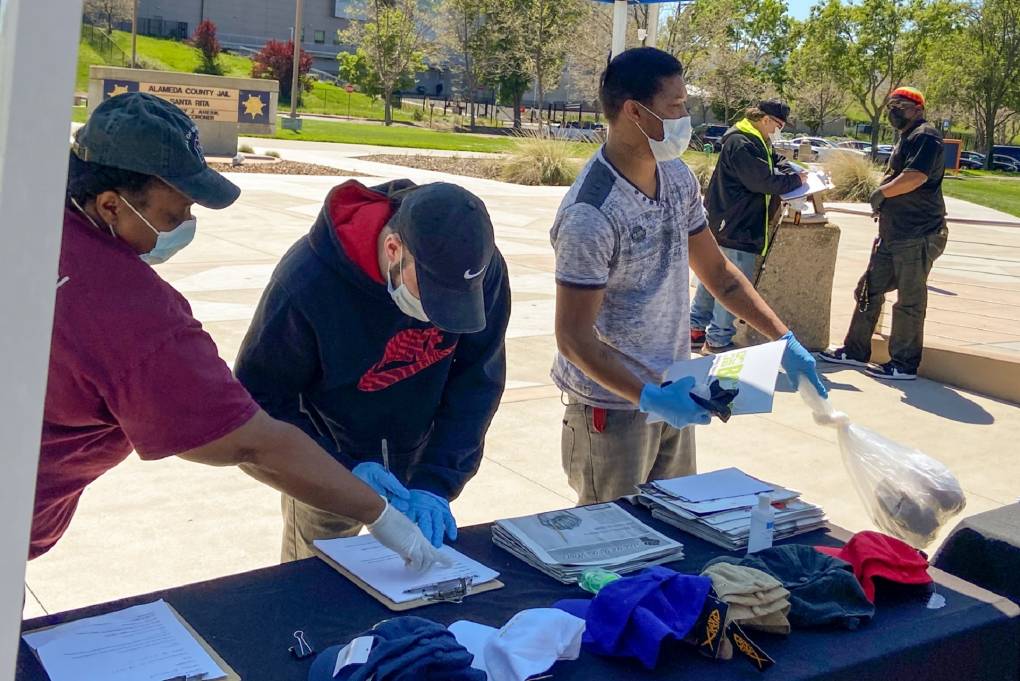
"caption": "Organizers with Legal Services for Prisoners with Children offer hotel vouchers and other assistance to people released from Santa Rita Jail on April 14, 2020.",
"description": "Organizers with Legal Services for Prisoners with Children offer hotel vouchers and other assistance to people released from Santa Rita Jail on Tuesday.",
"title": "AOUON StopGapHousing - Santa Rita - 02 (1)",
"credit": "Courtesy of Legal Services for Prisoners with Children",
"status": "inherit",
"isLoading": false,
"fetchFailed": false
},
"news_11811082": {
"type": "attachments",
"id": "news_11811082",
"meta": {
"index": "attachments_1716263798",
"site": "news",
"id": "11811082",
"found": true
},
"parent": 11811074,
"imgSizes": {
"apple_news_ca_landscape_5_5": {
"file": "https://ww2.kqed.org/app/uploads/sites/10/2020/04/RS42473_007_KQED_SanFrancisco_RentStrike_03312020-qut-1044x783.jpg",
"width": 1044,
"mimeType": "image/jpeg",
"height": 783
},
"apple_news_ca_square_4_0": {
"file": "https://ww2.kqed.org/app/uploads/sites/10/2020/04/RS42473_007_KQED_SanFrancisco_RentStrike_03312020-qut-470x470.jpg",
"width": 470,
"mimeType": "image/jpeg",
"height": 470
},
"twentyfourteen-full-width": {
"file": "https://ww2.kqed.org/app/uploads/sites/10/2020/04/RS42473_007_KQED_SanFrancisco_RentStrike_03312020-qut-1038x576.jpg",
"width": 1038,
"mimeType": "image/jpeg",
"height": 576
},
"thumbnail": {
"file": "https://ww2.kqed.org/app/uploads/sites/10/2020/04/RS42473_007_KQED_SanFrancisco_RentStrike_03312020-qut-160x107.jpg",
"width": 160,
"mimeType": "image/jpeg",
"height": 107
},
"post-thumbnail": {
"file": "https://ww2.kqed.org/app/uploads/sites/10/2020/04/RS42473_007_KQED_SanFrancisco_RentStrike_03312020-qut-672x372.jpg",
"width": 672,
"mimeType": "image/jpeg",
"height": 372
},
"kqedFullSize": {
"file": "https://ww2.kqed.org/app/uploads/sites/10/2020/04/RS42473_007_KQED_SanFrancisco_RentStrike_03312020-qut.jpg",
"width": 1920,
"height": 1280
},
"apple_news_ca_landscape_4_7": {
"file": "https://ww2.kqed.org/app/uploads/sites/10/2020/04/RS42473_007_KQED_SanFrancisco_RentStrike_03312020-qut-632x474.jpg",
"width": 632,
"mimeType": "image/jpeg",
"height": 474
},
"large": {
"file": "https://ww2.kqed.org/app/uploads/sites/10/2020/04/RS42473_007_KQED_SanFrancisco_RentStrike_03312020-qut-1020x680.jpg",
"width": 1020,
"mimeType": "image/jpeg",
"height": 680
},
"apple_news_ca_landscape_4_0": {
"file": "https://ww2.kqed.org/app/uploads/sites/10/2020/04/RS42473_007_KQED_SanFrancisco_RentStrike_03312020-qut-536x402.jpg",
"width": 536,
"mimeType": "image/jpeg",
"height": 402
},
"apple_news_ca_portrait_12_9": {
"file": "https://ww2.kqed.org/app/uploads/sites/10/2020/04/RS42473_007_KQED_SanFrancisco_RentStrike_03312020-qut-1122x1280.jpg",
"width": 1122,
"mimeType": "image/jpeg",
"height": 1280
},
"medium": {
"file": "https://ww2.kqed.org/app/uploads/sites/10/2020/04/RS42473_007_KQED_SanFrancisco_RentStrike_03312020-qut-800x533.jpg",
"width": 800,
"mimeType": "image/jpeg",
"height": 533
},
"apple_news_ca_portrait_4_0": {
"file": "https://ww2.kqed.org/app/uploads/sites/10/2020/04/RS42473_007_KQED_SanFrancisco_RentStrike_03312020-qut-354x472.jpg",
"width": 354,
"mimeType": "image/jpeg",
"height": 472
},
"apple_news_ca_portrait_9_7": {
"file": "https://ww2.kqed.org/app/uploads/sites/10/2020/04/RS42473_007_KQED_SanFrancisco_RentStrike_03312020-qut-840x1120.jpg",
"width": 840,
"mimeType": "image/jpeg",
"height": 1120
},
"apple_news_ca_landscape_12_9": {
"file": "https://ww2.kqed.org/app/uploads/sites/10/2020/04/RS42473_007_KQED_SanFrancisco_RentStrike_03312020-qut-1832x1280.jpg",
"width": 1832,
"mimeType": "image/jpeg",
"height": 1280
},
"apple_news_ca_square_9_7": {
"file": "https://ww2.kqed.org/app/uploads/sites/10/2020/04/RS42473_007_KQED_SanFrancisco_RentStrike_03312020-qut-1104x1104.jpg",
"width": 1104,
"mimeType": "image/jpeg",
"height": 1104
},
"apple_news_ca_portrait_4_7": {
"file": "https://ww2.kqed.org/app/uploads/sites/10/2020/04/RS42473_007_KQED_SanFrancisco_RentStrike_03312020-qut-414x552.jpg",
"width": 414,
"mimeType": "image/jpeg",
"height": 552
},
"apple_news_ca_square_12_9": {
"file": "https://ww2.kqed.org/app/uploads/sites/10/2020/04/RS42473_007_KQED_SanFrancisco_RentStrike_03312020-qut-1472x1280.jpg",
"width": 1472,
"mimeType": "image/jpeg",
"height": 1280
},
"apple_news_ca_portrait_5_5": {
"file": "https://ww2.kqed.org/app/uploads/sites/10/2020/04/RS42473_007_KQED_SanFrancisco_RentStrike_03312020-qut-687x916.jpg",
"width": 687,
"mimeType": "image/jpeg",
"height": 916
},
"full-width": {
"file": "https://ww2.kqed.org/app/uploads/sites/10/2020/04/RS42473_007_KQED_SanFrancisco_RentStrike_03312020-qut-1920x1280.jpg",
"width": 1920,
"mimeType": "image/jpeg",
"height": 1280
},
"apple_news_ca_square_4_7": {
"file": "https://ww2.kqed.org/app/uploads/sites/10/2020/04/RS42473_007_KQED_SanFrancisco_RentStrike_03312020-qut-550x550.jpg",
"width": 550,
"mimeType": "image/jpeg",
"height": 550
},
"apple_news_ca_landscape_9_7": {
"file": "https://ww2.kqed.org/app/uploads/sites/10/2020/04/RS42473_007_KQED_SanFrancisco_RentStrike_03312020-qut-1376x1032.jpg",
"width": 1376,
"mimeType": "image/jpeg",
"height": 1032
},
"apple_news_ca_square_5_5": {
"file": "https://ww2.kqed.org/app/uploads/sites/10/2020/04/RS42473_007_KQED_SanFrancisco_RentStrike_03312020-qut-912x912.jpg",
"width": 912,
"mimeType": "image/jpeg",
"height": 912
}
},
"publishDate": 1586279888,
"modified": 1586280223,
"caption": "En la Mission, una pancarta que declara una huelga de alquileres.",
"description": "En la Mission, una pancarta que declara una huelga de alquileres.",
"title": "RS42473_007_KQED_SanFrancisco_RentStrike_03312020-qut",
"credit": "Beth LaBerge/KQED",
"status": "inherit",
"isLoading": false,
"fetchFailed": false
},
"news_11811558": {
"type": "attachments",
"id": "news_11811558",
"meta": {
"index": "attachments_1716263798",
"site": "news",
"id": "11811558",
"found": true
},
"parent": 11811552,
"imgSizes": {
"apple_news_ca_landscape_5_5": {
"file": "https://ww2.kqed.org/app/uploads/sites/10/2020/04/RS27919_GettyImages-74418004-qut-1044x783.jpg",
"width": 1044,
"mimeType": "image/jpeg",
"height": 783
},
"apple_news_ca_square_4_0": {
"file": "https://ww2.kqed.org/app/uploads/sites/10/2020/04/RS27919_GettyImages-74418004-qut-470x470.jpg",
"width": 470,
"mimeType": "image/jpeg",
"height": 470
},
"twentyfourteen-full-width": {
"file": "https://ww2.kqed.org/app/uploads/sites/10/2020/04/RS27919_GettyImages-74418004-qut-1038x576.jpg",
"width": 1038,
"mimeType": "image/jpeg",
"height": 576
},
"thumbnail": {
"file": "https://ww2.kqed.org/app/uploads/sites/10/2020/04/RS27919_GettyImages-74418004-qut-160x103.jpg",
"width": 160,
"mimeType": "image/jpeg",
"height": 103
},
"post-thumbnail": {
"file": "https://ww2.kqed.org/app/uploads/sites/10/2020/04/RS27919_GettyImages-74418004-qut-672x372.jpg",
"width": 672,
"mimeType": "image/jpeg",
"height": 372
},
"kqedFullSize": {
"file": "https://ww2.kqed.org/app/uploads/sites/10/2020/04/RS27919_GettyImages-74418004-qut.jpg",
"width": 1920,
"height": 1236
},
"apple_news_ca_landscape_4_7": {
"file": "https://ww2.kqed.org/app/uploads/sites/10/2020/04/RS27919_GettyImages-74418004-qut-632x474.jpg",
"width": 632,
"mimeType": "image/jpeg",
"height": 474
},
"large": {
"file": "https://ww2.kqed.org/app/uploads/sites/10/2020/04/RS27919_GettyImages-74418004-qut-1020x657.jpg",
"width": 1020,
"mimeType": "image/jpeg",
"height": 657
},
"apple_news_ca_landscape_4_0": {
"file": "https://ww2.kqed.org/app/uploads/sites/10/2020/04/RS27919_GettyImages-74418004-qut-536x402.jpg",
"width": 536,
"mimeType": "image/jpeg",
"height": 402
},
"apple_news_ca_portrait_12_9": {
"file": "https://ww2.kqed.org/app/uploads/sites/10/2020/04/RS27919_GettyImages-74418004-qut-1122x1236.jpg",
"width": 1122,
"mimeType": "image/jpeg",
"height": 1236
},
"medium": {
"file": "https://ww2.kqed.org/app/uploads/sites/10/2020/04/RS27919_GettyImages-74418004-qut-800x515.jpg",
"width": 800,
"mimeType": "image/jpeg",
"height": 515
},
"apple_news_ca_portrait_4_0": {
"file": "https://ww2.kqed.org/app/uploads/sites/10/2020/04/RS27919_GettyImages-74418004-qut-354x472.jpg",
"width": 354,
"mimeType": "image/jpeg",
"height": 472
},
"apple_news_ca_portrait_9_7": {
"file": "https://ww2.kqed.org/app/uploads/sites/10/2020/04/RS27919_GettyImages-74418004-qut-840x1120.jpg",
"width": 840,
"mimeType": "image/jpeg",
"height": 1120
},
"apple_news_ca_landscape_12_9": {
"file": "https://ww2.kqed.org/app/uploads/sites/10/2020/04/RS27919_GettyImages-74418004-qut-1832x1236.jpg",
"width": 1832,
"mimeType": "image/jpeg",
"height": 1236
},
"apple_news_ca_square_9_7": {
"file": "https://ww2.kqed.org/app/uploads/sites/10/2020/04/RS27919_GettyImages-74418004-qut-1104x1104.jpg",
"width": 1104,
"mimeType": "image/jpeg",
"height": 1104
},
"apple_news_ca_portrait_4_7": {
"file": "https://ww2.kqed.org/app/uploads/sites/10/2020/04/RS27919_GettyImages-74418004-qut-414x552.jpg",
"width": 414,
"mimeType": "image/jpeg",
"height": 552
},
"apple_news_ca_square_12_9": {
"file": "https://ww2.kqed.org/app/uploads/sites/10/2020/04/RS27919_GettyImages-74418004-qut-1472x1236.jpg",
"width": 1472,
"mimeType": "image/jpeg",
"height": 1236
},
"apple_news_ca_portrait_5_5": {
"file": "https://ww2.kqed.org/app/uploads/sites/10/2020/04/RS27919_GettyImages-74418004-qut-687x916.jpg",
"width": 687,
"mimeType": "image/jpeg",
"height": 916
},
"full-width": {
"file": "https://ww2.kqed.org/app/uploads/sites/10/2020/04/RS27919_GettyImages-74418004-qut-1920x1236.jpg",
"width": 1920,
"mimeType": "image/jpeg",
"height": 1236
},
"apple_news_ca_square_4_7": {
"file": "https://ww2.kqed.org/app/uploads/sites/10/2020/04/RS27919_GettyImages-74418004-qut-550x550.jpg",
"width": 550,
"mimeType": "image/jpeg",
"height": 550
},
"apple_news_ca_landscape_9_7": {
"file": "https://ww2.kqed.org/app/uploads/sites/10/2020/04/RS27919_GettyImages-74418004-qut-1376x1032.jpg",
"width": 1376,
"mimeType": "image/jpeg",
"height": 1032
},
"apple_news_ca_square_5_5": {
"file": "https://ww2.kqed.org/app/uploads/sites/10/2020/04/RS27919_GettyImages-74418004-qut-912x912.jpg",
"width": 912,
"mimeType": "image/jpeg",
"height": 912
}
},
"publishDate": 1586453263,
"modified": 1589412040,
"caption": "SAN FRANCISCO - JUNE 06: Rows of houses stand June 6, 2007 in San Francisco, California. (Photo by Justin Sullivan/Getty Images)",
"description": null,
"title": "Realtors Lower Housing Market Sales Forecast",
"credit": null,
"status": "inherit",
"isLoading": false,
"fetchFailed": false
},
"news_11811189": {
"type": "attachments",
"id": "news_11811189",
"meta": {
"index": "attachments_1716263798",
"site": "news",
"id": "11811189",
"found": true
},
"parent": 11811188,
"imgSizes": {
"apple_news_ca_landscape_5_5": {
"file": "https://ww2.kqed.org/app/uploads/sites/10/2020/04/RS42199_009_KQED_Berkeley_Homelessness_03192020_-qut-1044x783.jpg",
"width": 1044,
"mimeType": "image/jpeg",
"height": 783
},
"apple_news_ca_square_4_0": {
"file": "https://ww2.kqed.org/app/uploads/sites/10/2020/04/RS42199_009_KQED_Berkeley_Homelessness_03192020_-qut-470x470.jpg",
"width": 470,
"mimeType": "image/jpeg",
"height": 470
},
"twentyfourteen-full-width": {
"file": "https://ww2.kqed.org/app/uploads/sites/10/2020/04/RS42199_009_KQED_Berkeley_Homelessness_03192020_-qut-1038x576.jpg",
"width": 1038,
"mimeType": "image/jpeg",
"height": 576
},
"thumbnail": {
"file": "https://ww2.kqed.org/app/uploads/sites/10/2020/04/RS42199_009_KQED_Berkeley_Homelessness_03192020_-qut-160x107.jpg",
"width": 160,
"mimeType": "image/jpeg",
"height": 107
},
"post-thumbnail": {
"file": "https://ww2.kqed.org/app/uploads/sites/10/2020/04/RS42199_009_KQED_Berkeley_Homelessness_03192020_-qut-672x372.jpg",
"width": 672,
"mimeType": "image/jpeg",
"height": 372
},
"kqedFullSize": {
"file": "https://ww2.kqed.org/app/uploads/sites/10/2020/04/RS42199_009_KQED_Berkeley_Homelessness_03192020_-qut.jpg",
"width": 1920,
"height": 1280
},
"apple_news_ca_landscape_4_7": {
"file": "https://ww2.kqed.org/app/uploads/sites/10/2020/04/RS42199_009_KQED_Berkeley_Homelessness_03192020_-qut-632x474.jpg",
"width": 632,
"mimeType": "image/jpeg",
"height": 474
},
"large": {
"file": "https://ww2.kqed.org/app/uploads/sites/10/2020/04/RS42199_009_KQED_Berkeley_Homelessness_03192020_-qut-1020x680.jpg",
"width": 1020,
"mimeType": "image/jpeg",
"height": 680
},
"apple_news_ca_landscape_4_0": {
"file": "https://ww2.kqed.org/app/uploads/sites/10/2020/04/RS42199_009_KQED_Berkeley_Homelessness_03192020_-qut-536x402.jpg",
"width": 536,
"mimeType": "image/jpeg",
"height": 402
},
"apple_news_ca_portrait_12_9": {
"file": "https://ww2.kqed.org/app/uploads/sites/10/2020/04/RS42199_009_KQED_Berkeley_Homelessness_03192020_-qut-1122x1280.jpg",
"width": 1122,
"mimeType": "image/jpeg",
"height": 1280
},
"medium": {
"file": "https://ww2.kqed.org/app/uploads/sites/10/2020/04/RS42199_009_KQED_Berkeley_Homelessness_03192020_-qut-800x533.jpg",
"width": 800,
"mimeType": "image/jpeg",
"height": 533
},
"apple_news_ca_portrait_4_0": {
"file": "https://ww2.kqed.org/app/uploads/sites/10/2020/04/RS42199_009_KQED_Berkeley_Homelessness_03192020_-qut-354x472.jpg",
"width": 354,
"mimeType": "image/jpeg",
"height": 472
},
"apple_news_ca_portrait_9_7": {
"file": "https://ww2.kqed.org/app/uploads/sites/10/2020/04/RS42199_009_KQED_Berkeley_Homelessness_03192020_-qut-840x1120.jpg",
"width": 840,
"mimeType": "image/jpeg",
"height": 1120
},
"apple_news_ca_landscape_12_9": {
"file": "https://ww2.kqed.org/app/uploads/sites/10/2020/04/RS42199_009_KQED_Berkeley_Homelessness_03192020_-qut-1832x1280.jpg",
"width": 1832,
"mimeType": "image/jpeg",
"height": 1280
},
"apple_news_ca_square_9_7": {
"file": "https://ww2.kqed.org/app/uploads/sites/10/2020/04/RS42199_009_KQED_Berkeley_Homelessness_03192020_-qut-1104x1104.jpg",
"width": 1104,
"mimeType": "image/jpeg",
"height": 1104
},
"apple_news_ca_portrait_4_7": {
"file": "https://ww2.kqed.org/app/uploads/sites/10/2020/04/RS42199_009_KQED_Berkeley_Homelessness_03192020_-qut-414x552.jpg",
"width": 414,
"mimeType": "image/jpeg",
"height": 552
},
"apple_news_ca_square_12_9": {
"file": "https://ww2.kqed.org/app/uploads/sites/10/2020/04/RS42199_009_KQED_Berkeley_Homelessness_03192020_-qut-1472x1280.jpg",
"width": 1472,
"mimeType": "image/jpeg",
"height": 1280
},
"apple_news_ca_portrait_5_5": {
"file": "https://ww2.kqed.org/app/uploads/sites/10/2020/04/RS42199_009_KQED_Berkeley_Homelessness_03192020_-qut-687x916.jpg",
"width": 687,
"mimeType": "image/jpeg",
"height": 916
},
"full-width": {
"file": "https://ww2.kqed.org/app/uploads/sites/10/2020/04/RS42199_009_KQED_Berkeley_Homelessness_03192020_-qut-1920x1280.jpg",
"width": 1920,
"mimeType": "image/jpeg",
"height": 1280
},
"apple_news_ca_square_4_7": {
"file": "https://ww2.kqed.org/app/uploads/sites/10/2020/04/RS42199_009_KQED_Berkeley_Homelessness_03192020_-qut-550x550.jpg",
"width": 550,
"mimeType": "image/jpeg",
"height": 550
},
"apple_news_ca_landscape_9_7": {
"file": "https://ww2.kqed.org/app/uploads/sites/10/2020/04/RS42199_009_KQED_Berkeley_Homelessness_03192020_-qut-1376x1032.jpg",
"width": 1376,
"mimeType": "image/jpeg",
"height": 1032
},
"apple_news_ca_square_5_5": {
"file": "https://ww2.kqed.org/app/uploads/sites/10/2020/04/RS42199_009_KQED_Berkeley_Homelessness_03192020_-qut-912x912.jpg",
"width": 912,
"mimeType": "image/jpeg",
"height": 912
}
},
"publishDate": 1586302032,
"modified": 1586302068,
"caption": "A portable restroom at a tent encampment under a freeway overpass in Berkeley on Thursday, Mar. 19, 2020.",
"description": null,
"title": "RS42199_009_KQED_Berkeley_Homelessness_03192020_-qut",
"credit": "Beth LaBerge/KQED",
"status": "inherit",
"isLoading": false,
"fetchFailed": false
},
"news_11809882": {
"type": "attachments",
"id": "news_11809882",
"meta": {
"index": "attachments_1716263798",
"site": "news",
"id": "11809882",
"found": true
},
"parent": 11809880,
"imgSizes": {
"apple_news_ca_landscape_5_5": {
"file": "https://ww2.kqed.org/app/uploads/sites/10/2020/04/RS612_foreclosure20120511-1044x783.jpg",
"width": 1044,
"mimeType": "image/jpeg",
"height": 783
},
"apple_news_ca_square_4_0": {
"file": "https://ww2.kqed.org/app/uploads/sites/10/2020/04/RS612_foreclosure20120511-470x470.jpg",
"width": 470,
"mimeType": "image/jpeg",
"height": 470
},
"twentyfourteen-full-width": {
"file": "https://ww2.kqed.org/app/uploads/sites/10/2020/04/RS612_foreclosure20120511-1038x576.jpg",
"width": 1038,
"mimeType": "image/jpeg",
"height": 576
},
"thumbnail": {
"file": "https://ww2.kqed.org/app/uploads/sites/10/2020/04/RS612_foreclosure20120511-160x105.jpg",
"width": 160,
"mimeType": "image/jpeg",
"height": 105
},
"post-thumbnail": {
"file": "https://ww2.kqed.org/app/uploads/sites/10/2020/04/RS612_foreclosure20120511-672x372.jpg",
"width": 672,
"mimeType": "image/jpeg",
"height": 372
},
"kqedFullSize": {
"file": "https://ww2.kqed.org/app/uploads/sites/10/2020/04/RS612_foreclosure20120511.jpg",
"width": 3000,
"height": 1960
},
"apple_news_ca_landscape_4_7": {
"file": "https://ww2.kqed.org/app/uploads/sites/10/2020/04/RS612_foreclosure20120511-632x474.jpg",
"width": 632,
"mimeType": "image/jpeg",
"height": 474
},
"large": {
"file": "https://ww2.kqed.org/app/uploads/sites/10/2020/04/RS612_foreclosure20120511-1020x666.jpg",
"width": 1020,
"mimeType": "image/jpeg",
"height": 666
},
"apple_news_ca_landscape_4_0": {
"file": "https://ww2.kqed.org/app/uploads/sites/10/2020/04/RS612_foreclosure20120511-536x402.jpg",
"width": 536,
"mimeType": "image/jpeg",
"height": 402
},
"apple_news_ca_portrait_12_9": {
"file": "https://ww2.kqed.org/app/uploads/sites/10/2020/04/RS612_foreclosure20120511-1122x1496.jpg",
"width": 1122,
"mimeType": "image/jpeg",
"height": 1496
},
"medium": {
"file": "https://ww2.kqed.org/app/uploads/sites/10/2020/04/RS612_foreclosure20120511-800x523.jpg",
"width": 800,
"mimeType": "image/jpeg",
"height": 523
},
"apple_news_ca_portrait_4_0": {
"file": "https://ww2.kqed.org/app/uploads/sites/10/2020/04/RS612_foreclosure20120511-354x472.jpg",
"width": 354,
"mimeType": "image/jpeg",
"height": 472
},
"apple_news_ca_portrait_9_7": {
"file": "https://ww2.kqed.org/app/uploads/sites/10/2020/04/RS612_foreclosure20120511-840x1120.jpg",
"width": 840,
"mimeType": "image/jpeg",
"height": 1120
},
"apple_news_ca_landscape_12_9": {
"file": "https://ww2.kqed.org/app/uploads/sites/10/2020/04/RS612_foreclosure20120511-1832x1374.jpg",
"width": 1832,
"mimeType": "image/jpeg",
"height": 1374
},
"apple_news_ca_square_9_7": {
"file": "https://ww2.kqed.org/app/uploads/sites/10/2020/04/RS612_foreclosure20120511-1104x1104.jpg",
"width": 1104,
"mimeType": "image/jpeg",
"height": 1104
},
"apple_news_ca_portrait_4_7": {
"file": "https://ww2.kqed.org/app/uploads/sites/10/2020/04/RS612_foreclosure20120511-414x552.jpg",
"width": 414,
"mimeType": "image/jpeg",
"height": 552
},
"apple_news_ca_square_12_9": {
"file": "https://ww2.kqed.org/app/uploads/sites/10/2020/04/RS612_foreclosure20120511-1472x1472.jpg",
"width": 1472,
"mimeType": "image/jpeg",
"height": 1472
},
"apple_news_ca_portrait_5_5": {
"file": "https://ww2.kqed.org/app/uploads/sites/10/2020/04/RS612_foreclosure20120511-687x916.jpg",
"width": 687,
"mimeType": "image/jpeg",
"height": 916
},
"full-width": {
"file": "https://ww2.kqed.org/app/uploads/sites/10/2020/04/RS612_foreclosure20120511-1920x1254.jpg",
"width": 1920,
"mimeType": "image/jpeg",
"height": 1254
},
"apple_news_ca_square_4_7": {
"file": "https://ww2.kqed.org/app/uploads/sites/10/2020/04/RS612_foreclosure20120511-550x550.jpg",
"width": 550,
"mimeType": "image/jpeg",
"height": 550
},
"apple_news_ca_landscape_9_7": {
"file": "https://ww2.kqed.org/app/uploads/sites/10/2020/04/RS612_foreclosure20120511-1376x1032.jpg",
"width": 1376,
"mimeType": "image/jpeg",
"height": 1032
},
"apple_news_ca_square_5_5": {
"file": "https://ww2.kqed.org/app/uploads/sites/10/2020/04/RS612_foreclosure20120511-912x912.jpg",
"width": 912,
"mimeType": "image/jpeg",
"height": 912
}
},
"publishDate": 1585690423,
"modified": 1632510715,
"caption": "Gov. Gavin Newsom's moratorium on evictions came after advocacy organizations and some state lawmakers made repeated calls to the governor to provide protection to renters when residents were told to shelter in place.",
"description": null,
"title": "California To Broaden Foreclosure Assist Program",
"credit": "Justin Sullivan/Getty Images",
"status": "inherit",
"altTag": "Two houses, side by side, one with boarded-up windows.",
"isLoading": false,
"fetchFailed": false
},
"news_11810835": {
"type": "attachments",
"id": "news_11810835",
"meta": {
"index": "attachments_1716263798",
"site": "news",
"id": "11810835",
"found": true
},
"parent": 11810827,
"imgSizes": {
"apple_news_ca_square_4_0": {
"file": "https://ww2.kqed.org/app/uploads/sites/10/2020/04/SCNG_evictions_01-470x470.jpg",
"width": 470,
"mimeType": "image/jpeg",
"height": 470
},
"thumbnail": {
"file": "https://ww2.kqed.org/app/uploads/sites/10/2020/04/SCNG_evictions_01-160x107.jpg",
"width": 160,
"mimeType": "image/jpeg",
"height": 107
},
"post-thumbnail": {
"file": "https://ww2.kqed.org/app/uploads/sites/10/2020/04/SCNG_evictions_01-672x372.jpg",
"width": 672,
"mimeType": "image/jpeg",
"height": 372
},
"kqedFullSize": {
"file": "https://ww2.kqed.org/app/uploads/sites/10/2020/04/SCNG_evictions_01.jpg",
"width": 793,
"height": 528
},
"apple_news_ca_landscape_4_7": {
"file": "https://ww2.kqed.org/app/uploads/sites/10/2020/04/SCNG_evictions_01-632x474.jpg",
"width": 632,
"mimeType": "image/jpeg",
"height": 474
},
"apple_news_ca_portrait_4_7": {
"file": "https://ww2.kqed.org/app/uploads/sites/10/2020/04/SCNG_evictions_01-414x528.jpg",
"width": 414,
"mimeType": "image/jpeg",
"height": 528
},
"apple_news_ca_portrait_5_5": {
"file": "https://ww2.kqed.org/app/uploads/sites/10/2020/04/SCNG_evictions_01-687x528.jpg",
"width": 687,
"mimeType": "image/jpeg",
"height": 528
},
"apple_news_ca_square_4_7": {
"file": "https://ww2.kqed.org/app/uploads/sites/10/2020/04/SCNG_evictions_01-550x528.jpg",
"width": 550,
"mimeType": "image/jpeg",
"height": 528
},
"apple_news_ca_landscape_4_0": {
"file": "https://ww2.kqed.org/app/uploads/sites/10/2020/04/SCNG_evictions_01-536x402.jpg",
"width": 536,
"mimeType": "image/jpeg",
"height": 402
},
"apple_news_ca_portrait_4_0": {
"file": "https://ww2.kqed.org/app/uploads/sites/10/2020/04/SCNG_evictions_01-354x472.jpg",
"width": 354,
"mimeType": "image/jpeg",
"height": 472
}
},
"publishDate": 1586202751,
"modified": 1586202776,
"caption": "Irma Zamorano, an El Monte resident, wants a stronger eviction moratorium.",
"description": null,
"title": "SCNG_evictions_01",
"credit": "Pierce Singgih/SCNG",
"status": "inherit",
"isLoading": false,
"fetchFailed": false
},
"news_11810578": {
"type": "attachments",
"id": "news_11810578",
"meta": {
"index": "attachments_1716263798",
"site": "news",
"id": "11810578",
"found": true
},
"parent": 11810570,
"imgSizes": {
"apple_news_ca_landscape_5_5": {
"file": "https://ww2.kqed.org/app/uploads/sites/10/2020/04/RS42539_Lifelong-nurse-2-qut-1044x783.jpg",
"width": 1044,
"mimeType": "image/jpeg",
"height": 783
},
"apple_news_ca_square_4_0": {
"file": "https://ww2.kqed.org/app/uploads/sites/10/2020/04/RS42539_Lifelong-nurse-2-qut-470x470.jpg",
"width": 470,
"mimeType": "image/jpeg",
"height": 470
},
"twentyfourteen-full-width": {
"file": "https://ww2.kqed.org/app/uploads/sites/10/2020/04/RS42539_Lifelong-nurse-2-qut-1038x576.jpg",
"width": 1038,
"mimeType": "image/jpeg",
"height": 576
},
"thumbnail": {
"file": "https://ww2.kqed.org/app/uploads/sites/10/2020/04/RS42539_Lifelong-nurse-2-qut-160x120.jpg",
"width": 160,
"mimeType": "image/jpeg",
"height": 120
},
"post-thumbnail": {
"file": "https://ww2.kqed.org/app/uploads/sites/10/2020/04/RS42539_Lifelong-nurse-2-qut-672x372.jpg",
"width": 672,
"mimeType": "image/jpeg",
"height": 372
},
"kqedFullSize": {
"file": "https://ww2.kqed.org/app/uploads/sites/10/2020/04/RS42539_Lifelong-nurse-2-qut.jpg",
"width": 1920,
"height": 1440
},
"apple_news_ca_landscape_4_7": {
"file": "https://ww2.kqed.org/app/uploads/sites/10/2020/04/RS42539_Lifelong-nurse-2-qut-632x474.jpg",
"width": 632,
"mimeType": "image/jpeg",
"height": 474
},
"large": {
"file": "https://ww2.kqed.org/app/uploads/sites/10/2020/04/RS42539_Lifelong-nurse-2-qut-1020x765.jpg",
"width": 1020,
"mimeType": "image/jpeg",
"height": 765
},
"apple_news_ca_landscape_4_0": {
"file": "https://ww2.kqed.org/app/uploads/sites/10/2020/04/RS42539_Lifelong-nurse-2-qut-536x402.jpg",
"width": 536,
"mimeType": "image/jpeg",
"height": 402
},
"apple_news_ca_portrait_12_9": {
"file": "https://ww2.kqed.org/app/uploads/sites/10/2020/04/RS42539_Lifelong-nurse-2-qut-1122x1440.jpg",
"width": 1122,
"mimeType": "image/jpeg",
"height": 1440
},
"medium": {
"file": "https://ww2.kqed.org/app/uploads/sites/10/2020/04/RS42539_Lifelong-nurse-2-qut-800x600.jpg",
"width": 800,
"mimeType": "image/jpeg",
"height": 600
},
"apple_news_ca_portrait_4_0": {
"file": "https://ww2.kqed.org/app/uploads/sites/10/2020/04/RS42539_Lifelong-nurse-2-qut-354x472.jpg",
"width": 354,
"mimeType": "image/jpeg",
"height": 472
},
"apple_news_ca_portrait_9_7": {
"file": "https://ww2.kqed.org/app/uploads/sites/10/2020/04/RS42539_Lifelong-nurse-2-qut-840x1120.jpg",
"width": 840,
"mimeType": "image/jpeg",
"height": 1120
},
"apple_news_ca_landscape_12_9": {
"file": "https://ww2.kqed.org/app/uploads/sites/10/2020/04/RS42539_Lifelong-nurse-2-qut-1832x1374.jpg",
"width": 1832,
"mimeType": "image/jpeg",
"height": 1374
},
"apple_news_ca_square_9_7": {
"file": "https://ww2.kqed.org/app/uploads/sites/10/2020/04/RS42539_Lifelong-nurse-2-qut-1104x1104.jpg",
"width": 1104,
"mimeType": "image/jpeg",
"height": 1104
},
"apple_news_ca_portrait_4_7": {
"file": "https://ww2.kqed.org/app/uploads/sites/10/2020/04/RS42539_Lifelong-nurse-2-qut-414x552.jpg",
"width": 414,
"mimeType": "image/jpeg",
"height": 552
},
"apple_news_ca_square_12_9": {
"file": "https://ww2.kqed.org/app/uploads/sites/10/2020/04/RS42539_Lifelong-nurse-2-qut-1472x1440.jpg",
"width": 1472,
"mimeType": "image/jpeg",
"height": 1440
},
"apple_news_ca_portrait_5_5": {
"file": "https://ww2.kqed.org/app/uploads/sites/10/2020/04/RS42539_Lifelong-nurse-2-qut-687x916.jpg",
"width": 687,
"mimeType": "image/jpeg",
"height": 916
},
"full-width": {
"file": "https://ww2.kqed.org/app/uploads/sites/10/2020/04/RS42539_Lifelong-nurse-2-qut-1920x1440.jpg",
"width": 1920,
"mimeType": "image/jpeg",
"height": 1440
},
"apple_news_ca_square_4_7": {
"file": "https://ww2.kqed.org/app/uploads/sites/10/2020/04/RS42539_Lifelong-nurse-2-qut-550x550.jpg",
"width": 550,
"mimeType": "image/jpeg",
"height": 550
},
"apple_news_ca_landscape_9_7": {
"file": "https://ww2.kqed.org/app/uploads/sites/10/2020/04/RS42539_Lifelong-nurse-2-qut-1376x1032.jpg",
"width": 1376,
"mimeType": "image/jpeg",
"height": 1032
},
"apple_news_ca_square_5_5": {
"file": "https://ww2.kqed.org/app/uploads/sites/10/2020/04/RS42539_Lifelong-nurse-2-qut-912x912.jpg",
"width": 912,
"mimeType": "image/jpeg",
"height": 912
}
},
"publishDate": 1585950541,
"modified": 1585954866,
"caption": "Audrey Fisher, a registered nurse with the Lifelong Medical Care TRUST Health Center's street medicine team, tests a homeless man for COVID-19, Tuesday, March 31, 2020. Increasing testing of people living in camp communities will be critical to ensuring the coronavirus doesn't continue to spread throughout the community, Lifelong's associate medical director, Jason Reinking, said.",
"description": "Audrey Fisher, a registered nurse with the Lifelong Medical Care TRUST Health Center's street medicine team, tests a homeless man for COVID-19, Tuesday, March 31, 2020. Increasing testing of people living in camp communities will be critical to ensuring the coronavirus doesn't continue to spread throughout the community, Lifelong's associate medical director, Jason Reinking, said.",
"title": "RS42539_Lifelong nurse 2-qut",
"credit": "Courtesy Lifelong Medical Care TRUST Health Center",
"status": "inherit",
"isLoading": false,
"fetchFailed": false
},
"news_11810535": {
"type": "attachments",
"id": "news_11810535",
"meta": {
"index": "attachments_1716263798",
"site": "news",
"id": "11810535",
"found": true
},
"parent": 11810520,
"imgSizes": {
"apple_news_ca_landscape_5_5": {
"file": "https://ww2.kqed.org/app/uploads/sites/10/2020/04/Gavin-Newsom-homeless-FEMA-1044x783.jpg",
"width": 1044,
"mimeType": "image/jpeg",
"height": 783
},
"apple_news_ca_square_4_0": {
"file": "https://ww2.kqed.org/app/uploads/sites/10/2020/04/Gavin-Newsom-homeless-FEMA-470x470.jpg",
"width": 470,
"mimeType": "image/jpeg",
"height": 470
},
"twentyfourteen-full-width": {
"file": "https://ww2.kqed.org/app/uploads/sites/10/2020/04/Gavin-Newsom-homeless-FEMA-1038x576.jpg",
"width": 1038,
"mimeType": "image/jpeg",
"height": 576
},
"thumbnail": {
"file": "https://ww2.kqed.org/app/uploads/sites/10/2020/04/Gavin-Newsom-homeless-FEMA-160x107.jpg",
"width": 160,
"mimeType": "image/jpeg",
"height": 107
},
"post-thumbnail": {
"file": "https://ww2.kqed.org/app/uploads/sites/10/2020/04/Gavin-Newsom-homeless-FEMA-672x372.jpg",
"width": 672,
"mimeType": "image/jpeg",
"height": 372
},
"kqedFullSize": {
"file": "https://ww2.kqed.org/app/uploads/sites/10/2020/04/Gavin-Newsom-homeless-FEMA.jpg",
"width": 1920,
"height": 1280
},
"apple_news_ca_landscape_4_7": {
"file": "https://ww2.kqed.org/app/uploads/sites/10/2020/04/Gavin-Newsom-homeless-FEMA-632x474.jpg",
"width": 632,
"mimeType": "image/jpeg",
"height": 474
},
"large": {
"file": "https://ww2.kqed.org/app/uploads/sites/10/2020/04/Gavin-Newsom-homeless-FEMA-1020x680.jpg",
"width": 1020,
"mimeType": "image/jpeg",
"height": 680
},
"apple_news_ca_landscape_4_0": {
"file": "https://ww2.kqed.org/app/uploads/sites/10/2020/04/Gavin-Newsom-homeless-FEMA-536x402.jpg",
"width": 536,
"mimeType": "image/jpeg",
"height": 402
},
"apple_news_ca_portrait_12_9": {
"file": "https://ww2.kqed.org/app/uploads/sites/10/2020/04/Gavin-Newsom-homeless-FEMA-1122x1280.jpg",
"width": 1122,
"mimeType": "image/jpeg",
"height": 1280
},
"medium": {
"file": "https://ww2.kqed.org/app/uploads/sites/10/2020/04/Gavin-Newsom-homeless-FEMA-800x533.jpg",
"width": 800,
"mimeType": "image/jpeg",
"height": 533
},
"apple_news_ca_portrait_4_0": {
"file": "https://ww2.kqed.org/app/uploads/sites/10/2020/04/Gavin-Newsom-homeless-FEMA-354x472.jpg",
"width": 354,
"mimeType": "image/jpeg",
"height": 472
},
"apple_news_ca_portrait_9_7": {
"file": "https://ww2.kqed.org/app/uploads/sites/10/2020/04/Gavin-Newsom-homeless-FEMA-840x1120.jpg",
"width": 840,
"mimeType": "image/jpeg",
"height": 1120
},
"apple_news_ca_landscape_12_9": {
"file": "https://ww2.kqed.org/app/uploads/sites/10/2020/04/Gavin-Newsom-homeless-FEMA-1832x1280.jpg",
"width": 1832,
"mimeType": "image/jpeg",
"height": 1280
},
"apple_news_ca_square_9_7": {
"file": "https://ww2.kqed.org/app/uploads/sites/10/2020/04/Gavin-Newsom-homeless-FEMA-1104x1104.jpg",
"width": 1104,
"mimeType": "image/jpeg",
"height": 1104
},
"apple_news_ca_portrait_4_7": {
"file": "https://ww2.kqed.org/app/uploads/sites/10/2020/04/Gavin-Newsom-homeless-FEMA-414x552.jpg",
"width": 414,
"mimeType": "image/jpeg",
"height": 552
},
"apple_news_ca_square_12_9": {
"file": "https://ww2.kqed.org/app/uploads/sites/10/2020/04/Gavin-Newsom-homeless-FEMA-1472x1280.jpg",
"width": 1472,
"mimeType": "image/jpeg",
"height": 1280
},
"apple_news_ca_portrait_5_5": {
"file": "https://ww2.kqed.org/app/uploads/sites/10/2020/04/Gavin-Newsom-homeless-FEMA-687x916.jpg",
"width": 687,
"mimeType": "image/jpeg",
"height": 916
},
"full-width": {
"file": "https://ww2.kqed.org/app/uploads/sites/10/2020/04/Gavin-Newsom-homeless-FEMA-1920x1280.jpg",
"width": 1920,
"mimeType": "image/jpeg",
"height": 1280
},
"apple_news_ca_square_4_7": {
"file": "https://ww2.kqed.org/app/uploads/sites/10/2020/04/Gavin-Newsom-homeless-FEMA-550x550.jpg",
"width": 550,
"mimeType": "image/jpeg",
"height": 550
},
"apple_news_ca_landscape_9_7": {
"file": "https://ww2.kqed.org/app/uploads/sites/10/2020/04/Gavin-Newsom-homeless-FEMA-1376x1032.jpg",
"width": 1376,
"mimeType": "image/jpeg",
"height": 1032
},
"apple_news_ca_square_5_5": {
"file": "https://ww2.kqed.org/app/uploads/sites/10/2020/04/Gavin-Newsom-homeless-FEMA-912x912.jpg",
"width": 912,
"mimeType": "image/jpeg",
"height": 912
}
},
"publishDate": 1585948131,
"modified": 1585948176,
"caption": "Gov. Gavin Newsom speaks during a a news conference about the state's efforts on the homelessness crisis on January 16, 2020 in Oakland.",
"description": "Gov. Gavin Newsom speaks during a a news conference about the state's efforts on the homelessness crisis on January 16, 2020 in Oakland.",
"title": "Gavin-Newsom-homeless-FEMA",
"credit": "Justin Sullivan/Getty Images",
"status": "inherit",
"isLoading": false,
"fetchFailed": false
},
"news_11810339": {
"type": "attachments",
"id": "news_11810339",
"meta": {
"index": "attachments_1716263798",
"site": "news",
"id": "11810339",
"found": true
},
"parent": 11810327,
"imgSizes": {
"apple_news_ca_landscape_5_5": {
"file": "https://ww2.kqed.org/app/uploads/sites/10/2020/04/pleasegive_040220_final-1044x783.png",
"width": 1044,
"mimeType": "image/png",
"height": 783
},
"apple_news_ca_square_4_0": {
"file": "https://ww2.kqed.org/app/uploads/sites/10/2020/04/pleasegive_040220_final-470x470.png",
"width": 470,
"mimeType": "image/png",
"height": 470
},
"twentyfourteen-full-width": {
"file": "https://ww2.kqed.org/app/uploads/sites/10/2020/04/pleasegive_040220_final-1038x576.png",
"width": 1038,
"mimeType": "image/png",
"height": 576
},
"thumbnail": {
"file": "https://ww2.kqed.org/app/uploads/sites/10/2020/04/pleasegive_040220_final-160x111.png",
"width": 160,
"mimeType": "image/png",
"height": 111
},
"post-thumbnail": {
"file": "https://ww2.kqed.org/app/uploads/sites/10/2020/04/pleasegive_040220_final-672x372.png",
"width": 672,
"mimeType": "image/png",
"height": 372
},
"kqedFullSize": {
"file": "https://ww2.kqed.org/app/uploads/sites/10/2020/04/pleasegive_040220_final.png",
"width": 1725,
"height": 1200
},
"apple_news_ca_landscape_4_7": {
"file": "https://ww2.kqed.org/app/uploads/sites/10/2020/04/pleasegive_040220_final-632x474.png",
"width": 632,
"mimeType": "image/png",
"height": 474
},
"large": {
"file": "https://ww2.kqed.org/app/uploads/sites/10/2020/04/pleasegive_040220_final-1020x710.png",
"width": 1020,
"mimeType": "image/png",
"height": 710
},
"apple_news_ca_landscape_4_0": {
"file": "https://ww2.kqed.org/app/uploads/sites/10/2020/04/pleasegive_040220_final-536x402.png",
"width": 536,
"mimeType": "image/png",
"height": 402
},
"apple_news_ca_portrait_12_9": {
"file": "https://ww2.kqed.org/app/uploads/sites/10/2020/04/pleasegive_040220_final-1122x1200.png",
"width": 1122,
"mimeType": "image/png",
"height": 1200
},
"medium": {
"file": "https://ww2.kqed.org/app/uploads/sites/10/2020/04/pleasegive_040220_final-800x557.png",
"width": 800,
"mimeType": "image/png",
"height": 557
},
"apple_news_ca_portrait_4_0": {
"file": "https://ww2.kqed.org/app/uploads/sites/10/2020/04/pleasegive_040220_final-354x472.png",
"width": 354,
"mimeType": "image/png",
"height": 472
},
"apple_news_ca_portrait_9_7": {
"file": "https://ww2.kqed.org/app/uploads/sites/10/2020/04/pleasegive_040220_final-840x1120.png",
"width": 840,
"mimeType": "image/png",
"height": 1120
},
"apple_news_ca_square_9_7": {
"file": "https://ww2.kqed.org/app/uploads/sites/10/2020/04/pleasegive_040220_final-1104x1104.png",
"width": 1104,
"mimeType": "image/png",
"height": 1104
},
"apple_news_ca_portrait_4_7": {
"file": "https://ww2.kqed.org/app/uploads/sites/10/2020/04/pleasegive_040220_final-414x552.png",
"width": 414,
"mimeType": "image/png",
"height": 552
},
"apple_news_ca_square_12_9": {
"file": "https://ww2.kqed.org/app/uploads/sites/10/2020/04/pleasegive_040220_final-1472x1200.png",
"width": 1472,
"mimeType": "image/png",
"height": 1200
},
"apple_news_ca_portrait_5_5": {
"file": "https://ww2.kqed.org/app/uploads/sites/10/2020/04/pleasegive_040220_final-687x916.png",
"width": 687,
"mimeType": "image/png",
"height": 916
},
"apple_news_ca_square_4_7": {
"file": "https://ww2.kqed.org/app/uploads/sites/10/2020/04/pleasegive_040220_final-550x550.png",
"width": 550,
"mimeType": "image/png",
"height": 550
},
"apple_news_ca_landscape_9_7": {
"file": "https://ww2.kqed.org/app/uploads/sites/10/2020/04/pleasegive_040220_final-1376x1032.png",
"width": 1376,
"mimeType": "image/png",
"height": 1032
},
"apple_news_ca_square_5_5": {
"file": "https://ww2.kqed.org/app/uploads/sites/10/2020/04/pleasegive_040220_final-912x912.png",
"width": 912,
"mimeType": "image/png",
"height": 912
}
},
"publishDate": 1585870190,
"modified": 1585870221,
"caption": null,
"description": null,
"title": "pleasegive_040220_final",
"credit": null,
"status": "inherit",
"isLoading": false,
"fetchFailed": false
},
"news_11810480": {
"type": "attachments",
"id": "news_11810480",
"meta": {
"index": "attachments_1716263798",
"site": "news",
"id": "11810480",
"found": true
},
"parent": 11810303,
"imgSizes": {
"apple_news_ca_landscape_5_5": {
"file": "https://ww2.kqed.org/app/uploads/sites/10/2020/04/RS42521_33-qut-1044x783.jpg",
"width": 1044,
"mimeType": "image/jpeg",
"height": 783
},
"apple_news_ca_square_4_0": {
"file": "https://ww2.kqed.org/app/uploads/sites/10/2020/04/RS42521_33-qut-470x470.jpg",
"width": 470,
"mimeType": "image/jpeg",
"height": 470
},
"twentyfourteen-full-width": {
"file": "https://ww2.kqed.org/app/uploads/sites/10/2020/04/RS42521_33-qut-1038x576.jpg",
"width": 1038,
"mimeType": "image/jpeg",
"height": 576
},
"thumbnail": {
"file": "https://ww2.kqed.org/app/uploads/sites/10/2020/04/RS42521_33-qut-160x107.jpg",
"width": 160,
"mimeType": "image/jpeg",
"height": 107
},
"post-thumbnail": {
"file": "https://ww2.kqed.org/app/uploads/sites/10/2020/04/RS42521_33-qut-672x372.jpg",
"width": 672,
"mimeType": "image/jpeg",
"height": 372
},
"kqedFullSize": {
"file": "https://ww2.kqed.org/app/uploads/sites/10/2020/04/RS42521_33-qut.jpg",
"width": 1920,
"height": 1280
},
"apple_news_ca_landscape_4_7": {
"file": "https://ww2.kqed.org/app/uploads/sites/10/2020/04/RS42521_33-qut-632x474.jpg",
"width": 632,
"mimeType": "image/jpeg",
"height": 474
},
"large": {
"file": "https://ww2.kqed.org/app/uploads/sites/10/2020/04/RS42521_33-qut-1020x680.jpg",
"width": 1020,
"mimeType": "image/jpeg",
"height": 680
},
"apple_news_ca_landscape_4_0": {
"file": "https://ww2.kqed.org/app/uploads/sites/10/2020/04/RS42521_33-qut-536x402.jpg",
"width": 536,
"mimeType": "image/jpeg",
"height": 402
},
"apple_news_ca_portrait_12_9": {
"file": "https://ww2.kqed.org/app/uploads/sites/10/2020/04/RS42521_33-qut-1122x1280.jpg",
"width": 1122,
"mimeType": "image/jpeg",
"height": 1280
},
"medium": {
"file": "https://ww2.kqed.org/app/uploads/sites/10/2020/04/RS42521_33-qut-800x533.jpg",
"width": 800,
"mimeType": "image/jpeg",
"height": 533
},
"apple_news_ca_portrait_4_0": {
"file": "https://ww2.kqed.org/app/uploads/sites/10/2020/04/RS42521_33-qut-354x472.jpg",
"width": 354,
"mimeType": "image/jpeg",
"height": 472
},
"apple_news_ca_portrait_9_7": {
"file": "https://ww2.kqed.org/app/uploads/sites/10/2020/04/RS42521_33-qut-840x1120.jpg",
"width": 840,
"mimeType": "image/jpeg",
"height": 1120
},
"apple_news_ca_landscape_12_9": {
"file": "https://ww2.kqed.org/app/uploads/sites/10/2020/04/RS42521_33-qut-1832x1280.jpg",
"width": 1832,
"mimeType": "image/jpeg",
"height": 1280
},
"apple_news_ca_square_9_7": {
"file": "https://ww2.kqed.org/app/uploads/sites/10/2020/04/RS42521_33-qut-1104x1104.jpg",
"width": 1104,
"mimeType": "image/jpeg",
"height": 1104
},
"apple_news_ca_portrait_4_7": {
"file": "https://ww2.kqed.org/app/uploads/sites/10/2020/04/RS42521_33-qut-414x552.jpg",
"width": 414,
"mimeType": "image/jpeg",
"height": 552
},
"apple_news_ca_square_12_9": {
"file": "https://ww2.kqed.org/app/uploads/sites/10/2020/04/RS42521_33-qut-1472x1280.jpg",
"width": 1472,
"mimeType": "image/jpeg",
"height": 1280
},
"apple_news_ca_portrait_5_5": {
"file": "https://ww2.kqed.org/app/uploads/sites/10/2020/04/RS42521_33-qut-687x916.jpg",
"width": 687,
"mimeType": "image/jpeg",
"height": 916
},
"full-width": {
"file": "https://ww2.kqed.org/app/uploads/sites/10/2020/04/RS42521_33-qut-1920x1280.jpg",
"width": 1920,
"mimeType": "image/jpeg",
"height": 1280
},
"apple_news_ca_square_4_7": {
"file": "https://ww2.kqed.org/app/uploads/sites/10/2020/04/RS42521_33-qut-550x550.jpg",
"width": 550,
"mimeType": "image/jpeg",
"height": 550
},
"apple_news_ca_landscape_9_7": {
"file": "https://ww2.kqed.org/app/uploads/sites/10/2020/04/RS42521_33-qut-1376x1032.jpg",
"width": 1376,
"mimeType": "image/jpeg",
"height": 1032
},
"apple_news_ca_square_5_5": {
"file": "https://ww2.kqed.org/app/uploads/sites/10/2020/04/RS42521_33-qut-912x912.jpg",
"width": 912,
"mimeType": "image/jpeg",
"height": 912
}
},
"publishDate": 1585937203,
"modified": 1585937941,
"caption": "A person living at the Division Circle Navigation Center is confirmed to have COVID- 19.",
"description": null,
"title": "RS42521_33-qut",
"credit": "Courtesy of Sprung",
"status": "inherit",
"isLoading": false,
"fetchFailed": false
},
"news_11810157": {
"type": "attachments",
"id": "news_11810157",
"meta": {
"index": "attachments_1716263798",
"site": "news",
"id": "11810157",
"found": true
},
"parent": 11810133,
"imgSizes": {
"apple_news_ca_landscape_5_5": {
"file": "https://ww2.kqed.org/app/uploads/sites/10/2020/04/BFC-8-1044x783.jpg",
"width": 1044,
"mimeType": "image/jpeg",
"height": 783
},
"apple_news_ca_square_4_0": {
"file": "https://ww2.kqed.org/app/uploads/sites/10/2020/04/BFC-8-470x470.jpg",
"width": 470,
"mimeType": "image/jpeg",
"height": 470
},
"twentyfourteen-full-width": {
"file": "https://ww2.kqed.org/app/uploads/sites/10/2020/04/BFC-8-1038x576.jpg",
"width": 1038,
"mimeType": "image/jpeg",
"height": 576
},
"thumbnail": {
"file": "https://ww2.kqed.org/app/uploads/sites/10/2020/04/BFC-8-160x132.jpg",
"width": 160,
"mimeType": "image/jpeg",
"height": 132
},
"post-thumbnail": {
"file": "https://ww2.kqed.org/app/uploads/sites/10/2020/04/BFC-8-672x372.jpg",
"width": 672,
"mimeType": "image/jpeg",
"height": 372
},
"kqedFullSize": {
"file": "https://ww2.kqed.org/app/uploads/sites/10/2020/04/BFC-8.jpg",
"width": 1151,
"height": 949
},
"apple_news_ca_landscape_4_7": {
"file": "https://ww2.kqed.org/app/uploads/sites/10/2020/04/BFC-8-632x474.jpg",
"width": 632,
"mimeType": "image/jpeg",
"height": 474
},
"large": {
"file": "https://ww2.kqed.org/app/uploads/sites/10/2020/04/BFC-8-1020x841.jpg",
"width": 1020,
"mimeType": "image/jpeg",
"height": 841
},
"apple_news_ca_landscape_4_0": {
"file": "https://ww2.kqed.org/app/uploads/sites/10/2020/04/BFC-8-536x402.jpg",
"width": 536,
"mimeType": "image/jpeg",
"height": 402
},
"apple_news_ca_portrait_12_9": {
"file": "https://ww2.kqed.org/app/uploads/sites/10/2020/04/BFC-8-1122x949.jpg",
"width": 1122,
"mimeType": "image/jpeg",
"height": 949
},
"medium": {
"file": "https://ww2.kqed.org/app/uploads/sites/10/2020/04/BFC-8-800x660.jpg",
"width": 800,
"mimeType": "image/jpeg",
"height": 660
},
"apple_news_ca_portrait_4_0": {
"file": "https://ww2.kqed.org/app/uploads/sites/10/2020/04/BFC-8-354x472.jpg",
"width": 354,
"mimeType": "image/jpeg",
"height": 472
},
"apple_news_ca_portrait_9_7": {
"file": "https://ww2.kqed.org/app/uploads/sites/10/2020/04/BFC-8-840x949.jpg",
"width": 840,
"mimeType": "image/jpeg",
"height": 949
},
"apple_news_ca_square_9_7": {
"file": "https://ww2.kqed.org/app/uploads/sites/10/2020/04/BFC-8-1104x949.jpg",
"width": 1104,
"mimeType": "image/jpeg",
"height": 949
},
"apple_news_ca_portrait_4_7": {
"file": "https://ww2.kqed.org/app/uploads/sites/10/2020/04/BFC-8-414x552.jpg",
"width": 414,
"mimeType": "image/jpeg",
"height": 552
},
"apple_news_ca_portrait_5_5": {
"file": "https://ww2.kqed.org/app/uploads/sites/10/2020/04/BFC-8-687x916.jpg",
"width": 687,
"mimeType": "image/jpeg",
"height": 916
},
"apple_news_ca_square_4_7": {
"file": "https://ww2.kqed.org/app/uploads/sites/10/2020/04/BFC-8-550x550.jpg",
"width": 550,
"mimeType": "image/jpeg",
"height": 550
},
"apple_news_ca_square_5_5": {
"file": "https://ww2.kqed.org/app/uploads/sites/10/2020/04/BFC-8-912x912.jpg",
"width": 912,
"mimeType": "image/jpeg",
"height": 912
}
},
"publishDate": 1585783712,
"modified": 1585851813,
"caption": "Nick Guerette, a volunteer with the Berkeley Free Clinic, sets up a DIY hand washing station at a camp community in Berkeley on March 12, 2020. The clinic is setting up stations around the city because they say city officials haven't installed enough of them to provide sanitation for people living in encampments. ",
"description": null,
"title": "BFC 8",
"credit": "Photo courtesy Berkeley Free Clinic",
"status": "inherit",
"isLoading": false,
"fetchFailed": false
}
},
"audioPlayerReducer": {
"postId": "stream_live",
"isPaused": true,
"isPlaying": false,
"pfsActive": false,
"pledgeModalIsOpen": true,
"playerDrawerIsOpen": false,
"liveAudioPlayStartedAt": 0,
"liveAudioPlayContext": ""
},
"authorsReducer": {
"byline_news_11812557": {
"type": "authors",
"id": "byline_news_11812557",
"meta": {
"override": true
},
"slug": "byline_news_11812557",
"name": "Susie Neilson",
"isLoading": false
},
"byline_news_11811012": {
"type": "authors",
"id": "byline_news_11811012",
"meta": {
"override": true
},
"slug": "byline_news_11811012",
"name": "The Associated Press",
"isLoading": false
},
"byline_news_11810827": {
"type": "authors",
"id": "byline_news_11810827",
"meta": {
"override": true
},
"slug": "byline_news_11810827",
"name": "\u003ca href=\"https://calmatters.org/author/matt-levin/\"> Matt Levin \u003ca />",
"isLoading": false
},
"markfiore": {
"type": "authors",
"id": "3236",
"meta": {
"index": "authors_1716337520",
"id": "3236",
"found": true
},
"name": "Mark Fiore",
"firstName": "Mark",
"lastName": "Fiore",
"slug": "markfiore",
"email": "mark@markfiore.com",
"display_author_email": false,
"staff_mastheads": [
"news"
],
"title": "KQED News Cartoonist",
"bio": "\u003ca href=\"http://www.MarkFiore.com\">MarkFiore.com\u003c/a> | \u003ca href=\"https://twitter.com/markfiore\">Follow on Twitter\u003c/a> | \u003ca href=\"https://www.facebook.com/pages/Mark-Fiore-Animated-Political-Cartoons/94451707396?ref=bookmarks\">Facebook\u003c/a> | \u003ca href=\"mailto:mark@markfiore.com\">email\u003c/a>\r\n\r\nPulitzer Prize-winner, Mark Fiore, who the Wall Street Journal has called “the undisputed guru of the form,” creates animated political cartoons in San Francisco, where his work has been featured regularly on the San Francisco Chronicle’s web site, SFGate.com. His work has appeared on Newsweek.com, Slate.com, CBSNews.com, MotherJones.com, DailyKos.com and NPR’s web site. Fiore’s political animation has appeared on CNN, Frontline, Bill Moyers Journal, Salon.com and cable and broadcast outlets across the globe.\r\n\r\nBeginning his professional life by drawing traditional political cartoons for newspapers, Fiore’s work appeared in publications ranging from the Washington Post to the Los Angeles Times. In the late 1990s, he began to experiment with animating political cartoons and, after a short stint at the San Jose Mercury News as their staff cartoonist, Fiore devoted all his energies to animation.\r\nGrowing up in California, Fiore also spent a good portion of his life in the backwoods of Idaho. It was this combination that shaped him politically. Mark majored in political science at Colorado College, where, in a perfect send-off for a cartoonist, he received his diploma in 1991 as commencement speaker Dick Cheney smiled approvingly.\r\nMark Fiore was awarded the Pulitzer Prize for political cartooning in 2010, a Robert F. Kennedy Journalism Award in 2004 and has twice received an Online Journalism Award for commentary from the Online News Association (2002, 2008). Fiore has received two awards for his work in new media from the National Cartoonists Society (2001, 2002), and in 2006 received The James Madison Freedom of Information Award from The Society of Professional Journalists.",
"avatar": "https://secure.gravatar.com/avatar/fc4e2a612b15b67bad0c6f0e1db4ca9b?s=600&d=blank&r=g",
"twitter": "MarkFiore",
"facebook": null,
"instagram": "https://www.instagram.com/markfiore/?hl=en",
"linkedin": null,
"sites": [
{
"site": "arts",
"roles": [
"contributor"
]
},
{
"site": "news",
"roles": [
"editor"
]
},
{
"site": "futureofyou",
"roles": [
"editor"
]
},
{
"site": "science",
"roles": [
"editor"
]
}
],
"headData": {
"title": "Mark Fiore | KQED",
"description": "KQED News Cartoonist",
"ogImgSrc": "https://secure.gravatar.com/avatar/fc4e2a612b15b67bad0c6f0e1db4ca9b?s=600&d=blank&r=g",
"twImgSrc": "https://secure.gravatar.com/avatar/fc4e2a612b15b67bad0c6f0e1db4ca9b?s=600&d=blank&r=g"
},
"isLoading": false,
"link": "/author/markfiore"
},
"mlagos": {
"type": "authors",
"id": "3239",
"meta": {
"index": "authors_1716337520",
"id": "3239",
"found": true
},
"name": "Marisa Lagos",
"firstName": "Marisa",
"lastName": "Lagos",
"slug": "mlagos",
"email": "mlagos@kqed.org",
"display_author_email": false,
"staff_mastheads": [
"news"
],
"title": "KQED Contributor",
"bio": "Marisa Lagos is a correspondent for KQED’s California Politics and Government Desk and co-hosts the award-winning show and podcast, Political Breakdown. At KQED, Lagos also conducts reporting, analysis and investigations into state, local and national politics for radio, TV, online and onstage. In 2022, she and co-host, Scott Shafer, moderated the only gubernatorial debate in California. In 2020, the \u003ci>Washington Post\u003c/i> named her one of the top political journalists in California; she was nominated for a Peabody and won several other awards for her work investigating the 2017 California wildfires. She has worked at the \u003ci>San Francisco Chronicle\u003c/i>, \u003ci>San Francisco Examiner\u003c/i> and \u003ci>Los Angeles Times\u003c/i>. A UC Santa Barbara graduate, she lives in San Francisco with her two sons and husband.",
"avatar": "https://secure.gravatar.com/avatar/a261a0d3696fc066871ef96b85b5e7d2?s=600&d=blank&r=g",
"twitter": "@mlagos",
"facebook": null,
"instagram": null,
"linkedin": null,
"sites": [
{
"site": "arts",
"roles": [
"author"
]
},
{
"site": "news",
"roles": [
"editor"
]
},
{
"site": "science",
"roles": [
"editor"
]
},
{
"site": "forum",
"roles": [
"author"
]
},
{
"site": "liveblog",
"roles": [
"author"
]
}
],
"headData": {
"title": "Marisa Lagos | KQED",
"description": "KQED Contributor",
"ogImgSrc": "https://secure.gravatar.com/avatar/a261a0d3696fc066871ef96b85b5e7d2?s=600&d=blank&r=g",
"twImgSrc": "https://secure.gravatar.com/avatar/a261a0d3696fc066871ef96b85b5e7d2?s=600&d=blank&r=g"
},
"isLoading": false,
"link": "/author/mlagos"
},
"dkatayama": {
"type": "authors",
"id": "7240",
"meta": {
"index": "authors_1716337520",
"id": "7240",
"found": true
},
"name": "Devin Katayama",
"firstName": "Devin",
"lastName": "Katayama",
"slug": "dkatayama",
"email": "dkatayama@kqed.org",
"display_author_email": true,
"staff_mastheads": [
"news"
],
"title": "Editor of Talent and Development",
"bio": "Devin Katayama is former Editor of Talent and Development for KQED. He supported our internship program and on-call staff by looking for equitable opportunities to improve the newsroom.\r\n\r\nHe previously hosted The Bay and American Suburb podcasts from KQED News. Prior to returning to the Bay Area in 2015, Devin was the education reporter for WFPL in Louisville and worked as a producer with radio stations in Chicago and Portland, OR. His work has appeared on NPR’s \u003cem>Morning Edition, All Things Considered, The Takeaway\u003c/em> and \u003cem>Here and Now.\u003c/em>\r\n\r\nDevin earned his MA in Journalism from Columbia College Chicago, where he was a Follett Fellow and the recipient of the 2011 Studs Terkel Community Media Workshop Scholarship for his story on Chicago's homeless youth. He won WBUR's 2014 Daniel Schorr award and a regional RTNDA Edward R. Murrow Award for his documentary \"At Risk\" that looked at issues facing some of Louisville's students. Devin has also received numerous local awards from the Associated Press and the Society of Professional Journalists.",
"avatar": "https://secure.gravatar.com/avatar/d0d2978a31002fb2de107921a8e18405?s=600&d=blank&r=g",
"twitter": "RadioDevin",
"facebook": null,
"instagram": null,
"linkedin": null,
"sites": [
{
"site": "arts",
"roles": []
},
{
"site": "news",
"roles": [
"author"
]
},
{
"site": "stateofhealth",
"roles": [
"author"
]
},
{
"site": "forum",
"roles": [
"editor"
]
},
{
"site": "perspectives",
"roles": [
"editor"
]
}
],
"headData": {
"title": "Devin Katayama | KQED",
"description": "Editor of Talent and Development",
"ogImgSrc": "https://secure.gravatar.com/avatar/d0d2978a31002fb2de107921a8e18405?s=600&d=blank&r=g",
"twImgSrc": "https://secure.gravatar.com/avatar/d0d2978a31002fb2de107921a8e18405?s=600&d=blank&r=g"
},
"isLoading": false,
"link": "/author/dkatayama"
},
"ecruzguevarra": {
"type": "authors",
"id": "8654",
"meta": {
"index": "authors_1716337520",
"id": "8654",
"found": true
},
"name": "Ericka Cruz Guevarra",
"firstName": "Ericka",
"lastName": "Cruz Guevarra",
"slug": "ecruzguevarra",
"email": "ecruzguevarra@kqed.org",
"display_author_email": true,
"staff_mastheads": [
"news"
],
"title": "Producer, The Bay Podcast",
"bio": "Ericka Cruz Guevarra is host of \u003ca href=\"https://www.kqed.org/podcasts/thebay\">\u003cem>The Bay\u003c/em>\u003c/a> podcast at KQED. Before host, she was the show’s producer. Her work in that capacity includes a three-part reported series on policing in Vallejo, which won a 2020 excellence in journalism award from the Society of Professional Journalists. Ericka has worked as a breaking news reporter at Oregon Public Broadcasting, helped produce the Code Switch podcast, and was KQED’s inaugural Raul Ramirez Diversity Fund intern. She’s also an alumna of NPR’s Next Generation Radio program. Send her an email if you have strong feelings about whether Fairfield and Suisun City are the Bay. Ericka is represented by SAG-AFTRA.",
"avatar": "https://secure.gravatar.com/avatar/accefc1de4bafc7e234b69bcb9b6f6536c130fd84709bc3069ef11a78787e1bb?s=600&d=blank&r=g",
"twitter": "NotoriousECG",
"bluesky": null,
"facebook": null,
"instagram": null,
"linkedin": null,
"sites": [
{
"site": "arts",
"roles": [
"subscriber"
]
},
{
"site": "news",
"roles": [
"editor",
"manage_categories"
]
},
{
"site": "futureofyou",
"roles": [
"subscriber"
]
},
{
"site": "stateofhealth",
"roles": [
"subscriber"
]
},
{
"site": "science",
"roles": [
"editor"
]
},
{
"site": "forum",
"roles": [
"subscriber"
]
}
],
"headData": {
"title": "Ericka Cruz Guevarra | KQED",
"description": "Producer, The Bay Podcast",
"ogImgSrc": "https://secure.gravatar.com/avatar/accefc1de4bafc7e234b69bcb9b6f6536c130fd84709bc3069ef11a78787e1bb?s=600&d=blank&r=g",
"twImgSrc": "https://secure.gravatar.com/avatar/accefc1de4bafc7e234b69bcb9b6f6536c130fd84709bc3069ef11a78787e1bb?s=600&d=blank&r=g"
},
"isLoading": false,
"link": "/author/ecruzguevarra"
},
"mwiley": {
"type": "authors",
"id": "11526",
"meta": {
"index": "authors_1716337520",
"id": "11526",
"found": true
},
"name": "Michelle Wiley",
"firstName": "Michelle",
"lastName": "Wiley",
"slug": "mwiley",
"email": "mwiley@KQED.org",
"display_author_email": true,
"staff_mastheads": [],
"title": null,
"bio": "Michelle Wiley was the senior editor of weekends.",
"avatar": "https://secure.gravatar.com/avatar/3b897d82a09e8587e8e73fa69fbcc635?s=600&d=blank&r=g",
"twitter": "michelleewiley",
"facebook": null,
"instagram": null,
"linkedin": null,
"sites": [
{
"site": "",
"roles": [
"editor"
]
},
{
"site": "arts",
"roles": [
"editor"
]
},
{
"site": "news",
"roles": [
"subscriber"
]
},
{
"site": "lowdown",
"roles": [
"editor"
]
},
{
"site": "science",
"roles": [
"editor"
]
},
{
"site": "podcasts",
"roles": [
"editor"
]
}
],
"headData": {
"title": "Michelle Wiley | KQED",
"description": null,
"ogImgSrc": "https://secure.gravatar.com/avatar/3b897d82a09e8587e8e73fa69fbcc635?s=600&d=blank&r=g",
"twImgSrc": "https://secure.gravatar.com/avatar/3b897d82a09e8587e8e73fa69fbcc635?s=600&d=blank&r=g"
},
"isLoading": false,
"link": "/author/mwiley"
},
"amontecillo": {
"type": "authors",
"id": "11649",
"meta": {
"index": "authors_1716337520",
"id": "11649",
"found": true
},
"name": "Alan Montecillo",
"firstName": "Alan",
"lastName": "Montecillo",
"slug": "amontecillo",
"email": "amontecillo@kqed.org",
"display_author_email": false,
"staff_mastheads": [
"news"
],
"title": "KQED Contributor",
"bio": "Alan Montecillo is the senior editor of \u003cem>\u003ca href=\"http://kqed.org/thebay\">The Bay\u003c/a>, \u003c/em> KQED's local news podcast. Before moving to the Bay Area, he worked as a senior talk show producer for WILL in Champaign-Urbana, Illinois and at Oregon Public Broadcasting in Portland, Oregon. He has won journalism awards from the Society of Professional Journalists Northern California, the Public Media Journalists Association, The Signal Awards, and has also received a regional Edward R. Murrow award. Alan is a Filipino American from Hong Kong and a graduate of Reed College.",
"avatar": "https://secure.gravatar.com/avatar/268f53a2066899ea9efdd8a5900218b17c822d9862cbc9326cccec53ef41d349?s=600&d=blank&r=g",
"twitter": "alanmontecillo",
"bluesky": null,
"facebook": null,
"instagram": null,
"linkedin": null,
"sites": [
{
"site": "",
"roles": [
"editor"
]
},
{
"site": "news",
"roles": [
"editor",
"manage_categories"
]
}
],
"headData": {
"title": "Alan Montecillo | KQED",
"description": "KQED Contributor",
"ogImgSrc": "https://secure.gravatar.com/avatar/268f53a2066899ea9efdd8a5900218b17c822d9862cbc9326cccec53ef41d349?s=600&d=blank&r=g",
"twImgSrc": "https://secure.gravatar.com/avatar/268f53a2066899ea9efdd8a5900218b17c822d9862cbc9326cccec53ef41d349?s=600&d=blank&r=g"
},
"isLoading": false,
"link": "/author/amontecillo"
},
"msolomon": {
"type": "authors",
"id": "11651",
"meta": {
"index": "authors_1716337520",
"id": "11651",
"found": true
},
"name": "Molly Solomon",
"firstName": "Molly",
"lastName": "Solomon",
"slug": "msolomon",
"email": "msolomon@KQED.org",
"display_author_email": false,
"staff_mastheads": [
"news"
],
"title": "Senior Editor",
"bio": "Molly Solomon is the senior editor of KQED's California Politics and Government Desk. Previously, she was the station's editor-at-large, with a focus on editing early childhood education, politics, and criminal justice. Before that, she managed and edited statewide election coverage for The California Newsroom, a collaboration of local public radio stations, CalMatters and NPR. Molly joined KQED in 2019 to launch the station’s housing affordability desk, where she reported on homelessness, evictions and is the co-host of KQED’s housing podcast, SOLD OUT: Rethinking Housing in America. Before that, she was the Southwest Washington Bureau Chief for Oregon Public Broadcasting and a reporter at Hawaii Public Radio. Her stories have aired on NPR’s \u003cem>Morning Edition\u003c/em>, \u003cem>All Things Considered\u003c/em>, \u003cem>Here & Now\u003c/em>, \u003cem>Science Friday\u003c/em> and \u003cem>Marketplace\u003c/em>. Molly's award-winning reporting has been honored by the Best of the West, Edward R. Murrow awards, Society of Professional Journalists, National Headliner Awards, and the Asian American Journalists Association. Born and raised in Berkeley, Molly is a big fan of burritos and her scruffy terrier, Ollie.",
"avatar": "https://secure.gravatar.com/avatar/9ad9794616923d81c9a79897161545bd?s=600&d=blank&r=g",
"twitter": "solomonout",
"facebook": null,
"instagram": null,
"linkedin": null,
"sites": [
{
"site": "news",
"roles": [
"editor"
]
},
{
"site": "science",
"roles": [
"editor"
]
}
],
"headData": {
"title": "Molly Solomon | KQED",
"description": "Senior Editor",
"ogImgSrc": "https://secure.gravatar.com/avatar/9ad9794616923d81c9a79897161545bd?s=600&d=blank&r=g",
"twImgSrc": "https://secure.gravatar.com/avatar/9ad9794616923d81c9a79897161545bd?s=600&d=blank&r=g"
},
"isLoading": false,
"link": "/author/msolomon"
},
"ebaldassari": {
"type": "authors",
"id": "11652",
"meta": {
"index": "authors_1716337520",
"id": "11652",
"found": true
},
"name": "Erin Baldassari",
"firstName": "Erin",
"lastName": "Baldassari",
"slug": "ebaldassari",
"email": "ebaldassari@KQED.org",
"display_author_email": true,
"staff_mastheads": [
"news"
],
"title": "Staff Writer",
"bio": "Erin Baldassari covers housing for KQED. She's a former print journalist and most recently worked as the transportation reporter for the \u003cem>Mercury News\u003c/em> and \u003cem>East Bay Times. \u003c/em>There, she focused on how the Bay Area’s housing shortage has changed the way people move around the region. She also served on the \u003cem>East Bay Times\u003c/em>’ 2017 Pulitzer Prize-winning team for coverage of the Ghost Ship Fire in Oakland. Prior to that, Erin worked as a breaking news and general assignment reporter for a variety of outlets in the Bay Area and the greater Boston area. A Tufts University alumna, Erin grew up in the foothills of the Sierra Nevada mountains and in Sonoma County. She is a life-long KQED listener.",
"avatar": "https://secure.gravatar.com/avatar/5e95cad64a8ca08288082212e199d2b0cbeb4fd8e8ef5339395f361032bbe005?s=600&d=blank&r=g",
"twitter": "e_baldi",
"bluesky": null,
"facebook": null,
"instagram": null,
"linkedin": null,
"sites": [
{
"site": "news",
"roles": [
"edit_others_posts",
"editor"
]
},
{
"site": "science",
"roles": [
"editor"
]
},
{
"site": "liveblog",
"roles": [
"editor"
]
}
],
"headData": {
"title": "Erin Baldassari | KQED",
"description": "Staff Writer",
"ogImgSrc": "https://secure.gravatar.com/avatar/5e95cad64a8ca08288082212e199d2b0cbeb4fd8e8ef5339395f361032bbe005?s=600&d=blank&r=g",
"twImgSrc": "https://secure.gravatar.com/avatar/5e95cad64a8ca08288082212e199d2b0cbeb4fd8e8ef5339395f361032bbe005?s=600&d=blank&r=g"
},
"isLoading": false,
"link": "/author/ebaldassari"
}
},
"pagesReducer": {
"news_category_housing": {
"type": "terms",
"id": "news_6266",
"meta": {
"index": "terms_1716263798",
"site": "news",
"id": "6266",
"score": 11.039955
},
"featImg": null,
"name": "Housing",
"description": null,
"taxonomy": "category",
"headData": {
"twImgId": null,
"twTitle": null,
"ogTitle": null,
"ogImgId": null,
"twDescription": null,
"description": null,
"title": "Housing Archives | KQED News",
"ogDescription": null
},
"ttid": 6290,
"slug": "housing",
"isLoading": false,
"title": "Housing",
"pageMeta": {
"site": "news",
"WpPageTemplate": "page-topic-editorial",
"currentPage": 81
},
"blocks": [
{
"blockName": "kqed/post-list",
"attrs": {
"layout": "cardArticle2",
"query": "posts/news?category=housing",
"seeMore": false,
"paginated": true,
"page": 81
}
},
{
"blockName": "kqed/ad"
}
]
}
},
"pfsSessionReducer": {},
"postsReducer": {
"stream_live": {
"type": "live",
"id": "stream_live",
"audioUrl": "https://streams.kqed.org/kqedradio",
"title": "Live Stream",
"excerpt": "Live Stream information currently unavailable.",
"link": "/radio",
"featImg": "",
"label": {
"name": "KQED Live",
"link": "/"
}
},
"stream_kqedNewscast": {
"type": "posts",
"id": "stream_kqedNewscast",
"audioUrl": "https://www.kqed.org/.stream/anon/radio/RDnews/newscast.mp3?_=1",
"title": "KQED Newscast",
"featImg": "",
"label": {
"name": "88.5 FM",
"link": "/"
}
},
"news_11812716": {
"type": "posts",
"id": "news_11812716",
"meta": {
"index": "posts_1716263798",
"site": "news",
"id": "11812716",
"score": null,
"sort": [
1587128455000
]
},
"guestAuthors": [],
"slug": "a-renters-market-power-shifts-from-landlords-to-tenants-with-evictions-off-the-table-in-california",
"title": "‘A Renters’ Market:' Power Shifts From Landlords to Tenants With Evictions Off the Table in California",
"publishDate": 1587128455,
"format": "standard",
"headTitle": "‘A Renters’ Market:’ Power Shifts From Landlords to Tenants With Evictions Off the Table in California | KQED",
"labelTerm": {},
"content": "\u003cp>It was Jamie Bagley’s first apartment without roommates: a newly refurbished one-bedroom in downtown Oakland with sunlight streaming into the living room and a patio for her collection of outdoor plants.\u003c/p>\n\u003cp>At $2,195 per month, the veteran hairdresser felt like years of hard work were finally paying off. She moved in on February 9.\u003c/p>\n\u003cp>Then came the coronavirus, and, one by one, clients canceled appointments. Her income dried up. Now, Bagley, 42, is worried she may have to leave the apartment she worked so hard to rent.\u003c/p>\n\u003cp>“It seemed like I had just landed, that I finally had just come to this point in life where I was starting to get ahead,” Bagley said. “Now when I look into the future, it looks like I might have some hard decisions to make.”\u003c/p>\n\u003cp>Bagley is one of \u003ca href=\"https://www.kqed.org/news/11809833/stressed-about-paying-your-april-rent-check-here-first\">thousands of Californians who didn’t pay rent this month\u003c/a> — a number that’s only expected to grow the longer workers are ordered to stay home. She and fellow renters are safe for now: On April 6, \u003ca href=\"https://www.kqed.org/news/11811012/california-court-leaders-suspend-evictions-amid-pandemic\" target=\"_blank\" rel=\"noopener noreferrer\">the state Judicial Council suspended new eviction filings\u003c/a> for 90 days after the state of emergency is lifted.\u003c/p>\n\u003cp>[ad fullwidth]\u003c/p>\n\u003cp>It was a decision that tipped the balance of power in favor of tenants, according to attorneys who represent both landlords and renters, and one that property law experts and activists say could have major ripple effects across California’s housing market for months, if not years, to come.\u003c/p>\n\u003cp>“It used to be a landlords’ market, but now it’s a renters’ market,” said Gustavo Lopez, a realtor and property manager for a dozen rentals in the San Francisco Bay Area. “Nobody saw this coming.”\u003c/p>\n\u003cp>Tenant rights attorney Joseph Tobener said he’s been getting about 100 calls a week from people who’ve lost their jobs and won’t be able to pay rent. [aside postID=\"news_11810140\" label=\"More Related Coverage\"]\u003c/p>\n\u003cp>Tobener said the big shift came after the Judicial Council’s decision to halt eviction proceedings statewide.\u003c/p>\n\u003cp>“A lightbulb went off,” Tobener said. “I was like, ‘are you kidding me? What are people supposed to do?’”\u003c/p>\n\u003ch3>\u003cstrong>Power to the Tenants\u003c/strong>\u003c/h3>\n\u003cp>Tobener’s firm, Tobener Ravenscroft LLP, is recommending tenants negotiate a rent deferment plan — even rent forgiveness — during the health emergency. The firm \u003ca href=\"https://www.tobenerlaw.com/cant-afford-rent-covid-19/\" target=\"_blank\" rel=\"noopener noreferrer\">recently published a legal toolkit\u003c/a> for tenants who have been financially burdened because of COVID-19, which also advises tenants with no other options to stop paying rent and refuse to leave.\u003c/p>\n\u003cp>Tobener predicts tenants likely won’t see an eviction judgement until sometime in 2021, because even when the courts do open, there will be a huge backlog of cases and the potential limitations of holding jury trials.[pullquote size=\"medium\" align=\"right\" citation=\"Joseph Tobener, Tenant rights attorney\"]‘It’s a real mess… It’s like the perfect shitstorm with the courts being closed.’[/pullquote]\u003c/p>\n\u003cp>“It’s a real mess,” Tobener said. “It’s like the perfect shitstorm with the courts being closed.”\u003c/p>\n\u003cp>Jeff Woo, a San Francisco-based property attorney who represents landlords with Cooper White & Cooper LLP, also sees a backlog of cases in the courts’ future, and said that means time is now on the tenants’ side. The Judicial Council’s decision was just one more in a bevy of tenant protections cities and counties had already approved, he said.\u003c/p>\n\u003cp>“What this order has done is, it has shifted the whole timing to at least 120 days longer,” Woo said, “and that is to the advantage of the tenant.”\u003c/p>\n\u003cp>Evictions were one way to get tenants to negotiate a payment plan if they were not making rent, Woo said. But rent will be due eventually, and Woo is advising clients to work out a deal with their tenants to pay some rent now.\u003c/p>\n\u003cp>Some property management companies, however, have tried more aggressive tactics to get their tenants to pay. Greg August, of San Francisco, was laid off in March from his job as a hotel convention waiter and bartender. He’s applied for unemployment but still hasn’t received a payment yet.\u003c/p>\n\u003cp>The property managers for Normandy Apartments in San Francisco, where August lives, slipped a letter under the door asking for a phone number for tenants’ employers to verify they are unemployed. They also requested a statement, under penalty of perjury, declaring the tenant does not have sufficient savings to cover rent. Attorneys for tenants say that it’s illegal to request those items.\u003c/p>\n\u003cp>August said the letter made him really nervous.\u003c/p>\n\u003cp>“I don’t feel like getting up in the morning,” he said. “I’m afraid there will be a knock on my door demanding I pay, and I’m worried about someone approaching me in the laundry room.”\u003c/p>\n\u003cp>David Kimmel, one of the property managers for Normandy Apartments, said they’ve since agreed to only ask tenants for a letter from their employers stating their hours were reduced or that they were laid off. Then, like many other property managers, he’ll try to work out a payment plan when the tenants can go back to work.\u003c/p>\n\u003cp>“We’re all in the same boat here,” Kimmel said.\u003c/p>\n\u003ch3>\u003cstrong>Striking a Deal\u003c/strong>\u003c/h3>\n\u003cp>\u003ca href=\"https://www.apartmentlist.com/rentonomics/many-americans-couldnt-pay-april-rent/\">A recent survey by Apartment List\u003c/a> of nearly 1,000 California residents found nearly 11 percent of tenants were unable to pay any rent in April. Another 14 percent of renters could only make a partial payment.\u003c/p>\n\u003cp>That’s pretty consistent with what Bill Rosetti, the CEO of J & R Associates, an Oakland-based property management firm, said he’s seeing, with about 10 percent of the tenants in the 700 or 800 units his company owns unable to pay rent this month.\u003c/p>\n\u003cp>Rosetti is offering his tenants a 60-day deferral on rent and is using that time to figure out a payment plan. A five-decade veteran of the industry, Rosetti has seen recessions come and go. But he’s never experienced anything like this.\u003c/p>\n\u003cp>“This is way worse,” he said, “because in other cycles, it’s just a small percentage of people — 5 or 10 percent of tenants who can’t pay — but in this circumstance, every one of our tenants is impacted.”\u003c/p>\n\u003cp>He expects 30 percent of his tenants won’t be able to pay come June if the shelter in place continues, which will make it difficult to keep up with maintenance on the buildings and seismic retrofit work he had planned to do this year.\u003c/p>\n\u003cp>The burden falls especially hard on small landlords who have just a few properties they rent out.\u003c/p>\n\u003cp>Andy Kim and his wife purchased a four-unit apartment building in Oakland’s Eastmont neighborhood last year. Most of the tenants use Section 8 vouchers to subsidize their rents, Kim said. And two of them couldn’t make payments this month.\u003c/p>\n\u003cp>Kim said he has no plans to evict his tenants. But he doesn’t know how long he can cover his mortgage without their rent.\u003c/p>\n\u003cp>“We can do maybe six months, and then we’ll be forced to sell the building,” he said, adding that the time frame includes getting his bank to agree to a forbearance on the mortgage and taking out loans.\u003c/p>\n\u003cp>“If I don’t pay for April, May and June, my bank won’t charge interest, but come July, I have to pay in full,” he said. “And if I don’t pay anything until then, I will have a really big bill.”\u003c/p>\n\u003ch3>\u003cstrong>Ripple Effects\u003c/strong>\u003c/h3>\n\u003cp>If property owners can’t pay their mortgages or maintain their properties, a housing disaster could be looming.\u003c/p>\n\u003cp>“It’s not just renters that get hurt by this,” said Carol Galante, faculty director for the Terner Center for Housing Innovation at UC Berkeley and the former federal housing commissioner during the Obama administration. “I think people really don’t understand how much of the rent goes to covering the basics of owning and running a building.”\u003c/p>\n\u003cp>In a worst case scenario, Galante said that if landlords start missing their payments, we could see an extended drop in rents and home values. On top of that, a spike in unemployment and an uncertain economic forecast could spell bad news for the housing market.\u003c/p>\n\u003cp>“You don’t want to see a dramatic distressed market,” Galante said. “That’s not good for anybody.”\u003c/p>\n\u003cp>But just as landlords are feeling uncertain about being able to pay their mortgages, electricity bills and maintenance, tenants are uncertain when they will go back to work — or even if they will go back.\u003c/p>\n\u003cp>Jamie Bagley always thought hairdressing was a recession-proof profession. Even during the Great Depression, some people were getting their hair done, she said. Now, she’s not sure when she’ll be allowed to go back to work or what the economy will look like when she does.\u003c/p>\n\u003cp>In the meantime, she doesn’t want to use the little savings she has on rent.\u003c/p>\n\u003cp>[ad floatright]\u003c/p>\n\u003cp>“I feel better hanging on to what I have,” Bagley said, acknowledging that landlords are in a tough spot, too. “I feel like there has to be some sort of debt forgiveness here, otherwise everyone is going to end up in a really bad place.”\u003c/p>\n\u003ch3>Resources for Tenants\u003c/h3>\n\u003cul>\n\u003cli>KQED’s collection of resources for renters, with a breakdown by county are available \u003ca href=\"https://www.kqed.org/news/11809833/stressed-about-paying-your-april-rent-check-here-first\" target=\"_blank\" rel=\"noopener noreferrer\">here\u003c/a>.\u003c/li>\n\u003cli>For additional assistance with bills see KQED’s \u003ca href=\"https://www.kqed.org/news/11812172/how-to-navigate-bills-right-now-from-student-loans-to-phone-plans#4\" target=\"_blank\" rel=\"noopener noreferrer\">How to Navigate Bills Right Now, From Student Loans to Phone Plans. \u003c/a>\u003c/li>\n\u003cli>A \u003ca href=\"https://www.mynd.co/situation-room/tenant/coronavirus/\" target=\"_blank\" rel=\"noopener noreferrer\">collection of resources\u003c/a> on COVID-19 for renters and residents compiled by Mynd Property Management.\u003c/li>\n\u003cli>\u003ca href=\"https://docs.google.com/document/d/1R9y8KLbU-oZTJheoqobmqg6TJxkwSjTkJvm6WywHURk/edit\" target=\"_blank\" rel=\"noopener noreferrer\">Bay Area Mass Resource List\u003c/a> is a continuously updated document with additional housing and health information.\u003c/li>\n\u003c/ul>\n\n",
"blocks": [],
"excerpt": "A recent ruling by the state Judicial Council to suspend evictions could have ripple effects for months, if not years, to come. ",
"status": "publish",
"parent": 0,
"modified": 1725922934,
"stats": {
"hasAudio": false,
"hasVideo": false,
"hasChartOrMap": false,
"iframeSrcs": [],
"hasGoogleForm": false,
"hasGallery": false,
"hasHearkenModule": false,
"hasPolis": false,
"paragraphCount": 42,
"wordCount": 1709
},
"headData": {
"title": "‘A Renters’ Market:' Power Shifts From Landlords to Tenants With Evictions Off the Table in California | KQED",
"description": "A recent ruling by the state Judicial Council to suspend evictions could have ripple effects for months, if not years, to come. ",
"ogTitle": "",
"ogDescription": "",
"ogImgId": "",
"twTitle": "",
"twDescription": "",
"twImgId": "",
"schema": {
"@context": "https://schema.org",
"@type": "NewsArticle",
"headline": "‘A Renters’ Market:' Power Shifts From Landlords to Tenants With Evictions Off the Table in California",
"datePublished": "2020-04-17T06:00:55-07:00",
"dateModified": "2024-09-09T16:02:14-07:00",
"image": "https://cdn.kqed.org/wp-content/uploads/2020/02/KQED-OG-Image@1x.png",
"isAccessibleForFree": "True",
"publisher": {
"@type": "NewsMediaOrganization",
"@id": "https://www.kqed.org/#organization",
"name": "KQED",
"logo": "https://cdn.kqed.org/wp-content/uploads/2020/02/KQED-OG-Image@1x.png",
"url": "https://www.kqed.org",
"sameAs": [
"https://www.facebook.com/KQED",
"https://twitter.com/KQED",
"https://www.instagram.com/kqed/",
"https://www.tiktok.com/@kqedofficial",
"https://www.linkedin.com/company/kqed",
"https://www.youtube.com/channel/UCeC0IOo7i1P_61zVUWbJ4nw"
]
}
}
},
"source": "Coronavirus",
"sourceUrl": "https://www.kqed.org/coronavirus",
"sticky": false,
"path": "/news/11812716/a-renters-market-power-shifts-from-landlords-to-tenants-with-evictions-off-the-table-in-california",
"audioTrackLength": null,
"parsedContent": [
{
"type": "contentString",
"content": "\u003cdiv class=\"post-body\">\u003cp>\u003cp>It was Jamie Bagley’s first apartment without roommates: a newly refurbished one-bedroom in downtown Oakland with sunlight streaming into the living room and a patio for her collection of outdoor plants.\u003c/p>\n\u003cp>At $2,195 per month, the veteran hairdresser felt like years of hard work were finally paying off. She moved in on February 9.\u003c/p>\n\u003cp>Then came the coronavirus, and, one by one, clients canceled appointments. Her income dried up. Now, Bagley, 42, is worried she may have to leave the apartment she worked so hard to rent.\u003c/p>\n\u003cp>“It seemed like I had just landed, that I finally had just come to this point in life where I was starting to get ahead,” Bagley said. “Now when I look into the future, it looks like I might have some hard decisions to make.”\u003c/p>\n\u003cp>Bagley is one of \u003ca href=\"https://www.kqed.org/news/11809833/stressed-about-paying-your-april-rent-check-here-first\">thousands of Californians who didn’t pay rent this month\u003c/a> — a number that’s only expected to grow the longer workers are ordered to stay home. She and fellow renters are safe for now: On April 6, \u003ca href=\"https://www.kqed.org/news/11811012/california-court-leaders-suspend-evictions-amid-pandemic\" target=\"_blank\" rel=\"noopener noreferrer\">the state Judicial Council suspended new eviction filings\u003c/a> for 90 days after the state of emergency is lifted.\u003c/p>\n\u003cp>\u003c/p>\u003c/div>",
"attributes": {
"named": {},
"numeric": []
}
},
{
"type": "component",
"content": "",
"name": "ad",
"attributes": {
"named": {
"label": "fullwidth"
},
"numeric": [
"fullwidth"
]
}
},
{
"type": "contentString",
"content": "\u003cdiv class=\"post-body\">\u003cp>\u003c/p>\n\u003cp>It was a decision that tipped the balance of power in favor of tenants, according to attorneys who represent both landlords and renters, and one that property law experts and activists say could have major ripple effects across California’s housing market for months, if not years, to come.\u003c/p>\n\u003cp>“It used to be a landlords’ market, but now it’s a renters’ market,” said Gustavo Lopez, a realtor and property manager for a dozen rentals in the San Francisco Bay Area. “Nobody saw this coming.”\u003c/p>\n\u003cp>Tenant rights attorney Joseph Tobener said he’s been getting about 100 calls a week from people who’ve lost their jobs and won’t be able to pay rent. \u003c/p>\u003c/div>",
"attributes": {
"named": {},
"numeric": []
}
},
{
"type": "component",
"content": "",
"name": "aside",
"attributes": {
"named": {
"postid": "news_11810140",
"label": "More Related Coverage "
},
"numeric": []
}
},
{
"type": "contentString",
"content": "\u003cdiv class=\"post-body\">\u003cp>\u003c/p>\n\u003cp>Tobener said the big shift came after the Judicial Council’s decision to halt eviction proceedings statewide.\u003c/p>\n\u003cp>“A lightbulb went off,” Tobener said. “I was like, ‘are you kidding me? What are people supposed to do?’”\u003c/p>\n\u003ch3>\u003cstrong>Power to the Tenants\u003c/strong>\u003c/h3>\n\u003cp>Tobener’s firm, Tobener Ravenscroft LLP, is recommending tenants negotiate a rent deferment plan — even rent forgiveness — during the health emergency. The firm \u003ca href=\"https://www.tobenerlaw.com/cant-afford-rent-covid-19/\" target=\"_blank\" rel=\"noopener noreferrer\">recently published a legal toolkit\u003c/a> for tenants who have been financially burdened because of COVID-19, which also advises tenants with no other options to stop paying rent and refuse to leave.\u003c/p>\n\u003cp>Tobener predicts tenants likely won’t see an eviction judgement until sometime in 2021, because even when the courts do open, there will be a huge backlog of cases and the potential limitations of holding jury trials.\u003c/p>\u003c/div>",
"attributes": {
"named": {},
"numeric": []
}
},
{
"type": "component",
"content": "‘It’s a real mess… It’s like the perfect shitstorm with the courts being closed.’",
"name": "pullquote",
"attributes": {
"named": {
"size": "medium",
"align": "right",
"citation": "Joseph Tobener, Tenant rights attorney",
"label": ""
},
"numeric": []
}
},
{
"type": "contentString",
"content": "\u003cdiv class=\"post-body\">\u003cp>\u003c/p>\n\u003cp>“It’s a real mess,” Tobener said. “It’s like the perfect shitstorm with the courts being closed.”\u003c/p>\n\u003cp>Jeff Woo, a San Francisco-based property attorney who represents landlords with Cooper White & Cooper LLP, also sees a backlog of cases in the courts’ future, and said that means time is now on the tenants’ side. The Judicial Council’s decision was just one more in a bevy of tenant protections cities and counties had already approved, he said.\u003c/p>\n\u003cp>“What this order has done is, it has shifted the whole timing to at least 120 days longer,” Woo said, “and that is to the advantage of the tenant.”\u003c/p>\n\u003cp>Evictions were one way to get tenants to negotiate a payment plan if they were not making rent, Woo said. But rent will be due eventually, and Woo is advising clients to work out a deal with their tenants to pay some rent now.\u003c/p>\n\u003cp>Some property management companies, however, have tried more aggressive tactics to get their tenants to pay. Greg August, of San Francisco, was laid off in March from his job as a hotel convention waiter and bartender. He’s applied for unemployment but still hasn’t received a payment yet.\u003c/p>\n\u003cp>The property managers for Normandy Apartments in San Francisco, where August lives, slipped a letter under the door asking for a phone number for tenants’ employers to verify they are unemployed. They also requested a statement, under penalty of perjury, declaring the tenant does not have sufficient savings to cover rent. Attorneys for tenants say that it’s illegal to request those items.\u003c/p>\n\u003cp>August said the letter made him really nervous.\u003c/p>\n\u003cp>“I don’t feel like getting up in the morning,” he said. “I’m afraid there will be a knock on my door demanding I pay, and I’m worried about someone approaching me in the laundry room.”\u003c/p>\n\u003cp>David Kimmel, one of the property managers for Normandy Apartments, said they’ve since agreed to only ask tenants for a letter from their employers stating their hours were reduced or that they were laid off. Then, like many other property managers, he’ll try to work out a payment plan when the tenants can go back to work.\u003c/p>\n\u003cp>“We’re all in the same boat here,” Kimmel said.\u003c/p>\n\u003ch3>\u003cstrong>Striking a Deal\u003c/strong>\u003c/h3>\n\u003cp>\u003ca href=\"https://www.apartmentlist.com/rentonomics/many-americans-couldnt-pay-april-rent/\">A recent survey by Apartment List\u003c/a> of nearly 1,000 California residents found nearly 11 percent of tenants were unable to pay any rent in April. Another 14 percent of renters could only make a partial payment.\u003c/p>\n\u003cp>That’s pretty consistent with what Bill Rosetti, the CEO of J & R Associates, an Oakland-based property management firm, said he’s seeing, with about 10 percent of the tenants in the 700 or 800 units his company owns unable to pay rent this month.\u003c/p>\n\u003cp>Rosetti is offering his tenants a 60-day deferral on rent and is using that time to figure out a payment plan. A five-decade veteran of the industry, Rosetti has seen recessions come and go. But he’s never experienced anything like this.\u003c/p>\n\u003cp>“This is way worse,” he said, “because in other cycles, it’s just a small percentage of people — 5 or 10 percent of tenants who can’t pay — but in this circumstance, every one of our tenants is impacted.”\u003c/p>\n\u003cp>He expects 30 percent of his tenants won’t be able to pay come June if the shelter in place continues, which will make it difficult to keep up with maintenance on the buildings and seismic retrofit work he had planned to do this year.\u003c/p>\n\u003cp>The burden falls especially hard on small landlords who have just a few properties they rent out.\u003c/p>\n\u003cp>Andy Kim and his wife purchased a four-unit apartment building in Oakland’s Eastmont neighborhood last year. Most of the tenants use Section 8 vouchers to subsidize their rents, Kim said. And two of them couldn’t make payments this month.\u003c/p>\n\u003cp>Kim said he has no plans to evict his tenants. But he doesn’t know how long he can cover his mortgage without their rent.\u003c/p>\n\u003cp>“We can do maybe six months, and then we’ll be forced to sell the building,” he said, adding that the time frame includes getting his bank to agree to a forbearance on the mortgage and taking out loans.\u003c/p>\n\u003cp>“If I don’t pay for April, May and June, my bank won’t charge interest, but come July, I have to pay in full,” he said. “And if I don’t pay anything until then, I will have a really big bill.”\u003c/p>\n\u003ch3>\u003cstrong>Ripple Effects\u003c/strong>\u003c/h3>\n\u003cp>If property owners can’t pay their mortgages or maintain their properties, a housing disaster could be looming.\u003c/p>\n\u003cp>“It’s not just renters that get hurt by this,” said Carol Galante, faculty director for the Terner Center for Housing Innovation at UC Berkeley and the former federal housing commissioner during the Obama administration. “I think people really don’t understand how much of the rent goes to covering the basics of owning and running a building.”\u003c/p>\n\u003cp>In a worst case scenario, Galante said that if landlords start missing their payments, we could see an extended drop in rents and home values. On top of that, a spike in unemployment and an uncertain economic forecast could spell bad news for the housing market.\u003c/p>\n\u003cp>“You don’t want to see a dramatic distressed market,” Galante said. “That’s not good for anybody.”\u003c/p>\n\u003cp>But just as landlords are feeling uncertain about being able to pay their mortgages, electricity bills and maintenance, tenants are uncertain when they will go back to work — or even if they will go back.\u003c/p>\n\u003cp>Jamie Bagley always thought hairdressing was a recession-proof profession. Even during the Great Depression, some people were getting their hair done, she said. Now, she’s not sure when she’ll be allowed to go back to work or what the economy will look like when she does.\u003c/p>\n\u003cp>In the meantime, she doesn’t want to use the little savings she has on rent.\u003c/p>\n\u003cp>\u003c/p>\u003c/div>",
"attributes": {
"named": {},
"numeric": []
}
},
{
"type": "component",
"content": "",
"name": "ad",
"attributes": {
"named": {
"label": "floatright"
},
"numeric": [
"floatright"
]
}
},
{
"type": "contentString",
"content": "\u003cdiv class=\"post-body\">\u003cp>\u003c/p>\n\u003cp>“I feel better hanging on to what I have,” Bagley said, acknowledging that landlords are in a tough spot, too. “I feel like there has to be some sort of debt forgiveness here, otherwise everyone is going to end up in a really bad place.”\u003c/p>\n\u003ch3>Resources for Tenants\u003c/h3>\n\u003cul>\n\u003cli>KQED’s collection of resources for renters, with a breakdown by county are available \u003ca href=\"https://www.kqed.org/news/11809833/stressed-about-paying-your-april-rent-check-here-first\" target=\"_blank\" rel=\"noopener noreferrer\">here\u003c/a>.\u003c/li>\n\u003cli>For additional assistance with bills see KQED’s \u003ca href=\"https://www.kqed.org/news/11812172/how-to-navigate-bills-right-now-from-student-loans-to-phone-plans#4\" target=\"_blank\" rel=\"noopener noreferrer\">How to Navigate Bills Right Now, From Student Loans to Phone Plans. \u003c/a>\u003c/li>\n\u003cli>A \u003ca href=\"https://www.mynd.co/situation-room/tenant/coronavirus/\" target=\"_blank\" rel=\"noopener noreferrer\">collection of resources\u003c/a> on COVID-19 for renters and residents compiled by Mynd Property Management.\u003c/li>\n\u003cli>\u003ca href=\"https://docs.google.com/document/d/1R9y8KLbU-oZTJheoqobmqg6TJxkwSjTkJvm6WywHURk/edit\" target=\"_blank\" rel=\"noopener noreferrer\">Bay Area Mass Resource List\u003c/a> is a continuously updated document with additional housing and health information.\u003c/li>\n\u003c/ul>\n\n\u003c/div>\u003c/p>",
"attributes": {
"named": {},
"numeric": []
}
}
],
"link": "/news/11812716/a-renters-market-power-shifts-from-landlords-to-tenants-with-evictions-off-the-table-in-california",
"authors": [
"11652",
"11651"
],
"categories": [
"news_6266",
"news_8"
],
"tags": [
"news_3921",
"news_27350",
"news_27504",
"news_21883",
"news_27626",
"news_1775",
"news_20967",
"news_27707"
],
"featImg": "news_11812769",
"label": "source_news_11812716"
},
"news_11812557": {
"type": "posts",
"id": "news_11812557",
"meta": {
"index": "posts_1716263798",
"site": "news",
"id": "11812557",
"score": null,
"sort": [
1587045615000
]
},
"parent": 0,
"labelTerm": {},
"blocks": [],
"publishDate": 1587045615,
"format": "standard",
"disqusTitle": "Oakland Nonprofit Helping to House Those Released From Jail Amid Pandemic",
"title": "Oakland Nonprofit Helping to House Those Released From Jail Amid Pandemic",
"headTitle": "KQED News",
"content": "\u003cp>Oakland-based nonprofit Legal Services for Prisoners with Children has long worked to secure permanent housing for the people recently released from prisons and jails — a need Executive Director Dorsey Nunn sees as particularly pressing in the Bay Area’s tight housing market.\u003c/p>\n\u003cp>So when Nunn and his organization learned that the Alameda County Sheriff’s Office would be releasing hundreds of people from Santa Rita Jail, they knew many of those released would need a place to stay. To date, he said, they have secured 50 hotel and motel rooms for people coming out of Santa Rita using their emergency fund, fueled by community donations.\u003c/p>\n\u003cp>They’re working to address what they see as a gap in state and local officials’ response to the coronavirus pandemic: As many counties release hundreds of people from jail, trying to reduce the spread of COVID-19, many of those people are at risk of winding up on the streets.\u003c/p>\n\u003cp>“This thing is happening all over the country, that they're being released because (counties are) trying to depress the county jail population and the prison population,” Nunn, who was once incarcerated himself, said. “It doesn't mean that they had a damn plan of what to do after you release them.”\u003c/p>\n\u003cp>While Gov. Gavin Newsom has pledged to provide 15,000 hotel rooms to homeless people particularly vulnerable to COVID-19, the state has \u003ca href=\"https://calmatters.org/housing/2020/04/california-coronavirus-homeless-hotels-motels-newsom/\" target=\"_blank\" rel=\"noopener noreferrer\">not come close\u003c/a> to filling those rooms. And Newsom's plan, Project Roomkey, does not explicitly address people recently released from county jails.\u003c/p>\n\u003cp>[ad fullwidth]\u003c/p>\n\u003cp>Sgt. Ray Kelly, a spokesman for the Alameda County Sheriff’s Office, said the department has been screening all newly released people and placing those they deem at-risk into hotel rooms, part of \u003ca href=\"http://www.acphd.org/2019-ncov/isolation-housing.aspx\" target=\"_blank\" rel=\"noopener noreferrer\">several countywide operations\u003c/a> to quarantine the most vulnerable members of the homeless population.\u003c/p>\n\u003cp>[aside label=\"More Coronavirus Coverage\" tag=\"coronavirus\"]\u003c/p>\n\u003cp>So far, the county has housed about 170 homeless people overall, Kelly said, including some released from Santa Rita Jail. But he added that the initiatives faced staffing shortages. Plus, these efforts don’t apply to people who are under 65 with healthy immune systems who have not tested positive for COVID-19.\u003c/p>\n\u003cp>The Sheriff’s Office has reduced the jail population by over 700 since March 1, trimming the number of people held by more than 25%.\u003c/p>\n\u003cp>So far this week, Nunn said, his organization has housed 20 people released from Santa Rita Jail in hotel rooms and spent about $35,500. He estimates they’ve raised enough money to house 50 people for two weeks.\u003c/p>\n\u003cp>Nunn’s team members, many of whom are formerly incarcerated, have stood outside of Santa Rita, waiting to give gift cards and hotel vouchers to people released from the jail.\u003c/p>\n\u003cp>Nunn plans on continuing this emergency work for as long as he has the funds — and said he hopes that the issues raised by the pandemic will resonate after the worst of the virus is over.\u003c/p>\n\u003cp>\u003c/p>\n\u003cp>“For many of us who have been fighting this fight for [the] long term, this is an I told you so moment,” he said. “Cuz we’ve been saying for years, y’all have not actually planned for people returning.”\u003c/p>\n\n",
"disqusIdentifier": "11812557 https://ww2.kqed.org/news/?p=11812557",
"disqusUrl": "https://ww2.kqed.org/news/2020/04/16/oakland-nonprofit-helping-to-house-those-released-from-jail-amid-pandemic/",
"stats": {
"hasVideo": false,
"hasChartOrMap": false,
"hasAudio": false,
"hasPolis": false,
"wordCount": 555,
"hasGoogleForm": false,
"hasGallery": false,
"hasHearkenModule": false,
"iframeSrcs": [],
"paragraphCount": 15
},
"modified": 1591143705,
"excerpt": "Some formerly incarcerated people are not eligible for temporary housing through state and county programs.",
"headData": {
"twImgId": "",
"twTitle": "",
"ogTitle": "",
"ogImgId": "",
"twDescription": "",
"description": "Some formerly incarcerated people are not eligible for temporary housing through state and county programs.",
"title": "Oakland Nonprofit Helping to House Those Released From Jail Amid Pandemic | KQED",
"ogDescription": "",
"schema": {
"@context": "https://schema.org",
"@type": "NewsArticle",
"headline": "Oakland Nonprofit Helping to House Those Released From Jail Amid Pandemic",
"datePublished": "2020-04-16T07:00:15-07:00",
"dateModified": "2020-06-02T17:21:45-07:00",
"image": "https://cdn.kqed.org/wp-content/uploads/2020/02/KQED-OG-Image@1x.png",
"isAccessibleForFree": "True",
"publisher": {
"@type": "NewsMediaOrganization",
"@id": "https://www.kqed.org/#organization",
"name": "KQED",
"logo": "https://cdn.kqed.org/wp-content/uploads/2020/02/KQED-OG-Image@1x.png",
"url": "https://www.kqed.org",
"sameAs": [
"https://www.facebook.com/KQED",
"https://twitter.com/KQED",
"https://www.instagram.com/kqed/",
"https://www.tiktok.com/@kqedofficial",
"https://www.linkedin.com/company/kqed",
"https://www.youtube.com/channel/UCeC0IOo7i1P_61zVUWbJ4nw"
]
}
}
},
"guestAuthors": [],
"slug": "oakland-nonprofit-helping-to-house-those-released-from-jail-amid-pandemic",
"status": "publish",
"sourceUrl": "https://www.kqed.org/coronavirus",
"templateType": "standard",
"nprByline": "Susie Neilson",
"featuredImageType": "standard",
"source": "Coronavirus",
"path": "/news/11812557/oakland-nonprofit-helping-to-house-those-released-from-jail-amid-pandemic",
"audioTrackLength": null,
"parsedContent": [
{
"type": "contentString",
"content": "\u003cdiv class=\"post-body\">\u003cp>\u003cp>Oakland-based nonprofit Legal Services for Prisoners with Children has long worked to secure permanent housing for the people recently released from prisons and jails — a need Executive Director Dorsey Nunn sees as particularly pressing in the Bay Area’s tight housing market.\u003c/p>\n\u003cp>So when Nunn and his organization learned that the Alameda County Sheriff’s Office would be releasing hundreds of people from Santa Rita Jail, they knew many of those released would need a place to stay. To date, he said, they have secured 50 hotel and motel rooms for people coming out of Santa Rita using their emergency fund, fueled by community donations.\u003c/p>\n\u003cp>They’re working to address what they see as a gap in state and local officials’ response to the coronavirus pandemic: As many counties release hundreds of people from jail, trying to reduce the spread of COVID-19, many of those people are at risk of winding up on the streets.\u003c/p>\n\u003cp>“This thing is happening all over the country, that they're being released because (counties are) trying to depress the county jail population and the prison population,” Nunn, who was once incarcerated himself, said. “It doesn't mean that they had a damn plan of what to do after you release them.”\u003c/p>\n\u003cp>While Gov. Gavin Newsom has pledged to provide 15,000 hotel rooms to homeless people particularly vulnerable to COVID-19, the state has \u003ca href=\"https://calmatters.org/housing/2020/04/california-coronavirus-homeless-hotels-motels-newsom/\" target=\"_blank\" rel=\"noopener noreferrer\">not come close\u003c/a> to filling those rooms. And Newsom's plan, Project Roomkey, does not explicitly address people recently released from county jails.\u003c/p>\n\u003cp>\u003c/p>\u003c/div>",
"attributes": {
"named": {},
"numeric": []
}
},
{
"type": "component",
"content": "",
"name": "ad",
"attributes": {
"named": {
"label": "fullwidth"
},
"numeric": [
"fullwidth"
]
}
},
{
"type": "contentString",
"content": "\u003cdiv class=\"post-body\">\u003cp>\u003c/p>\n\u003cp>Sgt. Ray Kelly, a spokesman for the Alameda County Sheriff’s Office, said the department has been screening all newly released people and placing those they deem at-risk into hotel rooms, part of \u003ca href=\"http://www.acphd.org/2019-ncov/isolation-housing.aspx\" target=\"_blank\" rel=\"noopener noreferrer\">several countywide operations\u003c/a> to quarantine the most vulnerable members of the homeless population.\u003c/p>\n\u003cp>\u003c/p>\u003c/div>",
"attributes": {
"named": {},
"numeric": []
}
},
{
"type": "component",
"content": "",
"name": "aside",
"attributes": {
"named": {
"label": "More Coronavirus Coverage ",
"tag": "coronavirus"
},
"numeric": []
}
},
{
"type": "contentString",
"content": "\u003cdiv class=\"post-body\">\u003cp>\u003c/p>\n\u003cp>So far, the county has housed about 170 homeless people overall, Kelly said, including some released from Santa Rita Jail. But he added that the initiatives faced staffing shortages. Plus, these efforts don’t apply to people who are under 65 with healthy immune systems who have not tested positive for COVID-19.\u003c/p>\n\u003cp>The Sheriff’s Office has reduced the jail population by over 700 since March 1, trimming the number of people held by more than 25%.\u003c/p>\n\u003cp>So far this week, Nunn said, his organization has housed 20 people released from Santa Rita Jail in hotel rooms and spent about $35,500. He estimates they’ve raised enough money to house 50 people for two weeks.\u003c/p>\n\u003cp>Nunn’s team members, many of whom are formerly incarcerated, have stood outside of Santa Rita, waiting to give gift cards and hotel vouchers to people released from the jail.\u003c/p>\n\u003cp>Nunn plans on continuing this emergency work for as long as he has the funds — and said he hopes that the issues raised by the pandemic will resonate after the worst of the virus is over.\u003c/p>\n\u003cp>\u003c/p>\n\u003cp>“For many of us who have been fighting this fight for [the] long term, this is an I told you so moment,” he said. “Cuz we’ve been saying for years, y’all have not actually planned for people returning.”\u003c/p>\n\n\u003c/div>\u003c/p>",
"attributes": {
"named": {},
"numeric": []
}
}
],
"link": "/news/11812557/oakland-nonprofit-helping-to-house-those-released-from-jail-amid-pandemic",
"authors": [
"byline_news_11812557"
],
"categories": [
"news_457",
"news_6266",
"news_6188",
"news_8"
],
"tags": [
"news_18906",
"news_27350",
"news_27504",
"news_27660",
"news_21568"
],
"featImg": "news_11812564",
"label": "source_news_11812557"
},
"news_11811074": {
"type": "posts",
"id": "news_11811074",
"meta": {
"index": "posts_1716263798",
"site": "news",
"id": "11811074",
"score": null,
"sort": [
1586869210000
]
},
"parent": 0,
"labelTerm": {
"site": "news"
},
"blocks": [],
"publishDate": 1586869210,
"format": "standard",
"disqusTitle": "¿Se Encuentra Estresado Por No Poder Pagar Su Renta? Lea Esto Primero",
"title": "¿Se Encuentra Estresado Por No Poder Pagar Su Renta? Lea Esto Primero",
"headTitle": "KQED News",
"content": "\u003cp>\u003ca href=\"https://www.kqed.org/news/11809833/stressed-about-paying-your-april-rent-check-here-first\">Read English version \u003c/a>\u003c/p>\n\u003cp>\u003cem>Este artículo ha sido actualizado.\u003c/em>\u003c/p>\n\u003cp>Conforme California comienza el lento y pausado proceso de reapertura de sus ciudades y condados, el Área de la Bahía está alargando el plazo de desalojos para proteger a los inquilinos que han sido afectados económicamente por las ordenes de quedarse en casa del estado.\u003c/p>\n\u003cp>La mayoría de las protecciones han estado disponibles desde que la pandemia del coronavirus empezó para que se calmara un poco la preocupación de pagar la renta a las personas que han perdido sus trabajos o sus horas han sido recortadas.\u003c/p>\n\u003cp>Más de \u003ca href=\"https://www.npr.org/sections/coronavirus-live-updates/2020/05/28/863120102/40-8-million-out-of-work-in-the-past-10-weeks\">40 millones\u003c/a> de estadounidenses han solicitado los beneficios de desempleo desde que la pandemia de covid-19 hizo que la ciudad pidiera a las personas que se quedasen en casa a mitades de marzo. Eso significa que 1 en cada 4 trabajadores estadounidenses solicitó ayuda por desempleo. Una encuesta reciente de la \u003ca href=\"https://www.census.gov/data-tools/demo/hhp/#/table?measures=JLR\">Oficina del Censo de EE.UU\u003c/a>. encontró que más de la mitad de hogares en California ha perdido ganancias debido a la pandemia de covid-19. A nivel nacional, más de quinto de los encuestados respondieron que tienen poca a no seguridad de que podrán pagar su renta o hipoteca en Junio.\u003c/p>\n\u003cp>[ad fullwidth]\u003c/p>\n\u003cp>\"Va a ser muy difícil para las personas volver a pagar rental normal cuando algunos de los plazos para desalojo empezarán a expirarse\", dijo Michel Trujillo, abogada de la Fundación de Ley de Silicon Valley.\u003c/p>\n\u003cp>Esto es debido a que la \u003ca href=\"https://www.kqed.org/news/11811012/california-court-leaders-suspend-evictions-amid-pandemic\">orden\u003c/a> del 6 de abril, en la cual el Consejo Judicial de California votó por unanimidad para suspender los juicios de desalojo y las ejecuciones hipotecarias en todo el estado, sigue en vigor en California.\u003c/p>\n\u003cp>La nueva orden pone fin a las órdenes de desalojo, que son demandas que los propietarios presentan cuando intentan desalojar a un inquilino. A los jueces también se les impide emitir fallos por defecto y los inquilinos que enfrentan órdenes de desalojo no pueden ser llamados a presentarse dentro de la corte. También limita a los bancos a presentar juicios hipotecarios contra los propietarios de viviendas.\u003c/p>\n\u003cp>Esta orden estatal permanecerá vigente durante 90 días después de que se levante el estado de emergencia.\u003c/p>\n\u003cp>Además, ciudades y condados alrededor del Área de la Bahía han pasado órdenes locales para tener protecciones adicionales a las del Consejo Judicial.\u003c/p>\n\u003cp>En la mayoría de los casos, se proveen protecciones adicionales en las cuales los inquilinos usen las ordenes como defensa ante un posible desalojo. Y, muchas de las órdenes, se provee un periodo para que los inquilinos paguen la renta que se debe—desde dos meses después, como en Sonoma, o hasta 12 meses después, como en Solano.\u003c/p>\n\u003cp>Las reglas locales depende de dónde vive. Abajo puede leer una lista de los reglamentos de los condados del Área de la Bahía (Napa no tiene un reglamento propio). San Jose, Oakland y Alameda han sido de las ciudades que han pasado sus propias reglas—visite este \u003ca href=\"https://sf.curbed.com/2020/3/31/21198571/bay-area-eviction-rent-help-oakland-coronavirus\">enlace\u003c/a> para ver los detalles.\u003c/p>\n\u003ch1>Alameda\u003c/h1>\n\u003cp>Expira: 30 días después del final de la emergencia de salud pública local\u003c/p>\n\u003cp>Tiempo de pago: hasta 12 meses después del cierre de la moratoria\u003c/p>\n\u003cp>Para más información, visite este \u003ca href=\"http://acgov.org/documents/ACEvictionMoratorium-Update-FAQ.pdf\">enlace\u003c/a>.\u003c/p>\n\u003ch1>Contra Costa\u003c/h1>\n\u003cp>Expira: 15 de julio\u003c/p>\n\u003cp>Tiempo de pago: hasta el 14 de noviembre del 2020\u003c/p>\n\u003cp>Para más información, visite este \u003ca href=\"https://www.contracosta.ca.gov/DocumentCenter/View/67175/Board-of-Supervisors-Extends-a-Modified-Eviction-Protection--Rent-Freeze-Ordinance-News-Release-5262020\">enlace\u003c/a>.\u003c/p>\n\u003ch1>Marin\u003c/h1>\n\u003cp>Expira: 30 de junio\u003c/p>\n\u003cp>Tiempo de pago: hasta 90 días después del cierre de la moratoria\u003c/p>\n\u003cp>Para más información, visite este \u003ca href=\"https://www.marincounty.org/main/county-press-releases/press-releases/2020/cda-covid-evictionmoratorium-052220\">enlace\u003c/a>.\u003c/p>\n\u003ch1>San Francisco\u003c/h1>\n\u003cp>Expira: 31 de julio\u003c/p>\n\u003cp>Tiempo de pago: hasta 31 de enero del 2021\u003c/p>\n\u003cp>Para más información, visite este \u003ca href=\"https://sfrb.org/temporary-eviction-moratorium\">enlace\u003c/a>.\u003c/p>\n\u003ch1>\u003cspan style=\"font-size: 26px;font-weight: bold\">San Mateo \u003c/span>\u003c/h1>\n\u003cp>Expira: 28 de julio\u003c/p>\n\u003cp>Tiempo de pago: hasta 90 días después del final del estado de emergencia, con opción de tres extensiones de un mes\u003c/p>\n\u003cp>Para más información, visite este \u003ca href=\"https://housing.smcgov.org/covid-19-smc-eviction-regulations\">enlace\u003c/a>.\u003c/p>\n\u003ch1>\u003cspan style=\"font-size: 26px;font-weight: bold\">Santa Clara \u003c/span>\u003c/h1>\n\u003cp>Expira: 28 de julio\u003c/p>\n\u003cp>Tiempo de pago: hasta 6 meses después de que la moratoria termine para pagar al menos 50% de lo que se debe de renta, y hasta 12 meses para pagar la cantidad completa.\u003c/p>\n\u003cp>Para más información, visite este \u003ca href=\"https://www.sccgov.org/sites/osh/EvictionMoratorium/Pages/home.aspx\">enlace\u003c/a>.\u003c/p>\n\u003ch1>Solano\u003c/h1>\n\u003cp>Expira: 90 días después de que el estado de emergencia estatal termine\u003c/p>\n\u003cp>Tiempo de pago: hasta 12 meses después que el estado de emergencia estatal termine\u003c/p>\n\u003cp>Para más información, visite este \u003ca href=\"https://caanet.org/app/uploads/2020/04/Solano-County-BOS-Countywide-Eviction-Moratorium.pdf\">enlace\u003c/a>.\u003c/p>\n\u003ch1>Sonoma\u003c/h1>\n\u003cp>Expira: 60 días después de que el estado de emergencia estatal termine\u003c/p>\n\u003cp>Tiempo de pago: hasta dos meses después de que el estado de emergencia termine\u003c/p>\n\u003cp>Para más información, visite este \u003ca href=\"https://sonomacounty.ca.gov/CAO/Press-Releases/Board-of-Supervisors-Approves-Eviction-Defense-Ordinance/#:~:text=The%20ordinance%20prevents%20evictions%20for,to%20make%20up%20unpaid%20rent.&text=The%20Ordinance%20is%20available%20here,B3CB%2DFDAA3D9F69E6%26Options%3D%26Search%3D.\">enlace\u003c/a>.\u003c/p>\n\u003cp>Entonces, ¿Qué más hay disponible para los inquilinos? Esto es lo que sabemos.\u003c/p>\n\u003cp>\u003cstrong>Recordatorio:\u003c/strong> Actualmente no hay congelación de alquiler o moratorio de alquiler en el estado. Entonces, si no puede pagar, es probable que se requiera acción de su parte.\u003c/p>\n\u003cp>\u003cstrong>Y recuerde: \u003c/strong>El pago parcial de la renta no impide que lo desalojen, a menos que obtenga un acuerdo por escrito del dueño o gerente de la propiedad.\u003c/p>\n\u003ch3>¿Tengo que pagar el alquiler?\u003c/h3>\n\u003cp>Si puede hacerlo, sí.\u003c/p>\n\u003cp>Las moratorias de desalojo estatales y locales no impiden que se cancelen los meses de renta atrasados durante esta crisis, y los funcionarios locales están alentando a aquellos residentes que estén sanos y sigan trabajando, a que pague su alquiler.\u003c/p>\n\u003ch3>¿Qué puedo hacer si no puedo pagar la renta?\u003c/h3>\n\u003cp>Si no puede pagar debido a circunstancias relacionadas con el coronavirus, esto es lo que debe hacer:\u003c/p>\n\u003cul>\n\u003cli>\u003cstrong>Presente su caso por escrito:\u003c/strong> Ponga, por escrito la razón por la que no puede pagar el alquiler. El grupo de defensa Tenants Together creó una carta (\u003ca href=\"https://docs.google.com/document/d/1N9RIovWtkDwPnKg0ruXxHsQoGMM07Hx2_EoSXaEPVVY/edit?usp=sharing\" target=\"_blank\" rel=\"noopener noreferrer\">aquí le mostramos el ejemplo\u003c/a>) que puede usar.\u003c/li>\n\u003cli>\u003cstrong>Proporcione documentación específica:\u003c/strong> incluya documentos que muestren que su ingreso se ha visto afectado por la pandemia y las órdenes de quedarse en casa. Puede ser una carta o un mensaje de texto de su empleador que detalle la reducción en las horas de trabajo, nóminas de pago que muestran una disminución en los salarios o alguna documentación que demuestre la pérdida de oportunidades de trabajo disponibles, como disminuciones en los viajes de Lyft o entregas de servicio de comida a domicilio como la compañía Postmates.\u003c/li>\n\u003cli>\u003cstrong>Presente sus documentos al dueño o gerente de la propiedad:\u003c/strong> lo ideal sería hacerlo antes de que se venza el alquiler. Así que asegúrese de mandar su documentación lo antes posible.\u003c/li>\n\u003cli>\u003cstrong>Guarde una copia de toda la documentación para sus archivos:\u003c/strong> si el dueño de la propiedad decide proceder con la orden de desalojo o lo lleva a un tribunal de reclamos menores, necesitará estos documentos. ¡Guárdelos en un lugar seguro!\u003c/li>\n\u003cli>\u003cstrong>Comuníquese con un abogado o busque una oficina de asesoría legal:\u003c/strong> para adelantarse a cualquier posible procedimiento judicial, puede comunicarse con un abogado u oficina de asesoría legal con anticipación.\u003c/li>\n\u003c/ul>\n\u003cp>[aside tag='elcoronavirus' label='Más Información Sobre el Coronavirus']\u003c/p>\n\u003ch3>¿Cómo funcionan las moratorias de desalojo locales y estatales?\u003c/h3>\n\u003cp>A principios de abril, el Consejo Judicial de California adoptó una regla de emergencia que previene efectivamente los desalojos, excepto cuando sea necesario para la seguridad de otros inquilinos en la propiedad o para proteger la salud. Esta es una decisión mucho más fuerte que la moratoria de desalojo estatal establecida por el gobernador Gavin Newsom en marzo.\u003c/p>\n\u003cp>Esto es lo que hace la nueva regla:\u003c/p>\n\u003cul>\n\u003cli>\u003cstrong>Impide que un tribunal emita una citación después de que el arrendador presente un caso de desalojo:\u003c/strong> excepto cuando sea necesario para la seguridad de otros inquilinos en la propiedad o para proteger la salud. Esto significa que los inquilinos no estarán dentro del plazo de cinco días para responder a la demanda judicial y tendrán tiempo de responder hasta que los tribunales levanten la regla de emergencia.\u003c/li>\n\u003cli>\u003cstrong>Previene fallos por incumplimiento:\u003c/strong> normalmente, si el inquilino no presenta una respuesta, el tribunal emitirá un fallo por incumplimiento. A menudo dando el fallo a favor del propietario. Esto evita eso, excepto en casos de salud y seguridad. O si el inquilino no presentó una respuesta antes de que se levantara la orden estatal.\u003c/li>\n\u003cli>\u003cstrong>Extiende el tiempo para los juicios:\u003c/strong> si un caso de desalojo ya está en proceso, y el inquilino ya ha respondido o comparecido, los jueces deben programar la audiencia para un tiempo que sea 60 días después de la fecha solicitada, a menos que sea necesario establecerlo antes para la salud y la seguridad.\u003c/li>\n\u003cli>\u003cstrong>Posponer los juicios de abril:\u003c/strong> cualquier juicio que haya sido establecido para abril deberá ser reprogramado al menos 60 días.\u003c/li>\n\u003c/ul>\n\u003cp>Para las reglas locales, todo depende de dónde viva. A continuación se presentan sólo tres de las órdenes de desalojo de la ciudad y el condado que se han implementado recientemente.\u003c/p>\n\u003cp>\u003cstrong>San Francisco:\u003c/strong>\u003c/p>\n\u003cp>Los propietarios tienen prohibido desalojar a los inquilinos que no pueden pagar el alquiler en abril si pueden demostrar que se debe a pérdida de ingresos o trabajo relacionados con COVID-19.\u003c/p>\n\u003cul>\n\u003cli>Los inquilinos \u003cstrong>deben notificar por escrito\u003c/strong> que no pagarán dentro de los 30 días de la fecha de vencimiento original del alquiler. Se deben proporcionar avisos por separado para cada pago de alquiler que no se puede pagar hasta seis meses después de que expire la orden de moratoria de desalojo de la ciudad.\u003c/li>\n\u003cli>Después de proporcionar el aviso,\u003cstrong> los inquilinos tienen una semana para proporcionar documentación\u003c/strong> que muestre el impacto de la pandemia en sus finanzas.\u003c/li>\n\u003c/ul>\n\u003cp>Esos plazos también pueden extenderse. Y se puede hacer un plan de pago después de que se expire la orden.\u003c/p>\n\u003cp>\u003cstrong>Oakland:\u003c/strong>\u003c/p>\n\u003cp>La orden de la ciudad prohíbe los desalojos por cualquier motivo, con algunas excepciones, y dura hasta el 31 de mayo, o hasta el final de la crisis de salud, si es que esta se extiende. También protege a los inquilinos contra futuros desalojos por falta de pago y prohíbe que se apliquen cargos por demora a la renta atrasada debido a los impactos relacionados con el coronavirus.\u003c/p>\n\u003cul>\n\u003cli>Los inquilinos \u003cstrong>no están obligados\u003c/strong> a informar al propietario que no pagarán el alquiler para acceder a estas protecciones, pero se sugiere que lo haga.\u003c/li>\n\u003cli>Los inquilinos también deben asegurarse de \u003cstrong>mantener toda la documentación\u003c/strong> de cómo COVID-19 ha afectado sus ingresos, en caso de que el propietario decida desalojarlos más adelante. En la ciudad de Oakland, \u003cstrong>no se requiere\u003c/strong> que la documentación esté protegida, pero es muy recomendable.\u003c/li>\n\u003c/ul>\n\u003cp>\u003cstrong>Condado de Santa Clara:\u003c/strong>\u003c/p>\n\u003cp>Una moratoria de desalojo temporal, hasta el 31 de mayo, se aplica a todas las propiedades residenciales y comerciales en el condado de Santa Clara.\u003c/p>\n\u003cul>\n\u003cli>Los inquilinos \u003cstrong>aún deben informar\u003c/strong> a los propietarios si no pueden pagar el alquiler, y proporcionar documentación de cómo COVID-19 ha afectado sus finanzas.\u003c/li>\n\u003cli>Una vez que finaliza la moratoria, \u003cstrong>los inquilinos tienen 120 días\u003c/strong> para pagar el alquiler.\u003c/li>\n\u003cli>Los propietarios \u003cstrong>no pueden cobrar sobrecargos\u003c/strong> por alquileres no pagados durante la moratoria.\u003c/li>\n\u003c/ul>\n\u003ch3>¿Qué sucede si recibo un aviso de desalojo?\u003c/h3>\n\u003cp>Si por alguna razón recibe un aviso de desalojo, \u003cstrong>comuníquese con un abogado u oficina de asesoría legal lo antes posible\u003c/strong>. Muchas oficinas locales de asistencia legal todavía están operando, aunque de manera remota, y deberían tener los mejores recursos para ayudar a navegar a través de las reglas particulares en su ciudad y condado.\u003c/p>\n\u003cp>Aquí hay algunos recursos para inquilinos que puede usar para obtener ayuda con un aviso de desalojo:\u003c/p>\n\u003cp>San Francisco:\u003c/p>\n\u003cul>\n\u003cli>\u003ca href=\"https://evictiondefense.org/\" target=\"_blank\" rel=\"noopener noreferrer\">Eviction Defense Collaborative\u003c/a>: Para asistencia legal, comuníquese con la clínica al 415-659-9184 o envíe un correo electrónico a legal@evictiondefense.org.\u003c/li>\n\u003cli>\u003ca href=\"http://hrcsf.org/\" target=\"_blank\" rel=\"noopener noreferrer\">Comité de Derechos de Vivienda de San Francisco\u003c/a>: si se encuentra en el Distrito de la Misión, llame al 415-703-8644. En el distrito de Richmond, llame al 415-947-9085.\u003c/li>\n\u003cli>\u003ca href=\"https://www.sftu.org/\" target=\"_blank\" rel=\"noopener noreferrer\">Unión de Inquilinos de San Francisco\u003c/a>: Para horas de asesoramiento, llame al 415-282-6622.\u003c/li>\n\u003cli>\u003ca href=\"https://www.chinatowncdc.org/\" target=\"_blank\" rel=\"noopener noreferrer\">Centro de Desarrollo Comunitario de Chinatown\u003c/a>: Para asesoramiento, llame al 415-984-2728 para hacer una cita.\u003c/li>\n\u003c/ul>\n\u003cp>Condado de Alameda:\u003c/p>\n\u003cul>\n\u003cli>\u003ca href=\"https://ebclc.org/\" target=\"_blank\" rel=\"noopener noreferrer\">East Bay Community Law Center\u003c/a>: llame al 510-548-4040 para programar una consulta legal gratuita.\u003c/li>\n\u003cli>\u003ca href=\"https://www.evictiondefensecenteroakland.org/\" target=\"_blank\" rel=\"noopener noreferrer\">Centro de Defensa de Desalojo\u003c/a>: Llame al 510-452-4541 para obtener servicios legales gratuitos y de bajo costo.\u003c/li>\n\u003cli>\u003ca href=\"https://www.centrolegal.org/\" target=\"_blank\" rel=\"noopener noreferrer\">Centro Legal de la Raza\u003c/a>: comuníquese a través del 510-437-1554 para solicitar consultas y asistencia legal.\u003c/li>\n\u003cli>\u003ca href=\"https://baylegal.org/\" target=\"_blank\" rel=\"noopener noreferrer\">Asistencia legal del Área de la Bahía\u003c/a>: La Unidad de Vivienda está disponible para asesoría telefónica y asesoramiento a través de la Línea de Derechos del Inquilino (para residentes del Condado de Alameda) al 866-346-3405, o la Línea de Asesoría Legal al 800-551-5554 (para residentes de todos los demás condados en su área de servicio).\u003c/li>\n\u003c/ul>\n\u003cp>Condado de Santa Clara\u003c/p>\n\u003cul>\n\u003cli>\u003ca href=\"https://www.lawfoundation.org/\" target=\"_blank\" rel=\"noopener noreferrer\">Fundación de la Ley de Silicon Valley\u003c/a>: Comuníquese con la Fundación de la Ley al 408-280-2424.\u003c/li>\n\u003cli>\u003ca href=\"https://sacredheartcs.org/\" target=\"_blank\" rel=\"noopener noreferrer\">Servicios comunitarios del Sagrado Corazón\u003c/a>: puede presentar una solicitud si necesita asistencia financiera relacionada con COVID-19\u003c/li>\n\u003c/ul>\n\u003cp>Condado de San Mateo\u003c/p>\n\u003cul>\n\u003cli>\u003ca href=\"https://www.legalaidsmc.org/\" target=\"_blank\" rel=\"noopener noreferrer\">The Legal Aid Society of San Mateo County\u003c/a>: Si necesita asistencia legal, llame al 650-558-0915.\u003c/li>\n\u003c/ul>\n\u003cp>[hearken id=\"5490\" src=\"https://modules.wearehearken.com/kqed/embed/5490.js\"]\u003c/p>\n\u003chr>\n\u003cp>\u003cem>\u003ca href=\"https://www.kqed.org/author/ebaldassari\" target=\"_blank\" rel=\"noopener noreferrer\">Erin Baldassari\u003c/a> de KQED contribuyó a este informe.\u003c/em>\u003c/p>\n\u003cp>[ad floatright]\u003c/p>\n\u003cp>\u003cem>Este artículo ha sido traducido por la periodista, \u003ca href=\"https://www.kqed.org/author/azucenarasilla\" target=\"_blank\" rel=\"noopener noreferrer\">Azucena Rasilla\u003c/a>.\u003c/em>\u003c/p>\n\n",
"disqusIdentifier": "11811074 https://ww2.kqed.org/news/?p=11811074",
"disqusUrl": "https://ww2.kqed.org/news/2020/04/14/se-encuentra-estresado-por-no-poder-pagar-su-renta-lea-esto-primero/",
"stats": {
"hasVideo": false,
"hasChartOrMap": false,
"hasAudio": false,
"hasPolis": false,
"wordCount": 2486,
"hasGoogleForm": false,
"hasGallery": false,
"hasHearkenModule": true,
"iframeSrcs": [],
"paragraphCount": 64
},
"modified": 1594264107,
"excerpt": "El 6 de abril, el Consejo Judicial de California votó por unanimidad para suspender los juicios de desalojo y las ejecuciones hipotecarias en todo el estado. ",
"headData": {
"twImgId": "",
"twTitle": "",
"ogTitle": "",
"ogImgId": "",
"twDescription": "",
"description": "El 6 de abril, el Consejo Judicial de California votó por unanimidad para suspender los juicios de desalojo y las ejecuciones hipotecarias en todo el estado. ",
"title": "¿Se Encuentra Estresado Por No Poder Pagar Su Renta? Lea Esto Primero | KQED",
"ogDescription": "",
"schema": {
"@context": "https://schema.org",
"@type": "NewsArticle",
"headline": "¿Se Encuentra Estresado Por No Poder Pagar Su Renta? Lea Esto Primero",
"datePublished": "2020-04-14T06:00:10-07:00",
"dateModified": "2020-07-08T20:08:27-07:00",
"image": "https://cdn.kqed.org/wp-content/uploads/2020/02/KQED-OG-Image@1x.png",
"isAccessibleForFree": "True",
"publisher": {
"@type": "NewsMediaOrganization",
"@id": "https://www.kqed.org/#organization",
"name": "KQED",
"logo": "https://cdn.kqed.org/wp-content/uploads/2020/02/KQED-OG-Image@1x.png",
"url": "https://www.kqed.org",
"sameAs": [
"https://www.facebook.com/KQED",
"https://twitter.com/KQED",
"https://www.instagram.com/kqed/",
"https://www.tiktok.com/@kqedofficial",
"https://www.linkedin.com/company/kqed",
"https://www.youtube.com/channel/UCeC0IOo7i1P_61zVUWbJ4nw"
]
}
}
},
"guestAuthors": [],
"slug": "se-encuentra-estresado-por-no-poder-pagar-su-renta-lea-esto-primero",
"status": "publish",
"path": "/news/11811074/se-encuentra-estresado-por-no-poder-pagar-su-renta-lea-esto-primero",
"audioTrackLength": null,
"parsedContent": [
{
"type": "contentString",
"content": "\u003cdiv class=\"post-body\">\u003cp>\u003cp>\u003ca href=\"https://www.kqed.org/news/11809833/stressed-about-paying-your-april-rent-check-here-first\">Read English version \u003c/a>\u003c/p>\n\u003cp>\u003cem>Este artículo ha sido actualizado.\u003c/em>\u003c/p>\n\u003cp>Conforme California comienza el lento y pausado proceso de reapertura de sus ciudades y condados, el Área de la Bahía está alargando el plazo de desalojos para proteger a los inquilinos que han sido afectados económicamente por las ordenes de quedarse en casa del estado.\u003c/p>\n\u003cp>La mayoría de las protecciones han estado disponibles desde que la pandemia del coronavirus empezó para que se calmara un poco la preocupación de pagar la renta a las personas que han perdido sus trabajos o sus horas han sido recortadas.\u003c/p>\n\u003cp>Más de \u003ca href=\"https://www.npr.org/sections/coronavirus-live-updates/2020/05/28/863120102/40-8-million-out-of-work-in-the-past-10-weeks\">40 millones\u003c/a> de estadounidenses han solicitado los beneficios de desempleo desde que la pandemia de covid-19 hizo que la ciudad pidiera a las personas que se quedasen en casa a mitades de marzo. Eso significa que 1 en cada 4 trabajadores estadounidenses solicitó ayuda por desempleo. Una encuesta reciente de la \u003ca href=\"https://www.census.gov/data-tools/demo/hhp/#/table?measures=JLR\">Oficina del Censo de EE.UU\u003c/a>. encontró que más de la mitad de hogares en California ha perdido ganancias debido a la pandemia de covid-19. A nivel nacional, más de quinto de los encuestados respondieron que tienen poca a no seguridad de que podrán pagar su renta o hipoteca en Junio.\u003c/p>\n\u003cp>\u003c/p>\u003c/div>",
"attributes": {
"named": {},
"numeric": []
}
},
{
"type": "component",
"content": "",
"name": "ad",
"attributes": {
"named": {
"label": "fullwidth"
},
"numeric": [
"fullwidth"
]
}
},
{
"type": "contentString",
"content": "\u003cdiv class=\"post-body\">\u003cp>\u003c/p>\n\u003cp>\"Va a ser muy difícil para las personas volver a pagar rental normal cuando algunos de los plazos para desalojo empezarán a expirarse\", dijo Michel Trujillo, abogada de la Fundación de Ley de Silicon Valley.\u003c/p>\n\u003cp>Esto es debido a que la \u003ca href=\"https://www.kqed.org/news/11811012/california-court-leaders-suspend-evictions-amid-pandemic\">orden\u003c/a> del 6 de abril, en la cual el Consejo Judicial de California votó por unanimidad para suspender los juicios de desalojo y las ejecuciones hipotecarias en todo el estado, sigue en vigor en California.\u003c/p>\n\u003cp>La nueva orden pone fin a las órdenes de desalojo, que son demandas que los propietarios presentan cuando intentan desalojar a un inquilino. A los jueces también se les impide emitir fallos por defecto y los inquilinos que enfrentan órdenes de desalojo no pueden ser llamados a presentarse dentro de la corte. También limita a los bancos a presentar juicios hipotecarios contra los propietarios de viviendas.\u003c/p>\n\u003cp>Esta orden estatal permanecerá vigente durante 90 días después de que se levante el estado de emergencia.\u003c/p>\n\u003cp>Además, ciudades y condados alrededor del Área de la Bahía han pasado órdenes locales para tener protecciones adicionales a las del Consejo Judicial.\u003c/p>\n\u003cp>En la mayoría de los casos, se proveen protecciones adicionales en las cuales los inquilinos usen las ordenes como defensa ante un posible desalojo. Y, muchas de las órdenes, se provee un periodo para que los inquilinos paguen la renta que se debe—desde dos meses después, como en Sonoma, o hasta 12 meses después, como en Solano.\u003c/p>\n\u003cp>Las reglas locales depende de dónde vive. Abajo puede leer una lista de los reglamentos de los condados del Área de la Bahía (Napa no tiene un reglamento propio). San Jose, Oakland y Alameda han sido de las ciudades que han pasado sus propias reglas—visite este \u003ca href=\"https://sf.curbed.com/2020/3/31/21198571/bay-area-eviction-rent-help-oakland-coronavirus\">enlace\u003c/a> para ver los detalles.\u003c/p>\n\u003ch1>Alameda\u003c/h1>\n\u003cp>Expira: 30 días después del final de la emergencia de salud pública local\u003c/p>\n\u003cp>Tiempo de pago: hasta 12 meses después del cierre de la moratoria\u003c/p>\n\u003cp>Para más información, visite este \u003ca href=\"http://acgov.org/documents/ACEvictionMoratorium-Update-FAQ.pdf\">enlace\u003c/a>.\u003c/p>\n\u003ch1>Contra Costa\u003c/h1>\n\u003cp>Expira: 15 de julio\u003c/p>\n\u003cp>Tiempo de pago: hasta el 14 de noviembre del 2020\u003c/p>\n\u003cp>Para más información, visite este \u003ca href=\"https://www.contracosta.ca.gov/DocumentCenter/View/67175/Board-of-Supervisors-Extends-a-Modified-Eviction-Protection--Rent-Freeze-Ordinance-News-Release-5262020\">enlace\u003c/a>.\u003c/p>\n\u003ch1>Marin\u003c/h1>\n\u003cp>Expira: 30 de junio\u003c/p>\n\u003cp>Tiempo de pago: hasta 90 días después del cierre de la moratoria\u003c/p>\n\u003cp>Para más información, visite este \u003ca href=\"https://www.marincounty.org/main/county-press-releases/press-releases/2020/cda-covid-evictionmoratorium-052220\">enlace\u003c/a>.\u003c/p>\n\u003ch1>San Francisco\u003c/h1>\n\u003cp>Expira: 31 de julio\u003c/p>\n\u003cp>Tiempo de pago: hasta 31 de enero del 2021\u003c/p>\n\u003cp>Para más información, visite este \u003ca href=\"https://sfrb.org/temporary-eviction-moratorium\">enlace\u003c/a>.\u003c/p>\n\u003ch1>\u003cspan style=\"font-size: 26px;font-weight: bold\">San Mateo \u003c/span>\u003c/h1>\n\u003cp>Expira: 28 de julio\u003c/p>\n\u003cp>Tiempo de pago: hasta 90 días después del final del estado de emergencia, con opción de tres extensiones de un mes\u003c/p>\n\u003cp>Para más información, visite este \u003ca href=\"https://housing.smcgov.org/covid-19-smc-eviction-regulations\">enlace\u003c/a>.\u003c/p>\n\u003ch1>\u003cspan style=\"font-size: 26px;font-weight: bold\">Santa Clara \u003c/span>\u003c/h1>\n\u003cp>Expira: 28 de julio\u003c/p>\n\u003cp>Tiempo de pago: hasta 6 meses después de que la moratoria termine para pagar al menos 50% de lo que se debe de renta, y hasta 12 meses para pagar la cantidad completa.\u003c/p>\n\u003cp>Para más información, visite este \u003ca href=\"https://www.sccgov.org/sites/osh/EvictionMoratorium/Pages/home.aspx\">enlace\u003c/a>.\u003c/p>\n\u003ch1>Solano\u003c/h1>\n\u003cp>Expira: 90 días después de que el estado de emergencia estatal termine\u003c/p>\n\u003cp>Tiempo de pago: hasta 12 meses después que el estado de emergencia estatal termine\u003c/p>\n\u003cp>Para más información, visite este \u003ca href=\"https://caanet.org/app/uploads/2020/04/Solano-County-BOS-Countywide-Eviction-Moratorium.pdf\">enlace\u003c/a>.\u003c/p>\n\u003ch1>Sonoma\u003c/h1>\n\u003cp>Expira: 60 días después de que el estado de emergencia estatal termine\u003c/p>\n\u003cp>Tiempo de pago: hasta dos meses después de que el estado de emergencia termine\u003c/p>\n\u003cp>Para más información, visite este \u003ca href=\"https://sonomacounty.ca.gov/CAO/Press-Releases/Board-of-Supervisors-Approves-Eviction-Defense-Ordinance/#:~:text=The%20ordinance%20prevents%20evictions%20for,to%20make%20up%20unpaid%20rent.&text=The%20Ordinance%20is%20available%20here,B3CB%2DFDAA3D9F69E6%26Options%3D%26Search%3D.\">enlace\u003c/a>.\u003c/p>\n\u003cp>Entonces, ¿Qué más hay disponible para los inquilinos? Esto es lo que sabemos.\u003c/p>\n\u003cp>\u003cstrong>Recordatorio:\u003c/strong> Actualmente no hay congelación de alquiler o moratorio de alquiler en el estado. Entonces, si no puede pagar, es probable que se requiera acción de su parte.\u003c/p>\n\u003cp>\u003cstrong>Y recuerde: \u003c/strong>El pago parcial de la renta no impide que lo desalojen, a menos que obtenga un acuerdo por escrito del dueño o gerente de la propiedad.\u003c/p>\n\u003ch3>¿Tengo que pagar el alquiler?\u003c/h3>\n\u003cp>Si puede hacerlo, sí.\u003c/p>\n\u003cp>Las moratorias de desalojo estatales y locales no impiden que se cancelen los meses de renta atrasados durante esta crisis, y los funcionarios locales están alentando a aquellos residentes que estén sanos y sigan trabajando, a que pague su alquiler.\u003c/p>\n\u003ch3>¿Qué puedo hacer si no puedo pagar la renta?\u003c/h3>\n\u003cp>Si no puede pagar debido a circunstancias relacionadas con el coronavirus, esto es lo que debe hacer:\u003c/p>\n\u003cul>\n\u003cli>\u003cstrong>Presente su caso por escrito:\u003c/strong> Ponga, por escrito la razón por la que no puede pagar el alquiler. El grupo de defensa Tenants Together creó una carta (\u003ca href=\"https://docs.google.com/document/d/1N9RIovWtkDwPnKg0ruXxHsQoGMM07Hx2_EoSXaEPVVY/edit?usp=sharing\" target=\"_blank\" rel=\"noopener noreferrer\">aquí le mostramos el ejemplo\u003c/a>) que puede usar.\u003c/li>\n\u003cli>\u003cstrong>Proporcione documentación específica:\u003c/strong> incluya documentos que muestren que su ingreso se ha visto afectado por la pandemia y las órdenes de quedarse en casa. Puede ser una carta o un mensaje de texto de su empleador que detalle la reducción en las horas de trabajo, nóminas de pago que muestran una disminución en los salarios o alguna documentación que demuestre la pérdida de oportunidades de trabajo disponibles, como disminuciones en los viajes de Lyft o entregas de servicio de comida a domicilio como la compañía Postmates.\u003c/li>\n\u003cli>\u003cstrong>Presente sus documentos al dueño o gerente de la propiedad:\u003c/strong> lo ideal sería hacerlo antes de que se venza el alquiler. Así que asegúrese de mandar su documentación lo antes posible.\u003c/li>\n\u003cli>\u003cstrong>Guarde una copia de toda la documentación para sus archivos:\u003c/strong> si el dueño de la propiedad decide proceder con la orden de desalojo o lo lleva a un tribunal de reclamos menores, necesitará estos documentos. ¡Guárdelos en un lugar seguro!\u003c/li>\n\u003cli>\u003cstrong>Comuníquese con un abogado o busque una oficina de asesoría legal:\u003c/strong> para adelantarse a cualquier posible procedimiento judicial, puede comunicarse con un abogado u oficina de asesoría legal con anticipación.\u003c/li>\n\u003c/ul>\n\u003cp>\u003c/p>\u003c/div>",
"attributes": {
"named": {},
"numeric": []
}
},
{
"type": "component",
"content": "",
"name": "aside",
"attributes": {
"named": {
"tag": "elcoronavirus",
"label": "Más Información Sobre el Coronavirus "
},
"numeric": []
}
},
{
"type": "contentString",
"content": "\u003cdiv class=\"post-body\">\u003cp>\u003c/p>\n\u003ch3>¿Cómo funcionan las moratorias de desalojo locales y estatales?\u003c/h3>\n\u003cp>A principios de abril, el Consejo Judicial de California adoptó una regla de emergencia que previene efectivamente los desalojos, excepto cuando sea necesario para la seguridad de otros inquilinos en la propiedad o para proteger la salud. Esta es una decisión mucho más fuerte que la moratoria de desalojo estatal establecida por el gobernador Gavin Newsom en marzo.\u003c/p>\n\u003cp>Esto es lo que hace la nueva regla:\u003c/p>\n\u003cul>\n\u003cli>\u003cstrong>Impide que un tribunal emita una citación después de que el arrendador presente un caso de desalojo:\u003c/strong> excepto cuando sea necesario para la seguridad de otros inquilinos en la propiedad o para proteger la salud. Esto significa que los inquilinos no estarán dentro del plazo de cinco días para responder a la demanda judicial y tendrán tiempo de responder hasta que los tribunales levanten la regla de emergencia.\u003c/li>\n\u003cli>\u003cstrong>Previene fallos por incumplimiento:\u003c/strong> normalmente, si el inquilino no presenta una respuesta, el tribunal emitirá un fallo por incumplimiento. A menudo dando el fallo a favor del propietario. Esto evita eso, excepto en casos de salud y seguridad. O si el inquilino no presentó una respuesta antes de que se levantara la orden estatal.\u003c/li>\n\u003cli>\u003cstrong>Extiende el tiempo para los juicios:\u003c/strong> si un caso de desalojo ya está en proceso, y el inquilino ya ha respondido o comparecido, los jueces deben programar la audiencia para un tiempo que sea 60 días después de la fecha solicitada, a menos que sea necesario establecerlo antes para la salud y la seguridad.\u003c/li>\n\u003cli>\u003cstrong>Posponer los juicios de abril:\u003c/strong> cualquier juicio que haya sido establecido para abril deberá ser reprogramado al menos 60 días.\u003c/li>\n\u003c/ul>\n\u003cp>Para las reglas locales, todo depende de dónde viva. A continuación se presentan sólo tres de las órdenes de desalojo de la ciudad y el condado que se han implementado recientemente.\u003c/p>\n\u003cp>\u003cstrong>San Francisco:\u003c/strong>\u003c/p>\n\u003cp>Los propietarios tienen prohibido desalojar a los inquilinos que no pueden pagar el alquiler en abril si pueden demostrar que se debe a pérdida de ingresos o trabajo relacionados con COVID-19.\u003c/p>\n\u003cul>\n\u003cli>Los inquilinos \u003cstrong>deben notificar por escrito\u003c/strong> que no pagarán dentro de los 30 días de la fecha de vencimiento original del alquiler. Se deben proporcionar avisos por separado para cada pago de alquiler que no se puede pagar hasta seis meses después de que expire la orden de moratoria de desalojo de la ciudad.\u003c/li>\n\u003cli>Después de proporcionar el aviso,\u003cstrong> los inquilinos tienen una semana para proporcionar documentación\u003c/strong> que muestre el impacto de la pandemia en sus finanzas.\u003c/li>\n\u003c/ul>\n\u003cp>Esos plazos también pueden extenderse. Y se puede hacer un plan de pago después de que se expire la orden.\u003c/p>\n\u003cp>\u003cstrong>Oakland:\u003c/strong>\u003c/p>\n\u003cp>La orden de la ciudad prohíbe los desalojos por cualquier motivo, con algunas excepciones, y dura hasta el 31 de mayo, o hasta el final de la crisis de salud, si es que esta se extiende. También protege a los inquilinos contra futuros desalojos por falta de pago y prohíbe que se apliquen cargos por demora a la renta atrasada debido a los impactos relacionados con el coronavirus.\u003c/p>\n\u003cul>\n\u003cli>Los inquilinos \u003cstrong>no están obligados\u003c/strong> a informar al propietario que no pagarán el alquiler para acceder a estas protecciones, pero se sugiere que lo haga.\u003c/li>\n\u003cli>Los inquilinos también deben asegurarse de \u003cstrong>mantener toda la documentación\u003c/strong> de cómo COVID-19 ha afectado sus ingresos, en caso de que el propietario decida desalojarlos más adelante. En la ciudad de Oakland, \u003cstrong>no se requiere\u003c/strong> que la documentación esté protegida, pero es muy recomendable.\u003c/li>\n\u003c/ul>\n\u003cp>\u003cstrong>Condado de Santa Clara:\u003c/strong>\u003c/p>\n\u003cp>Una moratoria de desalojo temporal, hasta el 31 de mayo, se aplica a todas las propiedades residenciales y comerciales en el condado de Santa Clara.\u003c/p>\n\u003cul>\n\u003cli>Los inquilinos \u003cstrong>aún deben informar\u003c/strong> a los propietarios si no pueden pagar el alquiler, y proporcionar documentación de cómo COVID-19 ha afectado sus finanzas.\u003c/li>\n\u003cli>Una vez que finaliza la moratoria, \u003cstrong>los inquilinos tienen 120 días\u003c/strong> para pagar el alquiler.\u003c/li>\n\u003cli>Los propietarios \u003cstrong>no pueden cobrar sobrecargos\u003c/strong> por alquileres no pagados durante la moratoria.\u003c/li>\n\u003c/ul>\n\u003ch3>¿Qué sucede si recibo un aviso de desalojo?\u003c/h3>\n\u003cp>Si por alguna razón recibe un aviso de desalojo, \u003cstrong>comuníquese con un abogado u oficina de asesoría legal lo antes posible\u003c/strong>. Muchas oficinas locales de asistencia legal todavía están operando, aunque de manera remota, y deberían tener los mejores recursos para ayudar a navegar a través de las reglas particulares en su ciudad y condado.\u003c/p>\n\u003cp>Aquí hay algunos recursos para inquilinos que puede usar para obtener ayuda con un aviso de desalojo:\u003c/p>\n\u003cp>San Francisco:\u003c/p>\n\u003cul>\n\u003cli>\u003ca href=\"https://evictiondefense.org/\" target=\"_blank\" rel=\"noopener noreferrer\">Eviction Defense Collaborative\u003c/a>: Para asistencia legal, comuníquese con la clínica al 415-659-9184 o envíe un correo electrónico a legal@evictiondefense.org.\u003c/li>\n\u003cli>\u003ca href=\"http://hrcsf.org/\" target=\"_blank\" rel=\"noopener noreferrer\">Comité de Derechos de Vivienda de San Francisco\u003c/a>: si se encuentra en el Distrito de la Misión, llame al 415-703-8644. En el distrito de Richmond, llame al 415-947-9085.\u003c/li>\n\u003cli>\u003ca href=\"https://www.sftu.org/\" target=\"_blank\" rel=\"noopener noreferrer\">Unión de Inquilinos de San Francisco\u003c/a>: Para horas de asesoramiento, llame al 415-282-6622.\u003c/li>\n\u003cli>\u003ca href=\"https://www.chinatowncdc.org/\" target=\"_blank\" rel=\"noopener noreferrer\">Centro de Desarrollo Comunitario de Chinatown\u003c/a>: Para asesoramiento, llame al 415-984-2728 para hacer una cita.\u003c/li>\n\u003c/ul>\n\u003cp>Condado de Alameda:\u003c/p>\n\u003cul>\n\u003cli>\u003ca href=\"https://ebclc.org/\" target=\"_blank\" rel=\"noopener noreferrer\">East Bay Community Law Center\u003c/a>: llame al 510-548-4040 para programar una consulta legal gratuita.\u003c/li>\n\u003cli>\u003ca href=\"https://www.evictiondefensecenteroakland.org/\" target=\"_blank\" rel=\"noopener noreferrer\">Centro de Defensa de Desalojo\u003c/a>: Llame al 510-452-4541 para obtener servicios legales gratuitos y de bajo costo.\u003c/li>\n\u003cli>\u003ca href=\"https://www.centrolegal.org/\" target=\"_blank\" rel=\"noopener noreferrer\">Centro Legal de la Raza\u003c/a>: comuníquese a través del 510-437-1554 para solicitar consultas y asistencia legal.\u003c/li>\n\u003cli>\u003ca href=\"https://baylegal.org/\" target=\"_blank\" rel=\"noopener noreferrer\">Asistencia legal del Área de la Bahía\u003c/a>: La Unidad de Vivienda está disponible para asesoría telefónica y asesoramiento a través de la Línea de Derechos del Inquilino (para residentes del Condado de Alameda) al 866-346-3405, o la Línea de Asesoría Legal al 800-551-5554 (para residentes de todos los demás condados en su área de servicio).\u003c/li>\n\u003c/ul>\n\u003cp>Condado de Santa Clara\u003c/p>\n\u003cul>\n\u003cli>\u003ca href=\"https://www.lawfoundation.org/\" target=\"_blank\" rel=\"noopener noreferrer\">Fundación de la Ley de Silicon Valley\u003c/a>: Comuníquese con la Fundación de la Ley al 408-280-2424.\u003c/li>\n\u003cli>\u003ca href=\"https://sacredheartcs.org/\" target=\"_blank\" rel=\"noopener noreferrer\">Servicios comunitarios del Sagrado Corazón\u003c/a>: puede presentar una solicitud si necesita asistencia financiera relacionada con COVID-19\u003c/li>\n\u003c/ul>\n\u003cp>Condado de San Mateo\u003c/p>\n\u003cul>\n\u003cli>\u003ca href=\"https://www.legalaidsmc.org/\" target=\"_blank\" rel=\"noopener noreferrer\">The Legal Aid Society of San Mateo County\u003c/a>: Si necesita asistencia legal, llame al 650-558-0915.\u003c/li>\n\u003c/ul>\n\u003cp>\u003c/p>\u003c/div>",
"attributes": {
"named": {},
"numeric": []
}
},
{
"type": "component",
"content": "",
"name": "hearken",
"attributes": {
"named": {
"id": "5490",
"src": "https://modules.wearehearken.com/kqed/embed/5490.js",
"label": ""
},
"numeric": []
}
},
{
"type": "contentString",
"content": "\u003cdiv class=\"post-body\">\u003cp>\u003c/p>\n\u003chr>\n\u003cp>\u003cem>\u003ca href=\"https://www.kqed.org/author/ebaldassari\" target=\"_blank\" rel=\"noopener noreferrer\">Erin Baldassari\u003c/a> de KQED contribuyó a este informe.\u003c/em>\u003c/p>\n\u003cp>\u003c/p>\u003c/div>",
"attributes": {
"named": {},
"numeric": []
}
},
{
"type": "component",
"content": "",
"name": "ad",
"attributes": {
"named": {
"label": "floatright"
},
"numeric": [
"floatright"
]
}
},
{
"type": "contentString",
"content": "\u003cdiv class=\"post-body\">\u003cp>\u003c/p>\n\u003cp>\u003cem>Este artículo ha sido traducido por la periodista, \u003ca href=\"https://www.kqed.org/author/azucenarasilla\" target=\"_blank\" rel=\"noopener noreferrer\">Azucena Rasilla\u003c/a>.\u003c/em>\u003c/p>\n\n\u003c/div>\u003c/p>",
"attributes": {
"named": {},
"numeric": []
}
}
],
"link": "/news/11811074/se-encuentra-estresado-por-no-poder-pagar-su-renta-lea-esto-primero",
"authors": [
"11526",
"11651"
],
"categories": [
"news_6266",
"news_8"
],
"tags": [
"news_27737",
"news_27735"
],
"featImg": "news_11811082",
"label": "news"
},
"news_11811552": {
"type": "posts",
"id": "news_11811552",
"meta": {
"index": "posts_1716263798",
"site": "news",
"id": "11811552",
"score": null,
"sort": [
1586471785000
]
},
"guestAuthors": [],
"slug": "most-property-taxes-are-still-due-april-10-heres-what-you-need-to-know",
"title": "Most Property Taxes Are Still Due April 10 — Here's What You Need to Know",
"publishDate": 1586471785,
"format": "aside",
"headTitle": "Most Property Taxes Are Still Due April 10 — Here’s What You Need to Know | KQED",
"labelTerm": {},
"content": "\u003cp>Property taxes are still due on April 10 in most California counties — despite the fact that county offices are closed.\u003c/p>\n\u003cp>Nearly all counties across the state have agreed to waive penalties for late payments though if you can demonstrate you’ve been impacted by the COVID-19 emergency and can’t pay right now. Those exceptions will be determined on a case-by-case basis.\u003c/p>\n\u003cp>There are some exceptions to the due date — San Mateo and San Francisco counties both extended their deadlines to May 4. But those who are able to pay are encouraged to pay now.\u003c/p>\n\u003cp>Property taxes make up a huge portion of local governments’ revenue, said Graham Knaus, the executive director of the California State Association of Counties.\u003c/p>\n\u003cp>“It’s local revenue for local services,” he said. “It is the primary funding source for critical services in the community, like public health and public safety.”\u003c/p>\n\u003cp>[ad fullwidth]\u003c/p>\n\u003cp>Local schools and county hospitals are also impacted.\u003c/p>\n\u003cp>Not paying taxes could lead to cash flow problems, Knaus said, causing some cities or counties to default on their loans, which could have serious long-term impacts. You might recall when \u003ca href=\"https://www.washingtonpost.com/news/wonk/wp/2013/07/18/detroit-isnt-alone-the-u-s-cities-that-have-gone-bankrupt-in-one-map/\" target=\"_blank\" rel=\"noopener noreferrer\">some cities went bankrupt\u003c/a> following the Great Recession.\u003c/p>\n\u003cp>Here’s what you need to know if you live in one of the nine Bay Area counties. Jump to the county where you live: \u003ca href=\"#alameda\">Alameda\u003c/a>, \u003ca href=\"#contra\">Contra Costa\u003c/a>, \u003ca href=\"#marin\">Marin\u003c/a>, \u003ca href=\"#napa\">Napa\u003c/a>, \u003ca href=\"#sf\">San Francisco\u003c/a>, \u003ca href=\"#sm\">San Mateo\u003c/a>, \u003ca href=\"#sc\">Santa Clara\u003c/a>, \u003ca href=\"#solano\">Solano\u003c/a> or \u003ca href=\"#sonoma\">Sonoma\u003c/a>.\u003c/p>\n\u003cp> \u003c/p>\n\u003ch3>Alameda\u003c/h3>\n\u003cp>\u003cstrong>Property tax due date:\u003c/strong> April 10\u003cbr>\n\u003cstrong>What if I can’t pay?\u003c/strong> Beginning April 10, the Treasurer-Tax Collector’s Office will post an online form property owners can fill out to request to waive late-payment penalties. Taxpayers will need to fill out the form and sign a statement under penalty of perjury detailing why they are unable to pay on time for reasons related to the coronavirus that are beyond their control. That could include illness, unemployment, business losses or loss of rental income. Responses will be given within 60 days.\u003cbr>\n\u003cstrong>Who’s eligible for penalty forgiveness?\u003c/strong> Homeowners, small businesses and small landlords.\u003cbr>\n\u003cstrong>I can pay. How do I do that?\u003c/strong> There are no in-person payments at this time. Pay \u003ca href=\"https://acgov.org/propertytax/online.htm\" target=\"_blank\" rel=\"noopener noreferrer\">online\u003c/a>, over the phone by calling 510-272-6800 or email \u003ca href=\"mailto:ttaxpublicmail@acgov.org\">ttaxpublicmail@acgov.org\u003c/a>. You can also pay by mail by sending checks to Alameda County Treasurer & Tax Collector at 1221 Oak Street, Room 131, Oakland, CA, 94612.\u003c/p>\n\u003cp> \u003c/p>\n\u003ch3>Contra Costa\u003c/h3>\n\u003cp>\u003cstrong>Property tax due date:\u003c/strong> April 10\u003cbr>\n\u003cstrong>What if I can’t pay?\u003c/strong> You have until June 30, 2020, to request a late-payment penalty cancellation, if you make your payment in full. Partial tax payments will not be accepted. You’ll need to provide documentation demonstrating why you were late. That could include, but is not limited to, a note from a physician or medical staff, hospital release form or employer notification letter for business closure, layoff, furlough or reduced hours. The request form for a penalty cancellation will be available online or the county can mail you a copy.\u003cbr>\n\u003cstrong>Who’s eligible for penalty forgiveness?\u003c/strong> Taxpayers who can demonstrate lost income or revenue due to the coronavirus pandemic.\u003cbr>\n\u003cstrong>I can pay. How do I do that?\u003c/strong> There is no in-person payment at this time. Cash payments are not accepted. Pay \u003ca href=\"https://taxcolp.cccounty.us/taxpaymentrev3/lookup\" target=\"_blank\" rel=\"noopener noreferrer\">online \u003c/a>or through an automated phone system at (925) 957-5280. If you need a receipt for proof of payment, a copy of your tax bill with the installment’s payment date is available in “View Bill” under \u003ca href=\"https://taxcolp.cccounty.us/taxpaymentrev3/lookup\" target=\"_blank\" rel=\"noopener noreferrer\">Account Lookup\u003c/a>. You can also email \u003ca href=\"mailto:taxinfo@tax.cccounty.us\">taxinfo@tax.cccounty.us\u003c/a>. You can pay by mail by sending checks to the Contra Costa Tax Treasurer-Tax Collector’s Office at P.O. Box 631, Martinez, CA, 94553.\u003c/p>\n\u003cp> \u003c/p>\n\u003ch3>Marin\u003c/h3>\n\u003cp>\u003cstrong>Property tax due date:\u003c/strong> April 10\u003cbr>\n\u003cstrong>What if I can’t pay?\u003c/strong> Property owners in Marin County have until May 15 to request a waiver for a late-payment penalty. You must provide documentation that demonstrates you were impacted by the coronavirus either through illness, or lost income or revenue. Tax payments should be made by June 10. Waivers will be considered on a case-by-case basis.\u003cbr>\n\u003cstrong>Who’s eligible for penalty forgiveness?\u003c/strong> Homeowners, small landlords and small businesses that have fewer than 25 employees and had annual gross receipts of $7.5 million or less over the past three years.\u003cbr>\n\u003cstrong>I can pay. How do I do that?\u003c/strong> Pay \u003ca href=\"https://www.marincounty.org/depts/df/divisions/tax-collector/cancellation-of-property-tax-penalty\" target=\"_blank\" rel=\"noopener noreferrer\">online\u003c/a>, over the phone at (800) 985-7277 or by mail postmarked April 10. Answers to frequently asked questions can be \u003ca href=\"https://www.marincounty.org/depts/df/divisions/tax-collector/cancellation-of-property-tax-penalty\">found here\u003c/a>. Send checks to Marin County Tax Collector at P.O. Box 4220, San Rafael, CA, 94913.\u003c/p>\n\u003cp> \u003c/p>\n\u003ch3>Napa\u003c/h3>\n\u003cp>\u003cstrong>Property tax due date:\u003c/strong> April 10\u003cbr>\n\u003cstrong>What if I can’t pay?\u003c/strong> Beginning April 11, property owners unable to pay on time for reasons related to COVID-19 may submit a \u003ca href=\"https://www.countyofnapa.org/DocumentCenter/View/16783/Penalty-Cancellation-Request-Form\" target=\"_blank\" rel=\"noopener noreferrer\">request for penalty cancellation online\u003c/a>. The county’s Tax Collector’s Office has set up a special team to process requests for those who can demonstrate they were affected by the outbreak.\u003cbr>\n\u003cstrong>Who’s eligible for penalty forgiveness?\u003c/strong> Property owners impacted by COVID-19.\u003cbr>\n\u003cstrong>I can pay. How do I do that?\u003c/strong> Pay \u003ca href=\"https://common2.mptsweb.com/mbc/napa/tax/search/\" target=\"_blank\" rel=\"noopener noreferrer\">online here\u003c/a> or call (855) 627-2121 to pay by phone. More information about how to pay your taxes can be found \u003ca href=\"https://www.countyofnapa.org/1260/Property-Tax-Payments\" target=\"_blank\" rel=\"noopener noreferrer\">here\u003c/a>. In-person payments are discouraged, but you can mail checks to the County Administration Building at 1195 Third Street, Suite 108, Napa, CA, 94559.\u003c/p>\n\u003cp> \u003c/p>\n\u003ch3>San Francisco\u003c/h3>\n\u003cp>\u003cstrong>Property tax due date:\u003c/strong> May 4\u003cbr>\n\u003cstrong>What if I can’t pay?\u003c/strong> If you are unable to pay by May 4, you may request a waiver for a late payment at that time. You can’t request the waiver before the date that taxes are due. You should provide documentation demonstrating why you weren’t able to pay. You can submit your request \u003ca href=\"https://sftreasurer.org/business/manage-your-business/penalty-waiver-refund-request\" target=\"_blank\" rel=\"noopener noreferrer\">here\u003c/a>.\u003cbr>\n\u003cstrong>Who’s eligible for penalty forgiveness?\u003c/strong> Any taxpayers who are unable to pay their property taxes.\u003cbr>\n\u003cstrong>I can pay. How do I do that?\u003c/strong> City Hall offices are closed, but you can pay \u003ca href=\"https://www.sftreasurer.org/property/make-property-tax-payment\" target=\"_blank\" rel=\"noopener noreferrer\">online\u003c/a>. There is no cost for e-check payments. Don’t send cash. Send checks by mail to Office of the Treasurer & Tax Collector at P.O. Box 7426, San Francisco, CA, 94120-7426.\u003c/p>\n\u003cp> \u003c/p>\n\u003ch3>San Mateo\u003c/h3>\n\u003cp>\u003cstrong>Property tax due date:\u003c/strong> May 4\u003cbr>\n\u003cstrong>What if I can’t pay?\u003c/strong> Penalty forgiveness will be determined on a case-by-case basis. Penalty waiver forms can be requested after May 4, when taxes are due.\u003cbr>\n\u003cstrong>Who’s eligible for penalty forgiveness?\u003c/strong> Taxpayers who can demonstrate causes beyond their control necessitate a late payment.\u003cbr>\n\u003cstrong>I can pay. How do I do that?\u003c/strong> If you can pay now, you are encouraged to do so by \u003ca href=\"https://tax.smcgov.org/using-tax-payment-system\" target=\"_blank\" rel=\"noopener noreferrer\">paying online here\u003c/a>. Do not come to the office to pay in person. Do not send cash. You can pay by phone at (866) 220-0308. Make checks payable to Sandie Arnott, San Mateo County Tax Collector. You can mail those checks to the San Mateo County Tax Collector at PO Box 45878, San Francisco, CA 94145-0878.\u003c/p>\n\u003cp> \u003c/p>\n\u003ch3>Santa Clara\u003c/h3>\n\u003cp>\u003cstrong>Property tax due date:\u003c/strong> April 10\u003cbr>\n\u003cstrong>What if I can’t pay?\u003c/strong> Property owners who cannot pay at this time can \u003ca href=\"https://www.sccgov.org/sites/dtac/tax/Pages/request-penalty-cancellation.aspx\" target=\"_blank\" rel=\"noopener noreferrer\">request a penalty cancellation online\u003c/a>. The forms should be submitted after April 10. You can also make partial payments until your balance is paid in full, but the full balance needs to be paid by June 30. There will still be penalties for an unpaid balance after April 10, but you might be eligible for a penalty cancellation. You will have to provide documentation demonstrating why you were unable to pay on time.\u003cbr>\n\u003cstrong>Who’s eligible for penalty forgiveness?\u003c/strong> Property owners who can demonstrate they were impacted by the COVID-19 emergency.\u003cbr>\n\u003cstrong>I can pay. How do I do that?\u003c/strong> Pay \u003ca href=\"https://payments.sccgov.org/propertytax/\" target=\"_blank\" rel=\"noopener noreferrer\">online here\u003c/a> or using the county’s \u003ca href=\"https://www.sccgov.org/sites/dtac/tax/Pages/property-tax-mobile-app.aspx\" target=\"_blank\" rel=\"noopener noreferrer\">mobile phone app\u003c/a>. Send a check to the Department of Tax and Collections at PO Box 60534, City of Industry, CA 91716-0534 or Department of Tax and Collections at 70 W Hedding St., East Wing, 6th Floor, San Jose, CA 95110-1767. For more information, visit the county’s \u003ca href=\"https://www.sccgov.org/sites/dtac/tax/Pages/property-taxes-FAQ.aspx\">FAQ page\u003c/a>.\u003c/p>\n\u003cp> \u003c/p>\n\u003ch3>Solano\u003c/h3>\n\u003cp>\u003cstrong>Property tax due date:\u003c/strong> April 10\u003cbr>\n\u003cstrong>What if I can’t pay?\u003c/strong> Penalty forgiveness will be determined on a case-by-case basis. Questions can be directed to the Treasurer-Tax Collector’s Office by phone at (707) 784-7485 or by e-mail at \u003ca href=\"mailto:ttccc@solanocounty.com\">ttccc@solanocounty.com\u003c/a>.\u003cbr>\n\u003cstrong>Who’s eligible for penalty forgiveness?\u003c/strong> Taxpayers who can demonstrate causes beyond their control necessitate a late payment.\u003cbr>\n\u003cstrong>I can pay. How do I do that?\u003c/strong> Pay \u003ca href=\"http://mpay.solanocounty.com/\" target=\"_blank\" rel=\"noopener noreferrer\">online here\u003c/a>. Send a check to the mailing address indicated on the bill or through bill-pay at your bank. There are also two payment drop boxes located at 675 Texas Street, Fairfield, CA 94533 — one inside the first floor main lobby and a 24-hour drop box located on the outside of the building’s Union Street entrance.\u003c/p>\n\u003cp> \u003c/p>\n\u003ch3>Sonoma\u003c/h3>\n\u003cp>[ad floatright]\u003c/p>\n\u003cp>\u003cstrong>Property tax due date:\u003c/strong> April 10\u003cbr>\n\u003cstrong>What if I can’t pay?\u003c/strong> After April 10, the Treasurer-Tax Collector’s Office will consider written requests for a penalty waiver on a case-by-case basis for property owners who can demonstrate they were impacted by the COVID-19 emergency.\u003cbr>\n\u003cstrong>Who’s eligible for penalty forgiveness?\u003c/strong> Property owners who can demonstrate they were impacted by the coronavirus outbreak.\u003cbr>\n\u003cstrong>I can pay. How do I do that?\u003c/strong> Pay \u003ca href=\"http://sonomacounty.ca.gov/ACTTC/Revenue-Accounting/Property-Tax-Payments/\" target=\"_blank\" rel=\"noopener noreferrer\">online here\u003c/a> or by calling toll-free at (888) 636-8418 or (707) 565-2281. Checks, cashier’s checks and money order payments can be sent to the County of Sonoma Auditor-Controller-Treasurer-Tax Collector at P.O. Box 3879, Santa Rosa, CA 95402-3879. For questions and customers who can only pay in cash, contact Tax Collection staff by email at \u003ca href=\"mailto:taxcollector@sonoma-county.org\">taxcollector@sonoma-county.org\u003c/a>.\u003c/p>\n\n",
"blocks": [],
"excerpt": "County tax collectors are offering waivers for late payment penalties if you can demonstrate you've been impacted by the coronavirus. ",
"status": "publish",
"parent": 0,
"modified": 1721124303,
"stats": {
"hasAudio": false,
"hasVideo": false,
"hasChartOrMap": false,
"iframeSrcs": [],
"hasGoogleForm": false,
"hasGallery": false,
"hasHearkenModule": false,
"hasPolis": false,
"paragraphCount": 19,
"wordCount": 1692
},
"headData": {
"title": "Most Property Taxes Are Still Due April 10 — Here's What You Need to Know | KQED",
"description": "County tax collectors are offering waivers for late payment penalties if you can demonstrate you've been impacted by the coronavirus. ",
"ogTitle": "",
"ogDescription": "",
"ogImgId": "",
"twTitle": "",
"twDescription": "",
"twImgId": "",
"schema": {
"@context": "https://schema.org",
"@type": "NewsArticle",
"headline": "Most Property Taxes Are Still Due April 10 — Here's What You Need to Know",
"datePublished": "2020-04-09T15:36:25-07:00",
"dateModified": "2024-07-16T03:05:03-07:00",
"image": "https://cdn.kqed.org/wp-content/uploads/2020/02/KQED-OG-Image@1x.png",
"isAccessibleForFree": "True",
"publisher": {
"@type": "NewsMediaOrganization",
"@id": "https://www.kqed.org/#organization",
"name": "KQED",
"logo": "https://cdn.kqed.org/wp-content/uploads/2020/02/KQED-OG-Image@1x.png",
"url": "https://www.kqed.org",
"sameAs": [
"https://www.facebook.com/KQED",
"https://twitter.com/KQED",
"https://www.instagram.com/kqed/",
"https://www.tiktok.com/@kqedofficial",
"https://www.linkedin.com/company/kqed",
"https://www.youtube.com/channel/UCeC0IOo7i1P_61zVUWbJ4nw"
]
}
}
},
"source": "Coronavirus",
"sourceUrl": "https://www.kqed.org/coronavirus",
"audioUrl": "https://traffic.omny.fm/d/clips/0af137ef-751e-4b19-a055-aaef00d2d578/ffca7e9f-6831-41c5-bcaf-aaef00f5a073/d2b241ca-4c6b-4140-88e2-ab98010d537d/audio.mp3",
"sticky": false,
"path": "/news/11811552/most-property-taxes-are-still-due-april-10-heres-what-you-need-to-know",
"audioTrackLength": null,
"parsedContent": [
{
"type": "contentString",
"content": "\u003cdiv class=\"post-body\">\u003cp>\u003cp>Property taxes are still due on April 10 in most California counties — despite the fact that county offices are closed.\u003c/p>\n\u003cp>Nearly all counties across the state have agreed to waive penalties for late payments though if you can demonstrate you’ve been impacted by the COVID-19 emergency and can’t pay right now. Those exceptions will be determined on a case-by-case basis.\u003c/p>\n\u003cp>There are some exceptions to the due date — San Mateo and San Francisco counties both extended their deadlines to May 4. But those who are able to pay are encouraged to pay now.\u003c/p>\n\u003cp>Property taxes make up a huge portion of local governments’ revenue, said Graham Knaus, the executive director of the California State Association of Counties.\u003c/p>\n\u003cp>“It’s local revenue for local services,” he said. “It is the primary funding source for critical services in the community, like public health and public safety.”\u003c/p>\n\u003cp>\u003c/p>\u003c/div>",
"attributes": {
"named": {},
"numeric": []
}
},
{
"type": "component",
"content": "",
"name": "ad",
"attributes": {
"named": {
"label": "fullwidth"
},
"numeric": [
"fullwidth"
]
}
},
{
"type": "contentString",
"content": "\u003cdiv class=\"post-body\">\u003cp>\u003c/p>\n\u003cp>Local schools and county hospitals are also impacted.\u003c/p>\n\u003cp>Not paying taxes could lead to cash flow problems, Knaus said, causing some cities or counties to default on their loans, which could have serious long-term impacts. You might recall when \u003ca href=\"https://www.washingtonpost.com/news/wonk/wp/2013/07/18/detroit-isnt-alone-the-u-s-cities-that-have-gone-bankrupt-in-one-map/\" target=\"_blank\" rel=\"noopener noreferrer\">some cities went bankrupt\u003c/a> following the Great Recession.\u003c/p>\n\u003cp>Here’s what you need to know if you live in one of the nine Bay Area counties. Jump to the county where you live: \u003ca href=\"#alameda\">Alameda\u003c/a>, \u003ca href=\"#contra\">Contra Costa\u003c/a>, \u003ca href=\"#marin\">Marin\u003c/a>, \u003ca href=\"#napa\">Napa\u003c/a>, \u003ca href=\"#sf\">San Francisco\u003c/a>, \u003ca href=\"#sm\">San Mateo\u003c/a>, \u003ca href=\"#sc\">Santa Clara\u003c/a>, \u003ca href=\"#solano\">Solano\u003c/a> or \u003ca href=\"#sonoma\">Sonoma\u003c/a>.\u003c/p>\n\u003cp> \u003c/p>\n\u003ch3>Alameda\u003c/h3>\n\u003cp>\u003cstrong>Property tax due date:\u003c/strong> April 10\u003cbr>\n\u003cstrong>What if I can’t pay?\u003c/strong> Beginning April 10, the Treasurer-Tax Collector’s Office will post an online form property owners can fill out to request to waive late-payment penalties. Taxpayers will need to fill out the form and sign a statement under penalty of perjury detailing why they are unable to pay on time for reasons related to the coronavirus that are beyond their control. That could include illness, unemployment, business losses or loss of rental income. Responses will be given within 60 days.\u003cbr>\n\u003cstrong>Who’s eligible for penalty forgiveness?\u003c/strong> Homeowners, small businesses and small landlords.\u003cbr>\n\u003cstrong>I can pay. How do I do that?\u003c/strong> There are no in-person payments at this time. Pay \u003ca href=\"https://acgov.org/propertytax/online.htm\" target=\"_blank\" rel=\"noopener noreferrer\">online\u003c/a>, over the phone by calling 510-272-6800 or email \u003ca href=\"mailto:ttaxpublicmail@acgov.org\">ttaxpublicmail@acgov.org\u003c/a>. You can also pay by mail by sending checks to Alameda County Treasurer & Tax Collector at 1221 Oak Street, Room 131, Oakland, CA, 94612.\u003c/p>\n\u003cp> \u003c/p>\n\u003ch3>Contra Costa\u003c/h3>\n\u003cp>\u003cstrong>Property tax due date:\u003c/strong> April 10\u003cbr>\n\u003cstrong>What if I can’t pay?\u003c/strong> You have until June 30, 2020, to request a late-payment penalty cancellation, if you make your payment in full. Partial tax payments will not be accepted. You’ll need to provide documentation demonstrating why you were late. That could include, but is not limited to, a note from a physician or medical staff, hospital release form or employer notification letter for business closure, layoff, furlough or reduced hours. The request form for a penalty cancellation will be available online or the county can mail you a copy.\u003cbr>\n\u003cstrong>Who’s eligible for penalty forgiveness?\u003c/strong> Taxpayers who can demonstrate lost income or revenue due to the coronavirus pandemic.\u003cbr>\n\u003cstrong>I can pay. How do I do that?\u003c/strong> There is no in-person payment at this time. Cash payments are not accepted. Pay \u003ca href=\"https://taxcolp.cccounty.us/taxpaymentrev3/lookup\" target=\"_blank\" rel=\"noopener noreferrer\">online \u003c/a>or through an automated phone system at (925) 957-5280. If you need a receipt for proof of payment, a copy of your tax bill with the installment’s payment date is available in “View Bill” under \u003ca href=\"https://taxcolp.cccounty.us/taxpaymentrev3/lookup\" target=\"_blank\" rel=\"noopener noreferrer\">Account Lookup\u003c/a>. You can also email \u003ca href=\"mailto:taxinfo@tax.cccounty.us\">taxinfo@tax.cccounty.us\u003c/a>. You can pay by mail by sending checks to the Contra Costa Tax Treasurer-Tax Collector’s Office at P.O. Box 631, Martinez, CA, 94553.\u003c/p>\n\u003cp> \u003c/p>\n\u003ch3>Marin\u003c/h3>\n\u003cp>\u003cstrong>Property tax due date:\u003c/strong> April 10\u003cbr>\n\u003cstrong>What if I can’t pay?\u003c/strong> Property owners in Marin County have until May 15 to request a waiver for a late-payment penalty. You must provide documentation that demonstrates you were impacted by the coronavirus either through illness, or lost income or revenue. Tax payments should be made by June 10. Waivers will be considered on a case-by-case basis.\u003cbr>\n\u003cstrong>Who’s eligible for penalty forgiveness?\u003c/strong> Homeowners, small landlords and small businesses that have fewer than 25 employees and had annual gross receipts of $7.5 million or less over the past three years.\u003cbr>\n\u003cstrong>I can pay. How do I do that?\u003c/strong> Pay \u003ca href=\"https://www.marincounty.org/depts/df/divisions/tax-collector/cancellation-of-property-tax-penalty\" target=\"_blank\" rel=\"noopener noreferrer\">online\u003c/a>, over the phone at (800) 985-7277 or by mail postmarked April 10. Answers to frequently asked questions can be \u003ca href=\"https://www.marincounty.org/depts/df/divisions/tax-collector/cancellation-of-property-tax-penalty\">found here\u003c/a>. Send checks to Marin County Tax Collector at P.O. Box 4220, San Rafael, CA, 94913.\u003c/p>\n\u003cp> \u003c/p>\n\u003ch3>Napa\u003c/h3>\n\u003cp>\u003cstrong>Property tax due date:\u003c/strong> April 10\u003cbr>\n\u003cstrong>What if I can’t pay?\u003c/strong> Beginning April 11, property owners unable to pay on time for reasons related to COVID-19 may submit a \u003ca href=\"https://www.countyofnapa.org/DocumentCenter/View/16783/Penalty-Cancellation-Request-Form\" target=\"_blank\" rel=\"noopener noreferrer\">request for penalty cancellation online\u003c/a>. The county’s Tax Collector’s Office has set up a special team to process requests for those who can demonstrate they were affected by the outbreak.\u003cbr>\n\u003cstrong>Who’s eligible for penalty forgiveness?\u003c/strong> Property owners impacted by COVID-19.\u003cbr>\n\u003cstrong>I can pay. How do I do that?\u003c/strong> Pay \u003ca href=\"https://common2.mptsweb.com/mbc/napa/tax/search/\" target=\"_blank\" rel=\"noopener noreferrer\">online here\u003c/a> or call (855) 627-2121 to pay by phone. More information about how to pay your taxes can be found \u003ca href=\"https://www.countyofnapa.org/1260/Property-Tax-Payments\" target=\"_blank\" rel=\"noopener noreferrer\">here\u003c/a>. In-person payments are discouraged, but you can mail checks to the County Administration Building at 1195 Third Street, Suite 108, Napa, CA, 94559.\u003c/p>\n\u003cp> \u003c/p>\n\u003ch3>San Francisco\u003c/h3>\n\u003cp>\u003cstrong>Property tax due date:\u003c/strong> May 4\u003cbr>\n\u003cstrong>What if I can’t pay?\u003c/strong> If you are unable to pay by May 4, you may request a waiver for a late payment at that time. You can’t request the waiver before the date that taxes are due. You should provide documentation demonstrating why you weren’t able to pay. You can submit your request \u003ca href=\"https://sftreasurer.org/business/manage-your-business/penalty-waiver-refund-request\" target=\"_blank\" rel=\"noopener noreferrer\">here\u003c/a>.\u003cbr>\n\u003cstrong>Who’s eligible for penalty forgiveness?\u003c/strong> Any taxpayers who are unable to pay their property taxes.\u003cbr>\n\u003cstrong>I can pay. How do I do that?\u003c/strong> City Hall offices are closed, but you can pay \u003ca href=\"https://www.sftreasurer.org/property/make-property-tax-payment\" target=\"_blank\" rel=\"noopener noreferrer\">online\u003c/a>. There is no cost for e-check payments. Don’t send cash. Send checks by mail to Office of the Treasurer & Tax Collector at P.O. Box 7426, San Francisco, CA, 94120-7426.\u003c/p>\n\u003cp> \u003c/p>\n\u003ch3>San Mateo\u003c/h3>\n\u003cp>\u003cstrong>Property tax due date:\u003c/strong> May 4\u003cbr>\n\u003cstrong>What if I can’t pay?\u003c/strong> Penalty forgiveness will be determined on a case-by-case basis. Penalty waiver forms can be requested after May 4, when taxes are due.\u003cbr>\n\u003cstrong>Who’s eligible for penalty forgiveness?\u003c/strong> Taxpayers who can demonstrate causes beyond their control necessitate a late payment.\u003cbr>\n\u003cstrong>I can pay. How do I do that?\u003c/strong> If you can pay now, you are encouraged to do so by \u003ca href=\"https://tax.smcgov.org/using-tax-payment-system\" target=\"_blank\" rel=\"noopener noreferrer\">paying online here\u003c/a>. Do not come to the office to pay in person. Do not send cash. You can pay by phone at (866) 220-0308. Make checks payable to Sandie Arnott, San Mateo County Tax Collector. You can mail those checks to the San Mateo County Tax Collector at PO Box 45878, San Francisco, CA 94145-0878.\u003c/p>\n\u003cp> \u003c/p>\n\u003ch3>Santa Clara\u003c/h3>\n\u003cp>\u003cstrong>Property tax due date:\u003c/strong> April 10\u003cbr>\n\u003cstrong>What if I can’t pay?\u003c/strong> Property owners who cannot pay at this time can \u003ca href=\"https://www.sccgov.org/sites/dtac/tax/Pages/request-penalty-cancellation.aspx\" target=\"_blank\" rel=\"noopener noreferrer\">request a penalty cancellation online\u003c/a>. The forms should be submitted after April 10. You can also make partial payments until your balance is paid in full, but the full balance needs to be paid by June 30. There will still be penalties for an unpaid balance after April 10, but you might be eligible for a penalty cancellation. You will have to provide documentation demonstrating why you were unable to pay on time.\u003cbr>\n\u003cstrong>Who’s eligible for penalty forgiveness?\u003c/strong> Property owners who can demonstrate they were impacted by the COVID-19 emergency.\u003cbr>\n\u003cstrong>I can pay. How do I do that?\u003c/strong> Pay \u003ca href=\"https://payments.sccgov.org/propertytax/\" target=\"_blank\" rel=\"noopener noreferrer\">online here\u003c/a> or using the county’s \u003ca href=\"https://www.sccgov.org/sites/dtac/tax/Pages/property-tax-mobile-app.aspx\" target=\"_blank\" rel=\"noopener noreferrer\">mobile phone app\u003c/a>. Send a check to the Department of Tax and Collections at PO Box 60534, City of Industry, CA 91716-0534 or Department of Tax and Collections at 70 W Hedding St., East Wing, 6th Floor, San Jose, CA 95110-1767. For more information, visit the county’s \u003ca href=\"https://www.sccgov.org/sites/dtac/tax/Pages/property-taxes-FAQ.aspx\">FAQ page\u003c/a>.\u003c/p>\n\u003cp> \u003c/p>\n\u003ch3>Solano\u003c/h3>\n\u003cp>\u003cstrong>Property tax due date:\u003c/strong> April 10\u003cbr>\n\u003cstrong>What if I can’t pay?\u003c/strong> Penalty forgiveness will be determined on a case-by-case basis. Questions can be directed to the Treasurer-Tax Collector’s Office by phone at (707) 784-7485 or by e-mail at \u003ca href=\"mailto:ttccc@solanocounty.com\">ttccc@solanocounty.com\u003c/a>.\u003cbr>\n\u003cstrong>Who’s eligible for penalty forgiveness?\u003c/strong> Taxpayers who can demonstrate causes beyond their control necessitate a late payment.\u003cbr>\n\u003cstrong>I can pay. How do I do that?\u003c/strong> Pay \u003ca href=\"http://mpay.solanocounty.com/\" target=\"_blank\" rel=\"noopener noreferrer\">online here\u003c/a>. Send a check to the mailing address indicated on the bill or through bill-pay at your bank. There are also two payment drop boxes located at 675 Texas Street, Fairfield, CA 94533 — one inside the first floor main lobby and a 24-hour drop box located on the outside of the building’s Union Street entrance.\u003c/p>\n\u003cp> \u003c/p>\n\u003ch3>Sonoma\u003c/h3>\n\u003cp>\u003c/p>\u003c/div>",
"attributes": {
"named": {},
"numeric": []
}
},
{
"type": "component",
"content": "",
"name": "ad",
"attributes": {
"named": {
"label": "floatright"
},
"numeric": [
"floatright"
]
}
},
{
"type": "contentString",
"content": "\u003cdiv class=\"post-body\">\u003cp>\u003c/p>\n\u003cp>\u003cstrong>Property tax due date:\u003c/strong> April 10\u003cbr>\n\u003cstrong>What if I can’t pay?\u003c/strong> After April 10, the Treasurer-Tax Collector’s Office will consider written requests for a penalty waiver on a case-by-case basis for property owners who can demonstrate they were impacted by the COVID-19 emergency.\u003cbr>\n\u003cstrong>Who’s eligible for penalty forgiveness?\u003c/strong> Property owners who can demonstrate they were impacted by the coronavirus outbreak.\u003cbr>\n\u003cstrong>I can pay. How do I do that?\u003c/strong> Pay \u003ca href=\"http://sonomacounty.ca.gov/ACTTC/Revenue-Accounting/Property-Tax-Payments/\" target=\"_blank\" rel=\"noopener noreferrer\">online here\u003c/a> or by calling toll-free at (888) 636-8418 or (707) 565-2281. Checks, cashier’s checks and money order payments can be sent to the County of Sonoma Auditor-Controller-Treasurer-Tax Collector at P.O. Box 3879, Santa Rosa, CA 95402-3879. For questions and customers who can only pay in cash, contact Tax Collection staff by email at \u003ca href=\"mailto:taxcollector@sonoma-county.org\">taxcollector@sonoma-county.org\u003c/a>.\u003c/p>\n\n\u003c/div>\u003c/p>",
"attributes": {
"named": {},
"numeric": []
}
}
],
"link": "/news/11811552/most-property-taxes-are-still-due-april-10-heres-what-you-need-to-know",
"authors": [
"11652"
],
"categories": [
"news_1758",
"news_457",
"news_6266",
"news_8"
],
"tags": [
"news_18538",
"news_27350",
"news_27504",
"news_1775",
"news_27808",
"news_423"
],
"featImg": "news_11811558",
"label": "source_news_11811552"
},
"news_11811188": {
"type": "posts",
"id": "news_11811188",
"meta": {
"index": "posts_1716263798",
"site": "news",
"id": "11811188",
"score": null,
"sort": [
1586340008000
]
},
"guestAuthors": [],
"slug": "the-scramble-to-house-the-bay-areas-homeless-during-a-pandemic",
"title": "Can You Get Shelter Right Now If You Don't Have A Home? It Depends.",
"publishDate": 1586340008,
"format": "audio",
"headTitle": "Can You Get Shelter Right Now If You Don’t Have A Home? It Depends. | KQED",
"labelTerm": {},
"content": "\u003cp>More than 30,000 people were experiencing homelessness in the Bay Area before Covid-19. Across the state,\u003ca href=\"https://www.kqed.org/news/11810570/alameda-county-mobilizes-to-get-at-risk-homeless-residents-into-hotels\"> thousands of hotel rooms\u003c/a>, RVs, and other shelters \u003ca href=\"https://www.kqed.org/news/11810520/fema-will-help-get-15000-homeless-californians-into-hotels-newsom-says\">are being made available\u003c/a>. But advocates say \u003ca href=\"https://www.kqed.org/news/11810133/papable-fear-within-homeless-communities-as-shelters-limit-capacity-due-to-the-coronavirus-crisis\">it isn’t happening fast enough\u003c/a>, and the longer it takes to get people off the streets, the more \u003ca href=\"https://www.kqed.org/news/11810303/sf-homeless-shelter-resident-contracts-coronavirus-authorities-say\">people will get sick.\u003c/a>\u003c/p>\n\u003cp>\u003cstrong>Guest\u003c/strong>: \u003ca href=\"https://twitter.com/e_baldi\">Erin Baldassari\u003c/a>, KQED housing affordability reporter\u003c/p>\n\u003cp>\u003cem>Correction 4/8/2020: The original version of this episode states that cities and counties are opening up alternative kinds of shelter like RVs and fairgrounds in order to house people living “on the streets.” Alternative shelter spaces are generally being opened up in order to create space for those in existing shelters, where physical distancing has become very difficult.\u003c/em>\u003c/p>\n\u003cp>[ad fullwidth]\u003c/p>\u003cp>\u003c/p>\n",
"blocks": [],
"excerpt": "Hotel rooms, RVs, and other shelter spaces are being made available. But it's going to take a lot more to keep people experiencing homelessness safe from the coronavirus.",
"status": "publish",
"parent": 0,
"modified": 1725925261,
"stats": {
"hasAudio": false,
"hasVideo": false,
"hasChartOrMap": false,
"iframeSrcs": [],
"hasGoogleForm": false,
"hasGallery": false,
"hasHearkenModule": false,
"hasPolis": false,
"paragraphCount": 5,
"wordCount": 128
},
"headData": {
"title": "Can You Get Shelter Right Now If You Don't Have A Home? It Depends. | KQED",
"description": "Hotel rooms, RVs, and other shelter spaces are being made available. But it's going to take a lot more to keep people experiencing homelessness safe from the coronavirus.",
"ogTitle": "",
"ogDescription": "",
"ogImgId": "",
"twTitle": "",
"twDescription": "",
"twImgId": "",
"schema": {
"@context": "https://schema.org",
"@type": "NewsArticle",
"headline": "Can You Get Shelter Right Now If You Don't Have A Home? It Depends.",
"datePublished": "2020-04-08T03:00:08-07:00",
"dateModified": "2024-09-09T16:41:01-07:00",
"image": "https://cdn.kqed.org/wp-content/uploads/2020/02/KQED-OG-Image@1x.png",
"isAccessibleForFree": "True",
"publisher": {
"@type": "NewsMediaOrganization",
"@id": "https://www.kqed.org/#organization",
"name": "KQED",
"logo": "https://cdn.kqed.org/wp-content/uploads/2020/02/KQED-OG-Image@1x.png",
"url": "https://www.kqed.org",
"sameAs": [
"https://www.facebook.com/KQED",
"https://twitter.com/KQED",
"https://www.instagram.com/kqed/",
"https://www.tiktok.com/@kqedofficial",
"https://www.linkedin.com/company/kqed",
"https://www.youtube.com/channel/UCeC0IOo7i1P_61zVUWbJ4nw"
]
}
}
},
"source": "The Bay",
"sourceUrl": "https://www.kqed.org/podcasts/thebay",
"audioUrl": "https://www.kqed.org/.stream/anon/radio/thebay/2020/04/HomelessnesssCovid4mixdown.mp3",
"sticky": false,
"path": "/news/11811188/the-scramble-to-house-the-bay-areas-homeless-during-a-pandemic",
"audioDuration": 937000,
"audioTrackLength": null,
"parsedContent": [
{
"type": "contentString",
"content": "\u003cdiv class=\"post-body\">\u003cp>\u003cp>More than 30,000 people were experiencing homelessness in the Bay Area before Covid-19. Across the state,\u003ca href=\"https://www.kqed.org/news/11810570/alameda-county-mobilizes-to-get-at-risk-homeless-residents-into-hotels\"> thousands of hotel rooms\u003c/a>, RVs, and other shelters \u003ca href=\"https://www.kqed.org/news/11810520/fema-will-help-get-15000-homeless-californians-into-hotels-newsom-says\">are being made available\u003c/a>. But advocates say \u003ca href=\"https://www.kqed.org/news/11810133/papable-fear-within-homeless-communities-as-shelters-limit-capacity-due-to-the-coronavirus-crisis\">it isn’t happening fast enough\u003c/a>, and the longer it takes to get people off the streets, the more \u003ca href=\"https://www.kqed.org/news/11810303/sf-homeless-shelter-resident-contracts-coronavirus-authorities-say\">people will get sick.\u003c/a>\u003c/p>\n\u003cp>\u003cstrong>Guest\u003c/strong>: \u003ca href=\"https://twitter.com/e_baldi\">Erin Baldassari\u003c/a>, KQED housing affordability reporter\u003c/p>\n\u003cp>\u003cem>Correction 4/8/2020: The original version of this episode states that cities and counties are opening up alternative kinds of shelter like RVs and fairgrounds in order to house people living “on the streets.” Alternative shelter spaces are generally being opened up in order to create space for those in existing shelters, where physical distancing has become very difficult.\u003c/em>\u003c/p>\n\u003cp>\u003c/p>\u003c/div>",
"attributes": {
"named": {},
"numeric": []
}
},
{
"type": "component",
"content": "",
"name": "ad",
"attributes": {
"named": {
"label": "fullwidth"
},
"numeric": [
"fullwidth"
]
}
},
{
"type": "contentString",
"content": "\u003cdiv class=\"post-body\">\u003cp>\u003c/p>\u003cp>\u003c/p>\n\u003c/div>\u003c/p>",
"attributes": {
"named": {},
"numeric": []
}
}
],
"link": "/news/11811188/the-scramble-to-house-the-bay-areas-homeless-during-a-pandemic",
"authors": [
"7240",
"11652",
"11649",
"8654"
],
"programs": [
"news_28779"
],
"categories": [
"news_6266",
"news_8",
"news_33520"
],
"tags": [
"news_27350",
"news_4020",
"news_22598"
],
"featImg": "news_11811189",
"label": "source_news_11811188"
},
"news_11811012": {
"type": "posts",
"id": "news_11811012",
"meta": {
"index": "posts_1716263798",
"site": "news",
"id": "11811012",
"score": null,
"sort": [
1586232345000
]
},
"parent": 0,
"labelTerm": {},
"blocks": [],
"publishDate": 1586232345,
"format": "audio",
"disqusTitle": "California Court Leaders Suspend Evictions Amid Pandemic",
"title": "California Court Leaders Suspend Evictions Amid Pandemic",
"headTitle": "The California Report | KQED News",
"content": "\u003cp>California judicial leaders on Monday adopted a statewide emergency order suspending evictions to help deal with the COVID-19 crisis that has crippled the court system.\u003c/p>\n\u003cp>It was one of eleven temporary rules adopted by the state’s Judicial Council during a second emergency meeting since the coronavirus pandemic started.\u003c/p>\n\u003cp>The order delays all eviction cases from moving forward, not just those related to people not being able to pay rent due to the virus. It follows an executive order last month by Gov. Gavin Newsom banning the enforcement of eviction orders that advocates said didn’t go far enough.\u003c/p>\n\u003cp>[ad fullwidth]\u003c/p>\n\u003cp>Sasha Harnden, housing policy advocate at the Western Center on Law and Poverty, said the council’s ruling is an important step.\u003c/p>\n\u003cp>“This is the type of straightforward, broad protection that we have been wanting to see from our leaders to give people comfort while we address the massive economic impacts of this crisis,” he said.\u003c/p>\n\u003cp>Under the rule, tenants can still be served eviction notices but will not be on the normal five-day clock to respond, Harnden said Monday. When the courts resume, tenants could still owe back rent, be evicted or face other penalties.\u003c/p>\n\u003cp>[aside label=\"Related Stories\" postID=news_11810827,news_11809099,news_11807516]\u003c/p>\n\u003cp>The rule will remain in place for up to 90 days after Newsom lifts the state’s emergency declaration that he issued in early March.\u003c/p>\n\u003cp>The council, the rule-making arm of the judicial system, also set bail statewide at $0 for misdemeanors and lower-level felonies to reduce jail populations.\u003c/p>\n\u003cp>In addition, the council allowed courts to require judicial proceedings and court operations to be conducted remotely — with the defendant’s consent in criminal proceedings. Defendants will also be allowed to appear remotely for pretrial criminal hearings.\u003c/p>\n\u003cp>It also extended the time frame for temporary restraining orders and statutes of limitations governing civil actions.\u003c/p>\n\u003cp>The courts have been operating with a greatly reduced work force since Newsom issued a shelter-in-place order to slow the spread of the coronavirus.\u003c/p>\n\u003cp>\u003c/p>\n",
"disqusIdentifier": "11811012 https://ww2.kqed.org/news/?p=11811012",
"disqusUrl": "https://ww2.kqed.org/news/2020/04/06/california-court-leaders-suspend-evictions-amid-pandemic/",
"stats": {
"hasVideo": false,
"hasChartOrMap": false,
"hasAudio": false,
"hasPolis": false,
"wordCount": 345,
"hasGoogleForm": false,
"hasGallery": false,
"hasHearkenModule": false,
"iframeSrcs": [],
"paragraphCount": 14
},
"modified": 1586287873,
"excerpt": "California judicial leaders on Monday adopted a statewide emergency order suspending evictions to help deal with the COVID-19 crisis that has crippled the court system.",
"headData": {
"twImgId": "",
"twTitle": "",
"ogTitle": "",
"ogImgId": "",
"twDescription": "",
"description": "California judicial leaders on Monday adopted a statewide emergency order suspending evictions to help deal with the COVID-19 crisis that has crippled the court system.",
"title": "California Court Leaders Suspend Evictions Amid Pandemic | KQED",
"ogDescription": "",
"schema": {
"@context": "https://schema.org",
"@type": "NewsArticle",
"headline": "California Court Leaders Suspend Evictions Amid Pandemic",
"datePublished": "2020-04-06T21:05:45-07:00",
"dateModified": "2020-04-07T12:31:13-07:00",
"image": "https://cdn.kqed.org/wp-content/uploads/2020/02/KQED-OG-Image@1x.png",
"isAccessibleForFree": "True",
"publisher": {
"@type": "NewsMediaOrganization",
"@id": "https://www.kqed.org/#organization",
"name": "KQED",
"logo": "https://cdn.kqed.org/wp-content/uploads/2020/02/KQED-OG-Image@1x.png",
"url": "https://www.kqed.org",
"sameAs": [
"https://www.facebook.com/KQED",
"https://twitter.com/KQED",
"https://www.instagram.com/kqed/",
"https://www.tiktok.com/@kqedofficial",
"https://www.linkedin.com/company/kqed",
"https://www.youtube.com/channel/UCeC0IOo7i1P_61zVUWbJ4nw"
]
}
}
},
"guestAuthors": [],
"slug": "california-court-leaders-suspend-evictions-amid-pandemic",
"status": "publish",
"sourceUrl": "https://www.kqed.org/coronavirus",
"audioUrl": "https://traffic.omny.fm/d/clips/0af137ef-751e-4b19-a055-aaef00d2d578/ffca7e9f-6831-41c5-bcaf-aaef00f5a073/6fda4b4a-3a98-46f4-ad50-ab9601065cca/audio.mp3",
"nprByline": "The Associated Press",
"source": "Coronavirus",
"path": "/news/11811012/california-court-leaders-suspend-evictions-amid-pandemic",
"audioDuration": 89000,
"audioTrackLength": null,
"parsedContent": [
{
"type": "contentString",
"content": "\u003cdiv class=\"post-body\">\u003cp>\u003cp>California judicial leaders on Monday adopted a statewide emergency order suspending evictions to help deal with the COVID-19 crisis that has crippled the court system.\u003c/p>\n\u003cp>It was one of eleven temporary rules adopted by the state’s Judicial Council during a second emergency meeting since the coronavirus pandemic started.\u003c/p>\n\u003cp>The order delays all eviction cases from moving forward, not just those related to people not being able to pay rent due to the virus. It follows an executive order last month by Gov. Gavin Newsom banning the enforcement of eviction orders that advocates said didn’t go far enough.\u003c/p>\n\u003cp>\u003c/p>\u003c/div>",
"attributes": {
"named": {},
"numeric": []
}
},
{
"type": "component",
"content": "",
"name": "ad",
"attributes": {
"named": {
"label": "fullwidth"
},
"numeric": [
"fullwidth"
]
}
},
{
"type": "contentString",
"content": "\u003cdiv class=\"post-body\">\u003cp>\u003c/p>\n\u003cp>Sasha Harnden, housing policy advocate at the Western Center on Law and Poverty, said the council’s ruling is an important step.\u003c/p>\n\u003cp>“This is the type of straightforward, broad protection that we have been wanting to see from our leaders to give people comfort while we address the massive economic impacts of this crisis,” he said.\u003c/p>\n\u003cp>Under the rule, tenants can still be served eviction notices but will not be on the normal five-day clock to respond, Harnden said Monday. When the courts resume, tenants could still owe back rent, be evicted or face other penalties.\u003c/p>\n\u003cp>\u003c/p>\u003c/div>",
"attributes": {
"named": {},
"numeric": []
}
},
{
"type": "component",
"content": "",
"name": "aside",
"attributes": {
"named": {
"label": "Related Stories ",
"postid": "news_11810827,news_11809099,news_11807516"
},
"numeric": []
}
},
{
"type": "contentString",
"content": "\u003cdiv class=\"post-body\">\u003cp>\u003c/p>\n\u003cp>The rule will remain in place for up to 90 days after Newsom lifts the state’s emergency declaration that he issued in early March.\u003c/p>\n\u003cp>The council, the rule-making arm of the judicial system, also set bail statewide at $0 for misdemeanors and lower-level felonies to reduce jail populations.\u003c/p>\n\u003cp>In addition, the council allowed courts to require judicial proceedings and court operations to be conducted remotely — with the defendant’s consent in criminal proceedings. Defendants will also be allowed to appear remotely for pretrial criminal hearings.\u003c/p>\n\u003cp>It also extended the time frame for temporary restraining orders and statutes of limitations governing civil actions.\u003c/p>\n\u003cp>The courts have been operating with a greatly reduced work force since Newsom issued a shelter-in-place order to slow the spread of the coronavirus.\u003c/p>\n\u003cp>\u003c/p>\n\u003c/div>\u003c/p>",
"attributes": {
"named": {},
"numeric": []
}
}
],
"link": "/news/11811012/california-court-leaders-suspend-evictions-amid-pandemic",
"authors": [
"byline_news_11811012"
],
"programs": [
"news_72"
],
"categories": [
"news_6266",
"news_6188",
"news_8"
],
"tags": [
"news_18538",
"news_27350",
"news_27504",
"news_21883",
"news_18372",
"news_1775",
"news_27660"
],
"featImg": "news_11809882",
"label": "source_news_11811012"
},
"news_11810827": {
"type": "posts",
"id": "news_11810827",
"meta": {
"index": "posts_1716263798",
"site": "news",
"id": "11810827",
"score": null,
"sort": [
1586206543000
]
},
"parent": 0,
"labelTerm": {},
"blocks": [],
"publishDate": 1586206543,
"format": "standard",
"disqusTitle": "Amid Pandemic, Some California Sheriffs’ Departments Still Evicting Renters",
"title": "Amid Pandemic, Some California Sheriffs’ Departments Still Evicting Renters",
"headTitle": "CALmatters | KQED News",
"content": "\u003cp>Lori Waldman got lucky. She thought she and her 87-year-old father would be sleeping in her car tonight.\u003c/p>\n\u003cp>As recently as yesterday, the 58 year old expected to be locked out of her apartment by Riverside County sheriff’s deputies. The eviction notice they received last week said they had to be out by April 1. But Waldman didn’t know where they were supposed to go in the middle of a pandemic.\u003c/p>\n\u003cp>“I’m scared to death for my father because of his age,” said Waldman, who said she had been withholding rent from her landlord for months because of disagreements about various repairs. “I’m real worried about him.”\u003c/p>\n\u003cp>After CalMatters contacted the real estate firm that owned her apartment complex, the eviction was postponed. But that decision was the landlord’s — not the sheriff’s.\u003c/p>\n\u003cp>Nearly two weeks after Gov. Gavin Newsom ordered 40 million Californians to “\u003ca href=\"https://www.kqed.org/news/11806988/sheltering-in-place-what-you-need-to-know\">shelter in place\u003c/a>” to avoid spreading COVID-19, and just days after he issued an executive order declaring a “\u003ca href=\"https://www.kqed.org/news/11809833/stressed-about-paying-your-april-rent-check-here-first\">statewide eviction moratorium\u003c/a>,” some sheriffs’ departments across California were still forcibly removing or planning to forcibly remove renters like Waldman. Their evictions are not protected by state or local emergency measures because they are not directly related to financial fallout from the coronavirus.\u003c/p>\n\u003cp>[ad fullwidth]\u003c/p>\n\u003cp>Kimball Tirey and St. John, a law firm that provides legal services for landlords across the state and has been tracking changes to local eviction rules, could confirm to CalMatters that \u003ca href=\"http://clientportal.kts-law.com/resource_library/docs/LegalAlerts/SpreadsheetofCourtUpdates3.17.20.pdf\">only 27\u003c/a> of California’s 58 county sheriffs’ departments — the law enforcement agency responsible for lockouts — had stopped them as of late last week.\u003c/p>\n\u003cp>[pullquote size=\"medium\" align=\"right\" citation=\"Madeline Howard, a senior attorney for the Western Center on Law and Poverty\"]'We need the governor to step in and do a real moratorium, because this is happening, people are being kicked out when they’re being told to shelter in place.' [/pullquote]\u003c/p>\n\u003cp>The Riverside County Sheriff’s Department, which declined to comment for this story, is still performing “writs” — legalese for court-ordered lockouts — for eviction cases in its queue. \u003ca href=\"https://calmatters.org/california-divide/2020/04/fresno-first-homeless-coronavirus-patient/\">Fresno County\u003c/a> sheriff’s deputies completed 20 lockouts in the last week and a half before clearing their backlog April 1, according to department spokesperson Tony Botti. Imperial County sheriff’s deputies just finished their evictions caseload two days ago.\u003c/p>\n\u003cp>“We hope they saw this coming and maybe already have a plan in place to seek resources that might help them,” Botti said.\u003c/p>\n\u003cp>While tenant-rights groups say sheriffs and local governments can and should stop lockouts immediately, they lay much of the blame for the continued evictions on Newsom. They criticize his efforts to protect renters as limited, confusing and insufficient.\u003c/p>\n\u003cp>“We need leadership,” said Madeline Howard, a senior attorney for the Western Center on Law and Poverty. “We need the governor to step in and do a real moratorium, because this is happening, people are being kicked out when they’re being told to shelter-in-place.”\u003c/p>\n\u003cp>The Newsom administration did not respond to repeated requests for comment.\u003c/p>\n\u003ch3>A Moratorium ... With Many Exceptions\u003c/h3>\n\u003cp>Waldman spent the past few days scrambling to prepare for the lockout, leaving and returning to the Boulder Creek Apartments complex despite the \u003ca href=\"https://www.pe.com/2020/04/01/riverside-county-coronavirus-cases-now-at-429-still-13-dead/\">rising number\u003c/a> of coronavirus infections in Riverside County and \u003ca href=\"https://www.pe.com/2020/03/31/riverside-county-recommends-covering-face-in-public-to-prevent-coronavirus/\">its warnings to wear a mask\u003c/a> whenever venturing outside.\u003c/p>\n\u003cp>She made a half-hour drive to Yucaipa — where the virus broke out recently in a \u003ca href=\"https://www.sbsun.com/2020/03/31/51-residents-6-staff-at-yucaipa-nursing-home-test-positive-for-coronavirus/\">nursing home\u003c/a> — to have her father’s tax return prepared in the vain hope a refund could forestall the eviction. Waldman also made trips back and forth to a self-storage complex to drop off boxes.\u003c/p>\n\u003cp>The stress has weighed on her father, who has memory problems.\u003c/p>\n\u003cp>“He’s gotten up like 20 times already today, asking me, ‘What about this? What about that?’ ” she said. “It’s almost like he’s forgotten everything, he barely knows me.”\u003c/p>\n\u003cp>Waldman described herself as surprised when she received the lockout notice last week. She says she had agreed to a court settlement with her landlord — an Orange County-based investment firm called Raintree Partners — that she would move out in the near future. But considering the circumstances, she thought she would be given more time.\u003c/p>\n\u003cfigure id=\"attachment_11810837\" class=\"wp-caption alignright\" style=\"max-width: 1000px\">\u003cimg class=\"size-full wp-image-11810837\" src=\"https://ww2.kqed.org/app/uploads/sites/10/2020/04/CalMatters-eviction-lockouts-photo-1-.jpg\" alt=\"\" width=\"1000\" height=\"1334\" srcset=\"https://ww2.kqed.org/app/uploads/sites/10/2020/04/CalMatters-eviction-lockouts-photo-1-.jpg 1000w, https://ww2.kqed.org/app/uploads/sites/10/2020/04/CalMatters-eviction-lockouts-photo-1--160x213.jpg 160w, https://ww2.kqed.org/app/uploads/sites/10/2020/04/CalMatters-eviction-lockouts-photo-1--800x1067.jpg 800w, https://ww2.kqed.org/app/uploads/sites/10/2020/04/CalMatters-eviction-lockouts-photo-1--840x1120.jpg 840w, https://ww2.kqed.org/app/uploads/sites/10/2020/04/CalMatters-eviction-lockouts-photo-1--687x916.jpg 687w, https://ww2.kqed.org/app/uploads/sites/10/2020/04/CalMatters-eviction-lockouts-photo-1--414x552.jpg 414w, https://ww2.kqed.org/app/uploads/sites/10/2020/04/CalMatters-eviction-lockouts-photo-1--354x472.jpg 354w\" sizes=\"(max-width: 1000px) 100vw, 1000px\">\u003cfigcaption class=\"wp-caption-text\">Lori Waldman holds up her eviction notice from the Riverside County Sheriff’s Department. \u003ccite>(Courtesy of Lori Waldman)\u003c/cite>\u003c/figcaption>\u003c/figure>\n\u003cp>“I was shocked,” said Waldman, who relies on Social Security disability benefits for income. “I was absolutely horrified because I heard they weren’t doing any lockouts.”\u003c/p>\n\u003cp>On paper, Newsom’s most recent executive order on evictions does prohibit lockouts through the end of May — but only for cases where renters can demonstrate they have been financially impacted by the virus, either because of layoffs, reduced work hours or the need to take care of a child or family member.\u003c/p>\n\u003cp>Evictions that have already made their way through the court system — for a missed March 1 rent payment, for example — are not banned.\u003c/p>\n\u003cp>Neither are evictions for other reasons, like having people in your apartment not on your lease, causing a nuisance or when a landlord decides to move back into a unit.\u003c/p>\n\u003cp>In the absence of stronger statewide action from Newsom, tenant advocates have petitioned the attorney general, the statewide sheriffs’ association and individual sheriff’s departments to stop lockouts, arguing they unnecessarily pose a risk to public health.\u003c/p>\n\u003cp>“The sheriff is going from one low-income area to another low-income area, so they could be getting (the virus) or passing it,” said Ernie Reguly, staff attorney with Riverside Legal Aid. “It is inconsistent with the governor’s stay-at-home order.”\u003c/p>\n\u003cp>Once a lockout notice has been posted to a tenant’s door, some renters can request an emergency stay from a judge to delay the eviction. Renters have to pay for the extra time they’re asking for.\u003c/p>\n\u003cp>Some cities and counties have imposed their own eviction moratoriums that go further than Newsom’s order, banning evictions and lockouts not related to the economic impact of COVID-19.\u003c/p>\n\u003cp>[pullquote size=\"medium\" align=\"right\" citation=\"Debra Carlton, executive vice president for California Apartment Association\"]'He’s trying to balance the challenges we all face. If it’s not related to COVID, we think a tenant should be paying, and I think that’s what he’s trying to say and what he did say with that executive order.' [/pullquote]\u003c/p>\n\u003cp>Additionally, some sheriff’s departments took initiative even without clear state or local directives. Sgt. Lydia Montoya, who oversees evictions in the Kings County Sheriff’s Office, pushed her department to stop lockouts immediately after Newsom’s shelter-in-place directive on March 19.\u003c/p>\n\u003cp>“I understand there are landlords and owners out there that are financially suffering because these tenants weren’t kicked out,” said Montoya. “But the long-term damage of these people going out and looking for new apartments, or moving in with another family member, the potential contamination with COVID — the danger is real.”\u003c/p>\n\u003ch3>The Landlord Perspective\u003c/h3>\n\u003cp>Debra Carlton, executive vice president for the landlord lobbying group the California Apartment Association, said for the most part landlords support the spirit of Newsom’s executive order.\u003c/p>\n\u003cp>“He’s trying to balance the challenges we all face,” said Carlton. “If it’s not related to COVID, we think a tenant should be paying, and I think that’s what he’s trying to say and what he did say with that executive order.”\u003c/p>\n\u003cp>Newsom’s executive order does not free pandemic-affected residents from paying rent; it only extends the time they have to respond to an eviction lawsuit from five days to 65 days.\u003c/p>\n\u003cp>Carlton said her organization also has recommended landlords be flexible with tenants when it comes to missed rent payments, late fees and other issues in coming months. She said landlord attorneys are reporting a drop in activity since the pandemic broke.\u003c/p>\n\u003cp>Annette Thurman, senior director of asset management at Raintree Partners, the firm that owns Waldman’s apartment, said she was surprised to learn of an eviction lockout happening on one of the firm’s properties.\u003c/p>\n\u003cp>“Home comes first, and we have been focused since late February, when we first saw potential signs of hardship on the horizon, on developing and instituting internal policies to ensure our residents have a safe and comfortable roof over their head during this challenging time,” Thurman said in an emailed statement.\u003c/p>\n\u003cp>Thurman said that weeks ago Raintree had directed its property management company to postpone all eviction lockouts until the statewide state of emergency had been lifted. She declined to share any emails or documentation to that effect.\u003c/p>\n\u003ch3>Renter Groups See Other Flaws in Newsom Eviction Ban\u003c/h3>\n\u003cp>Beyond the many other types of evictions not subject to Newsom’s “moratorium,” tenant lawyers argue the wording of the executive order is deeply flawed and impractical.\u003c/p>\n\u003cp>“This makes it worse,” said Reguly, the Riverside Legal Aid attorney. “This makes my job harder to help my client.”\u003c/p>\n\u003cp>[aside postID=\"news_11809833,news_11809328\" label=\"more on eviction moratoriums\" hero=\"https://cdn.kqed.org/wp-content/uploads/sites/10/2020/03/for-rent-san-francisco-rent-1020x680.jpg\"]\u003c/p>\n\u003cp>On paper, Newsom’s executive order extends the amount of time renters have to respond to eviction lawsuits to 65 days, if the renter informs a landlord within a week of a missed rent payment that they are financially suffering from COVID-19.\u003c/p>\n\u003cp>But landlords will still be allowed to post three-day or quit notices on renters’ doors after a missed April 1 rent payment, leading tenant groups to fear renters unaware of their rights will simply move out. Landlords will also still be allowed to file an eviction lawsuit against renters if the local courts are accepting them, and it’s unclear how courts will distinguish which renters should receive a longer period to respond.\u003c/p>\n\u003cp>Most galling to tenant attorneys, Newsom’s executive order does not allow tenants to claim financial hardship from COVID-19 as a defense against an eviction case — even if the tenant can come up with the rent later on. So despite the extended response time, they’ll still lose and eventually have to move out.\u003c/p>\n\u003cp>Tenant advocates fear a flood of evictions once Newsom’s order expires at the end of May.\u003c/p>\n\u003cp>A group of state Democratic lawmakers have introduced legislation to \u003ca href=\"https://www.sacbee.com/news/politics-government/capitol-alert/article241148446.html\">toughen eviction protections\u003c/a>, but those bills are on hold until the Legislature returns, no sooner than April 13.\u003c/p>\n\u003cp>Today, Waldman is thankful she gets to stay in the apartment for the time being.\u003c/p>\n\u003cp>[ad floatright]\u003c/p>\n\u003cp>“Oh my God, oh my God, I’m so relieved,” she said.\u003c/p>\n\n",
"disqusIdentifier": "11810827 https://ww2.kqed.org/news/?p=11810827",
"disqusUrl": "https://ww2.kqed.org/news/2020/04/06/amid-pandemic-some-california-sheriffs-departments-still-evicting-renters/",
"stats": {
"hasVideo": false,
"hasChartOrMap": false,
"hasAudio": false,
"hasPolis": false,
"wordCount": 1877,
"hasGoogleForm": false,
"hasGallery": false,
"hasHearkenModule": false,
"iframeSrcs": [],
"paragraphCount": 47
},
"modified": 1586211840,
"excerpt": "Fresno County alone performed 20 lockouts over the past week and a half. Tenant groups say Gov. Gavin Newsom is to blame.",
"headData": {
"twImgId": "",
"twTitle": "",
"ogTitle": "",
"ogImgId": "",
"twDescription": "",
"description": "Fresno County alone performed 20 lockouts over the past week and a half. Tenant groups say Gov. Gavin Newsom is to blame.",
"title": "Amid Pandemic, Some California Sheriffs’ Departments Still Evicting Renters | KQED",
"ogDescription": "",
"schema": {
"@context": "https://schema.org",
"@type": "NewsArticle",
"headline": "Amid Pandemic, Some California Sheriffs’ Departments Still Evicting Renters",
"datePublished": "2020-04-06T13:55:43-07:00",
"dateModified": "2020-04-06T15:24:00-07:00",
"image": "https://cdn.kqed.org/wp-content/uploads/2020/02/KQED-OG-Image@1x.png",
"isAccessibleForFree": "True",
"publisher": {
"@type": "NewsMediaOrganization",
"@id": "https://www.kqed.org/#organization",
"name": "KQED",
"logo": "https://cdn.kqed.org/wp-content/uploads/2020/02/KQED-OG-Image@1x.png",
"url": "https://www.kqed.org",
"sameAs": [
"https://www.facebook.com/KQED",
"https://twitter.com/KQED",
"https://www.instagram.com/kqed/",
"https://www.tiktok.com/@kqedofficial",
"https://www.linkedin.com/company/kqed",
"https://www.youtube.com/channel/UCeC0IOo7i1P_61zVUWbJ4nw"
]
}
}
},
"guestAuthors": [],
"slug": "amid-pandemic-some-california-sheriffs-departments-still-evicting-renters",
"status": "publish",
"sourceUrl": "calmatters.org",
"nprByline": "\u003ca href=\"https://calmatters.org/author/matt-levin/\"> Matt Levin \u003ca />",
"source": "CalMatters",
"path": "/news/11810827/amid-pandemic-some-california-sheriffs-departments-still-evicting-renters",
"audioTrackLength": null,
"parsedContent": [
{
"type": "contentString",
"content": "\u003cdiv class=\"post-body\">\u003cp>\u003cp>Lori Waldman got lucky. She thought she and her 87-year-old father would be sleeping in her car tonight.\u003c/p>\n\u003cp>As recently as yesterday, the 58 year old expected to be locked out of her apartment by Riverside County sheriff’s deputies. The eviction notice they received last week said they had to be out by April 1. But Waldman didn’t know where they were supposed to go in the middle of a pandemic.\u003c/p>\n\u003cp>“I’m scared to death for my father because of his age,” said Waldman, who said she had been withholding rent from her landlord for months because of disagreements about various repairs. “I’m real worried about him.”\u003c/p>\n\u003cp>After CalMatters contacted the real estate firm that owned her apartment complex, the eviction was postponed. But that decision was the landlord’s — not the sheriff’s.\u003c/p>\n\u003cp>Nearly two weeks after Gov. Gavin Newsom ordered 40 million Californians to “\u003ca href=\"https://www.kqed.org/news/11806988/sheltering-in-place-what-you-need-to-know\">shelter in place\u003c/a>” to avoid spreading COVID-19, and just days after he issued an executive order declaring a “\u003ca href=\"https://www.kqed.org/news/11809833/stressed-about-paying-your-april-rent-check-here-first\">statewide eviction moratorium\u003c/a>,” some sheriffs’ departments across California were still forcibly removing or planning to forcibly remove renters like Waldman. Their evictions are not protected by state or local emergency measures because they are not directly related to financial fallout from the coronavirus.\u003c/p>\n\u003cp>\u003c/p>\u003c/div>",
"attributes": {
"named": {},
"numeric": []
}
},
{
"type": "component",
"content": "",
"name": "ad",
"attributes": {
"named": {
"label": "fullwidth"
},
"numeric": [
"fullwidth"
]
}
},
{
"type": "contentString",
"content": "\u003cdiv class=\"post-body\">\u003cp>\u003c/p>\n\u003cp>Kimball Tirey and St. John, a law firm that provides legal services for landlords across the state and has been tracking changes to local eviction rules, could confirm to CalMatters that \u003ca href=\"http://clientportal.kts-law.com/resource_library/docs/LegalAlerts/SpreadsheetofCourtUpdates3.17.20.pdf\">only 27\u003c/a> of California’s 58 county sheriffs’ departments — the law enforcement agency responsible for lockouts — had stopped them as of late last week.\u003c/p>\n\u003cp>\u003c/p>\u003c/div>",
"attributes": {
"named": {},
"numeric": []
}
},
{
"type": "component",
"content": "'We need the governor to step in and do a real moratorium, because this is happening, people are being kicked out when they’re being told to shelter in place.' ",
"name": "pullquote",
"attributes": {
"named": {
"size": "medium",
"align": "right",
"citation": "Madeline Howard, a senior attorney for the Western Center on Law and Poverty",
"label": ""
},
"numeric": []
}
},
{
"type": "contentString",
"content": "\u003cdiv class=\"post-body\">\u003cp>\u003c/p>\n\u003cp>The Riverside County Sheriff’s Department, which declined to comment for this story, is still performing “writs” — legalese for court-ordered lockouts — for eviction cases in its queue. \u003ca href=\"https://calmatters.org/california-divide/2020/04/fresno-first-homeless-coronavirus-patient/\">Fresno County\u003c/a> sheriff’s deputies completed 20 lockouts in the last week and a half before clearing their backlog April 1, according to department spokesperson Tony Botti. Imperial County sheriff’s deputies just finished their evictions caseload two days ago.\u003c/p>\n\u003cp>“We hope they saw this coming and maybe already have a plan in place to seek resources that might help them,” Botti said.\u003c/p>\n\u003cp>While tenant-rights groups say sheriffs and local governments can and should stop lockouts immediately, they lay much of the blame for the continued evictions on Newsom. They criticize his efforts to protect renters as limited, confusing and insufficient.\u003c/p>\n\u003cp>“We need leadership,” said Madeline Howard, a senior attorney for the Western Center on Law and Poverty. “We need the governor to step in and do a real moratorium, because this is happening, people are being kicked out when they’re being told to shelter-in-place.”\u003c/p>\n\u003cp>The Newsom administration did not respond to repeated requests for comment.\u003c/p>\n\u003ch3>A Moratorium ... With Many Exceptions\u003c/h3>\n\u003cp>Waldman spent the past few days scrambling to prepare for the lockout, leaving and returning to the Boulder Creek Apartments complex despite the \u003ca href=\"https://www.pe.com/2020/04/01/riverside-county-coronavirus-cases-now-at-429-still-13-dead/\">rising number\u003c/a> of coronavirus infections in Riverside County and \u003ca href=\"https://www.pe.com/2020/03/31/riverside-county-recommends-covering-face-in-public-to-prevent-coronavirus/\">its warnings to wear a mask\u003c/a> whenever venturing outside.\u003c/p>\n\u003cp>She made a half-hour drive to Yucaipa — where the virus broke out recently in a \u003ca href=\"https://www.sbsun.com/2020/03/31/51-residents-6-staff-at-yucaipa-nursing-home-test-positive-for-coronavirus/\">nursing home\u003c/a> — to have her father’s tax return prepared in the vain hope a refund could forestall the eviction. Waldman also made trips back and forth to a self-storage complex to drop off boxes.\u003c/p>\n\u003cp>The stress has weighed on her father, who has memory problems.\u003c/p>\n\u003cp>“He’s gotten up like 20 times already today, asking me, ‘What about this? What about that?’ ” she said. “It’s almost like he’s forgotten everything, he barely knows me.”\u003c/p>\n\u003cp>Waldman described herself as surprised when she received the lockout notice last week. She says she had agreed to a court settlement with her landlord — an Orange County-based investment firm called Raintree Partners — that she would move out in the near future. But considering the circumstances, she thought she would be given more time.\u003c/p>\n\u003cfigure id=\"attachment_11810837\" class=\"wp-caption alignright\" style=\"max-width: 1000px\">\u003cimg class=\"size-full wp-image-11810837\" src=\"https://ww2.kqed.org/app/uploads/sites/10/2020/04/CalMatters-eviction-lockouts-photo-1-.jpg\" alt=\"\" width=\"1000\" height=\"1334\" srcset=\"https://ww2.kqed.org/app/uploads/sites/10/2020/04/CalMatters-eviction-lockouts-photo-1-.jpg 1000w, https://ww2.kqed.org/app/uploads/sites/10/2020/04/CalMatters-eviction-lockouts-photo-1--160x213.jpg 160w, https://ww2.kqed.org/app/uploads/sites/10/2020/04/CalMatters-eviction-lockouts-photo-1--800x1067.jpg 800w, https://ww2.kqed.org/app/uploads/sites/10/2020/04/CalMatters-eviction-lockouts-photo-1--840x1120.jpg 840w, https://ww2.kqed.org/app/uploads/sites/10/2020/04/CalMatters-eviction-lockouts-photo-1--687x916.jpg 687w, https://ww2.kqed.org/app/uploads/sites/10/2020/04/CalMatters-eviction-lockouts-photo-1--414x552.jpg 414w, https://ww2.kqed.org/app/uploads/sites/10/2020/04/CalMatters-eviction-lockouts-photo-1--354x472.jpg 354w\" sizes=\"(max-width: 1000px) 100vw, 1000px\">\u003cfigcaption class=\"wp-caption-text\">Lori Waldman holds up her eviction notice from the Riverside County Sheriff’s Department. \u003ccite>(Courtesy of Lori Waldman)\u003c/cite>\u003c/figcaption>\u003c/figure>\n\u003cp>“I was shocked,” said Waldman, who relies on Social Security disability benefits for income. “I was absolutely horrified because I heard they weren’t doing any lockouts.”\u003c/p>\n\u003cp>On paper, Newsom’s most recent executive order on evictions does prohibit lockouts through the end of May — but only for cases where renters can demonstrate they have been financially impacted by the virus, either because of layoffs, reduced work hours or the need to take care of a child or family member.\u003c/p>\n\u003cp>Evictions that have already made their way through the court system — for a missed March 1 rent payment, for example — are not banned.\u003c/p>\n\u003cp>Neither are evictions for other reasons, like having people in your apartment not on your lease, causing a nuisance or when a landlord decides to move back into a unit.\u003c/p>\n\u003cp>In the absence of stronger statewide action from Newsom, tenant advocates have petitioned the attorney general, the statewide sheriffs’ association and individual sheriff’s departments to stop lockouts, arguing they unnecessarily pose a risk to public health.\u003c/p>\n\u003cp>“The sheriff is going from one low-income area to another low-income area, so they could be getting (the virus) or passing it,” said Ernie Reguly, staff attorney with Riverside Legal Aid. “It is inconsistent with the governor’s stay-at-home order.”\u003c/p>\n\u003cp>Once a lockout notice has been posted to a tenant’s door, some renters can request an emergency stay from a judge to delay the eviction. Renters have to pay for the extra time they’re asking for.\u003c/p>\n\u003cp>Some cities and counties have imposed their own eviction moratoriums that go further than Newsom’s order, banning evictions and lockouts not related to the economic impact of COVID-19.\u003c/p>\n\u003cp>\u003c/p>\u003c/div>",
"attributes": {
"named": {},
"numeric": []
}
},
{
"type": "component",
"content": "'He’s trying to balance the challenges we all face. If it’s not related to COVID, we think a tenant should be paying, and I think that’s what he’s trying to say and what he did say with that executive order.' ",
"name": "pullquote",
"attributes": {
"named": {
"size": "medium",
"align": "right",
"citation": "Debra Carlton, executive vice president for California Apartment Association",
"label": ""
},
"numeric": []
}
},
{
"type": "contentString",
"content": "\u003cdiv class=\"post-body\">\u003cp>\u003c/p>\n\u003cp>Additionally, some sheriff’s departments took initiative even without clear state or local directives. Sgt. Lydia Montoya, who oversees evictions in the Kings County Sheriff’s Office, pushed her department to stop lockouts immediately after Newsom’s shelter-in-place directive on March 19.\u003c/p>\n\u003cp>“I understand there are landlords and owners out there that are financially suffering because these tenants weren’t kicked out,” said Montoya. “But the long-term damage of these people going out and looking for new apartments, or moving in with another family member, the potential contamination with COVID — the danger is real.”\u003c/p>\n\u003ch3>The Landlord Perspective\u003c/h3>\n\u003cp>Debra Carlton, executive vice president for the landlord lobbying group the California Apartment Association, said for the most part landlords support the spirit of Newsom’s executive order.\u003c/p>\n\u003cp>“He’s trying to balance the challenges we all face,” said Carlton. “If it’s not related to COVID, we think a tenant should be paying, and I think that’s what he’s trying to say and what he did say with that executive order.”\u003c/p>\n\u003cp>Newsom’s executive order does not free pandemic-affected residents from paying rent; it only extends the time they have to respond to an eviction lawsuit from five days to 65 days.\u003c/p>\n\u003cp>Carlton said her organization also has recommended landlords be flexible with tenants when it comes to missed rent payments, late fees and other issues in coming months. She said landlord attorneys are reporting a drop in activity since the pandemic broke.\u003c/p>\n\u003cp>Annette Thurman, senior director of asset management at Raintree Partners, the firm that owns Waldman’s apartment, said she was surprised to learn of an eviction lockout happening on one of the firm’s properties.\u003c/p>\n\u003cp>“Home comes first, and we have been focused since late February, when we first saw potential signs of hardship on the horizon, on developing and instituting internal policies to ensure our residents have a safe and comfortable roof over their head during this challenging time,” Thurman said in an emailed statement.\u003c/p>\n\u003cp>Thurman said that weeks ago Raintree had directed its property management company to postpone all eviction lockouts until the statewide state of emergency had been lifted. She declined to share any emails or documentation to that effect.\u003c/p>\n\u003ch3>Renter Groups See Other Flaws in Newsom Eviction Ban\u003c/h3>\n\u003cp>Beyond the many other types of evictions not subject to Newsom’s “moratorium,” tenant lawyers argue the wording of the executive order is deeply flawed and impractical.\u003c/p>\n\u003cp>“This makes it worse,” said Reguly, the Riverside Legal Aid attorney. “This makes my job harder to help my client.”\u003c/p>\n\u003cp>\u003c/p>\u003c/div>",
"attributes": {
"named": {},
"numeric": []
}
},
{
"type": "component",
"content": "",
"name": "aside",
"attributes": {
"named": {
"postid": "news_11809833,news_11809328",
"label": "more on eviction moratoriums ",
"hero": "https://cdn.kqed.org/wp-content/uploads/sites/10/2020/03/for-rent-san-francisco-rent-1020x680.jpg"
},
"numeric": []
}
},
{
"type": "contentString",
"content": "\u003cdiv class=\"post-body\">\u003cp>\u003c/p>\n\u003cp>On paper, Newsom’s executive order extends the amount of time renters have to respond to eviction lawsuits to 65 days, if the renter informs a landlord within a week of a missed rent payment that they are financially suffering from COVID-19.\u003c/p>\n\u003cp>But landlords will still be allowed to post three-day or quit notices on renters’ doors after a missed April 1 rent payment, leading tenant groups to fear renters unaware of their rights will simply move out. Landlords will also still be allowed to file an eviction lawsuit against renters if the local courts are accepting them, and it’s unclear how courts will distinguish which renters should receive a longer period to respond.\u003c/p>\n\u003cp>Most galling to tenant attorneys, Newsom’s executive order does not allow tenants to claim financial hardship from COVID-19 as a defense against an eviction case — even if the tenant can come up with the rent later on. So despite the extended response time, they’ll still lose and eventually have to move out.\u003c/p>\n\u003cp>Tenant advocates fear a flood of evictions once Newsom’s order expires at the end of May.\u003c/p>\n\u003cp>A group of state Democratic lawmakers have introduced legislation to \u003ca href=\"https://www.sacbee.com/news/politics-government/capitol-alert/article241148446.html\">toughen eviction protections\u003c/a>, but those bills are on hold until the Legislature returns, no sooner than April 13.\u003c/p>\n\u003cp>Today, Waldman is thankful she gets to stay in the apartment for the time being.\u003c/p>\n\u003cp>\u003c/p>\u003c/div>",
"attributes": {
"named": {},
"numeric": []
}
},
{
"type": "component",
"content": "",
"name": "ad",
"attributes": {
"named": {
"label": "floatright"
},
"numeric": [
"floatright"
]
}
},
{
"type": "contentString",
"content": "\u003cdiv class=\"post-body\">\u003cp>\u003c/p>\n\u003cp>“Oh my God, oh my God, I’m so relieved,” she said.\u003c/p>\n\n\u003c/div>\u003c/p>",
"attributes": {
"named": {},
"numeric": []
}
}
],
"link": "/news/11810827/amid-pandemic-some-california-sheriffs-departments-still-evicting-renters",
"authors": [
"byline_news_11810827"
],
"categories": [
"news_6266",
"news_8"
],
"tags": [
"news_27350",
"news_27701",
"news_16"
],
"affiliates": [
"news_18481"
],
"featImg": "news_11810835",
"label": "source_news_11810827"
},
"news_11810570": {
"type": "posts",
"id": "news_11810570",
"meta": {
"index": "posts_1716263798",
"site": "news",
"id": "11810570",
"score": null,
"sort": [
1585961336000
]
},
"guestAuthors": [],
"slug": "alameda-county-mobilizes-to-get-at-risk-homeless-residents-into-hotels",
"title": "Alameda County Mobilizes to Get At-Risk Homeless Residents Into Hotels",
"publishDate": 1585961336,
"format": "standard",
"headTitle": "Alameda County Mobilizes to Get At-Risk Homeless Residents Into Hotels | KQED",
"labelTerm": {},
"content": "\u003cp>In the span of nine days, public health officials in Alameda County went from negotiating a lease agreement with a hotelier in Oakland to housing their first guest on March 25 — a resident experiencing homelessness who was showing symptoms of COVID-19.\u003c/p>\n\u003cp>And on Wednesday, April 1, officials opened a second hotel in Oakland for homeless people who are considered at high-risk of complications if they contract the virus. As of Tuesday afternoon, a total of 59 people were housed in both hotels.\u003c/p>\n\u003cp>The hotels were the first two leased under a state plan to provide up to 15,000 hotel and motel rooms across California to address the coronavirus outbreak among homeless communities. Some of the rooms will also be used to house first-responders.\u003c/p>\n\u003cp>“While it’s true it took about nine or 10 days to bring the hotels on, they were 18-hour days,” said Kerry Abbott, director of the county’s Office of Homeless Care and Coordination.\u003c/p>\n\u003cp>[pullquote size=\"medium\" align=\"right\" citation=\"Jason Reinking, LifeLong Medical Care TRUST Health Center\"]‘Given the poor access to sanitation … there needs to be extra care taken to prevent this disease from breaking out in the homeless community, which then can be a reservoir for it to continue to spread within the rest of our community.’[/pullquote]\u003c/p>\n\u003cp>It’s the kind of effort Gov. Gavin Newsom says can’t come soon enough, especially in light of the death of a homeless man in Santa Clara County last month and 14 confirmed cases of homeless people contracting the virus across the state – including \u003ca href=\"https://www.kqed.org/news/11810303/sf-homeless-shelter-resident-contracts-coronavirus-authorities-say\">one reported Thursday in San Francisco \u003c/a>and two more announced Monday.\u003c/p>\n\u003cp>On Friday, \u003ca href=\"https://www.kqed.org/news/11810520/fema-will-help-get-15000-homeless-californians-into-hotels-newsom-says\">Newsom said\u003c/a> the state had finalized leases for nearly 7,000 hotel and motel rooms across California with an eventual goal of 15,000 rooms. As of Wednesday, San Francisco had around 1,000 hotel rooms available and had placed people in 123 of them. Santa Clara County has 172 hotel rooms and 105 trailers for people experiencing homelessness who need to quarantine.\u003c/p>\n\u003cp>“This was the crisis that predated the current crisis in the state of California,” Newsom said. “And we’re doing everything in our power to meet it head on.”\u003c/p>\n\u003cp>[ad fullwidth]\u003c/p>\n\u003cp>More than 151,000 California residents spend their nights in tents, cars, RVs and shelters. Preventing the spread of the coronavirus within homeless communities is critical to keeping everyone safe, said Dr. Jason Reinking, associate medical director for the LifeLong Medical Care TRUST Health Center.\u003c/p>\n\u003cp>“This disease does threaten all of us,” Dr. Reinking said. “Given the poor access to sanitation, living in encampments or shelters, there needs to be extra care taken to prevent this disease from breaking out in the homeless community, which then can be a reservoir for it to continue to spread within the rest of our community.”\u003c/p>\n\u003cp>Advocates for people experiencing homelessness have expressed frustration that the hotel rooms aren’t coming online quick enough.\u003c/p>\n\u003cp>“It’s criminal to imagine a world where we have empty hotels, empty buildings, and we say we are concerned about COVID-19 but refuse to open them up to our unhoused neighbors,” said Dr. Cesar Cruz, co-founder of Homies Empowerment, an Oakland-based advocacy organization.\u003c/p>\n\u003cp>It took some time to get the hotels operational, and now that they are up and running, county public health officials are moving medically vulnerable residents into hotel rooms at the rate of 10 to 15 per day, Abbott said.\u003c/p>\n\u003ch3>From Hotel to Quasi-Medical Facility\u003c/h3>\n\u003cp>It was no small feat to turn hotels into quasi-medical facilities staffed with social services for guests confined to their rooms, officials from Alameda County told KQED.\u003c/p>\n\u003cp>There are a ton of logistics that need to be worked out first: food, linens, cleaning supplies, how to accommodate pets and smoke breaks, addiction treatment, behavioral support, medical care, security, case management and transportation.\u003c/p>\n\u003cp>[aside postID=news_11810520,news_11810133,news_11808986 label='Homelessness and Coronavirus']The lessons learned in Alameda County can be applied throughout the state as more and more counties open hotel facilities of their own.\u003c/p>\n\u003cp>“We had to open before anyone would tell you they were comfortable because there were still a lot of unanswered questions,” said Dr. Kathleen Clanon, medical director for Alameda County. “But we learned that was OK.”\u003c/p>\n\u003cp>There wasn’t time to think through every possible scenario, she said. They had to act quickly, prioritizing safety and working out a lot of other details on the fly.\u003c/p>\n\u003cp>Staff from state, county and city departments worked with nonprofit and private organizations to prepare the two hotels in Alameda County for their first guests.\u003c/p>\n\u003cp>They had to find vehicles large enough to provide appropriate distance between the passengers and the driver — complete with a plastic sheet to act as a partition — and that could be be easily cleaned in between rides, Clanon said. The team settled on commuter vans used to shuttle people from the airport.\u003c/p>\n\u003cp>Cheers erupted in the room when they secured the contract, Abbott said.\u003c/p>\n\u003ch3>Lining Up Supportive Services\u003c/h3>\n\u003cp>While that was being worked out, Abode Services, a nonprofit that operates transitional and permanent supportive housing programs for people who were formerly homeless, began figuring out how to quickly hire the more than three dozen full-time staffers to be on site 24/7 to provide services to guests staying at the hotels.\u003c/p>\n\u003cp>Part of Abode’s job is to help anticipate reasons people might need to leave the hotel, including for smoke breaks or to walk their dog or grab a snack between meals. The county is offering support to people with addictions to alcohol or opiates, as well as providing over-the-counter medications for coughs or pain relief.\u003c/p>\n\u003cp>Vivian Wan, the chief operating officer for Abode Services, said her team had to vet 220 applications.\u003c/p>\n\u003cp>“We had an HR machine behind the scenes not only finding folks, but training them quickly,” Wan said, “making sure they really understand trauma-informed care, understand what we’re doing, understand all the precautions we need to take.”\u003c/p>\n\u003cp>Not everyone wants to go into the hotel rooms though, Lifelong’s Jason Reinking said. Some of the people his street medicine team have tried to place were concerned about losing their belongings because they could only take a bag’s worth with them into the hotel room. Abbott said they do have limited storage available for the belongings residents can’t bring into their room.\u003c/p>\n\u003cp>For the medically vulnerable residents, Abode will be working to figure out long-term housing placements for people staying at the hotels, Clanon said.\u003c/p>\n\u003cp>On Friday, Newsom said the more recent state-negotiated leases all include a right of first refusal to purchase the hotels when the state no longer needs them to respond to the coronavirus outbreak.\u003c/p>\n\u003cp>“We are not just thinking short-term,” Newsom said. “We’re also beginning to … focus our energy around long-term support to get people off the streets in a permanent way.”\u003c/p>\n\u003cp>\u003cem>Note: This post has been updated to reflect more recent information related to the number of people being housed. \u003c/em>\u003c/p>\n\u003cp>[ad floatright]\u003c/p>\n",
"blocks": [],
"excerpt": "Health officials had to quickly line up food, transportation and staff logistics as they finalized California's first hotel lease agreements under a new plan to address the coronavirus outbreak in homeless communities.",
"status": "publish",
"parent": 0,
"modified": 1740517268,
"stats": {
"hasAudio": false,
"hasVideo": false,
"hasChartOrMap": false,
"iframeSrcs": [],
"hasGoogleForm": false,
"hasGallery": false,
"hasHearkenModule": false,
"hasPolis": false,
"paragraphCount": 32,
"wordCount": 1229
},
"headData": {
"title": "Alameda County Mobilizes to Get At-Risk Homeless Residents Into Hotels | KQED",
"description": "Health officials had to quickly line up food, transportation and staff logistics as they finalized California's first hotel lease agreements under a new plan to address the coronavirus outbreak in homeless communities.",
"ogTitle": "",
"ogDescription": "",
"ogImgId": "",
"twTitle": "",
"twDescription": "",
"twImgId": "",
"schema": {
"@context": "https://schema.org",
"@type": "NewsArticle",
"headline": "Alameda County Mobilizes to Get At-Risk Homeless Residents Into Hotels",
"datePublished": "2020-04-03T17:48:56-07:00",
"dateModified": "2025-02-25T13:01:08-08:00",
"image": "https://cdn.kqed.org/wp-content/uploads/2020/02/KQED-OG-Image@1x.png",
"isAccessibleForFree": "True",
"publisher": {
"@type": "NewsMediaOrganization",
"@id": "https://www.kqed.org/#organization",
"name": "KQED",
"logo": "https://cdn.kqed.org/wp-content/uploads/2020/02/KQED-OG-Image@1x.png",
"url": "https://www.kqed.org",
"sameAs": [
"https://www.facebook.com/KQED",
"https://twitter.com/KQED",
"https://www.instagram.com/kqed/",
"https://www.tiktok.com/@kqedofficial",
"https://www.linkedin.com/company/kqed",
"https://www.youtube.com/channel/UCeC0IOo7i1P_61zVUWbJ4nw"
]
}
}
},
"source": "Coronavirus",
"sourceUrl": "https://www.kqed.org/coronavirus",
"sticky": false,
"path": "/news/11810570/alameda-county-mobilizes-to-get-at-risk-homeless-residents-into-hotels",
"audioTrackLength": null,
"parsedContent": [
{
"type": "contentString",
"content": "\u003cdiv class=\"post-body\">\u003cp>\u003cp>In the span of nine days, public health officials in Alameda County went from negotiating a lease agreement with a hotelier in Oakland to housing their first guest on March 25 — a resident experiencing homelessness who was showing symptoms of COVID-19.\u003c/p>\n\u003cp>And on Wednesday, April 1, officials opened a second hotel in Oakland for homeless people who are considered at high-risk of complications if they contract the virus. As of Tuesday afternoon, a total of 59 people were housed in both hotels.\u003c/p>\n\u003cp>The hotels were the first two leased under a state plan to provide up to 15,000 hotel and motel rooms across California to address the coronavirus outbreak among homeless communities. Some of the rooms will also be used to house first-responders.\u003c/p>\n\u003cp>“While it’s true it took about nine or 10 days to bring the hotels on, they were 18-hour days,” said Kerry Abbott, director of the county’s Office of Homeless Care and Coordination.\u003c/p>\n\u003cp>\u003c/p>\u003c/div>",
"attributes": {
"named": {},
"numeric": []
}
},
{
"type": "component",
"content": "‘Given the poor access to sanitation … there needs to be extra care taken to prevent this disease from breaking out in the homeless community, which then can be a reservoir for it to continue to spread within the rest of our community.’",
"name": "pullquote",
"attributes": {
"named": {
"size": "medium",
"align": "right",
"citation": "Jason Reinking, LifeLong Medical Care TRUST Health Center",
"label": ""
},
"numeric": []
}
},
{
"type": "contentString",
"content": "\u003cdiv class=\"post-body\">\u003cp>\u003c/p>\n\u003cp>It’s the kind of effort Gov. Gavin Newsom says can’t come soon enough, especially in light of the death of a homeless man in Santa Clara County last month and 14 confirmed cases of homeless people contracting the virus across the state – including \u003ca href=\"https://www.kqed.org/news/11810303/sf-homeless-shelter-resident-contracts-coronavirus-authorities-say\">one reported Thursday in San Francisco \u003c/a>and two more announced Monday.\u003c/p>\n\u003cp>On Friday, \u003ca href=\"https://www.kqed.org/news/11810520/fema-will-help-get-15000-homeless-californians-into-hotels-newsom-says\">Newsom said\u003c/a> the state had finalized leases for nearly 7,000 hotel and motel rooms across California with an eventual goal of 15,000 rooms. As of Wednesday, San Francisco had around 1,000 hotel rooms available and had placed people in 123 of them. Santa Clara County has 172 hotel rooms and 105 trailers for people experiencing homelessness who need to quarantine.\u003c/p>\n\u003cp>“This was the crisis that predated the current crisis in the state of California,” Newsom said. “And we’re doing everything in our power to meet it head on.”\u003c/p>\n\u003cp>\u003c/p>\u003c/div>",
"attributes": {
"named": {},
"numeric": []
}
},
{
"type": "component",
"content": "",
"name": "ad",
"attributes": {
"named": {
"label": "fullwidth"
},
"numeric": [
"fullwidth"
]
}
},
{
"type": "contentString",
"content": "\u003cdiv class=\"post-body\">\u003cp>\u003c/p>\n\u003cp>More than 151,000 California residents spend their nights in tents, cars, RVs and shelters. Preventing the spread of the coronavirus within homeless communities is critical to keeping everyone safe, said Dr. Jason Reinking, associate medical director for the LifeLong Medical Care TRUST Health Center.\u003c/p>\n\u003cp>“This disease does threaten all of us,” Dr. Reinking said. “Given the poor access to sanitation, living in encampments or shelters, there needs to be extra care taken to prevent this disease from breaking out in the homeless community, which then can be a reservoir for it to continue to spread within the rest of our community.”\u003c/p>\n\u003cp>Advocates for people experiencing homelessness have expressed frustration that the hotel rooms aren’t coming online quick enough.\u003c/p>\n\u003cp>“It’s criminal to imagine a world where we have empty hotels, empty buildings, and we say we are concerned about COVID-19 but refuse to open them up to our unhoused neighbors,” said Dr. Cesar Cruz, co-founder of Homies Empowerment, an Oakland-based advocacy organization.\u003c/p>\n\u003cp>It took some time to get the hotels operational, and now that they are up and running, county public health officials are moving medically vulnerable residents into hotel rooms at the rate of 10 to 15 per day, Abbott said.\u003c/p>\n\u003ch3>From Hotel to Quasi-Medical Facility\u003c/h3>\n\u003cp>It was no small feat to turn hotels into quasi-medical facilities staffed with social services for guests confined to their rooms, officials from Alameda County told KQED.\u003c/p>\n\u003cp>There are a ton of logistics that need to be worked out first: food, linens, cleaning supplies, how to accommodate pets and smoke breaks, addiction treatment, behavioral support, medical care, security, case management and transportation.\u003c/p>\n\u003cp>\u003c/p>\u003c/div>",
"attributes": {
"named": {},
"numeric": []
}
},
{
"type": "component",
"content": "",
"name": "aside",
"attributes": {
"named": {
"postid": "news_11810520,news_11810133,news_11808986",
"label": "Homelessness and Coronavirus "
},
"numeric": []
}
},
{
"type": "contentString",
"content": "\u003cdiv class=\"post-body\">\u003cp>The lessons learned in Alameda County can be applied throughout the state as more and more counties open hotel facilities of their own.\u003c/p>\n\u003cp>“We had to open before anyone would tell you they were comfortable because there were still a lot of unanswered questions,” said Dr. Kathleen Clanon, medical director for Alameda County. “But we learned that was OK.”\u003c/p>\n\u003cp>There wasn’t time to think through every possible scenario, she said. They had to act quickly, prioritizing safety and working out a lot of other details on the fly.\u003c/p>\n\u003cp>Staff from state, county and city departments worked with nonprofit and private organizations to prepare the two hotels in Alameda County for their first guests.\u003c/p>\n\u003cp>They had to find vehicles large enough to provide appropriate distance between the passengers and the driver — complete with a plastic sheet to act as a partition — and that could be be easily cleaned in between rides, Clanon said. The team settled on commuter vans used to shuttle people from the airport.\u003c/p>\n\u003cp>Cheers erupted in the room when they secured the contract, Abbott said.\u003c/p>\n\u003ch3>Lining Up Supportive Services\u003c/h3>\n\u003cp>While that was being worked out, Abode Services, a nonprofit that operates transitional and permanent supportive housing programs for people who were formerly homeless, began figuring out how to quickly hire the more than three dozen full-time staffers to be on site 24/7 to provide services to guests staying at the hotels.\u003c/p>\n\u003cp>Part of Abode’s job is to help anticipate reasons people might need to leave the hotel, including for smoke breaks or to walk their dog or grab a snack between meals. The county is offering support to people with addictions to alcohol or opiates, as well as providing over-the-counter medications for coughs or pain relief.\u003c/p>\n\u003cp>Vivian Wan, the chief operating officer for Abode Services, said her team had to vet 220 applications.\u003c/p>\n\u003cp>“We had an HR machine behind the scenes not only finding folks, but training them quickly,” Wan said, “making sure they really understand trauma-informed care, understand what we’re doing, understand all the precautions we need to take.”\u003c/p>\n\u003cp>Not everyone wants to go into the hotel rooms though, Lifelong’s Jason Reinking said. Some of the people his street medicine team have tried to place were concerned about losing their belongings because they could only take a bag’s worth with them into the hotel room. Abbott said they do have limited storage available for the belongings residents can’t bring into their room.\u003c/p>\n\u003cp>For the medically vulnerable residents, Abode will be working to figure out long-term housing placements for people staying at the hotels, Clanon said.\u003c/p>\n\u003cp>On Friday, Newsom said the more recent state-negotiated leases all include a right of first refusal to purchase the hotels when the state no longer needs them to respond to the coronavirus outbreak.\u003c/p>\n\u003cp>“We are not just thinking short-term,” Newsom said. “We’re also beginning to … focus our energy around long-term support to get people off the streets in a permanent way.”\u003c/p>\n\u003cp>\u003cem>Note: This post has been updated to reflect more recent information related to the number of people being housed. \u003c/em>\u003c/p>\n\u003cp>\u003c/p>\u003c/div>",
"attributes": {
"named": {},
"numeric": []
}
},
{
"type": "component",
"content": "",
"name": "ad",
"attributes": {
"named": {
"label": "floatright"
},
"numeric": [
"floatright"
]
}
},
{
"type": "contentString",
"content": "\u003cdiv class=\"post-body\">\u003cp>\u003c/p>\n\u003c/div>\u003c/p>",
"attributes": {
"named": {},
"numeric": []
}
}
],
"link": "/news/11810570/alameda-county-mobilizes-to-get-at-risk-homeless-residents-into-hotels",
"authors": [
"11652"
],
"categories": [
"news_457",
"news_6266",
"news_8"
],
"tags": [
"news_27350",
"news_27504",
"news_16",
"news_4020",
"news_1775"
],
"featImg": "news_11810578",
"label": "source_news_11810570"
},
"news_11810520": {
"type": "posts",
"id": "news_11810520",
"meta": {
"index": "posts_1716263798",
"site": "news",
"id": "11810520",
"score": null,
"sort": [
1585949568000
]
},
"parent": 0,
"labelTerm": {},
"blocks": [],
"publishDate": 1585949568,
"format": "standard",
"disqusTitle": "FEMA Will Help Get 15,000 Homeless Californians Into Hotels, Newsom Says",
"title": "FEMA Will Help Get 15,000 Homeless Californians Into Hotels, Newsom Says",
"headTitle": "KQED News",
"content": "\u003cp>Gov. Gavin Newsom announced Friday that California has secured nearly 7,000 hotel and motel rooms to house sick and vulnerable homeless Californians during the coronavirus pandemic – and that the federal government will pay 75% of the cost.\u003c/p>\n\u003cp>The ultimate goal, Newsom said in his daily press briefing, is to procure 15,000 rooms in counties across California, with options to extend the leases beyond this immediate crisis or even buy the buildings in some cases. So far, Newsom said, 869 homeless people are in hotel or motel rooms and 6,877 rooms have been identified and secured by the state and counties so far.\u003c/p>\n\u003cp>\"What we want to do is relieve the stress in our shelter system so we can separate individuals and ultimately, again, relieve the impact on our medical care delivery system,\" Newsom said outside a Sacramento motel that is already housing sick and vulnerable homeless people.\u003c/p>\n\u003cp>[pullquote size=\"medium\" align=\"right\" citation=\"Sacramento Mayor Darrell Steinberg\"]'Homelessness was a crisis before COVID-19. It is a heightened crisis during this epidemic. And if we do our part now, it could be less of a crisis as we come out of this.'[/pullquote]\u003c/p>\n\u003cp>Framing the state's massive homeless problem as \"the crisis that pre-dated the current crisis in the state of California,\" Newsom acknowledged that this new effort – dubbed Project Roomkey – won't go as far as some homeless advocates demanded, because it limits who is eligible for the rooms that FEMA is helping pay for.\u003c/p>\n\u003cp>FEMA's program, he said, focuses \"specifically on individual homeless populations that have been exposed to the virus, that specifically are deemed high risk – that would be our seniors out in the streets and sidewalks, in encampments and in tents and those that have tested positive for COVID-19.\"\u003c/p>\n\u003cp>That means healthy, younger unhoused people will not be able to get a room under this program in a state with an estimated 150,000 unhoused people.\u003c/p>\n\u003cp>[ad fullwidth]\u003c/p>\n\u003cp>As for advocates that say everyone should be housed?\u003c/p>\n\u003cp>\"They're right,\" Newsom said. \"We recognize 'good enough' never is. But I'll tell you, I don't know another state that's gotten close to 7,000 housing units just in a few weeks that has an agreement – none do – with FEMA to get reimbursed. And now a real process and protocol that's a bottom-up, county-by-county [effort] to begin to triage individuals and move them quickly and effectively and safely in an orderly way into hotel rooms. And I'm very proud of that.\"\u003c/p>\n\u003cp>Newsom said the state will pay for the remaining 25% of hotel costs with $800 million in state funds already appropriated to tackle the homelessness crisis — including $150 million approved by lawmakers just a few weeks ago.\u003c/p>\n\u003cp>[aside label='Related Coverage' tag='homelessness']Speaking after Newsom, Sacramento Mayor Darrell Steinberg noted that just weeks ago, the governor used his State of the State address to highlight the homeless problem and create a task force of officials to come up with recommendations. Steinberg chairs that task force.\u003c/p>\n\u003cp>\"Much of our work was centered on the idea that maybe it ought to be required to bring people indoors, not just be an option,\" Steinberg said, noting that there was a recognition that it could take years to do that.\u003c/p>\n\u003cp>\"And now, less than eight weeks after that State of the State address, the COVID crisis has given us together an unprecedented opportunity to move up that timeline in a most appropriate and aggressive way,\" he said. \"Homelessness was a crisis before COVID-19. It is a heightened crisis during this epidemic. And if we do our part now, it could be less of a crisis as we come out of this. That is the incredible opportunity we all have together during this most difficult time.\"\u003c/p>\n\u003cp>Newsom said people living in hotels and motels will get other services as well, including cleaning, laundry, security and support staff. And he announced that celebrity Chef José Andrés’s nonprofit World Central Kitchen will provide three meals a day to some Project Roomkey hotels.\u003c/p>\n\u003cp>\u003c/p>\n",
"disqusIdentifier": "11810520 https://ww2.kqed.org/news/?p=11810520",
"disqusUrl": "https://ww2.kqed.org/news/2020/04/03/fema-will-help-get-15000-homeless-californians-into-hotels-newsom-says/",
"stats": {
"hasVideo": false,
"hasChartOrMap": false,
"hasAudio": false,
"hasPolis": false,
"wordCount": 700,
"hasGoogleForm": false,
"hasGallery": false,
"hasHearkenModule": false,
"iframeSrcs": [],
"paragraphCount": 16
},
"modified": 1585952554,
"excerpt": "California has secured nearly 7,000 hotel rooms to house sick and vulnerable homeless people during the coronavirus pandemic, Gov. Gavin Newsom announced Friday. The federal government will pay 75% of the cost.",
"headData": {
"twImgId": "",
"twTitle": "",
"ogTitle": "",
"ogImgId": "",
"twDescription": "",
"description": "California has secured nearly 7,000 hotel rooms to house sick and vulnerable homeless people during the coronavirus pandemic, Gov. Gavin Newsom said Friday.",
"title": "FEMA Will Help Get 15,000 Homeless Californians Into Hotels, Newsom Says | KQED",
"ogDescription": "",
"schema": {
"@context": "https://schema.org",
"@type": "NewsArticle",
"headline": "FEMA Will Help Get 15,000 Homeless Californians Into Hotels, Newsom Says",
"datePublished": "2020-04-03T14:32:48-07:00",
"dateModified": "2020-04-03T15:22:34-07:00",
"image": "https://cdn.kqed.org/wp-content/uploads/2020/02/KQED-OG-Image@1x.png",
"isAccessibleForFree": "True",
"publisher": {
"@type": "NewsMediaOrganization",
"@id": "https://www.kqed.org/#organization",
"name": "KQED",
"logo": "https://cdn.kqed.org/wp-content/uploads/2020/02/KQED-OG-Image@1x.png",
"url": "https://www.kqed.org",
"sameAs": [
"https://www.facebook.com/KQED",
"https://twitter.com/KQED",
"https://www.instagram.com/kqed/",
"https://www.tiktok.com/@kqedofficial",
"https://www.linkedin.com/company/kqed",
"https://www.youtube.com/channel/UCeC0IOo7i1P_61zVUWbJ4nw"
]
}
}
},
"guestAuthors": [],
"slug": "fema-will-help-get-15000-homeless-californians-into-hotels-newsom-says",
"status": "publish",
"sourceUrl": "https://www.kqed.org/coronavirus",
"source": "Coronavirus",
"path": "/news/11810520/fema-will-help-get-15000-homeless-californians-into-hotels-newsom-says",
"audioTrackLength": null,
"parsedContent": [
{
"type": "contentString",
"content": "\u003cdiv class=\"post-body\">\u003cp>\u003cp>Gov. Gavin Newsom announced Friday that California has secured nearly 7,000 hotel and motel rooms to house sick and vulnerable homeless Californians during the coronavirus pandemic – and that the federal government will pay 75% of the cost.\u003c/p>\n\u003cp>The ultimate goal, Newsom said in his daily press briefing, is to procure 15,000 rooms in counties across California, with options to extend the leases beyond this immediate crisis or even buy the buildings in some cases. So far, Newsom said, 869 homeless people are in hotel or motel rooms and 6,877 rooms have been identified and secured by the state and counties so far.\u003c/p>\n\u003cp>\"What we want to do is relieve the stress in our shelter system so we can separate individuals and ultimately, again, relieve the impact on our medical care delivery system,\" Newsom said outside a Sacramento motel that is already housing sick and vulnerable homeless people.\u003c/p>\n\u003cp>\u003c/p>\u003c/div>",
"attributes": {
"named": {},
"numeric": []
}
},
{
"type": "component",
"content": "'Homelessness was a crisis before COVID-19. It is a heightened crisis during this epidemic. And if we do our part now, it could be less of a crisis as we come out of this.'",
"name": "pullquote",
"attributes": {
"named": {
"size": "medium",
"align": "right",
"citation": "Sacramento Mayor Darrell Steinberg",
"label": ""
},
"numeric": []
}
},
{
"type": "contentString",
"content": "\u003cdiv class=\"post-body\">\u003cp>\u003c/p>\n\u003cp>Framing the state's massive homeless problem as \"the crisis that pre-dated the current crisis in the state of California,\" Newsom acknowledged that this new effort – dubbed Project Roomkey – won't go as far as some homeless advocates demanded, because it limits who is eligible for the rooms that FEMA is helping pay for.\u003c/p>\n\u003cp>FEMA's program, he said, focuses \"specifically on individual homeless populations that have been exposed to the virus, that specifically are deemed high risk – that would be our seniors out in the streets and sidewalks, in encampments and in tents and those that have tested positive for COVID-19.\"\u003c/p>\n\u003cp>That means healthy, younger unhoused people will not be able to get a room under this program in a state with an estimated 150,000 unhoused people.\u003c/p>\n\u003cp>\u003c/p>\u003c/div>",
"attributes": {
"named": {},
"numeric": []
}
},
{
"type": "component",
"content": "",
"name": "ad",
"attributes": {
"named": {
"label": "fullwidth"
},
"numeric": [
"fullwidth"
]
}
},
{
"type": "contentString",
"content": "\u003cdiv class=\"post-body\">\u003cp>\u003c/p>\n\u003cp>As for advocates that say everyone should be housed?\u003c/p>\n\u003cp>\"They're right,\" Newsom said. \"We recognize 'good enough' never is. But I'll tell you, I don't know another state that's gotten close to 7,000 housing units just in a few weeks that has an agreement – none do – with FEMA to get reimbursed. And now a real process and protocol that's a bottom-up, county-by-county [effort] to begin to triage individuals and move them quickly and effectively and safely in an orderly way into hotel rooms. And I'm very proud of that.\"\u003c/p>\n\u003cp>Newsom said the state will pay for the remaining 25% of hotel costs with $800 million in state funds already appropriated to tackle the homelessness crisis — including $150 million approved by lawmakers just a few weeks ago.\u003c/p>\n\u003cp>\u003c/p>\u003c/div>",
"attributes": {
"named": {},
"numeric": []
}
},
{
"type": "component",
"content": "",
"name": "aside",
"attributes": {
"named": {
"label": "Related Coverage ",
"tag": "homelessness"
},
"numeric": []
}
},
{
"type": "contentString",
"content": "\u003cdiv class=\"post-body\">\u003cp>Speaking after Newsom, Sacramento Mayor Darrell Steinberg noted that just weeks ago, the governor used his State of the State address to highlight the homeless problem and create a task force of officials to come up with recommendations. Steinberg chairs that task force.\u003c/p>\n\u003cp>\"Much of our work was centered on the idea that maybe it ought to be required to bring people indoors, not just be an option,\" Steinberg said, noting that there was a recognition that it could take years to do that.\u003c/p>\n\u003cp>\"And now, less than eight weeks after that State of the State address, the COVID crisis has given us together an unprecedented opportunity to move up that timeline in a most appropriate and aggressive way,\" he said. \"Homelessness was a crisis before COVID-19. It is a heightened crisis during this epidemic. And if we do our part now, it could be less of a crisis as we come out of this. That is the incredible opportunity we all have together during this most difficult time.\"\u003c/p>\n\u003cp>Newsom said people living in hotels and motels will get other services as well, including cleaning, laundry, security and support staff. And he announced that celebrity Chef José Andrés’s nonprofit World Central Kitchen will provide three meals a day to some Project Roomkey hotels.\u003c/p>\n\u003cp>\u003c/p>\n\u003c/div>\u003c/p>",
"attributes": {
"named": {},
"numeric": []
}
}
],
"link": "/news/11810520/fema-will-help-get-15000-homeless-californians-into-hotels-newsom-says",
"authors": [
"3239"
],
"categories": [
"news_457",
"news_6266",
"news_8",
"news_13"
],
"tags": [
"news_18538",
"news_27350",
"news_27504",
"news_596",
"news_16",
"news_4020"
],
"featImg": "news_11810535",
"label": "source_news_11810520"
},
"news_11810327": {
"type": "posts",
"id": "news_11810327",
"meta": {
"index": "posts_1716263798",
"site": "news",
"id": "11810327",
"score": null,
"sort": [
1585870850000
]
},
"guestAuthors": [],
"slug": "buddy-can-you-spare-6-feet",
"title": "Buddy, Can You Spare 6 Feet?",
"publishDate": 1585870850,
"format": "standard",
"headTitle": "Buddy, Can You Spare 6 Feet? | KQED",
"labelTerm": {
"term": 18515,
"site": "news"
},
"content": "\u003cp>Social distancing guidelines have forced Bay Area homeless shelters to limit capacity, leaving homeless advocates and city leaders \u003ca href=\"http://bit.ly/fiorehomelesscoronavirus\">scrambling for alternatives\u003c/a>.\u003c/p>\n\u003cp>While advocates in Berkeley set up DIY hand washing stations at homeless camps, San Francisco Mayor London Breed announced Wednesday that Moscone West was going to become a \u003ca href=\"https://www.kqed.org/science/1957877/live-updates-coronavirus-in-the-san-francisco-bay-area#0401breed\">temporary shelter\u003c/a> for at least 400 people.\u003c/p>\n\u003cp>Let that sink in.\u003c/p>\n\u003cp>The gleaming convention center – that not too long ago was \u003ca href=\"https://www.businessinsider.com/coronavirus-san-francisco-homeless-shelter-moscone-center-tech-2020-3\">hosting Apple, Facebook and Google\u003c/a> – is going to become a temporary relief center for people fleeing the ravages of a global pandemic.\u003c/p>\n\u003cp>On Thursday, San Francisco health officials made another sobering announcement: a person staying at a homeless shelter \u003ca href=\"https://www.kqed.org/news/11810303/sf-homeless-shelter-resident-contracts-coronavirus-authorities-say\">has tested positive for COVID-19\u003c/a>.\u003c/p>\n\u003cp>[ad fullwidth]\u003c/p>\n\u003cp>\u003c/p>\n",
"blocks": [],
"excerpt": "Social distancing guidelines have forced Bay Area homeless shelters to limit capacity, leaving homeless advocates and city leaders scrambling for alternatives. ",
"status": "publish",
"parent": 0,
"modified": 1740520267,
"stats": {
"hasAudio": false,
"hasVideo": false,
"hasChartOrMap": false,
"iframeSrcs": [],
"hasGoogleForm": false,
"hasGallery": false,
"hasHearkenModule": false,
"hasPolis": false,
"paragraphCount": 7,
"wordCount": 119
},
"headData": {
"title": "Buddy, Can You Spare 6 Feet? | KQED",
"description": "Social distancing guidelines have forced Bay Area homeless shelters to limit capacity, leaving homeless advocates and city leaders scrambling for alternatives. ",
"ogTitle": "",
"ogDescription": "",
"ogImgId": "",
"twTitle": "",
"twDescription": "",
"twImgId": "",
"schema": {
"@context": "https://schema.org",
"@type": "NewsArticle",
"headline": "Buddy, Can You Spare 6 Feet?",
"datePublished": "2020-04-02T16:40:50-07:00",
"dateModified": "2025-02-25T13:51:07-08:00",
"image": "https://cdn.kqed.org/wp-content/uploads/2020/02/KQED-OG-Image@1x.png",
"isAccessibleForFree": "True",
"publisher": {
"@type": "NewsMediaOrganization",
"@id": "https://www.kqed.org/#organization",
"name": "KQED",
"logo": "https://cdn.kqed.org/wp-content/uploads/2020/02/KQED-OG-Image@1x.png",
"url": "https://www.kqed.org",
"sameAs": [
"https://www.facebook.com/KQED",
"https://twitter.com/KQED",
"https://www.instagram.com/kqed/",
"https://www.tiktok.com/@kqedofficial",
"https://www.linkedin.com/company/kqed",
"https://www.youtube.com/channel/UCeC0IOo7i1P_61zVUWbJ4nw"
]
}
}
},
"sticky": false,
"path": "/news/11810327/buddy-can-you-spare-6-feet",
"audioTrackLength": null,
"parsedContent": [
{
"type": "contentString",
"content": "\u003cdiv class=\"post-body\">\u003cp>\u003cp>Social distancing guidelines have forced Bay Area homeless shelters to limit capacity, leaving homeless advocates and city leaders \u003ca href=\"http://bit.ly/fiorehomelesscoronavirus\">scrambling for alternatives\u003c/a>.\u003c/p>\n\u003cp>While advocates in Berkeley set up DIY hand washing stations at homeless camps, San Francisco Mayor London Breed announced Wednesday that Moscone West was going to become a \u003ca href=\"https://www.kqed.org/science/1957877/live-updates-coronavirus-in-the-san-francisco-bay-area#0401breed\">temporary shelter\u003c/a> for at least 400 people.\u003c/p>\n\u003cp>Let that sink in.\u003c/p>\n\u003cp>The gleaming convention center – that not too long ago was \u003ca href=\"https://www.businessinsider.com/coronavirus-san-francisco-homeless-shelter-moscone-center-tech-2020-3\">hosting Apple, Facebook and Google\u003c/a> – is going to become a temporary relief center for people fleeing the ravages of a global pandemic.\u003c/p>\n\u003cp>On Thursday, San Francisco health officials made another sobering announcement: a person staying at a homeless shelter \u003ca href=\"https://www.kqed.org/news/11810303/sf-homeless-shelter-resident-contracts-coronavirus-authorities-say\">has tested positive for COVID-19\u003c/a>.\u003c/p>\n\u003cp>\u003c/p>\u003c/div>",
"attributes": {
"named": {},
"numeric": []
}
},
{
"type": "component",
"content": "",
"name": "ad",
"attributes": {
"named": {
"label": "fullwidth"
},
"numeric": [
"fullwidth"
]
}
},
{
"type": "contentString",
"content": "\u003cdiv class=\"post-body\">\u003cp>\u003c/p>\n\u003cp>\u003c/p>\n\u003c/div>\u003c/p>",
"attributes": {
"named": {},
"numeric": []
}
}
],
"link": "/news/11810327/buddy-can-you-spare-6-feet",
"authors": [
"3236"
],
"series": [
"news_18515"
],
"categories": [
"news_1758",
"news_457",
"news_6266"
],
"tags": [
"news_27350",
"news_27504",
"news_4020",
"news_6931",
"news_20949",
"news_2621"
],
"featImg": "news_11810339",
"label": "news_18515"
},
"news_11810303": {
"type": "posts",
"id": "news_11810303",
"meta": {
"index": "posts_1716263798",
"site": "news",
"id": "11810303",
"score": null,
"sort": [
1585869541000
]
},
"guestAuthors": [],
"slug": "sf-homeless-shelter-resident-contracts-coronavirus-authorities-say",
"title": "SF Homeless Shelter Resident Contracts Coronavirus, Authorities Say",
"publishDate": 1585869541,
"format": "standard",
"headTitle": "SF Homeless Shelter Resident Contracts Coronavirus, Authorities Say | KQED",
"labelTerm": {
"site": "news"
},
"content": "\u003cp>A person staying at a homeless shelter in San Francisco has tested positive for COVID-19, public health officials said Thursday, stoking fears among people experiencing homelessness and their advocates, that the virus could spread more quickly once it gets into the congregate facilities.\u003c/p>\n\u003cp>It’s believed to be the second confirmed case of a person experiencing homelessness to contract the virus in the Bay Area. The first, a man in his 50s, \u003ca href=\"https://www.kqed.org/news/11807409/coronavirus-what-bay-area-counties-are-doing-for-homeless-residents-and-how-you-can-help\">died in Santa Clara County\u003c/a> last month.\u003c/p>\n\u003cp>The San Francisco resident was living at the Division Circle Navigation Center, which can house up to 186 people. The center is located near the 16th Street BART station on Mission Street. The St. Vincent de Paul Society of San Francisco operates the facility.\u003c/p>\n\u003cp>The resident is no longer at the shelter, officials in San Francisco said, and is being quarantined at a hotel in the city.\u003c/p>\n\u003cp>[pullquote size=\"medium\" align=\"right\" citation=\"TJ Johnston, who is staying at a shelter nearby Division Circle Navigation Center\"]‘I’m concerned for myself and the other people. It’s really been a main source of concern that people in the shelters would get the virus because of being in such close quarters and all.’[/pullquote]\u003c/p>\n\u003cp>TJ Johnston, 53, stays at a shelter nearby. Even though the outbreak didn’t happen where he was staying, he said he’s concerned for those who could have been exposed to the virus.\u003c/p>\n\u003cp>“I’m concerned for myself and the other people,” he said. “It’s really been a main source of concern that people in the shelters would get the virus because of being in such close quarters and all.”\u003c/p>\n\u003cp>Abigail Stewart-Kahn, the interim director of San Francisco’s Department of Homelessness and Housing, said the person who tested positive for the virus was in good condition on Thursday. Due to privacy concerns, she couldn’t disclose when the resident was tested or how long it had been since the resident had been staying at the navigation center.\u003c/p>\n\u003cp>Officials said Thursday they aren’t sure where the person contracted the virus or who that person came into contact with at the shelter. In the meantime, a cleaning crew will disinfect the center.\u003c/p>\n\u003cp>Stewart-Kahn said the city’s Department of Public Health took swift action once they learned the resident had tested positive. Masks were distributed to everyone at the facility, she said, and health workers began screening everyone there.\u003c/p>\n\u003cfigure id=\"attachment_11810479\" class=\"wp-caption alignnone\" style=\"max-width: 1920px\">\u003cimg loading=\"lazy\" decoding=\"async\" class=\"size-full wp-image-11810479\" src=\"https://ww2.kqed.org/app/uploads/sites/10/2020/04/RS42520_16-qut.jpg\" alt=\"\" width=\"1920\" height=\"1280\" srcset=\"https://cdn.kqed.org/wp-content/uploads/sites/10/2020/04/RS42520_16-qut.jpg 1920w, https://cdn.kqed.org/wp-content/uploads/sites/10/2020/04/RS42520_16-qut-160x107.jpg 160w, https://cdn.kqed.org/wp-content/uploads/sites/10/2020/04/RS42520_16-qut-800x533.jpg 800w, https://cdn.kqed.org/wp-content/uploads/sites/10/2020/04/RS42520_16-qut-1020x680.jpg 1020w\" sizes=\"auto, (max-width: 1920px) 100vw, 1920px\">\u003cfigcaption class=\"wp-caption-text\">A view of inside the Division Circle Navigation Center in San Francisco’s Mission District. \u003ccite>(Courtesy of Sprung)\u003c/cite>\u003c/figcaption>\u003c/figure>\n\u003cp>“Anyone considered a close contact, anyone who slept close to this person and otherwise vulnerable people will be relocating starting today,” Stewart-Kahn said. “That will accomplish both the isolation needs and the quarantining needs for anyone who might have been exposed.”\u003c/p>\n\u003cp>Other residents who aren’t showing signs of the virus, but may have been exposed to the person who tested positive, or who are at higher risk of complications if they contract the virus, may also be placed in a hotel to isolate, officials said. The same opportunity will be provided to shelter staff, as well.\u003c/p>\n\u003cp>Although her department had planned for a situation where a shelter resident would test positive, the news took an emotional toll, Stewart-Kahn said.\u003c/p>\n\u003cp>“I am a parent and a daughter and a friend and a sister, and so is this individual and so are the people around them,” she said. “We all get to go home, but the people who are already more vulnerable and have been exposed to the virus don’t have that privilege.”\u003c/p>\n\u003cp>[aside postID=\"news_11807409\" label=\"How You Can Help\" hero=\"https://cdn.kqed.org/wp-content/uploads/sites/10/2020/03/Getty-1207534742-corona-homeless-1020x714.jpg\"]\u003c/p>\n\u003cp>The city has about 1000 hotel rooms available to quarantine people who live in congregate settings or are homeless, officials have said. About 130 of those rooms are already occupied.\u003c/p>\n\u003cp>The city is also planning to open a new temporary shelter with nearly 400 beds at Moscone Center West, so residents who are living in the city’s shelters can be spaced further apart. Stewart-Kahn said her department will then try to place medically vulnerable people who are living in camp communities in the city into hotel rooms.\u003c/p>\n\u003cp>San Francisco supervisors Hillary Ronen, Matt Haney, Dean Preston, Aaron Peskin and Shamann Walton were quick to criticize the city’s response Thursday to the coronavirus — particularly as it pertains to the city’s homeless residents. The group has called on the city to move people from shelters and tent communities into hotel rooms more quickly.\u003c/p>\n\u003cp>Standing in front of the Division Circle Navigation Center, Ronen said the group would put forward emergency legislation on Tuesday mandating the city lease 14,000 hotel rooms by the end of the month to provide places where people can quarantine and to prevent transmission of the coronavirus among the city’s homeless residents.\u003c/p>\n\u003cp>“History will judge us on how we dealt with that population,” Peskin said, “which is why what me and the other four supervisors here are doing is such a moral imperative.”\u003cbr>\n[ad fullwidth]\u003c/p>\n\u003cp>\u003c/p>\n",
"blocks": [],
"excerpt": "The confirmed case is stoking fears among people experiencing homelessness, and their advocates, that the virus could spread more quickly once it gets into the congregate facilities.",
"status": "publish",
"parent": 0,
"modified": 1740517274,
"stats": {
"hasAudio": false,
"hasVideo": false,
"hasChartOrMap": false,
"iframeSrcs": [],
"hasGoogleForm": false,
"hasGallery": false,
"hasHearkenModule": false,
"hasPolis": false,
"paragraphCount": 21,
"wordCount": 894
},
"headData": {
"title": "SF Homeless Shelter Resident Contracts Coronavirus, Authorities Say | KQED",
"description": "The confirmed case is stoking fears among people experiencing homelessness, and their advocates, that the virus could spread more quickly once it gets into the congregate facilities.",
"ogTitle": "",
"ogDescription": "",
"ogImgId": "",
"twTitle": "",
"twDescription": "",
"twImgId": "",
"schema": {
"@context": "https://schema.org",
"@type": "NewsArticle",
"headline": "SF Homeless Shelter Resident Contracts Coronavirus, Authorities Say",
"datePublished": "2020-04-02T16:19:01-07:00",
"dateModified": "2025-02-25T13:01:14-08:00",
"image": "https://cdn.kqed.org/wp-content/uploads/2020/02/KQED-OG-Image@1x.png",
"isAccessibleForFree": "True",
"publisher": {
"@type": "NewsMediaOrganization",
"@id": "https://www.kqed.org/#organization",
"name": "KQED",
"logo": "https://cdn.kqed.org/wp-content/uploads/2020/02/KQED-OG-Image@1x.png",
"url": "https://www.kqed.org",
"sameAs": [
"https://www.facebook.com/KQED",
"https://twitter.com/KQED",
"https://www.instagram.com/kqed/",
"https://www.tiktok.com/@kqedofficial",
"https://www.linkedin.com/company/kqed",
"https://www.youtube.com/channel/UCeC0IOo7i1P_61zVUWbJ4nw"
]
}
}
},
"sticky": false,
"path": "/news/11810303/sf-homeless-shelter-resident-contracts-coronavirus-authorities-say",
"audioTrackLength": null,
"parsedContent": [
{
"type": "contentString",
"content": "\u003cdiv class=\"post-body\">\u003cp>\u003cp>A person staying at a homeless shelter in San Francisco has tested positive for COVID-19, public health officials said Thursday, stoking fears among people experiencing homelessness and their advocates, that the virus could spread more quickly once it gets into the congregate facilities.\u003c/p>\n\u003cp>It’s believed to be the second confirmed case of a person experiencing homelessness to contract the virus in the Bay Area. The first, a man in his 50s, \u003ca href=\"https://www.kqed.org/news/11807409/coronavirus-what-bay-area-counties-are-doing-for-homeless-residents-and-how-you-can-help\">died in Santa Clara County\u003c/a> last month.\u003c/p>\n\u003cp>The San Francisco resident was living at the Division Circle Navigation Center, which can house up to 186 people. The center is located near the 16th Street BART station on Mission Street. The St. Vincent de Paul Society of San Francisco operates the facility.\u003c/p>\n\u003cp>The resident is no longer at the shelter, officials in San Francisco said, and is being quarantined at a hotel in the city.\u003c/p>\n\u003cp>\u003c/p>\u003c/div>",
"attributes": {
"named": {},
"numeric": []
}
},
{
"type": "component",
"content": "‘I’m concerned for myself and the other people. It’s really been a main source of concern that people in the shelters would get the virus because of being in such close quarters and all.’",
"name": "pullquote",
"attributes": {
"named": {
"size": "medium",
"align": "right",
"citation": "TJ Johnston, who is staying at a shelter nearby Division Circle Navigation Center",
"label": ""
},
"numeric": []
}
},
{
"type": "contentString",
"content": "\u003cdiv class=\"post-body\">\u003cp>\u003c/p>\n\u003cp>TJ Johnston, 53, stays at a shelter nearby. Even though the outbreak didn’t happen where he was staying, he said he’s concerned for those who could have been exposed to the virus.\u003c/p>\n\u003cp>“I’m concerned for myself and the other people,” he said. “It’s really been a main source of concern that people in the shelters would get the virus because of being in such close quarters and all.”\u003c/p>\n\u003cp>Abigail Stewart-Kahn, the interim director of San Francisco’s Department of Homelessness and Housing, said the person who tested positive for the virus was in good condition on Thursday. Due to privacy concerns, she couldn’t disclose when the resident was tested or how long it had been since the resident had been staying at the navigation center.\u003c/p>\n\u003cp>Officials said Thursday they aren’t sure where the person contracted the virus or who that person came into contact with at the shelter. In the meantime, a cleaning crew will disinfect the center.\u003c/p>\n\u003cp>Stewart-Kahn said the city’s Department of Public Health took swift action once they learned the resident had tested positive. Masks were distributed to everyone at the facility, she said, and health workers began screening everyone there.\u003c/p>\n\u003cfigure id=\"attachment_11810479\" class=\"wp-caption alignnone\" style=\"max-width: 1920px\">\u003cimg loading=\"lazy\" decoding=\"async\" class=\"size-full wp-image-11810479\" src=\"https://ww2.kqed.org/app/uploads/sites/10/2020/04/RS42520_16-qut.jpg\" alt=\"\" width=\"1920\" height=\"1280\" srcset=\"https://cdn.kqed.org/wp-content/uploads/sites/10/2020/04/RS42520_16-qut.jpg 1920w, https://cdn.kqed.org/wp-content/uploads/sites/10/2020/04/RS42520_16-qut-160x107.jpg 160w, https://cdn.kqed.org/wp-content/uploads/sites/10/2020/04/RS42520_16-qut-800x533.jpg 800w, https://cdn.kqed.org/wp-content/uploads/sites/10/2020/04/RS42520_16-qut-1020x680.jpg 1020w\" sizes=\"auto, (max-width: 1920px) 100vw, 1920px\">\u003cfigcaption class=\"wp-caption-text\">A view of inside the Division Circle Navigation Center in San Francisco’s Mission District. \u003ccite>(Courtesy of Sprung)\u003c/cite>\u003c/figcaption>\u003c/figure>\n\u003cp>“Anyone considered a close contact, anyone who slept close to this person and otherwise vulnerable people will be relocating starting today,” Stewart-Kahn said. “That will accomplish both the isolation needs and the quarantining needs for anyone who might have been exposed.”\u003c/p>\n\u003cp>Other residents who aren’t showing signs of the virus, but may have been exposed to the person who tested positive, or who are at higher risk of complications if they contract the virus, may also be placed in a hotel to isolate, officials said. The same opportunity will be provided to shelter staff, as well.\u003c/p>\n\u003cp>Although her department had planned for a situation where a shelter resident would test positive, the news took an emotional toll, Stewart-Kahn said.\u003c/p>\n\u003cp>“I am a parent and a daughter and a friend and a sister, and so is this individual and so are the people around them,” she said. “We all get to go home, but the people who are already more vulnerable and have been exposed to the virus don’t have that privilege.”\u003c/p>\n\u003cp>\u003c/p>\u003c/div>",
"attributes": {
"named": {},
"numeric": []
}
},
{
"type": "component",
"content": "",
"name": "aside",
"attributes": {
"named": {
"postid": "news_11807409",
"label": "How You Can Help ",
"hero": "https://cdn.kqed.org/wp-content/uploads/sites/10/2020/03/Getty-1207534742-corona-homeless-1020x714.jpg"
},
"numeric": []
}
},
{
"type": "contentString",
"content": "\u003cdiv class=\"post-body\">\u003cp>\u003c/p>\n\u003cp>The city has about 1000 hotel rooms available to quarantine people who live in congregate settings or are homeless, officials have said. About 130 of those rooms are already occupied.\u003c/p>\n\u003cp>The city is also planning to open a new temporary shelter with nearly 400 beds at Moscone Center West, so residents who are living in the city’s shelters can be spaced further apart. Stewart-Kahn said her department will then try to place medically vulnerable people who are living in camp communities in the city into hotel rooms.\u003c/p>\n\u003cp>San Francisco supervisors Hillary Ronen, Matt Haney, Dean Preston, Aaron Peskin and Shamann Walton were quick to criticize the city’s response Thursday to the coronavirus — particularly as it pertains to the city’s homeless residents. The group has called on the city to move people from shelters and tent communities into hotel rooms more quickly.\u003c/p>\n\u003cp>Standing in front of the Division Circle Navigation Center, Ronen said the group would put forward emergency legislation on Tuesday mandating the city lease 14,000 hotel rooms by the end of the month to provide places where people can quarantine and to prevent transmission of the coronavirus among the city’s homeless residents.\u003c/p>\n\u003cp>“History will judge us on how we dealt with that population,” Peskin said, “which is why what me and the other four supervisors here are doing is such a moral imperative.”\u003cbr>\n\u003c/p>\u003c/div>",
"attributes": {
"named": {},
"numeric": []
}
},
{
"type": "component",
"content": "",
"name": "ad",
"attributes": {
"named": {
"label": "fullwidth"
},
"numeric": [
"fullwidth"
]
}
},
{
"type": "contentString",
"content": "\u003cdiv class=\"post-body\">\u003cp>\u003c/p>\n\u003cp>\u003c/p>\n\u003c/div>\u003c/p>",
"attributes": {
"named": {},
"numeric": []
}
}
],
"link": "/news/11810303/sf-homeless-shelter-resident-contracts-coronavirus-authorities-say",
"authors": [
"11652"
],
"categories": [
"news_457",
"news_6266",
"news_8"
],
"tags": [
"news_27350",
"news_4020",
"news_1775",
"news_38"
],
"featImg": "news_11810480",
"label": "news"
},
"news_11810133": {
"type": "posts",
"id": "news_11810133",
"meta": {
"index": "posts_1716263798",
"site": "news",
"id": "11810133",
"score": null,
"sort": [
1585837215000
]
},
"parent": 0,
"labelTerm": {},
"blocks": [],
"publishDate": 1585837215,
"format": "standard",
"disqusTitle": "'Palpable Fear' Within Homeless Communities as Coronavirus Crisis Forces Shelters to Limit Capacity",
"title": "'Palpable Fear' Within Homeless Communities as Coronavirus Crisis Forces Shelters to Limit Capacity",
"headTitle": "The California Report | KQED News",
"content": "\u003cp>Melissa Moore spends her days on her bicycle, riding to the tent communities under the BART tracks in San Leandro to bring people food and supplies.\u003c/p>\n\u003cp>Shelters in Alameda County have stopped accepting new clients — as they have in San Francisco and elsewhere around the Bay Area — so they can begin to implement the social distancing guidelines that have been mandated by the state and the Centers for Disease Control and Prevention.\u003c/p>\n\u003cp>But that makes it hard for those who have nowhere else to go, Moore said. She knows. She’s homeless, too.\u003c/p>\n\u003cp>“They have no running water to keep themselves sanitized,” she said. “Resources have dried up. Churches are closed. People are hungry, starving.”\u003c/p>\n\u003cp>[ad fullwidth]\u003c/p>\n\u003cp>Moore, 52, became an activist when a state transportation agency ordered the camp where she lived to close in October. Moore netted new connections with nonprofits while protesting the camp’s closure and working with Alameda County officials to open an alternative shelter. It’s a network she now uses to gather the supplies she brings to camp communities in Hayward and San Leandro. She’s been visiting them daily since the coronavirus outbreak, she said.\u003c/p>\n\u003cp>“It’s frustrating,” Moore said. “There’s no social distancing in the camps. They don’t know what to do.”\u003c/p>\n\u003cp>Across the Bay Area, advocates for people experiencing homelessness have told KQED it’s been incredibly difficult to implement the CDC’s recommended guidelines for limiting the spread of the novel coronavirus. Supplies are scarce, they say, and there’s not always a clear answer to questions of how to shelter someone if they are extremely high risk, or where to take someone who is exhibiting COVID-19 symptoms but may not yet be considered a severe case.\u003c/p>\n\u003cp>[pullquote size=\"medium\" align=\"right\" citation=\"Karen Hanrahan, president and CEO of the GLIDE Foundation\"]'There is a palpable fear among the homeless community we serve because they have no information and they’re scared they are going to die.'[/pullquote]\u003c/p>\n\u003cp>Karen Hanrahan, president and CEO of the San Francisco-based nonprofit GLIDE Foundation, said many clients don’t have enough information about the virus, despite the outreach city officials say is happening.\u003c/p>\n\u003cp>“There is a palpable fear among the homeless community we serve because they have no information, and they’re scared they are going to die,” Hanrahan said. “They have more underlying health risks and conditions, and they feel like nobody is going to take care of them.”\u003c/p>\n\u003cp>Phil Mastrocola, the program director for the Grace Baptist Church’s shelter in San Jose, said his only recourse when someone shows up sick is to send them to urgent care. That’s what happened the other day when a guest came in with a cough and chills.\u003c/p>\n\u003cp>“I sent him to urgent care,” Mastrocola said. “They sent him back with a letter that was very clear saying he has no signs or conditions of fever or upper respiratory problems, so that gave me some comfort.”\u003c/p>\n\u003cp>So, he let the man stay the night.\u003c/p>\n\u003cp>Several counties, including in Alameda, San Francisco and Santa Clara, have begun offering hotel rooms, RVs or other shelters to people experiencing homelessness. In Alameda County, health officials have started moving people who are experiencing symptoms, along with some people considered high risk, into two hotels to isolate.\u003c/p>\n\u003cp>In Santa Clara County, public health staff is hoping to open a temporary shelter by the end of the week at its fairgrounds to maintain social distancing at the nearly two dozen shelters in the county. In San Francisco, the city is quarantining people in hotel rooms and plans to open a new temporary shelter next week at Moscone Center West.\u003c/p>\n\u003cp>But advocates for people who are homeless say it’s not happening soon enough. Only a relatively small portion of people living in shelters or camps can take advantage of these programs. And in the meantime, people living in shelters and encampments are risking exposure to the virus.\u003c/p>\n\u003cfigure id=\"attachment_11810155\" class=\"wp-caption alignnone\" style=\"max-width: 919px\">\u003cimg class=\"wp-image-11810155 size-full\" src=\"https://ww2.kqed.org/app/uploads/sites/10/2020/04/BFC-2-1.jpg\" alt=\"\" width=\"919\" height=\"847\" srcset=\"https://ww2.kqed.org/app/uploads/sites/10/2020/04/BFC-2-1.jpg 919w, https://ww2.kqed.org/app/uploads/sites/10/2020/04/BFC-2-1-160x147.jpg 160w, https://ww2.kqed.org/app/uploads/sites/10/2020/04/BFC-2-1-800x737.jpg 800w\" sizes=\"(max-width: 919px) 100vw, 919px\">\u003cfigcaption class=\"wp-caption-text\">The Berkeley Free Clinic has installed DIY hand washing stations and hand sanitizer at camp communities in Berkeley. (Photo courtesy Jon Marley/Berkeley Free Clinic)\u003c/figcaption>\u003c/figure>\n\u003cp>Jace Perry, a volunteer with the Berkeley Free Clinic, which does outreach to people experiencing homelessness, said all they can do is tell people to go to urgent care or the hospital.\u003c/p>\n\u003cp>“They go to the ER and are told their symptoms are not bad enough and are sent home,” Perry said. “And they’re really, really scared.”\u003c/p>\n\u003cp>In some cases, volunteers doing outreach to homeless people have been able to work with other nonprofits or church groups to get temporary housing. Joe Pendleton is a three-tour veteran of the wars in Iraq and Afghanistan. He lives in a van in Berkeley and does outreach to the tent communities in his city.\u003c/p>\n\u003cp>One man he visits is receiving chemotherapy treatment and has emphysema, Pendleton said. He worked with a church group to get the man a hotel room for two weeks.\u003c/p>\n\u003cp>“No immune system with a compromised airway,” Pendleton said. “This gentleman absolutely had to get into a hotel room.”\u003c/p>\n\u003cp>It can sometimes be hard to distinguish symptoms of underlying health conditions from ones related to COVID-19, said a psychiatric nurse who works for a clinic in San Francisco. She spoke on the condition of anonymity because she’s not authorized to speak to the press. She said people come into her community health clinic all the time, coughing.\u003c/p>\n\u003cp>Without enough personal protective equipment, she said she’s terrified of passing the virus on to her family.\u003c/p>\n\u003cp>“I come home, I strip in the garage and put everything in the washer and go immediately to the shower,” the nurse said. “It’s stressful.”\u003c/p>\n\u003cp>With gyms, libraries and other services closed, the places many depended upon for survival to shower or charge phones are also no longer available.\u003c/p>\n\u003cp>[aside tag=\"coronavirus\" label=\"related coverage\"]Lauren, a 29-year-old server in San Jose, had been paying a gym membership to take showers. She declined to give her last name because she said her employer doesn’t know she lives out of her camper truck.\u003c/p>\n\u003cp>There’s a whole population of people who work part time and are in between places, Lauren said, who depend on gyms as their main place to get clean.\u003c/p>\n\u003cp>“It just really struck me that they weren’t being deemed essential, not for working out, but as far as using the showers,” Lauren said. “I think that was a mistake.”\u003c/p>\n\u003cp>In Berkeley, volunteers with the Berkeley Free Clinic have installed makeshift hand washing stations because they say the 22 stations the city installed are not enough. The clinic’s hand washing stations consist of two plastic buckets, a pump and a soap dispenser with instructions written in permanent ink of who to call if it runs out.\u003c/p>\n\u003cp>Portable toilets at the encampments could be breeding grounds for the virus, Perry said, and some people are afraid to use them. And with many businesses closed, Pendleton said he’s noticed more people relieving themselves behind dumpsters and other discrete locations. Spots that were recently cleaned up are dirty again, he said.\u003c/p>\n\u003cp>“It’s really an issue,” Pendleton said. “There’s poop all over town and it’s going to pile up.”\u003c/p>\n\u003cp>But beyond the critical need for expanded sanitation services, advocates for unsheltered residents agree, food is the biggest issue.\u003c/p>\n\u003cp>Melissa Moore has been able to work with St. Vincent de Paul, a church-backed organization that does outreach to homeless people, to get some food delivered to the tent communities in San Leandro. Still, she said the organization can’t do it all alone.\u003c/p>\n\u003cp>“They are at the mercy of me and my networking and other members at St. Vincent’s, but other than that, they are not getting food drops,” Moore said. “It’s getting to the point where St. Vincent can’t keep carrying them.”\u003c/p>\n\u003cp>\u003cstrong>For more information about how to donate your time or resources to those in need, see these KQED guides:\u003c/strong>\u003c/p>\n\u003cul>\n\u003cli>\u003ca href=\"https://www.kqed.org/news/11806966/be-a-helper-how-to-contribute-to-your-community-during-coronavirus\" target=\"_blank\" rel=\"noopener noreferrer\">Be a Helper: How to Contribute to Your Community During the Coronavirus\u003c/a>\u003c/li>\n\u003cli>\u003ca href=\"https://www.kqed.org/news/11807409/coronavirus-what-bay-area-counties-are-doing-for-homeless-residents-and-how-you-can-help\" target=\"_blank\" rel=\"noopener noreferrer\">Homelessness and Coronavirus: What Bay Area Counties Are Doing — And How You Can Help\u003c/a>\u003c/li>\n\u003c/ul>\n\u003cp>[ad floatright]\u003c/p>\n",
"disqusIdentifier": "11810133 https://ww2.kqed.org/news/?p=11810133",
"disqusUrl": "https://ww2.kqed.org/news/2020/04/02/papable-fear-within-homeless-communities-as-shelters-limit-capacity-due-to-the-coronavirus-crisis/",
"stats": {
"hasVideo": false,
"hasChartOrMap": false,
"hasAudio": false,
"hasPolis": false,
"wordCount": 1441,
"hasGoogleForm": false,
"hasGallery": false,
"hasHearkenModule": false,
"iframeSrcs": [],
"paragraphCount": 37
},
"modified": 1585926322,
"excerpt": "Advocates for people experiencing homelessness said it’s difficult to implement the CDC's recommended guidelines for limiting the spread of the novel coronavirus at encampments. ",
"headData": {
"twImgId": "",
"twTitle": "",
"ogTitle": "",
"ogImgId": "",
"twDescription": "",
"description": "Advocates for people experiencing homelessness said it’s difficult to implement the CDC's recommended guidelines for limiting the spread of the novel coronavirus at encampments. ",
"title": "'Palpable Fear' Within Homeless Communities as Coronavirus Crisis Forces Shelters to Limit Capacity | KQED",
"ogDescription": "",
"schema": {
"@context": "https://schema.org",
"@type": "NewsArticle",
"headline": "'Palpable Fear' Within Homeless Communities as Coronavirus Crisis Forces Shelters to Limit Capacity",
"datePublished": "2020-04-02T07:20:15-07:00",
"dateModified": "2020-04-03T08:05:22-07:00",
"image": "https://cdn.kqed.org/wp-content/uploads/2020/02/KQED-OG-Image@1x.png",
"isAccessibleForFree": "True",
"publisher": {
"@type": "NewsMediaOrganization",
"@id": "https://www.kqed.org/#organization",
"name": "KQED",
"logo": "https://cdn.kqed.org/wp-content/uploads/2020/02/KQED-OG-Image@1x.png",
"url": "https://www.kqed.org",
"sameAs": [
"https://www.facebook.com/KQED",
"https://twitter.com/KQED",
"https://www.instagram.com/kqed/",
"https://www.tiktok.com/@kqedofficial",
"https://www.linkedin.com/company/kqed",
"https://www.youtube.com/channel/UCeC0IOo7i1P_61zVUWbJ4nw"
]
}
}
},
"guestAuthors": [],
"slug": "papable-fear-within-homeless-communities-as-shelters-limit-capacity-due-to-the-coronavirus-crisis",
"status": "publish",
"sourceUrl": "https://www.kqed.org/coronavirus",
"source": "Coronavirus",
"path": "/news/11810133/papable-fear-within-homeless-communities-as-shelters-limit-capacity-due-to-the-coronavirus-crisis",
"audioTrackLength": null,
"parsedContent": [
{
"type": "contentString",
"content": "\u003cdiv class=\"post-body\">\u003cp>\u003cp>Melissa Moore spends her days on her bicycle, riding to the tent communities under the BART tracks in San Leandro to bring people food and supplies.\u003c/p>\n\u003cp>Shelters in Alameda County have stopped accepting new clients — as they have in San Francisco and elsewhere around the Bay Area — so they can begin to implement the social distancing guidelines that have been mandated by the state and the Centers for Disease Control and Prevention.\u003c/p>\n\u003cp>But that makes it hard for those who have nowhere else to go, Moore said. She knows. She’s homeless, too.\u003c/p>\n\u003cp>“They have no running water to keep themselves sanitized,” she said. “Resources have dried up. Churches are closed. People are hungry, starving.”\u003c/p>\n\u003cp>\u003c/p>\u003c/div>",
"attributes": {
"named": {},
"numeric": []
}
},
{
"type": "component",
"content": "",
"name": "ad",
"attributes": {
"named": {
"label": "fullwidth"
},
"numeric": [
"fullwidth"
]
}
},
{
"type": "contentString",
"content": "\u003cdiv class=\"post-body\">\u003cp>\u003c/p>\n\u003cp>Moore, 52, became an activist when a state transportation agency ordered the camp where she lived to close in October. Moore netted new connections with nonprofits while protesting the camp’s closure and working with Alameda County officials to open an alternative shelter. It’s a network she now uses to gather the supplies she brings to camp communities in Hayward and San Leandro. She’s been visiting them daily since the coronavirus outbreak, she said.\u003c/p>\n\u003cp>“It’s frustrating,” Moore said. “There’s no social distancing in the camps. They don’t know what to do.”\u003c/p>\n\u003cp>Across the Bay Area, advocates for people experiencing homelessness have told KQED it’s been incredibly difficult to implement the CDC’s recommended guidelines for limiting the spread of the novel coronavirus. Supplies are scarce, they say, and there’s not always a clear answer to questions of how to shelter someone if they are extremely high risk, or where to take someone who is exhibiting COVID-19 symptoms but may not yet be considered a severe case.\u003c/p>\n\u003cp>\u003c/p>\u003c/div>",
"attributes": {
"named": {},
"numeric": []
}
},
{
"type": "component",
"content": "'There is a palpable fear among the homeless community we serve because they have no information and they’re scared they are going to die.'",
"name": "pullquote",
"attributes": {
"named": {
"size": "medium",
"align": "right",
"citation": "Karen Hanrahan, president and CEO of the GLIDE Foundation",
"label": ""
},
"numeric": []
}
},
{
"type": "contentString",
"content": "\u003cdiv class=\"post-body\">\u003cp>\u003c/p>\n\u003cp>Karen Hanrahan, president and CEO of the San Francisco-based nonprofit GLIDE Foundation, said many clients don’t have enough information about the virus, despite the outreach city officials say is happening.\u003c/p>\n\u003cp>“There is a palpable fear among the homeless community we serve because they have no information, and they’re scared they are going to die,” Hanrahan said. “They have more underlying health risks and conditions, and they feel like nobody is going to take care of them.”\u003c/p>\n\u003cp>Phil Mastrocola, the program director for the Grace Baptist Church’s shelter in San Jose, said his only recourse when someone shows up sick is to send them to urgent care. That’s what happened the other day when a guest came in with a cough and chills.\u003c/p>\n\u003cp>“I sent him to urgent care,” Mastrocola said. “They sent him back with a letter that was very clear saying he has no signs or conditions of fever or upper respiratory problems, so that gave me some comfort.”\u003c/p>\n\u003cp>So, he let the man stay the night.\u003c/p>\n\u003cp>Several counties, including in Alameda, San Francisco and Santa Clara, have begun offering hotel rooms, RVs or other shelters to people experiencing homelessness. In Alameda County, health officials have started moving people who are experiencing symptoms, along with some people considered high risk, into two hotels to isolate.\u003c/p>\n\u003cp>In Santa Clara County, public health staff is hoping to open a temporary shelter by the end of the week at its fairgrounds to maintain social distancing at the nearly two dozen shelters in the county. In San Francisco, the city is quarantining people in hotel rooms and plans to open a new temporary shelter next week at Moscone Center West.\u003c/p>\n\u003cp>But advocates for people who are homeless say it’s not happening soon enough. Only a relatively small portion of people living in shelters or camps can take advantage of these programs. And in the meantime, people living in shelters and encampments are risking exposure to the virus.\u003c/p>\n\u003cfigure id=\"attachment_11810155\" class=\"wp-caption alignnone\" style=\"max-width: 919px\">\u003cimg class=\"wp-image-11810155 size-full\" src=\"https://ww2.kqed.org/app/uploads/sites/10/2020/04/BFC-2-1.jpg\" alt=\"\" width=\"919\" height=\"847\" srcset=\"https://ww2.kqed.org/app/uploads/sites/10/2020/04/BFC-2-1.jpg 919w, https://ww2.kqed.org/app/uploads/sites/10/2020/04/BFC-2-1-160x147.jpg 160w, https://ww2.kqed.org/app/uploads/sites/10/2020/04/BFC-2-1-800x737.jpg 800w\" sizes=\"(max-width: 919px) 100vw, 919px\">\u003cfigcaption class=\"wp-caption-text\">The Berkeley Free Clinic has installed DIY hand washing stations and hand sanitizer at camp communities in Berkeley. (Photo courtesy Jon Marley/Berkeley Free Clinic)\u003c/figcaption>\u003c/figure>\n\u003cp>Jace Perry, a volunteer with the Berkeley Free Clinic, which does outreach to people experiencing homelessness, said all they can do is tell people to go to urgent care or the hospital.\u003c/p>\n\u003cp>“They go to the ER and are told their symptoms are not bad enough and are sent home,” Perry said. “And they’re really, really scared.”\u003c/p>\n\u003cp>In some cases, volunteers doing outreach to homeless people have been able to work with other nonprofits or church groups to get temporary housing. Joe Pendleton is a three-tour veteran of the wars in Iraq and Afghanistan. He lives in a van in Berkeley and does outreach to the tent communities in his city.\u003c/p>\n\u003cp>One man he visits is receiving chemotherapy treatment and has emphysema, Pendleton said. He worked with a church group to get the man a hotel room for two weeks.\u003c/p>\n\u003cp>“No immune system with a compromised airway,” Pendleton said. “This gentleman absolutely had to get into a hotel room.”\u003c/p>\n\u003cp>It can sometimes be hard to distinguish symptoms of underlying health conditions from ones related to COVID-19, said a psychiatric nurse who works for a clinic in San Francisco. She spoke on the condition of anonymity because she’s not authorized to speak to the press. She said people come into her community health clinic all the time, coughing.\u003c/p>\n\u003cp>Without enough personal protective equipment, she said she’s terrified of passing the virus on to her family.\u003c/p>\n\u003cp>“I come home, I strip in the garage and put everything in the washer and go immediately to the shower,” the nurse said. “It’s stressful.”\u003c/p>\n\u003cp>With gyms, libraries and other services closed, the places many depended upon for survival to shower or charge phones are also no longer available.\u003c/p>\n\u003cp>\u003c/p>\u003c/div>",
"attributes": {
"named": {},
"numeric": []
}
},
{
"type": "component",
"content": "",
"name": "aside",
"attributes": {
"named": {
"tag": "coronavirus",
"label": "related coverage "
},
"numeric": []
}
},
{
"type": "contentString",
"content": "\u003cdiv class=\"post-body\">\u003cp>Lauren, a 29-year-old server in San Jose, had been paying a gym membership to take showers. She declined to give her last name because she said her employer doesn’t know she lives out of her camper truck.\u003c/p>\n\u003cp>There’s a whole population of people who work part time and are in between places, Lauren said, who depend on gyms as their main place to get clean.\u003c/p>\n\u003cp>“It just really struck me that they weren’t being deemed essential, not for working out, but as far as using the showers,” Lauren said. “I think that was a mistake.”\u003c/p>\n\u003cp>In Berkeley, volunteers with the Berkeley Free Clinic have installed makeshift hand washing stations because they say the 22 stations the city installed are not enough. The clinic’s hand washing stations consist of two plastic buckets, a pump and a soap dispenser with instructions written in permanent ink of who to call if it runs out.\u003c/p>\n\u003cp>Portable toilets at the encampments could be breeding grounds for the virus, Perry said, and some people are afraid to use them. And with many businesses closed, Pendleton said he’s noticed more people relieving themselves behind dumpsters and other discrete locations. Spots that were recently cleaned up are dirty again, he said.\u003c/p>\n\u003cp>“It’s really an issue,” Pendleton said. “There’s poop all over town and it’s going to pile up.”\u003c/p>\n\u003cp>But beyond the critical need for expanded sanitation services, advocates for unsheltered residents agree, food is the biggest issue.\u003c/p>\n\u003cp>Melissa Moore has been able to work with St. Vincent de Paul, a church-backed organization that does outreach to homeless people, to get some food delivered to the tent communities in San Leandro. Still, she said the organization can’t do it all alone.\u003c/p>\n\u003cp>“They are at the mercy of me and my networking and other members at St. Vincent’s, but other than that, they are not getting food drops,” Moore said. “It’s getting to the point where St. Vincent can’t keep carrying them.”\u003c/p>\n\u003cp>\u003cstrong>For more information about how to donate your time or resources to those in need, see these KQED guides:\u003c/strong>\u003c/p>\n\u003cul>\n\u003cli>\u003ca href=\"https://www.kqed.org/news/11806966/be-a-helper-how-to-contribute-to-your-community-during-coronavirus\" target=\"_blank\" rel=\"noopener noreferrer\">Be a Helper: How to Contribute to Your Community During the Coronavirus\u003c/a>\u003c/li>\n\u003cli>\u003ca href=\"https://www.kqed.org/news/11807409/coronavirus-what-bay-area-counties-are-doing-for-homeless-residents-and-how-you-can-help\" target=\"_blank\" rel=\"noopener noreferrer\">Homelessness and Coronavirus: What Bay Area Counties Are Doing — And How You Can Help\u003c/a>\u003c/li>\n\u003c/ul>\n\u003cp>\u003c/p>\u003c/div>",
"attributes": {
"named": {},
"numeric": []
}
},
{
"type": "component",
"content": "",
"name": "ad",
"attributes": {
"named": {
"label": "floatright"
},
"numeric": [
"floatright"
]
}
},
{
"type": "contentString",
"content": "\u003cdiv class=\"post-body\">\u003cp>\u003c/p>\n\u003c/div>\u003c/p>",
"attributes": {
"named": {},
"numeric": []
}
}
],
"link": "/news/11810133/papable-fear-within-homeless-communities-as-shelters-limit-capacity-due-to-the-coronavirus-crisis",
"authors": [
"11652"
],
"programs": [
"news_72"
],
"categories": [
"news_457",
"news_6266",
"news_8"
],
"tags": [
"news_27350",
"news_27504",
"news_27626",
"news_21214",
"news_4020"
],
"featImg": "news_11810157",
"label": "source_news_11810133"
}
},
"podcastsReducer": {
"isFetching": false,
"fetchFailed": false,
"hasFetched": false,
"podcasts": {}
},
"radioProgramsReducer": {
"isFetching": false,
"fetchFailed": false,
"hasFetched": false,
"radioPrograms": {}
},
"radioSearchSegmentsReducer": {},
"programsReducer": {
"all-things-considered": {
"id": "all-things-considered",
"title": "All Things Considered",
"info": "Every weekday, \u003cem>All Things Considered\u003c/em> hosts Robert Siegel, Audie Cornish, Ari Shapiro, and Kelly McEvers present the program's trademark mix of news, interviews, commentaries, reviews, and offbeat features. Michel Martin hosts on the weekends.",
"airtime": "MON-FRI 1pm-2pm, 4:30pm-6:30pm\u003cbr />SAT-SUN 5pm-6pm",
"imageSrc": "https://cdn.kqed.org/wp-content/uploads/2024/04/All-Things-Considered-Podcast-Tile-360x360-1.jpg",
"officialWebsiteLink": "https://www.npr.org/programs/all-things-considered/",
"meta": {
"site": "news",
"source": "npr"
},
"link": "/radio/program/all-things-considered"
},
"american-suburb-podcast": {
"id": "american-suburb-podcast",
"title": "American Suburb: The Podcast",
"tagline": "The flip side of gentrification, told through one town",
"info": "Gentrification is changing cities across America, forcing people from neighborhoods they have long called home. Call them the displaced. Now those priced out of the Bay Area are looking for a better life in an unlikely place. American Suburb follows this migration to one California town along the Delta, 45 miles from San Francisco. But is this once sleepy suburb ready for them?",
"imageSrc": "https://cdn.kqed.org/wp-content/uploads/2024/04/American-Suburb-Podcast-Tile-703x703-1.jpg",
"officialWebsiteLink": "/news/series/american-suburb-podcast",
"meta": {
"site": "news",
"source": "kqed",
"order": 19
},
"link": "/news/series/american-suburb-podcast/",
"subscribe": {
"npr": "https://rpb3r.app.goo.gl/RBrW",
"apple": "https://itunes.apple.com/WebObjects/MZStore.woa/wa/viewPodcast?mt=2&id=1287748328",
"tuneIn": "https://tunein.com/radio/American-Suburb-p1086805/",
"rss": "https://ww2.kqed.org/news/series/american-suburb-podcast/feed/podcast",
"google": "https://podcasts.google.com/feed/aHR0cHM6Ly9mZWVkcy5tZWdhcGhvbmUuZm0vS1FJTkMzMDExODgxNjA5"
}
},
"baycurious": {
"id": "baycurious",
"title": "Bay Curious",
"tagline": "Exploring the Bay Area, one question at a time",
"info": "KQED’s new podcast, Bay Curious, gets to the bottom of the mysteries — both profound and peculiar — that give the Bay Area its unique identity. And we’ll do it with your help! You ask the questions. You decide what Bay Curious investigates. And you join us on the journey to find the answers.",
"imageSrc": "https://cdn.kqed.org/wp-content/uploads/2024/04/Bay-Curious-Podcast-Tile-703x703-1.jpg",
"imageAlt": "KQED Bay Curious",
"officialWebsiteLink": "/news/series/baycurious",
"meta": {
"site": "news",
"source": "kqed",
"order": 3
},
"link": "/podcasts/baycurious",
"subscribe": {
"apple": "https://podcasts.apple.com/us/podcast/bay-curious/id1172473406",
"npr": "https://www.npr.org/podcasts/500557090/bay-curious",
"rss": "https://ww2.kqed.org/news/category/bay-curious-podcast/feed/podcast",
"amazon": "https://music.amazon.com/podcasts/9a90d476-aa04-455d-9a4c-0871ed6216d4/bay-curious",
"stitcher": "https://www.stitcher.com/podcast/kqed/bay-curious",
"spotify": "https://open.spotify.com/show/6O76IdmhixfijmhTZLIJ8k"
}
},
"bbc-world-service": {
"id": "bbc-world-service",
"title": "BBC World Service",
"info": "The day's top stories from BBC News compiled twice daily in the week, once at weekends.",
"airtime": "MON-FRI 9pm-10pm, TUE-FRI 1am-2am",
"imageSrc": "https://cdn.kqed.org/wp-content/uploads/2024/04/BBC-World-Service-Podcast-Tile-360x360-1.jpg",
"officialWebsiteLink": "https://www.bbc.co.uk/sounds/play/live:bbc_world_service",
"meta": {
"site": "news",
"source": "BBC World Service"
},
"link": "/radio/program/bbc-world-service",
"subscribe": {
"apple": "https://itunes.apple.com/us/podcast/global-news-podcast/id135067274?mt=2",
"tuneIn": "https://tunein.com/radio/BBC-World-Service-p455581/",
"rss": "https://podcasts.files.bbci.co.uk/p02nq0gn.rss"
}
},
"californiareport": {
"id": "californiareport",
"title": "The California Report",
"tagline": "California, day by day",
"info": "KQED’s statewide radio news program providing daily coverage of issues, trends and public policy decisions.",
"imageSrc": "https://cdn.kqed.org/wp-content/uploads/2024/04/The-California-Report-Podcast-Tile-703x703-1.jpg",
"imageAlt": "KQED The California Report",
"officialWebsiteLink": "/californiareport",
"meta": {
"site": "news",
"source": "kqed",
"order": 8
},
"link": "/californiareport",
"subscribe": {
"apple": "https://podcasts.apple.com/us/podcast/kqeds-the-california-report/id79681292",
"amazon": "https://music.amazon.com/podcasts/26099305-72af-4542-9dde-ac1807fe36d5/kqed-s-the-california-report",
"npr": "https://www.npr.org/podcasts/432285393/the-california-report",
"stitcher": "https://www.stitcher.com/podcast/kqedfm-kqeds-the-california-report-podcast-8838",
"rss": "https://ww2.kqed.org/news/tag/tcram/feed/podcast"
}
},
"californiareportmagazine": {
"id": "californiareportmagazine",
"title": "The California Report Magazine",
"tagline": "Your state, your stories",
"info": "Every week, The California Report Magazine takes you on a road trip for the ears: to visit the places and meet the people who make California unique. The in-depth storytelling podcast from the California Report.",
"airtime": "FRI 4:30pm-5pm, 6:30pm-7pm, 11pm-11:30pm",
"imageSrc": "https://cdn.kqed.org/wp-content/uploads/2024/04/The-California-Report-Magazine-Podcast-Tile-703x703-1.jpg",
"imageAlt": "KQED The California Report Magazine",
"officialWebsiteLink": "/californiareportmagazine",
"meta": {
"site": "news",
"source": "kqed",
"order": 10
},
"link": "/californiareportmagazine",
"subscribe": {
"apple": "https://podcasts.apple.com/us/podcast/the-california-report-magazine/id1314750545",
"google": "https://podcasts.google.com/feed/aHR0cHM6Ly9mZWVkcy5tZWdhcGhvbmUuZm0vS1FJTkM3NjkwNjk1OTAz",
"npr": "https://www.npr.org/podcasts/564733126/the-california-report-magazine",
"stitcher": "https://www.stitcher.com/podcast/kqed/the-california-report-magazine",
"rss": "https://ww2.kqed.org/news/tag/tcrmag/feed/podcast"
}
},
"city-arts": {
"id": "city-arts",
"title": "City Arts & Lectures",
"info": "A one-hour radio program to hear celebrated writers, artists and thinkers address contemporary ideas and values, often discussing the creative process. Please note: tapes or transcripts are not available",
"imageSrc": "https://ww2.kqed.org/radio/wp-content/uploads/sites/50/2018/05/cityartsandlecture-300x300.jpg",
"officialWebsiteLink": "https://www.cityarts.net/",
"airtime": "SUN 1pm-2pm, TUE 10pm, WED 1am",
"meta": {
"site": "news",
"source": "City Arts & Lectures"
},
"link": "https://www.cityarts.net",
"subscribe": {
"tuneIn": "https://tunein.com/radio/City-Arts-and-Lectures-p692/",
"rss": "https://www.cityarts.net/feed/"
}
},
"closealltabs": {
"id": "closealltabs",
"title": "Close All Tabs",
"tagline": "Your irreverent guide to the trends redefining our world",
"info": "Close All Tabs breaks down how digital culture shapes our world through thoughtful insights and irreverent humor.",
"imageSrc": "https://cdn.kqed.org/wp-content/uploads/2025/02/CAT_2_Tile-scaled.jpg",
"imageAlt": "KQED Close All Tabs",
"officialWebsiteLink": "/podcasts/closealltabs",
"meta": {
"site": "news",
"source": "kqed",
"order": 1
},
"link": "/podcasts/closealltabs",
"subscribe": {
"apple": "https://podcasts.apple.com/us/podcast/close-all-tabs/id214663465",
"rss": "https://feeds.megaphone.fm/KQINC6993880386",
"amazon": "https://music.amazon.com/podcasts/92d9d4ac-67a3-4eed-b10a-fb45d45b1ef2/close-all-tabs",
"spotify": "https://open.spotify.com/show/6LAJFHnGK1pYXYzv6SIol6?si=deb0cae19813417c"
}
},
"code-switch-life-kit": {
"id": "code-switch-life-kit",
"title": "Code Switch / Life Kit",
"info": "\u003cem>Code Switch\u003c/em>, which listeners will hear in the first part of the hour, has fearless and much-needed conversations about race. Hosted by journalists of color, the show tackles the subject of race head-on, exploring how it impacts every part of society — from politics and pop culture to history, sports and more.\u003cbr />\u003cbr />\u003cem>Life Kit\u003c/em>, which will be in the second part of the hour, guides you through spaces and feelings no one prepares you for — from finances to mental health, from workplace microaggressions to imposter syndrome, from relationships to parenting. The show features experts with real world experience and shares their knowledge. Because everyone needs a little help being human.\u003cbr />\u003cbr />\u003ca href=\"https://www.npr.org/podcasts/510312/codeswitch\">\u003cem>Code Switch\u003c/em> offical site and podcast\u003c/a>\u003cbr />\u003ca href=\"https://www.npr.org/lifekit\">\u003cem>Life Kit\u003c/em> offical site and podcast\u003c/a>\u003cbr />",
"airtime": "SUN 9pm-10pm",
"imageSrc": "https://cdn.kqed.org/wp-content/uploads/2024/04/Code-Switch-Life-Kit-Podcast-Tile-360x360-1.jpg",
"meta": {
"site": "radio",
"source": "npr"
},
"link": "/radio/program/code-switch-life-kit",
"subscribe": {
"apple": "https://podcasts.apple.com/podcast/1112190608?mt=2&at=11l79Y&ct=nprdirectory",
"google": "https://podcasts.google.com/feed/aHR0cHM6Ly93d3cubnByLm9yZy9yc3MvcG9kY2FzdC5waHA_aWQ9NTEwMzEy",
"spotify": "https://open.spotify.com/show/3bExJ9JQpkwNhoHvaIIuyV",
"rss": "https://feeds.npr.org/510312/podcast.xml"
}
},
"commonwealth-club": {
"id": "commonwealth-club",
"title": "Commonwealth Club of California Podcast",
"info": "The Commonwealth Club of California is the nation's oldest and largest public affairs forum. As a non-partisan forum, The Club brings to the public airwaves diverse viewpoints on important topics. The Club's weekly radio broadcast - the oldest in the U.S., dating back to 1924 - is carried across the nation on public radio stations and is now podcasting. Our website archive features audio of our recent programs, as well as selected speeches from our long and distinguished history. This podcast feed is usually updated twice a week and is always un-edited.",
"airtime": "THU 10pm, FRI 1am",
"imageSrc": "https://cdn.kqed.org/wp-content/uploads/2024/04/Commonwealth-Club-Podcast-Tile-360x360-1.jpg",
"officialWebsiteLink": "https://www.commonwealthclub.org/podcasts",
"meta": {
"site": "news",
"source": "Commonwealth Club of California"
},
"link": "/radio/program/commonwealth-club",
"subscribe": {
"apple": "https://itunes.apple.com/us/podcast/commonwealth-club-of-california-podcast/id976334034?mt=2",
"google": "https://podcasts.google.com/feed/aHR0cDovL3d3dy5jb21tb253ZWFsdGhjbHViLm9yZy9hdWRpby9wb2RjYXN0L3dlZWtseS54bWw",
"tuneIn": "https://tunein.com/radio/Commonwealth-Club-of-California-p1060/"
}
},
"forum": {
"id": "forum",
"title": "Forum",
"tagline": "The conversation starts here",
"info": "KQED’s live call-in program discussing local, state, national and international issues, as well as in-depth interviews.",
"airtime": "MON-FRI 9am-11am, 10pm-11pm",
"imageSrc": "https://cdn.kqed.org/wp-content/uploads/2024/04/Forum-Podcast-Tile-703x703-1.jpg",
"imageAlt": "KQED Forum with Mina Kim and Alexis Madrigal",
"officialWebsiteLink": "/forum",
"meta": {
"site": "news",
"source": "kqed",
"order": 9
},
"link": "/forum",
"subscribe": {
"apple": "https://podcasts.apple.com/us/podcast/kqeds-forum/id73329719",
"google": "https://podcasts.google.com/feed/aHR0cHM6Ly9mZWVkcy5tZWdhcGhvbmUuZm0vS1FJTkM5NTU3MzgxNjMz",
"npr": "https://www.npr.org/podcasts/432307980/forum",
"stitcher": "https://www.stitcher.com/podcast/kqedfm-kqeds-forum-podcast",
"rss": "https://feeds.megaphone.fm/KQINC9557381633"
}
},
"freakonomics-radio": {
"id": "freakonomics-radio",
"title": "Freakonomics Radio",
"info": "Freakonomics Radio is a one-hour award-winning podcast and public-radio project hosted by Stephen Dubner, with co-author Steve Levitt as a regular guest. It is produced in partnership with WNYC.",
"imageSrc": "https://ww2.kqed.org/news/wp-content/uploads/sites/10/2018/05/freakonomicsRadio.png",
"officialWebsiteLink": "http://freakonomics.com/",
"airtime": "SUN 1am-2am, SAT 3pm-4pm",
"meta": {
"site": "radio",
"source": "WNYC"
},
"link": "/radio/program/freakonomics-radio",
"subscribe": {
"npr": "https://rpb3r.app.goo.gl/4s8b",
"apple": "https://itunes.apple.com/us/podcast/freakonomics-radio/id354668519",
"tuneIn": "https://tunein.com/podcasts/WNYC-Podcasts/Freakonomics-Radio-p272293/",
"rss": "https://feeds.feedburner.com/freakonomicsradio"
}
},
"fresh-air": {
"id": "fresh-air",
"title": "Fresh Air",
"info": "Hosted by Terry Gross, \u003cem>Fresh Air from WHYY\u003c/em> is the Peabody Award-winning weekday magazine of contemporary arts and issues. One of public radio's most popular programs, Fresh Air features intimate conversations with today's biggest luminaries.",
"airtime": "MON-FRI 7pm-8pm",
"imageSrc": "https://cdn.kqed.org/wp-content/uploads/2024/04/Fresh-Air-Podcast-Tile-360x360-1.jpg",
"officialWebsiteLink": "https://www.npr.org/programs/fresh-air/",
"meta": {
"site": "radio",
"source": "npr"
},
"link": "/radio/program/fresh-air",
"subscribe": {
"npr": "https://rpb3r.app.goo.gl/4s8b",
"apple": "https://itunes.apple.com/WebObjects/MZStore.woa/wa/viewPodcast?s=143441&mt=2&id=214089682&at=11l79Y&ct=nprdirectory",
"tuneIn": "https://tunein.com/radio/Fresh-Air-p17/",
"rss": "https://feeds.npr.org/381444908/podcast.xml"
}
},
"here-and-now": {
"id": "here-and-now",
"title": "Here & Now",
"info": "A live production of NPR and WBUR Boston, in collaboration with stations across the country, Here & Now reflects the fluid world of news as it's happening in the middle of the day, with timely, in-depth news, interviews and conversation. Hosted by Robin Young, Jeremy Hobson and Tonya Mosley.",
"airtime": "MON-THU 11am-12pm",
"imageSrc": "https://cdn.kqed.org/wp-content/uploads/2024/04/Here-And-Now-Podcast-Tile-360x360-1.jpg",
"officialWebsiteLink": "http://www.wbur.org/hereandnow",
"meta": {
"site": "news",
"source": "npr"
},
"link": "/radio/program/here-and-now",
"subsdcribe": {
"apple": "https://itunes.apple.com/WebObjects/MZStore.woa/wa/viewPodcast?mt=2&id=426698661",
"tuneIn": "https://tunein.com/radio/Here--Now-p211/",
"rss": "https://feeds.npr.org/510051/podcast.xml"
}
},
"hidden-brain": {
"id": "hidden-brain",
"title": "Hidden Brain",
"info": "Shankar Vedantam uses science and storytelling to reveal the unconscious patterns that drive human behavior, shape our choices and direct our relationships.",
"imageSrc": "https://ww2.kqed.org/radio/wp-content/uploads/sites/50/2018/05/hiddenbrain.jpg",
"officialWebsiteLink": "https://www.npr.org/series/423302056/hidden-brain",
"airtime": "SUN 7pm-8pm",
"meta": {
"site": "news",
"source": "NPR"
},
"link": "/radio/program/hidden-brain",
"subscribe": {
"apple": "https://itunes.apple.com/us/podcast/hidden-brain/id1028908750?mt=2",
"tuneIn": "https://tunein.com/podcasts/Science-Podcasts/Hidden-Brain-p787503/",
"rss": "https://feeds.npr.org/510308/podcast.xml"
}
},
"how-i-built-this": {
"id": "how-i-built-this",
"title": "How I Built This with Guy Raz",
"info": "Guy Raz dives into the stories behind some of the world's best known companies. How I Built This weaves a narrative journey about innovators, entrepreneurs and idealists—and the movements they built.",
"imageSrc": "https://ww2.kqed.org/news/wp-content/uploads/sites/10/2018/05/howIBuiltThis.png",
"officialWebsiteLink": "https://www.npr.org/podcasts/510313/how-i-built-this",
"airtime": "SUN 7:30pm-8pm",
"meta": {
"site": "news",
"source": "npr"
},
"link": "/radio/program/how-i-built-this",
"subscribe": {
"npr": "https://rpb3r.app.goo.gl/3zxy",
"apple": "https://itunes.apple.com/us/podcast/how-i-built-this-with-guy-raz/id1150510297?mt=2",
"tuneIn": "https://tunein.com/podcasts/Arts--Culture-Podcasts/How-I-Built-This-p910896/",
"rss": "https://feeds.npr.org/510313/podcast.xml"
}
},
"hyphenacion": {
"id": "hyphenacion",
"title": "Hyphenación",
"tagline": "Where conversation and cultura meet",
"info": "What kind of no sabo word is Hyphenación? For us, it’s about living within a hyphenation. Like being a third-gen Mexican-American from the Texas border now living that Bay Area Chicano life. Like Xorje! Each week we bring together a couple of hyphenated Latinos to talk all about personal life choices: family, careers, relationships, belonging … everything is on the table. ",
"imageSrc": "https://cdn.kqed.org/wp-content/uploads/2025/03/Hyphenacion_FinalAssets_PodcastTile.png",
"imageAlt": "KQED Hyphenación",
"officialWebsiteLink": "/podcasts/hyphenacion",
"meta": {
"site": "news",
"source": "kqed",
"order": 15
},
"link": "/podcasts/hyphenacion",
"subscribe": {
"apple": "https://podcasts.apple.com/us/podcast/hyphenaci%C3%B3n/id1191591838",
"spotify": "https://open.spotify.com/show/2p3Fifq96nw9BPcmFdIq0o?si=39209f7b25774f38",
"youtube": "https://www.youtube.com/c/kqedarts",
"amazon": "https://music.amazon.com/podcasts/6c3dd23c-93fb-4aab-97ba-1725fa6315f1/hyphenaci%C3%B3n",
"rss": "https://feeds.megaphone.fm/KQINC2275451163"
}
},
"jerrybrown": {
"id": "jerrybrown",
"title": "The Political Mind of Jerry Brown",
"tagline": "Lessons from a lifetime in politics",
"info": "The Political Mind of Jerry Brown brings listeners the wisdom of the former Governor, Mayor, and presidential candidate. Scott Shafer interviewed Brown for more than 40 hours, covering the former governor's life and half-century in the political game – and Brown has some lessons he'd like to share. ",
"imageSrc": "https://cdn.kqed.org/wp-content/uploads/2024/04/The-Political-Mind-of-Jerry-Brown-Podcast-Tile-703x703-1.jpg",
"imageAlt": "KQED The Political Mind of Jerry Brown",
"officialWebsiteLink": "/podcasts/jerrybrown",
"meta": {
"site": "news",
"source": "kqed",
"order": 18
},
"link": "/podcasts/jerrybrown",
"subscribe": {
"npr": "https://www.npr.org/podcasts/790253322/the-political-mind-of-jerry-brown",
"apple": "https://itunes.apple.com/us/podcast/id1492194549",
"rss": "https://ww2.kqed.org/news/series/jerrybrown/feed/podcast/",
"tuneIn": "http://tun.in/pjGcK",
"stitcher": "https://www.stitcher.com/podcast/kqed/the-political-mind-of-jerry-brown",
"spotify": "https://open.spotify.com/show/54C1dmuyFyKMFttY6X2j6r?si=K8SgRCoISNK6ZbjpXrX5-w",
"amazon": "https://music.amazon.com/podcasts/44420f75-3b0e-4301-ab3b-16da6b09e543/the-political-mind-of-jerry-brown"
}
},
"latino-usa": {
"id": "latino-usa",
"title": "Latino USA",
"airtime": "MON 1am-2am, SUN 6pm-7pm",
"info": "Latino USA, the radio journal of news and culture, is the only national, English-language radio program produced from a Latino perspective.",
"imageSrc": "https://ww2.kqed.org/radio/wp-content/uploads/sites/50/2018/04/latinoUsa.jpg",
"officialWebsiteLink": "http://latinousa.org/",
"meta": {
"site": "news",
"source": "npr"
},
"link": "/radio/program/latino-usa",
"subscribe": {
"npr": "https://rpb3r.app.goo.gl/xtTd",
"apple": "https://itunes.apple.com/WebObjects/MZStore.woa/wa/viewPodcast?s=143441&mt=2&id=79681317&at=11l79Y&ct=nprdirectory",
"tuneIn": "https://tunein.com/radio/Latino-USA-p621/",
"rss": "https://feeds.npr.org/510016/podcast.xml"
}
},
"marketplace": {
"id": "marketplace",
"title": "Marketplace",
"info": "Our flagship program, helmed by Kai Ryssdal, examines what the day in money delivered, through stories, conversations, newsworthy numbers and more. Updated Monday through Friday at about 3:30 p.m. PT.",
"airtime": "MON-FRI 4pm-4:30pm, MON-WED 6:30pm-7pm",
"imageSrc": "https://cdn.kqed.org/wp-content/uploads/2024/04/Marketplace-Podcast-Tile-360x360-1.jpg",
"officialWebsiteLink": "https://www.marketplace.org/",
"meta": {
"site": "news",
"source": "American Public Media"
},
"link": "/radio/program/marketplace",
"subscribe": {
"apple": "https://itunes.apple.com/WebObjects/MZStore.woa/wa/viewPodcast?s=143441&mt=2&id=201853034&at=11l79Y&ct=nprdirectory",
"tuneIn": "https://tunein.com/radio/APM-Marketplace-p88/",
"rss": "https://feeds.publicradio.org/public_feeds/marketplace-pm/rss/rss"
}
},
"masters-of-scale": {
"id": "masters-of-scale",
"title": "Masters of Scale",
"info": "Masters of Scale is an original podcast in which LinkedIn co-founder and Greylock Partner Reid Hoffman sets out to describe and prove theories that explain how great entrepreneurs take their companies from zero to a gazillion in ingenious fashion.",
"airtime": "Every other Wednesday June 12 through October 16 at 8pm (repeats Thursdays at 2am)",
"imageSrc": "https://cdn.kqed.org/wp-content/uploads/2024/04/Masters-of-Scale-Podcast-Tile-360x360-1.jpg",
"officialWebsiteLink": "https://mastersofscale.com/",
"meta": {
"site": "radio",
"source": "WaitWhat"
},
"link": "/radio/program/masters-of-scale",
"subscribe": {
"apple": "http://mastersofscale.app.link/",
"rss": "https://rss.art19.com/masters-of-scale"
}
},
"mindshift": {
"id": "mindshift",
"title": "MindShift",
"tagline": "A podcast about the future of learning and how we raise our kids",
"info": "The MindShift podcast explores the innovations in education that are shaping how kids learn. Hosts Ki Sung and Katrina Schwartz introduce listeners to educators, researchers, parents and students who are developing effective ways to improve how kids learn. We cover topics like how fed-up administrators are developing surprising tactics to deal with classroom disruptions; how listening to podcasts are helping kids develop reading skills; the consequences of overparenting; and why interdisciplinary learning can engage students on all ends of the traditional achievement spectrum. This podcast is part of the MindShift education site, a division of KQED News. KQED is an NPR/PBS member station based in San Francisco. You can also visit the MindShift website for episodes and supplemental blog posts or tweet us \u003ca href=\"https://twitter.com/MindShiftKQED\">@MindShiftKQED\u003c/a> or visit us at \u003ca href=\"/mindshift\">MindShift.KQED.org\u003c/a>",
"imageSrc": "https://cdn.kqed.org/wp-content/uploads/2024/04/Mindshift-Podcast-Tile-703x703-1.jpg",
"imageAlt": "KQED MindShift: How We Will Learn",
"officialWebsiteLink": "/mindshift/",
"meta": {
"site": "news",
"source": "kqed",
"order": 12
},
"link": "/podcasts/mindshift",
"subscribe": {
"apple": "https://podcasts.apple.com/us/podcast/mindshift-podcast/id1078765985",
"google": "https://podcasts.google.com/feed/aHR0cHM6Ly9mZWVkcy5tZWdhcGhvbmUuZm0vS1FJTkM1NzY0NjAwNDI5",
"npr": "https://www.npr.org/podcasts/464615685/mind-shift-podcast",
"stitcher": "https://www.stitcher.com/podcast/kqed/stories-teachers-share",
"spotify": "https://open.spotify.com/show/0MxSpNYZKNprFLCl7eEtyx"
}
},
"morning-edition": {
"id": "morning-edition",
"title": "Morning Edition",
"info": "\u003cem>Morning Edition\u003c/em> takes listeners around the country and the world with multi-faceted stories and commentaries every weekday. Hosts Steve Inskeep, David Greene and Rachel Martin bring you the latest breaking news and features to prepare you for the day.",
"airtime": "MON-FRI 3am-9am",
"imageSrc": "https://cdn.kqed.org/wp-content/uploads/2024/04/Morning-Edition-Podcast-Tile-360x360-1.jpg",
"officialWebsiteLink": "https://www.npr.org/programs/morning-edition/",
"meta": {
"site": "news",
"source": "npr"
},
"link": "/radio/program/morning-edition"
},
"onourwatch": {
"id": "onourwatch",
"title": "On Our Watch",
"tagline": "Deeply-reported investigative journalism",
"info": "For decades, the process for how police police themselves has been inconsistent – if not opaque. In some states, like California, these proceedings were completely hidden. After a new police transparency law unsealed scores of internal affairs files, our reporters set out to examine these cases and the shadow world of police discipline. On Our Watch brings listeners into the rooms where officers are questioned and witnesses are interrogated to find out who this system is really protecting. Is it the officers, or the public they've sworn to serve?",
"imageSrc": "https://cdn.kqed.org/wp-content/uploads/2024/04/On-Our-Watch-Podcast-Tile-703x703-1.jpg",
"imageAlt": "On Our Watch from NPR and KQED",
"officialWebsiteLink": "/podcasts/onourwatch",
"meta": {
"site": "news",
"source": "kqed",
"order": 11
},
"link": "/podcasts/onourwatch",
"subscribe": {
"apple": "https://podcasts.apple.com/podcast/id1567098962",
"google": "https://podcasts.google.com/feed/aHR0cHM6Ly9mZWVkcy5ucHIub3JnLzUxMDM2MC9wb2RjYXN0LnhtbD9zYz1nb29nbGVwb2RjYXN0cw",
"npr": "https://rpb3r.app.goo.gl/onourwatch",
"spotify": "https://open.spotify.com/show/0OLWoyizopu6tY1XiuX70x",
"tuneIn": "https://tunein.com/radio/On-Our-Watch-p1436229/",
"stitcher": "https://www.stitcher.com/show/on-our-watch",
"rss": "https://feeds.npr.org/510360/podcast.xml"
}
},
"on-the-media": {
"id": "on-the-media",
"title": "On The Media",
"info": "Our weekly podcast explores how the media 'sausage' is made, casts an incisive eye on fluctuations in the marketplace of ideas, and examines threats to the freedom of information and expression in America and abroad. For one hour a week, the show tries to lift the veil from the process of \"making media,\" especially news media, because it's through that lens that we see the world and the world sees us",
"airtime": "SUN 2pm-3pm, MON 12am-1am",
"imageSrc": "https://ww2.kqed.org/radio/wp-content/uploads/sites/50/2018/04/onTheMedia.png",
"officialWebsiteLink": "https://www.wnycstudios.org/shows/otm",
"meta": {
"site": "news",
"source": "wnyc"
},
"link": "/radio/program/on-the-media",
"subscribe": {
"apple": "https://itunes.apple.com/us/podcast/on-the-media/id73330715?mt=2",
"tuneIn": "https://tunein.com/radio/On-the-Media-p69/",
"rss": "http://feeds.wnyc.org/onthemedia"
}
},
"pbs-newshour": {
"id": "pbs-newshour",
"title": "PBS NewsHour",
"info": "Analysis, background reports and updates from the PBS NewsHour putting today's news in context.",
"airtime": "MON-FRI 3pm-4pm",
"imageSrc": "https://cdn.kqed.org/wp-content/uploads/2024/04/PBS-News-Hour-Podcast-Tile-360x360-1.jpg",
"officialWebsiteLink": "https://www.pbs.org/newshour/",
"meta": {
"site": "news",
"source": "pbs"
},
"link": "/radio/program/pbs-newshour",
"subscribe": {
"apple": "https://itunes.apple.com/us/podcast/pbs-newshour-full-show/id394432287?mt=2",
"tuneIn": "https://tunein.com/radio/PBS-NewsHour---Full-Show-p425698/",
"rss": "https://www.pbs.org/newshour/feeds/rss/podcasts/show"
}
},
"perspectives": {
"id": "perspectives",
"title": "Perspectives",
"tagline": "KQED's series of daily listener commentaries since 1991",
"info": "KQED's series of daily listener commentaries since 1991.",
"imageSrc": "https://cdn.kqed.org/wp-content/uploads/2025/01/Perspectives_Tile_Final.jpg",
"imageAlt": "KQED Perspectives",
"officialWebsiteLink": "/perspectives/",
"meta": {
"site": "radio",
"source": "kqed",
"order": 14
},
"link": "/perspectives",
"subscribe": {
"apple": "https://podcasts.apple.com/us/podcast/id73801135",
"npr": "https://www.npr.org/podcasts/432309616/perspectives",
"rss": "https://ww2.kqed.org/perspectives/category/perspectives/feed/",
"google": "https://podcasts.google.com/feed/aHR0cHM6Ly93dzIua3FlZC5vcmcvcGVyc3BlY3RpdmVzL2NhdGVnb3J5L3BlcnNwZWN0aXZlcy9mZWVkLw"
}
},
"planet-money": {
"id": "planet-money",
"title": "Planet Money",
"info": "The economy explained. Imagine you could call up a friend and say, Meet me at the bar and tell me what's going on with the economy. Now imagine that's actually a fun evening.",
"airtime": "SUN 3pm-4pm",
"imageSrc": "https://ww2.kqed.org/radio/wp-content/uploads/sites/50/2018/04/planetmoney.jpg",
"officialWebsiteLink": "https://www.npr.org/sections/money/",
"meta": {
"site": "news",
"source": "npr"
},
"link": "/radio/program/planet-money",
"subscribe": {
"npr": "https://rpb3r.app.goo.gl/M4f5",
"apple": "https://itunes.apple.com/us/podcast/planet-money/id290783428?mt=2",
"tuneIn": "https://tunein.com/podcasts/Business--Economics-Podcasts/Planet-Money-p164680/",
"rss": "https://feeds.npr.org/510289/podcast.xml"
}
},
"politicalbreakdown": {
"id": "politicalbreakdown",
"title": "Political Breakdown",
"tagline": "Politics from a personal perspective",
"info": "Political Breakdown is a new series that explores the political intersection of California and the nation. Each week hosts Scott Shafer and Marisa Lagos are joined with a new special guest to unpack politics -- with personality — and offer an insider’s glimpse at how politics happens.",
"airtime": "THU 6:30pm-7pm",
"imageSrc": "https://cdn.kqed.org/wp-content/uploads/2024/04/Political-Breakdown-2024-Podcast-Tile-703x703-1.jpg",
"imageAlt": "KQED Political Breakdown",
"officialWebsiteLink": "/podcasts/politicalbreakdown",
"meta": {
"site": "radio",
"source": "kqed",
"order": 5
},
"link": "/podcasts/politicalbreakdown",
"subscribe": {
"apple": "https://podcasts.apple.com/us/podcast/political-breakdown/id1327641087",
"amazon": "https://music.amazon.com/podcasts/e0c2d153-ad36-4c8d-901d-f1da6a724824/political-breakdown",
"npr": "https://www.npr.org/podcasts/572155894/political-breakdown",
"stitcher": "https://www.stitcher.com/podcast/kqed/political-breakdown",
"spotify": "https://open.spotify.com/show/07RVyIjIdk2WDuVehvBMoN",
"rss": "https://ww2.kqed.org/news/tag/political-breakdown/feed/podcast"
}
},
"possible": {
"id": "possible",
"title": "Possible",
"info": "Possible is hosted by entrepreneur Reid Hoffman and writer Aria Finger. Together in Possible, Hoffman and Finger lead enlightening discussions about building a brighter collective future. The show features interviews with visionary guests like Trevor Noah, Sam Altman and Janette Sadik-Khan. Possible paints an optimistic portrait of the world we can create through science, policy, business, art and our shared humanity. It asks: What if everything goes right for once? How can we get there? Each episode also includes a short fiction story generated by advanced AI GPT-4, serving as a thought-provoking springboard to speculate how humanity could leverage technology for good.",
"airtime": "SUN 2pm",
"imageSrc": "https://cdn.kqed.org/wp-content/uploads/2024/04/Possible-Podcast-Tile-360x360-1.jpg",
"officialWebsiteLink": "https://www.possible.fm/",
"meta": {
"site": "news",
"source": "Possible"
},
"link": "/radio/program/possible",
"subscribe": {
"apple": "https://podcasts.apple.com/us/podcast/possible/id1677184070",
"spotify": "https://open.spotify.com/show/730YpdUSNlMyPQwNnyjp4k"
}
},
"pri-the-world": {
"id": "pri-the-world",
"title": "PRI's The World: Latest Edition",
"info": "Each weekday, host Marco Werman and his team of producers bring you the world's most interesting stories in an hour of radio that reminds us just how small our planet really is.",
"airtime": "MON-FRI 2pm-3pm",
"imageSrc": "https://cdn.kqed.org/wp-content/uploads/2024/04/The-World-Podcast-Tile-360x360-1.jpg",
"officialWebsiteLink": "https://www.pri.org/programs/the-world",
"meta": {
"site": "news",
"source": "PRI"
},
"link": "/radio/program/pri-the-world",
"subscribe": {
"apple": "https://itunes.apple.com/us/podcast/pris-the-world-latest-edition/id278196007?mt=2",
"tuneIn": "https://tunein.com/podcasts/News--Politics-Podcasts/PRIs-The-World-p24/",
"rss": "http://feeds.feedburner.com/pri/theworld"
}
},
"radiolab": {
"id": "radiolab",
"title": "Radiolab",
"info": "A two-time Peabody Award-winner, Radiolab is an investigation told through sounds and stories, and centered around one big idea. In the Radiolab world, information sounds like music and science and culture collide. Hosted by Jad Abumrad and Robert Krulwich, the show is designed for listeners who demand skepticism, but appreciate wonder. WNYC Studios is the producer of other leading podcasts including Freakonomics Radio, Death, Sex & Money, On the Media and many more.",
"airtime": "SUN 12am-1am, SAT 2pm-3pm",
"imageSrc": "https://ww2.kqed.org/radio/wp-content/uploads/sites/50/2018/04/radiolab1400.png",
"officialWebsiteLink": "https://www.wnycstudios.org/shows/radiolab/",
"meta": {
"site": "science",
"source": "WNYC"
},
"link": "/radio/program/radiolab",
"subscribe": {
"apple": "https://itunes.apple.com/us/podcast/radiolab/id152249110?mt=2",
"tuneIn": "https://tunein.com/radio/RadioLab-p68032/",
"rss": "https://feeds.wnyc.org/radiolab"
}
},
"reveal": {
"id": "reveal",
"title": "Reveal",
"info": "Created by The Center for Investigative Reporting and PRX, Reveal is public radios first one-hour weekly radio show and podcast dedicated to investigative reporting. Credible, fact based and without a partisan agenda, Reveal combines the power and artistry of driveway moment storytelling with data-rich reporting on critically important issues. The result is stories that inform and inspire, arming our listeners with information to right injustices, hold the powerful accountable and improve lives.Reveal is hosted by Al Letson and showcases the award-winning work of CIR and newsrooms large and small across the nation. In a radio and podcast market crowded with choices, Reveal focuses on important and often surprising stories that illuminate the world for our listeners.",
"airtime": "SAT 4pm-5pm",
"imageSrc": "https://ww2.kqed.org/radio/wp-content/uploads/sites/50/2018/04/reveal300px.png",
"officialWebsiteLink": "https://www.revealnews.org/episodes/",
"meta": {
"site": "news",
"source": "npr"
},
"link": "/radio/program/reveal",
"subscribe": {
"apple": "https://itunes.apple.com/us/podcast/reveal/id886009669",
"tuneIn": "https://tunein.com/radio/Reveal-p679597/",
"rss": "http://feeds.revealradio.org/revealpodcast"
}
},
"rightnowish": {
"id": "rightnowish",
"title": "Rightnowish",
"tagline": "Art is where you find it",
"info": "Rightnowish digs into life in the Bay Area right now… ish. Journalist Pendarvis Harshaw takes us to galleries painted on the sides of liquor stores in West Oakland. We'll dance in warehouses in the Bayview, make smoothies with kids in South Berkeley, and listen to classical music in a 1984 Cutlass Supreme in Richmond. Every week, Pen talks to movers and shakers about how the Bay Area shapes what they create, and how they shape the place we call home.",
"imageSrc": "https://cdn.kqed.org/wp-content/uploads/2024/04/Rightnowish-Podcast-Tile-500x500-1.jpg",
"imageAlt": "KQED Rightnowish with Pendarvis Harshaw",
"officialWebsiteLink": "/podcasts/rightnowish",
"meta": {
"site": "arts",
"source": "kqed",
"order": 16
},
"link": "/podcasts/rightnowish",
"subscribe": {
"npr": "https://www.npr.org/podcasts/721590300/rightnowish",
"rss": "https://ww2.kqed.org/arts/programs/rightnowish/feed/podcast",
"apple": "https://podcasts.apple.com/us/podcast/rightnowish/id1482187648",
"stitcher": "https://www.stitcher.com/podcast/kqed/rightnowish",
"google": "https://podcasts.google.com/feed/aHR0cHM6Ly9mZWVkcy5tZWdhcGhvbmUuZm0vS1FJTkMxMjU5MTY3NDc4",
"spotify": "https://open.spotify.com/show/7kEJuafTzTVan7B78ttz1I"
}
},
"science-friday": {
"id": "science-friday",
"title": "Science Friday",
"info": "Science Friday is a weekly science talk show, broadcast live over public radio stations nationwide. Each week, the show focuses on science topics that are in the news and tries to bring an educated, balanced discussion to bear on the scientific issues at hand. Panels of expert guests join host Ira Flatow, a veteran science journalist, to discuss science and to take questions from listeners during the call-in portion of the program.",
"airtime": "FRI 11am-1pm",
"imageSrc": "https://cdn.kqed.org/wp-content/uploads/2024/04/Science-Friday-Podcast-Tile-360x360-1.jpg",
"officialWebsiteLink": "https://www.wnycstudios.org/shows/science-friday",
"meta": {
"site": "news",
"source": "npr"
},
"link": "/radio/program/science-friday",
"subscribe": {
"apple": "https://itunes.apple.com/WebObjects/MZStore.woa/wa/viewPodcast?s=143441&mt=2&id=73329284&at=11l79Y&ct=nprdirectory",
"tuneIn": "https://tunein.com/radio/Science-Friday-p394/",
"rss": "http://feeds.wnyc.org/science-friday"
}
},
"snap-judgment": {
"id": "snap-judgment",
"title": "Snap Judgment",
"tagline": "Real stories with killer beats",
"info": "The Snap Judgment radio show and podcast mixes real stories with killer beats to produce cinematic, dramatic radio. Snap's musical brand of storytelling dares listeners to see the world through the eyes of another. This is storytelling... with a BEAT!! Snap first aired on public radio stations nationwide in July 2010. Today, Snap Judgment airs on over 450 public radio stations and is brought to the airwaves by KQED & PRX.",
"airtime": "SAT 1pm-2pm, 9pm-10pm",
"imageSrc": "https://cdn.kqed.org/wp-content/uploads/2024/05/Snap-Judgment-Podcast-Tile-703x703-1.jpg",
"imageAlt": "KQED Snap Judgment",
"officialWebsiteLink": "https://snapjudgment.org",
"meta": {
"site": "arts",
"source": "kqed",
"order": 4
},
"link": "https://snapjudgment.org",
"subscribe": {
"apple": "https://podcasts.apple.com/us/podcast/snap-judgment/id283657561",
"npr": "https://www.npr.org/podcasts/449018144/snap-judgment",
"stitcher": "https://www.pandora.com/podcast/snap-judgment/PC:241?source=stitcher-sunset",
"spotify": "https://open.spotify.com/show/3Cct7ZWmxHNAtLgBTqjC5v",
"rss": "https://snap.feed.snapjudgment.org/"
}
},
"soldout": {
"id": "soldout",
"title": "SOLD OUT: Rethinking Housing in America",
"tagline": "A new future for housing",
"info": "Sold Out: Rethinking Housing in America",
"imageSrc": "https://cdn.kqed.org/wp-content/uploads/2024/04/Sold-Out-Podcast-Tile-703x703-1.jpg",
"imageAlt": "KQED Sold Out: Rethinking Housing in America",
"officialWebsiteLink": "/podcasts/soldout",
"meta": {
"site": "news",
"source": "kqed",
"order": 13
},
"link": "/podcasts/soldout",
"subscribe": {
"npr": "https://www.npr.org/podcasts/911586047/s-o-l-d-o-u-t-a-new-future-for-housing",
"apple": "https://podcasts.apple.com/us/podcast/introducing-sold-out-rethinking-housing-in-america/id1531354937",
"rss": "https://feeds.megaphone.fm/soldout",
"spotify": "https://open.spotify.com/show/38dTBSk2ISFoPiyYNoKn1X",
"stitcher": "https://www.stitcher.com/podcast/kqed/sold-out-rethinking-housing-in-america",
"tunein": "https://tunein.com/radio/SOLD-OUT-Rethinking-Housing-in-America-p1365871/"
}
},
"spooked": {
"id": "spooked",
"title": "Spooked",
"tagline": "True-life supernatural stories",
"info": "",
"imageSrc": "https://cdn.kqed.org/wp-content/uploads/2024/10/Spooked-Podcast-Tile-703x703-1.jpg",
"imageAlt": "KQED Spooked",
"officialWebsiteLink": "https://spookedpodcast.org/",
"meta": {
"site": "news",
"source": "kqed",
"order": 7
},
"link": "https://spookedpodcast.org/",
"subscribe": {
"apple": "https://podcasts.apple.com/us/podcast/spooked/id1279361017",
"npr": "https://www.npr.org/podcasts/549547848/snap-judgment-presents-spooked",
"spotify": "https://open.spotify.com/show/76571Rfl3m7PLJQZKQIGCT",
"rss": "https://feeds.simplecast.com/TBotaapn"
}
},
"tech-nation": {
"id": "tech-nation",
"title": "Tech Nation Radio Podcast",
"info": "Tech Nation is a weekly public radio program, hosted by Dr. Moira Gunn. Founded in 1993, it has grown from a simple interview show to a multi-faceted production, featuring conversations with noted technology and science leaders, and a weekly science and technology-related commentary.",
"airtime": "FRI 10pm",
"imageSrc": "https://cdn.kqed.org/wp-content/uploads/2024/04/Tech-Nation-Radio-Podcast-Tile-360x360-1.jpg",
"officialWebsiteLink": "http://technation.podomatic.com/",
"meta": {
"site": "science",
"source": "Tech Nation Media"
},
"link": "/radio/program/tech-nation",
"subscribe": {
"rss": "https://technation.podomatic.com/rss2.xml"
}
},
"ted-radio-hour": {
"id": "ted-radio-hour",
"title": "TED Radio Hour",
"info": "The TED Radio Hour is a journey through fascinating ideas, astonishing inventions, fresh approaches to old problems, and new ways to think and create.",
"airtime": "SUN 3pm-4pm, SAT 10pm-11pm",
"imageSrc": "https://ww2.kqed.org/radio/wp-content/uploads/sites/50/2018/04/tedRadioHour.jpg",
"officialWebsiteLink": "https://www.npr.org/programs/ted-radio-hour/?showDate=2018-06-22",
"meta": {
"site": "news",
"source": "npr"
},
"link": "/radio/program/ted-radio-hour",
"subscribe": {
"npr": "https://rpb3r.app.goo.gl/8vsS",
"apple": "https://itunes.apple.com/WebObjects/MZStore.woa/wa/viewPodcast?s=143441&mt=2&id=523121474&at=11l79Y&ct=nprdirectory",
"tuneIn": "https://tunein.com/radio/TED-Radio-Hour-p418021/",
"rss": "https://feeds.npr.org/510298/podcast.xml"
}
},
"thebay": {
"id": "thebay",
"title": "The Bay",
"tagline": "Local news to keep you rooted",
"info": "Host Devin Katayama walks you through the biggest story of the day with reporters and newsmakers.",
"imageSrc": "https://cdn.kqed.org/wp-content/uploads/2024/04/The-Bay-Podcast-Tile-703x703-1.jpg",
"imageAlt": "KQED The Bay",
"officialWebsiteLink": "/podcasts/thebay",
"meta": {
"site": "radio",
"source": "kqed",
"order": 2
},
"link": "/podcasts/thebay",
"subscribe": {
"apple": "https://podcasts.apple.com/us/podcast/the-bay/id1350043452",
"amazon": "https://music.amazon.com/podcasts/d800ea4c-7a2c-42f2-b861-edaf78a5db0b/the-bay",
"npr": "https://www.npr.org/podcasts/586725995/the-bay",
"stitcher": "https://www.stitcher.com/podcast/kqed/the-bay",
"spotify": "https://open.spotify.com/show/4BIKBKIujizLHlIlBNaAqQ",
"rss": "https://feeds.megaphone.fm/KQINC8259786327"
}
},
"thelatest": {
"id": "thelatest",
"title": "The Latest",
"tagline": "Trusted local news in real time",
"info": "",
"imageSrc": "https://cdn.kqed.org/wp-content/uploads/2025/05/The-Latest-2025-Podcast-Tile-703x703-1.jpg",
"imageAlt": "KQED The Latest",
"officialWebsiteLink": "/thelatest",
"meta": {
"site": "news",
"source": "kqed",
"order": 6
},
"link": "/thelatest",
"subscribe": {
"apple": "https://podcasts.apple.com/us/podcast/the-latest-from-kqed/id1197721799",
"npr": "https://www.npr.org/podcasts/1257949365/the-latest-from-k-q-e-d",
"spotify": "https://open.spotify.com/show/5KIIXMgM9GTi5AepwOYvIZ?si=bd3053fec7244dba",
"rss": "https://feeds.megaphone.fm/KQINC9137121918"
}
},
"theleap": {
"id": "theleap",
"title": "The Leap",
"tagline": "What if you closed your eyes, and jumped?",
"info": "Stories about people making dramatic, risky changes, told by award-winning public radio reporter Judy Campbell.",
"imageSrc": "https://cdn.kqed.org/wp-content/uploads/2024/04/The-Leap-Podcast-Tile-703x703-1.jpg",
"imageAlt": "KQED The Leap",
"officialWebsiteLink": "/podcasts/theleap",
"meta": {
"site": "news",
"source": "kqed",
"order": 17
},
"link": "/podcasts/theleap",
"subscribe": {
"apple": "https://podcasts.apple.com/us/podcast/the-leap/id1046668171",
"npr": "https://www.npr.org/podcasts/447248267/the-leap",
"stitcher": "https://www.stitcher.com/podcast/kqed/the-leap",
"spotify": "https://open.spotify.com/show/3sSlVHHzU0ytLwuGs1SD1U",
"rss": "https://ww2.kqed.org/news/programs/the-leap/feed/podcast"
}
},
"the-moth-radio-hour": {
"id": "the-moth-radio-hour",
"title": "The Moth Radio Hour",
"info": "Since its launch in 1997, The Moth has presented thousands of true stories, told live and without notes, to standing-room-only crowds worldwide. Moth storytellers stand alone, under a spotlight, with only a microphone and a roomful of strangers. The storyteller and the audience embark on a high-wire act of shared experience which is both terrifying and exhilarating. Since 2008, The Moth podcast has featured many of our favorite stories told live on Moth stages around the country. For information on all of our programs and live events, visit themoth.org.",
"airtime": "SAT 8pm-9pm and SUN 11am-12pm",
"imageSrc": "https://ww2.kqed.org/radio/wp-content/uploads/sites/50/2018/04/theMoth.jpg",
"officialWebsiteLink": "https://themoth.org/",
"meta": {
"site": "arts",
"source": "prx"
},
"link": "/radio/program/the-moth-radio-hour",
"subscribe": {
"apple": "https://itunes.apple.com/us/podcast/the-moth-podcast/id275699983?mt=2",
"tuneIn": "https://tunein.com/radio/The-Moth-p273888/",
"rss": "http://feeds.themoth.org/themothpodcast"
}
},
"the-new-yorker-radio-hour": {
"id": "the-new-yorker-radio-hour",
"title": "The New Yorker Radio Hour",
"info": "The New Yorker Radio Hour is a weekly program presented by the magazine's editor, David Remnick, and produced by WNYC Studios and The New Yorker. Each episode features a diverse mix of interviews, profiles, storytelling, and an occasional burst of humor inspired by the magazine, and shaped by its writers, artists, and editors. This isn't a radio version of a magazine, but something all its own, reflecting the rich possibilities of audio storytelling and conversation. Theme music for the show was composed and performed by Merrill Garbus of tUnE-YArDs.",
"airtime": "SAT 10am-11am",
"imageSrc": "https://cdn.kqed.org/wp-content/uploads/2024/04/The-New-Yorker-Podcast-Tile-360x360-1.jpg",
"officialWebsiteLink": "https://www.wnycstudios.org/shows/tnyradiohour",
"meta": {
"site": "arts",
"source": "WNYC"
},
"link": "/radio/program/the-new-yorker-radio-hour",
"subscribe": {
"apple": "https://itunes.apple.com/us/podcast/id1050430296",
"tuneIn": "https://tunein.com/podcasts/WNYC-Podcasts/New-Yorker-Radio-Hour-p803804/",
"rss": "https://feeds.feedburner.com/newyorkerradiohour"
}
},
"the-sam-sanders-show": {
"id": "the-sam-sanders-show",
"title": "The Sam Sanders Show",
"info": "One of public radio's most dynamic voices, Sam Sanders helped launch The NPR Politics Podcast and hosted NPR's hit show It's Been A Minute. Now, the award-winning host returns with something brand new, The Sam Sanders Show. Every week, Sam Sanders and friends dig into the culture that shapes our lives: what's driving the biggest trends, how artists really think, and even the memes you can't stop scrolling past. Sam is beloved for his way of unpacking the world and bringing you up close to fresh currents and engaging conversations. The Sam Sanders Show is smart, funny and always a good time.",
"airtime": "FRI 12-1pm AND SAT 11am-12pm",
"imageSrc": "https://cdn.kqed.org/wp-content/uploads/2025/11/The-Sam-Sanders-Show-Podcast-Tile-400x400-1.jpg",
"officialWebsiteLink": "https://www.kcrw.com/shows/the-sam-sanders-show/latest",
"meta": {
"site": "arts",
"source": "KCRW"
},
"link": "https://www.kcrw.com/shows/the-sam-sanders-show/latest",
"subscribe": {
"rss": "https://feed.cdnstream1.com/zjb/feed/download/ac/28/59/ac28594c-e1d0-4231-8728-61865cdc80e8.xml"
}
},
"the-splendid-table": {
"id": "the-splendid-table",
"title": "The Splendid Table",
"info": "\u003cem>The Splendid Table\u003c/em> hosts our nation's conversations about cooking, sustainability and food culture.",
"imageSrc": "https://cdn.kqed.org/wp-content/uploads/2024/04/The-Splendid-Table-Podcast-Tile-360x360-1.jpg",
"officialWebsiteLink": "https://www.splendidtable.org/",
"airtime": "SUN 10-11 pm",
"meta": {
"site": "radio",
"source": "npr"
},
"link": "/radio/program/the-splendid-table"
},
"this-american-life": {
"id": "this-american-life",
"title": "This American Life",
"info": "This American Life is a weekly public radio show, heard by 2.2 million people on more than 500 stations. Another 2.5 million people download the weekly podcast. It is hosted by Ira Glass, produced in collaboration with Chicago Public Media, delivered to stations by PRX The Public Radio Exchange, and has won all of the major broadcasting awards.",
"airtime": "SAT 12pm-1pm, 7pm-8pm",
"imageSrc": "https://ww2.kqed.org/radio/wp-content/uploads/sites/50/2018/04/thisAmericanLife.png",
"officialWebsiteLink": "https://www.thisamericanlife.org/",
"meta": {
"site": "news",
"source": "wbez"
},
"link": "/radio/program/this-american-life",
"subscribe": {
"apple": "https://itunes.apple.com/WebObjects/MZStore.woa/wa/viewPodcast?s=143441&mt=2&id=201671138&at=11l79Y&ct=nprdirectory",
"rss": "https://www.thisamericanlife.org/podcast/rss.xml"
}
},
"tinydeskradio": {
"id": "tinydeskradio",
"title": "Tiny Desk Radio",
"info": "We're bringing the best of Tiny Desk to the airwaves, only on public radio.",
"airtime": "SUN 8pm and SAT 9pm",
"imageSrc": "https://cdn.kqed.org/wp-content/uploads/2025/04/300x300-For-Member-Station-Logo-Tiny-Desk-Radio-@2x.png",
"officialWebsiteLink": "https://www.npr.org/series/g-s1-52030/tiny-desk-radio",
"meta": {
"site": "news",
"source": "npr"
},
"link": "/radio/program/tinydeskradio",
"subscribe": {
"rss": "https://feeds.npr.org/g-s1-52030/rss.xml"
}
},
"wait-wait-dont-tell-me": {
"id": "wait-wait-dont-tell-me",
"title": "Wait Wait... Don't Tell Me!",
"info": "Peter Sagal and Bill Kurtis host the weekly NPR News quiz show alongside some of the best and brightest news and entertainment personalities.",
"airtime": "SUN 10am-11am, SAT 11am-12pm, SAT 6pm-7pm",
"imageSrc": "https://cdn.kqed.org/wp-content/uploads/2024/04/Wait-Wait-Podcast-Tile-300x300-1.jpg",
"officialWebsiteLink": "https://www.npr.org/programs/wait-wait-dont-tell-me/",
"meta": {
"site": "news",
"source": "npr"
},
"link": "/radio/program/wait-wait-dont-tell-me",
"subscribe": {
"npr": "https://rpb3r.app.goo.gl/Xogv",
"apple": "https://itunes.apple.com/WebObjects/MZStore.woa/wa/viewPodcast?s=143441&mt=2&id=121493804&at=11l79Y&ct=nprdirectory",
"tuneIn": "https://tunein.com/radio/Wait-Wait-Dont-Tell-Me-p46/",
"rss": "https://feeds.npr.org/344098539/podcast.xml"
}
},
"weekend-edition-saturday": {
"id": "weekend-edition-saturday",
"title": "Weekend Edition Saturday",
"info": "Weekend Edition Saturday wraps up the week's news and offers a mix of analysis and features on a wide range of topics, including arts, sports, entertainment, and human interest stories. The two-hour program is hosted by NPR's Peabody Award-winning Scott Simon.",
"airtime": "SAT 5am-10am",
"imageSrc": "https://cdn.kqed.org/wp-content/uploads/2024/04/Weekend-Edition-Podcast-Tile-360x360-1.jpg",
"officialWebsiteLink": "https://www.npr.org/programs/weekend-edition-saturday/",
"meta": {
"site": "news",
"source": "npr"
},
"link": "/radio/program/weekend-edition-saturday"
},
"weekend-edition-sunday": {
"id": "weekend-edition-sunday",
"title": "Weekend Edition Sunday",
"info": "Weekend Edition Sunday features interviews with newsmakers, artists, scientists, politicians, musicians, writers, theologians and historians. The program has covered news events from Nelson Mandela's 1990 release from a South African prison to the capture of Saddam Hussein.",
"airtime": "SUN 5am-10am",
"imageSrc": "https://cdn.kqed.org/wp-content/uploads/2024/04/Weekend-Edition-Podcast-Tile-360x360-1.jpg",
"officialWebsiteLink": "https://www.npr.org/programs/weekend-edition-sunday/",
"meta": {
"site": "news",
"source": "npr"
},
"link": "/radio/program/weekend-edition-sunday"
}
},
"racesReducer": {},
"racesGenElectionReducer": {},
"racesGenElection2026Reducer": {},
"racesGenElection2026PresidentialReducer": {},
"radioSchedulesReducer": {},
"listsReducer": {
"posts/news?category=housing": {
"isFetching": false,
"latestQuery": {
"from": 960,
"size": 12
},
"vitalsOnly": false,
"totalRequested": 12,
"isLoading": false,
"isLoadingMore": true,
"total": {
"value": 2339,
"relation": "eq"
},
"items": [
"news_11812716",
"news_11812557",
"news_11811074",
"news_11811552",
"news_11811188",
"news_11811012",
"news_11810827",
"news_11810570",
"news_11810520",
"news_11810327",
"news_11810303",
"news_11810133"
],
"complete": true
}
},
"recallGuideReducer": {
"intros": {},
"policy": {},
"candidates": {}
},
"savedArticleReducer": {
"articles": [],
"status": {}
},
"newslettersReducer": {
"isFetching": false,
"fetchFailed": false,
"hasFetched": false,
"newsletters": {},
"isSubscribing": false,
"isUnsubscribing": false,
"subscribedNewsletters": {}
},
"termsReducer": {
"about": {
"name": "About",
"type": "terms",
"id": "about",
"slug": "about",
"link": "/about",
"taxonomy": "site"
},
"arts": {
"name": "Arts & Culture",
"grouping": [
"arts",
"pop",
"trulyca"
],
"description": "KQED Arts provides daily in-depth coverage of the Bay Area's music, art, film, performing arts, literature and arts news, as well as cultural commentary and criticism.",
"type": "terms",
"id": "arts",
"slug": "arts",
"link": "/arts",
"taxonomy": "site"
},
"artschool": {
"name": "Art School",
"parent": "arts",
"type": "terms",
"id": "artschool",
"slug": "artschool",
"link": "/artschool",
"taxonomy": "site"
},
"bayareabites": {
"name": "KQED food",
"grouping": [
"food",
"bayareabites",
"checkplease"
],
"parent": "food",
"type": "terms",
"id": "bayareabites",
"slug": "bayareabites",
"link": "/food",
"taxonomy": "site"
},
"bayareahiphop": {
"name": "Bay Area Hiphop",
"type": "terms",
"id": "bayareahiphop",
"slug": "bayareahiphop",
"link": "/bayareahiphop",
"taxonomy": "site"
},
"campaign21": {
"name": "Campaign 21",
"type": "terms",
"id": "campaign21",
"slug": "campaign21",
"link": "/campaign21",
"taxonomy": "site"
},
"careers": {
"name": "Careers",
"type": "terms",
"id": "careers",
"slug": "careers",
"link": "/careers",
"taxonomy": "site"
},
"checkplease": {
"name": "KQED food",
"grouping": [
"food",
"bayareabites",
"checkplease"
],
"parent": "food",
"type": "terms",
"id": "checkplease",
"slug": "checkplease",
"link": "/food",
"taxonomy": "site"
},
"education": {
"name": "Education",
"grouping": [
"education"
],
"type": "terms",
"id": "education",
"slug": "education",
"link": "/education",
"taxonomy": "site"
},
"elections": {
"name": "Elections",
"type": "terms",
"id": "elections",
"slug": "elections",
"link": "/elections",
"taxonomy": "site"
},
"events": {
"name": "Events",
"type": "terms",
"id": "events",
"slug": "events",
"link": "/events",
"taxonomy": "site"
},
"event": {
"name": "Event",
"alias": "events",
"type": "terms",
"id": "event",
"slug": "event",
"link": "/event",
"taxonomy": "site"
},
"filmschoolshorts": {
"name": "Film School Shorts",
"type": "terms",
"id": "filmschoolshorts",
"slug": "filmschoolshorts",
"link": "/filmschoolshorts",
"taxonomy": "site"
},
"food": {
"name": "KQED food",
"grouping": [
"food",
"bayareabites",
"checkplease"
],
"type": "terms",
"id": "food",
"slug": "food",
"link": "/food",
"taxonomy": "site"
},
"forum": {
"name": "Forum",
"relatedContentQuery": "posts/forum?",
"parent": "news",
"type": "terms",
"id": "forum",
"slug": "forum",
"link": "/forum",
"taxonomy": "site"
},
"futureofyou": {
"name": "Future of You",
"grouping": [
"science",
"futureofyou"
],
"parent": "science",
"type": "terms",
"id": "futureofyou",
"slug": "futureofyou",
"link": "/futureofyou",
"taxonomy": "site"
},
"jpepinheart": {
"name": "KQED food",
"relatedContentQuery": "posts/food,bayareabites,checkplease",
"parent": "food",
"type": "terms",
"id": "jpepinheart",
"slug": "jpepinheart",
"link": "/food",
"taxonomy": "site"
},
"liveblog": {
"name": "Live Blog",
"type": "terms",
"id": "liveblog",
"slug": "liveblog",
"link": "/liveblog",
"taxonomy": "site"
},
"livetv": {
"name": "Live TV",
"parent": "tv",
"type": "terms",
"id": "livetv",
"slug": "livetv",
"link": "/livetv",
"taxonomy": "site"
},
"lowdown": {
"name": "The Lowdown",
"relatedContentQuery": "posts/lowdown?",
"parent": "news",
"type": "terms",
"id": "lowdown",
"slug": "lowdown",
"link": "/lowdown",
"taxonomy": "site"
},
"mindshift": {
"name": "Mindshift",
"parent": "news",
"description": "MindShift explores the future of education by highlighting the innovative – and sometimes counterintuitive – ways educators and parents are helping all children succeed.",
"type": "terms",
"id": "mindshift",
"slug": "mindshift",
"link": "/mindshift",
"taxonomy": "site"
},
"news": {
"name": "News",
"grouping": [
"news",
"forum"
],
"type": "terms",
"id": "news",
"slug": "news",
"link": "/news",
"taxonomy": "site"
},
"newsletters": {
"name": "newsletters",
"type": "terms",
"id": "newsletters",
"slug": "newsletters",
"link": "/newsletters",
"taxonomy": "site"
},
"perspectives": {
"name": "Perspectives",
"parent": "radio",
"type": "terms",
"id": "perspectives",
"slug": "perspectives",
"link": "/perspectives",
"taxonomy": "site"
},
"podcasts": {
"name": "Podcasts",
"type": "terms",
"id": "podcasts",
"slug": "podcasts",
"link": "/podcasts",
"taxonomy": "site"
},
"pop": {
"name": "Pop",
"parent": "arts",
"type": "terms",
"id": "pop",
"slug": "pop",
"link": "/pop",
"taxonomy": "site"
},
"pressroom": {
"name": "Pressroom",
"type": "terms",
"id": "pressroom",
"slug": "pressroom",
"link": "/pressroom",
"taxonomy": "site"
},
"quest": {
"name": "Quest",
"parent": "science",
"type": "terms",
"id": "quest",
"slug": "quest",
"link": "/quest",
"taxonomy": "site"
},
"radio": {
"name": "Radio",
"grouping": [
"forum",
"perspectives"
],
"description": "Listen to KQED Public Radio – home of Forum and The California Report – on 88.5 FM in San Francisco, 89.3 FM in Sacramento, 88.3 FM in Santa Rosa and 88.1 FM in Martinez.",
"type": "terms",
"id": "radio",
"slug": "radio",
"link": "/radio",
"taxonomy": "site"
},
"root": {
"name": "KQED",
"image": "https://ww2.kqed.org/app/uploads/2020/02/KQED-OG-Image@1x.png",
"imageWidth": 1200,
"imageHeight": 630,
"headData": {
"title": "KQED | News, Radio, Podcasts, TV | Public Media for Northern California",
"description": "KQED provides public radio, television, and independent reporting on issues that matter to the Bay Area. We’re the NPR and PBS member station for Northern California."
},
"type": "terms",
"id": "root",
"slug": "root",
"link": "/root",
"taxonomy": "site"
},
"science": {
"name": "Science",
"grouping": [
"science",
"futureofyou"
],
"description": "KQED Science brings you award-winning science and environment coverage from the Bay Area and beyond.",
"type": "terms",
"id": "science",
"slug": "science",
"link": "/science",
"taxonomy": "site"
},
"stateofhealth": {
"name": "State of Health",
"parent": "science",
"type": "terms",
"id": "stateofhealth",
"slug": "stateofhealth",
"link": "/stateofhealth",
"taxonomy": "site"
},
"support": {
"name": "Support",
"type": "terms",
"id": "support",
"slug": "support",
"link": "/support",
"taxonomy": "site"
},
"thedolist": {
"name": "The Do List",
"parent": "arts",
"type": "terms",
"id": "thedolist",
"slug": "thedolist",
"link": "/thedolist",
"taxonomy": "site"
},
"trulyca": {
"name": "Truly CA",
"grouping": [
"arts",
"pop",
"trulyca"
],
"parent": "arts",
"type": "terms",
"id": "trulyca",
"slug": "trulyca",
"link": "/trulyca",
"taxonomy": "site"
},
"tv": {
"name": "TV",
"type": "terms",
"id": "tv",
"slug": "tv",
"link": "/tv",
"taxonomy": "site"
},
"voterguide": {
"name": "Voter Guide",
"parent": "elections",
"alias": "elections",
"type": "terms",
"id": "voterguide",
"slug": "voterguide",
"link": "/voterguide",
"taxonomy": "site"
},
"guiaelectoral": {
"name": "Guia Electoral",
"parent": "elections",
"alias": "elections",
"type": "terms",
"id": "guiaelectoral",
"slug": "guiaelectoral",
"link": "/guiaelectoral",
"taxonomy": "site"
},
"news_category_housing": {
"isLoading": true
},
"news_6266": {
"type": "terms",
"id": "news_6266",
"meta": {
"index": "terms_1716263798",
"site": "news",
"id": "6266",
"found": true
},
"relationships": {},
"featImg": null,
"name": "Housing",
"description": null,
"taxonomy": "category",
"headData": {
"twImgId": null,
"twTitle": null,
"ogTitle": null,
"ogImgId": null,
"twDescription": null,
"description": null,
"title": "Housing Archives | KQED News",
"ogDescription": null
},
"ttid": 6290,
"slug": "housing",
"isLoading": false,
"link": "/news/category/housing"
},
"source_news_11812716": {
"type": "terms",
"id": "source_news_11812716",
"meta": {
"override": true
},
"name": "Coronavirus",
"link": "https://www.kqed.org/coronavirus",
"isLoading": false
},
"source_news_11812557": {
"type": "terms",
"id": "source_news_11812557",
"meta": {
"override": true
},
"name": "Coronavirus",
"link": "https://www.kqed.org/coronavirus",
"isLoading": false
},
"source_news_11811552": {
"type": "terms",
"id": "source_news_11811552",
"meta": {
"override": true
},
"name": "Coronavirus",
"link": "https://www.kqed.org/coronavirus",
"isLoading": false
},
"source_news_11811188": {
"type": "terms",
"id": "source_news_11811188",
"meta": {
"override": true
},
"name": "The Bay",
"link": "https://www.kqed.org/podcasts/thebay",
"isLoading": false
},
"source_news_11811012": {
"type": "terms",
"id": "source_news_11811012",
"meta": {
"override": true
},
"name": "Coronavirus",
"link": "https://www.kqed.org/coronavirus",
"isLoading": false
},
"source_news_11810827": {
"type": "terms",
"id": "source_news_11810827",
"meta": {
"override": true
},
"name": "CalMatters",
"link": "calmatters.org",
"isLoading": false
},
"source_news_11810570": {
"type": "terms",
"id": "source_news_11810570",
"meta": {
"override": true
},
"name": "Coronavirus",
"link": "https://www.kqed.org/coronavirus",
"isLoading": false
},
"source_news_11810520": {
"type": "terms",
"id": "source_news_11810520",
"meta": {
"override": true
},
"name": "Coronavirus",
"link": "https://www.kqed.org/coronavirus",
"isLoading": false
},
"source_news_11810133": {
"type": "terms",
"id": "source_news_11810133",
"meta": {
"override": true
},
"name": "Coronavirus",
"link": "https://www.kqed.org/coronavirus",
"isLoading": false
},
"news_8": {
"type": "terms",
"id": "news_8",
"meta": {
"index": "terms_1716263798",
"site": "news",
"id": "8",
"found": true
},
"relationships": {},
"featImg": null,
"name": "News",
"description": null,
"taxonomy": "category",
"headData": {
"twImgId": null,
"twTitle": null,
"ogTitle": null,
"ogImgId": null,
"twDescription": null,
"description": null,
"title": "News Archives | KQED News",
"ogDescription": null
},
"ttid": 8,
"slug": "news",
"isLoading": false,
"link": "/news/category/news"
},
"news_3921": {
"type": "terms",
"id": "news_3921",
"meta": {
"index": "terms_1716263798",
"site": "news",
"id": "3921",
"found": true
},
"relationships": {},
"featImg": null,
"name": "affordable housing",
"description": null,
"taxonomy": "tag",
"headData": {
"twImgId": null,
"twTitle": null,
"ogTitle": null,
"ogImgId": null,
"twDescription": null,
"description": null,
"title": "affordable housing Archives | KQED News",
"ogDescription": null
},
"ttid": 3940,
"slug": "affordable-housing",
"isLoading": false,
"link": "/news/tag/affordable-housing"
},
"news_27350": {
"type": "terms",
"id": "news_27350",
"meta": {
"index": "terms_1716263798",
"site": "news",
"id": "27350",
"found": true
},
"relationships": {},
"featImg": null,
"name": "coronavirus",
"description": null,
"taxonomy": "tag",
"headData": {
"twImgId": null,
"twTitle": null,
"ogTitle": null,
"ogImgId": null,
"twDescription": null,
"description": null,
"title": "coronavirus Archives | KQED News",
"ogDescription": null
},
"ttid": 27367,
"slug": "coronavirus",
"isLoading": false,
"link": "/news/tag/coronavirus"
},
"news_27504": {
"type": "terms",
"id": "news_27504",
"meta": {
"index": "terms_1716263798",
"site": "news",
"id": "27504",
"found": true
},
"relationships": {},
"featImg": null,
"name": "covid-19",
"description": null,
"taxonomy": "tag",
"headData": {
"twImgId": null,
"twTitle": null,
"ogTitle": null,
"ogImgId": null,
"twDescription": null,
"description": null,
"title": "covid-19 Archives | KQED News",
"ogDescription": null
},
"ttid": 27521,
"slug": "covid-19",
"isLoading": false,
"link": "/news/tag/covid-19"
},
"news_21883": {
"type": "terms",
"id": "news_21883",
"meta": {
"index": "terms_1716263798",
"site": "news",
"id": "21883",
"found": true
},
"relationships": {},
"featImg": null,
"name": "eviction",
"description": null,
"taxonomy": "tag",
"headData": {
"twImgId": null,
"twTitle": null,
"ogTitle": null,
"ogImgId": null,
"twDescription": null,
"description": null,
"title": "eviction Archives | KQED News",
"ogDescription": null
},
"ttid": 21900,
"slug": "eviction",
"isLoading": false,
"link": "/news/tag/eviction"
},
"news_27626": {
"type": "terms",
"id": "news_27626",
"meta": {
"index": "terms_1716263798",
"site": "news",
"id": "27626",
"found": true
},
"relationships": {},
"featImg": null,
"name": "featured-news",
"description": null,
"taxonomy": "tag",
"headData": {
"twImgId": null,
"twTitle": null,
"ogTitle": null,
"ogImgId": null,
"twDescription": null,
"description": null,
"title": "featured-news Archives | KQED News",
"ogDescription": null
},
"ttid": 27643,
"slug": "featured-news",
"isLoading": false,
"link": "/news/tag/featured-news"
},
"news_1775": {
"type": "terms",
"id": "news_1775",
"meta": {
"index": "terms_1716263798",
"site": "news",
"id": "1775",
"found": true
},
"relationships": {},
"featImg": null,
"name": "housing",
"description": null,
"taxonomy": "tag",
"headData": {
"twImgId": null,
"twTitle": null,
"ogTitle": null,
"ogImgId": null,
"twDescription": null,
"description": null,
"title": "housing Archives | KQED News",
"ogDescription": null
},
"ttid": 1790,
"slug": "housing",
"isLoading": false,
"link": "/news/tag/housing"
},
"news_20967": {
"type": "terms",
"id": "news_20967",
"meta": {
"index": "terms_1716263798",
"site": "news",
"id": "20967",
"found": true
},
"relationships": {},
"featImg": null,
"name": "Rent",
"description": null,
"taxonomy": "tag",
"headData": {
"twImgId": null,
"twTitle": null,
"ogTitle": null,
"ogImgId": null,
"twDescription": null,
"description": null,
"title": "Rent Archives | KQED News",
"ogDescription": null
},
"ttid": 20984,
"slug": "rent",
"isLoading": false,
"link": "/news/tag/rent"
},
"news_27707": {
"type": "terms",
"id": "news_27707",
"meta": {
"index": "terms_1716263798",
"site": "news",
"id": "27707",
"found": true
},
"relationships": {},
"featImg": null,
"name": "tenants",
"description": null,
"taxonomy": "tag",
"headData": {
"twImgId": null,
"twTitle": null,
"ogTitle": null,
"ogImgId": null,
"twDescription": null,
"description": null,
"title": "tenants Archives | KQED News",
"ogDescription": null
},
"ttid": 27724,
"slug": "tenants",
"isLoading": false,
"link": "/news/tag/tenants"
},
"news_457": {
"type": "terms",
"id": "news_457",
"meta": {
"index": "terms_1716263798",
"site": "news",
"id": "457",
"found": true
},
"relationships": {},
"featImg": null,
"name": "Health",
"description": null,
"taxonomy": "category",
"headData": {
"twImgId": null,
"twTitle": null,
"ogTitle": null,
"ogImgId": null,
"twDescription": null,
"description": null,
"title": "Health Archives | KQED News",
"ogDescription": null
},
"ttid": 16998,
"slug": "health",
"isLoading": false,
"link": "/news/category/health"
},
"news_6188": {
"type": "terms",
"id": "news_6188",
"meta": {
"index": "terms_1716263798",
"site": "news",
"id": "6188",
"found": true
},
"relationships": {},
"featImg": null,
"name": "Law and Justice",
"description": null,
"taxonomy": "category",
"headData": {
"twImgId": null,
"twTitle": null,
"ogTitle": null,
"ogImgId": null,
"twDescription": null,
"description": null,
"title": "Law and Justice Archives | KQED News",
"ogDescription": null
},
"ttid": 6212,
"slug": "law-and-justice",
"isLoading": false,
"link": "/news/category/law-and-justice"
},
"news_18906": {
"type": "terms",
"id": "news_18906",
"meta": {
"index": "terms_1716263798",
"site": "news",
"id": "18906",
"found": true
},
"relationships": {},
"featImg": null,
"name": "Alameda County Sheriff's Office",
"description": null,
"taxonomy": "tag",
"headData": {
"twImgId": null,
"twTitle": null,
"ogTitle": null,
"ogImgId": null,
"twDescription": null,
"description": null,
"title": "Alameda County Sheriff's Office Archives | KQED News",
"ogDescription": null
},
"ttid": 18923,
"slug": "alameda-county-sheriffs-office",
"isLoading": false,
"link": "/news/tag/alameda-county-sheriffs-office"
},
"news_27660": {
"type": "terms",
"id": "news_27660",
"meta": {
"index": "terms_1716263798",
"site": "news",
"id": "27660",
"found": true
},
"relationships": {},
"featImg": null,
"name": "pandemic",
"description": null,
"taxonomy": "tag",
"headData": {
"twImgId": null,
"twTitle": null,
"ogTitle": null,
"ogImgId": null,
"twDescription": null,
"description": null,
"title": "pandemic Archives | KQED News",
"ogDescription": null
},
"ttid": 27677,
"slug": "pandemic",
"isLoading": false,
"link": "/news/tag/pandemic"
},
"news_21568": {
"type": "terms",
"id": "news_21568",
"meta": {
"index": "terms_1716263798",
"site": "news",
"id": "21568",
"found": true
},
"relationships": {},
"featImg": null,
"name": "Santa Rita jail",
"description": null,
"taxonomy": "tag",
"headData": {
"twImgId": null,
"twTitle": null,
"ogTitle": null,
"ogImgId": null,
"twDescription": null,
"description": null,
"title": "Santa Rita jail Archives | KQED News",
"ogDescription": null
},
"ttid": 21585,
"slug": "santa-rita-jail",
"isLoading": false,
"link": "/news/tag/santa-rita-jail"
},
"news_27737": {
"type": "terms",
"id": "news_27737",
"meta": {
"index": "terms_1716263798",
"site": "news",
"id": "27737",
"found": true
},
"relationships": {},
"featImg": null,
"name": "elcorona",
"description": null,
"taxonomy": "tag",
"headData": {
"twImgId": null,
"twTitle": null,
"ogTitle": null,
"ogImgId": null,
"twDescription": null,
"description": null,
"title": "elcorona Archives | KQED News",
"ogDescription": null
},
"ttid": 27754,
"slug": "elcorona",
"isLoading": false,
"link": "/news/tag/elcorona"
},
"news_27735": {
"type": "terms",
"id": "news_27735",
"meta": {
"index": "terms_1716263798",
"site": "news",
"id": "27735",
"found": true
},
"relationships": {},
"featImg": null,
"name": "elcoronavirus",
"description": null,
"taxonomy": "tag",
"headData": {
"twImgId": null,
"twTitle": null,
"ogTitle": null,
"ogImgId": null,
"twDescription": null,
"description": null,
"title": "elcoronavirus Archives | KQED News",
"ogDescription": null
},
"ttid": 27752,
"slug": "elcoronavirus",
"isLoading": false,
"link": "/news/tag/elcoronavirus"
},
"news_1758": {
"type": "terms",
"id": "news_1758",
"meta": {
"index": "terms_1716263798",
"site": "news",
"id": "1758",
"found": true
},
"relationships": {},
"featImg": null,
"name": "Economy",
"description": null,
"taxonomy": "category",
"headData": {
"twImgId": null,
"twTitle": null,
"ogTitle": null,
"ogImgId": null,
"twDescription": null,
"description": "Full coverage of the economy",
"title": "Economy Archives | KQED News",
"ogDescription": null
},
"ttid": 2648,
"slug": "economy",
"isLoading": false,
"link": "/news/category/economy"
},
"news_18538": {
"type": "terms",
"id": "news_18538",
"meta": {
"index": "terms_1716263798",
"site": "news",
"id": "18538",
"found": true
},
"relationships": {},
"featImg": null,
"name": "California",
"description": null,
"taxonomy": "tag",
"headData": {
"twImgId": null,
"twTitle": null,
"ogTitle": null,
"ogImgId": null,
"twDescription": null,
"description": null,
"title": "California Archives | KQED News",
"ogDescription": null
},
"ttid": 31,
"slug": "california",
"isLoading": false,
"link": "/news/tag/california"
},
"news_27808": {
"type": "terms",
"id": "news_27808",
"meta": {
"index": "terms_1716263798",
"site": "news",
"id": "27808",
"found": true
},
"relationships": {},
"featImg": null,
"name": "resource",
"description": null,
"taxonomy": "tag",
"headData": {
"twImgId": null,
"twTitle": null,
"ogTitle": null,
"ogImgId": null,
"twDescription": null,
"description": null,
"title": "resource Archives | KQED News",
"ogDescription": null
},
"ttid": 27825,
"slug": "resource",
"isLoading": false,
"link": "/news/tag/resource"
},
"news_423": {
"type": "terms",
"id": "news_423",
"meta": {
"index": "terms_1716263798",
"site": "news",
"id": "423",
"found": true
},
"relationships": {},
"featImg": null,
"name": "taxes",
"description": null,
"taxonomy": "tag",
"headData": {
"twImgId": null,
"twTitle": null,
"ogTitle": null,
"ogImgId": null,
"twDescription": null,
"description": null,
"title": "taxes Archives | KQED News",
"ogDescription": null
},
"ttid": 432,
"slug": "taxes",
"isLoading": false,
"link": "/news/tag/taxes"
},
"news_28779": {
"type": "terms",
"id": "news_28779",
"meta": {
"index": "terms_1716263798",
"site": "news",
"id": "28779",
"found": true
},
"relationships": {},
"featImg": null,
"name": "The Bay",
"description": null,
"taxonomy": "program",
"headData": {
"twImgId": null,
"twTitle": null,
"ogTitle": null,
"ogImgId": null,
"twDescription": null,
"description": "The Bay is a daily news and culture program from KQED that covers the latest headlines, trends, and stories that matter to the Bay Area.",
"title": "The Bay Area Archives | KQED",
"ogDescription": null
},
"ttid": 28796,
"slug": "the-bay",
"isLoading": false,
"link": "/news/program/the-bay"
},
"news_33520": {
"type": "terms",
"id": "news_33520",
"meta": {
"index": "terms_1716263798",
"site": "news",
"id": "33520",
"found": true
},
"relationships": {},
"featImg": null,
"name": "Podcast",
"description": null,
"taxonomy": "category",
"headData": {
"twImgId": null,
"twTitle": null,
"ogTitle": null,
"ogImgId": null,
"twDescription": null,
"description": null,
"title": "Podcast Archives | KQED News",
"ogDescription": null
},
"ttid": 33537,
"slug": "podcast",
"isLoading": false,
"link": "/news/category/podcast"
},
"news_4020": {
"type": "terms",
"id": "news_4020",
"meta": {
"index": "terms_1716263798",
"site": "news",
"id": "4020",
"found": true
},
"relationships": {},
"name": "Homelessness",
"slug": "homelessness",
"taxonomy": "tag",
"description": null,
"featImg": null,
"headData": {
"title": "Homelessness | KQED News",
"description": null,
"ogTitle": null,
"ogDescription": null,
"ogImgId": null,
"twTitle": null,
"twDescription": null,
"twImgId": null,
"metaRobotsNoIndex": "index"
},
"ttid": 4039,
"isLoading": false,
"link": "/news/tag/homelessness"
},
"news_22598": {
"type": "terms",
"id": "news_22598",
"meta": {
"index": "terms_1716263798",
"site": "news",
"id": "22598",
"found": true
},
"relationships": {},
"featImg": null,
"name": "The Bay",
"description": "\u003cimg class=\"alignnone size-medium wp-image-11638190\" src=\"https://ww2.kqed.org/news/wp-content/uploads/sites/10/2018/02/TheBay_1200x6301.png\" alt=\"\" />\r\n\u003cbr/>\r\n\r\nEvery good story starts local. So that’s where we start. \u003ci>The Bay\u003c/i> is storytelling for daily news. KQED host Devin Katayama talks with reporters to help us make sense of what’s happening in the Bay Area. One story. One conversation. One idea.\r\n\r\n\u003cstrong>Subscribe to The Bay:\u003c/strong>\r\n\r\n\u003ca href=\"https://itunes.apple.com/us/podcast/the-bay/id1350043452?mt=2\">\u003cimg src=\"https://ww2.kqed.org/news/wp-content/uploads/sites/10/2018/01/Listen_on_Apple_Podcasts_sRGB_US-e1515635079510.png\" />\u003c/a>",
"taxonomy": "tag",
"headData": {
"twImgId": null,
"twTitle": null,
"ogTitle": null,
"ogImgId": null,
"twDescription": null,
"description": "Every good story starts local. So that’s where we start. The Bay is storytelling for daily news. KQED host Devin Katayama talks with reporters to help us make sense of what’s happening in the Bay Area. One story. One conversation. One idea. Subscribe to The Bay:",
"title": "The Bay Archives | KQED News",
"ogDescription": null
},
"ttid": 22615,
"slug": "the-bay",
"isLoading": false,
"link": "/news/tag/the-bay"
},
"news_72": {
"type": "terms",
"id": "news_72",
"meta": {
"index": "terms_1716263798",
"site": "news",
"id": "72",
"found": true
},
"relationships": {},
"featImg": "https://ww2.kqed.org/app/uploads/sites/10/2014/10/TCR-2-Logo-Web-Banners-03.png",
"name": "The California Report",
"description": null,
"taxonomy": "program",
"headData": {
"twImgId": null,
"twTitle": null,
"ogTitle": null,
"ogImgId": null,
"twDescription": null,
"description": null,
"title": "The California Report Archives | KQED News",
"ogDescription": null
},
"ttid": 6969,
"slug": "the-california-report",
"isLoading": false,
"link": "/news/program/the-california-report"
},
"news_18372": {
"type": "terms",
"id": "news_18372",
"meta": {
"index": "terms_1716263798",
"site": "news",
"id": "18372",
"found": true
},
"relationships": {},
"featImg": null,
"name": "evictions",
"description": null,
"taxonomy": "tag",
"headData": {
"twImgId": null,
"twTitle": null,
"ogTitle": null,
"ogImgId": null,
"twDescription": null,
"description": null,
"title": "evictions Archives | KQED News",
"ogDescription": null
},
"ttid": 18406,
"slug": "evictions",
"isLoading": false,
"link": "/news/tag/evictions"
},
"news_27701": {
"type": "terms",
"id": "news_27701",
"meta": {
"index": "terms_1716263798",
"site": "news",
"id": "27701",
"found": true
},
"relationships": {},
"featImg": null,
"name": "eviction moratorium",
"description": null,
"taxonomy": "tag",
"headData": {
"twImgId": null,
"twTitle": null,
"ogTitle": null,
"ogImgId": null,
"twDescription": null,
"description": null,
"title": "eviction moratorium Archives | KQED News",
"ogDescription": null
},
"ttid": 27718,
"slug": "eviction-moratorium",
"isLoading": false,
"link": "/news/tag/eviction-moratorium"
},
"news_16": {
"type": "terms",
"id": "news_16",
"meta": {
"index": "terms_1716263798",
"site": "news",
"id": "16",
"found": true
},
"relationships": {},
"featImg": null,
"name": "Gavin Newsom",
"description": null,
"taxonomy": "tag",
"headData": {
"twImgId": null,
"twTitle": null,
"ogTitle": null,
"ogImgId": null,
"twDescription": null,
"description": null,
"title": "Gavin Newsom Archives | KQED News",
"ogDescription": null
},
"ttid": 16,
"slug": "gavin-newsom",
"isLoading": false,
"link": "/news/tag/gavin-newsom"
},
"news_18481": {
"type": "terms",
"id": "news_18481",
"meta": {
"index": "terms_1716263798",
"site": "news",
"id": "18481",
"found": true
},
"relationships": {},
"featImg": null,
"name": "CALmatters",
"description": null,
"taxonomy": "affiliate",
"headData": {
"twImgId": null,
"twTitle": null,
"ogTitle": null,
"ogImgId": null,
"twDescription": null,
"description": null,
"title": "CALmatters Archives | KQED Arts",
"ogDescription": null
},
"ttid": 18515,
"slug": "calmatters",
"isLoading": false,
"link": "/news/affiliate/calmatters"
},
"news_13": {
"type": "terms",
"id": "news_13",
"meta": {
"index": "terms_1716263798",
"site": "news",
"id": "13",
"found": true
},
"relationships": {},
"name": "Politics",
"slug": "politics",
"taxonomy": "category",
"description": null,
"featImg": null,
"headData": {
"title": "Politics | KQED News",
"description": null,
"ogTitle": null,
"ogDescription": null,
"ogImgId": null,
"twTitle": null,
"twDescription": null,
"twImgId": null
},
"ttid": 13,
"isLoading": false,
"link": "/news/category/politics"
},
"news_596": {
"type": "terms",
"id": "news_596",
"meta": {
"index": "terms_1716263798",
"site": "news",
"id": "596",
"found": true
},
"relationships": {},
"featImg": null,
"name": "Darrell Steinberg",
"description": null,
"taxonomy": "tag",
"headData": {
"twImgId": null,
"twTitle": null,
"ogTitle": null,
"ogImgId": null,
"twDescription": null,
"description": null,
"title": "Darrell Steinberg Archives | KQED News",
"ogDescription": null
},
"ttid": 605,
"slug": "darrell-steinberg",
"isLoading": false,
"link": "/news/tag/darrell-steinberg"
},
"news_18515": {
"type": "terms",
"id": "news_18515",
"meta": {
"index": "terms_1716263798",
"site": "news",
"id": "18515",
"found": true
},
"relationships": {},
"featImg": "https://ww2.kqed.org/app/uploads/sites/10/2015/09/DrawnBayHeader.jpg",
"name": "Mark Fiore: Drawn to the Bay",
"description": "\"Mark Fiore: Drawn to the Bay\" is a look at the Bay Area through the eyes of a longtime local cartoonist. Sometimes current, sometimes quirky, always interesting and engaging, you can find Drawn to the Bay here and on KQED’s Facebook, Twitter and Instagram feeds Monday through Friday. Mark Fiore is a Pulitzer Prize-winning political animator and cartoonist who hatched in California before the Intertubes were even invented.\r\n",
"taxonomy": "series",
"headData": {
"twImgId": null,
"twTitle": null,
"ogTitle": null,
"ogImgId": null,
"twDescription": null,
"description": "\"Mark Fiore: Drawn to the Bay\" is a look at the Bay Area through the eyes of a longtime local cartoonist. Sometimes current, sometimes quirky, always interesting and engaging, you can find Drawn to the Bay here and on KQED’s Facebook, Twitter and Instagram feeds Monday through Friday. Mark Fiore is a Pulitzer Prize-winning political animator and cartoonist who hatched in California before the Intertubes were even invented.",
"title": "Mark Fiore: Drawn to the Bay Archives | KQED News",
"ogDescription": null
},
"ttid": 18549,
"slug": "mark-fiore-drawn-to-the-bay",
"isLoading": false,
"link": "/news/series/mark-fiore-drawn-to-the-bay"
},
"news_6931": {
"type": "terms",
"id": "news_6931",
"meta": {
"index": "terms_1716263798",
"site": "news",
"id": "6931",
"found": true
},
"relationships": {},
"featImg": null,
"name": "London Breed",
"description": null,
"taxonomy": "tag",
"headData": {
"twImgId": null,
"twTitle": null,
"ogTitle": null,
"ogImgId": null,
"twDescription": null,
"description": null,
"title": "London Breed Archives | KQED News",
"ogDescription": null
},
"ttid": 6955,
"slug": "london-breed",
"isLoading": false,
"link": "/news/tag/london-breed"
},
"news_20949": {
"type": "terms",
"id": "news_20949",
"meta": {
"index": "terms_1716263798",
"site": "news",
"id": "20949",
"found": true
},
"relationships": {},
"featImg": null,
"name": "mark-fiore-drawn-to-the-bay-featured",
"description": null,
"taxonomy": "tag",
"headData": {
"twImgId": null,
"twTitle": null,
"ogTitle": null,
"ogImgId": null,
"twDescription": null,
"description": null,
"title": "mark-fiore-drawn-to-the-bay-featured Archives | KQED News",
"ogDescription": null
},
"ttid": 20966,
"slug": "mark-fiore-drawn-to-the-bay-featured",
"isLoading": false,
"link": "/news/tag/mark-fiore-drawn-to-the-bay-featured"
},
"news_2621": {
"type": "terms",
"id": "news_2621",
"meta": {
"index": "terms_1716263798",
"site": "news",
"id": "2621",
"found": true
},
"relationships": {},
"name": "Moscone Center",
"slug": "moscone-center",
"taxonomy": "tag",
"description": null,
"featImg": null,
"headData": {
"title": "Moscone Center | KQED News",
"description": null,
"ogTitle": null,
"ogDescription": null,
"ogImgId": null,
"twTitle": null,
"twDescription": null,
"twImgId": null,
"metaRobotsNoIndex": "noindex"
},
"ttid": 2637,
"isLoading": false,
"link": "/news/tag/moscone-center"
},
"news_38": {
"type": "terms",
"id": "news_38",
"meta": {
"index": "terms_1716263798",
"site": "news",
"id": "38",
"found": true
},
"relationships": {},
"featImg": null,
"name": "San Francisco",
"description": null,
"taxonomy": "tag",
"headData": {
"twImgId": null,
"twTitle": null,
"ogTitle": null,
"ogImgId": null,
"twDescription": null,
"description": null,
"title": "San Francisco Archives | KQED News",
"ogDescription": null
},
"ttid": 58,
"slug": "san-francisco",
"isLoading": false,
"link": "/news/tag/san-francisco"
},
"news_21214": {
"type": "terms",
"id": "news_21214",
"meta": {
"index": "terms_1716263798",
"site": "news",
"id": "21214",
"found": true
},
"relationships": {},
"featImg": null,
"name": "homeless encampments",
"description": null,
"taxonomy": "tag",
"headData": {
"twImgId": null,
"twTitle": null,
"ogTitle": null,
"ogImgId": null,
"twDescription": null,
"description": null,
"title": "homeless encampments Archives | KQED News",
"ogDescription": null
},
"ttid": 21231,
"slug": "homeless-encampments",
"isLoading": false,
"link": "/news/tag/homeless-encampments"
}
},
"userPermissionsReducer": {
"wpLoggedIn": false
},
"eventsReducer": {},
"fssReducer": {},
"tvDailyScheduleReducer": {},
"tvWeeklyScheduleReducer": {},
"tvPrimetimeScheduleReducer": {},
"tvMonthlyScheduleReducer": {},
"userAccountReducer": {
"user": {
"email": null,
"emailStatus": "EMAIL_UNVALIDATED",
"loggedStatus": "LOGGED_OUT",
"loggingChecked": false,
"articles": [],
"firstName": null,
"lastName": null,
"phoneNumber": null,
"fetchingMembership": false,
"membershipError": false,
"memberships": [
{
"id": null,
"startDate": null,
"firstName": null,
"lastName": null,
"familyNumber": null,
"memberNumber": null,
"memberSince": null,
"expirationDate": null,
"pfsEligible": false,
"isSustaining": false,
"membershipLevel": "Prospect",
"membershipStatus": "Non Member",
"lastGiftDate": null,
"renewalDate": null,
"lastDonationAmount": null
}
]
},
"authModal": {
"isOpen": false,
"view": "LANDING_VIEW"
},
"error": null
},
"youthMediaReducer": {},
"checkPleaseReducer": {
"filterData": {
"region": {
"key": "Restaurant Region",
"filters": [
"Any Region"
]
},
"cuisine": {
"key": "Restaurant Cuisine",
"filters": [
"Any Cuisine"
]
}
},
"restaurantDataById": {},
"restaurantIdsSorted": [],
"error": null
},
"userAgentReducer": {
"userAgent": "Mozilla/5.0 AppleWebKit/537.36 (KHTML, like Gecko; compatible; ClaudeBot/1.0; +claudebot@anthropic.com)",
"isBot": true
},
"requestOutcomesReducer": {
"notFound": []
}
}