window.__IS_SSR__=true
window.__INITIAL_STATE__={
"attachmentsReducer": {
"audio_0": {
"type": "attachments",
"id": "audio_0",
"imgSizes": {
"kqedFullSize": {
"file": "https://ww2.kqed.org/news/wp-content/themes/KQED-unified/img/audio_bgs/background0.jpg"
}
}
},
"audio_1": {
"type": "attachments",
"id": "audio_1",
"imgSizes": {
"kqedFullSize": {
"file": "https://ww2.kqed.org/news/wp-content/themes/KQED-unified/img/audio_bgs/background1.jpg"
}
}
},
"audio_2": {
"type": "attachments",
"id": "audio_2",
"imgSizes": {
"kqedFullSize": {
"file": "https://ww2.kqed.org/news/wp-content/themes/KQED-unified/img/audio_bgs/background2.jpg"
}
}
},
"audio_3": {
"type": "attachments",
"id": "audio_3",
"imgSizes": {
"kqedFullSize": {
"file": "https://ww2.kqed.org/news/wp-content/themes/KQED-unified/img/audio_bgs/background3.jpg"
}
}
},
"audio_4": {
"type": "attachments",
"id": "audio_4",
"imgSizes": {
"kqedFullSize": {
"file": "https://ww2.kqed.org/news/wp-content/themes/KQED-unified/img/audio_bgs/background4.jpg"
}
}
},
"placeholder": {
"type": "attachments",
"id": "placeholder",
"imgSizes": {
"thumbnail": {
"file": "https://cdn.kqed.org/wp-content/uploads/2024/12/KQED-Default-Image-816638274-2000x1333-1-160x107.jpg",
"width": 160,
"height": 107,
"mimeType": "image/jpeg"
},
"medium": {
"file": "https://cdn.kqed.org/wp-content/uploads/2024/12/KQED-Default-Image-816638274-2000x1333-1-800x533.jpg",
"width": 800,
"height": 533,
"mimeType": "image/jpeg"
},
"medium_large": {
"file": "https://cdn.kqed.org/wp-content/uploads/2024/12/KQED-Default-Image-816638274-2000x1333-1-768x512.jpg",
"width": 768,
"height": 512,
"mimeType": "image/jpeg"
},
"large": {
"file": "https://cdn.kqed.org/wp-content/uploads/2024/12/KQED-Default-Image-816638274-2000x1333-1-1020x680.jpg",
"width": 1020,
"height": 680,
"mimeType": "image/jpeg"
},
"1536x1536": {
"file": "https://cdn.kqed.org/wp-content/uploads/2024/12/KQED-Default-Image-816638274-2000x1333-1-1536x1024.jpg",
"width": 1536,
"height": 1024,
"mimeType": "image/jpeg"
},
"fd-lrg": {
"file": "https://cdn.kqed.org/wp-content/uploads/2024/12/KQED-Default-Image-816638274-2000x1333-1-1536x1024.jpg",
"width": 1536,
"height": 1024,
"mimeType": "image/jpeg"
},
"fd-med": {
"file": "https://cdn.kqed.org/wp-content/uploads/2024/12/KQED-Default-Image-816638274-2000x1333-1-1020x680.jpg",
"width": 1020,
"height": 680,
"mimeType": "image/jpeg"
},
"fd-sm": {
"file": "https://cdn.kqed.org/wp-content/uploads/2024/12/KQED-Default-Image-816638274-2000x1333-1-800x533.jpg",
"width": 800,
"height": 533,
"mimeType": "image/jpeg"
},
"post-thumbnail": {
"file": "https://cdn.kqed.org/wp-content/uploads/2024/12/KQED-Default-Image-816638274-2000x1333-1-672x372.jpg",
"width": 672,
"height": 372,
"mimeType": "image/jpeg"
},
"twentyfourteen-full-width": {
"file": "https://cdn.kqed.org/wp-content/uploads/2024/12/KQED-Default-Image-816638274-2000x1333-1-1038x576.jpg",
"width": 1038,
"height": 576,
"mimeType": "image/jpeg"
},
"xxsmall": {
"file": "https://cdn.kqed.org/wp-content/uploads/2024/12/KQED-Default-Image-816638274-2000x1333-1-160x107.jpg",
"width": 160,
"height": 107,
"mimeType": "image/jpeg"
},
"xsmall": {
"file": "https://cdn.kqed.org/wp-content/uploads/2024/12/KQED-Default-Image-816638274-2000x1333-1-672x372.jpg",
"width": 672,
"height": 372,
"mimeType": "image/jpeg"
},
"small": {
"file": "https://cdn.kqed.org/wp-content/uploads/2024/12/KQED-Default-Image-816638274-2000x1333-1-672x372.jpg",
"width": 672,
"height": 372,
"mimeType": "image/jpeg"
},
"xlarge": {
"file": "https://cdn.kqed.org/wp-content/uploads/2024/12/KQED-Default-Image-816638274-2000x1333-1-1020x680.jpg",
"width": 1020,
"height": 680,
"mimeType": "image/jpeg"
},
"full-width": {
"file": "https://cdn.kqed.org/wp-content/uploads/2024/12/KQED-Default-Image-816638274-2000x1333-1-1920x1280.jpg",
"width": 1920,
"height": 1280,
"mimeType": "image/jpeg"
},
"guest-author-32": {
"file": "https://cdn.kqed.org/wp-content/uploads/2025/01/KQED-Default-Image-816638274-1333x1333-1-160x160.jpg",
"width": 32,
"height": 32,
"mimeType": "image/jpeg"
},
"guest-author-50": {
"file": "https://cdn.kqed.org/wp-content/uploads/2025/01/KQED-Default-Image-816638274-1333x1333-1-160x160.jpg",
"width": 50,
"height": 50,
"mimeType": "image/jpeg"
},
"guest-author-64": {
"file": "https://cdn.kqed.org/wp-content/uploads/2025/01/KQED-Default-Image-816638274-1333x1333-1-160x160.jpg",
"width": 64,
"height": 64,
"mimeType": "image/jpeg"
},
"guest-author-96": {
"file": "https://cdn.kqed.org/wp-content/uploads/2025/01/KQED-Default-Image-816638274-1333x1333-1-160x160.jpg",
"width": 96,
"height": 96,
"mimeType": "image/jpeg"
},
"guest-author-128": {
"file": "https://cdn.kqed.org/wp-content/uploads/2025/01/KQED-Default-Image-816638274-1333x1333-1-160x160.jpg",
"width": 128,
"height": 128,
"mimeType": "image/jpeg"
},
"detail": {
"file": "https://cdn.kqed.org/wp-content/uploads/2025/01/KQED-Default-Image-816638274-1333x1333-1-160x160.jpg",
"width": 160,
"height": 160,
"mimeType": "image/jpeg"
},
"kqedFullSize": {
"file": "https://cdn.kqed.org/wp-content/uploads/2024/12/KQED-Default-Image-816638274-2000x1333-1.jpg",
"width": 2000,
"height": 1333
}
}
},
"news_11825788": {
"type": "attachments",
"id": "news_11825788",
"meta": {
"index": "attachments_1716263798",
"site": "news",
"id": "11825788",
"found": true
},
"parent": 11825653,
"imgSizes": {
"apple_news_ca_landscape_5_5": {
"file": "https://ww2.kqed.org/app/uploads/sites/10/2020/06/Alan-Tolbert-Project-Roomkey-1044x783.jpg",
"width": 1044,
"mimeType": "image/jpeg",
"height": 783
},
"apple_news_ca_square_4_0": {
"file": "https://ww2.kqed.org/app/uploads/sites/10/2020/06/Alan-Tolbert-Project-Roomkey-470x470.jpg",
"width": 470,
"mimeType": "image/jpeg",
"height": 470
},
"twentyfourteen-full-width": {
"file": "https://ww2.kqed.org/app/uploads/sites/10/2020/06/Alan-Tolbert-Project-Roomkey-1038x576.jpg",
"width": 1038,
"mimeType": "image/jpeg",
"height": 576
},
"thumbnail": {
"file": "https://ww2.kqed.org/app/uploads/sites/10/2020/06/Alan-Tolbert-Project-Roomkey-160x120.jpg",
"width": 160,
"mimeType": "image/jpeg",
"height": 120
},
"post-thumbnail": {
"file": "https://ww2.kqed.org/app/uploads/sites/10/2020/06/Alan-Tolbert-Project-Roomkey-672x372.jpg",
"width": 672,
"mimeType": "image/jpeg",
"height": 372
},
"kqedFullSize": {
"file": "https://ww2.kqed.org/app/uploads/sites/10/2020/06/Alan-Tolbert-Project-Roomkey.jpg",
"width": 1920,
"height": 1440
},
"apple_news_ca_landscape_4_7": {
"file": "https://ww2.kqed.org/app/uploads/sites/10/2020/06/Alan-Tolbert-Project-Roomkey-632x474.jpg",
"width": 632,
"mimeType": "image/jpeg",
"height": 474
},
"large": {
"file": "https://ww2.kqed.org/app/uploads/sites/10/2020/06/Alan-Tolbert-Project-Roomkey-1020x765.jpg",
"width": 1020,
"mimeType": "image/jpeg",
"height": 765
},
"apple_news_ca_landscape_4_0": {
"file": "https://ww2.kqed.org/app/uploads/sites/10/2020/06/Alan-Tolbert-Project-Roomkey-536x402.jpg",
"width": 536,
"mimeType": "image/jpeg",
"height": 402
},
"apple_news_ca_portrait_12_9": {
"file": "https://ww2.kqed.org/app/uploads/sites/10/2020/06/Alan-Tolbert-Project-Roomkey-1122x1440.jpg",
"width": 1122,
"mimeType": "image/jpeg",
"height": 1440
},
"medium": {
"file": "https://ww2.kqed.org/app/uploads/sites/10/2020/06/Alan-Tolbert-Project-Roomkey-800x600.jpg",
"width": 800,
"mimeType": "image/jpeg",
"height": 600
},
"apple_news_ca_portrait_4_0": {
"file": "https://ww2.kqed.org/app/uploads/sites/10/2020/06/Alan-Tolbert-Project-Roomkey-354x472.jpg",
"width": 354,
"mimeType": "image/jpeg",
"height": 472
},
"apple_news_ca_portrait_9_7": {
"file": "https://ww2.kqed.org/app/uploads/sites/10/2020/06/Alan-Tolbert-Project-Roomkey-840x1120.jpg",
"width": 840,
"mimeType": "image/jpeg",
"height": 1120
},
"apple_news_ca_landscape_12_9": {
"file": "https://ww2.kqed.org/app/uploads/sites/10/2020/06/Alan-Tolbert-Project-Roomkey-1832x1374.jpg",
"width": 1832,
"mimeType": "image/jpeg",
"height": 1374
},
"apple_news_ca_square_9_7": {
"file": "https://ww2.kqed.org/app/uploads/sites/10/2020/06/Alan-Tolbert-Project-Roomkey-1104x1104.jpg",
"width": 1104,
"mimeType": "image/jpeg",
"height": 1104
},
"1536x1536": {
"file": "https://ww2.kqed.org/app/uploads/sites/10/2020/06/Alan-Tolbert-Project-Roomkey-1536x1152.jpg",
"width": 1536,
"mimeType": "image/jpeg",
"height": 1152
},
"apple_news_ca_portrait_4_7": {
"file": "https://ww2.kqed.org/app/uploads/sites/10/2020/06/Alan-Tolbert-Project-Roomkey-414x552.jpg",
"width": 414,
"mimeType": "image/jpeg",
"height": 552
},
"apple_news_ca_square_12_9": {
"file": "https://ww2.kqed.org/app/uploads/sites/10/2020/06/Alan-Tolbert-Project-Roomkey-1472x1440.jpg",
"width": 1472,
"mimeType": "image/jpeg",
"height": 1440
},
"apple_news_ca_portrait_5_5": {
"file": "https://ww2.kqed.org/app/uploads/sites/10/2020/06/Alan-Tolbert-Project-Roomkey-687x916.jpg",
"width": 687,
"mimeType": "image/jpeg",
"height": 916
},
"apple_news_ca_square_4_7": {
"file": "https://ww2.kqed.org/app/uploads/sites/10/2020/06/Alan-Tolbert-Project-Roomkey-550x550.jpg",
"width": 550,
"mimeType": "image/jpeg",
"height": 550
},
"apple_news_ca_landscape_9_7": {
"file": "https://ww2.kqed.org/app/uploads/sites/10/2020/06/Alan-Tolbert-Project-Roomkey-1376x1032.jpg",
"width": 1376,
"mimeType": "image/jpeg",
"height": 1032
},
"apple_news_ca_square_5_5": {
"file": "https://ww2.kqed.org/app/uploads/sites/10/2020/06/Alan-Tolbert-Project-Roomkey-912x912.jpg",
"width": 912,
"mimeType": "image/jpeg",
"height": 912
}
},
"publishDate": 1592938037,
"modified": 1592938083,
"caption": "Alan Tolbert and his dog, Coco, inside their room at Hotel Whitcomb.",
"description": "Alan Tolbert and his dog, Coco, inside their room at Hotel Whitcomb.",
"title": "Alan-Tolbert-Project-Roomkey",
"credit": "Courtesy Alan Tolbert",
"status": "inherit",
"isLoading": false,
"fetchFailed": false
},
"news_11788525": {
"type": "attachments",
"id": "news_11788525",
"meta": {
"index": "attachments_1716263798",
"site": "news",
"id": "11788525",
"found": true
},
"parent": 11788237,
"imgSizes": {
"apple_news_ca_square_4_0": {
"file": "https://ww2.kqed.org/app/uploads/sites/10/2019/11/moms4housing-470x470.jpg",
"width": 470,
"mimeType": "image/jpeg",
"height": 470
},
"twentyfourteen-full-width": {
"file": "https://ww2.kqed.org/app/uploads/sites/10/2019/11/moms4housing-1037x576.jpg",
"width": 1037,
"mimeType": "image/jpeg",
"height": 576
},
"thumbnail": {
"file": "https://ww2.kqed.org/app/uploads/sites/10/2019/11/moms4housing-160x107.jpg",
"width": 160,
"mimeType": "image/jpeg",
"height": 107
},
"post-thumbnail": {
"file": "https://ww2.kqed.org/app/uploads/sites/10/2019/11/moms4housing-672x372.jpg",
"width": 672,
"mimeType": "image/jpeg",
"height": 372
},
"kqedFullSize": {
"file": "https://ww2.kqed.org/app/uploads/sites/10/2019/11/moms4housing.jpg",
"width": 1037,
"height": 692
},
"apple_news_ca_landscape_4_7": {
"file": "https://ww2.kqed.org/app/uploads/sites/10/2019/11/moms4housing-632x474.jpg",
"width": 632,
"mimeType": "image/jpeg",
"height": 474
},
"large": {
"file": "https://ww2.kqed.org/app/uploads/sites/10/2019/11/moms4housing-1020x681.jpg",
"width": 1020,
"mimeType": "image/jpeg",
"height": 681
},
"apple_news_ca_landscape_4_0": {
"file": "https://ww2.kqed.org/app/uploads/sites/10/2019/11/moms4housing-536x402.jpg",
"width": 536,
"mimeType": "image/jpeg",
"height": 402
},
"medium": {
"file": "https://ww2.kqed.org/app/uploads/sites/10/2019/11/moms4housing-800x534.jpg",
"width": 800,
"mimeType": "image/jpeg",
"height": 534
},
"apple_news_ca_portrait_4_0": {
"file": "https://ww2.kqed.org/app/uploads/sites/10/2019/11/moms4housing-354x472.jpg",
"width": 354,
"mimeType": "image/jpeg",
"height": 472
},
"apple_news_ca_portrait_9_7": {
"file": "https://ww2.kqed.org/app/uploads/sites/10/2019/11/moms4housing-840x692.jpg",
"width": 840,
"mimeType": "image/jpeg",
"height": 692
},
"apple_news_ca_portrait_4_7": {
"file": "https://ww2.kqed.org/app/uploads/sites/10/2019/11/moms4housing-414x552.jpg",
"width": 414,
"mimeType": "image/jpeg",
"height": 552
},
"apple_news_ca_portrait_5_5": {
"file": "https://ww2.kqed.org/app/uploads/sites/10/2019/11/moms4housing-687x692.jpg",
"width": 687,
"mimeType": "image/jpeg",
"height": 692
},
"apple_news_ca_square_4_7": {
"file": "https://ww2.kqed.org/app/uploads/sites/10/2019/11/moms4housing-550x550.jpg",
"width": 550,
"mimeType": "image/jpeg",
"height": 550
},
"apple_news_ca_square_5_5": {
"file": "https://ww2.kqed.org/app/uploads/sites/10/2019/11/moms4housing-912x692.jpg",
"width": 912,
"mimeType": "image/jpeg",
"height": 692
}
},
"publishDate": 1574716317,
"modified": 1592866294,
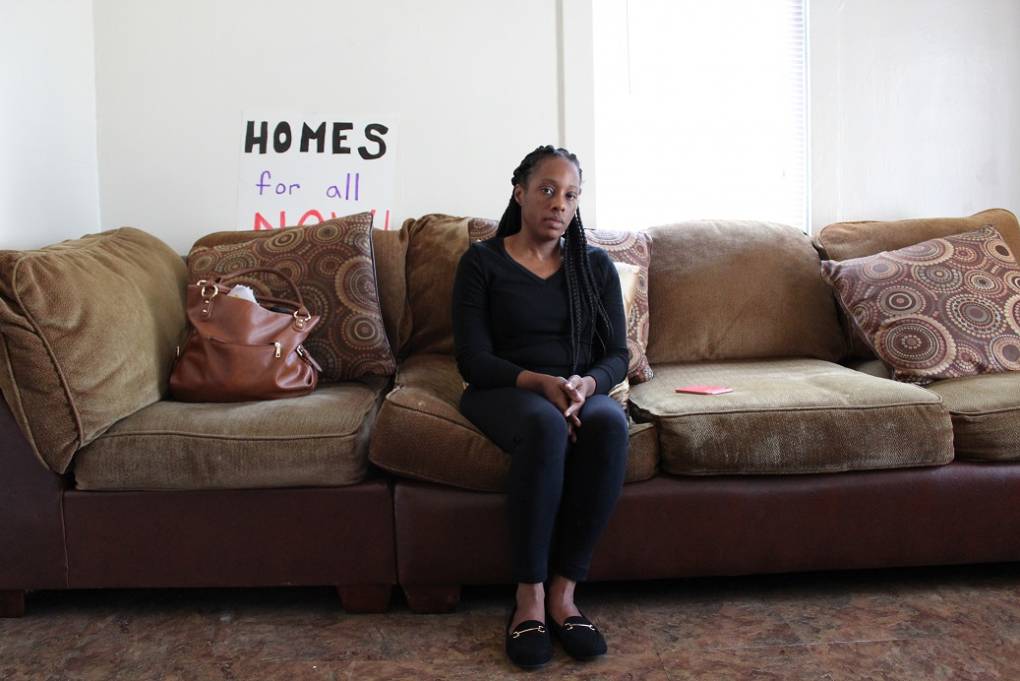
"caption": "Dominique Walker, a member of Moms 4 Housing, sits in a West Oakland home that's been vacant for two years. Walker and other homeless mothers have been occupying the home since November 2019. ",
"description": "Dominique Walker, a member of the group Moms 4 Housing, sits in a West Oakland home that's been vacant for two years. Walker and other homeless mothers have been occupying the home since November.",
"title": "moms4housing",
"credit": "Ericka Cruz Guevarra/KQED",
"status": "inherit",
"isLoading": false,
"fetchFailed": false
},
"news_11823916": {
"type": "attachments",
"id": "news_11823916",
"meta": {
"index": "attachments_1716263798",
"site": "news",
"id": "11823916",
"found": true
},
"parent": 11823891,
"imgSizes": {
"apple_news_ca_landscape_5_5": {
"file": "https://ww2.kqed.org/app/uploads/sites/10/2020/06/RS41398_005_KQED_Housing_MountainView_02192020_3321-qut-1044x783.jpg",
"width": 1044,
"mimeType": "image/jpeg",
"height": 783
},
"apple_news_ca_square_4_0": {
"file": "https://ww2.kqed.org/app/uploads/sites/10/2020/06/RS41398_005_KQED_Housing_MountainView_02192020_3321-qut-470x470.jpg",
"width": 470,
"mimeType": "image/jpeg",
"height": 470
},
"twentyfourteen-full-width": {
"file": "https://ww2.kqed.org/app/uploads/sites/10/2020/06/RS41398_005_KQED_Housing_MountainView_02192020_3321-qut-1038x576.jpg",
"width": 1038,
"mimeType": "image/jpeg",
"height": 576
},
"thumbnail": {
"file": "https://ww2.kqed.org/app/uploads/sites/10/2020/06/RS41398_005_KQED_Housing_MountainView_02192020_3321-qut-160x107.jpg",
"width": 160,
"mimeType": "image/jpeg",
"height": 107
},
"post-thumbnail": {
"file": "https://ww2.kqed.org/app/uploads/sites/10/2020/06/RS41398_005_KQED_Housing_MountainView_02192020_3321-qut-672x372.jpg",
"width": 672,
"mimeType": "image/jpeg",
"height": 372
},
"kqedFullSize": {
"file": "https://ww2.kqed.org/app/uploads/sites/10/2020/06/RS41398_005_KQED_Housing_MountainView_02192020_3321-qut.jpg",
"width": 1920,
"height": 1280
},
"apple_news_ca_landscape_4_7": {
"file": "https://ww2.kqed.org/app/uploads/sites/10/2020/06/RS41398_005_KQED_Housing_MountainView_02192020_3321-qut-632x474.jpg",
"width": 632,
"mimeType": "image/jpeg",
"height": 474
},
"large": {
"file": "https://ww2.kqed.org/app/uploads/sites/10/2020/06/RS41398_005_KQED_Housing_MountainView_02192020_3321-qut-1020x680.jpg",
"width": 1020,
"mimeType": "image/jpeg",
"height": 680
},
"apple_news_ca_landscape_4_0": {
"file": "https://ww2.kqed.org/app/uploads/sites/10/2020/06/RS41398_005_KQED_Housing_MountainView_02192020_3321-qut-536x402.jpg",
"width": 536,
"mimeType": "image/jpeg",
"height": 402
},
"apple_news_ca_portrait_12_9": {
"file": "https://ww2.kqed.org/app/uploads/sites/10/2020/06/RS41398_005_KQED_Housing_MountainView_02192020_3321-qut-1122x1280.jpg",
"width": 1122,
"mimeType": "image/jpeg",
"height": 1280
},
"medium": {
"file": "https://ww2.kqed.org/app/uploads/sites/10/2020/06/RS41398_005_KQED_Housing_MountainView_02192020_3321-qut-800x533.jpg",
"width": 800,
"mimeType": "image/jpeg",
"height": 533
},
"apple_news_ca_portrait_4_0": {
"file": "https://ww2.kqed.org/app/uploads/sites/10/2020/06/RS41398_005_KQED_Housing_MountainView_02192020_3321-qut-354x472.jpg",
"width": 354,
"mimeType": "image/jpeg",
"height": 472
},
"apple_news_ca_portrait_9_7": {
"file": "https://ww2.kqed.org/app/uploads/sites/10/2020/06/RS41398_005_KQED_Housing_MountainView_02192020_3321-qut-840x1120.jpg",
"width": 840,
"mimeType": "image/jpeg",
"height": 1120
},
"apple_news_ca_landscape_12_9": {
"file": "https://ww2.kqed.org/app/uploads/sites/10/2020/06/RS41398_005_KQED_Housing_MountainView_02192020_3321-qut-1832x1280.jpg",
"width": 1832,
"mimeType": "image/jpeg",
"height": 1280
},
"apple_news_ca_square_9_7": {
"file": "https://ww2.kqed.org/app/uploads/sites/10/2020/06/RS41398_005_KQED_Housing_MountainView_02192020_3321-qut-1104x1104.jpg",
"width": 1104,
"mimeType": "image/jpeg",
"height": 1104
},
"apple_news_ca_portrait_4_7": {
"file": "https://ww2.kqed.org/app/uploads/sites/10/2020/06/RS41398_005_KQED_Housing_MountainView_02192020_3321-qut-414x552.jpg",
"width": 414,
"mimeType": "image/jpeg",
"height": 552
},
"apple_news_ca_square_12_9": {
"file": "https://ww2.kqed.org/app/uploads/sites/10/2020/06/RS41398_005_KQED_Housing_MountainView_02192020_3321-qut-1472x1280.jpg",
"width": 1472,
"mimeType": "image/jpeg",
"height": 1280
},
"apple_news_ca_portrait_5_5": {
"file": "https://ww2.kqed.org/app/uploads/sites/10/2020/06/RS41398_005_KQED_Housing_MountainView_02192020_3321-qut-687x916.jpg",
"width": 687,
"mimeType": "image/jpeg",
"height": 916
},
"full-width": {
"file": "https://ww2.kqed.org/app/uploads/sites/10/2020/06/RS41398_005_KQED_Housing_MountainView_02192020_3321-qut-1920x1280.jpg",
"width": 1920,
"mimeType": "image/jpeg",
"height": 1280
},
"apple_news_ca_square_4_7": {
"file": "https://ww2.kqed.org/app/uploads/sites/10/2020/06/RS41398_005_KQED_Housing_MountainView_02192020_3321-qut-550x550.jpg",
"width": 550,
"mimeType": "image/jpeg",
"height": 550
},
"apple_news_ca_landscape_9_7": {
"file": "https://ww2.kqed.org/app/uploads/sites/10/2020/06/RS41398_005_KQED_Housing_MountainView_02192020_3321-qut-1376x1032.jpg",
"width": 1376,
"mimeType": "image/jpeg",
"height": 1032
},
"apple_news_ca_square_5_5": {
"file": "https://ww2.kqed.org/app/uploads/sites/10/2020/06/RS41398_005_KQED_Housing_MountainView_02192020_3321-qut-912x912.jpg",
"width": 912,
"mimeType": "image/jpeg",
"height": 912
}
},
"publishDate": 1591847616,
"modified": 1597355407,
"caption": "Houses in Mountain View, pictured on Feb. 19, 2020.",
"description": "Houses in Mountain View, pictured on Feb. 19, 2020.",
"title": "RS41398_005_KQED_Housing_MountainView_02192020_3321-qut",
"credit": "Beth LaBerge/KQED",
"status": "inherit",
"isLoading": false,
"fetchFailed": false
},
"news_11822854": {
"type": "attachments",
"id": "news_11822854",
"meta": {
"index": "attachments_1716263798",
"site": "news",
"id": "11822854",
"found": true
},
"parent": 11822771,
"imgSizes": {
"apple_news_ca_landscape_5_5": {
"file": "https://ww2.kqed.org/app/uploads/sites/10/2020/06/002_KQED_Oakland_GeorgeFloydProtest_06032020-1044x783.jpg",
"width": 1044,
"mimeType": "image/jpeg",
"height": 783
},
"apple_news_ca_square_4_0": {
"file": "https://ww2.kqed.org/app/uploads/sites/10/2020/06/002_KQED_Oakland_GeorgeFloydProtest_06032020-470x470.jpg",
"width": 470,
"mimeType": "image/jpeg",
"height": 470
},
"twentyfourteen-full-width": {
"file": "https://ww2.kqed.org/app/uploads/sites/10/2020/06/002_KQED_Oakland_GeorgeFloydProtest_06032020-1038x576.jpg",
"width": 1038,
"mimeType": "image/jpeg",
"height": 576
},
"thumbnail": {
"file": "https://ww2.kqed.org/app/uploads/sites/10/2020/06/002_KQED_Oakland_GeorgeFloydProtest_06032020-160x107.jpg",
"width": 160,
"mimeType": "image/jpeg",
"height": 107
},
"post-thumbnail": {
"file": "https://ww2.kqed.org/app/uploads/sites/10/2020/06/002_KQED_Oakland_GeorgeFloydProtest_06032020-672x372.jpg",
"width": 672,
"mimeType": "image/jpeg",
"height": 372
},
"kqedFullSize": {
"file": "https://ww2.kqed.org/app/uploads/sites/10/2020/06/002_KQED_Oakland_GeorgeFloydProtest_06032020.jpg",
"width": 1920,
"height": 1280
},
"apple_news_ca_landscape_4_7": {
"file": "https://ww2.kqed.org/app/uploads/sites/10/2020/06/002_KQED_Oakland_GeorgeFloydProtest_06032020-632x474.jpg",
"width": 632,
"mimeType": "image/jpeg",
"height": 474
},
"large": {
"file": "https://ww2.kqed.org/app/uploads/sites/10/2020/06/002_KQED_Oakland_GeorgeFloydProtest_06032020-1020x680.jpg",
"width": 1020,
"mimeType": "image/jpeg",
"height": 680
},
"apple_news_ca_landscape_4_0": {
"file": "https://ww2.kqed.org/app/uploads/sites/10/2020/06/002_KQED_Oakland_GeorgeFloydProtest_06032020-536x402.jpg",
"width": 536,
"mimeType": "image/jpeg",
"height": 402
},
"apple_news_ca_portrait_12_9": {
"file": "https://ww2.kqed.org/app/uploads/sites/10/2020/06/002_KQED_Oakland_GeorgeFloydProtest_06032020-1122x1280.jpg",
"width": 1122,
"mimeType": "image/jpeg",
"height": 1280
},
"medium": {
"file": "https://ww2.kqed.org/app/uploads/sites/10/2020/06/002_KQED_Oakland_GeorgeFloydProtest_06032020-800x533.jpg",
"width": 800,
"mimeType": "image/jpeg",
"height": 533
},
"apple_news_ca_portrait_4_0": {
"file": "https://ww2.kqed.org/app/uploads/sites/10/2020/06/002_KQED_Oakland_GeorgeFloydProtest_06032020-354x472.jpg",
"width": 354,
"mimeType": "image/jpeg",
"height": 472
},
"apple_news_ca_portrait_9_7": {
"file": "https://ww2.kqed.org/app/uploads/sites/10/2020/06/002_KQED_Oakland_GeorgeFloydProtest_06032020-840x1120.jpg",
"width": 840,
"mimeType": "image/jpeg",
"height": 1120
},
"apple_news_ca_landscape_12_9": {
"file": "https://ww2.kqed.org/app/uploads/sites/10/2020/06/002_KQED_Oakland_GeorgeFloydProtest_06032020-1832x1280.jpg",
"width": 1832,
"mimeType": "image/jpeg",
"height": 1280
},
"apple_news_ca_square_9_7": {
"file": "https://ww2.kqed.org/app/uploads/sites/10/2020/06/002_KQED_Oakland_GeorgeFloydProtest_06032020-1104x1104.jpg",
"width": 1104,
"mimeType": "image/jpeg",
"height": 1104
},
"apple_news_ca_portrait_4_7": {
"file": "https://ww2.kqed.org/app/uploads/sites/10/2020/06/002_KQED_Oakland_GeorgeFloydProtest_06032020-414x552.jpg",
"width": 414,
"mimeType": "image/jpeg",
"height": 552
},
"apple_news_ca_square_12_9": {
"file": "https://ww2.kqed.org/app/uploads/sites/10/2020/06/002_KQED_Oakland_GeorgeFloydProtest_06032020-1472x1280.jpg",
"width": 1472,
"mimeType": "image/jpeg",
"height": 1280
},
"apple_news_ca_portrait_5_5": {
"file": "https://ww2.kqed.org/app/uploads/sites/10/2020/06/002_KQED_Oakland_GeorgeFloydProtest_06032020-687x916.jpg",
"width": 687,
"mimeType": "image/jpeg",
"height": 916
},
"full-width": {
"file": "https://ww2.kqed.org/app/uploads/sites/10/2020/06/002_KQED_Oakland_GeorgeFloydProtest_06032020-1920x1280.jpg",
"width": 1920,
"mimeType": "image/jpeg",
"height": 1280
},
"apple_news_ca_square_4_7": {
"file": "https://ww2.kqed.org/app/uploads/sites/10/2020/06/002_KQED_Oakland_GeorgeFloydProtest_06032020-550x550.jpg",
"width": 550,
"mimeType": "image/jpeg",
"height": 550
},
"apple_news_ca_landscape_9_7": {
"file": "https://ww2.kqed.org/app/uploads/sites/10/2020/06/002_KQED_Oakland_GeorgeFloydProtest_06032020-1376x1032.jpg",
"width": 1376,
"mimeType": "image/jpeg",
"height": 1032
},
"apple_news_ca_square_5_5": {
"file": "https://ww2.kqed.org/app/uploads/sites/10/2020/06/002_KQED_Oakland_GeorgeFloydProtest_06032020-912x912.jpg",
"width": 912,
"mimeType": "image/jpeg",
"height": 912
}
},
"publishDate": 1591257695,
"modified": 1591661555,
"caption": "Ashley Williams and Dujuanna Archable stand during a protest against police violence at 14th and Broadway in Oakland on June 3, 2020.",
"description": null,
"title": "002_KQED_Oakland_GeorgeFloydProtest_06032020",
"credit": "Beth LaBerge/KQED",
"status": "inherit",
"isLoading": false,
"fetchFailed": false
},
"news_11821638": {
"type": "attachments",
"id": "news_11821638",
"meta": {
"index": "attachments_1716263798",
"site": "news",
"id": "11821638",
"found": true
},
"parent": 11821421,
"imgSizes": {
"apple_news_ca_landscape_5_5": {
"file": "https://ww2.kqed.org/app/uploads/sites/10/2020/05/illo4-2-1044x783.jpg",
"width": 1044,
"mimeType": "image/jpeg",
"height": 783
},
"apple_news_ca_square_4_0": {
"file": "https://ww2.kqed.org/app/uploads/sites/10/2020/05/illo4-2-470x470.jpg",
"width": 470,
"mimeType": "image/jpeg",
"height": 470
},
"twentyfourteen-full-width": {
"file": "https://ww2.kqed.org/app/uploads/sites/10/2020/05/illo4-2-1038x576.jpg",
"width": 1038,
"mimeType": "image/jpeg",
"height": 576
},
"thumbnail": {
"file": "https://ww2.kqed.org/app/uploads/sites/10/2020/05/illo4-2-160x100.jpg",
"width": 160,
"mimeType": "image/jpeg",
"height": 100
},
"post-thumbnail": {
"file": "https://ww2.kqed.org/app/uploads/sites/10/2020/05/illo4-2-672x372.jpg",
"width": 672,
"mimeType": "image/jpeg",
"height": 372
},
"kqedFullSize": {
"file": "https://ww2.kqed.org/app/uploads/sites/10/2020/05/illo4-2-e1590768933509.jpg",
"width": 1919,
"height": 1199
},
"apple_news_ca_landscape_4_7": {
"file": "https://ww2.kqed.org/app/uploads/sites/10/2020/05/illo4-2-632x474.jpg",
"width": 632,
"mimeType": "image/jpeg",
"height": 474
},
"large": {
"file": "https://ww2.kqed.org/app/uploads/sites/10/2020/05/illo4-2-1020x638.jpg",
"width": 1020,
"mimeType": "image/jpeg",
"height": 638
},
"apple_news_ca_landscape_4_0": {
"file": "https://ww2.kqed.org/app/uploads/sites/10/2020/05/illo4-2-536x402.jpg",
"width": 536,
"mimeType": "image/jpeg",
"height": 402
},
"apple_news_ca_portrait_12_9": {
"file": "https://ww2.kqed.org/app/uploads/sites/10/2020/05/illo4-2-1122x1200.jpg",
"width": 1122,
"mimeType": "image/jpeg",
"height": 1200
},
"medium": {
"file": "https://ww2.kqed.org/app/uploads/sites/10/2020/05/illo4-2-800x500.jpg",
"width": 800,
"mimeType": "image/jpeg",
"height": 500
},
"apple_news_ca_portrait_4_0": {
"file": "https://ww2.kqed.org/app/uploads/sites/10/2020/05/illo4-2-354x472.jpg",
"width": 354,
"mimeType": "image/jpeg",
"height": 472
},
"apple_news_ca_portrait_9_7": {
"file": "https://ww2.kqed.org/app/uploads/sites/10/2020/05/illo4-2-840x1120.jpg",
"width": 840,
"mimeType": "image/jpeg",
"height": 1120
},
"apple_news_ca_landscape_12_9": {
"file": "https://ww2.kqed.org/app/uploads/sites/10/2020/05/illo4-2-1832x1200.jpg",
"width": 1832,
"mimeType": "image/jpeg",
"height": 1200
},
"apple_news_ca_square_9_7": {
"file": "https://ww2.kqed.org/app/uploads/sites/10/2020/05/illo4-2-1104x1104.jpg",
"width": 1104,
"mimeType": "image/jpeg",
"height": 1104
},
"apple_news_ca_portrait_4_7": {
"file": "https://ww2.kqed.org/app/uploads/sites/10/2020/05/illo4-2-414x552.jpg",
"width": 414,
"mimeType": "image/jpeg",
"height": 552
},
"apple_news_ca_square_12_9": {
"file": "https://ww2.kqed.org/app/uploads/sites/10/2020/05/illo4-2-1472x1200.jpg",
"width": 1472,
"mimeType": "image/jpeg",
"height": 1200
},
"apple_news_ca_portrait_5_5": {
"file": "https://ww2.kqed.org/app/uploads/sites/10/2020/05/illo4-2-687x916.jpg",
"width": 687,
"mimeType": "image/jpeg",
"height": 916
},
"full-width": {
"file": "https://ww2.kqed.org/app/uploads/sites/10/2020/05/illo4-2-1920x1200.jpg",
"width": 1920,
"mimeType": "image/jpeg",
"height": 1200
},
"apple_news_ca_square_4_7": {
"file": "https://ww2.kqed.org/app/uploads/sites/10/2020/05/illo4-2-550x550.jpg",
"width": 550,
"mimeType": "image/jpeg",
"height": 550
},
"apple_news_ca_landscape_9_7": {
"file": "https://ww2.kqed.org/app/uploads/sites/10/2020/05/illo4-2-1376x1032.jpg",
"width": 1376,
"mimeType": "image/jpeg",
"height": 1032
},
"apple_news_ca_square_5_5": {
"file": "https://ww2.kqed.org/app/uploads/sites/10/2020/05/illo4-2-912x912.jpg",
"width": 912,
"mimeType": "image/jpeg",
"height": 912
}
},
"publishDate": 1590768895,
"modified": 1590768925,
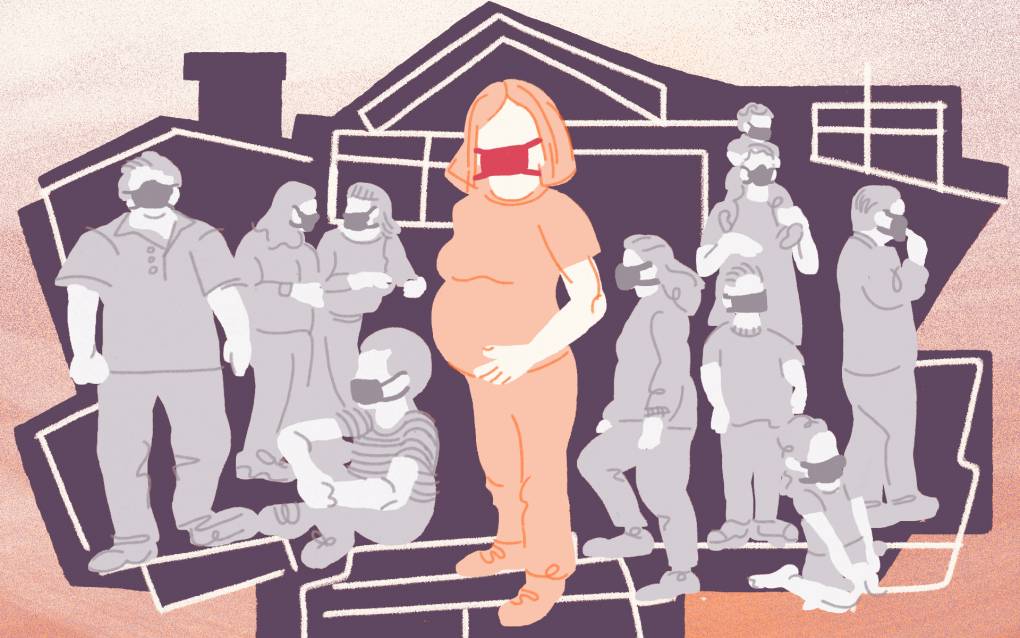
"caption": null,
"description": null,
"title": "illo4-2",
"credit": "Anna Vignet/KQED",
"status": "inherit",
"isLoading": false,
"fetchFailed": false
},
"news_11821075": {
"type": "attachments",
"id": "news_11821075",
"meta": {
"index": "attachments_1716263798",
"site": "news",
"id": "11821075",
"found": true
},
"parent": 0,
"imgSizes": {
"apple_news_ca_landscape_5_5": {
"file": "https://ww2.kqed.org/app/uploads/sites/10/2020/05/Operation-HomeBase-Oakland-RV-quarantine-1044x783.jpg",
"width": 1044,
"mimeType": "image/jpeg",
"height": 783
},
"apple_news_ca_square_4_0": {
"file": "https://ww2.kqed.org/app/uploads/sites/10/2020/05/Operation-HomeBase-Oakland-RV-quarantine-470x470.jpg",
"width": 470,
"mimeType": "image/jpeg",
"height": 470
},
"twentyfourteen-full-width": {
"file": "https://ww2.kqed.org/app/uploads/sites/10/2020/05/Operation-HomeBase-Oakland-RV-quarantine-1038x576.jpg",
"width": 1038,
"mimeType": "image/jpeg",
"height": 576
},
"thumbnail": {
"file": "https://ww2.kqed.org/app/uploads/sites/10/2020/05/Operation-HomeBase-Oakland-RV-quarantine-160x106.jpg",
"width": 160,
"mimeType": "image/jpeg",
"height": 106
},
"post-thumbnail": {
"file": "https://ww2.kqed.org/app/uploads/sites/10/2020/05/Operation-HomeBase-Oakland-RV-quarantine-672x372.jpg",
"width": 672,
"mimeType": "image/jpeg",
"height": 372
},
"kqedFullSize": {
"file": "https://ww2.kqed.org/app/uploads/sites/10/2020/05/Operation-HomeBase-Oakland-RV-quarantine.jpg",
"width": 1920,
"height": 1276
},
"apple_news_ca_landscape_4_7": {
"file": "https://ww2.kqed.org/app/uploads/sites/10/2020/05/Operation-HomeBase-Oakland-RV-quarantine-632x474.jpg",
"width": 632,
"mimeType": "image/jpeg",
"height": 474
},
"large": {
"file": "https://ww2.kqed.org/app/uploads/sites/10/2020/05/Operation-HomeBase-Oakland-RV-quarantine-1020x678.jpg",
"width": 1020,
"mimeType": "image/jpeg",
"height": 678
},
"apple_news_ca_landscape_4_0": {
"file": "https://ww2.kqed.org/app/uploads/sites/10/2020/05/Operation-HomeBase-Oakland-RV-quarantine-536x402.jpg",
"width": 536,
"mimeType": "image/jpeg",
"height": 402
},
"apple_news_ca_portrait_12_9": {
"file": "https://ww2.kqed.org/app/uploads/sites/10/2020/05/Operation-HomeBase-Oakland-RV-quarantine-1122x1276.jpg",
"width": 1122,
"mimeType": "image/jpeg",
"height": 1276
},
"medium": {
"file": "https://ww2.kqed.org/app/uploads/sites/10/2020/05/Operation-HomeBase-Oakland-RV-quarantine-800x532.jpg",
"width": 800,
"mimeType": "image/jpeg",
"height": 532
},
"apple_news_ca_portrait_4_0": {
"file": "https://ww2.kqed.org/app/uploads/sites/10/2020/05/Operation-HomeBase-Oakland-RV-quarantine-354x472.jpg",
"width": 354,
"mimeType": "image/jpeg",
"height": 472
},
"apple_news_ca_portrait_9_7": {
"file": "https://ww2.kqed.org/app/uploads/sites/10/2020/05/Operation-HomeBase-Oakland-RV-quarantine-840x1120.jpg",
"width": 840,
"mimeType": "image/jpeg",
"height": 1120
},
"apple_news_ca_landscape_12_9": {
"file": "https://ww2.kqed.org/app/uploads/sites/10/2020/05/Operation-HomeBase-Oakland-RV-quarantine-1832x1276.jpg",
"width": 1832,
"mimeType": "image/jpeg",
"height": 1276
},
"apple_news_ca_square_9_7": {
"file": "https://ww2.kqed.org/app/uploads/sites/10/2020/05/Operation-HomeBase-Oakland-RV-quarantine-1104x1104.jpg",
"width": 1104,
"mimeType": "image/jpeg",
"height": 1104
},
"apple_news_ca_portrait_4_7": {
"file": "https://ww2.kqed.org/app/uploads/sites/10/2020/05/Operation-HomeBase-Oakland-RV-quarantine-414x552.jpg",
"width": 414,
"mimeType": "image/jpeg",
"height": 552
},
"apple_news_ca_square_12_9": {
"file": "https://ww2.kqed.org/app/uploads/sites/10/2020/05/Operation-HomeBase-Oakland-RV-quarantine-1472x1276.jpg",
"width": 1472,
"mimeType": "image/jpeg",
"height": 1276
},
"apple_news_ca_portrait_5_5": {
"file": "https://ww2.kqed.org/app/uploads/sites/10/2020/05/Operation-HomeBase-Oakland-RV-quarantine-687x916.jpg",
"width": 687,
"mimeType": "image/jpeg",
"height": 916
},
"full-width": {
"file": "https://ww2.kqed.org/app/uploads/sites/10/2020/05/Operation-HomeBase-Oakland-RV-quarantine-1920x1276.jpg",
"width": 1920,
"mimeType": "image/jpeg",
"height": 1276
},
"apple_news_ca_square_4_7": {
"file": "https://ww2.kqed.org/app/uploads/sites/10/2020/05/Operation-HomeBase-Oakland-RV-quarantine-550x550.jpg",
"width": 550,
"mimeType": "image/jpeg",
"height": 550
},
"apple_news_ca_landscape_9_7": {
"file": "https://ww2.kqed.org/app/uploads/sites/10/2020/05/Operation-HomeBase-Oakland-RV-quarantine-1376x1032.jpg",
"width": 1376,
"mimeType": "image/jpeg",
"height": 1032
},
"apple_news_ca_square_5_5": {
"file": "https://ww2.kqed.org/app/uploads/sites/10/2020/05/Operation-HomeBase-Oakland-RV-quarantine-912x912.jpg",
"width": 912,
"mimeType": "image/jpeg",
"height": 912
}
},
"publishDate": 1590606699,
"modified": 1590686906,
"caption": "On May 5, city officials officially opened Operation HomeBase, an RV site with 91 trailers in Oakland, to safely quarantine people over the age of 65 or who have medical conditions that make them vulnerable to the coronavirus. Residents have been complaining about the lack of power during the day, trouble with the water systems and lack of hand rails that make the tight quarters difficult for the elderly residents to navigate.",
"description": "On May 5, city officials officially opened Operation HomeBase, an RV site with 91 trailers in Oakland, to safely quarantine people over the age of 65 or who have medical conditions that make them vulnerable to the coronavirus. Residents have been complaining about the lack of power during the day, trouble with the water systems, and lack of hand rails that make the tight quarters difficult for the elderly residents to navigate.",
"title": "Operation-HomeBase-Oakland-RV-quarantine",
"credit": "Courtesy City of Oakland",
"status": "inherit",
"isLoading": false,
"fetchFailed": false
},
"news_11821000": {
"type": "attachments",
"id": "news_11821000",
"meta": {
"index": "attachments_1716263798",
"site": "news",
"id": "11821000",
"found": true
},
"parent": 11820967,
"imgSizes": {
"apple_news_ca_landscape_5_5": {
"file": "https://ww2.kqed.org/app/uploads/sites/10/2020/05/RS43047_019_KQED_SanFrancisco_TentEncampments_05052020-qut-1044x783.jpg",
"width": 1044,
"mimeType": "image/jpeg",
"height": 783
},
"apple_news_ca_square_4_0": {
"file": "https://ww2.kqed.org/app/uploads/sites/10/2020/05/RS43047_019_KQED_SanFrancisco_TentEncampments_05052020-qut-470x470.jpg",
"width": 470,
"mimeType": "image/jpeg",
"height": 470
},
"twentyfourteen-full-width": {
"file": "https://ww2.kqed.org/app/uploads/sites/10/2020/05/RS43047_019_KQED_SanFrancisco_TentEncampments_05052020-qut-1038x576.jpg",
"width": 1038,
"mimeType": "image/jpeg",
"height": 576
},
"thumbnail": {
"file": "https://ww2.kqed.org/app/uploads/sites/10/2020/05/RS43047_019_KQED_SanFrancisco_TentEncampments_05052020-qut-160x107.jpg",
"width": 160,
"mimeType": "image/jpeg",
"height": 107
},
"post-thumbnail": {
"file": "https://ww2.kqed.org/app/uploads/sites/10/2020/05/RS43047_019_KQED_SanFrancisco_TentEncampments_05052020-qut-672x372.jpg",
"width": 672,
"mimeType": "image/jpeg",
"height": 372
},
"kqedFullSize": {
"file": "https://ww2.kqed.org/app/uploads/sites/10/2020/05/RS43047_019_KQED_SanFrancisco_TentEncampments_05052020-qut.jpg",
"width": 1920,
"height": 1280
},
"apple_news_ca_landscape_4_7": {
"file": "https://ww2.kqed.org/app/uploads/sites/10/2020/05/RS43047_019_KQED_SanFrancisco_TentEncampments_05052020-qut-632x474.jpg",
"width": 632,
"mimeType": "image/jpeg",
"height": 474
},
"large": {
"file": "https://ww2.kqed.org/app/uploads/sites/10/2020/05/RS43047_019_KQED_SanFrancisco_TentEncampments_05052020-qut-1020x680.jpg",
"width": 1020,
"mimeType": "image/jpeg",
"height": 680
},
"apple_news_ca_landscape_4_0": {
"file": "https://ww2.kqed.org/app/uploads/sites/10/2020/05/RS43047_019_KQED_SanFrancisco_TentEncampments_05052020-qut-536x402.jpg",
"width": 536,
"mimeType": "image/jpeg",
"height": 402
},
"apple_news_ca_portrait_12_9": {
"file": "https://ww2.kqed.org/app/uploads/sites/10/2020/05/RS43047_019_KQED_SanFrancisco_TentEncampments_05052020-qut-1122x1280.jpg",
"width": 1122,
"mimeType": "image/jpeg",
"height": 1280
},
"medium": {
"file": "https://ww2.kqed.org/app/uploads/sites/10/2020/05/RS43047_019_KQED_SanFrancisco_TentEncampments_05052020-qut-800x533.jpg",
"width": 800,
"mimeType": "image/jpeg",
"height": 533
},
"apple_news_ca_portrait_4_0": {
"file": "https://ww2.kqed.org/app/uploads/sites/10/2020/05/RS43047_019_KQED_SanFrancisco_TentEncampments_05052020-qut-354x472.jpg",
"width": 354,
"mimeType": "image/jpeg",
"height": 472
},
"apple_news_ca_portrait_9_7": {
"file": "https://ww2.kqed.org/app/uploads/sites/10/2020/05/RS43047_019_KQED_SanFrancisco_TentEncampments_05052020-qut-840x1120.jpg",
"width": 840,
"mimeType": "image/jpeg",
"height": 1120
},
"apple_news_ca_landscape_12_9": {
"file": "https://ww2.kqed.org/app/uploads/sites/10/2020/05/RS43047_019_KQED_SanFrancisco_TentEncampments_05052020-qut-1832x1280.jpg",
"width": 1832,
"mimeType": "image/jpeg",
"height": 1280
},
"apple_news_ca_square_9_7": {
"file": "https://ww2.kqed.org/app/uploads/sites/10/2020/05/RS43047_019_KQED_SanFrancisco_TentEncampments_05052020-qut-1104x1104.jpg",
"width": 1104,
"mimeType": "image/jpeg",
"height": 1104
},
"apple_news_ca_portrait_4_7": {
"file": "https://ww2.kqed.org/app/uploads/sites/10/2020/05/RS43047_019_KQED_SanFrancisco_TentEncampments_05052020-qut-414x552.jpg",
"width": 414,
"mimeType": "image/jpeg",
"height": 552
},
"apple_news_ca_square_12_9": {
"file": "https://ww2.kqed.org/app/uploads/sites/10/2020/05/RS43047_019_KQED_SanFrancisco_TentEncampments_05052020-qut-1472x1280.jpg",
"width": 1472,
"mimeType": "image/jpeg",
"height": 1280
},
"apple_news_ca_portrait_5_5": {
"file": "https://ww2.kqed.org/app/uploads/sites/10/2020/05/RS43047_019_KQED_SanFrancisco_TentEncampments_05052020-qut-687x916.jpg",
"width": 687,
"mimeType": "image/jpeg",
"height": 916
},
"full-width": {
"file": "https://ww2.kqed.org/app/uploads/sites/10/2020/05/RS43047_019_KQED_SanFrancisco_TentEncampments_05052020-qut-1920x1280.jpg",
"width": 1920,
"mimeType": "image/jpeg",
"height": 1280
},
"apple_news_ca_square_4_7": {
"file": "https://ww2.kqed.org/app/uploads/sites/10/2020/05/RS43047_019_KQED_SanFrancisco_TentEncampments_05052020-qut-550x550.jpg",
"width": 550,
"mimeType": "image/jpeg",
"height": 550
},
"apple_news_ca_landscape_9_7": {
"file": "https://ww2.kqed.org/app/uploads/sites/10/2020/05/RS43047_019_KQED_SanFrancisco_TentEncampments_05052020-qut-1376x1032.jpg",
"width": 1376,
"mimeType": "image/jpeg",
"height": 1032
},
"apple_news_ca_square_5_5": {
"file": "https://ww2.kqed.org/app/uploads/sites/10/2020/05/RS43047_019_KQED_SanFrancisco_TentEncampments_05052020-qut-912x912.jpg",
"width": 912,
"mimeType": "image/jpeg",
"height": 912
}
},
"publishDate": 1590599796,
"modified": 1612404163,
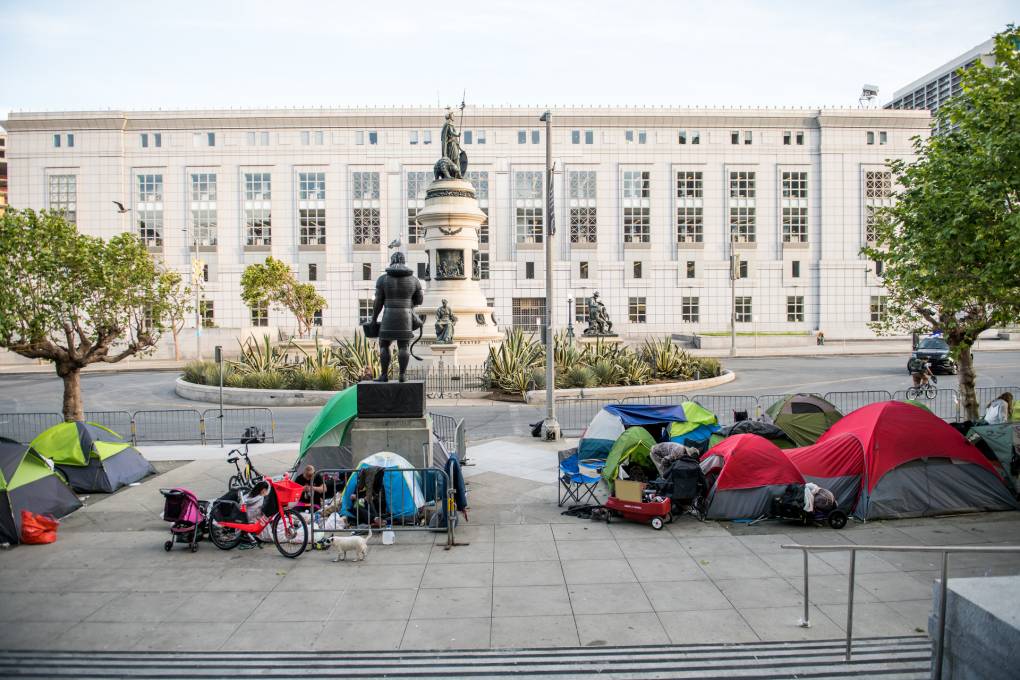
"caption": "Tents line Fulton Street near City Hall on May 5, 2020.",
"description": "Tents line Fulton Street near City Hall on May 5, 2020.",
"title": "Tents line Fulton Street near City Hall on May 5, 2020.",
"credit": "Beth LaBerge/KQED",
"status": "inherit",
"altTag": null,
"isLoading": false,
"fetchFailed": false
},
"news_11820860": {
"type": "attachments",
"id": "news_11820860",
"meta": {
"index": "attachments_1716263798",
"site": "news",
"id": "11820860",
"found": true
},
"parent": 11820692,
"imgSizes": {
"apple_news_ca_landscape_5_5": {
"file": "https://ww2.kqed.org/app/uploads/sites/10/2020/05/RS43342_RS43338_jasper-qut-qut-1044x783.jpg",
"width": 1044,
"mimeType": "image/jpeg",
"height": 783
},
"apple_news_ca_square_4_0": {
"file": "https://ww2.kqed.org/app/uploads/sites/10/2020/05/RS43342_RS43338_jasper-qut-qut-470x470.jpg",
"width": 470,
"mimeType": "image/jpeg",
"height": 470
},
"twentyfourteen-full-width": {
"file": "https://ww2.kqed.org/app/uploads/sites/10/2020/05/RS43342_RS43338_jasper-qut-qut-1038x576.jpg",
"width": 1038,
"mimeType": "image/jpeg",
"height": 576
},
"thumbnail": {
"file": "https://ww2.kqed.org/app/uploads/sites/10/2020/05/RS43342_RS43338_jasper-qut-qut-160x112.jpg",
"width": 160,
"mimeType": "image/jpeg",
"height": 112
},
"post-thumbnail": {
"file": "https://ww2.kqed.org/app/uploads/sites/10/2020/05/RS43342_RS43338_jasper-qut-qut-672x372.jpg",
"width": 672,
"mimeType": "image/jpeg",
"height": 372
},
"kqedFullSize": {
"file": "https://ww2.kqed.org/app/uploads/sites/10/2020/05/RS43342_RS43338_jasper-qut-qut.jpg",
"width": 1432,
"height": 999
},
"apple_news_ca_landscape_4_7": {
"file": "https://ww2.kqed.org/app/uploads/sites/10/2020/05/RS43342_RS43338_jasper-qut-qut-632x474.jpg",
"width": 632,
"mimeType": "image/jpeg",
"height": 474
},
"large": {
"file": "https://ww2.kqed.org/app/uploads/sites/10/2020/05/RS43342_RS43338_jasper-qut-qut-1020x712.jpg",
"width": 1020,
"mimeType": "image/jpeg",
"height": 712
},
"apple_news_ca_landscape_4_0": {
"file": "https://ww2.kqed.org/app/uploads/sites/10/2020/05/RS43342_RS43338_jasper-qut-qut-536x402.jpg",
"width": 536,
"mimeType": "image/jpeg",
"height": 402
},
"apple_news_ca_portrait_12_9": {
"file": "https://ww2.kqed.org/app/uploads/sites/10/2020/05/RS43342_RS43338_jasper-qut-qut-1122x999.jpg",
"width": 1122,
"mimeType": "image/jpeg",
"height": 999
},
"medium": {
"file": "https://ww2.kqed.org/app/uploads/sites/10/2020/05/RS43342_RS43338_jasper-qut-qut-800x558.jpg",
"width": 800,
"mimeType": "image/jpeg",
"height": 558
},
"apple_news_ca_portrait_4_0": {
"file": "https://ww2.kqed.org/app/uploads/sites/10/2020/05/RS43342_RS43338_jasper-qut-qut-354x472.jpg",
"width": 354,
"mimeType": "image/jpeg",
"height": 472
},
"apple_news_ca_portrait_9_7": {
"file": "https://ww2.kqed.org/app/uploads/sites/10/2020/05/RS43342_RS43338_jasper-qut-qut-840x999.jpg",
"width": 840,
"mimeType": "image/jpeg",
"height": 999
},
"apple_news_ca_square_9_7": {
"file": "https://ww2.kqed.org/app/uploads/sites/10/2020/05/RS43342_RS43338_jasper-qut-qut-1104x999.jpg",
"width": 1104,
"mimeType": "image/jpeg",
"height": 999
},
"apple_news_ca_portrait_4_7": {
"file": "https://ww2.kqed.org/app/uploads/sites/10/2020/05/RS43342_RS43338_jasper-qut-qut-414x552.jpg",
"width": 414,
"mimeType": "image/jpeg",
"height": 552
},
"apple_news_ca_portrait_5_5": {
"file": "https://ww2.kqed.org/app/uploads/sites/10/2020/05/RS43342_RS43338_jasper-qut-qut-687x916.jpg",
"width": 687,
"mimeType": "image/jpeg",
"height": 916
},
"apple_news_ca_square_4_7": {
"file": "https://ww2.kqed.org/app/uploads/sites/10/2020/05/RS43342_RS43338_jasper-qut-qut-550x550.jpg",
"width": 550,
"mimeType": "image/jpeg",
"height": 550
},
"apple_news_ca_landscape_9_7": {
"file": "https://ww2.kqed.org/app/uploads/sites/10/2020/05/RS43342_RS43338_jasper-qut-qut-1376x999.jpg",
"width": 1376,
"mimeType": "image/jpeg",
"height": 999
},
"apple_news_ca_square_5_5": {
"file": "https://ww2.kqed.org/app/uploads/sites/10/2020/05/RS43342_RS43338_jasper-qut-qut-912x912.jpg",
"width": 912,
"mimeType": "image/jpeg",
"height": 912
}
},
"publishDate": 1590533535,
"modified": 1590592375,
"caption": "A view of The Jasper, one of many high rise luxury apartment buildings in downtown San Francisco currently offering discounts to prospective renters in a softening housing market. ",
"description": "A view of The Jasper, one of many high rise luxury apartment buildings in downtown San Francisco currently offering discounts to prospective renters in a softening housing market. ",
"title": "RS43342_RS43338_jasper-qut-qut",
"credit": "Chloe Veltman/KQED",
"status": "inherit",
"isLoading": false,
"fetchFailed": false
},
"news_11820451": {
"type": "attachments",
"id": "news_11820451",
"meta": {
"index": "attachments_1716263798",
"site": "news",
"id": "11820451",
"found": true
},
"parent": 11820442,
"imgSizes": {
"apple_news_ca_landscape_5_5": {
"file": "https://ww2.kqed.org/app/uploads/sites/10/2020/05/200522-37MLK-Palms-Motel-Takeover_08_WEB-1044x783.jpg",
"width": 1044,
"mimeType": "image/jpeg",
"height": 783
},
"apple_news_ca_square_4_0": {
"file": "https://ww2.kqed.org/app/uploads/sites/10/2020/05/200522-37MLK-Palms-Motel-Takeover_08_WEB-470x470.jpg",
"width": 470,
"mimeType": "image/jpeg",
"height": 470
},
"twentyfourteen-full-width": {
"file": "https://ww2.kqed.org/app/uploads/sites/10/2020/05/200522-37MLK-Palms-Motel-Takeover_08_WEB-1038x576.jpg",
"width": 1038,
"mimeType": "image/jpeg",
"height": 576
},
"thumbnail": {
"file": "https://ww2.kqed.org/app/uploads/sites/10/2020/05/200522-37MLK-Palms-Motel-Takeover_08_WEB-160x107.jpg",
"width": 160,
"mimeType": "image/jpeg",
"height": 107
},
"post-thumbnail": {
"file": "https://ww2.kqed.org/app/uploads/sites/10/2020/05/200522-37MLK-Palms-Motel-Takeover_08_WEB-672x372.jpg",
"width": 672,
"mimeType": "image/jpeg",
"height": 372
},
"kqedFullSize": {
"file": "https://ww2.kqed.org/app/uploads/sites/10/2020/05/200522-37MLK-Palms-Motel-Takeover_08_WEB-e1590250556209.jpg",
"width": 1920,
"height": 1280
},
"apple_news_ca_landscape_4_7": {
"file": "https://ww2.kqed.org/app/uploads/sites/10/2020/05/200522-37MLK-Palms-Motel-Takeover_08_WEB-632x474.jpg",
"width": 632,
"mimeType": "image/jpeg",
"height": 474
},
"large": {
"file": "https://ww2.kqed.org/app/uploads/sites/10/2020/05/200522-37MLK-Palms-Motel-Takeover_08_WEB-1020x680.jpg",
"width": 1020,
"mimeType": "image/jpeg",
"height": 680
},
"apple_news_ca_landscape_4_0": {
"file": "https://ww2.kqed.org/app/uploads/sites/10/2020/05/200522-37MLK-Palms-Motel-Takeover_08_WEB-536x402.jpg",
"width": 536,
"mimeType": "image/jpeg",
"height": 402
},
"apple_news_ca_portrait_12_9": {
"file": "https://ww2.kqed.org/app/uploads/sites/10/2020/05/200522-37MLK-Palms-Motel-Takeover_08_WEB-1122x1496.jpg",
"width": 1122,
"mimeType": "image/jpeg",
"height": 1496
},
"medium": {
"file": "https://ww2.kqed.org/app/uploads/sites/10/2020/05/200522-37MLK-Palms-Motel-Takeover_08_WEB-800x533.jpg",
"width": 800,
"mimeType": "image/jpeg",
"height": 533
},
"apple_news_ca_portrait_4_0": {
"file": "https://ww2.kqed.org/app/uploads/sites/10/2020/05/200522-37MLK-Palms-Motel-Takeover_08_WEB-354x472.jpg",
"width": 354,
"mimeType": "image/jpeg",
"height": 472
},
"apple_news_ca_portrait_9_7": {
"file": "https://ww2.kqed.org/app/uploads/sites/10/2020/05/200522-37MLK-Palms-Motel-Takeover_08_WEB-840x1120.jpg",
"width": 840,
"mimeType": "image/jpeg",
"height": 1120
},
"apple_news_ca_landscape_12_9": {
"file": "https://ww2.kqed.org/app/uploads/sites/10/2020/05/200522-37MLK-Palms-Motel-Takeover_08_WEB-1832x1374.jpg",
"width": 1832,
"mimeType": "image/jpeg",
"height": 1374
},
"apple_news_ca_square_9_7": {
"file": "https://ww2.kqed.org/app/uploads/sites/10/2020/05/200522-37MLK-Palms-Motel-Takeover_08_WEB-1104x1104.jpg",
"width": 1104,
"mimeType": "image/jpeg",
"height": 1104
},
"apple_news_ca_portrait_4_7": {
"file": "https://ww2.kqed.org/app/uploads/sites/10/2020/05/200522-37MLK-Palms-Motel-Takeover_08_WEB-414x552.jpg",
"width": 414,
"mimeType": "image/jpeg",
"height": 552
},
"apple_news_ca_square_12_9": {
"file": "https://ww2.kqed.org/app/uploads/sites/10/2020/05/200522-37MLK-Palms-Motel-Takeover_08_WEB-1472x1472.jpg",
"width": 1472,
"mimeType": "image/jpeg",
"height": 1472
},
"apple_news_ca_portrait_5_5": {
"file": "https://ww2.kqed.org/app/uploads/sites/10/2020/05/200522-37MLK-Palms-Motel-Takeover_08_WEB-687x916.jpg",
"width": 687,
"mimeType": "image/jpeg",
"height": 916
},
"full-width": {
"file": "https://ww2.kqed.org/app/uploads/sites/10/2020/05/200522-37MLK-Palms-Motel-Takeover_08_WEB-1920x1280.jpg",
"width": 1920,
"mimeType": "image/jpeg",
"height": 1280
},
"apple_news_ca_square_4_7": {
"file": "https://ww2.kqed.org/app/uploads/sites/10/2020/05/200522-37MLK-Palms-Motel-Takeover_08_WEB-550x550.jpg",
"width": 550,
"mimeType": "image/jpeg",
"height": 550
},
"apple_news_ca_landscape_9_7": {
"file": "https://ww2.kqed.org/app/uploads/sites/10/2020/05/200522-37MLK-Palms-Motel-Takeover_08_WEB-1376x1032.jpg",
"width": 1376,
"mimeType": "image/jpeg",
"height": 1032
},
"apple_news_ca_square_5_5": {
"file": "https://ww2.kqed.org/app/uploads/sites/10/2020/05/200522-37MLK-Palms-Motel-Takeover_08_WEB-912x912.jpg",
"width": 912,
"mimeType": "image/jpeg",
"height": 912
}
},
"publishDate": 1590245614,
"modified": 1590250546,
"caption": "Activist Stefani Echeverría-Fenn chained herself to a window in one of the rooms at the motel to call attention to the need for more hotel rooms for people experiencing homelessness during the coronavirus pandemic. ",
"description": null,
"title": "200522 37MLK Palms Motel Takeover_08_WEB",
"credit": "Erin Baldassari/KQED",
"status": "inherit",
"isLoading": false,
"fetchFailed": false
},
"news_11819809": {
"type": "attachments",
"id": "news_11819809",
"meta": {
"index": "attachments_1716263798",
"site": "news",
"id": "11819809",
"found": true
},
"parent": 11819691,
"imgSizes": {
"apple_news_ca_landscape_5_5": {
"file": "https://ww2.kqed.org/app/uploads/sites/10/2020/05/RS43039_009_KQED_SanFrancisco_TentEncampments_05052020-qut-1-1044x783.jpg",
"width": 1044,
"mimeType": "image/jpeg",
"height": 783
},
"apple_news_ca_square_4_0": {
"file": "https://ww2.kqed.org/app/uploads/sites/10/2020/05/RS43039_009_KQED_SanFrancisco_TentEncampments_05052020-qut-1-470x470.jpg",
"width": 470,
"mimeType": "image/jpeg",
"height": 470
},
"twentyfourteen-full-width": {
"file": "https://ww2.kqed.org/app/uploads/sites/10/2020/05/RS43039_009_KQED_SanFrancisco_TentEncampments_05052020-qut-1-1038x576.jpg",
"width": 1038,
"mimeType": "image/jpeg",
"height": 576
},
"thumbnail": {
"file": "https://ww2.kqed.org/app/uploads/sites/10/2020/05/RS43039_009_KQED_SanFrancisco_TentEncampments_05052020-qut-1-160x107.jpg",
"width": 160,
"mimeType": "image/jpeg",
"height": 107
},
"post-thumbnail": {
"file": "https://ww2.kqed.org/app/uploads/sites/10/2020/05/RS43039_009_KQED_SanFrancisco_TentEncampments_05052020-qut-1-672x372.jpg",
"width": 672,
"mimeType": "image/jpeg",
"height": 372
},
"kqedFullSize": {
"file": "https://ww2.kqed.org/app/uploads/sites/10/2020/05/RS43039_009_KQED_SanFrancisco_TentEncampments_05052020-qut-1.jpg",
"width": 1920,
"height": 1280
},
"apple_news_ca_landscape_4_7": {
"file": "https://ww2.kqed.org/app/uploads/sites/10/2020/05/RS43039_009_KQED_SanFrancisco_TentEncampments_05052020-qut-1-632x474.jpg",
"width": 632,
"mimeType": "image/jpeg",
"height": 474
},
"large": {
"file": "https://ww2.kqed.org/app/uploads/sites/10/2020/05/RS43039_009_KQED_SanFrancisco_TentEncampments_05052020-qut-1-1020x680.jpg",
"width": 1020,
"mimeType": "image/jpeg",
"height": 680
},
"apple_news_ca_landscape_4_0": {
"file": "https://ww2.kqed.org/app/uploads/sites/10/2020/05/RS43039_009_KQED_SanFrancisco_TentEncampments_05052020-qut-1-536x402.jpg",
"width": 536,
"mimeType": "image/jpeg",
"height": 402
},
"apple_news_ca_portrait_12_9": {
"file": "https://ww2.kqed.org/app/uploads/sites/10/2020/05/RS43039_009_KQED_SanFrancisco_TentEncampments_05052020-qut-1-1122x1280.jpg",
"width": 1122,
"mimeType": "image/jpeg",
"height": 1280
},
"medium": {
"file": "https://ww2.kqed.org/app/uploads/sites/10/2020/05/RS43039_009_KQED_SanFrancisco_TentEncampments_05052020-qut-1-800x533.jpg",
"width": 800,
"mimeType": "image/jpeg",
"height": 533
},
"apple_news_ca_portrait_4_0": {
"file": "https://ww2.kqed.org/app/uploads/sites/10/2020/05/RS43039_009_KQED_SanFrancisco_TentEncampments_05052020-qut-1-354x472.jpg",
"width": 354,
"mimeType": "image/jpeg",
"height": 472
},
"apple_news_ca_portrait_9_7": {
"file": "https://ww2.kqed.org/app/uploads/sites/10/2020/05/RS43039_009_KQED_SanFrancisco_TentEncampments_05052020-qut-1-840x1120.jpg",
"width": 840,
"mimeType": "image/jpeg",
"height": 1120
},
"apple_news_ca_landscape_12_9": {
"file": "https://ww2.kqed.org/app/uploads/sites/10/2020/05/RS43039_009_KQED_SanFrancisco_TentEncampments_05052020-qut-1-1832x1280.jpg",
"width": 1832,
"mimeType": "image/jpeg",
"height": 1280
},
"apple_news_ca_square_9_7": {
"file": "https://ww2.kqed.org/app/uploads/sites/10/2020/05/RS43039_009_KQED_SanFrancisco_TentEncampments_05052020-qut-1-1104x1104.jpg",
"width": 1104,
"mimeType": "image/jpeg",
"height": 1104
},
"apple_news_ca_portrait_4_7": {
"file": "https://ww2.kqed.org/app/uploads/sites/10/2020/05/RS43039_009_KQED_SanFrancisco_TentEncampments_05052020-qut-1-414x552.jpg",
"width": 414,
"mimeType": "image/jpeg",
"height": 552
},
"apple_news_ca_square_12_9": {
"file": "https://ww2.kqed.org/app/uploads/sites/10/2020/05/RS43039_009_KQED_SanFrancisco_TentEncampments_05052020-qut-1-1472x1280.jpg",
"width": 1472,
"mimeType": "image/jpeg",
"height": 1280
},
"apple_news_ca_portrait_5_5": {
"file": "https://ww2.kqed.org/app/uploads/sites/10/2020/05/RS43039_009_KQED_SanFrancisco_TentEncampments_05052020-qut-1-687x916.jpg",
"width": 687,
"mimeType": "image/jpeg",
"height": 916
},
"full-width": {
"file": "https://ww2.kqed.org/app/uploads/sites/10/2020/05/RS43039_009_KQED_SanFrancisco_TentEncampments_05052020-qut-1-1920x1280.jpg",
"width": 1920,
"mimeType": "image/jpeg",
"height": 1280
},
"apple_news_ca_square_4_7": {
"file": "https://ww2.kqed.org/app/uploads/sites/10/2020/05/RS43039_009_KQED_SanFrancisco_TentEncampments_05052020-qut-1-550x550.jpg",
"width": 550,
"mimeType": "image/jpeg",
"height": 550
},
"apple_news_ca_landscape_9_7": {
"file": "https://ww2.kqed.org/app/uploads/sites/10/2020/05/RS43039_009_KQED_SanFrancisco_TentEncampments_05052020-qut-1-1376x1032.jpg",
"width": 1376,
"mimeType": "image/jpeg",
"height": 1032
},
"apple_news_ca_square_5_5": {
"file": "https://ww2.kqed.org/app/uploads/sites/10/2020/05/RS43039_009_KQED_SanFrancisco_TentEncampments_05052020-qut-1-912x912.jpg",
"width": 912,
"mimeType": "image/jpeg",
"height": 912
}
},
"publishDate": 1590020750,
"modified": 1645913007,
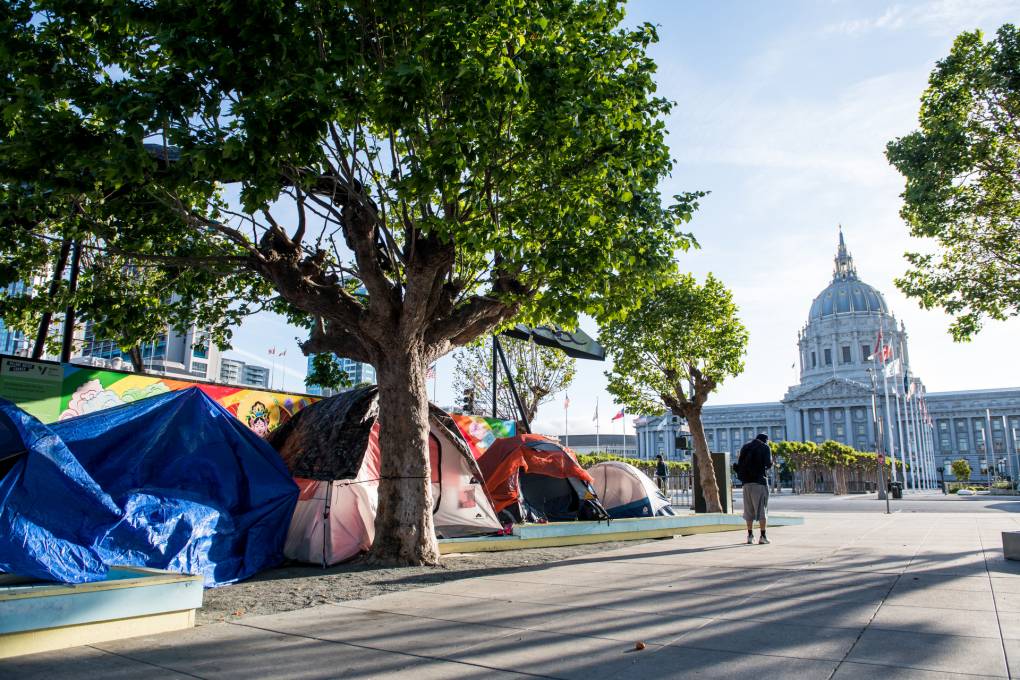
"caption": "Tents line Fulton Street near San Francisco City Hall on May 5, 2020.",
"description": null,
"title": "Tents line Fulton Street near City Hall on May 5, 2020.",
"credit": "Beth LaBerge/KQED",
"status": "inherit",
"altTag": "Tents are seen on a lot bordered by sidewalks in the foreground under a tree, with City Hall in the background.",
"isLoading": false,
"fetchFailed": false
},
"news_11818490": {
"type": "attachments",
"id": "news_11818490",
"meta": {
"index": "attachments_1716263798",
"site": "news",
"id": "11818490",
"found": true
},
"parent": 11818462,
"imgSizes": {
"apple_news_ca_landscape_5_5": {
"file": "https://ww2.kqed.org/app/uploads/sites/10/2020/05/RS43187_005_KQED_SanFrancisco_SafeSleepingVillage_05142020-qut-1044x783.jpg",
"width": 1044,
"mimeType": "image/jpeg",
"height": 783
},
"apple_news_ca_square_4_0": {
"file": "https://ww2.kqed.org/app/uploads/sites/10/2020/05/RS43187_005_KQED_SanFrancisco_SafeSleepingVillage_05142020-qut-470x470.jpg",
"width": 470,
"mimeType": "image/jpeg",
"height": 470
},
"twentyfourteen-full-width": {
"file": "https://ww2.kqed.org/app/uploads/sites/10/2020/05/RS43187_005_KQED_SanFrancisco_SafeSleepingVillage_05142020-qut-1038x576.jpg",
"width": 1038,
"mimeType": "image/jpeg",
"height": 576
},
"thumbnail": {
"file": "https://ww2.kqed.org/app/uploads/sites/10/2020/05/RS43187_005_KQED_SanFrancisco_SafeSleepingVillage_05142020-qut-160x107.jpg",
"width": 160,
"mimeType": "image/jpeg",
"height": 107
},
"post-thumbnail": {
"file": "https://ww2.kqed.org/app/uploads/sites/10/2020/05/RS43187_005_KQED_SanFrancisco_SafeSleepingVillage_05142020-qut-672x372.jpg",
"width": 672,
"mimeType": "image/jpeg",
"height": 372
},
"kqedFullSize": {
"file": "https://ww2.kqed.org/app/uploads/sites/10/2020/05/RS43187_005_KQED_SanFrancisco_SafeSleepingVillage_05142020-qut.jpg",
"width": 1920,
"height": 1280
},
"apple_news_ca_landscape_4_7": {
"file": "https://ww2.kqed.org/app/uploads/sites/10/2020/05/RS43187_005_KQED_SanFrancisco_SafeSleepingVillage_05142020-qut-632x474.jpg",
"width": 632,
"mimeType": "image/jpeg",
"height": 474
},
"large": {
"file": "https://ww2.kqed.org/app/uploads/sites/10/2020/05/RS43187_005_KQED_SanFrancisco_SafeSleepingVillage_05142020-qut-1020x680.jpg",
"width": 1020,
"mimeType": "image/jpeg",
"height": 680
},
"apple_news_ca_landscape_4_0": {
"file": "https://ww2.kqed.org/app/uploads/sites/10/2020/05/RS43187_005_KQED_SanFrancisco_SafeSleepingVillage_05142020-qut-536x402.jpg",
"width": 536,
"mimeType": "image/jpeg",
"height": 402
},
"apple_news_ca_portrait_12_9": {
"file": "https://ww2.kqed.org/app/uploads/sites/10/2020/05/RS43187_005_KQED_SanFrancisco_SafeSleepingVillage_05142020-qut-1122x1280.jpg",
"width": 1122,
"mimeType": "image/jpeg",
"height": 1280
},
"medium": {
"file": "https://ww2.kqed.org/app/uploads/sites/10/2020/05/RS43187_005_KQED_SanFrancisco_SafeSleepingVillage_05142020-qut-800x533.jpg",
"width": 800,
"mimeType": "image/jpeg",
"height": 533
},
"apple_news_ca_portrait_4_0": {
"file": "https://ww2.kqed.org/app/uploads/sites/10/2020/05/RS43187_005_KQED_SanFrancisco_SafeSleepingVillage_05142020-qut-354x472.jpg",
"width": 354,
"mimeType": "image/jpeg",
"height": 472
},
"apple_news_ca_portrait_9_7": {
"file": "https://ww2.kqed.org/app/uploads/sites/10/2020/05/RS43187_005_KQED_SanFrancisco_SafeSleepingVillage_05142020-qut-840x1120.jpg",
"width": 840,
"mimeType": "image/jpeg",
"height": 1120
},
"apple_news_ca_landscape_12_9": {
"file": "https://ww2.kqed.org/app/uploads/sites/10/2020/05/RS43187_005_KQED_SanFrancisco_SafeSleepingVillage_05142020-qut-1832x1280.jpg",
"width": 1832,
"mimeType": "image/jpeg",
"height": 1280
},
"apple_news_ca_square_9_7": {
"file": "https://ww2.kqed.org/app/uploads/sites/10/2020/05/RS43187_005_KQED_SanFrancisco_SafeSleepingVillage_05142020-qut-1104x1104.jpg",
"width": 1104,
"mimeType": "image/jpeg",
"height": 1104
},
"apple_news_ca_portrait_4_7": {
"file": "https://ww2.kqed.org/app/uploads/sites/10/2020/05/RS43187_005_KQED_SanFrancisco_SafeSleepingVillage_05142020-qut-414x552.jpg",
"width": 414,
"mimeType": "image/jpeg",
"height": 552
},
"apple_news_ca_square_12_9": {
"file": "https://ww2.kqed.org/app/uploads/sites/10/2020/05/RS43187_005_KQED_SanFrancisco_SafeSleepingVillage_05142020-qut-1472x1280.jpg",
"width": 1472,
"mimeType": "image/jpeg",
"height": 1280
},
"apple_news_ca_portrait_5_5": {
"file": "https://ww2.kqed.org/app/uploads/sites/10/2020/05/RS43187_005_KQED_SanFrancisco_SafeSleepingVillage_05142020-qut-687x916.jpg",
"width": 687,
"mimeType": "image/jpeg",
"height": 916
},
"full-width": {
"file": "https://ww2.kqed.org/app/uploads/sites/10/2020/05/RS43187_005_KQED_SanFrancisco_SafeSleepingVillage_05142020-qut-1920x1280.jpg",
"width": 1920,
"mimeType": "image/jpeg",
"height": 1280
},
"apple_news_ca_square_4_7": {
"file": "https://ww2.kqed.org/app/uploads/sites/10/2020/05/RS43187_005_KQED_SanFrancisco_SafeSleepingVillage_05142020-qut-550x550.jpg",
"width": 550,
"mimeType": "image/jpeg",
"height": 550
},
"apple_news_ca_landscape_9_7": {
"file": "https://ww2.kqed.org/app/uploads/sites/10/2020/05/RS43187_005_KQED_SanFrancisco_SafeSleepingVillage_05142020-qut-1376x1032.jpg",
"width": 1376,
"mimeType": "image/jpeg",
"height": 1032
},
"apple_news_ca_square_5_5": {
"file": "https://ww2.kqed.org/app/uploads/sites/10/2020/05/RS43187_005_KQED_SanFrancisco_SafeSleepingVillage_05142020-qut-912x912.jpg",
"width": 912,
"mimeType": "image/jpeg",
"height": 912
}
},
"publishDate": 1589503556,
"modified": 1589586822,
"caption": "San Francisco’s first city-sanctioned safe sleeping site, known as the Safe Sleeping Village, on Fulton Street between Larkin and Hyde street in the Civic Center on April 14, 2020.",
"description": "San Francisco’s first city-sanctioned safe sleeping site, known as the Safe Sleeping Village, on Fulton Street between Larkin and Hyde Street in the Civic Center on April 14, 2020.",
"title": "RS43187_005_KQED_SanFrancisco_SafeSleepingVillage_05142020-qut",
"credit": "Beth LaBerge/KQED",
"status": "inherit",
"isLoading": false,
"fetchFailed": false
},
"news_11818327": {
"type": "attachments",
"id": "news_11818327",
"meta": {
"index": "attachments_1716263798",
"site": "news",
"id": "11818327",
"found": true
},
"parent": 11818184,
"imgSizes": {
"apple_news_ca_landscape_5_5": {
"file": "https://ww2.kqed.org/app/uploads/sites/10/2020/05/RS41306_003_KQED_HousingSanFrancisco_02102020-qut-1044x783.jpg",
"width": 1044,
"mimeType": "image/jpeg",
"height": 783
},
"apple_news_ca_square_4_0": {
"file": "https://ww2.kqed.org/app/uploads/sites/10/2020/05/RS41306_003_KQED_HousingSanFrancisco_02102020-qut-470x470.jpg",
"width": 470,
"mimeType": "image/jpeg",
"height": 470
},
"twentyfourteen-full-width": {
"file": "https://ww2.kqed.org/app/uploads/sites/10/2020/05/RS41306_003_KQED_HousingSanFrancisco_02102020-qut-1038x576.jpg",
"width": 1038,
"mimeType": "image/jpeg",
"height": 576
},
"thumbnail": {
"file": "https://ww2.kqed.org/app/uploads/sites/10/2020/05/RS41306_003_KQED_HousingSanFrancisco_02102020-qut-160x107.jpg",
"width": 160,
"mimeType": "image/jpeg",
"height": 107
},
"post-thumbnail": {
"file": "https://ww2.kqed.org/app/uploads/sites/10/2020/05/RS41306_003_KQED_HousingSanFrancisco_02102020-qut-672x372.jpg",
"width": 672,
"mimeType": "image/jpeg",
"height": 372
},
"kqedFullSize": {
"file": "https://ww2.kqed.org/app/uploads/sites/10/2020/05/RS41306_003_KQED_HousingSanFrancisco_02102020-qut.jpg",
"width": 1920,
"height": 1280
},
"apple_news_ca_landscape_4_7": {
"file": "https://ww2.kqed.org/app/uploads/sites/10/2020/05/RS41306_003_KQED_HousingSanFrancisco_02102020-qut-632x474.jpg",
"width": 632,
"mimeType": "image/jpeg",
"height": 474
},
"large": {
"file": "https://ww2.kqed.org/app/uploads/sites/10/2020/05/RS41306_003_KQED_HousingSanFrancisco_02102020-qut-1020x680.jpg",
"width": 1020,
"mimeType": "image/jpeg",
"height": 680
},
"apple_news_ca_landscape_4_0": {
"file": "https://ww2.kqed.org/app/uploads/sites/10/2020/05/RS41306_003_KQED_HousingSanFrancisco_02102020-qut-536x402.jpg",
"width": 536,
"mimeType": "image/jpeg",
"height": 402
},
"apple_news_ca_portrait_12_9": {
"file": "https://ww2.kqed.org/app/uploads/sites/10/2020/05/RS41306_003_KQED_HousingSanFrancisco_02102020-qut-1122x1280.jpg",
"width": 1122,
"mimeType": "image/jpeg",
"height": 1280
},
"medium": {
"file": "https://ww2.kqed.org/app/uploads/sites/10/2020/05/RS41306_003_KQED_HousingSanFrancisco_02102020-qut-800x533.jpg",
"width": 800,
"mimeType": "image/jpeg",
"height": 533
},
"apple_news_ca_portrait_4_0": {
"file": "https://ww2.kqed.org/app/uploads/sites/10/2020/05/RS41306_003_KQED_HousingSanFrancisco_02102020-qut-354x472.jpg",
"width": 354,
"mimeType": "image/jpeg",
"height": 472
},
"apple_news_ca_portrait_9_7": {
"file": "https://ww2.kqed.org/app/uploads/sites/10/2020/05/RS41306_003_KQED_HousingSanFrancisco_02102020-qut-840x1120.jpg",
"width": 840,
"mimeType": "image/jpeg",
"height": 1120
},
"apple_news_ca_landscape_12_9": {
"file": "https://ww2.kqed.org/app/uploads/sites/10/2020/05/RS41306_003_KQED_HousingSanFrancisco_02102020-qut-1832x1280.jpg",
"width": 1832,
"mimeType": "image/jpeg",
"height": 1280
},
"apple_news_ca_square_9_7": {
"file": "https://ww2.kqed.org/app/uploads/sites/10/2020/05/RS41306_003_KQED_HousingSanFrancisco_02102020-qut-1104x1104.jpg",
"width": 1104,
"mimeType": "image/jpeg",
"height": 1104
},
"apple_news_ca_portrait_4_7": {
"file": "https://ww2.kqed.org/app/uploads/sites/10/2020/05/RS41306_003_KQED_HousingSanFrancisco_02102020-qut-414x552.jpg",
"width": 414,
"mimeType": "image/jpeg",
"height": 552
},
"apple_news_ca_square_12_9": {
"file": "https://ww2.kqed.org/app/uploads/sites/10/2020/05/RS41306_003_KQED_HousingSanFrancisco_02102020-qut-1472x1280.jpg",
"width": 1472,
"mimeType": "image/jpeg",
"height": 1280
},
"apple_news_ca_portrait_5_5": {
"file": "https://ww2.kqed.org/app/uploads/sites/10/2020/05/RS41306_003_KQED_HousingSanFrancisco_02102020-qut-687x916.jpg",
"width": 687,
"mimeType": "image/jpeg",
"height": 916
},
"full-width": {
"file": "https://ww2.kqed.org/app/uploads/sites/10/2020/05/RS41306_003_KQED_HousingSanFrancisco_02102020-qut-1920x1280.jpg",
"width": 1920,
"mimeType": "image/jpeg",
"height": 1280
},
"apple_news_ca_square_4_7": {
"file": "https://ww2.kqed.org/app/uploads/sites/10/2020/05/RS41306_003_KQED_HousingSanFrancisco_02102020-qut-550x550.jpg",
"width": 550,
"mimeType": "image/jpeg",
"height": 550
},
"apple_news_ca_landscape_9_7": {
"file": "https://ww2.kqed.org/app/uploads/sites/10/2020/05/RS41306_003_KQED_HousingSanFrancisco_02102020-qut-1376x1032.jpg",
"width": 1376,
"mimeType": "image/jpeg",
"height": 1032
},
"apple_news_ca_square_5_5": {
"file": "https://ww2.kqed.org/app/uploads/sites/10/2020/05/RS41306_003_KQED_HousingSanFrancisco_02102020-qut-912x912.jpg",
"width": 912,
"mimeType": "image/jpeg",
"height": 912
}
},
"publishDate": 1589484214,
"modified": 1589484345,
"caption": "A view of San Francisco on Feb. 10, 2020. ",
"description": null,
"title": "RS41306_003_KQED_HousingSanFrancisco_02102020-qut",
"credit": "Beth LaBerge/KQED",
"status": "inherit",
"isLoading": false,
"fetchFailed": false
}
},
"audioPlayerReducer": {
"postId": "stream_live",
"isPaused": true,
"isPlaying": false,
"pfsActive": false,
"pledgeModalIsOpen": true,
"playerDrawerIsOpen": false,
"liveAudioPlayStartedAt": 0,
"liveAudioPlayContext": ""
},
"authorsReducer": {
"byline_news_11825550": {
"type": "authors",
"id": "byline_news_11825550",
"meta": {
"override": true
},
"slug": "byline_news_11825550",
"name": "Matt Levin \u003cbr />CalMatters\u003cbr>",
"isLoading": false
},
"jsmall": {
"type": "authors",
"id": "6625",
"meta": {
"index": "authors_1716337520",
"id": "6625",
"found": true
},
"name": "Julie Small",
"firstName": "Julie",
"lastName": "Small",
"slug": "jsmall",
"email": "jsmall@kqed.org",
"display_author_email": true,
"staff_mastheads": [
"news"
],
"title": "KQED Contributor",
"bio": "Julie Small reports on criminal justice and immigration.\r\n\r\nShe was part of a team at KQED awarded a regional 2019 Edward R. Murrow award for continuing coverage of the Trump Administration's family separation policy.\r\n\r\nThe Society for Professional Journalists recognized Julie's 2018 \u003ca href=\"https://www.kqed.org/news/11636262/the-officer-tased-him-31-times-the-sheriff-called-his-death-an-accident\">reporting\u003c/a> on the San Joaquin County Sheriff's \u003ca href=\"https://www.kqed.org/news/11634689/autopsy-doctors-sheriff-overrode-death-findings-to-protect-law-enforcement\">interference\u003c/a> in death investigations with an Excellence in Journalism Award for Ongoing Coverage.\r\n\r\nJulie's\u003ca href=\"https://www.kqed.org/news/11039666/two-mentally-ill-inmates-died-one-month-in-santa-clara\"> reporting\u003c/a> with Lisa Pickoff-White on the treatment of mentally ill offenders in California jails earned a 2017 regional Edward R. Murrow Award for news reporting and an investigative reporting award from the SPJ of Northern California.\r\n\r\nBefore joining KQED, Julie covered government and politics in Sacramento for Southern California Public Radio (SCPR). Her 2010 \u003ca href=\"https://www.scpr.org/specials/prisonmedical/\">series\u003c/a> on lapses in California’s prison medical care also won a regional Edward R. Murrow Award for investigative reporting and a Golden Mic Award from the RTNDA of Southern California.\r\n\r\nJulie began her career in journalism in 2000 as the deputy foreign editor for public radio's \u003cem>Marketplace, \u003c/em>while earning her master's degree in journalism from USC’s Annenberg School of Communication.",
"avatar": "https://secure.gravatar.com/avatar/4baedf201468df97be97c2a9dd7585d0?s=600&d=blank&r=g",
"twitter": "@SmallRadio2",
"facebook": null,
"instagram": null,
"linkedin": null,
"sites": [
{
"site": "news",
"roles": [
"editor"
]
},
{
"site": "stateofhealth",
"roles": [
"author"
]
},
{
"site": "science",
"roles": [
"author"
]
}
],
"headData": {
"title": "Julie Small | KQED",
"description": "KQED Contributor",
"ogImgSrc": "https://secure.gravatar.com/avatar/4baedf201468df97be97c2a9dd7585d0?s=600&d=blank&r=g",
"twImgSrc": "https://secure.gravatar.com/avatar/4baedf201468df97be97c2a9dd7585d0?s=600&d=blank&r=g"
},
"isLoading": false,
"link": "/author/jsmall"
},
"cveltman": {
"type": "authors",
"id": "8608",
"meta": {
"index": "authors_1716337520",
"id": "8608",
"found": true
},
"name": "Chloe Veltman",
"firstName": "Chloe",
"lastName": "Veltman",
"slug": "cveltman",
"email": "cveltman@kqed.org",
"display_author_email": true,
"staff_mastheads": [],
"title": "Arts and Culture Reporter",
"bio": "Chloe Veltman is a former arts and culture reporter for KQED. Prior to joining the organization, she launched and led the arts bureau at Colorado Public Radio, served as the Bay Area's culture columnist for the New York Times, and was the founder, host and executive producer of VoiceBox, a national award-winning weekly podcast/radio show and live events series all about the human voice. Chloe is the recipient of numerous prizes, grants and fellowships including a Webby Award for her work on interactive storytelling, both the John S Knight Journalism Fellowship and Humanities Center Fellowship at Stanford University, the Sundance Arts Writing Fellowship and a Library of Congress Research Fellowship. She is the author of the book \"On Acting\" and has appeared as a guest lecturer at Yale University and the San Francisco Conservatory of Music among other institutions. She holds a BA in english literature from King's College, Cambridge, and a Masters in Dramaturgy from the Central School of Speech and Drama/Harvard Institute for Advanced Theater Training.\r\n\u003ca href=\"https://www.chloeveltman.com\">www.chloeveltman.com\u003c/a>",
"avatar": "https://secure.gravatar.com/avatar/55403394b00a1ddab683952c2eb2cf85?s=600&d=blank&r=g",
"twitter": "chloeveltman",
"facebook": null,
"instagram": null,
"linkedin": null,
"sites": [
{
"site": "arts",
"roles": []
},
{
"site": "news",
"roles": [
"author"
]
},
{
"site": "pop",
"roles": [
"editor"
]
},
{
"site": "science",
"roles": []
}
],
"headData": {
"title": "Chloe Veltman | KQED",
"description": "Arts and Culture Reporter",
"ogImgSrc": "https://secure.gravatar.com/avatar/55403394b00a1ddab683952c2eb2cf85?s=600&d=blank&r=g",
"twImgSrc": "https://secure.gravatar.com/avatar/55403394b00a1ddab683952c2eb2cf85?s=600&d=blank&r=g"
},
"isLoading": false,
"link": "/author/cveltman"
},
"fjhabvala": {
"type": "authors",
"id": "8659",
"meta": {
"index": "authors_1716337520",
"id": "8659",
"found": true
},
"name": "Farida Jhabvala Romero",
"firstName": "Farida",
"lastName": "Jhabvala Romero",
"slug": "fjhabvala",
"email": "fjhabvala@kqed.org",
"display_author_email": true,
"staff_mastheads": [
"news"
],
"title": "KQED Contributor",
"bio": "Farida Jhabvala Romero is a Labor Correspondent for KQED. She previously covered immigration. Farida was \u003ca href=\"https://www.ccnma.org/2022-most-influential-latina-journalists\">named\u003c/a> one of the 10 Most Influential Latina Journalists in California in 2022 by the California Chicano News Media Association. Her work has won awards from the Society of Professional Journalists (Northern California), as well as a national and regional Edward M. Murrow Award for the collaborative reporting projects “Dangerous Air” and “Graying California.” Before joining KQED, Farida worked as a producer at Radio Bilingüe, a national public radio network. Farida earned her master’s degree in journalism from Stanford University.",
"avatar": "https://secure.gravatar.com/avatar/f9f022d4e2609741874222a1e9d41f48fea74011aa7c615eef91d9a50c944ebe?s=600&d=blank&r=g",
"twitter": "FaridaJhabvala",
"bluesky": null,
"facebook": null,
"instagram": null,
"linkedin": "https://www.linkedin.com/in/faridajhabvala/",
"sites": [
{
"site": "news",
"roles": [
"editor"
]
},
{
"site": "stateofhealth",
"roles": [
"author"
]
},
{
"site": "liveblog",
"roles": [
"author"
]
}
],
"headData": {
"title": "Farida Jhabvala Romero | KQED",
"description": "KQED Contributor",
"ogImgSrc": "https://secure.gravatar.com/avatar/f9f022d4e2609741874222a1e9d41f48fea74011aa7c615eef91d9a50c944ebe?s=600&d=blank&r=g",
"twImgSrc": "https://secure.gravatar.com/avatar/f9f022d4e2609741874222a1e9d41f48fea74011aa7c615eef91d9a50c944ebe?s=600&d=blank&r=g"
},
"isLoading": false,
"link": "/author/fjhabvala"
},
"msolomon": {
"type": "authors",
"id": "11651",
"meta": {
"index": "authors_1716337520",
"id": "11651",
"found": true
},
"name": "Molly Solomon",
"firstName": "Molly",
"lastName": "Solomon",
"slug": "msolomon",
"email": "msolomon@KQED.org",
"display_author_email": false,
"staff_mastheads": [
"news"
],
"title": "Senior Editor",
"bio": "Molly Solomon is the senior editor of KQED's California Politics and Government Desk. Previously, she was the station's editor-at-large, with a focus on editing early childhood education, politics, and criminal justice. Before that, she managed and edited statewide election coverage for The California Newsroom, a collaboration of local public radio stations, CalMatters and NPR. Molly joined KQED in 2019 to launch the station’s housing affordability desk, where she reported on homelessness, evictions and is the co-host of KQED’s housing podcast, SOLD OUT: Rethinking Housing in America. Before that, she was the Southwest Washington Bureau Chief for Oregon Public Broadcasting and a reporter at Hawaii Public Radio. Her stories have aired on NPR’s \u003cem>Morning Edition\u003c/em>, \u003cem>All Things Considered\u003c/em>, \u003cem>Here & Now\u003c/em>, \u003cem>Science Friday\u003c/em> and \u003cem>Marketplace\u003c/em>. Molly's award-winning reporting has been honored by the Best of the West, Edward R. Murrow awards, Society of Professional Journalists, National Headliner Awards, and the Asian American Journalists Association. Born and raised in Berkeley, Molly is a big fan of burritos and her scruffy terrier, Ollie.",
"avatar": "https://secure.gravatar.com/avatar/9ad9794616923d81c9a79897161545bd?s=600&d=blank&r=g",
"twitter": "solomonout",
"facebook": null,
"instagram": null,
"linkedin": null,
"sites": [
{
"site": "news",
"roles": [
"editor"
]
},
{
"site": "science",
"roles": [
"editor"
]
}
],
"headData": {
"title": "Molly Solomon | KQED",
"description": "Senior Editor",
"ogImgSrc": "https://secure.gravatar.com/avatar/9ad9794616923d81c9a79897161545bd?s=600&d=blank&r=g",
"twImgSrc": "https://secure.gravatar.com/avatar/9ad9794616923d81c9a79897161545bd?s=600&d=blank&r=g"
},
"isLoading": false,
"link": "/author/msolomon"
},
"ebaldassari": {
"type": "authors",
"id": "11652",
"meta": {
"index": "authors_1716337520",
"id": "11652",
"found": true
},
"name": "Erin Baldassari",
"firstName": "Erin",
"lastName": "Baldassari",
"slug": "ebaldassari",
"email": "ebaldassari@KQED.org",
"display_author_email": true,
"staff_mastheads": [
"news"
],
"title": "Staff Writer",
"bio": "Erin Baldassari covers housing for KQED. She's a former print journalist and most recently worked as the transportation reporter for the \u003cem>Mercury News\u003c/em> and \u003cem>East Bay Times. \u003c/em>There, she focused on how the Bay Area’s housing shortage has changed the way people move around the region. She also served on the \u003cem>East Bay Times\u003c/em>’ 2017 Pulitzer Prize-winning team for coverage of the Ghost Ship Fire in Oakland. Prior to that, Erin worked as a breaking news and general assignment reporter for a variety of outlets in the Bay Area and the greater Boston area. A Tufts University alumna, Erin grew up in the foothills of the Sierra Nevada mountains and in Sonoma County. She is a life-long KQED listener.",
"avatar": "https://secure.gravatar.com/avatar/5e95cad64a8ca08288082212e199d2b0cbeb4fd8e8ef5339395f361032bbe005?s=600&d=blank&r=g",
"twitter": "e_baldi",
"bluesky": null,
"facebook": null,
"instagram": null,
"linkedin": null,
"sites": [
{
"site": "news",
"roles": [
"edit_others_posts",
"editor"
]
},
{
"site": "science",
"roles": [
"editor"
]
},
{
"site": "liveblog",
"roles": [
"editor"
]
}
],
"headData": {
"title": "Erin Baldassari | KQED",
"description": "Staff Writer",
"ogImgSrc": "https://secure.gravatar.com/avatar/5e95cad64a8ca08288082212e199d2b0cbeb4fd8e8ef5339395f361032bbe005?s=600&d=blank&r=g",
"twImgSrc": "https://secure.gravatar.com/avatar/5e95cad64a8ca08288082212e199d2b0cbeb4fd8e8ef5339395f361032bbe005?s=600&d=blank&r=g"
},
"isLoading": false,
"link": "/author/ebaldassari"
}
},
"pagesReducer": {
"news_category_housing": {
"type": "terms",
"id": "news_6266",
"meta": {
"index": "terms_1716263798",
"site": "news",
"id": "6266",
"score": 11.039913
},
"featImg": null,
"name": "Housing",
"description": null,
"taxonomy": "category",
"headData": {
"twImgId": null,
"twTitle": null,
"ogTitle": null,
"ogImgId": null,
"twDescription": null,
"description": null,
"title": "Housing Archives | KQED News",
"ogDescription": null
},
"ttid": 6290,
"slug": "housing",
"isLoading": false,
"title": "Housing",
"pageMeta": {
"site": "news",
"WpPageTemplate": "page-topic-editorial",
"currentPage": 79
},
"blocks": [
{
"blockName": "kqed/post-list",
"attrs": {
"layout": "cardArticle2",
"query": "posts/news?category=housing",
"seeMore": false,
"paginated": true,
"page": 79
}
},
{
"blockName": "kqed/ad"
}
]
}
},
"pfsSessionReducer": {},
"postsReducer": {
"stream_live": {
"type": "live",
"id": "stream_live",
"audioUrl": "https://streams.kqed.org/kqedradio",
"title": "Live Stream",
"excerpt": "Live Stream information currently unavailable.",
"link": "/radio",
"featImg": "",
"label": {
"name": "KQED Live",
"link": "/"
}
},
"stream_kqedNewscast": {
"type": "posts",
"id": "stream_kqedNewscast",
"audioUrl": "https://www.kqed.org/.stream/anon/radio/RDnews/newscast.mp3?_=1",
"title": "KQED Newscast",
"featImg": "",
"label": {
"name": "88.5 FM",
"link": "/"
}
},
"news_11825653": {
"type": "posts",
"id": "news_11825653",
"meta": {
"index": "posts_1716263798",
"site": "news",
"id": "11825653",
"score": null,
"sort": [
1592942190000
]
},
"guestAuthors": [],
"slug": "california-found-hotels-for-10000-homeless-residents-what-next",
"title": "California Found Hotels for 10,000 Homeless Residents. What Next?",
"publishDate": 1592942190,
"format": "audio",
"headTitle": "California Found Hotels for 10,000 Homeless Residents. What Next? | KQED",
"labelTerm": {},
"content": "\u003cp>When Alan Tolbert first walked into San Francisco’s Hotel Whitcomb in April, he couldn’t help but smile. For the first time in two years, he had a room to call his own.\u003c/p>\n\u003cp>“It’s just great being here,” said Tolbert, who shares his room with his pitbull terrier, Coco. “I love it.”\u003c/p>\n\u003cp>Tolbert is one of more than 10,000 homeless seniors and people with medical conditions who were able to move into hotel rooms in California through a state-led effort to isolate and quarantine people during the coronavirus pandemic.\u003c/p>\n\u003cp>Gov. Gavin Newsom introduced the program, dubbed \u003ca href=\"https://www.kqed.org/news/11818462/newsoms-budget-puts-new-focus-on-buying-hotels-to-house-homeless\">Project Roomkey\u003c/a>, in April as a temporary solution to reduce the potential spread of COVID-19 among people living in emergency shelters and outdoor tent communities. As of Friday, the state had filled 10,644 hotel rooms, and leased a total of 15,837.\u003c/p>\n\u003cp>[pullquote size=\"medium\" align=\"right\" citation=\"Alan Tolbert, unhoused resident moved into an SF hotel due to COVID-19\"]‘They’re not going to put us on the street… That defeats the purpose. They’re going to have to do something, right?’[/pullquote]\u003c/p>\n\u003cp>Now, Newsom says he wants to turn that temporary solution into a permanent one by helping counties buy hotels and motels across the state. Advocates for people experiencing homelessness say it’s a rare opportunity to put a meaningful dent in the state’s housing shortage by providing housing for around 10% of the state’s more than 150,000 homeless residents.\u003c/p>\n\u003cp>It’s also a unique chance to avoid some of the complex funding and permitting schemes that often stymie such projects, said Amanda Wehrman, deputy director of HomeBase, a public policy nonprofit focused on addressing homelessness. That’s not to say the project hasn’t been without \u003ca href=\"https://www.whittierdailynews.com/city-officials-oppose-plan-to-house-homeless-in-norwalk-motel-county-vows-to-sue\" target=\"_blank\" rel=\"noopener noreferrer\">neighborhood opposition\u003c/a> in a few cities.\u003c/p>\n\u003cp>“Right now is a moment where we can take some meaningful steps to address the needs around homelessness,” Wehrman said. “The next thing that needs to happen is to make sure we can address our public health crisis and address homelessness through these opportunities.”\u003c/p>\n\u003cp>[ad fullwidth]\u003c/p>\n\u003cp>In the Bay Area’s nine counties, officials have leased a total of 5,169 rooms, with individuals and families living in 3,339 of them, according to the state’s Department of Social Services. And so far, FEMA has agreed to provide a 75% reimbursement to counties for the rooms through June 30, unless the federal agency agrees to \u003ca href=\"https://www.cdss.ca.gov/Portals/9/FEMA/202006-CA_NCS-all-others-TE%20Response_6012020.pdf\" target=\"_blank\" rel=\"noopener noreferrer\">an extension\u003c/a>.\u003c/p>\n\u003cp>Newsom’s May budget proposal included $600 million in federal funds from the CARES Act to help counties purchase the hotels — but it’s unclear where the money will come from to operate the hotels and provide services for the people who live there after FEMA’s subsidies end.\u003c/p>\n\u003ch3>Devil in the Details\u003c/h3>\n\u003cp>Contra Costa County spends roughly $2.5 million a month to house 550 people in five hotels. That includes the cost of the rooms, plus food, staffing and supportive services, said Jaime Jenett, a spokesperson for the county office of Health, Housing and Homeless Services. The leases will end in August unless extended, she said.\u003c/p>\n\u003cp>“There’s the initial outlay of purchasing a hotel, and then there is the ongoing costs of actually running programs,” Jenett said. “And a lot of what the future looks like depends on funding.”\u003c/p>\n\u003cp>Kerry Abbott, director of Alameda County’s Office of Homeless Care and Coordination, says it’s likely costs will fall when the facilities become permanent and social distancing protocols are lifted.\u003c/p>\n\u003cp>Alameda County estimates the cost of providing housing with supportive services to formerly homeless people on an ongoing basis to about $60 per night, per household, compared to $100 during the pandemic.\u003c/p>\n\u003cp>That’s because there are higher transportation, medical and cleaning costs associated with providing housing during a public health emergency, she said.\u003c/p>\n\u003cp>For hotel guests who have tested positive for COVID-19 or are awaiting test results, Abbott said, transportation is “much more expensive because we can only move one or two people at a time to allow for distancing.”\u003c/p>\n\u003cfigure id=\"attachment_11825792\" class=\"wp-caption aligncenter\" style=\"max-width: 1920px\">\u003cimg loading=\"lazy\" decoding=\"async\" class=\"size-full wp-image-11825792\" src=\"https://ww2.kqed.org/app/uploads/sites/10/2020/06/AlCo-Hotel-PPE.jpg\" alt=\"Alameda County public health staff take part in a training on how to use personal protective equipment while working with guests at the Radisson Hotel in Oakland in late March.\" width=\"1920\" height=\"1208\" srcset=\"https://cdn.kqed.org/wp-content/uploads/sites/10/2020/06/AlCo-Hotel-PPE.jpg 1920w, https://cdn.kqed.org/wp-content/uploads/sites/10/2020/06/AlCo-Hotel-PPE-800x503.jpg 800w, https://cdn.kqed.org/wp-content/uploads/sites/10/2020/06/AlCo-Hotel-PPE-1020x642.jpg 1020w, https://cdn.kqed.org/wp-content/uploads/sites/10/2020/06/AlCo-Hotel-PPE-160x101.jpg 160w, https://cdn.kqed.org/wp-content/uploads/sites/10/2020/06/AlCo-Hotel-PPE-1536x966.jpg 1536w\" sizes=\"auto, (max-width: 1920px) 100vw, 1920px\">\u003cfigcaption class=\"wp-caption-text\">Alameda County public health staff take part in a training on how to use personal protective equipment while working with guests at the Radisson Hotel in Oakland in late March. \u003ccite>(Courtesy Alameda County Health Care Services Agency)\u003c/cite>\u003c/figcaption>\u003c/figure>\n\u003cp>But whether Alameda County purchases the actual hotels where guests are staying right now remains to be seen. Not all of the hotels have a suitable layout for long-term use, Abbott said, especially for an older population with mobility impairments.\u003c/p>\n\u003cp>And others are “further along in their lifetime and need significant rehabilitation,” she said.\u003c/p>\n\u003cp>That’s true of several of the hotels being leased throughout the Bay Area. At the Hotel Whitcomb, Alan Tolbert said it can take several hours for shower water to drain due to a persistent clog.\u003c/p>\n\u003cp>“It’s unsanitary,” he said. “I’ve been asking staff for weeks to solve this problem.”\u003c/p>\n\u003cp>[aside label='Related Coverage' tag='homelessness']The difficulty in retrofitting hotels for long-term use is why officials in Alameda County are eyeing other sites for permanent housing. The Alameda County Board of Supervisors \u003ca href=\"http://www.acgov.org/board/bos_calendar/documents/DocsAgendaReg_06_09_20/HEALTH%20CARE%20SERVICES/Regular%20Calendar/HCSA_GSA_296977.pdf\" target=\"_blank\" rel=\"noopener noreferrer\">earlier this month\u003c/a> approved a $23.3 million purchase of three buildings, including \u003ca href=\"https://www.berkeleyside.com/2020/06/11/oaklands-old-lake-merritt-lodge-will-become-a-covid-19-homeless-shelter\" target=\"_blank\" rel=\"noopener noreferrer\">two near Oakland’s Lake Merritt\u003c/a>.\u003c/p>\n\u003cp>But at the same time, Abbott said Alameda County is working with the state to rapidly place at least 400 families and individuals staying at the hotels into existing subsidized, affordable apartments.\u003c/p>\n\u003cp>“[We’re] trying to really get people into housing now, because obviously that’s an even better situation than Project Roomkey,” she said, “but also to keep the non-congregate hotel shelters available as long as COVID continues to be so prevalent in the community.”\u003c/p>\n\u003ch3>No Going Back\u003c/h3>\n\u003cp>Anita de Asis Miralle, the founder and director of The Village, a community-based homeless services provider in Oakland, said her organization has a similar exit strategy. The Village has housed about 40 families and individuals in hotel rooms as an alternative to the county and the state-led Project Roomkey. It’s been able to pay for the rooms with nearly $100,000 in philanthropic donations.\u003c/p>\n\u003cp>Her group is working on finding places to move people as they exit hotel rooms, anything from apartments or rooms to rent, tiny homes or working RVs. But, she says, finding those affordable options has been a real challenge.\u003c/p>\n\u003cp>“What is very clear to us is that having people in a stable environment for any amount of time and then releasing them back into the streets is going to cause so much trauma and mental hardship,” de Asis Miralle said. “We’re not going to allow that to happen to our folks.”\u003c/p>\n\u003cfigure id=\"attachment_11825657\" class=\"wp-caption aligncenter\" style=\"max-width: 1920px\">\u003cimg loading=\"lazy\" decoding=\"async\" class=\"size-full wp-image-11825657\" src=\"https://ww2.kqed.org/app/uploads/sites/10/2020/06/AlCo-Hotels_WEB-e1592937750672.jpg\" alt=\"This Comfort Inn in Oakland was one of the first hotels to become part of Project Roomkey.\" width=\"1920\" height=\"1576\">\u003cfigcaption class=\"wp-caption-text\">This Comfort Inn in Oakland was one of the first hotels to become part of Project Roomkey. \u003ccite>(Courtesy Alameda County Health Care Services Agency)\u003c/cite>\u003c/figcaption>\u003c/figure>\n\u003cp>For Alan Tolbert, the opportunity to have a room in a San Francisco hotel has been transformative. The 48-year-old has congestive heart failure but saw his health improve soon after moving in, he said.\u003c/p>\n\u003cp>“It’s a big difference,” Tolbert said. “The feeling of privacy, I can sleep better. My stress levels are down. It’s really calmed me.”\u003c/p>\n\u003cp>Tolbert said there were times he would feel shortness of breath just walking through the city, because of his medical condition and the chaos of living in a shelter.\u003c/p>\n\u003cp>“I feel better now, healthier,” he said.\u003c/p>\n\u003cp>With the future of his hotel room still unknown, Tolbert said he can’t imagine going back to a congregate shelter now, with the threat of the coronavirus still looming.\u003c/p>\n\u003cp>“They’re not going to put us on the street,” he said. “That defeats the purpose.”\u003c/p>\n\u003cp>Tolbert wondered, “They’re going to have to do something, right?”\u003c/p>\n\u003cp>[ad floatright]\u003c/p>\n",
"blocks": [],
"excerpt": "The state quarantined thousands of unhoused people vulnerable to COVID-19 in hotels. As California moves toward reopening, health officials are scrambling to find permanent housing.",
"status": "publish",
"parent": 0,
"modified": 1740517230,
"stats": {
"hasAudio": false,
"hasVideo": false,
"hasChartOrMap": false,
"iframeSrcs": [],
"hasGoogleForm": false,
"hasGallery": false,
"hasHearkenModule": false,
"hasPolis": false,
"paragraphCount": 35,
"wordCount": 1368
},
"headData": {
"title": "California Found Hotels for 10,000 Homeless Residents. What Next? | KQED",
"description": "The state quarantined thousands of unhoused people vulnerable to COVID-19 in hotels. Now, health officials are scrambling to find permanent housing.",
"ogTitle": "",
"ogDescription": "",
"ogImgId": "",
"twTitle": "",
"twDescription": "",
"twImgId": "",
"socialDescription": "The state quarantined thousands of unhoused people vulnerable to COVID-19 in hotels. Now, health officials are scrambling to find permanent housing.",
"schema": {
"@context": "https://schema.org",
"@type": "NewsArticle",
"headline": "California Found Hotels for 10,000 Homeless Residents. What Next?",
"datePublished": "2020-06-23T12:56:30-07:00",
"dateModified": "2025-02-25T13:00:30-08:00",
"image": "https://cdn.kqed.org/wp-content/uploads/2020/02/KQED-OG-Image@1x.png",
"isAccessibleForFree": "True",
"publisher": {
"@type": "NewsMediaOrganization",
"@id": "https://www.kqed.org/#organization",
"name": "KQED",
"logo": "https://cdn.kqed.org/wp-content/uploads/2020/02/KQED-OG-Image@1x.png",
"url": "https://www.kqed.org",
"sameAs": [
"https://www.facebook.com/KQED",
"https://twitter.com/KQED",
"https://www.instagram.com/kqed/",
"https://www.tiktok.com/@kqedofficial",
"https://www.linkedin.com/company/kqed",
"https://www.youtube.com/channel/UCeC0IOo7i1P_61zVUWbJ4nw"
]
}
}
},
"source": "Coronavirus",
"sourceUrl": "https://www.kqed.org/coronavirus",
"audioUrl": "https://traffic.omny.fm/d/clips/0af137ef-751e-4b19-a055-aaef00d2d578/ffca7e9f-6831-41c5-bcaf-aaef00f5a073/cf104c8f-ddf8-4759-8208-abe5012e634c/audio.mp3",
"sticky": false,
"path": "/news/11825653/california-found-hotels-for-10000-homeless-residents-what-next",
"audioDuration": 232000,
"audioTrackLength": null,
"parsedContent": [
{
"type": "contentString",
"content": "\u003cdiv class=\"post-body\">\u003cp>\u003cp>When Alan Tolbert first walked into San Francisco’s Hotel Whitcomb in April, he couldn’t help but smile. For the first time in two years, he had a room to call his own.\u003c/p>\n\u003cp>“It’s just great being here,” said Tolbert, who shares his room with his pitbull terrier, Coco. “I love it.”\u003c/p>\n\u003cp>Tolbert is one of more than 10,000 homeless seniors and people with medical conditions who were able to move into hotel rooms in California through a state-led effort to isolate and quarantine people during the coronavirus pandemic.\u003c/p>\n\u003cp>Gov. Gavin Newsom introduced the program, dubbed \u003ca href=\"https://www.kqed.org/news/11818462/newsoms-budget-puts-new-focus-on-buying-hotels-to-house-homeless\">Project Roomkey\u003c/a>, in April as a temporary solution to reduce the potential spread of COVID-19 among people living in emergency shelters and outdoor tent communities. As of Friday, the state had filled 10,644 hotel rooms, and leased a total of 15,837.\u003c/p>\n\u003cp>\u003c/p>\u003c/div>",
"attributes": {
"named": {},
"numeric": []
}
},
{
"type": "component",
"content": "‘They’re not going to put us on the street… That defeats the purpose. They’re going to have to do something, right?’",
"name": "pullquote",
"attributes": {
"named": {
"size": "medium",
"align": "right",
"citation": "Alan Tolbert, unhoused resident moved into an SF hotel due to COVID-19",
"label": ""
},
"numeric": []
}
},
{
"type": "contentString",
"content": "\u003cdiv class=\"post-body\">\u003cp>\u003c/p>\n\u003cp>Now, Newsom says he wants to turn that temporary solution into a permanent one by helping counties buy hotels and motels across the state. Advocates for people experiencing homelessness say it’s a rare opportunity to put a meaningful dent in the state’s housing shortage by providing housing for around 10% of the state’s more than 150,000 homeless residents.\u003c/p>\n\u003cp>It’s also a unique chance to avoid some of the complex funding and permitting schemes that often stymie such projects, said Amanda Wehrman, deputy director of HomeBase, a public policy nonprofit focused on addressing homelessness. That’s not to say the project hasn’t been without \u003ca href=\"https://www.whittierdailynews.com/city-officials-oppose-plan-to-house-homeless-in-norwalk-motel-county-vows-to-sue\" target=\"_blank\" rel=\"noopener noreferrer\">neighborhood opposition\u003c/a> in a few cities.\u003c/p>\n\u003cp>“Right now is a moment where we can take some meaningful steps to address the needs around homelessness,” Wehrman said. “The next thing that needs to happen is to make sure we can address our public health crisis and address homelessness through these opportunities.”\u003c/p>\n\u003cp>\u003c/p>\u003c/div>",
"attributes": {
"named": {},
"numeric": []
}
},
{
"type": "component",
"content": "",
"name": "ad",
"attributes": {
"named": {
"label": "fullwidth"
},
"numeric": [
"fullwidth"
]
}
},
{
"type": "contentString",
"content": "\u003cdiv class=\"post-body\">\u003cp>\u003c/p>\n\u003cp>In the Bay Area’s nine counties, officials have leased a total of 5,169 rooms, with individuals and families living in 3,339 of them, according to the state’s Department of Social Services. And so far, FEMA has agreed to provide a 75% reimbursement to counties for the rooms through June 30, unless the federal agency agrees to \u003ca href=\"https://www.cdss.ca.gov/Portals/9/FEMA/202006-CA_NCS-all-others-TE%20Response_6012020.pdf\" target=\"_blank\" rel=\"noopener noreferrer\">an extension\u003c/a>.\u003c/p>\n\u003cp>Newsom’s May budget proposal included $600 million in federal funds from the CARES Act to help counties purchase the hotels — but it’s unclear where the money will come from to operate the hotels and provide services for the people who live there after FEMA’s subsidies end.\u003c/p>\n\u003ch3>Devil in the Details\u003c/h3>\n\u003cp>Contra Costa County spends roughly $2.5 million a month to house 550 people in five hotels. That includes the cost of the rooms, plus food, staffing and supportive services, said Jaime Jenett, a spokesperson for the county office of Health, Housing and Homeless Services. The leases will end in August unless extended, she said.\u003c/p>\n\u003cp>“There’s the initial outlay of purchasing a hotel, and then there is the ongoing costs of actually running programs,” Jenett said. “And a lot of what the future looks like depends on funding.”\u003c/p>\n\u003cp>Kerry Abbott, director of Alameda County’s Office of Homeless Care and Coordination, says it’s likely costs will fall when the facilities become permanent and social distancing protocols are lifted.\u003c/p>\n\u003cp>Alameda County estimates the cost of providing housing with supportive services to formerly homeless people on an ongoing basis to about $60 per night, per household, compared to $100 during the pandemic.\u003c/p>\n\u003cp>That’s because there are higher transportation, medical and cleaning costs associated with providing housing during a public health emergency, she said.\u003c/p>\n\u003cp>For hotel guests who have tested positive for COVID-19 or are awaiting test results, Abbott said, transportation is “much more expensive because we can only move one or two people at a time to allow for distancing.”\u003c/p>\n\u003cfigure id=\"attachment_11825792\" class=\"wp-caption aligncenter\" style=\"max-width: 1920px\">\u003cimg loading=\"lazy\" decoding=\"async\" class=\"size-full wp-image-11825792\" src=\"https://ww2.kqed.org/app/uploads/sites/10/2020/06/AlCo-Hotel-PPE.jpg\" alt=\"Alameda County public health staff take part in a training on how to use personal protective equipment while working with guests at the Radisson Hotel in Oakland in late March.\" width=\"1920\" height=\"1208\" srcset=\"https://cdn.kqed.org/wp-content/uploads/sites/10/2020/06/AlCo-Hotel-PPE.jpg 1920w, https://cdn.kqed.org/wp-content/uploads/sites/10/2020/06/AlCo-Hotel-PPE-800x503.jpg 800w, https://cdn.kqed.org/wp-content/uploads/sites/10/2020/06/AlCo-Hotel-PPE-1020x642.jpg 1020w, https://cdn.kqed.org/wp-content/uploads/sites/10/2020/06/AlCo-Hotel-PPE-160x101.jpg 160w, https://cdn.kqed.org/wp-content/uploads/sites/10/2020/06/AlCo-Hotel-PPE-1536x966.jpg 1536w\" sizes=\"auto, (max-width: 1920px) 100vw, 1920px\">\u003cfigcaption class=\"wp-caption-text\">Alameda County public health staff take part in a training on how to use personal protective equipment while working with guests at the Radisson Hotel in Oakland in late March. \u003ccite>(Courtesy Alameda County Health Care Services Agency)\u003c/cite>\u003c/figcaption>\u003c/figure>\n\u003cp>But whether Alameda County purchases the actual hotels where guests are staying right now remains to be seen. Not all of the hotels have a suitable layout for long-term use, Abbott said, especially for an older population with mobility impairments.\u003c/p>\n\u003cp>And others are “further along in their lifetime and need significant rehabilitation,” she said.\u003c/p>\n\u003cp>That’s true of several of the hotels being leased throughout the Bay Area. At the Hotel Whitcomb, Alan Tolbert said it can take several hours for shower water to drain due to a persistent clog.\u003c/p>\n\u003cp>“It’s unsanitary,” he said. “I’ve been asking staff for weeks to solve this problem.”\u003c/p>\n\u003cp>\u003c/p>\u003c/div>",
"attributes": {
"named": {},
"numeric": []
}
},
{
"type": "component",
"content": "",
"name": "aside",
"attributes": {
"named": {
"label": "Related Coverage ",
"tag": "homelessness"
},
"numeric": []
}
},
{
"type": "contentString",
"content": "\u003cdiv class=\"post-body\">\u003cp>The difficulty in retrofitting hotels for long-term use is why officials in Alameda County are eyeing other sites for permanent housing. The Alameda County Board of Supervisors \u003ca href=\"http://www.acgov.org/board/bos_calendar/documents/DocsAgendaReg_06_09_20/HEALTH%20CARE%20SERVICES/Regular%20Calendar/HCSA_GSA_296977.pdf\" target=\"_blank\" rel=\"noopener noreferrer\">earlier this month\u003c/a> approved a $23.3 million purchase of three buildings, including \u003ca href=\"https://www.berkeleyside.com/2020/06/11/oaklands-old-lake-merritt-lodge-will-become-a-covid-19-homeless-shelter\" target=\"_blank\" rel=\"noopener noreferrer\">two near Oakland’s Lake Merritt\u003c/a>.\u003c/p>\n\u003cp>But at the same time, Abbott said Alameda County is working with the state to rapidly place at least 400 families and individuals staying at the hotels into existing subsidized, affordable apartments.\u003c/p>\n\u003cp>“[We’re] trying to really get people into housing now, because obviously that’s an even better situation than Project Roomkey,” she said, “but also to keep the non-congregate hotel shelters available as long as COVID continues to be so prevalent in the community.”\u003c/p>\n\u003ch3>No Going Back\u003c/h3>\n\u003cp>Anita de Asis Miralle, the founder and director of The Village, a community-based homeless services provider in Oakland, said her organization has a similar exit strategy. The Village has housed about 40 families and individuals in hotel rooms as an alternative to the county and the state-led Project Roomkey. It’s been able to pay for the rooms with nearly $100,000 in philanthropic donations.\u003c/p>\n\u003cp>Her group is working on finding places to move people as they exit hotel rooms, anything from apartments or rooms to rent, tiny homes or working RVs. But, she says, finding those affordable options has been a real challenge.\u003c/p>\n\u003cp>“What is very clear to us is that having people in a stable environment for any amount of time and then releasing them back into the streets is going to cause so much trauma and mental hardship,” de Asis Miralle said. “We’re not going to allow that to happen to our folks.”\u003c/p>\n\u003cfigure id=\"attachment_11825657\" class=\"wp-caption aligncenter\" style=\"max-width: 1920px\">\u003cimg loading=\"lazy\" decoding=\"async\" class=\"size-full wp-image-11825657\" src=\"https://ww2.kqed.org/app/uploads/sites/10/2020/06/AlCo-Hotels_WEB-e1592937750672.jpg\" alt=\"This Comfort Inn in Oakland was one of the first hotels to become part of Project Roomkey.\" width=\"1920\" height=\"1576\">\u003cfigcaption class=\"wp-caption-text\">This Comfort Inn in Oakland was one of the first hotels to become part of Project Roomkey. \u003ccite>(Courtesy Alameda County Health Care Services Agency)\u003c/cite>\u003c/figcaption>\u003c/figure>\n\u003cp>For Alan Tolbert, the opportunity to have a room in a San Francisco hotel has been transformative. The 48-year-old has congestive heart failure but saw his health improve soon after moving in, he said.\u003c/p>\n\u003cp>“It’s a big difference,” Tolbert said. “The feeling of privacy, I can sleep better. My stress levels are down. It’s really calmed me.”\u003c/p>\n\u003cp>Tolbert said there were times he would feel shortness of breath just walking through the city, because of his medical condition and the chaos of living in a shelter.\u003c/p>\n\u003cp>“I feel better now, healthier,” he said.\u003c/p>\n\u003cp>With the future of his hotel room still unknown, Tolbert said he can’t imagine going back to a congregate shelter now, with the threat of the coronavirus still looming.\u003c/p>\n\u003cp>“They’re not going to put us on the street,” he said. “That defeats the purpose.”\u003c/p>\n\u003cp>Tolbert wondered, “They’re going to have to do something, right?”\u003c/p>\n\u003cp>\u003c/p>\u003c/div>",
"attributes": {
"named": {},
"numeric": []
}
},
{
"type": "component",
"content": "",
"name": "ad",
"attributes": {
"named": {
"label": "floatright"
},
"numeric": [
"floatright"
]
}
},
{
"type": "contentString",
"content": "\u003cdiv class=\"post-body\">\u003cp>\u003c/p>\n\u003c/div>\u003c/p>",
"attributes": {
"named": {},
"numeric": []
}
}
],
"link": "/news/11825653/california-found-hotels-for-10000-homeless-residents-what-next",
"authors": [
"11652",
"11651"
],
"categories": [
"news_1758",
"news_457",
"news_6266",
"news_8"
],
"tags": [
"news_3921",
"news_18538",
"news_27350",
"news_27504",
"news_27626",
"news_16",
"news_4020",
"news_6114"
],
"featImg": "news_11825788",
"label": "source_news_11825653"
},
"news_11825550": {
"type": "posts",
"id": "news_11825550",
"meta": {
"index": "posts_1716263798",
"site": "news",
"id": "11825550",
"score": null,
"sort": [
1592701912000
]
},
"guestAuthors": [],
"slug": "black-californians-housing-crisis-by-the-numbers",
"title": "Black Californians’ Housing Crisis, by the Numbers",
"publishDate": 1592701912,
"format": "standard",
"headTitle": "Black Californians’ Housing Crisis, by the Numbers | KQED",
"labelTerm": {},
"content": "\u003cp>California’s housing crisis is nothing new for many Black Californians. Systemic racism in public policy and the private housing market has long made finding a safe, stable and affordable home in the Golden State a more difficult prospect for its roughly 2.2 million Black residents than for white people.\u003c/p>\n\u003cp>The legacy of New Deal-era \u003ca href=\"https://www.urbandisplacement.org/redlining\">redlining\u003c/a> — which deemed Black neighborhoods undesirable for federally-backed mortgages — is demonstrably visible not only where Black Californians live now, but where gentrification and displacement pressures across the state are most acute.\u003c/p>\n\u003cp>\u003ca href=\"https://www.latimes.com/politics/la-pol-ca-affordable-housing-constitution-20190203-story.html\">Article 34\u003c/a>, a still unrepealed clause in the state Constitution that requires local referendums before lower-income housing can be built in a California city, kept subsidized housing disproportionately utilized by Black and brown residents out of affluent, predominantly white communities for decades.\u003c/p>\n\u003cp>And while state leaders champion the strides the state has made toward diversity and equality relative to other parts of the country, evidence of overt racial bias in California’s housing market persists, including in its progressive coastal bastions. A home in a Black-majority part of the Bay Area is worth about \u003ca href=\"https://www.brookings.edu/research/devaluation-of-assets-in-black-neighborhoods/\">$164,000 less\u003c/a> than an equivalent home — same size, same quality of school system, same access to parks and other neighborhood amenities — in a neighborhood with very few Black people.\u003c/p>\n\u003cp>“When they say real estate is about location, location, location — it’s actually about race,” said Mary M. Lee, former deputy director for the equity-focused research and advocacy group PolicyLink and veteran advocate for fair housing policies in Los Angeles.\u003c/p>\n\u003cp>[ad fullwidth]\u003c/p>\n\u003cp>“It isn’t the South, it’s not Cleveland, but historically (Los Angeles) has been segregated,” said Lee. “And California — I like to say people live next to each other, not with each other.”\u003c/p>\n\u003cp>Over the past decade, the astronomical rise in California’s rent and home prices have added a new dimension to the housing crisis experienced by generations of Black Californians. Here’s what that looks like.\u003c/p>\n\u003cp>\u003cstrong>Over-represented in homeless counts\u003c/strong>\u003c/p>\n\u003cp>Overall, California has a relatively small Black population compared to other states. While non-Hispanic Black residents comprise more than 10% of highly-populated places like New York and Texas, they make up only about 5.5% of Californians, a proportion similar to the Black populations of Kansas or Wisconsin.[pullquote size=\"medium\" align=\"right\" citation=\"Mary M. Lee, deputy director, PolicyLink\"]‘The public sector, public systems are killing Black people everyday in broad daylight when they don’t house them.’[/pullquote]\u003c/p>\n\u003cp>But of the more than \u003ca href=\"https://calmatters.org/explainers/californias-homelessness-crisis-explained/\">150,000 Californians\u003c/a> who experience homelessness on any given night, nearly 30% are Black people. Several Bay Area regions, including San Francisco and Marin County, have some of the highest rates of Black homelessness in the country. No major California ethnic group is as over-represented in the state’s homeless count as Black people.\u003c/p>\n\u003cp>\u003cimg loading=\"lazy\" decoding=\"async\" class=\"alignnone size-medium wp-image-11825555\" src=\"https://ww2.kqed.org/app/uploads/sites/10/2020/06/CalMattersChart1-800x628.jpg\" alt=\"\" width=\"800\" height=\"628\" srcset=\"https://cdn.kqed.org/wp-content/uploads/sites/10/2020/06/CalMattersChart1-800x628.jpg 800w, https://cdn.kqed.org/wp-content/uploads/sites/10/2020/06/CalMattersChart1-160x126.jpg 160w, https://cdn.kqed.org/wp-content/uploads/sites/10/2020/06/CalMattersChart1.jpg 989w\" sizes=\"(max-width: 800px) 100vw, 800px\">\u003cbr>\nWhile the overrepresentation of Black people among the unhoused is a national trend, homeless Black Californians are more likely to be sleeping outside than unhoused Black residents of other states.\u003c/p>\n\u003cp>“The public sector, public systems are killing Black people everyday in broad daylight when they don’t house them,” said Lee.\u003c/p>\n\u003cp>A constellation of factors contribute to high rates of Black homelessness in California beyond the high cost of living: higher rates of poverty, lack of employment opportunities and systemic disparities in California’s mental health and criminal justice systems.[aside tag=\"housing, homelessness\" label=\"More housing coverage\"]\u003c/p>\n\u003cp>But racial disparities are also prevalent in efforts to keep Black Californians off the streets once they’ve been rehoused. \u003ca href=\"https://www.lahsa.org/news?article=514-groundbreaking-report-on-black-people-and-homelessness-released\">An analysis\u003c/a> of Black homelessness in Los Angeles County found that while Black people were rehoused at the same rates as other ethnic groups, they were more likely to return to homelessness than any other demographic.\u003c/p>\n\u003cp>\u003cstrong>Housing cost burden falls on Black Californians\u003c/strong>\u003c/p>\n\u003cp>California is an extremely expensive state. More than 40% of its households fit the federal definition of “housing cost-burdened,” with rent or mortgage payments eating up more than 30% of residents’ income.\u003c/p>\n\u003cp>On average, Black Californians see a larger chunk of their paychecks going to housing costs than any of the state’s other major demographic groups. Nearly 50% of Black Californians lived in households that were cost-burdened in 2018; nearly a quarter paid more than 50% of their income towards housing costs.\u003c/p>\n\u003cp>\u003cimg loading=\"lazy\" decoding=\"async\" class=\"alignnone size-medium wp-image-11825556\" src=\"https://ww2.kqed.org/app/uploads/sites/10/2020/06/CalMattersChart2-800x630.jpg\" alt=\"\" width=\"800\" height=\"630\" srcset=\"https://cdn.kqed.org/wp-content/uploads/sites/10/2020/06/CalMattersChart2-800x630.jpg 800w, https://cdn.kqed.org/wp-content/uploads/sites/10/2020/06/CalMattersChart2-160x126.jpg 160w, https://cdn.kqed.org/wp-content/uploads/sites/10/2020/06/CalMattersChart2.jpg 987w\" sizes=\"(max-width: 800px) 100vw, 800px\">\u003cbr>\n\u003cstrong>Black households pushed to suburbs\u003c/strong>\u003c/p>\n\u003cp>When comparing how far apart Black, white and other ethnic groups live from one another, California cities are typically less segregated than their counterparts in the Northeast or Midwest. Most parts of the state have also seen improving rates of residential integration over the past half-century, mirroring a national trend.\u003c/p>\n\u003cp>But part of the decline in California racial segregation is driven by gentrification and displacement pressures upon Black communities in urban cores.\u003c/p>\n\u003cp>It’s not just more affluent, younger, white Californians moving into recently redeveloped downtowns that are paradoxically driving down segregation rates. Rapid accelerations in housing costs over the past few decades have driven many Black renters out of larger coastal cities and into older, formerly predominantly white suburbs. While the Black populations of parts of major cities like Los Angeles and Oakland have declined, far-flung suburbs like Palmdale in Southern California and \u003ca href=\"https://www.urbandisplacement.org/past-projects\">Antioch in the Bay Area\u003c/a> have seen rising numbers of Black families.\u003c/p>\n\u003cp>“African Americans and to a lesser extent Latinos are moving to suburban areas at the fastest clip we’ve observed since the civil rights era,” said Michael Stoll, professor of public policy at the UCLA Luskin School of Public Affairs.\u003c/p>\n\u003cp>\u003cimg loading=\"lazy\" decoding=\"async\" class=\"alignnone size-medium wp-image-11825557\" src=\"https://ww2.kqed.org/app/uploads/sites/10/2020/06/CalMattersChart3-800x365.jpg\" alt=\"\" width=\"800\" height=\"365\" srcset=\"https://cdn.kqed.org/wp-content/uploads/sites/10/2020/06/CalMattersChart3-800x365.jpg 800w, https://cdn.kqed.org/wp-content/uploads/sites/10/2020/06/CalMattersChart3-160x73.jpg 160w, https://cdn.kqed.org/wp-content/uploads/sites/10/2020/06/CalMattersChart3.jpg 992w\" sizes=\"(max-width: 800px) 100vw, 800px\">\u003cbr>\nWhile more diverse now than they were in the mid-20th century, these suburbs are not the high-opportunity enclaves associated with high-quality school systems and upward economic mobility. And Stoll stresses that continued patterns of segregation, gentrification and displacement have practical impacts for how white, Black and other ethnic groups view one another.\u003c/p>\n\u003cp>“There are consequences to segregation,” said Stoll. “There are questions around social cohesion, and that can’t be any more important than what we’re observing in the current debates we’re having around racial and social justice. It’s hard to become a socially cohesive place if people are living in different neighborhoods and not being able to communicate and work together around common interests.”\u003c/p>\n\u003cp>\u003cstrong>Wealth gap starker than income gap\u003c/strong>\u003c/p>\n\u003cp>Income gaps aside, disparities in wealth are even starker — and more consequential.\u003c/p>\n\u003cp>“Wealth gives a cushion if something unexpected happens. If your car breaks down or something happens to your house, you don’t dip into your income, you dip into your savings” said Esi Hutchful, policy analyst at the California Budget and Policy Center. “It’s your wealth that allows you to invest in yourself, in your business, in the next generation.”\u003c/p>\n\u003cp>Reliable wealth data is unfortunately severely lacking at the state level. But results from one financial survey of households in the Los Angeles metro area illustrates just how dramatic the wealth gap is for Black households.\u003c/p>\n\u003cp>\u003cimg loading=\"lazy\" decoding=\"async\" class=\"alignnone size-medium wp-image-11825558\" src=\"https://ww2.kqed.org/app/uploads/sites/10/2020/06/CalMattersChart4-800x610.jpg\" alt=\"\" width=\"800\" height=\"610\" srcset=\"https://cdn.kqed.org/wp-content/uploads/sites/10/2020/06/CalMattersChart4-800x610.jpg 800w, https://cdn.kqed.org/wp-content/uploads/sites/10/2020/06/CalMattersChart4-160x122.jpg 160w, https://cdn.kqed.org/wp-content/uploads/sites/10/2020/06/CalMattersChart4.jpg 1002w\" sizes=\"(max-width: 800px) 100vw, 800px\">\u003cbr>\nThe key to wealth accumulation for most U.S. households is owning a home. That’s especially true in California, where skyrocketing home values have transformed homes in formerly middle-class neighborhoods into million-dollar nest eggs.\u003c/p>\n\u003cp>Those wealth gains have largely been accrued by non-Black homeowners. While more than 60% of white California households and 58% of Asian California households are homeowners, only 33% of Black households own the home they live in.\u003c/p>\n\u003cp>As predatory lenders disproportionately targeted Black would-be homeowners across the country, the late 2000’s foreclosure crisis decimated Black homeownership nationally. While homeownership rates have somewhat rebounded for other demographic groups, Black homeownership has flatlined (although \u003ca href=\"http://zillow.mediaroom.com/2020-02-18-Encouraging-Signs-For-Black-Homeownership-Rate-as-it-Rebounds-From-Historic-Lows\">very recent data\u003c/a> suggest some gains).\u003c/p>\n\u003cp>\u003cstrong>Lost equity in Black homes\u003c/strong>\u003c/p>\n\u003cp>You can also see signs of systemic racism in the home values for Black households that do own homes\u003c/p>\n\u003cp>Homes in majority Black neighborhoods across the country are \u003ca href=\"https://www.brookings.edu/research/devaluation-of-assets-in-black-neighborhoods/\">undervalued\u003c/a> compared to equivalent homes in neighborhoods with few Black residents, controlling for factors like the quality of the local school district and access to neighborhood amenities like parks.\u003c/p>\n\u003cp>The San Francisco Bay Area has the largest equity gap of any major metro area in the country between comparable homes in comparable Black and non-Black neighborhoods: On average, homes in Black-majority neighborhoods are devalued by about $164,000. In the Los Angeles area, homes in Black-majority neighborhoods are devalued by about $70,000.\u003c/p>\n\u003cp>“You have appraisals, you have lending practices, you have real estate agent behavior,” said Andre Perry, researcher at the Brookings Institute. “We clearly see that there is discrimination baked in the practices that come out in the research.”\u003c/p>\n\u003cp>How the pandemic could exacerbate the housing crisis\u003cbr>\nThe economic fallout from the novel coronavirus pandemic has added a new, pressing dimension to Black Californians’ housing crisis.\u003c/p>\n\u003cp>With Black households already disproportionately more likely to have high rent burdens, tenants’ rights groups fear a wave of evictions from missed rent payments could be coming as expanded unemployment benefits are scheduled to expire next month. In a Census survey conducted at the beginning of June, less than half of Black California renters who responded to the question expressed high confidence they would be able to make next month’s rent.\u003c/p>\n\u003cp>\u003cimg loading=\"lazy\" decoding=\"async\" class=\"alignnone size-medium wp-image-11825559\" src=\"https://ww2.kqed.org/app/uploads/sites/10/2020/06/CalMattersChart5-800x599.jpg\" alt=\"\" width=\"800\" height=\"599\" srcset=\"https://cdn.kqed.org/wp-content/uploads/sites/10/2020/06/CalMattersChart5-800x599.jpg 800w, https://cdn.kqed.org/wp-content/uploads/sites/10/2020/06/CalMattersChart5-160x120.jpg 160w, https://cdn.kqed.org/wp-content/uploads/sites/10/2020/06/CalMattersChart5-632x474.jpg 632w, https://cdn.kqed.org/wp-content/uploads/sites/10/2020/06/CalMattersChart5-536x402.jpg 536w, https://cdn.kqed.org/wp-content/uploads/sites/10/2020/06/CalMattersChart5.jpg 1004w\" sizes=\"(max-width: 800px) 100vw, 800px\">\u003cbr>\nLee says the pandemic has laid bare the racial divides the state has long struggled to close.\u003c/p>\n\u003cp>“These systems aren’t broken, this is how they were designed to work,” she said. “We’re catching up to the reality and understanding of how horrible that really is.”\u003c/p>\n\u003cp>[ad floatright]\u003c/p>\n\u003cp>\u003cem>\u003ca href=\"https://calmatters.org/\">CalMatters.org\u003c/a> is a nonprofit, nonpartisan media venture explaining California policies and politics.\u003c/em>\u003c/p>\n\n",
"blocks": [],
"excerpt": "The legacy of New Deal-era redlining — which deemed Black neighborhoods undesirable for federally-backed mortgages — is demonstrably visible not only where Black Californians live now, but where gentrification and displacement pressures across the state are most acute.",
"status": "publish",
"parent": 0,
"modified": 1721125406,
"stats": {
"hasAudio": false,
"hasVideo": false,
"hasChartOrMap": false,
"iframeSrcs": [],
"hasGoogleForm": false,
"hasGallery": false,
"hasHearkenModule": false,
"hasPolis": false,
"paragraphCount": 43,
"wordCount": 1661
},
"headData": {
"title": "Black Californians’ Housing Crisis, by the Numbers | KQED",
"description": "The legacy of New Deal-era redlining — which deemed Black neighborhoods undesirable for federally-backed mortgages — is demonstrably visible not only where Black Californians live now, but where gentrification and displacement pressures across the state are most acute.",
"ogTitle": "",
"ogDescription": "",
"ogImgId": "",
"twTitle": "",
"twDescription": "",
"twImgId": "",
"schema": {
"@context": "https://schema.org",
"@type": "NewsArticle",
"headline": "Black Californians’ Housing Crisis, by the Numbers",
"datePublished": "2020-06-20T18:11:52-07:00",
"dateModified": "2024-07-16T03:23:26-07:00",
"image": "https://cdn.kqed.org/wp-content/uploads/2020/02/KQED-OG-Image@1x.png",
"isAccessibleForFree": "True",
"publisher": {
"@type": "NewsMediaOrganization",
"@id": "https://www.kqed.org/#organization",
"name": "KQED",
"logo": "https://cdn.kqed.org/wp-content/uploads/2020/02/KQED-OG-Image@1x.png",
"url": "https://www.kqed.org",
"sameAs": [
"https://www.facebook.com/KQED",
"https://twitter.com/KQED",
"https://www.instagram.com/kqed/",
"https://www.tiktok.com/@kqedofficial",
"https://www.linkedin.com/company/kqed",
"https://www.youtube.com/channel/UCeC0IOo7i1P_61zVUWbJ4nw"
]
}
}
},
"source": "CalMatters",
"sourceUrl": "http://www.calmatters.org/",
"sticky": false,
"nprByline": "Matt Levin \u003cbr />CalMatters\u003cbr>",
"path": "/news/11825550/black-californians-housing-crisis-by-the-numbers",
"audioTrackLength": null,
"parsedContent": [
{
"type": "contentString",
"content": "\u003cdiv class=\"post-body\">\u003cp>\u003cp>California’s housing crisis is nothing new for many Black Californians. Systemic racism in public policy and the private housing market has long made finding a safe, stable and affordable home in the Golden State a more difficult prospect for its roughly 2.2 million Black residents than for white people.\u003c/p>\n\u003cp>The legacy of New Deal-era \u003ca href=\"https://www.urbandisplacement.org/redlining\">redlining\u003c/a> — which deemed Black neighborhoods undesirable for federally-backed mortgages — is demonstrably visible not only where Black Californians live now, but where gentrification and displacement pressures across the state are most acute.\u003c/p>\n\u003cp>\u003ca href=\"https://www.latimes.com/politics/la-pol-ca-affordable-housing-constitution-20190203-story.html\">Article 34\u003c/a>, a still unrepealed clause in the state Constitution that requires local referendums before lower-income housing can be built in a California city, kept subsidized housing disproportionately utilized by Black and brown residents out of affluent, predominantly white communities for decades.\u003c/p>\n\u003cp>And while state leaders champion the strides the state has made toward diversity and equality relative to other parts of the country, evidence of overt racial bias in California’s housing market persists, including in its progressive coastal bastions. A home in a Black-majority part of the Bay Area is worth about \u003ca href=\"https://www.brookings.edu/research/devaluation-of-assets-in-black-neighborhoods/\">$164,000 less\u003c/a> than an equivalent home — same size, same quality of school system, same access to parks and other neighborhood amenities — in a neighborhood with very few Black people.\u003c/p>\n\u003cp>“When they say real estate is about location, location, location — it’s actually about race,” said Mary M. Lee, former deputy director for the equity-focused research and advocacy group PolicyLink and veteran advocate for fair housing policies in Los Angeles.\u003c/p>\n\u003cp>\u003c/p>\u003c/div>",
"attributes": {
"named": {},
"numeric": []
}
},
{
"type": "component",
"content": "",
"name": "ad",
"attributes": {
"named": {
"label": "fullwidth"
},
"numeric": [
"fullwidth"
]
}
},
{
"type": "contentString",
"content": "\u003cdiv class=\"post-body\">\u003cp>\u003c/p>\n\u003cp>“It isn’t the South, it’s not Cleveland, but historically (Los Angeles) has been segregated,” said Lee. “And California — I like to say people live next to each other, not with each other.”\u003c/p>\n\u003cp>Over the past decade, the astronomical rise in California’s rent and home prices have added a new dimension to the housing crisis experienced by generations of Black Californians. Here’s what that looks like.\u003c/p>\n\u003cp>\u003cstrong>Over-represented in homeless counts\u003c/strong>\u003c/p>\n\u003cp>Overall, California has a relatively small Black population compared to other states. While non-Hispanic Black residents comprise more than 10% of highly-populated places like New York and Texas, they make up only about 5.5% of Californians, a proportion similar to the Black populations of Kansas or Wisconsin.\u003c/p>\u003c/div>",
"attributes": {
"named": {},
"numeric": []
}
},
{
"type": "component",
"content": "‘The public sector, public systems are killing Black people everyday in broad daylight when they don’t house them.’",
"name": "pullquote",
"attributes": {
"named": {
"size": "medium",
"align": "right",
"citation": "Mary M. Lee, deputy director, PolicyLink",
"label": ""
},
"numeric": []
}
},
{
"type": "contentString",
"content": "\u003cdiv class=\"post-body\">\u003cp>\u003c/p>\n\u003cp>But of the more than \u003ca href=\"https://calmatters.org/explainers/californias-homelessness-crisis-explained/\">150,000 Californians\u003c/a> who experience homelessness on any given night, nearly 30% are Black people. Several Bay Area regions, including San Francisco and Marin County, have some of the highest rates of Black homelessness in the country. No major California ethnic group is as over-represented in the state’s homeless count as Black people.\u003c/p>\n\u003cp>\u003cimg loading=\"lazy\" decoding=\"async\" class=\"alignnone size-medium wp-image-11825555\" src=\"https://ww2.kqed.org/app/uploads/sites/10/2020/06/CalMattersChart1-800x628.jpg\" alt=\"\" width=\"800\" height=\"628\" srcset=\"https://cdn.kqed.org/wp-content/uploads/sites/10/2020/06/CalMattersChart1-800x628.jpg 800w, https://cdn.kqed.org/wp-content/uploads/sites/10/2020/06/CalMattersChart1-160x126.jpg 160w, https://cdn.kqed.org/wp-content/uploads/sites/10/2020/06/CalMattersChart1.jpg 989w\" sizes=\"(max-width: 800px) 100vw, 800px\">\u003cbr>\nWhile the overrepresentation of Black people among the unhoused is a national trend, homeless Black Californians are more likely to be sleeping outside than unhoused Black residents of other states.\u003c/p>\n\u003cp>“The public sector, public systems are killing Black people everyday in broad daylight when they don’t house them,” said Lee.\u003c/p>\n\u003cp>A constellation of factors contribute to high rates of Black homelessness in California beyond the high cost of living: higher rates of poverty, lack of employment opportunities and systemic disparities in California’s mental health and criminal justice systems.\u003c/p>\u003c/div>",
"attributes": {
"named": {},
"numeric": []
}
},
{
"type": "component",
"content": "",
"name": "aside",
"attributes": {
"named": {
"tag": "housing, homelessness",
"label": "More housing coverage "
},
"numeric": []
}
},
{
"type": "contentString",
"content": "\u003cdiv class=\"post-body\">\u003cp>\u003c/p>\n\u003cp>But racial disparities are also prevalent in efforts to keep Black Californians off the streets once they’ve been rehoused. \u003ca href=\"https://www.lahsa.org/news?article=514-groundbreaking-report-on-black-people-and-homelessness-released\">An analysis\u003c/a> of Black homelessness in Los Angeles County found that while Black people were rehoused at the same rates as other ethnic groups, they were more likely to return to homelessness than any other demographic.\u003c/p>\n\u003cp>\u003cstrong>Housing cost burden falls on Black Californians\u003c/strong>\u003c/p>\n\u003cp>California is an extremely expensive state. More than 40% of its households fit the federal definition of “housing cost-burdened,” with rent or mortgage payments eating up more than 30% of residents’ income.\u003c/p>\n\u003cp>On average, Black Californians see a larger chunk of their paychecks going to housing costs than any of the state’s other major demographic groups. Nearly 50% of Black Californians lived in households that were cost-burdened in 2018; nearly a quarter paid more than 50% of their income towards housing costs.\u003c/p>\n\u003cp>\u003cimg loading=\"lazy\" decoding=\"async\" class=\"alignnone size-medium wp-image-11825556\" src=\"https://ww2.kqed.org/app/uploads/sites/10/2020/06/CalMattersChart2-800x630.jpg\" alt=\"\" width=\"800\" height=\"630\" srcset=\"https://cdn.kqed.org/wp-content/uploads/sites/10/2020/06/CalMattersChart2-800x630.jpg 800w, https://cdn.kqed.org/wp-content/uploads/sites/10/2020/06/CalMattersChart2-160x126.jpg 160w, https://cdn.kqed.org/wp-content/uploads/sites/10/2020/06/CalMattersChart2.jpg 987w\" sizes=\"(max-width: 800px) 100vw, 800px\">\u003cbr>\n\u003cstrong>Black households pushed to suburbs\u003c/strong>\u003c/p>\n\u003cp>When comparing how far apart Black, white and other ethnic groups live from one another, California cities are typically less segregated than their counterparts in the Northeast or Midwest. Most parts of the state have also seen improving rates of residential integration over the past half-century, mirroring a national trend.\u003c/p>\n\u003cp>But part of the decline in California racial segregation is driven by gentrification and displacement pressures upon Black communities in urban cores.\u003c/p>\n\u003cp>It’s not just more affluent, younger, white Californians moving into recently redeveloped downtowns that are paradoxically driving down segregation rates. Rapid accelerations in housing costs over the past few decades have driven many Black renters out of larger coastal cities and into older, formerly predominantly white suburbs. While the Black populations of parts of major cities like Los Angeles and Oakland have declined, far-flung suburbs like Palmdale in Southern California and \u003ca href=\"https://www.urbandisplacement.org/past-projects\">Antioch in the Bay Area\u003c/a> have seen rising numbers of Black families.\u003c/p>\n\u003cp>“African Americans and to a lesser extent Latinos are moving to suburban areas at the fastest clip we’ve observed since the civil rights era,” said Michael Stoll, professor of public policy at the UCLA Luskin School of Public Affairs.\u003c/p>\n\u003cp>\u003cimg loading=\"lazy\" decoding=\"async\" class=\"alignnone size-medium wp-image-11825557\" src=\"https://ww2.kqed.org/app/uploads/sites/10/2020/06/CalMattersChart3-800x365.jpg\" alt=\"\" width=\"800\" height=\"365\" srcset=\"https://cdn.kqed.org/wp-content/uploads/sites/10/2020/06/CalMattersChart3-800x365.jpg 800w, https://cdn.kqed.org/wp-content/uploads/sites/10/2020/06/CalMattersChart3-160x73.jpg 160w, https://cdn.kqed.org/wp-content/uploads/sites/10/2020/06/CalMattersChart3.jpg 992w\" sizes=\"(max-width: 800px) 100vw, 800px\">\u003cbr>\nWhile more diverse now than they were in the mid-20th century, these suburbs are not the high-opportunity enclaves associated with high-quality school systems and upward economic mobility. And Stoll stresses that continued patterns of segregation, gentrification and displacement have practical impacts for how white, Black and other ethnic groups view one another.\u003c/p>\n\u003cp>“There are consequences to segregation,” said Stoll. “There are questions around social cohesion, and that can’t be any more important than what we’re observing in the current debates we’re having around racial and social justice. It’s hard to become a socially cohesive place if people are living in different neighborhoods and not being able to communicate and work together around common interests.”\u003c/p>\n\u003cp>\u003cstrong>Wealth gap starker than income gap\u003c/strong>\u003c/p>\n\u003cp>Income gaps aside, disparities in wealth are even starker — and more consequential.\u003c/p>\n\u003cp>“Wealth gives a cushion if something unexpected happens. If your car breaks down or something happens to your house, you don’t dip into your income, you dip into your savings” said Esi Hutchful, policy analyst at the California Budget and Policy Center. “It’s your wealth that allows you to invest in yourself, in your business, in the next generation.”\u003c/p>\n\u003cp>Reliable wealth data is unfortunately severely lacking at the state level. But results from one financial survey of households in the Los Angeles metro area illustrates just how dramatic the wealth gap is for Black households.\u003c/p>\n\u003cp>\u003cimg loading=\"lazy\" decoding=\"async\" class=\"alignnone size-medium wp-image-11825558\" src=\"https://ww2.kqed.org/app/uploads/sites/10/2020/06/CalMattersChart4-800x610.jpg\" alt=\"\" width=\"800\" height=\"610\" srcset=\"https://cdn.kqed.org/wp-content/uploads/sites/10/2020/06/CalMattersChart4-800x610.jpg 800w, https://cdn.kqed.org/wp-content/uploads/sites/10/2020/06/CalMattersChart4-160x122.jpg 160w, https://cdn.kqed.org/wp-content/uploads/sites/10/2020/06/CalMattersChart4.jpg 1002w\" sizes=\"(max-width: 800px) 100vw, 800px\">\u003cbr>\nThe key to wealth accumulation for most U.S. households is owning a home. That’s especially true in California, where skyrocketing home values have transformed homes in formerly middle-class neighborhoods into million-dollar nest eggs.\u003c/p>\n\u003cp>Those wealth gains have largely been accrued by non-Black homeowners. While more than 60% of white California households and 58% of Asian California households are homeowners, only 33% of Black households own the home they live in.\u003c/p>\n\u003cp>As predatory lenders disproportionately targeted Black would-be homeowners across the country, the late 2000’s foreclosure crisis decimated Black homeownership nationally. While homeownership rates have somewhat rebounded for other demographic groups, Black homeownership has flatlined (although \u003ca href=\"http://zillow.mediaroom.com/2020-02-18-Encouraging-Signs-For-Black-Homeownership-Rate-as-it-Rebounds-From-Historic-Lows\">very recent data\u003c/a> suggest some gains).\u003c/p>\n\u003cp>\u003cstrong>Lost equity in Black homes\u003c/strong>\u003c/p>\n\u003cp>You can also see signs of systemic racism in the home values for Black households that do own homes\u003c/p>\n\u003cp>Homes in majority Black neighborhoods across the country are \u003ca href=\"https://www.brookings.edu/research/devaluation-of-assets-in-black-neighborhoods/\">undervalued\u003c/a> compared to equivalent homes in neighborhoods with few Black residents, controlling for factors like the quality of the local school district and access to neighborhood amenities like parks.\u003c/p>\n\u003cp>The San Francisco Bay Area has the largest equity gap of any major metro area in the country between comparable homes in comparable Black and non-Black neighborhoods: On average, homes in Black-majority neighborhoods are devalued by about $164,000. In the Los Angeles area, homes in Black-majority neighborhoods are devalued by about $70,000.\u003c/p>\n\u003cp>“You have appraisals, you have lending practices, you have real estate agent behavior,” said Andre Perry, researcher at the Brookings Institute. “We clearly see that there is discrimination baked in the practices that come out in the research.”\u003c/p>\n\u003cp>How the pandemic could exacerbate the housing crisis\u003cbr>\nThe economic fallout from the novel coronavirus pandemic has added a new, pressing dimension to Black Californians’ housing crisis.\u003c/p>\n\u003cp>With Black households already disproportionately more likely to have high rent burdens, tenants’ rights groups fear a wave of evictions from missed rent payments could be coming as expanded unemployment benefits are scheduled to expire next month. In a Census survey conducted at the beginning of June, less than half of Black California renters who responded to the question expressed high confidence they would be able to make next month’s rent.\u003c/p>\n\u003cp>\u003cimg loading=\"lazy\" decoding=\"async\" class=\"alignnone size-medium wp-image-11825559\" src=\"https://ww2.kqed.org/app/uploads/sites/10/2020/06/CalMattersChart5-800x599.jpg\" alt=\"\" width=\"800\" height=\"599\" srcset=\"https://cdn.kqed.org/wp-content/uploads/sites/10/2020/06/CalMattersChart5-800x599.jpg 800w, https://cdn.kqed.org/wp-content/uploads/sites/10/2020/06/CalMattersChart5-160x120.jpg 160w, https://cdn.kqed.org/wp-content/uploads/sites/10/2020/06/CalMattersChart5-632x474.jpg 632w, https://cdn.kqed.org/wp-content/uploads/sites/10/2020/06/CalMattersChart5-536x402.jpg 536w, https://cdn.kqed.org/wp-content/uploads/sites/10/2020/06/CalMattersChart5.jpg 1004w\" sizes=\"(max-width: 800px) 100vw, 800px\">\u003cbr>\nLee says the pandemic has laid bare the racial divides the state has long struggled to close.\u003c/p>\n\u003cp>“These systems aren’t broken, this is how they were designed to work,” she said. “We’re catching up to the reality and understanding of how horrible that really is.”\u003c/p>\n\u003cp>\u003c/p>\u003c/div>",
"attributes": {
"named": {},
"numeric": []
}
},
{
"type": "component",
"content": "",
"name": "ad",
"attributes": {
"named": {
"label": "floatright"
},
"numeric": [
"floatright"
]
}
},
{
"type": "contentString",
"content": "\u003cdiv class=\"post-body\">\u003cp>\u003c/p>\n\u003cp>\u003cem>\u003ca href=\"https://calmatters.org/\">CalMatters.org\u003c/a> is a nonprofit, nonpartisan media venture explaining California policies and politics.\u003c/em>\u003c/p>\n\n\u003c/div>\u003c/p>",
"attributes": {
"named": {},
"numeric": []
}
}
],
"link": "/news/11825550/black-californians-housing-crisis-by-the-numbers",
"authors": [
"byline_news_11825550"
],
"categories": [
"news_6266",
"news_8"
],
"tags": [
"news_19971",
"news_22772",
"news_22973",
"news_4020",
"news_1775",
"news_4611",
"news_21028"
],
"affiliates": [
"news_18481"
],
"featImg": "news_11788525",
"label": "source_news_11825550"
},
"news_11823891": {
"type": "posts",
"id": "news_11823891",
"meta": {
"index": "posts_1716263798",
"site": "news",
"id": "11823891",
"score": null,
"sort": [
1591848365000
]
},
"parent": 0,
"labelTerm": {},
"blocks": [],
"publishDate": 1591848365,
"format": "standard",
"disqusTitle": "California Courts Halt Plan to Lift Eviction Moratorium in August",
"title": "California Courts Halt Plan to Lift Eviction Moratorium in August",
"headTitle": "KQED News",
"content": "\u003cp>Tenant groups and advocates are breathing a sigh of relief after the Judicial Council of California postponed a vote this week to remove emergency protections for renters and homeowners who have fallen behind on payments during the pandemic.\u003c/p>\n\u003cp>The council, which oversees policy decisions in the state’s courts, \u003ca href=\"https://jcc.legistar.com/View.ashx?M=F&ID=8234474&GUID=79611543-6A40-465C-8B8B-D324F5CAE349\" target=\"_blank\" rel=\"noopener noreferrer\">first voted to halt new evictions and foreclosure filings on April 6\u003c/a>, as courts were closing due to the coronavirus.\u003c/p>\n\u003cp>“I’m so relieved,” said Michelle Pariset, a policy advocate with Public Advocates. “Advocates, assembly members, senators and all kinds of people have been talking to the Judicial Council … encouraging them to not change the rules right now, because we aren’t ready.”\u003c/p>\n\u003cp>On Monday, \u003ca href=\"https://newsroom.courts.ca.gov/news/judicial-council-chief-justice-consider-ending-some-emergency-measures-as-california-and-courts-expand-reopening\" target=\"_blank\" rel=\"noopener noreferrer\">the council floated the idea of ending the protections on August 3\u003c/a>, but reversed course after consulting with Gov. Gavin Newsom, lawmakers and residents, California Chief Justice Tani Cantil-Sakauye \u003ca href=\"https://newsroom.courts.ca.gov/news/chief-justice-suspends-vote-on-eviction-foreclosure-emergency-rules\" target=\"_blank\" rel=\"noopener noreferrer\">said Wednesday in a statement\u003c/a>. Initially, the protections were set to expire 90 days after the governor lifted the state of emergency in California.\u003c/p>\n\u003cp>“We are at a point with the pandemic with no guidance in history, law, or precedent,” she said. “The rules we promulgated are temporary measures designed to protect the health and safety of the public while ensuring that access to justice remains available.”\u003c/p>\n\u003cp>[ad fullwidth]\u003c/p>\n\u003cp>Rental housing providers were disappointed with the decision to extend the order, which they called overly broad.\u003c/p>\n\u003cp>“Obviously, we were looking forward to a decision today so that rental housing providers could have some certainty about when court actions would resume,” said Tom Bannon, the California Apartment Association’s chief executive officer. “Until the courts reopen, rental property owners are without the legal tools necessary to preserve the peaceful, quiet enjoyment of their rental communities.”\u003c/p>\n\u003cp>Cantil-Sakauye said the council would work with the governor and Legislature on an updated time frame for when the emergency protections would sunset.\u003c/p>\n\u003cp>“I believe the executive and legislative branches will need more time to sort through various policy proposals,” Cantil-Sakauye said.\u003c/p>\n\u003cp>On Wednesday, Assemblymember David Chiu, D-San Francisco, introduced a bill to codify protections for renters into state law, in an effort to prevent millions of Californians who have lost income from getting kicked out of their homes.\u003c/p>\n\u003cp>“We cannot allow a wave of mass evictions,” Chiu said. “That would have catastrophic consequences for California.”\u003c/p>\n\u003cp>\u003ca href=\"http://leginfo.legislature.ca.gov/faces/billNavClient.xhtml?bill_id=201920200AB1436\">AB 1436\u003c/a> would bar landlords from evicting tenants for up to 90 days after the state of emergency is lifted, and would prohibit landlords from using nonpayment of rent during the pandemic as grounds for an eviction in the future. It would also give tenants 15 months to pay back rent from that time period, after which landlords could claim any unpaid rent in civil court. However, tenants would still have to keep up with current rent after the state of emergency is lifted, or face possible eviction.\u003c/p>\n\u003cp>Brian Augusta with the California Rural Legal Assistance Foundation was among several tenant advocates who praised the proposal.\u003c/p>\n\u003cp>“This is an unprecedented crisis and we need an unprecedented solution,” Augusta said.\u003c/p>\n\u003cp>Local governments — including San Francisco, San Jose and Oakland — have passed policies that freeze evictions and protect renters, but those are likely to expire in the coming months. And Newsom’s order \u003ca href=\"https://www.gov.ca.gov/wp-content/uploads/2020/05/5.29.20-EO-N-66-20-text.pdf\" target=\"_blank\" rel=\"noopener noreferrer\">halting eviction enforcement is set to expire at the end of July\u003c/a>.\u003c/p>\n\u003cp>Meanwhile, tenant attorneys are seeing a high demand for legal services, as the pandemic and its financial impacts drag on. The Law Foundation of Silicon Valley has fielded some 1,400 inquiries from renters, according to Michael Trujillo, a staff attorney with the group. Problems include landlords who have locked tenants out of their homes without filing an eviction lawsuit, or demanding tenants use unemployment assistance and stimulus checks to pay rent. [aside tag=\"housing, rent\" label=\"More Related Stories\"]\u003c/p>\n\u003cp>“There’s still the issue of unpayable rent debt,” Trujillo said. “There's a clear need for something to be done about that rent debt.”\u003c/p>\n\u003cp>That’s where some renter and landlord groups agree. The California Rental Housing Association has been urging cities and counties to use some of the money from the CARES Act, \u003ca href=\"https://www.npr.org/2020/03/26/821457551/whats-inside-the-senate-s-2-trillion-coronavirus-aid-package\" target=\"_blank\" rel=\"noopener noreferrer\">the $2 trillion stimulus bill Congress passed in March\u003c/a>, to assist tenants in paying the rent.\u003c/p>\n\u003cp>A statewide rent relief fund would help both renters and landlords, said Jack Schwartz, Jr., a board member for the association. Many landlords depend on the rental income to pay for insurance, property taxes, upkeep and mortgages, he said.\u003c/p>\n\u003cp>\u003c/p>\n\u003cp>“Until there is something at the state level that addresses the economic needs of housing providers, as well as renters, we’ll be in a world of hurt,” Schwartz said. “Everyone will be in a world of hurt.\"\u003c/p>\n\n",
"disqusIdentifier": "11823891 https://ww2.kqed.org/news/?p=11823891",
"disqusUrl": "https://ww2.kqed.org/news/2020/06/10/california-courts-halt-plan-to-lift-eviction-moratorium-in-august/",
"stats": {
"hasVideo": false,
"hasChartOrMap": false,
"hasAudio": false,
"hasPolis": false,
"wordCount": 817,
"hasGoogleForm": false,
"hasGallery": false,
"hasHearkenModule": false,
"iframeSrcs": [],
"paragraphCount": 22
},
"modified": 1591916338,
"excerpt": "Bay Area lawmakers propose legislation to bar landlords from evicting tenants who have fallen behind on rent during the pandemic.",
"headData": {
"twImgId": "",
"twTitle": "",
"ogTitle": "",
"ogImgId": "",
"twDescription": "",
"description": "Bay Area lawmakers propose legislation to bar landlords from evicting tenants who have fallen behind on rent during the pandemic.",
"title": "California Courts Halt Plan to Lift Eviction Moratorium in August | KQED",
"ogDescription": "",
"schema": {
"@context": "https://schema.org",
"@type": "NewsArticle",
"headline": "California Courts Halt Plan to Lift Eviction Moratorium in August",
"datePublished": "2020-06-10T21:06:05-07:00",
"dateModified": "2020-06-11T15:58:58-07:00",
"image": "https://cdn.kqed.org/wp-content/uploads/2020/02/KQED-OG-Image@1x.png",
"isAccessibleForFree": "True",
"publisher": {
"@type": "NewsMediaOrganization",
"@id": "https://www.kqed.org/#organization",
"name": "KQED",
"logo": "https://cdn.kqed.org/wp-content/uploads/2020/02/KQED-OG-Image@1x.png",
"url": "https://www.kqed.org",
"sameAs": [
"https://www.facebook.com/KQED",
"https://twitter.com/KQED",
"https://www.instagram.com/kqed/",
"https://www.tiktok.com/@kqedofficial",
"https://www.linkedin.com/company/kqed",
"https://www.youtube.com/channel/UCeC0IOo7i1P_61zVUWbJ4nw"
]
}
}
},
"guestAuthors": [],
"slug": "california-courts-halt-plan-to-lift-eviction-moratorium-in-august",
"status": "publish",
"sourceUrl": "http://kqed.org/news",
"audioUrl": "https://www.kqed.org/.stream/anon/radio/RDnews/2020/06/BaldassariEvictions.mp3",
"source": "News",
"path": "/news/11823891/california-courts-halt-plan-to-lift-eviction-moratorium-in-august",
"audioTrackLength": null,
"parsedContent": [
{
"type": "contentString",
"content": "\u003cdiv class=\"post-body\">\u003cp>\u003cp>Tenant groups and advocates are breathing a sigh of relief after the Judicial Council of California postponed a vote this week to remove emergency protections for renters and homeowners who have fallen behind on payments during the pandemic.\u003c/p>\n\u003cp>The council, which oversees policy decisions in the state’s courts, \u003ca href=\"https://jcc.legistar.com/View.ashx?M=F&ID=8234474&GUID=79611543-6A40-465C-8B8B-D324F5CAE349\" target=\"_blank\" rel=\"noopener noreferrer\">first voted to halt new evictions and foreclosure filings on April 6\u003c/a>, as courts were closing due to the coronavirus.\u003c/p>\n\u003cp>“I’m so relieved,” said Michelle Pariset, a policy advocate with Public Advocates. “Advocates, assembly members, senators and all kinds of people have been talking to the Judicial Council … encouraging them to not change the rules right now, because we aren’t ready.”\u003c/p>\n\u003cp>On Monday, \u003ca href=\"https://newsroom.courts.ca.gov/news/judicial-council-chief-justice-consider-ending-some-emergency-measures-as-california-and-courts-expand-reopening\" target=\"_blank\" rel=\"noopener noreferrer\">the council floated the idea of ending the protections on August 3\u003c/a>, but reversed course after consulting with Gov. Gavin Newsom, lawmakers and residents, California Chief Justice Tani Cantil-Sakauye \u003ca href=\"https://newsroom.courts.ca.gov/news/chief-justice-suspends-vote-on-eviction-foreclosure-emergency-rules\" target=\"_blank\" rel=\"noopener noreferrer\">said Wednesday in a statement\u003c/a>. Initially, the protections were set to expire 90 days after the governor lifted the state of emergency in California.\u003c/p>\n\u003cp>“We are at a point with the pandemic with no guidance in history, law, or precedent,” she said. “The rules we promulgated are temporary measures designed to protect the health and safety of the public while ensuring that access to justice remains available.”\u003c/p>\n\u003cp>\u003c/p>\u003c/div>",
"attributes": {
"named": {},
"numeric": []
}
},
{
"type": "component",
"content": "",
"name": "ad",
"attributes": {
"named": {
"label": "fullwidth"
},
"numeric": [
"fullwidth"
]
}
},
{
"type": "contentString",
"content": "\u003cdiv class=\"post-body\">\u003cp>\u003c/p>\n\u003cp>Rental housing providers were disappointed with the decision to extend the order, which they called overly broad.\u003c/p>\n\u003cp>“Obviously, we were looking forward to a decision today so that rental housing providers could have some certainty about when court actions would resume,” said Tom Bannon, the California Apartment Association’s chief executive officer. “Until the courts reopen, rental property owners are without the legal tools necessary to preserve the peaceful, quiet enjoyment of their rental communities.”\u003c/p>\n\u003cp>Cantil-Sakauye said the council would work with the governor and Legislature on an updated time frame for when the emergency protections would sunset.\u003c/p>\n\u003cp>“I believe the executive and legislative branches will need more time to sort through various policy proposals,” Cantil-Sakauye said.\u003c/p>\n\u003cp>On Wednesday, Assemblymember David Chiu, D-San Francisco, introduced a bill to codify protections for renters into state law, in an effort to prevent millions of Californians who have lost income from getting kicked out of their homes.\u003c/p>\n\u003cp>“We cannot allow a wave of mass evictions,” Chiu said. “That would have catastrophic consequences for California.”\u003c/p>\n\u003cp>\u003ca href=\"http://leginfo.legislature.ca.gov/faces/billNavClient.xhtml?bill_id=201920200AB1436\">AB 1436\u003c/a> would bar landlords from evicting tenants for up to 90 days after the state of emergency is lifted, and would prohibit landlords from using nonpayment of rent during the pandemic as grounds for an eviction in the future. It would also give tenants 15 months to pay back rent from that time period, after which landlords could claim any unpaid rent in civil court. However, tenants would still have to keep up with current rent after the state of emergency is lifted, or face possible eviction.\u003c/p>\n\u003cp>Brian Augusta with the California Rural Legal Assistance Foundation was among several tenant advocates who praised the proposal.\u003c/p>\n\u003cp>“This is an unprecedented crisis and we need an unprecedented solution,” Augusta said.\u003c/p>\n\u003cp>Local governments — including San Francisco, San Jose and Oakland — have passed policies that freeze evictions and protect renters, but those are likely to expire in the coming months. And Newsom’s order \u003ca href=\"https://www.gov.ca.gov/wp-content/uploads/2020/05/5.29.20-EO-N-66-20-text.pdf\" target=\"_blank\" rel=\"noopener noreferrer\">halting eviction enforcement is set to expire at the end of July\u003c/a>.\u003c/p>\n\u003cp>Meanwhile, tenant attorneys are seeing a high demand for legal services, as the pandemic and its financial impacts drag on. The Law Foundation of Silicon Valley has fielded some 1,400 inquiries from renters, according to Michael Trujillo, a staff attorney with the group. Problems include landlords who have locked tenants out of their homes without filing an eviction lawsuit, or demanding tenants use unemployment assistance and stimulus checks to pay rent. \u003c/p>\u003c/div>",
"attributes": {
"named": {},
"numeric": []
}
},
{
"type": "component",
"content": "",
"name": "aside",
"attributes": {
"named": {
"tag": "housing, rent",
"label": "More Related Stories "
},
"numeric": []
}
},
{
"type": "contentString",
"content": "\u003cdiv class=\"post-body\">\u003cp>\u003c/p>\n\u003cp>“There’s still the issue of unpayable rent debt,” Trujillo said. “There's a clear need for something to be done about that rent debt.”\u003c/p>\n\u003cp>That’s where some renter and landlord groups agree. The California Rental Housing Association has been urging cities and counties to use some of the money from the CARES Act, \u003ca href=\"https://www.npr.org/2020/03/26/821457551/whats-inside-the-senate-s-2-trillion-coronavirus-aid-package\" target=\"_blank\" rel=\"noopener noreferrer\">the $2 trillion stimulus bill Congress passed in March\u003c/a>, to assist tenants in paying the rent.\u003c/p>\n\u003cp>A statewide rent relief fund would help both renters and landlords, said Jack Schwartz, Jr., a board member for the association. Many landlords depend on the rental income to pay for insurance, property taxes, upkeep and mortgages, he said.\u003c/p>\n\u003cp>\u003c/p>\n\u003cp>“Until there is something at the state level that addresses the economic needs of housing providers, as well as renters, we’ll be in a world of hurt,” Schwartz said. “Everyone will be in a world of hurt.\"\u003c/p>\n\n\u003c/div>\u003c/p>",
"attributes": {
"named": {},
"numeric": []
}
}
],
"link": "/news/11823891/california-courts-halt-plan-to-lift-eviction-moratorium-in-august",
"authors": [
"11651",
"11652"
],
"categories": [
"news_6266",
"news_6188",
"news_8",
"news_13"
],
"tags": [
"news_3921",
"news_27350",
"news_27504",
"news_21883",
"news_27701",
"news_27626",
"news_1775",
"news_28082",
"news_20967"
],
"featImg": "news_11823916",
"label": "source_news_11823891"
},
"news_11823182": {
"type": "posts",
"id": "news_11823182",
"meta": {
"index": "posts_1716263798",
"site": "news",
"id": "11823182",
"score": null,
"sort": [
1591617657000
]
},
"parent": 0,
"labelTerm": {},
"blocks": [],
"publishDate": 1591617657,
"format": "image",
"disqusTitle": "Why the Fight Against Police Brutality is Also a Fight for Affordable Housing",
"title": "Why the Fight Against Police Brutality is Also a Fight for Affordable Housing",
"headTitle": "KQED News",
"content": "\u003cp>Walter Riley, 76, hadn’t left the house in more than two months. But it was a special day.\u003c/p>\n\u003cp>His grandson, Akil Riley, 19, had \u003ca href=\"https://www.kqed.org/news/11822277/bay-area-george-floyd-police-violence-protests-curfews\" target=\"_blank\" rel=\"noopener noreferrer\">organized a demonstration\u003c/a> to protest police violence against black and brown people, part of the nationwide movement following the killing of George Floyd in Minnesota.\u003c/p>\n\u003cp>Thousands of people gathered in front of Oakland Technical High School, with crowds spilling out into the street and extending for several city blocks.\u003c/p>\n\u003cp>“I hadn’t seen numbers like that since the Civil Rights Movement,” said the elder Riley, an Oakland attorney and activist who had organized similar demonstrations in the South a half a century ago. “I was impressed that so many young black people came out for this. It was a moving and powerful moment for me.”\u003c/p>\n\u003cfigure id=\"attachment_11822325\" class=\"wp-caption aligncenter\" style=\"max-width: 1024px\">\u003cimg class=\"size-full wp-image-11822325\" src=\"https://ww2.kqed.org/app/uploads/sites/10/2020/06/oaktechmarch_200601.jpeg\" alt=\"A five-block-long line of marchers moved down Broadway Monday afternoon from Oakland Technical High School toward City Hall.\" width=\"1024\" height=\"576\" srcset=\"https://ww2.kqed.org/app/uploads/sites/10/2020/06/oaktechmarch_200601.jpeg 1024w, https://ww2.kqed.org/app/uploads/sites/10/2020/06/oaktechmarch_200601-160x90.jpeg 160w, https://ww2.kqed.org/app/uploads/sites/10/2020/06/oaktechmarch_200601-800x450.jpeg 800w, https://ww2.kqed.org/app/uploads/sites/10/2020/06/oaktechmarch_200601-1020x574.jpeg 1020w\" sizes=\"(max-width: 1024px) 100vw, 1024px\">\u003cfigcaption class=\"wp-caption-text\">A five-block-long line of marchers moved down Broadway Monday afternoon from Oakland Technical High School toward City Hall. (Erin Baldassari/KQED) \u003ccite>(Erin Baldassari/KQED)\u003c/cite>\u003c/figcaption>\u003c/figure>\n\u003cp>For Riley Sr., the march was a continuation of decades fighting for racial equality. When former Minneapolis police Officer Derek Chauvin pressed his knee against the back of Floyd’s neck for nearly nine minutes, Riley Sr. said it was a knee on the necks of all struggling people.\u003c/p>\n\u003cp>[ad fullwidth]\u003c/p>\n\u003cp>“But it also symbolizes a knee on the back of all of us in this country who are trying to build a better society,” he said.\u003c/p>\n\u003cp>Akil Riley echoed his grandfather's sentiment, saying that police brutality is a symptom of persistent racial inequality. And the cure will not come from reforming police departments, but from reversing racist policies that have shortchanged black and brown families and neighborhoods for generations.\u003c/p>\n\u003cp>In America, where many view the longstanding symbol of success and security as a single-family home with a white picket fence, black and brown families have been disproportionately \u003ca href=\"https://www.revealnews.org/episodes/the-red-line-racial-disparities-in-lending/\" target=\"_blank\" rel=\"noopener noreferrer\">shut out\u003c/a>.\u003c/p>\n\u003cp>The \u003ca href=\"https://www.urban.org/urban-wire/mapping-black-homeownership-gap\" target=\"_blank\" rel=\"noopener noreferrer\">homeownership gap\u003c/a> between black families and white ones are at record highs, according to a \u003ca href=\"https://www.urban.org/urban-wire/mapping-black-homeownership-gap\" target=\"_blank\" rel=\"noopener noreferrer\">study\u003c/a> from the Urban Institute. That’s in part because black and brown communities were hit especially hard during the Great Recession. But the roots go back much farther, as those same communities have faced decades of \u003ca href=\"https://www.npr.org/2018/04/11/601131468/location-location-location\" target=\"_blank\" rel=\"noopener noreferrer\">discriminatory housing policies\u003c/a> and \u003ca href=\"https://www.cbsnews.com/news/mortgage-discrimination-black-and-latino-paying-millions-more-in-interest-study-shows/\" target=\"_blank\" rel=\"noopener noreferrer\">lending practices\u003c/a> that have favored white borrowers.\u003c/p>\n\u003cp>“If America really cared about a solution,” Akil Riley said, “they would do things like give people adequate housing and get everybody a job.”\u003c/p>\n\u003cfigure id=\"attachment_11803170\" class=\"wp-caption aligncenter\" style=\"max-width: 1920px\">\u003cimg class=\"size-full wp-image-11803170\" src=\"https://ww2.kqed.org/app/uploads/sites/10/2020/02/RS41396_003_KQED_Housing_MountainView_02192020_3309-qut.jpg\" alt=\"\" width=\"1920\" height=\"1280\" srcset=\"https://ww2.kqed.org/app/uploads/sites/10/2020/02/RS41396_003_KQED_Housing_MountainView_02192020_3309-qut.jpg 1920w, https://ww2.kqed.org/app/uploads/sites/10/2020/02/RS41396_003_KQED_Housing_MountainView_02192020_3309-qut-160x107.jpg 160w, https://ww2.kqed.org/app/uploads/sites/10/2020/02/RS41396_003_KQED_Housing_MountainView_02192020_3309-qut-800x533.jpg 800w, https://ww2.kqed.org/app/uploads/sites/10/2020/02/RS41396_003_KQED_Housing_MountainView_02192020_3309-qut-1020x680.jpg 1020w\" sizes=\"(max-width: 1920px) 100vw, 1920px\">\u003cfigcaption class=\"wp-caption-text\">Single-family houses in Mountain View. (Beth LaBerge/KQED) \u003ccite>(Beth LaBerge/KQED)\u003c/cite>\u003c/figcaption>\u003c/figure>\n\u003cp>Floyd’s death, and the protests they have sparked, could not have come at a more urgent time. Rents and home prices were continuing to surge, and the number of people experiencing homelessness in California \u003ca href=\"https://files.hudexchange.info/resources/documents/2019-AHAR-Part-1.pdf\" target=\"_blank\" rel=\"noopener noreferrer\">has grown to more than 151,000\u003c/a>. In Oakland, \u003ca href=\"https://everyonehome.org/main/continuum-of-care/everyone-counts/\" target=\"_blank\" rel=\"noopener noreferrer\">70% of the city’s homeless population is black\u003c/a>, compared to 24% of its total population.\u003c/p>\n\u003cp>The global pandemic exposed the fragility of \u003ca href=\"https://www.apartmentlist.com/rentonomics/may-housing-payments/\" target=\"_blank\" rel=\"noopener noreferrer\">tens of thousands of renters and homeowners\u003c/a>, many of whom lost their jobs or saw their hours cut, and struggled to pay rent or mortgages at a time when access to stable housing is a public health necessity. Latino and black families are \u003ca href=\"https://www.pewresearch.org/fact-tank/2020/05/05/financial-and-health-impacts-of-covid-19-vary-widely-by-race-and-ethnicity/\">bearing the brunt of COVID-related layoffs\u003c/a>, according to The Pew Research Center. [pullquote size=\"medium\" align=\"right\" citation=\"—Carroll Fife, Alliance of Californians for Community Empowerment, Oakland Chapter\"]\"It's the root cause of why our schools are underfunded. It's rampant white supremacy, racism and patriarchy. That is the root of the tree that we see all of these appendages from.\"[/pullquote]\u003c/p>\n\u003cp>At the same time, communities of color are experiencing higher rates of COVID-19 cases and deaths. Early data shows that nationwide, \u003ca href=\"https://covidtracking.com/race\" target=\"_blank\" rel=\"noopener noreferrer\">Black people are dying from COVID-19 at rates nearly twice as high as their share of the population.\u003c/a> The disparities are due to longstanding racial inequities, including crowded living conditions and lack of access to adequate healthcare.\u003c/p>\n\u003cp>“All of this lack of access is exponentially magnified for black folks,” said Carroll Fife, director of the Oakland chapter of the Alliance of Californians for Community Empowerment, or ACCE. “And [George Floyd] is just another one of those flash moments that shows us that we are not valued.”\u003c/p>\n\u003cp>Fife said the same structural inequities that lead to police oppression are also the root causes of the housing crisis.\u003c/p>\n\u003cp>“It's the root cause of why our schools are underfunded. It's rampant white supremacy, racism and patriarchy. That is the root of the tree that we see all of these appendages from,” she said. “So all of the inequity that we experience is from the same tree.”\u003c/p>\n\u003cfigure id=\"attachment_11788525\" class=\"wp-caption aligncenter\" style=\"max-width: 1037px\">\u003cimg class=\"size-full wp-image-11788525\" src=\"https://ww2.kqed.org/app/uploads/sites/10/2019/11/moms4housing.jpg\" alt=\"Dominique Walker, a member of the group Moms 4 Housing, sits in a West Oakland home that's been vacant for two years. Walker and other homeless mothers have been occupying the home since November.\" width=\"1037\" height=\"692\" srcset=\"https://ww2.kqed.org/app/uploads/sites/10/2019/11/moms4housing.jpg 1037w, https://ww2.kqed.org/app/uploads/sites/10/2019/11/moms4housing-160x107.jpg 160w, https://ww2.kqed.org/app/uploads/sites/10/2019/11/moms4housing-800x534.jpg 800w, https://ww2.kqed.org/app/uploads/sites/10/2019/11/moms4housing-1020x681.jpg 1020w\" sizes=\"(max-width: 1037px) 100vw, 1037px\">\u003cfigcaption class=\"wp-caption-text\">Dominique Walker, a member of Moms 4 Housing, sits in a West Oakland home that's been vacant for two years. Walker and other homeless mothers have been occupying the home since November 2019. (Ericka Cruz Guevarra/KQED) \u003ccite>(Ericka Cruz Guevarra/KQED)\u003c/cite>\u003c/figcaption>\u003c/figure>\n\u003cp>In November, Fife helped two homeless mothers \u003ca href=\"https://www.kqed.org/news/11795419/judge-orders-homeless-mothers-to-leave-oakland-home\" target=\"_blank\" rel=\"noopener noreferrer\">take over a vacant home in West Oakland\u003c/a>, to protest investor speculation that has contributed to the Bay Area's sky high home prices. The occupation sparked national interest, because it highlighted the housing affordability crisis hitting cities across the country, and because it worked. The moms are now in negotiation with Wedgewood, the owner of the house, to \u003ca href=\"https://www.kqed.org/news/11797001/moms-4-housing-group-reaches-agreement-to-buy-vacant-house\" target=\"_blank\" rel=\"noopener noreferrer\">purchase the home through a community land trust\u003c/a>, which will hold the house as permanently affordable.\u003c/p>\n\u003cp>Like the demonstrations this week, there has been a growing number of direct actions to reclaim affordable housing. On May 1, two homeless women, with the help of Reclaim SF, \u003ca href=\"https://flipboard.com/article/inspired-by-oakland-s-moms-4-housing-homeless-women-occupy-vacant-sf-house-kq/a-1jNbv55kRx-ELPNZ-nFVnw%3Aa%3A2895353138-37d9b718e1%2Fkqed.org\" target=\"_blank\" rel=\"noopener noreferrer\">occupied a house in the Castro District\u003c/a> for three hours. Their goal was to bring attention to the number of vacant homes in San Francisco, while the city’s homeless population was struggling to get indoors during the pandemic.\u003c/p>\n\u003cp>Later in May, Stefani Echeverría-Fenn, an advocate for people experiencing homelessness in West Oakland, \u003ca href=\"https://www.kqed.org/news/11820442/woman-barricaded-inside-oakland-motel-leaves-peacefully-after-16-hour-protest\" target=\"_blank\" rel=\"noopener noreferrer\">chained herself to a motel window\u003c/a> for more than 16 hours to demand the city place more of its homeless residents into hotel rooms.\u003c/p>\n\u003cfigure id=\"attachment_11823220\" class=\"wp-caption aligncenter\" style=\"max-width: 1920px\">\u003cimg class=\"size-full wp-image-11823220\" src=\"https://ww2.kqed.org/app/uploads/sites/10/2020/06/RS43553_012_KQED_Oakland_GeorgeFloydProtest_06032020-qut.jpg\" alt=\"\" width=\"1920\" height=\"1280\" srcset=\"https://ww2.kqed.org/app/uploads/sites/10/2020/06/RS43553_012_KQED_Oakland_GeorgeFloydProtest_06032020-qut.jpg 1920w, https://ww2.kqed.org/app/uploads/sites/10/2020/06/RS43553_012_KQED_Oakland_GeorgeFloydProtest_06032020-qut-160x107.jpg 160w, https://ww2.kqed.org/app/uploads/sites/10/2020/06/RS43553_012_KQED_Oakland_GeorgeFloydProtest_06032020-qut-800x533.jpg 800w, https://ww2.kqed.org/app/uploads/sites/10/2020/06/RS43553_012_KQED_Oakland_GeorgeFloydProtest_06032020-qut-1020x680.jpg 1020w\" sizes=\"(max-width: 1920px) 100vw, 1920px\">\u003cfigcaption class=\"wp-caption-text\">Demonstrators fill the intersection at 14th and Broadway in Oakland at a protest against police violence on June 3, 2020. (Beth LaBerge/KQED) \u003ccite>(Beth LaBerge/KQED)\u003c/cite>\u003c/figcaption>\u003c/figure>\n\u003cp>The willingness to take action and risk arrest demonstrates a disillusionment with existing avenues for change. It also represents a loss of faith in the mythology of the American dream — that hard work and education will lead to a comfortable life.\u003c/p>\n\u003cp>“That calculation does not hold anymore,” said Noni Session, the director and co-founder of the \u003ca href=\"https://ebprec.org/\" target=\"_blank\" rel=\"noopener noreferrer\">East Bay Permanent Real Estate Cooperative\u003c/a>, an organization that is working to challenge traditional ideas of capitalism. “There’s an awakening. And part of it is, that when folks are awakened, they will choose many different new realities. And what is that? That is what is being contested right now.”\u003c/p>\n\u003cp>Her organization is working to put homeownership into the hands of those who have historically been disenfranchised. The model uses community land trusts and housing cooperatives to create collective ownership and maintain spaces as permanently affordable.\u003c/p>\n\u003cp>It’s one way people are demanding change and reimagining the same institutions that have failed communities of color.\u003c/p>\n\u003cp>[ad floatright]\u003c/p>\n\u003cp>“The new normal has to be different,” said Walter Riley. “When we come out of this COVID crisis, I think lots of people are saying it can't be the same old normal.”\u003c/p>\n\n",
"disqusIdentifier": "11823182 https://ww2.kqed.org/news/?p=11823182",
"disqusUrl": "https://ww2.kqed.org/news/2020/06/08/why-the-fight-against-police-brutality-is-also-a-fight-for-affordable-housing/",
"stats": {
"hasVideo": false,
"hasChartOrMap": false,
"hasAudio": false,
"hasPolis": false,
"wordCount": 1255,
"hasGoogleForm": false,
"hasGallery": false,
"hasHearkenModule": false,
"iframeSrcs": [],
"paragraphCount": 26
},
"modified": 1591900388,
"excerpt": "Defunding police means investing in things that actually make communities safer — such as housing people can afford, education and employment. ",
"headData": {
"twImgId": "",
"twTitle": "",
"ogTitle": "",
"ogImgId": "",
"twDescription": "",
"description": "Defunding police means investing in things that actually make communities safer — such as housing people can afford, education and employment. ",
"title": "Why the Fight Against Police Brutality is Also a Fight for Affordable Housing | KQED",
"ogDescription": "",
"schema": {
"@context": "https://schema.org",
"@type": "NewsArticle",
"headline": "Why the Fight Against Police Brutality is Also a Fight for Affordable Housing",
"datePublished": "2020-06-08T05:00:57-07:00",
"dateModified": "2020-06-11T11:33:08-07:00",
"image": "https://cdn.kqed.org/wp-content/uploads/2020/02/KQED-OG-Image@1x.png",
"isAccessibleForFree": "True",
"publisher": {
"@type": "NewsMediaOrganization",
"@id": "https://www.kqed.org/#organization",
"name": "KQED",
"logo": "https://cdn.kqed.org/wp-content/uploads/2020/02/KQED-OG-Image@1x.png",
"url": "https://www.kqed.org",
"sameAs": [
"https://www.facebook.com/KQED",
"https://twitter.com/KQED",
"https://www.instagram.com/kqed/",
"https://www.tiktok.com/@kqedofficial",
"https://www.linkedin.com/company/kqed",
"https://www.youtube.com/channel/UCeC0IOo7i1P_61zVUWbJ4nw"
]
}
}
},
"guestAuthors": [],
"slug": "why-the-fight-against-police-brutality-is-also-a-fight-for-affordable-housing",
"status": "publish",
"sourceUrl": "http://kqed.org/news",
"audioUrl": "https://traffic.omny.fm/d/clips/0af137ef-751e-4b19-a055-aaef00d2d578/ffca7e9f-6831-41c5-bcaf-aaef00f5a073/bf5cf580-a678-47a7-b4ed-abd7012a54ef/audio.mp3",
"source": "News",
"path": "/news/11823182/why-the-fight-against-police-brutality-is-also-a-fight-for-affordable-housing",
"audioTrackLength": null,
"parsedContent": [
{
"type": "contentString",
"content": "\u003cdiv class=\"post-body\">\u003cp>\u003cp>Walter Riley, 76, hadn’t left the house in more than two months. But it was a special day.\u003c/p>\n\u003cp>His grandson, Akil Riley, 19, had \u003ca href=\"https://www.kqed.org/news/11822277/bay-area-george-floyd-police-violence-protests-curfews\" target=\"_blank\" rel=\"noopener noreferrer\">organized a demonstration\u003c/a> to protest police violence against black and brown people, part of the nationwide movement following the killing of George Floyd in Minnesota.\u003c/p>\n\u003cp>Thousands of people gathered in front of Oakland Technical High School, with crowds spilling out into the street and extending for several city blocks.\u003c/p>\n\u003cp>“I hadn’t seen numbers like that since the Civil Rights Movement,” said the elder Riley, an Oakland attorney and activist who had organized similar demonstrations in the South a half a century ago. “I was impressed that so many young black people came out for this. It was a moving and powerful moment for me.”\u003c/p>\n\u003cfigure id=\"attachment_11822325\" class=\"wp-caption aligncenter\" style=\"max-width: 1024px\">\u003cimg class=\"size-full wp-image-11822325\" src=\"https://ww2.kqed.org/app/uploads/sites/10/2020/06/oaktechmarch_200601.jpeg\" alt=\"A five-block-long line of marchers moved down Broadway Monday afternoon from Oakland Technical High School toward City Hall.\" width=\"1024\" height=\"576\" srcset=\"https://ww2.kqed.org/app/uploads/sites/10/2020/06/oaktechmarch_200601.jpeg 1024w, https://ww2.kqed.org/app/uploads/sites/10/2020/06/oaktechmarch_200601-160x90.jpeg 160w, https://ww2.kqed.org/app/uploads/sites/10/2020/06/oaktechmarch_200601-800x450.jpeg 800w, https://ww2.kqed.org/app/uploads/sites/10/2020/06/oaktechmarch_200601-1020x574.jpeg 1020w\" sizes=\"(max-width: 1024px) 100vw, 1024px\">\u003cfigcaption class=\"wp-caption-text\">A five-block-long line of marchers moved down Broadway Monday afternoon from Oakland Technical High School toward City Hall. (Erin Baldassari/KQED) \u003ccite>(Erin Baldassari/KQED)\u003c/cite>\u003c/figcaption>\u003c/figure>\n\u003cp>For Riley Sr., the march was a continuation of decades fighting for racial equality. When former Minneapolis police Officer Derek Chauvin pressed his knee against the back of Floyd’s neck for nearly nine minutes, Riley Sr. said it was a knee on the necks of all struggling people.\u003c/p>\n\u003cp>\u003c/p>\u003c/div>",
"attributes": {
"named": {},
"numeric": []
}
},
{
"type": "component",
"content": "",
"name": "ad",
"attributes": {
"named": {
"label": "fullwidth"
},
"numeric": [
"fullwidth"
]
}
},
{
"type": "contentString",
"content": "\u003cdiv class=\"post-body\">\u003cp>\u003c/p>\n\u003cp>“But it also symbolizes a knee on the back of all of us in this country who are trying to build a better society,” he said.\u003c/p>\n\u003cp>Akil Riley echoed his grandfather's sentiment, saying that police brutality is a symptom of persistent racial inequality. And the cure will not come from reforming police departments, but from reversing racist policies that have shortchanged black and brown families and neighborhoods for generations.\u003c/p>\n\u003cp>In America, where many view the longstanding symbol of success and security as a single-family home with a white picket fence, black and brown families have been disproportionately \u003ca href=\"https://www.revealnews.org/episodes/the-red-line-racial-disparities-in-lending/\" target=\"_blank\" rel=\"noopener noreferrer\">shut out\u003c/a>.\u003c/p>\n\u003cp>The \u003ca href=\"https://www.urban.org/urban-wire/mapping-black-homeownership-gap\" target=\"_blank\" rel=\"noopener noreferrer\">homeownership gap\u003c/a> between black families and white ones are at record highs, according to a \u003ca href=\"https://www.urban.org/urban-wire/mapping-black-homeownership-gap\" target=\"_blank\" rel=\"noopener noreferrer\">study\u003c/a> from the Urban Institute. That’s in part because black and brown communities were hit especially hard during the Great Recession. But the roots go back much farther, as those same communities have faced decades of \u003ca href=\"https://www.npr.org/2018/04/11/601131468/location-location-location\" target=\"_blank\" rel=\"noopener noreferrer\">discriminatory housing policies\u003c/a> and \u003ca href=\"https://www.cbsnews.com/news/mortgage-discrimination-black-and-latino-paying-millions-more-in-interest-study-shows/\" target=\"_blank\" rel=\"noopener noreferrer\">lending practices\u003c/a> that have favored white borrowers.\u003c/p>\n\u003cp>“If America really cared about a solution,” Akil Riley said, “they would do things like give people adequate housing and get everybody a job.”\u003c/p>\n\u003cfigure id=\"attachment_11803170\" class=\"wp-caption aligncenter\" style=\"max-width: 1920px\">\u003cimg class=\"size-full wp-image-11803170\" src=\"https://ww2.kqed.org/app/uploads/sites/10/2020/02/RS41396_003_KQED_Housing_MountainView_02192020_3309-qut.jpg\" alt=\"\" width=\"1920\" height=\"1280\" srcset=\"https://ww2.kqed.org/app/uploads/sites/10/2020/02/RS41396_003_KQED_Housing_MountainView_02192020_3309-qut.jpg 1920w, https://ww2.kqed.org/app/uploads/sites/10/2020/02/RS41396_003_KQED_Housing_MountainView_02192020_3309-qut-160x107.jpg 160w, https://ww2.kqed.org/app/uploads/sites/10/2020/02/RS41396_003_KQED_Housing_MountainView_02192020_3309-qut-800x533.jpg 800w, https://ww2.kqed.org/app/uploads/sites/10/2020/02/RS41396_003_KQED_Housing_MountainView_02192020_3309-qut-1020x680.jpg 1020w\" sizes=\"(max-width: 1920px) 100vw, 1920px\">\u003cfigcaption class=\"wp-caption-text\">Single-family houses in Mountain View. (Beth LaBerge/KQED) \u003ccite>(Beth LaBerge/KQED)\u003c/cite>\u003c/figcaption>\u003c/figure>\n\u003cp>Floyd’s death, and the protests they have sparked, could not have come at a more urgent time. Rents and home prices were continuing to surge, and the number of people experiencing homelessness in California \u003ca href=\"https://files.hudexchange.info/resources/documents/2019-AHAR-Part-1.pdf\" target=\"_blank\" rel=\"noopener noreferrer\">has grown to more than 151,000\u003c/a>. In Oakland, \u003ca href=\"https://everyonehome.org/main/continuum-of-care/everyone-counts/\" target=\"_blank\" rel=\"noopener noreferrer\">70% of the city’s homeless population is black\u003c/a>, compared to 24% of its total population.\u003c/p>\n\u003cp>The global pandemic exposed the fragility of \u003ca href=\"https://www.apartmentlist.com/rentonomics/may-housing-payments/\" target=\"_blank\" rel=\"noopener noreferrer\">tens of thousands of renters and homeowners\u003c/a>, many of whom lost their jobs or saw their hours cut, and struggled to pay rent or mortgages at a time when access to stable housing is a public health necessity. Latino and black families are \u003ca href=\"https://www.pewresearch.org/fact-tank/2020/05/05/financial-and-health-impacts-of-covid-19-vary-widely-by-race-and-ethnicity/\">bearing the brunt of COVID-related layoffs\u003c/a>, according to The Pew Research Center. \u003c/p>\u003c/div>",
"attributes": {
"named": {},
"numeric": []
}
},
{
"type": "component",
"content": "\"It's the root cause of why our schools are underfunded. It's rampant white supremacy, racism and patriarchy. That is the root of the tree that we see all of these appendages from.\"",
"name": "pullquote",
"attributes": {
"named": {
"size": "medium",
"align": "right",
"citation": "—Carroll Fife, Alliance of Californians for Community Empowerment, Oakland Chapter",
"label": ""
},
"numeric": []
}
},
{
"type": "contentString",
"content": "\u003cdiv class=\"post-body\">\u003cp>\u003c/p>\n\u003cp>At the same time, communities of color are experiencing higher rates of COVID-19 cases and deaths. Early data shows that nationwide, \u003ca href=\"https://covidtracking.com/race\" target=\"_blank\" rel=\"noopener noreferrer\">Black people are dying from COVID-19 at rates nearly twice as high as their share of the population.\u003c/a> The disparities are due to longstanding racial inequities, including crowded living conditions and lack of access to adequate healthcare.\u003c/p>\n\u003cp>“All of this lack of access is exponentially magnified for black folks,” said Carroll Fife, director of the Oakland chapter of the Alliance of Californians for Community Empowerment, or ACCE. “And [George Floyd] is just another one of those flash moments that shows us that we are not valued.”\u003c/p>\n\u003cp>Fife said the same structural inequities that lead to police oppression are also the root causes of the housing crisis.\u003c/p>\n\u003cp>“It's the root cause of why our schools are underfunded. It's rampant white supremacy, racism and patriarchy. That is the root of the tree that we see all of these appendages from,” she said. “So all of the inequity that we experience is from the same tree.”\u003c/p>\n\u003cfigure id=\"attachment_11788525\" class=\"wp-caption aligncenter\" style=\"max-width: 1037px\">\u003cimg class=\"size-full wp-image-11788525\" src=\"https://ww2.kqed.org/app/uploads/sites/10/2019/11/moms4housing.jpg\" alt=\"Dominique Walker, a member of the group Moms 4 Housing, sits in a West Oakland home that's been vacant for two years. Walker and other homeless mothers have been occupying the home since November.\" width=\"1037\" height=\"692\" srcset=\"https://ww2.kqed.org/app/uploads/sites/10/2019/11/moms4housing.jpg 1037w, https://ww2.kqed.org/app/uploads/sites/10/2019/11/moms4housing-160x107.jpg 160w, https://ww2.kqed.org/app/uploads/sites/10/2019/11/moms4housing-800x534.jpg 800w, https://ww2.kqed.org/app/uploads/sites/10/2019/11/moms4housing-1020x681.jpg 1020w\" sizes=\"(max-width: 1037px) 100vw, 1037px\">\u003cfigcaption class=\"wp-caption-text\">Dominique Walker, a member of Moms 4 Housing, sits in a West Oakland home that's been vacant for two years. Walker and other homeless mothers have been occupying the home since November 2019. (Ericka Cruz Guevarra/KQED) \u003ccite>(Ericka Cruz Guevarra/KQED)\u003c/cite>\u003c/figcaption>\u003c/figure>\n\u003cp>In November, Fife helped two homeless mothers \u003ca href=\"https://www.kqed.org/news/11795419/judge-orders-homeless-mothers-to-leave-oakland-home\" target=\"_blank\" rel=\"noopener noreferrer\">take over a vacant home in West Oakland\u003c/a>, to protest investor speculation that has contributed to the Bay Area's sky high home prices. The occupation sparked national interest, because it highlighted the housing affordability crisis hitting cities across the country, and because it worked. The moms are now in negotiation with Wedgewood, the owner of the house, to \u003ca href=\"https://www.kqed.org/news/11797001/moms-4-housing-group-reaches-agreement-to-buy-vacant-house\" target=\"_blank\" rel=\"noopener noreferrer\">purchase the home through a community land trust\u003c/a>, which will hold the house as permanently affordable.\u003c/p>\n\u003cp>Like the demonstrations this week, there has been a growing number of direct actions to reclaim affordable housing. On May 1, two homeless women, with the help of Reclaim SF, \u003ca href=\"https://flipboard.com/article/inspired-by-oakland-s-moms-4-housing-homeless-women-occupy-vacant-sf-house-kq/a-1jNbv55kRx-ELPNZ-nFVnw%3Aa%3A2895353138-37d9b718e1%2Fkqed.org\" target=\"_blank\" rel=\"noopener noreferrer\">occupied a house in the Castro District\u003c/a> for three hours. Their goal was to bring attention to the number of vacant homes in San Francisco, while the city’s homeless population was struggling to get indoors during the pandemic.\u003c/p>\n\u003cp>Later in May, Stefani Echeverría-Fenn, an advocate for people experiencing homelessness in West Oakland, \u003ca href=\"https://www.kqed.org/news/11820442/woman-barricaded-inside-oakland-motel-leaves-peacefully-after-16-hour-protest\" target=\"_blank\" rel=\"noopener noreferrer\">chained herself to a motel window\u003c/a> for more than 16 hours to demand the city place more of its homeless residents into hotel rooms.\u003c/p>\n\u003cfigure id=\"attachment_11823220\" class=\"wp-caption aligncenter\" style=\"max-width: 1920px\">\u003cimg class=\"size-full wp-image-11823220\" src=\"https://ww2.kqed.org/app/uploads/sites/10/2020/06/RS43553_012_KQED_Oakland_GeorgeFloydProtest_06032020-qut.jpg\" alt=\"\" width=\"1920\" height=\"1280\" srcset=\"https://ww2.kqed.org/app/uploads/sites/10/2020/06/RS43553_012_KQED_Oakland_GeorgeFloydProtest_06032020-qut.jpg 1920w, https://ww2.kqed.org/app/uploads/sites/10/2020/06/RS43553_012_KQED_Oakland_GeorgeFloydProtest_06032020-qut-160x107.jpg 160w, https://ww2.kqed.org/app/uploads/sites/10/2020/06/RS43553_012_KQED_Oakland_GeorgeFloydProtest_06032020-qut-800x533.jpg 800w, https://ww2.kqed.org/app/uploads/sites/10/2020/06/RS43553_012_KQED_Oakland_GeorgeFloydProtest_06032020-qut-1020x680.jpg 1020w\" sizes=\"(max-width: 1920px) 100vw, 1920px\">\u003cfigcaption class=\"wp-caption-text\">Demonstrators fill the intersection at 14th and Broadway in Oakland at a protest against police violence on June 3, 2020. (Beth LaBerge/KQED) \u003ccite>(Beth LaBerge/KQED)\u003c/cite>\u003c/figcaption>\u003c/figure>\n\u003cp>The willingness to take action and risk arrest demonstrates a disillusionment with existing avenues for change. It also represents a loss of faith in the mythology of the American dream — that hard work and education will lead to a comfortable life.\u003c/p>\n\u003cp>“That calculation does not hold anymore,” said Noni Session, the director and co-founder of the \u003ca href=\"https://ebprec.org/\" target=\"_blank\" rel=\"noopener noreferrer\">East Bay Permanent Real Estate Cooperative\u003c/a>, an organization that is working to challenge traditional ideas of capitalism. “There’s an awakening. And part of it is, that when folks are awakened, they will choose many different new realities. And what is that? That is what is being contested right now.”\u003c/p>\n\u003cp>Her organization is working to put homeownership into the hands of those who have historically been disenfranchised. The model uses community land trusts and housing cooperatives to create collective ownership and maintain spaces as permanently affordable.\u003c/p>\n\u003cp>It’s one way people are demanding change and reimagining the same institutions that have failed communities of color.\u003c/p>\n\u003cp>\u003c/p>\u003c/div>",
"attributes": {
"named": {},
"numeric": []
}
},
{
"type": "component",
"content": "",
"name": "ad",
"attributes": {
"named": {
"label": "floatright"
},
"numeric": [
"floatright"
]
}
},
{
"type": "contentString",
"content": "\u003cdiv class=\"post-body\">\u003cp>\u003c/p>\n\u003cp>“The new normal has to be different,” said Walter Riley. “When we come out of this COVID crisis, I think lots of people are saying it can't be the same old normal.”\u003c/p>\n\n\u003c/div>\u003c/p>",
"attributes": {
"named": {},
"numeric": []
}
}
],
"link": "/news/11823182/why-the-fight-against-police-brutality-is-also-a-fight-for-affordable-housing",
"authors": [
"11651",
"11652"
],
"categories": [
"news_6266",
"news_8"
],
"tags": [
"news_21077",
"news_3921",
"news_18538",
"news_27626",
"news_28031",
"news_1775",
"news_18",
"news_1100"
],
"featImg": "news_11822854",
"label": "source_news_11823182"
},
"news_11821421": {
"type": "posts",
"id": "news_11821421",
"meta": {
"index": "posts_1716263798",
"site": "news",
"id": "11821421",
"score": null,
"sort": [
1590788834000
]
},
"guestAuthors": [],
"slug": "13-people-1-bathroom-how-a-bay-area-mom-is-surviving-covid-19",
"title": "13 People, 1 Bathroom: How a Bay Area Immigrant Mom Is Surviving COVID-19",
"publishDate": 1590788834,
"format": "audio",
"headTitle": "13 People, 1 Bathroom: How a Bay Area Immigrant Mom Is Surviving COVID-19 | KQED",
"labelTerm": {},
"content": "\u003cp>Blanca Aleman, an asylum-seeker from El Salvador, first came to the U.S. in the summer of 2016 to reunite with relatives living in the San Francisco Bay Area.\u003c/p>\n\u003cp>Today, Aleman’s family — her two daughters, mom, aunts, brothers and nephews — live together: a total of 13 people in a three-bedroom, one-bathroom house in Richmond.\u003c/p>\n\u003cp>“It’s very difficult,” said Aleman, 35, in Spanish. “Sometimes we have to wait in line to use the bathroom, or to cook in the kitchen.”\u003c/p>\n\u003cp>During the pandemic, those inconveniences also mean Aleman’s entire household is at higher risk of getting sick and transmitting the coronavirus. In April, Aleman’s aunt tested positive for COVID-19. Shortly after, her 13-year-old daughter, Lindsay, also had it.\u003c/p>\n\u003cp>“How am I going to distance her?” asked Aleman, who shares a bed with Lindsay and her youngest, Megan, who is 3 years old. “You can’t do it. There’s not enough space at home.”\u003c/p>\n\u003cp>[pullquote size=\"medium\" align=\"right\" citation=\"Dr. Kirsten Bibbins-Domingo, UCSF\"]‘This is a twin epidemic … An epidemic of the virus and an epidemic of the economic crisis. And it’s the latter that I think will really make it much more difficult to keep the former under control.’[/pullquote]\u003c/p>\n\u003cp>Aleman, who is five months pregnant, also fears for her unborn baby. Her doctor at Lifelong Brookside Richmond Health Center said there are \u003ca href=\"https://www.cdc.gov/coronavirus/2019-ncov/need-extra-precautions/pregnancy-breastfeeding.html\" target=\"_blank\" rel=\"noopener noreferrer\">not enough data\u003c/a> to know if or how the coronavirus could hurt Aleman’s pregnancy or baby.\u003c/p>\n\u003cp>“It can affect me. But they don’t know to what degree,” Aleman said.\u003c/p>\n\u003cp>Medical professionals advise patients recovering at home from COVID-19 to stay in a room by themselves if they live with others, and avoid sharing a bathroom and kitchen utensils. But those guidelines are practically impossible to follow for many low-income immigrants doubling or tripling up to afford rent in the San Francisco Bay Area.\u003c/p>\n\u003cp>[ad fullwidth]\u003c/p>\n\u003cp>Because of high housing costs, California’s overcrowding rate is more than double the national average, according to the \u003ca href=\"https://www.ppic.org/blog/overcrowded-housing-and-covid-19-risk-among-essential-workers/\" target=\"_blank\" rel=\"noopener noreferrer\">Public Policy Institute of California\u003c/a>. Latinos are also much more likely to live in overcrowded, multigenerational homes than other racial or ethnic groups.\u003c/p>\n\u003cp>“They often don’t have the luxury to be in settings where they can really maintain the type of distance that’s required to keep themselves safe and the people around them safe,” said Dr. Kirsten Bibbins-Domingo, a professor of medicine and epidemiology at UCSF.\u003c/p>\n\u003cp>As state officials loosen stay-at-home orders and slowly reopen the economy, Bibbins-Domingo expects more outbreaks of the virus at a time when millions of Californians have lost their jobs and may struggle to afford the basics.\u003c/p>\n\u003cp>“This is a twin epidemic,” she said. “This is an epidemic of the virus and an epidemic of the economic crisis. And it’s the latter that I think will really make it much more difficult to keep the former under control, particularly in the communities that are hardest hit.”\u003c/p>\n\u003cp>Statewide, Latinos represent \u003ca href=\"https://www.cdph.ca.gov/Programs/CID/DCDC/Pages/COVID-19/Race-Ethnicity.aspx\" target=\"_blank\" rel=\"noopener noreferrer\">more than half\u003c/a> of 71,000 confirmed cases where race or ethnicity was identified. In Contra Costa County, where Aleman lives, Latinos comprise about a quarter of the population, but nearly 40% of confirmed COVID-19 cases, according to \u003ca href=\"https://www.coronavirus.cchealth.org/dashboard\" target=\"_blank\" rel=\"noopener noreferrer\">Contra Costa Health Services\u003c/a>.\u003c/p>\n\u003cp>Living in close quarters, such as in congregate settings or overcrowded homes, increases the risk of exposure to the virus after someone brings it in, said Dr. Ori Tzvieli, Contra Costa County deputy health officer and a family practitioner.\u003c/p>\n\u003cp>“The more densely people are living, the higher their risks that they would transmit coronavirus to one another,” said Tzvieli. “Most of the cases that we have seen in China and many in the United States have been through household contact.”\u003c/p>\n\u003cp>[aside label='Latest News on Coronavirus' tag='coronavirus']Contra Costa, like other counties in the Bay Area, offers free hotel stays for people who don’t have a safe place to quarantine and are confirmed positive for coronavirus or considered “under investigation” by public health officials while they await test results.\u003c/p>\n\u003cp>So far, the county has placed more than 300 high-risk people experiencing homelessness in hotels under the state’s “\u003ca href=\"https://www.coronavirus.cchealth.org/for-the-homeless\" target=\"_blank\" rel=\"noopener noreferrer\">Project Roomkey\u003c/a>” initiative, according to health officials. But Tzvieli said only a few patients with homes of their own have taken up that option.\u003c/p>\n\u003cp>“For most people, we have found a way to help them effectively isolate in their home,” he said. “But it’s good to have that option … the benefit is to the patient, their housemates and the entire community knowing that the people have a safe place to stay.”\u003c/p>\n\u003cp>Aleman said she tried to find another place to live before the pandemic. But she said smaller apartments, even in less desirable neighborhoods, were too expensive.\u003c/p>\n\u003cp>Under normal circumstances, she and her family pitch in to cover the $2,600 in monthly rent for their house. Aleman’s portion for the room she shares with her daughters is $850.\u003c/p>\n\u003cp>But after Aleman’s work as an office cleaner dried up in March and other adults in her household also lost income, the family worries about how they’ll pay June’s rent.\u003c/p>\n\u003cp>Aleman considered applying for unemployment benefits, for which she is eligible, but believed her request would be denied because the state requires a valid work authorization, and her work permit was set to expire soon.\u003c/p>\n\u003cp>It wasn’t until this month that she learned U.S. Citizenship and Immigration Services \u003ca href=\"https://www.uscis.gov/working-united-states/automatic-employment-authorization-document-ead-extension\" target=\"_blank\" rel=\"noopener noreferrer\">automatically extends\u003c/a> work permits for asylum-seekers and other immigrants who properly file renewal requests, as the agency takes several months to process those applications. Aleman submitted her renewal request in April, about a month before her permit expired.\u003c/p>\n\u003cp>For now, without having secured wage replacement benefits, Aleman relies on nearby food banks to contribute to the staples her family prepares: beans, fried rice, cheese, eggs and Aleman’s favorite — fresh, hand-made tortillas.\u003c/p>\n\u003cp>Living together helps Aleman’s family save on rent and other expenses, and they are able to support one another by taking turns to cook meals, clean the home and care for each other’s children.\u003c/p>\n\u003cp>“We live as family and that’s a great help,” Aleman said. “We have each other.”\u003c/p>\n\u003cp>Aleman is also relying on her relatives in a new way. Recently, she started feeling sick and experiencing shortness of breath and bad headaches, she said.\u003c/p>\n\u003cp>Like her daughter and aunt before her, Aleman tested positive for COVID-19 this month and became one of the nearly 37,000 Latinos so far confirmed with the coronavirus in California.\u003c/p>\n\u003cp>[ad floatright]\u003c/p>\n",
"blocks": [],
"excerpt": "Doctors advise patients recovering at home from COVID-19 to stay in a room by themselves and avoid sharing a bathroom — but for some, those guidelines are practically impossible to follow.",
"status": "publish",
"parent": 0,
"modified": 1721149200,
"stats": {
"hasAudio": false,
"hasVideo": false,
"hasChartOrMap": false,
"iframeSrcs": [],
"hasGoogleForm": false,
"hasGallery": false,
"hasHearkenModule": false,
"hasPolis": false,
"paragraphCount": 31,
"wordCount": 1163
},
"headData": {
"title": "13 People, 1 Bathroom: How a Bay Area Immigrant Mom Is Surviving COVID-19 | KQED",
"description": "Doctors advise patients recovering from COVID-19 to stay in a room by themselves and avoid sharing a bathroom — but for some, that's practically impossible.",
"ogTitle": "",
"ogDescription": "",
"ogImgId": "",
"twTitle": "",
"twDescription": "",
"twImgId": "",
"socialDescription": "Doctors advise patients recovering from COVID-19 to stay in a room by themselves and avoid sharing a bathroom — but for some, that's practically impossible.",
"schema": {
"@context": "https://schema.org",
"@type": "NewsArticle",
"headline": "13 People, 1 Bathroom: How a Bay Area Immigrant Mom Is Surviving COVID-19",
"datePublished": "2020-05-29T14:47:14-07:00",
"dateModified": "2024-07-16T10:00:00-07:00",
"image": "https://cdn.kqed.org/wp-content/uploads/2020/02/KQED-OG-Image@1x.png",
"isAccessibleForFree": "True",
"publisher": {
"@type": "NewsMediaOrganization",
"@id": "https://www.kqed.org/#organization",
"name": "KQED",
"logo": "https://cdn.kqed.org/wp-content/uploads/2020/02/KQED-OG-Image@1x.png",
"url": "https://www.kqed.org",
"sameAs": [
"https://www.facebook.com/KQED",
"https://twitter.com/KQED",
"https://www.instagram.com/kqed/",
"https://www.tiktok.com/@kqedofficial",
"https://www.linkedin.com/company/kqed",
"https://www.youtube.com/channel/UCeC0IOo7i1P_61zVUWbJ4nw"
]
}
}
},
"source": "Coronavirus",
"sourceUrl": "https://www.kqed.org/coronavirus",
"audioUrl": "https://traffic.omny.fm/d/clips/0af137ef-751e-4b19-a055-aaef00d2d578/ffca7e9f-6831-41c5-bcaf-aaef00f5a073/e6db5c18-3e7b-4c4c-bcb9-abc9010917fa/audio.mp3",
"sticky": false,
"path": "/news/11821421/13-people-1-bathroom-how-a-bay-area-mom-is-surviving-covid-19",
"audioDuration": 216000,
"audioTrackLength": null,
"parsedContent": [
{
"type": "contentString",
"content": "\u003cdiv class=\"post-body\">\u003cp>\u003cp>Blanca Aleman, an asylum-seeker from El Salvador, first came to the U.S. in the summer of 2016 to reunite with relatives living in the San Francisco Bay Area.\u003c/p>\n\u003cp>Today, Aleman’s family — her two daughters, mom, aunts, brothers and nephews — live together: a total of 13 people in a three-bedroom, one-bathroom house in Richmond.\u003c/p>\n\u003cp>“It’s very difficult,” said Aleman, 35, in Spanish. “Sometimes we have to wait in line to use the bathroom, or to cook in the kitchen.”\u003c/p>\n\u003cp>During the pandemic, those inconveniences also mean Aleman’s entire household is at higher risk of getting sick and transmitting the coronavirus. In April, Aleman’s aunt tested positive for COVID-19. Shortly after, her 13-year-old daughter, Lindsay, also had it.\u003c/p>\n\u003cp>“How am I going to distance her?” asked Aleman, who shares a bed with Lindsay and her youngest, Megan, who is 3 years old. “You can’t do it. There’s not enough space at home.”\u003c/p>\n\u003cp>\u003c/p>\u003c/div>",
"attributes": {
"named": {},
"numeric": []
}
},
{
"type": "component",
"content": "‘This is a twin epidemic … An epidemic of the virus and an epidemic of the economic crisis. And it’s the latter that I think will really make it much more difficult to keep the former under control.’",
"name": "pullquote",
"attributes": {
"named": {
"size": "medium",
"align": "right",
"citation": "Dr. Kirsten Bibbins-Domingo, UCSF",
"label": ""
},
"numeric": []
}
},
{
"type": "contentString",
"content": "\u003cdiv class=\"post-body\">\u003cp>\u003c/p>\n\u003cp>Aleman, who is five months pregnant, also fears for her unborn baby. Her doctor at Lifelong Brookside Richmond Health Center said there are \u003ca href=\"https://www.cdc.gov/coronavirus/2019-ncov/need-extra-precautions/pregnancy-breastfeeding.html\" target=\"_blank\" rel=\"noopener noreferrer\">not enough data\u003c/a> to know if or how the coronavirus could hurt Aleman’s pregnancy or baby.\u003c/p>\n\u003cp>“It can affect me. But they don’t know to what degree,” Aleman said.\u003c/p>\n\u003cp>Medical professionals advise patients recovering at home from COVID-19 to stay in a room by themselves if they live with others, and avoid sharing a bathroom and kitchen utensils. But those guidelines are practically impossible to follow for many low-income immigrants doubling or tripling up to afford rent in the San Francisco Bay Area.\u003c/p>\n\u003cp>\u003c/p>\u003c/div>",
"attributes": {
"named": {},
"numeric": []
}
},
{
"type": "component",
"content": "",
"name": "ad",
"attributes": {
"named": {
"label": "fullwidth"
},
"numeric": [
"fullwidth"
]
}
},
{
"type": "contentString",
"content": "\u003cdiv class=\"post-body\">\u003cp>\u003c/p>\n\u003cp>Because of high housing costs, California’s overcrowding rate is more than double the national average, according to the \u003ca href=\"https://www.ppic.org/blog/overcrowded-housing-and-covid-19-risk-among-essential-workers/\" target=\"_blank\" rel=\"noopener noreferrer\">Public Policy Institute of California\u003c/a>. Latinos are also much more likely to live in overcrowded, multigenerational homes than other racial or ethnic groups.\u003c/p>\n\u003cp>“They often don’t have the luxury to be in settings where they can really maintain the type of distance that’s required to keep themselves safe and the people around them safe,” said Dr. Kirsten Bibbins-Domingo, a professor of medicine and epidemiology at UCSF.\u003c/p>\n\u003cp>As state officials loosen stay-at-home orders and slowly reopen the economy, Bibbins-Domingo expects more outbreaks of the virus at a time when millions of Californians have lost their jobs and may struggle to afford the basics.\u003c/p>\n\u003cp>“This is a twin epidemic,” she said. “This is an epidemic of the virus and an epidemic of the economic crisis. And it’s the latter that I think will really make it much more difficult to keep the former under control, particularly in the communities that are hardest hit.”\u003c/p>\n\u003cp>Statewide, Latinos represent \u003ca href=\"https://www.cdph.ca.gov/Programs/CID/DCDC/Pages/COVID-19/Race-Ethnicity.aspx\" target=\"_blank\" rel=\"noopener noreferrer\">more than half\u003c/a> of 71,000 confirmed cases where race or ethnicity was identified. In Contra Costa County, where Aleman lives, Latinos comprise about a quarter of the population, but nearly 40% of confirmed COVID-19 cases, according to \u003ca href=\"https://www.coronavirus.cchealth.org/dashboard\" target=\"_blank\" rel=\"noopener noreferrer\">Contra Costa Health Services\u003c/a>.\u003c/p>\n\u003cp>Living in close quarters, such as in congregate settings or overcrowded homes, increases the risk of exposure to the virus after someone brings it in, said Dr. Ori Tzvieli, Contra Costa County deputy health officer and a family practitioner.\u003c/p>\n\u003cp>“The more densely people are living, the higher their risks that they would transmit coronavirus to one another,” said Tzvieli. “Most of the cases that we have seen in China and many in the United States have been through household contact.”\u003c/p>\n\u003cp>\u003c/p>\u003c/div>",
"attributes": {
"named": {},
"numeric": []
}
},
{
"type": "component",
"content": "",
"name": "aside",
"attributes": {
"named": {
"label": "Latest News on Coronavirus ",
"tag": "coronavirus"
},
"numeric": []
}
},
{
"type": "contentString",
"content": "\u003cdiv class=\"post-body\">\u003cp>Contra Costa, like other counties in the Bay Area, offers free hotel stays for people who don’t have a safe place to quarantine and are confirmed positive for coronavirus or considered “under investigation” by public health officials while they await test results.\u003c/p>\n\u003cp>So far, the county has placed more than 300 high-risk people experiencing homelessness in hotels under the state’s “\u003ca href=\"https://www.coronavirus.cchealth.org/for-the-homeless\" target=\"_blank\" rel=\"noopener noreferrer\">Project Roomkey\u003c/a>” initiative, according to health officials. But Tzvieli said only a few patients with homes of their own have taken up that option.\u003c/p>\n\u003cp>“For most people, we have found a way to help them effectively isolate in their home,” he said. “But it’s good to have that option … the benefit is to the patient, their housemates and the entire community knowing that the people have a safe place to stay.”\u003c/p>\n\u003cp>Aleman said she tried to find another place to live before the pandemic. But she said smaller apartments, even in less desirable neighborhoods, were too expensive.\u003c/p>\n\u003cp>Under normal circumstances, she and her family pitch in to cover the $2,600 in monthly rent for their house. Aleman’s portion for the room she shares with her daughters is $850.\u003c/p>\n\u003cp>But after Aleman’s work as an office cleaner dried up in March and other adults in her household also lost income, the family worries about how they’ll pay June’s rent.\u003c/p>\n\u003cp>Aleman considered applying for unemployment benefits, for which she is eligible, but believed her request would be denied because the state requires a valid work authorization, and her work permit was set to expire soon.\u003c/p>\n\u003cp>It wasn’t until this month that she learned U.S. Citizenship and Immigration Services \u003ca href=\"https://www.uscis.gov/working-united-states/automatic-employment-authorization-document-ead-extension\" target=\"_blank\" rel=\"noopener noreferrer\">automatically extends\u003c/a> work permits for asylum-seekers and other immigrants who properly file renewal requests, as the agency takes several months to process those applications. Aleman submitted her renewal request in April, about a month before her permit expired.\u003c/p>\n\u003cp>For now, without having secured wage replacement benefits, Aleman relies on nearby food banks to contribute to the staples her family prepares: beans, fried rice, cheese, eggs and Aleman’s favorite — fresh, hand-made tortillas.\u003c/p>\n\u003cp>Living together helps Aleman’s family save on rent and other expenses, and they are able to support one another by taking turns to cook meals, clean the home and care for each other’s children.\u003c/p>\n\u003cp>“We live as family and that’s a great help,” Aleman said. “We have each other.”\u003c/p>\n\u003cp>Aleman is also relying on her relatives in a new way. Recently, she started feeling sick and experiencing shortness of breath and bad headaches, she said.\u003c/p>\n\u003cp>Like her daughter and aunt before her, Aleman tested positive for COVID-19 this month and became one of the nearly 37,000 Latinos so far confirmed with the coronavirus in California.\u003c/p>\n\u003cp>\u003c/p>\u003c/div>",
"attributes": {
"named": {},
"numeric": []
}
},
{
"type": "component",
"content": "",
"name": "ad",
"attributes": {
"named": {
"label": "floatright"
},
"numeric": [
"floatright"
]
}
},
{
"type": "contentString",
"content": "\u003cdiv class=\"post-body\">\u003cp>\u003c/p>\n\u003c/div>\u003c/p>",
"attributes": {
"named": {},
"numeric": []
}
}
],
"link": "/news/11821421/13-people-1-bathroom-how-a-bay-area-mom-is-surviving-covid-19",
"authors": [
"8659"
],
"programs": [
"news_72"
],
"categories": [
"news_457",
"news_6266",
"news_1169",
"news_8"
],
"tags": [
"news_3921",
"news_26233",
"news_1386",
"news_18538",
"news_27350",
"news_27504",
"news_27626",
"news_1775",
"news_20605",
"news_27660"
],
"featImg": "news_11821638",
"label": "source_news_11821421"
},
"news_11821007": {
"type": "posts",
"id": "news_11821007",
"meta": {
"index": "posts_1716263798",
"site": "news",
"id": "11821007",
"score": null,
"sort": [
1590626249000
]
},
"guestAuthors": [],
"slug": "residents-at-oakland-safe-quarantine-rv-site-complain-of-power-water-and-safety-issues",
"title": "Residents at Oakland 'Safe Quarantine' RV Site Complain of Power, Water and Safety Issues",
"publishDate": 1590626249,
"format": "standard",
"headTitle": "Residents at Oakland ‘Safe Quarantine’ RV Site Complain of Power, Water and Safety Issues | KQED",
"labelTerm": {
"site": "news"
},
"content": "\u003cp>\u003cem>This report contains a clarification. \u003c/em>\u003c/p>\n\u003cp>Less than a month after homeless residents began moving into 91 RVs in Oakland, residents are complaining about electricity that cuts out during the daytime, problems with water leaks and a lack of hand railings on steep steps.\u003c/p>\n\u003cp>The trailers are part of Operation HomeBase, a safe quarantine site on Hegenberger Road near Oakland International Airport, which city officials established for people over the age of 65 or who have health conditions that make them especially vulnerable to the coronavirus.\u003c/p>\n\u003cp>City officials said they expected some growing pains and are working to correct the problems.\u003c/p>\n\u003cp>“In setting up a brand new facility from scratch so quickly, we expected adjustments,” said Karen Boyd, a city spokesperson. “And [we] are working with residents and maintenance crews to address them.”\u003c/p>\n\u003cp>Oakland resident Delbra Taylor, 68, moved in with her ex-husband on May 11, about a week after the city officially opened the site. It’s been one struggle after the other, she said.\u003c/p>\n\u003cp>When she moved in, she had to buy her own sheets, pillows and towels because there were none there, she said, using her own precious Social Security income on the items.\u003c/p>\n\u003cp>The RV she was in lacked hot water, so they were moved to another one. The RV she is in now has a leak, so Taylor has been forced to use towels to soak up water that streams from the bathroom sink whenever it’s in use.\u003c/p>\n\u003cp>Two weeks ago, she fractured her arm coming out of her RV because it has no hand rails.\u003c/p>\n\u003cp>“I told them, I said, ‘This is dangerous,’ ” Taylor said in a phone interview. But, she said, nothing was done. Days later, she slipped.\u003c/p>\n\u003cp>“My whole body bounced on the ground, and I knew in that moment I was not getting up,” she said.\u003c/p>\n\u003cp>[ad fullwidth]\u003c/p>\n\u003cp>Then on Saturday, the power started going out during the daytime. Some of the residents are on oxygen tanks, Taylor said, and need a constant source of electricity to power their tanks.\u003c/p>\n\u003cp>Boyd said site managers were working onsite Wednesday with PG&E and electricians to alleviate the problem.\u003c/p>\n\u003cp>“Moving unsheltered residents onto a new site with air conditioned units drew more power than expected,” Boyd said.\u003c/p>\n\u003cp>She added that the city is also working collaboratively with the manufacturer of the RVs on how best to install handrails and ensure residents’ safety. No other trailer had issues with water leaking, Boyd said.\u003c/p>\n\u003cp>Derrick Soo, a case manager for people experiencing homelessness at Alameda Health System, \u003ca href=\"https://www.youtube.com/watch?v=kdTGIQYlJHs\">posted an interview\u003c/a> with one of his clients, Rachel Shook, complaining of similar conditions at Operation HomeBase.\u003c/p>\n\u003cp>“They aren’t really giving us answers on what they are going to do or how they are going to fix it,” Shook said in the video posted to YouTube. “So we’re just taking it day by day.”\u003c/p>\n\u003cp>Shook, who uses they/them pronouns, stays in the RV with their partner, Gina Shook, 47, who has chronic obstructive pulmonary disease (COPD) and congestive heart failure. Gina relies on an oxygen tank to breathe. On Wednesday afternoon, Soo said Rachel was driving Gina to the hospital because the power had been out in the trailer since the morning.\u003c/p>\n\u003cp>“The heat inside has dehydrated her, exacerbating her medical situation,” Soo said. “She hasn’t had the machine to assist her with breathing and she’s now almost passed out.”\u003c/p>\n\u003cp>[aside label='Related Coverage' tag='homelessness']\u003c/p>\n\u003cp>The new trailers were donated by the state as part of Gov. Gavin Newsom’s \u003ca href=\"https://www.kqed.org/news/11807409/coronavirus-what-bay-area-counties-are-doing-for-homeless-residents-and-how-you-can-help\" target=\"_blank\" rel=\"noopener noreferrer\">plan\u003c/a> to open more areas for people to self-isolate.\u003c/p>\n\u003cp>The $1.5 million trailer site can house up to 134 people and costs approximately $1.8 million annually to operate, according to city officials.\u003c/p>\n\u003cp>It’s being funded through California’s emergency COVID-19 response funds with a $500,000 grant from Taube Philanthropies. The donation was initially part of a $1.5 million grant pledged in January for \u003ca href=\"https://www.kqed.org/news/11796428/newsom-to-unveil-travel-trailers-for-homeless-in-oakland\" target=\"_blank\" rel=\"noopener noreferrer\">an RV site in the same location\u003c/a> that would have housed homeless families.\u003c/p>\n\u003cp>Housing Consortium of the East Bay, a nonprofit homeless services provider that has operated some of the city’s \u003ca href=\"https://www.kqed.org/news/11677912/inside-one-of-oaklands-tuff-shed-homeless-communities\" target=\"_blank\" rel=\"noopener noreferrer\">Tuff Shed\u003c/a> locations, is staffing the RV site. Calls on Wednesday to staff at the nonprofit were not immediately returned.\u003c/p>\n\u003cp>More than her fractured arm and the leaking trailer, Taylor says it’s the heat that bothers her most.\u003c/p>\n\u003cp>The recent high temperatures, coupled with the fact that the RVs sit on top of an asphalt parking lot with no shade, makes it especially hot inside the trailers.\u003c/p>\n\u003cp>Taylor said staff at the site told residents to turn off the air conditioning during the day because it was overloading the power supply, she said.\u003c/p>\n\u003cp>“How do you expect people who have air conditions units to not turn them on?” Taylor said. “(Monday), it was so hot, I felt sick.”\u003c/p>\n\u003cp>\u003cem>June 2nd:\u003c/em> \u003ci data-stringify-type=\"italic\">Derrick Soo incorrectly identified himself as a caseworker for Alameda Health System. He has since clarified that he is a volunteer caseworker with Alameda County Health Care for the Homeless. He sits on the Co-Applicant Board for the Homeless Health Center at Alameda Health System.\u003c/i>\u003c/p>\n\u003cp>\u003c/p>\n",
"blocks": [],
"excerpt": "Operation HomeBase was supposed to be a refuge for the medically vulnerable and elderly to self-isolate. Residents say the city didn't do enough to ensure the site was ready before moving people in. ",
"status": "publish",
"parent": 0,
"modified": 1740517237,
"stats": {
"hasAudio": false,
"hasVideo": false,
"hasChartOrMap": false,
"iframeSrcs": [],
"hasGoogleForm": false,
"hasGallery": false,
"hasHearkenModule": false,
"hasPolis": false,
"paragraphCount": 31,
"wordCount": 896
},
"headData": {
"title": "Residents at Oakland 'Safe Quarantine' RV Site Complain of Power, Water and Safety Issues | KQED",
"description": "It was supposed to be a refuge for the medically vulnerable and elderly to self-isolate. But residents say the city didn't ensure the site was ready.",
"ogTitle": "",
"ogDescription": "",
"ogImgId": "",
"twTitle": "",
"twDescription": "",
"twImgId": "",
"socialDescription": "It was supposed to be a refuge for the medically vulnerable and elderly to self-isolate. But residents say the city didn't ensure the site was ready.",
"schema": {
"@context": "https://schema.org",
"@type": "NewsArticle",
"headline": "Residents at Oakland 'Safe Quarantine' RV Site Complain of Power, Water and Safety Issues",
"datePublished": "2020-05-27T17:37:29-07:00",
"dateModified": "2025-02-25T13:00:37-08:00",
"image": "https://cdn.kqed.org/wp-content/uploads/2020/02/KQED-OG-Image@1x.png",
"isAccessibleForFree": "True",
"publisher": {
"@type": "NewsMediaOrganization",
"@id": "https://www.kqed.org/#organization",
"name": "KQED",
"logo": "https://cdn.kqed.org/wp-content/uploads/2020/02/KQED-OG-Image@1x.png",
"url": "https://www.kqed.org",
"sameAs": [
"https://www.facebook.com/KQED",
"https://twitter.com/KQED",
"https://www.instagram.com/kqed/",
"https://www.tiktok.com/@kqedofficial",
"https://www.linkedin.com/company/kqed",
"https://www.youtube.com/channel/UCeC0IOo7i1P_61zVUWbJ4nw"
]
}
}
},
"sticky": false,
"path": "/news/11821007/residents-at-oakland-safe-quarantine-rv-site-complain-of-power-water-and-safety-issues",
"audioTrackLength": null,
"parsedContent": [
{
"type": "contentString",
"content": "\u003cdiv class=\"post-body\">\u003cp>\u003cp>\u003cem>This report contains a clarification. \u003c/em>\u003c/p>\n\u003cp>Less than a month after homeless residents began moving into 91 RVs in Oakland, residents are complaining about electricity that cuts out during the daytime, problems with water leaks and a lack of hand railings on steep steps.\u003c/p>\n\u003cp>The trailers are part of Operation HomeBase, a safe quarantine site on Hegenberger Road near Oakland International Airport, which city officials established for people over the age of 65 or who have health conditions that make them especially vulnerable to the coronavirus.\u003c/p>\n\u003cp>City officials said they expected some growing pains and are working to correct the problems.\u003c/p>\n\u003cp>“In setting up a brand new facility from scratch so quickly, we expected adjustments,” said Karen Boyd, a city spokesperson. “And [we] are working with residents and maintenance crews to address them.”\u003c/p>\n\u003cp>Oakland resident Delbra Taylor, 68, moved in with her ex-husband on May 11, about a week after the city officially opened the site. It’s been one struggle after the other, she said.\u003c/p>\n\u003cp>When she moved in, she had to buy her own sheets, pillows and towels because there were none there, she said, using her own precious Social Security income on the items.\u003c/p>\n\u003cp>The RV she was in lacked hot water, so they were moved to another one. The RV she is in now has a leak, so Taylor has been forced to use towels to soak up water that streams from the bathroom sink whenever it’s in use.\u003c/p>\n\u003cp>Two weeks ago, she fractured her arm coming out of her RV because it has no hand rails.\u003c/p>\n\u003cp>“I told them, I said, ‘This is dangerous,’ ” Taylor said in a phone interview. But, she said, nothing was done. Days later, she slipped.\u003c/p>\n\u003cp>“My whole body bounced on the ground, and I knew in that moment I was not getting up,” she said.\u003c/p>\n\u003cp>\u003c/p>\u003c/div>",
"attributes": {
"named": {},
"numeric": []
}
},
{
"type": "component",
"content": "",
"name": "ad",
"attributes": {
"named": {
"label": "fullwidth"
},
"numeric": [
"fullwidth"
]
}
},
{
"type": "contentString",
"content": "\u003cdiv class=\"post-body\">\u003cp>\u003c/p>\n\u003cp>Then on Saturday, the power started going out during the daytime. Some of the residents are on oxygen tanks, Taylor said, and need a constant source of electricity to power their tanks.\u003c/p>\n\u003cp>Boyd said site managers were working onsite Wednesday with PG&E and electricians to alleviate the problem.\u003c/p>\n\u003cp>“Moving unsheltered residents onto a new site with air conditioned units drew more power than expected,” Boyd said.\u003c/p>\n\u003cp>She added that the city is also working collaboratively with the manufacturer of the RVs on how best to install handrails and ensure residents’ safety. No other trailer had issues with water leaking, Boyd said.\u003c/p>\n\u003cp>Derrick Soo, a case manager for people experiencing homelessness at Alameda Health System, \u003ca href=\"https://www.youtube.com/watch?v=kdTGIQYlJHs\">posted an interview\u003c/a> with one of his clients, Rachel Shook, complaining of similar conditions at Operation HomeBase.\u003c/p>\n\u003cp>“They aren’t really giving us answers on what they are going to do or how they are going to fix it,” Shook said in the video posted to YouTube. “So we’re just taking it day by day.”\u003c/p>\n\u003cp>Shook, who uses they/them pronouns, stays in the RV with their partner, Gina Shook, 47, who has chronic obstructive pulmonary disease (COPD) and congestive heart failure. Gina relies on an oxygen tank to breathe. On Wednesday afternoon, Soo said Rachel was driving Gina to the hospital because the power had been out in the trailer since the morning.\u003c/p>\n\u003cp>“The heat inside has dehydrated her, exacerbating her medical situation,” Soo said. “She hasn’t had the machine to assist her with breathing and she’s now almost passed out.”\u003c/p>\n\u003cp>\u003c/p>\u003c/div>",
"attributes": {
"named": {},
"numeric": []
}
},
{
"type": "component",
"content": "",
"name": "aside",
"attributes": {
"named": {
"label": "Related Coverage ",
"tag": "homelessness"
},
"numeric": []
}
},
{
"type": "contentString",
"content": "\u003cdiv class=\"post-body\">\u003cp>\u003c/p>\n\u003cp>The new trailers were donated by the state as part of Gov. Gavin Newsom’s \u003ca href=\"https://www.kqed.org/news/11807409/coronavirus-what-bay-area-counties-are-doing-for-homeless-residents-and-how-you-can-help\" target=\"_blank\" rel=\"noopener noreferrer\">plan\u003c/a> to open more areas for people to self-isolate.\u003c/p>\n\u003cp>The $1.5 million trailer site can house up to 134 people and costs approximately $1.8 million annually to operate, according to city officials.\u003c/p>\n\u003cp>It’s being funded through California’s emergency COVID-19 response funds with a $500,000 grant from Taube Philanthropies. The donation was initially part of a $1.5 million grant pledged in January for \u003ca href=\"https://www.kqed.org/news/11796428/newsom-to-unveil-travel-trailers-for-homeless-in-oakland\" target=\"_blank\" rel=\"noopener noreferrer\">an RV site in the same location\u003c/a> that would have housed homeless families.\u003c/p>\n\u003cp>Housing Consortium of the East Bay, a nonprofit homeless services provider that has operated some of the city’s \u003ca href=\"https://www.kqed.org/news/11677912/inside-one-of-oaklands-tuff-shed-homeless-communities\" target=\"_blank\" rel=\"noopener noreferrer\">Tuff Shed\u003c/a> locations, is staffing the RV site. Calls on Wednesday to staff at the nonprofit were not immediately returned.\u003c/p>\n\u003cp>More than her fractured arm and the leaking trailer, Taylor says it’s the heat that bothers her most.\u003c/p>\n\u003cp>The recent high temperatures, coupled with the fact that the RVs sit on top of an asphalt parking lot with no shade, makes it especially hot inside the trailers.\u003c/p>\n\u003cp>Taylor said staff at the site told residents to turn off the air conditioning during the day because it was overloading the power supply, she said.\u003c/p>\n\u003cp>“How do you expect people who have air conditions units to not turn them on?” Taylor said. “(Monday), it was so hot, I felt sick.”\u003c/p>\n\u003cp>\u003cem>June 2nd:\u003c/em> \u003ci data-stringify-type=\"italic\">Derrick Soo incorrectly identified himself as a caseworker for Alameda Health System. He has since clarified that he is a volunteer caseworker with Alameda County Health Care for the Homeless. He sits on the Co-Applicant Board for the Homeless Health Center at Alameda Health System.\u003c/i>\u003c/p>\n\u003cp>\u003c/p>\n\u003c/div>\u003c/p>",
"attributes": {
"named": {},
"numeric": []
}
}
],
"link": "/news/11821007/residents-at-oakland-safe-quarantine-rv-site-complain-of-power-water-and-safety-issues",
"authors": [
"11652"
],
"categories": [
"news_18540",
"news_457",
"news_6266",
"news_8"
],
"tags": [
"news_27350",
"news_27504",
"news_20013",
"news_4020",
"news_1775",
"news_6905",
"news_25551"
],
"featImg": "news_11821075",
"label": "news"
},
"news_11820967": {
"type": "posts",
"id": "news_11820967",
"meta": {
"index": "posts_1716263798",
"site": "news",
"id": "11820967",
"score": null,
"sort": [
1590601911000
]
},
"guestAuthors": [],
"slug": "deaths-of-homeless-people-spike-in-san-francisco",
"title": "Deaths of Homeless People Spike in San Francisco",
"publishDate": 1590601911,
"format": "audio",
"headTitle": "Deaths of Homeless People Spike in San Francisco | KQED",
"labelTerm": {
"site": "news"
},
"content": "\u003cp>San Francisco public health officials are reporting an alarming increase in the number of homeless people who died this spring but said the increase is not directly caused by COVID-19.\u003c/p>\n\u003cp>Instead, they said the deaths are more likely due to overdoses from fentanyl and indirect impacts from the coronavirus pandemic.\u003c/p>\n\u003cp>The San Francisco Department of Public Health reported Tuesday that 48 people experiencing homelessness died between March 30 and May 24. That’s up from 14 during the same time period in 2019.\u003c/p>\n\u003cp>In a May 26 statement, officials noted that while at least two people tested positive for COVID-19 near the time of their death, the virus was not the likely reason, and it will take several months to confirm the actual cause.\u003c/p>\n\u003cp>Dr. Barry Zevin, medical director of street medicine and shelter health for the Department of Public Health, told KQED that it’s more likely the deaths reflect a trend of increasing fatal drug overdoses.\u003c/p>\n\u003cp>[ad fullwidth]\u003c/p>\n\u003cp>“We’ve had fentanyl in San Francisco for the last year or two and month by month increasing numbers of overdose related to fentanyl in the drug supply,” Zevin said. “It’s not surprising. Every city in the United States that has seen increases in fentanyl has seen increases in deaths.”\u003c/p>\n\u003cp>Zevin speculated that the aggressive actions San Francisco took to fight the spread of the coronavirus among homeless people may have indirectly contributed to the increase in deaths by disrupting people’s routines and services they receive.\u003c/p>\n\u003cfigure id=\"attachment_11801547\" class=\"wp-caption aligncenter\" style=\"max-width: 1920px\">\u003cimg loading=\"lazy\" decoding=\"async\" class=\"size-full wp-image-11801547\" src=\"https://ww2.kqed.org/app/uploads/sites/10/2020/02/RS41022_036_KQED_EmbarcaderoNavigationCenter_01302020_7967-qut.jpg\" alt=\"\" width=\"1920\" height=\"1278\" srcset=\"https://cdn.kqed.org/wp-content/uploads/sites/10/2020/02/RS41022_036_KQED_EmbarcaderoNavigationCenter_01302020_7967-qut.jpg 1920w, https://cdn.kqed.org/wp-content/uploads/sites/10/2020/02/RS41022_036_KQED_EmbarcaderoNavigationCenter_01302020_7967-qut-160x107.jpg 160w, https://cdn.kqed.org/wp-content/uploads/sites/10/2020/02/RS41022_036_KQED_EmbarcaderoNavigationCenter_01302020_7967-qut-800x533.jpg 800w, https://cdn.kqed.org/wp-content/uploads/sites/10/2020/02/RS41022_036_KQED_EmbarcaderoNavigationCenter_01302020_7967-qut-1020x679.jpg 1020w\" sizes=\"auto, (max-width: 1920px) 100vw, 1920px\">\u003cfigcaption class=\"wp-caption-text\">The covered entrance to the Embarcadero navigation center. All guests have to be brought in by the Homeless Outreach Team — walk-ins aren’t allowed. \u003ccite>(Beth LaBerge/KQED)\u003c/cite>\u003c/figcaption>\u003c/figure>\n\u003cp>To meet social distancing measures, San Francisco shelters and service providers were forced to drastically reduce capacity. Many shelters have also stopped accepting new clients. The city’s largest shelter, MSC-South, was evacuated last month after more than 100 residents and staff tested positive for COVID-19.\u003c/p>\n\u003cp>“We’re all operating at a very diminished capacity,” said Kyriell Noon, chief impact officer at the Glide Foundation, a homeless and low-income service provider in the Tenderloin neighborhood.\u003c/p>\n\u003cp>Noon said the pandemic has only highlighted the risks of living on the streets. And with shelters and organizations paring down services, he said, “The data is sobering, but not surprising.”\u003c/p>\n\u003cp>San Francisco health officials think the disruption may have resulted in fewer people seeking medical care and more dying out of sight of others, who might have called for help.\u003c/p>\n\u003cp>“It just confirms our worst fears,” said Jennifer Friedenbach, executive director of the Coalition on Homelessness.\u003c/p>\n\u003cp>[aside label=\"More coronavirus coverage\" tag=\"coronavirus\"]\u003c/p>\n\u003cp>With coffee shops, gyms and libraries closed due to the city’s shelter-in-place measures, Friedenbach said homeless people have been cut off from resources they depend on for survival. Just having a place to charge your phone safely could be a lifesaver during a medical emergency.\u003c/p>\n\u003cp>Friedenbach believes the numbers of homeless deaths are still an undercount. She wants the city to provide more COVID-19 testing to unsheltered people and act faster to house them in available hotel rooms.\u003c/p>\n\u003cp>“The fact that we have thousands of hotel rooms empty and people are dying on the streets is a travesty,” Friedenbach said.\u003c/p>\n\u003cp>So far, San Francisco has moved more than 1,200 homeless people into hotel rooms during the pandemic, but only people who have tested positive, are older or have underlying health conditions.\u003c/p>\n\u003cp>Meanwhile, more tent encampments have sprung up, especially in the city’s Tenderloin neighborhood, which saw a 285% increase during the pandemic. Earlier this month, a group of residents and businesses, including UC Hastings College of the Law, filed a federal lawsuit demanding the city address worsening conditions in the neighborhood. Soon after, the city unveiled a plan that included moving people to sanctioned camping sites.\u003c/p>\n\u003cp>Public health data showed most of the deaths this spring were of unsheltered people living on the streets. Five occurred in shelter-in-place hotels, and at least three of those were likely from drug overdoses. A higher concentration of deaths were centered in the Tenderloin.\u003c/p>\n\u003cp>“It’s tragic,” said San Francisco Supervisor Matt Haney, whose district includes the Tenderloin. “I believe many of these deaths were preventable. This pandemic creates dangerous, even deadly, conditions for people who cannot shelter in place.”\u003c/p>\n\u003cp>Because of the outbreak at MSC-South, two of the people who died recently were tested for COVID-19 and were found to be positive. But officials say the two seem to have died from other causes.\u003c/p>\n\u003cp>\u003c/p>\n\u003cp>“It’s certainly not what I was expecting,” Zevin said. “I was expecting a tidal wave. I had every reason to think that we would be mourning many, many people experiencing homelessness who died of COVID-19, but we’ve had very few get sick and vanishingly few, if any, who died.”\u003c/p>\n\n",
"blocks": [],
"excerpt": "Deaths of homeless people in San Francisco this spring jumped to 48 from 14 deaths last year during the same period.\r\n",
"status": "publish",
"parent": 0,
"modified": 1740521066,
"stats": {
"hasAudio": false,
"hasVideo": false,
"hasChartOrMap": false,
"iframeSrcs": [],
"hasGoogleForm": false,
"hasGallery": false,
"hasHearkenModule": false,
"hasPolis": false,
"paragraphCount": 24,
"wordCount": 847
},
"headData": {
"title": "Deaths of Homeless People Spike in San Francisco | KQED",
"description": "Deaths of homeless people in San Francisco this spring jumped to 48 from 14 deaths last year during the same period.\r\n",
"ogTitle": "",
"ogDescription": "",
"ogImgId": "",
"twTitle": "",
"twDescription": "",
"twImgId": "",
"schema": {
"@context": "https://schema.org",
"@type": "NewsArticle",
"headline": "Deaths of Homeless People Spike in San Francisco",
"datePublished": "2020-05-27T10:51:51-07:00",
"dateModified": "2025-02-25T14:04:26-08:00",
"image": "https://cdn.kqed.org/wp-content/uploads/2020/02/KQED-OG-Image@1x.png",
"isAccessibleForFree": "True",
"publisher": {
"@type": "NewsMediaOrganization",
"@id": "https://www.kqed.org/#organization",
"name": "KQED",
"logo": "https://cdn.kqed.org/wp-content/uploads/2020/02/KQED-OG-Image@1x.png",
"url": "https://www.kqed.org",
"sameAs": [
"https://www.facebook.com/KQED",
"https://twitter.com/KQED",
"https://www.instagram.com/kqed/",
"https://www.tiktok.com/@kqedofficial",
"https://www.linkedin.com/company/kqed",
"https://www.youtube.com/channel/UCeC0IOo7i1P_61zVUWbJ4nw"
]
}
}
},
"audioUrl": "https://www.kqed.org/.stream/anon/radio/RDnews/2020/05/SmallHomelessDeaths2.mp3",
"sticky": false,
"path": "/news/11820967/deaths-of-homeless-people-spike-in-san-francisco",
"audioTrackLength": null,
"parsedContent": [
{
"type": "contentString",
"content": "\u003cdiv class=\"post-body\">\u003cp>\u003cp>San Francisco public health officials are reporting an alarming increase in the number of homeless people who died this spring but said the increase is not directly caused by COVID-19.\u003c/p>\n\u003cp>Instead, they said the deaths are more likely due to overdoses from fentanyl and indirect impacts from the coronavirus pandemic.\u003c/p>\n\u003cp>The San Francisco Department of Public Health reported Tuesday that 48 people experiencing homelessness died between March 30 and May 24. That’s up from 14 during the same time period in 2019.\u003c/p>\n\u003cp>In a May 26 statement, officials noted that while at least two people tested positive for COVID-19 near the time of their death, the virus was not the likely reason, and it will take several months to confirm the actual cause.\u003c/p>\n\u003cp>Dr. Barry Zevin, medical director of street medicine and shelter health for the Department of Public Health, told KQED that it’s more likely the deaths reflect a trend of increasing fatal drug overdoses.\u003c/p>\n\u003cp>\u003c/p>\u003c/div>",
"attributes": {
"named": {},
"numeric": []
}
},
{
"type": "component",
"content": "",
"name": "ad",
"attributes": {
"named": {
"label": "fullwidth"
},
"numeric": [
"fullwidth"
]
}
},
{
"type": "contentString",
"content": "\u003cdiv class=\"post-body\">\u003cp>\u003c/p>\n\u003cp>“We’ve had fentanyl in San Francisco for the last year or two and month by month increasing numbers of overdose related to fentanyl in the drug supply,” Zevin said. “It’s not surprising. Every city in the United States that has seen increases in fentanyl has seen increases in deaths.”\u003c/p>\n\u003cp>Zevin speculated that the aggressive actions San Francisco took to fight the spread of the coronavirus among homeless people may have indirectly contributed to the increase in deaths by disrupting people’s routines and services they receive.\u003c/p>\n\u003cfigure id=\"attachment_11801547\" class=\"wp-caption aligncenter\" style=\"max-width: 1920px\">\u003cimg loading=\"lazy\" decoding=\"async\" class=\"size-full wp-image-11801547\" src=\"https://ww2.kqed.org/app/uploads/sites/10/2020/02/RS41022_036_KQED_EmbarcaderoNavigationCenter_01302020_7967-qut.jpg\" alt=\"\" width=\"1920\" height=\"1278\" srcset=\"https://cdn.kqed.org/wp-content/uploads/sites/10/2020/02/RS41022_036_KQED_EmbarcaderoNavigationCenter_01302020_7967-qut.jpg 1920w, https://cdn.kqed.org/wp-content/uploads/sites/10/2020/02/RS41022_036_KQED_EmbarcaderoNavigationCenter_01302020_7967-qut-160x107.jpg 160w, https://cdn.kqed.org/wp-content/uploads/sites/10/2020/02/RS41022_036_KQED_EmbarcaderoNavigationCenter_01302020_7967-qut-800x533.jpg 800w, https://cdn.kqed.org/wp-content/uploads/sites/10/2020/02/RS41022_036_KQED_EmbarcaderoNavigationCenter_01302020_7967-qut-1020x679.jpg 1020w\" sizes=\"auto, (max-width: 1920px) 100vw, 1920px\">\u003cfigcaption class=\"wp-caption-text\">The covered entrance to the Embarcadero navigation center. All guests have to be brought in by the Homeless Outreach Team — walk-ins aren’t allowed. \u003ccite>(Beth LaBerge/KQED)\u003c/cite>\u003c/figcaption>\u003c/figure>\n\u003cp>To meet social distancing measures, San Francisco shelters and service providers were forced to drastically reduce capacity. Many shelters have also stopped accepting new clients. The city’s largest shelter, MSC-South, was evacuated last month after more than 100 residents and staff tested positive for COVID-19.\u003c/p>\n\u003cp>“We’re all operating at a very diminished capacity,” said Kyriell Noon, chief impact officer at the Glide Foundation, a homeless and low-income service provider in the Tenderloin neighborhood.\u003c/p>\n\u003cp>Noon said the pandemic has only highlighted the risks of living on the streets. And with shelters and organizations paring down services, he said, “The data is sobering, but not surprising.”\u003c/p>\n\u003cp>San Francisco health officials think the disruption may have resulted in fewer people seeking medical care and more dying out of sight of others, who might have called for help.\u003c/p>\n\u003cp>“It just confirms our worst fears,” said Jennifer Friedenbach, executive director of the Coalition on Homelessness.\u003c/p>\n\u003cp>\u003c/p>\u003c/div>",
"attributes": {
"named": {},
"numeric": []
}
},
{
"type": "component",
"content": "",
"name": "aside",
"attributes": {
"named": {
"label": "More coronavirus coverage ",
"tag": "coronavirus"
},
"numeric": []
}
},
{
"type": "contentString",
"content": "\u003cdiv class=\"post-body\">\u003cp>\u003c/p>\n\u003cp>With coffee shops, gyms and libraries closed due to the city’s shelter-in-place measures, Friedenbach said homeless people have been cut off from resources they depend on for survival. Just having a place to charge your phone safely could be a lifesaver during a medical emergency.\u003c/p>\n\u003cp>Friedenbach believes the numbers of homeless deaths are still an undercount. She wants the city to provide more COVID-19 testing to unsheltered people and act faster to house them in available hotel rooms.\u003c/p>\n\u003cp>“The fact that we have thousands of hotel rooms empty and people are dying on the streets is a travesty,” Friedenbach said.\u003c/p>\n\u003cp>So far, San Francisco has moved more than 1,200 homeless people into hotel rooms during the pandemic, but only people who have tested positive, are older or have underlying health conditions.\u003c/p>\n\u003cp>Meanwhile, more tent encampments have sprung up, especially in the city’s Tenderloin neighborhood, which saw a 285% increase during the pandemic. Earlier this month, a group of residents and businesses, including UC Hastings College of the Law, filed a federal lawsuit demanding the city address worsening conditions in the neighborhood. Soon after, the city unveiled a plan that included moving people to sanctioned camping sites.\u003c/p>\n\u003cp>Public health data showed most of the deaths this spring were of unsheltered people living on the streets. Five occurred in shelter-in-place hotels, and at least three of those were likely from drug overdoses. A higher concentration of deaths were centered in the Tenderloin.\u003c/p>\n\u003cp>“It’s tragic,” said San Francisco Supervisor Matt Haney, whose district includes the Tenderloin. “I believe many of these deaths were preventable. This pandemic creates dangerous, even deadly, conditions for people who cannot shelter in place.”\u003c/p>\n\u003cp>Because of the outbreak at MSC-South, two of the people who died recently were tested for COVID-19 and were found to be positive. But officials say the two seem to have died from other causes.\u003c/p>\n\u003cp>\u003c/p>\n\u003cp>“It’s certainly not what I was expecting,” Zevin said. “I was expecting a tidal wave. I had every reason to think that we would be mourning many, many people experiencing homelessness who died of COVID-19, but we’ve had very few get sick and vanishingly few, if any, who died.”\u003c/p>\n\n\u003c/div>\u003c/p>",
"attributes": {
"named": {},
"numeric": []
}
}
],
"link": "/news/11820967/deaths-of-homeless-people-spike-in-san-francisco",
"authors": [
"6625",
"11651"
],
"categories": [
"news_457",
"news_6266",
"news_8",
"news_356"
],
"tags": [
"news_27350",
"news_27646",
"news_27504",
"news_28005",
"news_27626",
"news_4020",
"news_27660",
"news_38"
],
"featImg": "news_11821000",
"label": "news"
},
"news_11820692": {
"type": "posts",
"id": "news_11820692",
"meta": {
"index": "posts_1716263798",
"site": "news",
"id": "11820692",
"score": null,
"sort": [
1590536372000
]
},
"parent": 0,
"labelTerm": {
"site": "news"
},
"blocks": [],
"publishDate": 1590536372,
"format": "audio",
"disqusTitle": "Bay Area Housing: Will Remote Work and COVID-19 Affect SF Rent?",
"title": "Bay Area Housing: Will Remote Work and COVID-19 Affect SF Rent?",
"headTitle": "KQED News",
"content": "\u003cp>\u003ca href=\"https://www.rentjasper.com/\" target=\"_blank\" rel=\"noopener noreferrer\">The Jasper\u003c/a> is a high-rise, luxury apartment building in San Francisco's Rincon Hill neighborhood near The Embarcadero. It’s got a sleek industrial facade, all frosted glass and tall white columns. Inside, there’s an on-site movie theater, pool and gym.\u003c/p>\n\u003cp>A one-bedroom apartment here costs more than $4,000 a month — at least, for now.\u003c/p>\n\u003cp>Like many other high-end apartment complexes in San Francisco, the Jasper's management is offering up to one month of free rent to prospective tenants right now because of the weakening market.\u003c/p>\n\u003cp>\"If you go on Craigslist, you'll see at least four weeks — often six weeks — free rent,\" said Bay Area property manager and landlord Carlos Carbajal. \"I've never seen anybody giving that much free rent as an incentive the whole time I've lived here, since 2003.\"\u003c/p>\n\u003cp>According to the rental website Zumper, the average cost for a one-bedroom apartment in San Francisco has \u003ca href=\"https://www.zumper.com/research/average-rent/san-francisco-ca\">dropped 5.4%\u003c/a> over the past month.\u003c/p>\n\u003cp>[ad fullwidth]\u003c/p>\n\u003cp>With a slew of Bay Area companies, like Facebook and \u003ca href=\"https://www.kqed.org/news/11817840/twitter-says-no-changes-to-sf-headquarters-planned-even-though-employees-can-work-from-home-permanently\">Twitter\u003c/a>, now telling their employees they can telecommute for the foreseeable future, the San Francisco residential rental market is showing signs of a shift. But how much the softening at the top end of the market is impacting the rental ladder further down is an open question. \u003cspan style=\"font-weight: 400\">[pullquote size='medium' align='right' citation='Carlos Carbajal']'If you go on Craigslist, you'll see at least four weeks — often six weeks — free rent. I've never seen anybody giving that much free rent as an incentive the whole time I've lived here, since 2003'[/pullquote]\u003c/span>\u003c/p>\n\u003cp>According to the latest data from the \u003ca href=\"https://www.sfaa.org/public\" target=\"_blank\" rel=\"noopener noreferrer\">San Francisco Apartment Association\u003c/a>, nearly 20% of landlords said tenants had either broken a lease or unexpectedly given a 30-day notice to vacate over the past month.\u003c/p>\n\u003cp>Emily Grove is one of them.\u003c/p>\n\u003cp>\"I moved to the Bay Area three-and-a-half years ago,\" she told KQED in a video interview. \"And right now, I'm in Texas.\"\u003c/p>\n\u003cp>Grove and her software engineer boyfriend recently decamped for a small town in the Lone Star State to be near family. She said they gave up an apartment they were sharing with two other roommates on Van Ness Avenue after the pandemic hit.\u003c/p>\n\u003cp>\"Everything in the building shut down,\" Grove said. \"We weren't able to use the gym or the pool or any of these amenities that we were paying for.\"\u003c/p>\n\u003cp>Her boyfriend’s company told employees they could continue working remotely. In Texas, Grove said, they have their own private unit, her boyfriend’s still making his California salary and they’re paying about a third of what they used to pay in rent.\u003c/p>\n\u003cp>[aside postID=news_11818184 hero='https://ww2.kqed.org/app/uploads/sites/10/2020/05/RS41306_003_KQED_HousingSanFrancisco_02102020-qut-1020x680.jpg']\"Having made this move, at least for now, we're in a better financial situation,\" she said.\u003c/p>\n\u003cp>Despite the recent outflow of high-salaried, telecommuting workers from the Bay Area, local housing economist \u003ca href=\"https://jointventure.org/issi-romem\" target=\"_blank\" rel=\"noopener noreferrer\">Issi Romem\u003c/a> is quick to deflate the idea that the San Francisco residential rental market is likely to soften in the long term.\u003c/p>\n\u003cp>\"There could be a temporary short-term exodus,\" Romem said. \"But things will revert.\"\u003c/p>\n\u003cp>Romem said it’s only a matter of time before bustling urban centers like San Francisco become attractive to workers once again, and those workers will want to have in-person meetings — at least occasionally.\u003c/p>\n\u003cp>But the economist does see a longer-term trend — driven by the ongoing shift towards telecommuting — of people migrating to the suburbs.\u003c/p>\n\u003cp>\"If you're only getting into the office once or twice a week, you have much more tolerance for long commutes,\" he said. \"And that means that it's easier for people to live in far-flung suburbs, where there's more space to be had more cheaply.\"\u003c/p>\n\u003cp>Not everyone gets to be picky about where they live, though. In rent-controlled San Francisco, hanging on to a longtime apartment may still be many residents' best, and only, option.\u003c/p>\n\u003cp>But even that’s getting tougher, with the pandemic \u003ca href=\"https://projects.sfchronicle.com/2020/layoff-tracker/\" target=\"_blank\" rel=\"noopener noreferrer\">wiping out more than 100,000 Bay Area jobs\u003c/a>. Romem said living conditions for the city’s poorer citizens are likely to get worse until employment bounces back.\u003c/p>\n\u003cp>[pullquote size='medium' align='right' citation='Issi Romem']'If you're only getting into the office once or twice a week, you have much more tolerance for long commutes. And that means that it's easier for people to live in far-flung suburbs, where there's more space to be had more cheaply.'[/pullquote]\"I think that as people can't afford housing, they're out of a job — they certainly can't hold onto what they've got,\" Romem said.\u003c/p>\n\u003cp>Romem said cohabitation is likely to increase as larger numbers of people cram together in smaller, less conveniently located spaces to save money during the recession.\u003c/p>\n\u003cp>And the \u003ca href=\"https://www.kqed.org/news/11811012/california-court-leaders-suspend-evictions-amid-pandemic\">current moratorium on evictions\u003c/a> in California means there isn't much landlords can do about late or unpaid rent.\u003c/p>\n\u003cp>Landlord Carbajal said, for now, he wouldn’t evict his struggling tenants, even if he could.\u003c/p>\n\u003cp>\"We're working together,\" he said of one pair of tenants who lost their jobs in the catering industry as a result of the pandemic. \"I think they're gonna make a partial payment this month. But, you know, it's been really hard on them.\"\u003c/p>\n\u003cp>Meanwhile, some downtown office buildings are sitting vacant and likely to remain so.\u003c/p>\n\u003cp>Economist Romem said he's working on a study out of UC Berkeley on behalf of the state of California, looking at opportunities to convert some of these structures into residential properties.\u003c/p>\n\u003cp>\u003c/p>\n\u003cp>\"We want to find out exactly how much land will be made available to housing if certain amounts of commercial space are transitioned,\" Romem said. \"I don't think it can be the only solution. But you could probably build densely enough in these areas to house a large number of people.\"\u003c/p>\n\n",
"disqusIdentifier": "11820692 https://ww2.kqed.org/news/?p=11820692",
"disqusUrl": "https://ww2.kqed.org/news/2020/05/26/bay-area-housing-will-remote-work-and-covid-19-affect-sf-rent/",
"stats": {
"hasVideo": false,
"hasChartOrMap": false,
"hasAudio": false,
"hasPolis": false,
"wordCount": 1030,
"hasGoogleForm": false,
"hasGallery": false,
"hasHearkenModule": false,
"iframeSrcs": [],
"paragraphCount": 30
},
"modified": 1590602727,
"excerpt": "Will the outflow of high-salaried, telecommuting workers from the Bay Area be a long-term trend? And, if so, could things get cheaper for renters further down the economic ladder?",
"headData": {
"twImgId": "",
"twTitle": "",
"ogTitle": "",
"ogImgId": "",
"twDescription": "",
"description": "Will the outflow of high-salaried, telecommuting workers from the Bay Area be a long-term trend? And, if so, could things get cheaper for renters further down the economic ladder?",
"title": "Bay Area Housing: Will Remote Work and COVID-19 Affect SF Rent? | KQED",
"ogDescription": "",
"schema": {
"@context": "https://schema.org",
"@type": "NewsArticle",
"headline": "Bay Area Housing: Will Remote Work and COVID-19 Affect SF Rent?",
"datePublished": "2020-05-26T16:39:32-07:00",
"dateModified": "2020-05-27T11:05:27-07:00",
"image": "https://cdn.kqed.org/wp-content/uploads/2020/02/KQED-OG-Image@1x.png",
"isAccessibleForFree": "True",
"publisher": {
"@type": "NewsMediaOrganization",
"@id": "https://www.kqed.org/#organization",
"name": "KQED",
"logo": "https://cdn.kqed.org/wp-content/uploads/2020/02/KQED-OG-Image@1x.png",
"url": "https://www.kqed.org",
"sameAs": [
"https://www.facebook.com/KQED",
"https://twitter.com/KQED",
"https://www.instagram.com/kqed/",
"https://www.tiktok.com/@kqedofficial",
"https://www.linkedin.com/company/kqed",
"https://www.youtube.com/channel/UCeC0IOo7i1P_61zVUWbJ4nw"
]
}
}
},
"guestAuthors": [],
"slug": "bay-area-housing-will-remote-work-and-covid-19-affect-sf-rent",
"status": "publish",
"audioUrl": "https://traffic.omny.fm/d/clips/0af137ef-751e-4b19-a055-aaef00d2d578/ffca7e9f-6831-41c5-bcaf-aaef00f5a073/3711df63-8b75-4d98-a477-abc80125ce56/audio.mp3",
"path": "/news/11820692/bay-area-housing-will-remote-work-and-covid-19-affect-sf-rent",
"audioDuration": 263000,
"audioTrackLength": null,
"parsedContent": [
{
"type": "contentString",
"content": "\u003cdiv class=\"post-body\">\u003cp>\u003cp>\u003ca href=\"https://www.rentjasper.com/\" target=\"_blank\" rel=\"noopener noreferrer\">The Jasper\u003c/a> is a high-rise, luxury apartment building in San Francisco's Rincon Hill neighborhood near The Embarcadero. It’s got a sleek industrial facade, all frosted glass and tall white columns. Inside, there’s an on-site movie theater, pool and gym.\u003c/p>\n\u003cp>A one-bedroom apartment here costs more than $4,000 a month — at least, for now.\u003c/p>\n\u003cp>Like many other high-end apartment complexes in San Francisco, the Jasper's management is offering up to one month of free rent to prospective tenants right now because of the weakening market.\u003c/p>\n\u003cp>\"If you go on Craigslist, you'll see at least four weeks — often six weeks — free rent,\" said Bay Area property manager and landlord Carlos Carbajal. \"I've never seen anybody giving that much free rent as an incentive the whole time I've lived here, since 2003.\"\u003c/p>\n\u003cp>According to the rental website Zumper, the average cost for a one-bedroom apartment in San Francisco has \u003ca href=\"https://www.zumper.com/research/average-rent/san-francisco-ca\">dropped 5.4%\u003c/a> over the past month.\u003c/p>\n\u003cp>\u003c/p>\u003c/div>",
"attributes": {
"named": {},
"numeric": []
}
},
{
"type": "component",
"content": "",
"name": "ad",
"attributes": {
"named": {
"label": "fullwidth"
},
"numeric": [
"fullwidth"
]
}
},
{
"type": "contentString",
"content": "\u003cdiv class=\"post-body\">\u003cp>\u003c/p>\n\u003cp>With a slew of Bay Area companies, like Facebook and \u003ca href=\"https://www.kqed.org/news/11817840/twitter-says-no-changes-to-sf-headquarters-planned-even-though-employees-can-work-from-home-permanently\">Twitter\u003c/a>, now telling their employees they can telecommute for the foreseeable future, the San Francisco residential rental market is showing signs of a shift. But how much the softening at the top end of the market is impacting the rental ladder further down is an open question. \u003cspan style=\"font-weight: 400\">\u003c/p>\u003c/div>",
"attributes": {
"named": {},
"numeric": []
}
},
{
"type": "component",
"content": "'If you go on Craigslist, you'll see at least four weeks — often six weeks — free rent. I've never seen anybody giving that much free rent as an incentive the whole time I've lived here, since 2003'",
"name": "pullquote",
"attributes": {
"named": {
"size": "medium",
"align": "right",
"citation": "Carlos Carbajal",
"label": ""
},
"numeric": []
}
},
{
"type": "contentString",
"content": "\u003cdiv class=\"post-body\">\u003cp>\u003c/span>\u003c/p>\n\u003cp>According to the latest data from the \u003ca href=\"https://www.sfaa.org/public\" target=\"_blank\" rel=\"noopener noreferrer\">San Francisco Apartment Association\u003c/a>, nearly 20% of landlords said tenants had either broken a lease or unexpectedly given a 30-day notice to vacate over the past month.\u003c/p>\n\u003cp>Emily Grove is one of them.\u003c/p>\n\u003cp>\"I moved to the Bay Area three-and-a-half years ago,\" she told KQED in a video interview. \"And right now, I'm in Texas.\"\u003c/p>\n\u003cp>Grove and her software engineer boyfriend recently decamped for a small town in the Lone Star State to be near family. She said they gave up an apartment they were sharing with two other roommates on Van Ness Avenue after the pandemic hit.\u003c/p>\n\u003cp>\"Everything in the building shut down,\" Grove said. \"We weren't able to use the gym or the pool or any of these amenities that we were paying for.\"\u003c/p>\n\u003cp>Her boyfriend’s company told employees they could continue working remotely. In Texas, Grove said, they have their own private unit, her boyfriend’s still making his California salary and they’re paying about a third of what they used to pay in rent.\u003c/p>\n\u003cp>\u003c/p>\u003c/div>",
"attributes": {
"named": {},
"numeric": []
}
},
{
"type": "component",
"content": "",
"name": "aside",
"attributes": {
"named": {
"postid": "news_11818184",
"hero": "https://ww2.kqed.org/app/uploads/sites/10/2020/05/RS41306_003_KQED_HousingSanFrancisco_02102020-qut-1020x680.jpg",
"label": ""
},
"numeric": []
}
},
{
"type": "contentString",
"content": "\u003cdiv class=\"post-body\">\u003cp>\"Having made this move, at least for now, we're in a better financial situation,\" she said.\u003c/p>\n\u003cp>Despite the recent outflow of high-salaried, telecommuting workers from the Bay Area, local housing economist \u003ca href=\"https://jointventure.org/issi-romem\" target=\"_blank\" rel=\"noopener noreferrer\">Issi Romem\u003c/a> is quick to deflate the idea that the San Francisco residential rental market is likely to soften in the long term.\u003c/p>\n\u003cp>\"There could be a temporary short-term exodus,\" Romem said. \"But things will revert.\"\u003c/p>\n\u003cp>Romem said it’s only a matter of time before bustling urban centers like San Francisco become attractive to workers once again, and those workers will want to have in-person meetings — at least occasionally.\u003c/p>\n\u003cp>But the economist does see a longer-term trend — driven by the ongoing shift towards telecommuting — of people migrating to the suburbs.\u003c/p>\n\u003cp>\"If you're only getting into the office once or twice a week, you have much more tolerance for long commutes,\" he said. \"And that means that it's easier for people to live in far-flung suburbs, where there's more space to be had more cheaply.\"\u003c/p>\n\u003cp>Not everyone gets to be picky about where they live, though. In rent-controlled San Francisco, hanging on to a longtime apartment may still be many residents' best, and only, option.\u003c/p>\n\u003cp>But even that’s getting tougher, with the pandemic \u003ca href=\"https://projects.sfchronicle.com/2020/layoff-tracker/\" target=\"_blank\" rel=\"noopener noreferrer\">wiping out more than 100,000 Bay Area jobs\u003c/a>. Romem said living conditions for the city’s poorer citizens are likely to get worse until employment bounces back.\u003c/p>\n\u003cp>\u003c/p>\u003c/div>",
"attributes": {
"named": {},
"numeric": []
}
},
{
"type": "component",
"content": "'If you're only getting into the office once or twice a week, you have much more tolerance for long commutes. And that means that it's easier for people to live in far-flung suburbs, where there's more space to be had more cheaply.'",
"name": "pullquote",
"attributes": {
"named": {
"size": "medium",
"align": "right",
"citation": "Issi Romem",
"label": ""
},
"numeric": []
}
},
{
"type": "contentString",
"content": "\u003cdiv class=\"post-body\">\u003cp>\"I think that as people can't afford housing, they're out of a job — they certainly can't hold onto what they've got,\" Romem said.\u003c/p>\n\u003cp>Romem said cohabitation is likely to increase as larger numbers of people cram together in smaller, less conveniently located spaces to save money during the recession.\u003c/p>\n\u003cp>And the \u003ca href=\"https://www.kqed.org/news/11811012/california-court-leaders-suspend-evictions-amid-pandemic\">current moratorium on evictions\u003c/a> in California means there isn't much landlords can do about late or unpaid rent.\u003c/p>\n\u003cp>Landlord Carbajal said, for now, he wouldn’t evict his struggling tenants, even if he could.\u003c/p>\n\u003cp>\"We're working together,\" he said of one pair of tenants who lost their jobs in the catering industry as a result of the pandemic. \"I think they're gonna make a partial payment this month. But, you know, it's been really hard on them.\"\u003c/p>\n\u003cp>Meanwhile, some downtown office buildings are sitting vacant and likely to remain so.\u003c/p>\n\u003cp>Economist Romem said he's working on a study out of UC Berkeley on behalf of the state of California, looking at opportunities to convert some of these structures into residential properties.\u003c/p>\n\u003cp>\u003c/p>\n\u003cp>\"We want to find out exactly how much land will be made available to housing if certain amounts of commercial space are transitioned,\" Romem said. \"I don't think it can be the only solution. But you could probably build densely enough in these areas to house a large number of people.\"\u003c/p>\n\n\u003c/div>\u003c/p>",
"attributes": {
"named": {},
"numeric": []
}
}
],
"link": "/news/11820692/bay-area-housing-will-remote-work-and-covid-19-affect-sf-rent",
"authors": [
"8608"
],
"categories": [
"news_1758",
"news_6266",
"news_8",
"news_248"
],
"tags": [
"news_3921",
"news_27350",
"news_27504",
"news_249",
"news_27626",
"news_1775",
"news_346"
],
"featImg": "news_11820860",
"label": "news"
},
"news_11820442": {
"type": "posts",
"id": "news_11820442",
"meta": {
"index": "posts_1716263798",
"site": "news",
"id": "11820442",
"score": null,
"sort": [
1590256363000
]
},
"parent": 0,
"labelTerm": {},
"blocks": [],
"publishDate": 1590256363,
"format": "image",
"disqusTitle": "Woman Barricaded Inside Oakland Motel Leaves Peacefully After 16-Hour Protest",
"title": "Woman Barricaded Inside Oakland Motel Leaves Peacefully After 16-Hour Protest",
"headTitle": "KQED News",
"content": "\u003cp>After a nearly 16-hour standoff, a woman barricaded inside an Oakland motel room left peacefully Saturday morning.\u003c/p>\n\u003cp>Stefani Echeverría-Fenn had chained herself to security bars outside a window at the Palms Motel in Oakland to protest the lack of hotel rooms for people experiencing homelessness. Supporters glued the door shut and used furniture to block the entrance.\u003c/p>\n\u003cp>She and supporters have been paying to house 14 homeless people in hotels for the past few weeks, including many who are older and have serious health conditions. But their money was running out, and they want the city of Oakland to step in.\u003c/p>\n\u003cp>\"We have had a small army of volunteers trying to access the hotel rooms that the city claims are available for unhoused folks,\" Echeverría-Fenn said, \"but the bureaucratic red tape is immense.\"\u003c/p>\n\u003cfigure id=\"attachment_11820453\" class=\"wp-caption alignnone\" style=\"max-width: 800px\">\u003cimg class=\"size-medium wp-image-11820453\" src=\"https://ww2.kqed.org/app/uploads/sites/10/2020/05/200522-37MLK-Palms-Motel-Takeover_10_WEB-800x533.jpg\" alt=\"\" width=\"800\" height=\"533\">\u003cfigcaption class=\"wp-caption-text\">Activist Stefani Echeverría-Fenn chained herself to a window in one of the rooms at the motel to call attention to the need for more hotel rooms for people experiencing homelessness during the coronavirus pandemic. \u003ccite>(Erin Baldassari/KQED)\u003c/cite>\u003c/figcaption>\u003c/figure>\n\u003cp>Justin Berton, a spokesman for Mayor Libby Schaaf's office, said it's Alameda County — not the city of Oakland — that is in charge of housing homeless residents in hotels. But he did note that Oakland \u003ca href=\"https://www.mercurynews.com/2020/05/05/coronavirus-oakland-opens-trailers-to-house-more-than-130-people/\" target=\"_blank\" rel=\"noopener noreferrer\">recently opened trailers for 130 homeless residents\u003c/a>.\u003c/p>\n\u003cp>[ad fullwidth]\u003c/p>\n\u003cp>The Oakland City Council unanimously approved a resolution on March 24 requesting the city administrator acquire facilities, such as hotels, to house people experiencing homelessness and to seek reimbursement for those facilities from the federal government.\u003c/p>\n\u003cp>Berton said the mayor has no power to \"commandeer\" hotels or private properties.\u003c/p>\n\u003cp>\"It’s important for our residents to know that underneath the demand for officials to overtake a private property,\" he said, \"there is no legal authority or power to do so.\"\u003c/p>\n\u003cp>But activists disagree, citing powers \u003ca href=\"https://d5935193-09b4-4849-ba30-cb49f200cad3.filesusr.com/ugd/a2f81c_d85a2c77ab284485acc392caaf6d89ad.pdf\" target=\"_blank\" rel=\"noopener noreferrer\">explicitly laid out\u003c/a> in the city's Code of Ordinances, which state the city administrator can, in times of emergency, \"obtain vital supplies, equipment, and such other properties found lacking and needed for the protection of life and property ... and, if required immediately, to commandeer the same for public use.\"\u003c/p>\n\u003cp>As of May 20, county officials said homeless residents occupied 411 rooms in \u003ca href=\"https://ww2.kqed.org/news/2020/04/03/alameda-county-mobilizes-to-get-at-risk-homeless-residents-into-hotels/\" target=\"_blank\" rel=\"noopener noreferrer\">hotels the county has leased\u003c/a>, including some rooms with more than one person. The rooms are available to people who have nowhere to self-isolate and have tested positive for COVID-19, are awaiting test results, or are medically vulnerable to the virus.\u003c/p>\n\u003cp>However, Jerri Applegate Randrup, a spokesperson for the county, said there are no more rooms available for people who are elderly or have underlying health conditions.\u003c/p>\n\u003cp>\"We know the need is far greater than our resources,\" Applegate Randrup said in an email to KQED, \"and we're working tirelessly to secure more rooms.\"\u003c/p>\n\u003cfigure id=\"attachment_11820454\" class=\"wp-caption aligncenter\" style=\"max-width: 3861px\">\u003cimg class=\"wp-image-11820454 size-full\" src=\"https://ww2.kqed.org/app/uploads/sites/10/2020/05/200522-37MLK-Palms-Motel-Takeover_11_WEB.jpg\" alt=\"\" width=\"3861\" height=\"2574\" srcset=\"https://ww2.kqed.org/app/uploads/sites/10/2020/05/200522-37MLK-Palms-Motel-Takeover_11_WEB.jpg 3861w, https://ww2.kqed.org/app/uploads/sites/10/2020/05/200522-37MLK-Palms-Motel-Takeover_11_WEB-160x107.jpg 160w, https://ww2.kqed.org/app/uploads/sites/10/2020/05/200522-37MLK-Palms-Motel-Takeover_11_WEB-800x533.jpg 800w, https://ww2.kqed.org/app/uploads/sites/10/2020/05/200522-37MLK-Palms-Motel-Takeover_11_WEB-1020x680.jpg 1020w, https://ww2.kqed.org/app/uploads/sites/10/2020/05/200522-37MLK-Palms-Motel-Takeover_11_WEB-1920x1280.jpg 1920w\" sizes=\"(max-width: 3861px) 100vw, 3861px\">\u003cfigcaption class=\"wp-caption-text\">Demonstrators hung signs outside the Palms Motel in Oakland on Friday, May 22, 2020. (Erin Baldassari/KQED)\u003c/figcaption>\u003c/figure>\n\u003cp>Although the demonstration wasn't successful in forcing the city to pay for more rooms, Echeverría-Fenn said it spurred people to donate money, which allowed the 14 people already in hotel rooms — plus some others who wandered upon the demonstration and sought help from the group — to stay one more night.\u003c/p>\n\u003cp>Rachel Clemente and her husband, Martin Clemente, natives of San Francisco and Oakland, respectively, were staying at a shelter in Berkeley before the pandemic hit. But Rachel Clemente said she didn't feel safe there because the beds were too close together and there wasn't enough space to socially distance. [pullquote size=\"medium\" align=\"right\" citation=\"—Talya Husbands-Hankins, organizer with Love and Justice in the Streets\"]'We have thousands of people in Oakland right now who don't have the ability to shelter in place because they are living in encampments, cars and RVs.'[/pullquote]\u003c/p>\n\u003cp>They had tried to get into one of the county hotel rooms, but hadn't moved off a waiting list, they said. At 47, she has health problems that make her especially vulnerable to the virus. The couple had been using Rachel Clemente's disability checks to pay for motel rooms.\u003c/p>\n\u003cp>\"We've been spending $85 here, $85 there, but now,\" Martin Clemente said, stopping short. His wife finished his sentence: \"Now we don't have nowhere to go.\"\u003c/p>\n\u003cp>The couple met up with organizers outside the Palms Motel, where they helped get the Clementes a room for the night. Later that evening, the organizers did the same for a man and his young son, who also happened upon the protest.\u003c/p>\n\u003cp>\"We have thousands of people in Oakland right now who don't have the ability to shelter in place because they are living in encampments, cars and RVs,\" said Talya Husbands-Hankins, an organizer with Love and Justice in the Streets, an advocacy organization for people experiencing homelessness. \"This is a life and death emergency, and what we need is to save people's lives.\"\u003c/p>\n\u003cfigure id=\"attachment_11820447\" class=\"wp-caption aligncenter\" style=\"max-width: 3861px\">\u003cimg class=\"size-full wp-image-11820447\" src=\"https://ww2.kqed.org/app/uploads/sites/10/2020/05/200522-37MLK-Palms-Motel-Takeover_04_WEB.jpg\" alt=\"\" width=\"3861\" height=\"2574\" srcset=\"https://ww2.kqed.org/app/uploads/sites/10/2020/05/200522-37MLK-Palms-Motel-Takeover_04_WEB.jpg 3861w, https://ww2.kqed.org/app/uploads/sites/10/2020/05/200522-37MLK-Palms-Motel-Takeover_04_WEB-160x107.jpg 160w, https://ww2.kqed.org/app/uploads/sites/10/2020/05/200522-37MLK-Palms-Motel-Takeover_04_WEB-800x533.jpg 800w, https://ww2.kqed.org/app/uploads/sites/10/2020/05/200522-37MLK-Palms-Motel-Takeover_04_WEB-1020x680.jpg 1020w, https://ww2.kqed.org/app/uploads/sites/10/2020/05/200522-37MLK-Palms-Motel-Takeover_04_WEB-1920x1280.jpg 1920w\" sizes=\"(max-width: 3861px) 100vw, 3861px\">\u003cfigcaption class=\"wp-caption-text\">Romelita Bautista, a homeless resident of Oakland who lives at 37MLK, joined in a demonstration outside the Palms Motel in Oakland on Friday, May 22, 2020. Activist Stefani Echeverría-Fenn chained herself to a window in one of the rooms at the motel to call attention to the need for more hotel rooms. (Erin Baldassari/KQED) \u003ccite>(Erin Baldassari/KQED)\u003c/cite>\u003c/figcaption>\u003c/figure>\n\u003cp>Last summer, Echeverría-Fenn cut through the chain link fence bordering a vacant lot at 37th Street and Martin Luther King Jr. Boulevard in West Oakland, where she lives. The lot used to hold a gas station but had sat fallow for more than a decade.\u003c/p>\n\u003cp>She started helping unhoused neighbors move into the lot. Dubbed \u003ca href=\"https://thebolditalic.com/how-unhoused-elder-black-women-their-neighbor-created-a-community-in-oakland-7cf3c8392864\" target=\"_blank\" rel=\"noopener noreferrer\">37MLK\u003c/a>, or \"The Garden,\" it serves as home for around two dozen people. Unlike many encampments that line major thoroughfares in Oakland, the lot is neat and organized, has port-a-potties and a solar shower. It's home to primarily older women who grew up in West Oakland.\u003c/p>\n\u003cp>But then one of the resident's boyfriends tested positive for the coronavirus, putting all the other residents at risk, and supporters of the encampment moved to get people into rooms, where they could better self-isolate. [aside tag=\"housing, coronavirus\" label=\"More Related Stories\"]\u003c/p>\n\u003cp>They raised around $4,000, Echeverría-Fenn said, including about $2,000 of her own money.\u003c/p>\n\u003cp>Eric Aikens is an Oakland native who has been living in his car for the past year. Although he doesn't sleep at 37MLK, he often comes by to take advantage of donations distributed there and was one of the people Echeverría-Fenn helped put up in hotel rooms. He has a variety of health issues, include lung problems that necessitated surgery and arthritis that makes it difficult to sleep cramped in his car.\u003c/p>\n\u003cp>Staying at the hotel, even for just a week, has made a difference in his health, he said.\u003c/p>\n\u003cp>[ad floatright]\u003c/p>\n\u003cp>\"It makes you feel human,\" Aikens said. \"I don't know how else to say it, but human.\"\u003c/p>\n\n",
"disqusIdentifier": "11820442 https://ww2.kqed.org/news/?p=11820442",
"disqusUrl": "https://ww2.kqed.org/news/2020/05/23/woman-barricaded-inside-oakland-motel-leaves-peacefully-after-16-hour-protest/",
"stats": {
"hasVideo": false,
"hasChartOrMap": false,
"hasAudio": false,
"hasPolis": false,
"wordCount": 1177,
"hasGoogleForm": false,
"hasGallery": false,
"hasHearkenModule": false,
"iframeSrcs": [],
"paragraphCount": 27
},
"modified": 1591643517,
"excerpt": "The Oakland resident chained herself to a motel window to call attention to people experiencing homelessness who are unable to get into county provided hotel rooms or are medically vulnerable — and have nowhere to self-quarantine. ",
"headData": {
"twImgId": "",
"twTitle": "",
"ogTitle": "",
"ogImgId": "",
"twDescription": "",
"description": "The Oakland resident chained herself to a motel window to call attention to people experiencing homelessness who are unable to get into county provided hotel rooms or are medically vulnerable — and have nowhere to self-quarantine. ",
"title": "Woman Barricaded Inside Oakland Motel Leaves Peacefully After 16-Hour Protest | KQED",
"ogDescription": "",
"schema": {
"@context": "https://schema.org",
"@type": "NewsArticle",
"headline": "Woman Barricaded Inside Oakland Motel Leaves Peacefully After 16-Hour Protest",
"datePublished": "2020-05-23T10:52:43-07:00",
"dateModified": "2020-06-08T12:11:57-07:00",
"image": "https://cdn.kqed.org/wp-content/uploads/2020/02/KQED-OG-Image@1x.png",
"isAccessibleForFree": "True",
"publisher": {
"@type": "NewsMediaOrganization",
"@id": "https://www.kqed.org/#organization",
"name": "KQED",
"logo": "https://cdn.kqed.org/wp-content/uploads/2020/02/KQED-OG-Image@1x.png",
"url": "https://www.kqed.org",
"sameAs": [
"https://www.facebook.com/KQED",
"https://twitter.com/KQED",
"https://www.instagram.com/kqed/",
"https://www.tiktok.com/@kqedofficial",
"https://www.linkedin.com/company/kqed",
"https://www.youtube.com/channel/UCeC0IOo7i1P_61zVUWbJ4nw"
]
}
}
},
"guestAuthors": [],
"slug": "woman-barricaded-inside-oakland-motel-leaves-peacefully-after-16-hour-protest",
"status": "publish",
"sourceUrl": "https://www.kqed.org/coronavirus",
"audioUrl": "https://www.kqed.org/.stream/anon/radio/RDnews/2020/05/SolomonHotelProtestOakland.mp3",
"source": "Coronavirus",
"path": "/news/11820442/woman-barricaded-inside-oakland-motel-leaves-peacefully-after-16-hour-protest",
"audioTrackLength": null,
"parsedContent": [
{
"type": "contentString",
"content": "\u003cdiv class=\"post-body\">\u003cp>\u003cp>After a nearly 16-hour standoff, a woman barricaded inside an Oakland motel room left peacefully Saturday morning.\u003c/p>\n\u003cp>Stefani Echeverría-Fenn had chained herself to security bars outside a window at the Palms Motel in Oakland to protest the lack of hotel rooms for people experiencing homelessness. Supporters glued the door shut and used furniture to block the entrance.\u003c/p>\n\u003cp>She and supporters have been paying to house 14 homeless people in hotels for the past few weeks, including many who are older and have serious health conditions. But their money was running out, and they want the city of Oakland to step in.\u003c/p>\n\u003cp>\"We have had a small army of volunteers trying to access the hotel rooms that the city claims are available for unhoused folks,\" Echeverría-Fenn said, \"but the bureaucratic red tape is immense.\"\u003c/p>\n\u003cfigure id=\"attachment_11820453\" class=\"wp-caption alignnone\" style=\"max-width: 800px\">\u003cimg class=\"size-medium wp-image-11820453\" src=\"https://ww2.kqed.org/app/uploads/sites/10/2020/05/200522-37MLK-Palms-Motel-Takeover_10_WEB-800x533.jpg\" alt=\"\" width=\"800\" height=\"533\">\u003cfigcaption class=\"wp-caption-text\">Activist Stefani Echeverría-Fenn chained herself to a window in one of the rooms at the motel to call attention to the need for more hotel rooms for people experiencing homelessness during the coronavirus pandemic. \u003ccite>(Erin Baldassari/KQED)\u003c/cite>\u003c/figcaption>\u003c/figure>\n\u003cp>Justin Berton, a spokesman for Mayor Libby Schaaf's office, said it's Alameda County — not the city of Oakland — that is in charge of housing homeless residents in hotels. But he did note that Oakland \u003ca href=\"https://www.mercurynews.com/2020/05/05/coronavirus-oakland-opens-trailers-to-house-more-than-130-people/\" target=\"_blank\" rel=\"noopener noreferrer\">recently opened trailers for 130 homeless residents\u003c/a>.\u003c/p>\n\u003cp>\u003c/p>\u003c/div>",
"attributes": {
"named": {},
"numeric": []
}
},
{
"type": "component",
"content": "",
"name": "ad",
"attributes": {
"named": {
"label": "fullwidth"
},
"numeric": [
"fullwidth"
]
}
},
{
"type": "contentString",
"content": "\u003cdiv class=\"post-body\">\u003cp>\u003c/p>\n\u003cp>The Oakland City Council unanimously approved a resolution on March 24 requesting the city administrator acquire facilities, such as hotels, to house people experiencing homelessness and to seek reimbursement for those facilities from the federal government.\u003c/p>\n\u003cp>Berton said the mayor has no power to \"commandeer\" hotels or private properties.\u003c/p>\n\u003cp>\"It’s important for our residents to know that underneath the demand for officials to overtake a private property,\" he said, \"there is no legal authority or power to do so.\"\u003c/p>\n\u003cp>But activists disagree, citing powers \u003ca href=\"https://d5935193-09b4-4849-ba30-cb49f200cad3.filesusr.com/ugd/a2f81c_d85a2c77ab284485acc392caaf6d89ad.pdf\" target=\"_blank\" rel=\"noopener noreferrer\">explicitly laid out\u003c/a> in the city's Code of Ordinances, which state the city administrator can, in times of emergency, \"obtain vital supplies, equipment, and such other properties found lacking and needed for the protection of life and property ... and, if required immediately, to commandeer the same for public use.\"\u003c/p>\n\u003cp>As of May 20, county officials said homeless residents occupied 411 rooms in \u003ca href=\"https://ww2.kqed.org/news/2020/04/03/alameda-county-mobilizes-to-get-at-risk-homeless-residents-into-hotels/\" target=\"_blank\" rel=\"noopener noreferrer\">hotels the county has leased\u003c/a>, including some rooms with more than one person. The rooms are available to people who have nowhere to self-isolate and have tested positive for COVID-19, are awaiting test results, or are medically vulnerable to the virus.\u003c/p>\n\u003cp>However, Jerri Applegate Randrup, a spokesperson for the county, said there are no more rooms available for people who are elderly or have underlying health conditions.\u003c/p>\n\u003cp>\"We know the need is far greater than our resources,\" Applegate Randrup said in an email to KQED, \"and we're working tirelessly to secure more rooms.\"\u003c/p>\n\u003cfigure id=\"attachment_11820454\" class=\"wp-caption aligncenter\" style=\"max-width: 3861px\">\u003cimg class=\"wp-image-11820454 size-full\" src=\"https://ww2.kqed.org/app/uploads/sites/10/2020/05/200522-37MLK-Palms-Motel-Takeover_11_WEB.jpg\" alt=\"\" width=\"3861\" height=\"2574\" srcset=\"https://ww2.kqed.org/app/uploads/sites/10/2020/05/200522-37MLK-Palms-Motel-Takeover_11_WEB.jpg 3861w, https://ww2.kqed.org/app/uploads/sites/10/2020/05/200522-37MLK-Palms-Motel-Takeover_11_WEB-160x107.jpg 160w, https://ww2.kqed.org/app/uploads/sites/10/2020/05/200522-37MLK-Palms-Motel-Takeover_11_WEB-800x533.jpg 800w, https://ww2.kqed.org/app/uploads/sites/10/2020/05/200522-37MLK-Palms-Motel-Takeover_11_WEB-1020x680.jpg 1020w, https://ww2.kqed.org/app/uploads/sites/10/2020/05/200522-37MLK-Palms-Motel-Takeover_11_WEB-1920x1280.jpg 1920w\" sizes=\"(max-width: 3861px) 100vw, 3861px\">\u003cfigcaption class=\"wp-caption-text\">Demonstrators hung signs outside the Palms Motel in Oakland on Friday, May 22, 2020. (Erin Baldassari/KQED)\u003c/figcaption>\u003c/figure>\n\u003cp>Although the demonstration wasn't successful in forcing the city to pay for more rooms, Echeverría-Fenn said it spurred people to donate money, which allowed the 14 people already in hotel rooms — plus some others who wandered upon the demonstration and sought help from the group — to stay one more night.\u003c/p>\n\u003cp>Rachel Clemente and her husband, Martin Clemente, natives of San Francisco and Oakland, respectively, were staying at a shelter in Berkeley before the pandemic hit. But Rachel Clemente said she didn't feel safe there because the beds were too close together and there wasn't enough space to socially distance. \u003c/p>\u003c/div>",
"attributes": {
"named": {},
"numeric": []
}
},
{
"type": "component",
"content": "'We have thousands of people in Oakland right now who don't have the ability to shelter in place because they are living in encampments, cars and RVs.'",
"name": "pullquote",
"attributes": {
"named": {
"size": "medium",
"align": "right",
"citation": "—Talya Husbands-Hankins, organizer with Love and Justice in the Streets",
"label": ""
},
"numeric": []
}
},
{
"type": "contentString",
"content": "\u003cdiv class=\"post-body\">\u003cp>\u003c/p>\n\u003cp>They had tried to get into one of the county hotel rooms, but hadn't moved off a waiting list, they said. At 47, she has health problems that make her especially vulnerable to the virus. The couple had been using Rachel Clemente's disability checks to pay for motel rooms.\u003c/p>\n\u003cp>\"We've been spending $85 here, $85 there, but now,\" Martin Clemente said, stopping short. His wife finished his sentence: \"Now we don't have nowhere to go.\"\u003c/p>\n\u003cp>The couple met up with organizers outside the Palms Motel, where they helped get the Clementes a room for the night. Later that evening, the organizers did the same for a man and his young son, who also happened upon the protest.\u003c/p>\n\u003cp>\"We have thousands of people in Oakland right now who don't have the ability to shelter in place because they are living in encampments, cars and RVs,\" said Talya Husbands-Hankins, an organizer with Love and Justice in the Streets, an advocacy organization for people experiencing homelessness. \"This is a life and death emergency, and what we need is to save people's lives.\"\u003c/p>\n\u003cfigure id=\"attachment_11820447\" class=\"wp-caption aligncenter\" style=\"max-width: 3861px\">\u003cimg class=\"size-full wp-image-11820447\" src=\"https://ww2.kqed.org/app/uploads/sites/10/2020/05/200522-37MLK-Palms-Motel-Takeover_04_WEB.jpg\" alt=\"\" width=\"3861\" height=\"2574\" srcset=\"https://ww2.kqed.org/app/uploads/sites/10/2020/05/200522-37MLK-Palms-Motel-Takeover_04_WEB.jpg 3861w, https://ww2.kqed.org/app/uploads/sites/10/2020/05/200522-37MLK-Palms-Motel-Takeover_04_WEB-160x107.jpg 160w, https://ww2.kqed.org/app/uploads/sites/10/2020/05/200522-37MLK-Palms-Motel-Takeover_04_WEB-800x533.jpg 800w, https://ww2.kqed.org/app/uploads/sites/10/2020/05/200522-37MLK-Palms-Motel-Takeover_04_WEB-1020x680.jpg 1020w, https://ww2.kqed.org/app/uploads/sites/10/2020/05/200522-37MLK-Palms-Motel-Takeover_04_WEB-1920x1280.jpg 1920w\" sizes=\"(max-width: 3861px) 100vw, 3861px\">\u003cfigcaption class=\"wp-caption-text\">Romelita Bautista, a homeless resident of Oakland who lives at 37MLK, joined in a demonstration outside the Palms Motel in Oakland on Friday, May 22, 2020. Activist Stefani Echeverría-Fenn chained herself to a window in one of the rooms at the motel to call attention to the need for more hotel rooms. (Erin Baldassari/KQED) \u003ccite>(Erin Baldassari/KQED)\u003c/cite>\u003c/figcaption>\u003c/figure>\n\u003cp>Last summer, Echeverría-Fenn cut through the chain link fence bordering a vacant lot at 37th Street and Martin Luther King Jr. Boulevard in West Oakland, where she lives. The lot used to hold a gas station but had sat fallow for more than a decade.\u003c/p>\n\u003cp>She started helping unhoused neighbors move into the lot. Dubbed \u003ca href=\"https://thebolditalic.com/how-unhoused-elder-black-women-their-neighbor-created-a-community-in-oakland-7cf3c8392864\" target=\"_blank\" rel=\"noopener noreferrer\">37MLK\u003c/a>, or \"The Garden,\" it serves as home for around two dozen people. Unlike many encampments that line major thoroughfares in Oakland, the lot is neat and organized, has port-a-potties and a solar shower. It's home to primarily older women who grew up in West Oakland.\u003c/p>\n\u003cp>But then one of the resident's boyfriends tested positive for the coronavirus, putting all the other residents at risk, and supporters of the encampment moved to get people into rooms, where they could better self-isolate. \u003c/p>\u003c/div>",
"attributes": {
"named": {},
"numeric": []
}
},
{
"type": "component",
"content": "",
"name": "aside",
"attributes": {
"named": {
"tag": "housing, coronavirus",
"label": "More Related Stories "
},
"numeric": []
}
},
{
"type": "contentString",
"content": "\u003cdiv class=\"post-body\">\u003cp>\u003c/p>\n\u003cp>They raised around $4,000, Echeverría-Fenn said, including about $2,000 of her own money.\u003c/p>\n\u003cp>Eric Aikens is an Oakland native who has been living in his car for the past year. Although he doesn't sleep at 37MLK, he often comes by to take advantage of donations distributed there and was one of the people Echeverría-Fenn helped put up in hotel rooms. He has a variety of health issues, include lung problems that necessitated surgery and arthritis that makes it difficult to sleep cramped in his car.\u003c/p>\n\u003cp>Staying at the hotel, even for just a week, has made a difference in his health, he said.\u003c/p>\n\u003cp>\u003c/p>\u003c/div>",
"attributes": {
"named": {},
"numeric": []
}
},
{
"type": "component",
"content": "",
"name": "ad",
"attributes": {
"named": {
"label": "floatright"
},
"numeric": [
"floatright"
]
}
},
{
"type": "contentString",
"content": "\u003cdiv class=\"post-body\">\u003cp>\u003c/p>\n\u003cp>\"It makes you feel human,\" Aikens said. \"I don't know how else to say it, but human.\"\u003c/p>\n\n\u003c/div>\u003c/p>",
"attributes": {
"named": {},
"numeric": []
}
}
],
"link": "/news/11820442/woman-barricaded-inside-oakland-motel-leaves-peacefully-after-16-hour-protest",
"authors": [
"11652",
"11651"
],
"categories": [
"news_1758",
"news_6266",
"news_8"
],
"tags": [
"news_3921",
"news_27626",
"news_4020",
"news_1775"
],
"featImg": "news_11820451",
"label": "source_news_11820442"
},
"news_11819691": {
"type": "posts",
"id": "news_11819691",
"meta": {
"index": "posts_1716263798",
"site": "news",
"id": "11819691",
"score": null,
"sort": [
1590066016000
]
},
"guestAuthors": [],
"slug": "will-california-guarantee-housing-as-a-right-heres-how-the-pandemic-is-shaping-the-debate",
"title": "Will California Guarantee Housing as a Right? Here's How the Pandemic Is Shaping the Debate",
"publishDate": 1590066016,
"format": "audio",
"headTitle": "Will California Guarantee Housing as a Right? Here’s How the Pandemic Is Shaping the Debate | KQED",
"labelTerm": {
"site": "news"
},
"content": "\u003cp>California’s housing crisis is driving state lawmakers to think big. One question they’re considering: \u003ca href=\"https://www.kqed.org/news/11801176/what-would-housing-as-a-human-right-look-like-in-california\">How can the Golden State guarantee housing as a right?\u003c/a> This week, state legislators looked at two different approaches that tackle the legal right to housing and how the coronavirus pandemic is shaping the debate.\u003c/p>\n\u003ch3>A Right to Housing for Families and Children\u003c/h3>\n\u003cp>A California bill to create a “right to housing” mandate for families and children easily passed out of the Housing and Community Development committee on Wednesday.\u003c/p>\n\u003cp>\u003ca href=\"http://leginfo.legislature.ca.gov/faces/billNavClient.xhtml?bill_id=201920200AB2405\">Assembly Bill 2405\u003c/a>, introduced by Assemblywoman Autumn Burke, D-Inglewood, would declare a right to housing and force state agencies to house children and families at risk of falling into homelessness. The state would need to provide rental assistance, eviction defense or emergency shelter.\u003c/p>\n\u003cp>Burke’s legislation specifically focuses on children and families, which she says was inspired by her legislative work on child poverty. Her research led her to the idea that a right to housing was essential to halting the cycle of poverty for California families.\u003c/p>\n\u003cp>[pullquote size=\"medium\" align=\"right\" citation=\"Assemblyman David Chiu, D-San Francisco\"]‘It’s the moral thing to do. It’s a humane thing to do. It’s also, during this pandemic, the right thing to do for public health.’[/pullquote]\u003c/p>\n\u003cp>Her bill is a revived version of Assembly Bill 22, which died in the Appropriations Committee earlier this year. The current legislation does not include an estimate of the potential cost for carrying out a right to housing, something that could prove difficult in a state that is grappling with a massive housing shortage and a homeless population of about 150,000.\u003c/p>\n\u003cp>After introducing her bill to the committee Wednesday, Burke added that the coronavirus pandemic “has created a realization of how many families are truly one paycheck away from being homeless.”\u003c/p>\n\u003cp>Assemblyman David Chiu, D-San Francisco, and the chair of the Housing Committee, has signed on as a co-author for the new bill. Chiu said addressing housing was already a top priority this year, but the coronavirus pandemic has only made it more urgent.\u003c/p>\n\u003cp>“It’s the moral thing to do. It’s a humane thing to do. It’s also, during this pandemic, the right thing to do for public health,” Chiu said.\u003c/p>\n\u003cp>[ad fullwidth]\u003c/p>\n\u003ch3>Amending the Constitution on Hold for Now\u003c/h3>\n\u003cp>Another bill that would have taken the idea of a right to housing even further didn’t make the cut.\u003c/p>\n\u003cp>The proposal from Assemblyman Rob Bonta, D-Oakland, would have encoded housing as a human right in the state’s constitution.\u003c/p>\n\u003cp>Last week, Bonta introduced the constitutional amendment, \u003ca href=\"http://leginfo.legislature.ca.gov/faces/billTextClient.xhtml?bill_id=201920200ACA10\">the Housing is a Human Right Act\u003c/a>, that would “ensure access to adequate housing for all Californians.”\u003c/p>\n\u003cp>“I believe we need to do something that meets the problem in scope and scale and in boldness,” Bonta said.\u003c/p>\n\u003cp>\u003ca href=\"https://www.kqed.org/news/11801176/what-would-housing-as-a-human-right-look-like-in-california\">A constitutional amendment\u003c/a> has been in the works for months after conversations began in February between Bonta’s office and Moms 4 Housing, \u003ca href=\"https://www.kqed.org/news/11787750/two-homeless-moms-occupy-vacant-house-to-protest-oakland-housing-crisis\">a group of homeless women and children who took over a vacant home in West Oakland\u003c/a> to protest investors driving up home prices and leaving properties empty amid a homeless crisis.\u003c/p>\n\u003cp>Carroll Fife, the director of Oakland’s \u003ca href=\"https://www.acceaction.org/about\">Alliance of Californians for Community Empowerment\u003c/a>, a nonprofit that helped organize Moms 4 Housing, says their call to action has only grown louder amid the pandemic.\u003c/p>\n\u003cp>“Out of all of the things that we have to worry about in the world, the primary need for shelter — for safe, dignified shelter — should not be one of the things that keep you up at night,” Fife said.\u003c/p>\n\u003cp>Other advocates for housing as a human right lauded Bonta’s proposal as an important step toward meeting California’s housing crisis.\u003c/p>\n\u003cp>“For too long we’ve known that housing hasn’t been recognized as a human right and certainly hasn’t been implemented as a human right,” said Eric Tars, legal director at the National Law Center on Homelessness and Poverty.\u003c/p>\n\u003cp>[aside postID=\"news_11818462,news_11818184,news_11816648\" label=\"related coverage\"]\u003c/p>\n\u003cp>Tars has spent much of his career researching housing and human rights law, and believes a legal right to housing is critical to address California’s affordability crisis and growing homeless population.\u003c/p>\n\u003cp>“Nobody’s being held accountable, and people keep kicking the can down the road and the situation keeps getting worse,” Tars said. “By making housing a human right, it means the state can’t just do nothing. They have to be taking steps to move things forward.”\u003c/p>\n\u003cp>But faced with a \u003ca href=\"https://www.kqed.org/news/11818289/newsoms-revised-budget-cancels-6-billion-in-planned-program-expansions\">massive budget deficit\u003c/a> and a shortened session, California lawmakers say their timelines have shifted. Fewer hearings means less room for discussing big ideas like the human right to housing.\u003c/p>\n\u003cp>“And this constitutional amendment deserves robust discussion, massive input and expertise from different sectors and areas to help get it right,” Bonta said.\u003c/p>\n\u003cp>Bonta’s proposal isn’t going away, and he hopes to have it considered in the next session with an eye towards getting on it the ballot before California voters in 2022.\u003c/p>\n\u003cp>\u003c/p>\n",
"blocks": [],
"excerpt": "California’s housing crisis is driving state lawmakers to think big. One question they’re considering: how can the Golden State guarantee housing as a right?",
"status": "publish",
"parent": 0,
"modified": 1725928162,
"stats": {
"hasAudio": false,
"hasVideo": false,
"hasChartOrMap": false,
"iframeSrcs": [],
"hasGoogleForm": false,
"hasGallery": false,
"hasHearkenModule": false,
"hasPolis": false,
"paragraphCount": 26,
"wordCount": 885
},
"headData": {
"title": "Will California Guarantee Housing as a Right? Here's How the Pandemic Is Shaping the Debate | KQED",
"description": "California’s housing crisis is driving state lawmakers to think big. One question they’re considering: how can the Golden State guarantee housing as a right?",
"ogTitle": "",
"ogDescription": "",
"ogImgId": "",
"twTitle": "",
"twDescription": "",
"twImgId": "",
"schema": {
"@context": "https://schema.org",
"@type": "NewsArticle",
"headline": "Will California Guarantee Housing as a Right? Here's How the Pandemic Is Shaping the Debate",
"datePublished": "2020-05-21T06:00:16-07:00",
"dateModified": "2024-09-09T17:29:22-07:00",
"image": "https://cdn.kqed.org/wp-content/uploads/2020/02/KQED-OG-Image@1x.png",
"isAccessibleForFree": "True",
"publisher": {
"@type": "NewsMediaOrganization",
"@id": "https://www.kqed.org/#organization",
"name": "KQED",
"logo": "https://cdn.kqed.org/wp-content/uploads/2020/02/KQED-OG-Image@1x.png",
"url": "https://www.kqed.org",
"sameAs": [
"https://www.facebook.com/KQED",
"https://twitter.com/KQED",
"https://www.instagram.com/kqed/",
"https://www.tiktok.com/@kqedofficial",
"https://www.linkedin.com/company/kqed",
"https://www.youtube.com/channel/UCeC0IOo7i1P_61zVUWbJ4nw"
]
}
}
},
"audioUrl": "https://traffic.omny.fm/d/clips/0af137ef-751e-4b19-a055-aaef00d2d578/ffca7e9f-6831-41c5-bcaf-aaef00f5a073/99564358-78ed-48c1-83dc-abc1010a9118/audio.mp3",
"sticky": false,
"path": "/news/11819691/will-california-guarantee-housing-as-a-right-heres-how-the-pandemic-is-shaping-the-debate",
"audioDuration": 141000,
"audioTrackLength": null,
"parsedContent": [
{
"type": "contentString",
"content": "\u003cdiv class=\"post-body\">\u003cp>\u003cp>California’s housing crisis is driving state lawmakers to think big. One question they’re considering: \u003ca href=\"https://www.kqed.org/news/11801176/what-would-housing-as-a-human-right-look-like-in-california\">How can the Golden State guarantee housing as a right?\u003c/a> This week, state legislators looked at two different approaches that tackle the legal right to housing and how the coronavirus pandemic is shaping the debate.\u003c/p>\n\u003ch3>A Right to Housing for Families and Children\u003c/h3>\n\u003cp>A California bill to create a “right to housing” mandate for families and children easily passed out of the Housing and Community Development committee on Wednesday.\u003c/p>\n\u003cp>\u003ca href=\"http://leginfo.legislature.ca.gov/faces/billNavClient.xhtml?bill_id=201920200AB2405\">Assembly Bill 2405\u003c/a>, introduced by Assemblywoman Autumn Burke, D-Inglewood, would declare a right to housing and force state agencies to house children and families at risk of falling into homelessness. The state would need to provide rental assistance, eviction defense or emergency shelter.\u003c/p>\n\u003cp>Burke’s legislation specifically focuses on children and families, which she says was inspired by her legislative work on child poverty. Her research led her to the idea that a right to housing was essential to halting the cycle of poverty for California families.\u003c/p>\n\u003cp>\u003c/p>\u003c/div>",
"attributes": {
"named": {},
"numeric": []
}
},
{
"type": "component",
"content": "‘It’s the moral thing to do. It’s a humane thing to do. It’s also, during this pandemic, the right thing to do for public health.’",
"name": "pullquote",
"attributes": {
"named": {
"size": "medium",
"align": "right",
"citation": "Assemblyman David Chiu, D-San Francisco",
"label": ""
},
"numeric": []
}
},
{
"type": "contentString",
"content": "\u003cdiv class=\"post-body\">\u003cp>\u003c/p>\n\u003cp>Her bill is a revived version of Assembly Bill 22, which died in the Appropriations Committee earlier this year. The current legislation does not include an estimate of the potential cost for carrying out a right to housing, something that could prove difficult in a state that is grappling with a massive housing shortage and a homeless population of about 150,000.\u003c/p>\n\u003cp>After introducing her bill to the committee Wednesday, Burke added that the coronavirus pandemic “has created a realization of how many families are truly one paycheck away from being homeless.”\u003c/p>\n\u003cp>Assemblyman David Chiu, D-San Francisco, and the chair of the Housing Committee, has signed on as a co-author for the new bill. Chiu said addressing housing was already a top priority this year, but the coronavirus pandemic has only made it more urgent.\u003c/p>\n\u003cp>“It’s the moral thing to do. It’s a humane thing to do. It’s also, during this pandemic, the right thing to do for public health,” Chiu said.\u003c/p>\n\u003cp>\u003c/p>\u003c/div>",
"attributes": {
"named": {},
"numeric": []
}
},
{
"type": "component",
"content": "",
"name": "ad",
"attributes": {
"named": {
"label": "fullwidth"
},
"numeric": [
"fullwidth"
]
}
},
{
"type": "contentString",
"content": "\u003cdiv class=\"post-body\">\u003cp>\u003c/p>\n\u003ch3>Amending the Constitution on Hold for Now\u003c/h3>\n\u003cp>Another bill that would have taken the idea of a right to housing even further didn’t make the cut.\u003c/p>\n\u003cp>The proposal from Assemblyman Rob Bonta, D-Oakland, would have encoded housing as a human right in the state’s constitution.\u003c/p>\n\u003cp>Last week, Bonta introduced the constitutional amendment, \u003ca href=\"http://leginfo.legislature.ca.gov/faces/billTextClient.xhtml?bill_id=201920200ACA10\">the Housing is a Human Right Act\u003c/a>, that would “ensure access to adequate housing for all Californians.”\u003c/p>\n\u003cp>“I believe we need to do something that meets the problem in scope and scale and in boldness,” Bonta said.\u003c/p>\n\u003cp>\u003ca href=\"https://www.kqed.org/news/11801176/what-would-housing-as-a-human-right-look-like-in-california\">A constitutional amendment\u003c/a> has been in the works for months after conversations began in February between Bonta’s office and Moms 4 Housing, \u003ca href=\"https://www.kqed.org/news/11787750/two-homeless-moms-occupy-vacant-house-to-protest-oakland-housing-crisis\">a group of homeless women and children who took over a vacant home in West Oakland\u003c/a> to protest investors driving up home prices and leaving properties empty amid a homeless crisis.\u003c/p>\n\u003cp>Carroll Fife, the director of Oakland’s \u003ca href=\"https://www.acceaction.org/about\">Alliance of Californians for Community Empowerment\u003c/a>, a nonprofit that helped organize Moms 4 Housing, says their call to action has only grown louder amid the pandemic.\u003c/p>\n\u003cp>“Out of all of the things that we have to worry about in the world, the primary need for shelter — for safe, dignified shelter — should not be one of the things that keep you up at night,” Fife said.\u003c/p>\n\u003cp>Other advocates for housing as a human right lauded Bonta’s proposal as an important step toward meeting California’s housing crisis.\u003c/p>\n\u003cp>“For too long we’ve known that housing hasn’t been recognized as a human right and certainly hasn’t been implemented as a human right,” said Eric Tars, legal director at the National Law Center on Homelessness and Poverty.\u003c/p>\n\u003cp>\u003c/p>\u003c/div>",
"attributes": {
"named": {},
"numeric": []
}
},
{
"type": "component",
"content": "",
"name": "aside",
"attributes": {
"named": {
"postid": "news_11818462,news_11818184,news_11816648",
"label": "related coverage "
},
"numeric": []
}
},
{
"type": "contentString",
"content": "\u003cdiv class=\"post-body\">\u003cp>\u003c/p>\n\u003cp>Tars has spent much of his career researching housing and human rights law, and believes a legal right to housing is critical to address California’s affordability crisis and growing homeless population.\u003c/p>\n\u003cp>“Nobody’s being held accountable, and people keep kicking the can down the road and the situation keeps getting worse,” Tars said. “By making housing a human right, it means the state can’t just do nothing. They have to be taking steps to move things forward.”\u003c/p>\n\u003cp>But faced with a \u003ca href=\"https://www.kqed.org/news/11818289/newsoms-revised-budget-cancels-6-billion-in-planned-program-expansions\">massive budget deficit\u003c/a> and a shortened session, California lawmakers say their timelines have shifted. Fewer hearings means less room for discussing big ideas like the human right to housing.\u003c/p>\n\u003cp>“And this constitutional amendment deserves robust discussion, massive input and expertise from different sectors and areas to help get it right,” Bonta said.\u003c/p>\n\u003cp>Bonta’s proposal isn’t going away, and he hopes to have it considered in the next session with an eye towards getting on it the ballot before California voters in 2022.\u003c/p>\n\u003cp>\u003c/p>\n\u003c/div>\u003c/p>",
"attributes": {
"named": {},
"numeric": []
}
}
],
"link": "/news/11819691/will-california-guarantee-housing-as-a-right-heres-how-the-pandemic-is-shaping-the-debate",
"authors": [
"11651"
],
"categories": [
"news_6266",
"news_6188",
"news_8",
"news_13"
],
"tags": [
"news_26650",
"news_27350",
"news_167",
"news_27626",
"news_27208",
"news_27233"
],
"featImg": "news_11819809",
"label": "news"
},
"news_11818462": {
"type": "posts",
"id": "news_11818462",
"meta": {
"index": "posts_1716263798",
"site": "news",
"id": "11818462",
"score": null,
"sort": [
1589503707000
]
},
"guestAuthors": [],
"slug": "newsoms-budget-puts-new-focus-on-buying-hotels-to-house-homeless",
"title": "Newsom’s Budget Puts New Focus on Buying Hotels to House Homeless",
"publishDate": 1589503707,
"format": "standard",
"headTitle": "Newsom’s Budget Puts New Focus on Buying Hotels to House Homeless | KQED",
"labelTerm": {},
"content": "\u003cp>California Gov. Gavin Newsom unveiled Thursday a scaled-back plan to address housing and homelessness in California as part of a revised budget that attempts to tackle a projected $54.3 billion deficit brought on by the economic impact of COVID-19.\u003c/p>\n\u003cp>“We’re going to be dealing with challenges we haven’t faced in some time,” Newsom said.\u003c/p>\n\u003cp>Under his revised plan, the state will use $750 million, which his office says was procured through a federal relief package, to buy hotels and motels that are now leased through \u003ca href=\"https://www.gov.ca.gov/2020/04/03/at-newly-converted-motel-governor-newsom-launches-project-roomkey-a-first-in-the-nation-initiative-to-secure-hotel-motel-rooms-to-protect-homeless-individuals-from-covid-19/\" target=\"_blank\" rel=\"noopener noreferrer\">Project Roomkey\u003c/a>, a program to house homeless people during the coronavirus pandemic. The state will then turn them over to local governments to transition into permanent supportive housing.\u003c/p>\n\u003cp>“Purchasing the hotels is really a tremendous opportunity,” said Anya Lawler, a housing policy advocate with the Western Center on Law & Poverty.\u003c/p>\n\u003cp>What’s gone from the budget is a $1 billion homelessness fund Newsom originally proposed to pay for rental assistance, support communities to build more affordable housing and help stabilize board and care homes.\u003c/p>\n\u003cp>[ad fullwidth]\u003c/p>\n\u003cp>“I am disappointed to see funding for cities to address homelessness eliminated,” said Assemblyman David Chiu, D-San Francisco, who chairs of the Assembly’s housing committee.\u003c/p>\n\u003cp>“Our housing crisis has made people poorer, sicker and more vulnerable to COVID-19. We cannot let up on addressing this issue,” he said in a statement.\u003c/p>\n\u003cp>Housing advocates were relieved to see that Newsom had committed to keeping $500 million for the state’s low-income housing tax credit program, a key tool used to spur affordable housing development.\u003c/p>\n\u003cp>“I am really impressed at the governor’s commitment to not sacrifice critical investments in housing the homeless and creating more affordable homes when we most need them, despite the record deficits the state is facing,” said Matt Schwartz, president and CEO of the nonprofit California Housing Partnership.\u003c/p>\n\u003cp>California will also receive $532 million in federal CARES Act funding for housing and homelessness programs. The additional money will be used for “acquiring housing for people experiencing homelessness, as well as securing low- and moderate-income housing in response to the COVID-19 pandemic.”\u003c/p>\n\u003cp>An additional $331 million from the National Mortgage Settlement will be used to help homeowners avoid foreclosures and provide legal aid to renters facing eviction. The budget did not include emergency rent relief, which tenants’ rights groups have been fighting for as many renters have lost income during shelter-in-place orders.\u003c/p>\n\u003cp>The revised budget also slashed nearly half a million dollars for mixed-income developments and urban affordable housing projects.\u003c/p>\n\u003cp>The economic outlook for housing production remained bleak, according to the state’s Department of Finance. The department predicted shrinking homeownership, a 21% reduction in housing construction permits this year and a reluctance to build homes during an economic downturn.\u003c/p>\n\u003cp>“I don’t want us to lose sight, even in this moment, that we still have to set some pretty audacious goals in bringing homeless people indoors,” said Tomiquia Moss, founder and chief executive of All Home, a Bay Area organization dedicated to tackling homelessness.\u003c/p>\n\u003cp>\u003c/p>\n\u003cp>“We need to look at who’s at risk of homelessness and make sure we’re helping those people first,” Moss said. “Otherwise the bottom will just keep sinking further down.”\u003c/p>\n\n",
"blocks": [],
"excerpt": "$750 million procured through a federal relief package would buy hotels for local governments to convert into permanent supportive housing.",
"status": "publish",
"parent": 0,
"modified": 1721124811,
"stats": {
"hasAudio": false,
"hasVideo": false,
"hasChartOrMap": false,
"iframeSrcs": [],
"hasGoogleForm": false,
"hasGallery": false,
"hasHearkenModule": false,
"hasPolis": false,
"paragraphCount": 17,
"wordCount": 574
},
"headData": {
"title": "Newsom’s Budget Puts New Focus on Buying Hotels to House Homeless | KQED",
"description": "$750 million procured through a federal relief package would buy hotels for local governments to convert into permanent supportive housing.",
"ogTitle": "",
"ogDescription": "",
"ogImgId": "",
"twTitle": "",
"twDescription": "",
"twImgId": "",
"schema": {
"@context": "https://schema.org",
"@type": "NewsArticle",
"headline": "Newsom’s Budget Puts New Focus on Buying Hotels to House Homeless",
"datePublished": "2020-05-14T17:48:27-07:00",
"dateModified": "2024-07-16T03:13:31-07:00",
"image": "https://cdn.kqed.org/wp-content/uploads/2020/02/KQED-OG-Image@1x.png",
"isAccessibleForFree": "True",
"publisher": {
"@type": "NewsMediaOrganization",
"@id": "https://www.kqed.org/#organization",
"name": "KQED",
"logo": "https://cdn.kqed.org/wp-content/uploads/2020/02/KQED-OG-Image@1x.png",
"url": "https://www.kqed.org",
"sameAs": [
"https://www.facebook.com/KQED",
"https://twitter.com/KQED",
"https://www.instagram.com/kqed/",
"https://www.tiktok.com/@kqedofficial",
"https://www.linkedin.com/company/kqed",
"https://www.youtube.com/channel/UCeC0IOo7i1P_61zVUWbJ4nw"
]
}
}
},
"source": "Coronavirus",
"sourceUrl": "https://www.kqed.org/coronavirus",
"audioUrl": "https://traffic.omny.fm/d/clips/0af137ef-751e-4b19-a055-aaef00d2d578/ffca7e9f-6831-41c5-bcaf-aaef00f5a073/f99af479-7918-4600-b771-abbc0115921e/audio.mp3",
"sticky": false,
"path": "/news/11818462/newsoms-budget-puts-new-focus-on-buying-hotels-to-house-homeless",
"audioTrackLength": null,
"parsedContent": [
{
"type": "contentString",
"content": "\u003cdiv class=\"post-body\">\u003cp>\u003cp>California Gov. Gavin Newsom unveiled Thursday a scaled-back plan to address housing and homelessness in California as part of a revised budget that attempts to tackle a projected $54.3 billion deficit brought on by the economic impact of COVID-19.\u003c/p>\n\u003cp>“We’re going to be dealing with challenges we haven’t faced in some time,” Newsom said.\u003c/p>\n\u003cp>Under his revised plan, the state will use $750 million, which his office says was procured through a federal relief package, to buy hotels and motels that are now leased through \u003ca href=\"https://www.gov.ca.gov/2020/04/03/at-newly-converted-motel-governor-newsom-launches-project-roomkey-a-first-in-the-nation-initiative-to-secure-hotel-motel-rooms-to-protect-homeless-individuals-from-covid-19/\" target=\"_blank\" rel=\"noopener noreferrer\">Project Roomkey\u003c/a>, a program to house homeless people during the coronavirus pandemic. The state will then turn them over to local governments to transition into permanent supportive housing.\u003c/p>\n\u003cp>“Purchasing the hotels is really a tremendous opportunity,” said Anya Lawler, a housing policy advocate with the Western Center on Law & Poverty.\u003c/p>\n\u003cp>What’s gone from the budget is a $1 billion homelessness fund Newsom originally proposed to pay for rental assistance, support communities to build more affordable housing and help stabilize board and care homes.\u003c/p>\n\u003cp>\u003c/p>\u003c/div>",
"attributes": {
"named": {},
"numeric": []
}
},
{
"type": "component",
"content": "",
"name": "ad",
"attributes": {
"named": {
"label": "fullwidth"
},
"numeric": [
"fullwidth"
]
}
},
{
"type": "contentString",
"content": "\u003cdiv class=\"post-body\">\u003cp>\u003c/p>\n\u003cp>“I am disappointed to see funding for cities to address homelessness eliminated,” said Assemblyman David Chiu, D-San Francisco, who chairs of the Assembly’s housing committee.\u003c/p>\n\u003cp>“Our housing crisis has made people poorer, sicker and more vulnerable to COVID-19. We cannot let up on addressing this issue,” he said in a statement.\u003c/p>\n\u003cp>Housing advocates were relieved to see that Newsom had committed to keeping $500 million for the state’s low-income housing tax credit program, a key tool used to spur affordable housing development.\u003c/p>\n\u003cp>“I am really impressed at the governor’s commitment to not sacrifice critical investments in housing the homeless and creating more affordable homes when we most need them, despite the record deficits the state is facing,” said Matt Schwartz, president and CEO of the nonprofit California Housing Partnership.\u003c/p>\n\u003cp>California will also receive $532 million in federal CARES Act funding for housing and homelessness programs. The additional money will be used for “acquiring housing for people experiencing homelessness, as well as securing low- and moderate-income housing in response to the COVID-19 pandemic.”\u003c/p>\n\u003cp>An additional $331 million from the National Mortgage Settlement will be used to help homeowners avoid foreclosures and provide legal aid to renters facing eviction. The budget did not include emergency rent relief, which tenants’ rights groups have been fighting for as many renters have lost income during shelter-in-place orders.\u003c/p>\n\u003cp>The revised budget also slashed nearly half a million dollars for mixed-income developments and urban affordable housing projects.\u003c/p>\n\u003cp>The economic outlook for housing production remained bleak, according to the state’s Department of Finance. The department predicted shrinking homeownership, a 21% reduction in housing construction permits this year and a reluctance to build homes during an economic downturn.\u003c/p>\n\u003cp>“I don’t want us to lose sight, even in this moment, that we still have to set some pretty audacious goals in bringing homeless people indoors,” said Tomiquia Moss, founder and chief executive of All Home, a Bay Area organization dedicated to tackling homelessness.\u003c/p>\n\u003cp>\u003c/p>\n\u003cp>“We need to look at who’s at risk of homelessness and make sure we’re helping those people first,” Moss said. “Otherwise the bottom will just keep sinking further down.”\u003c/p>\n\n\u003c/div>\u003c/p>",
"attributes": {
"named": {},
"numeric": []
}
}
],
"link": "/news/11818462/newsoms-budget-puts-new-focus-on-buying-hotels-to-house-homeless",
"authors": [
"11651"
],
"categories": [
"news_1758",
"news_6266",
"news_8",
"news_13"
],
"tags": [
"news_27350",
"news_27504",
"news_16",
"news_4020",
"news_1775",
"news_17968",
"news_28146"
],
"featImg": "news_11818490",
"label": "source_news_11818462"
},
"news_11818184": {
"type": "posts",
"id": "news_11818184",
"meta": {
"index": "posts_1716263798",
"site": "news",
"id": "11818184",
"score": null,
"sort": [
1589483421000
]
},
"parent": 0,
"labelTerm": {},
"blocks": [],
"publishDate": 1589483421,
"format": "standard",
"disqusTitle": "Bay Area Housing Post-Pandemic: What’s in Store?",
"title": "Bay Area Housing Post-Pandemic: What’s in Store?",
"headTitle": "KQED News",
"content": "\u003cp>Real estate experts around the Bay Area knew the region’s red-hot housing market was due for a cool down, but few expected the deep freeze brought on by the coronavirus pandemic.\u003c/p>\n\u003cp>Overnight, as \u003ca href=\"https://www.kqed.org/news/11806988/sheltering-in-place-what-you-need-to-know\">shelter-in-place orders\u003c/a> were issued, the Bay Area’s roaring housing machine ground to a halt. More than 10% of renters haven’t paid rent, and the number of homes for sale has fallen in every Bay Area market.\u003c/p>\n\u003cp>“No one was prepared for this,” said Gustavo Lopez, a realtor and property manager for a dozen rentals in the San Francisco Bay Area. “No one.”\u003c/p>\n\u003cp>So what does that mean for an industry in overdrive? We spoke to 10 real estate experts, including economists, affordable- and market-rate housing developers, and rental property owners, to hear what they predict will be in store for the Bay Area’s housing market.\u003c/p>\n\u003cp>\u003cem>The conversations have been edited for clarity and brevity.\u003c/em>\u003c/p>\n\u003ch3>Rents Will Soften\u003c/h3>\n\u003cp>\u003cstrong>Carol Galante, faculty director for the Terner Center for Housing Innovation at UC Berkeley:\u003c/strong> You're likely going to see some softening of rents, or concessions, particularly in the upper end of the market, because, they're just going to want to start to lease those properties as soon as things do go back to some level of normalcy. In order to do that, they're probably going to have to make adjustments in their rents to get people to move.\u003c/p>\n\u003cp>[pullquote size=\"medium\" align=\"right\" citation=\"Mike Ghielmetti, founder and president of Signature Housing Development\"]'I do believe the Bay Area will weather this better than most of the country as well. That does not say that there hasn't and won't be pain felt by individuals and businesses.'[/pullquote]\u003c/p>\n\u003cp>\u003cstrong>Mike Ghielmetti, founder and president of Signature Development Group, a residential and commercial property developer based in Oakland:\u003c/strong> I think there has been a lot of supply — not near as much as needed to satisfy the housing demand — but there's been, relatively speaking, a lot of supply in the Oakland, Berkeley, San Francisco, San Jose markets, which is a good thing for consumers. And there ought to be some really good deals in the next year or two.\u003c/p>\n\u003cp>\u003cstrong>Gustavo Lopez, realtor:\u003c/strong> It used to be that renters were moving fast to get a place, and they were also overbidding and sometimes they were coming over [saying], “I will pay six months in advance if I get this place.” Now, it's all the opposite, and the landlords are saying, “Hey, I’ll give you free utilities for six months or I discount $2,000 from these rentals for three months or four months.” So, it’s that level of desperation.\u003c/p>\n\u003cfigure id=\"attachment_11811558\" class=\"wp-caption aligncenter\" style=\"max-width: 1920px\">\u003cimg class=\"size-full wp-image-11811558\" src=\"https://ww2.kqed.org/app/uploads/sites/10/2020/04/RS27919_GettyImages-74418004-qut.jpg\" alt=\"\" width=\"1920\" height=\"1236\" srcset=\"https://ww2.kqed.org/app/uploads/sites/10/2020/04/RS27919_GettyImages-74418004-qut.jpg 1920w, https://ww2.kqed.org/app/uploads/sites/10/2020/04/RS27919_GettyImages-74418004-qut-160x103.jpg 160w, https://ww2.kqed.org/app/uploads/sites/10/2020/04/RS27919_GettyImages-74418004-qut-800x515.jpg 800w, https://ww2.kqed.org/app/uploads/sites/10/2020/04/RS27919_GettyImages-74418004-qut-1020x657.jpg 1020w\" sizes=\"(max-width: 1920px) 100vw, 1920px\">\u003cfigcaption class=\"wp-caption-text\">Rows of houses stand June 6, 2007 in San Francisco, California. (Justin Sullivan/Getty Images)\u003c/figcaption>\u003c/figure>\n\u003ch3>Housing Prices May Not Come Down\u003c/h3>\n\u003cp>\u003cstrong>Issi Romem, economist and founder of MetroSight, and affiliated researcher at the Silicon Valley Institute for Regional Studies:\u003c/strong> A lot of people kind of presume prices are going to fall now because everything is bad in the economy and people aren't buying. But that's not actually what we're seeing. What could make them fall are the real effects on the economy. If people are out of jobs and can't afford to buy houses, that will affect housing prices.\u003c/p>\n\u003cp>\u003cstrong>Igor Popov, chief economist at Apartment List:\u003c/strong> There's still a lot of optimism for home values going forward. That's going to be compounded by really tight inventory. In these moments of tight inventory, which I think we'll see, at least in the short run, I don't think the home values will actually fall all that much, because the buyers that are still out there are still going to be the ones that are really bullish on their local economies and their ability to bounce back from this.\u003c/p>\n\u003ch3>Income Inequality Will Grow\u003c/h3>\n\u003cp>\u003cstrong>Matt Schwartz, president and CEO of the California Housing Partnership:\u003c/strong> People who were previously not in need of assistance are now going to need it. People who previously needed some assistance are going to need more, at least for an interim period. That's something we're all very concerned about. We had around \u003ca href=\"https://chpc.net/resources/2020-statewide-housing-needs-report/\" target=\"_blank\" rel=\"noopener noreferrer\">1.4 to 1.3 million households \u003c/a>who were living without an affordable place in California. Now that number is going to grow.\u003c/p>\n\u003cp>\u003cstrong>Igor Popov:\u003c/strong> Right now what we're finding in our data is the best predictor of who's able to pay their housing costs, who's able to keep working, is the ability to work remotely. There are some people who can carry about their jobs because their jobs are relying on emails, on phone calls, on meetings that can be held virtually. Whereas people who work jobs that require face-to-face interaction are really being left behind.\u003c/p>\n\u003cp>The big problem is that those two kinds of jobs correlate really strongly with income. High earners are much more likely to be able to be working from home right now and are much more likely to continue to make their salary, afford their housing, whereas those occupations that cannot work from home are also disproportionately high poverty occupations.\u003c/p>\n\u003ch3>Working From Home May Change Where We Live\u003c/h3>\n\u003cp>\u003cstrong>Issi Romem:\u003c/strong> I think mostly employers are going to realize that they have a lot to gain by allowing people to work from home, even if that's not fully working from home the whole time.\u003c/p>\n\u003cp>[pullquote size=\"medium\" align=\"right\" citation=\"Ian Winters, executive director of the Northern California Land Trust\"]'We are in this moment where there is an opportunity to put things back together a little bit different or a whole lot different.'[/pullquote]\u003c/p>\n\u003cp>That's going to allow people to live in different places than they used to. If you only have to get to work twice a week instead of five days a week, you can handle a longer commute. That could re-energize sprawl. In a place like California, where we are, that could mean that communities out in the Bay Area or the L.A. mega-regions could see more pressure on them.\u003c/p>\n\u003cp>I don't think this is the end of the city, the way that some people are prognosticating. I think we will have a temporary backlash against dense urban places. The fundamental forces that keep cities in place and the pro-city tilt in public opinion of the last 30 years are probably going to survive this.\u003cbr>\n[ad fullwidth]\u003c/p>\n\u003ch3>New Housing Construction May Slow\u003c/h3>\n\u003cp>\u003cstrong>Sid Lakireddy, president of the California Rental Housing Association:\u003c/strong> New development tends to taper off in a recession, and they won't be so quick to start new housing projects. But it was that pressure release valve that was needed because the cost of construction had gotten so high, that it did not make sense for a lot of projects to be built anymore. You saw a lot of projects in San Francisco not being built right before this happened. So, yes, I think you're going to see a cooling off in construction, unfortunately, as well.\u003c/p>\n\u003cp>\u003cstrong>Mike Ghielmetti:\u003c/strong> We have one building we were hoping to start sometime this summer or fall, and we still hope to do that. We’re working with prospective lenders and partners to try to actually start that. I think overall, there are a number of projects that were in the pipeline already, so the amount of supply in the balance of 2020 and into 2021 will still be a healthy amount, which will benefit consumers and tenants. And then, I think the amount of new starts will go down because of the economic climate and the reduced availability of capital.\u003c/p>\n\u003cfigure id=\"attachment_11814940\" class=\"wp-caption aligncenter\" style=\"max-width: 1920px\">\u003cimg class=\"size-full wp-image-11814940\" src=\"https://ww2.kqed.org/app/uploads/sites/10/2020/03/RS42470_001_KQED_SanFrancisco_RentStrike_03312020-qut.jpg\" alt=\"San Francisco houses\" width=\"1920\" height=\"1280\" srcset=\"https://ww2.kqed.org/app/uploads/sites/10/2020/03/RS42470_001_KQED_SanFrancisco_RentStrike_03312020-qut.jpg 1920w, https://ww2.kqed.org/app/uploads/sites/10/2020/03/RS42470_001_KQED_SanFrancisco_RentStrike_03312020-qut-160x107.jpg 160w, https://ww2.kqed.org/app/uploads/sites/10/2020/03/RS42470_001_KQED_SanFrancisco_RentStrike_03312020-qut-800x533.jpg 800w, https://ww2.kqed.org/app/uploads/sites/10/2020/03/RS42470_001_KQED_SanFrancisco_RentStrike_03312020-qut-1020x680.jpg 1020w\" sizes=\"(max-width: 1920px) 100vw, 1920px\">\u003cfigcaption class=\"wp-caption-text\">A row of houses in the Mission District of San Francisco on March 31, 2020. (Beth LaBerge/KQED) \u003ccite>(Beth LaBerge/KQED)\u003c/cite>\u003c/figcaption>\u003c/figure>\n\u003ch3>The Bay Area Economy Is Likely to Recover More Quickly Than Others\u003c/h3>\n\u003cp>\u003cstrong>Mike Ghielmetti:\u003c/strong> In the Bay Area, we weathered the financial crisis of 12 years ago relatively well, against the backdrop of the balance of the country. And I do believe the Bay Area will weather this better than most of the country as well. That does not say that there hasn't and won't be pain felt by individuals and businesses. It will be terrible. But I think we will weather it.\u003c/p>\n\u003cp>\u003cstrong>Margaret O’Mara, history professor at the University of Washington and affiliated researcher at the Silicon Valley Institute for Regional Studies:\u003c/strong> The Bay Area is a resilient economy. It's had many lives. It is a boom and bust economy. I think that downturns create opportunities that can go a lot of different directions.\u003c/p>\n\u003cp>What sort of opportunity does this moment create for addressing the problems that were around before this moment, the problems that the Bay Area has been wrestling with in terms of affordable housing, in terms of equity, in terms of maintaining economic and socioeconomic diversity across different communities and not forcing people to have these mega-commutes from Salinas in order to be part of the Bay Area economy?\u003c/p>\n\u003ch3>Who Will Benefit?\u003c/h3>\n\u003cp>\u003cstrong>Issi Romem:\u003c/strong> Those players that are deep pocketed — think large private equity firms or pension funds or tech companies that have enough piles of cash that can last for years — will be seeking opportunities. And if I think about development, that could mean buying land on better terms that could be developed 10 years down the line.\u003c/p>\n\u003cp>\u003cstrong>Gustavo Lopez:\u003c/strong> Investors — the ones at the top, that have the money in reserve — those guys are basically just going to come over and buy for cheap. Those guys are the guys that will win, and they always win because they have the resources, they have the money, they have the reserves.\u003c/p>\n\u003cfigure id=\"attachment_11818196\" class=\"wp-caption aligncenter\" style=\"max-width: 1440px\">\u003cimg class=\"size-full wp-image-11818196\" src=\"https://ww2.kqed.org/app/uploads/sites/10/2020/05/RS14289_Mission-Coop_JRaff-5-of-7-qut.jpg\" alt=\"\" width=\"1440\" height=\"960\" srcset=\"https://ww2.kqed.org/app/uploads/sites/10/2020/05/RS14289_Mission-Coop_JRaff-5-of-7-qut.jpg 1440w, https://ww2.kqed.org/app/uploads/sites/10/2020/05/RS14289_Mission-Coop_JRaff-5-of-7-qut-160x107.jpg 160w, https://ww2.kqed.org/app/uploads/sites/10/2020/05/RS14289_Mission-Coop_JRaff-5-of-7-qut-800x533.jpg 800w, https://ww2.kqed.org/app/uploads/sites/10/2020/05/RS14289_Mission-Coop_JRaff-5-of-7-qut-1020x680.jpg 1020w\" sizes=\"(max-width: 1440px) 100vw, 1440px\">\u003cfigcaption class=\"wp-caption-text\">Homes in San Francisco's Mission District. (Jeremy Raff/KQED)\u003c/figcaption>\u003c/figure>\n\u003ch3>It Doesn’t Have to Be Just the Big Investors Who Win\u003c/h3>\n\u003cp>\u003cstrong>Ian Winters, executive director of the Northern California Land Trust:\u003c/strong> We are in this moment where there is an opportunity to put things back together a little bit different or a whole lot different. It's pretty clear we need to have an equitable economic structure that takes care of people and also shares the risk of what's happening across society rather than concentrating it. We have an opportunity to change that. And we have a lot of work to do.\u003c/p>\n\u003cp>[aside postID=\"news_11809833,news_11809099\" label=\"What You Need to Know About Rent\" hero=\"https://cdn.kqed.org/wp-content/uploads/sites/10/2020/03/RS41773_007_KQED_HousingSanFrancisco_02102020_2898-qut-1020x680.jpg\"]\u003c/p>\n\u003cp>\u003cstrong>Matt Schwartz:\u003c/strong> We are now at historically low interest rates. There is no better time for the state to borrow than today. So we want the state to think big about this, to think big about what it can get from Congress and what it can repurpose, but also to think about borrowing against the future. Because in moments of crisis like this, we cannot be bound completely by the requirement of a balanced budget or we will fail at addressing this crisis. We will have tens of thousands of new homeless folks who should never have become homeless.\u003c/p>\n\u003cp>\u003cstrong>Carol Galante:\u003c/strong> There’s been a lot of effort to house the unsheltered. And because there's a lot of money being spent putting people in hotels, putting people in temporary housing, what are we going to do when this is over? Are we just going to let everybody go back out on the street? And it seems to me like maybe there's an opportunity that people will say, “We've got to keep people housed.” I'm not saying that will happen, but I think there's impetus there to not go backwards.\u003c/p>\n\u003cp>[ad floatright]\u003c/p>\n",
"disqusIdentifier": "11818184 https://ww2.kqed.org/news/?p=11818184",
"disqusUrl": "https://ww2.kqed.org/news/2020/05/14/bay-area-housing-post-pandemic-whats-in-store/",
"stats": {
"hasVideo": false,
"hasChartOrMap": false,
"hasAudio": false,
"hasPolis": false,
"wordCount": 1978,
"hasGoogleForm": false,
"hasGallery": false,
"hasHearkenModule": false,
"iframeSrcs": [],
"paragraphCount": 30
},
"modified": 1589567322,
"excerpt": "Rents are expected to go down, but home prices may stay high. Low-income earners will be hit the hardest, while those with the deepest pockets are likely to come out of sheltering in place unscathed.",
"headData": {
"twImgId": "",
"twTitle": "",
"ogTitle": "",
"ogImgId": "",
"twDescription": "",
"description": "Rents are expected to go down, but home prices may stay high. Low-income earners will be hit the hardest, while those with the deepest pockets are likely to come out of sheltering in place unscathed.",
"title": "Bay Area Housing Post-Pandemic: What’s in Store? | KQED",
"ogDescription": "",
"schema": {
"@context": "https://schema.org",
"@type": "NewsArticle",
"headline": "Bay Area Housing Post-Pandemic: What’s in Store?",
"datePublished": "2020-05-14T12:10:21-07:00",
"dateModified": "2020-05-15T11:28:42-07:00",
"image": "https://cdn.kqed.org/wp-content/uploads/2020/02/KQED-OG-Image@1x.png",
"isAccessibleForFree": "True",
"publisher": {
"@type": "NewsMediaOrganization",
"@id": "https://www.kqed.org/#organization",
"name": "KQED",
"logo": "https://cdn.kqed.org/wp-content/uploads/2020/02/KQED-OG-Image@1x.png",
"url": "https://www.kqed.org",
"sameAs": [
"https://www.facebook.com/KQED",
"https://twitter.com/KQED",
"https://www.instagram.com/kqed/",
"https://www.tiktok.com/@kqedofficial",
"https://www.linkedin.com/company/kqed",
"https://www.youtube.com/channel/UCeC0IOo7i1P_61zVUWbJ4nw"
]
}
}
},
"guestAuthors": [],
"slug": "bay-area-housing-post-pandemic-whats-in-store",
"status": "publish",
"sourceUrl": "https://www.kqed.org/coronavirus",
"source": "Coronavirus",
"path": "/news/11818184/bay-area-housing-post-pandemic-whats-in-store",
"audioTrackLength": null,
"parsedContent": [
{
"type": "contentString",
"content": "\u003cdiv class=\"post-body\">\u003cp>\u003cp>Real estate experts around the Bay Area knew the region’s red-hot housing market was due for a cool down, but few expected the deep freeze brought on by the coronavirus pandemic.\u003c/p>\n\u003cp>Overnight, as \u003ca href=\"https://www.kqed.org/news/11806988/sheltering-in-place-what-you-need-to-know\">shelter-in-place orders\u003c/a> were issued, the Bay Area’s roaring housing machine ground to a halt. More than 10% of renters haven’t paid rent, and the number of homes for sale has fallen in every Bay Area market.\u003c/p>\n\u003cp>“No one was prepared for this,” said Gustavo Lopez, a realtor and property manager for a dozen rentals in the San Francisco Bay Area. “No one.”\u003c/p>\n\u003cp>So what does that mean for an industry in overdrive? We spoke to 10 real estate experts, including economists, affordable- and market-rate housing developers, and rental property owners, to hear what they predict will be in store for the Bay Area’s housing market.\u003c/p>\n\u003cp>\u003cem>The conversations have been edited for clarity and brevity.\u003c/em>\u003c/p>\n\u003ch3>Rents Will Soften\u003c/h3>\n\u003cp>\u003cstrong>Carol Galante, faculty director for the Terner Center for Housing Innovation at UC Berkeley:\u003c/strong> You're likely going to see some softening of rents, or concessions, particularly in the upper end of the market, because, they're just going to want to start to lease those properties as soon as things do go back to some level of normalcy. In order to do that, they're probably going to have to make adjustments in their rents to get people to move.\u003c/p>\n\u003cp>\u003c/p>\u003c/div>",
"attributes": {
"named": {},
"numeric": []
}
},
{
"type": "component",
"content": "'I do believe the Bay Area will weather this better than most of the country as well. That does not say that there hasn't and won't be pain felt by individuals and businesses.'",
"name": "pullquote",
"attributes": {
"named": {
"size": "medium",
"align": "right",
"citation": "Mike Ghielmetti, founder and president of Signature Housing Development",
"label": ""
},
"numeric": []
}
},
{
"type": "contentString",
"content": "\u003cdiv class=\"post-body\">\u003cp>\u003c/p>\n\u003cp>\u003cstrong>Mike Ghielmetti, founder and president of Signature Development Group, a residential and commercial property developer based in Oakland:\u003c/strong> I think there has been a lot of supply — not near as much as needed to satisfy the housing demand — but there's been, relatively speaking, a lot of supply in the Oakland, Berkeley, San Francisco, San Jose markets, which is a good thing for consumers. And there ought to be some really good deals in the next year or two.\u003c/p>\n\u003cp>\u003cstrong>Gustavo Lopez, realtor:\u003c/strong> It used to be that renters were moving fast to get a place, and they were also overbidding and sometimes they were coming over [saying], “I will pay six months in advance if I get this place.” Now, it's all the opposite, and the landlords are saying, “Hey, I’ll give you free utilities for six months or I discount $2,000 from these rentals for three months or four months.” So, it’s that level of desperation.\u003c/p>\n\u003cfigure id=\"attachment_11811558\" class=\"wp-caption aligncenter\" style=\"max-width: 1920px\">\u003cimg class=\"size-full wp-image-11811558\" src=\"https://ww2.kqed.org/app/uploads/sites/10/2020/04/RS27919_GettyImages-74418004-qut.jpg\" alt=\"\" width=\"1920\" height=\"1236\" srcset=\"https://ww2.kqed.org/app/uploads/sites/10/2020/04/RS27919_GettyImages-74418004-qut.jpg 1920w, https://ww2.kqed.org/app/uploads/sites/10/2020/04/RS27919_GettyImages-74418004-qut-160x103.jpg 160w, https://ww2.kqed.org/app/uploads/sites/10/2020/04/RS27919_GettyImages-74418004-qut-800x515.jpg 800w, https://ww2.kqed.org/app/uploads/sites/10/2020/04/RS27919_GettyImages-74418004-qut-1020x657.jpg 1020w\" sizes=\"(max-width: 1920px) 100vw, 1920px\">\u003cfigcaption class=\"wp-caption-text\">Rows of houses stand June 6, 2007 in San Francisco, California. (Justin Sullivan/Getty Images)\u003c/figcaption>\u003c/figure>\n\u003ch3>Housing Prices May Not Come Down\u003c/h3>\n\u003cp>\u003cstrong>Issi Romem, economist and founder of MetroSight, and affiliated researcher at the Silicon Valley Institute for Regional Studies:\u003c/strong> A lot of people kind of presume prices are going to fall now because everything is bad in the economy and people aren't buying. But that's not actually what we're seeing. What could make them fall are the real effects on the economy. If people are out of jobs and can't afford to buy houses, that will affect housing prices.\u003c/p>\n\u003cp>\u003cstrong>Igor Popov, chief economist at Apartment List:\u003c/strong> There's still a lot of optimism for home values going forward. That's going to be compounded by really tight inventory. In these moments of tight inventory, which I think we'll see, at least in the short run, I don't think the home values will actually fall all that much, because the buyers that are still out there are still going to be the ones that are really bullish on their local economies and their ability to bounce back from this.\u003c/p>\n\u003ch3>Income Inequality Will Grow\u003c/h3>\n\u003cp>\u003cstrong>Matt Schwartz, president and CEO of the California Housing Partnership:\u003c/strong> People who were previously not in need of assistance are now going to need it. People who previously needed some assistance are going to need more, at least for an interim period. That's something we're all very concerned about. We had around \u003ca href=\"https://chpc.net/resources/2020-statewide-housing-needs-report/\" target=\"_blank\" rel=\"noopener noreferrer\">1.4 to 1.3 million households \u003c/a>who were living without an affordable place in California. Now that number is going to grow.\u003c/p>\n\u003cp>\u003cstrong>Igor Popov:\u003c/strong> Right now what we're finding in our data is the best predictor of who's able to pay their housing costs, who's able to keep working, is the ability to work remotely. There are some people who can carry about their jobs because their jobs are relying on emails, on phone calls, on meetings that can be held virtually. Whereas people who work jobs that require face-to-face interaction are really being left behind.\u003c/p>\n\u003cp>The big problem is that those two kinds of jobs correlate really strongly with income. High earners are much more likely to be able to be working from home right now and are much more likely to continue to make their salary, afford their housing, whereas those occupations that cannot work from home are also disproportionately high poverty occupations.\u003c/p>\n\u003ch3>Working From Home May Change Where We Live\u003c/h3>\n\u003cp>\u003cstrong>Issi Romem:\u003c/strong> I think mostly employers are going to realize that they have a lot to gain by allowing people to work from home, even if that's not fully working from home the whole time.\u003c/p>\n\u003cp>\u003c/p>\u003c/div>",
"attributes": {
"named": {},
"numeric": []
}
},
{
"type": "component",
"content": "'We are in this moment where there is an opportunity to put things back together a little bit different or a whole lot different.'",
"name": "pullquote",
"attributes": {
"named": {
"size": "medium",
"align": "right",
"citation": "Ian Winters, executive director of the Northern California Land Trust",
"label": ""
},
"numeric": []
}
},
{
"type": "contentString",
"content": "\u003cdiv class=\"post-body\">\u003cp>\u003c/p>\n\u003cp>That's going to allow people to live in different places than they used to. If you only have to get to work twice a week instead of five days a week, you can handle a longer commute. That could re-energize sprawl. In a place like California, where we are, that could mean that communities out in the Bay Area or the L.A. mega-regions could see more pressure on them.\u003c/p>\n\u003cp>I don't think this is the end of the city, the way that some people are prognosticating. I think we will have a temporary backlash against dense urban places. The fundamental forces that keep cities in place and the pro-city tilt in public opinion of the last 30 years are probably going to survive this.\u003cbr>\n\u003c/p>\u003c/div>",
"attributes": {
"named": {},
"numeric": []
}
},
{
"type": "component",
"content": "",
"name": "ad",
"attributes": {
"named": {
"label": "fullwidth"
},
"numeric": [
"fullwidth"
]
}
},
{
"type": "contentString",
"content": "\u003cdiv class=\"post-body\">\u003cp>\u003c/p>\n\u003ch3>New Housing Construction May Slow\u003c/h3>\n\u003cp>\u003cstrong>Sid Lakireddy, president of the California Rental Housing Association:\u003c/strong> New development tends to taper off in a recession, and they won't be so quick to start new housing projects. But it was that pressure release valve that was needed because the cost of construction had gotten so high, that it did not make sense for a lot of projects to be built anymore. You saw a lot of projects in San Francisco not being built right before this happened. So, yes, I think you're going to see a cooling off in construction, unfortunately, as well.\u003c/p>\n\u003cp>\u003cstrong>Mike Ghielmetti:\u003c/strong> We have one building we were hoping to start sometime this summer or fall, and we still hope to do that. We’re working with prospective lenders and partners to try to actually start that. I think overall, there are a number of projects that were in the pipeline already, so the amount of supply in the balance of 2020 and into 2021 will still be a healthy amount, which will benefit consumers and tenants. And then, I think the amount of new starts will go down because of the economic climate and the reduced availability of capital.\u003c/p>\n\u003cfigure id=\"attachment_11814940\" class=\"wp-caption aligncenter\" style=\"max-width: 1920px\">\u003cimg class=\"size-full wp-image-11814940\" src=\"https://ww2.kqed.org/app/uploads/sites/10/2020/03/RS42470_001_KQED_SanFrancisco_RentStrike_03312020-qut.jpg\" alt=\"San Francisco houses\" width=\"1920\" height=\"1280\" srcset=\"https://ww2.kqed.org/app/uploads/sites/10/2020/03/RS42470_001_KQED_SanFrancisco_RentStrike_03312020-qut.jpg 1920w, https://ww2.kqed.org/app/uploads/sites/10/2020/03/RS42470_001_KQED_SanFrancisco_RentStrike_03312020-qut-160x107.jpg 160w, https://ww2.kqed.org/app/uploads/sites/10/2020/03/RS42470_001_KQED_SanFrancisco_RentStrike_03312020-qut-800x533.jpg 800w, https://ww2.kqed.org/app/uploads/sites/10/2020/03/RS42470_001_KQED_SanFrancisco_RentStrike_03312020-qut-1020x680.jpg 1020w\" sizes=\"(max-width: 1920px) 100vw, 1920px\">\u003cfigcaption class=\"wp-caption-text\">A row of houses in the Mission District of San Francisco on March 31, 2020. (Beth LaBerge/KQED) \u003ccite>(Beth LaBerge/KQED)\u003c/cite>\u003c/figcaption>\u003c/figure>\n\u003ch3>The Bay Area Economy Is Likely to Recover More Quickly Than Others\u003c/h3>\n\u003cp>\u003cstrong>Mike Ghielmetti:\u003c/strong> In the Bay Area, we weathered the financial crisis of 12 years ago relatively well, against the backdrop of the balance of the country. And I do believe the Bay Area will weather this better than most of the country as well. That does not say that there hasn't and won't be pain felt by individuals and businesses. It will be terrible. But I think we will weather it.\u003c/p>\n\u003cp>\u003cstrong>Margaret O’Mara, history professor at the University of Washington and affiliated researcher at the Silicon Valley Institute for Regional Studies:\u003c/strong> The Bay Area is a resilient economy. It's had many lives. It is a boom and bust economy. I think that downturns create opportunities that can go a lot of different directions.\u003c/p>\n\u003cp>What sort of opportunity does this moment create for addressing the problems that were around before this moment, the problems that the Bay Area has been wrestling with in terms of affordable housing, in terms of equity, in terms of maintaining economic and socioeconomic diversity across different communities and not forcing people to have these mega-commutes from Salinas in order to be part of the Bay Area economy?\u003c/p>\n\u003ch3>Who Will Benefit?\u003c/h3>\n\u003cp>\u003cstrong>Issi Romem:\u003c/strong> Those players that are deep pocketed — think large private equity firms or pension funds or tech companies that have enough piles of cash that can last for years — will be seeking opportunities. And if I think about development, that could mean buying land on better terms that could be developed 10 years down the line.\u003c/p>\n\u003cp>\u003cstrong>Gustavo Lopez:\u003c/strong> Investors — the ones at the top, that have the money in reserve — those guys are basically just going to come over and buy for cheap. Those guys are the guys that will win, and they always win because they have the resources, they have the money, they have the reserves.\u003c/p>\n\u003cfigure id=\"attachment_11818196\" class=\"wp-caption aligncenter\" style=\"max-width: 1440px\">\u003cimg class=\"size-full wp-image-11818196\" src=\"https://ww2.kqed.org/app/uploads/sites/10/2020/05/RS14289_Mission-Coop_JRaff-5-of-7-qut.jpg\" alt=\"\" width=\"1440\" height=\"960\" srcset=\"https://ww2.kqed.org/app/uploads/sites/10/2020/05/RS14289_Mission-Coop_JRaff-5-of-7-qut.jpg 1440w, https://ww2.kqed.org/app/uploads/sites/10/2020/05/RS14289_Mission-Coop_JRaff-5-of-7-qut-160x107.jpg 160w, https://ww2.kqed.org/app/uploads/sites/10/2020/05/RS14289_Mission-Coop_JRaff-5-of-7-qut-800x533.jpg 800w, https://ww2.kqed.org/app/uploads/sites/10/2020/05/RS14289_Mission-Coop_JRaff-5-of-7-qut-1020x680.jpg 1020w\" sizes=\"(max-width: 1440px) 100vw, 1440px\">\u003cfigcaption class=\"wp-caption-text\">Homes in San Francisco's Mission District. (Jeremy Raff/KQED)\u003c/figcaption>\u003c/figure>\n\u003ch3>It Doesn’t Have to Be Just the Big Investors Who Win\u003c/h3>\n\u003cp>\u003cstrong>Ian Winters, executive director of the Northern California Land Trust:\u003c/strong> We are in this moment where there is an opportunity to put things back together a little bit different or a whole lot different. It's pretty clear we need to have an equitable economic structure that takes care of people and also shares the risk of what's happening across society rather than concentrating it. We have an opportunity to change that. And we have a lot of work to do.\u003c/p>\n\u003cp>\u003c/p>\u003c/div>",
"attributes": {
"named": {},
"numeric": []
}
},
{
"type": "component",
"content": "",
"name": "aside",
"attributes": {
"named": {
"postid": "news_11809833,news_11809099",
"label": "What You Need to Know About Rent ",
"hero": "https://cdn.kqed.org/wp-content/uploads/sites/10/2020/03/RS41773_007_KQED_HousingSanFrancisco_02102020_2898-qut-1020x680.jpg"
},
"numeric": []
}
},
{
"type": "contentString",
"content": "\u003cdiv class=\"post-body\">\u003cp>\u003c/p>\n\u003cp>\u003cstrong>Matt Schwartz:\u003c/strong> We are now at historically low interest rates. There is no better time for the state to borrow than today. So we want the state to think big about this, to think big about what it can get from Congress and what it can repurpose, but also to think about borrowing against the future. Because in moments of crisis like this, we cannot be bound completely by the requirement of a balanced budget or we will fail at addressing this crisis. We will have tens of thousands of new homeless folks who should never have become homeless.\u003c/p>\n\u003cp>\u003cstrong>Carol Galante:\u003c/strong> There’s been a lot of effort to house the unsheltered. And because there's a lot of money being spent putting people in hotels, putting people in temporary housing, what are we going to do when this is over? Are we just going to let everybody go back out on the street? And it seems to me like maybe there's an opportunity that people will say, “We've got to keep people housed.” I'm not saying that will happen, but I think there's impetus there to not go backwards.\u003c/p>\n\u003cp>\u003c/p>\u003c/div>",
"attributes": {
"named": {},
"numeric": []
}
},
{
"type": "component",
"content": "",
"name": "ad",
"attributes": {
"named": {
"label": "floatright"
},
"numeric": [
"floatright"
]
}
},
{
"type": "contentString",
"content": "\u003cdiv class=\"post-body\">\u003cp>\u003c/p>\n\u003c/div>\u003c/p>",
"attributes": {
"named": {},
"numeric": []
}
}
],
"link": "/news/11818184/bay-area-housing-post-pandemic-whats-in-store",
"authors": [
"11652",
"11651"
],
"categories": [
"news_6266",
"news_8",
"news_13"
],
"tags": [
"news_3921",
"news_27350",
"news_27504",
"news_27626",
"news_1775"
],
"featImg": "news_11818327",
"label": "source_news_11818184"
}
},
"podcastsReducer": {
"isFetching": false,
"fetchFailed": false,
"hasFetched": false,
"podcasts": {}
},
"radioProgramsReducer": {
"isFetching": false,
"fetchFailed": false,
"hasFetched": false,
"radioPrograms": {}
},
"radioSearchSegmentsReducer": {},
"programsReducer": {
"all-things-considered": {
"id": "all-things-considered",
"title": "All Things Considered",
"info": "Every weekday, \u003cem>All Things Considered\u003c/em> hosts Robert Siegel, Audie Cornish, Ari Shapiro, and Kelly McEvers present the program's trademark mix of news, interviews, commentaries, reviews, and offbeat features. Michel Martin hosts on the weekends.",
"airtime": "MON-FRI 1pm-2pm, 4:30pm-6:30pm\u003cbr />SAT-SUN 5pm-6pm",
"imageSrc": "https://cdn.kqed.org/wp-content/uploads/2024/04/All-Things-Considered-Podcast-Tile-360x360-1.jpg",
"officialWebsiteLink": "https://www.npr.org/programs/all-things-considered/",
"meta": {
"site": "news",
"source": "npr"
},
"link": "/radio/program/all-things-considered"
},
"american-suburb-podcast": {
"id": "american-suburb-podcast",
"title": "American Suburb: The Podcast",
"tagline": "The flip side of gentrification, told through one town",
"info": "Gentrification is changing cities across America, forcing people from neighborhoods they have long called home. Call them the displaced. Now those priced out of the Bay Area are looking for a better life in an unlikely place. American Suburb follows this migration to one California town along the Delta, 45 miles from San Francisco. But is this once sleepy suburb ready for them?",
"imageSrc": "https://cdn.kqed.org/wp-content/uploads/2024/04/American-Suburb-Podcast-Tile-703x703-1.jpg",
"officialWebsiteLink": "/news/series/american-suburb-podcast",
"meta": {
"site": "news",
"source": "kqed",
"order": 19
},
"link": "/news/series/american-suburb-podcast/",
"subscribe": {
"npr": "https://rpb3r.app.goo.gl/RBrW",
"apple": "https://itunes.apple.com/WebObjects/MZStore.woa/wa/viewPodcast?mt=2&id=1287748328",
"tuneIn": "https://tunein.com/radio/American-Suburb-p1086805/",
"rss": "https://ww2.kqed.org/news/series/american-suburb-podcast/feed/podcast",
"google": "https://podcasts.google.com/feed/aHR0cHM6Ly9mZWVkcy5tZWdhcGhvbmUuZm0vS1FJTkMzMDExODgxNjA5"
}
},
"baycurious": {
"id": "baycurious",
"title": "Bay Curious",
"tagline": "Exploring the Bay Area, one question at a time",
"info": "KQED’s new podcast, Bay Curious, gets to the bottom of the mysteries — both profound and peculiar — that give the Bay Area its unique identity. And we’ll do it with your help! You ask the questions. You decide what Bay Curious investigates. And you join us on the journey to find the answers.",
"imageSrc": "https://cdn.kqed.org/wp-content/uploads/2024/04/Bay-Curious-Podcast-Tile-703x703-1.jpg",
"imageAlt": "KQED Bay Curious",
"officialWebsiteLink": "/news/series/baycurious",
"meta": {
"site": "news",
"source": "kqed",
"order": 3
},
"link": "/podcasts/baycurious",
"subscribe": {
"apple": "https://podcasts.apple.com/us/podcast/bay-curious/id1172473406",
"npr": "https://www.npr.org/podcasts/500557090/bay-curious",
"rss": "https://ww2.kqed.org/news/category/bay-curious-podcast/feed/podcast",
"amazon": "https://music.amazon.com/podcasts/9a90d476-aa04-455d-9a4c-0871ed6216d4/bay-curious",
"stitcher": "https://www.stitcher.com/podcast/kqed/bay-curious",
"spotify": "https://open.spotify.com/show/6O76IdmhixfijmhTZLIJ8k"
}
},
"bbc-world-service": {
"id": "bbc-world-service",
"title": "BBC World Service",
"info": "The day's top stories from BBC News compiled twice daily in the week, once at weekends.",
"airtime": "MON-FRI 9pm-10pm, TUE-FRI 1am-2am",
"imageSrc": "https://cdn.kqed.org/wp-content/uploads/2024/04/BBC-World-Service-Podcast-Tile-360x360-1.jpg",
"officialWebsiteLink": "https://www.bbc.co.uk/sounds/play/live:bbc_world_service",
"meta": {
"site": "news",
"source": "BBC World Service"
},
"link": "/radio/program/bbc-world-service",
"subscribe": {
"apple": "https://itunes.apple.com/us/podcast/global-news-podcast/id135067274?mt=2",
"tuneIn": "https://tunein.com/radio/BBC-World-Service-p455581/",
"rss": "https://podcasts.files.bbci.co.uk/p02nq0gn.rss"
}
},
"californiareport": {
"id": "californiareport",
"title": "The California Report",
"tagline": "California, day by day",
"info": "KQED’s statewide radio news program providing daily coverage of issues, trends and public policy decisions.",
"imageSrc": "https://cdn.kqed.org/wp-content/uploads/2024/04/The-California-Report-Podcast-Tile-703x703-1.jpg",
"imageAlt": "KQED The California Report",
"officialWebsiteLink": "/californiareport",
"meta": {
"site": "news",
"source": "kqed",
"order": 8
},
"link": "/californiareport",
"subscribe": {
"apple": "https://podcasts.apple.com/us/podcast/kqeds-the-california-report/id79681292",
"amazon": "https://music.amazon.com/podcasts/26099305-72af-4542-9dde-ac1807fe36d5/kqed-s-the-california-report",
"npr": "https://www.npr.org/podcasts/432285393/the-california-report",
"stitcher": "https://www.stitcher.com/podcast/kqedfm-kqeds-the-california-report-podcast-8838",
"rss": "https://ww2.kqed.org/news/tag/tcram/feed/podcast"
}
},
"californiareportmagazine": {
"id": "californiareportmagazine",
"title": "The California Report Magazine",
"tagline": "Your state, your stories",
"info": "Every week, The California Report Magazine takes you on a road trip for the ears: to visit the places and meet the people who make California unique. The in-depth storytelling podcast from the California Report.",
"airtime": "FRI 4:30pm-5pm, 6:30pm-7pm, 11pm-11:30pm",
"imageSrc": "https://cdn.kqed.org/wp-content/uploads/2024/04/The-California-Report-Magazine-Podcast-Tile-703x703-1.jpg",
"imageAlt": "KQED The California Report Magazine",
"officialWebsiteLink": "/californiareportmagazine",
"meta": {
"site": "news",
"source": "kqed",
"order": 10
},
"link": "/californiareportmagazine",
"subscribe": {
"apple": "https://podcasts.apple.com/us/podcast/the-california-report-magazine/id1314750545",
"google": "https://podcasts.google.com/feed/aHR0cHM6Ly9mZWVkcy5tZWdhcGhvbmUuZm0vS1FJTkM3NjkwNjk1OTAz",
"npr": "https://www.npr.org/podcasts/564733126/the-california-report-magazine",
"stitcher": "https://www.stitcher.com/podcast/kqed/the-california-report-magazine",
"rss": "https://ww2.kqed.org/news/tag/tcrmag/feed/podcast"
}
},
"city-arts": {
"id": "city-arts",
"title": "City Arts & Lectures",
"info": "A one-hour radio program to hear celebrated writers, artists and thinkers address contemporary ideas and values, often discussing the creative process. Please note: tapes or transcripts are not available",
"imageSrc": "https://ww2.kqed.org/radio/wp-content/uploads/sites/50/2018/05/cityartsandlecture-300x300.jpg",
"officialWebsiteLink": "https://www.cityarts.net/",
"airtime": "SUN 1pm-2pm, TUE 10pm, WED 1am",
"meta": {
"site": "news",
"source": "City Arts & Lectures"
},
"link": "https://www.cityarts.net",
"subscribe": {
"tuneIn": "https://tunein.com/radio/City-Arts-and-Lectures-p692/",
"rss": "https://www.cityarts.net/feed/"
}
},
"closealltabs": {
"id": "closealltabs",
"title": "Close All Tabs",
"tagline": "Your irreverent guide to the trends redefining our world",
"info": "Close All Tabs breaks down how digital culture shapes our world through thoughtful insights and irreverent humor.",
"imageSrc": "https://cdn.kqed.org/wp-content/uploads/2025/02/CAT_2_Tile-scaled.jpg",
"imageAlt": "KQED Close All Tabs",
"officialWebsiteLink": "/podcasts/closealltabs",
"meta": {
"site": "news",
"source": "kqed",
"order": 1
},
"link": "/podcasts/closealltabs",
"subscribe": {
"apple": "https://podcasts.apple.com/us/podcast/close-all-tabs/id214663465",
"rss": "https://feeds.megaphone.fm/KQINC6993880386",
"amazon": "https://music.amazon.com/podcasts/92d9d4ac-67a3-4eed-b10a-fb45d45b1ef2/close-all-tabs",
"spotify": "https://open.spotify.com/show/6LAJFHnGK1pYXYzv6SIol6?si=deb0cae19813417c"
}
},
"code-switch-life-kit": {
"id": "code-switch-life-kit",
"title": "Code Switch / Life Kit",
"info": "\u003cem>Code Switch\u003c/em>, which listeners will hear in the first part of the hour, has fearless and much-needed conversations about race. Hosted by journalists of color, the show tackles the subject of race head-on, exploring how it impacts every part of society — from politics and pop culture to history, sports and more.\u003cbr />\u003cbr />\u003cem>Life Kit\u003c/em>, which will be in the second part of the hour, guides you through spaces and feelings no one prepares you for — from finances to mental health, from workplace microaggressions to imposter syndrome, from relationships to parenting. The show features experts with real world experience and shares their knowledge. Because everyone needs a little help being human.\u003cbr />\u003cbr />\u003ca href=\"https://www.npr.org/podcasts/510312/codeswitch\">\u003cem>Code Switch\u003c/em> offical site and podcast\u003c/a>\u003cbr />\u003ca href=\"https://www.npr.org/lifekit\">\u003cem>Life Kit\u003c/em> offical site and podcast\u003c/a>\u003cbr />",
"airtime": "SUN 9pm-10pm",
"imageSrc": "https://cdn.kqed.org/wp-content/uploads/2024/04/Code-Switch-Life-Kit-Podcast-Tile-360x360-1.jpg",
"meta": {
"site": "radio",
"source": "npr"
},
"link": "/radio/program/code-switch-life-kit",
"subscribe": {
"apple": "https://podcasts.apple.com/podcast/1112190608?mt=2&at=11l79Y&ct=nprdirectory",
"google": "https://podcasts.google.com/feed/aHR0cHM6Ly93d3cubnByLm9yZy9yc3MvcG9kY2FzdC5waHA_aWQ9NTEwMzEy",
"spotify": "https://open.spotify.com/show/3bExJ9JQpkwNhoHvaIIuyV",
"rss": "https://feeds.npr.org/510312/podcast.xml"
}
},
"commonwealth-club": {
"id": "commonwealth-club",
"title": "Commonwealth Club of California Podcast",
"info": "The Commonwealth Club of California is the nation's oldest and largest public affairs forum. As a non-partisan forum, The Club brings to the public airwaves diverse viewpoints on important topics. The Club's weekly radio broadcast - the oldest in the U.S., dating back to 1924 - is carried across the nation on public radio stations and is now podcasting. Our website archive features audio of our recent programs, as well as selected speeches from our long and distinguished history. This podcast feed is usually updated twice a week and is always un-edited.",
"airtime": "THU 10pm, FRI 1am",
"imageSrc": "https://cdn.kqed.org/wp-content/uploads/2024/04/Commonwealth-Club-Podcast-Tile-360x360-1.jpg",
"officialWebsiteLink": "https://www.commonwealthclub.org/podcasts",
"meta": {
"site": "news",
"source": "Commonwealth Club of California"
},
"link": "/radio/program/commonwealth-club",
"subscribe": {
"apple": "https://itunes.apple.com/us/podcast/commonwealth-club-of-california-podcast/id976334034?mt=2",
"google": "https://podcasts.google.com/feed/aHR0cDovL3d3dy5jb21tb253ZWFsdGhjbHViLm9yZy9hdWRpby9wb2RjYXN0L3dlZWtseS54bWw",
"tuneIn": "https://tunein.com/radio/Commonwealth-Club-of-California-p1060/"
}
},
"forum": {
"id": "forum",
"title": "Forum",
"tagline": "The conversation starts here",
"info": "KQED’s live call-in program discussing local, state, national and international issues, as well as in-depth interviews.",
"airtime": "MON-FRI 9am-11am, 10pm-11pm",
"imageSrc": "https://cdn.kqed.org/wp-content/uploads/2024/04/Forum-Podcast-Tile-703x703-1.jpg",
"imageAlt": "KQED Forum with Mina Kim and Alexis Madrigal",
"officialWebsiteLink": "/forum",
"meta": {
"site": "news",
"source": "kqed",
"order": 9
},
"link": "/forum",
"subscribe": {
"apple": "https://podcasts.apple.com/us/podcast/kqeds-forum/id73329719",
"google": "https://podcasts.google.com/feed/aHR0cHM6Ly9mZWVkcy5tZWdhcGhvbmUuZm0vS1FJTkM5NTU3MzgxNjMz",
"npr": "https://www.npr.org/podcasts/432307980/forum",
"stitcher": "https://www.stitcher.com/podcast/kqedfm-kqeds-forum-podcast",
"rss": "https://feeds.megaphone.fm/KQINC9557381633"
}
},
"freakonomics-radio": {
"id": "freakonomics-radio",
"title": "Freakonomics Radio",
"info": "Freakonomics Radio is a one-hour award-winning podcast and public-radio project hosted by Stephen Dubner, with co-author Steve Levitt as a regular guest. It is produced in partnership with WNYC.",
"imageSrc": "https://ww2.kqed.org/news/wp-content/uploads/sites/10/2018/05/freakonomicsRadio.png",
"officialWebsiteLink": "http://freakonomics.com/",
"airtime": "SUN 1am-2am, SAT 3pm-4pm",
"meta": {
"site": "radio",
"source": "WNYC"
},
"link": "/radio/program/freakonomics-radio",
"subscribe": {
"npr": "https://rpb3r.app.goo.gl/4s8b",
"apple": "https://itunes.apple.com/us/podcast/freakonomics-radio/id354668519",
"tuneIn": "https://tunein.com/podcasts/WNYC-Podcasts/Freakonomics-Radio-p272293/",
"rss": "https://feeds.feedburner.com/freakonomicsradio"
}
},
"fresh-air": {
"id": "fresh-air",
"title": "Fresh Air",
"info": "Hosted by Terry Gross, \u003cem>Fresh Air from WHYY\u003c/em> is the Peabody Award-winning weekday magazine of contemporary arts and issues. One of public radio's most popular programs, Fresh Air features intimate conversations with today's biggest luminaries.",
"airtime": "MON-FRI 7pm-8pm",
"imageSrc": "https://cdn.kqed.org/wp-content/uploads/2024/04/Fresh-Air-Podcast-Tile-360x360-1.jpg",
"officialWebsiteLink": "https://www.npr.org/programs/fresh-air/",
"meta": {
"site": "radio",
"source": "npr"
},
"link": "/radio/program/fresh-air",
"subscribe": {
"npr": "https://rpb3r.app.goo.gl/4s8b",
"apple": "https://itunes.apple.com/WebObjects/MZStore.woa/wa/viewPodcast?s=143441&mt=2&id=214089682&at=11l79Y&ct=nprdirectory",
"tuneIn": "https://tunein.com/radio/Fresh-Air-p17/",
"rss": "https://feeds.npr.org/381444908/podcast.xml"
}
},
"here-and-now": {
"id": "here-and-now",
"title": "Here & Now",
"info": "A live production of NPR and WBUR Boston, in collaboration with stations across the country, Here & Now reflects the fluid world of news as it's happening in the middle of the day, with timely, in-depth news, interviews and conversation. Hosted by Robin Young, Jeremy Hobson and Tonya Mosley.",
"airtime": "MON-THU 11am-12pm",
"imageSrc": "https://cdn.kqed.org/wp-content/uploads/2024/04/Here-And-Now-Podcast-Tile-360x360-1.jpg",
"officialWebsiteLink": "http://www.wbur.org/hereandnow",
"meta": {
"site": "news",
"source": "npr"
},
"link": "/radio/program/here-and-now",
"subsdcribe": {
"apple": "https://itunes.apple.com/WebObjects/MZStore.woa/wa/viewPodcast?mt=2&id=426698661",
"tuneIn": "https://tunein.com/radio/Here--Now-p211/",
"rss": "https://feeds.npr.org/510051/podcast.xml"
}
},
"hidden-brain": {
"id": "hidden-brain",
"title": "Hidden Brain",
"info": "Shankar Vedantam uses science and storytelling to reveal the unconscious patterns that drive human behavior, shape our choices and direct our relationships.",
"imageSrc": "https://ww2.kqed.org/radio/wp-content/uploads/sites/50/2018/05/hiddenbrain.jpg",
"officialWebsiteLink": "https://www.npr.org/series/423302056/hidden-brain",
"airtime": "SUN 7pm-8pm",
"meta": {
"site": "news",
"source": "NPR"
},
"link": "/radio/program/hidden-brain",
"subscribe": {
"apple": "https://itunes.apple.com/us/podcast/hidden-brain/id1028908750?mt=2",
"tuneIn": "https://tunein.com/podcasts/Science-Podcasts/Hidden-Brain-p787503/",
"rss": "https://feeds.npr.org/510308/podcast.xml"
}
},
"how-i-built-this": {
"id": "how-i-built-this",
"title": "How I Built This with Guy Raz",
"info": "Guy Raz dives into the stories behind some of the world's best known companies. How I Built This weaves a narrative journey about innovators, entrepreneurs and idealists—and the movements they built.",
"imageSrc": "https://ww2.kqed.org/news/wp-content/uploads/sites/10/2018/05/howIBuiltThis.png",
"officialWebsiteLink": "https://www.npr.org/podcasts/510313/how-i-built-this",
"airtime": "SUN 7:30pm-8pm",
"meta": {
"site": "news",
"source": "npr"
},
"link": "/radio/program/how-i-built-this",
"subscribe": {
"npr": "https://rpb3r.app.goo.gl/3zxy",
"apple": "https://itunes.apple.com/us/podcast/how-i-built-this-with-guy-raz/id1150510297?mt=2",
"tuneIn": "https://tunein.com/podcasts/Arts--Culture-Podcasts/How-I-Built-This-p910896/",
"rss": "https://feeds.npr.org/510313/podcast.xml"
}
},
"hyphenacion": {
"id": "hyphenacion",
"title": "Hyphenación",
"tagline": "Where conversation and cultura meet",
"info": "What kind of no sabo word is Hyphenación? For us, it’s about living within a hyphenation. Like being a third-gen Mexican-American from the Texas border now living that Bay Area Chicano life. Like Xorje! Each week we bring together a couple of hyphenated Latinos to talk all about personal life choices: family, careers, relationships, belonging … everything is on the table. ",
"imageSrc": "https://cdn.kqed.org/wp-content/uploads/2025/03/Hyphenacion_FinalAssets_PodcastTile.png",
"imageAlt": "KQED Hyphenación",
"officialWebsiteLink": "/podcasts/hyphenacion",
"meta": {
"site": "news",
"source": "kqed",
"order": 15
},
"link": "/podcasts/hyphenacion",
"subscribe": {
"apple": "https://podcasts.apple.com/us/podcast/hyphenaci%C3%B3n/id1191591838",
"spotify": "https://open.spotify.com/show/2p3Fifq96nw9BPcmFdIq0o?si=39209f7b25774f38",
"youtube": "https://www.youtube.com/c/kqedarts",
"amazon": "https://music.amazon.com/podcasts/6c3dd23c-93fb-4aab-97ba-1725fa6315f1/hyphenaci%C3%B3n",
"rss": "https://feeds.megaphone.fm/KQINC2275451163"
}
},
"jerrybrown": {
"id": "jerrybrown",
"title": "The Political Mind of Jerry Brown",
"tagline": "Lessons from a lifetime in politics",
"info": "The Political Mind of Jerry Brown brings listeners the wisdom of the former Governor, Mayor, and presidential candidate. Scott Shafer interviewed Brown for more than 40 hours, covering the former governor's life and half-century in the political game – and Brown has some lessons he'd like to share. ",
"imageSrc": "https://cdn.kqed.org/wp-content/uploads/2024/04/The-Political-Mind-of-Jerry-Brown-Podcast-Tile-703x703-1.jpg",
"imageAlt": "KQED The Political Mind of Jerry Brown",
"officialWebsiteLink": "/podcasts/jerrybrown",
"meta": {
"site": "news",
"source": "kqed",
"order": 18
},
"link": "/podcasts/jerrybrown",
"subscribe": {
"npr": "https://www.npr.org/podcasts/790253322/the-political-mind-of-jerry-brown",
"apple": "https://itunes.apple.com/us/podcast/id1492194549",
"rss": "https://ww2.kqed.org/news/series/jerrybrown/feed/podcast/",
"tuneIn": "http://tun.in/pjGcK",
"stitcher": "https://www.stitcher.com/podcast/kqed/the-political-mind-of-jerry-brown",
"spotify": "https://open.spotify.com/show/54C1dmuyFyKMFttY6X2j6r?si=K8SgRCoISNK6ZbjpXrX5-w",
"amazon": "https://music.amazon.com/podcasts/44420f75-3b0e-4301-ab3b-16da6b09e543/the-political-mind-of-jerry-brown"
}
},
"latino-usa": {
"id": "latino-usa",
"title": "Latino USA",
"airtime": "MON 1am-2am, SUN 6pm-7pm",
"info": "Latino USA, the radio journal of news and culture, is the only national, English-language radio program produced from a Latino perspective.",
"imageSrc": "https://ww2.kqed.org/radio/wp-content/uploads/sites/50/2018/04/latinoUsa.jpg",
"officialWebsiteLink": "http://latinousa.org/",
"meta": {
"site": "news",
"source": "npr"
},
"link": "/radio/program/latino-usa",
"subscribe": {
"npr": "https://rpb3r.app.goo.gl/xtTd",
"apple": "https://itunes.apple.com/WebObjects/MZStore.woa/wa/viewPodcast?s=143441&mt=2&id=79681317&at=11l79Y&ct=nprdirectory",
"tuneIn": "https://tunein.com/radio/Latino-USA-p621/",
"rss": "https://feeds.npr.org/510016/podcast.xml"
}
},
"marketplace": {
"id": "marketplace",
"title": "Marketplace",
"info": "Our flagship program, helmed by Kai Ryssdal, examines what the day in money delivered, through stories, conversations, newsworthy numbers and more. Updated Monday through Friday at about 3:30 p.m. PT.",
"airtime": "MON-FRI 4pm-4:30pm, MON-WED 6:30pm-7pm",
"imageSrc": "https://cdn.kqed.org/wp-content/uploads/2024/04/Marketplace-Podcast-Tile-360x360-1.jpg",
"officialWebsiteLink": "https://www.marketplace.org/",
"meta": {
"site": "news",
"source": "American Public Media"
},
"link": "/radio/program/marketplace",
"subscribe": {
"apple": "https://itunes.apple.com/WebObjects/MZStore.woa/wa/viewPodcast?s=143441&mt=2&id=201853034&at=11l79Y&ct=nprdirectory",
"tuneIn": "https://tunein.com/radio/APM-Marketplace-p88/",
"rss": "https://feeds.publicradio.org/public_feeds/marketplace-pm/rss/rss"
}
},
"masters-of-scale": {
"id": "masters-of-scale",
"title": "Masters of Scale",
"info": "Masters of Scale is an original podcast in which LinkedIn co-founder and Greylock Partner Reid Hoffman sets out to describe and prove theories that explain how great entrepreneurs take their companies from zero to a gazillion in ingenious fashion.",
"airtime": "Every other Wednesday June 12 through October 16 at 8pm (repeats Thursdays at 2am)",
"imageSrc": "https://cdn.kqed.org/wp-content/uploads/2024/04/Masters-of-Scale-Podcast-Tile-360x360-1.jpg",
"officialWebsiteLink": "https://mastersofscale.com/",
"meta": {
"site": "radio",
"source": "WaitWhat"
},
"link": "/radio/program/masters-of-scale",
"subscribe": {
"apple": "http://mastersofscale.app.link/",
"rss": "https://rss.art19.com/masters-of-scale"
}
},
"mindshift": {
"id": "mindshift",
"title": "MindShift",
"tagline": "A podcast about the future of learning and how we raise our kids",
"info": "The MindShift podcast explores the innovations in education that are shaping how kids learn. Hosts Ki Sung and Katrina Schwartz introduce listeners to educators, researchers, parents and students who are developing effective ways to improve how kids learn. We cover topics like how fed-up administrators are developing surprising tactics to deal with classroom disruptions; how listening to podcasts are helping kids develop reading skills; the consequences of overparenting; and why interdisciplinary learning can engage students on all ends of the traditional achievement spectrum. This podcast is part of the MindShift education site, a division of KQED News. KQED is an NPR/PBS member station based in San Francisco. You can also visit the MindShift website for episodes and supplemental blog posts or tweet us \u003ca href=\"https://twitter.com/MindShiftKQED\">@MindShiftKQED\u003c/a> or visit us at \u003ca href=\"/mindshift\">MindShift.KQED.org\u003c/a>",
"imageSrc": "https://cdn.kqed.org/wp-content/uploads/2024/04/Mindshift-Podcast-Tile-703x703-1.jpg",
"imageAlt": "KQED MindShift: How We Will Learn",
"officialWebsiteLink": "/mindshift/",
"meta": {
"site": "news",
"source": "kqed",
"order": 12
},
"link": "/podcasts/mindshift",
"subscribe": {
"apple": "https://podcasts.apple.com/us/podcast/mindshift-podcast/id1078765985",
"google": "https://podcasts.google.com/feed/aHR0cHM6Ly9mZWVkcy5tZWdhcGhvbmUuZm0vS1FJTkM1NzY0NjAwNDI5",
"npr": "https://www.npr.org/podcasts/464615685/mind-shift-podcast",
"stitcher": "https://www.stitcher.com/podcast/kqed/stories-teachers-share",
"spotify": "https://open.spotify.com/show/0MxSpNYZKNprFLCl7eEtyx"
}
},
"morning-edition": {
"id": "morning-edition",
"title": "Morning Edition",
"info": "\u003cem>Morning Edition\u003c/em> takes listeners around the country and the world with multi-faceted stories and commentaries every weekday. Hosts Steve Inskeep, David Greene and Rachel Martin bring you the latest breaking news and features to prepare you for the day.",
"airtime": "MON-FRI 3am-9am",
"imageSrc": "https://cdn.kqed.org/wp-content/uploads/2024/04/Morning-Edition-Podcast-Tile-360x360-1.jpg",
"officialWebsiteLink": "https://www.npr.org/programs/morning-edition/",
"meta": {
"site": "news",
"source": "npr"
},
"link": "/radio/program/morning-edition"
},
"onourwatch": {
"id": "onourwatch",
"title": "On Our Watch",
"tagline": "Deeply-reported investigative journalism",
"info": "For decades, the process for how police police themselves has been inconsistent – if not opaque. In some states, like California, these proceedings were completely hidden. After a new police transparency law unsealed scores of internal affairs files, our reporters set out to examine these cases and the shadow world of police discipline. On Our Watch brings listeners into the rooms where officers are questioned and witnesses are interrogated to find out who this system is really protecting. Is it the officers, or the public they've sworn to serve?",
"imageSrc": "https://cdn.kqed.org/wp-content/uploads/2024/04/On-Our-Watch-Podcast-Tile-703x703-1.jpg",
"imageAlt": "On Our Watch from NPR and KQED",
"officialWebsiteLink": "/podcasts/onourwatch",
"meta": {
"site": "news",
"source": "kqed",
"order": 11
},
"link": "/podcasts/onourwatch",
"subscribe": {
"apple": "https://podcasts.apple.com/podcast/id1567098962",
"google": "https://podcasts.google.com/feed/aHR0cHM6Ly9mZWVkcy5ucHIub3JnLzUxMDM2MC9wb2RjYXN0LnhtbD9zYz1nb29nbGVwb2RjYXN0cw",
"npr": "https://rpb3r.app.goo.gl/onourwatch",
"spotify": "https://open.spotify.com/show/0OLWoyizopu6tY1XiuX70x",
"tuneIn": "https://tunein.com/radio/On-Our-Watch-p1436229/",
"stitcher": "https://www.stitcher.com/show/on-our-watch",
"rss": "https://feeds.npr.org/510360/podcast.xml"
}
},
"on-the-media": {
"id": "on-the-media",
"title": "On The Media",
"info": "Our weekly podcast explores how the media 'sausage' is made, casts an incisive eye on fluctuations in the marketplace of ideas, and examines threats to the freedom of information and expression in America and abroad. For one hour a week, the show tries to lift the veil from the process of \"making media,\" especially news media, because it's through that lens that we see the world and the world sees us",
"airtime": "SUN 2pm-3pm, MON 12am-1am",
"imageSrc": "https://ww2.kqed.org/radio/wp-content/uploads/sites/50/2018/04/onTheMedia.png",
"officialWebsiteLink": "https://www.wnycstudios.org/shows/otm",
"meta": {
"site": "news",
"source": "wnyc"
},
"link": "/radio/program/on-the-media",
"subscribe": {
"apple": "https://itunes.apple.com/us/podcast/on-the-media/id73330715?mt=2",
"tuneIn": "https://tunein.com/radio/On-the-Media-p69/",
"rss": "http://feeds.wnyc.org/onthemedia"
}
},
"pbs-newshour": {
"id": "pbs-newshour",
"title": "PBS NewsHour",
"info": "Analysis, background reports and updates from the PBS NewsHour putting today's news in context.",
"airtime": "MON-FRI 3pm-4pm",
"imageSrc": "https://cdn.kqed.org/wp-content/uploads/2024/04/PBS-News-Hour-Podcast-Tile-360x360-1.jpg",
"officialWebsiteLink": "https://www.pbs.org/newshour/",
"meta": {
"site": "news",
"source": "pbs"
},
"link": "/radio/program/pbs-newshour",
"subscribe": {
"apple": "https://itunes.apple.com/us/podcast/pbs-newshour-full-show/id394432287?mt=2",
"tuneIn": "https://tunein.com/radio/PBS-NewsHour---Full-Show-p425698/",
"rss": "https://www.pbs.org/newshour/feeds/rss/podcasts/show"
}
},
"perspectives": {
"id": "perspectives",
"title": "Perspectives",
"tagline": "KQED's series of daily listener commentaries since 1991",
"info": "KQED's series of daily listener commentaries since 1991.",
"imageSrc": "https://cdn.kqed.org/wp-content/uploads/2025/01/Perspectives_Tile_Final.jpg",
"imageAlt": "KQED Perspectives",
"officialWebsiteLink": "/perspectives/",
"meta": {
"site": "radio",
"source": "kqed",
"order": 14
},
"link": "/perspectives",
"subscribe": {
"apple": "https://podcasts.apple.com/us/podcast/id73801135",
"npr": "https://www.npr.org/podcasts/432309616/perspectives",
"rss": "https://ww2.kqed.org/perspectives/category/perspectives/feed/",
"google": "https://podcasts.google.com/feed/aHR0cHM6Ly93dzIua3FlZC5vcmcvcGVyc3BlY3RpdmVzL2NhdGVnb3J5L3BlcnNwZWN0aXZlcy9mZWVkLw"
}
},
"planet-money": {
"id": "planet-money",
"title": "Planet Money",
"info": "The economy explained. Imagine you could call up a friend and say, Meet me at the bar and tell me what's going on with the economy. Now imagine that's actually a fun evening.",
"airtime": "SUN 3pm-4pm",
"imageSrc": "https://ww2.kqed.org/radio/wp-content/uploads/sites/50/2018/04/planetmoney.jpg",
"officialWebsiteLink": "https://www.npr.org/sections/money/",
"meta": {
"site": "news",
"source": "npr"
},
"link": "/radio/program/planet-money",
"subscribe": {
"npr": "https://rpb3r.app.goo.gl/M4f5",
"apple": "https://itunes.apple.com/us/podcast/planet-money/id290783428?mt=2",
"tuneIn": "https://tunein.com/podcasts/Business--Economics-Podcasts/Planet-Money-p164680/",
"rss": "https://feeds.npr.org/510289/podcast.xml"
}
},
"politicalbreakdown": {
"id": "politicalbreakdown",
"title": "Political Breakdown",
"tagline": "Politics from a personal perspective",
"info": "Political Breakdown is a new series that explores the political intersection of California and the nation. Each week hosts Scott Shafer and Marisa Lagos are joined with a new special guest to unpack politics -- with personality — and offer an insider’s glimpse at how politics happens.",
"airtime": "THU 6:30pm-7pm",
"imageSrc": "https://cdn.kqed.org/wp-content/uploads/2024/04/Political-Breakdown-2024-Podcast-Tile-703x703-1.jpg",
"imageAlt": "KQED Political Breakdown",
"officialWebsiteLink": "/podcasts/politicalbreakdown",
"meta": {
"site": "radio",
"source": "kqed",
"order": 5
},
"link": "/podcasts/politicalbreakdown",
"subscribe": {
"apple": "https://podcasts.apple.com/us/podcast/political-breakdown/id1327641087",
"amazon": "https://music.amazon.com/podcasts/e0c2d153-ad36-4c8d-901d-f1da6a724824/political-breakdown",
"npr": "https://www.npr.org/podcasts/572155894/political-breakdown",
"stitcher": "https://www.stitcher.com/podcast/kqed/political-breakdown",
"spotify": "https://open.spotify.com/show/07RVyIjIdk2WDuVehvBMoN",
"rss": "https://ww2.kqed.org/news/tag/political-breakdown/feed/podcast"
}
},
"possible": {
"id": "possible",
"title": "Possible",
"info": "Possible is hosted by entrepreneur Reid Hoffman and writer Aria Finger. Together in Possible, Hoffman and Finger lead enlightening discussions about building a brighter collective future. The show features interviews with visionary guests like Trevor Noah, Sam Altman and Janette Sadik-Khan. Possible paints an optimistic portrait of the world we can create through science, policy, business, art and our shared humanity. It asks: What if everything goes right for once? How can we get there? Each episode also includes a short fiction story generated by advanced AI GPT-4, serving as a thought-provoking springboard to speculate how humanity could leverage technology for good.",
"airtime": "SUN 2pm",
"imageSrc": "https://cdn.kqed.org/wp-content/uploads/2024/04/Possible-Podcast-Tile-360x360-1.jpg",
"officialWebsiteLink": "https://www.possible.fm/",
"meta": {
"site": "news",
"source": "Possible"
},
"link": "/radio/program/possible",
"subscribe": {
"apple": "https://podcasts.apple.com/us/podcast/possible/id1677184070",
"spotify": "https://open.spotify.com/show/730YpdUSNlMyPQwNnyjp4k"
}
},
"pri-the-world": {
"id": "pri-the-world",
"title": "PRI's The World: Latest Edition",
"info": "Each weekday, host Marco Werman and his team of producers bring you the world's most interesting stories in an hour of radio that reminds us just how small our planet really is.",
"airtime": "MON-FRI 2pm-3pm",
"imageSrc": "https://cdn.kqed.org/wp-content/uploads/2024/04/The-World-Podcast-Tile-360x360-1.jpg",
"officialWebsiteLink": "https://www.pri.org/programs/the-world",
"meta": {
"site": "news",
"source": "PRI"
},
"link": "/radio/program/pri-the-world",
"subscribe": {
"apple": "https://itunes.apple.com/us/podcast/pris-the-world-latest-edition/id278196007?mt=2",
"tuneIn": "https://tunein.com/podcasts/News--Politics-Podcasts/PRIs-The-World-p24/",
"rss": "http://feeds.feedburner.com/pri/theworld"
}
},
"radiolab": {
"id": "radiolab",
"title": "Radiolab",
"info": "A two-time Peabody Award-winner, Radiolab is an investigation told through sounds and stories, and centered around one big idea. In the Radiolab world, information sounds like music and science and culture collide. Hosted by Jad Abumrad and Robert Krulwich, the show is designed for listeners who demand skepticism, but appreciate wonder. WNYC Studios is the producer of other leading podcasts including Freakonomics Radio, Death, Sex & Money, On the Media and many more.",
"airtime": "SUN 12am-1am, SAT 2pm-3pm",
"imageSrc": "https://ww2.kqed.org/radio/wp-content/uploads/sites/50/2018/04/radiolab1400.png",
"officialWebsiteLink": "https://www.wnycstudios.org/shows/radiolab/",
"meta": {
"site": "science",
"source": "WNYC"
},
"link": "/radio/program/radiolab",
"subscribe": {
"apple": "https://itunes.apple.com/us/podcast/radiolab/id152249110?mt=2",
"tuneIn": "https://tunein.com/radio/RadioLab-p68032/",
"rss": "https://feeds.wnyc.org/radiolab"
}
},
"reveal": {
"id": "reveal",
"title": "Reveal",
"info": "Created by The Center for Investigative Reporting and PRX, Reveal is public radios first one-hour weekly radio show and podcast dedicated to investigative reporting. Credible, fact based and without a partisan agenda, Reveal combines the power and artistry of driveway moment storytelling with data-rich reporting on critically important issues. The result is stories that inform and inspire, arming our listeners with information to right injustices, hold the powerful accountable and improve lives.Reveal is hosted by Al Letson and showcases the award-winning work of CIR and newsrooms large and small across the nation. In a radio and podcast market crowded with choices, Reveal focuses on important and often surprising stories that illuminate the world for our listeners.",
"airtime": "SAT 4pm-5pm",
"imageSrc": "https://ww2.kqed.org/radio/wp-content/uploads/sites/50/2018/04/reveal300px.png",
"officialWebsiteLink": "https://www.revealnews.org/episodes/",
"meta": {
"site": "news",
"source": "npr"
},
"link": "/radio/program/reveal",
"subscribe": {
"apple": "https://itunes.apple.com/us/podcast/reveal/id886009669",
"tuneIn": "https://tunein.com/radio/Reveal-p679597/",
"rss": "http://feeds.revealradio.org/revealpodcast"
}
},
"rightnowish": {
"id": "rightnowish",
"title": "Rightnowish",
"tagline": "Art is where you find it",
"info": "Rightnowish digs into life in the Bay Area right now… ish. Journalist Pendarvis Harshaw takes us to galleries painted on the sides of liquor stores in West Oakland. We'll dance in warehouses in the Bayview, make smoothies with kids in South Berkeley, and listen to classical music in a 1984 Cutlass Supreme in Richmond. Every week, Pen talks to movers and shakers about how the Bay Area shapes what they create, and how they shape the place we call home.",
"imageSrc": "https://cdn.kqed.org/wp-content/uploads/2024/04/Rightnowish-Podcast-Tile-500x500-1.jpg",
"imageAlt": "KQED Rightnowish with Pendarvis Harshaw",
"officialWebsiteLink": "/podcasts/rightnowish",
"meta": {
"site": "arts",
"source": "kqed",
"order": 16
},
"link": "/podcasts/rightnowish",
"subscribe": {
"npr": "https://www.npr.org/podcasts/721590300/rightnowish",
"rss": "https://ww2.kqed.org/arts/programs/rightnowish/feed/podcast",
"apple": "https://podcasts.apple.com/us/podcast/rightnowish/id1482187648",
"stitcher": "https://www.stitcher.com/podcast/kqed/rightnowish",
"google": "https://podcasts.google.com/feed/aHR0cHM6Ly9mZWVkcy5tZWdhcGhvbmUuZm0vS1FJTkMxMjU5MTY3NDc4",
"spotify": "https://open.spotify.com/show/7kEJuafTzTVan7B78ttz1I"
}
},
"science-friday": {
"id": "science-friday",
"title": "Science Friday",
"info": "Science Friday is a weekly science talk show, broadcast live over public radio stations nationwide. Each week, the show focuses on science topics that are in the news and tries to bring an educated, balanced discussion to bear on the scientific issues at hand. Panels of expert guests join host Ira Flatow, a veteran science journalist, to discuss science and to take questions from listeners during the call-in portion of the program.",
"airtime": "FRI 11am-1pm",
"imageSrc": "https://cdn.kqed.org/wp-content/uploads/2024/04/Science-Friday-Podcast-Tile-360x360-1.jpg",
"officialWebsiteLink": "https://www.wnycstudios.org/shows/science-friday",
"meta": {
"site": "news",
"source": "npr"
},
"link": "/radio/program/science-friday",
"subscribe": {
"apple": "https://itunes.apple.com/WebObjects/MZStore.woa/wa/viewPodcast?s=143441&mt=2&id=73329284&at=11l79Y&ct=nprdirectory",
"tuneIn": "https://tunein.com/radio/Science-Friday-p394/",
"rss": "http://feeds.wnyc.org/science-friday"
}
},
"snap-judgment": {
"id": "snap-judgment",
"title": "Snap Judgment",
"tagline": "Real stories with killer beats",
"info": "The Snap Judgment radio show and podcast mixes real stories with killer beats to produce cinematic, dramatic radio. Snap's musical brand of storytelling dares listeners to see the world through the eyes of another. This is storytelling... with a BEAT!! Snap first aired on public radio stations nationwide in July 2010. Today, Snap Judgment airs on over 450 public radio stations and is brought to the airwaves by KQED & PRX.",
"airtime": "SAT 1pm-2pm, 9pm-10pm",
"imageSrc": "https://cdn.kqed.org/wp-content/uploads/2024/05/Snap-Judgment-Podcast-Tile-703x703-1.jpg",
"imageAlt": "KQED Snap Judgment",
"officialWebsiteLink": "https://snapjudgment.org",
"meta": {
"site": "arts",
"source": "kqed",
"order": 4
},
"link": "https://snapjudgment.org",
"subscribe": {
"apple": "https://podcasts.apple.com/us/podcast/snap-judgment/id283657561",
"npr": "https://www.npr.org/podcasts/449018144/snap-judgment",
"stitcher": "https://www.pandora.com/podcast/snap-judgment/PC:241?source=stitcher-sunset",
"spotify": "https://open.spotify.com/show/3Cct7ZWmxHNAtLgBTqjC5v",
"rss": "https://snap.feed.snapjudgment.org/"
}
},
"soldout": {
"id": "soldout",
"title": "SOLD OUT: Rethinking Housing in America",
"tagline": "A new future for housing",
"info": "Sold Out: Rethinking Housing in America",
"imageSrc": "https://cdn.kqed.org/wp-content/uploads/2024/04/Sold-Out-Podcast-Tile-703x703-1.jpg",
"imageAlt": "KQED Sold Out: Rethinking Housing in America",
"officialWebsiteLink": "/podcasts/soldout",
"meta": {
"site": "news",
"source": "kqed",
"order": 13
},
"link": "/podcasts/soldout",
"subscribe": {
"npr": "https://www.npr.org/podcasts/911586047/s-o-l-d-o-u-t-a-new-future-for-housing",
"apple": "https://podcasts.apple.com/us/podcast/introducing-sold-out-rethinking-housing-in-america/id1531354937",
"rss": "https://feeds.megaphone.fm/soldout",
"spotify": "https://open.spotify.com/show/38dTBSk2ISFoPiyYNoKn1X",
"stitcher": "https://www.stitcher.com/podcast/kqed/sold-out-rethinking-housing-in-america",
"tunein": "https://tunein.com/radio/SOLD-OUT-Rethinking-Housing-in-America-p1365871/"
}
},
"spooked": {
"id": "spooked",
"title": "Spooked",
"tagline": "True-life supernatural stories",
"info": "",
"imageSrc": "https://cdn.kqed.org/wp-content/uploads/2024/10/Spooked-Podcast-Tile-703x703-1.jpg",
"imageAlt": "KQED Spooked",
"officialWebsiteLink": "https://spookedpodcast.org/",
"meta": {
"site": "news",
"source": "kqed",
"order": 7
},
"link": "https://spookedpodcast.org/",
"subscribe": {
"apple": "https://podcasts.apple.com/us/podcast/spooked/id1279361017",
"npr": "https://www.npr.org/podcasts/549547848/snap-judgment-presents-spooked",
"spotify": "https://open.spotify.com/show/76571Rfl3m7PLJQZKQIGCT",
"rss": "https://feeds.simplecast.com/TBotaapn"
}
},
"tech-nation": {
"id": "tech-nation",
"title": "Tech Nation Radio Podcast",
"info": "Tech Nation is a weekly public radio program, hosted by Dr. Moira Gunn. Founded in 1993, it has grown from a simple interview show to a multi-faceted production, featuring conversations with noted technology and science leaders, and a weekly science and technology-related commentary.",
"airtime": "FRI 10pm",
"imageSrc": "https://cdn.kqed.org/wp-content/uploads/2024/04/Tech-Nation-Radio-Podcast-Tile-360x360-1.jpg",
"officialWebsiteLink": "http://technation.podomatic.com/",
"meta": {
"site": "science",
"source": "Tech Nation Media"
},
"link": "/radio/program/tech-nation",
"subscribe": {
"rss": "https://technation.podomatic.com/rss2.xml"
}
},
"ted-radio-hour": {
"id": "ted-radio-hour",
"title": "TED Radio Hour",
"info": "The TED Radio Hour is a journey through fascinating ideas, astonishing inventions, fresh approaches to old problems, and new ways to think and create.",
"airtime": "SUN 3pm-4pm, SAT 10pm-11pm",
"imageSrc": "https://ww2.kqed.org/radio/wp-content/uploads/sites/50/2018/04/tedRadioHour.jpg",
"officialWebsiteLink": "https://www.npr.org/programs/ted-radio-hour/?showDate=2018-06-22",
"meta": {
"site": "news",
"source": "npr"
},
"link": "/radio/program/ted-radio-hour",
"subscribe": {
"npr": "https://rpb3r.app.goo.gl/8vsS",
"apple": "https://itunes.apple.com/WebObjects/MZStore.woa/wa/viewPodcast?s=143441&mt=2&id=523121474&at=11l79Y&ct=nprdirectory",
"tuneIn": "https://tunein.com/radio/TED-Radio-Hour-p418021/",
"rss": "https://feeds.npr.org/510298/podcast.xml"
}
},
"thebay": {
"id": "thebay",
"title": "The Bay",
"tagline": "Local news to keep you rooted",
"info": "Host Devin Katayama walks you through the biggest story of the day with reporters and newsmakers.",
"imageSrc": "https://cdn.kqed.org/wp-content/uploads/2024/04/The-Bay-Podcast-Tile-703x703-1.jpg",
"imageAlt": "KQED The Bay",
"officialWebsiteLink": "/podcasts/thebay",
"meta": {
"site": "radio",
"source": "kqed",
"order": 2
},
"link": "/podcasts/thebay",
"subscribe": {
"apple": "https://podcasts.apple.com/us/podcast/the-bay/id1350043452",
"amazon": "https://music.amazon.com/podcasts/d800ea4c-7a2c-42f2-b861-edaf78a5db0b/the-bay",
"npr": "https://www.npr.org/podcasts/586725995/the-bay",
"stitcher": "https://www.stitcher.com/podcast/kqed/the-bay",
"spotify": "https://open.spotify.com/show/4BIKBKIujizLHlIlBNaAqQ",
"rss": "https://feeds.megaphone.fm/KQINC8259786327"
}
},
"thelatest": {
"id": "thelatest",
"title": "The Latest",
"tagline": "Trusted local news in real time",
"info": "",
"imageSrc": "https://cdn.kqed.org/wp-content/uploads/2025/05/The-Latest-2025-Podcast-Tile-703x703-1.jpg",
"imageAlt": "KQED The Latest",
"officialWebsiteLink": "/thelatest",
"meta": {
"site": "news",
"source": "kqed",
"order": 6
},
"link": "/thelatest",
"subscribe": {
"apple": "https://podcasts.apple.com/us/podcast/the-latest-from-kqed/id1197721799",
"npr": "https://www.npr.org/podcasts/1257949365/the-latest-from-k-q-e-d",
"spotify": "https://open.spotify.com/show/5KIIXMgM9GTi5AepwOYvIZ?si=bd3053fec7244dba",
"rss": "https://feeds.megaphone.fm/KQINC9137121918"
}
},
"theleap": {
"id": "theleap",
"title": "The Leap",
"tagline": "What if you closed your eyes, and jumped?",
"info": "Stories about people making dramatic, risky changes, told by award-winning public radio reporter Judy Campbell.",
"imageSrc": "https://cdn.kqed.org/wp-content/uploads/2024/04/The-Leap-Podcast-Tile-703x703-1.jpg",
"imageAlt": "KQED The Leap",
"officialWebsiteLink": "/podcasts/theleap",
"meta": {
"site": "news",
"source": "kqed",
"order": 17
},
"link": "/podcasts/theleap",
"subscribe": {
"apple": "https://podcasts.apple.com/us/podcast/the-leap/id1046668171",
"npr": "https://www.npr.org/podcasts/447248267/the-leap",
"stitcher": "https://www.stitcher.com/podcast/kqed/the-leap",
"spotify": "https://open.spotify.com/show/3sSlVHHzU0ytLwuGs1SD1U",
"rss": "https://ww2.kqed.org/news/programs/the-leap/feed/podcast"
}
},
"the-moth-radio-hour": {
"id": "the-moth-radio-hour",
"title": "The Moth Radio Hour",
"info": "Since its launch in 1997, The Moth has presented thousands of true stories, told live and without notes, to standing-room-only crowds worldwide. Moth storytellers stand alone, under a spotlight, with only a microphone and a roomful of strangers. The storyteller and the audience embark on a high-wire act of shared experience which is both terrifying and exhilarating. Since 2008, The Moth podcast has featured many of our favorite stories told live on Moth stages around the country. For information on all of our programs and live events, visit themoth.org.",
"airtime": "SAT 8pm-9pm and SUN 11am-12pm",
"imageSrc": "https://ww2.kqed.org/radio/wp-content/uploads/sites/50/2018/04/theMoth.jpg",
"officialWebsiteLink": "https://themoth.org/",
"meta": {
"site": "arts",
"source": "prx"
},
"link": "/radio/program/the-moth-radio-hour",
"subscribe": {
"apple": "https://itunes.apple.com/us/podcast/the-moth-podcast/id275699983?mt=2",
"tuneIn": "https://tunein.com/radio/The-Moth-p273888/",
"rss": "http://feeds.themoth.org/themothpodcast"
}
},
"the-new-yorker-radio-hour": {
"id": "the-new-yorker-radio-hour",
"title": "The New Yorker Radio Hour",
"info": "The New Yorker Radio Hour is a weekly program presented by the magazine's editor, David Remnick, and produced by WNYC Studios and The New Yorker. Each episode features a diverse mix of interviews, profiles, storytelling, and an occasional burst of humor inspired by the magazine, and shaped by its writers, artists, and editors. This isn't a radio version of a magazine, but something all its own, reflecting the rich possibilities of audio storytelling and conversation. Theme music for the show was composed and performed by Merrill Garbus of tUnE-YArDs.",
"airtime": "SAT 10am-11am",
"imageSrc": "https://cdn.kqed.org/wp-content/uploads/2024/04/The-New-Yorker-Podcast-Tile-360x360-1.jpg",
"officialWebsiteLink": "https://www.wnycstudios.org/shows/tnyradiohour",
"meta": {
"site": "arts",
"source": "WNYC"
},
"link": "/radio/program/the-new-yorker-radio-hour",
"subscribe": {
"apple": "https://itunes.apple.com/us/podcast/id1050430296",
"tuneIn": "https://tunein.com/podcasts/WNYC-Podcasts/New-Yorker-Radio-Hour-p803804/",
"rss": "https://feeds.feedburner.com/newyorkerradiohour"
}
},
"the-sam-sanders-show": {
"id": "the-sam-sanders-show",
"title": "The Sam Sanders Show",
"info": "One of public radio's most dynamic voices, Sam Sanders helped launch The NPR Politics Podcast and hosted NPR's hit show It's Been A Minute. Now, the award-winning host returns with something brand new, The Sam Sanders Show. Every week, Sam Sanders and friends dig into the culture that shapes our lives: what's driving the biggest trends, how artists really think, and even the memes you can't stop scrolling past. Sam is beloved for his way of unpacking the world and bringing you up close to fresh currents and engaging conversations. The Sam Sanders Show is smart, funny and always a good time.",
"airtime": "FRI 12-1pm AND SAT 11am-12pm",
"imageSrc": "https://cdn.kqed.org/wp-content/uploads/2025/11/The-Sam-Sanders-Show-Podcast-Tile-400x400-1.jpg",
"officialWebsiteLink": "https://www.kcrw.com/shows/the-sam-sanders-show/latest",
"meta": {
"site": "arts",
"source": "KCRW"
},
"link": "https://www.kcrw.com/shows/the-sam-sanders-show/latest",
"subscribe": {
"rss": "https://feed.cdnstream1.com/zjb/feed/download/ac/28/59/ac28594c-e1d0-4231-8728-61865cdc80e8.xml"
}
},
"the-splendid-table": {
"id": "the-splendid-table",
"title": "The Splendid Table",
"info": "\u003cem>The Splendid Table\u003c/em> hosts our nation's conversations about cooking, sustainability and food culture.",
"imageSrc": "https://cdn.kqed.org/wp-content/uploads/2024/04/The-Splendid-Table-Podcast-Tile-360x360-1.jpg",
"officialWebsiteLink": "https://www.splendidtable.org/",
"airtime": "SUN 10-11 pm",
"meta": {
"site": "radio",
"source": "npr"
},
"link": "/radio/program/the-splendid-table"
},
"this-american-life": {
"id": "this-american-life",
"title": "This American Life",
"info": "This American Life is a weekly public radio show, heard by 2.2 million people on more than 500 stations. Another 2.5 million people download the weekly podcast. It is hosted by Ira Glass, produced in collaboration with Chicago Public Media, delivered to stations by PRX The Public Radio Exchange, and has won all of the major broadcasting awards.",
"airtime": "SAT 12pm-1pm, 7pm-8pm",
"imageSrc": "https://ww2.kqed.org/radio/wp-content/uploads/sites/50/2018/04/thisAmericanLife.png",
"officialWebsiteLink": "https://www.thisamericanlife.org/",
"meta": {
"site": "news",
"source": "wbez"
},
"link": "/radio/program/this-american-life",
"subscribe": {
"apple": "https://itunes.apple.com/WebObjects/MZStore.woa/wa/viewPodcast?s=143441&mt=2&id=201671138&at=11l79Y&ct=nprdirectory",
"rss": "https://www.thisamericanlife.org/podcast/rss.xml"
}
},
"tinydeskradio": {
"id": "tinydeskradio",
"title": "Tiny Desk Radio",
"info": "We're bringing the best of Tiny Desk to the airwaves, only on public radio.",
"airtime": "SUN 8pm and SAT 9pm",
"imageSrc": "https://cdn.kqed.org/wp-content/uploads/2025/04/300x300-For-Member-Station-Logo-Tiny-Desk-Radio-@2x.png",
"officialWebsiteLink": "https://www.npr.org/series/g-s1-52030/tiny-desk-radio",
"meta": {
"site": "news",
"source": "npr"
},
"link": "/radio/program/tinydeskradio",
"subscribe": {
"rss": "https://feeds.npr.org/g-s1-52030/rss.xml"
}
},
"wait-wait-dont-tell-me": {
"id": "wait-wait-dont-tell-me",
"title": "Wait Wait... Don't Tell Me!",
"info": "Peter Sagal and Bill Kurtis host the weekly NPR News quiz show alongside some of the best and brightest news and entertainment personalities.",
"airtime": "SUN 10am-11am, SAT 11am-12pm, SAT 6pm-7pm",
"imageSrc": "https://cdn.kqed.org/wp-content/uploads/2024/04/Wait-Wait-Podcast-Tile-300x300-1.jpg",
"officialWebsiteLink": "https://www.npr.org/programs/wait-wait-dont-tell-me/",
"meta": {
"site": "news",
"source": "npr"
},
"link": "/radio/program/wait-wait-dont-tell-me",
"subscribe": {
"npr": "https://rpb3r.app.goo.gl/Xogv",
"apple": "https://itunes.apple.com/WebObjects/MZStore.woa/wa/viewPodcast?s=143441&mt=2&id=121493804&at=11l79Y&ct=nprdirectory",
"tuneIn": "https://tunein.com/radio/Wait-Wait-Dont-Tell-Me-p46/",
"rss": "https://feeds.npr.org/344098539/podcast.xml"
}
},
"weekend-edition-saturday": {
"id": "weekend-edition-saturday",
"title": "Weekend Edition Saturday",
"info": "Weekend Edition Saturday wraps up the week's news and offers a mix of analysis and features on a wide range of topics, including arts, sports, entertainment, and human interest stories. The two-hour program is hosted by NPR's Peabody Award-winning Scott Simon.",
"airtime": "SAT 5am-10am",
"imageSrc": "https://cdn.kqed.org/wp-content/uploads/2024/04/Weekend-Edition-Podcast-Tile-360x360-1.jpg",
"officialWebsiteLink": "https://www.npr.org/programs/weekend-edition-saturday/",
"meta": {
"site": "news",
"source": "npr"
},
"link": "/radio/program/weekend-edition-saturday"
},
"weekend-edition-sunday": {
"id": "weekend-edition-sunday",
"title": "Weekend Edition Sunday",
"info": "Weekend Edition Sunday features interviews with newsmakers, artists, scientists, politicians, musicians, writers, theologians and historians. The program has covered news events from Nelson Mandela's 1990 release from a South African prison to the capture of Saddam Hussein.",
"airtime": "SUN 5am-10am",
"imageSrc": "https://cdn.kqed.org/wp-content/uploads/2024/04/Weekend-Edition-Podcast-Tile-360x360-1.jpg",
"officialWebsiteLink": "https://www.npr.org/programs/weekend-edition-sunday/",
"meta": {
"site": "news",
"source": "npr"
},
"link": "/radio/program/weekend-edition-sunday"
}
},
"racesReducer": {},
"racesGenElectionReducer": {},
"racesGenElection2026Reducer": {},
"racesGenElection2026PresidentialReducer": {},
"radioSchedulesReducer": {},
"listsReducer": {
"posts/news?category=housing": {
"isFetching": false,
"latestQuery": {
"from": 936,
"size": 12
},
"vitalsOnly": false,
"totalRequested": 12,
"isLoading": false,
"isLoadingMore": true,
"total": {
"value": 2339,
"relation": "eq"
},
"items": [
"news_11825653",
"news_11825550",
"news_11823891",
"news_11823182",
"news_11821421",
"news_11821007",
"news_11820967",
"news_11820692",
"news_11820442",
"news_11819691",
"news_11818462",
"news_11818184"
],
"complete": true
}
},
"recallGuideReducer": {
"intros": {},
"policy": {},
"candidates": {}
},
"savedArticleReducer": {
"articles": [],
"status": {}
},
"newslettersReducer": {
"isFetching": false,
"fetchFailed": false,
"hasFetched": false,
"newsletters": {},
"isSubscribing": false,
"isUnsubscribing": false,
"subscribedNewsletters": {}
},
"termsReducer": {
"about": {
"name": "About",
"type": "terms",
"id": "about",
"slug": "about",
"link": "/about",
"taxonomy": "site"
},
"arts": {
"name": "Arts & Culture",
"grouping": [
"arts",
"pop",
"trulyca"
],
"description": "KQED Arts provides daily in-depth coverage of the Bay Area's music, art, film, performing arts, literature and arts news, as well as cultural commentary and criticism.",
"type": "terms",
"id": "arts",
"slug": "arts",
"link": "/arts",
"taxonomy": "site"
},
"artschool": {
"name": "Art School",
"parent": "arts",
"type": "terms",
"id": "artschool",
"slug": "artschool",
"link": "/artschool",
"taxonomy": "site"
},
"bayareabites": {
"name": "KQED food",
"grouping": [
"food",
"bayareabites",
"checkplease"
],
"parent": "food",
"type": "terms",
"id": "bayareabites",
"slug": "bayareabites",
"link": "/food",
"taxonomy": "site"
},
"bayareahiphop": {
"name": "Bay Area Hiphop",
"type": "terms",
"id": "bayareahiphop",
"slug": "bayareahiphop",
"link": "/bayareahiphop",
"taxonomy": "site"
},
"campaign21": {
"name": "Campaign 21",
"type": "terms",
"id": "campaign21",
"slug": "campaign21",
"link": "/campaign21",
"taxonomy": "site"
},
"careers": {
"name": "Careers",
"type": "terms",
"id": "careers",
"slug": "careers",
"link": "/careers",
"taxonomy": "site"
},
"checkplease": {
"name": "KQED food",
"grouping": [
"food",
"bayareabites",
"checkplease"
],
"parent": "food",
"type": "terms",
"id": "checkplease",
"slug": "checkplease",
"link": "/food",
"taxonomy": "site"
},
"education": {
"name": "Education",
"grouping": [
"education"
],
"type": "terms",
"id": "education",
"slug": "education",
"link": "/education",
"taxonomy": "site"
},
"elections": {
"name": "Elections",
"type": "terms",
"id": "elections",
"slug": "elections",
"link": "/elections",
"taxonomy": "site"
},
"events": {
"name": "Events",
"type": "terms",
"id": "events",
"slug": "events",
"link": "/events",
"taxonomy": "site"
},
"event": {
"name": "Event",
"alias": "events",
"type": "terms",
"id": "event",
"slug": "event",
"link": "/event",
"taxonomy": "site"
},
"filmschoolshorts": {
"name": "Film School Shorts",
"type": "terms",
"id": "filmschoolshorts",
"slug": "filmschoolshorts",
"link": "/filmschoolshorts",
"taxonomy": "site"
},
"food": {
"name": "KQED food",
"grouping": [
"food",
"bayareabites",
"checkplease"
],
"type": "terms",
"id": "food",
"slug": "food",
"link": "/food",
"taxonomy": "site"
},
"forum": {
"name": "Forum",
"relatedContentQuery": "posts/forum?",
"parent": "news",
"type": "terms",
"id": "forum",
"slug": "forum",
"link": "/forum",
"taxonomy": "site"
},
"futureofyou": {
"name": "Future of You",
"grouping": [
"science",
"futureofyou"
],
"parent": "science",
"type": "terms",
"id": "futureofyou",
"slug": "futureofyou",
"link": "/futureofyou",
"taxonomy": "site"
},
"jpepinheart": {
"name": "KQED food",
"relatedContentQuery": "posts/food,bayareabites,checkplease",
"parent": "food",
"type": "terms",
"id": "jpepinheart",
"slug": "jpepinheart",
"link": "/food",
"taxonomy": "site"
},
"liveblog": {
"name": "Live Blog",
"type": "terms",
"id": "liveblog",
"slug": "liveblog",
"link": "/liveblog",
"taxonomy": "site"
},
"livetv": {
"name": "Live TV",
"parent": "tv",
"type": "terms",
"id": "livetv",
"slug": "livetv",
"link": "/livetv",
"taxonomy": "site"
},
"lowdown": {
"name": "The Lowdown",
"relatedContentQuery": "posts/lowdown?",
"parent": "news",
"type": "terms",
"id": "lowdown",
"slug": "lowdown",
"link": "/lowdown",
"taxonomy": "site"
},
"mindshift": {
"name": "Mindshift",
"parent": "news",
"description": "MindShift explores the future of education by highlighting the innovative – and sometimes counterintuitive – ways educators and parents are helping all children succeed.",
"type": "terms",
"id": "mindshift",
"slug": "mindshift",
"link": "/mindshift",
"taxonomy": "site"
},
"news": {
"name": "News",
"grouping": [
"news",
"forum"
],
"type": "terms",
"id": "news",
"slug": "news",
"link": "/news",
"taxonomy": "site"
},
"newsletters": {
"name": "newsletters",
"type": "terms",
"id": "newsletters",
"slug": "newsletters",
"link": "/newsletters",
"taxonomy": "site"
},
"perspectives": {
"name": "Perspectives",
"parent": "radio",
"type": "terms",
"id": "perspectives",
"slug": "perspectives",
"link": "/perspectives",
"taxonomy": "site"
},
"podcasts": {
"name": "Podcasts",
"type": "terms",
"id": "podcasts",
"slug": "podcasts",
"link": "/podcasts",
"taxonomy": "site"
},
"pop": {
"name": "Pop",
"parent": "arts",
"type": "terms",
"id": "pop",
"slug": "pop",
"link": "/pop",
"taxonomy": "site"
},
"pressroom": {
"name": "Pressroom",
"type": "terms",
"id": "pressroom",
"slug": "pressroom",
"link": "/pressroom",
"taxonomy": "site"
},
"quest": {
"name": "Quest",
"parent": "science",
"type": "terms",
"id": "quest",
"slug": "quest",
"link": "/quest",
"taxonomy": "site"
},
"radio": {
"name": "Radio",
"grouping": [
"forum",
"perspectives"
],
"description": "Listen to KQED Public Radio – home of Forum and The California Report – on 88.5 FM in San Francisco, 89.3 FM in Sacramento, 88.3 FM in Santa Rosa and 88.1 FM in Martinez.",
"type": "terms",
"id": "radio",
"slug": "radio",
"link": "/radio",
"taxonomy": "site"
},
"root": {
"name": "KQED",
"image": "https://ww2.kqed.org/app/uploads/2020/02/KQED-OG-Image@1x.png",
"imageWidth": 1200,
"imageHeight": 630,
"headData": {
"title": "KQED | News, Radio, Podcasts, TV | Public Media for Northern California",
"description": "KQED provides public radio, television, and independent reporting on issues that matter to the Bay Area. We’re the NPR and PBS member station for Northern California."
},
"type": "terms",
"id": "root",
"slug": "root",
"link": "/root",
"taxonomy": "site"
},
"science": {
"name": "Science",
"grouping": [
"science",
"futureofyou"
],
"description": "KQED Science brings you award-winning science and environment coverage from the Bay Area and beyond.",
"type": "terms",
"id": "science",
"slug": "science",
"link": "/science",
"taxonomy": "site"
},
"stateofhealth": {
"name": "State of Health",
"parent": "science",
"type": "terms",
"id": "stateofhealth",
"slug": "stateofhealth",
"link": "/stateofhealth",
"taxonomy": "site"
},
"support": {
"name": "Support",
"type": "terms",
"id": "support",
"slug": "support",
"link": "/support",
"taxonomy": "site"
},
"thedolist": {
"name": "The Do List",
"parent": "arts",
"type": "terms",
"id": "thedolist",
"slug": "thedolist",
"link": "/thedolist",
"taxonomy": "site"
},
"trulyca": {
"name": "Truly CA",
"grouping": [
"arts",
"pop",
"trulyca"
],
"parent": "arts",
"type": "terms",
"id": "trulyca",
"slug": "trulyca",
"link": "/trulyca",
"taxonomy": "site"
},
"tv": {
"name": "TV",
"type": "terms",
"id": "tv",
"slug": "tv",
"link": "/tv",
"taxonomy": "site"
},
"voterguide": {
"name": "Voter Guide",
"parent": "elections",
"alias": "elections",
"type": "terms",
"id": "voterguide",
"slug": "voterguide",
"link": "/voterguide",
"taxonomy": "site"
},
"guiaelectoral": {
"name": "Guia Electoral",
"parent": "elections",
"alias": "elections",
"type": "terms",
"id": "guiaelectoral",
"slug": "guiaelectoral",
"link": "/guiaelectoral",
"taxonomy": "site"
},
"news_category_housing": {
"isLoading": true
},
"news_6266": {
"type": "terms",
"id": "news_6266",
"meta": {
"index": "terms_1716263798",
"site": "news",
"id": "6266",
"found": true
},
"relationships": {},
"featImg": null,
"name": "Housing",
"description": null,
"taxonomy": "category",
"headData": {
"twImgId": null,
"twTitle": null,
"ogTitle": null,
"ogImgId": null,
"twDescription": null,
"description": null,
"title": "Housing Archives | KQED News",
"ogDescription": null
},
"ttid": 6290,
"slug": "housing",
"isLoading": false,
"link": "/news/category/housing"
},
"source_news_11825653": {
"type": "terms",
"id": "source_news_11825653",
"meta": {
"override": true
},
"name": "Coronavirus",
"link": "https://www.kqed.org/coronavirus",
"isLoading": false
},
"source_news_11825550": {
"type": "terms",
"id": "source_news_11825550",
"meta": {
"override": true
},
"name": "CalMatters",
"link": "http://www.calmatters.org/",
"isLoading": false
},
"source_news_11823891": {
"type": "terms",
"id": "source_news_11823891",
"meta": {
"override": true
},
"name": "News",
"link": "http://kqed.org/news",
"isLoading": false
},
"source_news_11823182": {
"type": "terms",
"id": "source_news_11823182",
"meta": {
"override": true
},
"name": "News",
"link": "http://kqed.org/news",
"isLoading": false
},
"source_news_11821421": {
"type": "terms",
"id": "source_news_11821421",
"meta": {
"override": true
},
"name": "Coronavirus",
"link": "https://www.kqed.org/coronavirus",
"isLoading": false
},
"source_news_11820442": {
"type": "terms",
"id": "source_news_11820442",
"meta": {
"override": true
},
"name": "Coronavirus",
"link": "https://www.kqed.org/coronavirus",
"isLoading": false
},
"source_news_11818462": {
"type": "terms",
"id": "source_news_11818462",
"meta": {
"override": true
},
"name": "Coronavirus",
"link": "https://www.kqed.org/coronavirus",
"isLoading": false
},
"source_news_11818184": {
"type": "terms",
"id": "source_news_11818184",
"meta": {
"override": true
},
"name": "Coronavirus",
"link": "https://www.kqed.org/coronavirus",
"isLoading": false
},
"news_1758": {
"type": "terms",
"id": "news_1758",
"meta": {
"index": "terms_1716263798",
"site": "news",
"id": "1758",
"found": true
},
"relationships": {},
"featImg": null,
"name": "Economy",
"description": null,
"taxonomy": "category",
"headData": {
"twImgId": null,
"twTitle": null,
"ogTitle": null,
"ogImgId": null,
"twDescription": null,
"description": "Full coverage of the economy",
"title": "Economy Archives | KQED News",
"ogDescription": null
},
"ttid": 2648,
"slug": "economy",
"isLoading": false,
"link": "/news/category/economy"
},
"news_457": {
"type": "terms",
"id": "news_457",
"meta": {
"index": "terms_1716263798",
"site": "news",
"id": "457",
"found": true
},
"relationships": {},
"featImg": null,
"name": "Health",
"description": null,
"taxonomy": "category",
"headData": {
"twImgId": null,
"twTitle": null,
"ogTitle": null,
"ogImgId": null,
"twDescription": null,
"description": null,
"title": "Health Archives | KQED News",
"ogDescription": null
},
"ttid": 16998,
"slug": "health",
"isLoading": false,
"link": "/news/category/health"
},
"news_8": {
"type": "terms",
"id": "news_8",
"meta": {
"index": "terms_1716263798",
"site": "news",
"id": "8",
"found": true
},
"relationships": {},
"featImg": null,
"name": "News",
"description": null,
"taxonomy": "category",
"headData": {
"twImgId": null,
"twTitle": null,
"ogTitle": null,
"ogImgId": null,
"twDescription": null,
"description": null,
"title": "News Archives | KQED News",
"ogDescription": null
},
"ttid": 8,
"slug": "news",
"isLoading": false,
"link": "/news/category/news"
},
"news_3921": {
"type": "terms",
"id": "news_3921",
"meta": {
"index": "terms_1716263798",
"site": "news",
"id": "3921",
"found": true
},
"relationships": {},
"featImg": null,
"name": "affordable housing",
"description": null,
"taxonomy": "tag",
"headData": {
"twImgId": null,
"twTitle": null,
"ogTitle": null,
"ogImgId": null,
"twDescription": null,
"description": null,
"title": "affordable housing Archives | KQED News",
"ogDescription": null
},
"ttid": 3940,
"slug": "affordable-housing",
"isLoading": false,
"link": "/news/tag/affordable-housing"
},
"news_18538": {
"type": "terms",
"id": "news_18538",
"meta": {
"index": "terms_1716263798",
"site": "news",
"id": "18538",
"found": true
},
"relationships": {},
"featImg": null,
"name": "California",
"description": null,
"taxonomy": "tag",
"headData": {
"twImgId": null,
"twTitle": null,
"ogTitle": null,
"ogImgId": null,
"twDescription": null,
"description": null,
"title": "California Archives | KQED News",
"ogDescription": null
},
"ttid": 31,
"slug": "california",
"isLoading": false,
"link": "/news/tag/california"
},
"news_27350": {
"type": "terms",
"id": "news_27350",
"meta": {
"index": "terms_1716263798",
"site": "news",
"id": "27350",
"found": true
},
"relationships": {},
"featImg": null,
"name": "coronavirus",
"description": null,
"taxonomy": "tag",
"headData": {
"twImgId": null,
"twTitle": null,
"ogTitle": null,
"ogImgId": null,
"twDescription": null,
"description": null,
"title": "coronavirus Archives | KQED News",
"ogDescription": null
},
"ttid": 27367,
"slug": "coronavirus",
"isLoading": false,
"link": "/news/tag/coronavirus"
},
"news_27504": {
"type": "terms",
"id": "news_27504",
"meta": {
"index": "terms_1716263798",
"site": "news",
"id": "27504",
"found": true
},
"relationships": {},
"featImg": null,
"name": "covid-19",
"description": null,
"taxonomy": "tag",
"headData": {
"twImgId": null,
"twTitle": null,
"ogTitle": null,
"ogImgId": null,
"twDescription": null,
"description": null,
"title": "covid-19 Archives | KQED News",
"ogDescription": null
},
"ttid": 27521,
"slug": "covid-19",
"isLoading": false,
"link": "/news/tag/covid-19"
},
"news_27626": {
"type": "terms",
"id": "news_27626",
"meta": {
"index": "terms_1716263798",
"site": "news",
"id": "27626",
"found": true
},
"relationships": {},
"featImg": null,
"name": "featured-news",
"description": null,
"taxonomy": "tag",
"headData": {
"twImgId": null,
"twTitle": null,
"ogTitle": null,
"ogImgId": null,
"twDescription": null,
"description": null,
"title": "featured-news Archives | KQED News",
"ogDescription": null
},
"ttid": 27643,
"slug": "featured-news",
"isLoading": false,
"link": "/news/tag/featured-news"
},
"news_16": {
"type": "terms",
"id": "news_16",
"meta": {
"index": "terms_1716263798",
"site": "news",
"id": "16",
"found": true
},
"relationships": {},
"featImg": null,
"name": "Gavin Newsom",
"description": null,
"taxonomy": "tag",
"headData": {
"twImgId": null,
"twTitle": null,
"ogTitle": null,
"ogImgId": null,
"twDescription": null,
"description": null,
"title": "Gavin Newsom Archives | KQED News",
"ogDescription": null
},
"ttid": 16,
"slug": "gavin-newsom",
"isLoading": false,
"link": "/news/tag/gavin-newsom"
},
"news_4020": {
"type": "terms",
"id": "news_4020",
"meta": {
"index": "terms_1716263798",
"site": "news",
"id": "4020",
"found": true
},
"relationships": {},
"name": "Homelessness",
"slug": "homelessness",
"taxonomy": "tag",
"description": null,
"featImg": null,
"headData": {
"title": "Homelessness | KQED News",
"description": null,
"ogTitle": null,
"ogDescription": null,
"ogImgId": null,
"twTitle": null,
"twDescription": null,
"twImgId": null,
"metaRobotsNoIndex": "index"
},
"ttid": 4039,
"isLoading": false,
"link": "/news/tag/homelessness"
},
"news_6114": {
"type": "terms",
"id": "news_6114",
"meta": {
"index": "terms_1716263798",
"site": "news",
"id": "6114",
"found": true
},
"relationships": {},
"featImg": null,
"name": "hotels",
"description": null,
"taxonomy": "tag",
"headData": {
"twImgId": null,
"twTitle": null,
"ogTitle": null,
"ogImgId": null,
"twDescription": null,
"description": null,
"title": "hotels Archives | KQED News",
"ogDescription": null
},
"ttid": 6138,
"slug": "hotels",
"isLoading": false,
"link": "/news/tag/hotels"
},
"news_19971": {
"type": "terms",
"id": "news_19971",
"meta": {
"index": "terms_1716263798",
"site": "news",
"id": "19971",
"found": true
},
"relationships": {},
"featImg": null,
"name": "black lives matter",
"description": null,
"taxonomy": "tag",
"headData": {
"twImgId": null,
"twTitle": null,
"ogTitle": null,
"ogImgId": null,
"twDescription": null,
"description": null,
"title": "black lives matter Archives | KQED News",
"ogDescription": null
},
"ttid": 19988,
"slug": "black-lives-matter",
"isLoading": false,
"link": "/news/tag/black-lives-matter"
},
"news_22772": {
"type": "terms",
"id": "news_22772",
"meta": {
"index": "terms_1716263798",
"site": "news",
"id": "22772",
"found": true
},
"relationships": {},
"featImg": null,
"name": "CALmatters",
"description": null,
"taxonomy": "tag",
"headData": {
"twImgId": null,
"twTitle": null,
"ogTitle": null,
"ogImgId": null,
"twDescription": null,
"description": null,
"title": "CALmatters Archives | KQED News",
"ogDescription": null
},
"ttid": 22789,
"slug": "calmatters",
"isLoading": false,
"link": "/news/tag/calmatters"
},
"news_22973": {
"type": "terms",
"id": "news_22973",
"meta": {
"index": "terms_1716263798",
"site": "news",
"id": "22973",
"found": true
},
"relationships": {},
"featImg": null,
"name": "culture",
"description": null,
"taxonomy": "tag",
"headData": {
"twImgId": null,
"twTitle": null,
"ogTitle": null,
"ogImgId": null,
"twDescription": null,
"description": null,
"title": "culture Archives | KQED News",
"ogDescription": null
},
"ttid": 22990,
"slug": "culture",
"isLoading": false,
"link": "/news/tag/culture"
},
"news_1775": {
"type": "terms",
"id": "news_1775",
"meta": {
"index": "terms_1716263798",
"site": "news",
"id": "1775",
"found": true
},
"relationships": {},
"featImg": null,
"name": "housing",
"description": null,
"taxonomy": "tag",
"headData": {
"twImgId": null,
"twTitle": null,
"ogTitle": null,
"ogImgId": null,
"twDescription": null,
"description": null,
"title": "housing Archives | KQED News",
"ogDescription": null
},
"ttid": 1790,
"slug": "housing",
"isLoading": false,
"link": "/news/tag/housing"
},
"news_4611": {
"type": "terms",
"id": "news_4611",
"meta": {
"index": "terms_1716263798",
"site": "news",
"id": "4611",
"found": true
},
"relationships": {},
"featImg": null,
"name": "housing prices",
"description": null,
"taxonomy": "tag",
"headData": {
"twImgId": null,
"twTitle": null,
"ogTitle": null,
"ogImgId": null,
"twDescription": null,
"description": null,
"title": "housing prices Archives | KQED News",
"ogDescription": null
},
"ttid": 4630,
"slug": "housing-prices",
"isLoading": false,
"link": "/news/tag/housing-prices"
},
"news_21028": {
"type": "terms",
"id": "news_21028",
"meta": {
"index": "terms_1716263798",
"site": "news",
"id": "21028",
"found": true
},
"relationships": {},
"featImg": null,
"name": "redlining",
"description": null,
"taxonomy": "tag",
"headData": {
"twImgId": null,
"twTitle": null,
"ogTitle": null,
"ogImgId": null,
"twDescription": null,
"description": null,
"title": "redlining Archives | KQED News",
"ogDescription": null
},
"ttid": 21045,
"slug": "redlining",
"isLoading": false,
"link": "/news/tag/redlining"
},
"news_18481": {
"type": "terms",
"id": "news_18481",
"meta": {
"index": "terms_1716263798",
"site": "news",
"id": "18481",
"found": true
},
"relationships": {},
"featImg": null,
"name": "CALmatters",
"description": null,
"taxonomy": "affiliate",
"headData": {
"twImgId": null,
"twTitle": null,
"ogTitle": null,
"ogImgId": null,
"twDescription": null,
"description": null,
"title": "CALmatters Archives | KQED Arts",
"ogDescription": null
},
"ttid": 18515,
"slug": "calmatters",
"isLoading": false,
"link": "/news/affiliate/calmatters"
},
"news_6188": {
"type": "terms",
"id": "news_6188",
"meta": {
"index": "terms_1716263798",
"site": "news",
"id": "6188",
"found": true
},
"relationships": {},
"featImg": null,
"name": "Law and Justice",
"description": null,
"taxonomy": "category",
"headData": {
"twImgId": null,
"twTitle": null,
"ogTitle": null,
"ogImgId": null,
"twDescription": null,
"description": null,
"title": "Law and Justice Archives | KQED News",
"ogDescription": null
},
"ttid": 6212,
"slug": "law-and-justice",
"isLoading": false,
"link": "/news/category/law-and-justice"
},
"news_13": {
"type": "terms",
"id": "news_13",
"meta": {
"index": "terms_1716263798",
"site": "news",
"id": "13",
"found": true
},
"relationships": {},
"name": "Politics",
"slug": "politics",
"taxonomy": "category",
"description": null,
"featImg": null,
"headData": {
"title": "Politics | KQED News",
"description": null,
"ogTitle": null,
"ogDescription": null,
"ogImgId": null,
"twTitle": null,
"twDescription": null,
"twImgId": null
},
"ttid": 13,
"isLoading": false,
"link": "/news/category/politics"
},
"news_21883": {
"type": "terms",
"id": "news_21883",
"meta": {
"index": "terms_1716263798",
"site": "news",
"id": "21883",
"found": true
},
"relationships": {},
"featImg": null,
"name": "eviction",
"description": null,
"taxonomy": "tag",
"headData": {
"twImgId": null,
"twTitle": null,
"ogTitle": null,
"ogImgId": null,
"twDescription": null,
"description": null,
"title": "eviction Archives | KQED News",
"ogDescription": null
},
"ttid": 21900,
"slug": "eviction",
"isLoading": false,
"link": "/news/tag/eviction"
},
"news_27701": {
"type": "terms",
"id": "news_27701",
"meta": {
"index": "terms_1716263798",
"site": "news",
"id": "27701",
"found": true
},
"relationships": {},
"featImg": null,
"name": "eviction moratorium",
"description": null,
"taxonomy": "tag",
"headData": {
"twImgId": null,
"twTitle": null,
"ogTitle": null,
"ogImgId": null,
"twDescription": null,
"description": null,
"title": "eviction moratorium Archives | KQED News",
"ogDescription": null
},
"ttid": 27718,
"slug": "eviction-moratorium",
"isLoading": false,
"link": "/news/tag/eviction-moratorium"
},
"news_28082": {
"type": "terms",
"id": "news_28082",
"meta": {
"index": "terms_1716263798",
"site": "news",
"id": "28082",
"found": true
},
"relationships": {},
"featImg": null,
"name": "landlord",
"description": null,
"taxonomy": "tag",
"headData": {
"twImgId": null,
"twTitle": null,
"ogTitle": null,
"ogImgId": null,
"twDescription": null,
"description": null,
"title": "landlord Archives | KQED News",
"ogDescription": null
},
"ttid": 28099,
"slug": "landlord",
"isLoading": false,
"link": "/news/tag/landlord"
},
"news_20967": {
"type": "terms",
"id": "news_20967",
"meta": {
"index": "terms_1716263798",
"site": "news",
"id": "20967",
"found": true
},
"relationships": {},
"featImg": null,
"name": "Rent",
"description": null,
"taxonomy": "tag",
"headData": {
"twImgId": null,
"twTitle": null,
"ogTitle": null,
"ogImgId": null,
"twDescription": null,
"description": null,
"title": "Rent Archives | KQED News",
"ogDescription": null
},
"ttid": 20984,
"slug": "rent",
"isLoading": false,
"link": "/news/tag/rent"
},
"news_21077": {
"type": "terms",
"id": "news_21077",
"meta": {
"index": "terms_1716263798",
"site": "news",
"id": "21077",
"found": true
},
"relationships": {},
"featImg": null,
"name": "activism",
"description": null,
"taxonomy": "tag",
"headData": {
"twImgId": null,
"twTitle": null,
"ogTitle": null,
"ogImgId": null,
"twDescription": null,
"description": null,
"title": "activism Archives | KQED News",
"ogDescription": null
},
"ttid": 21094,
"slug": "activism",
"isLoading": false,
"link": "/news/tag/activism"
},
"news_28031": {
"type": "terms",
"id": "news_28031",
"meta": {
"index": "terms_1716263798",
"site": "news",
"id": "28031",
"found": true
},
"relationships": {},
"featImg": null,
"name": "George Floyd",
"description": null,
"taxonomy": "tag",
"headData": {
"twImgId": null,
"twTitle": null,
"ogTitle": null,
"ogImgId": null,
"twDescription": null,
"description": null,
"title": "George Floyd Archives | KQED News",
"ogDescription": null
},
"ttid": 28048,
"slug": "george-floyd",
"isLoading": false,
"link": "/news/tag/george-floyd"
},
"news_1100": {
"type": "terms",
"id": "news_1100",
"meta": {
"index": "terms_1716263798",
"site": "news",
"id": "1100",
"found": true
},
"relationships": {},
"featImg": null,
"name": "protest",
"description": null,
"taxonomy": "tag",
"headData": {
"twImgId": null,
"twTitle": null,
"ogTitle": null,
"ogImgId": null,
"twDescription": null,
"description": null,
"title": "protest Archives | KQED News",
"ogDescription": null
},
"ttid": 1111,
"slug": "protest",
"isLoading": false,
"link": "/news/tag/protest"
},
"news_72": {
"type": "terms",
"id": "news_72",
"meta": {
"index": "terms_1716263798",
"site": "news",
"id": "72",
"found": true
},
"relationships": {},
"featImg": "https://ww2.kqed.org/app/uploads/sites/10/2014/10/TCR-2-Logo-Web-Banners-03.png",
"name": "The California Report",
"description": null,
"taxonomy": "program",
"headData": {
"twImgId": null,
"twTitle": null,
"ogTitle": null,
"ogImgId": null,
"twDescription": null,
"description": null,
"title": "The California Report Archives | KQED News",
"ogDescription": null
},
"ttid": 6969,
"slug": "the-california-report",
"isLoading": false,
"link": "/news/program/the-california-report"
},
"news_1169": {
"type": "terms",
"id": "news_1169",
"meta": {
"index": "terms_1716263798",
"site": "news",
"id": "1169",
"found": true
},
"relationships": {},
"featImg": null,
"name": "Immigration",
"description": null,
"taxonomy": "category",
"headData": {
"twImgId": null,
"twTitle": null,
"ogTitle": null,
"ogImgId": null,
"twDescription": null,
"description": null,
"title": "Immigration Archives | KQED News",
"ogDescription": null
},
"ttid": 1180,
"slug": "immigration",
"isLoading": false,
"link": "/news/category/immigration"
},
"news_26233": {
"type": "terms",
"id": "news_26233",
"meta": {
"index": "terms_1716263798",
"site": "news",
"id": "26233",
"found": true
},
"relationships": {},
"featImg": null,
"name": "asylum seeker",
"description": null,
"taxonomy": "tag",
"headData": {
"twImgId": null,
"twTitle": null,
"ogTitle": null,
"ogImgId": null,
"twDescription": null,
"description": null,
"title": "asylum seeker Archives | KQED News",
"ogDescription": null
},
"ttid": 26250,
"slug": "asylum-seeker",
"isLoading": false,
"link": "/news/tag/asylum-seeker"
},
"news_1386": {
"type": "terms",
"id": "news_1386",
"meta": {
"index": "terms_1716263798",
"site": "news",
"id": "1386",
"found": true
},
"relationships": {},
"featImg": null,
"name": "Bay Area",
"description": null,
"taxonomy": "tag",
"headData": {
"twImgId": null,
"twTitle": null,
"ogTitle": null,
"ogImgId": null,
"twDescription": null,
"description": null,
"title": "Bay Area Archives | KQED News",
"ogDescription": null
},
"ttid": 1398,
"slug": "bay-area",
"isLoading": false,
"link": "/news/tag/bay-area"
},
"news_20605": {
"type": "terms",
"id": "news_20605",
"meta": {
"index": "terms_1716263798",
"site": "news",
"id": "20605",
"found": true
},
"relationships": {},
"featImg": null,
"name": "Latino",
"description": null,
"taxonomy": "tag",
"headData": {
"twImgId": null,
"twTitle": null,
"ogTitle": null,
"ogImgId": null,
"twDescription": null,
"description": null,
"title": "Latino Archives | KQED News",
"ogDescription": null
},
"ttid": 20622,
"slug": "latino",
"isLoading": false,
"link": "/news/tag/latino"
},
"news_27660": {
"type": "terms",
"id": "news_27660",
"meta": {
"index": "terms_1716263798",
"site": "news",
"id": "27660",
"found": true
},
"relationships": {},
"featImg": null,
"name": "pandemic",
"description": null,
"taxonomy": "tag",
"headData": {
"twImgId": null,
"twTitle": null,
"ogTitle": null,
"ogImgId": null,
"twDescription": null,
"description": null,
"title": "pandemic Archives | KQED News",
"ogDescription": null
},
"ttid": 27677,
"slug": "pandemic",
"isLoading": false,
"link": "/news/tag/pandemic"
},
"news_18540": {
"type": "terms",
"id": "news_18540",
"meta": {
"index": "terms_1716263798",
"site": "news",
"id": "18540",
"found": true
},
"relationships": {},
"featImg": null,
"name": "Education",
"description": null,
"taxonomy": "category",
"headData": {
"twImgId": null,
"twTitle": null,
"ogTitle": null,
"ogImgId": null,
"twDescription": null,
"description": null,
"title": "Education Archives | KQED News",
"ogDescription": null
},
"ttid": 2595,
"slug": "education",
"isLoading": false,
"link": "/news/category/education"
},
"news_20013": {
"type": "terms",
"id": "news_20013",
"meta": {
"index": "terms_1716263798",
"site": "news",
"id": "20013",
"found": true
},
"relationships": {},
"featImg": null,
"name": "education",
"description": null,
"taxonomy": "tag",
"headData": {
"twImgId": null,
"twTitle": null,
"ogTitle": null,
"ogImgId": null,
"twDescription": null,
"description": null,
"title": "education Archives | KQED News",
"ogDescription": null
},
"ttid": 20030,
"slug": "education",
"isLoading": false,
"link": "/news/tag/education"
},
"news_6905": {
"type": "terms",
"id": "news_6905",
"meta": {
"index": "terms_1716263798",
"site": "news",
"id": "6905",
"found": true
},
"relationships": {},
"featImg": null,
"name": "Libby Schaaf",
"description": null,
"taxonomy": "tag",
"headData": {
"twImgId": null,
"twTitle": null,
"ogTitle": null,
"ogImgId": null,
"twDescription": null,
"description": null,
"title": "Libby Schaaf Archives | KQED News",
"ogDescription": null
},
"ttid": 6929,
"slug": "libby-schaaf",
"isLoading": false,
"link": "/news/tag/libby-schaaf"
},
"news_25551": {
"type": "terms",
"id": "news_25551",
"meta": {
"index": "terms_1716263798",
"site": "news",
"id": "25551",
"found": true
},
"relationships": {},
"featImg": null,
"name": "quarantine",
"description": null,
"taxonomy": "tag",
"headData": {
"twImgId": null,
"twTitle": null,
"ogTitle": null,
"ogImgId": null,
"twDescription": null,
"description": null,
"title": "quarantine Archives | KQED News",
"ogDescription": null
},
"ttid": 25568,
"slug": "quarantine",
"isLoading": false,
"link": "/news/tag/quarantine"
},
"news_356": {
"type": "terms",
"id": "news_356",
"meta": {
"index": "terms_1716263798",
"site": "news",
"id": "356",
"found": true
},
"relationships": {},
"featImg": null,
"name": "Science",
"description": null,
"taxonomy": "category",
"headData": {
"twImgId": null,
"twTitle": null,
"ogTitle": null,
"ogImgId": null,
"twDescription": null,
"description": null,
"title": "Science Archives | KQED News",
"ogDescription": null
},
"ttid": 364,
"slug": "science",
"isLoading": false,
"link": "/news/category/science"
},
"news_27646": {
"type": "terms",
"id": "news_27646",
"meta": {
"index": "terms_1716263798",
"site": "news",
"id": "27646",
"found": true
},
"relationships": {},
"featImg": null,
"name": "coronavirus testing",
"description": null,
"taxonomy": "tag",
"headData": {
"twImgId": null,
"twTitle": null,
"ogTitle": null,
"ogImgId": null,
"twDescription": null,
"description": null,
"title": "coronavirus testing Archives | KQED News",
"ogDescription": null
},
"ttid": 27663,
"slug": "coronavirus-testing",
"isLoading": false,
"link": "/news/tag/coronavirus-testing"
},
"news_28005": {
"type": "terms",
"id": "news_28005",
"meta": {
"index": "terms_1716263798",
"site": "news",
"id": "28005",
"found": true
},
"relationships": {},
"featImg": null,
"name": "covid-19 deaths",
"description": null,
"taxonomy": "tag",
"headData": {
"twImgId": null,
"twTitle": null,
"ogTitle": null,
"ogImgId": null,
"twDescription": null,
"description": null,
"title": "covid-19 deaths Archives | KQED News",
"ogDescription": null
},
"ttid": 28022,
"slug": "covid-19-deaths",
"isLoading": false,
"link": "/news/tag/covid-19-deaths"
},
"news_38": {
"type": "terms",
"id": "news_38",
"meta": {
"index": "terms_1716263798",
"site": "news",
"id": "38",
"found": true
},
"relationships": {},
"featImg": null,
"name": "San Francisco",
"description": null,
"taxonomy": "tag",
"headData": {
"twImgId": null,
"twTitle": null,
"ogTitle": null,
"ogImgId": null,
"twDescription": null,
"description": null,
"title": "San Francisco Archives | KQED News",
"ogDescription": null
},
"ttid": 58,
"slug": "san-francisco",
"isLoading": false,
"link": "/news/tag/san-francisco"
},
"news_248": {
"type": "terms",
"id": "news_248",
"meta": {
"index": "terms_1716263798",
"site": "news",
"id": "248",
"found": true
},
"relationships": {},
"featImg": null,
"name": "Technology",
"description": null,
"taxonomy": "category",
"headData": {
"twImgId": null,
"twTitle": null,
"ogTitle": null,
"ogImgId": null,
"twDescription": null,
"description": null,
"title": "Technology Archives | KQED News",
"ogDescription": null
},
"ttid": 256,
"slug": "technology",
"isLoading": false,
"link": "/news/category/technology"
},
"news_249": {
"type": "terms",
"id": "news_249",
"meta": {
"index": "terms_1716263798",
"site": "news",
"id": "249",
"found": true
},
"relationships": {},
"featImg": null,
"name": "Facebook",
"description": null,
"taxonomy": "tag",
"headData": {
"twImgId": null,
"twTitle": null,
"ogTitle": null,
"ogImgId": null,
"twDescription": null,
"description": null,
"title": "Facebook Archives | KQED News",
"ogDescription": null
},
"ttid": 257,
"slug": "facebook",
"isLoading": false,
"link": "/news/tag/facebook"
},
"news_346": {
"type": "terms",
"id": "news_346",
"meta": {
"index": "terms_1716263798",
"site": "news",
"id": "346",
"found": true
},
"relationships": {},
"featImg": null,
"name": "Twitter",
"description": null,
"taxonomy": "tag",
"headData": {
"twImgId": null,
"twTitle": null,
"ogTitle": null,
"ogImgId": null,
"twDescription": null,
"description": null,
"title": "Twitter Archives | KQED News",
"ogDescription": null
},
"ttid": 354,
"slug": "twitter",
"isLoading": false,
"link": "/news/tag/twitter"
},
"news_26650": {
"type": "terms",
"id": "news_26650",
"meta": {
"index": "terms_1716263798",
"site": "news",
"id": "26650",
"found": true
},
"relationships": {},
"featImg": null,
"name": "California State Legislature",
"description": null,
"taxonomy": "tag",
"headData": {
"twImgId": null,
"twTitle": null,
"ogTitle": null,
"ogImgId": null,
"twDescription": null,
"description": null,
"title": "California State Legislature Archives | KQED News",
"ogDescription": null
},
"ttid": 26667,
"slug": "california-state-legislature",
"isLoading": false,
"link": "/news/tag/california-state-legislature"
},
"news_167": {
"type": "terms",
"id": "news_167",
"meta": {
"index": "terms_1716263798",
"site": "news",
"id": "167",
"found": true
},
"relationships": {},
"featImg": null,
"name": "David Chiu",
"description": null,
"taxonomy": "tag",
"headData": {
"twImgId": null,
"twTitle": null,
"ogTitle": null,
"ogImgId": null,
"twDescription": null,
"description": null,
"title": "David Chiu Archives | KQED News",
"ogDescription": null
},
"ttid": 174,
"slug": "david-chiu",
"isLoading": false,
"link": "/news/tag/david-chiu"
},
"news_27208": {
"type": "terms",
"id": "news_27208",
"meta": {
"index": "terms_1716263798",
"site": "news",
"id": "27208",
"found": true
},
"relationships": {},
"featImg": null,
"name": "housing affordability",
"description": null,
"taxonomy": "tag",
"headData": {
"twImgId": null,
"twTitle": null,
"ogTitle": null,
"ogImgId": null,
"twDescription": null,
"description": null,
"title": "housing affordability Archives | KQED News",
"ogDescription": null
},
"ttid": 27225,
"slug": "housing-affordability",
"isLoading": false,
"link": "/news/tag/housing-affordability"
},
"news_27233": {
"type": "terms",
"id": "news_27233",
"meta": {
"index": "terms_1716263798",
"site": "news",
"id": "27233",
"found": true
},
"relationships": {},
"featImg": null,
"name": "moms 4 housing",
"description": null,
"taxonomy": "tag",
"headData": {
"twImgId": null,
"twTitle": null,
"ogTitle": null,
"ogImgId": null,
"twDescription": null,
"description": null,
"title": "moms 4 housing Archives | KQED News",
"ogDescription": null
},
"ttid": 27250,
"slug": "moms-4-housing",
"isLoading": false,
"link": "/news/tag/moms-4-housing"
},
"news_17968": {
"type": "terms",
"id": "news_17968",
"meta": {
"index": "terms_1716263798",
"site": "news",
"id": "17968",
"found": true
},
"relationships": {},
"name": "Politics",
"slug": "politics",
"taxonomy": "tag",
"description": null,
"featImg": null,
"headData": {
"title": "Politics | KQED News",
"description": null,
"ogTitle": null,
"ogDescription": null,
"ogImgId": null,
"twTitle": null,
"twDescription": null,
"twImgId": null
},
"ttid": 18002,
"isLoading": false,
"link": "/news/tag/politics"
},
"news_28146": {
"type": "terms",
"id": "news_28146",
"meta": {
"index": "terms_1716263798",
"site": "news",
"id": "28146",
"found": true
},
"relationships": {},
"featImg": null,
"name": "project roomkey",
"description": null,
"taxonomy": "tag",
"headData": {
"twImgId": null,
"twTitle": null,
"ogTitle": null,
"ogImgId": null,
"twDescription": null,
"description": null,
"title": "project roomkey Archives | KQED News",
"ogDescription": null
},
"ttid": 28163,
"slug": "project-roomkey",
"isLoading": false,
"link": "/news/tag/project-roomkey"
}
},
"userPermissionsReducer": {
"wpLoggedIn": false
},
"eventsReducer": {},
"fssReducer": {},
"tvDailyScheduleReducer": {},
"tvWeeklyScheduleReducer": {},
"tvPrimetimeScheduleReducer": {},
"tvMonthlyScheduleReducer": {},
"userAccountReducer": {
"user": {
"email": null,
"emailStatus": "EMAIL_UNVALIDATED",
"loggedStatus": "LOGGED_OUT",
"loggingChecked": false,
"articles": [],
"firstName": null,
"lastName": null,
"phoneNumber": null,
"fetchingMembership": false,
"membershipError": false,
"memberships": [
{
"id": null,
"startDate": null,
"firstName": null,
"lastName": null,
"familyNumber": null,
"memberNumber": null,
"memberSince": null,
"expirationDate": null,
"pfsEligible": false,
"isSustaining": false,
"membershipLevel": "Prospect",
"membershipStatus": "Non Member",
"lastGiftDate": null,
"renewalDate": null,
"lastDonationAmount": null
}
]
},
"authModal": {
"isOpen": false,
"view": "LANDING_VIEW"
},
"error": null
},
"youthMediaReducer": {},
"checkPleaseReducer": {
"filterData": {
"region": {
"key": "Restaurant Region",
"filters": [
"Any Region"
]
},
"cuisine": {
"key": "Restaurant Cuisine",
"filters": [
"Any Cuisine"
]
}
},
"restaurantDataById": {},
"restaurantIdsSorted": [],
"error": null
},
"userAgentReducer": {
"userAgent": "Mozilla/5.0 AppleWebKit/537.36 (KHTML, like Gecko; compatible; ClaudeBot/1.0; +claudebot@anthropic.com)",
"isBot": true
},
"requestOutcomesReducer": {
"notFound": []
}
}