window.__IS_SSR__=true
window.__INITIAL_STATE__={
"attachmentsReducer": {
"audio_0": {
"type": "attachments",
"id": "audio_0",
"imgSizes": {
"kqedFullSize": {
"file": "https://ww2.kqed.org/news/wp-content/themes/KQED-unified/img/audio_bgs/background0.jpg"
}
}
},
"audio_1": {
"type": "attachments",
"id": "audio_1",
"imgSizes": {
"kqedFullSize": {
"file": "https://ww2.kqed.org/news/wp-content/themes/KQED-unified/img/audio_bgs/background1.jpg"
}
}
},
"audio_2": {
"type": "attachments",
"id": "audio_2",
"imgSizes": {
"kqedFullSize": {
"file": "https://ww2.kqed.org/news/wp-content/themes/KQED-unified/img/audio_bgs/background2.jpg"
}
}
},
"audio_3": {
"type": "attachments",
"id": "audio_3",
"imgSizes": {
"kqedFullSize": {
"file": "https://ww2.kqed.org/news/wp-content/themes/KQED-unified/img/audio_bgs/background3.jpg"
}
}
},
"audio_4": {
"type": "attachments",
"id": "audio_4",
"imgSizes": {
"kqedFullSize": {
"file": "https://ww2.kqed.org/news/wp-content/themes/KQED-unified/img/audio_bgs/background4.jpg"
}
}
},
"placeholder": {
"type": "attachments",
"id": "placeholder",
"imgSizes": {
"thumbnail": {
"file": "https://cdn.kqed.org/wp-content/uploads/2024/12/KQED-Default-Image-816638274-2000x1333-1-160x107.jpg",
"width": 160,
"height": 107,
"mimeType": "image/jpeg"
},
"medium": {
"file": "https://cdn.kqed.org/wp-content/uploads/2024/12/KQED-Default-Image-816638274-2000x1333-1-800x533.jpg",
"width": 800,
"height": 533,
"mimeType": "image/jpeg"
},
"medium_large": {
"file": "https://cdn.kqed.org/wp-content/uploads/2024/12/KQED-Default-Image-816638274-2000x1333-1-768x512.jpg",
"width": 768,
"height": 512,
"mimeType": "image/jpeg"
},
"large": {
"file": "https://cdn.kqed.org/wp-content/uploads/2024/12/KQED-Default-Image-816638274-2000x1333-1-1020x680.jpg",
"width": 1020,
"height": 680,
"mimeType": "image/jpeg"
},
"1536x1536": {
"file": "https://cdn.kqed.org/wp-content/uploads/2024/12/KQED-Default-Image-816638274-2000x1333-1-1536x1024.jpg",
"width": 1536,
"height": 1024,
"mimeType": "image/jpeg"
},
"fd-lrg": {
"file": "https://cdn.kqed.org/wp-content/uploads/2024/12/KQED-Default-Image-816638274-2000x1333-1-1536x1024.jpg",
"width": 1536,
"height": 1024,
"mimeType": "image/jpeg"
},
"fd-med": {
"file": "https://cdn.kqed.org/wp-content/uploads/2024/12/KQED-Default-Image-816638274-2000x1333-1-1020x680.jpg",
"width": 1020,
"height": 680,
"mimeType": "image/jpeg"
},
"fd-sm": {
"file": "https://cdn.kqed.org/wp-content/uploads/2024/12/KQED-Default-Image-816638274-2000x1333-1-800x533.jpg",
"width": 800,
"height": 533,
"mimeType": "image/jpeg"
},
"post-thumbnail": {
"file": "https://cdn.kqed.org/wp-content/uploads/2024/12/KQED-Default-Image-816638274-2000x1333-1-672x372.jpg",
"width": 672,
"height": 372,
"mimeType": "image/jpeg"
},
"twentyfourteen-full-width": {
"file": "https://cdn.kqed.org/wp-content/uploads/2024/12/KQED-Default-Image-816638274-2000x1333-1-1038x576.jpg",
"width": 1038,
"height": 576,
"mimeType": "image/jpeg"
},
"xxsmall": {
"file": "https://cdn.kqed.org/wp-content/uploads/2024/12/KQED-Default-Image-816638274-2000x1333-1-160x107.jpg",
"width": 160,
"height": 107,
"mimeType": "image/jpeg"
},
"xsmall": {
"file": "https://cdn.kqed.org/wp-content/uploads/2024/12/KQED-Default-Image-816638274-2000x1333-1-672x372.jpg",
"width": 672,
"height": 372,
"mimeType": "image/jpeg"
},
"small": {
"file": "https://cdn.kqed.org/wp-content/uploads/2024/12/KQED-Default-Image-816638274-2000x1333-1-672x372.jpg",
"width": 672,
"height": 372,
"mimeType": "image/jpeg"
},
"xlarge": {
"file": "https://cdn.kqed.org/wp-content/uploads/2024/12/KQED-Default-Image-816638274-2000x1333-1-1020x680.jpg",
"width": 1020,
"height": 680,
"mimeType": "image/jpeg"
},
"full-width": {
"file": "https://cdn.kqed.org/wp-content/uploads/2024/12/KQED-Default-Image-816638274-2000x1333-1-1920x1280.jpg",
"width": 1920,
"height": 1280,
"mimeType": "image/jpeg"
},
"guest-author-32": {
"file": "https://cdn.kqed.org/wp-content/uploads/2025/01/KQED-Default-Image-816638274-1333x1333-1-160x160.jpg",
"width": 32,
"height": 32,
"mimeType": "image/jpeg"
},
"guest-author-50": {
"file": "https://cdn.kqed.org/wp-content/uploads/2025/01/KQED-Default-Image-816638274-1333x1333-1-160x160.jpg",
"width": 50,
"height": 50,
"mimeType": "image/jpeg"
},
"guest-author-64": {
"file": "https://cdn.kqed.org/wp-content/uploads/2025/01/KQED-Default-Image-816638274-1333x1333-1-160x160.jpg",
"width": 64,
"height": 64,
"mimeType": "image/jpeg"
},
"guest-author-96": {
"file": "https://cdn.kqed.org/wp-content/uploads/2025/01/KQED-Default-Image-816638274-1333x1333-1-160x160.jpg",
"width": 96,
"height": 96,
"mimeType": "image/jpeg"
},
"guest-author-128": {
"file": "https://cdn.kqed.org/wp-content/uploads/2025/01/KQED-Default-Image-816638274-1333x1333-1-160x160.jpg",
"width": 128,
"height": 128,
"mimeType": "image/jpeg"
},
"detail": {
"file": "https://cdn.kqed.org/wp-content/uploads/2025/01/KQED-Default-Image-816638274-1333x1333-1-160x160.jpg",
"width": 160,
"height": 160,
"mimeType": "image/jpeg"
},
"kqedFullSize": {
"file": "https://cdn.kqed.org/wp-content/uploads/2024/12/KQED-Default-Image-816638274-2000x1333-1.jpg",
"width": 2000,
"height": 1333
}
}
},
"news_11889790": {
"type": "attachments",
"id": "news_11889790",
"meta": {
"index": "attachments_1716263798",
"site": "news",
"id": "11889790",
"found": true
},
"parent": 11889784,
"imgSizes": {
"twentyfourteen-full-width": {
"file": "https://ww2.kqed.org/app/uploads/sites/10/2021/09/requiring_092321_final-1038x576.png",
"width": 1038,
"mimeType": "image/png",
"height": 576
},
"thumbnail": {
"file": "https://ww2.kqed.org/app/uploads/sites/10/2021/09/requiring_092321_final-160x119.png",
"width": 160,
"mimeType": "image/png",
"height": 119
},
"post-thumbnail": {
"file": "https://ww2.kqed.org/app/uploads/sites/10/2021/09/requiring_092321_final-672x372.png",
"width": 672,
"mimeType": "image/png",
"height": 372
},
"kqedFullSize": {
"file": "https://ww2.kqed.org/app/uploads/sites/10/2021/09/requiring_092321_final.png",
"width": 1920,
"height": 1431
},
"large": {
"file": "https://ww2.kqed.org/app/uploads/sites/10/2021/09/requiring_092321_final-1020x760.png",
"width": 1020,
"mimeType": "image/png",
"height": 760
},
"1536x1536": {
"file": "https://ww2.kqed.org/app/uploads/sites/10/2021/09/requiring_092321_final-1536x1145.png",
"width": 1536,
"mimeType": "image/png",
"height": 1145
},
"medium": {
"file": "https://ww2.kqed.org/app/uploads/sites/10/2021/09/requiring_092321_final-800x596.png",
"width": 800,
"mimeType": "image/png",
"height": 596
}
},
"publishDate": 1632438731,
"modified": 1632444848,
"caption": null,
"description": null,
"title": "requiring_092321_final",
"credit": null,
"status": "inherit",
"altTag": "Cartoon: a retro-looking poster with smiling school kids that reads, \"California, requiring vaccines to attend school since 1962.\"",
"isLoading": false,
"fetchFailed": false
},
"news_11864917": {
"type": "attachments",
"id": "news_11864917",
"meta": {
"index": "attachments_1716263798",
"site": "news",
"id": "11864917",
"found": true
},
"parent": 11864818,
"imgSizes": {
"twentyfourteen-full-width": {
"file": "https://ww2.kqed.org/app/uploads/sites/10/2021/03/RS47148_017_Oakland_SkylineHSFootballPractice_02032021-qut-1020x680-1-1020x576.jpeg",
"width": 1020,
"mimeType": "image/jpeg",
"height": 576
},
"thumbnail": {
"file": "https://ww2.kqed.org/app/uploads/sites/10/2021/03/RS47148_017_Oakland_SkylineHSFootballPractice_02032021-qut-1020x680-1-160x107.jpeg",
"width": 160,
"mimeType": "image/jpeg",
"height": 107
},
"post-thumbnail": {
"file": "https://ww2.kqed.org/app/uploads/sites/10/2021/03/RS47148_017_Oakland_SkylineHSFootballPractice_02032021-qut-1020x680-1-672x372.jpeg",
"width": 672,
"mimeType": "image/jpeg",
"height": 372
},
"kqedFullSize": {
"file": "https://ww2.kqed.org/app/uploads/sites/10/2021/03/RS47148_017_Oakland_SkylineHSFootballPractice_02032021-qut-1020x680-1.jpeg",
"width": 1020,
"height": 680
},
"medium": {
"file": "https://ww2.kqed.org/app/uploads/sites/10/2021/03/RS47148_017_Oakland_SkylineHSFootballPractice_02032021-qut-1020x680-1-800x533.jpeg",
"width": 800,
"mimeType": "image/jpeg",
"height": 533
}
},
"publishDate": 1615847421,
"modified": 1632443992,
"caption": "Students enter Castlemont High School in Oakland, California, on Feb. 3, 2021, for football practice. ",
"description": "OUSD students entering Castlemont High School Oakland on Feb. 3, 2021 for football practice. ",
"title": "RS47148_017_Oakland_SkylineHSFootballPractice_02032021-qut-1020x680",
"credit": "Beth LaBerge/KQED",
"status": "inherit",
"altTag": "Students wearing masks and backpacks walk through a chain-link fence.",
"isLoading": false,
"fetchFailed": false
},
"news_11889465": {
"type": "attachments",
"id": "news_11889465",
"meta": {
"index": "attachments_1716263798",
"site": "news",
"id": "11889465",
"found": true
},
"parent": 11889436,
"imgSizes": {
"twentyfourteen-full-width": {
"file": "https://ww2.kqed.org/app/uploads/sites/10/2021/09/GettyImages-1234719583-1038x576.jpg",
"width": 1038,
"mimeType": "image/jpeg",
"height": 576
},
"thumbnail": {
"file": "https://ww2.kqed.org/app/uploads/sites/10/2021/09/GettyImages-1234719583-160x106.jpg",
"width": 160,
"mimeType": "image/jpeg",
"height": 106
},
"post-thumbnail": {
"file": "https://ww2.kqed.org/app/uploads/sites/10/2021/09/GettyImages-1234719583-672x372.jpg",
"width": 672,
"mimeType": "image/jpeg",
"height": 372
},
"kqedFullSize": {
"file": "https://ww2.kqed.org/app/uploads/sites/10/2021/09/GettyImages-1234719583-scaled.jpg",
"width": 2560,
"height": 1703
},
"2048x2048": {
"file": "https://ww2.kqed.org/app/uploads/sites/10/2021/09/GettyImages-1234719583-2048x1362.jpg",
"width": 2048,
"mimeType": "image/jpeg",
"height": 1362
},
"large": {
"file": "https://ww2.kqed.org/app/uploads/sites/10/2021/09/GettyImages-1234719583-1020x679.jpg",
"width": 1020,
"mimeType": "image/jpeg",
"height": 679
},
"1536x1536": {
"file": "https://ww2.kqed.org/app/uploads/sites/10/2021/09/GettyImages-1234719583-1536x1022.jpg",
"width": 1536,
"mimeType": "image/jpeg",
"height": 1022
},
"full-width": {
"file": "https://ww2.kqed.org/app/uploads/sites/10/2021/09/GettyImages-1234719583-1920x1277.jpg",
"width": 1920,
"mimeType": "image/jpeg",
"height": 1277
},
"medium": {
"file": "https://ww2.kqed.org/app/uploads/sites/10/2021/09/GettyImages-1234719583-800x532.jpg",
"width": 800,
"mimeType": "image/jpeg",
"height": 532
}
},
"publishDate": 1632338447,
"modified": 1632349634,
"caption": "Los Angeles Unified School District interim Superintendent Megan Reilly reads to students in the library at Charles Kim Elementary School on the first day of school in Los Angeles on Aug. 16, 2021.",
"description": "Los Angeles Unified School District interim Superintendent Megan Reilly reads to students in the library at Kim Elementary School on the first day of school in Los Angeles on August 16, 2021.",
"title": "US-HEALTH-VIRUS-EDUCATION",
"credit": "Robyn Beck/AFP via Getty Images",
"status": "inherit",
"altTag": "Megan Reilly has back to the camera and is sitting down on a chair in front of students, all are wearing facemasks and keeping their distance.",
"isLoading": false,
"fetchFailed": false
},
"news_11863696": {
"type": "attachments",
"id": "news_11863696",
"meta": {
"index": "attachments_1716263798",
"site": "news",
"id": "11863696",
"found": true
},
"parent": 11863474,
"imgSizes": {
"apple_news_ca_landscape_5_5": {
"file": "https://ww2.kqed.org/app/uploads/sites/10/2021/03/RS42264_006_KQED_Pittsburg_MaliaJohnson_03242020-qut-1044x783.jpg",
"width": 1044,
"mimeType": "image/jpeg",
"height": 783
},
"apple_news_ca_square_4_0": {
"file": "https://ww2.kqed.org/app/uploads/sites/10/2021/03/RS42264_006_KQED_Pittsburg_MaliaJohnson_03242020-qut-470x470.jpg",
"width": 470,
"mimeType": "image/jpeg",
"height": 470
},
"twentyfourteen-full-width": {
"file": "https://ww2.kqed.org/app/uploads/sites/10/2021/03/RS42264_006_KQED_Pittsburg_MaliaJohnson_03242020-qut-1038x576.jpg",
"width": 1038,
"mimeType": "image/jpeg",
"height": 576
},
"thumbnail": {
"file": "https://ww2.kqed.org/app/uploads/sites/10/2021/03/RS42264_006_KQED_Pittsburg_MaliaJohnson_03242020-qut-160x107.jpg",
"width": 160,
"mimeType": "image/jpeg",
"height": 107
},
"post-thumbnail": {
"file": "https://ww2.kqed.org/app/uploads/sites/10/2021/03/RS42264_006_KQED_Pittsburg_MaliaJohnson_03242020-qut-672x372.jpg",
"width": 672,
"mimeType": "image/jpeg",
"height": 372
},
"kqedFullSize": {
"file": "https://ww2.kqed.org/app/uploads/sites/10/2021/03/RS42264_006_KQED_Pittsburg_MaliaJohnson_03242020-qut.jpg",
"width": 1920,
"height": 1280
},
"apple_news_ca_landscape_4_7": {
"file": "https://ww2.kqed.org/app/uploads/sites/10/2021/03/RS42264_006_KQED_Pittsburg_MaliaJohnson_03242020-qut-632x474.jpg",
"width": 632,
"mimeType": "image/jpeg",
"height": 474
},
"large": {
"file": "https://ww2.kqed.org/app/uploads/sites/10/2021/03/RS42264_006_KQED_Pittsburg_MaliaJohnson_03242020-qut-1020x680.jpg",
"width": 1020,
"mimeType": "image/jpeg",
"height": 680
},
"apple_news_ca_landscape_4_0": {
"file": "https://ww2.kqed.org/app/uploads/sites/10/2021/03/RS42264_006_KQED_Pittsburg_MaliaJohnson_03242020-qut-536x402.jpg",
"width": 536,
"mimeType": "image/jpeg",
"height": 402
},
"apple_news_ca_portrait_12_9": {
"file": "https://ww2.kqed.org/app/uploads/sites/10/2021/03/RS42264_006_KQED_Pittsburg_MaliaJohnson_03242020-qut-1122x1280.jpg",
"width": 1122,
"mimeType": "image/jpeg",
"height": 1280
},
"medium": {
"file": "https://ww2.kqed.org/app/uploads/sites/10/2021/03/RS42264_006_KQED_Pittsburg_MaliaJohnson_03242020-qut-800x533.jpg",
"width": 800,
"mimeType": "image/jpeg",
"height": 533
},
"apple_news_ca_portrait_4_0": {
"file": "https://ww2.kqed.org/app/uploads/sites/10/2021/03/RS42264_006_KQED_Pittsburg_MaliaJohnson_03242020-qut-354x472.jpg",
"width": 354,
"mimeType": "image/jpeg",
"height": 472
},
"apple_news_ca_portrait_9_7": {
"file": "https://ww2.kqed.org/app/uploads/sites/10/2021/03/RS42264_006_KQED_Pittsburg_MaliaJohnson_03242020-qut-840x1120.jpg",
"width": 840,
"mimeType": "image/jpeg",
"height": 1120
},
"apple_news_ca_landscape_12_9": {
"file": "https://ww2.kqed.org/app/uploads/sites/10/2021/03/RS42264_006_KQED_Pittsburg_MaliaJohnson_03242020-qut-1832x1280.jpg",
"width": 1832,
"mimeType": "image/jpeg",
"height": 1280
},
"apple_news_ca_square_9_7": {
"file": "https://ww2.kqed.org/app/uploads/sites/10/2021/03/RS42264_006_KQED_Pittsburg_MaliaJohnson_03242020-qut-1104x1104.jpg",
"width": 1104,
"mimeType": "image/jpeg",
"height": 1104
},
"1536x1536": {
"file": "https://ww2.kqed.org/app/uploads/sites/10/2021/03/RS42264_006_KQED_Pittsburg_MaliaJohnson_03242020-qut-1536x1024.jpg",
"width": 1536,
"mimeType": "image/jpeg",
"height": 1024
},
"apple_news_ca_portrait_4_7": {
"file": "https://ww2.kqed.org/app/uploads/sites/10/2021/03/RS42264_006_KQED_Pittsburg_MaliaJohnson_03242020-qut-414x552.jpg",
"width": 414,
"mimeType": "image/jpeg",
"height": 552
},
"apple_news_ca_square_12_9": {
"file": "https://ww2.kqed.org/app/uploads/sites/10/2021/03/RS42264_006_KQED_Pittsburg_MaliaJohnson_03242020-qut-1472x1280.jpg",
"width": 1472,
"mimeType": "image/jpeg",
"height": 1280
},
"apple_news_ca_portrait_5_5": {
"file": "https://ww2.kqed.org/app/uploads/sites/10/2021/03/RS42264_006_KQED_Pittsburg_MaliaJohnson_03242020-qut-687x916.jpg",
"width": 687,
"mimeType": "image/jpeg",
"height": 916
},
"apple_news_ca_square_4_7": {
"file": "https://ww2.kqed.org/app/uploads/sites/10/2021/03/RS42264_006_KQED_Pittsburg_MaliaJohnson_03242020-qut-550x550.jpg",
"width": 550,
"mimeType": "image/jpeg",
"height": 550
},
"apple_news_ca_landscape_9_7": {
"file": "https://ww2.kqed.org/app/uploads/sites/10/2021/03/RS42264_006_KQED_Pittsburg_MaliaJohnson_03242020-qut-1376x1032.jpg",
"width": 1376,
"mimeType": "image/jpeg",
"height": 1032
},
"apple_news_ca_square_5_5": {
"file": "https://ww2.kqed.org/app/uploads/sites/10/2021/03/RS42264_006_KQED_Pittsburg_MaliaJohnson_03242020-qut-912x912.jpg",
"width": 912,
"mimeType": "image/jpeg",
"height": 912
}
},
"publishDate": 1615222508,
"modified": 1638758622,
"caption": "Fremont High School in Oakland on Mar. 24, 2020.",
"description": null,
"title": "Fremont High School in Oakland on Mar. 24, 2020.",
"credit": "Beth LaBerge/KQED",
"status": "inherit",
"altTag": "A multicolored school entrance.",
"isLoading": false,
"fetchFailed": false
},
"news_11889170": {
"type": "attachments",
"id": "news_11889170",
"meta": {
"index": "attachments_1716263798",
"site": "news",
"id": "11889170",
"found": true
},
"parent": 0,
"imgSizes": {
"twentyfourteen-full-width": {
"file": "https://ww2.kqed.org/app/uploads/sites/10/2021/09/Mira-Loma-supporting-Afghan-families-event-8.25.21-1200x750-1-1038x576.jpg",
"width": 1038,
"mimeType": "image/jpeg",
"height": 576
},
"thumbnail": {
"file": "https://ww2.kqed.org/app/uploads/sites/10/2021/09/Mira-Loma-supporting-Afghan-families-event-8.25.21-1200x750-1-160x100.jpg",
"width": 160,
"mimeType": "image/jpeg",
"height": 100
},
"post-thumbnail": {
"file": "https://ww2.kqed.org/app/uploads/sites/10/2021/09/Mira-Loma-supporting-Afghan-families-event-8.25.21-1200x750-1-672x372.jpg",
"width": 672,
"mimeType": "image/jpeg",
"height": 372
},
"kqedFullSize": {
"file": "https://ww2.kqed.org/app/uploads/sites/10/2021/09/Mira-Loma-supporting-Afghan-families-event-8.25.21-1200x750-1.jpg",
"width": 1200,
"height": 750
},
"large": {
"file": "https://ww2.kqed.org/app/uploads/sites/10/2021/09/Mira-Loma-supporting-Afghan-families-event-8.25.21-1200x750-1-1020x638.jpg",
"width": 1020,
"mimeType": "image/jpeg",
"height": 638
},
"medium": {
"file": "https://ww2.kqed.org/app/uploads/sites/10/2021/09/Mira-Loma-supporting-Afghan-families-event-8.25.21-1200x750-1-800x500.jpg",
"width": 800,
"mimeType": "image/jpeg",
"height": 500
}
},
"publishDate": 1632174197,
"modified": 1632187307,
"caption": "Afghan refugee students and their families learn about applying for asylum during a family night at Mira Loma High School in Sacramento in August 2021.",
"description": "Afghan refugee students and their families learn about applying for asylum during a family night at Mira Loma High School in Sacramento in August.\n",
"title": "Mira-Loma-supporting-Afghan-families-event-8.25.21-1200x750",
"credit": "Courtesy of San Juan Unified School District",
"status": "inherit",
"altTag": "People sit at tables in a classroom with laptops looking at a presentation projected on a wall.",
"isLoading": false,
"fetchFailed": false
},
"news_11889125": {
"type": "attachments",
"id": "news_11889125",
"meta": {
"index": "attachments_1716263798",
"site": "news",
"id": "11889125",
"found": true
},
"parent": 0,
"imgSizes": {
"twentyfourteen-full-width": {
"file": "https://ww2.kqed.org/app/uploads/sites/10/2021/09/091521_students_with_disabilities_Calmatters-1038x576.jpeg",
"width": 1038,
"mimeType": "image/jpeg",
"height": 576
},
"thumbnail": {
"file": "https://ww2.kqed.org/app/uploads/sites/10/2021/09/091521_students_with_disabilities_Calmatters-160x107.jpeg",
"width": 160,
"mimeType": "image/jpeg",
"height": 107
},
"post-thumbnail": {
"file": "https://ww2.kqed.org/app/uploads/sites/10/2021/09/091521_students_with_disabilities_Calmatters-672x372.jpeg",
"width": 672,
"mimeType": "image/jpeg",
"height": 372
},
"kqedFullSize": {
"file": "https://ww2.kqed.org/app/uploads/sites/10/2021/09/091521_students_with_disabilities_Calmatters-e1632162569149.jpeg",
"width": 1023,
"height": 682
},
"large": {
"file": "https://ww2.kqed.org/app/uploads/sites/10/2021/09/091521_students_with_disabilities_Calmatters-1020x680.jpeg",
"width": 1020,
"mimeType": "image/jpeg",
"height": 680
},
"1536x1536": {
"file": "https://ww2.kqed.org/app/uploads/sites/10/2021/09/091521_students_with_disabilities_Calmatters-1536x1024.jpeg",
"width": 1536,
"mimeType": "image/jpeg",
"height": 1024
},
"full-width": {
"file": "https://ww2.kqed.org/app/uploads/sites/10/2021/09/091521_students_with_disabilities_Calmatters-1920x1280.jpeg",
"width": 1920,
"mimeType": "image/jpeg",
"height": 1280
},
"medium": {
"file": "https://ww2.kqed.org/app/uploads/sites/10/2021/09/091521_students_with_disabilities_Calmatters-800x533.jpeg",
"width": 800,
"mimeType": "image/jpeg",
"height": 533
}
},
"publishDate": 1632162440,
"modified": 1632180977,
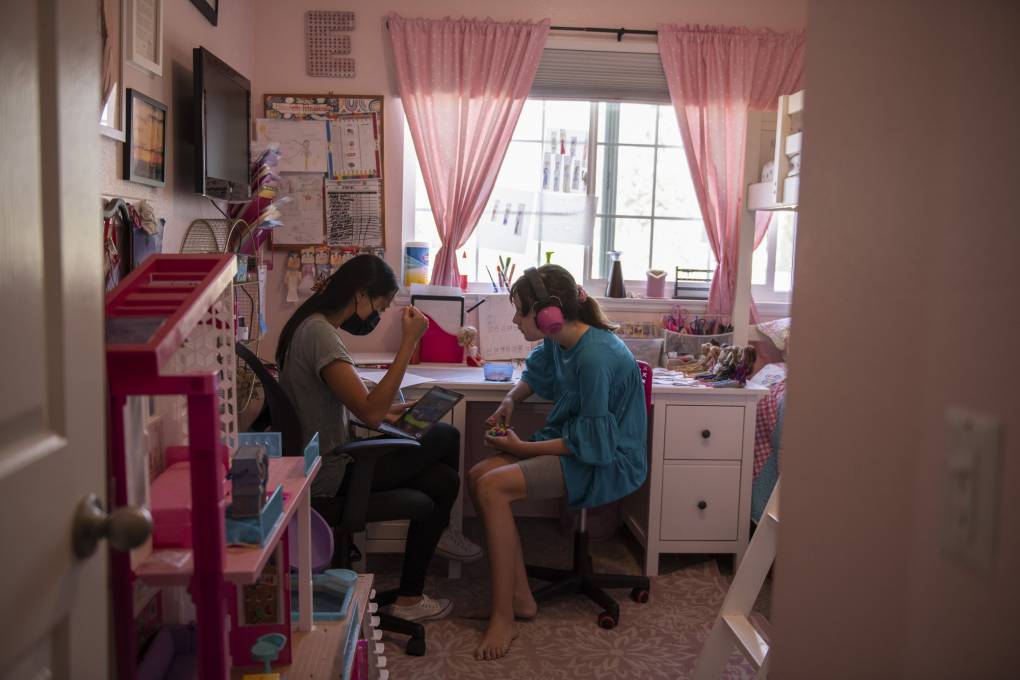
"caption": "Ellie sits in her room with a behavioral therapist during class time in Monrovia, on Sept. 15, 2021. \"There is no way to go back with 37 kids in a classroom,\" Julie Fitzgibbons, the mother of triplets, said. \"With masks and not being able to communicate very well, and autism, there is just no way we can go back like normal.\" ",
"description": "Ellie sits in her room with a behavioral therapist during class time in Monrovia, on Sept. 15, 2021. \"There is no way to go back with 37 kids in a classroom,\" Julie Fitzgibbons, the mother of triplets, said. \"With masks and not being able to communicate very well, and autism, there is just no way we can go back like normal.\" ",
"title": "091521_students_with_disabilities_Calmatters",
"credit": "Pablo Unzueta/CalMatters",
"status": "inherit",
"altTag": "A teenage girl wearing large pink headphones sits in a pink bedroom with a woman holding a laptop.",
"isLoading": false,
"fetchFailed": false
},
"news_11888567": {
"type": "attachments",
"id": "news_11888567",
"meta": {
"index": "attachments_1716263798",
"site": "news",
"id": "11888567",
"found": true
},
"parent": 11888178,
"imgSizes": {
"twentyfourteen-full-width": {
"file": "https://ww2.kqed.org/app/uploads/sites/10/2024/09/RS48248_010_Oakland_MillsCollege_03242021-qut-1-1038x576.jpg",
"width": 1038,
"mimeType": "image/jpeg",
"height": 576
},
"thumbnail": {
"file": "https://ww2.kqed.org/app/uploads/sites/10/2024/09/RS48248_010_Oakland_MillsCollege_03242021-qut-1-160x107.jpg",
"width": 160,
"mimeType": "image/jpeg",
"height": 107
},
"post-thumbnail": {
"file": "https://ww2.kqed.org/app/uploads/sites/10/2024/09/RS48248_010_Oakland_MillsCollege_03242021-qut-1-672x372.jpg",
"width": 672,
"mimeType": "image/jpeg",
"height": 372
},
"kqedFullSize": {
"file": "https://ww2.kqed.org/app/uploads/sites/10/2024/09/RS48248_010_Oakland_MillsCollege_03242021-qut-1.jpg",
"width": 1920,
"height": 1280
},
"large": {
"file": "https://ww2.kqed.org/app/uploads/sites/10/2024/09/RS48248_010_Oakland_MillsCollege_03242021-qut-1-1020x680.jpg",
"width": 1020,
"mimeType": "image/jpeg",
"height": 680
},
"1536x1536": {
"file": "https://ww2.kqed.org/app/uploads/sites/10/2024/09/RS48248_010_Oakland_MillsCollege_03242021-qut-1-1536x1024.jpg",
"width": 1536,
"mimeType": "image/jpeg",
"height": 1024
},
"medium": {
"file": "https://ww2.kqed.org/app/uploads/sites/10/2024/09/RS48248_010_Oakland_MillsCollege_03242021-qut-1-800x533.jpg",
"width": 800,
"mimeType": "image/jpeg",
"height": 533
}
},
"publishDate": 1631661691,
"modified": 1631729747,
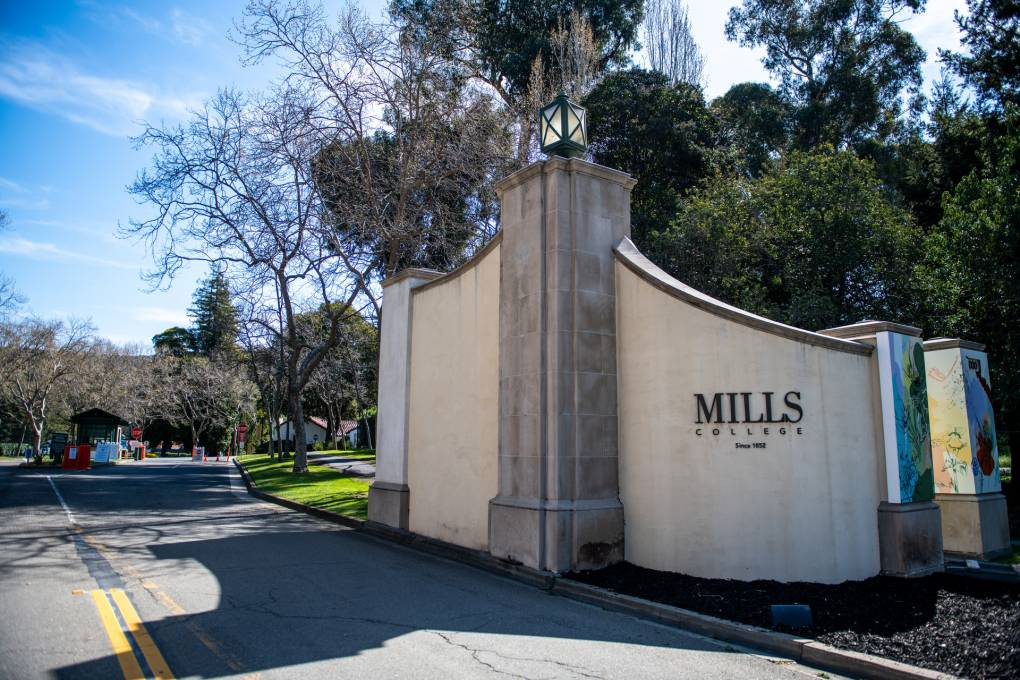
"caption": "The main gate to Mills College in Oakland on March 24, 2021.",
"description": null,
"title": "The main gate to Mills College in Oakland on March 24, 2021.",
"credit": "Beth LaBerge/KQED",
"status": "inherit",
"altTag": "The main entrance to the leafy Mills College campus, a rounded concrete wall with \"Mills\" written on it.",
"isLoading": false,
"fetchFailed": false
},
"news_11888064": {
"type": "attachments",
"id": "news_11888064",
"meta": {
"index": "attachments_1716263798",
"site": "news",
"id": "11888064",
"found": true
},
"parent": 11888033,
"imgSizes": {
"twentyfourteen-full-width": {
"file": "https://ww2.kqed.org/app/uploads/sites/10/2021/09/GettyImages-1232872860-1-1-1038x576.jpg",
"width": 1038,
"mimeType": "image/jpeg",
"height": 576
},
"thumbnail": {
"file": "https://ww2.kqed.org/app/uploads/sites/10/2021/09/GettyImages-1232872860-1-1-160x95.jpg",
"width": 160,
"mimeType": "image/jpeg",
"height": 95
},
"post-thumbnail": {
"file": "https://ww2.kqed.org/app/uploads/sites/10/2021/09/GettyImages-1232872860-1-1-672x372.jpg",
"width": 672,
"mimeType": "image/jpeg",
"height": 372
},
"kqedFullSize": {
"file": "https://ww2.kqed.org/app/uploads/sites/10/2021/09/GettyImages-1232872860-1-1.jpg",
"width": 1920,
"height": 1134
},
"large": {
"file": "https://ww2.kqed.org/app/uploads/sites/10/2021/09/GettyImages-1232872860-1-1-1020x602.jpg",
"width": 1020,
"mimeType": "image/jpeg",
"height": 602
},
"1536x1536": {
"file": "https://ww2.kqed.org/app/uploads/sites/10/2021/09/GettyImages-1232872860-1-1-1536x907.jpg",
"width": 1536,
"mimeType": "image/jpeg",
"height": 907
},
"medium": {
"file": "https://ww2.kqed.org/app/uploads/sites/10/2021/09/GettyImages-1232872860-1-1-800x473.jpg",
"width": 800,
"mimeType": "image/jpeg",
"height": 473
}
},
"publishDate": 1631310296,
"modified": 1631315291,
"caption": "Oliver Barr, 13, receives his COVID-19 vaccine administered by medical assistant Karina Cisneros from St. John's Well Child & Family Center at Abraham Lincoln High School in Los Angeles on May 13, 2021, on the first day of availability of the vaccine for the 12-15 year old age group.",
"description": "Oliver Barr, 13, receives his Covid-19 vaccine administered by medical assistant Karina Cisneros from St. John's Well Child & Family Center at Abraham Lincoln High School in Los Angeles, California on May 13, 2021, on the first day of availability of the vaccine for the 12-15 year old age group.",
"title": "GettyImages-1232872860 (1) (1)",
"credit": "Frederic J. Brown/AFP via Getty Images",
"status": "inherit",
"altTag": null,
"isLoading": false,
"fetchFailed": false
},
"news_11888039": {
"type": "attachments",
"id": "news_11888039",
"meta": {
"index": "attachments_1716263798",
"site": "news",
"id": "11888039",
"found": true
},
"parent": 11888038,
"imgSizes": {
"twentyfourteen-full-width": {
"file": "https://ww2.kqed.org/app/uploads/sites/10/2021/09/gettyimages-1322383469-edit_slide-aeca84500f79435f631298fa45e012493a899eba-1038x576.jpg",
"width": 1038,
"mimeType": "image/jpeg",
"height": 576
},
"thumbnail": {
"file": "https://ww2.kqed.org/app/uploads/sites/10/2021/09/gettyimages-1322383469-edit_slide-aeca84500f79435f631298fa45e012493a899eba-160x107.jpg",
"width": 160,
"mimeType": "image/jpeg",
"height": 107
},
"post-thumbnail": {
"file": "https://ww2.kqed.org/app/uploads/sites/10/2021/09/gettyimages-1322383469-edit_slide-aeca84500f79435f631298fa45e012493a899eba-672x372.jpg",
"width": 672,
"mimeType": "image/jpeg",
"height": 372
},
"kqedFullSize": {
"file": "https://ww2.kqed.org/app/uploads/sites/10/2021/09/gettyimages-1322383469-edit_slide-aeca84500f79435f631298fa45e012493a899eba-scaled.jpg",
"width": 2560,
"height": 1707
},
"2048x2048": {
"file": "https://ww2.kqed.org/app/uploads/sites/10/2021/09/gettyimages-1322383469-edit_slide-aeca84500f79435f631298fa45e012493a899eba-2048x1365.jpg",
"width": 2048,
"mimeType": "image/jpeg",
"height": 1365
},
"large": {
"file": "https://ww2.kqed.org/app/uploads/sites/10/2021/09/gettyimages-1322383469-edit_slide-aeca84500f79435f631298fa45e012493a899eba-1020x680.jpg",
"width": 1020,
"mimeType": "image/jpeg",
"height": 680
},
"1536x1536": {
"file": "https://ww2.kqed.org/app/uploads/sites/10/2021/09/gettyimages-1322383469-edit_slide-aeca84500f79435f631298fa45e012493a899eba-1536x1024.jpg",
"width": 1536,
"mimeType": "image/jpeg",
"height": 1024
},
"full-width": {
"file": "https://ww2.kqed.org/app/uploads/sites/10/2021/09/gettyimages-1322383469-edit_slide-aeca84500f79435f631298fa45e012493a899eba-1920x1280.jpg",
"width": 1920,
"mimeType": "image/jpeg",
"height": 1280
},
"medium": {
"file": "https://ww2.kqed.org/app/uploads/sites/10/2021/09/gettyimages-1322383469-edit_slide-aeca84500f79435f631298fa45e012493a899eba-800x533.jpg",
"width": 800,
"mimeType": "image/jpeg",
"height": 533
}
},
"publishDate": 1631304168,
"modified": 1631306261,
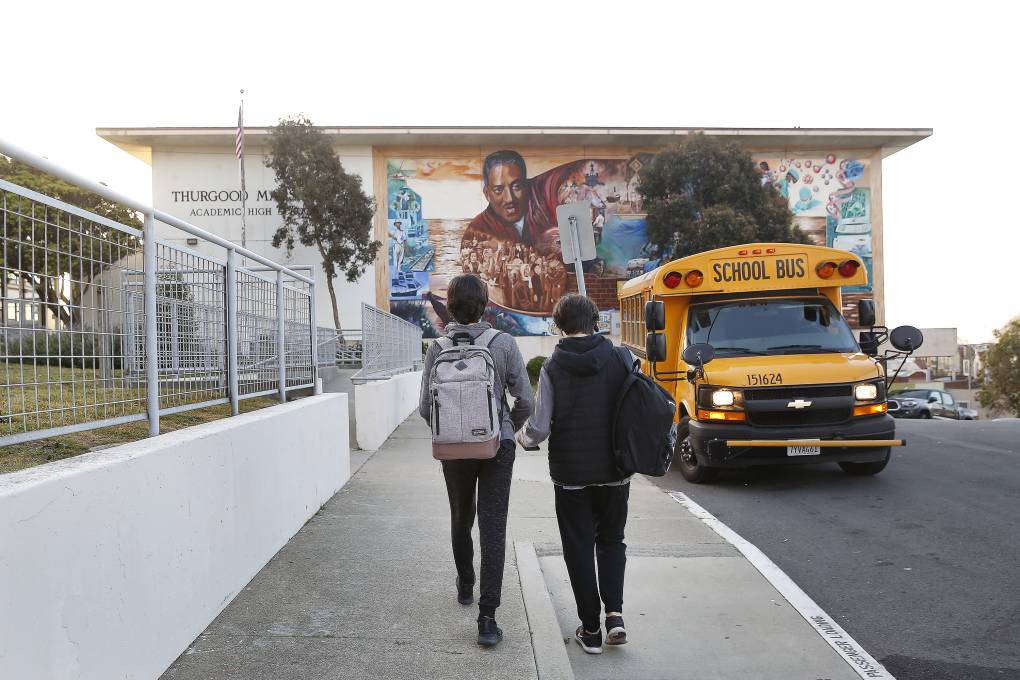
"caption": "Isaac Conde (left), 14, and Joshua Conde, 16, walk toward Thurgood Marshall Academic High School in San Francisco.",
"description": "Isaac Conde (l to r), 14, and Joshua Conde, 16, walk toward Thurgood Marshall Academic High after their mother Laura Conde (not shown) dropped them off at school in the morning on Friday, March 13, 2020 in San Francisco, Calif. (Photo By Lea Suzuki/The San Francisco Chronicle via Getty Images)",
"title": "Isaac Conde, 14, and Joshua Conde, 16, walk toward Thurgood Marshall Academic High School in San Francisco, Calif. in March.",
"credit": "Lea Suzuki/The San Francisco Chronicle via Getty Images",
"status": "inherit",
"altTag": "Two San Francisco high school students walk to school.",
"isLoading": false,
"fetchFailed": false
},
"news_11887893": {
"type": "attachments",
"id": "news_11887893",
"meta": {
"index": "attachments_1716263798",
"site": "news",
"id": "11887893",
"found": true
},
"parent": 11887815,
"imgSizes": {
"twentyfourteen-full-width": {
"file": "https://ww2.kqed.org/app/uploads/sites/10/2021/09/GettyImages-1233456190-1038x576.jpg",
"width": 1038,
"mimeType": "image/jpeg",
"height": 576
},
"thumbnail": {
"file": "https://ww2.kqed.org/app/uploads/sites/10/2021/09/GettyImages-1233456190-160x107.jpg",
"width": 160,
"mimeType": "image/jpeg",
"height": 107
},
"post-thumbnail": {
"file": "https://ww2.kqed.org/app/uploads/sites/10/2021/09/GettyImages-1233456190-672x372.jpg",
"width": 672,
"mimeType": "image/jpeg",
"height": 372
},
"kqedFullSize": {
"file": "https://ww2.kqed.org/app/uploads/sites/10/2021/09/GettyImages-1233456190-scaled.jpg",
"width": 2560,
"height": 1707
},
"2048x2048": {
"file": "https://ww2.kqed.org/app/uploads/sites/10/2021/09/GettyImages-1233456190-2048x1366.jpg",
"width": 2048,
"mimeType": "image/jpeg",
"height": 1366
},
"large": {
"file": "https://ww2.kqed.org/app/uploads/sites/10/2021/09/GettyImages-1233456190-1020x680.jpg",
"width": 1020,
"mimeType": "image/jpeg",
"height": 680
},
"1536x1536": {
"file": "https://ww2.kqed.org/app/uploads/sites/10/2021/09/GettyImages-1233456190-1536x1024.jpg",
"width": 1536,
"mimeType": "image/jpeg",
"height": 1024
},
"full-width": {
"file": "https://ww2.kqed.org/app/uploads/sites/10/2021/09/GettyImages-1233456190-1920x1280.jpg",
"width": 1920,
"mimeType": "image/jpeg",
"height": 1280
},
"medium": {
"file": "https://ww2.kqed.org/app/uploads/sites/10/2021/09/GettyImages-1233456190-800x533.jpg",
"width": 800,
"mimeType": "image/jpeg",
"height": 533
}
},
"publishDate": 1631164204,
"modified": 1631236098,
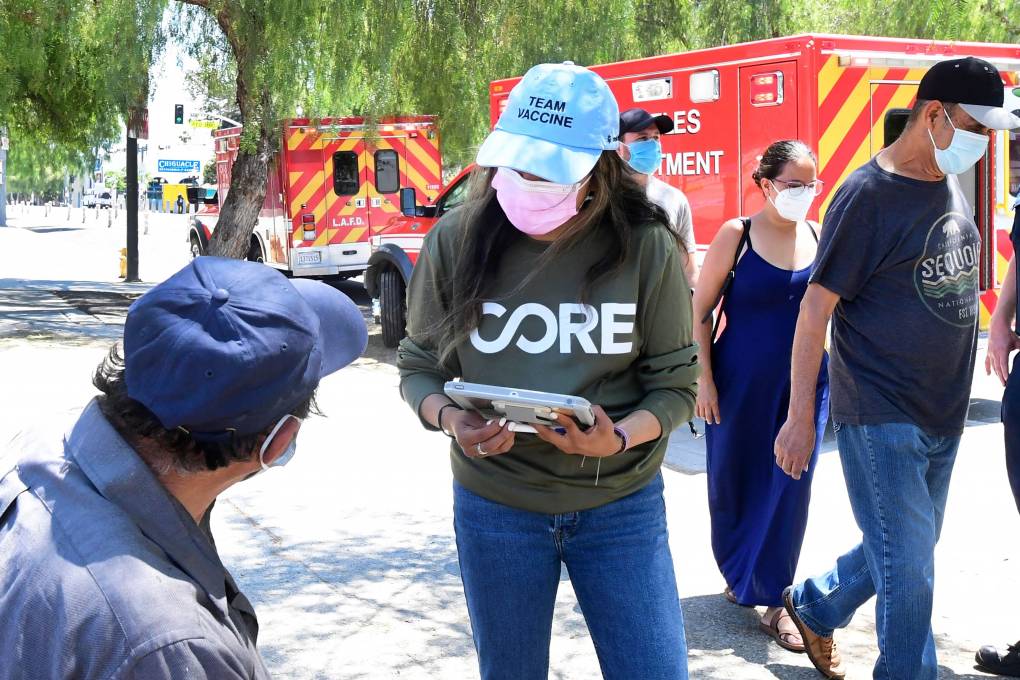
"caption": "Mishel Herrera from CORE (Community Organized Relief Effort) speaks with an unhoused resident of Los Angeles before he receives his one-shot Johnson & Johnson COVID-19 vaccine administered by members of the Los Angeles Fire Department's Outreach unit on June 14, 2021. Over the next five years, California is plowing nearly $6 billion into expanding Medi-Cal services for the most high-needs patients, including unhoused Californians, heavy users of hospital emergency rooms, children and seniors with complicated physical and mental health conditions and others.",
"description": "Mishel Herrera from CORE (Community Organized Relief Effort) speaks with Eduardo Vasquez, homeless on the streets of Los Angeles since 1992, before he receives his one-shot Johnson and Johnson's Janssen Covid-19 vaccine administered by members of the Los Angeles Fire Department's Covid Outreach unit on June 14, 2021 in Los Angeles. - With more than 40 million vaccine doses administered, California is one of the last state's to fully reopen its economy, though businesses have been open at reduced capacity for months.",
"title": "US-HEALTH-VIRUS-PANDEMIC",
"credit": "Frederic J. Brown/AFP via Getty Images",
"status": "inherit",
"altTag": "Woman in baseball cap and mask, holding clipboard, leans over to talk to man in baseball cap near two ambulances parked on a street.",
"isLoading": false,
"fetchFailed": false
},
"news_11887423": {
"type": "attachments",
"id": "news_11887423",
"meta": {
"index": "attachments_1716263798",
"site": "news",
"id": "11887423",
"found": true
},
"parent": 11887194,
"imgSizes": {
"twentyfourteen-full-width": {
"file": "https://ww2.kqed.org/app/uploads/sites/10/2021/09/Oakland-schools-remote-learning-1038x576.jpg",
"width": 1038,
"mimeType": "image/jpeg",
"height": 576
},
"thumbnail": {
"file": "https://ww2.kqed.org/app/uploads/sites/10/2021/09/Oakland-schools-remote-learning-160x107.jpg",
"width": 160,
"mimeType": "image/jpeg",
"height": 107
},
"post-thumbnail": {
"file": "https://ww2.kqed.org/app/uploads/sites/10/2021/09/Oakland-schools-remote-learning-672x372.jpg",
"width": 672,
"mimeType": "image/jpeg",
"height": 372
},
"kqedFullSize": {
"file": "https://ww2.kqed.org/app/uploads/sites/10/2021/09/Oakland-schools-remote-learning.jpg",
"width": 1920,
"height": 1280
},
"large": {
"file": "https://ww2.kqed.org/app/uploads/sites/10/2021/09/Oakland-schools-remote-learning-1020x680.jpg",
"width": 1020,
"mimeType": "image/jpeg",
"height": 680
},
"1536x1536": {
"file": "https://ww2.kqed.org/app/uploads/sites/10/2021/09/Oakland-schools-remote-learning-1536x1024.jpg",
"width": 1536,
"mimeType": "image/jpeg",
"height": 1024
},
"medium": {
"file": "https://ww2.kqed.org/app/uploads/sites/10/2021/09/Oakland-schools-remote-learning-800x533.jpg",
"width": 800,
"mimeType": "image/jpeg",
"height": 533
}
},
"publishDate": 1630612545,
"modified": 1630633223,
"caption": "An Oakland student learning from home in April 2021. With schools across California having returned to in-person education, those who opted to remain in distance learning now feel shortchanged.",
"description": null,
"title": "Ryan Austin and her son Onyx at their home in Oakland on April 14, 2021.",
"credit": "Beth LaBerge/KQED",
"status": "inherit",
"altTag": "A young boy kneels at a desk in his home to use a laptop computer.",
"isLoading": false,
"fetchFailed": false
},
"news_11887274": {
"type": "attachments",
"id": "news_11887274",
"meta": {
"index": "attachments_1716263798",
"site": "news",
"id": "11887274",
"found": true
},
"parent": 11887273,
"imgSizes": {
"twentyfourteen-full-width": {
"file": "https://ww2.kqed.org/app/uploads/sites/10/2021/09/ap21235373894167-edit_custom-e2cdf587be4a6ade2cb01de06f4a7d35c7b7f202-1038x576.jpg",
"width": 1038,
"mimeType": "image/jpeg",
"height": 576
},
"thumbnail": {
"file": "https://ww2.kqed.org/app/uploads/sites/10/2021/09/ap21235373894167-edit_custom-e2cdf587be4a6ade2cb01de06f4a7d35c7b7f202-160x90.jpg",
"width": 160,
"mimeType": "image/jpeg",
"height": 90
},
"post-thumbnail": {
"file": "https://ww2.kqed.org/app/uploads/sites/10/2021/09/ap21235373894167-edit_custom-e2cdf587be4a6ade2cb01de06f4a7d35c7b7f202-672x372.jpg",
"width": 672,
"mimeType": "image/jpeg",
"height": 372
},
"kqedFullSize": {
"file": "https://ww2.kqed.org/app/uploads/sites/10/2021/09/ap21235373894167-edit_custom-e2cdf587be4a6ade2cb01de06f4a7d35c7b7f202-scaled.jpg",
"width": 2560,
"height": 1438
},
"2048x2048": {
"file": "https://ww2.kqed.org/app/uploads/sites/10/2021/09/ap21235373894167-edit_custom-e2cdf587be4a6ade2cb01de06f4a7d35c7b7f202-2048x1150.jpg",
"width": 2048,
"mimeType": "image/jpeg",
"height": 1150
},
"large": {
"file": "https://ww2.kqed.org/app/uploads/sites/10/2021/09/ap21235373894167-edit_custom-e2cdf587be4a6ade2cb01de06f4a7d35c7b7f202-1020x573.jpg",
"width": 1020,
"mimeType": "image/jpeg",
"height": 573
},
"1536x1536": {
"file": "https://ww2.kqed.org/app/uploads/sites/10/2021/09/ap21235373894167-edit_custom-e2cdf587be4a6ade2cb01de06f4a7d35c7b7f202-1536x863.jpg",
"width": 1536,
"mimeType": "image/jpeg",
"height": 863
},
"full-width": {
"file": "https://ww2.kqed.org/app/uploads/sites/10/2021/09/ap21235373894167-edit_custom-e2cdf587be4a6ade2cb01de06f4a7d35c7b7f202-1920x1078.jpg",
"width": 1920,
"mimeType": "image/jpeg",
"height": 1078
},
"medium": {
"file": "https://ww2.kqed.org/app/uploads/sites/10/2021/09/ap21235373894167-edit_custom-e2cdf587be4a6ade2cb01de06f4a7d35c7b7f202-800x449.jpg",
"width": 800,
"mimeType": "image/jpeg",
"height": 449
}
},
"publishDate": 1630529263,
"modified": 1630530035,
"caption": "A U.S. Air Force air crew prepares to load evacuees aboard a C-17 aircraft at Hamid Karzai International Airport in Kabul, Afghanistan, on Aug. 31. Several public school students from Sacramento remain in Afghanistan since the U.S. evacuation ended.",
"description": "A U.S. Air Force air crew prepares to load evacuees aboard a C-17 aircraft at Hamid Karzai International Airport in Kabul, Afghanistan, on Aug. 31. Several public school students from Sacramento remain in Afghanistan since the U.S. evacuation ended.",
"title": "A U.S. Air Force air crew prepares to load evacuees aboard a C-17 aircraft at Hamid Karzai International Airport in Kabul, Afghanistan, on Aug. 31. Several public school students from Sacramento, Calif., remain in Afghanistan since the U.S. evacuation ended.",
"credit": "Senior Airman Taylor Crul/U.S. Air Force via AP",
"status": "inherit",
"altTag": "line of evacuees at night wait to board a plane, backlight by far off light",
"isLoading": false,
"fetchFailed": false
}
},
"audioPlayerReducer": {
"postId": "stream_live",
"isPaused": true,
"isPlaying": false,
"pfsActive": false,
"pledgeModalIsOpen": true,
"playerDrawerIsOpen": false,
"liveAudioPlayStartedAt": 0,
"liveAudioPlayContext": ""
},
"authorsReducer": {
"byline_news_11889436": {
"type": "authors",
"id": "byline_news_11889436",
"meta": {
"override": true
},
"slug": "byline_news_11889436",
"name": "\u003ca href=\"https://edsource.org/author/atadayon\">Ali Tadayon\u003c/a>",
"isLoading": false
},
"byline_news_11889134": {
"type": "authors",
"id": "byline_news_11889134",
"meta": {
"override": true
},
"slug": "byline_news_11889134",
"name": "Diana Lambert",
"isLoading": false
},
"byline_news_11889115": {
"type": "authors",
"id": "byline_news_11889115",
"meta": {
"override": true
},
"slug": "byline_news_11889115",
"name": "Joe Hong",
"isLoading": false
},
"byline_news_11888033": {
"type": "authors",
"id": "byline_news_11888033",
"meta": {
"override": true
},
"slug": "byline_news_11888033",
"name": "Joe Hong\u003cbr>CalMatters",
"isLoading": false
},
"byline_news_11888038": {
"type": "authors",
"id": "byline_news_11888038",
"meta": {
"override": true
},
"slug": "byline_news_11888038",
"name": "Deepa Shivaram",
"isLoading": false
},
"byline_news_11887815": {
"type": "authors",
"id": "byline_news_11887815",
"meta": {
"override": true
},
"slug": "byline_news_11887815",
"name": "\u003ca href=\"https://californiahealthline.org/news/author/angela-hart/\">Angela Hart\u003c/a>",
"isLoading": false
},
"byline_news_11887273": {
"type": "authors",
"id": "byline_news_11887273",
"meta": {
"override": true
},
"slug": "byline_news_11887273",
"name": "\u003ca href=\"https://www.npr.org/people/1015466926/deepa-shivaram\">Deepa Shivaram\u003c/a>",
"isLoading": false
},
"markfiore": {
"type": "authors",
"id": "3236",
"meta": {
"index": "authors_1716337520",
"id": "3236",
"found": true
},
"name": "Mark Fiore",
"firstName": "Mark",
"lastName": "Fiore",
"slug": "markfiore",
"email": "mark@markfiore.com",
"display_author_email": false,
"staff_mastheads": [
"news"
],
"title": "KQED News Cartoonist",
"bio": "\u003ca href=\"http://www.MarkFiore.com\">MarkFiore.com\u003c/a> | \u003ca href=\"https://twitter.com/markfiore\">Follow on Twitter\u003c/a> | \u003ca href=\"https://www.facebook.com/pages/Mark-Fiore-Animated-Political-Cartoons/94451707396?ref=bookmarks\">Facebook\u003c/a> | \u003ca href=\"mailto:mark@markfiore.com\">email\u003c/a>\r\n\r\nPulitzer Prize-winner, Mark Fiore, who the Wall Street Journal has called “the undisputed guru of the form,” creates animated political cartoons in San Francisco, where his work has been featured regularly on the San Francisco Chronicle’s web site, SFGate.com. His work has appeared on Newsweek.com, Slate.com, CBSNews.com, MotherJones.com, DailyKos.com and NPR’s web site. Fiore’s political animation has appeared on CNN, Frontline, Bill Moyers Journal, Salon.com and cable and broadcast outlets across the globe.\r\n\r\nBeginning his professional life by drawing traditional political cartoons for newspapers, Fiore’s work appeared in publications ranging from the Washington Post to the Los Angeles Times. In the late 1990s, he began to experiment with animating political cartoons and, after a short stint at the San Jose Mercury News as their staff cartoonist, Fiore devoted all his energies to animation.\r\nGrowing up in California, Fiore also spent a good portion of his life in the backwoods of Idaho. It was this combination that shaped him politically. Mark majored in political science at Colorado College, where, in a perfect send-off for a cartoonist, he received his diploma in 1991 as commencement speaker Dick Cheney smiled approvingly.\r\nMark Fiore was awarded the Pulitzer Prize for political cartooning in 2010, a Robert F. Kennedy Journalism Award in 2004 and has twice received an Online Journalism Award for commentary from the Online News Association (2002, 2008). Fiore has received two awards for his work in new media from the National Cartoonists Society (2001, 2002), and in 2006 received The James Madison Freedom of Information Award from The Society of Professional Journalists.",
"avatar": "https://secure.gravatar.com/avatar/fc4e2a612b15b67bad0c6f0e1db4ca9b?s=600&d=blank&r=g",
"twitter": "MarkFiore",
"facebook": null,
"instagram": "https://www.instagram.com/markfiore/?hl=en",
"linkedin": null,
"sites": [
{
"site": "arts",
"roles": [
"contributor"
]
},
{
"site": "news",
"roles": [
"editor"
]
},
{
"site": "futureofyou",
"roles": [
"editor"
]
},
{
"site": "science",
"roles": [
"editor"
]
}
],
"headData": {
"title": "Mark Fiore | KQED",
"description": "KQED News Cartoonist",
"ogImgSrc": "https://secure.gravatar.com/avatar/fc4e2a612b15b67bad0c6f0e1db4ca9b?s=600&d=blank&r=g",
"twImgSrc": "https://secure.gravatar.com/avatar/fc4e2a612b15b67bad0c6f0e1db4ca9b?s=600&d=blank&r=g"
},
"isLoading": false,
"link": "/author/markfiore"
},
"ecruzguevarra": {
"type": "authors",
"id": "8654",
"meta": {
"index": "authors_1716337520",
"id": "8654",
"found": true
},
"name": "Ericka Cruz Guevarra",
"firstName": "Ericka",
"lastName": "Cruz Guevarra",
"slug": "ecruzguevarra",
"email": "ecruzguevarra@kqed.org",
"display_author_email": true,
"staff_mastheads": [
"news"
],
"title": "Producer, The Bay Podcast",
"bio": "Ericka Cruz Guevarra is host of \u003ca href=\"https://www.kqed.org/podcasts/thebay\">\u003cem>The Bay\u003c/em>\u003c/a> podcast at KQED. Before host, she was the show’s producer. Her work in that capacity includes a three-part reported series on policing in Vallejo, which won a 2020 excellence in journalism award from the Society of Professional Journalists. Ericka has worked as a breaking news reporter at Oregon Public Broadcasting, helped produce the Code Switch podcast, and was KQED’s inaugural Raul Ramirez Diversity Fund intern. She’s also an alumna of NPR’s Next Generation Radio program. Send her an email if you have strong feelings about whether Fairfield and Suisun City are the Bay. Ericka is represented by SAG-AFTRA.",
"avatar": "https://secure.gravatar.com/avatar/accefc1de4bafc7e234b69bcb9b6f6536c130fd84709bc3069ef11a78787e1bb?s=600&d=blank&r=g",
"twitter": "NotoriousECG",
"bluesky": null,
"facebook": null,
"instagram": null,
"linkedin": null,
"sites": [
{
"site": "arts",
"roles": [
"subscriber"
]
},
{
"site": "news",
"roles": [
"editor",
"manage_categories"
]
},
{
"site": "futureofyou",
"roles": [
"subscriber"
]
},
{
"site": "stateofhealth",
"roles": [
"subscriber"
]
},
{
"site": "science",
"roles": [
"editor"
]
},
{
"site": "forum",
"roles": [
"subscriber"
]
}
],
"headData": {
"title": "Ericka Cruz Guevarra | KQED",
"description": "Producer, The Bay Podcast",
"ogImgSrc": "https://secure.gravatar.com/avatar/accefc1de4bafc7e234b69bcb9b6f6536c130fd84709bc3069ef11a78787e1bb?s=600&d=blank&r=g",
"twImgSrc": "https://secure.gravatar.com/avatar/accefc1de4bafc7e234b69bcb9b6f6536c130fd84709bc3069ef11a78787e1bb?s=600&d=blank&r=g"
},
"isLoading": false,
"link": "/author/ecruzguevarra"
},
"vrancano": {
"type": "authors",
"id": "11276",
"meta": {
"index": "authors_1716337520",
"id": "11276",
"found": true
},
"name": "Vanessa Rancaño",
"firstName": "Vanessa",
"lastName": "Rancaño",
"slug": "vrancano",
"email": "vrancano@kqed.org",
"display_author_email": false,
"staff_mastheads": [
"news"
],
"title": "Reporter",
"bio": "Vanessa Rancaño is a features reporter for KQED. She’s also covered homelessness and education for the station and reported from the Central Valley. Her work has aired across public radio, from flagship national news shows to longform narrative podcasts. Before taking up a mic, she worked as a freelance print journalist. She’s been recognized with a number of national and regional awards. Vanessa grew up in California's Central Valley. She's a former NPR Kroc Fellow, and a graduate of the UC Berkeley Graduate School of Journalism.",
"avatar": "https://secure.gravatar.com/avatar/b3a383dfb0e7ee1c17568f2cf067904ab654d6e3de9743fc661f3c788ade1bed?s=600&d=blank&r=g",
"twitter": "vanessarancano",
"bluesky": null,
"facebook": null,
"instagram": null,
"linkedin": null,
"sites": [
{
"site": "arts",
"roles": [
"editor"
]
},
{
"site": "news",
"roles": [
"editor"
]
},
{
"site": "liveblog",
"roles": [
"contributor"
]
}
],
"headData": {
"title": "Vanessa Rancaño | KQED",
"description": "Reporter",
"ogImgSrc": "https://secure.gravatar.com/avatar/b3a383dfb0e7ee1c17568f2cf067904ab654d6e3de9743fc661f3c788ade1bed?s=600&d=blank&r=g",
"twImgSrc": "https://secure.gravatar.com/avatar/b3a383dfb0e7ee1c17568f2cf067904ab654d6e3de9743fc661f3c788ade1bed?s=600&d=blank&r=g"
},
"isLoading": false,
"link": "/author/vrancano"
},
"mwiley": {
"type": "authors",
"id": "11526",
"meta": {
"index": "authors_1716337520",
"id": "11526",
"found": true
},
"name": "Michelle Wiley",
"firstName": "Michelle",
"lastName": "Wiley",
"slug": "mwiley",
"email": "mwiley@KQED.org",
"display_author_email": true,
"staff_mastheads": [],
"title": null,
"bio": "Michelle Wiley was the senior editor of weekends.",
"avatar": "https://secure.gravatar.com/avatar/3b897d82a09e8587e8e73fa69fbcc635?s=600&d=blank&r=g",
"twitter": "michelleewiley",
"facebook": null,
"instagram": null,
"linkedin": null,
"sites": [
{
"site": "",
"roles": [
"editor"
]
},
{
"site": "arts",
"roles": [
"editor"
]
},
{
"site": "news",
"roles": [
"subscriber"
]
},
{
"site": "lowdown",
"roles": [
"editor"
]
},
{
"site": "science",
"roles": [
"editor"
]
},
{
"site": "podcasts",
"roles": [
"editor"
]
}
],
"headData": {
"title": "Michelle Wiley | KQED",
"description": null,
"ogImgSrc": "https://secure.gravatar.com/avatar/3b897d82a09e8587e8e73fa69fbcc635?s=600&d=blank&r=g",
"twImgSrc": "https://secure.gravatar.com/avatar/3b897d82a09e8587e8e73fa69fbcc635?s=600&d=blank&r=g"
},
"isLoading": false,
"link": "/author/mwiley"
},
"mfharvin": {
"type": "authors",
"id": "11583",
"meta": {
"index": "authors_1716337520",
"id": "11583",
"found": true
},
"name": "Mary Franklin Harvin",
"firstName": "Mary Franklin",
"lastName": "Harvin",
"slug": "mfharvin",
"email": "mfharvin@KQED.org",
"display_author_email": false,
"staff_mastheads": [
"news"
],
"title": "KQED Contributor",
"bio": null,
"avatar": "https://secure.gravatar.com/avatar/0e53510a7d48cfbdebfc9b11357d845f?s=600&d=blank&r=g",
"twitter": "EmEffHarvin",
"facebook": null,
"instagram": null,
"linkedin": null,
"sites": [
{
"site": "news",
"roles": [
"author",
"edit_others_posts"
]
},
{
"site": "science",
"roles": [
"editor"
]
}
],
"headData": {
"title": "Mary Franklin Harvin | KQED",
"description": "KQED Contributor",
"ogImgSrc": "https://secure.gravatar.com/avatar/0e53510a7d48cfbdebfc9b11357d845f?s=600&d=blank&r=g",
"twImgSrc": "https://secure.gravatar.com/avatar/0e53510a7d48cfbdebfc9b11357d845f?s=600&d=blank&r=g"
},
"isLoading": false,
"link": "/author/mfharvin"
},
"amontecillo": {
"type": "authors",
"id": "11649",
"meta": {
"index": "authors_1716337520",
"id": "11649",
"found": true
},
"name": "Alan Montecillo",
"firstName": "Alan",
"lastName": "Montecillo",
"slug": "amontecillo",
"email": "amontecillo@kqed.org",
"display_author_email": false,
"staff_mastheads": [
"news"
],
"title": "KQED Contributor",
"bio": "Alan Montecillo is the senior editor of \u003cem>\u003ca href=\"http://kqed.org/thebay\">The Bay\u003c/a>, \u003c/em> KQED's local news podcast. Before moving to the Bay Area, he worked as a senior talk show producer for WILL in Champaign-Urbana, Illinois and at Oregon Public Broadcasting in Portland, Oregon. He has won journalism awards from the Society of Professional Journalists Northern California, the Public Media Journalists Association, The Signal Awards, and has also received a regional Edward R. Murrow award. Alan is a Filipino American from Hong Kong and a graduate of Reed College.",
"avatar": "https://secure.gravatar.com/avatar/268f53a2066899ea9efdd8a5900218b17c822d9862cbc9326cccec53ef41d349?s=600&d=blank&r=g",
"twitter": "alanmontecillo",
"bluesky": null,
"facebook": null,
"instagram": null,
"linkedin": null,
"sites": [
{
"site": "",
"roles": [
"editor"
]
},
{
"site": "news",
"roles": [
"editor",
"manage_categories"
]
}
],
"headData": {
"title": "Alan Montecillo | KQED",
"description": "KQED Contributor",
"ogImgSrc": "https://secure.gravatar.com/avatar/268f53a2066899ea9efdd8a5900218b17c822d9862cbc9326cccec53ef41d349?s=600&d=blank&r=g",
"twImgSrc": "https://secure.gravatar.com/avatar/268f53a2066899ea9efdd8a5900218b17c822d9862cbc9326cccec53ef41d349?s=600&d=blank&r=g"
},
"isLoading": false,
"link": "/author/amontecillo"
}
},
"pagesReducer": {
"news_category_education": {
"type": "terms",
"id": "news_18540",
"meta": {
"index": "terms_1716263798",
"site": "news",
"id": "18540",
"score": 10.973179
},
"featImg": null,
"name": "Education",
"description": null,
"taxonomy": "category",
"headData": {
"twImgId": null,
"twTitle": null,
"ogTitle": null,
"ogImgId": null,
"twDescription": null,
"description": null,
"title": "Education Archives | KQED News",
"ogDescription": null
},
"ttid": 2595,
"slug": "education",
"isLoading": false,
"title": "Education",
"pageMeta": {
"site": "news",
"WpPageTemplate": "page-topic-editorial",
"currentPage": 79
},
"blocks": [
{
"blockName": "kqed/post-list",
"attrs": {
"layout": "cardArticle2",
"query": "posts/news?category=education",
"seeMore": false,
"paginated": true,
"page": 79
}
},
{
"blockName": "kqed/ad"
}
]
}
},
"pfsSessionReducer": {},
"postsReducer": {
"stream_live": {
"type": "live",
"id": "stream_live",
"audioUrl": "https://streams.kqed.org/kqedradio",
"title": "Live Stream",
"excerpt": "Live Stream information currently unavailable.",
"link": "/radio",
"featImg": "",
"label": {
"name": "KQED Live",
"link": "/"
}
},
"stream_kqedNewscast": {
"type": "posts",
"id": "stream_kqedNewscast",
"audioUrl": "https://www.kqed.org/.stream/anon/radio/RDnews/newscast.mp3?_=1",
"title": "KQED Newscast",
"featImg": "",
"label": {
"name": "88.5 FM",
"link": "/"
}
},
"news_11889784": {
"type": "posts",
"id": "news_11889784",
"meta": {
"index": "posts_1716263798",
"site": "news",
"id": "11889784",
"score": null,
"sort": [
1632440864000
]
},
"guestAuthors": [],
"slug": "chill-weve-been-here-before",
"title": "Chill, We've Been Here Before",
"publishDate": 1632440864,
"format": "aside",
"headTitle": "Chill, We’ve Been Here Before | KQED",
"labelTerm": {
"term": 18515,
"site": "news"
},
"content": "\u003cp>\u003ca href=\"https://ww2.kqed.org/app/uploads/sites/10/2021/09/requiring_092321_final.png\">\u003cimg loading=\"lazy\" decoding=\"async\" class=\"alignnone size-full wp-image-11889790\" src=\"https://ww2.kqed.org/app/uploads/sites/10/2021/09/requiring_092321_final.png\" alt='Cartoon: a retro-looking poster with smiling school kids that reads, \"California, requiring vaccines to attend school, since 1962.\"' width=\"1920\" height=\"1431\" srcset=\"https://cdn.kqed.org/wp-content/uploads/sites/10/2021/09/requiring_092321_final.png 1920w, https://cdn.kqed.org/wp-content/uploads/sites/10/2021/09/requiring_092321_final-800x596.png 800w, https://cdn.kqed.org/wp-content/uploads/sites/10/2021/09/requiring_092321_final-1020x760.png 1020w, https://cdn.kqed.org/wp-content/uploads/sites/10/2021/09/requiring_092321_final-160x119.png 160w, https://cdn.kqed.org/wp-content/uploads/sites/10/2021/09/requiring_092321_final-1536x1145.png 1536w\" sizes=\"auto, (max-width: 1920px) 100vw, 1920px\">\u003c/a>\u003c/p>\n\u003cp>Oakland Unified on Wednesday became \u003ca href=\"https://bit.ly/fioreousdvaccines\">the first school district in Northern California to require a COVID-19 vaccine for students\u003c/a> 12 and up.\u003c/p>\n\u003cp>California Health and Human Services Secretary Dr. Mark Ghaly left open the possibility that a statewide mandate may be on the way.\u003c/p>\n\u003cp>In the early 1960s, \u003ca href=\"https://cdn.kqed.org/wp-content/uploads/sites/10/2021/09/Polio.pdf\">legislators enacted a law that required a polio vaccine to attend school\u003c/a> in the state. They did so only after a campaign to incentivize students to voluntarily get the shot fell short.\u003c/p>\n\u003cp>Sound familiar?\u003c/p>\n\u003cp>\u003ca href=\"https://ww2.kqed.org/app/uploads/sites/10/2021/09/requiring_1889_092421_final.png\">\u003cimg loading=\"lazy\" decoding=\"async\" class=\"alignnone size-full wp-image-11889846\" src=\"https://ww2.kqed.org/app/uploads/sites/10/2021/09/requiring_1889_092421_final.png\" alt='Cartoon: an old-timey looking poster with smiling school kids that reads, \"California, requiring vaccines to attend school since 1889.\"' width=\"1920\" height=\"1431\" srcset=\"https://cdn.kqed.org/wp-content/uploads/sites/10/2021/09/requiring_1889_092421_final.png 1920w, https://cdn.kqed.org/wp-content/uploads/sites/10/2021/09/requiring_1889_092421_final-800x596.png 800w, https://cdn.kqed.org/wp-content/uploads/sites/10/2021/09/requiring_1889_092421_final-1020x760.png 1020w, https://cdn.kqed.org/wp-content/uploads/sites/10/2021/09/requiring_1889_092421_final-160x119.png 160w, https://cdn.kqed.org/wp-content/uploads/sites/10/2021/09/requiring_1889_092421_final-1536x1145.png 1536w\" sizes=\"auto, (max-width: 1920px) 100vw, 1920px\">\u003c/a>\u003c/p>\n\u003cp>Upon further research, I found that \u003ca href=\"https://pediatrics.aappublications.org/content/145/4/e20192551\">the very first California law that required a vaccine to attend school was way back in 1889\u003c/a>!\u003c/p>\n\u003cp>People battled over these early vaccine mandates in the courts for years, it wasn’t until the 1960s and the polio vaccine that the state mandates really took hold.\u003c/p>\n\u003cp>I guess that goes to show you just how effective vaccine mandates are that I forgot about a once prevalent horrible disease called smallpox.\u003c/p>\n\u003cp>[ad fullwidth]\u003c/p>\n\u003cp>\u003c/p>\n",
"blocks": [],
"excerpt": "Oakland Unified became the first school district in Northern California to require a COVID-19 vaccine for students 12 and up. California's health chief, Dr. Mark Ghaly, left open the possibility that a statewide mandate may be on the way.",
"status": "publish",
"parent": 0,
"modified": 1740699605,
"stats": {
"hasAudio": false,
"hasVideo": false,
"hasChartOrMap": false,
"iframeSrcs": [],
"hasGoogleForm": false,
"hasGallery": false,
"hasHearkenModule": false,
"hasPolis": false,
"paragraphCount": 11,
"wordCount": 163
},
"headData": {
"title": "Chill, We've Been Here Before | KQED",
"description": "Oakland Unified became the first school district in Northern California to require a COVID-19 vaccine for students 12 and up. California's health chief, Dr. Mark Ghaly, left open the possibility that a statewide mandate may be on the way.",
"ogTitle": "",
"ogDescription": "",
"ogImgId": "",
"twTitle": "",
"twDescription": "",
"twImgId": "",
"schema": {
"@context": "https://schema.org",
"@type": "NewsArticle",
"headline": "Chill, We've Been Here Before",
"datePublished": "2021-09-23T16:47:44-07:00",
"dateModified": "2025-02-27T15:40:05-08:00",
"image": "https://cdn.kqed.org/wp-content/uploads/2020/02/KQED-OG-Image@1x.png",
"isAccessibleForFree": "True",
"publisher": {
"@type": "NewsMediaOrganization",
"@id": "https://www.kqed.org/#organization",
"name": "KQED",
"logo": "https://cdn.kqed.org/wp-content/uploads/2020/02/KQED-OG-Image@1x.png",
"url": "https://www.kqed.org",
"sameAs": [
"https://www.facebook.com/KQED",
"https://twitter.com/KQED",
"https://www.instagram.com/kqed/",
"https://www.tiktok.com/@kqedofficial",
"https://www.linkedin.com/company/kqed",
"https://www.youtube.com/channel/UCeC0IOo7i1P_61zVUWbJ4nw"
]
}
}
},
"sticky": false,
"path": "/news/11889784/chill-weve-been-here-before",
"audioTrackLength": null,
"parsedContent": [
{
"type": "contentString",
"content": "\u003cdiv class=\"post-body\">\u003cp>\u003cp>\u003ca href=\"https://ww2.kqed.org/app/uploads/sites/10/2021/09/requiring_092321_final.png\">\u003cimg loading=\"lazy\" decoding=\"async\" class=\"alignnone size-full wp-image-11889790\" src=\"https://ww2.kqed.org/app/uploads/sites/10/2021/09/requiring_092321_final.png\" alt='Cartoon: a retro-looking poster with smiling school kids that reads, \"California, requiring vaccines to attend school, since 1962.\"' width=\"1920\" height=\"1431\" srcset=\"https://cdn.kqed.org/wp-content/uploads/sites/10/2021/09/requiring_092321_final.png 1920w, https://cdn.kqed.org/wp-content/uploads/sites/10/2021/09/requiring_092321_final-800x596.png 800w, https://cdn.kqed.org/wp-content/uploads/sites/10/2021/09/requiring_092321_final-1020x760.png 1020w, https://cdn.kqed.org/wp-content/uploads/sites/10/2021/09/requiring_092321_final-160x119.png 160w, https://cdn.kqed.org/wp-content/uploads/sites/10/2021/09/requiring_092321_final-1536x1145.png 1536w\" sizes=\"auto, (max-width: 1920px) 100vw, 1920px\">\u003c/a>\u003c/p>\n\u003cp>Oakland Unified on Wednesday became \u003ca href=\"https://bit.ly/fioreousdvaccines\">the first school district in Northern California to require a COVID-19 vaccine for students\u003c/a> 12 and up.\u003c/p>\n\u003cp>California Health and Human Services Secretary Dr. Mark Ghaly left open the possibility that a statewide mandate may be on the way.\u003c/p>\n\u003cp>In the early 1960s, \u003ca href=\"https://cdn.kqed.org/wp-content/uploads/sites/10/2021/09/Polio.pdf\">legislators enacted a law that required a polio vaccine to attend school\u003c/a> in the state. They did so only after a campaign to incentivize students to voluntarily get the shot fell short.\u003c/p>\n\u003cp>Sound familiar?\u003c/p>\n\u003cp>\u003ca href=\"https://ww2.kqed.org/app/uploads/sites/10/2021/09/requiring_1889_092421_final.png\">\u003cimg loading=\"lazy\" decoding=\"async\" class=\"alignnone size-full wp-image-11889846\" src=\"https://ww2.kqed.org/app/uploads/sites/10/2021/09/requiring_1889_092421_final.png\" alt='Cartoon: an old-timey looking poster with smiling school kids that reads, \"California, requiring vaccines to attend school since 1889.\"' width=\"1920\" height=\"1431\" srcset=\"https://cdn.kqed.org/wp-content/uploads/sites/10/2021/09/requiring_1889_092421_final.png 1920w, https://cdn.kqed.org/wp-content/uploads/sites/10/2021/09/requiring_1889_092421_final-800x596.png 800w, https://cdn.kqed.org/wp-content/uploads/sites/10/2021/09/requiring_1889_092421_final-1020x760.png 1020w, https://cdn.kqed.org/wp-content/uploads/sites/10/2021/09/requiring_1889_092421_final-160x119.png 160w, https://cdn.kqed.org/wp-content/uploads/sites/10/2021/09/requiring_1889_092421_final-1536x1145.png 1536w\" sizes=\"auto, (max-width: 1920px) 100vw, 1920px\">\u003c/a>\u003c/p>\n\u003cp>Upon further research, I found that \u003ca href=\"https://pediatrics.aappublications.org/content/145/4/e20192551\">the very first California law that required a vaccine to attend school was way back in 1889\u003c/a>!\u003c/p>\n\u003cp>People battled over these early vaccine mandates in the courts for years, it wasn’t until the 1960s and the polio vaccine that the state mandates really took hold.\u003c/p>\n\u003cp>I guess that goes to show you just how effective vaccine mandates are that I forgot about a once prevalent horrible disease called smallpox.\u003c/p>\n\u003cp>\u003c/p>\u003c/div>",
"attributes": {
"named": {},
"numeric": []
}
},
{
"type": "component",
"content": "",
"name": "ad",
"attributes": {
"named": {
"label": "fullwidth"
},
"numeric": [
"fullwidth"
]
}
},
{
"type": "contentString",
"content": "\u003cdiv class=\"post-body\">\u003cp>\u003c/p>\n\u003cp>\u003c/p>\n\u003c/div>\u003c/p>",
"attributes": {
"named": {},
"numeric": []
}
}
],
"link": "/news/11889784/chill-weve-been-here-before",
"authors": [
"3236"
],
"series": [
"news_18515"
],
"categories": [
"news_18540",
"news_457",
"news_6188",
"news_13"
],
"tags": [
"news_27350",
"news_28801",
"news_27504",
"news_20013",
"news_20949",
"news_27660",
"news_981"
],
"featImg": "news_11889790",
"label": "news_18515"
},
"news_11889665": {
"type": "posts",
"id": "news_11889665",
"meta": {
"index": "posts_1716263798",
"site": "news",
"id": "11889665",
"score": null,
"sort": [
1632415694000
]
},
"guestAuthors": [],
"slug": "oakland-to-require-covid-19-vaccine-for-students-12-and-up",
"title": "Oakland Unified to Require Coronavirus Vaccine for Students 12 and Up",
"publishDate": 1632415694,
"format": "standard",
"headTitle": "Oakland Unified to Require Coronavirus Vaccine for Students 12 and Up | KQED",
"labelTerm": {
"site": "news"
},
"content": "\u003cp>The Oakland Board of Education voted late Wednesday to require district students 12 and older to be vaccinated against the coronavirus as a prerequisite for attending in-person school.\u003c/p>\n\u003cp>The move makes Oakland Unified the first school district in Northern California to adopt a student vaccine requirement. It follows similar mandates imposed earlier this month by Los Angeles Unified, the state’s largest school district, and the smaller Southern California district of Culver City.\u003c/p>\n\u003cp>Several other school boards in the Bay Area are considering similar measures, including West Contra Costa County Unified and Berkeley Unified, as schools try to navigate in-person instruction amid ongoing concerns over the highly contagious delta variant.\u003c/p>\n\u003cp>[aside postID=news_11889297 hero='https://ww2.kqed.org/app/uploads/sites/10/2021/03/RS42264_006_KQED_Pittsburg_MaliaJohnson_03242020-qut-1020x680.jpg']The plan in Oakland, which serves about 50,000 students, will require all students age 12 and older to be fully vaccinated against COVID-19 unless they are granted medical or “personal belief” exemptions.\u003c/p>\n\u003cp>The resolution does not specify a timeline or say how students’ vaccination status will be tracked. It requires OUSD Superintendent Kyla Johnson-Trammell to “develop recommendations for enforcement of this vaccine requirement” and report them to the board by October.\u003c/p>\n\u003cp>Sam Davis, the school board vice president who \u003ca href=\"https://ousd.legistar.com/LegislationDetail.aspx?ID=5126010&GUID=8D190D58-237F-4085-8620-499EFCBB54FC&Options=&Search=\">introduced the vaccine resolution\u003c/a>, cited district data showing that 40% of the \u003ca href=\"https://dashboards.ousd.org/views/COVIDCaseDashboard/SchoolLevelData?%3Aembed=y\" target=\"_blank\" rel=\"noopener noreferrer\">positive cases \u003c/a>have involved students in middle and high schools, who are old enough to be vaccinated.\u003c/p>\n\u003cp>“We know that if more students were vaccinated, those numbers would go down really sharply,” he said. “That’s what’s creating the urgency around this.”\u003c/p>\n\u003cp>There is no data on how many students are already vaccinated in Oakland Unified, but in the city of Oakland, 54% of 12- to 17-year-olds are fully vaccinated, and 71% have received at least one dose, according to data cited in the school board’s proposal.\u003c/p>\n\u003cp>Davis says the district’s efforts to reach more high school students, including mobile vaccine clinics and free donuts, simply aren’t getting enough traction.\u003c/p>\n\u003cp>He says he sees the resolution as a starting point. “It just feels like this is an urgent conversation that we need to have,” he said. “And I know it’s a hard conversation, but I don’t want to shy away from it.”\u003c/p>\n\u003cp>Vocal critics of the vaccine mandate — including the school board president, Shanthi Gonzales — say the plan could easily backfire, exposing the district to major litigation and driving a significant number of students out of the classroom.\u003c/p>\n\u003cp>“It will push more students to distance learning, where we don’t have space for more students,” she said in a statement. “Or worse, to charters or other districts.”\u003c/p>\n\u003cp>School board member Mike Hutchinson, who also opposes the new requirement, says any such mandate should come from the state.\u003c/p>\n\u003cp>“We’re talking about potentially thousands of students being told that you can’t attend school until you get this vaccination,” said Hutchinson. “That makes me nervous that some families will respond by not attending school.”\u003c/p>\n\u003cp>Some education officials also have questioned the legality of mandating the coronavirus vaccine for students under 16 while it’s still under emergency use authorization. Currently, only the Pfizer-BioNTech vaccine has been granted full FDA authorization, and only for those 16 and older.\u003c/p>\n\u003cp>California currently requires public school staff to either be vaccinated or submit to weekly testing starting Oct. 15, but there is no similar statewide rule regarding students.\u003c/p>\n\u003cp>Asked at a Thursday media briefing if the state is considering requiring eligible schoolchildren to be vaccinated to attend in-person classes, Dr. Mark Ghaly, California’s secretary of health and human services, said there is “no definitive action or decision” right now. But he left open the possibility of such a mandate, noting that students have \u003ca href=\"https://www.shotsforschool.org/k-12/\">long been required\u003c/a> to receive vaccinations against other viruses — including polio, hepatitis B, measles and diphtheria — to attend school in person.[aside tag=\"education\" label=\"Related Coverage\"]“We’re watching the experience in Los Angeles, understanding what it means for students and families alike, staff as well, and watching as other counties consider the same,” he said. “So that conversation is happening.”\u003c/p>\n\u003cp>California State Superintendent of Public Instruction Tony Thurmond has \u003ca href=\"https://edsource.org/2021/culver-city-unified-mandates-covid-vaccine-for-students-possibly-the-states-first/659929\" target=\"_blank\" rel=\"noopener noreferrer\">expressed support\u003c/a> for mandatory student vaccination, \u003ca href=\"https://www.reuters.com/world/us/fauci-backs-covid-19-vaccine-mandate-us-school-children-2021-08-29/\" target=\"_blank\" rel=\"noopener noreferrer\">as has Dr. Anthony Fauci\u003c/a>. A \u003ca href=\"https://apnews.com/article/lifestyle-health-education-coronavirus-pandemic-only-on-ap-0440d83602da918c571d506a3de9f44b\" target=\"_blank\" rel=\"noopener noreferrer\">poll by the Associated Press\u003c/a> found that 6 out of 10 Americans support requiring vaccines for eligible students.\u003c/p>\n\u003cp>Still, Oakland’s new requirement is likely to face significant backlash among students and families who are already on the fence about the vaccine.\u003c/p>\n\u003cp>McClymonds High School student L’Shawna Fletcher, 14, says she thinks a vaccine mandate will keep more students out of class.\u003c/p>\n\u003cp>“Everybody’s just gonna choose to go home instead of getting the vaccine,” she said. “My mom don’t even want me with the vaccine. I would have to do distance learning.”\u003c/p>\n\u003cp>For parent advocate Lakisha Young, the resolution also raises equity concerns. “Looking at the data, our families would probably have the most challenges meeting the requirement,” said Young, who runs The Oakland REACH, an organization that helps support the needs of many of the district’s families.\u003c/p>\n\u003cp>California’s Black, Latino, and lower-income residents are \u003ca href=\"https://www.latimes.com/projects/california-coronavirus-cases-tracking-outbreak/covid-19-vaccines-distribution/\" target=\"_blank\" rel=\"noopener noreferrer\">significantly less likely\u003c/a> to be vaccinated than white residents, data shows.\u003c/p>\n\u003cp>“If I was a board member and I knew these communities were less likely to be vaccinated, I’d be going to them to say, ‘How does this impact you?'” she said. “Why not make sure that you understand and hear from them?”\u003c/p>\n\u003cp>\u003cem>This post includes additional reporting from the Associated Press.\u003c/em>\u003cbr>\n[ad fullwidth]\u003c/p>\n\u003cp>\u003c/p>\n",
"blocks": [],
"excerpt": "The move makes Oakland Unified the first school district in Northern California to adopt a vaccine requirement, on the heels of a similar decision by Los Angeles Unified.",
"status": "publish",
"parent": 0,
"modified": 1740699362,
"stats": {
"hasAudio": false,
"hasVideo": false,
"hasChartOrMap": false,
"iframeSrcs": [],
"hasGoogleForm": false,
"hasGallery": false,
"hasHearkenModule": false,
"hasPolis": false,
"paragraphCount": 26,
"wordCount": 995
},
"headData": {
"title": "Oakland Unified to Require Coronavirus Vaccine for Students 12 and Up | KQED",
"description": "The move makes Oakland Unified the first school district in Northern California to adopt a vaccine requirement, on the heels of a similar decision by Los Angeles Unified.",
"ogTitle": "",
"ogDescription": "",
"ogImgId": "",
"twTitle": "",
"twDescription": "",
"twImgId": "",
"schema": {
"@context": "https://schema.org",
"@type": "NewsArticle",
"headline": "Oakland Unified to Require Coronavirus Vaccine for Students 12 and Up",
"datePublished": "2021-09-23T09:48:14-07:00",
"dateModified": "2025-02-27T15:36:02-08:00",
"image": "https://cdn.kqed.org/wp-content/uploads/2020/02/KQED-OG-Image@1x.png",
"isAccessibleForFree": "True",
"publisher": {
"@type": "NewsMediaOrganization",
"@id": "https://www.kqed.org/#organization",
"name": "KQED",
"logo": "https://cdn.kqed.org/wp-content/uploads/2020/02/KQED-OG-Image@1x.png",
"url": "https://www.kqed.org",
"sameAs": [
"https://www.facebook.com/KQED",
"https://twitter.com/KQED",
"https://www.instagram.com/kqed/",
"https://www.tiktok.com/@kqedofficial",
"https://www.linkedin.com/company/kqed",
"https://www.youtube.com/channel/UCeC0IOo7i1P_61zVUWbJ4nw"
]
}
}
},
"sticky": false,
"path": "/news/11889665/oakland-to-require-covid-19-vaccine-for-students-12-and-up",
"audioTrackLength": null,
"parsedContent": [
{
"type": "contentString",
"content": "\u003cdiv class=\"post-body\">\u003cp>\u003cp>The Oakland Board of Education voted late Wednesday to require district students 12 and older to be vaccinated against the coronavirus as a prerequisite for attending in-person school.\u003c/p>\n\u003cp>The move makes Oakland Unified the first school district in Northern California to adopt a student vaccine requirement. It follows similar mandates imposed earlier this month by Los Angeles Unified, the state’s largest school district, and the smaller Southern California district of Culver City.\u003c/p>\n\u003cp>Several other school boards in the Bay Area are considering similar measures, including West Contra Costa County Unified and Berkeley Unified, as schools try to navigate in-person instruction amid ongoing concerns over the highly contagious delta variant.\u003c/p>\n\u003cp>\u003c/p>\u003c/div>",
"attributes": {
"named": {},
"numeric": []
}
},
{
"type": "component",
"content": "",
"name": "aside",
"attributes": {
"named": {
"postid": "news_11889297",
"hero": "https://ww2.kqed.org/app/uploads/sites/10/2021/03/RS42264_006_KQED_Pittsburg_MaliaJohnson_03242020-qut-1020x680.jpg",
"label": ""
},
"numeric": []
}
},
{
"type": "contentString",
"content": "\u003cdiv class=\"post-body\">\u003cp>The plan in Oakland, which serves about 50,000 students, will require all students age 12 and older to be fully vaccinated against COVID-19 unless they are granted medical or “personal belief” exemptions.\u003c/p>\n\u003cp>The resolution does not specify a timeline or say how students’ vaccination status will be tracked. It requires OUSD Superintendent Kyla Johnson-Trammell to “develop recommendations for enforcement of this vaccine requirement” and report them to the board by October.\u003c/p>\n\u003cp>Sam Davis, the school board vice president who \u003ca href=\"https://ousd.legistar.com/LegislationDetail.aspx?ID=5126010&GUID=8D190D58-237F-4085-8620-499EFCBB54FC&Options=&Search=\">introduced the vaccine resolution\u003c/a>, cited district data showing that 40% of the \u003ca href=\"https://dashboards.ousd.org/views/COVIDCaseDashboard/SchoolLevelData?%3Aembed=y\" target=\"_blank\" rel=\"noopener noreferrer\">positive cases \u003c/a>have involved students in middle and high schools, who are old enough to be vaccinated.\u003c/p>\n\u003cp>“We know that if more students were vaccinated, those numbers would go down really sharply,” he said. “That’s what’s creating the urgency around this.”\u003c/p>\n\u003cp>There is no data on how many students are already vaccinated in Oakland Unified, but in the city of Oakland, 54% of 12- to 17-year-olds are fully vaccinated, and 71% have received at least one dose, according to data cited in the school board’s proposal.\u003c/p>\n\u003cp>Davis says the district’s efforts to reach more high school students, including mobile vaccine clinics and free donuts, simply aren’t getting enough traction.\u003c/p>\n\u003cp>He says he sees the resolution as a starting point. “It just feels like this is an urgent conversation that we need to have,” he said. “And I know it’s a hard conversation, but I don’t want to shy away from it.”\u003c/p>\n\u003cp>Vocal critics of the vaccine mandate — including the school board president, Shanthi Gonzales — say the plan could easily backfire, exposing the district to major litigation and driving a significant number of students out of the classroom.\u003c/p>\n\u003cp>“It will push more students to distance learning, where we don’t have space for more students,” she said in a statement. “Or worse, to charters or other districts.”\u003c/p>\n\u003cp>School board member Mike Hutchinson, who also opposes the new requirement, says any such mandate should come from the state.\u003c/p>\n\u003cp>“We’re talking about potentially thousands of students being told that you can’t attend school until you get this vaccination,” said Hutchinson. “That makes me nervous that some families will respond by not attending school.”\u003c/p>\n\u003cp>Some education officials also have questioned the legality of mandating the coronavirus vaccine for students under 16 while it’s still under emergency use authorization. Currently, only the Pfizer-BioNTech vaccine has been granted full FDA authorization, and only for those 16 and older.\u003c/p>\n\u003cp>California currently requires public school staff to either be vaccinated or submit to weekly testing starting Oct. 15, but there is no similar statewide rule regarding students.\u003c/p>\n\u003cp>Asked at a Thursday media briefing if the state is considering requiring eligible schoolchildren to be vaccinated to attend in-person classes, Dr. Mark Ghaly, California’s secretary of health and human services, said there is “no definitive action or decision” right now. But he left open the possibility of such a mandate, noting that students have \u003ca href=\"https://www.shotsforschool.org/k-12/\">long been required\u003c/a> to receive vaccinations against other viruses — including polio, hepatitis B, measles and diphtheria — to attend school in person.\u003c/p>\u003c/div>",
"attributes": {
"named": {},
"numeric": []
}
},
{
"type": "component",
"content": "",
"name": "aside",
"attributes": {
"named": {
"tag": "education",
"label": "Related Coverage "
},
"numeric": []
}
},
{
"type": "contentString",
"content": "\u003cdiv class=\"post-body\">\u003cp>“We’re watching the experience in Los Angeles, understanding what it means for students and families alike, staff as well, and watching as other counties consider the same,” he said. “So that conversation is happening.”\u003c/p>\n\u003cp>California State Superintendent of Public Instruction Tony Thurmond has \u003ca href=\"https://edsource.org/2021/culver-city-unified-mandates-covid-vaccine-for-students-possibly-the-states-first/659929\" target=\"_blank\" rel=\"noopener noreferrer\">expressed support\u003c/a> for mandatory student vaccination, \u003ca href=\"https://www.reuters.com/world/us/fauci-backs-covid-19-vaccine-mandate-us-school-children-2021-08-29/\" target=\"_blank\" rel=\"noopener noreferrer\">as has Dr. Anthony Fauci\u003c/a>. A \u003ca href=\"https://apnews.com/article/lifestyle-health-education-coronavirus-pandemic-only-on-ap-0440d83602da918c571d506a3de9f44b\" target=\"_blank\" rel=\"noopener noreferrer\">poll by the Associated Press\u003c/a> found that 6 out of 10 Americans support requiring vaccines for eligible students.\u003c/p>\n\u003cp>Still, Oakland’s new requirement is likely to face significant backlash among students and families who are already on the fence about the vaccine.\u003c/p>\n\u003cp>McClymonds High School student L’Shawna Fletcher, 14, says she thinks a vaccine mandate will keep more students out of class.\u003c/p>\n\u003cp>“Everybody’s just gonna choose to go home instead of getting the vaccine,” she said. “My mom don’t even want me with the vaccine. I would have to do distance learning.”\u003c/p>\n\u003cp>For parent advocate Lakisha Young, the resolution also raises equity concerns. “Looking at the data, our families would probably have the most challenges meeting the requirement,” said Young, who runs The Oakland REACH, an organization that helps support the needs of many of the district’s families.\u003c/p>\n\u003cp>California’s Black, Latino, and lower-income residents are \u003ca href=\"https://www.latimes.com/projects/california-coronavirus-cases-tracking-outbreak/covid-19-vaccines-distribution/\" target=\"_blank\" rel=\"noopener noreferrer\">significantly less likely\u003c/a> to be vaccinated than white residents, data shows.\u003c/p>\n\u003cp>“If I was a board member and I knew these communities were less likely to be vaccinated, I’d be going to them to say, ‘How does this impact you?'” she said. “Why not make sure that you understand and hear from them?”\u003c/p>\n\u003cp>\u003cem>This post includes additional reporting from the Associated Press.\u003c/em>\u003cbr>\n\u003c/p>\u003c/div>",
"attributes": {
"named": {},
"numeric": []
}
},
{
"type": "component",
"content": "",
"name": "ad",
"attributes": {
"named": {
"label": "fullwidth"
},
"numeric": [
"fullwidth"
]
}
},
{
"type": "contentString",
"content": "\u003cdiv class=\"post-body\">\u003cp>\u003c/p>\n\u003cp>\u003c/p>\n\u003c/div>\u003c/p>",
"attributes": {
"named": {},
"numeric": []
}
}
],
"link": "/news/11889665/oakland-to-require-covid-19-vaccine-for-students-12-and-up",
"authors": [
"11276"
],
"categories": [
"news_18540",
"news_457",
"news_8"
],
"tags": [
"news_28801",
"news_27504",
"news_27626",
"news_18543",
"news_1826",
"news_981"
],
"featImg": "news_11864917",
"label": "news"
},
"news_11889436": {
"type": "posts",
"id": "news_11889436",
"meta": {
"index": "posts_1716263798",
"site": "news",
"id": "11889436",
"score": null,
"sort": [
1632339069000
]
},
"guestAuthors": [],
"slug": "state-superintendent-sets-goal-to-get-all-california-third-graders-reading-by-2026",
"title": "State Superintendent Sets Goal to Get All California Third Graders Reading by 2026",
"publishDate": 1632339069,
"format": "standard",
"headTitle": "State Superintendent Sets Goal to Get All California Third Graders Reading by 2026 | KQED",
"labelTerm": {},
"content": "\u003cp>After years in which reading scores throughout the state fell short, State Superintendent of Public Instruction Tony Thurmond announced a new initiative Tuesday that would get all California third grade students reading by 2026.\u003c/p>\n\u003cp>Though the specifics of the initiative have not been worked out, Thurmond said he plans to put together a task force of educators, parents and education experts within the next few weeks that will eventually make policy recommendations. Assemblymember Mia Bonta, D-Oakland, will author a bill for the upcoming legislative cycle that will address and fund those recommendations.\u003c/p>\n\u003cp>Research shows that students who aren’t reading at grade level by the third grade \u003ca href=\"https://edsource.org/2021/what-impact-will-the-pandemic-have-on-early-literacy/659758\">will struggle to catch up throughout their education career\u003c/a>. During the 2018-19 school year, only 51% of California students in grades three through 11 tested at grade level or above in English language arts on the state’s \u003ca href=\"https://caaspp-elpac.cde.ca.gov/caaspp/DashViewReport?ps=true&lstTestYear=2019&lstTestType=B&lstGroup=1&lstSubGroup=1&lstSchoolType=A&lstGrade=13&lstCounty=00&lstDistrict=00000&lstSchool=0000000\">Smarter Balanced tests\u003c/a>; only 48.5% of third graders tested at grade level or above in English language arts.\u003cbr>\n[ad fullwidth]\u003cbr>\nResearch also shows that students who struggle with reading in the third grade \u003ca href=\"https://assets.aecf.org/m/resourcedoc/AECF-Early_Warning_Full_Report-2010.pdf\">can also be at greater risk of dropping out of school and end up in the criminal justice system\u003c/a>, Thurmond said.\u003c/p>\n\u003cp>“This is a strategy about helping children learn to read, but also about putting them on a path that can create success,” said Thurmond, speaking at West Contra Costa Unified School District’s West County Mandarin School.\u003c/p>\n\u003cp>[pullquote align=\"right\" size=\"medium\" citation=\"Christopher Nellum, The Education Trust-West executive director\"]‘This campaign launches at a time when we have all seen how drastically our education systems can change in a crisis.’[/pullquote]Accountability measurements for the initiative will be determined by the task force, Thurmond said. It will also focus on school readiness, professional learning, reducing chronic absenteeism, bilingual education and support that will offset some social and economic impacts that can become a barrier to students, he said.\u003c/p>\n\u003cp>The task force will decide if the goal is to have all third graders able to read or to have them reading at grade level.\u003c/p>\n\u003cp>Early literacy has been a focus for policymakers for years. Thurmond said it’s been a priority of his since he was elected in 2018; however, he said, the pandemic has “upended” some of his team’s efforts to address the issue.\u003c/p>\n\u003cp>In 2020, the state \u003ca href=\"https://edsource.org/2020/lawsuit-settlement-results-in-50-million-for-reading-programs-in-california-schools/624049\">settled a lawsuit filed on behalf of students\u003c/a> who struggled with reading at three elementary schools by rewarding 75 elementary schools across the state a total of $50 million in state block grants. The money pays for literacy coaches, teachers aides, training for teachers and reading material that reflects the cultural makeup of the student population.\u003c/p>\n\u003cp>What makes this new initiative different from the others, Thurmond said, is that it will set a concrete goal of getting students reading by the third grade. This will help “stitch together” other available resources and work that’s already been done, he said.\u003c/p>\n\u003cp>[aside label ='More on Education' tag='education']One of the challenges to the 2026 goal is research suggesting that many children \u003ca href=\"https://edsource.org/2021/what-impact-will-the-pandemic-have-on-early-literacy/659758\">have lost momentum on fundamental literacy skills\u003c/a> during the coronavirus pandemic. The university-based research organization \u003ca href=\"https://edpolicyinca.org/newsroom/covid-19-and-educational-equity-crisis\">PACE\u003c/a> found that reading fluency in second and third graders fell about 30% behind the usual benchmark in a study comparing data from fall 2020 with fall 2019.\u003c/p>\n\u003cp>“This campaign launches at a time when we have all seen how drastically our education systems can change in a crisis,” said Christopher Nellum, executive director of The Education Trust-West. “We’ve seen it all across the state in the last 18-20 months, and in our opinion now is the time to act with the same sense of urgency with regard to our literacy crisis in California.”\u003c/p>\n\u003cp>Another challenge is a \u003ca href=\"https://edsource.org/2021/california-school-districts-receive-unprecedented-windfall-but-lack-teachers-to-help-students-catch-up/656711\">statewide shortage of teachers and paraprofessionals\u003c/a>. Though the task force may end up calling for more reading coaches and other specialists, districts may struggle to find them.\u003c/p>\n\u003cp>\u003cem>This article was originally published by \u003ca href=\"https://edsource.org/\">EdSource\u003c/a>.\u003c/em>\u003cbr>\n[ad fullwidth]\u003c/p>\n\u003cp>\u003c/p>\n",
"blocks": [],
"excerpt": "A task force of educators, parents and education experts will form a task force within the next few weeks to make policy recommendations to get all California third grade students reading by 2026.",
"status": "publish",
"parent": 0,
"modified": 1721130662,
"stats": {
"hasAudio": false,
"hasVideo": false,
"hasChartOrMap": false,
"iframeSrcs": [],
"hasGoogleForm": false,
"hasGallery": false,
"hasHearkenModule": false,
"hasPolis": false,
"paragraphCount": 14,
"wordCount": 686
},
"headData": {
"title": "State Superintendent Sets Goal to Get All California Third Graders Reading by 2026 | KQED",
"description": "A task force of educators, parents and education experts will form a task force within the next few weeks to make policy recommendations to get all California third grade students reading by 2026.",
"ogTitle": "",
"ogDescription": "",
"ogImgId": "",
"twTitle": "",
"twDescription": "",
"twImgId": "",
"schema": {
"@context": "https://schema.org",
"@type": "NewsArticle",
"headline": "State Superintendent Sets Goal to Get All California Third Graders Reading by 2026",
"datePublished": "2021-09-22T12:31:09-07:00",
"dateModified": "2024-07-16T04:51:02-07:00",
"image": "https://cdn.kqed.org/wp-content/uploads/2020/02/KQED-OG-Image@1x.png",
"isAccessibleForFree": "True",
"publisher": {
"@type": "NewsMediaOrganization",
"@id": "https://www.kqed.org/#organization",
"name": "KQED",
"logo": "https://cdn.kqed.org/wp-content/uploads/2020/02/KQED-OG-Image@1x.png",
"url": "https://www.kqed.org",
"sameAs": [
"https://www.facebook.com/KQED",
"https://twitter.com/KQED",
"https://www.instagram.com/kqed/",
"https://www.tiktok.com/@kqedofficial",
"https://www.linkedin.com/company/kqed",
"https://www.youtube.com/channel/UCeC0IOo7i1P_61zVUWbJ4nw"
]
}
}
},
"source": "EdSource",
"sourceUrl": "https://edsource.org/",
"sticky": false,
"nprByline": "\u003ca href=\"https://edsource.org/author/atadayon\">Ali Tadayon\u003c/a>",
"path": "/news/11889436/state-superintendent-sets-goal-to-get-all-california-third-graders-reading-by-2026",
"audioTrackLength": null,
"parsedContent": [
{
"type": "contentString",
"content": "\u003cdiv class=\"post-body\">\u003cp>\u003cp>After years in which reading scores throughout the state fell short, State Superintendent of Public Instruction Tony Thurmond announced a new initiative Tuesday that would get all California third grade students reading by 2026.\u003c/p>\n\u003cp>Though the specifics of the initiative have not been worked out, Thurmond said he plans to put together a task force of educators, parents and education experts within the next few weeks that will eventually make policy recommendations. Assemblymember Mia Bonta, D-Oakland, will author a bill for the upcoming legislative cycle that will address and fund those recommendations.\u003c/p>\n\u003cp>Research shows that students who aren’t reading at grade level by the third grade \u003ca href=\"https://edsource.org/2021/what-impact-will-the-pandemic-have-on-early-literacy/659758\">will struggle to catch up throughout their education career\u003c/a>. During the 2018-19 school year, only 51% of California students in grades three through 11 tested at grade level or above in English language arts on the state’s \u003ca href=\"https://caaspp-elpac.cde.ca.gov/caaspp/DashViewReport?ps=true&lstTestYear=2019&lstTestType=B&lstGroup=1&lstSubGroup=1&lstSchoolType=A&lstGrade=13&lstCounty=00&lstDistrict=00000&lstSchool=0000000\">Smarter Balanced tests\u003c/a>; only 48.5% of third graders tested at grade level or above in English language arts.\u003cbr>\n\u003c/p>\u003c/div>",
"attributes": {
"named": {},
"numeric": []
}
},
{
"type": "component",
"content": "",
"name": "ad",
"attributes": {
"named": {
"label": "fullwidth"
},
"numeric": [
"fullwidth"
]
}
},
{
"type": "contentString",
"content": "\u003cdiv class=\"post-body\">\u003cp>\u003cbr>\nResearch also shows that students who struggle with reading in the third grade \u003ca href=\"https://assets.aecf.org/m/resourcedoc/AECF-Early_Warning_Full_Report-2010.pdf\">can also be at greater risk of dropping out of school and end up in the criminal justice system\u003c/a>, Thurmond said.\u003c/p>\n\u003cp>“This is a strategy about helping children learn to read, but also about putting them on a path that can create success,” said Thurmond, speaking at West Contra Costa Unified School District’s West County Mandarin School.\u003c/p>\n\u003cp>\u003c/p>\u003c/div>",
"attributes": {
"named": {},
"numeric": []
}
},
{
"type": "component",
"content": "‘This campaign launches at a time when we have all seen how drastically our education systems can change in a crisis.’",
"name": "pullquote",
"attributes": {
"named": {
"align": "right",
"size": "medium",
"citation": "Christopher Nellum, The Education Trust-West executive director",
"label": ""
},
"numeric": []
}
},
{
"type": "contentString",
"content": "\u003cdiv class=\"post-body\">\u003cp>Accountability measurements for the initiative will be determined by the task force, Thurmond said. It will also focus on school readiness, professional learning, reducing chronic absenteeism, bilingual education and support that will offset some social and economic impacts that can become a barrier to students, he said.\u003c/p>\n\u003cp>The task force will decide if the goal is to have all third graders able to read or to have them reading at grade level.\u003c/p>\n\u003cp>Early literacy has been a focus for policymakers for years. Thurmond said it’s been a priority of his since he was elected in 2018; however, he said, the pandemic has “upended” some of his team’s efforts to address the issue.\u003c/p>\n\u003cp>In 2020, the state \u003ca href=\"https://edsource.org/2020/lawsuit-settlement-results-in-50-million-for-reading-programs-in-california-schools/624049\">settled a lawsuit filed on behalf of students\u003c/a> who struggled with reading at three elementary schools by rewarding 75 elementary schools across the state a total of $50 million in state block grants. The money pays for literacy coaches, teachers aides, training for teachers and reading material that reflects the cultural makeup of the student population.\u003c/p>\n\u003cp>What makes this new initiative different from the others, Thurmond said, is that it will set a concrete goal of getting students reading by the third grade. This will help “stitch together” other available resources and work that’s already been done, he said.\u003c/p>\n\u003cp>\u003c/p>\u003c/div>",
"attributes": {
"named": {},
"numeric": []
}
},
{
"type": "component",
"content": "",
"name": "aside",
"attributes": {
"named": {
"label": "More on Education ",
"tag": "education"
},
"numeric": []
}
},
{
"type": "contentString",
"content": "\u003cdiv class=\"post-body\">\u003cp>One of the challenges to the 2026 goal is research suggesting that many children \u003ca href=\"https://edsource.org/2021/what-impact-will-the-pandemic-have-on-early-literacy/659758\">have lost momentum on fundamental literacy skills\u003c/a> during the coronavirus pandemic. The university-based research organization \u003ca href=\"https://edpolicyinca.org/newsroom/covid-19-and-educational-equity-crisis\">PACE\u003c/a> found that reading fluency in second and third graders fell about 30% behind the usual benchmark in a study comparing data from fall 2020 with fall 2019.\u003c/p>\n\u003cp>“This campaign launches at a time when we have all seen how drastically our education systems can change in a crisis,” said Christopher Nellum, executive director of The Education Trust-West. “We’ve seen it all across the state in the last 18-20 months, and in our opinion now is the time to act with the same sense of urgency with regard to our literacy crisis in California.”\u003c/p>\n\u003cp>Another challenge is a \u003ca href=\"https://edsource.org/2021/california-school-districts-receive-unprecedented-windfall-but-lack-teachers-to-help-students-catch-up/656711\">statewide shortage of teachers and paraprofessionals\u003c/a>. Though the task force may end up calling for more reading coaches and other specialists, districts may struggle to find them.\u003c/p>\n\u003cp>\u003cem>This article was originally published by \u003ca href=\"https://edsource.org/\">EdSource\u003c/a>.\u003c/em>\u003cbr>\n\u003c/p>\u003c/div>",
"attributes": {
"named": {},
"numeric": []
}
},
{
"type": "component",
"content": "",
"name": "ad",
"attributes": {
"named": {
"label": "fullwidth"
},
"numeric": [
"fullwidth"
]
}
},
{
"type": "contentString",
"content": "\u003cdiv class=\"post-body\">\u003cp>\u003c/p>\n\u003cp>\u003c/p>\n\u003c/div>\u003c/p>",
"attributes": {
"named": {},
"numeric": []
}
}
],
"link": "/news/11889436/state-superintendent-sets-goal-to-get-all-california-third-graders-reading-by-2026",
"authors": [
"byline_news_11889436"
],
"categories": [
"news_18540",
"news_8"
],
"tags": [
"news_20013",
"news_26060",
"news_22557",
"news_25717",
"news_20516",
"news_23313"
],
"featImg": "news_11889465",
"label": "source_news_11889436"
},
"news_11889297": {
"type": "posts",
"id": "news_11889297",
"meta": {
"index": "posts_1716263798",
"site": "news",
"id": "11889297",
"score": null,
"sort": [
1632304802000
]
},
"guestAuthors": [],
"slug": "will-oakland-require-covid-19-vaccinations-for-public-school-students",
"title": "Will Oakland Require COVID-19 Vaccinations for Public School Students?",
"publishDate": 1632304802,
"format": "audio",
"headTitle": "Will Oakland Require COVID-19 Vaccinations for Public School Students? | KQED",
"labelTerm": {},
"content": "\u003cp>Oakland Unified’s Board of Education is considering a proposal that would require all students 12 and older to get vaccinated against COVID-19. Some say it’s a necessary step to make schools safer, while others worry that it will create another barrier to in-person learning.\u003c/p>\n\u003cp>The resolution could be voted on as early as tonight, and if passed, OUSD would become the first district in Northern California to mandate vaccines for students.\u003c/p>\n\u003cp>\u003ca href=\"https://www.ousd.org/Page/15597\" target=\"_blank\" rel=\"noopener noreferrer\">OUSD’s Board of Education meeting today starts at 4 p.m.\u003c/a>\u003c/p>\n\u003cp>\u003cstrong>Guest\u003c/strong>: \u003ca href=\"http://twitter.com/vanessarancano\" target=\"_blank\" rel=\"noopener noreferrer\">Vanessa Rancaño\u003c/a>, KQED education reporter\u003c/p>\n\u003cp>\u003ca href=\"https://bit.ly/3CBwLKx\">Episode transcript\u003c/a>\u003c/p>\n\u003cp>[ad fullwidth]\u003c/p>\n\u003cp id=\"embed-code\" class=\"inconsolata\">\n\u003c!-- iframe plugin v.4.3 wordpress.org/plugins/iframe/ -->\u003cbr>\n\u003ciframe loading=\"lazy\" frameborder=\"0\" height=\"200\" scrolling=\"no\" src=\"https://playlist.megaphone.fm?e=KQINC3449707158&light=true\" width=\"100%\" class=\"iframe-class\">\u003c/iframe>\n\u003c/p>\n\u003cp>\u003ci>Follow \u003c/i>\u003ca href=\"https://www.kqed.org/news/tag/the-bay\">\u003ci>The Bay\u003c/i>\u003c/a>\u003ci> to hear more local Bay Area stories like this one. New episodes are released Monday, Wednesday and Friday at 3 a.m. Find The Bay on \u003c/i>\u003ca href=\"https://podcasts.apple.com/us/podcast/the-bay/id1350043452?mt=2\">\u003ci>Apple Podcasts\u003c/i>\u003c/a>\u003ci>, \u003c/i>\u003ca href=\"https://open.spotify.com/show/4BIKBKIujizLHlIlBNaAqQ\">\u003ci>Spotify\u003c/i>\u003c/a>\u003ci>, \u003c/i>\u003ca href=\"https://www.stitcher.com/podcast/kqed/the-bay\">\u003ci>Stitcher\u003c/i>\u003c/a>\u003ci>, NPR One or via \u003c/i>\u003ca href=\"https://www.amazon.com/KQED-The-Bay-Flash-Briefing/dp/B07H6YYV23\">\u003ci>Alexa\u003c/i>\u003c/a>.\u003c/p>\n\u003cp>\u003c/p>\n\u003cp> \u003c/p>\n\n",
"blocks": [],
"excerpt": null,
"status": "publish",
"parent": 0,
"modified": 1740613555,
"stats": {
"hasAudio": true,
"hasVideo": false,
"hasChartOrMap": false,
"iframeSrcs": [],
"hasGoogleForm": false,
"hasGallery": false,
"hasHearkenModule": false,
"hasPolis": false,
"paragraphCount": 8,
"wordCount": 142
},
"headData": {
"title": "Will Oakland Require COVID-19 Vaccinations for Public School Students? | KQED",
"description": "Oakland Unified’s Board of Education is considering a proposal that would require all students 12 and older to get vaccinated against COVID-19. Some say it’s a necessary step to make schools safer, while others worry that it will create another barrier to in-person learning. The resolution could be voted on as early as tonight, and if passed, OUSD would become the first district in Northern California to mandate vaccines for students. OUSD's Board of Education meeting today starts at 4 p.m. Guest: Vanessa Rancaño, KQED education reporter Episode transcript Follow The Bay to hear more local Bay Area stories like this",
"ogTitle": "",
"ogDescription": "",
"ogImgId": "",
"twTitle": "",
"twDescription": "",
"twImgId": "",
"schema": {
"@context": "https://schema.org",
"@type": "NewsArticle",
"headline": "Will Oakland Require COVID-19 Vaccinations for Public School Students?",
"datePublished": "2021-09-22T03:00:02-07:00",
"dateModified": "2025-02-26T15:45:55-08:00",
"image": "https://cdn.kqed.org/wp-content/uploads/2020/02/KQED-OG-Image@1x.png",
"isAccessibleForFree": "True",
"publisher": {
"@type": "NewsMediaOrganization",
"@id": "https://www.kqed.org/#organization",
"name": "KQED",
"logo": "https://cdn.kqed.org/wp-content/uploads/2020/02/KQED-OG-Image@1x.png",
"url": "https://www.kqed.org",
"sameAs": [
"https://www.facebook.com/KQED",
"https://twitter.com/KQED",
"https://www.instagram.com/kqed/",
"https://www.tiktok.com/@kqedofficial",
"https://www.linkedin.com/company/kqed",
"https://www.youtube.com/channel/UCeC0IOo7i1P_61zVUWbJ4nw"
]
}
}
},
"source": "The Bay",
"sourceUrl": "https://www.kqed.org/podcasts/thebay",
"audioUrl": "https://www.podtrac.com/pts/redirect.mp3/traffic.megaphone.fm/KQINC3449707158.mp3?updated=1632281388",
"sticky": false,
"path": "/news/11889297/will-oakland-require-covid-19-vaccinations-for-public-school-students",
"audioTrackLength": null,
"parsedContent": [
{
"type": "contentString",
"content": "\u003cdiv class=\"post-body\">\u003cp>\u003cp>Oakland Unified’s Board of Education is considering a proposal that would require all students 12 and older to get vaccinated against COVID-19. Some say it’s a necessary step to make schools safer, while others worry that it will create another barrier to in-person learning.\u003c/p>\n\u003cp>The resolution could be voted on as early as tonight, and if passed, OUSD would become the first district in Northern California to mandate vaccines for students.\u003c/p>\n\u003cp>\u003ca href=\"https://www.ousd.org/Page/15597\" target=\"_blank\" rel=\"noopener noreferrer\">OUSD’s Board of Education meeting today starts at 4 p.m.\u003c/a>\u003c/p>\n\u003cp>\u003cstrong>Guest\u003c/strong>: \u003ca href=\"http://twitter.com/vanessarancano\" target=\"_blank\" rel=\"noopener noreferrer\">Vanessa Rancaño\u003c/a>, KQED education reporter\u003c/p>\n\u003cp>\u003ca href=\"https://bit.ly/3CBwLKx\">Episode transcript\u003c/a>\u003c/p>\n\u003cp>\u003c/p>\u003c/div>",
"attributes": {
"named": {},
"numeric": []
}
},
{
"type": "component",
"content": "",
"name": "ad",
"attributes": {
"named": {
"label": "fullwidth"
},
"numeric": [
"fullwidth"
]
}
},
{
"type": "contentString",
"content": "\u003cdiv class=\"post-body\">\u003cp>\u003c/p>\n\u003cp id=\"embed-code\" class=\"inconsolata\">\n\u003c!-- iframe plugin v.4.3 wordpress.org/plugins/iframe/ -->\u003cbr>\n\u003ciframe loading=\"lazy\" frameborder=\"0\" height=\"200\" scrolling=\"no\" src=\"https://playlist.megaphone.fm?e=KQINC3449707158&light=true\" width=\"100%\" class=\"iframe-class\">\u003c/iframe>\n\u003c/p>\n\u003cp>\u003ci>Follow \u003c/i>\u003ca href=\"https://www.kqed.org/news/tag/the-bay\">\u003ci>The Bay\u003c/i>\u003c/a>\u003ci> to hear more local Bay Area stories like this one. New episodes are released Monday, Wednesday and Friday at 3 a.m. Find The Bay on \u003c/i>\u003ca href=\"https://podcasts.apple.com/us/podcast/the-bay/id1350043452?mt=2\">\u003ci>Apple Podcasts\u003c/i>\u003c/a>\u003ci>, \u003c/i>\u003ca href=\"https://open.spotify.com/show/4BIKBKIujizLHlIlBNaAqQ\">\u003ci>Spotify\u003c/i>\u003c/a>\u003ci>, \u003c/i>\u003ca href=\"https://www.stitcher.com/podcast/kqed/the-bay\">\u003ci>Stitcher\u003c/i>\u003c/a>\u003ci>, NPR One or via \u003c/i>\u003ca href=\"https://www.amazon.com/KQED-The-Bay-Flash-Briefing/dp/B07H6YYV23\">\u003ci>Alexa\u003c/i>\u003c/a>.\u003c/p>\n\u003cp>\u003c/p>\n\u003cp> \u003c/p>\n\n\u003c/div>\u003c/p>",
"attributes": {
"named": {},
"numeric": []
}
}
],
"link": "/news/11889297/will-oakland-require-covid-19-vaccinations-for-public-school-students",
"authors": [
"11649",
"11276",
"8654",
"11583"
],
"programs": [
"news_28779"
],
"categories": [
"news_18540",
"news_8",
"news_33520"
],
"tags": [
"news_27504",
"news_20013",
"news_22598",
"news_981"
],
"featImg": "news_11863696",
"label": "source_news_11889297"
},
"news_11889134": {
"type": "posts",
"id": "news_11889134",
"meta": {
"index": "posts_1716263798",
"site": "news",
"id": "11889134",
"score": null,
"sort": [
1632178088000
]
},
"guestAuthors": [],
"slug": "california-schools-prepare-for-thousands-of-afghan-refugee-students",
"title": "California Schools Prepare for Thousands of Afghan Refugee Students",
"publishDate": 1632178088,
"format": "standard",
"headTitle": "California Schools Prepare for Thousands of Afghan Refugee Students | KQED",
"labelTerm": {},
"content": "\u003cp>In California, home to the largest number of Afghan refugees in the country, school officials are preparing for an influx of students who fled Afghanistan with their families after the Taliban seized power in the country last month.\u003c/p>\n\u003cp>Schools are especially busy in Sacramento and Fremont, which have two of the largest Afghan communities in the state. Over 40% of the nation’s Afghan refugees have resettled in the Sacramento region in recent years, according to Jessie Tientcheu, chief executive officer of \u003ca href=\"https://www.openingdoorsinc.org/\">Opening Doors\u003c/a>, a resettlement agency based in Sacramento.\u003c/p>\n\u003cp>Elk Grove Unified School District began offering culturally appropriate meals and setting aside rooms in many of its middle and high schools for prayer during Muslim holidays in preparation for the additional Afghan students it expects in the next month. San Juan Unified is offering Saturday school for English learners, and Fremont Unified is planning to hire more translators.\u003c/p>\n\u003cp>Sacramento school officials have been meeting weekly with representatives from resettlement agencies to prepare for the students. \u003ca href=\"https://refugeeempowerment.org/resettlement/\">Resettlement agencies\u003c/a> partner with the federal government to ensure refugees have food, clothing and housing, as well as medical and mental health services, among other things, for 90 days after their arrival in a city. After that, school districts often take on the role of liaison between the family and social service organizations, offering translators and guidance.\u003c/p>\n\u003cp>“We connect with them when their 90 days are over,” said Cristina Burkhart, program specialist with the \u003ca href=\"https://www.sanjuan.edu/Page/47205\">refugee team at San Juan Unified\u003c/a>. “We help them in any way we can. We help them make doctor appointments, or translate for them so they can build that capacity and advocate for themselves.”\u003c/p>\n\u003cp>[ad fullwidth]\u003c/p>\n\u003cp>Sacramento-area school officials have been told to expect about 1,200 new students from Afghanistan to enroll in area schools in the next few months, but the number was estimated before more than 100,000 Afghans were evacuated and could be higher, Tientcheu said.\u003c/p>\n\u003cp>So far, California school district officials interviewed by EdSource reported only a trickle of refugee enrollments, but Tientcheu says many of the families that have already arrived are completing required vaccinations and medical appointments before enrolling their children in school. Some are living in temporary housing and are waiting to move to permanent homes before starting school.\u003c/p>\n\u003cp>California school districts with Afghan student populations are offering wraparound services for refugee families, including dedicated staff to enroll students in school, language classes for parents and students, and translators to help explain schoolwork or make medical appointments. Districts also refer families to community resources that provide food, housing and medical care, among other services.\u003c/p>\n\u003cp>Elk Grove Unified, a district of 63,000 students in south Sacramento County, has about 2,000 student refugees from Afghanistan, said Lisa Levasseur, a program specialist in the district’s Family and Community Engagement Department. The number of students started increasing about four years ago. Now, the Afghan population is the fastest-growing ethnicity in the district, Levasseur said. She said the refugees are sometimes attracted to the Elk Grove area because it has larger apartments that allow extended families to live together.\u003c/p>\n\u003cp>[aside label=\"Related Stories\" postID=news_11885908,news_11887273,arts_13902072]\u003c/p>\n\u003cp>District services for Afghan refugees have increased with their numbers. The district has opened two welcome centers, but Levasseur would like to open two more. At the center, families can enroll students in school, get referrals for social services or find tutoring help. District staff also help parents find jobs and operate support groups for family members.\u003c/p>\n\u003cp>Elk Grove staff who are interested in learning more about the cultural differences the Afghan students will face can take classes provided by the district.\u003c/p>\n\u003cp>“We are expanding our programs and constantly learning what is needed,” Levasseur said. “I’m meeting tomorrow with an organization that runs after-school sports and focuses on social-emotional development for refugees.”\u003c/p>\n\u003cp>Levasseur would like to start a soccer program for newcomers, like the one in nearby San Juan Unified. The San Juan soccer program was originally created for refugee students to provide social-emotional support and help integrate them into the school district. It provides cleats, shin guards and balls for each player — equipment too expensive for most refugee families — and teaches them soccer skills and holds tournaments.\u003c/p>\n\u003cp>“Parents enjoyed it because the parents are on the sidelines and they are making friends,” Burkhart said. “They are communicating with other people, and they are cheering. They have to bring chairs. They are learning.”\u003c/p>\n\u003cp>The district limited the number of players to 300 refugees until this school year when a grant allowed the district to expand the program to all English learners. Now the soccer program, which was scheduled to start Sept. 16, is expected to have 800 players from eight schools. The teams will be divided into two leagues that will play one another in tournaments in October and December, Burkhart said.\u003c/p>\n\u003cp>San Juan Unified, a district of 57,000 students, has 3,000 refugee students from Afghanistan — half of its English learner population. Students who have immigrated from other countries sometimes transfer to San Juan Unified from other districts because it has 60 bilingual staff members, 11 translators and 12 community resource assistants, as well as 100 students who speak both their language and English who work as after-school tutors, Burkhart said.\u003c/p>\n\u003cp>The district has a robust program for English learners, including a Saturday academy. The program, held twice a year for six to eight weeks, includes language development, self-esteem training, lessons about American norms, physical fitness and sometimes art and music classes. The academy is currently held at four schools, but district officials would like to double that number, Burkhart said. The district also offers after-school programs, including programs on wellness and robotics, as well as summer school for students who are English learners.\u003c/p>\n\u003cp>School districts fund refugee or newcomer programs from a number of different sources. In San Juan Unified, the program is funded with federal Title I money for lower-income students and Title III money for English learners and immigrants. The district also has grants from the California Health and Human Services Agency and uses some of its state Local Control Funding Formula dollars.\u003c/p>\n\u003cp>[aside label=\"Related Stories\" tag=\"english-learners\"]\u003c/p>\n\u003cp>Once they come to an American school, Afghan students have to navigate American cultural norms, including, for example, unfamiliar dress in gym class.\u003c/p>\n\u003cp>Burkhart said one of the most difficult things to explain to the students and their parents is that attending school is required by law, that a school must be called when a child is going to be absent and students must stay on campus unless given permission to leave.\u003c/p>\n\u003cp>Ahmad Nimati, a school community refugee specialist on the team at San Juan, is one of the first people Afghan refugees see when they arrive at the San Juan Unified enrollment center. Nimati, an immigrant from Afghanistan, often translates for the families.\u003c/p>\n\u003cp>When the families arrive at the enrollment center, staff members give them welcome kits that include stationery, a backpack and other useful items, he said. They are offered tutoring, given the contact information for refugee support organizations and the link to a welcome video on YouTube.\u003c/p>\n\u003cp>Nimati said there are a lot of things for the students to get used to when they come to the United States. In Afghanistan, students attend school in three- to four-hour shifts and there are no libraries, cafeterias or gym classes, he said. Technology is scarce and there are no science or computer labs.\u003c/p>\n\u003cp>Members of the San Juan refugee team don’t just focus on the new students arriving. The team has spent evenings and weekends trying to contact the families of over two dozen students who were visiting relatives in Afghanistan when the Taliban took over. They are hoping to hear soon that they have been evacuated from the country.\u003c/p>\n\u003cp>Fremont Unified School District staff also have been working overtime to prepare for the new students. After school staff heard the news of the fall of the Afghan government, they immediately met to evaluate the services the district currently has for refugee students and to determine what types of services need to be added, said Christie Rocha, director of federal and state programs at the district.\u003c/p>\n\u003cp>Fremont has had a large Afghan population that goes back several generations, so an influx of refugees who want to move near family is expected, although officials at Fremont Unified aren’t certain how many will enroll.\u003c/p>\n\u003cp>The district offers a support group for newcomers, which provides them with language and academic support, as well as a curriculum to help them understand the norms in the United States. Every new arrival is given a picture dictionary in their primary language to help them learn English, as well as general school information and contact information for both their teacher and principal, Rocha said.\u003c/p>\n\u003cp>[pullquote size='medium' align='right' citation=\"Christie Rocha, Fremont Unified School District director of federal and state programs\"]‘We will welcome them with open arms. If they have any social-emotional, housing or basic necessity needs, we will connect them to the right resources.’[/pullquote]\u003c/p>\n\u003cp>Fremont Unified has two social workers who help connect refugee families with food, housing and mental health services, among other things. A staff member who speaks Farsi acts as the liaison between the district and families. Rocha would like to be able to hire more translators who speak either Pashto or Dari, which also is called Farsi.\u003c/p>\n\u003cp>“We will welcome them with open arms,” Rocha said. “If they have any social-emotional, housing or basic necessity needs, we will connect them to the right resources.”\u003c/p>\n\u003cp>Los Angeles Unified, which has more than 600,000 students, can’t say how many Afghan refugee students have enrolled in the district so far, but it is prepared to offer any who come academic, health and social-emotional services, said Lydia Acosta Stephens, executive director of multilingual and multicultural education.\u003c/p>\n\u003cp>Afghan refugee students are part of what the district calls international newcomers. Coaches and \u003ca href=\"https://achieve.lausd.net/cms/lib/CA01000043/Centricity/Domain/487/Title%20III%20Immigrant%20Newcomer%20Counselor%200533%20Belmont%20SH%20Deadline%2005%2014%2021.pdf\">counselors\u003c/a> who work directly with students and their families are assigned to 18 schools with a high number of newcomers, Stephens said.\u003c/p>\n\u003cp>The \u003ca href=\"https://achieve.lausd.net/weareone\">We Are One\u003c/a> L.A. Unified program offers immigrant families information in their language about the school district, its academic programs, their rights as parents and U.S. residents, health and wellness services and phone numbers for legal help. The district also has a summer program that focuses on language development for students who have been in the United States for two years or less. There is also a range of services on district campuses, including \u003ca href=\"https://achieve.lausd.net/Page/11905\">wellness centers\u003c/a> and after-school programs, Stephens said.\u003c/p>\n\u003cp>“We try to have a safety net in every type of setting,” she said.\u003c/p>\n\u003cp>[ad floatright]\u003c/p>\n\u003cp>\u003ci>This article was originally published by \u003ca href=\"https://edsource.org/2021/california-schools-prepare-for-thousands-of-aghan-refugee-students/661096\">EdSource\u003c/a>.\u003c/i>\u003c/p>\n\n",
"blocks": [],
"excerpt": "School districts throughout California are preparing to offer services ranging from translation to food to mental health support for Afghan refugees.",
"status": "publish",
"parent": 0,
"modified": 1721110364,
"stats": {
"hasAudio": false,
"hasVideo": false,
"hasChartOrMap": false,
"iframeSrcs": [],
"hasGoogleForm": false,
"hasGallery": false,
"hasHearkenModule": false,
"hasPolis": false,
"paragraphCount": 39,
"wordCount": 1839
},
"headData": {
"title": "California Schools Prepare for Thousands of Afghan Refugee Students | KQED",
"description": "School districts throughout California are preparing to offer services ranging from translation to food to mental health support for Afghan refugees.",
"ogTitle": "",
"ogDescription": "",
"ogImgId": "",
"twTitle": "",
"twDescription": "",
"twImgId": "",
"schema": {
"@context": "https://schema.org",
"@type": "NewsArticle",
"headline": "California Schools Prepare for Thousands of Afghan Refugee Students",
"datePublished": "2021-09-20T15:48:08-07:00",
"dateModified": "2024-07-15T23:12:44-07:00",
"image": "https://cdn.kqed.org/wp-content/uploads/2020/02/KQED-OG-Image@1x.png",
"isAccessibleForFree": "True",
"publisher": {
"@type": "NewsMediaOrganization",
"@id": "https://www.kqed.org/#organization",
"name": "KQED",
"logo": "https://cdn.kqed.org/wp-content/uploads/2020/02/KQED-OG-Image@1x.png",
"url": "https://www.kqed.org",
"sameAs": [
"https://www.facebook.com/KQED",
"https://twitter.com/KQED",
"https://www.instagram.com/kqed/",
"https://www.tiktok.com/@kqedofficial",
"https://www.linkedin.com/company/kqed",
"https://www.youtube.com/channel/UCeC0IOo7i1P_61zVUWbJ4nw"
]
}
}
},
"source": "EdSource",
"sourceUrl": "https://edsource.org/2021/california-schools-prepare-for-thousands-of-aghan-refugee-students/661096",
"sticky": false,
"nprByline": "Diana Lambert",
"path": "/news/11889134/california-schools-prepare-for-thousands-of-afghan-refugee-students",
"audioTrackLength": null,
"parsedContent": [
{
"type": "contentString",
"content": "\u003cdiv class=\"post-body\">\u003cp>\u003cp>In California, home to the largest number of Afghan refugees in the country, school officials are preparing for an influx of students who fled Afghanistan with their families after the Taliban seized power in the country last month.\u003c/p>\n\u003cp>Schools are especially busy in Sacramento and Fremont, which have two of the largest Afghan communities in the state. Over 40% of the nation’s Afghan refugees have resettled in the Sacramento region in recent years, according to Jessie Tientcheu, chief executive officer of \u003ca href=\"https://www.openingdoorsinc.org/\">Opening Doors\u003c/a>, a resettlement agency based in Sacramento.\u003c/p>\n\u003cp>Elk Grove Unified School District began offering culturally appropriate meals and setting aside rooms in many of its middle and high schools for prayer during Muslim holidays in preparation for the additional Afghan students it expects in the next month. San Juan Unified is offering Saturday school for English learners, and Fremont Unified is planning to hire more translators.\u003c/p>\n\u003cp>Sacramento school officials have been meeting weekly with representatives from resettlement agencies to prepare for the students. \u003ca href=\"https://refugeeempowerment.org/resettlement/\">Resettlement agencies\u003c/a> partner with the federal government to ensure refugees have food, clothing and housing, as well as medical and mental health services, among other things, for 90 days after their arrival in a city. After that, school districts often take on the role of liaison between the family and social service organizations, offering translators and guidance.\u003c/p>\n\u003cp>“We connect with them when their 90 days are over,” said Cristina Burkhart, program specialist with the \u003ca href=\"https://www.sanjuan.edu/Page/47205\">refugee team at San Juan Unified\u003c/a>. “We help them in any way we can. We help them make doctor appointments, or translate for them so they can build that capacity and advocate for themselves.”\u003c/p>\n\u003cp>\u003c/p>\u003c/div>",
"attributes": {
"named": {},
"numeric": []
}
},
{
"type": "component",
"content": "",
"name": "ad",
"attributes": {
"named": {
"label": "fullwidth"
},
"numeric": [
"fullwidth"
]
}
},
{
"type": "contentString",
"content": "\u003cdiv class=\"post-body\">\u003cp>\u003c/p>\n\u003cp>Sacramento-area school officials have been told to expect about 1,200 new students from Afghanistan to enroll in area schools in the next few months, but the number was estimated before more than 100,000 Afghans were evacuated and could be higher, Tientcheu said.\u003c/p>\n\u003cp>So far, California school district officials interviewed by EdSource reported only a trickle of refugee enrollments, but Tientcheu says many of the families that have already arrived are completing required vaccinations and medical appointments before enrolling their children in school. Some are living in temporary housing and are waiting to move to permanent homes before starting school.\u003c/p>\n\u003cp>California school districts with Afghan student populations are offering wraparound services for refugee families, including dedicated staff to enroll students in school, language classes for parents and students, and translators to help explain schoolwork or make medical appointments. Districts also refer families to community resources that provide food, housing and medical care, among other services.\u003c/p>\n\u003cp>Elk Grove Unified, a district of 63,000 students in south Sacramento County, has about 2,000 student refugees from Afghanistan, said Lisa Levasseur, a program specialist in the district’s Family and Community Engagement Department. The number of students started increasing about four years ago. Now, the Afghan population is the fastest-growing ethnicity in the district, Levasseur said. She said the refugees are sometimes attracted to the Elk Grove area because it has larger apartments that allow extended families to live together.\u003c/p>\n\u003cp>\u003c/p>\u003c/div>",
"attributes": {
"named": {},
"numeric": []
}
},
{
"type": "component",
"content": "",
"name": "aside",
"attributes": {
"named": {
"label": "Related Stories ",
"postid": "news_11885908,news_11887273,arts_13902072"
},
"numeric": []
}
},
{
"type": "contentString",
"content": "\u003cdiv class=\"post-body\">\u003cp>\u003c/p>\n\u003cp>District services for Afghan refugees have increased with their numbers. The district has opened two welcome centers, but Levasseur would like to open two more. At the center, families can enroll students in school, get referrals for social services or find tutoring help. District staff also help parents find jobs and operate support groups for family members.\u003c/p>\n\u003cp>Elk Grove staff who are interested in learning more about the cultural differences the Afghan students will face can take classes provided by the district.\u003c/p>\n\u003cp>“We are expanding our programs and constantly learning what is needed,” Levasseur said. “I’m meeting tomorrow with an organization that runs after-school sports and focuses on social-emotional development for refugees.”\u003c/p>\n\u003cp>Levasseur would like to start a soccer program for newcomers, like the one in nearby San Juan Unified. The San Juan soccer program was originally created for refugee students to provide social-emotional support and help integrate them into the school district. It provides cleats, shin guards and balls for each player — equipment too expensive for most refugee families — and teaches them soccer skills and holds tournaments.\u003c/p>\n\u003cp>“Parents enjoyed it because the parents are on the sidelines and they are making friends,” Burkhart said. “They are communicating with other people, and they are cheering. They have to bring chairs. They are learning.”\u003c/p>\n\u003cp>The district limited the number of players to 300 refugees until this school year when a grant allowed the district to expand the program to all English learners. Now the soccer program, which was scheduled to start Sept. 16, is expected to have 800 players from eight schools. The teams will be divided into two leagues that will play one another in tournaments in October and December, Burkhart said.\u003c/p>\n\u003cp>San Juan Unified, a district of 57,000 students, has 3,000 refugee students from Afghanistan — half of its English learner population. Students who have immigrated from other countries sometimes transfer to San Juan Unified from other districts because it has 60 bilingual staff members, 11 translators and 12 community resource assistants, as well as 100 students who speak both their language and English who work as after-school tutors, Burkhart said.\u003c/p>\n\u003cp>The district has a robust program for English learners, including a Saturday academy. The program, held twice a year for six to eight weeks, includes language development, self-esteem training, lessons about American norms, physical fitness and sometimes art and music classes. The academy is currently held at four schools, but district officials would like to double that number, Burkhart said. The district also offers after-school programs, including programs on wellness and robotics, as well as summer school for students who are English learners.\u003c/p>\n\u003cp>School districts fund refugee or newcomer programs from a number of different sources. In San Juan Unified, the program is funded with federal Title I money for lower-income students and Title III money for English learners and immigrants. The district also has grants from the California Health and Human Services Agency and uses some of its state Local Control Funding Formula dollars.\u003c/p>\n\u003cp>\u003c/p>\u003c/div>",
"attributes": {
"named": {},
"numeric": []
}
},
{
"type": "component",
"content": "",
"name": "aside",
"attributes": {
"named": {
"label": "Related Stories ",
"tag": "english-learners"
},
"numeric": []
}
},
{
"type": "contentString",
"content": "\u003cdiv class=\"post-body\">\u003cp>\u003c/p>\n\u003cp>Once they come to an American school, Afghan students have to navigate American cultural norms, including, for example, unfamiliar dress in gym class.\u003c/p>\n\u003cp>Burkhart said one of the most difficult things to explain to the students and their parents is that attending school is required by law, that a school must be called when a child is going to be absent and students must stay on campus unless given permission to leave.\u003c/p>\n\u003cp>Ahmad Nimati, a school community refugee specialist on the team at San Juan, is one of the first people Afghan refugees see when they arrive at the San Juan Unified enrollment center. Nimati, an immigrant from Afghanistan, often translates for the families.\u003c/p>\n\u003cp>When the families arrive at the enrollment center, staff members give them welcome kits that include stationery, a backpack and other useful items, he said. They are offered tutoring, given the contact information for refugee support organizations and the link to a welcome video on YouTube.\u003c/p>\n\u003cp>Nimati said there are a lot of things for the students to get used to when they come to the United States. In Afghanistan, students attend school in three- to four-hour shifts and there are no libraries, cafeterias or gym classes, he said. Technology is scarce and there are no science or computer labs.\u003c/p>\n\u003cp>Members of the San Juan refugee team don’t just focus on the new students arriving. The team has spent evenings and weekends trying to contact the families of over two dozen students who were visiting relatives in Afghanistan when the Taliban took over. They are hoping to hear soon that they have been evacuated from the country.\u003c/p>\n\u003cp>Fremont Unified School District staff also have been working overtime to prepare for the new students. After school staff heard the news of the fall of the Afghan government, they immediately met to evaluate the services the district currently has for refugee students and to determine what types of services need to be added, said Christie Rocha, director of federal and state programs at the district.\u003c/p>\n\u003cp>Fremont has had a large Afghan population that goes back several generations, so an influx of refugees who want to move near family is expected, although officials at Fremont Unified aren’t certain how many will enroll.\u003c/p>\n\u003cp>The district offers a support group for newcomers, which provides them with language and academic support, as well as a curriculum to help them understand the norms in the United States. Every new arrival is given a picture dictionary in their primary language to help them learn English, as well as general school information and contact information for both their teacher and principal, Rocha said.\u003c/p>\n\u003cp>\u003c/p>\u003c/div>",
"attributes": {
"named": {},
"numeric": []
}
},
{
"type": "component",
"content": "‘We will welcome them with open arms. If they have any social-emotional, housing or basic necessity needs, we will connect them to the right resources.’",
"name": "pullquote",
"attributes": {
"named": {
"size": "medium",
"align": "right",
"citation": "Christie Rocha, Fremont Unified School District director of federal and state programs",
"label": ""
},
"numeric": []
}
},
{
"type": "contentString",
"content": "\u003cdiv class=\"post-body\">\u003cp>\u003c/p>\n\u003cp>Fremont Unified has two social workers who help connect refugee families with food, housing and mental health services, among other things. A staff member who speaks Farsi acts as the liaison between the district and families. Rocha would like to be able to hire more translators who speak either Pashto or Dari, which also is called Farsi.\u003c/p>\n\u003cp>“We will welcome them with open arms,” Rocha said. “If they have any social-emotional, housing or basic necessity needs, we will connect them to the right resources.”\u003c/p>\n\u003cp>Los Angeles Unified, which has more than 600,000 students, can’t say how many Afghan refugee students have enrolled in the district so far, but it is prepared to offer any who come academic, health and social-emotional services, said Lydia Acosta Stephens, executive director of multilingual and multicultural education.\u003c/p>\n\u003cp>Afghan refugee students are part of what the district calls international newcomers. Coaches and \u003ca href=\"https://achieve.lausd.net/cms/lib/CA01000043/Centricity/Domain/487/Title%20III%20Immigrant%20Newcomer%20Counselor%200533%20Belmont%20SH%20Deadline%2005%2014%2021.pdf\">counselors\u003c/a> who work directly with students and their families are assigned to 18 schools with a high number of newcomers, Stephens said.\u003c/p>\n\u003cp>The \u003ca href=\"https://achieve.lausd.net/weareone\">We Are One\u003c/a> L.A. Unified program offers immigrant families information in their language about the school district, its academic programs, their rights as parents and U.S. residents, health and wellness services and phone numbers for legal help. The district also has a summer program that focuses on language development for students who have been in the United States for two years or less. There is also a range of services on district campuses, including \u003ca href=\"https://achieve.lausd.net/Page/11905\">wellness centers\u003c/a> and after-school programs, Stephens said.\u003c/p>\n\u003cp>“We try to have a safety net in every type of setting,” she said.\u003c/p>\n\u003cp>\u003c/p>\u003c/div>",
"attributes": {
"named": {},
"numeric": []
}
},
{
"type": "component",
"content": "",
"name": "ad",
"attributes": {
"named": {
"label": "floatright"
},
"numeric": [
"floatright"
]
}
},
{
"type": "contentString",
"content": "\u003cdiv class=\"post-body\">\u003cp>\u003c/p>\n\u003cp>\u003ci>This article was originally published by \u003ca href=\"https://edsource.org/2021/california-schools-prepare-for-thousands-of-aghan-refugee-students/661096\">EdSource\u003c/a>.\u003c/i>\u003c/p>\n\n\u003c/div>\u003c/p>",
"attributes": {
"named": {},
"numeric": []
}
}
],
"link": "/news/11889134/california-schools-prepare-for-thousands-of-afghan-refugee-students",
"authors": [
"byline_news_11889134"
],
"categories": [
"news_18540",
"news_8"
],
"tags": [
"news_29803",
"news_17766",
"news_20202"
],
"featImg": "news_11889170",
"label": "source_news_11889134"
},
"news_11889115": {
"type": "posts",
"id": "news_11889115",
"meta": {
"index": "posts_1716263798",
"site": "news",
"id": "11889115",
"score": null,
"sort": [
1632167695000
]
},
"guestAuthors": [],
"slug": "how-return-to-in-person-teaching-is-leaving-many-disabled-kids-in-limbo",
"title": "How Return to In-Person Teaching Is Leaving Many Disabled Kids in Limbo",
"publishDate": 1632167695,
"format": "standard",
"headTitle": "How Return to In-Person Teaching Is Leaving Many Disabled Kids in Limbo | KQED",
"labelTerm": {},
"content": "\u003cp>The school year at Duarte Unified School District, 20 miles east of Los Angeles, started a month ago, but Brady, Ellie and Jack Fitzgibbons have yet to receive any instruction from their teachers.\u003c/p>\n\u003cp>The 13-year-old triplets are on the autism spectrum, and their mother, Julie Fitzgibbons, didn’t feel safe sending them to school because she doubted her kids would keep their masks on all day.\u003c/p>\n\u003cp>“They struggle with masks. They won’t be able to be in a class with 36 kids wearing masks,” Fitzgibbons said. “Communication is important for autistic kids. They can’t talk with masks.”\u003c/p>\n\u003cp>But the district has delayed making accommodations for their disabilities through independent study, the only option for remote learning this year. So far, the triplets have lost four weeks of instruction.\u003c/p>\n\u003cp>Across the state, other parents are being placed in a similar position after more than a year of distance learning during which \u003ca href=\"https://www.washingtonpost.com/education/2021/05/20/students-disabilities-virtual-learning-failure/\">students with disabilities fell behind disproportionately\u003c/a>. Meanwhile, the legislators who designed the recently passed \u003ca href=\"https://calmatters.org/education/2021/08/california-school-reopenings-quarantine-independent-study/\">independent study laws\u003c/a> say this form of remote learning might not be able to accommodate all students’ needs.\u003c/p>\n\u003cp>[ad fullwidth]\u003c/p>\n\u003cp>Last year, \u003ca href=\"https://leginfo.legislature.ca.gov/faces/billTextClient.xhtml?bill_id=202120220AB10\">California’s public schools offered remote instruction through distance learning in response to the coronavirus pandemic\u003c/a>. Teachers were required to provide “daily live interaction.”\u003c/p>\n\u003cp>This school year, with vaccines available to adults and children age 12 and older, live, in-person instruction is the expectation. Parents who want to keep their children learning virtually need to apply to their district for independent study, an option predating the pandemic primarily intended for special situations like traveling athletes or child actors.\u003c/p>\n\u003cp>The situation is even more complicated for parents of students with disabilities. Those parents work with districts to create what’s called an individualized education program, or IEP, for their children. These programs aren’t set up for distance learning.\u003c/p>\n\u003cp>Hence Julie Fitzgibbons’s dilemma.\u003c/p>\n\u003cp>At the beginning of the school year, Fitzgibbons asked the district to place her triplets in independent study. The district, however, said virtual instruction was incompatible with the needs of the triplets and the services they require.\u003c/p>\n\u003cp>Some educators across the state say even if they can provide special education services through independent study, they’re wholly inadequate.\u003c/p>\n\u003cfigure id=\"attachment_11889124\" class=\"wp-caption aligncenter\" style=\"max-width: 1024px\">\u003cimg loading=\"lazy\" decoding=\"async\" class=\"size-full wp-image-11889124\" src=\"https://ww2.kqed.org/app/uploads/sites/10/2021/09/091521_brady_students_with_disabilities_calmatters-e1632162645560.jpeg\" alt=\"A student, Brady, takes a break from his schoolwork by watching educational videos on a tablet on top of a bed.\" width=\"1024\" height=\"682\">\u003cfigcaption class=\"wp-caption-text\">Brady takes a break from doing his schoolwork and watches educational videos on a tablet in Monrovia, on Sept. 15, 2021. “There is no way with three kids at home I could have been in all the rooms,” said Julie Fitzgibbons, who expressed relief with having behavioral therapists at home. \u003ccite>(Pablo Unzueta/CalMatters)\u003c/cite>\u003c/figcaption>\u003c/figure>\n\u003cp>But Fitzgibbons said she was forced to decide between her kids’ safety and academic progress. If she kept her kids at home, she would have to forfeit their special education services like speech therapy, occupational therapy and extra help in the classroom. If she sent them back to campus for in-person instruction, they would be at greater risk of contracting the coronavirus.\u003c/p>\n\u003cp>The district and Fitzgibbons eventually reached a compromise that would allow her kids to get at least some of the services they received last year, which included six hours a day of one-on-one help and an hour a week of speech and occupational therapy. Fitzgibbons declined to provide details about the new agreement because it still needs to be approved by the Duarte Unified school board.\u003c/p>\n\u003cp>“Special education is so individualized. There are cases where it is an easy fit with independent study,” said District Superintendent Gordon Amerson. “There will be other cases where other options need to be discussed.”\u003c/p>\n\u003cfigure id=\"attachment_11889123\" class=\"wp-caption aligncenter\" style=\"max-width: 1024px\">\u003cimg loading=\"lazy\" decoding=\"async\" class=\"size-full wp-image-11889123\" src=\"https://ww2.kqed.org/app/uploads/sites/10/2021/09/091521_fitzgibbons_students_with_disabilities_calmatters-e1632162661334.jpeg\" alt=\"A mother of triplets all on the autism spectrum is talking with her son, Brady, to try and get him to go back to his desk in their home in Monrovia, California\" width=\"1024\" height=\"682\">\u003cfigcaption class=\"wp-caption-text\">Julie Fitzgibbons, the mother of triplets all on the autism spectrum, tries to get her son, Brady, 13, to come back to his desk in Monrovia, on Sept. 15, 2021. “This has been hard on parents,” said Fitzgibbons, who had to enroll her kids’ in independent study. \u003ccite>(Pablo Unzueta/CalMatters)\u003c/cite>\u003c/figcaption>\u003c/figure>\n\u003ch3>Uneasy return to campus\u003c/h3>\n\u003cp>In Northern California, Connie Nakano has three children who attend school in the Elk Grove Unified School District, about 15 miles southeast of Sacramento. Her youngest and oldest children, age 7 and 10, both are on the autism spectrum.\u003c/p>\n\u003cp>Nakano opted for all of her children to be in independent study this year instead of returning them to campuses. She said she was most concerned about the spread of the delta variant, unmasked kids sitting together for lunch and quarantines disrupting her children’s learning.\u003c/p>\n\u003cp>But she said her middle child, who does not have a disability, has had a much easier time in independent study.\u003c/p>\n\u003cp>“There are some inequities here. Parents are allowed to choose between in-person and online,” Nakano said. “However, those two options don’t translate to students who have disabilities.”\u003c/p>\n\u003cp>[aside label=\"Related Stories\" tag=\"remote-learning\"]\u003c/p>\n\u003cp>She said Elk Grove Unified denied her request for remote special education services. Nakano said she’s still negotiating with the district. In the meantime, she placed them in independent study so they don’t fall further behind. But so far, her two children on the autism spectrum already are having trouble keeping up with school.\u003c/p>\n\u003cp>“We’re having to make a choice between services and safety,” Nakano said.\u003c/p>\n\u003cp>Anne Rigali, director of special education at Elk Grove Unified, said special education has been challenging to merge with independent study. But she said the district is hoping to find creative solutions for all of their students who aren’t ready to return to campus.\u003c/p>\n\u003cp>“We’re working with the families to see how we can best support their child,” she said. “We’re trying to address each family and hold these conversations.”\u003c/p>\n\u003ch3>Some parents want a return to distance learning\u003c/h3>\n\u003cp>While \u003ca href=\"https://fivethirtyeight.com/features/most-parents-want-their-kids-back-in-the-classroom-fewer-agree-on-the-covid-19-safety-measures/\">most parents across the state had a negative experience last school year\u003c/a>, both Nakano and Fitzgibbons said distance learning worked for their kids. Last year, Nakano’s children received extra help from teachers’ aides through Zoom. Her kids also got more real-time instruction compared to this year in independent study.\u003c/p>\n\u003cp>Fitzgibbons said her school provided therapists who worked remotely with her triplets.\u003c/p>\n\u003cp>“We’re worried we’re gonna lose our service providers and our time slots,” she said. “These people have worked with our kids for 20 months now. Our kids did really well with distance learning.”\u003c/p>\n\u003cfigure class=\"wp-block-image size-large\">\n\u003cfigure id=\"attachment_206985\" class=\"wp-caption alignnone\" style=\"max-width: 780px\">\u003cimg loading=\"lazy\" decoding=\"async\" class=\"wp-image-206985\" src=\"https://calmatters.network/wp-content/uploads/2021/09/091521_Triplets_PU_web_07.jpg\" alt=\"A teenage boy in a long-sleeved T-shirt in a bedroom looks above the camera, ostensibly at a screen.\" width=\"780\" height=\"519\" data-recalc-dims=\"1\">\u003cfigcaption class=\"wp-caption-text\">Jack watches a video related to his schoolwork in Monrovia on Sept. 15, 2021. “There is no way to go back with 37 kids in a classroom,” said his mother, Julie Fitzgibbons. “With masks and not being able to communicate very well, and autism, there is just no way we can go back like normal.”\u003c/figcaption>\u003c/figure>\n\u003c/figure>\n\u003cp>Fitzgibbons is currently going through her family’s insurance to pay for private instructors and therapists while her triplets wait for the district to finalize their agreement for special education services.\u003c/p>\n\u003cp>In response to questions from CalMatters, California State Assemblymembers Kevin McCarty and Phil Ting issued a joint statement that said special education services can be delivered through independent study.\u003c/p>\n\u003cp>“However, the student’s [individualized education program] is required to be updated first, to make sure the student is not receiving a lower standard of services,” they said. “There may be a determination in the IEP that the student cannot be served in independent study and get their needs met, and that would be a group discussion.”\u003c/p>\n\u003cp>They added that a new state guidance to be released as early as this week “will dispel many of the myths that are causing confusion about independent study for families, including the rights of special education students to independent study.”\u003c/p>\n\u003ch3>Special education incompatible with independent study\u003c/h3>\n\u003cp>Meanwhile, school district officials are struggling to reconcile the federal laws that govern special education and the state laws that govern independent study and remote learning. As a result, students with disabilities across California are either waiting to get their special education services or forfeiting them for independent study.\u003c/p>\n\u003cp>“The legislators put us between a rock and a hard place,” said \u003ca href=\"https://eastvalleyselpa.org/info/contact-us\">Patty Metheny, an administrator who oversees special education\u003c/a> in multiple school districts in San Bernardino County. “Because those are the only two options, the consequences are great.”\u003c/p>\n\u003cp>According to the federal Individuals with Disabilities Education Act, public schools must offer all students a free appropriate public education by providing any services required to accommodate a disability.\u003c/p>\n\u003cp>But as the name suggests, independent study requires a degree of independence, and some students aren’t able to work on their own. As a result, certain students with disabilities who aren’t ready to return to campuses might not be receiving a free appropriate public education in independent study.\u003c/p>\n\u003cp>“It’s very difficult to address all of the goals and needs students have through independent study,” said Amanda Brooke, a deputy superintendent at the Imperial County Office of Education. “We’ve even seen general education students fall behind.”\u003c/p>\n\u003cp>[pullquote size='medium' align='right' citation=\"Connie Nakano, Elk Grove Unified parent\"]‘There are some inequities here. Parents are allowed to choose between in-person and online. However, those two options don’t translate to students who have disabilities.’[/pullquote]\u003c/p>\n\u003cp>The language in the \u003ca href=\"https://leginfo.legislature.ca.gov/faces/billNavClient.xhtml?bill_id=202120220AB130\">independent study laws\u003c/a> don’t specify exactly how many hours a day students must receive real-time, or synchronous, instruction. They only state that students in transitional kindergarten through the third grade must receive daily synchronous instruction. For grades 4 through 12, students must receive weekly real-time instruction.\u003c/p>\n\u003cp>On the other hand, individualized education plans for students with disabilities contain much more detail. The plans often state the number of hours of specialized instruction or therapy that a student must receive each week.\u003c/p>\n\u003cp>At the Imperial County Office of Education, special education teacher Jazmin Carrillo said her students are getting between two and three hours of real-time instruction daily. But even then, she struggles to help them make progress in both their learning and their behaviors.\u003c/p>\n\u003cp>“I typically am there to help regulate their behaviors. I need to be there in person to show them,” Carrillo said. “Sometimes they just turn their cameras off and that cuts me off from them.”\u003c/p>\n\u003cp>Nakano said her children are meeting with their teachers for about 30 minutes every day through Zoom.\u003c/p>\n\u003cp>“It’s a brief check-in,” she said. “It’s not exactly instruction.”\u003c/p>\n\u003cp>During distance learning last year, her two children on the autism spectrum got more than two hours of real-time instruction every day, Nakano said. While that still doesn’t beat in-person instruction, she’s worried her children on the autism spectrum will fall behind even more if they don’t get the services they need.\u003c/p>\n\u003cp>[ad floatright]\u003c/p>\n\u003cp>“We want to make sure we get them up to speed so they don’t have to repeat a grade,” she said. “For our family, we think about it every day.”\u003c/p>\n\n",
"blocks": [],
"excerpt": "Some parents are being forced to decide between sending their kids with disabilities to school, risking coronavirus infection, and getting all their needs met, or keeping them safe at home and forfeiting their special education services.",
"status": "publish",
"parent": 0,
"modified": 1721128494,
"stats": {
"hasAudio": false,
"hasVideo": false,
"hasChartOrMap": false,
"iframeSrcs": [],
"hasGoogleForm": false,
"hasGallery": false,
"hasHearkenModule": false,
"hasPolis": false,
"paragraphCount": 46,
"wordCount": 1884
},
"headData": {
"title": "How Return to In-Person Teaching Is Leaving Many Disabled Kids in Limbo | KQED",
"description": "Some parents are being forced to decide between sending their kids with disabilities to school, risking coronavirus infection, and getting all their needs met, or keeping them safe at home and forfeiting their special education services.",
"ogTitle": "",
"ogDescription": "",
"ogImgId": "",
"twTitle": "",
"twDescription": "",
"twImgId": "",
"schema": {
"@context": "https://schema.org",
"@type": "NewsArticle",
"headline": "How Return to In-Person Teaching Is Leaving Many Disabled Kids in Limbo",
"datePublished": "2021-09-20T12:54:55-07:00",
"dateModified": "2024-07-16T04:14:54-07:00",
"image": "https://cdn.kqed.org/wp-content/uploads/2020/02/KQED-OG-Image@1x.png",
"isAccessibleForFree": "True",
"publisher": {
"@type": "NewsMediaOrganization",
"@id": "https://www.kqed.org/#organization",
"name": "KQED",
"logo": "https://cdn.kqed.org/wp-content/uploads/2020/02/KQED-OG-Image@1x.png",
"url": "https://www.kqed.org",
"sameAs": [
"https://www.facebook.com/KQED",
"https://twitter.com/KQED",
"https://www.instagram.com/kqed/",
"https://www.tiktok.com/@kqedofficial",
"https://www.linkedin.com/company/kqed",
"https://www.youtube.com/channel/UCeC0IOo7i1P_61zVUWbJ4nw"
]
}
}
},
"source": "CalMatters",
"sourceUrl": "https://calmatters.org/education/k-12-education/2021/09/special-education/",
"sticky": false,
"nprByline": "Joe Hong",
"path": "/news/11889115/how-return-to-in-person-teaching-is-leaving-many-disabled-kids-in-limbo",
"audioTrackLength": null,
"parsedContent": [
{
"type": "contentString",
"content": "\u003cdiv class=\"post-body\">\u003cp>\u003cp>The school year at Duarte Unified School District, 20 miles east of Los Angeles, started a month ago, but Brady, Ellie and Jack Fitzgibbons have yet to receive any instruction from their teachers.\u003c/p>\n\u003cp>The 13-year-old triplets are on the autism spectrum, and their mother, Julie Fitzgibbons, didn’t feel safe sending them to school because she doubted her kids would keep their masks on all day.\u003c/p>\n\u003cp>“They struggle with masks. They won’t be able to be in a class with 36 kids wearing masks,” Fitzgibbons said. “Communication is important for autistic kids. They can’t talk with masks.”\u003c/p>\n\u003cp>But the district has delayed making accommodations for their disabilities through independent study, the only option for remote learning this year. So far, the triplets have lost four weeks of instruction.\u003c/p>\n\u003cp>Across the state, other parents are being placed in a similar position after more than a year of distance learning during which \u003ca href=\"https://www.washingtonpost.com/education/2021/05/20/students-disabilities-virtual-learning-failure/\">students with disabilities fell behind disproportionately\u003c/a>. Meanwhile, the legislators who designed the recently passed \u003ca href=\"https://calmatters.org/education/2021/08/california-school-reopenings-quarantine-independent-study/\">independent study laws\u003c/a> say this form of remote learning might not be able to accommodate all students’ needs.\u003c/p>\n\u003cp>\u003c/p>\u003c/div>",
"attributes": {
"named": {},
"numeric": []
}
},
{
"type": "component",
"content": "",
"name": "ad",
"attributes": {
"named": {
"label": "fullwidth"
},
"numeric": [
"fullwidth"
]
}
},
{
"type": "contentString",
"content": "\u003cdiv class=\"post-body\">\u003cp>\u003c/p>\n\u003cp>Last year, \u003ca href=\"https://leginfo.legislature.ca.gov/faces/billTextClient.xhtml?bill_id=202120220AB10\">California’s public schools offered remote instruction through distance learning in response to the coronavirus pandemic\u003c/a>. Teachers were required to provide “daily live interaction.”\u003c/p>\n\u003cp>This school year, with vaccines available to adults and children age 12 and older, live, in-person instruction is the expectation. Parents who want to keep their children learning virtually need to apply to their district for independent study, an option predating the pandemic primarily intended for special situations like traveling athletes or child actors.\u003c/p>\n\u003cp>The situation is even more complicated for parents of students with disabilities. Those parents work with districts to create what’s called an individualized education program, or IEP, for their children. These programs aren’t set up for distance learning.\u003c/p>\n\u003cp>Hence Julie Fitzgibbons’s dilemma.\u003c/p>\n\u003cp>At the beginning of the school year, Fitzgibbons asked the district to place her triplets in independent study. The district, however, said virtual instruction was incompatible with the needs of the triplets and the services they require.\u003c/p>\n\u003cp>Some educators across the state say even if they can provide special education services through independent study, they’re wholly inadequate.\u003c/p>\n\u003cfigure id=\"attachment_11889124\" class=\"wp-caption aligncenter\" style=\"max-width: 1024px\">\u003cimg loading=\"lazy\" decoding=\"async\" class=\"size-full wp-image-11889124\" src=\"https://ww2.kqed.org/app/uploads/sites/10/2021/09/091521_brady_students_with_disabilities_calmatters-e1632162645560.jpeg\" alt=\"A student, Brady, takes a break from his schoolwork by watching educational videos on a tablet on top of a bed.\" width=\"1024\" height=\"682\">\u003cfigcaption class=\"wp-caption-text\">Brady takes a break from doing his schoolwork and watches educational videos on a tablet in Monrovia, on Sept. 15, 2021. “There is no way with three kids at home I could have been in all the rooms,” said Julie Fitzgibbons, who expressed relief with having behavioral therapists at home. \u003ccite>(Pablo Unzueta/CalMatters)\u003c/cite>\u003c/figcaption>\u003c/figure>\n\u003cp>But Fitzgibbons said she was forced to decide between her kids’ safety and academic progress. If she kept her kids at home, she would have to forfeit their special education services like speech therapy, occupational therapy and extra help in the classroom. If she sent them back to campus for in-person instruction, they would be at greater risk of contracting the coronavirus.\u003c/p>\n\u003cp>The district and Fitzgibbons eventually reached a compromise that would allow her kids to get at least some of the services they received last year, which included six hours a day of one-on-one help and an hour a week of speech and occupational therapy. Fitzgibbons declined to provide details about the new agreement because it still needs to be approved by the Duarte Unified school board.\u003c/p>\n\u003cp>“Special education is so individualized. There are cases where it is an easy fit with independent study,” said District Superintendent Gordon Amerson. “There will be other cases where other options need to be discussed.”\u003c/p>\n\u003cfigure id=\"attachment_11889123\" class=\"wp-caption aligncenter\" style=\"max-width: 1024px\">\u003cimg loading=\"lazy\" decoding=\"async\" class=\"size-full wp-image-11889123\" src=\"https://ww2.kqed.org/app/uploads/sites/10/2021/09/091521_fitzgibbons_students_with_disabilities_calmatters-e1632162661334.jpeg\" alt=\"A mother of triplets all on the autism spectrum is talking with her son, Brady, to try and get him to go back to his desk in their home in Monrovia, California\" width=\"1024\" height=\"682\">\u003cfigcaption class=\"wp-caption-text\">Julie Fitzgibbons, the mother of triplets all on the autism spectrum, tries to get her son, Brady, 13, to come back to his desk in Monrovia, on Sept. 15, 2021. “This has been hard on parents,” said Fitzgibbons, who had to enroll her kids’ in independent study. \u003ccite>(Pablo Unzueta/CalMatters)\u003c/cite>\u003c/figcaption>\u003c/figure>\n\u003ch3>Uneasy return to campus\u003c/h3>\n\u003cp>In Northern California, Connie Nakano has three children who attend school in the Elk Grove Unified School District, about 15 miles southeast of Sacramento. Her youngest and oldest children, age 7 and 10, both are on the autism spectrum.\u003c/p>\n\u003cp>Nakano opted for all of her children to be in independent study this year instead of returning them to campuses. She said she was most concerned about the spread of the delta variant, unmasked kids sitting together for lunch and quarantines disrupting her children’s learning.\u003c/p>\n\u003cp>But she said her middle child, who does not have a disability, has had a much easier time in independent study.\u003c/p>\n\u003cp>“There are some inequities here. Parents are allowed to choose between in-person and online,” Nakano said. “However, those two options don’t translate to students who have disabilities.”\u003c/p>\n\u003cp>\u003c/p>\u003c/div>",
"attributes": {
"named": {},
"numeric": []
}
},
{
"type": "component",
"content": "",
"name": "aside",
"attributes": {
"named": {
"label": "Related Stories ",
"tag": "remote-learning"
},
"numeric": []
}
},
{
"type": "contentString",
"content": "\u003cdiv class=\"post-body\">\u003cp>\u003c/p>\n\u003cp>She said Elk Grove Unified denied her request for remote special education services. Nakano said she’s still negotiating with the district. In the meantime, she placed them in independent study so they don’t fall further behind. But so far, her two children on the autism spectrum already are having trouble keeping up with school.\u003c/p>\n\u003cp>“We’re having to make a choice between services and safety,” Nakano said.\u003c/p>\n\u003cp>Anne Rigali, director of special education at Elk Grove Unified, said special education has been challenging to merge with independent study. But she said the district is hoping to find creative solutions for all of their students who aren’t ready to return to campus.\u003c/p>\n\u003cp>“We’re working with the families to see how we can best support their child,” she said. “We’re trying to address each family and hold these conversations.”\u003c/p>\n\u003ch3>Some parents want a return to distance learning\u003c/h3>\n\u003cp>While \u003ca href=\"https://fivethirtyeight.com/features/most-parents-want-their-kids-back-in-the-classroom-fewer-agree-on-the-covid-19-safety-measures/\">most parents across the state had a negative experience last school year\u003c/a>, both Nakano and Fitzgibbons said distance learning worked for their kids. Last year, Nakano’s children received extra help from teachers’ aides through Zoom. Her kids also got more real-time instruction compared to this year in independent study.\u003c/p>\n\u003cp>Fitzgibbons said her school provided therapists who worked remotely with her triplets.\u003c/p>\n\u003cp>“We’re worried we’re gonna lose our service providers and our time slots,” she said. “These people have worked with our kids for 20 months now. Our kids did really well with distance learning.”\u003c/p>\n\u003cfigure class=\"wp-block-image size-large\">\n\u003cfigure id=\"attachment_206985\" class=\"wp-caption alignnone\" style=\"max-width: 780px\">\u003cimg loading=\"lazy\" decoding=\"async\" class=\"wp-image-206985\" src=\"https://calmatters.network/wp-content/uploads/2021/09/091521_Triplets_PU_web_07.jpg\" alt=\"A teenage boy in a long-sleeved T-shirt in a bedroom looks above the camera, ostensibly at a screen.\" width=\"780\" height=\"519\" data-recalc-dims=\"1\">\u003cfigcaption class=\"wp-caption-text\">Jack watches a video related to his schoolwork in Monrovia on Sept. 15, 2021. “There is no way to go back with 37 kids in a classroom,” said his mother, Julie Fitzgibbons. “With masks and not being able to communicate very well, and autism, there is just no way we can go back like normal.”\u003c/figcaption>\u003c/figure>\n\u003c/figure>\n\u003cp>Fitzgibbons is currently going through her family’s insurance to pay for private instructors and therapists while her triplets wait for the district to finalize their agreement for special education services.\u003c/p>\n\u003cp>In response to questions from CalMatters, California State Assemblymembers Kevin McCarty and Phil Ting issued a joint statement that said special education services can be delivered through independent study.\u003c/p>\n\u003cp>“However, the student’s [individualized education program] is required to be updated first, to make sure the student is not receiving a lower standard of services,” they said. “There may be a determination in the IEP that the student cannot be served in independent study and get their needs met, and that would be a group discussion.”\u003c/p>\n\u003cp>They added that a new state guidance to be released as early as this week “will dispel many of the myths that are causing confusion about independent study for families, including the rights of special education students to independent study.”\u003c/p>\n\u003ch3>Special education incompatible with independent study\u003c/h3>\n\u003cp>Meanwhile, school district officials are struggling to reconcile the federal laws that govern special education and the state laws that govern independent study and remote learning. As a result, students with disabilities across California are either waiting to get their special education services or forfeiting them for independent study.\u003c/p>\n\u003cp>“The legislators put us between a rock and a hard place,” said \u003ca href=\"https://eastvalleyselpa.org/info/contact-us\">Patty Metheny, an administrator who oversees special education\u003c/a> in multiple school districts in San Bernardino County. “Because those are the only two options, the consequences are great.”\u003c/p>\n\u003cp>According to the federal Individuals with Disabilities Education Act, public schools must offer all students a free appropriate public education by providing any services required to accommodate a disability.\u003c/p>\n\u003cp>But as the name suggests, independent study requires a degree of independence, and some students aren’t able to work on their own. As a result, certain students with disabilities who aren’t ready to return to campuses might not be receiving a free appropriate public education in independent study.\u003c/p>\n\u003cp>“It’s very difficult to address all of the goals and needs students have through independent study,” said Amanda Brooke, a deputy superintendent at the Imperial County Office of Education. “We’ve even seen general education students fall behind.”\u003c/p>\n\u003cp>\u003c/p>\u003c/div>",
"attributes": {
"named": {},
"numeric": []
}
},
{
"type": "component",
"content": "‘There are some inequities here. Parents are allowed to choose between in-person and online. However, those two options don’t translate to students who have disabilities.’",
"name": "pullquote",
"attributes": {
"named": {
"size": "medium",
"align": "right",
"citation": "Connie Nakano, Elk Grove Unified parent",
"label": ""
},
"numeric": []
}
},
{
"type": "contentString",
"content": "\u003cdiv class=\"post-body\">\u003cp>\u003c/p>\n\u003cp>The language in the \u003ca href=\"https://leginfo.legislature.ca.gov/faces/billNavClient.xhtml?bill_id=202120220AB130\">independent study laws\u003c/a> don’t specify exactly how many hours a day students must receive real-time, or synchronous, instruction. They only state that students in transitional kindergarten through the third grade must receive daily synchronous instruction. For grades 4 through 12, students must receive weekly real-time instruction.\u003c/p>\n\u003cp>On the other hand, individualized education plans for students with disabilities contain much more detail. The plans often state the number of hours of specialized instruction or therapy that a student must receive each week.\u003c/p>\n\u003cp>At the Imperial County Office of Education, special education teacher Jazmin Carrillo said her students are getting between two and three hours of real-time instruction daily. But even then, she struggles to help them make progress in both their learning and their behaviors.\u003c/p>\n\u003cp>“I typically am there to help regulate their behaviors. I need to be there in person to show them,” Carrillo said. “Sometimes they just turn their cameras off and that cuts me off from them.”\u003c/p>\n\u003cp>Nakano said her children are meeting with their teachers for about 30 minutes every day through Zoom.\u003c/p>\n\u003cp>“It’s a brief check-in,” she said. “It’s not exactly instruction.”\u003c/p>\n\u003cp>During distance learning last year, her two children on the autism spectrum got more than two hours of real-time instruction every day, Nakano said. While that still doesn’t beat in-person instruction, she’s worried her children on the autism spectrum will fall behind even more if they don’t get the services they need.\u003c/p>\n\u003cp>\u003c/p>\u003c/div>",
"attributes": {
"named": {},
"numeric": []
}
},
{
"type": "component",
"content": "",
"name": "ad",
"attributes": {
"named": {
"label": "floatright"
},
"numeric": [
"floatright"
]
}
},
{
"type": "contentString",
"content": "\u003cdiv class=\"post-body\">\u003cp>\u003c/p>\n\u003cp>“We want to make sure we get them up to speed so they don’t have to repeat a grade,” she said. “For our family, we think about it every day.”\u003c/p>\n\n\u003c/div>\u003c/p>",
"attributes": {
"named": {},
"numeric": []
}
}
],
"link": "/news/11889115/how-return-to-in-person-teaching-is-leaving-many-disabled-kids-in-limbo",
"authors": [
"byline_news_11889115"
],
"categories": [
"news_18540",
"news_8"
],
"tags": [
"news_980",
"news_27350",
"news_29228",
"news_20013",
"news_28515"
],
"featImg": "news_11889125",
"label": "source_news_11889115"
},
"news_11888178": {
"type": "posts",
"id": "news_11888178",
"meta": {
"index": "posts_1716263798",
"site": "news",
"id": "11888178",
"score": null,
"sort": [
1631666676000
]
},
"guestAuthors": [],
"slug": "mills-college-to-merge-with-northeastern-university-after-months-long-court-battle",
"title": "Mills College to Merge With Northeastern University, After Months-Long Court Battle",
"publishDate": 1631666676,
"format": "standard",
"headTitle": "Mills College to Merge With Northeastern University, After Months-Long Court Battle | KQED",
"labelTerm": {
"site": "news"
},
"content": "\u003cp>Mills College will merge with Northeastern University, after a vote by the Board of Trustees on Tuesday. The partnership between the schools is expected to take effect on or around July 2022. This comes after months in court with the school’s Alumnae Association of Mills College, which has sued to get more information about the proposed deal.\u003c/p>\n\u003cp>On Monday, the AAMC and Mills went to court over an ex parte application filed by an alumnae member of the board seeking to slow down the deal. The application would have extended a \u003ca href=\"https://www.kqed.org/news/11885304/judge-puts-another-pause-on-mills-college-merger-allows-financial-document-review\">previously granted restraining order\u003c/a> for another 60 days, preventing any vote from taking place. But an Alameda County judge denied that request, allowing the vote to go through.\u003c/p>\n\u003cp>“An alliance with Northeastern empowers Mills to continue doing what it has done since its founding in 1852: offer exceptional educational opportunities to students who want to make a difference,” said Mills President Elizabeth Hillman in a statement Tuesday. “It also means that the Mills campus will remain a vibrant center of learning with deep and meaningful connections with the broader Oakland community.”\u003c/p>\n\u003cp>[pullquote size='medium' align='right' citation=\"Mills President Elizabeth Hillman\"]‘An alliance with Northeastern empowers Mills to continue doing what it has done since its founding in 1852: offer exceptional educational opportunities to students who want to make a difference.’[/pullquote]\u003c/p>\n\u003cp>Since Mills College announced it would no longer be granting degrees last March, ideas have swirled about what the future might hold for the historic women’s college. First, there was a potential partnership with the University of California, Berkeley, then a planned on-campus program between the two schools that would bring UC students to the school.\u003c/p>\n\u003cp>Now, there’s the deal with Northeastern. And on Tuesday, Hillman announced a few details about what the merger would entail. For students, Mills will continue to grant degrees up until the partnership date, at which point degrees will be from “Mills College at Northeastern University.” For faculty, Northeastern says it will “honor and abide by the terms of tenure of Mills faculty who hold a tenured position or a continuous contract and will offer tenure-track faculty and adjunct faculty opportunities for employment.” And staff will become employees of Northeastern in July 2022.\u003c/p>\n\u003cp>But getting to this point has been hard on the entire Mills College community. And some say the many vacillations that have taken place since the college announced its plans to close have had a detrimental impact on students and faculty.\u003c/p>\n\u003ch3>\u003cb data-stringify-type=\"bold\">‘It couldn’t have came at a worse time\u003c/b>‘\u003c/h3>\n\u003cp>Shay Franco-Clausen says she never thought she’d be able to go to college. Growing up in Oakland and San José, her early education was interrupted due to being an incarcerated foster youth, and higher education always felt out of reach financially.\u003c/p>\n\u003cp>Then she found out about Mills College. It had smaller class sizes, which would be perfect for her learning style. And she was attracted to the college’s legacy of teaching progressive leaders, like East Bay Rep. Barbara Lee. Franco-Clausen is currently the vice-chairperson of the Santa Clara Valley Open Space Authority and says she has aspirations for national office, so Mills seemed to be the perfect fit.\u003c/p>\n\u003cp>“I said, ‘I want to go to Mills because I’m an elected official. I’m going to be a future Assemblywoman. I want to learn from some of the best and some of the brightest and be in spaces with women as such,'” she said.\u003c/p>\n\u003cp>[aside label=\"Related Stories\" postID=news_11885304,news_11867137,news_11865408]\u003c/p>\n\u003cp>So Franco-Clausen saved up money and worked out a schedule with her wife to care for their five kids. And when she applied for the school’s accelerated bachelor’s-to-master’s program in public policy, she got in.\u003c/p>\n\u003cp>Then halfway through her program, while she was sitting in class, Mills announced that it would stop granting degrees.\u003c/p>\n\u003cp>“It couldn’t have came at a worse time. [For] students like myself — who work, have families and [are] trying to reach our academic goals — to be hit with an interruption of our journey in our path at Mills … it’s blindsiding,” she said.\u003c/p>\n\u003cp>And those distractions didn’t just affect students.\u003c/p>\n\u003cp>“I don’t think anyone on the faculty or staff, aside from a few select higher-ups, knew anything about it coming down the pipeline,” said Roger Sparks, professor and chair of the economics department.\u003c/p>\n\u003cp>There was more confusion for students and faculty when it looked like another Bay Area giant might swoop in and provide some answers: UC Berkeley.\u003c/p>\n\u003cp>But that deal didn’t materialize.\u003c/p>\n\u003ch3>‘It never got to that point’\u003c/h3>\n\u003cp>Less than a week before Mills announced that it would be forced to close, officials at the Berkeley journalism school sent an email to faculty and lecturers. In it, Associate Dean Jeremy Rue had some exciting news: Berkeley was “exploring the purchase of Mills College campus in Oakland,” and that potential acquisition could present opportunities for the journalism school — including “an entire relocation of the school.”\u003c/p>\n\u003cp>There were plans to form a committee at the school to look into potential options and “explore its implications and desirability.”\u003c/p>\n\u003cp>\u003cimg loading=\"lazy\" decoding=\"async\" class=\"aligncenter size-full wp-image-11888180\" src=\"https://ww2.kqed.org/app/uploads/sites/10/2021/09/Screen-Shot-2021-09-07-at-7.32.14-PM.png\" alt=\"\" width=\"1390\" height=\"270\" srcset=\"https://cdn.kqed.org/wp-content/uploads/sites/10/2021/09/Screen-Shot-2021-09-07-at-7.32.14-PM.png 1390w, https://cdn.kqed.org/wp-content/uploads/sites/10/2021/09/Screen-Shot-2021-09-07-at-7.32.14-PM-800x155.png 800w, https://cdn.kqed.org/wp-content/uploads/sites/10/2021/09/Screen-Shot-2021-09-07-at-7.32.14-PM-1020x198.png 1020w, https://cdn.kqed.org/wp-content/uploads/sites/10/2021/09/Screen-Shot-2021-09-07-at-7.32.14-PM-160x31.png 160w\" sizes=\"(max-width: 1390px) 100vw, 1390px\">\u003c/p>\n\u003cp>But that committee was never formed. Interim Dean Geeta Anand told KQED that relocating to the school was “never seriously considered by me or any of our faculty. It just never got to that point.”\u003c/p>\n\u003cp>The rumored deal to purchase Mills also fell apart, though officials at both schools have declined to comment on why.\u003c/p>\n\u003cp>But according to Dr. Marilyn Schuster, an alumna of Mills and a member of the Board of Trustees who’s in favor of the deal with Northeastern, timeliness seems to have been a factor in the decision-making.\u003c/p>\n\u003cp>“Berkeley is part of the UC system. It’s a very complicated decision structure, and there were just other details that were taking a very long time and just didn’t work out,” she said. “I’m sorry it didn’t, frankly. I am a great admirer of what the university does. But when Northeastern started talking with us, the timing and the kinds of things that we could do in a partnership were quite attractive.”\u003c/p>\n\u003cp>One issue that has caused friction is the lack of communication between the Mills administration and the wider community. But, according to those familiar with higher education mergers of this type, keeping a deal like this under wraps isn’t unheard of.\u003c/p>\n\u003cp>[aside label=\"More Higher Education Stories\" tag=\"higher-education\"]\u003c/p>\n\u003cp>“This is a case where the college announced: We are going to have serious conversations with Northeastern. We have a rough framework for what a deal might look like … and they revealed that they were going to have these conversations,” said Larry Ladd, senior consultant for \u003ca href=\"https://agb.org\">The Association of Governing Boards of Universities and Colleges\u003c/a>. “So I think I consider that transparency.”\u003c/p>\n\u003cp>In fact, Ladd said, in some scenarios, potential partnerships aren’t even made public until a deal has already been worked out, like in 2018 when \u003ca href=\"https://www.bu.edu/wheelock/magazine-article/bu-wheelock-merger-will-create-new-school-of-education/\">Boston University merged with Wheelock College\u003c/a> to create a new school of education.\u003c/p>\n\u003cp>And because of the tenuous nature of the deals, it’s typical for schools to be stingy with the specifics while they’re in the midst of negotiations.\u003c/p>\n\u003cp>“Now [Mills and Northeastern] are going to have negotiations, you don’t have transparency during negotiations … they have to be done quietly and deals are made with each side doing the best to maximize its own interest,” Ladd said. “So you don’t have that public.”\u003c/p>\n\u003cp>Ladd says from what he’s seen from both sides, it appears the two colleges are attempting an “identity-protecting merger.”\u003c/p>\n\u003cp>“Its students would still be able to get a Mills College degree. The college would continue to advocate for its unique mission of representing women and supporting women, representing social justice issues and supporting social justice issues,” he said. “There will be various ways to preserve the stated mission of Mills, but it will not be a separate entity anymore.”\u003c/p>\n\u003cp>As the Mills community is trying to envision what their future with Northeastern might look like, the best insight into its future could lie across the pond. [ad fullwidth]\u003c/p>\n\u003ch3>Northeastern in London\u003c/h3>\n\u003cp>Back in 2019, \u003ca href=\"https://news.northeastern.edu/2019/02/26/northeastern-finalizes-partnership-agreement-with-new-college-of-the-humanities-in-london/\">Northeastern announced that it had finalized a partnership\u003c/a> with the New College of the Humanities in London. The small, privately owned school served about 200 students when it entered into the partnership. The new relationship added the London school’s campus to Northeastern’s network, giving students the opportunity to study across the U.S. and abroad, and allowed the school to confer degrees in the United Kingdom. It also opened up research opportunities for faculty and created new academic programs at NCH.\u003c/p>\n\u003cp>In the announcement, Northeastern officials said that under the partnership terms, “NCH at Northeastern will maintain its own faculty and staff, and will continue to oversee student admission and enrollment to the college. Its one-to-one tutorial model of personalized instruction will not change.”\u003c/p>\n\u003cp>But according to at least one former NCH professor, the school did go through some changes — particularly for faculty.\u003c/p>\n\u003cp>Monojit Chatterji taught economics at the school. He says when Northeastern came into the picture, the work increased dramatically.\u003c/p>\n\u003cp>[pullquote size='medium' align='right' citation=\"Senior Consultant Larry Ladd, Association of Governing Boards of Universities and Colleges \"]‘There will be various ways to preserve the stated mission of Mills, but it will not be a separate entity anymore.’[/pullquote]\u003c/p>\n\u003cp>“During the course of the year they were told, suddenly, to do things which they had never done before, which really added to their workloads,” he said. “Their salary wasn’t cut, that’s true, but their workloads went up.”\u003c/p>\n\u003cp>Chatterji said that’s largely due to the vast increase in class sizes when Northeastern students began attending the small school.\u003c/p>\n\u003cp>Professors saw their class assignments change as well, Chatterji said, as a result of the leadership changes. And he said the contracts offered to faculty contained so many teaching hours that doing research felt nearly impossible.\u003c/p>\n\u003cp>Ultimately, Chatterji decided not to pursue a new contract at the school.\u003c/p>\n\u003cp>“So if faculty at Mills think that they’re going to be in the same working conditions that they were in before, they should think again,” he said.\u003c/p>\n\u003cp>Northeastern did not respond to a request for comment.\u003c/p>\n\u003cp>According to Ladd, changes are to be expected to some degree when mergers of this type take place, particularly for schools in the situation that Mills is currently in.\u003c/p>\n\u003cp>“Unfortunately, the circumstances that Mills has experienced mean change is inevitable,” he said. “Even if the college stayed independent, it does not have the resources to continue to operate the way it has.”\u003c/p>\n\u003cp>But for those who want to keep the college intact as it is, the relationship with Northeastern felt like it was rushed, without much insight into why this option was the only viable one on the table.\u003c/p>\n\u003ch3>What’s the best path forward?\u003c/h3>\n\u003cp>While the Mills administration has moved forward on this deal, some alumnae have questioned whether or not the school could look into other financial options, like fundraising or restructuring the debt to find an outcome that would keep the school intact as-is. They said they even formally proposed some of these ideas to members of the Board of Trustees but felt their ideas were being brushed off.\u003c/p>\n\u003cp>“The Board of Trustees should be ashamed that they’ve brought this historic college to this state. This is their failure,” said Cynthia Mahood Levin, president of the board of Save Mills College Coalition, in a statement regarding the Northeastern deal. “They are selling out Mills College after years of poor financial mismanagement, and then claiming this sale as a ‘success.'”\u003c/p>\n\u003cp>[pullquote size='medium' align='right' citation=\"Cynthia Mahood Levin, Save Mills College Coalition\"]‘They are selling out Mills College after years of poor financial mismanagement, and then claiming this sale as a ‘success.”[/pullquote]\u003c/p>\n\u003cp>From Larry Ladd’s perspective, however, this deal may have been the best thing on the table for long-term sustainability — although, he said, that doesn’t mean the process isn’t painful for current and former students.\u003c/p>\n\u003cp>“Their heart has been broken. … They loved it when they went there. They’ve given money to it. They feel very loyal to it. It’s a part of their own identity. And then it’s going to change in radical ways,” he said. “It’s not going to be the college they remember.”\u003c/p>\n\u003cp>And it’s clear that the uncertainty of Mills’s future has already had an impact on students.\u003c/p>\n\u003cp>All of the turmoil at the college convinced Shay Franco-Clausen to switch out of the accelerated program and just pursue her bachelor’s degree. She’s now on track to finish in May 2022.\u003c/p>\n\u003cp>“I applied because I wanted to be a Mills graduate and because of the space it provided,” she said. “It’s been just a completely disappointing experience.”\u003c/p>\n\u003cp>[ad floatright]\u003c/p>\n",
"blocks": [],
"excerpt": "News of the merger comes after a legal fight between the Oakland college and its alumnae association, which sought to get more information before any deal moved forward.",
"status": "publish",
"parent": 0,
"modified": 1721157643,
"stats": {
"hasAudio": false,
"hasVideo": false,
"hasChartOrMap": false,
"iframeSrcs": [],
"hasGoogleForm": false,
"hasGallery": false,
"hasHearkenModule": false,
"hasPolis": false,
"paragraphCount": 57,
"wordCount": 2307
},
"headData": {
"title": "Mills College to Merge With Northeastern University, After Months-Long Court Battle | KQED",
"description": "News of the merger comes after a legal fight between the Oakland college and its alumnae association, which sought to get more information before any deal moved forward.",
"ogTitle": "",
"ogDescription": "",
"ogImgId": "",
"twTitle": "",
"twDescription": "",
"twImgId": "",
"schema": {
"@context": "https://schema.org",
"@type": "NewsArticle",
"headline": "Mills College to Merge With Northeastern University, After Months-Long Court Battle",
"datePublished": "2021-09-14T17:44:36-07:00",
"dateModified": "2024-07-16T12:20:43-07:00",
"image": "https://cdn.kqed.org/wp-content/uploads/2020/02/KQED-OG-Image@1x.png",
"isAccessibleForFree": "True",
"publisher": {
"@type": "NewsMediaOrganization",
"@id": "https://www.kqed.org/#organization",
"name": "KQED",
"logo": "https://cdn.kqed.org/wp-content/uploads/2020/02/KQED-OG-Image@1x.png",
"url": "https://www.kqed.org",
"sameAs": [
"https://www.facebook.com/KQED",
"https://twitter.com/KQED",
"https://www.instagram.com/kqed/",
"https://www.tiktok.com/@kqedofficial",
"https://www.linkedin.com/company/kqed",
"https://www.youtube.com/channel/UCeC0IOo7i1P_61zVUWbJ4nw"
]
}
}
},
"sticky": false,
"excludeFromSiteSearch": "Include",
"path": "/news/11888178/mills-college-to-merge-with-northeastern-university-after-months-long-court-battle",
"audioTrackLength": null,
"parsedContent": [
{
"type": "contentString",
"content": "\u003cdiv class=\"post-body\">\u003cp>\u003cp>Mills College will merge with Northeastern University, after a vote by the Board of Trustees on Tuesday. The partnership between the schools is expected to take effect on or around July 2022. This comes after months in court with the school’s Alumnae Association of Mills College, which has sued to get more information about the proposed deal.\u003c/p>\n\u003cp>On Monday, the AAMC and Mills went to court over an ex parte application filed by an alumnae member of the board seeking to slow down the deal. The application would have extended a \u003ca href=\"https://www.kqed.org/news/11885304/judge-puts-another-pause-on-mills-college-merger-allows-financial-document-review\">previously granted restraining order\u003c/a> for another 60 days, preventing any vote from taking place. But an Alameda County judge denied that request, allowing the vote to go through.\u003c/p>\n\u003cp>“An alliance with Northeastern empowers Mills to continue doing what it has done since its founding in 1852: offer exceptional educational opportunities to students who want to make a difference,” said Mills President Elizabeth Hillman in a statement Tuesday. “It also means that the Mills campus will remain a vibrant center of learning with deep and meaningful connections with the broader Oakland community.”\u003c/p>\n\u003cp>\u003c/p>\u003c/div>",
"attributes": {
"named": {},
"numeric": []
}
},
{
"type": "component",
"content": "‘An alliance with Northeastern empowers Mills to continue doing what it has done since its founding in 1852: offer exceptional educational opportunities to students who want to make a difference.’",
"name": "pullquote",
"attributes": {
"named": {
"size": "medium",
"align": "right",
"citation": "Mills President Elizabeth Hillman",
"label": ""
},
"numeric": []
}
},
{
"type": "contentString",
"content": "\u003cdiv class=\"post-body\">\u003cp>\u003c/p>\n\u003cp>Since Mills College announced it would no longer be granting degrees last March, ideas have swirled about what the future might hold for the historic women’s college. First, there was a potential partnership with the University of California, Berkeley, then a planned on-campus program between the two schools that would bring UC students to the school.\u003c/p>\n\u003cp>Now, there’s the deal with Northeastern. And on Tuesday, Hillman announced a few details about what the merger would entail. For students, Mills will continue to grant degrees up until the partnership date, at which point degrees will be from “Mills College at Northeastern University.” For faculty, Northeastern says it will “honor and abide by the terms of tenure of Mills faculty who hold a tenured position or a continuous contract and will offer tenure-track faculty and adjunct faculty opportunities for employment.” And staff will become employees of Northeastern in July 2022.\u003c/p>\n\u003cp>But getting to this point has been hard on the entire Mills College community. And some say the many vacillations that have taken place since the college announced its plans to close have had a detrimental impact on students and faculty.\u003c/p>\n\u003ch3>\u003cb data-stringify-type=\"bold\">‘It couldn’t have came at a worse time\u003c/b>‘\u003c/h3>\n\u003cp>Shay Franco-Clausen says she never thought she’d be able to go to college. Growing up in Oakland and San José, her early education was interrupted due to being an incarcerated foster youth, and higher education always felt out of reach financially.\u003c/p>\n\u003cp>Then she found out about Mills College. It had smaller class sizes, which would be perfect for her learning style. And she was attracted to the college’s legacy of teaching progressive leaders, like East Bay Rep. Barbara Lee. Franco-Clausen is currently the vice-chairperson of the Santa Clara Valley Open Space Authority and says she has aspirations for national office, so Mills seemed to be the perfect fit.\u003c/p>\n\u003cp>“I said, ‘I want to go to Mills because I’m an elected official. I’m going to be a future Assemblywoman. I want to learn from some of the best and some of the brightest and be in spaces with women as such,'” she said.\u003c/p>\n\u003cp>\u003c/p>\u003c/div>",
"attributes": {
"named": {},
"numeric": []
}
},
{
"type": "component",
"content": "",
"name": "aside",
"attributes": {
"named": {
"label": "Related Stories ",
"postid": "news_11885304,news_11867137,news_11865408"
},
"numeric": []
}
},
{
"type": "contentString",
"content": "\u003cdiv class=\"post-body\">\u003cp>\u003c/p>\n\u003cp>So Franco-Clausen saved up money and worked out a schedule with her wife to care for their five kids. And when she applied for the school’s accelerated bachelor’s-to-master’s program in public policy, she got in.\u003c/p>\n\u003cp>Then halfway through her program, while she was sitting in class, Mills announced that it would stop granting degrees.\u003c/p>\n\u003cp>“It couldn’t have came at a worse time. [For] students like myself — who work, have families and [are] trying to reach our academic goals — to be hit with an interruption of our journey in our path at Mills … it’s blindsiding,” she said.\u003c/p>\n\u003cp>And those distractions didn’t just affect students.\u003c/p>\n\u003cp>“I don’t think anyone on the faculty or staff, aside from a few select higher-ups, knew anything about it coming down the pipeline,” said Roger Sparks, professor and chair of the economics department.\u003c/p>\n\u003cp>There was more confusion for students and faculty when it looked like another Bay Area giant might swoop in and provide some answers: UC Berkeley.\u003c/p>\n\u003cp>But that deal didn’t materialize.\u003c/p>\n\u003ch3>‘It never got to that point’\u003c/h3>\n\u003cp>Less than a week before Mills announced that it would be forced to close, officials at the Berkeley journalism school sent an email to faculty and lecturers. In it, Associate Dean Jeremy Rue had some exciting news: Berkeley was “exploring the purchase of Mills College campus in Oakland,” and that potential acquisition could present opportunities for the journalism school — including “an entire relocation of the school.”\u003c/p>\n\u003cp>There were plans to form a committee at the school to look into potential options and “explore its implications and desirability.”\u003c/p>\n\u003cp>\u003cimg loading=\"lazy\" decoding=\"async\" class=\"aligncenter size-full wp-image-11888180\" src=\"https://ww2.kqed.org/app/uploads/sites/10/2021/09/Screen-Shot-2021-09-07-at-7.32.14-PM.png\" alt=\"\" width=\"1390\" height=\"270\" srcset=\"https://cdn.kqed.org/wp-content/uploads/sites/10/2021/09/Screen-Shot-2021-09-07-at-7.32.14-PM.png 1390w, https://cdn.kqed.org/wp-content/uploads/sites/10/2021/09/Screen-Shot-2021-09-07-at-7.32.14-PM-800x155.png 800w, https://cdn.kqed.org/wp-content/uploads/sites/10/2021/09/Screen-Shot-2021-09-07-at-7.32.14-PM-1020x198.png 1020w, https://cdn.kqed.org/wp-content/uploads/sites/10/2021/09/Screen-Shot-2021-09-07-at-7.32.14-PM-160x31.png 160w\" sizes=\"(max-width: 1390px) 100vw, 1390px\">\u003c/p>\n\u003cp>But that committee was never formed. Interim Dean Geeta Anand told KQED that relocating to the school was “never seriously considered by me or any of our faculty. It just never got to that point.”\u003c/p>\n\u003cp>The rumored deal to purchase Mills also fell apart, though officials at both schools have declined to comment on why.\u003c/p>\n\u003cp>But according to Dr. Marilyn Schuster, an alumna of Mills and a member of the Board of Trustees who’s in favor of the deal with Northeastern, timeliness seems to have been a factor in the decision-making.\u003c/p>\n\u003cp>“Berkeley is part of the UC system. It’s a very complicated decision structure, and there were just other details that were taking a very long time and just didn’t work out,” she said. “I’m sorry it didn’t, frankly. I am a great admirer of what the university does. But when Northeastern started talking with us, the timing and the kinds of things that we could do in a partnership were quite attractive.”\u003c/p>\n\u003cp>One issue that has caused friction is the lack of communication between the Mills administration and the wider community. But, according to those familiar with higher education mergers of this type, keeping a deal like this under wraps isn’t unheard of.\u003c/p>\n\u003cp>\u003c/p>\u003c/div>",
"attributes": {
"named": {},
"numeric": []
}
},
{
"type": "component",
"content": "",
"name": "aside",
"attributes": {
"named": {
"label": "More Higher Education Stories ",
"tag": "higher-education"
},
"numeric": []
}
},
{
"type": "contentString",
"content": "\u003cdiv class=\"post-body\">\u003cp>\u003c/p>\n\u003cp>“This is a case where the college announced: We are going to have serious conversations with Northeastern. We have a rough framework for what a deal might look like … and they revealed that they were going to have these conversations,” said Larry Ladd, senior consultant for \u003ca href=\"https://agb.org\">The Association of Governing Boards of Universities and Colleges\u003c/a>. “So I think I consider that transparency.”\u003c/p>\n\u003cp>In fact, Ladd said, in some scenarios, potential partnerships aren’t even made public until a deal has already been worked out, like in 2018 when \u003ca href=\"https://www.bu.edu/wheelock/magazine-article/bu-wheelock-merger-will-create-new-school-of-education/\">Boston University merged with Wheelock College\u003c/a> to create a new school of education.\u003c/p>\n\u003cp>And because of the tenuous nature of the deals, it’s typical for schools to be stingy with the specifics while they’re in the midst of negotiations.\u003c/p>\n\u003cp>“Now [Mills and Northeastern] are going to have negotiations, you don’t have transparency during negotiations … they have to be done quietly and deals are made with each side doing the best to maximize its own interest,” Ladd said. “So you don’t have that public.”\u003c/p>\n\u003cp>Ladd says from what he’s seen from both sides, it appears the two colleges are attempting an “identity-protecting merger.”\u003c/p>\n\u003cp>“Its students would still be able to get a Mills College degree. The college would continue to advocate for its unique mission of representing women and supporting women, representing social justice issues and supporting social justice issues,” he said. “There will be various ways to preserve the stated mission of Mills, but it will not be a separate entity anymore.”\u003c/p>\n\u003cp>As the Mills community is trying to envision what their future with Northeastern might look like, the best insight into its future could lie across the pond. \u003c/p>\u003c/div>",
"attributes": {
"named": {},
"numeric": []
}
},
{
"type": "component",
"content": "",
"name": "ad",
"attributes": {
"named": {
"label": "fullwidth"
},
"numeric": [
"fullwidth"
]
}
},
{
"type": "contentString",
"content": "\u003cdiv class=\"post-body\">\u003cp>\u003c/p>\n\u003ch3>Northeastern in London\u003c/h3>\n\u003cp>Back in 2019, \u003ca href=\"https://news.northeastern.edu/2019/02/26/northeastern-finalizes-partnership-agreement-with-new-college-of-the-humanities-in-london/\">Northeastern announced that it had finalized a partnership\u003c/a> with the New College of the Humanities in London. The small, privately owned school served about 200 students when it entered into the partnership. The new relationship added the London school’s campus to Northeastern’s network, giving students the opportunity to study across the U.S. and abroad, and allowed the school to confer degrees in the United Kingdom. It also opened up research opportunities for faculty and created new academic programs at NCH.\u003c/p>\n\u003cp>In the announcement, Northeastern officials said that under the partnership terms, “NCH at Northeastern will maintain its own faculty and staff, and will continue to oversee student admission and enrollment to the college. Its one-to-one tutorial model of personalized instruction will not change.”\u003c/p>\n\u003cp>But according to at least one former NCH professor, the school did go through some changes — particularly for faculty.\u003c/p>\n\u003cp>Monojit Chatterji taught economics at the school. He says when Northeastern came into the picture, the work increased dramatically.\u003c/p>\n\u003cp>\u003c/p>\u003c/div>",
"attributes": {
"named": {},
"numeric": []
}
},
{
"type": "component",
"content": "‘There will be various ways to preserve the stated mission of Mills, but it will not be a separate entity anymore.’",
"name": "pullquote",
"attributes": {
"named": {
"size": "medium",
"align": "right",
"citation": "Senior Consultant Larry Ladd, Association of Governing Boards of Universities and Colleges ",
"label": ""
},
"numeric": []
}
},
{
"type": "contentString",
"content": "\u003cdiv class=\"post-body\">\u003cp>\u003c/p>\n\u003cp>“During the course of the year they were told, suddenly, to do things which they had never done before, which really added to their workloads,” he said. “Their salary wasn’t cut, that’s true, but their workloads went up.”\u003c/p>\n\u003cp>Chatterji said that’s largely due to the vast increase in class sizes when Northeastern students began attending the small school.\u003c/p>\n\u003cp>Professors saw their class assignments change as well, Chatterji said, as a result of the leadership changes. And he said the contracts offered to faculty contained so many teaching hours that doing research felt nearly impossible.\u003c/p>\n\u003cp>Ultimately, Chatterji decided not to pursue a new contract at the school.\u003c/p>\n\u003cp>“So if faculty at Mills think that they’re going to be in the same working conditions that they were in before, they should think again,” he said.\u003c/p>\n\u003cp>Northeastern did not respond to a request for comment.\u003c/p>\n\u003cp>According to Ladd, changes are to be expected to some degree when mergers of this type take place, particularly for schools in the situation that Mills is currently in.\u003c/p>\n\u003cp>“Unfortunately, the circumstances that Mills has experienced mean change is inevitable,” he said. “Even if the college stayed independent, it does not have the resources to continue to operate the way it has.”\u003c/p>\n\u003cp>But for those who want to keep the college intact as it is, the relationship with Northeastern felt like it was rushed, without much insight into why this option was the only viable one on the table.\u003c/p>\n\u003ch3>What’s the best path forward?\u003c/h3>\n\u003cp>While the Mills administration has moved forward on this deal, some alumnae have questioned whether or not the school could look into other financial options, like fundraising or restructuring the debt to find an outcome that would keep the school intact as-is. They said they even formally proposed some of these ideas to members of the Board of Trustees but felt their ideas were being brushed off.\u003c/p>\n\u003cp>“The Board of Trustees should be ashamed that they’ve brought this historic college to this state. This is their failure,” said Cynthia Mahood Levin, president of the board of Save Mills College Coalition, in a statement regarding the Northeastern deal. “They are selling out Mills College after years of poor financial mismanagement, and then claiming this sale as a ‘success.'”\u003c/p>\n\u003cp>\u003c/p>\u003c/div>",
"attributes": {
"named": {},
"numeric": []
}
},
{
"type": "component",
"content": "‘They are selling out Mills College after years of poor financial mismanagement, and then claiming this sale as a ‘success.”",
"name": "pullquote",
"attributes": {
"named": {
"size": "medium",
"align": "right",
"citation": "Cynthia Mahood Levin, Save Mills College Coalition",
"label": ""
},
"numeric": []
}
},
{
"type": "contentString",
"content": "\u003cdiv class=\"post-body\">\u003cp>\u003c/p>\n\u003cp>From Larry Ladd’s perspective, however, this deal may have been the best thing on the table for long-term sustainability — although, he said, that doesn’t mean the process isn’t painful for current and former students.\u003c/p>\n\u003cp>“Their heart has been broken. … They loved it when they went there. They’ve given money to it. They feel very loyal to it. It’s a part of their own identity. And then it’s going to change in radical ways,” he said. “It’s not going to be the college they remember.”\u003c/p>\n\u003cp>And it’s clear that the uncertainty of Mills’s future has already had an impact on students.\u003c/p>\n\u003cp>All of the turmoil at the college convinced Shay Franco-Clausen to switch out of the accelerated program and just pursue her bachelor’s degree. She’s now on track to finish in May 2022.\u003c/p>\n\u003cp>“I applied because I wanted to be a Mills graduate and because of the space it provided,” she said. “It’s been just a completely disappointing experience.”\u003c/p>\n\u003cp>\u003c/p>\u003c/div>",
"attributes": {
"named": {},
"numeric": []
}
},
{
"type": "component",
"content": "",
"name": "ad",
"attributes": {
"named": {
"label": "floatright"
},
"numeric": [
"floatright"
]
}
},
{
"type": "contentString",
"content": "\u003cdiv class=\"post-body\">\u003cp>\u003c/p>\n\u003c/div>\u003c/p>",
"attributes": {
"named": {},
"numeric": []
}
}
],
"link": "/news/11888178/mills-college-to-merge-with-northeastern-university-after-months-long-court-battle",
"authors": [
"11526"
],
"categories": [
"news_18540",
"news_8"
],
"tags": [
"news_4843",
"news_6200",
"news_17597"
],
"featImg": "news_11888567",
"label": "news"
},
"news_11888033": {
"type": "posts",
"id": "news_11888033",
"meta": {
"index": "posts_1716263798",
"site": "news",
"id": "11888033",
"score": null,
"sort": [
1631310758000
]
},
"guestAuthors": [],
"slug": "other-school-districts-in-no-rush-to-follow-los-angeles-unified-vaccine-mandate",
"title": "Other School Districts in No Rush to Follow Los Angeles Unified Vaccine Mandate",
"publishDate": 1631310758,
"format": "standard",
"headTitle": "Other School Districts in No Rush to Follow Los Angeles Unified Vaccine Mandate | KQED",
"labelTerm": {
"site": "news"
},
"content": "\u003cp>Fourteen-year-old Allison Cunningham rushed to get her vaccine as soon as she became eligible for her shots.\u003c/p>\n\u003cp>But when she started her first year last month at Venice High School in the Los Angeles Unified School District, she found that many of her classmates had not been so eager.\u003c/p>\n\u003cp>“People we don’t know will sometimes sit and eat lunch with us,” Cunningham said. “And it’s kinda awkward to ask, ‘Are you vaccinated?’ ”\u003c/p>\n\u003cp>Cunningham can interact with new classmates with more confidence now that the Los Angeles Unified School District Board of Education voted Thursday to require all eligible students ages 12 and older to be vaccinated by Dec. 19.\u003c/p>\n\u003cp>“I’m pretty excited about it. I’m glad we’re taking this step,” she said. “I feel more comfortable hanging out with people who are vaccinated.”\u003c/p>\n\u003cp>[ad fullwidth]\u003c/p>\n\u003cp>LAUSD is the first major school district in the nation to require vaccines for students. But the move from California’s largest school district won’t have an immediate ripple effect. While some California districts have already started considering a vaccine mandate for students, the conversation hasn’t started at others.\u003c/p>\n\u003cp>“We have so many kids in our district,” Cunningham said. “I think it’s our job to make it safe to come to school.”\u003c/p>\n\u003ch3>No statewide momentum yet\u003c/h3>\n\u003cp>\u003ca href=\"https://boe.lausd.net/sites/default/files/09-09-21SpclBdMaterials.pdf\">Los Angeles Unified’s\u003c/a> mandate requires that all students 12 and older receive their first dose by Nov. 3 and their second dose by Dec. 19, with earlier deadlines for students participating in in-person extracurricular activities. Younger students must be fully vaccinated within eight weeks of their 12th birthdays.\u003c/p>\n\u003cp>LAUSD isn’t the first district to require vaccines for students.\u003c/p>\n\u003cp>The neighboring \u003ca href=\"https://www.nytimes.com/2021/08/19/us/culver-city-student-vaccine-mandate.html\">Culver City Unified School District\u003c/a> issued a vaccine mandate in mid-August. Less than a week later, the U.S. Food and Drug Administration granted full approval to the Pfizer vaccine for those 16 and older.\u003c/p>\n\u003cp>But as schools reopened statewide, no other districts in the state required vaccines for students.\u003c/p>\n\u003cp>“Some districts may hesitate because they feel it’s intrusive,” said Troy Flint, spokesperson for the California School Boards Association. “Some may feel that it’s too politically charged. Others may feel they’ve been able to mitigate the spread of COVID-19 through other measures.”\u003c/p>\n\u003cp>While health experts hope California’s largest district can be a guiding light for others across the state, Flint said there’s been no immediate rush to issue similar mandates.\u003c/p>\n\u003cp>“I’m sure there will be some other districts that take this step,” he said. “But I don’t get the feeling that this will become a huge trend in the short term.”\u003c/p>\n\u003cp>Alex Stack, a spokesperson for Gov. Gavin Newsom, said there is currently \u003ca href=\"https://calmatters.org/education/2021/08/california-vaccines-teachers-mandate/\">no conversation about a statewide vaccine mandate for students\u003c/a>.\u003c/p>\n\u003cp>Even at neighboring districts like Newport-Mesa Unified School District in Orange County and Duarte Unified School District 20 miles east of Los Angeles, school leaders have not started considering a vaccine requirement for students.\u003c/p>\n\u003cp>Public health experts like Dr. Monica Gandhi from UCSF and Andrew Noymer from UC Irvine support a vaccine mandate for all eligible students but said all students and staff should continue wearing masks indoors.\u003c/p>\n\u003cp>While children are less likely to have severe cases of COVID-19, those same experts say vaccinating children will help protect their families and the other adults in their lives. Vaccinations would reduce \u003ca href=\"https://www.latimes.com/california/story/2021-08-23/frustrated-with-lausds-covid-19-reporting-system-a-parent-group-creates-their-own\">the number of quarantines\u003c/a> for students and tilt the school year towards normalcy.\u003c/p>\n\u003cp>“We already ask children to get vaccinated for preventable illnesses like measles, mumps and rubella,” said Gandhi, a professor of medicine. “These kinds of mandates that keep society immune have been around a long time.”\u003c/p>\n\u003cp>The FDA has not fully approved the vaccine for children between the age of 12 and 15, but Gandhi said millions of students in those age groups have already been safely vaccinated under emergency use authorization.[pullquote size=\"medium\" align=\"right\" citation=\"Allison Cunningham, Los Angeles Unified School District student\"]‘I feel more comfortable hanging out with people who are vaccinated.’[/pullquote]\u003c/p>\n\u003cp>Noymer, a public health professor, said the FDA prioritized approving the COVID-19 vaccine for adults not because the shots are dangerous for kids, but because adults are most at risk of getting sick.\u003c/p>\n\u003cp>“The idea was never that we need to protect these children from vaccines because vaccines are experimental and dangerous,” he said. “We vaccinate kids all the time.”\u003c/p>\n\u003ch3>Oakland Unified starts the conversation\u003c/h3>\n\u003cp>On Wednesday, less than 24 hours before the Los Angeles Unified School District school board passed its vaccine mandate for students, the Oakland Unified School District’s board introduced a resolution that tasks the superintendent with coming up with a plan for getting all students vaccinated.\u003c/p>\n\u003cp>“There’s no date set yet for a vaccine requirement, but it’s definitely gonna be soon,” said Gary Yee, an OUSD school board member.\u003c/p>\n\u003cp>He added that students could be exempt from the requirement for medical or religious reasons, but might have to provide a note from a doctor to be medically excused.\u003c/p>\n\u003cp>Megan Bacigalupi, an Oakland Unified School District parent and the executive director of Open Schools California, said districts should first require all employees to be vaccinated first, as Los Angeles Unified has done.\u003c/p>\n\u003cp>“The primary burden in schools and society should be on adults getting vaccinated because of their risk of getting sick,” she said. “We’re asking children to shoulder the burden.”\u003c/p>\n\u003cp>OUSD and most other districts in the state are following the guidelines from the California Department of Public Health, which require teachers and staff to be fully vaccinated or undergo weekly testing.\u003c/p>\n\u003cp>Yee said a vaccine requirement for all adults and students would be ideal, but he said it would require bargaining with the teacher and staff unions.[aside tag=\"education\" label=\"More school coverage\"]\u003c/p>\n\u003cp>“I would personally love that,” Yee said. “Requiring vaccinations for adults might be the next step, but I wanted to move forward with something that’s cleaner and clearer.”\u003c/p>\n\u003cp>Many public health experts agree with Bacigalupi.\u003c/p>\n\u003cp>“In this case, I don’t see the logic in having one set of standards for one school sub-population alongside a different standard for another sub-population,” Noymer said. “Especially given that the students have the stricter standard, while the adults are the ones who are more at risk of symptomatic disease.”\u003c/p>\n\u003ch3>Responding to local needs\u003c/h3>\n\u003cp>San Francisco Unified School District, another large urban district, will likely not need a vaccine mandate for students, said Board of Education President Gabriela López. According to the city’s COVID-19 vaccination data, 90% of all residents between 12 and 17 have received at least one dose of the vaccine.\u003c/p>\n\u003cp>“The reason why we’ve been safer in combating the pandemic is because of vaccinations,” López said. “It’s helped our staff get back to school. It’s the one thing that shifted our entire approach to COVID.”\u003c/p>\n\u003cp>At San Diego Unified School District, the state’s second-largest district with close to 100,000 students, Board President Richard Barrera said the district is “not quite ready to discuss vaccine mandates for students.”\u003c/p>\n\u003cp>But Zachary Patterson, a student board member and a senior in the district, said he believes the science is clear behind vaccines.\u003c/p>\n\u003cp>[ad floatright]\u003c/p>\n\u003cp>“I would support any resolution brought forth,” he said. “As we see LAUSD moving in this direction, it definitely paves the way for smaller school districts to consider things like that.”\u003c/p>\n\n",
"blocks": [],
"excerpt": "Oakland Unified School District’s board introduced a resolution that tasks the superintendent with making a plan for vaccinating all students, while San Francisco Unified School District's Board of Education thinks it may be unnecessary, since so many San Franciscans are vaccinated.",
"status": "publish",
"parent": 0,
"modified": 1721128475,
"stats": {
"hasAudio": false,
"hasVideo": false,
"hasChartOrMap": false,
"iframeSrcs": [],
"hasGoogleForm": false,
"hasGallery": false,
"hasHearkenModule": false,
"hasPolis": false,
"paragraphCount": 39,
"wordCount": 1332
},
"headData": {
"title": "Other School Districts in No Rush to Follow Los Angeles Unified Vaccine Mandate | KQED",
"description": "Oakland Unified School District’s board introduced a resolution that tasks the superintendent with making a plan for vaccinating all students, while San Francisco Unified School District's Board of Education thinks it may be unnecessary, since so many San Franciscans are vaccinated.",
"ogTitle": "",
"ogDescription": "",
"ogImgId": "",
"twTitle": "",
"twDescription": "",
"twImgId": "",
"schema": {
"@context": "https://schema.org",
"@type": "NewsArticle",
"headline": "Other School Districts in No Rush to Follow Los Angeles Unified Vaccine Mandate",
"datePublished": "2021-09-10T14:52:38-07:00",
"dateModified": "2024-07-16T04:14:35-07:00",
"image": "https://cdn.kqed.org/wp-content/uploads/2020/02/KQED-OG-Image@1x.png",
"isAccessibleForFree": "True",
"publisher": {
"@type": "NewsMediaOrganization",
"@id": "https://www.kqed.org/#organization",
"name": "KQED",
"logo": "https://cdn.kqed.org/wp-content/uploads/2020/02/KQED-OG-Image@1x.png",
"url": "https://www.kqed.org",
"sameAs": [
"https://www.facebook.com/KQED",
"https://twitter.com/KQED",
"https://www.instagram.com/kqed/",
"https://www.tiktok.com/@kqedofficial",
"https://www.linkedin.com/company/kqed",
"https://www.youtube.com/channel/UCeC0IOo7i1P_61zVUWbJ4nw"
]
}
}
},
"sticky": false,
"nprByline": "Joe Hong\u003cbr>CalMatters",
"path": "/news/11888033/other-school-districts-in-no-rush-to-follow-los-angeles-unified-vaccine-mandate",
"audioTrackLength": null,
"parsedContent": [
{
"type": "contentString",
"content": "\u003cdiv class=\"post-body\">\u003cp>\u003cp>Fourteen-year-old Allison Cunningham rushed to get her vaccine as soon as she became eligible for her shots.\u003c/p>\n\u003cp>But when she started her first year last month at Venice High School in the Los Angeles Unified School District, she found that many of her classmates had not been so eager.\u003c/p>\n\u003cp>“People we don’t know will sometimes sit and eat lunch with us,” Cunningham said. “And it’s kinda awkward to ask, ‘Are you vaccinated?’ ”\u003c/p>\n\u003cp>Cunningham can interact with new classmates with more confidence now that the Los Angeles Unified School District Board of Education voted Thursday to require all eligible students ages 12 and older to be vaccinated by Dec. 19.\u003c/p>\n\u003cp>“I’m pretty excited about it. I’m glad we’re taking this step,” she said. “I feel more comfortable hanging out with people who are vaccinated.”\u003c/p>\n\u003cp>\u003c/p>\u003c/div>",
"attributes": {
"named": {},
"numeric": []
}
},
{
"type": "component",
"content": "",
"name": "ad",
"attributes": {
"named": {
"label": "fullwidth"
},
"numeric": [
"fullwidth"
]
}
},
{
"type": "contentString",
"content": "\u003cdiv class=\"post-body\">\u003cp>\u003c/p>\n\u003cp>LAUSD is the first major school district in the nation to require vaccines for students. But the move from California’s largest school district won’t have an immediate ripple effect. While some California districts have already started considering a vaccine mandate for students, the conversation hasn’t started at others.\u003c/p>\n\u003cp>“We have so many kids in our district,” Cunningham said. “I think it’s our job to make it safe to come to school.”\u003c/p>\n\u003ch3>No statewide momentum yet\u003c/h3>\n\u003cp>\u003ca href=\"https://boe.lausd.net/sites/default/files/09-09-21SpclBdMaterials.pdf\">Los Angeles Unified’s\u003c/a> mandate requires that all students 12 and older receive their first dose by Nov. 3 and their second dose by Dec. 19, with earlier deadlines for students participating in in-person extracurricular activities. Younger students must be fully vaccinated within eight weeks of their 12th birthdays.\u003c/p>\n\u003cp>LAUSD isn’t the first district to require vaccines for students.\u003c/p>\n\u003cp>The neighboring \u003ca href=\"https://www.nytimes.com/2021/08/19/us/culver-city-student-vaccine-mandate.html\">Culver City Unified School District\u003c/a> issued a vaccine mandate in mid-August. Less than a week later, the U.S. Food and Drug Administration granted full approval to the Pfizer vaccine for those 16 and older.\u003c/p>\n\u003cp>But as schools reopened statewide, no other districts in the state required vaccines for students.\u003c/p>\n\u003cp>“Some districts may hesitate because they feel it’s intrusive,” said Troy Flint, spokesperson for the California School Boards Association. “Some may feel that it’s too politically charged. Others may feel they’ve been able to mitigate the spread of COVID-19 through other measures.”\u003c/p>\n\u003cp>While health experts hope California’s largest district can be a guiding light for others across the state, Flint said there’s been no immediate rush to issue similar mandates.\u003c/p>\n\u003cp>“I’m sure there will be some other districts that take this step,” he said. “But I don’t get the feeling that this will become a huge trend in the short term.”\u003c/p>\n\u003cp>Alex Stack, a spokesperson for Gov. Gavin Newsom, said there is currently \u003ca href=\"https://calmatters.org/education/2021/08/california-vaccines-teachers-mandate/\">no conversation about a statewide vaccine mandate for students\u003c/a>.\u003c/p>\n\u003cp>Even at neighboring districts like Newport-Mesa Unified School District in Orange County and Duarte Unified School District 20 miles east of Los Angeles, school leaders have not started considering a vaccine requirement for students.\u003c/p>\n\u003cp>Public health experts like Dr. Monica Gandhi from UCSF and Andrew Noymer from UC Irvine support a vaccine mandate for all eligible students but said all students and staff should continue wearing masks indoors.\u003c/p>\n\u003cp>While children are less likely to have severe cases of COVID-19, those same experts say vaccinating children will help protect their families and the other adults in their lives. Vaccinations would reduce \u003ca href=\"https://www.latimes.com/california/story/2021-08-23/frustrated-with-lausds-covid-19-reporting-system-a-parent-group-creates-their-own\">the number of quarantines\u003c/a> for students and tilt the school year towards normalcy.\u003c/p>\n\u003cp>“We already ask children to get vaccinated for preventable illnesses like measles, mumps and rubella,” said Gandhi, a professor of medicine. “These kinds of mandates that keep society immune have been around a long time.”\u003c/p>\n\u003cp>The FDA has not fully approved the vaccine for children between the age of 12 and 15, but Gandhi said millions of students in those age groups have already been safely vaccinated under emergency use authorization.\u003c/p>\u003c/div>",
"attributes": {
"named": {},
"numeric": []
}
},
{
"type": "component",
"content": "‘I feel more comfortable hanging out with people who are vaccinated.’",
"name": "pullquote",
"attributes": {
"named": {
"size": "medium",
"align": "right",
"citation": "Allison Cunningham, Los Angeles Unified School District student",
"label": ""
},
"numeric": []
}
},
{
"type": "contentString",
"content": "\u003cdiv class=\"post-body\">\u003cp>\u003c/p>\n\u003cp>Noymer, a public health professor, said the FDA prioritized approving the COVID-19 vaccine for adults not because the shots are dangerous for kids, but because adults are most at risk of getting sick.\u003c/p>\n\u003cp>“The idea was never that we need to protect these children from vaccines because vaccines are experimental and dangerous,” he said. “We vaccinate kids all the time.”\u003c/p>\n\u003ch3>Oakland Unified starts the conversation\u003c/h3>\n\u003cp>On Wednesday, less than 24 hours before the Los Angeles Unified School District school board passed its vaccine mandate for students, the Oakland Unified School District’s board introduced a resolution that tasks the superintendent with coming up with a plan for getting all students vaccinated.\u003c/p>\n\u003cp>“There’s no date set yet for a vaccine requirement, but it’s definitely gonna be soon,” said Gary Yee, an OUSD school board member.\u003c/p>\n\u003cp>He added that students could be exempt from the requirement for medical or religious reasons, but might have to provide a note from a doctor to be medically excused.\u003c/p>\n\u003cp>Megan Bacigalupi, an Oakland Unified School District parent and the executive director of Open Schools California, said districts should first require all employees to be vaccinated first, as Los Angeles Unified has done.\u003c/p>\n\u003cp>“The primary burden in schools and society should be on adults getting vaccinated because of their risk of getting sick,” she said. “We’re asking children to shoulder the burden.”\u003c/p>\n\u003cp>OUSD and most other districts in the state are following the guidelines from the California Department of Public Health, which require teachers and staff to be fully vaccinated or undergo weekly testing.\u003c/p>\n\u003cp>Yee said a vaccine requirement for all adults and students would be ideal, but he said it would require bargaining with the teacher and staff unions.\u003c/p>\u003c/div>",
"attributes": {
"named": {},
"numeric": []
}
},
{
"type": "component",
"content": "",
"name": "aside",
"attributes": {
"named": {
"tag": "education",
"label": "More school coverage "
},
"numeric": []
}
},
{
"type": "contentString",
"content": "\u003cdiv class=\"post-body\">\u003cp>\u003c/p>\n\u003cp>“I would personally love that,” Yee said. “Requiring vaccinations for adults might be the next step, but I wanted to move forward with something that’s cleaner and clearer.”\u003c/p>\n\u003cp>Many public health experts agree with Bacigalupi.\u003c/p>\n\u003cp>“In this case, I don’t see the logic in having one set of standards for one school sub-population alongside a different standard for another sub-population,” Noymer said. “Especially given that the students have the stricter standard, while the adults are the ones who are more at risk of symptomatic disease.”\u003c/p>\n\u003ch3>Responding to local needs\u003c/h3>\n\u003cp>San Francisco Unified School District, another large urban district, will likely not need a vaccine mandate for students, said Board of Education President Gabriela López. According to the city’s COVID-19 vaccination data, 90% of all residents between 12 and 17 have received at least one dose of the vaccine.\u003c/p>\n\u003cp>“The reason why we’ve been safer in combating the pandemic is because of vaccinations,” López said. “It’s helped our staff get back to school. It’s the one thing that shifted our entire approach to COVID.”\u003c/p>\n\u003cp>At San Diego Unified School District, the state’s second-largest district with close to 100,000 students, Board President Richard Barrera said the district is “not quite ready to discuss vaccine mandates for students.”\u003c/p>\n\u003cp>But Zachary Patterson, a student board member and a senior in the district, said he believes the science is clear behind vaccines.\u003c/p>\n\u003cp>\u003c/p>\u003c/div>",
"attributes": {
"named": {},
"numeric": []
}
},
{
"type": "component",
"content": "",
"name": "ad",
"attributes": {
"named": {
"label": "floatright"
},
"numeric": [
"floatright"
]
}
},
{
"type": "contentString",
"content": "\u003cdiv class=\"post-body\">\u003cp>\u003c/p>\n\u003cp>“I would support any resolution brought forth,” he said. “As we see LAUSD moving in this direction, it definitely paves the way for smaller school districts to consider things like that.”\u003c/p>\n\n\u003c/div>\u003c/p>",
"attributes": {
"named": {},
"numeric": []
}
}
],
"link": "/news/11888033/other-school-districts-in-no-rush-to-follow-los-angeles-unified-vaccine-mandate",
"authors": [
"byline_news_11888033"
],
"categories": [
"news_18540",
"news_8"
],
"tags": [
"news_20013",
"news_29888",
"news_1826",
"news_3946",
"news_2998"
],
"featImg": "news_11888064",
"label": "news"
},
"news_11888038": {
"type": "posts",
"id": "news_11888038",
"meta": {
"index": "posts_1716263798",
"site": "news",
"id": "11888038",
"score": null,
"sort": [
1631306068000
]
},
"guestAuthors": [],
"slug": "san-francisco-schools-have-had-no-covid-19-outbreaks-since-classes-began-last-month",
"title": "Rate of COVID-19 Cases in San Francisco Schools Remains Low 3 Weeks After Students Return to Class",
"publishDate": 1631306068,
"format": "standard",
"headTitle": "Rate of COVID-19 Cases in San Francisco Schools Remains Low 3 Weeks After Students Return to Class | KQED",
"labelTerm": {},
"content": "\u003cp>The rate of new COVID-19 infections in San Francisco schools has remained very low since students and educators came back into classrooms on Aug. 16, the San Francisco Department of Public Health \u003ca href=\"https://www.sfdph.org/dph/alerts/files/09.9.21_SFDPH_COVID_cases_Children_and_Schools.pdf\">announced \u003c/a>Thursday, noting that about 90% of children ages 12-17 are fully vaccinated.\u003c/p>\n\u003cp>While the department reports that there have been 227 COVID-19 cases — out of 52,000 students and nearly 10,000 staff — the “vast majority” of those infections were transmitted outside of schools.\u003c/p>\n\u003cp>The department also said district schools have had no reported outbreaks, which it defines as “three or more cases in non-related households in which the source of infection occurred at the school, and not another setting.”\u003c/p>\n\u003cp>Overall, SFDPH said, the numbers of pediatric COVID-19 cases in the city have remained low throughout the pandemic, even during the most recent delta variant surge.\u003c/p>\n\u003cp>“COVID-19 cases in children under 18 has remained less than 20% of overall cases throughout this pandemic,” SFDPH said. “The vast majority of COVID-19 cases have been in adults.”\u003c/p>\n\u003cp>[ad fullwidth]\u003c/p>\n\u003cp>Serious forms of pediatric COVID-19 are even more rare, with fewer than five children hospitalized for the virus at any given time in San Francisco. There are currently no children who are hospitalized for COVID-19 in the city, the health department said.\u003c/p>\n\u003cp>[aside label=\"related coverage\" tag=\"sfusd\"]The data in San Francisco come as the spread of COVID-19 among children rises in the country, especially in the last month \u003ca href=\"https://www.npr.org/sections/health-shots/2021/08/23/1029737143/breakthrough-covid-infections-add-even-more-chaos-to-schools-start-n-2021https://www.npr.org/sections/health-shots/2021/08/23/1029737143/breakthrough-covid-infections-add-even-more-chaos-to-schools-start-n-2021\">as students head back to school for in-person learning\u003c/a>.\u003c/p>\n\u003cp>Nationally, a greater number of \u003ca href=\"https://www.npr.org/sections/coronavirus-live-updates/2021/05/03/993141036/children-now-account-for-22-of-new-u-s-covid-cases-why-is-that\">new COVID-19\u003c/a> cases overall are among children. From Aug. 19 to Sept. 2, there was a \u003ca href=\"https://downloads.aap.org/AAP/PDF/AAP%20and%20CHA%20-%20Children%20and%20COVID-19%20State%20Data%20Report%209.2%20FINAL.pdf\">10% increase\u003c/a> in the cumulative number of COVID-19 cases among children, according to the American Academy of Pediatrics and the Children’s Hospital Association.\u003c/p>\n\u003cp>\u003c/p>\n\u003cp>SFDPH also emphasized that vaccinations “are our best defense to protect children,” noting that most pediatric cases of COVID-19 in the city came from unvaccinated adults in households getting the virus and spreading it to unvaccinated children.\u003c/p>\n\u003cdiv class=\"fullattribution\">Copyright 2021 NPR. To see more, visit https://www.npr.org.\u003cimg decoding=\"async\" src=\"https://www.google-analytics.com/__utm.gif?utmac=UA-5828686-4&utmdt=San+Francisco+Schools+Have+Had+No+COVID-19+Outbreaks+Since+Classes+Began+Last+Month&utme=8(APIKey)9(MDAxOTAwOTE4MDEyMTkxMDAzNjczZDljZA004)\">\u003c/div>\n\n",
"blocks": [],
"excerpt": "The city's health department said that 90% of children age 12-17 are fully vaccinated. There have been 227 cases reported among staff and students, but the vast majority are occurring outside school.",
"status": "publish",
"parent": 0,
"modified": 1721103682,
"stats": {
"hasAudio": false,
"hasVideo": false,
"hasChartOrMap": false,
"iframeSrcs": [],
"hasGoogleForm": false,
"hasGallery": false,
"hasHearkenModule": false,
"hasPolis": false,
"paragraphCount": 11,
"wordCount": 370
},
"headData": {
"title": "Rate of COVID-19 Cases in San Francisco Schools Remains Low 3 Weeks After Students Return to Class | KQED",
"description": "The city's health department said that 90% of children age 12-17 are fully vaccinated. There have been 227 cases reported among staff and students, but the vast majority are occurring outside school.",
"ogTitle": "",
"ogDescription": "",
"ogImgId": "",
"twTitle": "",
"twDescription": "",
"twImgId": "",
"schema": {
"@context": "https://schema.org",
"@type": "NewsArticle",
"headline": "Rate of COVID-19 Cases in San Francisco Schools Remains Low 3 Weeks After Students Return to Class",
"datePublished": "2021-09-10T13:34:28-07:00",
"dateModified": "2024-07-15T21:21:22-07:00",
"image": "https://cdn.kqed.org/wp-content/uploads/2020/02/KQED-OG-Image@1x.png",
"isAccessibleForFree": "True",
"publisher": {
"@type": "NewsMediaOrganization",
"@id": "https://www.kqed.org/#organization",
"name": "KQED",
"logo": "https://cdn.kqed.org/wp-content/uploads/2020/02/KQED-OG-Image@1x.png",
"url": "https://www.kqed.org",
"sameAs": [
"https://www.facebook.com/KQED",
"https://twitter.com/KQED",
"https://www.instagram.com/kqed/",
"https://www.tiktok.com/@kqedofficial",
"https://www.linkedin.com/company/kqed",
"https://www.youtube.com/channel/UCeC0IOo7i1P_61zVUWbJ4nw"
]
}
}
},
"source": "NPR",
"sourceUrl": "https://www.npr.org",
"sticky": false,
"nprImageCredit": "Lea Suzuki",
"nprByline": "Deepa Shivaram",
"nprImageAgency": "San Francisco Chronicle via Getty Images",
"nprStoryId": "1035885306",
"nprApiLink": "http://api.npr.org/query?id=1035885306&apiKey=MDAxOTAwOTE4MDEyMTkxMDAzNjczZDljZA004",
"nprHtmlLink": "https://www.npr.org/2021/09/10/1035885306/san-francisco-children-schools-vaccinated-covid-outbreaks-none-pediatric?ft=nprml&f=1035885306",
"nprRetrievedStory": "1",
"nprPubDate": "Fri, 10 Sep 2021 14:24:00 -0400",
"nprStoryDate": "Fri, 10 Sep 2021 14:24:32 -0400",
"nprLastModifiedDate": "Fri, 10 Sep 2021 14:25:36 -0400",
"path": "/news/11888038/san-francisco-schools-have-had-no-covid-19-outbreaks-since-classes-began-last-month",
"audioTrackLength": null,
"parsedContent": [
{
"type": "contentString",
"content": "\u003cdiv class=\"post-body\">\u003cp>\u003cp>The rate of new COVID-19 infections in San Francisco schools has remained very low since students and educators came back into classrooms on Aug. 16, the San Francisco Department of Public Health \u003ca href=\"https://www.sfdph.org/dph/alerts/files/09.9.21_SFDPH_COVID_cases_Children_and_Schools.pdf\">announced \u003c/a>Thursday, noting that about 90% of children ages 12-17 are fully vaccinated.\u003c/p>\n\u003cp>While the department reports that there have been 227 COVID-19 cases — out of 52,000 students and nearly 10,000 staff — the “vast majority” of those infections were transmitted outside of schools.\u003c/p>\n\u003cp>The department also said district schools have had no reported outbreaks, which it defines as “three or more cases in non-related households in which the source of infection occurred at the school, and not another setting.”\u003c/p>\n\u003cp>Overall, SFDPH said, the numbers of pediatric COVID-19 cases in the city have remained low throughout the pandemic, even during the most recent delta variant surge.\u003c/p>\n\u003cp>“COVID-19 cases in children under 18 has remained less than 20% of overall cases throughout this pandemic,” SFDPH said. “The vast majority of COVID-19 cases have been in adults.”\u003c/p>\n\u003cp>\u003c/p>\u003c/div>",
"attributes": {
"named": {},
"numeric": []
}
},
{
"type": "component",
"content": "",
"name": "ad",
"attributes": {
"named": {
"label": "fullwidth"
},
"numeric": [
"fullwidth"
]
}
},
{
"type": "contentString",
"content": "\u003cdiv class=\"post-body\">\u003cp>\u003c/p>\n\u003cp>Serious forms of pediatric COVID-19 are even more rare, with fewer than five children hospitalized for the virus at any given time in San Francisco. There are currently no children who are hospitalized for COVID-19 in the city, the health department said.\u003c/p>\n\u003cp>\u003c/p>\u003c/div>",
"attributes": {
"named": {},
"numeric": []
}
},
{
"type": "component",
"content": "",
"name": "aside",
"attributes": {
"named": {
"label": "related coverage ",
"tag": "sfusd"
},
"numeric": []
}
},
{
"type": "contentString",
"content": "\u003cdiv class=\"post-body\">\u003cp>The data in San Francisco come as the spread of COVID-19 among children rises in the country, especially in the last month \u003ca href=\"https://www.npr.org/sections/health-shots/2021/08/23/1029737143/breakthrough-covid-infections-add-even-more-chaos-to-schools-start-n-2021https://www.npr.org/sections/health-shots/2021/08/23/1029737143/breakthrough-covid-infections-add-even-more-chaos-to-schools-start-n-2021\">as students head back to school for in-person learning\u003c/a>.\u003c/p>\n\u003cp>Nationally, a greater number of \u003ca href=\"https://www.npr.org/sections/coronavirus-live-updates/2021/05/03/993141036/children-now-account-for-22-of-new-u-s-covid-cases-why-is-that\">new COVID-19\u003c/a> cases overall are among children. From Aug. 19 to Sept. 2, there was a \u003ca href=\"https://downloads.aap.org/AAP/PDF/AAP%20and%20CHA%20-%20Children%20and%20COVID-19%20State%20Data%20Report%209.2%20FINAL.pdf\">10% increase\u003c/a> in the cumulative number of COVID-19 cases among children, according to the American Academy of Pediatrics and the Children’s Hospital Association.\u003c/p>\n\u003cp>\u003c/p>\n\u003cp>SFDPH also emphasized that vaccinations “are our best defense to protect children,” noting that most pediatric cases of COVID-19 in the city came from unvaccinated adults in households getting the virus and spreading it to unvaccinated children.\u003c/p>\n\u003cdiv class=\"fullattribution\">Copyright 2021 NPR. To see more, visit https://www.npr.org.\u003cimg decoding=\"async\" src=\"https://www.google-analytics.com/__utm.gif?utmac=UA-5828686-4&utmdt=San+Francisco+Schools+Have+Had+No+COVID-19+Outbreaks+Since+Classes+Began+Last+Month&utme=8(APIKey)9(MDAxOTAwOTE4MDEyMTkxMDAzNjczZDljZA004)\">\u003c/div>\n\n\u003c/div>\u003c/p>",
"attributes": {
"named": {},
"numeric": []
}
}
],
"link": "/news/11888038/san-francisco-schools-have-had-no-covid-19-outbreaks-since-classes-began-last-month",
"authors": [
"byline_news_11888038"
],
"categories": [
"news_18540",
"news_8"
],
"tags": [
"news_27350",
"news_27504",
"news_20013",
"news_29229",
"news_1290"
],
"featImg": "news_11888039",
"label": "source_news_11888038"
},
"news_11887815": {
"type": "posts",
"id": "news_11887815",
"meta": {
"index": "posts_1716263798",
"site": "news",
"id": "11887815",
"score": null,
"sort": [
1631192412000
]
},
"guestAuthors": [],
"slug": "billions-in-public-money-aimed-at-curing-homelessness-and-caring-for-whole-body-politic",
"title": "'Whole Person Care': A Major Shift in Medi-Cal's Scope Targets Those Most in Need",
"publishDate": 1631192412,
"format": "standard",
"headTitle": "‘Whole Person Care’: A Major Shift in Medi-Cal’s Scope Targets Those Most in Need | KQED",
"labelTerm": {},
"content": "\u003cp>Living unmedicated with schizophrenia and bipolar disorder, Eugenia Hunter has a hard time recalling how long she’s been staying in the tent she calls home at the bustling intersection of San Pablo Avenue and Martin Luther King Jr. Way in Oakland’s Uptown neighborhood. Craft coffee shops and weed dispensaries are plentiful here, and one-bedroom apartments push $3,000 per month.\u003c/p>\n\u003cp>“At least the rats aren’t all over me in here,” the 59-year-old Oakland native said on a bright August afternoon, stretching her arm to grab the zipper to her front door.\u003c/p>\n\u003cp>It was hot inside and the stench of wildfire smoke hung in the air. Still, after sleeping on a nearby bench for the better part of a year, she felt safer here, Hunter explained as she rolled a joint she’d use to ease the pain from also living with what she said is untreated pancreatic cancer.\u003c/p>\n\u003cfigure id=\"attachment_11887857\" class=\"wp-caption alignnone\" style=\"max-width: 1350px\">\u003cimg loading=\"lazy\" decoding=\"async\" class=\"wp-image-11887857 size-full\" src=\"https://ww2.kqed.org/app/uploads/sites/10/2021/09/Hunter03.jpg\" alt=\"Woman with no hair sits in door of a tent on a bedframe, looking tired.\" width=\"1350\" height=\"900\" srcset=\"https://cdn.kqed.org/wp-content/uploads/sites/10/2021/09/Hunter03.jpg 1350w, https://cdn.kqed.org/wp-content/uploads/sites/10/2021/09/Hunter03-800x533.jpg 800w, https://cdn.kqed.org/wp-content/uploads/sites/10/2021/09/Hunter03-1020x680.jpg 1020w, https://cdn.kqed.org/wp-content/uploads/sites/10/2021/09/Hunter03-160x107.jpg 160w\" sizes=\"auto, (max-width: 1350px) 100vw, 1350px\">\u003cfigcaption class=\"wp-caption-text\">Eugenia Hunter lives in Oakland’s Uptown neighborhood surrounded by upscale apartments and hip eateries. She can’t find a place she can afford on the $930 per month she receives in federal disability payments. \u003ccite>(Angela Hart/KHN)\u003c/cite>\u003c/figcaption>\u003c/figure>\n\u003cp>Hunter has been hospitalized repeatedly, including once last summer after she overdosed on alcohol and lay unconscious on a sidewalk until someone stopped to help. But she is reluctant to see a doctor or use Medi-Cal, California’s health insurance program for low-income and disabled people, largely because it would force her to leave her tent.\u003c/p>\n\u003cp>“My stuff keeps on getting taken when I’m not around and, besides, I’m waiting until I got a place to live to start taking my medication again,” Hunter said, tearing up. “I can’t get anything right out here.”\u003c/p>\n\u003cp>Hunter’s long and complex list of ailments, combined with her mistrust of the health care system, make her an incredibly difficult and expensive patient to treat. But she is exactly the kind of person California intends to prioritize under an ambitious experiment to move Medi-Cal beyond traditional doctor visits and hospital stays into the realm of social services.\u003c/p>\n\u003cfigure id=\"attachment_11887890\" class=\"wp-caption alignnone\" style=\"max-width: 1350px\">\u003cimg loading=\"lazy\" decoding=\"async\" class=\"wp-image-11887890 size-full\" src=\"https://ww2.kqed.org/app/uploads/sites/10/2021/09/Hunter06.jpg\" alt=\"A row of tents alongside a cement sidewalk in an urban park surrounded by buildings.\" width=\"1350\" height=\"900\" srcset=\"https://cdn.kqed.org/wp-content/uploads/sites/10/2021/09/Hunter06.jpg 1350w, https://cdn.kqed.org/wp-content/uploads/sites/10/2021/09/Hunter06-800x533.jpg 800w, https://cdn.kqed.org/wp-content/uploads/sites/10/2021/09/Hunter06-1020x680.jpg 1020w, https://cdn.kqed.org/wp-content/uploads/sites/10/2021/09/Hunter06-160x107.jpg 160w\" sizes=\"auto, (max-width: 1350px) 100vw, 1350px\">\u003cfigcaption class=\"wp-caption-text\">Staying in a tent in Oakland’s Uptown neighborhood has been a safer experience for Eugenia Hunter than sleeping on a nearby bench, which was her living situation for most of the year. However, she is reluctant to see a doctor or use Medi-Cal, largely because it would force her to leave her tent. When she has left her tent in the past, her belongings have been stolen. \u003ccite>(Angela Hart/KHN)\u003c/cite>\u003c/figcaption>\u003c/figure>\n\u003cp>Under the program, vulnerable patients like Hunter will be assigned a personal care manager to coordinate their health care treatments and daily needs, like paying bills and buying groceries. And they will receive \u003ca href=\"https://californiahealthline.org/wp-content/uploads/sites/3/2021/09/CalAIM-Nontraditional-Services-2022.pdf\">services that aren’t typically covered by health insurance plans\u003c/a>, such as getting security deposits paid, receiving deliveries of fruits and vegetables, and having toxic mold removed from homes to reduce asthma flare-ups.\u003c/p>\n\u003cp>Over the next five years, California is plowing nearly $6 billion in state and federal money into the plan, which will target just a sliver of the 14 million low-income Californians enrolled in Medi-Cal: unhoused individuals or those at risk of losing their homes; heavy users of hospital emergency rooms; children and seniors with complicated physical and mental health conditions; and people in — or at risk of landing in — expensive institutions like jails, nursing homes or mental health crisis centers.\u003c/p>\n\u003cp>[pullquote size='large' align='right']Under the program, vulnerable patients like Hunter will be assigned a personal care manager to coordinate their health care treatments and daily needs, like paying bills and buying groceries.[/pullquote]\u003c/p>\n\u003cp>Gov. Gavin Newsom is trumpeting the first-in-the-nation initiative as the centerpiece of his ambitious health care agenda — and vows it will help fix the mental health and addiction crisis on the streets and get people into housing, all while saving taxpayer money. His top health care advisers have even \u003ca href=\"https://www.dhcs.ca.gov/Documents/MCQMD/CalAIM-Role-in-Addressing-Homelessness-Fact-Sheet-%26-Letter-4-9-21.pdf\">cast it as an antidote to California’s worsening homelessness crisis\u003c/a>.\u003c/p>\n\u003cp>But the first-term Democrat, who faces a Sept. 14 recall election, is making a risky bet.\u003c/p>\n\u003cp>California does not have the evidence to prove this approach will work statewide, nor the workforce or infrastructure to make it happen on such a large scale.\u003c/p>\n\u003cp>[aside postID=\"news_11883165\" hero=\"https://ww2.kqed.org/app/uploads/sites/10/2021/07/041021_FacebookVaccine_AW_09-1020x680.jpeg\"]Critics also fear the program will do nothing to improve care for the millions of other Medi-Cal enrollees who won’t get help from this initiative. Medi-Cal has been slammed for failing to provide basic services, \u003ca href=\"https://www.auditor.ca.gov/pdfs/reports/2018-111.pdf\">including vaccinations for kids\u003c/a>, \u003ca href=\"https://www.auditor.ca.gov/pdfs/reports/2018-122.pdf\">timely appointments for rural residents\u003c/a> and \u003ca href=\"https://californiahealthline.org/wp-content/uploads/sites/3/2021/09/Newsom_begins_mental_health_care_crackdown_with_county_sanctions.pdf\">adequate mental health treatment\u003c/a> for Californians in crisis.\u003c/p>\n\u003cp>Yet the managed-care insurance companies responsible for most enrollees’ health will nonetheless be given massive new power as they implement this experiment. The insurers will decide which services to offer and which high-needs patients to target, likely creating disparities across regions and further contributing to an unequal system of care in California.\u003c/p>\n\u003cp>“This will leave a lot of people behind,” said Linda Nguy, a policy advocate at the Western Center on Law & Poverty.\u003c/p>\n\u003cp>“We haven’t seen health plans excel in even providing basic preventative services to healthy people,” she said. “I mean, do your basic job first. How can they be expected to successfully take on these additional responsibilities for people with very high health needs?”\u003c/p>\n\u003cp>This revolution in Medi-Cal’s scope and mission is taking place alongside a parallel initiative to hold insurance companies more accountable for providing quality health care.\u003c/p>\n\u003cp>[pullquote size='large' align='right']If California’s experiment succeeds, other states will likely follow … but if the richest state in the country can’t pull off better health outcomes and cost savings, the movement to put health insurers into the business of social work will falter.[/pullquote]\u003c/p>\n\u003cp>State health officials are forcing Medi-Cal managed-care plans to reapply and meet stricter standards if they want to continue doing business in the program. Together, these initiatives will fundamentally reinvent the biggest Medicaid program in the country, which serves about one-third of the state population at a cost of $124 billion this fiscal year.\u003c/p>\n\u003cp>If California’s \u003ca href=\"https://www.dhcs.ca.gov/provgovpart/Documents/CalAIM-Proposal-03-23-2021.pdf\">experiment succeeds\u003c/a>, other states will likely follow, national Medicaid experts say. But if the richest state in the country can’t pull off better health outcomes and cost savings, the movement to put health insurers into the business of social work will falter.\u003cbr>\n[ad fullwidth]\u003c/p>\n\u003ch3>What it takes to provide ‘whole person care’\u003c/h3>\n\u003cp>When Newsom signed the “California Advancing and Innovating Medi-Cal” initiative into law in late July — “CalAIM” for short — he celebrated it as a “once-in-a-generation opportunity to completely transform the Medicaid system in California.” He declined an interview request.\u003c/p>\n\u003cp>[aside postID=\"news_11877000\" hero=\"https://ww2.kqed.org/app/uploads/sites/10/2021/06/RS49414_028_SanRafael_ProjectHomekey_05172021-qut-1020x680.jpg\"]Beginning next year, public and private managed health care plans will pick high-needs Medi-Cal enrollees to receive nontraditional services from among \u003ca href=\"https://www.dhcs.ca.gov/Documents/MCQMD/MCP-ECM-and-ILOS-Contract-Template-Provisions.pdf\">14 broad categories, including housing and food benefits, addiction care and home repairs\u003c/a>.\u003c/p>\n\u003cp>The approach is known as “whole person care,” and insurers will be required to assign patients a personal care manager to help them navigate the system. Insurers will receive incentive payments to offer new services and boost provider networks and, over time, the program will expand to more people and services. For instance, members of Native American tribes will eventually be eligible to receive treatment for substance use disorder, and incarcerated people will be enrolled in Medi-Cal automatically upon release.\u003c/p>\n\u003cp>The insurers — currently 25 are participating — will focus most intensely on developing housing programs to combat the state’s \u003ca href=\"https://www.dhcs.ca.gov/Documents/MCQMD/CalAIM-Role-in-Addressing-Homelessness-Fact-Sheet-%26-Letter-4-9-21.pdf\">worsening homelessness epidemic\u003c/a>. The state was home to at least 162,000 unhoused people in 2020, a 6.8% increase since Newsom took office in 2019.\u003c/p>\n\u003cp>[pullquote align=\"right\" size=\"medium\" citation=\"Jacey Cooper, director of Medicaid for California\"]‘If you generally focus on [the most vulnerable], you will be able to yield better health outcomes for those individuals and, ultimately, cost savings.’[/pullquote]Jacey Cooper, the state’s Medicaid director, said \u003ca href=\"https://www.dhcs.ca.gov/Documents/MCQMD/CalAIM-Role-in-Addressing-Homelessness-Fact-Sheet-%26-Letter-4-9-21.pdf\">all Medi-Cal members will eventually be eligible for housing services\u003c/a>. Initially, though, they will be available only to the costliest patients. State Medi-Cal expenditure data shows that 1% of Medi-Cal enrollees, many of the unhoused patients who frequently land in hospitals, account for a staggering 21% of overall spending. And 5% account for 44% of the budget.\u003c/p>\n\u003cp>“You really need to focus on your top 1% to 5% of utilizers — that’s your most vulnerable,” Cooper said. “If you generally focus on that group, you will be able to yield better health outcomes for those individuals and, ultimately, cost savings.”\u003c/p>\n\u003cp>State officials do not have a savings estimate for the program, nor a projection of how many people will be enrolled.\u003c/p>\n\u003cp>The plan, Cooper said, builds on more than \u003ca href=\"https://healthpolicy.ucla.edu/publications/Documents/PDF/2020/wholepersoncare-report-jan2020.pdf\">25 successful regional experiments underway since 2016\u003c/a>. From Los Angeles to rural Shasta, big and small counties have provided vulnerable Medi-Cal patients with different services based on their communities’ needs, from job placement services to providing a safe place for an unhoused person to get sober.\u003c/p>\n\u003cp>Cooper highlighted \u003ca href=\"https://healthpolicy.ucla.edu/publications/Documents/PDF/2020/wholepersoncare-report-jan2020.pdf\">interim data from the experiments\u003c/a> that showed patients hospitalized due to mental illness were more likely to receive follow-up care, obtain treatment for substance abuse, avoid hospitalizations and emergency department visits, and see improvements in chronic diseases like diabetes.\u003c/p>\n\u003cp>She argued that data — even though it is not comprehensive — is enough to prove the initiative will work on a statewide scale.\u003c/p>\n\u003cp>[aside postID=\"news_11870625\" hero=\"https://ww2.kqed.org/app/uploads/sites/10/2021/04/RS43040_011_KQED_SanFrancisco_TentEncampments_05052020-qut-1020x680.jpg\"]However, studies of similar programs elsewhere have yielded mixed results. New York provided housing services to high-cost Medicaid enrollees with chronic diseases and mental health and substance use disorders and found major reductions in hospital admissions and emergency department visits between 2012 and 2017, and saw a \u003ca href=\"https://www.health.ny.gov/health_care/medicaid/redesign/supportive_housing/evaluation.htm\">15% reduction in Medicaid spending.\u003c/a>\u003c/p>\n\u003cp>In Camden, New Jersey, \u003ca href=\"https://californiahealthline.org/news/despite-new-doubts-hotspotting-help-for-heavy-health-care-users-marches-on/\">an early test of the “whole person care” approach\u003c/a> provided expensive Medicaid patients with intensive care coordination, but not nontraditional services. A \u003ca href=\"https://www.nejm.org/doi/full/10.1056/NEJMsa1906848\">study concluded in 2020 that it hadn’t lowered hospital readmissions\u003c/a> — and thus didn’t save health care dollars.\u003c/p>\n\u003cp>“We found we just couldn’t help people with housing as quickly as they needed help,” said Kathleen Noonan, CEO of the Camden Coalition of Healthcare Providers. “Many of these clients have bad credit, they may have a record, and they’re still using. Those are huge challenges.”\u003c/p>\n\u003cp>California may find success where the coalition hadn’t because it will offer social services, she said, which the coalition has also started doing.\u003c/p>\n\u003cp>But it will take time. California will have five years to prove to the federal government it can save money and improve health care quality. Insurers will be required to track health outcomes and savings, and can boost services over time or drop programs that don’t work.\u003c/p>\n\u003cp>So far, the regional experiments have failed to serve low-income Black and Latino residents, according to the interim assessments conducted by Nadereh Pourat, director of the UCLA Center for Health Policy Research. She concluded that they have \u003ca href=\"https://healthpolicy.ucla.edu/publications/Documents/PDF/2020/wholepersoncare-report-jan2020.pdf\">primarily benefited white, English-speaking, middle-aged men\u003c/a>.\u003c/p>\n\u003cp>[aside postID=\"news_11877585\" hero=\"https://ww2.kqed.org/app/uploads/sites/10/2021/06/RS49286_002_LakeCounty_ProjectHomekey_05142021-qut-1020x680.jpg\"]Cooper said \u003ca href=\"https://www.dhcs.ca.gov/provgovpart/Documents/CalAIM-Proposal-03-23-2021.pdf\">the statewide initiative will tackle “systemic racism,” \u003c/a>initially as it targets \u003ca href=\"https://endhomelessness.org/resource/racial-inequalities-homelessness-numbers/\">unhoused individuals, who are disproportionately Black\u003c/a>.\u003c/p>\n\u003cp>Consider Eugenia Hunter, who is African American, and whose many untreated mental and physical illnesses, intertwined with her addictions, mean it will take a herculean effort — and cost — to get her off the street.\u003c/p>\n\u003cp>Hunter has gone without a stable housing situation for at least three years. Or maybe it’s five; her mental illness clouds her memory, and she erupts in anger when pressed for details. She eases her frustration sometimes with sleep, sometimes by smoking crystal meth.\u003c/p>\n\u003cp>A stack of unopened health insurance letters sat beside Hunter one evening in late August. Her eyes were glassy when she struggled to remember when she received a cancer diagnosis — if she ever did at all.\u003c/p>\n\u003ch3>Bringing stakeholders on board\u003c/h3>\n\u003cp>Health insurers will not be required to offer social services to patients like Hunter because federal law requires nontraditional Medicaid services to be optional. But California is enticing insurers with bigger payouts and higher state rankings.\u003c/p>\n\u003cp>“We are asking the plans and providers to stretch. We’re asking them to reform,” Cooper said.\u003c/p>\n\u003cp>[pullquote align=\"right\" size=\"medium\" citation=\"Jacey Cooper, director of Medicaid for California\"]‘We are asking the plans and providers to stretch. We’re asking them to reform.’[/pullquote]The state is urging insurers to start with the roughly 130,500 Medi-Cal patients already enrolled in the local experiments. To prepare, they are cobbling together networks of nonprofits and social service organizations to provide food, housing and other services — much as they do with doctors and hospitals contracted to deliver medical care.\u003c/p>\n\u003cp>\u003ca href=\"https://californiahealthline.org/wp-content/uploads/sites/3/2021/09/CalAIM-Nontraditional-Services-2022.pdf\">Services will also vary by insurer and region.\u003c/a>\u003c/p>\n\u003cp>The Inland Empire Health Plan, for example, will offer some patients home repairs that reduce asthma triggers, such as mold removal and installing air filters. But Partnership HealthPlan of California will not offer those benefits in its wildfire-prone Northern California region because it doesn’t have an adequate network of organizations equipped to provide those services.\u003c/p>\n\u003cp>In interviews with nearly all of California’s Medi-Cal managed-care plans, executives said they support the dual goals of helping patients get healthier while saving money, but “it is a lot to take on,” said Richard Sanchez, CEO of CalOptima, which serves Orange County and will start modestly, primarily with housing services.\u003c/p>\n\u003cp>[pullquote size='large' align='right']Nearly all the health plans will offer housing services right away, focusing on three categories of aid: helping enrollees secure housing and rent subsidies; providing temporary rent and security deposit payments; and helping tenants stay housed.[/pullquote]\u003c/p>\n\u003cp>“The last thing I want to do is make promises that we can do all these things and not come through,” he said.\u003c/p>\n\u003cp>Nearly all the health plans will offer housing services right away, focusing on three categories of aid: helping enrollees secure housing and rent subsidies; providing temporary rent and security deposit payments; and helping tenants stay housed, like intervening with a landlord if a patient misses rent.\u003c/p>\n\u003cp>[pullquote align=\"right\" size=\"medium\" citation=\"Dr. Robert Moore, chief medical officer of Partnership HealthPlan\"]‘It’s a great deal of money for a small number of members … we are building something extraordinarily ambitious quickly, without the infrastructure in place to make it successful.’[/pullquote]Partnership HealthPlan, which serves 616,000 Medi-Cal patients in 14 Northern California counties, will prioritize its most at-risk enrollees with housing services, food deliveries and a “homemaker” benefit to help them cook dinner, do laundry and pay bills.\u003c/p>\n\u003cp>“It’s a great deal of money for a small number of members and, frankly, there’s no guarantee it’s going to work,” said Dr. Robert Moore, the plan’s chief medical officer. “We are building something extraordinarily ambitious quickly, without the infrastructure in place to make it successful.”\u003c/p>\n\u003cp>Even if offering new services costs more money than it saves, it’s a worthwhile investment, said John Baackes, CEO of L.A. Care Health Plan, the largest Medi-Cal plan, which serves more than 2 million patients in Los Angeles County.\u003c/p>\n\u003cp>“When somebody has congestive heart failure, their diet should be structured around alleviating that chronic condition,” he said, explaining his plan to offer patients healthful food. “What are we going to do — let them eat ramen noodles for the rest of their lives?”\u003c/p>\n\u003cp>In Alameda County, two plans are available to serve Hunter. The Alameda Alliance for Health, a public insurer established by the county, and Anthem Blue Cross, a private insurance company, will expand housing services.\u003c/p>\n\u003cp>[aside label ='Related Coverage' tag='healthcare, health care']“People like Eugenia Hunter are exactly who we want to serve, and we’re prepared to go out and help her,” said Scott Coffin, CEO of the Alameda Alliance for Health, who is also on a local street medicine team.\u003c/p>\n\u003cp>But they’d have to find her first — chaos and homeless encampment sweeps force her to move her tent frequently. And then they’d have to win her trust.\u003c/p>\n\u003cp>In one moment, Hunter angrily described how health plans have tried to enroll her in services, but she declined, mistrustful of their motives. In the next moment, fighting back voices in her head, she said she desperately wants care.\u003c/p>\n\u003cp>“Someone is going to help me?” she asked. “All I want to do is pay my rent and succeed.”\u003c/p>\n\u003cp>\u003cem>Kaiser Health News is a national newsroom that produces in-depth journalism about health issues. Together with Policy Analysis and Polling, KHN is one of the three major operating programs at Kaiser Family Foundation, an endowed nonprofit providing information on health issues.\u003c/em>\u003cbr>\n[ad fullwidth]\u003c/p>\n\u003cp>[ad floatright]\u003c/p>\n",
"blocks": [],
"excerpt": "Under an ambitious Medi-Cal experiment, personal care managers will be assigned to high-needs patients to help with daily needs like paying bills and buying groceries.",
"status": "publish",
"parent": 0,
"modified": 1740614782,
"stats": {
"hasAudio": false,
"hasVideo": false,
"hasChartOrMap": false,
"iframeSrcs": [],
"hasGoogleForm": false,
"hasGallery": false,
"hasHearkenModule": false,
"hasPolis": false,
"paragraphCount": 60,
"wordCount": 2972
},
"headData": {
"title": "'Whole Person Care': A Major Shift in Medi-Cal's Scope Targets Those Most in Need | KQED",
"description": "Under an ambitious Medi-Cal experiment, personal care managers will be assigned to high-needs patients to help with daily needs like paying bills and buying groceries.",
"ogTitle": "",
"ogDescription": "",
"ogImgId": "",
"twTitle": "",
"twDescription": "",
"twImgId": "",
"schema": {
"@context": "https://schema.org",
"@type": "NewsArticle",
"headline": "'Whole Person Care': A Major Shift in Medi-Cal's Scope Targets Those Most in Need",
"datePublished": "2021-09-09T06:00:12-07:00",
"dateModified": "2025-02-26T16:06:22-08:00",
"image": "https://cdn.kqed.org/wp-content/uploads/2020/02/KQED-OG-Image@1x.png",
"isAccessibleForFree": "True",
"publisher": {
"@type": "NewsMediaOrganization",
"@id": "https://www.kqed.org/#organization",
"name": "KQED",
"logo": "https://cdn.kqed.org/wp-content/uploads/2020/02/KQED-OG-Image@1x.png",
"url": "https://www.kqed.org",
"sameAs": [
"https://www.facebook.com/KQED",
"https://twitter.com/KQED",
"https://www.instagram.com/kqed/",
"https://www.tiktok.com/@kqedofficial",
"https://www.linkedin.com/company/kqed",
"https://www.youtube.com/channel/UCeC0IOo7i1P_61zVUWbJ4nw"
]
}
}
},
"source": "Kaiser Health News",
"sourceUrl": "https://khn.org/",
"sticky": false,
"nprByline": "\u003ca href=\"https://californiahealthline.org/news/author/angela-hart/\">Angela Hart\u003c/a>",
"path": "/news/11887815/billions-in-public-money-aimed-at-curing-homelessness-and-caring-for-whole-body-politic",
"audioTrackLength": null,
"parsedContent": [
{
"type": "contentString",
"content": "\u003cdiv class=\"post-body\">\u003cp>\u003cp>Living unmedicated with schizophrenia and bipolar disorder, Eugenia Hunter has a hard time recalling how long she’s been staying in the tent she calls home at the bustling intersection of San Pablo Avenue and Martin Luther King Jr. Way in Oakland’s Uptown neighborhood. Craft coffee shops and weed dispensaries are plentiful here, and one-bedroom apartments push $3,000 per month.\u003c/p>\n\u003cp>“At least the rats aren’t all over me in here,” the 59-year-old Oakland native said on a bright August afternoon, stretching her arm to grab the zipper to her front door.\u003c/p>\n\u003cp>It was hot inside and the stench of wildfire smoke hung in the air. Still, after sleeping on a nearby bench for the better part of a year, she felt safer here, Hunter explained as she rolled a joint she’d use to ease the pain from also living with what she said is untreated pancreatic cancer.\u003c/p>\n\u003cfigure id=\"attachment_11887857\" class=\"wp-caption alignnone\" style=\"max-width: 1350px\">\u003cimg loading=\"lazy\" decoding=\"async\" class=\"wp-image-11887857 size-full\" src=\"https://ww2.kqed.org/app/uploads/sites/10/2021/09/Hunter03.jpg\" alt=\"Woman with no hair sits in door of a tent on a bedframe, looking tired.\" width=\"1350\" height=\"900\" srcset=\"https://cdn.kqed.org/wp-content/uploads/sites/10/2021/09/Hunter03.jpg 1350w, https://cdn.kqed.org/wp-content/uploads/sites/10/2021/09/Hunter03-800x533.jpg 800w, https://cdn.kqed.org/wp-content/uploads/sites/10/2021/09/Hunter03-1020x680.jpg 1020w, https://cdn.kqed.org/wp-content/uploads/sites/10/2021/09/Hunter03-160x107.jpg 160w\" sizes=\"auto, (max-width: 1350px) 100vw, 1350px\">\u003cfigcaption class=\"wp-caption-text\">Eugenia Hunter lives in Oakland’s Uptown neighborhood surrounded by upscale apartments and hip eateries. She can’t find a place she can afford on the $930 per month she receives in federal disability payments. \u003ccite>(Angela Hart/KHN)\u003c/cite>\u003c/figcaption>\u003c/figure>\n\u003cp>Hunter has been hospitalized repeatedly, including once last summer after she overdosed on alcohol and lay unconscious on a sidewalk until someone stopped to help. But she is reluctant to see a doctor or use Medi-Cal, California’s health insurance program for low-income and disabled people, largely because it would force her to leave her tent.\u003c/p>\n\u003cp>“My stuff keeps on getting taken when I’m not around and, besides, I’m waiting until I got a place to live to start taking my medication again,” Hunter said, tearing up. “I can’t get anything right out here.”\u003c/p>\n\u003cp>Hunter’s long and complex list of ailments, combined with her mistrust of the health care system, make her an incredibly difficult and expensive patient to treat. But she is exactly the kind of person California intends to prioritize under an ambitious experiment to move Medi-Cal beyond traditional doctor visits and hospital stays into the realm of social services.\u003c/p>\n\u003cfigure id=\"attachment_11887890\" class=\"wp-caption alignnone\" style=\"max-width: 1350px\">\u003cimg loading=\"lazy\" decoding=\"async\" class=\"wp-image-11887890 size-full\" src=\"https://ww2.kqed.org/app/uploads/sites/10/2021/09/Hunter06.jpg\" alt=\"A row of tents alongside a cement sidewalk in an urban park surrounded by buildings.\" width=\"1350\" height=\"900\" srcset=\"https://cdn.kqed.org/wp-content/uploads/sites/10/2021/09/Hunter06.jpg 1350w, https://cdn.kqed.org/wp-content/uploads/sites/10/2021/09/Hunter06-800x533.jpg 800w, https://cdn.kqed.org/wp-content/uploads/sites/10/2021/09/Hunter06-1020x680.jpg 1020w, https://cdn.kqed.org/wp-content/uploads/sites/10/2021/09/Hunter06-160x107.jpg 160w\" sizes=\"auto, (max-width: 1350px) 100vw, 1350px\">\u003cfigcaption class=\"wp-caption-text\">Staying in a tent in Oakland’s Uptown neighborhood has been a safer experience for Eugenia Hunter than sleeping on a nearby bench, which was her living situation for most of the year. However, she is reluctant to see a doctor or use Medi-Cal, largely because it would force her to leave her tent. When she has left her tent in the past, her belongings have been stolen. \u003ccite>(Angela Hart/KHN)\u003c/cite>\u003c/figcaption>\u003c/figure>\n\u003cp>Under the program, vulnerable patients like Hunter will be assigned a personal care manager to coordinate their health care treatments and daily needs, like paying bills and buying groceries. And they will receive \u003ca href=\"https://californiahealthline.org/wp-content/uploads/sites/3/2021/09/CalAIM-Nontraditional-Services-2022.pdf\">services that aren’t typically covered by health insurance plans\u003c/a>, such as getting security deposits paid, receiving deliveries of fruits and vegetables, and having toxic mold removed from homes to reduce asthma flare-ups.\u003c/p>\n\u003cp>Over the next five years, California is plowing nearly $6 billion in state and federal money into the plan, which will target just a sliver of the 14 million low-income Californians enrolled in Medi-Cal: unhoused individuals or those at risk of losing their homes; heavy users of hospital emergency rooms; children and seniors with complicated physical and mental health conditions; and people in — or at risk of landing in — expensive institutions like jails, nursing homes or mental health crisis centers.\u003c/p>\n\u003cp>\u003c/p>\u003c/div>",
"attributes": {
"named": {},
"numeric": []
}
},
{
"type": "component",
"content": "Under the program, vulnerable patients like Hunter will be assigned a personal care manager to coordinate their health care treatments and daily needs, like paying bills and buying groceries.",
"name": "pullquote",
"attributes": {
"named": {
"size": "large",
"align": "right",
"label": ""
},
"numeric": []
}
},
{
"type": "contentString",
"content": "\u003cdiv class=\"post-body\">\u003cp>\u003c/p>\n\u003cp>Gov. Gavin Newsom is trumpeting the first-in-the-nation initiative as the centerpiece of his ambitious health care agenda — and vows it will help fix the mental health and addiction crisis on the streets and get people into housing, all while saving taxpayer money. His top health care advisers have even \u003ca href=\"https://www.dhcs.ca.gov/Documents/MCQMD/CalAIM-Role-in-Addressing-Homelessness-Fact-Sheet-%26-Letter-4-9-21.pdf\">cast it as an antidote to California’s worsening homelessness crisis\u003c/a>.\u003c/p>\n\u003cp>But the first-term Democrat, who faces a Sept. 14 recall election, is making a risky bet.\u003c/p>\n\u003cp>California does not have the evidence to prove this approach will work statewide, nor the workforce or infrastructure to make it happen on such a large scale.\u003c/p>\n\u003cp>\u003c/p>\u003c/div>",
"attributes": {
"named": {},
"numeric": []
}
},
{
"type": "component",
"content": "",
"name": "aside",
"attributes": {
"named": {
"postid": "news_11883165",
"hero": "https://ww2.kqed.org/app/uploads/sites/10/2021/07/041021_FacebookVaccine_AW_09-1020x680.jpeg",
"label": ""
},
"numeric": []
}
},
{
"type": "contentString",
"content": "\u003cdiv class=\"post-body\">\u003cp>Critics also fear the program will do nothing to improve care for the millions of other Medi-Cal enrollees who won’t get help from this initiative. Medi-Cal has been slammed for failing to provide basic services, \u003ca href=\"https://www.auditor.ca.gov/pdfs/reports/2018-111.pdf\">including vaccinations for kids\u003c/a>, \u003ca href=\"https://www.auditor.ca.gov/pdfs/reports/2018-122.pdf\">timely appointments for rural residents\u003c/a> and \u003ca href=\"https://californiahealthline.org/wp-content/uploads/sites/3/2021/09/Newsom_begins_mental_health_care_crackdown_with_county_sanctions.pdf\">adequate mental health treatment\u003c/a> for Californians in crisis.\u003c/p>\n\u003cp>Yet the managed-care insurance companies responsible for most enrollees’ health will nonetheless be given massive new power as they implement this experiment. The insurers will decide which services to offer and which high-needs patients to target, likely creating disparities across regions and further contributing to an unequal system of care in California.\u003c/p>\n\u003cp>“This will leave a lot of people behind,” said Linda Nguy, a policy advocate at the Western Center on Law & Poverty.\u003c/p>\n\u003cp>“We haven’t seen health plans excel in even providing basic preventative services to healthy people,” she said. “I mean, do your basic job first. How can they be expected to successfully take on these additional responsibilities for people with very high health needs?”\u003c/p>\n\u003cp>This revolution in Medi-Cal’s scope and mission is taking place alongside a parallel initiative to hold insurance companies more accountable for providing quality health care.\u003c/p>\n\u003cp>\u003c/p>\u003c/div>",
"attributes": {
"named": {},
"numeric": []
}
},
{
"type": "component",
"content": "If California’s experiment succeeds, other states will likely follow … but if the richest state in the country can’t pull off better health outcomes and cost savings, the movement to put health insurers into the business of social work will falter.",
"name": "pullquote",
"attributes": {
"named": {
"size": "large",
"align": "right",
"label": ""
},
"numeric": []
}
},
{
"type": "contentString",
"content": "\u003cdiv class=\"post-body\">\u003cp>\u003c/p>\n\u003cp>State health officials are forcing Medi-Cal managed-care plans to reapply and meet stricter standards if they want to continue doing business in the program. Together, these initiatives will fundamentally reinvent the biggest Medicaid program in the country, which serves about one-third of the state population at a cost of $124 billion this fiscal year.\u003c/p>\n\u003cp>If California’s \u003ca href=\"https://www.dhcs.ca.gov/provgovpart/Documents/CalAIM-Proposal-03-23-2021.pdf\">experiment succeeds\u003c/a>, other states will likely follow, national Medicaid experts say. But if the richest state in the country can’t pull off better health outcomes and cost savings, the movement to put health insurers into the business of social work will falter.\u003cbr>\n\u003c/p>\u003c/div>",
"attributes": {
"named": {},
"numeric": []
}
},
{
"type": "component",
"content": "",
"name": "ad",
"attributes": {
"named": {
"label": "fullwidth"
},
"numeric": [
"fullwidth"
]
}
},
{
"type": "contentString",
"content": "\u003cdiv class=\"post-body\">\u003cp>\u003c/p>\n\u003ch3>What it takes to provide ‘whole person care’\u003c/h3>\n\u003cp>When Newsom signed the “California Advancing and Innovating Medi-Cal” initiative into law in late July — “CalAIM” for short — he celebrated it as a “once-in-a-generation opportunity to completely transform the Medicaid system in California.” He declined an interview request.\u003c/p>\n\u003cp>\u003c/p>\u003c/div>",
"attributes": {
"named": {},
"numeric": []
}
},
{
"type": "component",
"content": "",
"name": "aside",
"attributes": {
"named": {
"postid": "news_11877000",
"hero": "https://ww2.kqed.org/app/uploads/sites/10/2021/06/RS49414_028_SanRafael_ProjectHomekey_05172021-qut-1020x680.jpg",
"label": ""
},
"numeric": []
}
},
{
"type": "contentString",
"content": "\u003cdiv class=\"post-body\">\u003cp>Beginning next year, public and private managed health care plans will pick high-needs Medi-Cal enrollees to receive nontraditional services from among \u003ca href=\"https://www.dhcs.ca.gov/Documents/MCQMD/MCP-ECM-and-ILOS-Contract-Template-Provisions.pdf\">14 broad categories, including housing and food benefits, addiction care and home repairs\u003c/a>.\u003c/p>\n\u003cp>The approach is known as “whole person care,” and insurers will be required to assign patients a personal care manager to help them navigate the system. Insurers will receive incentive payments to offer new services and boost provider networks and, over time, the program will expand to more people and services. For instance, members of Native American tribes will eventually be eligible to receive treatment for substance use disorder, and incarcerated people will be enrolled in Medi-Cal automatically upon release.\u003c/p>\n\u003cp>The insurers — currently 25 are participating — will focus most intensely on developing housing programs to combat the state’s \u003ca href=\"https://www.dhcs.ca.gov/Documents/MCQMD/CalAIM-Role-in-Addressing-Homelessness-Fact-Sheet-%26-Letter-4-9-21.pdf\">worsening homelessness epidemic\u003c/a>. The state was home to at least 162,000 unhoused people in 2020, a 6.8% increase since Newsom took office in 2019.\u003c/p>\n\u003cp>\u003c/p>\u003c/div>",
"attributes": {
"named": {},
"numeric": []
}
},
{
"type": "component",
"content": "‘If you generally focus on [the most vulnerable], you will be able to yield better health outcomes for those individuals and, ultimately, cost savings.’",
"name": "pullquote",
"attributes": {
"named": {
"align": "right",
"size": "medium",
"citation": "Jacey Cooper, director of Medicaid for California",
"label": ""
},
"numeric": []
}
},
{
"type": "contentString",
"content": "\u003cdiv class=\"post-body\">\u003cp>Jacey Cooper, the state’s Medicaid director, said \u003ca href=\"https://www.dhcs.ca.gov/Documents/MCQMD/CalAIM-Role-in-Addressing-Homelessness-Fact-Sheet-%26-Letter-4-9-21.pdf\">all Medi-Cal members will eventually be eligible for housing services\u003c/a>. Initially, though, they will be available only to the costliest patients. State Medi-Cal expenditure data shows that 1% of Medi-Cal enrollees, many of the unhoused patients who frequently land in hospitals, account for a staggering 21% of overall spending. And 5% account for 44% of the budget.\u003c/p>\n\u003cp>“You really need to focus on your top 1% to 5% of utilizers — that’s your most vulnerable,” Cooper said. “If you generally focus on that group, you will be able to yield better health outcomes for those individuals and, ultimately, cost savings.”\u003c/p>\n\u003cp>State officials do not have a savings estimate for the program, nor a projection of how many people will be enrolled.\u003c/p>\n\u003cp>The plan, Cooper said, builds on more than \u003ca href=\"https://healthpolicy.ucla.edu/publications/Documents/PDF/2020/wholepersoncare-report-jan2020.pdf\">25 successful regional experiments underway since 2016\u003c/a>. From Los Angeles to rural Shasta, big and small counties have provided vulnerable Medi-Cal patients with different services based on their communities’ needs, from job placement services to providing a safe place for an unhoused person to get sober.\u003c/p>\n\u003cp>Cooper highlighted \u003ca href=\"https://healthpolicy.ucla.edu/publications/Documents/PDF/2020/wholepersoncare-report-jan2020.pdf\">interim data from the experiments\u003c/a> that showed patients hospitalized due to mental illness were more likely to receive follow-up care, obtain treatment for substance abuse, avoid hospitalizations and emergency department visits, and see improvements in chronic diseases like diabetes.\u003c/p>\n\u003cp>She argued that data — even though it is not comprehensive — is enough to prove the initiative will work on a statewide scale.\u003c/p>\n\u003cp>\u003c/p>\u003c/div>",
"attributes": {
"named": {},
"numeric": []
}
},
{
"type": "component",
"content": "",
"name": "aside",
"attributes": {
"named": {
"postid": "news_11870625",
"hero": "https://ww2.kqed.org/app/uploads/sites/10/2021/04/RS43040_011_KQED_SanFrancisco_TentEncampments_05052020-qut-1020x680.jpg",
"label": ""
},
"numeric": []
}
},
{
"type": "contentString",
"content": "\u003cdiv class=\"post-body\">\u003cp>However, studies of similar programs elsewhere have yielded mixed results. New York provided housing services to high-cost Medicaid enrollees with chronic diseases and mental health and substance use disorders and found major reductions in hospital admissions and emergency department visits between 2012 and 2017, and saw a \u003ca href=\"https://www.health.ny.gov/health_care/medicaid/redesign/supportive_housing/evaluation.htm\">15% reduction in Medicaid spending.\u003c/a>\u003c/p>\n\u003cp>In Camden, New Jersey, \u003ca href=\"https://californiahealthline.org/news/despite-new-doubts-hotspotting-help-for-heavy-health-care-users-marches-on/\">an early test of the “whole person care” approach\u003c/a> provided expensive Medicaid patients with intensive care coordination, but not nontraditional services. A \u003ca href=\"https://www.nejm.org/doi/full/10.1056/NEJMsa1906848\">study concluded in 2020 that it hadn’t lowered hospital readmissions\u003c/a> — and thus didn’t save health care dollars.\u003c/p>\n\u003cp>“We found we just couldn’t help people with housing as quickly as they needed help,” said Kathleen Noonan, CEO of the Camden Coalition of Healthcare Providers. “Many of these clients have bad credit, they may have a record, and they’re still using. Those are huge challenges.”\u003c/p>\n\u003cp>California may find success where the coalition hadn’t because it will offer social services, she said, which the coalition has also started doing.\u003c/p>\n\u003cp>But it will take time. California will have five years to prove to the federal government it can save money and improve health care quality. Insurers will be required to track health outcomes and savings, and can boost services over time or drop programs that don’t work.\u003c/p>\n\u003cp>So far, the regional experiments have failed to serve low-income Black and Latino residents, according to the interim assessments conducted by Nadereh Pourat, director of the UCLA Center for Health Policy Research. She concluded that they have \u003ca href=\"https://healthpolicy.ucla.edu/publications/Documents/PDF/2020/wholepersoncare-report-jan2020.pdf\">primarily benefited white, English-speaking, middle-aged men\u003c/a>.\u003c/p>\n\u003cp>\u003c/p>\u003c/div>",
"attributes": {
"named": {},
"numeric": []
}
},
{
"type": "component",
"content": "",
"name": "aside",
"attributes": {
"named": {
"postid": "news_11877585",
"hero": "https://ww2.kqed.org/app/uploads/sites/10/2021/06/RS49286_002_LakeCounty_ProjectHomekey_05142021-qut-1020x680.jpg",
"label": ""
},
"numeric": []
}
},
{
"type": "contentString",
"content": "\u003cdiv class=\"post-body\">\u003cp>Cooper said \u003ca href=\"https://www.dhcs.ca.gov/provgovpart/Documents/CalAIM-Proposal-03-23-2021.pdf\">the statewide initiative will tackle “systemic racism,” \u003c/a>initially as it targets \u003ca href=\"https://endhomelessness.org/resource/racial-inequalities-homelessness-numbers/\">unhoused individuals, who are disproportionately Black\u003c/a>.\u003c/p>\n\u003cp>Consider Eugenia Hunter, who is African American, and whose many untreated mental and physical illnesses, intertwined with her addictions, mean it will take a herculean effort — and cost — to get her off the street.\u003c/p>\n\u003cp>Hunter has gone without a stable housing situation for at least three years. Or maybe it’s five; her mental illness clouds her memory, and she erupts in anger when pressed for details. She eases her frustration sometimes with sleep, sometimes by smoking crystal meth.\u003c/p>\n\u003cp>A stack of unopened health insurance letters sat beside Hunter one evening in late August. Her eyes were glassy when she struggled to remember when she received a cancer diagnosis — if she ever did at all.\u003c/p>\n\u003ch3>Bringing stakeholders on board\u003c/h3>\n\u003cp>Health insurers will not be required to offer social services to patients like Hunter because federal law requires nontraditional Medicaid services to be optional. But California is enticing insurers with bigger payouts and higher state rankings.\u003c/p>\n\u003cp>“We are asking the plans and providers to stretch. We’re asking them to reform,” Cooper said.\u003c/p>\n\u003cp>\u003c/p>\u003c/div>",
"attributes": {
"named": {},
"numeric": []
}
},
{
"type": "component",
"content": "‘We are asking the plans and providers to stretch. We’re asking them to reform.’",
"name": "pullquote",
"attributes": {
"named": {
"align": "right",
"size": "medium",
"citation": "Jacey Cooper, director of Medicaid for California",
"label": ""
},
"numeric": []
}
},
{
"type": "contentString",
"content": "\u003cdiv class=\"post-body\">\u003cp>The state is urging insurers to start with the roughly 130,500 Medi-Cal patients already enrolled in the local experiments. To prepare, they are cobbling together networks of nonprofits and social service organizations to provide food, housing and other services — much as they do with doctors and hospitals contracted to deliver medical care.\u003c/p>\n\u003cp>\u003ca href=\"https://californiahealthline.org/wp-content/uploads/sites/3/2021/09/CalAIM-Nontraditional-Services-2022.pdf\">Services will also vary by insurer and region.\u003c/a>\u003c/p>\n\u003cp>The Inland Empire Health Plan, for example, will offer some patients home repairs that reduce asthma triggers, such as mold removal and installing air filters. But Partnership HealthPlan of California will not offer those benefits in its wildfire-prone Northern California region because it doesn’t have an adequate network of organizations equipped to provide those services.\u003c/p>\n\u003cp>In interviews with nearly all of California’s Medi-Cal managed-care plans, executives said they support the dual goals of helping patients get healthier while saving money, but “it is a lot to take on,” said Richard Sanchez, CEO of CalOptima, which serves Orange County and will start modestly, primarily with housing services.\u003c/p>\n\u003cp>\u003c/p>\u003c/div>",
"attributes": {
"named": {},
"numeric": []
}
},
{
"type": "component",
"content": "Nearly all the health plans will offer housing services right away, focusing on three categories of aid: helping enrollees secure housing and rent subsidies; providing temporary rent and security deposit payments; and helping tenants stay housed.",
"name": "pullquote",
"attributes": {
"named": {
"size": "large",
"align": "right",
"label": ""
},
"numeric": []
}
},
{
"type": "contentString",
"content": "\u003cdiv class=\"post-body\">\u003cp>\u003c/p>\n\u003cp>“The last thing I want to do is make promises that we can do all these things and not come through,” he said.\u003c/p>\n\u003cp>Nearly all the health plans will offer housing services right away, focusing on three categories of aid: helping enrollees secure housing and rent subsidies; providing temporary rent and security deposit payments; and helping tenants stay housed, like intervening with a landlord if a patient misses rent.\u003c/p>\n\u003cp>\u003c/p>\u003c/div>",
"attributes": {
"named": {},
"numeric": []
}
},
{
"type": "component",
"content": "‘It’s a great deal of money for a small number of members … we are building something extraordinarily ambitious quickly, without the infrastructure in place to make it successful.’",
"name": "pullquote",
"attributes": {
"named": {
"align": "right",
"size": "medium",
"citation": "Dr. Robert Moore, chief medical officer of Partnership HealthPlan",
"label": ""
},
"numeric": []
}
},
{
"type": "contentString",
"content": "\u003cdiv class=\"post-body\">\u003cp>Partnership HealthPlan, which serves 616,000 Medi-Cal patients in 14 Northern California counties, will prioritize its most at-risk enrollees with housing services, food deliveries and a “homemaker” benefit to help them cook dinner, do laundry and pay bills.\u003c/p>\n\u003cp>“It’s a great deal of money for a small number of members and, frankly, there’s no guarantee it’s going to work,” said Dr. Robert Moore, the plan’s chief medical officer. “We are building something extraordinarily ambitious quickly, without the infrastructure in place to make it successful.”\u003c/p>\n\u003cp>Even if offering new services costs more money than it saves, it’s a worthwhile investment, said John Baackes, CEO of L.A. Care Health Plan, the largest Medi-Cal plan, which serves more than 2 million patients in Los Angeles County.\u003c/p>\n\u003cp>“When somebody has congestive heart failure, their diet should be structured around alleviating that chronic condition,” he said, explaining his plan to offer patients healthful food. “What are we going to do — let them eat ramen noodles for the rest of their lives?”\u003c/p>\n\u003cp>In Alameda County, two plans are available to serve Hunter. The Alameda Alliance for Health, a public insurer established by the county, and Anthem Blue Cross, a private insurance company, will expand housing services.\u003c/p>\n\u003cp>\u003c/p>\u003c/div>",
"attributes": {
"named": {},
"numeric": []
}
},
{
"type": "component",
"content": "",
"name": "aside",
"attributes": {
"named": {
"label": "Related Coverage ",
"tag": "healthcare, health care"
},
"numeric": []
}
},
{
"type": "contentString",
"content": "\u003cdiv class=\"post-body\">\u003cp>“People like Eugenia Hunter are exactly who we want to serve, and we’re prepared to go out and help her,” said Scott Coffin, CEO of the Alameda Alliance for Health, who is also on a local street medicine team.\u003c/p>\n\u003cp>But they’d have to find her first — chaos and homeless encampment sweeps force her to move her tent frequently. And then they’d have to win her trust.\u003c/p>\n\u003cp>In one moment, Hunter angrily described how health plans have tried to enroll her in services, but she declined, mistrustful of their motives. In the next moment, fighting back voices in her head, she said she desperately wants care.\u003c/p>\n\u003cp>“Someone is going to help me?” she asked. “All I want to do is pay my rent and succeed.”\u003c/p>\n\u003cp>\u003cem>Kaiser Health News is a national newsroom that produces in-depth journalism about health issues. Together with Policy Analysis and Polling, KHN is one of the three major operating programs at Kaiser Family Foundation, an endowed nonprofit providing information on health issues.\u003c/em>\u003cbr>\n\u003c/p>\u003c/div>",
"attributes": {
"named": {},
"numeric": []
}
},
{
"type": "component",
"content": "",
"name": "ad",
"attributes": {
"named": {
"label": "fullwidth"
},
"numeric": [
"fullwidth"
]
}
},
{
"type": "contentString",
"content": "\u003cdiv class=\"post-body\">\u003cp>\u003c/p>\n\u003cp>\u003c/p>\u003c/div>",
"attributes": {
"named": {},
"numeric": []
}
},
{
"type": "component",
"content": "",
"name": "ad",
"attributes": {
"named": {
"label": "floatright"
},
"numeric": [
"floatright"
]
}
},
{
"type": "contentString",
"content": "\u003cdiv class=\"post-body\">\u003cp>\u003c/p>\n\u003c/div>\u003c/p>",
"attributes": {
"named": {},
"numeric": []
}
}
],
"link": "/news/11887815/billions-in-public-money-aimed-at-curing-homelessness-and-caring-for-whole-body-politic",
"authors": [
"byline_news_11887815"
],
"categories": [
"news_18540",
"news_457",
"news_6266",
"news_8"
],
"tags": [
"news_3921",
"news_1153",
"news_28801",
"news_20013",
"news_4020",
"news_1775",
"news_2605",
"news_19960"
],
"featImg": "news_11887893",
"label": "source_news_11887815"
},
"news_11887194": {
"type": "posts",
"id": "news_11887194",
"meta": {
"index": "posts_1716263798",
"site": "news",
"id": "11887194",
"score": null,
"sort": [
1630616457000
]
},
"guestAuthors": [],
"slug": "in-oakland-distance-learners-face-confusion-teacher-shortage",
"title": "In Oakland, Distance Learners Face Confusion, Teacher Shortage",
"publishDate": 1630616457,
"format": "standard",
"headTitle": "In Oakland, Distance Learners Face Confusion, Teacher Shortage | KQED",
"labelTerm": {
"site": "news"
},
"content": "\u003cp>Weeks into the school year, the Oakland Unified School District’s rollout of its remote learning program has been mired in problems, as understaffing, poor communication and a lack of organization have led to confusion and frustration for some parents. Some students still haven’t met their teachers, and the first informational session for families interested in the program was held just four days before the start of the school year.\u003c/p>\n\u003cp>At a school board meeting held last week\u003cstrong>,\u003c/strong> Faiza Ayesh, a parent with three young kids enrolled in the \u003ca href=\"https://www.ousd.org/independentstudy\" target=\"_blank\" rel=\"noopener noreferrer\">Sojourner Truth Independent Study/Online Learning\u003c/a> program, complained the program was in disarray.\u003c/p>\n\u003cp>“We have no teachers, we have no communication from the school about what’s going on,” Ayesh told the board.\u003c/p>\n\u003cp>While the vast majority of Oakland students returned to campuses in person, 726 students are now enrolled in the independent study program. Hundreds more are on a wait list, and OUSD projects that enrollment will reach 1,112, as parents weigh the risks of sending their kids into classrooms while the highly transmissible coronavirus delta variant drives an elevated case count.\u003c/p>\n\u003cp>At the first two school board meetings of the year, Sojourner Truth parents said they weren’t even sure whether their children were enrolled, with phone calls and emails going unanswered. Some who had managed to get a spot said they never got login information for their kids’ virtual meetings, or that they were given incorrect passwords. Three weeks in, some said their kids were only getting a half hour of Zoom instruction a day.\u003c/p>\n\u003cp>[ad fullwidth]\u003c/p>\n\u003cp>That leaves parents who aren’t comfortable sending their kids back into classrooms feeling abandoned by the district. Meanwhile, as the reality of exposure notifications and classroom quarantines sets in, some who opted for in-person school might like to reconsider, but a good alternative is not yet in place.\u003c/p>\n\u003cp>For Ayesh, the decision to stick with virtual learning came down to her personal experience with COVID. Her fourth and fifth graders recently got the virus. Neither is old enough to be vaccinated.\u003c/p>\n\u003cp>“I have six kids and we’ve been through all kinds of flus and viruses,” she said, but COVID left them with “the worst stomach pain ever. My older daughter was literally in the fetal position on the floor for two days.”\u003c/p>\n\u003cp>Ayesh and her husband, both vaccinated, got mild breakthrough infections from their kids. And weeks after getting sick, her daughter still had lingering pain. “I just didn’t want to do this again and put my kids at risk for more problems,” Ayesh said.\u003c/p>\n\u003cp>The family didn’t think of going back to distance learning as a sacrifice — last school year, her kids thrived in Sankofa United Elementary School’s virtual classes, and Ayesh thought she knew what to expect. “I thought everything is going to happen smoothly because we’ve been doing this for the past almost two years,” she said.\u003c/p>\n\u003cp>\u003c!-- iframe plugin v.4.3 wordpress.org/plugins/iframe/ -->\u003cbr>\n\u003ciframe loading=\"lazy\" frameborder=\"0\" height=\"200\" scrolling=\"no\" src=\"https://playlist.megaphone.fm?e=KQINC8297119966&light=true\" width=\"100%\" class=\"iframe-class\">\u003c/iframe>\u003c/p>\n\u003cp>Instead, she learned her children would have to leave Sankofa and enroll in a different school — Sojourner Truth Independent Study — and though they’d be able to opt back in to in-person school at any time, their spots at Sankofa weren’t guaranteed.\u003c/p>\n\u003cp>Last year, lawmakers created and schools administered distance learning as an emergency alternative during the pandemic. Ahead of this school year, legislators — concerned about students’ learning loss and mental health, and with pressure from parents demanding that schools reopen — limited distance learning in order to ensure school systems brought students back into classrooms.\u003c/p>\n\u003cp>Traditionally, independent study has offered a way to keep students learning while on extended vacations, or if bullying or a mental health issue created stress at school. But in the face of the continuing pandemic, the programs have had to ramp up to serve more students than ever, while adhering to a more stringent curriculum and class time requirements newly imposed by the state Legislature.\u003c/p>\n\u003cp>Pre-pandemic, Oakland Unified’s Sojourner Truth Independent Study program served about 200 students, with fewer than 20 of elementary age, according to the school’s principal, Willie Thompson. This year, Thompson said, about half of the 726 students enrolled are TK-fifth graders.\u003c/p>\n\u003cfigure id=\"attachment_11887213\" class=\"wp-caption alignright\" style=\"max-width: 800px\">\u003cimg loading=\"lazy\" decoding=\"async\" class=\"wp-image-11887213 size-medium\" src=\"https://ww2.kqed.org/app/uploads/sites/10/2021/09/RS48265_017_Oakland_SchoolReopening_03302021-qut-800x533.jpeg\" alt=\"A young woman walks down a leafy street holding hands with a schoolchild wearing a large backpack.\" width=\"800\" height=\"533\" srcset=\"https://cdn.kqed.org/wp-content/uploads/sites/10/2021/09/RS48265_017_Oakland_SchoolReopening_03302021-qut-800x533.jpeg 800w, https://cdn.kqed.org/wp-content/uploads/sites/10/2021/09/RS48265_017_Oakland_SchoolReopening_03302021-qut-1020x680.jpeg 1020w, https://cdn.kqed.org/wp-content/uploads/sites/10/2021/09/RS48265_017_Oakland_SchoolReopening_03302021-qut-160x107.jpeg 160w, https://cdn.kqed.org/wp-content/uploads/sites/10/2021/09/RS48265_017_Oakland_SchoolReopening_03302021-qut-1536x1024.jpeg 1536w, https://cdn.kqed.org/wp-content/uploads/sites/10/2021/09/RS48265_017_Oakland_SchoolReopening_03302021-qut.jpeg 1920w\" sizes=\"(max-width: 800px) 100vw, 800px\">\u003cfigcaption class=\"wp-caption-text\">Families pick up their children from Montclair Elementary School on the first day back to in-person learning on March 30, 2021. Most of Oakland Unified’s 36,000 students have returned to schools in person this year. \u003ccite>(Beth LaBerge/KQED)\u003c/cite>\u003c/figcaption>\u003c/figure>\n\u003cp>“It’s not like we’re sitting on our hands here,” Thompson said during the first week of school. “We are talking about a radical shift for us.” He said the level of interest caught leadership off guard. “We knew that there would be some parents opting for distance learning, but not at this scale.”\u003c/p>\n\u003cp>One of the biggest challenges, he said, has been setting a schedule for students and teachers amid changing enrollment. “It’s almost like trying to fly a plane while you build it.”\u003c/p>\n\u003cp>Middle school teacher Mark Airgood was assigned to the program after requesting a medical accommodation from the district, allowing him to stay out of the classroom during the pandemic. On the second day of school, he learned he’d be teaching middle school math and science, subjects for which he has the credentials but not the teaching experience. For the last 20 years, he said, he’s been a special education resources teacher.\u003c/p>\n\u003cp>“I’m just going to have to get rolling on it,” he said of his new assignment.\u003c/p>\n\u003cp>Sojourner Truth also faced the challenge of hiring new teachers to meet the increased demand, especially in the elementary grades, a problem complicated by \u003ca href=\"https://learningpolicyinstitute.org/product/california-covid-19-teacher-workforce-report\" target=\"_blank\" rel=\"noopener noreferrer\">a statewide teacher shortage exacerbated during the pandemic\u003c/a>. During the first week of school, Thompson said\u003cstrong> \u003c/strong>the program was still short about four of the roughly 18 teachers he had estimated the school needed\u003cstrong>, \u003c/strong>not to mention additional staff to meet wait list demand.\u003c/p>\n\u003cp>To fill the gap, staff from the district’s central office stepped in. “We just need all boots on the ground,” Thompson said, noting that many of the reinforcements are former teachers.\u003c/p>\n\u003cp>According to Sojourner Truth parents, some of those staffers are still running what limited instruction there is. Jamie Burnell said at the school board meeting last week that her son still hadn’t met his permanent teacher. “I’m frankly shocked that my child is still doing 30-minute lessons almost a month into the school year,” she told the board.\u003c/p>\n\u003cp>Tamia Green’s seventh grade daughter met her English teacher for the first time at the end of the second week of school, after the teacher she’d initially been assigned had resigned, Green said. Her daughter still hadn’t met her math teacher, and when she wasn’t given a password to log in to her Zoom class, Green found it hard to get answers from the school. “I felt like everybody was passing the baton,” she said.\u003c/p>\n\u003ch3>‘Plenty of time to prepare’\u003c/h3>\n\u003cp>OUSD is not alone in facing challenges implementing distance learning through independent study, according to Kevin Gordon, president of the Sacramento-based lobbying firm Capitol Advisors Group, which represents hundreds of school districts around the state.\u003c/p>\n\u003cp>Lawmakers weren’t anticipating the delta variant when they constrained virtual learning options, Gordon said. “Now what happens is there’s a high demand for distance learning and a very, very narrow opportunity in the law to offer it. Schools are trapped in the middle, trying to figure out, ‘How do we abide by the law and serve all our kids?’”\u003c/p>\n\u003cp>The law has also created hurdles for districts trying to work through how to educate quarantined students. The California Association of Suburban School Districts recently \u003ca href=\"https://calssd.org/school-opening-and-budget-trailer-clean-up-on-independent-study/\" target=\"_blank\" rel=\"noopener noreferrer\">sent a letter to lawmakers\u003c/a> urging them to make changes to the law, contending that “challenges are at a critical point” due to “ever increasing numbers of students participating in independent study.” Among the requests for help was a short-term distance learning option for students required to quarantine.\u003c/p>\n\u003cp>Assemblymember Phil Ting, who \u003ca href=\"https://a19.asmdc.org/press-releases/20201207-ting-proposal-require-school-reopenings-most-cases-during-pandemic\" target=\"_blank\" rel=\"noopener noreferrer\">championed a return to in-person schooling\u003c/a>, stands by the effort to limit virtual learning. “Districts are getting a record level of funding to hire staff,” he said, “It’s been very clear that this is the direction that we were going unless we got a different directive from our public health doctors, and they’ve had plenty of time to prepare for this. I think that they’re having difficulty adapting to change.”\u003c/p>\n\u003cp>But it’s not the money that districts are complaining about — it’s finding the teachers whom they can spend it on. “It’s easy when you’re a Monday morning quarterback,” Principal Thompson said. “I’m in the work, and it’s a logistical nightmare in terms of getting up to scale.”\u003c/p>\n\u003cp>OUSD Superintendent Kyla Johnson-Trammell recently told the school board that 25 new teachers would be allocated to Sojourner Truth: 10 district teachers who’ve elected to move to the program, along with another 15 who will need to be hired. The school also now has a community school manager on site to facilitate communication with families, and Johnson-Trammell said other services, like tutoring and mental health support, would follow.\u003c/p>\n\u003cp>[ad floatright]\u003c/p>\n\u003cp>Faiza Ayesh, the parent of three students in the program, is hopeful things will work out. But for now, she said, “I feel like our kids were shortchanged. It’s not fair. We’re just trying to keep our kids safe. We don’t want to be a hardship on the school district, but we’re in a pandemic. It’s not over yet.”\u003c/p>\n\n",
"blocks": [],
"excerpt": "Understaffing, poor communication and a lack of organization in OUSD's distance learning program have parents who opted to keep their kids home feeling shortchanged.",
"status": "publish",
"parent": 0,
"modified": 1721130400,
"stats": {
"hasAudio": true,
"hasVideo": false,
"hasChartOrMap": false,
"iframeSrcs": [],
"hasGoogleForm": false,
"hasGallery": false,
"hasHearkenModule": false,
"hasPolis": false,
"paragraphCount": 32,
"wordCount": 1701
},
"headData": {
"title": "In Oakland, Distance Learners Face Confusion, Teacher Shortage | KQED",
"description": "Understaffing, poor communication and a lack of organization in OUSD's distance learning program have parents who opted to keep their kids home feeling shortchanged.",
"ogTitle": "",
"ogDescription": "",
"ogImgId": "",
"twTitle": "",
"twDescription": "",
"twImgId": "",
"schema": {
"@context": "https://schema.org",
"@type": "NewsArticle",
"headline": "In Oakland, Distance Learners Face Confusion, Teacher Shortage",
"datePublished": "2021-09-02T14:00:57-07:00",
"dateModified": "2024-07-16T04:46:40-07:00",
"image": "https://cdn.kqed.org/wp-content/uploads/2020/02/KQED-OG-Image@1x.png",
"isAccessibleForFree": "True",
"publisher": {
"@type": "NewsMediaOrganization",
"@id": "https://www.kqed.org/#organization",
"name": "KQED",
"logo": "https://cdn.kqed.org/wp-content/uploads/2020/02/KQED-OG-Image@1x.png",
"url": "https://www.kqed.org",
"sameAs": [
"https://www.facebook.com/KQED",
"https://twitter.com/KQED",
"https://www.instagram.com/kqed/",
"https://www.tiktok.com/@kqedofficial",
"https://www.linkedin.com/company/kqed",
"https://www.youtube.com/channel/UCeC0IOo7i1P_61zVUWbJ4nw"
]
}
}
},
"sticky": false,
"subhead": "As demand for virtual learning grows, Oakland Unified grapples with staffing shortages.",
"path": "/news/11887194/in-oakland-distance-learners-face-confusion-teacher-shortage",
"audioTrackLength": null,
"parsedContent": [
{
"type": "contentString",
"content": "\u003cdiv class=\"post-body\">\u003cp>\u003cp>Weeks into the school year, the Oakland Unified School District’s rollout of its remote learning program has been mired in problems, as understaffing, poor communication and a lack of organization have led to confusion and frustration for some parents. Some students still haven’t met their teachers, and the first informational session for families interested in the program was held just four days before the start of the school year.\u003c/p>\n\u003cp>At a school board meeting held last week\u003cstrong>,\u003c/strong> Faiza Ayesh, a parent with three young kids enrolled in the \u003ca href=\"https://www.ousd.org/independentstudy\" target=\"_blank\" rel=\"noopener noreferrer\">Sojourner Truth Independent Study/Online Learning\u003c/a> program, complained the program was in disarray.\u003c/p>\n\u003cp>“We have no teachers, we have no communication from the school about what’s going on,” Ayesh told the board.\u003c/p>\n\u003cp>While the vast majority of Oakland students returned to campuses in person, 726 students are now enrolled in the independent study program. Hundreds more are on a wait list, and OUSD projects that enrollment will reach 1,112, as parents weigh the risks of sending their kids into classrooms while the highly transmissible coronavirus delta variant drives an elevated case count.\u003c/p>\n\u003cp>At the first two school board meetings of the year, Sojourner Truth parents said they weren’t even sure whether their children were enrolled, with phone calls and emails going unanswered. Some who had managed to get a spot said they never got login information for their kids’ virtual meetings, or that they were given incorrect passwords. Three weeks in, some said their kids were only getting a half hour of Zoom instruction a day.\u003c/p>\n\u003cp>\u003c/p>\u003c/div>",
"attributes": {
"named": {},
"numeric": []
}
},
{
"type": "component",
"content": "",
"name": "ad",
"attributes": {
"named": {
"label": "fullwidth"
},
"numeric": [
"fullwidth"
]
}
},
{
"type": "contentString",
"content": "\u003cdiv class=\"post-body\">\u003cp>\u003c/p>\n\u003cp>That leaves parents who aren’t comfortable sending their kids back into classrooms feeling abandoned by the district. Meanwhile, as the reality of exposure notifications and classroom quarantines sets in, some who opted for in-person school might like to reconsider, but a good alternative is not yet in place.\u003c/p>\n\u003cp>For Ayesh, the decision to stick with virtual learning came down to her personal experience with COVID. Her fourth and fifth graders recently got the virus. Neither is old enough to be vaccinated.\u003c/p>\n\u003cp>“I have six kids and we’ve been through all kinds of flus and viruses,” she said, but COVID left them with “the worst stomach pain ever. My older daughter was literally in the fetal position on the floor for two days.”\u003c/p>\n\u003cp>Ayesh and her husband, both vaccinated, got mild breakthrough infections from their kids. And weeks after getting sick, her daughter still had lingering pain. “I just didn’t want to do this again and put my kids at risk for more problems,” Ayesh said.\u003c/p>\n\u003cp>The family didn’t think of going back to distance learning as a sacrifice — last school year, her kids thrived in Sankofa United Elementary School’s virtual classes, and Ayesh thought she knew what to expect. “I thought everything is going to happen smoothly because we’ve been doing this for the past almost two years,” she said.\u003c/p>\n\u003cp>\u003c!-- iframe plugin v.4.3 wordpress.org/plugins/iframe/ -->\u003cbr>\n\u003ciframe loading=\"lazy\" frameborder=\"0\" height=\"200\" scrolling=\"no\" src=\"https://playlist.megaphone.fm?e=KQINC8297119966&light=true\" width=\"100%\" class=\"iframe-class\">\u003c/iframe>\u003c/p>\n\u003cp>Instead, she learned her children would have to leave Sankofa and enroll in a different school — Sojourner Truth Independent Study — and though they’d be able to opt back in to in-person school at any time, their spots at Sankofa weren’t guaranteed.\u003c/p>\n\u003cp>Last year, lawmakers created and schools administered distance learning as an emergency alternative during the pandemic. Ahead of this school year, legislators — concerned about students’ learning loss and mental health, and with pressure from parents demanding that schools reopen — limited distance learning in order to ensure school systems brought students back into classrooms.\u003c/p>\n\u003cp>Traditionally, independent study has offered a way to keep students learning while on extended vacations, or if bullying or a mental health issue created stress at school. But in the face of the continuing pandemic, the programs have had to ramp up to serve more students than ever, while adhering to a more stringent curriculum and class time requirements newly imposed by the state Legislature.\u003c/p>\n\u003cp>Pre-pandemic, Oakland Unified’s Sojourner Truth Independent Study program served about 200 students, with fewer than 20 of elementary age, according to the school’s principal, Willie Thompson. This year, Thompson said, about half of the 726 students enrolled are TK-fifth graders.\u003c/p>\n\u003cfigure id=\"attachment_11887213\" class=\"wp-caption alignright\" style=\"max-width: 800px\">\u003cimg loading=\"lazy\" decoding=\"async\" class=\"wp-image-11887213 size-medium\" src=\"https://ww2.kqed.org/app/uploads/sites/10/2021/09/RS48265_017_Oakland_SchoolReopening_03302021-qut-800x533.jpeg\" alt=\"A young woman walks down a leafy street holding hands with a schoolchild wearing a large backpack.\" width=\"800\" height=\"533\" srcset=\"https://cdn.kqed.org/wp-content/uploads/sites/10/2021/09/RS48265_017_Oakland_SchoolReopening_03302021-qut-800x533.jpeg 800w, https://cdn.kqed.org/wp-content/uploads/sites/10/2021/09/RS48265_017_Oakland_SchoolReopening_03302021-qut-1020x680.jpeg 1020w, https://cdn.kqed.org/wp-content/uploads/sites/10/2021/09/RS48265_017_Oakland_SchoolReopening_03302021-qut-160x107.jpeg 160w, https://cdn.kqed.org/wp-content/uploads/sites/10/2021/09/RS48265_017_Oakland_SchoolReopening_03302021-qut-1536x1024.jpeg 1536w, https://cdn.kqed.org/wp-content/uploads/sites/10/2021/09/RS48265_017_Oakland_SchoolReopening_03302021-qut.jpeg 1920w\" sizes=\"(max-width: 800px) 100vw, 800px\">\u003cfigcaption class=\"wp-caption-text\">Families pick up their children from Montclair Elementary School on the first day back to in-person learning on March 30, 2021. Most of Oakland Unified’s 36,000 students have returned to schools in person this year. \u003ccite>(Beth LaBerge/KQED)\u003c/cite>\u003c/figcaption>\u003c/figure>\n\u003cp>“It’s not like we’re sitting on our hands here,” Thompson said during the first week of school. “We are talking about a radical shift for us.” He said the level of interest caught leadership off guard. “We knew that there would be some parents opting for distance learning, but not at this scale.”\u003c/p>\n\u003cp>One of the biggest challenges, he said, has been setting a schedule for students and teachers amid changing enrollment. “It’s almost like trying to fly a plane while you build it.”\u003c/p>\n\u003cp>Middle school teacher Mark Airgood was assigned to the program after requesting a medical accommodation from the district, allowing him to stay out of the classroom during the pandemic. On the second day of school, he learned he’d be teaching middle school math and science, subjects for which he has the credentials but not the teaching experience. For the last 20 years, he said, he’s been a special education resources teacher.\u003c/p>\n\u003cp>“I’m just going to have to get rolling on it,” he said of his new assignment.\u003c/p>\n\u003cp>Sojourner Truth also faced the challenge of hiring new teachers to meet the increased demand, especially in the elementary grades, a problem complicated by \u003ca href=\"https://learningpolicyinstitute.org/product/california-covid-19-teacher-workforce-report\" target=\"_blank\" rel=\"noopener noreferrer\">a statewide teacher shortage exacerbated during the pandemic\u003c/a>. During the first week of school, Thompson said\u003cstrong> \u003c/strong>the program was still short about four of the roughly 18 teachers he had estimated the school needed\u003cstrong>, \u003c/strong>not to mention additional staff to meet wait list demand.\u003c/p>\n\u003cp>To fill the gap, staff from the district’s central office stepped in. “We just need all boots on the ground,” Thompson said, noting that many of the reinforcements are former teachers.\u003c/p>\n\u003cp>According to Sojourner Truth parents, some of those staffers are still running what limited instruction there is. Jamie Burnell said at the school board meeting last week that her son still hadn’t met his permanent teacher. “I’m frankly shocked that my child is still doing 30-minute lessons almost a month into the school year,” she told the board.\u003c/p>\n\u003cp>Tamia Green’s seventh grade daughter met her English teacher for the first time at the end of the second week of school, after the teacher she’d initially been assigned had resigned, Green said. Her daughter still hadn’t met her math teacher, and when she wasn’t given a password to log in to her Zoom class, Green found it hard to get answers from the school. “I felt like everybody was passing the baton,” she said.\u003c/p>\n\u003ch3>‘Plenty of time to prepare’\u003c/h3>\n\u003cp>OUSD is not alone in facing challenges implementing distance learning through independent study, according to Kevin Gordon, president of the Sacramento-based lobbying firm Capitol Advisors Group, which represents hundreds of school districts around the state.\u003c/p>\n\u003cp>Lawmakers weren’t anticipating the delta variant when they constrained virtual learning options, Gordon said. “Now what happens is there’s a high demand for distance learning and a very, very narrow opportunity in the law to offer it. Schools are trapped in the middle, trying to figure out, ‘How do we abide by the law and serve all our kids?’”\u003c/p>\n\u003cp>The law has also created hurdles for districts trying to work through how to educate quarantined students. The California Association of Suburban School Districts recently \u003ca href=\"https://calssd.org/school-opening-and-budget-trailer-clean-up-on-independent-study/\" target=\"_blank\" rel=\"noopener noreferrer\">sent a letter to lawmakers\u003c/a> urging them to make changes to the law, contending that “challenges are at a critical point” due to “ever increasing numbers of students participating in independent study.” Among the requests for help was a short-term distance learning option for students required to quarantine.\u003c/p>\n\u003cp>Assemblymember Phil Ting, who \u003ca href=\"https://a19.asmdc.org/press-releases/20201207-ting-proposal-require-school-reopenings-most-cases-during-pandemic\" target=\"_blank\" rel=\"noopener noreferrer\">championed a return to in-person schooling\u003c/a>, stands by the effort to limit virtual learning. “Districts are getting a record level of funding to hire staff,” he said, “It’s been very clear that this is the direction that we were going unless we got a different directive from our public health doctors, and they’ve had plenty of time to prepare for this. I think that they’re having difficulty adapting to change.”\u003c/p>\n\u003cp>But it’s not the money that districts are complaining about — it’s finding the teachers whom they can spend it on. “It’s easy when you’re a Monday morning quarterback,” Principal Thompson said. “I’m in the work, and it’s a logistical nightmare in terms of getting up to scale.”\u003c/p>\n\u003cp>OUSD Superintendent Kyla Johnson-Trammell recently told the school board that 25 new teachers would be allocated to Sojourner Truth: 10 district teachers who’ve elected to move to the program, along with another 15 who will need to be hired. The school also now has a community school manager on site to facilitate communication with families, and Johnson-Trammell said other services, like tutoring and mental health support, would follow.\u003c/p>\n\u003cp>\u003c/p>\u003c/div>",
"attributes": {
"named": {},
"numeric": []
}
},
{
"type": "component",
"content": "",
"name": "ad",
"attributes": {
"named": {
"label": "floatright"
},
"numeric": [
"floatright"
]
}
},
{
"type": "contentString",
"content": "\u003cdiv class=\"post-body\">\u003cp>\u003c/p>\n\u003cp>Faiza Ayesh, the parent of three students in the program, is hopeful things will work out. But for now, she said, “I feel like our kids were shortchanged. It’s not fair. We’re just trying to keep our kids safe. We don’t want to be a hardship on the school district, but we’re in a pandemic. It’s not over yet.”\u003c/p>\n\n\u003c/div>\u003c/p>",
"attributes": {
"named": {},
"numeric": []
}
}
],
"link": "/news/11887194/in-oakland-distance-learners-face-confusion-teacher-shortage",
"authors": [
"11276"
],
"categories": [
"news_18540",
"news_8"
],
"tags": [
"news_27666",
"news_20013",
"news_3366"
],
"featImg": "news_11887423",
"label": "news"
},
"news_11887273": {
"type": "posts",
"id": "news_11887273",
"meta": {
"index": "posts_1716263798",
"site": "news",
"id": "11887273",
"score": null,
"sort": [
1630530571000
]
},
"parent": 0,
"labelTerm": {},
"blocks": [],
"publishDate": 1630530571,
"format": "standard",
"disqusTitle": "Several Sacramento Students Are Still Trapped in Afghanistan",
"title": "Several Sacramento Students Are Still Trapped in Afghanistan",
"headTitle": "KQED News",
"content": "\u003cp>The \u003ca href=\"https://www.npr.org/2021/08/30/1032367184/rockets-kabul-airport-deadline-us-troops-bomb\">U.S. ended its massive evacuations out of Kabul, Afghanistan\u003c/a>, by President Biden's Aug. 31 deadline — but as many as 27 California public school students remain in Afghanistan.\u003c/p>\n\u003cp>The students, whose grades range from elementary to high school, are from 19 families from the San Juan Unified School District in Sacramento. Most of the students, the school district says, have family members with them.\u003c/p>\n\u003cp>The Sacramento area is home to one of the United States' largest Afghan American communities. How these students will be able to return to the U.S. in a now Taliban-controlled Afghanistan is unclear.\u003c/p>\n\u003cp>[aside postID=news_11886733,news_11885170]\"These numbers continue to change rapidly. We believe that some of these families may be in transit out of Afghanistan, as we have not been able to reach many of them in the last few days,\" Raj Rai, the school district's director of communications, told NPR in a statement.\u003c/p>\n\u003cp>\"We stand ready to support these students and families in whatever way that we can,\" Rai said, adding that the district has been working with state officials and congressional offices. One of the congressional offices is that of Rep. Ami Bera, a Democrat who represents the district.\u003c/p>\n\u003cp>Bera's office told NPR it had been in contact with the school district and has \"urgently flagged\" the situation with the State Department and the Department of Defense.\u003c/p>\n\u003cp>\"We are pushing the DOD and State Department for an update,\" Travis Horne, Bera's communications director, said in an email to NPR.\u003c/p>\n\u003cdiv class=\"fullattribution\">Copyright 2021 NPR. To see more, visit \u003ca href=\"https://www.npr.org\">npr.org\u003c/a>.\u003cimg src=\"https://www.google-analytics.com/__utm.gif?utmac=UA-5828686-4&utmdt=Several+California+Public+School+Students+Are+Still+Trapped+In+Afghanistan&utme=8(APIKey)9(MDAxOTAwOTE4MDEyMTkxMDAzNjczZDljZA004)\" />\u003c/div>\n",
"disqusIdentifier": "11887273 https://ww2.kqed.org/news/?p=11887273",
"disqusUrl": "https://ww2.kqed.org/news/2021/09/01/several-sacramento-students-are-still-trapped-in-afghanistan/",
"stats": {
"hasVideo": false,
"hasChartOrMap": false,
"hasAudio": false,
"hasPolis": false,
"wordCount": 263,
"hasGoogleForm": false,
"hasGallery": false,
"hasHearkenModule": false,
"iframeSrcs": [],
"paragraphCount": 7
},
"modified": 1630620712,
"excerpt": "The students, whose grades range from elementary to high school, are from 19 families from the San Juan Unified School District. Most of them have family members with them.",
"headData": {
"twImgId": "",
"twTitle": "",
"ogTitle": "",
"ogImgId": "",
"twDescription": "",
"description": "The students, whose grades range from elementary to high school, are from 19 families from the San Juan Unified School District. Most of them have family members with them.",
"title": "Several Sacramento Students Are Still Trapped in Afghanistan | KQED",
"ogDescription": "",
"schema": {
"@context": "https://schema.org",
"@type": "NewsArticle",
"headline": "Several Sacramento Students Are Still Trapped in Afghanistan",
"datePublished": "2021-09-01T14:09:31-07:00",
"dateModified": "2021-09-02T15:11:52-07:00",
"image": "https://cdn.kqed.org/wp-content/uploads/2020/02/KQED-OG-Image@1x.png",
"isAccessibleForFree": "True",
"publisher": {
"@type": "NewsMediaOrganization",
"@id": "https://www.kqed.org/#organization",
"name": "KQED",
"logo": "https://cdn.kqed.org/wp-content/uploads/2020/02/KQED-OG-Image@1x.png",
"url": "https://www.kqed.org",
"sameAs": [
"https://www.facebook.com/KQED",
"https://twitter.com/KQED",
"https://www.instagram.com/kqed/",
"https://www.tiktok.com/@kqedofficial",
"https://www.linkedin.com/company/kqed",
"https://www.youtube.com/channel/UCeC0IOo7i1P_61zVUWbJ4nw"
]
}
}
},
"guestAuthors": [],
"slug": "several-sacramento-students-are-still-trapped-in-afghanistan",
"status": "publish",
"sourceUrl": "https://www.npr.org/",
"nprApiLink": "http://api.npr.org/query?id=1033294030&apiKey=MDAxOTAwOTE4MDEyMTkxMDAzNjczZDljZA004",
"nprByline": "\u003ca href=\"https://www.npr.org/people/1015466926/deepa-shivaram\">Deepa Shivaram\u003c/a>",
"nprStoryDate": "Wed, 01 Sep 2021 13:43:00 -0400",
"nprLastModifiedDate": "Wed, 01 Sep 2021 15:37:50 -0400",
"nprHtmlLink": "https://www.npr.org/2021/09/01/1033294030/american-students-afghanistan-sacramento-san-juan-district?ft=nprml&f=1033294030",
"nprImageAgency": "U.S. Air Force via AP",
"nprImageCredit": "Senior Airman Taylor Crul",
"source": "NPR",
"nprStoryId": "1033294030",
"nprRetrievedStory": "1",
"nprPubDate": "Wed, 01 Sep 2021 15:37:00 -0400",
"path": "/news/11887273/several-sacramento-students-are-still-trapped-in-afghanistan",
"audioTrackLength": null,
"parsedContent": [
{
"type": "contentString",
"content": "\u003cdiv class=\"post-body\">\u003cp>\u003cp>The \u003ca href=\"https://www.npr.org/2021/08/30/1032367184/rockets-kabul-airport-deadline-us-troops-bomb\">U.S. ended its massive evacuations out of Kabul, Afghanistan\u003c/a>, by President Biden's Aug. 31 deadline — but as many as 27 California public school students remain in Afghanistan.\u003c/p>\n\u003cp>The students, whose grades range from elementary to high school, are from 19 families from the San Juan Unified School District in Sacramento. Most of the students, the school district says, have family members with them.\u003c/p>\n\u003cp>The Sacramento area is home to one of the United States' largest Afghan American communities. How these students will be able to return to the U.S. in a now Taliban-controlled Afghanistan is unclear.\u003c/p>\n\u003cp>\u003c/p>\u003c/div>",
"attributes": {
"named": {},
"numeric": []
}
},
{
"type": "component",
"content": "",
"name": "aside",
"attributes": {
"named": {
"postid": "news_11886733,news_11885170",
"label": ""
},
"numeric": []
}
},
{
"type": "contentString",
"content": "\u003cdiv class=\"post-body\">\u003cp>\"These numbers continue to change rapidly. We believe that some of these families may be in transit out of Afghanistan, as we have not been able to reach many of them in the last few days,\" Raj Rai, the school district's director of communications, told NPR in a statement.\u003c/p>\n\u003cp>\"We stand ready to support these students and families in whatever way that we can,\" Rai said, adding that the district has been working with state officials and congressional offices. One of the congressional offices is that of Rep. Ami Bera, a Democrat who represents the district.\u003c/p>\n\u003cp>Bera's office told NPR it had been in contact with the school district and has \"urgently flagged\" the situation with the State Department and the Department of Defense.\u003c/p>\n\u003cp>\"We are pushing the DOD and State Department for an update,\" Travis Horne, Bera's communications director, said in an email to NPR.\u003c/p>\n\u003cdiv class=\"fullattribution\">Copyright 2021 NPR. To see more, visit \u003ca href=\"https://www.npr.org\">npr.org\u003c/a>.\u003cimg src=\"https://www.google-analytics.com/__utm.gif?utmac=UA-5828686-4&utmdt=Several+California+Public+School+Students+Are+Still+Trapped+In+Afghanistan&utme=8(APIKey)9(MDAxOTAwOTE4MDEyMTkxMDAzNjczZDljZA004)\" />\u003c/div>\n\u003c/div>\u003c/p>",
"attributes": {
"named": {},
"numeric": []
}
}
],
"link": "/news/11887273/several-sacramento-students-are-still-trapped-in-afghanistan",
"authors": [
"byline_news_11887273"
],
"categories": [
"news_18540",
"news_8",
"news_13"
],
"tags": [
"news_29800",
"news_19537",
"news_95"
],
"featImg": "news_11887274",
"label": "source_news_11887273"
}
},
"podcastsReducer": {
"isFetching": false,
"fetchFailed": false,
"hasFetched": false,
"podcasts": {}
},
"radioProgramsReducer": {
"isFetching": false,
"fetchFailed": false,
"hasFetched": false,
"radioPrograms": {}
},
"radioSearchSegmentsReducer": {},
"programsReducer": {
"all-things-considered": {
"id": "all-things-considered",
"title": "All Things Considered",
"info": "Every weekday, \u003cem>All Things Considered\u003c/em> hosts Robert Siegel, Audie Cornish, Ari Shapiro, and Kelly McEvers present the program's trademark mix of news, interviews, commentaries, reviews, and offbeat features. Michel Martin hosts on the weekends.",
"airtime": "MON-FRI 1pm-2pm, 4:30pm-6:30pm\u003cbr />SAT-SUN 5pm-6pm",
"imageSrc": "https://cdn.kqed.org/wp-content/uploads/2024/04/All-Things-Considered-Podcast-Tile-360x360-1.jpg",
"officialWebsiteLink": "https://www.npr.org/programs/all-things-considered/",
"meta": {
"site": "news",
"source": "npr"
},
"link": "/radio/program/all-things-considered"
},
"american-suburb-podcast": {
"id": "american-suburb-podcast",
"title": "American Suburb: The Podcast",
"tagline": "The flip side of gentrification, told through one town",
"info": "Gentrification is changing cities across America, forcing people from neighborhoods they have long called home. Call them the displaced. Now those priced out of the Bay Area are looking for a better life in an unlikely place. American Suburb follows this migration to one California town along the Delta, 45 miles from San Francisco. But is this once sleepy suburb ready for them?",
"imageSrc": "https://cdn.kqed.org/wp-content/uploads/2024/04/American-Suburb-Podcast-Tile-703x703-1.jpg",
"officialWebsiteLink": "/news/series/american-suburb-podcast",
"meta": {
"site": "news",
"source": "kqed",
"order": 19
},
"link": "/news/series/american-suburb-podcast/",
"subscribe": {
"npr": "https://rpb3r.app.goo.gl/RBrW",
"apple": "https://itunes.apple.com/WebObjects/MZStore.woa/wa/viewPodcast?mt=2&id=1287748328",
"tuneIn": "https://tunein.com/radio/American-Suburb-p1086805/",
"rss": "https://ww2.kqed.org/news/series/american-suburb-podcast/feed/podcast",
"google": "https://podcasts.google.com/feed/aHR0cHM6Ly9mZWVkcy5tZWdhcGhvbmUuZm0vS1FJTkMzMDExODgxNjA5"
}
},
"baycurious": {
"id": "baycurious",
"title": "Bay Curious",
"tagline": "Exploring the Bay Area, one question at a time",
"info": "KQED’s new podcast, Bay Curious, gets to the bottom of the mysteries — both profound and peculiar — that give the Bay Area its unique identity. And we’ll do it with your help! You ask the questions. You decide what Bay Curious investigates. And you join us on the journey to find the answers.",
"imageSrc": "https://cdn.kqed.org/wp-content/uploads/2024/04/Bay-Curious-Podcast-Tile-703x703-1.jpg",
"imageAlt": "KQED Bay Curious",
"officialWebsiteLink": "/news/series/baycurious",
"meta": {
"site": "news",
"source": "kqed",
"order": 3
},
"link": "/podcasts/baycurious",
"subscribe": {
"apple": "https://podcasts.apple.com/us/podcast/bay-curious/id1172473406",
"npr": "https://www.npr.org/podcasts/500557090/bay-curious",
"rss": "https://ww2.kqed.org/news/category/bay-curious-podcast/feed/podcast",
"amazon": "https://music.amazon.com/podcasts/9a90d476-aa04-455d-9a4c-0871ed6216d4/bay-curious",
"stitcher": "https://www.stitcher.com/podcast/kqed/bay-curious",
"spotify": "https://open.spotify.com/show/6O76IdmhixfijmhTZLIJ8k"
}
},
"bbc-world-service": {
"id": "bbc-world-service",
"title": "BBC World Service",
"info": "The day's top stories from BBC News compiled twice daily in the week, once at weekends.",
"airtime": "MON-FRI 9pm-10pm, TUE-FRI 1am-2am",
"imageSrc": "https://cdn.kqed.org/wp-content/uploads/2024/04/BBC-World-Service-Podcast-Tile-360x360-1.jpg",
"officialWebsiteLink": "https://www.bbc.co.uk/sounds/play/live:bbc_world_service",
"meta": {
"site": "news",
"source": "BBC World Service"
},
"link": "/radio/program/bbc-world-service",
"subscribe": {
"apple": "https://itunes.apple.com/us/podcast/global-news-podcast/id135067274?mt=2",
"tuneIn": "https://tunein.com/radio/BBC-World-Service-p455581/",
"rss": "https://podcasts.files.bbci.co.uk/p02nq0gn.rss"
}
},
"californiareport": {
"id": "californiareport",
"title": "The California Report",
"tagline": "California, day by day",
"info": "KQED’s statewide radio news program providing daily coverage of issues, trends and public policy decisions.",
"imageSrc": "https://cdn.kqed.org/wp-content/uploads/2024/04/The-California-Report-Podcast-Tile-703x703-1.jpg",
"imageAlt": "KQED The California Report",
"officialWebsiteLink": "/californiareport",
"meta": {
"site": "news",
"source": "kqed",
"order": 8
},
"link": "/californiareport",
"subscribe": {
"apple": "https://podcasts.apple.com/us/podcast/kqeds-the-california-report/id79681292",
"amazon": "https://music.amazon.com/podcasts/26099305-72af-4542-9dde-ac1807fe36d5/kqed-s-the-california-report",
"npr": "https://www.npr.org/podcasts/432285393/the-california-report",
"stitcher": "https://www.stitcher.com/podcast/kqedfm-kqeds-the-california-report-podcast-8838",
"rss": "https://ww2.kqed.org/news/tag/tcram/feed/podcast"
}
},
"californiareportmagazine": {
"id": "californiareportmagazine",
"title": "The California Report Magazine",
"tagline": "Your state, your stories",
"info": "Every week, The California Report Magazine takes you on a road trip for the ears: to visit the places and meet the people who make California unique. The in-depth storytelling podcast from the California Report.",
"airtime": "FRI 4:30pm-5pm, 6:30pm-7pm, 11pm-11:30pm",
"imageSrc": "https://cdn.kqed.org/wp-content/uploads/2024/04/The-California-Report-Magazine-Podcast-Tile-703x703-1.jpg",
"imageAlt": "KQED The California Report Magazine",
"officialWebsiteLink": "/californiareportmagazine",
"meta": {
"site": "news",
"source": "kqed",
"order": 10
},
"link": "/californiareportmagazine",
"subscribe": {
"apple": "https://podcasts.apple.com/us/podcast/the-california-report-magazine/id1314750545",
"google": "https://podcasts.google.com/feed/aHR0cHM6Ly9mZWVkcy5tZWdhcGhvbmUuZm0vS1FJTkM3NjkwNjk1OTAz",
"npr": "https://www.npr.org/podcasts/564733126/the-california-report-magazine",
"stitcher": "https://www.stitcher.com/podcast/kqed/the-california-report-magazine",
"rss": "https://ww2.kqed.org/news/tag/tcrmag/feed/podcast"
}
},
"city-arts": {
"id": "city-arts",
"title": "City Arts & Lectures",
"info": "A one-hour radio program to hear celebrated writers, artists and thinkers address contemporary ideas and values, often discussing the creative process. Please note: tapes or transcripts are not available",
"imageSrc": "https://ww2.kqed.org/radio/wp-content/uploads/sites/50/2018/05/cityartsandlecture-300x300.jpg",
"officialWebsiteLink": "https://www.cityarts.net/",
"airtime": "SUN 1pm-2pm, TUE 10pm, WED 1am",
"meta": {
"site": "news",
"source": "City Arts & Lectures"
},
"link": "https://www.cityarts.net",
"subscribe": {
"tuneIn": "https://tunein.com/radio/City-Arts-and-Lectures-p692/",
"rss": "https://www.cityarts.net/feed/"
}
},
"closealltabs": {
"id": "closealltabs",
"title": "Close All Tabs",
"tagline": "Your irreverent guide to the trends redefining our world",
"info": "Close All Tabs breaks down how digital culture shapes our world through thoughtful insights and irreverent humor.",
"imageSrc": "https://cdn.kqed.org/wp-content/uploads/2025/02/CAT_2_Tile-scaled.jpg",
"imageAlt": "KQED Close All Tabs",
"officialWebsiteLink": "/podcasts/closealltabs",
"meta": {
"site": "news",
"source": "kqed",
"order": 1
},
"link": "/podcasts/closealltabs",
"subscribe": {
"apple": "https://podcasts.apple.com/us/podcast/close-all-tabs/id214663465",
"rss": "https://feeds.megaphone.fm/KQINC6993880386",
"amazon": "https://music.amazon.com/podcasts/92d9d4ac-67a3-4eed-b10a-fb45d45b1ef2/close-all-tabs",
"spotify": "https://open.spotify.com/show/6LAJFHnGK1pYXYzv6SIol6?si=deb0cae19813417c"
}
},
"code-switch-life-kit": {
"id": "code-switch-life-kit",
"title": "Code Switch / Life Kit",
"info": "\u003cem>Code Switch\u003c/em>, which listeners will hear in the first part of the hour, has fearless and much-needed conversations about race. Hosted by journalists of color, the show tackles the subject of race head-on, exploring how it impacts every part of society — from politics and pop culture to history, sports and more.\u003cbr />\u003cbr />\u003cem>Life Kit\u003c/em>, which will be in the second part of the hour, guides you through spaces and feelings no one prepares you for — from finances to mental health, from workplace microaggressions to imposter syndrome, from relationships to parenting. The show features experts with real world experience and shares their knowledge. Because everyone needs a little help being human.\u003cbr />\u003cbr />\u003ca href=\"https://www.npr.org/podcasts/510312/codeswitch\">\u003cem>Code Switch\u003c/em> offical site and podcast\u003c/a>\u003cbr />\u003ca href=\"https://www.npr.org/lifekit\">\u003cem>Life Kit\u003c/em> offical site and podcast\u003c/a>\u003cbr />",
"airtime": "SUN 9pm-10pm",
"imageSrc": "https://cdn.kqed.org/wp-content/uploads/2024/04/Code-Switch-Life-Kit-Podcast-Tile-360x360-1.jpg",
"meta": {
"site": "radio",
"source": "npr"
},
"link": "/radio/program/code-switch-life-kit",
"subscribe": {
"apple": "https://podcasts.apple.com/podcast/1112190608?mt=2&at=11l79Y&ct=nprdirectory",
"google": "https://podcasts.google.com/feed/aHR0cHM6Ly93d3cubnByLm9yZy9yc3MvcG9kY2FzdC5waHA_aWQ9NTEwMzEy",
"spotify": "https://open.spotify.com/show/3bExJ9JQpkwNhoHvaIIuyV",
"rss": "https://feeds.npr.org/510312/podcast.xml"
}
},
"commonwealth-club": {
"id": "commonwealth-club",
"title": "Commonwealth Club of California Podcast",
"info": "The Commonwealth Club of California is the nation's oldest and largest public affairs forum. As a non-partisan forum, The Club brings to the public airwaves diverse viewpoints on important topics. The Club's weekly radio broadcast - the oldest in the U.S., dating back to 1924 - is carried across the nation on public radio stations and is now podcasting. Our website archive features audio of our recent programs, as well as selected speeches from our long and distinguished history. This podcast feed is usually updated twice a week and is always un-edited.",
"airtime": "THU 10pm, FRI 1am",
"imageSrc": "https://cdn.kqed.org/wp-content/uploads/2024/04/Commonwealth-Club-Podcast-Tile-360x360-1.jpg",
"officialWebsiteLink": "https://www.commonwealthclub.org/podcasts",
"meta": {
"site": "news",
"source": "Commonwealth Club of California"
},
"link": "/radio/program/commonwealth-club",
"subscribe": {
"apple": "https://itunes.apple.com/us/podcast/commonwealth-club-of-california-podcast/id976334034?mt=2",
"google": "https://podcasts.google.com/feed/aHR0cDovL3d3dy5jb21tb253ZWFsdGhjbHViLm9yZy9hdWRpby9wb2RjYXN0L3dlZWtseS54bWw",
"tuneIn": "https://tunein.com/radio/Commonwealth-Club-of-California-p1060/"
}
},
"forum": {
"id": "forum",
"title": "Forum",
"tagline": "The conversation starts here",
"info": "KQED’s live call-in program discussing local, state, national and international issues, as well as in-depth interviews.",
"airtime": "MON-FRI 9am-11am, 10pm-11pm",
"imageSrc": "https://cdn.kqed.org/wp-content/uploads/2024/04/Forum-Podcast-Tile-703x703-1.jpg",
"imageAlt": "KQED Forum with Mina Kim and Alexis Madrigal",
"officialWebsiteLink": "/forum",
"meta": {
"site": "news",
"source": "kqed",
"order": 9
},
"link": "/forum",
"subscribe": {
"apple": "https://podcasts.apple.com/us/podcast/kqeds-forum/id73329719",
"google": "https://podcasts.google.com/feed/aHR0cHM6Ly9mZWVkcy5tZWdhcGhvbmUuZm0vS1FJTkM5NTU3MzgxNjMz",
"npr": "https://www.npr.org/podcasts/432307980/forum",
"stitcher": "https://www.stitcher.com/podcast/kqedfm-kqeds-forum-podcast",
"rss": "https://feeds.megaphone.fm/KQINC9557381633"
}
},
"freakonomics-radio": {
"id": "freakonomics-radio",
"title": "Freakonomics Radio",
"info": "Freakonomics Radio is a one-hour award-winning podcast and public-radio project hosted by Stephen Dubner, with co-author Steve Levitt as a regular guest. It is produced in partnership with WNYC.",
"imageSrc": "https://ww2.kqed.org/news/wp-content/uploads/sites/10/2018/05/freakonomicsRadio.png",
"officialWebsiteLink": "http://freakonomics.com/",
"airtime": "SUN 1am-2am, SAT 3pm-4pm",
"meta": {
"site": "radio",
"source": "WNYC"
},
"link": "/radio/program/freakonomics-radio",
"subscribe": {
"npr": "https://rpb3r.app.goo.gl/4s8b",
"apple": "https://itunes.apple.com/us/podcast/freakonomics-radio/id354668519",
"tuneIn": "https://tunein.com/podcasts/WNYC-Podcasts/Freakonomics-Radio-p272293/",
"rss": "https://feeds.feedburner.com/freakonomicsradio"
}
},
"fresh-air": {
"id": "fresh-air",
"title": "Fresh Air",
"info": "Hosted by Terry Gross, \u003cem>Fresh Air from WHYY\u003c/em> is the Peabody Award-winning weekday magazine of contemporary arts and issues. One of public radio's most popular programs, Fresh Air features intimate conversations with today's biggest luminaries.",
"airtime": "MON-FRI 7pm-8pm",
"imageSrc": "https://cdn.kqed.org/wp-content/uploads/2024/04/Fresh-Air-Podcast-Tile-360x360-1.jpg",
"officialWebsiteLink": "https://www.npr.org/programs/fresh-air/",
"meta": {
"site": "radio",
"source": "npr"
},
"link": "/radio/program/fresh-air",
"subscribe": {
"npr": "https://rpb3r.app.goo.gl/4s8b",
"apple": "https://itunes.apple.com/WebObjects/MZStore.woa/wa/viewPodcast?s=143441&mt=2&id=214089682&at=11l79Y&ct=nprdirectory",
"tuneIn": "https://tunein.com/radio/Fresh-Air-p17/",
"rss": "https://feeds.npr.org/381444908/podcast.xml"
}
},
"here-and-now": {
"id": "here-and-now",
"title": "Here & Now",
"info": "A live production of NPR and WBUR Boston, in collaboration with stations across the country, Here & Now reflects the fluid world of news as it's happening in the middle of the day, with timely, in-depth news, interviews and conversation. Hosted by Robin Young, Jeremy Hobson and Tonya Mosley.",
"airtime": "MON-THU 11am-12pm",
"imageSrc": "https://cdn.kqed.org/wp-content/uploads/2024/04/Here-And-Now-Podcast-Tile-360x360-1.jpg",
"officialWebsiteLink": "http://www.wbur.org/hereandnow",
"meta": {
"site": "news",
"source": "npr"
},
"link": "/radio/program/here-and-now",
"subsdcribe": {
"apple": "https://itunes.apple.com/WebObjects/MZStore.woa/wa/viewPodcast?mt=2&id=426698661",
"tuneIn": "https://tunein.com/radio/Here--Now-p211/",
"rss": "https://feeds.npr.org/510051/podcast.xml"
}
},
"hidden-brain": {
"id": "hidden-brain",
"title": "Hidden Brain",
"info": "Shankar Vedantam uses science and storytelling to reveal the unconscious patterns that drive human behavior, shape our choices and direct our relationships.",
"imageSrc": "https://ww2.kqed.org/radio/wp-content/uploads/sites/50/2018/05/hiddenbrain.jpg",
"officialWebsiteLink": "https://www.npr.org/series/423302056/hidden-brain",
"airtime": "SUN 7pm-8pm",
"meta": {
"site": "news",
"source": "NPR"
},
"link": "/radio/program/hidden-brain",
"subscribe": {
"apple": "https://itunes.apple.com/us/podcast/hidden-brain/id1028908750?mt=2",
"tuneIn": "https://tunein.com/podcasts/Science-Podcasts/Hidden-Brain-p787503/",
"rss": "https://feeds.npr.org/510308/podcast.xml"
}
},
"how-i-built-this": {
"id": "how-i-built-this",
"title": "How I Built This with Guy Raz",
"info": "Guy Raz dives into the stories behind some of the world's best known companies. How I Built This weaves a narrative journey about innovators, entrepreneurs and idealists—and the movements they built.",
"imageSrc": "https://ww2.kqed.org/news/wp-content/uploads/sites/10/2018/05/howIBuiltThis.png",
"officialWebsiteLink": "https://www.npr.org/podcasts/510313/how-i-built-this",
"airtime": "SUN 7:30pm-8pm",
"meta": {
"site": "news",
"source": "npr"
},
"link": "/radio/program/how-i-built-this",
"subscribe": {
"npr": "https://rpb3r.app.goo.gl/3zxy",
"apple": "https://itunes.apple.com/us/podcast/how-i-built-this-with-guy-raz/id1150510297?mt=2",
"tuneIn": "https://tunein.com/podcasts/Arts--Culture-Podcasts/How-I-Built-This-p910896/",
"rss": "https://feeds.npr.org/510313/podcast.xml"
}
},
"hyphenacion": {
"id": "hyphenacion",
"title": "Hyphenación",
"tagline": "Where conversation and cultura meet",
"info": "What kind of no sabo word is Hyphenación? For us, it’s about living within a hyphenation. Like being a third-gen Mexican-American from the Texas border now living that Bay Area Chicano life. Like Xorje! Each week we bring together a couple of hyphenated Latinos to talk all about personal life choices: family, careers, relationships, belonging … everything is on the table. ",
"imageSrc": "https://cdn.kqed.org/wp-content/uploads/2025/03/Hyphenacion_FinalAssets_PodcastTile.png",
"imageAlt": "KQED Hyphenación",
"officialWebsiteLink": "/podcasts/hyphenacion",
"meta": {
"site": "news",
"source": "kqed",
"order": 15
},
"link": "/podcasts/hyphenacion",
"subscribe": {
"apple": "https://podcasts.apple.com/us/podcast/hyphenaci%C3%B3n/id1191591838",
"spotify": "https://open.spotify.com/show/2p3Fifq96nw9BPcmFdIq0o?si=39209f7b25774f38",
"youtube": "https://www.youtube.com/c/kqedarts",
"amazon": "https://music.amazon.com/podcasts/6c3dd23c-93fb-4aab-97ba-1725fa6315f1/hyphenaci%C3%B3n",
"rss": "https://feeds.megaphone.fm/KQINC2275451163"
}
},
"jerrybrown": {
"id": "jerrybrown",
"title": "The Political Mind of Jerry Brown",
"tagline": "Lessons from a lifetime in politics",
"info": "The Political Mind of Jerry Brown brings listeners the wisdom of the former Governor, Mayor, and presidential candidate. Scott Shafer interviewed Brown for more than 40 hours, covering the former governor's life and half-century in the political game – and Brown has some lessons he'd like to share. ",
"imageSrc": "https://cdn.kqed.org/wp-content/uploads/2024/04/The-Political-Mind-of-Jerry-Brown-Podcast-Tile-703x703-1.jpg",
"imageAlt": "KQED The Political Mind of Jerry Brown",
"officialWebsiteLink": "/podcasts/jerrybrown",
"meta": {
"site": "news",
"source": "kqed",
"order": 18
},
"link": "/podcasts/jerrybrown",
"subscribe": {
"npr": "https://www.npr.org/podcasts/790253322/the-political-mind-of-jerry-brown",
"apple": "https://itunes.apple.com/us/podcast/id1492194549",
"rss": "https://ww2.kqed.org/news/series/jerrybrown/feed/podcast/",
"tuneIn": "http://tun.in/pjGcK",
"stitcher": "https://www.stitcher.com/podcast/kqed/the-political-mind-of-jerry-brown",
"spotify": "https://open.spotify.com/show/54C1dmuyFyKMFttY6X2j6r?si=K8SgRCoISNK6ZbjpXrX5-w",
"amazon": "https://music.amazon.com/podcasts/44420f75-3b0e-4301-ab3b-16da6b09e543/the-political-mind-of-jerry-brown"
}
},
"latino-usa": {
"id": "latino-usa",
"title": "Latino USA",
"airtime": "MON 1am-2am, SUN 6pm-7pm",
"info": "Latino USA, the radio journal of news and culture, is the only national, English-language radio program produced from a Latino perspective.",
"imageSrc": "https://ww2.kqed.org/radio/wp-content/uploads/sites/50/2018/04/latinoUsa.jpg",
"officialWebsiteLink": "http://latinousa.org/",
"meta": {
"site": "news",
"source": "npr"
},
"link": "/radio/program/latino-usa",
"subscribe": {
"npr": "https://rpb3r.app.goo.gl/xtTd",
"apple": "https://itunes.apple.com/WebObjects/MZStore.woa/wa/viewPodcast?s=143441&mt=2&id=79681317&at=11l79Y&ct=nprdirectory",
"tuneIn": "https://tunein.com/radio/Latino-USA-p621/",
"rss": "https://feeds.npr.org/510016/podcast.xml"
}
},
"marketplace": {
"id": "marketplace",
"title": "Marketplace",
"info": "Our flagship program, helmed by Kai Ryssdal, examines what the day in money delivered, through stories, conversations, newsworthy numbers and more. Updated Monday through Friday at about 3:30 p.m. PT.",
"airtime": "MON-FRI 4pm-4:30pm, MON-WED 6:30pm-7pm",
"imageSrc": "https://cdn.kqed.org/wp-content/uploads/2024/04/Marketplace-Podcast-Tile-360x360-1.jpg",
"officialWebsiteLink": "https://www.marketplace.org/",
"meta": {
"site": "news",
"source": "American Public Media"
},
"link": "/radio/program/marketplace",
"subscribe": {
"apple": "https://itunes.apple.com/WebObjects/MZStore.woa/wa/viewPodcast?s=143441&mt=2&id=201853034&at=11l79Y&ct=nprdirectory",
"tuneIn": "https://tunein.com/radio/APM-Marketplace-p88/",
"rss": "https://feeds.publicradio.org/public_feeds/marketplace-pm/rss/rss"
}
},
"masters-of-scale": {
"id": "masters-of-scale",
"title": "Masters of Scale",
"info": "Masters of Scale is an original podcast in which LinkedIn co-founder and Greylock Partner Reid Hoffman sets out to describe and prove theories that explain how great entrepreneurs take their companies from zero to a gazillion in ingenious fashion.",
"airtime": "Every other Wednesday June 12 through October 16 at 8pm (repeats Thursdays at 2am)",
"imageSrc": "https://cdn.kqed.org/wp-content/uploads/2024/04/Masters-of-Scale-Podcast-Tile-360x360-1.jpg",
"officialWebsiteLink": "https://mastersofscale.com/",
"meta": {
"site": "radio",
"source": "WaitWhat"
},
"link": "/radio/program/masters-of-scale",
"subscribe": {
"apple": "http://mastersofscale.app.link/",
"rss": "https://rss.art19.com/masters-of-scale"
}
},
"mindshift": {
"id": "mindshift",
"title": "MindShift",
"tagline": "A podcast about the future of learning and how we raise our kids",
"info": "The MindShift podcast explores the innovations in education that are shaping how kids learn. Hosts Ki Sung and Katrina Schwartz introduce listeners to educators, researchers, parents and students who are developing effective ways to improve how kids learn. We cover topics like how fed-up administrators are developing surprising tactics to deal with classroom disruptions; how listening to podcasts are helping kids develop reading skills; the consequences of overparenting; and why interdisciplinary learning can engage students on all ends of the traditional achievement spectrum. This podcast is part of the MindShift education site, a division of KQED News. KQED is an NPR/PBS member station based in San Francisco. You can also visit the MindShift website for episodes and supplemental blog posts or tweet us \u003ca href=\"https://twitter.com/MindShiftKQED\">@MindShiftKQED\u003c/a> or visit us at \u003ca href=\"/mindshift\">MindShift.KQED.org\u003c/a>",
"imageSrc": "https://cdn.kqed.org/wp-content/uploads/2024/04/Mindshift-Podcast-Tile-703x703-1.jpg",
"imageAlt": "KQED MindShift: How We Will Learn",
"officialWebsiteLink": "/mindshift/",
"meta": {
"site": "news",
"source": "kqed",
"order": 12
},
"link": "/podcasts/mindshift",
"subscribe": {
"apple": "https://podcasts.apple.com/us/podcast/mindshift-podcast/id1078765985",
"google": "https://podcasts.google.com/feed/aHR0cHM6Ly9mZWVkcy5tZWdhcGhvbmUuZm0vS1FJTkM1NzY0NjAwNDI5",
"npr": "https://www.npr.org/podcasts/464615685/mind-shift-podcast",
"stitcher": "https://www.stitcher.com/podcast/kqed/stories-teachers-share",
"spotify": "https://open.spotify.com/show/0MxSpNYZKNprFLCl7eEtyx"
}
},
"morning-edition": {
"id": "morning-edition",
"title": "Morning Edition",
"info": "\u003cem>Morning Edition\u003c/em> takes listeners around the country and the world with multi-faceted stories and commentaries every weekday. Hosts Steve Inskeep, David Greene and Rachel Martin bring you the latest breaking news and features to prepare you for the day.",
"airtime": "MON-FRI 3am-9am",
"imageSrc": "https://cdn.kqed.org/wp-content/uploads/2024/04/Morning-Edition-Podcast-Tile-360x360-1.jpg",
"officialWebsiteLink": "https://www.npr.org/programs/morning-edition/",
"meta": {
"site": "news",
"source": "npr"
},
"link": "/radio/program/morning-edition"
},
"onourwatch": {
"id": "onourwatch",
"title": "On Our Watch",
"tagline": "Deeply-reported investigative journalism",
"info": "For decades, the process for how police police themselves has been inconsistent – if not opaque. In some states, like California, these proceedings were completely hidden. After a new police transparency law unsealed scores of internal affairs files, our reporters set out to examine these cases and the shadow world of police discipline. On Our Watch brings listeners into the rooms where officers are questioned and witnesses are interrogated to find out who this system is really protecting. Is it the officers, or the public they've sworn to serve?",
"imageSrc": "https://cdn.kqed.org/wp-content/uploads/2024/04/On-Our-Watch-Podcast-Tile-703x703-1.jpg",
"imageAlt": "On Our Watch from NPR and KQED",
"officialWebsiteLink": "/podcasts/onourwatch",
"meta": {
"site": "news",
"source": "kqed",
"order": 11
},
"link": "/podcasts/onourwatch",
"subscribe": {
"apple": "https://podcasts.apple.com/podcast/id1567098962",
"google": "https://podcasts.google.com/feed/aHR0cHM6Ly9mZWVkcy5ucHIub3JnLzUxMDM2MC9wb2RjYXN0LnhtbD9zYz1nb29nbGVwb2RjYXN0cw",
"npr": "https://rpb3r.app.goo.gl/onourwatch",
"spotify": "https://open.spotify.com/show/0OLWoyizopu6tY1XiuX70x",
"tuneIn": "https://tunein.com/radio/On-Our-Watch-p1436229/",
"stitcher": "https://www.stitcher.com/show/on-our-watch",
"rss": "https://feeds.npr.org/510360/podcast.xml"
}
},
"on-the-media": {
"id": "on-the-media",
"title": "On The Media",
"info": "Our weekly podcast explores how the media 'sausage' is made, casts an incisive eye on fluctuations in the marketplace of ideas, and examines threats to the freedom of information and expression in America and abroad. For one hour a week, the show tries to lift the veil from the process of \"making media,\" especially news media, because it's through that lens that we see the world and the world sees us",
"airtime": "SUN 2pm-3pm, MON 12am-1am",
"imageSrc": "https://ww2.kqed.org/radio/wp-content/uploads/sites/50/2018/04/onTheMedia.png",
"officialWebsiteLink": "https://www.wnycstudios.org/shows/otm",
"meta": {
"site": "news",
"source": "wnyc"
},
"link": "/radio/program/on-the-media",
"subscribe": {
"apple": "https://itunes.apple.com/us/podcast/on-the-media/id73330715?mt=2",
"tuneIn": "https://tunein.com/radio/On-the-Media-p69/",
"rss": "http://feeds.wnyc.org/onthemedia"
}
},
"pbs-newshour": {
"id": "pbs-newshour",
"title": "PBS NewsHour",
"info": "Analysis, background reports and updates from the PBS NewsHour putting today's news in context.",
"airtime": "MON-FRI 3pm-4pm",
"imageSrc": "https://cdn.kqed.org/wp-content/uploads/2024/04/PBS-News-Hour-Podcast-Tile-360x360-1.jpg",
"officialWebsiteLink": "https://www.pbs.org/newshour/",
"meta": {
"site": "news",
"source": "pbs"
},
"link": "/radio/program/pbs-newshour",
"subscribe": {
"apple": "https://itunes.apple.com/us/podcast/pbs-newshour-full-show/id394432287?mt=2",
"tuneIn": "https://tunein.com/radio/PBS-NewsHour---Full-Show-p425698/",
"rss": "https://www.pbs.org/newshour/feeds/rss/podcasts/show"
}
},
"perspectives": {
"id": "perspectives",
"title": "Perspectives",
"tagline": "KQED's series of daily listener commentaries since 1991",
"info": "KQED's series of daily listener commentaries since 1991.",
"imageSrc": "https://cdn.kqed.org/wp-content/uploads/2025/01/Perspectives_Tile_Final.jpg",
"imageAlt": "KQED Perspectives",
"officialWebsiteLink": "/perspectives/",
"meta": {
"site": "radio",
"source": "kqed",
"order": 14
},
"link": "/perspectives",
"subscribe": {
"apple": "https://podcasts.apple.com/us/podcast/id73801135",
"npr": "https://www.npr.org/podcasts/432309616/perspectives",
"rss": "https://ww2.kqed.org/perspectives/category/perspectives/feed/",
"google": "https://podcasts.google.com/feed/aHR0cHM6Ly93dzIua3FlZC5vcmcvcGVyc3BlY3RpdmVzL2NhdGVnb3J5L3BlcnNwZWN0aXZlcy9mZWVkLw"
}
},
"planet-money": {
"id": "planet-money",
"title": "Planet Money",
"info": "The economy explained. Imagine you could call up a friend and say, Meet me at the bar and tell me what's going on with the economy. Now imagine that's actually a fun evening.",
"airtime": "SUN 3pm-4pm",
"imageSrc": "https://ww2.kqed.org/radio/wp-content/uploads/sites/50/2018/04/planetmoney.jpg",
"officialWebsiteLink": "https://www.npr.org/sections/money/",
"meta": {
"site": "news",
"source": "npr"
},
"link": "/radio/program/planet-money",
"subscribe": {
"npr": "https://rpb3r.app.goo.gl/M4f5",
"apple": "https://itunes.apple.com/us/podcast/planet-money/id290783428?mt=2",
"tuneIn": "https://tunein.com/podcasts/Business--Economics-Podcasts/Planet-Money-p164680/",
"rss": "https://feeds.npr.org/510289/podcast.xml"
}
},
"politicalbreakdown": {
"id": "politicalbreakdown",
"title": "Political Breakdown",
"tagline": "Politics from a personal perspective",
"info": "Political Breakdown is a new series that explores the political intersection of California and the nation. Each week hosts Scott Shafer and Marisa Lagos are joined with a new special guest to unpack politics -- with personality — and offer an insider’s glimpse at how politics happens.",
"airtime": "THU 6:30pm-7pm",
"imageSrc": "https://cdn.kqed.org/wp-content/uploads/2024/04/Political-Breakdown-2024-Podcast-Tile-703x703-1.jpg",
"imageAlt": "KQED Political Breakdown",
"officialWebsiteLink": "/podcasts/politicalbreakdown",
"meta": {
"site": "radio",
"source": "kqed",
"order": 5
},
"link": "/podcasts/politicalbreakdown",
"subscribe": {
"apple": "https://podcasts.apple.com/us/podcast/political-breakdown/id1327641087",
"amazon": "https://music.amazon.com/podcasts/e0c2d153-ad36-4c8d-901d-f1da6a724824/political-breakdown",
"npr": "https://www.npr.org/podcasts/572155894/political-breakdown",
"stitcher": "https://www.stitcher.com/podcast/kqed/political-breakdown",
"spotify": "https://open.spotify.com/show/07RVyIjIdk2WDuVehvBMoN",
"rss": "https://ww2.kqed.org/news/tag/political-breakdown/feed/podcast"
}
},
"possible": {
"id": "possible",
"title": "Possible",
"info": "Possible is hosted by entrepreneur Reid Hoffman and writer Aria Finger. Together in Possible, Hoffman and Finger lead enlightening discussions about building a brighter collective future. The show features interviews with visionary guests like Trevor Noah, Sam Altman and Janette Sadik-Khan. Possible paints an optimistic portrait of the world we can create through science, policy, business, art and our shared humanity. It asks: What if everything goes right for once? How can we get there? Each episode also includes a short fiction story generated by advanced AI GPT-4, serving as a thought-provoking springboard to speculate how humanity could leverage technology for good.",
"airtime": "SUN 2pm",
"imageSrc": "https://cdn.kqed.org/wp-content/uploads/2024/04/Possible-Podcast-Tile-360x360-1.jpg",
"officialWebsiteLink": "https://www.possible.fm/",
"meta": {
"site": "news",
"source": "Possible"
},
"link": "/radio/program/possible",
"subscribe": {
"apple": "https://podcasts.apple.com/us/podcast/possible/id1677184070",
"spotify": "https://open.spotify.com/show/730YpdUSNlMyPQwNnyjp4k"
}
},
"pri-the-world": {
"id": "pri-the-world",
"title": "PRI's The World: Latest Edition",
"info": "Each weekday, host Marco Werman and his team of producers bring you the world's most interesting stories in an hour of radio that reminds us just how small our planet really is.",
"airtime": "MON-FRI 2pm-3pm",
"imageSrc": "https://cdn.kqed.org/wp-content/uploads/2024/04/The-World-Podcast-Tile-360x360-1.jpg",
"officialWebsiteLink": "https://www.pri.org/programs/the-world",
"meta": {
"site": "news",
"source": "PRI"
},
"link": "/radio/program/pri-the-world",
"subscribe": {
"apple": "https://itunes.apple.com/us/podcast/pris-the-world-latest-edition/id278196007?mt=2",
"tuneIn": "https://tunein.com/podcasts/News--Politics-Podcasts/PRIs-The-World-p24/",
"rss": "http://feeds.feedburner.com/pri/theworld"
}
},
"radiolab": {
"id": "radiolab",
"title": "Radiolab",
"info": "A two-time Peabody Award-winner, Radiolab is an investigation told through sounds and stories, and centered around one big idea. In the Radiolab world, information sounds like music and science and culture collide. Hosted by Jad Abumrad and Robert Krulwich, the show is designed for listeners who demand skepticism, but appreciate wonder. WNYC Studios is the producer of other leading podcasts including Freakonomics Radio, Death, Sex & Money, On the Media and many more.",
"airtime": "SUN 12am-1am, SAT 2pm-3pm",
"imageSrc": "https://ww2.kqed.org/radio/wp-content/uploads/sites/50/2018/04/radiolab1400.png",
"officialWebsiteLink": "https://www.wnycstudios.org/shows/radiolab/",
"meta": {
"site": "science",
"source": "WNYC"
},
"link": "/radio/program/radiolab",
"subscribe": {
"apple": "https://itunes.apple.com/us/podcast/radiolab/id152249110?mt=2",
"tuneIn": "https://tunein.com/radio/RadioLab-p68032/",
"rss": "https://feeds.wnyc.org/radiolab"
}
},
"reveal": {
"id": "reveal",
"title": "Reveal",
"info": "Created by The Center for Investigative Reporting and PRX, Reveal is public radios first one-hour weekly radio show and podcast dedicated to investigative reporting. Credible, fact based and without a partisan agenda, Reveal combines the power and artistry of driveway moment storytelling with data-rich reporting on critically important issues. The result is stories that inform and inspire, arming our listeners with information to right injustices, hold the powerful accountable and improve lives.Reveal is hosted by Al Letson and showcases the award-winning work of CIR and newsrooms large and small across the nation. In a radio and podcast market crowded with choices, Reveal focuses on important and often surprising stories that illuminate the world for our listeners.",
"airtime": "SAT 4pm-5pm",
"imageSrc": "https://ww2.kqed.org/radio/wp-content/uploads/sites/50/2018/04/reveal300px.png",
"officialWebsiteLink": "https://www.revealnews.org/episodes/",
"meta": {
"site": "news",
"source": "npr"
},
"link": "/radio/program/reveal",
"subscribe": {
"apple": "https://itunes.apple.com/us/podcast/reveal/id886009669",
"tuneIn": "https://tunein.com/radio/Reveal-p679597/",
"rss": "http://feeds.revealradio.org/revealpodcast"
}
},
"rightnowish": {
"id": "rightnowish",
"title": "Rightnowish",
"tagline": "Art is where you find it",
"info": "Rightnowish digs into life in the Bay Area right now… ish. Journalist Pendarvis Harshaw takes us to galleries painted on the sides of liquor stores in West Oakland. We'll dance in warehouses in the Bayview, make smoothies with kids in South Berkeley, and listen to classical music in a 1984 Cutlass Supreme in Richmond. Every week, Pen talks to movers and shakers about how the Bay Area shapes what they create, and how they shape the place we call home.",
"imageSrc": "https://cdn.kqed.org/wp-content/uploads/2024/04/Rightnowish-Podcast-Tile-500x500-1.jpg",
"imageAlt": "KQED Rightnowish with Pendarvis Harshaw",
"officialWebsiteLink": "/podcasts/rightnowish",
"meta": {
"site": "arts",
"source": "kqed",
"order": 16
},
"link": "/podcasts/rightnowish",
"subscribe": {
"npr": "https://www.npr.org/podcasts/721590300/rightnowish",
"rss": "https://ww2.kqed.org/arts/programs/rightnowish/feed/podcast",
"apple": "https://podcasts.apple.com/us/podcast/rightnowish/id1482187648",
"stitcher": "https://www.stitcher.com/podcast/kqed/rightnowish",
"google": "https://podcasts.google.com/feed/aHR0cHM6Ly9mZWVkcy5tZWdhcGhvbmUuZm0vS1FJTkMxMjU5MTY3NDc4",
"spotify": "https://open.spotify.com/show/7kEJuafTzTVan7B78ttz1I"
}
},
"science-friday": {
"id": "science-friday",
"title": "Science Friday",
"info": "Science Friday is a weekly science talk show, broadcast live over public radio stations nationwide. Each week, the show focuses on science topics that are in the news and tries to bring an educated, balanced discussion to bear on the scientific issues at hand. Panels of expert guests join host Ira Flatow, a veteran science journalist, to discuss science and to take questions from listeners during the call-in portion of the program.",
"airtime": "FRI 11am-1pm",
"imageSrc": "https://cdn.kqed.org/wp-content/uploads/2024/04/Science-Friday-Podcast-Tile-360x360-1.jpg",
"officialWebsiteLink": "https://www.wnycstudios.org/shows/science-friday",
"meta": {
"site": "news",
"source": "npr"
},
"link": "/radio/program/science-friday",
"subscribe": {
"apple": "https://itunes.apple.com/WebObjects/MZStore.woa/wa/viewPodcast?s=143441&mt=2&id=73329284&at=11l79Y&ct=nprdirectory",
"tuneIn": "https://tunein.com/radio/Science-Friday-p394/",
"rss": "http://feeds.wnyc.org/science-friday"
}
},
"snap-judgment": {
"id": "snap-judgment",
"title": "Snap Judgment",
"tagline": "Real stories with killer beats",
"info": "The Snap Judgment radio show and podcast mixes real stories with killer beats to produce cinematic, dramatic radio. Snap's musical brand of storytelling dares listeners to see the world through the eyes of another. This is storytelling... with a BEAT!! Snap first aired on public radio stations nationwide in July 2010. Today, Snap Judgment airs on over 450 public radio stations and is brought to the airwaves by KQED & PRX.",
"airtime": "SAT 1pm-2pm, 9pm-10pm",
"imageSrc": "https://cdn.kqed.org/wp-content/uploads/2024/05/Snap-Judgment-Podcast-Tile-703x703-1.jpg",
"imageAlt": "KQED Snap Judgment",
"officialWebsiteLink": "https://snapjudgment.org",
"meta": {
"site": "arts",
"source": "kqed",
"order": 4
},
"link": "https://snapjudgment.org",
"subscribe": {
"apple": "https://podcasts.apple.com/us/podcast/snap-judgment/id283657561",
"npr": "https://www.npr.org/podcasts/449018144/snap-judgment",
"stitcher": "https://www.pandora.com/podcast/snap-judgment/PC:241?source=stitcher-sunset",
"spotify": "https://open.spotify.com/show/3Cct7ZWmxHNAtLgBTqjC5v",
"rss": "https://snap.feed.snapjudgment.org/"
}
},
"soldout": {
"id": "soldout",
"title": "SOLD OUT: Rethinking Housing in America",
"tagline": "A new future for housing",
"info": "Sold Out: Rethinking Housing in America",
"imageSrc": "https://cdn.kqed.org/wp-content/uploads/2024/04/Sold-Out-Podcast-Tile-703x703-1.jpg",
"imageAlt": "KQED Sold Out: Rethinking Housing in America",
"officialWebsiteLink": "/podcasts/soldout",
"meta": {
"site": "news",
"source": "kqed",
"order": 13
},
"link": "/podcasts/soldout",
"subscribe": {
"npr": "https://www.npr.org/podcasts/911586047/s-o-l-d-o-u-t-a-new-future-for-housing",
"apple": "https://podcasts.apple.com/us/podcast/introducing-sold-out-rethinking-housing-in-america/id1531354937",
"rss": "https://feeds.megaphone.fm/soldout",
"spotify": "https://open.spotify.com/show/38dTBSk2ISFoPiyYNoKn1X",
"stitcher": "https://www.stitcher.com/podcast/kqed/sold-out-rethinking-housing-in-america",
"tunein": "https://tunein.com/radio/SOLD-OUT-Rethinking-Housing-in-America-p1365871/"
}
},
"spooked": {
"id": "spooked",
"title": "Spooked",
"tagline": "True-life supernatural stories",
"info": "",
"imageSrc": "https://cdn.kqed.org/wp-content/uploads/2024/10/Spooked-Podcast-Tile-703x703-1.jpg",
"imageAlt": "KQED Spooked",
"officialWebsiteLink": "https://spookedpodcast.org/",
"meta": {
"site": "news",
"source": "kqed",
"order": 7
},
"link": "https://spookedpodcast.org/",
"subscribe": {
"apple": "https://podcasts.apple.com/us/podcast/spooked/id1279361017",
"npr": "https://www.npr.org/podcasts/549547848/snap-judgment-presents-spooked",
"spotify": "https://open.spotify.com/show/76571Rfl3m7PLJQZKQIGCT",
"rss": "https://feeds.simplecast.com/TBotaapn"
}
},
"tech-nation": {
"id": "tech-nation",
"title": "Tech Nation Radio Podcast",
"info": "Tech Nation is a weekly public radio program, hosted by Dr. Moira Gunn. Founded in 1993, it has grown from a simple interview show to a multi-faceted production, featuring conversations with noted technology and science leaders, and a weekly science and technology-related commentary.",
"airtime": "FRI 10pm",
"imageSrc": "https://cdn.kqed.org/wp-content/uploads/2024/04/Tech-Nation-Radio-Podcast-Tile-360x360-1.jpg",
"officialWebsiteLink": "http://technation.podomatic.com/",
"meta": {
"site": "science",
"source": "Tech Nation Media"
},
"link": "/radio/program/tech-nation",
"subscribe": {
"rss": "https://technation.podomatic.com/rss2.xml"
}
},
"ted-radio-hour": {
"id": "ted-radio-hour",
"title": "TED Radio Hour",
"info": "The TED Radio Hour is a journey through fascinating ideas, astonishing inventions, fresh approaches to old problems, and new ways to think and create.",
"airtime": "SUN 3pm-4pm, SAT 10pm-11pm",
"imageSrc": "https://ww2.kqed.org/radio/wp-content/uploads/sites/50/2018/04/tedRadioHour.jpg",
"officialWebsiteLink": "https://www.npr.org/programs/ted-radio-hour/?showDate=2018-06-22",
"meta": {
"site": "news",
"source": "npr"
},
"link": "/radio/program/ted-radio-hour",
"subscribe": {
"npr": "https://rpb3r.app.goo.gl/8vsS",
"apple": "https://itunes.apple.com/WebObjects/MZStore.woa/wa/viewPodcast?s=143441&mt=2&id=523121474&at=11l79Y&ct=nprdirectory",
"tuneIn": "https://tunein.com/radio/TED-Radio-Hour-p418021/",
"rss": "https://feeds.npr.org/510298/podcast.xml"
}
},
"thebay": {
"id": "thebay",
"title": "The Bay",
"tagline": "Local news to keep you rooted",
"info": "Host Devin Katayama walks you through the biggest story of the day with reporters and newsmakers.",
"imageSrc": "https://cdn.kqed.org/wp-content/uploads/2024/04/The-Bay-Podcast-Tile-703x703-1.jpg",
"imageAlt": "KQED The Bay",
"officialWebsiteLink": "/podcasts/thebay",
"meta": {
"site": "radio",
"source": "kqed",
"order": 2
},
"link": "/podcasts/thebay",
"subscribe": {
"apple": "https://podcasts.apple.com/us/podcast/the-bay/id1350043452",
"amazon": "https://music.amazon.com/podcasts/d800ea4c-7a2c-42f2-b861-edaf78a5db0b/the-bay",
"npr": "https://www.npr.org/podcasts/586725995/the-bay",
"stitcher": "https://www.stitcher.com/podcast/kqed/the-bay",
"spotify": "https://open.spotify.com/show/4BIKBKIujizLHlIlBNaAqQ",
"rss": "https://feeds.megaphone.fm/KQINC8259786327"
}
},
"thelatest": {
"id": "thelatest",
"title": "The Latest",
"tagline": "Trusted local news in real time",
"info": "",
"imageSrc": "https://cdn.kqed.org/wp-content/uploads/2025/05/The-Latest-2025-Podcast-Tile-703x703-1.jpg",
"imageAlt": "KQED The Latest",
"officialWebsiteLink": "/thelatest",
"meta": {
"site": "news",
"source": "kqed",
"order": 6
},
"link": "/thelatest",
"subscribe": {
"apple": "https://podcasts.apple.com/us/podcast/the-latest-from-kqed/id1197721799",
"npr": "https://www.npr.org/podcasts/1257949365/the-latest-from-k-q-e-d",
"spotify": "https://open.spotify.com/show/5KIIXMgM9GTi5AepwOYvIZ?si=bd3053fec7244dba",
"rss": "https://feeds.megaphone.fm/KQINC9137121918"
}
},
"theleap": {
"id": "theleap",
"title": "The Leap",
"tagline": "What if you closed your eyes, and jumped?",
"info": "Stories about people making dramatic, risky changes, told by award-winning public radio reporter Judy Campbell.",
"imageSrc": "https://cdn.kqed.org/wp-content/uploads/2024/04/The-Leap-Podcast-Tile-703x703-1.jpg",
"imageAlt": "KQED The Leap",
"officialWebsiteLink": "/podcasts/theleap",
"meta": {
"site": "news",
"source": "kqed",
"order": 17
},
"link": "/podcasts/theleap",
"subscribe": {
"apple": "https://podcasts.apple.com/us/podcast/the-leap/id1046668171",
"npr": "https://www.npr.org/podcasts/447248267/the-leap",
"stitcher": "https://www.stitcher.com/podcast/kqed/the-leap",
"spotify": "https://open.spotify.com/show/3sSlVHHzU0ytLwuGs1SD1U",
"rss": "https://ww2.kqed.org/news/programs/the-leap/feed/podcast"
}
},
"the-moth-radio-hour": {
"id": "the-moth-radio-hour",
"title": "The Moth Radio Hour",
"info": "Since its launch in 1997, The Moth has presented thousands of true stories, told live and without notes, to standing-room-only crowds worldwide. Moth storytellers stand alone, under a spotlight, with only a microphone and a roomful of strangers. The storyteller and the audience embark on a high-wire act of shared experience which is both terrifying and exhilarating. Since 2008, The Moth podcast has featured many of our favorite stories told live on Moth stages around the country. For information on all of our programs and live events, visit themoth.org.",
"airtime": "SAT 8pm-9pm and SUN 11am-12pm",
"imageSrc": "https://ww2.kqed.org/radio/wp-content/uploads/sites/50/2018/04/theMoth.jpg",
"officialWebsiteLink": "https://themoth.org/",
"meta": {
"site": "arts",
"source": "prx"
},
"link": "/radio/program/the-moth-radio-hour",
"subscribe": {
"apple": "https://itunes.apple.com/us/podcast/the-moth-podcast/id275699983?mt=2",
"tuneIn": "https://tunein.com/radio/The-Moth-p273888/",
"rss": "http://feeds.themoth.org/themothpodcast"
}
},
"the-new-yorker-radio-hour": {
"id": "the-new-yorker-radio-hour",
"title": "The New Yorker Radio Hour",
"info": "The New Yorker Radio Hour is a weekly program presented by the magazine's editor, David Remnick, and produced by WNYC Studios and The New Yorker. Each episode features a diverse mix of interviews, profiles, storytelling, and an occasional burst of humor inspired by the magazine, and shaped by its writers, artists, and editors. This isn't a radio version of a magazine, but something all its own, reflecting the rich possibilities of audio storytelling and conversation. Theme music for the show was composed and performed by Merrill Garbus of tUnE-YArDs.",
"airtime": "SAT 10am-11am",
"imageSrc": "https://cdn.kqed.org/wp-content/uploads/2024/04/The-New-Yorker-Podcast-Tile-360x360-1.jpg",
"officialWebsiteLink": "https://www.wnycstudios.org/shows/tnyradiohour",
"meta": {
"site": "arts",
"source": "WNYC"
},
"link": "/radio/program/the-new-yorker-radio-hour",
"subscribe": {
"apple": "https://itunes.apple.com/us/podcast/id1050430296",
"tuneIn": "https://tunein.com/podcasts/WNYC-Podcasts/New-Yorker-Radio-Hour-p803804/",
"rss": "https://feeds.feedburner.com/newyorkerradiohour"
}
},
"the-sam-sanders-show": {
"id": "the-sam-sanders-show",
"title": "The Sam Sanders Show",
"info": "One of public radio's most dynamic voices, Sam Sanders helped launch The NPR Politics Podcast and hosted NPR's hit show It's Been A Minute. Now, the award-winning host returns with something brand new, The Sam Sanders Show. Every week, Sam Sanders and friends dig into the culture that shapes our lives: what's driving the biggest trends, how artists really think, and even the memes you can't stop scrolling past. Sam is beloved for his way of unpacking the world and bringing you up close to fresh currents and engaging conversations. The Sam Sanders Show is smart, funny and always a good time.",
"airtime": "FRI 12-1pm AND SAT 11am-12pm",
"imageSrc": "https://cdn.kqed.org/wp-content/uploads/2025/11/The-Sam-Sanders-Show-Podcast-Tile-400x400-1.jpg",
"officialWebsiteLink": "https://www.kcrw.com/shows/the-sam-sanders-show/latest",
"meta": {
"site": "arts",
"source": "KCRW"
},
"link": "https://www.kcrw.com/shows/the-sam-sanders-show/latest",
"subscribe": {
"rss": "https://feed.cdnstream1.com/zjb/feed/download/ac/28/59/ac28594c-e1d0-4231-8728-61865cdc80e8.xml"
}
},
"the-splendid-table": {
"id": "the-splendid-table",
"title": "The Splendid Table",
"info": "\u003cem>The Splendid Table\u003c/em> hosts our nation's conversations about cooking, sustainability and food culture.",
"imageSrc": "https://cdn.kqed.org/wp-content/uploads/2024/04/The-Splendid-Table-Podcast-Tile-360x360-1.jpg",
"officialWebsiteLink": "https://www.splendidtable.org/",
"airtime": "SUN 10-11 pm",
"meta": {
"site": "radio",
"source": "npr"
},
"link": "/radio/program/the-splendid-table"
},
"this-american-life": {
"id": "this-american-life",
"title": "This American Life",
"info": "This American Life is a weekly public radio show, heard by 2.2 million people on more than 500 stations. Another 2.5 million people download the weekly podcast. It is hosted by Ira Glass, produced in collaboration with Chicago Public Media, delivered to stations by PRX The Public Radio Exchange, and has won all of the major broadcasting awards.",
"airtime": "SAT 12pm-1pm, 7pm-8pm",
"imageSrc": "https://ww2.kqed.org/radio/wp-content/uploads/sites/50/2018/04/thisAmericanLife.png",
"officialWebsiteLink": "https://www.thisamericanlife.org/",
"meta": {
"site": "news",
"source": "wbez"
},
"link": "/radio/program/this-american-life",
"subscribe": {
"apple": "https://itunes.apple.com/WebObjects/MZStore.woa/wa/viewPodcast?s=143441&mt=2&id=201671138&at=11l79Y&ct=nprdirectory",
"rss": "https://www.thisamericanlife.org/podcast/rss.xml"
}
},
"tinydeskradio": {
"id": "tinydeskradio",
"title": "Tiny Desk Radio",
"info": "We're bringing the best of Tiny Desk to the airwaves, only on public radio.",
"airtime": "SUN 8pm and SAT 9pm",
"imageSrc": "https://cdn.kqed.org/wp-content/uploads/2025/04/300x300-For-Member-Station-Logo-Tiny-Desk-Radio-@2x.png",
"officialWebsiteLink": "https://www.npr.org/series/g-s1-52030/tiny-desk-radio",
"meta": {
"site": "news",
"source": "npr"
},
"link": "/radio/program/tinydeskradio",
"subscribe": {
"rss": "https://feeds.npr.org/g-s1-52030/rss.xml"
}
},
"wait-wait-dont-tell-me": {
"id": "wait-wait-dont-tell-me",
"title": "Wait Wait... Don't Tell Me!",
"info": "Peter Sagal and Bill Kurtis host the weekly NPR News quiz show alongside some of the best and brightest news and entertainment personalities.",
"airtime": "SUN 10am-11am, SAT 11am-12pm, SAT 6pm-7pm",
"imageSrc": "https://cdn.kqed.org/wp-content/uploads/2024/04/Wait-Wait-Podcast-Tile-300x300-1.jpg",
"officialWebsiteLink": "https://www.npr.org/programs/wait-wait-dont-tell-me/",
"meta": {
"site": "news",
"source": "npr"
},
"link": "/radio/program/wait-wait-dont-tell-me",
"subscribe": {
"npr": "https://rpb3r.app.goo.gl/Xogv",
"apple": "https://itunes.apple.com/WebObjects/MZStore.woa/wa/viewPodcast?s=143441&mt=2&id=121493804&at=11l79Y&ct=nprdirectory",
"tuneIn": "https://tunein.com/radio/Wait-Wait-Dont-Tell-Me-p46/",
"rss": "https://feeds.npr.org/344098539/podcast.xml"
}
},
"weekend-edition-saturday": {
"id": "weekend-edition-saturday",
"title": "Weekend Edition Saturday",
"info": "Weekend Edition Saturday wraps up the week's news and offers a mix of analysis and features on a wide range of topics, including arts, sports, entertainment, and human interest stories. The two-hour program is hosted by NPR's Peabody Award-winning Scott Simon.",
"airtime": "SAT 5am-10am",
"imageSrc": "https://cdn.kqed.org/wp-content/uploads/2024/04/Weekend-Edition-Podcast-Tile-360x360-1.jpg",
"officialWebsiteLink": "https://www.npr.org/programs/weekend-edition-saturday/",
"meta": {
"site": "news",
"source": "npr"
},
"link": "/radio/program/weekend-edition-saturday"
},
"weekend-edition-sunday": {
"id": "weekend-edition-sunday",
"title": "Weekend Edition Sunday",
"info": "Weekend Edition Sunday features interviews with newsmakers, artists, scientists, politicians, musicians, writers, theologians and historians. The program has covered news events from Nelson Mandela's 1990 release from a South African prison to the capture of Saddam Hussein.",
"airtime": "SUN 5am-10am",
"imageSrc": "https://cdn.kqed.org/wp-content/uploads/2024/04/Weekend-Edition-Podcast-Tile-360x360-1.jpg",
"officialWebsiteLink": "https://www.npr.org/programs/weekend-edition-sunday/",
"meta": {
"site": "news",
"source": "npr"
},
"link": "/radio/program/weekend-edition-sunday"
}
},
"racesReducer": {},
"racesGenElectionReducer": {},
"racesGenElection2026Reducer": {},
"racesGenElection2026PresidentialReducer": {},
"radioSchedulesReducer": {},
"listsReducer": {
"posts/news?category=education": {
"isFetching": false,
"latestQuery": {
"from": 936,
"size": 12
},
"vitalsOnly": false,
"totalRequested": 12,
"isLoading": false,
"isLoadingMore": true,
"total": {
"value": 2621,
"relation": "eq"
},
"items": [
"news_11889784",
"news_11889665",
"news_11889436",
"news_11889297",
"news_11889134",
"news_11889115",
"news_11888178",
"news_11888033",
"news_11888038",
"news_11887815",
"news_11887194",
"news_11887273"
],
"complete": true
}
},
"recallGuideReducer": {
"intros": {},
"policy": {},
"candidates": {}
},
"savedArticleReducer": {
"articles": [],
"status": {}
},
"newslettersReducer": {
"isFetching": false,
"fetchFailed": false,
"hasFetched": false,
"newsletters": {},
"isSubscribing": false,
"isUnsubscribing": false,
"subscribedNewsletters": {}
},
"termsReducer": {
"about": {
"name": "About",
"type": "terms",
"id": "about",
"slug": "about",
"link": "/about",
"taxonomy": "site"
},
"arts": {
"name": "Arts & Culture",
"grouping": [
"arts",
"pop",
"trulyca"
],
"description": "KQED Arts provides daily in-depth coverage of the Bay Area's music, art, film, performing arts, literature and arts news, as well as cultural commentary and criticism.",
"type": "terms",
"id": "arts",
"slug": "arts",
"link": "/arts",
"taxonomy": "site"
},
"artschool": {
"name": "Art School",
"parent": "arts",
"type": "terms",
"id": "artschool",
"slug": "artschool",
"link": "/artschool",
"taxonomy": "site"
},
"bayareabites": {
"name": "KQED food",
"grouping": [
"food",
"bayareabites",
"checkplease"
],
"parent": "food",
"type": "terms",
"id": "bayareabites",
"slug": "bayareabites",
"link": "/food",
"taxonomy": "site"
},
"bayareahiphop": {
"name": "Bay Area Hiphop",
"type": "terms",
"id": "bayareahiphop",
"slug": "bayareahiphop",
"link": "/bayareahiphop",
"taxonomy": "site"
},
"campaign21": {
"name": "Campaign 21",
"type": "terms",
"id": "campaign21",
"slug": "campaign21",
"link": "/campaign21",
"taxonomy": "site"
},
"careers": {
"name": "Careers",
"type": "terms",
"id": "careers",
"slug": "careers",
"link": "/careers",
"taxonomy": "site"
},
"checkplease": {
"name": "KQED food",
"grouping": [
"food",
"bayareabites",
"checkplease"
],
"parent": "food",
"type": "terms",
"id": "checkplease",
"slug": "checkplease",
"link": "/food",
"taxonomy": "site"
},
"education": {
"name": "Education",
"grouping": [
"education"
],
"type": "terms",
"id": "education",
"slug": "education",
"link": "/education",
"taxonomy": "site"
},
"elections": {
"name": "Elections",
"type": "terms",
"id": "elections",
"slug": "elections",
"link": "/elections",
"taxonomy": "site"
},
"events": {
"name": "Events",
"type": "terms",
"id": "events",
"slug": "events",
"link": "/events",
"taxonomy": "site"
},
"event": {
"name": "Event",
"alias": "events",
"type": "terms",
"id": "event",
"slug": "event",
"link": "/event",
"taxonomy": "site"
},
"filmschoolshorts": {
"name": "Film School Shorts",
"type": "terms",
"id": "filmschoolshorts",
"slug": "filmschoolshorts",
"link": "/filmschoolshorts",
"taxonomy": "site"
},
"food": {
"name": "KQED food",
"grouping": [
"food",
"bayareabites",
"checkplease"
],
"type": "terms",
"id": "food",
"slug": "food",
"link": "/food",
"taxonomy": "site"
},
"forum": {
"name": "Forum",
"relatedContentQuery": "posts/forum?",
"parent": "news",
"type": "terms",
"id": "forum",
"slug": "forum",
"link": "/forum",
"taxonomy": "site"
},
"futureofyou": {
"name": "Future of You",
"grouping": [
"science",
"futureofyou"
],
"parent": "science",
"type": "terms",
"id": "futureofyou",
"slug": "futureofyou",
"link": "/futureofyou",
"taxonomy": "site"
},
"jpepinheart": {
"name": "KQED food",
"relatedContentQuery": "posts/food,bayareabites,checkplease",
"parent": "food",
"type": "terms",
"id": "jpepinheart",
"slug": "jpepinheart",
"link": "/food",
"taxonomy": "site"
},
"liveblog": {
"name": "Live Blog",
"type": "terms",
"id": "liveblog",
"slug": "liveblog",
"link": "/liveblog",
"taxonomy": "site"
},
"livetv": {
"name": "Live TV",
"parent": "tv",
"type": "terms",
"id": "livetv",
"slug": "livetv",
"link": "/livetv",
"taxonomy": "site"
},
"lowdown": {
"name": "The Lowdown",
"relatedContentQuery": "posts/lowdown?",
"parent": "news",
"type": "terms",
"id": "lowdown",
"slug": "lowdown",
"link": "/lowdown",
"taxonomy": "site"
},
"mindshift": {
"name": "Mindshift",
"parent": "news",
"description": "MindShift explores the future of education by highlighting the innovative – and sometimes counterintuitive – ways educators and parents are helping all children succeed.",
"type": "terms",
"id": "mindshift",
"slug": "mindshift",
"link": "/mindshift",
"taxonomy": "site"
},
"news": {
"name": "News",
"grouping": [
"news",
"forum"
],
"type": "terms",
"id": "news",
"slug": "news",
"link": "/news",
"taxonomy": "site"
},
"newsletters": {
"name": "newsletters",
"type": "terms",
"id": "newsletters",
"slug": "newsletters",
"link": "/newsletters",
"taxonomy": "site"
},
"perspectives": {
"name": "Perspectives",
"parent": "radio",
"type": "terms",
"id": "perspectives",
"slug": "perspectives",
"link": "/perspectives",
"taxonomy": "site"
},
"podcasts": {
"name": "Podcasts",
"type": "terms",
"id": "podcasts",
"slug": "podcasts",
"link": "/podcasts",
"taxonomy": "site"
},
"pop": {
"name": "Pop",
"parent": "arts",
"type": "terms",
"id": "pop",
"slug": "pop",
"link": "/pop",
"taxonomy": "site"
},
"pressroom": {
"name": "Pressroom",
"type": "terms",
"id": "pressroom",
"slug": "pressroom",
"link": "/pressroom",
"taxonomy": "site"
},
"quest": {
"name": "Quest",
"parent": "science",
"type": "terms",
"id": "quest",
"slug": "quest",
"link": "/quest",
"taxonomy": "site"
},
"radio": {
"name": "Radio",
"grouping": [
"forum",
"perspectives"
],
"description": "Listen to KQED Public Radio – home of Forum and The California Report – on 88.5 FM in San Francisco, 89.3 FM in Sacramento, 88.3 FM in Santa Rosa and 88.1 FM in Martinez.",
"type": "terms",
"id": "radio",
"slug": "radio",
"link": "/radio",
"taxonomy": "site"
},
"root": {
"name": "KQED",
"image": "https://ww2.kqed.org/app/uploads/2020/02/KQED-OG-Image@1x.png",
"imageWidth": 1200,
"imageHeight": 630,
"headData": {
"title": "KQED | News, Radio, Podcasts, TV | Public Media for Northern California",
"description": "KQED provides public radio, television, and independent reporting on issues that matter to the Bay Area. We’re the NPR and PBS member station for Northern California."
},
"type": "terms",
"id": "root",
"slug": "root",
"link": "/root",
"taxonomy": "site"
},
"science": {
"name": "Science",
"grouping": [
"science",
"futureofyou"
],
"description": "KQED Science brings you award-winning science and environment coverage from the Bay Area and beyond.",
"type": "terms",
"id": "science",
"slug": "science",
"link": "/science",
"taxonomy": "site"
},
"stateofhealth": {
"name": "State of Health",
"parent": "science",
"type": "terms",
"id": "stateofhealth",
"slug": "stateofhealth",
"link": "/stateofhealth",
"taxonomy": "site"
},
"support": {
"name": "Support",
"type": "terms",
"id": "support",
"slug": "support",
"link": "/support",
"taxonomy": "site"
},
"thedolist": {
"name": "The Do List",
"parent": "arts",
"type": "terms",
"id": "thedolist",
"slug": "thedolist",
"link": "/thedolist",
"taxonomy": "site"
},
"trulyca": {
"name": "Truly CA",
"grouping": [
"arts",
"pop",
"trulyca"
],
"parent": "arts",
"type": "terms",
"id": "trulyca",
"slug": "trulyca",
"link": "/trulyca",
"taxonomy": "site"
},
"tv": {
"name": "TV",
"type": "terms",
"id": "tv",
"slug": "tv",
"link": "/tv",
"taxonomy": "site"
},
"voterguide": {
"name": "Voter Guide",
"parent": "elections",
"alias": "elections",
"type": "terms",
"id": "voterguide",
"slug": "voterguide",
"link": "/voterguide",
"taxonomy": "site"
},
"guiaelectoral": {
"name": "Guia Electoral",
"parent": "elections",
"alias": "elections",
"type": "terms",
"id": "guiaelectoral",
"slug": "guiaelectoral",
"link": "/guiaelectoral",
"taxonomy": "site"
},
"news_category_education": {
"isLoading": true
},
"news_18540": {
"type": "terms",
"id": "news_18540",
"meta": {
"index": "terms_1716263798",
"site": "news",
"id": "18540",
"found": true
},
"relationships": {},
"featImg": null,
"name": "Education",
"description": null,
"taxonomy": "category",
"headData": {
"twImgId": null,
"twTitle": null,
"ogTitle": null,
"ogImgId": null,
"twDescription": null,
"description": null,
"title": "Education Archives | KQED News",
"ogDescription": null
},
"ttid": 2595,
"slug": "education",
"isLoading": false,
"link": "/news/category/education"
},
"source_news_11889436": {
"type": "terms",
"id": "source_news_11889436",
"meta": {
"override": true
},
"name": "EdSource",
"link": "https://edsource.org/",
"isLoading": false
},
"source_news_11889297": {
"type": "terms",
"id": "source_news_11889297",
"meta": {
"override": true
},
"name": "The Bay",
"link": "https://www.kqed.org/podcasts/thebay",
"isLoading": false
},
"source_news_11889134": {
"type": "terms",
"id": "source_news_11889134",
"meta": {
"override": true
},
"name": "EdSource",
"link": "https://edsource.org/2021/california-schools-prepare-for-thousands-of-aghan-refugee-students/661096",
"isLoading": false
},
"source_news_11889115": {
"type": "terms",
"id": "source_news_11889115",
"meta": {
"override": true
},
"name": "CalMatters",
"link": "https://calmatters.org/education/k-12-education/2021/09/special-education/",
"isLoading": false
},
"source_news_11888038": {
"type": "terms",
"id": "source_news_11888038",
"meta": {
"override": true
},
"name": "NPR",
"link": "https://www.npr.org",
"isLoading": false
},
"source_news_11887815": {
"type": "terms",
"id": "source_news_11887815",
"meta": {
"override": true
},
"name": "Kaiser Health News",
"link": "https://khn.org/",
"isLoading": false
},
"source_news_11887273": {
"type": "terms",
"id": "source_news_11887273",
"meta": {
"override": true
},
"name": "NPR",
"link": "https://www.npr.org/",
"isLoading": false
},
"news_18515": {
"type": "terms",
"id": "news_18515",
"meta": {
"index": "terms_1716263798",
"site": "news",
"id": "18515",
"found": true
},
"relationships": {},
"featImg": "https://ww2.kqed.org/app/uploads/sites/10/2015/09/DrawnBayHeader.jpg",
"name": "Mark Fiore: Drawn to the Bay",
"description": "\"Mark Fiore: Drawn to the Bay\" is a look at the Bay Area through the eyes of a longtime local cartoonist. Sometimes current, sometimes quirky, always interesting and engaging, you can find Drawn to the Bay here and on KQED’s Facebook, Twitter and Instagram feeds Monday through Friday. Mark Fiore is a Pulitzer Prize-winning political animator and cartoonist who hatched in California before the Intertubes were even invented.\r\n",
"taxonomy": "series",
"headData": {
"twImgId": null,
"twTitle": null,
"ogTitle": null,
"ogImgId": null,
"twDescription": null,
"description": "\"Mark Fiore: Drawn to the Bay\" is a look at the Bay Area through the eyes of a longtime local cartoonist. Sometimes current, sometimes quirky, always interesting and engaging, you can find Drawn to the Bay here and on KQED’s Facebook, Twitter and Instagram feeds Monday through Friday. Mark Fiore is a Pulitzer Prize-winning political animator and cartoonist who hatched in California before the Intertubes were even invented.",
"title": "Mark Fiore: Drawn to the Bay Archives | KQED News",
"ogDescription": null
},
"ttid": 18549,
"slug": "mark-fiore-drawn-to-the-bay",
"isLoading": false,
"link": "/news/series/mark-fiore-drawn-to-the-bay"
},
"news_457": {
"type": "terms",
"id": "news_457",
"meta": {
"index": "terms_1716263798",
"site": "news",
"id": "457",
"found": true
},
"relationships": {},
"featImg": null,
"name": "Health",
"description": null,
"taxonomy": "category",
"headData": {
"twImgId": null,
"twTitle": null,
"ogTitle": null,
"ogImgId": null,
"twDescription": null,
"description": null,
"title": "Health Archives | KQED News",
"ogDescription": null
},
"ttid": 16998,
"slug": "health",
"isLoading": false,
"link": "/news/category/health"
},
"news_6188": {
"type": "terms",
"id": "news_6188",
"meta": {
"index": "terms_1716263798",
"site": "news",
"id": "6188",
"found": true
},
"relationships": {},
"featImg": null,
"name": "Law and Justice",
"description": null,
"taxonomy": "category",
"headData": {
"twImgId": null,
"twTitle": null,
"ogTitle": null,
"ogImgId": null,
"twDescription": null,
"description": null,
"title": "Law and Justice Archives | KQED News",
"ogDescription": null
},
"ttid": 6212,
"slug": "law-and-justice",
"isLoading": false,
"link": "/news/category/law-and-justice"
},
"news_13": {
"type": "terms",
"id": "news_13",
"meta": {
"index": "terms_1716263798",
"site": "news",
"id": "13",
"found": true
},
"relationships": {},
"name": "Politics",
"slug": "politics",
"taxonomy": "category",
"description": null,
"featImg": null,
"headData": {
"title": "Politics | KQED News",
"description": null,
"ogTitle": null,
"ogDescription": null,
"ogImgId": null,
"twTitle": null,
"twDescription": null,
"twImgId": null
},
"ttid": 13,
"isLoading": false,
"link": "/news/category/politics"
},
"news_27350": {
"type": "terms",
"id": "news_27350",
"meta": {
"index": "terms_1716263798",
"site": "news",
"id": "27350",
"found": true
},
"relationships": {},
"featImg": null,
"name": "coronavirus",
"description": null,
"taxonomy": "tag",
"headData": {
"twImgId": null,
"twTitle": null,
"ogTitle": null,
"ogImgId": null,
"twDescription": null,
"description": null,
"title": "coronavirus Archives | KQED News",
"ogDescription": null
},
"ttid": 27367,
"slug": "coronavirus",
"isLoading": false,
"link": "/news/tag/coronavirus"
},
"news_28801": {
"type": "terms",
"id": "news_28801",
"meta": {
"index": "terms_1716263798",
"site": "news",
"id": "28801",
"found": true
},
"relationships": {},
"name": "COVID vaccines",
"slug": "covid-vaccines",
"taxonomy": "tag",
"description": null,
"featImg": null,
"headData": {
"title": "COVID vaccines | KQED News",
"description": null,
"ogTitle": null,
"ogDescription": null,
"ogImgId": null,
"twTitle": null,
"twDescription": null,
"twImgId": null
},
"ttid": 28818,
"isLoading": false,
"link": "/news/tag/covid-vaccines"
},
"news_27504": {
"type": "terms",
"id": "news_27504",
"meta": {
"index": "terms_1716263798",
"site": "news",
"id": "27504",
"found": true
},
"relationships": {},
"featImg": null,
"name": "covid-19",
"description": null,
"taxonomy": "tag",
"headData": {
"twImgId": null,
"twTitle": null,
"ogTitle": null,
"ogImgId": null,
"twDescription": null,
"description": null,
"title": "covid-19 Archives | KQED News",
"ogDescription": null
},
"ttid": 27521,
"slug": "covid-19",
"isLoading": false,
"link": "/news/tag/covid-19"
},
"news_20013": {
"type": "terms",
"id": "news_20013",
"meta": {
"index": "terms_1716263798",
"site": "news",
"id": "20013",
"found": true
},
"relationships": {},
"featImg": null,
"name": "education",
"description": null,
"taxonomy": "tag",
"headData": {
"twImgId": null,
"twTitle": null,
"ogTitle": null,
"ogImgId": null,
"twDescription": null,
"description": null,
"title": "education Archives | KQED News",
"ogDescription": null
},
"ttid": 20030,
"slug": "education",
"isLoading": false,
"link": "/news/tag/education"
},
"news_20949": {
"type": "terms",
"id": "news_20949",
"meta": {
"index": "terms_1716263798",
"site": "news",
"id": "20949",
"found": true
},
"relationships": {},
"featImg": null,
"name": "mark-fiore-drawn-to-the-bay-featured",
"description": null,
"taxonomy": "tag",
"headData": {
"twImgId": null,
"twTitle": null,
"ogTitle": null,
"ogImgId": null,
"twDescription": null,
"description": null,
"title": "mark-fiore-drawn-to-the-bay-featured Archives | KQED News",
"ogDescription": null
},
"ttid": 20966,
"slug": "mark-fiore-drawn-to-the-bay-featured",
"isLoading": false,
"link": "/news/tag/mark-fiore-drawn-to-the-bay-featured"
},
"news_27660": {
"type": "terms",
"id": "news_27660",
"meta": {
"index": "terms_1716263798",
"site": "news",
"id": "27660",
"found": true
},
"relationships": {},
"featImg": null,
"name": "pandemic",
"description": null,
"taxonomy": "tag",
"headData": {
"twImgId": null,
"twTitle": null,
"ogTitle": null,
"ogImgId": null,
"twDescription": null,
"description": null,
"title": "pandemic Archives | KQED News",
"ogDescription": null
},
"ttid": 27677,
"slug": "pandemic",
"isLoading": false,
"link": "/news/tag/pandemic"
},
"news_981": {
"type": "terms",
"id": "news_981",
"meta": {
"index": "terms_1716263798",
"site": "news",
"id": "981",
"found": true
},
"relationships": {},
"name": "Vaccines",
"slug": "vaccines",
"taxonomy": "tag",
"description": null,
"featImg": null,
"headData": {
"title": "Vaccines | KQED News",
"description": null,
"ogTitle": null,
"ogDescription": null,
"ogImgId": null,
"twTitle": null,
"twDescription": null,
"twImgId": null
},
"ttid": 991,
"isLoading": false,
"link": "/news/tag/vaccines"
},
"news_8": {
"type": "terms",
"id": "news_8",
"meta": {
"index": "terms_1716263798",
"site": "news",
"id": "8",
"found": true
},
"relationships": {},
"featImg": null,
"name": "News",
"description": null,
"taxonomy": "category",
"headData": {
"twImgId": null,
"twTitle": null,
"ogTitle": null,
"ogImgId": null,
"twDescription": null,
"description": null,
"title": "News Archives | KQED News",
"ogDescription": null
},
"ttid": 8,
"slug": "news",
"isLoading": false,
"link": "/news/category/news"
},
"news_27626": {
"type": "terms",
"id": "news_27626",
"meta": {
"index": "terms_1716263798",
"site": "news",
"id": "27626",
"found": true
},
"relationships": {},
"featImg": null,
"name": "featured-news",
"description": null,
"taxonomy": "tag",
"headData": {
"twImgId": null,
"twTitle": null,
"ogTitle": null,
"ogImgId": null,
"twDescription": null,
"description": null,
"title": "featured-news Archives | KQED News",
"ogDescription": null
},
"ttid": 27643,
"slug": "featured-news",
"isLoading": false,
"link": "/news/tag/featured-news"
},
"news_18543": {
"type": "terms",
"id": "news_18543",
"meta": {
"index": "terms_1716263798",
"site": "news",
"id": "18543",
"found": true
},
"relationships": {},
"featImg": null,
"name": "Health",
"description": null,
"taxonomy": "tag",
"headData": {
"twImgId": null,
"twTitle": null,
"ogTitle": null,
"ogImgId": null,
"twDescription": null,
"description": null,
"title": "Health Archives | KQED News",
"ogDescription": null
},
"ttid": 466,
"slug": "health",
"isLoading": false,
"link": "/news/tag/health"
},
"news_1826": {
"type": "terms",
"id": "news_1826",
"meta": {
"index": "terms_1716263798",
"site": "news",
"id": "1826",
"found": true
},
"relationships": {},
"featImg": null,
"name": "Oakland Unified School District",
"description": null,
"taxonomy": "tag",
"headData": {
"twImgId": null,
"twTitle": null,
"ogTitle": null,
"ogImgId": null,
"twDescription": null,
"description": null,
"title": "Oakland Unified School District Archives | KQED News",
"ogDescription": null
},
"ttid": 1841,
"slug": "oakland-unified-school-district",
"isLoading": false,
"link": "/news/tag/oakland-unified-school-district"
},
"news_26060": {
"type": "terms",
"id": "news_26060",
"meta": {
"index": "terms_1716263798",
"site": "news",
"id": "26060",
"found": true
},
"relationships": {},
"featImg": null,
"name": "education policy",
"description": null,
"taxonomy": "tag",
"headData": {
"twImgId": null,
"twTitle": null,
"ogTitle": null,
"ogImgId": null,
"twDescription": null,
"description": null,
"title": "education policy Archives | KQED News",
"ogDescription": null
},
"ttid": 26077,
"slug": "education-policy",
"isLoading": false,
"link": "/news/tag/education-policy"
},
"news_22557": {
"type": "terms",
"id": "news_22557",
"meta": {
"index": "terms_1716263798",
"site": "news",
"id": "22557",
"found": true
},
"relationships": {},
"featImg": null,
"name": "Literature",
"description": null,
"taxonomy": "tag",
"headData": {
"twImgId": null,
"twTitle": null,
"ogTitle": null,
"ogImgId": null,
"twDescription": null,
"description": null,
"title": "Literature Archives | KQED News",
"ogDescription": null
},
"ttid": 22574,
"slug": "literature",
"isLoading": false,
"link": "/news/tag/literature"
},
"news_25717": {
"type": "terms",
"id": "news_25717",
"meta": {
"index": "terms_1716263798",
"site": "news",
"id": "25717",
"found": true
},
"relationships": {},
"featImg": null,
"name": "public education",
"description": null,
"taxonomy": "tag",
"headData": {
"twImgId": null,
"twTitle": null,
"ogTitle": null,
"ogImgId": null,
"twDescription": null,
"description": null,
"title": "public education Archives | KQED News",
"ogDescription": null
},
"ttid": 25734,
"slug": "public-education",
"isLoading": false,
"link": "/news/tag/public-education"
},
"news_20516": {
"type": "terms",
"id": "news_20516",
"meta": {
"index": "terms_1716263798",
"site": "news",
"id": "20516",
"found": true
},
"relationships": {},
"featImg": null,
"name": "public schools",
"description": null,
"taxonomy": "tag",
"headData": {
"twImgId": null,
"twTitle": null,
"ogTitle": null,
"ogImgId": null,
"twDescription": null,
"description": null,
"title": "public schools Archives | KQED News",
"ogDescription": null
},
"ttid": 20533,
"slug": "public-schools",
"isLoading": false,
"link": "/news/tag/public-schools"
},
"news_23313": {
"type": "terms",
"id": "news_23313",
"meta": {
"index": "terms_1716263798",
"site": "news",
"id": "23313",
"found": true
},
"relationships": {},
"featImg": null,
"name": "Tony Thurmond",
"description": null,
"taxonomy": "tag",
"headData": {
"twImgId": null,
"twTitle": null,
"ogTitle": null,
"ogImgId": null,
"twDescription": null,
"description": null,
"title": "Tony Thurmond Archives | KQED News",
"ogDescription": null
},
"ttid": 23330,
"slug": "tony-thurmond",
"isLoading": false,
"link": "/news/tag/tony-thurmond"
},
"news_28779": {
"type": "terms",
"id": "news_28779",
"meta": {
"index": "terms_1716263798",
"site": "news",
"id": "28779",
"found": true
},
"relationships": {},
"featImg": null,
"name": "The Bay",
"description": null,
"taxonomy": "program",
"headData": {
"twImgId": null,
"twTitle": null,
"ogTitle": null,
"ogImgId": null,
"twDescription": null,
"description": "The Bay is a daily news and culture program from KQED that covers the latest headlines, trends, and stories that matter to the Bay Area.",
"title": "The Bay Area Archives | KQED",
"ogDescription": null
},
"ttid": 28796,
"slug": "the-bay",
"isLoading": false,
"link": "/news/program/the-bay"
},
"news_33520": {
"type": "terms",
"id": "news_33520",
"meta": {
"index": "terms_1716263798",
"site": "news",
"id": "33520",
"found": true
},
"relationships": {},
"featImg": null,
"name": "Podcast",
"description": null,
"taxonomy": "category",
"headData": {
"twImgId": null,
"twTitle": null,
"ogTitle": null,
"ogImgId": null,
"twDescription": null,
"description": null,
"title": "Podcast Archives | KQED News",
"ogDescription": null
},
"ttid": 33537,
"slug": "podcast",
"isLoading": false,
"link": "/news/category/podcast"
},
"news_22598": {
"type": "terms",
"id": "news_22598",
"meta": {
"index": "terms_1716263798",
"site": "news",
"id": "22598",
"found": true
},
"relationships": {},
"featImg": null,
"name": "The Bay",
"description": "\u003cimg class=\"alignnone size-medium wp-image-11638190\" src=\"https://ww2.kqed.org/news/wp-content/uploads/sites/10/2018/02/TheBay_1200x6301.png\" alt=\"\" />\r\n\u003cbr/>\r\n\r\nEvery good story starts local. So that’s where we start. \u003ci>The Bay\u003c/i> is storytelling for daily news. KQED host Devin Katayama talks with reporters to help us make sense of what’s happening in the Bay Area. One story. One conversation. One idea.\r\n\r\n\u003cstrong>Subscribe to The Bay:\u003c/strong>\r\n\r\n\u003ca href=\"https://itunes.apple.com/us/podcast/the-bay/id1350043452?mt=2\">\u003cimg src=\"https://ww2.kqed.org/news/wp-content/uploads/sites/10/2018/01/Listen_on_Apple_Podcasts_sRGB_US-e1515635079510.png\" />\u003c/a>",
"taxonomy": "tag",
"headData": {
"twImgId": null,
"twTitle": null,
"ogTitle": null,
"ogImgId": null,
"twDescription": null,
"description": "Every good story starts local. So that’s where we start. The Bay is storytelling for daily news. KQED host Devin Katayama talks with reporters to help us make sense of what’s happening in the Bay Area. One story. One conversation. One idea. Subscribe to The Bay:",
"title": "The Bay Archives | KQED News",
"ogDescription": null
},
"ttid": 22615,
"slug": "the-bay",
"isLoading": false,
"link": "/news/tag/the-bay"
},
"news_29803": {
"type": "terms",
"id": "news_29803",
"meta": {
"index": "terms_1716263798",
"site": "news",
"id": "29803",
"found": true
},
"relationships": {},
"featImg": null,
"name": "Afghan refugees",
"description": null,
"taxonomy": "tag",
"headData": {
"twImgId": null,
"twTitle": null,
"ogTitle": null,
"ogImgId": null,
"twDescription": null,
"description": null,
"title": "Afghan refugees Archives | KQED News",
"ogDescription": null
},
"ttid": 29820,
"slug": "afghan-refugees",
"isLoading": false,
"link": "/news/tag/afghan-refugees"
},
"news_17766": {
"type": "terms",
"id": "news_17766",
"meta": {
"index": "terms_1716263798",
"site": "news",
"id": "17766",
"found": true
},
"relationships": {},
"featImg": null,
"name": "English learners",
"description": null,
"taxonomy": "tag",
"headData": {
"twImgId": null,
"twTitle": null,
"ogTitle": null,
"ogImgId": null,
"twDescription": null,
"description": null,
"title": "English learners Archives | KQED News",
"ogDescription": null
},
"ttid": 17800,
"slug": "english-learners",
"isLoading": false,
"link": "/news/tag/english-learners"
},
"news_20202": {
"type": "terms",
"id": "news_20202",
"meta": {
"index": "terms_1716263798",
"site": "news",
"id": "20202",
"found": true
},
"relationships": {},
"featImg": null,
"name": "immigration",
"description": null,
"taxonomy": "tag",
"headData": {
"twImgId": null,
"twTitle": null,
"ogTitle": null,
"ogImgId": null,
"twDescription": null,
"description": null,
"title": "immigration Archives | KQED News",
"ogDescription": null
},
"ttid": 20219,
"slug": "immigration",
"isLoading": false,
"link": "/news/tag/immigration"
},
"news_980": {
"type": "terms",
"id": "news_980",
"meta": {
"index": "terms_1716263798",
"site": "news",
"id": "980",
"found": true
},
"relationships": {},
"featImg": null,
"name": "autism",
"description": null,
"taxonomy": "tag",
"headData": {
"twImgId": null,
"twTitle": null,
"ogTitle": null,
"ogImgId": null,
"twDescription": null,
"description": null,
"title": "autism Archives | KQED News",
"ogDescription": null
},
"ttid": 990,
"slug": "autism",
"isLoading": false,
"link": "/news/tag/autism"
},
"news_29228": {
"type": "terms",
"id": "news_29228",
"meta": {
"index": "terms_1716263798",
"site": "news",
"id": "29228",
"found": true
},
"relationships": {},
"featImg": null,
"name": "disability community",
"description": null,
"taxonomy": "tag",
"headData": {
"twImgId": null,
"twTitle": null,
"ogTitle": null,
"ogImgId": null,
"twDescription": null,
"description": null,
"title": "disability community Archives | KQED News",
"ogDescription": null
},
"ttid": 29245,
"slug": "disability-community",
"isLoading": false,
"link": "/news/tag/disability-community"
},
"news_28515": {
"type": "terms",
"id": "news_28515",
"meta": {
"index": "terms_1716263798",
"site": "news",
"id": "28515",
"found": true
},
"relationships": {},
"featImg": null,
"name": "remote learning",
"description": null,
"taxonomy": "tag",
"headData": {
"twImgId": null,
"twTitle": null,
"ogTitle": null,
"ogImgId": null,
"twDescription": null,
"description": null,
"title": "remote learning Archives | KQED News",
"ogDescription": null
},
"ttid": 28532,
"slug": "remote-learning",
"isLoading": false,
"link": "/news/tag/remote-learning"
},
"news_4843": {
"type": "terms",
"id": "news_4843",
"meta": {
"index": "terms_1716263798",
"site": "news",
"id": "4843",
"found": true
},
"relationships": {},
"featImg": null,
"name": "higher education",
"description": null,
"taxonomy": "tag",
"headData": {
"twImgId": null,
"twTitle": null,
"ogTitle": null,
"ogImgId": null,
"twDescription": null,
"description": null,
"title": "higher education Archives | KQED News",
"ogDescription": null
},
"ttid": 4862,
"slug": "higher-education",
"isLoading": false,
"link": "/news/tag/higher-education"
},
"news_6200": {
"type": "terms",
"id": "news_6200",
"meta": {
"index": "terms_1716263798",
"site": "news",
"id": "6200",
"found": true
},
"relationships": {},
"featImg": null,
"name": "Mills College",
"description": null,
"taxonomy": "tag",
"headData": {
"twImgId": null,
"twTitle": null,
"ogTitle": null,
"ogImgId": null,
"twDescription": null,
"description": null,
"title": "Mills College Archives | KQED News",
"ogDescription": null
},
"ttid": 6224,
"slug": "mills-college",
"isLoading": false,
"link": "/news/tag/mills-college"
},
"news_17597": {
"type": "terms",
"id": "news_17597",
"meta": {
"index": "terms_1716263798",
"site": "news",
"id": "17597",
"found": true
},
"relationships": {},
"featImg": null,
"name": "UC Berkeley",
"description": null,
"taxonomy": "tag",
"headData": {
"twImgId": null,
"twTitle": null,
"ogTitle": null,
"ogImgId": null,
"twDescription": null,
"description": null,
"title": "UC Berkeley Archives | KQED News",
"ogDescription": null
},
"ttid": 17631,
"slug": "uc-berkeley",
"isLoading": false,
"link": "/news/tag/uc-berkeley"
},
"news_29888": {
"type": "terms",
"id": "news_29888",
"meta": {
"index": "terms_1716263798",
"site": "news",
"id": "29888",
"found": true
},
"relationships": {},
"featImg": null,
"name": "Gabriela Lopez",
"description": null,
"taxonomy": "tag",
"headData": {
"twImgId": null,
"twTitle": null,
"ogTitle": null,
"ogImgId": null,
"twDescription": null,
"description": null,
"title": "Gabriela Lopez Archives | KQED News",
"ogDescription": null
},
"ttid": 29905,
"slug": "gabriela-lopez",
"isLoading": false,
"link": "/news/tag/gabriela-lopez"
},
"news_3946": {
"type": "terms",
"id": "news_3946",
"meta": {
"index": "terms_1716263798",
"site": "news",
"id": "3946",
"found": true
},
"relationships": {},
"featImg": null,
"name": "San Francisco Unified School District",
"description": null,
"taxonomy": "tag",
"headData": {
"twImgId": null,
"twTitle": null,
"ogTitle": null,
"ogImgId": null,
"twDescription": null,
"description": null,
"title": "San Francisco Unified School District Archives | KQED News",
"ogDescription": null
},
"ttid": 3965,
"slug": "san-francisco-unified-school-district",
"isLoading": false,
"link": "/news/tag/san-francisco-unified-school-district"
},
"news_2998": {
"type": "terms",
"id": "news_2998",
"meta": {
"index": "terms_1716263798",
"site": "news",
"id": "2998",
"found": true
},
"relationships": {},
"featImg": null,
"name": "schools",
"description": null,
"taxonomy": "tag",
"headData": {
"twImgId": null,
"twTitle": null,
"ogTitle": null,
"ogImgId": null,
"twDescription": null,
"description": null,
"title": "schools Archives | KQED News",
"ogDescription": null
},
"ttid": 3016,
"slug": "schools",
"isLoading": false,
"link": "/news/tag/schools"
},
"news_29229": {
"type": "terms",
"id": "news_29229",
"meta": {
"index": "terms_1716263798",
"site": "news",
"id": "29229",
"found": true
},
"relationships": {},
"featImg": null,
"name": "school reopenings",
"description": null,
"taxonomy": "tag",
"headData": {
"twImgId": null,
"twTitle": null,
"ogTitle": null,
"ogImgId": null,
"twDescription": null,
"description": null,
"title": "school reopenings Archives | KQED News",
"ogDescription": null
},
"ttid": 29246,
"slug": "school-reopenings",
"isLoading": false,
"link": "/news/tag/school-reopenings"
},
"news_1290": {
"type": "terms",
"id": "news_1290",
"meta": {
"index": "terms_1716263798",
"site": "news",
"id": "1290",
"found": true
},
"relationships": {},
"featImg": null,
"name": "SFUSD",
"description": null,
"taxonomy": "tag",
"headData": {
"twImgId": null,
"twTitle": null,
"ogTitle": null,
"ogImgId": null,
"twDescription": null,
"description": null,
"title": "SFUSD Archives | KQED News",
"ogDescription": null
},
"ttid": 1302,
"slug": "sfusd",
"isLoading": false,
"link": "/news/tag/sfusd"
},
"news_6266": {
"type": "terms",
"id": "news_6266",
"meta": {
"index": "terms_1716263798",
"site": "news",
"id": "6266",
"found": true
},
"relationships": {},
"featImg": null,
"name": "Housing",
"description": null,
"taxonomy": "category",
"headData": {
"twImgId": null,
"twTitle": null,
"ogTitle": null,
"ogImgId": null,
"twDescription": null,
"description": null,
"title": "Housing Archives | KQED News",
"ogDescription": null
},
"ttid": 6290,
"slug": "housing",
"isLoading": false,
"link": "/news/category/housing"
},
"news_3921": {
"type": "terms",
"id": "news_3921",
"meta": {
"index": "terms_1716263798",
"site": "news",
"id": "3921",
"found": true
},
"relationships": {},
"featImg": null,
"name": "affordable housing",
"description": null,
"taxonomy": "tag",
"headData": {
"twImgId": null,
"twTitle": null,
"ogTitle": null,
"ogImgId": null,
"twDescription": null,
"description": null,
"title": "affordable housing Archives | KQED News",
"ogDescription": null
},
"ttid": 3940,
"slug": "affordable-housing",
"isLoading": false,
"link": "/news/tag/affordable-housing"
},
"news_1153": {
"type": "terms",
"id": "news_1153",
"meta": {
"index": "terms_1716263798",
"site": "news",
"id": "1153",
"found": true
},
"relationships": {},
"featImg": null,
"name": "California Department of Public Health",
"description": null,
"taxonomy": "tag",
"headData": {
"twImgId": null,
"twTitle": null,
"ogTitle": null,
"ogImgId": null,
"twDescription": null,
"description": null,
"title": "California Department of Public Health Archives | KQED News",
"ogDescription": null
},
"ttid": 1164,
"slug": "california-department-of-public-health",
"isLoading": false,
"link": "/news/tag/california-department-of-public-health"
},
"news_4020": {
"type": "terms",
"id": "news_4020",
"meta": {
"index": "terms_1716263798",
"site": "news",
"id": "4020",
"found": true
},
"relationships": {},
"name": "Homelessness",
"slug": "homelessness",
"taxonomy": "tag",
"description": null,
"featImg": null,
"headData": {
"title": "Homelessness | KQED News",
"description": null,
"ogTitle": null,
"ogDescription": null,
"ogImgId": null,
"twTitle": null,
"twDescription": null,
"twImgId": null,
"metaRobotsNoIndex": "index"
},
"ttid": 4039,
"isLoading": false,
"link": "/news/tag/homelessness"
},
"news_1775": {
"type": "terms",
"id": "news_1775",
"meta": {
"index": "terms_1716263798",
"site": "news",
"id": "1775",
"found": true
},
"relationships": {},
"featImg": null,
"name": "housing",
"description": null,
"taxonomy": "tag",
"headData": {
"twImgId": null,
"twTitle": null,
"ogTitle": null,
"ogImgId": null,
"twDescription": null,
"description": null,
"title": "housing Archives | KQED News",
"ogDescription": null
},
"ttid": 1790,
"slug": "housing",
"isLoading": false,
"link": "/news/tag/housing"
},
"news_2605": {
"type": "terms",
"id": "news_2605",
"meta": {
"index": "terms_1716263798",
"site": "news",
"id": "2605",
"found": true
},
"relationships": {},
"featImg": null,
"name": "Medi-Cal",
"description": null,
"taxonomy": "tag",
"headData": {
"twImgId": null,
"twTitle": null,
"ogTitle": null,
"ogImgId": null,
"twDescription": null,
"description": null,
"title": "Medi-Cal Archives | KQED News",
"ogDescription": null
},
"ttid": 2621,
"slug": "medi-cal",
"isLoading": false,
"link": "/news/tag/medi-cal"
},
"news_19960": {
"type": "terms",
"id": "news_19960",
"meta": {
"index": "terms_1716263798",
"site": "news",
"id": "19960",
"found": true
},
"relationships": {},
"featImg": null,
"name": "public health",
"description": null,
"taxonomy": "tag",
"headData": {
"twImgId": null,
"twTitle": null,
"ogTitle": null,
"ogImgId": null,
"twDescription": null,
"description": null,
"title": "public health Archives | KQED News",
"ogDescription": null
},
"ttid": 19977,
"slug": "public-health",
"isLoading": false,
"link": "/news/tag/public-health"
},
"news_27666": {
"type": "terms",
"id": "news_27666",
"meta": {
"index": "terms_1716263798",
"site": "news",
"id": "27666",
"found": true
},
"relationships": {},
"featImg": null,
"name": "distance learning",
"description": null,
"taxonomy": "tag",
"headData": {
"twImgId": null,
"twTitle": null,
"ogTitle": null,
"ogImgId": null,
"twDescription": null,
"description": null,
"title": "distance learning Archives | KQED News",
"ogDescription": null
},
"ttid": 27683,
"slug": "distance-learning",
"isLoading": false,
"link": "/news/tag/distance-learning"
},
"news_3366": {
"type": "terms",
"id": "news_3366",
"meta": {
"index": "terms_1716263798",
"site": "news",
"id": "3366",
"found": true
},
"relationships": {},
"featImg": null,
"name": "OUSD",
"description": null,
"taxonomy": "tag",
"headData": {
"twImgId": null,
"twTitle": null,
"ogTitle": null,
"ogImgId": null,
"twDescription": null,
"description": null,
"title": "OUSD Archives | KQED News",
"ogDescription": null
},
"ttid": 3384,
"slug": "ousd",
"isLoading": false,
"link": "/news/tag/ousd"
},
"news_29800": {
"type": "terms",
"id": "news_29800",
"meta": {
"index": "terms_1716263798",
"site": "news",
"id": "29800",
"found": true
},
"relationships": {},
"name": "afghan american",
"slug": "afghan-american",
"taxonomy": "tag",
"description": null,
"featImg": null,
"headData": {
"title": "afghan american | KQED News",
"description": null,
"ogTitle": null,
"ogDescription": null,
"ogImgId": null,
"twTitle": null,
"twDescription": null,
"twImgId": null,
"metaRobotsNoIndex": "noindex"
},
"ttid": 29817,
"isLoading": false,
"link": "/news/tag/afghan-american"
},
"news_19537": {
"type": "terms",
"id": "news_19537",
"meta": {
"index": "terms_1716263798",
"site": "news",
"id": "19537",
"found": true
},
"relationships": {},
"featImg": null,
"name": "Afghanistan",
"description": null,
"taxonomy": "tag",
"headData": {
"twImgId": null,
"twTitle": null,
"ogTitle": null,
"ogImgId": null,
"twDescription": null,
"description": null,
"title": "Afghanistan Archives | KQED News",
"ogDescription": null
},
"ttid": 19554,
"slug": "afghanistan",
"isLoading": false,
"link": "/news/tag/afghanistan"
},
"news_95": {
"type": "terms",
"id": "news_95",
"meta": {
"index": "terms_1716263798",
"site": "news",
"id": "95",
"found": true
},
"relationships": {},
"featImg": null,
"name": "Sacramento",
"description": null,
"taxonomy": "tag",
"headData": {
"twImgId": null,
"twTitle": null,
"ogTitle": null,
"ogImgId": null,
"twDescription": null,
"description": null,
"title": "Sacramento Archives | KQED News",
"ogDescription": null
},
"ttid": 411,
"slug": "sacramento",
"isLoading": false,
"link": "/news/tag/sacramento"
}
},
"userPermissionsReducer": {
"wpLoggedIn": false
},
"eventsReducer": {},
"fssReducer": {},
"tvDailyScheduleReducer": {},
"tvWeeklyScheduleReducer": {},
"tvPrimetimeScheduleReducer": {},
"tvMonthlyScheduleReducer": {},
"userAccountReducer": {
"user": {
"email": null,
"emailStatus": "EMAIL_UNVALIDATED",
"loggedStatus": "LOGGED_OUT",
"loggingChecked": false,
"articles": [],
"firstName": null,
"lastName": null,
"phoneNumber": null,
"fetchingMembership": false,
"membershipError": false,
"memberships": [
{
"id": null,
"startDate": null,
"firstName": null,
"lastName": null,
"familyNumber": null,
"memberNumber": null,
"memberSince": null,
"expirationDate": null,
"pfsEligible": false,
"isSustaining": false,
"membershipLevel": "Prospect",
"membershipStatus": "Non Member",
"lastGiftDate": null,
"renewalDate": null,
"lastDonationAmount": null
}
]
},
"authModal": {
"isOpen": false,
"view": "LANDING_VIEW"
},
"error": null
},
"youthMediaReducer": {},
"checkPleaseReducer": {
"filterData": {
"region": {
"key": "Restaurant Region",
"filters": [
"Any Region"
]
},
"cuisine": {
"key": "Restaurant Cuisine",
"filters": [
"Any Cuisine"
]
}
},
"restaurantDataById": {},
"restaurantIdsSorted": [],
"error": null
},
"userAgentReducer": {
"userAgent": "Mozilla/5.0 AppleWebKit/537.36 (KHTML, like Gecko; compatible; ClaudeBot/1.0; +claudebot@anthropic.com)",
"isBot": true
},
"requestOutcomesReducer": {
"notFound": []
}
}