window.__IS_SSR__=true
window.__INITIAL_STATE__={
"attachmentsReducer": {
"audio_0": {
"type": "attachments",
"id": "audio_0",
"imgSizes": {
"kqedFullSize": {
"file": "https://ww2.kqed.org/news/wp-content/themes/KQED-unified/img/audio_bgs/background0.jpg"
}
}
},
"audio_1": {
"type": "attachments",
"id": "audio_1",
"imgSizes": {
"kqedFullSize": {
"file": "https://ww2.kqed.org/news/wp-content/themes/KQED-unified/img/audio_bgs/background1.jpg"
}
}
},
"audio_2": {
"type": "attachments",
"id": "audio_2",
"imgSizes": {
"kqedFullSize": {
"file": "https://ww2.kqed.org/news/wp-content/themes/KQED-unified/img/audio_bgs/background2.jpg"
}
}
},
"audio_3": {
"type": "attachments",
"id": "audio_3",
"imgSizes": {
"kqedFullSize": {
"file": "https://ww2.kqed.org/news/wp-content/themes/KQED-unified/img/audio_bgs/background3.jpg"
}
}
},
"audio_4": {
"type": "attachments",
"id": "audio_4",
"imgSizes": {
"kqedFullSize": {
"file": "https://ww2.kqed.org/news/wp-content/themes/KQED-unified/img/audio_bgs/background4.jpg"
}
}
},
"placeholder": {
"type": "attachments",
"id": "placeholder",
"imgSizes": {
"thumbnail": {
"file": "https://cdn.kqed.org/wp-content/uploads/2024/12/KQED-Default-Image-816638274-2000x1333-1-160x107.jpg",
"width": 160,
"height": 107,
"mimeType": "image/jpeg"
},
"medium": {
"file": "https://cdn.kqed.org/wp-content/uploads/2024/12/KQED-Default-Image-816638274-2000x1333-1-800x533.jpg",
"width": 800,
"height": 533,
"mimeType": "image/jpeg"
},
"medium_large": {
"file": "https://cdn.kqed.org/wp-content/uploads/2024/12/KQED-Default-Image-816638274-2000x1333-1-768x512.jpg",
"width": 768,
"height": 512,
"mimeType": "image/jpeg"
},
"large": {
"file": "https://cdn.kqed.org/wp-content/uploads/2024/12/KQED-Default-Image-816638274-2000x1333-1-1020x680.jpg",
"width": 1020,
"height": 680,
"mimeType": "image/jpeg"
},
"1536x1536": {
"file": "https://cdn.kqed.org/wp-content/uploads/2024/12/KQED-Default-Image-816638274-2000x1333-1-1536x1024.jpg",
"width": 1536,
"height": 1024,
"mimeType": "image/jpeg"
},
"fd-lrg": {
"file": "https://cdn.kqed.org/wp-content/uploads/2024/12/KQED-Default-Image-816638274-2000x1333-1-1536x1024.jpg",
"width": 1536,
"height": 1024,
"mimeType": "image/jpeg"
},
"fd-med": {
"file": "https://cdn.kqed.org/wp-content/uploads/2024/12/KQED-Default-Image-816638274-2000x1333-1-1020x680.jpg",
"width": 1020,
"height": 680,
"mimeType": "image/jpeg"
},
"fd-sm": {
"file": "https://cdn.kqed.org/wp-content/uploads/2024/12/KQED-Default-Image-816638274-2000x1333-1-800x533.jpg",
"width": 800,
"height": 533,
"mimeType": "image/jpeg"
},
"post-thumbnail": {
"file": "https://cdn.kqed.org/wp-content/uploads/2024/12/KQED-Default-Image-816638274-2000x1333-1-672x372.jpg",
"width": 672,
"height": 372,
"mimeType": "image/jpeg"
},
"twentyfourteen-full-width": {
"file": "https://cdn.kqed.org/wp-content/uploads/2024/12/KQED-Default-Image-816638274-2000x1333-1-1038x576.jpg",
"width": 1038,
"height": 576,
"mimeType": "image/jpeg"
},
"xxsmall": {
"file": "https://cdn.kqed.org/wp-content/uploads/2024/12/KQED-Default-Image-816638274-2000x1333-1-160x107.jpg",
"width": 160,
"height": 107,
"mimeType": "image/jpeg"
},
"xsmall": {
"file": "https://cdn.kqed.org/wp-content/uploads/2024/12/KQED-Default-Image-816638274-2000x1333-1-672x372.jpg",
"width": 672,
"height": 372,
"mimeType": "image/jpeg"
},
"small": {
"file": "https://cdn.kqed.org/wp-content/uploads/2024/12/KQED-Default-Image-816638274-2000x1333-1-672x372.jpg",
"width": 672,
"height": 372,
"mimeType": "image/jpeg"
},
"xlarge": {
"file": "https://cdn.kqed.org/wp-content/uploads/2024/12/KQED-Default-Image-816638274-2000x1333-1-1020x680.jpg",
"width": 1020,
"height": 680,
"mimeType": "image/jpeg"
},
"full-width": {
"file": "https://cdn.kqed.org/wp-content/uploads/2024/12/KQED-Default-Image-816638274-2000x1333-1-1920x1280.jpg",
"width": 1920,
"height": 1280,
"mimeType": "image/jpeg"
},
"guest-author-32": {
"file": "https://cdn.kqed.org/wp-content/uploads/2025/01/KQED-Default-Image-816638274-1333x1333-1-160x160.jpg",
"width": 32,
"height": 32,
"mimeType": "image/jpeg"
},
"guest-author-50": {
"file": "https://cdn.kqed.org/wp-content/uploads/2025/01/KQED-Default-Image-816638274-1333x1333-1-160x160.jpg",
"width": 50,
"height": 50,
"mimeType": "image/jpeg"
},
"guest-author-64": {
"file": "https://cdn.kqed.org/wp-content/uploads/2025/01/KQED-Default-Image-816638274-1333x1333-1-160x160.jpg",
"width": 64,
"height": 64,
"mimeType": "image/jpeg"
},
"guest-author-96": {
"file": "https://cdn.kqed.org/wp-content/uploads/2025/01/KQED-Default-Image-816638274-1333x1333-1-160x160.jpg",
"width": 96,
"height": 96,
"mimeType": "image/jpeg"
},
"guest-author-128": {
"file": "https://cdn.kqed.org/wp-content/uploads/2025/01/KQED-Default-Image-816638274-1333x1333-1-160x160.jpg",
"width": 128,
"height": 128,
"mimeType": "image/jpeg"
},
"detail": {
"file": "https://cdn.kqed.org/wp-content/uploads/2025/01/KQED-Default-Image-816638274-1333x1333-1-160x160.jpg",
"width": 160,
"height": 160,
"mimeType": "image/jpeg"
},
"kqedFullSize": {
"file": "https://cdn.kqed.org/wp-content/uploads/2024/12/KQED-Default-Image-816638274-2000x1333-1.jpg",
"width": 2000,
"height": 1333
}
}
},
"news_11893312": {
"type": "attachments",
"id": "news_11893312",
"meta": {
"index": "attachments_1716263798",
"site": "news",
"id": "11893312",
"found": true
},
"parent": 11893226,
"imgSizes": {
"twentyfourteen-full-width": {
"file": "https://ww2.kqed.org/app/uploads/sites/10/2021/10/UC_CalMAtters-1038x576.jpg",
"width": 1038,
"mimeType": "image/jpeg",
"height": 576
},
"thumbnail": {
"file": "https://ww2.kqed.org/app/uploads/sites/10/2021/10/UC_CalMAtters-160x107.jpg",
"width": 160,
"mimeType": "image/jpeg",
"height": 107
},
"post-thumbnail": {
"file": "https://ww2.kqed.org/app/uploads/sites/10/2021/10/UC_CalMAtters-672x372.jpg",
"width": 672,
"mimeType": "image/jpeg",
"height": 372
},
"kqedFullSize": {
"file": "https://ww2.kqed.org/app/uploads/sites/10/2021/10/UC_CalMAtters.jpg",
"width": 1536,
"height": 1026
},
"large": {
"file": "https://ww2.kqed.org/app/uploads/sites/10/2021/10/UC_CalMAtters-1020x681.jpg",
"width": 1020,
"mimeType": "image/jpeg",
"height": 681
},
"medium": {
"file": "https://ww2.kqed.org/app/uploads/sites/10/2021/10/UC_CalMAtters-800x534.jpg",
"width": 800,
"mimeType": "image/jpeg",
"height": 534
}
},
"publishDate": 1634857877,
"modified": 1634926820,
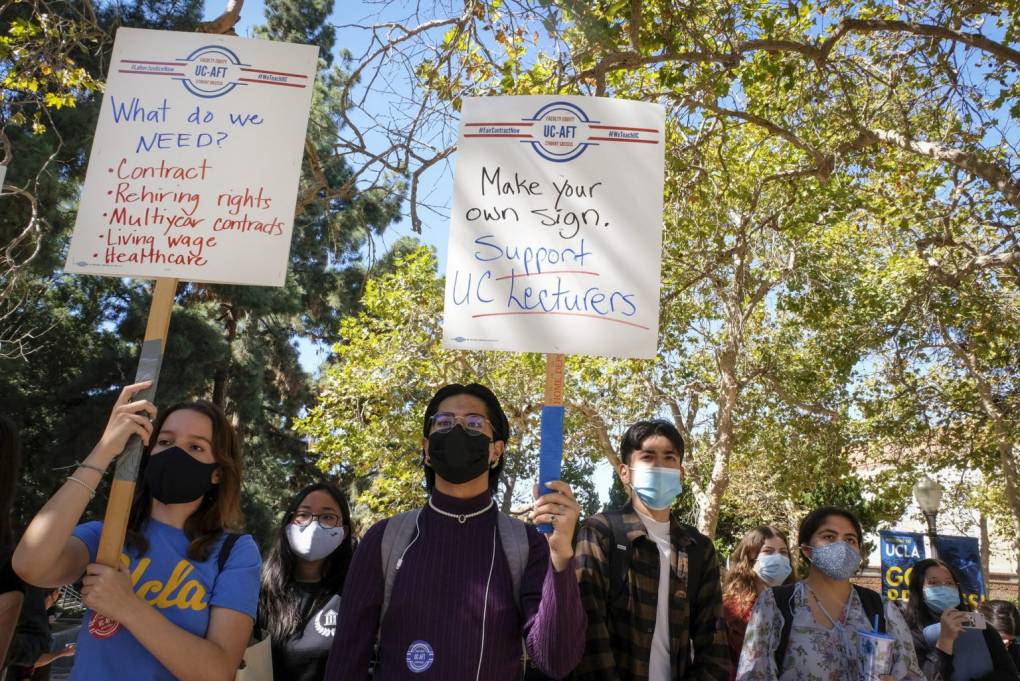
"caption": "Students hold signs while listening to UCLA faculty members share their stories of unfair wages on Oct. 13, 2021.",
"description": null,
"title": "UC_CalMAtters",
"credit": "Zaydee Sanchez/CalMatters",
"status": "inherit",
"altTag": "Masked students walking beneath leafy trees hold signs. One says, \"Support UC Lecturers.\" Another says, \"What do we need? Contract, rehiring rights, multiyear contracts, living wage, healthcare.\"",
"isLoading": false,
"fetchFailed": false
},
"news_11887212": {
"type": "attachments",
"id": "news_11887212",
"meta": {
"index": "attachments_1716263798",
"site": "news",
"id": "11887212",
"found": true
},
"parent": 11887194,
"imgSizes": {
"twentyfourteen-full-width": {
"file": "https://ww2.kqed.org/app/uploads/sites/10/2021/09/RS48261_013_Oakland_SchoolReopening_03302021-qut-1038x576.jpeg",
"width": 1038,
"mimeType": "image/jpeg",
"height": 576
},
"thumbnail": {
"file": "https://ww2.kqed.org/app/uploads/sites/10/2021/09/RS48261_013_Oakland_SchoolReopening_03302021-qut-160x107.jpeg",
"width": 160,
"mimeType": "image/jpeg",
"height": 107
},
"post-thumbnail": {
"file": "https://ww2.kqed.org/app/uploads/sites/10/2021/09/RS48261_013_Oakland_SchoolReopening_03302021-qut-672x372.jpeg",
"width": 672,
"mimeType": "image/jpeg",
"height": 372
},
"kqedFullSize": {
"file": "https://ww2.kqed.org/app/uploads/sites/10/2021/09/RS48261_013_Oakland_SchoolReopening_03302021-qut.jpeg",
"width": 1920,
"height": 1280
},
"large": {
"file": "https://ww2.kqed.org/app/uploads/sites/10/2021/09/RS48261_013_Oakland_SchoolReopening_03302021-qut-1020x680.jpeg",
"width": 1020,
"mimeType": "image/jpeg",
"height": 680
},
"1536x1536": {
"file": "https://ww2.kqed.org/app/uploads/sites/10/2021/09/RS48261_013_Oakland_SchoolReopening_03302021-qut-1536x1024.jpeg",
"width": 1536,
"mimeType": "image/jpeg",
"height": 1024
},
"medium": {
"file": "https://ww2.kqed.org/app/uploads/sites/10/2021/09/RS48261_013_Oakland_SchoolReopening_03302021-qut-800x533.jpeg",
"width": 800,
"mimeType": "image/jpeg",
"height": 533
}
},
"publishDate": 1630516456,
"modified": 1634684120,
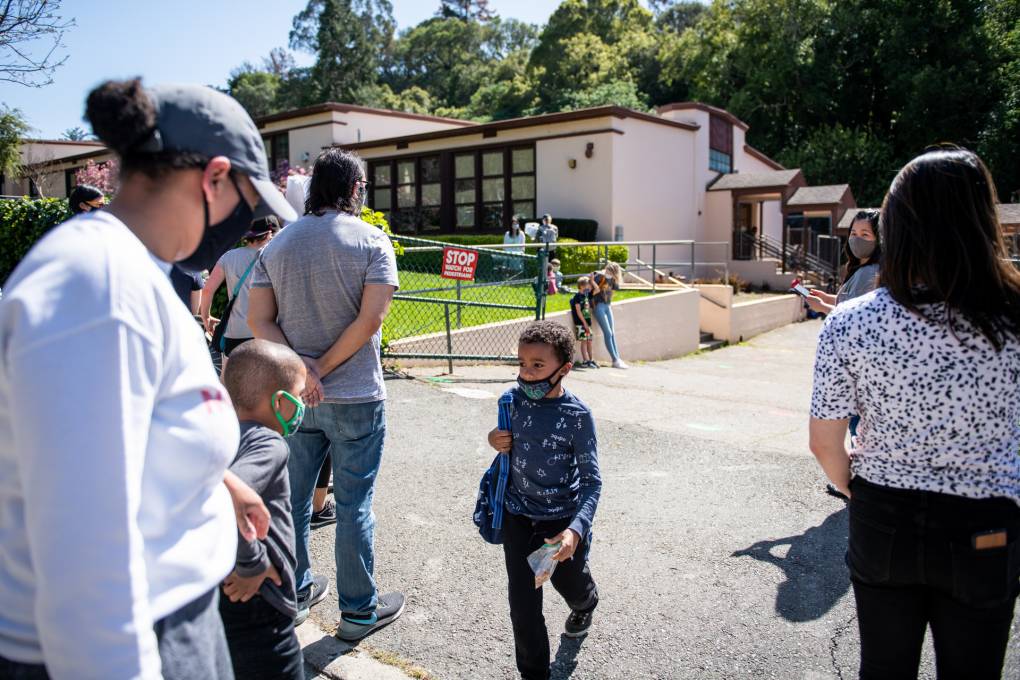
"caption": "Kristina Sturkey picks up her son Cameron after his first day back to in-person learning at Montclair Elementary School in Oakland on March 30, 2021. ",
"description": null,
"title": "RS48261_013_Oakland_SchoolReopening_03302021-qut",
"credit": "Beth LaBerge/KQED",
"status": "inherit",
"altTag": "A young boy wearing a backpack walks toward his mother outside a school.",
"isLoading": false,
"fetchFailed": false
},
"news_11869026": {
"type": "attachments",
"id": "news_11869026",
"meta": {
"index": "attachments_1716263798",
"site": "news",
"id": "11869026",
"found": true
},
"parent": 11869017,
"imgSizes": {
"twentyfourteen-full-width": {
"file": "https://ww2.kqed.org/app/uploads/sites/10/2021/04/GettyImages-1311697473-1038x576.jpg",
"width": 1038,
"mimeType": "image/jpeg",
"height": 576
},
"thumbnail": {
"file": "https://ww2.kqed.org/app/uploads/sites/10/2021/04/GettyImages-1311697473-160x109.jpg",
"width": 160,
"mimeType": "image/jpeg",
"height": 109
},
"post-thumbnail": {
"file": "https://ww2.kqed.org/app/uploads/sites/10/2021/04/GettyImages-1311697473-672x372.jpg",
"width": 672,
"mimeType": "image/jpeg",
"height": 372
},
"kqedFullSize": {
"file": "https://ww2.kqed.org/app/uploads/sites/10/2021/04/GettyImages-1311697473-scaled.jpg",
"width": 2560,
"height": 1751
},
"2048x2048": {
"file": "https://ww2.kqed.org/app/uploads/sites/10/2021/04/GettyImages-1311697473-2048x1401.jpg",
"width": 2048,
"mimeType": "image/jpeg",
"height": 1401
},
"large": {
"file": "https://ww2.kqed.org/app/uploads/sites/10/2021/04/GettyImages-1311697473-1020x698.jpg",
"width": 1020,
"mimeType": "image/jpeg",
"height": 698
},
"1536x1536": {
"file": "https://ww2.kqed.org/app/uploads/sites/10/2021/04/GettyImages-1311697473-1536x1051.jpg",
"width": 1536,
"mimeType": "image/jpeg",
"height": 1051
},
"full-width": {
"file": "https://ww2.kqed.org/app/uploads/sites/10/2021/04/GettyImages-1311697473-1920x1314.jpg",
"width": 1920,
"mimeType": "image/jpeg",
"height": 1314
},
"medium": {
"file": "https://ww2.kqed.org/app/uploads/sites/10/2021/04/GettyImages-1311697473-800x547.jpg",
"width": 800,
"mimeType": "image/jpeg",
"height": 547
}
},
"publishDate": 1618235633,
"modified": 1634325881,
"caption": "Bryant Elementary School kindergarten teacher Chris Johnson sets up his classroom on April 9, 2021 in San Francisco.",
"description": "Bryant Elementary School kindergarten teacher Chris Johnson sets up his classroom on April 9, 2021 in San Francisco.",
"title": "SF Schools",
"credit": "Justin Sullivan/Getty Images",
"status": "inherit",
"altTag": "A school teacher places a placard down on a student's desk in a classroom.",
"isLoading": false,
"fetchFailed": false
},
"news_11892296": {
"type": "attachments",
"id": "news_11892296",
"meta": {
"index": "attachments_1716263798",
"site": "news",
"id": "11892296",
"found": true
},
"parent": 11892267,
"imgSizes": {
"twentyfourteen-full-width": {
"file": "https://ww2.kqed.org/app/uploads/sites/10/2021/10/RS49614_020_SanFrancisco_AlexPadillaMissionKids_06012021-qut-1038x576.jpg",
"width": 1038,
"mimeType": "image/jpeg",
"height": 576
},
"thumbnail": {
"file": "https://ww2.kqed.org/app/uploads/sites/10/2021/10/RS49614_020_SanFrancisco_AlexPadillaMissionKids_06012021-qut-160x107.jpg",
"width": 160,
"mimeType": "image/jpeg",
"height": 107
},
"post-thumbnail": {
"file": "https://ww2.kqed.org/app/uploads/sites/10/2021/10/RS49614_020_SanFrancisco_AlexPadillaMissionKids_06012021-qut-672x372.jpg",
"width": 672,
"mimeType": "image/jpeg",
"height": 372
},
"kqedFullSize": {
"file": "https://ww2.kqed.org/app/uploads/sites/10/2021/10/RS49614_020_SanFrancisco_AlexPadillaMissionKids_06012021-qut.jpg",
"width": 1920,
"height": 1280
},
"large": {
"file": "https://ww2.kqed.org/app/uploads/sites/10/2021/10/RS49614_020_SanFrancisco_AlexPadillaMissionKids_06012021-qut-1020x680.jpg",
"width": 1020,
"mimeType": "image/jpeg",
"height": 680
},
"1536x1536": {
"file": "https://ww2.kqed.org/app/uploads/sites/10/2021/10/RS49614_020_SanFrancisco_AlexPadillaMissionKids_06012021-qut-1536x1024.jpg",
"width": 1536,
"mimeType": "image/jpeg",
"height": 1024
},
"medium": {
"file": "https://ww2.kqed.org/app/uploads/sites/10/2021/10/RS49614_020_SanFrancisco_AlexPadillaMissionKids_06012021-qut-800x533.jpg",
"width": 800,
"mimeType": "image/jpeg",
"height": 533
}
},
"publishDate": 1634244769,
"modified": 1634255972,
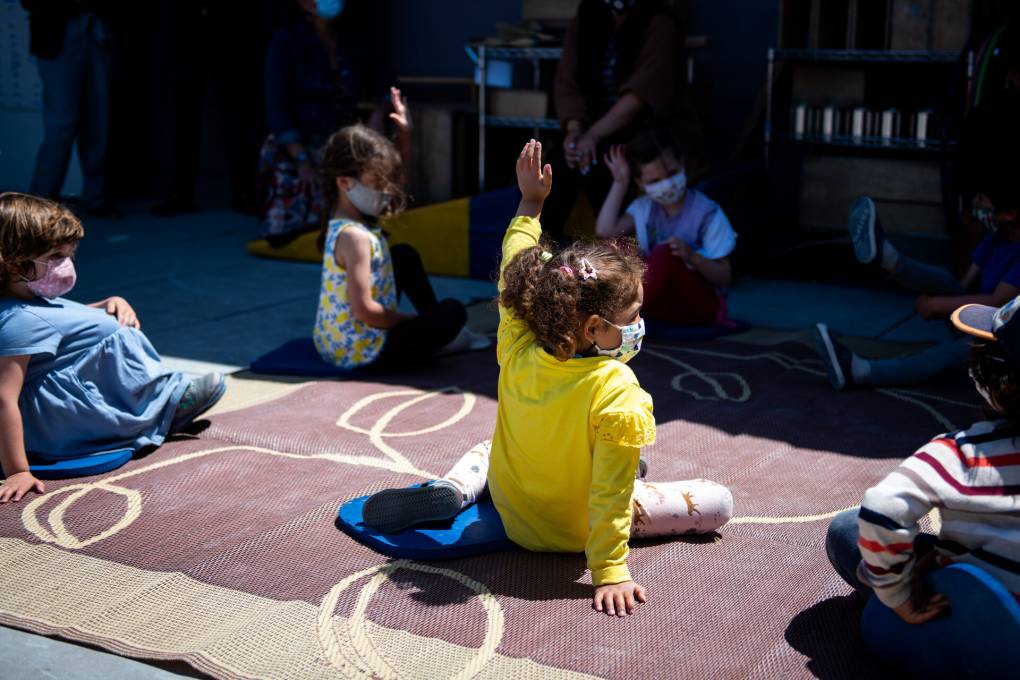
"caption": "Children at Mission Kids preschool in San Francisco raise their hands to ask U.S. Sen. Alex Padilla a question on June 1, 2021.",
"description": null,
"title": "RS49614_020_SanFrancisco_AlexPadillaMissionKids_06012021-qut",
"credit": "Beth LaBerge/KQED",
"status": "inherit",
"altTag": "A little kid in a bright yellow sweater, sitting in the sun on a mat amid other little kids with their hands up, raises her hand.",
"isLoading": false,
"fetchFailed": false
},
"news_11891779": {
"type": "attachments",
"id": "news_11891779",
"meta": {
"index": "attachments_1716263798",
"site": "news",
"id": "11891779",
"found": true
},
"parent": 11891771,
"imgSizes": {
"twentyfourteen-full-width": {
"file": "https://ww2.kqed.org/app/uploads/sites/10/2021/10/RS47077_003_SanFrancisco_LowellBSURally_02052021-qut-1038x576.jpg",
"width": 1038,
"mimeType": "image/jpeg",
"height": 576
},
"thumbnail": {
"file": "https://ww2.kqed.org/app/uploads/sites/10/2021/10/RS47077_003_SanFrancisco_LowellBSURally_02052021-qut-160x107.jpg",
"width": 160,
"mimeType": "image/jpeg",
"height": 107
},
"post-thumbnail": {
"file": "https://ww2.kqed.org/app/uploads/sites/10/2021/10/RS47077_003_SanFrancisco_LowellBSURally_02052021-qut-672x372.jpg",
"width": 672,
"mimeType": "image/jpeg",
"height": 372
},
"kqedFullSize": {
"file": "https://ww2.kqed.org/app/uploads/sites/10/2021/10/RS47077_003_SanFrancisco_LowellBSURally_02052021-qut.jpg",
"width": 1920,
"height": 1278
},
"large": {
"file": "https://ww2.kqed.org/app/uploads/sites/10/2021/10/RS47077_003_SanFrancisco_LowellBSURally_02052021-qut-1020x679.jpg",
"width": 1020,
"mimeType": "image/jpeg",
"height": 679
},
"1536x1536": {
"file": "https://ww2.kqed.org/app/uploads/sites/10/2021/10/RS47077_003_SanFrancisco_LowellBSURally_02052021-qut-1536x1022.jpg",
"width": 1536,
"mimeType": "image/jpeg",
"height": 1022
},
"medium": {
"file": "https://ww2.kqed.org/app/uploads/sites/10/2021/10/RS47077_003_SanFrancisco_LowellBSURally_02052021-qut-800x533.jpg",
"width": 800,
"mimeType": "image/jpeg",
"height": 533
}
},
"publishDate": 1633900580,
"modified": 1634066382,
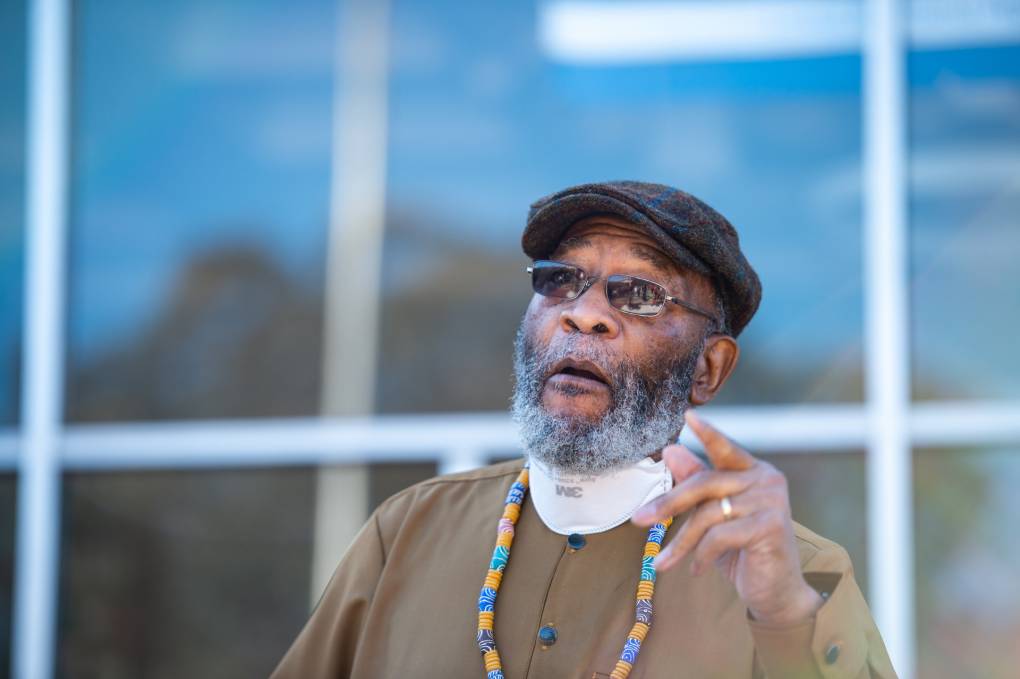
"caption": "Civil rights activist Reverend Dr. Amos C. Brown speaks during a rally at Lowell High School on Feb. 5, 2021. Brown is the vice-chair of the California Reparations Task Force.",
"description": "Civil rights activist Reverend Dr. Amos C. Brown speaks during a rally at Lowell High School on Feb. 5, 2021. Brown is the Vice Chair of the California Task Force on Reparations.",
"title": "RS47077_003_SanFrancisco_LowellBSURally_02052021-qut",
"credit": "Beth LaBerge/KQED",
"status": "inherit",
"altTag": "Amos Brown, in a hat, beard, glasses, and green, blue and yellow necklace, raises his hand mid-speech, the windows of a building behind him.",
"isLoading": false,
"fetchFailed": false
},
"news_11891009": {
"type": "attachments",
"id": "news_11891009",
"meta": {
"index": "attachments_1716263798",
"site": "news",
"id": "11891009",
"found": true
},
"parent": 11890998,
"imgSizes": {
"twentyfourteen-full-width": {
"file": "https://ww2.kqed.org/app/uploads/sites/10/2021/10/oil-spill2-20211004-1038x576.jpg",
"width": 1038,
"mimeType": "image/jpeg",
"height": 576
},
"thumbnail": {
"file": "https://ww2.kqed.org/app/uploads/sites/10/2021/10/oil-spill2-20211004-160x107.jpg",
"width": 160,
"mimeType": "image/jpeg",
"height": 107
},
"post-thumbnail": {
"file": "https://ww2.kqed.org/app/uploads/sites/10/2021/10/oil-spill2-20211004-672x372.jpg",
"width": 672,
"mimeType": "image/jpeg",
"height": 372
},
"kqedFullSize": {
"file": "https://ww2.kqed.org/app/uploads/sites/10/2021/10/oil-spill2-20211004-scaled-e1633390888214.jpg",
"width": 1920,
"height": 1280
},
"2048x2048": {
"file": "https://ww2.kqed.org/app/uploads/sites/10/2021/10/oil-spill2-20211004-2048x1365.jpg",
"width": 2048,
"mimeType": "image/jpeg",
"height": 1365
},
"large": {
"file": "https://ww2.kqed.org/app/uploads/sites/10/2021/10/oil-spill2-20211004-1020x680.jpg",
"width": 1020,
"mimeType": "image/jpeg",
"height": 680
},
"1536x1536": {
"file": "https://ww2.kqed.org/app/uploads/sites/10/2021/10/oil-spill2-20211004-1536x1023.jpg",
"width": 1536,
"mimeType": "image/jpeg",
"height": 1023
},
"full-width": {
"file": "https://ww2.kqed.org/app/uploads/sites/10/2021/10/oil-spill2-20211004-1920x1279.jpg",
"width": 1920,
"mimeType": "image/jpeg",
"height": 1279
},
"medium": {
"file": "https://ww2.kqed.org/app/uploads/sites/10/2021/10/oil-spill2-20211004-800x533.jpg",
"width": 800,
"mimeType": "image/jpeg",
"height": 533
}
},
"publishDate": 1633390815,
"modified": 1634515689,
"caption": "This aerial picture taken on Oct. 4, 2021, shows environmental response crews cleaning up oil that flowed near the Talbert Marsh and Santa Ana River mouth, creating a sheen on the water after an oil spill in the Pacific Ocean in Huntington Beach, California.",
"description": null,
"title": "US-ENVIRONMENT-POLLUTION-OIL",
"credit": "Patrick T. Fallon/AFP via Getty Images",
"status": "inherit",
"altTag": "Most of the frame is completely black, oily water with a rocky shore at the top left and a rowboat with two people dressed in white inside.",
"isLoading": false,
"fetchFailed": false
},
"news_11883048": {
"type": "attachments",
"id": "news_11883048",
"meta": {
"index": "attachments_1716263798",
"site": "news",
"id": "11883048",
"found": true
},
"parent": 11882840,
"imgSizes": {
"twentyfourteen-full-width": {
"file": "https://ww2.kqed.org/app/uploads/sites/10/2021/07/Image-from-iOS-1038x576.jpg",
"width": 1038,
"mimeType": "image/jpeg",
"height": 576
},
"thumbnail": {
"file": "https://ww2.kqed.org/app/uploads/sites/10/2021/07/Image-from-iOS-160x120.jpg",
"width": 160,
"mimeType": "image/jpeg",
"height": 120
},
"post-thumbnail": {
"file": "https://ww2.kqed.org/app/uploads/sites/10/2021/07/Image-from-iOS-672x372.jpg",
"width": 672,
"mimeType": "image/jpeg",
"height": 372
},
"kqedFullSize": {
"file": "https://ww2.kqed.org/app/uploads/sites/10/2021/07/Image-from-iOS-scaled-e1627599390289.jpg",
"width": 1920,
"height": 1440
},
"2048x2048": {
"file": "https://ww2.kqed.org/app/uploads/sites/10/2021/07/Image-from-iOS-2048x1536.jpg",
"width": 2048,
"mimeType": "image/jpeg",
"height": 1536
},
"large": {
"file": "https://ww2.kqed.org/app/uploads/sites/10/2021/07/Image-from-iOS-1020x765.jpg",
"width": 1020,
"mimeType": "image/jpeg",
"height": 765
},
"1536x1536": {
"file": "https://ww2.kqed.org/app/uploads/sites/10/2021/07/Image-from-iOS-1536x1152.jpg",
"width": 1536,
"mimeType": "image/jpeg",
"height": 1152
},
"full-width": {
"file": "https://ww2.kqed.org/app/uploads/sites/10/2021/07/Image-from-iOS-1920x1440.jpg",
"width": 1920,
"mimeType": "image/jpeg",
"height": 1440
},
"medium": {
"file": "https://ww2.kqed.org/app/uploads/sites/10/2021/07/Image-from-iOS-800x600.jpg",
"width": 800,
"mimeType": "image/jpeg",
"height": 600
}
},
"publishDate": 1627599352,
"modified": 1633570292,
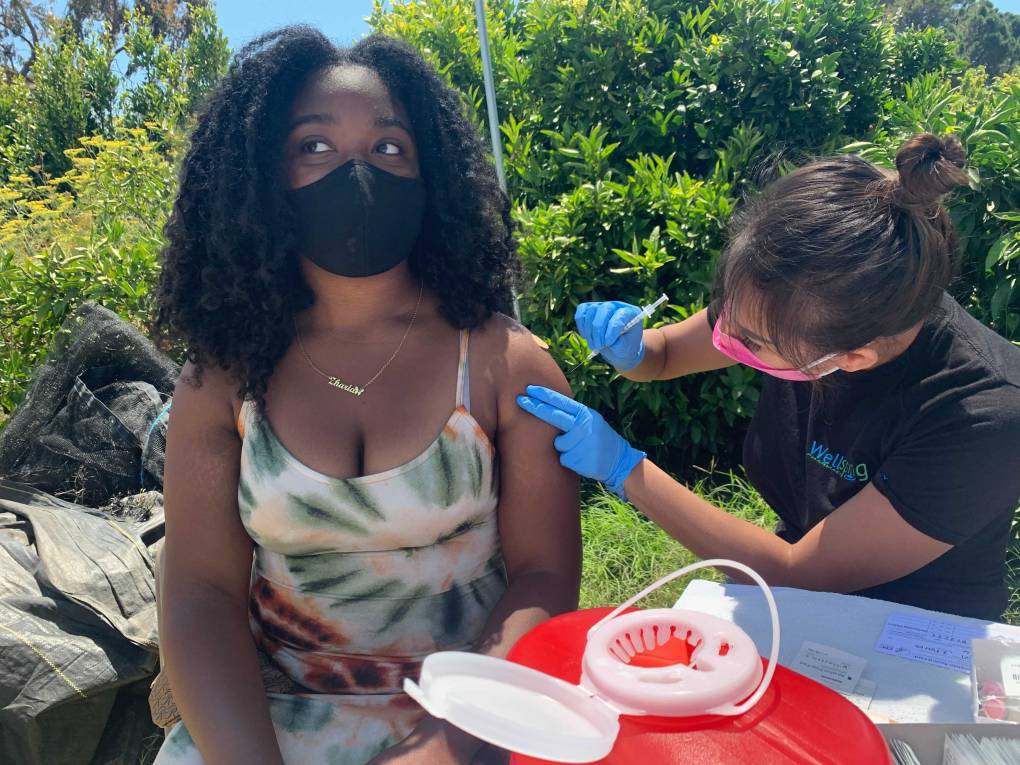
"caption": "Z'haria Anderson, 15, receives her first shot of the Pfizer COVID-19 vaccine at an outdoor pop-up clinic in Alameda on July 22, 2021.",
"description": null,
"title": "Image from iOS",
"credit": "Lesley McClurg/KQED",
"status": "inherit",
"altTag": "A young woman, masked, looks away from her shoulder as a health worker, also masked, injects it with a needle.",
"isLoading": false,
"fetchFailed": false
},
"news_11890916": {
"type": "attachments",
"id": "news_11890916",
"meta": {
"index": "attachments_1716263798",
"site": "news",
"id": "11890916",
"found": true
},
"parent": 11890914,
"imgSizes": {
"twentyfourteen-full-width": {
"file": "https://ww2.kqed.org/app/uploads/sites/10/2021/10/Betty-Reid-2-1200x750-1-1038x576.jpg",
"width": 1038,
"mimeType": "image/jpeg",
"height": 576
},
"thumbnail": {
"file": "https://ww2.kqed.org/app/uploads/sites/10/2021/10/Betty-Reid-2-1200x750-1-160x100.jpg",
"width": 160,
"mimeType": "image/jpeg",
"height": 100
},
"post-thumbnail": {
"file": "https://ww2.kqed.org/app/uploads/sites/10/2021/10/Betty-Reid-2-1200x750-1-672x372.jpg",
"width": 672,
"mimeType": "image/jpeg",
"height": 372
},
"kqedFullSize": {
"file": "https://ww2.kqed.org/app/uploads/sites/10/2021/10/Betty-Reid-2-1200x750-1.jpg",
"width": 1200,
"height": 750
},
"large": {
"file": "https://ww2.kqed.org/app/uploads/sites/10/2021/10/Betty-Reid-2-1200x750-1-1020x638.jpg",
"width": 1020,
"mimeType": "image/jpeg",
"height": 638
},
"medium": {
"file": "https://ww2.kqed.org/app/uploads/sites/10/2021/10/Betty-Reid-2-1200x750-1-800x500.jpg",
"width": 800,
"mimeType": "image/jpeg",
"height": 500
}
},
"publishDate": 1633369375,
"modified": 1633392346,
"caption": "Dorcas Sims leads her fifth grade class at Richmond's Nystrom Elementary in a circle activity in which students said their names accompanied by a gesture, which the rest of the class would then repeat.",
"description": "Dorcas Sims leads her fifth grade class at Richmond's Nystrom Elementary in a circle activity in which students said their names accompanied by a gesture, which the rest of the class would then repeat.",
"title": "Betty-Reid-2-1200x750",
"credit": "Ali Tadayon/EdSource",
"status": "inherit",
"altTag": "A woman flanked by kids in both directions stands at the front of a classroom against a whiteboard.",
"isLoading": false,
"fetchFailed": false
},
"news_11890821": {
"type": "attachments",
"id": "news_11890821",
"meta": {
"index": "attachments_1716263798",
"site": "news",
"id": "11890821",
"found": true
},
"parent": 11890773,
"imgSizes": {
"twentyfourteen-full-width": {
"file": "https://ww2.kqed.org/app/uploads/sites/10/2021/10/KNR_SEA_LEVEL_no-font-1038x576.jpg",
"width": 1038,
"mimeType": "image/jpeg",
"height": 576
},
"thumbnail": {
"file": "https://ww2.kqed.org/app/uploads/sites/10/2021/10/KNR_SEA_LEVEL_no-font-160x81.jpg",
"width": 160,
"mimeType": "image/jpeg",
"height": 81
},
"post-thumbnail": {
"file": "https://ww2.kqed.org/app/uploads/sites/10/2021/10/KNR_SEA_LEVEL_no-font-672x372.jpg",
"width": 672,
"mimeType": "image/jpeg",
"height": 372
},
"kqedFullSize": {
"file": "https://ww2.kqed.org/app/uploads/sites/10/2021/10/KNR_SEA_LEVEL_no-font.jpg",
"width": 1580,
"height": 804
},
"large": {
"file": "https://ww2.kqed.org/app/uploads/sites/10/2021/10/KNR_SEA_LEVEL_no-font-1020x519.jpg",
"width": 1020,
"mimeType": "image/jpeg",
"height": 519
},
"1536x1536": {
"file": "https://ww2.kqed.org/app/uploads/sites/10/2021/10/KNR_SEA_LEVEL_no-font-1536x782.jpg",
"width": 1536,
"mimeType": "image/jpeg",
"height": 782
},
"medium": {
"file": "https://ww2.kqed.org/app/uploads/sites/10/2021/10/KNR_SEA_LEVEL_no-font-800x407.jpg",
"width": 800,
"mimeType": "image/jpeg",
"height": 407
}
},
"publishDate": 1633130411,
"modified": 1633130411,
"caption": null,
"description": null,
"title": "KNR_SEA_LEVEL_no font",
"credit": null,
"status": "inherit",
"altTag": null,
"isLoading": false,
"fetchFailed": false
},
"news_11887213": {
"type": "attachments",
"id": "news_11887213",
"meta": {
"index": "attachments_1716263798",
"site": "news",
"id": "11887213",
"found": true
},
"parent": 11887194,
"imgSizes": {
"twentyfourteen-full-width": {
"file": "https://ww2.kqed.org/app/uploads/sites/10/2021/09/RS48265_017_Oakland_SchoolReopening_03302021-qut-1038x576.jpeg",
"width": 1038,
"mimeType": "image/jpeg",
"height": 576
},
"thumbnail": {
"file": "https://ww2.kqed.org/app/uploads/sites/10/2021/09/RS48265_017_Oakland_SchoolReopening_03302021-qut-160x107.jpeg",
"width": 160,
"mimeType": "image/jpeg",
"height": 107
},
"post-thumbnail": {
"file": "https://ww2.kqed.org/app/uploads/sites/10/2021/09/RS48265_017_Oakland_SchoolReopening_03302021-qut-672x372.jpeg",
"width": 672,
"mimeType": "image/jpeg",
"height": 372
},
"kqedFullSize": {
"file": "https://ww2.kqed.org/app/uploads/sites/10/2021/09/RS48265_017_Oakland_SchoolReopening_03302021-qut.jpeg",
"width": 1920,
"height": 1280
},
"large": {
"file": "https://ww2.kqed.org/app/uploads/sites/10/2021/09/RS48265_017_Oakland_SchoolReopening_03302021-qut-1020x680.jpeg",
"width": 1020,
"mimeType": "image/jpeg",
"height": 680
},
"1536x1536": {
"file": "https://ww2.kqed.org/app/uploads/sites/10/2021/09/RS48265_017_Oakland_SchoolReopening_03302021-qut-1536x1024.jpeg",
"width": 1536,
"mimeType": "image/jpeg",
"height": 1024
},
"medium": {
"file": "https://ww2.kqed.org/app/uploads/sites/10/2021/09/RS48265_017_Oakland_SchoolReopening_03302021-qut-800x533.jpeg",
"width": 800,
"mimeType": "image/jpeg",
"height": 533
}
},
"publishDate": 1630516472,
"modified": 1633376129,
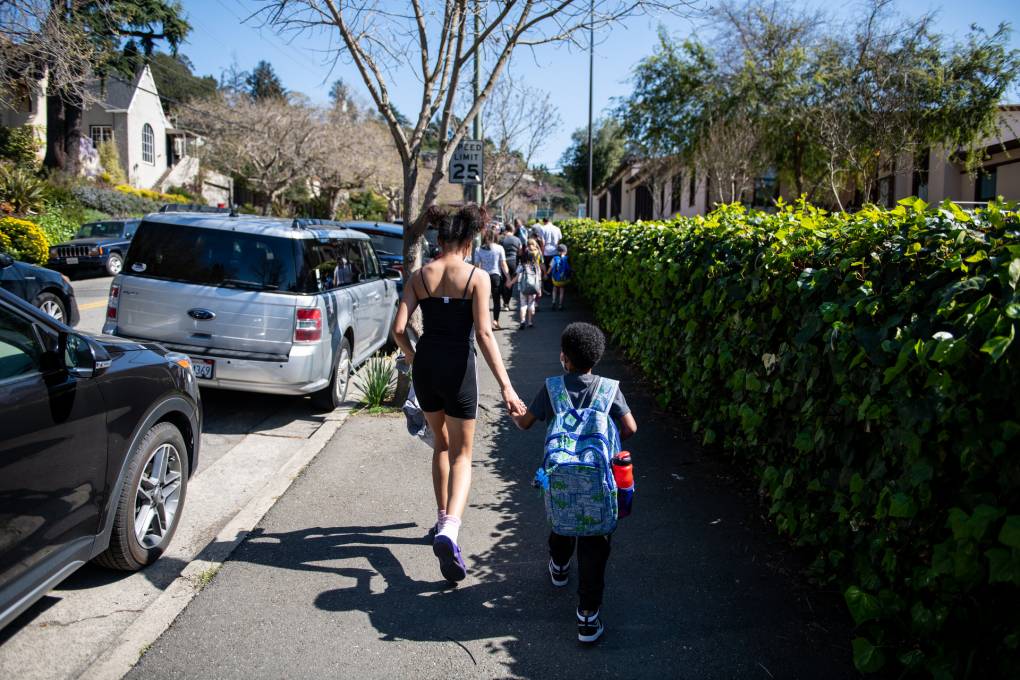
"caption": "Families pick up their children from Montclair Elementary School on the first day back to in-person learning on March 30, 2021. Most of Oakland Unified's 36,000 students have returned to schools in person this year. ",
"description": "Families pick up their children from Montclair Elementary School on the first day back to in-person learning on March 30, 2021. Most of Oakland Unified's 36,000 students have returned to schools in person this year. ",
"title": "RS48265_017_Oakland_SchoolReopening_03302021-qut",
"credit": "Beth LaBerge/KQED",
"status": "inherit",
"altTag": "A woman and an elementary school-age child walk down a leafy street.",
"isLoading": false,
"fetchFailed": false
},
"news_11884612": {
"type": "attachments",
"id": "news_11884612",
"meta": {
"index": "attachments_1716263798",
"site": "news",
"id": "11884612",
"found": true
},
"parent": 11884606,
"imgSizes": {
"twentyfourteen-full-width": {
"file": "https://ww2.kqed.org/app/uploads/sites/10/2021/08/GettyImages-1307454937-1-1038x576.jpg",
"width": 1038,
"mimeType": "image/jpeg",
"height": 576
},
"thumbnail": {
"file": "https://ww2.kqed.org/app/uploads/sites/10/2021/08/GettyImages-1307454937-1-160x108.jpg",
"width": 160,
"mimeType": "image/jpeg",
"height": 108
},
"post-thumbnail": {
"file": "https://ww2.kqed.org/app/uploads/sites/10/2021/08/GettyImages-1307454937-1-672x372.jpg",
"width": 672,
"mimeType": "image/jpeg",
"height": 372
},
"kqedFullSize": {
"file": "https://ww2.kqed.org/app/uploads/sites/10/2021/08/GettyImages-1307454937-1.jpg",
"width": 1920,
"height": 1296
},
"large": {
"file": "https://ww2.kqed.org/app/uploads/sites/10/2021/08/GettyImages-1307454937-1-1020x689.jpg",
"width": 1020,
"mimeType": "image/jpeg",
"height": 689
},
"1536x1536": {
"file": "https://ww2.kqed.org/app/uploads/sites/10/2021/08/GettyImages-1307454937-1-1536x1037.jpg",
"width": 1536,
"mimeType": "image/jpeg",
"height": 1037
},
"medium": {
"file": "https://ww2.kqed.org/app/uploads/sites/10/2021/08/GettyImages-1307454937-1-800x540.jpg",
"width": 800,
"mimeType": "image/jpeg",
"height": 540
}
},
"publishDate": 1628704361,
"modified": 1633123943,
"caption": "Gov. Gavin Newsom speaks during a news conference after touring an elementary school on March 16, 2021, in Alameda. ",
"description": "Gov. Gavin Newsom speaks during a news conference after touring an elementary school on March 16, 2021, in Alameda. ",
"title": "GettyImages-1307454937 (1)",
"credit": "Justin Sullivan/Getty Images",
"status": "inherit",
"altTag": "Gavin Newsom, without a tie, speaks into a bank of microphones in front of a board with colorful letters that spell \"The Great Kindness Challenge.\"",
"isLoading": false,
"fetchFailed": false
},
"news_11890012": {
"type": "attachments",
"id": "news_11890012",
"meta": {
"index": "attachments_1716263798",
"site": "news",
"id": "11890012",
"found": true
},
"parent": 11890000,
"imgSizes": {
"twentyfourteen-full-width": {
"file": "https://ww2.kqed.org/app/uploads/sites/10/2021/09/GettyImages-1311698148-1038x576.jpg",
"width": 1038,
"mimeType": "image/jpeg",
"height": 576
},
"thumbnail": {
"file": "https://ww2.kqed.org/app/uploads/sites/10/2021/09/GettyImages-1311698148-160x107.jpg",
"width": 160,
"mimeType": "image/jpeg",
"height": 107
},
"post-thumbnail": {
"file": "https://ww2.kqed.org/app/uploads/sites/10/2021/09/GettyImages-1311698148-672x372.jpg",
"width": 672,
"mimeType": "image/jpeg",
"height": 372
},
"kqedFullSize": {
"file": "https://ww2.kqed.org/app/uploads/sites/10/2021/09/GettyImages-1311698148-scaled-e1632767640867.jpg",
"width": 1029,
"height": 686
},
"2048x2048": {
"file": "https://ww2.kqed.org/app/uploads/sites/10/2021/09/GettyImages-1311698148-2048x1365.jpg",
"width": 2048,
"mimeType": "image/jpeg",
"height": 1365
},
"large": {
"file": "https://ww2.kqed.org/app/uploads/sites/10/2021/09/GettyImages-1311698148-1020x680.jpg",
"width": 1020,
"mimeType": "image/jpeg",
"height": 680
},
"1536x1536": {
"file": "https://ww2.kqed.org/app/uploads/sites/10/2021/09/GettyImages-1311698148-1536x1024.jpg",
"width": 1536,
"mimeType": "image/jpeg",
"height": 1024
},
"full-width": {
"file": "https://ww2.kqed.org/app/uploads/sites/10/2021/09/GettyImages-1311698148-1920x1280.jpg",
"width": 1920,
"mimeType": "image/jpeg",
"height": 1280
},
"medium": {
"file": "https://ww2.kqed.org/app/uploads/sites/10/2021/09/GettyImages-1311698148-800x533.jpg",
"width": 800,
"mimeType": "image/jpeg",
"height": 533
}
},
"publishDate": 1632767575,
"modified": 1632784375,
"caption": "Plexiglas dividers are set up on tables in a first grade classroom at Bryant Elementary School on April 9, 2021, in San Francisco.",
"description": null,
"title": "San Francisco Public Schools Prepare For In Person Learning",
"credit": "Justin Sullivan/Getty Images",
"status": "inherit",
"altTag": "Close-up of desks with Plexiglas in an empty classroom.",
"isLoading": false,
"fetchFailed": false
}
},
"audioPlayerReducer": {
"postId": "stream_live",
"isPaused": true,
"isPlaying": false,
"pfsActive": false,
"pledgeModalIsOpen": true,
"playerDrawerIsOpen": false,
"liveAudioPlayStartedAt": 0,
"liveAudioPlayContext": ""
},
"authorsReducer": {
"byline_news_11893226": {
"type": "authors",
"id": "byline_news_11893226",
"meta": {
"override": true
},
"slug": "byline_news_11893226",
"name": "Mikhail Zinshteyn",
"isLoading": false
},
"byline_news_11892891": {
"type": "authors",
"id": "byline_news_11892891",
"meta": {
"override": true
},
"slug": "byline_news_11892891",
"name": "\u003ca href=\"https://edsource.org/author/atadayon\">Ali Tadayon\u003c/a>",
"isLoading": false
},
"byline_news_11892468": {
"type": "authors",
"id": "byline_news_11892468",
"meta": {
"override": true
},
"slug": "byline_news_11892468",
"name": "Diana Lambert",
"isLoading": false
},
"byline_news_11892267": {
"type": "authors",
"id": "byline_news_11892267",
"meta": {
"override": true
},
"slug": "byline_news_11892267",
"name": "\u003ca href=\"https://edsource.org/author/kdsouza\">Karen D'Souza\u003c/a>",
"isLoading": false
},
"byline_news_11891270": {
"type": "authors",
"id": "byline_news_11891270",
"meta": {
"override": true
},
"slug": "byline_news_11891270",
"name": "\u003ca href=\"https://calmatters.org/author/joe-hong/\">Joe Hong\u003c/a>",
"isLoading": false
},
"byline_news_11890914": {
"type": "authors",
"id": "byline_news_11890914",
"meta": {
"override": true
},
"slug": "byline_news_11890914",
"name": "Ali Tadayon\u003cbr>EdSource",
"isLoading": false
},
"byline_news_11890825": {
"type": "authors",
"id": "byline_news_11890825",
"meta": {
"override": true
},
"slug": "byline_news_11890825",
"name": "Terence Chea and Amy Taxin\u003cbr>The Associated Press",
"isLoading": false
},
"byline_news_11890000": {
"type": "authors",
"id": "byline_news_11890000",
"meta": {
"override": true
},
"slug": "byline_news_11890000",
"name": "Carolyn Jones",
"isLoading": false
},
"kqed": {
"type": "authors",
"id": "236",
"meta": {
"index": "authors_1716337520",
"id": "236",
"found": true
},
"name": "KQED News Staff",
"firstName": "KQED News Staff",
"lastName": null,
"slug": "kqed",
"email": "faq@kqed.org",
"display_author_email": false,
"staff_mastheads": [],
"title": null,
"bio": null,
"avatar": "https://secure.gravatar.com/avatar/ef0e801a68c4c54afa9180db14084167?s=600&d=blank&r=g",
"twitter": null,
"facebook": null,
"instagram": null,
"linkedin": null,
"sites": [
{
"site": "arts",
"roles": [
"contributor"
]
},
{
"site": "news",
"roles": [
"editor"
]
},
{
"site": "futureofyou",
"roles": [
"author"
]
}
],
"headData": {
"title": "KQED News Staff | KQED",
"description": null,
"ogImgSrc": "https://secure.gravatar.com/avatar/ef0e801a68c4c54afa9180db14084167?s=600&d=blank&r=g",
"twImgSrc": "https://secure.gravatar.com/avatar/ef0e801a68c4c54afa9180db14084167?s=600&d=blank&r=g"
},
"isLoading": false,
"link": "/author/kqed"
},
"lsarah": {
"type": "authors",
"id": "11626",
"meta": {
"index": "authors_1716337520",
"id": "11626",
"found": true
},
"name": "Lakshmi Sarah",
"firstName": "Lakshmi",
"lastName": "Sarah",
"slug": "lsarah",
"email": "lsarah@kqed.org",
"display_author_email": false,
"staff_mastheads": [],
"title": "Digital Producer",
"bio": "Lakshmi Sarah is an educator, author and journalist with a focus on innovative storytelling. She has worked with newspapers, radio and magazines from Ahmedabad, India to Los Angeles, California. She has written and produced for Die Zeit, Global Voices, AJ+, KQED, Fusion Media Group and the New York Times.",
"avatar": "https://secure.gravatar.com/avatar/652dcaecd8b28826fc17a8b2d6bb4e93?s=600&d=blank&r=g",
"twitter": "lakitalki",
"facebook": null,
"instagram": "https://www.instagram.com/laki.talki/",
"linkedin": "https://www.linkedin.com/in/lakisarah/",
"sites": [
{
"site": "arts",
"roles": []
},
{
"site": "news",
"roles": []
},
{
"site": "bayareabites",
"roles": []
},
{
"site": "science",
"roles": []
}
],
"headData": {
"title": "Lakshmi Sarah | KQED",
"description": "Digital Producer",
"ogImgSrc": "https://secure.gravatar.com/avatar/652dcaecd8b28826fc17a8b2d6bb4e93?s=600&d=blank&r=g",
"twImgSrc": "https://secure.gravatar.com/avatar/652dcaecd8b28826fc17a8b2d6bb4e93?s=600&d=blank&r=g"
},
"isLoading": false,
"link": "/author/lsarah"
},
"jrodriguez": {
"type": "authors",
"id": "11690",
"meta": {
"index": "authors_1716337520",
"id": "11690",
"found": true
},
"name": "Joe Fitzgerald Rodriguez",
"firstName": "Joe",
"lastName": "Fitzgerald Rodriguez",
"slug": "jrodriguez",
"email": "jrodriguez@kqed.org",
"display_author_email": true,
"staff_mastheads": [
"news"
],
"title": "Reporter and Producer",
"bio": "Joe Fitzgerald Rodriguez is a reporter and digital producer for KQED covering politics. Joe most recently wrote for the \u003cem>San Francisco Examiner\u003c/em> as a political columnist covering The City. He was raised in San Francisco and has spent his reporting career in his beloved, foggy, city by the bay. Joe was 12-years-old when he conducted his first interview in journalism, grilling former San Francisco Mayor Willie Brown for the Marina Middle School newspaper, \u003cem>The Penguin Press, \u003c/em>and he continues to report on the San Francisco Bay Area to this day.",
"avatar": "https://secure.gravatar.com/avatar/2247beb0564c1e9c62228d5649d2edac?s=600&d=blank&r=g",
"twitter": "FitztheReporter",
"facebook": null,
"instagram": "https://www.instagram.com/fitzthereporter/",
"linkedin": null,
"sites": [
{
"site": "",
"roles": [
"editor"
]
},
{
"site": "arts",
"roles": [
"editor"
]
},
{
"site": "news",
"roles": [
"editor"
]
},
{
"site": "science",
"roles": [
"editor"
]
},
{
"site": "elections",
"roles": [
"editor"
]
},
{
"site": "liveblog",
"roles": [
"editor"
]
}
],
"headData": {
"title": "Joe Fitzgerald Rodriguez | KQED",
"description": "Reporter and Producer",
"ogImgSrc": "https://secure.gravatar.com/avatar/2247beb0564c1e9c62228d5649d2edac?s=600&d=blank&r=g",
"twImgSrc": "https://secure.gravatar.com/avatar/2247beb0564c1e9c62228d5649d2edac?s=600&d=blank&r=g"
},
"isLoading": false,
"link": "/author/jrodriguez"
}
},
"pagesReducer": {
"news_category_education": {
"type": "terms",
"id": "news_18540",
"meta": {
"index": "terms_1716263798",
"site": "news",
"id": "18540",
"score": 10.973221
},
"featImg": null,
"name": "Education",
"description": null,
"taxonomy": "category",
"headData": {
"twImgId": null,
"twTitle": null,
"ogTitle": null,
"ogImgId": null,
"twDescription": null,
"description": null,
"title": "Education Archives | KQED News",
"ogDescription": null
},
"ttid": 2595,
"slug": "education",
"isLoading": false,
"title": "Education",
"pageMeta": {
"site": "news",
"WpPageTemplate": "page-topic-editorial",
"currentPage": 78
},
"blocks": [
{
"blockName": "kqed/post-list",
"attrs": {
"layout": "cardArticle2",
"query": "posts/news?category=education",
"seeMore": false,
"paginated": true,
"page": 78
}
},
{
"blockName": "kqed/ad"
}
]
}
},
"pfsSessionReducer": {},
"postsReducer": {
"stream_live": {
"type": "live",
"id": "stream_live",
"audioUrl": "https://streams.kqed.org/kqedradio",
"title": "Live Stream",
"excerpt": "Live Stream information currently unavailable.",
"link": "/radio",
"featImg": "",
"label": {
"name": "KQED Live",
"link": "/"
}
},
"stream_kqedNewscast": {
"type": "posts",
"id": "stream_kqedNewscast",
"audioUrl": "https://www.kqed.org/.stream/anon/radio/RDnews/newscast.mp3?_=1",
"title": "KQED Newscast",
"featImg": "",
"label": {
"name": "88.5 FM",
"link": "/"
}
},
"news_11893226": {
"type": "posts",
"id": "news_11893226",
"meta": {
"index": "posts_1716263798",
"site": "news",
"id": "11893226",
"score": null,
"sort": [
1634860090000
]
},
"guestAuthors": [],
"slug": "pressure-mounts-on-uc-system-to-reach-agreement-with-lecturers-as-strike-looms",
"title": "Pressure Mounts on UC System to Reach Agreement with Lecturers as Strike Looms",
"publishDate": 1634860090,
"format": "standard",
"headTitle": "Pressure Mounts on UC System to Reach Agreement with Lecturers as Strike Looms | KQED",
"labelTerm": {},
"content": "\u003cp>With the threat of multiple strikes this fall that could cancel instruction for a third of undergraduate students, the University of California has inched closer to meeting some demands of its more than 6,000 lecturers. It’s a move that coincides with increased pressure from state lawmakers to resolve the labor dispute that has been going on for more than two years.\u003c/p>\n\u003cp>The lecturers say the \u003ca href=\"https://calmatters.org/wp-content/uploads/2021/10/LS-ltr-to-IX-unit-re-AFT-proposal_101221_FINAL.pdf\">UC’s latest offer from last Monday\u003c/a> — which promises increased job security — is a step in the right direction. But they’re not pleased yet because it falls way short of the salary bumps they seek and includes other loopholes they find troubling. Chief among them? The new job stability provisions would kick in next summer, creating the possibility for mass dismissal of current lecturers, the union representing lecturers said.\u003c/p>\n\u003cp>There’s no “ulterior motive,” said Letitia Silas, head of labor relations for the UC, the state’s third-largest employer, in an interview with CalMatters.\u003c/p>\n\u003cp>But now there may be signs of resolution for the two sides. On Friday, for the first time since June, the lecturer union and UC officials will meet, to discuss the latest contract proposal. [aside postID=\"news_11796182\" label=\"Related coverage\"]\u003c/p>\n\u003cp>“We believe that our comprehensive package proposal is fair and competitive, including our proposal on wages,” said Silas, adding that the UC’s latest offer “does respond to the issues that the union has raised.”\u003c/p>\n\u003cp>It’s a meeting lecturers have sought since last week and threatened to strike over if they had not gotten it. Still, another strike may occur later in the fall if the lecturer union doesn’t get the contract terms it wants. Hundreds of tenured and tenure-track professors of the UC have pledged to cancel classes in solidarity with lecturers.\u003c/p>\n\u003cp>“I do believe it’s the UC administration’s fault for not coming to a resolution sooner, and for not ending this impasse,” said Assemblymember Ash Kalra, a Democrat from San José and chair of the Assembly committee on labor and employment.\u003c/p>\n\u003cp>[ad fullwidth]\u003c/p>\n\u003cp>He and 11 other assemblymembers have signed a \u003ca href=\"https://calmatters.org/wp-content/uploads/2021/10/UC-AFT-Letter-1.pdf\">letter addressed to UC President Michael Drake\u003c/a> that went out Tuesday, urging him to “prioritize labor peace and job stability for lecturers.” Other lawmakers \u003ca href=\"https://calmatters.org/wp-content/uploads/2021/10/Sen-Pan-Letter-to-President-Drake.pdf\">have issued their own letters\u003c/a> with the same sentiment, such as Dr. Richard Pan, a former UC faculty member who’s now a Senate Democrat representing Sacramento.\u003c/p>\n\u003cp>But there may be limits to mutual understanding. The UC denies that lecturers are being pushed out of their positions to make way for cheaper instructors, a chief union allegation.\u003c/p>\n\u003cp>Asked whether lecturers leave of their own volition, Silas, the head of UC’s labor relations, said, “Yes, some do.” Does that imply most leave for other reasons, such as being pushed out? Silas didn’t directly answer that.\u003c/p>\n\u003cp>“The term ‘pushed out’ is a mischaracterization,” Silas said. “The university has proposed to continue the dialogue with the union … if there does appear to be an issue of a trend, and to address those things with the union.”\u003c/p>\n\u003ch3 id=\"h-how-did-we-get-here\">How did we get here?\u003c/h3>\n\u003cp>For more than two years UC-AFT, the union representing lecturers, has been at a standstill with the UC Office of the President over a new labor contract that provides them with greater job stability.\u003c/p>\n\u003cp>\u003ca href=\"https://calmatters.org/education/higher-education/2021/10/uc-workforce-lecturers/\">A CalMatters investigation\u003c/a> showed that a quarter of lecturers — instructors typically with doctorates who provide about a third of the instruction undergraduates at the UC receive — don’t come back annually. Though the data CalMatters obtained doesn’t show why lecturers churn at rates higher than other education workers, a key grievance among them is that the UC doesn’t offer continuous work. Instead, most lecturers have to reapply for their jobs every quarter or year and rarely know whether they’ll have a job after their short contracts expire.\u003c/p>\n\u003cp>Core to the union’s demands is a promise to have lecturers evaluated so that their bosses can make informed hiring and dismissal decisions. Such a review system doesn’t exist at the UC for most lecturers, though it does at the larger California State University.\u003c/p>\n\u003cp>For some students, the lack of an evaluation for lecturers is perplexing.\u003c/p>\n\u003cp>“I want my teacher to be someone that knows what they’re doing,” said Sofia Stuart, a second-year biology major at UCLA who took part in a protest organized by lecturers last week. Without lecturer reviews, the UC could just hire inexperienced lecturers or renew ineffective ones, she said.\u003c/p>\n\u003cp>Natalie Lim, another UCLA student at the protest, held a sign calling for multiyear contracts for lecturers. “I want my institution to have morals and it doesn’t really feel like that right now,” she said.\u003c/p>\n\u003cp>The letter from lawmakers zeroes in on the lack of an evaluation process.\u003c/p>\n\u003cp>“By refusing to evaluate lecturers or use a merit-based retention process, the University also fails to foster a skilled teaching faculty, instead punishing experience and letting excellent faculty go arbitrarily,” the letter said. “Sadly, UC students are being cheated of educational continuity and dependable mentorship.”\u003c/p>\n\u003ch3 id=\"h-job-stability-and-evaluations\">Job stability and evaluations\u003c/h3>\n\u003cp>The latest UC offer would go a long way to assuring more job stability for lecturers, but with key caveats. [aside tag=\"education\" label=\"Related coverage\"]\u003c/p>\n\u003cp>The system now proposes three types of contracts of increasing length that add up to six years: a one-year contract, then a two-year contract and finally a three-year contract. That’s more stability than the UC’s previous offer of two one-year contracts followed \u003ca href=\"https://ucnet.universityofcalifornia.edu/labor/news/2021/bargaining-update-for-non-senate-instructional-unit.html\">by two two-year contracts\u003c/a>. None of those came with any promise of evaluations.\u003c/p>\n\u003cp>The UC is also proposing a formal review before the three-year contract, the first such offer in these negotiations and a big win for lecturers. But UC is proposing just an “assessment” before the two-year contract. And the union doesn’t really know what that means. Lecturers don’t have clarity on the factors upon which a review would be based.\u003c/p>\n\u003cp>The UC’s summary of its latest offer last Monday mentioned a review process after three years but not after one.\u003c/p>\n\u003cp>Silas, the UC labor relations chief, disputes that lecturers after their first year wouldn’t get an evaluation based on their teaching ability. “I’ll have to say that that’s probably an oversight on my part,” she said, in response to a question about why the summary letter omitted a reference to a first-year review.\u003c/p>\n\u003cp>Because the average duration for a lecturer at the UC is two years, having job security earlier in their tenures would likely go a long way to lowering lecturer churn.\u003c/p>\n\u003cp>The formal offer’s language on a review after the first year “doesn’t even come close to the robust evaluation after the third year,” said Mia McIver, president of the lecturer union and herself a lecturer.\u003c/p>\n\u003cp>But even the new review process after three years comes with asterisks that alarm the union. One says that a lecturer who passes their evaluation and is owed a three-year contract can still be hired for just a year if the department thinks the class the lecturer is teaching won’t be around the following year.[pullquote size=\"medium\" align=\"right\" citation=\"Natalie Lim, UCLA student\"]“I want my institution to have morals and it doesn’t really feel like that right now.”[/pullquote]\u003c/p>\n\u003cp>McIver said that may look fair, but what happens if the department decides to keep the class anyway? The lecturer still won’t be able to have the class back, she added.\u003c/p>\n\u003cp>There’s less movement on matters of pay. The union wants bigger raises than what the UC is offering, which is about 4% in the first year of the five-year contract and 3% annually thereafter. Other lecturers would get additional bumps and extra merit pay. The lecturers say the UC can offer more across the board, citing the 5% increase in state support the recent state budget sent the UC’s way.\u003c/p>\n\u003cp>The UC argues it offers some of the best pay to lecturers among top research universities. “In October 2019, UC systemwide’s average salary on an annualized basis was $71,068 for pre-six lecturers and $92,693 for continuing lecturers,” wrote Ryan King, a UC spokesperson.\u003c/p>\n\u003ch3 id=\"h-the-uc-offer-on-pay\">The UC offer on pay\u003c/h3>\n\u003cp>But that number is misleading: More than half of lecturers are part-time, according to a CalMatters review of UC data the lecturer union shared, meaning most lecturers don’t get that annualized pay. And many lecturers work one term but not the next. A CalMatters analysis of wage data shows that lecturers on average make close to $33,000, while more permanent academic faculty make three to six times as much.\u003c/p>\n\u003cp>Another major issue is how much a lecturer is paid per class. Basically, lecturers get paid a percentage of an annual salary based on the “workload” of each class. The union is upset that the same classes can be counted as, for example, one-seventh of full-time work or one-ninth depending on the campus. They want consistency throughout the system.\u003c/p>\n\u003cp>\u003c!-- iframe plugin v.4.3 wordpress.org/plugins/iframe/ -->\u003cbr>\n\u003ciframe loading=\"lazy\" src=\"https://e.infogram.com/b34052e0-5e52-48fd-b580-dc706277d01d?src=embed\" title=\"UC professor pay\" width=\"800\" height=\"1051\" scrolling=\"no\" frameborder=\"0\" style=\"border:none;\" allowfullscreen=\"allowfullscreen\" class=\"iframe-class\">\u003c/iframe>\u003c/p>\n\u003cp>For lecturers, those fractions matter: For one, the higher the percentage of full-time work, the greater the pay. Also, health benefits can kick in at around 44% or 50% of full-time work, depending on how many hours a lecturer works in the year. So every extra fraction of workload goes a long way to determining whether a lecturer has health insurance through the UC.\u003c/p>\n\u003cp>“The University of California should be a responsible employer and provide accessible, affordable, quality health benefits and a living wage for all of its employees so that no UC employee must rely on public assistance,” wrote Sen. Pan. His letter noted that some UC lecturers rely on Medi-Cal because they’re ineligible for UC health insurance.\u003c/p>\n\u003ch3 id=\"h-will-lecturers-strike\">Will lecturers strike?\u003c/h3>\n\u003cp>McIver, the union president, doesn’t know whether lecturers will strike. She said they’d rather have a settled contract. “The things that we need to cross the finish line of this contract are not onerous for our employer,” McIver said. As far as the union is concerned, the ball is in UC’s court.\u003c/p>\n\u003cp>Friday’s bargaining meeting with the UC “is a positive step,” McIver said. But the union’s lecturers will decide whether they like the offer the UC is presenting, so it’s impossible to gauge how close to a resolution both sides are.\u003c/p>\n\u003cp>“We need our lecturers,” Silas said. “We appreciate and value our lecturers.”\u003c/p>\n\u003cp>No strike about the contract terms can happen until a state-led labor mediation process runs its course. Both sides are in mediation, but Friday’s meeting is independent of that state-led process.\u003c/p>\n\u003cp>[ad floatright]\u003c/p>\n",
"blocks": [],
"excerpt": "Lecturers said they would strike in the fall if they don't see their contract goals met, and hundreds of tenured and tenure-track professors of the UC have pledged to cancel classes in solidarity.",
"status": "publish",
"parent": 0,
"modified": 1721157942,
"stats": {
"hasAudio": false,
"hasVideo": false,
"hasChartOrMap": true,
"iframeSrcs": [
"https://e.infogram.com/b34052e0-5e52-48fd-b580-dc706277d01d"
],
"hasGoogleForm": false,
"hasGallery": false,
"hasHearkenModule": false,
"hasPolis": false,
"paragraphCount": 41,
"wordCount": 1898
},
"headData": {
"title": "Pressure Mounts on UC System to Reach Agreement with Lecturers as Strike Looms | KQED",
"description": "Lecturers said they would strike in the fall if they don't see their contract goals met, and hundreds of tenured and tenure-track professors of the UC have pledged to cancel classes in solidarity.",
"ogTitle": "",
"ogDescription": "",
"ogImgId": "",
"twTitle": "",
"twDescription": "",
"twImgId": "",
"schema": {
"@context": "https://schema.org",
"@type": "NewsArticle",
"headline": "Pressure Mounts on UC System to Reach Agreement with Lecturers as Strike Looms",
"datePublished": "2021-10-21T16:48:10-07:00",
"dateModified": "2024-07-16T12:25:42-07:00",
"image": "https://cdn.kqed.org/wp-content/uploads/2020/02/KQED-OG-Image@1x.png",
"isAccessibleForFree": "True",
"publisher": {
"@type": "NewsMediaOrganization",
"@id": "https://www.kqed.org/#organization",
"name": "KQED",
"logo": "https://cdn.kqed.org/wp-content/uploads/2020/02/KQED-OG-Image@1x.png",
"url": "https://www.kqed.org",
"sameAs": [
"https://www.facebook.com/KQED",
"https://twitter.com/KQED",
"https://www.instagram.com/kqed/",
"https://www.tiktok.com/@kqedofficial",
"https://www.linkedin.com/company/kqed",
"https://www.youtube.com/channel/UCeC0IOo7i1P_61zVUWbJ4nw"
]
}
}
},
"source": "CalMatters",
"sourceUrl": "www.calmatters.org",
"sticky": false,
"nprByline": "Mikhail Zinshteyn",
"path": "/news/11893226/pressure-mounts-on-uc-system-to-reach-agreement-with-lecturers-as-strike-looms",
"audioTrackLength": null,
"parsedContent": [
{
"type": "contentString",
"content": "\u003cdiv class=\"post-body\">\u003cp>\u003cp>With the threat of multiple strikes this fall that could cancel instruction for a third of undergraduate students, the University of California has inched closer to meeting some demands of its more than 6,000 lecturers. It’s a move that coincides with increased pressure from state lawmakers to resolve the labor dispute that has been going on for more than two years.\u003c/p>\n\u003cp>The lecturers say the \u003ca href=\"https://calmatters.org/wp-content/uploads/2021/10/LS-ltr-to-IX-unit-re-AFT-proposal_101221_FINAL.pdf\">UC’s latest offer from last Monday\u003c/a> — which promises increased job security — is a step in the right direction. But they’re not pleased yet because it falls way short of the salary bumps they seek and includes other loopholes they find troubling. Chief among them? The new job stability provisions would kick in next summer, creating the possibility for mass dismissal of current lecturers, the union representing lecturers said.\u003c/p>\n\u003cp>There’s no “ulterior motive,” said Letitia Silas, head of labor relations for the UC, the state’s third-largest employer, in an interview with CalMatters.\u003c/p>\n\u003cp>But now there may be signs of resolution for the two sides. On Friday, for the first time since June, the lecturer union and UC officials will meet, to discuss the latest contract proposal. \u003c/p>\u003c/div>",
"attributes": {
"named": {},
"numeric": []
}
},
{
"type": "component",
"content": "",
"name": "aside",
"attributes": {
"named": {
"postid": "news_11796182",
"label": "Related coverage "
},
"numeric": []
}
},
{
"type": "contentString",
"content": "\u003cdiv class=\"post-body\">\u003cp>\u003c/p>\n\u003cp>“We believe that our comprehensive package proposal is fair and competitive, including our proposal on wages,” said Silas, adding that the UC’s latest offer “does respond to the issues that the union has raised.”\u003c/p>\n\u003cp>It’s a meeting lecturers have sought since last week and threatened to strike over if they had not gotten it. Still, another strike may occur later in the fall if the lecturer union doesn’t get the contract terms it wants. Hundreds of tenured and tenure-track professors of the UC have pledged to cancel classes in solidarity with lecturers.\u003c/p>\n\u003cp>“I do believe it’s the UC administration’s fault for not coming to a resolution sooner, and for not ending this impasse,” said Assemblymember Ash Kalra, a Democrat from San José and chair of the Assembly committee on labor and employment.\u003c/p>\n\u003cp>\u003c/p>\u003c/div>",
"attributes": {
"named": {},
"numeric": []
}
},
{
"type": "component",
"content": "",
"name": "ad",
"attributes": {
"named": {
"label": "fullwidth"
},
"numeric": [
"fullwidth"
]
}
},
{
"type": "contentString",
"content": "\u003cdiv class=\"post-body\">\u003cp>\u003c/p>\n\u003cp>He and 11 other assemblymembers have signed a \u003ca href=\"https://calmatters.org/wp-content/uploads/2021/10/UC-AFT-Letter-1.pdf\">letter addressed to UC President Michael Drake\u003c/a> that went out Tuesday, urging him to “prioritize labor peace and job stability for lecturers.” Other lawmakers \u003ca href=\"https://calmatters.org/wp-content/uploads/2021/10/Sen-Pan-Letter-to-President-Drake.pdf\">have issued their own letters\u003c/a> with the same sentiment, such as Dr. Richard Pan, a former UC faculty member who’s now a Senate Democrat representing Sacramento.\u003c/p>\n\u003cp>But there may be limits to mutual understanding. The UC denies that lecturers are being pushed out of their positions to make way for cheaper instructors, a chief union allegation.\u003c/p>\n\u003cp>Asked whether lecturers leave of their own volition, Silas, the head of UC’s labor relations, said, “Yes, some do.” Does that imply most leave for other reasons, such as being pushed out? Silas didn’t directly answer that.\u003c/p>\n\u003cp>“The term ‘pushed out’ is a mischaracterization,” Silas said. “The university has proposed to continue the dialogue with the union … if there does appear to be an issue of a trend, and to address those things with the union.”\u003c/p>\n\u003ch3 id=\"h-how-did-we-get-here\">How did we get here?\u003c/h3>\n\u003cp>For more than two years UC-AFT, the union representing lecturers, has been at a standstill with the UC Office of the President over a new labor contract that provides them with greater job stability.\u003c/p>\n\u003cp>\u003ca href=\"https://calmatters.org/education/higher-education/2021/10/uc-workforce-lecturers/\">A CalMatters investigation\u003c/a> showed that a quarter of lecturers — instructors typically with doctorates who provide about a third of the instruction undergraduates at the UC receive — don’t come back annually. Though the data CalMatters obtained doesn’t show why lecturers churn at rates higher than other education workers, a key grievance among them is that the UC doesn’t offer continuous work. Instead, most lecturers have to reapply for their jobs every quarter or year and rarely know whether they’ll have a job after their short contracts expire.\u003c/p>\n\u003cp>Core to the union’s demands is a promise to have lecturers evaluated so that their bosses can make informed hiring and dismissal decisions. Such a review system doesn’t exist at the UC for most lecturers, though it does at the larger California State University.\u003c/p>\n\u003cp>For some students, the lack of an evaluation for lecturers is perplexing.\u003c/p>\n\u003cp>“I want my teacher to be someone that knows what they’re doing,” said Sofia Stuart, a second-year biology major at UCLA who took part in a protest organized by lecturers last week. Without lecturer reviews, the UC could just hire inexperienced lecturers or renew ineffective ones, she said.\u003c/p>\n\u003cp>Natalie Lim, another UCLA student at the protest, held a sign calling for multiyear contracts for lecturers. “I want my institution to have morals and it doesn’t really feel like that right now,” she said.\u003c/p>\n\u003cp>The letter from lawmakers zeroes in on the lack of an evaluation process.\u003c/p>\n\u003cp>“By refusing to evaluate lecturers or use a merit-based retention process, the University also fails to foster a skilled teaching faculty, instead punishing experience and letting excellent faculty go arbitrarily,” the letter said. “Sadly, UC students are being cheated of educational continuity and dependable mentorship.”\u003c/p>\n\u003ch3 id=\"h-job-stability-and-evaluations\">Job stability and evaluations\u003c/h3>\n\u003cp>The latest UC offer would go a long way to assuring more job stability for lecturers, but with key caveats. \u003c/p>\u003c/div>",
"attributes": {
"named": {},
"numeric": []
}
},
{
"type": "component",
"content": "",
"name": "aside",
"attributes": {
"named": {
"tag": "education",
"label": "Related coverage "
},
"numeric": []
}
},
{
"type": "contentString",
"content": "\u003cdiv class=\"post-body\">\u003cp>\u003c/p>\n\u003cp>The system now proposes three types of contracts of increasing length that add up to six years: a one-year contract, then a two-year contract and finally a three-year contract. That’s more stability than the UC’s previous offer of two one-year contracts followed \u003ca href=\"https://ucnet.universityofcalifornia.edu/labor/news/2021/bargaining-update-for-non-senate-instructional-unit.html\">by two two-year contracts\u003c/a>. None of those came with any promise of evaluations.\u003c/p>\n\u003cp>The UC is also proposing a formal review before the three-year contract, the first such offer in these negotiations and a big win for lecturers. But UC is proposing just an “assessment” before the two-year contract. And the union doesn’t really know what that means. Lecturers don’t have clarity on the factors upon which a review would be based.\u003c/p>\n\u003cp>The UC’s summary of its latest offer last Monday mentioned a review process after three years but not after one.\u003c/p>\n\u003cp>Silas, the UC labor relations chief, disputes that lecturers after their first year wouldn’t get an evaluation based on their teaching ability. “I’ll have to say that that’s probably an oversight on my part,” she said, in response to a question about why the summary letter omitted a reference to a first-year review.\u003c/p>\n\u003cp>Because the average duration for a lecturer at the UC is two years, having job security earlier in their tenures would likely go a long way to lowering lecturer churn.\u003c/p>\n\u003cp>The formal offer’s language on a review after the first year “doesn’t even come close to the robust evaluation after the third year,” said Mia McIver, president of the lecturer union and herself a lecturer.\u003c/p>\n\u003cp>But even the new review process after three years comes with asterisks that alarm the union. One says that a lecturer who passes their evaluation and is owed a three-year contract can still be hired for just a year if the department thinks the class the lecturer is teaching won’t be around the following year.\u003c/p>\u003c/div>",
"attributes": {
"named": {},
"numeric": []
}
},
{
"type": "component",
"content": "“I want my institution to have morals and it doesn’t really feel like that right now.”",
"name": "pullquote",
"attributes": {
"named": {
"size": "medium",
"align": "right",
"citation": "Natalie Lim, UCLA student",
"label": ""
},
"numeric": []
}
},
{
"type": "contentString",
"content": "\u003cdiv class=\"post-body\">\u003cp>\u003c/p>\n\u003cp>McIver said that may look fair, but what happens if the department decides to keep the class anyway? The lecturer still won’t be able to have the class back, she added.\u003c/p>\n\u003cp>There’s less movement on matters of pay. The union wants bigger raises than what the UC is offering, which is about 4% in the first year of the five-year contract and 3% annually thereafter. Other lecturers would get additional bumps and extra merit pay. The lecturers say the UC can offer more across the board, citing the 5% increase in state support the recent state budget sent the UC’s way.\u003c/p>\n\u003cp>The UC argues it offers some of the best pay to lecturers among top research universities. “In October 2019, UC systemwide’s average salary on an annualized basis was $71,068 for pre-six lecturers and $92,693 for continuing lecturers,” wrote Ryan King, a UC spokesperson.\u003c/p>\n\u003ch3 id=\"h-the-uc-offer-on-pay\">The UC offer on pay\u003c/h3>\n\u003cp>But that number is misleading: More than half of lecturers are part-time, according to a CalMatters review of UC data the lecturer union shared, meaning most lecturers don’t get that annualized pay. And many lecturers work one term but not the next. A CalMatters analysis of wage data shows that lecturers on average make close to $33,000, while more permanent academic faculty make three to six times as much.\u003c/p>\n\u003cp>Another major issue is how much a lecturer is paid per class. Basically, lecturers get paid a percentage of an annual salary based on the “workload” of each class. The union is upset that the same classes can be counted as, for example, one-seventh of full-time work or one-ninth depending on the campus. They want consistency throughout the system.\u003c/p>\n\u003cp>\u003c!-- iframe plugin v.4.3 wordpress.org/plugins/iframe/ -->\u003cbr>\n\u003ciframe loading=\"lazy\" src=\"https://e.infogram.com/b34052e0-5e52-48fd-b580-dc706277d01d?src=embed\" title=\"UC professor pay\" width=\"800\" height=\"1051\" scrolling=\"no\" frameborder=\"0\" style=\"border:none;\" allowfullscreen=\"allowfullscreen\" class=\"iframe-class\">\u003c/iframe>\u003c/p>\n\u003cp>For lecturers, those fractions matter: For one, the higher the percentage of full-time work, the greater the pay. Also, health benefits can kick in at around 44% or 50% of full-time work, depending on how many hours a lecturer works in the year. So every extra fraction of workload goes a long way to determining whether a lecturer has health insurance through the UC.\u003c/p>\n\u003cp>“The University of California should be a responsible employer and provide accessible, affordable, quality health benefits and a living wage for all of its employees so that no UC employee must rely on public assistance,” wrote Sen. Pan. His letter noted that some UC lecturers rely on Medi-Cal because they’re ineligible for UC health insurance.\u003c/p>\n\u003ch3 id=\"h-will-lecturers-strike\">Will lecturers strike?\u003c/h3>\n\u003cp>McIver, the union president, doesn’t know whether lecturers will strike. She said they’d rather have a settled contract. “The things that we need to cross the finish line of this contract are not onerous for our employer,” McIver said. As far as the union is concerned, the ball is in UC’s court.\u003c/p>\n\u003cp>Friday’s bargaining meeting with the UC “is a positive step,” McIver said. But the union’s lecturers will decide whether they like the offer the UC is presenting, so it’s impossible to gauge how close to a resolution both sides are.\u003c/p>\n\u003cp>“We need our lecturers,” Silas said. “We appreciate and value our lecturers.”\u003c/p>\n\u003cp>No strike about the contract terms can happen until a state-led labor mediation process runs its course. Both sides are in mediation, but Friday’s meeting is independent of that state-led process.\u003c/p>\n\u003cp>\u003c/p>\u003c/div>",
"attributes": {
"named": {},
"numeric": []
}
},
{
"type": "component",
"content": "",
"name": "ad",
"attributes": {
"named": {
"label": "floatright"
},
"numeric": [
"floatright"
]
}
},
{
"type": "contentString",
"content": "\u003cdiv class=\"post-body\">\u003cp>\u003c/p>\n\u003c/div>\u003c/p>",
"attributes": {
"named": {},
"numeric": []
}
}
],
"link": "/news/11893226/pressure-mounts-on-uc-system-to-reach-agreement-with-lecturers-as-strike-looms",
"authors": [
"byline_news_11893226"
],
"categories": [
"news_18540",
"news_8"
],
"tags": [
"news_18565",
"news_379",
"news_794",
"news_206"
],
"featImg": "news_11893312",
"label": "source_news_11893226"
},
"news_11892891": {
"type": "posts",
"id": "news_11892891",
"meta": {
"index": "posts_1716263798",
"site": "news",
"id": "11892891",
"score": null,
"sort": [
1634683025000
]
},
"parent": 0,
"labelTerm": {},
"blocks": [],
"publishDate": 1634683025,
"format": "standard",
"disqusTitle": "California School Districts Fear Major Budget Cuts as Enrollments Drop",
"title": "California School Districts Fear Major Budget Cuts as Enrollments Drop",
"headTitle": "KQED News",
"content": "\u003cp>Despite this year’s return to in-person learning, districts throughout the state are seeing major declines in both enrollment and average daily attendance, and fear the reductions could result in significant funding cuts next school year.\u003c/p>\n\u003cp>Without state intervention, many districts face substantial cuts in state funding and could be forced to make significant budget cuts in the 2022-23 school year, due to a drop in enrollment and attendance. Districts’ baseline funding depends on the number of students enrolled, minus the daily average number of absent students.\u003c/p>\n\u003cp>For the past two school years, \u003ca href=\"https://edsource.org/2021/californias-k-12-funding-formula-likely-to-change-but-disagreement-over-how/655552\">districts were “held harmless” for the declines\u003c/a> during the pandemic and were funded based on their enrollment and attendance figures for the pre-COVID 2019-20 school year. But that will no longer be the case unless the Legislature extends the “hold harmless” rule or takes other action.\u003c/p>\n\u003cp>[aside tag=\"education\" label=\"Related Coverage\"]\u003c/p>\n\u003cp>Statewide, \u003ca href=\"https://edsource.org/2021/missing-kindergarteners-drive-largest-drop-in-20-years-in-californias-k-12-enrollment/653531\">enrollment in K-12 public schools in California fell by almost 3%\u003c/a>, or 160,000 students, in 2020-21, according to annual data released in April by the California Department of Education. On Oct. 6, districts filed their “census day enrollment” figures, which is used in the state funding formula. Those figures likely won’t be made public until early next year.\u003c/p>\n\u003cp>West Contra Costa Unified, a district of about 26,000 students serving Richmond and surrounding areas, anticipates a loss of around $30 million in the 2022-23 school year barring no change in the funding formula, said Tony Wold, the district’s associate superintendent of business services.\u003c/p>\n\u003cp>Los Angeles Unified, San Francisco Unified and others also have seen significant enrollment drops over the past two years.\u003c/p>\n\u003cp>For West Contra Costa, the reduction would mean a loss of about 10% of the district’s overall budget and likely could result in staff layoffs or force district officials to dip into reserve funds.\u003c/p>\n\u003cp>“Knowing that approximately 90% of most districts’ budget is spent on people, a 10% reduction would affect people,” Wold said.\u003c/p>\n\u003cp>The district has already endured years of budget hurdles. In early 2020, it projected a \u003ca href=\"https://edsource.org/2020/questions-swirl-about-origins-of-40-million-deficit/621885\">$48 million ongoing structural deficit for 2020-21\u003c/a> and \u003ca href=\"https://edsource.org/2020/west-contra-costa-unified-expected-to-break-even-this-year-after-major-budget-cuts/640560\">cut about $30 million\u003c/a> in ongoing expenditures from its 2020-21 budget to break even. The district did, however, receive record one-time state and federal funding this year, and was able to stave off cuts during the current school year thanks to a \u003ca href=\"https://edsource.org/2021/newsoms-proposed-budget-could-stave-off-cuts-for-some-school-districts/649125\">5.5% cost-of-living adjustment\u003c/a> from the state.\u003c/p>\n\u003cp>[ad fullwidth]\u003c/p>\n\u003cp>Between the start of the pandemic in March 2020 and the start of the 2020-21 school year, the district lost about 800 students, Wold said. Though the district had anticipated that many of them would come back or move elsewhere by the following year, the decline more than doubled to just under 2,000 students this school year.\u003c/p>\n\u003cp>The enrollment drop was spread among every grade level. Some of it was due to families not enrolling their children in kindergarten and transitional kindergarten. Also, fewer students transitioned into high school from middle school and elementary to middle school, Wold said. It’s unclear where they went instead of staying in the district, Wold said.\u003c/p>\n\u003cp>He also chalked up some enrollment loss to COVID anxiety, especially among families of students who are younger than 12 and not yet able to get a vaccine. In addition, the district typically has a steady stream of immigrant families, but border restrictions have led to fewer newcomer students, he said.\u003c/p>\n\u003cp>Besides the enrollment drop, confusion over independent study and strict guidance requiring students with any COVID symptoms to stay home has led to an uptick in absences, and average daily attendance has gone down by about 4%, he said.\u003c/p>\n\u003cp>West Contra Costa is far from the only California district to experience such an enrollment drop. San Francisco Unified, which enrolled about 60,000 students in the 2018-19 school year, \u003ca href=\"https://www.sfchronicle.com/sf/article/The-S-F-school-district-has-lost-3-500-students-16525690.php\">has lost about 3,500 students during the pandemic\u003c/a>, The San Francisco Chronicle reported Tuesday. The district estimates a loss of about $35 million in state funding next year.\u003c/p>\n\u003cp>Los Angeles Unified, \u003ca href=\"https://www.latimes.com/california/story/2021-09-28/lausd-enrollment-drops-by-30000-students-amid-covid-19\">the largest school district in the state, lost more than 27,000 students\u003c/a> — about 6% of its enrollment — since the 2020-21 school year, according to The Los Angeles Times.\u003c/p>\n\u003cp>Oakland Unified’s \u003ca href=\"http://www.ed-data.org/district/Alameda/Oakland-Unified\">census-day enrollment\u003c/a> count for the 2018-19 school year was 36,524. As of Oct. 5, the district projected enrollment of 34,378, Superintendent Kyla Johnson-Trammell said at a school board meeting Wednesday. Sacramento City Unified Superintendent Jorge Aguilar also has expressed \u003ca href=\"https://us2.campaign-archive.com/?e=%5BUNIQID%5D&u=d49a9f47d9c7e5e4e80d6b401&id=ea46655314\">concern about the impact of his district’s enrollment loss on its ongoing structural deficit\u003c/a>.\u003c/p>\n\u003cp>West Contra Costa Unified is looking to state leaders to figure out a way to avoid devastating budget cuts in the 2022-23 school year.\u003c/p>\n\u003cp>“While under the current statute we would have to cut, the reality is the state has more money, and more money is supposed to come to education than before,” Wold said. “Rational minds should be able to come up with a solution, especially if it’s hitting every district.”\u003c/p>\n\u003cp>Wold recommends that average daily attendance be taken out of the equation for districts’ baseline state funding.\u003c/p>\n\u003cp>[pullquote size=\"medium\" align=\"right\" citation=\"Tony Wold, West Contra Costa Unified School District associate superintendent of business services\"]'While under the current statute we would have to cut, the reality is the state has more money, and more money is supposed to come to education than before. Rational minds should be able to come up with a solution, especially if it’s hitting every district.'[/pullquote]\u003c/p>\n\u003cp>“Let’s say I have 10,000 students, and a 95% attendance rate. That means I’m getting funded for 9,500 students, but I still have to fund 10,000 Chromebooks, 10,000 textbooks and hire teachers and staff for 10,000 students,” Wold said.\u003c/p>\n\u003cp>He recommends average daily attendance be used just like supplemental concentration funding so that having a higher average daily attendance will result in a district getting a bonus — stimulating student attendance and providing support to get chronically absent students back in class — but not affect a district’s base funding.\u003c/p>\n\u003cp>Angelica Jongco, deputy managing attorney for \u003ca href=\"https://edsource.org/terms/public-advocates\">Public Advocates\u003c/a>, said the public interest law firm is hesitant to suggest doing away with average daily attendance permanently from the equation for districts’ baseline funding. Jongco said her fear would be taking away the accountability measure for districts and charter schools to address the ongoing issue of chronic absenteeism.\u003c/p>\n\u003cp>“Kids can only learn if they’re in school,” Jongco said. “We want to make sure districts are truly making all efforts possible to ensure students, especially the most vulnerable students, are getting to school every day.”\u003c/p>\n\u003cp>That being said, Public Advocates is looking to state lawmakers for short-term relief given the potential funding drop schools face in the 2022-23 school year. Even before the pandemic, Jongco said, districts were grappling with declining enrollment due to California’s surging housing prices, rapid gentrification and charter school growth. Since \u003ca href=\"https://calmatters.org/housing/2021/09/california-eviction-moratorium-rent-relief/\">the state’s eviction moratorium expired this month\u003c/a>, cities could see even more displacement of families with school-age children, she said.\u003c/p>\n\u003cp>[pullquote size=\"medium\" align=\"right\" citation=\"Angelica Jongco, Public Advocates deputy managing attorney\"]'Kids can only learn if they're in school. We want to make sure districts are truly making all efforts possible to ensure students, especially the most vulnerable students, are getting to school every day.’[/pullquote]\u003c/p>\n\u003cp>Though enrollment may not return to pre-COVID numbers, Wold expects there to be an uptick in enrollment once the pandemic has further subsided. Without the funding to have a workforce in place to serve those students, districts would be left scrambling again to find teachers and staff. The district was already unable to fill about 50 teaching positions this school year due to a statewide teacher shortage. Those positions are being filled with long-term substitute teachers and educators who were previously assigned to other duties, such as working as math or reading specialists.\u003c/p>\n\u003cp>The clock is ticking for legislative action on any change to the district funding formula. Districts will begin filing their interim budget reports on Dec. 15 and April 18, and they will adopt their budgets by June 30. Those reports must reflect the funding formulas currently in place. If the budget recommendation reflects a $30 million shortfall by March 15, layoff notices will have to be sent out.\u003c/p>\n\u003cp>“We need the time and the grace to be able to continue to support our students,” Wold said. “Not knowing if we’re going to have some sort of lifeline doesn’t serve us well.”\u003c/p>\n\u003cp>\u003cem>Editor’s note: As a special project, EdSource is tracking developments in the West Contra Costa Unified School District as a way to illustrate some of the challenges facing other urban districts in California. West Contra Costa Unified includes Richmond, El Cerrito and several other East Bay communities.\u003c/em>\u003c/p>\n\u003cp>\u003cem>\u003ca href=\"https://edsource.org/2021/districts-anticipate-major-hits-to-their-2022-23-budgets-as-enrollments-drop/662448\">This story originally appeared in EdSource.\u003c/a>\u003c/em>\u003c/p>\n\u003cp>[ad floatright]\u003c/p>\n",
"disqusIdentifier": "11892891 https://ww2.kqed.org/news/?p=11892891",
"disqusUrl": "https://ww2.kqed.org/news/2021/10/19/california-school-districts-anticipate-major-budget-cuts-for-2022-23-as-enrollments-drop/",
"stats": {
"hasVideo": false,
"hasChartOrMap": false,
"hasAudio": false,
"hasPolis": false,
"wordCount": 1546,
"hasGoogleForm": false,
"hasGallery": false,
"hasHearkenModule": false,
"iframeSrcs": [],
"paragraphCount": 34
},
"modified": 1634782582,
"excerpt": "Without state intervention, many districts face substantial drops in state funding and could be forced to make significant budget cuts in the 2022-23 school year, due to falls in enrollment and attendance, which funding is tied to.",
"headData": {
"twImgId": "",
"twTitle": "",
"ogTitle": "",
"ogImgId": "",
"twDescription": "",
"description": "Without state intervention, many districts face substantial drops in state funding and could be forced to make significant budget cuts in the 2022-23 school year, due to falls in enrollment and attendance, which funding is tied to.",
"title": "California School Districts Fear Major Budget Cuts as Enrollments Drop | KQED",
"ogDescription": "",
"schema": {
"@context": "https://schema.org",
"@type": "NewsArticle",
"headline": "California School Districts Fear Major Budget Cuts as Enrollments Drop",
"datePublished": "2021-10-19T15:37:05-07:00",
"dateModified": "2021-10-20T19:16:22-07:00",
"image": "https://cdn.kqed.org/wp-content/uploads/2020/02/KQED-OG-Image@1x.png",
"isAccessibleForFree": "True",
"publisher": {
"@type": "NewsMediaOrganization",
"@id": "https://www.kqed.org/#organization",
"name": "KQED",
"logo": "https://cdn.kqed.org/wp-content/uploads/2020/02/KQED-OG-Image@1x.png",
"url": "https://www.kqed.org",
"sameAs": [
"https://www.facebook.com/KQED",
"https://twitter.com/KQED",
"https://www.instagram.com/kqed/",
"https://www.tiktok.com/@kqedofficial",
"https://www.linkedin.com/company/kqed",
"https://www.youtube.com/channel/UCeC0IOo7i1P_61zVUWbJ4nw"
]
}
}
},
"guestAuthors": [],
"slug": "california-school-districts-anticipate-major-budget-cuts-for-2022-23-as-enrollments-drop",
"status": "publish",
"sourceUrl": "https://edsource.org/",
"nprByline": "\u003ca href=\"https://edsource.org/author/atadayon\">Ali Tadayon\u003c/a>",
"source": "EdSource",
"path": "/news/11892891/california-school-districts-anticipate-major-budget-cuts-for-2022-23-as-enrollments-drop",
"audioTrackLength": null,
"parsedContent": [
{
"type": "contentString",
"content": "\u003cdiv class=\"post-body\">\u003cp>\u003cp>Despite this year’s return to in-person learning, districts throughout the state are seeing major declines in both enrollment and average daily attendance, and fear the reductions could result in significant funding cuts next school year.\u003c/p>\n\u003cp>Without state intervention, many districts face substantial cuts in state funding and could be forced to make significant budget cuts in the 2022-23 school year, due to a drop in enrollment and attendance. Districts’ baseline funding depends on the number of students enrolled, minus the daily average number of absent students.\u003c/p>\n\u003cp>For the past two school years, \u003ca href=\"https://edsource.org/2021/californias-k-12-funding-formula-likely-to-change-but-disagreement-over-how/655552\">districts were “held harmless” for the declines\u003c/a> during the pandemic and were funded based on their enrollment and attendance figures for the pre-COVID 2019-20 school year. But that will no longer be the case unless the Legislature extends the “hold harmless” rule or takes other action.\u003c/p>\n\u003cp>\u003c/p>\u003c/div>",
"attributes": {
"named": {},
"numeric": []
}
},
{
"type": "component",
"content": "",
"name": "aside",
"attributes": {
"named": {
"tag": "education",
"label": "Related Coverage "
},
"numeric": []
}
},
{
"type": "contentString",
"content": "\u003cdiv class=\"post-body\">\u003cp>\u003c/p>\n\u003cp>Statewide, \u003ca href=\"https://edsource.org/2021/missing-kindergarteners-drive-largest-drop-in-20-years-in-californias-k-12-enrollment/653531\">enrollment in K-12 public schools in California fell by almost 3%\u003c/a>, or 160,000 students, in 2020-21, according to annual data released in April by the California Department of Education. On Oct. 6, districts filed their “census day enrollment” figures, which is used in the state funding formula. Those figures likely won’t be made public until early next year.\u003c/p>\n\u003cp>West Contra Costa Unified, a district of about 26,000 students serving Richmond and surrounding areas, anticipates a loss of around $30 million in the 2022-23 school year barring no change in the funding formula, said Tony Wold, the district’s associate superintendent of business services.\u003c/p>\n\u003cp>Los Angeles Unified, San Francisco Unified and others also have seen significant enrollment drops over the past two years.\u003c/p>\n\u003cp>For West Contra Costa, the reduction would mean a loss of about 10% of the district’s overall budget and likely could result in staff layoffs or force district officials to dip into reserve funds.\u003c/p>\n\u003cp>“Knowing that approximately 90% of most districts’ budget is spent on people, a 10% reduction would affect people,” Wold said.\u003c/p>\n\u003cp>The district has already endured years of budget hurdles. In early 2020, it projected a \u003ca href=\"https://edsource.org/2020/questions-swirl-about-origins-of-40-million-deficit/621885\">$48 million ongoing structural deficit for 2020-21\u003c/a> and \u003ca href=\"https://edsource.org/2020/west-contra-costa-unified-expected-to-break-even-this-year-after-major-budget-cuts/640560\">cut about $30 million\u003c/a> in ongoing expenditures from its 2020-21 budget to break even. The district did, however, receive record one-time state and federal funding this year, and was able to stave off cuts during the current school year thanks to a \u003ca href=\"https://edsource.org/2021/newsoms-proposed-budget-could-stave-off-cuts-for-some-school-districts/649125\">5.5% cost-of-living adjustment\u003c/a> from the state.\u003c/p>\n\u003cp>\u003c/p>\u003c/div>",
"attributes": {
"named": {},
"numeric": []
}
},
{
"type": "component",
"content": "",
"name": "ad",
"attributes": {
"named": {
"label": "fullwidth"
},
"numeric": [
"fullwidth"
]
}
},
{
"type": "contentString",
"content": "\u003cdiv class=\"post-body\">\u003cp>\u003c/p>\n\u003cp>Between the start of the pandemic in March 2020 and the start of the 2020-21 school year, the district lost about 800 students, Wold said. Though the district had anticipated that many of them would come back or move elsewhere by the following year, the decline more than doubled to just under 2,000 students this school year.\u003c/p>\n\u003cp>The enrollment drop was spread among every grade level. Some of it was due to families not enrolling their children in kindergarten and transitional kindergarten. Also, fewer students transitioned into high school from middle school and elementary to middle school, Wold said. It’s unclear where they went instead of staying in the district, Wold said.\u003c/p>\n\u003cp>He also chalked up some enrollment loss to COVID anxiety, especially among families of students who are younger than 12 and not yet able to get a vaccine. In addition, the district typically has a steady stream of immigrant families, but border restrictions have led to fewer newcomer students, he said.\u003c/p>\n\u003cp>Besides the enrollment drop, confusion over independent study and strict guidance requiring students with any COVID symptoms to stay home has led to an uptick in absences, and average daily attendance has gone down by about 4%, he said.\u003c/p>\n\u003cp>West Contra Costa is far from the only California district to experience such an enrollment drop. San Francisco Unified, which enrolled about 60,000 students in the 2018-19 school year, \u003ca href=\"https://www.sfchronicle.com/sf/article/The-S-F-school-district-has-lost-3-500-students-16525690.php\">has lost about 3,500 students during the pandemic\u003c/a>, The San Francisco Chronicle reported Tuesday. The district estimates a loss of about $35 million in state funding next year.\u003c/p>\n\u003cp>Los Angeles Unified, \u003ca href=\"https://www.latimes.com/california/story/2021-09-28/lausd-enrollment-drops-by-30000-students-amid-covid-19\">the largest school district in the state, lost more than 27,000 students\u003c/a> — about 6% of its enrollment — since the 2020-21 school year, according to The Los Angeles Times.\u003c/p>\n\u003cp>Oakland Unified’s \u003ca href=\"http://www.ed-data.org/district/Alameda/Oakland-Unified\">census-day enrollment\u003c/a> count for the 2018-19 school year was 36,524. As of Oct. 5, the district projected enrollment of 34,378, Superintendent Kyla Johnson-Trammell said at a school board meeting Wednesday. Sacramento City Unified Superintendent Jorge Aguilar also has expressed \u003ca href=\"https://us2.campaign-archive.com/?e=%5BUNIQID%5D&u=d49a9f47d9c7e5e4e80d6b401&id=ea46655314\">concern about the impact of his district’s enrollment loss on its ongoing structural deficit\u003c/a>.\u003c/p>\n\u003cp>West Contra Costa Unified is looking to state leaders to figure out a way to avoid devastating budget cuts in the 2022-23 school year.\u003c/p>\n\u003cp>“While under the current statute we would have to cut, the reality is the state has more money, and more money is supposed to come to education than before,” Wold said. “Rational minds should be able to come up with a solution, especially if it’s hitting every district.”\u003c/p>\n\u003cp>Wold recommends that average daily attendance be taken out of the equation for districts’ baseline state funding.\u003c/p>\n\u003cp>\u003c/p>\u003c/div>",
"attributes": {
"named": {},
"numeric": []
}
},
{
"type": "component",
"content": "'While under the current statute we would have to cut, the reality is the state has more money, and more money is supposed to come to education than before. Rational minds should be able to come up with a solution, especially if it’s hitting every district.'",
"name": "pullquote",
"attributes": {
"named": {
"size": "medium",
"align": "right",
"citation": "Tony Wold, West Contra Costa Unified School District associate superintendent of business services",
"label": ""
},
"numeric": []
}
},
{
"type": "contentString",
"content": "\u003cdiv class=\"post-body\">\u003cp>\u003c/p>\n\u003cp>“Let’s say I have 10,000 students, and a 95% attendance rate. That means I’m getting funded for 9,500 students, but I still have to fund 10,000 Chromebooks, 10,000 textbooks and hire teachers and staff for 10,000 students,” Wold said.\u003c/p>\n\u003cp>He recommends average daily attendance be used just like supplemental concentration funding so that having a higher average daily attendance will result in a district getting a bonus — stimulating student attendance and providing support to get chronically absent students back in class — but not affect a district’s base funding.\u003c/p>\n\u003cp>Angelica Jongco, deputy managing attorney for \u003ca href=\"https://edsource.org/terms/public-advocates\">Public Advocates\u003c/a>, said the public interest law firm is hesitant to suggest doing away with average daily attendance permanently from the equation for districts’ baseline funding. Jongco said her fear would be taking away the accountability measure for districts and charter schools to address the ongoing issue of chronic absenteeism.\u003c/p>\n\u003cp>“Kids can only learn if they’re in school,” Jongco said. “We want to make sure districts are truly making all efforts possible to ensure students, especially the most vulnerable students, are getting to school every day.”\u003c/p>\n\u003cp>That being said, Public Advocates is looking to state lawmakers for short-term relief given the potential funding drop schools face in the 2022-23 school year. Even before the pandemic, Jongco said, districts were grappling with declining enrollment due to California’s surging housing prices, rapid gentrification and charter school growth. Since \u003ca href=\"https://calmatters.org/housing/2021/09/california-eviction-moratorium-rent-relief/\">the state’s eviction moratorium expired this month\u003c/a>, cities could see even more displacement of families with school-age children, she said.\u003c/p>\n\u003cp>\u003c/p>\u003c/div>",
"attributes": {
"named": {},
"numeric": []
}
},
{
"type": "component",
"content": "'Kids can only learn if they're in school. We want to make sure districts are truly making all efforts possible to ensure students, especially the most vulnerable students, are getting to school every day.’",
"name": "pullquote",
"attributes": {
"named": {
"size": "medium",
"align": "right",
"citation": "Angelica Jongco, Public Advocates deputy managing attorney",
"label": ""
},
"numeric": []
}
},
{
"type": "contentString",
"content": "\u003cdiv class=\"post-body\">\u003cp>\u003c/p>\n\u003cp>Though enrollment may not return to pre-COVID numbers, Wold expects there to be an uptick in enrollment once the pandemic has further subsided. Without the funding to have a workforce in place to serve those students, districts would be left scrambling again to find teachers and staff. The district was already unable to fill about 50 teaching positions this school year due to a statewide teacher shortage. Those positions are being filled with long-term substitute teachers and educators who were previously assigned to other duties, such as working as math or reading specialists.\u003c/p>\n\u003cp>The clock is ticking for legislative action on any change to the district funding formula. Districts will begin filing their interim budget reports on Dec. 15 and April 18, and they will adopt their budgets by June 30. Those reports must reflect the funding formulas currently in place. If the budget recommendation reflects a $30 million shortfall by March 15, layoff notices will have to be sent out.\u003c/p>\n\u003cp>“We need the time and the grace to be able to continue to support our students,” Wold said. “Not knowing if we’re going to have some sort of lifeline doesn’t serve us well.”\u003c/p>\n\u003cp>\u003cem>Editor’s note: As a special project, EdSource is tracking developments in the West Contra Costa Unified School District as a way to illustrate some of the challenges facing other urban districts in California. West Contra Costa Unified includes Richmond, El Cerrito and several other East Bay communities.\u003c/em>\u003c/p>\n\u003cp>\u003cem>\u003ca href=\"https://edsource.org/2021/districts-anticipate-major-hits-to-their-2022-23-budgets-as-enrollments-drop/662448\">This story originally appeared in EdSource.\u003c/a>\u003c/em>\u003c/p>\n\u003cp>\u003c/p>\u003c/div>",
"attributes": {
"named": {},
"numeric": []
}
},
{
"type": "component",
"content": "",
"name": "ad",
"attributes": {
"named": {
"label": "floatright"
},
"numeric": [
"floatright"
]
}
},
{
"type": "contentString",
"content": "\u003cdiv class=\"post-body\">\u003cp>\u003c/p>\n\u003c/div>\u003c/p>",
"attributes": {
"named": {},
"numeric": []
}
}
],
"link": "/news/11892891/california-school-districts-anticipate-major-budget-cuts-for-2022-23-as-enrollments-drop",
"authors": [
"byline_news_11892891"
],
"categories": [
"news_18540",
"news_8"
],
"tags": [
"news_20013",
"news_27626"
],
"featImg": "news_11887212",
"label": "source_news_11892891"
},
"news_11892468": {
"type": "posts",
"id": "news_11892468",
"meta": {
"index": "posts_1716263798",
"site": "news",
"id": "11892468",
"score": null,
"sort": [
1634330678000
]
},
"guestAuthors": [],
"slug": "officials-fear-vaccine-mandates-may-make-school-staffing-shortages-in-california-worse",
"title": "Officials Fear Vaccine Mandates May Make School Staffing Shortages in California Worse",
"publishDate": 1634330678,
"format": "standard",
"headTitle": "Officials Fear Vaccine Mandates May Make School Staffing Shortages in California Worse | KQED",
"labelTerm": {},
"content": "\u003cp>Some California school district superintendents, especially those in rural areas of the state, fear that teachers and other staff members will quit rather than be vaccinated or take weekly COVID-19 tests — a \u003ca class=\"external\" href=\"https://www.cdph.ca.gov/Programs/CID/DCDC/Pages/COVID-19/Order-of-the-State-Public-Health-Officer-Vaccine-Verification-for-Workers-in-Schools.aspx\" target=\"_blank\" rel=\"noopener noreferrer\">state requirement\u003c/a> that began Friday.\u003c/p>\n\u003cp>Many California districts are already struggling to staff schools, and even a moderate number of resignations would mean not only fewer teachers but fewer bus drivers, instructional aides and substitute teachers to keep schools running.\u003c/p>\n\u003cp>Tim Taylor, executive director of the Small School Districts’ Association, said superintendents have told him some of their employees have threatened to quit their jobs because of the mandates.\u003c/p>\n\u003cp>“There are employees that will refuse to take the test and the vaccination, which puts the school district in a situation where they would lose employees who would rather not give up their personal beliefs or who don’t trust the government,” he said.\u003c/p>\n\u003cp>The COVID requirements will become even stricter this summer. Earlier this month, Gov. Gavin Newsom announced that all public and private school students and employees \u003ca href=\"https://edsource.org/2021/california-to-require-covid-vaccine-for-all-students-newsom-says/661843\">must be vaccinated\u003c/a> by July to be on campuses. They will no longer be able to be tested as an alternative to a vaccine unless they are eligible for medical or personal belief exemptions.\u003c/p>\n\u003cp>[ad fullwidth]\u003c/p>\n\u003cp>Opinions about the mandates vary greatly and largely depend on the politics of the school community. School districts in more conservative areas of the state report more resistance to testing and vaccines than communities with more liberal residents.\u003c/p>\n\u003cp>“This conversation is playing out very differently depending what community you are in,” said Edgar Zazueta, senior director of policy of the Association of California School Administrators during his \u003ca class=\"external\" href=\"https://www.youtube.com/watch?v=xeUXKQpIvkI&t=1173s\" target=\"_blank\" rel=\"noopener noreferrer\">weekly legislative update\u003c/a> last week.\u003c/p>\n\u003cp>Superintendents in some districts are concerned about the potential for declining enrollment and increased staffing shortages because of the vaccine mandates, Zazueta said. On the flip side, he said the state mandate gives school districts like Los Angeles Unified that have instituted local vaccination mandates some cover in terms of defending themselves against legal challenges. [pullquote size=\"medium\" align=\"right\" citation=\"Sherri Morgan, executive director at Long Valley Charter School\"]“In January, if they say they have to be vaccinated, I don’t know how I will stay open.”[/pullquote]\u003c/p>\n\u003cp>In Modoc Joint Unified School District in Alturas, 31 teachers and other school staff are considering resigning because they don’t want to take the COVID test or get vaccinated, Taylor said.\u003c/p>\n\u003cp>In a small district like Modoc Joint Unified, which has 857 students, a loss of nearly half its employees could force it to close, Taylor said.\u003c/p>\n\u003cp>“We have never gotten to these crossroads,” Taylor said. “What if you can’t staff your schools? I don’t know what the answer is.”\u003c/p>\n\u003cp>Schools in many rural areas already have been \u003ca href=\"https://edsource.org/2021/covid-closes-rural-california-schools-as-delta-variant-spreads/660712\">struggling with staffing\u003c/a> shortages, which have been exacerbated this school year by high COVID infection rates and mandated quarantines, leaving classrooms without teachers.\u003c/p>\n\u003cp>Although there is more resistance to the mandates at rural schools, even the state’s largest district — Los Angeles Unified — is struggling to get its staff vaccinated. The district, which passed its own vaccine mandate for staff and students in September, recently moved its deadline for all staff to be fully vaccinated from Oct. 15 to Nov. 15.\u003c/p>\n\u003cp>At a \u003ca class=\"external\" href=\"https://lausd.granicus.com/player/clip/3864?&redirect=true\" target=\"_blank\" rel=\"noopener noreferrer\">school board meeting\u003c/a> on Sept. 28, district officials announced that only 1 in 5 employees had turned in proof of vaccination, according to the \u003ca class=\"external\" href=\"https://www.latimes.com/california/story/2021-10-11/l-a-unified-extends-vaccine-deadline-for-employees\" target=\"_blank\" rel=\"noopener noreferrer\">Los Angeles Times\u003c/a>. The district is trying to encourage vaccinations by hosting vaccine clinics on campuses, allowing staff up to three hours of paid time off to be vaccinated and hosting informational meetings for employees.\u003c/p>\n\u003cp>Los Angeles Unified School District Interim Superintendent Megan Reilly has said vaccines are the best way to keep kids in school.\u003c/p>\n\u003cp>“Vaccines are a game-changer for all of us,” she said in August. “They help reduce the chances of getting considerably sick and dying from the virus. We can and will protect our school communities by continuing to vaccinate employees and every eligible student.”\u003c/p>\n\u003cp>The school boards of Culver City Unified, West Contra Costa Unified, Oakland Unified, Piedmont Unified, San Diego Unified and, this week, Sacramento City Unified, also voted to establish vaccine mandates for eligible students and staff that will begin before the state mandate.\u003c/p>\n\u003cp>The \u003ca class=\"external\" href=\"https://www.gov.ca.gov/2021/10/01/california-becomes-first-state-in-nation-to-announce-covid-19-vaccine-requirements-for-schools/\" target=\"_blank\" rel=\"noopener noreferrer\">state mandate\u003c/a> is set to begin either Jan. 1 or July 1, depending on when the U.S. Food and Drug Administration fully approves the shot for children in each grade span — 7-12 and K-6. Only the Pfizer vaccine is fully approved for those 16 and older. The Pfizer vaccine also has emergency authorization for use in children ages 12 to 16.\u003c/p>\n\u003cp>Sacramento City Unified Superintendent Jorge Aguilar called the district’s \u003ca class=\"external\" href=\"https://www.scusd.edu/press-release/covid-19-vaccination-requirement-students-and-staff-approved-sacramento-city-unified\" target=\"_blank\" rel=\"noopener noreferrer\">vaccine mandate\u003c/a> “a bold stand to protect public health,” but warned the school board Tuesday that the requirement could increase staffing shortages in the district as students who don’t want to be vaccinated move to independent study.\u003c/p>\n\u003cp>“Our independent study program is already challenged under our current circumstances,” he said in a statement. “A statewide staffing shortage has been exacerbated by the pandemic, and Sac City Unified, like most districts across the state, has been struggling to fill positions, so we can meet current demand for independent study.”\u003c/p>\n\u003cp>The school board voted to require all eligible students and staff to show proof of vaccination, either first or second dose, by Nov. 30.\u003c/p>\n\u003cp>In San Diego Unified, school staff members have until Dec. 20 to receive both doses of the vaccine. That gives them two weeks over the winter break to achieve full immunity, said Andrew Sharp, spokesman for the district.\u003c/p>\n\u003cp>Sharp said it’s too early to know if the state vaccine mandate will affect staffing levels at the district. Currently, the district requires that staff either be vaccinated or tested for COVID-19. The human resources department hasn’t seen an exodus of staff as a result, he said.\u003c/p>\n\u003cp>District vaccine mandates aren’t likely in rural districts, where more community residents are opposed to vaccines. Staffing shortages are already severe in some of those districts, and school officials worry about filling positions if more employees leave.\u003c/p>\n\u003cp>Sherri Morgan, executive director at Long Valley Charter School in the small, conservative town of Doyle in Lassen County, said it’s difficult to find employees even in the best of times.\u003c/p>\n\u003cp>“Do you know where Doyle is?” she asked. “There is nothing for 40 miles north of Reno. It’s literally in the middle of nowhere.”\u003c/p>\n\u003cp>Every member of the Long Valley Charter School staff has indicated a willingness to take the COVID test, Morgan said. But she is nervous about what will happen when the option to test is taken away and the vaccine is mandated.\u003c/p>\n\u003cp>“In January, if they say they have to be vaccinated, I don’t know how I will stay open,” she said.\u003c/p>\n\u003cp>The district, which serves 230 students, already has counselors and other credentialed employees in classrooms filling in for teachers every day of the week, she said. [aside tag=\"education\" label=\"related coverage\"]\u003c/p>\n\u003cp>Morgan is particularly worried about what will happen if state legislators remove the option for personal exemptions.\u003c/p>\n\u003cp>“I’m not joking with you on this,” Morgan said. “I have thought about bringing in candidates from out of the country. I was close when COVID restrictions first happened.”\u003c/p>\n\u003cp>Lynn Pennock, an employee at Temecula Valley Unified School District in Riverside County, expressed her displeasure with the governor’s most recent vaccine mandate at a school \u003ca class=\"external\" href=\"https://www.youtube.com/watch?v=BRvGrmu46fU\" target=\"_blank\" rel=\"noopener noreferrer\">board meeting\u003c/a> on Oct. 5.\u003c/p>\n\u003cp>“I’m totally happy to take the test, preferably the spit test. I don’t want something up my nose,” said Pennock, who said she has never had COVID, although three people in her family have contracted the virus. “I will take it every week without taking that vaccine. I don’t feel I need to take the vaccine. So you know what it is honestly, it’s extortion. It’s not a choice anymore. You are mandating something and that’s extortion.”\u003c/p>\n\u003cp>At Clovis Unified, a district of nearly 43,000 students in Fresno County, opposition to COVID safety protocols has been heated.\u003c/p>\n\u003cp>Barry Jager, associate superintendent of human resources and employee relations at Clovis Unified, said the district is trying to accommodate staff who are hesitant to take the mandated COVID test by offering both the nasal swab and the less invasive saliva test.\u003c/p>\n\u003cp>The district has a shortage of instructional aides, bus drivers and substitute teachers, he said. Bus mechanics and district transportation managers are doubling as bus drivers, and human resources staff struggle to hire enough substitutes.\u003c/p>\n\u003cp>He expects the mandates — especially the vaccine mandate next year — will make it difficult to keep staff.\u003c/p>\n\u003cp>Konocti Unified School District officials struggle every year to find enough teachers and other staff for their schools. Assistant Superintendent Chris Schoeneman is certain the vaccine mandates will make staff shortages even worse in the district, which serves more than 3,700 students in rural Lake County.\u003c/p>\n\u003cp>Schoeneman supports the vaccine mandate but understands that not everyone shares his beliefs.\u003c/p>\n\u003cp>[ad floatright]\u003c/p>\n\u003cp>“I do see us losing good people who just believe strongly that they should never be mandated by the government on something like this,” he said. “Their reasons may be political, health-related, religious, etc., so there is a lot to consider for folks and be respectful about. … But bottom line is it looks like you will need to be vaccinated if you want to work in education in California.”\u003c/p>\n\n",
"blocks": [],
"excerpt": "Some school districts have already staffed classrooms with non-teaching staff in the face of a dire teachers shortage, one that has hit rural communities particularly hard.",
"status": "publish",
"parent": 0,
"modified": 1740699498,
"stats": {
"hasAudio": false,
"hasVideo": false,
"hasChartOrMap": false,
"iframeSrcs": [],
"hasGoogleForm": false,
"hasGallery": false,
"hasHearkenModule": false,
"hasPolis": false,
"paragraphCount": 42,
"wordCount": 1666
},
"headData": {
"title": "Officials Fear Vaccine Mandates May Make School Staffing Shortages in California Worse | KQED",
"description": "Some school districts have already staffed classrooms with non-teaching staff in the face of a dire teachers shortage, one that has hit rural communities particularly hard.",
"ogTitle": "",
"ogDescription": "",
"ogImgId": "",
"twTitle": "",
"twDescription": "",
"twImgId": "",
"schema": {
"@context": "https://schema.org",
"@type": "NewsArticle",
"headline": "Officials Fear Vaccine Mandates May Make School Staffing Shortages in California Worse",
"datePublished": "2021-10-15T13:44:38-07:00",
"dateModified": "2025-02-27T15:38:18-08:00",
"image": "https://cdn.kqed.org/wp-content/uploads/2020/02/KQED-OG-Image@1x.png",
"isAccessibleForFree": "True",
"publisher": {
"@type": "NewsMediaOrganization",
"@id": "https://www.kqed.org/#organization",
"name": "KQED",
"logo": "https://cdn.kqed.org/wp-content/uploads/2020/02/KQED-OG-Image@1x.png",
"url": "https://www.kqed.org",
"sameAs": [
"https://www.facebook.com/KQED",
"https://twitter.com/KQED",
"https://www.instagram.com/kqed/",
"https://www.tiktok.com/@kqedofficial",
"https://www.linkedin.com/company/kqed",
"https://www.youtube.com/channel/UCeC0IOo7i1P_61zVUWbJ4nw"
]
}
}
},
"source": "\u003ca href=\"www.edsource.org\">EdSource\u003c/a>",
"sticky": false,
"nprByline": "Diana Lambert",
"path": "/news/11892468/officials-fear-vaccine-mandates-may-make-school-staffing-shortages-in-california-worse",
"audioTrackLength": null,
"parsedContent": [
{
"type": "contentString",
"content": "\u003cdiv class=\"post-body\">\u003cp>\u003cp>Some California school district superintendents, especially those in rural areas of the state, fear that teachers and other staff members will quit rather than be vaccinated or take weekly COVID-19 tests — a \u003ca class=\"external\" href=\"https://www.cdph.ca.gov/Programs/CID/DCDC/Pages/COVID-19/Order-of-the-State-Public-Health-Officer-Vaccine-Verification-for-Workers-in-Schools.aspx\" target=\"_blank\" rel=\"noopener noreferrer\">state requirement\u003c/a> that began Friday.\u003c/p>\n\u003cp>Many California districts are already struggling to staff schools, and even a moderate number of resignations would mean not only fewer teachers but fewer bus drivers, instructional aides and substitute teachers to keep schools running.\u003c/p>\n\u003cp>Tim Taylor, executive director of the Small School Districts’ Association, said superintendents have told him some of their employees have threatened to quit their jobs because of the mandates.\u003c/p>\n\u003cp>“There are employees that will refuse to take the test and the vaccination, which puts the school district in a situation where they would lose employees who would rather not give up their personal beliefs or who don’t trust the government,” he said.\u003c/p>\n\u003cp>The COVID requirements will become even stricter this summer. Earlier this month, Gov. Gavin Newsom announced that all public and private school students and employees \u003ca href=\"https://edsource.org/2021/california-to-require-covid-vaccine-for-all-students-newsom-says/661843\">must be vaccinated\u003c/a> by July to be on campuses. They will no longer be able to be tested as an alternative to a vaccine unless they are eligible for medical or personal belief exemptions.\u003c/p>\n\u003cp>\u003c/p>\u003c/div>",
"attributes": {
"named": {},
"numeric": []
}
},
{
"type": "component",
"content": "",
"name": "ad",
"attributes": {
"named": {
"label": "fullwidth"
},
"numeric": [
"fullwidth"
]
}
},
{
"type": "contentString",
"content": "\u003cdiv class=\"post-body\">\u003cp>\u003c/p>\n\u003cp>Opinions about the mandates vary greatly and largely depend on the politics of the school community. School districts in more conservative areas of the state report more resistance to testing and vaccines than communities with more liberal residents.\u003c/p>\n\u003cp>“This conversation is playing out very differently depending what community you are in,” said Edgar Zazueta, senior director of policy of the Association of California School Administrators during his \u003ca class=\"external\" href=\"https://www.youtube.com/watch?v=xeUXKQpIvkI&t=1173s\" target=\"_blank\" rel=\"noopener noreferrer\">weekly legislative update\u003c/a> last week.\u003c/p>\n\u003cp>Superintendents in some districts are concerned about the potential for declining enrollment and increased staffing shortages because of the vaccine mandates, Zazueta said. On the flip side, he said the state mandate gives school districts like Los Angeles Unified that have instituted local vaccination mandates some cover in terms of defending themselves against legal challenges. \u003c/p>\u003c/div>",
"attributes": {
"named": {},
"numeric": []
}
},
{
"type": "component",
"content": "“In January, if they say they have to be vaccinated, I don’t know how I will stay open.”",
"name": "pullquote",
"attributes": {
"named": {
"size": "medium",
"align": "right",
"citation": "Sherri Morgan, executive director at Long Valley Charter School",
"label": ""
},
"numeric": []
}
},
{
"type": "contentString",
"content": "\u003cdiv class=\"post-body\">\u003cp>\u003c/p>\n\u003cp>In Modoc Joint Unified School District in Alturas, 31 teachers and other school staff are considering resigning because they don’t want to take the COVID test or get vaccinated, Taylor said.\u003c/p>\n\u003cp>In a small district like Modoc Joint Unified, which has 857 students, a loss of nearly half its employees could force it to close, Taylor said.\u003c/p>\n\u003cp>“We have never gotten to these crossroads,” Taylor said. “What if you can’t staff your schools? I don’t know what the answer is.”\u003c/p>\n\u003cp>Schools in many rural areas already have been \u003ca href=\"https://edsource.org/2021/covid-closes-rural-california-schools-as-delta-variant-spreads/660712\">struggling with staffing\u003c/a> shortages, which have been exacerbated this school year by high COVID infection rates and mandated quarantines, leaving classrooms without teachers.\u003c/p>\n\u003cp>Although there is more resistance to the mandates at rural schools, even the state’s largest district — Los Angeles Unified — is struggling to get its staff vaccinated. The district, which passed its own vaccine mandate for staff and students in September, recently moved its deadline for all staff to be fully vaccinated from Oct. 15 to Nov. 15.\u003c/p>\n\u003cp>At a \u003ca class=\"external\" href=\"https://lausd.granicus.com/player/clip/3864?&redirect=true\" target=\"_blank\" rel=\"noopener noreferrer\">school board meeting\u003c/a> on Sept. 28, district officials announced that only 1 in 5 employees had turned in proof of vaccination, according to the \u003ca class=\"external\" href=\"https://www.latimes.com/california/story/2021-10-11/l-a-unified-extends-vaccine-deadline-for-employees\" target=\"_blank\" rel=\"noopener noreferrer\">Los Angeles Times\u003c/a>. The district is trying to encourage vaccinations by hosting vaccine clinics on campuses, allowing staff up to three hours of paid time off to be vaccinated and hosting informational meetings for employees.\u003c/p>\n\u003cp>Los Angeles Unified School District Interim Superintendent Megan Reilly has said vaccines are the best way to keep kids in school.\u003c/p>\n\u003cp>“Vaccines are a game-changer for all of us,” she said in August. “They help reduce the chances of getting considerably sick and dying from the virus. We can and will protect our school communities by continuing to vaccinate employees and every eligible student.”\u003c/p>\n\u003cp>The school boards of Culver City Unified, West Contra Costa Unified, Oakland Unified, Piedmont Unified, San Diego Unified and, this week, Sacramento City Unified, also voted to establish vaccine mandates for eligible students and staff that will begin before the state mandate.\u003c/p>\n\u003cp>The \u003ca class=\"external\" href=\"https://www.gov.ca.gov/2021/10/01/california-becomes-first-state-in-nation-to-announce-covid-19-vaccine-requirements-for-schools/\" target=\"_blank\" rel=\"noopener noreferrer\">state mandate\u003c/a> is set to begin either Jan. 1 or July 1, depending on when the U.S. Food and Drug Administration fully approves the shot for children in each grade span — 7-12 and K-6. Only the Pfizer vaccine is fully approved for those 16 and older. The Pfizer vaccine also has emergency authorization for use in children ages 12 to 16.\u003c/p>\n\u003cp>Sacramento City Unified Superintendent Jorge Aguilar called the district’s \u003ca class=\"external\" href=\"https://www.scusd.edu/press-release/covid-19-vaccination-requirement-students-and-staff-approved-sacramento-city-unified\" target=\"_blank\" rel=\"noopener noreferrer\">vaccine mandate\u003c/a> “a bold stand to protect public health,” but warned the school board Tuesday that the requirement could increase staffing shortages in the district as students who don’t want to be vaccinated move to independent study.\u003c/p>\n\u003cp>“Our independent study program is already challenged under our current circumstances,” he said in a statement. “A statewide staffing shortage has been exacerbated by the pandemic, and Sac City Unified, like most districts across the state, has been struggling to fill positions, so we can meet current demand for independent study.”\u003c/p>\n\u003cp>The school board voted to require all eligible students and staff to show proof of vaccination, either first or second dose, by Nov. 30.\u003c/p>\n\u003cp>In San Diego Unified, school staff members have until Dec. 20 to receive both doses of the vaccine. That gives them two weeks over the winter break to achieve full immunity, said Andrew Sharp, spokesman for the district.\u003c/p>\n\u003cp>Sharp said it’s too early to know if the state vaccine mandate will affect staffing levels at the district. Currently, the district requires that staff either be vaccinated or tested for COVID-19. The human resources department hasn’t seen an exodus of staff as a result, he said.\u003c/p>\n\u003cp>District vaccine mandates aren’t likely in rural districts, where more community residents are opposed to vaccines. Staffing shortages are already severe in some of those districts, and school officials worry about filling positions if more employees leave.\u003c/p>\n\u003cp>Sherri Morgan, executive director at Long Valley Charter School in the small, conservative town of Doyle in Lassen County, said it’s difficult to find employees even in the best of times.\u003c/p>\n\u003cp>“Do you know where Doyle is?” she asked. “There is nothing for 40 miles north of Reno. It’s literally in the middle of nowhere.”\u003c/p>\n\u003cp>Every member of the Long Valley Charter School staff has indicated a willingness to take the COVID test, Morgan said. But she is nervous about what will happen when the option to test is taken away and the vaccine is mandated.\u003c/p>\n\u003cp>“In January, if they say they have to be vaccinated, I don’t know how I will stay open,” she said.\u003c/p>\n\u003cp>The district, which serves 230 students, already has counselors and other credentialed employees in classrooms filling in for teachers every day of the week, she said. \u003c/p>\u003c/div>",
"attributes": {
"named": {},
"numeric": []
}
},
{
"type": "component",
"content": "",
"name": "aside",
"attributes": {
"named": {
"tag": "education",
"label": "related coverage "
},
"numeric": []
}
},
{
"type": "contentString",
"content": "\u003cdiv class=\"post-body\">\u003cp>\u003c/p>\n\u003cp>Morgan is particularly worried about what will happen if state legislators remove the option for personal exemptions.\u003c/p>\n\u003cp>“I’m not joking with you on this,” Morgan said. “I have thought about bringing in candidates from out of the country. I was close when COVID restrictions first happened.”\u003c/p>\n\u003cp>Lynn Pennock, an employee at Temecula Valley Unified School District in Riverside County, expressed her displeasure with the governor’s most recent vaccine mandate at a school \u003ca class=\"external\" href=\"https://www.youtube.com/watch?v=BRvGrmu46fU\" target=\"_blank\" rel=\"noopener noreferrer\">board meeting\u003c/a> on Oct. 5.\u003c/p>\n\u003cp>“I’m totally happy to take the test, preferably the spit test. I don’t want something up my nose,” said Pennock, who said she has never had COVID, although three people in her family have contracted the virus. “I will take it every week without taking that vaccine. I don’t feel I need to take the vaccine. So you know what it is honestly, it’s extortion. It’s not a choice anymore. You are mandating something and that’s extortion.”\u003c/p>\n\u003cp>At Clovis Unified, a district of nearly 43,000 students in Fresno County, opposition to COVID safety protocols has been heated.\u003c/p>\n\u003cp>Barry Jager, associate superintendent of human resources and employee relations at Clovis Unified, said the district is trying to accommodate staff who are hesitant to take the mandated COVID test by offering both the nasal swab and the less invasive saliva test.\u003c/p>\n\u003cp>The district has a shortage of instructional aides, bus drivers and substitute teachers, he said. Bus mechanics and district transportation managers are doubling as bus drivers, and human resources staff struggle to hire enough substitutes.\u003c/p>\n\u003cp>He expects the mandates — especially the vaccine mandate next year — will make it difficult to keep staff.\u003c/p>\n\u003cp>Konocti Unified School District officials struggle every year to find enough teachers and other staff for their schools. Assistant Superintendent Chris Schoeneman is certain the vaccine mandates will make staff shortages even worse in the district, which serves more than 3,700 students in rural Lake County.\u003c/p>\n\u003cp>Schoeneman supports the vaccine mandate but understands that not everyone shares his beliefs.\u003c/p>\n\u003cp>\u003c/p>\u003c/div>",
"attributes": {
"named": {},
"numeric": []
}
},
{
"type": "component",
"content": "",
"name": "ad",
"attributes": {
"named": {
"label": "floatright"
},
"numeric": [
"floatright"
]
}
},
{
"type": "contentString",
"content": "\u003cdiv class=\"post-body\">\u003cp>\u003c/p>\n\u003cp>“I do see us losing good people who just believe strongly that they should never be mandated by the government on something like this,” he said. “Their reasons may be political, health-related, religious, etc., so there is a lot to consider for folks and be respectful about. … But bottom line is it looks like you will need to be vaccinated if you want to work in education in California.”\u003c/p>\n\n\u003c/div>\u003c/p>",
"attributes": {
"named": {},
"numeric": []
}
}
],
"link": "/news/11892468/officials-fear-vaccine-mandates-may-make-school-staffing-shortages-in-california-worse",
"authors": [
"byline_news_11892468"
],
"categories": [
"news_18540",
"news_457",
"news_8"
],
"tags": [
"news_29123",
"news_18543",
"news_24808",
"news_981"
],
"featImg": "news_11869026",
"label": "source_news_11892468"
},
"news_11892267": {
"type": "posts",
"id": "news_11892267",
"meta": {
"index": "posts_1716263798",
"site": "news",
"id": "11892267",
"score": null,
"sort": [
1634247951000
]
},
"parent": 0,
"labelTerm": {},
"blocks": [],
"publishDate": 1634247951,
"format": "standard",
"disqusTitle": "What California Parents and Teachers Need to Know About Universal Transitional Kindergarten",
"title": "What California Parents and Teachers Need to Know About Universal Transitional Kindergarten",
"headTitle": "KQED News",
"content": "\u003cp>Even as the pandemic continues to disrupt the way children learn, California is poised to make a historic investment in its early education system. Championed by Gov. Gavin Newsom and many lawmakers, the new $2.7 billion \u003ca href=\"https://edsource.org/2021/how-californias-new-universal-transitional-kindergarten-program-will-be-rolled-out/657818\" target=\"_blank\" rel=\"noopener noreferrer\">universal transitional kindergarten\u003c/a> program is being hailed by many experts as a game changer for families in California with almost \u003ca href=\"https://www.kidsdata.org/topic/34/child-population-age-gender/table#fmt=141&loc=2,127,347,1763,331,348,336,171,321,345,357,332,324,369,358,362,360,337,327,364,356,217,353,328,354,323,352,320,339,334,365,343,330,367,344,355,366,368,265,349,361,4,273,59,370,326,333,322,341,338,350,342,329,325,359,351,363,340,335&tf=110&ch=1\">3 million children under the age of 5\u003c/a>.\u003c/p>\n\u003cp>In keeping with President Joe Biden’s vision of universal preschool, this expansion of the current TK program will create more equity in early education, many experts say. Increasing access to preschool may be one of the keys to closing the achievement gap, they say, since about \u003ca href=\"https://www.firstthingsfirst.org/early-childhood-matters/brain-development/#:~:text=90%25%20of%20Brain%20Growth%20Happens,full%20grown%20%E2%80%93%20by%20age%205.\">90% of brain growth happens before kindergarten\u003c/a>.\u003c/p>\n\u003cp>However, there are myriad opinions about how universal transitional kindergarten should be rolled out. While the state’s plan is to implement universal TK through the public school system, some advocates argue the program should also be available through preschools and child care centers in a \u003ca href=\"https://edsource.org/2021/why-some-early-childhood-advocates-want-more-transitional-kindergarten-choices/656600\" target=\"_blank\" rel=\"noopener noreferrer\">mixed delivery model\u003c/a> that would help bolster the struggling child care industry.\u003c/p>\n\u003ch3>1. What is transitional kindergarten, or TK, and is it mandatory?\u003c/h3>\n\u003cp>TK is a stepping-stone between preschool and kindergarten. Both TK and kindergarten are entirely optional. Children are only required to attend school in California once they turn 6. Until that age, it is up to parents to decide whether to enroll their children in preschool, transitional kindergarten, or other child care arrangements or keep them at home.\u003c/p>\n\u003ch3>\u003cstrong>2. Is TK free? How is it paid for?\u003c/strong>\u003c/h3>\n\u003cp>Children can attend TK at no cost because it is part of California’s K-12 public school system. Districts receive funding for TK students based on average daily attendance, which is the average number of students in attendance over the course of the school year.\u003c/p>\n\u003ch3>\u003cstrong>3. Why was TK first introduced in California?\u003c/strong>\u003c/h3>\n\u003cp>\u003ca href=\"https://edsource.org/2017/understanding-transitional-kindergarten-a-quick-guide/585073\" target=\"_blank\" rel=\"noopener noreferrer\">TK\u003c/a> came about after the Legislature approved the \u003ca href=\"http://www.leginfo.ca.gov/pub/09-10/bill/sen/sb_1351-1400/sb_1381_bill_20100930_chaptered.pdf\" target=\"_blank\" rel=\"noopener noreferrer\">Kindergarten Readiness Act\u003c/a> in 2010. Until then, children who were 4 years old on Sept. 1 could still enroll in regular kindergarten as long as they turned 5 by Dec. 2 of that year. But the new law changed that. Beginning in 2012, children had to be 5 by Sept. 1 to enroll in kindergarten.[aside tag=\"education, kindergarten\" label=\"More Related Stories\"]\u003c/p>\n\u003cp>That left out about 100,000 kids who had to wait an extra year. In response, transitional kindergarten was established in 2012 to serve those 4-year-olds who would previously have been eligible for kindergarten.\u003c/p>\n\u003ch3>\u003cstrong>4. What is the difference between the current TK program and the new universal transitional kindergarten program?\u003c/strong>\u003c/h3>\n\u003cp>Currently, TK serves about 100,000 children, primarily those who turn 5 between Sept. 2 and Dec. 2. These are the students who narrowly miss the cutoff for regular kindergarten. The new $2.7 billion universal TK program, by contrast, will gradually be made available to every 4-year-old in California, eventually serving nearly 400,000 students. It will essentially become California’s version of a universal preschool program, available to all children regardless of income.\u003c/p>\n\u003ch3>5. How long will it take for universal transitional kindergarten to be fully rolled out?\u003c/h3>\n\u003cp>It is expected to be rolled out beginning in the 2022-2023 school year, expanding annually until it is available to all the state’s 4-year-olds by 2025-2026. The plan is to gradually phase in younger students each year. However, some school districts are ahead of the curve, having already expanded TK to most 4-year-olds.\u003c/p>\n\u003ch3>6. How large will the class sizes be?\u003c/h3>\n\u003cp>Small class sizes are optimal to give young kids the attention they need. Individual instruction is a pillar of quality early education, experts say. The ratios for TK are expected to start out at 12 students to 1 teacher or teaching assistant and transition to 10 students to 1 teacher by the 2025-2026 school year. That is about half the size of many current TK classes, many of which rely on parent volunteers to help teachers. Many preschool settings enjoy an even smaller ratio. Head Start, for instance, generally keeps an 8-1 ratio in its preschool programs.\u003c/p>\n\u003ch3>7. How will school districts pay for the new classrooms and facilities necessary to suit small children?\u003c/h3>\n\u003cp>The state has earmarked about \u003ca href=\"https://leginfo.legislature.ca.gov/faces/billNavClient.xhtml?bill_id=202120220AB130\">$490 million in the latest budget to build new facilities and make adjustments to existing ones\u003c/a>, such as building out right-size water fountains and restrooms with pint-size potties and sinks.\u003c/p>\n\u003ch3>8. What are the challenges facing this massive expansion of TK?\u003c/h3>\n\u003cp>Staffing is one of the biggest hurdles ahead. There is already a teacher shortage in the state. California will need an estimated 10,000 to 12,000 new teachers and 16,000 new teaching assistants as transitional kindergarten expands, experts say.\u003c/p>\n\u003cp>[ad fullwidth]\u003c/p>\n\u003ch3>9. What will the credential requirements for TK teachers be?\u003c/h3>\n\u003cp>Currently, TK teachers are required to have a multiple-subject teaching credential, the same credential teachers need for all the elementary grades. By 2023, TK teachers also will need to complete an additional 24 units of early childhood education coursework or the equivalent, as deemed by their employer, or they will need to hold a \u003ca href=\"https://www.ctc.ca.gov/credentials/leaflets/child-development-permits-(cl-797)\" target=\"_blank\" rel=\"noopener noreferrer\">child-development permit\u003c/a>.\u003c/p>\n\u003ch3>10. What are the plans for recruiting and training new transitional kindergarten teachers?\u003c/h3>\n\u003cp>The state has allocated \u003ca href=\"https://leginfo.legislature.ca.gov/faces/billNavClient.xhtml?bill_id=202120220AB130\" target=\"_blank\" rel=\"noopener noreferrer\">$100 million in competitive grants\u003c/a> to school districts for recruiting teachers and providing ongoing professional learning. The state is also looking at various options for making it easier to meet the credential requirements.\u003c/p>\n\u003ch3>11. What will TK teachers get paid?\u003c/h3>\n\u003cp>That is ultimately determined by districts, but typically, TK teachers are paid the same as kindergarten teachers. It should be noted that K-12 teachers generally earn about 38% more than preschool teachers and child care workers, according to \u003ca href=\"https://cscce.berkeley.edu/workforce-index-2020/\" target=\"_blank\" rel=\"noopener noreferrer\">the Center for the Study of Child Care Employment\u003c/a> at the University of California, Berkeley. That wage disparity helps explain why 17% of the state’s early childhood educators live in poverty, experts say.\u003c/p>\n\u003ch3>12. Is there a pathway for preschool teachers, a workforce that's predominately women of color, to move into TK careers?\u003c/h3>\n\u003cp>The state’s \u003ca href=\"https://www.ctc.ca.gov/\" target=\"_blank\" rel=\"noopener noreferrer\">Commission on Teacher Credentialing\u003c/a> has developed a proposal that would create a pathway for preschool teacher permit holders to gain the preparation they need to teach TK without completing all the requirements for a multiple-subject teaching credential.\u003c/p>\n\u003cp>Right now, about 49% of early childhood teachers in child care centers have a bachelor’s degree or higher, according to Berkeley’s \u003ca href=\"https://cscce.berkeley.edu/early-educators-equipped-to-teach-tk/\" target=\"_blank\" rel=\"noopener noreferrer\">Center for the Study of Child Care Employment\u003c/a>.\u003c/p>\n\u003ch3>13. Will TK be a full-day or a half-day program?\u003c/h3>\n\u003cp>Universal TK, like kindergarten, is a local choice of full-day or part-day. However, the state’s new \u003ca href=\"https://edsource.org/2021/staffing-shortage-delays-ambitious-program-to-extend-school-day-and-year-in-california/661436\" target=\"_blank\" rel=\"noopener noreferrer\">Expanded Learning Opportunities Program\u003c/a> requires that local educational agencies offer a nine-hour school day including before- and after-class services.\u003c/p>\n\u003ch3>14. Do children in universal TK have to meet the same vaccination requirements as in regular kindergarten?\u003c/h3>\n\u003cp>Yes, the same vaccination criteria apply.\u003c/p>\n\u003cp>\u003cem>This article was originally published by \u003ca href=\"https://edsource.org/2021/universal-transitional-kindergarten-quick-guide/662318\" target=\"_blank\" rel=\"noopener noreferrer\">EdSource\u003c/a>.\u003c/em>\u003c/p>\n\u003cp>[ad floatright]\u003c/p>\n",
"disqusIdentifier": "11892267 https://ww2.kqed.org/news/?p=11892267",
"disqusUrl": "https://ww2.kqed.org/news/2021/10/14/what-california-parents-and-teachers-need-to-know-about-universal-transitional-kindergarten/",
"stats": {
"hasVideo": false,
"hasChartOrMap": false,
"hasAudio": false,
"hasPolis": false,
"wordCount": 1185,
"hasGoogleForm": false,
"hasGallery": false,
"hasHearkenModule": false,
"iframeSrcs": [],
"paragraphCount": 22
},
"modified": 1634255975,
"excerpt": "Even as the pandemic continues to disrupt the way children learn, California is poised to make a historic investment in its early education system. Here's a quick guide to universal transitional kindergarten.",
"headData": {
"twImgId": "",
"twTitle": "",
"ogTitle": "",
"ogImgId": "",
"twDescription": "",
"description": "Even as the pandemic continues to disrupt the way children learn, California is poised to make a historic investment in its early education system. Here's a quick guide to universal transitional kindergarten.",
"title": "What California Parents and Teachers Need to Know About Universal Transitional Kindergarten | KQED",
"ogDescription": "",
"schema": {
"@context": "https://schema.org",
"@type": "NewsArticle",
"headline": "What California Parents and Teachers Need to Know About Universal Transitional Kindergarten",
"datePublished": "2021-10-14T14:45:51-07:00",
"dateModified": "2021-10-14T16:59:35-07:00",
"image": "https://cdn.kqed.org/wp-content/uploads/2020/02/KQED-OG-Image@1x.png",
"isAccessibleForFree": "True",
"publisher": {
"@type": "NewsMediaOrganization",
"@id": "https://www.kqed.org/#organization",
"name": "KQED",
"logo": "https://cdn.kqed.org/wp-content/uploads/2020/02/KQED-OG-Image@1x.png",
"url": "https://www.kqed.org",
"sameAs": [
"https://www.facebook.com/KQED",
"https://twitter.com/KQED",
"https://www.instagram.com/kqed/",
"https://www.tiktok.com/@kqedofficial",
"https://www.linkedin.com/company/kqed",
"https://www.youtube.com/channel/UCeC0IOo7i1P_61zVUWbJ4nw"
]
}
}
},
"guestAuthors": [],
"slug": "what-california-parents-and-teachers-need-to-know-about-universal-transitional-kindergarten",
"status": "publish",
"sourceUrl": "https://edsource.org/",
"nprByline": "\u003ca href=\"https://edsource.org/author/kdsouza\">Karen D'Souza\u003c/a>",
"source": "EdSource",
"path": "/news/11892267/what-california-parents-and-teachers-need-to-know-about-universal-transitional-kindergarten",
"audioTrackLength": null,
"parsedContent": [
{
"type": "contentString",
"content": "\u003cdiv class=\"post-body\">\u003cp>\u003cp>Even as the pandemic continues to disrupt the way children learn, California is poised to make a historic investment in its early education system. Championed by Gov. Gavin Newsom and many lawmakers, the new $2.7 billion \u003ca href=\"https://edsource.org/2021/how-californias-new-universal-transitional-kindergarten-program-will-be-rolled-out/657818\" target=\"_blank\" rel=\"noopener noreferrer\">universal transitional kindergarten\u003c/a> program is being hailed by many experts as a game changer for families in California with almost \u003ca href=\"https://www.kidsdata.org/topic/34/child-population-age-gender/table#fmt=141&loc=2,127,347,1763,331,348,336,171,321,345,357,332,324,369,358,362,360,337,327,364,356,217,353,328,354,323,352,320,339,334,365,343,330,367,344,355,366,368,265,349,361,4,273,59,370,326,333,322,341,338,350,342,329,325,359,351,363,340,335&tf=110&ch=1\">3 million children under the age of 5\u003c/a>.\u003c/p>\n\u003cp>In keeping with President Joe Biden’s vision of universal preschool, this expansion of the current TK program will create more equity in early education, many experts say. Increasing access to preschool may be one of the keys to closing the achievement gap, they say, since about \u003ca href=\"https://www.firstthingsfirst.org/early-childhood-matters/brain-development/#:~:text=90%25%20of%20Brain%20Growth%20Happens,full%20grown%20%E2%80%93%20by%20age%205.\">90% of brain growth happens before kindergarten\u003c/a>.\u003c/p>\n\u003cp>However, there are myriad opinions about how universal transitional kindergarten should be rolled out. While the state’s plan is to implement universal TK through the public school system, some advocates argue the program should also be available through preschools and child care centers in a \u003ca href=\"https://edsource.org/2021/why-some-early-childhood-advocates-want-more-transitional-kindergarten-choices/656600\" target=\"_blank\" rel=\"noopener noreferrer\">mixed delivery model\u003c/a> that would help bolster the struggling child care industry.\u003c/p>\n\u003ch3>1. What is transitional kindergarten, or TK, and is it mandatory?\u003c/h3>\n\u003cp>TK is a stepping-stone between preschool and kindergarten. Both TK and kindergarten are entirely optional. Children are only required to attend school in California once they turn 6. Until that age, it is up to parents to decide whether to enroll their children in preschool, transitional kindergarten, or other child care arrangements or keep them at home.\u003c/p>\n\u003ch3>\u003cstrong>2. Is TK free? How is it paid for?\u003c/strong>\u003c/h3>\n\u003cp>Children can attend TK at no cost because it is part of California’s K-12 public school system. Districts receive funding for TK students based on average daily attendance, which is the average number of students in attendance over the course of the school year.\u003c/p>\n\u003ch3>\u003cstrong>3. Why was TK first introduced in California?\u003c/strong>\u003c/h3>\n\u003cp>\u003ca href=\"https://edsource.org/2017/understanding-transitional-kindergarten-a-quick-guide/585073\" target=\"_blank\" rel=\"noopener noreferrer\">TK\u003c/a> came about after the Legislature approved the \u003ca href=\"http://www.leginfo.ca.gov/pub/09-10/bill/sen/sb_1351-1400/sb_1381_bill_20100930_chaptered.pdf\" target=\"_blank\" rel=\"noopener noreferrer\">Kindergarten Readiness Act\u003c/a> in 2010. Until then, children who were 4 years old on Sept. 1 could still enroll in regular kindergarten as long as they turned 5 by Dec. 2 of that year. But the new law changed that. Beginning in 2012, children had to be 5 by Sept. 1 to enroll in kindergarten.\u003c/p>\u003c/div>",
"attributes": {
"named": {},
"numeric": []
}
},
{
"type": "component",
"content": "",
"name": "aside",
"attributes": {
"named": {
"tag": "education, kindergarten",
"label": "More Related Stories "
},
"numeric": []
}
},
{
"type": "contentString",
"content": "\u003cdiv class=\"post-body\">\u003cp>\u003c/p>\n\u003cp>That left out about 100,000 kids who had to wait an extra year. In response, transitional kindergarten was established in 2012 to serve those 4-year-olds who would previously have been eligible for kindergarten.\u003c/p>\n\u003ch3>\u003cstrong>4. What is the difference between the current TK program and the new universal transitional kindergarten program?\u003c/strong>\u003c/h3>\n\u003cp>Currently, TK serves about 100,000 children, primarily those who turn 5 between Sept. 2 and Dec. 2. These are the students who narrowly miss the cutoff for regular kindergarten. The new $2.7 billion universal TK program, by contrast, will gradually be made available to every 4-year-old in California, eventually serving nearly 400,000 students. It will essentially become California’s version of a universal preschool program, available to all children regardless of income.\u003c/p>\n\u003ch3>5. How long will it take for universal transitional kindergarten to be fully rolled out?\u003c/h3>\n\u003cp>It is expected to be rolled out beginning in the 2022-2023 school year, expanding annually until it is available to all the state’s 4-year-olds by 2025-2026. The plan is to gradually phase in younger students each year. However, some school districts are ahead of the curve, having already expanded TK to most 4-year-olds.\u003c/p>\n\u003ch3>6. How large will the class sizes be?\u003c/h3>\n\u003cp>Small class sizes are optimal to give young kids the attention they need. Individual instruction is a pillar of quality early education, experts say. The ratios for TK are expected to start out at 12 students to 1 teacher or teaching assistant and transition to 10 students to 1 teacher by the 2025-2026 school year. That is about half the size of many current TK classes, many of which rely on parent volunteers to help teachers. Many preschool settings enjoy an even smaller ratio. Head Start, for instance, generally keeps an 8-1 ratio in its preschool programs.\u003c/p>\n\u003ch3>7. How will school districts pay for the new classrooms and facilities necessary to suit small children?\u003c/h3>\n\u003cp>The state has earmarked about \u003ca href=\"https://leginfo.legislature.ca.gov/faces/billNavClient.xhtml?bill_id=202120220AB130\">$490 million in the latest budget to build new facilities and make adjustments to existing ones\u003c/a>, such as building out right-size water fountains and restrooms with pint-size potties and sinks.\u003c/p>\n\u003ch3>8. What are the challenges facing this massive expansion of TK?\u003c/h3>\n\u003cp>Staffing is one of the biggest hurdles ahead. There is already a teacher shortage in the state. California will need an estimated 10,000 to 12,000 new teachers and 16,000 new teaching assistants as transitional kindergarten expands, experts say.\u003c/p>\n\u003cp>\u003c/p>\u003c/div>",
"attributes": {
"named": {},
"numeric": []
}
},
{
"type": "component",
"content": "",
"name": "ad",
"attributes": {
"named": {
"label": "fullwidth"
},
"numeric": [
"fullwidth"
]
}
},
{
"type": "contentString",
"content": "\u003cdiv class=\"post-body\">\u003cp>\u003c/p>\n\u003ch3>9. What will the credential requirements for TK teachers be?\u003c/h3>\n\u003cp>Currently, TK teachers are required to have a multiple-subject teaching credential, the same credential teachers need for all the elementary grades. By 2023, TK teachers also will need to complete an additional 24 units of early childhood education coursework or the equivalent, as deemed by their employer, or they will need to hold a \u003ca href=\"https://www.ctc.ca.gov/credentials/leaflets/child-development-permits-(cl-797)\" target=\"_blank\" rel=\"noopener noreferrer\">child-development permit\u003c/a>.\u003c/p>\n\u003ch3>10. What are the plans for recruiting and training new transitional kindergarten teachers?\u003c/h3>\n\u003cp>The state has allocated \u003ca href=\"https://leginfo.legislature.ca.gov/faces/billNavClient.xhtml?bill_id=202120220AB130\" target=\"_blank\" rel=\"noopener noreferrer\">$100 million in competitive grants\u003c/a> to school districts for recruiting teachers and providing ongoing professional learning. The state is also looking at various options for making it easier to meet the credential requirements.\u003c/p>\n\u003ch3>11. What will TK teachers get paid?\u003c/h3>\n\u003cp>That is ultimately determined by districts, but typically, TK teachers are paid the same as kindergarten teachers. It should be noted that K-12 teachers generally earn about 38% more than preschool teachers and child care workers, according to \u003ca href=\"https://cscce.berkeley.edu/workforce-index-2020/\" target=\"_blank\" rel=\"noopener noreferrer\">the Center for the Study of Child Care Employment\u003c/a> at the University of California, Berkeley. That wage disparity helps explain why 17% of the state’s early childhood educators live in poverty, experts say.\u003c/p>\n\u003ch3>12. Is there a pathway for preschool teachers, a workforce that's predominately women of color, to move into TK careers?\u003c/h3>\n\u003cp>The state’s \u003ca href=\"https://www.ctc.ca.gov/\" target=\"_blank\" rel=\"noopener noreferrer\">Commission on Teacher Credentialing\u003c/a> has developed a proposal that would create a pathway for preschool teacher permit holders to gain the preparation they need to teach TK without completing all the requirements for a multiple-subject teaching credential.\u003c/p>\n\u003cp>Right now, about 49% of early childhood teachers in child care centers have a bachelor’s degree or higher, according to Berkeley’s \u003ca href=\"https://cscce.berkeley.edu/early-educators-equipped-to-teach-tk/\" target=\"_blank\" rel=\"noopener noreferrer\">Center for the Study of Child Care Employment\u003c/a>.\u003c/p>\n\u003ch3>13. Will TK be a full-day or a half-day program?\u003c/h3>\n\u003cp>Universal TK, like kindergarten, is a local choice of full-day or part-day. However, the state’s new \u003ca href=\"https://edsource.org/2021/staffing-shortage-delays-ambitious-program-to-extend-school-day-and-year-in-california/661436\" target=\"_blank\" rel=\"noopener noreferrer\">Expanded Learning Opportunities Program\u003c/a> requires that local educational agencies offer a nine-hour school day including before- and after-class services.\u003c/p>\n\u003ch3>14. Do children in universal TK have to meet the same vaccination requirements as in regular kindergarten?\u003c/h3>\n\u003cp>Yes, the same vaccination criteria apply.\u003c/p>\n\u003cp>\u003cem>This article was originally published by \u003ca href=\"https://edsource.org/2021/universal-transitional-kindergarten-quick-guide/662318\" target=\"_blank\" rel=\"noopener noreferrer\">EdSource\u003c/a>.\u003c/em>\u003c/p>\n\u003cp>\u003c/p>\u003c/div>",
"attributes": {
"named": {},
"numeric": []
}
},
{
"type": "component",
"content": "",
"name": "ad",
"attributes": {
"named": {
"label": "floatright"
},
"numeric": [
"floatright"
]
}
},
{
"type": "contentString",
"content": "\u003cdiv class=\"post-body\">\u003cp>\u003c/p>\n\u003c/div>\u003c/p>",
"attributes": {
"named": {},
"numeric": []
}
}
],
"link": "/news/11892267/what-california-parents-and-teachers-need-to-know-about-universal-transitional-kindergarten",
"authors": [
"byline_news_11892267"
],
"categories": [
"news_18540",
"news_8"
],
"tags": [
"news_18538",
"news_29912",
"news_20013",
"news_22350",
"news_30057",
"news_22602",
"news_30056",
"news_2252"
],
"featImg": "news_11892296",
"label": "source_news_11892267"
},
"news_11891771": {
"type": "posts",
"id": "news_11891771",
"meta": {
"index": "posts_1716263798",
"site": "news",
"id": "11891771",
"score": null,
"sort": [
1634040051000
]
},
"parent": 0,
"labelTerm": {
"site": "news"
},
"blocks": [],
"publishDate": 1634040051,
"format": "standard",
"title": "California's Reparations Task Force to Hear Testimony on Anti-Black Racism in Housing and Education Policy",
"headTitle": "KQED News",
"content": "\u003cp>Continuing their historic charge,\u003ca href=\"https://www.kqed.org/news/11876194/first-in-the-us-californias-task-force-on-reparations-looks-at-harms-of-slavery\"> California’s Reparations Task Force\u003c/a>, the first in the nation, will meet this Tuesday and Wednesday to hear testimony on housing and education segregation, the impacts of environmental racism, discrimination in banking and the wealth gap.\u003c/p>\n\u003cp>It's the fourth of at least 10 meetings as the group considers the history and impact of slavery in the state — and how best to repay Black Californians for those injustices.\u003c/p>\n\u003cp>[ad fullwidth]\u003c/p>\n\u003cp>“We're moving more towards detailing some of the contemporary crimes against Black Americans — specifically, discrimination in public and private life,\" said Kamilah Moore, a Los Angeles-based lawyer who was elected chair of the task force in June.\u003c/p>\n\u003cp>During this week's meetings, the task force will hear from experts such as \u003ca href=\"https://www.law.uci.edu/faculty/full-time/baradaran/\" target=\"_blank\" rel=\"noopener noreferrer\">M\u003c/a>\u003ca href=\"https://www.law.uci.edu/faculty/full-time/baradaran/\" target=\"_blank\" rel=\"noopener noreferrer\">ehrsa Baradaran\u003c/a>, a University of California Irvine law professor and author of \"The Color of Money.\" Detailing racism in banking against Black Americans also is on the schedule for Wednesday. [aside postID=news_11876194,news_11841801]\u003c/p>\n\u003cp>In addition to experts, the task force will listen to testimony from people with direct personal experience, like Kawika Smith, a young Black man who was a \u003ca href=\"http://www.publiccounsel.org/press_releases?id=0138\" target=\"_blank\" rel=\"noopener noreferrer\">plaintiff in a case against the University of California system\u003c/a> arguing that the use of the tests at UC campuses essentially create a two-tier system inaccessible to some students, and “rations access to public higher education on the bases of race, privilege, and wealth.”\u003c/p>\n\u003cp>A Tuesday morning panel on housing and education will include testimony from \u003ca href=\"https://www.kqed.org/arts/tag/bobby-seale\" target=\"_blank\" rel=\"noopener noreferrer\">Bobby Seale\u003c/a>, the co-founder and former chair of the Black Panther Party for Self-Defense, as well as author and researcher Stephen Menendian, who recently published a study called the \u003ca href=\"https://belonging.berkeley.edu/roots-structural-racism\" target=\"_blank\" rel=\"noopener noreferrer\">Roots of Structural Racism Project\u003cstrong>, \u003c/strong>\u003c/a>which aims to reveal the persistence of racial residential segregation.\u003c/p>\n\u003cp>The \u003ca href=\"https://oag.ca.gov/ab3121/members\">nine-member task force\u003c/a> has held meetings in June, July and September. But the September meetings marked the first in which witnesses presented personal and expert testimony. [pullquote size=\"medium\" align=\"right\" citation=\"Kamilah Moore, lawyer and chair of California's Reparations Task Force\"]'This is the first-in-the-nation task force. We beat the federal government in this effort.'[/pullquote]\u003c/p>\n\u003cp>The task force, created with the passage of \u003ca href=\"https://leginfo.legislature.ca.gov/faces/billStatusClient.xhtml?bill_id=201920200AB3121\" target=\"_blank\" rel=\"noopener noreferrer\">Assembly Bill 3121\u003c/a> last fall, is charged with making recommendations to the state of California on how to eliminate discrimination in existing state laws and policies, what an apology might look like as well as what a compensation package could be, and who would qualify. The text of the bill specifies special consideration for descendants of those enslaved in the United States. The task force has until July 2023 to make recommendations to the state.\u003c/p>\n\u003cp>The group also is charged with determining how any potential compensation should be calculated and who would be eligible, as well as additional forms of reparations like rehabilitation or restitution. The \u003ca href=\"https://oag.ca.gov/ab3121/meetings\">two-day September meetings\u003c/a> covered national and international reparations efforts, the Great Migration and political disenfranchisement.\u003c/p>\n\u003cp>During the September meetings, the task force heard from well-known experts such as \u003ca href=\"https://www.isabelwilkerson.com/\" target=\"_blank\" rel=\"noopener noreferrer\">Isabel Wilkerson\u003c/a>, author of the award-winning book \"Caste\" and another bestseller, \"The Warmth of Other Suns\" and academics such as \u003ca href=\"https://jmparman.people.wm.edu/\" target=\"_blank\" rel=\"noopener noreferrer\">John M. Parman\u003c/a> and \u003ca href=\"https://belonging.berkeley.edu/john-powell\" target=\"_blank\" rel=\"noopener noreferrer\">john a. powell\u003c/a>, law professor at UC Berkeley and director of the Othering and Belonging Institute. But they also heard from those who provided more personal testimony.\u003c/p>\n\u003cp>“We had people come to testify like Dawn Basciano and Bertha Gorman, who is \u003ca href=\"https://www.youtube.com/watch?v=LZ055ilIiN4\">the poet Amanda Gorman\u003c/a>'s grandmother, to talk about their experience living in California and the discrimination that they and their families faced over time,” Moore said.\u003c/p>\n\u003cp>Gorman described how she grew up listening to the stories of enslaved people from her parents, grandparents and great-grandparents.[aside label=\"KQED's Forum on Bay Area Segregation\" link1=\"https://www.kqed.org/forum/2010101884131/how-3-decades-of-increased-segregation-in-the-bay-area-is-hurting-communities-of-color,How 3 Decades of Increased Segregation in the Bay Area Is Hurting Communities of Color\"]\u003c/p>\n\u003cp>When she came to California, she lost her first job as a babysitter when she signed up to take a test for a clerk position with the state. But she was not allowed to take the test. \"It was 1959, and I was given every imaginable excuse — they had already given the test, they lost my application,\" she said. She was never allowed to take the test. \"At every step of the way, in my growth, and in my career and in my education, I have experienced discrimination, pay inequities, sexism, [and] sexual harassment.\"\u003c/p>\n\u003cp>While the personal testimonies proved powerful and brought some task force members to tears, communication between the Department of Justice staff and the task force appeared tense at times — notably, when the DOJ said they would be unable to accommodate a request for future Saturday meetings. Also, during a brief discussion of who has final say over the agenda, the task force and the DOJ did not appear to come to an agreement.\u003c/p>\n\u003cp>“There ought to be a few meetings that fit the schedule of the oppressed,\" vice-chair Dr. \u003ca href=\"https://naacp.org/people/rev-amos-brown\" target=\"_blank\" rel=\"noopener noreferrer\">Amos C. Brown\u003c/a> said during the meeting. \"Not for us, but for the sake of the people.\" Brown has been a pastor at San Francisco's Third Baptist Church since 1976.\u003c/p>\n\u003cp>The DOJ told KQED in an email on Monday that these questions would be addressed in the updates portion of the task force meeting, but emphasized that the DOJ is taking direction from the task force itself.[pullquote size=\"medium\" align=\"right\" citation=\"Bertha Gorman\"]'At every step of the way, in my growth, and in my career and in my education, I have experienced discrimination, pay inequities, sexism, [and] sexual harassment.'[/pullquote]\u003c/p>\n\u003cp>Despite some minor administrative hiccups, and the plethora of testimony and information to sift through, Moore is optimistic. \"This is the first-in-the-nation task force. We beat the federal government in this effort,\" she said.\u003c/p>\n\u003cp>The \u003ca href=\"https://oag.ca.gov/system/files/media/task-force-notice-agenda-101221-101321.pdf\">full agenda is available\u003c/a>, and all meetings are open to the public. Moore said she welcomes the public both to attend the online meetings and participate in the public comment period. \"We definitely encourage public comment. It informs our work so much,\" she said.\u003c/p>\n\u003cp>After this week, the next scheduled meetings will be held in December.\u003c/p>\n\u003cp>\u003c/p>\n",
"stats": {
"hasVideo": false,
"hasChartOrMap": false,
"hasAudio": false,
"hasPolis": false,
"wordCount": 1051,
"hasGoogleForm": false,
"hasGallery": false,
"hasHearkenModule": false,
"iframeSrcs": [],
"paragraphCount": 21
},
"modified": 1673647960,
"excerpt": "California's Reparations Task Force meets again this week to continue hearing testimony on the history and impact of slavery in the state.",
"headData": {
"twImgId": "",
"twTitle": "",
"ogTitle": "",
"ogImgId": "",
"twDescription": "",
"description": "California's Reparations Task Force meets again this week to continue hearing testimony on the history and impact of slavery in the state.",
"title": "California's Reparations Task Force to Hear Testimony on Anti-Black Racism in Housing and Education Policy | KQED",
"ogDescription": "",
"schema": {
"@context": "https://schema.org",
"@type": "NewsArticle",
"headline": "California's Reparations Task Force to Hear Testimony on Anti-Black Racism in Housing and Education Policy",
"datePublished": "2021-10-12T05:00:51-07:00",
"dateModified": "2023-01-13T14:12:40-08:00",
"image": "https://cdn.kqed.org/wp-content/uploads/2020/02/KQED-OG-Image@1x.png",
"isAccessibleForFree": "True",
"publisher": {
"@type": "NewsMediaOrganization",
"@id": "https://www.kqed.org/#organization",
"name": "KQED",
"logo": "https://cdn.kqed.org/wp-content/uploads/2020/02/KQED-OG-Image@1x.png",
"url": "https://www.kqed.org",
"sameAs": [
"https://www.facebook.com/KQED",
"https://twitter.com/KQED",
"https://www.instagram.com/kqed/",
"https://www.tiktok.com/@kqedofficial",
"https://www.linkedin.com/company/kqed",
"https://www.youtube.com/channel/UCeC0IOo7i1P_61zVUWbJ4nw"
]
}
}
},
"guestAuthors": [],
"slug": "californias-reparations-task-force-to-hear-testimony-on-anti-black-housing-and-education-discrimination-this-week",
"status": "publish",
"path": "/news/11891771/californias-reparations-task-force-to-hear-testimony-on-anti-black-housing-and-education-discrimination-this-week",
"audioTrackLength": null,
"parsedContent": [
{
"type": "contentString",
"content": "\u003cdiv class=\"post-body\">\u003cp>\u003cp>Continuing their historic charge,\u003ca href=\"https://www.kqed.org/news/11876194/first-in-the-us-californias-task-force-on-reparations-looks-at-harms-of-slavery\"> California’s Reparations Task Force\u003c/a>, the first in the nation, will meet this Tuesday and Wednesday to hear testimony on housing and education segregation, the impacts of environmental racism, discrimination in banking and the wealth gap.\u003c/p>\n\u003cp>It's the fourth of at least 10 meetings as the group considers the history and impact of slavery in the state — and how best to repay Black Californians for those injustices.\u003c/p>\n\u003cp>\u003c/p>\u003c/div>",
"attributes": {
"named": {},
"numeric": []
}
},
{
"type": "component",
"content": "",
"name": "ad",
"attributes": {
"named": {
"label": "fullwidth"
},
"numeric": [
"fullwidth"
]
}
},
{
"type": "contentString",
"content": "\u003cdiv class=\"post-body\">\u003cp>\u003c/p>\n\u003cp>“We're moving more towards detailing some of the contemporary crimes against Black Americans — specifically, discrimination in public and private life,\" said Kamilah Moore, a Los Angeles-based lawyer who was elected chair of the task force in June.\u003c/p>\n\u003cp>During this week's meetings, the task force will hear from experts such as \u003ca href=\"https://www.law.uci.edu/faculty/full-time/baradaran/\" target=\"_blank\" rel=\"noopener noreferrer\">M\u003c/a>\u003ca href=\"https://www.law.uci.edu/faculty/full-time/baradaran/\" target=\"_blank\" rel=\"noopener noreferrer\">ehrsa Baradaran\u003c/a>, a University of California Irvine law professor and author of \"The Color of Money.\" Detailing racism in banking against Black Americans also is on the schedule for Wednesday. \u003c/p>\u003c/div>",
"attributes": {
"named": {},
"numeric": []
}
},
{
"type": "component",
"content": "",
"name": "aside",
"attributes": {
"named": {
"postid": "news_11876194,news_11841801",
"label": ""
},
"numeric": []
}
},
{
"type": "contentString",
"content": "\u003cdiv class=\"post-body\">\u003cp>\u003c/p>\n\u003cp>In addition to experts, the task force will listen to testimony from people with direct personal experience, like Kawika Smith, a young Black man who was a \u003ca href=\"http://www.publiccounsel.org/press_releases?id=0138\" target=\"_blank\" rel=\"noopener noreferrer\">plaintiff in a case against the University of California system\u003c/a> arguing that the use of the tests at UC campuses essentially create a two-tier system inaccessible to some students, and “rations access to public higher education on the bases of race, privilege, and wealth.”\u003c/p>\n\u003cp>A Tuesday morning panel on housing and education will include testimony from \u003ca href=\"https://www.kqed.org/arts/tag/bobby-seale\" target=\"_blank\" rel=\"noopener noreferrer\">Bobby Seale\u003c/a>, the co-founder and former chair of the Black Panther Party for Self-Defense, as well as author and researcher Stephen Menendian, who recently published a study called the \u003ca href=\"https://belonging.berkeley.edu/roots-structural-racism\" target=\"_blank\" rel=\"noopener noreferrer\">Roots of Structural Racism Project\u003cstrong>, \u003c/strong>\u003c/a>which aims to reveal the persistence of racial residential segregation.\u003c/p>\n\u003cp>The \u003ca href=\"https://oag.ca.gov/ab3121/members\">nine-member task force\u003c/a> has held meetings in June, July and September. But the September meetings marked the first in which witnesses presented personal and expert testimony. \u003c/p>\u003c/div>",
"attributes": {
"named": {},
"numeric": []
}
},
{
"type": "component",
"content": "'This is the first-in-the-nation task force. We beat the federal government in this effort.'",
"name": "pullquote",
"attributes": {
"named": {
"size": "medium",
"align": "right",
"citation": "Kamilah Moore, lawyer and chair of California's Reparations Task Force",
"label": ""
},
"numeric": []
}
},
{
"type": "contentString",
"content": "\u003cdiv class=\"post-body\">\u003cp>\u003c/p>\n\u003cp>The task force, created with the passage of \u003ca href=\"https://leginfo.legislature.ca.gov/faces/billStatusClient.xhtml?bill_id=201920200AB3121\" target=\"_blank\" rel=\"noopener noreferrer\">Assembly Bill 3121\u003c/a> last fall, is charged with making recommendations to the state of California on how to eliminate discrimination in existing state laws and policies, what an apology might look like as well as what a compensation package could be, and who would qualify. The text of the bill specifies special consideration for descendants of those enslaved in the United States. The task force has until July 2023 to make recommendations to the state.\u003c/p>\n\u003cp>The group also is charged with determining how any potential compensation should be calculated and who would be eligible, as well as additional forms of reparations like rehabilitation or restitution. The \u003ca href=\"https://oag.ca.gov/ab3121/meetings\">two-day September meetings\u003c/a> covered national and international reparations efforts, the Great Migration and political disenfranchisement.\u003c/p>\n\u003cp>During the September meetings, the task force heard from well-known experts such as \u003ca href=\"https://www.isabelwilkerson.com/\" target=\"_blank\" rel=\"noopener noreferrer\">Isabel Wilkerson\u003c/a>, author of the award-winning book \"Caste\" and another bestseller, \"The Warmth of Other Suns\" and academics such as \u003ca href=\"https://jmparman.people.wm.edu/\" target=\"_blank\" rel=\"noopener noreferrer\">John M. Parman\u003c/a> and \u003ca href=\"https://belonging.berkeley.edu/john-powell\" target=\"_blank\" rel=\"noopener noreferrer\">john a. powell\u003c/a>, law professor at UC Berkeley and director of the Othering and Belonging Institute. But they also heard from those who provided more personal testimony.\u003c/p>\n\u003cp>“We had people come to testify like Dawn Basciano and Bertha Gorman, who is \u003ca href=\"https://www.youtube.com/watch?v=LZ055ilIiN4\">the poet Amanda Gorman\u003c/a>'s grandmother, to talk about their experience living in California and the discrimination that they and their families faced over time,” Moore said.\u003c/p>\n\u003cp>Gorman described how she grew up listening to the stories of enslaved people from her parents, grandparents and great-grandparents.\u003c/p>\u003c/div>",
"attributes": {
"named": {},
"numeric": []
}
},
{
"type": "component",
"content": "",
"name": "aside",
"attributes": {
"named": {
"label": "KQED's Forum on Bay Area Segregation ",
"link1": "https://www.kqed.org/forum/2010101884131/how-3-decades-of-increased-segregation-in-the-bay-area-is-hurting-communities-of-color,How 3 Decades of Increased Segregation in the Bay Area Is Hurting Communities of Color"
},
"numeric": []
}
},
{
"type": "contentString",
"content": "\u003cdiv class=\"post-body\">\u003cp>\u003c/p>\n\u003cp>When she came to California, she lost her first job as a babysitter when she signed up to take a test for a clerk position with the state. But she was not allowed to take the test. \"It was 1959, and I was given every imaginable excuse — they had already given the test, they lost my application,\" she said. She was never allowed to take the test. \"At every step of the way, in my growth, and in my career and in my education, I have experienced discrimination, pay inequities, sexism, [and] sexual harassment.\"\u003c/p>\n\u003cp>While the personal testimonies proved powerful and brought some task force members to tears, communication between the Department of Justice staff and the task force appeared tense at times — notably, when the DOJ said they would be unable to accommodate a request for future Saturday meetings. Also, during a brief discussion of who has final say over the agenda, the task force and the DOJ did not appear to come to an agreement.\u003c/p>\n\u003cp>“There ought to be a few meetings that fit the schedule of the oppressed,\" vice-chair Dr. \u003ca href=\"https://naacp.org/people/rev-amos-brown\" target=\"_blank\" rel=\"noopener noreferrer\">Amos C. Brown\u003c/a> said during the meeting. \"Not for us, but for the sake of the people.\" Brown has been a pastor at San Francisco's Third Baptist Church since 1976.\u003c/p>\n\u003cp>The DOJ told KQED in an email on Monday that these questions would be addressed in the updates portion of the task force meeting, but emphasized that the DOJ is taking direction from the task force itself.\u003c/p>\u003c/div>",
"attributes": {
"named": {},
"numeric": []
}
},
{
"type": "component",
"content": "'At every step of the way, in my growth, and in my career and in my education, I have experienced discrimination, pay inequities, sexism, [and] sexual harassment.'",
"name": "pullquote",
"attributes": {
"named": {
"size": "medium",
"align": "right",
"citation": "Bertha Gorman",
"label": ""
},
"numeric": []
}
},
{
"type": "contentString",
"content": "\u003cdiv class=\"post-body\">\u003cp>\u003c/p>\n\u003cp>Despite some minor administrative hiccups, and the plethora of testimony and information to sift through, Moore is optimistic. \"This is the first-in-the-nation task force. We beat the federal government in this effort,\" she said.\u003c/p>\n\u003cp>The \u003ca href=\"https://oag.ca.gov/system/files/media/task-force-notice-agenda-101221-101321.pdf\">full agenda is available\u003c/a>, and all meetings are open to the public. Moore said she welcomes the public both to attend the online meetings and participate in the public comment period. \"We definitely encourage public comment. It informs our work so much,\" she said.\u003c/p>\n\u003cp>After this week, the next scheduled meetings will be held in December.\u003c/p>\n\u003cp>\u003c/p>\n\u003c/div>\u003c/p>",
"attributes": {
"named": {},
"numeric": []
}
}
],
"link": "/news/11891771/californias-reparations-task-force-to-hear-testimony-on-anti-black-housing-and-education-discrimination-this-week",
"authors": [
"11626"
],
"categories": [
"news_18540",
"news_6266",
"news_6188",
"news_28250",
"news_8",
"news_13"
],
"tags": [
"news_30036",
"news_30038",
"news_18538",
"news_30037",
"news_30035",
"news_2923",
"news_22493"
],
"featImg": "news_11891779",
"label": "news"
},
"news_11891633": {
"type": "posts",
"id": "news_11891633",
"meta": {
"index": "posts_1716263798",
"site": "news",
"id": "11891633",
"score": null,
"sort": [
1633738885000
]
},
"parent": 0,
"labelTerm": {
"site": "news",
"term": 7052
},
"blocks": [],
"publishDate": 1633738885,
"format": "video",
"disqusTitle": "U.S. Rep. Katie Porter | This Week in California Politics",
"title": "U.S. Rep. Katie Porter | This Week in California Politics",
"headTitle": "KQED Newsroom | KQED News",
"content": "\u003cp>\u003cb>Cleaning Up Orange County Oil Spill\u003cbr>\n\u003c/b>\u003cspan style=\"font-weight: 400\">U.S. Rep. Katie Porter, D-Irvine, has promised a congressional investigation into the oil spill off the shores of Orange County. She chairs the Subcommittee on Oversight and Investigations for the House Committee on Natural Resources, and in a tweet this week wrote, \"\u003c/span>\u003cspan style=\"font-weight: 400\">Big Oil's offshore drilling puts the health of our communities, our local economies, and our planet at risk. Cleaning up this spill is not enough; we need to stop these disasters from happening in the first place.\"\u003c/span>\u003c/p>\n\u003cp>\u003cspan style=\"font-weight: 400\">Guest:\u003c/span>\u003c/p>\n\u003cul>\n\u003cli style=\"font-weight: 400\">\u003cspan style=\"font-weight: 400\">U.S. Rep. Katie Porter, D-Irvine\u003c/span>\u003c/li>\n\u003c/ul>\n\u003cp>\u003cb>This Week in California Politics\u003cbr>\n\u003c/b>\u003cspan style=\"font-weight: 400\">Access to education was a legislative focus this week, as Gov. Gavin Newsom signed a slate of bills that will give schools the highest level of state funding in California history. We also look at other bills signed into law this week affecting mandatory minimum sentences, plastic recycling and fraud at the state's employment agency.\u003c/span>\u003c/p>\n\u003cp>\u003cspan style=\"font-weight: 400\">Guests:\u003c/span>\u003c/p>\n\u003cul>\n\u003cli style=\"font-weight: 400\">\u003cspan style=\"font-weight: 400\">Carla Marinucci, Politico senior writer\u003c/span>\u003c/li>\n\u003c/ul>\n\u003cul>\n\u003cli style=\"font-weight: 400\">\u003cspan style=\"font-weight: 400\">Guy Marzorati, KQED politics and government reporter \u003c/span>\u003c/li>\n\u003c/ul>\n\u003cp>\u003cb>Something Beautiful: Crissy Field\u003cbr>\n\u003c/b>\u003cspan style=\"font-weight: 400\">Crissy Field was a former military airfield that has been converted since 2001 into a national park. Today you'll find people picnicking and walking dogs at the beach — and this weekend, you can watch as the Blue Angels perform high-flying stunts as part of Fleet Week.\u003c/span>\u003c/p>\n\u003cp>[ad fullwidth]\u003c/p>\u003cp>\u003c/p>\n",
"disqusIdentifier": "11891633 https://ww2.kqed.org/news/?p=11891633",
"disqusUrl": "https://ww2.kqed.org/news/2021/10/08/u-s-rep-katie-porter-this-week-in-california-politics/",
"stats": {
"hasVideo": false,
"hasChartOrMap": false,
"hasAudio": false,
"hasPolis": false,
"wordCount": 226,
"hasGoogleForm": false,
"hasGallery": false,
"hasHearkenModule": false,
"iframeSrcs": [],
"paragraphCount": 7
},
"modified": 1633738885,
"excerpt": null,
"headData": {
"twImgId": "",
"twTitle": "",
"ogTitle": "",
"ogImgId": "",
"twDescription": "",
"description": "Cleaning Up Orange County Oil Spill U.S. Rep. Katie Porter, D-Irvine, has promised a congressional investigation into the oil spill off the shores of Orange County. She chairs the Subcommittee on Oversight and Investigations for the House Committee on Natural Resources, and in a tweet this week wrote, "Big Oil's offshore drilling puts the health",
"title": "U.S. Rep. Katie Porter | This Week in California Politics | KQED",
"ogDescription": "",
"schema": {
"@context": "https://schema.org",
"@type": "NewsArticle",
"headline": "U.S. Rep. Katie Porter | This Week in California Politics",
"datePublished": "2021-10-08T17:21:25-07:00",
"dateModified": "2021-10-08T17:21:25-07:00",
"image": "https://cdn.kqed.org/wp-content/uploads/2020/02/KQED-OG-Image@1x.png",
"isAccessibleForFree": "True",
"publisher": {
"@type": "NewsMediaOrganization",
"@id": "https://www.kqed.org/#organization",
"name": "KQED",
"logo": "https://cdn.kqed.org/wp-content/uploads/2020/02/KQED-OG-Image@1x.png",
"url": "https://www.kqed.org",
"sameAs": [
"https://www.facebook.com/KQED",
"https://twitter.com/KQED",
"https://www.instagram.com/kqed/",
"https://www.tiktok.com/@kqedofficial",
"https://www.linkedin.com/company/kqed",
"https://www.youtube.com/channel/UCeC0IOo7i1P_61zVUWbJ4nw"
]
}
}
},
"guestAuthors": [],
"slug": "u-s-rep-katie-porter-this-week-in-california-politics",
"status": "publish",
"videoEmbed": "https://youtu.be/C6hdAYc2aio",
"path": "/news/11891633/u-s-rep-katie-porter-this-week-in-california-politics",
"audioTrackLength": null,
"parsedContent": [
{
"type": "contentString",
"content": "\u003cdiv class=\"post-body\">\u003cp>\u003cp>\u003cb>Cleaning Up Orange County Oil Spill\u003cbr>\n\u003c/b>\u003cspan style=\"font-weight: 400\">U.S. Rep. Katie Porter, D-Irvine, has promised a congressional investigation into the oil spill off the shores of Orange County. She chairs the Subcommittee on Oversight and Investigations for the House Committee on Natural Resources, and in a tweet this week wrote, \"\u003c/span>\u003cspan style=\"font-weight: 400\">Big Oil's offshore drilling puts the health of our communities, our local economies, and our planet at risk. Cleaning up this spill is not enough; we need to stop these disasters from happening in the first place.\"\u003c/span>\u003c/p>\n\u003cp>\u003cspan style=\"font-weight: 400\">Guest:\u003c/span>\u003c/p>\n\u003cul>\n\u003cli style=\"font-weight: 400\">\u003cspan style=\"font-weight: 400\">U.S. Rep. Katie Porter, D-Irvine\u003c/span>\u003c/li>\n\u003c/ul>\n\u003cp>\u003cb>This Week in California Politics\u003cbr>\n\u003c/b>\u003cspan style=\"font-weight: 400\">Access to education was a legislative focus this week, as Gov. Gavin Newsom signed a slate of bills that will give schools the highest level of state funding in California history. We also look at other bills signed into law this week affecting mandatory minimum sentences, plastic recycling and fraud at the state's employment agency.\u003c/span>\u003c/p>\n\u003cp>\u003cspan style=\"font-weight: 400\">Guests:\u003c/span>\u003c/p>\n\u003cul>\n\u003cli style=\"font-weight: 400\">\u003cspan style=\"font-weight: 400\">Carla Marinucci, Politico senior writer\u003c/span>\u003c/li>\n\u003c/ul>\n\u003cul>\n\u003cli style=\"font-weight: 400\">\u003cspan style=\"font-weight: 400\">Guy Marzorati, KQED politics and government reporter \u003c/span>\u003c/li>\n\u003c/ul>\n\u003cp>\u003cb>Something Beautiful: Crissy Field\u003cbr>\n\u003c/b>\u003cspan style=\"font-weight: 400\">Crissy Field was a former military airfield that has been converted since 2001 into a national park. Today you'll find people picnicking and walking dogs at the beach — and this weekend, you can watch as the Blue Angels perform high-flying stunts as part of Fleet Week.\u003c/span>\u003c/p>\n\u003cp>\u003c/p>\u003c/div>",
"attributes": {
"named": {},
"numeric": []
}
},
{
"type": "component",
"content": "",
"name": "ad",
"attributes": {
"named": {
"label": "fullwidth"
},
"numeric": [
"fullwidth"
]
}
},
{
"type": "contentString",
"content": "\u003cdiv class=\"post-body\">\u003cp>\u003c/p>\u003cp>\u003c/p>\n\u003c/div>\u003c/p>",
"attributes": {
"named": {},
"numeric": []
}
}
],
"link": "/news/11891633/u-s-rep-katie-porter-this-week-in-california-politics",
"authors": [
"236"
],
"programs": [
"news_7052"
],
"categories": [
"news_18540",
"news_457",
"news_6188",
"news_28250",
"news_8",
"news_13"
],
"tags": [
"news_18538",
"news_262",
"news_4867",
"news_3278",
"news_16",
"news_23289",
"news_20297",
"news_19177",
"news_30029",
"news_17663",
"news_30028"
],
"featImg": "news_11891009",
"label": "news_7052"
},
"news_11891270": {
"type": "posts",
"id": "news_11891270",
"meta": {
"index": "posts_1716263798",
"site": "news",
"id": "11891270",
"score": null,
"sort": [
1633552536000
]
},
"guestAuthors": [],
"slug": "major-loophole-remains-in-californias-upcoming-student-covid-19-vaccine-mandate",
"title": "Major Loophole Remains in California's Upcoming Student COVID-19 Vaccine Mandate",
"publishDate": 1633552536,
"format": "standard",
"headTitle": "Major Loophole Remains in California’s Upcoming Student COVID-19 Vaccine Mandate | KQED",
"labelTerm": {},
"content": "\u003cp>Nevada Joint Union High School District Superintendent Brett McFadden expects the vast majority of his students and staff to abide by the forthcoming COVID-19 vaccine mandate from Gov. Gavin Newsom last week.\u003c/p>\n\u003cp>But he also expects around 10 of his employees to quit out of personal or political opposition to it.\u003c/p>\n\u003cp>“It’s a really small number, but the individuals who are upset about it are vocal,” said McFadden, whose district in Nevada County is about 65 miles northwest of Sacramento. “The silent, vast majority of educators are saying, ‘OK, we’ll get vaccinated.’”\u003c/p>\n\u003cp>As a \u003ca href=\"https://www.latimes.com/california/story/2021-10-05/covid-vaccine-mask-fury-shakes-up-california-schools\">small minority of teachers and parents across the state protest vaccine mandates\u003c/a>, one legislator is considering ways to strengthen the new immunization requirement by eliminating a controversial public-health loophole that state lawmakers previously removed for the \u003ca href=\"https://www.shotsforschool.org/\">10 other vaccines California students are required to get\u003c/a>.\u003c/p>\n\u003cp>“The purpose of these laws is not to make anyone vaccinate their children, it’s to keep schools safe,” said state Sen. Richard Pan of Sacramento, a Democrat and pediatrician who chairs the Senate Health Committee. “You don’t want schools having to close, and people having to be sent home and quarantined.”\u003c/p>\n\u003cp>[ad fullwidth]\u003c/p>\n\u003cp>The \u003ca href=\"https://www.kqed.org/news/11890715/newsom-enacts-first-in-nation-statewide-student-vaccine-mandate\">vaccine mandate announced last week\u003c/a> will take effect as soon as the U.S. Food and Drug Administration fully approves the vaccine for younger age groups. The Newsom administration expects the first vaccine deadline for grades 7-12 to be July 1, 2022, or possibly earlier. The COVID-19 vaccine has so far \u003ca href=\"https://www.fda.gov/news-events/press-announcements/fda-approves-first-covid-19-vaccine\">only been fully approved by the FDA for those 16 and over\u003c/a>.\u003c/p>\n\u003cp>The mandate, however, allows for personal belief exemptions. This means students and staff could opt out of the COVID-19 vaccine for religious or ideological reasons.\u003c/p>\n\u003cp>The process for personal belief exemptions for vaccinations varies across the country for students and employees, according to Dorit Reiss, a UC Hastings law professor.\u003c/p>\n\u003cp>“Some just ask to check a box on a form,” she said. “Others have a different process like submitting a letter.”\u003c/p>\n\u003cp>Pan has long worked to strengthen vaccine rules for students. In 2012, he authored \u003ca href=\"https://leginfo.legislature.ca.gov/faces/billNavClient.xhtml?bill_id=201120120AB2109\">a law that required parents seeking a personal belief exemption to consult with a medical expert\u003c/a> about the benefits and risks of vaccinations.\u003c/p>\n\u003cp>In 2015, he co-authored \u003ca href=\"https://leginfo.legislature.ca.gov/faces/billTextClient.xhtml?bill_id=201520160SB277\">a law that eliminated the personal belief exemption\u003c/a> for childhood immunizations altogether.\u003c/p>\n\u003cp>[aside label=\"related coverage\" tag=\"vaccine-mandates\"]Pan then successfully \u003ca href=\"https://leginfo.legislature.ca.gov/faces/billTextClient.xhtml?bill_id=201920200SB276\">tightened regulations on medical exemptions\u003c/a> in 2019 with a bill that required the California Department of Public Health to audit all medical exemptions at schools with immunization rates less than 95%, as well as any doctor who submits more than five medical exemptions per calendar year. \u003ca href=\"https://calmatters.org/politics/inside-california-capitol/2019/09/california-legislature-protest-menstrual-blood-ani-vaccine/\">Anti-vaccine protesters opposed the bill.\u003c/a>\u003c/p>\n\u003cp>Friday’s COVID-19 vaccine mandate revived the issue of the personal belief exemption because the 2015 law requires any immunization requirements issued by the state health department without a vote from the Legislature to include the provision.\u003c/p>\n\u003cp>“At the time, we were more concerned about routine vaccinations. We were thinking, why have a fight that doesn’t really matter?” Pan said. “The laws that we wrote for school mandates were not written with pandemics in mind. That’s why that provision is in there.”\u003c/p>\n\u003cp>Pan says he’ll consider authoring legislation that would eliminate the exemption if COVID-19 cases spike across the state or if districts report a high number of students and staff who abuse this provision to avoid the vaccine.\u003c/p>\n\u003cp>A possible bill, Pan said, would require the COVID vaccine to be treated like the 10 required inoculations that don’t allow for a personal belief exemption.\u003c/p>\n\u003cp>“The problem with the personal belief exemption is that if there are too many people who use it, we’ll have schools that are unsafe,” he said. “We need to be sure kids can stay in school and learn and not have to be sent home for two weeks.”\u003c/p>\n\u003cp>The California chapter of the American Academy of Pediatrics released a statement in support of the mandate.\u003c/p>\n\u003cp>“The eradication of smallpox and polio, as well as prevention of meningitis, measles and whooping cough, show that vaccines work,” said chapter Chair Yasuko Fukuda. “New vaccines are developed and evaluated by a long-standing rigorous process to ensure effectiveness and safety.”\u003c/p>\n\u003cp>Catherine Martin, executive director of the California Immunization Coalition, a public-health advocacy group, said she understands the concerns of the parents who are hesitant about the COVID-19 vaccine, but agrees that the personal belief exemption should be eliminated.\u003c/p>\n\u003cp>“The No. 1 reason to eliminate the personal belief exemption is to be consistent,” Martin said. “This vaccine is no riskier than any other vaccine.”\u003c/p>\n\u003cp>Martin said her organization will spend the coming months supporting pediatricians and school administrators as they explain the benefits and risks of the COVID-19 vaccine to students and their families.\u003c/p>\n\u003cp>“Parents are suffering because they really are scared,” she said. “Doctors are really going to need to up their game in terms of taking time and answering their questions.”\u003c/p>\n\u003cp>However, Martin has less sympathy for teachers and school staff who refuse to get vaccinated for political reasons.\u003c/p>\n\u003cp>“If they’re not believing in the science or if it’s a political belief, perhaps they need to find other work,” she said. “Perhaps this is going to weed out folks who don’t believe in the science.”\u003c/p>\n\u003cp>California Teachers Association President E. Toby Boyd released a statement last week supporting the vaccine mandate for students, saying the vast majority of teachers have already been fully vaccinated.\u003c/p>\n\u003cp>“While recognizing the need for medical and religious exemptions, we believe vaccinations are key for both student and educator safety, keeping our schools open for in-person instruction and for combating this pandemic,” Boyd said.\u003c/p>\n\u003cp>CTA Spokesperson Lisa Gardiner declined to comment on whether the union would support the elimination of the personal belief exemption if legislators were to propose a bill.\u003c/p>\n\u003cp>McFadden, from the Nevada Joint Union High School District, expects that most of his employees, even those opposing the mandate, will eventually get their vaccines so they can keep their jobs. He said when \u003ca href=\"https://calmatters.org/education/2021/08/california-teacher-vaccines-mandate-newsom/\">the governor issued a previous mandate requiring teachers to be vaccinated\u003c/a> or undergo regular testing, many teachers complained, but most came around.\u003c/p>\n\u003cp>[ad floatright]\u003c/p>\n\u003cp>“They said, ‘I don’t want to do this,’ but then they realized they have to pay the rent,” he said. “I might have five or 10 that don’t get vaccinated, and they’ll leave.”\u003c/p>\n\u003cdiv class=\"entry-content\">\n\u003cp>\u003cem>This article was originally published by \u003ca href=\"https://calmatters.org/education/k-12-education/2021/10/student-covid-vaccination-loophole/\">CalMatters\u003c/a>.\u003c/em>\u003c/p>\n\u003c/div>\n\n",
"blocks": [],
"excerpt": "California's recently issued COVID-19 vaccination mandate for K-12 students and staff allows them to opt out for religious or ideological reasons. One state lawmaker says he may push legislation to eliminate that exemption.",
"status": "publish",
"parent": 0,
"modified": 1740699602,
"stats": {
"hasAudio": false,
"hasVideo": false,
"hasChartOrMap": false,
"iframeSrcs": [],
"hasGoogleForm": false,
"hasGallery": false,
"hasHearkenModule": false,
"hasPolis": false,
"paragraphCount": 33,
"wordCount": 1154
},
"headData": {
"title": "Major Loophole Remains in California's Upcoming Student COVID-19 Vaccine Mandate | KQED",
"description": "California's recently issued COVID-19 vaccination mandate for K-12 students and staff allows them to opt out for religious or ideological reasons. One state lawmaker says he may push legislation to eliminate that exemption.",
"ogTitle": "",
"ogDescription": "",
"ogImgId": "",
"twTitle": "",
"twDescription": "",
"twImgId": "",
"schema": {
"@context": "https://schema.org",
"@type": "NewsArticle",
"headline": "Major Loophole Remains in California's Upcoming Student COVID-19 Vaccine Mandate",
"datePublished": "2021-10-06T13:35:36-07:00",
"dateModified": "2025-02-27T15:40:02-08:00",
"image": "https://cdn.kqed.org/wp-content/uploads/2020/02/KQED-OG-Image@1x.png",
"isAccessibleForFree": "True",
"publisher": {
"@type": "NewsMediaOrganization",
"@id": "https://www.kqed.org/#organization",
"name": "KQED",
"logo": "https://cdn.kqed.org/wp-content/uploads/2020/02/KQED-OG-Image@1x.png",
"url": "https://www.kqed.org",
"sameAs": [
"https://www.facebook.com/KQED",
"https://twitter.com/KQED",
"https://www.instagram.com/kqed/",
"https://www.tiktok.com/@kqedofficial",
"https://www.linkedin.com/company/kqed",
"https://www.youtube.com/channel/UCeC0IOo7i1P_61zVUWbJ4nw"
]
}
}
},
"source": "CalMatters",
"sourceUrl": "https://calmatters.org/",
"sticky": false,
"nprByline": "\u003ca href=\"https://calmatters.org/author/joe-hong/\">Joe Hong\u003c/a>",
"path": "/news/11891270/major-loophole-remains-in-californias-upcoming-student-covid-19-vaccine-mandate",
"audioTrackLength": null,
"parsedContent": [
{
"type": "contentString",
"content": "\u003cdiv class=\"post-body\">\u003cp>\u003cp>Nevada Joint Union High School District Superintendent Brett McFadden expects the vast majority of his students and staff to abide by the forthcoming COVID-19 vaccine mandate from Gov. Gavin Newsom last week.\u003c/p>\n\u003cp>But he also expects around 10 of his employees to quit out of personal or political opposition to it.\u003c/p>\n\u003cp>“It’s a really small number, but the individuals who are upset about it are vocal,” said McFadden, whose district in Nevada County is about 65 miles northwest of Sacramento. “The silent, vast majority of educators are saying, ‘OK, we’ll get vaccinated.’”\u003c/p>\n\u003cp>As a \u003ca href=\"https://www.latimes.com/california/story/2021-10-05/covid-vaccine-mask-fury-shakes-up-california-schools\">small minority of teachers and parents across the state protest vaccine mandates\u003c/a>, one legislator is considering ways to strengthen the new immunization requirement by eliminating a controversial public-health loophole that state lawmakers previously removed for the \u003ca href=\"https://www.shotsforschool.org/\">10 other vaccines California students are required to get\u003c/a>.\u003c/p>\n\u003cp>“The purpose of these laws is not to make anyone vaccinate their children, it’s to keep schools safe,” said state Sen. Richard Pan of Sacramento, a Democrat and pediatrician who chairs the Senate Health Committee. “You don’t want schools having to close, and people having to be sent home and quarantined.”\u003c/p>\n\u003cp>\u003c/p>\u003c/div>",
"attributes": {
"named": {},
"numeric": []
}
},
{
"type": "component",
"content": "",
"name": "ad",
"attributes": {
"named": {
"label": "fullwidth"
},
"numeric": [
"fullwidth"
]
}
},
{
"type": "contentString",
"content": "\u003cdiv class=\"post-body\">\u003cp>\u003c/p>\n\u003cp>The \u003ca href=\"https://www.kqed.org/news/11890715/newsom-enacts-first-in-nation-statewide-student-vaccine-mandate\">vaccine mandate announced last week\u003c/a> will take effect as soon as the U.S. Food and Drug Administration fully approves the vaccine for younger age groups. The Newsom administration expects the first vaccine deadline for grades 7-12 to be July 1, 2022, or possibly earlier. The COVID-19 vaccine has so far \u003ca href=\"https://www.fda.gov/news-events/press-announcements/fda-approves-first-covid-19-vaccine\">only been fully approved by the FDA for those 16 and over\u003c/a>.\u003c/p>\n\u003cp>The mandate, however, allows for personal belief exemptions. This means students and staff could opt out of the COVID-19 vaccine for religious or ideological reasons.\u003c/p>\n\u003cp>The process for personal belief exemptions for vaccinations varies across the country for students and employees, according to Dorit Reiss, a UC Hastings law professor.\u003c/p>\n\u003cp>“Some just ask to check a box on a form,” she said. “Others have a different process like submitting a letter.”\u003c/p>\n\u003cp>Pan has long worked to strengthen vaccine rules for students. In 2012, he authored \u003ca href=\"https://leginfo.legislature.ca.gov/faces/billNavClient.xhtml?bill_id=201120120AB2109\">a law that required parents seeking a personal belief exemption to consult with a medical expert\u003c/a> about the benefits and risks of vaccinations.\u003c/p>\n\u003cp>In 2015, he co-authored \u003ca href=\"https://leginfo.legislature.ca.gov/faces/billTextClient.xhtml?bill_id=201520160SB277\">a law that eliminated the personal belief exemption\u003c/a> for childhood immunizations altogether.\u003c/p>\n\u003cp>\u003c/p>\u003c/div>",
"attributes": {
"named": {},
"numeric": []
}
},
{
"type": "component",
"content": "",
"name": "aside",
"attributes": {
"named": {
"label": "related coverage ",
"tag": "vaccine-mandates"
},
"numeric": []
}
},
{
"type": "contentString",
"content": "\u003cdiv class=\"post-body\">\u003cp>Pan then successfully \u003ca href=\"https://leginfo.legislature.ca.gov/faces/billTextClient.xhtml?bill_id=201920200SB276\">tightened regulations on medical exemptions\u003c/a> in 2019 with a bill that required the California Department of Public Health to audit all medical exemptions at schools with immunization rates less than 95%, as well as any doctor who submits more than five medical exemptions per calendar year. \u003ca href=\"https://calmatters.org/politics/inside-california-capitol/2019/09/california-legislature-protest-menstrual-blood-ani-vaccine/\">Anti-vaccine protesters opposed the bill.\u003c/a>\u003c/p>\n\u003cp>Friday’s COVID-19 vaccine mandate revived the issue of the personal belief exemption because the 2015 law requires any immunization requirements issued by the state health department without a vote from the Legislature to include the provision.\u003c/p>\n\u003cp>“At the time, we were more concerned about routine vaccinations. We were thinking, why have a fight that doesn’t really matter?” Pan said. “The laws that we wrote for school mandates were not written with pandemics in mind. That’s why that provision is in there.”\u003c/p>\n\u003cp>Pan says he’ll consider authoring legislation that would eliminate the exemption if COVID-19 cases spike across the state or if districts report a high number of students and staff who abuse this provision to avoid the vaccine.\u003c/p>\n\u003cp>A possible bill, Pan said, would require the COVID vaccine to be treated like the 10 required inoculations that don’t allow for a personal belief exemption.\u003c/p>\n\u003cp>“The problem with the personal belief exemption is that if there are too many people who use it, we’ll have schools that are unsafe,” he said. “We need to be sure kids can stay in school and learn and not have to be sent home for two weeks.”\u003c/p>\n\u003cp>The California chapter of the American Academy of Pediatrics released a statement in support of the mandate.\u003c/p>\n\u003cp>“The eradication of smallpox and polio, as well as prevention of meningitis, measles and whooping cough, show that vaccines work,” said chapter Chair Yasuko Fukuda. “New vaccines are developed and evaluated by a long-standing rigorous process to ensure effectiveness and safety.”\u003c/p>\n\u003cp>Catherine Martin, executive director of the California Immunization Coalition, a public-health advocacy group, said she understands the concerns of the parents who are hesitant about the COVID-19 vaccine, but agrees that the personal belief exemption should be eliminated.\u003c/p>\n\u003cp>“The No. 1 reason to eliminate the personal belief exemption is to be consistent,” Martin said. “This vaccine is no riskier than any other vaccine.”\u003c/p>\n\u003cp>Martin said her organization will spend the coming months supporting pediatricians and school administrators as they explain the benefits and risks of the COVID-19 vaccine to students and their families.\u003c/p>\n\u003cp>“Parents are suffering because they really are scared,” she said. “Doctors are really going to need to up their game in terms of taking time and answering their questions.”\u003c/p>\n\u003cp>However, Martin has less sympathy for teachers and school staff who refuse to get vaccinated for political reasons.\u003c/p>\n\u003cp>“If they’re not believing in the science or if it’s a political belief, perhaps they need to find other work,” she said. “Perhaps this is going to weed out folks who don’t believe in the science.”\u003c/p>\n\u003cp>California Teachers Association President E. Toby Boyd released a statement last week supporting the vaccine mandate for students, saying the vast majority of teachers have already been fully vaccinated.\u003c/p>\n\u003cp>“While recognizing the need for medical and religious exemptions, we believe vaccinations are key for both student and educator safety, keeping our schools open for in-person instruction and for combating this pandemic,” Boyd said.\u003c/p>\n\u003cp>CTA Spokesperson Lisa Gardiner declined to comment on whether the union would support the elimination of the personal belief exemption if legislators were to propose a bill.\u003c/p>\n\u003cp>McFadden, from the Nevada Joint Union High School District, expects that most of his employees, even those opposing the mandate, will eventually get their vaccines so they can keep their jobs. He said when \u003ca href=\"https://calmatters.org/education/2021/08/california-teacher-vaccines-mandate-newsom/\">the governor issued a previous mandate requiring teachers to be vaccinated\u003c/a> or undergo regular testing, many teachers complained, but most came around.\u003c/p>\n\u003cp>\u003c/p>\u003c/div>",
"attributes": {
"named": {},
"numeric": []
}
},
{
"type": "component",
"content": "",
"name": "ad",
"attributes": {
"named": {
"label": "floatright"
},
"numeric": [
"floatright"
]
}
},
{
"type": "contentString",
"content": "\u003cdiv class=\"post-body\">\u003cp>\u003c/p>\n\u003cp>“They said, ‘I don’t want to do this,’ but then they realized they have to pay the rent,” he said. “I might have five or 10 that don’t get vaccinated, and they’ll leave.”\u003c/p>\n\u003cdiv class=\"entry-content\">\n\u003cp>\u003cem>This article was originally published by \u003ca href=\"https://calmatters.org/education/k-12-education/2021/10/student-covid-vaccination-loophole/\">CalMatters\u003c/a>.\u003c/em>\u003c/p>\n\u003c/div>\n\n\u003c/div>\u003c/p>",
"attributes": {
"named": {},
"numeric": []
}
}
],
"link": "/news/11891270/major-loophole-remains-in-californias-upcoming-student-covid-19-vaccine-mandate",
"authors": [
"byline_news_11891270"
],
"categories": [
"news_18540",
"news_8",
"news_13"
],
"tags": [
"news_28801",
"news_20013",
"news_981"
],
"featImg": "news_11883048",
"label": "source_news_11891270"
},
"news_11890914": {
"type": "posts",
"id": "news_11890914",
"meta": {
"index": "posts_1716263798",
"site": "news",
"id": "11890914",
"score": null,
"sort": [
1633375909000
]
},
"parent": 0,
"labelTerm": {},
"blocks": [],
"publishDate": 1633375909,
"format": "standard",
"disqusTitle": "Reading as a Civil Right: Inside a Richmond Elementary School's Approach",
"title": "Reading as a Civil Right: Inside a Richmond Elementary School's Approach",
"headTitle": "KQED News",
"content": "\u003cp>For Richmond’s Nystrom Elementary School, students’ longstanding struggle with reading is not only an academic issue but one about civil rights.\u003c/p>\n\u003cp>The Bay Area school began the year with a \u003ca href=\"https://sites.google.com/wccusd.net/nystrom/reading-is-a-civil-right\">proclamation that acknowledges that systemic racism has led to disproportionate outcomes in reading skills for children of color\u003c/a> for generations. It asserts that every student is capable of reading and that it’s the school’s responsibility to ensure every child leaves Nystrom a skilled reader. The school committed to overhauling its literacy program with a new curriculum and research-based classroom practices in an effort to bring every student to grade-level reading.\u003c/p>\n\u003cp>“When you think about equity, reading and literacy instruction has to be tied to that,” said Jamie Allardice, principal of the school, which comprises mostly \u003ca href=\"http://www.ed-data.org/school/Contra-Costa/West-Contra-Costa-Unified/Nystrom-Elementary\">Black and Latino students\u003c/a> in one of the Bay Area’s \u003ca href=\"https://www.mercurynews.com/2019/12/08/the-bay-areas-10-poorest-neighborhoods/\">lowest-income ZIP codes\u003c/a>. “If we are having kids leave Nystrom unable to read or read at grade level, we need to do our job better.”\u003c/p>\n\u003cp>The school’s plan this year has a greater emphasis on phonics in lessons and one-on-one intervention, as well as in classroom discussions and culturally relevant texts.\u003c/p>\n\u003cp>[pullquote size=\"medium\" align=\"right\" citation=\"Jamie Allardice, Nystrom Elementary School principal\"]'When you think about equity, reading and literacy instruction has to be tied to that. If we are having kids leave Nystrom unable to read or read at grade level, we need to do our job better.'[/pullquote]\u003c/p>\n\u003cp>During the 2018-2019 school year, only 19.34% of Nystrom’s third through sixth grade students tested at grade level or above in English language arts on the state’s \u003ca href=\"https://caaspp-elpac.cde.ca.gov/caaspp/DashViewReport?ps=true&lstTestYear=2019&lstTestType=B&lstGroup=1&lstSubGroup=1&lstGrade=13&lstSchoolType=A&lstCounty=07&lstDistrict=61796-000&lstSchool=6004881\">Smarter Balanced\u003c/a> tests. That was up from 13.34% in 2017-2018. But it was still far below the average for California, where 51.1% of students in third through 11th grade tested at or above grade level for English language arts in 2018-2019. West Contra Costa Unified School District, as a whole, only had 35% of students testing at grade level or above in English language arts that year.\u003c/p>\n\u003cp>[ad fullwidth]\u003c/p>\n\u003cp>California has long been challenged by its low reading scores, as well as with \u003ca href=\"https://edsource.org/2016/higher-test-scores-yes-but-no-narrowing-of-achievement-gaps-in-california/568467\">disparities between students from lower-income families and Black and Latino students and their classmates who are white and from higher-income families\u003c/a>. The latest effort to change this inequality is \u003ca href=\"https://edsource.org/2021/state-superintendent-sets-goal-get-every-california-third-grade-student-reading-by-2026/661411\">an initiative by State Superintendent of Public Instruction Tony Thurmond and lawmakers to get every third grade student reading by 2026\u003c/a>. Research shows that \u003ca href=\"https://edsource.org/2021/what-impact-will-the-pandemic-have-on-early-literacy/659758\">students who aren’t reading at grade level by the third grade will struggle to catch up throughout their educational career\u003c/a>.\u003c/p>\n\u003cp>How Thurmond’s lofty goal will be accomplished is yet to be determined. He’s forming a task force of educators, parents and education experts that will make policy recommendations, which Assemblymember Mia Bonta, D-Alameda, will propose in a bill for the upcoming legislative cycle.\u003c/p>\n\u003cp>Because Nystrom’s reading performance lagged prior to the pandemic, Allardice said he’s shying away from the “learning loss mindset,” or the idea that students’ academic progress slowed or reversed during the pandemic.\u003c/p>\n\u003cp>“I feel like the learning loss terminology puts the onus on the kids,” Allardice said. “They’re saying the kids have lost something, but in many cases, it’s not the kids, it’s we as adults who need to do better for our kids.”\u003c/p>\n\u003cp>Allardice said teachers conducted \u003ca href=\"https://dibels.uoregon.edu/\">DIBELS\u003c/a> assessments to determine students’ literacy skills. DIBELS stands for Dynamic Indicators of Basic Early Literacy Skills and consists of grade-specific assessments, such as naming letters for kindergartners and reading aloud for sixth graders.\u003c/p>\n\u003cp>The results of the assessment, Allardice said, showed a clear need for more “explicit and systematic foundational skills instruction” than the school was previously providing. Foundational reading skills include phonics, the ability to decode words by correlating sounds with letters or groups of letters, as well as to derive meaning from them through language comprehension. Teachers will up their instruction and practice opportunities for foundational skills from 10-12 minutes a day to 30 minutes a day, Allardice said.\u003c/p>\n\u003cp>[pullquote size=\"medium\" align=\"right\" citation=\"Jamie Allardice, Nystrom Elementary School principal\"]'I feel like the learning loss terminology puts the onus on the kids. They're saying the kids have lost something, but in many cases, it's not the kids, it's we as adults who need to do better for our kids.'[/pullquote]\u003c/p>\n\u003cp>Teachers will also be doing “targeted work” to help build students’ reading skills, which are often “discreet” and require one-on-one attention.\u003c/p>\n\u003cp>The assessments will continue at the end of each trimester to measure growth and identify whether adjustments need to be made, he said.\u003c/p>\n\u003cp>One of the biggest changes the school has made was switching English language arts curriculums from McGraw Hill’s Treasures — now available as Wonders — to EL Education. A major difference between the two curriculums is that EL Education has students reading high-quality books every day; whereas, the Treasures curriculum had students reading portions of books within an anthology. Each week was a new story, Allardice said, instead of “building knowledge of the world through meaningful texts and discussion.”\u003c/p>\n\u003cp>EL Education is open source, meaning its instruction guides are available for free online — the only cost is for printed reading material. Four other West Contra Costa Unified elementary schools also have switched to EL Education, Allardice said.\u003c/p>\n\u003cp>EL Education takes the “\u003ca href=\"https://www.whatisthescienceofreading.org/science-of-reading-guide\">science of reading\u003c/a>” approach, which refers to a growing body of research on how children learn to read that calls for a phonics-heavy program. Nystrom will focus its literacy program on this approach, as are a growing number of schools seeking to move away from the “whole language” strategy, which focuses on growing a child’s love for literature. The decades-old disagreement between the two camps has been referred to as the “\u003ca href=\"https://www.edweek.org/teaching-learning/opinion-we-have-a-national-reading-crisis/2019/03\">reading wars\u003c/a>.”\u003c/p>\n\u003cp>The “science of reading” approach centers on the idea that learning to read is not a natural process like learning to talk. Instead, it comes from explicitly teaching children how to connect letters and words. The ability to decode words through phonics, as well as to derive meaning from them through language comprehension, is what makes a skilled reader.\u003c/p>\n\u003cp>Another benefit of EL Education, Allardice said, is its “content modules,” which have students reading grade-level texts while also doing activities that help build phonics skills through classroom discussion. He said the discussion aspect is particularly important for English learners, who make up 56% of the school’s students.\u003c/p>\n\u003cp>“Those opportunities to use and apply language are particularly important for English learners,” Allardice said. “We are a school with a lot of English learners, and we know that creating language-rich classrooms will increase their proficiency in English and develop biliteracy.\"\u003c/p>\n\u003cp>In light of calls across the country to focus more on phonics, \u003ca href=\"https://edsource.org/2021/why-phonics-instruction-is-not-enough-for-english-learners/661487\">researchers and advocates for students who are learning English as a second language have recommended\u003c/a> that teachers also give English learners experience reading aloud, vocabulary lessons and lots of practice speaking.\u003c/p>\n\u003cp>[aside tag=\"education\" label=\"More Education Posts\"]\u003c/p>\n\u003cp>Allardice said “it’s not an either/or” with phonics or language development; teachers will need to vary the amount of both according to student need.\u003c/p>\n\u003cp>Providing all students with grade-level texts on a daily basis will also be critical to getting students to grade-level standards during the next year, Allardice said. For example, he said, if a fourth grade student is reading at a second grade level, if they are only provided with second grade level texts, “that doesn’t do much to catch them up.”\u003c/p>\n\u003cp>“If we give students access to grade-level content, that will accelerate them more than the idea of remediation,” Allardice said.\u003c/p>\n\u003cp>Allardice said the school plans to feature “\u003ca href=\"https://www.avid.org/cultural-relevance\">culturally relevant and responsive\u003c/a>” reading materials during the year, courtesy of \u003ca href=\"https://achievethecore.org/\">Student Achievement Partners\u003c/a>, a national provider of classroom resources. Gloria Ladson-Billings coined the term \"culturally relevant teaching\" in 1994 as a teaching style that uses “cultural knowledge, prior experiences, frames of reference and performance styles of ethnically diverse students to make learning more relevant and effective.”\u003c/p>\n\u003cp>Third graders will start the year with a module that teaches them about what school looks like in different parts of the world. They will read “Waiting for the Biblioburro,” which takes place in Colombia, and “Nasreen’s Secret School,” which is about a girl in Afghanistan, Allardice said.\u003c/p>\n\u003cp>Fifth graders, for example, will read “Esperanza Rising” — an award-winning novel about a Mexican girl who immigrated to California to work in a farm labor camp during the Great Depression — alongside the United Nations’ Universal Declaration of Human Rights.\u003c/p>\n\u003cp>“To see the kids analyze two texts and apply a novel like ‘Esperanza Rising’ to the UDHR is amazing to see, and the type of learning experiences I want for my kid,” Allardice said.\u003c/p>\n\u003cp>[ad floatright]\u003c/p>\n\u003cp>\u003cem>\u003ca href=\"https://edsource.org/2021/districts-anticipate-major-hits-to-their-2022-23-budgets-as-enrollments-drop/662448\">This story originally appeared in EdSource.\u003c/a>\u003c/em>\u003c/p>\n\n",
"disqusIdentifier": "11890914 https://ww2.kqed.org/news/?p=11890914",
"disqusUrl": "https://ww2.kqed.org/news/2021/10/04/reading-as-a-civil-right-inside-a-richmond-elementary-schools-approach/",
"stats": {
"hasVideo": false,
"hasChartOrMap": false,
"hasAudio": false,
"hasPolis": false,
"wordCount": 1571,
"hasGoogleForm": false,
"hasGallery": false,
"hasHearkenModule": false,
"iframeSrcs": [],
"paragraphCount": 33
},
"modified": 1636051227,
"excerpt": "Nystrom Elementary School in Richmond is revamping its literacy program this year with a greater emphasis on phonics both in lessons and one-on-one intervention, as well as on classroom discussion and grade-level, culturally relevant texts.",
"headData": {
"twImgId": "",
"twTitle": "",
"ogTitle": "",
"ogImgId": "",
"twDescription": "",
"description": "Nystrom Elementary School in Richmond is revamping its literacy program this year with a greater emphasis on phonics both in lessons and one-on-one intervention, as well as on classroom discussion and grade-level, culturally relevant texts.",
"title": "Reading as a Civil Right: Inside a Richmond Elementary School's Approach | KQED",
"ogDescription": "",
"schema": {
"@context": "https://schema.org",
"@type": "NewsArticle",
"headline": "Reading as a Civil Right: Inside a Richmond Elementary School's Approach",
"datePublished": "2021-10-04T12:31:49-07:00",
"dateModified": "2021-11-04T11:40:27-07:00",
"image": "https://cdn.kqed.org/wp-content/uploads/2020/02/KQED-OG-Image@1x.png",
"isAccessibleForFree": "True",
"publisher": {
"@type": "NewsMediaOrganization",
"@id": "https://www.kqed.org/#organization",
"name": "KQED",
"logo": "https://cdn.kqed.org/wp-content/uploads/2020/02/KQED-OG-Image@1x.png",
"url": "https://www.kqed.org",
"sameAs": [
"https://www.facebook.com/KQED",
"https://twitter.com/KQED",
"https://www.instagram.com/kqed/",
"https://www.tiktok.com/@kqedofficial",
"https://www.linkedin.com/company/kqed",
"https://www.youtube.com/channel/UCeC0IOo7i1P_61zVUWbJ4nw"
]
}
}
},
"guestAuthors": [],
"slug": "reading-as-a-civil-right-inside-a-richmond-elementary-schools-approach",
"status": "publish",
"sourceUrl": "https://edsource.org/",
"nprByline": "Ali Tadayon\u003cbr>EdSource",
"excludeFromSiteSearch": "Include",
"source": "EdSource",
"path": "/news/11890914/reading-as-a-civil-right-inside-a-richmond-elementary-schools-approach",
"audioTrackLength": null,
"parsedContent": [
{
"type": "contentString",
"content": "\u003cdiv class=\"post-body\">\u003cp>\u003cp>For Richmond’s Nystrom Elementary School, students’ longstanding struggle with reading is not only an academic issue but one about civil rights.\u003c/p>\n\u003cp>The Bay Area school began the year with a \u003ca href=\"https://sites.google.com/wccusd.net/nystrom/reading-is-a-civil-right\">proclamation that acknowledges that systemic racism has led to disproportionate outcomes in reading skills for children of color\u003c/a> for generations. It asserts that every student is capable of reading and that it’s the school’s responsibility to ensure every child leaves Nystrom a skilled reader. The school committed to overhauling its literacy program with a new curriculum and research-based classroom practices in an effort to bring every student to grade-level reading.\u003c/p>\n\u003cp>“When you think about equity, reading and literacy instruction has to be tied to that,” said Jamie Allardice, principal of the school, which comprises mostly \u003ca href=\"http://www.ed-data.org/school/Contra-Costa/West-Contra-Costa-Unified/Nystrom-Elementary\">Black and Latino students\u003c/a> in one of the Bay Area’s \u003ca href=\"https://www.mercurynews.com/2019/12/08/the-bay-areas-10-poorest-neighborhoods/\">lowest-income ZIP codes\u003c/a>. “If we are having kids leave Nystrom unable to read or read at grade level, we need to do our job better.”\u003c/p>\n\u003cp>The school’s plan this year has a greater emphasis on phonics in lessons and one-on-one intervention, as well as in classroom discussions and culturally relevant texts.\u003c/p>\n\u003cp>\u003c/p>\u003c/div>",
"attributes": {
"named": {},
"numeric": []
}
},
{
"type": "component",
"content": "'When you think about equity, reading and literacy instruction has to be tied to that. If we are having kids leave Nystrom unable to read or read at grade level, we need to do our job better.'",
"name": "pullquote",
"attributes": {
"named": {
"size": "medium",
"align": "right",
"citation": "Jamie Allardice, Nystrom Elementary School principal",
"label": ""
},
"numeric": []
}
},
{
"type": "contentString",
"content": "\u003cdiv class=\"post-body\">\u003cp>\u003c/p>\n\u003cp>During the 2018-2019 school year, only 19.34% of Nystrom’s third through sixth grade students tested at grade level or above in English language arts on the state’s \u003ca href=\"https://caaspp-elpac.cde.ca.gov/caaspp/DashViewReport?ps=true&lstTestYear=2019&lstTestType=B&lstGroup=1&lstSubGroup=1&lstGrade=13&lstSchoolType=A&lstCounty=07&lstDistrict=61796-000&lstSchool=6004881\">Smarter Balanced\u003c/a> tests. That was up from 13.34% in 2017-2018. But it was still far below the average for California, where 51.1% of students in third through 11th grade tested at or above grade level for English language arts in 2018-2019. West Contra Costa Unified School District, as a whole, only had 35% of students testing at grade level or above in English language arts that year.\u003c/p>\n\u003cp>\u003c/p>\u003c/div>",
"attributes": {
"named": {},
"numeric": []
}
},
{
"type": "component",
"content": "",
"name": "ad",
"attributes": {
"named": {
"label": "fullwidth"
},
"numeric": [
"fullwidth"
]
}
},
{
"type": "contentString",
"content": "\u003cdiv class=\"post-body\">\u003cp>\u003c/p>\n\u003cp>California has long been challenged by its low reading scores, as well as with \u003ca href=\"https://edsource.org/2016/higher-test-scores-yes-but-no-narrowing-of-achievement-gaps-in-california/568467\">disparities between students from lower-income families and Black and Latino students and their classmates who are white and from higher-income families\u003c/a>. The latest effort to change this inequality is \u003ca href=\"https://edsource.org/2021/state-superintendent-sets-goal-get-every-california-third-grade-student-reading-by-2026/661411\">an initiative by State Superintendent of Public Instruction Tony Thurmond and lawmakers to get every third grade student reading by 2026\u003c/a>. Research shows that \u003ca href=\"https://edsource.org/2021/what-impact-will-the-pandemic-have-on-early-literacy/659758\">students who aren’t reading at grade level by the third grade will struggle to catch up throughout their educational career\u003c/a>.\u003c/p>\n\u003cp>How Thurmond’s lofty goal will be accomplished is yet to be determined. He’s forming a task force of educators, parents and education experts that will make policy recommendations, which Assemblymember Mia Bonta, D-Alameda, will propose in a bill for the upcoming legislative cycle.\u003c/p>\n\u003cp>Because Nystrom’s reading performance lagged prior to the pandemic, Allardice said he’s shying away from the “learning loss mindset,” or the idea that students’ academic progress slowed or reversed during the pandemic.\u003c/p>\n\u003cp>“I feel like the learning loss terminology puts the onus on the kids,” Allardice said. “They’re saying the kids have lost something, but in many cases, it’s not the kids, it’s we as adults who need to do better for our kids.”\u003c/p>\n\u003cp>Allardice said teachers conducted \u003ca href=\"https://dibels.uoregon.edu/\">DIBELS\u003c/a> assessments to determine students’ literacy skills. DIBELS stands for Dynamic Indicators of Basic Early Literacy Skills and consists of grade-specific assessments, such as naming letters for kindergartners and reading aloud for sixth graders.\u003c/p>\n\u003cp>The results of the assessment, Allardice said, showed a clear need for more “explicit and systematic foundational skills instruction” than the school was previously providing. Foundational reading skills include phonics, the ability to decode words by correlating sounds with letters or groups of letters, as well as to derive meaning from them through language comprehension. Teachers will up their instruction and practice opportunities for foundational skills from 10-12 minutes a day to 30 minutes a day, Allardice said.\u003c/p>\n\u003cp>\u003c/p>\u003c/div>",
"attributes": {
"named": {},
"numeric": []
}
},
{
"type": "component",
"content": "'I feel like the learning loss terminology puts the onus on the kids. They're saying the kids have lost something, but in many cases, it's not the kids, it's we as adults who need to do better for our kids.'",
"name": "pullquote",
"attributes": {
"named": {
"size": "medium",
"align": "right",
"citation": "Jamie Allardice, Nystrom Elementary School principal",
"label": ""
},
"numeric": []
}
},
{
"type": "contentString",
"content": "\u003cdiv class=\"post-body\">\u003cp>\u003c/p>\n\u003cp>Teachers will also be doing “targeted work” to help build students’ reading skills, which are often “discreet” and require one-on-one attention.\u003c/p>\n\u003cp>The assessments will continue at the end of each trimester to measure growth and identify whether adjustments need to be made, he said.\u003c/p>\n\u003cp>One of the biggest changes the school has made was switching English language arts curriculums from McGraw Hill’s Treasures — now available as Wonders — to EL Education. A major difference between the two curriculums is that EL Education has students reading high-quality books every day; whereas, the Treasures curriculum had students reading portions of books within an anthology. Each week was a new story, Allardice said, instead of “building knowledge of the world through meaningful texts and discussion.”\u003c/p>\n\u003cp>EL Education is open source, meaning its instruction guides are available for free online — the only cost is for printed reading material. Four other West Contra Costa Unified elementary schools also have switched to EL Education, Allardice said.\u003c/p>\n\u003cp>EL Education takes the “\u003ca href=\"https://www.whatisthescienceofreading.org/science-of-reading-guide\">science of reading\u003c/a>” approach, which refers to a growing body of research on how children learn to read that calls for a phonics-heavy program. Nystrom will focus its literacy program on this approach, as are a growing number of schools seeking to move away from the “whole language” strategy, which focuses on growing a child’s love for literature. The decades-old disagreement between the two camps has been referred to as the “\u003ca href=\"https://www.edweek.org/teaching-learning/opinion-we-have-a-national-reading-crisis/2019/03\">reading wars\u003c/a>.”\u003c/p>\n\u003cp>The “science of reading” approach centers on the idea that learning to read is not a natural process like learning to talk. Instead, it comes from explicitly teaching children how to connect letters and words. The ability to decode words through phonics, as well as to derive meaning from them through language comprehension, is what makes a skilled reader.\u003c/p>\n\u003cp>Another benefit of EL Education, Allardice said, is its “content modules,” which have students reading grade-level texts while also doing activities that help build phonics skills through classroom discussion. He said the discussion aspect is particularly important for English learners, who make up 56% of the school’s students.\u003c/p>\n\u003cp>“Those opportunities to use and apply language are particularly important for English learners,” Allardice said. “We are a school with a lot of English learners, and we know that creating language-rich classrooms will increase their proficiency in English and develop biliteracy.\"\u003c/p>\n\u003cp>In light of calls across the country to focus more on phonics, \u003ca href=\"https://edsource.org/2021/why-phonics-instruction-is-not-enough-for-english-learners/661487\">researchers and advocates for students who are learning English as a second language have recommended\u003c/a> that teachers also give English learners experience reading aloud, vocabulary lessons and lots of practice speaking.\u003c/p>\n\u003cp>\u003c/p>\u003c/div>",
"attributes": {
"named": {},
"numeric": []
}
},
{
"type": "component",
"content": "",
"name": "aside",
"attributes": {
"named": {
"tag": "education",
"label": "More Education Posts "
},
"numeric": []
}
},
{
"type": "contentString",
"content": "\u003cdiv class=\"post-body\">\u003cp>\u003c/p>\n\u003cp>Allardice said “it’s not an either/or” with phonics or language development; teachers will need to vary the amount of both according to student need.\u003c/p>\n\u003cp>Providing all students with grade-level texts on a daily basis will also be critical to getting students to grade-level standards during the next year, Allardice said. For example, he said, if a fourth grade student is reading at a second grade level, if they are only provided with second grade level texts, “that doesn’t do much to catch them up.”\u003c/p>\n\u003cp>“If we give students access to grade-level content, that will accelerate them more than the idea of remediation,” Allardice said.\u003c/p>\n\u003cp>Allardice said the school plans to feature “\u003ca href=\"https://www.avid.org/cultural-relevance\">culturally relevant and responsive\u003c/a>” reading materials during the year, courtesy of \u003ca href=\"https://achievethecore.org/\">Student Achievement Partners\u003c/a>, a national provider of classroom resources. Gloria Ladson-Billings coined the term \"culturally relevant teaching\" in 1994 as a teaching style that uses “cultural knowledge, prior experiences, frames of reference and performance styles of ethnically diverse students to make learning more relevant and effective.”\u003c/p>\n\u003cp>Third graders will start the year with a module that teaches them about what school looks like in different parts of the world. They will read “Waiting for the Biblioburro,” which takes place in Colombia, and “Nasreen’s Secret School,” which is about a girl in Afghanistan, Allardice said.\u003c/p>\n\u003cp>Fifth graders, for example, will read “Esperanza Rising” — an award-winning novel about a Mexican girl who immigrated to California to work in a farm labor camp during the Great Depression — alongside the United Nations’ Universal Declaration of Human Rights.\u003c/p>\n\u003cp>“To see the kids analyze two texts and apply a novel like ‘Esperanza Rising’ to the UDHR is amazing to see, and the type of learning experiences I want for my kid,” Allardice said.\u003c/p>\n\u003cp>\u003c/p>\u003c/div>",
"attributes": {
"named": {},
"numeric": []
}
},
{
"type": "component",
"content": "",
"name": "ad",
"attributes": {
"named": {
"label": "floatright"
},
"numeric": [
"floatright"
]
}
},
{
"type": "contentString",
"content": "\u003cdiv class=\"post-body\">\u003cp>\u003c/p>\n\u003cp>\u003cem>\u003ca href=\"https://edsource.org/2021/districts-anticipate-major-hits-to-their-2022-23-budgets-as-enrollments-drop/662448\">This story originally appeared in EdSource.\u003c/a>\u003c/em>\u003c/p>\n\n\u003c/div>\u003c/p>",
"attributes": {
"named": {},
"numeric": []
}
}
],
"link": "/news/11890914/reading-as-a-civil-right-inside-a-richmond-elementary-schools-approach",
"authors": [
"byline_news_11890914"
],
"categories": [
"news_18540",
"news_8"
],
"tags": [
"news_20013",
"news_29985",
"news_579",
"news_27458"
],
"featImg": "news_11890916",
"label": "source_news_11890914"
},
"news_11890773": {
"type": "posts",
"id": "news_11890773",
"meta": {
"index": "posts_1716263798",
"site": "news",
"id": "11890773",
"score": null,
"sort": [
1633137496000
]
},
"guestAuthors": [],
"slug": "sea-level-rise-u-s-rep-jared-huffman-this-week-in-california-politics",
"title": "Sea Level Rise | U.S. Rep. Jared Huffman | This Week in California Politics",
"publishDate": 1633137496,
"format": "video",
"headTitle": "Sea Level Rise | U.S. Rep. Jared Huffman | This Week in California Politics | KQED",
"labelTerm": {
"term": 7052,
"site": "news"
},
"content": "\u003cp>\u003cb>Sea Level Rise in East Palo Alto\u003cbr>\n\u003c/b>\u003cspan style=\"font-weight: 400\">As the impact of climate change is being felt in the form of bigger wildfires, deeper droughts and longer heatwaves, the community of East Palo Alto is preparing for another kind of climate impact: rising sea levels. Built on the edge of rolling wetlands, this town is figuring out how to adapt to potential flooding and storms. KQED climate reporter Ezra David Romero has this story. \u003c/span>\u003c/p>\n\u003cp>\u003cb>Tackling Climate Change in California\u003cbr>\n\u003c/b>\u003cspan style=\"font-weight: 400\">California has 3,000 miles of coastline to consider when it comes to sea level rise. U.S. Rep. Jared Huffman’s district covers the entire northern coastline, from Marin County to the state’s border with Oregon. Huffman, D-San Rafael, serves as chair of the House Water, Oceans and Wildlife Subcommittee, where he has focused on combating climate change.\u003c/span>\u003c/p>\n\u003cp>\u003cspan style=\"font-weight: 400\">Guest:\u003c/span>\u003c/p>\n\u003cul>\n\u003cli style=\"font-weight: 400\">\u003cspan style=\"font-weight: 400\">U.S. Rep. Jared Huffman, D-San Rafael\u003c/span>\u003c/li>\n\u003c/ul>\n\u003cp>\u003cb>This Week in California Politics\u003cbr>\n\u003c/b>\u003cspan style=\"font-weight: 400\">Gov. Gavin Newsom announced Friday that California will be the first state in the nation to require a COVID-19 vaccination for all eligible children in public and private schools, pending full FDA approval. Meanwhile, a statewide ban on evictions during the pandemic ended Friday. And a game of political musical chairs is underway, as Assemblymember David Chiu leaves Sacramento to become San Francisco’s next city attorney.\u003c/span>\u003c/p>\n\u003cp>\u003cspan style=\"font-weight: 400\">Guests:\u003c/span>\u003c/p>\n\u003cul>\n\u003cli style=\"font-weight: 400\">\u003cspan style=\"font-weight: 400\">Scott Shafer, KQED senior editor of politics and government\u003c/span>\u003c/li>\n\u003cli style=\"font-weight: 400\">\u003cspan style=\"font-weight: 400\">Marisa Lagos, KQED politics and government correspondent \u003c/span>\u003c/li>\n\u003c/ul>\n\u003cp>\u003cb>Something Beautiful: Palace of Fine Arts\u003cbr>\n\u003c/b>\u003cspan style=\"font-weight: 400\">The Palace of Fine Arts in San Francisco was originally built for the 1915 Panama-Pacific Exposition to showcase works of art. It includes a 162 foot high rotunda that is ringed by colonnades and enclosed by a lagoon. If you go there, you might catch a glimpse of the palace’s swan, Blanche.\u003c/span>\u003c/p>\n\u003cp>[ad fullwidth]\u003c/p>\u003cp>\u003c/p>\n",
"blocks": [],
"excerpt": null,
"status": "publish",
"parent": 0,
"modified": 1721157844,
"stats": {
"hasAudio": false,
"hasVideo": false,
"hasChartOrMap": false,
"iframeSrcs": [],
"hasGoogleForm": false,
"hasGallery": false,
"hasHearkenModule": false,
"hasPolis": false,
"paragraphCount": 8,
"wordCount": 306
},
"headData": {
"title": "Sea Level Rise | U.S. Rep. Jared Huffman | This Week in California Politics | KQED",
"description": "Sea Level Rise in East Palo Alto As the impact of climate change is being felt in the form of bigger wildfires, deeper droughts and longer heatwaves, the community of East Palo Alto is preparing for another kind of climate impact: rising sea levels. Built on the edge of rolling wetlands, this town is figuring",
"ogTitle": "",
"ogDescription": "",
"ogImgId": "",
"twTitle": "",
"twDescription": "",
"twImgId": "",
"schema": {
"@context": "https://schema.org",
"@type": "NewsArticle",
"headline": "Sea Level Rise | U.S. Rep. Jared Huffman | This Week in California Politics",
"datePublished": "2021-10-01T18:18:16-07:00",
"dateModified": "2024-07-16T12:24:04-07:00",
"image": "https://cdn.kqed.org/wp-content/uploads/2020/02/KQED-OG-Image@1x.png",
"isAccessibleForFree": "True",
"publisher": {
"@type": "NewsMediaOrganization",
"@id": "https://www.kqed.org/#organization",
"name": "KQED",
"logo": "https://cdn.kqed.org/wp-content/uploads/2020/02/KQED-OG-Image@1x.png",
"url": "https://www.kqed.org",
"sameAs": [
"https://www.facebook.com/KQED",
"https://twitter.com/KQED",
"https://www.instagram.com/kqed/",
"https://www.tiktok.com/@kqedofficial",
"https://www.linkedin.com/company/kqed",
"https://www.youtube.com/channel/UCeC0IOo7i1P_61zVUWbJ4nw"
]
}
}
},
"videoEmbed": "https://youtu.be/RIZYMbbmtxE",
"sticky": false,
"path": "/news/11890773/sea-level-rise-u-s-rep-jared-huffman-this-week-in-california-politics",
"audioTrackLength": null,
"parsedContent": [
{
"type": "contentString",
"content": "\u003cdiv class=\"post-body\">\u003cp>\u003cp>\u003cb>Sea Level Rise in East Palo Alto\u003cbr>\n\u003c/b>\u003cspan style=\"font-weight: 400\">As the impact of climate change is being felt in the form of bigger wildfires, deeper droughts and longer heatwaves, the community of East Palo Alto is preparing for another kind of climate impact: rising sea levels. Built on the edge of rolling wetlands, this town is figuring out how to adapt to potential flooding and storms. KQED climate reporter Ezra David Romero has this story. \u003c/span>\u003c/p>\n\u003cp>\u003cb>Tackling Climate Change in California\u003cbr>\n\u003c/b>\u003cspan style=\"font-weight: 400\">California has 3,000 miles of coastline to consider when it comes to sea level rise. U.S. Rep. Jared Huffman’s district covers the entire northern coastline, from Marin County to the state’s border with Oregon. Huffman, D-San Rafael, serves as chair of the House Water, Oceans and Wildlife Subcommittee, where he has focused on combating climate change.\u003c/span>\u003c/p>\n\u003cp>\u003cspan style=\"font-weight: 400\">Guest:\u003c/span>\u003c/p>\n\u003cul>\n\u003cli style=\"font-weight: 400\">\u003cspan style=\"font-weight: 400\">U.S. Rep. Jared Huffman, D-San Rafael\u003c/span>\u003c/li>\n\u003c/ul>\n\u003cp>\u003cb>This Week in California Politics\u003cbr>\n\u003c/b>\u003cspan style=\"font-weight: 400\">Gov. Gavin Newsom announced Friday that California will be the first state in the nation to require a COVID-19 vaccination for all eligible children in public and private schools, pending full FDA approval. Meanwhile, a statewide ban on evictions during the pandemic ended Friday. And a game of political musical chairs is underway, as Assemblymember David Chiu leaves Sacramento to become San Francisco’s next city attorney.\u003c/span>\u003c/p>\n\u003cp>\u003cspan style=\"font-weight: 400\">Guests:\u003c/span>\u003c/p>\n\u003cul>\n\u003cli style=\"font-weight: 400\">\u003cspan style=\"font-weight: 400\">Scott Shafer, KQED senior editor of politics and government\u003c/span>\u003c/li>\n\u003cli style=\"font-weight: 400\">\u003cspan style=\"font-weight: 400\">Marisa Lagos, KQED politics and government correspondent \u003c/span>\u003c/li>\n\u003c/ul>\n\u003cp>\u003cb>Something Beautiful: Palace of Fine Arts\u003cbr>\n\u003c/b>\u003cspan style=\"font-weight: 400\">The Palace of Fine Arts in San Francisco was originally built for the 1915 Panama-Pacific Exposition to showcase works of art. It includes a 162 foot high rotunda that is ringed by colonnades and enclosed by a lagoon. If you go there, you might catch a glimpse of the palace’s swan, Blanche.\u003c/span>\u003c/p>\n\u003cp>\u003c/p>\u003c/div>",
"attributes": {
"named": {},
"numeric": []
}
},
{
"type": "component",
"content": "",
"name": "ad",
"attributes": {
"named": {
"label": "fullwidth"
},
"numeric": [
"fullwidth"
]
}
},
{
"type": "contentString",
"content": "\u003cdiv class=\"post-body\">\u003cp>\u003c/p>\u003cp>\u003c/p>\n\u003c/div>\u003c/p>",
"attributes": {
"named": {},
"numeric": []
}
}
],
"link": "/news/11890773/sea-level-rise-u-s-rep-jared-huffman-this-week-in-california-politics",
"authors": [
"236"
],
"programs": [
"news_7052"
],
"categories": [
"news_1758",
"news_18540",
"news_19906",
"news_457",
"news_6266",
"news_6188",
"news_28250",
"news_8",
"news_13",
"news_356"
],
"tags": [
"news_18538",
"news_167",
"news_4612",
"news_20297",
"news_19177",
"news_20562",
"news_1024",
"news_95",
"news_38",
"news_163"
],
"featImg": "news_11890821",
"label": "news_7052"
},
"news_11890825": {
"type": "posts",
"id": "news_11890825",
"meta": {
"index": "posts_1716263798",
"site": "news",
"id": "11890825",
"score": null,
"sort": [
1633133181000
]
},
"parent": 0,
"labelTerm": {
"site": "news"
},
"blocks": [],
"publishDate": 1633133181,
"format": "standard",
"disqusTitle": "While Some California Parents Praise K-12 COVID Vaccine Mandate, Others Call It Premature",
"title": "While Some California Parents Praise K-12 COVID Vaccine Mandate, Others Call It Premature",
"headTitle": "KQED News",
"content": "\u003cp>Parents in California on Friday had mixed reactions to Gov. Gavin Newsom’s \u003ca href=\"https://www.kqed.org/news/11890715/newsom-enacts-first-in-nation-statewide-student-vaccine-mandate\">plan to mandate coronavirus vaccinations for schoolchildren after they gain final federal approval\u003c/a>.\u003c/p>\n\u003cp>Some welcomed the move as a way to keep children safe and classrooms open for learning and to try to put the pandemic behind. Others blasted the decision as premature, noting there is still no vaccine approved for children under 12 and there were more questions than answers about the potential impacts of the shots, and need for them, for youngsters.\u003c/p>\n\u003cp>Sarah Burwick, a lawyer in Los Angeles and parent of a soon-to-be 5-year-old, said she is fully vaccinated but that it isn’t clear at this time whether the risk to her child is greater from getting the shot or not getting it.\u003c/p>\n\u003cp>“I think any mandate on this vaccine for kids is way too soon,” she said. “We keep hearing the buzzwords ‘safe’ and ‘effective,’ but I think the question for kids should be: Is this necessary?”\u003c/p>\n\u003cp>Newsom on Friday announced a plan to have all students in grades 7-12 vaccinated by next fall once the shots gain final federal approval for everyone 12 and over. The Democratic governor said he expects the U.S. government to give that final sign-off sometime next year, and that the state would require K-6 students to get the vaccine once final federal approval comes for children 5 to 11.\u003c/p>\n\u003cp>[ad fullwidth]\u003c/p>\n\u003cp>The move comes as several public school districts in the state have said they will require the coronavirus vaccine. In Los Angeles, a vaccine mandate for eligible students is set to take effect in January for the nation’s second-largest school district.\u003c/p>\n\u003cp>Jenna Schwartz, co-founder of the Los Angeles Unified group Parents Supporting Teachers, welcomed the state’s move after supporting her district’s. She said she believes it will prevent parents from pulling their children from public schools thinking they can avoid vaccine requirements and encourage students who are learning from home due to health concerns to return to campuses.[aside postID=\"news_11890715\" label=\"Newsom announces student vaccine mandate\"]\u003c/p>\n\u003cp>“I think this is just a great way to back up science and back up data and say, ‘This is actually what’s best and safest for all students,’” she said. “We’re hearing from families who opposed, [saying], ‘We’re going to form our own schools.’ Well, that’s terrifying.”\u003c/p>\n\u003cp>Janet Meadows, whose children are in first grade and preschool, said she’d consider homeschooling her children before vaccinating them. The 41-year-old from Kern County said she’s worried about the health effects of the not-yet-approved shots for children and a potential exodus of families from public schools.\u003c/p>\n\u003cp>“I don’t think we know enough about the vaccine to make our children get it,” she said. “There’s just a lot of unknowns. We don’t need to rush into this right now.”\u003c/p>\n\u003cp>Los Angeles mother of two Jenny Monir said she feels Newsom’s mandate was made more for political reasons than public health. She predicts that parents like her, who oppose the idea of a vaccine mandate, will act by pulling their kids out of public schools.[pullquote size=\"medium\" align=\"right\" citation=\"Jenna Schwartz, co-founder of Parents Supporting Teachers\"]\"I think this is just a great way to back up science and back up data and say, 'This is actually what's best and safest for all students.'\"[/pullquote]\u003c/p>\n\u003cp>“I’m furious. On so many levels,” she said. “We’re just pawns in an elite game.”\u003c/p>\n\u003cp>But some parents said they felt the time was right to require the vaccines, especially in light of widespread school closures and coronavirus cases among schoolchildren in other states. At Edna Brewer Middle School in Oakland, parent Adam Silverman said everyone he knows has been vaccinated without a problem.\u003c/p>\n\u003cp>“I’m delighted to see that we’re trying to get this health crisis under control,” said Andrew Patterson, father of an elementary school student in San Francisco. “And we have lots of other vaccine requirements. I don’t see why this one would be any different.”\u003c/p>\n\u003cp>But Fabio Zamora, whose eighth-grader attends the Oakland middle school, said he doesn’t trust the shot, and the state shouldn’t be requiring it for kids.\u003c/p>\n\u003cp>“I just think it’s a parent’s decision, you know. Period. The government in no shape or form should be having mandates like that,” Zamora said.\u003c/p>\n\u003cp>\u003c/p>\n\u003cp>\u003cem>Amy Taxin reported from Orange County. Associated Press reporters Jocelyn Gecker and Haven Daley in San Francisco contributed to this report.\u003c/em>\u003c/p>\n\n",
"disqusIdentifier": "11890825 https://ww2.kqed.org/news/?p=11890825",
"disqusUrl": "https://ww2.kqed.org/news/2021/10/01/while-some-california-parents-praise-k-12-covid-vaccine-mandate-others-call-it-premature/",
"stats": {
"hasVideo": false,
"hasChartOrMap": false,
"hasAudio": false,
"hasPolis": false,
"wordCount": 826,
"hasGoogleForm": false,
"hasGallery": false,
"hasHearkenModule": false,
"iframeSrcs": [],
"paragraphCount": 19
},
"modified": 1633376132,
"excerpt": "Gov. Gavin Newsom on Friday announced a plan to have all students in grades 7-12 vaccinated by next fall once the shots gain final federal approval for everyone 12 and over.",
"headData": {
"twImgId": "",
"twTitle": "",
"ogTitle": "",
"ogImgId": "",
"twDescription": "",
"description": "Gov. Gavin Newsom on Friday announced a plan to have all students in grades 7-12 vaccinated by next fall once the shots gain final federal approval for everyone 12 and over.",
"title": "While Some California Parents Praise K-12 COVID Vaccine Mandate, Others Call It Premature | KQED",
"ogDescription": "",
"schema": {
"@context": "https://schema.org",
"@type": "NewsArticle",
"headline": "While Some California Parents Praise K-12 COVID Vaccine Mandate, Others Call It Premature",
"datePublished": "2021-10-01T17:06:21-07:00",
"dateModified": "2021-10-04T12:35:32-07:00",
"image": "https://cdn.kqed.org/wp-content/uploads/2020/02/KQED-OG-Image@1x.png",
"isAccessibleForFree": "True",
"publisher": {
"@type": "NewsMediaOrganization",
"@id": "https://www.kqed.org/#organization",
"name": "KQED",
"logo": "https://cdn.kqed.org/wp-content/uploads/2020/02/KQED-OG-Image@1x.png",
"url": "https://www.kqed.org",
"sameAs": [
"https://www.facebook.com/KQED",
"https://twitter.com/KQED",
"https://www.instagram.com/kqed/",
"https://www.tiktok.com/@kqedofficial",
"https://www.linkedin.com/company/kqed",
"https://www.youtube.com/channel/UCeC0IOo7i1P_61zVUWbJ4nw"
]
}
}
},
"guestAuthors": [],
"slug": "while-some-california-parents-praise-k-12-covid-vaccine-mandate-others-call-it-premature",
"status": "publish",
"nprByline": "Terence Chea and Amy Taxin\u003cbr>The Associated Press",
"path": "/news/11890825/while-some-california-parents-praise-k-12-covid-vaccine-mandate-others-call-it-premature",
"audioTrackLength": null,
"parsedContent": [
{
"type": "contentString",
"content": "\u003cdiv class=\"post-body\">\u003cp>\u003cp>Parents in California on Friday had mixed reactions to Gov. Gavin Newsom’s \u003ca href=\"https://www.kqed.org/news/11890715/newsom-enacts-first-in-nation-statewide-student-vaccine-mandate\">plan to mandate coronavirus vaccinations for schoolchildren after they gain final federal approval\u003c/a>.\u003c/p>\n\u003cp>Some welcomed the move as a way to keep children safe and classrooms open for learning and to try to put the pandemic behind. Others blasted the decision as premature, noting there is still no vaccine approved for children under 12 and there were more questions than answers about the potential impacts of the shots, and need for them, for youngsters.\u003c/p>\n\u003cp>Sarah Burwick, a lawyer in Los Angeles and parent of a soon-to-be 5-year-old, said she is fully vaccinated but that it isn’t clear at this time whether the risk to her child is greater from getting the shot or not getting it.\u003c/p>\n\u003cp>“I think any mandate on this vaccine for kids is way too soon,” she said. “We keep hearing the buzzwords ‘safe’ and ‘effective,’ but I think the question for kids should be: Is this necessary?”\u003c/p>\n\u003cp>Newsom on Friday announced a plan to have all students in grades 7-12 vaccinated by next fall once the shots gain final federal approval for everyone 12 and over. The Democratic governor said he expects the U.S. government to give that final sign-off sometime next year, and that the state would require K-6 students to get the vaccine once final federal approval comes for children 5 to 11.\u003c/p>\n\u003cp>\u003c/p>\u003c/div>",
"attributes": {
"named": {},
"numeric": []
}
},
{
"type": "component",
"content": "",
"name": "ad",
"attributes": {
"named": {
"label": "fullwidth"
},
"numeric": [
"fullwidth"
]
}
},
{
"type": "contentString",
"content": "\u003cdiv class=\"post-body\">\u003cp>\u003c/p>\n\u003cp>The move comes as several public school districts in the state have said they will require the coronavirus vaccine. In Los Angeles, a vaccine mandate for eligible students is set to take effect in January for the nation’s second-largest school district.\u003c/p>\n\u003cp>Jenna Schwartz, co-founder of the Los Angeles Unified group Parents Supporting Teachers, welcomed the state’s move after supporting her district’s. She said she believes it will prevent parents from pulling their children from public schools thinking they can avoid vaccine requirements and encourage students who are learning from home due to health concerns to return to campuses.\u003c/p>\u003c/div>",
"attributes": {
"named": {},
"numeric": []
}
},
{
"type": "component",
"content": "",
"name": "aside",
"attributes": {
"named": {
"postid": "news_11890715",
"label": "Newsom announces student vaccine mandate "
},
"numeric": []
}
},
{
"type": "contentString",
"content": "\u003cdiv class=\"post-body\">\u003cp>\u003c/p>\n\u003cp>“I think this is just a great way to back up science and back up data and say, ‘This is actually what’s best and safest for all students,’” she said. “We’re hearing from families who opposed, [saying], ‘We’re going to form our own schools.’ Well, that’s terrifying.”\u003c/p>\n\u003cp>Janet Meadows, whose children are in first grade and preschool, said she’d consider homeschooling her children before vaccinating them. The 41-year-old from Kern County said she’s worried about the health effects of the not-yet-approved shots for children and a potential exodus of families from public schools.\u003c/p>\n\u003cp>“I don’t think we know enough about the vaccine to make our children get it,” she said. “There’s just a lot of unknowns. We don’t need to rush into this right now.”\u003c/p>\n\u003cp>Los Angeles mother of two Jenny Monir said she feels Newsom’s mandate was made more for political reasons than public health. She predicts that parents like her, who oppose the idea of a vaccine mandate, will act by pulling their kids out of public schools.\u003c/p>\u003c/div>",
"attributes": {
"named": {},
"numeric": []
}
},
{
"type": "component",
"content": "\"I think this is just a great way to back up science and back up data and say, 'This is actually what's best and safest for all students.'\"",
"name": "pullquote",
"attributes": {
"named": {
"size": "medium",
"align": "right",
"citation": "Jenna Schwartz, co-founder of Parents Supporting Teachers",
"label": ""
},
"numeric": []
}
},
{
"type": "contentString",
"content": "\u003cdiv class=\"post-body\">\u003cp>\u003c/p>\n\u003cp>“I’m furious. On so many levels,” she said. “We’re just pawns in an elite game.”\u003c/p>\n\u003cp>But some parents said they felt the time was right to require the vaccines, especially in light of widespread school closures and coronavirus cases among schoolchildren in other states. At Edna Brewer Middle School in Oakland, parent Adam Silverman said everyone he knows has been vaccinated without a problem.\u003c/p>\n\u003cp>“I’m delighted to see that we’re trying to get this health crisis under control,” said Andrew Patterson, father of an elementary school student in San Francisco. “And we have lots of other vaccine requirements. I don’t see why this one would be any different.”\u003c/p>\n\u003cp>But Fabio Zamora, whose eighth-grader attends the Oakland middle school, said he doesn’t trust the shot, and the state shouldn’t be requiring it for kids.\u003c/p>\n\u003cp>“I just think it’s a parent’s decision, you know. Period. The government in no shape or form should be having mandates like that,” Zamora said.\u003c/p>\n\u003cp>\u003c/p>\n\u003cp>\u003cem>Amy Taxin reported from Orange County. Associated Press reporters Jocelyn Gecker and Haven Daley in San Francisco contributed to this report.\u003c/em>\u003c/p>\n\n\u003c/div>\u003c/p>",
"attributes": {
"named": {},
"numeric": []
}
}
],
"link": "/news/11890825/while-some-california-parents-praise-k-12-covid-vaccine-mandate-others-call-it-premature",
"authors": [
"byline_news_11890825"
],
"categories": [
"news_18540",
"news_457",
"news_8"
],
"tags": [
"news_16",
"news_1826",
"news_2998",
"news_981"
],
"featImg": "news_11887213",
"label": "news"
},
"news_11890715": {
"type": "posts",
"id": "news_11890715",
"meta": {
"index": "posts_1716263798",
"site": "news",
"id": "11890715",
"score": null,
"sort": [
1633110776000
]
},
"guestAuthors": [],
"slug": "newsom-enacts-first-in-nation-statewide-student-vaccine-mandate",
"title": "California to Require COVID Vaccine for K-12 Students",
"publishDate": 1633110776,
"format": "standard",
"headTitle": "California to Require COVID Vaccine for K-12 Students | KQED",
"labelTerm": {
"site": "news"
},
"content": "\u003cp>All eligible K-12 students in California will have to be vaccinated against the coronavirus to attend classes in person, Gov. Gavin Newsom announced Friday.\u003c/p>\n\u003cp>The new statewide mandate, the first of its kind in the nation, will go into effect once federal regulators fully approve the vaccine for younger age groups.\u003c/p>\n\u003cp>“We want to end this pandemic. We are all exhausted by it,” Newsom said at a press conference at James Denman Middle School in San Francisco. “We are humbled by the challenge, but we want to get this thing done.”\u003c/p>\n\u003cp>Families who choose not to vaccinate their kids will be able to enroll students in independent study outside of classrooms, but those students will not be allowed to attend in-person classes unless they have a medical or religious exemption.\u003c/p>\n\u003cp>Schools are “closing frequently” in states that don’t take a data-driven approach, Newsom said. “That’s why we recognize our responsibility to do more and what we’re announcing here today.”\u003c/p>\n\u003cp>[ad fullwidth]\u003c/p>\n\u003cp>The U.S. Food and Drug Administration has already fully approved the COVID vaccine for those 16 and over, but only granted an emergency authorization for kids 12 to 15. Once federal regulators fully approve the vaccine for that younger age group, students in seventh through 12th grades will be required to get it.\u003c/p>\n\u003cp>Based on when federal regulators grant that approval, Newsom said he expects to enact the statewide regulations by either January 1 or July 1.\u003c/p>\n\u003cp>The vaccine will subsequently be required for students in kindergarten through sixth grades after it receives final federal approval for children 5 to 11.\u003c/p>\n\u003cp>Newsom cited the disparate politics of California’s many school districts for his decision to hold off on the student vaccine requirement until full FDA approval is given.\u003c/p>\n\u003cp>“We’ve got 1,000 school districts, we’ve got a lot of different points of views and opinions, a lot of regionality, a lot of distinctions. We thought this was the best and most appropriate next step for California,” he said.\u003c/p>\n\u003cp>“We recognize in a state that’s larger than 21 states combined, that one size cannot fit all, with one caveat, and that’s baseline expectations,” Newsom added. “That’s what we’re providing here, a baseline expectation.”\u003c/p>\n\u003cp>More than 6 million students attend K-12 schools in California, representing some 12% of all students in the country.\u003c/p>\n\u003cp>The announcement comes as COVID-19 infections across most of California have dropped markedly in the last month, and just weeks after \u003ca href=\"https://apnews.com/hub/california-recall\">Newsom easily defeated a recall effort\u003c/a>, emboldening his drive to impose additional statewide vaccine mandates.\u003c/p>\n\u003cp>The \u003ca href=\"https://www.shotsforschool.org/k-12/\">new rule adds the COVID-19 vaccine to the list of immunizations children in California must receive\u003c/a> in order to attend school in person. Students are already required to be vaccinated against a host of diseases, including measles, chicken pox, polio and tetanus.\u003c/p>\n\u003cp>[aside label=\"related coverage\" tag=\"vaccine-mandate\"]When the new order takes effect, all school staff must also be vaccinated and will no longer have the option to take weekly tests as an alternative.\u003c/p>\n\u003cp>Newsom pointed to the success of the San Francisco school district, which already has a staff vaccine requirement, and has only reported \u003ca href=\"https://www.sfusd.edu/covid-19-response-updates-and-resources/health-and-safety-guidelines/when-someone-gets-sick/covid-19-testing-dashboard\">46 new COVID infections\u003c/a> among its staff of nearly 10,000 since in-person school resumed in August.\u003c/p>\n\u003cp>“San Francisco Unified School District has overwhelmingly succeeded in getting staff across the spectrum vaccinated,” he said.\u003c/p>\n\u003cp>Until now, Newsom had left the decision on student vaccine mandates to local school districts, leading to a variety of different orders across some of the state’s largest districts. Five districts in California have already imposed their own requirements, including Los Angeles, the nation’s second-largest school district, which is set to take effect in January.\u003c/p>\n\u003cp>Under Newsom’s mandate, those districts can proceed with their plans and “accelerate” the requirements.\u003c/p>\n\u003cp>Dr. Peter N. Bretan, president of the California Medical Association, said his organization “strongly supports” the governor’s decision.\u003c/p>\n\u003cp>“This is not a new idea. We already require vaccines against several known deadly diseases before students can enroll in schools,” he said in a statement. “The Newsom administration is simply extending existing public health protections to cover this new disease, which has caused so much pain and suffering across our state, our nation and the entire globe over the last 18 months.”\u003c/p>\n\u003cp>Newsom has made it a point of pride to be the first in the nation to issue a variety of pandemic-related school mandates.\u003c/p>\n\u003cp>In August, California became the first state to require all teachers and staff in K-12 public and private schools to get vaccinated or undergo weekly COVID-19 testing. Newsom also issued a school mask mandate earlier in the summer for indoor classes that applies to all teachers and students.\u003c/p>\n\u003cp>“I believe we are the first state in America to move forward with this [new vaccine] mandate, but I do not believe by any stretch we’ll be the last state,” he said.\u003c/p>\n\u003cp>\u003c/p>\n\u003cp>\u003cem>This post includes additional reporting from KQED’s Holly McDede and The Associated Press.\u003c/em>\u003c/p>\n\n",
"blocks": [],
"excerpt": "The mandate, the first of its kind in the country, will apply to all students and school staff at both public and private schools once federal regulators fully approve the vaccine for younger age groups.",
"status": "publish",
"parent": 0,
"modified": 1740699504,
"stats": {
"hasAudio": false,
"hasVideo": false,
"hasChartOrMap": false,
"iframeSrcs": [],
"hasGoogleForm": false,
"hasGallery": false,
"hasHearkenModule": false,
"hasPolis": false,
"paragraphCount": 27,
"wordCount": 888
},
"headData": {
"title": "California to Require COVID Vaccine for K-12 Students | KQED",
"description": "The mandate, the first of its kind in the country, will apply to all students and school staff at both public and private schools once federal regulators fully approve the vaccine for younger age groups.",
"ogTitle": "",
"ogDescription": "",
"ogImgId": "",
"twTitle": "",
"twDescription": "",
"twImgId": "",
"schema": {
"@context": "https://schema.org",
"@type": "NewsArticle",
"headline": "California to Require COVID Vaccine for K-12 Students",
"datePublished": "2021-10-01T10:52:56-07:00",
"dateModified": "2025-02-27T15:38:24-08:00",
"image": "https://cdn.kqed.org/wp-content/uploads/2020/02/KQED-OG-Image@1x.png",
"isAccessibleForFree": "True",
"publisher": {
"@type": "NewsMediaOrganization",
"@id": "https://www.kqed.org/#organization",
"name": "KQED",
"logo": "https://cdn.kqed.org/wp-content/uploads/2020/02/KQED-OG-Image@1x.png",
"url": "https://www.kqed.org",
"sameAs": [
"https://www.facebook.com/KQED",
"https://twitter.com/KQED",
"https://www.instagram.com/kqed/",
"https://www.tiktok.com/@kqedofficial",
"https://www.linkedin.com/company/kqed",
"https://www.youtube.com/channel/UCeC0IOo7i1P_61zVUWbJ4nw"
]
}
}
},
"sticky": false,
"path": "/news/11890715/newsom-enacts-first-in-nation-statewide-student-vaccine-mandate",
"audioTrackLength": null,
"parsedContent": [
{
"type": "contentString",
"content": "\u003cdiv class=\"post-body\">\u003cp>\u003cp>All eligible K-12 students in California will have to be vaccinated against the coronavirus to attend classes in person, Gov. Gavin Newsom announced Friday.\u003c/p>\n\u003cp>The new statewide mandate, the first of its kind in the nation, will go into effect once federal regulators fully approve the vaccine for younger age groups.\u003c/p>\n\u003cp>“We want to end this pandemic. We are all exhausted by it,” Newsom said at a press conference at James Denman Middle School in San Francisco. “We are humbled by the challenge, but we want to get this thing done.”\u003c/p>\n\u003cp>Families who choose not to vaccinate their kids will be able to enroll students in independent study outside of classrooms, but those students will not be allowed to attend in-person classes unless they have a medical or religious exemption.\u003c/p>\n\u003cp>Schools are “closing frequently” in states that don’t take a data-driven approach, Newsom said. “That’s why we recognize our responsibility to do more and what we’re announcing here today.”\u003c/p>\n\u003cp>\u003c/p>\u003c/div>",
"attributes": {
"named": {},
"numeric": []
}
},
{
"type": "component",
"content": "",
"name": "ad",
"attributes": {
"named": {
"label": "fullwidth"
},
"numeric": [
"fullwidth"
]
}
},
{
"type": "contentString",
"content": "\u003cdiv class=\"post-body\">\u003cp>\u003c/p>\n\u003cp>The U.S. Food and Drug Administration has already fully approved the COVID vaccine for those 16 and over, but only granted an emergency authorization for kids 12 to 15. Once federal regulators fully approve the vaccine for that younger age group, students in seventh through 12th grades will be required to get it.\u003c/p>\n\u003cp>Based on when federal regulators grant that approval, Newsom said he expects to enact the statewide regulations by either January 1 or July 1.\u003c/p>\n\u003cp>The vaccine will subsequently be required for students in kindergarten through sixth grades after it receives final federal approval for children 5 to 11.\u003c/p>\n\u003cp>Newsom cited the disparate politics of California’s many school districts for his decision to hold off on the student vaccine requirement until full FDA approval is given.\u003c/p>\n\u003cp>“We’ve got 1,000 school districts, we’ve got a lot of different points of views and opinions, a lot of regionality, a lot of distinctions. We thought this was the best and most appropriate next step for California,” he said.\u003c/p>\n\u003cp>“We recognize in a state that’s larger than 21 states combined, that one size cannot fit all, with one caveat, and that’s baseline expectations,” Newsom added. “That’s what we’re providing here, a baseline expectation.”\u003c/p>\n\u003cp>More than 6 million students attend K-12 schools in California, representing some 12% of all students in the country.\u003c/p>\n\u003cp>The announcement comes as COVID-19 infections across most of California have dropped markedly in the last month, and just weeks after \u003ca href=\"https://apnews.com/hub/california-recall\">Newsom easily defeated a recall effort\u003c/a>, emboldening his drive to impose additional statewide vaccine mandates.\u003c/p>\n\u003cp>The \u003ca href=\"https://www.shotsforschool.org/k-12/\">new rule adds the COVID-19 vaccine to the list of immunizations children in California must receive\u003c/a> in order to attend school in person. Students are already required to be vaccinated against a host of diseases, including measles, chicken pox, polio and tetanus.\u003c/p>\n\u003cp>\u003c/p>\u003c/div>",
"attributes": {
"named": {},
"numeric": []
}
},
{
"type": "component",
"content": "",
"name": "aside",
"attributes": {
"named": {
"label": "related coverage ",
"tag": "vaccine-mandate"
},
"numeric": []
}
},
{
"type": "contentString",
"content": "\u003cdiv class=\"post-body\">\u003cp>When the new order takes effect, all school staff must also be vaccinated and will no longer have the option to take weekly tests as an alternative.\u003c/p>\n\u003cp>Newsom pointed to the success of the San Francisco school district, which already has a staff vaccine requirement, and has only reported \u003ca href=\"https://www.sfusd.edu/covid-19-response-updates-and-resources/health-and-safety-guidelines/when-someone-gets-sick/covid-19-testing-dashboard\">46 new COVID infections\u003c/a> among its staff of nearly 10,000 since in-person school resumed in August.\u003c/p>\n\u003cp>“San Francisco Unified School District has overwhelmingly succeeded in getting staff across the spectrum vaccinated,” he said.\u003c/p>\n\u003cp>Until now, Newsom had left the decision on student vaccine mandates to local school districts, leading to a variety of different orders across some of the state’s largest districts. Five districts in California have already imposed their own requirements, including Los Angeles, the nation’s second-largest school district, which is set to take effect in January.\u003c/p>\n\u003cp>Under Newsom’s mandate, those districts can proceed with their plans and “accelerate” the requirements.\u003c/p>\n\u003cp>Dr. Peter N. Bretan, president of the California Medical Association, said his organization “strongly supports” the governor’s decision.\u003c/p>\n\u003cp>“This is not a new idea. We already require vaccines against several known deadly diseases before students can enroll in schools,” he said in a statement. “The Newsom administration is simply extending existing public health protections to cover this new disease, which has caused so much pain and suffering across our state, our nation and the entire globe over the last 18 months.”\u003c/p>\n\u003cp>Newsom has made it a point of pride to be the first in the nation to issue a variety of pandemic-related school mandates.\u003c/p>\n\u003cp>In August, California became the first state to require all teachers and staff in K-12 public and private schools to get vaccinated or undergo weekly COVID-19 testing. Newsom also issued a school mask mandate earlier in the summer for indoor classes that applies to all teachers and students.\u003c/p>\n\u003cp>“I believe we are the first state in America to move forward with this [new vaccine] mandate, but I do not believe by any stretch we’ll be the last state,” he said.\u003c/p>\n\u003cp>\u003c/p>\n\u003cp>\u003cem>This post includes additional reporting from KQED’s Holly McDede and The Associated Press.\u003c/em>\u003c/p>\n\n\u003c/div>\u003c/p>",
"attributes": {
"named": {},
"numeric": []
}
}
],
"link": "/news/11890715/newsom-enacts-first-in-nation-statewide-student-vaccine-mandate",
"authors": [
"11690"
],
"categories": [
"news_18540",
"news_457",
"news_8"
],
"tags": [
"news_27626",
"news_16",
"news_981"
],
"featImg": "news_11884612",
"label": "news"
},
"news_11890000": {
"type": "posts",
"id": "news_11890000",
"meta": {
"index": "posts_1716263798",
"site": "news",
"id": "11890000",
"score": null,
"sort": [
1632773233000
]
},
"parent": 0,
"labelTerm": {},
"blocks": [],
"publishDate": 1632773233,
"format": "standard",
"disqusTitle": "As In-Person Classes Resume, School Districts See a Surge in Absenteeism",
"title": "As In-Person Classes Resume, School Districts See a Surge in Absenteeism",
"headTitle": "KQED News",
"content": "\u003cp>A month into in-person learning for most California schools, some districts are reporting soaring rates of absenteeism due to stay-at-home quarantines, fear of COVID and general disengagement from school.\u003c/p>\n\u003cp>Even districts like Elk Grove and Long Beach that had relatively high attendance before COVID have seen big increases in chronic absenteeism — students who have missed more than 10% of school days.\u003c/p>\n\u003cp>“It’s very concerning. We need to pay close attention to these students,” said Hedy Chang, executive director of Attendance Works, a nonprofit aimed at boosting school attendance. “Not only are they missing out on opportunities to connect with their peers, but they’re missing valuable classroom time to help them recover from learning loss from the previous year.”\u003c/p>\n\u003cp>The California Department of Education has not yet released statewide attendance data for the 2021-22 school year, but some school districts reported their attendance rates to EdSource. \u003ca href=\"https://dashboards.ousd.org/views/ChronicAbsence_0/Comparison?:embed=y&:display_count=no&:render=false#40\">Oakland Unified posts its attendance publicly.\u003c/a>\u003c/p>\n\u003cp>Stockton Unified said that so far, 39% of its students have been chronically absent, more than double the rate two years ago. The district’s truancy outreach workers are visiting up to 60 homes a day, offering incentives like prizes and backpacks, to encourage students to come to school.\u003c/p>\n\u003cp>[ad fullwidth]\u003c/p>\n\u003cp>\u003ca href=\"https://ww2.kqed.org/news/2021/09/25/sf-human-rights-group-pushes-liberia-to-prosecute-former-military-commander-found-liable-for-1990-massacre/\">Oakland Unified reported that almost 33% of students were chronically absent as of mid-September.\u003c/a> Among transitional kindergartners to fifth graders, the rate was higher than 37%. Two years ago, only 14% in that age group were chronically absent.\u003c/p>\n\u003cp>Elk Grove Unified, outside Sacramento, reported that more than 26% of its students have been chronically absent since school started, nearly three times the rate two years ago.\u003c/p>\n\u003cp>Long Beach Unified hasn’t compiled its chronic absenteeism data yet, but administrators expect it to be high. The attendance rate — the percentage of enrolled students who show up for school every day — has fallen to 91%, down from almost 96% two years ago. That translates to about 4,000 fewer students showing up for school every day.\u003c/p>\n\u003cp>[aside label=\"More Education Stories\" tag=\"education\"]\u003c/p>\n\u003cp>Schools receive funding based on their average daily attendance, so they have a financial incentive to keep students in class. Drops in attendance this year would affect districts’ funding in the 2022-23 school year.\u003c/p>\n\u003cp>In the spring, Gov. Gavin Newsom signed \u003ca href=\"https://leginfo.legislature.ca.gov/faces/billHistoryClient.xhtml?bill_id=202120220AB86\">Assembly Bill 86\u003c/a>, urging all schools to reopen for in-person learning for the 2021-22 school year, with an option for independent study in some cases. Independent study has been one reason for high levels of absenteeism. Students who are enrolled in long-term independent study still must log on every day and complete their work or the district may mark them absent. Likewise, students who are home for a few days while they’re sick or in quarantine must also complete their schoolwork, or they’ll be marked absent.\u003c/p>\n\u003cp>Students in quarantine make up the bulk of absences, Chang said, but not all. Some students are skipping school because of lingering mental health or behavior challenges, while others are afraid of contracting COVID. Some have gotten out of the habit of daily school attendance or simply don’t want to be there, she said.\u003c/p>\n\u003cp>\u003ca href=\"https://edsource.org/2019/lost-days-poverty-isolation-drive-students-away-from-school-in-californias-rural-districts/613048\">In many rural districts, chronic absenteeism was a problem\u003c/a> long before the pandemic. Poverty and geographic isolation make it difficult for some children to get to school regularly, and districts are constantly trying to address the underlying causes.\u003c/p>\n\u003cp>Thermalito Union Elementary, a 1,500-student mostly lower-income rural district in Butte County in Northern California, reported 46% of its students have been chronically absent this year, up from 8.8% two years ago.\u003c/p>\n\u003cp>“My heart goes out to these kids. They’ve lost a year of instruction, and now this,” said Lisa Cruikshank, the district’s director of special projects. “What keeps me up at night is all these kids losing out on high-quality instruction, falling behind, falling through the cracks. We’ve been working so hard to keep kids engaged, but it’s tough.”\u003c/p>\n\u003cp>[pullquote size='medium' align='right' citation=\"Director of Special Projects Lisa Cruikshank, Thermalito Union Elementary School District\"]'What keeps me up at night is all these kids losing out on high-quality instruction, falling behind, falling through the cracks.'[/pullquote]\u003c/p>\n\u003cp>Three years ago, Thermalito won a grant to boost student attendance. The district hired extra staff at each school to work with families who struggled to get their children to school. School staff visited families at home, called them personally when their students were absent and made a point to greet students individually when they arrived at school.\u003c/p>\n\u003cp>At one campus, the principal led a “walking school bus” every morning, escorting children from an apartment complex near the school to class. At another school, staff helped a student’s mother find a job, bringing financial stability to the family and making it easier for the student to get to school.\u003c/p>\n\u003cp>All those efforts paid off: In just two years, chronic absenteeism dropped by half. But this year has seen that progress erased, Cruikshank said.\u003c/p>\n\u003cp>Due to a high infection rate in the community, students are frequently exposed to someone who’s tested positive for the virus and are required to stay home for up to 10 days. Once at home, many students aren’t finishing their homework packets, so they’re counted as “absent” during that time, Cruikshank said.\u003c/p>\n\u003cp>“We have so many families who are struggling, just trying to survive, it’s hard for them to keep their kids engaged in school,” Cruikshank said. “But if we hadn’t made connections before the pandemic, I’m sure we’d see even more families checked out.”\u003c/p>\n\u003cp>In Long Beach Unified, in Los Angeles County, the spike in absenteeism has been due to students in quarantine who don’t complete their schoolwork, as well as students experiencing behavior issues that make them not want to attend school or who are otherwise disengaged from school, said Erin Simon, assistant superintendent.\u003c/p>\n\u003cp>Prior to the pandemic, the district had worked for years to improve its attendance figures, offering free bus passes, prizes, school supplies, mentoring and other services to encourage students to attend school. Staff sent personal emails, made calls and visited families, trying to address whatever barriers kept students from getting to class. By 2018-19, the chronic absenteeism rate was down to 15%.\u003c/p>\n\u003cp>[pullquote size='medium' align='right' citation=\"Assistant Superintendent Erin Simon, Long Beach Unified School District \"]'We’re doing our best to mitigate it, but it’s not easy because our staff is already overwhelmed.'[/pullquote]\u003c/p>\n\u003cp>Anticipating problems with student engagement due to the pandemic, the district expanded its social-emotional offerings before campuses reopened in August. High schools opened wellness centers, the district hired more social workers and teachers honed their skills in recognizing and addressing trauma.\u003c/p>\n\u003cp>It wasn’t enough, Simon said. After more than a year of remote learning, some students continue to suffer mental health challenges, she said. Suicide threats and misbehavior have soared, as has absenteeism.\u003c/p>\n\u003cp>“We thought we were prepared, but we were caught by surprise. … It’s just mind-blowing, and it’s scary,” Simon said, noting that the same phenomenon is happening at schools throughout the country. “We’re doing our best to mitigate it, but it’s not easy because our staff is already overwhelmed. … Our main concern right now is for the wellness of our students and staff.”\u003c/p>\n\u003cp>Chang, at Attendance Works, said that keeping students in school is more important now than ever, especially after they’ve been out for so long. Attendance is linked to academic performance, discipline and other measures of student success, she said, and a student’s attendance during the beginning of the school year is often a harbinger of their attendance throughout the year.\u003c/p>\n\u003cp>Students are already facing a host of challenges — learning loss, anxiety and depression due to social isolation, general upheaval due to the pandemic, and, in some cases, grief — and missing school may only exacerbate their hardships, she said.\u003c/p>\n\u003cp>“We need to do everything we can to support these kids,” Chang said. “There’s so much at stake.”\u003c/p>\n\u003cp>[ad floatright]\u003c/p>\n\u003cp>\u003cem>This article was originally published by \u003ca href=\"https://edsource.org/\">EdSource\u003c/a>.\u003c/em>\u003c/p>\n\n",
"disqusIdentifier": "11890000 https://ww2.kqed.org/news/?p=11890000",
"disqusUrl": "https://ww2.kqed.org/news/2021/09/27/as-in-person-classes-resume-school-districts-see-a-surge-in-absenteeism/",
"stats": {
"hasVideo": false,
"hasChartOrMap": false,
"hasAudio": false,
"hasPolis": false,
"wordCount": 1424,
"hasGoogleForm": false,
"hasGallery": false,
"hasHearkenModule": false,
"iframeSrcs": [],
"paragraphCount": 33
},
"modified": 1632784392,
"excerpt": "Oakland Unified reported that almost a third of students were chronically absent as of mid-September. The rate was even higher among elementary school students — and more than double among those who were chronically absent before the pandemic.",
"headData": {
"twImgId": "",
"twTitle": "",
"ogTitle": "",
"ogImgId": "",
"twDescription": "",
"description": "Oakland Unified reported that almost a third of students were chronically absent as of mid-September. The rate was even higher among elementary school students — and more than double among those who were chronically absent before the pandemic.",
"title": "As In-Person Classes Resume, School Districts See a Surge in Absenteeism | KQED",
"ogDescription": "",
"schema": {
"@context": "https://schema.org",
"@type": "NewsArticle",
"headline": "As In-Person Classes Resume, School Districts See a Surge in Absenteeism",
"datePublished": "2021-09-27T13:07:13-07:00",
"dateModified": "2021-09-27T16:13:12-07:00",
"image": "https://cdn.kqed.org/wp-content/uploads/2020/02/KQED-OG-Image@1x.png",
"isAccessibleForFree": "True",
"publisher": {
"@type": "NewsMediaOrganization",
"@id": "https://www.kqed.org/#organization",
"name": "KQED",
"logo": "https://cdn.kqed.org/wp-content/uploads/2020/02/KQED-OG-Image@1x.png",
"url": "https://www.kqed.org",
"sameAs": [
"https://www.facebook.com/KQED",
"https://twitter.com/KQED",
"https://www.instagram.com/kqed/",
"https://www.tiktok.com/@kqedofficial",
"https://www.linkedin.com/company/kqed",
"https://www.youtube.com/channel/UCeC0IOo7i1P_61zVUWbJ4nw"
]
}
}
},
"guestAuthors": [],
"slug": "as-in-person-classes-resume-school-districts-see-a-surge-in-absenteeism",
"status": "publish",
"sourceUrl": "https://edsource.org/2021/absenteeism-surging-since-schools-reopened/661507",
"nprByline": "Carolyn Jones",
"source": "EdSource",
"path": "/news/11890000/as-in-person-classes-resume-school-districts-see-a-surge-in-absenteeism",
"audioTrackLength": null,
"parsedContent": [
{
"type": "contentString",
"content": "\u003cdiv class=\"post-body\">\u003cp>\u003cp>A month into in-person learning for most California schools, some districts are reporting soaring rates of absenteeism due to stay-at-home quarantines, fear of COVID and general disengagement from school.\u003c/p>\n\u003cp>Even districts like Elk Grove and Long Beach that had relatively high attendance before COVID have seen big increases in chronic absenteeism — students who have missed more than 10% of school days.\u003c/p>\n\u003cp>“It’s very concerning. We need to pay close attention to these students,” said Hedy Chang, executive director of Attendance Works, a nonprofit aimed at boosting school attendance. “Not only are they missing out on opportunities to connect with their peers, but they’re missing valuable classroom time to help them recover from learning loss from the previous year.”\u003c/p>\n\u003cp>The California Department of Education has not yet released statewide attendance data for the 2021-22 school year, but some school districts reported their attendance rates to EdSource. \u003ca href=\"https://dashboards.ousd.org/views/ChronicAbsence_0/Comparison?:embed=y&:display_count=no&:render=false#40\">Oakland Unified posts its attendance publicly.\u003c/a>\u003c/p>\n\u003cp>Stockton Unified said that so far, 39% of its students have been chronically absent, more than double the rate two years ago. The district’s truancy outreach workers are visiting up to 60 homes a day, offering incentives like prizes and backpacks, to encourage students to come to school.\u003c/p>\n\u003cp>\u003c/p>\u003c/div>",
"attributes": {
"named": {},
"numeric": []
}
},
{
"type": "component",
"content": "",
"name": "ad",
"attributes": {
"named": {
"label": "fullwidth"
},
"numeric": [
"fullwidth"
]
}
},
{
"type": "contentString",
"content": "\u003cdiv class=\"post-body\">\u003cp>\u003c/p>\n\u003cp>\u003ca href=\"https://ww2.kqed.org/news/2021/09/25/sf-human-rights-group-pushes-liberia-to-prosecute-former-military-commander-found-liable-for-1990-massacre/\">Oakland Unified reported that almost 33% of students were chronically absent as of mid-September.\u003c/a> Among transitional kindergartners to fifth graders, the rate was higher than 37%. Two years ago, only 14% in that age group were chronically absent.\u003c/p>\n\u003cp>Elk Grove Unified, outside Sacramento, reported that more than 26% of its students have been chronically absent since school started, nearly three times the rate two years ago.\u003c/p>\n\u003cp>Long Beach Unified hasn’t compiled its chronic absenteeism data yet, but administrators expect it to be high. The attendance rate — the percentage of enrolled students who show up for school every day — has fallen to 91%, down from almost 96% two years ago. That translates to about 4,000 fewer students showing up for school every day.\u003c/p>\n\u003cp>\u003c/p>\u003c/div>",
"attributes": {
"named": {},
"numeric": []
}
},
{
"type": "component",
"content": "",
"name": "aside",
"attributes": {
"named": {
"label": "More Education Stories ",
"tag": "education"
},
"numeric": []
}
},
{
"type": "contentString",
"content": "\u003cdiv class=\"post-body\">\u003cp>\u003c/p>\n\u003cp>Schools receive funding based on their average daily attendance, so they have a financial incentive to keep students in class. Drops in attendance this year would affect districts’ funding in the 2022-23 school year.\u003c/p>\n\u003cp>In the spring, Gov. Gavin Newsom signed \u003ca href=\"https://leginfo.legislature.ca.gov/faces/billHistoryClient.xhtml?bill_id=202120220AB86\">Assembly Bill 86\u003c/a>, urging all schools to reopen for in-person learning for the 2021-22 school year, with an option for independent study in some cases. Independent study has been one reason for high levels of absenteeism. Students who are enrolled in long-term independent study still must log on every day and complete their work or the district may mark them absent. Likewise, students who are home for a few days while they’re sick or in quarantine must also complete their schoolwork, or they’ll be marked absent.\u003c/p>\n\u003cp>Students in quarantine make up the bulk of absences, Chang said, but not all. Some students are skipping school because of lingering mental health or behavior challenges, while others are afraid of contracting COVID. Some have gotten out of the habit of daily school attendance or simply don’t want to be there, she said.\u003c/p>\n\u003cp>\u003ca href=\"https://edsource.org/2019/lost-days-poverty-isolation-drive-students-away-from-school-in-californias-rural-districts/613048\">In many rural districts, chronic absenteeism was a problem\u003c/a> long before the pandemic. Poverty and geographic isolation make it difficult for some children to get to school regularly, and districts are constantly trying to address the underlying causes.\u003c/p>\n\u003cp>Thermalito Union Elementary, a 1,500-student mostly lower-income rural district in Butte County in Northern California, reported 46% of its students have been chronically absent this year, up from 8.8% two years ago.\u003c/p>\n\u003cp>“My heart goes out to these kids. They’ve lost a year of instruction, and now this,” said Lisa Cruikshank, the district’s director of special projects. “What keeps me up at night is all these kids losing out on high-quality instruction, falling behind, falling through the cracks. We’ve been working so hard to keep kids engaged, but it’s tough.”\u003c/p>\n\u003cp>\u003c/p>\u003c/div>",
"attributes": {
"named": {},
"numeric": []
}
},
{
"type": "component",
"content": "'What keeps me up at night is all these kids losing out on high-quality instruction, falling behind, falling through the cracks.'",
"name": "pullquote",
"attributes": {
"named": {
"size": "medium",
"align": "right",
"citation": "Director of Special Projects Lisa Cruikshank, Thermalito Union Elementary School District",
"label": ""
},
"numeric": []
}
},
{
"type": "contentString",
"content": "\u003cdiv class=\"post-body\">\u003cp>\u003c/p>\n\u003cp>Three years ago, Thermalito won a grant to boost student attendance. The district hired extra staff at each school to work with families who struggled to get their children to school. School staff visited families at home, called them personally when their students were absent and made a point to greet students individually when they arrived at school.\u003c/p>\n\u003cp>At one campus, the principal led a “walking school bus” every morning, escorting children from an apartment complex near the school to class. At another school, staff helped a student’s mother find a job, bringing financial stability to the family and making it easier for the student to get to school.\u003c/p>\n\u003cp>All those efforts paid off: In just two years, chronic absenteeism dropped by half. But this year has seen that progress erased, Cruikshank said.\u003c/p>\n\u003cp>Due to a high infection rate in the community, students are frequently exposed to someone who’s tested positive for the virus and are required to stay home for up to 10 days. Once at home, many students aren’t finishing their homework packets, so they’re counted as “absent” during that time, Cruikshank said.\u003c/p>\n\u003cp>“We have so many families who are struggling, just trying to survive, it’s hard for them to keep their kids engaged in school,” Cruikshank said. “But if we hadn’t made connections before the pandemic, I’m sure we’d see even more families checked out.”\u003c/p>\n\u003cp>In Long Beach Unified, in Los Angeles County, the spike in absenteeism has been due to students in quarantine who don’t complete their schoolwork, as well as students experiencing behavior issues that make them not want to attend school or who are otherwise disengaged from school, said Erin Simon, assistant superintendent.\u003c/p>\n\u003cp>Prior to the pandemic, the district had worked for years to improve its attendance figures, offering free bus passes, prizes, school supplies, mentoring and other services to encourage students to attend school. Staff sent personal emails, made calls and visited families, trying to address whatever barriers kept students from getting to class. By 2018-19, the chronic absenteeism rate was down to 15%.\u003c/p>\n\u003cp>\u003c/p>\u003c/div>",
"attributes": {
"named": {},
"numeric": []
}
},
{
"type": "component",
"content": "'We’re doing our best to mitigate it, but it’s not easy because our staff is already overwhelmed.'",
"name": "pullquote",
"attributes": {
"named": {
"size": "medium",
"align": "right",
"citation": "Assistant Superintendent Erin Simon, Long Beach Unified School District ",
"label": ""
},
"numeric": []
}
},
{
"type": "contentString",
"content": "\u003cdiv class=\"post-body\">\u003cp>\u003c/p>\n\u003cp>Anticipating problems with student engagement due to the pandemic, the district expanded its social-emotional offerings before campuses reopened in August. High schools opened wellness centers, the district hired more social workers and teachers honed their skills in recognizing and addressing trauma.\u003c/p>\n\u003cp>It wasn’t enough, Simon said. After more than a year of remote learning, some students continue to suffer mental health challenges, she said. Suicide threats and misbehavior have soared, as has absenteeism.\u003c/p>\n\u003cp>“We thought we were prepared, but we were caught by surprise. … It’s just mind-blowing, and it’s scary,” Simon said, noting that the same phenomenon is happening at schools throughout the country. “We’re doing our best to mitigate it, but it’s not easy because our staff is already overwhelmed. … Our main concern right now is for the wellness of our students and staff.”\u003c/p>\n\u003cp>Chang, at Attendance Works, said that keeping students in school is more important now than ever, especially after they’ve been out for so long. Attendance is linked to academic performance, discipline and other measures of student success, she said, and a student’s attendance during the beginning of the school year is often a harbinger of their attendance throughout the year.\u003c/p>\n\u003cp>Students are already facing a host of challenges — learning loss, anxiety and depression due to social isolation, general upheaval due to the pandemic, and, in some cases, grief — and missing school may only exacerbate their hardships, she said.\u003c/p>\n\u003cp>“We need to do everything we can to support these kids,” Chang said. “There’s so much at stake.”\u003c/p>\n\u003cp>\u003c/p>\u003c/div>",
"attributes": {
"named": {},
"numeric": []
}
},
{
"type": "component",
"content": "",
"name": "ad",
"attributes": {
"named": {
"label": "floatright"
},
"numeric": [
"floatright"
]
}
},
{
"type": "contentString",
"content": "\u003cdiv class=\"post-body\">\u003cp>\u003c/p>\n\u003cp>\u003cem>This article was originally published by \u003ca href=\"https://edsource.org/\">EdSource\u003c/a>.\u003c/em>\u003c/p>\n\n\u003c/div>\u003c/p>",
"attributes": {
"named": {},
"numeric": []
}
}
],
"link": "/news/11890000/as-in-person-classes-resume-school-districts-see-a-surge-in-absenteeism",
"authors": [
"byline_news_11890000"
],
"categories": [
"news_18540",
"news_8"
],
"tags": [
"news_29947",
"news_27350",
"news_27666",
"news_20013",
"news_27626"
],
"featImg": "news_11890012",
"label": "source_news_11890000"
}
},
"podcastsReducer": {
"isFetching": false,
"fetchFailed": false,
"hasFetched": false,
"podcasts": {}
},
"radioProgramsReducer": {
"isFetching": false,
"fetchFailed": false,
"hasFetched": false,
"radioPrograms": {}
},
"radioSearchSegmentsReducer": {},
"programsReducer": {
"all-things-considered": {
"id": "all-things-considered",
"title": "All Things Considered",
"info": "Every weekday, \u003cem>All Things Considered\u003c/em> hosts Robert Siegel, Audie Cornish, Ari Shapiro, and Kelly McEvers present the program's trademark mix of news, interviews, commentaries, reviews, and offbeat features. Michel Martin hosts on the weekends.",
"airtime": "MON-FRI 1pm-2pm, 4:30pm-6:30pm\u003cbr />SAT-SUN 5pm-6pm",
"imageSrc": "https://cdn.kqed.org/wp-content/uploads/2024/04/All-Things-Considered-Podcast-Tile-360x360-1.jpg",
"officialWebsiteLink": "https://www.npr.org/programs/all-things-considered/",
"meta": {
"site": "news",
"source": "npr"
},
"link": "/radio/program/all-things-considered"
},
"american-suburb-podcast": {
"id": "american-suburb-podcast",
"title": "American Suburb: The Podcast",
"tagline": "The flip side of gentrification, told through one town",
"info": "Gentrification is changing cities across America, forcing people from neighborhoods they have long called home. Call them the displaced. Now those priced out of the Bay Area are looking for a better life in an unlikely place. American Suburb follows this migration to one California town along the Delta, 45 miles from San Francisco. But is this once sleepy suburb ready for them?",
"imageSrc": "https://cdn.kqed.org/wp-content/uploads/2024/04/American-Suburb-Podcast-Tile-703x703-1.jpg",
"officialWebsiteLink": "/news/series/american-suburb-podcast",
"meta": {
"site": "news",
"source": "kqed",
"order": 19
},
"link": "/news/series/american-suburb-podcast/",
"subscribe": {
"npr": "https://rpb3r.app.goo.gl/RBrW",
"apple": "https://itunes.apple.com/WebObjects/MZStore.woa/wa/viewPodcast?mt=2&id=1287748328",
"tuneIn": "https://tunein.com/radio/American-Suburb-p1086805/",
"rss": "https://ww2.kqed.org/news/series/american-suburb-podcast/feed/podcast",
"google": "https://podcasts.google.com/feed/aHR0cHM6Ly9mZWVkcy5tZWdhcGhvbmUuZm0vS1FJTkMzMDExODgxNjA5"
}
},
"baycurious": {
"id": "baycurious",
"title": "Bay Curious",
"tagline": "Exploring the Bay Area, one question at a time",
"info": "KQED’s new podcast, Bay Curious, gets to the bottom of the mysteries — both profound and peculiar — that give the Bay Area its unique identity. And we’ll do it with your help! You ask the questions. You decide what Bay Curious investigates. And you join us on the journey to find the answers.",
"imageSrc": "https://cdn.kqed.org/wp-content/uploads/2024/04/Bay-Curious-Podcast-Tile-703x703-1.jpg",
"imageAlt": "KQED Bay Curious",
"officialWebsiteLink": "/news/series/baycurious",
"meta": {
"site": "news",
"source": "kqed",
"order": 3
},
"link": "/podcasts/baycurious",
"subscribe": {
"apple": "https://podcasts.apple.com/us/podcast/bay-curious/id1172473406",
"npr": "https://www.npr.org/podcasts/500557090/bay-curious",
"rss": "https://ww2.kqed.org/news/category/bay-curious-podcast/feed/podcast",
"amazon": "https://music.amazon.com/podcasts/9a90d476-aa04-455d-9a4c-0871ed6216d4/bay-curious",
"stitcher": "https://www.stitcher.com/podcast/kqed/bay-curious",
"spotify": "https://open.spotify.com/show/6O76IdmhixfijmhTZLIJ8k"
}
},
"bbc-world-service": {
"id": "bbc-world-service",
"title": "BBC World Service",
"info": "The day's top stories from BBC News compiled twice daily in the week, once at weekends.",
"airtime": "MON-FRI 9pm-10pm, TUE-FRI 1am-2am",
"imageSrc": "https://cdn.kqed.org/wp-content/uploads/2024/04/BBC-World-Service-Podcast-Tile-360x360-1.jpg",
"officialWebsiteLink": "https://www.bbc.co.uk/sounds/play/live:bbc_world_service",
"meta": {
"site": "news",
"source": "BBC World Service"
},
"link": "/radio/program/bbc-world-service",
"subscribe": {
"apple": "https://itunes.apple.com/us/podcast/global-news-podcast/id135067274?mt=2",
"tuneIn": "https://tunein.com/radio/BBC-World-Service-p455581/",
"rss": "https://podcasts.files.bbci.co.uk/p02nq0gn.rss"
}
},
"californiareport": {
"id": "californiareport",
"title": "The California Report",
"tagline": "California, day by day",
"info": "KQED’s statewide radio news program providing daily coverage of issues, trends and public policy decisions.",
"imageSrc": "https://cdn.kqed.org/wp-content/uploads/2024/04/The-California-Report-Podcast-Tile-703x703-1.jpg",
"imageAlt": "KQED The California Report",
"officialWebsiteLink": "/californiareport",
"meta": {
"site": "news",
"source": "kqed",
"order": 8
},
"link": "/californiareport",
"subscribe": {
"apple": "https://podcasts.apple.com/us/podcast/kqeds-the-california-report/id79681292",
"amazon": "https://music.amazon.com/podcasts/26099305-72af-4542-9dde-ac1807fe36d5/kqed-s-the-california-report",
"npr": "https://www.npr.org/podcasts/432285393/the-california-report",
"stitcher": "https://www.stitcher.com/podcast/kqedfm-kqeds-the-california-report-podcast-8838",
"rss": "https://ww2.kqed.org/news/tag/tcram/feed/podcast"
}
},
"californiareportmagazine": {
"id": "californiareportmagazine",
"title": "The California Report Magazine",
"tagline": "Your state, your stories",
"info": "Every week, The California Report Magazine takes you on a road trip for the ears: to visit the places and meet the people who make California unique. The in-depth storytelling podcast from the California Report.",
"airtime": "FRI 4:30pm-5pm, 6:30pm-7pm, 11pm-11:30pm",
"imageSrc": "https://cdn.kqed.org/wp-content/uploads/2024/04/The-California-Report-Magazine-Podcast-Tile-703x703-1.jpg",
"imageAlt": "KQED The California Report Magazine",
"officialWebsiteLink": "/californiareportmagazine",
"meta": {
"site": "news",
"source": "kqed",
"order": 10
},
"link": "/californiareportmagazine",
"subscribe": {
"apple": "https://podcasts.apple.com/us/podcast/the-california-report-magazine/id1314750545",
"google": "https://podcasts.google.com/feed/aHR0cHM6Ly9mZWVkcy5tZWdhcGhvbmUuZm0vS1FJTkM3NjkwNjk1OTAz",
"npr": "https://www.npr.org/podcasts/564733126/the-california-report-magazine",
"stitcher": "https://www.stitcher.com/podcast/kqed/the-california-report-magazine",
"rss": "https://ww2.kqed.org/news/tag/tcrmag/feed/podcast"
}
},
"city-arts": {
"id": "city-arts",
"title": "City Arts & Lectures",
"info": "A one-hour radio program to hear celebrated writers, artists and thinkers address contemporary ideas and values, often discussing the creative process. Please note: tapes or transcripts are not available",
"imageSrc": "https://ww2.kqed.org/radio/wp-content/uploads/sites/50/2018/05/cityartsandlecture-300x300.jpg",
"officialWebsiteLink": "https://www.cityarts.net/",
"airtime": "SUN 1pm-2pm, TUE 10pm, WED 1am",
"meta": {
"site": "news",
"source": "City Arts & Lectures"
},
"link": "https://www.cityarts.net",
"subscribe": {
"tuneIn": "https://tunein.com/radio/City-Arts-and-Lectures-p692/",
"rss": "https://www.cityarts.net/feed/"
}
},
"closealltabs": {
"id": "closealltabs",
"title": "Close All Tabs",
"tagline": "Your irreverent guide to the trends redefining our world",
"info": "Close All Tabs breaks down how digital culture shapes our world through thoughtful insights and irreverent humor.",
"imageSrc": "https://cdn.kqed.org/wp-content/uploads/2025/02/CAT_2_Tile-scaled.jpg",
"imageAlt": "KQED Close All Tabs",
"officialWebsiteLink": "/podcasts/closealltabs",
"meta": {
"site": "news",
"source": "kqed",
"order": 1
},
"link": "/podcasts/closealltabs",
"subscribe": {
"apple": "https://podcasts.apple.com/us/podcast/close-all-tabs/id214663465",
"rss": "https://feeds.megaphone.fm/KQINC6993880386",
"amazon": "https://music.amazon.com/podcasts/92d9d4ac-67a3-4eed-b10a-fb45d45b1ef2/close-all-tabs",
"spotify": "https://open.spotify.com/show/6LAJFHnGK1pYXYzv6SIol6?si=deb0cae19813417c"
}
},
"code-switch-life-kit": {
"id": "code-switch-life-kit",
"title": "Code Switch / Life Kit",
"info": "\u003cem>Code Switch\u003c/em>, which listeners will hear in the first part of the hour, has fearless and much-needed conversations about race. Hosted by journalists of color, the show tackles the subject of race head-on, exploring how it impacts every part of society — from politics and pop culture to history, sports and more.\u003cbr />\u003cbr />\u003cem>Life Kit\u003c/em>, which will be in the second part of the hour, guides you through spaces and feelings no one prepares you for — from finances to mental health, from workplace microaggressions to imposter syndrome, from relationships to parenting. The show features experts with real world experience and shares their knowledge. Because everyone needs a little help being human.\u003cbr />\u003cbr />\u003ca href=\"https://www.npr.org/podcasts/510312/codeswitch\">\u003cem>Code Switch\u003c/em> offical site and podcast\u003c/a>\u003cbr />\u003ca href=\"https://www.npr.org/lifekit\">\u003cem>Life Kit\u003c/em> offical site and podcast\u003c/a>\u003cbr />",
"airtime": "SUN 9pm-10pm",
"imageSrc": "https://cdn.kqed.org/wp-content/uploads/2024/04/Code-Switch-Life-Kit-Podcast-Tile-360x360-1.jpg",
"meta": {
"site": "radio",
"source": "npr"
},
"link": "/radio/program/code-switch-life-kit",
"subscribe": {
"apple": "https://podcasts.apple.com/podcast/1112190608?mt=2&at=11l79Y&ct=nprdirectory",
"google": "https://podcasts.google.com/feed/aHR0cHM6Ly93d3cubnByLm9yZy9yc3MvcG9kY2FzdC5waHA_aWQ9NTEwMzEy",
"spotify": "https://open.spotify.com/show/3bExJ9JQpkwNhoHvaIIuyV",
"rss": "https://feeds.npr.org/510312/podcast.xml"
}
},
"commonwealth-club": {
"id": "commonwealth-club",
"title": "Commonwealth Club of California Podcast",
"info": "The Commonwealth Club of California is the nation's oldest and largest public affairs forum. As a non-partisan forum, The Club brings to the public airwaves diverse viewpoints on important topics. The Club's weekly radio broadcast - the oldest in the U.S., dating back to 1924 - is carried across the nation on public radio stations and is now podcasting. Our website archive features audio of our recent programs, as well as selected speeches from our long and distinguished history. This podcast feed is usually updated twice a week and is always un-edited.",
"airtime": "THU 10pm, FRI 1am",
"imageSrc": "https://cdn.kqed.org/wp-content/uploads/2024/04/Commonwealth-Club-Podcast-Tile-360x360-1.jpg",
"officialWebsiteLink": "https://www.commonwealthclub.org/podcasts",
"meta": {
"site": "news",
"source": "Commonwealth Club of California"
},
"link": "/radio/program/commonwealth-club",
"subscribe": {
"apple": "https://itunes.apple.com/us/podcast/commonwealth-club-of-california-podcast/id976334034?mt=2",
"google": "https://podcasts.google.com/feed/aHR0cDovL3d3dy5jb21tb253ZWFsdGhjbHViLm9yZy9hdWRpby9wb2RjYXN0L3dlZWtseS54bWw",
"tuneIn": "https://tunein.com/radio/Commonwealth-Club-of-California-p1060/"
}
},
"forum": {
"id": "forum",
"title": "Forum",
"tagline": "The conversation starts here",
"info": "KQED’s live call-in program discussing local, state, national and international issues, as well as in-depth interviews.",
"airtime": "MON-FRI 9am-11am, 10pm-11pm",
"imageSrc": "https://cdn.kqed.org/wp-content/uploads/2024/04/Forum-Podcast-Tile-703x703-1.jpg",
"imageAlt": "KQED Forum with Mina Kim and Alexis Madrigal",
"officialWebsiteLink": "/forum",
"meta": {
"site": "news",
"source": "kqed",
"order": 9
},
"link": "/forum",
"subscribe": {
"apple": "https://podcasts.apple.com/us/podcast/kqeds-forum/id73329719",
"google": "https://podcasts.google.com/feed/aHR0cHM6Ly9mZWVkcy5tZWdhcGhvbmUuZm0vS1FJTkM5NTU3MzgxNjMz",
"npr": "https://www.npr.org/podcasts/432307980/forum",
"stitcher": "https://www.stitcher.com/podcast/kqedfm-kqeds-forum-podcast",
"rss": "https://feeds.megaphone.fm/KQINC9557381633"
}
},
"freakonomics-radio": {
"id": "freakonomics-radio",
"title": "Freakonomics Radio",
"info": "Freakonomics Radio is a one-hour award-winning podcast and public-radio project hosted by Stephen Dubner, with co-author Steve Levitt as a regular guest. It is produced in partnership with WNYC.",
"imageSrc": "https://ww2.kqed.org/news/wp-content/uploads/sites/10/2018/05/freakonomicsRadio.png",
"officialWebsiteLink": "http://freakonomics.com/",
"airtime": "SUN 1am-2am, SAT 3pm-4pm",
"meta": {
"site": "radio",
"source": "WNYC"
},
"link": "/radio/program/freakonomics-radio",
"subscribe": {
"npr": "https://rpb3r.app.goo.gl/4s8b",
"apple": "https://itunes.apple.com/us/podcast/freakonomics-radio/id354668519",
"tuneIn": "https://tunein.com/podcasts/WNYC-Podcasts/Freakonomics-Radio-p272293/",
"rss": "https://feeds.feedburner.com/freakonomicsradio"
}
},
"fresh-air": {
"id": "fresh-air",
"title": "Fresh Air",
"info": "Hosted by Terry Gross, \u003cem>Fresh Air from WHYY\u003c/em> is the Peabody Award-winning weekday magazine of contemporary arts and issues. One of public radio's most popular programs, Fresh Air features intimate conversations with today's biggest luminaries.",
"airtime": "MON-FRI 7pm-8pm",
"imageSrc": "https://cdn.kqed.org/wp-content/uploads/2024/04/Fresh-Air-Podcast-Tile-360x360-1.jpg",
"officialWebsiteLink": "https://www.npr.org/programs/fresh-air/",
"meta": {
"site": "radio",
"source": "npr"
},
"link": "/radio/program/fresh-air",
"subscribe": {
"npr": "https://rpb3r.app.goo.gl/4s8b",
"apple": "https://itunes.apple.com/WebObjects/MZStore.woa/wa/viewPodcast?s=143441&mt=2&id=214089682&at=11l79Y&ct=nprdirectory",
"tuneIn": "https://tunein.com/radio/Fresh-Air-p17/",
"rss": "https://feeds.npr.org/381444908/podcast.xml"
}
},
"here-and-now": {
"id": "here-and-now",
"title": "Here & Now",
"info": "A live production of NPR and WBUR Boston, in collaboration with stations across the country, Here & Now reflects the fluid world of news as it's happening in the middle of the day, with timely, in-depth news, interviews and conversation. Hosted by Robin Young, Jeremy Hobson and Tonya Mosley.",
"airtime": "MON-THU 11am-12pm",
"imageSrc": "https://cdn.kqed.org/wp-content/uploads/2024/04/Here-And-Now-Podcast-Tile-360x360-1.jpg",
"officialWebsiteLink": "http://www.wbur.org/hereandnow",
"meta": {
"site": "news",
"source": "npr"
},
"link": "/radio/program/here-and-now",
"subsdcribe": {
"apple": "https://itunes.apple.com/WebObjects/MZStore.woa/wa/viewPodcast?mt=2&id=426698661",
"tuneIn": "https://tunein.com/radio/Here--Now-p211/",
"rss": "https://feeds.npr.org/510051/podcast.xml"
}
},
"hidden-brain": {
"id": "hidden-brain",
"title": "Hidden Brain",
"info": "Shankar Vedantam uses science and storytelling to reveal the unconscious patterns that drive human behavior, shape our choices and direct our relationships.",
"imageSrc": "https://ww2.kqed.org/radio/wp-content/uploads/sites/50/2018/05/hiddenbrain.jpg",
"officialWebsiteLink": "https://www.npr.org/series/423302056/hidden-brain",
"airtime": "SUN 7pm-8pm",
"meta": {
"site": "news",
"source": "NPR"
},
"link": "/radio/program/hidden-brain",
"subscribe": {
"apple": "https://itunes.apple.com/us/podcast/hidden-brain/id1028908750?mt=2",
"tuneIn": "https://tunein.com/podcasts/Science-Podcasts/Hidden-Brain-p787503/",
"rss": "https://feeds.npr.org/510308/podcast.xml"
}
},
"how-i-built-this": {
"id": "how-i-built-this",
"title": "How I Built This with Guy Raz",
"info": "Guy Raz dives into the stories behind some of the world's best known companies. How I Built This weaves a narrative journey about innovators, entrepreneurs and idealists—and the movements they built.",
"imageSrc": "https://ww2.kqed.org/news/wp-content/uploads/sites/10/2018/05/howIBuiltThis.png",
"officialWebsiteLink": "https://www.npr.org/podcasts/510313/how-i-built-this",
"airtime": "SUN 7:30pm-8pm",
"meta": {
"site": "news",
"source": "npr"
},
"link": "/radio/program/how-i-built-this",
"subscribe": {
"npr": "https://rpb3r.app.goo.gl/3zxy",
"apple": "https://itunes.apple.com/us/podcast/how-i-built-this-with-guy-raz/id1150510297?mt=2",
"tuneIn": "https://tunein.com/podcasts/Arts--Culture-Podcasts/How-I-Built-This-p910896/",
"rss": "https://feeds.npr.org/510313/podcast.xml"
}
},
"hyphenacion": {
"id": "hyphenacion",
"title": "Hyphenación",
"tagline": "Where conversation and cultura meet",
"info": "What kind of no sabo word is Hyphenación? For us, it’s about living within a hyphenation. Like being a third-gen Mexican-American from the Texas border now living that Bay Area Chicano life. Like Xorje! Each week we bring together a couple of hyphenated Latinos to talk all about personal life choices: family, careers, relationships, belonging … everything is on the table. ",
"imageSrc": "https://cdn.kqed.org/wp-content/uploads/2025/03/Hyphenacion_FinalAssets_PodcastTile.png",
"imageAlt": "KQED Hyphenación",
"officialWebsiteLink": "/podcasts/hyphenacion",
"meta": {
"site": "news",
"source": "kqed",
"order": 15
},
"link": "/podcasts/hyphenacion",
"subscribe": {
"apple": "https://podcasts.apple.com/us/podcast/hyphenaci%C3%B3n/id1191591838",
"spotify": "https://open.spotify.com/show/2p3Fifq96nw9BPcmFdIq0o?si=39209f7b25774f38",
"youtube": "https://www.youtube.com/c/kqedarts",
"amazon": "https://music.amazon.com/podcasts/6c3dd23c-93fb-4aab-97ba-1725fa6315f1/hyphenaci%C3%B3n",
"rss": "https://feeds.megaphone.fm/KQINC2275451163"
}
},
"jerrybrown": {
"id": "jerrybrown",
"title": "The Political Mind of Jerry Brown",
"tagline": "Lessons from a lifetime in politics",
"info": "The Political Mind of Jerry Brown brings listeners the wisdom of the former Governor, Mayor, and presidential candidate. Scott Shafer interviewed Brown for more than 40 hours, covering the former governor's life and half-century in the political game – and Brown has some lessons he'd like to share. ",
"imageSrc": "https://cdn.kqed.org/wp-content/uploads/2024/04/The-Political-Mind-of-Jerry-Brown-Podcast-Tile-703x703-1.jpg",
"imageAlt": "KQED The Political Mind of Jerry Brown",
"officialWebsiteLink": "/podcasts/jerrybrown",
"meta": {
"site": "news",
"source": "kqed",
"order": 18
},
"link": "/podcasts/jerrybrown",
"subscribe": {
"npr": "https://www.npr.org/podcasts/790253322/the-political-mind-of-jerry-brown",
"apple": "https://itunes.apple.com/us/podcast/id1492194549",
"rss": "https://ww2.kqed.org/news/series/jerrybrown/feed/podcast/",
"tuneIn": "http://tun.in/pjGcK",
"stitcher": "https://www.stitcher.com/podcast/kqed/the-political-mind-of-jerry-brown",
"spotify": "https://open.spotify.com/show/54C1dmuyFyKMFttY6X2j6r?si=K8SgRCoISNK6ZbjpXrX5-w",
"amazon": "https://music.amazon.com/podcasts/44420f75-3b0e-4301-ab3b-16da6b09e543/the-political-mind-of-jerry-brown"
}
},
"latino-usa": {
"id": "latino-usa",
"title": "Latino USA",
"airtime": "MON 1am-2am, SUN 6pm-7pm",
"info": "Latino USA, the radio journal of news and culture, is the only national, English-language radio program produced from a Latino perspective.",
"imageSrc": "https://ww2.kqed.org/radio/wp-content/uploads/sites/50/2018/04/latinoUsa.jpg",
"officialWebsiteLink": "http://latinousa.org/",
"meta": {
"site": "news",
"source": "npr"
},
"link": "/radio/program/latino-usa",
"subscribe": {
"npr": "https://rpb3r.app.goo.gl/xtTd",
"apple": "https://itunes.apple.com/WebObjects/MZStore.woa/wa/viewPodcast?s=143441&mt=2&id=79681317&at=11l79Y&ct=nprdirectory",
"tuneIn": "https://tunein.com/radio/Latino-USA-p621/",
"rss": "https://feeds.npr.org/510016/podcast.xml"
}
},
"marketplace": {
"id": "marketplace",
"title": "Marketplace",
"info": "Our flagship program, helmed by Kai Ryssdal, examines what the day in money delivered, through stories, conversations, newsworthy numbers and more. Updated Monday through Friday at about 3:30 p.m. PT.",
"airtime": "MON-FRI 4pm-4:30pm, MON-WED 6:30pm-7pm",
"imageSrc": "https://cdn.kqed.org/wp-content/uploads/2024/04/Marketplace-Podcast-Tile-360x360-1.jpg",
"officialWebsiteLink": "https://www.marketplace.org/",
"meta": {
"site": "news",
"source": "American Public Media"
},
"link": "/radio/program/marketplace",
"subscribe": {
"apple": "https://itunes.apple.com/WebObjects/MZStore.woa/wa/viewPodcast?s=143441&mt=2&id=201853034&at=11l79Y&ct=nprdirectory",
"tuneIn": "https://tunein.com/radio/APM-Marketplace-p88/",
"rss": "https://feeds.publicradio.org/public_feeds/marketplace-pm/rss/rss"
}
},
"masters-of-scale": {
"id": "masters-of-scale",
"title": "Masters of Scale",
"info": "Masters of Scale is an original podcast in which LinkedIn co-founder and Greylock Partner Reid Hoffman sets out to describe and prove theories that explain how great entrepreneurs take their companies from zero to a gazillion in ingenious fashion.",
"airtime": "Every other Wednesday June 12 through October 16 at 8pm (repeats Thursdays at 2am)",
"imageSrc": "https://cdn.kqed.org/wp-content/uploads/2024/04/Masters-of-Scale-Podcast-Tile-360x360-1.jpg",
"officialWebsiteLink": "https://mastersofscale.com/",
"meta": {
"site": "radio",
"source": "WaitWhat"
},
"link": "/radio/program/masters-of-scale",
"subscribe": {
"apple": "http://mastersofscale.app.link/",
"rss": "https://rss.art19.com/masters-of-scale"
}
},
"mindshift": {
"id": "mindshift",
"title": "MindShift",
"tagline": "A podcast about the future of learning and how we raise our kids",
"info": "The MindShift podcast explores the innovations in education that are shaping how kids learn. Hosts Ki Sung and Katrina Schwartz introduce listeners to educators, researchers, parents and students who are developing effective ways to improve how kids learn. We cover topics like how fed-up administrators are developing surprising tactics to deal with classroom disruptions; how listening to podcasts are helping kids develop reading skills; the consequences of overparenting; and why interdisciplinary learning can engage students on all ends of the traditional achievement spectrum. This podcast is part of the MindShift education site, a division of KQED News. KQED is an NPR/PBS member station based in San Francisco. You can also visit the MindShift website for episodes and supplemental blog posts or tweet us \u003ca href=\"https://twitter.com/MindShiftKQED\">@MindShiftKQED\u003c/a> or visit us at \u003ca href=\"/mindshift\">MindShift.KQED.org\u003c/a>",
"imageSrc": "https://cdn.kqed.org/wp-content/uploads/2024/04/Mindshift-Podcast-Tile-703x703-1.jpg",
"imageAlt": "KQED MindShift: How We Will Learn",
"officialWebsiteLink": "/mindshift/",
"meta": {
"site": "news",
"source": "kqed",
"order": 12
},
"link": "/podcasts/mindshift",
"subscribe": {
"apple": "https://podcasts.apple.com/us/podcast/mindshift-podcast/id1078765985",
"google": "https://podcasts.google.com/feed/aHR0cHM6Ly9mZWVkcy5tZWdhcGhvbmUuZm0vS1FJTkM1NzY0NjAwNDI5",
"npr": "https://www.npr.org/podcasts/464615685/mind-shift-podcast",
"stitcher": "https://www.stitcher.com/podcast/kqed/stories-teachers-share",
"spotify": "https://open.spotify.com/show/0MxSpNYZKNprFLCl7eEtyx"
}
},
"morning-edition": {
"id": "morning-edition",
"title": "Morning Edition",
"info": "\u003cem>Morning Edition\u003c/em> takes listeners around the country and the world with multi-faceted stories and commentaries every weekday. Hosts Steve Inskeep, David Greene and Rachel Martin bring you the latest breaking news and features to prepare you for the day.",
"airtime": "MON-FRI 3am-9am",
"imageSrc": "https://cdn.kqed.org/wp-content/uploads/2024/04/Morning-Edition-Podcast-Tile-360x360-1.jpg",
"officialWebsiteLink": "https://www.npr.org/programs/morning-edition/",
"meta": {
"site": "news",
"source": "npr"
},
"link": "/radio/program/morning-edition"
},
"onourwatch": {
"id": "onourwatch",
"title": "On Our Watch",
"tagline": "Deeply-reported investigative journalism",
"info": "For decades, the process for how police police themselves has been inconsistent – if not opaque. In some states, like California, these proceedings were completely hidden. After a new police transparency law unsealed scores of internal affairs files, our reporters set out to examine these cases and the shadow world of police discipline. On Our Watch brings listeners into the rooms where officers are questioned and witnesses are interrogated to find out who this system is really protecting. Is it the officers, or the public they've sworn to serve?",
"imageSrc": "https://cdn.kqed.org/wp-content/uploads/2024/04/On-Our-Watch-Podcast-Tile-703x703-1.jpg",
"imageAlt": "On Our Watch from NPR and KQED",
"officialWebsiteLink": "/podcasts/onourwatch",
"meta": {
"site": "news",
"source": "kqed",
"order": 11
},
"link": "/podcasts/onourwatch",
"subscribe": {
"apple": "https://podcasts.apple.com/podcast/id1567098962",
"google": "https://podcasts.google.com/feed/aHR0cHM6Ly9mZWVkcy5ucHIub3JnLzUxMDM2MC9wb2RjYXN0LnhtbD9zYz1nb29nbGVwb2RjYXN0cw",
"npr": "https://rpb3r.app.goo.gl/onourwatch",
"spotify": "https://open.spotify.com/show/0OLWoyizopu6tY1XiuX70x",
"tuneIn": "https://tunein.com/radio/On-Our-Watch-p1436229/",
"stitcher": "https://www.stitcher.com/show/on-our-watch",
"rss": "https://feeds.npr.org/510360/podcast.xml"
}
},
"on-the-media": {
"id": "on-the-media",
"title": "On The Media",
"info": "Our weekly podcast explores how the media 'sausage' is made, casts an incisive eye on fluctuations in the marketplace of ideas, and examines threats to the freedom of information and expression in America and abroad. For one hour a week, the show tries to lift the veil from the process of \"making media,\" especially news media, because it's through that lens that we see the world and the world sees us",
"airtime": "SUN 2pm-3pm, MON 12am-1am",
"imageSrc": "https://ww2.kqed.org/radio/wp-content/uploads/sites/50/2018/04/onTheMedia.png",
"officialWebsiteLink": "https://www.wnycstudios.org/shows/otm",
"meta": {
"site": "news",
"source": "wnyc"
},
"link": "/radio/program/on-the-media",
"subscribe": {
"apple": "https://itunes.apple.com/us/podcast/on-the-media/id73330715?mt=2",
"tuneIn": "https://tunein.com/radio/On-the-Media-p69/",
"rss": "http://feeds.wnyc.org/onthemedia"
}
},
"pbs-newshour": {
"id": "pbs-newshour",
"title": "PBS NewsHour",
"info": "Analysis, background reports and updates from the PBS NewsHour putting today's news in context.",
"airtime": "MON-FRI 3pm-4pm",
"imageSrc": "https://cdn.kqed.org/wp-content/uploads/2024/04/PBS-News-Hour-Podcast-Tile-360x360-1.jpg",
"officialWebsiteLink": "https://www.pbs.org/newshour/",
"meta": {
"site": "news",
"source": "pbs"
},
"link": "/radio/program/pbs-newshour",
"subscribe": {
"apple": "https://itunes.apple.com/us/podcast/pbs-newshour-full-show/id394432287?mt=2",
"tuneIn": "https://tunein.com/radio/PBS-NewsHour---Full-Show-p425698/",
"rss": "https://www.pbs.org/newshour/feeds/rss/podcasts/show"
}
},
"perspectives": {
"id": "perspectives",
"title": "Perspectives",
"tagline": "KQED's series of daily listener commentaries since 1991",
"info": "KQED's series of daily listener commentaries since 1991.",
"imageSrc": "https://cdn.kqed.org/wp-content/uploads/2025/01/Perspectives_Tile_Final.jpg",
"imageAlt": "KQED Perspectives",
"officialWebsiteLink": "/perspectives/",
"meta": {
"site": "radio",
"source": "kqed",
"order": 14
},
"link": "/perspectives",
"subscribe": {
"apple": "https://podcasts.apple.com/us/podcast/id73801135",
"npr": "https://www.npr.org/podcasts/432309616/perspectives",
"rss": "https://ww2.kqed.org/perspectives/category/perspectives/feed/",
"google": "https://podcasts.google.com/feed/aHR0cHM6Ly93dzIua3FlZC5vcmcvcGVyc3BlY3RpdmVzL2NhdGVnb3J5L3BlcnNwZWN0aXZlcy9mZWVkLw"
}
},
"planet-money": {
"id": "planet-money",
"title": "Planet Money",
"info": "The economy explained. Imagine you could call up a friend and say, Meet me at the bar and tell me what's going on with the economy. Now imagine that's actually a fun evening.",
"airtime": "SUN 3pm-4pm",
"imageSrc": "https://ww2.kqed.org/radio/wp-content/uploads/sites/50/2018/04/planetmoney.jpg",
"officialWebsiteLink": "https://www.npr.org/sections/money/",
"meta": {
"site": "news",
"source": "npr"
},
"link": "/radio/program/planet-money",
"subscribe": {
"npr": "https://rpb3r.app.goo.gl/M4f5",
"apple": "https://itunes.apple.com/us/podcast/planet-money/id290783428?mt=2",
"tuneIn": "https://tunein.com/podcasts/Business--Economics-Podcasts/Planet-Money-p164680/",
"rss": "https://feeds.npr.org/510289/podcast.xml"
}
},
"politicalbreakdown": {
"id": "politicalbreakdown",
"title": "Political Breakdown",
"tagline": "Politics from a personal perspective",
"info": "Political Breakdown is a new series that explores the political intersection of California and the nation. Each week hosts Scott Shafer and Marisa Lagos are joined with a new special guest to unpack politics -- with personality — and offer an insider’s glimpse at how politics happens.",
"airtime": "THU 6:30pm-7pm",
"imageSrc": "https://cdn.kqed.org/wp-content/uploads/2024/04/Political-Breakdown-2024-Podcast-Tile-703x703-1.jpg",
"imageAlt": "KQED Political Breakdown",
"officialWebsiteLink": "/podcasts/politicalbreakdown",
"meta": {
"site": "radio",
"source": "kqed",
"order": 5
},
"link": "/podcasts/politicalbreakdown",
"subscribe": {
"apple": "https://podcasts.apple.com/us/podcast/political-breakdown/id1327641087",
"amazon": "https://music.amazon.com/podcasts/e0c2d153-ad36-4c8d-901d-f1da6a724824/political-breakdown",
"npr": "https://www.npr.org/podcasts/572155894/political-breakdown",
"stitcher": "https://www.stitcher.com/podcast/kqed/political-breakdown",
"spotify": "https://open.spotify.com/show/07RVyIjIdk2WDuVehvBMoN",
"rss": "https://ww2.kqed.org/news/tag/political-breakdown/feed/podcast"
}
},
"possible": {
"id": "possible",
"title": "Possible",
"info": "Possible is hosted by entrepreneur Reid Hoffman and writer Aria Finger. Together in Possible, Hoffman and Finger lead enlightening discussions about building a brighter collective future. The show features interviews with visionary guests like Trevor Noah, Sam Altman and Janette Sadik-Khan. Possible paints an optimistic portrait of the world we can create through science, policy, business, art and our shared humanity. It asks: What if everything goes right for once? How can we get there? Each episode also includes a short fiction story generated by advanced AI GPT-4, serving as a thought-provoking springboard to speculate how humanity could leverage technology for good.",
"airtime": "SUN 2pm",
"imageSrc": "https://cdn.kqed.org/wp-content/uploads/2024/04/Possible-Podcast-Tile-360x360-1.jpg",
"officialWebsiteLink": "https://www.possible.fm/",
"meta": {
"site": "news",
"source": "Possible"
},
"link": "/radio/program/possible",
"subscribe": {
"apple": "https://podcasts.apple.com/us/podcast/possible/id1677184070",
"spotify": "https://open.spotify.com/show/730YpdUSNlMyPQwNnyjp4k"
}
},
"pri-the-world": {
"id": "pri-the-world",
"title": "PRI's The World: Latest Edition",
"info": "Each weekday, host Marco Werman and his team of producers bring you the world's most interesting stories in an hour of radio that reminds us just how small our planet really is.",
"airtime": "MON-FRI 2pm-3pm",
"imageSrc": "https://cdn.kqed.org/wp-content/uploads/2024/04/The-World-Podcast-Tile-360x360-1.jpg",
"officialWebsiteLink": "https://www.pri.org/programs/the-world",
"meta": {
"site": "news",
"source": "PRI"
},
"link": "/radio/program/pri-the-world",
"subscribe": {
"apple": "https://itunes.apple.com/us/podcast/pris-the-world-latest-edition/id278196007?mt=2",
"tuneIn": "https://tunein.com/podcasts/News--Politics-Podcasts/PRIs-The-World-p24/",
"rss": "http://feeds.feedburner.com/pri/theworld"
}
},
"radiolab": {
"id": "radiolab",
"title": "Radiolab",
"info": "A two-time Peabody Award-winner, Radiolab is an investigation told through sounds and stories, and centered around one big idea. In the Radiolab world, information sounds like music and science and culture collide. Hosted by Jad Abumrad and Robert Krulwich, the show is designed for listeners who demand skepticism, but appreciate wonder. WNYC Studios is the producer of other leading podcasts including Freakonomics Radio, Death, Sex & Money, On the Media and many more.",
"airtime": "SUN 12am-1am, SAT 2pm-3pm",
"imageSrc": "https://ww2.kqed.org/radio/wp-content/uploads/sites/50/2018/04/radiolab1400.png",
"officialWebsiteLink": "https://www.wnycstudios.org/shows/radiolab/",
"meta": {
"site": "science",
"source": "WNYC"
},
"link": "/radio/program/radiolab",
"subscribe": {
"apple": "https://itunes.apple.com/us/podcast/radiolab/id152249110?mt=2",
"tuneIn": "https://tunein.com/radio/RadioLab-p68032/",
"rss": "https://feeds.wnyc.org/radiolab"
}
},
"reveal": {
"id": "reveal",
"title": "Reveal",
"info": "Created by The Center for Investigative Reporting and PRX, Reveal is public radios first one-hour weekly radio show and podcast dedicated to investigative reporting. Credible, fact based and without a partisan agenda, Reveal combines the power and artistry of driveway moment storytelling with data-rich reporting on critically important issues. The result is stories that inform and inspire, arming our listeners with information to right injustices, hold the powerful accountable and improve lives.Reveal is hosted by Al Letson and showcases the award-winning work of CIR and newsrooms large and small across the nation. In a radio and podcast market crowded with choices, Reveal focuses on important and often surprising stories that illuminate the world for our listeners.",
"airtime": "SAT 4pm-5pm",
"imageSrc": "https://ww2.kqed.org/radio/wp-content/uploads/sites/50/2018/04/reveal300px.png",
"officialWebsiteLink": "https://www.revealnews.org/episodes/",
"meta": {
"site": "news",
"source": "npr"
},
"link": "/radio/program/reveal",
"subscribe": {
"apple": "https://itunes.apple.com/us/podcast/reveal/id886009669",
"tuneIn": "https://tunein.com/radio/Reveal-p679597/",
"rss": "http://feeds.revealradio.org/revealpodcast"
}
},
"rightnowish": {
"id": "rightnowish",
"title": "Rightnowish",
"tagline": "Art is where you find it",
"info": "Rightnowish digs into life in the Bay Area right now… ish. Journalist Pendarvis Harshaw takes us to galleries painted on the sides of liquor stores in West Oakland. We'll dance in warehouses in the Bayview, make smoothies with kids in South Berkeley, and listen to classical music in a 1984 Cutlass Supreme in Richmond. Every week, Pen talks to movers and shakers about how the Bay Area shapes what they create, and how they shape the place we call home.",
"imageSrc": "https://cdn.kqed.org/wp-content/uploads/2024/04/Rightnowish-Podcast-Tile-500x500-1.jpg",
"imageAlt": "KQED Rightnowish with Pendarvis Harshaw",
"officialWebsiteLink": "/podcasts/rightnowish",
"meta": {
"site": "arts",
"source": "kqed",
"order": 16
},
"link": "/podcasts/rightnowish",
"subscribe": {
"npr": "https://www.npr.org/podcasts/721590300/rightnowish",
"rss": "https://ww2.kqed.org/arts/programs/rightnowish/feed/podcast",
"apple": "https://podcasts.apple.com/us/podcast/rightnowish/id1482187648",
"stitcher": "https://www.stitcher.com/podcast/kqed/rightnowish",
"google": "https://podcasts.google.com/feed/aHR0cHM6Ly9mZWVkcy5tZWdhcGhvbmUuZm0vS1FJTkMxMjU5MTY3NDc4",
"spotify": "https://open.spotify.com/show/7kEJuafTzTVan7B78ttz1I"
}
},
"science-friday": {
"id": "science-friday",
"title": "Science Friday",
"info": "Science Friday is a weekly science talk show, broadcast live over public radio stations nationwide. Each week, the show focuses on science topics that are in the news and tries to bring an educated, balanced discussion to bear on the scientific issues at hand. Panels of expert guests join host Ira Flatow, a veteran science journalist, to discuss science and to take questions from listeners during the call-in portion of the program.",
"airtime": "FRI 11am-1pm",
"imageSrc": "https://cdn.kqed.org/wp-content/uploads/2024/04/Science-Friday-Podcast-Tile-360x360-1.jpg",
"officialWebsiteLink": "https://www.wnycstudios.org/shows/science-friday",
"meta": {
"site": "news",
"source": "npr"
},
"link": "/radio/program/science-friday",
"subscribe": {
"apple": "https://itunes.apple.com/WebObjects/MZStore.woa/wa/viewPodcast?s=143441&mt=2&id=73329284&at=11l79Y&ct=nprdirectory",
"tuneIn": "https://tunein.com/radio/Science-Friday-p394/",
"rss": "http://feeds.wnyc.org/science-friday"
}
},
"snap-judgment": {
"id": "snap-judgment",
"title": "Snap Judgment",
"tagline": "Real stories with killer beats",
"info": "The Snap Judgment radio show and podcast mixes real stories with killer beats to produce cinematic, dramatic radio. Snap's musical brand of storytelling dares listeners to see the world through the eyes of another. This is storytelling... with a BEAT!! Snap first aired on public radio stations nationwide in July 2010. Today, Snap Judgment airs on over 450 public radio stations and is brought to the airwaves by KQED & PRX.",
"airtime": "SAT 1pm-2pm, 9pm-10pm",
"imageSrc": "https://cdn.kqed.org/wp-content/uploads/2024/05/Snap-Judgment-Podcast-Tile-703x703-1.jpg",
"imageAlt": "KQED Snap Judgment",
"officialWebsiteLink": "https://snapjudgment.org",
"meta": {
"site": "arts",
"source": "kqed",
"order": 4
},
"link": "https://snapjudgment.org",
"subscribe": {
"apple": "https://podcasts.apple.com/us/podcast/snap-judgment/id283657561",
"npr": "https://www.npr.org/podcasts/449018144/snap-judgment",
"stitcher": "https://www.pandora.com/podcast/snap-judgment/PC:241?source=stitcher-sunset",
"spotify": "https://open.spotify.com/show/3Cct7ZWmxHNAtLgBTqjC5v",
"rss": "https://snap.feed.snapjudgment.org/"
}
},
"soldout": {
"id": "soldout",
"title": "SOLD OUT: Rethinking Housing in America",
"tagline": "A new future for housing",
"info": "Sold Out: Rethinking Housing in America",
"imageSrc": "https://cdn.kqed.org/wp-content/uploads/2024/04/Sold-Out-Podcast-Tile-703x703-1.jpg",
"imageAlt": "KQED Sold Out: Rethinking Housing in America",
"officialWebsiteLink": "/podcasts/soldout",
"meta": {
"site": "news",
"source": "kqed",
"order": 13
},
"link": "/podcasts/soldout",
"subscribe": {
"npr": "https://www.npr.org/podcasts/911586047/s-o-l-d-o-u-t-a-new-future-for-housing",
"apple": "https://podcasts.apple.com/us/podcast/introducing-sold-out-rethinking-housing-in-america/id1531354937",
"rss": "https://feeds.megaphone.fm/soldout",
"spotify": "https://open.spotify.com/show/38dTBSk2ISFoPiyYNoKn1X",
"stitcher": "https://www.stitcher.com/podcast/kqed/sold-out-rethinking-housing-in-america",
"tunein": "https://tunein.com/radio/SOLD-OUT-Rethinking-Housing-in-America-p1365871/"
}
},
"spooked": {
"id": "spooked",
"title": "Spooked",
"tagline": "True-life supernatural stories",
"info": "",
"imageSrc": "https://cdn.kqed.org/wp-content/uploads/2024/10/Spooked-Podcast-Tile-703x703-1.jpg",
"imageAlt": "KQED Spooked",
"officialWebsiteLink": "https://spookedpodcast.org/",
"meta": {
"site": "news",
"source": "kqed",
"order": 7
},
"link": "https://spookedpodcast.org/",
"subscribe": {
"apple": "https://podcasts.apple.com/us/podcast/spooked/id1279361017",
"npr": "https://www.npr.org/podcasts/549547848/snap-judgment-presents-spooked",
"spotify": "https://open.spotify.com/show/76571Rfl3m7PLJQZKQIGCT",
"rss": "https://feeds.simplecast.com/TBotaapn"
}
},
"tech-nation": {
"id": "tech-nation",
"title": "Tech Nation Radio Podcast",
"info": "Tech Nation is a weekly public radio program, hosted by Dr. Moira Gunn. Founded in 1993, it has grown from a simple interview show to a multi-faceted production, featuring conversations with noted technology and science leaders, and a weekly science and technology-related commentary.",
"airtime": "FRI 10pm",
"imageSrc": "https://cdn.kqed.org/wp-content/uploads/2024/04/Tech-Nation-Radio-Podcast-Tile-360x360-1.jpg",
"officialWebsiteLink": "http://technation.podomatic.com/",
"meta": {
"site": "science",
"source": "Tech Nation Media"
},
"link": "/radio/program/tech-nation",
"subscribe": {
"rss": "https://technation.podomatic.com/rss2.xml"
}
},
"ted-radio-hour": {
"id": "ted-radio-hour",
"title": "TED Radio Hour",
"info": "The TED Radio Hour is a journey through fascinating ideas, astonishing inventions, fresh approaches to old problems, and new ways to think and create.",
"airtime": "SUN 3pm-4pm, SAT 10pm-11pm",
"imageSrc": "https://ww2.kqed.org/radio/wp-content/uploads/sites/50/2018/04/tedRadioHour.jpg",
"officialWebsiteLink": "https://www.npr.org/programs/ted-radio-hour/?showDate=2018-06-22",
"meta": {
"site": "news",
"source": "npr"
},
"link": "/radio/program/ted-radio-hour",
"subscribe": {
"npr": "https://rpb3r.app.goo.gl/8vsS",
"apple": "https://itunes.apple.com/WebObjects/MZStore.woa/wa/viewPodcast?s=143441&mt=2&id=523121474&at=11l79Y&ct=nprdirectory",
"tuneIn": "https://tunein.com/radio/TED-Radio-Hour-p418021/",
"rss": "https://feeds.npr.org/510298/podcast.xml"
}
},
"thebay": {
"id": "thebay",
"title": "The Bay",
"tagline": "Local news to keep you rooted",
"info": "Host Devin Katayama walks you through the biggest story of the day with reporters and newsmakers.",
"imageSrc": "https://cdn.kqed.org/wp-content/uploads/2024/04/The-Bay-Podcast-Tile-703x703-1.jpg",
"imageAlt": "KQED The Bay",
"officialWebsiteLink": "/podcasts/thebay",
"meta": {
"site": "radio",
"source": "kqed",
"order": 2
},
"link": "/podcasts/thebay",
"subscribe": {
"apple": "https://podcasts.apple.com/us/podcast/the-bay/id1350043452",
"amazon": "https://music.amazon.com/podcasts/d800ea4c-7a2c-42f2-b861-edaf78a5db0b/the-bay",
"npr": "https://www.npr.org/podcasts/586725995/the-bay",
"stitcher": "https://www.stitcher.com/podcast/kqed/the-bay",
"spotify": "https://open.spotify.com/show/4BIKBKIujizLHlIlBNaAqQ",
"rss": "https://feeds.megaphone.fm/KQINC8259786327"
}
},
"thelatest": {
"id": "thelatest",
"title": "The Latest",
"tagline": "Trusted local news in real time",
"info": "",
"imageSrc": "https://cdn.kqed.org/wp-content/uploads/2025/05/The-Latest-2025-Podcast-Tile-703x703-1.jpg",
"imageAlt": "KQED The Latest",
"officialWebsiteLink": "/thelatest",
"meta": {
"site": "news",
"source": "kqed",
"order": 6
},
"link": "/thelatest",
"subscribe": {
"apple": "https://podcasts.apple.com/us/podcast/the-latest-from-kqed/id1197721799",
"npr": "https://www.npr.org/podcasts/1257949365/the-latest-from-k-q-e-d",
"spotify": "https://open.spotify.com/show/5KIIXMgM9GTi5AepwOYvIZ?si=bd3053fec7244dba",
"rss": "https://feeds.megaphone.fm/KQINC9137121918"
}
},
"theleap": {
"id": "theleap",
"title": "The Leap",
"tagline": "What if you closed your eyes, and jumped?",
"info": "Stories about people making dramatic, risky changes, told by award-winning public radio reporter Judy Campbell.",
"imageSrc": "https://cdn.kqed.org/wp-content/uploads/2024/04/The-Leap-Podcast-Tile-703x703-1.jpg",
"imageAlt": "KQED The Leap",
"officialWebsiteLink": "/podcasts/theleap",
"meta": {
"site": "news",
"source": "kqed",
"order": 17
},
"link": "/podcasts/theleap",
"subscribe": {
"apple": "https://podcasts.apple.com/us/podcast/the-leap/id1046668171",
"npr": "https://www.npr.org/podcasts/447248267/the-leap",
"stitcher": "https://www.stitcher.com/podcast/kqed/the-leap",
"spotify": "https://open.spotify.com/show/3sSlVHHzU0ytLwuGs1SD1U",
"rss": "https://ww2.kqed.org/news/programs/the-leap/feed/podcast"
}
},
"the-moth-radio-hour": {
"id": "the-moth-radio-hour",
"title": "The Moth Radio Hour",
"info": "Since its launch in 1997, The Moth has presented thousands of true stories, told live and without notes, to standing-room-only crowds worldwide. Moth storytellers stand alone, under a spotlight, with only a microphone and a roomful of strangers. The storyteller and the audience embark on a high-wire act of shared experience which is both terrifying and exhilarating. Since 2008, The Moth podcast has featured many of our favorite stories told live on Moth stages around the country. For information on all of our programs and live events, visit themoth.org.",
"airtime": "SAT 8pm-9pm and SUN 11am-12pm",
"imageSrc": "https://ww2.kqed.org/radio/wp-content/uploads/sites/50/2018/04/theMoth.jpg",
"officialWebsiteLink": "https://themoth.org/",
"meta": {
"site": "arts",
"source": "prx"
},
"link": "/radio/program/the-moth-radio-hour",
"subscribe": {
"apple": "https://itunes.apple.com/us/podcast/the-moth-podcast/id275699983?mt=2",
"tuneIn": "https://tunein.com/radio/The-Moth-p273888/",
"rss": "http://feeds.themoth.org/themothpodcast"
}
},
"the-new-yorker-radio-hour": {
"id": "the-new-yorker-radio-hour",
"title": "The New Yorker Radio Hour",
"info": "The New Yorker Radio Hour is a weekly program presented by the magazine's editor, David Remnick, and produced by WNYC Studios and The New Yorker. Each episode features a diverse mix of interviews, profiles, storytelling, and an occasional burst of humor inspired by the magazine, and shaped by its writers, artists, and editors. This isn't a radio version of a magazine, but something all its own, reflecting the rich possibilities of audio storytelling and conversation. Theme music for the show was composed and performed by Merrill Garbus of tUnE-YArDs.",
"airtime": "SAT 10am-11am",
"imageSrc": "https://cdn.kqed.org/wp-content/uploads/2024/04/The-New-Yorker-Podcast-Tile-360x360-1.jpg",
"officialWebsiteLink": "https://www.wnycstudios.org/shows/tnyradiohour",
"meta": {
"site": "arts",
"source": "WNYC"
},
"link": "/radio/program/the-new-yorker-radio-hour",
"subscribe": {
"apple": "https://itunes.apple.com/us/podcast/id1050430296",
"tuneIn": "https://tunein.com/podcasts/WNYC-Podcasts/New-Yorker-Radio-Hour-p803804/",
"rss": "https://feeds.feedburner.com/newyorkerradiohour"
}
},
"the-sam-sanders-show": {
"id": "the-sam-sanders-show",
"title": "The Sam Sanders Show",
"info": "One of public radio's most dynamic voices, Sam Sanders helped launch The NPR Politics Podcast and hosted NPR's hit show It's Been A Minute. Now, the award-winning host returns with something brand new, The Sam Sanders Show. Every week, Sam Sanders and friends dig into the culture that shapes our lives: what's driving the biggest trends, how artists really think, and even the memes you can't stop scrolling past. Sam is beloved for his way of unpacking the world and bringing you up close to fresh currents and engaging conversations. The Sam Sanders Show is smart, funny and always a good time.",
"airtime": "FRI 12-1pm AND SAT 11am-12pm",
"imageSrc": "https://cdn.kqed.org/wp-content/uploads/2025/11/The-Sam-Sanders-Show-Podcast-Tile-400x400-1.jpg",
"officialWebsiteLink": "https://www.kcrw.com/shows/the-sam-sanders-show/latest",
"meta": {
"site": "arts",
"source": "KCRW"
},
"link": "https://www.kcrw.com/shows/the-sam-sanders-show/latest",
"subscribe": {
"rss": "https://feed.cdnstream1.com/zjb/feed/download/ac/28/59/ac28594c-e1d0-4231-8728-61865cdc80e8.xml"
}
},
"the-splendid-table": {
"id": "the-splendid-table",
"title": "The Splendid Table",
"info": "\u003cem>The Splendid Table\u003c/em> hosts our nation's conversations about cooking, sustainability and food culture.",
"imageSrc": "https://cdn.kqed.org/wp-content/uploads/2024/04/The-Splendid-Table-Podcast-Tile-360x360-1.jpg",
"officialWebsiteLink": "https://www.splendidtable.org/",
"airtime": "SUN 10-11 pm",
"meta": {
"site": "radio",
"source": "npr"
},
"link": "/radio/program/the-splendid-table"
},
"this-american-life": {
"id": "this-american-life",
"title": "This American Life",
"info": "This American Life is a weekly public radio show, heard by 2.2 million people on more than 500 stations. Another 2.5 million people download the weekly podcast. It is hosted by Ira Glass, produced in collaboration with Chicago Public Media, delivered to stations by PRX The Public Radio Exchange, and has won all of the major broadcasting awards.",
"airtime": "SAT 12pm-1pm, 7pm-8pm",
"imageSrc": "https://ww2.kqed.org/radio/wp-content/uploads/sites/50/2018/04/thisAmericanLife.png",
"officialWebsiteLink": "https://www.thisamericanlife.org/",
"meta": {
"site": "news",
"source": "wbez"
},
"link": "/radio/program/this-american-life",
"subscribe": {
"apple": "https://itunes.apple.com/WebObjects/MZStore.woa/wa/viewPodcast?s=143441&mt=2&id=201671138&at=11l79Y&ct=nprdirectory",
"rss": "https://www.thisamericanlife.org/podcast/rss.xml"
}
},
"tinydeskradio": {
"id": "tinydeskradio",
"title": "Tiny Desk Radio",
"info": "We're bringing the best of Tiny Desk to the airwaves, only on public radio.",
"airtime": "SUN 8pm and SAT 9pm",
"imageSrc": "https://cdn.kqed.org/wp-content/uploads/2025/04/300x300-For-Member-Station-Logo-Tiny-Desk-Radio-@2x.png",
"officialWebsiteLink": "https://www.npr.org/series/g-s1-52030/tiny-desk-radio",
"meta": {
"site": "news",
"source": "npr"
},
"link": "/radio/program/tinydeskradio",
"subscribe": {
"rss": "https://feeds.npr.org/g-s1-52030/rss.xml"
}
},
"wait-wait-dont-tell-me": {
"id": "wait-wait-dont-tell-me",
"title": "Wait Wait... Don't Tell Me!",
"info": "Peter Sagal and Bill Kurtis host the weekly NPR News quiz show alongside some of the best and brightest news and entertainment personalities.",
"airtime": "SUN 10am-11am, SAT 11am-12pm, SAT 6pm-7pm",
"imageSrc": "https://cdn.kqed.org/wp-content/uploads/2024/04/Wait-Wait-Podcast-Tile-300x300-1.jpg",
"officialWebsiteLink": "https://www.npr.org/programs/wait-wait-dont-tell-me/",
"meta": {
"site": "news",
"source": "npr"
},
"link": "/radio/program/wait-wait-dont-tell-me",
"subscribe": {
"npr": "https://rpb3r.app.goo.gl/Xogv",
"apple": "https://itunes.apple.com/WebObjects/MZStore.woa/wa/viewPodcast?s=143441&mt=2&id=121493804&at=11l79Y&ct=nprdirectory",
"tuneIn": "https://tunein.com/radio/Wait-Wait-Dont-Tell-Me-p46/",
"rss": "https://feeds.npr.org/344098539/podcast.xml"
}
},
"weekend-edition-saturday": {
"id": "weekend-edition-saturday",
"title": "Weekend Edition Saturday",
"info": "Weekend Edition Saturday wraps up the week's news and offers a mix of analysis and features on a wide range of topics, including arts, sports, entertainment, and human interest stories. The two-hour program is hosted by NPR's Peabody Award-winning Scott Simon.",
"airtime": "SAT 5am-10am",
"imageSrc": "https://cdn.kqed.org/wp-content/uploads/2024/04/Weekend-Edition-Podcast-Tile-360x360-1.jpg",
"officialWebsiteLink": "https://www.npr.org/programs/weekend-edition-saturday/",
"meta": {
"site": "news",
"source": "npr"
},
"link": "/radio/program/weekend-edition-saturday"
},
"weekend-edition-sunday": {
"id": "weekend-edition-sunday",
"title": "Weekend Edition Sunday",
"info": "Weekend Edition Sunday features interviews with newsmakers, artists, scientists, politicians, musicians, writers, theologians and historians. The program has covered news events from Nelson Mandela's 1990 release from a South African prison to the capture of Saddam Hussein.",
"airtime": "SUN 5am-10am",
"imageSrc": "https://cdn.kqed.org/wp-content/uploads/2024/04/Weekend-Edition-Podcast-Tile-360x360-1.jpg",
"officialWebsiteLink": "https://www.npr.org/programs/weekend-edition-sunday/",
"meta": {
"site": "news",
"source": "npr"
},
"link": "/radio/program/weekend-edition-sunday"
}
},
"racesReducer": {},
"racesGenElectionReducer": {},
"racesGenElection2026Reducer": {},
"racesGenElection2026PresidentialReducer": {},
"radioSchedulesReducer": {},
"listsReducer": {
"posts/news?category=education": {
"isFetching": false,
"latestQuery": {
"from": 924,
"size": 12
},
"vitalsOnly": false,
"totalRequested": 12,
"isLoading": false,
"isLoadingMore": true,
"total": {
"value": 2621,
"relation": "eq"
},
"items": [
"news_11893226",
"news_11892891",
"news_11892468",
"news_11892267",
"news_11891771",
"news_11891633",
"news_11891270",
"news_11890914",
"news_11890773",
"news_11890825",
"news_11890715",
"news_11890000"
],
"complete": true
}
},
"recallGuideReducer": {
"intros": {},
"policy": {},
"candidates": {}
},
"savedArticleReducer": {
"articles": [],
"status": {}
},
"newslettersReducer": {
"isFetching": false,
"fetchFailed": false,
"hasFetched": false,
"newsletters": {},
"isSubscribing": false,
"isUnsubscribing": false,
"subscribedNewsletters": {}
},
"termsReducer": {
"about": {
"name": "About",
"type": "terms",
"id": "about",
"slug": "about",
"link": "/about",
"taxonomy": "site"
},
"arts": {
"name": "Arts & Culture",
"grouping": [
"arts",
"pop",
"trulyca"
],
"description": "KQED Arts provides daily in-depth coverage of the Bay Area's music, art, film, performing arts, literature and arts news, as well as cultural commentary and criticism.",
"type": "terms",
"id": "arts",
"slug": "arts",
"link": "/arts",
"taxonomy": "site"
},
"artschool": {
"name": "Art School",
"parent": "arts",
"type": "terms",
"id": "artschool",
"slug": "artschool",
"link": "/artschool",
"taxonomy": "site"
},
"bayareabites": {
"name": "KQED food",
"grouping": [
"food",
"bayareabites",
"checkplease"
],
"parent": "food",
"type": "terms",
"id": "bayareabites",
"slug": "bayareabites",
"link": "/food",
"taxonomy": "site"
},
"bayareahiphop": {
"name": "Bay Area Hiphop",
"type": "terms",
"id": "bayareahiphop",
"slug": "bayareahiphop",
"link": "/bayareahiphop",
"taxonomy": "site"
},
"campaign21": {
"name": "Campaign 21",
"type": "terms",
"id": "campaign21",
"slug": "campaign21",
"link": "/campaign21",
"taxonomy": "site"
},
"careers": {
"name": "Careers",
"type": "terms",
"id": "careers",
"slug": "careers",
"link": "/careers",
"taxonomy": "site"
},
"checkplease": {
"name": "KQED food",
"grouping": [
"food",
"bayareabites",
"checkplease"
],
"parent": "food",
"type": "terms",
"id": "checkplease",
"slug": "checkplease",
"link": "/food",
"taxonomy": "site"
},
"education": {
"name": "Education",
"grouping": [
"education"
],
"type": "terms",
"id": "education",
"slug": "education",
"link": "/education",
"taxonomy": "site"
},
"elections": {
"name": "Elections",
"type": "terms",
"id": "elections",
"slug": "elections",
"link": "/elections",
"taxonomy": "site"
},
"events": {
"name": "Events",
"type": "terms",
"id": "events",
"slug": "events",
"link": "/events",
"taxonomy": "site"
},
"event": {
"name": "Event",
"alias": "events",
"type": "terms",
"id": "event",
"slug": "event",
"link": "/event",
"taxonomy": "site"
},
"filmschoolshorts": {
"name": "Film School Shorts",
"type": "terms",
"id": "filmschoolshorts",
"slug": "filmschoolshorts",
"link": "/filmschoolshorts",
"taxonomy": "site"
},
"food": {
"name": "KQED food",
"grouping": [
"food",
"bayareabites",
"checkplease"
],
"type": "terms",
"id": "food",
"slug": "food",
"link": "/food",
"taxonomy": "site"
},
"forum": {
"name": "Forum",
"relatedContentQuery": "posts/forum?",
"parent": "news",
"type": "terms",
"id": "forum",
"slug": "forum",
"link": "/forum",
"taxonomy": "site"
},
"futureofyou": {
"name": "Future of You",
"grouping": [
"science",
"futureofyou"
],
"parent": "science",
"type": "terms",
"id": "futureofyou",
"slug": "futureofyou",
"link": "/futureofyou",
"taxonomy": "site"
},
"jpepinheart": {
"name": "KQED food",
"relatedContentQuery": "posts/food,bayareabites,checkplease",
"parent": "food",
"type": "terms",
"id": "jpepinheart",
"slug": "jpepinheart",
"link": "/food",
"taxonomy": "site"
},
"liveblog": {
"name": "Live Blog",
"type": "terms",
"id": "liveblog",
"slug": "liveblog",
"link": "/liveblog",
"taxonomy": "site"
},
"livetv": {
"name": "Live TV",
"parent": "tv",
"type": "terms",
"id": "livetv",
"slug": "livetv",
"link": "/livetv",
"taxonomy": "site"
},
"lowdown": {
"name": "The Lowdown",
"relatedContentQuery": "posts/lowdown?",
"parent": "news",
"type": "terms",
"id": "lowdown",
"slug": "lowdown",
"link": "/lowdown",
"taxonomy": "site"
},
"mindshift": {
"name": "Mindshift",
"parent": "news",
"description": "MindShift explores the future of education by highlighting the innovative – and sometimes counterintuitive – ways educators and parents are helping all children succeed.",
"type": "terms",
"id": "mindshift",
"slug": "mindshift",
"link": "/mindshift",
"taxonomy": "site"
},
"news": {
"name": "News",
"grouping": [
"news",
"forum"
],
"type": "terms",
"id": "news",
"slug": "news",
"link": "/news",
"taxonomy": "site"
},
"newsletters": {
"name": "newsletters",
"type": "terms",
"id": "newsletters",
"slug": "newsletters",
"link": "/newsletters",
"taxonomy": "site"
},
"perspectives": {
"name": "Perspectives",
"parent": "radio",
"type": "terms",
"id": "perspectives",
"slug": "perspectives",
"link": "/perspectives",
"taxonomy": "site"
},
"podcasts": {
"name": "Podcasts",
"type": "terms",
"id": "podcasts",
"slug": "podcasts",
"link": "/podcasts",
"taxonomy": "site"
},
"pop": {
"name": "Pop",
"parent": "arts",
"type": "terms",
"id": "pop",
"slug": "pop",
"link": "/pop",
"taxonomy": "site"
},
"pressroom": {
"name": "Pressroom",
"type": "terms",
"id": "pressroom",
"slug": "pressroom",
"link": "/pressroom",
"taxonomy": "site"
},
"quest": {
"name": "Quest",
"parent": "science",
"type": "terms",
"id": "quest",
"slug": "quest",
"link": "/quest",
"taxonomy": "site"
},
"radio": {
"name": "Radio",
"grouping": [
"forum",
"perspectives"
],
"description": "Listen to KQED Public Radio – home of Forum and The California Report – on 88.5 FM in San Francisco, 89.3 FM in Sacramento, 88.3 FM in Santa Rosa and 88.1 FM in Martinez.",
"type": "terms",
"id": "radio",
"slug": "radio",
"link": "/radio",
"taxonomy": "site"
},
"root": {
"name": "KQED",
"image": "https://ww2.kqed.org/app/uploads/2020/02/KQED-OG-Image@1x.png",
"imageWidth": 1200,
"imageHeight": 630,
"headData": {
"title": "KQED | News, Radio, Podcasts, TV | Public Media for Northern California",
"description": "KQED provides public radio, television, and independent reporting on issues that matter to the Bay Area. We’re the NPR and PBS member station for Northern California."
},
"type": "terms",
"id": "root",
"slug": "root",
"link": "/root",
"taxonomy": "site"
},
"science": {
"name": "Science",
"grouping": [
"science",
"futureofyou"
],
"description": "KQED Science brings you award-winning science and environment coverage from the Bay Area and beyond.",
"type": "terms",
"id": "science",
"slug": "science",
"link": "/science",
"taxonomy": "site"
},
"stateofhealth": {
"name": "State of Health",
"parent": "science",
"type": "terms",
"id": "stateofhealth",
"slug": "stateofhealth",
"link": "/stateofhealth",
"taxonomy": "site"
},
"support": {
"name": "Support",
"type": "terms",
"id": "support",
"slug": "support",
"link": "/support",
"taxonomy": "site"
},
"thedolist": {
"name": "The Do List",
"parent": "arts",
"type": "terms",
"id": "thedolist",
"slug": "thedolist",
"link": "/thedolist",
"taxonomy": "site"
},
"trulyca": {
"name": "Truly CA",
"grouping": [
"arts",
"pop",
"trulyca"
],
"parent": "arts",
"type": "terms",
"id": "trulyca",
"slug": "trulyca",
"link": "/trulyca",
"taxonomy": "site"
},
"tv": {
"name": "TV",
"type": "terms",
"id": "tv",
"slug": "tv",
"link": "/tv",
"taxonomy": "site"
},
"voterguide": {
"name": "Voter Guide",
"parent": "elections",
"alias": "elections",
"type": "terms",
"id": "voterguide",
"slug": "voterguide",
"link": "/voterguide",
"taxonomy": "site"
},
"guiaelectoral": {
"name": "Guia Electoral",
"parent": "elections",
"alias": "elections",
"type": "terms",
"id": "guiaelectoral",
"slug": "guiaelectoral",
"link": "/guiaelectoral",
"taxonomy": "site"
},
"news_category_education": {
"isLoading": true
},
"news_18540": {
"type": "terms",
"id": "news_18540",
"meta": {
"index": "terms_1716263798",
"site": "news",
"id": "18540",
"found": true
},
"relationships": {},
"featImg": null,
"name": "Education",
"description": null,
"taxonomy": "category",
"headData": {
"twImgId": null,
"twTitle": null,
"ogTitle": null,
"ogImgId": null,
"twDescription": null,
"description": null,
"title": "Education Archives | KQED News",
"ogDescription": null
},
"ttid": 2595,
"slug": "education",
"isLoading": false,
"link": "/news/category/education"
},
"source_news_11893226": {
"type": "terms",
"id": "source_news_11893226",
"meta": {
"override": true
},
"name": "CalMatters",
"link": "www.calmatters.org",
"isLoading": false
},
"source_news_11892891": {
"type": "terms",
"id": "source_news_11892891",
"meta": {
"override": true
},
"name": "EdSource",
"link": "https://edsource.org/",
"isLoading": false
},
"source_news_11892468": {
"type": "terms",
"id": "source_news_11892468",
"meta": {
"override": true
},
"name": "\u003ca href=\"www.edsource.org\">EdSource\u003c/a>",
"isLoading": false
},
"source_news_11892267": {
"type": "terms",
"id": "source_news_11892267",
"meta": {
"override": true
},
"name": "EdSource",
"link": "https://edsource.org/",
"isLoading": false
},
"source_news_11891270": {
"type": "terms",
"id": "source_news_11891270",
"meta": {
"override": true
},
"name": "CalMatters",
"link": "https://calmatters.org/",
"isLoading": false
},
"source_news_11890914": {
"type": "terms",
"id": "source_news_11890914",
"meta": {
"override": true
},
"name": "EdSource",
"link": "https://edsource.org/",
"isLoading": false
},
"source_news_11890000": {
"type": "terms",
"id": "source_news_11890000",
"meta": {
"override": true
},
"name": "EdSource",
"link": "https://edsource.org/2021/absenteeism-surging-since-schools-reopened/661507",
"isLoading": false
},
"news_8": {
"type": "terms",
"id": "news_8",
"meta": {
"index": "terms_1716263798",
"site": "news",
"id": "8",
"found": true
},
"relationships": {},
"featImg": null,
"name": "News",
"description": null,
"taxonomy": "category",
"headData": {
"twImgId": null,
"twTitle": null,
"ogTitle": null,
"ogImgId": null,
"twDescription": null,
"description": null,
"title": "News Archives | KQED News",
"ogDescription": null
},
"ttid": 8,
"slug": "news",
"isLoading": false,
"link": "/news/category/news"
},
"news_18565": {
"type": "terms",
"id": "news_18565",
"meta": {
"index": "terms_1716263798",
"site": "news",
"id": "18565",
"found": true
},
"relationships": {},
"featImg": null,
"name": "equal pay",
"description": null,
"taxonomy": "tag",
"headData": {
"twImgId": null,
"twTitle": null,
"ogTitle": null,
"ogImgId": null,
"twDescription": null,
"description": null,
"title": "equal pay Archives | KQED News",
"ogDescription": null
},
"ttid": 18582,
"slug": "equal-pay",
"isLoading": false,
"link": "/news/tag/equal-pay"
},
"news_379": {
"type": "terms",
"id": "news_379",
"meta": {
"index": "terms_1716263798",
"site": "news",
"id": "379",
"found": true
},
"relationships": {},
"featImg": null,
"name": "UC",
"description": null,
"taxonomy": "tag",
"headData": {
"twImgId": null,
"twTitle": null,
"ogTitle": null,
"ogImgId": null,
"twDescription": null,
"description": null,
"title": "UC Archives | KQED News",
"ogDescription": null
},
"ttid": 387,
"slug": "uc",
"isLoading": false,
"link": "/news/tag/uc"
},
"news_794": {
"type": "terms",
"id": "news_794",
"meta": {
"index": "terms_1716263798",
"site": "news",
"id": "794",
"found": true
},
"relationships": {},
"name": "Unions",
"slug": "unions",
"taxonomy": "tag",
"description": null,
"featImg": null,
"headData": {
"title": "Unions | KQED News",
"description": null,
"ogTitle": null,
"ogDescription": null,
"ogImgId": null,
"twTitle": null,
"twDescription": null,
"twImgId": null
},
"ttid": 804,
"isLoading": false,
"link": "/news/tag/unions"
},
"news_206": {
"type": "terms",
"id": "news_206",
"meta": {
"index": "terms_1716263798",
"site": "news",
"id": "206",
"found": true
},
"relationships": {},
"featImg": null,
"name": "University of California",
"description": null,
"taxonomy": "tag",
"headData": {
"twImgId": null,
"twTitle": null,
"ogTitle": null,
"ogImgId": null,
"twDescription": null,
"description": null,
"title": "University of California Archives | KQED News",
"ogDescription": null
},
"ttid": 214,
"slug": "university-of-california",
"isLoading": false,
"link": "/news/tag/university-of-california"
},
"news_20013": {
"type": "terms",
"id": "news_20013",
"meta": {
"index": "terms_1716263798",
"site": "news",
"id": "20013",
"found": true
},
"relationships": {},
"featImg": null,
"name": "education",
"description": null,
"taxonomy": "tag",
"headData": {
"twImgId": null,
"twTitle": null,
"ogTitle": null,
"ogImgId": null,
"twDescription": null,
"description": null,
"title": "education Archives | KQED News",
"ogDescription": null
},
"ttid": 20030,
"slug": "education",
"isLoading": false,
"link": "/news/tag/education"
},
"news_27626": {
"type": "terms",
"id": "news_27626",
"meta": {
"index": "terms_1716263798",
"site": "news",
"id": "27626",
"found": true
},
"relationships": {},
"featImg": null,
"name": "featured-news",
"description": null,
"taxonomy": "tag",
"headData": {
"twImgId": null,
"twTitle": null,
"ogTitle": null,
"ogImgId": null,
"twDescription": null,
"description": null,
"title": "featured-news Archives | KQED News",
"ogDescription": null
},
"ttid": 27643,
"slug": "featured-news",
"isLoading": false,
"link": "/news/tag/featured-news"
},
"news_457": {
"type": "terms",
"id": "news_457",
"meta": {
"index": "terms_1716263798",
"site": "news",
"id": "457",
"found": true
},
"relationships": {},
"featImg": null,
"name": "Health",
"description": null,
"taxonomy": "category",
"headData": {
"twImgId": null,
"twTitle": null,
"ogTitle": null,
"ogImgId": null,
"twDescription": null,
"description": null,
"title": "Health Archives | KQED News",
"ogDescription": null
},
"ttid": 16998,
"slug": "health",
"isLoading": false,
"link": "/news/category/health"
},
"news_29123": {
"type": "terms",
"id": "news_29123",
"meta": {
"index": "terms_1716263798",
"site": "news",
"id": "29123",
"found": true
},
"relationships": {},
"featImg": null,
"name": "covid testing",
"description": null,
"taxonomy": "tag",
"headData": {
"twImgId": null,
"twTitle": null,
"ogTitle": null,
"ogImgId": null,
"twDescription": null,
"description": null,
"title": "covid testing Archives | KQED News",
"ogDescription": null
},
"ttid": 29140,
"slug": "covid-testing",
"isLoading": false,
"link": "/news/tag/covid-testing"
},
"news_18543": {
"type": "terms",
"id": "news_18543",
"meta": {
"index": "terms_1716263798",
"site": "news",
"id": "18543",
"found": true
},
"relationships": {},
"featImg": null,
"name": "Health",
"description": null,
"taxonomy": "tag",
"headData": {
"twImgId": null,
"twTitle": null,
"ogTitle": null,
"ogImgId": null,
"twDescription": null,
"description": null,
"title": "Health Archives | KQED News",
"ogDescription": null
},
"ttid": 466,
"slug": "health",
"isLoading": false,
"link": "/news/tag/health"
},
"news_24808": {
"type": "terms",
"id": "news_24808",
"meta": {
"index": "terms_1716263798",
"site": "news",
"id": "24808",
"found": true
},
"relationships": {},
"featImg": null,
"name": "Los Angeles Unified School District",
"description": null,
"taxonomy": "tag",
"headData": {
"twImgId": null,
"twTitle": null,
"ogTitle": null,
"ogImgId": null,
"twDescription": null,
"description": null,
"title": "Los Angeles Unified School District Archives | KQED News",
"ogDescription": null
},
"ttid": 24825,
"slug": "los-angeles-unified-school-district",
"isLoading": false,
"link": "/news/tag/los-angeles-unified-school-district"
},
"news_981": {
"type": "terms",
"id": "news_981",
"meta": {
"index": "terms_1716263798",
"site": "news",
"id": "981",
"found": true
},
"relationships": {},
"name": "Vaccines",
"slug": "vaccines",
"taxonomy": "tag",
"description": null,
"featImg": null,
"headData": {
"title": "Vaccines | KQED News",
"description": null,
"ogTitle": null,
"ogDescription": null,
"ogImgId": null,
"twTitle": null,
"twDescription": null,
"twImgId": null
},
"ttid": 991,
"isLoading": false,
"link": "/news/tag/vaccines"
},
"news_18538": {
"type": "terms",
"id": "news_18538",
"meta": {
"index": "terms_1716263798",
"site": "news",
"id": "18538",
"found": true
},
"relationships": {},
"featImg": null,
"name": "California",
"description": null,
"taxonomy": "tag",
"headData": {
"twImgId": null,
"twTitle": null,
"ogTitle": null,
"ogImgId": null,
"twDescription": null,
"description": null,
"title": "California Archives | KQED News",
"ogDescription": null
},
"ttid": 31,
"slug": "california",
"isLoading": false,
"link": "/news/tag/california"
},
"news_29912": {
"type": "terms",
"id": "news_29912",
"meta": {
"index": "terms_1716263798",
"site": "news",
"id": "29912",
"found": true
},
"relationships": {},
"featImg": null,
"name": "EdSource",
"description": null,
"taxonomy": "tag",
"headData": {
"twImgId": null,
"twTitle": null,
"ogTitle": null,
"ogImgId": null,
"twDescription": null,
"description": null,
"title": "EdSource Archives | KQED News",
"ogDescription": null
},
"ttid": 29929,
"slug": "edsource",
"isLoading": false,
"link": "/news/tag/edsource"
},
"news_22350": {
"type": "terms",
"id": "news_22350",
"meta": {
"index": "terms_1716263798",
"site": "news",
"id": "22350",
"found": true
},
"relationships": {},
"featImg": null,
"name": "kindergarten",
"description": null,
"taxonomy": "tag",
"headData": {
"twImgId": null,
"twTitle": null,
"ogTitle": null,
"ogImgId": null,
"twDescription": null,
"description": null,
"title": "kindergarten Archives | KQED News",
"ogDescription": null
},
"ttid": 22367,
"slug": "kindergarten",
"isLoading": false,
"link": "/news/tag/kindergarten"
},
"news_22602": {
"type": "terms",
"id": "news_22602",
"meta": {
"index": "terms_1716263798",
"site": "news",
"id": "22602",
"found": true
},
"relationships": {},
"featImg": null,
"name": "school",
"description": null,
"taxonomy": "tag",
"headData": {
"twImgId": null,
"twTitle": null,
"ogTitle": null,
"ogImgId": null,
"twDescription": null,
"description": null,
"title": "school Archives | KQED News",
"ogDescription": null
},
"ttid": 22619,
"slug": "school",
"isLoading": false,
"link": "/news/tag/school"
},
"news_2252": {
"type": "terms",
"id": "news_2252",
"meta": {
"index": "terms_1716263798",
"site": "news",
"id": "2252",
"found": true
},
"relationships": {},
"featImg": null,
"name": "transitional kindergarten",
"description": null,
"taxonomy": "tag",
"headData": {
"twImgId": null,
"twTitle": null,
"ogTitle": null,
"ogImgId": null,
"twDescription": null,
"description": null,
"title": "transitional kindergarten Archives | KQED News",
"ogDescription": null
},
"ttid": 2267,
"slug": "transitional-kindergarten",
"isLoading": false,
"link": "/news/tag/transitional-kindergarten"
},
"news_6266": {
"type": "terms",
"id": "news_6266",
"meta": {
"index": "terms_1716263798",
"site": "news",
"id": "6266",
"found": true
},
"relationships": {},
"featImg": null,
"name": "Housing",
"description": null,
"taxonomy": "category",
"headData": {
"twImgId": null,
"twTitle": null,
"ogTitle": null,
"ogImgId": null,
"twDescription": null,
"description": null,
"title": "Housing Archives | KQED News",
"ogDescription": null
},
"ttid": 6290,
"slug": "housing",
"isLoading": false,
"link": "/news/category/housing"
},
"news_6188": {
"type": "terms",
"id": "news_6188",
"meta": {
"index": "terms_1716263798",
"site": "news",
"id": "6188",
"found": true
},
"relationships": {},
"featImg": null,
"name": "Law and Justice",
"description": null,
"taxonomy": "category",
"headData": {
"twImgId": null,
"twTitle": null,
"ogTitle": null,
"ogImgId": null,
"twDescription": null,
"description": null,
"title": "Law and Justice Archives | KQED News",
"ogDescription": null
},
"ttid": 6212,
"slug": "law-and-justice",
"isLoading": false,
"link": "/news/category/law-and-justice"
},
"news_28250": {
"type": "terms",
"id": "news_28250",
"meta": {
"index": "terms_1716263798",
"site": "news",
"id": "28250",
"found": true
},
"relationships": {},
"featImg": null,
"name": "Local",
"description": null,
"taxonomy": "category",
"headData": {
"twImgId": null,
"twTitle": null,
"ogTitle": null,
"ogImgId": null,
"twDescription": null,
"description": null,
"title": "Local Archives | KQED News",
"ogDescription": null
},
"ttid": 28267,
"slug": "local",
"isLoading": false,
"link": "/news/category/local"
},
"news_13": {
"type": "terms",
"id": "news_13",
"meta": {
"index": "terms_1716263798",
"site": "news",
"id": "13",
"found": true
},
"relationships": {},
"name": "Politics",
"slug": "politics",
"taxonomy": "category",
"description": null,
"featImg": null,
"headData": {
"title": "Politics | KQED News",
"description": null,
"ogTitle": null,
"ogDescription": null,
"ogImgId": null,
"twTitle": null,
"twDescription": null,
"twImgId": null
},
"ttid": 13,
"isLoading": false,
"link": "/news/category/politics"
},
"news_30035": {
"type": "terms",
"id": "news_30035",
"meta": {
"index": "terms_1716263798",
"site": "news",
"id": "30035",
"found": true
},
"relationships": {},
"name": "repair",
"slug": "repair",
"taxonomy": "tag",
"description": null,
"featImg": null,
"headData": {
"title": "repair | KQED News",
"description": null,
"ogTitle": null,
"ogDescription": null,
"ogImgId": null,
"twTitle": null,
"twDescription": null,
"twImgId": null,
"metaRobotsNoIndex": "noindex"
},
"ttid": 30052,
"isLoading": false,
"link": "/news/tag/repair"
},
"news_2923": {
"type": "terms",
"id": "news_2923",
"meta": {
"index": "terms_1716263798",
"site": "news",
"id": "2923",
"found": true
},
"relationships": {},
"featImg": null,
"name": "reparations",
"description": null,
"taxonomy": "tag",
"headData": {
"twImgId": null,
"twTitle": null,
"ogTitle": null,
"ogImgId": null,
"twDescription": null,
"description": null,
"title": "reparations Archives | KQED News",
"ogDescription": null
},
"ttid": 2941,
"slug": "reparations",
"isLoading": false,
"link": "/news/tag/reparations"
},
"news_22493": {
"type": "terms",
"id": "news_22493",
"meta": {
"index": "terms_1716263798",
"site": "news",
"id": "22493",
"found": true
},
"relationships": {},
"featImg": null,
"name": "Slavery",
"description": null,
"taxonomy": "tag",
"headData": {
"twImgId": null,
"twTitle": null,
"ogTitle": null,
"ogImgId": null,
"twDescription": null,
"description": null,
"title": "Slavery Archives | KQED News",
"ogDescription": null
},
"ttid": 22510,
"slug": "slavery",
"isLoading": false,
"link": "/news/tag/slavery"
},
"news_7052": {
"type": "terms",
"id": "news_7052",
"meta": {
"index": "terms_1716263798",
"site": "news",
"id": "7052",
"found": true
},
"relationships": {
"ogImgId": {
"data": {
"type": "attachments",
"id": "news_117396"
}
}
},
"featImg": "https://ww2.kqed.org/app/uploads/sites/10/2014/10/KQED-Newsroom-Logo-Web-Banners-051.png",
"name": "KQED Newsroom",
"description": null,
"taxonomy": "program",
"headData": {
"twImgId": null,
"twTitle": null,
"ogTitle": "KQED Newsroom",
"ogImgId": "news_117396",
"twDescription": null,
"description": "KQED Newsroom airs every Friday on KQED-9",
"title": "KQED Newsroom | KQED Arts",
"ogDescription": "KQED Newsroom is our weekly show highlighting the issues that matter most to the people of Northern California."
},
"ttid": 7078,
"slug": "kqed-newsroom",
"isLoading": false,
"link": "/news/program/kqed-newsroom"
},
"news_262": {
"type": "terms",
"id": "news_262",
"meta": {
"index": "terms_1716263798",
"site": "news",
"id": "262",
"found": true
},
"relationships": {},
"featImg": null,
"name": "Carla Marinucci",
"description": null,
"taxonomy": "tag",
"headData": {
"twImgId": null,
"twTitle": null,
"ogTitle": null,
"ogImgId": null,
"twDescription": null,
"description": null,
"title": "Carla Marinucci Archives | KQED News",
"ogDescription": null
},
"ttid": 270,
"slug": "carla-marinucci",
"isLoading": false,
"link": "/news/tag/carla-marinucci"
},
"news_4867": {
"type": "terms",
"id": "news_4867",
"meta": {
"index": "terms_1716263798",
"site": "news",
"id": "4867",
"found": true
},
"relationships": {},
"featImg": null,
"name": "Crissy Field",
"description": null,
"taxonomy": "tag",
"headData": {
"twImgId": null,
"twTitle": null,
"ogTitle": null,
"ogImgId": null,
"twDescription": null,
"description": null,
"title": "Crissy Field Archives | KQED News",
"ogDescription": null
},
"ttid": 4886,
"slug": "crissy-field",
"isLoading": false,
"link": "/news/tag/crissy-field"
},
"news_3278": {
"type": "terms",
"id": "news_3278",
"meta": {
"index": "terms_1716263798",
"site": "news",
"id": "3278",
"found": true
},
"relationships": {},
"featImg": null,
"name": "Fleet Week",
"description": null,
"taxonomy": "tag",
"headData": {
"twImgId": null,
"twTitle": null,
"ogTitle": null,
"ogImgId": null,
"twDescription": null,
"description": null,
"title": "Fleet Week Archives | KQED News",
"ogDescription": null
},
"ttid": 3296,
"slug": "fleet-week",
"isLoading": false,
"link": "/news/tag/fleet-week"
},
"news_16": {
"type": "terms",
"id": "news_16",
"meta": {
"index": "terms_1716263798",
"site": "news",
"id": "16",
"found": true
},
"relationships": {},
"featImg": null,
"name": "Gavin Newsom",
"description": null,
"taxonomy": "tag",
"headData": {
"twImgId": null,
"twTitle": null,
"ogTitle": null,
"ogImgId": null,
"twDescription": null,
"description": null,
"title": "Gavin Newsom Archives | KQED News",
"ogDescription": null
},
"ttid": 16,
"slug": "gavin-newsom",
"isLoading": false,
"link": "/news/tag/gavin-newsom"
},
"news_23289": {
"type": "terms",
"id": "news_23289",
"meta": {
"index": "terms_1716263798",
"site": "news",
"id": "23289",
"found": true
},
"relationships": {},
"featImg": null,
"name": "Guy Marzorati",
"description": null,
"taxonomy": "tag",
"headData": {
"twImgId": null,
"twTitle": null,
"ogTitle": null,
"ogImgId": null,
"twDescription": null,
"description": null,
"title": "Guy Marzorati Archives | KQED News",
"ogDescription": null
},
"ttid": 23306,
"slug": "guy-marzorati",
"isLoading": false,
"link": "/news/tag/guy-marzorati"
},
"news_20297": {
"type": "terms",
"id": "news_20297",
"meta": {
"index": "terms_1716263798",
"site": "news",
"id": "20297",
"found": true
},
"relationships": {},
"featImg": "https://ww2.kqed.org/app/uploads/sites/10/2014/10/KQED-Newsroom-Logo-Web-Banners-051.png",
"name": "KQED Newsroom Full Episodes",
"description": null,
"taxonomy": "tag",
"headData": {
"twImgId": null,
"twTitle": null,
"ogTitle": null,
"ogImgId": null,
"twDescription": null,
"description": null,
"title": "KQED Newsroom Full Episodes Archives | KQED News",
"ogDescription": null
},
"ttid": 20314,
"slug": "kqed-newsroom-episode",
"isLoading": false,
"link": "/news/tag/kqed-newsroom-episode"
},
"news_19177": {
"type": "terms",
"id": "news_19177",
"meta": {
"index": "terms_1716263798",
"site": "news",
"id": "19177",
"found": true
},
"relationships": {},
"featImg": null,
"name": "kqed-newsroom-featured",
"description": null,
"taxonomy": "tag",
"headData": {
"twImgId": null,
"twTitle": null,
"ogTitle": null,
"ogImgId": null,
"twDescription": null,
"description": null,
"title": "kqed-newsroom-featured Archives | KQED News",
"ogDescription": null
},
"ttid": 19194,
"slug": "kqed-newsroom-featured",
"isLoading": false,
"link": "/news/tag/kqed-newsroom-featured"
},
"news_17663": {
"type": "terms",
"id": "news_17663",
"meta": {
"index": "terms_1716263798",
"site": "news",
"id": "17663",
"found": true
},
"relationships": {},
"featImg": null,
"name": "oil spill",
"description": null,
"taxonomy": "tag",
"headData": {
"twImgId": null,
"twTitle": null,
"ogTitle": null,
"ogImgId": null,
"twDescription": null,
"description": null,
"title": "oil spill Archives | KQED News",
"ogDescription": null
},
"ttid": 17697,
"slug": "oil-spill",
"isLoading": false,
"link": "/news/tag/oil-spill"
},
"news_30028": {
"type": "terms",
"id": "news_30028",
"meta": {
"index": "terms_1716263798",
"site": "news",
"id": "30028",
"found": true
},
"relationships": {},
"name": "Rep. Katie Porter",
"slug": "rep-katie-porter",
"taxonomy": "tag",
"description": null,
"featImg": null,
"headData": {
"title": "Rep. Katie Porter | KQED News",
"description": null,
"ogTitle": null,
"ogDescription": null,
"ogImgId": null,
"twTitle": null,
"twDescription": null,
"twImgId": null,
"metaRobotsNoIndex": "noindex"
},
"ttid": 30045,
"isLoading": false,
"link": "/news/tag/rep-katie-porter"
},
"news_28801": {
"type": "terms",
"id": "news_28801",
"meta": {
"index": "terms_1716263798",
"site": "news",
"id": "28801",
"found": true
},
"relationships": {},
"name": "COVID vaccines",
"slug": "covid-vaccines",
"taxonomy": "tag",
"description": null,
"featImg": null,
"headData": {
"title": "COVID vaccines | KQED News",
"description": null,
"ogTitle": null,
"ogDescription": null,
"ogImgId": null,
"twTitle": null,
"twDescription": null,
"twImgId": null
},
"ttid": 28818,
"isLoading": false,
"link": "/news/tag/covid-vaccines"
},
"news_579": {
"type": "terms",
"id": "news_579",
"meta": {
"index": "terms_1716263798",
"site": "news",
"id": "579",
"found": true
},
"relationships": {},
"featImg": null,
"name": "Richmond",
"description": null,
"taxonomy": "tag",
"headData": {
"twImgId": null,
"twTitle": null,
"ogTitle": null,
"ogImgId": null,
"twDescription": null,
"description": null,
"title": "Richmond Archives | KQED News",
"ogDescription": null
},
"ttid": 2717,
"slug": "richmond",
"isLoading": false,
"link": "/news/tag/richmond"
},
"news_27458": {
"type": "terms",
"id": "news_27458",
"meta": {
"index": "terms_1716263798",
"site": "news",
"id": "27458",
"found": true
},
"relationships": {},
"featImg": null,
"name": "West Contra Costa Unified School District",
"description": null,
"taxonomy": "tag",
"headData": {
"twImgId": null,
"twTitle": null,
"ogTitle": null,
"ogImgId": null,
"twDescription": null,
"description": null,
"title": "West Contra Costa Unified School District Archives | KQED News",
"ogDescription": null
},
"ttid": 27475,
"slug": "west-contra-costa-unified-school-district",
"isLoading": false,
"link": "/news/tag/west-contra-costa-unified-school-district"
},
"news_1758": {
"type": "terms",
"id": "news_1758",
"meta": {
"index": "terms_1716263798",
"site": "news",
"id": "1758",
"found": true
},
"relationships": {},
"featImg": null,
"name": "Economy",
"description": null,
"taxonomy": "category",
"headData": {
"twImgId": null,
"twTitle": null,
"ogTitle": null,
"ogImgId": null,
"twDescription": null,
"description": "Full coverage of the economy",
"title": "Economy Archives | KQED News",
"ogDescription": null
},
"ttid": 2648,
"slug": "economy",
"isLoading": false,
"link": "/news/category/economy"
},
"news_19906": {
"type": "terms",
"id": "news_19906",
"meta": {
"index": "terms_1716263798",
"site": "news",
"id": "19906",
"found": true
},
"relationships": {},
"featImg": null,
"name": "Environment",
"description": null,
"taxonomy": "category",
"headData": {
"twImgId": null,
"twTitle": null,
"ogTitle": null,
"ogImgId": null,
"twDescription": null,
"description": null,
"title": "Environment Archives | KQED News",
"ogDescription": null
},
"ttid": 19923,
"slug": "environment",
"isLoading": false,
"link": "/news/category/environment"
},
"news_356": {
"type": "terms",
"id": "news_356",
"meta": {
"index": "terms_1716263798",
"site": "news",
"id": "356",
"found": true
},
"relationships": {},
"featImg": null,
"name": "Science",
"description": null,
"taxonomy": "category",
"headData": {
"twImgId": null,
"twTitle": null,
"ogTitle": null,
"ogImgId": null,
"twDescription": null,
"description": null,
"title": "Science Archives | KQED News",
"ogDescription": null
},
"ttid": 364,
"slug": "science",
"isLoading": false,
"link": "/news/category/science"
},
"news_167": {
"type": "terms",
"id": "news_167",
"meta": {
"index": "terms_1716263798",
"site": "news",
"id": "167",
"found": true
},
"relationships": {},
"featImg": null,
"name": "David Chiu",
"description": null,
"taxonomy": "tag",
"headData": {
"twImgId": null,
"twTitle": null,
"ogTitle": null,
"ogImgId": null,
"twDescription": null,
"description": null,
"title": "David Chiu Archives | KQED News",
"ogDescription": null
},
"ttid": 174,
"slug": "david-chiu",
"isLoading": false,
"link": "/news/tag/david-chiu"
},
"news_4612": {
"type": "terms",
"id": "news_4612",
"meta": {
"index": "terms_1716263798",
"site": "news",
"id": "4612",
"found": true
},
"relationships": {},
"featImg": null,
"name": "East Palo Alto",
"description": null,
"taxonomy": "tag",
"headData": {
"twImgId": null,
"twTitle": null,
"ogTitle": null,
"ogImgId": null,
"twDescription": null,
"description": null,
"title": "East Palo Alto Archives | KQED News",
"ogDescription": null
},
"ttid": 4631,
"slug": "east-palo-alto",
"isLoading": false,
"link": "/news/tag/east-palo-alto"
},
"news_20562": {
"type": "terms",
"id": "news_20562",
"meta": {
"index": "terms_1716263798",
"site": "news",
"id": "20562",
"found": true
},
"relationships": {},
"featImg": null,
"name": "Marisa Lagos",
"description": null,
"taxonomy": "tag",
"headData": {
"twImgId": null,
"twTitle": null,
"ogTitle": null,
"ogImgId": null,
"twDescription": null,
"description": null,
"title": "Marisa Lagos Archives | KQED News",
"ogDescription": null
},
"ttid": 20579,
"slug": "marisa-lagos",
"isLoading": false,
"link": "/news/tag/marisa-lagos"
},
"news_1024": {
"type": "terms",
"id": "news_1024",
"meta": {
"index": "terms_1716263798",
"site": "news",
"id": "1024",
"found": true
},
"relationships": {},
"featImg": null,
"name": "oregon",
"description": null,
"taxonomy": "tag",
"headData": {
"twImgId": null,
"twTitle": null,
"ogTitle": null,
"ogImgId": null,
"twDescription": null,
"description": null,
"title": "oregon Archives | KQED News",
"ogDescription": null
},
"ttid": 1034,
"slug": "oregon",
"isLoading": false,
"link": "/news/tag/oregon"
},
"news_95": {
"type": "terms",
"id": "news_95",
"meta": {
"index": "terms_1716263798",
"site": "news",
"id": "95",
"found": true
},
"relationships": {},
"featImg": null,
"name": "Sacramento",
"description": null,
"taxonomy": "tag",
"headData": {
"twImgId": null,
"twTitle": null,
"ogTitle": null,
"ogImgId": null,
"twDescription": null,
"description": null,
"title": "Sacramento Archives | KQED News",
"ogDescription": null
},
"ttid": 411,
"slug": "sacramento",
"isLoading": false,
"link": "/news/tag/sacramento"
},
"news_38": {
"type": "terms",
"id": "news_38",
"meta": {
"index": "terms_1716263798",
"site": "news",
"id": "38",
"found": true
},
"relationships": {},
"featImg": null,
"name": "San Francisco",
"description": null,
"taxonomy": "tag",
"headData": {
"twImgId": null,
"twTitle": null,
"ogTitle": null,
"ogImgId": null,
"twDescription": null,
"description": null,
"title": "San Francisco Archives | KQED News",
"ogDescription": null
},
"ttid": 58,
"slug": "san-francisco",
"isLoading": false,
"link": "/news/tag/san-francisco"
},
"news_163": {
"type": "terms",
"id": "news_163",
"meta": {
"index": "terms_1716263798",
"site": "news",
"id": "163",
"found": true
},
"relationships": {},
"featImg": null,
"name": "Scott Shafer",
"description": null,
"taxonomy": "tag",
"headData": {
"twImgId": null,
"twTitle": null,
"ogTitle": null,
"ogImgId": null,
"twDescription": null,
"description": null,
"title": "Scott Shafer Archives | KQED News",
"ogDescription": null
},
"ttid": 170,
"slug": "scott-shafer",
"isLoading": false,
"link": "/news/tag/scott-shafer"
},
"news_1826": {
"type": "terms",
"id": "news_1826",
"meta": {
"index": "terms_1716263798",
"site": "news",
"id": "1826",
"found": true
},
"relationships": {},
"featImg": null,
"name": "Oakland Unified School District",
"description": null,
"taxonomy": "tag",
"headData": {
"twImgId": null,
"twTitle": null,
"ogTitle": null,
"ogImgId": null,
"twDescription": null,
"description": null,
"title": "Oakland Unified School District Archives | KQED News",
"ogDescription": null
},
"ttid": 1841,
"slug": "oakland-unified-school-district",
"isLoading": false,
"link": "/news/tag/oakland-unified-school-district"
},
"news_2998": {
"type": "terms",
"id": "news_2998",
"meta": {
"index": "terms_1716263798",
"site": "news",
"id": "2998",
"found": true
},
"relationships": {},
"featImg": null,
"name": "schools",
"description": null,
"taxonomy": "tag",
"headData": {
"twImgId": null,
"twTitle": null,
"ogTitle": null,
"ogImgId": null,
"twDescription": null,
"description": null,
"title": "schools Archives | KQED News",
"ogDescription": null
},
"ttid": 3016,
"slug": "schools",
"isLoading": false,
"link": "/news/tag/schools"
},
"news_27350": {
"type": "terms",
"id": "news_27350",
"meta": {
"index": "terms_1716263798",
"site": "news",
"id": "27350",
"found": true
},
"relationships": {},
"featImg": null,
"name": "coronavirus",
"description": null,
"taxonomy": "tag",
"headData": {
"twImgId": null,
"twTitle": null,
"ogTitle": null,
"ogImgId": null,
"twDescription": null,
"description": null,
"title": "coronavirus Archives | KQED News",
"ogDescription": null
},
"ttid": 27367,
"slug": "coronavirus",
"isLoading": false,
"link": "/news/tag/coronavirus"
},
"news_27666": {
"type": "terms",
"id": "news_27666",
"meta": {
"index": "terms_1716263798",
"site": "news",
"id": "27666",
"found": true
},
"relationships": {},
"featImg": null,
"name": "distance learning",
"description": null,
"taxonomy": "tag",
"headData": {
"twImgId": null,
"twTitle": null,
"ogTitle": null,
"ogImgId": null,
"twDescription": null,
"description": null,
"title": "distance learning Archives | KQED News",
"ogDescription": null
},
"ttid": 27683,
"slug": "distance-learning",
"isLoading": false,
"link": "/news/tag/distance-learning"
}
},
"userPermissionsReducer": {
"wpLoggedIn": false
},
"eventsReducer": {},
"fssReducer": {},
"tvDailyScheduleReducer": {},
"tvWeeklyScheduleReducer": {},
"tvPrimetimeScheduleReducer": {},
"tvMonthlyScheduleReducer": {},
"userAccountReducer": {
"user": {
"email": null,
"emailStatus": "EMAIL_UNVALIDATED",
"loggedStatus": "LOGGED_OUT",
"loggingChecked": false,
"articles": [],
"firstName": null,
"lastName": null,
"phoneNumber": null,
"fetchingMembership": false,
"membershipError": false,
"memberships": [
{
"id": null,
"startDate": null,
"firstName": null,
"lastName": null,
"familyNumber": null,
"memberNumber": null,
"memberSince": null,
"expirationDate": null,
"pfsEligible": false,
"isSustaining": false,
"membershipLevel": "Prospect",
"membershipStatus": "Non Member",
"lastGiftDate": null,
"renewalDate": null,
"lastDonationAmount": null
}
]
},
"authModal": {
"isOpen": false,
"view": "LANDING_VIEW"
},
"error": null
},
"youthMediaReducer": {},
"checkPleaseReducer": {
"filterData": {
"region": {
"key": "Restaurant Region",
"filters": [
"Any Region"
]
},
"cuisine": {
"key": "Restaurant Cuisine",
"filters": [
"Any Cuisine"
]
}
},
"restaurantDataById": {},
"restaurantIdsSorted": [],
"error": null
},
"userAgentReducer": {
"userAgent": "Mozilla/5.0 AppleWebKit/537.36 (KHTML, like Gecko; compatible; ClaudeBot/1.0; +claudebot@anthropic.com)",
"isBot": true
},
"requestOutcomesReducer": {
"notFound": []
}
}