window.__IS_SSR__=true
window.__INITIAL_STATE__={
"attachmentsReducer": {
"audio_0": {
"type": "attachments",
"id": "audio_0",
"imgSizes": {
"kqedFullSize": {
"file": "https://ww2.kqed.org/news/wp-content/themes/KQED-unified/img/audio_bgs/background0.jpg"
}
}
},
"audio_1": {
"type": "attachments",
"id": "audio_1",
"imgSizes": {
"kqedFullSize": {
"file": "https://ww2.kqed.org/news/wp-content/themes/KQED-unified/img/audio_bgs/background1.jpg"
}
}
},
"audio_2": {
"type": "attachments",
"id": "audio_2",
"imgSizes": {
"kqedFullSize": {
"file": "https://ww2.kqed.org/news/wp-content/themes/KQED-unified/img/audio_bgs/background2.jpg"
}
}
},
"audio_3": {
"type": "attachments",
"id": "audio_3",
"imgSizes": {
"kqedFullSize": {
"file": "https://ww2.kqed.org/news/wp-content/themes/KQED-unified/img/audio_bgs/background3.jpg"
}
}
},
"audio_4": {
"type": "attachments",
"id": "audio_4",
"imgSizes": {
"kqedFullSize": {
"file": "https://ww2.kqed.org/news/wp-content/themes/KQED-unified/img/audio_bgs/background4.jpg"
}
}
},
"placeholder": {
"type": "attachments",
"id": "placeholder",
"imgSizes": {
"thumbnail": {
"file": "https://cdn.kqed.org/wp-content/uploads/2024/12/KQED-Default-Image-816638274-2000x1333-1-160x107.jpg",
"width": 160,
"height": 107,
"mimeType": "image/jpeg"
},
"medium": {
"file": "https://cdn.kqed.org/wp-content/uploads/2024/12/KQED-Default-Image-816638274-2000x1333-1-800x533.jpg",
"width": 800,
"height": 533,
"mimeType": "image/jpeg"
},
"medium_large": {
"file": "https://cdn.kqed.org/wp-content/uploads/2024/12/KQED-Default-Image-816638274-2000x1333-1-768x512.jpg",
"width": 768,
"height": 512,
"mimeType": "image/jpeg"
},
"large": {
"file": "https://cdn.kqed.org/wp-content/uploads/2024/12/KQED-Default-Image-816638274-2000x1333-1-1020x680.jpg",
"width": 1020,
"height": 680,
"mimeType": "image/jpeg"
},
"1536x1536": {
"file": "https://cdn.kqed.org/wp-content/uploads/2024/12/KQED-Default-Image-816638274-2000x1333-1-1536x1024.jpg",
"width": 1536,
"height": 1024,
"mimeType": "image/jpeg"
},
"fd-lrg": {
"file": "https://cdn.kqed.org/wp-content/uploads/2024/12/KQED-Default-Image-816638274-2000x1333-1-1536x1024.jpg",
"width": 1536,
"height": 1024,
"mimeType": "image/jpeg"
},
"fd-med": {
"file": "https://cdn.kqed.org/wp-content/uploads/2024/12/KQED-Default-Image-816638274-2000x1333-1-1020x680.jpg",
"width": 1020,
"height": 680,
"mimeType": "image/jpeg"
},
"fd-sm": {
"file": "https://cdn.kqed.org/wp-content/uploads/2024/12/KQED-Default-Image-816638274-2000x1333-1-800x533.jpg",
"width": 800,
"height": 533,
"mimeType": "image/jpeg"
},
"post-thumbnail": {
"file": "https://cdn.kqed.org/wp-content/uploads/2024/12/KQED-Default-Image-816638274-2000x1333-1-672x372.jpg",
"width": 672,
"height": 372,
"mimeType": "image/jpeg"
},
"twentyfourteen-full-width": {
"file": "https://cdn.kqed.org/wp-content/uploads/2024/12/KQED-Default-Image-816638274-2000x1333-1-1038x576.jpg",
"width": 1038,
"height": 576,
"mimeType": "image/jpeg"
},
"xxsmall": {
"file": "https://cdn.kqed.org/wp-content/uploads/2024/12/KQED-Default-Image-816638274-2000x1333-1-160x107.jpg",
"width": 160,
"height": 107,
"mimeType": "image/jpeg"
},
"xsmall": {
"file": "https://cdn.kqed.org/wp-content/uploads/2024/12/KQED-Default-Image-816638274-2000x1333-1-672x372.jpg",
"width": 672,
"height": 372,
"mimeType": "image/jpeg"
},
"small": {
"file": "https://cdn.kqed.org/wp-content/uploads/2024/12/KQED-Default-Image-816638274-2000x1333-1-672x372.jpg",
"width": 672,
"height": 372,
"mimeType": "image/jpeg"
},
"xlarge": {
"file": "https://cdn.kqed.org/wp-content/uploads/2024/12/KQED-Default-Image-816638274-2000x1333-1-1020x680.jpg",
"width": 1020,
"height": 680,
"mimeType": "image/jpeg"
},
"full-width": {
"file": "https://cdn.kqed.org/wp-content/uploads/2024/12/KQED-Default-Image-816638274-2000x1333-1-1920x1280.jpg",
"width": 1920,
"height": 1280,
"mimeType": "image/jpeg"
},
"guest-author-32": {
"file": "https://cdn.kqed.org/wp-content/uploads/2025/01/KQED-Default-Image-816638274-1333x1333-1-160x160.jpg",
"width": 32,
"height": 32,
"mimeType": "image/jpeg"
},
"guest-author-50": {
"file": "https://cdn.kqed.org/wp-content/uploads/2025/01/KQED-Default-Image-816638274-1333x1333-1-160x160.jpg",
"width": 50,
"height": 50,
"mimeType": "image/jpeg"
},
"guest-author-64": {
"file": "https://cdn.kqed.org/wp-content/uploads/2025/01/KQED-Default-Image-816638274-1333x1333-1-160x160.jpg",
"width": 64,
"height": 64,
"mimeType": "image/jpeg"
},
"guest-author-96": {
"file": "https://cdn.kqed.org/wp-content/uploads/2025/01/KQED-Default-Image-816638274-1333x1333-1-160x160.jpg",
"width": 96,
"height": 96,
"mimeType": "image/jpeg"
},
"guest-author-128": {
"file": "https://cdn.kqed.org/wp-content/uploads/2025/01/KQED-Default-Image-816638274-1333x1333-1-160x160.jpg",
"width": 128,
"height": 128,
"mimeType": "image/jpeg"
},
"detail": {
"file": "https://cdn.kqed.org/wp-content/uploads/2025/01/KQED-Default-Image-816638274-1333x1333-1-160x160.jpg",
"width": 160,
"height": 160,
"mimeType": "image/jpeg"
},
"kqedFullSize": {
"file": "https://cdn.kqed.org/wp-content/uploads/2024/12/KQED-Default-Image-816638274-2000x1333-1.jpg",
"width": 2000,
"height": 1333
}
}
},
"news_11884846": {
"type": "attachments",
"id": "news_11884846",
"meta": {
"index": "attachments_1716263798",
"site": "news",
"id": "11884846",
"found": true
},
"parent": 11884835,
"imgSizes": {
"twentyfourteen-full-width": {
"file": "https://ww2.kqed.org/app/uploads/sites/10/2021/08/RS48738_017_SanFrancisco_GordonLauElementary_04212021-qut-1038x576.jpg",
"width": 1038,
"mimeType": "image/jpeg",
"height": 576
},
"thumbnail": {
"file": "https://ww2.kqed.org/app/uploads/sites/10/2021/08/RS48738_017_SanFrancisco_GordonLauElementary_04212021-qut-160x107.jpg",
"width": 160,
"mimeType": "image/jpeg",
"height": 107
},
"post-thumbnail": {
"file": "https://ww2.kqed.org/app/uploads/sites/10/2021/08/RS48738_017_SanFrancisco_GordonLauElementary_04212021-qut-672x372.jpg",
"width": 672,
"mimeType": "image/jpeg",
"height": 372
},
"kqedFullSize": {
"file": "https://ww2.kqed.org/app/uploads/sites/10/2021/08/RS48738_017_SanFrancisco_GordonLauElementary_04212021-qut.jpg",
"width": 1920,
"height": 1280
},
"large": {
"file": "https://ww2.kqed.org/app/uploads/sites/10/2021/08/RS48738_017_SanFrancisco_GordonLauElementary_04212021-qut-1020x680.jpg",
"width": 1020,
"mimeType": "image/jpeg",
"height": 680
},
"1536x1536": {
"file": "https://ww2.kqed.org/app/uploads/sites/10/2021/08/RS48738_017_SanFrancisco_GordonLauElementary_04212021-qut-1536x1024.jpg",
"width": 1536,
"mimeType": "image/jpeg",
"height": 1024
},
"medium": {
"file": "https://ww2.kqed.org/app/uploads/sites/10/2021/08/RS48738_017_SanFrancisco_GordonLauElementary_04212021-qut-800x533.jpg",
"width": 800,
"mimeType": "image/jpeg",
"height": 533
}
},
"publishDate": 1628803880,
"modified": 1630425017,
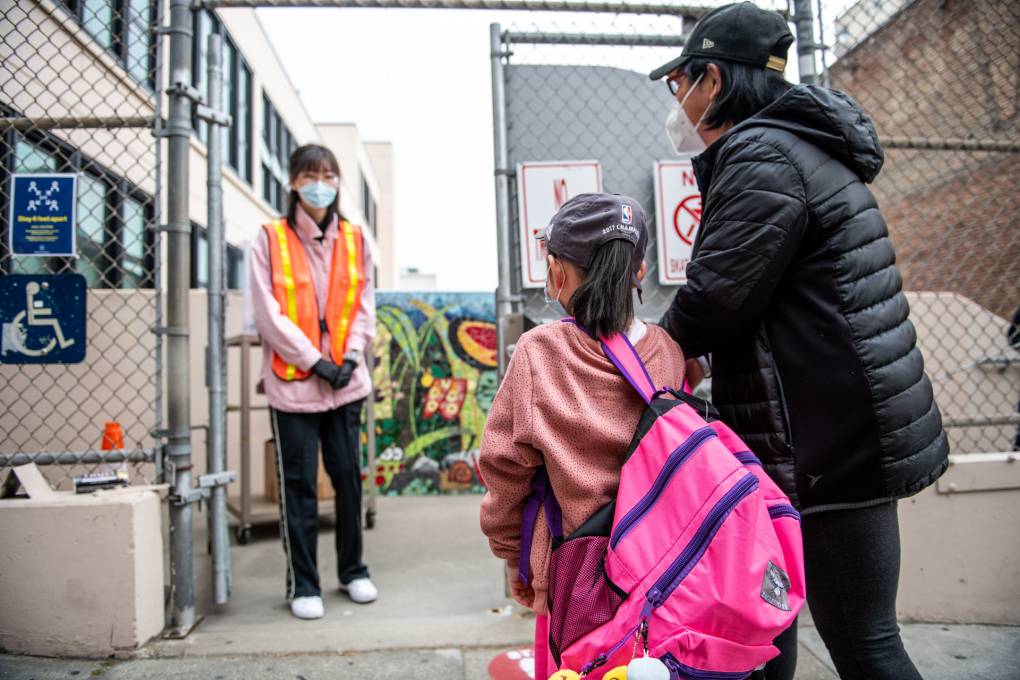
"caption": "Joyce Lee gets ready to drop off her daughter at Gordon Lau Elementary School in San Francisco on April 21, 2021.",
"description": "Joyce Lee gets ready to drop off her daughter at Gordon Lau Elementary School in San Francisco on April 21, 2021.",
"title": "delta-variant-schools-children",
"credit": "Beth LaBerge/KQED News",
"status": "inherit",
"altTag": "Mom crouches down with hand in young kid's enormous pink backpack, both wearing baseball caps and masks",
"isLoading": false,
"fetchFailed": false
},
"news_11885672": {
"type": "attachments",
"id": "news_11885672",
"meta": {
"index": "attachments_1716263798",
"site": "news",
"id": "11885672",
"found": true
},
"parent": 11885647,
"imgSizes": {
"twentyfourteen-full-width": {
"file": "https://ww2.kqed.org/app/uploads/sites/10/2021/08/RS50631_007_Alameda_ChildrenCOVID_08172021-qut-1038x576.jpg",
"width": 1038,
"mimeType": "image/jpeg",
"height": 576
},
"thumbnail": {
"file": "https://ww2.kqed.org/app/uploads/sites/10/2021/08/RS50631_007_Alameda_ChildrenCOVID_08172021-qut-160x107.jpg",
"width": 160,
"mimeType": "image/jpeg",
"height": 107
},
"post-thumbnail": {
"file": "https://ww2.kqed.org/app/uploads/sites/10/2021/08/RS50631_007_Alameda_ChildrenCOVID_08172021-qut-672x372.jpg",
"width": 672,
"mimeType": "image/jpeg",
"height": 372
},
"kqedFullSize": {
"file": "https://ww2.kqed.org/app/uploads/sites/10/2021/08/RS50631_007_Alameda_ChildrenCOVID_08172021-qut.jpg",
"width": 1920,
"height": 1280
},
"large": {
"file": "https://ww2.kqed.org/app/uploads/sites/10/2021/08/RS50631_007_Alameda_ChildrenCOVID_08172021-qut-1020x680.jpg",
"width": 1020,
"mimeType": "image/jpeg",
"height": 680
},
"1536x1536": {
"file": "https://ww2.kqed.org/app/uploads/sites/10/2021/08/RS50631_007_Alameda_ChildrenCOVID_08172021-qut-1536x1024.jpg",
"width": 1536,
"mimeType": "image/jpeg",
"height": 1024
},
"medium": {
"file": "https://ww2.kqed.org/app/uploads/sites/10/2021/08/RS50631_007_Alameda_ChildrenCOVID_08172021-qut-800x533.jpg",
"width": 800,
"mimeType": "image/jpeg",
"height": 533
}
},
"publishDate": 1629399597,
"modified": 1629418495,
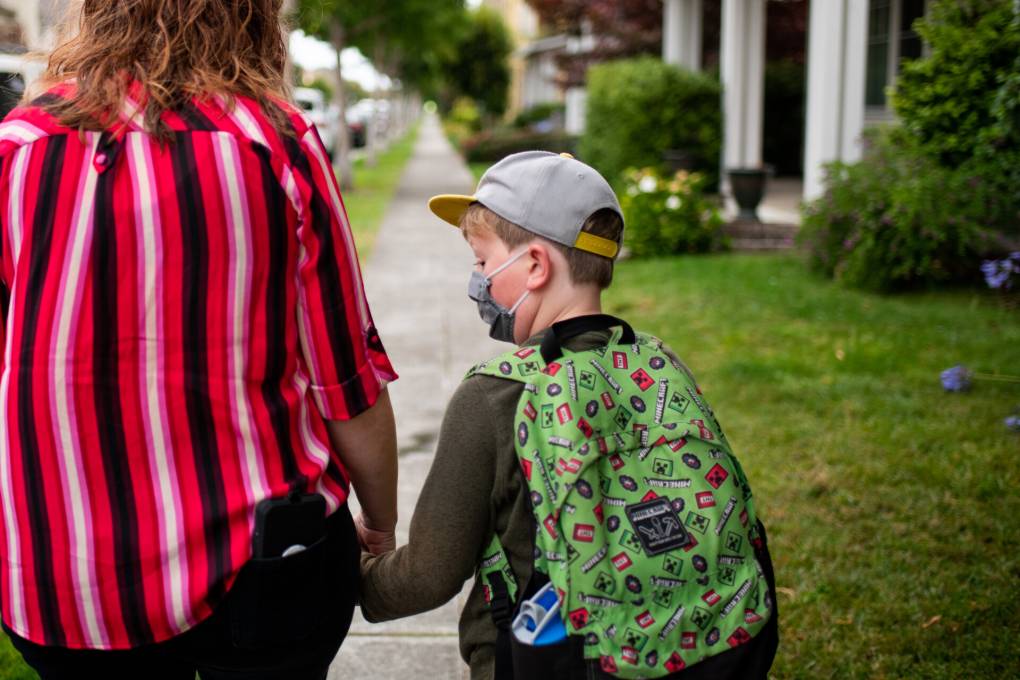
"caption": "Stephanie Chenard holds hands with her son Desmond, 8, as they walk to his school in Alameda on Aug. 17, 2021. Chenard shared with KQED how she felt when she heard earlier this month that four COVID-19 cases were reported in four different schools of the Oakland Unified School District. “It’s already started,” she said through a text message.",
"description": "Stephanie Chenard holds hands with her son Desmond, 8, as they walk to his school in Alameda on August 17, 2021.",
"title": "RS50631_007_Alameda_ChildrenCOVID_08172021-qut",
"credit": "Beth LaBerge/KQED",
"status": "inherit",
"altTag": "A parent and a child walk on a sidewalk, facing away from the camera. The parent is wearing a red blouse with black and white stripes and the child is wearing a baseball cap and carries a green backpack.",
"isLoading": false,
"fetchFailed": false
},
"news_11885421": {
"type": "attachments",
"id": "news_11885421",
"meta": {
"index": "attachments_1716263798",
"site": "news",
"id": "11885421",
"found": true
},
"parent": 11885304,
"imgSizes": {
"twentyfourteen-full-width": {
"file": "https://ww2.kqed.org/app/uploads/sites/10/2021/08/RS48239_001_Oakland_MillsCollege_03242021-qut-1038x576.jpg",
"width": 1038,
"mimeType": "image/jpeg",
"height": 576
},
"thumbnail": {
"file": "https://ww2.kqed.org/app/uploads/sites/10/2021/08/RS48239_001_Oakland_MillsCollege_03242021-qut-160x107.jpg",
"width": 160,
"mimeType": "image/jpeg",
"height": 107
},
"post-thumbnail": {
"file": "https://ww2.kqed.org/app/uploads/sites/10/2021/08/RS48239_001_Oakland_MillsCollege_03242021-qut-672x372.jpg",
"width": 672,
"mimeType": "image/jpeg",
"height": 372
},
"kqedFullSize": {
"file": "https://ww2.kqed.org/app/uploads/sites/10/2021/08/RS48239_001_Oakland_MillsCollege_03242021-qut.jpg",
"width": 1920,
"height": 1280
},
"large": {
"file": "https://ww2.kqed.org/app/uploads/sites/10/2021/08/RS48239_001_Oakland_MillsCollege_03242021-qut-1020x680.jpg",
"width": 1020,
"mimeType": "image/jpeg",
"height": 680
},
"1536x1536": {
"file": "https://ww2.kqed.org/app/uploads/sites/10/2021/08/RS48239_001_Oakland_MillsCollege_03242021-qut-1536x1024.jpg",
"width": 1536,
"mimeType": "image/jpeg",
"height": 1024
},
"medium": {
"file": "https://ww2.kqed.org/app/uploads/sites/10/2021/08/RS48239_001_Oakland_MillsCollege_03242021-qut-800x533.jpg",
"width": 800,
"mimeType": "image/jpeg",
"height": 533
}
},
"publishDate": 1629227824,
"modified": 1629227873,
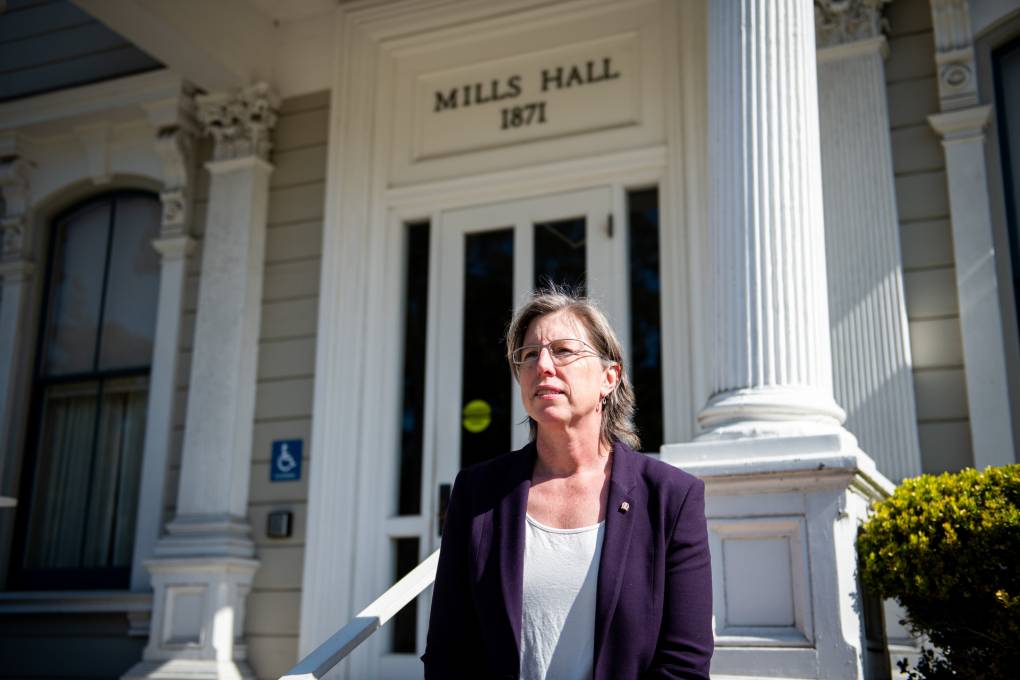
"caption": "Mills College president Elizabeth L. Hillman, pictured on campus in Oakland on March 24, 2021.",
"description": "Mills College president Elizabeth L. Hillman, pictured on campus in Oakland on March 24, 2021.",
"title": "RS48239_001_Oakland_MillsCollege_03242021-qut",
"credit": "Beth LaBerge/KQED",
"status": "inherit",
"altTag": null,
"isLoading": false,
"fetchFailed": false
},
"news_11885040": {
"type": "attachments",
"id": "news_11885040",
"meta": {
"index": "attachments_1716263798",
"site": "news",
"id": "11885040",
"found": true
},
"parent": 11885027,
"imgSizes": {
"twentyfourteen-full-width": {
"file": "https://ww2.kqed.org/app/uploads/sites/10/2021/08/RS43511_016_KQED_SanFrancisco_GeorgeFloydProtest_05312020-qut-1038x576.jpeg",
"width": 1038,
"mimeType": "image/jpeg",
"height": 576
},
"thumbnail": {
"file": "https://ww2.kqed.org/app/uploads/sites/10/2021/08/RS43511_016_KQED_SanFrancisco_GeorgeFloydProtest_05312020-qut-160x107.jpeg",
"width": 160,
"mimeType": "image/jpeg",
"height": 107
},
"post-thumbnail": {
"file": "https://ww2.kqed.org/app/uploads/sites/10/2021/08/RS43511_016_KQED_SanFrancisco_GeorgeFloydProtest_05312020-qut-672x372.jpeg",
"width": 672,
"mimeType": "image/jpeg",
"height": 372
},
"kqedFullSize": {
"file": "https://ww2.kqed.org/app/uploads/sites/10/2021/08/RS43511_016_KQED_SanFrancisco_GeorgeFloydProtest_05312020-qut.jpeg",
"width": 1920,
"height": 1280
},
"large": {
"file": "https://ww2.kqed.org/app/uploads/sites/10/2021/08/RS43511_016_KQED_SanFrancisco_GeorgeFloydProtest_05312020-qut-1020x680.jpeg",
"width": 1020,
"mimeType": "image/jpeg",
"height": 680
},
"1536x1536": {
"file": "https://ww2.kqed.org/app/uploads/sites/10/2021/08/RS43511_016_KQED_SanFrancisco_GeorgeFloydProtest_05312020-qut-1536x1024.jpeg",
"width": 1536,
"mimeType": "image/jpeg",
"height": 1024
},
"medium": {
"file": "https://ww2.kqed.org/app/uploads/sites/10/2021/08/RS43511_016_KQED_SanFrancisco_GeorgeFloydProtest_05312020-qut-800x533.jpeg",
"width": 800,
"mimeType": "image/jpeg",
"height": 533
}
},
"publishDate": 1628890426,
"modified": 1629151039,
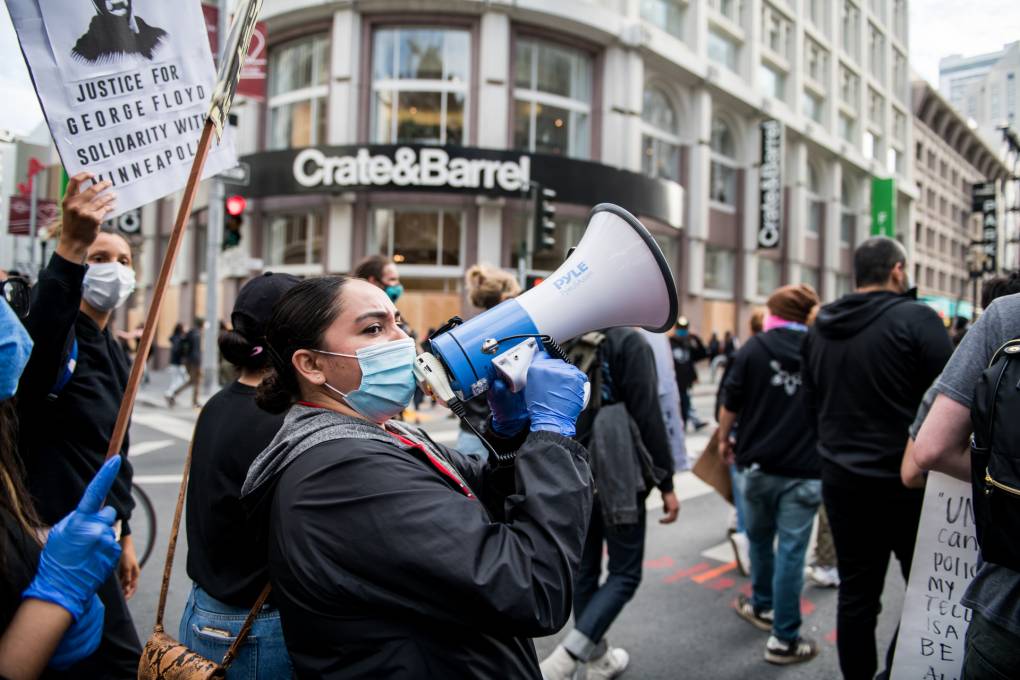
"caption": "Demonstrators march toward San Francisco City Hall on May 31, 2020, to protest the police killing of George Floyd in Minneapolis. Several groups marched to the Embarcadero, through Union Square and to the Hall of Justice, eventually converging and returning to City Hall.",
"description": null,
"title": "RS43511_016_KQED_SanFrancisco_GeorgeFloydProtest_05312020-qut",
"credit": "Beth LaBerge/KQED",
"status": "inherit",
"altTag": "Demonstrators march toward San Francisco City Hall on Sunday May 31, 2020 to protest the police killing of George Floyd in Minneapolis. Several groups marched to the Embarcadero, through Union Square and to the Hall of Justice, eventually converging and returning to City Hall.",
"isLoading": false,
"fetchFailed": false
},
"news_11884067": {
"type": "attachments",
"id": "news_11884067",
"meta": {
"index": "attachments_1716263798",
"site": "news",
"id": "11884067",
"found": true
},
"parent": 11884066,
"imgSizes": {
"twentyfourteen-full-width": {
"file": "https://ww2.kqed.org/app/uploads/sites/10/2021/08/RS50360_015_LosGatos_HighSchool_07212021-qut-1038x576.jpg",
"width": 1038,
"mimeType": "image/jpeg",
"height": 576
},
"thumbnail": {
"file": "https://ww2.kqed.org/app/uploads/sites/10/2021/08/RS50360_015_LosGatos_HighSchool_07212021-qut-160x107.jpg",
"width": 160,
"mimeType": "image/jpeg",
"height": 107
},
"post-thumbnail": {
"file": "https://ww2.kqed.org/app/uploads/sites/10/2021/08/RS50360_015_LosGatos_HighSchool_07212021-qut-672x372.jpg",
"width": 672,
"mimeType": "image/jpeg",
"height": 372
},
"kqedFullSize": {
"file": "https://ww2.kqed.org/app/uploads/sites/10/2021/08/RS50360_015_LosGatos_HighSchool_07212021-qut.jpg",
"width": 1920,
"height": 1280
},
"large": {
"file": "https://ww2.kqed.org/app/uploads/sites/10/2021/08/RS50360_015_LosGatos_HighSchool_07212021-qut-1020x680.jpg",
"width": 1020,
"mimeType": "image/jpeg",
"height": 680
},
"1536x1536": {
"file": "https://ww2.kqed.org/app/uploads/sites/10/2021/08/RS50360_015_LosGatos_HighSchool_07212021-qut-1536x1024.jpg",
"width": 1536,
"mimeType": "image/jpeg",
"height": 1024
},
"medium": {
"file": "https://ww2.kqed.org/app/uploads/sites/10/2021/08/RS50360_015_LosGatos_HighSchool_07212021-qut-800x533.jpg",
"width": 800,
"mimeType": "image/jpeg",
"height": 533
}
},
"publishDate": 1628242264,
"modified": 1628615930,
"caption": "Alaina Fox holds a copy of El Gato, the student newspaper of Los Gatos High School, at the school campus in Los Gatos on July 21, 2021.",
"description": null,
"title": "RS50360_015_LosGatos_HighSchool_07212021-qut",
"credit": "Beth LaBerge/KQED",
"status": "inherit",
"altTag": null,
"isLoading": false,
"fetchFailed": false
},
"news_11884623": {
"type": "attachments",
"id": "news_11884623",
"meta": {
"index": "attachments_1716263798",
"site": "news",
"id": "11884623",
"found": true
},
"parent": 11884622,
"imgSizes": {
"twentyfourteen-full-width": {
"file": "https://ww2.kqed.org/app/uploads/sites/10/2021/08/gettyimages-1232668997_custom-45aef38b9ac495d0a953edfbb404ba7f3849fa59-1038x576.jpg",
"width": 1038,
"mimeType": "image/jpeg",
"height": 576
},
"thumbnail": {
"file": "https://ww2.kqed.org/app/uploads/sites/10/2021/08/gettyimages-1232668997_custom-45aef38b9ac495d0a953edfbb404ba7f3849fa59-160x107.jpg",
"width": 160,
"mimeType": "image/jpeg",
"height": 107
},
"post-thumbnail": {
"file": "https://ww2.kqed.org/app/uploads/sites/10/2021/08/gettyimages-1232668997_custom-45aef38b9ac495d0a953edfbb404ba7f3849fa59-672x372.jpg",
"width": 672,
"mimeType": "image/jpeg",
"height": 372
},
"kqedFullSize": {
"file": "https://ww2.kqed.org/app/uploads/sites/10/2021/08/gettyimages-1232668997_custom-45aef38b9ac495d0a953edfbb404ba7f3849fa59-e1628708342617.jpg",
"width": 1920,
"height": 1279
},
"large": {
"file": "https://ww2.kqed.org/app/uploads/sites/10/2021/08/gettyimages-1232668997_custom-45aef38b9ac495d0a953edfbb404ba7f3849fa59-1020x679.jpg",
"width": 1020,
"mimeType": "image/jpeg",
"height": 679
},
"1536x1536": {
"file": "https://ww2.kqed.org/app/uploads/sites/10/2021/08/gettyimages-1232668997_custom-45aef38b9ac495d0a953edfbb404ba7f3849fa59-1536x1023.jpg",
"width": 1536,
"mimeType": "image/jpeg",
"height": 1023
},
"full-width": {
"file": "https://ww2.kqed.org/app/uploads/sites/10/2021/08/gettyimages-1232668997_custom-45aef38b9ac495d0a953edfbb404ba7f3849fa59-1920x1279.jpg",
"width": 1920,
"mimeType": "image/jpeg",
"height": 1279
},
"medium": {
"file": "https://ww2.kqed.org/app/uploads/sites/10/2021/08/gettyimages-1232668997_custom-45aef38b9ac495d0a953edfbb404ba7f3849fa59-800x533.jpg",
"width": 800,
"mimeType": "image/jpeg",
"height": 533
}
},
"publishDate": 1628705931,
"modified": 1629762359,
"caption": "Kindergartner Allyson Zavala joined with other students and school superintendent Austin Buetner for a class selfie in April inside teacher Alicia Pizzi's classroom at Maurice Sendak Elementary School in North Hollywood.",
"description": "Kindergartner Allyson Zavala joined with other students and school officials for a class selfie in April 2021, inside teacher Alicia Pizzi's classroom at Maurice Sendak Elementary School in North Hollywood.",
"title": "Kindergartner Allyson Zavala joined with other students and school superintendent Austin Buetner for a class selfie in April inside teacher Alicia Pizzi's classroom at Maurice Sendak Elementary School in North Hollywood, Calif.",
"credit": "Robert Gauthier/Los Angeles Times via Getty Images",
"status": "inherit",
"altTag": "masked kindergartners in masks at desks raising hands",
"isLoading": false,
"fetchFailed": false
},
"news_11884628": {
"type": "attachments",
"id": "news_11884628",
"meta": {
"index": "attachments_1716263798",
"site": "news",
"id": "11884628",
"found": true
},
"parent": 11884618,
"imgSizes": {
"twentyfourteen-full-width": {
"file": "https://ww2.kqed.org/app/uploads/sites/10/2021/08/schoolsupplies_081121_final-1038x576.png",
"width": 1038,
"mimeType": "image/png",
"height": 576
},
"thumbnail": {
"file": "https://ww2.kqed.org/app/uploads/sites/10/2021/08/schoolsupplies_081121_final-160x107.png",
"width": 160,
"mimeType": "image/png",
"height": 107
},
"post-thumbnail": {
"file": "https://ww2.kqed.org/app/uploads/sites/10/2021/08/schoolsupplies_081121_final-672x372.png",
"width": 672,
"mimeType": "image/png",
"height": 372
},
"kqedFullSize": {
"file": "https://ww2.kqed.org/app/uploads/sites/10/2021/08/schoolsupplies_081121_final.png",
"width": 1920,
"height": 1289
},
"large": {
"file": "https://ww2.kqed.org/app/uploads/sites/10/2021/08/schoolsupplies_081121_final-1020x685.png",
"width": 1020,
"mimeType": "image/png",
"height": 685
},
"1536x1536": {
"file": "https://ww2.kqed.org/app/uploads/sites/10/2021/08/schoolsupplies_081121_final-1536x1031.png",
"width": 1536,
"mimeType": "image/png",
"height": 1031
},
"medium": {
"file": "https://ww2.kqed.org/app/uploads/sites/10/2021/08/schoolsupplies_081121_final-800x537.png",
"width": 800,
"mimeType": "image/png",
"height": 537
}
},
"publishDate": 1628706064,
"modified": 1628706158,
"caption": null,
"description": null,
"title": "schoolsupplies_081121_final",
"credit": null,
"status": "inherit",
"altTag": "A Mark Fiore cartoon showing two school children in a classroom before a list of school supplies that range from \"pencils\" and \"paper\" and then list numerous covid-related items like face masks, vaccines, testing kit, etc. One of the kids says, \"I'm just happy Zoom isn't on the list!\"",
"isLoading": false,
"fetchFailed": false
},
"news_11884612": {
"type": "attachments",
"id": "news_11884612",
"meta": {
"index": "attachments_1716263798",
"site": "news",
"id": "11884612",
"found": true
},
"parent": 11884606,
"imgSizes": {
"twentyfourteen-full-width": {
"file": "https://ww2.kqed.org/app/uploads/sites/10/2021/08/GettyImages-1307454937-1-1038x576.jpg",
"width": 1038,
"mimeType": "image/jpeg",
"height": 576
},
"thumbnail": {
"file": "https://ww2.kqed.org/app/uploads/sites/10/2021/08/GettyImages-1307454937-1-160x108.jpg",
"width": 160,
"mimeType": "image/jpeg",
"height": 108
},
"post-thumbnail": {
"file": "https://ww2.kqed.org/app/uploads/sites/10/2021/08/GettyImages-1307454937-1-672x372.jpg",
"width": 672,
"mimeType": "image/jpeg",
"height": 372
},
"kqedFullSize": {
"file": "https://ww2.kqed.org/app/uploads/sites/10/2021/08/GettyImages-1307454937-1.jpg",
"width": 1920,
"height": 1296
},
"large": {
"file": "https://ww2.kqed.org/app/uploads/sites/10/2021/08/GettyImages-1307454937-1-1020x689.jpg",
"width": 1020,
"mimeType": "image/jpeg",
"height": 689
},
"1536x1536": {
"file": "https://ww2.kqed.org/app/uploads/sites/10/2021/08/GettyImages-1307454937-1-1536x1037.jpg",
"width": 1536,
"mimeType": "image/jpeg",
"height": 1037
},
"medium": {
"file": "https://ww2.kqed.org/app/uploads/sites/10/2021/08/GettyImages-1307454937-1-800x540.jpg",
"width": 800,
"mimeType": "image/jpeg",
"height": 540
}
},
"publishDate": 1628704361,
"modified": 1633123943,
"caption": "Gov. Gavin Newsom speaks during a news conference after touring an elementary school on March 16, 2021, in Alameda. ",
"description": "Gov. Gavin Newsom speaks during a news conference after touring an elementary school on March 16, 2021, in Alameda. ",
"title": "GettyImages-1307454937 (1)",
"credit": "Justin Sullivan/Getty Images",
"status": "inherit",
"altTag": "Gavin Newsom, without a tie, speaks into a bank of microphones in front of a board with colorful letters that spell \"The Great Kindness Challenge.\"",
"isLoading": false,
"fetchFailed": false
},
"news_11884570": {
"type": "attachments",
"id": "news_11884570",
"meta": {
"index": "attachments_1716263798",
"site": "news",
"id": "11884570",
"found": true
},
"parent": 11884547,
"imgSizes": {
"twentyfourteen-full-width": {
"file": "https://ww2.kqed.org/app/uploads/sites/10/2021/08/RS48733_012_SanFrancisco_GordonLauElementary_04212021-qut-1038x576.jpg",
"width": 1038,
"mimeType": "image/jpeg",
"height": 576
},
"thumbnail": {
"file": "https://ww2.kqed.org/app/uploads/sites/10/2021/08/RS48733_012_SanFrancisco_GordonLauElementary_04212021-qut-160x107.jpg",
"width": 160,
"mimeType": "image/jpeg",
"height": 107
},
"post-thumbnail": {
"file": "https://ww2.kqed.org/app/uploads/sites/10/2021/08/RS48733_012_SanFrancisco_GordonLauElementary_04212021-qut-672x372.jpg",
"width": 672,
"mimeType": "image/jpeg",
"height": 372
},
"kqedFullSize": {
"file": "https://ww2.kqed.org/app/uploads/sites/10/2021/08/RS48733_012_SanFrancisco_GordonLauElementary_04212021-qut.jpg",
"width": 1920,
"height": 1280
},
"large": {
"file": "https://ww2.kqed.org/app/uploads/sites/10/2021/08/RS48733_012_SanFrancisco_GordonLauElementary_04212021-qut-1020x680.jpg",
"width": 1020,
"mimeType": "image/jpeg",
"height": 680
},
"1536x1536": {
"file": "https://ww2.kqed.org/app/uploads/sites/10/2021/08/RS48733_012_SanFrancisco_GordonLauElementary_04212021-qut-1536x1024.jpg",
"width": 1536,
"mimeType": "image/jpeg",
"height": 1024
},
"medium": {
"file": "https://ww2.kqed.org/app/uploads/sites/10/2021/08/RS48733_012_SanFrancisco_GordonLauElementary_04212021-qut-800x533.jpg",
"width": 800,
"mimeType": "image/jpeg",
"height": 533
}
},
"publishDate": 1628639308,
"modified": 1628704028,
"caption": "A student and her parent check in with staff at Gordon Lau Elementary School in San Francisco on April 21, 2021. SFUSD will now require all staff to either get vaccinated against COVID or undergo weekly testing.",
"description": "A student and her parent check in with staff at Gordon Lau Elementary School in San Francisco on April 21, 2021. SFUSD will now require all of its staff to either get vaccinated against COVID or undergo weekly testing.",
"title": "RS48733_012_SanFrancisco_GordonLauElementary_04212021-qut",
"credit": "Beth LaBerge/KQED",
"status": "inherit",
"altTag": null,
"isLoading": false,
"fetchFailed": false
},
"news_11884394": {
"type": "attachments",
"id": "news_11884394",
"meta": {
"index": "attachments_1716263798",
"site": "news",
"id": "11884394",
"found": true
},
"parent": 11884390,
"imgSizes": {
"twentyfourteen-full-width": {
"file": "https://ww2.kqed.org/app/uploads/sites/10/2021/08/061121_SummerSchool_AW_sized_01-1038x576.jpg",
"width": 1038,
"mimeType": "image/jpeg",
"height": 576
},
"thumbnail": {
"file": "https://ww2.kqed.org/app/uploads/sites/10/2021/08/061121_SummerSchool_AW_sized_01-160x107.jpg",
"width": 160,
"mimeType": "image/jpeg",
"height": 107
},
"post-thumbnail": {
"file": "https://ww2.kqed.org/app/uploads/sites/10/2021/08/061121_SummerSchool_AW_sized_01-672x372.jpg",
"width": 672,
"mimeType": "image/jpeg",
"height": 372
},
"kqedFullSize": {
"file": "https://ww2.kqed.org/app/uploads/sites/10/2021/08/061121_SummerSchool_AW_sized_01.jpg",
"width": 1200,
"height": 800
},
"large": {
"file": "https://ww2.kqed.org/app/uploads/sites/10/2021/08/061121_SummerSchool_AW_sized_01-1020x680.jpg",
"width": 1020,
"mimeType": "image/jpeg",
"height": 680
},
"medium": {
"file": "https://ww2.kqed.org/app/uploads/sites/10/2021/08/061121_SummerSchool_AW_sized_01-800x533.jpg",
"width": 800,
"mimeType": "image/jpeg",
"height": 533
}
},
"publishDate": 1628543901,
"modified": 1628543969,
"caption": "First graders sanitize their hands before entering the classroom during summer session at Laurel Elementary in Oakland on June 11, 2021. Laurel is a hub program for five district schools hosting 120 kids for the summer with a focus on resocialization, in addition to academics.",
"description": null,
"title": "061121_SummerSchool_AW_sized_01",
"credit": "Anne Wernikoff/CalMatters",
"status": "inherit",
"altTag": null,
"isLoading": false,
"fetchFailed": false
},
"news_11884276": {
"type": "attachments",
"id": "news_11884276",
"meta": {
"index": "attachments_1716263798",
"site": "news",
"id": "11884276",
"found": true
},
"parent": 11884275,
"imgSizes": {
"twentyfourteen-full-width": {
"file": "https://ww2.kqed.org/app/uploads/sites/10/2021/08/gettyimages-1332533413_wide-e1ad756e903603a65f943b996d1ab8d212665b39-1038x576.jpg",
"width": 1038,
"mimeType": "image/jpeg",
"height": 576
},
"thumbnail": {
"file": "https://ww2.kqed.org/app/uploads/sites/10/2021/08/gettyimages-1332533413_wide-e1ad756e903603a65f943b996d1ab8d212665b39-160x90.jpg",
"width": 160,
"mimeType": "image/jpeg",
"height": 90
},
"post-thumbnail": {
"file": "https://ww2.kqed.org/app/uploads/sites/10/2021/08/gettyimages-1332533413_wide-e1ad756e903603a65f943b996d1ab8d212665b39-672x372.jpg",
"width": 672,
"mimeType": "image/jpeg",
"height": 372
},
"kqedFullSize": {
"file": "https://ww2.kqed.org/app/uploads/sites/10/2021/08/gettyimages-1332533413_wide-e1ad756e903603a65f943b996d1ab8d212665b39-scaled.jpg",
"width": 2560,
"height": 1440
},
"2048x2048": {
"file": "https://ww2.kqed.org/app/uploads/sites/10/2021/08/gettyimages-1332533413_wide-e1ad756e903603a65f943b996d1ab8d212665b39-2048x1152.jpg",
"width": 2048,
"mimeType": "image/jpeg",
"height": 1152
},
"large": {
"file": "https://ww2.kqed.org/app/uploads/sites/10/2021/08/gettyimages-1332533413_wide-e1ad756e903603a65f943b996d1ab8d212665b39-1020x574.jpg",
"width": 1020,
"mimeType": "image/jpeg",
"height": 574
},
"1536x1536": {
"file": "https://ww2.kqed.org/app/uploads/sites/10/2021/08/gettyimages-1332533413_wide-e1ad756e903603a65f943b996d1ab8d212665b39-1536x864.jpg",
"width": 1536,
"mimeType": "image/jpeg",
"height": 864
},
"full-width": {
"file": "https://ww2.kqed.org/app/uploads/sites/10/2021/08/gettyimages-1332533413_wide-e1ad756e903603a65f943b996d1ab8d212665b39-1920x1080.jpg",
"width": 1920,
"mimeType": "image/jpeg",
"height": 1080
},
"medium": {
"file": "https://ww2.kqed.org/app/uploads/sites/10/2021/08/gettyimages-1332533413_wide-e1ad756e903603a65f943b996d1ab8d212665b39-800x450.jpg",
"width": 800,
"mimeType": "image/jpeg",
"height": 450
}
},
"publishDate": 1628454075,
"modified": 1628546984,
"caption": "Secretary of Education Dr. Miguel Cardona answers questions during the daily briefing at the White House Aug. 5, 2021, in Washington, D.C. Cardona answered a range of questions related to children returning to school in the fall. ",
"description": "WASHINGTON, DC - AUGUST 05: Secretary of Education Dr. Miguel Cardona answers questions during the daily briefing at the White House August 5, 2021 in Washington, DC. Cardona answered a range of questions related to schoolchildren returning to schools in the fall. (Photo by Win McNamee/Getty Images)",
"title": "U.S. Education Secretary Miguel Cardona answers questions during a White House news briefing on Thursday.",
"credit": "Win McNamee/Getty Images",
"status": "inherit",
"altTag": null,
"isLoading": false,
"fetchFailed": false
},
"news_11884096": {
"type": "attachments",
"id": "news_11884096",
"meta": {
"index": "attachments_1716263798",
"site": "news",
"id": "11884096",
"found": true
},
"parent": 11883979,
"imgSizes": {
"twentyfourteen-full-width": {
"file": "https://ww2.kqed.org/app/uploads/sites/10/2021/08/IMG_5419-1038x576.jpg",
"width": 1038,
"mimeType": "image/jpeg",
"height": 576
},
"thumbnail": {
"file": "https://ww2.kqed.org/app/uploads/sites/10/2021/08/IMG_5419-160x107.jpg",
"width": 160,
"mimeType": "image/jpeg",
"height": 107
},
"post-thumbnail": {
"file": "https://ww2.kqed.org/app/uploads/sites/10/2021/08/IMG_5419-672x372.jpg",
"width": 672,
"mimeType": "image/jpeg",
"height": 372
},
"kqedFullSize": {
"file": "https://ww2.kqed.org/app/uploads/sites/10/2021/08/IMG_5419-scaled.jpg",
"width": 2560,
"height": 1706
},
"2048x2048": {
"file": "https://ww2.kqed.org/app/uploads/sites/10/2021/08/IMG_5419-2048x1365.jpg",
"width": 2048,
"mimeType": "image/jpeg",
"height": 1365
},
"large": {
"file": "https://ww2.kqed.org/app/uploads/sites/10/2021/08/IMG_5419-1020x680.jpg",
"width": 1020,
"mimeType": "image/jpeg",
"height": 680
},
"1536x1536": {
"file": "https://ww2.kqed.org/app/uploads/sites/10/2021/08/IMG_5419-1536x1024.jpg",
"width": 1536,
"mimeType": "image/jpeg",
"height": 1024
},
"full-width": {
"file": "https://ww2.kqed.org/app/uploads/sites/10/2021/08/IMG_5419-1920x1280.jpg",
"width": 1920,
"mimeType": "image/jpeg",
"height": 1280
},
"medium": {
"file": "https://ww2.kqed.org/app/uploads/sites/10/2021/08/IMG_5419-800x533.jpg",
"width": 800,
"mimeType": "image/jpeg",
"height": 533
}
},
"publishDate": 1628261407,
"modified": 1628294563,
"caption": "Social worker Vinita Lee helps third graders in Castro Valley Unified's summer school program understand how to handle their emotions by creating a 'toolbox' of responses. This year, CVUSD tripled summer school attendance with the goal of providing more students with the tools they may need to return to in-person learning.",
"description": "Social worker, Vinita Lee, helps third graders in Castro Valley Unified's summer school program understand how to handle their emotions by creating a 'tool box' of responses.",
"title": "IMG_5419",
"credit": "Julia McEvoy/KQED",
"status": "inherit",
"altTag": "The view from behind a student's shoulder inside a classroom. The whiteboard is visible and a teacher stands in front of it, teaching a lesson. The student is sitting at their desk and both the student and teacher are wearing facemasks and are keeping distance from each other.",
"isLoading": false,
"fetchFailed": false
}
},
"audioPlayerReducer": {
"postId": "stream_live",
"isPaused": true,
"isPlaying": false,
"pfsActive": false,
"pledgeModalIsOpen": true,
"playerDrawerIsOpen": false,
"liveAudioPlayStartedAt": 0,
"liveAudioPlayContext": ""
},
"authorsReducer": {
"byline_news_11884622": {
"type": "authors",
"id": "byline_news_11884622",
"meta": {
"override": true
},
"slug": "byline_news_11884622",
"name": "\u003ca href=\"https://www.npr.org/people/729920828/pien-huang\">Pien Huang\u003c/a>",
"isLoading": false
},
"byline_news_11884606": {
"type": "authors",
"id": "byline_news_11884606",
"meta": {
"override": true
},
"slug": "byline_news_11884606",
"name": "\u003ca href=\"https://calmatters.org/author/joe-hong/\">Joe Hong\u003c/a>, CalMatters \u003cbr> \u003ca href=\"https://www.kqed.org/author/jrodriguez\">Joe Fitzgerald Rodriguez\u003c/a>, KQED",
"isLoading": false
},
"byline_news_11884390": {
"type": "authors",
"id": "byline_news_11884390",
"meta": {
"override": true
},
"slug": "byline_news_11884390",
"name": "Joe Hong\u003cbr>CalMatters",
"isLoading": false
},
"byline_news_11884275": {
"type": "authors",
"id": "byline_news_11884275",
"meta": {
"override": true
},
"slug": "byline_news_11884275",
"name": "Clare Lombardo",
"isLoading": false
},
"jmcevoy": {
"type": "authors",
"id": "231",
"meta": {
"index": "authors_1716337520",
"id": "231",
"found": true
},
"name": "Julia McEvoy",
"firstName": "Julia",
"lastName": "McEvoy",
"slug": "jmcevoy",
"email": "jmcevoy@KQED.org",
"display_author_email": true,
"staff_mastheads": [
"news"
],
"title": "KQED Senior Editor",
"bio": "Julia McEvoy is KQED's Senior Editor, Education Equity.\r\n\r\nJulia heads KQED’s education coverage examining inequities students face in Bay Area and California schools, and reports on what it will take to educate the next generation.\r\n\r\nJulia's editorial work has received a Peabody Award, a Casey Medal for Coverage of Children and Families, several Edward R. Murrow awards, as well as awards from the Public Radio News Directors Inc. and the Society for Professional Journalists.",
"avatar": "https://secure.gravatar.com/avatar/aec3ce21abe02b302fd33638abd56a22?s=600&d=blank&r=g",
"twitter": "juliamcevoy1",
"facebook": null,
"instagram": null,
"linkedin": null,
"sites": [
{
"site": "news",
"roles": []
},
{
"site": "stateofhealth",
"roles": [
"author"
]
}
],
"headData": {
"title": "Julia McEvoy | KQED",
"description": "KQED Senior Editor",
"ogImgSrc": "https://secure.gravatar.com/avatar/aec3ce21abe02b302fd33638abd56a22?s=600&d=blank&r=g",
"twImgSrc": "https://secure.gravatar.com/avatar/aec3ce21abe02b302fd33638abd56a22?s=600&d=blank&r=g"
},
"isLoading": false,
"link": "/author/jmcevoy"
},
"kqednewsstaffandwires": {
"type": "authors",
"id": "237",
"meta": {
"index": "authors_1716337520",
"id": "237",
"found": true
},
"name": "KQED News Staff and Wires",
"firstName": "KQED News Staff and Wires",
"lastName": null,
"slug": "kqednewsstaffandwires",
"email": "onlinenewsstaff@kqed.org",
"display_author_email": false,
"staff_mastheads": [],
"title": null,
"bio": null,
"avatar": "https://secure.gravatar.com/avatar/72295af8ebbfbd19a4948f5271285664?s=600&d=blank&r=g",
"twitter": null,
"facebook": null,
"instagram": null,
"linkedin": null,
"sites": [
{
"site": "arts",
"roles": [
"contributor"
]
},
{
"site": "news",
"roles": [
"contributor"
]
},
{
"site": "lowdown",
"roles": [
"author"
]
},
{
"site": "stateofhealth",
"roles": [
"contributor"
]
},
{
"site": "food",
"roles": [
"author"
]
}
],
"headData": {
"title": "KQED News Staff and Wires | KQED",
"description": null,
"ogImgSrc": "https://secure.gravatar.com/avatar/72295af8ebbfbd19a4948f5271285664?s=600&d=blank&r=g",
"twImgSrc": "https://secure.gravatar.com/avatar/72295af8ebbfbd19a4948f5271285664?s=600&d=blank&r=g"
},
"isLoading": false,
"link": "/author/kqednewsstaffandwires"
},
"markfiore": {
"type": "authors",
"id": "3236",
"meta": {
"index": "authors_1716337520",
"id": "3236",
"found": true
},
"name": "Mark Fiore",
"firstName": "Mark",
"lastName": "Fiore",
"slug": "markfiore",
"email": "mark@markfiore.com",
"display_author_email": false,
"staff_mastheads": [
"news"
],
"title": "KQED News Cartoonist",
"bio": "\u003ca href=\"http://www.MarkFiore.com\">MarkFiore.com\u003c/a> | \u003ca href=\"https://twitter.com/markfiore\">Follow on Twitter\u003c/a> | \u003ca href=\"https://www.facebook.com/pages/Mark-Fiore-Animated-Political-Cartoons/94451707396?ref=bookmarks\">Facebook\u003c/a> | \u003ca href=\"mailto:mark@markfiore.com\">email\u003c/a>\r\n\r\nPulitzer Prize-winner, Mark Fiore, who the Wall Street Journal has called “the undisputed guru of the form,” creates animated political cartoons in San Francisco, where his work has been featured regularly on the San Francisco Chronicle’s web site, SFGate.com. His work has appeared on Newsweek.com, Slate.com, CBSNews.com, MotherJones.com, DailyKos.com and NPR’s web site. Fiore’s political animation has appeared on CNN, Frontline, Bill Moyers Journal, Salon.com and cable and broadcast outlets across the globe.\r\n\r\nBeginning his professional life by drawing traditional political cartoons for newspapers, Fiore’s work appeared in publications ranging from the Washington Post to the Los Angeles Times. In the late 1990s, he began to experiment with animating political cartoons and, after a short stint at the San Jose Mercury News as their staff cartoonist, Fiore devoted all his energies to animation.\r\nGrowing up in California, Fiore also spent a good portion of his life in the backwoods of Idaho. It was this combination that shaped him politically. Mark majored in political science at Colorado College, where, in a perfect send-off for a cartoonist, he received his diploma in 1991 as commencement speaker Dick Cheney smiled approvingly.\r\nMark Fiore was awarded the Pulitzer Prize for political cartooning in 2010, a Robert F. Kennedy Journalism Award in 2004 and has twice received an Online Journalism Award for commentary from the Online News Association (2002, 2008). Fiore has received two awards for his work in new media from the National Cartoonists Society (2001, 2002), and in 2006 received The James Madison Freedom of Information Award from The Society of Professional Journalists.",
"avatar": "https://secure.gravatar.com/avatar/fc4e2a612b15b67bad0c6f0e1db4ca9b?s=600&d=blank&r=g",
"twitter": "MarkFiore",
"facebook": null,
"instagram": "https://www.instagram.com/markfiore/?hl=en",
"linkedin": null,
"sites": [
{
"site": "arts",
"roles": [
"contributor"
]
},
{
"site": "news",
"roles": [
"editor"
]
},
{
"site": "futureofyou",
"roles": [
"editor"
]
},
{
"site": "science",
"roles": [
"editor"
]
}
],
"headData": {
"title": "Mark Fiore | KQED",
"description": "KQED News Cartoonist",
"ogImgSrc": "https://secure.gravatar.com/avatar/fc4e2a612b15b67bad0c6f0e1db4ca9b?s=600&d=blank&r=g",
"twImgSrc": "https://secure.gravatar.com/avatar/fc4e2a612b15b67bad0c6f0e1db4ca9b?s=600&d=blank&r=g"
},
"isLoading": false,
"link": "/author/markfiore"
},
"lesleymcclurg": {
"type": "authors",
"id": "11229",
"meta": {
"index": "authors_1716337520",
"id": "11229",
"found": true
},
"name": "Lesley McClurg",
"firstName": "Lesley",
"lastName": "McClurg",
"slug": "lesleymcclurg",
"email": "lmcclurg@KQED.org",
"display_author_email": false,
"staff_mastheads": [
"news",
"science"
],
"title": "KQED Health Correspondent",
"bio": "Lesley McClurg is a health correspondent and fill-in host whose work is regularly rebroadcast on NPR and PBS programs. She’s earned multiple regional Emmy awards, a national and a regional Edward R. Murrow award, and was named Best Beat Reporter by the Association of Health Care Journalists. The Society of Professional Journalists has recognized her work several times, and the Society of Environmental Journalists spotlighted her coverage of California’s historic drought.\r\n\r\nBefore joining KQED in 2016, Lesley covered food and sustainability for Capital Public Radio, environmental issues for Colorado Public Radio, and reported for KUOW and KCTS 9 in Seattle. Away from the newsroom, she loves skiing with her daughter, mountain biking with her partner, and playing with Ollie, the family’s goldendoodle. On deadline, she runs almost entirely on chocolate chips.\r\n\r\n ",
"avatar": "https://secure.gravatar.com/avatar/bab49e972ea10c774fe0f5e29dba1722b158f7c0d58a360923d1389d380b2978?s=600&d=blank&r=g",
"twitter": "lesleywmcclurg",
"bluesky": null,
"facebook": null,
"instagram": null,
"linkedin": null,
"sites": [
{
"site": "arts",
"roles": [
"author"
]
},
{
"site": "news",
"roles": [
"editor"
]
},
{
"site": "futureofyou",
"roles": [
"editor"
]
},
{
"site": "stateofhealth",
"roles": [
"author"
]
},
{
"site": "science",
"roles": [
"editor"
]
},
{
"site": "quest",
"roles": [
"subscriber"
]
},
{
"site": "forum",
"roles": [
"administrator"
]
},
{
"site": "liveblog",
"roles": [
"author"
]
}
],
"headData": {
"title": "Lesley McClurg | KQED",
"description": "KQED Health Correspondent",
"ogImgSrc": "https://secure.gravatar.com/avatar/bab49e972ea10c774fe0f5e29dba1722b158f7c0d58a360923d1389d380b2978?s=600&d=blank&r=g",
"twImgSrc": "https://secure.gravatar.com/avatar/bab49e972ea10c774fe0f5e29dba1722b158f7c0d58a360923d1389d380b2978?s=600&d=blank&r=g"
},
"isLoading": false,
"link": "/author/lesleymcclurg"
},
"mwiley": {
"type": "authors",
"id": "11526",
"meta": {
"index": "authors_1716337520",
"id": "11526",
"found": true
},
"name": "Michelle Wiley",
"firstName": "Michelle",
"lastName": "Wiley",
"slug": "mwiley",
"email": "mwiley@KQED.org",
"display_author_email": true,
"staff_mastheads": [],
"title": null,
"bio": "Michelle Wiley was the senior editor of weekends.",
"avatar": "https://secure.gravatar.com/avatar/3b897d82a09e8587e8e73fa69fbcc635?s=600&d=blank&r=g",
"twitter": "michelleewiley",
"facebook": null,
"instagram": null,
"linkedin": null,
"sites": [
{
"site": "",
"roles": [
"editor"
]
},
{
"site": "arts",
"roles": [
"editor"
]
},
{
"site": "news",
"roles": [
"subscriber"
]
},
{
"site": "lowdown",
"roles": [
"editor"
]
},
{
"site": "science",
"roles": [
"editor"
]
},
{
"site": "podcasts",
"roles": [
"editor"
]
}
],
"headData": {
"title": "Michelle Wiley | KQED",
"description": null,
"ogImgSrc": "https://secure.gravatar.com/avatar/3b897d82a09e8587e8e73fa69fbcc635?s=600&d=blank&r=g",
"twImgSrc": "https://secure.gravatar.com/avatar/3b897d82a09e8587e8e73fa69fbcc635?s=600&d=blank&r=g"
},
"isLoading": false,
"link": "/author/mwiley"
},
"hmcdede": {
"type": "authors",
"id": "11635",
"meta": {
"index": "authors_1716337520",
"id": "11635",
"found": true
},
"name": "Holly McDede",
"firstName": "Holly",
"lastName": "McDede",
"slug": "hmcdede",
"email": "hmcdede@KQED.org",
"display_author_email": false,
"staff_mastheads": [],
"title": "KQED Contributor",
"bio": null,
"avatar": "https://secure.gravatar.com/avatar/35d1a1f5422c9d266f7ace9348d170f2136671a65fffc90a592e4d7fbf8dc3f6?s=600&d=blank&r=g",
"twitter": null,
"bluesky": null,
"facebook": null,
"instagram": null,
"linkedin": null,
"sites": [
{
"site": "arts",
"roles": [
"editor"
]
},
{
"site": "news",
"roles": [
"edit_others_posts",
"editor"
]
},
{
"site": "science",
"roles": [
"editor"
]
},
{
"site": "forum",
"roles": [
"editor"
]
},
{
"site": "perspectives",
"roles": [
"administrator"
]
}
],
"headData": {
"title": "Holly McDede | KQED",
"description": "KQED Contributor",
"ogImgSrc": "https://secure.gravatar.com/avatar/35d1a1f5422c9d266f7ace9348d170f2136671a65fffc90a592e4d7fbf8dc3f6?s=600&d=blank&r=g",
"twImgSrc": "https://secure.gravatar.com/avatar/35d1a1f5422c9d266f7ace9348d170f2136671a65fffc90a592e4d7fbf8dc3f6?s=600&d=blank&r=g"
},
"isLoading": false,
"link": "/author/hmcdede"
},
"imendoza": {
"type": "authors",
"id": "11673",
"meta": {
"index": "authors_1716337520",
"id": "11673",
"found": true
},
"name": "Isabeth Mendoza",
"firstName": "Isabeth",
"lastName": "Mendoza",
"slug": "imendoza",
"email": "imendoza@KQED.org",
"display_author_email": true,
"staff_mastheads": [
"news"
],
"title": "Engagement Producer",
"bio": "Isabeth \"Isa\" Mendoza is a former Engagement Producer for KQED's slate of podcasts. Isabeth is a bilingual audio journalist from Southeast Los Angeles and her interests are in wellness, social justice, lifestyle, arts and culture. Previously, she worked on Truth Be Told and as a freelancer for NPR’s Weekend Edition, Roxane Gay and Tressie McMillan Cottom’s Hear to Slay, KCRW's Bodies, and Feeling My Flo podcast. Isabeth is an NPR Next Generation Radio alum, an IWMF Gwen Ifill Fellow, and a previous NPR National Desk intern. She holds a Master’s in Public Health from Emory University and a Bachelor of Arts from UC Berkeley.",
"avatar": "https://secure.gravatar.com/avatar/122e7c21a0daf743684d9988238ef02f?s=600&d=blank&r=g",
"twitter": "IsabethKahlo",
"facebook": null,
"instagram": null,
"linkedin": null,
"sites": [
{
"site": "arts",
"roles": [
"contributor"
]
},
{
"site": "news",
"roles": [
"author"
]
},
{
"site": "podcasts",
"roles": [
"editor"
]
}
],
"headData": {
"title": "Isabeth Mendoza | KQED",
"description": "Engagement Producer",
"ogImgSrc": "https://secure.gravatar.com/avatar/122e7c21a0daf743684d9988238ef02f?s=600&d=blank&r=g",
"twImgSrc": "https://secure.gravatar.com/avatar/122e7c21a0daf743684d9988238ef02f?s=600&d=blank&r=g"
},
"isLoading": false,
"link": "/author/imendoza"
},
"jrodriguez": {
"type": "authors",
"id": "11690",
"meta": {
"index": "authors_1716337520",
"id": "11690",
"found": true
},
"name": "Joe Fitzgerald Rodriguez",
"firstName": "Joe",
"lastName": "Fitzgerald Rodriguez",
"slug": "jrodriguez",
"email": "jrodriguez@kqed.org",
"display_author_email": true,
"staff_mastheads": [
"news"
],
"title": "Reporter and Producer",
"bio": "Joe Fitzgerald Rodriguez is a reporter and digital producer for KQED covering politics. Joe most recently wrote for the \u003cem>San Francisco Examiner\u003c/em> as a political columnist covering The City. He was raised in San Francisco and has spent his reporting career in his beloved, foggy, city by the bay. Joe was 12-years-old when he conducted his first interview in journalism, grilling former San Francisco Mayor Willie Brown for the Marina Middle School newspaper, \u003cem>The Penguin Press, \u003c/em>and he continues to report on the San Francisco Bay Area to this day.",
"avatar": "https://secure.gravatar.com/avatar/2247beb0564c1e9c62228d5649d2edac?s=600&d=blank&r=g",
"twitter": "FitztheReporter",
"facebook": null,
"instagram": "https://www.instagram.com/fitzthereporter/",
"linkedin": null,
"sites": [
{
"site": "",
"roles": [
"editor"
]
},
{
"site": "arts",
"roles": [
"editor"
]
},
{
"site": "news",
"roles": [
"editor"
]
},
{
"site": "science",
"roles": [
"editor"
]
},
{
"site": "elections",
"roles": [
"editor"
]
},
{
"site": "liveblog",
"roles": [
"editor"
]
}
],
"headData": {
"title": "Joe Fitzgerald Rodriguez | KQED",
"description": "Reporter and Producer",
"ogImgSrc": "https://secure.gravatar.com/avatar/2247beb0564c1e9c62228d5649d2edac?s=600&d=blank&r=g",
"twImgSrc": "https://secure.gravatar.com/avatar/2247beb0564c1e9c62228d5649d2edac?s=600&d=blank&r=g"
},
"isLoading": false,
"link": "/author/jrodriguez"
}
},
"pagesReducer": {
"news_category_education": {
"type": "terms",
"id": "news_18540",
"meta": {
"index": "terms_1716263798",
"site": "news",
"id": "18540",
"score": 10.973221
},
"featImg": null,
"name": "Education",
"description": null,
"taxonomy": "category",
"headData": {
"twImgId": null,
"twTitle": null,
"ogTitle": null,
"ogImgId": null,
"twDescription": null,
"description": null,
"title": "Education Archives | KQED News",
"ogDescription": null
},
"ttid": 2595,
"slug": "education",
"isLoading": false,
"title": "Education",
"pageMeta": {
"site": "news",
"WpPageTemplate": "page-topic-editorial",
"currentPage": 80
},
"blocks": [
{
"blockName": "kqed/post-list",
"attrs": {
"layout": "cardArticle2",
"query": "posts/news?category=education",
"seeMore": false,
"paginated": true,
"page": 80
}
},
{
"blockName": "kqed/ad"
}
]
}
},
"pfsSessionReducer": {},
"postsReducer": {
"stream_live": {
"type": "live",
"id": "stream_live",
"audioUrl": "https://streams.kqed.org/kqedradio",
"title": "Live Stream",
"excerpt": "Live Stream information currently unavailable.",
"link": "/radio",
"featImg": "",
"label": {
"name": "KQED Live",
"link": "/"
}
},
"stream_kqedNewscast": {
"type": "posts",
"id": "stream_kqedNewscast",
"audioUrl": "https://www.kqed.org/.stream/anon/radio/RDnews/newscast.mp3?_=1",
"title": "KQED Newscast",
"featImg": "",
"label": {
"name": "88.5 FM",
"link": "/"
}
},
"news_11885947": {
"type": "posts",
"id": "news_11885947",
"meta": {
"index": "posts_1716263798",
"site": "news",
"id": "11885947",
"score": null,
"sort": [
1630429157000
]
},
"parent": 0,
"labelTerm": {
"site": "news"
},
"blocks": [],
"publishDate": 1630429157,
"format": "standard",
"disqusTitle": "Survey: Most SF Families Living in Chinatown Communal Housing Don't Want Their Kids Back in School",
"title": "Survey: Most SF Families Living in Chinatown Communal Housing Don't Want Their Kids Back in School",
"headTitle": "KQED News",
"content": "\u003cp>Hundreds of parents who live in communal housing in San Francisco are organizing with a singular message: Keep our kids out of school.\u003c/p>\n\u003cp>\u003ca href=\"https://www.chinatowncdc.org/\">The Chinatown Community Development Center\u003c/a>, which owns and operates communal housing in the city, measured that fear directly: Of 294 families living in such housing who answered a recent survey, representing roughly 400 SFUSD students, 70% oppose in-person learning for their kids, and only 30% are in support.\u003c/p>\n\u003cp>Most of those families surveyed lived in Chinatown, and many identify as Chinese or Chinese American, said the Chinatown CDC. The organization surveyed its tenants who have at least one child under 18 living in their household, by phone the week before SFUSD's fall semester started.\u003c/p>\n\u003cp>Those who support in-person learning largely said they were worried about unemployment benefits expiring in September, and need to send their children back to school so the adults can work.\u003c/p>\n\u003cp>On the other hand, those who oppose bringing their kids back to school are especially concerned that children under 12 are not yet vaccinated, and are worried that schools aren’t providing enough ventilation. They also voiced concern over COVID transmission on public transit and asked whether school buses could help mitigate that concern.\u003c/p>\n\u003cp>But despite the opposition to in-person learning, many of these families don't have much of a choice.\u003c/p>\n\u003cp>The new data comes after more than a year of public drumbeating to reopen schools during the pandemic voiced by the city’s most vocal parents — with “decrease the distance!” becoming their signature rallying cry — leading into the San Francisco Unified School District opening its doors to kids in August.\u003c/p>\n\u003cp>But just one week before that fateful day, on Aug. 10, a swarm of equally furious parents stormed SFUSD’s monthly (virtual) meeting. Their request? The exact opposite the public had heard for months. These parents wanted their kids to stay home.\u003c/p>\n\u003cp>More than 2,000 of them — mostly Chinese and Chinese American — signed a petition asking SFUSD to offer more options for their kids to safely evade the increasingly spreading delta variant.\u003c/p>\n\u003cp>“We are concerned that the start of in-person learning in Fall will lead to greater infection rates, not only in the children themselves, but also for vulnerable family members,” their letter read. “We do not wish to force distance learning upon everyone, but believe it is imperative to provide it to those families who need it.”\u003c/p>\n\u003cfigure id=\"attachment_11883330\" class=\"wp-caption alignnone\" style=\"max-width: 1920px\">\u003cimg class=\"wp-image-11883330 size-full\" src=\"https://ww2.kqed.org/app/uploads/sites/10/2021/07/RS47777_078_SanFrancisco_ReopenSchoolsMarch_03132021-qut.jpeg\" alt='Protest sign saying \"I want school! Full time. I miss my friends\" in foreground of crowd before City Hall. Protestors in yellow T-shirts, Mayor Breed at podium in background.' width=\"1920\" height=\"1278\" srcset=\"https://ww2.kqed.org/app/uploads/sites/10/2021/07/RS47777_078_SanFrancisco_ReopenSchoolsMarch_03132021-qut.jpeg 1920w, https://ww2.kqed.org/app/uploads/sites/10/2021/07/RS47777_078_SanFrancisco_ReopenSchoolsMarch_03132021-qut-800x533.jpeg 800w, https://ww2.kqed.org/app/uploads/sites/10/2021/07/RS47777_078_SanFrancisco_ReopenSchoolsMarch_03132021-qut-1020x679.jpeg 1020w, https://ww2.kqed.org/app/uploads/sites/10/2021/07/RS47777_078_SanFrancisco_ReopenSchoolsMarch_03132021-qut-160x107.jpeg 160w, https://ww2.kqed.org/app/uploads/sites/10/2021/07/RS47777_078_SanFrancisco_ReopenSchoolsMarch_03132021-qut-1536x1022.jpeg 1536w\" sizes=\"(max-width: 1920px) 100vw, 1920px\">\u003cfigcaption class=\"wp-caption-text\">Mayor London Breed speaks during a rally to reopen San Francisco public schools on March 13, 2021, the one-year anniversary of school buildings being closed. (Beth LaBerge/KQED) \u003ccite>(Beth LaBerge/KQED)\u003c/cite>\u003c/figcaption>\u003c/figure>\n\u003cp>That effort comes as no surprise to Jen Chan, resident services manager at the Chinatown CDC, who works with families who live in the organization's single-room occupancy housing, many of whom are Chinese and Chinese American. She says living conditions may be one reason those families would prefer to keep their kids at home, especially in single-room occupancy housing.\u003c/p>\n\u003cp>SROs are \u003ca href=\"https://www.kqed.org/news/11866033/i-dont-care-if-the-state-says-we-cant-sf-officials-say-city-should-vaccinate-at-risk-sro-residents\">communal spaces where families often live in a single room, sharing kitchens and bathrooms with tenants on the same floor\u003c/a> — families who may be especially concerned about being unable to quarantine should the worst happen.\u003c/p>\n\u003cp>“There's a lot of fear,” Chan said. And that fear may be particular to the Chinese community due to hard-lived experience, she said.\u003c/p>\n\u003cp>“A lot of our families were immigrants, right? They have heard of the outbreaks of SARS, the outbreak of COVID in their home countries in Hong Kong and in China. And they understand and have been impacted by people getting sick in their family. Deaths in their family,” she said.\u003c/p>\n\u003cp>The notion that scores of parents want their kids to stay at home may be a surprise to those reading news headlines for the last year.\u003c/p>\n\u003cp>Local news has for months \u003ca href=\"https://www.sfchronicle.com/bayarea/article/S-F-teachers-share-demands-for-returning-to-15927867.php\">amplified the voices of more organized groups like Decreasing the Distance.\u003c/a> Some of those more amplified voices are calling for schools to reopen sooner rather than later, and are even recalling San Francisco school board members based on the idea that they single-handedly kept kids home.\u003c/p>\n\u003cp>And their message has largely dominated the conversation about schools.\u003c/p>\n\u003cp>But when it came time to finally let kids back in classrooms, the 450 online spots for distance learning provided by the district were quickly gobbled up. The school district has admitted 700 students who applied by July 30 to be in their online learning program, said SFUSD spokesperson Laura Dudnick.\u003c/p>\n\u003cp>But that isn’t the sum total of the students wanting to stay home.\u003c/p>\n\u003cp>To accommodate that growing number, SFUSD opened its applications for one of two independent learning programs with a deadline of Aug. 27.\u003c/p>\n\u003cp>But, Dudnick added, “we strongly encourage students who are able to participate in in-person learning to do so, as it is the best option for the vast majority of students.”\u003c/p>\n\u003cp>And the number of families who want distance learning may be far higher than the official ones known to SFUSD. Chan told KQED some who desire distance learning haven’t applied for fear of losing priority in their desired schools, and many think distance learning isn’t even an option.\u003c/p>\n\u003cp>But it’s one they’d take if they had the chance.\u003c/p>\n\u003cp>Pushing for more open spots, local parents and parents of kids in SRO hotels are organizing for their own interests, demanding more distance learning options. KQED has seen screenshots of their group discussions on WeChat — the social media platform of choice for many in the Chinese community — with more than 800 people clamoring for distance learning options. [aside tag=\"education,remote-learning\" label=\"More Coverage\"]\u003c/p>\n\u003cp>In a second letter, sent Aug. 24, the families laid out their requests: rapid testing available for students of SRO families, SFUSD staff who can be point people to work with SRO families to ensure safety precautions are catered to their specific situations, more choices in remote learning, more language access for school emails to parents and, most of all, more input.\u003c/p>\n\u003cp>\"All decisions must be made with SRO families, by them, and resolutions of their concerns,\" the letter reads. \"Families demand to be engaged so that they can provide meaningful input and direct policies.\"\u003c/p>\n\u003cp>Board of Education President Gabriela López says she's working on a resolution with fellow board members to call on the district to address the SRO families' specific asks.\u003c/p>\n\u003cp>\"We have been hearing from and connecting with many families in order to address these serious concerns,\" López said.\u003c/p>\n\u003cp>SFUSD Board of Education commissioner Jenny Lam also has been meeting with these SRO families.\u003c/p>\n\u003cp>\"We've been hearing from families for many months as we've been planning the full return,\" Lam said. \"The timing is, while we were returning to in-person [learning], the delta variant was also surging through the city and throughout the state. We are seeing that stabilization now of the delta variant and the positive cases, but certainly empathize and understand the concerns from families.\"\u003c/p>\n\u003cp>While Lam characterized these concerns as a recent development, the desire to maintain distance learning has been bubbling up for months, Chan from Chinatown CDC said.\u003c/p>\n\u003cp>Even as far back as April, Lang Xie, another Chinatown SRO resident, shared similar concerns with KQED — even before the delta variant reared its head.\u003c/p>\n\u003cp>Xie lives in an SRO with her husband and 10-year-old daughter, Vicky, who attends Gordon J. Lau Elementary School. Both Xie and her husband are fully vaccinated but said they feel uncomfortable sending Vicky back to school.\u003c/p>\n\u003cp>“In my opinion, it is still kind of concerning. Even though we are vaccinated, the risk of being infected is still there. If there is nothing important, we would avoid going outside as much as possible,” she said.\u003c/p>\n\u003cp>Like others who live in SRO hotels, sharing a single room means they have no space to quarantine from one another, a concern Xie shares, despite some city resources open to them.\u003c/p>\n\u003cp>Because of those fears, Vicky learned from home during the spring semester, only returning to Gordon J. Lau Elementary School in the fall — but only because the family felt they had no other options.\u003c/p>\n\u003cp>Vicky was far from alone.\u003c/p>\n\u003cp>Of roughly 750 students at Gordon J. Lau Elementary School, only 13 returned during the first week of school last April when in-person learning started again.\u003c/p>\n\u003cp>The school is more than 80% Asian, and many students are Chinese, with the school sitting squarely in Chinatown, right along Stockton Street.\u003c/p>\n\u003cp>SFUSD, then, had long seen signs that many Chinese families weren’t ready to return to school, even before the delta variant rose. And San Francisco isn’t unique in that regard. [ad fullwidth]\u003c/p>\n\u003ch3>Surveys have shown this for months\u003c/h3>\n\u003cp>Multiple surveys conducted during the pandemic have shown a stark divide in who wants to return to in-person learning amid the COVID-19 pandemic.\u003c/p>\n\u003cp>Throughout the pandemic, no matter what level of response was given, the ratios were often the same: White families overwhelmingly want to return to school, and Black and Latino families often want to return, but by a far slimmer majority than White families. But Asian families, and Chinese families in particular, are often far less likely to wish to return to in-person learning.\u003c/p>\n\u003cp>In May\u003cstrong>,\u003c/strong> the latest month available, just 27% of Asian families of fourth graders nationally were enrolled in in-person instruction, versus 66% of white families, \u003ca href=\"https://ies.ed.gov/schoolsurvey/\">according to a survey by the Institute of Education Sciences\u003c/a>. The institute is the statistics, research, and evaluation arm of the U.S. Department of Education.\u003c/p>\n\u003cp>And according to that same survey, a whopping 51% of Asian families preferred to learn remotely, compared to just 14% of white families.\u003c/p>\n\u003cp>Closer to home, in an Oakland Unified School District survey circulated in March, 44% of Asian families were ready to return to in-person learning, the smallest number of any ethnic group. And in one December survey conducted by SFUSD, only 36% of Asian families said they’re returning to in-person learning, versus 80% of white families.\u003c/p>\n\u003cp>People living in SRO buildings — like the tenants highlighted by the Chinatown Community Development Center’s survey — feel particularly vulnerable to COVID.\u003c/p>\n\u003cp>“Everything’s communal [in an SRO],\" Chan said. “It’s a big worry that other units are going to spread [COVID] to them and vice versa.”\u003c/p>\n\u003cfigure id=\"attachment_11866067\" class=\"wp-caption alignnone\" style=\"max-width: 1920px\">\u003cimg class=\"wp-image-11866067 size-full\" src=\"https://ww2.kqed.org/app/uploads/sites/10/2021/03/7c93f304-1.jpg\" alt=\"Long, spare, clean hallway with older Chinese residents standing in their doorways\" width=\"1920\" height=\"1570\" srcset=\"https://ww2.kqed.org/app/uploads/sites/10/2021/03/7c93f304-1.jpg 1920w, https://ww2.kqed.org/app/uploads/sites/10/2021/03/7c93f304-1-800x654.jpg 800w, https://ww2.kqed.org/app/uploads/sites/10/2021/03/7c93f304-1-1020x834.jpg 1020w, https://ww2.kqed.org/app/uploads/sites/10/2021/03/7c93f304-1-160x131.jpg 160w, https://ww2.kqed.org/app/uploads/sites/10/2021/03/7c93f304-1-1536x1256.jpg 1536w\" sizes=\"(max-width: 1920px) 100vw, 1920px\">\u003cfigcaption class=\"wp-caption-text\">Residents of single-room occupancy hotels fear they have little ability to quarantine due to living in close quarters, with shared bathrooms and kitchens. Seen here, residents of an SRO building on Clayton Street in San Francisco pose for a photo in May 2020. (Photo courtesy Chinatown Community Development Center) \u003ccite>(Photo courtesy Chinatown Community Development Center)\u003c/cite>\u003c/figcaption>\u003c/figure>\n\u003cp>To date, 1,397 people living in SROs have tested positive for COVID-19, spread across 269 SRO buildings, with 26 deaths as a result of the virus, \u003ca href=\"https://sf.gov/data/covid-19-single-room-occupancies-sros\">according to the city's COVID-19 dashboard\u003c/a>. By April, roughly 412 people from SROs had stayed in city-provided quarantine sites. The statistics are no longer publicly posted.\u003c/p>\n\u003cp>In theory, San Francisco does provide hotel rooms for people living in SROs without their own space to separate when sick. But health professionals don’t always recommend those rooms as an option for SRO residents, and residents don’t always know of their existence.\u003c/p>\n\u003cp>In one such tightly packed SRO building, Jun Chang Tan lives in a single room with his wife, 15-year-old son and 8-year-old daughter. He lived on unemployment for most of the summer, after his wife lost her job at a salon that closed during the pandemic and he lost hours at his job as a custodian, a job he only regained a few months ago. During the pandemic, his kids have largely learned from home.\u003c/p>\n\u003cp>Tan said in April that he didn’t want his children returning to school yet. He says he can’t be sure they’re safe from COVID-19.\u003c/p>\n\u003cp>The city prioritized SRO residents for the vaccine, and Tan and his wife eagerly got their shots. But with no space to quarantine, Tan didn’t want his kids to risk becoming infected at school, and he especially fears the vaccine will not protect against new variants of the virus.\u003c/p>\n\u003cp>“Even though you are vaccinated, there is still a risk,” Tan says. “If they come in contact with COVID at school and bring it back home, then I do not have enough room because we live in a small apartment.” [aside tag=\"covid-19,coronavirus\" label=\"more COVID-19 coverage\"]\u003c/p>\n\u003cp>KQED asked Commissioner Lam if, were she speaking directly to Tan, she would say that sending his children back to school is safe?\u003c/p>\n\u003cp>\"I would say yes, it is,\" Lam said. \"I would encourage Mr. Tan that absolutely we have the proper protocols and guidelines in place.\"\u003c/p>\n\u003cp>Lam is a parent herself, with two SFUSD high schoolers already returning to school. Lam said for learning's sake — and emotional well-being — learning in person is the best option for children.\u003c/p>\n\u003cp>By the fall semester, Tan did let his daughter return to school because, he said, he has no feasible choice, and because SFUSD had too few slots for distance learning. He also thinks SFUSD has too high of a requirement to prove your kid can be kept out of school — namely, one of two programs available asks kids who are “medically fragile” to apply.\u003c/p>\n\u003cp>When Tan finally let his daughter return to Yick Wo Elementary for the fall semester, however, they got a phone call on the third day: Class would be canceled.\u003c/p>\n\u003cp>A kid in his daughter’s class tested positive for COVID.\u003c/p>\n\u003cp>There have been 71 reported positive cases in pre-K through fifth grade elementary schools in SFUSD, and 16 reported positive cases in pre-K through eighth grade schools, \u003ca href=\"https://www.sfusd.edu/covid-19-response-updates-and-resources/health-and-safety-guidelines/when-someone-gets-sick/covid-19-testing-dashboard\">according to SFUSD's COVID dashboard\u003c/a>.\u003c/p>\n\u003ch3>Community-minded solutions\u003c/h3>\n\u003cp>Back at Gordon J. Lau Elementary School in April, Principal Gloria Choy sat near a sobbing child dressed in a Spider-Man costume.\u003c/p>\n\u003cp>She said the families who were fearful to return during that spring semester, and to more broadly return, weren’t just afraid of COVID, but of the violence against the Asian community, too.\u003c/p>\n\u003cfigure id=\"attachment_11885993\" class=\"wp-caption alignnone\" style=\"max-width: 1920px\">\u003cimg class=\"wp-image-11885993 size-full\" src=\"https://ww2.kqed.org/app/uploads/sites/10/2021/08/RS48747_026_SanFrancisco_GordonLauElementary_04212021-qut.jpg\" alt=\"\" width=\"1920\" height=\"1280\" srcset=\"https://ww2.kqed.org/app/uploads/sites/10/2021/08/RS48747_026_SanFrancisco_GordonLauElementary_04212021-qut.jpg 1920w, https://ww2.kqed.org/app/uploads/sites/10/2021/08/RS48747_026_SanFrancisco_GordonLauElementary_04212021-qut-800x533.jpg 800w, https://ww2.kqed.org/app/uploads/sites/10/2021/08/RS48747_026_SanFrancisco_GordonLauElementary_04212021-qut-1020x680.jpg 1020w, https://ww2.kqed.org/app/uploads/sites/10/2021/08/RS48747_026_SanFrancisco_GordonLauElementary_04212021-qut-160x107.jpg 160w, https://ww2.kqed.org/app/uploads/sites/10/2021/08/RS48747_026_SanFrancisco_GordonLauElementary_04212021-qut-1536x1024.jpg 1536w\" sizes=\"(max-width: 1920px) 100vw, 1920px\">\u003cfigcaption class=\"wp-caption-text\">Principal Gloria Choy at Gordon Lau Elementary School in San Francisco's Chinatown on April 21, 2021. (Beth LaBerge/KQED) \u003ccite>(Beth LaBerge/KQED)\u003c/cite>\u003c/figcaption>\u003c/figure>\n\u003cp>One of Choy’s school families was attacked riding a Muni bus from Market Street to pick up a free Wi-Fi hot spot from Gordon J. Lau in March. “This person was eyeing them the whole time. And when she got on the bus, the person yanked her backpack and her purse,” Choy said. The would-be thief got frustrated when bystanders tried to help. He “got upset, and just punched her in the face. So my [school] parents, they’re afraid,” Choy said.\u003c/p>\n\u003cp>And families fear that violence may continue even as the pandemic subsides and children return to school in droves.\u003c/p>\n\u003cp>About 50% of SFUSD elementary school families traditionally commute by car, 25% walk, 10% take public transit and 10% take yellow school buses, according to district data. But Choy’s school has a much higher proportion of kids busing from outside the neighborhood. About half of Gordon J. Lau families live on the other side of the city, Choy says. They all take Muni in.\u003c/p>\n\u003cp>Stop AAPI Hate’s most recent national count saw 9,081 hate incidents reported to the organization from March 19, 2020, through June 2021. Of those hate incidents, 10% were reported by kids age 17 and younger. This number likely undercounts the rate of hate incidents against kids, the organization says.\u003c/p>\n\u003cp>The Stop AAPI Hate Youth Campaign conducted in the summer of 2020 found that 77% of AAPI youth surveyed were angry over anti-Asian hate in the U.S., with 60% expressing disappointment over racism, and 30% of AAPI youth expressing fear.\u003c/p>\n\u003cp>\u003ca href=\"https://stopaapihate.org/reports/\">Stop AAPI Hate\u003c/a> also released a report on racism’s effects on Asian youth, alongside a long list of recommendations for policymakers and school districts.\u003c/p>\n\u003cp>Among them: asking school officials to denounce hate, integrating ethnic studies and anti-racism curricula into coursework, establishing anonymous reporting systems for bullying, holding trainings with teachers and faculty on anti-Asian hate and discrimination, and boosting multilingual outreach to parents and families with culturally responsive mental health resources.\u003c/p>\n\u003cp>In San Francisco, a few of these recommendations are already underway: In March the San Francisco Board of Education made ethnic studies a graduation requirement, and they have disseminated an extensive and ever-growing document to educators with resources on emotionally processing and combating hate against the AAPI community.\u003c/p>\n\u003cp>Vincent Matthews, SFUSD’s superintendent, addressed that fear back in a March school board meeting, and has done so repeatedly since.\u003c/p>\n\u003cp>“The pandemic has brought a lot of pain and suffering for many, and with it conspiracy theories scapegoating the Asian community for the COVID-19 pandemic,” Matthews said in March. “We have to stand together against violence perpetrated against any member of our community, and right now there is an increase in violence against our Asian brothers and sisters. It is unacceptable and we must recommit ourselves to creating safe communities for each and every person. Your child’s physical and emotional safety is our priority whether we are in distance learning or in person.\"\u003c/p>\n\u003cp>https://twitter.com/SFUnified/status/1379494112919838722\u003c/p>\n\u003cp>Commissioner Lam also said she attended a town hall for monolingual Chinese families just in August, where she and her colleagues did their best to hear the concerns of families.\u003c/p>\n\u003cp>While the district has held Cantonese-language town halls, Lai Wa Wu, a policy director from the Chinese Progressive Association, said it felt like the community was being talked to, not with.\u003c/p>\n\u003cp>“It's not so much giving them more information, it's about shifting, creating spaces for there to be real long-term dialogue,” she said. “And that includes resourcing these spaces and taking these spaces seriously, where you give information to the community to help them make more informed decisions.”\u003c/p>\n\u003cp>Hearing that concern, Lam said she's making an effort to get more staff to bridge the gap with the SRO community, and the monolingual Chinese community. She's hoping to arrange a meeting between their representatives and Superintendent Matthews soon.\u003c/p>\n\u003cp>\"We're living through a pandemic that we have not lived through before in over a century. So certainly there are a lot of unknowns and certainty how we live through this together, and we are calling upon our institutions to be able to serve its people,\" Lam said. \"And so I take that responsibility wholeheartedly. Are there things that the district needs to do better? Of course, we always need to be doing better.\"\u003c/p>\n\u003cp>But for Principal Choy, the solutions need not be grandiose. Even the simple act of providing yellow school buses for kids to avoid attacks on public transit would be a huge help.\u003c/p>\n\u003cp>Other solutions may require even more legwork. [ad fullwidth]\u003c/p>\n\u003ch3>Bringing kids back\u003c/h3>\n\u003cp>KQED spoke to one of the only 13 students to return to Gordon J. Lau Elementary School in April: Amy Lee.\u003c/p>\n\u003cp>On her first day back in the spring, Amy was more than ready for school: She dressed in her warm kitty-cat sweater and carried her pink backpack on her shoulders.\u003c/p>\n\u003cp>Joyce — Amy’s mother — and Amy's story shows something unique, Principal Choy says: trust.\u003c/p>\n\u003cp>Joyce was relieved when Amy returned to school in the spring. She volunteers at a local YMCA doing relief work with families hit hard by the pandemic and can take work meetings with more ease.\u003c/p>\n\u003cp>“I am always happy to find the time to do volunteer work and help out the community. Because we are from a low-income family, my abilities are limited and I am only able to help to a certain extent,” she says.\u003c/p>\n\u003cp>So while Amy returned to school before hundreds of her peers, the Lee family also has an advantage many of her classmates don’t: She lives in the same neighborhood as her school.\u003c/p>\n\u003cp>A staple of San Francisco’s historic Chinatown since 1952, the Ping Yuen affordable housing project on Pacific Avenue is home to more than 400 people. That includes Amy and Joyce. And on that particular Wednesday \u003cstrong>i\u003c/strong>n April, the second day of school, she practically dragged her mom out the door with excitement.\u003c/p>\n\u003cp>Amy knows where her classmates are this year: “They’re at Zoom,” she told KQED, as if Zoom were a place.\u003c/p>\n\u003cfigure id=\"attachment_11885950\" class=\"wp-caption alignnone\" style=\"max-width: 1920px\">\u003cimg class=\"wp-image-11885950 size-full\" src=\"https://ww2.kqed.org/app/uploads/sites/10/2021/08/RS48732_011_SanFrancisco_GordonLauElementary_04212021-qut.jpg\" alt=\"\" width=\"1920\" height=\"1280\" srcset=\"https://ww2.kqed.org/app/uploads/sites/10/2021/08/RS48732_011_SanFrancisco_GordonLauElementary_04212021-qut.jpg 1920w, https://ww2.kqed.org/app/uploads/sites/10/2021/08/RS48732_011_SanFrancisco_GordonLauElementary_04212021-qut-800x533.jpg 800w, https://ww2.kqed.org/app/uploads/sites/10/2021/08/RS48732_011_SanFrancisco_GordonLauElementary_04212021-qut-1020x680.jpg 1020w, https://ww2.kqed.org/app/uploads/sites/10/2021/08/RS48732_011_SanFrancisco_GordonLauElementary_04212021-qut-160x107.jpg 160w, https://ww2.kqed.org/app/uploads/sites/10/2021/08/RS48732_011_SanFrancisco_GordonLauElementary_04212021-qut-1536x1024.jpg 1536w\" sizes=\"(max-width: 1920px) 100vw, 1920px\">\u003cfigcaption class=\"wp-caption-text\">Joyce Lee and her daughter Amy check in with Gordon Lau Elementary School staff in San Francisco on April 21, 2021. (Beth LaBerge/KQED) \u003ccite>(Beth LaBerge/KQED)\u003c/cite>\u003c/figcaption>\u003c/figure>\n\u003cp>As we all walked together to Gordon J. Lau Elementary School, Joyce talked about the advantages of having Amy back in school, especially helpful as COVID ravages the finances of many families.\u003c/p>\n\u003cp>With fewer child-watching duties, Joyce may be able to find additional work to supplement their income. Her husband lost his restaurant job during the pandemic, and they have two other children: a toddler, and a teenager attending Galileo Academy of Science and Technology.\u003c/p>\n\u003cp>“I feel safe allowing my children to return to school because the COVID-19 pandemic in the city has already reduced to a lower risk, the vaccine is available now, and the school district and school have held a meeting with parents about returning to campus,” Lee said during the spring semester.\u003c/p>\n\u003cp>But that trust hasn’t come easily to the rest of the community.\u003c/p>\n\u003cp>“I think some of our Chinese community are still afraid of getting even their shots of vaccines,” Choy says. “I think they have to trust that the vaccine is going to work. I think they have to also trust that our school is going to keep them safe. They're going to have to trust that, you know, when they get on the bus to come to school” they’ll be safe.\u003c/p>\n\u003cp>That trust is tenuous. That trust takes time to earn. It takes more than just a translated flyer or a town hall from a school district — it takes resources, effort and genuine back-and-forth conversation.\u003c/p>\n\u003cp>And to assure the safety of the community during the fall semester, that trust needs to come soon.\u003c/p>\n\u003cp>\u003cem>Some interviews for this story were conducted in Cantonese with the help of a community translator, recorded and later translated for publication. Translations were conducted for KQED by Sophie Liang.\u003c/em>\u003c/p>\n\u003cp>[ad floatright]\u003c/p>\n",
"disqusIdentifier": "11885947 https://ww2.kqed.org/news/?p=11885947",
"disqusUrl": "https://ww2.kqed.org/news/2021/08/31/survey-most-sf-families-living-in-chinatown-communal-housing-dont-want-their-kids-back-in-school/",
"stats": {
"hasVideo": false,
"hasChartOrMap": false,
"hasAudio": false,
"hasPolis": false,
"wordCount": 3848,
"hasGoogleForm": false,
"hasGallery": false,
"hasHearkenModule": false,
"iframeSrcs": [],
"paragraphCount": 96
},
"modified": 1630963079,
"excerpt": "Families living in communal housing, most of whom are Chinese, oppose bringing their kids back to school, especially concerned that kids under 12 aren't yet vaccinated. More than 2,000 community members asked SFUSD to offer more options for kids to evade the delta variant.",
"headData": {
"twImgId": "",
"twTitle": "",
"ogTitle": "",
"ogImgId": "",
"twDescription": "",
"description": "Families living in communal housing, most of whom are Chinese, oppose bringing their kids back to school, especially concerned that kids under 12 aren't yet vaccinated. More than 2,000 community members asked SFUSD to offer more options for kids to evade the delta variant.",
"title": "Survey: Most SF Families Living in Chinatown Communal Housing Don't Want Their Kids Back in School | KQED",
"ogDescription": "",
"schema": {
"@context": "https://schema.org",
"@type": "NewsArticle",
"headline": "Survey: Most SF Families Living in Chinatown Communal Housing Don't Want Their Kids Back in School",
"datePublished": "2021-08-31T09:59:17-07:00",
"dateModified": "2021-09-06T14:17:59-07:00",
"image": "https://cdn.kqed.org/wp-content/uploads/2020/02/KQED-OG-Image@1x.png",
"isAccessibleForFree": "True",
"publisher": {
"@type": "NewsMediaOrganization",
"@id": "https://www.kqed.org/#organization",
"name": "KQED",
"logo": "https://cdn.kqed.org/wp-content/uploads/2020/02/KQED-OG-Image@1x.png",
"url": "https://www.kqed.org",
"sameAs": [
"https://www.facebook.com/KQED",
"https://twitter.com/KQED",
"https://www.instagram.com/kqed/",
"https://www.tiktok.com/@kqedofficial",
"https://www.linkedin.com/company/kqed",
"https://www.youtube.com/channel/UCeC0IOo7i1P_61zVUWbJ4nw"
]
}
}
},
"guestAuthors": [],
"slug": "survey-most-sf-families-living-in-chinatown-communal-housing-dont-want-their-kids-back-in-school",
"status": "publish",
"path": "/news/11885947/survey-most-sf-families-living-in-chinatown-communal-housing-dont-want-their-kids-back-in-school",
"audioTrackLength": null,
"parsedContent": [
{
"type": "contentString",
"content": "\u003cdiv class=\"post-body\">\u003cp>\u003cp>Hundreds of parents who live in communal housing in San Francisco are organizing with a singular message: Keep our kids out of school.\u003c/p>\n\u003cp>\u003ca href=\"https://www.chinatowncdc.org/\">The Chinatown Community Development Center\u003c/a>, which owns and operates communal housing in the city, measured that fear directly: Of 294 families living in such housing who answered a recent survey, representing roughly 400 SFUSD students, 70% oppose in-person learning for their kids, and only 30% are in support.\u003c/p>\n\u003cp>Most of those families surveyed lived in Chinatown, and many identify as Chinese or Chinese American, said the Chinatown CDC. The organization surveyed its tenants who have at least one child under 18 living in their household, by phone the week before SFUSD's fall semester started.\u003c/p>\n\u003cp>Those who support in-person learning largely said they were worried about unemployment benefits expiring in September, and need to send their children back to school so the adults can work.\u003c/p>\n\u003cp>On the other hand, those who oppose bringing their kids back to school are especially concerned that children under 12 are not yet vaccinated, and are worried that schools aren’t providing enough ventilation. They also voiced concern over COVID transmission on public transit and asked whether school buses could help mitigate that concern.\u003c/p>\n\u003cp>But despite the opposition to in-person learning, many of these families don't have much of a choice.\u003c/p>\n\u003cp>The new data comes after more than a year of public drumbeating to reopen schools during the pandemic voiced by the city’s most vocal parents — with “decrease the distance!” becoming their signature rallying cry — leading into the San Francisco Unified School District opening its doors to kids in August.\u003c/p>\n\u003cp>But just one week before that fateful day, on Aug. 10, a swarm of equally furious parents stormed SFUSD’s monthly (virtual) meeting. Their request? The exact opposite the public had heard for months. These parents wanted their kids to stay home.\u003c/p>\n\u003cp>More than 2,000 of them — mostly Chinese and Chinese American — signed a petition asking SFUSD to offer more options for their kids to safely evade the increasingly spreading delta variant.\u003c/p>\n\u003cp>“We are concerned that the start of in-person learning in Fall will lead to greater infection rates, not only in the children themselves, but also for vulnerable family members,” their letter read. “We do not wish to force distance learning upon everyone, but believe it is imperative to provide it to those families who need it.”\u003c/p>\n\u003cfigure id=\"attachment_11883330\" class=\"wp-caption alignnone\" style=\"max-width: 1920px\">\u003cimg class=\"wp-image-11883330 size-full\" src=\"https://ww2.kqed.org/app/uploads/sites/10/2021/07/RS47777_078_SanFrancisco_ReopenSchoolsMarch_03132021-qut.jpeg\" alt='Protest sign saying \"I want school! Full time. I miss my friends\" in foreground of crowd before City Hall. Protestors in yellow T-shirts, Mayor Breed at podium in background.' width=\"1920\" height=\"1278\" srcset=\"https://ww2.kqed.org/app/uploads/sites/10/2021/07/RS47777_078_SanFrancisco_ReopenSchoolsMarch_03132021-qut.jpeg 1920w, https://ww2.kqed.org/app/uploads/sites/10/2021/07/RS47777_078_SanFrancisco_ReopenSchoolsMarch_03132021-qut-800x533.jpeg 800w, https://ww2.kqed.org/app/uploads/sites/10/2021/07/RS47777_078_SanFrancisco_ReopenSchoolsMarch_03132021-qut-1020x679.jpeg 1020w, https://ww2.kqed.org/app/uploads/sites/10/2021/07/RS47777_078_SanFrancisco_ReopenSchoolsMarch_03132021-qut-160x107.jpeg 160w, https://ww2.kqed.org/app/uploads/sites/10/2021/07/RS47777_078_SanFrancisco_ReopenSchoolsMarch_03132021-qut-1536x1022.jpeg 1536w\" sizes=\"(max-width: 1920px) 100vw, 1920px\">\u003cfigcaption class=\"wp-caption-text\">Mayor London Breed speaks during a rally to reopen San Francisco public schools on March 13, 2021, the one-year anniversary of school buildings being closed. (Beth LaBerge/KQED) \u003ccite>(Beth LaBerge/KQED)\u003c/cite>\u003c/figcaption>\u003c/figure>\n\u003cp>That effort comes as no surprise to Jen Chan, resident services manager at the Chinatown CDC, who works with families who live in the organization's single-room occupancy housing, many of whom are Chinese and Chinese American. She says living conditions may be one reason those families would prefer to keep their kids at home, especially in single-room occupancy housing.\u003c/p>\n\u003cp>SROs are \u003ca href=\"https://www.kqed.org/news/11866033/i-dont-care-if-the-state-says-we-cant-sf-officials-say-city-should-vaccinate-at-risk-sro-residents\">communal spaces where families often live in a single room, sharing kitchens and bathrooms with tenants on the same floor\u003c/a> — families who may be especially concerned about being unable to quarantine should the worst happen.\u003c/p>\n\u003cp>“There's a lot of fear,” Chan said. And that fear may be particular to the Chinese community due to hard-lived experience, she said.\u003c/p>\n\u003cp>“A lot of our families were immigrants, right? They have heard of the outbreaks of SARS, the outbreak of COVID in their home countries in Hong Kong and in China. And they understand and have been impacted by people getting sick in their family. Deaths in their family,” she said.\u003c/p>\n\u003cp>The notion that scores of parents want their kids to stay at home may be a surprise to those reading news headlines for the last year.\u003c/p>\n\u003cp>Local news has for months \u003ca href=\"https://www.sfchronicle.com/bayarea/article/S-F-teachers-share-demands-for-returning-to-15927867.php\">amplified the voices of more organized groups like Decreasing the Distance.\u003c/a> Some of those more amplified voices are calling for schools to reopen sooner rather than later, and are even recalling San Francisco school board members based on the idea that they single-handedly kept kids home.\u003c/p>\n\u003cp>And their message has largely dominated the conversation about schools.\u003c/p>\n\u003cp>But when it came time to finally let kids back in classrooms, the 450 online spots for distance learning provided by the district were quickly gobbled up. The school district has admitted 700 students who applied by July 30 to be in their online learning program, said SFUSD spokesperson Laura Dudnick.\u003c/p>\n\u003cp>But that isn’t the sum total of the students wanting to stay home.\u003c/p>\n\u003cp>To accommodate that growing number, SFUSD opened its applications for one of two independent learning programs with a deadline of Aug. 27.\u003c/p>\n\u003cp>But, Dudnick added, “we strongly encourage students who are able to participate in in-person learning to do so, as it is the best option for the vast majority of students.”\u003c/p>\n\u003cp>And the number of families who want distance learning may be far higher than the official ones known to SFUSD. Chan told KQED some who desire distance learning haven’t applied for fear of losing priority in their desired schools, and many think distance learning isn’t even an option.\u003c/p>\n\u003cp>But it’s one they’d take if they had the chance.\u003c/p>\n\u003cp>Pushing for more open spots, local parents and parents of kids in SRO hotels are organizing for their own interests, demanding more distance learning options. KQED has seen screenshots of their group discussions on WeChat — the social media platform of choice for many in the Chinese community — with more than 800 people clamoring for distance learning options. \u003c/p>\u003c/div>",
"attributes": {
"named": {},
"numeric": []
}
},
{
"type": "component",
"content": "",
"name": "aside",
"attributes": {
"named": {
"tag": "education,remote-learning",
"label": "More Coverage "
},
"numeric": []
}
},
{
"type": "contentString",
"content": "\u003cdiv class=\"post-body\">\u003cp>\u003c/p>\n\u003cp>In a second letter, sent Aug. 24, the families laid out their requests: rapid testing available for students of SRO families, SFUSD staff who can be point people to work with SRO families to ensure safety precautions are catered to their specific situations, more choices in remote learning, more language access for school emails to parents and, most of all, more input.\u003c/p>\n\u003cp>\"All decisions must be made with SRO families, by them, and resolutions of their concerns,\" the letter reads. \"Families demand to be engaged so that they can provide meaningful input and direct policies.\"\u003c/p>\n\u003cp>Board of Education President Gabriela López says she's working on a resolution with fellow board members to call on the district to address the SRO families' specific asks.\u003c/p>\n\u003cp>\"We have been hearing from and connecting with many families in order to address these serious concerns,\" López said.\u003c/p>\n\u003cp>SFUSD Board of Education commissioner Jenny Lam also has been meeting with these SRO families.\u003c/p>\n\u003cp>\"We've been hearing from families for many months as we've been planning the full return,\" Lam said. \"The timing is, while we were returning to in-person [learning], the delta variant was also surging through the city and throughout the state. We are seeing that stabilization now of the delta variant and the positive cases, but certainly empathize and understand the concerns from families.\"\u003c/p>\n\u003cp>While Lam characterized these concerns as a recent development, the desire to maintain distance learning has been bubbling up for months, Chan from Chinatown CDC said.\u003c/p>\n\u003cp>Even as far back as April, Lang Xie, another Chinatown SRO resident, shared similar concerns with KQED — even before the delta variant reared its head.\u003c/p>\n\u003cp>Xie lives in an SRO with her husband and 10-year-old daughter, Vicky, who attends Gordon J. Lau Elementary School. Both Xie and her husband are fully vaccinated but said they feel uncomfortable sending Vicky back to school.\u003c/p>\n\u003cp>“In my opinion, it is still kind of concerning. Even though we are vaccinated, the risk of being infected is still there. If there is nothing important, we would avoid going outside as much as possible,” she said.\u003c/p>\n\u003cp>Like others who live in SRO hotels, sharing a single room means they have no space to quarantine from one another, a concern Xie shares, despite some city resources open to them.\u003c/p>\n\u003cp>Because of those fears, Vicky learned from home during the spring semester, only returning to Gordon J. Lau Elementary School in the fall — but only because the family felt they had no other options.\u003c/p>\n\u003cp>Vicky was far from alone.\u003c/p>\n\u003cp>Of roughly 750 students at Gordon J. Lau Elementary School, only 13 returned during the first week of school last April when in-person learning started again.\u003c/p>\n\u003cp>The school is more than 80% Asian, and many students are Chinese, with the school sitting squarely in Chinatown, right along Stockton Street.\u003c/p>\n\u003cp>SFUSD, then, had long seen signs that many Chinese families weren’t ready to return to school, even before the delta variant rose. And San Francisco isn’t unique in that regard. \u003c/p>\u003c/div>",
"attributes": {
"named": {},
"numeric": []
}
},
{
"type": "component",
"content": "",
"name": "ad",
"attributes": {
"named": {
"label": "fullwidth"
},
"numeric": [
"fullwidth"
]
}
},
{
"type": "contentString",
"content": "\u003cdiv class=\"post-body\">\u003cp>\u003c/p>\n\u003ch3>Surveys have shown this for months\u003c/h3>\n\u003cp>Multiple surveys conducted during the pandemic have shown a stark divide in who wants to return to in-person learning amid the COVID-19 pandemic.\u003c/p>\n\u003cp>Throughout the pandemic, no matter what level of response was given, the ratios were often the same: White families overwhelmingly want to return to school, and Black and Latino families often want to return, but by a far slimmer majority than White families. But Asian families, and Chinese families in particular, are often far less likely to wish to return to in-person learning.\u003c/p>\n\u003cp>In May\u003cstrong>,\u003c/strong> the latest month available, just 27% of Asian families of fourth graders nationally were enrolled in in-person instruction, versus 66% of white families, \u003ca href=\"https://ies.ed.gov/schoolsurvey/\">according to a survey by the Institute of Education Sciences\u003c/a>. The institute is the statistics, research, and evaluation arm of the U.S. Department of Education.\u003c/p>\n\u003cp>And according to that same survey, a whopping 51% of Asian families preferred to learn remotely, compared to just 14% of white families.\u003c/p>\n\u003cp>Closer to home, in an Oakland Unified School District survey circulated in March, 44% of Asian families were ready to return to in-person learning, the smallest number of any ethnic group. And in one December survey conducted by SFUSD, only 36% of Asian families said they’re returning to in-person learning, versus 80% of white families.\u003c/p>\n\u003cp>People living in SRO buildings — like the tenants highlighted by the Chinatown Community Development Center’s survey — feel particularly vulnerable to COVID.\u003c/p>\n\u003cp>“Everything’s communal [in an SRO],\" Chan said. “It’s a big worry that other units are going to spread [COVID] to them and vice versa.”\u003c/p>\n\u003cfigure id=\"attachment_11866067\" class=\"wp-caption alignnone\" style=\"max-width: 1920px\">\u003cimg class=\"wp-image-11866067 size-full\" src=\"https://ww2.kqed.org/app/uploads/sites/10/2021/03/7c93f304-1.jpg\" alt=\"Long, spare, clean hallway with older Chinese residents standing in their doorways\" width=\"1920\" height=\"1570\" srcset=\"https://ww2.kqed.org/app/uploads/sites/10/2021/03/7c93f304-1.jpg 1920w, https://ww2.kqed.org/app/uploads/sites/10/2021/03/7c93f304-1-800x654.jpg 800w, https://ww2.kqed.org/app/uploads/sites/10/2021/03/7c93f304-1-1020x834.jpg 1020w, https://ww2.kqed.org/app/uploads/sites/10/2021/03/7c93f304-1-160x131.jpg 160w, https://ww2.kqed.org/app/uploads/sites/10/2021/03/7c93f304-1-1536x1256.jpg 1536w\" sizes=\"(max-width: 1920px) 100vw, 1920px\">\u003cfigcaption class=\"wp-caption-text\">Residents of single-room occupancy hotels fear they have little ability to quarantine due to living in close quarters, with shared bathrooms and kitchens. Seen here, residents of an SRO building on Clayton Street in San Francisco pose for a photo in May 2020. (Photo courtesy Chinatown Community Development Center) \u003ccite>(Photo courtesy Chinatown Community Development Center)\u003c/cite>\u003c/figcaption>\u003c/figure>\n\u003cp>To date, 1,397 people living in SROs have tested positive for COVID-19, spread across 269 SRO buildings, with 26 deaths as a result of the virus, \u003ca href=\"https://sf.gov/data/covid-19-single-room-occupancies-sros\">according to the city's COVID-19 dashboard\u003c/a>. By April, roughly 412 people from SROs had stayed in city-provided quarantine sites. The statistics are no longer publicly posted.\u003c/p>\n\u003cp>In theory, San Francisco does provide hotel rooms for people living in SROs without their own space to separate when sick. But health professionals don’t always recommend those rooms as an option for SRO residents, and residents don’t always know of their existence.\u003c/p>\n\u003cp>In one such tightly packed SRO building, Jun Chang Tan lives in a single room with his wife, 15-year-old son and 8-year-old daughter. He lived on unemployment for most of the summer, after his wife lost her job at a salon that closed during the pandemic and he lost hours at his job as a custodian, a job he only regained a few months ago. During the pandemic, his kids have largely learned from home.\u003c/p>\n\u003cp>Tan said in April that he didn’t want his children returning to school yet. He says he can’t be sure they’re safe from COVID-19.\u003c/p>\n\u003cp>The city prioritized SRO residents for the vaccine, and Tan and his wife eagerly got their shots. But with no space to quarantine, Tan didn’t want his kids to risk becoming infected at school, and he especially fears the vaccine will not protect against new variants of the virus.\u003c/p>\n\u003cp>“Even though you are vaccinated, there is still a risk,” Tan says. “If they come in contact with COVID at school and bring it back home, then I do not have enough room because we live in a small apartment.” \u003c/p>\u003c/div>",
"attributes": {
"named": {},
"numeric": []
}
},
{
"type": "component",
"content": "",
"name": "aside",
"attributes": {
"named": {
"tag": "covid-19,coronavirus",
"label": "more COVID-19 coverage "
},
"numeric": []
}
},
{
"type": "contentString",
"content": "\u003cdiv class=\"post-body\">\u003cp>\u003c/p>\n\u003cp>KQED asked Commissioner Lam if, were she speaking directly to Tan, she would say that sending his children back to school is safe?\u003c/p>\n\u003cp>\"I would say yes, it is,\" Lam said. \"I would encourage Mr. Tan that absolutely we have the proper protocols and guidelines in place.\"\u003c/p>\n\u003cp>Lam is a parent herself, with two SFUSD high schoolers already returning to school. Lam said for learning's sake — and emotional well-being — learning in person is the best option for children.\u003c/p>\n\u003cp>By the fall semester, Tan did let his daughter return to school because, he said, he has no feasible choice, and because SFUSD had too few slots for distance learning. He also thinks SFUSD has too high of a requirement to prove your kid can be kept out of school — namely, one of two programs available asks kids who are “medically fragile” to apply.\u003c/p>\n\u003cp>When Tan finally let his daughter return to Yick Wo Elementary for the fall semester, however, they got a phone call on the third day: Class would be canceled.\u003c/p>\n\u003cp>A kid in his daughter’s class tested positive for COVID.\u003c/p>\n\u003cp>There have been 71 reported positive cases in pre-K through fifth grade elementary schools in SFUSD, and 16 reported positive cases in pre-K through eighth grade schools, \u003ca href=\"https://www.sfusd.edu/covid-19-response-updates-and-resources/health-and-safety-guidelines/when-someone-gets-sick/covid-19-testing-dashboard\">according to SFUSD's COVID dashboard\u003c/a>.\u003c/p>\n\u003ch3>Community-minded solutions\u003c/h3>\n\u003cp>Back at Gordon J. Lau Elementary School in April, Principal Gloria Choy sat near a sobbing child dressed in a Spider-Man costume.\u003c/p>\n\u003cp>She said the families who were fearful to return during that spring semester, and to more broadly return, weren’t just afraid of COVID, but of the violence against the Asian community, too.\u003c/p>\n\u003cfigure id=\"attachment_11885993\" class=\"wp-caption alignnone\" style=\"max-width: 1920px\">\u003cimg class=\"wp-image-11885993 size-full\" src=\"https://ww2.kqed.org/app/uploads/sites/10/2021/08/RS48747_026_SanFrancisco_GordonLauElementary_04212021-qut.jpg\" alt=\"\" width=\"1920\" height=\"1280\" srcset=\"https://ww2.kqed.org/app/uploads/sites/10/2021/08/RS48747_026_SanFrancisco_GordonLauElementary_04212021-qut.jpg 1920w, https://ww2.kqed.org/app/uploads/sites/10/2021/08/RS48747_026_SanFrancisco_GordonLauElementary_04212021-qut-800x533.jpg 800w, https://ww2.kqed.org/app/uploads/sites/10/2021/08/RS48747_026_SanFrancisco_GordonLauElementary_04212021-qut-1020x680.jpg 1020w, https://ww2.kqed.org/app/uploads/sites/10/2021/08/RS48747_026_SanFrancisco_GordonLauElementary_04212021-qut-160x107.jpg 160w, https://ww2.kqed.org/app/uploads/sites/10/2021/08/RS48747_026_SanFrancisco_GordonLauElementary_04212021-qut-1536x1024.jpg 1536w\" sizes=\"(max-width: 1920px) 100vw, 1920px\">\u003cfigcaption class=\"wp-caption-text\">Principal Gloria Choy at Gordon Lau Elementary School in San Francisco's Chinatown on April 21, 2021. (Beth LaBerge/KQED) \u003ccite>(Beth LaBerge/KQED)\u003c/cite>\u003c/figcaption>\u003c/figure>\n\u003cp>One of Choy’s school families was attacked riding a Muni bus from Market Street to pick up a free Wi-Fi hot spot from Gordon J. Lau in March. “This person was eyeing them the whole time. And when she got on the bus, the person yanked her backpack and her purse,” Choy said. The would-be thief got frustrated when bystanders tried to help. He “got upset, and just punched her in the face. So my [school] parents, they’re afraid,” Choy said.\u003c/p>\n\u003cp>And families fear that violence may continue even as the pandemic subsides and children return to school in droves.\u003c/p>\n\u003cp>About 50% of SFUSD elementary school families traditionally commute by car, 25% walk, 10% take public transit and 10% take yellow school buses, according to district data. But Choy’s school has a much higher proportion of kids busing from outside the neighborhood. About half of Gordon J. Lau families live on the other side of the city, Choy says. They all take Muni in.\u003c/p>\n\u003cp>Stop AAPI Hate’s most recent national count saw 9,081 hate incidents reported to the organization from March 19, 2020, through June 2021. Of those hate incidents, 10% were reported by kids age 17 and younger. This number likely undercounts the rate of hate incidents against kids, the organization says.\u003c/p>\n\u003cp>The Stop AAPI Hate Youth Campaign conducted in the summer of 2020 found that 77% of AAPI youth surveyed were angry over anti-Asian hate in the U.S., with 60% expressing disappointment over racism, and 30% of AAPI youth expressing fear.\u003c/p>\n\u003cp>\u003ca href=\"https://stopaapihate.org/reports/\">Stop AAPI Hate\u003c/a> also released a report on racism’s effects on Asian youth, alongside a long list of recommendations for policymakers and school districts.\u003c/p>\n\u003cp>Among them: asking school officials to denounce hate, integrating ethnic studies and anti-racism curricula into coursework, establishing anonymous reporting systems for bullying, holding trainings with teachers and faculty on anti-Asian hate and discrimination, and boosting multilingual outreach to parents and families with culturally responsive mental health resources.\u003c/p>\n\u003cp>In San Francisco, a few of these recommendations are already underway: In March the San Francisco Board of Education made ethnic studies a graduation requirement, and they have disseminated an extensive and ever-growing document to educators with resources on emotionally processing and combating hate against the AAPI community.\u003c/p>\n\u003cp>Vincent Matthews, SFUSD’s superintendent, addressed that fear back in a March school board meeting, and has done so repeatedly since.\u003c/p>\n\u003cp>“The pandemic has brought a lot of pain and suffering for many, and with it conspiracy theories scapegoating the Asian community for the COVID-19 pandemic,” Matthews said in March. “We have to stand together against violence perpetrated against any member of our community, and right now there is an increase in violence against our Asian brothers and sisters. It is unacceptable and we must recommit ourselves to creating safe communities for each and every person. Your child’s physical and emotional safety is our priority whether we are in distance learning or in person.\"\u003c/p>\u003c/p>\u003c/div>",
"attributes": {
"named": {},
"numeric": []
}
},
{
"type": "component",
"content": "",
"name": "singleTwitterStatus",
"attributes": {
"named": {
"id": "1379494112919838722"
},
"numeric": []
}
},
{
"type": "contentString",
"content": "\u003cdiv class=\"post-body\">\u003cp>\n\u003cp>Commissioner Lam also said she attended a town hall for monolingual Chinese families just in August, where she and her colleagues did their best to hear the concerns of families.\u003c/p>\n\u003cp>While the district has held Cantonese-language town halls, Lai Wa Wu, a policy director from the Chinese Progressive Association, said it felt like the community was being talked to, not with.\u003c/p>\n\u003cp>“It's not so much giving them more information, it's about shifting, creating spaces for there to be real long-term dialogue,” she said. “And that includes resourcing these spaces and taking these spaces seriously, where you give information to the community to help them make more informed decisions.”\u003c/p>\n\u003cp>Hearing that concern, Lam said she's making an effort to get more staff to bridge the gap with the SRO community, and the monolingual Chinese community. She's hoping to arrange a meeting between their representatives and Superintendent Matthews soon.\u003c/p>\n\u003cp>\"We're living through a pandemic that we have not lived through before in over a century. So certainly there are a lot of unknowns and certainty how we live through this together, and we are calling upon our institutions to be able to serve its people,\" Lam said. \"And so I take that responsibility wholeheartedly. Are there things that the district needs to do better? Of course, we always need to be doing better.\"\u003c/p>\n\u003cp>But for Principal Choy, the solutions need not be grandiose. Even the simple act of providing yellow school buses for kids to avoid attacks on public transit would be a huge help.\u003c/p>\n\u003cp>Other solutions may require even more legwork. \u003c/p>\u003c/div>",
"attributes": {
"named": {},
"numeric": []
}
},
{
"type": "component",
"content": "",
"name": "ad",
"attributes": {
"named": {
"label": "fullwidth"
},
"numeric": [
"fullwidth"
]
}
},
{
"type": "contentString",
"content": "\u003cdiv class=\"post-body\">\u003cp>\u003c/p>\n\u003ch3>Bringing kids back\u003c/h3>\n\u003cp>KQED spoke to one of the only 13 students to return to Gordon J. Lau Elementary School in April: Amy Lee.\u003c/p>\n\u003cp>On her first day back in the spring, Amy was more than ready for school: She dressed in her warm kitty-cat sweater and carried her pink backpack on her shoulders.\u003c/p>\n\u003cp>Joyce — Amy’s mother — and Amy's story shows something unique, Principal Choy says: trust.\u003c/p>\n\u003cp>Joyce was relieved when Amy returned to school in the spring. She volunteers at a local YMCA doing relief work with families hit hard by the pandemic and can take work meetings with more ease.\u003c/p>\n\u003cp>“I am always happy to find the time to do volunteer work and help out the community. Because we are from a low-income family, my abilities are limited and I am only able to help to a certain extent,” she says.\u003c/p>\n\u003cp>So while Amy returned to school before hundreds of her peers, the Lee family also has an advantage many of her classmates don’t: She lives in the same neighborhood as her school.\u003c/p>\n\u003cp>A staple of San Francisco’s historic Chinatown since 1952, the Ping Yuen affordable housing project on Pacific Avenue is home to more than 400 people. That includes Amy and Joyce. And on that particular Wednesday \u003cstrong>i\u003c/strong>n April, the second day of school, she practically dragged her mom out the door with excitement.\u003c/p>\n\u003cp>Amy knows where her classmates are this year: “They’re at Zoom,” she told KQED, as if Zoom were a place.\u003c/p>\n\u003cfigure id=\"attachment_11885950\" class=\"wp-caption alignnone\" style=\"max-width: 1920px\">\u003cimg class=\"wp-image-11885950 size-full\" src=\"https://ww2.kqed.org/app/uploads/sites/10/2021/08/RS48732_011_SanFrancisco_GordonLauElementary_04212021-qut.jpg\" alt=\"\" width=\"1920\" height=\"1280\" srcset=\"https://ww2.kqed.org/app/uploads/sites/10/2021/08/RS48732_011_SanFrancisco_GordonLauElementary_04212021-qut.jpg 1920w, https://ww2.kqed.org/app/uploads/sites/10/2021/08/RS48732_011_SanFrancisco_GordonLauElementary_04212021-qut-800x533.jpg 800w, https://ww2.kqed.org/app/uploads/sites/10/2021/08/RS48732_011_SanFrancisco_GordonLauElementary_04212021-qut-1020x680.jpg 1020w, https://ww2.kqed.org/app/uploads/sites/10/2021/08/RS48732_011_SanFrancisco_GordonLauElementary_04212021-qut-160x107.jpg 160w, https://ww2.kqed.org/app/uploads/sites/10/2021/08/RS48732_011_SanFrancisco_GordonLauElementary_04212021-qut-1536x1024.jpg 1536w\" sizes=\"(max-width: 1920px) 100vw, 1920px\">\u003cfigcaption class=\"wp-caption-text\">Joyce Lee and her daughter Amy check in with Gordon Lau Elementary School staff in San Francisco on April 21, 2021. (Beth LaBerge/KQED) \u003ccite>(Beth LaBerge/KQED)\u003c/cite>\u003c/figcaption>\u003c/figure>\n\u003cp>As we all walked together to Gordon J. Lau Elementary School, Joyce talked about the advantages of having Amy back in school, especially helpful as COVID ravages the finances of many families.\u003c/p>\n\u003cp>With fewer child-watching duties, Joyce may be able to find additional work to supplement their income. Her husband lost his restaurant job during the pandemic, and they have two other children: a toddler, and a teenager attending Galileo Academy of Science and Technology.\u003c/p>\n\u003cp>“I feel safe allowing my children to return to school because the COVID-19 pandemic in the city has already reduced to a lower risk, the vaccine is available now, and the school district and school have held a meeting with parents about returning to campus,” Lee said during the spring semester.\u003c/p>\n\u003cp>But that trust hasn’t come easily to the rest of the community.\u003c/p>\n\u003cp>“I think some of our Chinese community are still afraid of getting even their shots of vaccines,” Choy says. “I think they have to trust that the vaccine is going to work. I think they have to also trust that our school is going to keep them safe. They're going to have to trust that, you know, when they get on the bus to come to school” they’ll be safe.\u003c/p>\n\u003cp>That trust is tenuous. That trust takes time to earn. It takes more than just a translated flyer or a town hall from a school district — it takes resources, effort and genuine back-and-forth conversation.\u003c/p>\n\u003cp>And to assure the safety of the community during the fall semester, that trust needs to come soon.\u003c/p>\n\u003cp>\u003cem>Some interviews for this story were conducted in Cantonese with the help of a community translator, recorded and later translated for publication. Translations were conducted for KQED by Sophie Liang.\u003c/em>\u003c/p>\n\u003cp>\u003c/p>\u003c/div>",
"attributes": {
"named": {},
"numeric": []
}
},
{
"type": "component",
"content": "",
"name": "ad",
"attributes": {
"named": {
"label": "floatright"
},
"numeric": [
"floatright"
]
}
},
{
"type": "contentString",
"content": "\u003cdiv class=\"post-body\">\u003cp>\u003c/p>\n\u003c/div>\u003c/p>",
"attributes": {
"named": {},
"numeric": []
}
}
],
"link": "/news/11885947/survey-most-sf-families-living-in-chinatown-communal-housing-dont-want-their-kids-back-in-school",
"authors": [
"11690"
],
"categories": [
"news_18540",
"news_8"
],
"tags": [
"news_29182",
"news_20075",
"news_393",
"news_29814",
"news_27350",
"news_27504",
"news_28515",
"news_3946",
"news_1290",
"news_29815"
],
"featImg": "news_11884846",
"label": "news"
},
"news_11885647": {
"type": "posts",
"id": "news_11885647",
"meta": {
"index": "posts_1716263798",
"site": "news",
"id": "11885647",
"score": null,
"sort": [
1629408900000
]
},
"guestAuthors": [],
"slug": "what-if-your-kid-brings-covid-19-home-heres-how-these-families-dealt-with-it",
"title": "What If Your Kid Brings COVID-19 Home? Here's How These Families Dealt With It",
"publishDate": 1629408900,
"format": "standard",
"headTitle": "What If Your Kid Brings COVID-19 Home? Here’s How These Families Dealt With It | KQED",
"labelTerm": {
"site": "news"
},
"content": "\u003cp>\u003cem>This story has been updated.\u003c/em>\u003c/p>\n\u003cp>“We were so careful,” said Alysha Johnson, a resident of Discovery Bay in Contra Costa County. “I’m a germaphobe. When this whole thing happened, we didn’t leave the house for six months.”\u003c/p>\n\u003cp>Johnson was crushed when her toddler, River, caught COVID-19 at a summer play group in late July.\u003c/p>\n\u003cp>“It was a pretty big deal how sick he got,” said Johnson. “It wasn’t just a little sniffle.”\u003c/p>\n\u003cp>Her 2-year-old suffered a sore throat, a cough and a fever of 104 degrees. The bout lasted more than a week and sickened Johnson, her sister and her boyfriend — all of whom were vaccinated.\u003c/p>\n\u003cfigure id=\"attachment_11885701\" class=\"wp-caption alignnone\" style=\"max-width: 1920px\">\u003cimg loading=\"lazy\" decoding=\"async\" class=\"size-full wp-image-11885701\" src=\"https://ww2.kqed.org/app/uploads/sites/10/2021/08/RS50667_024_DiscoveryBay_ChildrenCOVID_08162021-qut.jpg\" alt=\"A parent carries a baby in one hand and a baby bottle in the other. The parent is sitting on a big, brown couch in the living room of their house.\" width=\"1920\" height=\"1280\" srcset=\"https://cdn.kqed.org/wp-content/uploads/sites/10/2021/08/RS50667_024_DiscoveryBay_ChildrenCOVID_08162021-qut.jpg 1920w, https://cdn.kqed.org/wp-content/uploads/sites/10/2021/08/RS50667_024_DiscoveryBay_ChildrenCOVID_08162021-qut-800x533.jpg 800w, https://cdn.kqed.org/wp-content/uploads/sites/10/2021/08/RS50667_024_DiscoveryBay_ChildrenCOVID_08162021-qut-1020x680.jpg 1020w, https://cdn.kqed.org/wp-content/uploads/sites/10/2021/08/RS50667_024_DiscoveryBay_ChildrenCOVID_08162021-qut-160x107.jpg 160w, https://cdn.kqed.org/wp-content/uploads/sites/10/2021/08/RS50667_024_DiscoveryBay_ChildrenCOVID_08162021-qut-1536x1024.jpg 1536w\" sizes=\"(max-width: 1920px) 100vw, 1920px\">\u003cfigcaption class=\"wp-caption-text\">Alysha Johnson holds her son River while giving him a bottle in the family’s home in Discovery Bay in Contra Costa County on Aug. 16, 2021. When they and their family tested positive for COVID-19, they quarantined together in the house. \u003ccite>(Beth LaBerge/KQED)\u003c/cite>\u003c/figcaption>\u003c/figure>\n\u003cp>“It felt like a really bad sinus cold,” Johnson said. “I felt exhausted. I lost my sense of taste and smell. That was the most bizarre sensation.”\u003c/p>\n\u003cp>Johnson is relieved she had her shots protecting her against a more severe case of COVID-19. But the fact that kids are transmitting the coronavirus to family members is unnerving many parents as children head back to school, especially as a coronavirus vaccine for kids under 12 is not yet available.\u003c/p>\n\u003cp>During the first week of school, 58 students and 10 staff members tested positive in Oakland Unified School District schools. The tallies are much higher in other parts of the country. Last week, more than 3,000 students and staff had to quarantine in\u003ca href=\"https://www.brevardschools.org/cms/lib/FL02201431/Centricity/Domain/10805/Dashboard%20-%2008.13.21%20to%2008.16.21.pdf\"> Florida’s Brevard Public Schools\u003c/a>. And in Hawaii, many schools are pulling the plug and \u003ca href=\"https://www.civilbeat.org/2021/08/facing-new-covid-cases-waianae-school-returns-to-distance-learning/\">returning to remote learning\u003c/a>.\u003c/p>\n\u003cfigure id=\"attachment_11885705\" class=\"wp-caption alignnone\" style=\"max-width: 1920px\">\u003cimg loading=\"lazy\" decoding=\"async\" class=\"size-full wp-image-11885705\" src=\"https://ww2.kqed.org/app/uploads/sites/10/2021/08/RS50653_010_DiscoveryBay_ChildrenCOVID_08162021-qut.jpg\" alt=\"A parent carries their small child in their arms. Both have their bathing suits on and the child wears inflatable lifesavers as both are in the pool. Both are looking up at the sky. Behind them is a backyard and palm trees.\" width=\"1920\" height=\"1280\" srcset=\"https://cdn.kqed.org/wp-content/uploads/sites/10/2021/08/RS50653_010_DiscoveryBay_ChildrenCOVID_08162021-qut.jpg 1920w, https://cdn.kqed.org/wp-content/uploads/sites/10/2021/08/RS50653_010_DiscoveryBay_ChildrenCOVID_08162021-qut-800x533.jpg 800w, https://cdn.kqed.org/wp-content/uploads/sites/10/2021/08/RS50653_010_DiscoveryBay_ChildrenCOVID_08162021-qut-1020x680.jpg 1020w, https://cdn.kqed.org/wp-content/uploads/sites/10/2021/08/RS50653_010_DiscoveryBay_ChildrenCOVID_08162021-qut-160x107.jpg 160w, https://cdn.kqed.org/wp-content/uploads/sites/10/2021/08/RS50653_010_DiscoveryBay_ChildrenCOVID_08162021-qut-1536x1024.jpg 1536w\" sizes=\"(max-width: 1920px) 100vw, 1920px\">\u003cfigcaption class=\"wp-caption-text\">Alysha Johnson holds her son River on Aug. 16, 2021, at their home in Discovery Bay. When River contracted COVID-19 during the summer, his body temperature rose to 104 degrees. “It was a pretty big deal how sick he got,” said Johnson. “It wasn’t just a little sniffle.” \u003ccite>(Beth LaBerge/KQED)\u003c/cite>\u003c/figcaption>\u003c/figure>\n\u003cp>Nationwide about 121,000 children tested positive for the virus from August 5 to 12, \u003ca href=\"https://www.aap.org/en/pages/2019-novel-coronavirus-covid-19-infections/children-and-covid-19-state-level-data-report/\">according to the American Academy of Pediatrics and the Children’s Hospital Association\u003c/a>. That’s a 23% increase over the prior week.\u003c/p>\n\u003cp>“Time and time again we’re seeing kids return to school and then come home either after an exposure or sick themselves,” said Dr. Nicole Braxley, an emergency medicine physician at Mercy San Juan Medical Center in Carmichael. “The virus sheds for a couple of days before the patient has symptoms. Entire families are suddenly exposed.”\u003c/p>\n\u003cfigure id=\"attachment_11885711\" class=\"wp-caption alignnone\" style=\"max-width: 1920px\">\u003cimg loading=\"lazy\" decoding=\"async\" class=\"size-full wp-image-11885711\" src=\"https://ww2.kqed.org/app/uploads/sites/10/2021/08/RS50638_014_Alameda_ChildrenCOVID_08172021-qut.jpg\" alt=\"\" width=\"1920\" height=\"1280\" srcset=\"https://cdn.kqed.org/wp-content/uploads/sites/10/2021/08/RS50638_014_Alameda_ChildrenCOVID_08172021-qut.jpg 1920w, https://cdn.kqed.org/wp-content/uploads/sites/10/2021/08/RS50638_014_Alameda_ChildrenCOVID_08172021-qut-800x533.jpg 800w, https://cdn.kqed.org/wp-content/uploads/sites/10/2021/08/RS50638_014_Alameda_ChildrenCOVID_08172021-qut-1020x680.jpg 1020w, https://cdn.kqed.org/wp-content/uploads/sites/10/2021/08/RS50638_014_Alameda_ChildrenCOVID_08172021-qut-160x107.jpg 160w, https://cdn.kqed.org/wp-content/uploads/sites/10/2021/08/RS50638_014_Alameda_ChildrenCOVID_08172021-qut-1536x1024.jpg 1536w\" sizes=\"(max-width: 1920px) 100vw, 1920px\">\u003cfigcaption class=\"wp-caption-text\">Stephanie Chenard says goodbye to her son, Desmond, before he goes into his school in Alameda on Aug. 17, 2021. In July, Desmond tested positive for COVID-19. While Desmond’s case was mild and he quickly recovered, this experience has left the family wary of possible infections at school. \u003ccite>(Beth LaBerge/KQED)\u003c/cite>\u003c/figcaption>\u003c/figure>\n\u003ch3>‘The longest few days of my life’\u003c/h3>\n\u003cp>Stephanie Chenard’s 8-year-old son Desmond started third grade in Alameda this Tuesday. That evening after her son returned from his first day of classes, she received an email. The district reported \u003ca href=\"https://www.alameda.k12.ca.us/cvdashboard\">four positive COVID-19 cases\u003c/a> in four different schools.\u003c/p>\n\u003cp>“It’s already started,” Chenard texted KQED after receiving the email, including a tearful emoji in her message.\u003c/p>\n\u003cp>She knows firsthand how much a mild pediatric case can upend family life. About a month ago Desmond started to lose his appetite. He quickly developed a fever. Chenard grimaced when he tested positive for COVID-19. The news devastated her son.\u003c/p>\n\u003cp>“He just burst out into tears,” she said.\u003c/p>\n\u003cp>The family canceled a long-awaited summer trip to Lake Tahoe. Instead they quarantined at home.\u003c/p>\n\u003cp>[pullquote align=\"right\" size=\"medium\" citation=\"Stephanie Chenard, Mother of Desmond, 8\"]‘The exposure felt like a moral failing.’[/pullquote]Chenard, a 49-year-old college administrator, started making calls. She notified her son’s summer camp. They suspended all activity. She alerted the public swimming pool. She fretted about whether to notify the organizers of a summer music festival. The hardest call was to a friend who had just had an organ transplant.\u003c/p>\n\u003cp>“The exposure felt like a moral failing,” said Chenard.\u003c/p>\n\u003cp>Fortunately Chenard’s son’s case was mild. His fever broke the same day it started.\u003c/p>\n\u003cp>“Desmond was only sick for eight hours, but I spent 45 hours on notifications alone,” she said.\u003c/p>\n\u003cp>The family’s quarantine also required both parents to juggle work and child care. Fortunately neither parent caught the virus. Chenard feels grateful she and her husband are vaccinated.\u003c/p>\n\u003cp>Some families are not so lucky.\u003c/p>\n\u003cp>Jace Garcia caught COVID-19 playing soccer with a friend in Sacramento earlier this month. The virus struck the 11-year-old in the middle of the night. Jace woke up vomiting.\u003c/p>\n\u003cp>He curled up in the bathroom around the toilet. Body aches racked his slim calves, feet, chest and head.\u003c/p>\n\u003cp>“Everything was just squeezing that part of the body towards the bone,” said Jace.\u003c/p>\n\u003cfigure id=\"attachment_11885715\" class=\"wp-caption alignnone\" style=\"max-width: 1238px\">\u003cimg loading=\"lazy\" decoding=\"async\" class=\"size-full wp-image-11885715\" src=\"https://ww2.kqed.org/app/uploads/sites/10/2021/08/ricojace1.png\" alt=\"A parent and a child take a selfie. Both are smiling and wear Oakland A's gear.\" width=\"1238\" height=\"826\" srcset=\"https://cdn.kqed.org/wp-content/uploads/sites/10/2021/08/ricojace1.png 1238w, https://cdn.kqed.org/wp-content/uploads/sites/10/2021/08/ricojace1-800x534.png 800w, https://cdn.kqed.org/wp-content/uploads/sites/10/2021/08/ricojace1-1020x681.png 1020w, https://cdn.kqed.org/wp-content/uploads/sites/10/2021/08/ricojace1-160x107.png 160w\" sizes=\"(max-width: 1238px) 100vw, 1238px\">\u003cfigcaption class=\"wp-caption-text\">Rico Garcia, left, and Jace Garcia attend an Oakland A’s game before the start of the pandemic. In August of this year, both father and son contracted COVID-19. “As a parent, you feel helpless,” said Garcia. \u003ccite>(Courtesy of Rico Garcia)\u003c/cite>\u003c/figcaption>\u003c/figure>\n\u003cp>His fever spiked around 104 degrees. He shivered under a pile of blankets. Even playing video games did not offer relief.\u003c/p>\n\u003cp>“Every time I would click down, I would get a tingling sensation in my hand,” said Jace. He tossed the controllers aside. “I felt dizzy.”\u003cbr>\nThe only advice doctors offered was to try to stay hydrated.\u003c/p>\n\u003cp>“As a parent, you feel helpless,” said Rico Garcia, Jace’s dad. “It was like the longest few days of my life.”\u003c/p>\n\u003cp>He worried he might contract the virus. Each morning he anxiously took a rapid test. He hoped his vaccine would offer protection, but on the fourth morning Rico tested positive. Within 24 hours the symptoms set in.\u003c/p>\n\u003cp>“It felt like a terrible head cold,” said Garcia. “My brain was foggy. I couldn’t think straight.”\u003c/p>\n\u003cp>[aside postID=\"news_11855623\" hero=\"https://ww2.kqed.org/app/uploads/sites/10/2021/02/Vaccination-Prep-1020x680.jpg\"]Then he lost his voice. He called in sick to the radio station where he’s a DJ. Then one morning at breakfast, things got weird.\u003c/p>\n\u003cp>“My first sip of coffee was amazing,” Garcia said. “My ninth and tenth sip tasted like hot water. In the snap of a finger my sense of taste and smell was gone. I went as far as to cut a lime open and bite into it and tasted nothing.”\u003c/p>\n\u003cp>Eventually Garcia’s ex-wife also caught the virus from their son. A teacher, she is currently quarantining. Jace is still fighting a lingering cough and congestion. He’s also missing the first 10 days of sixth grade.\u003c/p>\n\u003cp>Epidemiologists say \u003ca href=\"https://www.cdc.gov/vaccines/covid-19/health-departments/breakthrough-cases.html\">breakthrough cases\u003c/a> are on the rise all around the U.S., though estimates vary widely because tallies depend on community masking, testing availability and the level of virus circulating regionally.\u003c/p>\n\u003cp>“Symptoms can be absent or so mild in the vaccinated, many dismiss this as a cold or seasonal allergies,” \u003ca href=\"https://profiles.ucsf.edu/peter.chin-hong\">Dr. Peter Chin-Hong\u003c/a>, a UCSF professor and infectious disease specialist explains in an email. “In other words, you don’t know what you don’t know.”\u003c/p>\n\u003cp>An \u003ca href=\"https://www.kqed.org/news/11883110/the-war-has-changed-a-cdc-document-gives-new-details-on-the-dangers-of-the-delta-variant\">internal presentation\u003c/a> from the Centers of Disease Control and Prevention estimates about 35,000 people a week contract a symptomatic breakthrough infection in the U.S. In the week leading up to July 24, about 384,000 people across the country tested positive for COVID-19, which indicates about 9% of new cases were breakthrough infections.\u003c/p>\n\u003cp>Chin-Hong says this is likely an underestimate of the true total, but shouldn’t undermine the vaccines’ effectiveness in peoples’ minds.\u003c/p>\n\u003cp>“At the end of the day, one can say why focus on breakthrough infections, as the vaccines are really meant to prevent people getting serious disease and dying — which they are still spectacular at,” he says.\u003c/p>\n\u003cp>[ad fullwidth]\u003c/p>\n\u003ch3>Weighing the risks\u003c/h3>\n\u003cp>[pullquote align=\"right\" size=\"medium\" citation=\"Saun-Toy Trotter, Psychotherapist, UCSF Benioff Children's Hospital\"]‘Young people experienced more depression and anxiety because of the level of isolation … One element of their well-being is being with peers, learning, stretching, struggling, growing and connecting.’[/pullquote]Until this summer, doctors said it was unusual for kids to pass the virus to a parent, especially someone who was vaccinated. But that’s changing as the delta variant takes hold. The new strain appears to be twice as contagious as the original.\u003c/p>\n\u003cp>It’s still rare for a child to experience a severe case or hospitalization or to die from the coronavirus. In states where \u003ca href=\"https://www.aap.org/en/pages/2019-novel-coronavirus-covid-19-infections/children-and-covid-19-state-level-data-report/\">data is available\u003c/a>, fewer than 2% of all pediatric COVID-19 cases required hospitalization and fewer than 0.03% are fatal.\u003c/p>\n\u003cp>Yet, as schools open and more students test positive, parents and teachers find themselves trying to weigh the risks. Mental health experts learned the lockdown was hard on all of us, especially children — a fact underscored by the \u003ca href=\"https://www.cdc.gov/mmwr/volumes/69/wr/mm6945a3.htm\">spike in emergency room visits\u003c/a> among kids for mental health issues last year.\u003c/p>\n\u003cp>“Young people experienced more depression and anxiety because of the level of isolation,” said Saun-Toy Trotter, a psychotherapist and a program manager at UCSF Benioff Children’s Hospital in Oakland. She stresses screens cannot replace in-person interaction.\u003c/p>\n\u003cp>[aside label ='Related Coverage' tag='coronavirus']“One element of their well-being is being with peers, learning, stretching, struggling, growing and connecting.”\u003c/p>\n\u003cp>Trotter recommends parents ask doctors and teachers lots of questions to weigh the risks. Schools can mitigate transmission through masks, vaccines and ventilation. Sometimes it’s as easy as opening both a window and a door to create a cross-breeze.\u003c/p>\n\u003cp>Before her son started middle school last week, Trotter sent a few emails to school administrators. The responses helped ease her mind. She says in-person learning is the right place for her son, at least for now. She’s watching the data closely.\u003cbr>\n[ad fullwidth]\u003c/p>\n\u003cp>[ad floatright]\u003c/p>\n",
"blocks": [],
"excerpt": "Three families shared their experiences after finding out their kids had contracted COVID-19 — and how that informed their decisions to return to in-person learning.",
"status": "publish",
"parent": 0,
"modified": 1721128954,
"stats": {
"hasAudio": false,
"hasVideo": false,
"hasChartOrMap": false,
"iframeSrcs": [],
"hasGoogleForm": false,
"hasGallery": false,
"hasHearkenModule": false,
"hasPolis": false,
"paragraphCount": 46,
"wordCount": 1788
},
"headData": {
"title": "What If Your Kid Brings COVID-19 Home? Here's How These Families Dealt With It | KQED",
"description": "Three families shared their experiences after finding out their kids had contracted COVID-19 — and how that informed their decisions to return to in-person learning.",
"ogTitle": "",
"ogDescription": "",
"ogImgId": "",
"twTitle": "",
"twDescription": "",
"twImgId": "",
"schema": {
"@context": "https://schema.org",
"@type": "NewsArticle",
"headline": "What If Your Kid Brings COVID-19 Home? Here's How These Families Dealt With It",
"datePublished": "2021-08-19T14:35:00-07:00",
"dateModified": "2024-07-16T04:22:34-07:00",
"image": "https://cdn.kqed.org/wp-content/uploads/2020/02/KQED-OG-Image@1x.png",
"isAccessibleForFree": "True",
"publisher": {
"@type": "NewsMediaOrganization",
"@id": "https://www.kqed.org/#organization",
"name": "KQED",
"logo": "https://cdn.kqed.org/wp-content/uploads/2020/02/KQED-OG-Image@1x.png",
"url": "https://www.kqed.org",
"sameAs": [
"https://www.facebook.com/KQED",
"https://twitter.com/KQED",
"https://www.instagram.com/kqed/",
"https://www.tiktok.com/@kqedofficial",
"https://www.linkedin.com/company/kqed",
"https://www.youtube.com/channel/UCeC0IOo7i1P_61zVUWbJ4nw"
]
}
}
},
"audioUrl": "https://traffic.omny.fm/d/clips/0af137ef-751e-4b19-a055-aaef00d2d578/ffca7e9f-6831-41c5-bcaf-aaef00f5a073/4c5d8c87-0e20-4432-86b0-ad8a0122aa07/audio.mp3",
"sticky": false,
"path": "/news/11885647/what-if-your-kid-brings-covid-19-home-heres-how-these-families-dealt-with-it",
"audioTrackLength": null,
"parsedContent": [
{
"type": "contentString",
"content": "\u003cdiv class=\"post-body\">\u003cp>\u003cp>\u003cem>This story has been updated.\u003c/em>\u003c/p>\n\u003cp>“We were so careful,” said Alysha Johnson, a resident of Discovery Bay in Contra Costa County. “I’m a germaphobe. When this whole thing happened, we didn’t leave the house for six months.”\u003c/p>\n\u003cp>Johnson was crushed when her toddler, River, caught COVID-19 at a summer play group in late July.\u003c/p>\n\u003cp>“It was a pretty big deal how sick he got,” said Johnson. “It wasn’t just a little sniffle.”\u003c/p>\n\u003cp>Her 2-year-old suffered a sore throat, a cough and a fever of 104 degrees. The bout lasted more than a week and sickened Johnson, her sister and her boyfriend — all of whom were vaccinated.\u003c/p>\n\u003cfigure id=\"attachment_11885701\" class=\"wp-caption alignnone\" style=\"max-width: 1920px\">\u003cimg loading=\"lazy\" decoding=\"async\" class=\"size-full wp-image-11885701\" src=\"https://ww2.kqed.org/app/uploads/sites/10/2021/08/RS50667_024_DiscoveryBay_ChildrenCOVID_08162021-qut.jpg\" alt=\"A parent carries a baby in one hand and a baby bottle in the other. The parent is sitting on a big, brown couch in the living room of their house.\" width=\"1920\" height=\"1280\" srcset=\"https://cdn.kqed.org/wp-content/uploads/sites/10/2021/08/RS50667_024_DiscoveryBay_ChildrenCOVID_08162021-qut.jpg 1920w, https://cdn.kqed.org/wp-content/uploads/sites/10/2021/08/RS50667_024_DiscoveryBay_ChildrenCOVID_08162021-qut-800x533.jpg 800w, https://cdn.kqed.org/wp-content/uploads/sites/10/2021/08/RS50667_024_DiscoveryBay_ChildrenCOVID_08162021-qut-1020x680.jpg 1020w, https://cdn.kqed.org/wp-content/uploads/sites/10/2021/08/RS50667_024_DiscoveryBay_ChildrenCOVID_08162021-qut-160x107.jpg 160w, https://cdn.kqed.org/wp-content/uploads/sites/10/2021/08/RS50667_024_DiscoveryBay_ChildrenCOVID_08162021-qut-1536x1024.jpg 1536w\" sizes=\"(max-width: 1920px) 100vw, 1920px\">\u003cfigcaption class=\"wp-caption-text\">Alysha Johnson holds her son River while giving him a bottle in the family’s home in Discovery Bay in Contra Costa County on Aug. 16, 2021. When they and their family tested positive for COVID-19, they quarantined together in the house. \u003ccite>(Beth LaBerge/KQED)\u003c/cite>\u003c/figcaption>\u003c/figure>\n\u003cp>“It felt like a really bad sinus cold,” Johnson said. “I felt exhausted. I lost my sense of taste and smell. That was the most bizarre sensation.”\u003c/p>\n\u003cp>Johnson is relieved she had her shots protecting her against a more severe case of COVID-19. But the fact that kids are transmitting the coronavirus to family members is unnerving many parents as children head back to school, especially as a coronavirus vaccine for kids under 12 is not yet available.\u003c/p>\n\u003cp>During the first week of school, 58 students and 10 staff members tested positive in Oakland Unified School District schools. The tallies are much higher in other parts of the country. Last week, more than 3,000 students and staff had to quarantine in\u003ca href=\"https://www.brevardschools.org/cms/lib/FL02201431/Centricity/Domain/10805/Dashboard%20-%2008.13.21%20to%2008.16.21.pdf\"> Florida’s Brevard Public Schools\u003c/a>. And in Hawaii, many schools are pulling the plug and \u003ca href=\"https://www.civilbeat.org/2021/08/facing-new-covid-cases-waianae-school-returns-to-distance-learning/\">returning to remote learning\u003c/a>.\u003c/p>\n\u003cfigure id=\"attachment_11885705\" class=\"wp-caption alignnone\" style=\"max-width: 1920px\">\u003cimg loading=\"lazy\" decoding=\"async\" class=\"size-full wp-image-11885705\" src=\"https://ww2.kqed.org/app/uploads/sites/10/2021/08/RS50653_010_DiscoveryBay_ChildrenCOVID_08162021-qut.jpg\" alt=\"A parent carries their small child in their arms. Both have their bathing suits on and the child wears inflatable lifesavers as both are in the pool. Both are looking up at the sky. Behind them is a backyard and palm trees.\" width=\"1920\" height=\"1280\" srcset=\"https://cdn.kqed.org/wp-content/uploads/sites/10/2021/08/RS50653_010_DiscoveryBay_ChildrenCOVID_08162021-qut.jpg 1920w, https://cdn.kqed.org/wp-content/uploads/sites/10/2021/08/RS50653_010_DiscoveryBay_ChildrenCOVID_08162021-qut-800x533.jpg 800w, https://cdn.kqed.org/wp-content/uploads/sites/10/2021/08/RS50653_010_DiscoveryBay_ChildrenCOVID_08162021-qut-1020x680.jpg 1020w, https://cdn.kqed.org/wp-content/uploads/sites/10/2021/08/RS50653_010_DiscoveryBay_ChildrenCOVID_08162021-qut-160x107.jpg 160w, https://cdn.kqed.org/wp-content/uploads/sites/10/2021/08/RS50653_010_DiscoveryBay_ChildrenCOVID_08162021-qut-1536x1024.jpg 1536w\" sizes=\"(max-width: 1920px) 100vw, 1920px\">\u003cfigcaption class=\"wp-caption-text\">Alysha Johnson holds her son River on Aug. 16, 2021, at their home in Discovery Bay. When River contracted COVID-19 during the summer, his body temperature rose to 104 degrees. “It was a pretty big deal how sick he got,” said Johnson. “It wasn’t just a little sniffle.” \u003ccite>(Beth LaBerge/KQED)\u003c/cite>\u003c/figcaption>\u003c/figure>\n\u003cp>Nationwide about 121,000 children tested positive for the virus from August 5 to 12, \u003ca href=\"https://www.aap.org/en/pages/2019-novel-coronavirus-covid-19-infections/children-and-covid-19-state-level-data-report/\">according to the American Academy of Pediatrics and the Children’s Hospital Association\u003c/a>. That’s a 23% increase over the prior week.\u003c/p>\n\u003cp>“Time and time again we’re seeing kids return to school and then come home either after an exposure or sick themselves,” said Dr. Nicole Braxley, an emergency medicine physician at Mercy San Juan Medical Center in Carmichael. “The virus sheds for a couple of days before the patient has symptoms. Entire families are suddenly exposed.”\u003c/p>\n\u003cfigure id=\"attachment_11885711\" class=\"wp-caption alignnone\" style=\"max-width: 1920px\">\u003cimg loading=\"lazy\" decoding=\"async\" class=\"size-full wp-image-11885711\" src=\"https://ww2.kqed.org/app/uploads/sites/10/2021/08/RS50638_014_Alameda_ChildrenCOVID_08172021-qut.jpg\" alt=\"\" width=\"1920\" height=\"1280\" srcset=\"https://cdn.kqed.org/wp-content/uploads/sites/10/2021/08/RS50638_014_Alameda_ChildrenCOVID_08172021-qut.jpg 1920w, https://cdn.kqed.org/wp-content/uploads/sites/10/2021/08/RS50638_014_Alameda_ChildrenCOVID_08172021-qut-800x533.jpg 800w, https://cdn.kqed.org/wp-content/uploads/sites/10/2021/08/RS50638_014_Alameda_ChildrenCOVID_08172021-qut-1020x680.jpg 1020w, https://cdn.kqed.org/wp-content/uploads/sites/10/2021/08/RS50638_014_Alameda_ChildrenCOVID_08172021-qut-160x107.jpg 160w, https://cdn.kqed.org/wp-content/uploads/sites/10/2021/08/RS50638_014_Alameda_ChildrenCOVID_08172021-qut-1536x1024.jpg 1536w\" sizes=\"(max-width: 1920px) 100vw, 1920px\">\u003cfigcaption class=\"wp-caption-text\">Stephanie Chenard says goodbye to her son, Desmond, before he goes into his school in Alameda on Aug. 17, 2021. In July, Desmond tested positive for COVID-19. While Desmond’s case was mild and he quickly recovered, this experience has left the family wary of possible infections at school. \u003ccite>(Beth LaBerge/KQED)\u003c/cite>\u003c/figcaption>\u003c/figure>\n\u003ch3>‘The longest few days of my life’\u003c/h3>\n\u003cp>Stephanie Chenard’s 8-year-old son Desmond started third grade in Alameda this Tuesday. That evening after her son returned from his first day of classes, she received an email. The district reported \u003ca href=\"https://www.alameda.k12.ca.us/cvdashboard\">four positive COVID-19 cases\u003c/a> in four different schools.\u003c/p>\n\u003cp>“It’s already started,” Chenard texted KQED after receiving the email, including a tearful emoji in her message.\u003c/p>\n\u003cp>She knows firsthand how much a mild pediatric case can upend family life. About a month ago Desmond started to lose his appetite. He quickly developed a fever. Chenard grimaced when he tested positive for COVID-19. The news devastated her son.\u003c/p>\n\u003cp>“He just burst out into tears,” she said.\u003c/p>\n\u003cp>The family canceled a long-awaited summer trip to Lake Tahoe. Instead they quarantined at home.\u003c/p>\n\u003cp>\u003c/p>\u003c/div>",
"attributes": {
"named": {},
"numeric": []
}
},
{
"type": "component",
"content": "‘The exposure felt like a moral failing.’",
"name": "pullquote",
"attributes": {
"named": {
"align": "right",
"size": "medium",
"citation": "Stephanie Chenard, Mother of Desmond, 8",
"label": ""
},
"numeric": []
}
},
{
"type": "contentString",
"content": "\u003cdiv class=\"post-body\">\u003cp>Chenard, a 49-year-old college administrator, started making calls. She notified her son’s summer camp. They suspended all activity. She alerted the public swimming pool. She fretted about whether to notify the organizers of a summer music festival. The hardest call was to a friend who had just had an organ transplant.\u003c/p>\n\u003cp>“The exposure felt like a moral failing,” said Chenard.\u003c/p>\n\u003cp>Fortunately Chenard’s son’s case was mild. His fever broke the same day it started.\u003c/p>\n\u003cp>“Desmond was only sick for eight hours, but I spent 45 hours on notifications alone,” she said.\u003c/p>\n\u003cp>The family’s quarantine also required both parents to juggle work and child care. Fortunately neither parent caught the virus. Chenard feels grateful she and her husband are vaccinated.\u003c/p>\n\u003cp>Some families are not so lucky.\u003c/p>\n\u003cp>Jace Garcia caught COVID-19 playing soccer with a friend in Sacramento earlier this month. The virus struck the 11-year-old in the middle of the night. Jace woke up vomiting.\u003c/p>\n\u003cp>He curled up in the bathroom around the toilet. Body aches racked his slim calves, feet, chest and head.\u003c/p>\n\u003cp>“Everything was just squeezing that part of the body towards the bone,” said Jace.\u003c/p>\n\u003cfigure id=\"attachment_11885715\" class=\"wp-caption alignnone\" style=\"max-width: 1238px\">\u003cimg loading=\"lazy\" decoding=\"async\" class=\"size-full wp-image-11885715\" src=\"https://ww2.kqed.org/app/uploads/sites/10/2021/08/ricojace1.png\" alt=\"A parent and a child take a selfie. Both are smiling and wear Oakland A's gear.\" width=\"1238\" height=\"826\" srcset=\"https://cdn.kqed.org/wp-content/uploads/sites/10/2021/08/ricojace1.png 1238w, https://cdn.kqed.org/wp-content/uploads/sites/10/2021/08/ricojace1-800x534.png 800w, https://cdn.kqed.org/wp-content/uploads/sites/10/2021/08/ricojace1-1020x681.png 1020w, https://cdn.kqed.org/wp-content/uploads/sites/10/2021/08/ricojace1-160x107.png 160w\" sizes=\"(max-width: 1238px) 100vw, 1238px\">\u003cfigcaption class=\"wp-caption-text\">Rico Garcia, left, and Jace Garcia attend an Oakland A’s game before the start of the pandemic. In August of this year, both father and son contracted COVID-19. “As a parent, you feel helpless,” said Garcia. \u003ccite>(Courtesy of Rico Garcia)\u003c/cite>\u003c/figcaption>\u003c/figure>\n\u003cp>His fever spiked around 104 degrees. He shivered under a pile of blankets. Even playing video games did not offer relief.\u003c/p>\n\u003cp>“Every time I would click down, I would get a tingling sensation in my hand,” said Jace. He tossed the controllers aside. “I felt dizzy.”\u003cbr>\nThe only advice doctors offered was to try to stay hydrated.\u003c/p>\n\u003cp>“As a parent, you feel helpless,” said Rico Garcia, Jace’s dad. “It was like the longest few days of my life.”\u003c/p>\n\u003cp>He worried he might contract the virus. Each morning he anxiously took a rapid test. He hoped his vaccine would offer protection, but on the fourth morning Rico tested positive. Within 24 hours the symptoms set in.\u003c/p>\n\u003cp>“It felt like a terrible head cold,” said Garcia. “My brain was foggy. I couldn’t think straight.”\u003c/p>\n\u003cp>\u003c/p>\u003c/div>",
"attributes": {
"named": {},
"numeric": []
}
},
{
"type": "component",
"content": "",
"name": "aside",
"attributes": {
"named": {
"postid": "news_11855623",
"hero": "https://ww2.kqed.org/app/uploads/sites/10/2021/02/Vaccination-Prep-1020x680.jpg",
"label": ""
},
"numeric": []
}
},
{
"type": "contentString",
"content": "\u003cdiv class=\"post-body\">\u003cp>Then he lost his voice. He called in sick to the radio station where he’s a DJ. Then one morning at breakfast, things got weird.\u003c/p>\n\u003cp>“My first sip of coffee was amazing,” Garcia said. “My ninth and tenth sip tasted like hot water. In the snap of a finger my sense of taste and smell was gone. I went as far as to cut a lime open and bite into it and tasted nothing.”\u003c/p>\n\u003cp>Eventually Garcia’s ex-wife also caught the virus from their son. A teacher, she is currently quarantining. Jace is still fighting a lingering cough and congestion. He’s also missing the first 10 days of sixth grade.\u003c/p>\n\u003cp>Epidemiologists say \u003ca href=\"https://www.cdc.gov/vaccines/covid-19/health-departments/breakthrough-cases.html\">breakthrough cases\u003c/a> are on the rise all around the U.S., though estimates vary widely because tallies depend on community masking, testing availability and the level of virus circulating regionally.\u003c/p>\n\u003cp>“Symptoms can be absent or so mild in the vaccinated, many dismiss this as a cold or seasonal allergies,” \u003ca href=\"https://profiles.ucsf.edu/peter.chin-hong\">Dr. Peter Chin-Hong\u003c/a>, a UCSF professor and infectious disease specialist explains in an email. “In other words, you don’t know what you don’t know.”\u003c/p>\n\u003cp>An \u003ca href=\"https://www.kqed.org/news/11883110/the-war-has-changed-a-cdc-document-gives-new-details-on-the-dangers-of-the-delta-variant\">internal presentation\u003c/a> from the Centers of Disease Control and Prevention estimates about 35,000 people a week contract a symptomatic breakthrough infection in the U.S. In the week leading up to July 24, about 384,000 people across the country tested positive for COVID-19, which indicates about 9% of new cases were breakthrough infections.\u003c/p>\n\u003cp>Chin-Hong says this is likely an underestimate of the true total, but shouldn’t undermine the vaccines’ effectiveness in peoples’ minds.\u003c/p>\n\u003cp>“At the end of the day, one can say why focus on breakthrough infections, as the vaccines are really meant to prevent people getting serious disease and dying — which they are still spectacular at,” he says.\u003c/p>\n\u003cp>\u003c/p>\u003c/div>",
"attributes": {
"named": {},
"numeric": []
}
},
{
"type": "component",
"content": "",
"name": "ad",
"attributes": {
"named": {
"label": "fullwidth"
},
"numeric": [
"fullwidth"
]
}
},
{
"type": "contentString",
"content": "\u003cdiv class=\"post-body\">\u003cp>\u003c/p>\n\u003ch3>Weighing the risks\u003c/h3>\n\u003cp>\u003c/p>\u003c/div>",
"attributes": {
"named": {},
"numeric": []
}
},
{
"type": "component",
"content": "‘Young people experienced more depression and anxiety because of the level of isolation … One element of their well-being is being with peers, learning, stretching, struggling, growing and connecting.’",
"name": "pullquote",
"attributes": {
"named": {
"align": "right",
"size": "medium",
"citation": "Saun-Toy Trotter, Psychotherapist, UCSF Benioff Children's Hospital",
"label": ""
},
"numeric": []
}
},
{
"type": "contentString",
"content": "\u003cdiv class=\"post-body\">\u003cp>Until this summer, doctors said it was unusual for kids to pass the virus to a parent, especially someone who was vaccinated. But that’s changing as the delta variant takes hold. The new strain appears to be twice as contagious as the original.\u003c/p>\n\u003cp>It’s still rare for a child to experience a severe case or hospitalization or to die from the coronavirus. In states where \u003ca href=\"https://www.aap.org/en/pages/2019-novel-coronavirus-covid-19-infections/children-and-covid-19-state-level-data-report/\">data is available\u003c/a>, fewer than 2% of all pediatric COVID-19 cases required hospitalization and fewer than 0.03% are fatal.\u003c/p>\n\u003cp>Yet, as schools open and more students test positive, parents and teachers find themselves trying to weigh the risks. Mental health experts learned the lockdown was hard on all of us, especially children — a fact underscored by the \u003ca href=\"https://www.cdc.gov/mmwr/volumes/69/wr/mm6945a3.htm\">spike in emergency room visits\u003c/a> among kids for mental health issues last year.\u003c/p>\n\u003cp>“Young people experienced more depression and anxiety because of the level of isolation,” said Saun-Toy Trotter, a psychotherapist and a program manager at UCSF Benioff Children’s Hospital in Oakland. She stresses screens cannot replace in-person interaction.\u003c/p>\n\u003cp>\u003c/p>\u003c/div>",
"attributes": {
"named": {},
"numeric": []
}
},
{
"type": "component",
"content": "",
"name": "aside",
"attributes": {
"named": {
"label": "Related Coverage ",
"tag": "coronavirus"
},
"numeric": []
}
},
{
"type": "contentString",
"content": "\u003cdiv class=\"post-body\">\u003cp>“One element of their well-being is being with peers, learning, stretching, struggling, growing and connecting.”\u003c/p>\n\u003cp>Trotter recommends parents ask doctors and teachers lots of questions to weigh the risks. Schools can mitigate transmission through masks, vaccines and ventilation. Sometimes it’s as easy as opening both a window and a door to create a cross-breeze.\u003c/p>\n\u003cp>Before her son started middle school last week, Trotter sent a few emails to school administrators. The responses helped ease her mind. She says in-person learning is the right place for her son, at least for now. She’s watching the data closely.\u003cbr>\n\u003c/p>\u003c/div>",
"attributes": {
"named": {},
"numeric": []
}
},
{
"type": "component",
"content": "",
"name": "ad",
"attributes": {
"named": {
"label": "fullwidth"
},
"numeric": [
"fullwidth"
]
}
},
{
"type": "contentString",
"content": "\u003cdiv class=\"post-body\">\u003cp>\u003c/p>\n\u003cp>\u003c/p>\u003c/div>",
"attributes": {
"named": {},
"numeric": []
}
},
{
"type": "component",
"content": "",
"name": "ad",
"attributes": {
"named": {
"label": "floatright"
},
"numeric": [
"floatright"
]
}
},
{
"type": "contentString",
"content": "\u003cdiv class=\"post-body\">\u003cp>\u003c/p>\n\u003c/div>\u003c/p>",
"attributes": {
"named": {},
"numeric": []
}
}
],
"link": "/news/11885647/what-if-your-kid-brings-covid-19-home-heres-how-these-families-dealt-with-it",
"authors": [
"11229"
],
"categories": [
"news_18540",
"news_457",
"news_8"
],
"tags": [
"news_260",
"news_1467",
"news_27350",
"news_27504",
"news_29122",
"news_27666",
"news_20013",
"news_23333",
"news_27626",
"news_17762",
"news_3366",
"news_28515",
"news_98"
],
"featImg": "news_11885672",
"label": "news"
},
"news_11885304": {
"type": "posts",
"id": "news_11885304",
"meta": {
"index": "posts_1716263798",
"site": "news",
"id": "11885304",
"score": null,
"sort": [
1629228640000
]
},
"guestAuthors": [],
"slug": "judge-puts-another-pause-on-mills-college-merger-allows-financial-document-review",
"title": "Judge Puts Another Pause on Mills College Merger, Allows Financial Document Review",
"publishDate": 1629228640,
"format": "standard",
"headTitle": "Judge Puts Another Pause on Mills College Merger, Allows Financial Document Review | KQED",
"labelTerm": {
"site": "news"
},
"content": "\u003cp>A superior court judge in Alameda County has ordered Mills College to provide financial documents to an alumnae trustee before any vote takes place on a potential merger with Northeastern University.\u003c/p>\n\u003cp>In a hearing Monday, Judge Stephen Pulido granted, in part, Mills College alum trustee Dr. Viji Nakka-Cammauf’s request for documents related to the financial health of the institution — including planning documents, term sheets and financial data. The documents must be delivered electronically by the end of the day on Aug. 18.\u003c/p>\n\u003cp>The court also issued a temporary injunction that prevents Mills College from entering any new contracts or commitments related to the future of the college. That order will expire on Sept. 3 at 5 p.m., after which the board of trustees (which governs the college) would be able to proceed with a vote on the merger.\u003c/p>\n\u003cp>“Thankfully, the Alameda County Superior Court has intervened and ruled in favor of truth and transparency about the future of Mills College, which otherwise would continue moving forward with a merger that’s been shrouded in secrecy,” said Alexa Pagonas, vice president of the Alumnae Association of Mills College (AAMC) Board of Governors in a press release. “I’m thankful the Court realized the important and historic nature of this decision.”\u003c/p>\n\u003cp>In a press release late Monday, Mills College President Elizabeth Hillman said the school would provide the financial records per Judge Pulido’s decision, and called “the continued pursuit” of a merger with Northeastern “vital to advancing the mission of Mills and to ensuring opportunities for our students, our faculty and staff, our alumnae and the broader Oakland community.”\u003c/p>\n\u003cp>[ad fullwidth]\u003c/p>\n\u003ch3>Access to financial documents\u003c/h3>\n\u003cp>Back in March, Hillman said \u003ca href=\"https://www.kqed.org/news/11865408/mills-college-to-stop-offering-degrees-cites-low-enrollment-financial-woes\">in a letter\u003c/a> that the college would cease to be a degree-granting institution in 2023, citing “the economic burdens of the COVID-19 pandemic, structural changes across higher education, and Mills’ declining enrollment and budget deficits.”\u003c/p>\n\u003cp>Months later — after Hillman announced that Mills would \u003ca href=\"https://www.mills.edu/announcement/index.php\">seek a merger with the Boston-based Northeastern University\u003c/a> — some alumnae members of the board of trustees filed a lawsuit in Alameda County Superior Court to get more information.\u003c/p>\n\u003cp>They allege, in court documents, that the college is denying them access to crucial financial documents that are essential in exercising their “fiduciary duties” to Mills. And that there should be a review of that information before any merger is considered.\u003c/p>\n\u003cp>While the college was originally willing to allow the plaintiff and AAMC President Nakka-Cammauf to review the documents, it was only under very limited circumstances.\u003c/p>\n\u003cp>[pullquote size=\"medium\" align=\"right\" citation=\"Judge Stephen Pulido\"]‘I’ll tell you right now, to tell a trustee that they’ve got to go alone into some room and review [these documents] without assistance from a professional … That’s not going to work.’[/pullquote]“The [AAMC] president was told she could basically sit in a room by herself with a ton of documents, thousands and thousands of pages printed out, but not make any copies and not discuss them with a lawyer or accountant,” Pagonas told KQED. “It’s like looking for a needle in a haystack.”\u003c/p>\n\u003cp>The lawsuit is aimed at allowing Nakka-Cammauf to review the documents in the presence of an expert. In court Monday, Judge Pulido seemed confused as to why the college was putting conditions around viewing the documents.\u003c/p>\n\u003cp>“I’m a little surprised why these documents can’t just get produced,” Pulido said. “I’ll tell you right now, to tell a trustee that they’ve got to go alone into some room and review them without assistance from a professional … That’s not going to work. There’s got to be a better way.”\u003c/p>\n\u003ch3>Pausing a merger\u003c/h3>\n\u003cp>The judge also put on hold the college’s proposed deal with Northeastern University, a contentious merger that is at the heart of the issue for several concerned alumnae. Mills officials originally announced they would pursue the merger in early June, which some alumnae felt was a very fast decision.\u003c/p>\n\u003cp>“We’re still trying to deal with what happened in March. So talking about new suitors seems to assume that there’s a \u003cem>reason\u003c/em> we need to talk about new suitors,” Pagonas said. “My analogy to that is somebody asking me, you know, where in Los Angeles I would like to buy a house when I sell mine? I haven’t decided to sell my house. So until I decide that I need to actually move, it seems kind of silly to be looking at other properties.”\u003c/p>\n\u003cp>Essentially, they want a better idea of what the entire financial situation is at Mills before a decision is made about entering into a relationship with \u003cem>any \u003c/em>other institution.\u003c/p>\n\u003cp>[aside label='Mills College' tag='mills-college']But attorney Stephanie Yonekura, who represents Mills President Hillman in the lawsuit, alleged that the ongoing delays in the deal were causing significant financial harm to the college, exacerbating its precipitous situation.\u003c/p>\n\u003cp>“Even if we talk about the little delay that has been at issue so far, it has caused harm to students,” Yonekura said in court. “The students are entering and having their first day of college in about less than 10 days, and they are being forced to make a decision whether or not to come to the school, not knowing if they’re going to be able to continue with their college career there and obtain a degree or whether or not the college will be even operational for the rest of the school year.”\u003c/p>\n\u003cp>Yonekura also said the delay is affecting faculty and staff as well.\u003c/p>\n\u003cp>In a declaration submitted to the court, Hillman said the lawsuit was also contributing to staff instability. The document says that, so far, three staff members at the college have resigned, with one citing “growing concerns about the future of Mills” as a reason.\u003c/p>\n\u003cp>According to Yonekura, the college could run out of cash as early as November or December of this year, and “under any circumstances will run out of cash by February of 2022.”\u003c/p>\n\u003cp>The AAMC \u003ca href=\"https://static1.squarespace.com/static/60de4f4aa25e053fedb84faa/t/6103d5a054377a15923f468c/1627641249151/AAMC-Alum-Survey-Responses-July-7-14-21.pdf\">conducted a survey\u003c/a> in early July asking if alums want them to pursue legal action against the college. The survey was sent to 4,000 alums, and out of the 755 responses, 83% said they want the action to go forward, though respondents were somewhat split on how much money the association should pour into the legal fight.\u003c/p>\n\u003cp>However, not all alumnae agreed the lawsuit is the best step forward — or that the survey is an accurate representation of how most alumnae feel.\u003c/p>\n\u003cp>On Aug. 10, 14 alumnae trustees \u003ca href=\"https://www.mills.edu/news/news-stories/trustees-oppose-aamc-lawsuit.php\">signed a letter\u003c/a> stating that the AAMC lawsuit “is ill considered, divisive, and detrimental to the future of Mills” and that their actions are “putting at great risk the futures of current students, faculty, and staff.”\u003c/p>\n\u003cp>Additionally, in a \u003ca href=\"https://inside.mills.edu/about-mills/office-president/mills-inside-out/august-6.php\">message to the Mills community\u003c/a> on Aug. 6, Hillman alleged that the alumnae association’s reluctance to see the college change was actively harming it.\u003c/p>\n\u003cp>“Because the alumnae association prefers that Mills not change, it is funding a lawsuit that could force Mills to cut expenses, sell assets, and risk closure rather than work with Northeastern to create a new educational model and achieve financial stability,” Hillman wrote.\u003c/p>\n\u003cp>In response, AAMC Vice President Pagonas told KQED that the assertion was “purposefully misleading.”\u003c/p>\n\u003cp>“We have, in fact, always been supportive of the college. We are, in fact, supportive of evolution and change. We are also supportive of truth and transparency. And so we believe all of us can work together,” she said. “And to say that we’re just trying to hurt the college or we don’t want change … is categorically untrue.”\u003c/p>\n\u003cp>[ad floatright]\u003c/p>\n",
"blocks": [],
"excerpt": "An Alameda County judge has ordered Mills College to provide financial documents to an alumnae trustee before any vote takes place on a potential merger with Northeastern University.",
"status": "publish",
"parent": 0,
"modified": 1721157647,
"stats": {
"hasAudio": false,
"hasVideo": false,
"hasChartOrMap": false,
"iframeSrcs": [],
"hasGoogleForm": false,
"hasGallery": false,
"hasHearkenModule": false,
"hasPolis": false,
"paragraphCount": 29,
"wordCount": 1361
},
"headData": {
"title": "Judge Puts Another Pause on Mills College Merger, Allows Financial Document Review | KQED",
"description": "An Alameda County judge has ordered Mills College to provide financial documents to an alumnae trustee before any vote takes place on a potential merger with Northeastern University.",
"ogTitle": "",
"ogDescription": "",
"ogImgId": "",
"twTitle": "",
"twDescription": "",
"twImgId": "",
"schema": {
"@context": "https://schema.org",
"@type": "NewsArticle",
"headline": "Judge Puts Another Pause on Mills College Merger, Allows Financial Document Review",
"datePublished": "2021-08-17T12:30:40-07:00",
"dateModified": "2024-07-16T12:20:47-07:00",
"image": "https://cdn.kqed.org/wp-content/uploads/2020/02/KQED-OG-Image@1x.png",
"isAccessibleForFree": "True",
"publisher": {
"@type": "NewsMediaOrganization",
"@id": "https://www.kqed.org/#organization",
"name": "KQED",
"logo": "https://cdn.kqed.org/wp-content/uploads/2020/02/KQED-OG-Image@1x.png",
"url": "https://www.kqed.org",
"sameAs": [
"https://www.facebook.com/KQED",
"https://twitter.com/KQED",
"https://www.instagram.com/kqed/",
"https://www.tiktok.com/@kqedofficial",
"https://www.linkedin.com/company/kqed",
"https://www.youtube.com/channel/UCeC0IOo7i1P_61zVUWbJ4nw"
]
}
}
},
"sticky": false,
"path": "/news/11885304/judge-puts-another-pause-on-mills-college-merger-allows-financial-document-review",
"audioTrackLength": null,
"parsedContent": [
{
"type": "contentString",
"content": "\u003cdiv class=\"post-body\">\u003cp>\u003cp>A superior court judge in Alameda County has ordered Mills College to provide financial documents to an alumnae trustee before any vote takes place on a potential merger with Northeastern University.\u003c/p>\n\u003cp>In a hearing Monday, Judge Stephen Pulido granted, in part, Mills College alum trustee Dr. Viji Nakka-Cammauf’s request for documents related to the financial health of the institution — including planning documents, term sheets and financial data. The documents must be delivered electronically by the end of the day on Aug. 18.\u003c/p>\n\u003cp>The court also issued a temporary injunction that prevents Mills College from entering any new contracts or commitments related to the future of the college. That order will expire on Sept. 3 at 5 p.m., after which the board of trustees (which governs the college) would be able to proceed with a vote on the merger.\u003c/p>\n\u003cp>“Thankfully, the Alameda County Superior Court has intervened and ruled in favor of truth and transparency about the future of Mills College, which otherwise would continue moving forward with a merger that’s been shrouded in secrecy,” said Alexa Pagonas, vice president of the Alumnae Association of Mills College (AAMC) Board of Governors in a press release. “I’m thankful the Court realized the important and historic nature of this decision.”\u003c/p>\n\u003cp>In a press release late Monday, Mills College President Elizabeth Hillman said the school would provide the financial records per Judge Pulido’s decision, and called “the continued pursuit” of a merger with Northeastern “vital to advancing the mission of Mills and to ensuring opportunities for our students, our faculty and staff, our alumnae and the broader Oakland community.”\u003c/p>\n\u003cp>\u003c/p>\u003c/div>",
"attributes": {
"named": {},
"numeric": []
}
},
{
"type": "component",
"content": "",
"name": "ad",
"attributes": {
"named": {
"label": "fullwidth"
},
"numeric": [
"fullwidth"
]
}
},
{
"type": "contentString",
"content": "\u003cdiv class=\"post-body\">\u003cp>\u003c/p>\n\u003ch3>Access to financial documents\u003c/h3>\n\u003cp>Back in March, Hillman said \u003ca href=\"https://www.kqed.org/news/11865408/mills-college-to-stop-offering-degrees-cites-low-enrollment-financial-woes\">in a letter\u003c/a> that the college would cease to be a degree-granting institution in 2023, citing “the economic burdens of the COVID-19 pandemic, structural changes across higher education, and Mills’ declining enrollment and budget deficits.”\u003c/p>\n\u003cp>Months later — after Hillman announced that Mills would \u003ca href=\"https://www.mills.edu/announcement/index.php\">seek a merger with the Boston-based Northeastern University\u003c/a> — some alumnae members of the board of trustees filed a lawsuit in Alameda County Superior Court to get more information.\u003c/p>\n\u003cp>They allege, in court documents, that the college is denying them access to crucial financial documents that are essential in exercising their “fiduciary duties” to Mills. And that there should be a review of that information before any merger is considered.\u003c/p>\n\u003cp>While the college was originally willing to allow the plaintiff and AAMC President Nakka-Cammauf to review the documents, it was only under very limited circumstances.\u003c/p>\n\u003cp>\u003c/p>\u003c/div>",
"attributes": {
"named": {},
"numeric": []
}
},
{
"type": "component",
"content": "‘I’ll tell you right now, to tell a trustee that they’ve got to go alone into some room and review [these documents] without assistance from a professional … That’s not going to work.’",
"name": "pullquote",
"attributes": {
"named": {
"size": "medium",
"align": "right",
"citation": "Judge Stephen Pulido",
"label": ""
},
"numeric": []
}
},
{
"type": "contentString",
"content": "\u003cdiv class=\"post-body\">\u003cp>“The [AAMC] president was told she could basically sit in a room by herself with a ton of documents, thousands and thousands of pages printed out, but not make any copies and not discuss them with a lawyer or accountant,” Pagonas told KQED. “It’s like looking for a needle in a haystack.”\u003c/p>\n\u003cp>The lawsuit is aimed at allowing Nakka-Cammauf to review the documents in the presence of an expert. In court Monday, Judge Pulido seemed confused as to why the college was putting conditions around viewing the documents.\u003c/p>\n\u003cp>“I’m a little surprised why these documents can’t just get produced,” Pulido said. “I’ll tell you right now, to tell a trustee that they’ve got to go alone into some room and review them without assistance from a professional … That’s not going to work. There’s got to be a better way.”\u003c/p>\n\u003ch3>Pausing a merger\u003c/h3>\n\u003cp>The judge also put on hold the college’s proposed deal with Northeastern University, a contentious merger that is at the heart of the issue for several concerned alumnae. Mills officials originally announced they would pursue the merger in early June, which some alumnae felt was a very fast decision.\u003c/p>\n\u003cp>“We’re still trying to deal with what happened in March. So talking about new suitors seems to assume that there’s a \u003cem>reason\u003c/em> we need to talk about new suitors,” Pagonas said. “My analogy to that is somebody asking me, you know, where in Los Angeles I would like to buy a house when I sell mine? I haven’t decided to sell my house. So until I decide that I need to actually move, it seems kind of silly to be looking at other properties.”\u003c/p>\n\u003cp>Essentially, they want a better idea of what the entire financial situation is at Mills before a decision is made about entering into a relationship with \u003cem>any \u003c/em>other institution.\u003c/p>\n\u003cp>\u003c/p>\u003c/div>",
"attributes": {
"named": {},
"numeric": []
}
},
{
"type": "component",
"content": "",
"name": "aside",
"attributes": {
"named": {
"label": "Mills College ",
"tag": "mills-college"
},
"numeric": []
}
},
{
"type": "contentString",
"content": "\u003cdiv class=\"post-body\">\u003cp>But attorney Stephanie Yonekura, who represents Mills President Hillman in the lawsuit, alleged that the ongoing delays in the deal were causing significant financial harm to the college, exacerbating its precipitous situation.\u003c/p>\n\u003cp>“Even if we talk about the little delay that has been at issue so far, it has caused harm to students,” Yonekura said in court. “The students are entering and having their first day of college in about less than 10 days, and they are being forced to make a decision whether or not to come to the school, not knowing if they’re going to be able to continue with their college career there and obtain a degree or whether or not the college will be even operational for the rest of the school year.”\u003c/p>\n\u003cp>Yonekura also said the delay is affecting faculty and staff as well.\u003c/p>\n\u003cp>In a declaration submitted to the court, Hillman said the lawsuit was also contributing to staff instability. The document says that, so far, three staff members at the college have resigned, with one citing “growing concerns about the future of Mills” as a reason.\u003c/p>\n\u003cp>According to Yonekura, the college could run out of cash as early as November or December of this year, and “under any circumstances will run out of cash by February of 2022.”\u003c/p>\n\u003cp>The AAMC \u003ca href=\"https://static1.squarespace.com/static/60de4f4aa25e053fedb84faa/t/6103d5a054377a15923f468c/1627641249151/AAMC-Alum-Survey-Responses-July-7-14-21.pdf\">conducted a survey\u003c/a> in early July asking if alums want them to pursue legal action against the college. The survey was sent to 4,000 alums, and out of the 755 responses, 83% said they want the action to go forward, though respondents were somewhat split on how much money the association should pour into the legal fight.\u003c/p>\n\u003cp>However, not all alumnae agreed the lawsuit is the best step forward — or that the survey is an accurate representation of how most alumnae feel.\u003c/p>\n\u003cp>On Aug. 10, 14 alumnae trustees \u003ca href=\"https://www.mills.edu/news/news-stories/trustees-oppose-aamc-lawsuit.php\">signed a letter\u003c/a> stating that the AAMC lawsuit “is ill considered, divisive, and detrimental to the future of Mills” and that their actions are “putting at great risk the futures of current students, faculty, and staff.”\u003c/p>\n\u003cp>Additionally, in a \u003ca href=\"https://inside.mills.edu/about-mills/office-president/mills-inside-out/august-6.php\">message to the Mills community\u003c/a> on Aug. 6, Hillman alleged that the alumnae association’s reluctance to see the college change was actively harming it.\u003c/p>\n\u003cp>“Because the alumnae association prefers that Mills not change, it is funding a lawsuit that could force Mills to cut expenses, sell assets, and risk closure rather than work with Northeastern to create a new educational model and achieve financial stability,” Hillman wrote.\u003c/p>\n\u003cp>In response, AAMC Vice President Pagonas told KQED that the assertion was “purposefully misleading.”\u003c/p>\n\u003cp>“We have, in fact, always been supportive of the college. We are, in fact, supportive of evolution and change. We are also supportive of truth and transparency. And so we believe all of us can work together,” she said. “And to say that we’re just trying to hurt the college or we don’t want change … is categorically untrue.”\u003c/p>\n\u003cp>\u003c/p>\u003c/div>",
"attributes": {
"named": {},
"numeric": []
}
},
{
"type": "component",
"content": "",
"name": "ad",
"attributes": {
"named": {
"label": "floatright"
},
"numeric": [
"floatright"
]
}
},
{
"type": "contentString",
"content": "\u003cdiv class=\"post-body\">\u003cp>\u003c/p>\n\u003c/div>\u003c/p>",
"attributes": {
"named": {},
"numeric": []
}
}
],
"link": "/news/11885304/judge-puts-another-pause-on-mills-college-merger-allows-financial-document-review",
"authors": [
"11526"
],
"categories": [
"news_223",
"news_18540",
"news_28250",
"news_8"
],
"tags": [
"news_20013",
"news_6200"
],
"featImg": "news_11885421",
"label": "news"
},
"news_11885027": {
"type": "posts",
"id": "news_11885027",
"meta": {
"index": "posts_1716263798",
"site": "news",
"id": "11885027",
"score": null,
"sort": [
1629122817000
]
},
"parent": 0,
"labelTerm": {
"site": "news",
"term": 28779
},
"blocks": [],
"publishDate": 1629122817,
"format": "standard",
"title": "How to Shift From Protest to Policy",
"headTitle": "How to Shift From Protest to Policy | KQED",
"content": "\u003cp>\u003cem>The Bay’s \u003ca href=\"https://docs.google.com/forms/d/e/1FAIpQLSfeiQTfCnzwvOkxyTf8kUNPHsaoishgMkbMpQ25W5UpHOn9bw/viewform\" target=\"_blank\" rel=\"noopener noreferrer\">how-to newsletter\u003c/a> series is an extension of \u003ca href=\"https://www.kqed.org/bythepeople\" target=\"_blank\" rel=\"noopener noreferrer\">By the People\u003c/a> episodes that look into how democracy functions in the spaces around us — and where, exactly, each of us can plug in. These features include changemakers who have learned how to get involved locally and who are now sharing their step-by-step guides with you.\u003c/em>\u003c/p>\n\u003cp>\u003cimg decoding=\"async\" loading=\"lazy\" class=\"aligncenter size-medium wp-image-11885124\" src=\"https://ww2.kqed.org/app/uploads/sites/10/2021/08/How-To-Headers-3-800x200.png\" alt=\"\" width=\"800\" height=\"200\" srcset=\"https://ww2.kqed.org/app/uploads/sites/10/2021/08/How-To-Headers-3-800x200.png 800w, https://ww2.kqed.org/app/uploads/sites/10/2021/08/How-To-Headers-3-1020x255.png 1020w, https://ww2.kqed.org/app/uploads/sites/10/2021/08/How-To-Headers-3-160x40.png 160w, https://ww2.kqed.org/app/uploads/sites/10/2021/08/How-To-Headers-3-1536x384.png 1536w, https://ww2.kqed.org/app/uploads/sites/10/2021/08/How-To-Headers-3.png 1584w\" sizes=\"(max-width: 800px) 100vw, 800px\">\u003c/p>\n\u003cp>Protest and policy can work together. Protests may raise awareness and understanding about issues and \u003ca href=\"https://global.oup.com/academic/product/the-politics-of-common-sense-9780190203986?cc=us&lang=en&\" target=\"_blank\" rel=\"noopener noreferrer\">affect legislation \u003c/a>— such as the \u003ca href=\"https://www.bbc.com/news/world-us-canada-30103078\" target=\"_blank\" rel=\"noopener noreferrer\">2016 protests\u003c/a> against the Keystone XL Pipeline in North Dakota that threatened sacred Native American sites and burial grounds and risked polluting a major water source for the Standing Rock Sioux Tribe. The added pressure from protests led to President Joe Biden \u003ca href=\"https://www.dw.com/en/with-a-pen-stroke-president-joe-biden-cancels-keystone-xl-pipeline-project/a-56285371\" target=\"_blank\" rel=\"noopener noreferrer\">canceling permits for the controversial project on his first day in office\u003c/a>. Last year’s protests around George Floyd’s death have \u003ca href=\"https://www.washingtonpost.com/nation/interactive/2021/george-floyd-protests-blm-impact/\" target=\"_blank\" rel=\"noopener noreferrer\">shifted\u003c/a> the national conversation and demands for change in policing and funding.\u003c/p>\n\u003cp>The \u003ca href=\"https://marchforourlives.com/mission-story/\" target=\"_blank\" rel=\"noopener noreferrer\">March for Our Lives\u003c/a> protests can be added to the list. After the \u003ca href=\"https://www.npr.org/series/692717472/parkland-school-shooting-one-year-later\" target=\"_blank\" rel=\"noopener noreferrer\">mass shooting\u003c/a> at Marjory Stoneman Douglas High School in Parkland, Florida, in February 2018, an estimated \u003ca href=\"https://www.npr.org/sections/thetwo-way/2018/03/24/596679790/hundreds-of-thousands-march-for-gun-control-across-the-u-s\" target=\"_blank\" rel=\"noopener noreferrer\">2 million people in 387 congressional districts\u003c/a> across the country protested the lack of meaningful gun control legislation. Since then, the organization has done bus tours to understand how gun violence affects communities, and registered over 50,000 new voters — contributing to record youth voter turnout during the 2018 election. In 2020 March for Our Lives wrote specific \u003ca href=\"https://marchforourlives.com/demands/?utm_medium=Email&utm_source=ExactTarget&utm_campaign=The%20Bay&mc_key=00Q1Y00001wB9IBUA0\" target=\"_blank\" rel=\"noopener noreferrer\">policy demands\u003c/a> for the Biden-Harris administration.\u003c/p>\n\u003cp>[pullquote size=\"medium\" align=\"right\" citation=\"Eve Levenson, March for Our Lives\"]‘The powerful personal stories that we hear at protests and see on social media also need to be shared directly with the people who are writing laws.’[/pullquote]\u003c/p>\n\u003cp>March for Our Lives members Yasmine Mabene and Eve Levenson believe protest and policy don’t have to be seen as separate from one another. “Once you’re able to get people mobilized, you have the attention and then you can come up with demands and policy proposals for your legislators,” Mabene said.\u003c/p>\n\u003cp>Levenson added that “the powerful personal stories that we hear at protests and see on social media also need to be shared directly with the people who are writing laws.”\u003c/p>\n\u003cp>Mabene and Levenson both got involved with the organization by leading demonstrations at their own high schools in Southern California after the Parkland shootings. Neither had been involved in policy work before, and they learned quite a bit from their time with the organization.\u003c/p>\n\u003cp>Here are Mabene and Levenson’s tips for leveraging protest for policy:\u003c/p>\n\u003ch3>1. Start local\u003c/h3>\n\u003cp>Mabene and Levenson acknowledge how inaccessible policy work can be. So it’s best to research coalitions, organizations or people in your own community, says Mabene, who are working on something you are passionate about — perhaps the environment, housing, or voting access. Join in to see where you can provide support, keep yourself up to date on the issues that are most important to you, and follow up on the policies affecting those issues.\u003cbr>\n[pullquote size=\"medium\" align=\"right\" citation=\"Yasmine Mabene, March for Our Lives members\"]‘I think a lot of attempts at reducing gun violence have led to criminalization that hurt communities of color so it’s also important to make sure that the approach that they’re taking isn’t going to further marginalize communities.’[/pullquote]\u003c/p>\n\u003cp>Levenson also suggests getting connected to programs that invest in teaching young people about policymaking and lobbying, like \u003ca href=\"https://ourbluefuture.us/\" target=\"_blank\" rel=\"noopener noreferrer\">Blue Future\u003c/a> (check out \u003ca href=\"https://www.teamenough.org/who-we-are?\" target=\"_blank\" rel=\"noopener noreferrer\">Team ENOUGH\u003c/a> and the \u003ca href=\"https://click.email.kqed.org/?qs=3ef26f4357ec2b68310c557cb441a0d672c18e1f245a4057eb7462190334a871f818fbb0d06018968c8030c755ef69fd86e6a1ab897b2375\" target=\"_blank\" rel=\"noopener noreferrer\">Brady campaign\u003c/a>, both of which Levenson helped found). In addition to these groups, Levenson recommends knowing who the decision makers are in your community, such as city council and local elected leaders. “Those people are more likely to listen to you because you help to vote them in. You can contact them via phone, email, and, once COVID gets better, also in-person lobbying meetings,” Levenson says.\u003c/p>\n\u003ch3>2. Dip your foot in the pool\u003c/h3>\n\u003cp>Policy work involves writing, research, creative thinking and, most of all, participation. For Mabene, attending city council or school board meetings helped her gain awareness of how these meetings work and allowed her to gain some exposure to what a city council does. “A lot of times local officials will host town halls, and not a lot of people show up, especially not a lot of young people,” Mabene says.\u003c/p>\n\u003cp>City council agendas are made public and there is usually a time period allotted for the public to make comments. You can speak out during those meetings or you can email elected officials directly.\u003cbr>\n[ad fullwidth]\u003c/p>\n\u003cp>If you choose to lobby legislators, Mabene says you won’t always talk to the elected officials themselves, but rather their chief lobbyist or someone of a similar position. Most of the time, legislative staff are the ones taking notes and relaying the message, but they’re still important people to talk to and establish relationships with.\u003c/p>\n\u003cp>Lastly, you don’t have to be registered or eligible to vote to partake in this process. Plus, you can lobby in areas you don’t live in, as seen through nationwide efforts for \u003ca href=\"http://teenvogue.com/story/5-youth-led-climate-justice-groups-to-save-the-environment\" target=\"_blank\" rel=\"noopener noreferrer\">climate change\u003c/a>.\u003c/p>\n\u003cp>\u003cem>For more on how to prepare for city council meetings, check out “\u003ca href=\"https://www.kqed.org/news/11852506/by-the-people-oaklands-longtime-city-clerk-on-how-to-make-use-of-city-council-meetings?utm_medium=Email&utm_source=ExactTarget&utm_campaign=The%20Bay&mc_key=00Q1Y00001wB9IBUA0\" target=\"_blank\" rel=\"noopener noreferrer\">By the People: Oakland’s Longtime City Clerk on Participating in Council Meetings\u003c/a>.” \u003c/em>\u003cbr>\n\u003c!-- iframe plugin v.4.3 wordpress.org/plugins/iframe/ -->\u003cbr>\n\u003ciframe loading=\"lazy\" frameborder=\"0\" height=\"200\" scrolling=\"no\" src=\"https://playlist.megaphone.fm?e=KQINC2983267421&light=true\" width=\"100%\" class=\"iframe-class\">\u003c/iframe>\u003c/p>\n\u003ch3>3. Do your research\u003c/h3>\n\u003cp>Suddenly you’ve got partners and you’re sitting in on local meetings. Next, it’s all about putting those policy ideas on paper, and finding the money to support them. How? Research!\u003c/p>\n\u003cp>First, identify the issue you want to fix. “If you have a specific issue in your city, look at neighboring cities that don’t have that issue,” Mabene says. “Base your proposal off what models they have and explore if that can work in your specific jurisdiction.” You can also look into the models of other states or countries to really examine the issue you are trying to address from a solutions-oriented perspective.\u003c/p>\n\u003ch3>4. Stay with it\u003c/h3>\n\u003cp>It’s important to note that passing policy is just the first step. The next step is making sure it gets implemented properly. “There are a lot of times where you’ll have really good policy, there’s research that backs it, but it ends up getting implemented poorly,” Mabene said. “It ends up not really achieving the goal you wanted.” [aside tag=\"the-bay, democracy\" label=\"More Related Stories\"]\u003c/p>\n\u003cp>Policy takes time. In general, Levenson says policy at the federal level moves slowly. Gun legislation, for example, moves dangerously slow. Nevertheless, Levenson and Mabene are hopeful about President Biden’s recent executive actions on guns. “It’s definitely exciting that the Biden administration is recognizing gun violence as a public health epidemic, which it is, and it’s long overdue for it to be treated as such,” Mabene said. “I think a lot of attempts at reducing gun violence have led to criminalization that hurt communities of color so it’s also important to make sure that the approach that they’re taking isn’t going to further marginalize communities.”\u003c/p>\n\u003cp>Getting policy passed and implemented requires a team and nonstop work. But, there is solace in the partnerships created and unfaltering motivation in the pursuit of bigger change. “I’m only 21 right now, and to know that there are people who have been doing this work for much longer, it gives me hope,” Levenson said.\u003c/p>\n\u003cp>\u003cimg decoding=\"async\" loading=\"lazy\" class=\"aligncenter size-medium wp-image-11885125\" src=\"https://ww2.kqed.org/app/uploads/sites/10/2021/08/HOW-TO-Newsletter-Graphic-44-800x450.png\" alt=\"\" width=\"800\" height=\"450\" srcset=\"https://ww2.kqed.org/app/uploads/sites/10/2021/08/HOW-TO-Newsletter-Graphic-44-800x450.png 800w, https://ww2.kqed.org/app/uploads/sites/10/2021/08/HOW-TO-Newsletter-Graphic-44-1020x574.png 1020w, https://ww2.kqed.org/app/uploads/sites/10/2021/08/HOW-TO-Newsletter-Graphic-44-160x90.png 160w, https://ww2.kqed.org/app/uploads/sites/10/2021/08/HOW-TO-Newsletter-Graphic-44.png 1280w\" sizes=\"(max-width: 800px) 100vw, 800px\">\u003c/p>\n\u003cp>\u003cem>Isabeth Mendoza is the engagement producer for The Bay, a podcast that explores local news every Monday, Wednesday and Friday. We launched a newsletter and episode series called \u003ca href=\"https://click.email.kqed.org/?qs=de9b073e9d21239f50f202cec0ebe6e98c8b13843e30e1061d8fee1c4457340bcf34b3833b85a9c8a14704995b30714fb0be02251915e015\" target=\"_blank\" rel=\"noopener noreferrer\">By The People\u003c/a> shortly after U.S. Election Day in 2020. The purpose of the series was to look into how democracy functions in the spaces around us, and the \u003ca href=\"https://docs.google.com/forms/u/1/d/e/1FAIpQLSfeiQTfCnzwvOkxyTf8kUNPHsaoishgMkbMpQ25W5UpHOn9bw/viewform?usp=send_form\" target=\"_blank\" rel=\"noopener noreferrer\">newsletter\u003c/a> continued the conversation focusing on how to plug in. We looked at how to run for office, how to use digital spaces for advocacy and how to get a measure on a ballot. If any of these spark your curiosity, keep reading because we break it down for you in simple how-to guides.\u003c/em>\u003c/p>\n\u003cp>[ad floatright]\u003c/p>\n",
"stats": {
"hasVideo": false,
"hasChartOrMap": false,
"hasAudio": true,
"hasPolis": false,
"wordCount": 1415,
"hasGoogleForm": false,
"hasGallery": false,
"hasHearkenModule": false,
"iframeSrcs": [],
"paragraphCount": 24
},
"modified": 1700692712,
"excerpt": "March for Our Lives members Yasmine Mabene and Eve Levenson believe protest and policy don’t have to be seen as separate from one another.",
"headData": {
"twImgId": "",
"twTitle": "",
"ogTitle": "",
"ogImgId": "",
"twDescription": "",
"description": "March for Our Lives members Yasmine Mabene and Eve Levenson believe protest and policy don’t have to be seen as separate from one another.",
"title": "How to Shift From Protest to Policy | KQED",
"ogDescription": "",
"schema": {
"@context": "https://schema.org",
"@type": "NewsArticle",
"headline": "How to Shift From Protest to Policy",
"datePublished": "2021-08-16T07:06:57-07:00",
"dateModified": "2023-11-22T14:38:32-08:00",
"image": "https://cdn.kqed.org/wp-content/uploads/2020/02/KQED-OG-Image@1x.png",
"isAccessibleForFree": "True",
"publisher": {
"@type": "NewsMediaOrganization",
"@id": "https://www.kqed.org/#organization",
"name": "KQED",
"logo": "https://cdn.kqed.org/wp-content/uploads/2020/02/KQED-OG-Image@1x.png",
"url": "https://www.kqed.org",
"sameAs": [
"https://www.facebook.com/KQED",
"https://twitter.com/KQED",
"https://www.instagram.com/kqed/",
"https://www.tiktok.com/@kqedofficial",
"https://www.linkedin.com/company/kqed",
"https://www.youtube.com/channel/UCeC0IOo7i1P_61zVUWbJ4nw"
]
}
}
},
"guestAuthors": [],
"slug": "how-to-shift-from-protest-to-policy",
"status": "publish",
"path": "/news/11885027/how-to-shift-from-protest-to-policy",
"audioTrackLength": null,
"parsedContent": [
{
"type": "contentString",
"content": "\u003cdiv class=\"post-body\">\u003cp>\u003cp>\u003cem>The Bay’s \u003ca href=\"https://docs.google.com/forms/d/e/1FAIpQLSfeiQTfCnzwvOkxyTf8kUNPHsaoishgMkbMpQ25W5UpHOn9bw/viewform\" target=\"_blank\" rel=\"noopener noreferrer\">how-to newsletter\u003c/a> series is an extension of \u003ca href=\"https://www.kqed.org/bythepeople\" target=\"_blank\" rel=\"noopener noreferrer\">By the People\u003c/a> episodes that look into how democracy functions in the spaces around us — and where, exactly, each of us can plug in. These features include changemakers who have learned how to get involved locally and who are now sharing their step-by-step guides with you.\u003c/em>\u003c/p>\n\u003cp>\u003cimg decoding=\"async\" loading=\"lazy\" class=\"aligncenter size-medium wp-image-11885124\" src=\"https://ww2.kqed.org/app/uploads/sites/10/2021/08/How-To-Headers-3-800x200.png\" alt=\"\" width=\"800\" height=\"200\" srcset=\"https://ww2.kqed.org/app/uploads/sites/10/2021/08/How-To-Headers-3-800x200.png 800w, https://ww2.kqed.org/app/uploads/sites/10/2021/08/How-To-Headers-3-1020x255.png 1020w, https://ww2.kqed.org/app/uploads/sites/10/2021/08/How-To-Headers-3-160x40.png 160w, https://ww2.kqed.org/app/uploads/sites/10/2021/08/How-To-Headers-3-1536x384.png 1536w, https://ww2.kqed.org/app/uploads/sites/10/2021/08/How-To-Headers-3.png 1584w\" sizes=\"(max-width: 800px) 100vw, 800px\">\u003c/p>\n\u003cp>Protest and policy can work together. Protests may raise awareness and understanding about issues and \u003ca href=\"https://global.oup.com/academic/product/the-politics-of-common-sense-9780190203986?cc=us&lang=en&\" target=\"_blank\" rel=\"noopener noreferrer\">affect legislation \u003c/a>— such as the \u003ca href=\"https://www.bbc.com/news/world-us-canada-30103078\" target=\"_blank\" rel=\"noopener noreferrer\">2016 protests\u003c/a> against the Keystone XL Pipeline in North Dakota that threatened sacred Native American sites and burial grounds and risked polluting a major water source for the Standing Rock Sioux Tribe. The added pressure from protests led to President Joe Biden \u003ca href=\"https://www.dw.com/en/with-a-pen-stroke-president-joe-biden-cancels-keystone-xl-pipeline-project/a-56285371\" target=\"_blank\" rel=\"noopener noreferrer\">canceling permits for the controversial project on his first day in office\u003c/a>. Last year’s protests around George Floyd’s death have \u003ca href=\"https://www.washingtonpost.com/nation/interactive/2021/george-floyd-protests-blm-impact/\" target=\"_blank\" rel=\"noopener noreferrer\">shifted\u003c/a> the national conversation and demands for change in policing and funding.\u003c/p>\n\u003cp>The \u003ca href=\"https://marchforourlives.com/mission-story/\" target=\"_blank\" rel=\"noopener noreferrer\">March for Our Lives\u003c/a> protests can be added to the list. After the \u003ca href=\"https://www.npr.org/series/692717472/parkland-school-shooting-one-year-later\" target=\"_blank\" rel=\"noopener noreferrer\">mass shooting\u003c/a> at Marjory Stoneman Douglas High School in Parkland, Florida, in February 2018, an estimated \u003ca href=\"https://www.npr.org/sections/thetwo-way/2018/03/24/596679790/hundreds-of-thousands-march-for-gun-control-across-the-u-s\" target=\"_blank\" rel=\"noopener noreferrer\">2 million people in 387 congressional districts\u003c/a> across the country protested the lack of meaningful gun control legislation. Since then, the organization has done bus tours to understand how gun violence affects communities, and registered over 50,000 new voters — contributing to record youth voter turnout during the 2018 election. In 2020 March for Our Lives wrote specific \u003ca href=\"https://marchforourlives.com/demands/?utm_medium=Email&utm_source=ExactTarget&utm_campaign=The%20Bay&mc_key=00Q1Y00001wB9IBUA0\" target=\"_blank\" rel=\"noopener noreferrer\">policy demands\u003c/a> for the Biden-Harris administration.\u003c/p>\n\u003cp>\u003c/p>\u003c/div>",
"attributes": {
"named": {},
"numeric": []
}
},
{
"type": "component",
"content": "‘The powerful personal stories that we hear at protests and see on social media also need to be shared directly with the people who are writing laws.’",
"name": "pullquote",
"attributes": {
"named": {
"size": "medium",
"align": "right",
"citation": "Eve Levenson, March for Our Lives",
"label": ""
},
"numeric": []
}
},
{
"type": "contentString",
"content": "\u003cdiv class=\"post-body\">\u003cp>\u003c/p>\n\u003cp>March for Our Lives members Yasmine Mabene and Eve Levenson believe protest and policy don’t have to be seen as separate from one another. “Once you’re able to get people mobilized, you have the attention and then you can come up with demands and policy proposals for your legislators,” Mabene said.\u003c/p>\n\u003cp>Levenson added that “the powerful personal stories that we hear at protests and see on social media also need to be shared directly with the people who are writing laws.”\u003c/p>\n\u003cp>Mabene and Levenson both got involved with the organization by leading demonstrations at their own high schools in Southern California after the Parkland shootings. Neither had been involved in policy work before, and they learned quite a bit from their time with the organization.\u003c/p>\n\u003cp>Here are Mabene and Levenson’s tips for leveraging protest for policy:\u003c/p>\n\u003ch3>1. Start local\u003c/h3>\n\u003cp>Mabene and Levenson acknowledge how inaccessible policy work can be. So it’s best to research coalitions, organizations or people in your own community, says Mabene, who are working on something you are passionate about — perhaps the environment, housing, or voting access. Join in to see where you can provide support, keep yourself up to date on the issues that are most important to you, and follow up on the policies affecting those issues.\u003cbr>\n\u003c/p>\u003c/div>",
"attributes": {
"named": {},
"numeric": []
}
},
{
"type": "component",
"content": "‘I think a lot of attempts at reducing gun violence have led to criminalization that hurt communities of color so it’s also important to make sure that the approach that they’re taking isn’t going to further marginalize communities.’",
"name": "pullquote",
"attributes": {
"named": {
"size": "medium",
"align": "right",
"citation": "Yasmine Mabene, March for Our Lives members",
"label": ""
},
"numeric": []
}
},
{
"type": "contentString",
"content": "\u003cdiv class=\"post-body\">\u003cp>\u003c/p>\n\u003cp>Levenson also suggests getting connected to programs that invest in teaching young people about policymaking and lobbying, like \u003ca href=\"https://ourbluefuture.us/\" target=\"_blank\" rel=\"noopener noreferrer\">Blue Future\u003c/a> (check out \u003ca href=\"https://www.teamenough.org/who-we-are?\" target=\"_blank\" rel=\"noopener noreferrer\">Team ENOUGH\u003c/a> and the \u003ca href=\"https://click.email.kqed.org/?qs=3ef26f4357ec2b68310c557cb441a0d672c18e1f245a4057eb7462190334a871f818fbb0d06018968c8030c755ef69fd86e6a1ab897b2375\" target=\"_blank\" rel=\"noopener noreferrer\">Brady campaign\u003c/a>, both of which Levenson helped found). In addition to these groups, Levenson recommends knowing who the decision makers are in your community, such as city council and local elected leaders. “Those people are more likely to listen to you because you help to vote them in. You can contact them via phone, email, and, once COVID gets better, also in-person lobbying meetings,” Levenson says.\u003c/p>\n\u003ch3>2. Dip your foot in the pool\u003c/h3>\n\u003cp>Policy work involves writing, research, creative thinking and, most of all, participation. For Mabene, attending city council or school board meetings helped her gain awareness of how these meetings work and allowed her to gain some exposure to what a city council does. “A lot of times local officials will host town halls, and not a lot of people show up, especially not a lot of young people,” Mabene says.\u003c/p>\n\u003cp>City council agendas are made public and there is usually a time period allotted for the public to make comments. You can speak out during those meetings or you can email elected officials directly.\u003cbr>\n\u003c/p>\u003c/div>",
"attributes": {
"named": {},
"numeric": []
}
},
{
"type": "component",
"content": "",
"name": "ad",
"attributes": {
"named": {
"label": "fullwidth"
},
"numeric": [
"fullwidth"
]
}
},
{
"type": "contentString",
"content": "\u003cdiv class=\"post-body\">\u003cp>\u003c/p>\n\u003cp>If you choose to lobby legislators, Mabene says you won’t always talk to the elected officials themselves, but rather their chief lobbyist or someone of a similar position. Most of the time, legislative staff are the ones taking notes and relaying the message, but they’re still important people to talk to and establish relationships with.\u003c/p>\n\u003cp>Lastly, you don’t have to be registered or eligible to vote to partake in this process. Plus, you can lobby in areas you don’t live in, as seen through nationwide efforts for \u003ca href=\"http://teenvogue.com/story/5-youth-led-climate-justice-groups-to-save-the-environment\" target=\"_blank\" rel=\"noopener noreferrer\">climate change\u003c/a>.\u003c/p>\n\u003cp>\u003cem>For more on how to prepare for city council meetings, check out “\u003ca href=\"https://www.kqed.org/news/11852506/by-the-people-oaklands-longtime-city-clerk-on-how-to-make-use-of-city-council-meetings?utm_medium=Email&utm_source=ExactTarget&utm_campaign=The%20Bay&mc_key=00Q1Y00001wB9IBUA0\" target=\"_blank\" rel=\"noopener noreferrer\">By the People: Oakland’s Longtime City Clerk on Participating in Council Meetings\u003c/a>.” \u003c/em>\u003cbr>\n\u003c!-- iframe plugin v.4.3 wordpress.org/plugins/iframe/ -->\u003cbr>\n\u003ciframe loading=\"lazy\" frameborder=\"0\" height=\"200\" scrolling=\"no\" src=\"https://playlist.megaphone.fm?e=KQINC2983267421&light=true\" width=\"100%\" class=\"iframe-class\">\u003c/iframe>\u003c/p>\n\u003ch3>3. Do your research\u003c/h3>\n\u003cp>Suddenly you’ve got partners and you’re sitting in on local meetings. Next, it’s all about putting those policy ideas on paper, and finding the money to support them. How? Research!\u003c/p>\n\u003cp>First, identify the issue you want to fix. “If you have a specific issue in your city, look at neighboring cities that don’t have that issue,” Mabene says. “Base your proposal off what models they have and explore if that can work in your specific jurisdiction.” You can also look into the models of other states or countries to really examine the issue you are trying to address from a solutions-oriented perspective.\u003c/p>\n\u003ch3>4. Stay with it\u003c/h3>\n\u003cp>It’s important to note that passing policy is just the first step. The next step is making sure it gets implemented properly. “There are a lot of times where you’ll have really good policy, there’s research that backs it, but it ends up getting implemented poorly,” Mabene said. “It ends up not really achieving the goal you wanted.” \u003c/p>\u003c/div>",
"attributes": {
"named": {},
"numeric": []
}
},
{
"type": "component",
"content": "",
"name": "aside",
"attributes": {
"named": {
"tag": "the-bay, democracy",
"label": "More Related Stories "
},
"numeric": []
}
},
{
"type": "contentString",
"content": "\u003cdiv class=\"post-body\">\u003cp>\u003c/p>\n\u003cp>Policy takes time. In general, Levenson says policy at the federal level moves slowly. Gun legislation, for example, moves dangerously slow. Nevertheless, Levenson and Mabene are hopeful about President Biden’s recent executive actions on guns. “It’s definitely exciting that the Biden administration is recognizing gun violence as a public health epidemic, which it is, and it’s long overdue for it to be treated as such,” Mabene said. “I think a lot of attempts at reducing gun violence have led to criminalization that hurt communities of color so it’s also important to make sure that the approach that they’re taking isn’t going to further marginalize communities.”\u003c/p>\n\u003cp>Getting policy passed and implemented requires a team and nonstop work. But, there is solace in the partnerships created and unfaltering motivation in the pursuit of bigger change. “I’m only 21 right now, and to know that there are people who have been doing this work for much longer, it gives me hope,” Levenson said.\u003c/p>\n\u003cp>\u003cimg decoding=\"async\" loading=\"lazy\" class=\"aligncenter size-medium wp-image-11885125\" src=\"https://ww2.kqed.org/app/uploads/sites/10/2021/08/HOW-TO-Newsletter-Graphic-44-800x450.png\" alt=\"\" width=\"800\" height=\"450\" srcset=\"https://ww2.kqed.org/app/uploads/sites/10/2021/08/HOW-TO-Newsletter-Graphic-44-800x450.png 800w, https://ww2.kqed.org/app/uploads/sites/10/2021/08/HOW-TO-Newsletter-Graphic-44-1020x574.png 1020w, https://ww2.kqed.org/app/uploads/sites/10/2021/08/HOW-TO-Newsletter-Graphic-44-160x90.png 160w, https://ww2.kqed.org/app/uploads/sites/10/2021/08/HOW-TO-Newsletter-Graphic-44.png 1280w\" sizes=\"(max-width: 800px) 100vw, 800px\">\u003c/p>\n\u003cp>\u003cem>Isabeth Mendoza is the engagement producer for The Bay, a podcast that explores local news every Monday, Wednesday and Friday. We launched a newsletter and episode series called \u003ca href=\"https://click.email.kqed.org/?qs=de9b073e9d21239f50f202cec0ebe6e98c8b13843e30e1061d8fee1c4457340bcf34b3833b85a9c8a14704995b30714fb0be02251915e015\" target=\"_blank\" rel=\"noopener noreferrer\">By The People\u003c/a> shortly after U.S. Election Day in 2020. The purpose of the series was to look into how democracy functions in the spaces around us, and the \u003ca href=\"https://docs.google.com/forms/u/1/d/e/1FAIpQLSfeiQTfCnzwvOkxyTf8kUNPHsaoishgMkbMpQ25W5UpHOn9bw/viewform?usp=send_form\" target=\"_blank\" rel=\"noopener noreferrer\">newsletter\u003c/a> continued the conversation focusing on how to plug in. We looked at how to run for office, how to use digital spaces for advocacy and how to get a measure on a ballot. If any of these spark your curiosity, keep reading because we break it down for you in simple how-to guides.\u003c/em>\u003c/p>\n\u003cp>\u003c/p>\u003c/div>",
"attributes": {
"named": {},
"numeric": []
}
},
{
"type": "component",
"content": "",
"name": "ad",
"attributes": {
"named": {
"label": "floatright"
},
"numeric": [
"floatright"
]
}
},
{
"type": "contentString",
"content": "\u003cdiv class=\"post-body\">\u003cp>\u003c/p>\n\u003c/div>\u003c/p>",
"attributes": {
"named": {},
"numeric": []
}
}
],
"link": "/news/11885027/how-to-shift-from-protest-to-policy",
"authors": [
"11673"
],
"programs": [
"news_28779"
],
"categories": [
"news_223",
"news_18540",
"news_8",
"news_33520",
"news_13"
],
"tags": [
"news_28976",
"news_27626",
"news_29795",
"news_1100",
"news_22598"
],
"featImg": "news_11885040",
"label": "news_28779"
},
"news_11884066": {
"type": "posts",
"id": "news_11884066",
"meta": {
"index": "posts_1716263798",
"site": "news",
"id": "11884066",
"score": null,
"sort": [
1628859702000
]
},
"guestAuthors": [],
"slug": "los-gatos-student-journalists-say-adviser-censored-reporting-on-sexual-assault",
"title": "Los Gatos Student Journalists Say Adviser Censored Reporting on Sexual Assault",
"publishDate": 1628859702,
"format": "audio",
"headTitle": "Los Gatos Student Journalists Say Adviser Censored Reporting on Sexual Assault | KQED",
"labelTerm": {
"site": "news"
},
"content": "\u003cp>Alaina Fox, who graduated from Los Gatos High School this summer, says the team working on her school newspaper, \u003ca href=\"https://elgatonews.com/\">El Gato News\u003c/a>, felt like a family. Students would stay after school until 7 or 8 in the evening on press week to get the paper done. Fox says the publication adviser, Doug Garrett, was well-liked and respected, bringing in food and snacks, checking in with them and joking around.\u003c/p>\n\u003cp>Fox loved reporting on local news.\u003c/p>\n\u003cp>“Because those are unique stories and you get to speak to the people involved and write a piece that if you’re not writing, it’s possible nobody is,” she said.\u003c/p>\n\u003cp>But she says her opinion of Garrett gradually shifted last school year when students began to face backlash for the stories they wanted to tell. According to six student reporters who spoke to KQED, Garrett prevented reporters from reporting or publishing certain investigative and opinion pieces about sexual harassment or assault for the school newspaper.\u003c/p>\n\u003cp>“I think the main word that comes to mind is betrayal,” Fox said. “I trusted him and believed in him deeply.”\u003c/p>\n\u003cp>[aside postID=\"news_11876356,news_11864769,news_11859164\" label=\"Related Posts\"]\u003c/p>\n\u003cp>Garrett did not respond to multiple requests for comment. When asked for his response to students who said they were censored, he wrote, “There is no story here.”\u003c/p>\n\u003cp>Many of the pieces the students wanted to write were tied in some way to a #MeToo movement that began on campus last summer. That student-led movement began when a rising sophomore posted on Instagram last July that she had been raped by a fellow student. Students also started a group called From Survivors, For Survivors (FSFS) to push for policy changes and greater accountability at the school.\u003c/p>\n\u003cp>Fox was horrified by the number of disclosures, but also inspired by the students who were speaking out.\u003c/p>\n\u003cp>“It was one of those things where I felt like, ‘That doesn’t happen at our school, that happens at other places.’ I was distanced from the problem and so I couldn’t see it at the time,” she said.\u003c/p>\n\u003cp>El Gato published a \u003ca href=\"https://elgatonews.com/2020/07/25/dozens-of-lghs-students-come-forward-as-survivors-of-sexual-assault/\">piece\u003c/a> in July 2020 about dozens of Los Gatos High students who were coming forward as survivors of sexual assault, some of which was perpetrated by fellow students. Soon after that, another newspaper staffer wrote an opinion piece that criticized comments that the school’s former interim principal, Paul Robinson, made during \u003ca href=\"https://www.youtube.com/watch?v=DnFjXybXqAU\">an interview\u003c/a> with the paper about the movement.\u003c/p>\n\u003cp>According to a screenshot from the messaging app Slack shared with KQED, Garrett wrote that he was concerned the piece did not belong as an opinion article in El Gato.\u003c/p>\n\u003cp>“Remember he is BRAND NEW and stepping into the role, and us writing a ‘gotcha’ piece after he voluntarily sat down for the interview is really bad form,” Garrett wrote.\u003c/p>\n\u003cp>Los Gatos-Saratoga Union High School District Superintendent Mike Grove also did not respond to questions related to claims students were censored. He issued a written statement that the district works to create an open environment where students and advisers work collaboratively to challenge each other as part of the journalistic process.\u003c/p>\n\u003cp>“Although not always perfect, it has worked because we are constantly reflecting on the process and providing our students with the necessary resources and guidance that allows them to lead the decision-making in the student newsroom, including guidance that maintains journalistic integrity to ensure the pursuit of truth based on facts.”\u003c/p>\n\u003cfigure id=\"attachment_11884069\" class=\"wp-caption alignnone\" style=\"max-width: 800px\">\u003cimg loading=\"lazy\" decoding=\"async\" class=\"size-medium wp-image-11884069\" src=\"https://ww2.kqed.org/app/uploads/sites/10/2021/08/RS50357_011_LosGatos_HighSchool_07212021-qut-800x533.jpg\" alt=\"\" width=\"800\" height=\"533\" srcset=\"https://cdn.kqed.org/wp-content/uploads/sites/10/2021/08/RS50357_011_LosGatos_HighSchool_07212021-qut-800x533.jpg 800w, https://cdn.kqed.org/wp-content/uploads/sites/10/2021/08/RS50357_011_LosGatos_HighSchool_07212021-qut-1020x680.jpg 1020w, https://cdn.kqed.org/wp-content/uploads/sites/10/2021/08/RS50357_011_LosGatos_HighSchool_07212021-qut-160x107.jpg 160w, https://cdn.kqed.org/wp-content/uploads/sites/10/2021/08/RS50357_011_LosGatos_HighSchool_07212021-qut-1536x1024.jpg 1536w, https://cdn.kqed.org/wp-content/uploads/sites/10/2021/08/RS50357_011_LosGatos_HighSchool_07212021-qut.jpg 1920w\" sizes=\"(max-width: 800px) 100vw, 800px\">\u003cfigcaption class=\"wp-caption-text\">The main entrance to Los Gatos High School is empty during summer vacation on July 21, 2021. \u003ccite>(Beth LaBerge/KQED)\u003c/cite>\u003c/figcaption>\u003c/figure>\n\u003cp>Then, in November, Fox wrote an editorial piece about anti-harassment training given to Los Gatos High School students. She found Garrett’s edits worrying. In her draft, she criticized the lesson as outdated and ineffective, and described an “insidious rape culture that plagues LGHS.” Garrett, according to documents shared with KQED, said the phrasing was problematic and asked that she change “insidious rape culture” to “culture of silence.”\u003c/p>\n\u003cp>“I still don’t understand what the problem is, other than it’s controversial, but the newspaper’s purpose is not to avoid controversy,” Fox said. “It’s to write truthfully.”\u003c/p>\n\u003cp>In the editorial, Fox also contended that the lesson should have included gender-neutral pronouns, to which Garrett responded: “This is still a shift that is happening — sorry, but that’s too far.”\u003c/p>\n\u003cp>El Gato had also published a short piece about a video documentary posted on Instagram in January. The video, which now has over 94,000 views, was made by a recent alum, Natalie Brooks, about the school’s #MeToo movement. The piece included a link to the documentary. Students said Garrett took the piece down soon after it was posted, saying it was too opinionated.\u003c/p>\n\u003cp>https://www.instagram.com/p/CJjVlz7pX90/\u003c/p>\n\u003cp>\u003cstrong>Allegations of a Rape Culture on Campus\u003c/strong>\u003c/p>\n\u003cp>This was all happening amid rising tensions between student organizers and members of the high school football team. Los Gatos is a wealthy Silicon Valley town, and some students said that privilege contributed to a culture where young athletes were allowed to get away with abuse.\u003c/p>\n\u003cp>Over the summer, one school alum, Abbi Berry, emailed all Los Gatos High School staff, saying she could not “in good conscience allow for the current culture propagated by the LGHS Football Team to continue to put female students at risk.”\u003c/p>\n\u003cp>Berry wrote that many of the boys she was warned about in high school were on the football team.\u003c/p>\n\u003cp>https://www.instagram.com/p/CCXggSNpOVY-RfJ4lKjwbLyEnOwQLrf_CskjPs0/\u003c/p>\n\u003cp>Megan Farrell, the district Title IX coordinator who handles misconduct complaints, said in an \u003ca href=\"https://www.kqed.org/news/11876356/how-high-school-students-launched-their-own-metoo-movement-during-the-pandemic\">interview\u003c/a> with KQED earlier this year that it can be difficult to determine whether a certain campus-wide culture exists.\u003c/p>\n\u003cp>Farrell said the district formed a committee of students, parents and administrators to address some of those concerns, and launched an inquiry into whether the district has a culture that allows abuse to continue. She also said the district hired a consultant focused on restorative justice to give community members affected by these issues a chance to talk.\u003c/p>\n\u003cp>\u003cstrong>Finding Other Platforms\u003c/strong>\u003c/p>\n\u003cp>Los Gatos students had long been finding their own ways to try to make their concerns public and create space for students to support one another. Before Casey Kamali graduated from Los Gatos High School in 2020, she started her own podcast called “Mind in Pieces.” The idea of it was to give her peers a space to talk about mental health issues.\u003c/p>\n\u003cp>Kamali says at least half of the girls she spoke to for the podcast described experiences with harassment and assault.\u003c/p>\n\u003cfigure id=\"attachment_11884071\" class=\"wp-caption alignnone\" style=\"max-width: 800px\">\u003cimg loading=\"lazy\" decoding=\"async\" class=\"size-medium wp-image-11884071\" src=\"https://ww2.kqed.org/app/uploads/sites/10/2021/08/227217515_239262424682567_7572725433430282258_n-800x600.jpeg\" alt=\"\" width=\"800\" height=\"600\" srcset=\"https://cdn.kqed.org/wp-content/uploads/sites/10/2021/08/227217515_239262424682567_7572725433430282258_n-800x600.jpeg 800w, https://cdn.kqed.org/wp-content/uploads/sites/10/2021/08/227217515_239262424682567_7572725433430282258_n-160x120.jpeg 160w, https://cdn.kqed.org/wp-content/uploads/sites/10/2021/08/227217515_239262424682567_7572725433430282258_n.jpeg 824w\" sizes=\"(max-width: 800px) 100vw, 800px\">\u003cfigcaption class=\"wp-caption-text\">Casey Kamali, a Los Gatos High School alum, launched her own podcast to give students a space to talk about mental health issues. \u003ccite>(Courtesy of Casey Kamali)\u003c/cite>\u003c/figcaption>\u003c/figure>\n\u003cp>“It was pretty apparent to me immediately how much of an issue this was and how pervasive of an issue this was,” she said. “I wouldn’t say it surprised me, sadly. I just really wanted to make sure that I was making them feel heard and safe and like they weren’t going to be interrogated on the legitimacy of what they were saying.”\u003c/p>\n\u003cp>Students are also sharing their experiences online. Over 130 students and alums have shared experiences with harassment and assault on the @metoo.losgatos Instagram page.\u003c/p>\n\u003cp>One alum, Eliza Potts, shared her experience with assault by a fellow student on the FSFS Instagram account. She says she also reported the assault to the school, and says school staff offered to make sure she did not attend class with the perpetrator. But she says she didn’t have classes with him anyway.\u003c/p>\n\u003cp>“Social media feels like the only platform where we can get our voices out unfiltered,” she said. “It was nice to be able to put myself out there and not have to worry about censoring things in fear of ruining the school’s reputation.”\u003c/p>\n\u003cp>\u003cstrong>A Complicated Assignment\u003c/strong>\u003c/p>\n\u003cp>Since the national #MeToo movement began, journalism teachers and even legal experts around the country have wrestled with guiding students in how best to report on sexual assault.\u003c/p>\n\u003cp>“These last two years have been professionally, without question, the most difficult of my life,” said Mike Hiestand, senior legal counsel with Student Press Law Center, a Washington, D.C.-based nonprofit that provides advice to student journalists. He gets a lot of questions from these journalists looking to cover stories related to sexual assault.\u003c/p>\n\u003cp>“I’ll try and help young journalists stay out of trouble. #MeToo reporting, it is an advanced level of reporting. You don’t get tougher journalism assignments,” Hiestand said.\u003c/p>\n\u003cp>One 2017 \u003ca href=\"https://s3.documentcloud.org/documents/5682955/Bobkowski-Belmas-Volume-10-Issue-1-Mixed-Message.pdf\">survey \u003c/a>conducted by researchers at the University of Kansas found that female students are also more likely to be told by school staff not to discuss certain topics in school-run media outlets.\u003c/p>\n\u003cp>Hiestand will often encourage students to keep working with advisers and principals, but if that fails he sometimes advises students to publish elsewhere.\u003c/p>\n\u003cp>“We’re going to use the rights that we have, but at some point we have to say, ‘We have other ways to get this information out and there’s nothing you can do about it,’ ” he said.\u003c/p>\n\u003cfigure id=\"attachment_11884072\" class=\"wp-caption alignnone\" style=\"max-width: 800px\">\u003cimg loading=\"lazy\" decoding=\"async\" class=\"size-medium wp-image-11884072\" src=\"https://ww2.kqed.org/app/uploads/sites/10/2021/08/RS50353_007_LosGatos_HighSchool_07212021-qut-800x533.jpg\" alt=\"\" width=\"800\" height=\"533\" srcset=\"https://cdn.kqed.org/wp-content/uploads/sites/10/2021/08/RS50353_007_LosGatos_HighSchool_07212021-qut-800x533.jpg 800w, https://cdn.kqed.org/wp-content/uploads/sites/10/2021/08/RS50353_007_LosGatos_HighSchool_07212021-qut-1020x680.jpg 1020w, https://cdn.kqed.org/wp-content/uploads/sites/10/2021/08/RS50353_007_LosGatos_HighSchool_07212021-qut-160x107.jpg 160w, https://cdn.kqed.org/wp-content/uploads/sites/10/2021/08/RS50353_007_LosGatos_HighSchool_07212021-qut-1536x1024.jpg 1536w, https://cdn.kqed.org/wp-content/uploads/sites/10/2021/08/RS50353_007_LosGatos_HighSchool_07212021-qut.jpg 1920w\" sizes=\"(max-width: 800px) 100vw, 800px\">\u003cfigcaption class=\"wp-caption-text\">The football field and track at Los Gatos High School is empty during summer vacation on July 21, 2021. \u003ccite>(Beth LaBerge/KQED)\u003c/cite>\u003c/figcaption>\u003c/figure>\n\u003cp>\u003cstrong>The Football Assignment\u003c/strong>\u003c/p>\n\u003cp>When Doug Garrett told students they could not publish the opinion piece written in response to the interview with their former interim principal, they posted it on the From Survivors, For Survivors Instagram page.\u003c/p>\n\u003cp>“When we can’t publish something, we just put it on our Instagram account,” said Wren, another Los Gatos alum and former editor with El Gato News.\u003c/p>\n\u003cp>KQED is using a pseudonym to protect Wren’s identity, because she says some of her classmates have faced threats for bringing attention to sexual assault on campus.\u003c/p>\n\u003cp>Student reporters say the tension reached a breaking point in January. Garrett had assigned a project to interview the football community on how they viewed the #MeToo movement on campus. Garrett sent the journalism students a list of dozens of current and former football players and parents, suggesting they interview some of them. Wren says she was stunned, and worried.\u003c/p>\n\u003cp>“‘So let me get this straight. We’re going to be interviewing people and amplifying their voices,’” Wren said she recalled thinking at the time. “’We’ve never been able to amplify the voices of survivors, we’ve never been able to produce our own opinion articles about this.’”\u003c/p>\n\u003cp>The reporters say they began discussing their concerns and how to proceed. Wren says there were alleged perpetrators on that list, and she was worried about the mental well-being and physical safety of her classmates and fellow reporters.\u003c/p>\n\u003cp>“Someone from that crowd had said the people who were part of FSFS belonged under the wheel of a car and they accelerated their car at one of our organizers,” Wren said. “So that was someone on that list.”\u003c/p>\n\u003cp>Nevertheless, the reporters say they began working on the project.\u003c/p>\n\u003cp>But weeks later, when students asked about the status of the project, Garrett sent them an email that said, “At this point we cannot move forward.”\u003c/p>\n\u003cp>“We were definitely confused, and we asked, like, why aren’t we doing this? He gave a very strange reason, which basically boiled down to the same thing he’s been saying a lot, which is for legal reasons,” Wren said.\u003c/p>\n\u003cp>In that same email exchange, students were also told they could no longer move forward with a piece they were investigating on sexually explicit hand signals used by members of the football team. They ended up publishing that \u003ca href=\"https://patch.com/california/losgatos/lghs-football-team-hand-gesture-reignites-rape-culture-debate\">piece\u003c/a> on the Los Gatos Patch, an online community news site.\u003c/p>\n\u003cfigure id=\"attachment_11884074\" class=\"wp-caption alignnone\" style=\"max-width: 800px\">\u003cimg loading=\"lazy\" decoding=\"async\" class=\"size-medium wp-image-11884074\" src=\"https://ww2.kqed.org/app/uploads/sites/10/2021/08/RS50349_003_LosGatos_HighSchool_07212021-qut-800x533.jpg\" alt=\"\" width=\"800\" height=\"533\" srcset=\"https://cdn.kqed.org/wp-content/uploads/sites/10/2021/08/RS50349_003_LosGatos_HighSchool_07212021-qut-800x533.jpg 800w, https://cdn.kqed.org/wp-content/uploads/sites/10/2021/08/RS50349_003_LosGatos_HighSchool_07212021-qut-1020x680.jpg 1020w, https://cdn.kqed.org/wp-content/uploads/sites/10/2021/08/RS50349_003_LosGatos_HighSchool_07212021-qut-160x107.jpg 160w, https://cdn.kqed.org/wp-content/uploads/sites/10/2021/08/RS50349_003_LosGatos_HighSchool_07212021-qut-1536x1024.jpg 1536w, https://cdn.kqed.org/wp-content/uploads/sites/10/2021/08/RS50349_003_LosGatos_HighSchool_07212021-qut.jpg 1920w\" sizes=\"(max-width: 800px) 100vw, 800px\">\u003cfigcaption class=\"wp-caption-text\">A print copy of El Gato News, the student-led paper for Los Gatos High School. \u003ccite>(Beth LaBerge/KQED)\u003c/cite>\u003c/figcaption>\u003c/figure>\n\u003cp>\u003cstrong>Bigger Than the School Newspaper\u003c/strong>\u003c/p>\n\u003cp>But students like Wren say they still wish they could have published their pieces in their school paper. She is no longer considering a career in journalism.\u003c/p>\n\u003cp>“This is heartbreaking for me to say this. And I don’t want to pin it all on the relationship that I have with my adviser, but that definitely discouraged me from pursuing it,” she said. “I definitely don’t want to do it as a professional career anymore.”\u003c/p>\n\u003cp>Alaina Fox, the former editor-in-chief, says she still loves journalism even if her experience with the paper has been painful. She and others say they’ve chosen to share their experience now because they want next year’s student journalists to be empowered to write the stories that matter to them.\u003c/p>\n\u003cp>“I don’t have much faith in established institutions or authority figures right now,” Fox said. “I have a lot of trust in a group of teenagers who are really committed to making things right.”\u003c/p>\n\u003cp>\u003cem>This article was produced as a project for the \u003ca href=\"https://centerforhealthjournalism.org/\" target=\"_blank\" rel=\"noopener noreferrer\">USC Annenberg Center for Health Journalism\u003c/a> Impact Fund.\u003c/em>\u003c/p>\n\u003cp>[ad fullwidth]\u003c/p>\n\u003cp>[ad floatright]\u003c/p>\n",
"blocks": [],
"excerpt": "Many of the pieces the students wanted to write were tied in some way to a #MeToo movement that began on campus last summer when a sophomore posted on Instagram that she had been raped by a fellow student.",
"status": "publish",
"parent": 0,
"modified": 1721129690,
"stats": {
"hasAudio": false,
"hasVideo": false,
"hasChartOrMap": false,
"iframeSrcs": [],
"hasGoogleForm": false,
"hasGallery": false,
"hasHearkenModule": false,
"hasPolis": false,
"paragraphCount": 59,
"wordCount": 2271
},
"headData": {
"title": "Los Gatos Student Journalists Say Adviser Censored Reporting on Sexual Assault | KQED",
"description": "Many of the pieces the students wanted to write were tied in some way to a #MeToo movement that began on campus last summer when a sophomore posted on Instagram that she had been raped by a fellow student.",
"ogTitle": "",
"ogDescription": "",
"ogImgId": "",
"twTitle": "",
"twDescription": "",
"twImgId": "",
"schema": {
"@context": "https://schema.org",
"@type": "NewsArticle",
"headline": "Los Gatos Student Journalists Say Adviser Censored Reporting on Sexual Assault",
"datePublished": "2021-08-13T06:01:42-07:00",
"dateModified": "2024-07-16T04:34:50-07:00",
"image": "https://cdn.kqed.org/wp-content/uploads/2020/02/KQED-OG-Image@1x.png",
"isAccessibleForFree": "True",
"publisher": {
"@type": "NewsMediaOrganization",
"@id": "https://www.kqed.org/#organization",
"name": "KQED",
"logo": "https://cdn.kqed.org/wp-content/uploads/2020/02/KQED-OG-Image@1x.png",
"url": "https://www.kqed.org",
"sameAs": [
"https://www.facebook.com/KQED",
"https://twitter.com/KQED",
"https://www.instagram.com/kqed/",
"https://www.tiktok.com/@kqedofficial",
"https://www.linkedin.com/company/kqed",
"https://www.youtube.com/channel/UCeC0IOo7i1P_61zVUWbJ4nw"
]
}
}
},
"audioUrl": "https://traffic.omny.fm/d/clips/0af137ef-751e-4b19-a055-aaef00d2d578/ffca7e9f-6831-41c5-bcaf-aaef00f5a073/0cdefb5f-2a20-4817-8805-ad7b011ced51/audio.mp3",
"sticky": false,
"path": "/news/11884066/los-gatos-student-journalists-say-adviser-censored-reporting-on-sexual-assault",
"audioDuration": 430000,
"audioTrackLength": null,
"parsedContent": [
{
"type": "contentString",
"content": "\u003cdiv class=\"post-body\">\u003cp>\u003cp>Alaina Fox, who graduated from Los Gatos High School this summer, says the team working on her school newspaper, \u003ca href=\"https://elgatonews.com/\">El Gato News\u003c/a>, felt like a family. Students would stay after school until 7 or 8 in the evening on press week to get the paper done. Fox says the publication adviser, Doug Garrett, was well-liked and respected, bringing in food and snacks, checking in with them and joking around.\u003c/p>\n\u003cp>Fox loved reporting on local news.\u003c/p>\n\u003cp>“Because those are unique stories and you get to speak to the people involved and write a piece that if you’re not writing, it’s possible nobody is,” she said.\u003c/p>\n\u003cp>But she says her opinion of Garrett gradually shifted last school year when students began to face backlash for the stories they wanted to tell. According to six student reporters who spoke to KQED, Garrett prevented reporters from reporting or publishing certain investigative and opinion pieces about sexual harassment or assault for the school newspaper.\u003c/p>\n\u003cp>“I think the main word that comes to mind is betrayal,” Fox said. “I trusted him and believed in him deeply.”\u003c/p>\n\u003cp>\u003c/p>\u003c/div>",
"attributes": {
"named": {},
"numeric": []
}
},
{
"type": "component",
"content": "",
"name": "aside",
"attributes": {
"named": {
"postid": "news_11876356,news_11864769,news_11859164",
"label": "Related Posts "
},
"numeric": []
}
},
{
"type": "contentString",
"content": "\u003cdiv class=\"post-body\">\u003cp>\u003c/p>\n\u003cp>Garrett did not respond to multiple requests for comment. When asked for his response to students who said they were censored, he wrote, “There is no story here.”\u003c/p>\n\u003cp>Many of the pieces the students wanted to write were tied in some way to a #MeToo movement that began on campus last summer. That student-led movement began when a rising sophomore posted on Instagram last July that she had been raped by a fellow student. Students also started a group called From Survivors, For Survivors (FSFS) to push for policy changes and greater accountability at the school.\u003c/p>\n\u003cp>Fox was horrified by the number of disclosures, but also inspired by the students who were speaking out.\u003c/p>\n\u003cp>“It was one of those things where I felt like, ‘That doesn’t happen at our school, that happens at other places.’ I was distanced from the problem and so I couldn’t see it at the time,” she said.\u003c/p>\n\u003cp>El Gato published a \u003ca href=\"https://elgatonews.com/2020/07/25/dozens-of-lghs-students-come-forward-as-survivors-of-sexual-assault/\">piece\u003c/a> in July 2020 about dozens of Los Gatos High students who were coming forward as survivors of sexual assault, some of which was perpetrated by fellow students. Soon after that, another newspaper staffer wrote an opinion piece that criticized comments that the school’s former interim principal, Paul Robinson, made during \u003ca href=\"https://www.youtube.com/watch?v=DnFjXybXqAU\">an interview\u003c/a> with the paper about the movement.\u003c/p>\n\u003cp>According to a screenshot from the messaging app Slack shared with KQED, Garrett wrote that he was concerned the piece did not belong as an opinion article in El Gato.\u003c/p>\n\u003cp>“Remember he is BRAND NEW and stepping into the role, and us writing a ‘gotcha’ piece after he voluntarily sat down for the interview is really bad form,” Garrett wrote.\u003c/p>\n\u003cp>Los Gatos-Saratoga Union High School District Superintendent Mike Grove also did not respond to questions related to claims students were censored. He issued a written statement that the district works to create an open environment where students and advisers work collaboratively to challenge each other as part of the journalistic process.\u003c/p>\n\u003cp>“Although not always perfect, it has worked because we are constantly reflecting on the process and providing our students with the necessary resources and guidance that allows them to lead the decision-making in the student newsroom, including guidance that maintains journalistic integrity to ensure the pursuit of truth based on facts.”\u003c/p>\n\u003cfigure id=\"attachment_11884069\" class=\"wp-caption alignnone\" style=\"max-width: 800px\">\u003cimg loading=\"lazy\" decoding=\"async\" class=\"size-medium wp-image-11884069\" src=\"https://ww2.kqed.org/app/uploads/sites/10/2021/08/RS50357_011_LosGatos_HighSchool_07212021-qut-800x533.jpg\" alt=\"\" width=\"800\" height=\"533\" srcset=\"https://cdn.kqed.org/wp-content/uploads/sites/10/2021/08/RS50357_011_LosGatos_HighSchool_07212021-qut-800x533.jpg 800w, https://cdn.kqed.org/wp-content/uploads/sites/10/2021/08/RS50357_011_LosGatos_HighSchool_07212021-qut-1020x680.jpg 1020w, https://cdn.kqed.org/wp-content/uploads/sites/10/2021/08/RS50357_011_LosGatos_HighSchool_07212021-qut-160x107.jpg 160w, https://cdn.kqed.org/wp-content/uploads/sites/10/2021/08/RS50357_011_LosGatos_HighSchool_07212021-qut-1536x1024.jpg 1536w, https://cdn.kqed.org/wp-content/uploads/sites/10/2021/08/RS50357_011_LosGatos_HighSchool_07212021-qut.jpg 1920w\" sizes=\"(max-width: 800px) 100vw, 800px\">\u003cfigcaption class=\"wp-caption-text\">The main entrance to Los Gatos High School is empty during summer vacation on July 21, 2021. \u003ccite>(Beth LaBerge/KQED)\u003c/cite>\u003c/figcaption>\u003c/figure>\n\u003cp>Then, in November, Fox wrote an editorial piece about anti-harassment training given to Los Gatos High School students. She found Garrett’s edits worrying. In her draft, she criticized the lesson as outdated and ineffective, and described an “insidious rape culture that plagues LGHS.” Garrett, according to documents shared with KQED, said the phrasing was problematic and asked that she change “insidious rape culture” to “culture of silence.”\u003c/p>\n\u003cp>“I still don’t understand what the problem is, other than it’s controversial, but the newspaper’s purpose is not to avoid controversy,” Fox said. “It’s to write truthfully.”\u003c/p>\n\u003cp>In the editorial, Fox also contended that the lesson should have included gender-neutral pronouns, to which Garrett responded: “This is still a shift that is happening — sorry, but that’s too far.”\u003c/p>\n\u003cp>El Gato had also published a short piece about a video documentary posted on Instagram in January. The video, which now has over 94,000 views, was made by a recent alum, Natalie Brooks, about the school’s #MeToo movement. The piece included a link to the documentary. Students said Garrett took the piece down soon after it was posted, saying it was too opinionated.\u003c/p>\u003c/p>\u003c/div>",
"attributes": {
"named": {},
"numeric": []
}
},
{
"type": "component",
"content": "",
"name": "instagramLink",
"attributes": {
"named": {
"instagramUrl": "https://www.instagram.com/p/CJjVlz7pX90/"
},
"numeric": []
}
},
{
"type": "contentString",
"content": "\u003cdiv class=\"post-body\">\u003cp>\u003cp>\u003cstrong>Allegations of a Rape Culture on Campus\u003c/strong>\u003c/p>\n\u003cp>This was all happening amid rising tensions between student organizers and members of the high school football team. Los Gatos is a wealthy Silicon Valley town, and some students said that privilege contributed to a culture where young athletes were allowed to get away with abuse.\u003c/p>\n\u003cp>Over the summer, one school alum, Abbi Berry, emailed all Los Gatos High School staff, saying she could not “in good conscience allow for the current culture propagated by the LGHS Football Team to continue to put female students at risk.”\u003c/p>\n\u003cp>Berry wrote that many of the boys she was warned about in high school were on the football team.\u003c/p>\u003c/p>\u003c/div>",
"attributes": {
"named": {},
"numeric": []
}
},
{
"type": "component",
"content": "",
"name": "instagramLink",
"attributes": {
"named": {
"instagramUrl": "https://www.instagram.com/p/CCXggSNpOVY-RfJ4lKjwbLyEnOwQLrf_CskjPs0/"
},
"numeric": []
}
},
{
"type": "contentString",
"content": "\u003cdiv class=\"post-body\">\u003cp>\u003cp>Megan Farrell, the district Title IX coordinator who handles misconduct complaints, said in an \u003ca href=\"https://www.kqed.org/news/11876356/how-high-school-students-launched-their-own-metoo-movement-during-the-pandemic\">interview\u003c/a> with KQED earlier this year that it can be difficult to determine whether a certain campus-wide culture exists.\u003c/p>\n\u003cp>Farrell said the district formed a committee of students, parents and administrators to address some of those concerns, and launched an inquiry into whether the district has a culture that allows abuse to continue. She also said the district hired a consultant focused on restorative justice to give community members affected by these issues a chance to talk.\u003c/p>\n\u003cp>\u003cstrong>Finding Other Platforms\u003c/strong>\u003c/p>\n\u003cp>Los Gatos students had long been finding their own ways to try to make their concerns public and create space for students to support one another. Before Casey Kamali graduated from Los Gatos High School in 2020, she started her own podcast called “Mind in Pieces.” The idea of it was to give her peers a space to talk about mental health issues.\u003c/p>\n\u003cp>Kamali says at least half of the girls she spoke to for the podcast described experiences with harassment and assault.\u003c/p>\n\u003cfigure id=\"attachment_11884071\" class=\"wp-caption alignnone\" style=\"max-width: 800px\">\u003cimg loading=\"lazy\" decoding=\"async\" class=\"size-medium wp-image-11884071\" src=\"https://ww2.kqed.org/app/uploads/sites/10/2021/08/227217515_239262424682567_7572725433430282258_n-800x600.jpeg\" alt=\"\" width=\"800\" height=\"600\" srcset=\"https://cdn.kqed.org/wp-content/uploads/sites/10/2021/08/227217515_239262424682567_7572725433430282258_n-800x600.jpeg 800w, https://cdn.kqed.org/wp-content/uploads/sites/10/2021/08/227217515_239262424682567_7572725433430282258_n-160x120.jpeg 160w, https://cdn.kqed.org/wp-content/uploads/sites/10/2021/08/227217515_239262424682567_7572725433430282258_n.jpeg 824w\" sizes=\"(max-width: 800px) 100vw, 800px\">\u003cfigcaption class=\"wp-caption-text\">Casey Kamali, a Los Gatos High School alum, launched her own podcast to give students a space to talk about mental health issues. \u003ccite>(Courtesy of Casey Kamali)\u003c/cite>\u003c/figcaption>\u003c/figure>\n\u003cp>“It was pretty apparent to me immediately how much of an issue this was and how pervasive of an issue this was,” she said. “I wouldn’t say it surprised me, sadly. I just really wanted to make sure that I was making them feel heard and safe and like they weren’t going to be interrogated on the legitimacy of what they were saying.”\u003c/p>\n\u003cp>Students are also sharing their experiences online. Over 130 students and alums have shared experiences with harassment and assault on the @metoo.losgatos Instagram page.\u003c/p>\n\u003cp>One alum, Eliza Potts, shared her experience with assault by a fellow student on the FSFS Instagram account. She says she also reported the assault to the school, and says school staff offered to make sure she did not attend class with the perpetrator. But she says she didn’t have classes with him anyway.\u003c/p>\n\u003cp>“Social media feels like the only platform where we can get our voices out unfiltered,” she said. “It was nice to be able to put myself out there and not have to worry about censoring things in fear of ruining the school’s reputation.”\u003c/p>\n\u003cp>\u003cstrong>A Complicated Assignment\u003c/strong>\u003c/p>\n\u003cp>Since the national #MeToo movement began, journalism teachers and even legal experts around the country have wrestled with guiding students in how best to report on sexual assault.\u003c/p>\n\u003cp>“These last two years have been professionally, without question, the most difficult of my life,” said Mike Hiestand, senior legal counsel with Student Press Law Center, a Washington, D.C.-based nonprofit that provides advice to student journalists. He gets a lot of questions from these journalists looking to cover stories related to sexual assault.\u003c/p>\n\u003cp>“I’ll try and help young journalists stay out of trouble. #MeToo reporting, it is an advanced level of reporting. You don’t get tougher journalism assignments,” Hiestand said.\u003c/p>\n\u003cp>One 2017 \u003ca href=\"https://s3.documentcloud.org/documents/5682955/Bobkowski-Belmas-Volume-10-Issue-1-Mixed-Message.pdf\">survey \u003c/a>conducted by researchers at the University of Kansas found that female students are also more likely to be told by school staff not to discuss certain topics in school-run media outlets.\u003c/p>\n\u003cp>Hiestand will often encourage students to keep working with advisers and principals, but if that fails he sometimes advises students to publish elsewhere.\u003c/p>\n\u003cp>“We’re going to use the rights that we have, but at some point we have to say, ‘We have other ways to get this information out and there’s nothing you can do about it,’ ” he said.\u003c/p>\n\u003cfigure id=\"attachment_11884072\" class=\"wp-caption alignnone\" style=\"max-width: 800px\">\u003cimg loading=\"lazy\" decoding=\"async\" class=\"size-medium wp-image-11884072\" src=\"https://ww2.kqed.org/app/uploads/sites/10/2021/08/RS50353_007_LosGatos_HighSchool_07212021-qut-800x533.jpg\" alt=\"\" width=\"800\" height=\"533\" srcset=\"https://cdn.kqed.org/wp-content/uploads/sites/10/2021/08/RS50353_007_LosGatos_HighSchool_07212021-qut-800x533.jpg 800w, https://cdn.kqed.org/wp-content/uploads/sites/10/2021/08/RS50353_007_LosGatos_HighSchool_07212021-qut-1020x680.jpg 1020w, https://cdn.kqed.org/wp-content/uploads/sites/10/2021/08/RS50353_007_LosGatos_HighSchool_07212021-qut-160x107.jpg 160w, https://cdn.kqed.org/wp-content/uploads/sites/10/2021/08/RS50353_007_LosGatos_HighSchool_07212021-qut-1536x1024.jpg 1536w, https://cdn.kqed.org/wp-content/uploads/sites/10/2021/08/RS50353_007_LosGatos_HighSchool_07212021-qut.jpg 1920w\" sizes=\"(max-width: 800px) 100vw, 800px\">\u003cfigcaption class=\"wp-caption-text\">The football field and track at Los Gatos High School is empty during summer vacation on July 21, 2021. \u003ccite>(Beth LaBerge/KQED)\u003c/cite>\u003c/figcaption>\u003c/figure>\n\u003cp>\u003cstrong>The Football Assignment\u003c/strong>\u003c/p>\n\u003cp>When Doug Garrett told students they could not publish the opinion piece written in response to the interview with their former interim principal, they posted it on the From Survivors, For Survivors Instagram page.\u003c/p>\n\u003cp>“When we can’t publish something, we just put it on our Instagram account,” said Wren, another Los Gatos alum and former editor with El Gato News.\u003c/p>\n\u003cp>KQED is using a pseudonym to protect Wren’s identity, because she says some of her classmates have faced threats for bringing attention to sexual assault on campus.\u003c/p>\n\u003cp>Student reporters say the tension reached a breaking point in January. Garrett had assigned a project to interview the football community on how they viewed the #MeToo movement on campus. Garrett sent the journalism students a list of dozens of current and former football players and parents, suggesting they interview some of them. Wren says she was stunned, and worried.\u003c/p>\n\u003cp>“‘So let me get this straight. We’re going to be interviewing people and amplifying their voices,’” Wren said she recalled thinking at the time. “’We’ve never been able to amplify the voices of survivors, we’ve never been able to produce our own opinion articles about this.’”\u003c/p>\n\u003cp>The reporters say they began discussing their concerns and how to proceed. Wren says there were alleged perpetrators on that list, and she was worried about the mental well-being and physical safety of her classmates and fellow reporters.\u003c/p>\n\u003cp>“Someone from that crowd had said the people who were part of FSFS belonged under the wheel of a car and they accelerated their car at one of our organizers,” Wren said. “So that was someone on that list.”\u003c/p>\n\u003cp>Nevertheless, the reporters say they began working on the project.\u003c/p>\n\u003cp>But weeks later, when students asked about the status of the project, Garrett sent them an email that said, “At this point we cannot move forward.”\u003c/p>\n\u003cp>“We were definitely confused, and we asked, like, why aren’t we doing this? He gave a very strange reason, which basically boiled down to the same thing he’s been saying a lot, which is for legal reasons,” Wren said.\u003c/p>\n\u003cp>In that same email exchange, students were also told they could no longer move forward with a piece they were investigating on sexually explicit hand signals used by members of the football team. They ended up publishing that \u003ca href=\"https://patch.com/california/losgatos/lghs-football-team-hand-gesture-reignites-rape-culture-debate\">piece\u003c/a> on the Los Gatos Patch, an online community news site.\u003c/p>\n\u003cfigure id=\"attachment_11884074\" class=\"wp-caption alignnone\" style=\"max-width: 800px\">\u003cimg loading=\"lazy\" decoding=\"async\" class=\"size-medium wp-image-11884074\" src=\"https://ww2.kqed.org/app/uploads/sites/10/2021/08/RS50349_003_LosGatos_HighSchool_07212021-qut-800x533.jpg\" alt=\"\" width=\"800\" height=\"533\" srcset=\"https://cdn.kqed.org/wp-content/uploads/sites/10/2021/08/RS50349_003_LosGatos_HighSchool_07212021-qut-800x533.jpg 800w, https://cdn.kqed.org/wp-content/uploads/sites/10/2021/08/RS50349_003_LosGatos_HighSchool_07212021-qut-1020x680.jpg 1020w, https://cdn.kqed.org/wp-content/uploads/sites/10/2021/08/RS50349_003_LosGatos_HighSchool_07212021-qut-160x107.jpg 160w, https://cdn.kqed.org/wp-content/uploads/sites/10/2021/08/RS50349_003_LosGatos_HighSchool_07212021-qut-1536x1024.jpg 1536w, https://cdn.kqed.org/wp-content/uploads/sites/10/2021/08/RS50349_003_LosGatos_HighSchool_07212021-qut.jpg 1920w\" sizes=\"(max-width: 800px) 100vw, 800px\">\u003cfigcaption class=\"wp-caption-text\">A print copy of El Gato News, the student-led paper for Los Gatos High School. \u003ccite>(Beth LaBerge/KQED)\u003c/cite>\u003c/figcaption>\u003c/figure>\n\u003cp>\u003cstrong>Bigger Than the School Newspaper\u003c/strong>\u003c/p>\n\u003cp>But students like Wren say they still wish they could have published their pieces in their school paper. She is no longer considering a career in journalism.\u003c/p>\n\u003cp>“This is heartbreaking for me to say this. And I don’t want to pin it all on the relationship that I have with my adviser, but that definitely discouraged me from pursuing it,” she said. “I definitely don’t want to do it as a professional career anymore.”\u003c/p>\n\u003cp>Alaina Fox, the former editor-in-chief, says she still loves journalism even if her experience with the paper has been painful. She and others say they’ve chosen to share their experience now because they want next year’s student journalists to be empowered to write the stories that matter to them.\u003c/p>\n\u003cp>“I don’t have much faith in established institutions or authority figures right now,” Fox said. “I have a lot of trust in a group of teenagers who are really committed to making things right.”\u003c/p>\n\u003cp>\u003cem>This article was produced as a project for the \u003ca href=\"https://centerforhealthjournalism.org/\" target=\"_blank\" rel=\"noopener noreferrer\">USC Annenberg Center for Health Journalism\u003c/a> Impact Fund.\u003c/em>\u003c/p>\n\u003cp>\u003c/p>\u003c/div>",
"attributes": {
"named": {},
"numeric": []
}
},
{
"type": "component",
"content": "",
"name": "ad",
"attributes": {
"named": {
"label": "fullwidth"
},
"numeric": [
"fullwidth"
]
}
},
{
"type": "contentString",
"content": "\u003cdiv class=\"post-body\">\u003cp>\u003c/p>\n\u003cp>\u003c/p>\u003c/div>",
"attributes": {
"named": {},
"numeric": []
}
},
{
"type": "component",
"content": "",
"name": "ad",
"attributes": {
"named": {
"label": "floatright"
},
"numeric": [
"floatright"
]
}
},
{
"type": "contentString",
"content": "\u003cdiv class=\"post-body\">\u003cp>\u003c/p>\n\u003c/div>\u003c/p>",
"attributes": {
"named": {},
"numeric": []
}
}
],
"link": "/news/11884066/los-gatos-student-journalists-say-adviser-censored-reporting-on-sexual-assault",
"authors": [
"11635"
],
"categories": [
"news_18540",
"news_8"
],
"tags": [
"news_20013",
"news_27626",
"news_26182",
"news_21804",
"news_1527",
"news_2838"
],
"featImg": "news_11884067",
"label": "news"
},
"news_11884622": {
"type": "posts",
"id": "news_11884622",
"meta": {
"index": "posts_1716263798",
"site": "news",
"id": "11884622",
"score": null,
"sort": [
1628721496000
]
},
"parent": 0,
"labelTerm": {},
"blocks": [],
"publishDate": 1628721496,
"format": "standard",
"disqusTitle": "How to Keep Your Child Safe From the Delta Variant",
"title": "How to Keep Your Child Safe From the Delta Variant",
"headTitle": "KQED News",
"content": "\u003cp>\u003cspan style=\"font-weight: 400\">It's inevitable that when kids mix as they head back to school, germs spread. And in a pandemic year fueled by the delta variant, some of those germs may cause COVID-19. The CDC has advice for keeping your child protected from this highly contagious version of the coronavirus now and this fall: Mask up in schools and other crowded venues, and make sure everyone age 12 and older in the family gets a COVID-19 shot.\u003c/span>\u003c/p>\n\u003cp>\u003cspan style=\"font-weight: 400\">But what if your kids are younger than that? What if they develop symptoms or come into contact with someone who tests positive for the coronavirus?\u003c/span>\u003c/p>\n\u003cp>\u003cspan style=\"font-weight: 400\">Rules for testing and quarantining vary from place to place, so we asked several public health experts — all parents — about their personal strategies for keeping their kids and families safe these days.\u003c/span>\u003c/p>\n\u003ch3>\u003cb>What Do I Do if My Kid Wakes Up with the Sniffles?\u003c/b>\u003c/h3>\n\u003cp>\u003ci>\u003cspan style=\"font-weight: 400\">Keep your child at home and consult the pediatrician.\u003c/span>\u003c/i>\u003c/p>\n\u003cp>\u003cspan style=\"font-weight: 400\">\"This happened to us [recently], for camp,\" says\u003c/span>\u003ca href=\"http://www.mmg.pitt.edu/person/seema-s-lakdawala\"> \u003cspan style=\"font-weight: 400\">Seema Lakdawala\u003c/span>\u003c/a>\u003cspan style=\"font-weight: 400\">, a virologist who studies flu transmission at the University of Pittsburgh. She has two daughters, ages 5 and 8. \"My [8-year-old] daughter woke up and was sneezing and had a runny nose.\"\u003c/span>\u003c/p>\n\u003cp>\u003cspan style=\"font-weight: 400\">She kept her daughter home and then called the pediatrician to talk through her symptoms. The likely culprit was allergies, the doctor told her; the child has known allergies to grass pollen, and it's already hay fever season where she lives. Sure enough, when Lakdawala gave her daughter allergy medication, her symptoms resolved.\u003c/span>\u003c/p>\n\u003cp>\u003cspan style=\"font-weight: 400\">The key, says Lakdawala, is that her daughter had no known exposures to COVID-19. \"If we had been on a plane recently, or otherwise traveling, then I would definitely want to get her tested for COVID,\" the parent says.\u003c/span>\u003c/p>\n\u003cp>\u003ci>\u003cspan style=\"font-weight: 400\">Test for the coronavirus when warranted.\u003c/span>\u003c/i>\u003c/p>\n\u003cp>\u003cspan style=\"font-weight: 400\">Ahead of those sniffles, while everyone's healthy, figure out where your child and others in your home can get\u003c/span>\u003ca href=\"https://www.npr.org/sections/health-shots/2020/05/01/847368012/how-reliable-are-covid-19-tests-depends-which-one-you-mean\"> \u003cspan style=\"font-weight: 400\">PCR-tested\u003c/span>\u003c/a>\u003cspan style=\"font-weight: 400\"> for the coronavirus on short notice with quick results. \"Our pediatrician's office, like many pediatric clinics, has walk-in hours for children who are sick,\" says\u003c/span>\u003ca href=\"https://www.bumc.bu.edu/busm/profile/cassandra-pierre/\"> \u003cspan style=\"font-weight: 400\">Dr. Cassandra Pierre\u003c/span>\u003c/a>\u003cspan style=\"font-weight: 400\">, medical director of public health programs at Boston Medical Center and the parent of 3-year-old twins. \"Those hours are in the morning, which means my child could get tested and, hopefully, get the results in the same day.\"\u003c/span>\u003c/p>\n\u003cp>\u003cspan style=\"font-weight: 400\">Keep your child at home until those test results come back, says Pierre.\u003c/span>\u003c/p>\n\u003cp>\u003cspan style=\"font-weight: 400\">[ad fullwidth]\u003c/span>\u003c/p>\n\u003cp>\u003cspan style=\"font-weight: 400\">Another option is to buy some over-the-counter,\u003c/span>\u003ca href=\"https://www.npr.org/2021/04/22/989934597/as-at-home-coronavirus-tests-hit-pharmacies-what-role-can-they-play-in-the-pande\"> \u003cspan style=\"font-weight: 400\">rapid antigen tests\u003c/span>\u003c/a>\u003cspan style=\"font-weight: 400\"> from the pharmacy now and keep them in your medicine cabinet for a time when you might need them, says\u003c/span>\u003ca href=\"https://www.centerforhealthsecurity.org/our-people/gronvall/\"> \u003cspan style=\"font-weight: 400\">Gigi Gronvall\u003c/span>\u003c/a>\u003cspan style=\"font-weight: 400\">, an immunologist and researcher at the Johns Hopkins Center for Health Security. She has two kids, ages 11 and 14. These swab tests are less sensitive than PCR tests (so they might miss very minor infections). But they're quick, easy to use, and considered to be fairly accurate in people who are actively sick. \"They certainly provide peace of mind, especially if [people are] symptomatic,\" Gronvall says.\u003c/span>\u003c/p>\n\u003cp>\u003ci>\u003cspan style=\"font-weight: 400\">Even if those symptoms turn out to be \"just a cold,\" try not to spread it.\u003c/span>\u003c/i>\u003c/p>\n\u003cp>\u003cspan style=\"font-weight: 400\">Whatever your child's COVID-19 status, please don't send them back to school if they're still coughing and sneezing, Pierre says.\u003c/span>\u003c/p>\n\u003cp>\u003cspan style=\"font-weight: 400\">Her 3-year-old was home sick from day care with a cold the day we spoke with her. \"If my son is still sick tomorrow, still stuffy and having nasal secretions, I wouldn't necessarily put him right back and expose other children to another respiratory virus,\" Pierre says. As difficult as it is to arrange for child care, the pandemic has driven home to her that \"we really rely on the decisions that other people make,\" she says. \"I want to make sure that I'm making good decisions to prevent other children and parents potentially from getting sick.\"\u003c/span>\u003c/p>\n\u003cp>\u003cspan style=\"font-weight: 400\">If kids must return to camp or school or day care with mild cold symptoms, they should wear masks consistently, says\u003c/span>\u003ca href=\"https://profiles.ucsf.edu/monica.gandhi\"> \u003cspan style=\"font-weight: 400\">Dr. Monica Gandhi\u003c/span>\u003c/a>\u003cspan style=\"font-weight: 400\">, an infectious disease doctor at UCSF.\u003c/span>\u003c/p>\n\u003cp>\u003cspan style=\"font-weight: 400\">[aside postID=news_11881535]\u003c/span>\u003c/p>\n\u003ch3>\u003cb>What If My Child Tests Positive for the Coronavirus?\u003c/b>\u003c/h3>\n\u003cp>\u003cspan style=\"font-weight: 400\">\"Don't panic,\" says Pierre. \"The first thing to remember is that children are incredibly resilient.\" Most cases of COVID-19 in\u003c/span>\u003ca href=\"https://www.cdc.gov/coronavirus/2019-ncov/faq.html#Children\"> \u003cspan style=\"font-weight: 400\">children are mild\u003c/span>\u003c/a>\u003cspan style=\"font-weight: 400\">. Keep a close eye on your child and check in with the pediatrician, particularly if your child has underlying health conditions that may need monitoring.\u003c/span>\u003c/p>\n\u003cp>\u003ci>\u003cspan style=\"font-weight: 400\">Think ahead of time about who will take care of whom — and how — if somebody gets sick.\u003c/span>\u003c/i>\u003c/p>\n\u003cp>\u003cspan style=\"font-weight: 400\">Households are complicated, so think right now about how you could limit the sick child's contact with others in your home. Consider how you and any other members could best divvy up care. If your situation requires backup, Lakdawala suggests reaching out to fully vaccinated family members, friends or neighbors who may be able to step in and offer help.\u003c/span>\u003c/p>\n\u003cp>\u003cspan style=\"font-weight: 400\"> Lakdawala and her husband have walked through this scenario. They are both fully vaccinated, but their two children are not yet eligible. If one child tests positive for the coronavirus, she says, they will split the household into parent-child pairs in different parts of the house. They might then take turns in the kitchen and minimize the amount of time they're in enclosed spaces with each other.\u003c/span>\u003c/p>\n\u003cp>\u003ci>\u003cspan style=\"font-weight: 400\">Layer protections to reduce the risk of household transmission.\u003c/span>\u003c/i>\u003c/p>\n\u003cp>\u003cspan style=\"font-weight: 400\">Space is limited for most families in the U.S. Still, there are proven ways to reduce the risks of transmission. The key is to rely on multiple types of protection.\u003c/span>\u003c/p>\n\u003cp>\u003cspan style=\"font-weight: 400\">COVID-19 is primarily transmitted\u003c/span>\u003ca href=\"https://www.cdc.gov/coronavirus/2019-ncov/science/science-briefs/sars-cov-2-transmission.html\"> \u003cspan style=\"font-weight: 400\">through the air\u003c/span>\u003c/a>\u003cspan style=\"font-weight: 400\">, so Pierre notes that \"respiratory hygiene is your No. 1 priority.\"\u003c/span>\u003c/p>\n\u003cp>\u003cspan style=\"font-weight: 400\">If indoor space is shared with a sick person, everyone in the house\u003c/span>\u003ca href=\"https://www.npr.org/sections/health-shots/2021/07/17/1017075240/delta-variant-is-spreading-fast-and-new-cases-are-rising-is-time-to-mask-up-agai\"> \u003cspan style=\"font-weight: 400\">should wear masks\u003c/span>\u003c/a>\u003cspan style=\"font-weight: 400\"> as much as possible, says Gandhi. This means at all times, except when eating, drinking and sleeping. For the sick person, this reduces the amount of virus they exhale into the air, and for others in the household, it limits the amount of virus they breathe in. If a room is available, an older child who is sick with COVID-19 may be able to isolate there, says Pierre. This limits the presence of the virus to a specific part of the home.\u003c/span>\u003c/p>\n\u003cp>\u003cspan style=\"font-weight: 400\">Get fresh air into the house to disperse any clouds of virus that may be lingering in the air, Lakdawala advises: \"Open the windows, turn on the fans, get some air circulating.\"\u003c/span> \u003cspan style=\"font-weight: 400\">Air purifiers, available in \u003ca href=\"https://www.kqed.org/news/11884658/free-air-filters-for-lower-income-people-with-asthma-how-bay-area-homes-can-sign-up\">six Bay Area counties\u003c/a> to lower-income residents with asthma,\u003c/span>\u003cspan style=\"font-weight: 400\"> could help filter virus out of the air in a closed room, Pierre adds.\u003c/span>\u003c/p>\n\u003cp>\u003cspan style=\"font-weight: 400\">Another possible route of transmission is picking up the live virus on your hands and touching your eyes, nose or mouth. So periodically\u003c/span>\u003ca href=\"https://www.cdc.gov/coronavirus/2019-ncov/prevent-getting-sick/disinfecting-your-home.html\"> \u003cspan style=\"font-weight: 400\">clean and disinfect\u003c/span>\u003c/a>\u003cspan style=\"font-weight: 400\"> shared surfaces such as the bathroom counter or kitchen table, particularly if a sick person has been coughing or sneezing nearby, Pierre says. After a few days (the CDC recommends\u003c/span>\u003ca href=\"https://www.cdc.gov/coronavirus/2019-ncov/symptoms-testing/testing.html\"> \u003cspan style=\"font-weight: 400\">three to five days\u003c/span>\u003c/a>\u003cspan style=\"font-weight: 400\"> after a known exposure), it's a good idea to get the rest of the household tested for the coronavirus.\u003c/span>\u003c/p>\n\u003cp>\u003cspan style=\"font-weight: 400\">The best defense, Pierre says, is vaccines. \"We really should be thinking about getting as many people in the household vaccinated as possible to protect themselves, but also to protect the child.\" Vaccinated people can provide care\u003c/span>\u003ca href=\"https://www.cdc.gov/coronavirus/2019-ncov/vaccines/fully-vaccinated-guidance.html#anchor_1617376555813\"> \u003cspan style=\"font-weight: 400\">without needing to quarantine\u003c/span>\u003c/a>\u003cspan style=\"font-weight: 400\">, so long as they remain healthy, without COVID-19 symptoms.\u003c/span>\u003c/p>\n\u003cp>\u003ci>\u003cspan style=\"font-weight: 400\">Keep your child home until they're no longer contagious.\u003c/span>\u003c/i>\u003c/p>\n\u003cp>\u003cspan style=\"font-weight: 400\">Though asymptomatic infections can spread disease, too, people with COVID-19 are most likely to spread the infection to others when symptoms first appear. So\u003c/span>\u003ca href=\"https://www.cdc.gov/coronavirus/2019-ncov/if-you-are-sick/quarantine.html?CDC_AA_refVal=https%3A%2F%2Fwww.cdc.gov%2Fcoronavirus%2F2019-ncov%2Fif-you-are-sick%2Fisolation.html\"> \u003cspan style=\"font-weight: 400\">10 days after symptoms first appear\u003c/span>\u003c/a>\u003cspan style=\"font-weight: 400\">, if those symptoms have resolved without the continued use of fever-reducing medicine, the illness is no longer considered contagious, Gronvall says. Sometimes, children develop symptoms such as loss of taste and smell that can last longer, \"but as far as there being a danger to others, these symptoms don't need to interfere with them going back to school,\" she says.\u003c/span>\u003c/p>\n\u003cp>\u003cspan style=\"font-weight: 400\">Again, if child care is an issue, fully vaccinated family members, friends or neighbors may be able to help.\u003c/span>\u003c/p>\n\u003cfigure id=\"attachment_11884679\" class=\"wp-caption aligncenter\" style=\"max-width: 1920px\">\u003cimg class=\"size-full wp-image-11884679\" src=\"https://ww2.kqed.org/app/uploads/sites/10/2021/08/RS46334_012_KQED_SanFrancisco_Playgrounds_12102020-qut.jpg\" alt=\"young child on slide wearing a mask\" width=\"1920\" height=\"1280\" srcset=\"https://ww2.kqed.org/app/uploads/sites/10/2021/08/RS46334_012_KQED_SanFrancisco_Playgrounds_12102020-qut.jpg 1920w, https://ww2.kqed.org/app/uploads/sites/10/2021/08/RS46334_012_KQED_SanFrancisco_Playgrounds_12102020-qut-800x533.jpg 800w, https://ww2.kqed.org/app/uploads/sites/10/2021/08/RS46334_012_KQED_SanFrancisco_Playgrounds_12102020-qut-1020x680.jpg 1020w, https://ww2.kqed.org/app/uploads/sites/10/2021/08/RS46334_012_KQED_SanFrancisco_Playgrounds_12102020-qut-160x107.jpg 160w, https://ww2.kqed.org/app/uploads/sites/10/2021/08/RS46334_012_KQED_SanFrancisco_Playgrounds_12102020-qut-1536x1024.jpg 1536w\" sizes=\"(max-width: 1920px) 100vw, 1920px\">\u003cfigcaption class=\"wp-caption-text\">A child goes down a concrete slide at Youngblood Coleman Playground in San Francisco. \u003ccite>(Beth LaBerge/KQED)\u003c/cite>\u003c/figcaption>\u003c/figure>\n\u003ch3>\u003cb>What Kind of Mask Should a Child Wear?\u003c/b>\u003c/h3>\n\u003cp>\u003cspan style=\"font-weight: 400\">Wear any mask that fits well — with no gaps around the mouth, nose or chin — and is comfortable. While adults these days are being encouraged\u003c/span>\u003ca href=\"https://www.npr.org/sections/health-shots/2021/02/03/962197192/5-hacks-to-make-your-face-mask-more-protective\"> \u003cspan style=\"font-weight: 400\">to step up our mask game\u003c/span>\u003c/a>\u003cspan style=\"font-weight: 400\"> beyond cloth versions, the advice for children may be a little different. \"The best mask is one that they can wear for long periods of time, even in school,\" Pierre says. \"A cotton mask is the most comfortable, lightweight and breathable.\"\u003c/span>\u003c/p>\n\u003cp>\u003cspan style=\"font-weight: 400\">Bonus points if the kids like the design: A child is more likely to wear a mask they find appealing, and to wear it consistently and correctly. \u003c/span>\u003c/p>\n\u003cp>\u003cspan style=\"font-weight: 400\">\"My kids have the cutest masks,\" Lakdawala says. \"They have the ones that look like little cat faces and smiley faces or dogs or bears or whatever.\" Gronvall's 11-year-old prefers a mask that is \"silky and has pictures of cats in outer space that have lasers coming out of their eyes,\" so she has ordered several of those masks to send with him to school. \u003c/span>\u003c/p>\n\u003cp>\u003cspan style=\"font-weight: 400\">Kids can also DIY existing masks with art supplies.\u003c/span>\u003c/p>\n\u003cp>\u003cspan style=\"font-weight: 400\">If you want to add more protection, Gandhi suggests wearing two masks, which creates a tighter mask fit on the face, or adding a filter layer to a child's mask. \"You can buy a cloth mask with a pocket, and\u003c/span>\u003ca href=\"https://www.medrxiv.org/content/10.1101/2020.11.18.20233353v1\"> \u003cspan style=\"font-weight: 400\">use vacuum bag material as a filter\u003c/span>\u003c/a>\u003cspan style=\"font-weight: 400\">. It's thin and it blocks virus very effectively,\" she says. Still, she agrees that the bottom line with kids is comfort. So if these interventions make them less likely to wear the mask, she says you can skip them.\u003c/span>\u003c/p>\n\u003ch3>\u003cb>Is It OK to Hug Our Kids When They're Sick with COVID-19?\u003c/b>\u003c/h3>\n\u003cp>\u003cspan style=\"font-weight: 400\">The reassurance of physical contact — hugs and cuddles — can be important, especially for little ones, Lakdawala says. \"I'm not going to deny or deprive my child of that comfort when they're not feeling well.\" And you may feel that way, too. But Pierre says that if the kids are older, \"I would recommend physical distancing.\"\u003c/span>\u003c/p>\n\u003cp>\u003ca href=\"https://www.cidrap.umn.edu/news-perspective/2020/11/covid-19-most-contagious-first-5-days-illness-study-finds\">\u003cspan style=\"font-weight: 400\">Studies suggest\u003c/span>\u003c/a>\u003cspan style=\"font-weight: 400\"> that a person with COVID-19 is most infectious in the first five days, so Gandhi says she'd aim to limit close contact in that period. \"For the first five days, I'd let them watch TV and I would try to not be as cuddly,\" she says.\u003c/span>\u003c/p>\n\u003cp>\u003cspan style=\"font-weight: 400\">\"At night, if a child has a fever and needs comfort, that can be difficult,\" says Pierre. Nobody recommends wearing a protective mask while sleeping, but if you're sharing a bed with a sick child, you might consider facing in the same direction from behind them, or away — so they're not breathing directly into your face — and opening up the windows or using air purifiers to help clear the air.\u003c/span>\u003c/p>\n\u003cp>\u003cspan style=\"font-weight: 400\">Lakdawala says wearing masks when someone is sick with COVID-19, and, again, divvying up care responsibilities (including hugs), can help reduce the risk that everyone in the household gets sick.\u003c/span>\u003c/p>\n\u003cp>\u003cspan style=\"font-weight: 400\">[aside label='Coronavirus Coverage' tag='coronavirus,vaccines,vaccination']\u003c/span>\u003c/p>\n\u003ch3>\u003cb>What Do I Do if My Child Is Sent Home From School After a COVID-19 Exposure?\u003c/b>\u003c/h3>\n\u003cp>\u003ci>\u003cspan style=\"font-weight: 400\">If your child is unvaccinated, quarantine your child, wear masks, watch for symptoms and test.\u003c/span>\u003c/i>\u003c/p>\n\u003cp>\u003cspan style=\"font-weight: 400\">If the school district provides specific instructions for quarantining, follow that guidance, Pierre says. The CDC has a specific definition for \"close contact\" between kids in schools, and\u003c/span>\u003ca href=\"https://www.cdc.gov/coronavirus/2019-ncov/php/contact-tracing/contact-tracing-plan/appendix.html#contact\"> \u003cspan style=\"font-weight: 400\">it is more lenient\u003c/span>\u003c/a>\u003cspan style=\"font-weight: 400\"> than in other settings: \"If your child is physically distancing 3 feet from another child who's sick and both of them are wearing masks consistently, we would not actually consider that to be an exposure,\" says Pierre. \"But if that is not what has happened, then the child needs\u003c/span>\u003ca href=\"https://www.cdc.gov/coronavirus/2019-ncov/if-you-are-sick/quarantine.html\"> \u003cspan style=\"font-weight: 400\">to be quarantined\u003c/span>\u003c/a>\u003cspan style=\"font-weight: 400\">.\"\u003c/span>\u003c/p>\n\u003cp>\u003cspan style=\"font-weight: 400\">In the house, take reasonable precautions, says Pierre, \"but it's not necessarily with the rigor of having to go to your room and stay there,\" unless your child develops symptoms or tests positive for the coronavirus. Instead, try to keep some physical distance between the quarantining child and other household members, and have the child and/or those other family members wear a mask, especially those who are the most vulnerable and unvaccinated.\u003c/span>\u003c/p>\n\u003cp>\u003cspan style=\"font-weight: 400\">In Lakdawala's home, her two children — both too young to be vaccinated — typically share a room. If one were in quarantine, \"I would separate them in terms of where they would sleep, but I would probably still send the other one to school if it was just an exposure,\" she says.\u003c/span>\u003c/p>\n\u003cp>\u003cspan style=\"font-weight: 400\">She would wait a few days and then get the quarantining child tested for the coronavirus with a PCR test. In the interim, she'd\u003c/span>\u003ca href=\"https://www.cdc.gov/coronavirus/2019-ncov/symptoms-testing/symptoms.html\"> \u003cspan style=\"font-weight: 400\">watch for symptoms\u003c/span>\u003c/a>\u003cspan style=\"font-weight: 400\">. If no symptoms develop or the test comes back negative, it's fine to resume all the usual activities\u003c/span>\u003ca href=\"https://www.cdc.gov/coronavirus/2019-ncov/community/schools-childcare/k-12-guidance.html#contact-tracing\"> \u003cspan style=\"font-weight: 400\">after seven to 14 days\u003c/span>\u003c/a>\u003cspan style=\"font-weight: 400\">, depending on your school's policy.\u003c/span>\u003c/p>\n\u003cp>\u003cspan style=\"font-weight: 400\">And while the child in quarantine is staying home, Lakdawala says, the rest of the household can keep on with essential business — school, work, grocery shopping and the like — with some precautions. The whole family should refrain from playdates or gatherings and wear masks in public, indoor settings.\u003c/span>\u003c/p>\n\u003cp>\u003cem>NPR editor and producer \u003c/em>\u003ca href=\"https://www.npr.org/people/468930062/jane-greenhalgh\">\u003cem>Jane Greenhalgh\u003c/em>\u003c/a>\u003cem> and correspondent \u003c/em>\u003ca href=\"https://www.npr.org/people/146944972/rob-stein/\">\u003cem>Rob Stein\u003c/em>\u003c/a>\u003cem> contributed reporting, and KQED's Jenny Pritchett contributed to this story.\u003c/em>\u003c/p>\n\u003cdiv class=\"fullattribution\">Copyright 2021 NPR. To see more, visit npr.org.\u003cimg src=\"https://www.google-analytics.com/__utm.gif?utmac=UA-5828686-4&utmdt=How+To+Keep+Your+Child+Safe+From+The+Delta+Variant&utme=8(APIKey)9(MDAxOTAwOTE4MDEyMTkxMDAzNjczZDljZA004)\">\u003c/div>\n\u003cp>[ad floatright]\u003c/p>\n",
"disqusIdentifier": "11884622 https://ww2.kqed.org/news/?p=11884622",
"disqusUrl": "https://ww2.kqed.org/news/2021/08/11/how-to-keep-your-child-safe-from-the-delta-variant/",
"stats": {
"hasVideo": false,
"hasChartOrMap": false,
"hasAudio": false,
"hasPolis": false,
"wordCount": 2281,
"hasGoogleForm": false,
"hasGallery": false,
"hasHearkenModule": false,
"iframeSrcs": [],
"paragraphCount": 49
},
"modified": 1628805665,
"excerpt": "Some public health experts are also parents of little kids, and have to strategize to keep those too young to be vaccinated from getting or spreading the delta variant. Here are their tips.",
"headData": {
"twImgId": "",
"twTitle": "",
"ogTitle": "",
"ogImgId": "",
"twDescription": "",
"description": "Some public health experts are also parents of little kids, and have to strategize to keep those too young to be vaccinated from getting or spreading the delta variant. Here are their tips.",
"title": "How to Keep Your Child Safe From the Delta Variant | KQED",
"ogDescription": "",
"schema": {
"@context": "https://schema.org",
"@type": "NewsArticle",
"headline": "How to Keep Your Child Safe From the Delta Variant",
"datePublished": "2021-08-11T15:38:16-07:00",
"dateModified": "2021-08-12T15:01:05-07:00",
"image": "https://cdn.kqed.org/wp-content/uploads/2020/02/KQED-OG-Image@1x.png",
"isAccessibleForFree": "True",
"publisher": {
"@type": "NewsMediaOrganization",
"@id": "https://www.kqed.org/#organization",
"name": "KQED",
"logo": "https://cdn.kqed.org/wp-content/uploads/2020/02/KQED-OG-Image@1x.png",
"url": "https://www.kqed.org",
"sameAs": [
"https://www.facebook.com/KQED",
"https://twitter.com/KQED",
"https://www.instagram.com/kqed/",
"https://www.tiktok.com/@kqedofficial",
"https://www.linkedin.com/company/kqed",
"https://www.youtube.com/channel/UCeC0IOo7i1P_61zVUWbJ4nw"
]
}
}
},
"guestAuthors": [],
"slug": "how-to-keep-your-child-safe-from-the-delta-variant",
"status": "publish",
"sourceUrl": "https://www.npr.org/",
"nprApiLink": "http://api.npr.org/query?id=1025663559&apiKey=MDAxOTAwOTE4MDEyMTkxMDAzNjczZDljZA004",
"nprByline": "\u003ca href=\"https://www.npr.org/people/729920828/pien-huang\">Pien Huang\u003c/a>",
"nprStoryDate": "Tue, 10 Aug 2021 05:00:00 -0400",
"nprLastModifiedDate": "Tue, 10 Aug 2021 08:46:44 -0400",
"nprHtmlLink": "https://www.npr.org/sections/health-shots/2021/08/10/1025663559/how-to-keep-your-child-safe-from-the-delta-variant?ft=nprml&f=1025663559",
"nprImageAgency": "Los Angeles Times via Getty Images",
"nprImageCredit": "Robert Gauthier",
"source": "NPR",
"nprStoryId": "1025663559",
"nprRetrievedStory": "1",
"nprPubDate": "Tue, 10 Aug 2021 08:46:00 -0400",
"path": "/news/11884622/how-to-keep-your-child-safe-from-the-delta-variant",
"audioTrackLength": null,
"parsedContent": [
{
"type": "contentString",
"content": "\u003cdiv class=\"post-body\">\u003cp>\u003cp>\u003cspan style=\"font-weight: 400\">It's inevitable that when kids mix as they head back to school, germs spread. And in a pandemic year fueled by the delta variant, some of those germs may cause COVID-19. The CDC has advice for keeping your child protected from this highly contagious version of the coronavirus now and this fall: Mask up in schools and other crowded venues, and make sure everyone age 12 and older in the family gets a COVID-19 shot.\u003c/span>\u003c/p>\n\u003cp>\u003cspan style=\"font-weight: 400\">But what if your kids are younger than that? What if they develop symptoms or come into contact with someone who tests positive for the coronavirus?\u003c/span>\u003c/p>\n\u003cp>\u003cspan style=\"font-weight: 400\">Rules for testing and quarantining vary from place to place, so we asked several public health experts — all parents — about their personal strategies for keeping their kids and families safe these days.\u003c/span>\u003c/p>\n\u003ch3>\u003cb>What Do I Do if My Kid Wakes Up with the Sniffles?\u003c/b>\u003c/h3>\n\u003cp>\u003ci>\u003cspan style=\"font-weight: 400\">Keep your child at home and consult the pediatrician.\u003c/span>\u003c/i>\u003c/p>\n\u003cp>\u003cspan style=\"font-weight: 400\">\"This happened to us [recently], for camp,\" says\u003c/span>\u003ca href=\"http://www.mmg.pitt.edu/person/seema-s-lakdawala\"> \u003cspan style=\"font-weight: 400\">Seema Lakdawala\u003c/span>\u003c/a>\u003cspan style=\"font-weight: 400\">, a virologist who studies flu transmission at the University of Pittsburgh. She has two daughters, ages 5 and 8. \"My [8-year-old] daughter woke up and was sneezing and had a runny nose.\"\u003c/span>\u003c/p>\n\u003cp>\u003cspan style=\"font-weight: 400\">She kept her daughter home and then called the pediatrician to talk through her symptoms. The likely culprit was allergies, the doctor told her; the child has known allergies to grass pollen, and it's already hay fever season where she lives. Sure enough, when Lakdawala gave her daughter allergy medication, her symptoms resolved.\u003c/span>\u003c/p>\n\u003cp>\u003cspan style=\"font-weight: 400\">The key, says Lakdawala, is that her daughter had no known exposures to COVID-19. \"If we had been on a plane recently, or otherwise traveling, then I would definitely want to get her tested for COVID,\" the parent says.\u003c/span>\u003c/p>\n\u003cp>\u003ci>\u003cspan style=\"font-weight: 400\">Test for the coronavirus when warranted.\u003c/span>\u003c/i>\u003c/p>\n\u003cp>\u003cspan style=\"font-weight: 400\">Ahead of those sniffles, while everyone's healthy, figure out where your child and others in your home can get\u003c/span>\u003ca href=\"https://www.npr.org/sections/health-shots/2020/05/01/847368012/how-reliable-are-covid-19-tests-depends-which-one-you-mean\"> \u003cspan style=\"font-weight: 400\">PCR-tested\u003c/span>\u003c/a>\u003cspan style=\"font-weight: 400\"> for the coronavirus on short notice with quick results. \"Our pediatrician's office, like many pediatric clinics, has walk-in hours for children who are sick,\" says\u003c/span>\u003ca href=\"https://www.bumc.bu.edu/busm/profile/cassandra-pierre/\"> \u003cspan style=\"font-weight: 400\">Dr. Cassandra Pierre\u003c/span>\u003c/a>\u003cspan style=\"font-weight: 400\">, medical director of public health programs at Boston Medical Center and the parent of 3-year-old twins. \"Those hours are in the morning, which means my child could get tested and, hopefully, get the results in the same day.\"\u003c/span>\u003c/p>\n\u003cp>\u003cspan style=\"font-weight: 400\">Keep your child at home until those test results come back, says Pierre.\u003c/span>\u003c/p>\n\u003cp>\u003cspan style=\"font-weight: 400\">\u003c/p>\u003c/div>",
"attributes": {
"named": {},
"numeric": []
}
},
{
"type": "component",
"content": "",
"name": "ad",
"attributes": {
"named": {
"label": "fullwidth"
},
"numeric": [
"fullwidth"
]
}
},
{
"type": "contentString",
"content": "\u003cdiv class=\"post-body\">\u003cp>\u003c/span>\u003c/p>\n\u003cp>\u003cspan style=\"font-weight: 400\">Another option is to buy some over-the-counter,\u003c/span>\u003ca href=\"https://www.npr.org/2021/04/22/989934597/as-at-home-coronavirus-tests-hit-pharmacies-what-role-can-they-play-in-the-pande\"> \u003cspan style=\"font-weight: 400\">rapid antigen tests\u003c/span>\u003c/a>\u003cspan style=\"font-weight: 400\"> from the pharmacy now and keep them in your medicine cabinet for a time when you might need them, says\u003c/span>\u003ca href=\"https://www.centerforhealthsecurity.org/our-people/gronvall/\"> \u003cspan style=\"font-weight: 400\">Gigi Gronvall\u003c/span>\u003c/a>\u003cspan style=\"font-weight: 400\">, an immunologist and researcher at the Johns Hopkins Center for Health Security. She has two kids, ages 11 and 14. These swab tests are less sensitive than PCR tests (so they might miss very minor infections). But they're quick, easy to use, and considered to be fairly accurate in people who are actively sick. \"They certainly provide peace of mind, especially if [people are] symptomatic,\" Gronvall says.\u003c/span>\u003c/p>\n\u003cp>\u003ci>\u003cspan style=\"font-weight: 400\">Even if those symptoms turn out to be \"just a cold,\" try not to spread it.\u003c/span>\u003c/i>\u003c/p>\n\u003cp>\u003cspan style=\"font-weight: 400\">Whatever your child's COVID-19 status, please don't send them back to school if they're still coughing and sneezing, Pierre says.\u003c/span>\u003c/p>\n\u003cp>\u003cspan style=\"font-weight: 400\">Her 3-year-old was home sick from day care with a cold the day we spoke with her. \"If my son is still sick tomorrow, still stuffy and having nasal secretions, I wouldn't necessarily put him right back and expose other children to another respiratory virus,\" Pierre says. As difficult as it is to arrange for child care, the pandemic has driven home to her that \"we really rely on the decisions that other people make,\" she says. \"I want to make sure that I'm making good decisions to prevent other children and parents potentially from getting sick.\"\u003c/span>\u003c/p>\n\u003cp>\u003cspan style=\"font-weight: 400\">If kids must return to camp or school or day care with mild cold symptoms, they should wear masks consistently, says\u003c/span>\u003ca href=\"https://profiles.ucsf.edu/monica.gandhi\"> \u003cspan style=\"font-weight: 400\">Dr. Monica Gandhi\u003c/span>\u003c/a>\u003cspan style=\"font-weight: 400\">, an infectious disease doctor at UCSF.\u003c/span>\u003c/p>\n\u003cp>\u003cspan style=\"font-weight: 400\">\u003c/p>\u003c/div>",
"attributes": {
"named": {},
"numeric": []
}
},
{
"type": "component",
"content": "",
"name": "aside",
"attributes": {
"named": {
"postid": "news_11881535",
"label": ""
},
"numeric": []
}
},
{
"type": "contentString",
"content": "\u003cdiv class=\"post-body\">\u003cp>\u003c/span>\u003c/p>\n\u003ch3>\u003cb>What If My Child Tests Positive for the Coronavirus?\u003c/b>\u003c/h3>\n\u003cp>\u003cspan style=\"font-weight: 400\">\"Don't panic,\" says Pierre. \"The first thing to remember is that children are incredibly resilient.\" Most cases of COVID-19 in\u003c/span>\u003ca href=\"https://www.cdc.gov/coronavirus/2019-ncov/faq.html#Children\"> \u003cspan style=\"font-weight: 400\">children are mild\u003c/span>\u003c/a>\u003cspan style=\"font-weight: 400\">. Keep a close eye on your child and check in with the pediatrician, particularly if your child has underlying health conditions that may need monitoring.\u003c/span>\u003c/p>\n\u003cp>\u003ci>\u003cspan style=\"font-weight: 400\">Think ahead of time about who will take care of whom — and how — if somebody gets sick.\u003c/span>\u003c/i>\u003c/p>\n\u003cp>\u003cspan style=\"font-weight: 400\">Households are complicated, so think right now about how you could limit the sick child's contact with others in your home. Consider how you and any other members could best divvy up care. If your situation requires backup, Lakdawala suggests reaching out to fully vaccinated family members, friends or neighbors who may be able to step in and offer help.\u003c/span>\u003c/p>\n\u003cp>\u003cspan style=\"font-weight: 400\"> Lakdawala and her husband have walked through this scenario. They are both fully vaccinated, but their two children are not yet eligible. If one child tests positive for the coronavirus, she says, they will split the household into parent-child pairs in different parts of the house. They might then take turns in the kitchen and minimize the amount of time they're in enclosed spaces with each other.\u003c/span>\u003c/p>\n\u003cp>\u003ci>\u003cspan style=\"font-weight: 400\">Layer protections to reduce the risk of household transmission.\u003c/span>\u003c/i>\u003c/p>\n\u003cp>\u003cspan style=\"font-weight: 400\">Space is limited for most families in the U.S. Still, there are proven ways to reduce the risks of transmission. The key is to rely on multiple types of protection.\u003c/span>\u003c/p>\n\u003cp>\u003cspan style=\"font-weight: 400\">COVID-19 is primarily transmitted\u003c/span>\u003ca href=\"https://www.cdc.gov/coronavirus/2019-ncov/science/science-briefs/sars-cov-2-transmission.html\"> \u003cspan style=\"font-weight: 400\">through the air\u003c/span>\u003c/a>\u003cspan style=\"font-weight: 400\">, so Pierre notes that \"respiratory hygiene is your No. 1 priority.\"\u003c/span>\u003c/p>\n\u003cp>\u003cspan style=\"font-weight: 400\">If indoor space is shared with a sick person, everyone in the house\u003c/span>\u003ca href=\"https://www.npr.org/sections/health-shots/2021/07/17/1017075240/delta-variant-is-spreading-fast-and-new-cases-are-rising-is-time-to-mask-up-agai\"> \u003cspan style=\"font-weight: 400\">should wear masks\u003c/span>\u003c/a>\u003cspan style=\"font-weight: 400\"> as much as possible, says Gandhi. This means at all times, except when eating, drinking and sleeping. For the sick person, this reduces the amount of virus they exhale into the air, and for others in the household, it limits the amount of virus they breathe in. If a room is available, an older child who is sick with COVID-19 may be able to isolate there, says Pierre. This limits the presence of the virus to a specific part of the home.\u003c/span>\u003c/p>\n\u003cp>\u003cspan style=\"font-weight: 400\">Get fresh air into the house to disperse any clouds of virus that may be lingering in the air, Lakdawala advises: \"Open the windows, turn on the fans, get some air circulating.\"\u003c/span> \u003cspan style=\"font-weight: 400\">Air purifiers, available in \u003ca href=\"https://www.kqed.org/news/11884658/free-air-filters-for-lower-income-people-with-asthma-how-bay-area-homes-can-sign-up\">six Bay Area counties\u003c/a> to lower-income residents with asthma,\u003c/span>\u003cspan style=\"font-weight: 400\"> could help filter virus out of the air in a closed room, Pierre adds.\u003c/span>\u003c/p>\n\u003cp>\u003cspan style=\"font-weight: 400\">Another possible route of transmission is picking up the live virus on your hands and touching your eyes, nose or mouth. So periodically\u003c/span>\u003ca href=\"https://www.cdc.gov/coronavirus/2019-ncov/prevent-getting-sick/disinfecting-your-home.html\"> \u003cspan style=\"font-weight: 400\">clean and disinfect\u003c/span>\u003c/a>\u003cspan style=\"font-weight: 400\"> shared surfaces such as the bathroom counter or kitchen table, particularly if a sick person has been coughing or sneezing nearby, Pierre says. After a few days (the CDC recommends\u003c/span>\u003ca href=\"https://www.cdc.gov/coronavirus/2019-ncov/symptoms-testing/testing.html\"> \u003cspan style=\"font-weight: 400\">three to five days\u003c/span>\u003c/a>\u003cspan style=\"font-weight: 400\"> after a known exposure), it's a good idea to get the rest of the household tested for the coronavirus.\u003c/span>\u003c/p>\n\u003cp>\u003cspan style=\"font-weight: 400\">The best defense, Pierre says, is vaccines. \"We really should be thinking about getting as many people in the household vaccinated as possible to protect themselves, but also to protect the child.\" Vaccinated people can provide care\u003c/span>\u003ca href=\"https://www.cdc.gov/coronavirus/2019-ncov/vaccines/fully-vaccinated-guidance.html#anchor_1617376555813\"> \u003cspan style=\"font-weight: 400\">without needing to quarantine\u003c/span>\u003c/a>\u003cspan style=\"font-weight: 400\">, so long as they remain healthy, without COVID-19 symptoms.\u003c/span>\u003c/p>\n\u003cp>\u003ci>\u003cspan style=\"font-weight: 400\">Keep your child home until they're no longer contagious.\u003c/span>\u003c/i>\u003c/p>\n\u003cp>\u003cspan style=\"font-weight: 400\">Though asymptomatic infections can spread disease, too, people with COVID-19 are most likely to spread the infection to others when symptoms first appear. So\u003c/span>\u003ca href=\"https://www.cdc.gov/coronavirus/2019-ncov/if-you-are-sick/quarantine.html?CDC_AA_refVal=https%3A%2F%2Fwww.cdc.gov%2Fcoronavirus%2F2019-ncov%2Fif-you-are-sick%2Fisolation.html\"> \u003cspan style=\"font-weight: 400\">10 days after symptoms first appear\u003c/span>\u003c/a>\u003cspan style=\"font-weight: 400\">, if those symptoms have resolved without the continued use of fever-reducing medicine, the illness is no longer considered contagious, Gronvall says. Sometimes, children develop symptoms such as loss of taste and smell that can last longer, \"but as far as there being a danger to others, these symptoms don't need to interfere with them going back to school,\" she says.\u003c/span>\u003c/p>\n\u003cp>\u003cspan style=\"font-weight: 400\">Again, if child care is an issue, fully vaccinated family members, friends or neighbors may be able to help.\u003c/span>\u003c/p>\n\u003cfigure id=\"attachment_11884679\" class=\"wp-caption aligncenter\" style=\"max-width: 1920px\">\u003cimg class=\"size-full wp-image-11884679\" src=\"https://ww2.kqed.org/app/uploads/sites/10/2021/08/RS46334_012_KQED_SanFrancisco_Playgrounds_12102020-qut.jpg\" alt=\"young child on slide wearing a mask\" width=\"1920\" height=\"1280\" srcset=\"https://ww2.kqed.org/app/uploads/sites/10/2021/08/RS46334_012_KQED_SanFrancisco_Playgrounds_12102020-qut.jpg 1920w, https://ww2.kqed.org/app/uploads/sites/10/2021/08/RS46334_012_KQED_SanFrancisco_Playgrounds_12102020-qut-800x533.jpg 800w, https://ww2.kqed.org/app/uploads/sites/10/2021/08/RS46334_012_KQED_SanFrancisco_Playgrounds_12102020-qut-1020x680.jpg 1020w, https://ww2.kqed.org/app/uploads/sites/10/2021/08/RS46334_012_KQED_SanFrancisco_Playgrounds_12102020-qut-160x107.jpg 160w, https://ww2.kqed.org/app/uploads/sites/10/2021/08/RS46334_012_KQED_SanFrancisco_Playgrounds_12102020-qut-1536x1024.jpg 1536w\" sizes=\"(max-width: 1920px) 100vw, 1920px\">\u003cfigcaption class=\"wp-caption-text\">A child goes down a concrete slide at Youngblood Coleman Playground in San Francisco. \u003ccite>(Beth LaBerge/KQED)\u003c/cite>\u003c/figcaption>\u003c/figure>\n\u003ch3>\u003cb>What Kind of Mask Should a Child Wear?\u003c/b>\u003c/h3>\n\u003cp>\u003cspan style=\"font-weight: 400\">Wear any mask that fits well — with no gaps around the mouth, nose or chin — and is comfortable. While adults these days are being encouraged\u003c/span>\u003ca href=\"https://www.npr.org/sections/health-shots/2021/02/03/962197192/5-hacks-to-make-your-face-mask-more-protective\"> \u003cspan style=\"font-weight: 400\">to step up our mask game\u003c/span>\u003c/a>\u003cspan style=\"font-weight: 400\"> beyond cloth versions, the advice for children may be a little different. \"The best mask is one that they can wear for long periods of time, even in school,\" Pierre says. \"A cotton mask is the most comfortable, lightweight and breathable.\"\u003c/span>\u003c/p>\n\u003cp>\u003cspan style=\"font-weight: 400\">Bonus points if the kids like the design: A child is more likely to wear a mask they find appealing, and to wear it consistently and correctly. \u003c/span>\u003c/p>\n\u003cp>\u003cspan style=\"font-weight: 400\">\"My kids have the cutest masks,\" Lakdawala says. \"They have the ones that look like little cat faces and smiley faces or dogs or bears or whatever.\" Gronvall's 11-year-old prefers a mask that is \"silky and has pictures of cats in outer space that have lasers coming out of their eyes,\" so she has ordered several of those masks to send with him to school. \u003c/span>\u003c/p>\n\u003cp>\u003cspan style=\"font-weight: 400\">Kids can also DIY existing masks with art supplies.\u003c/span>\u003c/p>\n\u003cp>\u003cspan style=\"font-weight: 400\">If you want to add more protection, Gandhi suggests wearing two masks, which creates a tighter mask fit on the face, or adding a filter layer to a child's mask. \"You can buy a cloth mask with a pocket, and\u003c/span>\u003ca href=\"https://www.medrxiv.org/content/10.1101/2020.11.18.20233353v1\"> \u003cspan style=\"font-weight: 400\">use vacuum bag material as a filter\u003c/span>\u003c/a>\u003cspan style=\"font-weight: 400\">. It's thin and it blocks virus very effectively,\" she says. Still, she agrees that the bottom line with kids is comfort. So if these interventions make them less likely to wear the mask, she says you can skip them.\u003c/span>\u003c/p>\n\u003ch3>\u003cb>Is It OK to Hug Our Kids When They're Sick with COVID-19?\u003c/b>\u003c/h3>\n\u003cp>\u003cspan style=\"font-weight: 400\">The reassurance of physical contact — hugs and cuddles — can be important, especially for little ones, Lakdawala says. \"I'm not going to deny or deprive my child of that comfort when they're not feeling well.\" And you may feel that way, too. But Pierre says that if the kids are older, \"I would recommend physical distancing.\"\u003c/span>\u003c/p>\n\u003cp>\u003ca href=\"https://www.cidrap.umn.edu/news-perspective/2020/11/covid-19-most-contagious-first-5-days-illness-study-finds\">\u003cspan style=\"font-weight: 400\">Studies suggest\u003c/span>\u003c/a>\u003cspan style=\"font-weight: 400\"> that a person with COVID-19 is most infectious in the first five days, so Gandhi says she'd aim to limit close contact in that period. \"For the first five days, I'd let them watch TV and I would try to not be as cuddly,\" she says.\u003c/span>\u003c/p>\n\u003cp>\u003cspan style=\"font-weight: 400\">\"At night, if a child has a fever and needs comfort, that can be difficult,\" says Pierre. Nobody recommends wearing a protective mask while sleeping, but if you're sharing a bed with a sick child, you might consider facing in the same direction from behind them, or away — so they're not breathing directly into your face — and opening up the windows or using air purifiers to help clear the air.\u003c/span>\u003c/p>\n\u003cp>\u003cspan style=\"font-weight: 400\">Lakdawala says wearing masks when someone is sick with COVID-19, and, again, divvying up care responsibilities (including hugs), can help reduce the risk that everyone in the household gets sick.\u003c/span>\u003c/p>\n\u003cp>\u003cspan style=\"font-weight: 400\">\u003c/p>\u003c/div>",
"attributes": {
"named": {},
"numeric": []
}
},
{
"type": "component",
"content": "",
"name": "aside",
"attributes": {
"named": {
"label": "Coronavirus Coverage ",
"tag": "coronavirus,vaccines,vaccination"
},
"numeric": []
}
},
{
"type": "contentString",
"content": "\u003cdiv class=\"post-body\">\u003cp>\u003c/span>\u003c/p>\n\u003ch3>\u003cb>What Do I Do if My Child Is Sent Home From School After a COVID-19 Exposure?\u003c/b>\u003c/h3>\n\u003cp>\u003ci>\u003cspan style=\"font-weight: 400\">If your child is unvaccinated, quarantine your child, wear masks, watch for symptoms and test.\u003c/span>\u003c/i>\u003c/p>\n\u003cp>\u003cspan style=\"font-weight: 400\">If the school district provides specific instructions for quarantining, follow that guidance, Pierre says. The CDC has a specific definition for \"close contact\" between kids in schools, and\u003c/span>\u003ca href=\"https://www.cdc.gov/coronavirus/2019-ncov/php/contact-tracing/contact-tracing-plan/appendix.html#contact\"> \u003cspan style=\"font-weight: 400\">it is more lenient\u003c/span>\u003c/a>\u003cspan style=\"font-weight: 400\"> than in other settings: \"If your child is physically distancing 3 feet from another child who's sick and both of them are wearing masks consistently, we would not actually consider that to be an exposure,\" says Pierre. \"But if that is not what has happened, then the child needs\u003c/span>\u003ca href=\"https://www.cdc.gov/coronavirus/2019-ncov/if-you-are-sick/quarantine.html\"> \u003cspan style=\"font-weight: 400\">to be quarantined\u003c/span>\u003c/a>\u003cspan style=\"font-weight: 400\">.\"\u003c/span>\u003c/p>\n\u003cp>\u003cspan style=\"font-weight: 400\">In the house, take reasonable precautions, says Pierre, \"but it's not necessarily with the rigor of having to go to your room and stay there,\" unless your child develops symptoms or tests positive for the coronavirus. Instead, try to keep some physical distance between the quarantining child and other household members, and have the child and/or those other family members wear a mask, especially those who are the most vulnerable and unvaccinated.\u003c/span>\u003c/p>\n\u003cp>\u003cspan style=\"font-weight: 400\">In Lakdawala's home, her two children — both too young to be vaccinated — typically share a room. If one were in quarantine, \"I would separate them in terms of where they would sleep, but I would probably still send the other one to school if it was just an exposure,\" she says.\u003c/span>\u003c/p>\n\u003cp>\u003cspan style=\"font-weight: 400\">She would wait a few days and then get the quarantining child tested for the coronavirus with a PCR test. In the interim, she'd\u003c/span>\u003ca href=\"https://www.cdc.gov/coronavirus/2019-ncov/symptoms-testing/symptoms.html\"> \u003cspan style=\"font-weight: 400\">watch for symptoms\u003c/span>\u003c/a>\u003cspan style=\"font-weight: 400\">. If no symptoms develop or the test comes back negative, it's fine to resume all the usual activities\u003c/span>\u003ca href=\"https://www.cdc.gov/coronavirus/2019-ncov/community/schools-childcare/k-12-guidance.html#contact-tracing\"> \u003cspan style=\"font-weight: 400\">after seven to 14 days\u003c/span>\u003c/a>\u003cspan style=\"font-weight: 400\">, depending on your school's policy.\u003c/span>\u003c/p>\n\u003cp>\u003cspan style=\"font-weight: 400\">And while the child in quarantine is staying home, Lakdawala says, the rest of the household can keep on with essential business — school, work, grocery shopping and the like — with some precautions. The whole family should refrain from playdates or gatherings and wear masks in public, indoor settings.\u003c/span>\u003c/p>\n\u003cp>\u003cem>NPR editor and producer \u003c/em>\u003ca href=\"https://www.npr.org/people/468930062/jane-greenhalgh\">\u003cem>Jane Greenhalgh\u003c/em>\u003c/a>\u003cem> and correspondent \u003c/em>\u003ca href=\"https://www.npr.org/people/146944972/rob-stein/\">\u003cem>Rob Stein\u003c/em>\u003c/a>\u003cem> contributed reporting, and KQED's Jenny Pritchett contributed to this story.\u003c/em>\u003c/p>\n\u003cdiv class=\"fullattribution\">Copyright 2021 NPR. To see more, visit npr.org.\u003cimg src=\"https://www.google-analytics.com/__utm.gif?utmac=UA-5828686-4&utmdt=How+To+Keep+Your+Child+Safe+From+The+Delta+Variant&utme=8(APIKey)9(MDAxOTAwOTE4MDEyMTkxMDAzNjczZDljZA004)\">\u003c/div>\n\u003cp>\u003c/p>\u003c/div>",
"attributes": {
"named": {},
"numeric": []
}
},
{
"type": "component",
"content": "",
"name": "ad",
"attributes": {
"named": {
"label": "floatright"
},
"numeric": [
"floatright"
]
}
},
{
"type": "contentString",
"content": "\u003cdiv class=\"post-body\">\u003cp>\u003c/p>\n\u003c/div>\u003c/p>",
"attributes": {
"named": {},
"numeric": []
}
}
],
"link": "/news/11884622/how-to-keep-your-child-safe-from-the-delta-variant",
"authors": [
"byline_news_11884622"
],
"categories": [
"news_18540",
"news_457",
"news_8",
"news_13"
],
"tags": [
"news_18538",
"news_2043",
"news_27350",
"news_29029",
"news_28801",
"news_20013",
"news_17762",
"news_981"
],
"featImg": "news_11884623",
"label": "source_news_11884622"
},
"news_11884618": {
"type": "posts",
"id": "news_11884618",
"meta": {
"index": "posts_1716263798",
"site": "news",
"id": "11884618",
"score": null,
"sort": [
1628710881000
]
},
"parent": 0,
"labelTerm": {
"site": "news",
"term": 18515
},
"blocks": [],
"publishDate": 1628710881,
"format": "aside",
"disqusTitle": "A Better Back-to-School",
"title": "A Better Back-to-School",
"headTitle": "Mark Fiore: Drawn to the Bay | KQED News",
"content": "\u003cp>\u003ca href=\"https://ww2.kqed.org/app/uploads/sites/10/2021/08/schoolsupplies_081121_final.png\">\u003cimg class=\"alignnone size-full wp-image-11884628\" src=\"https://ww2.kqed.org/app/uploads/sites/10/2021/08/schoolsupplies_081121_final.png\" alt=\"A Mark Fiore cartoon showing two school children in a classroom before a list of school supplies that range from "pencils" and "paper" and then list numerous covid-related items like face masks, vaccines, testing kit, etc. One of the kids says, "I'm just happy Zoom isn't on the list!"\" width=\"1920\" height=\"1289\" srcset=\"https://ww2.kqed.org/app/uploads/sites/10/2021/08/schoolsupplies_081121_final.png 1920w, https://ww2.kqed.org/app/uploads/sites/10/2021/08/schoolsupplies_081121_final-800x537.png 800w, https://ww2.kqed.org/app/uploads/sites/10/2021/08/schoolsupplies_081121_final-1020x685.png 1020w, https://ww2.kqed.org/app/uploads/sites/10/2021/08/schoolsupplies_081121_final-160x107.png 160w, https://ww2.kqed.org/app/uploads/sites/10/2021/08/schoolsupplies_081121_final-1536x1031.png 1536w\" sizes=\"(max-width: 1920px) 100vw, 1920px\">\u003c/a>\u003c/p>\n\u003cp>Yes, the delta variant is troubling and students will be wearing face masks as they \u003ca href=\"https://bit.ly/fioreschooldelta\">return to in-person schooling\u003c/a>, but for many, it sure beats online distance learning.\u003c/p>\n\u003cp>Don't take it from me, though.\u003c/p>\n\u003cp>Dr. Sunitha Kaiser, a UCSF pediatrician says, “We know now that the benefits of being in school for children far outweigh the risks.”\u003c/p>\n\u003cp>My two elementary school-age children who cringe when they hear the word \"Zoom\" concur with the good doctor's assessment.\u003c/p>\n\u003cp>On Wednesday, Gov. Gavin Newsom mandated that all California teachers and staff working on school campuses \u003ca href=\"https://www.kqed.org/news/11884606/newsom-mandates-covid-vaccines-or-regular-tests-for-all-california-teachers\">must be vaccinated\u003c/a> for COVID-19 or submit to weekly testing.\u003c/p>\n\u003cp>[ad fullwidth]\u003c/p>\n\u003cp>\u003c/p>\n",
"disqusIdentifier": "11884618 https://ww2.kqed.org/news/?p=11884618",
"disqusUrl": "https://ww2.kqed.org/news/2021/08/11/a-better-back-to-school/",
"stats": {
"hasVideo": false,
"hasChartOrMap": false,
"hasAudio": false,
"hasPolis": false,
"wordCount": 111,
"hasGoogleForm": false,
"hasGallery": false,
"hasHearkenModule": false,
"iframeSrcs": [],
"paragraphCount": 8
},
"modified": 1628722365,
"excerpt": "Yes, the delta variant is troubling and students will be wearing face masks as they return to in-person schooling, but for many, it sure beats online distance learning.",
"headData": {
"twImgId": "",
"twTitle": "",
"ogTitle": "",
"ogImgId": "",
"twDescription": "",
"description": "Yes, the delta variant is troubling and students will be wearing face masks as they return to in-person schooling, but for many, it sure beats online distance learning.",
"title": "A Better Back-to-School | KQED",
"ogDescription": "",
"schema": {
"@context": "https://schema.org",
"@type": "NewsArticle",
"headline": "A Better Back-to-School",
"datePublished": "2021-08-11T12:41:21-07:00",
"dateModified": "2021-08-11T15:52:45-07:00",
"image": "https://cdn.kqed.org/wp-content/uploads/2020/02/KQED-OG-Image@1x.png",
"isAccessibleForFree": "True",
"publisher": {
"@type": "NewsMediaOrganization",
"@id": "https://www.kqed.org/#organization",
"name": "KQED",
"logo": "https://cdn.kqed.org/wp-content/uploads/2020/02/KQED-OG-Image@1x.png",
"url": "https://www.kqed.org",
"sameAs": [
"https://www.facebook.com/KQED",
"https://twitter.com/KQED",
"https://www.instagram.com/kqed/",
"https://www.tiktok.com/@kqedofficial",
"https://www.linkedin.com/company/kqed",
"https://www.youtube.com/channel/UCeC0IOo7i1P_61zVUWbJ4nw"
]
}
}
},
"guestAuthors": [],
"slug": "a-better-back-to-school",
"status": "publish",
"path": "/news/11884618/a-better-back-to-school",
"audioTrackLength": null,
"parsedContent": [
{
"type": "contentString",
"content": "\u003cdiv class=\"post-body\">\u003cp>\u003cp>\u003ca href=\"https://ww2.kqed.org/app/uploads/sites/10/2021/08/schoolsupplies_081121_final.png\">\u003cimg class=\"alignnone size-full wp-image-11884628\" src=\"https://ww2.kqed.org/app/uploads/sites/10/2021/08/schoolsupplies_081121_final.png\" alt=\"A Mark Fiore cartoon showing two school children in a classroom before a list of school supplies that range from "pencils" and "paper" and then list numerous covid-related items like face masks, vaccines, testing kit, etc. One of the kids says, "I'm just happy Zoom isn't on the list!"\" width=\"1920\" height=\"1289\" srcset=\"https://ww2.kqed.org/app/uploads/sites/10/2021/08/schoolsupplies_081121_final.png 1920w, https://ww2.kqed.org/app/uploads/sites/10/2021/08/schoolsupplies_081121_final-800x537.png 800w, https://ww2.kqed.org/app/uploads/sites/10/2021/08/schoolsupplies_081121_final-1020x685.png 1020w, https://ww2.kqed.org/app/uploads/sites/10/2021/08/schoolsupplies_081121_final-160x107.png 160w, https://ww2.kqed.org/app/uploads/sites/10/2021/08/schoolsupplies_081121_final-1536x1031.png 1536w\" sizes=\"(max-width: 1920px) 100vw, 1920px\">\u003c/a>\u003c/p>\n\u003cp>Yes, the delta variant is troubling and students will be wearing face masks as they \u003ca href=\"https://bit.ly/fioreschooldelta\">return to in-person schooling\u003c/a>, but for many, it sure beats online distance learning.\u003c/p>\n\u003cp>Don't take it from me, though.\u003c/p>\n\u003cp>Dr. Sunitha Kaiser, a UCSF pediatrician says, “We know now that the benefits of being in school for children far outweigh the risks.”\u003c/p>\n\u003cp>My two elementary school-age children who cringe when they hear the word \"Zoom\" concur with the good doctor's assessment.\u003c/p>\n\u003cp>On Wednesday, Gov. Gavin Newsom mandated that all California teachers and staff working on school campuses \u003ca href=\"https://www.kqed.org/news/11884606/newsom-mandates-covid-vaccines-or-regular-tests-for-all-california-teachers\">must be vaccinated\u003c/a> for COVID-19 or submit to weekly testing.\u003c/p>\n\u003cp>\u003c/p>\u003c/div>",
"attributes": {
"named": {},
"numeric": []
}
},
{
"type": "component",
"content": "",
"name": "ad",
"attributes": {
"named": {
"label": "fullwidth"
},
"numeric": [
"fullwidth"
]
}
},
{
"type": "contentString",
"content": "\u003cdiv class=\"post-body\">\u003cp>\u003c/p>\n\u003cp>\u003c/p>\n\u003c/div>\u003c/p>",
"attributes": {
"named": {},
"numeric": []
}
}
],
"link": "/news/11884618/a-better-back-to-school",
"authors": [
"3236"
],
"series": [
"news_18515"
],
"categories": [
"news_18540",
"news_457"
],
"tags": [
"news_27504",
"news_29644",
"news_27804",
"news_20949",
"news_27651",
"news_27660",
"news_28267"
],
"featImg": "news_11884628",
"label": "news_18515"
},
"news_11884606": {
"type": "posts",
"id": "news_11884606",
"meta": {
"index": "posts_1716263798",
"site": "news",
"id": "11884606",
"score": null,
"sort": [
1628707684000
]
},
"guestAuthors": [],
"slug": "newsom-mandates-covid-vaccines-or-regular-tests-for-all-california-teachers",
"title": "Newsom Mandates COVID Vaccines or Regular Tests for All California Teachers",
"publishDate": 1628707684,
"format": "standard",
"headTitle": "Newsom Mandates COVID Vaccines or Regular Tests for All California Teachers | KQED",
"labelTerm": {
"site": "news"
},
"content": "\u003cp>After \u003ca href=\"https://calmatters.org/education/2021/08/california-vaccines-teachers-mandate/\">months of reluctance\u003c/a>, Gov. Gavin Newsom issued a mandate on Wednesday that all California teachers and staff working on school campuses be vaccinated for COVID-19 or be tested weekly.\u003c/p>\n\u003cp>It’s the first such statewide mandate in the nation.\u003c/p>\n\u003cp>“We think this is the right thing to do, and we think this is a sustainable way to keep schools open,” Newsom said at a Wednesday press conference at Carl B. Munck Elementary School in Oakland.\u003c/p>\n\u003cp>Newsom said the mandate would apply to staff as well as teachers, including “custodial staff, the bus drivers, folks that are critical to supporting the entire school ecosystem.”\u003c/p>\n\u003cp>Until now, Newsom had stopped short of such a requirement: He spent the past several months voicing confidence in school safety protocols that were based on increased ventilation and masking, while urging all school employees to be vaccinated.\u003c/p>\n\u003cp>At the Wednesday press conference, Newsom was flanked by Oakland school officials and representatives, including Democratic Rep. Barbara Lee, who said there was “no substitute” for in-person learning, which vaccines make possible.\u003c/p>\n\u003cp>“Our children, especially children from low-income communities — they cannot afford to take steps backward on their education,” she said. “As one of the greatest artists of all time, Marvin Gaye, reminded us: \u003ca href=\"https://www.youtube.com/watch?v=ELNL_vRX4eQ\">Save the children\u003c/a>.”\u003c/p>\n\u003cp>Children under 12 are not yet eligible for the vaccine.\u003c/p>\n\u003cp>Staffers at schools statewide will have various options to prove they’ve been vaccinated, \u003ca href=\"https://www.cdph.ca.gov/Programs/CID/DCDC/Pages/COVID-19/Order-of-the-State-Public-Health-Officer-Vaccine-Verification-for-Workers-in-Schools.aspx\">according to the state’s health order\u003c/a>: They can present either a COVID-19 vaccination record card, a photocopy of the card, a photo of their vaccination card on a phone (or another electronic device), alternate documentation of vaccination from a health care provider, a digital record with a QR code compatible with a SMART Health Card reader, or documentation of vaccination from other contracted employers.\u003c/p>\n\u003cp>Staffers who are unvaccinated, even if they don’t have symptoms, must get COVID-19 tests at least once weekly with PCR or antigen testing, according to the California Department of Public Health. Those previously infected with the coronavirus are not exempt from the testing or vaccine requirements.\u003c/p>\n\u003cp>Additionally, schools will be required to have a plan in place to track which workers are vaccinated and to track the testing. Schools also must report this data to local public health departments.\u003c/p>\n\u003cp>The state’s health order applies only to K-12 schools, not higher education. Some funding is available to help schools implement the new requirements, including subsidized COVID-19 testing provided by the California Department of Public Health.\u003c/p>\n\u003cp>https://twitter.com/CAgovernor/status/1425513813869170694\u003c/p>\n\u003cp>Before the announcement, districts across the state formed a patchwork of various vaccination rules for school employees. San José Unified, San Francisco Unified, San Diego Unified and others were already requiring teachers to either be vaccinated or undergo regular testing. Other districts throughout California were requiring neither.\u003c/p>\n\u003cp>[aside postID=news_11884547]Both the University of California and California State University systems have issued vaccine mandates for students. The UC will also require faculty to be vaccinated.\u003c/p>\n\u003cp>Megan Bacigalupi, the founder and executive director of OpenSchoolsCA, said this requirement should have come sooner. Her children’s district, Oakland Unified, started its school year on Monday.\u003c/p>\n\u003cp>“I wish this vaccine requirement would have happened earlier in the summer when it could’ve had a bigger impact,” she said. “I’m certainly happy to see [Newsom] do it, but I don’t know why it took this long.”\u003c/p>\n\u003cp>[ad fullwidth]\u003c/p>\n\u003cp>Before the mandate, California teacher vaccines and testing vaccine requirements were negotiated between teachers unions and local school districts. One legal expert \u003ca href=\"https://calmatters.org/education/2021/08/california-vaccines-teachers-mandate/\">told CalMatters\u003c/a> that because the vaccines were not yet fully approved by the U.S. Food and Drug Administration, a unilateral mandate from either the state or local districts could be vulnerable to legal challenges.\u003c/p>\n\u003cp>At Sacramento City Unified, district administrators and the teachers union met on Tuesday afternoon to discuss a vaccine or testing requirement for teachers. According to David Fisher, president of the Sacramento City Teachers Association, no formal agreement was reached, but he said the union and the district appeared to be on the same page.\u003c/p>\n\u003cp>Fisher said that with the delta variant, vaccinations alone aren’t enough. He said SCTA is calling for weekly testing for even vaccinated teachers who could pass the more contagious delta variant to unvaccinated students or staff.\u003c/p>\n\u003cp>“I think there should be an increased emphasis on testing,” he said. “While the science becomes more clear, we think universal testing should be a goal.”\u003c/p>\n\u003cp>https://twitter.com/CAgovernor/status/1425522323126329346\u003c/p>\n\u003cp>In the past two weeks, the state also issued \u003ca href=\"https://www.gov.ca.gov/2021/07/26/california-implements-first-in-the-nation-measures-to-encourage-state-employees-and-health-care-workers-to-get-vaccinated/\">vaccination or regular testing mandates for state employees and health care workers\u003c/a>. On Sunday, Randi Weingarten, president of the American Federation of Teachers, the country’s second largest teachers union, added to this momentum by calling for vaccine requirements for educators.\u003c/p>\n\u003cp>Dr. Anthony Fauci, director of the National Institute of Allergy and Infectious Diseases and President Biden’s chief medical adviser on COVID-19, said Tuesday morning in an \u003ca href=\"https://www.msnbc.com/morning-joe/watch/dr-fauci-there-s-no-doubt-these-vaccines-will-be-fully-approved-by-fda-118264901984\">interview on MSNBC,\u003c/a> “I’m going to upset some people on this, but I think we should [require teacher vaccinations]. We’ve had 615,000-plus deaths, and we are in a major surge now as we’re going into the fall, into the school season. This is very serious business.”\u003c/p>\n\u003cp>Bacigalupi said she’s hoping Newsom will issue a stronger vaccination mandate once the vaccines are officially approved by the FDA.\u003c/p>\n\u003cp>“I’m assuming that districts and the governor are potentially waiting for the vaccine to be fully authorized,” she said. “Once it’s fully authorized, I don’t understand why it wouldn’t be fully mandated.”\u003c/p>\n\u003cp>\u003c/p>\n",
"blocks": [],
"excerpt": "Gov. Gavin Newsom's announcement marks the first such statewide mandate for teachers and school staff in the nation.",
"status": "publish",
"parent": 0,
"modified": 1721130241,
"stats": {
"hasAudio": false,
"hasVideo": false,
"hasChartOrMap": false,
"iframeSrcs": [],
"hasGoogleForm": false,
"hasGallery": false,
"hasHearkenModule": false,
"hasPolis": false,
"paragraphCount": 26,
"wordCount": 986
},
"headData": {
"title": "Newsom Mandates COVID Vaccines or Regular Tests for All California Teachers | KQED",
"description": "Gov. Gavin Newsom's announcement marks the first such statewide mandate for teachers and school staff in the nation.",
"ogTitle": "",
"ogDescription": "",
"ogImgId": "",
"twTitle": "",
"twDescription": "",
"twImgId": "",
"schema": {
"@context": "https://schema.org",
"@type": "NewsArticle",
"headline": "Newsom Mandates COVID Vaccines or Regular Tests for All California Teachers",
"datePublished": "2021-08-11T11:48:04-07:00",
"dateModified": "2024-07-16T04:44:01-07:00",
"image": "https://cdn.kqed.org/wp-content/uploads/2020/02/KQED-OG-Image@1x.png",
"isAccessibleForFree": "True",
"publisher": {
"@type": "NewsMediaOrganization",
"@id": "https://www.kqed.org/#organization",
"name": "KQED",
"logo": "https://cdn.kqed.org/wp-content/uploads/2020/02/KQED-OG-Image@1x.png",
"url": "https://www.kqed.org",
"sameAs": [
"https://www.facebook.com/KQED",
"https://twitter.com/KQED",
"https://www.instagram.com/kqed/",
"https://www.tiktok.com/@kqedofficial",
"https://www.linkedin.com/company/kqed",
"https://www.youtube.com/channel/UCeC0IOo7i1P_61zVUWbJ4nw"
]
}
}
},
"sticky": false,
"nprByline": "\u003ca href=\"https://calmatters.org/author/joe-hong/\">Joe Hong\u003c/a>, CalMatters \u003cbr> \u003ca href=\"https://www.kqed.org/author/jrodriguez\">Joe Fitzgerald Rodriguez\u003c/a>, KQED",
"path": "/news/11884606/newsom-mandates-covid-vaccines-or-regular-tests-for-all-california-teachers",
"audioTrackLength": null,
"parsedContent": [
{
"type": "contentString",
"content": "\u003cdiv class=\"post-body\">\u003cp>\u003cp>After \u003ca href=\"https://calmatters.org/education/2021/08/california-vaccines-teachers-mandate/\">months of reluctance\u003c/a>, Gov. Gavin Newsom issued a mandate on Wednesday that all California teachers and staff working on school campuses be vaccinated for COVID-19 or be tested weekly.\u003c/p>\n\u003cp>It’s the first such statewide mandate in the nation.\u003c/p>\n\u003cp>“We think this is the right thing to do, and we think this is a sustainable way to keep schools open,” Newsom said at a Wednesday press conference at Carl B. Munck Elementary School in Oakland.\u003c/p>\n\u003cp>Newsom said the mandate would apply to staff as well as teachers, including “custodial staff, the bus drivers, folks that are critical to supporting the entire school ecosystem.”\u003c/p>\n\u003cp>Until now, Newsom had stopped short of such a requirement: He spent the past several months voicing confidence in school safety protocols that were based on increased ventilation and masking, while urging all school employees to be vaccinated.\u003c/p>\n\u003cp>At the Wednesday press conference, Newsom was flanked by Oakland school officials and representatives, including Democratic Rep. Barbara Lee, who said there was “no substitute” for in-person learning, which vaccines make possible.\u003c/p>\n\u003cp>“Our children, especially children from low-income communities — they cannot afford to take steps backward on their education,” she said. “As one of the greatest artists of all time, Marvin Gaye, reminded us: \u003ca href=\"https://www.youtube.com/watch?v=ELNL_vRX4eQ\">Save the children\u003c/a>.”\u003c/p>\n\u003cp>Children under 12 are not yet eligible for the vaccine.\u003c/p>\n\u003cp>Staffers at schools statewide will have various options to prove they’ve been vaccinated, \u003ca href=\"https://www.cdph.ca.gov/Programs/CID/DCDC/Pages/COVID-19/Order-of-the-State-Public-Health-Officer-Vaccine-Verification-for-Workers-in-Schools.aspx\">according to the state’s health order\u003c/a>: They can present either a COVID-19 vaccination record card, a photocopy of the card, a photo of their vaccination card on a phone (or another electronic device), alternate documentation of vaccination from a health care provider, a digital record with a QR code compatible with a SMART Health Card reader, or documentation of vaccination from other contracted employers.\u003c/p>\n\u003cp>Staffers who are unvaccinated, even if they don’t have symptoms, must get COVID-19 tests at least once weekly with PCR or antigen testing, according to the California Department of Public Health. Those previously infected with the coronavirus are not exempt from the testing or vaccine requirements.\u003c/p>\n\u003cp>Additionally, schools will be required to have a plan in place to track which workers are vaccinated and to track the testing. Schools also must report this data to local public health departments.\u003c/p>\n\u003cp>The state’s health order applies only to K-12 schools, not higher education. Some funding is available to help schools implement the new requirements, including subsidized COVID-19 testing provided by the California Department of Public Health.\u003c/p>\u003c/p>\u003c/div>",
"attributes": {
"named": {},
"numeric": []
}
},
{
"type": "component",
"content": "",
"name": "singleTwitterStatus",
"attributes": {
"named": {
"id": "1425513813869170694"
},
"numeric": []
}
},
{
"type": "contentString",
"content": "\u003cdiv class=\"post-body\">\u003cp>\n\u003cp>Before the announcement, districts across the state formed a patchwork of various vaccination rules for school employees. San José Unified, San Francisco Unified, San Diego Unified and others were already requiring teachers to either be vaccinated or undergo regular testing. Other districts throughout California were requiring neither.\u003c/p>\n\u003cp>\u003c/p>\u003c/div>",
"attributes": {
"named": {},
"numeric": []
}
},
{
"type": "component",
"content": "",
"name": "aside",
"attributes": {
"named": {
"postid": "news_11884547",
"label": ""
},
"numeric": []
}
},
{
"type": "contentString",
"content": "\u003cdiv class=\"post-body\">\u003cp>Both the University of California and California State University systems have issued vaccine mandates for students. The UC will also require faculty to be vaccinated.\u003c/p>\n\u003cp>Megan Bacigalupi, the founder and executive director of OpenSchoolsCA, said this requirement should have come sooner. Her children’s district, Oakland Unified, started its school year on Monday.\u003c/p>\n\u003cp>“I wish this vaccine requirement would have happened earlier in the summer when it could’ve had a bigger impact,” she said. “I’m certainly happy to see [Newsom] do it, but I don’t know why it took this long.”\u003c/p>\n\u003cp>\u003c/p>\u003c/div>",
"attributes": {
"named": {},
"numeric": []
}
},
{
"type": "component",
"content": "",
"name": "ad",
"attributes": {
"named": {
"label": "fullwidth"
},
"numeric": [
"fullwidth"
]
}
},
{
"type": "contentString",
"content": "\u003cdiv class=\"post-body\">\u003cp>\u003c/p>\n\u003cp>Before the mandate, California teacher vaccines and testing vaccine requirements were negotiated between teachers unions and local school districts. One legal expert \u003ca href=\"https://calmatters.org/education/2021/08/california-vaccines-teachers-mandate/\">told CalMatters\u003c/a> that because the vaccines were not yet fully approved by the U.S. Food and Drug Administration, a unilateral mandate from either the state or local districts could be vulnerable to legal challenges.\u003c/p>\n\u003cp>At Sacramento City Unified, district administrators and the teachers union met on Tuesday afternoon to discuss a vaccine or testing requirement for teachers. According to David Fisher, president of the Sacramento City Teachers Association, no formal agreement was reached, but he said the union and the district appeared to be on the same page.\u003c/p>\n\u003cp>Fisher said that with the delta variant, vaccinations alone aren’t enough. He said SCTA is calling for weekly testing for even vaccinated teachers who could pass the more contagious delta variant to unvaccinated students or staff.\u003c/p>\n\u003cp>“I think there should be an increased emphasis on testing,” he said. “While the science becomes more clear, we think universal testing should be a goal.”\u003c/p>\u003c/p>\u003c/div>",
"attributes": {
"named": {},
"numeric": []
}
},
{
"type": "component",
"content": "",
"name": "singleTwitterStatus",
"attributes": {
"named": {
"id": "1425522323126329346"
},
"numeric": []
}
},
{
"type": "contentString",
"content": "\u003cdiv class=\"post-body\">\u003cp>\n\u003cp>In the past two weeks, the state also issued \u003ca href=\"https://www.gov.ca.gov/2021/07/26/california-implements-first-in-the-nation-measures-to-encourage-state-employees-and-health-care-workers-to-get-vaccinated/\">vaccination or regular testing mandates for state employees and health care workers\u003c/a>. On Sunday, Randi Weingarten, president of the American Federation of Teachers, the country’s second largest teachers union, added to this momentum by calling for vaccine requirements for educators.\u003c/p>\n\u003cp>Dr. Anthony Fauci, director of the National Institute of Allergy and Infectious Diseases and President Biden’s chief medical adviser on COVID-19, said Tuesday morning in an \u003ca href=\"https://www.msnbc.com/morning-joe/watch/dr-fauci-there-s-no-doubt-these-vaccines-will-be-fully-approved-by-fda-118264901984\">interview on MSNBC,\u003c/a> “I’m going to upset some people on this, but I think we should [require teacher vaccinations]. We’ve had 615,000-plus deaths, and we are in a major surge now as we’re going into the fall, into the school season. This is very serious business.”\u003c/p>\n\u003cp>Bacigalupi said she’s hoping Newsom will issue a stronger vaccination mandate once the vaccines are officially approved by the FDA.\u003c/p>\n\u003cp>“I’m assuming that districts and the governor are potentially waiting for the vaccine to be fully authorized,” she said. “Once it’s fully authorized, I don’t understand why it wouldn’t be fully mandated.”\u003c/p>\n\u003cp>\u003c/p>\n\u003c/div>\u003c/p>",
"attributes": {
"named": {},
"numeric": []
}
}
],
"link": "/news/11884606/newsom-mandates-covid-vaccines-or-regular-tests-for-all-california-teachers",
"authors": [
"byline_news_11884606"
],
"categories": [
"news_18540",
"news_457",
"news_8",
"news_13"
],
"tags": [
"news_18538",
"news_27350",
"news_28801",
"news_29644",
"news_20013",
"news_27626",
"news_16",
"news_2998",
"news_17615",
"news_981"
],
"featImg": "news_11884612",
"label": "news"
},
"news_11884547": {
"type": "posts",
"id": "news_11884547",
"meta": {
"index": "posts_1716263798",
"site": "news",
"id": "11884547",
"score": null,
"sort": [
1628639572000
]
},
"parent": 0,
"labelTerm": {
"site": "news"
},
"blocks": [],
"publishDate": 1628639572,
"format": "standard",
"disqusTitle": "SFUSD to Require COVID Vaccinations for Staff — or Weekly Testing",
"title": "SFUSD to Require COVID Vaccinations for Staff — or Weekly Testing",
"headTitle": "KQED News",
"content": "\u003cp>The San Francisco Unified School District will require all of its employees to be fully vaccinated against COVID-19 or get tested for the coronavirus at least weekly, \u003ca href=\"https://www.sfusd.edu/announcements/2021-08-10-new-vaccination-requirement-all-sfusd-employees\">district officials announced Tuesday\u003c/a>.\u003c/p>\n\u003cp>The new policy, which takes effect on Sept. 7, affects approximately 10,000 workers, but does not apply to students.\u003c/p>\n\u003cp>SFUSD is giving its employees until Aug. 31 to submit their vaccination verification. More than half of SFUSD staff has been vaccinated to date, according to the announcement.\u003c/p>\n\u003cp>The union representing city teachers, United Educators of San Francisco, has advocated for a vaccine mandate, and supported the decision.\u003c/p>\n\u003cp>\"As we all return to school buildings in person, we are glad that we can move forward welcoming students and families with excitement and ensuring the safety conditions possible in the midst of this continuing pandemic,\" UESF President Cassondra Curiel said.\u003c/p>\n\u003cp>[ad fullwidth]\u003c/p>\n\u003cp>Curiel acknowledged there would be disagreement over the decision.\u003c/p>\n\u003cp>\"But ultimately, I believe that the majority of educators are in line with this kind of policy and also wanting to do what’s best for a great number of our population, which is students that aren’t yet eligible for the vaccine and also for people in our population who might be medically vulnerable and cannot obtain that vaccine yet or ever,\" Curiel told KQED.\u003c/p>\n\u003cp>Tuesday marked the first day back to work for SFUSD staff, while students return to class Monday, Aug. 16.\u003c/p>\n\u003cp>All students and staff will continue to have access to COVID-19 testing through SFUSD’s \u003ca href=\"https://www.color.com/sfusd\">partnership with Color\u003c/a>, district officials said.\u003c/p>\n\u003cp>As cases continue to climb throughout the city and the nation, district leaders said the move is necessary.\u003c/p>\n\u003cp>\"As we move to a full return to in-person learning on August 16, we are doing so with all of the current health and safety requirements in place,\" SFUSD Superintendent Vincent Matthews said in a statement. \"Given that we are in the midst of rising cases and new variants in our community, a vaccine requirement is a necessary step to keeping our students, staff and families safe.\"\u003c/p>\n\u003cp>[aside tag=\"coronavirus, COVID-19\" label=\"Related Posts\"]\u003c/p>\n\u003cp>In addition to the vaccination requirement for staff, students and staff will also have to adhere to indoor mask mandates — regardless of vaccination status — in alignment with the citywide health order that went into effect last week.\u003c/p>\n\u003cp>San José and Long Beach unified school districts have issued similar requirements in recent days. Los Angeles Unified, the state’s largest district, is requiring all students and employees to undergo weekly COVID-19 testing, regardless of vaccination status.\u003c/p>\n\u003cp>In the past few weeks, Gov. Gavin Newsom has mandated that state employees and health care workers must be fully vaccinated for employment. For schools, Newsom has issued a mandatory mask mandate for indoor classes that applies to teachers and students but has left the decision of whether to require vaccines up to local districts.\u003c/p>\n\u003cp>Dr. Anthony Fauci, director of the National Institute of Allergy and Infectious Diseases and President Biden's chief medical adviser on COVID-19, \u003ca href=\"https://www.npr.org/sections/coronavirus-live-updates/2021/08/10/1026384528/fauci-teachers-vaccination-mandates-schools-students-covid\">said on Tuesday that COVID-19 vaccines should be mandatory for school teachers\u003c/a>, citing the need to protect children who are too young to be vaccinated during a pandemic that has grown worse with the spread of the delta variant.\u003c/p>\n\u003cp>\"I'm going to upset some people on this, but I think we should [require teacher vaccinations],\" Fauci said in an interview on MSNBC.\u003c/p>\n\u003cp>\u003c/p>\n\u003cp>\u003cem>This story includes reporting from KQED's Don Clyde and Kaushikee Nayudu, NPR, The Associated Press and Bay City News.\u003c/em>\u003c/p>\n\n",
"disqusIdentifier": "11884547 https://ww2.kqed.org/news/?p=11884547",
"disqusUrl": "https://ww2.kqed.org/news/2021/08/10/sfusd-to-require-covid-vaccinations-for-staff-or-weekly-testing/",
"stats": {
"hasVideo": false,
"hasChartOrMap": false,
"hasAudio": false,
"hasPolis": false,
"wordCount": 598,
"hasGoogleForm": false,
"hasGallery": false,
"hasHearkenModule": false,
"iframeSrcs": [],
"paragraphCount": 20
},
"modified": 1628704415,
"excerpt": "The new policy, which takes effect on Sept. 7, affects approximately 10,000 workers but does not apply to students.",
"headData": {
"twImgId": "",
"twTitle": "",
"ogTitle": "",
"ogImgId": "",
"twDescription": "",
"description": "The new policy, which takes effect on Sept. 7, affects approximately 10,000 workers but does not apply to students.",
"title": "SFUSD to Require COVID Vaccinations for Staff — or Weekly Testing | KQED",
"ogDescription": "",
"schema": {
"@context": "https://schema.org",
"@type": "NewsArticle",
"headline": "SFUSD to Require COVID Vaccinations for Staff — or Weekly Testing",
"datePublished": "2021-08-10T16:52:52-07:00",
"dateModified": "2021-08-11T10:53:35-07:00",
"image": "https://cdn.kqed.org/wp-content/uploads/2020/02/KQED-OG-Image@1x.png",
"isAccessibleForFree": "True",
"publisher": {
"@type": "NewsMediaOrganization",
"@id": "https://www.kqed.org/#organization",
"name": "KQED",
"logo": "https://cdn.kqed.org/wp-content/uploads/2020/02/KQED-OG-Image@1x.png",
"url": "https://www.kqed.org",
"sameAs": [
"https://www.facebook.com/KQED",
"https://twitter.com/KQED",
"https://www.instagram.com/kqed/",
"https://www.tiktok.com/@kqedofficial",
"https://www.linkedin.com/company/kqed",
"https://www.youtube.com/channel/UCeC0IOo7i1P_61zVUWbJ4nw"
]
}
}
},
"guestAuthors": [],
"slug": "sfusd-to-require-covid-vaccinations-for-staff-or-weekly-testing",
"status": "publish",
"path": "/news/11884547/sfusd-to-require-covid-vaccinations-for-staff-or-weekly-testing",
"audioTrackLength": null,
"parsedContent": [
{
"type": "contentString",
"content": "\u003cdiv class=\"post-body\">\u003cp>\u003cp>The San Francisco Unified School District will require all of its employees to be fully vaccinated against COVID-19 or get tested for the coronavirus at least weekly, \u003ca href=\"https://www.sfusd.edu/announcements/2021-08-10-new-vaccination-requirement-all-sfusd-employees\">district officials announced Tuesday\u003c/a>.\u003c/p>\n\u003cp>The new policy, which takes effect on Sept. 7, affects approximately 10,000 workers, but does not apply to students.\u003c/p>\n\u003cp>SFUSD is giving its employees until Aug. 31 to submit their vaccination verification. More than half of SFUSD staff has been vaccinated to date, according to the announcement.\u003c/p>\n\u003cp>The union representing city teachers, United Educators of San Francisco, has advocated for a vaccine mandate, and supported the decision.\u003c/p>\n\u003cp>\"As we all return to school buildings in person, we are glad that we can move forward welcoming students and families with excitement and ensuring the safety conditions possible in the midst of this continuing pandemic,\" UESF President Cassondra Curiel said.\u003c/p>\n\u003cp>\u003c/p>\u003c/div>",
"attributes": {
"named": {},
"numeric": []
}
},
{
"type": "component",
"content": "",
"name": "ad",
"attributes": {
"named": {
"label": "fullwidth"
},
"numeric": [
"fullwidth"
]
}
},
{
"type": "contentString",
"content": "\u003cdiv class=\"post-body\">\u003cp>\u003c/p>\n\u003cp>Curiel acknowledged there would be disagreement over the decision.\u003c/p>\n\u003cp>\"But ultimately, I believe that the majority of educators are in line with this kind of policy and also wanting to do what’s best for a great number of our population, which is students that aren’t yet eligible for the vaccine and also for people in our population who might be medically vulnerable and cannot obtain that vaccine yet or ever,\" Curiel told KQED.\u003c/p>\n\u003cp>Tuesday marked the first day back to work for SFUSD staff, while students return to class Monday, Aug. 16.\u003c/p>\n\u003cp>All students and staff will continue to have access to COVID-19 testing through SFUSD’s \u003ca href=\"https://www.color.com/sfusd\">partnership with Color\u003c/a>, district officials said.\u003c/p>\n\u003cp>As cases continue to climb throughout the city and the nation, district leaders said the move is necessary.\u003c/p>\n\u003cp>\"As we move to a full return to in-person learning on August 16, we are doing so with all of the current health and safety requirements in place,\" SFUSD Superintendent Vincent Matthews said in a statement. \"Given that we are in the midst of rising cases and new variants in our community, a vaccine requirement is a necessary step to keeping our students, staff and families safe.\"\u003c/p>\n\u003cp>\u003c/p>\u003c/div>",
"attributes": {
"named": {},
"numeric": []
}
},
{
"type": "component",
"content": "",
"name": "aside",
"attributes": {
"named": {
"tag": "coronavirus, COVID-19",
"label": "Related Posts "
},
"numeric": []
}
},
{
"type": "contentString",
"content": "\u003cdiv class=\"post-body\">\u003cp>\u003c/p>\n\u003cp>In addition to the vaccination requirement for staff, students and staff will also have to adhere to indoor mask mandates — regardless of vaccination status — in alignment with the citywide health order that went into effect last week.\u003c/p>\n\u003cp>San José and Long Beach unified school districts have issued similar requirements in recent days. Los Angeles Unified, the state’s largest district, is requiring all students and employees to undergo weekly COVID-19 testing, regardless of vaccination status.\u003c/p>\n\u003cp>In the past few weeks, Gov. Gavin Newsom has mandated that state employees and health care workers must be fully vaccinated for employment. For schools, Newsom has issued a mandatory mask mandate for indoor classes that applies to teachers and students but has left the decision of whether to require vaccines up to local districts.\u003c/p>\n\u003cp>Dr. Anthony Fauci, director of the National Institute of Allergy and Infectious Diseases and President Biden's chief medical adviser on COVID-19, \u003ca href=\"https://www.npr.org/sections/coronavirus-live-updates/2021/08/10/1026384528/fauci-teachers-vaccination-mandates-schools-students-covid\">said on Tuesday that COVID-19 vaccines should be mandatory for school teachers\u003c/a>, citing the need to protect children who are too young to be vaccinated during a pandemic that has grown worse with the spread of the delta variant.\u003c/p>\n\u003cp>\"I'm going to upset some people on this, but I think we should [require teacher vaccinations],\" Fauci said in an interview on MSNBC.\u003c/p>\n\u003cp>\u003c/p>\n\u003cp>\u003cem>This story includes reporting from KQED's Don Clyde and Kaushikee Nayudu, NPR, The Associated Press and Bay City News.\u003c/em>\u003c/p>\n\n\u003c/div>\u003c/p>",
"attributes": {
"named": {},
"numeric": []
}
}
],
"link": "/news/11884547/sfusd-to-require-covid-vaccinations-for-staff-or-weekly-testing",
"authors": [
"237"
],
"categories": [
"news_18540",
"news_8"
],
"tags": [
"news_27350",
"news_28801",
"news_27504",
"news_20013",
"news_3946",
"news_2998",
"news_1290",
"news_3228",
"news_981"
],
"featImg": "news_11884570",
"label": "news"
},
"news_11884390": {
"type": "posts",
"id": "news_11884390",
"meta": {
"index": "posts_1716263798",
"site": "news",
"id": "11884390",
"score": null,
"sort": [
1628548092000
]
},
"parent": 0,
"labelTerm": {},
"blocks": [],
"publishDate": 1628548092,
"format": "standard",
"disqusTitle": "California Lawmakers and Teachers Unions Stop Short of a Vaccine Mandate",
"title": "California Lawmakers and Teachers Unions Stop Short of a Vaccine Mandate",
"headTitle": "KQED News",
"content": "\u003cp>Maribel Ahumada says she lost her sister and nephew to COVID-19 last December. \u003c/p>\n\u003cp>So when the vaccine became available this spring, she took her 16-year-old triplet sons to the grand opening of a vaccination center at San Pedro High School in Los Angeles so they could all get their shots.\u003c/p>\n\u003cp>Today, as California confronts another wave of the pandemic, she’s frustrated that school districts aren’t acting with the same urgency. She said vaccinations should “100%” be required for teachers.\u003c/p>\n\u003cp>“The way things are going with COVID and now the delta (variant), it should not be an option,” Ahumada said. “I lost two members of my family. I know COVID is real.”\u003c/p>\n\u003cp>State lawmakers, however, have yet to issue a vaccine mandate for public school teachers, arguing that a mask mandate, increased ventilation and other existing safety measures are enough. \u003c/p>\n\u003cp>[ad fullwidth]\u003c/p>\n\u003cp>Legislators have put the decision in the hands of local officials, but most school districts haven’t made vaccination a requirement for teachers either because they’re still exploring the legality of a mandate or there isn’t enough support from local teacher unions. The California Teachers Association is strongly supporting vaccines, but has so far stopped short of endorsing a vaccination mandate for all public school teachers.\u003c/p>\n\u003cp>Some school districts have settled for the softer alternative of a weekly COVID-19 test, as some are facing advocacy groups that are actively fighting against a vaccination requirement for teachers until the FDA fully authorizes the vaccines.\u003c/p>\n\u003cp>[aside tag=\"covid-19, coronavirus\" label=\"Related Posts\"]\u003c/p>\n\u003cp>Fifty-four percent of eligible Californians have been \u003ca href=\"https://www.latimes.com/california/story/2021-08-04/california-sees-significant-rise-in-vaccinations-as-employers-issue-mandates\">fully vaccinated\u003c/a>. Coronavirus positivity rates are skewing toward younger, healthier people resulting in lower rates of hospitalization and death. \u003c/p>\n\u003cp>At the same time, however, the delta variant is breathing new life into what has become a pandemic of the unvaccinated.\u003c/p>\n\u003cp>Children under 12 are not yet eligible for the vaccine. Public health experts say students, especially \u003ca href=\"https://www.cdc.gov/mmwr/volumes/70/wr/mm7012e3.htm\">younger children\u003c/a>, should be safe from getting COVID-19 at school even if their teachers aren’t vaccinated, as long as everyone on campus \u003ca href=\"https://www.cdc.gov/mmwr/volumes/70/wr/mm7004e3.htm\">wears masks\u003c/a> and follows hygiene protocols. In rare instances, young children were diagnosed with \u003ca href=\"https://www.cdc.gov/mis/cases/index.html\">multisystem inflammatory syndrome \u003c/a>after contracting COVID-19. So far, California has had more than 300 cases of the syndrome and 37 have died nationwide. \u003c/p>\n\u003cp>But spread among unvaccinated adults at schools could threaten a return to distance learning, which devastated students’ mental health and worsened the academic achievement gap along the lines of \u003ca href=\"https://www.nytimes.com/2021/07/28/us/covid-schools-at-home-learning-study.html\">race, income and disability\u003c/a>. \u003c/p>\n\u003cp>“The need for children to be back in in-person learning has been well demonstrated,” said Dr. Monica Gandhi, a professor of medicine at UC San Francisco. “We should do everything we can to keep students in classrooms, including mandating teacher vaccinations.” \u003c/p>\n\u003cp>\u003cstrong>The Best Defense\u003c/strong>\u003c/p>\n\u003cp>Megan Bacigalupi, executive director of Open School California (OpenSchoolsCA), says school districts should take all precautions to ensure in-classroom instruction all year.\u003c/p>\n\u003cp>“Vaccination is the way out of this,” she said. “Getting everyone vaccinated protects everyone, including kids.”\u003c/p>\n\u003cp>Bacigalupi has two kids, a third grader and kindergartener, in the Oakland Unified School District. She said she’s not too worried about her kids’ safety because younger children are less likely to catch or fall seriously ill from COVID-19. But she is worried that high case numbers among teachers would force the district to revert to distance learning.\u003c/p>\n\u003cp>Most public health experts share Bacigalupi’s concern. \u003c/p>\n\u003cp>[pullquote size=\"medium\" align=\"right\" citation=\"Andrew Noymer, UC Irvine public health professor\"]'If we end up with a bunch of sick teachers, we might end up back on Zoom.’[/pullquote]\u003c/p>\n\u003cp>“Those who are vaccinated are much less infectious even with the delta variant,” said Gandhi. “It seems paramount for teachers to be vaccinated.”\u003c/p>\n\u003cp>In vaccinated individuals who do get infected with COVID-19, Gandhi said, their immune systems are able to greatly reduce the amount of virus in their throats, making it far less likely to spread to others. Considering children are less likely to get seriously ill from COVID-19, unvaccinated adults will be most at risk at schools.\u003c/p>\n\u003cp>“If we end up with a bunch of sick teachers, we might end up back on Zoom,” said Andrew Noymer, a public health professor at UC Irvine. \u003c/p>\n\u003cp>Despite these experts urging \u003ca href=\"https://twitter.com/Bob_Wachter/status/1422765489474863104\">universal teacher vaccinations\u003c/a>, there has been little momentum among state lawmakers. State Sen. Josh Becker, a Democrat who represents sections of San Mateo and Santa Clara counties, has been one of the few calling on districts to require teachers to be fully vaccinated before returning to campuses.\u003c/p>\n\u003cp>“We’re at a tipping point,” Becker said. “The delta variant in many ways puts our mindsets back to March 2020. But back then, we did not have the defense.”\u003c/p>\n\u003cp>Gov. Gavin Newsom on July 26 said that state employees and health care workers must be fully vaccinated or be tested for COVID-19 at least once a week. On Thursday, the California Department of Public Health went a step further and ordered \u003ca href=\"https://calmatters.org/health/coronavirus/2021/08/california-healthcare-vaccinations-mandate/\">all indoor health care workers to be vaccinated\u003c/a>.\u003c/p>\n\u003cp>When it comes to school employees, however, the governor is also leaving the decision up to local districts. At a Friday press conference at Juanita B. Jones Elementary School in San Bernardino, Newsom said he’s confident that the masking mandate, increased ventilation and other existing safety measures will be enough to keep schools open all year long. But he urged all school employees to get vaccinated.\u003c/p>\n\u003cp>“We can take these masks off once and for all,” he said. “That way we can keep our kids back in-person without any stress or anxiety for the rest of the year.”\u003c/p>\n\u003cp>The California Teachers Association is strongly supporting vaccines but has so far stopped short of endorsing a vaccination mandate for all public school teachers. Randi Weingarten, president of the American Federation of Teachers, the second largest teachers union in the country, said she would \u003ca href=\"https://www.reuters.com/world/us/business/healthcare-pharmaceuticals/us-teachers-union-shifts-stance-back-vaccine-mandate-covid-surges-2021-08-08/\">support a vaccination requirement\u003c/a> for teachers.\u003c/p>\n\u003cp>“The circumstances have changed,” she told NBC News. “It weighs really heavily on me that kids under 12 can’t get vaccinated.”\u003c/p>\n\u003cp>\u003cstrong>Local Approaches\u003c/strong>\u003c/p>\n\u003cp>Los Angeles Unified, San Diego Unified and San Jose Unified school districts are requiring teachers to either show proof of vaccination or be tested at least once a week. San Francisco Unified will not require teachers to be vaccinated, but is asking its employees to provide their vaccination status.\u003c/p>\n\u003cp>Sweetwater Union High School District in southern San Diego County, which is not requiring teachers to be vaccinated, has had 75 positive cases since its school year started on July 21, mostly among its 37,000 students. Students and staff who came into contact with anyone who tested positive can remain on campus as long as they’re vaccinated and asymptomatic. Unvaccinated students or staff who come into contact can remain on campus as long as they agree to a series of COVID-19 tests over a 10-day period.\u003c/p>\n\u003cp>Julie Walker, local teachers union president, said no serious illness or hospitalizations have been reported to her or the district. She said a vaccine mandate would require negotiations with the district administration. Considering that some teachers do not want to be vaccinated, Walker said it’s unlikely the union would support a mandate.\u003c/p>\n\u003cp>“I have some very adamant members who don’t want it,” Walker said. “I encourage, but I don’t mandate.”\u003c/p>\n\u003cp>[pullquote size=\"medium\" align=\"right\" citation=\"Dr. Monica Gandhi, UC San Francisco professor of medicine\"]'Testing is simply not as good as being vaccinated. Your exposure could have been in between the two times of testing.’[/pullquote]\u003c/p>\n\u003cp>She said she doesn’t think a requirement is necessary considering the district’s masking rules, contact tracing and testing sites.\u003c/p>\n\u003cp>Public health experts, however, say there’s no substitute for full vaccination.\u003c/p>\n\u003cp>“Testing is simply not as good as being vaccinated,” Gandhi said. “Your exposure could have been in between the two times of testing.”\u003c/p>\n\u003cp>\u003cstrong>Legal Obstacles to Requiring Teacher Vaccination\u003c/strong>\u003c/p>\n\u003cp>While many lawmakers, school district officials and teachers unions are all strongly urging school employees to get vaccinated, making it a requirement could open up legal challenges against the state and local districts because none of the COVID-19 vaccines have been fully approved by the U.S. Food and Drug Administration.\u003c/p>\n\u003cp>Under the vaccines’ current status of “emergency use authorization,” a mandate could be susceptible to legal challenges from employees who refuse, according to Dorit Reiss, a law professor at UC Hasting College of the Law.\u003c/p>\n\u003cp>“We don’t have a lot of cases on this because we’re in a new situation,” said Reiss. “There’s never been a vaccine for the whole population under emergency use authorization.”\u003c/p>\n\u003cp>But so far, lawsuits related to vaccine mandates at schools and universities have been unsuccessful. \u003c/p>\n\u003cp>On Aug. 2, a panel of federal judges \u003ca href=\"https://www.skepticalraptor.com/skepticalraptorblog.php/vaccine-mandates-court-decisions-indiana-university-and-los-angeles-unified-school-district/\">threw out a lawsuit\u003c/a> filed by a group of students against Indiana University’s vaccine mandate. On July 27, a court \u003ca href=\"https://www.skepticalraptor.com/blog/wp-content/uploads/2021/08/Educators-Medical-Freedom-v-LAUSD.pdf\">dismissed a lawsuit\u003c/a> against Los Angeles Unified and its requirement that teachers either be vaccinated or undergo weekly testing. \u003c/p>\n\u003cp>In fact, there’s already precedent for a COVID-19 vaccine mandate in California public higher education. Both the University of California and the California State University systems are requiring faculty, staff and students to be fully vaccinated before they return to campus. \u003c/p>\n\u003cp>“I am one of thousands of UC and Cal State teaching faculty who are under a vaccine requirement as terms of our employment,” said Noymer, the UC Irvine public health professor. “So it doesn’t seem particularly oppressive to me to require K-12 teachers to vaccinate.”\u003c/p>\n\u003cp>But local district officials are reluctant to take that step before the vaccines receive full FDA approval. At the very least, district administrators and teachers unions alike want to negotiate what a vaccine mandate might entail.\u003c/p>\n\u003cp>“We’re certainly in conversation with our unions on how to encourage vaccinations,” said Richard Barrera, president of the San Diego Unified School Board. “It’s an evolving conversation.”\u003c/p>\n\u003cp>Upon FDA approval, Reiss says, the state could mandate vaccines, and teachers and their unions would have to comply without bargaining because the order isn’t coming from their employers.\u003c/p>\n\u003cp>Bacigalupi, the Oakland Unified parent and director of OpenSchoolsCA, said districts should absolutely mandate the vaccine once it gets full approval.\u003c/p>\n\u003cp>“It strikes people as contradictory that there are individuals who would oppose a vaccine mandate, but are completely fine with a mask mandate,” she said. \u003c/p>\n\u003cp>\u003cstrong>A Return to Distance Learning Unlikely\u003c/strong>\u003c/p>\n\u003cp>Public health experts and school district officials do agree that even without a vaccine mandate for school staff, the current spread of COVID-19 and the delta variant will probably not threaten school reopenings in the fall.\u003c/p>\n\u003cp>Gandhi said as long as schools enforce masking and routine testing, students should be safe on campus.\u003c/p>\n\u003cp>“Even despite not having any vaccines around, we’ve been able to keep schools open,” she said. “I think the data has shown us that we can reopen safely even during high community spread.”\u003c/p>\n\u003cp>Scott Borba, superintendent of Le Grand Union Elementary School District in Merced County, said close to 70% of his staff were vaccinated as of the spring. He said he won’t be requiring his staff to submit proof of vaccination. Besides the masking rule, he expects classrooms will feel relatively normal when students return on Aug. 11.\u003c/p>\n\u003cp>“I’m praying and hoping that we can start the year off normal,” Borba said. “It feels good to be doing education again after a year and a half of being a public health coordinator for my school.”\u003c/p>\n\u003cp>Ahumada, however, said she’ll pull her sons out of school and into distance learning if she sees too many positive cases among students or staff.\u003c/p>\n\u003cp>[ad floatright]\u003c/p>\n\u003cp>“My sons are desperate to go back,” she said. “But people are still dying. COVID is not gone yet.”\u003c/p>\n\n",
"disqusIdentifier": "11884390 https://ww2.kqed.org/news/?p=11884390",
"disqusUrl": "https://ww2.kqed.org/news/2021/08/09/california-lawmakers-and-teachers-unions-stop-short-of-a-vaccine-mandate/",
"stats": {
"hasVideo": false,
"hasChartOrMap": false,
"hasAudio": false,
"hasPolis": false,
"wordCount": 2080,
"hasGoogleForm": false,
"hasGallery": false,
"hasHearkenModule": false,
"iframeSrcs": [],
"paragraphCount": 61
},
"modified": 1628611536,
"excerpt": "Even as the delta variant causes spikes in COVID-19 case numbers just weeks before the new school year, state lawmakers have yet to issue a vaccine mandate for public school teachers.",
"headData": {
"twImgId": "",
"twTitle": "",
"ogTitle": "",
"ogImgId": "",
"twDescription": "",
"description": "Even as the delta variant causes spikes in COVID-19 case numbers just weeks before the new school year, state lawmakers have yet to issue a vaccine mandate for public school teachers.",
"title": "California Lawmakers and Teachers Unions Stop Short of a Vaccine Mandate | KQED",
"ogDescription": "",
"schema": {
"@context": "https://schema.org",
"@type": "NewsArticle",
"headline": "California Lawmakers and Teachers Unions Stop Short of a Vaccine Mandate",
"datePublished": "2021-08-09T15:28:12-07:00",
"dateModified": "2021-08-10T09:05:36-07:00",
"image": "https://cdn.kqed.org/wp-content/uploads/2020/02/KQED-OG-Image@1x.png",
"isAccessibleForFree": "True",
"publisher": {
"@type": "NewsMediaOrganization",
"@id": "https://www.kqed.org/#organization",
"name": "KQED",
"logo": "https://cdn.kqed.org/wp-content/uploads/2020/02/KQED-OG-Image@1x.png",
"url": "https://www.kqed.org",
"sameAs": [
"https://www.facebook.com/KQED",
"https://twitter.com/KQED",
"https://www.instagram.com/kqed/",
"https://www.tiktok.com/@kqedofficial",
"https://www.linkedin.com/company/kqed",
"https://www.youtube.com/channel/UCeC0IOo7i1P_61zVUWbJ4nw"
]
}
}
},
"guestAuthors": [],
"slug": "california-lawmakers-and-teachers-unions-stop-short-of-a-vaccine-mandate",
"status": "publish",
"sourceUrl": "https://calmatters.org/education/2021/08/california-vaccines-teachers-mandate/",
"nprByline": "Joe Hong\u003cbr>CalMatters",
"source": "CalMatters",
"path": "/news/11884390/california-lawmakers-and-teachers-unions-stop-short-of-a-vaccine-mandate",
"audioTrackLength": null,
"parsedContent": [
{
"type": "contentString",
"content": "\u003cdiv class=\"post-body\">\u003cp>\u003cp>Maribel Ahumada says she lost her sister and nephew to COVID-19 last December. \u003c/p>\n\u003cp>So when the vaccine became available this spring, she took her 16-year-old triplet sons to the grand opening of a vaccination center at San Pedro High School in Los Angeles so they could all get their shots.\u003c/p>\n\u003cp>Today, as California confronts another wave of the pandemic, she’s frustrated that school districts aren’t acting with the same urgency. She said vaccinations should “100%” be required for teachers.\u003c/p>\n\u003cp>“The way things are going with COVID and now the delta (variant), it should not be an option,” Ahumada said. “I lost two members of my family. I know COVID is real.”\u003c/p>\n\u003cp>State lawmakers, however, have yet to issue a vaccine mandate for public school teachers, arguing that a mask mandate, increased ventilation and other existing safety measures are enough. \u003c/p>\n\u003cp>\u003c/p>\u003c/div>",
"attributes": {
"named": {},
"numeric": []
}
},
{
"type": "component",
"content": "",
"name": "ad",
"attributes": {
"named": {
"label": "fullwidth"
},
"numeric": [
"fullwidth"
]
}
},
{
"type": "contentString",
"content": "\u003cdiv class=\"post-body\">\u003cp>\u003c/p>\n\u003cp>Legislators have put the decision in the hands of local officials, but most school districts haven’t made vaccination a requirement for teachers either because they’re still exploring the legality of a mandate or there isn’t enough support from local teacher unions. The California Teachers Association is strongly supporting vaccines, but has so far stopped short of endorsing a vaccination mandate for all public school teachers.\u003c/p>\n\u003cp>Some school districts have settled for the softer alternative of a weekly COVID-19 test, as some are facing advocacy groups that are actively fighting against a vaccination requirement for teachers until the FDA fully authorizes the vaccines.\u003c/p>\n\u003cp>\u003c/p>\u003c/div>",
"attributes": {
"named": {},
"numeric": []
}
},
{
"type": "component",
"content": "",
"name": "aside",
"attributes": {
"named": {
"tag": "covid-19, coronavirus",
"label": "Related Posts "
},
"numeric": []
}
},
{
"type": "contentString",
"content": "\u003cdiv class=\"post-body\">\u003cp>\u003c/p>\n\u003cp>Fifty-four percent of eligible Californians have been \u003ca href=\"https://www.latimes.com/california/story/2021-08-04/california-sees-significant-rise-in-vaccinations-as-employers-issue-mandates\">fully vaccinated\u003c/a>. Coronavirus positivity rates are skewing toward younger, healthier people resulting in lower rates of hospitalization and death. \u003c/p>\n\u003cp>At the same time, however, the delta variant is breathing new life into what has become a pandemic of the unvaccinated.\u003c/p>\n\u003cp>Children under 12 are not yet eligible for the vaccine. Public health experts say students, especially \u003ca href=\"https://www.cdc.gov/mmwr/volumes/70/wr/mm7012e3.htm\">younger children\u003c/a>, should be safe from getting COVID-19 at school even if their teachers aren’t vaccinated, as long as everyone on campus \u003ca href=\"https://www.cdc.gov/mmwr/volumes/70/wr/mm7004e3.htm\">wears masks\u003c/a> and follows hygiene protocols. In rare instances, young children were diagnosed with \u003ca href=\"https://www.cdc.gov/mis/cases/index.html\">multisystem inflammatory syndrome \u003c/a>after contracting COVID-19. So far, California has had more than 300 cases of the syndrome and 37 have died nationwide. \u003c/p>\n\u003cp>But spread among unvaccinated adults at schools could threaten a return to distance learning, which devastated students’ mental health and worsened the academic achievement gap along the lines of \u003ca href=\"https://www.nytimes.com/2021/07/28/us/covid-schools-at-home-learning-study.html\">race, income and disability\u003c/a>. \u003c/p>\n\u003cp>“The need for children to be back in in-person learning has been well demonstrated,” said Dr. Monica Gandhi, a professor of medicine at UC San Francisco. “We should do everything we can to keep students in classrooms, including mandating teacher vaccinations.” \u003c/p>\n\u003cp>\u003cstrong>The Best Defense\u003c/strong>\u003c/p>\n\u003cp>Megan Bacigalupi, executive director of Open School California (OpenSchoolsCA), says school districts should take all precautions to ensure in-classroom instruction all year.\u003c/p>\n\u003cp>“Vaccination is the way out of this,” she said. “Getting everyone vaccinated protects everyone, including kids.”\u003c/p>\n\u003cp>Bacigalupi has two kids, a third grader and kindergartener, in the Oakland Unified School District. She said she’s not too worried about her kids’ safety because younger children are less likely to catch or fall seriously ill from COVID-19. But she is worried that high case numbers among teachers would force the district to revert to distance learning.\u003c/p>\n\u003cp>Most public health experts share Bacigalupi’s concern. \u003c/p>\n\u003cp>\u003c/p>\u003c/div>",
"attributes": {
"named": {},
"numeric": []
}
},
{
"type": "component",
"content": "'If we end up with a bunch of sick teachers, we might end up back on Zoom.’",
"name": "pullquote",
"attributes": {
"named": {
"size": "medium",
"align": "right",
"citation": "Andrew Noymer, UC Irvine public health professor",
"label": ""
},
"numeric": []
}
},
{
"type": "contentString",
"content": "\u003cdiv class=\"post-body\">\u003cp>\u003c/p>\n\u003cp>“Those who are vaccinated are much less infectious even with the delta variant,” said Gandhi. “It seems paramount for teachers to be vaccinated.”\u003c/p>\n\u003cp>In vaccinated individuals who do get infected with COVID-19, Gandhi said, their immune systems are able to greatly reduce the amount of virus in their throats, making it far less likely to spread to others. Considering children are less likely to get seriously ill from COVID-19, unvaccinated adults will be most at risk at schools.\u003c/p>\n\u003cp>“If we end up with a bunch of sick teachers, we might end up back on Zoom,” said Andrew Noymer, a public health professor at UC Irvine. \u003c/p>\n\u003cp>Despite these experts urging \u003ca href=\"https://twitter.com/Bob_Wachter/status/1422765489474863104\">universal teacher vaccinations\u003c/a>, there has been little momentum among state lawmakers. State Sen. Josh Becker, a Democrat who represents sections of San Mateo and Santa Clara counties, has been one of the few calling on districts to require teachers to be fully vaccinated before returning to campuses.\u003c/p>\n\u003cp>“We’re at a tipping point,” Becker said. “The delta variant in many ways puts our mindsets back to March 2020. But back then, we did not have the defense.”\u003c/p>\n\u003cp>Gov. Gavin Newsom on July 26 said that state employees and health care workers must be fully vaccinated or be tested for COVID-19 at least once a week. On Thursday, the California Department of Public Health went a step further and ordered \u003ca href=\"https://calmatters.org/health/coronavirus/2021/08/california-healthcare-vaccinations-mandate/\">all indoor health care workers to be vaccinated\u003c/a>.\u003c/p>\n\u003cp>When it comes to school employees, however, the governor is also leaving the decision up to local districts. At a Friday press conference at Juanita B. Jones Elementary School in San Bernardino, Newsom said he’s confident that the masking mandate, increased ventilation and other existing safety measures will be enough to keep schools open all year long. But he urged all school employees to get vaccinated.\u003c/p>\n\u003cp>“We can take these masks off once and for all,” he said. “That way we can keep our kids back in-person without any stress or anxiety for the rest of the year.”\u003c/p>\n\u003cp>The California Teachers Association is strongly supporting vaccines but has so far stopped short of endorsing a vaccination mandate for all public school teachers. Randi Weingarten, president of the American Federation of Teachers, the second largest teachers union in the country, said she would \u003ca href=\"https://www.reuters.com/world/us/business/healthcare-pharmaceuticals/us-teachers-union-shifts-stance-back-vaccine-mandate-covid-surges-2021-08-08/\">support a vaccination requirement\u003c/a> for teachers.\u003c/p>\n\u003cp>“The circumstances have changed,” she told NBC News. “It weighs really heavily on me that kids under 12 can’t get vaccinated.”\u003c/p>\n\u003cp>\u003cstrong>Local Approaches\u003c/strong>\u003c/p>\n\u003cp>Los Angeles Unified, San Diego Unified and San Jose Unified school districts are requiring teachers to either show proof of vaccination or be tested at least once a week. San Francisco Unified will not require teachers to be vaccinated, but is asking its employees to provide their vaccination status.\u003c/p>\n\u003cp>Sweetwater Union High School District in southern San Diego County, which is not requiring teachers to be vaccinated, has had 75 positive cases since its school year started on July 21, mostly among its 37,000 students. Students and staff who came into contact with anyone who tested positive can remain on campus as long as they’re vaccinated and asymptomatic. Unvaccinated students or staff who come into contact can remain on campus as long as they agree to a series of COVID-19 tests over a 10-day period.\u003c/p>\n\u003cp>Julie Walker, local teachers union president, said no serious illness or hospitalizations have been reported to her or the district. She said a vaccine mandate would require negotiations with the district administration. Considering that some teachers do not want to be vaccinated, Walker said it’s unlikely the union would support a mandate.\u003c/p>\n\u003cp>“I have some very adamant members who don’t want it,” Walker said. “I encourage, but I don’t mandate.”\u003c/p>\n\u003cp>\u003c/p>\u003c/div>",
"attributes": {
"named": {},
"numeric": []
}
},
{
"type": "component",
"content": "'Testing is simply not as good as being vaccinated. Your exposure could have been in between the two times of testing.’",
"name": "pullquote",
"attributes": {
"named": {
"size": "medium",
"align": "right",
"citation": "Dr. Monica Gandhi, UC San Francisco professor of medicine",
"label": ""
},
"numeric": []
}
},
{
"type": "contentString",
"content": "\u003cdiv class=\"post-body\">\u003cp>\u003c/p>\n\u003cp>She said she doesn’t think a requirement is necessary considering the district’s masking rules, contact tracing and testing sites.\u003c/p>\n\u003cp>Public health experts, however, say there’s no substitute for full vaccination.\u003c/p>\n\u003cp>“Testing is simply not as good as being vaccinated,” Gandhi said. “Your exposure could have been in between the two times of testing.”\u003c/p>\n\u003cp>\u003cstrong>Legal Obstacles to Requiring Teacher Vaccination\u003c/strong>\u003c/p>\n\u003cp>While many lawmakers, school district officials and teachers unions are all strongly urging school employees to get vaccinated, making it a requirement could open up legal challenges against the state and local districts because none of the COVID-19 vaccines have been fully approved by the U.S. Food and Drug Administration.\u003c/p>\n\u003cp>Under the vaccines’ current status of “emergency use authorization,” a mandate could be susceptible to legal challenges from employees who refuse, according to Dorit Reiss, a law professor at UC Hasting College of the Law.\u003c/p>\n\u003cp>“We don’t have a lot of cases on this because we’re in a new situation,” said Reiss. “There’s never been a vaccine for the whole population under emergency use authorization.”\u003c/p>\n\u003cp>But so far, lawsuits related to vaccine mandates at schools and universities have been unsuccessful. \u003c/p>\n\u003cp>On Aug. 2, a panel of federal judges \u003ca href=\"https://www.skepticalraptor.com/skepticalraptorblog.php/vaccine-mandates-court-decisions-indiana-university-and-los-angeles-unified-school-district/\">threw out a lawsuit\u003c/a> filed by a group of students against Indiana University’s vaccine mandate. On July 27, a court \u003ca href=\"https://www.skepticalraptor.com/blog/wp-content/uploads/2021/08/Educators-Medical-Freedom-v-LAUSD.pdf\">dismissed a lawsuit\u003c/a> against Los Angeles Unified and its requirement that teachers either be vaccinated or undergo weekly testing. \u003c/p>\n\u003cp>In fact, there’s already precedent for a COVID-19 vaccine mandate in California public higher education. Both the University of California and the California State University systems are requiring faculty, staff and students to be fully vaccinated before they return to campus. \u003c/p>\n\u003cp>“I am one of thousands of UC and Cal State teaching faculty who are under a vaccine requirement as terms of our employment,” said Noymer, the UC Irvine public health professor. “So it doesn’t seem particularly oppressive to me to require K-12 teachers to vaccinate.”\u003c/p>\n\u003cp>But local district officials are reluctant to take that step before the vaccines receive full FDA approval. At the very least, district administrators and teachers unions alike want to negotiate what a vaccine mandate might entail.\u003c/p>\n\u003cp>“We’re certainly in conversation with our unions on how to encourage vaccinations,” said Richard Barrera, president of the San Diego Unified School Board. “It’s an evolving conversation.”\u003c/p>\n\u003cp>Upon FDA approval, Reiss says, the state could mandate vaccines, and teachers and their unions would have to comply without bargaining because the order isn’t coming from their employers.\u003c/p>\n\u003cp>Bacigalupi, the Oakland Unified parent and director of OpenSchoolsCA, said districts should absolutely mandate the vaccine once it gets full approval.\u003c/p>\n\u003cp>“It strikes people as contradictory that there are individuals who would oppose a vaccine mandate, but are completely fine with a mask mandate,” she said. \u003c/p>\n\u003cp>\u003cstrong>A Return to Distance Learning Unlikely\u003c/strong>\u003c/p>\n\u003cp>Public health experts and school district officials do agree that even without a vaccine mandate for school staff, the current spread of COVID-19 and the delta variant will probably not threaten school reopenings in the fall.\u003c/p>\n\u003cp>Gandhi said as long as schools enforce masking and routine testing, students should be safe on campus.\u003c/p>\n\u003cp>“Even despite not having any vaccines around, we’ve been able to keep schools open,” she said. “I think the data has shown us that we can reopen safely even during high community spread.”\u003c/p>\n\u003cp>Scott Borba, superintendent of Le Grand Union Elementary School District in Merced County, said close to 70% of his staff were vaccinated as of the spring. He said he won’t be requiring his staff to submit proof of vaccination. Besides the masking rule, he expects classrooms will feel relatively normal when students return on Aug. 11.\u003c/p>\n\u003cp>“I’m praying and hoping that we can start the year off normal,” Borba said. “It feels good to be doing education again after a year and a half of being a public health coordinator for my school.”\u003c/p>\n\u003cp>Ahumada, however, said she’ll pull her sons out of school and into distance learning if she sees too many positive cases among students or staff.\u003c/p>\n\u003cp>\u003c/p>\u003c/div>",
"attributes": {
"named": {},
"numeric": []
}
},
{
"type": "component",
"content": "",
"name": "ad",
"attributes": {
"named": {
"label": "floatright"
},
"numeric": [
"floatright"
]
}
},
{
"type": "contentString",
"content": "\u003cdiv class=\"post-body\">\u003cp>\u003c/p>\n\u003cp>“My sons are desperate to go back,” she said. “But people are still dying. COVID is not gone yet.”\u003c/p>\n\n\u003c/div>\u003c/p>",
"attributes": {
"named": {},
"numeric": []
}
}
],
"link": "/news/11884390/california-lawmakers-and-teachers-unions-stop-short-of-a-vaccine-mandate",
"authors": [
"byline_news_11884390"
],
"categories": [
"news_18540",
"news_8"
],
"tags": [
"news_27350",
"news_27504",
"news_27626",
"news_29535"
],
"featImg": "news_11884394",
"label": "source_news_11884390"
},
"news_11884275": {
"type": "posts",
"id": "news_11884275",
"meta": {
"index": "posts_1716263798",
"site": "news",
"id": "11884275",
"score": null,
"sort": [
1628454912000
]
},
"parent": 0,
"labelTerm": {},
"blocks": [],
"publishDate": 1628454912,
"format": "standard",
"disqusTitle": "Education Department Announces 'Final Extension' of Student Loan Payment Freeze",
"title": "Education Department Announces 'Final Extension' of Student Loan Payment Freeze",
"headTitle": "KQED News",
"content": "\u003cp>The U.S. Department of Education announced that federal student loan payments will remain on pause through the end of January.\u003c/p>\n\u003cp>Loan payments, interest accruals and collections of defaulted federal student loans have all been on hold since the start of the pandemic — first thanks to the CARES Act, then \u003ca href=\"https://www.npr.org/sections/inauguration-day-live-updates/2021/01/20/958845207/president-biden-will-extend-student-loan-payment-freeze-through-september-30\">due to\u003c/a> \u003ca href=\"https://www.npr.org/sections/coronavirus-live-updates/2020/12/04/943293547/education-dept-extends-student-loan-payment-freeze-through-january\" target=\"_blank\" rel=\"noopener noreferrer\">extensions\u003c/a> from former President Donald Trump, former Education Secretary Betsy DeVos and President Biden.[aside tag=\"education, loans\" label=\"More Related Stories\"]\u003c/p>\n\u003cp>Before Friday's announcement of the Jan. 31 extension, payments were set to resume in October.\u003c/p>\n\u003cp>The Education Department called this latest extension the final one.\u003c/p>\n\u003cp>\"The payment pause has been a lifeline that allowed millions of Americans to focus on their families, health, and finances instead of student loans during the national emergency,\" U.S. Education Secretary Miguel Cardona said in a news release. \"As our nation's economy continues to recover from a deep hole, this final extension will give students and borrowers the time they need to plan for restart and ensure a smooth pathway back to repayment.\"\u003c/p>\n\u003cp>In a \u003ca href=\"https://www.pewtrusts.org/en/research-and-analysis/articles/2021/07/15/many-student-loan-borrowers-will-need-help-when-federal-pause-ends-survey-shows\" target=\"_blank\" rel=\"noopener noreferrer\">Pew Charitable Trusts survey conducted this spring\u003c/a>, when the moratorium was still set to expire on Sept. 30, two-thirds of respondents said they'd have a tough time affording payments once the freeze was lifted. [ad fullwidth]\u003c/p>\n\u003cp>Democratic lawmakers — including Sen. Elizabeth Warren, D-Mass., Rep. Ayanna Pressley, D-Mass., and Senate Majority Leader Chuck Schumer, D-N.Y. — \u003ca href=\"https://www.warren.senate.gov/newsroom/press-releases/warren-schumer-pressley-courtney-lead-call-on-biden-to-extend-pause-on-student-loan-payments\" target=\"_blank\" rel=\"noopener noreferrer\">had previously urged\u003c/a> the Biden administration to extend the moratorium through at least March.\u003c/p>\n\u003cdiv class=\"fullattribution\">Copyright 2021 NPR. To see more, visit npr.org.\u003cimg src=\"https://www.google-analytics.com/__utm.gif?utmac=UA-5828686-4&utmdt=Education+Department+Announces+%27Final+Extension%27+Of+Student+Loan+Payment+Freeze&utme=8(APIKey)9(MDAxOTAwOTE4MDEyMTkxMDAzNjczZDljZA004)\">\u003c/div>\n\u003cp>\u003c/p>\n",
"disqusIdentifier": "11884275 https://ww2.kqed.org/news/?p=11884275",
"disqusUrl": "https://ww2.kqed.org/news/2021/08/08/education-department-announces-final-extension-of-student-loan-payment-freeze/",
"stats": {
"hasVideo": false,
"hasChartOrMap": false,
"hasAudio": false,
"hasPolis": false,
"wordCount": 263,
"hasGoogleForm": false,
"hasGallery": false,
"hasHearkenModule": false,
"iframeSrcs": [],
"paragraphCount": 8
},
"modified": 1628546988,
"excerpt": "At the beginning of the pandemic, federal student loan borrowers were granted a reprieve on their loan payments. The U.S. Education Department says that reprieve will end on Jan. 31.",
"headData": {
"twImgId": "",
"twTitle": "",
"ogTitle": "",
"ogImgId": "",
"twDescription": "",
"description": "At the beginning of the pandemic, federal student loan borrowers were granted a reprieve on their loan payments. The U.S. Education Department says that reprieve will end on Jan. 31.",
"title": "Education Department Announces 'Final Extension' of Student Loan Payment Freeze | KQED",
"ogDescription": "",
"schema": {
"@context": "https://schema.org",
"@type": "NewsArticle",
"headline": "Education Department Announces 'Final Extension' of Student Loan Payment Freeze",
"datePublished": "2021-08-08T13:35:12-07:00",
"dateModified": "2021-08-09T15:09:48-07:00",
"image": "https://cdn.kqed.org/wp-content/uploads/2020/02/KQED-OG-Image@1x.png",
"isAccessibleForFree": "True",
"publisher": {
"@type": "NewsMediaOrganization",
"@id": "https://www.kqed.org/#organization",
"name": "KQED",
"logo": "https://cdn.kqed.org/wp-content/uploads/2020/02/KQED-OG-Image@1x.png",
"url": "https://www.kqed.org",
"sameAs": [
"https://www.facebook.com/KQED",
"https://twitter.com/KQED",
"https://www.instagram.com/kqed/",
"https://www.tiktok.com/@kqedofficial",
"https://www.linkedin.com/company/kqed",
"https://www.youtube.com/channel/UCeC0IOo7i1P_61zVUWbJ4nw"
]
}
}
},
"guestAuthors": [],
"slug": "education-department-announces-final-extension-of-student-loan-payment-freeze",
"status": "publish",
"sourceUrl": "https://www.npr.org/",
"nprApiLink": "http://api.npr.org/query?id=1025556501&apiKey=MDAxOTAwOTE4MDEyMTkxMDAzNjczZDljZA004",
"nprByline": "Clare Lombardo",
"nprStoryDate": "Fri, 06 Aug 2021 17:44:31 -0400",
"nprLastModifiedDate": "Fri, 06 Aug 2021 18:34:37 -0400",
"nprHtmlLink": "https://www.npr.org/2021/08/06/1025556501/education-department-announces-final-extension-of-student-loan-payment-freeze?ft=nprml&f=1025556501",
"nprImageAgency": "Getty Images",
"nprImageCredit": "Win McNamee",
"source": "NPR",
"nprStoryId": "1025556501",
"nprRetrievedStory": "1",
"nprPubDate": "Fri, 06 Aug 2021 18:34:00 -0400",
"path": "/news/11884275/education-department-announces-final-extension-of-student-loan-payment-freeze",
"audioTrackLength": null,
"parsedContent": [
{
"type": "contentString",
"content": "\u003cdiv class=\"post-body\">\u003cp>\u003cp>The U.S. Department of Education announced that federal student loan payments will remain on pause through the end of January.\u003c/p>\n\u003cp>Loan payments, interest accruals and collections of defaulted federal student loans have all been on hold since the start of the pandemic — first thanks to the CARES Act, then \u003ca href=\"https://www.npr.org/sections/inauguration-day-live-updates/2021/01/20/958845207/president-biden-will-extend-student-loan-payment-freeze-through-september-30\">due to\u003c/a> \u003ca href=\"https://www.npr.org/sections/coronavirus-live-updates/2020/12/04/943293547/education-dept-extends-student-loan-payment-freeze-through-january\" target=\"_blank\" rel=\"noopener noreferrer\">extensions\u003c/a> from former President Donald Trump, former Education Secretary Betsy DeVos and President Biden.\u003c/p>\u003c/div>",
"attributes": {
"named": {},
"numeric": []
}
},
{
"type": "component",
"content": "",
"name": "aside",
"attributes": {
"named": {
"tag": "education, loans",
"label": "More Related Stories "
},
"numeric": []
}
},
{
"type": "contentString",
"content": "\u003cdiv class=\"post-body\">\u003cp>\u003c/p>\n\u003cp>Before Friday's announcement of the Jan. 31 extension, payments were set to resume in October.\u003c/p>\n\u003cp>The Education Department called this latest extension the final one.\u003c/p>\n\u003cp>\"The payment pause has been a lifeline that allowed millions of Americans to focus on their families, health, and finances instead of student loans during the national emergency,\" U.S. Education Secretary Miguel Cardona said in a news release. \"As our nation's economy continues to recover from a deep hole, this final extension will give students and borrowers the time they need to plan for restart and ensure a smooth pathway back to repayment.\"\u003c/p>\n\u003cp>In a \u003ca href=\"https://www.pewtrusts.org/en/research-and-analysis/articles/2021/07/15/many-student-loan-borrowers-will-need-help-when-federal-pause-ends-survey-shows\" target=\"_blank\" rel=\"noopener noreferrer\">Pew Charitable Trusts survey conducted this spring\u003c/a>, when the moratorium was still set to expire on Sept. 30, two-thirds of respondents said they'd have a tough time affording payments once the freeze was lifted. \u003c/p>\u003c/div>",
"attributes": {
"named": {},
"numeric": []
}
},
{
"type": "component",
"content": "",
"name": "ad",
"attributes": {
"named": {
"label": "fullwidth"
},
"numeric": [
"fullwidth"
]
}
},
{
"type": "contentString",
"content": "\u003cdiv class=\"post-body\">\u003cp>\u003c/p>\n\u003cp>Democratic lawmakers — including Sen. Elizabeth Warren, D-Mass., Rep. Ayanna Pressley, D-Mass., and Senate Majority Leader Chuck Schumer, D-N.Y. — \u003ca href=\"https://www.warren.senate.gov/newsroom/press-releases/warren-schumer-pressley-courtney-lead-call-on-biden-to-extend-pause-on-student-loan-payments\" target=\"_blank\" rel=\"noopener noreferrer\">had previously urged\u003c/a> the Biden administration to extend the moratorium through at least March.\u003c/p>\n\u003cdiv class=\"fullattribution\">Copyright 2021 NPR. To see more, visit npr.org.\u003cimg src=\"https://www.google-analytics.com/__utm.gif?utmac=UA-5828686-4&utmdt=Education+Department+Announces+%27Final+Extension%27+Of+Student+Loan+Payment+Freeze&utme=8(APIKey)9(MDAxOTAwOTE4MDEyMTkxMDAzNjczZDljZA004)\">\u003c/div>\n\u003cp>\u003c/p>\n\u003c/div>\u003c/p>",
"attributes": {
"named": {},
"numeric": []
}
}
],
"link": "/news/11884275/education-department-announces-final-extension-of-student-loan-payment-freeze",
"authors": [
"byline_news_11884275"
],
"categories": [
"news_1758",
"news_18540",
"news_8"
],
"tags": [
"news_20013",
"news_29779"
],
"featImg": "news_11884276",
"label": "source_news_11884275"
},
"news_11883979": {
"type": "posts",
"id": "news_11883979",
"meta": {
"index": "posts_1716263798",
"site": "news",
"id": "11883979",
"score": null,
"sort": [
1628291675000
]
},
"guestAuthors": [],
"slug": "in-castro-valley-students-and-teachers-work-together-to-heal-the-scars-of-the-pandemic",
"title": "In Castro Valley, Students and Teachers Work Together to Heal the Scars of the Pandemic",
"publishDate": 1628291675,
"format": "standard",
"headTitle": "In Castro Valley, Students and Teachers Work Together to Heal the Scars of the Pandemic | KQED",
"labelTerm": {
"site": "news"
},
"content": "\u003cp>Jocelyn Barajas is bent over a soup of crushed strawberries, holding a pipette.\u003c/p>\n\u003cp>She’s a rising high school freshman in Castro Valley taking summer classes this year. Her science class has started a new experiment, with their goal being to extract DNA from strawberries.\u003c/p>\n\u003cp>At first, Jocelyn was not thrilled with the idea of summer school. Going through her last year of middle school during a pandemic made her lose some faith in education. All her classes were online and she says teachers never gave kids a chance to share what they were going through.\u003c/p>\n\u003cp>“People probably went through depression and we didn’t know about it because we always had our camera offs,” she said. “We never had or could have spoken because there was so little time in all of our virtual classes.”\u003cbr>\n[ad fullwidth]\u003cbr>\nSeveral of Jocelyn’s classmates at Castro Valley High School feel the same way. Online learning made it really difficult for them to engage with what they were learning about.\u003c/p>\n\u003cp>“Every time I was on a Zoom call or a Google Meet call, I would just storm out and go to a different couch and just watch YouTube,” said Rico Lupian, another incoming freshman.\u003c/p>\n\u003cp>[pullquote align=\"right\" size=\"medium\" citation=\"Jocelyn Barajas, Rising High School Freshman\"]‘People probably went through depression and we didn’t know about it because we always had our cameras off.’[/pullquote]Months of isolation away from the classroom has helped bring down the emotional well-being among many students in the Castro Valley Unified School District, they and their teachers told KQED. School officials hope to start the healing process through art and increased access to mental health professionals.\u003c/p>\n\u003cp>To help students readjust to classroom life before the new school year, officials at CVUSD tripled summer school attendance. But experienced educators, like Jazz Monique Hudson, noticed something was off when the students started coming in.\u003c/p>\n\u003cp>She is an \u003ca href=\"http://www.jazzhudson.com/about/\">arts educator \u003c/a>who teaches writing and poetry as part of the \u003ca href=\"https://www.fsmei.org\">Freedom Soul Media Education Initiatives\u003c/a>, which uses a culturally relevant curriculum. “We cannot approach education the same way we did before,” she said. “Not at all.”\u003c/p>\n\u003cfigure id=\"attachment_11884099\" class=\"wp-caption alignnone\" style=\"max-width: 2560px\">\u003cimg loading=\"lazy\" decoding=\"async\" class=\"size-full wp-image-11884099\" src=\"https://ww2.kqed.org/app/uploads/sites/10/2021/08/IMG_5449-scaled.jpg\" alt=\"A head shot of Jazz Monique Hudson. She is wearing a dark-colored jacket and is smiling at the camera. Behind her is a school building.\" width=\"2560\" height=\"1920\" srcset=\"https://cdn.kqed.org/wp-content/uploads/sites/10/2021/08/IMG_5449-scaled.jpg 2560w, https://cdn.kqed.org/wp-content/uploads/sites/10/2021/08/IMG_5449-800x600.jpg 800w, https://cdn.kqed.org/wp-content/uploads/sites/10/2021/08/IMG_5449-1020x765.jpg 1020w, https://cdn.kqed.org/wp-content/uploads/sites/10/2021/08/IMG_5449-160x120.jpg 160w, https://cdn.kqed.org/wp-content/uploads/sites/10/2021/08/IMG_5449-1536x1152.jpg 1536w, https://cdn.kqed.org/wp-content/uploads/sites/10/2021/08/IMG_5449-2048x1536.jpg 2048w, https://cdn.kqed.org/wp-content/uploads/sites/10/2021/08/IMG_5449-1920x1440.jpg 1920w\" sizes=\"auto, (max-width: 2560px) 100vw, 2560px\">\u003cfigcaption class=\"wp-caption-text\">Jazz Monique Hudson is an arts educator and Oakland youth poet laureate who teaches writing and poetry in Castro Valley Unified School District. For her, working with kids in person again has been an opportunity to learn more about how they’ve been processing trauma and what she can do to support them. \u003ccite>(Julia McEvoy/KQED)\u003c/cite>\u003c/figcaption>\u003c/figure>\n\u003cp>“[We must process] things around anxiety and, like, learning how to be back in the classroom,” she explained. “Let alone use a pencil and paper, because it’s been all on a Chromebook.”\u003c/p>\n\u003cp>Hudson gave her students a writing assignment the first week: to write down who they are. When she noticed that a lot of them were struggling to get something down on paper, she stopped the whole lesson and asked them to share instead what they were feeling at the moment.\u003c/p>\n\u003cp>[pullquote align=\"right\" size=\"medium\" citation=\"Jazz Monique Hudson, Artist and Educator\"]‘The pandemic was a trauma and a harm and it should be treated as such.’[/pullquote]“A lot of the journal prompts were, ‘I’m feeling anxiety about being in a classroom. I don’t know how to talk to people. I don’t know how to make friends’,” she said.\u003c/p>\n\u003cp>In teaching, Hudson explains, resiliency among children can sometimes be understood as the process of a person learning how to restore themselves back to a feeling of wholeness after a difficult or traumatic event.\u003c/p>\n\u003cp>“But I’ve never seen a situation of a person moving into resiliency and going back to who they were before that trauma or before that harm,” she said. “The pandemic was a trauma and a harm and it should be treated as such.”\u003c/p>\n\u003cfigure id=\"attachment_11884098\" class=\"wp-caption alignnone\" style=\"max-width: 2560px\">\u003cimg loading=\"lazy\" decoding=\"async\" class=\"wp-image-11884098 size-full\" src=\"https://ww2.kqed.org/app/uploads/sites/10/2021/08/IMG_5387-scaled.jpg\" alt=\"A whiteboard with a big piece of paper attached to it. On the big piece of paper, there are several categories drawn with a marker. The large piece of paper is titled 'Mental Health,' and the categories are, 'I'm great!', 'I'm okay,' 'I'm meh,' 'I'm struggling,' and 'Please check-in.' There are many post-its in the first two categories.\" width=\"2560\" height=\"1920\" srcset=\"https://cdn.kqed.org/wp-content/uploads/sites/10/2021/08/IMG_5387-scaled.jpg 2560w, https://cdn.kqed.org/wp-content/uploads/sites/10/2021/08/IMG_5387-800x600.jpg 800w, https://cdn.kqed.org/wp-content/uploads/sites/10/2021/08/IMG_5387-1020x765.jpg 1020w, https://cdn.kqed.org/wp-content/uploads/sites/10/2021/08/IMG_5387-160x120.jpg 160w, https://cdn.kqed.org/wp-content/uploads/sites/10/2021/08/IMG_5387-1536x1152.jpg 1536w, https://cdn.kqed.org/wp-content/uploads/sites/10/2021/08/IMG_5387-2048x1536.jpg 2048w, https://cdn.kqed.org/wp-content/uploads/sites/10/2021/08/IMG_5387-1920x1440.jpg 1920w\" sizes=\"auto, (max-width: 2560px) 100vw, 2560px\">\u003cfigcaption class=\"wp-caption-text\">Daily activities, like sharing with the class how you’re feeling, are meant to help students stay connected to their emotions and articulate what’s going in their lives. Jazz Monique Hudson, educator at Castro Valley Unified, says that months of online learning and isolation have made it harder for students to communicate. “We cannot approach education the same way we did before,” she said. \u003ccite>(Julia McEvoy/KQED)\u003c/cite>\u003c/figcaption>\u003c/figure>\n\u003ch3>Fostering Mental Wellness\u003c/h3>\n\u003cp>As part of the summer school experience, the district enlisted a team of artists to teach writing courses over the summer, where students could talk about their emotions.\u003c/p>\n\u003cp>One of these artists is a 2016 Oakland Youth Poet Laureate, \u003ca href=\"https://www.youtube.com/watch?v=dLml8bvLnmY\">Azariah Cole-Shephard\u003c/a>. She’s had conversations with several of her students to learn how they’ve dealt with everything that’s happened during the pandemic. What’s struck her is how the past year has so deeply eroded their sense of self-worth.\u003c/p>\n\u003cp>[pullquote align=\"right\" size=\"medium\" citation=\"Azariah Cole-Shepard, Artist and Educator\"]‘Poetry is an important vehicle for trauma management and mental wellness because it teaches you how to cope with the things that are going on around you.’[/pullquote]Some of her students have complicated relationships with their parents or family members, and being in close quarters with them for over a year has affected their well-being.\u003c/p>\n\u003cp>Many openly hear, she said, “that they’re incapable of things.”\u003c/p>\n\u003cp>In Cole-Shephard’s classroom, students can write about what’s been going on in their lives, using poetry as a tool to understand a little more what they’re feeling.\u003c/p>\n\u003cp>“Poetry is an important vehicle for trauma management and mental wellness because it teaches you how to cope with the things that are going on around you, but then also serves as a vehicle for guidance in the healing process,” she said.\u003c/p>\n\u003cp>She hopes that in her class, students can understand that just because they’re going through a dark time in life, they don’t need to stay in it.\u003c/p>\n\u003cp>“Giving them the ability to do things like create images to go along with the poetry or create comic strips that incorporate a story,” she said, are activities that are resonating with the students.\u003c/p>\n\u003cp>KQED spoke with several students enrolled in the summer school program to understand what’s on their minds a few days before the fall semester starts on Aug. 10.\u003c/p>\n\u003cp>Jocelyn, the incoming high school freshman, said most of her family came down with COVID-19. Her brother is rarely home because he has to work.\u003c/p>\n\u003cp>“So I was pretty lonely, which is why I had to move in with my grandparents,” Jocelyn said.\u003c/p>\n\u003cp>Jocelyn’s grades also suffered while she struggled with learning from home. She said the quality of her educational experience dropped.\u003c/p>\n\u003cp>“We didn’t learn a lot,” Jocelyn said. “We got less than what we deserved.”\u003c/p>\n\u003cp>One of her classmates, Gracelynn Nichol, also had to move in with her grandparents after her mother lost her job. “It was rough. My mom still doesn’t have a job,” she said. “My mental health was so messed up during the whole pandemic.”\u003c/p>\n\u003cp>And for Rico Lupian, being at home all the time made it harder to process the hard news of COVID-19 infections in his family. “My mom’s sister got COVID. She’s cured now,” he said. “And then her whole family got COVID.”\u003c/p>\n\u003cfigure id=\"attachment_11884100\" class=\"wp-caption alignnone\" style=\"max-width: 2560px\">\u003cimg loading=\"lazy\" decoding=\"async\" class=\"wp-image-11884100 size-full\" src=\"https://ww2.kqed.org/app/uploads/sites/10/2021/08/IMG_5396-scaled.jpg\" alt=\"A teacher explains something to a student at the student's desk. The teacher has long, curly hair and is wearing a white shirt. The teacher reads and points to some papers. The student is sitting down at their desk and looks at what the teacher points at.\" width=\"2560\" height=\"1920\" srcset=\"https://cdn.kqed.org/wp-content/uploads/sites/10/2021/08/IMG_5396-scaled.jpg 2560w, https://cdn.kqed.org/wp-content/uploads/sites/10/2021/08/IMG_5396-800x600.jpg 800w, https://cdn.kqed.org/wp-content/uploads/sites/10/2021/08/IMG_5396-1020x765.jpg 1020w, https://cdn.kqed.org/wp-content/uploads/sites/10/2021/08/IMG_5396-160x120.jpg 160w, https://cdn.kqed.org/wp-content/uploads/sites/10/2021/08/IMG_5396-1536x1152.jpg 1536w, https://cdn.kqed.org/wp-content/uploads/sites/10/2021/08/IMG_5396-2048x1536.jpg 2048w, https://cdn.kqed.org/wp-content/uploads/sites/10/2021/08/IMG_5396-1920x1440.jpg 1920w\" sizes=\"auto, (max-width: 2560px) 100vw, 2560px\">\u003cfigcaption class=\"wp-caption-text\">A writing class at Castro Valley High’s summer school program. \u003ccite>(Julia McEvoy)\u003c/cite>\u003c/figcaption>\u003c/figure>\n\u003ch3>‘A Veil Has Been Lifted Off the Adults’ Eyes’\u003c/h3>\n\u003cp>While many students kept their computer cameras off during distance learning, others did not. In those cases, distance learning allowed teachers to see inside kids’ homes, giving them a real look — albeit through computer screens — at what some families and students were experiencing during the pandemic.\u003c/p>\n\u003cp>Marion Meadows, the district’s head of behavioral health, shared what some of the teachers noticed through their virtual classrooms.\u003c/p>\n\u003cp>“They could see depression,” she said. “They could see kids using drugs in the background, they could see their family life.”\u003c/p>\n\u003cp>Learning more about how students are experiencing the pandemic was a wake-up call for teachers, who in turn relayed what they saw to administrators.\u003c/p>\n\u003cp>“It’s like a veil has been lifted off the adults’ eyes,” Meadows said.\u003c/p>\n\u003cp>Besides preparing classroom discussions about mental health and trauma management, Meadows says district teachers spent the past year developing anti-racist lesson plans for every single grade. If teachers intend to connect with their students, she says, they’ve got to understand how the pandemic replicated racist systems already in place.\u003c/p>\n\u003cp>[aside label ='Related Coverage' tag='distance-learning']“Lack of access to health care, socioeconomic disparities, health disparities,” she explained. “The pandemic worsened it and then added an academic piece on it and an isolation piece on it.”\u003c/p>\n\u003cp>Thanks to the \u003ca href=\"https://oese.ed.gov/offices/education-stabilization-fund/elementary-secondary-school-emergency-relief-fund/\">Elementary and Secondary School Emergency Relief Fund\u003c/a>, part of the federal government’s CARES Act, the district has money to actually translate the teachers’ plans into action.\u003c/p>\n\u003cp>It spent some of those dollars to hire more social workers and restorative justice practitioners who could train teachers on how to create spaces where students feel safe talking about what’s bothering them. It even launched parent support circles to help families cope with stress.\u003c/p>\n\u003cp>For many students, going back to school itself is the start of healing. Seeing the inside of a classroom once again signaled that things are going back to normal. Rico thinks there is something to that.\u003c/p>\n\u003cp>“I finally get to see all my friends,” he said. “I get to make new friends and it just feels good just to be in school.”\u003cbr>\n[ad fullwidth]\u003c/p>\n\u003cp>[ad floatright]\u003c/p>\n",
"blocks": [],
"excerpt": "When some Castro Valley students returned for in-person learning after months of isolation, teachers realized something was different about their mental health.",
"status": "publish",
"parent": 0,
"modified": 1740613370,
"stats": {
"hasAudio": false,
"hasVideo": false,
"hasChartOrMap": false,
"iframeSrcs": [],
"hasGoogleForm": false,
"hasGallery": false,
"hasHearkenModule": false,
"hasPolis": false,
"paragraphCount": 40,
"wordCount": 1689
},
"headData": {
"title": "In Castro Valley, Students and Teachers Work Together to Heal the Scars of the Pandemic | KQED",
"description": "When some Castro Valley students returned for in-person learning after months of isolation, teachers realized something was different about their mental health.",
"ogTitle": "",
"ogDescription": "",
"ogImgId": "",
"twTitle": "",
"twDescription": "",
"twImgId": "",
"schema": {
"@context": "https://schema.org",
"@type": "NewsArticle",
"headline": "In Castro Valley, Students and Teachers Work Together to Heal the Scars of the Pandemic",
"datePublished": "2021-08-06T16:14:35-07:00",
"dateModified": "2025-02-26T15:42:50-08:00",
"image": "https://cdn.kqed.org/wp-content/uploads/2020/02/KQED-OG-Image@1x.png",
"isAccessibleForFree": "True",
"publisher": {
"@type": "NewsMediaOrganization",
"@id": "https://www.kqed.org/#organization",
"name": "KQED",
"logo": "https://cdn.kqed.org/wp-content/uploads/2020/02/KQED-OG-Image@1x.png",
"url": "https://www.kqed.org",
"sameAs": [
"https://www.facebook.com/KQED",
"https://twitter.com/KQED",
"https://www.instagram.com/kqed/",
"https://www.tiktok.com/@kqedofficial",
"https://www.linkedin.com/company/kqed",
"https://www.youtube.com/channel/UCeC0IOo7i1P_61zVUWbJ4nw"
]
}
}
},
"audioUrl": "https://traffic.omny.fm/d/clips/0af137ef-751e-4b19-a055-aaef00d2d578/ffca7e9f-6831-41c5-bcaf-aaef00f5a073/0a216b05-f5f0-47f3-b4bc-ad7a011770cb/audio.mp3",
"sticky": false,
"path": "/news/11883979/in-castro-valley-students-and-teachers-work-together-to-heal-the-scars-of-the-pandemic",
"audioTrackLength": null,
"parsedContent": [
{
"type": "contentString",
"content": "\u003cdiv class=\"post-body\">\u003cp>\u003cp>Jocelyn Barajas is bent over a soup of crushed strawberries, holding a pipette.\u003c/p>\n\u003cp>She’s a rising high school freshman in Castro Valley taking summer classes this year. Her science class has started a new experiment, with their goal being to extract DNA from strawberries.\u003c/p>\n\u003cp>At first, Jocelyn was not thrilled with the idea of summer school. Going through her last year of middle school during a pandemic made her lose some faith in education. All her classes were online and she says teachers never gave kids a chance to share what they were going through.\u003c/p>\n\u003cp>“People probably went through depression and we didn’t know about it because we always had our camera offs,” she said. “We never had or could have spoken because there was so little time in all of our virtual classes.”\u003cbr>\n\u003c/p>\u003c/div>",
"attributes": {
"named": {},
"numeric": []
}
},
{
"type": "component",
"content": "",
"name": "ad",
"attributes": {
"named": {
"label": "fullwidth"
},
"numeric": [
"fullwidth"
]
}
},
{
"type": "contentString",
"content": "\u003cdiv class=\"post-body\">\u003cp>\u003cbr>\nSeveral of Jocelyn’s classmates at Castro Valley High School feel the same way. Online learning made it really difficult for them to engage with what they were learning about.\u003c/p>\n\u003cp>“Every time I was on a Zoom call or a Google Meet call, I would just storm out and go to a different couch and just watch YouTube,” said Rico Lupian, another incoming freshman.\u003c/p>\n\u003cp>\u003c/p>\u003c/div>",
"attributes": {
"named": {},
"numeric": []
}
},
{
"type": "component",
"content": "‘People probably went through depression and we didn’t know about it because we always had our cameras off.’",
"name": "pullquote",
"attributes": {
"named": {
"align": "right",
"size": "medium",
"citation": "Jocelyn Barajas, Rising High School Freshman",
"label": ""
},
"numeric": []
}
},
{
"type": "contentString",
"content": "\u003cdiv class=\"post-body\">\u003cp>Months of isolation away from the classroom has helped bring down the emotional well-being among many students in the Castro Valley Unified School District, they and their teachers told KQED. School officials hope to start the healing process through art and increased access to mental health professionals.\u003c/p>\n\u003cp>To help students readjust to classroom life before the new school year, officials at CVUSD tripled summer school attendance. But experienced educators, like Jazz Monique Hudson, noticed something was off when the students started coming in.\u003c/p>\n\u003cp>She is an \u003ca href=\"http://www.jazzhudson.com/about/\">arts educator \u003c/a>who teaches writing and poetry as part of the \u003ca href=\"https://www.fsmei.org\">Freedom Soul Media Education Initiatives\u003c/a>, which uses a culturally relevant curriculum. “We cannot approach education the same way we did before,” she said. “Not at all.”\u003c/p>\n\u003cfigure id=\"attachment_11884099\" class=\"wp-caption alignnone\" style=\"max-width: 2560px\">\u003cimg loading=\"lazy\" decoding=\"async\" class=\"size-full wp-image-11884099\" src=\"https://ww2.kqed.org/app/uploads/sites/10/2021/08/IMG_5449-scaled.jpg\" alt=\"A head shot of Jazz Monique Hudson. She is wearing a dark-colored jacket and is smiling at the camera. Behind her is a school building.\" width=\"2560\" height=\"1920\" srcset=\"https://cdn.kqed.org/wp-content/uploads/sites/10/2021/08/IMG_5449-scaled.jpg 2560w, https://cdn.kqed.org/wp-content/uploads/sites/10/2021/08/IMG_5449-800x600.jpg 800w, https://cdn.kqed.org/wp-content/uploads/sites/10/2021/08/IMG_5449-1020x765.jpg 1020w, https://cdn.kqed.org/wp-content/uploads/sites/10/2021/08/IMG_5449-160x120.jpg 160w, https://cdn.kqed.org/wp-content/uploads/sites/10/2021/08/IMG_5449-1536x1152.jpg 1536w, https://cdn.kqed.org/wp-content/uploads/sites/10/2021/08/IMG_5449-2048x1536.jpg 2048w, https://cdn.kqed.org/wp-content/uploads/sites/10/2021/08/IMG_5449-1920x1440.jpg 1920w\" sizes=\"auto, (max-width: 2560px) 100vw, 2560px\">\u003cfigcaption class=\"wp-caption-text\">Jazz Monique Hudson is an arts educator and Oakland youth poet laureate who teaches writing and poetry in Castro Valley Unified School District. For her, working with kids in person again has been an opportunity to learn more about how they’ve been processing trauma and what she can do to support them. \u003ccite>(Julia McEvoy/KQED)\u003c/cite>\u003c/figcaption>\u003c/figure>\n\u003cp>“[We must process] things around anxiety and, like, learning how to be back in the classroom,” she explained. “Let alone use a pencil and paper, because it’s been all on a Chromebook.”\u003c/p>\n\u003cp>Hudson gave her students a writing assignment the first week: to write down who they are. When she noticed that a lot of them were struggling to get something down on paper, she stopped the whole lesson and asked them to share instead what they were feeling at the moment.\u003c/p>\n\u003cp>\u003c/p>\u003c/div>",
"attributes": {
"named": {},
"numeric": []
}
},
{
"type": "component",
"content": "‘The pandemic was a trauma and a harm and it should be treated as such.’",
"name": "pullquote",
"attributes": {
"named": {
"align": "right",
"size": "medium",
"citation": "Jazz Monique Hudson, Artist and Educator",
"label": ""
},
"numeric": []
}
},
{
"type": "contentString",
"content": "\u003cdiv class=\"post-body\">\u003cp>“A lot of the journal prompts were, ‘I’m feeling anxiety about being in a classroom. I don’t know how to talk to people. I don’t know how to make friends’,” she said.\u003c/p>\n\u003cp>In teaching, Hudson explains, resiliency among children can sometimes be understood as the process of a person learning how to restore themselves back to a feeling of wholeness after a difficult or traumatic event.\u003c/p>\n\u003cp>“But I’ve never seen a situation of a person moving into resiliency and going back to who they were before that trauma or before that harm,” she said. “The pandemic was a trauma and a harm and it should be treated as such.”\u003c/p>\n\u003cfigure id=\"attachment_11884098\" class=\"wp-caption alignnone\" style=\"max-width: 2560px\">\u003cimg loading=\"lazy\" decoding=\"async\" class=\"wp-image-11884098 size-full\" src=\"https://ww2.kqed.org/app/uploads/sites/10/2021/08/IMG_5387-scaled.jpg\" alt=\"A whiteboard with a big piece of paper attached to it. On the big piece of paper, there are several categories drawn with a marker. The large piece of paper is titled 'Mental Health,' and the categories are, 'I'm great!', 'I'm okay,' 'I'm meh,' 'I'm struggling,' and 'Please check-in.' There are many post-its in the first two categories.\" width=\"2560\" height=\"1920\" srcset=\"https://cdn.kqed.org/wp-content/uploads/sites/10/2021/08/IMG_5387-scaled.jpg 2560w, https://cdn.kqed.org/wp-content/uploads/sites/10/2021/08/IMG_5387-800x600.jpg 800w, https://cdn.kqed.org/wp-content/uploads/sites/10/2021/08/IMG_5387-1020x765.jpg 1020w, https://cdn.kqed.org/wp-content/uploads/sites/10/2021/08/IMG_5387-160x120.jpg 160w, https://cdn.kqed.org/wp-content/uploads/sites/10/2021/08/IMG_5387-1536x1152.jpg 1536w, https://cdn.kqed.org/wp-content/uploads/sites/10/2021/08/IMG_5387-2048x1536.jpg 2048w, https://cdn.kqed.org/wp-content/uploads/sites/10/2021/08/IMG_5387-1920x1440.jpg 1920w\" sizes=\"auto, (max-width: 2560px) 100vw, 2560px\">\u003cfigcaption class=\"wp-caption-text\">Daily activities, like sharing with the class how you’re feeling, are meant to help students stay connected to their emotions and articulate what’s going in their lives. Jazz Monique Hudson, educator at Castro Valley Unified, says that months of online learning and isolation have made it harder for students to communicate. “We cannot approach education the same way we did before,” she said. \u003ccite>(Julia McEvoy/KQED)\u003c/cite>\u003c/figcaption>\u003c/figure>\n\u003ch3>Fostering Mental Wellness\u003c/h3>\n\u003cp>As part of the summer school experience, the district enlisted a team of artists to teach writing courses over the summer, where students could talk about their emotions.\u003c/p>\n\u003cp>One of these artists is a 2016 Oakland Youth Poet Laureate, \u003ca href=\"https://www.youtube.com/watch?v=dLml8bvLnmY\">Azariah Cole-Shephard\u003c/a>. She’s had conversations with several of her students to learn how they’ve dealt with everything that’s happened during the pandemic. What’s struck her is how the past year has so deeply eroded their sense of self-worth.\u003c/p>\n\u003cp>\u003c/p>\u003c/div>",
"attributes": {
"named": {},
"numeric": []
}
},
{
"type": "component",
"content": "‘Poetry is an important vehicle for trauma management and mental wellness because it teaches you how to cope with the things that are going on around you.’",
"name": "pullquote",
"attributes": {
"named": {
"align": "right",
"size": "medium",
"citation": "Azariah Cole-Shepard, Artist and Educator",
"label": ""
},
"numeric": []
}
},
{
"type": "contentString",
"content": "\u003cdiv class=\"post-body\">\u003cp>Some of her students have complicated relationships with their parents or family members, and being in close quarters with them for over a year has affected their well-being.\u003c/p>\n\u003cp>Many openly hear, she said, “that they’re incapable of things.”\u003c/p>\n\u003cp>In Cole-Shephard’s classroom, students can write about what’s been going on in their lives, using poetry as a tool to understand a little more what they’re feeling.\u003c/p>\n\u003cp>“Poetry is an important vehicle for trauma management and mental wellness because it teaches you how to cope with the things that are going on around you, but then also serves as a vehicle for guidance in the healing process,” she said.\u003c/p>\n\u003cp>She hopes that in her class, students can understand that just because they’re going through a dark time in life, they don’t need to stay in it.\u003c/p>\n\u003cp>“Giving them the ability to do things like create images to go along with the poetry or create comic strips that incorporate a story,” she said, are activities that are resonating with the students.\u003c/p>\n\u003cp>KQED spoke with several students enrolled in the summer school program to understand what’s on their minds a few days before the fall semester starts on Aug. 10.\u003c/p>\n\u003cp>Jocelyn, the incoming high school freshman, said most of her family came down with COVID-19. Her brother is rarely home because he has to work.\u003c/p>\n\u003cp>“So I was pretty lonely, which is why I had to move in with my grandparents,” Jocelyn said.\u003c/p>\n\u003cp>Jocelyn’s grades also suffered while she struggled with learning from home. She said the quality of her educational experience dropped.\u003c/p>\n\u003cp>“We didn’t learn a lot,” Jocelyn said. “We got less than what we deserved.”\u003c/p>\n\u003cp>One of her classmates, Gracelynn Nichol, also had to move in with her grandparents after her mother lost her job. “It was rough. My mom still doesn’t have a job,” she said. “My mental health was so messed up during the whole pandemic.”\u003c/p>\n\u003cp>And for Rico Lupian, being at home all the time made it harder to process the hard news of COVID-19 infections in his family. “My mom’s sister got COVID. She’s cured now,” he said. “And then her whole family got COVID.”\u003c/p>\n\u003cfigure id=\"attachment_11884100\" class=\"wp-caption alignnone\" style=\"max-width: 2560px\">\u003cimg loading=\"lazy\" decoding=\"async\" class=\"wp-image-11884100 size-full\" src=\"https://ww2.kqed.org/app/uploads/sites/10/2021/08/IMG_5396-scaled.jpg\" alt=\"A teacher explains something to a student at the student's desk. The teacher has long, curly hair and is wearing a white shirt. The teacher reads and points to some papers. The student is sitting down at their desk and looks at what the teacher points at.\" width=\"2560\" height=\"1920\" srcset=\"https://cdn.kqed.org/wp-content/uploads/sites/10/2021/08/IMG_5396-scaled.jpg 2560w, https://cdn.kqed.org/wp-content/uploads/sites/10/2021/08/IMG_5396-800x600.jpg 800w, https://cdn.kqed.org/wp-content/uploads/sites/10/2021/08/IMG_5396-1020x765.jpg 1020w, https://cdn.kqed.org/wp-content/uploads/sites/10/2021/08/IMG_5396-160x120.jpg 160w, https://cdn.kqed.org/wp-content/uploads/sites/10/2021/08/IMG_5396-1536x1152.jpg 1536w, https://cdn.kqed.org/wp-content/uploads/sites/10/2021/08/IMG_5396-2048x1536.jpg 2048w, https://cdn.kqed.org/wp-content/uploads/sites/10/2021/08/IMG_5396-1920x1440.jpg 1920w\" sizes=\"auto, (max-width: 2560px) 100vw, 2560px\">\u003cfigcaption class=\"wp-caption-text\">A writing class at Castro Valley High’s summer school program. \u003ccite>(Julia McEvoy)\u003c/cite>\u003c/figcaption>\u003c/figure>\n\u003ch3>‘A Veil Has Been Lifted Off the Adults’ Eyes’\u003c/h3>\n\u003cp>While many students kept their computer cameras off during distance learning, others did not. In those cases, distance learning allowed teachers to see inside kids’ homes, giving them a real look — albeit through computer screens — at what some families and students were experiencing during the pandemic.\u003c/p>\n\u003cp>Marion Meadows, the district’s head of behavioral health, shared what some of the teachers noticed through their virtual classrooms.\u003c/p>\n\u003cp>“They could see depression,” she said. “They could see kids using drugs in the background, they could see their family life.”\u003c/p>\n\u003cp>Learning more about how students are experiencing the pandemic was a wake-up call for teachers, who in turn relayed what they saw to administrators.\u003c/p>\n\u003cp>“It’s like a veil has been lifted off the adults’ eyes,” Meadows said.\u003c/p>\n\u003cp>Besides preparing classroom discussions about mental health and trauma management, Meadows says district teachers spent the past year developing anti-racist lesson plans for every single grade. If teachers intend to connect with their students, she says, they’ve got to understand how the pandemic replicated racist systems already in place.\u003c/p>\n\u003cp>\u003c/p>\u003c/div>",
"attributes": {
"named": {},
"numeric": []
}
},
{
"type": "component",
"content": "",
"name": "aside",
"attributes": {
"named": {
"label": "Related Coverage ",
"tag": "distance-learning"
},
"numeric": []
}
},
{
"type": "contentString",
"content": "\u003cdiv class=\"post-body\">\u003cp>“Lack of access to health care, socioeconomic disparities, health disparities,” she explained. “The pandemic worsened it and then added an academic piece on it and an isolation piece on it.”\u003c/p>\n\u003cp>Thanks to the \u003ca href=\"https://oese.ed.gov/offices/education-stabilization-fund/elementary-secondary-school-emergency-relief-fund/\">Elementary and Secondary School Emergency Relief Fund\u003c/a>, part of the federal government’s CARES Act, the district has money to actually translate the teachers’ plans into action.\u003c/p>\n\u003cp>It spent some of those dollars to hire more social workers and restorative justice practitioners who could train teachers on how to create spaces where students feel safe talking about what’s bothering them. It even launched parent support circles to help families cope with stress.\u003c/p>\n\u003cp>For many students, going back to school itself is the start of healing. Seeing the inside of a classroom once again signaled that things are going back to normal. Rico thinks there is something to that.\u003c/p>\n\u003cp>“I finally get to see all my friends,” he said. “I get to make new friends and it just feels good just to be in school.”\u003cbr>\n\u003c/p>\u003c/div>",
"attributes": {
"named": {},
"numeric": []
}
},
{
"type": "component",
"content": "",
"name": "ad",
"attributes": {
"named": {
"label": "fullwidth"
},
"numeric": [
"fullwidth"
]
}
},
{
"type": "contentString",
"content": "\u003cdiv class=\"post-body\">\u003cp>\u003c/p>\n\u003cp>\u003c/p>\u003c/div>",
"attributes": {
"named": {},
"numeric": []
}
},
{
"type": "component",
"content": "",
"name": "ad",
"attributes": {
"named": {
"label": "floatright"
},
"numeric": [
"floatright"
]
}
},
{
"type": "contentString",
"content": "\u003cdiv class=\"post-body\">\u003cp>\u003c/p>\n\u003c/div>\u003c/p>",
"attributes": {
"named": {},
"numeric": []
}
}
],
"link": "/news/11883979/in-castro-valley-students-and-teachers-work-together-to-heal-the-scars-of-the-pandemic",
"authors": [
"231"
],
"categories": [
"news_18540",
"news_8"
],
"tags": [
"news_260",
"news_5012",
"news_27666",
"news_20013",
"news_2109",
"news_3457"
],
"featImg": "news_11884096",
"label": "news"
}
},
"podcastsReducer": {
"isFetching": false,
"fetchFailed": false,
"hasFetched": false,
"podcasts": {}
},
"radioProgramsReducer": {
"isFetching": false,
"fetchFailed": false,
"hasFetched": false,
"radioPrograms": {}
},
"radioSearchSegmentsReducer": {},
"programsReducer": {
"all-things-considered": {
"id": "all-things-considered",
"title": "All Things Considered",
"info": "Every weekday, \u003cem>All Things Considered\u003c/em> hosts Robert Siegel, Audie Cornish, Ari Shapiro, and Kelly McEvers present the program's trademark mix of news, interviews, commentaries, reviews, and offbeat features. Michel Martin hosts on the weekends.",
"airtime": "MON-FRI 1pm-2pm, 4:30pm-6:30pm\u003cbr />SAT-SUN 5pm-6pm",
"imageSrc": "https://cdn.kqed.org/wp-content/uploads/2024/04/All-Things-Considered-Podcast-Tile-360x360-1.jpg",
"officialWebsiteLink": "https://www.npr.org/programs/all-things-considered/",
"meta": {
"site": "news",
"source": "npr"
},
"link": "/radio/program/all-things-considered"
},
"american-suburb-podcast": {
"id": "american-suburb-podcast",
"title": "American Suburb: The Podcast",
"tagline": "The flip side of gentrification, told through one town",
"info": "Gentrification is changing cities across America, forcing people from neighborhoods they have long called home. Call them the displaced. Now those priced out of the Bay Area are looking for a better life in an unlikely place. American Suburb follows this migration to one California town along the Delta, 45 miles from San Francisco. But is this once sleepy suburb ready for them?",
"imageSrc": "https://cdn.kqed.org/wp-content/uploads/2024/04/American-Suburb-Podcast-Tile-703x703-1.jpg",
"officialWebsiteLink": "/news/series/american-suburb-podcast",
"meta": {
"site": "news",
"source": "kqed",
"order": 19
},
"link": "/news/series/american-suburb-podcast/",
"subscribe": {
"npr": "https://rpb3r.app.goo.gl/RBrW",
"apple": "https://itunes.apple.com/WebObjects/MZStore.woa/wa/viewPodcast?mt=2&id=1287748328",
"tuneIn": "https://tunein.com/radio/American-Suburb-p1086805/",
"rss": "https://ww2.kqed.org/news/series/american-suburb-podcast/feed/podcast",
"google": "https://podcasts.google.com/feed/aHR0cHM6Ly9mZWVkcy5tZWdhcGhvbmUuZm0vS1FJTkMzMDExODgxNjA5"
}
},
"baycurious": {
"id": "baycurious",
"title": "Bay Curious",
"tagline": "Exploring the Bay Area, one question at a time",
"info": "KQED’s new podcast, Bay Curious, gets to the bottom of the mysteries — both profound and peculiar — that give the Bay Area its unique identity. And we’ll do it with your help! You ask the questions. You decide what Bay Curious investigates. And you join us on the journey to find the answers.",
"imageSrc": "https://cdn.kqed.org/wp-content/uploads/2024/04/Bay-Curious-Podcast-Tile-703x703-1.jpg",
"imageAlt": "KQED Bay Curious",
"officialWebsiteLink": "/news/series/baycurious",
"meta": {
"site": "news",
"source": "kqed",
"order": 3
},
"link": "/podcasts/baycurious",
"subscribe": {
"apple": "https://podcasts.apple.com/us/podcast/bay-curious/id1172473406",
"npr": "https://www.npr.org/podcasts/500557090/bay-curious",
"rss": "https://ww2.kqed.org/news/category/bay-curious-podcast/feed/podcast",
"amazon": "https://music.amazon.com/podcasts/9a90d476-aa04-455d-9a4c-0871ed6216d4/bay-curious",
"stitcher": "https://www.stitcher.com/podcast/kqed/bay-curious",
"spotify": "https://open.spotify.com/show/6O76IdmhixfijmhTZLIJ8k"
}
},
"bbc-world-service": {
"id": "bbc-world-service",
"title": "BBC World Service",
"info": "The day's top stories from BBC News compiled twice daily in the week, once at weekends.",
"airtime": "MON-FRI 9pm-10pm, TUE-FRI 1am-2am",
"imageSrc": "https://cdn.kqed.org/wp-content/uploads/2024/04/BBC-World-Service-Podcast-Tile-360x360-1.jpg",
"officialWebsiteLink": "https://www.bbc.co.uk/sounds/play/live:bbc_world_service",
"meta": {
"site": "news",
"source": "BBC World Service"
},
"link": "/radio/program/bbc-world-service",
"subscribe": {
"apple": "https://itunes.apple.com/us/podcast/global-news-podcast/id135067274?mt=2",
"tuneIn": "https://tunein.com/radio/BBC-World-Service-p455581/",
"rss": "https://podcasts.files.bbci.co.uk/p02nq0gn.rss"
}
},
"californiareport": {
"id": "californiareport",
"title": "The California Report",
"tagline": "California, day by day",
"info": "KQED’s statewide radio news program providing daily coverage of issues, trends and public policy decisions.",
"imageSrc": "https://cdn.kqed.org/wp-content/uploads/2024/04/The-California-Report-Podcast-Tile-703x703-1.jpg",
"imageAlt": "KQED The California Report",
"officialWebsiteLink": "/californiareport",
"meta": {
"site": "news",
"source": "kqed",
"order": 8
},
"link": "/californiareport",
"subscribe": {
"apple": "https://podcasts.apple.com/us/podcast/kqeds-the-california-report/id79681292",
"amazon": "https://music.amazon.com/podcasts/26099305-72af-4542-9dde-ac1807fe36d5/kqed-s-the-california-report",
"npr": "https://www.npr.org/podcasts/432285393/the-california-report",
"stitcher": "https://www.stitcher.com/podcast/kqedfm-kqeds-the-california-report-podcast-8838",
"rss": "https://ww2.kqed.org/news/tag/tcram/feed/podcast"
}
},
"californiareportmagazine": {
"id": "californiareportmagazine",
"title": "The California Report Magazine",
"tagline": "Your state, your stories",
"info": "Every week, The California Report Magazine takes you on a road trip for the ears: to visit the places and meet the people who make California unique. The in-depth storytelling podcast from the California Report.",
"airtime": "FRI 4:30pm-5pm, 6:30pm-7pm, 11pm-11:30pm",
"imageSrc": "https://cdn.kqed.org/wp-content/uploads/2024/04/The-California-Report-Magazine-Podcast-Tile-703x703-1.jpg",
"imageAlt": "KQED The California Report Magazine",
"officialWebsiteLink": "/californiareportmagazine",
"meta": {
"site": "news",
"source": "kqed",
"order": 10
},
"link": "/californiareportmagazine",
"subscribe": {
"apple": "https://podcasts.apple.com/us/podcast/the-california-report-magazine/id1314750545",
"google": "https://podcasts.google.com/feed/aHR0cHM6Ly9mZWVkcy5tZWdhcGhvbmUuZm0vS1FJTkM3NjkwNjk1OTAz",
"npr": "https://www.npr.org/podcasts/564733126/the-california-report-magazine",
"stitcher": "https://www.stitcher.com/podcast/kqed/the-california-report-magazine",
"rss": "https://ww2.kqed.org/news/tag/tcrmag/feed/podcast"
}
},
"city-arts": {
"id": "city-arts",
"title": "City Arts & Lectures",
"info": "A one-hour radio program to hear celebrated writers, artists and thinkers address contemporary ideas and values, often discussing the creative process. Please note: tapes or transcripts are not available",
"imageSrc": "https://ww2.kqed.org/radio/wp-content/uploads/sites/50/2018/05/cityartsandlecture-300x300.jpg",
"officialWebsiteLink": "https://www.cityarts.net/",
"airtime": "SUN 1pm-2pm, TUE 10pm, WED 1am",
"meta": {
"site": "news",
"source": "City Arts & Lectures"
},
"link": "https://www.cityarts.net",
"subscribe": {
"tuneIn": "https://tunein.com/radio/City-Arts-and-Lectures-p692/",
"rss": "https://www.cityarts.net/feed/"
}
},
"closealltabs": {
"id": "closealltabs",
"title": "Close All Tabs",
"tagline": "Your irreverent guide to the trends redefining our world",
"info": "Close All Tabs breaks down how digital culture shapes our world through thoughtful insights and irreverent humor.",
"imageSrc": "https://cdn.kqed.org/wp-content/uploads/2025/02/CAT_2_Tile-scaled.jpg",
"imageAlt": "KQED Close All Tabs",
"officialWebsiteLink": "/podcasts/closealltabs",
"meta": {
"site": "news",
"source": "kqed",
"order": 1
},
"link": "/podcasts/closealltabs",
"subscribe": {
"apple": "https://podcasts.apple.com/us/podcast/close-all-tabs/id214663465",
"rss": "https://feeds.megaphone.fm/KQINC6993880386",
"amazon": "https://music.amazon.com/podcasts/92d9d4ac-67a3-4eed-b10a-fb45d45b1ef2/close-all-tabs",
"spotify": "https://open.spotify.com/show/6LAJFHnGK1pYXYzv6SIol6?si=deb0cae19813417c"
}
},
"code-switch-life-kit": {
"id": "code-switch-life-kit",
"title": "Code Switch / Life Kit",
"info": "\u003cem>Code Switch\u003c/em>, which listeners will hear in the first part of the hour, has fearless and much-needed conversations about race. Hosted by journalists of color, the show tackles the subject of race head-on, exploring how it impacts every part of society — from politics and pop culture to history, sports and more.\u003cbr />\u003cbr />\u003cem>Life Kit\u003c/em>, which will be in the second part of the hour, guides you through spaces and feelings no one prepares you for — from finances to mental health, from workplace microaggressions to imposter syndrome, from relationships to parenting. The show features experts with real world experience and shares their knowledge. Because everyone needs a little help being human.\u003cbr />\u003cbr />\u003ca href=\"https://www.npr.org/podcasts/510312/codeswitch\">\u003cem>Code Switch\u003c/em> offical site and podcast\u003c/a>\u003cbr />\u003ca href=\"https://www.npr.org/lifekit\">\u003cem>Life Kit\u003c/em> offical site and podcast\u003c/a>\u003cbr />",
"airtime": "SUN 9pm-10pm",
"imageSrc": "https://cdn.kqed.org/wp-content/uploads/2024/04/Code-Switch-Life-Kit-Podcast-Tile-360x360-1.jpg",
"meta": {
"site": "radio",
"source": "npr"
},
"link": "/radio/program/code-switch-life-kit",
"subscribe": {
"apple": "https://podcasts.apple.com/podcast/1112190608?mt=2&at=11l79Y&ct=nprdirectory",
"google": "https://podcasts.google.com/feed/aHR0cHM6Ly93d3cubnByLm9yZy9yc3MvcG9kY2FzdC5waHA_aWQ9NTEwMzEy",
"spotify": "https://open.spotify.com/show/3bExJ9JQpkwNhoHvaIIuyV",
"rss": "https://feeds.npr.org/510312/podcast.xml"
}
},
"commonwealth-club": {
"id": "commonwealth-club",
"title": "Commonwealth Club of California Podcast",
"info": "The Commonwealth Club of California is the nation's oldest and largest public affairs forum. As a non-partisan forum, The Club brings to the public airwaves diverse viewpoints on important topics. The Club's weekly radio broadcast - the oldest in the U.S., dating back to 1924 - is carried across the nation on public radio stations and is now podcasting. Our website archive features audio of our recent programs, as well as selected speeches from our long and distinguished history. This podcast feed is usually updated twice a week and is always un-edited.",
"airtime": "THU 10pm, FRI 1am",
"imageSrc": "https://cdn.kqed.org/wp-content/uploads/2024/04/Commonwealth-Club-Podcast-Tile-360x360-1.jpg",
"officialWebsiteLink": "https://www.commonwealthclub.org/podcasts",
"meta": {
"site": "news",
"source": "Commonwealth Club of California"
},
"link": "/radio/program/commonwealth-club",
"subscribe": {
"apple": "https://itunes.apple.com/us/podcast/commonwealth-club-of-california-podcast/id976334034?mt=2",
"google": "https://podcasts.google.com/feed/aHR0cDovL3d3dy5jb21tb253ZWFsdGhjbHViLm9yZy9hdWRpby9wb2RjYXN0L3dlZWtseS54bWw",
"tuneIn": "https://tunein.com/radio/Commonwealth-Club-of-California-p1060/"
}
},
"forum": {
"id": "forum",
"title": "Forum",
"tagline": "The conversation starts here",
"info": "KQED’s live call-in program discussing local, state, national and international issues, as well as in-depth interviews.",
"airtime": "MON-FRI 9am-11am, 10pm-11pm",
"imageSrc": "https://cdn.kqed.org/wp-content/uploads/2024/04/Forum-Podcast-Tile-703x703-1.jpg",
"imageAlt": "KQED Forum with Mina Kim and Alexis Madrigal",
"officialWebsiteLink": "/forum",
"meta": {
"site": "news",
"source": "kqed",
"order": 9
},
"link": "/forum",
"subscribe": {
"apple": "https://podcasts.apple.com/us/podcast/kqeds-forum/id73329719",
"google": "https://podcasts.google.com/feed/aHR0cHM6Ly9mZWVkcy5tZWdhcGhvbmUuZm0vS1FJTkM5NTU3MzgxNjMz",
"npr": "https://www.npr.org/podcasts/432307980/forum",
"stitcher": "https://www.stitcher.com/podcast/kqedfm-kqeds-forum-podcast",
"rss": "https://feeds.megaphone.fm/KQINC9557381633"
}
},
"freakonomics-radio": {
"id": "freakonomics-radio",
"title": "Freakonomics Radio",
"info": "Freakonomics Radio is a one-hour award-winning podcast and public-radio project hosted by Stephen Dubner, with co-author Steve Levitt as a regular guest. It is produced in partnership with WNYC.",
"imageSrc": "https://ww2.kqed.org/news/wp-content/uploads/sites/10/2018/05/freakonomicsRadio.png",
"officialWebsiteLink": "http://freakonomics.com/",
"airtime": "SUN 1am-2am, SAT 3pm-4pm",
"meta": {
"site": "radio",
"source": "WNYC"
},
"link": "/radio/program/freakonomics-radio",
"subscribe": {
"npr": "https://rpb3r.app.goo.gl/4s8b",
"apple": "https://itunes.apple.com/us/podcast/freakonomics-radio/id354668519",
"tuneIn": "https://tunein.com/podcasts/WNYC-Podcasts/Freakonomics-Radio-p272293/",
"rss": "https://feeds.feedburner.com/freakonomicsradio"
}
},
"fresh-air": {
"id": "fresh-air",
"title": "Fresh Air",
"info": "Hosted by Terry Gross, \u003cem>Fresh Air from WHYY\u003c/em> is the Peabody Award-winning weekday magazine of contemporary arts and issues. One of public radio's most popular programs, Fresh Air features intimate conversations with today's biggest luminaries.",
"airtime": "MON-FRI 7pm-8pm",
"imageSrc": "https://cdn.kqed.org/wp-content/uploads/2024/04/Fresh-Air-Podcast-Tile-360x360-1.jpg",
"officialWebsiteLink": "https://www.npr.org/programs/fresh-air/",
"meta": {
"site": "radio",
"source": "npr"
},
"link": "/radio/program/fresh-air",
"subscribe": {
"npr": "https://rpb3r.app.goo.gl/4s8b",
"apple": "https://itunes.apple.com/WebObjects/MZStore.woa/wa/viewPodcast?s=143441&mt=2&id=214089682&at=11l79Y&ct=nprdirectory",
"tuneIn": "https://tunein.com/radio/Fresh-Air-p17/",
"rss": "https://feeds.npr.org/381444908/podcast.xml"
}
},
"here-and-now": {
"id": "here-and-now",
"title": "Here & Now",
"info": "A live production of NPR and WBUR Boston, in collaboration with stations across the country, Here & Now reflects the fluid world of news as it's happening in the middle of the day, with timely, in-depth news, interviews and conversation. Hosted by Robin Young, Jeremy Hobson and Tonya Mosley.",
"airtime": "MON-THU 11am-12pm",
"imageSrc": "https://cdn.kqed.org/wp-content/uploads/2024/04/Here-And-Now-Podcast-Tile-360x360-1.jpg",
"officialWebsiteLink": "http://www.wbur.org/hereandnow",
"meta": {
"site": "news",
"source": "npr"
},
"link": "/radio/program/here-and-now",
"subsdcribe": {
"apple": "https://itunes.apple.com/WebObjects/MZStore.woa/wa/viewPodcast?mt=2&id=426698661",
"tuneIn": "https://tunein.com/radio/Here--Now-p211/",
"rss": "https://feeds.npr.org/510051/podcast.xml"
}
},
"hidden-brain": {
"id": "hidden-brain",
"title": "Hidden Brain",
"info": "Shankar Vedantam uses science and storytelling to reveal the unconscious patterns that drive human behavior, shape our choices and direct our relationships.",
"imageSrc": "https://ww2.kqed.org/radio/wp-content/uploads/sites/50/2018/05/hiddenbrain.jpg",
"officialWebsiteLink": "https://www.npr.org/series/423302056/hidden-brain",
"airtime": "SUN 7pm-8pm",
"meta": {
"site": "news",
"source": "NPR"
},
"link": "/radio/program/hidden-brain",
"subscribe": {
"apple": "https://itunes.apple.com/us/podcast/hidden-brain/id1028908750?mt=2",
"tuneIn": "https://tunein.com/podcasts/Science-Podcasts/Hidden-Brain-p787503/",
"rss": "https://feeds.npr.org/510308/podcast.xml"
}
},
"how-i-built-this": {
"id": "how-i-built-this",
"title": "How I Built This with Guy Raz",
"info": "Guy Raz dives into the stories behind some of the world's best known companies. How I Built This weaves a narrative journey about innovators, entrepreneurs and idealists—and the movements they built.",
"imageSrc": "https://ww2.kqed.org/news/wp-content/uploads/sites/10/2018/05/howIBuiltThis.png",
"officialWebsiteLink": "https://www.npr.org/podcasts/510313/how-i-built-this",
"airtime": "SUN 7:30pm-8pm",
"meta": {
"site": "news",
"source": "npr"
},
"link": "/radio/program/how-i-built-this",
"subscribe": {
"npr": "https://rpb3r.app.goo.gl/3zxy",
"apple": "https://itunes.apple.com/us/podcast/how-i-built-this-with-guy-raz/id1150510297?mt=2",
"tuneIn": "https://tunein.com/podcasts/Arts--Culture-Podcasts/How-I-Built-This-p910896/",
"rss": "https://feeds.npr.org/510313/podcast.xml"
}
},
"hyphenacion": {
"id": "hyphenacion",
"title": "Hyphenación",
"tagline": "Where conversation and cultura meet",
"info": "What kind of no sabo word is Hyphenación? For us, it’s about living within a hyphenation. Like being a third-gen Mexican-American from the Texas border now living that Bay Area Chicano life. Like Xorje! Each week we bring together a couple of hyphenated Latinos to talk all about personal life choices: family, careers, relationships, belonging … everything is on the table. ",
"imageSrc": "https://cdn.kqed.org/wp-content/uploads/2025/03/Hyphenacion_FinalAssets_PodcastTile.png",
"imageAlt": "KQED Hyphenación",
"officialWebsiteLink": "/podcasts/hyphenacion",
"meta": {
"site": "news",
"source": "kqed",
"order": 15
},
"link": "/podcasts/hyphenacion",
"subscribe": {
"apple": "https://podcasts.apple.com/us/podcast/hyphenaci%C3%B3n/id1191591838",
"spotify": "https://open.spotify.com/show/2p3Fifq96nw9BPcmFdIq0o?si=39209f7b25774f38",
"youtube": "https://www.youtube.com/c/kqedarts",
"amazon": "https://music.amazon.com/podcasts/6c3dd23c-93fb-4aab-97ba-1725fa6315f1/hyphenaci%C3%B3n",
"rss": "https://feeds.megaphone.fm/KQINC2275451163"
}
},
"jerrybrown": {
"id": "jerrybrown",
"title": "The Political Mind of Jerry Brown",
"tagline": "Lessons from a lifetime in politics",
"info": "The Political Mind of Jerry Brown brings listeners the wisdom of the former Governor, Mayor, and presidential candidate. Scott Shafer interviewed Brown for more than 40 hours, covering the former governor's life and half-century in the political game – and Brown has some lessons he'd like to share. ",
"imageSrc": "https://cdn.kqed.org/wp-content/uploads/2024/04/The-Political-Mind-of-Jerry-Brown-Podcast-Tile-703x703-1.jpg",
"imageAlt": "KQED The Political Mind of Jerry Brown",
"officialWebsiteLink": "/podcasts/jerrybrown",
"meta": {
"site": "news",
"source": "kqed",
"order": 18
},
"link": "/podcasts/jerrybrown",
"subscribe": {
"npr": "https://www.npr.org/podcasts/790253322/the-political-mind-of-jerry-brown",
"apple": "https://itunes.apple.com/us/podcast/id1492194549",
"rss": "https://ww2.kqed.org/news/series/jerrybrown/feed/podcast/",
"tuneIn": "http://tun.in/pjGcK",
"stitcher": "https://www.stitcher.com/podcast/kqed/the-political-mind-of-jerry-brown",
"spotify": "https://open.spotify.com/show/54C1dmuyFyKMFttY6X2j6r?si=K8SgRCoISNK6ZbjpXrX5-w",
"amazon": "https://music.amazon.com/podcasts/44420f75-3b0e-4301-ab3b-16da6b09e543/the-political-mind-of-jerry-brown"
}
},
"latino-usa": {
"id": "latino-usa",
"title": "Latino USA",
"airtime": "MON 1am-2am, SUN 6pm-7pm",
"info": "Latino USA, the radio journal of news and culture, is the only national, English-language radio program produced from a Latino perspective.",
"imageSrc": "https://ww2.kqed.org/radio/wp-content/uploads/sites/50/2018/04/latinoUsa.jpg",
"officialWebsiteLink": "http://latinousa.org/",
"meta": {
"site": "news",
"source": "npr"
},
"link": "/radio/program/latino-usa",
"subscribe": {
"npr": "https://rpb3r.app.goo.gl/xtTd",
"apple": "https://itunes.apple.com/WebObjects/MZStore.woa/wa/viewPodcast?s=143441&mt=2&id=79681317&at=11l79Y&ct=nprdirectory",
"tuneIn": "https://tunein.com/radio/Latino-USA-p621/",
"rss": "https://feeds.npr.org/510016/podcast.xml"
}
},
"marketplace": {
"id": "marketplace",
"title": "Marketplace",
"info": "Our flagship program, helmed by Kai Ryssdal, examines what the day in money delivered, through stories, conversations, newsworthy numbers and more. Updated Monday through Friday at about 3:30 p.m. PT.",
"airtime": "MON-FRI 4pm-4:30pm, MON-WED 6:30pm-7pm",
"imageSrc": "https://cdn.kqed.org/wp-content/uploads/2024/04/Marketplace-Podcast-Tile-360x360-1.jpg",
"officialWebsiteLink": "https://www.marketplace.org/",
"meta": {
"site": "news",
"source": "American Public Media"
},
"link": "/radio/program/marketplace",
"subscribe": {
"apple": "https://itunes.apple.com/WebObjects/MZStore.woa/wa/viewPodcast?s=143441&mt=2&id=201853034&at=11l79Y&ct=nprdirectory",
"tuneIn": "https://tunein.com/radio/APM-Marketplace-p88/",
"rss": "https://feeds.publicradio.org/public_feeds/marketplace-pm/rss/rss"
}
},
"masters-of-scale": {
"id": "masters-of-scale",
"title": "Masters of Scale",
"info": "Masters of Scale is an original podcast in which LinkedIn co-founder and Greylock Partner Reid Hoffman sets out to describe and prove theories that explain how great entrepreneurs take their companies from zero to a gazillion in ingenious fashion.",
"airtime": "Every other Wednesday June 12 through October 16 at 8pm (repeats Thursdays at 2am)",
"imageSrc": "https://cdn.kqed.org/wp-content/uploads/2024/04/Masters-of-Scale-Podcast-Tile-360x360-1.jpg",
"officialWebsiteLink": "https://mastersofscale.com/",
"meta": {
"site": "radio",
"source": "WaitWhat"
},
"link": "/radio/program/masters-of-scale",
"subscribe": {
"apple": "http://mastersofscale.app.link/",
"rss": "https://rss.art19.com/masters-of-scale"
}
},
"mindshift": {
"id": "mindshift",
"title": "MindShift",
"tagline": "A podcast about the future of learning and how we raise our kids",
"info": "The MindShift podcast explores the innovations in education that are shaping how kids learn. Hosts Ki Sung and Katrina Schwartz introduce listeners to educators, researchers, parents and students who are developing effective ways to improve how kids learn. We cover topics like how fed-up administrators are developing surprising tactics to deal with classroom disruptions; how listening to podcasts are helping kids develop reading skills; the consequences of overparenting; and why interdisciplinary learning can engage students on all ends of the traditional achievement spectrum. This podcast is part of the MindShift education site, a division of KQED News. KQED is an NPR/PBS member station based in San Francisco. You can also visit the MindShift website for episodes and supplemental blog posts or tweet us \u003ca href=\"https://twitter.com/MindShiftKQED\">@MindShiftKQED\u003c/a> or visit us at \u003ca href=\"/mindshift\">MindShift.KQED.org\u003c/a>",
"imageSrc": "https://cdn.kqed.org/wp-content/uploads/2024/04/Mindshift-Podcast-Tile-703x703-1.jpg",
"imageAlt": "KQED MindShift: How We Will Learn",
"officialWebsiteLink": "/mindshift/",
"meta": {
"site": "news",
"source": "kqed",
"order": 12
},
"link": "/podcasts/mindshift",
"subscribe": {
"apple": "https://podcasts.apple.com/us/podcast/mindshift-podcast/id1078765985",
"google": "https://podcasts.google.com/feed/aHR0cHM6Ly9mZWVkcy5tZWdhcGhvbmUuZm0vS1FJTkM1NzY0NjAwNDI5",
"npr": "https://www.npr.org/podcasts/464615685/mind-shift-podcast",
"stitcher": "https://www.stitcher.com/podcast/kqed/stories-teachers-share",
"spotify": "https://open.spotify.com/show/0MxSpNYZKNprFLCl7eEtyx"
}
},
"morning-edition": {
"id": "morning-edition",
"title": "Morning Edition",
"info": "\u003cem>Morning Edition\u003c/em> takes listeners around the country and the world with multi-faceted stories and commentaries every weekday. Hosts Steve Inskeep, David Greene and Rachel Martin bring you the latest breaking news and features to prepare you for the day.",
"airtime": "MON-FRI 3am-9am",
"imageSrc": "https://cdn.kqed.org/wp-content/uploads/2024/04/Morning-Edition-Podcast-Tile-360x360-1.jpg",
"officialWebsiteLink": "https://www.npr.org/programs/morning-edition/",
"meta": {
"site": "news",
"source": "npr"
},
"link": "/radio/program/morning-edition"
},
"onourwatch": {
"id": "onourwatch",
"title": "On Our Watch",
"tagline": "Deeply-reported investigative journalism",
"info": "For decades, the process for how police police themselves has been inconsistent – if not opaque. In some states, like California, these proceedings were completely hidden. After a new police transparency law unsealed scores of internal affairs files, our reporters set out to examine these cases and the shadow world of police discipline. On Our Watch brings listeners into the rooms where officers are questioned and witnesses are interrogated to find out who this system is really protecting. Is it the officers, or the public they've sworn to serve?",
"imageSrc": "https://cdn.kqed.org/wp-content/uploads/2024/04/On-Our-Watch-Podcast-Tile-703x703-1.jpg",
"imageAlt": "On Our Watch from NPR and KQED",
"officialWebsiteLink": "/podcasts/onourwatch",
"meta": {
"site": "news",
"source": "kqed",
"order": 11
},
"link": "/podcasts/onourwatch",
"subscribe": {
"apple": "https://podcasts.apple.com/podcast/id1567098962",
"google": "https://podcasts.google.com/feed/aHR0cHM6Ly9mZWVkcy5ucHIub3JnLzUxMDM2MC9wb2RjYXN0LnhtbD9zYz1nb29nbGVwb2RjYXN0cw",
"npr": "https://rpb3r.app.goo.gl/onourwatch",
"spotify": "https://open.spotify.com/show/0OLWoyizopu6tY1XiuX70x",
"tuneIn": "https://tunein.com/radio/On-Our-Watch-p1436229/",
"stitcher": "https://www.stitcher.com/show/on-our-watch",
"rss": "https://feeds.npr.org/510360/podcast.xml"
}
},
"on-the-media": {
"id": "on-the-media",
"title": "On The Media",
"info": "Our weekly podcast explores how the media 'sausage' is made, casts an incisive eye on fluctuations in the marketplace of ideas, and examines threats to the freedom of information and expression in America and abroad. For one hour a week, the show tries to lift the veil from the process of \"making media,\" especially news media, because it's through that lens that we see the world and the world sees us",
"airtime": "SUN 2pm-3pm, MON 12am-1am",
"imageSrc": "https://ww2.kqed.org/radio/wp-content/uploads/sites/50/2018/04/onTheMedia.png",
"officialWebsiteLink": "https://www.wnycstudios.org/shows/otm",
"meta": {
"site": "news",
"source": "wnyc"
},
"link": "/radio/program/on-the-media",
"subscribe": {
"apple": "https://itunes.apple.com/us/podcast/on-the-media/id73330715?mt=2",
"tuneIn": "https://tunein.com/radio/On-the-Media-p69/",
"rss": "http://feeds.wnyc.org/onthemedia"
}
},
"pbs-newshour": {
"id": "pbs-newshour",
"title": "PBS NewsHour",
"info": "Analysis, background reports and updates from the PBS NewsHour putting today's news in context.",
"airtime": "MON-FRI 3pm-4pm",
"imageSrc": "https://cdn.kqed.org/wp-content/uploads/2024/04/PBS-News-Hour-Podcast-Tile-360x360-1.jpg",
"officialWebsiteLink": "https://www.pbs.org/newshour/",
"meta": {
"site": "news",
"source": "pbs"
},
"link": "/radio/program/pbs-newshour",
"subscribe": {
"apple": "https://itunes.apple.com/us/podcast/pbs-newshour-full-show/id394432287?mt=2",
"tuneIn": "https://tunein.com/radio/PBS-NewsHour---Full-Show-p425698/",
"rss": "https://www.pbs.org/newshour/feeds/rss/podcasts/show"
}
},
"perspectives": {
"id": "perspectives",
"title": "Perspectives",
"tagline": "KQED's series of daily listener commentaries since 1991",
"info": "KQED's series of daily listener commentaries since 1991.",
"imageSrc": "https://cdn.kqed.org/wp-content/uploads/2025/01/Perspectives_Tile_Final.jpg",
"imageAlt": "KQED Perspectives",
"officialWebsiteLink": "/perspectives/",
"meta": {
"site": "radio",
"source": "kqed",
"order": 14
},
"link": "/perspectives",
"subscribe": {
"apple": "https://podcasts.apple.com/us/podcast/id73801135",
"npr": "https://www.npr.org/podcasts/432309616/perspectives",
"rss": "https://ww2.kqed.org/perspectives/category/perspectives/feed/",
"google": "https://podcasts.google.com/feed/aHR0cHM6Ly93dzIua3FlZC5vcmcvcGVyc3BlY3RpdmVzL2NhdGVnb3J5L3BlcnNwZWN0aXZlcy9mZWVkLw"
}
},
"planet-money": {
"id": "planet-money",
"title": "Planet Money",
"info": "The economy explained. Imagine you could call up a friend and say, Meet me at the bar and tell me what's going on with the economy. Now imagine that's actually a fun evening.",
"airtime": "SUN 3pm-4pm",
"imageSrc": "https://ww2.kqed.org/radio/wp-content/uploads/sites/50/2018/04/planetmoney.jpg",
"officialWebsiteLink": "https://www.npr.org/sections/money/",
"meta": {
"site": "news",
"source": "npr"
},
"link": "/radio/program/planet-money",
"subscribe": {
"npr": "https://rpb3r.app.goo.gl/M4f5",
"apple": "https://itunes.apple.com/us/podcast/planet-money/id290783428?mt=2",
"tuneIn": "https://tunein.com/podcasts/Business--Economics-Podcasts/Planet-Money-p164680/",
"rss": "https://feeds.npr.org/510289/podcast.xml"
}
},
"politicalbreakdown": {
"id": "politicalbreakdown",
"title": "Political Breakdown",
"tagline": "Politics from a personal perspective",
"info": "Political Breakdown is a new series that explores the political intersection of California and the nation. Each week hosts Scott Shafer and Marisa Lagos are joined with a new special guest to unpack politics -- with personality — and offer an insider’s glimpse at how politics happens.",
"airtime": "THU 6:30pm-7pm",
"imageSrc": "https://cdn.kqed.org/wp-content/uploads/2024/04/Political-Breakdown-2024-Podcast-Tile-703x703-1.jpg",
"imageAlt": "KQED Political Breakdown",
"officialWebsiteLink": "/podcasts/politicalbreakdown",
"meta": {
"site": "radio",
"source": "kqed",
"order": 5
},
"link": "/podcasts/politicalbreakdown",
"subscribe": {
"apple": "https://podcasts.apple.com/us/podcast/political-breakdown/id1327641087",
"amazon": "https://music.amazon.com/podcasts/e0c2d153-ad36-4c8d-901d-f1da6a724824/political-breakdown",
"npr": "https://www.npr.org/podcasts/572155894/political-breakdown",
"stitcher": "https://www.stitcher.com/podcast/kqed/political-breakdown",
"spotify": "https://open.spotify.com/show/07RVyIjIdk2WDuVehvBMoN",
"rss": "https://ww2.kqed.org/news/tag/political-breakdown/feed/podcast"
}
},
"possible": {
"id": "possible",
"title": "Possible",
"info": "Possible is hosted by entrepreneur Reid Hoffman and writer Aria Finger. Together in Possible, Hoffman and Finger lead enlightening discussions about building a brighter collective future. The show features interviews with visionary guests like Trevor Noah, Sam Altman and Janette Sadik-Khan. Possible paints an optimistic portrait of the world we can create through science, policy, business, art and our shared humanity. It asks: What if everything goes right for once? How can we get there? Each episode also includes a short fiction story generated by advanced AI GPT-4, serving as a thought-provoking springboard to speculate how humanity could leverage technology for good.",
"airtime": "SUN 2pm",
"imageSrc": "https://cdn.kqed.org/wp-content/uploads/2024/04/Possible-Podcast-Tile-360x360-1.jpg",
"officialWebsiteLink": "https://www.possible.fm/",
"meta": {
"site": "news",
"source": "Possible"
},
"link": "/radio/program/possible",
"subscribe": {
"apple": "https://podcasts.apple.com/us/podcast/possible/id1677184070",
"spotify": "https://open.spotify.com/show/730YpdUSNlMyPQwNnyjp4k"
}
},
"pri-the-world": {
"id": "pri-the-world",
"title": "PRI's The World: Latest Edition",
"info": "Each weekday, host Marco Werman and his team of producers bring you the world's most interesting stories in an hour of radio that reminds us just how small our planet really is.",
"airtime": "MON-FRI 2pm-3pm",
"imageSrc": "https://cdn.kqed.org/wp-content/uploads/2024/04/The-World-Podcast-Tile-360x360-1.jpg",
"officialWebsiteLink": "https://www.pri.org/programs/the-world",
"meta": {
"site": "news",
"source": "PRI"
},
"link": "/radio/program/pri-the-world",
"subscribe": {
"apple": "https://itunes.apple.com/us/podcast/pris-the-world-latest-edition/id278196007?mt=2",
"tuneIn": "https://tunein.com/podcasts/News--Politics-Podcasts/PRIs-The-World-p24/",
"rss": "http://feeds.feedburner.com/pri/theworld"
}
},
"radiolab": {
"id": "radiolab",
"title": "Radiolab",
"info": "A two-time Peabody Award-winner, Radiolab is an investigation told through sounds and stories, and centered around one big idea. In the Radiolab world, information sounds like music and science and culture collide. Hosted by Jad Abumrad and Robert Krulwich, the show is designed for listeners who demand skepticism, but appreciate wonder. WNYC Studios is the producer of other leading podcasts including Freakonomics Radio, Death, Sex & Money, On the Media and many more.",
"airtime": "SUN 12am-1am, SAT 2pm-3pm",
"imageSrc": "https://ww2.kqed.org/radio/wp-content/uploads/sites/50/2018/04/radiolab1400.png",
"officialWebsiteLink": "https://www.wnycstudios.org/shows/radiolab/",
"meta": {
"site": "science",
"source": "WNYC"
},
"link": "/radio/program/radiolab",
"subscribe": {
"apple": "https://itunes.apple.com/us/podcast/radiolab/id152249110?mt=2",
"tuneIn": "https://tunein.com/radio/RadioLab-p68032/",
"rss": "https://feeds.wnyc.org/radiolab"
}
},
"reveal": {
"id": "reveal",
"title": "Reveal",
"info": "Created by The Center for Investigative Reporting and PRX, Reveal is public radios first one-hour weekly radio show and podcast dedicated to investigative reporting. Credible, fact based and without a partisan agenda, Reveal combines the power and artistry of driveway moment storytelling with data-rich reporting on critically important issues. The result is stories that inform and inspire, arming our listeners with information to right injustices, hold the powerful accountable and improve lives.Reveal is hosted by Al Letson and showcases the award-winning work of CIR and newsrooms large and small across the nation. In a radio and podcast market crowded with choices, Reveal focuses on important and often surprising stories that illuminate the world for our listeners.",
"airtime": "SAT 4pm-5pm",
"imageSrc": "https://ww2.kqed.org/radio/wp-content/uploads/sites/50/2018/04/reveal300px.png",
"officialWebsiteLink": "https://www.revealnews.org/episodes/",
"meta": {
"site": "news",
"source": "npr"
},
"link": "/radio/program/reveal",
"subscribe": {
"apple": "https://itunes.apple.com/us/podcast/reveal/id886009669",
"tuneIn": "https://tunein.com/radio/Reveal-p679597/",
"rss": "http://feeds.revealradio.org/revealpodcast"
}
},
"rightnowish": {
"id": "rightnowish",
"title": "Rightnowish",
"tagline": "Art is where you find it",
"info": "Rightnowish digs into life in the Bay Area right now… ish. Journalist Pendarvis Harshaw takes us to galleries painted on the sides of liquor stores in West Oakland. We'll dance in warehouses in the Bayview, make smoothies with kids in South Berkeley, and listen to classical music in a 1984 Cutlass Supreme in Richmond. Every week, Pen talks to movers and shakers about how the Bay Area shapes what they create, and how they shape the place we call home.",
"imageSrc": "https://cdn.kqed.org/wp-content/uploads/2024/04/Rightnowish-Podcast-Tile-500x500-1.jpg",
"imageAlt": "KQED Rightnowish with Pendarvis Harshaw",
"officialWebsiteLink": "/podcasts/rightnowish",
"meta": {
"site": "arts",
"source": "kqed",
"order": 16
},
"link": "/podcasts/rightnowish",
"subscribe": {
"npr": "https://www.npr.org/podcasts/721590300/rightnowish",
"rss": "https://ww2.kqed.org/arts/programs/rightnowish/feed/podcast",
"apple": "https://podcasts.apple.com/us/podcast/rightnowish/id1482187648",
"stitcher": "https://www.stitcher.com/podcast/kqed/rightnowish",
"google": "https://podcasts.google.com/feed/aHR0cHM6Ly9mZWVkcy5tZWdhcGhvbmUuZm0vS1FJTkMxMjU5MTY3NDc4",
"spotify": "https://open.spotify.com/show/7kEJuafTzTVan7B78ttz1I"
}
},
"science-friday": {
"id": "science-friday",
"title": "Science Friday",
"info": "Science Friday is a weekly science talk show, broadcast live over public radio stations nationwide. Each week, the show focuses on science topics that are in the news and tries to bring an educated, balanced discussion to bear on the scientific issues at hand. Panels of expert guests join host Ira Flatow, a veteran science journalist, to discuss science and to take questions from listeners during the call-in portion of the program.",
"airtime": "FRI 11am-1pm",
"imageSrc": "https://cdn.kqed.org/wp-content/uploads/2024/04/Science-Friday-Podcast-Tile-360x360-1.jpg",
"officialWebsiteLink": "https://www.wnycstudios.org/shows/science-friday",
"meta": {
"site": "news",
"source": "npr"
},
"link": "/radio/program/science-friday",
"subscribe": {
"apple": "https://itunes.apple.com/WebObjects/MZStore.woa/wa/viewPodcast?s=143441&mt=2&id=73329284&at=11l79Y&ct=nprdirectory",
"tuneIn": "https://tunein.com/radio/Science-Friday-p394/",
"rss": "http://feeds.wnyc.org/science-friday"
}
},
"snap-judgment": {
"id": "snap-judgment",
"title": "Snap Judgment",
"tagline": "Real stories with killer beats",
"info": "The Snap Judgment radio show and podcast mixes real stories with killer beats to produce cinematic, dramatic radio. Snap's musical brand of storytelling dares listeners to see the world through the eyes of another. This is storytelling... with a BEAT!! Snap first aired on public radio stations nationwide in July 2010. Today, Snap Judgment airs on over 450 public radio stations and is brought to the airwaves by KQED & PRX.",
"airtime": "SAT 1pm-2pm, 9pm-10pm",
"imageSrc": "https://cdn.kqed.org/wp-content/uploads/2024/05/Snap-Judgment-Podcast-Tile-703x703-1.jpg",
"imageAlt": "KQED Snap Judgment",
"officialWebsiteLink": "https://snapjudgment.org",
"meta": {
"site": "arts",
"source": "kqed",
"order": 4
},
"link": "https://snapjudgment.org",
"subscribe": {
"apple": "https://podcasts.apple.com/us/podcast/snap-judgment/id283657561",
"npr": "https://www.npr.org/podcasts/449018144/snap-judgment",
"stitcher": "https://www.pandora.com/podcast/snap-judgment/PC:241?source=stitcher-sunset",
"spotify": "https://open.spotify.com/show/3Cct7ZWmxHNAtLgBTqjC5v",
"rss": "https://snap.feed.snapjudgment.org/"
}
},
"soldout": {
"id": "soldout",
"title": "SOLD OUT: Rethinking Housing in America",
"tagline": "A new future for housing",
"info": "Sold Out: Rethinking Housing in America",
"imageSrc": "https://cdn.kqed.org/wp-content/uploads/2024/04/Sold-Out-Podcast-Tile-703x703-1.jpg",
"imageAlt": "KQED Sold Out: Rethinking Housing in America",
"officialWebsiteLink": "/podcasts/soldout",
"meta": {
"site": "news",
"source": "kqed",
"order": 13
},
"link": "/podcasts/soldout",
"subscribe": {
"npr": "https://www.npr.org/podcasts/911586047/s-o-l-d-o-u-t-a-new-future-for-housing",
"apple": "https://podcasts.apple.com/us/podcast/introducing-sold-out-rethinking-housing-in-america/id1531354937",
"rss": "https://feeds.megaphone.fm/soldout",
"spotify": "https://open.spotify.com/show/38dTBSk2ISFoPiyYNoKn1X",
"stitcher": "https://www.stitcher.com/podcast/kqed/sold-out-rethinking-housing-in-america",
"tunein": "https://tunein.com/radio/SOLD-OUT-Rethinking-Housing-in-America-p1365871/"
}
},
"spooked": {
"id": "spooked",
"title": "Spooked",
"tagline": "True-life supernatural stories",
"info": "",
"imageSrc": "https://cdn.kqed.org/wp-content/uploads/2024/10/Spooked-Podcast-Tile-703x703-1.jpg",
"imageAlt": "KQED Spooked",
"officialWebsiteLink": "https://spookedpodcast.org/",
"meta": {
"site": "news",
"source": "kqed",
"order": 7
},
"link": "https://spookedpodcast.org/",
"subscribe": {
"apple": "https://podcasts.apple.com/us/podcast/spooked/id1279361017",
"npr": "https://www.npr.org/podcasts/549547848/snap-judgment-presents-spooked",
"spotify": "https://open.spotify.com/show/76571Rfl3m7PLJQZKQIGCT",
"rss": "https://feeds.simplecast.com/TBotaapn"
}
},
"tech-nation": {
"id": "tech-nation",
"title": "Tech Nation Radio Podcast",
"info": "Tech Nation is a weekly public radio program, hosted by Dr. Moira Gunn. Founded in 1993, it has grown from a simple interview show to a multi-faceted production, featuring conversations with noted technology and science leaders, and a weekly science and technology-related commentary.",
"airtime": "FRI 10pm",
"imageSrc": "https://cdn.kqed.org/wp-content/uploads/2024/04/Tech-Nation-Radio-Podcast-Tile-360x360-1.jpg",
"officialWebsiteLink": "http://technation.podomatic.com/",
"meta": {
"site": "science",
"source": "Tech Nation Media"
},
"link": "/radio/program/tech-nation",
"subscribe": {
"rss": "https://technation.podomatic.com/rss2.xml"
}
},
"ted-radio-hour": {
"id": "ted-radio-hour",
"title": "TED Radio Hour",
"info": "The TED Radio Hour is a journey through fascinating ideas, astonishing inventions, fresh approaches to old problems, and new ways to think and create.",
"airtime": "SUN 3pm-4pm, SAT 10pm-11pm",
"imageSrc": "https://ww2.kqed.org/radio/wp-content/uploads/sites/50/2018/04/tedRadioHour.jpg",
"officialWebsiteLink": "https://www.npr.org/programs/ted-radio-hour/?showDate=2018-06-22",
"meta": {
"site": "news",
"source": "npr"
},
"link": "/radio/program/ted-radio-hour",
"subscribe": {
"npr": "https://rpb3r.app.goo.gl/8vsS",
"apple": "https://itunes.apple.com/WebObjects/MZStore.woa/wa/viewPodcast?s=143441&mt=2&id=523121474&at=11l79Y&ct=nprdirectory",
"tuneIn": "https://tunein.com/radio/TED-Radio-Hour-p418021/",
"rss": "https://feeds.npr.org/510298/podcast.xml"
}
},
"thebay": {
"id": "thebay",
"title": "The Bay",
"tagline": "Local news to keep you rooted",
"info": "Host Devin Katayama walks you through the biggest story of the day with reporters and newsmakers.",
"imageSrc": "https://cdn.kqed.org/wp-content/uploads/2024/04/The-Bay-Podcast-Tile-703x703-1.jpg",
"imageAlt": "KQED The Bay",
"officialWebsiteLink": "/podcasts/thebay",
"meta": {
"site": "radio",
"source": "kqed",
"order": 2
},
"link": "/podcasts/thebay",
"subscribe": {
"apple": "https://podcasts.apple.com/us/podcast/the-bay/id1350043452",
"amazon": "https://music.amazon.com/podcasts/d800ea4c-7a2c-42f2-b861-edaf78a5db0b/the-bay",
"npr": "https://www.npr.org/podcasts/586725995/the-bay",
"stitcher": "https://www.stitcher.com/podcast/kqed/the-bay",
"spotify": "https://open.spotify.com/show/4BIKBKIujizLHlIlBNaAqQ",
"rss": "https://feeds.megaphone.fm/KQINC8259786327"
}
},
"thelatest": {
"id": "thelatest",
"title": "The Latest",
"tagline": "Trusted local news in real time",
"info": "",
"imageSrc": "https://cdn.kqed.org/wp-content/uploads/2025/05/The-Latest-2025-Podcast-Tile-703x703-1.jpg",
"imageAlt": "KQED The Latest",
"officialWebsiteLink": "/thelatest",
"meta": {
"site": "news",
"source": "kqed",
"order": 6
},
"link": "/thelatest",
"subscribe": {
"apple": "https://podcasts.apple.com/us/podcast/the-latest-from-kqed/id1197721799",
"npr": "https://www.npr.org/podcasts/1257949365/the-latest-from-k-q-e-d",
"spotify": "https://open.spotify.com/show/5KIIXMgM9GTi5AepwOYvIZ?si=bd3053fec7244dba",
"rss": "https://feeds.megaphone.fm/KQINC9137121918"
}
},
"theleap": {
"id": "theleap",
"title": "The Leap",
"tagline": "What if you closed your eyes, and jumped?",
"info": "Stories about people making dramatic, risky changes, told by award-winning public radio reporter Judy Campbell.",
"imageSrc": "https://cdn.kqed.org/wp-content/uploads/2024/04/The-Leap-Podcast-Tile-703x703-1.jpg",
"imageAlt": "KQED The Leap",
"officialWebsiteLink": "/podcasts/theleap",
"meta": {
"site": "news",
"source": "kqed",
"order": 17
},
"link": "/podcasts/theleap",
"subscribe": {
"apple": "https://podcasts.apple.com/us/podcast/the-leap/id1046668171",
"npr": "https://www.npr.org/podcasts/447248267/the-leap",
"stitcher": "https://www.stitcher.com/podcast/kqed/the-leap",
"spotify": "https://open.spotify.com/show/3sSlVHHzU0ytLwuGs1SD1U",
"rss": "https://ww2.kqed.org/news/programs/the-leap/feed/podcast"
}
},
"the-moth-radio-hour": {
"id": "the-moth-radio-hour",
"title": "The Moth Radio Hour",
"info": "Since its launch in 1997, The Moth has presented thousands of true stories, told live and without notes, to standing-room-only crowds worldwide. Moth storytellers stand alone, under a spotlight, with only a microphone and a roomful of strangers. The storyteller and the audience embark on a high-wire act of shared experience which is both terrifying and exhilarating. Since 2008, The Moth podcast has featured many of our favorite stories told live on Moth stages around the country. For information on all of our programs and live events, visit themoth.org.",
"airtime": "SAT 8pm-9pm and SUN 11am-12pm",
"imageSrc": "https://ww2.kqed.org/radio/wp-content/uploads/sites/50/2018/04/theMoth.jpg",
"officialWebsiteLink": "https://themoth.org/",
"meta": {
"site": "arts",
"source": "prx"
},
"link": "/radio/program/the-moth-radio-hour",
"subscribe": {
"apple": "https://itunes.apple.com/us/podcast/the-moth-podcast/id275699983?mt=2",
"tuneIn": "https://tunein.com/radio/The-Moth-p273888/",
"rss": "http://feeds.themoth.org/themothpodcast"
}
},
"the-new-yorker-radio-hour": {
"id": "the-new-yorker-radio-hour",
"title": "The New Yorker Radio Hour",
"info": "The New Yorker Radio Hour is a weekly program presented by the magazine's editor, David Remnick, and produced by WNYC Studios and The New Yorker. Each episode features a diverse mix of interviews, profiles, storytelling, and an occasional burst of humor inspired by the magazine, and shaped by its writers, artists, and editors. This isn't a radio version of a magazine, but something all its own, reflecting the rich possibilities of audio storytelling and conversation. Theme music for the show was composed and performed by Merrill Garbus of tUnE-YArDs.",
"airtime": "SAT 10am-11am",
"imageSrc": "https://cdn.kqed.org/wp-content/uploads/2024/04/The-New-Yorker-Podcast-Tile-360x360-1.jpg",
"officialWebsiteLink": "https://www.wnycstudios.org/shows/tnyradiohour",
"meta": {
"site": "arts",
"source": "WNYC"
},
"link": "/radio/program/the-new-yorker-radio-hour",
"subscribe": {
"apple": "https://itunes.apple.com/us/podcast/id1050430296",
"tuneIn": "https://tunein.com/podcasts/WNYC-Podcasts/New-Yorker-Radio-Hour-p803804/",
"rss": "https://feeds.feedburner.com/newyorkerradiohour"
}
},
"the-sam-sanders-show": {
"id": "the-sam-sanders-show",
"title": "The Sam Sanders Show",
"info": "One of public radio's most dynamic voices, Sam Sanders helped launch The NPR Politics Podcast and hosted NPR's hit show It's Been A Minute. Now, the award-winning host returns with something brand new, The Sam Sanders Show. Every week, Sam Sanders and friends dig into the culture that shapes our lives: what's driving the biggest trends, how artists really think, and even the memes you can't stop scrolling past. Sam is beloved for his way of unpacking the world and bringing you up close to fresh currents and engaging conversations. The Sam Sanders Show is smart, funny and always a good time.",
"airtime": "FRI 12-1pm AND SAT 11am-12pm",
"imageSrc": "https://cdn.kqed.org/wp-content/uploads/2025/11/The-Sam-Sanders-Show-Podcast-Tile-400x400-1.jpg",
"officialWebsiteLink": "https://www.kcrw.com/shows/the-sam-sanders-show/latest",
"meta": {
"site": "arts",
"source": "KCRW"
},
"link": "https://www.kcrw.com/shows/the-sam-sanders-show/latest",
"subscribe": {
"rss": "https://feed.cdnstream1.com/zjb/feed/download/ac/28/59/ac28594c-e1d0-4231-8728-61865cdc80e8.xml"
}
},
"the-splendid-table": {
"id": "the-splendid-table",
"title": "The Splendid Table",
"info": "\u003cem>The Splendid Table\u003c/em> hosts our nation's conversations about cooking, sustainability and food culture.",
"imageSrc": "https://cdn.kqed.org/wp-content/uploads/2024/04/The-Splendid-Table-Podcast-Tile-360x360-1.jpg",
"officialWebsiteLink": "https://www.splendidtable.org/",
"airtime": "SUN 10-11 pm",
"meta": {
"site": "radio",
"source": "npr"
},
"link": "/radio/program/the-splendid-table"
},
"this-american-life": {
"id": "this-american-life",
"title": "This American Life",
"info": "This American Life is a weekly public radio show, heard by 2.2 million people on more than 500 stations. Another 2.5 million people download the weekly podcast. It is hosted by Ira Glass, produced in collaboration with Chicago Public Media, delivered to stations by PRX The Public Radio Exchange, and has won all of the major broadcasting awards.",
"airtime": "SAT 12pm-1pm, 7pm-8pm",
"imageSrc": "https://ww2.kqed.org/radio/wp-content/uploads/sites/50/2018/04/thisAmericanLife.png",
"officialWebsiteLink": "https://www.thisamericanlife.org/",
"meta": {
"site": "news",
"source": "wbez"
},
"link": "/radio/program/this-american-life",
"subscribe": {
"apple": "https://itunes.apple.com/WebObjects/MZStore.woa/wa/viewPodcast?s=143441&mt=2&id=201671138&at=11l79Y&ct=nprdirectory",
"rss": "https://www.thisamericanlife.org/podcast/rss.xml"
}
},
"tinydeskradio": {
"id": "tinydeskradio",
"title": "Tiny Desk Radio",
"info": "We're bringing the best of Tiny Desk to the airwaves, only on public radio.",
"airtime": "SUN 8pm and SAT 9pm",
"imageSrc": "https://cdn.kqed.org/wp-content/uploads/2025/04/300x300-For-Member-Station-Logo-Tiny-Desk-Radio-@2x.png",
"officialWebsiteLink": "https://www.npr.org/series/g-s1-52030/tiny-desk-radio",
"meta": {
"site": "news",
"source": "npr"
},
"link": "/radio/program/tinydeskradio",
"subscribe": {
"rss": "https://feeds.npr.org/g-s1-52030/rss.xml"
}
},
"wait-wait-dont-tell-me": {
"id": "wait-wait-dont-tell-me",
"title": "Wait Wait... Don't Tell Me!",
"info": "Peter Sagal and Bill Kurtis host the weekly NPR News quiz show alongside some of the best and brightest news and entertainment personalities.",
"airtime": "SUN 10am-11am, SAT 11am-12pm, SAT 6pm-7pm",
"imageSrc": "https://cdn.kqed.org/wp-content/uploads/2024/04/Wait-Wait-Podcast-Tile-300x300-1.jpg",
"officialWebsiteLink": "https://www.npr.org/programs/wait-wait-dont-tell-me/",
"meta": {
"site": "news",
"source": "npr"
},
"link": "/radio/program/wait-wait-dont-tell-me",
"subscribe": {
"npr": "https://rpb3r.app.goo.gl/Xogv",
"apple": "https://itunes.apple.com/WebObjects/MZStore.woa/wa/viewPodcast?s=143441&mt=2&id=121493804&at=11l79Y&ct=nprdirectory",
"tuneIn": "https://tunein.com/radio/Wait-Wait-Dont-Tell-Me-p46/",
"rss": "https://feeds.npr.org/344098539/podcast.xml"
}
},
"weekend-edition-saturday": {
"id": "weekend-edition-saturday",
"title": "Weekend Edition Saturday",
"info": "Weekend Edition Saturday wraps up the week's news and offers a mix of analysis and features on a wide range of topics, including arts, sports, entertainment, and human interest stories. The two-hour program is hosted by NPR's Peabody Award-winning Scott Simon.",
"airtime": "SAT 5am-10am",
"imageSrc": "https://cdn.kqed.org/wp-content/uploads/2024/04/Weekend-Edition-Podcast-Tile-360x360-1.jpg",
"officialWebsiteLink": "https://www.npr.org/programs/weekend-edition-saturday/",
"meta": {
"site": "news",
"source": "npr"
},
"link": "/radio/program/weekend-edition-saturday"
},
"weekend-edition-sunday": {
"id": "weekend-edition-sunday",
"title": "Weekend Edition Sunday",
"info": "Weekend Edition Sunday features interviews with newsmakers, artists, scientists, politicians, musicians, writers, theologians and historians. The program has covered news events from Nelson Mandela's 1990 release from a South African prison to the capture of Saddam Hussein.",
"airtime": "SUN 5am-10am",
"imageSrc": "https://cdn.kqed.org/wp-content/uploads/2024/04/Weekend-Edition-Podcast-Tile-360x360-1.jpg",
"officialWebsiteLink": "https://www.npr.org/programs/weekend-edition-sunday/",
"meta": {
"site": "news",
"source": "npr"
},
"link": "/radio/program/weekend-edition-sunday"
}
},
"racesReducer": {},
"racesGenElectionReducer": {},
"racesGenElection2026Reducer": {},
"racesGenElection2026PresidentialReducer": {},
"radioSchedulesReducer": {},
"listsReducer": {
"posts/news?category=education": {
"isFetching": false,
"latestQuery": {
"from": 948,
"size": 12
},
"vitalsOnly": false,
"totalRequested": 12,
"isLoading": false,
"isLoadingMore": true,
"total": {
"value": 2621,
"relation": "eq"
},
"items": [
"news_11885947",
"news_11885647",
"news_11885304",
"news_11885027",
"news_11884066",
"news_11884622",
"news_11884618",
"news_11884606",
"news_11884547",
"news_11884390",
"news_11884275",
"news_11883979"
],
"complete": true
}
},
"recallGuideReducer": {
"intros": {},
"policy": {},
"candidates": {}
},
"savedArticleReducer": {
"articles": [],
"status": {}
},
"newslettersReducer": {
"isFetching": false,
"fetchFailed": false,
"hasFetched": false,
"newsletters": {},
"isSubscribing": false,
"isUnsubscribing": false,
"subscribedNewsletters": {}
},
"termsReducer": {
"about": {
"name": "About",
"type": "terms",
"id": "about",
"slug": "about",
"link": "/about",
"taxonomy": "site"
},
"arts": {
"name": "Arts & Culture",
"grouping": [
"arts",
"pop",
"trulyca"
],
"description": "KQED Arts provides daily in-depth coverage of the Bay Area's music, art, film, performing arts, literature and arts news, as well as cultural commentary and criticism.",
"type": "terms",
"id": "arts",
"slug": "arts",
"link": "/arts",
"taxonomy": "site"
},
"artschool": {
"name": "Art School",
"parent": "arts",
"type": "terms",
"id": "artschool",
"slug": "artschool",
"link": "/artschool",
"taxonomy": "site"
},
"bayareabites": {
"name": "KQED food",
"grouping": [
"food",
"bayareabites",
"checkplease"
],
"parent": "food",
"type": "terms",
"id": "bayareabites",
"slug": "bayareabites",
"link": "/food",
"taxonomy": "site"
},
"bayareahiphop": {
"name": "Bay Area Hiphop",
"type": "terms",
"id": "bayareahiphop",
"slug": "bayareahiphop",
"link": "/bayareahiphop",
"taxonomy": "site"
},
"campaign21": {
"name": "Campaign 21",
"type": "terms",
"id": "campaign21",
"slug": "campaign21",
"link": "/campaign21",
"taxonomy": "site"
},
"careers": {
"name": "Careers",
"type": "terms",
"id": "careers",
"slug": "careers",
"link": "/careers",
"taxonomy": "site"
},
"checkplease": {
"name": "KQED food",
"grouping": [
"food",
"bayareabites",
"checkplease"
],
"parent": "food",
"type": "terms",
"id": "checkplease",
"slug": "checkplease",
"link": "/food",
"taxonomy": "site"
},
"education": {
"name": "Education",
"grouping": [
"education"
],
"type": "terms",
"id": "education",
"slug": "education",
"link": "/education",
"taxonomy": "site"
},
"elections": {
"name": "Elections",
"type": "terms",
"id": "elections",
"slug": "elections",
"link": "/elections",
"taxonomy": "site"
},
"events": {
"name": "Events",
"type": "terms",
"id": "events",
"slug": "events",
"link": "/events",
"taxonomy": "site"
},
"event": {
"name": "Event",
"alias": "events",
"type": "terms",
"id": "event",
"slug": "event",
"link": "/event",
"taxonomy": "site"
},
"filmschoolshorts": {
"name": "Film School Shorts",
"type": "terms",
"id": "filmschoolshorts",
"slug": "filmschoolshorts",
"link": "/filmschoolshorts",
"taxonomy": "site"
},
"food": {
"name": "KQED food",
"grouping": [
"food",
"bayareabites",
"checkplease"
],
"type": "terms",
"id": "food",
"slug": "food",
"link": "/food",
"taxonomy": "site"
},
"forum": {
"name": "Forum",
"relatedContentQuery": "posts/forum?",
"parent": "news",
"type": "terms",
"id": "forum",
"slug": "forum",
"link": "/forum",
"taxonomy": "site"
},
"futureofyou": {
"name": "Future of You",
"grouping": [
"science",
"futureofyou"
],
"parent": "science",
"type": "terms",
"id": "futureofyou",
"slug": "futureofyou",
"link": "/futureofyou",
"taxonomy": "site"
},
"jpepinheart": {
"name": "KQED food",
"relatedContentQuery": "posts/food,bayareabites,checkplease",
"parent": "food",
"type": "terms",
"id": "jpepinheart",
"slug": "jpepinheart",
"link": "/food",
"taxonomy": "site"
},
"liveblog": {
"name": "Live Blog",
"type": "terms",
"id": "liveblog",
"slug": "liveblog",
"link": "/liveblog",
"taxonomy": "site"
},
"livetv": {
"name": "Live TV",
"parent": "tv",
"type": "terms",
"id": "livetv",
"slug": "livetv",
"link": "/livetv",
"taxonomy": "site"
},
"lowdown": {
"name": "The Lowdown",
"relatedContentQuery": "posts/lowdown?",
"parent": "news",
"type": "terms",
"id": "lowdown",
"slug": "lowdown",
"link": "/lowdown",
"taxonomy": "site"
},
"mindshift": {
"name": "Mindshift",
"parent": "news",
"description": "MindShift explores the future of education by highlighting the innovative – and sometimes counterintuitive – ways educators and parents are helping all children succeed.",
"type": "terms",
"id": "mindshift",
"slug": "mindshift",
"link": "/mindshift",
"taxonomy": "site"
},
"news": {
"name": "News",
"grouping": [
"news",
"forum"
],
"type": "terms",
"id": "news",
"slug": "news",
"link": "/news",
"taxonomy": "site"
},
"newsletters": {
"name": "newsletters",
"type": "terms",
"id": "newsletters",
"slug": "newsletters",
"link": "/newsletters",
"taxonomy": "site"
},
"perspectives": {
"name": "Perspectives",
"parent": "radio",
"type": "terms",
"id": "perspectives",
"slug": "perspectives",
"link": "/perspectives",
"taxonomy": "site"
},
"podcasts": {
"name": "Podcasts",
"type": "terms",
"id": "podcasts",
"slug": "podcasts",
"link": "/podcasts",
"taxonomy": "site"
},
"pop": {
"name": "Pop",
"parent": "arts",
"type": "terms",
"id": "pop",
"slug": "pop",
"link": "/pop",
"taxonomy": "site"
},
"pressroom": {
"name": "Pressroom",
"type": "terms",
"id": "pressroom",
"slug": "pressroom",
"link": "/pressroom",
"taxonomy": "site"
},
"quest": {
"name": "Quest",
"parent": "science",
"type": "terms",
"id": "quest",
"slug": "quest",
"link": "/quest",
"taxonomy": "site"
},
"radio": {
"name": "Radio",
"grouping": [
"forum",
"perspectives"
],
"description": "Listen to KQED Public Radio – home of Forum and The California Report – on 88.5 FM in San Francisco, 89.3 FM in Sacramento, 88.3 FM in Santa Rosa and 88.1 FM in Martinez.",
"type": "terms",
"id": "radio",
"slug": "radio",
"link": "/radio",
"taxonomy": "site"
},
"root": {
"name": "KQED",
"image": "https://ww2.kqed.org/app/uploads/2020/02/KQED-OG-Image@1x.png",
"imageWidth": 1200,
"imageHeight": 630,
"headData": {
"title": "KQED | News, Radio, Podcasts, TV | Public Media for Northern California",
"description": "KQED provides public radio, television, and independent reporting on issues that matter to the Bay Area. We’re the NPR and PBS member station for Northern California."
},
"type": "terms",
"id": "root",
"slug": "root",
"link": "/root",
"taxonomy": "site"
},
"science": {
"name": "Science",
"grouping": [
"science",
"futureofyou"
],
"description": "KQED Science brings you award-winning science and environment coverage from the Bay Area and beyond.",
"type": "terms",
"id": "science",
"slug": "science",
"link": "/science",
"taxonomy": "site"
},
"stateofhealth": {
"name": "State of Health",
"parent": "science",
"type": "terms",
"id": "stateofhealth",
"slug": "stateofhealth",
"link": "/stateofhealth",
"taxonomy": "site"
},
"support": {
"name": "Support",
"type": "terms",
"id": "support",
"slug": "support",
"link": "/support",
"taxonomy": "site"
},
"thedolist": {
"name": "The Do List",
"parent": "arts",
"type": "terms",
"id": "thedolist",
"slug": "thedolist",
"link": "/thedolist",
"taxonomy": "site"
},
"trulyca": {
"name": "Truly CA",
"grouping": [
"arts",
"pop",
"trulyca"
],
"parent": "arts",
"type": "terms",
"id": "trulyca",
"slug": "trulyca",
"link": "/trulyca",
"taxonomy": "site"
},
"tv": {
"name": "TV",
"type": "terms",
"id": "tv",
"slug": "tv",
"link": "/tv",
"taxonomy": "site"
},
"voterguide": {
"name": "Voter Guide",
"parent": "elections",
"alias": "elections",
"type": "terms",
"id": "voterguide",
"slug": "voterguide",
"link": "/voterguide",
"taxonomy": "site"
},
"guiaelectoral": {
"name": "Guia Electoral",
"parent": "elections",
"alias": "elections",
"type": "terms",
"id": "guiaelectoral",
"slug": "guiaelectoral",
"link": "/guiaelectoral",
"taxonomy": "site"
},
"news_category_education": {
"isLoading": true
},
"news_18540": {
"type": "terms",
"id": "news_18540",
"meta": {
"index": "terms_1716263798",
"site": "news",
"id": "18540",
"found": true
},
"relationships": {},
"featImg": null,
"name": "Education",
"description": null,
"taxonomy": "category",
"headData": {
"twImgId": null,
"twTitle": null,
"ogTitle": null,
"ogImgId": null,
"twDescription": null,
"description": null,
"title": "Education Archives | KQED News",
"ogDescription": null
},
"ttid": 2595,
"slug": "education",
"isLoading": false,
"link": "/news/category/education"
},
"source_news_11884622": {
"type": "terms",
"id": "source_news_11884622",
"meta": {
"override": true
},
"name": "NPR",
"link": "https://www.npr.org/",
"isLoading": false
},
"source_news_11884390": {
"type": "terms",
"id": "source_news_11884390",
"meta": {
"override": true
},
"name": "CalMatters",
"link": "https://calmatters.org/education/2021/08/california-vaccines-teachers-mandate/",
"isLoading": false
},
"source_news_11884275": {
"type": "terms",
"id": "source_news_11884275",
"meta": {
"override": true
},
"name": "NPR",
"link": "https://www.npr.org/",
"isLoading": false
},
"news_8": {
"type": "terms",
"id": "news_8",
"meta": {
"index": "terms_1716263798",
"site": "news",
"id": "8",
"found": true
},
"relationships": {},
"featImg": null,
"name": "News",
"description": null,
"taxonomy": "category",
"headData": {
"twImgId": null,
"twTitle": null,
"ogTitle": null,
"ogImgId": null,
"twDescription": null,
"description": null,
"title": "News Archives | KQED News",
"ogDescription": null
},
"ttid": 8,
"slug": "news",
"isLoading": false,
"link": "/news/category/news"
},
"news_29182": {
"type": "terms",
"id": "news_29182",
"meta": {
"index": "terms_1716263798",
"site": "news",
"id": "29182",
"found": true
},
"relationships": {},
"featImg": null,
"name": "AAPI",
"description": null,
"taxonomy": "tag",
"headData": {
"twImgId": null,
"twTitle": null,
"ogTitle": null,
"ogImgId": null,
"twDescription": null,
"description": null,
"title": "AAPI Archives | KQED News",
"ogDescription": null
},
"ttid": 29199,
"slug": "aapi",
"isLoading": false,
"link": "/news/tag/aapi"
},
"news_20075": {
"type": "terms",
"id": "news_20075",
"meta": {
"index": "terms_1716263798",
"site": "news",
"id": "20075",
"found": true
},
"relationships": {},
"featImg": null,
"name": "asian americans",
"description": null,
"taxonomy": "tag",
"headData": {
"twImgId": null,
"twTitle": null,
"ogTitle": null,
"ogImgId": null,
"twDescription": null,
"description": null,
"title": "asian americans Archives | KQED News",
"ogDescription": null
},
"ttid": 20092,
"slug": "asian-americans",
"isLoading": false,
"link": "/news/tag/asian-americans"
},
"news_393": {
"type": "terms",
"id": "news_393",
"meta": {
"index": "terms_1716263798",
"site": "news",
"id": "393",
"found": true
},
"relationships": {},
"featImg": null,
"name": "Chinatown",
"description": null,
"taxonomy": "tag",
"headData": {
"twImgId": null,
"twTitle": null,
"ogTitle": null,
"ogImgId": null,
"twDescription": null,
"description": null,
"title": "Chinatown Archives | KQED News",
"ogDescription": null
},
"ttid": 401,
"slug": "chinatown",
"isLoading": false,
"link": "/news/tag/chinatown"
},
"news_29814": {
"type": "terms",
"id": "news_29814",
"meta": {
"index": "terms_1716263798",
"site": "news",
"id": "29814",
"found": true
},
"relationships": {},
"featImg": null,
"name": "Chinese families",
"description": null,
"taxonomy": "tag",
"headData": {
"twImgId": null,
"twTitle": null,
"ogTitle": null,
"ogImgId": null,
"twDescription": null,
"description": null,
"title": "Chinese families Archives | KQED News",
"ogDescription": null
},
"ttid": 29831,
"slug": "chinese-families",
"isLoading": false,
"link": "/news/tag/chinese-families"
},
"news_27350": {
"type": "terms",
"id": "news_27350",
"meta": {
"index": "terms_1716263798",
"site": "news",
"id": "27350",
"found": true
},
"relationships": {},
"featImg": null,
"name": "coronavirus",
"description": null,
"taxonomy": "tag",
"headData": {
"twImgId": null,
"twTitle": null,
"ogTitle": null,
"ogImgId": null,
"twDescription": null,
"description": null,
"title": "coronavirus Archives | KQED News",
"ogDescription": null
},
"ttid": 27367,
"slug": "coronavirus",
"isLoading": false,
"link": "/news/tag/coronavirus"
},
"news_27504": {
"type": "terms",
"id": "news_27504",
"meta": {
"index": "terms_1716263798",
"site": "news",
"id": "27504",
"found": true
},
"relationships": {},
"featImg": null,
"name": "covid-19",
"description": null,
"taxonomy": "tag",
"headData": {
"twImgId": null,
"twTitle": null,
"ogTitle": null,
"ogImgId": null,
"twDescription": null,
"description": null,
"title": "covid-19 Archives | KQED News",
"ogDescription": null
},
"ttid": 27521,
"slug": "covid-19",
"isLoading": false,
"link": "/news/tag/covid-19"
},
"news_28515": {
"type": "terms",
"id": "news_28515",
"meta": {
"index": "terms_1716263798",
"site": "news",
"id": "28515",
"found": true
},
"relationships": {},
"featImg": null,
"name": "remote learning",
"description": null,
"taxonomy": "tag",
"headData": {
"twImgId": null,
"twTitle": null,
"ogTitle": null,
"ogImgId": null,
"twDescription": null,
"description": null,
"title": "remote learning Archives | KQED News",
"ogDescription": null
},
"ttid": 28532,
"slug": "remote-learning",
"isLoading": false,
"link": "/news/tag/remote-learning"
},
"news_3946": {
"type": "terms",
"id": "news_3946",
"meta": {
"index": "terms_1716263798",
"site": "news",
"id": "3946",
"found": true
},
"relationships": {},
"featImg": null,
"name": "San Francisco Unified School District",
"description": null,
"taxonomy": "tag",
"headData": {
"twImgId": null,
"twTitle": null,
"ogTitle": null,
"ogImgId": null,
"twDescription": null,
"description": null,
"title": "San Francisco Unified School District Archives | KQED News",
"ogDescription": null
},
"ttid": 3965,
"slug": "san-francisco-unified-school-district",
"isLoading": false,
"link": "/news/tag/san-francisco-unified-school-district"
},
"news_1290": {
"type": "terms",
"id": "news_1290",
"meta": {
"index": "terms_1716263798",
"site": "news",
"id": "1290",
"found": true
},
"relationships": {},
"featImg": null,
"name": "SFUSD",
"description": null,
"taxonomy": "tag",
"headData": {
"twImgId": null,
"twTitle": null,
"ogTitle": null,
"ogImgId": null,
"twDescription": null,
"description": null,
"title": "SFUSD Archives | KQED News",
"ogDescription": null
},
"ttid": 1302,
"slug": "sfusd",
"isLoading": false,
"link": "/news/tag/sfusd"
},
"news_457": {
"type": "terms",
"id": "news_457",
"meta": {
"index": "terms_1716263798",
"site": "news",
"id": "457",
"found": true
},
"relationships": {},
"featImg": null,
"name": "Health",
"description": null,
"taxonomy": "category",
"headData": {
"twImgId": null,
"twTitle": null,
"ogTitle": null,
"ogImgId": null,
"twDescription": null,
"description": null,
"title": "Health Archives | KQED News",
"ogDescription": null
},
"ttid": 16998,
"slug": "health",
"isLoading": false,
"link": "/news/category/health"
},
"news_260": {
"type": "terms",
"id": "news_260",
"meta": {
"index": "terms_1716263798",
"site": "news",
"id": "260",
"found": true
},
"relationships": {},
"featImg": null,
"name": "Alameda County",
"description": null,
"taxonomy": "tag",
"headData": {
"twImgId": null,
"twTitle": null,
"ogTitle": null,
"ogImgId": null,
"twDescription": null,
"description": null,
"title": "Alameda County Archives | KQED News",
"ogDescription": null
},
"ttid": 268,
"slug": "alameda-county",
"isLoading": false,
"link": "/news/tag/alameda-county"
},
"news_1467": {
"type": "terms",
"id": "news_1467",
"meta": {
"index": "terms_1716263798",
"site": "news",
"id": "1467",
"found": true
},
"relationships": {},
"featImg": null,
"name": "Contra Costa County",
"description": null,
"taxonomy": "tag",
"headData": {
"twImgId": null,
"twTitle": null,
"ogTitle": null,
"ogImgId": null,
"twDescription": null,
"description": null,
"title": "Contra Costa County Archives | KQED News",
"ogDescription": null
},
"ttid": 1479,
"slug": "contra-costa-county",
"isLoading": false,
"link": "/news/tag/contra-costa-county"
},
"news_29122": {
"type": "terms",
"id": "news_29122",
"meta": {
"index": "terms_1716263798",
"site": "news",
"id": "29122",
"found": true
},
"relationships": {},
"featImg": null,
"name": "COVID-19 testing",
"description": null,
"taxonomy": "tag",
"headData": {
"twImgId": null,
"twTitle": null,
"ogTitle": null,
"ogImgId": null,
"twDescription": null,
"description": null,
"title": "COVID-19 testing Archives | KQED News",
"ogDescription": null
},
"ttid": 29139,
"slug": "covid-19-testing",
"isLoading": false,
"link": "/news/tag/covid-19-testing"
},
"news_27666": {
"type": "terms",
"id": "news_27666",
"meta": {
"index": "terms_1716263798",
"site": "news",
"id": "27666",
"found": true
},
"relationships": {},
"featImg": null,
"name": "distance learning",
"description": null,
"taxonomy": "tag",
"headData": {
"twImgId": null,
"twTitle": null,
"ogTitle": null,
"ogImgId": null,
"twDescription": null,
"description": null,
"title": "distance learning Archives | KQED News",
"ogDescription": null
},
"ttid": 27683,
"slug": "distance-learning",
"isLoading": false,
"link": "/news/tag/distance-learning"
},
"news_20013": {
"type": "terms",
"id": "news_20013",
"meta": {
"index": "terms_1716263798",
"site": "news",
"id": "20013",
"found": true
},
"relationships": {},
"featImg": null,
"name": "education",
"description": null,
"taxonomy": "tag",
"headData": {
"twImgId": null,
"twTitle": null,
"ogTitle": null,
"ogImgId": null,
"twDescription": null,
"description": null,
"title": "education Archives | KQED News",
"ogDescription": null
},
"ttid": 20030,
"slug": "education",
"isLoading": false,
"link": "/news/tag/education"
},
"news_23333": {
"type": "terms",
"id": "news_23333",
"meta": {
"index": "terms_1716263798",
"site": "news",
"id": "23333",
"found": true
},
"relationships": {},
"featImg": null,
"name": "families",
"description": null,
"taxonomy": "tag",
"headData": {
"twImgId": null,
"twTitle": null,
"ogTitle": null,
"ogImgId": null,
"twDescription": null,
"description": null,
"title": "families Archives | KQED News",
"ogDescription": null
},
"ttid": 23350,
"slug": "families",
"isLoading": false,
"link": "/news/tag/families"
},
"news_27626": {
"type": "terms",
"id": "news_27626",
"meta": {
"index": "terms_1716263798",
"site": "news",
"id": "27626",
"found": true
},
"relationships": {},
"featImg": null,
"name": "featured-news",
"description": null,
"taxonomy": "tag",
"headData": {
"twImgId": null,
"twTitle": null,
"ogTitle": null,
"ogImgId": null,
"twDescription": null,
"description": null,
"title": "featured-news Archives | KQED News",
"ogDescription": null
},
"ttid": 27643,
"slug": "featured-news",
"isLoading": false,
"link": "/news/tag/featured-news"
},
"news_17762": {
"type": "terms",
"id": "news_17762",
"meta": {
"index": "terms_1716263798",
"site": "news",
"id": "17762",
"found": true
},
"relationships": {},
"featImg": null,
"name": "kids",
"description": null,
"taxonomy": "tag",
"headData": {
"twImgId": null,
"twTitle": null,
"ogTitle": null,
"ogImgId": null,
"twDescription": null,
"description": null,
"title": "kids Archives | KQED News",
"ogDescription": null
},
"ttid": 17796,
"slug": "kids",
"isLoading": false,
"link": "/news/tag/kids"
},
"news_3366": {
"type": "terms",
"id": "news_3366",
"meta": {
"index": "terms_1716263798",
"site": "news",
"id": "3366",
"found": true
},
"relationships": {},
"featImg": null,
"name": "OUSD",
"description": null,
"taxonomy": "tag",
"headData": {
"twImgId": null,
"twTitle": null,
"ogTitle": null,
"ogImgId": null,
"twDescription": null,
"description": null,
"title": "OUSD Archives | KQED News",
"ogDescription": null
},
"ttid": 3384,
"slug": "ousd",
"isLoading": false,
"link": "/news/tag/ousd"
},
"news_98": {
"type": "terms",
"id": "news_98",
"meta": {
"index": "terms_1716263798",
"site": "news",
"id": "98",
"found": true
},
"relationships": {},
"featImg": null,
"name": "Youth",
"description": null,
"taxonomy": "tag",
"headData": {
"twImgId": null,
"twTitle": null,
"ogTitle": null,
"ogImgId": null,
"twDescription": null,
"description": null,
"title": "Youth Archives | KQED News",
"ogDescription": null
},
"ttid": 101,
"slug": "youth",
"isLoading": false,
"link": "/news/tag/youth"
},
"news_223": {
"type": "terms",
"id": "news_223",
"meta": {
"index": "terms_1716263798",
"site": "news",
"id": "223",
"found": true
},
"relationships": {},
"featImg": null,
"name": "Arts and Culture",
"description": null,
"taxonomy": "category",
"headData": {
"twImgId": null,
"twTitle": null,
"ogTitle": null,
"ogImgId": null,
"twDescription": null,
"description": null,
"title": "Arts and Culture Archives | KQED News",
"ogDescription": null
},
"ttid": 231,
"slug": "arts-and-culture",
"isLoading": false,
"link": "/news/category/arts-and-culture"
},
"news_28250": {
"type": "terms",
"id": "news_28250",
"meta": {
"index": "terms_1716263798",
"site": "news",
"id": "28250",
"found": true
},
"relationships": {},
"featImg": null,
"name": "Local",
"description": null,
"taxonomy": "category",
"headData": {
"twImgId": null,
"twTitle": null,
"ogTitle": null,
"ogImgId": null,
"twDescription": null,
"description": null,
"title": "Local Archives | KQED News",
"ogDescription": null
},
"ttid": 28267,
"slug": "local",
"isLoading": false,
"link": "/news/category/local"
},
"news_6200": {
"type": "terms",
"id": "news_6200",
"meta": {
"index": "terms_1716263798",
"site": "news",
"id": "6200",
"found": true
},
"relationships": {},
"featImg": null,
"name": "Mills College",
"description": null,
"taxonomy": "tag",
"headData": {
"twImgId": null,
"twTitle": null,
"ogTitle": null,
"ogImgId": null,
"twDescription": null,
"description": null,
"title": "Mills College Archives | KQED News",
"ogDescription": null
},
"ttid": 6224,
"slug": "mills-college",
"isLoading": false,
"link": "/news/tag/mills-college"
},
"news_28779": {
"type": "terms",
"id": "news_28779",
"meta": {
"index": "terms_1716263798",
"site": "news",
"id": "28779",
"found": true
},
"relationships": {},
"featImg": null,
"name": "The Bay",
"description": null,
"taxonomy": "program",
"headData": {
"twImgId": null,
"twTitle": null,
"ogTitle": null,
"ogImgId": null,
"twDescription": null,
"description": "The Bay is a daily news and culture program from KQED that covers the latest headlines, trends, and stories that matter to the Bay Area.",
"title": "The Bay Area Archives | KQED",
"ogDescription": null
},
"ttid": 28796,
"slug": "the-bay",
"isLoading": false,
"link": "/news/program/the-bay"
},
"news_33520": {
"type": "terms",
"id": "news_33520",
"meta": {
"index": "terms_1716263798",
"site": "news",
"id": "33520",
"found": true
},
"relationships": {},
"featImg": null,
"name": "Podcast",
"description": null,
"taxonomy": "category",
"headData": {
"twImgId": null,
"twTitle": null,
"ogTitle": null,
"ogImgId": null,
"twDescription": null,
"description": null,
"title": "Podcast Archives | KQED News",
"ogDescription": null
},
"ttid": 33537,
"slug": "podcast",
"isLoading": false,
"link": "/news/category/podcast"
},
"news_13": {
"type": "terms",
"id": "news_13",
"meta": {
"index": "terms_1716263798",
"site": "news",
"id": "13",
"found": true
},
"relationships": {},
"name": "Politics",
"slug": "politics",
"taxonomy": "category",
"description": null,
"featImg": null,
"headData": {
"title": "Politics | KQED News",
"description": null,
"ogTitle": null,
"ogDescription": null,
"ogImgId": null,
"twTitle": null,
"twDescription": null,
"twImgId": null
},
"ttid": 13,
"isLoading": false,
"link": "/news/category/politics"
},
"news_28976": {
"type": "terms",
"id": "news_28976",
"meta": {
"index": "terms_1716263798",
"site": "news",
"id": "28976",
"found": true
},
"relationships": {},
"featImg": null,
"name": "bythepeople",
"description": null,
"taxonomy": "tag",
"headData": {
"twImgId": null,
"twTitle": null,
"ogTitle": null,
"ogImgId": null,
"twDescription": null,
"description": null,
"title": "bythepeople Archives | KQED News",
"ogDescription": null
},
"ttid": 28993,
"slug": "bythepeople",
"isLoading": false,
"link": "/news/tag/bythepeople"
},
"news_29795": {
"type": "terms",
"id": "news_29795",
"meta": {
"index": "terms_1716263798",
"site": "news",
"id": "29795",
"found": true
},
"relationships": {},
"name": "policy",
"slug": "policy",
"taxonomy": "tag",
"description": null,
"featImg": null,
"headData": {
"title": "policy | KQED News",
"description": null,
"ogTitle": null,
"ogDescription": null,
"ogImgId": null,
"twTitle": null,
"twDescription": null,
"twImgId": null,
"metaRobotsNoIndex": "noindex"
},
"ttid": 29812,
"isLoading": false,
"link": "/news/tag/policy"
},
"news_1100": {
"type": "terms",
"id": "news_1100",
"meta": {
"index": "terms_1716263798",
"site": "news",
"id": "1100",
"found": true
},
"relationships": {},
"featImg": null,
"name": "protest",
"description": null,
"taxonomy": "tag",
"headData": {
"twImgId": null,
"twTitle": null,
"ogTitle": null,
"ogImgId": null,
"twDescription": null,
"description": null,
"title": "protest Archives | KQED News",
"ogDescription": null
},
"ttid": 1111,
"slug": "protest",
"isLoading": false,
"link": "/news/tag/protest"
},
"news_22598": {
"type": "terms",
"id": "news_22598",
"meta": {
"index": "terms_1716263798",
"site": "news",
"id": "22598",
"found": true
},
"relationships": {},
"featImg": null,
"name": "The Bay",
"description": "\u003cimg class=\"alignnone size-medium wp-image-11638190\" src=\"https://ww2.kqed.org/news/wp-content/uploads/sites/10/2018/02/TheBay_1200x6301.png\" alt=\"\" />\r\n\u003cbr/>\r\n\r\nEvery good story starts local. So that’s where we start. \u003ci>The Bay\u003c/i> is storytelling for daily news. KQED host Devin Katayama talks with reporters to help us make sense of what’s happening in the Bay Area. One story. One conversation. One idea.\r\n\r\n\u003cstrong>Subscribe to The Bay:\u003c/strong>\r\n\r\n\u003ca href=\"https://itunes.apple.com/us/podcast/the-bay/id1350043452?mt=2\">\u003cimg src=\"https://ww2.kqed.org/news/wp-content/uploads/sites/10/2018/01/Listen_on_Apple_Podcasts_sRGB_US-e1515635079510.png\" />\u003c/a>",
"taxonomy": "tag",
"headData": {
"twImgId": null,
"twTitle": null,
"ogTitle": null,
"ogImgId": null,
"twDescription": null,
"description": "Every good story starts local. So that’s where we start. The Bay is storytelling for daily news. KQED host Devin Katayama talks with reporters to help us make sense of what’s happening in the Bay Area. One story. One conversation. One idea. Subscribe to The Bay:",
"title": "The Bay Archives | KQED News",
"ogDescription": null
},
"ttid": 22615,
"slug": "the-bay",
"isLoading": false,
"link": "/news/tag/the-bay"
},
"news_26182": {
"type": "terms",
"id": "news_26182",
"meta": {
"index": "terms_1716263798",
"site": "news",
"id": "26182",
"found": true
},
"relationships": {},
"featImg": null,
"name": "Los Gatos",
"description": null,
"taxonomy": "tag",
"headData": {
"twImgId": null,
"twTitle": null,
"ogTitle": null,
"ogImgId": null,
"twDescription": null,
"description": null,
"title": "Los Gatos Archives | KQED News",
"ogDescription": null
},
"ttid": 26199,
"slug": "los-gatos",
"isLoading": false,
"link": "/news/tag/los-gatos"
},
"news_21804": {
"type": "terms",
"id": "news_21804",
"meta": {
"index": "terms_1716263798",
"site": "news",
"id": "21804",
"found": true
},
"relationships": {},
"featImg": null,
"name": "MeToo",
"description": null,
"taxonomy": "tag",
"headData": {
"twImgId": null,
"twTitle": null,
"ogTitle": null,
"ogImgId": null,
"twDescription": null,
"description": null,
"title": "MeToo Archives | KQED News",
"ogDescription": null
},
"ttid": 21821,
"slug": "metoo",
"isLoading": false,
"link": "/news/tag/metoo"
},
"news_1527": {
"type": "terms",
"id": "news_1527",
"meta": {
"index": "terms_1716263798",
"site": "news",
"id": "1527",
"found": true
},
"relationships": {},
"featImg": null,
"name": "sexual assault",
"description": null,
"taxonomy": "tag",
"headData": {
"twImgId": null,
"twTitle": null,
"ogTitle": null,
"ogImgId": null,
"twDescription": null,
"description": null,
"title": "sexual assault Archives | KQED News",
"ogDescription": null
},
"ttid": 1539,
"slug": "sexual-assault",
"isLoading": false,
"link": "/news/tag/sexual-assault"
},
"news_2838": {
"type": "terms",
"id": "news_2838",
"meta": {
"index": "terms_1716263798",
"site": "news",
"id": "2838",
"found": true
},
"relationships": {},
"featImg": null,
"name": "sexual harassment",
"description": null,
"taxonomy": "tag",
"headData": {
"twImgId": null,
"twTitle": null,
"ogTitle": null,
"ogImgId": null,
"twDescription": null,
"description": null,
"title": "sexual harassment Archives | KQED News",
"ogDescription": null
},
"ttid": 2856,
"slug": "sexual-harassment",
"isLoading": false,
"link": "/news/tag/sexual-harassment"
},
"news_18538": {
"type": "terms",
"id": "news_18538",
"meta": {
"index": "terms_1716263798",
"site": "news",
"id": "18538",
"found": true
},
"relationships": {},
"featImg": null,
"name": "California",
"description": null,
"taxonomy": "tag",
"headData": {
"twImgId": null,
"twTitle": null,
"ogTitle": null,
"ogImgId": null,
"twDescription": null,
"description": null,
"title": "California Archives | KQED News",
"ogDescription": null
},
"ttid": 31,
"slug": "california",
"isLoading": false,
"link": "/news/tag/california"
},
"news_2043": {
"type": "terms",
"id": "news_2043",
"meta": {
"index": "terms_1716263798",
"site": "news",
"id": "2043",
"found": true
},
"relationships": {},
"featImg": null,
"name": "children",
"description": null,
"taxonomy": "tag",
"headData": {
"twImgId": null,
"twTitle": null,
"ogTitle": null,
"ogImgId": null,
"twDescription": null,
"description": null,
"title": "children Archives | KQED News",
"ogDescription": null
},
"ttid": 2058,
"slug": "children",
"isLoading": false,
"link": "/news/tag/children"
},
"news_29029": {
"type": "terms",
"id": "news_29029",
"meta": {
"index": "terms_1716263798",
"site": "news",
"id": "29029",
"found": true
},
"relationships": {},
"featImg": null,
"name": "Coronavirus Resources and Explainers",
"description": null,
"taxonomy": "tag",
"headData": {
"twImgId": null,
"twTitle": null,
"ogTitle": null,
"ogImgId": null,
"twDescription": null,
"description": null,
"title": "Coronavirus Resources and Explainers Archives | KQED News",
"ogDescription": null
},
"ttid": 29046,
"slug": "coronavirus-resources-and-explainers",
"isLoading": false,
"link": "/news/tag/coronavirus-resources-and-explainers"
},
"news_28801": {
"type": "terms",
"id": "news_28801",
"meta": {
"index": "terms_1716263798",
"site": "news",
"id": "28801",
"found": true
},
"relationships": {},
"name": "COVID vaccines",
"slug": "covid-vaccines",
"taxonomy": "tag",
"description": null,
"featImg": null,
"headData": {
"title": "COVID vaccines | KQED News",
"description": null,
"ogTitle": null,
"ogDescription": null,
"ogImgId": null,
"twTitle": null,
"twDescription": null,
"twImgId": null
},
"ttid": 28818,
"isLoading": false,
"link": "/news/tag/covid-vaccines"
},
"news_981": {
"type": "terms",
"id": "news_981",
"meta": {
"index": "terms_1716263798",
"site": "news",
"id": "981",
"found": true
},
"relationships": {},
"name": "Vaccines",
"slug": "vaccines",
"taxonomy": "tag",
"description": null,
"featImg": null,
"headData": {
"title": "Vaccines | KQED News",
"description": null,
"ogTitle": null,
"ogDescription": null,
"ogImgId": null,
"twTitle": null,
"twDescription": null,
"twImgId": null
},
"ttid": 991,
"isLoading": false,
"link": "/news/tag/vaccines"
},
"news_18515": {
"type": "terms",
"id": "news_18515",
"meta": {
"index": "terms_1716263798",
"site": "news",
"id": "18515",
"found": true
},
"relationships": {},
"featImg": "https://ww2.kqed.org/app/uploads/sites/10/2015/09/DrawnBayHeader.jpg",
"name": "Mark Fiore: Drawn to the Bay",
"description": "\"Mark Fiore: Drawn to the Bay\" is a look at the Bay Area through the eyes of a longtime local cartoonist. Sometimes current, sometimes quirky, always interesting and engaging, you can find Drawn to the Bay here and on KQED’s Facebook, Twitter and Instagram feeds Monday through Friday. Mark Fiore is a Pulitzer Prize-winning political animator and cartoonist who hatched in California before the Intertubes were even invented.\r\n",
"taxonomy": "series",
"headData": {
"twImgId": null,
"twTitle": null,
"ogTitle": null,
"ogImgId": null,
"twDescription": null,
"description": "\"Mark Fiore: Drawn to the Bay\" is a look at the Bay Area through the eyes of a longtime local cartoonist. Sometimes current, sometimes quirky, always interesting and engaging, you can find Drawn to the Bay here and on KQED’s Facebook, Twitter and Instagram feeds Monday through Friday. Mark Fiore is a Pulitzer Prize-winning political animator and cartoonist who hatched in California before the Intertubes were even invented.",
"title": "Mark Fiore: Drawn to the Bay Archives | KQED News",
"ogDescription": null
},
"ttid": 18549,
"slug": "mark-fiore-drawn-to-the-bay",
"isLoading": false,
"link": "/news/series/mark-fiore-drawn-to-the-bay"
},
"news_29644": {
"type": "terms",
"id": "news_29644",
"meta": {
"index": "terms_1716263798",
"site": "news",
"id": "29644",
"found": true
},
"relationships": {},
"featImg": null,
"name": "delta variant",
"description": null,
"taxonomy": "tag",
"headData": {
"twImgId": null,
"twTitle": null,
"ogTitle": null,
"ogImgId": null,
"twDescription": null,
"description": null,
"title": "delta variant Archives | KQED News",
"ogDescription": null
},
"ttid": 29661,
"slug": "delta-variant",
"isLoading": false,
"link": "/news/tag/delta-variant"
},
"news_27804": {
"type": "terms",
"id": "news_27804",
"meta": {
"index": "terms_1716263798",
"site": "news",
"id": "27804",
"found": true
},
"relationships": {},
"featImg": null,
"name": "face masks",
"description": null,
"taxonomy": "tag",
"headData": {
"twImgId": null,
"twTitle": null,
"ogTitle": null,
"ogImgId": null,
"twDescription": null,
"description": null,
"title": "face masks Archives | KQED News",
"ogDescription": null
},
"ttid": 27821,
"slug": "face-masks",
"isLoading": false,
"link": "/news/tag/face-masks"
},
"news_20949": {
"type": "terms",
"id": "news_20949",
"meta": {
"index": "terms_1716263798",
"site": "news",
"id": "20949",
"found": true
},
"relationships": {},
"featImg": null,
"name": "mark-fiore-drawn-to-the-bay-featured",
"description": null,
"taxonomy": "tag",
"headData": {
"twImgId": null,
"twTitle": null,
"ogTitle": null,
"ogImgId": null,
"twDescription": null,
"description": null,
"title": "mark-fiore-drawn-to-the-bay-featured Archives | KQED News",
"ogDescription": null
},
"ttid": 20966,
"slug": "mark-fiore-drawn-to-the-bay-featured",
"isLoading": false,
"link": "/news/tag/mark-fiore-drawn-to-the-bay-featured"
},
"news_27651": {
"type": "terms",
"id": "news_27651",
"meta": {
"index": "terms_1716263798",
"site": "news",
"id": "27651",
"found": true
},
"relationships": {},
"featImg": null,
"name": "masks",
"description": null,
"taxonomy": "tag",
"headData": {
"twImgId": null,
"twTitle": null,
"ogTitle": null,
"ogImgId": null,
"twDescription": null,
"description": null,
"title": "masks Archives | KQED News",
"ogDescription": null
},
"ttid": 27668,
"slug": "masks",
"isLoading": false,
"link": "/news/tag/masks"
},
"news_27660": {
"type": "terms",
"id": "news_27660",
"meta": {
"index": "terms_1716263798",
"site": "news",
"id": "27660",
"found": true
},
"relationships": {},
"featImg": null,
"name": "pandemic",
"description": null,
"taxonomy": "tag",
"headData": {
"twImgId": null,
"twTitle": null,
"ogTitle": null,
"ogImgId": null,
"twDescription": null,
"description": null,
"title": "pandemic Archives | KQED News",
"ogDescription": null
},
"ttid": 27677,
"slug": "pandemic",
"isLoading": false,
"link": "/news/tag/pandemic"
},
"news_28267": {
"type": "terms",
"id": "news_28267",
"meta": {
"index": "terms_1716263798",
"site": "news",
"id": "28267",
"found": true
},
"relationships": {},
"featImg": null,
"name": "school reopening",
"description": null,
"taxonomy": "tag",
"headData": {
"twImgId": null,
"twTitle": null,
"ogTitle": null,
"ogImgId": null,
"twDescription": null,
"description": null,
"title": "school reopening Archives | KQED News",
"ogDescription": null
},
"ttid": 28284,
"slug": "school-reopening",
"isLoading": false,
"link": "/news/tag/school-reopening"
},
"news_16": {
"type": "terms",
"id": "news_16",
"meta": {
"index": "terms_1716263798",
"site": "news",
"id": "16",
"found": true
},
"relationships": {},
"featImg": null,
"name": "Gavin Newsom",
"description": null,
"taxonomy": "tag",
"headData": {
"twImgId": null,
"twTitle": null,
"ogTitle": null,
"ogImgId": null,
"twDescription": null,
"description": null,
"title": "Gavin Newsom Archives | KQED News",
"ogDescription": null
},
"ttid": 16,
"slug": "gavin-newsom",
"isLoading": false,
"link": "/news/tag/gavin-newsom"
},
"news_2998": {
"type": "terms",
"id": "news_2998",
"meta": {
"index": "terms_1716263798",
"site": "news",
"id": "2998",
"found": true
},
"relationships": {},
"featImg": null,
"name": "schools",
"description": null,
"taxonomy": "tag",
"headData": {
"twImgId": null,
"twTitle": null,
"ogTitle": null,
"ogImgId": null,
"twDescription": null,
"description": null,
"title": "schools Archives | KQED News",
"ogDescription": null
},
"ttid": 3016,
"slug": "schools",
"isLoading": false,
"link": "/news/tag/schools"
},
"news_17615": {
"type": "terms",
"id": "news_17615",
"meta": {
"index": "terms_1716263798",
"site": "news",
"id": "17615",
"found": true
},
"relationships": {},
"featImg": null,
"name": "vaccinations",
"description": null,
"taxonomy": "tag",
"headData": {
"twImgId": null,
"twTitle": null,
"ogTitle": null,
"ogImgId": null,
"twDescription": null,
"description": null,
"title": "vaccinations Archives | KQED News",
"ogDescription": null
},
"ttid": 17649,
"slug": "vaccinations",
"isLoading": false,
"link": "/news/tag/vaccinations"
},
"news_3228": {
"type": "terms",
"id": "news_3228",
"meta": {
"index": "terms_1716263798",
"site": "news",
"id": "3228",
"found": true
},
"relationships": {},
"featImg": null,
"name": "vaccination",
"description": null,
"taxonomy": "tag",
"headData": {
"twImgId": null,
"twTitle": null,
"ogTitle": null,
"ogImgId": null,
"twDescription": null,
"description": null,
"title": "vaccination Archives | KQED News",
"ogDescription": null
},
"ttid": 3246,
"slug": "vaccination",
"isLoading": false,
"link": "/news/tag/vaccination"
},
"news_29535": {
"type": "terms",
"id": "news_29535",
"meta": {
"index": "terms_1716263798",
"site": "news",
"id": "29535",
"found": true
},
"relationships": {},
"featImg": null,
"name": "mask mandate",
"description": null,
"taxonomy": "tag",
"headData": {
"twImgId": null,
"twTitle": null,
"ogTitle": null,
"ogImgId": null,
"twDescription": null,
"description": null,
"title": "mask mandate Archives | KQED News",
"ogDescription": null
},
"ttid": 29552,
"slug": "mask-mandate",
"isLoading": false,
"link": "/news/tag/mask-mandate"
},
"news_1758": {
"type": "terms",
"id": "news_1758",
"meta": {
"index": "terms_1716263798",
"site": "news",
"id": "1758",
"found": true
},
"relationships": {},
"featImg": null,
"name": "Economy",
"description": null,
"taxonomy": "category",
"headData": {
"twImgId": null,
"twTitle": null,
"ogTitle": null,
"ogImgId": null,
"twDescription": null,
"description": "Full coverage of the economy",
"title": "Economy Archives | KQED News",
"ogDescription": null
},
"ttid": 2648,
"slug": "economy",
"isLoading": false,
"link": "/news/category/economy"
},
"news_29779": {
"type": "terms",
"id": "news_29779",
"meta": {
"index": "terms_1716263798",
"site": "news",
"id": "29779",
"found": true
},
"relationships": {},
"name": "loan",
"slug": "loan",
"taxonomy": "tag",
"description": null,
"featImg": null,
"headData": {
"title": "loan | KQED News",
"description": null,
"ogTitle": null,
"ogDescription": null,
"ogImgId": null,
"twTitle": null,
"twDescription": null,
"twImgId": null,
"metaRobotsNoIndex": "noindex"
},
"ttid": 29796,
"isLoading": false,
"link": "/news/tag/loan"
},
"news_5012": {
"type": "terms",
"id": "news_5012",
"meta": {
"index": "terms_1716263798",
"site": "news",
"id": "5012",
"found": true
},
"relationships": {},
"name": "Castro Valley",
"slug": "castro-valley",
"taxonomy": "tag",
"description": null,
"featImg": null,
"headData": {
"title": "Castro Valley | KQED News",
"description": null,
"ogTitle": null,
"ogDescription": null,
"ogImgId": null,
"twTitle": null,
"twDescription": null,
"twImgId": null,
"metaRobotsNoIndex": "noindex"
},
"ttid": 5031,
"isLoading": false,
"link": "/news/tag/castro-valley"
},
"news_2109": {
"type": "terms",
"id": "news_2109",
"meta": {
"index": "terms_1716263798",
"site": "news",
"id": "2109",
"found": true
},
"relationships": {},
"featImg": null,
"name": "mental health",
"description": null,
"taxonomy": "tag",
"headData": {
"twImgId": null,
"twTitle": null,
"ogTitle": null,
"ogImgId": null,
"twDescription": null,
"description": null,
"title": "mental health Archives | KQED News",
"ogDescription": null
},
"ttid": 2124,
"slug": "mental-health",
"isLoading": false,
"link": "/news/tag/mental-health"
},
"news_3457": {
"type": "terms",
"id": "news_3457",
"meta": {
"index": "terms_1716263798",
"site": "news",
"id": "3457",
"found": true
},
"relationships": {},
"name": "Students",
"slug": "students",
"taxonomy": "tag",
"description": null,
"featImg": null,
"headData": {
"title": "Students | KQED News",
"description": null,
"ogTitle": null,
"ogDescription": null,
"ogImgId": null,
"twTitle": null,
"twDescription": null,
"twImgId": null
},
"ttid": 3475,
"isLoading": false,
"link": "/news/tag/students"
}
},
"userPermissionsReducer": {
"wpLoggedIn": false
},
"eventsReducer": {},
"fssReducer": {},
"tvDailyScheduleReducer": {},
"tvWeeklyScheduleReducer": {},
"tvPrimetimeScheduleReducer": {},
"tvMonthlyScheduleReducer": {},
"userAccountReducer": {
"user": {
"email": null,
"emailStatus": "EMAIL_UNVALIDATED",
"loggedStatus": "LOGGED_OUT",
"loggingChecked": false,
"articles": [],
"firstName": null,
"lastName": null,
"phoneNumber": null,
"fetchingMembership": false,
"membershipError": false,
"memberships": [
{
"id": null,
"startDate": null,
"firstName": null,
"lastName": null,
"familyNumber": null,
"memberNumber": null,
"memberSince": null,
"expirationDate": null,
"pfsEligible": false,
"isSustaining": false,
"membershipLevel": "Prospect",
"membershipStatus": "Non Member",
"lastGiftDate": null,
"renewalDate": null,
"lastDonationAmount": null
}
]
},
"authModal": {
"isOpen": false,
"view": "LANDING_VIEW"
},
"error": null
},
"youthMediaReducer": {},
"checkPleaseReducer": {
"filterData": {
"region": {
"key": "Restaurant Region",
"filters": [
"Any Region"
]
},
"cuisine": {
"key": "Restaurant Cuisine",
"filters": [
"Any Cuisine"
]
}
},
"restaurantDataById": {},
"restaurantIdsSorted": [],
"error": null
},
"userAgentReducer": {
"userAgent": "Mozilla/5.0 AppleWebKit/537.36 (KHTML, like Gecko; compatible; ClaudeBot/1.0; +claudebot@anthropic.com)",
"isBot": true
},
"requestOutcomesReducer": {
"notFound": []
}
}