window.__IS_SSR__=true
window.__INITIAL_STATE__={
"attachmentsReducer": {
"audio_0": {
"type": "attachments",
"id": "audio_0",
"imgSizes": {
"kqedFullSize": {
"file": "https://ww2.kqed.org/news/wp-content/themes/KQED-unified/img/audio_bgs/background0.jpg"
}
}
},
"audio_1": {
"type": "attachments",
"id": "audio_1",
"imgSizes": {
"kqedFullSize": {
"file": "https://ww2.kqed.org/news/wp-content/themes/KQED-unified/img/audio_bgs/background1.jpg"
}
}
},
"audio_2": {
"type": "attachments",
"id": "audio_2",
"imgSizes": {
"kqedFullSize": {
"file": "https://ww2.kqed.org/news/wp-content/themes/KQED-unified/img/audio_bgs/background2.jpg"
}
}
},
"audio_3": {
"type": "attachments",
"id": "audio_3",
"imgSizes": {
"kqedFullSize": {
"file": "https://ww2.kqed.org/news/wp-content/themes/KQED-unified/img/audio_bgs/background3.jpg"
}
}
},
"audio_4": {
"type": "attachments",
"id": "audio_4",
"imgSizes": {
"kqedFullSize": {
"file": "https://ww2.kqed.org/news/wp-content/themes/KQED-unified/img/audio_bgs/background4.jpg"
}
}
},
"placeholder": {
"type": "attachments",
"id": "placeholder",
"imgSizes": {
"thumbnail": {
"file": "https://cdn.kqed.org/wp-content/uploads/2024/12/KQED-Default-Image-816638274-2000x1333-1-160x107.jpg",
"width": 160,
"height": 107,
"mimeType": "image/jpeg"
},
"medium": {
"file": "https://cdn.kqed.org/wp-content/uploads/2024/12/KQED-Default-Image-816638274-2000x1333-1-800x533.jpg",
"width": 800,
"height": 533,
"mimeType": "image/jpeg"
},
"medium_large": {
"file": "https://cdn.kqed.org/wp-content/uploads/2024/12/KQED-Default-Image-816638274-2000x1333-1-768x512.jpg",
"width": 768,
"height": 512,
"mimeType": "image/jpeg"
},
"large": {
"file": "https://cdn.kqed.org/wp-content/uploads/2024/12/KQED-Default-Image-816638274-2000x1333-1-1020x680.jpg",
"width": 1020,
"height": 680,
"mimeType": "image/jpeg"
},
"1536x1536": {
"file": "https://cdn.kqed.org/wp-content/uploads/2024/12/KQED-Default-Image-816638274-2000x1333-1-1536x1024.jpg",
"width": 1536,
"height": 1024,
"mimeType": "image/jpeg"
},
"fd-lrg": {
"file": "https://cdn.kqed.org/wp-content/uploads/2024/12/KQED-Default-Image-816638274-2000x1333-1-1536x1024.jpg",
"width": 1536,
"height": 1024,
"mimeType": "image/jpeg"
},
"fd-med": {
"file": "https://cdn.kqed.org/wp-content/uploads/2024/12/KQED-Default-Image-816638274-2000x1333-1-1020x680.jpg",
"width": 1020,
"height": 680,
"mimeType": "image/jpeg"
},
"fd-sm": {
"file": "https://cdn.kqed.org/wp-content/uploads/2024/12/KQED-Default-Image-816638274-2000x1333-1-800x533.jpg",
"width": 800,
"height": 533,
"mimeType": "image/jpeg"
},
"post-thumbnail": {
"file": "https://cdn.kqed.org/wp-content/uploads/2024/12/KQED-Default-Image-816638274-2000x1333-1-672x372.jpg",
"width": 672,
"height": 372,
"mimeType": "image/jpeg"
},
"twentyfourteen-full-width": {
"file": "https://cdn.kqed.org/wp-content/uploads/2024/12/KQED-Default-Image-816638274-2000x1333-1-1038x576.jpg",
"width": 1038,
"height": 576,
"mimeType": "image/jpeg"
},
"xxsmall": {
"file": "https://cdn.kqed.org/wp-content/uploads/2024/12/KQED-Default-Image-816638274-2000x1333-1-160x107.jpg",
"width": 160,
"height": 107,
"mimeType": "image/jpeg"
},
"xsmall": {
"file": "https://cdn.kqed.org/wp-content/uploads/2024/12/KQED-Default-Image-816638274-2000x1333-1-672x372.jpg",
"width": 672,
"height": 372,
"mimeType": "image/jpeg"
},
"small": {
"file": "https://cdn.kqed.org/wp-content/uploads/2024/12/KQED-Default-Image-816638274-2000x1333-1-672x372.jpg",
"width": 672,
"height": 372,
"mimeType": "image/jpeg"
},
"xlarge": {
"file": "https://cdn.kqed.org/wp-content/uploads/2024/12/KQED-Default-Image-816638274-2000x1333-1-1020x680.jpg",
"width": 1020,
"height": 680,
"mimeType": "image/jpeg"
},
"full-width": {
"file": "https://cdn.kqed.org/wp-content/uploads/2024/12/KQED-Default-Image-816638274-2000x1333-1-1920x1280.jpg",
"width": 1920,
"height": 1280,
"mimeType": "image/jpeg"
},
"guest-author-32": {
"file": "https://cdn.kqed.org/wp-content/uploads/2025/01/KQED-Default-Image-816638274-1333x1333-1-160x160.jpg",
"width": 32,
"height": 32,
"mimeType": "image/jpeg"
},
"guest-author-50": {
"file": "https://cdn.kqed.org/wp-content/uploads/2025/01/KQED-Default-Image-816638274-1333x1333-1-160x160.jpg",
"width": 50,
"height": 50,
"mimeType": "image/jpeg"
},
"guest-author-64": {
"file": "https://cdn.kqed.org/wp-content/uploads/2025/01/KQED-Default-Image-816638274-1333x1333-1-160x160.jpg",
"width": 64,
"height": 64,
"mimeType": "image/jpeg"
},
"guest-author-96": {
"file": "https://cdn.kqed.org/wp-content/uploads/2025/01/KQED-Default-Image-816638274-1333x1333-1-160x160.jpg",
"width": 96,
"height": 96,
"mimeType": "image/jpeg"
},
"guest-author-128": {
"file": "https://cdn.kqed.org/wp-content/uploads/2025/01/KQED-Default-Image-816638274-1333x1333-1-160x160.jpg",
"width": 128,
"height": 128,
"mimeType": "image/jpeg"
},
"detail": {
"file": "https://cdn.kqed.org/wp-content/uploads/2025/01/KQED-Default-Image-816638274-1333x1333-1-160x160.jpg",
"width": 160,
"height": 160,
"mimeType": "image/jpeg"
},
"kqedFullSize": {
"file": "https://cdn.kqed.org/wp-content/uploads/2024/12/KQED-Default-Image-816638274-2000x1333-1.jpg",
"width": 2000,
"height": 1333
}
}
},
"news_11884149": {
"type": "attachments",
"id": "news_11884149",
"meta": {
"index": "attachments_1716263798",
"site": "news",
"id": "11884149",
"found": true
},
"parent": 11884148,
"imgSizes": {
"twentyfourteen-full-width": {
"file": "https://ww2.kqed.org/app/uploads/sites/10/2021/08/LAUSD-3-1200x750-1-1038x576.jpg",
"width": 1038,
"mimeType": "image/jpeg",
"height": 576
},
"thumbnail": {
"file": "https://ww2.kqed.org/app/uploads/sites/10/2021/08/LAUSD-3-1200x750-1-160x100.jpg",
"width": 160,
"mimeType": "image/jpeg",
"height": 100
},
"post-thumbnail": {
"file": "https://ww2.kqed.org/app/uploads/sites/10/2021/08/LAUSD-3-1200x750-1-672x372.jpg",
"width": 672,
"mimeType": "image/jpeg",
"height": 372
},
"kqedFullSize": {
"file": "https://ww2.kqed.org/app/uploads/sites/10/2021/08/LAUSD-3-1200x750-1.jpg",
"width": 1200,
"height": 750
},
"large": {
"file": "https://ww2.kqed.org/app/uploads/sites/10/2021/08/LAUSD-3-1200x750-1-1020x638.jpg",
"width": 1020,
"mimeType": "image/jpeg",
"height": 638
},
"medium": {
"file": "https://ww2.kqed.org/app/uploads/sites/10/2021/08/LAUSD-3-1200x750-1-800x500.jpg",
"width": 800,
"mimeType": "image/jpeg",
"height": 500
}
},
"publishDate": 1628278624,
"modified": 1628278674,
"caption": "A Los Angeles Unified School District student receives a COVID test before school on April 13, 2021.",
"description": "A Los Angeles Unified School District student receives a COVID test before school on April 13, 2021.",
"title": "LAUSD-3-1200x750",
"credit": "Betty Márquez Rosales/EdSource",
"status": "inherit",
"altTag": "A Los Angeles Unified School District student receives a COVID test before school on April 13, 2021.",
"isLoading": false,
"fetchFailed": false
},
"news_11883568": {
"type": "attachments",
"id": "news_11883568",
"meta": {
"index": "attachments_1716263798",
"site": "news",
"id": "11883568",
"found": true
},
"parent": 11883567,
"imgSizes": {
"twentyfourteen-full-width": {
"file": "https://ww2.kqed.org/app/uploads/sites/10/2021/08/VaccinationSiteLAMC-scaled-1-1038x576.jpeg",
"width": 1038,
"mimeType": "image/jpeg",
"height": 576
},
"thumbnail": {
"file": "https://ww2.kqed.org/app/uploads/sites/10/2021/08/VaccinationSiteLAMC-scaled-1-160x120.jpeg",
"width": 160,
"mimeType": "image/jpeg",
"height": 120
},
"post-thumbnail": {
"file": "https://ww2.kqed.org/app/uploads/sites/10/2021/08/VaccinationSiteLAMC-scaled-1-672x372.jpeg",
"width": 672,
"mimeType": "image/jpeg",
"height": 372
},
"kqedFullSize": {
"file": "https://ww2.kqed.org/app/uploads/sites/10/2021/08/VaccinationSiteLAMC-scaled-1-e1628024346125.jpeg",
"width": 1920,
"height": 1440
},
"2048x2048": {
"file": "https://ww2.kqed.org/app/uploads/sites/10/2021/08/VaccinationSiteLAMC-scaled-1-2048x1536.jpeg",
"width": 2048,
"mimeType": "image/jpeg",
"height": 1536
},
"large": {
"file": "https://ww2.kqed.org/app/uploads/sites/10/2021/08/VaccinationSiteLAMC-scaled-1-1020x765.jpeg",
"width": 1020,
"mimeType": "image/jpeg",
"height": 765
},
"1536x1536": {
"file": "https://ww2.kqed.org/app/uploads/sites/10/2021/08/VaccinationSiteLAMC-scaled-1-1536x1152.jpeg",
"width": 1536,
"mimeType": "image/jpeg",
"height": 1152
},
"full-width": {
"file": "https://ww2.kqed.org/app/uploads/sites/10/2021/08/VaccinationSiteLAMC-scaled-1-1920x1440.jpeg",
"width": 1920,
"mimeType": "image/jpeg",
"height": 1440
},
"medium": {
"file": "https://ww2.kqed.org/app/uploads/sites/10/2021/08/VaccinationSiteLAMC-scaled-1-800x600.jpeg",
"width": 800,
"mimeType": "image/jpeg",
"height": 600
}
},
"publishDate": 1628024296,
"modified": 1628025161,
"caption": "Los Angeles Mission College offered cash incentives for students who agreed to be vaccinated on July 21, 2021.",
"description": null,
"title": "VaccinationSiteLAMC-scaled",
"credit": "Matthew Reagan/CalMatters",
"status": "inherit",
"altTag": "A sign that shows where vaccinations are taking place.",
"isLoading": false,
"fetchFailed": false
},
"news_11883330": {
"type": "attachments",
"id": "news_11883330",
"meta": {
"index": "attachments_1716263798",
"site": "news",
"id": "11883330",
"found": true
},
"parent": 11883324,
"imgSizes": {
"twentyfourteen-full-width": {
"file": "https://ww2.kqed.org/app/uploads/sites/10/2021/07/RS47777_078_SanFrancisco_ReopenSchoolsMarch_03132021-qut-1038x576.jpeg",
"width": 1038,
"mimeType": "image/jpeg",
"height": 576
},
"thumbnail": {
"file": "https://ww2.kqed.org/app/uploads/sites/10/2021/07/RS47777_078_SanFrancisco_ReopenSchoolsMarch_03132021-qut-160x107.jpeg",
"width": 160,
"mimeType": "image/jpeg",
"height": 107
},
"post-thumbnail": {
"file": "https://ww2.kqed.org/app/uploads/sites/10/2021/07/RS47777_078_SanFrancisco_ReopenSchoolsMarch_03132021-qut-672x372.jpeg",
"width": 672,
"mimeType": "image/jpeg",
"height": 372
},
"kqedFullSize": {
"file": "https://ww2.kqed.org/app/uploads/sites/10/2021/07/RS47777_078_SanFrancisco_ReopenSchoolsMarch_03132021-qut.jpeg",
"width": 1920,
"height": 1278
},
"large": {
"file": "https://ww2.kqed.org/app/uploads/sites/10/2021/07/RS47777_078_SanFrancisco_ReopenSchoolsMarch_03132021-qut-1020x679.jpeg",
"width": 1020,
"mimeType": "image/jpeg",
"height": 679
},
"1536x1536": {
"file": "https://ww2.kqed.org/app/uploads/sites/10/2021/07/RS47777_078_SanFrancisco_ReopenSchoolsMarch_03132021-qut-1536x1022.jpeg",
"width": 1536,
"mimeType": "image/jpeg",
"height": 1022
},
"medium": {
"file": "https://ww2.kqed.org/app/uploads/sites/10/2021/07/RS47777_078_SanFrancisco_ReopenSchoolsMarch_03132021-qut-800x533.jpeg",
"width": 800,
"mimeType": "image/jpeg",
"height": 533
}
},
"publishDate": 1627755639,
"modified": 1630424954,
"caption": "Mayor London Breed speaks during a rally to reopen San Francisco public schools on March 13, 2021, the one year anniversary of school buildings being closed.",
"description": "Mayor London Breed speaks during a rally to reopen San Francisco public schools on March 13, 2021, the one year anniversary of school buildings being closed.",
"title": "RS47777_078_SanFrancisco_ReopenSchoolsMarch_03132021-qut",
"credit": "Beth LaBerge/KQED",
"status": "inherit",
"altTag": "Protest sign saying \"I want school! Full time. I miss my friends\" in foreground of crowd before City Hall. Protestors in yellow T-shirts, Mayor Breed at podium in background.",
"isLoading": false,
"fetchFailed": false
},
"news_11699573": {
"type": "attachments",
"id": "news_11699573",
"meta": {
"index": "attachments_1716263798",
"site": "news",
"id": "11699573",
"found": true
},
"parent": 11699552,
"imgSizes": {
"small": {
"file": "https://ww2.kqed.org/app/uploads/sites/10/2018/10/CSU-East-Bay-520x346.jpg",
"width": 520,
"mimeType": "image/jpeg",
"height": 346
},
"twentyfourteen-full-width": {
"file": "https://ww2.kqed.org/app/uploads/sites/10/2018/10/CSU-East-Bay-1000x576.jpg",
"width": 1000,
"mimeType": "image/jpeg",
"height": 576
},
"thumbnail": {
"file": "https://ww2.kqed.org/app/uploads/sites/10/2018/10/CSU-East-Bay-160x107.jpg",
"width": 160,
"mimeType": "image/jpeg",
"height": 107
},
"fd-sm": {
"file": "https://ww2.kqed.org/app/uploads/sites/10/2018/10/CSU-East-Bay-960x639.jpg",
"width": 960,
"mimeType": "image/jpeg",
"height": 639
},
"post-thumbnail": {
"file": "https://ww2.kqed.org/app/uploads/sites/10/2018/10/CSU-East-Bay-672x372.jpg",
"width": 672,
"mimeType": "image/jpeg",
"height": 372
},
"xsmall": {
"file": "https://ww2.kqed.org/app/uploads/sites/10/2018/10/CSU-East-Bay-375x250.jpg",
"width": 375,
"mimeType": "image/jpeg",
"height": 250
},
"kqedFullSize": {
"file": "https://ww2.kqed.org/app/uploads/sites/10/2018/10/CSU-East-Bay.jpg",
"width": 1000,
"height": 666
},
"guest-author-50": {
"file": "https://ww2.kqed.org/app/uploads/sites/10/2018/10/CSU-East-Bay-50x50.jpg",
"width": 50,
"mimeType": "image/jpeg",
"height": 50
},
"guest-author-96": {
"file": "https://ww2.kqed.org/app/uploads/sites/10/2018/10/CSU-East-Bay-96x96.jpg",
"width": 96,
"mimeType": "image/jpeg",
"height": 96
},
"medium": {
"file": "https://ww2.kqed.org/app/uploads/sites/10/2018/10/CSU-East-Bay-800x533.jpg",
"width": 800,
"mimeType": "image/jpeg",
"height": 533
},
"guest-author-64": {
"file": "https://ww2.kqed.org/app/uploads/sites/10/2018/10/CSU-East-Bay-64x64.jpg",
"width": 64,
"mimeType": "image/jpeg",
"height": 64
},
"guest-author-32": {
"file": "https://ww2.kqed.org/app/uploads/sites/10/2018/10/CSU-East-Bay-32x32.jpg",
"width": 32,
"mimeType": "image/jpeg",
"height": 32
},
"detail": {
"file": "https://ww2.kqed.org/app/uploads/sites/10/2018/10/CSU-East-Bay-150x150.jpg",
"width": 150,
"mimeType": "image/jpeg",
"height": 150
},
"guest-author-128": {
"file": "https://ww2.kqed.org/app/uploads/sites/10/2018/10/CSU-East-Bay-128x128.jpg",
"width": 128,
"mimeType": "image/jpeg",
"height": 128
},
"xxsmall": {
"file": "https://ww2.kqed.org/app/uploads/sites/10/2018/10/CSU-East-Bay-240x160.jpg",
"width": 240,
"mimeType": "image/jpeg",
"height": 160
}
},
"publishDate": 1539813364,
"modified": 1673129988,
"caption": "Students on the campus of CSU East Bay in Hayward, Oct. 17, 2018.",
"description": null,
"title": "CSU-East-Bay",
"credit": "Courtesy of CSU East Bay",
"status": "inherit",
"altTag": "Students walk down a path through lush lawns toward a two-story building on a clear sunny day with blue skies.",
"isLoading": false,
"fetchFailed": false
},
"news_11882698": {
"type": "attachments",
"id": "news_11882698",
"meta": {
"index": "attachments_1716263798",
"site": "news",
"id": "11882698",
"found": true
},
"parent": 11882605,
"imgSizes": {
"twentyfourteen-full-width": {
"file": "https://ww2.kqed.org/app/uploads/sites/10/2021/07/GettyImages-1314853312-1-1038x576.jpg",
"width": 1038,
"mimeType": "image/jpeg",
"height": 576
},
"thumbnail": {
"file": "https://ww2.kqed.org/app/uploads/sites/10/2021/07/GettyImages-1314853312-1-160x107.jpg",
"width": 160,
"mimeType": "image/jpeg",
"height": 107
},
"post-thumbnail": {
"file": "https://ww2.kqed.org/app/uploads/sites/10/2021/07/GettyImages-1314853312-1-672x372.jpg",
"width": 672,
"mimeType": "image/jpeg",
"height": 372
},
"kqedFullSize": {
"file": "https://ww2.kqed.org/app/uploads/sites/10/2021/07/GettyImages-1314853312-1.jpg",
"width": 1280,
"height": 853
},
"large": {
"file": "https://ww2.kqed.org/app/uploads/sites/10/2021/07/GettyImages-1314853312-1-1020x680.jpg",
"width": 1020,
"mimeType": "image/jpeg",
"height": 680
},
"medium": {
"file": "https://ww2.kqed.org/app/uploads/sites/10/2021/07/GettyImages-1314853312-1-800x533.jpg",
"width": 800,
"mimeType": "image/jpeg",
"height": 533
}
},
"publishDate": 1627426987,
"modified": 1627428713,
"caption": "Students on their lunch break observe social distance protocols at Hollywood High School on April 27, 2021 in Los Angeles. ",
"description": "LOS ANGELES, CALIFORNIA - APRIL 27: Students on their lunch break observe social distance protocols at Hollywood High School on April 27, 2021 in Los Angeles, California. Los Angeles Unified School District middle and high schools have reopened this week for in-person instruction. COVID-19 protocols in place include testing for all students and staff, vaccinations for all staff, and a completed daily health check for anyone arriving on campus ",
"title": "GettyImages-1314853312 (1)",
"credit": "Rodin Eckenroth/Getty Images",
"status": "inherit",
"altTag": null,
"isLoading": false,
"fetchFailed": false
},
"news_11881745": {
"type": "attachments",
"id": "news_11881745",
"meta": {
"index": "attachments_1716263798",
"site": "news",
"id": "11881745",
"found": true
},
"parent": 11881743,
"imgSizes": {
"twentyfourteen-full-width": {
"file": "https://ww2.kqed.org/app/uploads/sites/10/2021/07/LosAngeles_AW-1038x576.jpg",
"width": 1038,
"mimeType": "image/jpeg",
"height": 576
},
"thumbnail": {
"file": "https://ww2.kqed.org/app/uploads/sites/10/2021/07/LosAngeles_AW-160x107.jpg",
"width": 160,
"mimeType": "image/jpeg",
"height": 107
},
"post-thumbnail": {
"file": "https://ww2.kqed.org/app/uploads/sites/10/2021/07/LosAngeles_AW-672x372.jpg",
"width": 672,
"mimeType": "image/jpeg",
"height": 372
},
"kqedFullSize": {
"file": "https://ww2.kqed.org/app/uploads/sites/10/2021/07/LosAngeles_AW.jpg",
"width": 1200,
"height": 802
},
"large": {
"file": "https://ww2.kqed.org/app/uploads/sites/10/2021/07/LosAngeles_AW-1020x682.jpg",
"width": 1020,
"mimeType": "image/jpeg",
"height": 682
},
"medium": {
"file": "https://ww2.kqed.org/app/uploads/sites/10/2021/07/LosAngeles_AW-800x535.jpg",
"width": 800,
"mimeType": "image/jpeg",
"height": 535
}
},
"publishDate": 1626800845,
"modified": 1626800876,
"caption": "Students sit outside of Royce Hall at UCLA — among the University of California campuses that could experience tuition hikes every year under a pending proposal.",
"description": null,
"title": "LosAngeles_AW",
"credit": "Anne Wernikoff/CalMatters",
"status": "inherit",
"altTag": null,
"isLoading": false,
"fetchFailed": false
},
"news_11881646": {
"type": "attachments",
"id": "news_11881646",
"meta": {
"index": "attachments_1716263798",
"site": "news",
"id": "11881646",
"found": true
},
"parent": 11881642,
"imgSizes": {
"twentyfourteen-full-width": {
"file": "https://ww2.kqed.org/app/uploads/sites/10/2021/07/1920_GettyImages-1314853179-1038x576.jpg",
"width": 1038,
"mimeType": "image/jpeg",
"height": 576
},
"thumbnail": {
"file": "https://ww2.kqed.org/app/uploads/sites/10/2021/07/1920_GettyImages-1314853179-160x103.jpg",
"width": 160,
"mimeType": "image/jpeg",
"height": 103
},
"post-thumbnail": {
"file": "https://ww2.kqed.org/app/uploads/sites/10/2021/07/1920_GettyImages-1314853179-672x372.jpg",
"width": 672,
"mimeType": "image/jpeg",
"height": 372
},
"kqedFullSize": {
"file": "https://ww2.kqed.org/app/uploads/sites/10/2021/07/1920_GettyImages-1314853179.jpg",
"width": 1920,
"height": 1233
},
"large": {
"file": "https://ww2.kqed.org/app/uploads/sites/10/2021/07/1920_GettyImages-1314853179-1020x655.jpg",
"width": 1020,
"mimeType": "image/jpeg",
"height": 655
},
"1536x1536": {
"file": "https://ww2.kqed.org/app/uploads/sites/10/2021/07/1920_GettyImages-1314853179-1536x986.jpg",
"width": 1536,
"mimeType": "image/jpeg",
"height": 986
},
"medium": {
"file": "https://ww2.kqed.org/app/uploads/sites/10/2021/07/1920_GettyImages-1314853179-800x514.jpg",
"width": 800,
"mimeType": "image/jpeg",
"height": 514
}
},
"publishDate": 1626727903,
"modified": 1626731108,
"caption": "A returning student receives pre-packaged lunch at Hollywood High School on April 27, 2021 in Los Angeles. ",
"description": null,
"title": "1920_GettyImages-1314853179",
"credit": "Rodin Eckenroth/Getty Images",
"status": "inherit",
"altTag": null,
"isLoading": false,
"fetchFailed": false
},
"news_11871239": {
"type": "attachments",
"id": "news_11871239",
"meta": {
"index": "attachments_1716263798",
"site": "news",
"id": "11871239",
"found": true
},
"parent": 11870309,
"imgSizes": {
"twentyfourteen-full-width": {
"file": "https://ww2.kqed.org/app/uploads/sites/10/2021/04/RS48814_006_Berkeley_EthnicStudiesDanaMoran_04232021-qut-1038x576.jpg",
"width": 1038,
"mimeType": "image/jpeg",
"height": 576
},
"thumbnail": {
"file": "https://ww2.kqed.org/app/uploads/sites/10/2021/04/RS48814_006_Berkeley_EthnicStudiesDanaMoran_04232021-qut-160x107.jpg",
"width": 160,
"mimeType": "image/jpeg",
"height": 107
},
"post-thumbnail": {
"file": "https://ww2.kqed.org/app/uploads/sites/10/2021/04/RS48814_006_Berkeley_EthnicStudiesDanaMoran_04232021-qut-672x372.jpg",
"width": 672,
"mimeType": "image/jpeg",
"height": 372
},
"kqedFullSize": {
"file": "https://ww2.kqed.org/app/uploads/sites/10/2021/04/RS48814_006_Berkeley_EthnicStudiesDanaMoran_04232021-qut.jpg",
"width": 1920,
"height": 1280
},
"large": {
"file": "https://ww2.kqed.org/app/uploads/sites/10/2021/04/RS48814_006_Berkeley_EthnicStudiesDanaMoran_04232021-qut-1020x680.jpg",
"width": 1020,
"mimeType": "image/jpeg",
"height": 680
},
"1536x1536": {
"file": "https://ww2.kqed.org/app/uploads/sites/10/2021/04/RS48814_006_Berkeley_EthnicStudiesDanaMoran_04232021-qut-1536x1024.jpg",
"width": 1536,
"mimeType": "image/jpeg",
"height": 1024
},
"medium": {
"file": "https://ww2.kqed.org/app/uploads/sites/10/2021/04/RS48814_006_Berkeley_EthnicStudiesDanaMoran_04232021-qut-800x533.jpg",
"width": 800,
"mimeType": "image/jpeg",
"height": 533
}
},
"publishDate": 1619474800,
"modified": 1626474552,
"caption": "Berkeley Unified School District teacher Dana Moran, pictured outside Berkeley High School. Moran has taught ethnic studies at Berkeley High since 1993.",
"description": "Berkeley Unified School District teacher Dana Moran, pictured outside Berkeley High. Moran has taught ethnic studies at Berkeley High since 1993.",
"title": "RS48814_006_Berkeley_EthnicStudiesDanaMoran_04232021-qut",
"credit": "Beth LaBerge/KQED",
"status": "inherit",
"altTag": null,
"isLoading": false,
"fetchFailed": false
},
"news_11881192": {
"type": "attachments",
"id": "news_11881192",
"meta": {
"index": "attachments_1716263798",
"site": "news",
"id": "11881192",
"found": true
},
"parent": 11881184,
"imgSizes": {
"twentyfourteen-full-width": {
"file": "https://ww2.kqed.org/app/uploads/sites/10/2021/07/schoolmasks_071221_final-1038x576.png",
"width": 1038,
"mimeType": "image/png",
"height": 576
},
"thumbnail": {
"file": "https://ww2.kqed.org/app/uploads/sites/10/2021/07/schoolmasks_071221_final-160x109.png",
"width": 160,
"mimeType": "image/png",
"height": 109
},
"post-thumbnail": {
"file": "https://ww2.kqed.org/app/uploads/sites/10/2021/07/schoolmasks_071221_final-672x372.png",
"width": 672,
"mimeType": "image/png",
"height": 372
},
"kqedFullSize": {
"file": "https://ww2.kqed.org/app/uploads/sites/10/2021/07/schoolmasks_071221_final.png",
"width": 1920,
"height": 1302
},
"large": {
"file": "https://ww2.kqed.org/app/uploads/sites/10/2021/07/schoolmasks_071221_final-1020x692.png",
"width": 1020,
"mimeType": "image/png",
"height": 692
},
"1536x1536": {
"file": "https://ww2.kqed.org/app/uploads/sites/10/2021/07/schoolmasks_071221_final-1536x1042.png",
"width": 1536,
"mimeType": "image/png",
"height": 1042
},
"medium": {
"file": "https://ww2.kqed.org/app/uploads/sites/10/2021/07/schoolmasks_071221_final-800x543.png",
"width": 800,
"mimeType": "image/png",
"height": 543
}
},
"publishDate": 1626293317,
"modified": 1626293429,
"caption": null,
"description": null,
"title": "schoolmasks_071221_final",
"credit": null,
"status": "inherit",
"altTag": "A Mark Fiore cartoon showing two students with masks standing in front of a chalk board with mathematical style writing that looks confusing. X=face masks, V=vaccines, if V, then X=0, and similar equations. The cartoon's caption reads \"Maskmatics.\"",
"isLoading": false,
"fetchFailed": false
},
"news_11881078": {
"type": "attachments",
"id": "news_11881078",
"meta": {
"index": "attachments_1716263798",
"site": "news",
"id": "11881078",
"found": true
},
"parent": 11881022,
"imgSizes": {
"twentyfourteen-full-width": {
"file": "https://ww2.kqed.org/app/uploads/sites/10/2021/07/GettyImages-1314853108-1024x576.jpg",
"width": 1024,
"mimeType": "image/jpeg",
"height": 576
},
"thumbnail": {
"file": "https://ww2.kqed.org/app/uploads/sites/10/2021/07/GettyImages-1314853108-160x107.jpg",
"width": 160,
"mimeType": "image/jpeg",
"height": 107
},
"post-thumbnail": {
"file": "https://ww2.kqed.org/app/uploads/sites/10/2021/07/GettyImages-1314853108-672x372.jpg",
"width": 672,
"mimeType": "image/jpeg",
"height": 372
},
"kqedFullSize": {
"file": "https://ww2.kqed.org/app/uploads/sites/10/2021/07/GettyImages-1314853108.jpg",
"width": 1024,
"height": 683
},
"large": {
"file": "https://ww2.kqed.org/app/uploads/sites/10/2021/07/GettyImages-1314853108-1020x680.jpg",
"width": 1020,
"mimeType": "image/jpeg",
"height": 680
},
"medium": {
"file": "https://ww2.kqed.org/app/uploads/sites/10/2021/07/GettyImages-1314853108-800x534.jpg",
"width": 800,
"mimeType": "image/jpeg",
"height": 534
}
},
"publishDate": 1626217291,
"modified": 1626217380,
"caption": "Returning students walk the hallway at Hollywood High School in Los Angeles on April 27, 2021, where schools reopened after more than a year.",
"description": null,
"title": "High Schools Return To In Person Learning In Los Angeles",
"credit": "Rodin Eckenroth/Getty Images",
"status": "inherit",
"altTag": null,
"isLoading": false,
"fetchFailed": false
},
"news_11880806": {
"type": "attachments",
"id": "news_11880806",
"meta": {
"index": "attachments_1716263798",
"site": "news",
"id": "11880806",
"found": true
},
"parent": 11880805,
"imgSizes": {
"twentyfourteen-full-width": {
"file": "https://ww2.kqed.org/app/uploads/sites/10/2021/07/RS49617_023_SanFrancisco_AlexPadillaMissionKids_06012021-qut-1038x576.jpeg",
"width": 1038,
"mimeType": "image/jpeg",
"height": 576
},
"thumbnail": {
"file": "https://ww2.kqed.org/app/uploads/sites/10/2021/07/RS49617_023_SanFrancisco_AlexPadillaMissionKids_06012021-qut-160x107.jpeg",
"width": 160,
"mimeType": "image/jpeg",
"height": 107
},
"post-thumbnail": {
"file": "https://ww2.kqed.org/app/uploads/sites/10/2021/07/RS49617_023_SanFrancisco_AlexPadillaMissionKids_06012021-qut-672x372.jpeg",
"width": 672,
"mimeType": "image/jpeg",
"height": 372
},
"kqedFullSize": {
"file": "https://ww2.kqed.org/app/uploads/sites/10/2021/07/RS49617_023_SanFrancisco_AlexPadillaMissionKids_06012021-qut.jpeg",
"width": 1920,
"height": 1278
},
"large": {
"file": "https://ww2.kqed.org/app/uploads/sites/10/2021/07/RS49617_023_SanFrancisco_AlexPadillaMissionKids_06012021-qut-1020x679.jpeg",
"width": 1020,
"mimeType": "image/jpeg",
"height": 679
},
"1536x1536": {
"file": "https://ww2.kqed.org/app/uploads/sites/10/2021/07/RS49617_023_SanFrancisco_AlexPadillaMissionKids_06012021-qut-1536x1022.jpeg",
"width": 1536,
"mimeType": "image/jpeg",
"height": 1022
},
"medium": {
"file": "https://ww2.kqed.org/app/uploads/sites/10/2021/07/RS49617_023_SanFrancisco_AlexPadillaMissionKids_06012021-qut-800x533.jpeg",
"width": 800,
"mimeType": "image/jpeg",
"height": 533
}
},
"publishDate": 1625937474,
"modified": 1626109782,
"caption": "Children at Mission Kids Preschool in San Francisco listen to Sen. Alex Padilla speak during a visit to the school on June 1, 2021.",
"description": null,
"title": "RS49617_023_SanFrancisco_AlexPadillaMissionKids_06012021-qut",
"credit": "Beth LaBerge/KQED",
"status": "inherit",
"altTag": null,
"isLoading": false,
"fetchFailed": false
},
"news_11880511": {
"type": "attachments",
"id": "news_11880511",
"meta": {
"index": "attachments_1716263798",
"site": "news",
"id": "11880511",
"found": true
},
"parent": 11880470,
"imgSizes": {
"twentyfourteen-full-width": {
"file": "https://ww2.kqed.org/app/uploads/sites/10/2021/07/RS44115_004_KQED_Oakland_SchoolPods_ElisaCecaci_07272020-qut-1038x576.jpg",
"width": 1038,
"mimeType": "image/jpeg",
"height": 576
},
"thumbnail": {
"file": "https://ww2.kqed.org/app/uploads/sites/10/2021/07/RS44115_004_KQED_Oakland_SchoolPods_ElisaCecaci_07272020-qut-160x107.jpg",
"width": 160,
"mimeType": "image/jpeg",
"height": 107
},
"post-thumbnail": {
"file": "https://ww2.kqed.org/app/uploads/sites/10/2021/07/RS44115_004_KQED_Oakland_SchoolPods_ElisaCecaci_07272020-qut-672x372.jpg",
"width": 672,
"mimeType": "image/jpeg",
"height": 372
},
"kqedFullSize": {
"file": "https://ww2.kqed.org/app/uploads/sites/10/2021/07/RS44115_004_KQED_Oakland_SchoolPods_ElisaCecaci_07272020-qut.jpg",
"width": 1920,
"height": 1280
},
"large": {
"file": "https://ww2.kqed.org/app/uploads/sites/10/2021/07/RS44115_004_KQED_Oakland_SchoolPods_ElisaCecaci_07272020-qut-1020x680.jpg",
"width": 1020,
"mimeType": "image/jpeg",
"height": 680
},
"1536x1536": {
"file": "https://ww2.kqed.org/app/uploads/sites/10/2021/07/RS44115_004_KQED_Oakland_SchoolPods_ElisaCecaci_07272020-qut-1536x1024.jpg",
"width": 1536,
"mimeType": "image/jpeg",
"height": 1024
},
"medium": {
"file": "https://ww2.kqed.org/app/uploads/sites/10/2021/07/RS44115_004_KQED_Oakland_SchoolPods_ElisaCecaci_07272020-qut-800x533.jpg",
"width": 800,
"mimeType": "image/jpeg",
"height": 533
}
},
"publishDate": 1625685491,
"modified": 1625685517,
"caption": "Keli'i, 6, and Kanoa, 18, study on their front porch in Oakland on July 27, 2020. ",
"description": null,
"title": "RS44115_004_KQED_Oakland_SchoolPods_ElisaCecaci_07272020-qut",
"credit": "Beth LaBerge/KQED",
"status": "inherit",
"altTag": null,
"isLoading": false,
"fetchFailed": false
}
},
"audioPlayerReducer": {
"postId": "stream_live",
"isPaused": true,
"isPlaying": false,
"pfsActive": false,
"pledgeModalIsOpen": true,
"playerDrawerIsOpen": false,
"liveAudioPlayStartedAt": 0,
"liveAudioPlayContext": ""
},
"authorsReducer": {
"byline_news_11884148": {
"type": "authors",
"id": "byline_news_11884148",
"meta": {
"override": true
},
"slug": "byline_news_11884148",
"name": "Carolyn Jones\u003cbr>EdSource",
"isLoading": false
},
"byline_news_11883567": {
"type": "authors",
"id": "byline_news_11883567",
"meta": {
"override": true
},
"slug": "byline_news_11883567",
"name": "Emma Hall and Matthew Reagan",
"isLoading": false
},
"byline_news_11882605": {
"type": "authors",
"id": "byline_news_11882605",
"meta": {
"override": true
},
"slug": "byline_news_11882605",
"name": "Ali Tadayon\u003cbr>EdSource",
"isLoading": false
},
"byline_news_11881743": {
"type": "authors",
"id": "byline_news_11881743",
"meta": {
"override": true
},
"slug": "byline_news_11881743",
"name": "\u003ca href=\"https://calmatters.org/author/mikhailzinshteyn/\">Mikhail Zinshteyn\u003c/a>\u003cbr>CalMatters",
"isLoading": false
},
"byline_news_11881642": {
"type": "authors",
"id": "byline_news_11881642",
"meta": {
"override": true
},
"slug": "byline_news_11881642",
"name": "Jocelyn Gecker \u003cbr> The Associated Press",
"isLoading": false
},
"byline_news_11880805": {
"type": "authors",
"id": "byline_news_11880805",
"meta": {
"override": true
},
"slug": "byline_news_11880805",
"name": "Jocelyn Gecker \u003cbr> Associated Press",
"isLoading": false
},
"gmarzorati": {
"type": "authors",
"id": "227",
"meta": {
"index": "authors_1716337520",
"id": "227",
"found": true
},
"name": "Guy Marzorati",
"firstName": "Guy",
"lastName": "Marzorati",
"slug": "gmarzorati",
"email": "gmarzorati@KQED.org",
"display_author_email": true,
"staff_mastheads": [
"news"
],
"title": "Correspondent",
"bio": "Guy Marzorati is a correspondent on KQED's California Politics and Government Desk, based in San Jose. A graduate of Santa Clara University, Guy joined KQED in 2013. He reports on state and local politics and produces KQED's digital voter guide.",
"avatar": "https://secure.gravatar.com/avatar/e7038b8dbfd55b104369b76b1cd0b9de?s=600&d=blank&r=g",
"twitter": "guymarzorati",
"facebook": null,
"instagram": null,
"linkedin": null,
"sites": [
{
"site": "",
"roles": [
"editor"
]
},
{
"site": "news",
"roles": [
"editor"
]
},
{
"site": "science",
"roles": [
"editor"
]
},
{
"site": "forum",
"roles": [
"editor"
]
},
{
"site": "elections",
"roles": [
"editor"
]
},
{
"site": "liveblog",
"roles": [
"editor"
]
}
],
"headData": {
"title": "Guy Marzorati | KQED",
"description": "Correspondent",
"ogImgSrc": "https://secure.gravatar.com/avatar/e7038b8dbfd55b104369b76b1cd0b9de?s=600&d=blank&r=g",
"twImgSrc": "https://secure.gravatar.com/avatar/e7038b8dbfd55b104369b76b1cd0b9de?s=600&d=blank&r=g"
},
"isLoading": false,
"link": "/author/gmarzorati"
},
"kqednewsstaffandwires": {
"type": "authors",
"id": "237",
"meta": {
"index": "authors_1716337520",
"id": "237",
"found": true
},
"name": "KQED News Staff and Wires",
"firstName": "KQED News Staff and Wires",
"lastName": null,
"slug": "kqednewsstaffandwires",
"email": "onlinenewsstaff@kqed.org",
"display_author_email": false,
"staff_mastheads": [],
"title": null,
"bio": null,
"avatar": "https://secure.gravatar.com/avatar/72295af8ebbfbd19a4948f5271285664?s=600&d=blank&r=g",
"twitter": null,
"facebook": null,
"instagram": null,
"linkedin": null,
"sites": [
{
"site": "arts",
"roles": [
"contributor"
]
},
{
"site": "news",
"roles": [
"contributor"
]
},
{
"site": "lowdown",
"roles": [
"author"
]
},
{
"site": "stateofhealth",
"roles": [
"contributor"
]
},
{
"site": "food",
"roles": [
"author"
]
}
],
"headData": {
"title": "KQED News Staff and Wires | KQED",
"description": null,
"ogImgSrc": "https://secure.gravatar.com/avatar/72295af8ebbfbd19a4948f5271285664?s=600&d=blank&r=g",
"twImgSrc": "https://secure.gravatar.com/avatar/72295af8ebbfbd19a4948f5271285664?s=600&d=blank&r=g"
},
"isLoading": false,
"link": "/author/kqednewsstaffandwires"
},
"markfiore": {
"type": "authors",
"id": "3236",
"meta": {
"index": "authors_1716337520",
"id": "3236",
"found": true
},
"name": "Mark Fiore",
"firstName": "Mark",
"lastName": "Fiore",
"slug": "markfiore",
"email": "mark@markfiore.com",
"display_author_email": false,
"staff_mastheads": [
"news"
],
"title": "KQED News Cartoonist",
"bio": "\u003ca href=\"http://www.MarkFiore.com\">MarkFiore.com\u003c/a> | \u003ca href=\"https://twitter.com/markfiore\">Follow on Twitter\u003c/a> | \u003ca href=\"https://www.facebook.com/pages/Mark-Fiore-Animated-Political-Cartoons/94451707396?ref=bookmarks\">Facebook\u003c/a> | \u003ca href=\"mailto:mark@markfiore.com\">email\u003c/a>\r\n\r\nPulitzer Prize-winner, Mark Fiore, who the Wall Street Journal has called “the undisputed guru of the form,” creates animated political cartoons in San Francisco, where his work has been featured regularly on the San Francisco Chronicle’s web site, SFGate.com. His work has appeared on Newsweek.com, Slate.com, CBSNews.com, MotherJones.com, DailyKos.com and NPR’s web site. Fiore’s political animation has appeared on CNN, Frontline, Bill Moyers Journal, Salon.com and cable and broadcast outlets across the globe.\r\n\r\nBeginning his professional life by drawing traditional political cartoons for newspapers, Fiore’s work appeared in publications ranging from the Washington Post to the Los Angeles Times. In the late 1990s, he began to experiment with animating political cartoons and, after a short stint at the San Jose Mercury News as their staff cartoonist, Fiore devoted all his energies to animation.\r\nGrowing up in California, Fiore also spent a good portion of his life in the backwoods of Idaho. It was this combination that shaped him politically. Mark majored in political science at Colorado College, where, in a perfect send-off for a cartoonist, he received his diploma in 1991 as commencement speaker Dick Cheney smiled approvingly.\r\nMark Fiore was awarded the Pulitzer Prize for political cartooning in 2010, a Robert F. Kennedy Journalism Award in 2004 and has twice received an Online Journalism Award for commentary from the Online News Association (2002, 2008). Fiore has received two awards for his work in new media from the National Cartoonists Society (2001, 2002), and in 2006 received The James Madison Freedom of Information Award from The Society of Professional Journalists.",
"avatar": "https://secure.gravatar.com/avatar/fc4e2a612b15b67bad0c6f0e1db4ca9b?s=600&d=blank&r=g",
"twitter": "MarkFiore",
"facebook": null,
"instagram": "https://www.instagram.com/markfiore/?hl=en",
"linkedin": null,
"sites": [
{
"site": "arts",
"roles": [
"contributor"
]
},
{
"site": "news",
"roles": [
"editor"
]
},
{
"site": "futureofyou",
"roles": [
"editor"
]
},
{
"site": "science",
"roles": [
"editor"
]
}
],
"headData": {
"title": "Mark Fiore | KQED",
"description": "KQED News Cartoonist",
"ogImgSrc": "https://secure.gravatar.com/avatar/fc4e2a612b15b67bad0c6f0e1db4ca9b?s=600&d=blank&r=g",
"twImgSrc": "https://secure.gravatar.com/avatar/fc4e2a612b15b67bad0c6f0e1db4ca9b?s=600&d=blank&r=g"
},
"isLoading": false,
"link": "/author/markfiore"
},
"lsarah": {
"type": "authors",
"id": "11626",
"meta": {
"index": "authors_1716337520",
"id": "11626",
"found": true
},
"name": "Lakshmi Sarah",
"firstName": "Lakshmi",
"lastName": "Sarah",
"slug": "lsarah",
"email": "lsarah@kqed.org",
"display_author_email": false,
"staff_mastheads": [],
"title": "Digital Producer",
"bio": "Lakshmi Sarah is an educator, author and journalist with a focus on innovative storytelling. She has worked with newspapers, radio and magazines from Ahmedabad, India to Los Angeles, California. She has written and produced for Die Zeit, Global Voices, AJ+, KQED, Fusion Media Group and the New York Times.",
"avatar": "https://secure.gravatar.com/avatar/652dcaecd8b28826fc17a8b2d6bb4e93?s=600&d=blank&r=g",
"twitter": "lakitalki",
"facebook": null,
"instagram": "https://www.instagram.com/laki.talki/",
"linkedin": "https://www.linkedin.com/in/lakisarah/",
"sites": [
{
"site": "arts",
"roles": []
},
{
"site": "news",
"roles": []
},
{
"site": "bayareabites",
"roles": []
},
{
"site": "science",
"roles": []
}
],
"headData": {
"title": "Lakshmi Sarah | KQED",
"description": "Digital Producer",
"ogImgSrc": "https://secure.gravatar.com/avatar/652dcaecd8b28826fc17a8b2d6bb4e93?s=600&d=blank&r=g",
"twImgSrc": "https://secure.gravatar.com/avatar/652dcaecd8b28826fc17a8b2d6bb4e93?s=600&d=blank&r=g"
},
"isLoading": false,
"link": "/author/lsarah"
},
"ccabreralomeli": {
"type": "authors",
"id": "11708",
"meta": {
"index": "authors_1716337520",
"id": "11708",
"found": true
},
"name": "Carlos Cabrera-Lomelí",
"firstName": "Carlos",
"lastName": "Cabrera-Lomelí",
"slug": "ccabreralomeli",
"email": "ccabreralomeli@KQED.org",
"display_author_email": true,
"staff_mastheads": [
"news"
],
"title": "Community Reporter",
"bio": "Carlos Cabrera-Lomelí is a community reporter with KQED's digital engagement team. He also reports and co-produces for KQED's bilingual news hub KQED en Español. He grew up in San Francisco's Mission District and has previously worked with Univision, 48 Hills and REFORMA in Mexico City.",
"avatar": "https://secure.gravatar.com/avatar/c309be9665e484f887b818c89e273ecc673004f426f36b24d00a4d813a2e0518?s=600&d=blank&r=g",
"twitter": "@LomeliCabrera",
"bluesky": null,
"facebook": null,
"instagram": null,
"linkedin": null,
"sites": [
{
"site": "arts",
"roles": [
"editor"
]
},
{
"site": "news",
"roles": [
"editor"
]
},
{
"site": "about",
"roles": [
"editor"
]
},
{
"site": "science",
"roles": [
"editor"
]
},
{
"site": "perspectives",
"roles": [
"editor"
]
},
{
"site": "elections",
"roles": [
"editor"
]
},
{
"site": "liveblog",
"roles": [
"contributor"
]
}
],
"headData": {
"title": "Carlos Cabrera-Lomelí | KQED",
"description": "Community Reporter",
"ogImgSrc": "https://secure.gravatar.com/avatar/c309be9665e484f887b818c89e273ecc673004f426f36b24d00a4d813a2e0518?s=600&d=blank&r=g",
"twImgSrc": "https://secure.gravatar.com/avatar/c309be9665e484f887b818c89e273ecc673004f426f36b24d00a4d813a2e0518?s=600&d=blank&r=g"
},
"isLoading": false,
"link": "/author/ccabreralomeli"
},
"ehung": {
"type": "authors",
"id": "11730",
"meta": {
"index": "authors_1716337520",
"id": "11730",
"found": true
},
"name": "Emily Hung",
"firstName": "Emily",
"lastName": "Hung",
"slug": "ehung",
"email": "ehung@kqed.org",
"display_author_email": false,
"staff_mastheads": [],
"title": "KQED Contributor",
"bio": null,
"avatar": "https://secure.gravatar.com/avatar/a7f01e26e3d60d4e8a1d5d22bca0618b?s=600&d=blank&r=g",
"twitter": "emilyhung_",
"facebook": null,
"instagram": null,
"linkedin": null,
"sites": [
{
"site": "news",
"roles": [
"author"
]
},
{
"site": "forum",
"roles": [
"editor"
]
},
{
"site": "perspectives",
"roles": [
"administrator"
]
}
],
"headData": {
"title": "Emily Hung | KQED",
"description": "KQED Contributor",
"ogImgSrc": "https://secure.gravatar.com/avatar/a7f01e26e3d60d4e8a1d5d22bca0618b?s=600&d=blank&r=g",
"twImgSrc": "https://secure.gravatar.com/avatar/a7f01e26e3d60d4e8a1d5d22bca0618b?s=600&d=blank&r=g"
},
"isLoading": false,
"link": "/author/ehung"
},
"nnavarro": {
"type": "authors",
"id": "11756",
"meta": {
"index": "authors_1716337520",
"id": "11756",
"found": true
},
"name": "Natalia Navarro",
"firstName": "Natalia",
"lastName": "Navarro",
"slug": "nnavarro",
"email": "nnavarro@kqed.org",
"display_author_email": true,
"staff_mastheads": [
"news"
],
"title": "Afternoon News Anchor",
"bio": "Natalia Navarro is KQED's afternoon radio news anchor. She came to KQED in 2021 from Colorado Public Radio, where she was a reporter and host. She has received several awards for her work covering daily and breaking news from professional organizations such as the San Francisco Press Club, Society of Professional Journalists and the Colorado Broadcasters Association. Natalia is originally from Tucson, Arizona, where she got her start in journalism writing for the Arizona Daily Star, Arizona Public Media and the Tucson Weekly. Natalia earned her bachelor's degree in journalism and economics, and her master's degree in journalism from the University of Arizona.",
"avatar": "https://secure.gravatar.com/avatar/a2bdb19fd9520bdea295a2d5f9b2ad65ec51cf0bf559fb1cc041d3a0a04d62ad?s=600&d=blank&r=g",
"twitter": "@NataliaVNavarro",
"bluesky": null,
"facebook": null,
"instagram": null,
"linkedin": null,
"sites": [
{
"site": "news",
"roles": [
"editor"
]
}
],
"headData": {
"title": "Natalia Navarro | KQED",
"description": "Afternoon News Anchor",
"ogImgSrc": "https://secure.gravatar.com/avatar/a2bdb19fd9520bdea295a2d5f9b2ad65ec51cf0bf559fb1cc041d3a0a04d62ad?s=600&d=blank&r=g",
"twImgSrc": "https://secure.gravatar.com/avatar/a2bdb19fd9520bdea295a2d5f9b2ad65ec51cf0bf559fb1cc041d3a0a04d62ad?s=600&d=blank&r=g"
},
"isLoading": false,
"link": "/author/nnavarro"
}
},
"pagesReducer": {
"news_category_education": {
"type": "terms",
"id": "news_18540",
"meta": {
"index": "terms_1716263798",
"site": "news",
"id": "18540",
"score": 10.973179
},
"featImg": null,
"name": "Education",
"description": null,
"taxonomy": "category",
"headData": {
"twImgId": null,
"twTitle": null,
"ogTitle": null,
"ogImgId": null,
"twDescription": null,
"description": null,
"title": "Education Archives | KQED News",
"ogDescription": null
},
"ttid": 2595,
"slug": "education",
"isLoading": false,
"title": "Education",
"pageMeta": {
"site": "news",
"WpPageTemplate": "page-topic-editorial",
"currentPage": 81
},
"blocks": [
{
"blockName": "kqed/post-list",
"attrs": {
"layout": "cardArticle2",
"query": "posts/news?category=education",
"seeMore": false,
"paginated": true,
"page": 81
}
},
{
"blockName": "kqed/ad"
}
]
}
},
"pfsSessionReducer": {},
"postsReducer": {
"stream_live": {
"type": "live",
"id": "stream_live",
"audioUrl": "https://streams.kqed.org/kqedradio",
"title": "Live Stream",
"excerpt": "Live Stream information currently unavailable.",
"link": "/radio",
"featImg": "",
"label": {
"name": "KQED Live",
"link": "/"
}
},
"stream_kqedNewscast": {
"type": "posts",
"id": "stream_kqedNewscast",
"audioUrl": "https://www.kqed.org/.stream/anon/radio/RDnews/newscast.mp3?_=1",
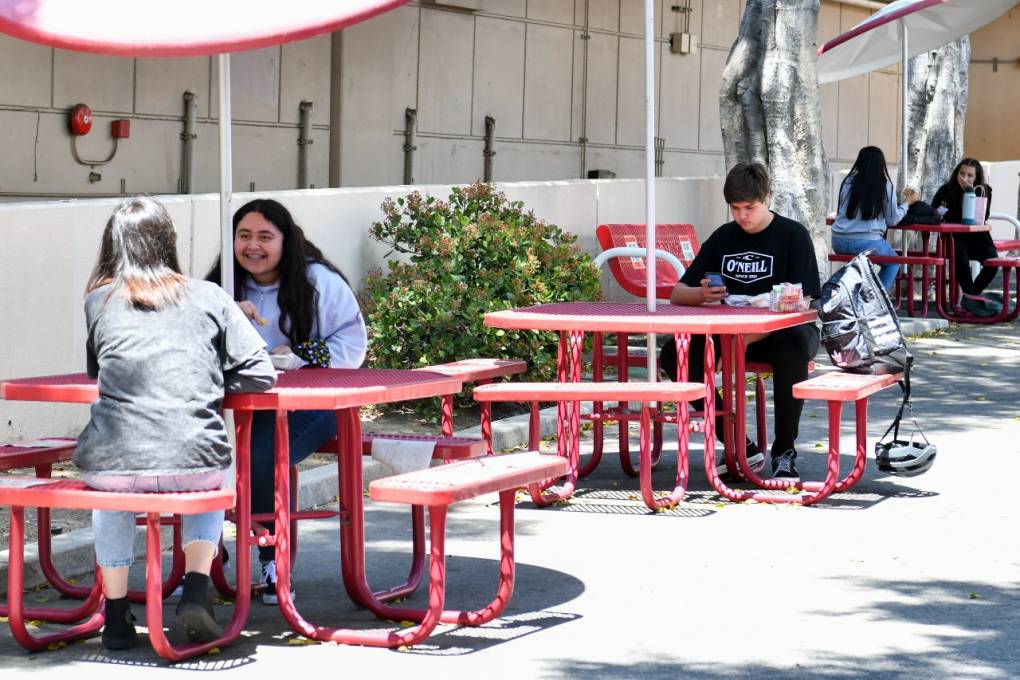
"title": "KQED Newscast",
"featImg": "",
"label": {
"name": "88.5 FM",
"link": "/"
}
},
"news_11884148": {
"type": "posts",
"id": "news_11884148",
"meta": {
"index": "posts_1716263798",
"site": "news",
"id": "11884148",
"score": null,
"sort": [
1628280994000
]
},
"parent": 0,
"labelTerm": {},
"blocks": [],
"publishDate": 1628280994,
"format": "standard",
"disqusTitle": "Why Some Schools Are Mandating COVID Tests While Others Aren’t",
"title": "Why Some Schools Are Mandating COVID Tests While Others Aren’t",
"headTitle": "KQED News",
"content": "\u003cp>As students in California prepare to return to in-person instruction, schools are piecing together COVID-19 testing and vaccination measures that are as varied as the state itself.\u003c/p>\n\u003cp>The state is \u003ca href=\"https://schools.covid19.ca.gov/\">urging schools\u003c/a> to test students and staff regularly and encourage everyone on campus who’s eligible to get vaccinated. But neither vaccinations nor testing is required, and schools have flexibility as to how they implement measures to prevent COVID outbreaks.\u003c/p>\n\u003cp>The result is a patchwork of safety plans that are likely to change as conditions evolve. \u003ca href=\"https://achieve.lausd.net/latestnews\">Los Angeles Unified School District\u003c/a>, for example, is testing all students and staff weekly, regardless of whether they’ve been vaccinated. \u003ca href=\"https://docs.google.com/document/d/1DKIgwCu4tWuWCijywMNW-pAKDMoA9GhzdPol3bAtjPw/edit\">San Francisco Unified\u003c/a>, meanwhile, is recommending that students and staff get tested if they have symptoms, but is not requiring tests.\u003c/p>\n\u003cp>“Testing is an important part of tracking the spread of COVID,” said Dr. Robert Schooley, an infectious disease specialist at UC San Diego's School of Medicine and co-creator of the university’s coronavirus safety plan. “There’s no optimal way for schools to use testing, but we do know that it should be targeted and done frequently enough for school and public health officials to know what’s going on with the school population.”\u003c/p>\n\u003cp>[pullquote size=\"medium\" align=\"right\" citation=\"Dr. Robert Schooley, infectious disease specialist at UC San Diego's School of Medicine\"]'Testing is an important part of tracking the spread of COVID. There’s no optimal way for schools to use testing, but we do know that it should be targeted and done frequently enough for school and public health officials to know what’s going on with the school population.’[/pullquote]\u003c/p>\n\u003cp>The rapidly changing safety plans come amid a surge of COVID cases linked to the delta variant, a dramatically more transmissible strain of the original coronavirus that’s now dominant in California. Over the past month, new COVID infections in California grew by more than 400%, with young people leading the surge, according to the \u003ca href=\"https://covid19.ca.gov/state-dashboard/#todays-update\">California Department of Public Health\u003c/a>.\u003c/p>\n\u003cp>As a result, many California counties have reinstituted indoor mask mandates, even for people who are vaccinated.\u003c/p>\n\u003cp>Many employers, including California-based companies Google, Apple, Lyft, Uber and Twitter, have delayed plans to bring employees back to the office, according to \u003ca href=\"https://www.nytimes.com/2021/08/02/business/vaccine-return-to-office.html\">The New York Times\u003c/a>. Disneyland is requiring most of its employees to be vaccinated. On July 26, Gov. Gavin Newsom announced all state employees are required to be vaccinated or face weekly COVID tests.\u003c/p>\n\u003cp>[ad fullwidth]\u003c/p>\n\u003cp>But for most schools, tests are only one part of a broader safety plan. Vaccinations, social distancing, ventilation, regular cleaning, contact tracing and masking are also important ways to stop the spread of COVID, public health officials said. The only measure that the state requires is masking. Everyone on campus, regardless of whether they’re vaccinated, must wear masks indoors, the state announced last month.\u003c/p>\n\u003cp>Public health experts \u003ca href=\"https://news.usc.edu/188998/covid-delta-variant-schools-vaccination-mandates-usc-experts/\">predict\u003c/a> a jump in COVID cases linked to schools reopening. Although children are less likely than adults to get sick or die from COVID, they’re also less likely to be vaccinated. Vaccines are only available to those ages 12 and older, and only 11.5% of 12-to-18-year-olds nationwide have been fully vaccinated, according to the \u003ca href=\"https://www.mayoclinic.org/coronavirus-covid-19/vaccine-tracker\">Mayo Clinic\u003c/a>.\u003c/p>\n\u003cp>Children are also at risk of contracting a rare disorder called multisystem inflammatory syndrome, a potentially deadly condition linked to COVID. So far, more than 300 children in California, and 4,196 nationwide, have been diagnosed with MIS-C, according to the \u003ca href=\"https://www.cdc.gov/mis/cases/index.html\">Centers for Disease Control and Prevention\u003c/a>. At least 37 nationally have died.\u003c/p>\n\u003cp>Testing in K-12 schools “remains a powerful tool” for preventing transmission of COVID, according to state public health authorities. The state is offering free tests for all public, charter and private schools in California and suggesting schools use one of four \u003ca href=\"https://testing.covid19.ca.gov/wp-content/uploads/sites/332/2021/07/School-Testing-Considerations.pdf\">testing protocols\u003c/a> depending on the infection rate in the community or if there’s an outbreak at school:\u003c/p>\n\u003cul>\n\u003cli>Low community rate: periodic testing of asymptomatic students and staff\u003c/li>\n\u003cli>High community rate: weekly or biweekly testing of everyone who’s unvaccinated\u003c/li>\n\u003cli>Outbreak at school: testing every unvaccinated person who’s been in close contact with someone who’s tested positive\u003c/li>\n\u003cli>Symptomatic individuals: testing anyone who has symptoms of COVID\u003c/li>\n\u003c/ul>\n\u003cp>Another choice facing schools is the type of test to offer: either polymerase chain reaction, also called a PCR test, or a rapid test. Both are done by inserting a cotton swab in the nose. PCR tests are slightly more accurate but take about 48 hours to produce a result. Rapid tests are less accurate but might be more convenient for schools trying to test large numbers of people, Schooley said.\u003c/p>\n\u003cp>Vaccination policies are up to each individual district, and in many cases are subject to union approval. Teachers and other school staff are exempt from the state’s vaccination requirement because they’re employees of their districts.\u003c/p>\n\u003cp>Meanwhile, districts are adopting a variety of testing policies.\u003c/p>\n\u003cp>\u003ca href=\"https://sites.google.com/mercedcsd.org/mcsdcovid-19inforesources/home\">Merced City Schools\u003c/a> is offering free tests to students and staff but isn’t requiring tests unless there’s been an outbreak. In that case, the district will test anyone who’s been in contact with someone who’s tested positive or has symptoms.\u003c/p>\n\u003cp>[aside tag=\"coronavirus\" label=\"Related Posts\"]\u003c/p>\n\u003cp>The decision was a collaborative effort between school and local public health authorities, said Sergio Mendez, the district’s director of pupil services.\u003c/p>\n\u003cp>“We’re feeling very confident in the layers of mitigation we’ve put in. Testing is a big part of it,” Mendez said.\u003c/p>\n\u003cp>\u003ca href=\"https://sbcusd.com/cms/One.aspx?portalId=59953&pageId=36986778\">San Bernardino City Schools\u003c/a> is assigning “COVID liaisons” to coordinate testing and contact tracing at each school campus. The liaisons, who work for an outside company, will “be responsible for responding to COVID-19 concerns at the school level, providing guidance and information for students, families and staff. Liaisons will also play a key role in mitigation and management,” said district spokeswoman Maria Garcia.\u003c/p>\n\u003cp>Testing will be available for free at each school, but it won’t be required. The district is also asking children and their families to complete a health assessment every day before school.\u003c/p>\n\u003cp>San Jose Unified is \u003ca href=\"https://edsource.org/news-updates#san-jose-unified-to-require-staff-to-be-vaccinated-or-tested-twice-weekly-for-covid\">requiring\u003c/a> teachers and school staff to get tested twice a week for COVID if they’re not vaccinated. \u003ca href=\"https://www.wccusd.net/cms/lib/CA01001466/Centricity/Domain/3328/REOPENING%20PRESENTATION.pdf\">West Contra Costa Unified\u003c/a>, in the East Bay Area, is strongly encouraging — but not requiring — regular tests for those who are unvaccinated. The district is only testing those who have symptoms.\u003c/p>\n\u003cp>Los Angeles Unified’s interim superintendent, Megan Reilly, last week announced the district’s requirement that all students and staff be tested weekly, citing recommendations from the Los Angeles County Department of Public Health. The \u003ca href=\"https://achieve.lausd.net/covidtestingappt\">district is offering free tests\u003c/a> at a dozen locations around the city, as well as a mobile testing clinic that will visit school campuses. It’s also upgrading its ventilation systems, encouraging social distancing, regularly cleaning classrooms and urging everyone to get vaccinated.\u003c/p>\n\u003cp>“We believe Los Angeles Unified has the highest COVID safety standards of any public school district in the nation,” Reilly wrote in a letter to parents last week.\u003cbr>\n\u003cem>\u003cbr>\nEdSource's Ali Tadayon contributed to this report.\u003c/em>\u003c/p>\n\u003cp>\u003cem>This article was originally published by \u003ca href=\"https://edsource.org/\">EdSource\u003c/a>.\u003c/em>\u003c/p>\n\u003cp>[ad floatright]\u003c/p>\n",
"disqusIdentifier": "11884148 https://ww2.kqed.org/news/?p=11884148",
"disqusUrl": "https://ww2.kqed.org/news/2021/08/06/why-some-schools-are-mandating-covid-tests-while-others-arent/",
"stats": {
"hasVideo": false,
"hasChartOrMap": false,
"hasAudio": false,
"hasPolis": false,
"wordCount": 1239,
"hasGoogleForm": false,
"hasGallery": false,
"hasHearkenModule": false,
"iframeSrcs": [],
"paragraphCount": 27
},
"modified": 1628280994,
"excerpt": "The state is urging schools to test students and staff regularly and encourage everyone on campus who’s eligible to get vaccinated. But neither vaccinations nor testing is required, and schools have flexibility as to how they implement measures to prevent COVID outbreaks.",
"headData": {
"twImgId": "",
"twTitle": "",
"ogTitle": "",
"ogImgId": "",
"twDescription": "",
"description": "The state is urging schools to test students and staff regularly and encourage everyone on campus who’s eligible to get vaccinated. But neither vaccinations nor testing is required, and schools have flexibility as to how they implement measures to prevent COVID outbreaks.",
"title": "Why Some Schools Are Mandating COVID Tests While Others Aren’t | KQED",
"ogDescription": "",
"schema": {
"@context": "https://schema.org",
"@type": "NewsArticle",
"headline": "Why Some Schools Are Mandating COVID Tests While Others Aren’t",
"datePublished": "2021-08-06T13:16:34-07:00",
"dateModified": "2021-08-06T13:16:34-07:00",
"image": "https://cdn.kqed.org/wp-content/uploads/2020/02/KQED-OG-Image@1x.png",
"isAccessibleForFree": "True",
"publisher": {
"@type": "NewsMediaOrganization",
"@id": "https://www.kqed.org/#organization",
"name": "KQED",
"logo": "https://cdn.kqed.org/wp-content/uploads/2020/02/KQED-OG-Image@1x.png",
"url": "https://www.kqed.org",
"sameAs": [
"https://www.facebook.com/KQED",
"https://twitter.com/KQED",
"https://www.instagram.com/kqed/",
"https://www.tiktok.com/@kqedofficial",
"https://www.linkedin.com/company/kqed",
"https://www.youtube.com/channel/UCeC0IOo7i1P_61zVUWbJ4nw"
]
}
}
},
"guestAuthors": [],
"slug": "why-some-schools-are-mandating-covid-tests-while-others-arent",
"status": "publish",
"sourceUrl": "https://edsource.org/",
"nprByline": "Carolyn Jones\u003cbr>EdSource",
"source": "EdSource",
"path": "/news/11884148/why-some-schools-are-mandating-covid-tests-while-others-arent",
"audioTrackLength": null,
"parsedContent": [
{
"type": "contentString",
"content": "\u003cdiv class=\"post-body\">\u003cp>\u003cp>As students in California prepare to return to in-person instruction, schools are piecing together COVID-19 testing and vaccination measures that are as varied as the state itself.\u003c/p>\n\u003cp>The state is \u003ca href=\"https://schools.covid19.ca.gov/\">urging schools\u003c/a> to test students and staff regularly and encourage everyone on campus who’s eligible to get vaccinated. But neither vaccinations nor testing is required, and schools have flexibility as to how they implement measures to prevent COVID outbreaks.\u003c/p>\n\u003cp>The result is a patchwork of safety plans that are likely to change as conditions evolve. \u003ca href=\"https://achieve.lausd.net/latestnews\">Los Angeles Unified School District\u003c/a>, for example, is testing all students and staff weekly, regardless of whether they’ve been vaccinated. \u003ca href=\"https://docs.google.com/document/d/1DKIgwCu4tWuWCijywMNW-pAKDMoA9GhzdPol3bAtjPw/edit\">San Francisco Unified\u003c/a>, meanwhile, is recommending that students and staff get tested if they have symptoms, but is not requiring tests.\u003c/p>\n\u003cp>“Testing is an important part of tracking the spread of COVID,” said Dr. Robert Schooley, an infectious disease specialist at UC San Diego's School of Medicine and co-creator of the university’s coronavirus safety plan. “There’s no optimal way for schools to use testing, but we do know that it should be targeted and done frequently enough for school and public health officials to know what’s going on with the school population.”\u003c/p>\n\u003cp>\u003c/p>\u003c/div>",
"attributes": {
"named": {},
"numeric": []
}
},
{
"type": "component",
"content": "'Testing is an important part of tracking the spread of COVID. There’s no optimal way for schools to use testing, but we do know that it should be targeted and done frequently enough for school and public health officials to know what’s going on with the school population.’",
"name": "pullquote",
"attributes": {
"named": {
"size": "medium",
"align": "right",
"citation": "Dr. Robert Schooley, infectious disease specialist at UC San Diego's School of Medicine",
"label": ""
},
"numeric": []
}
},
{
"type": "contentString",
"content": "\u003cdiv class=\"post-body\">\u003cp>\u003c/p>\n\u003cp>The rapidly changing safety plans come amid a surge of COVID cases linked to the delta variant, a dramatically more transmissible strain of the original coronavirus that’s now dominant in California. Over the past month, new COVID infections in California grew by more than 400%, with young people leading the surge, according to the \u003ca href=\"https://covid19.ca.gov/state-dashboard/#todays-update\">California Department of Public Health\u003c/a>.\u003c/p>\n\u003cp>As a result, many California counties have reinstituted indoor mask mandates, even for people who are vaccinated.\u003c/p>\n\u003cp>Many employers, including California-based companies Google, Apple, Lyft, Uber and Twitter, have delayed plans to bring employees back to the office, according to \u003ca href=\"https://www.nytimes.com/2021/08/02/business/vaccine-return-to-office.html\">The New York Times\u003c/a>. Disneyland is requiring most of its employees to be vaccinated. On July 26, Gov. Gavin Newsom announced all state employees are required to be vaccinated or face weekly COVID tests.\u003c/p>\n\u003cp>\u003c/p>\u003c/div>",
"attributes": {
"named": {},
"numeric": []
}
},
{
"type": "component",
"content": "",
"name": "ad",
"attributes": {
"named": {
"label": "fullwidth"
},
"numeric": [
"fullwidth"
]
}
},
{
"type": "contentString",
"content": "\u003cdiv class=\"post-body\">\u003cp>\u003c/p>\n\u003cp>But for most schools, tests are only one part of a broader safety plan. Vaccinations, social distancing, ventilation, regular cleaning, contact tracing and masking are also important ways to stop the spread of COVID, public health officials said. The only measure that the state requires is masking. Everyone on campus, regardless of whether they’re vaccinated, must wear masks indoors, the state announced last month.\u003c/p>\n\u003cp>Public health experts \u003ca href=\"https://news.usc.edu/188998/covid-delta-variant-schools-vaccination-mandates-usc-experts/\">predict\u003c/a> a jump in COVID cases linked to schools reopening. Although children are less likely than adults to get sick or die from COVID, they’re also less likely to be vaccinated. Vaccines are only available to those ages 12 and older, and only 11.5% of 12-to-18-year-olds nationwide have been fully vaccinated, according to the \u003ca href=\"https://www.mayoclinic.org/coronavirus-covid-19/vaccine-tracker\">Mayo Clinic\u003c/a>.\u003c/p>\n\u003cp>Children are also at risk of contracting a rare disorder called multisystem inflammatory syndrome, a potentially deadly condition linked to COVID. So far, more than 300 children in California, and 4,196 nationwide, have been diagnosed with MIS-C, according to the \u003ca href=\"https://www.cdc.gov/mis/cases/index.html\">Centers for Disease Control and Prevention\u003c/a>. At least 37 nationally have died.\u003c/p>\n\u003cp>Testing in K-12 schools “remains a powerful tool” for preventing transmission of COVID, according to state public health authorities. The state is offering free tests for all public, charter and private schools in California and suggesting schools use one of four \u003ca href=\"https://testing.covid19.ca.gov/wp-content/uploads/sites/332/2021/07/School-Testing-Considerations.pdf\">testing protocols\u003c/a> depending on the infection rate in the community or if there’s an outbreak at school:\u003c/p>\n\u003cul>\n\u003cli>Low community rate: periodic testing of asymptomatic students and staff\u003c/li>\n\u003cli>High community rate: weekly or biweekly testing of everyone who’s unvaccinated\u003c/li>\n\u003cli>Outbreak at school: testing every unvaccinated person who’s been in close contact with someone who’s tested positive\u003c/li>\n\u003cli>Symptomatic individuals: testing anyone who has symptoms of COVID\u003c/li>\n\u003c/ul>\n\u003cp>Another choice facing schools is the type of test to offer: either polymerase chain reaction, also called a PCR test, or a rapid test. Both are done by inserting a cotton swab in the nose. PCR tests are slightly more accurate but take about 48 hours to produce a result. Rapid tests are less accurate but might be more convenient for schools trying to test large numbers of people, Schooley said.\u003c/p>\n\u003cp>Vaccination policies are up to each individual district, and in many cases are subject to union approval. Teachers and other school staff are exempt from the state’s vaccination requirement because they’re employees of their districts.\u003c/p>\n\u003cp>Meanwhile, districts are adopting a variety of testing policies.\u003c/p>\n\u003cp>\u003ca href=\"https://sites.google.com/mercedcsd.org/mcsdcovid-19inforesources/home\">Merced City Schools\u003c/a> is offering free tests to students and staff but isn’t requiring tests unless there’s been an outbreak. In that case, the district will test anyone who’s been in contact with someone who’s tested positive or has symptoms.\u003c/p>\n\u003cp>\u003c/p>\u003c/div>",
"attributes": {
"named": {},
"numeric": []
}
},
{
"type": "component",
"content": "",
"name": "aside",
"attributes": {
"named": {
"tag": "coronavirus",
"label": "Related Posts "
},
"numeric": []
}
},
{
"type": "contentString",
"content": "\u003cdiv class=\"post-body\">\u003cp>\u003c/p>\n\u003cp>The decision was a collaborative effort between school and local public health authorities, said Sergio Mendez, the district’s director of pupil services.\u003c/p>\n\u003cp>“We’re feeling very confident in the layers of mitigation we’ve put in. Testing is a big part of it,” Mendez said.\u003c/p>\n\u003cp>\u003ca href=\"https://sbcusd.com/cms/One.aspx?portalId=59953&pageId=36986778\">San Bernardino City Schools\u003c/a> is assigning “COVID liaisons” to coordinate testing and contact tracing at each school campus. The liaisons, who work for an outside company, will “be responsible for responding to COVID-19 concerns at the school level, providing guidance and information for students, families and staff. Liaisons will also play a key role in mitigation and management,” said district spokeswoman Maria Garcia.\u003c/p>\n\u003cp>Testing will be available for free at each school, but it won’t be required. The district is also asking children and their families to complete a health assessment every day before school.\u003c/p>\n\u003cp>San Jose Unified is \u003ca href=\"https://edsource.org/news-updates#san-jose-unified-to-require-staff-to-be-vaccinated-or-tested-twice-weekly-for-covid\">requiring\u003c/a> teachers and school staff to get tested twice a week for COVID if they’re not vaccinated. \u003ca href=\"https://www.wccusd.net/cms/lib/CA01001466/Centricity/Domain/3328/REOPENING%20PRESENTATION.pdf\">West Contra Costa Unified\u003c/a>, in the East Bay Area, is strongly encouraging — but not requiring — regular tests for those who are unvaccinated. The district is only testing those who have symptoms.\u003c/p>\n\u003cp>Los Angeles Unified’s interim superintendent, Megan Reilly, last week announced the district’s requirement that all students and staff be tested weekly, citing recommendations from the Los Angeles County Department of Public Health. The \u003ca href=\"https://achieve.lausd.net/covidtestingappt\">district is offering free tests\u003c/a> at a dozen locations around the city, as well as a mobile testing clinic that will visit school campuses. It’s also upgrading its ventilation systems, encouraging social distancing, regularly cleaning classrooms and urging everyone to get vaccinated.\u003c/p>\n\u003cp>“We believe Los Angeles Unified has the highest COVID safety standards of any public school district in the nation,” Reilly wrote in a letter to parents last week.\u003cbr>\n\u003cem>\u003cbr>\nEdSource's Ali Tadayon contributed to this report.\u003c/em>\u003c/p>\n\u003cp>\u003cem>This article was originally published by \u003ca href=\"https://edsource.org/\">EdSource\u003c/a>.\u003c/em>\u003c/p>\n\u003cp>\u003c/p>\u003c/div>",
"attributes": {
"named": {},
"numeric": []
}
},
{
"type": "component",
"content": "",
"name": "ad",
"attributes": {
"named": {
"label": "floatright"
},
"numeric": [
"floatright"
]
}
},
{
"type": "contentString",
"content": "\u003cdiv class=\"post-body\">\u003cp>\u003c/p>\n\u003c/div>\u003c/p>",
"attributes": {
"named": {},
"numeric": []
}
}
],
"link": "/news/11884148/why-some-schools-are-mandating-covid-tests-while-others-arent",
"authors": [
"byline_news_11884148"
],
"categories": [
"news_18540",
"news_8"
],
"tags": [
"news_27350",
"news_27989",
"news_27504",
"news_20013"
],
"featImg": "news_11884149",
"label": "source_news_11884148"
},
"news_11883567": {
"type": "posts",
"id": "news_11883567",
"meta": {
"index": "posts_1716263798",
"site": "news",
"id": "11883567",
"score": null,
"sort": [
1628026295000
]
},
"guestAuthors": [],
"slug": "community-colleges-offer-cash-textbooks-to-students-who-get-vaccinated",
"title": "Community Colleges Offer Cash, Textbooks to Students Who Get Vaccinated",
"publishDate": 1628026295,
"format": "standard",
"headTitle": "Community Colleges Offer Cash, Textbooks to Students Who Get Vaccinated | KQED",
"labelTerm": {},
"content": "\u003cp>Jaime Barrientos, a psychology student at Los Angeles Mission College, was searching for information on fall classes a couple weeks ago when he noticed that coronavirus vaccines were being offered during on-campus registration. He messaged a friend who was also unvaccinated and hadn’t planned on getting the shot, and the two of them spent the afternoon in the school’s library filling out paperwork for their first dose of the Pfizer regimen.\u003c/p>\n\u003cp>What got Barrientos and his skeptical friend out of the house to get vaccinated?\u003c/p>\n\u003cp>“The money,” the duo said in unison.\u003c/p>\n\u003cp>In an effort to increase vaccination among its 250,000 students, the Los Angeles Community College District offered $75 to each student who got vaccinated at two campus events — one July 21 at L.A. Mission and another at Los Angeles Valley College on July 31. Students who brought along a friend or family member could earn $150.\u003c/p>\n\u003cp>While the University of California and California State University have both mandated vaccination for students, faculty and staff who spend time on campus, most of California’s 73 community college districts are choosing instead to encourage or incentivize vaccination. Some are offering money, textbooks or other inducements to get students to sign up.\u003c/p>\n\u003cp>[ad fullwidth]\u003c/p>\n\u003cp>The California Community Colleges Chancellor’s Office released an \u003ca href=\"https://www.cccco.edu/-/media/CCCCO-Website/Files/General-Counsel/2021-01-advisory-mandated-covid-19-vaccinations-a11y.pdf?la=en&hash=80473DB866E97BE0A9650603A745C3FC85871377\">advisory\u003c/a> strongly urging all community college districts to adopt vaccination mandates, citing the surge in COVID-19 cases fueled by the delta variant. But system officials say they lack the legal authority to require vaccinations for students and staff across the state.\u003c/p>\n\u003cp>That power rests with the individual California community colleges districts. At least seven districts — San Diego, Grossmont-Cuyamaca, Foothill-De Anza, Long Beach City College, Cabrillo College, Pasadena City College and MiraCosta College — have announced a vaccine requirement for the fall term.\u003c/p>\n\u003cp>Some have added other safety measures. For example, at the San Diego Community College District, where 25% of classes are in person, students must wear a mask while on campus, regardless of vaccination status.\u003c/p>\n\u003cp>[aside label=\"Related Stories\" tag=\"higher-education\"]The vaccine requirements have been contentious. San Joaquin Delta College in Stockton considered a \u003ca href=\"https://go.boarddocs.com/ca/delta/Board.nsf/files/C4NV7N7F61D6/%24file/Delta%20-%20Return%20to%20Campus%20Plan%202021%20-%20070621e.pdf\">return-to-campus plan\u003c/a> that required vaccination, but trustees voted against the mandate in a July 6 \u003ca href=\"https://deltacollege-edu.zoom.us/rec/play/yMB7pSwIrWIsxKSRAS4oO3DhO7BRiAFcoiEkt3ktbpkxfZqKmN8wsKPmQCuSMKIm_AL2V2PBJ5Eflc_G.oAbMomnUhkhLBC4p?startTime=1625617854000&_x_zm_rtaid=e2AEKtdMQQG0CW7o8baRlA.1626905291513.e89be48aaec840fc91c76bfb65518780&_x_zm_rhtaid=856\">board meeting\u003c/a> after community members voiced concern about the safety of the vaccine and a timeline requiring that students be vaccinated by Aug. 13. Instead, the college is telling students to mask up and social distance, and offering \u003ca href=\"https://fox40.com/news/local-news/delta-college-offers-free-textbooks-parking-for-vaccinated-students/\">free textbooks\u003c/a> to those who are vaccinated.\u003c/p>\n\u003cp>Most of the state’s 116 community colleges will offer some combination of in-person and online classes this fall, with the balance varying by district.\u003c/p>\n\u003cp>At Los Angeles Mission College registration, the cash rewards for vaccination seemed to be having some impact. About three-quarters of people who received vaccines asked specifically about their incentives, said Dana Walker, a nurse administering the shots. With an hour left in the event, about 35 people had been vaccinated, she said.\u003c/p>\n\u003cp>In addition to the $75, students vaccinated at the event received a free pass to Six Flags Magic Mountain provided by a grant from Kaiser Permanente.\u003c/p>\n\u003cp>More vaccination clinics will be offered during registration fairs at the Los Angeles Community College District’s other campuses on Aug. 7, said district spokesperson William Boyer. But the district, the state’s largest, is not requiring vaccination for students, faculty and staff. Instead, they’ll be required to wear masks while on campus — about half of fall classes will be held in person — and watch a training video on COVID safety protocols.\u003c/p>\n\u003cp>That’s because the vaccine has yet to be approved by the U.S. Food and Drug Use Administration for non-emergency use, Boyer said.\u003c/p>\n\u003cp>[pullquote size='medium' align='right' citation=\"William Boyer, Los Angeles Community College District spokesperson \"]‘The best legal advice we had was that you cannot mandate a vaccine that has only been approved under emergency-use conditions.’[/pullquote]\u003c/p>\n\u003cp>“The best legal advice we had was that you cannot mandate a vaccine that has only been approved under emergency-use conditions,” he said. “There has been no FDA approval for these vaccines to be used in regular life.”\u003c/p>\n\u003cp>But LACCD’s understanding of the law is different from that of the UC and CSU systems, which are both mandating vaccination for students before full FDA approval, after first saying that they would wait for it.\u003c/p>\n\u003cp>California State University announced its decision last week, after over 1,000 professors signed an \u003ca href=\"https://www.fresnobee.com/opinion/readers-opinion/article252967388.html\">open letter\u003c/a> to the chancellor’s office calling for the vaccine requirement.\u003c/p>\n\u003cp>“With over 480,000 students, it makes sense to implement a vaccine mandate because we have an enormous impact, not only within our own campus borders but also within the communities in which we’re located,” said Blain Roberts, a history professor at Fresno State and one of the faculty members who wrote the open letter.\u003c/p>\n\u003cp>The move came as the delta variant fuels a rise in coronavirus cases nationwide. The Centers for Disease Control and Prevention on Tuesday said everyone, regardless of vaccination status, should mask in public indoor spaces in areas where transmission rates are high.\u003c/p>\n\u003cp>There is no legal precedent for requiring vaccines approved under emergency use, which may be why some colleges are reluctant to announce mandates now, said Dorit Reiss, a professor at UC Hastings College of the Law.\u003c/p>\n\u003cp>[pullquote size='medium' align='right' citation=\"Gerardo Chavez, Student Senate for California Community Colleges president\"]‘There are certain student populations who are eager to attend in-person courses because of their mental health and just overall experience with student life, and there’s also hesitancy from students returning back to campus, especially with the increase of infection.’[/pullquote]\u003c/p>\n\u003cp>In June, a federal judge threw out a lawsuit against Houston Methodist Hospital after finding that an employee vaccine mandate did not break any U.S. law. The Texas case offers the closest test of requiring a vaccine approved under emergency use to date, Reiss said.\u003c/p>\n\u003cp>The Student Senate for California Community Colleges hasn’t taken a position on a vaccine requirement, but SSCCC President Gerardo Chavez said student opinion on the issue was mixed.\u003c/p>\n\u003cp>“There are certain student populations who are eager to attend in-person courses because of their mental health and just overall experience with student life, and there’s also hesitancy from students returning back to campus, especially with the increase of infection,” he said.\u003c/p>\n\u003cp>[ad floatright]\u003c/p>\n\u003cp>\u003cem>Hall and Reagan are interns with the \u003ca href=\"https://calmatters.org/projects/college-journalism-network/\">CalMatters College Journalism Network\u003c/a>, a collaboration between CalMatters and student journalists from across California. This story and other higher education coverage are supported by the College Futures Foundation.\u003c/em>\u003c/p>\n\n",
"blocks": [],
"excerpt": "While both the University of California and California State University are requiring students to be vaccinated for the fall term, community college districts are opting for a mix of mandates, incentives and encouragement.",
"status": "publish",
"parent": 0,
"modified": 1740614342,
"stats": {
"hasAudio": false,
"hasVideo": false,
"hasChartOrMap": false,
"iframeSrcs": [],
"hasGoogleForm": false,
"hasGallery": false,
"hasHearkenModule": false,
"hasPolis": false,
"paragraphCount": 28,
"wordCount": 1154
},
"headData": {
"title": "Community Colleges Offer Cash, Textbooks to Students Who Get Vaccinated | KQED",
"description": "While both the University of California and California State University are requiring students to be vaccinated for the fall term, community college districts are opting for a mix of mandates, incentives and encouragement.",
"ogTitle": "",
"ogDescription": "",
"ogImgId": "",
"twTitle": "",
"twDescription": "",
"twImgId": "",
"schema": {
"@context": "https://schema.org",
"@type": "NewsArticle",
"headline": "Community Colleges Offer Cash, Textbooks to Students Who Get Vaccinated",
"datePublished": "2021-08-03T14:31:35-07:00",
"dateModified": "2025-02-26T15:59:02-08:00",
"image": "https://cdn.kqed.org/wp-content/uploads/2020/02/KQED-OG-Image@1x.png",
"isAccessibleForFree": "True",
"publisher": {
"@type": "NewsMediaOrganization",
"@id": "https://www.kqed.org/#organization",
"name": "KQED",
"logo": "https://cdn.kqed.org/wp-content/uploads/2020/02/KQED-OG-Image@1x.png",
"url": "https://www.kqed.org",
"sameAs": [
"https://www.facebook.com/KQED",
"https://twitter.com/KQED",
"https://www.instagram.com/kqed/",
"https://www.tiktok.com/@kqedofficial",
"https://www.linkedin.com/company/kqed",
"https://www.youtube.com/channel/UCeC0IOo7i1P_61zVUWbJ4nw"
]
}
}
},
"source": "CalMatters",
"sourceUrl": "https://calmatters.org/",
"sticky": false,
"nprByline": "Emma Hall and Matthew Reagan",
"path": "/news/11883567/community-colleges-offer-cash-textbooks-to-students-who-get-vaccinated",
"audioTrackLength": null,
"parsedContent": [
{
"type": "contentString",
"content": "\u003cdiv class=\"post-body\">\u003cp>\u003cp>Jaime Barrientos, a psychology student at Los Angeles Mission College, was searching for information on fall classes a couple weeks ago when he noticed that coronavirus vaccines were being offered during on-campus registration. He messaged a friend who was also unvaccinated and hadn’t planned on getting the shot, and the two of them spent the afternoon in the school’s library filling out paperwork for their first dose of the Pfizer regimen.\u003c/p>\n\u003cp>What got Barrientos and his skeptical friend out of the house to get vaccinated?\u003c/p>\n\u003cp>“The money,” the duo said in unison.\u003c/p>\n\u003cp>In an effort to increase vaccination among its 250,000 students, the Los Angeles Community College District offered $75 to each student who got vaccinated at two campus events — one July 21 at L.A. Mission and another at Los Angeles Valley College on July 31. Students who brought along a friend or family member could earn $150.\u003c/p>\n\u003cp>While the University of California and California State University have both mandated vaccination for students, faculty and staff who spend time on campus, most of California’s 73 community college districts are choosing instead to encourage or incentivize vaccination. Some are offering money, textbooks or other inducements to get students to sign up.\u003c/p>\n\u003cp>\u003c/p>\u003c/div>",
"attributes": {
"named": {},
"numeric": []
}
},
{
"type": "component",
"content": "",
"name": "ad",
"attributes": {
"named": {
"label": "fullwidth"
},
"numeric": [
"fullwidth"
]
}
},
{
"type": "contentString",
"content": "\u003cdiv class=\"post-body\">\u003cp>\u003c/p>\n\u003cp>The California Community Colleges Chancellor’s Office released an \u003ca href=\"https://www.cccco.edu/-/media/CCCCO-Website/Files/General-Counsel/2021-01-advisory-mandated-covid-19-vaccinations-a11y.pdf?la=en&hash=80473DB866E97BE0A9650603A745C3FC85871377\">advisory\u003c/a> strongly urging all community college districts to adopt vaccination mandates, citing the surge in COVID-19 cases fueled by the delta variant. But system officials say they lack the legal authority to require vaccinations for students and staff across the state.\u003c/p>\n\u003cp>That power rests with the individual California community colleges districts. At least seven districts — San Diego, Grossmont-Cuyamaca, Foothill-De Anza, Long Beach City College, Cabrillo College, Pasadena City College and MiraCosta College — have announced a vaccine requirement for the fall term.\u003c/p>\n\u003cp>Some have added other safety measures. For example, at the San Diego Community College District, where 25% of classes are in person, students must wear a mask while on campus, regardless of vaccination status.\u003c/p>\n\u003cp>\u003c/p>\u003c/div>",
"attributes": {
"named": {},
"numeric": []
}
},
{
"type": "component",
"content": "",
"name": "aside",
"attributes": {
"named": {
"label": "Related Stories ",
"tag": "higher-education"
},
"numeric": []
}
},
{
"type": "contentString",
"content": "\u003cdiv class=\"post-body\">\u003cp>The vaccine requirements have been contentious. San Joaquin Delta College in Stockton considered a \u003ca href=\"https://go.boarddocs.com/ca/delta/Board.nsf/files/C4NV7N7F61D6/%24file/Delta%20-%20Return%20to%20Campus%20Plan%202021%20-%20070621e.pdf\">return-to-campus plan\u003c/a> that required vaccination, but trustees voted against the mandate in a July 6 \u003ca href=\"https://deltacollege-edu.zoom.us/rec/play/yMB7pSwIrWIsxKSRAS4oO3DhO7BRiAFcoiEkt3ktbpkxfZqKmN8wsKPmQCuSMKIm_AL2V2PBJ5Eflc_G.oAbMomnUhkhLBC4p?startTime=1625617854000&_x_zm_rtaid=e2AEKtdMQQG0CW7o8baRlA.1626905291513.e89be48aaec840fc91c76bfb65518780&_x_zm_rhtaid=856\">board meeting\u003c/a> after community members voiced concern about the safety of the vaccine and a timeline requiring that students be vaccinated by Aug. 13. Instead, the college is telling students to mask up and social distance, and offering \u003ca href=\"https://fox40.com/news/local-news/delta-college-offers-free-textbooks-parking-for-vaccinated-students/\">free textbooks\u003c/a> to those who are vaccinated.\u003c/p>\n\u003cp>Most of the state’s 116 community colleges will offer some combination of in-person and online classes this fall, with the balance varying by district.\u003c/p>\n\u003cp>At Los Angeles Mission College registration, the cash rewards for vaccination seemed to be having some impact. About three-quarters of people who received vaccines asked specifically about their incentives, said Dana Walker, a nurse administering the shots. With an hour left in the event, about 35 people had been vaccinated, she said.\u003c/p>\n\u003cp>In addition to the $75, students vaccinated at the event received a free pass to Six Flags Magic Mountain provided by a grant from Kaiser Permanente.\u003c/p>\n\u003cp>More vaccination clinics will be offered during registration fairs at the Los Angeles Community College District’s other campuses on Aug. 7, said district spokesperson William Boyer. But the district, the state’s largest, is not requiring vaccination for students, faculty and staff. Instead, they’ll be required to wear masks while on campus — about half of fall classes will be held in person — and watch a training video on COVID safety protocols.\u003c/p>\n\u003cp>That’s because the vaccine has yet to be approved by the U.S. Food and Drug Use Administration for non-emergency use, Boyer said.\u003c/p>\n\u003cp>\u003c/p>\u003c/div>",
"attributes": {
"named": {},
"numeric": []
}
},
{
"type": "component",
"content": "‘The best legal advice we had was that you cannot mandate a vaccine that has only been approved under emergency-use conditions.’",
"name": "pullquote",
"attributes": {
"named": {
"size": "medium",
"align": "right",
"citation": "William Boyer, Los Angeles Community College District spokesperson ",
"label": ""
},
"numeric": []
}
},
{
"type": "contentString",
"content": "\u003cdiv class=\"post-body\">\u003cp>\u003c/p>\n\u003cp>“The best legal advice we had was that you cannot mandate a vaccine that has only been approved under emergency-use conditions,” he said. “There has been no FDA approval for these vaccines to be used in regular life.”\u003c/p>\n\u003cp>But LACCD’s understanding of the law is different from that of the UC and CSU systems, which are both mandating vaccination for students before full FDA approval, after first saying that they would wait for it.\u003c/p>\n\u003cp>California State University announced its decision last week, after over 1,000 professors signed an \u003ca href=\"https://www.fresnobee.com/opinion/readers-opinion/article252967388.html\">open letter\u003c/a> to the chancellor’s office calling for the vaccine requirement.\u003c/p>\n\u003cp>“With over 480,000 students, it makes sense to implement a vaccine mandate because we have an enormous impact, not only within our own campus borders but also within the communities in which we’re located,” said Blain Roberts, a history professor at Fresno State and one of the faculty members who wrote the open letter.\u003c/p>\n\u003cp>The move came as the delta variant fuels a rise in coronavirus cases nationwide. The Centers for Disease Control and Prevention on Tuesday said everyone, regardless of vaccination status, should mask in public indoor spaces in areas where transmission rates are high.\u003c/p>\n\u003cp>There is no legal precedent for requiring vaccines approved under emergency use, which may be why some colleges are reluctant to announce mandates now, said Dorit Reiss, a professor at UC Hastings College of the Law.\u003c/p>\n\u003cp>\u003c/p>\u003c/div>",
"attributes": {
"named": {},
"numeric": []
}
},
{
"type": "component",
"content": "‘There are certain student populations who are eager to attend in-person courses because of their mental health and just overall experience with student life, and there’s also hesitancy from students returning back to campus, especially with the increase of infection.’",
"name": "pullquote",
"attributes": {
"named": {
"size": "medium",
"align": "right",
"citation": "Gerardo Chavez, Student Senate for California Community Colleges president",
"label": ""
},
"numeric": []
}
},
{
"type": "contentString",
"content": "\u003cdiv class=\"post-body\">\u003cp>\u003c/p>\n\u003cp>In June, a federal judge threw out a lawsuit against Houston Methodist Hospital after finding that an employee vaccine mandate did not break any U.S. law. The Texas case offers the closest test of requiring a vaccine approved under emergency use to date, Reiss said.\u003c/p>\n\u003cp>The Student Senate for California Community Colleges hasn’t taken a position on a vaccine requirement, but SSCCC President Gerardo Chavez said student opinion on the issue was mixed.\u003c/p>\n\u003cp>“There are certain student populations who are eager to attend in-person courses because of their mental health and just overall experience with student life, and there’s also hesitancy from students returning back to campus, especially with the increase of infection,” he said.\u003c/p>\n\u003cp>\u003c/p>\u003c/div>",
"attributes": {
"named": {},
"numeric": []
}
},
{
"type": "component",
"content": "",
"name": "ad",
"attributes": {
"named": {
"label": "floatright"
},
"numeric": [
"floatright"
]
}
},
{
"type": "contentString",
"content": "\u003cdiv class=\"post-body\">\u003cp>\u003c/p>\n\u003cp>\u003cem>Hall and Reagan are interns with the \u003ca href=\"https://calmatters.org/projects/college-journalism-network/\">CalMatters College Journalism Network\u003c/a>, a collaboration between CalMatters and student journalists from across California. This story and other higher education coverage are supported by the College Futures Foundation.\u003c/em>\u003c/p>\n\n\u003c/div>\u003c/p>",
"attributes": {
"named": {},
"numeric": []
}
}
],
"link": "/news/11883567/community-colleges-offer-cash-textbooks-to-students-who-get-vaccinated",
"authors": [
"byline_news_11883567"
],
"categories": [
"news_18540",
"news_8"
],
"tags": [
"news_20652",
"news_28801",
"news_20013",
"news_4843"
],
"featImg": "news_11883568",
"label": "source_news_11883567"
},
"news_11883324": {
"type": "posts",
"id": "news_11883324",
"meta": {
"index": "posts_1716263798",
"site": "news",
"id": "11883324",
"score": null,
"sort": [
1627819202000
]
},
"parent": 0,
"labelTerm": {
"site": "news"
},
"blocks": [],
"publishDate": 1627819202,
"format": "audio",
"disqusTitle": "Kids Are Heading Back to School. Here's How to Keep Them Safe as Delta Variant Spreads",
"title": "Kids Are Heading Back to School. Here's How to Keep Them Safe as Delta Variant Spreads",
"headTitle": "KQED News",
"content": "\u003cp>California's \u003ca href=\"https://www.cdph.ca.gov/Programs/CID/DCDC/Pages/COVID-19/K-12-Guidance-2021-22-School-Year.aspx\" target=\"_blank\" rel=\"noopener noreferrer\">current rules\u003c/a> for schools require all staff, students and visitors to wear masks inside school buildings when classes begin in just a few weeks. It's a big moment for kids and families as many children will be seeing the inside of a classroom for the first time in 18 months — but returning to school comes in the shadow of the delta variant.\u003c/p>\n\u003cp>KQED's Natalia Navarro spoke with pediatrician and UCSF associate professor Sunitha Kaiser about how to keep kids safe from COVID-19 as they head back to class.\u003c/p>\n\u003cp>\u003cem>This interview has been edited for length and clarity.\u003c/em>\u003c/p>\n\u003cp>\u003cstrong>KQED's Natalia Navarro: Do you think schools can reopen safely — and how will that work?\u003c/strong>\u003c/p>\n\u003cp>\u003cstrong>Professor Sunitha Kaiser:\u003c/strong> Yes, we're confident that schools can reopen safely. But each school district will be monitoring very closely for rises in COVID infections over time, and anything concerning. They'll be keeping a very close eye to continue to ensure safety.\u003c/p>\n\u003cp>[ad fullwidth]\u003c/p>\n\u003cp>We know how to keep kids safe from this virus: continue to have schools tackle multiple strategies of minimizing the risks, keeping kids and adults masked, trying to promote physical distance and ventilation, and keeping folks out of school when they have symptoms.\u003c/p>\n\u003cp>But we also know vaccines are incredibly effective. We know that most kids are actually getting COVID at home from close household contacts. The best way to boost safety is for whoever is eligible to get vaccinated — close household contacts and family members — to get vaccinated.\u003c/p>\n\u003cp>\u003cstrong>Do you think FDA approval for Pfizer for children under 12 is coming soon?\u003c/strong>\u003c/p>\n\u003cp>I hope so. We think that it will come by the end of this calendar year. But it does depend on the pace and findings of the trials in children, which are still ongoing. We do hope that by the end of the year, even the youngest children will be able to get vaccinated. But it already makes a tremendous difference in school settings for children 12 and older to be vaccinated.\u003c/p>\n\u003cp>\u003cstrong>From your research during last winter's surge before vaccines, what works to prevent transmission between kids?\u003c/strong>\u003c/p>\n\u003cp>We studied over 50 sites around San Francisco that supported kids and coming in person to do their online learning. We studied them for four months during the highest peak in San Francisco, much higher than current levels when vaccinations were not yet widely available. We observed over 1,700 children and over 200 adults, and there was only one case of hub-based COVID transmission and adult-to-adult case.\u003c/p>\n\u003cp>It really signified an overwhelming level of safety with the strategies they had in place, which at the time did not include vaccinations. The core principles we've learned that prevent COVID are masking, maximizing physical distance, keeping kids and adults out that have any COVID symptoms and maximizing ventilation.\u003c/p>\n\u003cp>\u003cstrong>What questions should parents and caregivers be asking their districts going into this fall?\u003c/strong>\u003c/p>\n\u003cp>They should be asking their districts what their COVID prevention strategies are, including the ones we've discussed, and how they're going to monitor and ensure our safety going forward. They should also ask proactively how the school is going to work in partnership with health care entities or others to ensure the availability of testing for rapid testing for any children or adults who need it, which will continue to add a layer of safety. There's much better infrastructure for that now than there has been in the past. [aside tag=\"coronavirus\" label=\"More Related Stories\"]\u003c/p>\n\u003cp>\u003cstrong>You mentioned that COVID transmission is more common between adults than between kids. If you were a teacher, would you be nervous right now?\u003c/strong>\u003c/p>\n\u003cp>The best thing teachers can do to ease their anxiety is get vaccinated. That's the biggest thing we can do to decrease our own personal risk, regardless of our work situation, because we know that we have these incredibly effective vaccines. Thus far, even against delta, they show really strong protection against severe disease.\u003c/p>\n\u003cp>Then I would encourage them to be increasingly secure in the fact that now we have recommendations around keeping everyone masked indoors regardless of vaccination status. And we're going to have a growing portion of folks getting vaccinated which can drive down community problems and overall risk.\u003c/p>\n\u003cp>\u003c/p>\n\u003cp>\u003cem>Unvaccinated Californians can go to \u003ca title=\"myturn.ca.gov\" href=\"https://myturn.ca.gov/\" target=\"_blank\" rel=\"noopener noreferrer\" data-auth=\"NotApplicable\" data-linkindex=\"6\">myturn.ca.gov\u003c/a> or call (833) 422-4255 to schedule their appointment or go to \u003ca title=\"myturn.ca.gov/clinic\" href=\"https://myturn.ca.gov/clinic.html\" target=\"_blank\" rel=\"noopener noreferrer\" data-auth=\"NotApplicable\" data-linkindex=\"7\">myturn.ca.gov/clinic\u003c/a> to find a walk-in clinic in their county.\u003c/em>\u003c/p>\n\n",
"disqusIdentifier": "11883324 https://ww2.kqed.org/news/?p=11883324",
"disqusUrl": "https://ww2.kqed.org/news/2021/08/01/kids-are-heading-back-to-school-heres-how-to-keep-them-safe-as-delta-variant-spreads/",
"stats": {
"hasVideo": false,
"hasChartOrMap": false,
"hasAudio": false,
"hasPolis": false,
"wordCount": 758,
"hasGoogleForm": false,
"hasGallery": false,
"hasHearkenModule": false,
"iframeSrcs": [],
"paragraphCount": 20
},
"modified": 1657153841,
"excerpt": "KQED's Natalia Navarro interviewed pediatrician and UCSF associate professor Sunitha Kaiser to talk about how to keep kids safe from COVID-19 as schools begin to re-open.",
"headData": {
"twImgId": "",
"twTitle": "",
"ogTitle": "",
"ogImgId": "",
"twDescription": "",
"description": "KQED's Natalia Navarro interviewed pediatrician and UCSF associate professor Sunitha Kaiser to talk about how to keep kids safe from COVID-19 as schools begin to re-open.",
"title": "Kids Are Heading Back to School. Here's How to Keep Them Safe as Delta Variant Spreads | KQED",
"ogDescription": "",
"schema": {
"@context": "https://schema.org",
"@type": "NewsArticle",
"headline": "Kids Are Heading Back to School. Here's How to Keep Them Safe as Delta Variant Spreads",
"datePublished": "2021-08-01T05:00:02-07:00",
"dateModified": "2022-07-06T17:30:41-07:00",
"image": "https://cdn.kqed.org/wp-content/uploads/2020/02/KQED-OG-Image@1x.png",
"isAccessibleForFree": "True",
"publisher": {
"@type": "NewsMediaOrganization",
"@id": "https://www.kqed.org/#organization",
"name": "KQED",
"logo": "https://cdn.kqed.org/wp-content/uploads/2020/02/KQED-OG-Image@1x.png",
"url": "https://www.kqed.org",
"sameAs": [
"https://www.facebook.com/KQED",
"https://twitter.com/KQED",
"https://www.instagram.com/kqed/",
"https://www.tiktok.com/@kqedofficial",
"https://www.linkedin.com/company/kqed",
"https://www.youtube.com/channel/UCeC0IOo7i1P_61zVUWbJ4nw"
]
}
}
},
"guestAuthors": [],
"slug": "kids-are-heading-back-to-school-heres-how-to-keep-them-safe-as-delta-variant-spreads",
"status": "publish",
"audioUrl": "https://www.kqed.org/.stream/anon/radio/RDnews/2021/07/SchoolVaccinesNavarro.mp3",
"excludeFromSiteSearch": "Include",
"path": "/news/11883324/kids-are-heading-back-to-school-heres-how-to-keep-them-safe-as-delta-variant-spreads",
"audioTrackLength": null,
"parsedContent": [
{
"type": "contentString",
"content": "\u003cdiv class=\"post-body\">\u003cp>\u003cp>California's \u003ca href=\"https://www.cdph.ca.gov/Programs/CID/DCDC/Pages/COVID-19/K-12-Guidance-2021-22-School-Year.aspx\" target=\"_blank\" rel=\"noopener noreferrer\">current rules\u003c/a> for schools require all staff, students and visitors to wear masks inside school buildings when classes begin in just a few weeks. It's a big moment for kids and families as many children will be seeing the inside of a classroom for the first time in 18 months — but returning to school comes in the shadow of the delta variant.\u003c/p>\n\u003cp>KQED's Natalia Navarro spoke with pediatrician and UCSF associate professor Sunitha Kaiser about how to keep kids safe from COVID-19 as they head back to class.\u003c/p>\n\u003cp>\u003cem>This interview has been edited for length and clarity.\u003c/em>\u003c/p>\n\u003cp>\u003cstrong>KQED's Natalia Navarro: Do you think schools can reopen safely — and how will that work?\u003c/strong>\u003c/p>\n\u003cp>\u003cstrong>Professor Sunitha Kaiser:\u003c/strong> Yes, we're confident that schools can reopen safely. But each school district will be monitoring very closely for rises in COVID infections over time, and anything concerning. They'll be keeping a very close eye to continue to ensure safety.\u003c/p>\n\u003cp>\u003c/p>\u003c/div>",
"attributes": {
"named": {},
"numeric": []
}
},
{
"type": "component",
"content": "",
"name": "ad",
"attributes": {
"named": {
"label": "fullwidth"
},
"numeric": [
"fullwidth"
]
}
},
{
"type": "contentString",
"content": "\u003cdiv class=\"post-body\">\u003cp>\u003c/p>\n\u003cp>We know how to keep kids safe from this virus: continue to have schools tackle multiple strategies of minimizing the risks, keeping kids and adults masked, trying to promote physical distance and ventilation, and keeping folks out of school when they have symptoms.\u003c/p>\n\u003cp>But we also know vaccines are incredibly effective. We know that most kids are actually getting COVID at home from close household contacts. The best way to boost safety is for whoever is eligible to get vaccinated — close household contacts and family members — to get vaccinated.\u003c/p>\n\u003cp>\u003cstrong>Do you think FDA approval for Pfizer for children under 12 is coming soon?\u003c/strong>\u003c/p>\n\u003cp>I hope so. We think that it will come by the end of this calendar year. But it does depend on the pace and findings of the trials in children, which are still ongoing. We do hope that by the end of the year, even the youngest children will be able to get vaccinated. But it already makes a tremendous difference in school settings for children 12 and older to be vaccinated.\u003c/p>\n\u003cp>\u003cstrong>From your research during last winter's surge before vaccines, what works to prevent transmission between kids?\u003c/strong>\u003c/p>\n\u003cp>We studied over 50 sites around San Francisco that supported kids and coming in person to do their online learning. We studied them for four months during the highest peak in San Francisco, much higher than current levels when vaccinations were not yet widely available. We observed over 1,700 children and over 200 adults, and there was only one case of hub-based COVID transmission and adult-to-adult case.\u003c/p>\n\u003cp>It really signified an overwhelming level of safety with the strategies they had in place, which at the time did not include vaccinations. The core principles we've learned that prevent COVID are masking, maximizing physical distance, keeping kids and adults out that have any COVID symptoms and maximizing ventilation.\u003c/p>\n\u003cp>\u003cstrong>What questions should parents and caregivers be asking their districts going into this fall?\u003c/strong>\u003c/p>\n\u003cp>They should be asking their districts what their COVID prevention strategies are, including the ones we've discussed, and how they're going to monitor and ensure our safety going forward. They should also ask proactively how the school is going to work in partnership with health care entities or others to ensure the availability of testing for rapid testing for any children or adults who need it, which will continue to add a layer of safety. There's much better infrastructure for that now than there has been in the past. \u003c/p>\u003c/div>",
"attributes": {
"named": {},
"numeric": []
}
},
{
"type": "component",
"content": "",
"name": "aside",
"attributes": {
"named": {
"tag": "coronavirus",
"label": "More Related Stories "
},
"numeric": []
}
},
{
"type": "contentString",
"content": "\u003cdiv class=\"post-body\">\u003cp>\u003c/p>\n\u003cp>\u003cstrong>You mentioned that COVID transmission is more common between adults than between kids. If you were a teacher, would you be nervous right now?\u003c/strong>\u003c/p>\n\u003cp>The best thing teachers can do to ease their anxiety is get vaccinated. That's the biggest thing we can do to decrease our own personal risk, regardless of our work situation, because we know that we have these incredibly effective vaccines. Thus far, even against delta, they show really strong protection against severe disease.\u003c/p>\n\u003cp>Then I would encourage them to be increasingly secure in the fact that now we have recommendations around keeping everyone masked indoors regardless of vaccination status. And we're going to have a growing portion of folks getting vaccinated which can drive down community problems and overall risk.\u003c/p>\n\u003cp>\u003c/p>\n\u003cp>\u003cem>Unvaccinated Californians can go to \u003ca title=\"myturn.ca.gov\" href=\"https://myturn.ca.gov/\" target=\"_blank\" rel=\"noopener noreferrer\" data-auth=\"NotApplicable\" data-linkindex=\"6\">myturn.ca.gov\u003c/a> or call (833) 422-4255 to schedule their appointment or go to \u003ca title=\"myturn.ca.gov/clinic\" href=\"https://myturn.ca.gov/clinic.html\" target=\"_blank\" rel=\"noopener noreferrer\" data-auth=\"NotApplicable\" data-linkindex=\"7\">myturn.ca.gov/clinic\u003c/a> to find a walk-in clinic in their county.\u003c/em>\u003c/p>\n\n\u003c/div>\u003c/p>",
"attributes": {
"named": {},
"numeric": []
}
}
],
"link": "/news/11883324/kids-are-heading-back-to-school-heres-how-to-keep-them-safe-as-delta-variant-spreads",
"authors": [
"11756",
"11626"
],
"categories": [
"news_18540",
"news_457",
"news_28250",
"news_8",
"news_13"
],
"tags": [
"news_27350",
"news_27989",
"news_18863",
"news_29644",
"news_20013",
"news_22602"
],
"featImg": "news_11883330",
"label": "news"
},
"news_11882644": {
"type": "posts",
"id": "news_11882644",
"meta": {
"index": "posts_1716263798",
"site": "news",
"id": "11882644",
"score": null,
"sort": [
1627431465000
]
},
"guestAuthors": [],
"slug": "csu-to-require-covid-19-vaccinations-for-all-students-faculty-and-staff-on-campus-this-fall",
"title": "CSU to Require COVID-19 Vaccinations for All Students, Faculty and Staff on Campus This Fall",
"publishDate": 1627431465,
"format": "standard",
"headTitle": "CSU to Require COVID-19 Vaccinations for All Students, Faculty and Staff on Campus This Fall | KQED",
"labelTerm": {
"site": "news"
},
"content": "\u003cp>The California State University system — which enrolls more than half a million undergraduate and graduate students — will require proof of COVID-19 vaccination for all faculty, staff and students returning to any of its 23 campuses this fall, school officials \u003ca href=\"https://www2.calstate.edu/csu-system/news/Pages/California-State-University-to-Implement-COVID-19-Vaccination-Requirement-for-Fall-2021-Term.aspx\">said Tuesday\u003c/a>.\u003c/p>\n\u003cp>CSU Chancellor Joseph Castro cited the rapid spread of the very contagious delta variant as a key driver behind the decision, calling the recent uptick in cases “an alarming new factor.”\u003c/p>\n\u003cp>“Receiving a COVID vaccine continues to be the best way to mitigate the spread of the virus,” Castro said in a statement. “We urge all members of the CSU community to get vaccinated as soon as possible, and announcing this requirement now allows members of the CSU community to receive multiple doses of a vaccine as we head into the beginning of the fall term.”\u003c/p>\n\u003cp>Vaccination deadlines will vary by campus, but all vaccination status certifications must be completed by Sept. 30, according to the announcement. Officials noted that vaccinations are available at multiple CSU campuses, and encouraged unvaccinated students and staff to contact their schools to determine options and availability.\u003c/p>\n\u003cp>Students and staff can also seek medical and religious exemptions, and virtual courses will be available for those who forgo vaccinations, officials said.\u003c/p>\n\u003cp>[ad fullwidth]\u003c/p>\n\u003cp>CSU officials said they plan to unveil their formal vaccination policy in the coming days.\u003c/p>\n\u003cp>“The goal of this announcement is really to get as many people vaccinated as possible so that we can have as many people on campus and so that we are all safe collectively,” said Michael Uhlenkamp, a CSU spokesperson. “We are planning to have the majority of courses and activities take place in person. I think for the majority of students, they are looking forward to being back on their respective campus in person in the fall, taking part in those robust opportunities to engage with their classmates, their professors, the staff there.”\u003c/p>\n\u003cp>Uhlenkamp also said each of the system’s campuses will follow local public health guidelines.\u003c/p>\n\u003cp>“The campuses are all prepared to be able to implement additional safety measures, whether that is masking or going back to distancing or even testing,” he said.\u003c/p>\n\u003cp>[aside label=\"related coverage\" tag=\"delta-variant\"]The CSU announcement comes less than two weeks after the University of California rolled out a \u003ca href=\"https://www.sfchronicle.com/health/article/UC-reverses-course-will-require-all-students-and-16247884.php\">similar mandate \u003c/a>for its students and faculty, and a day after California officials \u003ca href=\"https://www.kqed.org/news/11882436/california-requiring-proof-of-vaccine-or-weekly-testing-for-health-workers-and-state-employees\">said vaccine and testing would be required\u003c/a> for state employees and health care workers.\u003c/p>\n\u003cp>CSU officials said they chose to issue the requirement before the vaccines are formally approved by the U.S. Food and Drug Administration “because of evolving circumstances.”\u003c/p>\n\u003cp>California is now reporting an \u003ca href=\"https://covid19.ca.gov/state-dashboard/\">average daily case rate\u003c/a> of about 13 per 100,000 — or about 7,700 new cases a day — a marked uptick from a just month ago, although still significantly lower than during the winter surge. The delta variant accounted for vast majority of new cases, with unvaccinated people disproportionately impacted.\u003c/p>\n\u003cp>Catherine Hutchinson, president of the CSU Employees Union, said in a statement that she and other labor officials met with President Castro Tuesday morning, and fully support “all efforts, whether it be through the state or the CSU, to ensure vaccinations reach more Californians.”\u003c/p>\n\u003cp>And the California Faculty Association — which represents professors and lecturers at all CSU campuses — said its leaders will work with the chancellor’s office to ensure that students and staff are protected from the virus on campus.\u003c/p>\n\u003cp>“I am vaccinated, and I encourage faculty to get vaccinated if they can so that we all do our part to make the CSU a safe place to work,” CFA President Charles Toombs said in a statement.\u003c/p>\n\u003cp>Several CSU campuses have already communicated plans with students to verify vaccination status. Some, like Cal State Los Angeles, launched an online certification form earlier this week, asking students to provide verification documentation. It also includes options for those who have medical or religious exemptions.\u003c/p>\n\u003cp>Tabatha González Manzur, a student at CSU Los Angeles, said she felt a rush of relief on hearing the announcement. She still lives with people who are at high risk of contracting the virus, she said, and remembers the anxiety she felt during the first weeks of the pandemic when her classes were still in person.\u003c/p>\n\u003cp>“We are still in a pandemic and the variant is scary to deal with,” she said. Requiring proof of vaccination as thousands of her peers prepare to return to in-person learning, “will serve as peace of mind.”\u003c/p>\n\u003cp>\u003c/p>\n\u003cp>\u003cem>KQED’s Rebecca Smith and Carlos Cabrera-Lomelí contributed reporting to this post. \u003c/em>\u003c/p>\n\n",
"blocks": [],
"excerpt": "Tuesday's announcement from the the nation’s largest four-year public university system was prompted by the rise in delta variant infections in California. It follows a similar move by the University of California more than a week ago. ",
"status": "publish",
"parent": 0,
"modified": 1726006267,
"stats": {
"hasAudio": false,
"hasVideo": false,
"hasChartOrMap": false,
"iframeSrcs": [],
"hasGoogleForm": false,
"hasGallery": false,
"hasHearkenModule": false,
"hasPolis": false,
"paragraphCount": 21,
"wordCount": 796
},
"headData": {
"title": "CSU to Require COVID-19 Vaccinations for All Students, Faculty and Staff on Campus This Fall | KQED",
"description": "Tuesday's announcement from the the nation’s largest four-year public university system was prompted by the rise in delta variant infections in California. It follows a similar move by the University of California more than a week ago. ",
"ogTitle": "",
"ogDescription": "",
"ogImgId": "",
"twTitle": "",
"twDescription": "",
"twImgId": "",
"schema": {
"@context": "https://schema.org",
"@type": "NewsArticle",
"headline": "CSU to Require COVID-19 Vaccinations for All Students, Faculty and Staff on Campus This Fall",
"datePublished": "2021-07-27T17:17:45-07:00",
"dateModified": "2024-09-10T15:11:07-07:00",
"image": "https://cdn.kqed.org/wp-content/uploads/2020/02/KQED-OG-Image@1x.png",
"isAccessibleForFree": "True",
"publisher": {
"@type": "NewsMediaOrganization",
"@id": "https://www.kqed.org/#organization",
"name": "KQED",
"logo": "https://cdn.kqed.org/wp-content/uploads/2020/02/KQED-OG-Image@1x.png",
"url": "https://www.kqed.org",
"sameAs": [
"https://www.facebook.com/KQED",
"https://twitter.com/KQED",
"https://www.instagram.com/kqed/",
"https://www.tiktok.com/@kqedofficial",
"https://www.linkedin.com/company/kqed",
"https://www.youtube.com/channel/UCeC0IOo7i1P_61zVUWbJ4nw"
]
}
}
},
"sticky": false,
"path": "/news/11882644/csu-to-require-covid-19-vaccinations-for-all-students-faculty-and-staff-on-campus-this-fall",
"audioTrackLength": null,
"parsedContent": [
{
"type": "contentString",
"content": "\u003cdiv class=\"post-body\">\u003cp>\u003cp>The California State University system — which enrolls more than half a million undergraduate and graduate students — will require proof of COVID-19 vaccination for all faculty, staff and students returning to any of its 23 campuses this fall, school officials \u003ca href=\"https://www2.calstate.edu/csu-system/news/Pages/California-State-University-to-Implement-COVID-19-Vaccination-Requirement-for-Fall-2021-Term.aspx\">said Tuesday\u003c/a>.\u003c/p>\n\u003cp>CSU Chancellor Joseph Castro cited the rapid spread of the very contagious delta variant as a key driver behind the decision, calling the recent uptick in cases “an alarming new factor.”\u003c/p>\n\u003cp>“Receiving a COVID vaccine continues to be the best way to mitigate the spread of the virus,” Castro said in a statement. “We urge all members of the CSU community to get vaccinated as soon as possible, and announcing this requirement now allows members of the CSU community to receive multiple doses of a vaccine as we head into the beginning of the fall term.”\u003c/p>\n\u003cp>Vaccination deadlines will vary by campus, but all vaccination status certifications must be completed by Sept. 30, according to the announcement. Officials noted that vaccinations are available at multiple CSU campuses, and encouraged unvaccinated students and staff to contact their schools to determine options and availability.\u003c/p>\n\u003cp>Students and staff can also seek medical and religious exemptions, and virtual courses will be available for those who forgo vaccinations, officials said.\u003c/p>\n\u003cp>\u003c/p>\u003c/div>",
"attributes": {
"named": {},
"numeric": []
}
},
{
"type": "component",
"content": "",
"name": "ad",
"attributes": {
"named": {
"label": "fullwidth"
},
"numeric": [
"fullwidth"
]
}
},
{
"type": "contentString",
"content": "\u003cdiv class=\"post-body\">\u003cp>\u003c/p>\n\u003cp>CSU officials said they plan to unveil their formal vaccination policy in the coming days.\u003c/p>\n\u003cp>“The goal of this announcement is really to get as many people vaccinated as possible so that we can have as many people on campus and so that we are all safe collectively,” said Michael Uhlenkamp, a CSU spokesperson. “We are planning to have the majority of courses and activities take place in person. I think for the majority of students, they are looking forward to being back on their respective campus in person in the fall, taking part in those robust opportunities to engage with their classmates, their professors, the staff there.”\u003c/p>\n\u003cp>Uhlenkamp also said each of the system’s campuses will follow local public health guidelines.\u003c/p>\n\u003cp>“The campuses are all prepared to be able to implement additional safety measures, whether that is masking or going back to distancing or even testing,” he said.\u003c/p>\n\u003cp>\u003c/p>\u003c/div>",
"attributes": {
"named": {},
"numeric": []
}
},
{
"type": "component",
"content": "",
"name": "aside",
"attributes": {
"named": {
"label": "related coverage ",
"tag": "delta-variant"
},
"numeric": []
}
},
{
"type": "contentString",
"content": "\u003cdiv class=\"post-body\">\u003cp>The CSU announcement comes less than two weeks after the University of California rolled out a \u003ca href=\"https://www.sfchronicle.com/health/article/UC-reverses-course-will-require-all-students-and-16247884.php\">similar mandate \u003c/a>for its students and faculty, and a day after California officials \u003ca href=\"https://www.kqed.org/news/11882436/california-requiring-proof-of-vaccine-or-weekly-testing-for-health-workers-and-state-employees\">said vaccine and testing would be required\u003c/a> for state employees and health care workers.\u003c/p>\n\u003cp>CSU officials said they chose to issue the requirement before the vaccines are formally approved by the U.S. Food and Drug Administration “because of evolving circumstances.”\u003c/p>\n\u003cp>California is now reporting an \u003ca href=\"https://covid19.ca.gov/state-dashboard/\">average daily case rate\u003c/a> of about 13 per 100,000 — or about 7,700 new cases a day — a marked uptick from a just month ago, although still significantly lower than during the winter surge. The delta variant accounted for vast majority of new cases, with unvaccinated people disproportionately impacted.\u003c/p>\n\u003cp>Catherine Hutchinson, president of the CSU Employees Union, said in a statement that she and other labor officials met with President Castro Tuesday morning, and fully support “all efforts, whether it be through the state or the CSU, to ensure vaccinations reach more Californians.”\u003c/p>\n\u003cp>And the California Faculty Association — which represents professors and lecturers at all CSU campuses — said its leaders will work with the chancellor’s office to ensure that students and staff are protected from the virus on campus.\u003c/p>\n\u003cp>“I am vaccinated, and I encourage faculty to get vaccinated if they can so that we all do our part to make the CSU a safe place to work,” CFA President Charles Toombs said in a statement.\u003c/p>\n\u003cp>Several CSU campuses have already communicated plans with students to verify vaccination status. Some, like Cal State Los Angeles, launched an online certification form earlier this week, asking students to provide verification documentation. It also includes options for those who have medical or religious exemptions.\u003c/p>\n\u003cp>Tabatha González Manzur, a student at CSU Los Angeles, said she felt a rush of relief on hearing the announcement. She still lives with people who are at high risk of contracting the virus, she said, and remembers the anxiety she felt during the first weeks of the pandemic when her classes were still in person.\u003c/p>\n\u003cp>“We are still in a pandemic and the variant is scary to deal with,” she said. Requiring proof of vaccination as thousands of her peers prepare to return to in-person learning, “will serve as peace of mind.”\u003c/p>\n\u003cp>\u003c/p>\n\u003cp>\u003cem>KQED’s Rebecca Smith and Carlos Cabrera-Lomelí contributed reporting to this post. \u003c/em>\u003c/p>\n\n\u003c/div>\u003c/p>",
"attributes": {
"named": {},
"numeric": []
}
}
],
"link": "/news/11882644/csu-to-require-covid-19-vaccinations-for-all-students-faculty-and-staff-on-campus-this-fall",
"authors": [
"11708"
],
"categories": [
"news_18540",
"news_457",
"news_8"
],
"tags": [
"news_221",
"news_27350",
"news_27504",
"news_18738",
"news_29644",
"news_27626",
"news_18543"
],
"featImg": "news_11699573",
"label": "news"
},
"news_11882605": {
"type": "posts",
"id": "news_11882605",
"meta": {
"index": "posts_1716263798",
"site": "news",
"id": "11882605",
"score": null,
"sort": [
1627427796000
]
},
"guestAuthors": [],
"slug": "free-school-meals-for-all-here-to-stay-in-california",
"title": "Free School Meals for All Here to Stay in California",
"publishDate": 1627427796,
"format": "standard",
"headTitle": "Free School Meals for All Here to Stay in California | KQED",
"labelTerm": {},
"content": "\u003cp>With \u003ca href=\"https://www.feedingamerica.org/sites/default/files/2021-03/National%20Projections%20Brief_3.9.2021_0.pdf\">1 in every 6 children\u003c/a> facing hunger in the U.S., California is the first state to promise every public school student — all \u003ca href=\"https://www.cde.ca.gov/nr/ne/yr21/yr21rel32.asp\">6 million of them\u003c/a> — free school meals.\u003c/p>\n\u003cp>The universal school meals program, which will launch in the 2022-2023 school year, is part of the landmark state budget agreement reached between Gov. Gavin Newsom and the Legislature last month. Days later, \u003ca href=\"https://www.newscentermaine.com/article/news/local/as-seen-on-tv/new-law-requires-free-school-meals-for-all-maine-public-students-regardless-of-family-income-starting-2022-2023/97-4e822474-cd25-4641-958e-c0c8599971c3\">Maine\u003c/a> became the second state to commit to offering a universal school meals program with the signing of its budget.\u003c/p>\n\u003cp>The program ensures that all students will be offered breakfast and lunch at their school, which state Sen. Nancy Skinner, D-Berkeley, said is “essential to learning.” Skinner has led the effort to establish a universal school meal program.\u003c/p>\n\u003cp>“We know that many California children are food insecure, and if you’re hungry you cannot learn well,” Skinner said. “The whole point of school is learning, and everything we can do to create an environment that allows children to thrive and learn is what we need to do.”\u003c/p>\n\u003cp>[ad fullwidth]\u003c/p>\n\u003cp>Skinner \u003ca href=\"https://edsource.org/2021/california-moving-to-pioneer-free-meals-for-all-students/652779\">introduced a bill\u003c/a> in March that would have established a universal school meal program.\u003c/p>\n\u003cp>After the program garnered bipartisan support and the California Department of Finance forecast \u003ca href=\"https://edsource.org/2021/here-are-the-highlights-of-the-may-state-budget-revision/654773\">unexpectedly large projected revenues\u003c/a>, lawmakers opted to include it in the state budget rather than as a separate bill.\u003c/p>\n\u003cp>The final agreement between Newsom and the Legislature calls for $650 million through the Proposition 98 fund each year to reimburse school districts starting in 2022, as well as $54 million in the 2021-22 fiscal year to supplement state meal reimbursements. Proposition 98 is the formula that determines what portion of the general fund goes to community colleges and K-12 schools.\u003c/p>\n\u003cp>The state program is set to begin in the 2022-23 school year because the U.S. Department of Agriculture has already \u003ca href=\"https://edsource.org/2021/usda-extends-free-meals-through-next-school-year/653335\">committed\u003c/a> to paying for school meals for all students through the 2021-22 school year.\u003c/p>\n\u003cp>[pullquote size='medium' align='right' citation=\"State Sen. Nancy Skinner, D-Berkeley\"]‘The whole point of school is learning, and everything we can do to create an environment that allows children to thrive and learn is what we need to do.’[/pullquote]The USDA has reimbursed districts for providing free meals to all students since the start of the pandemic. Before the pandemic, districts were only reimbursed for feeding students who were enrolled in the National School Lunch Program. Advocates said being able to feed students without having to check whether they qualified for free lunches allowed districts to serve more families at a time when many faced hunger and hardship.\u003c/p>\n\u003cp>Waiving the eligibility requirements allowed the Oakland Unified School District, for example, to distribute as many as 18,000 \u003ca href=\"https://edsource.org/2020/grab-and-go-and-drive-up-allow-families-to-pick-up-food-at-closed-california-schools/626088\">grab-and-go meals\u003c/a> a day during the pandemic, said OUSD spokesman John Sasaki.\u003c/p>\n\u003cp>“That just goes to show the need that was there,” Sasaki said.\u003c/p>\n\u003cp>Previously, as part of the National School Lunch Program \u003ca href=\"https://www.fns.usda.gov/cn/applying-free-and-reduced-price-school-meals\">application process\u003c/a>, families had to disclose their household income, how many people lived in the household, their children’s immigration status or if their children were homeless or runaways. Some families feared giving out that information, and students may have felt embarrassed to receive a free meal while others paid for it.\u003c/p>\n\u003cp>[aside label=\"More Education Stories\" tag=\"education\"]Schools in New York City began serving free meals to all students in 2017 after finding that some students would rather go hungry than admit they didn’t have enough money to pay for lunch. The decision followed a national outcry over \u003ca href=\"https://www.nytimes.com/2017/04/30/well/family/lunch-shaming-children-parents-school-bills.html)\">“lunch shaming”\u003c/a> — publicly shaming students for unpaid school meal bills, or even school staff throwing away their lunches rather than allowing them to eat.\u003c/p>\n\u003cp>Advocates believed that though \u003ca href=\"https://www.cde.ca.gov/nr/ne/yr20/yr20rel29.asp\">3.9 million students\u003c/a> — 63% of California’s student body — participated in the program, the need was actually much higher.\u003c/p>\n\u003cp>“It’s such good news that everybody gets food with no strings attached, but to be able to do it in a way that nobody is called out is the best thing about this,” Sasaki said. “We want to make sure kids are never given a hard time for being who they are or being in the situation they are in.”\u003c/p>\n\u003cp>Districts will still be asking families to fill out household income eligibility forms, however. That’s because the number of families in the district that make so little that they qualify for the federal free and reduced-price lunch program remains a \u003ca href=\"https://www.cde.ca.gov/fg/aa/lc/index.asp\">key factor\u003c/a> in the state’s \u003ca href=\"https://edsource.org/2016/local-control-funding-formula-guide-lcff/89272\">Local Control Funding Formula\u003c/a>. The formula gives additional state funds to districts based on the number of low-income students, English learners, foster children and homeless youth they serve.\u003c/p>\n\u003cp>Tony Wold, West Contra Costa Unified School District associate superintendent of business services, said the district was concerned that fewer families would fill out the household income eligibility forms because they didn’t have to in order to receive free meals. That could have potentially led to a reduction in supplemental funds for the cash-strapped district. To help solve the problem, the district had outreach workers call families directly, explaining why it was important for families to submit the information.\u003c/p>\n\u003cp>[pullquote size='medium' align='right' citation=\"Spokesman John Sasaki, Oakland Unified School District\"]‘We want to make sure kids are never given a hard time for being who they are or being in the situation they are in.’[/pullquote]\u003c/p>\n\u003cp>The outreach workers’ “big lift” resulted in more families filling out the forms than the previous year, Wold said, which kept the district’s unduplicated pupils percentage constant. That statistic measures the share of a district’s students who are low-income, homeless, foster youth or English learners — all of which drive the Local Control Funding Formula.\u003c/p>\n\u003cp>Outreach workers at Oakland Unified emphasize to families who are skeptical about the forms that they determine how much money goes to the classroom, Sasaki said.\u003c/p>\n\u003cp>California School Boards Association spokesman Troy Flint said the organization anticipates it will be harder for districts to collect income eligibility forms with the new universal meals program. The association hopes the state will provide some support to schools’ “diligent and creative efforts” to collect the forms, though the group isn’t calling for any specific change.\u003c/p>\n\u003cp>“This administration has prioritized steering additional money toward high-need students, particularly into concentration grants, so there’s reason to believe they might be willing to work toward a modification here,” Flint said.\u003c/p>\n\u003cp>[ad floatright]\u003c/p>\n",
"blocks": [],
"excerpt": "The universal school meals program, which will launch in the 2022-2023 school year, will ensure that all students in California public schools will be offered breakfast and lunch.",
"status": "publish",
"parent": 0,
"modified": 1726006272,
"stats": {
"hasAudio": false,
"hasVideo": false,
"hasChartOrMap": false,
"iframeSrcs": [],
"hasGoogleForm": false,
"hasGallery": false,
"hasHearkenModule": false,
"hasPolis": false,
"paragraphCount": 24,
"wordCount": 1113
},
"headData": {
"title": "Free School Meals for All Here to Stay in California | KQED",
"description": "The universal school meals program, which will launch in the 2022-2023 school year, will ensure that all students in California public schools will be offered breakfast and lunch.",
"ogTitle": "",
"ogDescription": "",
"ogImgId": "",
"twTitle": "",
"twDescription": "",
"twImgId": "",
"schema": {
"@context": "https://schema.org",
"@type": "NewsArticle",
"headline": "Free School Meals for All Here to Stay in California",
"datePublished": "2021-07-27T16:16:36-07:00",
"dateModified": "2024-09-10T15:11:12-07:00",
"image": "https://cdn.kqed.org/wp-content/uploads/2020/02/KQED-OG-Image@1x.png",
"isAccessibleForFree": "True",
"publisher": {
"@type": "NewsMediaOrganization",
"@id": "https://www.kqed.org/#organization",
"name": "KQED",
"logo": "https://cdn.kqed.org/wp-content/uploads/2020/02/KQED-OG-Image@1x.png",
"url": "https://www.kqed.org",
"sameAs": [
"https://www.facebook.com/KQED",
"https://twitter.com/KQED",
"https://www.instagram.com/kqed/",
"https://www.tiktok.com/@kqedofficial",
"https://www.linkedin.com/company/kqed",
"https://www.youtube.com/channel/UCeC0IOo7i1P_61zVUWbJ4nw"
]
}
}
},
"source": "EdSource",
"sourceUrl": "https://edsource.org/2021/free-school-meals-here-to-stay-in-california/658564",
"sticky": false,
"nprByline": "Ali Tadayon\u003cbr>EdSource",
"path": "/news/11882605/free-school-meals-for-all-here-to-stay-in-california",
"audioTrackLength": null,
"parsedContent": [
{
"type": "contentString",
"content": "\u003cdiv class=\"post-body\">\u003cp>\u003cp>With \u003ca href=\"https://www.feedingamerica.org/sites/default/files/2021-03/National%20Projections%20Brief_3.9.2021_0.pdf\">1 in every 6 children\u003c/a> facing hunger in the U.S., California is the first state to promise every public school student — all \u003ca href=\"https://www.cde.ca.gov/nr/ne/yr21/yr21rel32.asp\">6 million of them\u003c/a> — free school meals.\u003c/p>\n\u003cp>The universal school meals program, which will launch in the 2022-2023 school year, is part of the landmark state budget agreement reached between Gov. Gavin Newsom and the Legislature last month. Days later, \u003ca href=\"https://www.newscentermaine.com/article/news/local/as-seen-on-tv/new-law-requires-free-school-meals-for-all-maine-public-students-regardless-of-family-income-starting-2022-2023/97-4e822474-cd25-4641-958e-c0c8599971c3\">Maine\u003c/a> became the second state to commit to offering a universal school meals program with the signing of its budget.\u003c/p>\n\u003cp>The program ensures that all students will be offered breakfast and lunch at their school, which state Sen. Nancy Skinner, D-Berkeley, said is “essential to learning.” Skinner has led the effort to establish a universal school meal program.\u003c/p>\n\u003cp>“We know that many California children are food insecure, and if you’re hungry you cannot learn well,” Skinner said. “The whole point of school is learning, and everything we can do to create an environment that allows children to thrive and learn is what we need to do.”\u003c/p>\n\u003cp>\u003c/p>\u003c/div>",
"attributes": {
"named": {},
"numeric": []
}
},
{
"type": "component",
"content": "",
"name": "ad",
"attributes": {
"named": {
"label": "fullwidth"
},
"numeric": [
"fullwidth"
]
}
},
{
"type": "contentString",
"content": "\u003cdiv class=\"post-body\">\u003cp>\u003c/p>\n\u003cp>Skinner \u003ca href=\"https://edsource.org/2021/california-moving-to-pioneer-free-meals-for-all-students/652779\">introduced a bill\u003c/a> in March that would have established a universal school meal program.\u003c/p>\n\u003cp>After the program garnered bipartisan support and the California Department of Finance forecast \u003ca href=\"https://edsource.org/2021/here-are-the-highlights-of-the-may-state-budget-revision/654773\">unexpectedly large projected revenues\u003c/a>, lawmakers opted to include it in the state budget rather than as a separate bill.\u003c/p>\n\u003cp>The final agreement between Newsom and the Legislature calls for $650 million through the Proposition 98 fund each year to reimburse school districts starting in 2022, as well as $54 million in the 2021-22 fiscal year to supplement state meal reimbursements. Proposition 98 is the formula that determines what portion of the general fund goes to community colleges and K-12 schools.\u003c/p>\n\u003cp>The state program is set to begin in the 2022-23 school year because the U.S. Department of Agriculture has already \u003ca href=\"https://edsource.org/2021/usda-extends-free-meals-through-next-school-year/653335\">committed\u003c/a> to paying for school meals for all students through the 2021-22 school year.\u003c/p>\n\u003cp>\u003c/p>\u003c/div>",
"attributes": {
"named": {},
"numeric": []
}
},
{
"type": "component",
"content": "‘The whole point of school is learning, and everything we can do to create an environment that allows children to thrive and learn is what we need to do.’",
"name": "pullquote",
"attributes": {
"named": {
"size": "medium",
"align": "right",
"citation": "State Sen. Nancy Skinner, D-Berkeley",
"label": ""
},
"numeric": []
}
},
{
"type": "contentString",
"content": "\u003cdiv class=\"post-body\">\u003cp>The USDA has reimbursed districts for providing free meals to all students since the start of the pandemic. Before the pandemic, districts were only reimbursed for feeding students who were enrolled in the National School Lunch Program. Advocates said being able to feed students without having to check whether they qualified for free lunches allowed districts to serve more families at a time when many faced hunger and hardship.\u003c/p>\n\u003cp>Waiving the eligibility requirements allowed the Oakland Unified School District, for example, to distribute as many as 18,000 \u003ca href=\"https://edsource.org/2020/grab-and-go-and-drive-up-allow-families-to-pick-up-food-at-closed-california-schools/626088\">grab-and-go meals\u003c/a> a day during the pandemic, said OUSD spokesman John Sasaki.\u003c/p>\n\u003cp>“That just goes to show the need that was there,” Sasaki said.\u003c/p>\n\u003cp>Previously, as part of the National School Lunch Program \u003ca href=\"https://www.fns.usda.gov/cn/applying-free-and-reduced-price-school-meals\">application process\u003c/a>, families had to disclose their household income, how many people lived in the household, their children’s immigration status or if their children were homeless or runaways. Some families feared giving out that information, and students may have felt embarrassed to receive a free meal while others paid for it.\u003c/p>\n\u003cp>\u003c/p>\u003c/div>",
"attributes": {
"named": {},
"numeric": []
}
},
{
"type": "component",
"content": "",
"name": "aside",
"attributes": {
"named": {
"label": "More Education Stories ",
"tag": "education"
},
"numeric": []
}
},
{
"type": "contentString",
"content": "\u003cdiv class=\"post-body\">\u003cp>Schools in New York City began serving free meals to all students in 2017 after finding that some students would rather go hungry than admit they didn’t have enough money to pay for lunch. The decision followed a national outcry over \u003ca href=\"https://www.nytimes.com/2017/04/30/well/family/lunch-shaming-children-parents-school-bills.html)\">“lunch shaming”\u003c/a> — publicly shaming students for unpaid school meal bills, or even school staff throwing away their lunches rather than allowing them to eat.\u003c/p>\n\u003cp>Advocates believed that though \u003ca href=\"https://www.cde.ca.gov/nr/ne/yr20/yr20rel29.asp\">3.9 million students\u003c/a> — 63% of California’s student body — participated in the program, the need was actually much higher.\u003c/p>\n\u003cp>“It’s such good news that everybody gets food with no strings attached, but to be able to do it in a way that nobody is called out is the best thing about this,” Sasaki said. “We want to make sure kids are never given a hard time for being who they are or being in the situation they are in.”\u003c/p>\n\u003cp>Districts will still be asking families to fill out household income eligibility forms, however. That’s because the number of families in the district that make so little that they qualify for the federal free and reduced-price lunch program remains a \u003ca href=\"https://www.cde.ca.gov/fg/aa/lc/index.asp\">key factor\u003c/a> in the state’s \u003ca href=\"https://edsource.org/2016/local-control-funding-formula-guide-lcff/89272\">Local Control Funding Formula\u003c/a>. The formula gives additional state funds to districts based on the number of low-income students, English learners, foster children and homeless youth they serve.\u003c/p>\n\u003cp>Tony Wold, West Contra Costa Unified School District associate superintendent of business services, said the district was concerned that fewer families would fill out the household income eligibility forms because they didn’t have to in order to receive free meals. That could have potentially led to a reduction in supplemental funds for the cash-strapped district. To help solve the problem, the district had outreach workers call families directly, explaining why it was important for families to submit the information.\u003c/p>\n\u003cp>\u003c/p>\u003c/div>",
"attributes": {
"named": {},
"numeric": []
}
},
{
"type": "component",
"content": "‘We want to make sure kids are never given a hard time for being who they are or being in the situation they are in.’",
"name": "pullquote",
"attributes": {
"named": {
"size": "medium",
"align": "right",
"citation": "Spokesman John Sasaki, Oakland Unified School District",
"label": ""
},
"numeric": []
}
},
{
"type": "contentString",
"content": "\u003cdiv class=\"post-body\">\u003cp>\u003c/p>\n\u003cp>The outreach workers’ “big lift” resulted in more families filling out the forms than the previous year, Wold said, which kept the district’s unduplicated pupils percentage constant. That statistic measures the share of a district’s students who are low-income, homeless, foster youth or English learners — all of which drive the Local Control Funding Formula.\u003c/p>\n\u003cp>Outreach workers at Oakland Unified emphasize to families who are skeptical about the forms that they determine how much money goes to the classroom, Sasaki said.\u003c/p>\n\u003cp>California School Boards Association spokesman Troy Flint said the organization anticipates it will be harder for districts to collect income eligibility forms with the new universal meals program. The association hopes the state will provide some support to schools’ “diligent and creative efforts” to collect the forms, though the group isn’t calling for any specific change.\u003c/p>\n\u003cp>“This administration has prioritized steering additional money toward high-need students, particularly into concentration grants, so there’s reason to believe they might be willing to work toward a modification here,” Flint said.\u003c/p>\n\u003cp>\u003c/p>\u003c/div>",
"attributes": {
"named": {},
"numeric": []
}
},
{
"type": "component",
"content": "",
"name": "ad",
"attributes": {
"named": {
"label": "floatright"
},
"numeric": [
"floatright"
]
}
},
{
"type": "contentString",
"content": "\u003cdiv class=\"post-body\">\u003cp>\u003c/p>\n\u003c/div>\u003c/p>",
"attributes": {
"named": {},
"numeric": []
}
}
],
"link": "/news/11882605/free-school-meals-for-all-here-to-stay-in-california",
"authors": [
"byline_news_11882605"
],
"categories": [
"news_18540",
"news_457",
"news_8",
"news_13"
],
"tags": [
"news_20013",
"news_18543",
"news_1826"
],
"featImg": "news_11882698",
"label": "source_news_11882605"
},
"news_11881743": {
"type": "posts",
"id": "news_11881743",
"meta": {
"index": "posts_1716263798",
"site": "news",
"id": "11881743",
"score": null,
"sort": [
1626809199000
]
},
"parent": 0,
"labelTerm": {},
"blocks": [],
"publishDate": 1626809199,
"format": "standard",
"disqusTitle": "UC Tuition Hike: Regents Approve 'Forever' Increase",
"title": "UC Tuition Hike: Regents Approve 'Forever' Increase",
"headTitle": "CALmatters | KQED News",
"content": "\u003cp>\u003cstrong>Update, 5 p.m. Thursday, July 22:\u003c/strong>\u003cbr>\nThe University of California Board of Regents voted to begin increasing tuition in 2022-23. The Board of Regents voted to largely keep the proposal as laid out below, but with some modifications, including that the hike is no longer indefinite and will be voted on again in five years, and that a greater share of revenue from the increase will go to financial aid for in-state students.\u003c/p>\n\u003cp>\u003cstrong>Original story:\u003c/strong>\u003cbr>\nGet ready for whiplash: After receiving \u003ca href=\"https://regents.universityofcalifornia.edu/regmeet/july21/p2.pdf\">$1.3 billion in new money\u003c/a> from lawmakers this year, the University of California now wants to raise tuition on each incoming undergraduate class. Every year. Indefinitely.\u003c/p>\n\u003cp>Once tuition spikes for an incoming class, it would stay flat for six years for that class — allowing students to more reliably calculate the multiyear cost of a degree.\u003c/p>\n\u003cp>The UC Board of Regents will vote Thursday on a tuition-hike plan two years in the works that was initially derailed by the COVID-19 pandemic but has since been resuscitated.\u003c/p>\n\u003cp>UC officials project that in-state tuition and systemwide fees \u003ca href=\"https://regents.universityofcalifornia.edu/regmeet/july21/b1attach4.pdf#page=7\">would grow by $534 in 2022-23\u003c/a> and increase by a slightly lower amount for each subsequent incoming class of undergraduate students.\u003c/p>\n\u003cp>The upshot is that in 2026-27, California undergraduates entering the UC would owe a projected $15,078 in annual tuition and statewide fees — about $2,500 more than what in-state undergraduates pay now.\u003c/p>\n\u003cp>\u003c!-- iframe plugin v.4.3 wordpress.org/plugins/iframe/ -->\u003cbr>\n\u003ciframe src=\"https://e.infogram.com/_/Uj9MnXqdgAi2JUNhVCPX?src=embed\" title=\"Projected tuition increases at the UC\" width=\"800\" height=\"925\" scrolling=\"no\" frameborder=\"0\" style=\"border:none;\" allowfullscreen=\"allowfullscreen\" class=\"iframe-class\">\u003c/iframe>\u003c/p>\n\u003cp>The proposal is a complicated one, stippled with tuition hike estimates pegged to inflation and studded with various exemptions meant to cap what students would ultimately owe. But what’s definite is that this marks a dramatic departure for the UC: After doubling tuition during the great recession in response to deep state cuts, the UC raised tuition just once since 2011.\u003c/p>\n\u003cp>“I do believe (the tuition increase is) likely to pass even though I would not like it to,” said Alexis Atsilvsgi Zaragoza, a UC Berkeley undergraduate and a student voting member of the Board of Regents who’ll be casting her first vote at this week’s meeting. \u003c/p>\n\u003cp>Her dissent has powerful allies. Speaker of the Assembly Anthony Rendon, a Long Beach Democrat, and Senate President Pro Tempore Toni G. Atkins, the two leaders of the Legislature, oppose the tuition increases at this time, they told CalMatters in emails. \u003c/p>\n\u003cp>[ad fullwidth]\u003c/p>\n\u003cp>“Families have been struggling during this pandemic and this year has been difficult enough for so many Californians,” said Atkins, a San Diego Democrat.\u003c/p>\n\u003cp>UC President Michael V. Drake declined to be interviewed for this story. \u003ca href=\"https://www.youtube.com/watch?v=vgiyF6R9NTE&t=12350s\">At the May Regents meeting\u003c/a>, Drake said the tuition plan will “help campuses preserve academic excellence and critical support services.\u003c/p>\n\u003cp>“It’s no secret that UC’s funding has been unstable for years.”\u003c/p>\n\u003cp>His office argues that the UC needs stable revenue from tuition to counter the long trend of state disinvestment. The system four decades ago got about 80% of funding to educate students from state support. Today, that share has shrunk to closer to 40%, nearly identical to how much revenue the system collects from tuition. \u003ca href=\"https://calmatters.org/education/2021/06/california-college-budget/\">This year’s massive infusion of state cash to the UC\u003c/a> does little to reverse that trend.\u003c/p>\n\u003cp>\u003c!-- iframe plugin v.4.3 wordpress.org/plugins/iframe/ -->\u003cbr>\n\u003ciframe src=\"https://e.infogram.com/c4661e74-01b9-4fc0-81a2-1f3a7617df21?src=embed\" title=\"Declining state support for the UC\" width=\"800\" height=\"975\" scrolling=\"no\" frameborder=\"0\" style=\"border:none;\" allowfullscreen=\"allowfullscreen\" class=\"iframe-class\">\u003c/iframe>\u003c/p>\n\u003cp>The UC president’s office projects \u003ca href=\"https://regents.universityofcalifornia.edu/regmeet/july21/b1attach2.pdf\">soaring costs totaling $2.1 billion by 2026-27\u003c/a> on top of current expenses, a shortfall it argues must be plugged with tuition hikes along with more money from the Legislature. The new added revenue \u003ca href=\"https://regents.universityofcalifornia.edu/regmeet/july21/b1attach3.pdf\">would pay for more faculty hires\u003c/a>, salary and benefits increases, plus a slew of student support services and programs aiming to \u003ca href=\"https://www.universityofcalifornia.edu/news/uc-s-ambitious-plan-help-more-students-earn-degree\">boost graduation rates\u003c/a>.\u003c/p>\n\u003cp>And the UC maintains that the proposed tuition model is ultimately better for all students. \u003c/p>\n\u003cp>Low-income students who don’t pay tuition anyway because they qualify for financial aid would get even more money for books, housing and food, because about 36% of the revenues from the tuition hikes would go back to student aid. \u003c/p>\n\u003cp>And with tuition growing only once per graduating class and tied to inflation, the cost of attendance will be predictable and stable for higher-income students who’ll pay full freight.\u003c/p>\n\u003ch3>Specifics of the Proposed Tuition Hike\u003c/h3>\n\u003cp>The \u003ca href=\"https://regents.universityofcalifornia.edu/regmeet/july21/b1attach1.pdf\">proposed plan would increase tuition for each new incoming undergraduate class of students\u003c/a> starting in 2022-23. Every tuition hike would be pegged to inflation. Undergraduate students also would pay a surcharge of 2% or less, which would be phased out within a few years.\u003c/p>\n\u003cp>New and continuing students in state-funded graduate programs would \u003ca href=\"https://regents.universityofcalifornia.edu/regmeet/july21/b1.pdf\">see a different kind of tuition hike\u003c/a>: theirs would be annual, rather than occurring once for every incoming class, and grow with inflation starting in 2022-23.\u003c/p>\n\u003cp>The proposal ties tuition growth to a three-year rolling average of inflation. Doing so keeps tuition from changing drastically if consumer prices soar. \u003c/p>\n\u003cp>The proposed hike would cap tuition growth \u003ca href=\"https://regents.universityofcalifornia.edu/regmeet/july21/b1.pdf\">in any year at 6%\u003c/a>. Another provision would grow tuition by a smaller amount if state lawmakers increase their share of UC’s budget \u003ca href=\"https://regents.universityofcalifornia.edu/regmeet/july21/b1.pdf#page=2\">by more than 5%\u003c/a>. But that kind of increase is rare: UC’s state support has grown by less than 4.6% per year \u003ca href=\"https://www.ucop.edu/operating-budget/_files/rbudget/2020-21-budget-detail.pdf#page=168\">after hitting 5% in 2014-15\u003c/a>.\u003c/p>\n\u003cp>[aside tag=\"university of california,tuition\" label=\"Related Coverage.\"]\u003c/p>\n\u003cp>Zaragoza, the student regent, says a cap of 6% is still too high; she’ll push for a lower threshold. She wants trigger language in the regents’ proposal that would force the UC to pause tuition hikes in extreme cases like, say, a global pandemic. And she’d like the regents to be required to renew the plan regularly — at least once a decade.\u003c/p>\n\u003cp>“We’re using the messaging of a ‘forever hike,’ ” said Josh Lewis, a rising senior at Berkeley and chair of government relations for the UC Student Association. The systemwide student group opposes any tuition increase and is organizing a phalanx of students to protest the proposed hikes at this week’s Board of Regents meeting. The association is also submitting commentary pieces in all UC campus student papers and has met with regents.\u003c/p>\n\u003cp>Lewis said he wants the state to boost its support to the UC in lieu of tuition hikes.\u003c/p>\n\u003cp>And the regents themselves aren’t unified in support. Lt. Gov. Eleni Kounalakis, who serves as a regent, tweeted her opposition while noting how the cost of tuition to UC Berkeley’s Haas School of Business has skyrocketed since she attended in the 1990s.\u003c/p>\n\u003cp>https://twitter.com/EleniForCA/status/1415064500479283203?ref_src=twsrc%5Etfw%7Ctwcamp%5Etweetembed%7Ctwterm%5E1415064500479283203%7Ctwgr%5E%7Ctwcon%5Es1_c10&ref_url=https%3A%2F%2Fcalmatters.org%2Feducation%2Fhigher-education%2F2021%2F07%2Fuc-tuition-hike%2F\u003c/p>\n\u003cp>But at least one influential lawmaker is comfortable with the UC plan. Assemblymember Kevin McCarty, a Sacramento Democrat who chairs the budget subcommittee on education, said \u003ca href=\"https://www.assembly.ca.gov/media/assembly-budget-subcommittee-2-education-finance-20210201/video\">at a February hearing\u003c/a> that “moderate and predictable” tuition increases of the kind the regents are considering do “make sense.”\u003c/p>\n\u003cp>There’s at least one kink in the UC’s revenue-boosting arguments. California law gives the governor’s director of finance the power to reduce the state funds headed to the UC (and California State University) if the university raises tuition. That’s because every increase to tuition means the state budget spends more on the Cal Grant, the state’s main student aid grant — something a third of UC undergraduates get, and which is automatically pegged to what the UC charges for tuition.\u003c/p>\n\u003ch3>Most Students Won’t Actually Pay\u003c/h3>\n\u003cp>Currently, \u003ca href=\"https://admission.universityofcalifornia.edu/tuition-financial-aid/\">56% of California undergraduates at the UC\u003c/a> don’t pay any tuition due to a combination of state, federal and university aid. \u003c/p>\n\u003cp>That’s not changing under the proposed UC tuition model. The UC calculates that students who aren’t in wealthier households will ultimately owe less in overall college costs under this increase than if tuition stayed flat. That paradox is due to the fact that the UC plans to spend \u003ca href=\"https://regents.universityofcalifornia.edu/regmeet/july21/b1.pdf#page=5\">more than a third of the increased tuition revenue\u003c/a> on student financial aid. That money plus state and federal grants translate into \u003ca href=\"https://regents.universityofcalifornia.edu/regmeet/july21/b1.pdf#page=10\">savings of nearly $2,000 a year by 2028-29\u003c/a> for students whose parents earn $120,000 or less.\u003c/p>\n\u003cp>Despite all that financial aid, students in dire need still fall through the cracks. There are \u003ca href=\"https://calmatters.org/education/2018/04/homeless-college-students-california/\">students living out of cars and vans\u003c/a>. A 2020 UC report found that 6% of undergraduates who get federal grant aid \u003ca href=\"https://www.ucop.edu/global-food-initiative/_files/regents-special-committee-basic-needs-report.pdf#page=38\">still experience homelessness\u003c/a>. \u003c/p>\n\u003cp>For families with incomes of $150,000, UC’s tuition increase plan would result in added tuition costs, growing to about $2,000 by 2028-29 for undergraduates. Those costs will grow even more for wealthier families who don’t qualify for the state’s middle-class scholarship.\u003c/p>\n\u003cp>The proposed tuition hike is basically “a progressive tax,” said UC Regent Cecilia Estolano, now the body’s chair, who said she was undecided on the proposal at the May meeting. \u003c/p>\n\u003cp>“You’re going to charge more affluent people a bit more, but you’re going to give them a promise in exchange: Everybody will have the faculty and staff ratio that they expect out of the University of California,” she said.\u003c/p>\n\u003cp>[ad floatright]\u003c/p>\n",
"disqusIdentifier": "11881743 https://ww2.kqed.org/news/?p=11881743",
"disqusUrl": "https://ww2.kqed.org/news/2021/07/20/uc-tuition-hike-regents-to-vote-thursday-on-forever-increase/",
"stats": {
"hasVideo": false,
"hasChartOrMap": true,
"hasAudio": false,
"hasPolis": false,
"wordCount": 1569,
"hasGoogleForm": false,
"hasGallery": false,
"hasHearkenModule": false,
"iframeSrcs": [
"https://e.infogram.com/_/Uj9MnXqdgAi2JUNhVCPX",
"https://e.infogram.com/c4661e74-01b9-4fc0-81a2-1f3a7617df21"
],
"paragraphCount": 38
},
"modified": 1627073906,
"excerpt": "Thursday’s vote could allow UC campuses to raise tuition every year, indefinitely — despite receiving extra state cash. Student groups are outraged and key lawmakers oppose the move, but UC says it needs more money and that financial aid will blunt the hit to students.",
"headData": {
"twImgId": "",
"twTitle": "",
"ogTitle": "",
"ogImgId": "",
"twDescription": "",
"description": "Thursday’s vote could allow UC campuses to raise tuition every year, indefinitely — despite receiving extra state cash. Student groups are outraged and key lawmakers oppose the move, but UC says it needs more money and that financial aid will blunt the hit to students.",
"title": "UC Tuition Hike: Regents Approve 'Forever' Increase | KQED",
"ogDescription": "",
"schema": {
"@context": "https://schema.org",
"@type": "NewsArticle",
"headline": "UC Tuition Hike: Regents Approve 'Forever' Increase",
"datePublished": "2021-07-20T12:26:39-07:00",
"dateModified": "2021-07-23T13:58:26-07:00",
"image": "https://cdn.kqed.org/wp-content/uploads/2020/02/KQED-OG-Image@1x.png",
"isAccessibleForFree": "True",
"publisher": {
"@type": "NewsMediaOrganization",
"@id": "https://www.kqed.org/#organization",
"name": "KQED",
"logo": "https://cdn.kqed.org/wp-content/uploads/2020/02/KQED-OG-Image@1x.png",
"url": "https://www.kqed.org",
"sameAs": [
"https://www.facebook.com/KQED",
"https://twitter.com/KQED",
"https://www.instagram.com/kqed/",
"https://www.tiktok.com/@kqedofficial",
"https://www.linkedin.com/company/kqed",
"https://www.youtube.com/channel/UCeC0IOo7i1P_61zVUWbJ4nw"
]
}
}
},
"guestAuthors": [],
"slug": "uc-tuition-hike-regents-to-vote-thursday-on-forever-increase",
"status": "publish",
"sourceUrl": "https://calmatters.org/",
"nprByline": "\u003ca href=\"https://calmatters.org/author/mikhailzinshteyn/\">Mikhail Zinshteyn\u003c/a>\u003cbr>CalMatters",
"source": "CalMatters",
"path": "/news/11881743/uc-tuition-hike-regents-to-vote-thursday-on-forever-increase",
"audioTrackLength": null,
"parsedContent": [
{
"type": "contentString",
"content": "\u003cdiv class=\"post-body\">\u003cp>\u003cp>\u003cstrong>Update, 5 p.m. Thursday, July 22:\u003c/strong>\u003cbr>\nThe University of California Board of Regents voted to begin increasing tuition in 2022-23. The Board of Regents voted to largely keep the proposal as laid out below, but with some modifications, including that the hike is no longer indefinite and will be voted on again in five years, and that a greater share of revenue from the increase will go to financial aid for in-state students.\u003c/p>\n\u003cp>\u003cstrong>Original story:\u003c/strong>\u003cbr>\nGet ready for whiplash: After receiving \u003ca href=\"https://regents.universityofcalifornia.edu/regmeet/july21/p2.pdf\">$1.3 billion in new money\u003c/a> from lawmakers this year, the University of California now wants to raise tuition on each incoming undergraduate class. Every year. Indefinitely.\u003c/p>\n\u003cp>Once tuition spikes for an incoming class, it would stay flat for six years for that class — allowing students to more reliably calculate the multiyear cost of a degree.\u003c/p>\n\u003cp>The UC Board of Regents will vote Thursday on a tuition-hike plan two years in the works that was initially derailed by the COVID-19 pandemic but has since been resuscitated.\u003c/p>\n\u003cp>UC officials project that in-state tuition and systemwide fees \u003ca href=\"https://regents.universityofcalifornia.edu/regmeet/july21/b1attach4.pdf#page=7\">would grow by $534 in 2022-23\u003c/a> and increase by a slightly lower amount for each subsequent incoming class of undergraduate students.\u003c/p>\n\u003cp>The upshot is that in 2026-27, California undergraduates entering the UC would owe a projected $15,078 in annual tuition and statewide fees — about $2,500 more than what in-state undergraduates pay now.\u003c/p>\n\u003cp>\u003c!-- iframe plugin v.4.3 wordpress.org/plugins/iframe/ -->\u003cbr>\n\u003ciframe src=\"https://e.infogram.com/_/Uj9MnXqdgAi2JUNhVCPX?src=embed\" title=\"Projected tuition increases at the UC\" width=\"800\" height=\"925\" scrolling=\"no\" frameborder=\"0\" style=\"border:none;\" allowfullscreen=\"allowfullscreen\" class=\"iframe-class\">\u003c/iframe>\u003c/p>\n\u003cp>The proposal is a complicated one, stippled with tuition hike estimates pegged to inflation and studded with various exemptions meant to cap what students would ultimately owe. But what’s definite is that this marks a dramatic departure for the UC: After doubling tuition during the great recession in response to deep state cuts, the UC raised tuition just once since 2011.\u003c/p>\n\u003cp>“I do believe (the tuition increase is) likely to pass even though I would not like it to,” said Alexis Atsilvsgi Zaragoza, a UC Berkeley undergraduate and a student voting member of the Board of Regents who’ll be casting her first vote at this week’s meeting. \u003c/p>\n\u003cp>Her dissent has powerful allies. Speaker of the Assembly Anthony Rendon, a Long Beach Democrat, and Senate President Pro Tempore Toni G. Atkins, the two leaders of the Legislature, oppose the tuition increases at this time, they told CalMatters in emails. \u003c/p>\n\u003cp>\u003c/p>\u003c/div>",
"attributes": {
"named": {},
"numeric": []
}
},
{
"type": "component",
"content": "",
"name": "ad",
"attributes": {
"named": {
"label": "fullwidth"
},
"numeric": [
"fullwidth"
]
}
},
{
"type": "contentString",
"content": "\u003cdiv class=\"post-body\">\u003cp>\u003c/p>\n\u003cp>“Families have been struggling during this pandemic and this year has been difficult enough for so many Californians,” said Atkins, a San Diego Democrat.\u003c/p>\n\u003cp>UC President Michael V. Drake declined to be interviewed for this story. \u003ca href=\"https://www.youtube.com/watch?v=vgiyF6R9NTE&t=12350s\">At the May Regents meeting\u003c/a>, Drake said the tuition plan will “help campuses preserve academic excellence and critical support services.\u003c/p>\n\u003cp>“It’s no secret that UC’s funding has been unstable for years.”\u003c/p>\n\u003cp>His office argues that the UC needs stable revenue from tuition to counter the long trend of state disinvestment. The system four decades ago got about 80% of funding to educate students from state support. Today, that share has shrunk to closer to 40%, nearly identical to how much revenue the system collects from tuition. \u003ca href=\"https://calmatters.org/education/2021/06/california-college-budget/\">This year’s massive infusion of state cash to the UC\u003c/a> does little to reverse that trend.\u003c/p>\n\u003cp>\u003c!-- iframe plugin v.4.3 wordpress.org/plugins/iframe/ -->\u003cbr>\n\u003ciframe src=\"https://e.infogram.com/c4661e74-01b9-4fc0-81a2-1f3a7617df21?src=embed\" title=\"Declining state support for the UC\" width=\"800\" height=\"975\" scrolling=\"no\" frameborder=\"0\" style=\"border:none;\" allowfullscreen=\"allowfullscreen\" class=\"iframe-class\">\u003c/iframe>\u003c/p>\n\u003cp>The UC president’s office projects \u003ca href=\"https://regents.universityofcalifornia.edu/regmeet/july21/b1attach2.pdf\">soaring costs totaling $2.1 billion by 2026-27\u003c/a> on top of current expenses, a shortfall it argues must be plugged with tuition hikes along with more money from the Legislature. The new added revenue \u003ca href=\"https://regents.universityofcalifornia.edu/regmeet/july21/b1attach3.pdf\">would pay for more faculty hires\u003c/a>, salary and benefits increases, plus a slew of student support services and programs aiming to \u003ca href=\"https://www.universityofcalifornia.edu/news/uc-s-ambitious-plan-help-more-students-earn-degree\">boost graduation rates\u003c/a>.\u003c/p>\n\u003cp>And the UC maintains that the proposed tuition model is ultimately better for all students. \u003c/p>\n\u003cp>Low-income students who don’t pay tuition anyway because they qualify for financial aid would get even more money for books, housing and food, because about 36% of the revenues from the tuition hikes would go back to student aid. \u003c/p>\n\u003cp>And with tuition growing only once per graduating class and tied to inflation, the cost of attendance will be predictable and stable for higher-income students who’ll pay full freight.\u003c/p>\n\u003ch3>Specifics of the Proposed Tuition Hike\u003c/h3>\n\u003cp>The \u003ca href=\"https://regents.universityofcalifornia.edu/regmeet/july21/b1attach1.pdf\">proposed plan would increase tuition for each new incoming undergraduate class of students\u003c/a> starting in 2022-23. Every tuition hike would be pegged to inflation. Undergraduate students also would pay a surcharge of 2% or less, which would be phased out within a few years.\u003c/p>\n\u003cp>New and continuing students in state-funded graduate programs would \u003ca href=\"https://regents.universityofcalifornia.edu/regmeet/july21/b1.pdf\">see a different kind of tuition hike\u003c/a>: theirs would be annual, rather than occurring once for every incoming class, and grow with inflation starting in 2022-23.\u003c/p>\n\u003cp>The proposal ties tuition growth to a three-year rolling average of inflation. Doing so keeps tuition from changing drastically if consumer prices soar. \u003c/p>\n\u003cp>The proposed hike would cap tuition growth \u003ca href=\"https://regents.universityofcalifornia.edu/regmeet/july21/b1.pdf\">in any year at 6%\u003c/a>. Another provision would grow tuition by a smaller amount if state lawmakers increase their share of UC’s budget \u003ca href=\"https://regents.universityofcalifornia.edu/regmeet/july21/b1.pdf#page=2\">by more than 5%\u003c/a>. But that kind of increase is rare: UC’s state support has grown by less than 4.6% per year \u003ca href=\"https://www.ucop.edu/operating-budget/_files/rbudget/2020-21-budget-detail.pdf#page=168\">after hitting 5% in 2014-15\u003c/a>.\u003c/p>\n\u003cp>\u003c/p>\u003c/div>",
"attributes": {
"named": {},
"numeric": []
}
},
{
"type": "component",
"content": "",
"name": "aside",
"attributes": {
"named": {
"tag": "university of california,tuition",
"label": "Related Coverage. "
},
"numeric": []
}
},
{
"type": "contentString",
"content": "\u003cdiv class=\"post-body\">\u003cp>\u003c/p>\n\u003cp>Zaragoza, the student regent, says a cap of 6% is still too high; she’ll push for a lower threshold. She wants trigger language in the regents’ proposal that would force the UC to pause tuition hikes in extreme cases like, say, a global pandemic. And she’d like the regents to be required to renew the plan regularly — at least once a decade.\u003c/p>\n\u003cp>“We’re using the messaging of a ‘forever hike,’ ” said Josh Lewis, a rising senior at Berkeley and chair of government relations for the UC Student Association. The systemwide student group opposes any tuition increase and is organizing a phalanx of students to protest the proposed hikes at this week’s Board of Regents meeting. The association is also submitting commentary pieces in all UC campus student papers and has met with regents.\u003c/p>\n\u003cp>Lewis said he wants the state to boost its support to the UC in lieu of tuition hikes.\u003c/p>\n\u003cp>And the regents themselves aren’t unified in support. Lt. Gov. Eleni Kounalakis, who serves as a regent, tweeted her opposition while noting how the cost of tuition to UC Berkeley’s Haas School of Business has skyrocketed since she attended in the 1990s.\u003c/p>\u003c/p>\u003c/div>",
"attributes": {
"named": {},
"numeric": []
}
},
{
"type": "component",
"content": "",
"name": "singleTwitterStatus",
"attributes": {
"named": {
"id": "1415064500479283203"
},
"numeric": []
}
},
{
"type": "contentString",
"content": "\u003cdiv class=\"post-body\">\u003cp>\n\u003cp>But at least one influential lawmaker is comfortable with the UC plan. Assemblymember Kevin McCarty, a Sacramento Democrat who chairs the budget subcommittee on education, said \u003ca href=\"https://www.assembly.ca.gov/media/assembly-budget-subcommittee-2-education-finance-20210201/video\">at a February hearing\u003c/a> that “moderate and predictable” tuition increases of the kind the regents are considering do “make sense.”\u003c/p>\n\u003cp>There’s at least one kink in the UC’s revenue-boosting arguments. California law gives the governor’s director of finance the power to reduce the state funds headed to the UC (and California State University) if the university raises tuition. That’s because every increase to tuition means the state budget spends more on the Cal Grant, the state’s main student aid grant — something a third of UC undergraduates get, and which is automatically pegged to what the UC charges for tuition.\u003c/p>\n\u003ch3>Most Students Won’t Actually Pay\u003c/h3>\n\u003cp>Currently, \u003ca href=\"https://admission.universityofcalifornia.edu/tuition-financial-aid/\">56% of California undergraduates at the UC\u003c/a> don’t pay any tuition due to a combination of state, federal and university aid. \u003c/p>\n\u003cp>That’s not changing under the proposed UC tuition model. The UC calculates that students who aren’t in wealthier households will ultimately owe less in overall college costs under this increase than if tuition stayed flat. That paradox is due to the fact that the UC plans to spend \u003ca href=\"https://regents.universityofcalifornia.edu/regmeet/july21/b1.pdf#page=5\">more than a third of the increased tuition revenue\u003c/a> on student financial aid. That money plus state and federal grants translate into \u003ca href=\"https://regents.universityofcalifornia.edu/regmeet/july21/b1.pdf#page=10\">savings of nearly $2,000 a year by 2028-29\u003c/a> for students whose parents earn $120,000 or less.\u003c/p>\n\u003cp>Despite all that financial aid, students in dire need still fall through the cracks. There are \u003ca href=\"https://calmatters.org/education/2018/04/homeless-college-students-california/\">students living out of cars and vans\u003c/a>. A 2020 UC report found that 6% of undergraduates who get federal grant aid \u003ca href=\"https://www.ucop.edu/global-food-initiative/_files/regents-special-committee-basic-needs-report.pdf#page=38\">still experience homelessness\u003c/a>. \u003c/p>\n\u003cp>For families with incomes of $150,000, UC’s tuition increase plan would result in added tuition costs, growing to about $2,000 by 2028-29 for undergraduates. Those costs will grow even more for wealthier families who don’t qualify for the state’s middle-class scholarship.\u003c/p>\n\u003cp>The proposed tuition hike is basically “a progressive tax,” said UC Regent Cecilia Estolano, now the body’s chair, who said she was undecided on the proposal at the May meeting. \u003c/p>\n\u003cp>“You’re going to charge more affluent people a bit more, but you’re going to give them a promise in exchange: Everybody will have the faculty and staff ratio that they expect out of the University of California,” she said.\u003c/p>\n\u003cp>\u003c/p>\u003c/div>",
"attributes": {
"named": {},
"numeric": []
}
},
{
"type": "component",
"content": "",
"name": "ad",
"attributes": {
"named": {
"label": "floatright"
},
"numeric": [
"floatright"
]
}
},
{
"type": "contentString",
"content": "\u003cdiv class=\"post-body\">\u003cp>\u003c/p>\n\u003c/div>\u003c/p>",
"attributes": {
"named": {},
"numeric": []
}
}
],
"link": "/news/11881743/uc-tuition-hike-regents-to-vote-thursday-on-forever-increase",
"authors": [
"byline_news_11881743"
],
"categories": [
"news_18540",
"news_8"
],
"tags": [
"news_18538",
"news_22772",
"news_20013",
"news_27626",
"news_797",
"news_2100",
"news_206"
],
"affiliates": [
"news_18481"
],
"featImg": "news_11881745",
"label": "source_news_11881743"
},
"news_11881642": {
"type": "posts",
"id": "news_11881642",
"meta": {
"index": "posts_1716263798",
"site": "news",
"id": "11881642",
"score": null,
"sort": [
1626728870000
]
},
"guestAuthors": [],
"slug": "california-launches-the-largest-free-school-lunch-program-in-the-country",
"title": "California Launches the Largest Free School Lunch Program in the Country",
"publishDate": 1626728870,
"format": "standard",
"headTitle": "California Launches the Largest Free School Lunch Program in the Country | KQED",
"labelTerm": {},
"content": "\u003cp>When classrooms in California reopen for the fall term, all 6.2 million public school students will have the option to eat school meals for free, regardless of their family’s income.\u003c/p>\n\u003cp>The undertaking, made possible by an unexpected budget surplus, will be the largest free student lunch program in the country. School officials, lawmakers, anti-hunger organizations and parents are applauding it as a pioneering way to prevent the stigma of accepting free lunches and feed more hungry children.[pullquote size=\"medium\" align=\"right\" citation=\"State Sen. Nancy Skinner, D-Berkeley\"]‘If you’re a hungry child, you’re not going to learn well. Why should we have to go through a bureaucratic hassle to get a kid fed, when we could just have universal meals?’[/pullquote]\u003c/p>\n\u003cp>“This is so historic. It’s beyond life-changing,” said Erin Primer, director of food services for the San Luis Coastal Unified School District on California’s central coast.\u003c/p>\n\u003cp>Several U.S. cities, including New York, Boston and Chicago, already offer free school meals for all. But until recently, statewide universal meal programs were considered too costly and unrealistic. California became the first state to adopt a universal program late last month, and Maine followed shortly after with a similar plan.\u003c/p>\n\u003cp>“We’ve completely leveled the playing field when it comes to school food,” Primer said. The extra funding will also allow her to offer tastier, better-quality food such as fresh bread, produce and cheese from local producers, she said.\u003cbr>\n[ad fullwidth]\u003c/p>\n\u003cp>Under federal rules, a family of four must make less than $34,000 a year to qualify for free meals and $48,000 to qualify for reduced-price meals. The caps shift annually but are based on federal poverty measures that don’t take into account the high cost of living and taxes in California.\u003c/p>\n\u003cp>“So it’s just for the most poor families, and not even all of them because some people failed to sign up or were fearful to sign up,” said Kat Taylor, a philanthropist and major funder of the Center for Ecoliteracy and the TomKat Ranch that backed California’s plan.\u003c/p>\n\u003cp>About 60% of California students qualify, but experts say the number of children who need food assistance is much higher in a state with vast income inequality. Communities of color are disproportionately affected and immigrant communities in particular are fearful of applying because of detailed forms that ask intrusive questions such as their family income, Social Security number and children’s immigration status.\u003c/p>\n\u003cp>Schools reported a declining percentage of families applying for free and reduced-price meals during the Trump administration, which attempted to tighten immigration policies and public benefits.\u003c/p>\n\u003cp>Like school officials statewide, Primer has countless tales of children who struggled to pay for school meals or were too ashamed to eat for free. There was the child whose mother called Primer, distraught because she made a few hundred dollars too much to qualify; the father who is in the country illegally and feared that filling out the free meal application could get him deported; and constant cases of high schoolers not wanting friends to know they need free food, so they skip eating.\u003c/p>\n\u003cp>When the pandemic hit, it changed everything — including how school meals were served — and provided an impetus for the universal program, which had bipartisan, unanimous support. Lawmakers previously had only pursued targeted bills such as easing school lunch debt.\u003c/p>\n\u003cp>After schools shut in March 2020, many transformed their parking lots into pickup sites, and federal funding allowed schools to offer meals to anyone. There were no applications, qualifications and no questions asked.\u003c/p>\n\u003cp>The massive turnout showed how much families rely on the meals.\u003c/p>\n\u003cp>The Los Angeles Unified School District, the state’s largest with 600,000 students, handed out upward of 400,000 meals a day, said spokeswoman Shannon Haber. San Luis Coastal, with 7,500 students, gave out 30,000 meals a week at the height of the pandemic, nearly triple the number before. The district includes the wealthy city of San Luis Obispo and lower-income areas.\u003c/p>\n\u003cp>“I thought it was a pipe dream for a long time,” said Sen. Nancy Skinner, D-Berkeley, a longtime advocate for universal free meals.\u003c/p>\n\u003cp>Backed by over 200 organizations in a coalition called “School Meals for All,” Skinner and other lawmakers pushed for funding in the state budget, seizing the momentum at a time when California is flush with cash. The $262 billion budget provides $54 million for the coming school year, supplementing funding from the Biden administration through June 2022. After that, California will spend $650 million annually.\u003c/p>\n\u003cp>“If you’re a hungry child, you’re not going to learn well,” said Skinner. “Why should we have to go through a bureaucratic hassle to get a kid fed, when we could just have universal meals?”\u003c/p>\n\u003cp>Senate Education Committee Republicans supported the plan as a way to help families struggling with California’s high cost of living. State Sen. Brian Dahle, a Republican from a largely rural area of Northern California, said he had watched kids at his children’s school steal leftover food when cafeteria workers weren’t looking.\u003c/p>\n\u003cp>“For a lot of them that was their dinner and they were sneaking it or taking it off someone’s plate when they didn’t finish it,” said Dahle.\u003c/p>\n\u003cp>Schools rarely turn hungry kids away. But for children who didn’t qualify and needed lunch, their parents were billed and many racked up huge debts. In recent years, some schools threatened to not let students graduate middle or high school until lunch debts were paid, or stamped the hands of students who owed money, said Jessica Bartholow, chief of staff for Skinner who previously was an anti-hunger advocate.[aside tag=\"education\" label=\"More Related Stories\"]\u003c/p>\n\u003cp>Some schools would hire debt collectors to hound parents, but at the end of the year schools have to use general fund dollars to pay off lunch program debts, she said.\u003c/p>\n\u003cp>For Tina Self, a mother of three, avoiding the cost of $3 school lunches every day will be an enormous relief.\u003c/p>\n\u003cp>“It might seem like a little bit, but it helps a lot,” said Self, who lives in San Luis Obispo where a gallon of gas can cost just shy of $5 a gallon and rent is “crazy.”\u003c/p>\n\u003cp>“Lucky for us we both have a job and we have two running cars,” she said of herself and her husband. “But we’re barely making it as it is.”\u003c/p>\n\u003cp>Tony Wold, associate superintendent of the West Contra Costa Unified School District, says it’s about time lunches were free.\u003c/p>\n\u003cp>“Just like you need to give students textbooks and a computer, there are certain things you need to do. And this is one of them,” Wold said.\u003c/p>\n\u003cp>[ad floatright]\u003c/p>\n",
"blocks": [],
"excerpt": "When classrooms in California reopen for the fall term, all 6.2 million public school students will have the option to eat school meals for free, regardless of their family’s income.",
"status": "publish",
"parent": 0,
"modified": 1726006278,
"stats": {
"hasAudio": false,
"hasVideo": false,
"hasChartOrMap": false,
"iframeSrcs": [],
"hasGoogleForm": false,
"hasGallery": false,
"hasHearkenModule": false,
"hasPolis": false,
"paragraphCount": 27,
"wordCount": 1185
},
"headData": {
"title": "California Launches the Largest Free School Lunch Program in the Country | KQED",
"description": "When classrooms in California reopen for the fall term, all 6.2 million public school students will have the option to eat school meals for free, regardless of their family’s income.",
"ogTitle": "",
"ogDescription": "",
"ogImgId": "",
"twTitle": "",
"twDescription": "",
"twImgId": "",
"schema": {
"@context": "https://schema.org",
"@type": "NewsArticle",
"headline": "California Launches the Largest Free School Lunch Program in the Country",
"datePublished": "2021-07-19T14:07:50-07:00",
"dateModified": "2024-09-10T15:11:18-07:00",
"image": "https://cdn.kqed.org/wp-content/uploads/2020/02/KQED-OG-Image@1x.png",
"isAccessibleForFree": "True",
"publisher": {
"@type": "NewsMediaOrganization",
"@id": "https://www.kqed.org/#organization",
"name": "KQED",
"logo": "https://cdn.kqed.org/wp-content/uploads/2020/02/KQED-OG-Image@1x.png",
"url": "https://www.kqed.org",
"sameAs": [
"https://www.facebook.com/KQED",
"https://twitter.com/KQED",
"https://www.instagram.com/kqed/",
"https://www.tiktok.com/@kqedofficial",
"https://www.linkedin.com/company/kqed",
"https://www.youtube.com/channel/UCeC0IOo7i1P_61zVUWbJ4nw"
]
}
}
},
"source": "Food",
"sourceUrl": "/food/",
"sticky": false,
"nprByline": "Jocelyn Gecker \u003cbr> The Associated Press",
"path": "/news/11881642/california-launches-the-largest-free-school-lunch-program-in-the-country",
"audioTrackLength": null,
"parsedContent": [
{
"type": "contentString",
"content": "\u003cdiv class=\"post-body\">\u003cp>\u003cp>When classrooms in California reopen for the fall term, all 6.2 million public school students will have the option to eat school meals for free, regardless of their family’s income.\u003c/p>\n\u003cp>The undertaking, made possible by an unexpected budget surplus, will be the largest free student lunch program in the country. School officials, lawmakers, anti-hunger organizations and parents are applauding it as a pioneering way to prevent the stigma of accepting free lunches and feed more hungry children.\u003c/p>\u003c/div>",
"attributes": {
"named": {},
"numeric": []
}
},
{
"type": "component",
"content": "‘If you’re a hungry child, you’re not going to learn well. Why should we have to go through a bureaucratic hassle to get a kid fed, when we could just have universal meals?’",
"name": "pullquote",
"attributes": {
"named": {
"size": "medium",
"align": "right",
"citation": "State Sen. Nancy Skinner, D-Berkeley",
"label": ""
},
"numeric": []
}
},
{
"type": "contentString",
"content": "\u003cdiv class=\"post-body\">\u003cp>\u003c/p>\n\u003cp>“This is so historic. It’s beyond life-changing,” said Erin Primer, director of food services for the San Luis Coastal Unified School District on California’s central coast.\u003c/p>\n\u003cp>Several U.S. cities, including New York, Boston and Chicago, already offer free school meals for all. But until recently, statewide universal meal programs were considered too costly and unrealistic. California became the first state to adopt a universal program late last month, and Maine followed shortly after with a similar plan.\u003c/p>\n\u003cp>“We’ve completely leveled the playing field when it comes to school food,” Primer said. The extra funding will also allow her to offer tastier, better-quality food such as fresh bread, produce and cheese from local producers, she said.\u003cbr>\n\u003c/p>\u003c/div>",
"attributes": {
"named": {},
"numeric": []
}
},
{
"type": "component",
"content": "",
"name": "ad",
"attributes": {
"named": {
"label": "fullwidth"
},
"numeric": [
"fullwidth"
]
}
},
{
"type": "contentString",
"content": "\u003cdiv class=\"post-body\">\u003cp>\u003c/p>\n\u003cp>Under federal rules, a family of four must make less than $34,000 a year to qualify for free meals and $48,000 to qualify for reduced-price meals. The caps shift annually but are based on federal poverty measures that don’t take into account the high cost of living and taxes in California.\u003c/p>\n\u003cp>“So it’s just for the most poor families, and not even all of them because some people failed to sign up or were fearful to sign up,” said Kat Taylor, a philanthropist and major funder of the Center for Ecoliteracy and the TomKat Ranch that backed California’s plan.\u003c/p>\n\u003cp>About 60% of California students qualify, but experts say the number of children who need food assistance is much higher in a state with vast income inequality. Communities of color are disproportionately affected and immigrant communities in particular are fearful of applying because of detailed forms that ask intrusive questions such as their family income, Social Security number and children’s immigration status.\u003c/p>\n\u003cp>Schools reported a declining percentage of families applying for free and reduced-price meals during the Trump administration, which attempted to tighten immigration policies and public benefits.\u003c/p>\n\u003cp>Like school officials statewide, Primer has countless tales of children who struggled to pay for school meals or were too ashamed to eat for free. There was the child whose mother called Primer, distraught because she made a few hundred dollars too much to qualify; the father who is in the country illegally and feared that filling out the free meal application could get him deported; and constant cases of high schoolers not wanting friends to know they need free food, so they skip eating.\u003c/p>\n\u003cp>When the pandemic hit, it changed everything — including how school meals were served — and provided an impetus for the universal program, which had bipartisan, unanimous support. Lawmakers previously had only pursued targeted bills such as easing school lunch debt.\u003c/p>\n\u003cp>After schools shut in March 2020, many transformed their parking lots into pickup sites, and federal funding allowed schools to offer meals to anyone. There were no applications, qualifications and no questions asked.\u003c/p>\n\u003cp>The massive turnout showed how much families rely on the meals.\u003c/p>\n\u003cp>The Los Angeles Unified School District, the state’s largest with 600,000 students, handed out upward of 400,000 meals a day, said spokeswoman Shannon Haber. San Luis Coastal, with 7,500 students, gave out 30,000 meals a week at the height of the pandemic, nearly triple the number before. The district includes the wealthy city of San Luis Obispo and lower-income areas.\u003c/p>\n\u003cp>“I thought it was a pipe dream for a long time,” said Sen. Nancy Skinner, D-Berkeley, a longtime advocate for universal free meals.\u003c/p>\n\u003cp>Backed by over 200 organizations in a coalition called “School Meals for All,” Skinner and other lawmakers pushed for funding in the state budget, seizing the momentum at a time when California is flush with cash. The $262 billion budget provides $54 million for the coming school year, supplementing funding from the Biden administration through June 2022. After that, California will spend $650 million annually.\u003c/p>\n\u003cp>“If you’re a hungry child, you’re not going to learn well,” said Skinner. “Why should we have to go through a bureaucratic hassle to get a kid fed, when we could just have universal meals?”\u003c/p>\n\u003cp>Senate Education Committee Republicans supported the plan as a way to help families struggling with California’s high cost of living. State Sen. Brian Dahle, a Republican from a largely rural area of Northern California, said he had watched kids at his children’s school steal leftover food when cafeteria workers weren’t looking.\u003c/p>\n\u003cp>“For a lot of them that was their dinner and they were sneaking it or taking it off someone’s plate when they didn’t finish it,” said Dahle.\u003c/p>\n\u003cp>Schools rarely turn hungry kids away. But for children who didn’t qualify and needed lunch, their parents were billed and many racked up huge debts. In recent years, some schools threatened to not let students graduate middle or high school until lunch debts were paid, or stamped the hands of students who owed money, said Jessica Bartholow, chief of staff for Skinner who previously was an anti-hunger advocate.\u003c/p>\u003c/div>",
"attributes": {
"named": {},
"numeric": []
}
},
{
"type": "component",
"content": "",
"name": "aside",
"attributes": {
"named": {
"tag": "education",
"label": "More Related Stories "
},
"numeric": []
}
},
{
"type": "contentString",
"content": "\u003cdiv class=\"post-body\">\u003cp>\u003c/p>\n\u003cp>Some schools would hire debt collectors to hound parents, but at the end of the year schools have to use general fund dollars to pay off lunch program debts, she said.\u003c/p>\n\u003cp>For Tina Self, a mother of three, avoiding the cost of $3 school lunches every day will be an enormous relief.\u003c/p>\n\u003cp>“It might seem like a little bit, but it helps a lot,” said Self, who lives in San Luis Obispo where a gallon of gas can cost just shy of $5 a gallon and rent is “crazy.”\u003c/p>\n\u003cp>“Lucky for us we both have a job and we have two running cars,” she said of herself and her husband. “But we’re barely making it as it is.”\u003c/p>\n\u003cp>Tony Wold, associate superintendent of the West Contra Costa Unified School District, says it’s about time lunches were free.\u003c/p>\n\u003cp>“Just like you need to give students textbooks and a computer, there are certain things you need to do. And this is one of them,” Wold said.\u003c/p>\n\u003cp>\u003c/p>\u003c/div>",
"attributes": {
"named": {},
"numeric": []
}
},
{
"type": "component",
"content": "",
"name": "ad",
"attributes": {
"named": {
"label": "floatright"
},
"numeric": [
"floatright"
]
}
},
{
"type": "contentString",
"content": "\u003cdiv class=\"post-body\">\u003cp>\u003c/p>\n\u003c/div>\u003c/p>",
"attributes": {
"named": {},
"numeric": []
}
}
],
"link": "/news/11881642/california-launches-the-largest-free-school-lunch-program-in-the-country",
"authors": [
"byline_news_11881642"
],
"categories": [
"news_18540",
"news_24114",
"news_457",
"news_8"
],
"tags": [
"news_20013",
"news_27626",
"news_333",
"news_18543",
"news_22602",
"news_3365"
],
"featImg": "news_11881646",
"label": "source_news_11881642"
},
"news_11870309": {
"type": "posts",
"id": "news_11870309",
"meta": {
"index": "posts_1716263798",
"site": "news",
"id": "11870309",
"score": null,
"sort": [
1626469649000
]
},
"guestAuthors": [],
"slug": "as-high-school-ethnic-studies-bill-advances-some-bay-area-schools-are-ahead-of-the-curve",
"title": "As High School Ethnic Studies Bill Advances, Some Bay Area Schools Are Ahead of the Curve",
"publishDate": 1626469649,
"format": "standard",
"headTitle": "As High School Ethnic Studies Bill Advances, Some Bay Area Schools Are Ahead of the Curve | KQED",
"labelTerm": {
"site": "news"
},
"content": "\u003cp>A bill that cleared another hurdle in the Legislature this week would make a one-semester ethnic studies class a graduation requirement for California high school students, beginning with those graduating in the 2029-30 school year.\u003c/p>\n\u003cp>\u003ca href=\"https://leginfo.legislature.ca.gov/faces/billTextClient.xhtml?bill_id=202120220AB101\">Assembly Bill 101\u003c/a>, authored by Assemblymember Jose Medina, D-Riverside, would require public schools to offer at least one ethnic studies course starting in the 2025-26 school year. The Senate Education Committee passed the measure Wednesday by a 4-2 vote. It heads to the Senate Appropriations Committee next month. If the Senate passes the bill — which was already approved by the Assembly on May 27 — Gov. Gavin Newsom could sign it into law by Oct. 10.\u003c/p>\n\u003cp>The measure was first introduced in January 2019 as \u003ca href=\"https://leginfo.legislature.ca.gov/faces/billTextClient.xhtml?bill_id=201920200AB331\">AB 331\u003c/a>, but Newsom \u003ca href=\"https://edsource.org/2020/gov-newsom-vetoes-requirement-for-ethnic-studies-course-in-high-school/640877\">unexpectedly vetoed\u003c/a> it last September, saying the ethnic studies model curriculum needed revising. Medina reintroduced the bill as AB 101 in December — and the California State Board of Education passed an \u003ca href=\"https://edsource.org/2021/after-8-hours-250-plus-speakers-california-board-adopts-ethnic-studies-model-curriculum/651641\">ethnic studies model curriculum\u003c/a> in March.\u003c/p>\n\u003cp>[aside postID=news_11865712]The model curriculum is voluntary for school districts to adopt and is intended to build upon classes already offered in high schools across the state. It will serve as a guide for schools and lays out the goals and principles of ethnic studies, suggested lesson plans, and instructional approaches.\u003c/p>\n\u003cp>State Superintendent of Public Instruction Tony Thurmond said in March that he recognized the importance of introducing a non-ethnocentric curriculum that would teach students of color about their history.\u003c/p>\n\u003cp>“After the killing of George Floyd, we sought to provide support to our students for the trauma that the nation, that the world had witnessed,” Thurmond said. “Our students said to us that they wanted to see representations of themselves. They asked us why they didn’t learn about their own histories in school.”\u003c/p>\n\u003cp>AB 101 has the support of organizations such as the California Teachers Association, the Hispanic Association of Colleges and Universities and GENup, a student-led advocacy group.\u003c/p>\n\u003cp>“It’s a big step, no doubt,” Medina said during Wednesday’s hearing. “I think it is something that is overdue in the state and in this country.”\u003c/p>\n\u003cp>[ad fullwidth]\u003c/p>\n\u003cp>Republican Sen. Brian Dahle, who sits on the education committee and represents the state’s far-northeastern region, worries AB 101 would put rural school districts at a disadvantage as they might not have the resources or expertise to put together an ethnic studies curriculum.\u003c/p>\n\u003cp>“This bill is going to come into law, and then there’s not going to be anything other than what has been proposed,” Dahle said during the hearing. “Let’s talk about the timing of this bill and what curriculum will be available for the thousands of school districts in our state that don’t have the resources to come up with this type of well-balanced curriculum.”\u003c/p>\n\u003cp>In response, Medina said the bill would give school districts about four years to come up with a curriculum and pointed to the over-900-page state ethnic studies model curriculum districts can utilize.\u003c/p>\n\u003ch3>Districts already moving ahead with ethnic studies\u003c/h3>\n\u003cp>Some school districts in the Bay Area and across the state aren’t waiting for AB 101. The Los Gatos-Saratoga Union High School District is set to pilot its first ethnic studies class this fall — a course asking first-year students to examine power structures in topics like race, nationality, ethnicity and socioeconomic and cultural groups in the U.S.\u003c/p>\n\u003cp>[aside postID=news_11830384 hero='https://ww2.kqed.org/app/uploads/sites/10/2020/07/1495678.750x-672x372.png']At Saratoga High School, first-year students will have the option of taking either the new ethnic studies class or world geography for a semester.\u003c/p>\n\u003cp>Mike Davey, a social studies teacher at Saratoga High, co-created the ethnic studies class. He said he hopes students who take it can continue to address issues they’ll learn about, such as systemic racism and white privilege, throughout the rest of high school — and he emphasized the importance of allowing students to judge facts for themselves.\u003c/p>\n\u003cp>“Some kids may not believe [systemic racism and white privilege exist] when they come in, but if you give facts and say, ‘You be the judge of these facts,’ then hopefully they understand the problem,” Davey said. “And then they can work on a solution.”\u003c/p>\n\u003cp>Davey said his team drew on resources from experts, including the Oakland-based Equal Justice Society, an advocacy group focused on school discipline, the school-to-prison pipeline and inequities in the criminal justice system.\u003c/p>\n\u003cp>The San Francisco Unified School District \u003ca href=\"https://www.sfusd.edu/about-sfusd/sfusd-news/current-news-sfusd/sfusd-adds-ethnic-studies-graduation-requirement\">announced in March\u003c/a> it will make at least two semesters of an ethnic studies class mandatory in its schools starting with the class of 2028.\u003c/p>\n\u003cp>The Los Angeles Unified School District — the largest in the state — and the Fresno Unified School District also have announced plans to require an ethnic studies course for graduation. LAUSD \u003ca href=\"https://abc7.com/lausd-los-angeles-board-of-education-unified-school-district-ethnic-studies/6390045/\">will require the course\u003c/a> as a graduation requirement by the 2023-24 school year, and \u003ca href=\"https://www.fresnobee.com/news/local/education-lab/article244950637.html\">FUSD\u003c/a> will require it beginning this upcoming school year.\u003c/p>\n\u003cp>But at least one Bay Area high school has required an ethnic studies class long before current statewide efforts gained steam.\u003c/p>\n\u003ch3>Lessons from Berkeley High, ethnic studies vanguard\u003c/h3>\n\u003cfigure id=\"attachment_11881446\" class=\"wp-caption aligncenter\" style=\"max-width: 1920px\">\u003cimg loading=\"lazy\" decoding=\"async\" class=\"wp-image-11881446 size-full\" src=\"https://ww2.kqed.org/app/uploads/sites/10/2021/07/RS48817_009_Berkeley_EthnicStudiesDanaMoran_04232021-qut.jpg\" alt=\"A woman, hands in her sweatshirt pocket, stands outside the windowed front of a school.\" width=\"1920\" height=\"1280\" srcset=\"https://cdn.kqed.org/wp-content/uploads/sites/10/2021/07/RS48817_009_Berkeley_EthnicStudiesDanaMoran_04232021-qut.jpg 1920w, https://cdn.kqed.org/wp-content/uploads/sites/10/2021/07/RS48817_009_Berkeley_EthnicStudiesDanaMoran_04232021-qut-800x533.jpg 800w, https://cdn.kqed.org/wp-content/uploads/sites/10/2021/07/RS48817_009_Berkeley_EthnicStudiesDanaMoran_04232021-qut-1020x680.jpg 1020w, https://cdn.kqed.org/wp-content/uploads/sites/10/2021/07/RS48817_009_Berkeley_EthnicStudiesDanaMoran_04232021-qut-160x107.jpg 160w, https://cdn.kqed.org/wp-content/uploads/sites/10/2021/07/RS48817_009_Berkeley_EthnicStudiesDanaMoran_04232021-qut-1536x1024.jpg 1536w\" sizes=\"(max-width: 1920px) 100vw, 1920px\">\u003cfigcaption class=\"wp-caption-text\">Berkeley Unified School District teacher Dana Moran, pictured outside Berkeley High School in April. Moran has taught ethnic studies at Berkeley High since 1993. \u003ccite>(Beth LaBerge/KQED)\u003c/cite>\u003c/figcaption>\u003c/figure>\n\u003cp>At Berkeley High School, ethnic studies has been a mandatory class for ninth grade students since 1990, after a group of parents, students and teachers fought to make the class a district requirement.\u003c/p>\n\u003cp>The ethnic studies class focuses on culture, race and immigration through sociological, political and historical lenses. It encourages students to make personal connections while investigating the history of current politics and global dynamics and themes of systemic racism.\u003c/p>\n\u003cp>Dana Moran has been teaching ethnic studies at Berkeley High since 1993, and is now one of seven teachers who currently head seven separate ethnic studies courses.\u003c/p>\n\u003cp>“In 1990, the board decided to make it a requirement for graduation, but they had no curriculum and no teachers,” she said. “It was given basically to every teacher who had a free period, so English teachers and the baseball and football coaches were both given an ethnic studies section. And it was, I think, a pretty unmitigated disaster at that point.”\u003c/p>\n\u003cp>Three years after the board made ethnic studies a requirement, Berkeley High’s principal made it his mission to hire a group of teachers for the class. Moran was one of them.\u003c/p>\n\u003cp>[pullquote size=\"medium\" align=\"right\" citation=\"Abby Sanchez, Berkeley High graduate\"]‘[Ethnic studies] really helped me understand the history of the United States, not as a country that once was oppressive, and then changed — but rather how oppression has been part of U.S. history and still is.’[/pullquote]The class curricula undergo frequent revisions, and Moran said what is currently being taught at the school is very similar to the state’s ethnic studies model curriculum. But because ethnic studies is a one-semester class, there is not enough time to cover all the topics listed in the model curriculum.\u003c/p>\n\u003cp>Moran acknowledged it is not possible to comprehensively dive into every racial group that Berkeley High’s body is composed of in one semester, but said the classes aim to be as inclusive as possible.\u003c/p>\n\u003cp>“We certainly invite students to check if we’re wrong or add things if they know something,” she said. “We try to make space for students to jump in and add things they know, want to say or feel like needs to be contributed.”\u003c/p>\n\u003cp>Abby Sanchez, who graduated from Berkeley High in 2020 and now attends Barnard College in New York, took the ethnic studies class during her first year of high school with Courtney Anderson, a former Berkeley High teacher.\u003c/p>\n\u003cp>She said some of the topics she learned about for the first time had a big impact on her, topics including Jim Crow segregation laws, the war on drugs and housing accessibility for people of color, in addition to the history of \u003ca href=\"https://www.kqed.org/lowdown/18486/redlining\">redlining\u003c/a> in the Bay Area.\u003c/p>\n\u003cp>“It really helped me understand the history of the United States, not as a country that once was oppressive, and then changed,” Sanchez said, “but rather, how oppression has been part of U.S. history and still is.”\u003c/p>\n\u003cp>[aside label='More Education Coverage' tag='education']The class also involved discussion on more sensitive issues.\u003c/p>\n\u003cp>“I learned about Mexican repatriation, and as a Mexican-identifying person, it’s so hard to learn that,” she said, referring to the forced deportation of hundreds of thousands of Mexicans and Mexican Americans during the Great Depression, most of whom were U.S. citizens. “But, all my classmates were learning it with me. There were no classmates that were like, ‘Oh, this didn’t exist. This didn’t happen.’”\u003c/p>\n\u003cp>Sanchez also said that unlike a regular history class, she thought the ethnic studies course helped bridge a gap in historical context between when slavery began in the U.S. up until today.\u003c/p>\n\u003cp>“In comparison to the AP U.S. history class, there is so much more about lives today, so much more about the history of oppressed peoples and their story, because they’re neglected in everyday academia,” she said. “It’s so easy to silence them, and then we just forget that it happened as a generation because we didn’t experience it. This class was really an important way to make sure their stories continue to be told.”\u003c/p>\n\u003cp>Mexica Greco, who graduated from Berkeley High in June and plans to attend St. Olaf College in Minnesota this fall, also took Anderson’s ethnic studies class her freshman year. Greco describes herself as mixed race, but predominantly Asian. She said she had been exposed before to many of the topics that were covered in the class.\u003c/p>\n\u003cp>“I’m a person of color, and my mom is an immigrant,” she said. “I’ve learned about my history from my mom and my dad, but I remember my classmates not really knowing much and sometimes asking me questions.”\u003c/p>\n\u003cfigure id=\"attachment_11881502\" class=\"wp-caption alignright\" style=\"max-width: 1685px\">\u003cimg loading=\"lazy\" decoding=\"async\" class=\"size-full wp-image-11881502\" src=\"https://ww2.kqed.org/app/uploads/sites/10/2021/07/Greco.jpg\" alt=\"\" width=\"1685\" height=\"1953\" srcset=\"https://cdn.kqed.org/wp-content/uploads/sites/10/2021/07/Greco.jpg 1685w, https://cdn.kqed.org/wp-content/uploads/sites/10/2021/07/Greco-800x927.jpg 800w, https://cdn.kqed.org/wp-content/uploads/sites/10/2021/07/Greco-1020x1182.jpg 1020w, https://cdn.kqed.org/wp-content/uploads/sites/10/2021/07/Greco-160x185.jpg 160w, https://cdn.kqed.org/wp-content/uploads/sites/10/2021/07/Greco-1325x1536.jpg 1325w\" sizes=\"(max-width: 1685px) 100vw, 1685px\">\u003cfigcaption class=\"wp-caption-text\">Mexica Greco graduated from Berkeley High in June. She plans to attend St. Olaf College in Minnesota this fall. \u003ccite>(Courtesy Mexica Greco)\u003c/cite>\u003c/figcaption>\u003c/figure>\n\u003cp>Greco said the class has made her more aware of the inequities that exist in society, to an extent, but she thinks it should be offered to upperclassmen as opposed to freshmen.\u003c/p>\n\u003cp>“Just because it was a freshman class, it wasn’t as serious as it could have been,” Greco said. “If I took this class as a senior, I would have been able to understand a lot more. I personally think it was good in the moment for what it is, but a lot more could have been covered for an older group of kids.”\u003c/p>\n\u003ch3>Could Ethnic Studies Courses Actually Improve Student Outcomes?\u003c/h3>\n\u003cp>A \u003ca href=\"https://cepa.stanford.edu/content/causal-effects-cultural-relevance-evidence-ethnic-studies-curriculum\">2017 study\u003c/a> published by Thomas Dee, professor at Stanford University, and Emily Penner, assistant professor of education at UC Irvine, reinforces the growing movement for schools to offer ethnic studies.\u003c/p>\n\u003cp>The study looked at outcomes for students of a ninth grade ethnic studies pilot class at several SFUSD high schools beginning in 2010.\u003c/p>\n\u003cp>Students whose eighth grade GPA was below 2.0 were, by default, assigned to the ethnic studies class during their freshman year with the choice of opting out. The study observed end-of-ninth grade outcomes for these students, which Dee said was predictive of high school persistence, such as attendance, credit accumulation, GPA and graduation.\u003c/p>\n\u003cp>Dee and Penner’s study saw a jump in attendance and GPA, in addition to greater credit accumulation for students who took the ethnic studies class relative to those who were less likely to take the course.\u003c/p>\n\u003cp>“This evidence is suggesting that there’s considerable power in innovative curriculum and pedagogy, like those embedded in ethnic studies,” Dee said. “It’s probably been as influential as any research I’ve ever done. San Francisco Unified went to scale with their ethnic studies course in the wake of our findings. And I think it’s fair to say they contributed to some of the momentum for ethnic studies throughout California.”\u003c/p>\n\u003cp>Dee and Penner have continued to track high school completion and college entrance outcomes for all students in the original study over the years.\u003c/p>\n\u003cp>“We’re going beyond the immediate grade nine outcomes to seeing if ethnic studies leads to an increase in educational attainment, in particular, high school completion,” Dee said. “It’s so important because one of the most well-documented facts in education policy is that graduating from high school has substantial, long-run benefits for kids.”\u003c/p>\n\u003cp>The results are expected to be released in a research publication in the coming months.\u003c/p>\n\u003cp>“I think the ethnic studies model curriculum will show its most promise in places where districts take the model curriculum as a point of departure both for adapting the curriculum to their local circumstances and to supporting teacher capacity to deliver it,” Dee said.\u003c/p>\n\u003cp>[ad floatright]\u003c/p>\n",
"blocks": [],
"excerpt": "A bill to make ethnic studies a California high school graduation requirement cleared another hurdle this week. Some Bay Area schools are already moving forward with classes — and others have offered them for decades.",
"status": "publish",
"parent": 0,
"modified": 1721129694,
"stats": {
"hasAudio": false,
"hasVideo": false,
"hasChartOrMap": false,
"iframeSrcs": [],
"hasGoogleForm": false,
"hasGallery": false,
"hasHearkenModule": false,
"hasPolis": false,
"paragraphCount": 49,
"wordCount": 2266
},
"headData": {
"title": "As High School Ethnic Studies Bill Advances, Some Bay Area Schools Are Ahead of the Curve | KQED",
"description": "A bill to make ethnic studies a California high school graduation requirement cleared another hurdle this week. Some Bay Area schools are already moving forward with classes — and others have offered them for decades.",
"ogTitle": "",
"ogDescription": "",
"ogImgId": "",
"twTitle": "",
"twDescription": "",
"twImgId": "",
"schema": {
"@context": "https://schema.org",
"@type": "NewsArticle",
"headline": "As High School Ethnic Studies Bill Advances, Some Bay Area Schools Are Ahead of the Curve",
"datePublished": "2021-07-16T14:07:29-07:00",
"dateModified": "2024-07-16T04:34:54-07:00",
"image": "https://cdn.kqed.org/wp-content/uploads/2020/02/KQED-OG-Image@1x.png",
"isAccessibleForFree": "True",
"publisher": {
"@type": "NewsMediaOrganization",
"@id": "https://www.kqed.org/#organization",
"name": "KQED",
"logo": "https://cdn.kqed.org/wp-content/uploads/2020/02/KQED-OG-Image@1x.png",
"url": "https://www.kqed.org",
"sameAs": [
"https://www.facebook.com/KQED",
"https://twitter.com/KQED",
"https://www.instagram.com/kqed/",
"https://www.tiktok.com/@kqedofficial",
"https://www.linkedin.com/company/kqed",
"https://www.youtube.com/channel/UCeC0IOo7i1P_61zVUWbJ4nw"
]
}
}
},
"sticky": false,
"path": "/news/11870309/as-high-school-ethnic-studies-bill-advances-some-bay-area-schools-are-ahead-of-the-curve",
"audioTrackLength": null,
"parsedContent": [
{
"type": "contentString",
"content": "\u003cdiv class=\"post-body\">\u003cp>\u003cp>A bill that cleared another hurdle in the Legislature this week would make a one-semester ethnic studies class a graduation requirement for California high school students, beginning with those graduating in the 2029-30 school year.\u003c/p>\n\u003cp>\u003ca href=\"https://leginfo.legislature.ca.gov/faces/billTextClient.xhtml?bill_id=202120220AB101\">Assembly Bill 101\u003c/a>, authored by Assemblymember Jose Medina, D-Riverside, would require public schools to offer at least one ethnic studies course starting in the 2025-26 school year. The Senate Education Committee passed the measure Wednesday by a 4-2 vote. It heads to the Senate Appropriations Committee next month. If the Senate passes the bill — which was already approved by the Assembly on May 27 — Gov. Gavin Newsom could sign it into law by Oct. 10.\u003c/p>\n\u003cp>The measure was first introduced in January 2019 as \u003ca href=\"https://leginfo.legislature.ca.gov/faces/billTextClient.xhtml?bill_id=201920200AB331\">AB 331\u003c/a>, but Newsom \u003ca href=\"https://edsource.org/2020/gov-newsom-vetoes-requirement-for-ethnic-studies-course-in-high-school/640877\">unexpectedly vetoed\u003c/a> it last September, saying the ethnic studies model curriculum needed revising. Medina reintroduced the bill as AB 101 in December — and the California State Board of Education passed an \u003ca href=\"https://edsource.org/2021/after-8-hours-250-plus-speakers-california-board-adopts-ethnic-studies-model-curriculum/651641\">ethnic studies model curriculum\u003c/a> in March.\u003c/p>\n\u003cp>\u003c/p>\u003c/div>",
"attributes": {
"named": {},
"numeric": []
}
},
{
"type": "component",
"content": "",
"name": "aside",
"attributes": {
"named": {
"postid": "news_11865712",
"label": ""
},
"numeric": []
}
},
{
"type": "contentString",
"content": "\u003cdiv class=\"post-body\">\u003cp>The model curriculum is voluntary for school districts to adopt and is intended to build upon classes already offered in high schools across the state. It will serve as a guide for schools and lays out the goals and principles of ethnic studies, suggested lesson plans, and instructional approaches.\u003c/p>\n\u003cp>State Superintendent of Public Instruction Tony Thurmond said in March that he recognized the importance of introducing a non-ethnocentric curriculum that would teach students of color about their history.\u003c/p>\n\u003cp>“After the killing of George Floyd, we sought to provide support to our students for the trauma that the nation, that the world had witnessed,” Thurmond said. “Our students said to us that they wanted to see representations of themselves. They asked us why they didn’t learn about their own histories in school.”\u003c/p>\n\u003cp>AB 101 has the support of organizations such as the California Teachers Association, the Hispanic Association of Colleges and Universities and GENup, a student-led advocacy group.\u003c/p>\n\u003cp>“It’s a big step, no doubt,” Medina said during Wednesday’s hearing. “I think it is something that is overdue in the state and in this country.”\u003c/p>\n\u003cp>\u003c/p>\u003c/div>",
"attributes": {
"named": {},
"numeric": []
}
},
{
"type": "component",
"content": "",
"name": "ad",
"attributes": {
"named": {
"label": "fullwidth"
},
"numeric": [
"fullwidth"
]
}
},
{
"type": "contentString",
"content": "\u003cdiv class=\"post-body\">\u003cp>\u003c/p>\n\u003cp>Republican Sen. Brian Dahle, who sits on the education committee and represents the state’s far-northeastern region, worries AB 101 would put rural school districts at a disadvantage as they might not have the resources or expertise to put together an ethnic studies curriculum.\u003c/p>\n\u003cp>“This bill is going to come into law, and then there’s not going to be anything other than what has been proposed,” Dahle said during the hearing. “Let’s talk about the timing of this bill and what curriculum will be available for the thousands of school districts in our state that don’t have the resources to come up with this type of well-balanced curriculum.”\u003c/p>\n\u003cp>In response, Medina said the bill would give school districts about four years to come up with a curriculum and pointed to the over-900-page state ethnic studies model curriculum districts can utilize.\u003c/p>\n\u003ch3>Districts already moving ahead with ethnic studies\u003c/h3>\n\u003cp>Some school districts in the Bay Area and across the state aren’t waiting for AB 101. The Los Gatos-Saratoga Union High School District is set to pilot its first ethnic studies class this fall — a course asking first-year students to examine power structures in topics like race, nationality, ethnicity and socioeconomic and cultural groups in the U.S.\u003c/p>\n\u003cp>\u003c/p>\u003c/div>",
"attributes": {
"named": {},
"numeric": []
}
},
{
"type": "component",
"content": "",
"name": "aside",
"attributes": {
"named": {
"postid": "news_11830384",
"hero": "https://ww2.kqed.org/app/uploads/sites/10/2020/07/1495678.750x-672x372.png",
"label": ""
},
"numeric": []
}
},
{
"type": "contentString",
"content": "\u003cdiv class=\"post-body\">\u003cp>At Saratoga High School, first-year students will have the option of taking either the new ethnic studies class or world geography for a semester.\u003c/p>\n\u003cp>Mike Davey, a social studies teacher at Saratoga High, co-created the ethnic studies class. He said he hopes students who take it can continue to address issues they’ll learn about, such as systemic racism and white privilege, throughout the rest of high school — and he emphasized the importance of allowing students to judge facts for themselves.\u003c/p>\n\u003cp>“Some kids may not believe [systemic racism and white privilege exist] when they come in, but if you give facts and say, ‘You be the judge of these facts,’ then hopefully they understand the problem,” Davey said. “And then they can work on a solution.”\u003c/p>\n\u003cp>Davey said his team drew on resources from experts, including the Oakland-based Equal Justice Society, an advocacy group focused on school discipline, the school-to-prison pipeline and inequities in the criminal justice system.\u003c/p>\n\u003cp>The San Francisco Unified School District \u003ca href=\"https://www.sfusd.edu/about-sfusd/sfusd-news/current-news-sfusd/sfusd-adds-ethnic-studies-graduation-requirement\">announced in March\u003c/a> it will make at least two semesters of an ethnic studies class mandatory in its schools starting with the class of 2028.\u003c/p>\n\u003cp>The Los Angeles Unified School District — the largest in the state — and the Fresno Unified School District also have announced plans to require an ethnic studies course for graduation. LAUSD \u003ca href=\"https://abc7.com/lausd-los-angeles-board-of-education-unified-school-district-ethnic-studies/6390045/\">will require the course\u003c/a> as a graduation requirement by the 2023-24 school year, and \u003ca href=\"https://www.fresnobee.com/news/local/education-lab/article244950637.html\">FUSD\u003c/a> will require it beginning this upcoming school year.\u003c/p>\n\u003cp>But at least one Bay Area high school has required an ethnic studies class long before current statewide efforts gained steam.\u003c/p>\n\u003ch3>Lessons from Berkeley High, ethnic studies vanguard\u003c/h3>\n\u003cfigure id=\"attachment_11881446\" class=\"wp-caption aligncenter\" style=\"max-width: 1920px\">\u003cimg loading=\"lazy\" decoding=\"async\" class=\"wp-image-11881446 size-full\" src=\"https://ww2.kqed.org/app/uploads/sites/10/2021/07/RS48817_009_Berkeley_EthnicStudiesDanaMoran_04232021-qut.jpg\" alt=\"A woman, hands in her sweatshirt pocket, stands outside the windowed front of a school.\" width=\"1920\" height=\"1280\" srcset=\"https://cdn.kqed.org/wp-content/uploads/sites/10/2021/07/RS48817_009_Berkeley_EthnicStudiesDanaMoran_04232021-qut.jpg 1920w, https://cdn.kqed.org/wp-content/uploads/sites/10/2021/07/RS48817_009_Berkeley_EthnicStudiesDanaMoran_04232021-qut-800x533.jpg 800w, https://cdn.kqed.org/wp-content/uploads/sites/10/2021/07/RS48817_009_Berkeley_EthnicStudiesDanaMoran_04232021-qut-1020x680.jpg 1020w, https://cdn.kqed.org/wp-content/uploads/sites/10/2021/07/RS48817_009_Berkeley_EthnicStudiesDanaMoran_04232021-qut-160x107.jpg 160w, https://cdn.kqed.org/wp-content/uploads/sites/10/2021/07/RS48817_009_Berkeley_EthnicStudiesDanaMoran_04232021-qut-1536x1024.jpg 1536w\" sizes=\"(max-width: 1920px) 100vw, 1920px\">\u003cfigcaption class=\"wp-caption-text\">Berkeley Unified School District teacher Dana Moran, pictured outside Berkeley High School in April. Moran has taught ethnic studies at Berkeley High since 1993. \u003ccite>(Beth LaBerge/KQED)\u003c/cite>\u003c/figcaption>\u003c/figure>\n\u003cp>At Berkeley High School, ethnic studies has been a mandatory class for ninth grade students since 1990, after a group of parents, students and teachers fought to make the class a district requirement.\u003c/p>\n\u003cp>The ethnic studies class focuses on culture, race and immigration through sociological, political and historical lenses. It encourages students to make personal connections while investigating the history of current politics and global dynamics and themes of systemic racism.\u003c/p>\n\u003cp>Dana Moran has been teaching ethnic studies at Berkeley High since 1993, and is now one of seven teachers who currently head seven separate ethnic studies courses.\u003c/p>\n\u003cp>“In 1990, the board decided to make it a requirement for graduation, but they had no curriculum and no teachers,” she said. “It was given basically to every teacher who had a free period, so English teachers and the baseball and football coaches were both given an ethnic studies section. And it was, I think, a pretty unmitigated disaster at that point.”\u003c/p>\n\u003cp>Three years after the board made ethnic studies a requirement, Berkeley High’s principal made it his mission to hire a group of teachers for the class. Moran was one of them.\u003c/p>\n\u003cp>\u003c/p>\u003c/div>",
"attributes": {
"named": {},
"numeric": []
}
},
{
"type": "component",
"content": "‘[Ethnic studies] really helped me understand the history of the United States, not as a country that once was oppressive, and then changed — but rather how oppression has been part of U.S. history and still is.’",
"name": "pullquote",
"attributes": {
"named": {
"size": "medium",
"align": "right",
"citation": "Abby Sanchez, Berkeley High graduate",
"label": ""
},
"numeric": []
}
},
{
"type": "contentString",
"content": "\u003cdiv class=\"post-body\">\u003cp>The class curricula undergo frequent revisions, and Moran said what is currently being taught at the school is very similar to the state’s ethnic studies model curriculum. But because ethnic studies is a one-semester class, there is not enough time to cover all the topics listed in the model curriculum.\u003c/p>\n\u003cp>Moran acknowledged it is not possible to comprehensively dive into every racial group that Berkeley High’s body is composed of in one semester, but said the classes aim to be as inclusive as possible.\u003c/p>\n\u003cp>“We certainly invite students to check if we’re wrong or add things if they know something,” she said. “We try to make space for students to jump in and add things they know, want to say or feel like needs to be contributed.”\u003c/p>\n\u003cp>Abby Sanchez, who graduated from Berkeley High in 2020 and now attends Barnard College in New York, took the ethnic studies class during her first year of high school with Courtney Anderson, a former Berkeley High teacher.\u003c/p>\n\u003cp>She said some of the topics she learned about for the first time had a big impact on her, topics including Jim Crow segregation laws, the war on drugs and housing accessibility for people of color, in addition to the history of \u003ca href=\"https://www.kqed.org/lowdown/18486/redlining\">redlining\u003c/a> in the Bay Area.\u003c/p>\n\u003cp>“It really helped me understand the history of the United States, not as a country that once was oppressive, and then changed,” Sanchez said, “but rather, how oppression has been part of U.S. history and still is.”\u003c/p>\n\u003cp>\u003c/p>\u003c/div>",
"attributes": {
"named": {},
"numeric": []
}
},
{
"type": "component",
"content": "",
"name": "aside",
"attributes": {
"named": {
"label": "More Education Coverage ",
"tag": "education"
},
"numeric": []
}
},
{
"type": "contentString",
"content": "\u003cdiv class=\"post-body\">\u003cp>The class also involved discussion on more sensitive issues.\u003c/p>\n\u003cp>“I learned about Mexican repatriation, and as a Mexican-identifying person, it’s so hard to learn that,” she said, referring to the forced deportation of hundreds of thousands of Mexicans and Mexican Americans during the Great Depression, most of whom were U.S. citizens. “But, all my classmates were learning it with me. There were no classmates that were like, ‘Oh, this didn’t exist. This didn’t happen.’”\u003c/p>\n\u003cp>Sanchez also said that unlike a regular history class, she thought the ethnic studies course helped bridge a gap in historical context between when slavery began in the U.S. up until today.\u003c/p>\n\u003cp>“In comparison to the AP U.S. history class, there is so much more about lives today, so much more about the history of oppressed peoples and their story, because they’re neglected in everyday academia,” she said. “It’s so easy to silence them, and then we just forget that it happened as a generation because we didn’t experience it. This class was really an important way to make sure their stories continue to be told.”\u003c/p>\n\u003cp>Mexica Greco, who graduated from Berkeley High in June and plans to attend St. Olaf College in Minnesota this fall, also took Anderson’s ethnic studies class her freshman year. Greco describes herself as mixed race, but predominantly Asian. She said she had been exposed before to many of the topics that were covered in the class.\u003c/p>\n\u003cp>“I’m a person of color, and my mom is an immigrant,” she said. “I’ve learned about my history from my mom and my dad, but I remember my classmates not really knowing much and sometimes asking me questions.”\u003c/p>\n\u003cfigure id=\"attachment_11881502\" class=\"wp-caption alignright\" style=\"max-width: 1685px\">\u003cimg loading=\"lazy\" decoding=\"async\" class=\"size-full wp-image-11881502\" src=\"https://ww2.kqed.org/app/uploads/sites/10/2021/07/Greco.jpg\" alt=\"\" width=\"1685\" height=\"1953\" srcset=\"https://cdn.kqed.org/wp-content/uploads/sites/10/2021/07/Greco.jpg 1685w, https://cdn.kqed.org/wp-content/uploads/sites/10/2021/07/Greco-800x927.jpg 800w, https://cdn.kqed.org/wp-content/uploads/sites/10/2021/07/Greco-1020x1182.jpg 1020w, https://cdn.kqed.org/wp-content/uploads/sites/10/2021/07/Greco-160x185.jpg 160w, https://cdn.kqed.org/wp-content/uploads/sites/10/2021/07/Greco-1325x1536.jpg 1325w\" sizes=\"(max-width: 1685px) 100vw, 1685px\">\u003cfigcaption class=\"wp-caption-text\">Mexica Greco graduated from Berkeley High in June. She plans to attend St. Olaf College in Minnesota this fall. \u003ccite>(Courtesy Mexica Greco)\u003c/cite>\u003c/figcaption>\u003c/figure>\n\u003cp>Greco said the class has made her more aware of the inequities that exist in society, to an extent, but she thinks it should be offered to upperclassmen as opposed to freshmen.\u003c/p>\n\u003cp>“Just because it was a freshman class, it wasn’t as serious as it could have been,” Greco said. “If I took this class as a senior, I would have been able to understand a lot more. I personally think it was good in the moment for what it is, but a lot more could have been covered for an older group of kids.”\u003c/p>\n\u003ch3>Could Ethnic Studies Courses Actually Improve Student Outcomes?\u003c/h3>\n\u003cp>A \u003ca href=\"https://cepa.stanford.edu/content/causal-effects-cultural-relevance-evidence-ethnic-studies-curriculum\">2017 study\u003c/a> published by Thomas Dee, professor at Stanford University, and Emily Penner, assistant professor of education at UC Irvine, reinforces the growing movement for schools to offer ethnic studies.\u003c/p>\n\u003cp>The study looked at outcomes for students of a ninth grade ethnic studies pilot class at several SFUSD high schools beginning in 2010.\u003c/p>\n\u003cp>Students whose eighth grade GPA was below 2.0 were, by default, assigned to the ethnic studies class during their freshman year with the choice of opting out. The study observed end-of-ninth grade outcomes for these students, which Dee said was predictive of high school persistence, such as attendance, credit accumulation, GPA and graduation.\u003c/p>\n\u003cp>Dee and Penner’s study saw a jump in attendance and GPA, in addition to greater credit accumulation for students who took the ethnic studies class relative to those who were less likely to take the course.\u003c/p>\n\u003cp>“This evidence is suggesting that there’s considerable power in innovative curriculum and pedagogy, like those embedded in ethnic studies,” Dee said. “It’s probably been as influential as any research I’ve ever done. San Francisco Unified went to scale with their ethnic studies course in the wake of our findings. And I think it’s fair to say they contributed to some of the momentum for ethnic studies throughout California.”\u003c/p>\n\u003cp>Dee and Penner have continued to track high school completion and college entrance outcomes for all students in the original study over the years.\u003c/p>\n\u003cp>“We’re going beyond the immediate grade nine outcomes to seeing if ethnic studies leads to an increase in educational attainment, in particular, high school completion,” Dee said. “It’s so important because one of the most well-documented facts in education policy is that graduating from high school has substantial, long-run benefits for kids.”\u003c/p>\n\u003cp>The results are expected to be released in a research publication in the coming months.\u003c/p>\n\u003cp>“I think the ethnic studies model curriculum will show its most promise in places where districts take the model curriculum as a point of departure both for adapting the curriculum to their local circumstances and to supporting teacher capacity to deliver it,” Dee said.\u003c/p>\n\u003cp>\u003c/p>\u003c/div>",
"attributes": {
"named": {},
"numeric": []
}
},
{
"type": "component",
"content": "",
"name": "ad",
"attributes": {
"named": {
"label": "floatright"
},
"numeric": [
"floatright"
]
}
},
{
"type": "contentString",
"content": "\u003cdiv class=\"post-body\">\u003cp>\u003c/p>\n\u003c/div>\u003c/p>",
"attributes": {
"named": {},
"numeric": []
}
}
],
"link": "/news/11870309/as-high-school-ethnic-studies-bill-advances-some-bay-area-schools-are-ahead-of-the-curve",
"authors": [
"11730"
],
"categories": [
"news_18540",
"news_8"
],
"tags": [
"news_1101",
"news_18538",
"news_20013",
"news_19203",
"news_20219",
"news_19216",
"news_3946",
"news_1290"
],
"featImg": "news_11871239",
"label": "news"
},
"news_11881184": {
"type": "posts",
"id": "news_11881184",
"meta": {
"index": "posts_1716263798",
"site": "news",
"id": "11881184",
"score": null,
"sort": [
1626294510000
]
},
"parent": 0,
"labelTerm": {
"site": "news",
"term": 18515
},
"blocks": [],
"publishDate": 1626294510,
"format": "aside",
"disqusTitle": "School Supplies",
"title": "School Supplies",
"headTitle": "Mark Fiore: Drawn to the Bay | KQED News",
"content": "\u003cp>\u003ca href=\"https://ww2.kqed.org/app/uploads/sites/10/2021/07/schoolmasks_071221_final.png\">\u003cimg class=\"alignnone size-full wp-image-11881192\" src=\"https://ww2.kqed.org/app/uploads/sites/10/2021/07/schoolmasks_071221_final.png\" alt=\"A Mark Fiore cartoon showing two students with masks standing in front of a chalk board with mathematical style writing that looks confusing. X=face masks, V=vaccines, if V, then X=0, and similar equations. The cartoon's caption reads "Maskmatics."\" width=\"1920\" height=\"1302\" srcset=\"https://ww2.kqed.org/app/uploads/sites/10/2021/07/schoolmasks_071221_final.png 1920w, https://ww2.kqed.org/app/uploads/sites/10/2021/07/schoolmasks_071221_final-800x543.png 800w, https://ww2.kqed.org/app/uploads/sites/10/2021/07/schoolmasks_071221_final-1020x692.png 1020w, https://ww2.kqed.org/app/uploads/sites/10/2021/07/schoolmasks_071221_final-160x109.png 160w, https://ww2.kqed.org/app/uploads/sites/10/2021/07/schoolmasks_071221_final-1536x1042.png 1536w\" sizes=\"(max-width: 1920px) 100vw, 1920px\">\u003c/a>\u003c/p>\n\u003cp>Should students in California schools be required to wear face masks when in-person classes resume next month?\u003c/p>\n\u003cp>That depends \u003ca href=\"https://bit.ly/fioreschoolmasks\">who you ask\u003c/a>.\u003c/p>\n\u003cp>The Centers for Disease Control and Prevention released guidelines last week that said fully vaccinated students and teachers do not need to wear face masks indoors but recommended keeping a distance of 3 feet to avoid spreading COVID-19.\u003c/p>\n\u003cp>On Monday, the California Department of Public Health announced that all students at K-12 public schools must wear masks — even if they are fully vaccinated — or risk being sent home.\u003c/p>\n\u003cp>After an immediate uproar, health officials punted the enforcement portion of their mandate to local school districts.\u003c/p>\n\u003cp>Unfortunately, this looks like another confusing patchwork of competing health guidelines.\u003c/p>\n\u003cp>What's a kid to do?\u003c/p>\n\u003cp>[ad fullwidth]\u003c/p>\n\u003cp>\u003c/p>\n",
"disqusIdentifier": "11881184 https://ww2.kqed.org/news/?p=11881184",
"disqusUrl": "https://ww2.kqed.org/news/2021/07/14/school-supplies/",
"stats": {
"hasVideo": false,
"hasChartOrMap": false,
"hasAudio": false,
"hasPolis": false,
"wordCount": 131,
"hasGoogleForm": false,
"hasGallery": false,
"hasHearkenModule": false,
"iframeSrcs": [],
"paragraphCount": 10
},
"modified": 1626298863,
"excerpt": "Should students in California schools be required to wear face masks when in-person classes resume next month? That depends who you ask.",
"headData": {
"twImgId": "",
"twTitle": "",
"ogTitle": "",
"ogImgId": "",
"twDescription": "",
"description": "Should students in California schools be required to wear face masks when in-person classes resume next month? That depends who you ask.",
"title": "School Supplies | KQED",
"ogDescription": "",
"schema": {
"@context": "https://schema.org",
"@type": "NewsArticle",
"headline": "School Supplies",
"datePublished": "2021-07-14T13:28:30-07:00",
"dateModified": "2021-07-14T14:41:03-07:00",
"image": "https://cdn.kqed.org/wp-content/uploads/2020/02/KQED-OG-Image@1x.png",
"isAccessibleForFree": "True",
"publisher": {
"@type": "NewsMediaOrganization",
"@id": "https://www.kqed.org/#organization",
"name": "KQED",
"logo": "https://cdn.kqed.org/wp-content/uploads/2020/02/KQED-OG-Image@1x.png",
"url": "https://www.kqed.org",
"sameAs": [
"https://www.facebook.com/KQED",
"https://twitter.com/KQED",
"https://www.instagram.com/kqed/",
"https://www.tiktok.com/@kqedofficial",
"https://www.linkedin.com/company/kqed",
"https://www.youtube.com/channel/UCeC0IOo7i1P_61zVUWbJ4nw"
]
}
}
},
"guestAuthors": [],
"slug": "school-supplies",
"status": "publish",
"path": "/news/11881184/school-supplies",
"audioTrackLength": null,
"parsedContent": [
{
"type": "contentString",
"content": "\u003cdiv class=\"post-body\">\u003cp>\u003cp>\u003ca href=\"https://ww2.kqed.org/app/uploads/sites/10/2021/07/schoolmasks_071221_final.png\">\u003cimg class=\"alignnone size-full wp-image-11881192\" src=\"https://ww2.kqed.org/app/uploads/sites/10/2021/07/schoolmasks_071221_final.png\" alt=\"A Mark Fiore cartoon showing two students with masks standing in front of a chalk board with mathematical style writing that looks confusing. X=face masks, V=vaccines, if V, then X=0, and similar equations. The cartoon's caption reads "Maskmatics."\" width=\"1920\" height=\"1302\" srcset=\"https://ww2.kqed.org/app/uploads/sites/10/2021/07/schoolmasks_071221_final.png 1920w, https://ww2.kqed.org/app/uploads/sites/10/2021/07/schoolmasks_071221_final-800x543.png 800w, https://ww2.kqed.org/app/uploads/sites/10/2021/07/schoolmasks_071221_final-1020x692.png 1020w, https://ww2.kqed.org/app/uploads/sites/10/2021/07/schoolmasks_071221_final-160x109.png 160w, https://ww2.kqed.org/app/uploads/sites/10/2021/07/schoolmasks_071221_final-1536x1042.png 1536w\" sizes=\"(max-width: 1920px) 100vw, 1920px\">\u003c/a>\u003c/p>\n\u003cp>Should students in California schools be required to wear face masks when in-person classes resume next month?\u003c/p>\n\u003cp>That depends \u003ca href=\"https://bit.ly/fioreschoolmasks\">who you ask\u003c/a>.\u003c/p>\n\u003cp>The Centers for Disease Control and Prevention released guidelines last week that said fully vaccinated students and teachers do not need to wear face masks indoors but recommended keeping a distance of 3 feet to avoid spreading COVID-19.\u003c/p>\n\u003cp>On Monday, the California Department of Public Health announced that all students at K-12 public schools must wear masks — even if they are fully vaccinated — or risk being sent home.\u003c/p>\n\u003cp>After an immediate uproar, health officials punted the enforcement portion of their mandate to local school districts.\u003c/p>\n\u003cp>Unfortunately, this looks like another confusing patchwork of competing health guidelines.\u003c/p>\n\u003cp>What's a kid to do?\u003c/p>\n\u003cp>\u003c/p>\u003c/div>",
"attributes": {
"named": {},
"numeric": []
}
},
{
"type": "component",
"content": "",
"name": "ad",
"attributes": {
"named": {
"label": "fullwidth"
},
"numeric": [
"fullwidth"
]
}
},
{
"type": "contentString",
"content": "\u003cdiv class=\"post-body\">\u003cp>\u003c/p>\n\u003cp>\u003c/p>\n\u003c/div>\u003c/p>",
"attributes": {
"named": {},
"numeric": []
}
}
],
"link": "/news/11881184/school-supplies",
"authors": [
"3236"
],
"series": [
"news_18515"
],
"categories": [
"news_18540",
"news_457",
"news_13"
],
"tags": [
"news_1153",
"news_22221",
"news_23099",
"news_27350",
"news_27504",
"news_27804",
"news_20949",
"news_27651",
"news_27660",
"news_2998"
],
"featImg": "news_11881192",
"label": "news_18515"
},
"news_11881022": {
"type": "posts",
"id": "news_11881022",
"meta": {
"index": "posts_1716263798",
"site": "news",
"id": "11881022",
"score": null,
"sort": [
1626220359000
]
},
"parent": 0,
"labelTerm": {
"site": "news"
},
"blocks": [],
"publishDate": 1626220359,
"format": "standard",
"disqusTitle": "Facing Backlash, California Officials Revise New School Mask Rules",
"title": "Facing Backlash, California Officials Revise New School Mask Rules",
"headTitle": "KQED News",
"content": "\u003cp>Less than a day after telling schools they would have to send students home who refuse to wear masks in class, California public health officials abruptly changed course Tuesday, saying districts will be able to independently decide how to enforce the state's school masking requirement when in-person classes resume next month.\u003c/p>\n\u003cp>The California Department of Public Health first \u003ca href=\"https://www.cdph.ca.gov/Programs/CID/DCDC/Pages/COVID-19/K-12-Guidance-2021-22-School-Year.aspx\">released details\u003c/a> of the new rules on Monday, which mandate almost all students and staff at K-12 public schools to continue wearing masks indoors at all times, even if they are fully vaccinated. Under those rules, schools would be required to \"exclude students from campus if they are not exempt from wearing a face covering under (the rules) and refuse to wear one provided by the school.\"\u003c/p>\n\u003cp>Those rules, which acknowledge the difficulty of social distancing in schools, also allow students and teachers to sit as close to each other as they want, and loosen quarantine restrictions for students who have been exposed to someone with the coronavirus, in some cases allowing masked students who remain asymptomatic to continue attending in-person classes. They also make mask-wearing optional in outdoor areas on school grounds.\u003c/p>\n\u003cp>But those new rules, which are significantly looser than they were last spring, were largely overshadowed by the state's ongoing mask requirement, which sparked anger among some parent groups and reignited criticism of Gov. Gavin Newsom, who is facing a recall election in September.\u003c/p>\n\u003cp>In response to the backlash, state officials quickly revised that mandate.\u003c/p>\n\u003cp>[ad fullwidth]\u003c/p>\n\u003cp>\"There has been some confusion about the guidance so we wanted to offer some clarification and make sure you have the latest guidance,\" the agency said in a statement released Tuesday morning. \"Mask enforcement will continue to be handled by local schools as the state recognizes the unique needs of each district and child.\"\u003c/p>\n\u003cp>[aside label=\"related coverage\" tag=\"school-reopening\"]Troy Flint, spokesman for the California School Boards Association, said the updated rule \"is a huge difference in terms of how districts would operate and how the public is going to receive this guidance.\"\u003c/p>\n\u003cp>The rule could also force districts into some tough decisions. All California schools are required to resume in-person instruction when the new school year starts, but the new rules also require districts to provide remote learning options to students if officials send them home for refusing to wear masks.\u003c/p>\n\u003cp>\"If you have a district that chooses to take a harder line on masking and a subset of parents that doesn't want to comply, the school is obligated to provide independent study in a really robust way that asks more of the district than has been done in the past,\" Flint said.\u003c/p>\n\u003cp>In a \u003ca href=\"https://www.cdc.gov/coronavirus/2019-ncov/community/schools-childcare/k-12-guidance.html\">new set of guidelines\u003c/a> released last week, the Centers for Disease Control and Prevention said teachers and students who are fully vaccinated don’t have to wear masks indoors but recommended that students and staff stay at least 3 feet apart to reduce the spread of a disease that is primarily transmitted through the air.\u003c/p>\n\u003cp>State officials, however, were worried that imposing social distancing would make it harder for some schools to accommodate all students. So they chose to not require physical distancing in exchange for universal mask-wearing, a precaution they said would also help prevent the spread of new strains of the virus, like the delta variant.\u003c/p>\n\u003cp>The new state guidelines additionally recommend, but don't require, that older students get vaccinated. They also strongly urge schools to limit non-essential visitors, have their students eat lunch outdoors when possible and utilize the state's free COVID-19 testing resources.\u003c/p>\n\u003cp>Dr. Naomi Bardach, a UCSF pediatrician who heads the state’s Safe Schools for All plan, said the CDC's looser school mask guidelines are problematic in that they reinforce a divide between vaccinated and unvaccinated students.\u003c/p>\n\u003cp>\"The way the CDC guidance is written, it says vaccinated students don't have to wear masks and unvaccinated students have to wear a mask. And so that allows, all of a sudden, for two classes,\" Bardach said. \"And it really opens up the possibility of stigma, of bullying.\"\u003c/p>\n\u003cp>Two-thirds of California public school students 12 and older are not fully vaccinated, according to Bardach, who stressed that requiring everyone to wear masks will make schools much safer and simplify enforcement for school officials.\u003c/p>\n\u003cp>\"And so we actually would like to allow schools to open in a way that is a less controversial environment for those students as they walk through the doors,\" she said.\u003c/p>\n\u003cp>The state's mask requirement, though, angered some parents who say it will create additional stress for children who have already had two school years upended through remote learning and missed milestones like proms, sports, concerts and graduations.\u003c/p>\n\u003cp>\"We’re continuing to put the burden of this pandemic on our children, and it needs to stop,\" said Jonathan Zachreson, a father of three and founder of the group Reopen California Schools.\u003c/p>\n\u003cp>Newsom faced heavy criticism for not moving more quickly to return students to classrooms during the last school year. Many districts, including Los Angeles, with more than 550,000 K-12 students, only instituted part-time, in-person instruction for the final weeks of the spring semester.\u003c/p>\n\u003cp>Dr. Monica Gandhi, an infectious disease specialist and professor of medicine at UCSF who has advocated for California to loosen mask guidelines for fully vaccinated people, said the state's new school mask rules seemed reasonable.\u003c/p>\n\u003cp>She said that while eliminating the physical distancing requirement is one of the best things the state can do to get kids back in classrooms, the mask-requirement question is still a gray area because there is so little data about children.\u003c/p>\n\u003cp>\"We’ve just got to get the kids back and then we can sort out those kinds of details,\" Gandhi said.\u003c/p>\n\u003cp>But Dr. Jeffrey Klausner, a clinical professor of population and public health sciences at the University of Southern California, said the rules go too far and are not based on local data. He said it's unreasonable \"in a state of 40 million people, just to say everyone has to be the same.\"\u003c/p>\n\u003cp>\"I think they’d have better trust and credibility with Californians if they were a little more nuanced and smarter about it,\" he said.\u003c/p>\n\u003cp>[ad floatright]\u003c/p>\n\u003cp>\u003cem>This post includes reporting from KQED's Julia McEvoy and Adam Beam of the Associated Press.\u003c/em>\u003c/p>\n\n",
"disqusIdentifier": "11881022 https://ww2.kqed.org/news/?p=11881022",
"disqusUrl": "https://ww2.kqed.org/news/2021/07/13/facing-backlash-california-officials-revise-new-school-mask-rules/",
"stats": {
"hasVideo": false,
"hasChartOrMap": false,
"hasAudio": false,
"hasPolis": false,
"wordCount": 1077,
"hasGoogleForm": false,
"hasGallery": false,
"hasHearkenModule": false,
"iframeSrcs": [],
"paragraphCount": 27
},
"modified": 1626222487,
"excerpt": "State health officials quickly revised their school masking mandate for the coming semester, saying that local schools could decide how to enforce the rule. ",
"headData": {
"twImgId": "",
"twTitle": "",
"ogTitle": "",
"ogImgId": "",
"twDescription": "",
"description": "State health officials quickly revised their school masking mandate for the coming semester, saying that local schools could decide how to enforce the rule. ",
"title": "Facing Backlash, California Officials Revise New School Mask Rules | KQED",
"ogDescription": "",
"schema": {
"@context": "https://schema.org",
"@type": "NewsArticle",
"headline": "Facing Backlash, California Officials Revise New School Mask Rules",
"datePublished": "2021-07-13T16:52:39-07:00",
"dateModified": "2021-07-13T17:28:07-07:00",
"image": "https://cdn.kqed.org/wp-content/uploads/2020/02/KQED-OG-Image@1x.png",
"isAccessibleForFree": "True",
"publisher": {
"@type": "NewsMediaOrganization",
"@id": "https://www.kqed.org/#organization",
"name": "KQED",
"logo": "https://cdn.kqed.org/wp-content/uploads/2020/02/KQED-OG-Image@1x.png",
"url": "https://www.kqed.org",
"sameAs": [
"https://www.facebook.com/KQED",
"https://twitter.com/KQED",
"https://www.instagram.com/kqed/",
"https://www.tiktok.com/@kqedofficial",
"https://www.linkedin.com/company/kqed",
"https://www.youtube.com/channel/UCeC0IOo7i1P_61zVUWbJ4nw"
]
}
}
},
"guestAuthors": [],
"slug": "facing-backlash-california-officials-revise-new-school-mask-rules",
"status": "publish",
"audioUrl": "https://traffic.omny.fm/d/clips/0af137ef-751e-4b19-a055-aaef00d2d578/ffca7e9f-6831-41c5-bcaf-aaef00f5a073/f8d38b38-6077-40eb-9f44-ad64010ee496/audio.mp3",
"path": "/news/11881022/facing-backlash-california-officials-revise-new-school-mask-rules",
"audioTrackLength": null,
"parsedContent": [
{
"type": "contentString",
"content": "\u003cdiv class=\"post-body\">\u003cp>\u003cp>Less than a day after telling schools they would have to send students home who refuse to wear masks in class, California public health officials abruptly changed course Tuesday, saying districts will be able to independently decide how to enforce the state's school masking requirement when in-person classes resume next month.\u003c/p>\n\u003cp>The California Department of Public Health first \u003ca href=\"https://www.cdph.ca.gov/Programs/CID/DCDC/Pages/COVID-19/K-12-Guidance-2021-22-School-Year.aspx\">released details\u003c/a> of the new rules on Monday, which mandate almost all students and staff at K-12 public schools to continue wearing masks indoors at all times, even if they are fully vaccinated. Under those rules, schools would be required to \"exclude students from campus if they are not exempt from wearing a face covering under (the rules) and refuse to wear one provided by the school.\"\u003c/p>\n\u003cp>Those rules, which acknowledge the difficulty of social distancing in schools, also allow students and teachers to sit as close to each other as they want, and loosen quarantine restrictions for students who have been exposed to someone with the coronavirus, in some cases allowing masked students who remain asymptomatic to continue attending in-person classes. They also make mask-wearing optional in outdoor areas on school grounds.\u003c/p>\n\u003cp>But those new rules, which are significantly looser than they were last spring, were largely overshadowed by the state's ongoing mask requirement, which sparked anger among some parent groups and reignited criticism of Gov. Gavin Newsom, who is facing a recall election in September.\u003c/p>\n\u003cp>In response to the backlash, state officials quickly revised that mandate.\u003c/p>\n\u003cp>\u003c/p>\u003c/div>",
"attributes": {
"named": {},
"numeric": []
}
},
{
"type": "component",
"content": "",
"name": "ad",
"attributes": {
"named": {
"label": "fullwidth"
},
"numeric": [
"fullwidth"
]
}
},
{
"type": "contentString",
"content": "\u003cdiv class=\"post-body\">\u003cp>\u003c/p>\n\u003cp>\"There has been some confusion about the guidance so we wanted to offer some clarification and make sure you have the latest guidance,\" the agency said in a statement released Tuesday morning. \"Mask enforcement will continue to be handled by local schools as the state recognizes the unique needs of each district and child.\"\u003c/p>\n\u003cp>\u003c/p>\u003c/div>",
"attributes": {
"named": {},
"numeric": []
}
},
{
"type": "component",
"content": "",
"name": "aside",
"attributes": {
"named": {
"label": "related coverage ",
"tag": "school-reopening"
},
"numeric": []
}
},
{
"type": "contentString",
"content": "\u003cdiv class=\"post-body\">\u003cp>Troy Flint, spokesman for the California School Boards Association, said the updated rule \"is a huge difference in terms of how districts would operate and how the public is going to receive this guidance.\"\u003c/p>\n\u003cp>The rule could also force districts into some tough decisions. All California schools are required to resume in-person instruction when the new school year starts, but the new rules also require districts to provide remote learning options to students if officials send them home for refusing to wear masks.\u003c/p>\n\u003cp>\"If you have a district that chooses to take a harder line on masking and a subset of parents that doesn't want to comply, the school is obligated to provide independent study in a really robust way that asks more of the district than has been done in the past,\" Flint said.\u003c/p>\n\u003cp>In a \u003ca href=\"https://www.cdc.gov/coronavirus/2019-ncov/community/schools-childcare/k-12-guidance.html\">new set of guidelines\u003c/a> released last week, the Centers for Disease Control and Prevention said teachers and students who are fully vaccinated don’t have to wear masks indoors but recommended that students and staff stay at least 3 feet apart to reduce the spread of a disease that is primarily transmitted through the air.\u003c/p>\n\u003cp>State officials, however, were worried that imposing social distancing would make it harder for some schools to accommodate all students. So they chose to not require physical distancing in exchange for universal mask-wearing, a precaution they said would also help prevent the spread of new strains of the virus, like the delta variant.\u003c/p>\n\u003cp>The new state guidelines additionally recommend, but don't require, that older students get vaccinated. They also strongly urge schools to limit non-essential visitors, have their students eat lunch outdoors when possible and utilize the state's free COVID-19 testing resources.\u003c/p>\n\u003cp>Dr. Naomi Bardach, a UCSF pediatrician who heads the state’s Safe Schools for All plan, said the CDC's looser school mask guidelines are problematic in that they reinforce a divide between vaccinated and unvaccinated students.\u003c/p>\n\u003cp>\"The way the CDC guidance is written, it says vaccinated students don't have to wear masks and unvaccinated students have to wear a mask. And so that allows, all of a sudden, for two classes,\" Bardach said. \"And it really opens up the possibility of stigma, of bullying.\"\u003c/p>\n\u003cp>Two-thirds of California public school students 12 and older are not fully vaccinated, according to Bardach, who stressed that requiring everyone to wear masks will make schools much safer and simplify enforcement for school officials.\u003c/p>\n\u003cp>\"And so we actually would like to allow schools to open in a way that is a less controversial environment for those students as they walk through the doors,\" she said.\u003c/p>\n\u003cp>The state's mask requirement, though, angered some parents who say it will create additional stress for children who have already had two school years upended through remote learning and missed milestones like proms, sports, concerts and graduations.\u003c/p>\n\u003cp>\"We’re continuing to put the burden of this pandemic on our children, and it needs to stop,\" said Jonathan Zachreson, a father of three and founder of the group Reopen California Schools.\u003c/p>\n\u003cp>Newsom faced heavy criticism for not moving more quickly to return students to classrooms during the last school year. Many districts, including Los Angeles, with more than 550,000 K-12 students, only instituted part-time, in-person instruction for the final weeks of the spring semester.\u003c/p>\n\u003cp>Dr. Monica Gandhi, an infectious disease specialist and professor of medicine at UCSF who has advocated for California to loosen mask guidelines for fully vaccinated people, said the state's new school mask rules seemed reasonable.\u003c/p>\n\u003cp>She said that while eliminating the physical distancing requirement is one of the best things the state can do to get kids back in classrooms, the mask-requirement question is still a gray area because there is so little data about children.\u003c/p>\n\u003cp>\"We’ve just got to get the kids back and then we can sort out those kinds of details,\" Gandhi said.\u003c/p>\n\u003cp>But Dr. Jeffrey Klausner, a clinical professor of population and public health sciences at the University of Southern California, said the rules go too far and are not based on local data. He said it's unreasonable \"in a state of 40 million people, just to say everyone has to be the same.\"\u003c/p>\n\u003cp>\"I think they’d have better trust and credibility with Californians if they were a little more nuanced and smarter about it,\" he said.\u003c/p>\n\u003cp>\u003c/p>\u003c/div>",
"attributes": {
"named": {},
"numeric": []
}
},
{
"type": "component",
"content": "",
"name": "ad",
"attributes": {
"named": {
"label": "floatright"
},
"numeric": [
"floatright"
]
}
},
{
"type": "contentString",
"content": "\u003cdiv class=\"post-body\">\u003cp>\u003c/p>\n\u003cp>\u003cem>This post includes reporting from KQED's Julia McEvoy and Adam Beam of the Associated Press.\u003c/em>\u003c/p>\n\n\u003c/div>\u003c/p>",
"attributes": {
"named": {},
"numeric": []
}
}
],
"link": "/news/11881022/facing-backlash-california-officials-revise-new-school-mask-rules",
"authors": [
"237"
],
"categories": [
"news_18540",
"news_8"
],
"tags": [
"news_27350",
"news_27504",
"news_20013",
"news_27626",
"news_29575",
"news_28267"
],
"featImg": "news_11881078",
"label": "news"
},
"news_11880805": {
"type": "posts",
"id": "news_11880805",
"meta": {
"index": "posts_1716263798",
"site": "news",
"id": "11880805",
"score": null,
"sort": [
1625938988000
]
},
"guestAuthors": [],
"slug": "california-to-require-face-masks-at-schools-this-fall",
"title": "California to Require Face Masks at Schools This Fall",
"publishDate": 1625938988,
"format": "standard",
"headTitle": "California to Require Face Masks at Schools This Fall | KQED",
"labelTerm": {
"site": "news"
},
"content": "\u003cp>California will require that masks be worn at schools when classrooms open this fall.\u003c/p>\n\u003cp>On Friday, the Centers for Disease Control and Prevention said vaccinated teachers and students \u003ca href=\"https://www.kqed.org/news/11880730/cdc-updates-guidelines-on-k-12-schools-plus-tips-for-travel-and-family-gatherings\" target=\"_blank\" rel=\"noopener noreferrer\">don’t need to wear face coverings inside school buildings\u003c/a>. But, ahead of new school guidelines expected next week, health officials in California also said Friday that requiring face coverings will allow all schools to reopen this fall for full in-person instruction. [pullquote size=\"medium\" align=\"right\" citation=\"Dr. Mark Ghaly, California Health and Human Services Agency secretary\"]‘We believe that with masking and with testing, we can get kids back to in person 100% in our schools.’[/pullquote]\u003c/p>\n\u003cp>California Health and Human Services Agency Secretary Dr. Mark Ghaly said that not all schools can accommodate physical distancing of at least 3 feet or more, so the best preventive measure is wearing masks indoors.\u003c/p>\n\u003cp>The California Department of Public Health said in a statement that the mask requirement “also will ensure that all kids are treated the same,” without any stigma attached to those who are vaccinated or unvaccinated.\u003c/p>\n\u003cp>“We believe that with masking and with testing, we can get kids back to in person 100% in our schools,” Ghaly said.\u003c/p>\n\u003cp>Ghaly noted the CDC guidance released Friday says that when it is not possible to maintain at least 3 feet of physical distance, “it is especially important to layer multiple other prevention strategies, such as indoor masking.”\u003c/p>\n\u003cp>The health department plans to release more detailed guidance for school reopening next week, said Ghaly, who joined Gov. Gavin Newsom at a Napa Valley elementary school to sign a bill that provides record funding for California schools.\u003c/p>\n\u003cp>Newsom invited a group of young students to help him sign the legislation, which directs how most of the $123.9 billion for K-12 education in the 2021-2022 fiscal year must be spent. [ad fullwidth]\u003c/p>\n\u003cp>As part of a broad new education spending package made possible by the state’s surprise budget surplus, the state’s two-year kindergarten program will be expanded to include all 4-year-olds for free. The program aims to phase in the expansion by 2025 at a cost of $2.7 billion per year.\u003c/p>\n\u003cp>The new plan also puts more money toward after school and summer school programs, particularly in districts that serve high-needs students.\u003c/p>\n\u003cp>“This is a transformational budget. This is unlike anything we have ever done in this state,” Newsom said.\u003c/p>\n\u003cp>This year’s budget also adds money to fund free school meals for all students, with $54 million allocated for this year and $650 million in future years.\u003c/p>\n\u003cp>Newsom’s kindergarten expansion fulfills a promise that he and Democratic legislative leaders made to foot the bill for universal 4-year-old kindergarten statewide. [aside tag=\"education, coronavirus\" label=\"Related Stories\"]\u003c/p>\n\u003cp>Currently, there are about 91,000 4-year-olds enrolled in transitional kindergarten. The new plan would boost enrollment to about 250,000.\u003c/p>\n\u003cp>The bill achieves many longtime priorities for Democrats in the Legislature, said Assemblymember Cecilia Aguiar-Curry, D-Winters, who joined the signing ceremony.\u003c/p>\n\u003cp>“We are changing lives,” said Aguiar-Curry. “By the signing of this today, we’re not going to leave anyone behind.”\u003c/p>\n\u003cp>Newsom has said the funding aims to address many of the inequities that the coronavirus pandemic exposed, including the need for robust mental health services to address childhood depression and trauma, more teachers and lower teacher-student ratios.\u003c/p>\n\u003cp>\u003c/p>\n",
"blocks": [],
"excerpt": "California Health and Human Services Agency Secretary Dr. Mark Ghaly said that not all schools can accommodate physical distancing of at least 3 feet or more, so the best preventive measure is wearing masks indoors.",
"status": "publish",
"parent": 0,
"modified": 1726006287,
"stats": {
"hasAudio": false,
"hasVideo": false,
"hasChartOrMap": false,
"iframeSrcs": [],
"hasGoogleForm": false,
"hasGallery": false,
"hasHearkenModule": false,
"hasPolis": false,
"paragraphCount": 18,
"wordCount": 592
},
"headData": {
"title": "California to Require Face Masks at Schools This Fall | KQED",
"description": "California Health and Human Services Agency Secretary Dr. Mark Ghaly said that not all schools can accommodate physical distancing of at least 3 feet or more, so the best preventive measure is wearing masks indoors.",
"ogTitle": "",
"ogDescription": "",
"ogImgId": "",
"twTitle": "",
"twDescription": "",
"twImgId": "",
"schema": {
"@context": "https://schema.org",
"@type": "NewsArticle",
"headline": "California to Require Face Masks at Schools This Fall",
"datePublished": "2021-07-10T10:43:08-07:00",
"dateModified": "2024-09-10T15:11:27-07:00",
"image": "https://cdn.kqed.org/wp-content/uploads/2020/02/KQED-OG-Image@1x.png",
"isAccessibleForFree": "True",
"publisher": {
"@type": "NewsMediaOrganization",
"@id": "https://www.kqed.org/#organization",
"name": "KQED",
"logo": "https://cdn.kqed.org/wp-content/uploads/2020/02/KQED-OG-Image@1x.png",
"url": "https://www.kqed.org",
"sameAs": [
"https://www.facebook.com/KQED",
"https://twitter.com/KQED",
"https://www.instagram.com/kqed/",
"https://www.tiktok.com/@kqedofficial",
"https://www.linkedin.com/company/kqed",
"https://www.youtube.com/channel/UCeC0IOo7i1P_61zVUWbJ4nw"
]
}
}
},
"sticky": false,
"nprByline": "Jocelyn Gecker \u003cbr> Associated Press",
"path": "/news/11880805/california-to-require-face-masks-at-schools-this-fall",
"audioTrackLength": null,
"parsedContent": [
{
"type": "contentString",
"content": "\u003cdiv class=\"post-body\">\u003cp>\u003cp>California will require that masks be worn at schools when classrooms open this fall.\u003c/p>\n\u003cp>On Friday, the Centers for Disease Control and Prevention said vaccinated teachers and students \u003ca href=\"https://www.kqed.org/news/11880730/cdc-updates-guidelines-on-k-12-schools-plus-tips-for-travel-and-family-gatherings\" target=\"_blank\" rel=\"noopener noreferrer\">don’t need to wear face coverings inside school buildings\u003c/a>. But, ahead of new school guidelines expected next week, health officials in California also said Friday that requiring face coverings will allow all schools to reopen this fall for full in-person instruction. \u003c/p>\u003c/div>",
"attributes": {
"named": {},
"numeric": []
}
},
{
"type": "component",
"content": "‘We believe that with masking and with testing, we can get kids back to in person 100% in our schools.’",
"name": "pullquote",
"attributes": {
"named": {
"size": "medium",
"align": "right",
"citation": "Dr. Mark Ghaly, California Health and Human Services Agency secretary",
"label": ""
},
"numeric": []
}
},
{
"type": "contentString",
"content": "\u003cdiv class=\"post-body\">\u003cp>\u003c/p>\n\u003cp>California Health and Human Services Agency Secretary Dr. Mark Ghaly said that not all schools can accommodate physical distancing of at least 3 feet or more, so the best preventive measure is wearing masks indoors.\u003c/p>\n\u003cp>The California Department of Public Health said in a statement that the mask requirement “also will ensure that all kids are treated the same,” without any stigma attached to those who are vaccinated or unvaccinated.\u003c/p>\n\u003cp>“We believe that with masking and with testing, we can get kids back to in person 100% in our schools,” Ghaly said.\u003c/p>\n\u003cp>Ghaly noted the CDC guidance released Friday says that when it is not possible to maintain at least 3 feet of physical distance, “it is especially important to layer multiple other prevention strategies, such as indoor masking.”\u003c/p>\n\u003cp>The health department plans to release more detailed guidance for school reopening next week, said Ghaly, who joined Gov. Gavin Newsom at a Napa Valley elementary school to sign a bill that provides record funding for California schools.\u003c/p>\n\u003cp>Newsom invited a group of young students to help him sign the legislation, which directs how most of the $123.9 billion for K-12 education in the 2021-2022 fiscal year must be spent. \u003c/p>\u003c/div>",
"attributes": {
"named": {},
"numeric": []
}
},
{
"type": "component",
"content": "",
"name": "ad",
"attributes": {
"named": {
"label": "fullwidth"
},
"numeric": [
"fullwidth"
]
}
},
{
"type": "contentString",
"content": "\u003cdiv class=\"post-body\">\u003cp>\u003c/p>\n\u003cp>As part of a broad new education spending package made possible by the state’s surprise budget surplus, the state’s two-year kindergarten program will be expanded to include all 4-year-olds for free. The program aims to phase in the expansion by 2025 at a cost of $2.7 billion per year.\u003c/p>\n\u003cp>The new plan also puts more money toward after school and summer school programs, particularly in districts that serve high-needs students.\u003c/p>\n\u003cp>“This is a transformational budget. This is unlike anything we have ever done in this state,” Newsom said.\u003c/p>\n\u003cp>This year’s budget also adds money to fund free school meals for all students, with $54 million allocated for this year and $650 million in future years.\u003c/p>\n\u003cp>Newsom’s kindergarten expansion fulfills a promise that he and Democratic legislative leaders made to foot the bill for universal 4-year-old kindergarten statewide. \u003c/p>\u003c/div>",
"attributes": {
"named": {},
"numeric": []
}
},
{
"type": "component",
"content": "",
"name": "aside",
"attributes": {
"named": {
"tag": "education, coronavirus",
"label": "Related Stories "
},
"numeric": []
}
},
{
"type": "contentString",
"content": "\u003cdiv class=\"post-body\">\u003cp>\u003c/p>\n\u003cp>Currently, there are about 91,000 4-year-olds enrolled in transitional kindergarten. The new plan would boost enrollment to about 250,000.\u003c/p>\n\u003cp>The bill achieves many longtime priorities for Democrats in the Legislature, said Assemblymember Cecilia Aguiar-Curry, D-Winters, who joined the signing ceremony.\u003c/p>\n\u003cp>“We are changing lives,” said Aguiar-Curry. “By the signing of this today, we’re not going to leave anyone behind.”\u003c/p>\n\u003cp>Newsom has said the funding aims to address many of the inequities that the coronavirus pandemic exposed, including the need for robust mental health services to address childhood depression and trauma, more teachers and lower teacher-student ratios.\u003c/p>\n\u003cp>\u003c/p>\n\u003c/div>\u003c/p>",
"attributes": {
"named": {},
"numeric": []
}
}
],
"link": "/news/11880805/california-to-require-face-masks-at-schools-this-fall",
"authors": [
"byline_news_11880805"
],
"categories": [
"news_18540",
"news_457",
"news_8"
],
"tags": [
"news_27350",
"news_27504",
"news_20013",
"news_29660",
"news_18543",
"news_22602"
],
"featImg": "news_11880806",
"label": "news"
},
"news_11880470": {
"type": "posts",
"id": "news_11880470",
"meta": {
"index": "posts_1716263798",
"site": "news",
"id": "11880470",
"score": null,
"sort": [
1625700756000
]
},
"parent": 0,
"labelTerm": {
"site": "news"
},
"blocks": [],
"publishDate": 1625700756,
"format": "standard",
"disqusTitle": "Newsom, Legislative Leaders Agree to Expanded Independent Study for Remote Learners",
"title": "Newsom, Legislative Leaders Agree to Expanded Independent Study for Remote Learners",
"headTitle": "KQED News",
"content": "\u003cp>Facing a lingering demand for distance learning as California emerges from the COVID-19 pandemic, Gov. Gavin Newsom and legislative leaders have agreed to expand the state's independent study program and require that every public school district offer the remote learning option.\u003c/p>\n\u003cp>In-person learning will be the default for California schools next year, but the independent study plan, set for a vote in the state Legislature on Thursday, is an acknowledgement that some parents may be hesitant to send their children back to the classroom because of health or learning concerns — and would leave the public school system to pursue remote learning.\u003c/p>\n\u003cp>[pullquote size='medium' align='right' citation=\"Lisa Gardiner, California Teachers Association spokesperson\"]'While in-person learning will be a safe and preferred option for most students this fall, there must be options for students who are medically fragile, cannot be vaccinated or whose parents do not feel safe sending them to school.'[/pullquote]\u003c/p>\n\u003cp>\"Districts were concerned about enrollment and we were concerned that districts may encourage people to go to independent study as a proxy for distance learning,\" said Assembly Budget Chair Phil Ting, D-San Francisco. \"We really wanted to tighten up how independent study could be utilized by districts.\"\u003c/p>\n\u003cp>Independent study has existed in California schools for decades, but has been used by a small fraction of students — including child athletes, and those with severe health issues.\u003c/p>\n\u003cp>While many families found distance learning to be a poor substitute for classroom instruction during the pandemic, some came to \u003ca href=\"https://www.kqed.org/news/11869776/were-not-a-monolith-some-black-and-brown-parents-in-oakland-feel-conflicted-as-in-person-learning-returns\" target=\"_blank\" rel=\"noopener noreferrer\">prefer the remote education\u003c/a> their children were receiving.\u003c/p>\n\u003cp>\"This budget proposal strikes a good balance of flexibility to meet the needs of students and families and local school districts,\" said Lisa Gardiner, spokeswoman for the California Teachers Association. \"While in-person learning will be a safe and preferred option for most students this fall, there must be options for students who are medically fragile, cannot be vaccinated or whose parents do not feel safe sending them to school.\"\u003c/p>\n\u003cp>[ad fullwidth]\u003c/p>\n\u003cp>In his \u003ca href=\"https://www.kqed.org/news/11873813/newsom-proposes-a-return-to-in-person-learning-beginning-next-school-year\" target=\"_blank\" rel=\"noopener noreferrer\">revised budget proposal released\u003c/a> in May, Newsom made independent study optional for districts, but proposed more rules for the program — requiring districts provide an internet connection for students and monitor their progress on a daily basis.\u003c/p>\n\u003cp>The final deal reached between the governor and legislative leaders, \u003ca href=\"https://leginfo.legislature.ca.gov/faces/billNavClient.xhtml?bill_id=202120220AB130\" target=\"_blank\" rel=\"noopener noreferrer\">contained\u003c/a> in \u003ca href=\"https://leginfo.legislature.ca.gov/faces/billNavClient.xhtml?bill_id=202120220SB130\" target=\"_blank\" rel=\"noopener noreferrer\">two bills\u003c/a> connected to the state budget, requires all districts to offer independent study.\u003c/p>\n\u003cp>[aside label=\"Education Stories\" tag=\"remote-learning\"]\u003c/p>\n\u003cp>The only exception would be if the program places an \"unreasonable fiscal burden\" on the district, and if the agency can't reach a deal to transfer the student to another district offering independent study.\u003c/p>\n\u003cp>A statement from the California Association of Suburban School Districts says the group \"appreciates the compromise language in AB/SB 130 on independent study that provides an option for independent study in instances in which parents or guardians determine that in-person instruction would put a student’s health at risk.\"\u003c/p>\n\u003cp>Lawmakers are envisioning an independent study program that goes beyond the historic practice of having students pick up a study packet every few weeks.\u003c/p>\n\u003cp>Credentialed teachers will have to document live daily interaction with their students and kids in grades K-3 must get at least one hour a day of live instruction. Curriculum, instructional minutes and teacher-to-student ratios will have to align with what's offered to in-person students, and students will be provided with a connected device.\u003c/p>\n\u003cp>Importantly, Ting said, the bills provide parents with transparency about the independent study program, and a clear path to return their children to the classroom, if desired.\u003c/p>\n\u003cp>\"What we really were focused on is making sure that students that were going into independent study, say for the semester, really understood what they were getting into,\" he said. \"We ask that they have a parent-teacher conference with the administration, so parents are given the pros and cons of what you're really getting out of independent study.\"\u003c/p>\n\u003cp>Under the agreement, districts must set benchmarks for a student's progress. Late or unsatisfactory work would lead to \"an evaluation of whether or not the pupil should be allowed to continue in course-based independent study.\"\u003c/p>\n\u003cp>And if a family wishes to return their child to the classroom from independent study, districts will have make the transition happen within five school days.\u003c/p>\n\u003cp>\u003c/p>\n",
"disqusIdentifier": "11880470 https://ww2.kqed.org/news/?p=11880470",
"disqusUrl": "https://ww2.kqed.org/news/2021/07/07/newsom-legislative-leaders-agree-to-expanded-independent-study-for-remote-learners/",
"stats": {
"hasVideo": false,
"hasChartOrMap": false,
"hasAudio": false,
"hasPolis": false,
"wordCount": 726,
"hasGoogleForm": false,
"hasGallery": false,
"hasHearkenModule": false,
"iframeSrcs": [],
"paragraphCount": 20
},
"modified": 1625703305,
"excerpt": "California school districts will be required to offer independent study as a distance learning option.",
"headData": {
"twImgId": "",
"twTitle": "",
"ogTitle": "",
"ogImgId": "",
"twDescription": "",
"description": "California school districts will be required to offer independent study as a distance learning option.",
"title": "Newsom, Legislative Leaders Agree to Expanded Independent Study for Remote Learners | KQED",
"ogDescription": "",
"schema": {
"@context": "https://schema.org",
"@type": "NewsArticle",
"headline": "Newsom, Legislative Leaders Agree to Expanded Independent Study for Remote Learners",
"datePublished": "2021-07-07T16:32:36-07:00",
"dateModified": "2021-07-07T17:15:05-07:00",
"image": "https://cdn.kqed.org/wp-content/uploads/2020/02/KQED-OG-Image@1x.png",
"isAccessibleForFree": "True",
"publisher": {
"@type": "NewsMediaOrganization",
"@id": "https://www.kqed.org/#organization",
"name": "KQED",
"logo": "https://cdn.kqed.org/wp-content/uploads/2020/02/KQED-OG-Image@1x.png",
"url": "https://www.kqed.org",
"sameAs": [
"https://www.facebook.com/KQED",
"https://twitter.com/KQED",
"https://www.instagram.com/kqed/",
"https://www.tiktok.com/@kqedofficial",
"https://www.linkedin.com/company/kqed",
"https://www.youtube.com/channel/UCeC0IOo7i1P_61zVUWbJ4nw"
]
}
}
},
"guestAuthors": [],
"slug": "newsom-legislative-leaders-agree-to-expanded-independent-study-for-remote-learners",
"status": "publish",
"path": "/news/11880470/newsom-legislative-leaders-agree-to-expanded-independent-study-for-remote-learners",
"audioTrackLength": null,
"parsedContent": [
{
"type": "contentString",
"content": "\u003cdiv class=\"post-body\">\u003cp>\u003cp>Facing a lingering demand for distance learning as California emerges from the COVID-19 pandemic, Gov. Gavin Newsom and legislative leaders have agreed to expand the state's independent study program and require that every public school district offer the remote learning option.\u003c/p>\n\u003cp>In-person learning will be the default for California schools next year, but the independent study plan, set for a vote in the state Legislature on Thursday, is an acknowledgement that some parents may be hesitant to send their children back to the classroom because of health or learning concerns — and would leave the public school system to pursue remote learning.\u003c/p>\n\u003cp>\u003c/p>\u003c/div>",
"attributes": {
"named": {},
"numeric": []
}
},
{
"type": "component",
"content": "'While in-person learning will be a safe and preferred option for most students this fall, there must be options for students who are medically fragile, cannot be vaccinated or whose parents do not feel safe sending them to school.'",
"name": "pullquote",
"attributes": {
"named": {
"size": "medium",
"align": "right",
"citation": "Lisa Gardiner, California Teachers Association spokesperson",
"label": ""
},
"numeric": []
}
},
{
"type": "contentString",
"content": "\u003cdiv class=\"post-body\">\u003cp>\u003c/p>\n\u003cp>\"Districts were concerned about enrollment and we were concerned that districts may encourage people to go to independent study as a proxy for distance learning,\" said Assembly Budget Chair Phil Ting, D-San Francisco. \"We really wanted to tighten up how independent study could be utilized by districts.\"\u003c/p>\n\u003cp>Independent study has existed in California schools for decades, but has been used by a small fraction of students — including child athletes, and those with severe health issues.\u003c/p>\n\u003cp>While many families found distance learning to be a poor substitute for classroom instruction during the pandemic, some came to \u003ca href=\"https://www.kqed.org/news/11869776/were-not-a-monolith-some-black-and-brown-parents-in-oakland-feel-conflicted-as-in-person-learning-returns\" target=\"_blank\" rel=\"noopener noreferrer\">prefer the remote education\u003c/a> their children were receiving.\u003c/p>\n\u003cp>\"This budget proposal strikes a good balance of flexibility to meet the needs of students and families and local school districts,\" said Lisa Gardiner, spokeswoman for the California Teachers Association. \"While in-person learning will be a safe and preferred option for most students this fall, there must be options for students who are medically fragile, cannot be vaccinated or whose parents do not feel safe sending them to school.\"\u003c/p>\n\u003cp>\u003c/p>\u003c/div>",
"attributes": {
"named": {},
"numeric": []
}
},
{
"type": "component",
"content": "",
"name": "ad",
"attributes": {
"named": {
"label": "fullwidth"
},
"numeric": [
"fullwidth"
]
}
},
{
"type": "contentString",
"content": "\u003cdiv class=\"post-body\">\u003cp>\u003c/p>\n\u003cp>In his \u003ca href=\"https://www.kqed.org/news/11873813/newsom-proposes-a-return-to-in-person-learning-beginning-next-school-year\" target=\"_blank\" rel=\"noopener noreferrer\">revised budget proposal released\u003c/a> in May, Newsom made independent study optional for districts, but proposed more rules for the program — requiring districts provide an internet connection for students and monitor their progress on a daily basis.\u003c/p>\n\u003cp>The final deal reached between the governor and legislative leaders, \u003ca href=\"https://leginfo.legislature.ca.gov/faces/billNavClient.xhtml?bill_id=202120220AB130\" target=\"_blank\" rel=\"noopener noreferrer\">contained\u003c/a> in \u003ca href=\"https://leginfo.legislature.ca.gov/faces/billNavClient.xhtml?bill_id=202120220SB130\" target=\"_blank\" rel=\"noopener noreferrer\">two bills\u003c/a> connected to the state budget, requires all districts to offer independent study.\u003c/p>\n\u003cp>\u003c/p>\u003c/div>",
"attributes": {
"named": {},
"numeric": []
}
},
{
"type": "component",
"content": "",
"name": "aside",
"attributes": {
"named": {
"label": "Education Stories ",
"tag": "remote-learning"
},
"numeric": []
}
},
{
"type": "contentString",
"content": "\u003cdiv class=\"post-body\">\u003cp>\u003c/p>\n\u003cp>The only exception would be if the program places an \"unreasonable fiscal burden\" on the district, and if the agency can't reach a deal to transfer the student to another district offering independent study.\u003c/p>\n\u003cp>A statement from the California Association of Suburban School Districts says the group \"appreciates the compromise language in AB/SB 130 on independent study that provides an option for independent study in instances in which parents or guardians determine that in-person instruction would put a student’s health at risk.\"\u003c/p>\n\u003cp>Lawmakers are envisioning an independent study program that goes beyond the historic practice of having students pick up a study packet every few weeks.\u003c/p>\n\u003cp>Credentialed teachers will have to document live daily interaction with their students and kids in grades K-3 must get at least one hour a day of live instruction. Curriculum, instructional minutes and teacher-to-student ratios will have to align with what's offered to in-person students, and students will be provided with a connected device.\u003c/p>\n\u003cp>Importantly, Ting said, the bills provide parents with transparency about the independent study program, and a clear path to return their children to the classroom, if desired.\u003c/p>\n\u003cp>\"What we really were focused on is making sure that students that were going into independent study, say for the semester, really understood what they were getting into,\" he said. \"We ask that they have a parent-teacher conference with the administration, so parents are given the pros and cons of what you're really getting out of independent study.\"\u003c/p>\n\u003cp>Under the agreement, districts must set benchmarks for a student's progress. Late or unsatisfactory work would lead to \"an evaluation of whether or not the pupil should be allowed to continue in course-based independent study.\"\u003c/p>\n\u003cp>And if a family wishes to return their child to the classroom from independent study, districts will have make the transition happen within five school days.\u003c/p>\n\u003cp>\u003c/p>\n\u003c/div>\u003c/p>",
"attributes": {
"named": {},
"numeric": []
}
}
],
"link": "/news/11880470/newsom-legislative-leaders-agree-to-expanded-independent-study-for-remote-learners",
"authors": [
"227"
],
"categories": [
"news_18540",
"news_8",
"news_13"
],
"tags": [
"news_20013",
"news_17968",
"news_28515"
],
"featImg": "news_11880511",
"label": "news"
}
},
"podcastsReducer": {
"isFetching": false,
"fetchFailed": false,
"hasFetched": false,
"podcasts": {}
},
"radioProgramsReducer": {
"isFetching": false,
"fetchFailed": false,
"hasFetched": false,
"radioPrograms": {}
},
"radioSearchSegmentsReducer": {},
"programsReducer": {
"all-things-considered": {
"id": "all-things-considered",
"title": "All Things Considered",
"info": "Every weekday, \u003cem>All Things Considered\u003c/em> hosts Robert Siegel, Audie Cornish, Ari Shapiro, and Kelly McEvers present the program's trademark mix of news, interviews, commentaries, reviews, and offbeat features. Michel Martin hosts on the weekends.",
"airtime": "MON-FRI 1pm-2pm, 4:30pm-6:30pm\u003cbr />SAT-SUN 5pm-6pm",
"imageSrc": "https://cdn.kqed.org/wp-content/uploads/2024/04/All-Things-Considered-Podcast-Tile-360x360-1.jpg",
"officialWebsiteLink": "https://www.npr.org/programs/all-things-considered/",
"meta": {
"site": "news",
"source": "npr"
},
"link": "/radio/program/all-things-considered"
},
"american-suburb-podcast": {
"id": "american-suburb-podcast",
"title": "American Suburb: The Podcast",
"tagline": "The flip side of gentrification, told through one town",
"info": "Gentrification is changing cities across America, forcing people from neighborhoods they have long called home. Call them the displaced. Now those priced out of the Bay Area are looking for a better life in an unlikely place. American Suburb follows this migration to one California town along the Delta, 45 miles from San Francisco. But is this once sleepy suburb ready for them?",
"imageSrc": "https://cdn.kqed.org/wp-content/uploads/2024/04/American-Suburb-Podcast-Tile-703x703-1.jpg",
"officialWebsiteLink": "/news/series/american-suburb-podcast",
"meta": {
"site": "news",
"source": "kqed",
"order": 19
},
"link": "/news/series/american-suburb-podcast/",
"subscribe": {
"npr": "https://rpb3r.app.goo.gl/RBrW",
"apple": "https://itunes.apple.com/WebObjects/MZStore.woa/wa/viewPodcast?mt=2&id=1287748328",
"tuneIn": "https://tunein.com/radio/American-Suburb-p1086805/",
"rss": "https://ww2.kqed.org/news/series/american-suburb-podcast/feed/podcast",
"google": "https://podcasts.google.com/feed/aHR0cHM6Ly9mZWVkcy5tZWdhcGhvbmUuZm0vS1FJTkMzMDExODgxNjA5"
}
},
"baycurious": {
"id": "baycurious",
"title": "Bay Curious",
"tagline": "Exploring the Bay Area, one question at a time",
"info": "KQED’s new podcast, Bay Curious, gets to the bottom of the mysteries — both profound and peculiar — that give the Bay Area its unique identity. And we’ll do it with your help! You ask the questions. You decide what Bay Curious investigates. And you join us on the journey to find the answers.",
"imageSrc": "https://cdn.kqed.org/wp-content/uploads/2024/04/Bay-Curious-Podcast-Tile-703x703-1.jpg",
"imageAlt": "KQED Bay Curious",
"officialWebsiteLink": "/news/series/baycurious",
"meta": {
"site": "news",
"source": "kqed",
"order": 3
},
"link": "/podcasts/baycurious",
"subscribe": {
"apple": "https://podcasts.apple.com/us/podcast/bay-curious/id1172473406",
"npr": "https://www.npr.org/podcasts/500557090/bay-curious",
"rss": "https://ww2.kqed.org/news/category/bay-curious-podcast/feed/podcast",
"amazon": "https://music.amazon.com/podcasts/9a90d476-aa04-455d-9a4c-0871ed6216d4/bay-curious",
"stitcher": "https://www.stitcher.com/podcast/kqed/bay-curious",
"spotify": "https://open.spotify.com/show/6O76IdmhixfijmhTZLIJ8k"
}
},
"bbc-world-service": {
"id": "bbc-world-service",
"title": "BBC World Service",
"info": "The day's top stories from BBC News compiled twice daily in the week, once at weekends.",
"airtime": "MON-FRI 9pm-10pm, TUE-FRI 1am-2am",
"imageSrc": "https://cdn.kqed.org/wp-content/uploads/2024/04/BBC-World-Service-Podcast-Tile-360x360-1.jpg",
"officialWebsiteLink": "https://www.bbc.co.uk/sounds/play/live:bbc_world_service",
"meta": {
"site": "news",
"source": "BBC World Service"
},
"link": "/radio/program/bbc-world-service",
"subscribe": {
"apple": "https://itunes.apple.com/us/podcast/global-news-podcast/id135067274?mt=2",
"tuneIn": "https://tunein.com/radio/BBC-World-Service-p455581/",
"rss": "https://podcasts.files.bbci.co.uk/p02nq0gn.rss"
}
},
"californiareport": {
"id": "californiareport",
"title": "The California Report",
"tagline": "California, day by day",
"info": "KQED’s statewide radio news program providing daily coverage of issues, trends and public policy decisions.",
"imageSrc": "https://cdn.kqed.org/wp-content/uploads/2024/04/The-California-Report-Podcast-Tile-703x703-1.jpg",
"imageAlt": "KQED The California Report",
"officialWebsiteLink": "/californiareport",
"meta": {
"site": "news",
"source": "kqed",
"order": 8
},
"link": "/californiareport",
"subscribe": {
"apple": "https://podcasts.apple.com/us/podcast/kqeds-the-california-report/id79681292",
"amazon": "https://music.amazon.com/podcasts/26099305-72af-4542-9dde-ac1807fe36d5/kqed-s-the-california-report",
"npr": "https://www.npr.org/podcasts/432285393/the-california-report",
"stitcher": "https://www.stitcher.com/podcast/kqedfm-kqeds-the-california-report-podcast-8838",
"rss": "https://ww2.kqed.org/news/tag/tcram/feed/podcast"
}
},
"californiareportmagazine": {
"id": "californiareportmagazine",
"title": "The California Report Magazine",
"tagline": "Your state, your stories",
"info": "Every week, The California Report Magazine takes you on a road trip for the ears: to visit the places and meet the people who make California unique. The in-depth storytelling podcast from the California Report.",
"airtime": "FRI 4:30pm-5pm, 6:30pm-7pm, 11pm-11:30pm",
"imageSrc": "https://cdn.kqed.org/wp-content/uploads/2024/04/The-California-Report-Magazine-Podcast-Tile-703x703-1.jpg",
"imageAlt": "KQED The California Report Magazine",
"officialWebsiteLink": "/californiareportmagazine",
"meta": {
"site": "news",
"source": "kqed",
"order": 10
},
"link": "/californiareportmagazine",
"subscribe": {
"apple": "https://podcasts.apple.com/us/podcast/the-california-report-magazine/id1314750545",
"google": "https://podcasts.google.com/feed/aHR0cHM6Ly9mZWVkcy5tZWdhcGhvbmUuZm0vS1FJTkM3NjkwNjk1OTAz",
"npr": "https://www.npr.org/podcasts/564733126/the-california-report-magazine",
"stitcher": "https://www.stitcher.com/podcast/kqed/the-california-report-magazine",
"rss": "https://ww2.kqed.org/news/tag/tcrmag/feed/podcast"
}
},
"city-arts": {
"id": "city-arts",
"title": "City Arts & Lectures",
"info": "A one-hour radio program to hear celebrated writers, artists and thinkers address contemporary ideas and values, often discussing the creative process. Please note: tapes or transcripts are not available",
"imageSrc": "https://ww2.kqed.org/radio/wp-content/uploads/sites/50/2018/05/cityartsandlecture-300x300.jpg",
"officialWebsiteLink": "https://www.cityarts.net/",
"airtime": "SUN 1pm-2pm, TUE 10pm, WED 1am",
"meta": {
"site": "news",
"source": "City Arts & Lectures"
},
"link": "https://www.cityarts.net",
"subscribe": {
"tuneIn": "https://tunein.com/radio/City-Arts-and-Lectures-p692/",
"rss": "https://www.cityarts.net/feed/"
}
},
"closealltabs": {
"id": "closealltabs",
"title": "Close All Tabs",
"tagline": "Your irreverent guide to the trends redefining our world",
"info": "Close All Tabs breaks down how digital culture shapes our world through thoughtful insights and irreverent humor.",
"imageSrc": "https://cdn.kqed.org/wp-content/uploads/2025/02/CAT_2_Tile-scaled.jpg",
"imageAlt": "KQED Close All Tabs",
"officialWebsiteLink": "/podcasts/closealltabs",
"meta": {
"site": "news",
"source": "kqed",
"order": 1
},
"link": "/podcasts/closealltabs",
"subscribe": {
"apple": "https://podcasts.apple.com/us/podcast/close-all-tabs/id214663465",
"rss": "https://feeds.megaphone.fm/KQINC6993880386",
"amazon": "https://music.amazon.com/podcasts/92d9d4ac-67a3-4eed-b10a-fb45d45b1ef2/close-all-tabs",
"spotify": "https://open.spotify.com/show/6LAJFHnGK1pYXYzv6SIol6?si=deb0cae19813417c"
}
},
"code-switch-life-kit": {
"id": "code-switch-life-kit",
"title": "Code Switch / Life Kit",
"info": "\u003cem>Code Switch\u003c/em>, which listeners will hear in the first part of the hour, has fearless and much-needed conversations about race. Hosted by journalists of color, the show tackles the subject of race head-on, exploring how it impacts every part of society — from politics and pop culture to history, sports and more.\u003cbr />\u003cbr />\u003cem>Life Kit\u003c/em>, which will be in the second part of the hour, guides you through spaces and feelings no one prepares you for — from finances to mental health, from workplace microaggressions to imposter syndrome, from relationships to parenting. The show features experts with real world experience and shares their knowledge. Because everyone needs a little help being human.\u003cbr />\u003cbr />\u003ca href=\"https://www.npr.org/podcasts/510312/codeswitch\">\u003cem>Code Switch\u003c/em> offical site and podcast\u003c/a>\u003cbr />\u003ca href=\"https://www.npr.org/lifekit\">\u003cem>Life Kit\u003c/em> offical site and podcast\u003c/a>\u003cbr />",
"airtime": "SUN 9pm-10pm",
"imageSrc": "https://cdn.kqed.org/wp-content/uploads/2024/04/Code-Switch-Life-Kit-Podcast-Tile-360x360-1.jpg",
"meta": {
"site": "radio",
"source": "npr"
},
"link": "/radio/program/code-switch-life-kit",
"subscribe": {
"apple": "https://podcasts.apple.com/podcast/1112190608?mt=2&at=11l79Y&ct=nprdirectory",
"google": "https://podcasts.google.com/feed/aHR0cHM6Ly93d3cubnByLm9yZy9yc3MvcG9kY2FzdC5waHA_aWQ9NTEwMzEy",
"spotify": "https://open.spotify.com/show/3bExJ9JQpkwNhoHvaIIuyV",
"rss": "https://feeds.npr.org/510312/podcast.xml"
}
},
"commonwealth-club": {
"id": "commonwealth-club",
"title": "Commonwealth Club of California Podcast",
"info": "The Commonwealth Club of California is the nation's oldest and largest public affairs forum. As a non-partisan forum, The Club brings to the public airwaves diverse viewpoints on important topics. The Club's weekly radio broadcast - the oldest in the U.S., dating back to 1924 - is carried across the nation on public radio stations and is now podcasting. Our website archive features audio of our recent programs, as well as selected speeches from our long and distinguished history. This podcast feed is usually updated twice a week and is always un-edited.",
"airtime": "THU 10pm, FRI 1am",
"imageSrc": "https://cdn.kqed.org/wp-content/uploads/2024/04/Commonwealth-Club-Podcast-Tile-360x360-1.jpg",
"officialWebsiteLink": "https://www.commonwealthclub.org/podcasts",
"meta": {
"site": "news",
"source": "Commonwealth Club of California"
},
"link": "/radio/program/commonwealth-club",
"subscribe": {
"apple": "https://itunes.apple.com/us/podcast/commonwealth-club-of-california-podcast/id976334034?mt=2",
"google": "https://podcasts.google.com/feed/aHR0cDovL3d3dy5jb21tb253ZWFsdGhjbHViLm9yZy9hdWRpby9wb2RjYXN0L3dlZWtseS54bWw",
"tuneIn": "https://tunein.com/radio/Commonwealth-Club-of-California-p1060/"
}
},
"forum": {
"id": "forum",
"title": "Forum",
"tagline": "The conversation starts here",
"info": "KQED’s live call-in program discussing local, state, national and international issues, as well as in-depth interviews.",
"airtime": "MON-FRI 9am-11am, 10pm-11pm",
"imageSrc": "https://cdn.kqed.org/wp-content/uploads/2024/04/Forum-Podcast-Tile-703x703-1.jpg",
"imageAlt": "KQED Forum with Mina Kim and Alexis Madrigal",
"officialWebsiteLink": "/forum",
"meta": {
"site": "news",
"source": "kqed",
"order": 9
},
"link": "/forum",
"subscribe": {
"apple": "https://podcasts.apple.com/us/podcast/kqeds-forum/id73329719",
"google": "https://podcasts.google.com/feed/aHR0cHM6Ly9mZWVkcy5tZWdhcGhvbmUuZm0vS1FJTkM5NTU3MzgxNjMz",
"npr": "https://www.npr.org/podcasts/432307980/forum",
"stitcher": "https://www.stitcher.com/podcast/kqedfm-kqeds-forum-podcast",
"rss": "https://feeds.megaphone.fm/KQINC9557381633"
}
},
"freakonomics-radio": {
"id": "freakonomics-radio",
"title": "Freakonomics Radio",
"info": "Freakonomics Radio is a one-hour award-winning podcast and public-radio project hosted by Stephen Dubner, with co-author Steve Levitt as a regular guest. It is produced in partnership with WNYC.",
"imageSrc": "https://ww2.kqed.org/news/wp-content/uploads/sites/10/2018/05/freakonomicsRadio.png",
"officialWebsiteLink": "http://freakonomics.com/",
"airtime": "SUN 1am-2am, SAT 3pm-4pm",
"meta": {
"site": "radio",
"source": "WNYC"
},
"link": "/radio/program/freakonomics-radio",
"subscribe": {
"npr": "https://rpb3r.app.goo.gl/4s8b",
"apple": "https://itunes.apple.com/us/podcast/freakonomics-radio/id354668519",
"tuneIn": "https://tunein.com/podcasts/WNYC-Podcasts/Freakonomics-Radio-p272293/",
"rss": "https://feeds.feedburner.com/freakonomicsradio"
}
},
"fresh-air": {
"id": "fresh-air",
"title": "Fresh Air",
"info": "Hosted by Terry Gross, \u003cem>Fresh Air from WHYY\u003c/em> is the Peabody Award-winning weekday magazine of contemporary arts and issues. One of public radio's most popular programs, Fresh Air features intimate conversations with today's biggest luminaries.",
"airtime": "MON-FRI 7pm-8pm",
"imageSrc": "https://cdn.kqed.org/wp-content/uploads/2024/04/Fresh-Air-Podcast-Tile-360x360-1.jpg",
"officialWebsiteLink": "https://www.npr.org/programs/fresh-air/",
"meta": {
"site": "radio",
"source": "npr"
},
"link": "/radio/program/fresh-air",
"subscribe": {
"npr": "https://rpb3r.app.goo.gl/4s8b",
"apple": "https://itunes.apple.com/WebObjects/MZStore.woa/wa/viewPodcast?s=143441&mt=2&id=214089682&at=11l79Y&ct=nprdirectory",
"tuneIn": "https://tunein.com/radio/Fresh-Air-p17/",
"rss": "https://feeds.npr.org/381444908/podcast.xml"
}
},
"here-and-now": {
"id": "here-and-now",
"title": "Here & Now",
"info": "A live production of NPR and WBUR Boston, in collaboration with stations across the country, Here & Now reflects the fluid world of news as it's happening in the middle of the day, with timely, in-depth news, interviews and conversation. Hosted by Robin Young, Jeremy Hobson and Tonya Mosley.",
"airtime": "MON-THU 11am-12pm",
"imageSrc": "https://cdn.kqed.org/wp-content/uploads/2024/04/Here-And-Now-Podcast-Tile-360x360-1.jpg",
"officialWebsiteLink": "http://www.wbur.org/hereandnow",
"meta": {
"site": "news",
"source": "npr"
},
"link": "/radio/program/here-and-now",
"subsdcribe": {
"apple": "https://itunes.apple.com/WebObjects/MZStore.woa/wa/viewPodcast?mt=2&id=426698661",
"tuneIn": "https://tunein.com/radio/Here--Now-p211/",
"rss": "https://feeds.npr.org/510051/podcast.xml"
}
},
"hidden-brain": {
"id": "hidden-brain",
"title": "Hidden Brain",
"info": "Shankar Vedantam uses science and storytelling to reveal the unconscious patterns that drive human behavior, shape our choices and direct our relationships.",
"imageSrc": "https://ww2.kqed.org/radio/wp-content/uploads/sites/50/2018/05/hiddenbrain.jpg",
"officialWebsiteLink": "https://www.npr.org/series/423302056/hidden-brain",
"airtime": "SUN 7pm-8pm",
"meta": {
"site": "news",
"source": "NPR"
},
"link": "/radio/program/hidden-brain",
"subscribe": {
"apple": "https://itunes.apple.com/us/podcast/hidden-brain/id1028908750?mt=2",
"tuneIn": "https://tunein.com/podcasts/Science-Podcasts/Hidden-Brain-p787503/",
"rss": "https://feeds.npr.org/510308/podcast.xml"
}
},
"how-i-built-this": {
"id": "how-i-built-this",
"title": "How I Built This with Guy Raz",
"info": "Guy Raz dives into the stories behind some of the world's best known companies. How I Built This weaves a narrative journey about innovators, entrepreneurs and idealists—and the movements they built.",
"imageSrc": "https://ww2.kqed.org/news/wp-content/uploads/sites/10/2018/05/howIBuiltThis.png",
"officialWebsiteLink": "https://www.npr.org/podcasts/510313/how-i-built-this",
"airtime": "SUN 7:30pm-8pm",
"meta": {
"site": "news",
"source": "npr"
},
"link": "/radio/program/how-i-built-this",
"subscribe": {
"npr": "https://rpb3r.app.goo.gl/3zxy",
"apple": "https://itunes.apple.com/us/podcast/how-i-built-this-with-guy-raz/id1150510297?mt=2",
"tuneIn": "https://tunein.com/podcasts/Arts--Culture-Podcasts/How-I-Built-This-p910896/",
"rss": "https://feeds.npr.org/510313/podcast.xml"
}
},
"hyphenacion": {
"id": "hyphenacion",
"title": "Hyphenación",
"tagline": "Where conversation and cultura meet",
"info": "What kind of no sabo word is Hyphenación? For us, it’s about living within a hyphenation. Like being a third-gen Mexican-American from the Texas border now living that Bay Area Chicano life. Like Xorje! Each week we bring together a couple of hyphenated Latinos to talk all about personal life choices: family, careers, relationships, belonging … everything is on the table. ",
"imageSrc": "https://cdn.kqed.org/wp-content/uploads/2025/03/Hyphenacion_FinalAssets_PodcastTile.png",
"imageAlt": "KQED Hyphenación",
"officialWebsiteLink": "/podcasts/hyphenacion",
"meta": {
"site": "news",
"source": "kqed",
"order": 15
},
"link": "/podcasts/hyphenacion",
"subscribe": {
"apple": "https://podcasts.apple.com/us/podcast/hyphenaci%C3%B3n/id1191591838",
"spotify": "https://open.spotify.com/show/2p3Fifq96nw9BPcmFdIq0o?si=39209f7b25774f38",
"youtube": "https://www.youtube.com/c/kqedarts",
"amazon": "https://music.amazon.com/podcasts/6c3dd23c-93fb-4aab-97ba-1725fa6315f1/hyphenaci%C3%B3n",
"rss": "https://feeds.megaphone.fm/KQINC2275451163"
}
},
"jerrybrown": {
"id": "jerrybrown",
"title": "The Political Mind of Jerry Brown",
"tagline": "Lessons from a lifetime in politics",
"info": "The Political Mind of Jerry Brown brings listeners the wisdom of the former Governor, Mayor, and presidential candidate. Scott Shafer interviewed Brown for more than 40 hours, covering the former governor's life and half-century in the political game – and Brown has some lessons he'd like to share. ",
"imageSrc": "https://cdn.kqed.org/wp-content/uploads/2024/04/The-Political-Mind-of-Jerry-Brown-Podcast-Tile-703x703-1.jpg",
"imageAlt": "KQED The Political Mind of Jerry Brown",
"officialWebsiteLink": "/podcasts/jerrybrown",
"meta": {
"site": "news",
"source": "kqed",
"order": 18
},
"link": "/podcasts/jerrybrown",
"subscribe": {
"npr": "https://www.npr.org/podcasts/790253322/the-political-mind-of-jerry-brown",
"apple": "https://itunes.apple.com/us/podcast/id1492194549",
"rss": "https://ww2.kqed.org/news/series/jerrybrown/feed/podcast/",
"tuneIn": "http://tun.in/pjGcK",
"stitcher": "https://www.stitcher.com/podcast/kqed/the-political-mind-of-jerry-brown",
"spotify": "https://open.spotify.com/show/54C1dmuyFyKMFttY6X2j6r?si=K8SgRCoISNK6ZbjpXrX5-w",
"amazon": "https://music.amazon.com/podcasts/44420f75-3b0e-4301-ab3b-16da6b09e543/the-political-mind-of-jerry-brown"
}
},
"latino-usa": {
"id": "latino-usa",
"title": "Latino USA",
"airtime": "MON 1am-2am, SUN 6pm-7pm",
"info": "Latino USA, the radio journal of news and culture, is the only national, English-language radio program produced from a Latino perspective.",
"imageSrc": "https://ww2.kqed.org/radio/wp-content/uploads/sites/50/2018/04/latinoUsa.jpg",
"officialWebsiteLink": "http://latinousa.org/",
"meta": {
"site": "news",
"source": "npr"
},
"link": "/radio/program/latino-usa",
"subscribe": {
"npr": "https://rpb3r.app.goo.gl/xtTd",
"apple": "https://itunes.apple.com/WebObjects/MZStore.woa/wa/viewPodcast?s=143441&mt=2&id=79681317&at=11l79Y&ct=nprdirectory",
"tuneIn": "https://tunein.com/radio/Latino-USA-p621/",
"rss": "https://feeds.npr.org/510016/podcast.xml"
}
},
"marketplace": {
"id": "marketplace",
"title": "Marketplace",
"info": "Our flagship program, helmed by Kai Ryssdal, examines what the day in money delivered, through stories, conversations, newsworthy numbers and more. Updated Monday through Friday at about 3:30 p.m. PT.",
"airtime": "MON-FRI 4pm-4:30pm, MON-WED 6:30pm-7pm",
"imageSrc": "https://cdn.kqed.org/wp-content/uploads/2024/04/Marketplace-Podcast-Tile-360x360-1.jpg",
"officialWebsiteLink": "https://www.marketplace.org/",
"meta": {
"site": "news",
"source": "American Public Media"
},
"link": "/radio/program/marketplace",
"subscribe": {
"apple": "https://itunes.apple.com/WebObjects/MZStore.woa/wa/viewPodcast?s=143441&mt=2&id=201853034&at=11l79Y&ct=nprdirectory",
"tuneIn": "https://tunein.com/radio/APM-Marketplace-p88/",
"rss": "https://feeds.publicradio.org/public_feeds/marketplace-pm/rss/rss"
}
},
"masters-of-scale": {
"id": "masters-of-scale",
"title": "Masters of Scale",
"info": "Masters of Scale is an original podcast in which LinkedIn co-founder and Greylock Partner Reid Hoffman sets out to describe and prove theories that explain how great entrepreneurs take their companies from zero to a gazillion in ingenious fashion.",
"airtime": "Every other Wednesday June 12 through October 16 at 8pm (repeats Thursdays at 2am)",
"imageSrc": "https://cdn.kqed.org/wp-content/uploads/2024/04/Masters-of-Scale-Podcast-Tile-360x360-1.jpg",
"officialWebsiteLink": "https://mastersofscale.com/",
"meta": {
"site": "radio",
"source": "WaitWhat"
},
"link": "/radio/program/masters-of-scale",
"subscribe": {
"apple": "http://mastersofscale.app.link/",
"rss": "https://rss.art19.com/masters-of-scale"
}
},
"mindshift": {
"id": "mindshift",
"title": "MindShift",
"tagline": "A podcast about the future of learning and how we raise our kids",
"info": "The MindShift podcast explores the innovations in education that are shaping how kids learn. Hosts Ki Sung and Katrina Schwartz introduce listeners to educators, researchers, parents and students who are developing effective ways to improve how kids learn. We cover topics like how fed-up administrators are developing surprising tactics to deal with classroom disruptions; how listening to podcasts are helping kids develop reading skills; the consequences of overparenting; and why interdisciplinary learning can engage students on all ends of the traditional achievement spectrum. This podcast is part of the MindShift education site, a division of KQED News. KQED is an NPR/PBS member station based in San Francisco. You can also visit the MindShift website for episodes and supplemental blog posts or tweet us \u003ca href=\"https://twitter.com/MindShiftKQED\">@MindShiftKQED\u003c/a> or visit us at \u003ca href=\"/mindshift\">MindShift.KQED.org\u003c/a>",
"imageSrc": "https://cdn.kqed.org/wp-content/uploads/2024/04/Mindshift-Podcast-Tile-703x703-1.jpg",
"imageAlt": "KQED MindShift: How We Will Learn",
"officialWebsiteLink": "/mindshift/",
"meta": {
"site": "news",
"source": "kqed",
"order": 12
},
"link": "/podcasts/mindshift",
"subscribe": {
"apple": "https://podcasts.apple.com/us/podcast/mindshift-podcast/id1078765985",
"google": "https://podcasts.google.com/feed/aHR0cHM6Ly9mZWVkcy5tZWdhcGhvbmUuZm0vS1FJTkM1NzY0NjAwNDI5",
"npr": "https://www.npr.org/podcasts/464615685/mind-shift-podcast",
"stitcher": "https://www.stitcher.com/podcast/kqed/stories-teachers-share",
"spotify": "https://open.spotify.com/show/0MxSpNYZKNprFLCl7eEtyx"
}
},
"morning-edition": {
"id": "morning-edition",
"title": "Morning Edition",
"info": "\u003cem>Morning Edition\u003c/em> takes listeners around the country and the world with multi-faceted stories and commentaries every weekday. Hosts Steve Inskeep, David Greene and Rachel Martin bring you the latest breaking news and features to prepare you for the day.",
"airtime": "MON-FRI 3am-9am",
"imageSrc": "https://cdn.kqed.org/wp-content/uploads/2024/04/Morning-Edition-Podcast-Tile-360x360-1.jpg",
"officialWebsiteLink": "https://www.npr.org/programs/morning-edition/",
"meta": {
"site": "news",
"source": "npr"
},
"link": "/radio/program/morning-edition"
},
"onourwatch": {
"id": "onourwatch",
"title": "On Our Watch",
"tagline": "Deeply-reported investigative journalism",
"info": "For decades, the process for how police police themselves has been inconsistent – if not opaque. In some states, like California, these proceedings were completely hidden. After a new police transparency law unsealed scores of internal affairs files, our reporters set out to examine these cases and the shadow world of police discipline. On Our Watch brings listeners into the rooms where officers are questioned and witnesses are interrogated to find out who this system is really protecting. Is it the officers, or the public they've sworn to serve?",
"imageSrc": "https://cdn.kqed.org/wp-content/uploads/2024/04/On-Our-Watch-Podcast-Tile-703x703-1.jpg",
"imageAlt": "On Our Watch from NPR and KQED",
"officialWebsiteLink": "/podcasts/onourwatch",
"meta": {
"site": "news",
"source": "kqed",
"order": 11
},
"link": "/podcasts/onourwatch",
"subscribe": {
"apple": "https://podcasts.apple.com/podcast/id1567098962",
"google": "https://podcasts.google.com/feed/aHR0cHM6Ly9mZWVkcy5ucHIub3JnLzUxMDM2MC9wb2RjYXN0LnhtbD9zYz1nb29nbGVwb2RjYXN0cw",
"npr": "https://rpb3r.app.goo.gl/onourwatch",
"spotify": "https://open.spotify.com/show/0OLWoyizopu6tY1XiuX70x",
"tuneIn": "https://tunein.com/radio/On-Our-Watch-p1436229/",
"stitcher": "https://www.stitcher.com/show/on-our-watch",
"rss": "https://feeds.npr.org/510360/podcast.xml"
}
},
"on-the-media": {
"id": "on-the-media",
"title": "On The Media",
"info": "Our weekly podcast explores how the media 'sausage' is made, casts an incisive eye on fluctuations in the marketplace of ideas, and examines threats to the freedom of information and expression in America and abroad. For one hour a week, the show tries to lift the veil from the process of \"making media,\" especially news media, because it's through that lens that we see the world and the world sees us",
"airtime": "SUN 2pm-3pm, MON 12am-1am",
"imageSrc": "https://ww2.kqed.org/radio/wp-content/uploads/sites/50/2018/04/onTheMedia.png",
"officialWebsiteLink": "https://www.wnycstudios.org/shows/otm",
"meta": {
"site": "news",
"source": "wnyc"
},
"link": "/radio/program/on-the-media",
"subscribe": {
"apple": "https://itunes.apple.com/us/podcast/on-the-media/id73330715?mt=2",
"tuneIn": "https://tunein.com/radio/On-the-Media-p69/",
"rss": "http://feeds.wnyc.org/onthemedia"
}
},
"pbs-newshour": {
"id": "pbs-newshour",
"title": "PBS NewsHour",
"info": "Analysis, background reports and updates from the PBS NewsHour putting today's news in context.",
"airtime": "MON-FRI 3pm-4pm",
"imageSrc": "https://cdn.kqed.org/wp-content/uploads/2024/04/PBS-News-Hour-Podcast-Tile-360x360-1.jpg",
"officialWebsiteLink": "https://www.pbs.org/newshour/",
"meta": {
"site": "news",
"source": "pbs"
},
"link": "/radio/program/pbs-newshour",
"subscribe": {
"apple": "https://itunes.apple.com/us/podcast/pbs-newshour-full-show/id394432287?mt=2",
"tuneIn": "https://tunein.com/radio/PBS-NewsHour---Full-Show-p425698/",
"rss": "https://www.pbs.org/newshour/feeds/rss/podcasts/show"
}
},
"perspectives": {
"id": "perspectives",
"title": "Perspectives",
"tagline": "KQED's series of daily listener commentaries since 1991",
"info": "KQED's series of daily listener commentaries since 1991.",
"imageSrc": "https://cdn.kqed.org/wp-content/uploads/2025/01/Perspectives_Tile_Final.jpg",
"imageAlt": "KQED Perspectives",
"officialWebsiteLink": "/perspectives/",
"meta": {
"site": "radio",
"source": "kqed",
"order": 14
},
"link": "/perspectives",
"subscribe": {
"apple": "https://podcasts.apple.com/us/podcast/id73801135",
"npr": "https://www.npr.org/podcasts/432309616/perspectives",
"rss": "https://ww2.kqed.org/perspectives/category/perspectives/feed/",
"google": "https://podcasts.google.com/feed/aHR0cHM6Ly93dzIua3FlZC5vcmcvcGVyc3BlY3RpdmVzL2NhdGVnb3J5L3BlcnNwZWN0aXZlcy9mZWVkLw"
}
},
"planet-money": {
"id": "planet-money",
"title": "Planet Money",
"info": "The economy explained. Imagine you could call up a friend and say, Meet me at the bar and tell me what's going on with the economy. Now imagine that's actually a fun evening.",
"airtime": "SUN 3pm-4pm",
"imageSrc": "https://ww2.kqed.org/radio/wp-content/uploads/sites/50/2018/04/planetmoney.jpg",
"officialWebsiteLink": "https://www.npr.org/sections/money/",
"meta": {
"site": "news",
"source": "npr"
},
"link": "/radio/program/planet-money",
"subscribe": {
"npr": "https://rpb3r.app.goo.gl/M4f5",
"apple": "https://itunes.apple.com/us/podcast/planet-money/id290783428?mt=2",
"tuneIn": "https://tunein.com/podcasts/Business--Economics-Podcasts/Planet-Money-p164680/",
"rss": "https://feeds.npr.org/510289/podcast.xml"
}
},
"politicalbreakdown": {
"id": "politicalbreakdown",
"title": "Political Breakdown",
"tagline": "Politics from a personal perspective",
"info": "Political Breakdown is a new series that explores the political intersection of California and the nation. Each week hosts Scott Shafer and Marisa Lagos are joined with a new special guest to unpack politics -- with personality — and offer an insider’s glimpse at how politics happens.",
"airtime": "THU 6:30pm-7pm",
"imageSrc": "https://cdn.kqed.org/wp-content/uploads/2024/04/Political-Breakdown-2024-Podcast-Tile-703x703-1.jpg",
"imageAlt": "KQED Political Breakdown",
"officialWebsiteLink": "/podcasts/politicalbreakdown",
"meta": {
"site": "radio",
"source": "kqed",
"order": 5
},
"link": "/podcasts/politicalbreakdown",
"subscribe": {
"apple": "https://podcasts.apple.com/us/podcast/political-breakdown/id1327641087",
"amazon": "https://music.amazon.com/podcasts/e0c2d153-ad36-4c8d-901d-f1da6a724824/political-breakdown",
"npr": "https://www.npr.org/podcasts/572155894/political-breakdown",
"stitcher": "https://www.stitcher.com/podcast/kqed/political-breakdown",
"spotify": "https://open.spotify.com/show/07RVyIjIdk2WDuVehvBMoN",
"rss": "https://ww2.kqed.org/news/tag/political-breakdown/feed/podcast"
}
},
"possible": {
"id": "possible",
"title": "Possible",
"info": "Possible is hosted by entrepreneur Reid Hoffman and writer Aria Finger. Together in Possible, Hoffman and Finger lead enlightening discussions about building a brighter collective future. The show features interviews with visionary guests like Trevor Noah, Sam Altman and Janette Sadik-Khan. Possible paints an optimistic portrait of the world we can create through science, policy, business, art and our shared humanity. It asks: What if everything goes right for once? How can we get there? Each episode also includes a short fiction story generated by advanced AI GPT-4, serving as a thought-provoking springboard to speculate how humanity could leverage technology for good.",
"airtime": "SUN 2pm",
"imageSrc": "https://cdn.kqed.org/wp-content/uploads/2024/04/Possible-Podcast-Tile-360x360-1.jpg",
"officialWebsiteLink": "https://www.possible.fm/",
"meta": {
"site": "news",
"source": "Possible"
},
"link": "/radio/program/possible",
"subscribe": {
"apple": "https://podcasts.apple.com/us/podcast/possible/id1677184070",
"spotify": "https://open.spotify.com/show/730YpdUSNlMyPQwNnyjp4k"
}
},
"pri-the-world": {
"id": "pri-the-world",
"title": "PRI's The World: Latest Edition",
"info": "Each weekday, host Marco Werman and his team of producers bring you the world's most interesting stories in an hour of radio that reminds us just how small our planet really is.",
"airtime": "MON-FRI 2pm-3pm",
"imageSrc": "https://cdn.kqed.org/wp-content/uploads/2024/04/The-World-Podcast-Tile-360x360-1.jpg",
"officialWebsiteLink": "https://www.pri.org/programs/the-world",
"meta": {
"site": "news",
"source": "PRI"
},
"link": "/radio/program/pri-the-world",
"subscribe": {
"apple": "https://itunes.apple.com/us/podcast/pris-the-world-latest-edition/id278196007?mt=2",
"tuneIn": "https://tunein.com/podcasts/News--Politics-Podcasts/PRIs-The-World-p24/",
"rss": "http://feeds.feedburner.com/pri/theworld"
}
},
"radiolab": {
"id": "radiolab",
"title": "Radiolab",
"info": "A two-time Peabody Award-winner, Radiolab is an investigation told through sounds and stories, and centered around one big idea. In the Radiolab world, information sounds like music and science and culture collide. Hosted by Jad Abumrad and Robert Krulwich, the show is designed for listeners who demand skepticism, but appreciate wonder. WNYC Studios is the producer of other leading podcasts including Freakonomics Radio, Death, Sex & Money, On the Media and many more.",
"airtime": "SUN 12am-1am, SAT 2pm-3pm",
"imageSrc": "https://ww2.kqed.org/radio/wp-content/uploads/sites/50/2018/04/radiolab1400.png",
"officialWebsiteLink": "https://www.wnycstudios.org/shows/radiolab/",
"meta": {
"site": "science",
"source": "WNYC"
},
"link": "/radio/program/radiolab",
"subscribe": {
"apple": "https://itunes.apple.com/us/podcast/radiolab/id152249110?mt=2",
"tuneIn": "https://tunein.com/radio/RadioLab-p68032/",
"rss": "https://feeds.wnyc.org/radiolab"
}
},
"reveal": {
"id": "reveal",
"title": "Reveal",
"info": "Created by The Center for Investigative Reporting and PRX, Reveal is public radios first one-hour weekly radio show and podcast dedicated to investigative reporting. Credible, fact based and without a partisan agenda, Reveal combines the power and artistry of driveway moment storytelling with data-rich reporting on critically important issues. The result is stories that inform and inspire, arming our listeners with information to right injustices, hold the powerful accountable and improve lives.Reveal is hosted by Al Letson and showcases the award-winning work of CIR and newsrooms large and small across the nation. In a radio and podcast market crowded with choices, Reveal focuses on important and often surprising stories that illuminate the world for our listeners.",
"airtime": "SAT 4pm-5pm",
"imageSrc": "https://ww2.kqed.org/radio/wp-content/uploads/sites/50/2018/04/reveal300px.png",
"officialWebsiteLink": "https://www.revealnews.org/episodes/",
"meta": {
"site": "news",
"source": "npr"
},
"link": "/radio/program/reveal",
"subscribe": {
"apple": "https://itunes.apple.com/us/podcast/reveal/id886009669",
"tuneIn": "https://tunein.com/radio/Reveal-p679597/",
"rss": "http://feeds.revealradio.org/revealpodcast"
}
},
"rightnowish": {
"id": "rightnowish",
"title": "Rightnowish",
"tagline": "Art is where you find it",
"info": "Rightnowish digs into life in the Bay Area right now… ish. Journalist Pendarvis Harshaw takes us to galleries painted on the sides of liquor stores in West Oakland. We'll dance in warehouses in the Bayview, make smoothies with kids in South Berkeley, and listen to classical music in a 1984 Cutlass Supreme in Richmond. Every week, Pen talks to movers and shakers about how the Bay Area shapes what they create, and how they shape the place we call home.",
"imageSrc": "https://cdn.kqed.org/wp-content/uploads/2024/04/Rightnowish-Podcast-Tile-500x500-1.jpg",
"imageAlt": "KQED Rightnowish with Pendarvis Harshaw",
"officialWebsiteLink": "/podcasts/rightnowish",
"meta": {
"site": "arts",
"source": "kqed",
"order": 16
},
"link": "/podcasts/rightnowish",
"subscribe": {
"npr": "https://www.npr.org/podcasts/721590300/rightnowish",
"rss": "https://ww2.kqed.org/arts/programs/rightnowish/feed/podcast",
"apple": "https://podcasts.apple.com/us/podcast/rightnowish/id1482187648",
"stitcher": "https://www.stitcher.com/podcast/kqed/rightnowish",
"google": "https://podcasts.google.com/feed/aHR0cHM6Ly9mZWVkcy5tZWdhcGhvbmUuZm0vS1FJTkMxMjU5MTY3NDc4",
"spotify": "https://open.spotify.com/show/7kEJuafTzTVan7B78ttz1I"
}
},
"science-friday": {
"id": "science-friday",
"title": "Science Friday",
"info": "Science Friday is a weekly science talk show, broadcast live over public radio stations nationwide. Each week, the show focuses on science topics that are in the news and tries to bring an educated, balanced discussion to bear on the scientific issues at hand. Panels of expert guests join host Ira Flatow, a veteran science journalist, to discuss science and to take questions from listeners during the call-in portion of the program.",
"airtime": "FRI 11am-1pm",
"imageSrc": "https://cdn.kqed.org/wp-content/uploads/2024/04/Science-Friday-Podcast-Tile-360x360-1.jpg",
"officialWebsiteLink": "https://www.wnycstudios.org/shows/science-friday",
"meta": {
"site": "news",
"source": "npr"
},
"link": "/radio/program/science-friday",
"subscribe": {
"apple": "https://itunes.apple.com/WebObjects/MZStore.woa/wa/viewPodcast?s=143441&mt=2&id=73329284&at=11l79Y&ct=nprdirectory",
"tuneIn": "https://tunein.com/radio/Science-Friday-p394/",
"rss": "http://feeds.wnyc.org/science-friday"
}
},
"snap-judgment": {
"id": "snap-judgment",
"title": "Snap Judgment",
"tagline": "Real stories with killer beats",
"info": "The Snap Judgment radio show and podcast mixes real stories with killer beats to produce cinematic, dramatic radio. Snap's musical brand of storytelling dares listeners to see the world through the eyes of another. This is storytelling... with a BEAT!! Snap first aired on public radio stations nationwide in July 2010. Today, Snap Judgment airs on over 450 public radio stations and is brought to the airwaves by KQED & PRX.",
"airtime": "SAT 1pm-2pm, 9pm-10pm",
"imageSrc": "https://cdn.kqed.org/wp-content/uploads/2024/05/Snap-Judgment-Podcast-Tile-703x703-1.jpg",
"imageAlt": "KQED Snap Judgment",
"officialWebsiteLink": "https://snapjudgment.org",
"meta": {
"site": "arts",
"source": "kqed",
"order": 4
},
"link": "https://snapjudgment.org",
"subscribe": {
"apple": "https://podcasts.apple.com/us/podcast/snap-judgment/id283657561",
"npr": "https://www.npr.org/podcasts/449018144/snap-judgment",
"stitcher": "https://www.pandora.com/podcast/snap-judgment/PC:241?source=stitcher-sunset",
"spotify": "https://open.spotify.com/show/3Cct7ZWmxHNAtLgBTqjC5v",
"rss": "https://snap.feed.snapjudgment.org/"
}
},
"soldout": {
"id": "soldout",
"title": "SOLD OUT: Rethinking Housing in America",
"tagline": "A new future for housing",
"info": "Sold Out: Rethinking Housing in America",
"imageSrc": "https://cdn.kqed.org/wp-content/uploads/2024/04/Sold-Out-Podcast-Tile-703x703-1.jpg",
"imageAlt": "KQED Sold Out: Rethinking Housing in America",
"officialWebsiteLink": "/podcasts/soldout",
"meta": {
"site": "news",
"source": "kqed",
"order": 13
},
"link": "/podcasts/soldout",
"subscribe": {
"npr": "https://www.npr.org/podcasts/911586047/s-o-l-d-o-u-t-a-new-future-for-housing",
"apple": "https://podcasts.apple.com/us/podcast/introducing-sold-out-rethinking-housing-in-america/id1531354937",
"rss": "https://feeds.megaphone.fm/soldout",
"spotify": "https://open.spotify.com/show/38dTBSk2ISFoPiyYNoKn1X",
"stitcher": "https://www.stitcher.com/podcast/kqed/sold-out-rethinking-housing-in-america",
"tunein": "https://tunein.com/radio/SOLD-OUT-Rethinking-Housing-in-America-p1365871/"
}
},
"spooked": {
"id": "spooked",
"title": "Spooked",
"tagline": "True-life supernatural stories",
"info": "",
"imageSrc": "https://cdn.kqed.org/wp-content/uploads/2024/10/Spooked-Podcast-Tile-703x703-1.jpg",
"imageAlt": "KQED Spooked",
"officialWebsiteLink": "https://spookedpodcast.org/",
"meta": {
"site": "news",
"source": "kqed",
"order": 7
},
"link": "https://spookedpodcast.org/",
"subscribe": {
"apple": "https://podcasts.apple.com/us/podcast/spooked/id1279361017",
"npr": "https://www.npr.org/podcasts/549547848/snap-judgment-presents-spooked",
"spotify": "https://open.spotify.com/show/76571Rfl3m7PLJQZKQIGCT",
"rss": "https://feeds.simplecast.com/TBotaapn"
}
},
"tech-nation": {
"id": "tech-nation",
"title": "Tech Nation Radio Podcast",
"info": "Tech Nation is a weekly public radio program, hosted by Dr. Moira Gunn. Founded in 1993, it has grown from a simple interview show to a multi-faceted production, featuring conversations with noted technology and science leaders, and a weekly science and technology-related commentary.",
"airtime": "FRI 10pm",
"imageSrc": "https://cdn.kqed.org/wp-content/uploads/2024/04/Tech-Nation-Radio-Podcast-Tile-360x360-1.jpg",
"officialWebsiteLink": "http://technation.podomatic.com/",
"meta": {
"site": "science",
"source": "Tech Nation Media"
},
"link": "/radio/program/tech-nation",
"subscribe": {
"rss": "https://technation.podomatic.com/rss2.xml"
}
},
"ted-radio-hour": {
"id": "ted-radio-hour",
"title": "TED Radio Hour",
"info": "The TED Radio Hour is a journey through fascinating ideas, astonishing inventions, fresh approaches to old problems, and new ways to think and create.",
"airtime": "SUN 3pm-4pm, SAT 10pm-11pm",
"imageSrc": "https://ww2.kqed.org/radio/wp-content/uploads/sites/50/2018/04/tedRadioHour.jpg",
"officialWebsiteLink": "https://www.npr.org/programs/ted-radio-hour/?showDate=2018-06-22",
"meta": {
"site": "news",
"source": "npr"
},
"link": "/radio/program/ted-radio-hour",
"subscribe": {
"npr": "https://rpb3r.app.goo.gl/8vsS",
"apple": "https://itunes.apple.com/WebObjects/MZStore.woa/wa/viewPodcast?s=143441&mt=2&id=523121474&at=11l79Y&ct=nprdirectory",
"tuneIn": "https://tunein.com/radio/TED-Radio-Hour-p418021/",
"rss": "https://feeds.npr.org/510298/podcast.xml"
}
},
"thebay": {
"id": "thebay",
"title": "The Bay",
"tagline": "Local news to keep you rooted",
"info": "Host Devin Katayama walks you through the biggest story of the day with reporters and newsmakers.",
"imageSrc": "https://cdn.kqed.org/wp-content/uploads/2024/04/The-Bay-Podcast-Tile-703x703-1.jpg",
"imageAlt": "KQED The Bay",
"officialWebsiteLink": "/podcasts/thebay",
"meta": {
"site": "radio",
"source": "kqed",
"order": 2
},
"link": "/podcasts/thebay",
"subscribe": {
"apple": "https://podcasts.apple.com/us/podcast/the-bay/id1350043452",
"amazon": "https://music.amazon.com/podcasts/d800ea4c-7a2c-42f2-b861-edaf78a5db0b/the-bay",
"npr": "https://www.npr.org/podcasts/586725995/the-bay",
"stitcher": "https://www.stitcher.com/podcast/kqed/the-bay",
"spotify": "https://open.spotify.com/show/4BIKBKIujizLHlIlBNaAqQ",
"rss": "https://feeds.megaphone.fm/KQINC8259786327"
}
},
"thelatest": {
"id": "thelatest",
"title": "The Latest",
"tagline": "Trusted local news in real time",
"info": "",
"imageSrc": "https://cdn.kqed.org/wp-content/uploads/2025/05/The-Latest-2025-Podcast-Tile-703x703-1.jpg",
"imageAlt": "KQED The Latest",
"officialWebsiteLink": "/thelatest",
"meta": {
"site": "news",
"source": "kqed",
"order": 6
},
"link": "/thelatest",
"subscribe": {
"apple": "https://podcasts.apple.com/us/podcast/the-latest-from-kqed/id1197721799",
"npr": "https://www.npr.org/podcasts/1257949365/the-latest-from-k-q-e-d",
"spotify": "https://open.spotify.com/show/5KIIXMgM9GTi5AepwOYvIZ?si=bd3053fec7244dba",
"rss": "https://feeds.megaphone.fm/KQINC9137121918"
}
},
"theleap": {
"id": "theleap",
"title": "The Leap",
"tagline": "What if you closed your eyes, and jumped?",
"info": "Stories about people making dramatic, risky changes, told by award-winning public radio reporter Judy Campbell.",
"imageSrc": "https://cdn.kqed.org/wp-content/uploads/2024/04/The-Leap-Podcast-Tile-703x703-1.jpg",
"imageAlt": "KQED The Leap",
"officialWebsiteLink": "/podcasts/theleap",
"meta": {
"site": "news",
"source": "kqed",
"order": 17
},
"link": "/podcasts/theleap",
"subscribe": {
"apple": "https://podcasts.apple.com/us/podcast/the-leap/id1046668171",
"npr": "https://www.npr.org/podcasts/447248267/the-leap",
"stitcher": "https://www.stitcher.com/podcast/kqed/the-leap",
"spotify": "https://open.spotify.com/show/3sSlVHHzU0ytLwuGs1SD1U",
"rss": "https://ww2.kqed.org/news/programs/the-leap/feed/podcast"
}
},
"the-moth-radio-hour": {
"id": "the-moth-radio-hour",
"title": "The Moth Radio Hour",
"info": "Since its launch in 1997, The Moth has presented thousands of true stories, told live and without notes, to standing-room-only crowds worldwide. Moth storytellers stand alone, under a spotlight, with only a microphone and a roomful of strangers. The storyteller and the audience embark on a high-wire act of shared experience which is both terrifying and exhilarating. Since 2008, The Moth podcast has featured many of our favorite stories told live on Moth stages around the country. For information on all of our programs and live events, visit themoth.org.",
"airtime": "SAT 8pm-9pm and SUN 11am-12pm",
"imageSrc": "https://ww2.kqed.org/radio/wp-content/uploads/sites/50/2018/04/theMoth.jpg",
"officialWebsiteLink": "https://themoth.org/",
"meta": {
"site": "arts",
"source": "prx"
},
"link": "/radio/program/the-moth-radio-hour",
"subscribe": {
"apple": "https://itunes.apple.com/us/podcast/the-moth-podcast/id275699983?mt=2",
"tuneIn": "https://tunein.com/radio/The-Moth-p273888/",
"rss": "http://feeds.themoth.org/themothpodcast"
}
},
"the-new-yorker-radio-hour": {
"id": "the-new-yorker-radio-hour",
"title": "The New Yorker Radio Hour",
"info": "The New Yorker Radio Hour is a weekly program presented by the magazine's editor, David Remnick, and produced by WNYC Studios and The New Yorker. Each episode features a diverse mix of interviews, profiles, storytelling, and an occasional burst of humor inspired by the magazine, and shaped by its writers, artists, and editors. This isn't a radio version of a magazine, but something all its own, reflecting the rich possibilities of audio storytelling and conversation. Theme music for the show was composed and performed by Merrill Garbus of tUnE-YArDs.",
"airtime": "SAT 10am-11am",
"imageSrc": "https://cdn.kqed.org/wp-content/uploads/2024/04/The-New-Yorker-Podcast-Tile-360x360-1.jpg",
"officialWebsiteLink": "https://www.wnycstudios.org/shows/tnyradiohour",
"meta": {
"site": "arts",
"source": "WNYC"
},
"link": "/radio/program/the-new-yorker-radio-hour",
"subscribe": {
"apple": "https://itunes.apple.com/us/podcast/id1050430296",
"tuneIn": "https://tunein.com/podcasts/WNYC-Podcasts/New-Yorker-Radio-Hour-p803804/",
"rss": "https://feeds.feedburner.com/newyorkerradiohour"
}
},
"the-sam-sanders-show": {
"id": "the-sam-sanders-show",
"title": "The Sam Sanders Show",
"info": "One of public radio's most dynamic voices, Sam Sanders helped launch The NPR Politics Podcast and hosted NPR's hit show It's Been A Minute. Now, the award-winning host returns with something brand new, The Sam Sanders Show. Every week, Sam Sanders and friends dig into the culture that shapes our lives: what's driving the biggest trends, how artists really think, and even the memes you can't stop scrolling past. Sam is beloved for his way of unpacking the world and bringing you up close to fresh currents and engaging conversations. The Sam Sanders Show is smart, funny and always a good time.",
"airtime": "FRI 12-1pm AND SAT 11am-12pm",
"imageSrc": "https://cdn.kqed.org/wp-content/uploads/2025/11/The-Sam-Sanders-Show-Podcast-Tile-400x400-1.jpg",
"officialWebsiteLink": "https://www.kcrw.com/shows/the-sam-sanders-show/latest",
"meta": {
"site": "arts",
"source": "KCRW"
},
"link": "https://www.kcrw.com/shows/the-sam-sanders-show/latest",
"subscribe": {
"rss": "https://feed.cdnstream1.com/zjb/feed/download/ac/28/59/ac28594c-e1d0-4231-8728-61865cdc80e8.xml"
}
},
"the-splendid-table": {
"id": "the-splendid-table",
"title": "The Splendid Table",
"info": "\u003cem>The Splendid Table\u003c/em> hosts our nation's conversations about cooking, sustainability and food culture.",
"imageSrc": "https://cdn.kqed.org/wp-content/uploads/2024/04/The-Splendid-Table-Podcast-Tile-360x360-1.jpg",
"officialWebsiteLink": "https://www.splendidtable.org/",
"airtime": "SUN 10-11 pm",
"meta": {
"site": "radio",
"source": "npr"
},
"link": "/radio/program/the-splendid-table"
},
"this-american-life": {
"id": "this-american-life",
"title": "This American Life",
"info": "This American Life is a weekly public radio show, heard by 2.2 million people on more than 500 stations. Another 2.5 million people download the weekly podcast. It is hosted by Ira Glass, produced in collaboration with Chicago Public Media, delivered to stations by PRX The Public Radio Exchange, and has won all of the major broadcasting awards.",
"airtime": "SAT 12pm-1pm, 7pm-8pm",
"imageSrc": "https://ww2.kqed.org/radio/wp-content/uploads/sites/50/2018/04/thisAmericanLife.png",
"officialWebsiteLink": "https://www.thisamericanlife.org/",
"meta": {
"site": "news",
"source": "wbez"
},
"link": "/radio/program/this-american-life",
"subscribe": {
"apple": "https://itunes.apple.com/WebObjects/MZStore.woa/wa/viewPodcast?s=143441&mt=2&id=201671138&at=11l79Y&ct=nprdirectory",
"rss": "https://www.thisamericanlife.org/podcast/rss.xml"
}
},
"tinydeskradio": {
"id": "tinydeskradio",
"title": "Tiny Desk Radio",
"info": "We're bringing the best of Tiny Desk to the airwaves, only on public radio.",
"airtime": "SUN 8pm and SAT 9pm",
"imageSrc": "https://cdn.kqed.org/wp-content/uploads/2025/04/300x300-For-Member-Station-Logo-Tiny-Desk-Radio-@2x.png",
"officialWebsiteLink": "https://www.npr.org/series/g-s1-52030/tiny-desk-radio",
"meta": {
"site": "news",
"source": "npr"
},
"link": "/radio/program/tinydeskradio",
"subscribe": {
"rss": "https://feeds.npr.org/g-s1-52030/rss.xml"
}
},
"wait-wait-dont-tell-me": {
"id": "wait-wait-dont-tell-me",
"title": "Wait Wait... Don't Tell Me!",
"info": "Peter Sagal and Bill Kurtis host the weekly NPR News quiz show alongside some of the best and brightest news and entertainment personalities.",
"airtime": "SUN 10am-11am, SAT 11am-12pm, SAT 6pm-7pm",
"imageSrc": "https://cdn.kqed.org/wp-content/uploads/2024/04/Wait-Wait-Podcast-Tile-300x300-1.jpg",
"officialWebsiteLink": "https://www.npr.org/programs/wait-wait-dont-tell-me/",
"meta": {
"site": "news",
"source": "npr"
},
"link": "/radio/program/wait-wait-dont-tell-me",
"subscribe": {
"npr": "https://rpb3r.app.goo.gl/Xogv",
"apple": "https://itunes.apple.com/WebObjects/MZStore.woa/wa/viewPodcast?s=143441&mt=2&id=121493804&at=11l79Y&ct=nprdirectory",
"tuneIn": "https://tunein.com/radio/Wait-Wait-Dont-Tell-Me-p46/",
"rss": "https://feeds.npr.org/344098539/podcast.xml"
}
},
"weekend-edition-saturday": {
"id": "weekend-edition-saturday",
"title": "Weekend Edition Saturday",
"info": "Weekend Edition Saturday wraps up the week's news and offers a mix of analysis and features on a wide range of topics, including arts, sports, entertainment, and human interest stories. The two-hour program is hosted by NPR's Peabody Award-winning Scott Simon.",
"airtime": "SAT 5am-10am",
"imageSrc": "https://cdn.kqed.org/wp-content/uploads/2024/04/Weekend-Edition-Podcast-Tile-360x360-1.jpg",
"officialWebsiteLink": "https://www.npr.org/programs/weekend-edition-saturday/",
"meta": {
"site": "news",
"source": "npr"
},
"link": "/radio/program/weekend-edition-saturday"
},
"weekend-edition-sunday": {
"id": "weekend-edition-sunday",
"title": "Weekend Edition Sunday",
"info": "Weekend Edition Sunday features interviews with newsmakers, artists, scientists, politicians, musicians, writers, theologians and historians. The program has covered news events from Nelson Mandela's 1990 release from a South African prison to the capture of Saddam Hussein.",
"airtime": "SUN 5am-10am",
"imageSrc": "https://cdn.kqed.org/wp-content/uploads/2024/04/Weekend-Edition-Podcast-Tile-360x360-1.jpg",
"officialWebsiteLink": "https://www.npr.org/programs/weekend-edition-sunday/",
"meta": {
"site": "news",
"source": "npr"
},
"link": "/radio/program/weekend-edition-sunday"
}
},
"racesReducer": {},
"racesGenElectionReducer": {},
"racesGenElection2026Reducer": {},
"racesGenElection2026PresidentialReducer": {},
"radioSchedulesReducer": {},
"listsReducer": {
"posts/news?category=education": {
"isFetching": false,
"latestQuery": {
"from": 960,
"size": 12
},
"vitalsOnly": false,
"totalRequested": 12,
"isLoading": false,
"isLoadingMore": true,
"total": {
"value": 2621,
"relation": "eq"
},
"items": [
"news_11884148",
"news_11883567",
"news_11883324",
"news_11882644",
"news_11882605",
"news_11881743",
"news_11881642",
"news_11870309",
"news_11881184",
"news_11881022",
"news_11880805",
"news_11880470"
],
"complete": true
}
},
"recallGuideReducer": {
"intros": {},
"policy": {},
"candidates": {}
},
"savedArticleReducer": {
"articles": [],
"status": {}
},
"newslettersReducer": {
"isFetching": false,
"fetchFailed": false,
"hasFetched": false,
"newsletters": {},
"isSubscribing": false,
"isUnsubscribing": false,
"subscribedNewsletters": {}
},
"termsReducer": {
"about": {
"name": "About",
"type": "terms",
"id": "about",
"slug": "about",
"link": "/about",
"taxonomy": "site"
},
"arts": {
"name": "Arts & Culture",
"grouping": [
"arts",
"pop",
"trulyca"
],
"description": "KQED Arts provides daily in-depth coverage of the Bay Area's music, art, film, performing arts, literature and arts news, as well as cultural commentary and criticism.",
"type": "terms",
"id": "arts",
"slug": "arts",
"link": "/arts",
"taxonomy": "site"
},
"artschool": {
"name": "Art School",
"parent": "arts",
"type": "terms",
"id": "artschool",
"slug": "artschool",
"link": "/artschool",
"taxonomy": "site"
},
"bayareabites": {
"name": "KQED food",
"grouping": [
"food",
"bayareabites",
"checkplease"
],
"parent": "food",
"type": "terms",
"id": "bayareabites",
"slug": "bayareabites",
"link": "/food",
"taxonomy": "site"
},
"bayareahiphop": {
"name": "Bay Area Hiphop",
"type": "terms",
"id": "bayareahiphop",
"slug": "bayareahiphop",
"link": "/bayareahiphop",
"taxonomy": "site"
},
"campaign21": {
"name": "Campaign 21",
"type": "terms",
"id": "campaign21",
"slug": "campaign21",
"link": "/campaign21",
"taxonomy": "site"
},
"careers": {
"name": "Careers",
"type": "terms",
"id": "careers",
"slug": "careers",
"link": "/careers",
"taxonomy": "site"
},
"checkplease": {
"name": "KQED food",
"grouping": [
"food",
"bayareabites",
"checkplease"
],
"parent": "food",
"type": "terms",
"id": "checkplease",
"slug": "checkplease",
"link": "/food",
"taxonomy": "site"
},
"education": {
"name": "Education",
"grouping": [
"education"
],
"type": "terms",
"id": "education",
"slug": "education",
"link": "/education",
"taxonomy": "site"
},
"elections": {
"name": "Elections",
"type": "terms",
"id": "elections",
"slug": "elections",
"link": "/elections",
"taxonomy": "site"
},
"events": {
"name": "Events",
"type": "terms",
"id": "events",
"slug": "events",
"link": "/events",
"taxonomy": "site"
},
"event": {
"name": "Event",
"alias": "events",
"type": "terms",
"id": "event",
"slug": "event",
"link": "/event",
"taxonomy": "site"
},
"filmschoolshorts": {
"name": "Film School Shorts",
"type": "terms",
"id": "filmschoolshorts",
"slug": "filmschoolshorts",
"link": "/filmschoolshorts",
"taxonomy": "site"
},
"food": {
"name": "KQED food",
"grouping": [
"food",
"bayareabites",
"checkplease"
],
"type": "terms",
"id": "food",
"slug": "food",
"link": "/food",
"taxonomy": "site"
},
"forum": {
"name": "Forum",
"relatedContentQuery": "posts/forum?",
"parent": "news",
"type": "terms",
"id": "forum",
"slug": "forum",
"link": "/forum",
"taxonomy": "site"
},
"futureofyou": {
"name": "Future of You",
"grouping": [
"science",
"futureofyou"
],
"parent": "science",
"type": "terms",
"id": "futureofyou",
"slug": "futureofyou",
"link": "/futureofyou",
"taxonomy": "site"
},
"jpepinheart": {
"name": "KQED food",
"relatedContentQuery": "posts/food,bayareabites,checkplease",
"parent": "food",
"type": "terms",
"id": "jpepinheart",
"slug": "jpepinheart",
"link": "/food",
"taxonomy": "site"
},
"liveblog": {
"name": "Live Blog",
"type": "terms",
"id": "liveblog",
"slug": "liveblog",
"link": "/liveblog",
"taxonomy": "site"
},
"livetv": {
"name": "Live TV",
"parent": "tv",
"type": "terms",
"id": "livetv",
"slug": "livetv",
"link": "/livetv",
"taxonomy": "site"
},
"lowdown": {
"name": "The Lowdown",
"relatedContentQuery": "posts/lowdown?",
"parent": "news",
"type": "terms",
"id": "lowdown",
"slug": "lowdown",
"link": "/lowdown",
"taxonomy": "site"
},
"mindshift": {
"name": "Mindshift",
"parent": "news",
"description": "MindShift explores the future of education by highlighting the innovative – and sometimes counterintuitive – ways educators and parents are helping all children succeed.",
"type": "terms",
"id": "mindshift",
"slug": "mindshift",
"link": "/mindshift",
"taxonomy": "site"
},
"news": {
"name": "News",
"grouping": [
"news",
"forum"
],
"type": "terms",
"id": "news",
"slug": "news",
"link": "/news",
"taxonomy": "site"
},
"newsletters": {
"name": "newsletters",
"type": "terms",
"id": "newsletters",
"slug": "newsletters",
"link": "/newsletters",
"taxonomy": "site"
},
"perspectives": {
"name": "Perspectives",
"parent": "radio",
"type": "terms",
"id": "perspectives",
"slug": "perspectives",
"link": "/perspectives",
"taxonomy": "site"
},
"podcasts": {
"name": "Podcasts",
"type": "terms",
"id": "podcasts",
"slug": "podcasts",
"link": "/podcasts",
"taxonomy": "site"
},
"pop": {
"name": "Pop",
"parent": "arts",
"type": "terms",
"id": "pop",
"slug": "pop",
"link": "/pop",
"taxonomy": "site"
},
"pressroom": {
"name": "Pressroom",
"type": "terms",
"id": "pressroom",
"slug": "pressroom",
"link": "/pressroom",
"taxonomy": "site"
},
"quest": {
"name": "Quest",
"parent": "science",
"type": "terms",
"id": "quest",
"slug": "quest",
"link": "/quest",
"taxonomy": "site"
},
"radio": {
"name": "Radio",
"grouping": [
"forum",
"perspectives"
],
"description": "Listen to KQED Public Radio – home of Forum and The California Report – on 88.5 FM in San Francisco, 89.3 FM in Sacramento, 88.3 FM in Santa Rosa and 88.1 FM in Martinez.",
"type": "terms",
"id": "radio",
"slug": "radio",
"link": "/radio",
"taxonomy": "site"
},
"root": {
"name": "KQED",
"image": "https://ww2.kqed.org/app/uploads/2020/02/KQED-OG-Image@1x.png",
"imageWidth": 1200,
"imageHeight": 630,
"headData": {
"title": "KQED | News, Radio, Podcasts, TV | Public Media for Northern California",
"description": "KQED provides public radio, television, and independent reporting on issues that matter to the Bay Area. We’re the NPR and PBS member station for Northern California."
},
"type": "terms",
"id": "root",
"slug": "root",
"link": "/root",
"taxonomy": "site"
},
"science": {
"name": "Science",
"grouping": [
"science",
"futureofyou"
],
"description": "KQED Science brings you award-winning science and environment coverage from the Bay Area and beyond.",
"type": "terms",
"id": "science",
"slug": "science",
"link": "/science",
"taxonomy": "site"
},
"stateofhealth": {
"name": "State of Health",
"parent": "science",
"type": "terms",
"id": "stateofhealth",
"slug": "stateofhealth",
"link": "/stateofhealth",
"taxonomy": "site"
},
"support": {
"name": "Support",
"type": "terms",
"id": "support",
"slug": "support",
"link": "/support",
"taxonomy": "site"
},
"thedolist": {
"name": "The Do List",
"parent": "arts",
"type": "terms",
"id": "thedolist",
"slug": "thedolist",
"link": "/thedolist",
"taxonomy": "site"
},
"trulyca": {
"name": "Truly CA",
"grouping": [
"arts",
"pop",
"trulyca"
],
"parent": "arts",
"type": "terms",
"id": "trulyca",
"slug": "trulyca",
"link": "/trulyca",
"taxonomy": "site"
},
"tv": {
"name": "TV",
"type": "terms",
"id": "tv",
"slug": "tv",
"link": "/tv",
"taxonomy": "site"
},
"voterguide": {
"name": "Voter Guide",
"parent": "elections",
"alias": "elections",
"type": "terms",
"id": "voterguide",
"slug": "voterguide",
"link": "/voterguide",
"taxonomy": "site"
},
"guiaelectoral": {
"name": "Guia Electoral",
"parent": "elections",
"alias": "elections",
"type": "terms",
"id": "guiaelectoral",
"slug": "guiaelectoral",
"link": "/guiaelectoral",
"taxonomy": "site"
},
"news_category_education": {
"isLoading": true
},
"news_18540": {
"type": "terms",
"id": "news_18540",
"meta": {
"index": "terms_1716263798",
"site": "news",
"id": "18540",
"found": true
},
"relationships": {},
"featImg": null,
"name": "Education",
"description": null,
"taxonomy": "category",
"headData": {
"twImgId": null,
"twTitle": null,
"ogTitle": null,
"ogImgId": null,
"twDescription": null,
"description": null,
"title": "Education Archives | KQED News",
"ogDescription": null
},
"ttid": 2595,
"slug": "education",
"isLoading": false,
"link": "/news/category/education"
},
"source_news_11884148": {
"type": "terms",
"id": "source_news_11884148",
"meta": {
"override": true
},
"name": "EdSource",
"link": "https://edsource.org/",
"isLoading": false
},
"source_news_11883567": {
"type": "terms",
"id": "source_news_11883567",
"meta": {
"override": true
},
"name": "CalMatters",
"link": "https://calmatters.org/",
"isLoading": false
},
"source_news_11882605": {
"type": "terms",
"id": "source_news_11882605",
"meta": {
"override": true
},
"name": "EdSource",
"link": "https://edsource.org/2021/free-school-meals-here-to-stay-in-california/658564",
"isLoading": false
},
"source_news_11881743": {
"type": "terms",
"id": "source_news_11881743",
"meta": {
"override": true
},
"name": "CalMatters",
"link": "https://calmatters.org/",
"isLoading": false
},
"source_news_11881642": {
"type": "terms",
"id": "source_news_11881642",
"meta": {
"override": true
},
"name": "Food",
"link": "/food/",
"isLoading": false
},
"news_8": {
"type": "terms",
"id": "news_8",
"meta": {
"index": "terms_1716263798",
"site": "news",
"id": "8",
"found": true
},
"relationships": {},
"featImg": null,
"name": "News",
"description": null,
"taxonomy": "category",
"headData": {
"twImgId": null,
"twTitle": null,
"ogTitle": null,
"ogImgId": null,
"twDescription": null,
"description": null,
"title": "News Archives | KQED News",
"ogDescription": null
},
"ttid": 8,
"slug": "news",
"isLoading": false,
"link": "/news/category/news"
},
"news_27350": {
"type": "terms",
"id": "news_27350",
"meta": {
"index": "terms_1716263798",
"site": "news",
"id": "27350",
"found": true
},
"relationships": {},
"featImg": null,
"name": "coronavirus",
"description": null,
"taxonomy": "tag",
"headData": {
"twImgId": null,
"twTitle": null,
"ogTitle": null,
"ogImgId": null,
"twDescription": null,
"description": null,
"title": "coronavirus Archives | KQED News",
"ogDescription": null
},
"ttid": 27367,
"slug": "coronavirus",
"isLoading": false,
"link": "/news/tag/coronavirus"
},
"news_27989": {
"type": "terms",
"id": "news_27989",
"meta": {
"index": "terms_1716263798",
"site": "news",
"id": "27989",
"found": true
},
"relationships": {},
"featImg": null,
"name": "covid",
"description": null,
"taxonomy": "tag",
"headData": {
"twImgId": null,
"twTitle": null,
"ogTitle": null,
"ogImgId": null,
"twDescription": null,
"description": null,
"title": "covid Archives | KQED News",
"ogDescription": null
},
"ttid": 28006,
"slug": "covid",
"isLoading": false,
"link": "/news/tag/covid"
},
"news_27504": {
"type": "terms",
"id": "news_27504",
"meta": {
"index": "terms_1716263798",
"site": "news",
"id": "27504",
"found": true
},
"relationships": {},
"featImg": null,
"name": "covid-19",
"description": null,
"taxonomy": "tag",
"headData": {
"twImgId": null,
"twTitle": null,
"ogTitle": null,
"ogImgId": null,
"twDescription": null,
"description": null,
"title": "covid-19 Archives | KQED News",
"ogDescription": null
},
"ttid": 27521,
"slug": "covid-19",
"isLoading": false,
"link": "/news/tag/covid-19"
},
"news_20013": {
"type": "terms",
"id": "news_20013",
"meta": {
"index": "terms_1716263798",
"site": "news",
"id": "20013",
"found": true
},
"relationships": {},
"featImg": null,
"name": "education",
"description": null,
"taxonomy": "tag",
"headData": {
"twImgId": null,
"twTitle": null,
"ogTitle": null,
"ogImgId": null,
"twDescription": null,
"description": null,
"title": "education Archives | KQED News",
"ogDescription": null
},
"ttid": 20030,
"slug": "education",
"isLoading": false,
"link": "/news/tag/education"
},
"news_20652": {
"type": "terms",
"id": "news_20652",
"meta": {
"index": "terms_1716263798",
"site": "news",
"id": "20652",
"found": true
},
"relationships": {},
"featImg": null,
"name": "community college",
"description": null,
"taxonomy": "tag",
"headData": {
"twImgId": null,
"twTitle": null,
"ogTitle": null,
"ogImgId": null,
"twDescription": null,
"description": null,
"title": "community college Archives | KQED News",
"ogDescription": null
},
"ttid": 20669,
"slug": "community-college",
"isLoading": false,
"link": "/news/tag/community-college"
},
"news_28801": {
"type": "terms",
"id": "news_28801",
"meta": {
"index": "terms_1716263798",
"site": "news",
"id": "28801",
"found": true
},
"relationships": {},
"name": "COVID vaccines",
"slug": "covid-vaccines",
"taxonomy": "tag",
"description": null,
"featImg": null,
"headData": {
"title": "COVID vaccines | KQED News",
"description": null,
"ogTitle": null,
"ogDescription": null,
"ogImgId": null,
"twTitle": null,
"twDescription": null,
"twImgId": null
},
"ttid": 28818,
"isLoading": false,
"link": "/news/tag/covid-vaccines"
},
"news_4843": {
"type": "terms",
"id": "news_4843",
"meta": {
"index": "terms_1716263798",
"site": "news",
"id": "4843",
"found": true
},
"relationships": {},
"featImg": null,
"name": "higher education",
"description": null,
"taxonomy": "tag",
"headData": {
"twImgId": null,
"twTitle": null,
"ogTitle": null,
"ogImgId": null,
"twDescription": null,
"description": null,
"title": "higher education Archives | KQED News",
"ogDescription": null
},
"ttid": 4862,
"slug": "higher-education",
"isLoading": false,
"link": "/news/tag/higher-education"
},
"news_457": {
"type": "terms",
"id": "news_457",
"meta": {
"index": "terms_1716263798",
"site": "news",
"id": "457",
"found": true
},
"relationships": {},
"featImg": null,
"name": "Health",
"description": null,
"taxonomy": "category",
"headData": {
"twImgId": null,
"twTitle": null,
"ogTitle": null,
"ogImgId": null,
"twDescription": null,
"description": null,
"title": "Health Archives | KQED News",
"ogDescription": null
},
"ttid": 16998,
"slug": "health",
"isLoading": false,
"link": "/news/category/health"
},
"news_28250": {
"type": "terms",
"id": "news_28250",
"meta": {
"index": "terms_1716263798",
"site": "news",
"id": "28250",
"found": true
},
"relationships": {},
"featImg": null,
"name": "Local",
"description": null,
"taxonomy": "category",
"headData": {
"twImgId": null,
"twTitle": null,
"ogTitle": null,
"ogImgId": null,
"twDescription": null,
"description": null,
"title": "Local Archives | KQED News",
"ogDescription": null
},
"ttid": 28267,
"slug": "local",
"isLoading": false,
"link": "/news/category/local"
},
"news_13": {
"type": "terms",
"id": "news_13",
"meta": {
"index": "terms_1716263798",
"site": "news",
"id": "13",
"found": true
},
"relationships": {},
"name": "Politics",
"slug": "politics",
"taxonomy": "category",
"description": null,
"featImg": null,
"headData": {
"title": "Politics | KQED News",
"description": null,
"ogTitle": null,
"ogDescription": null,
"ogImgId": null,
"twTitle": null,
"twDescription": null,
"twImgId": null
},
"ttid": 13,
"isLoading": false,
"link": "/news/category/politics"
},
"news_18863": {
"type": "terms",
"id": "news_18863",
"meta": {
"index": "terms_1716263798",
"site": "news",
"id": "18863",
"found": true
},
"relationships": {},
"featImg": null,
"name": "Delta",
"description": null,
"taxonomy": "tag",
"headData": {
"twImgId": null,
"twTitle": null,
"ogTitle": null,
"ogImgId": null,
"twDescription": null,
"description": null,
"title": "Delta Archives | KQED News",
"ogDescription": null
},
"ttid": 18880,
"slug": "delta",
"isLoading": false,
"link": "/news/tag/delta"
},
"news_29644": {
"type": "terms",
"id": "news_29644",
"meta": {
"index": "terms_1716263798",
"site": "news",
"id": "29644",
"found": true
},
"relationships": {},
"featImg": null,
"name": "delta variant",
"description": null,
"taxonomy": "tag",
"headData": {
"twImgId": null,
"twTitle": null,
"ogTitle": null,
"ogImgId": null,
"twDescription": null,
"description": null,
"title": "delta variant Archives | KQED News",
"ogDescription": null
},
"ttid": 29661,
"slug": "delta-variant",
"isLoading": false,
"link": "/news/tag/delta-variant"
},
"news_22602": {
"type": "terms",
"id": "news_22602",
"meta": {
"index": "terms_1716263798",
"site": "news",
"id": "22602",
"found": true
},
"relationships": {},
"featImg": null,
"name": "school",
"description": null,
"taxonomy": "tag",
"headData": {
"twImgId": null,
"twTitle": null,
"ogTitle": null,
"ogImgId": null,
"twDescription": null,
"description": null,
"title": "school Archives | KQED News",
"ogDescription": null
},
"ttid": 22619,
"slug": "school",
"isLoading": false,
"link": "/news/tag/school"
},
"news_221": {
"type": "terms",
"id": "news_221",
"meta": {
"index": "terms_1716263798",
"site": "news",
"id": "221",
"found": true
},
"relationships": {},
"featImg": null,
"name": "California State University",
"description": null,
"taxonomy": "tag",
"headData": {
"twImgId": null,
"twTitle": null,
"ogTitle": null,
"ogImgId": null,
"twDescription": null,
"description": null,
"title": "California State University Archives | KQED News",
"ogDescription": null
},
"ttid": 229,
"slug": "california-state-university",
"isLoading": false,
"link": "/news/tag/california-state-university"
},
"news_18738": {
"type": "terms",
"id": "news_18738",
"meta": {
"index": "terms_1716263798",
"site": "news",
"id": "18738",
"found": true
},
"relationships": {},
"featImg": null,
"name": "CSU",
"description": null,
"taxonomy": "tag",
"headData": {
"twImgId": null,
"twTitle": null,
"ogTitle": null,
"ogImgId": null,
"twDescription": null,
"description": null,
"title": "CSU Archives | KQED News",
"ogDescription": null
},
"ttid": 18755,
"slug": "csu",
"isLoading": false,
"link": "/news/tag/csu"
},
"news_27626": {
"type": "terms",
"id": "news_27626",
"meta": {
"index": "terms_1716263798",
"site": "news",
"id": "27626",
"found": true
},
"relationships": {},
"featImg": null,
"name": "featured-news",
"description": null,
"taxonomy": "tag",
"headData": {
"twImgId": null,
"twTitle": null,
"ogTitle": null,
"ogImgId": null,
"twDescription": null,
"description": null,
"title": "featured-news Archives | KQED News",
"ogDescription": null
},
"ttid": 27643,
"slug": "featured-news",
"isLoading": false,
"link": "/news/tag/featured-news"
},
"news_18543": {
"type": "terms",
"id": "news_18543",
"meta": {
"index": "terms_1716263798",
"site": "news",
"id": "18543",
"found": true
},
"relationships": {},
"featImg": null,
"name": "Health",
"description": null,
"taxonomy": "tag",
"headData": {
"twImgId": null,
"twTitle": null,
"ogTitle": null,
"ogImgId": null,
"twDescription": null,
"description": null,
"title": "Health Archives | KQED News",
"ogDescription": null
},
"ttid": 466,
"slug": "health",
"isLoading": false,
"link": "/news/tag/health"
},
"news_1826": {
"type": "terms",
"id": "news_1826",
"meta": {
"index": "terms_1716263798",
"site": "news",
"id": "1826",
"found": true
},
"relationships": {},
"featImg": null,
"name": "Oakland Unified School District",
"description": null,
"taxonomy": "tag",
"headData": {
"twImgId": null,
"twTitle": null,
"ogTitle": null,
"ogImgId": null,
"twDescription": null,
"description": null,
"title": "Oakland Unified School District Archives | KQED News",
"ogDescription": null
},
"ttid": 1841,
"slug": "oakland-unified-school-district",
"isLoading": false,
"link": "/news/tag/oakland-unified-school-district"
},
"news_18538": {
"type": "terms",
"id": "news_18538",
"meta": {
"index": "terms_1716263798",
"site": "news",
"id": "18538",
"found": true
},
"relationships": {},
"featImg": null,
"name": "California",
"description": null,
"taxonomy": "tag",
"headData": {
"twImgId": null,
"twTitle": null,
"ogTitle": null,
"ogImgId": null,
"twDescription": null,
"description": null,
"title": "California Archives | KQED News",
"ogDescription": null
},
"ttid": 31,
"slug": "california",
"isLoading": false,
"link": "/news/tag/california"
},
"news_22772": {
"type": "terms",
"id": "news_22772",
"meta": {
"index": "terms_1716263798",
"site": "news",
"id": "22772",
"found": true
},
"relationships": {},
"featImg": null,
"name": "CALmatters",
"description": null,
"taxonomy": "tag",
"headData": {
"twImgId": null,
"twTitle": null,
"ogTitle": null,
"ogImgId": null,
"twDescription": null,
"description": null,
"title": "CALmatters Archives | KQED News",
"ogDescription": null
},
"ttid": 22789,
"slug": "calmatters",
"isLoading": false,
"link": "/news/tag/calmatters"
},
"news_797": {
"type": "terms",
"id": "news_797",
"meta": {
"index": "terms_1716263798",
"site": "news",
"id": "797",
"found": true
},
"relationships": {},
"featImg": null,
"name": "tuition",
"description": null,
"taxonomy": "tag",
"headData": {
"twImgId": null,
"twTitle": null,
"ogTitle": null,
"ogImgId": null,
"twDescription": null,
"description": null,
"title": "tuition Archives | KQED News",
"ogDescription": null
},
"ttid": 807,
"slug": "tuition",
"isLoading": false,
"link": "/news/tag/tuition"
},
"news_2100": {
"type": "terms",
"id": "news_2100",
"meta": {
"index": "terms_1716263798",
"site": "news",
"id": "2100",
"found": true
},
"relationships": {},
"featImg": null,
"name": "UC regents",
"description": null,
"taxonomy": "tag",
"headData": {
"twImgId": null,
"twTitle": null,
"ogTitle": null,
"ogImgId": null,
"twDescription": null,
"description": null,
"title": "UC regents Archives | KQED News",
"ogDescription": null
},
"ttid": 2115,
"slug": "uc-regents",
"isLoading": false,
"link": "/news/tag/uc-regents"
},
"news_206": {
"type": "terms",
"id": "news_206",
"meta": {
"index": "terms_1716263798",
"site": "news",
"id": "206",
"found": true
},
"relationships": {},
"featImg": null,
"name": "University of California",
"description": null,
"taxonomy": "tag",
"headData": {
"twImgId": null,
"twTitle": null,
"ogTitle": null,
"ogImgId": null,
"twDescription": null,
"description": null,
"title": "University of California Archives | KQED News",
"ogDescription": null
},
"ttid": 214,
"slug": "university-of-california",
"isLoading": false,
"link": "/news/tag/university-of-california"
},
"news_18481": {
"type": "terms",
"id": "news_18481",
"meta": {
"index": "terms_1716263798",
"site": "news",
"id": "18481",
"found": true
},
"relationships": {},
"featImg": null,
"name": "CALmatters",
"description": null,
"taxonomy": "affiliate",
"headData": {
"twImgId": null,
"twTitle": null,
"ogTitle": null,
"ogImgId": null,
"twDescription": null,
"description": null,
"title": "CALmatters Archives | KQED Arts",
"ogDescription": null
},
"ttid": 18515,
"slug": "calmatters",
"isLoading": false,
"link": "/news/affiliate/calmatters"
},
"news_24114": {
"type": "terms",
"id": "news_24114",
"meta": {
"index": "terms_1716263798",
"site": "news",
"id": "24114",
"found": true
},
"relationships": {},
"featImg": null,
"name": "Food",
"description": null,
"taxonomy": "category",
"headData": {
"twImgId": null,
"twTitle": null,
"ogTitle": null,
"ogImgId": null,
"twDescription": null,
"description": null,
"title": "Food Archives | KQED News",
"ogDescription": null
},
"ttid": 24131,
"slug": "food",
"isLoading": false,
"link": "/news/category/food"
},
"news_333": {
"type": "terms",
"id": "news_333",
"meta": {
"index": "terms_1716263798",
"site": "news",
"id": "333",
"found": true
},
"relationships": {},
"featImg": null,
"name": "Food",
"description": null,
"taxonomy": "tag",
"headData": {
"twImgId": null,
"twTitle": null,
"ogTitle": null,
"ogImgId": null,
"twDescription": null,
"description": null,
"title": "Food Archives | KQED News",
"ogDescription": null
},
"ttid": 341,
"slug": "food",
"isLoading": false,
"link": "/news/tag/food"
},
"news_3365": {
"type": "terms",
"id": "news_3365",
"meta": {
"index": "terms_1716263798",
"site": "news",
"id": "3365",
"found": true
},
"relationships": {},
"featImg": null,
"name": "school lunch",
"description": null,
"taxonomy": "tag",
"headData": {
"twImgId": null,
"twTitle": null,
"ogTitle": null,
"ogImgId": null,
"twDescription": null,
"description": null,
"title": "school lunch Archives | KQED News",
"ogDescription": null
},
"ttid": 3383,
"slug": "school-lunch",
"isLoading": false,
"link": "/news/tag/school-lunch"
},
"news_1101": {
"type": "terms",
"id": "news_1101",
"meta": {
"index": "terms_1716263798",
"site": "news",
"id": "1101",
"found": true
},
"relationships": {},
"featImg": null,
"name": "Berkeley High School",
"description": null,
"taxonomy": "tag",
"headData": {
"twImgId": null,
"twTitle": null,
"ogTitle": null,
"ogImgId": null,
"twDescription": null,
"description": null,
"title": "Berkeley High School Archives | KQED News",
"ogDescription": null
},
"ttid": 1112,
"slug": "berkeley-high-school",
"isLoading": false,
"link": "/news/tag/berkeley-high-school"
},
"news_19203": {
"type": "terms",
"id": "news_19203",
"meta": {
"index": "terms_1716263798",
"site": "news",
"id": "19203",
"found": true
},
"relationships": {},
"featImg": null,
"name": "ethnic studies",
"description": null,
"taxonomy": "tag",
"headData": {
"twImgId": null,
"twTitle": null,
"ogTitle": null,
"ogImgId": null,
"twDescription": null,
"description": null,
"title": "ethnic studies Archives | KQED News",
"ogDescription": null
},
"ttid": 19220,
"slug": "ethnic-studies",
"isLoading": false,
"link": "/news/tag/ethnic-studies"
},
"news_20219": {
"type": "terms",
"id": "news_20219",
"meta": {
"index": "terms_1716263798",
"site": "news",
"id": "20219",
"found": true
},
"relationships": {},
"featImg": null,
"name": "race",
"description": null,
"taxonomy": "tag",
"headData": {
"twImgId": null,
"twTitle": null,
"ogTitle": null,
"ogImgId": null,
"twDescription": null,
"description": null,
"title": "race Archives | KQED News",
"ogDescription": null
},
"ttid": 20236,
"slug": "race",
"isLoading": false,
"link": "/news/tag/race"
},
"news_19216": {
"type": "terms",
"id": "news_19216",
"meta": {
"index": "terms_1716263798",
"site": "news",
"id": "19216",
"found": true
},
"relationships": {},
"featImg": null,
"name": "racism",
"description": null,
"taxonomy": "tag",
"headData": {
"twImgId": null,
"twTitle": null,
"ogTitle": null,
"ogImgId": null,
"twDescription": null,
"description": null,
"title": "racism Archives | KQED News",
"ogDescription": null
},
"ttid": 19233,
"slug": "racism",
"isLoading": false,
"link": "/news/tag/racism"
},
"news_3946": {
"type": "terms",
"id": "news_3946",
"meta": {
"index": "terms_1716263798",
"site": "news",
"id": "3946",
"found": true
},
"relationships": {},
"featImg": null,
"name": "San Francisco Unified School District",
"description": null,
"taxonomy": "tag",
"headData": {
"twImgId": null,
"twTitle": null,
"ogTitle": null,
"ogImgId": null,
"twDescription": null,
"description": null,
"title": "San Francisco Unified School District Archives | KQED News",
"ogDescription": null
},
"ttid": 3965,
"slug": "san-francisco-unified-school-district",
"isLoading": false,
"link": "/news/tag/san-francisco-unified-school-district"
},
"news_1290": {
"type": "terms",
"id": "news_1290",
"meta": {
"index": "terms_1716263798",
"site": "news",
"id": "1290",
"found": true
},
"relationships": {},
"featImg": null,
"name": "SFUSD",
"description": null,
"taxonomy": "tag",
"headData": {
"twImgId": null,
"twTitle": null,
"ogTitle": null,
"ogImgId": null,
"twDescription": null,
"description": null,
"title": "SFUSD Archives | KQED News",
"ogDescription": null
},
"ttid": 1302,
"slug": "sfusd",
"isLoading": false,
"link": "/news/tag/sfusd"
},
"news_18515": {
"type": "terms",
"id": "news_18515",
"meta": {
"index": "terms_1716263798",
"site": "news",
"id": "18515",
"found": true
},
"relationships": {},
"featImg": "https://ww2.kqed.org/app/uploads/sites/10/2015/09/DrawnBayHeader.jpg",
"name": "Mark Fiore: Drawn to the Bay",
"description": "\"Mark Fiore: Drawn to the Bay\" is a look at the Bay Area through the eyes of a longtime local cartoonist. Sometimes current, sometimes quirky, always interesting and engaging, you can find Drawn to the Bay here and on KQED’s Facebook, Twitter and Instagram feeds Monday through Friday. Mark Fiore is a Pulitzer Prize-winning political animator and cartoonist who hatched in California before the Intertubes were even invented.\r\n",
"taxonomy": "series",
"headData": {
"twImgId": null,
"twTitle": null,
"ogTitle": null,
"ogImgId": null,
"twDescription": null,
"description": "\"Mark Fiore: Drawn to the Bay\" is a look at the Bay Area through the eyes of a longtime local cartoonist. Sometimes current, sometimes quirky, always interesting and engaging, you can find Drawn to the Bay here and on KQED’s Facebook, Twitter and Instagram feeds Monday through Friday. Mark Fiore is a Pulitzer Prize-winning political animator and cartoonist who hatched in California before the Intertubes were even invented.",
"title": "Mark Fiore: Drawn to the Bay Archives | KQED News",
"ogDescription": null
},
"ttid": 18549,
"slug": "mark-fiore-drawn-to-the-bay",
"isLoading": false,
"link": "/news/series/mark-fiore-drawn-to-the-bay"
},
"news_1153": {
"type": "terms",
"id": "news_1153",
"meta": {
"index": "terms_1716263798",
"site": "news",
"id": "1153",
"found": true
},
"relationships": {},
"featImg": null,
"name": "California Department of Public Health",
"description": null,
"taxonomy": "tag",
"headData": {
"twImgId": null,
"twTitle": null,
"ogTitle": null,
"ogImgId": null,
"twDescription": null,
"description": null,
"title": "California Department of Public Health Archives | KQED News",
"ogDescription": null
},
"ttid": 1164,
"slug": "california-department-of-public-health",
"isLoading": false,
"link": "/news/tag/california-department-of-public-health"
},
"news_22221": {
"type": "terms",
"id": "news_22221",
"meta": {
"index": "terms_1716263798",
"site": "news",
"id": "22221",
"found": true
},
"relationships": {},
"featImg": null,
"name": "cdc",
"description": null,
"taxonomy": "tag",
"headData": {
"twImgId": null,
"twTitle": null,
"ogTitle": null,
"ogImgId": null,
"twDescription": null,
"description": null,
"title": "cdc Archives | KQED News",
"ogDescription": null
},
"ttid": 22238,
"slug": "cdc",
"isLoading": false,
"link": "/news/tag/cdc"
},
"news_23099": {
"type": "terms",
"id": "news_23099",
"meta": {
"index": "terms_1716263798",
"site": "news",
"id": "23099",
"found": true
},
"relationships": {},
"featImg": null,
"name": "Centers for Disease Control and Prevention",
"description": null,
"taxonomy": "tag",
"headData": {
"twImgId": null,
"twTitle": null,
"ogTitle": null,
"ogImgId": null,
"twDescription": null,
"description": null,
"title": "Centers for Disease Control and Prevention Archives | KQED News",
"ogDescription": null
},
"ttid": 23116,
"slug": "centers-for-disease-control-and-prevention",
"isLoading": false,
"link": "/news/tag/centers-for-disease-control-and-prevention"
},
"news_27804": {
"type": "terms",
"id": "news_27804",
"meta": {
"index": "terms_1716263798",
"site": "news",
"id": "27804",
"found": true
},
"relationships": {},
"featImg": null,
"name": "face masks",
"description": null,
"taxonomy": "tag",
"headData": {
"twImgId": null,
"twTitle": null,
"ogTitle": null,
"ogImgId": null,
"twDescription": null,
"description": null,
"title": "face masks Archives | KQED News",
"ogDescription": null
},
"ttid": 27821,
"slug": "face-masks",
"isLoading": false,
"link": "/news/tag/face-masks"
},
"news_20949": {
"type": "terms",
"id": "news_20949",
"meta": {
"index": "terms_1716263798",
"site": "news",
"id": "20949",
"found": true
},
"relationships": {},
"featImg": null,
"name": "mark-fiore-drawn-to-the-bay-featured",
"description": null,
"taxonomy": "tag",
"headData": {
"twImgId": null,
"twTitle": null,
"ogTitle": null,
"ogImgId": null,
"twDescription": null,
"description": null,
"title": "mark-fiore-drawn-to-the-bay-featured Archives | KQED News",
"ogDescription": null
},
"ttid": 20966,
"slug": "mark-fiore-drawn-to-the-bay-featured",
"isLoading": false,
"link": "/news/tag/mark-fiore-drawn-to-the-bay-featured"
},
"news_27651": {
"type": "terms",
"id": "news_27651",
"meta": {
"index": "terms_1716263798",
"site": "news",
"id": "27651",
"found": true
},
"relationships": {},
"featImg": null,
"name": "masks",
"description": null,
"taxonomy": "tag",
"headData": {
"twImgId": null,
"twTitle": null,
"ogTitle": null,
"ogImgId": null,
"twDescription": null,
"description": null,
"title": "masks Archives | KQED News",
"ogDescription": null
},
"ttid": 27668,
"slug": "masks",
"isLoading": false,
"link": "/news/tag/masks"
},
"news_27660": {
"type": "terms",
"id": "news_27660",
"meta": {
"index": "terms_1716263798",
"site": "news",
"id": "27660",
"found": true
},
"relationships": {},
"featImg": null,
"name": "pandemic",
"description": null,
"taxonomy": "tag",
"headData": {
"twImgId": null,
"twTitle": null,
"ogTitle": null,
"ogImgId": null,
"twDescription": null,
"description": null,
"title": "pandemic Archives | KQED News",
"ogDescription": null
},
"ttid": 27677,
"slug": "pandemic",
"isLoading": false,
"link": "/news/tag/pandemic"
},
"news_2998": {
"type": "terms",
"id": "news_2998",
"meta": {
"index": "terms_1716263798",
"site": "news",
"id": "2998",
"found": true
},
"relationships": {},
"featImg": null,
"name": "schools",
"description": null,
"taxonomy": "tag",
"headData": {
"twImgId": null,
"twTitle": null,
"ogTitle": null,
"ogImgId": null,
"twDescription": null,
"description": null,
"title": "schools Archives | KQED News",
"ogDescription": null
},
"ttid": 3016,
"slug": "schools",
"isLoading": false,
"link": "/news/tag/schools"
},
"news_29575": {
"type": "terms",
"id": "news_29575",
"meta": {
"index": "terms_1716263798",
"site": "news",
"id": "29575",
"found": true
},
"relationships": {},
"featImg": null,
"name": "mask mandates",
"description": null,
"taxonomy": "tag",
"headData": {
"twImgId": null,
"twTitle": null,
"ogTitle": null,
"ogImgId": null,
"twDescription": null,
"description": null,
"title": "mask mandates Archives | KQED News",
"ogDescription": null
},
"ttid": 29592,
"slug": "mask-mandates",
"isLoading": false,
"link": "/news/tag/mask-mandates"
},
"news_28267": {
"type": "terms",
"id": "news_28267",
"meta": {
"index": "terms_1716263798",
"site": "news",
"id": "28267",
"found": true
},
"relationships": {},
"featImg": null,
"name": "school reopening",
"description": null,
"taxonomy": "tag",
"headData": {
"twImgId": null,
"twTitle": null,
"ogTitle": null,
"ogImgId": null,
"twDescription": null,
"description": null,
"title": "school reopening Archives | KQED News",
"ogDescription": null
},
"ttid": 28284,
"slug": "school-reopening",
"isLoading": false,
"link": "/news/tag/school-reopening"
},
"news_29660": {
"type": "terms",
"id": "news_29660",
"meta": {
"index": "terms_1716263798",
"site": "news",
"id": "29660",
"found": true
},
"relationships": {},
"featImg": null,
"name": "face mask",
"description": null,
"taxonomy": "tag",
"headData": {
"twImgId": null,
"twTitle": null,
"ogTitle": null,
"ogImgId": null,
"twDescription": null,
"description": null,
"title": "face mask Archives | KQED News",
"ogDescription": null
},
"ttid": 29677,
"slug": "face-mask",
"isLoading": false,
"link": "/news/tag/face-mask"
},
"news_17968": {
"type": "terms",
"id": "news_17968",
"meta": {
"index": "terms_1716263798",
"site": "news",
"id": "17968",
"found": true
},
"relationships": {},
"name": "Politics",
"slug": "politics",
"taxonomy": "tag",
"description": null,
"featImg": null,
"headData": {
"title": "Politics | KQED News",
"description": null,
"ogTitle": null,
"ogDescription": null,
"ogImgId": null,
"twTitle": null,
"twDescription": null,
"twImgId": null
},
"ttid": 18002,
"isLoading": false,
"link": "/news/tag/politics"
},
"news_28515": {
"type": "terms",
"id": "news_28515",
"meta": {
"index": "terms_1716263798",
"site": "news",
"id": "28515",
"found": true
},
"relationships": {},
"featImg": null,
"name": "remote learning",
"description": null,
"taxonomy": "tag",
"headData": {
"twImgId": null,
"twTitle": null,
"ogTitle": null,
"ogImgId": null,
"twDescription": null,
"description": null,
"title": "remote learning Archives | KQED News",
"ogDescription": null
},
"ttid": 28532,
"slug": "remote-learning",
"isLoading": false,
"link": "/news/tag/remote-learning"
}
},
"userPermissionsReducer": {
"wpLoggedIn": false
},
"eventsReducer": {},
"fssReducer": {},
"tvDailyScheduleReducer": {},
"tvWeeklyScheduleReducer": {},
"tvPrimetimeScheduleReducer": {},
"tvMonthlyScheduleReducer": {},
"userAccountReducer": {
"user": {
"email": null,
"emailStatus": "EMAIL_UNVALIDATED",
"loggedStatus": "LOGGED_OUT",
"loggingChecked": false,
"articles": [],
"firstName": null,
"lastName": null,
"phoneNumber": null,
"fetchingMembership": false,
"membershipError": false,
"memberships": [
{
"id": null,
"startDate": null,
"firstName": null,
"lastName": null,
"familyNumber": null,
"memberNumber": null,
"memberSince": null,
"expirationDate": null,
"pfsEligible": false,
"isSustaining": false,
"membershipLevel": "Prospect",
"membershipStatus": "Non Member",
"lastGiftDate": null,
"renewalDate": null,
"lastDonationAmount": null
}
]
},
"authModal": {
"isOpen": false,
"view": "LANDING_VIEW"
},
"error": null
},
"youthMediaReducer": {},
"checkPleaseReducer": {
"filterData": {
"region": {
"key": "Restaurant Region",
"filters": [
"Any Region"
]
},
"cuisine": {
"key": "Restaurant Cuisine",
"filters": [
"Any Cuisine"
]
}
},
"restaurantDataById": {},
"restaurantIdsSorted": [],
"error": null
},
"userAgentReducer": {
"userAgent": "Mozilla/5.0 AppleWebKit/537.36 (KHTML, like Gecko; compatible; ClaudeBot/1.0; +claudebot@anthropic.com)",
"isBot": true
},
"requestOutcomesReducer": {
"notFound": []
}
}