window.__IS_SSR__=true
window.__INITIAL_STATE__={
"attachmentsReducer": {
"audio_0": {
"type": "attachments",
"id": "audio_0",
"imgSizes": {
"kqedFullSize": {
"file": "https://ww2.kqed.org/news/wp-content/themes/KQED-unified/img/audio_bgs/background0.jpg"
}
}
},
"audio_1": {
"type": "attachments",
"id": "audio_1",
"imgSizes": {
"kqedFullSize": {
"file": "https://ww2.kqed.org/news/wp-content/themes/KQED-unified/img/audio_bgs/background1.jpg"
}
}
},
"audio_2": {
"type": "attachments",
"id": "audio_2",
"imgSizes": {
"kqedFullSize": {
"file": "https://ww2.kqed.org/news/wp-content/themes/KQED-unified/img/audio_bgs/background2.jpg"
}
}
},
"audio_3": {
"type": "attachments",
"id": "audio_3",
"imgSizes": {
"kqedFullSize": {
"file": "https://ww2.kqed.org/news/wp-content/themes/KQED-unified/img/audio_bgs/background3.jpg"
}
}
},
"audio_4": {
"type": "attachments",
"id": "audio_4",
"imgSizes": {
"kqedFullSize": {
"file": "https://ww2.kqed.org/news/wp-content/themes/KQED-unified/img/audio_bgs/background4.jpg"
}
}
},
"placeholder": {
"type": "attachments",
"id": "placeholder",
"imgSizes": {
"thumbnail": {
"file": "https://cdn.kqed.org/wp-content/uploads/2024/12/KQED-Default-Image-816638274-2000x1333-1-160x107.jpg",
"width": 160,
"height": 107,
"mimeType": "image/jpeg"
},
"medium": {
"file": "https://cdn.kqed.org/wp-content/uploads/2024/12/KQED-Default-Image-816638274-2000x1333-1-800x533.jpg",
"width": 800,
"height": 533,
"mimeType": "image/jpeg"
},
"medium_large": {
"file": "https://cdn.kqed.org/wp-content/uploads/2024/12/KQED-Default-Image-816638274-2000x1333-1-768x512.jpg",
"width": 768,
"height": 512,
"mimeType": "image/jpeg"
},
"large": {
"file": "https://cdn.kqed.org/wp-content/uploads/2024/12/KQED-Default-Image-816638274-2000x1333-1-1020x680.jpg",
"width": 1020,
"height": 680,
"mimeType": "image/jpeg"
},
"1536x1536": {
"file": "https://cdn.kqed.org/wp-content/uploads/2024/12/KQED-Default-Image-816638274-2000x1333-1-1536x1024.jpg",
"width": 1536,
"height": 1024,
"mimeType": "image/jpeg"
},
"fd-lrg": {
"file": "https://cdn.kqed.org/wp-content/uploads/2024/12/KQED-Default-Image-816638274-2000x1333-1-1536x1024.jpg",
"width": 1536,
"height": 1024,
"mimeType": "image/jpeg"
},
"fd-med": {
"file": "https://cdn.kqed.org/wp-content/uploads/2024/12/KQED-Default-Image-816638274-2000x1333-1-1020x680.jpg",
"width": 1020,
"height": 680,
"mimeType": "image/jpeg"
},
"fd-sm": {
"file": "https://cdn.kqed.org/wp-content/uploads/2024/12/KQED-Default-Image-816638274-2000x1333-1-800x533.jpg",
"width": 800,
"height": 533,
"mimeType": "image/jpeg"
},
"post-thumbnail": {
"file": "https://cdn.kqed.org/wp-content/uploads/2024/12/KQED-Default-Image-816638274-2000x1333-1-672x372.jpg",
"width": 672,
"height": 372,
"mimeType": "image/jpeg"
},
"twentyfourteen-full-width": {
"file": "https://cdn.kqed.org/wp-content/uploads/2024/12/KQED-Default-Image-816638274-2000x1333-1-1038x576.jpg",
"width": 1038,
"height": 576,
"mimeType": "image/jpeg"
},
"xxsmall": {
"file": "https://cdn.kqed.org/wp-content/uploads/2024/12/KQED-Default-Image-816638274-2000x1333-1-160x107.jpg",
"width": 160,
"height": 107,
"mimeType": "image/jpeg"
},
"xsmall": {
"file": "https://cdn.kqed.org/wp-content/uploads/2024/12/KQED-Default-Image-816638274-2000x1333-1-672x372.jpg",
"width": 672,
"height": 372,
"mimeType": "image/jpeg"
},
"small": {
"file": "https://cdn.kqed.org/wp-content/uploads/2024/12/KQED-Default-Image-816638274-2000x1333-1-672x372.jpg",
"width": 672,
"height": 372,
"mimeType": "image/jpeg"
},
"xlarge": {
"file": "https://cdn.kqed.org/wp-content/uploads/2024/12/KQED-Default-Image-816638274-2000x1333-1-1020x680.jpg",
"width": 1020,
"height": 680,
"mimeType": "image/jpeg"
},
"full-width": {
"file": "https://cdn.kqed.org/wp-content/uploads/2024/12/KQED-Default-Image-816638274-2000x1333-1-1920x1280.jpg",
"width": 1920,
"height": 1280,
"mimeType": "image/jpeg"
},
"guest-author-32": {
"file": "https://cdn.kqed.org/wp-content/uploads/2025/01/KQED-Default-Image-816638274-1333x1333-1-160x160.jpg",
"width": 32,
"height": 32,
"mimeType": "image/jpeg"
},
"guest-author-50": {
"file": "https://cdn.kqed.org/wp-content/uploads/2025/01/KQED-Default-Image-816638274-1333x1333-1-160x160.jpg",
"width": 50,
"height": 50,
"mimeType": "image/jpeg"
},
"guest-author-64": {
"file": "https://cdn.kqed.org/wp-content/uploads/2025/01/KQED-Default-Image-816638274-1333x1333-1-160x160.jpg",
"width": 64,
"height": 64,
"mimeType": "image/jpeg"
},
"guest-author-96": {
"file": "https://cdn.kqed.org/wp-content/uploads/2025/01/KQED-Default-Image-816638274-1333x1333-1-160x160.jpg",
"width": 96,
"height": 96,
"mimeType": "image/jpeg"
},
"guest-author-128": {
"file": "https://cdn.kqed.org/wp-content/uploads/2025/01/KQED-Default-Image-816638274-1333x1333-1-160x160.jpg",
"width": 128,
"height": 128,
"mimeType": "image/jpeg"
},
"detail": {
"file": "https://cdn.kqed.org/wp-content/uploads/2025/01/KQED-Default-Image-816638274-1333x1333-1-160x160.jpg",
"width": 160,
"height": 160,
"mimeType": "image/jpeg"
},
"kqedFullSize": {
"file": "https://cdn.kqed.org/wp-content/uploads/2024/12/KQED-Default-Image-816638274-2000x1333-1.jpg",
"width": 2000,
"height": 1333
}
}
},
"news_11936014": {
"type": "attachments",
"id": "news_11936014",
"meta": {
"index": "attachments_1716263798",
"site": "news",
"id": "11936014",
"found": true
},
"parent": 11935859,
"imgSizes": {
"twentyfourteen-full-width": {
"file": "https://ww2.kqed.org/app/uploads/sites/10/2022/12/RS61726_013_KQED_MiramonteHS_12202022-qut-1038x576.jpg",
"width": 1038,
"mimeType": "image/jpeg",
"height": 576
},
"thumbnail": {
"file": "https://ww2.kqed.org/app/uploads/sites/10/2022/12/RS61726_013_KQED_MiramonteHS_12202022-qut-160x107.jpg",
"width": 160,
"mimeType": "image/jpeg",
"height": 107
},
"post-thumbnail": {
"file": "https://ww2.kqed.org/app/uploads/sites/10/2022/12/RS61726_013_KQED_MiramonteHS_12202022-qut-672x372.jpg",
"width": 672,
"mimeType": "image/jpeg",
"height": 372
},
"kqedFullSize": {
"file": "https://ww2.kqed.org/app/uploads/sites/10/2022/12/RS61726_013_KQED_MiramonteHS_12202022-qut.jpg",
"width": 1920,
"height": 1280
},
"large": {
"file": "https://ww2.kqed.org/app/uploads/sites/10/2022/12/RS61726_013_KQED_MiramonteHS_12202022-qut-1020x680.jpg",
"width": 1020,
"mimeType": "image/jpeg",
"height": 680
},
"1536x1536": {
"file": "https://ww2.kqed.org/app/uploads/sites/10/2022/12/RS61726_013_KQED_MiramonteHS_12202022-qut-1536x1024.jpg",
"width": 1536,
"mimeType": "image/jpeg",
"height": 1024
},
"medium": {
"file": "https://ww2.kqed.org/app/uploads/sites/10/2022/12/RS61726_013_KQED_MiramonteHS_12202022-qut-800x533.jpg",
"width": 800,
"mimeType": "image/jpeg",
"height": 533
}
},
"publishDate": 1671580832,
"modified": 1671583891,
"caption": "A former student at Miramonte High School stands near the quad at the school in Orinda on Dec. 20, 2022. She is one of three former students who filed a lawsuit this month against the school and the Acalanes Union High School District, alleging school staff ignored red flags of grooming behavior and dismissed students who reported allegations of sexual harassment and abuse.",
"description": null,
"title": "RS61726_013_KQED_MiramonteHS_12202022-qut",
"credit": "Beth LaBerge/KQED",
"status": "inherit",
"altTag": "a young woman with long dark hair sits at a table with books, with her back to the camera, facing a school that has a sign that reads 'home of the matadors'",
"isLoading": false,
"fetchFailed": false
},
"news_11935668": {
"type": "attachments",
"id": "news_11935668",
"meta": {
"index": "attachments_1716263798",
"site": "news",
"id": "11935668",
"found": true
},
"parent": 11935667,
"imgSizes": {
"twentyfourteen-full-width": {
"file": "https://ww2.kqed.org/app/uploads/sites/10/2022/12/IMG_3011-1038x576.jpg",
"width": 1038,
"mimeType": "image/jpeg",
"height": 576
},
"thumbnail": {
"file": "https://ww2.kqed.org/app/uploads/sites/10/2022/12/IMG_3011-160x120.jpg",
"width": 160,
"mimeType": "image/jpeg",
"height": 120
},
"post-thumbnail": {
"file": "https://ww2.kqed.org/app/uploads/sites/10/2022/12/IMG_3011-672x372.jpg",
"width": 672,
"mimeType": "image/jpeg",
"height": 372
},
"kqedFullSize": {
"file": "https://ww2.kqed.org/app/uploads/sites/10/2022/12/IMG_3011-scaled.jpg",
"width": 2560,
"height": 1920
},
"2048x2048": {
"file": "https://ww2.kqed.org/app/uploads/sites/10/2022/12/IMG_3011-2048x1536.jpg",
"width": 2048,
"mimeType": "image/jpeg",
"height": 1536
},
"large": {
"file": "https://ww2.kqed.org/app/uploads/sites/10/2022/12/IMG_3011-1020x765.jpg",
"width": 1020,
"mimeType": "image/jpeg",
"height": 765
},
"1536x1536": {
"file": "https://ww2.kqed.org/app/uploads/sites/10/2022/12/IMG_3011-1536x1152.jpg",
"width": 1536,
"mimeType": "image/jpeg",
"height": 1152
},
"full-width": {
"file": "https://ww2.kqed.org/app/uploads/sites/10/2022/12/IMG_3011-1920x1440.jpg",
"width": 1920,
"mimeType": "image/jpeg",
"height": 1440
},
"medium": {
"file": "https://ww2.kqed.org/app/uploads/sites/10/2022/12/IMG_3011-800x600.jpg",
"width": 800,
"mimeType": "image/jpeg",
"height": 600
}
},
"publishDate": 1671242184,
"modified": 1671242184,
"caption": null,
"description": null,
"title": "IMG_3011",
"credit": null,
"status": "inherit",
"altTag": null,
"isLoading": false,
"fetchFailed": false
},
"news_11935476": {
"type": "attachments",
"id": "news_11935476",
"meta": {
"index": "attachments_1716263798",
"site": "news",
"id": "11935476",
"found": true
},
"parent": 11935433,
"imgSizes": {
"twentyfourteen-full-width": {
"file": "https://ww2.kqed.org/app/uploads/sites/10/2022/12/RS61657_015_KQED_DaycareYolandaThomas_12142022-qut-1038x576.jpg",
"width": 1038,
"mimeType": "image/jpeg",
"height": 576
},
"thumbnail": {
"file": "https://ww2.kqed.org/app/uploads/sites/10/2022/12/RS61657_015_KQED_DaycareYolandaThomas_12142022-qut-160x107.jpg",
"width": 160,
"mimeType": "image/jpeg",
"height": 107
},
"post-thumbnail": {
"file": "https://ww2.kqed.org/app/uploads/sites/10/2022/12/RS61657_015_KQED_DaycareYolandaThomas_12142022-qut-672x372.jpg",
"width": 672,
"mimeType": "image/jpeg",
"height": 372
},
"kqedFullSize": {
"file": "https://ww2.kqed.org/app/uploads/sites/10/2022/12/RS61657_015_KQED_DaycareYolandaThomas_12142022-qut.jpg",
"width": 1920,
"height": 1280
},
"large": {
"file": "https://ww2.kqed.org/app/uploads/sites/10/2022/12/RS61657_015_KQED_DaycareYolandaThomas_12142022-qut-1020x680.jpg",
"width": 1020,
"mimeType": "image/jpeg",
"height": 680
},
"1536x1536": {
"file": "https://ww2.kqed.org/app/uploads/sites/10/2022/12/RS61657_015_KQED_DaycareYolandaThomas_12142022-qut-1536x1024.jpg",
"width": 1536,
"mimeType": "image/jpeg",
"height": 1024
},
"medium": {
"file": "https://ww2.kqed.org/app/uploads/sites/10/2022/12/RS61657_015_KQED_DaycareYolandaThomas_12142022-qut-800x533.jpg",
"width": 800,
"mimeType": "image/jpeg",
"height": 533
}
},
"publishDate": 1671151791,
"modified": 1671155806,
"caption": "Yolanda Thomas works on an art project with a child at the day care she runs from her home in Pittsburg on Dec. 14, 2022.",
"description": null,
"title": "RS61657_015_KQED_DaycareYolandaThomas_12142022-qut",
"credit": "Beth LaBerge/KQED",
"status": "inherit",
"altTag": "A woman wearing a purple t-shirt and black face mask sits next to a child holding red scissors.",
"isLoading": false,
"fetchFailed": false
},
"news_11932635": {
"type": "attachments",
"id": "news_11932635",
"meta": {
"index": "attachments_1716263798",
"site": "news",
"id": "11932635",
"found": true
},
"parent": 11932633,
"imgSizes": {
"twentyfourteen-full-width": {
"file": "https://ww2.kqed.org/app/uploads/sites/10/2022/11/027_KQED_UCStrike_11152022-1038x576.jpg",
"width": 1038,
"mimeType": "image/jpeg",
"height": 576
},
"thumbnail": {
"file": "https://ww2.kqed.org/app/uploads/sites/10/2022/11/027_KQED_UCStrike_11152022-160x107.jpg",
"width": 160,
"mimeType": "image/jpeg",
"height": 107
},
"post-thumbnail": {
"file": "https://ww2.kqed.org/app/uploads/sites/10/2022/11/027_KQED_UCStrike_11152022-672x372.jpg",
"width": 672,
"mimeType": "image/jpeg",
"height": 372
},
"kqedFullSize": {
"file": "https://ww2.kqed.org/app/uploads/sites/10/2022/11/027_KQED_UCStrike_11152022.jpg",
"width": 1920,
"height": 1280
},
"large": {
"file": "https://ww2.kqed.org/app/uploads/sites/10/2022/11/027_KQED_UCStrike_11152022-1020x680.jpg",
"width": 1020,
"mimeType": "image/jpeg",
"height": 680
},
"1536x1536": {
"file": "https://ww2.kqed.org/app/uploads/sites/10/2022/11/027_KQED_UCStrike_11152022-1536x1024.jpg",
"width": 1536,
"mimeType": "image/jpeg",
"height": 1024
},
"medium": {
"file": "https://ww2.kqed.org/app/uploads/sites/10/2022/11/027_KQED_UCStrike_11152022-800x533.jpg",
"width": 800,
"mimeType": "image/jpeg",
"height": 533
}
},
"publishDate": 1668729120,
"modified": 1670882119,
"caption": "Staff members demonstrate at the UCSF Mission Bay campus on Nov. 15, 2022, during a strike among some 48,000 academic workers across all 10 University of California campuses. Following an agreement ratified on Friday, two of the four bargaining units on strike — postdoctoral scholars and academic researchers — were back at work on all 10 campuses on Monday. ",
"description": null,
"title": "027_KQED_UCStrike_11152022",
"credit": "Beth LaBerge/KQED",
"status": "inherit",
"altTag": "people march and hold signs reading 'UAW on strike unfair labor practice'",
"isLoading": false,
"fetchFailed": false
},
"news_11934194": {
"type": "attachments",
"id": "news_11934194",
"meta": {
"index": "attachments_1716263798",
"site": "news",
"id": "11934194",
"found": true
},
"parent": 11934191,
"imgSizes": {
"twentyfourteen-full-width": {
"file": "https://ww2.kqed.org/app/uploads/sites/10/2022/12/Beutner-1200x750-1-1038x576.jpg",
"width": 1038,
"mimeType": "image/jpeg",
"height": 576
},
"thumbnail": {
"file": "https://ww2.kqed.org/app/uploads/sites/10/2022/12/Beutner-1200x750-1-160x100.jpg",
"width": 160,
"mimeType": "image/jpeg",
"height": 100
},
"post-thumbnail": {
"file": "https://ww2.kqed.org/app/uploads/sites/10/2022/12/Beutner-1200x750-1-672x372.jpg",
"width": 672,
"mimeType": "image/jpeg",
"height": 372
},
"kqedFullSize": {
"file": "https://ww2.kqed.org/app/uploads/sites/10/2022/12/Beutner-1200x750-1.jpg",
"width": 1200,
"height": 750
},
"large": {
"file": "https://ww2.kqed.org/app/uploads/sites/10/2022/12/Beutner-1200x750-1-1020x638.jpg",
"width": 1020,
"mimeType": "image/jpeg",
"height": 638
},
"medium": {
"file": "https://ww2.kqed.org/app/uploads/sites/10/2022/12/Beutner-1200x750-1-800x500.jpg",
"width": 800,
"mimeType": "image/jpeg",
"height": 500
}
},
"publishDate": 1670284617,
"modified": 1670302917,
"caption": "Former Los Angeles Unified Superintendent Austin Beutner, shown here with an LAUSD student, says California is about to become a national leader in arts education.",
"description": null,
"title": "Beutner-1200x750",
"credit": "Austin Beutner/Twitter",
"status": "inherit",
"altTag": "a tall white man and a young Black girl stand in a classroom in front of a white board where letters spell out 'school is fun'",
"isLoading": false,
"fetchFailed": false
},
"news_11933862": {
"type": "attachments",
"id": "news_11933862",
"meta": {
"index": "attachments_1716263798",
"site": "news",
"id": "11933862",
"found": true
},
"parent": 11933852,
"imgSizes": {
"twentyfourteen-full-width": {
"file": "https://ww2.kqed.org/app/uploads/sites/10/2022/12/02.13-carmel-gathering-1038x576.jpg",
"width": 1038,
"mimeType": "image/jpeg",
"height": 576
},
"thumbnail": {
"file": "https://ww2.kqed.org/app/uploads/sites/10/2022/12/02.13-carmel-gathering-160x95.jpg",
"width": 160,
"mimeType": "image/jpeg",
"height": 95
},
"post-thumbnail": {
"file": "https://ww2.kqed.org/app/uploads/sites/10/2022/12/02.13-carmel-gathering-672x372.jpg",
"width": 672,
"mimeType": "image/jpeg",
"height": 372
},
"kqedFullSize": {
"file": "https://ww2.kqed.org/app/uploads/sites/10/2022/12/02.13-carmel-gathering.jpg",
"width": 1202,
"height": 713
},
"large": {
"file": "https://ww2.kqed.org/app/uploads/sites/10/2022/12/02.13-carmel-gathering-1020x605.jpg",
"width": 1020,
"mimeType": "image/jpeg",
"height": 605
},
"medium": {
"file": "https://ww2.kqed.org/app/uploads/sites/10/2022/12/02.13-carmel-gathering-800x475.jpg",
"width": 800,
"mimeType": "image/jpeg",
"height": 475
}
},
"publishDate": 1670008812,
"modified": 1670009023,
"caption": "Miranda family portrait in Carmel circa 1930s. (Tómas Santos Miranda, far right, is Deborah’s great-grandfather, whose generation she says represented 'the bridge between missionization and post-secularization.')",
"description": null,
"title": "02.13-carmel-gathering",
"credit": "Courtesy Deborah Miranda",
"status": "inherit",
"altTag": "a black and white photograph of a large Native American family circa 1930s, with musical instruments",
"isLoading": false,
"fetchFailed": false
},
"news_11933772": {
"type": "attachments",
"id": "news_11933772",
"meta": {
"index": "attachments_1716263798",
"site": "news",
"id": "11933772",
"found": true
},
"parent": 11933768,
"imgSizes": {
"twentyfourteen-full-width": {
"file": "https://ww2.kqed.org/app/uploads/sites/10/2022/12/GettyImages-1244448557-1024x576.jpg",
"width": 1024,
"mimeType": "image/jpeg",
"height": 576
},
"thumbnail": {
"file": "https://ww2.kqed.org/app/uploads/sites/10/2022/12/GettyImages-1244448557-160x107.jpg",
"width": 160,
"mimeType": "image/jpeg",
"height": 107
},
"post-thumbnail": {
"file": "https://ww2.kqed.org/app/uploads/sites/10/2022/12/GettyImages-1244448557-672x372.jpg",
"width": 672,
"mimeType": "image/jpeg",
"height": 372
},
"kqedFullSize": {
"file": "https://ww2.kqed.org/app/uploads/sites/10/2022/12/GettyImages-1244448557.jpg",
"width": 1024,
"height": 683
},
"large": {
"file": "https://ww2.kqed.org/app/uploads/sites/10/2022/12/GettyImages-1244448557-1020x680.jpg",
"width": 1020,
"mimeType": "image/jpeg",
"height": 680
},
"medium": {
"file": "https://ww2.kqed.org/app/uploads/sites/10/2022/12/GettyImages-1244448557-800x534.jpg",
"width": 800,
"mimeType": "image/jpeg",
"height": 534
}
},
"publishDate": 1669933431,
"modified": 1669942877,
"caption": "President Joe Biden, flanked by Education Secretary Miguel Cardona, delivers an update on the student debt relief portal beta test in the Eisenhower Executive Office Building, in Washington, DC, on Oct. 17, 2022.",
"description": null,
"title": "US President Joe Biden Student Debt Relief Portal Beta Test",
"credit": "Demetrius Freeman/The Washington Post via Getty Images",
"status": "inherit",
"altTag": null,
"isLoading": false,
"fetchFailed": false
},
"news_11933206": {
"type": "attachments",
"id": "news_11933206",
"meta": {
"index": "attachments_1716263798",
"site": "news",
"id": "11933206",
"found": true
},
"parent": 11933199,
"imgSizes": {
"twentyfourteen-full-width": {
"file": "https://ww2.kqed.org/app/uploads/sites/10/2022/11/053_KQED_OneLoveBlackCommunity_11132022-1038x576.jpg",
"width": 1038,
"mimeType": "image/jpeg",
"height": 576
},
"thumbnail": {
"file": "https://ww2.kqed.org/app/uploads/sites/10/2022/11/053_KQED_OneLoveBlackCommunity_11132022-160x107.jpg",
"width": 160,
"mimeType": "image/jpeg",
"height": 107
},
"post-thumbnail": {
"file": "https://ww2.kqed.org/app/uploads/sites/10/2022/11/053_KQED_OneLoveBlackCommunity_11132022-672x372.jpg",
"width": 672,
"mimeType": "image/jpeg",
"height": 372
},
"kqedFullSize": {
"file": "https://ww2.kqed.org/app/uploads/sites/10/2022/11/053_KQED_OneLoveBlackCommunity_11132022.jpg",
"width": 1920,
"height": 1280
},
"large": {
"file": "https://ww2.kqed.org/app/uploads/sites/10/2022/11/053_KQED_OneLoveBlackCommunity_11132022-1020x680.jpg",
"width": 1020,
"mimeType": "image/jpeg",
"height": 680
},
"1536x1536": {
"file": "https://ww2.kqed.org/app/uploads/sites/10/2022/11/053_KQED_OneLoveBlackCommunity_11132022-1536x1024.jpg",
"width": 1536,
"mimeType": "image/jpeg",
"height": 1024
},
"medium": {
"file": "https://ww2.kqed.org/app/uploads/sites/10/2022/11/053_KQED_OneLoveBlackCommunity_11132022-800x533.jpg",
"width": 800,
"mimeType": "image/jpeg",
"height": 533
}
},
"publishDate": 1669244336,
"modified": 1669861820,
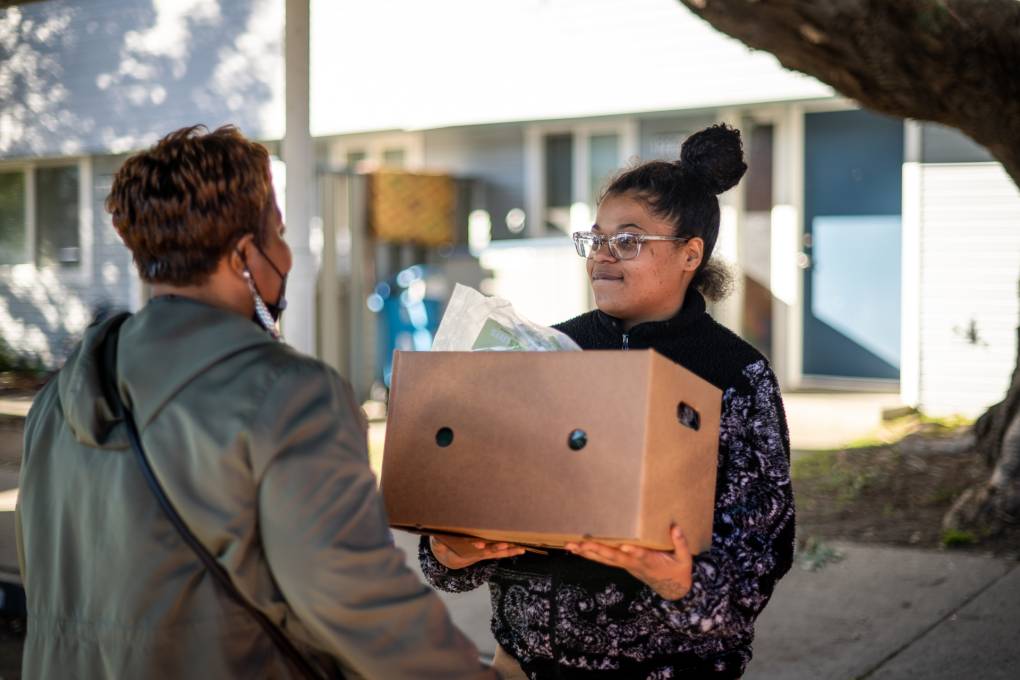
"caption": "Cassandra Perkins hands a box to Danesha Johnson outside her home on Treasure Island during One Love Black Community's 'Sunday Show Up' on Nov. 13, 2022.",
"description": null,
"title": "053_KQED_OneLoveBlackCommunity_11132022",
"credit": "Beth LaBerge/KQED",
"status": "inherit",
"altTag": "A young woman wearing glasses holds a cardboard box in front of a woman wearing a green jacket.",
"isLoading": false,
"fetchFailed": false
},
"news_11933319": {
"type": "attachments",
"id": "news_11933319",
"meta": {
"index": "attachments_1716263798",
"site": "news",
"id": "11933319",
"found": true
},
"parent": 11933284,
"imgSizes": {
"twentyfourteen-full-width": {
"file": "https://ww2.kqed.org/app/uploads/sites/10/2022/11/GettyImages-1244836327-1024x576.jpg",
"width": 1024,
"mimeType": "image/jpeg",
"height": 576
},
"thumbnail": {
"file": "https://ww2.kqed.org/app/uploads/sites/10/2022/11/GettyImages-1244836327-160x107.jpg",
"width": 160,
"mimeType": "image/jpeg",
"height": 107
},
"post-thumbnail": {
"file": "https://ww2.kqed.org/app/uploads/sites/10/2022/11/GettyImages-1244836327-672x372.jpg",
"width": 672,
"mimeType": "image/jpeg",
"height": 372
},
"kqedFullSize": {
"file": "https://ww2.kqed.org/app/uploads/sites/10/2022/11/GettyImages-1244836327.jpg",
"width": 1024,
"height": 683
},
"large": {
"file": "https://ww2.kqed.org/app/uploads/sites/10/2022/11/GettyImages-1244836327-1020x680.jpg",
"width": 1020,
"mimeType": "image/jpeg",
"height": 680
},
"medium": {
"file": "https://ww2.kqed.org/app/uploads/sites/10/2022/11/GettyImages-1244836327-800x534.jpg",
"width": 800,
"mimeType": "image/jpeg",
"height": 534
}
},
"publishDate": 1669671157,
"modified": 1669686604,
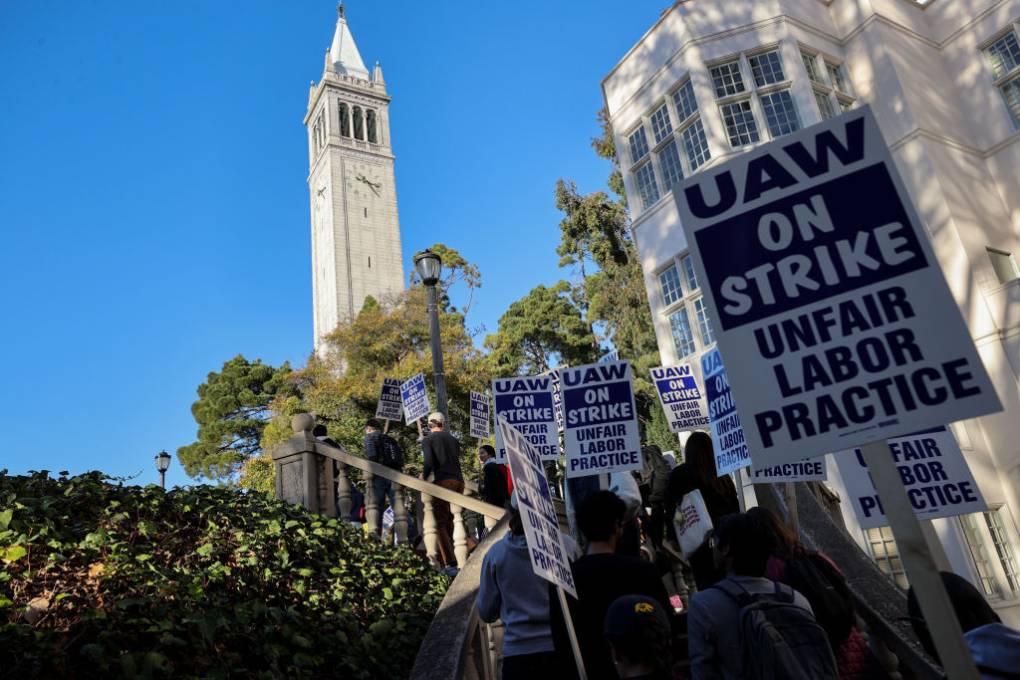
"caption": "Academic workers strike at UC Berkeley on Nov. 16, 2022. Nearly 48,000 unionized academic workers across the University of California's 10 campuses who perform much of the teaching and research at the state's premier higher-education system walked off the job on Nov. 14, calling for better pay and benefits.",
"description": null,
"title": "Academic workers strike for better pay and benefits at UC Berkeley",
"credit": "Tayfun Coskun/Anadolu Agency via Getty Images",
"status": "inherit",
"altTag": "a sign that reads 'UAW On Strike, Unfair Labor Practices' is held during a strike in front of UC Berkeley's campanile tower",
"isLoading": false,
"fetchFailed": false
},
"news_11914780": {
"type": "attachments",
"id": "news_11914780",
"meta": {
"index": "attachments_1716263798",
"site": "news",
"id": "11914780",
"found": true
},
"parent": 11914777,
"imgSizes": {
"twentyfourteen-full-width": {
"file": "https://ww2.kqed.org/app/uploads/sites/10/2022/05/RS56019_Izzy-and-Max-Photo-1038x576.jpg",
"width": 1038,
"mimeType": "image/jpeg",
"height": 576
},
"thumbnail": {
"file": "https://ww2.kqed.org/app/uploads/sites/10/2022/05/RS56019_Izzy-and-Max-Photo-160x113.jpg",
"width": 160,
"mimeType": "image/jpeg",
"height": 113
},
"post-thumbnail": {
"file": "https://ww2.kqed.org/app/uploads/sites/10/2022/05/RS56019_Izzy-and-Max-Photo-672x372.jpg",
"width": 672,
"mimeType": "image/jpeg",
"height": 372
},
"kqedFullSize": {
"file": "https://ww2.kqed.org/app/uploads/sites/10/2022/05/RS56019_Izzy-and-Max-Photo.jpg",
"width": 1488,
"height": 1052
},
"large": {
"file": "https://ww2.kqed.org/app/uploads/sites/10/2022/05/RS56019_Izzy-and-Max-Photo-1020x721.jpg",
"width": 1020,
"mimeType": "image/jpeg",
"height": 721
},
"medium": {
"file": "https://ww2.kqed.org/app/uploads/sites/10/2022/05/RS56019_Izzy-and-Max-Photo-800x566.jpg",
"width": 800,
"mimeType": "image/jpeg",
"height": 566
}
},
"publishDate": 1653082077,
"modified": 1653095655,
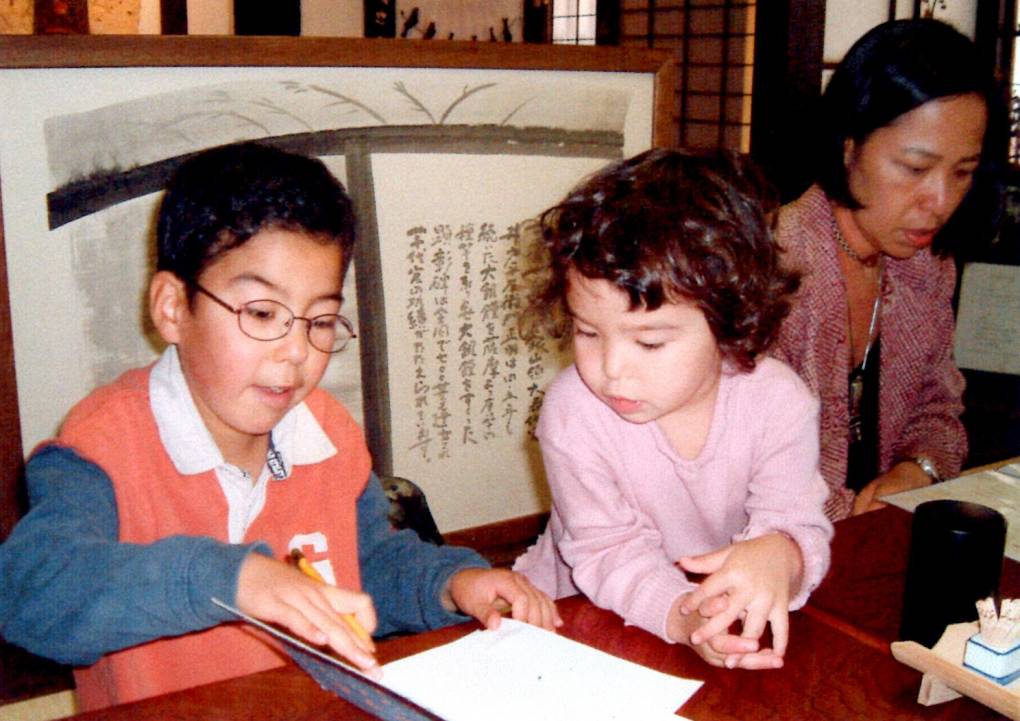
"caption": "Max (left) and Izzy Bloom and their mom, Yasuko, in a restaurant in Japan, circa 2002.",
"description": null,
"title": "RS56019_Izzy and Max Photo",
"credit": "Courtesy of the Bloom family",
"status": "inherit",
"altTag": "A family - father, mother, young son and young daughter - pose for a photo.",
"isLoading": false,
"fetchFailed": false
},
"news_11932772": {
"type": "attachments",
"id": "news_11932772",
"meta": {
"index": "attachments_1716263798",
"site": "news",
"id": "11932772",
"found": true
},
"parent": 11932746,
"imgSizes": {
"twentyfourteen-full-width": {
"file": "https://ww2.kqed.org/app/uploads/sites/10/2022/11/GettyImages-1244836347-1024x576.jpg",
"width": 1024,
"mimeType": "image/jpeg",
"height": 576
},
"thumbnail": {
"file": "https://ww2.kqed.org/app/uploads/sites/10/2022/11/GettyImages-1244836347-160x107.jpg",
"width": 160,
"mimeType": "image/jpeg",
"height": 107
},
"post-thumbnail": {
"file": "https://ww2.kqed.org/app/uploads/sites/10/2022/11/GettyImages-1244836347-672x372.jpg",
"width": 672,
"mimeType": "image/jpeg",
"height": 372
},
"kqedFullSize": {
"file": "https://ww2.kqed.org/app/uploads/sites/10/2022/11/GettyImages-1244836347.jpg",
"width": 1024,
"height": 683
},
"large": {
"file": "https://ww2.kqed.org/app/uploads/sites/10/2022/11/GettyImages-1244836347-1020x680.jpg",
"width": 1020,
"mimeType": "image/jpeg",
"height": 680
},
"medium": {
"file": "https://ww2.kqed.org/app/uploads/sites/10/2022/11/GettyImages-1244836347-800x534.jpg",
"width": 800,
"mimeType": "image/jpeg",
"height": 534
}
},
"publishDate": 1668819376,
"modified": 1669899968,
"caption": null,
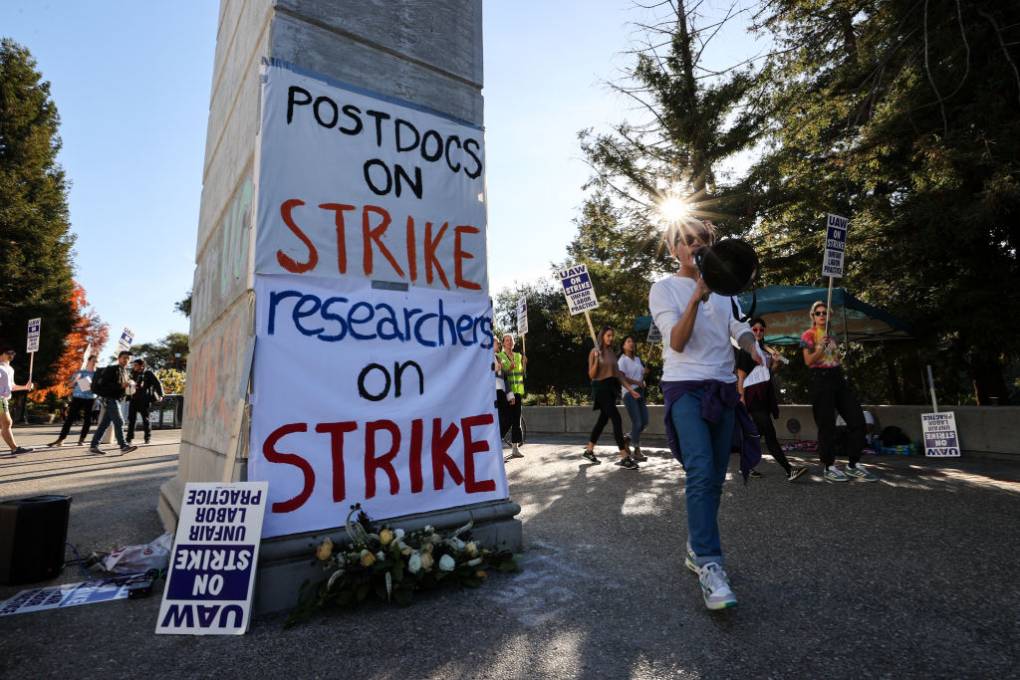
"description": "Academic workers strike at UC Berkeley on Nov. 16, 2022. About 48,000 unionized academic workers across the University of California's 10 campuses, who perform much of the teaching and research at the state's premier higher-education system, walked off the job Monday morning, Nov. 14, calling for better pay and benefits. (Tayfun Coskun/Anadolu Agency via Getty Images)",
"title": "Academic workers strike for better pay and benefits at UC Berkeley",
"credit": "Tayfun Coskun/Anadolu Agency via Getty Images",
"status": "inherit",
"altTag": "a person in jeans with a blowhorn stands in front of signs that say 'postdocs on strike' and 'researchers on strike' at a college campus",
"isLoading": false,
"fetchFailed": false
},
"news_11932196": {
"type": "attachments",
"id": "news_11932196",
"meta": {
"index": "attachments_1716263798",
"site": "news",
"id": "11932196",
"found": true
},
"parent": 11932147,
"imgSizes": {
"twentyfourteen-full-width": {
"file": "https://ww2.kqed.org/app/uploads/sites/10/2022/11/UC-featured-1038x576.jpg",
"width": 1038,
"mimeType": "image/jpeg",
"height": 576
},
"thumbnail": {
"file": "https://ww2.kqed.org/app/uploads/sites/10/2022/11/UC-featured-160x103.jpg",
"width": 160,
"mimeType": "image/jpeg",
"height": 103
},
"post-thumbnail": {
"file": "https://ww2.kqed.org/app/uploads/sites/10/2022/11/UC-featured-672x372.jpg",
"width": 672,
"mimeType": "image/jpeg",
"height": 372
},
"kqedFullSize": {
"file": "https://ww2.kqed.org/app/uploads/sites/10/2022/11/UC-featured.jpg",
"width": 1920,
"height": 1240
},
"large": {
"file": "https://ww2.kqed.org/app/uploads/sites/10/2022/11/UC-featured-1020x659.jpg",
"width": 1020,
"mimeType": "image/jpeg",
"height": 659
},
"1536x1536": {
"file": "https://ww2.kqed.org/app/uploads/sites/10/2022/11/UC-featured-1536x992.jpg",
"width": 1536,
"mimeType": "image/jpeg",
"height": 992
},
"medium": {
"file": "https://ww2.kqed.org/app/uploads/sites/10/2022/11/UC-featured-800x517.jpg",
"width": 800,
"mimeType": "image/jpeg",
"height": 517
}
},
"publishDate": 1668458351,
"modified": 1668458863,
"caption": "Hundreds of staff members at UC Berkeley demonstrate on Monday morning, the first day of a massive strike among some 48,000 academic workers across all 10 University of California campuses.",
"description": null,
"title": "UC-featured",
"credit": "Jean Zamora/UC Berkeley",
"status": "inherit",
"altTag": "A large crowd of people stand outside on a college campus holding signs that say 'UAW on Strike Unfair Labor Practice.'",
"isLoading": false,
"fetchFailed": false
}
},
"audioPlayerReducer": {
"postId": "stream_live",
"isPaused": true,
"isPlaying": false,
"pfsActive": false,
"pledgeModalIsOpen": true,
"playerDrawerIsOpen": false,
"liveAudioPlayStartedAt": 0,
"liveAudioPlayContext": ""
},
"authorsReducer": {
"byline_news_11934191": {
"type": "authors",
"id": "byline_news_11934191",
"meta": {
"override": true
},
"slug": "byline_news_11934191",
"name": "\u003ca href=\"https://edsource.org/author/cjones\">Carolyn Jones\u003c/a> ",
"isLoading": false
},
"byline_news_11933768": {
"type": "authors",
"id": "byline_news_11933768",
"meta": {
"override": true
},
"slug": "byline_news_11933768",
"name": "Mark Sherman\u003cbr>The Associated Press",
"isLoading": false
},
"byline_news_11914760": {
"type": "authors",
"id": "byline_news_11914760",
"meta": {
"override": true
},
"slug": "byline_news_11914760",
"name": "Izzy Bloom",
"isLoading": false
},
"astupi": {
"type": "authors",
"id": "70",
"meta": {
"index": "authors_1716337520",
"id": "70",
"found": true
},
"name": "Amanda Stupi",
"firstName": "Amanda",
"lastName": "Stupi",
"slug": "astupi",
"email": "astupi@kqed.org",
"display_author_email": false,
"staff_mastheads": [],
"title": "Senior Engagement Producer",
"bio": "Amanda joined KQED Science’s engagement team as a Senior Audience Engagement Strategist in the spring of 2019. She has helped craft messaging around wildfires, the coronavirus pandemic, climate change and many other stories. She has also brought KQED Science to new platforms such as Reddit’s Ask Me Anything series. Prior to joining KQED Science, Amanda spent seven years as an engagement producer with Forum, KQED’s daily live call-in show. She got her start in radio at KALW's weekly call in show, City Visions, before going on to an internship and stint at NPR's Talk of the Nation.\r\n\r\nPrior to journalism, Amanda taught English at Lowell High School. She's a native of Petaluma and currently lives under the \"South San Francisco the Industrial City\" sign in South City. She believes that engagement is vital to news’s future and that good journalism listens as much as it asks questions.",
"avatar": "https://secure.gravatar.com/avatar/e981c503e5c162da701dcaccfbf87e35?s=600&d=blank&r=g",
"twitter": null,
"facebook": null,
"instagram": null,
"linkedin": null,
"sites": [
{
"site": "arts",
"roles": [
"Contributor"
]
},
{
"site": "news",
"roles": [
"editor"
]
},
{
"site": "pop",
"roles": [
"contributor"
]
},
{
"site": "stateofhealth",
"roles": [
"editor"
]
},
{
"site": "science",
"roles": []
},
{
"site": "perspectives",
"roles": [
"editor"
]
}
],
"headData": {
"title": "Amanda Stupi | KQED",
"description": "Senior Engagement Producer",
"ogImgSrc": "https://secure.gravatar.com/avatar/e981c503e5c162da701dcaccfbf87e35?s=600&d=blank&r=g",
"twImgSrc": "https://secure.gravatar.com/avatar/e981c503e5c162da701dcaccfbf87e35?s=600&d=blank&r=g"
},
"isLoading": false,
"link": "/author/astupi"
},
"kqed": {
"type": "authors",
"id": "236",
"meta": {
"index": "authors_1716337520",
"id": "236",
"found": true
},
"name": "KQED News Staff",
"firstName": "KQED News Staff",
"lastName": null,
"slug": "kqed",
"email": "faq@kqed.org",
"display_author_email": false,
"staff_mastheads": [],
"title": null,
"bio": null,
"avatar": "https://secure.gravatar.com/avatar/ef0e801a68c4c54afa9180db14084167?s=600&d=blank&r=g",
"twitter": null,
"facebook": null,
"instagram": null,
"linkedin": null,
"sites": [
{
"site": "arts",
"roles": [
"contributor"
]
},
{
"site": "news",
"roles": [
"editor"
]
},
{
"site": "futureofyou",
"roles": [
"author"
]
}
],
"headData": {
"title": "KQED News Staff | KQED",
"description": null,
"ogImgSrc": "https://secure.gravatar.com/avatar/ef0e801a68c4c54afa9180db14084167?s=600&d=blank&r=g",
"twImgSrc": "https://secure.gravatar.com/avatar/ef0e801a68c4c54afa9180db14084167?s=600&d=blank&r=g"
},
"isLoading": false,
"link": "/author/kqed"
},
"kqednewsstaffandwires": {
"type": "authors",
"id": "237",
"meta": {
"index": "authors_1716337520",
"id": "237",
"found": true
},
"name": "KQED News Staff and Wires",
"firstName": "KQED News Staff and Wires",
"lastName": null,
"slug": "kqednewsstaffandwires",
"email": "onlinenewsstaff@kqed.org",
"display_author_email": false,
"staff_mastheads": [],
"title": null,
"bio": null,
"avatar": "https://secure.gravatar.com/avatar/72295af8ebbfbd19a4948f5271285664?s=600&d=blank&r=g",
"twitter": null,
"facebook": null,
"instagram": null,
"linkedin": null,
"sites": [
{
"site": "arts",
"roles": [
"contributor"
]
},
{
"site": "news",
"roles": [
"contributor"
]
},
{
"site": "lowdown",
"roles": [
"author"
]
},
{
"site": "stateofhealth",
"roles": [
"contributor"
]
},
{
"site": "food",
"roles": [
"author"
]
}
],
"headData": {
"title": "KQED News Staff and Wires | KQED",
"description": null,
"ogImgSrc": "https://secure.gravatar.com/avatar/72295af8ebbfbd19a4948f5271285664?s=600&d=blank&r=g",
"twImgSrc": "https://secure.gravatar.com/avatar/72295af8ebbfbd19a4948f5271285664?s=600&d=blank&r=g"
},
"isLoading": false,
"link": "/author/kqednewsstaffandwires"
},
"sasha-khokha": {
"type": "authors",
"id": "254",
"meta": {
"index": "authors_1716337520",
"id": "254",
"found": true
},
"name": "Sasha Khokha",
"firstName": "Sasha",
"lastName": "Khokha",
"slug": "sasha-khokha",
"email": "skhokha@kqed.org",
"display_author_email": true,
"staff_mastheads": [
"news"
],
"title": "Host, The California Report Magazine",
"bio": "Sasha Khokha is the host of \u003cem>The California Report's \u003c/em> weekly magazine program, which takes listeners on sound-rich excursions to meet the people that make the Golden State unique -- through audio documentaries and long-form stories. As \u003cem>The California Report's\u003c/em> Central Valley Bureau Chief based in Fresno for nearly a dozen years, Sasha brought the lives and concerns of rural Californians to listeners around the state. Her reporting helped expose the hidden price immigrant women janitors and farmworkers may pay to keep their jobs: sexual assault at work. It inspired two new California laws to protect them from sexual harassment. She was a key member of the reporting team for the Frontline film \u003cem>Rape on the Night Shift, \u003c/em>which was nominated for two national Emmys. Sasha has also won a national Edward R. Murrow and a national PRNDI award for investigative reporting, as well as multiple prizes from the Society for Professional Journalists. Sasha is a proud alum of the UC Berkeley Graduate School of Journalism and Brown University and a member of the South Asian Journalists Association.",
"avatar": "https://secure.gravatar.com/avatar/e4b5e1541aaeea2aa356aa1fb2a68950?s=600&d=blank&r=g",
"twitter": "KQEDSashaKhokha",
"facebook": null,
"instagram": null,
"linkedin": null,
"sites": [
{
"site": "news",
"roles": [
"editor"
]
},
{
"site": "stateofhealth",
"roles": [
"author"
]
},
{
"site": "science",
"roles": [
"author"
]
},
{
"site": "quest",
"roles": [
"subscriber"
]
}
],
"headData": {
"title": "Sasha Khokha | KQED",
"description": "Host, The California Report Magazine",
"ogImgSrc": "https://secure.gravatar.com/avatar/e4b5e1541aaeea2aa356aa1fb2a68950?s=600&d=blank&r=g",
"twImgSrc": "https://secure.gravatar.com/avatar/e4b5e1541aaeea2aa356aa1fb2a68950?s=600&d=blank&r=g"
},
"isLoading": false,
"link": "/author/sasha-khokha"
},
"matthewgreen": {
"type": "authors",
"id": "1263",
"meta": {
"index": "authors_1716337520",
"id": "1263",
"found": true
},
"name": "Matthew Green",
"firstName": "Matthew",
"lastName": "Green",
"slug": "matthewgreen",
"email": "mgreen@kqed.org",
"display_author_email": false,
"staff_mastheads": [],
"title": "KQED Editor/Reporter",
"bio": "Matthew Green is a digital media producer for KQED News. He previously produced \u003ca href=\"http://www.kqed.org/lowdown\">The Lowdown\u003c/a>, KQED’s multimedia news education blog. Matthew's written for numerous Bay Area publications, including the Oakland Tribune and San Francisco Chronicle. He also taught journalism classes at Fremont High School in East Oakland.\r\n\r\nEmail: mgreen@kqed.org; Twitter: @MGreenKQED",
"avatar": "https://secure.gravatar.com/avatar/3bf498d1267ca02c8494f33d8cfc575e?s=600&d=blank&r=g",
"twitter": "MGreenKQED",
"facebook": null,
"instagram": null,
"linkedin": null,
"sites": [
{
"site": "news",
"roles": []
},
{
"site": "lowdown",
"roles": []
},
{
"site": "science",
"roles": []
},
{
"site": "education",
"roles": []
},
{
"site": "quest",
"roles": []
},
{
"site": "liveblog",
"roles": []
}
],
"headData": {
"title": "Matthew Green | KQED",
"description": "KQED Editor/Reporter",
"ogImgSrc": "https://secure.gravatar.com/avatar/3bf498d1267ca02c8494f33d8cfc575e?s=600&d=blank&r=g",
"twImgSrc": "https://secure.gravatar.com/avatar/3bf498d1267ca02c8494f33d8cfc575e?s=600&d=blank&r=g"
},
"isLoading": false,
"link": "/author/matthewgreen"
},
"esilvers": {
"type": "authors",
"id": "7237",
"meta": {
"index": "authors_1716337520",
"id": "7237",
"found": true
},
"name": "Emma Silvers",
"firstName": "Emma",
"lastName": "Silvers",
"slug": "esilvers",
"email": "esilvers@kqed.org",
"display_author_email": false,
"staff_mastheads": [],
"title": "KQED Contributor",
"bio": "Emma Silvers is an editor at KQED Arts and a former digital producer at KQED News. Born and raised in the Bay Area, she has previously been an arts and entertainment editor at the \u003cem>San Francisco Chronicle\u003c/em>, \u003cem>SF Weekly\u003c/em> and the \u003cem>San Francisco Bay Guardian.\u003c/em> \u003ca href=\"https://www.emmasilvers.com\">Her work\u003c/a> has also appeared in \u003cem>Rolling Stone\u003c/em>, Pitchfork and \u003cem>Mother Jones\u003c/em>. In 2017 she was the recipient of the Society of Professional Journalists-Northern California's award for arts and culture reporting. In 1993 she \u003ca href=\"https://www.kqed.org/pop/16759/wait-what-my-coworker-was-a-voice-over-hyperventilator-for-jurassic-park\">hyperventilated in \u003cem>Jurassic Park\u003c/em>\u003c/a>.",
"avatar": "https://secure.gravatar.com/avatar/247beada39b88ea5759db1f51dba05cf?s=600&d=blank&r=g",
"twitter": "emmaruthless",
"facebook": null,
"instagram": null,
"linkedin": null,
"sites": [
{
"site": "arts",
"roles": [
"editor"
]
},
{
"site": "news",
"roles": [
"editor"
]
},
{
"site": "pop",
"roles": [
"contributor"
]
},
{
"site": "bayareabites",
"roles": [
"editor"
]
},
{
"site": "food",
"roles": [
"contributor"
]
},
{
"site": "liveblog",
"roles": [
"editor"
]
}
],
"headData": {
"title": "Emma Silvers | KQED",
"description": "KQED Contributor",
"ogImgSrc": "https://secure.gravatar.com/avatar/247beada39b88ea5759db1f51dba05cf?s=600&d=blank&r=g",
"twImgSrc": "https://secure.gravatar.com/avatar/247beada39b88ea5759db1f51dba05cf?s=600&d=blank&r=g"
},
"isLoading": false,
"link": "/author/esilvers"
},
"hmcdede": {
"type": "authors",
"id": "11635",
"meta": {
"index": "authors_1716337520",
"id": "11635",
"found": true
},
"name": "Holly McDede",
"firstName": "Holly",
"lastName": "McDede",
"slug": "hmcdede",
"email": "hmcdede@KQED.org",
"display_author_email": false,
"staff_mastheads": [],
"title": "KQED Contributor",
"bio": null,
"avatar": "https://secure.gravatar.com/avatar/35d1a1f5422c9d266f7ace9348d170f2136671a65fffc90a592e4d7fbf8dc3f6?s=600&d=blank&r=g",
"twitter": null,
"bluesky": null,
"facebook": null,
"instagram": null,
"linkedin": null,
"sites": [
{
"site": "arts",
"roles": [
"editor"
]
},
{
"site": "news",
"roles": [
"edit_others_posts",
"editor"
]
},
{
"site": "science",
"roles": [
"editor"
]
},
{
"site": "forum",
"roles": [
"editor"
]
},
{
"site": "perspectives",
"roles": [
"administrator"
]
}
],
"headData": {
"title": "Holly McDede | KQED",
"description": "KQED Contributor",
"ogImgSrc": "https://secure.gravatar.com/avatar/35d1a1f5422c9d266f7ace9348d170f2136671a65fffc90a592e4d7fbf8dc3f6?s=600&d=blank&r=g",
"twImgSrc": "https://secure.gravatar.com/avatar/35d1a1f5422c9d266f7ace9348d170f2136671a65fffc90a592e4d7fbf8dc3f6?s=600&d=blank&r=g"
},
"isLoading": false,
"link": "/author/hmcdede"
},
"daisynguyen": {
"type": "authors",
"id": "11829",
"meta": {
"index": "authors_1716337520",
"id": "11829",
"found": true
},
"name": "Daisy Nguyen",
"firstName": "Daisy",
"lastName": "Nguyen",
"slug": "daisynguyen",
"email": "daisynguyen@kqed.org",
"display_author_email": true,
"staff_mastheads": [
"news"
],
"title": "KQED Contributor",
"bio": "I have covered early childhood education and child care for KQED since 2022. I focus on policies aimed at increasing access to early care and education and how they shape individual lives. I've been a journalist for more than two decades, with most of that time devoted to covering breaking news throughout California for The Associated Press. I grew up in San Francisco and studied at UC Davis and Columbia University's Graduate School of Journalism. I live in Oakland with my husband and two kids.",
"avatar": "https://secure.gravatar.com/avatar/2da2127c27f7143b53ebd419800fd55f?s=600&d=blank&r=g",
"twitter": null,
"facebook": null,
"instagram": null,
"linkedin": "https://www.linkedin.com/in/daisynguyen/",
"sites": [
{
"site": "news",
"roles": [
"author"
]
},
{
"site": "liveblog",
"roles": [
"author"
]
}
],
"headData": {
"title": "Daisy Nguyen | KQED",
"description": "KQED Contributor",
"ogImgSrc": "https://secure.gravatar.com/avatar/2da2127c27f7143b53ebd419800fd55f?s=600&d=blank&r=g",
"twImgSrc": "https://secure.gravatar.com/avatar/2da2127c27f7143b53ebd419800fd55f?s=600&d=blank&r=g"
},
"isLoading": false,
"link": "/author/daisynguyen"
}
},
"pagesReducer": {
"news_category_education": {
"type": "terms",
"id": "news_18540",
"meta": {
"index": "terms_1716263798",
"site": "news",
"id": "18540",
"score": 10.973221
},
"featImg": null,
"name": "Education",
"description": null,
"taxonomy": "category",
"headData": {
"twImgId": null,
"twTitle": null,
"ogTitle": null,
"ogImgId": null,
"twDescription": null,
"description": null,
"title": "Education Archives | KQED News",
"ogDescription": null
},
"ttid": 2595,
"slug": "education",
"isLoading": false,
"title": "Education",
"pageMeta": {
"site": "news",
"WpPageTemplate": "page-topic-editorial",
"currentPage": 65
},
"blocks": [
{
"blockName": "kqed/post-list",
"attrs": {
"layout": "cardArticle2",
"query": "posts/news?category=education",
"seeMore": false,
"paginated": true,
"page": 65
}
},
{
"blockName": "kqed/ad"
}
]
}
},
"pfsSessionReducer": {},
"postsReducer": {
"stream_live": {
"type": "live",
"id": "stream_live",
"audioUrl": "https://streams.kqed.org/kqedradio",
"title": "Live Stream",
"excerpt": "Live Stream information currently unavailable.",
"link": "/radio",
"featImg": "",
"label": {
"name": "KQED Live",
"link": "/"
}
},
"stream_kqedNewscast": {
"type": "posts",
"id": "stream_kqedNewscast",
"audioUrl": "https://www.kqed.org/.stream/anon/radio/RDnews/newscast.mp3?_=1",
"title": "KQED Newscast",
"featImg": "",
"label": {
"name": "88.5 FM",
"link": "/"
}
},
"news_11935859": {
"type": "posts",
"id": "news_11935859",
"meta": {
"index": "posts_1716263798",
"site": "news",
"id": "11935859",
"score": null,
"sort": [
1671638447000
]
},
"parent": 0,
"labelTerm": {
"site": "news"
},
"blocks": [],
"publishDate": 1671638447,
"format": "standard",
"title": "A Shot at Justice: Lawsuits Mount Over Sexual Abuse in California Schools as End-of-Year Deadline Approaches",
"headTitle": "A Shot at Justice: Lawsuits Mount Over Sexual Abuse in California Schools as End-of-Year Deadline Approaches | KQED",
"content": "\u003cp>When Daniela attended Bell High School in Southeast Los Angeles County in the mid ‘90s, she was a student in Jeffrey Scott Jones’ Advanced Placement English class. As a teenager, she trusted him, and did not yet know the control he would have over her life for years into adulthood.\u003c/p>\n\u003cp>Daniela, now 43, is one of three former students who married Jones, and one of five victims who say he sexually abused them when they were minors. \u003ca href=\"https://www.andersonadvocates.com/wp-content/uploads/2022/11/DOE-7064-DOE-7035-DOE-7063-v.-Los-Angeles-Unified-School-District-Jeffrey-Scott-Jones-et-al.-11.8.22.pdf\">She is now suing him (PDF)\u003c/a> and the Los Angeles Unified School District over claims that school leaders never investigated or notified police after multiple reports of misconduct. Daniela, who asked that we not use her legal name, spoke to KQED on the condition of anonymity because of fears about her safety.\u003c/p>\n\u003cp>“We were seen as poor kids, like we didn’t matter,” she said of her classmates, many of whom she said grew up in poverty. “But we do matter, and somebody should care.”[aside label=\"Related Stories\" postID=\"news_11921799,news_11911375,news_11928350\"]\u003c/p>\n\u003cp>Daniela and countless others who say they were sexually abused as children are now able to file their claims in court because of a California state law that went into effect in 2020. \u003ca href=\"https://leginfo.legislature.ca.gov/faces/billTextClient.xhtml?bill_id=201920200AB218\">Assembly Bill 218\u003c/a>, or the California Child Victims Act, temporarily gives victims the chance to bring claims that would otherwise be barred because of the statute of limitations.\u003c/p>\n\u003cp>The measure provides a three-year window in which victims of childhood sexual abuse can file complaints against perpetrators or their employers, regardless of how long ago the abuse occurred. That three-year window closes on Dec. 31.\u003c/p>\n\u003cp>Attorneys who handle abuse claims are urging victims in older cases to come forward before that date. If they wait, it could become harder — or, in some instances, impossible — to hold individuals or their employers accountable through the civil court system.\u003c/p>\n\u003ch2>A pattern of abuse\u003c/h2>\n\u003cp>Advocates for survivors say the extended statute of limitations offers an opportunity to force schools to reckon with historic wrongs through financial pressure. They also say it reflects \u003ca href=\"https://www.nationalcac.org/wp-content/uploads/2016/10/Disclosure-of-child-sexual-abuse-Delays-non-disclosures-and-partial-disclosures.-What-the-research-tells-us-and-implications-for-practice.pdf\">the reality that many victims do not report childhood abuse (PDF)\u003c/a> until years or decades later, if at all.\u003c/p>\n\u003cp>Experts say victims may fear retaliation, or may not initially recognize what they experienced as abuse.\u003c/p>\n\u003cp>Daniela says that when she was in high school, everyone adored Jones — including her. She and other students would go to his classroom just to talk. She says she told him everything, and even confided in him that she had been sexually abused by a family member.\u003c/p>\n\u003cp>According to the lawsuit, Jones targeted young girls who were vulnerable for abuse. He instructed students to take personality tests and send him journal entries, and read students’ palms as a way to see their reaction to physical touch.\u003c/p>\n\u003cp>Daniela says she moved in with Jones when she was 17 years old, and the abuse began days later. She says she was in denial for years afterward.\u003c/p>\n\u003cp>“If you really thought it was so bad, you would’ve screamed and yelled and told everybody. No,” she said, remembering her own thought process. “Sometimes we process things by accepting them and accepting them and accepting them.”\u003c/p>\n\u003cfigure id=\"attachment_11936017\" class=\"wp-caption aligncenter\" style=\"max-width: 800px\">\u003ca href=\"https://ww2.kqed.org/app/uploads/sites/10/2022/12/RS50357_011_LosGatos_HighSchool_07212021-qut.jpg\">\u003cimg decoding=\"async\" loading=\"lazy\" class=\"size-medium wp-image-11936017\" src=\"https://ww2.kqed.org/app/uploads/sites/10/2022/12/RS50357_011_LosGatos_HighSchool_07212021-qut-800x533.jpg\" alt=\"a high school building with columns and steps and a green lawn against a blue sky\" width=\"800\" height=\"533\" srcset=\"https://ww2.kqed.org/app/uploads/sites/10/2022/12/RS50357_011_LosGatos_HighSchool_07212021-qut-800x533.jpg 800w, https://ww2.kqed.org/app/uploads/sites/10/2022/12/RS50357_011_LosGatos_HighSchool_07212021-qut-1020x680.jpg 1020w, https://ww2.kqed.org/app/uploads/sites/10/2022/12/RS50357_011_LosGatos_HighSchool_07212021-qut-160x107.jpg 160w, https://ww2.kqed.org/app/uploads/sites/10/2022/12/RS50357_011_LosGatos_HighSchool_07212021-qut-1536x1024.jpg 1536w, https://ww2.kqed.org/app/uploads/sites/10/2022/12/RS50357_011_LosGatos_HighSchool_07212021-qut.jpg 1920w\" sizes=\"(max-width: 800px) 100vw, 800px\">\u003c/a>\u003cfigcaption class=\"wp-caption-text\">Los Gatos High School is part of the Los Gatos-Saratoga Union High School District, which in October settled with a former student for nearly $3.5 million following a suit about alleged abuse by former track coach Chioke Robinson in the 1990s. \u003ccite>(Beth LaBerge/KQED)\u003c/cite>\u003c/figcaption>\u003c/figure>\n\u003cp>According to the lawsuit, Daniela told a teacher about her relationship with Jones. The suit also alleges the sibling of another victim reported Jones to the principal after he married her sister. But school staff did not investigate the allegations or report him to the police, the lawsuit alleges. Instead, according to the suit, Jones worked in the district for decades, moving from school to school.\u003c/p>\n\u003cp>Jones was convicted of sexually assaulting a 13-year-old in 2016.\u003c/p>\n\u003cp>A Los Angeles Unified spokesperson declined to comment on the litigation, but said that the safety and well-being of students and employees remains the district’s top priority.\u003c/p>\n\u003ch2>More lawsuits pour in\u003c/h2>\n\u003cp>That suit is one of dozens, if not hundreds, of lawsuits filed against school districts across the state over the last three years because of the law that temporarily set aside the statute of limitations.\u003c/p>\n\u003cp>According to an analysis from the firms Greenberg Gross LLP and Jeff Anderson and Associates, nearly 70 lawsuits have been filed against the Los Angeles Unified School District alone.\u003c/p>\n\u003cp>[pullquote align=\"right\" size=\"medium\" citation=\"Sean Tillis, attorney, Tillis Law Firm\"]‘The clergy cases get all the attention, but … the school cases that we see are only the tip of the iceberg.’[/pullquote]That number is likely an undercount of claims filed against the district, according to Mike Reck, attorney with Jeff Anderson and Associates.\u003c/p>\n\u003cp>“It really is a testament to how deep this problem is,” Reck said.\u003c/p>\n\u003cp>The lawsuits highlight instances where children did try to tell adults in schools they were abused by school employees, but officials failed to protect students or notify law enforcement or other agencies.\u003c/p>\n\u003cp>“The clergy cases get all the attention, but I’m telling you, the school cases that we see are only the tip of the iceberg,” said Sean Tillis, an attorney with the Oakland-based Tillis Law Firm who handles sexual abuse cases.\u003c/p>\n\u003cp>He said that, in some cases, the publicity on the extended statute has motivated people to consider legal options — even if they never have before.\u003c/p>\n\u003cp>“They’re in denial, so they’re not going to know what a sex abuse statute is. They never think ‘litigation.’ They’re trying not to even think ‘abuse,'” he said.\u003c/p>\n\u003cp>Brian Williams, attorney with Greenberg Gross LLP, says that as the Dec. 31 deadline looms for older cases, victims continue to call his office daily to see if they have legal options.\u003c/p>\n\u003cp>“The calls haven’t stopped,” he said.\u003c/p>\n\u003ch2>Bay Area school districts settle for millions\u003c/h2>\n\u003cp>Most civil cases against school districts will end in settlements, forcing schools to pay millions of dollars to victims for abuse by school employees. Some already have.\u003c/p>\n\u003cp>Lauren Cerri, attorney with San José-based Corsiglia, McMahon and Allard, represented five men who recently reached a $7.5 million settlement with the Union School District over abuse by a teacher 40 years ago.\u003c/p>\n\u003cfigure id=\"attachment_11936015\" class=\"wp-caption aligncenter\" style=\"max-width: 800px\">\u003ca href=\"https://ww2.kqed.org/app/uploads/sites/10/2022/12/RS61701_001_KQED_AttorneyLaurenCerri_12192022-qut.jpg\">\u003cimg decoding=\"async\" loading=\"lazy\" class=\"size-medium wp-image-11936015\" src=\"https://ww2.kqed.org/app/uploads/sites/10/2022/12/RS61701_001_KQED_AttorneyLaurenCerri_12192022-qut-800x533.jpg\" alt=\"a woman dressed in black with curly red hair sits on a mustard-colored sofa. She looks concerned\" width=\"800\" height=\"533\" srcset=\"https://ww2.kqed.org/app/uploads/sites/10/2022/12/RS61701_001_KQED_AttorneyLaurenCerri_12192022-qut-800x533.jpg 800w, https://ww2.kqed.org/app/uploads/sites/10/2022/12/RS61701_001_KQED_AttorneyLaurenCerri_12192022-qut-1020x680.jpg 1020w, https://ww2.kqed.org/app/uploads/sites/10/2022/12/RS61701_001_KQED_AttorneyLaurenCerri_12192022-qut-160x107.jpg 160w, https://ww2.kqed.org/app/uploads/sites/10/2022/12/RS61701_001_KQED_AttorneyLaurenCerri_12192022-qut-1536x1024.jpg 1536w, https://ww2.kqed.org/app/uploads/sites/10/2022/12/RS61701_001_KQED_AttorneyLaurenCerri_12192022-qut.jpg 1920w\" sizes=\"(max-width: 800px) 100vw, 800px\">\u003c/a>\u003cfigcaption class=\"wp-caption-text\">Attorney Lauren Cerri at her office in San José. Cerri has represented several victims who successfully brought lawsuits against their former high schools and school districts for not appropriately responding to allegations of abuse. \u003ccite>(Beth LaBerge/KQED)\u003c/cite>\u003c/figcaption>\u003c/figure>\n\u003cp>Cerri also represented a former student who reached a nearly $3.5 million settlement with the Los Gatos-Saratoga Union High School District in October. When a victim in that case first approached her office about the school’s response to alleged abuse by former track coach Chioke Robinson in the 1990s, it was too late. Then AB 218 extended the statute of limitations, allowing the case to move forward.\u003c/p>\n\u003cp>“If [people] come forward now, justice will more likely prevail,” Cerri said.\u003c/p>\n\u003cp>She said if people wait until after Dec. 31, when the three-year window is set to close, “their chances are sadly and arbitrarily a lot less.”\u003c/p>\n\u003ch2>A last stand\u003c/h2>\n\u003cp>The California Child Victims Act also created permanent changes that allow people under the age of 40 the opportunity to sue. Before that, victims had until the age of 26 to file civil cases for childhood sexual abuse.\u003c/p>\n\u003cp>That change gives many more victims a shot at justice.\u003c/p>\n\u003cp>Three former students at Miramonte High School in Orinda filed a lawsuit this month against the school and the Acalanes Union High School District. The students, who attended the school from 2007 to 2009, allege that school staff ignored red flags of grooming behavior and failed to investigate after students reported allegations of abuse.\u003c/p>\n\u003cp>According to the complaint, Mark Christopher Litton taught English at Miramonte and targeted vulnerable girls who were passionate about writing, reading and poetry. He was sentenced in 2010 to two years in prison after pleading no contest to sexual abuse.\u003c/p>\n\u003cp>[pullquote align=\"right\" size=\"medium\" citation=\"'Jane Doe 2,' on learning that a teacher she had reported for harassment continued to teach and was ultimately arrested for sexually abusing another student\"]‘It felt like I had lost. I had failed. I had not protected anybody else except for myself, and that was a terrible feeling.’[/pullquote]In a statement, Acalanes Union High School District superintendent John Nickerson said the district is “extremely concerned to read the allegations related to how the District/school responded, or failed to respond.”\u003c/p>\n\u003cp>One of the victims, identified as Jane Doe 2 in court documents, asked not to be identified to protect her privacy, including from the teacher she says groomed and assaulted her while she was in high school.\u003c/p>\n\u003cp>In an interview with KQED, she described how students at Miramonte High School were expected to be perfect and excel.\u003c/p>\n\u003cp>“Nothing bad could ever happen. And if it did, there were plenty of ways to cover things up,” she said.\u003c/p>\n\u003cp>She said Litton was well-loved on campus, and initially a mentor for her. But by senior year, the teacher’s behavior became more alarming. She said Litton described dreaming about her at night and left notes on her car. She said her classmates worried about her safety.\u003c/p>\n\u003cfigure id=\"attachment_11936016\" class=\"wp-caption alignright\" style=\"max-width: 800px\">\u003ca href=\"https://ww2.kqed.org/app/uploads/sites/10/2022/12/RS61721_001_KQED_MiramonteHS_12202022-qut.jpg\">\u003cimg decoding=\"async\" loading=\"lazy\" class=\"size-medium wp-image-11936016\" src=\"https://ww2.kqed.org/app/uploads/sites/10/2022/12/RS61721_001_KQED_MiramonteHS_12202022-qut-800x533.jpg\" alt=\"a yearbook photo shows a young man with a beard and glasses in a sweater vest, a teacher \" width=\"800\" height=\"533\" srcset=\"https://ww2.kqed.org/app/uploads/sites/10/2022/12/RS61721_001_KQED_MiramonteHS_12202022-qut-800x533.jpg 800w, https://ww2.kqed.org/app/uploads/sites/10/2022/12/RS61721_001_KQED_MiramonteHS_12202022-qut-1020x680.jpg 1020w, https://ww2.kqed.org/app/uploads/sites/10/2022/12/RS61721_001_KQED_MiramonteHS_12202022-qut-160x107.jpg 160w, https://ww2.kqed.org/app/uploads/sites/10/2022/12/RS61721_001_KQED_MiramonteHS_12202022-qut-1536x1024.jpg 1536w, https://ww2.kqed.org/app/uploads/sites/10/2022/12/RS61721_001_KQED_MiramonteHS_12202022-qut.jpg 1920w\" sizes=\"(max-width: 800px) 100vw, 800px\">\u003c/a>\u003cfigcaption class=\"wp-caption-text\">Former Miramonte High School teacher Mark Litton pictured in a yearbook from the school in Orinda. Litton was sentenced in 2010 to two years in prison after pleading no contest to sexual abuse. \u003ccite>(Beth LaBerge/KQED)\u003c/cite>\u003c/figcaption>\u003c/figure>\n\u003cp>When she reported his behavior as well as concerns that he had sexually assaulted another classmate, she said school staff told her not to worry and that the school would look into it. When she graduated, she felt like she had won by making it through high school. Then in 2009, she learned that the teacher had been arrested for sexually abusing another student.\u003c/p>\n\u003cp>“It felt like I had lost. I had failed. I had not protected anybody else except for myself, and that was a terrible feeling. I remember dropping to my knees and throwing up,” she said.\u003c/p>\n\u003cp>Now 31, she’s roughly the age her teacher was when he allegedly groomed and assaulted her on campus. She is still working through the long-term impact of the abuse, and says pursuing this case has been terrifying and empowering at the same time.\u003c/p>\n\u003cp>This lawsuit, she says, has finally given her a chance to gain some control over her experience and get answers from the school.\u003c/p>\n\u003cp>“As an adult, there are so many things that I was able to look back on and see differently than as a child,” she said. “It was a last stand to acknowledge what had happened, and to potentially right a wrong and get closure.”\u003c/p>\n\u003cp>[ad fullwidth]\u003c/p>\n\u003cp>[ad floatright]\u003c/p>\n",
"stats": {
"hasVideo": false,
"hasChartOrMap": false,
"hasAudio": false,
"hasPolis": false,
"wordCount": 1870,
"hasGoogleForm": false,
"hasGallery": false,
"hasHearkenModule": false,
"iframeSrcs": [],
"paragraphCount": 46
},
"modified": 1690402890,
"excerpt": "A state law that went into effect in 2020 opened a three-year window for victims to file claims that would otherwise be barred because of the statute of limitations — and dozens, if not hundreds, of lawsuits have been brought against school districts as a result.",
"headData": {
"twImgId": "",
"twTitle": "",
"ogTitle": "",
"ogImgId": "",
"twDescription": "",
"description": "A state law that went into effect in 2020 opened a three-year window for victims to file claims that would otherwise be barred because of the statute of limitations — and dozens, if not hundreds, of lawsuits have been brought against school districts as a result.",
"title": "A Shot at Justice: Lawsuits Mount Over Sexual Abuse in California Schools as End-of-Year Deadline Approaches | KQED",
"ogDescription": "",
"schema": {
"@context": "https://schema.org",
"@type": "NewsArticle",
"headline": "A Shot at Justice: Lawsuits Mount Over Sexual Abuse in California Schools as End-of-Year Deadline Approaches",
"datePublished": "2022-12-21T08:00:47-08:00",
"dateModified": "2023-07-26T13:21:30-07:00",
"image": "https://cdn.kqed.org/wp-content/uploads/2020/02/KQED-OG-Image@1x.png",
"isAccessibleForFree": "True",
"publisher": {
"@type": "NewsMediaOrganization",
"@id": "https://www.kqed.org/#organization",
"name": "KQED",
"logo": "https://cdn.kqed.org/wp-content/uploads/2020/02/KQED-OG-Image@1x.png",
"url": "https://www.kqed.org",
"sameAs": [
"https://www.facebook.com/KQED",
"https://twitter.com/KQED",
"https://www.instagram.com/kqed/",
"https://www.tiktok.com/@kqedofficial",
"https://www.linkedin.com/company/kqed",
"https://www.youtube.com/channel/UCeC0IOo7i1P_61zVUWbJ4nw"
]
}
}
},
"guestAuthors": [],
"slug": "a-shot-at-justice-lawsuits-mount-over-sexual-abuse-in-california-schools-as-end-of-year-deadline-approaches",
"status": "publish",
"excludeFromSiteSearch": "Include",
"articleAge": "0",
"path": "/news/11935859/a-shot-at-justice-lawsuits-mount-over-sexual-abuse-in-california-schools-as-end-of-year-deadline-approaches",
"audioTrackLength": null,
"parsedContent": [
{
"type": "contentString",
"content": "\u003cdiv class=\"post-body\">\u003cp>\u003cp>When Daniela attended Bell High School in Southeast Los Angeles County in the mid ‘90s, she was a student in Jeffrey Scott Jones’ Advanced Placement English class. As a teenager, she trusted him, and did not yet know the control he would have over her life for years into adulthood.\u003c/p>\n\u003cp>Daniela, now 43, is one of three former students who married Jones, and one of five victims who say he sexually abused them when they were minors. \u003ca href=\"https://www.andersonadvocates.com/wp-content/uploads/2022/11/DOE-7064-DOE-7035-DOE-7063-v.-Los-Angeles-Unified-School-District-Jeffrey-Scott-Jones-et-al.-11.8.22.pdf\">She is now suing him (PDF)\u003c/a> and the Los Angeles Unified School District over claims that school leaders never investigated or notified police after multiple reports of misconduct. Daniela, who asked that we not use her legal name, spoke to KQED on the condition of anonymity because of fears about her safety.\u003c/p>\n\u003cp>“We were seen as poor kids, like we didn’t matter,” she said of her classmates, many of whom she said grew up in poverty. “But we do matter, and somebody should care.”\u003c/p>\u003c/div>",
"attributes": {
"named": {},
"numeric": []
}
},
{
"type": "component",
"content": "",
"name": "aside",
"attributes": {
"named": {
"label": "Related Stories ",
"postid": "news_11921799,news_11911375,news_11928350"
},
"numeric": []
}
},
{
"type": "contentString",
"content": "\u003cdiv class=\"post-body\">\u003cp>\u003c/p>\n\u003cp>Daniela and countless others who say they were sexually abused as children are now able to file their claims in court because of a California state law that went into effect in 2020. \u003ca href=\"https://leginfo.legislature.ca.gov/faces/billTextClient.xhtml?bill_id=201920200AB218\">Assembly Bill 218\u003c/a>, or the California Child Victims Act, temporarily gives victims the chance to bring claims that would otherwise be barred because of the statute of limitations.\u003c/p>\n\u003cp>The measure provides a three-year window in which victims of childhood sexual abuse can file complaints against perpetrators or their employers, regardless of how long ago the abuse occurred. That three-year window closes on Dec. 31.\u003c/p>\n\u003cp>Attorneys who handle abuse claims are urging victims in older cases to come forward before that date. If they wait, it could become harder — or, in some instances, impossible — to hold individuals or their employers accountable through the civil court system.\u003c/p>\n\u003ch2>A pattern of abuse\u003c/h2>\n\u003cp>Advocates for survivors say the extended statute of limitations offers an opportunity to force schools to reckon with historic wrongs through financial pressure. They also say it reflects \u003ca href=\"https://www.nationalcac.org/wp-content/uploads/2016/10/Disclosure-of-child-sexual-abuse-Delays-non-disclosures-and-partial-disclosures.-What-the-research-tells-us-and-implications-for-practice.pdf\">the reality that many victims do not report childhood abuse (PDF)\u003c/a> until years or decades later, if at all.\u003c/p>\n\u003cp>Experts say victims may fear retaliation, or may not initially recognize what they experienced as abuse.\u003c/p>\n\u003cp>Daniela says that when she was in high school, everyone adored Jones — including her. She and other students would go to his classroom just to talk. She says she told him everything, and even confided in him that she had been sexually abused by a family member.\u003c/p>\n\u003cp>According to the lawsuit, Jones targeted young girls who were vulnerable for abuse. He instructed students to take personality tests and send him journal entries, and read students’ palms as a way to see their reaction to physical touch.\u003c/p>\n\u003cp>Daniela says she moved in with Jones when she was 17 years old, and the abuse began days later. She says she was in denial for years afterward.\u003c/p>\n\u003cp>“If you really thought it was so bad, you would’ve screamed and yelled and told everybody. No,” she said, remembering her own thought process. “Sometimes we process things by accepting them and accepting them and accepting them.”\u003c/p>\n\u003cfigure id=\"attachment_11936017\" class=\"wp-caption aligncenter\" style=\"max-width: 800px\">\u003ca href=\"https://ww2.kqed.org/app/uploads/sites/10/2022/12/RS50357_011_LosGatos_HighSchool_07212021-qut.jpg\">\u003cimg decoding=\"async\" loading=\"lazy\" class=\"size-medium wp-image-11936017\" src=\"https://ww2.kqed.org/app/uploads/sites/10/2022/12/RS50357_011_LosGatos_HighSchool_07212021-qut-800x533.jpg\" alt=\"a high school building with columns and steps and a green lawn against a blue sky\" width=\"800\" height=\"533\" srcset=\"https://ww2.kqed.org/app/uploads/sites/10/2022/12/RS50357_011_LosGatos_HighSchool_07212021-qut-800x533.jpg 800w, https://ww2.kqed.org/app/uploads/sites/10/2022/12/RS50357_011_LosGatos_HighSchool_07212021-qut-1020x680.jpg 1020w, https://ww2.kqed.org/app/uploads/sites/10/2022/12/RS50357_011_LosGatos_HighSchool_07212021-qut-160x107.jpg 160w, https://ww2.kqed.org/app/uploads/sites/10/2022/12/RS50357_011_LosGatos_HighSchool_07212021-qut-1536x1024.jpg 1536w, https://ww2.kqed.org/app/uploads/sites/10/2022/12/RS50357_011_LosGatos_HighSchool_07212021-qut.jpg 1920w\" sizes=\"(max-width: 800px) 100vw, 800px\">\u003c/a>\u003cfigcaption class=\"wp-caption-text\">Los Gatos High School is part of the Los Gatos-Saratoga Union High School District, which in October settled with a former student for nearly $3.5 million following a suit about alleged abuse by former track coach Chioke Robinson in the 1990s. \u003ccite>(Beth LaBerge/KQED)\u003c/cite>\u003c/figcaption>\u003c/figure>\n\u003cp>According to the lawsuit, Daniela told a teacher about her relationship with Jones. The suit also alleges the sibling of another victim reported Jones to the principal after he married her sister. But school staff did not investigate the allegations or report him to the police, the lawsuit alleges. Instead, according to the suit, Jones worked in the district for decades, moving from school to school.\u003c/p>\n\u003cp>Jones was convicted of sexually assaulting a 13-year-old in 2016.\u003c/p>\n\u003cp>A Los Angeles Unified spokesperson declined to comment on the litigation, but said that the safety and well-being of students and employees remains the district’s top priority.\u003c/p>\n\u003ch2>More lawsuits pour in\u003c/h2>\n\u003cp>That suit is one of dozens, if not hundreds, of lawsuits filed against school districts across the state over the last three years because of the law that temporarily set aside the statute of limitations.\u003c/p>\n\u003cp>According to an analysis from the firms Greenberg Gross LLP and Jeff Anderson and Associates, nearly 70 lawsuits have been filed against the Los Angeles Unified School District alone.\u003c/p>\n\u003cp>\u003c/p>\u003c/div>",
"attributes": {
"named": {},
"numeric": []
}
},
{
"type": "component",
"content": "‘The clergy cases get all the attention, but … the school cases that we see are only the tip of the iceberg.’",
"name": "pullquote",
"attributes": {
"named": {
"align": "right",
"size": "medium",
"citation": "Sean Tillis, attorney, Tillis Law Firm",
"label": ""
},
"numeric": []
}
},
{
"type": "contentString",
"content": "\u003cdiv class=\"post-body\">\u003cp>That number is likely an undercount of claims filed against the district, according to Mike Reck, attorney with Jeff Anderson and Associates.\u003c/p>\n\u003cp>“It really is a testament to how deep this problem is,” Reck said.\u003c/p>\n\u003cp>The lawsuits highlight instances where children did try to tell adults in schools they were abused by school employees, but officials failed to protect students or notify law enforcement or other agencies.\u003c/p>\n\u003cp>“The clergy cases get all the attention, but I’m telling you, the school cases that we see are only the tip of the iceberg,” said Sean Tillis, an attorney with the Oakland-based Tillis Law Firm who handles sexual abuse cases.\u003c/p>\n\u003cp>He said that, in some cases, the publicity on the extended statute has motivated people to consider legal options — even if they never have before.\u003c/p>\n\u003cp>“They’re in denial, so they’re not going to know what a sex abuse statute is. They never think ‘litigation.’ They’re trying not to even think ‘abuse,'” he said.\u003c/p>\n\u003cp>Brian Williams, attorney with Greenberg Gross LLP, says that as the Dec. 31 deadline looms for older cases, victims continue to call his office daily to see if they have legal options.\u003c/p>\n\u003cp>“The calls haven’t stopped,” he said.\u003c/p>\n\u003ch2>Bay Area school districts settle for millions\u003c/h2>\n\u003cp>Most civil cases against school districts will end in settlements, forcing schools to pay millions of dollars to victims for abuse by school employees. Some already have.\u003c/p>\n\u003cp>Lauren Cerri, attorney with San José-based Corsiglia, McMahon and Allard, represented five men who recently reached a $7.5 million settlement with the Union School District over abuse by a teacher 40 years ago.\u003c/p>\n\u003cfigure id=\"attachment_11936015\" class=\"wp-caption aligncenter\" style=\"max-width: 800px\">\u003ca href=\"https://ww2.kqed.org/app/uploads/sites/10/2022/12/RS61701_001_KQED_AttorneyLaurenCerri_12192022-qut.jpg\">\u003cimg decoding=\"async\" loading=\"lazy\" class=\"size-medium wp-image-11936015\" src=\"https://ww2.kqed.org/app/uploads/sites/10/2022/12/RS61701_001_KQED_AttorneyLaurenCerri_12192022-qut-800x533.jpg\" alt=\"a woman dressed in black with curly red hair sits on a mustard-colored sofa. She looks concerned\" width=\"800\" height=\"533\" srcset=\"https://ww2.kqed.org/app/uploads/sites/10/2022/12/RS61701_001_KQED_AttorneyLaurenCerri_12192022-qut-800x533.jpg 800w, https://ww2.kqed.org/app/uploads/sites/10/2022/12/RS61701_001_KQED_AttorneyLaurenCerri_12192022-qut-1020x680.jpg 1020w, https://ww2.kqed.org/app/uploads/sites/10/2022/12/RS61701_001_KQED_AttorneyLaurenCerri_12192022-qut-160x107.jpg 160w, https://ww2.kqed.org/app/uploads/sites/10/2022/12/RS61701_001_KQED_AttorneyLaurenCerri_12192022-qut-1536x1024.jpg 1536w, https://ww2.kqed.org/app/uploads/sites/10/2022/12/RS61701_001_KQED_AttorneyLaurenCerri_12192022-qut.jpg 1920w\" sizes=\"(max-width: 800px) 100vw, 800px\">\u003c/a>\u003cfigcaption class=\"wp-caption-text\">Attorney Lauren Cerri at her office in San José. Cerri has represented several victims who successfully brought lawsuits against their former high schools and school districts for not appropriately responding to allegations of abuse. \u003ccite>(Beth LaBerge/KQED)\u003c/cite>\u003c/figcaption>\u003c/figure>\n\u003cp>Cerri also represented a former student who reached a nearly $3.5 million settlement with the Los Gatos-Saratoga Union High School District in October. When a victim in that case first approached her office about the school’s response to alleged abuse by former track coach Chioke Robinson in the 1990s, it was too late. Then AB 218 extended the statute of limitations, allowing the case to move forward.\u003c/p>\n\u003cp>“If [people] come forward now, justice will more likely prevail,” Cerri said.\u003c/p>\n\u003cp>She said if people wait until after Dec. 31, when the three-year window is set to close, “their chances are sadly and arbitrarily a lot less.”\u003c/p>\n\u003ch2>A last stand\u003c/h2>\n\u003cp>The California Child Victims Act also created permanent changes that allow people under the age of 40 the opportunity to sue. Before that, victims had until the age of 26 to file civil cases for childhood sexual abuse.\u003c/p>\n\u003cp>That change gives many more victims a shot at justice.\u003c/p>\n\u003cp>Three former students at Miramonte High School in Orinda filed a lawsuit this month against the school and the Acalanes Union High School District. The students, who attended the school from 2007 to 2009, allege that school staff ignored red flags of grooming behavior and failed to investigate after students reported allegations of abuse.\u003c/p>\n\u003cp>According to the complaint, Mark Christopher Litton taught English at Miramonte and targeted vulnerable girls who were passionate about writing, reading and poetry. He was sentenced in 2010 to two years in prison after pleading no contest to sexual abuse.\u003c/p>\n\u003cp>\u003c/p>\u003c/div>",
"attributes": {
"named": {},
"numeric": []
}
},
{
"type": "component",
"content": "‘It felt like I had lost. I had failed. I had not protected anybody else except for myself, and that was a terrible feeling.’",
"name": "pullquote",
"attributes": {
"named": {
"align": "right",
"size": "medium",
"citation": "'Jane Doe 2,' on learning that a teacher she had reported for harassment continued to teach and was ultimately arrested for sexually abusing another student",
"label": ""
},
"numeric": []
}
},
{
"type": "contentString",
"content": "\u003cdiv class=\"post-body\">\u003cp>In a statement, Acalanes Union High School District superintendent John Nickerson said the district is “extremely concerned to read the allegations related to how the District/school responded, or failed to respond.”\u003c/p>\n\u003cp>One of the victims, identified as Jane Doe 2 in court documents, asked not to be identified to protect her privacy, including from the teacher she says groomed and assaulted her while she was in high school.\u003c/p>\n\u003cp>In an interview with KQED, she described how students at Miramonte High School were expected to be perfect and excel.\u003c/p>\n\u003cp>“Nothing bad could ever happen. And if it did, there were plenty of ways to cover things up,” she said.\u003c/p>\n\u003cp>She said Litton was well-loved on campus, and initially a mentor for her. But by senior year, the teacher’s behavior became more alarming. She said Litton described dreaming about her at night and left notes on her car. She said her classmates worried about her safety.\u003c/p>\n\u003cfigure id=\"attachment_11936016\" class=\"wp-caption alignright\" style=\"max-width: 800px\">\u003ca href=\"https://ww2.kqed.org/app/uploads/sites/10/2022/12/RS61721_001_KQED_MiramonteHS_12202022-qut.jpg\">\u003cimg decoding=\"async\" loading=\"lazy\" class=\"size-medium wp-image-11936016\" src=\"https://ww2.kqed.org/app/uploads/sites/10/2022/12/RS61721_001_KQED_MiramonteHS_12202022-qut-800x533.jpg\" alt=\"a yearbook photo shows a young man with a beard and glasses in a sweater vest, a teacher \" width=\"800\" height=\"533\" srcset=\"https://ww2.kqed.org/app/uploads/sites/10/2022/12/RS61721_001_KQED_MiramonteHS_12202022-qut-800x533.jpg 800w, https://ww2.kqed.org/app/uploads/sites/10/2022/12/RS61721_001_KQED_MiramonteHS_12202022-qut-1020x680.jpg 1020w, https://ww2.kqed.org/app/uploads/sites/10/2022/12/RS61721_001_KQED_MiramonteHS_12202022-qut-160x107.jpg 160w, https://ww2.kqed.org/app/uploads/sites/10/2022/12/RS61721_001_KQED_MiramonteHS_12202022-qut-1536x1024.jpg 1536w, https://ww2.kqed.org/app/uploads/sites/10/2022/12/RS61721_001_KQED_MiramonteHS_12202022-qut.jpg 1920w\" sizes=\"(max-width: 800px) 100vw, 800px\">\u003c/a>\u003cfigcaption class=\"wp-caption-text\">Former Miramonte High School teacher Mark Litton pictured in a yearbook from the school in Orinda. Litton was sentenced in 2010 to two years in prison after pleading no contest to sexual abuse. \u003ccite>(Beth LaBerge/KQED)\u003c/cite>\u003c/figcaption>\u003c/figure>\n\u003cp>When she reported his behavior as well as concerns that he had sexually assaulted another classmate, she said school staff told her not to worry and that the school would look into it. When she graduated, she felt like she had won by making it through high school. Then in 2009, she learned that the teacher had been arrested for sexually abusing another student.\u003c/p>\n\u003cp>“It felt like I had lost. I had failed. I had not protected anybody else except for myself, and that was a terrible feeling. I remember dropping to my knees and throwing up,” she said.\u003c/p>\n\u003cp>Now 31, she’s roughly the age her teacher was when he allegedly groomed and assaulted her on campus. She is still working through the long-term impact of the abuse, and says pursuing this case has been terrifying and empowering at the same time.\u003c/p>\n\u003cp>This lawsuit, she says, has finally given her a chance to gain some control over her experience and get answers from the school.\u003c/p>\n\u003cp>“As an adult, there are so many things that I was able to look back on and see differently than as a child,” she said. “It was a last stand to acknowledge what had happened, and to potentially right a wrong and get closure.”\u003c/p>\n\u003cp>\u003c/p>\u003c/div>",
"attributes": {
"named": {},
"numeric": []
}
},
{
"type": "component",
"content": "",
"name": "ad",
"attributes": {
"named": {
"label": "fullwidth"
},
"numeric": [
"fullwidth"
]
}
},
{
"type": "contentString",
"content": "\u003cdiv class=\"post-body\">\u003cp>\u003c/p>\n\u003cp>\u003c/p>\u003c/div>",
"attributes": {
"named": {},
"numeric": []
}
},
{
"type": "component",
"content": "",
"name": "ad",
"attributes": {
"named": {
"label": "floatright"
},
"numeric": [
"floatright"
]
}
},
{
"type": "contentString",
"content": "\u003cdiv class=\"post-body\">\u003cp>\u003c/p>\n\u003c/div>\u003c/p>",
"attributes": {
"named": {},
"numeric": []
}
}
],
"link": "/news/11935859/a-shot-at-justice-lawsuits-mount-over-sexual-abuse-in-california-schools-as-end-of-year-deadline-approaches",
"authors": [
"11635"
],
"categories": [
"news_18540",
"news_6188",
"news_8"
],
"tags": [
"news_32196",
"news_30911",
"news_5568",
"news_1527",
"news_2838"
],
"featImg": "news_11936014",
"label": "news"
},
"news_11935667": {
"type": "posts",
"id": "news_11935667",
"meta": {
"index": "posts_1716263798",
"site": "news",
"id": "11935667",
"score": null,
"sort": [
1671243762000
]
},
"guestAuthors": [],
"slug": "mayor-libby-schaaf-fusion-ignition",
"title": "Mayor Libby Schaaf | Fusion Ignition",
"publishDate": 1671243762,
"format": "video",
"headTitle": "Mayor Libby Schaaf | Fusion Ignition | KQED",
"labelTerm": {
"term": 7052,
"site": "news"
},
"content": "\u003cp>\u003cb>Mayor Libby Schaaf\u003c/b>\u003c/p>\n\u003cp>\u003cspan style=\"font-weight: 400\">After eight years at the head of Oakland’s city government,\u003c/span>\u003cb> Mayor Libby Schaaf\u003c/b>\u003cspan style=\"font-weight: 400\">‘s tenure is coming to an end. With over two decades of experience in East Bay politics, what has she learned about Oakland? Schaaf joins us in the studio for some \u003c/span>\u003ci>\u003cspan style=\"font-weight: 400\">town business\u003c/span>\u003c/i>\u003cspan style=\"font-weight: 400\">.\u003c/span>\u003c/p>\n\u003cp> \u003c/p>\n\u003cp>\u003cb>Fusion Ignition\u003c/b>\u003c/p>\n\u003cp>\u003cspan style=\"font-weight: 400\">On Tuesday, the U.S. Department of Energy announced that the Lawrence Livermore National Lab had achieved nuclear fusion ignition. We take a look at the scientific breakthrough that could someday revolutionize energy systems around the globe. Is it the key to solving climate change? We discuss the initial findings with San Jose Mercury News science and research reporter\u003c/span>\u003cb> Lisa Krieger\u003c/b>\u003cspan style=\"font-weight: 400\">.\u003c/span>\u003c/p>\n\u003cp>[ad fullwidth]\u003c/p>\n\u003cp> \u003c/p>\n\u003cp>\u003cb>Something Beautiful: 2022: A Year in Photos\u003c/b>\u003c/p>\n\u003cp>\u003c/p>\n\u003cp>\u003cspan style=\"font-weight: 400\">We look back at the incredible work of KQED photographer Beth LaBerge and her team for this week’s Something Beautiful.\u003c/span>\u003c/p>\n\n",
"blocks": [],
"excerpt": null,
"status": "publish",
"parent": 0,
"modified": 1740517999,
"stats": {
"hasAudio": false,
"hasVideo": false,
"hasChartOrMap": false,
"iframeSrcs": [],
"hasGoogleForm": false,
"hasGallery": false,
"hasHearkenModule": false,
"hasPolis": false,
"paragraphCount": 8,
"wordCount": 148
},
"headData": {
"title": "Mayor Libby Schaaf | Fusion Ignition | KQED",
"description": "Mayor Libby Schaaf After eight years at the head of Oakland's city government, Mayor Libby Schaaf's tenure is coming to an end. With over two decades of experience in East Bay politics, what has she learned about Oakland? Schaaf joins us in the studio for some town business. Fusion Ignition On Tuesday, the U.S. Department of Energy announced that the Lawrence Livermore National Lab had achieved nuclear fusion ignition. We take a look at the scientific breakthrough that could someday revolutionize energy systems around the globe. Is it the key to solving climate change? We discuss the initial findings",
"ogTitle": "",
"ogDescription": "",
"ogImgId": "",
"twTitle": "",
"twDescription": "",
"twImgId": "",
"schema": {
"@context": "https://schema.org",
"@type": "NewsArticle",
"headline": "Mayor Libby Schaaf | Fusion Ignition",
"datePublished": "2022-12-16T18:22:42-08:00",
"dateModified": "2025-02-25T13:13:19-08:00",
"image": "https://cdn.kqed.org/wp-content/uploads/2020/02/KQED-OG-Image@1x.png",
"isAccessibleForFree": "True",
"publisher": {
"@type": "NewsMediaOrganization",
"@id": "https://www.kqed.org/#organization",
"name": "KQED",
"logo": "https://cdn.kqed.org/wp-content/uploads/2020/02/KQED-OG-Image@1x.png",
"url": "https://www.kqed.org",
"sameAs": [
"https://www.facebook.com/KQED",
"https://twitter.com/KQED",
"https://www.instagram.com/kqed/",
"https://www.tiktok.com/@kqedofficial",
"https://www.linkedin.com/company/kqed",
"https://www.youtube.com/channel/UCeC0IOo7i1P_61zVUWbJ4nw"
]
}
}
},
"videoEmbed": "https://youtu.be/1beTjEXCayM",
"sticky": false,
"excludeFromSiteSearch": "Include",
"articleAge": "0",
"path": "/news/11935667/mayor-libby-schaaf-fusion-ignition",
"audioTrackLength": null,
"parsedContent": [
{
"type": "contentString",
"content": "\u003cdiv class=\"post-body\">\u003cp>\u003cp>\u003cb>Mayor Libby Schaaf\u003c/b>\u003c/p>\n\u003cp>\u003cspan style=\"font-weight: 400\">After eight years at the head of Oakland’s city government,\u003c/span>\u003cb> Mayor Libby Schaaf\u003c/b>\u003cspan style=\"font-weight: 400\">‘s tenure is coming to an end. With over two decades of experience in East Bay politics, what has she learned about Oakland? Schaaf joins us in the studio for some \u003c/span>\u003ci>\u003cspan style=\"font-weight: 400\">town business\u003c/span>\u003c/i>\u003cspan style=\"font-weight: 400\">.\u003c/span>\u003c/p>\n\u003cp> \u003c/p>\n\u003cp>\u003cb>Fusion Ignition\u003c/b>\u003c/p>\n\u003cp>\u003cspan style=\"font-weight: 400\">On Tuesday, the U.S. Department of Energy announced that the Lawrence Livermore National Lab had achieved nuclear fusion ignition. We take a look at the scientific breakthrough that could someday revolutionize energy systems around the globe. Is it the key to solving climate change? We discuss the initial findings with San Jose Mercury News science and research reporter\u003c/span>\u003cb> Lisa Krieger\u003c/b>\u003cspan style=\"font-weight: 400\">.\u003c/span>\u003c/p>\n\u003cp>\u003c/p>\u003c/div>",
"attributes": {
"named": {},
"numeric": []
}
},
{
"type": "component",
"content": "",
"name": "ad",
"attributes": {
"named": {
"label": "fullwidth"
},
"numeric": [
"fullwidth"
]
}
},
{
"type": "contentString",
"content": "\u003cdiv class=\"post-body\">\u003cp>\u003c/p>\n\u003cp> \u003c/p>\n\u003cp>\u003cb>Something Beautiful: 2022: A Year in Photos\u003c/b>\u003c/p>\n\u003cp>\u003c/p>\n\u003cp>\u003cspan style=\"font-weight: 400\">We look back at the incredible work of KQED photographer Beth LaBerge and her team for this week’s Something Beautiful.\u003c/span>\u003c/p>\n\n\u003c/div>\u003c/p>",
"attributes": {
"named": {},
"numeric": []
}
}
],
"link": "/news/11935667/mayor-libby-schaaf-fusion-ignition",
"authors": [
"236"
],
"programs": [
"news_7052"
],
"categories": [
"news_31795",
"news_1758",
"news_18540",
"news_19906",
"news_6266",
"news_1169",
"news_8",
"news_13",
"news_10"
],
"tags": [
"news_17626",
"news_1323",
"news_18352",
"news_20013",
"news_1103",
"news_4020",
"news_6905",
"news_1069",
"news_161",
"news_116",
"news_3187",
"news_29607"
],
"featImg": "news_11935668",
"label": "news_7052"
},
"news_11935433": {
"type": "posts",
"id": "news_11935433",
"meta": {
"index": "posts_1716263798",
"site": "news",
"id": "11935433",
"score": null,
"sort": [
1671156063000
]
},
"parent": 0,
"labelTerm": {},
"blocks": [],
"publishDate": 1671156063,
"format": "standard",
"title": "All Work and Low Pay: The Struggle of California's In-Home Child Care Providers",
"headTitle": "KQED News",
"content": "\u003cp>The doorbell at Yolanda Thomas’ house in Pittsburg set off a flurry of sound: a barking dog, the high-pitched voices of children and Thomas’ hurried footsteps as she made her way to the door and opened it.\u003c/p>\n\u003cp>She flashed a big smile, her face framed by long braids. She wore black workout pants and a purple T-shirt with “Child Care” written on the front, the two Cs intersecting like the Chanel logo.[pullquote size=\"medium\" align=\"right\" citation=\"Elena Montoya, lead researcher, CSCCE\"]'Until we're really willing to acknowledge that the system is funded through these really low wages that these mostly women of color make in our state, and until we're willing to address that, programs are going to continue to struggle to hire people.'[/pullquote]\u003c/p>\n\u003cp>Signs on the front door explained COVID-19 safety protocols for washing hands and wearing masks. Inside, \u003ca href=\"https://www.cdss.ca.gov/cdssweb/entres/forms/English/pub394L.pdf\">a list of parents’ rights (PDF)\u003c/a> from the California Department of Social Services hung next to a giant collage of kid photos. Binders overflowing with lesson plans sat on a shelf next to a portable crib.\u003c/p>\n\u003cp>Thomas, 46, is one of nearly 25,000 family child care providers in the state who operate licensed day cares and preschools out of their homes. \u003ca href=\"https://cscce.berkeley.edu/publications/report/early-educator-compensation/\">Home child care providers earn the least in a low-paying industry\u003c/a>, according to an August report from UC Berkeley’s Center for the Study of Child Care Employment. They are also less likely to have health coverage than workers at child care centers.\u003c/p>\n\u003cfigure id=\"attachment_11935478\" class=\"wp-caption aligncenter\" style=\"max-width: 800px\">\u003ca href=\"https://ww2.kqed.org/app/uploads/sites/10/2022/12/RS61674_029_KQED_DaycareYolandaThomas_12142022-qut.jpg\">\u003cimg class=\"size-medium wp-image-11935478\" src=\"https://ww2.kqed.org/app/uploads/sites/10/2022/12/RS61674_029_KQED_DaycareYolandaThomas_12142022-qut-800x533.jpg\" alt='A Black woman wearing a purple t-shirt that says \"Child care\" stands outside.' width=\"800\" height=\"533\" srcset=\"https://ww2.kqed.org/app/uploads/sites/10/2022/12/RS61674_029_KQED_DaycareYolandaThomas_12142022-qut-800x533.jpg 800w, https://ww2.kqed.org/app/uploads/sites/10/2022/12/RS61674_029_KQED_DaycareYolandaThomas_12142022-qut-1020x680.jpg 1020w, https://ww2.kqed.org/app/uploads/sites/10/2022/12/RS61674_029_KQED_DaycareYolandaThomas_12142022-qut-160x107.jpg 160w, https://ww2.kqed.org/app/uploads/sites/10/2022/12/RS61674_029_KQED_DaycareYolandaThomas_12142022-qut-1536x1024.jpg 1536w, https://ww2.kqed.org/app/uploads/sites/10/2022/12/RS61674_029_KQED_DaycareYolandaThomas_12142022-qut.jpg 1920w\" sizes=\"(max-width: 800px) 100vw, 800px\">\u003c/a>\u003cfigcaption class=\"wp-caption-text\">Yolanda Thomas stands outside her Pittsburg home, where she runs a day care, on Dec. 14, 2022. \u003ccite>(Beth LaBerge/KQED)\u003c/cite>\u003c/figcaption>\u003c/figure>\n\u003cp>Women of color make up 71% of home care providers, according to a 2020 CSCCE workforce survey published in January, with 37% identifying as Latina, 12% as Black, 12% as Asian and 6% as multiethnic. More than half are over the age of 50, and few have retirement savings.\u003c/p>\n\u003cp>“There are equity implications to a lot of this data,” said Elena Montoya, a lead researcher at CSCCE.\u003c/p>\n\u003cp>In 2019, \u003ca href=\"https://americanprogress.org/wp-content/uploads/2019/09/California.pdf?_ga=2.61482028.1485413797.1664937135-2040335669.1663610119\">60% of Californians lived somewhere in which the number of spots in licensed child care facilities did not meet the demand (PDF)\u003c/a>, according to the Center for American Progress. While the sector added 4,900 jobs in October, CSCCE, citing data compiled by the Bureau of Labor Statistics, reported that \u003ca href=\"https://cscce.berkeley.edu/publications/brief/child-care-sector-jobs-bls-analysis/\">child care employment is 8.4% below what it was in February 2020\u003c/a>.[aside postID=\"news_11928042,news_11929082\" label=\"Related Posts\"]“Until we’re really willing to acknowledge that the system is funded through these really low wages that these mostly women of color make in our state, and until we’re willing to address that, programs are going to continue to struggle to hire people,” Montoya said.\u003c/p>\n\u003cp>The median annual salary range for small family child care providers like Thomas, who is Black, is between $16,200 to $30,000, according to CSCCE. Thomas, who has more than two decades of experience, said she usually earns around $38,000 per year. She earned almost $59,000 in 2021, because she received a one-time revitalization grant from a community investment fund along with other pandemic-related grants from First 5 Contra Costa and the state.\u003c/p>\n\u003cp>“This is a field of service,” she said. “And if you’re not ready to be a servant, then you should not be in this field because everything you do and everything you think about is for someone else’s benefit.”\u003c/p>\n\u003cfigure id=\"attachment_11935475\" class=\"wp-caption aligncenter\" style=\"max-width: 800px\">\u003ca href=\"https://ww2.kqed.org/app/uploads/sites/10/2022/12/RS61650_006_KQED_DaycareYolandaThomas_12142022-qut.jpg\">\u003cimg class=\"size-medium wp-image-11935475\" src=\"https://ww2.kqed.org/app/uploads/sites/10/2022/12/RS61650_006_KQED_DaycareYolandaThomas_12142022-qut-800x533.jpg\" alt=\"A woman wearing a purple t-shirt and black face mask sits with three children at a desk as they do arts and crafts in a building.\" width=\"800\" height=\"533\" srcset=\"https://ww2.kqed.org/app/uploads/sites/10/2022/12/RS61650_006_KQED_DaycareYolandaThomas_12142022-qut-800x533.jpg 800w, https://ww2.kqed.org/app/uploads/sites/10/2022/12/RS61650_006_KQED_DaycareYolandaThomas_12142022-qut-1020x680.jpg 1020w, https://ww2.kqed.org/app/uploads/sites/10/2022/12/RS61650_006_KQED_DaycareYolandaThomas_12142022-qut-160x107.jpg 160w, https://ww2.kqed.org/app/uploads/sites/10/2022/12/RS61650_006_KQED_DaycareYolandaThomas_12142022-qut-1536x1024.jpg 1536w, https://ww2.kqed.org/app/uploads/sites/10/2022/12/RS61650_006_KQED_DaycareYolandaThomas_12142022-qut.jpg 1920w\" sizes=\"(max-width: 800px) 100vw, 800px\">\u003c/a>\u003cfigcaption class=\"wp-caption-text\">Yolanda Thomas works on an art project with the children at her day care at her home in Pittsburg on Dec. 14, 2022. \u003ccite>(Beth LaBerge/KQED)\u003c/cite>\u003c/figcaption>\u003c/figure>\n\u003cp>Thomas serves meals to kids, picks them up from school and helps with homework — the type of full-service care that many families with two working parents need.\u003c/p>\n\u003cp>“This is a mirror of what the children receive at home,” said Thomas, who currently cares for seven children between the ages 8 months and 10 years old. “Me and the parents work hand in hand, whatever they’re going through. We have one family that’s going through divorce, so I make sure to let the child know that they’re okay, that if they ever have a question they can ask me.”\u003c/p>\n\u003cp>That deep connection with families is why some child care providers prefer to work out of their homes instead of in larger child care centers.\u003c/p>\n\u003cp>“It’s more intimate to me,” said Freada Woody, owner and director of Gigi’s Precious Hearts Daycare in Antioch.\u003c/p>\n\u003cp>Woody’s home is also part house and part school. The living room has a large brown couch and a TV. Between them stretches a long table surrounded by colorful plastic chairs for children. The dining room has a wall of cubbies filled with toys and books, and a decorative sign displaying the “Playroom Rules.”\u003c/p>\n\u003cp>Woody, 64, currently watches four children ranging in ages from 10 months to 10 years old. Before the pandemic, she consistently cared for eight kids, she said.\u003c/p>\n\u003cp>She wakes up at 5 a.m. because a lot of the parents she works with have long commutes so the kids get dropped off as early as 6:30 a.m., she said. When the kids arrive, Woody plays calming music. During breakfast, they review school work. After breakfast, Woody drops the older kids off at school and has one-on-one time with her youngest child until noon.\u003c/p>\n\u003cp>“Then I get the other two and I do homework with them,” said Woody, who is Black. “We eat lunch, we talk about our days. We read every day. We do a lot of crafts.”\u003c/p>\n\u003cp>Woody says after the kids get picked up around 6:30 p.m., “we clean and disinfect this whole house. It takes us about an hour and a half to clean. But I have my son and I have my niece. That helps me.”\u003c/p>\n\u003cp>In addition to the almost 25,000 home-based providers who own their businesses, 13,200 paid teacher assistants work in home-based child care across the state. An additional 7,000 teacher assistants — often partners and relatives who share a home with a primary provider — are unpaid.\u003c/p>\n\u003cp>Thomas relies on her husband, Brian Thomas.\u003c/p>\n\u003cfigure id=\"attachment_11935482\" class=\"wp-caption aligncenter\" style=\"max-width: 800px\">\u003ca href=\"https://ww2.kqed.org/app/uploads/sites/10/2022/12/RS61658_013_KQED_DaycareYolandaThomas_12142022-qut.jpg\">\u003cimg class=\"size-medium wp-image-11935482\" src=\"https://ww2.kqed.org/app/uploads/sites/10/2022/12/RS61658_013_KQED_DaycareYolandaThomas_12142022-qut-800x533.jpg\" alt=\"A man wearing a gray hoodie holds a child facing a window in a building.\" width=\"800\" height=\"533\" srcset=\"https://ww2.kqed.org/app/uploads/sites/10/2022/12/RS61658_013_KQED_DaycareYolandaThomas_12142022-qut-800x533.jpg 800w, https://ww2.kqed.org/app/uploads/sites/10/2022/12/RS61658_013_KQED_DaycareYolandaThomas_12142022-qut-1020x680.jpg 1020w, https://ww2.kqed.org/app/uploads/sites/10/2022/12/RS61658_013_KQED_DaycareYolandaThomas_12142022-qut-160x107.jpg 160w, https://ww2.kqed.org/app/uploads/sites/10/2022/12/RS61658_013_KQED_DaycareYolandaThomas_12142022-qut-1536x1024.jpg 1536w, https://ww2.kqed.org/app/uploads/sites/10/2022/12/RS61658_013_KQED_DaycareYolandaThomas_12142022-qut.jpg 1920w\" sizes=\"(max-width: 800px) 100vw, 800px\">\u003c/a>\u003cfigcaption class=\"wp-caption-text\">Brian Thomas, Yolanda's husband, holds one of the children at the day care at their home in Pittsburg on Dec. 14, 2022. \u003ccite>(Beth LaBerge/KQED)\u003c/cite>\u003c/figcaption>\u003c/figure>\n\u003cp>“He’ll do grocery runs. He’ll transport, he’ll go pick up,” said Thomas, who chose to be a home-based provider, in part so she could be at home with her children. “But he’s behind the scenes.”\u003c/p>\n\u003cp>Before Woody became licensed, she watched kids for her family and friends.\u003c/p>\n\u003cp>“They paid me for gas or material because I always did arts,” she said. “I taught the girls how to cook and braid their hair. I taught all the kids how to tie their shoes, but that was just natural stuff that you do.”\u003c/p>\n\u003cp>It wasn’t until a neighbor reported Woody for having an unlicensed day care that she even knew that a license was required to care for more than one child she wasn’t related to. When licensing officials came to Woody’s home to check on the neighbor’s complaint, they asked Woody if she wanted to become licensed.\u003c/p>\n\u003cp>She did, and 14 years later, Woody is licensed to care for up to eight kids. She said she regularly attends professional development training and participates in the \u003ca href=\"https://www.qualitychildcarematters.org/\">Quality Matters program\u003c/a>, an initiative of First 5 Contra Costa to improve child care quality.\u003c/p>\n\u003cp>According to the CSCCE report, the annual median income for teachers at child care centers statewide is $39,500. In the Bay Area, that rises to $45,800. That’s $7,000 more than Thomas typically earns.\u003c/p>\n\u003cp>“I think because we are at home, a lot of legislators, big wigs, parents — just people that don’t know the field — they think because we’re at home, it’s easy, but being at home makes it harder,” Thomas said. “Every day it’s like [family child care providers] have to fight to try to get noticed.”\u003c/p>\n\u003cfigure id=\"attachment_11935477\" class=\"wp-caption aligncenter\" style=\"max-width: 800px\">\u003ca href=\"https://ww2.kqed.org/app/uploads/sites/10/2022/12/RS61659_012_KQED_DaycareYolandaThomas_12142022-qut.jpg\">\u003cimg class=\"size-medium wp-image-11935477\" src=\"https://ww2.kqed.org/app/uploads/sites/10/2022/12/RS61659_012_KQED_DaycareYolandaThomas_12142022-qut-800x533.jpg\" alt=\"An overhead view of a woman wearing a purple t-shirt and black face mask siting with three children at a desk as they do arts and crafts in a building.\" width=\"800\" height=\"533\" srcset=\"https://ww2.kqed.org/app/uploads/sites/10/2022/12/RS61659_012_KQED_DaycareYolandaThomas_12142022-qut-800x533.jpg 800w, https://ww2.kqed.org/app/uploads/sites/10/2022/12/RS61659_012_KQED_DaycareYolandaThomas_12142022-qut-1020x680.jpg 1020w, https://ww2.kqed.org/app/uploads/sites/10/2022/12/RS61659_012_KQED_DaycareYolandaThomas_12142022-qut-160x107.jpg 160w, https://ww2.kqed.org/app/uploads/sites/10/2022/12/RS61659_012_KQED_DaycareYolandaThomas_12142022-qut-1536x1024.jpg 1536w, https://ww2.kqed.org/app/uploads/sites/10/2022/12/RS61659_012_KQED_DaycareYolandaThomas_12142022-qut.jpg 1920w\" sizes=\"(max-width: 800px) 100vw, 800px\">\u003c/a>\u003cfigcaption class=\"wp-caption-text\">Yolanda Thomas works on an art project with the children at the day care she runs from her home in Pittsburg on Dec. 14, 2022. \u003ccite>(Beth LaBerge/KQED)\u003c/cite>\u003c/figcaption>\u003c/figure>\n\u003cp>The more an early childhood education role is paid, the fewer women of color there are in that role. Women of color make up 65% of center-based teachers, but that number dips to 45% for center directors who tend to make the most money.\u003c/p>\n\u003cp>One of CSCCE’s recommendations for policymakers is to make compensation for child care providers equal to that of transitional kindergarten teachers, including paid planning time and increased pay for additional degrees and specializations.\u003c/p>\n\u003cp>Montoya said that compensation should be based on what it costs caregivers to provide quality care, not on market rates or on what parents are able to afford.\u003c/p>\n\u003cp>“Parents just can’t do more and the programs are doing all they can to meet their expenses and pay their workforce,” said Montoya. “It’s a very labor-heavy field.”\u003c/p>\n\u003cp>Because of inflation, Woody is buying smaller plants for gardening lessons. Thomas has changed how she cuts fruit in hopes that three apples can stretch as far as four used to. She now buys generic brands.\u003c/p>\n\u003cp>Woody had money saved that has allowed her to make it through the financial squeeze brought on by the pandemic and rising gas prices. She knows that’s not the case for many providers who have left the field.\u003c/p>\n\u003cp>“People who love this business, they’re not going to be having the opportunity to really do what they want to do because they’re struggling,” Woody said.\u003c/p>\n\u003cp>[ad fullwidth]\u003c/p>\n\u003cp>[ad floatright]\u003c/p>\n",
"stats": {
"hasVideo": false,
"hasChartOrMap": false,
"hasAudio": false,
"hasPolis": false,
"wordCount": 1710,
"hasGoogleForm": false,
"hasGallery": false,
"hasHearkenModule": false,
"iframeSrcs": [],
"paragraphCount": 36
},
"modified": 1673649166,
"excerpt": "The more an early childhood education role is paid, the fewer women of color there are in that role. Women of color make up 65% of center-based teachers, but that number dips to 45% for center directors who tend to make the most money.",
"headData": {
"twImgId": "",
"twTitle": "",
"ogTitle": "",
"ogImgId": "",
"twDescription": "",
"description": "The more an early childhood education role is paid, the fewer women of color there are in that role. Women of color make up 65% of center-based teachers, but that number dips to 45% for center directors who tend to make the most money.",
"title": "All Work and Low Pay: The Struggle of California's In-Home Child Care Providers | KQED",
"ogDescription": "",
"schema": {
"@context": "https://schema.org",
"@type": "NewsArticle",
"headline": "All Work and Low Pay: The Struggle of California's In-Home Child Care Providers",
"datePublished": "2022-12-15T18:01:03-08:00",
"dateModified": "2023-01-13T14:32:46-08:00",
"image": "https://cdn.kqed.org/wp-content/uploads/2020/02/KQED-OG-Image@1x.png",
"isAccessibleForFree": "True",
"publisher": {
"@type": "NewsMediaOrganization",
"@id": "https://www.kqed.org/#organization",
"name": "KQED",
"logo": "https://cdn.kqed.org/wp-content/uploads/2020/02/KQED-OG-Image@1x.png",
"url": "https://www.kqed.org",
"sameAs": [
"https://www.facebook.com/KQED",
"https://twitter.com/KQED",
"https://www.instagram.com/kqed/",
"https://www.tiktok.com/@kqedofficial",
"https://www.linkedin.com/company/kqed",
"https://www.youtube.com/channel/UCeC0IOo7i1P_61zVUWbJ4nw"
]
}
}
},
"guestAuthors": [],
"slug": "all-work-and-low-pay-the-struggle-of-californias-in-home-child-care-providers",
"status": "publish",
"sourceUrl": "https://www.kqed.org/early-childhood-education-and-care",
"excludeFromSiteSearch": "Include",
"source": "Early Childhood Education and Care",
"articleAge": "0",
"path": "/news/11935433/all-work-and-low-pay-the-struggle-of-californias-in-home-child-care-providers",
"audioTrackLength": null,
"parsedContent": [
{
"type": "contentString",
"content": "\u003cdiv class=\"post-body\">\u003cp>\u003cp>The doorbell at Yolanda Thomas’ house in Pittsburg set off a flurry of sound: a barking dog, the high-pitched voices of children and Thomas’ hurried footsteps as she made her way to the door and opened it.\u003c/p>\n\u003cp>She flashed a big smile, her face framed by long braids. She wore black workout pants and a purple T-shirt with “Child Care” written on the front, the two Cs intersecting like the Chanel logo.\u003c/p>\u003c/div>",
"attributes": {
"named": {},
"numeric": []
}
},
{
"type": "component",
"content": "'Until we're really willing to acknowledge that the system is funded through these really low wages that these mostly women of color make in our state, and until we're willing to address that, programs are going to continue to struggle to hire people.'",
"name": "pullquote",
"attributes": {
"named": {
"size": "medium",
"align": "right",
"citation": "Elena Montoya, lead researcher, CSCCE",
"label": ""
},
"numeric": []
}
},
{
"type": "contentString",
"content": "\u003cdiv class=\"post-body\">\u003cp>\u003c/p>\n\u003cp>Signs on the front door explained COVID-19 safety protocols for washing hands and wearing masks. Inside, \u003ca href=\"https://www.cdss.ca.gov/cdssweb/entres/forms/English/pub394L.pdf\">a list of parents’ rights (PDF)\u003c/a> from the California Department of Social Services hung next to a giant collage of kid photos. Binders overflowing with lesson plans sat on a shelf next to a portable crib.\u003c/p>\n\u003cp>Thomas, 46, is one of nearly 25,000 family child care providers in the state who operate licensed day cares and preschools out of their homes. \u003ca href=\"https://cscce.berkeley.edu/publications/report/early-educator-compensation/\">Home child care providers earn the least in a low-paying industry\u003c/a>, according to an August report from UC Berkeley’s Center for the Study of Child Care Employment. They are also less likely to have health coverage than workers at child care centers.\u003c/p>\n\u003cfigure id=\"attachment_11935478\" class=\"wp-caption aligncenter\" style=\"max-width: 800px\">\u003ca href=\"https://ww2.kqed.org/app/uploads/sites/10/2022/12/RS61674_029_KQED_DaycareYolandaThomas_12142022-qut.jpg\">\u003cimg class=\"size-medium wp-image-11935478\" src=\"https://ww2.kqed.org/app/uploads/sites/10/2022/12/RS61674_029_KQED_DaycareYolandaThomas_12142022-qut-800x533.jpg\" alt='A Black woman wearing a purple t-shirt that says \"Child care\" stands outside.' width=\"800\" height=\"533\" srcset=\"https://ww2.kqed.org/app/uploads/sites/10/2022/12/RS61674_029_KQED_DaycareYolandaThomas_12142022-qut-800x533.jpg 800w, https://ww2.kqed.org/app/uploads/sites/10/2022/12/RS61674_029_KQED_DaycareYolandaThomas_12142022-qut-1020x680.jpg 1020w, https://ww2.kqed.org/app/uploads/sites/10/2022/12/RS61674_029_KQED_DaycareYolandaThomas_12142022-qut-160x107.jpg 160w, https://ww2.kqed.org/app/uploads/sites/10/2022/12/RS61674_029_KQED_DaycareYolandaThomas_12142022-qut-1536x1024.jpg 1536w, https://ww2.kqed.org/app/uploads/sites/10/2022/12/RS61674_029_KQED_DaycareYolandaThomas_12142022-qut.jpg 1920w\" sizes=\"(max-width: 800px) 100vw, 800px\">\u003c/a>\u003cfigcaption class=\"wp-caption-text\">Yolanda Thomas stands outside her Pittsburg home, where she runs a day care, on Dec. 14, 2022. \u003ccite>(Beth LaBerge/KQED)\u003c/cite>\u003c/figcaption>\u003c/figure>\n\u003cp>Women of color make up 71% of home care providers, according to a 2020 CSCCE workforce survey published in January, with 37% identifying as Latina, 12% as Black, 12% as Asian and 6% as multiethnic. More than half are over the age of 50, and few have retirement savings.\u003c/p>\n\u003cp>“There are equity implications to a lot of this data,” said Elena Montoya, a lead researcher at CSCCE.\u003c/p>\n\u003cp>In 2019, \u003ca href=\"https://americanprogress.org/wp-content/uploads/2019/09/California.pdf?_ga=2.61482028.1485413797.1664937135-2040335669.1663610119\">60% of Californians lived somewhere in which the number of spots in licensed child care facilities did not meet the demand (PDF)\u003c/a>, according to the Center for American Progress. While the sector added 4,900 jobs in October, CSCCE, citing data compiled by the Bureau of Labor Statistics, reported that \u003ca href=\"https://cscce.berkeley.edu/publications/brief/child-care-sector-jobs-bls-analysis/\">child care employment is 8.4% below what it was in February 2020\u003c/a>.\u003c/p>\u003c/div>",
"attributes": {
"named": {},
"numeric": []
}
},
{
"type": "component",
"content": "",
"name": "aside",
"attributes": {
"named": {
"postid": "news_11928042,news_11929082",
"label": "Related Posts "
},
"numeric": []
}
},
{
"type": "contentString",
"content": "\u003cdiv class=\"post-body\">\u003cp>“Until we’re really willing to acknowledge that the system is funded through these really low wages that these mostly women of color make in our state, and until we’re willing to address that, programs are going to continue to struggle to hire people,” Montoya said.\u003c/p>\n\u003cp>The median annual salary range for small family child care providers like Thomas, who is Black, is between $16,200 to $30,000, according to CSCCE. Thomas, who has more than two decades of experience, said she usually earns around $38,000 per year. She earned almost $59,000 in 2021, because she received a one-time revitalization grant from a community investment fund along with other pandemic-related grants from First 5 Contra Costa and the state.\u003c/p>\n\u003cp>“This is a field of service,” she said. “And if you’re not ready to be a servant, then you should not be in this field because everything you do and everything you think about is for someone else’s benefit.”\u003c/p>\n\u003cfigure id=\"attachment_11935475\" class=\"wp-caption aligncenter\" style=\"max-width: 800px\">\u003ca href=\"https://ww2.kqed.org/app/uploads/sites/10/2022/12/RS61650_006_KQED_DaycareYolandaThomas_12142022-qut.jpg\">\u003cimg class=\"size-medium wp-image-11935475\" src=\"https://ww2.kqed.org/app/uploads/sites/10/2022/12/RS61650_006_KQED_DaycareYolandaThomas_12142022-qut-800x533.jpg\" alt=\"A woman wearing a purple t-shirt and black face mask sits with three children at a desk as they do arts and crafts in a building.\" width=\"800\" height=\"533\" srcset=\"https://ww2.kqed.org/app/uploads/sites/10/2022/12/RS61650_006_KQED_DaycareYolandaThomas_12142022-qut-800x533.jpg 800w, https://ww2.kqed.org/app/uploads/sites/10/2022/12/RS61650_006_KQED_DaycareYolandaThomas_12142022-qut-1020x680.jpg 1020w, https://ww2.kqed.org/app/uploads/sites/10/2022/12/RS61650_006_KQED_DaycareYolandaThomas_12142022-qut-160x107.jpg 160w, https://ww2.kqed.org/app/uploads/sites/10/2022/12/RS61650_006_KQED_DaycareYolandaThomas_12142022-qut-1536x1024.jpg 1536w, https://ww2.kqed.org/app/uploads/sites/10/2022/12/RS61650_006_KQED_DaycareYolandaThomas_12142022-qut.jpg 1920w\" sizes=\"(max-width: 800px) 100vw, 800px\">\u003c/a>\u003cfigcaption class=\"wp-caption-text\">Yolanda Thomas works on an art project with the children at her day care at her home in Pittsburg on Dec. 14, 2022. \u003ccite>(Beth LaBerge/KQED)\u003c/cite>\u003c/figcaption>\u003c/figure>\n\u003cp>Thomas serves meals to kids, picks them up from school and helps with homework — the type of full-service care that many families with two working parents need.\u003c/p>\n\u003cp>“This is a mirror of what the children receive at home,” said Thomas, who currently cares for seven children between the ages 8 months and 10 years old. “Me and the parents work hand in hand, whatever they’re going through. We have one family that’s going through divorce, so I make sure to let the child know that they’re okay, that if they ever have a question they can ask me.”\u003c/p>\n\u003cp>That deep connection with families is why some child care providers prefer to work out of their homes instead of in larger child care centers.\u003c/p>\n\u003cp>“It’s more intimate to me,” said Freada Woody, owner and director of Gigi’s Precious Hearts Daycare in Antioch.\u003c/p>\n\u003cp>Woody’s home is also part house and part school. The living room has a large brown couch and a TV. Between them stretches a long table surrounded by colorful plastic chairs for children. The dining room has a wall of cubbies filled with toys and books, and a decorative sign displaying the “Playroom Rules.”\u003c/p>\n\u003cp>Woody, 64, currently watches four children ranging in ages from 10 months to 10 years old. Before the pandemic, she consistently cared for eight kids, she said.\u003c/p>\n\u003cp>She wakes up at 5 a.m. because a lot of the parents she works with have long commutes so the kids get dropped off as early as 6:30 a.m., she said. When the kids arrive, Woody plays calming music. During breakfast, they review school work. After breakfast, Woody drops the older kids off at school and has one-on-one time with her youngest child until noon.\u003c/p>\n\u003cp>“Then I get the other two and I do homework with them,” said Woody, who is Black. “We eat lunch, we talk about our days. We read every day. We do a lot of crafts.”\u003c/p>\n\u003cp>Woody says after the kids get picked up around 6:30 p.m., “we clean and disinfect this whole house. It takes us about an hour and a half to clean. But I have my son and I have my niece. That helps me.”\u003c/p>\n\u003cp>In addition to the almost 25,000 home-based providers who own their businesses, 13,200 paid teacher assistants work in home-based child care across the state. An additional 7,000 teacher assistants — often partners and relatives who share a home with a primary provider — are unpaid.\u003c/p>\n\u003cp>Thomas relies on her husband, Brian Thomas.\u003c/p>\n\u003cfigure id=\"attachment_11935482\" class=\"wp-caption aligncenter\" style=\"max-width: 800px\">\u003ca href=\"https://ww2.kqed.org/app/uploads/sites/10/2022/12/RS61658_013_KQED_DaycareYolandaThomas_12142022-qut.jpg\">\u003cimg class=\"size-medium wp-image-11935482\" src=\"https://ww2.kqed.org/app/uploads/sites/10/2022/12/RS61658_013_KQED_DaycareYolandaThomas_12142022-qut-800x533.jpg\" alt=\"A man wearing a gray hoodie holds a child facing a window in a building.\" width=\"800\" height=\"533\" srcset=\"https://ww2.kqed.org/app/uploads/sites/10/2022/12/RS61658_013_KQED_DaycareYolandaThomas_12142022-qut-800x533.jpg 800w, https://ww2.kqed.org/app/uploads/sites/10/2022/12/RS61658_013_KQED_DaycareYolandaThomas_12142022-qut-1020x680.jpg 1020w, https://ww2.kqed.org/app/uploads/sites/10/2022/12/RS61658_013_KQED_DaycareYolandaThomas_12142022-qut-160x107.jpg 160w, https://ww2.kqed.org/app/uploads/sites/10/2022/12/RS61658_013_KQED_DaycareYolandaThomas_12142022-qut-1536x1024.jpg 1536w, https://ww2.kqed.org/app/uploads/sites/10/2022/12/RS61658_013_KQED_DaycareYolandaThomas_12142022-qut.jpg 1920w\" sizes=\"(max-width: 800px) 100vw, 800px\">\u003c/a>\u003cfigcaption class=\"wp-caption-text\">Brian Thomas, Yolanda's husband, holds one of the children at the day care at their home in Pittsburg on Dec. 14, 2022. \u003ccite>(Beth LaBerge/KQED)\u003c/cite>\u003c/figcaption>\u003c/figure>\n\u003cp>“He’ll do grocery runs. He’ll transport, he’ll go pick up,” said Thomas, who chose to be a home-based provider, in part so she could be at home with her children. “But he’s behind the scenes.”\u003c/p>\n\u003cp>Before Woody became licensed, she watched kids for her family and friends.\u003c/p>\n\u003cp>“They paid me for gas or material because I always did arts,” she said. “I taught the girls how to cook and braid their hair. I taught all the kids how to tie their shoes, but that was just natural stuff that you do.”\u003c/p>\n\u003cp>It wasn’t until a neighbor reported Woody for having an unlicensed day care that she even knew that a license was required to care for more than one child she wasn’t related to. When licensing officials came to Woody’s home to check on the neighbor’s complaint, they asked Woody if she wanted to become licensed.\u003c/p>\n\u003cp>She did, and 14 years later, Woody is licensed to care for up to eight kids. She said she regularly attends professional development training and participates in the \u003ca href=\"https://www.qualitychildcarematters.org/\">Quality Matters program\u003c/a>, an initiative of First 5 Contra Costa to improve child care quality.\u003c/p>\n\u003cp>According to the CSCCE report, the annual median income for teachers at child care centers statewide is $39,500. In the Bay Area, that rises to $45,800. That’s $7,000 more than Thomas typically earns.\u003c/p>\n\u003cp>“I think because we are at home, a lot of legislators, big wigs, parents — just people that don’t know the field — they think because we’re at home, it’s easy, but being at home makes it harder,” Thomas said. “Every day it’s like [family child care providers] have to fight to try to get noticed.”\u003c/p>\n\u003cfigure id=\"attachment_11935477\" class=\"wp-caption aligncenter\" style=\"max-width: 800px\">\u003ca href=\"https://ww2.kqed.org/app/uploads/sites/10/2022/12/RS61659_012_KQED_DaycareYolandaThomas_12142022-qut.jpg\">\u003cimg class=\"size-medium wp-image-11935477\" src=\"https://ww2.kqed.org/app/uploads/sites/10/2022/12/RS61659_012_KQED_DaycareYolandaThomas_12142022-qut-800x533.jpg\" alt=\"An overhead view of a woman wearing a purple t-shirt and black face mask siting with three children at a desk as they do arts and crafts in a building.\" width=\"800\" height=\"533\" srcset=\"https://ww2.kqed.org/app/uploads/sites/10/2022/12/RS61659_012_KQED_DaycareYolandaThomas_12142022-qut-800x533.jpg 800w, https://ww2.kqed.org/app/uploads/sites/10/2022/12/RS61659_012_KQED_DaycareYolandaThomas_12142022-qut-1020x680.jpg 1020w, https://ww2.kqed.org/app/uploads/sites/10/2022/12/RS61659_012_KQED_DaycareYolandaThomas_12142022-qut-160x107.jpg 160w, https://ww2.kqed.org/app/uploads/sites/10/2022/12/RS61659_012_KQED_DaycareYolandaThomas_12142022-qut-1536x1024.jpg 1536w, https://ww2.kqed.org/app/uploads/sites/10/2022/12/RS61659_012_KQED_DaycareYolandaThomas_12142022-qut.jpg 1920w\" sizes=\"(max-width: 800px) 100vw, 800px\">\u003c/a>\u003cfigcaption class=\"wp-caption-text\">Yolanda Thomas works on an art project with the children at the day care she runs from her home in Pittsburg on Dec. 14, 2022. \u003ccite>(Beth LaBerge/KQED)\u003c/cite>\u003c/figcaption>\u003c/figure>\n\u003cp>The more an early childhood education role is paid, the fewer women of color there are in that role. Women of color make up 65% of center-based teachers, but that number dips to 45% for center directors who tend to make the most money.\u003c/p>\n\u003cp>One of CSCCE’s recommendations for policymakers is to make compensation for child care providers equal to that of transitional kindergarten teachers, including paid planning time and increased pay for additional degrees and specializations.\u003c/p>\n\u003cp>Montoya said that compensation should be based on what it costs caregivers to provide quality care, not on market rates or on what parents are able to afford.\u003c/p>\n\u003cp>“Parents just can’t do more and the programs are doing all they can to meet their expenses and pay their workforce,” said Montoya. “It’s a very labor-heavy field.”\u003c/p>\n\u003cp>Because of inflation, Woody is buying smaller plants for gardening lessons. Thomas has changed how she cuts fruit in hopes that three apples can stretch as far as four used to. She now buys generic brands.\u003c/p>\n\u003cp>Woody had money saved that has allowed her to make it through the financial squeeze brought on by the pandemic and rising gas prices. She knows that’s not the case for many providers who have left the field.\u003c/p>\n\u003cp>“People who love this business, they’re not going to be having the opportunity to really do what they want to do because they’re struggling,” Woody said.\u003c/p>\n\u003cp>\u003c/p>\u003c/div>",
"attributes": {
"named": {},
"numeric": []
}
},
{
"type": "component",
"content": "",
"name": "ad",
"attributes": {
"named": {
"label": "fullwidth"
},
"numeric": [
"fullwidth"
]
}
},
{
"type": "contentString",
"content": "\u003cdiv class=\"post-body\">\u003cp>\u003c/p>\n\u003cp>\u003c/p>\u003c/div>",
"attributes": {
"named": {},
"numeric": []
}
},
{
"type": "component",
"content": "",
"name": "ad",
"attributes": {
"named": {
"label": "floatright"
},
"numeric": [
"floatright"
]
}
},
{
"type": "contentString",
"content": "\u003cdiv class=\"post-body\">\u003cp>\u003c/p>\n\u003c/div>\u003c/p>",
"attributes": {
"named": {},
"numeric": []
}
}
],
"link": "/news/11935433/all-work-and-low-pay-the-struggle-of-californias-in-home-child-care-providers",
"authors": [
"70"
],
"categories": [
"news_18540",
"news_8"
],
"tags": [
"news_20754",
"news_25966",
"news_32102",
"news_20013",
"news_27626",
"news_32172"
],
"featImg": "news_11935476",
"label": "source_news_11935433"
},
"news_11935018": {
"type": "posts",
"id": "news_11935018",
"meta": {
"index": "posts_1716263798",
"site": "news",
"id": "11935018",
"score": null,
"sort": [
1670882322000
]
},
"guestAuthors": [],
"slug": "uc-postdocs-and-researchers-back-at-work-after-ratifying-agreement-while-36000-academic-workers-remain-on-strike",
"title": "'The Fight Is Not Over': UC Postdocs, Researchers Back at Work After Ratifying Contract, but 36,000 Academic Workers Still on Strike",
"publishDate": 1670882322,
"format": "standard",
"headTitle": "‘The Fight Is Not Over’: UC Postdocs, Researchers Back at Work After Ratifying Contract, but 36,000 Academic Workers Still on Strike | KQED",
"labelTerm": {
"site": "news"
},
"content": "\u003cp>Postdoctoral scholars and academic researchers were back at work Monday at all 10 of the University of California system’s campuses after ratifying a labor agreement, but thousands of other graduate students remain on strike.\u003c/p>\n\u003cp>The five-year agreement ratified Friday provides pay hikes of up to 20%, increased family leave, child care subsidies and lengthened appointments to ensure job security, according to a statement from United Auto Workers Local 5810. The agreement was ratified by a wide margin, with a final count of 89.4% of postdocs and 79.5% of academic researchers voting yes in favor of ratification, according to a statement from United Auto Workers locals 5810 and 2865.\u003c/p>\n\u003cp>[aside label=\"Related Stories\" postID=\"news_11932746,forum_2010101891301,news_11934922\"]The postdoctoral employees and academic researchers make up about 12,000 of the \u003ca href=\"https://www.kqed.org/forum/2010101891301/48000-academic-workers-strike-across-university-of-california-campuse\">48,000 union members who on Nov. 14 walked off the job and onto picket lines\u003c/a>. Approximately 36,000 graduate student teaching assistants, tutors and researchers are bargaining separately and remain on strike, calling for \u003ca href=\"https://www.kqed.org/news/11932746/why-uc-berkeley-academic-workers-are-striking\">increased pay and benefits\u003c/a>.\u003c/p>\n\u003cp>The past week has brought “a lot of emotions,” said Evan Holloway, a postdoctoral fellow in the department of psychiatry and behavioral sciences at the University of California, San Francisco and a member of the bargaining team for postdoctoral employees. While Holloway returned to work at his lab Monday, he spent that same night in Zoom meetings with members of other bargaining units, he said, sharing information and getting updates on how best to support those who are still striking.\u003c/p>\n\u003cp>“I’m feeling really pleased with ratifying our contract and closing that chapter for postdocs, and also feeling hopeful that grad workers will get a contract soon. So it’s back to work, but it’s not a return to quote-unquote ‘normal.’ Because the fight is not over,” Holloway said.\u003c/p>\n\u003cp>[ad fullwidth]\u003c/p>\n\u003cp>On Friday, the university and the union announced that they would enter mediation after failing to reach an agreement with two of the four bargaining units involved in the strike. A timeline for the mediation has not yet been set, but the parties announced Monday that Sacramento Mayor Darrell Steinberg will serve as mediator.\u003c/p>\n\u003cp>“Darrell Steinberg has developed a reputation as a fair-minded public servant and skilled negotiator who brings people together. I believe Mayor Steinberg is uniquely positioned to help facilitate a fair and reasonable contract that allows us to support our students as they work towards their degrees,” said Michael V. Drake, president of the University of California, in a statement. “Our faculty, students, and staff have shouldered the burden of a strike for far too long. We all know the tremendous impact our graduate student employees make, and it is my hope that with the mayor’s help we can quickly secure a fair deal that honors those contributions.”\u003c/p>\n\u003cp>Academic workers say they were left with no other choice but to strike to demand wages necessary to keep up with high rent in cities such as Berkeley, San Diego and Los Angeles.\u003c/p>\n\u003cp>Union leaders have called the strike “historic,” and described it as the largest work stoppage in the history of American higher education. It is being closely watched and could have a ripple effect at schools across the U.S. In the past few days alone, Holloway said he’s heard of academic workers at other universities reaching out for details of the UC postdocs’ new contract, or entering into negotiations in a way that shows the immediate impact of the strike.\u003c/p>\n\u003cp>“My understanding is that both management and academic worker unions at other universities have been paying attention to our struggle, to what we stand for and what we won,” he said. “So I do believe that there has already been an impact — definitely locally. But people on both sides are also paying attention across the country.”\u003c/p>\n\u003cp>\u003c/p>\n\u003cp>\u003cem>This story includes reporting from KQED’s Emma Silvers and The Associated Press.\u003c/em>\u003c/p>\n\n",
"blocks": [],
"excerpt": "The agreement provides pay hikes of up to 20%, increased family leave and child care subsidies. Meanwhile, Sacramento Mayor Darrell Steinberg is set to serve as mediator between UC and the two bargaining units that remain on strike.",
"status": "publish",
"parent": 0,
"modified": 1740182099,
"stats": {
"hasAudio": false,
"hasVideo": false,
"hasChartOrMap": false,
"iframeSrcs": [],
"hasGoogleForm": false,
"hasGallery": false,
"hasHearkenModule": false,
"hasPolis": false,
"paragraphCount": 13,
"wordCount": 676
},
"headData": {
"title": "'The Fight Is Not Over': UC Postdocs, Researchers Back at Work After Ratifying Contract, but 36,000 Academic Workers Still on Strike | KQED",
"description": "The agreement provides pay hikes of up to 20%, increased family leave and child care subsidies. Meanwhile, Sacramento Mayor Darrell Steinberg is set to serve as mediator between UC and the two bargaining units that remain on strike.",
"ogTitle": "",
"ogDescription": "",
"ogImgId": "",
"twTitle": "",
"twDescription": "",
"twImgId": "",
"schema": {
"@context": "https://schema.org",
"@type": "NewsArticle",
"headline": "'The Fight Is Not Over': UC Postdocs, Researchers Back at Work After Ratifying Contract, but 36,000 Academic Workers Still on Strike",
"datePublished": "2022-12-12T13:58:42-08:00",
"dateModified": "2025-02-21T15:54:59-08:00",
"image": "https://cdn.kqed.org/wp-content/uploads/2020/02/KQED-OG-Image@1x.png",
"isAccessibleForFree": "True",
"publisher": {
"@type": "NewsMediaOrganization",
"@id": "https://www.kqed.org/#organization",
"name": "KQED",
"logo": "https://cdn.kqed.org/wp-content/uploads/2020/02/KQED-OG-Image@1x.png",
"url": "https://www.kqed.org",
"sameAs": [
"https://www.facebook.com/KQED",
"https://twitter.com/KQED",
"https://www.instagram.com/kqed/",
"https://www.tiktok.com/@kqedofficial",
"https://www.linkedin.com/company/kqed",
"https://www.youtube.com/channel/UCeC0IOo7i1P_61zVUWbJ4nw"
]
}
}
},
"sticky": false,
"excludeFromSiteSearch": "Include",
"showOnAuthorArchivePages": "No",
"path": "/news/11935018/uc-postdocs-and-researchers-back-at-work-after-ratifying-agreement-while-36000-academic-workers-remain-on-strike",
"audioTrackLength": null,
"parsedContent": [
{
"type": "contentString",
"content": "\u003cdiv class=\"post-body\">\u003cp>\u003cp>Postdoctoral scholars and academic researchers were back at work Monday at all 10 of the University of California system’s campuses after ratifying a labor agreement, but thousands of other graduate students remain on strike.\u003c/p>\n\u003cp>The five-year agreement ratified Friday provides pay hikes of up to 20%, increased family leave, child care subsidies and lengthened appointments to ensure job security, according to a statement from United Auto Workers Local 5810. The agreement was ratified by a wide margin, with a final count of 89.4% of postdocs and 79.5% of academic researchers voting yes in favor of ratification, according to a statement from United Auto Workers locals 5810 and 2865.\u003c/p>\n\u003cp>\u003c/p>\u003c/div>",
"attributes": {
"named": {},
"numeric": []
}
},
{
"type": "component",
"content": "",
"name": "aside",
"attributes": {
"named": {
"label": "Related Stories ",
"postid": "news_11932746,forum_2010101891301,news_11934922"
},
"numeric": []
}
},
{
"type": "contentString",
"content": "\u003cdiv class=\"post-body\">\u003cp>The postdoctoral employees and academic researchers make up about 12,000 of the \u003ca href=\"https://www.kqed.org/forum/2010101891301/48000-academic-workers-strike-across-university-of-california-campuse\">48,000 union members who on Nov. 14 walked off the job and onto picket lines\u003c/a>. Approximately 36,000 graduate student teaching assistants, tutors and researchers are bargaining separately and remain on strike, calling for \u003ca href=\"https://www.kqed.org/news/11932746/why-uc-berkeley-academic-workers-are-striking\">increased pay and benefits\u003c/a>.\u003c/p>\n\u003cp>The past week has brought “a lot of emotions,” said Evan Holloway, a postdoctoral fellow in the department of psychiatry and behavioral sciences at the University of California, San Francisco and a member of the bargaining team for postdoctoral employees. While Holloway returned to work at his lab Monday, he spent that same night in Zoom meetings with members of other bargaining units, he said, sharing information and getting updates on how best to support those who are still striking.\u003c/p>\n\u003cp>“I’m feeling really pleased with ratifying our contract and closing that chapter for postdocs, and also feeling hopeful that grad workers will get a contract soon. So it’s back to work, but it’s not a return to quote-unquote ‘normal.’ Because the fight is not over,” Holloway said.\u003c/p>\n\u003cp>\u003c/p>\u003c/div>",
"attributes": {
"named": {},
"numeric": []
}
},
{
"type": "component",
"content": "",
"name": "ad",
"attributes": {
"named": {
"label": "fullwidth"
},
"numeric": [
"fullwidth"
]
}
},
{
"type": "contentString",
"content": "\u003cdiv class=\"post-body\">\u003cp>\u003c/p>\n\u003cp>On Friday, the university and the union announced that they would enter mediation after failing to reach an agreement with two of the four bargaining units involved in the strike. A timeline for the mediation has not yet been set, but the parties announced Monday that Sacramento Mayor Darrell Steinberg will serve as mediator.\u003c/p>\n\u003cp>“Darrell Steinberg has developed a reputation as a fair-minded public servant and skilled negotiator who brings people together. I believe Mayor Steinberg is uniquely positioned to help facilitate a fair and reasonable contract that allows us to support our students as they work towards their degrees,” said Michael V. Drake, president of the University of California, in a statement. “Our faculty, students, and staff have shouldered the burden of a strike for far too long. We all know the tremendous impact our graduate student employees make, and it is my hope that with the mayor’s help we can quickly secure a fair deal that honors those contributions.”\u003c/p>\n\u003cp>Academic workers say they were left with no other choice but to strike to demand wages necessary to keep up with high rent in cities such as Berkeley, San Diego and Los Angeles.\u003c/p>\n\u003cp>Union leaders have called the strike “historic,” and described it as the largest work stoppage in the history of American higher education. It is being closely watched and could have a ripple effect at schools across the U.S. In the past few days alone, Holloway said he’s heard of academic workers at other universities reaching out for details of the UC postdocs’ new contract, or entering into negotiations in a way that shows the immediate impact of the strike.\u003c/p>\n\u003cp>“My understanding is that both management and academic worker unions at other universities have been paying attention to our struggle, to what we stand for and what we won,” he said. “So I do believe that there has already been an impact — definitely locally. But people on both sides are also paying attention across the country.”\u003c/p>\n\u003cp>\u003c/p>\n\u003cp>\u003cem>This story includes reporting from KQED’s Emma Silvers and The Associated Press.\u003c/em>\u003c/p>\n\n\u003c/div>\u003c/p>",
"attributes": {
"named": {},
"numeric": []
}
}
],
"link": "/news/11935018/uc-postdocs-and-researchers-back-at-work-after-ratifying-agreement-while-36000-academic-workers-remain-on-strike",
"authors": [
"237"
],
"categories": [
"news_18540",
"news_8"
],
"tags": [
"news_19904",
"news_23180"
],
"featImg": "news_11932635",
"label": "news"
},
"news_11934191": {
"type": "posts",
"id": "news_11934191",
"meta": {
"index": "posts_1716263798",
"site": "news",
"id": "11934191",
"score": null,
"sort": [
1670286897000
]
},
"guestAuthors": [],
"slug": "what-prop-28-funding-will-mean-for-arts-education-in-california",
"title": "What Prop. 28 Funding Will Mean for Arts Education in California",
"publishDate": 1670286897,
"format": "standard",
"headTitle": "What Prop. 28 Funding Will Mean for Arts Education in California | KQED",
"labelTerm": {},
"content": "\u003cp>On Nov. 8, Californians overwhelmingly passed Proposition 28, which will bring a windfall of arts education funding to California schools. Advocates say the investment is long overdue, as arts education has declined in most districts — particularly those in lower-income areas — for decades. While the state requires arts education in grades one to six and a year of arts education in high school, it’s up to districts to decide how to fund and implement it. The result has been an inconsistent patchwork of arts programs that leave many children with little exposure to music, dance, art and other creative forms of expression.\u003c/p>\n\u003cp>[aside label=\"Related Stories\" postID=\"news_11928837,news_11927353,mindshift_58668\"]Proposition 28 funds will be distributed according to enrollment, with 70% based on overall enrollment and 30% based on Title 1 enrollment. In all, districts will receive an additional 1% of their funding allotment to spend on the arts. School boards must certify districts’ Prop. 28 budgets annually, post the expenses on the district’s website and submit the information to the state Department of Education, where it will be available to the public.\u003c/p>\n\u003cp>Schools must spend 80% of the money on teachers and aides, which should help alleviate California’s teacher shortage, with the remainder of the funds earmarked for art supplies and materials.\u003c/p>\n\u003cp>We talked to former Los Angeles Unified Superintendent Austin Beutner, a chief backer of Proposition 28, about what students, families and schools can expect when the measure goes into effect in 2023.\u003c/p>\n\u003cp>\u003cstrong>What, specifically, will Proposition 28 do for California schools?\u003c/strong>\u003c/p>\n\u003cp>Prop. 28 will provide about $1 billion each year in funding to California public schools, so all 6 million students in pre-K through 12th grade can participate in arts and music at school.\u003c/p>\n\u003cp>\u003cstrong>Where will the money come from?\u003c/strong>\u003c/p>\n\u003cp>The funds will come from the state’s general fund. There will be no new taxes or increase in tax rates.\u003c/p>\n\u003cp>\u003cstrong>Why is arts education important to you, personally?\u003c/strong>\u003c/p>\n\u003cp>As a shy kid entering a new school in fifth grade during the middle of a school year, my concern was not literacy or math. It was who was I going to have lunch with my first day of school since I didn’t know anyone. Fortunately, a music teacher invited me to a lunchtime class. Cello became bass and then guitar. Along with it came a sense of agency and confidence. I could play in front of thousands of people before I could speak in front of tens. But it all started with a group of friends and a sense of belonging in that fifth grade class.\u003c/p>\n\u003cp>Everyone who has had the opportunity to participate in arts and music has a story like mine. The arts are universal, and they’re the glue that bonds together literacy and math in a good education. I want to make sure every child in every classroom has the opportunity to participate in arts and music and experience their own story.\u003c/p>\n\u003cp>\u003cstrong>What’s the status of arts education in California schools currently?\u003c/strong>\u003c/p>\n\u003cp>Unfortunately, barely 1 in 5 California public schools has a full-time arts or music teacher. That’s not acceptable.\u003c/p>\n\u003cp>\u003cstrong>What kinds of arts activities and projects can students and families expect to see come out of this?\u003c/strong>\u003c/p>\n\u003cp>Proposition 28 will provide funding for traditional forms of creative expression like music, theater, dance and visual arts, as well as more contemporary areas including filmmaking, animation and graphic design. A novel feature of Prop. 28 is each school community will get to decide how the funds are used. We didn’t want the bureaucrats in Sacramento or school districts to dictate any particular approach. Families can help decide what they want for their children.\u003c/p>\n\u003cfigure id=\"attachment_11934207\" class=\"wp-caption aligncenter\" style=\"max-width: 800px\">\u003ca href=\"https://ww2.kqed.org/app/uploads/sites/10/2022/12/RS35690__DSC6710-qut.jpg\">\u003cimg loading=\"lazy\" decoding=\"async\" class=\"size-medium wp-image-11934207\" src=\"https://ww2.kqed.org/app/uploads/sites/10/2022/12/RS35690__DSC6710-qut-800x534.jpg\" alt=\"three high school students work on a colorful nature-inspired mural\" width=\"800\" height=\"534\" srcset=\"https://cdn.kqed.org/wp-content/uploads/sites/10/2022/12/RS35690__DSC6710-qut-800x534.jpg 800w, https://cdn.kqed.org/wp-content/uploads/sites/10/2022/12/RS35690__DSC6710-qut-1020x681.jpg 1020w, https://cdn.kqed.org/wp-content/uploads/sites/10/2022/12/RS35690__DSC6710-qut-160x107.jpg 160w, https://cdn.kqed.org/wp-content/uploads/sites/10/2022/12/RS35690__DSC6710-qut-1536x1025.jpg 1536w, https://cdn.kqed.org/wp-content/uploads/sites/10/2022/12/RS35690__DSC6710-qut.jpg 1920w\" sizes=\"(max-width: 800px) 100vw, 800px\">\u003c/a>\u003cfigcaption class=\"wp-caption-text\">Students work on a mural in an urban art class at Rudsdale Newcomer High School in Oakland in 2019. \u003ccite>(Stephanie Lister/KQED)\u003c/cite>\u003c/figcaption>\u003c/figure>\n\u003cp>\u003cstrong>Will there be a broader impact in California?\u003c/strong>\u003c/p>\n\u003cp>The impact will be seen in schools and communities, where Prop. 28 will create more than 15,000 additional jobs for teachers and teachers’ aides as well as in community arts organizations. This will help prepare California schoolchildren for good-paying jobs, not just in the arts but in other sectors where the creative-thinking and problem-solving skills they learn can be applied.\u003c/p>\n\u003cp>Longer term, Prop. 28 will lead to greater diversity in the technology, media and entertainment industries as a broader population of students in California public schools find the doors of opportunity open for them with their newfound skills and experiences.\u003c/p>\n\u003cp>\u003cstrong>What’s the benefit of arts education generally for students?\u003c/strong>\u003c/p>\n\u003cp>Research shows children who participate in the arts have better attendance in school and higher achievement in academic subjects. In addition, the arts help students with their social and emotional well-being. That’s timely and important as school communities and the children they serve recover from the effects of the COVID-19 pandemic.\u003c/p>\n\u003cp>\u003cstrong>With the passage of Proposition 28, how will California compare to other states in arts education?\u003c/strong>\u003c/p>\n\u003cp>The passage of Prop. 28 makes California a leader in arts education and will lead to the largest investment in arts and music in our nation’s history. My hope is this will start a movement which other states join to provide all 55 million children in public schools the opportunity to participate in arts and music at school.\u003c/p>\n\u003cp>\u003cstrong>Prop. 28 passed by a wide margin. What does that tell you?\u003c/strong>\u003c/p>\n\u003cp>Proposition 28 passed with more than 64% of the vote, the largest margin of victory ever for an education initiative in California. The state Voter Guide showed our arguments for the initiative while the opposing page was blank but for the words, “No Argument Was Submitted in Opposition to Prop. 28.” Because there are none.\u003c/p>\n\u003cp>For the first time in a long, long time, teachers and school staff were joined by artists and entrepreneurs along with business, labor and community organizations to support public education. Proposition 28 is the first guaranteed increase in funding for California public schools in 34 years. I hope we can build on this and continue to advocate for the best possible education for the children in California’s public schools.\u003c/p>\n\u003cp>\u003cem>\u003ca href=\"https://edsource.org/2022/what-prop-28-funding-will-mean-for-arts-education-in-california/682054\">This story was originally published by EdSource.\u003c/a>\u003c/em>\u003c/p>\n\u003cp>[ad fullwidth]\u003c/p>\n\u003cp>\u003c/p>\n",
"blocks": [],
"excerpt": "Passed by a large majority in November, the ballot measure will bring $1 billion in annual funding to public school arts and music programs, impacting up to 6 million students in pre-K through 12th grade.",
"status": "publish",
"parent": 0,
"modified": 1728429832,
"stats": {
"hasAudio": false,
"hasVideo": false,
"hasChartOrMap": false,
"iframeSrcs": [],
"hasGoogleForm": false,
"hasGallery": false,
"hasHearkenModule": false,
"hasPolis": false,
"paragraphCount": 28,
"wordCount": 1056
},
"headData": {
"title": "What Prop. 28 Funding Will Mean for Arts Education in California | KQED",
"description": "Passed by a large majority in November, the ballot measure will bring $1 billion in annual funding to public school arts and music programs, impacting up to 6 million students in pre-K through 12th grade.",
"ogTitle": "",
"ogDescription": "",
"ogImgId": "",
"twTitle": "",
"twDescription": "",
"twImgId": "",
"schema": {
"@context": "https://schema.org",
"@type": "NewsArticle",
"headline": "What Prop. 28 Funding Will Mean for Arts Education in California",
"datePublished": "2022-12-05T16:34:57-08:00",
"dateModified": "2024-10-08T16:23:52-07:00",
"image": "https://cdn.kqed.org/wp-content/uploads/2020/02/KQED-OG-Image@1x.png",
"isAccessibleForFree": "True",
"publisher": {
"@type": "NewsMediaOrganization",
"@id": "https://www.kqed.org/#organization",
"name": "KQED",
"logo": "https://cdn.kqed.org/wp-content/uploads/2020/02/KQED-OG-Image@1x.png",
"url": "https://www.kqed.org",
"sameAs": [
"https://www.facebook.com/KQED",
"https://twitter.com/KQED",
"https://www.instagram.com/kqed/",
"https://www.tiktok.com/@kqedofficial",
"https://www.linkedin.com/company/kqed",
"https://www.youtube.com/channel/UCeC0IOo7i1P_61zVUWbJ4nw"
]
}
}
},
"source": "EdSource",
"sticky": false,
"nprByline": "\u003ca href=\"https://edsource.org/author/cjones\">Carolyn Jones\u003c/a> ",
"excludeFromSiteSearch": "Include",
"showOnAuthorArchivePages": "No",
"articleAge": "0",
"path": "/news/11934191/what-prop-28-funding-will-mean-for-arts-education-in-california",
"audioTrackLength": null,
"parsedContent": [
{
"type": "contentString",
"content": "\u003cdiv class=\"post-body\">\u003cp>\u003cp>On Nov. 8, Californians overwhelmingly passed Proposition 28, which will bring a windfall of arts education funding to California schools. Advocates say the investment is long overdue, as arts education has declined in most districts — particularly those in lower-income areas — for decades. While the state requires arts education in grades one to six and a year of arts education in high school, it’s up to districts to decide how to fund and implement it. The result has been an inconsistent patchwork of arts programs that leave many children with little exposure to music, dance, art and other creative forms of expression.\u003c/p>\n\u003cp>\u003c/p>\u003c/div>",
"attributes": {
"named": {},
"numeric": []
}
},
{
"type": "component",
"content": "",
"name": "aside",
"attributes": {
"named": {
"label": "Related Stories ",
"postid": "news_11928837,news_11927353,mindshift_58668"
},
"numeric": []
}
},
{
"type": "contentString",
"content": "\u003cdiv class=\"post-body\">\u003cp>Proposition 28 funds will be distributed according to enrollment, with 70% based on overall enrollment and 30% based on Title 1 enrollment. In all, districts will receive an additional 1% of their funding allotment to spend on the arts. School boards must certify districts’ Prop. 28 budgets annually, post the expenses on the district’s website and submit the information to the state Department of Education, where it will be available to the public.\u003c/p>\n\u003cp>Schools must spend 80% of the money on teachers and aides, which should help alleviate California’s teacher shortage, with the remainder of the funds earmarked for art supplies and materials.\u003c/p>\n\u003cp>We talked to former Los Angeles Unified Superintendent Austin Beutner, a chief backer of Proposition 28, about what students, families and schools can expect when the measure goes into effect in 2023.\u003c/p>\n\u003cp>\u003cstrong>What, specifically, will Proposition 28 do for California schools?\u003c/strong>\u003c/p>\n\u003cp>Prop. 28 will provide about $1 billion each year in funding to California public schools, so all 6 million students in pre-K through 12th grade can participate in arts and music at school.\u003c/p>\n\u003cp>\u003cstrong>Where will the money come from?\u003c/strong>\u003c/p>\n\u003cp>The funds will come from the state’s general fund. There will be no new taxes or increase in tax rates.\u003c/p>\n\u003cp>\u003cstrong>Why is arts education important to you, personally?\u003c/strong>\u003c/p>\n\u003cp>As a shy kid entering a new school in fifth grade during the middle of a school year, my concern was not literacy or math. It was who was I going to have lunch with my first day of school since I didn’t know anyone. Fortunately, a music teacher invited me to a lunchtime class. Cello became bass and then guitar. Along with it came a sense of agency and confidence. I could play in front of thousands of people before I could speak in front of tens. But it all started with a group of friends and a sense of belonging in that fifth grade class.\u003c/p>\n\u003cp>Everyone who has had the opportunity to participate in arts and music has a story like mine. The arts are universal, and they’re the glue that bonds together literacy and math in a good education. I want to make sure every child in every classroom has the opportunity to participate in arts and music and experience their own story.\u003c/p>\n\u003cp>\u003cstrong>What’s the status of arts education in California schools currently?\u003c/strong>\u003c/p>\n\u003cp>Unfortunately, barely 1 in 5 California public schools has a full-time arts or music teacher. That’s not acceptable.\u003c/p>\n\u003cp>\u003cstrong>What kinds of arts activities and projects can students and families expect to see come out of this?\u003c/strong>\u003c/p>\n\u003cp>Proposition 28 will provide funding for traditional forms of creative expression like music, theater, dance and visual arts, as well as more contemporary areas including filmmaking, animation and graphic design. A novel feature of Prop. 28 is each school community will get to decide how the funds are used. We didn’t want the bureaucrats in Sacramento or school districts to dictate any particular approach. Families can help decide what they want for their children.\u003c/p>\n\u003cfigure id=\"attachment_11934207\" class=\"wp-caption aligncenter\" style=\"max-width: 800px\">\u003ca href=\"https://ww2.kqed.org/app/uploads/sites/10/2022/12/RS35690__DSC6710-qut.jpg\">\u003cimg loading=\"lazy\" decoding=\"async\" class=\"size-medium wp-image-11934207\" src=\"https://ww2.kqed.org/app/uploads/sites/10/2022/12/RS35690__DSC6710-qut-800x534.jpg\" alt=\"three high school students work on a colorful nature-inspired mural\" width=\"800\" height=\"534\" srcset=\"https://cdn.kqed.org/wp-content/uploads/sites/10/2022/12/RS35690__DSC6710-qut-800x534.jpg 800w, https://cdn.kqed.org/wp-content/uploads/sites/10/2022/12/RS35690__DSC6710-qut-1020x681.jpg 1020w, https://cdn.kqed.org/wp-content/uploads/sites/10/2022/12/RS35690__DSC6710-qut-160x107.jpg 160w, https://cdn.kqed.org/wp-content/uploads/sites/10/2022/12/RS35690__DSC6710-qut-1536x1025.jpg 1536w, https://cdn.kqed.org/wp-content/uploads/sites/10/2022/12/RS35690__DSC6710-qut.jpg 1920w\" sizes=\"(max-width: 800px) 100vw, 800px\">\u003c/a>\u003cfigcaption class=\"wp-caption-text\">Students work on a mural in an urban art class at Rudsdale Newcomer High School in Oakland in 2019. \u003ccite>(Stephanie Lister/KQED)\u003c/cite>\u003c/figcaption>\u003c/figure>\n\u003cp>\u003cstrong>Will there be a broader impact in California?\u003c/strong>\u003c/p>\n\u003cp>The impact will be seen in schools and communities, where Prop. 28 will create more than 15,000 additional jobs for teachers and teachers’ aides as well as in community arts organizations. This will help prepare California schoolchildren for good-paying jobs, not just in the arts but in other sectors where the creative-thinking and problem-solving skills they learn can be applied.\u003c/p>\n\u003cp>Longer term, Prop. 28 will lead to greater diversity in the technology, media and entertainment industries as a broader population of students in California public schools find the doors of opportunity open for them with their newfound skills and experiences.\u003c/p>\n\u003cp>\u003cstrong>What’s the benefit of arts education generally for students?\u003c/strong>\u003c/p>\n\u003cp>Research shows children who participate in the arts have better attendance in school and higher achievement in academic subjects. In addition, the arts help students with their social and emotional well-being. That’s timely and important as school communities and the children they serve recover from the effects of the COVID-19 pandemic.\u003c/p>\n\u003cp>\u003cstrong>With the passage of Proposition 28, how will California compare to other states in arts education?\u003c/strong>\u003c/p>\n\u003cp>The passage of Prop. 28 makes California a leader in arts education and will lead to the largest investment in arts and music in our nation’s history. My hope is this will start a movement which other states join to provide all 55 million children in public schools the opportunity to participate in arts and music at school.\u003c/p>\n\u003cp>\u003cstrong>Prop. 28 passed by a wide margin. What does that tell you?\u003c/strong>\u003c/p>\n\u003cp>Proposition 28 passed with more than 64% of the vote, the largest margin of victory ever for an education initiative in California. The state Voter Guide showed our arguments for the initiative while the opposing page was blank but for the words, “No Argument Was Submitted in Opposition to Prop. 28.” Because there are none.\u003c/p>\n\u003cp>For the first time in a long, long time, teachers and school staff were joined by artists and entrepreneurs along with business, labor and community organizations to support public education. Proposition 28 is the first guaranteed increase in funding for California public schools in 34 years. I hope we can build on this and continue to advocate for the best possible education for the children in California’s public schools.\u003c/p>\n\u003cp>\u003cem>\u003ca href=\"https://edsource.org/2022/what-prop-28-funding-will-mean-for-arts-education-in-california/682054\">This story was originally published by EdSource.\u003c/a>\u003c/em>\u003c/p>\n\u003cp>\u003c/p>\u003c/div>",
"attributes": {
"named": {},
"numeric": []
}
},
{
"type": "component",
"content": "",
"name": "ad",
"attributes": {
"named": {
"label": "fullwidth"
},
"numeric": [
"fullwidth"
]
}
},
{
"type": "contentString",
"content": "\u003cdiv class=\"post-body\">\u003cp>\u003c/p>\n\u003cp>\u003c/p>\n\u003c/div>\u003c/p>",
"attributes": {
"named": {},
"numeric": []
}
}
],
"link": "/news/11934191/what-prop-28-funding-will-mean-for-arts-education-in-california",
"authors": [
"byline_news_11934191"
],
"categories": [
"news_29992",
"news_18540",
"news_8"
],
"tags": [
"news_32101",
"news_18538",
"news_29912",
"news_20013",
"news_32839",
"news_32100",
"news_25717"
],
"featImg": "news_11934194",
"label": "source_news_11934191"
},
"news_11933852": {
"type": "posts",
"id": "news_11933852",
"meta": {
"index": "posts_1716263798",
"site": "news",
"id": "11933852",
"score": null,
"sort": [
1670020127000
]
},
"guestAuthors": [],
"slug": "bad-indians-tribal-memoir-challenges-romanticization-of-california-missions",
"title": "'Bad Indians': Tribal Memoir Challenges Romanticization of California Missions",
"publishDate": 1670020127,
"format": "standard",
"headTitle": "‘Bad Indians’: Tribal Memoir Challenges Romanticization of California Missions | KQED",
"labelTerm": {
"term": 26731,
"site": "news"
},
"content": "\u003cp>If you attended public elementary school in California, you probably remember a popular fourth grade social studies assignment: build a model of a California mission, using popsicle sticks, sugar cubes or clay to mimic the adobe bricks and chapel bell towers.\u003c/p>\n\u003cfigure id=\"attachment_11933870\" class=\"wp-caption alignright\" style=\"max-width: 200px\">\u003ca href=\"https://ww2.kqed.org/app/uploads/sites/10/2022/12/BIND10cover_web800px.jpg\">\u003cimg loading=\"lazy\" decoding=\"async\" class=\"size-full wp-image-11933870\" src=\"https://ww2.kqed.org/app/uploads/sites/10/2022/12/BIND10cover_web800px.jpg\" alt=\"a book cover with a kid on a horse, the book title is 'Bad Indians' by Deborah A. Miranda\" width=\"200\" height=\"300\" srcset=\"https://cdn.kqed.org/wp-content/uploads/sites/10/2022/12/BIND10cover_web800px.jpg 200w, https://cdn.kqed.org/wp-content/uploads/sites/10/2022/12/BIND10cover_web800px-160x240.jpg 160w\" sizes=\"(max-width: 200px) 100vw, 200px\">\u003c/a>\u003cfigcaption class=\"wp-caption-text\">The 10th anniversary edition of ‘Bad Indians.’ \u003ccite>(Courtesy of Heyday Books)\u003c/cite>\u003c/figcaption>\u003c/figure>\n\u003cp>In her groundbreaking 2013 book, \u003ca href=\"https://www.google.com/url?q=https://www.heydaybooks.com/catalog/bad-indians-a-tribal-memoir/&sa=D&source=docs&ust=1670006843779136&usg=AOvVaw3zbKSv1cZkTvXiRWilGpor\">\u003ci>Bad Indians: A Tribal Memoir\u003c/i>\u003c/a>, poet Deborah A. Miranda argued those missions were built on enslavement and forced labor. They were places where her ancestors had little choice but to work, and where they endured brutal punishment and exposure to disease in order to enrich the Spanish empire. So she turned that elementary school assignment on its head.\u003c/p>\n\u003cp>“What if children were asked to build a model of a Southern plantation with people in the fields being whipped, or a concentration camp model with enslaved Jews being pushed into ovens?” asks Miranda, echoing a challenge she presents in the book.\u003c/p>\n\u003cp>“What if those lessons were presented in the same way California Indigenous people are presented? As something of the past, something of a curiosity, something that a fourth grader could easily research and write a report and build a model of? I think that by framing it this way as a thought experiment, it has jolted a lot of readers.”\u003c/p>\n\u003cfigure id=\"attachment_11933865\" class=\"wp-caption aligncenter\" style=\"max-width: 510px\">\u003ca href=\"https://ww2.kqed.org/app/uploads/sites/10/2022/12/Surfing_Facebook_Post.png\">\u003cimg loading=\"lazy\" decoding=\"async\" class=\"size-full wp-image-11933865\" src=\"https://ww2.kqed.org/app/uploads/sites/10/2022/12/Surfing_Facebook_Post.png\" alt=\"a facebook post displaying a toy mission with an explanation of how the student's thinking around California missions changed after reading 'Bad Indians' by Deborah Miranda\" width=\"510\" height=\"480\" srcset=\"https://cdn.kqed.org/wp-content/uploads/sites/10/2022/12/Surfing_Facebook_Post.png 510w, https://cdn.kqed.org/wp-content/uploads/sites/10/2022/12/Surfing_Facebook_Post-160x151.png 160w\" sizes=\"(max-width: 510px) 100vw, 510px\">\u003c/a>\u003cfigcaption class=\"wp-caption-text\">A Facebook post from University of Washington, Seattle professor Sarah Culpepper Stroup illustrates the impact of Deborah Miranda’s work. \u003ccite>(Facebook/Courtesy of Deborah Miranda)\u003c/cite>\u003c/figcaption>\u003c/figure>\n\u003cp>Miranda is an award-winning poet, writer and professor and an enrolled member of the Ohlone/Costanoan-Esselen Nation of the Greater Monterey Bay Area, with Santa Ynez Chumash ancestry. \u003ci>Bad Indians\u003c/i>, which has just been released as an expanded \u003ca href=\"https://www.heydaybooks.com/catalog/bad-indians-10th-anniversary/\">10th anniversary edition\u003c/a>, explores the history of Central Coast tribes through the records of Miranda’s own ancestors, including wax-cylinder recordings dating back more than a century. She also draws on the treasures she discovered in listening to a garbage bag full of cassette tapes from her grandfather, Tom Miranda, who hid his regalia and love of traditional dance in an era when many California Indians tried to assimilate or mask their Indigenous heritage.\u003c/p>\n\u003cfigure id=\"attachment_11933884\" class=\"wp-caption aligncenter\" style=\"max-width: 800px\">\u003ca href=\"https://ww2.kqed.org/app/uploads/sites/10/2022/12/Corrections-to-Cookbook.png\">\u003cimg loading=\"lazy\" decoding=\"async\" class=\"size-medium wp-image-11933884\" src=\"https://ww2.kqed.org/app/uploads/sites/10/2022/12/Corrections-to-Cookbook-800x1018.png\" alt=\"a page with factual corrections to a child's coloring book about Native Americans and Spanish settlers\" width=\"800\" height=\"1018\" srcset=\"https://cdn.kqed.org/wp-content/uploads/sites/10/2022/12/Corrections-to-Cookbook-800x1018.png 800w, https://cdn.kqed.org/wp-content/uploads/sites/10/2022/12/Corrections-to-Cookbook-1020x1297.png 1020w, https://cdn.kqed.org/wp-content/uploads/sites/10/2022/12/Corrections-to-Cookbook-160x204.png 160w, https://cdn.kqed.org/wp-content/uploads/sites/10/2022/12/Corrections-to-Cookbook-1208x1536.png 1208w, https://cdn.kqed.org/wp-content/uploads/sites/10/2022/12/Corrections-to-Cookbook.png 1280w\" sizes=\"(max-width: 800px) 100vw, 800px\">\u003c/a>\u003cfigcaption class=\"wp-caption-text\">In a new addition to the 10th anniversary edition of ‘Bad Indians,’ Deborah Miranda annotates her daughter’s coloring book with historically accurate information. \u003ccite>(Heyday Books)\u003c/cite>\u003c/figcaption>\u003c/figure>\n\u003cp>The 10th anniversary edition features a rich array of drawings, poems, newspaper clippings, photos and prose, as well as sample “mock” lesson plans that challenge the fourth grade mission-building assignment — which, due in part to Miranda’s scathing critique, has largely been made optional in California public schools.\u003c/p>\n\u003cfigure id=\"attachment_11933886\" class=\"wp-caption alignright\" style=\"max-width: 500px\">\u003ca href=\"https://ww2.kqed.org/app/uploads/sites/10/2022/12/Miranda-author-photo-_-Credit-Margo-Solod-sq.png\">\u003cimg loading=\"lazy\" decoding=\"async\" class=\"size-full wp-image-11933886\" src=\"https://ww2.kqed.org/app/uploads/sites/10/2022/12/Miranda-author-photo-_-Credit-Margo-Solod-sq.png\" alt=\"a portrait of a woman with Native American ancestry wearing glasses and a black coat over a blue shirt\" width=\"500\" height=\"500\" srcset=\"https://cdn.kqed.org/wp-content/uploads/sites/10/2022/12/Miranda-author-photo-_-Credit-Margo-Solod-sq.png 500w, https://cdn.kqed.org/wp-content/uploads/sites/10/2022/12/Miranda-author-photo-_-Credit-Margo-Solod-sq-160x160.png 160w\" sizes=\"(max-width: 500px) 100vw, 500px\">\u003c/a>\u003cfigcaption class=\"wp-caption-text\">Deborah Miranda \u003ccite>(Margo Solod)\u003c/cite>\u003c/figcaption>\u003c/figure>\n\u003cp>Other new additions include essays and poems about the 2015 canonization of Father Junipero Serra, the Spanish priest known as the “Father of California Missions.” Miranda and other California Indians were active in protesting the Catholic Church’s decision to make him an official saint.\u003c/p>\n\u003cp>[ad fullwidth]\u003c/p>\n\u003cp>“I saw this canonization as just a continued repetition of the erasure of California Indian lives and voices,” says Miranda. “That our history in California was someone else’s to manipulate. California Indians were really just being used as ‘canonization fodder.’ We were the people who ‘made’ Serra a saint. And yet we were not allowed to have a voice in protesting the canonization, [sharing] the truth of why the missions were there: to create a place for Spain to colonize and get rich from.”\u003c/p>\n\u003cp>\u003c/p>\n\u003cp>Miranda spoke with host Sasha Khokha about the book and its impact for an episode of The California Report Magazine.\u003c/p>\n\n",
"blocks": [],
"excerpt": "Deborah Miranda's 2013 book revolutionized the way California public school students are taught about Native Americans and Spanish missions. In a new 10th anniversary edition, the author reflects and expounds on her ancestors' true story.",
"status": "publish",
"parent": 0,
"modified": 1728933377,
"stats": {
"hasAudio": false,
"hasVideo": false,
"hasChartOrMap": false,
"iframeSrcs": [],
"hasGoogleForm": false,
"hasGallery": false,
"hasHearkenModule": false,
"hasPolis": false,
"paragraphCount": 11,
"wordCount": 615
},
"headData": {
"title": "'Bad Indians': Tribal Memoir Challenges Romanticization of California Missions | KQED",
"description": "Deborah Miranda's 2013 book revolutionized the way California public school students are taught about Native Americans and Spanish missions. In a new 10th anniversary edition, the author reflects and expounds on her ancestors' true story.",
"ogTitle": "",
"ogDescription": "",
"ogImgId": "",
"twTitle": "",
"twDescription": "",
"twImgId": "",
"schema": {
"@context": "https://schema.org",
"@type": "NewsArticle",
"headline": "'Bad Indians': Tribal Memoir Challenges Romanticization of California Missions",
"datePublished": "2022-12-02T14:28:47-08:00",
"dateModified": "2024-10-14T12:16:17-07:00",
"image": "https://cdn.kqed.org/wp-content/uploads/2020/02/KQED-OG-Image@1x.png",
"isAccessibleForFree": "True",
"publisher": {
"@type": "NewsMediaOrganization",
"@id": "https://www.kqed.org/#organization",
"name": "KQED",
"logo": "https://cdn.kqed.org/wp-content/uploads/2020/02/KQED-OG-Image@1x.png",
"url": "https://www.kqed.org",
"sameAs": [
"https://www.facebook.com/KQED",
"https://twitter.com/KQED",
"https://www.instagram.com/kqed/",
"https://www.tiktok.com/@kqedofficial",
"https://www.linkedin.com/company/kqed",
"https://www.youtube.com/channel/UCeC0IOo7i1P_61zVUWbJ4nw"
]
}
}
},
"audioUrl": "https://www.podtrac.com/pts/redirect.mp3/traffic.megaphone.fm/KQINC5379116911.mp3",
"sticky": false,
"excludeFromSiteSearch": "Include",
"path": "/news/11933852/bad-indians-tribal-memoir-challenges-romanticization-of-california-missions",
"audioTrackLength": null,
"parsedContent": [
{
"type": "contentString",
"content": "\u003cdiv class=\"post-body\">\u003cp>\u003cp>If you attended public elementary school in California, you probably remember a popular fourth grade social studies assignment: build a model of a California mission, using popsicle sticks, sugar cubes or clay to mimic the adobe bricks and chapel bell towers.\u003c/p>\n\u003cfigure id=\"attachment_11933870\" class=\"wp-caption alignright\" style=\"max-width: 200px\">\u003ca href=\"https://ww2.kqed.org/app/uploads/sites/10/2022/12/BIND10cover_web800px.jpg\">\u003cimg loading=\"lazy\" decoding=\"async\" class=\"size-full wp-image-11933870\" src=\"https://ww2.kqed.org/app/uploads/sites/10/2022/12/BIND10cover_web800px.jpg\" alt=\"a book cover with a kid on a horse, the book title is 'Bad Indians' by Deborah A. Miranda\" width=\"200\" height=\"300\" srcset=\"https://cdn.kqed.org/wp-content/uploads/sites/10/2022/12/BIND10cover_web800px.jpg 200w, https://cdn.kqed.org/wp-content/uploads/sites/10/2022/12/BIND10cover_web800px-160x240.jpg 160w\" sizes=\"(max-width: 200px) 100vw, 200px\">\u003c/a>\u003cfigcaption class=\"wp-caption-text\">The 10th anniversary edition of ‘Bad Indians.’ \u003ccite>(Courtesy of Heyday Books)\u003c/cite>\u003c/figcaption>\u003c/figure>\n\u003cp>In her groundbreaking 2013 book, \u003ca href=\"https://www.google.com/url?q=https://www.heydaybooks.com/catalog/bad-indians-a-tribal-memoir/&sa=D&source=docs&ust=1670006843779136&usg=AOvVaw3zbKSv1cZkTvXiRWilGpor\">\u003ci>Bad Indians: A Tribal Memoir\u003c/i>\u003c/a>, poet Deborah A. Miranda argued those missions were built on enslavement and forced labor. They were places where her ancestors had little choice but to work, and where they endured brutal punishment and exposure to disease in order to enrich the Spanish empire. So she turned that elementary school assignment on its head.\u003c/p>\n\u003cp>“What if children were asked to build a model of a Southern plantation with people in the fields being whipped, or a concentration camp model with enslaved Jews being pushed into ovens?” asks Miranda, echoing a challenge she presents in the book.\u003c/p>\n\u003cp>“What if those lessons were presented in the same way California Indigenous people are presented? As something of the past, something of a curiosity, something that a fourth grader could easily research and write a report and build a model of? I think that by framing it this way as a thought experiment, it has jolted a lot of readers.”\u003c/p>\n\u003cfigure id=\"attachment_11933865\" class=\"wp-caption aligncenter\" style=\"max-width: 510px\">\u003ca href=\"https://ww2.kqed.org/app/uploads/sites/10/2022/12/Surfing_Facebook_Post.png\">\u003cimg loading=\"lazy\" decoding=\"async\" class=\"size-full wp-image-11933865\" src=\"https://ww2.kqed.org/app/uploads/sites/10/2022/12/Surfing_Facebook_Post.png\" alt=\"a facebook post displaying a toy mission with an explanation of how the student's thinking around California missions changed after reading 'Bad Indians' by Deborah Miranda\" width=\"510\" height=\"480\" srcset=\"https://cdn.kqed.org/wp-content/uploads/sites/10/2022/12/Surfing_Facebook_Post.png 510w, https://cdn.kqed.org/wp-content/uploads/sites/10/2022/12/Surfing_Facebook_Post-160x151.png 160w\" sizes=\"(max-width: 510px) 100vw, 510px\">\u003c/a>\u003cfigcaption class=\"wp-caption-text\">A Facebook post from University of Washington, Seattle professor Sarah Culpepper Stroup illustrates the impact of Deborah Miranda’s work. \u003ccite>(Facebook/Courtesy of Deborah Miranda)\u003c/cite>\u003c/figcaption>\u003c/figure>\n\u003cp>Miranda is an award-winning poet, writer and professor and an enrolled member of the Ohlone/Costanoan-Esselen Nation of the Greater Monterey Bay Area, with Santa Ynez Chumash ancestry. \u003ci>Bad Indians\u003c/i>, which has just been released as an expanded \u003ca href=\"https://www.heydaybooks.com/catalog/bad-indians-10th-anniversary/\">10th anniversary edition\u003c/a>, explores the history of Central Coast tribes through the records of Miranda’s own ancestors, including wax-cylinder recordings dating back more than a century. She also draws on the treasures she discovered in listening to a garbage bag full of cassette tapes from her grandfather, Tom Miranda, who hid his regalia and love of traditional dance in an era when many California Indians tried to assimilate or mask their Indigenous heritage.\u003c/p>\n\u003cfigure id=\"attachment_11933884\" class=\"wp-caption aligncenter\" style=\"max-width: 800px\">\u003ca href=\"https://ww2.kqed.org/app/uploads/sites/10/2022/12/Corrections-to-Cookbook.png\">\u003cimg loading=\"lazy\" decoding=\"async\" class=\"size-medium wp-image-11933884\" src=\"https://ww2.kqed.org/app/uploads/sites/10/2022/12/Corrections-to-Cookbook-800x1018.png\" alt=\"a page with factual corrections to a child's coloring book about Native Americans and Spanish settlers\" width=\"800\" height=\"1018\" srcset=\"https://cdn.kqed.org/wp-content/uploads/sites/10/2022/12/Corrections-to-Cookbook-800x1018.png 800w, https://cdn.kqed.org/wp-content/uploads/sites/10/2022/12/Corrections-to-Cookbook-1020x1297.png 1020w, https://cdn.kqed.org/wp-content/uploads/sites/10/2022/12/Corrections-to-Cookbook-160x204.png 160w, https://cdn.kqed.org/wp-content/uploads/sites/10/2022/12/Corrections-to-Cookbook-1208x1536.png 1208w, https://cdn.kqed.org/wp-content/uploads/sites/10/2022/12/Corrections-to-Cookbook.png 1280w\" sizes=\"(max-width: 800px) 100vw, 800px\">\u003c/a>\u003cfigcaption class=\"wp-caption-text\">In a new addition to the 10th anniversary edition of ‘Bad Indians,’ Deborah Miranda annotates her daughter’s coloring book with historically accurate information. \u003ccite>(Heyday Books)\u003c/cite>\u003c/figcaption>\u003c/figure>\n\u003cp>The 10th anniversary edition features a rich array of drawings, poems, newspaper clippings, photos and prose, as well as sample “mock” lesson plans that challenge the fourth grade mission-building assignment — which, due in part to Miranda’s scathing critique, has largely been made optional in California public schools.\u003c/p>\n\u003cfigure id=\"attachment_11933886\" class=\"wp-caption alignright\" style=\"max-width: 500px\">\u003ca href=\"https://ww2.kqed.org/app/uploads/sites/10/2022/12/Miranda-author-photo-_-Credit-Margo-Solod-sq.png\">\u003cimg loading=\"lazy\" decoding=\"async\" class=\"size-full wp-image-11933886\" src=\"https://ww2.kqed.org/app/uploads/sites/10/2022/12/Miranda-author-photo-_-Credit-Margo-Solod-sq.png\" alt=\"a portrait of a woman with Native American ancestry wearing glasses and a black coat over a blue shirt\" width=\"500\" height=\"500\" srcset=\"https://cdn.kqed.org/wp-content/uploads/sites/10/2022/12/Miranda-author-photo-_-Credit-Margo-Solod-sq.png 500w, https://cdn.kqed.org/wp-content/uploads/sites/10/2022/12/Miranda-author-photo-_-Credit-Margo-Solod-sq-160x160.png 160w\" sizes=\"(max-width: 500px) 100vw, 500px\">\u003c/a>\u003cfigcaption class=\"wp-caption-text\">Deborah Miranda \u003ccite>(Margo Solod)\u003c/cite>\u003c/figcaption>\u003c/figure>\n\u003cp>Other new additions include essays and poems about the 2015 canonization of Father Junipero Serra, the Spanish priest known as the “Father of California Missions.” Miranda and other California Indians were active in protesting the Catholic Church’s decision to make him an official saint.\u003c/p>\n\u003cp>\u003c/p>\u003c/div>",
"attributes": {
"named": {},
"numeric": []
}
},
{
"type": "component",
"content": "",
"name": "ad",
"attributes": {
"named": {
"label": "fullwidth"
},
"numeric": [
"fullwidth"
]
}
},
{
"type": "contentString",
"content": "\u003cdiv class=\"post-body\">\u003cp>\u003c/p>\n\u003cp>“I saw this canonization as just a continued repetition of the erasure of California Indian lives and voices,” says Miranda. “That our history in California was someone else’s to manipulate. California Indians were really just being used as ‘canonization fodder.’ We were the people who ‘made’ Serra a saint. And yet we were not allowed to have a voice in protesting the canonization, [sharing] the truth of why the missions were there: to create a place for Spain to colonize and get rich from.”\u003c/p>\n\u003cp>\u003c/p>\n\u003cp>Miranda spoke with host Sasha Khokha about the book and its impact for an episode of The California Report Magazine.\u003c/p>\n\n\u003c/div>\u003c/p>",
"attributes": {
"named": {},
"numeric": []
}
}
],
"link": "/news/11933852/bad-indians-tribal-memoir-challenges-romanticization-of-california-missions",
"authors": [
"254"
],
"programs": [
"news_26731"
],
"categories": [
"news_31795",
"news_18540",
"news_8"
],
"tags": [
"news_18880",
"news_20397",
"news_28519",
"news_27966",
"news_25717"
],
"featImg": "news_11933862",
"label": "news_26731"
},
"news_11933768": {
"type": "posts",
"id": "news_11933768",
"meta": {
"index": "posts_1716263798",
"site": "news",
"id": "11933768",
"score": null,
"sort": [
1669943757000
]
},
"guestAuthors": [],
"slug": "bidens-student-loan-forgiveness-plan-is-going-to-the-supreme-court-in-spring-2023",
"title": "Biden's Student Loan Forgiveness Plan Is Going to the Supreme Court in Spring 2023",
"publishDate": 1669943757,
"format": "standard",
"headTitle": "Biden’s Student Loan Forgiveness Plan Is Going to the Supreme Court in Spring 2023 | KQED",
"labelTerm": {
"site": "news"
},
"content": "\u003cp>The Supreme Court agreed Thursday \u003ca href=\"https://apnews.com/hub/us-supreme-court\">to consider whether the Biden administration can broadly cancel student loans\u003c/a>, a move that keeps the program blocked for now but signals a final answer could come by early summer.\u003c/p>\n\u003cp>That’s about two months before \u003ca href=\"https://apnews.com/article/biden-government-and-politics-f524c55faae26c2066b6795a9d29bc8d\">the newly extended pause on loan repayments is set to expire\u003c/a>.\u003c/p>\n\u003cp>The administration had wanted a court order that would have allowed the program to take effect even as legal challenges proceed. The justices didn’t do that, but agreed to the administration’s fallback, setting arguments for late February or early March over whether the program is legal.\u003c/p>\n\u003cp>President Joe Biden’s plan promises $10,000 in federal student debt forgiveness to those with incomes of less than $125,000, or households earning less than $250,000. Pell grant recipients, who typically demonstrate more financial need, are eligible for an additional $10,000 in relief.[aside label=\"related coverage\" tag=\"student-loans\"]The Congressional Budget Office has said the program will cost about $400 billion over the next three decades.\u003c/p>\n\u003cp>More than 26 million people have already applied for the relief, with 16 million approved, but the U.S. Department of Education stopped processing applications last month after a federal judge in Texas struck down the plan.\u003c/p>\n\u003ch2>What are the court cases blocking the student debt relief program?\u003c/h2>\n\u003cp>The Texas case is one of two in which federal judges have forbidden the administration from implementing the loan cancellations.\u003c/p>\n\u003cp>In a separate lawsuit filed by six states, a three-judge panel of the 8th U.S. Circuit Court of Appeals in St. Louis also put the plan on hold. That’s the case that will now go before the Supreme Court.\u003c/p>\n\u003cp>The moratorium on student loan payments had been slated to expire Jan. 1, a date Biden set before his debt cancellation plan stalled in the face of legal challenges from conservative opponents.\u003c/p>\n\u003cp>The new expiration date is 60 days after the legal issue has been settled, but no later than the end of August.\u003c/p>\n\u003cp>Challenges to the plan were brought by conservative attorneys, Republican lawmakers and business-oriented groups who have asserted Biden overstepped his authority in taking such sweeping action without the assent of Congress. They called it an unfair government giveaway for relatively affluent people at the expense of taxpayers who didn’t pursue higher education.\u003c/p>\n\u003cp>Missouri Attorney General Eric Schmitt, a Republican, said in a statement following the high court order that the Biden plan “would saddle Americans who didn’t take out loans or already paid theirs off with even more economic woes.” Missouri is one of the six states that sued to block the plan, along with Arkansas, Iowa, Kansas, Nebraska and South Carolina.\u003c/p>\n\u003ch2>The program’s path to the Supreme Court\u003c/h2>\n\u003cp>The Biden administration has argued that the loan cancellations are legal under a 2003 law aimed at providing help to members of the military. The program is a response to “a devastating pandemic with student loan relief designed to protect vulnerable borrowers from delinquency and default,” the Justice Department said in court papers.\u003c/p>\n\u003cp>The law, the HEROES Act, allows the secretary of education to “waive or modify any statutory or regulatory provision applicable to the student financial assistance programs … as the Secretary deems necessary in connection with a war or other military operation or national emergency.”\u003c/p>\n\u003cp>In putting the program on hold, the 8th Circuit panel said there was little harm to borrowers because repayments have been suspended. Allowing the cancellations to proceed before a definitive court ruling would have had an “irreversible impact,” the appeals court said.\u003c/p>\n\u003cp>U.S. District Judge Mark Pittman, an appointee of former President Donald Trump, issued a more sweeping ruling in the Texas case, finding that such a costly program required clear congressional authorization.\u003c/p>\n\u003cp>[ad fullwidth]\u003c/p>\n\u003ch2>What about the pause on student loan repayments?\u003c/h2>\n\u003cp>In March 2020, the Trump administration temporarily paused \u003ca href=\"https://studentaid.gov/announcements-events/covid-19/payment-pause-zero-interest\">student loan payments\u003c/a> and set interest rates to 0% for eligible federal student loans in response to the COVID pandemic. Biden subsequently extended that moratorium several times, most recently to Jan. 1, 2023.\u003c/p>\n\u003cp>But Biden set that date before his debt cancellation plan stalled in the face of legal challenges from conservative opponents.\u003c/p>\n\u003cp>Now, the pause on student loan repayments will extend until 60 days after the lawsuit is resolved. If the lawsuit has not been resolved by June 30, payments would resume 60 days after that.\u003c/p>\n\u003cp>“It isn’t fair to ask tens of millions of borrowers eligible for relief to resume their student debt payments while the courts consider the lawsuit,” Biden said in a video posted on Twitter.\u003c/p>\n\u003cp>The Department of Education says that they “\u003ca href=\"https://studentaid.gov/announcements-events/covid-19/payment-pause-zero-interest\">will notify borrowers before payments restart\u003c/a>.”\u003c/p>\n\u003ch2>What happens if I’ve already applied for the student debt relief program?\u003c/h2>\n\u003cp>If you already applied online for the White House’s student debt relief program, \u003ca href=\"https://studentaid.gov/manage-loans/forgiveness-cancellation/debt-relief-info\">the Department of Education’s federal student aid website says “we’ll hold your application.”\u003c/a>\u003c/p>\n\u003cp>The program is not currently accepting new applications because of the court orders, but the site allows users to \u003ca href=\"https://www.ed.gov/subscriptions\">sign up for updates\u003c/a>.\u003c/p>\n\u003cp>\u003cem>This story contains reporting by The Associated Press’ Chris Megerian and KQED’s Carly Severn.\u003c/em>\u003c/p>\n\u003cp>\u003c/p>\n",
"blocks": [],
"excerpt": "The high court's move to consider the issue means the program will remain on ice for now, but suggests that a final answer could come by early summer, about two months before the newly extended pause on loan repayments is set to expire.",
"status": "publish",
"parent": 0,
"modified": 1721135941,
"stats": {
"hasAudio": false,
"hasVideo": false,
"hasChartOrMap": false,
"iframeSrcs": [],
"hasGoogleForm": false,
"hasGallery": false,
"hasHearkenModule": false,
"hasPolis": false,
"paragraphCount": 25,
"wordCount": 891
},
"headData": {
"title": "Biden's Student Loan Forgiveness Plan Is Going to the Supreme Court in Spring 2023 | KQED",
"description": "The high court's move to consider the issue means the program will remain on ice for now, but suggests that a final answer could come by early summer, about two months before the newly extended pause on loan repayments is set to expire.",
"ogTitle": "",
"ogDescription": "",
"ogImgId": "",
"twTitle": "",
"twDescription": "",
"twImgId": "",
"schema": {
"@context": "https://schema.org",
"@type": "NewsArticle",
"headline": "Biden's Student Loan Forgiveness Plan Is Going to the Supreme Court in Spring 2023",
"datePublished": "2022-12-01T17:15:57-08:00",
"dateModified": "2024-07-16T06:19:01-07:00",
"image": "https://cdn.kqed.org/wp-content/uploads/2020/02/KQED-OG-Image@1x.png",
"isAccessibleForFree": "True",
"publisher": {
"@type": "NewsMediaOrganization",
"@id": "https://www.kqed.org/#organization",
"name": "KQED",
"logo": "https://cdn.kqed.org/wp-content/uploads/2020/02/KQED-OG-Image@1x.png",
"url": "https://www.kqed.org",
"sameAs": [
"https://www.facebook.com/KQED",
"https://twitter.com/KQED",
"https://www.instagram.com/kqed/",
"https://www.tiktok.com/@kqedofficial",
"https://www.linkedin.com/company/kqed",
"https://www.youtube.com/channel/UCeC0IOo7i1P_61zVUWbJ4nw"
]
}
}
},
"sticky": false,
"nprByline": "Mark Sherman\u003cbr>The Associated Press",
"excludeFromSiteSearch": "Include",
"showOnAuthorArchivePages": "No",
"path": "/news/11933768/bidens-student-loan-forgiveness-plan-is-going-to-the-supreme-court-in-spring-2023",
"audioTrackLength": null,
"parsedContent": [
{
"type": "contentString",
"content": "\u003cdiv class=\"post-body\">\u003cp>\u003cp>The Supreme Court agreed Thursday \u003ca href=\"https://apnews.com/hub/us-supreme-court\">to consider whether the Biden administration can broadly cancel student loans\u003c/a>, a move that keeps the program blocked for now but signals a final answer could come by early summer.\u003c/p>\n\u003cp>That’s about two months before \u003ca href=\"https://apnews.com/article/biden-government-and-politics-f524c55faae26c2066b6795a9d29bc8d\">the newly extended pause on loan repayments is set to expire\u003c/a>.\u003c/p>\n\u003cp>The administration had wanted a court order that would have allowed the program to take effect even as legal challenges proceed. The justices didn’t do that, but agreed to the administration’s fallback, setting arguments for late February or early March over whether the program is legal.\u003c/p>\n\u003cp>President Joe Biden’s plan promises $10,000 in federal student debt forgiveness to those with incomes of less than $125,000, or households earning less than $250,000. Pell grant recipients, who typically demonstrate more financial need, are eligible for an additional $10,000 in relief.\u003c/p>\u003c/div>",
"attributes": {
"named": {},
"numeric": []
}
},
{
"type": "component",
"content": "",
"name": "aside",
"attributes": {
"named": {
"label": "related coverage ",
"tag": "student-loans"
},
"numeric": []
}
},
{
"type": "contentString",
"content": "\u003cdiv class=\"post-body\">\u003cp>The Congressional Budget Office has said the program will cost about $400 billion over the next three decades.\u003c/p>\n\u003cp>More than 26 million people have already applied for the relief, with 16 million approved, but the U.S. Department of Education stopped processing applications last month after a federal judge in Texas struck down the plan.\u003c/p>\n\u003ch2>What are the court cases blocking the student debt relief program?\u003c/h2>\n\u003cp>The Texas case is one of two in which federal judges have forbidden the administration from implementing the loan cancellations.\u003c/p>\n\u003cp>In a separate lawsuit filed by six states, a three-judge panel of the 8th U.S. Circuit Court of Appeals in St. Louis also put the plan on hold. That’s the case that will now go before the Supreme Court.\u003c/p>\n\u003cp>The moratorium on student loan payments had been slated to expire Jan. 1, a date Biden set before his debt cancellation plan stalled in the face of legal challenges from conservative opponents.\u003c/p>\n\u003cp>The new expiration date is 60 days after the legal issue has been settled, but no later than the end of August.\u003c/p>\n\u003cp>Challenges to the plan were brought by conservative attorneys, Republican lawmakers and business-oriented groups who have asserted Biden overstepped his authority in taking such sweeping action without the assent of Congress. They called it an unfair government giveaway for relatively affluent people at the expense of taxpayers who didn’t pursue higher education.\u003c/p>\n\u003cp>Missouri Attorney General Eric Schmitt, a Republican, said in a statement following the high court order that the Biden plan “would saddle Americans who didn’t take out loans or already paid theirs off with even more economic woes.” Missouri is one of the six states that sued to block the plan, along with Arkansas, Iowa, Kansas, Nebraska and South Carolina.\u003c/p>\n\u003ch2>The program’s path to the Supreme Court\u003c/h2>\n\u003cp>The Biden administration has argued that the loan cancellations are legal under a 2003 law aimed at providing help to members of the military. The program is a response to “a devastating pandemic with student loan relief designed to protect vulnerable borrowers from delinquency and default,” the Justice Department said in court papers.\u003c/p>\n\u003cp>The law, the HEROES Act, allows the secretary of education to “waive or modify any statutory or regulatory provision applicable to the student financial assistance programs … as the Secretary deems necessary in connection with a war or other military operation or national emergency.”\u003c/p>\n\u003cp>In putting the program on hold, the 8th Circuit panel said there was little harm to borrowers because repayments have been suspended. Allowing the cancellations to proceed before a definitive court ruling would have had an “irreversible impact,” the appeals court said.\u003c/p>\n\u003cp>U.S. District Judge Mark Pittman, an appointee of former President Donald Trump, issued a more sweeping ruling in the Texas case, finding that such a costly program required clear congressional authorization.\u003c/p>\n\u003cp>\u003c/p>\u003c/div>",
"attributes": {
"named": {},
"numeric": []
}
},
{
"type": "component",
"content": "",
"name": "ad",
"attributes": {
"named": {
"label": "fullwidth"
},
"numeric": [
"fullwidth"
]
}
},
{
"type": "contentString",
"content": "\u003cdiv class=\"post-body\">\u003cp>\u003c/p>\n\u003ch2>What about the pause on student loan repayments?\u003c/h2>\n\u003cp>In March 2020, the Trump administration temporarily paused \u003ca href=\"https://studentaid.gov/announcements-events/covid-19/payment-pause-zero-interest\">student loan payments\u003c/a> and set interest rates to 0% for eligible federal student loans in response to the COVID pandemic. Biden subsequently extended that moratorium several times, most recently to Jan. 1, 2023.\u003c/p>\n\u003cp>But Biden set that date before his debt cancellation plan stalled in the face of legal challenges from conservative opponents.\u003c/p>\n\u003cp>Now, the pause on student loan repayments will extend until 60 days after the lawsuit is resolved. If the lawsuit has not been resolved by June 30, payments would resume 60 days after that.\u003c/p>\n\u003cp>“It isn’t fair to ask tens of millions of borrowers eligible for relief to resume their student debt payments while the courts consider the lawsuit,” Biden said in a video posted on Twitter.\u003c/p>\n\u003cp>The Department of Education says that they “\u003ca href=\"https://studentaid.gov/announcements-events/covid-19/payment-pause-zero-interest\">will notify borrowers before payments restart\u003c/a>.”\u003c/p>\n\u003ch2>What happens if I’ve already applied for the student debt relief program?\u003c/h2>\n\u003cp>If you already applied online for the White House’s student debt relief program, \u003ca href=\"https://studentaid.gov/manage-loans/forgiveness-cancellation/debt-relief-info\">the Department of Education’s federal student aid website says “we’ll hold your application.”\u003c/a>\u003c/p>\n\u003cp>The program is not currently accepting new applications because of the court orders, but the site allows users to \u003ca href=\"https://www.ed.gov/subscriptions\">sign up for updates\u003c/a>.\u003c/p>\n\u003cp>\u003cem>This story contains reporting by The Associated Press’ Chris Megerian and KQED’s Carly Severn.\u003c/em>\u003c/p>\n\u003cp>\u003c/p>\n\u003c/div>\u003c/p>",
"attributes": {
"named": {},
"numeric": []
}
}
],
"link": "/news/11933768/bidens-student-loan-forgiveness-plan-is-going-to-the-supreme-court-in-spring-2023",
"authors": [
"byline_news_11933768"
],
"categories": [
"news_18540",
"news_8"
],
"tags": [
"news_29052",
"news_20013",
"news_201",
"news_25523",
"news_932"
],
"featImg": "news_11933772",
"label": "news"
},
"news_11933199": {
"type": "posts",
"id": "news_11933199",
"meta": {
"index": "posts_1716263798",
"site": "news",
"id": "11933199",
"score": null,
"sort": [
1669816923000
]
},
"guestAuthors": [],
"slug": "diapers-food-and-cash-san-francisco-group-helps-black-moms-one-delivery-at-a-time",
"title": "Diapers, Food and Cash: San Francisco Group Helps Black Families, One Delivery at a Time",
"publishDate": 1669816923,
"format": "standard",
"headTitle": "Diapers, Food and Cash: San Francisco Group Helps Black Families, One Delivery at a Time | KQED",
"labelTerm": {},
"content": "\u003cp>\u003cem>This story contains clarifications.\u003c/em>\u003c/p>\n\u003cp>In a storage room behind an old dance studio in San Francisco’s Bayview neighborhood, four volunteers busily pack diapers, wipes, fresh produce and other household essentials into cardboard boxes.\u003c/p>\n\u003cp>Asmara Gebre, a nurse-midwife and founder of \u003ca href=\"https://oneloveblackcommunity.org/\">One Love Black Community\u003c/a>, a local group dedicated to improving Black people’s access to reproductive health care, shuffles through notes. She calls a client who gave birth a month earlier to find out what she needs.\u003c/p>\n\u003cp>“Do you already have a hand pump or just an electric pump?” Gebre asks. “Are you exclusively breastfeeding or formula feeding, too?”[pullquote size=\"medium\" align=\"right\" citation=\"Asmara Gebre, nurse-midwife and founder, One Love Black Community\"]‘I have not met one patient that doesn’t care about their pregnancy or want the best for themselves and their baby, though there are so many factors around them that are influencing their ability to engage or not engage in the kind of quality of care that they want.’[/pullquote]Once the boxes are filled and crammed into car trunks and back seats, the volunteers caravan across San Francisco to make deliveries to expectant and new Black parents.\u003c/p>\n\u003cp>The “Sunday Show Ups” began at the start of the pandemic when Gebre noticed that few of the Black patients at her Zuckerberg San Francisco General Hospital clinic were taking advantage of a pantry a doctor had set up for pregnant patients. Concerned about insufficient outreach to a vulnerable population during an uncertain time, Gebre sought donations on social media for her Black patients, and the grassroots effort took off.\u003c/p>\n\u003cp>“There were disparities in access to masks, access to education and factual information around the pandemic,” Gebre says. “Out of this hard period, we created a space where we can engage in conversations and give back to the community in a positive way.”\u003c/p>\n\u003cfigure id=\"attachment_11933205\" class=\"wp-caption aligncenter\" style=\"max-width: 800px\">\u003ca href=\"https://ww2.kqed.org/app/uploads/sites/10/2022/11/029_KQED_OneLoveBlackCommunity_11132022.jpg\">\u003cimg loading=\"lazy\" decoding=\"async\" class=\"size-medium wp-image-11933205\" src=\"https://ww2.kqed.org/app/uploads/sites/10/2022/11/029_KQED_OneLoveBlackCommunity_11132022-800x533.jpg\" alt=\"A woman wearing a face mask looking down and holding a cellphone stands next to a woman wearing a brown hooded sweater outside. \" width=\"800\" height=\"533\" srcset=\"https://cdn.kqed.org/wp-content/uploads/sites/10/2022/11/029_KQED_OneLoveBlackCommunity_11132022-800x533.jpg 800w, https://cdn.kqed.org/wp-content/uploads/sites/10/2022/11/029_KQED_OneLoveBlackCommunity_11132022-1020x680.jpg 1020w, https://cdn.kqed.org/wp-content/uploads/sites/10/2022/11/029_KQED_OneLoveBlackCommunity_11132022-160x107.jpg 160w, https://cdn.kqed.org/wp-content/uploads/sites/10/2022/11/029_KQED_OneLoveBlackCommunity_11132022-1536x1024.jpg 1536w, https://cdn.kqed.org/wp-content/uploads/sites/10/2022/11/029_KQED_OneLoveBlackCommunity_11132022.jpg 1920w\" sizes=\"(max-width: 800px) 100vw, 800px\">\u003c/a>\u003cfigcaption class=\"wp-caption-text\">One Love Black Community organizer Asmara Gebre speaks with expectant mother Tanisha Bell about resources for her newborn in Bayview-Hunters Point, San Francisco, on Nov. 13, 2022, during the organization’s ‘Sunday Show Up.’ \u003ccite>(Beth LaBerge/KQED)\u003c/cite>\u003c/figcaption>\u003c/figure>\n\u003cp>The focus on Black families is personal and purposeful: Gebre, 34, was living in a home for pregnant people more than 15 years ago. She relates to the multitude of challenges her patients face. As a medical professional, she has seen Black birthing people suffer from higher rates of pregnancy-related complications and preterm births even as the city’s Black population dwindles.\u003c/p>\n\u003cp>In San Francisco, Black birthing people make up \u003ca href=\"https://www.sfdph.org/dph/files/MCHdocs/Epi/2022/5-3%20_Disparities_in_preterm_birth_and_days_of_gestation_lost_2020-2021.pdf\">half of the city’s pregnancy-related deaths, and Black children make up 15% of infant deaths (PDF)\u003c/a> despite representing just 4% of all births. City data also shows nearly 14% of Black infants are born prematurely compared with 7.3% of white infants. It’s a cause for alarm because preterm babies are more likely to experience chronic disease, not to mention learning and behavioral difficulties in school.\u003c/p>\n\u003cp>At first, the donations included masks, hand sanitizer, diapers, children’s books, produce and money. The cash donations allowed Gebre to distribute $200 per household — no strings attached.\u003c/p>\n\u003cp>As her network of volunteers grew, so did her reach.\u003c/p>\n\u003cfigure id=\"attachment_11933208\" class=\"wp-caption aligncenter\" style=\"max-width: 800px\">\u003ca href=\"https://ww2.kqed.org/app/uploads/sites/10/2022/11/063_KQED_OneLoveBlackCommunity_11132022-1.jpg\">\u003cimg loading=\"lazy\" decoding=\"async\" class=\"size-medium wp-image-11933208\" src=\"https://ww2.kqed.org/app/uploads/sites/10/2022/11/063_KQED_OneLoveBlackCommunity_11132022-1-800x533.jpg\" alt=\"Two women standing outside with the woman on the right wearing all black and the woman on the left wearing a green jacket with a black t-shirt.\" width=\"800\" height=\"533\" srcset=\"https://cdn.kqed.org/wp-content/uploads/sites/10/2022/11/063_KQED_OneLoveBlackCommunity_11132022-1-800x533.jpg 800w, https://cdn.kqed.org/wp-content/uploads/sites/10/2022/11/063_KQED_OneLoveBlackCommunity_11132022-1-1020x680.jpg 1020w, https://cdn.kqed.org/wp-content/uploads/sites/10/2022/11/063_KQED_OneLoveBlackCommunity_11132022-1-160x107.jpg 160w, https://cdn.kqed.org/wp-content/uploads/sites/10/2022/11/063_KQED_OneLoveBlackCommunity_11132022-1-1536x1024.jpg 1536w, https://cdn.kqed.org/wp-content/uploads/sites/10/2022/11/063_KQED_OneLoveBlackCommunity_11132022-1.jpg 1920w\" sizes=\"(max-width: 800px) 100vw, 800px\">\u003c/a>\u003cfigcaption class=\"wp-caption-text\">Cassandra Perkins (left) and Asmara Gebre pose for a portrait on Treasure Island after making all their deliveries during One Love Black Community’s ‘Sunday Show Up’ on Nov. 13, 2022. \u003ccite>(Beth LaBerge/KQED)\u003c/cite>\u003c/figcaption>\u003c/figure>\n\u003cp>With the help of her most dedicated volunteer, Cassandra Perkins — an outreach coordinator for the San Francisco Department of Public Health — they expanded their deliveries to new parents participating in the California Black Infant Health program and to pregnant people who are unhoused. They also aligned with several Bay Area initiatives that are trying to address \u003ca href=\"https://www.medicalnewstoday.com/articles/weathering-what-are-the-health-effects-of-stress-and-discrimination\">racial inequalities to improve Black maternal health\u003c/a>.\u003c/p>\n\u003cp>Perkins has spent the last 23 years working in HIV and family planning clinics in the city’s Black neighborhoods. She has an easy smile and is the kind of person who gives away books, socks and toiletries stashed in her car to people she meets on the street.\u003c/p>\n\u003cp>She calls the Sunday Show-Ups her church.\u003c/p>\n\u003cp>“I look like them, so it’s easier for them to relate to me … just to inform, educate and be of service and always treat people with dignity and respect and you get it back tenfold,” Perkins says.\u003c/p>\n\u003cp>She said after birthing patients leave the hospital and recover at home, many of them miss out on information about services focused on Black people’s health. The home visits are filling a crucial gap in postpartum care and establishes One Love Black Community as a reliable source of information to a community wary of outsiders after experiencing decades of poverty, environmental injustice and racial discrimination.\u003c/p>\n\u003cp>Bayview-Hunters Point became a Black neighborhood in the 1940s as African Americans from the Gulf Coast migrated to the Bay Area to work at the nearby Navy shipyard. After World War II ended, jobs evaporated. Black people, who were limited in where they could live in San Francisco due to racist housing policy, were left languishing in the area, surrounded by pollution left over from the shipyard.\u003c/p>\n\u003cp>“If they show initiative in how much they care to help you, then that’s the most helpful because they make you want to put more initiative into yourself,” says Charise Haley, who met Perkins when she was living on the streets and pregnant with her now 10-month-old son.\u003c/p>\n\u003cp>Haley, who continues to cope with losing her partner to suicide, says she’s close to receiving a subsidized apartment.\u003c/p>\n\u003cp>“Cassandra is one of my favorite people because if it wasn’t for her actually believing in what I can do, I probably wouldn’t be where I am right now,” she says about Perkins.\u003c/p>\n\u003cp>Haley was among seven women who received deliveries on one Sunday last month.\u003c/p>\n\u003cfigure id=\"attachment_11933209\" class=\"wp-caption aligncenter\" style=\"max-width: 800px\">\u003ca href=\"https://ww2.kqed.org/app/uploads/sites/10/2022/11/043_KQED_OneLoveBlackCommunity_11132022.jpg\">\u003cimg loading=\"lazy\" decoding=\"async\" class=\"size-medium wp-image-11933209\" src=\"https://ww2.kqed.org/app/uploads/sites/10/2022/11/043_KQED_OneLoveBlackCommunity_11132022-800x533.jpg\" alt=\"A woman wearing glasses puts a small child into a stroller shaped like a toy car.\" width=\"800\" height=\"533\" srcset=\"https://cdn.kqed.org/wp-content/uploads/sites/10/2022/11/043_KQED_OneLoveBlackCommunity_11132022-800x533.jpg 800w, https://cdn.kqed.org/wp-content/uploads/sites/10/2022/11/043_KQED_OneLoveBlackCommunity_11132022-1020x680.jpg 1020w, https://cdn.kqed.org/wp-content/uploads/sites/10/2022/11/043_KQED_OneLoveBlackCommunity_11132022-160x107.jpg 160w, https://cdn.kqed.org/wp-content/uploads/sites/10/2022/11/043_KQED_OneLoveBlackCommunity_11132022-1536x1024.jpg 1536w, https://cdn.kqed.org/wp-content/uploads/sites/10/2022/11/043_KQED_OneLoveBlackCommunity_11132022.jpg 1920w\" sizes=\"(max-width: 800px) 100vw, 800px\">\u003c/a>\u003cfigcaption class=\"wp-caption-text\">Charise Haley picks up her son Isaiah from his toy car outside her home in San Francisco on Nov. 13, 2022, during a visit by One Love Black Community volunteers. \u003ccite>(Beth LaBerge/KQED)\u003c/cite>\u003c/figcaption>\u003c/figure>\n\u003cp>I ride with Gebre in her SUV that’s cluttered with baby supplies in the back and her half-eaten breakfast in the front. A tireless multitasker, she also finds time to lead \u003ca href=\"https://blackcentering.ucsf.edu/\">Black Centering\u003c/a>, a program at SF General where she organizes nature walks, CPR classes and other community-building activities for expectant Black parents.\u003c/p>\n\u003cp>Perkins and Katiana Carey-Simms, a midwifery student, follow in two other cars filled with supplies. Meanwhile, Gebre’s son Devin comes along to pack and haul boxes.\u003c/p>\n\u003cp>We go uphill to an apartment complex overlooking the bay and meet Crystal Hill, who is receiving her first delivery from One Love Black Community. Inside her unit, football plays on the TV while Hill’s 2-month-old boy lies in a baby swing.\u003c/p>\n\u003cp>Big pots of stew simmer in the kitchen, and the aroma prompts Gebre to offer to sign Hill up for six weeks of meals delivered by \u003ca href=\"https://www.m2mpostpartum.org/nourish\">Postpartum Justice\u003c/a>, an organization that recruits Bay Area restaurants to cook nourishing meals for Black people healing from childbirth.\u003c/p>\n\u003cp>“I need to start getting healthy because I have high blood pressure and diabetes that stayed with me after [pregnancy],” Hill, 40, tells her.\u003c/p>\n\u003cp>“This would be a beautiful transition, just having some nice meals and sharing with the family and thinking differently,” Gebre replies.\u003c/p>\n\u003cp>A short drive later, we stop at the Bayview home of a pregnant woman Perkins recently met while shopping at Safeway. Perkins urges the woman, who declines to be interviewed, to enroll in the \u003ca href=\"https://www.expectingjustice.org/\">Abundant Birth Project\u003c/a> because she is in her first trimester and thus eligible. The guaranteed income program gives $1,000 per month to a randomly selected group of Black and Pacific Islander pregnant people who face some of the greatest degrees of income inequality in one of the nation’s most expensive cities.\u003c/p>\n\u003cfigure id=\"attachment_11933210\" class=\"wp-caption aligncenter\" style=\"max-width: 800px\">\u003ca href=\"https://ww2.kqed.org/app/uploads/sites/10/2022/11/037_KQED_OneLoveBlackCommunity_11132022.jpg\">\u003cimg loading=\"lazy\" decoding=\"async\" class=\"size-medium wp-image-11933210\" src=\"https://ww2.kqed.org/app/uploads/sites/10/2022/11/037_KQED_OneLoveBlackCommunity_11132022-800x533.jpg\" alt=\"A woman sitting on a couch holding a baby.\" width=\"800\" height=\"533\" srcset=\"https://cdn.kqed.org/wp-content/uploads/sites/10/2022/11/037_KQED_OneLoveBlackCommunity_11132022-800x533.jpg 800w, https://cdn.kqed.org/wp-content/uploads/sites/10/2022/11/037_KQED_OneLoveBlackCommunity_11132022-1020x680.jpg 1020w, https://cdn.kqed.org/wp-content/uploads/sites/10/2022/11/037_KQED_OneLoveBlackCommunity_11132022-160x107.jpg 160w, https://cdn.kqed.org/wp-content/uploads/sites/10/2022/11/037_KQED_OneLoveBlackCommunity_11132022-1536x1024.jpg 1536w, https://cdn.kqed.org/wp-content/uploads/sites/10/2022/11/037_KQED_OneLoveBlackCommunity_11132022.jpg 1920w\" sizes=\"(max-width: 800px) 100vw, 800px\">\u003c/a>\u003cfigcaption class=\"wp-caption-text\">Sabrina Hall holds her newborn, Harleigh Quin, at her home in Bayview on Nov. 13, 2022, while visiting with volunteers from One Love Black Community. \u003ccite>(Beth LaBerge/KQED)\u003c/cite>\u003c/figcaption>\u003c/figure>\n\u003cp>The experiment is part of a \u003ca href=\"https://www.mayorsforagi.org/\">growing number of guaranteed income programs\u003c/a> responding to racial and economic inequality by giving unconditional cash directly to people in need. Abundant Birth’s goal is to ease financial stress for these people and improve their health outcomes.\u003c/p>\n\u003cp>Gebre stopped taking cash gifts for a while due to tax reasons, but has resumed accepting them as donations after receiving fiscal sponsorship from the San Francisco Public Health Foundation.\u003c/p>\n\u003cp>She estimates 300 women have received deliveries from One Love Black Community in just over two years. This Christmas, she hopes to show up for 100 families with the help of volunteers from a Black sorority for registered nurses, Lambda Chi Chi.\u003c/p>\n\u003cp>She recalls the small acts of kindness that made a big difference for her when she was raising Devin in the Santa Cruz area. Gebre volunteered at a horse ranch when Devin was a boy. When someone there saw her struggling, they slipped a surprise in the book Gebre was reading.\u003c/p>\n\u003cp>[aside label='Early Childhood Education and Care' tag='early-childhood-education-and-care']“I remember one day I was running out of gas and was like, ‘I don’t know how I’m going to get through this week of school.’ I opened the book and there was $100 in cash in there,” Gebre says. “There were so many moments where my community showed up for me. Little things here and there, but they add up.”\u003c/p>\n\u003cp>She says she’s driven to give back because of the support she received.\u003c/p>\n\u003cp>When we reach Sabrina Hall at her home in an industrial part of the Bayview, Gebre and Perkins pitch the postpartum meals and \u003ca href=\"https://womenshealth.ucsf.edu/coe/embrace-perinatal-care-black-families\">online support group\u003c/a> for Black moms facilitated by UC San Francisco.\u003c/p>\n\u003cp>Hall, 41, says she developed gestational diabetes during pregnancy and suffered nerve damage and other complications after delivering her daughter, Harleigh Quin, three weeks early. The baby weighed just 5 pounds.\u003c/p>\n\u003cp>The experience was nonetheless an improvement from four previous pregnancies, Hall says. She participated in the guaranteed income study, and says the extra cash helped her buy baby gear and catch up on some bills.\u003c/p>\n\u003cp>“With my other kids, no one told me about doulas. [There was] just a lack of education,” Hall says. “This birth, I had a doula, I had Black Infant Health — you know, just the support. I had no one to speak for me with the medical office or the staff. And this time I had an advocate.”\u003c/p>\n\u003cfigure id=\"attachment_11933204\" class=\"wp-caption aligncenter\" style=\"max-width: 800px\">\u003ca href=\"https://ww2.kqed.org/app/uploads/sites/10/2022/11/016_KQED_OneLoveBlackCommunity_11132022.jpg\">\u003cimg loading=\"lazy\" decoding=\"async\" class=\"size-medium wp-image-11933204\" src=\"https://ww2.kqed.org/app/uploads/sites/10/2022/11/016_KQED_OneLoveBlackCommunity_11132022-800x533.jpg\" alt=\"Boxes filled with diapers, formula and other essentials sitting in a cart.\" width=\"800\" height=\"533\" srcset=\"https://cdn.kqed.org/wp-content/uploads/sites/10/2022/11/016_KQED_OneLoveBlackCommunity_11132022-800x533.jpg 800w, https://cdn.kqed.org/wp-content/uploads/sites/10/2022/11/016_KQED_OneLoveBlackCommunity_11132022-1020x680.jpg 1020w, https://cdn.kqed.org/wp-content/uploads/sites/10/2022/11/016_KQED_OneLoveBlackCommunity_11132022-160x107.jpg 160w, https://cdn.kqed.org/wp-content/uploads/sites/10/2022/11/016_KQED_OneLoveBlackCommunity_11132022-1536x1024.jpg 1536w, https://cdn.kqed.org/wp-content/uploads/sites/10/2022/11/016_KQED_OneLoveBlackCommunity_11132022.jpg 1920w\" sizes=\"(max-width: 800px) 100vw, 800px\">\u003c/a>\u003cfigcaption class=\"wp-caption-text\">Boxes filled with diapers, formula and other essentials are loaded into a car to be delivered to mothers throughout San Francisco and Treasure Island as a part of One Love Black Community’s ‘Sunday Show Up’ on Nov. 13, 2022. \u003ccite>(Beth LaBerge/KQED)\u003c/cite>\u003c/figcaption>\u003c/figure>\n\u003cp>Back in the car, Gebre says since the guaranteed income pilot launched two years ago, she noticed that patients who receive the money participate more actively in their prenatal care. For example, patients in transitional housing were more likely to find transportation to show up for their appointments.\u003c/p>\n\u003cp>“I have not met one patient that doesn’t care about their pregnancy or want the best for themselves and their baby, though there are so many factors around them that are influencing their ability to engage or not engage in the kind of quality of care that they want,” she says. “When you’re able to provide additional resources to minimize those stress factors — that burden, that toll is no longer present — you can notice the difference in patients and how they engage in care.”\u003c/p>\n\u003cp>She drives across a section of the Bay Bridge and exits onto Treasure Island, passing a housing construction project and new ferry terminal. She parks in front of a cluster of townhouses to check on her former patient Danesha Johnson.\u003c/p>\n\u003cp>“How are you?” Gebre asks while hugging Johnson, who gave birth a month earlier.\u003c/p>\n\u003cp>“The recovery is fine, no complications. I’m fine,” the 21-year-old says.\u003c/p>\n\u003cp>When Johnson’s partner, Darrian Burrows, comes out to carry the supplies inside, Gebre tells Perkins that he assisted her in the delivery room and caught his daughter when Johnson made her final push. Perkins remembers seeing him in the hospital when Johnson was in labor, and she’s overcome with emotions.\u003c/p>\n\u003cp>“That was so beautiful for you to be in the tub with her when she was going through labor to help ease things,” she says as tears fill her eyes.\u003c/p>\n\u003cp>“You’re giving me the chills, because I work in our communities of color and they’re always giving our men a hard time,” Perkins continues. “And some programs, there’s something for the mom and the baby but they don’t want the dad involved. So just to see you all as a couple and loving one another and having a baby brung into this world together … .”\u003c/p>\n\u003cp>Bearing witness to a happy, healthy birth makes her want to keep this thing going, she says.\u003c/p>\n\u003cp>\u003cem>Nov. 30: This story has been updated to reflect that One Love Black Community is inclusive of all Black people accessing reproductive services in San Francisco.\u003c/em>\u003c/p>\n\u003cp>[ad fullwidth]\u003c/p>\n\u003cp>[ad floatright]\u003c/p>\n",
"blocks": [],
"excerpt": "In San Francisco, Black birthing people make up half of the city's pregnancy-related deaths, and Black children make up 15% of infant deaths despite representing just 4% of all births. One Love Black Community focuses on improving Black people's access to reproductive health care.",
"status": "publish",
"parent": 0,
"modified": 1726005109,
"stats": {
"hasAudio": false,
"hasVideo": false,
"hasChartOrMap": false,
"iframeSrcs": [],
"hasGoogleForm": false,
"hasGallery": false,
"hasHearkenModule": false,
"hasPolis": false,
"paragraphCount": 49,
"wordCount": 2288
},
"headData": {
"title": "Diapers, Food and Cash: San Francisco Group Helps Black Families, One Delivery at a Time | KQED",
"description": "In San Francisco, Black birthing people make up half of the city's pregnancy-related deaths, and Black children make up 15% of infant deaths despite representing just 4% of all births. One Love Black Community focuses on improving Black people's access to reproductive health care.",
"ogTitle": "",
"ogDescription": "",
"ogImgId": "",
"twTitle": "",
"twDescription": "",
"twImgId": "",
"schema": {
"@context": "https://schema.org",
"@type": "NewsArticle",
"headline": "Diapers, Food and Cash: San Francisco Group Helps Black Families, One Delivery at a Time",
"datePublished": "2022-11-30T06:02:03-08:00",
"dateModified": "2024-09-10T14:51:49-07:00",
"image": "https://cdn.kqed.org/wp-content/uploads/2020/02/KQED-OG-Image@1x.png",
"isAccessibleForFree": "True",
"publisher": {
"@type": "NewsMediaOrganization",
"@id": "https://www.kqed.org/#organization",
"name": "KQED",
"logo": "https://cdn.kqed.org/wp-content/uploads/2020/02/KQED-OG-Image@1x.png",
"url": "https://www.kqed.org",
"sameAs": [
"https://www.facebook.com/KQED",
"https://twitter.com/KQED",
"https://www.instagram.com/kqed/",
"https://www.tiktok.com/@kqedofficial",
"https://www.linkedin.com/company/kqed",
"https://www.youtube.com/channel/UCeC0IOo7i1P_61zVUWbJ4nw"
]
}
}
},
"source": "Early Childhood Education and Care",
"sourceUrl": "https://www.kqed.org/early-childhood-education-and-care",
"audioUrl": "https://traffic.omny.fm/d/clips/0af137ef-751e-4b19-a055-aaef00d2d578/ffca7e9f-6831-41c5-bcaf-aaef00f5a073/3e407cd5-ce68-447f-94db-af64014c9de2/audio.mp3",
"sticky": false,
"excludeFromSiteSearch": "Include",
"path": "/news/11933199/diapers-food-and-cash-san-francisco-group-helps-black-moms-one-delivery-at-a-time",
"audioTrackLength": null,
"parsedContent": [
{
"type": "contentString",
"content": "\u003cdiv class=\"post-body\">\u003cp>\u003cp>\u003cem>This story contains clarifications.\u003c/em>\u003c/p>\n\u003cp>In a storage room behind an old dance studio in San Francisco’s Bayview neighborhood, four volunteers busily pack diapers, wipes, fresh produce and other household essentials into cardboard boxes.\u003c/p>\n\u003cp>Asmara Gebre, a nurse-midwife and founder of \u003ca href=\"https://oneloveblackcommunity.org/\">One Love Black Community\u003c/a>, a local group dedicated to improving Black people’s access to reproductive health care, shuffles through notes. She calls a client who gave birth a month earlier to find out what she needs.\u003c/p>\n\u003cp>“Do you already have a hand pump or just an electric pump?” Gebre asks. “Are you exclusively breastfeeding or formula feeding, too?”\u003c/p>\u003c/div>",
"attributes": {
"named": {},
"numeric": []
}
},
{
"type": "component",
"content": "‘I have not met one patient that doesn’t care about their pregnancy or want the best for themselves and their baby, though there are so many factors around them that are influencing their ability to engage or not engage in the kind of quality of care that they want.’",
"name": "pullquote",
"attributes": {
"named": {
"size": "medium",
"align": "right",
"citation": "Asmara Gebre, nurse-midwife and founder, One Love Black Community",
"label": ""
},
"numeric": []
}
},
{
"type": "contentString",
"content": "\u003cdiv class=\"post-body\">\u003cp>Once the boxes are filled and crammed into car trunks and back seats, the volunteers caravan across San Francisco to make deliveries to expectant and new Black parents.\u003c/p>\n\u003cp>The “Sunday Show Ups” began at the start of the pandemic when Gebre noticed that few of the Black patients at her Zuckerberg San Francisco General Hospital clinic were taking advantage of a pantry a doctor had set up for pregnant patients. Concerned about insufficient outreach to a vulnerable population during an uncertain time, Gebre sought donations on social media for her Black patients, and the grassroots effort took off.\u003c/p>\n\u003cp>“There were disparities in access to masks, access to education and factual information around the pandemic,” Gebre says. “Out of this hard period, we created a space where we can engage in conversations and give back to the community in a positive way.”\u003c/p>\n\u003cfigure id=\"attachment_11933205\" class=\"wp-caption aligncenter\" style=\"max-width: 800px\">\u003ca href=\"https://ww2.kqed.org/app/uploads/sites/10/2022/11/029_KQED_OneLoveBlackCommunity_11132022.jpg\">\u003cimg loading=\"lazy\" decoding=\"async\" class=\"size-medium wp-image-11933205\" src=\"https://ww2.kqed.org/app/uploads/sites/10/2022/11/029_KQED_OneLoveBlackCommunity_11132022-800x533.jpg\" alt=\"A woman wearing a face mask looking down and holding a cellphone stands next to a woman wearing a brown hooded sweater outside. \" width=\"800\" height=\"533\" srcset=\"https://cdn.kqed.org/wp-content/uploads/sites/10/2022/11/029_KQED_OneLoveBlackCommunity_11132022-800x533.jpg 800w, https://cdn.kqed.org/wp-content/uploads/sites/10/2022/11/029_KQED_OneLoveBlackCommunity_11132022-1020x680.jpg 1020w, https://cdn.kqed.org/wp-content/uploads/sites/10/2022/11/029_KQED_OneLoveBlackCommunity_11132022-160x107.jpg 160w, https://cdn.kqed.org/wp-content/uploads/sites/10/2022/11/029_KQED_OneLoveBlackCommunity_11132022-1536x1024.jpg 1536w, https://cdn.kqed.org/wp-content/uploads/sites/10/2022/11/029_KQED_OneLoveBlackCommunity_11132022.jpg 1920w\" sizes=\"(max-width: 800px) 100vw, 800px\">\u003c/a>\u003cfigcaption class=\"wp-caption-text\">One Love Black Community organizer Asmara Gebre speaks with expectant mother Tanisha Bell about resources for her newborn in Bayview-Hunters Point, San Francisco, on Nov. 13, 2022, during the organization’s ‘Sunday Show Up.’ \u003ccite>(Beth LaBerge/KQED)\u003c/cite>\u003c/figcaption>\u003c/figure>\n\u003cp>The focus on Black families is personal and purposeful: Gebre, 34, was living in a home for pregnant people more than 15 years ago. She relates to the multitude of challenges her patients face. As a medical professional, she has seen Black birthing people suffer from higher rates of pregnancy-related complications and preterm births even as the city’s Black population dwindles.\u003c/p>\n\u003cp>In San Francisco, Black birthing people make up \u003ca href=\"https://www.sfdph.org/dph/files/MCHdocs/Epi/2022/5-3%20_Disparities_in_preterm_birth_and_days_of_gestation_lost_2020-2021.pdf\">half of the city’s pregnancy-related deaths, and Black children make up 15% of infant deaths (PDF)\u003c/a> despite representing just 4% of all births. City data also shows nearly 14% of Black infants are born prematurely compared with 7.3% of white infants. It’s a cause for alarm because preterm babies are more likely to experience chronic disease, not to mention learning and behavioral difficulties in school.\u003c/p>\n\u003cp>At first, the donations included masks, hand sanitizer, diapers, children’s books, produce and money. The cash donations allowed Gebre to distribute $200 per household — no strings attached.\u003c/p>\n\u003cp>As her network of volunteers grew, so did her reach.\u003c/p>\n\u003cfigure id=\"attachment_11933208\" class=\"wp-caption aligncenter\" style=\"max-width: 800px\">\u003ca href=\"https://ww2.kqed.org/app/uploads/sites/10/2022/11/063_KQED_OneLoveBlackCommunity_11132022-1.jpg\">\u003cimg loading=\"lazy\" decoding=\"async\" class=\"size-medium wp-image-11933208\" src=\"https://ww2.kqed.org/app/uploads/sites/10/2022/11/063_KQED_OneLoveBlackCommunity_11132022-1-800x533.jpg\" alt=\"Two women standing outside with the woman on the right wearing all black and the woman on the left wearing a green jacket with a black t-shirt.\" width=\"800\" height=\"533\" srcset=\"https://cdn.kqed.org/wp-content/uploads/sites/10/2022/11/063_KQED_OneLoveBlackCommunity_11132022-1-800x533.jpg 800w, https://cdn.kqed.org/wp-content/uploads/sites/10/2022/11/063_KQED_OneLoveBlackCommunity_11132022-1-1020x680.jpg 1020w, https://cdn.kqed.org/wp-content/uploads/sites/10/2022/11/063_KQED_OneLoveBlackCommunity_11132022-1-160x107.jpg 160w, https://cdn.kqed.org/wp-content/uploads/sites/10/2022/11/063_KQED_OneLoveBlackCommunity_11132022-1-1536x1024.jpg 1536w, https://cdn.kqed.org/wp-content/uploads/sites/10/2022/11/063_KQED_OneLoveBlackCommunity_11132022-1.jpg 1920w\" sizes=\"(max-width: 800px) 100vw, 800px\">\u003c/a>\u003cfigcaption class=\"wp-caption-text\">Cassandra Perkins (left) and Asmara Gebre pose for a portrait on Treasure Island after making all their deliveries during One Love Black Community’s ‘Sunday Show Up’ on Nov. 13, 2022. \u003ccite>(Beth LaBerge/KQED)\u003c/cite>\u003c/figcaption>\u003c/figure>\n\u003cp>With the help of her most dedicated volunteer, Cassandra Perkins — an outreach coordinator for the San Francisco Department of Public Health — they expanded their deliveries to new parents participating in the California Black Infant Health program and to pregnant people who are unhoused. They also aligned with several Bay Area initiatives that are trying to address \u003ca href=\"https://www.medicalnewstoday.com/articles/weathering-what-are-the-health-effects-of-stress-and-discrimination\">racial inequalities to improve Black maternal health\u003c/a>.\u003c/p>\n\u003cp>Perkins has spent the last 23 years working in HIV and family planning clinics in the city’s Black neighborhoods. She has an easy smile and is the kind of person who gives away books, socks and toiletries stashed in her car to people she meets on the street.\u003c/p>\n\u003cp>She calls the Sunday Show-Ups her church.\u003c/p>\n\u003cp>“I look like them, so it’s easier for them to relate to me … just to inform, educate and be of service and always treat people with dignity and respect and you get it back tenfold,” Perkins says.\u003c/p>\n\u003cp>She said after birthing patients leave the hospital and recover at home, many of them miss out on information about services focused on Black people’s health. The home visits are filling a crucial gap in postpartum care and establishes One Love Black Community as a reliable source of information to a community wary of outsiders after experiencing decades of poverty, environmental injustice and racial discrimination.\u003c/p>\n\u003cp>Bayview-Hunters Point became a Black neighborhood in the 1940s as African Americans from the Gulf Coast migrated to the Bay Area to work at the nearby Navy shipyard. After World War II ended, jobs evaporated. Black people, who were limited in where they could live in San Francisco due to racist housing policy, were left languishing in the area, surrounded by pollution left over from the shipyard.\u003c/p>\n\u003cp>“If they show initiative in how much they care to help you, then that’s the most helpful because they make you want to put more initiative into yourself,” says Charise Haley, who met Perkins when she was living on the streets and pregnant with her now 10-month-old son.\u003c/p>\n\u003cp>Haley, who continues to cope with losing her partner to suicide, says she’s close to receiving a subsidized apartment.\u003c/p>\n\u003cp>“Cassandra is one of my favorite people because if it wasn’t for her actually believing in what I can do, I probably wouldn’t be where I am right now,” she says about Perkins.\u003c/p>\n\u003cp>Haley was among seven women who received deliveries on one Sunday last month.\u003c/p>\n\u003cfigure id=\"attachment_11933209\" class=\"wp-caption aligncenter\" style=\"max-width: 800px\">\u003ca href=\"https://ww2.kqed.org/app/uploads/sites/10/2022/11/043_KQED_OneLoveBlackCommunity_11132022.jpg\">\u003cimg loading=\"lazy\" decoding=\"async\" class=\"size-medium wp-image-11933209\" src=\"https://ww2.kqed.org/app/uploads/sites/10/2022/11/043_KQED_OneLoveBlackCommunity_11132022-800x533.jpg\" alt=\"A woman wearing glasses puts a small child into a stroller shaped like a toy car.\" width=\"800\" height=\"533\" srcset=\"https://cdn.kqed.org/wp-content/uploads/sites/10/2022/11/043_KQED_OneLoveBlackCommunity_11132022-800x533.jpg 800w, https://cdn.kqed.org/wp-content/uploads/sites/10/2022/11/043_KQED_OneLoveBlackCommunity_11132022-1020x680.jpg 1020w, https://cdn.kqed.org/wp-content/uploads/sites/10/2022/11/043_KQED_OneLoveBlackCommunity_11132022-160x107.jpg 160w, https://cdn.kqed.org/wp-content/uploads/sites/10/2022/11/043_KQED_OneLoveBlackCommunity_11132022-1536x1024.jpg 1536w, https://cdn.kqed.org/wp-content/uploads/sites/10/2022/11/043_KQED_OneLoveBlackCommunity_11132022.jpg 1920w\" sizes=\"(max-width: 800px) 100vw, 800px\">\u003c/a>\u003cfigcaption class=\"wp-caption-text\">Charise Haley picks up her son Isaiah from his toy car outside her home in San Francisco on Nov. 13, 2022, during a visit by One Love Black Community volunteers. \u003ccite>(Beth LaBerge/KQED)\u003c/cite>\u003c/figcaption>\u003c/figure>\n\u003cp>I ride with Gebre in her SUV that’s cluttered with baby supplies in the back and her half-eaten breakfast in the front. A tireless multitasker, she also finds time to lead \u003ca href=\"https://blackcentering.ucsf.edu/\">Black Centering\u003c/a>, a program at SF General where she organizes nature walks, CPR classes and other community-building activities for expectant Black parents.\u003c/p>\n\u003cp>Perkins and Katiana Carey-Simms, a midwifery student, follow in two other cars filled with supplies. Meanwhile, Gebre’s son Devin comes along to pack and haul boxes.\u003c/p>\n\u003cp>We go uphill to an apartment complex overlooking the bay and meet Crystal Hill, who is receiving her first delivery from One Love Black Community. Inside her unit, football plays on the TV while Hill’s 2-month-old boy lies in a baby swing.\u003c/p>\n\u003cp>Big pots of stew simmer in the kitchen, and the aroma prompts Gebre to offer to sign Hill up for six weeks of meals delivered by \u003ca href=\"https://www.m2mpostpartum.org/nourish\">Postpartum Justice\u003c/a>, an organization that recruits Bay Area restaurants to cook nourishing meals for Black people healing from childbirth.\u003c/p>\n\u003cp>“I need to start getting healthy because I have high blood pressure and diabetes that stayed with me after [pregnancy],” Hill, 40, tells her.\u003c/p>\n\u003cp>“This would be a beautiful transition, just having some nice meals and sharing with the family and thinking differently,” Gebre replies.\u003c/p>\n\u003cp>A short drive later, we stop at the Bayview home of a pregnant woman Perkins recently met while shopping at Safeway. Perkins urges the woman, who declines to be interviewed, to enroll in the \u003ca href=\"https://www.expectingjustice.org/\">Abundant Birth Project\u003c/a> because she is in her first trimester and thus eligible. The guaranteed income program gives $1,000 per month to a randomly selected group of Black and Pacific Islander pregnant people who face some of the greatest degrees of income inequality in one of the nation’s most expensive cities.\u003c/p>\n\u003cfigure id=\"attachment_11933210\" class=\"wp-caption aligncenter\" style=\"max-width: 800px\">\u003ca href=\"https://ww2.kqed.org/app/uploads/sites/10/2022/11/037_KQED_OneLoveBlackCommunity_11132022.jpg\">\u003cimg loading=\"lazy\" decoding=\"async\" class=\"size-medium wp-image-11933210\" src=\"https://ww2.kqed.org/app/uploads/sites/10/2022/11/037_KQED_OneLoveBlackCommunity_11132022-800x533.jpg\" alt=\"A woman sitting on a couch holding a baby.\" width=\"800\" height=\"533\" srcset=\"https://cdn.kqed.org/wp-content/uploads/sites/10/2022/11/037_KQED_OneLoveBlackCommunity_11132022-800x533.jpg 800w, https://cdn.kqed.org/wp-content/uploads/sites/10/2022/11/037_KQED_OneLoveBlackCommunity_11132022-1020x680.jpg 1020w, https://cdn.kqed.org/wp-content/uploads/sites/10/2022/11/037_KQED_OneLoveBlackCommunity_11132022-160x107.jpg 160w, https://cdn.kqed.org/wp-content/uploads/sites/10/2022/11/037_KQED_OneLoveBlackCommunity_11132022-1536x1024.jpg 1536w, https://cdn.kqed.org/wp-content/uploads/sites/10/2022/11/037_KQED_OneLoveBlackCommunity_11132022.jpg 1920w\" sizes=\"(max-width: 800px) 100vw, 800px\">\u003c/a>\u003cfigcaption class=\"wp-caption-text\">Sabrina Hall holds her newborn, Harleigh Quin, at her home in Bayview on Nov. 13, 2022, while visiting with volunteers from One Love Black Community. \u003ccite>(Beth LaBerge/KQED)\u003c/cite>\u003c/figcaption>\u003c/figure>\n\u003cp>The experiment is part of a \u003ca href=\"https://www.mayorsforagi.org/\">growing number of guaranteed income programs\u003c/a> responding to racial and economic inequality by giving unconditional cash directly to people in need. Abundant Birth’s goal is to ease financial stress for these people and improve their health outcomes.\u003c/p>\n\u003cp>Gebre stopped taking cash gifts for a while due to tax reasons, but has resumed accepting them as donations after receiving fiscal sponsorship from the San Francisco Public Health Foundation.\u003c/p>\n\u003cp>She estimates 300 women have received deliveries from One Love Black Community in just over two years. This Christmas, she hopes to show up for 100 families with the help of volunteers from a Black sorority for registered nurses, Lambda Chi Chi.\u003c/p>\n\u003cp>She recalls the small acts of kindness that made a big difference for her when she was raising Devin in the Santa Cruz area. Gebre volunteered at a horse ranch when Devin was a boy. When someone there saw her struggling, they slipped a surprise in the book Gebre was reading.\u003c/p>\n\u003cp>\u003c/p>\u003c/div>",
"attributes": {
"named": {},
"numeric": []
}
},
{
"type": "component",
"content": "",
"name": "aside",
"attributes": {
"named": {
"label": "Early Childhood Education and Care ",
"tag": "early-childhood-education-and-care"
},
"numeric": []
}
},
{
"type": "contentString",
"content": "\u003cdiv class=\"post-body\">\u003cp>“I remember one day I was running out of gas and was like, ‘I don’t know how I’m going to get through this week of school.’ I opened the book and there was $100 in cash in there,” Gebre says. “There were so many moments where my community showed up for me. Little things here and there, but they add up.”\u003c/p>\n\u003cp>She says she’s driven to give back because of the support she received.\u003c/p>\n\u003cp>When we reach Sabrina Hall at her home in an industrial part of the Bayview, Gebre and Perkins pitch the postpartum meals and \u003ca href=\"https://womenshealth.ucsf.edu/coe/embrace-perinatal-care-black-families\">online support group\u003c/a> for Black moms facilitated by UC San Francisco.\u003c/p>\n\u003cp>Hall, 41, says she developed gestational diabetes during pregnancy and suffered nerve damage and other complications after delivering her daughter, Harleigh Quin, three weeks early. The baby weighed just 5 pounds.\u003c/p>\n\u003cp>The experience was nonetheless an improvement from four previous pregnancies, Hall says. She participated in the guaranteed income study, and says the extra cash helped her buy baby gear and catch up on some bills.\u003c/p>\n\u003cp>“With my other kids, no one told me about doulas. [There was] just a lack of education,” Hall says. “This birth, I had a doula, I had Black Infant Health — you know, just the support. I had no one to speak for me with the medical office or the staff. And this time I had an advocate.”\u003c/p>\n\u003cfigure id=\"attachment_11933204\" class=\"wp-caption aligncenter\" style=\"max-width: 800px\">\u003ca href=\"https://ww2.kqed.org/app/uploads/sites/10/2022/11/016_KQED_OneLoveBlackCommunity_11132022.jpg\">\u003cimg loading=\"lazy\" decoding=\"async\" class=\"size-medium wp-image-11933204\" src=\"https://ww2.kqed.org/app/uploads/sites/10/2022/11/016_KQED_OneLoveBlackCommunity_11132022-800x533.jpg\" alt=\"Boxes filled with diapers, formula and other essentials sitting in a cart.\" width=\"800\" height=\"533\" srcset=\"https://cdn.kqed.org/wp-content/uploads/sites/10/2022/11/016_KQED_OneLoveBlackCommunity_11132022-800x533.jpg 800w, https://cdn.kqed.org/wp-content/uploads/sites/10/2022/11/016_KQED_OneLoveBlackCommunity_11132022-1020x680.jpg 1020w, https://cdn.kqed.org/wp-content/uploads/sites/10/2022/11/016_KQED_OneLoveBlackCommunity_11132022-160x107.jpg 160w, https://cdn.kqed.org/wp-content/uploads/sites/10/2022/11/016_KQED_OneLoveBlackCommunity_11132022-1536x1024.jpg 1536w, https://cdn.kqed.org/wp-content/uploads/sites/10/2022/11/016_KQED_OneLoveBlackCommunity_11132022.jpg 1920w\" sizes=\"(max-width: 800px) 100vw, 800px\">\u003c/a>\u003cfigcaption class=\"wp-caption-text\">Boxes filled with diapers, formula and other essentials are loaded into a car to be delivered to mothers throughout San Francisco and Treasure Island as a part of One Love Black Community’s ‘Sunday Show Up’ on Nov. 13, 2022. \u003ccite>(Beth LaBerge/KQED)\u003c/cite>\u003c/figcaption>\u003c/figure>\n\u003cp>Back in the car, Gebre says since the guaranteed income pilot launched two years ago, she noticed that patients who receive the money participate more actively in their prenatal care. For example, patients in transitional housing were more likely to find transportation to show up for their appointments.\u003c/p>\n\u003cp>“I have not met one patient that doesn’t care about their pregnancy or want the best for themselves and their baby, though there are so many factors around them that are influencing their ability to engage or not engage in the kind of quality of care that they want,” she says. “When you’re able to provide additional resources to minimize those stress factors — that burden, that toll is no longer present — you can notice the difference in patients and how they engage in care.”\u003c/p>\n\u003cp>She drives across a section of the Bay Bridge and exits onto Treasure Island, passing a housing construction project and new ferry terminal. She parks in front of a cluster of townhouses to check on her former patient Danesha Johnson.\u003c/p>\n\u003cp>“How are you?” Gebre asks while hugging Johnson, who gave birth a month earlier.\u003c/p>\n\u003cp>“The recovery is fine, no complications. I’m fine,” the 21-year-old says.\u003c/p>\n\u003cp>When Johnson’s partner, Darrian Burrows, comes out to carry the supplies inside, Gebre tells Perkins that he assisted her in the delivery room and caught his daughter when Johnson made her final push. Perkins remembers seeing him in the hospital when Johnson was in labor, and she’s overcome with emotions.\u003c/p>\n\u003cp>“That was so beautiful for you to be in the tub with her when she was going through labor to help ease things,” she says as tears fill her eyes.\u003c/p>\n\u003cp>“You’re giving me the chills, because I work in our communities of color and they’re always giving our men a hard time,” Perkins continues. “And some programs, there’s something for the mom and the baby but they don’t want the dad involved. So just to see you all as a couple and loving one another and having a baby brung into this world together … .”\u003c/p>\n\u003cp>Bearing witness to a happy, healthy birth makes her want to keep this thing going, she says.\u003c/p>\n\u003cp>\u003cem>Nov. 30: This story has been updated to reflect that One Love Black Community is inclusive of all Black people accessing reproductive services in San Francisco.\u003c/em>\u003c/p>\n\u003cp>\u003c/p>\u003c/div>",
"attributes": {
"named": {},
"numeric": []
}
},
{
"type": "component",
"content": "",
"name": "ad",
"attributes": {
"named": {
"label": "fullwidth"
},
"numeric": [
"fullwidth"
]
}
},
{
"type": "contentString",
"content": "\u003cdiv class=\"post-body\">\u003cp>\u003c/p>\n\u003cp>\u003c/p>\u003c/div>",
"attributes": {
"named": {},
"numeric": []
}
},
{
"type": "component",
"content": "",
"name": "ad",
"attributes": {
"named": {
"label": "floatright"
},
"numeric": [
"floatright"
]
}
},
{
"type": "contentString",
"content": "\u003cdiv class=\"post-body\">\u003cp>\u003c/p>\n\u003c/div>\u003c/p>",
"attributes": {
"named": {},
"numeric": []
}
}
],
"link": "/news/11933199/diapers-food-and-cash-san-francisco-group-helps-black-moms-one-delivery-at-a-time",
"authors": [
"11829"
],
"categories": [
"news_18540",
"news_457",
"news_8"
],
"tags": [
"news_30678",
"news_32102",
"news_27626",
"news_18543"
],
"featImg": "news_11933206",
"label": "source_news_11933199"
},
"news_11933284": {
"type": "posts",
"id": "news_11933284",
"meta": {
"index": "posts_1716263798",
"site": "news",
"id": "11933284",
"score": null,
"sort": [
1669748434000
]
},
"guestAuthors": [],
"slug": "unconscionable-academic-workers-accuse-uc-of-stalling-as-strike-enters-third-week",
"title": "Striking Academic Researchers and Postdocs Reach 'Historic' Tentative Agreement With UC",
"publishDate": 1669748434,
"format": "standard",
"headTitle": "Striking Academic Researchers and Postdocs Reach ‘Historic’ Tentative Agreement With UC | KQED",
"labelTerm": {
"site": "news"
},
"content": "\u003cp>\u003cstrong>Update, 10 a.m. Tuesday:\u003c/strong> University of California academic researchers and postdoctoral scholars agreed on a tentative contract with the university system, 15 days into a massive, statewide strike, union leaders announced Tuesday morning.\u003c/p>\n\u003cp>The proposed five-year deal, reached after midnight, addresses workers’ key demands, including significant cost-of-living wage increases — of up to $12,000 by next year — as well as paid family leave and stronger job security, according to a union press release.\u003c/p>\n\u003cp>Neal Sweeney, president of United Auto Workers Local 5810, which represents the two bargaining units involved, called the concessions “historic,” saying they would amount to “the largest salary increase of a postdoctoral scholars’ union contract that I’ve seen.”\u003c/p>\n\u003cp>“These two contracts and the contracts that will come hopefully in a short number of days [for the other bargaining units] really set the standard,” Sweeney said. “I think it’s the start of a reconsideration of how university researchers are treated across the country.”\u003c/p>\n\u003cp>https://twitter.com/stealyrcarbon/status/1597626560005038080\u003c/p>\n\u003cp>The roughly 12,000 workers who would be covered under the agreement make up just about a quarter of the nearly 48,000 academic workers striking statewide. Those still in negotiations with UC include some 19,000 part-time graduate student instructors and teaching assistants and about 17,000 student researchers.\u003c/p>\n\u003cp>Sweeney said the postdoctoral scholars and academic researchers his union represents plan to remain on the picket line until the agreement is ratified — possibly by next week — and are pledging to continue striking in solidarity with the remaining 36,000 academic workers still seeking a deal.\u003c/p>\n\u003cp>“We’re calling on the university to seriously come to the table, make serious proposals to academic student employees and student researchers who are still bargaining, and to make sure that they can reach fair agreements to recognize the contributions that our colleagues make,” Sweeney said.\u003c/p>\n\u003cp>In a statement, UC officials called the workers “vital to UC’s research activities,” and said the terms of the agreement “uphold our tradition of supporting these employees with compensation and benefits packages that are among the best in the country.”\u003c/p>\n\u003cp>For most postdoctoral scholars, the tentative agreement includes:\u003c/p>\n\u003cul>\n\u003cli>A 20%–23% salary increase (of up to $12,000) by October 2023, with the lowest-paid postdoctoral workers slated to receive a 57% bump over five years.\u003c/li>\n\u003cli>Annual increases of 3% to 7.2% for most postdoctoral workers.\u003c/li>\n\u003cli>Eight weeks of paid parental and family leave (up from the current four weeks), paid at 100%.\u003c/li>\n\u003cli>New child care subsidies starting at $2,500 annually and increasing to $2,800.\u003c/li>\n\u003cli>Longer appointments to improve job security, and stronger protections against bullying and to support workers with disabilities.\u003c/li>\n\u003cli>Transportation benefits, including a commitment for free transit passes within three years and an e-bike discount of at least 15%.\u003c/li>\n\u003c/ul>\n\u003cp>For academic researchers, the agreement includes similar enhanced job-protection and family-leave benefits, as well as an average 29% salary increase over the five-year contract.\u003c/p>\n\u003cp>\u003cstrong>Original story, 6 p.m. Monday:\u003c/strong>\u003cbr>\nThe strike by University of California academic workers is now entering its third week, continuing what organizers have called the largest higher-education labor action in U.S. history.\u003c/p>\n\u003cp>With final exams and the end-of-semester grading period looming, nearly 48,000 graduate students, post-docs and researchers from across the system’s 10 campuses have continued to participate in the work stoppage, which began Nov. 14. Union organizers say little progress has been made in meeting \u003ca href=\"https://www.fairucnow.org/cola/\">their key demands\u003c/a>, which include significant wage increases tied to the cost of housing; transportation and child care subsidies; and guaranteed accommodations for workers with disabilities.[aside label=\"Related Stories\" postID=\"news_11932746,forum_2010101891301,news_11932147\"]“It’s been 11 days now since the university bargained with us at all over the most important thing right now, which is compensation and generally the economic portions of our contract. So the university is just choosing to stall us out at the moment, and we find that unconscionable,” said Tanzil Chowdhury, a graduate student research assistant at the Lawrence Berkeley National Laboratory and a bargaining team member for Student Researchers United, one of the four academic worker bargaining units represented by the United Auto Workers.\u003c/p>\n\u003cp>“It shows that they’re willing to put just about everything that this university stands for at risk,” he added. “The research that we do [and] the teaching that we provide are very important to the functioning of the university and, I think, to the whole state.”\u003c/p>\n\u003cp>In an emailed statement, a representative for the university system said that there had been a pause in negotiations after Nov. 23 for the Thanksgiving break, and that talks were scheduled to resume this week. Ryan King, associate director of media relations at UC’s Office of the President, emphasized that there have been more than 50 bargaining sessions with union leaders since last spring that have yielded 95 tentative agreements “on issues ranging from workplace accessibility, to respectful work environments, to nondiscrimination in employment.”\u003c/p>\n\u003cp>However, “the union’s proposal to tie wages and pay increases to housing rents would have a large-scale and unpredictable financial impact on the University,” King said in the email. He added that “the rents assessed to graduate and undergraduate students for University housing are already 20-25 percent below market rates, with some campuses providing even deeper discounts.”\u003c/p>\n\u003cp>UAW has accused UC of unfair bargaining practices, alleging that UC has improperly withheld information about wages and stipends on some campuses — in one case for two years. Another allegation stems from UC San Francisco, where the union says the university unilaterally changed wages without bargaining. The state’s Public Employment Relations Board reported that it has issued seven complaints against the university since the strike began on Nov. 14. UC officials have repeatedly denied the allegations.\u003c/p>\n\u003cp>UC officials have also called for a private third-party mediator to join negotiations, a move the union has so far rejected.\u003c/p>\n\u003cp>“Theoretically we’re not opposed to anything that could help us get a deal done, but at this stage … [when] the university is refusing to sit down and talk to us, we think that the path forward right now is open, face-to-face negotiations,” said Chowdhury, noting that his team has been ready to bargain “at all times of day.”\u003c/p>\n\u003cfigure id=\"attachment_11933355\" class=\"wp-caption alignnone\" style=\"max-width: 800px\">\u003ca href=\"https://ww2.kqed.org/app/uploads/sites/10/2022/11/GettyImages-1441767222.jpg\">\u003cimg loading=\"lazy\" decoding=\"async\" class=\"size-medium wp-image-11933355\" src=\"https://ww2.kqed.org/app/uploads/sites/10/2022/11/GettyImages-1441767222-800x523.jpg\" alt=\"a labor strike at UCLA, with people marching and holding signs\" width=\"800\" height=\"523\" srcset=\"https://cdn.kqed.org/wp-content/uploads/sites/10/2022/11/GettyImages-1441767222-800x523.jpg 800w, https://cdn.kqed.org/wp-content/uploads/sites/10/2022/11/GettyImages-1441767222-1020x666.jpg 1020w, https://cdn.kqed.org/wp-content/uploads/sites/10/2022/11/GettyImages-1441767222-160x105.jpg 160w, https://cdn.kqed.org/wp-content/uploads/sites/10/2022/11/GettyImages-1441767222.jpg 1024w\" sizes=\"auto, (max-width: 800px) 100vw, 800px\">\u003c/a>\u003cfigcaption class=\"wp-caption-text\">Union academic workers and supporters march and picket at the UCLA campus amid a statewide strike by nearly 48,000 University of California unionized workers on Nov. 15, 2022. Strikers are calling for improved wages and benefits at the 10 UC public university campuses across California. \u003ccite>(Mario Tama/Getty Images)\u003c/cite>\u003c/figcaption>\u003c/figure>\n\u003cp>As the strike drags on, a growing number of professors across the UC system have voiced support for the workers: As of Monday, around 300 faculty members have signed a \u003ca href=\"https://sites.google.com/view/ucfacultypledgeofsolidarity/home\">solidarity pledge\u003c/a> promising to honor the workers’ picket lines by, among other actions, “withdrawing our instructional labor, including teaching classes (with or without TA’s; virtual or in-person), advising, and grading, for as long as the strike endures.”\u003c/p>\n\u003cp>The list of signatories includes notable names such as renowned activist Angela Davis, who teaches at UC Santa Cruz, and philosopher and gender theorist Judith Butler, of UC Berkeley, as well as UCSF doctor and musician \u003ca href=\"https://www.kqed.org/arts/13855177/doctor-musician-and-activist-rupa-marya-offers-a-healing-balm-on-new-april-fishes-album\">Rupa Marya\u003c/a>.\u003c/p>\n\u003cp>Chowdhury said the striking workers have received “overwhelmingly positive” support from undergraduate students as well.\u003c/p>\n\u003cp>“I think undergrads know how critical we are to the mission of the university,” he said. “I think they understand that the working conditions we face result in worse learning conditions for them. I’ve heard of classes where students have to wait three-plus hours to get some one-on-one time with a teaching assistant, to get their homework done, because the university just does not fully fund staff [or] pay enough workers enough to actually be doing those jobs.”\u003c/p>\n\u003cp>With final exams just weeks away, the absence of academic workers will be felt even more severely, Chowdhury added.\u003c/p>\n\u003cp>“We love our students. We want to make sure that we have the best universities for all of us, not just for ourselves,” he said. “But I think the longer the university drags this out, the more serious the impact is going to become.”\u003c/p>\n\u003cp>Chowdhury said the ball is in the university’s court. “The university could come and bargain fairly with us and settle their contracts at any time,” he said. “So I’m hoping they come to their senses and do that. But if not, we’re prepared to be out here for as long as it takes.”\u003c/p>\n\u003cp>In his emailed statement, Ryan King said UC has “appropriate measures in place to ensure instructional continuity and are encouraging faculty departments and academic units to provide additional support and resources for student learning.”\u003c/p>\n\u003cp>Campuses, he added, “will be prepared for contingencies in the event a strike impacts the conclusion of the academic term.”\u003c/p>\n\u003cp>\u003ci>KQED’s Matthew Green contributed additional reporting to this story.\u003c/i>\u003cbr>\n[ad fullwidth]\u003c/p>\n\u003cp>[ad floatright]\u003c/p>\n",
"blocks": [],
"excerpt": "The tentative agreement, which includes significant wage increases, would cover roughly a quarter of the nearly 48,000 academic workers who are now into the third week of a statewide strike.",
"status": "publish",
"parent": 0,
"modified": 1740182105,
"stats": {
"hasAudio": false,
"hasVideo": false,
"hasChartOrMap": false,
"iframeSrcs": [],
"hasGoogleForm": false,
"hasGallery": false,
"hasHearkenModule": false,
"hasPolis": false,
"paragraphCount": 29,
"wordCount": 1570
},
"headData": {
"title": "Striking Academic Researchers and Postdocs Reach 'Historic' Tentative Agreement With UC | KQED",
"description": "The tentative agreement, which includes significant wage increases, would cover roughly a quarter of the nearly 48,000 academic workers who are now into the third week of a statewide strike.",
"ogTitle": "",
"ogDescription": "",
"ogImgId": "",
"twTitle": "",
"twDescription": "",
"twImgId": "",
"schema": {
"@context": "https://schema.org",
"@type": "NewsArticle",
"headline": "Striking Academic Researchers and Postdocs Reach 'Historic' Tentative Agreement With UC",
"datePublished": "2022-11-29T11:00:34-08:00",
"dateModified": "2025-02-21T15:55:05-08:00",
"image": "https://cdn.kqed.org/wp-content/uploads/2020/02/KQED-OG-Image@1x.png",
"isAccessibleForFree": "True",
"publisher": {
"@type": "NewsMediaOrganization",
"@id": "https://www.kqed.org/#organization",
"name": "KQED",
"logo": "https://cdn.kqed.org/wp-content/uploads/2020/02/KQED-OG-Image@1x.png",
"url": "https://www.kqed.org",
"sameAs": [
"https://www.facebook.com/KQED",
"https://twitter.com/KQED",
"https://www.instagram.com/kqed/",
"https://www.tiktok.com/@kqedofficial",
"https://www.linkedin.com/company/kqed",
"https://www.youtube.com/channel/UCeC0IOo7i1P_61zVUWbJ4nw"
]
}
}
},
"sticky": false,
"excludeFromSiteSearch": "Include",
"path": "/news/11933284/unconscionable-academic-workers-accuse-uc-of-stalling-as-strike-enters-third-week",
"audioTrackLength": null,
"parsedContent": [
{
"type": "contentString",
"content": "\u003cdiv class=\"post-body\">\u003cp>\u003cp>\u003cstrong>Update, 10 a.m. Tuesday:\u003c/strong> University of California academic researchers and postdoctoral scholars agreed on a tentative contract with the university system, 15 days into a massive, statewide strike, union leaders announced Tuesday morning.\u003c/p>\n\u003cp>The proposed five-year deal, reached after midnight, addresses workers’ key demands, including significant cost-of-living wage increases — of up to $12,000 by next year — as well as paid family leave and stronger job security, according to a union press release.\u003c/p>\n\u003cp>Neal Sweeney, president of United Auto Workers Local 5810, which represents the two bargaining units involved, called the concessions “historic,” saying they would amount to “the largest salary increase of a postdoctoral scholars’ union contract that I’ve seen.”\u003c/p>\n\u003cp>“These two contracts and the contracts that will come hopefully in a short number of days [for the other bargaining units] really set the standard,” Sweeney said. “I think it’s the start of a reconsideration of how university researchers are treated across the country.”\u003c/p>\u003c/p>\u003c/div>",
"attributes": {
"named": {},
"numeric": []
}
},
{
"type": "component",
"content": "",
"name": "singleTwitterStatus",
"attributes": {
"named": {
"id": "1597626560005038080"
},
"numeric": []
}
},
{
"type": "contentString",
"content": "\u003cdiv class=\"post-body\">\u003cp>\n\u003cp>The roughly 12,000 workers who would be covered under the agreement make up just about a quarter of the nearly 48,000 academic workers striking statewide. Those still in negotiations with UC include some 19,000 part-time graduate student instructors and teaching assistants and about 17,000 student researchers.\u003c/p>\n\u003cp>Sweeney said the postdoctoral scholars and academic researchers his union represents plan to remain on the picket line until the agreement is ratified — possibly by next week — and are pledging to continue striking in solidarity with the remaining 36,000 academic workers still seeking a deal.\u003c/p>\n\u003cp>“We’re calling on the university to seriously come to the table, make serious proposals to academic student employees and student researchers who are still bargaining, and to make sure that they can reach fair agreements to recognize the contributions that our colleagues make,” Sweeney said.\u003c/p>\n\u003cp>In a statement, UC officials called the workers “vital to UC’s research activities,” and said the terms of the agreement “uphold our tradition of supporting these employees with compensation and benefits packages that are among the best in the country.”\u003c/p>\n\u003cp>For most postdoctoral scholars, the tentative agreement includes:\u003c/p>\n\u003cul>\n\u003cli>A 20%–23% salary increase (of up to $12,000) by October 2023, with the lowest-paid postdoctoral workers slated to receive a 57% bump over five years.\u003c/li>\n\u003cli>Annual increases of 3% to 7.2% for most postdoctoral workers.\u003c/li>\n\u003cli>Eight weeks of paid parental and family leave (up from the current four weeks), paid at 100%.\u003c/li>\n\u003cli>New child care subsidies starting at $2,500 annually and increasing to $2,800.\u003c/li>\n\u003cli>Longer appointments to improve job security, and stronger protections against bullying and to support workers with disabilities.\u003c/li>\n\u003cli>Transportation benefits, including a commitment for free transit passes within three years and an e-bike discount of at least 15%.\u003c/li>\n\u003c/ul>\n\u003cp>For academic researchers, the agreement includes similar enhanced job-protection and family-leave benefits, as well as an average 29% salary increase over the five-year contract.\u003c/p>\n\u003cp>\u003cstrong>Original story, 6 p.m. Monday:\u003c/strong>\u003cbr>\nThe strike by University of California academic workers is now entering its third week, continuing what organizers have called the largest higher-education labor action in U.S. history.\u003c/p>\n\u003cp>With final exams and the end-of-semester grading period looming, nearly 48,000 graduate students, post-docs and researchers from across the system’s 10 campuses have continued to participate in the work stoppage, which began Nov. 14. Union organizers say little progress has been made in meeting \u003ca href=\"https://www.fairucnow.org/cola/\">their key demands\u003c/a>, which include significant wage increases tied to the cost of housing; transportation and child care subsidies; and guaranteed accommodations for workers with disabilities.\u003c/p>\u003c/div>",
"attributes": {
"named": {},
"numeric": []
}
},
{
"type": "component",
"content": "",
"name": "aside",
"attributes": {
"named": {
"label": "Related Stories ",
"postid": "news_11932746,forum_2010101891301,news_11932147"
},
"numeric": []
}
},
{
"type": "contentString",
"content": "\u003cdiv class=\"post-body\">\u003cp>“It’s been 11 days now since the university bargained with us at all over the most important thing right now, which is compensation and generally the economic portions of our contract. So the university is just choosing to stall us out at the moment, and we find that unconscionable,” said Tanzil Chowdhury, a graduate student research assistant at the Lawrence Berkeley National Laboratory and a bargaining team member for Student Researchers United, one of the four academic worker bargaining units represented by the United Auto Workers.\u003c/p>\n\u003cp>“It shows that they’re willing to put just about everything that this university stands for at risk,” he added. “The research that we do [and] the teaching that we provide are very important to the functioning of the university and, I think, to the whole state.”\u003c/p>\n\u003cp>In an emailed statement, a representative for the university system said that there had been a pause in negotiations after Nov. 23 for the Thanksgiving break, and that talks were scheduled to resume this week. Ryan King, associate director of media relations at UC’s Office of the President, emphasized that there have been more than 50 bargaining sessions with union leaders since last spring that have yielded 95 tentative agreements “on issues ranging from workplace accessibility, to respectful work environments, to nondiscrimination in employment.”\u003c/p>\n\u003cp>However, “the union’s proposal to tie wages and pay increases to housing rents would have a large-scale and unpredictable financial impact on the University,” King said in the email. He added that “the rents assessed to graduate and undergraduate students for University housing are already 20-25 percent below market rates, with some campuses providing even deeper discounts.”\u003c/p>\n\u003cp>UAW has accused UC of unfair bargaining practices, alleging that UC has improperly withheld information about wages and stipends on some campuses — in one case for two years. Another allegation stems from UC San Francisco, where the union says the university unilaterally changed wages without bargaining. The state’s Public Employment Relations Board reported that it has issued seven complaints against the university since the strike began on Nov. 14. UC officials have repeatedly denied the allegations.\u003c/p>\n\u003cp>UC officials have also called for a private third-party mediator to join negotiations, a move the union has so far rejected.\u003c/p>\n\u003cp>“Theoretically we’re not opposed to anything that could help us get a deal done, but at this stage … [when] the university is refusing to sit down and talk to us, we think that the path forward right now is open, face-to-face negotiations,” said Chowdhury, noting that his team has been ready to bargain “at all times of day.”\u003c/p>\n\u003cfigure id=\"attachment_11933355\" class=\"wp-caption alignnone\" style=\"max-width: 800px\">\u003ca href=\"https://ww2.kqed.org/app/uploads/sites/10/2022/11/GettyImages-1441767222.jpg\">\u003cimg loading=\"lazy\" decoding=\"async\" class=\"size-medium wp-image-11933355\" src=\"https://ww2.kqed.org/app/uploads/sites/10/2022/11/GettyImages-1441767222-800x523.jpg\" alt=\"a labor strike at UCLA, with people marching and holding signs\" width=\"800\" height=\"523\" srcset=\"https://cdn.kqed.org/wp-content/uploads/sites/10/2022/11/GettyImages-1441767222-800x523.jpg 800w, https://cdn.kqed.org/wp-content/uploads/sites/10/2022/11/GettyImages-1441767222-1020x666.jpg 1020w, https://cdn.kqed.org/wp-content/uploads/sites/10/2022/11/GettyImages-1441767222-160x105.jpg 160w, https://cdn.kqed.org/wp-content/uploads/sites/10/2022/11/GettyImages-1441767222.jpg 1024w\" sizes=\"auto, (max-width: 800px) 100vw, 800px\">\u003c/a>\u003cfigcaption class=\"wp-caption-text\">Union academic workers and supporters march and picket at the UCLA campus amid a statewide strike by nearly 48,000 University of California unionized workers on Nov. 15, 2022. Strikers are calling for improved wages and benefits at the 10 UC public university campuses across California. \u003ccite>(Mario Tama/Getty Images)\u003c/cite>\u003c/figcaption>\u003c/figure>\n\u003cp>As the strike drags on, a growing number of professors across the UC system have voiced support for the workers: As of Monday, around 300 faculty members have signed a \u003ca href=\"https://sites.google.com/view/ucfacultypledgeofsolidarity/home\">solidarity pledge\u003c/a> promising to honor the workers’ picket lines by, among other actions, “withdrawing our instructional labor, including teaching classes (with or without TA’s; virtual or in-person), advising, and grading, for as long as the strike endures.”\u003c/p>\n\u003cp>The list of signatories includes notable names such as renowned activist Angela Davis, who teaches at UC Santa Cruz, and philosopher and gender theorist Judith Butler, of UC Berkeley, as well as UCSF doctor and musician \u003ca href=\"https://www.kqed.org/arts/13855177/doctor-musician-and-activist-rupa-marya-offers-a-healing-balm-on-new-april-fishes-album\">Rupa Marya\u003c/a>.\u003c/p>\n\u003cp>Chowdhury said the striking workers have received “overwhelmingly positive” support from undergraduate students as well.\u003c/p>\n\u003cp>“I think undergrads know how critical we are to the mission of the university,” he said. “I think they understand that the working conditions we face result in worse learning conditions for them. I’ve heard of classes where students have to wait three-plus hours to get some one-on-one time with a teaching assistant, to get their homework done, because the university just does not fully fund staff [or] pay enough workers enough to actually be doing those jobs.”\u003c/p>\n\u003cp>With final exams just weeks away, the absence of academic workers will be felt even more severely, Chowdhury added.\u003c/p>\n\u003cp>“We love our students. We want to make sure that we have the best universities for all of us, not just for ourselves,” he said. “But I think the longer the university drags this out, the more serious the impact is going to become.”\u003c/p>\n\u003cp>Chowdhury said the ball is in the university’s court. “The university could come and bargain fairly with us and settle their contracts at any time,” he said. “So I’m hoping they come to their senses and do that. But if not, we’re prepared to be out here for as long as it takes.”\u003c/p>\n\u003cp>In his emailed statement, Ryan King said UC has “appropriate measures in place to ensure instructional continuity and are encouraging faculty departments and academic units to provide additional support and resources for student learning.”\u003c/p>\n\u003cp>Campuses, he added, “will be prepared for contingencies in the event a strike impacts the conclusion of the academic term.”\u003c/p>\n\u003cp>\u003ci>KQED’s Matthew Green contributed additional reporting to this story.\u003c/i>\u003cbr>\n\u003c/p>\u003c/div>",
"attributes": {
"named": {},
"numeric": []
}
},
{
"type": "component",
"content": "",
"name": "ad",
"attributes": {
"named": {
"label": "fullwidth"
},
"numeric": [
"fullwidth"
]
}
},
{
"type": "contentString",
"content": "\u003cdiv class=\"post-body\">\u003cp>\u003c/p>\n\u003cp>\u003c/p>\u003c/div>",
"attributes": {
"named": {},
"numeric": []
}
},
{
"type": "component",
"content": "",
"name": "ad",
"attributes": {
"named": {
"label": "floatright"
},
"numeric": [
"floatright"
]
}
},
{
"type": "contentString",
"content": "\u003cdiv class=\"post-body\">\u003cp>\u003c/p>\n\u003c/div>\u003c/p>",
"attributes": {
"named": {},
"numeric": []
}
}
],
"link": "/news/11933284/unconscionable-academic-workers-accuse-uc-of-stalling-as-strike-enters-third-week",
"authors": [
"7237"
],
"categories": [
"news_31795",
"news_18540",
"news_8"
],
"tags": [
"news_27626",
"news_19904",
"news_24590",
"news_20482",
"news_794",
"news_206"
],
"featImg": "news_11933319",
"label": "news"
},
"news_11914760": {
"type": "posts",
"id": "news_11914760",
"meta": {
"index": "posts_1716263798",
"site": "news",
"id": "11914760",
"score": null,
"sort": [
1669370439000
]
},
"guestAuthors": [],
"slug": "when-you-dont-learn-your-parents-language-what-is-lost",
"title": "When You Don't Learn Your Parent's Language, What Is Lost?",
"publishDate": 1669370439,
"format": "standard",
"headTitle": "When You Don’t Learn Your Parent’s Language, What Is Lost? | KQED",
"labelTerm": {
"term": 26731,
"site": "news"
},
"content": "\u003cp>Throughout my life, I’ve fielded the question of whether or not I speak Japanese. It’s my heritage language, because it’s the language my mom speaks.\u003c/p>\n\u003cp>But my mom never raised me to speak it. The reason goes back five years before I was born, when my mom was pregnant with my older brother, Max.\u003c/p>\n\u003ch2>Breastfeeding and bilingualism\u003c/h2>\n\u003cp>At the time, she made two firm parenting choices for her soon-to-be-born son: to raise him to be bilingual and to breastfeed him.\u003c/p>\n\u003cp>My mom considered breastfeeding the first positive thing she could do for the health of her newborn. But when he was born in 1994, Max wasn’t able to latch or suck. So instead, my mom used a pump to bottle-feed him.\u003c/p>\n\u003cp>“At that time, I thought it [was] because of me,” my mom, Yasuko Bloom, said. English isn’t her first language, so I’ve corrected it here for clarity. “I felt really bad. I felt like I failed at something I really wanted to do for him.”\u003c/p>\n\u003cfigure id=\"attachment_11914783\" class=\"wp-caption alignnone\" style=\"max-width: 800px\">\u003ca href=\"https://ww2.kqed.org/app/uploads/sites/10/2022/05/RS56022_Izzy-and-Max_12.22.2001.jpg\">\u003cimg loading=\"lazy\" decoding=\"async\" class=\"wp-image-11914783 size-medium\" src=\"https://ww2.kqed.org/app/uploads/sites/10/2022/05/RS56022_Izzy-and-Max_12.22.2001-800x539.jpg\" alt=\"A young girl and boy sit, giggling, in a basket.\" width=\"800\" height=\"539\" srcset=\"https://cdn.kqed.org/wp-content/uploads/sites/10/2022/05/RS56022_Izzy-and-Max_12.22.2001-800x539.jpg 800w, https://cdn.kqed.org/wp-content/uploads/sites/10/2022/05/RS56022_Izzy-and-Max_12.22.2001-1020x687.jpg 1020w, https://cdn.kqed.org/wp-content/uploads/sites/10/2022/05/RS56022_Izzy-and-Max_12.22.2001-160x108.jpg 160w, https://cdn.kqed.org/wp-content/uploads/sites/10/2022/05/RS56022_Izzy-and-Max_12.22.2001-1536x1034.jpg 1536w, https://cdn.kqed.org/wp-content/uploads/sites/10/2022/05/RS56022_Izzy-and-Max_12.22.2001.jpg 1772w\" sizes=\"auto, (max-width: 800px) 100vw, 800px\">\u003c/a>\u003cfigcaption class=\"wp-caption-text\">Izzy (left) and Max Bloom giggling in a basket together, surrounded by their toys, on Dec. 22, 2001. \u003ccite>(Courtesy of the Bloom family)\u003c/cite>\u003c/figcaption>\u003c/figure>\n\u003cp>She suspected there was a connection between Max’s inability to breastfeed and the difficult time she had giving birth to him. His heartbeat had been weak, so the doctor told my mom she’d have to perform an emergency cesarean. Then, when he was born, Max had undescended testicles, a weak cry and poor muscle tone.\u003c/p>\n\u003cp>[ad fullwidth]\u003c/p>\n\u003cp>“I thought everything, it should be normal,” my mom said. “But it was very different from the beginning.”\u003c/p>\n\u003cp>The weak muscle tone turned out to be the reason Max wasn’t able to breastfeed. But when my mom brought her concerns to Max’s pediatrician, he brushed her off and told her that all first-time mothers worry. She recalls him telling her that everything was fine, and Max was a happy baby.\u003c/p>\n\u003cp>And it’s true, he was a happy baby, as she recalls. He rarely cried and was a delightfully friendly child who’d go up to strangers and stretch his chubby arms out, asking to be picked up, and melt, at complete ease, in their arms.\u003c/p>\n\u003cp>And once my mom made the switch from formula to regular food, she says Max had no problems eating. In fact, it seemed he would eat anything as a baby.\u003c/p>\n\u003cp>“We could go to a restaurant and order a plate of steamed broccoli,” my dad, Ira Bloom, said. “And he would sit there happily eating the steamed broccoli. And people, you know, their eyes were agog. Who was this kid eating the vegetables?”\u003c/p>\n\u003ch2>From disbelief to acceptance\u003c/h2>\n\u003cp>Even though my mom’s first nonnegotiable parenting goal fell through, she was still committed to teaching him his heritage language, Japanese.\u003c/p>\n\u003cp>My mom was born in Japan and met my dad, who’s American and white, in Okayama Prefecture in 1986. At the time, she was working as a fashion designer and my dad was teaching English. Three months after they met, my parents got engaged, moved to the United States and got married, eventually settling in Washington, D.C.\u003c/p>\n\u003cfigure id=\"attachment_11914820\" class=\"wp-caption alignnone\" style=\"max-width: 1907px\">\u003ca href=\"https://ww2.kqed.org/app/uploads/sites/10/2022/05/RS56017_family-photo-2005-1.jpg\">\u003cimg loading=\"lazy\" decoding=\"async\" class=\"wp-image-11914820 size-full\" src=\"https://ww2.kqed.org/app/uploads/sites/10/2022/05/RS56017_family-photo-2005-1.jpg\" alt=\"A family - father, mother, young son and young daughter - pose for a photo.\" width=\"1907\" height=\"1693\" srcset=\"https://cdn.kqed.org/wp-content/uploads/sites/10/2022/05/RS56017_family-photo-2005-1.jpg 1907w, https://cdn.kqed.org/wp-content/uploads/sites/10/2022/05/RS56017_family-photo-2005-1-800x710.jpg 800w, https://cdn.kqed.org/wp-content/uploads/sites/10/2022/05/RS56017_family-photo-2005-1-1020x906.jpg 1020w, https://cdn.kqed.org/wp-content/uploads/sites/10/2022/05/RS56017_family-photo-2005-1-160x142.jpg 160w, https://cdn.kqed.org/wp-content/uploads/sites/10/2022/05/RS56017_family-photo-2005-1-1536x1364.jpg 1536w\" sizes=\"auto, (max-width: 1907px) 100vw, 1907px\">\u003c/a>\u003cfigcaption class=\"wp-caption-text\">Ira, Yasuko, Izzy and Max Bloom on a family trip to northern Okayama Prefecture in Japan, circa 2005. \u003ccite>(Courtesy of the Bloom family)\u003c/cite>\u003c/figcaption>\u003c/figure>\n\u003cp>Raising her children to be bilingual felt really important to my mom because she worried her kids wouldn’t understand her, not only linguistically, but she also feared we would never really know her.\u003c/p>\n\u003cp>“I did worry about if my kids didn’t understand Japanese, maybe [they’d] never really get to know me,” she said.\u003c/p>\n\u003cp>So for the first three years of Max’s life, my mom spoke to him exclusively in Japanese. She fondly remembers carrying Max while walking through the house singing Japanese lullabies. Meanwhile, my dad spoke to him only in English, so Max could learn both languages.\u003c/p>\n\u003cp>But Max wasn’t really picking up either language. In fact, he wasn’t hitting any of the development milestones my parents expected to see: sitting upright, crawling, babbling, walking and talking. And when my mom started taking Max to day care, the differences between him and the other kids his age became glaringly obvious.\u003c/p>\n\u003cp>She insisted that Max get genetically tested.\u003c/p>\n\u003cp>In 1997, at the age of 3, Max was diagnosed with a \u003ca href=\"https://rarediseases.org/rare-diseases/prader-willi-syndrome/#:~:text=Prader%2DWilli%20syndrome%20(PWS),growth%20and%20other%20hormone%20deficiency.\">rare genetic disorder called Prader-Willi Syndrome\u003c/a>, or PWS.\u003c/p>\n\u003cp>“Even though he was delayed, I never expected that something is really totally wrong to carry on into his life,” my mom said. “I was expecting something wrong but, you know, maybe a little delay. But he would catch up at some point.”\u003c/p>\n\u003cp>But everything my mom read about the disorder only heightened her concern.\u003c/p>\n\u003cp>“The scary thing was reading the articles, and I was scared of the future,” she said. “What kind of future [is] waiting for him? For us?”\u003c/p>\n\u003cp>The most distinct symptom for people with PWS is hyperphagia, an unabating hunger and unrelenting, compulsive urge to consume food. They can also have physical challenges like a lack of muscle tone, stunted growth and poor motor skills, as well as cognitive deficits and profound learning disabilities. Many develop diabetes and life-threatening obesity, struggle with obsessive-compulsive disorder and attention-deficit issues, and can become aggressive in their pursuit of food.\u003c/p>\n\u003cp>“We were devastated, went through the grieving process,” my dad said of getting Max’s diagnosis. “I remember everything. Being angry. Denying it. Bargaining. You know, anger. Boy, that was really something. And then, you know, ultimately, acceptance.”\u003c/p>\n\u003ch2>Bilingualism and disability\u003c/h2>\n\u003cp>Once Max was diagnosed, his pediatrician and speech-language pathologists advised my mom against raising him in a bilingual household. His language development was already delayed, and they argued that adding a second language to the mix would only confuse him and further impede his ability to learn English.\u003c/p>\n\u003cp>I’d always believed that this was the reason I wasn’t raised bilingual. When people ask me if I speak Japanese, I explain my brother’s diagnosis, and how, when I came along five years after him, it was too complicated for my mom to only speak to one child in Japanese.\u003c/p>\n\u003cp>But this past year, I became obsessed with understanding the clinical recommendations my parents received, and sought to find out whether there really are any detriments to raising a child with PWS in a bilingual household.\u003c/p>\n\u003cfigure id=\"attachment_11914782\" class=\"wp-caption alignnone\" style=\"max-width: 800px\">\u003ca href=\"https://ww2.kqed.org/app/uploads/sites/10/2022/05/RS56021_max-and-izzy-2007-scaled.jpg\">\u003cimg loading=\"lazy\" decoding=\"async\" class=\"wp-image-11914782 size-medium\" src=\"https://ww2.kqed.org/app/uploads/sites/10/2022/05/RS56021_max-and-izzy-2007-800x600.jpg\" alt=\"A young girl and boy stand in a living room, with a Japanese garment hanging on the wall behind them.\" width=\"800\" height=\"600\" srcset=\"https://cdn.kqed.org/wp-content/uploads/sites/10/2022/05/RS56021_max-and-izzy-2007-800x600.jpg 800w, https://cdn.kqed.org/wp-content/uploads/sites/10/2022/05/RS56021_max-and-izzy-2007-1020x765.jpg 1020w, https://cdn.kqed.org/wp-content/uploads/sites/10/2022/05/RS56021_max-and-izzy-2007-160x120.jpg 160w, https://cdn.kqed.org/wp-content/uploads/sites/10/2022/05/RS56021_max-and-izzy-2007-1536x1152.jpg 1536w, https://cdn.kqed.org/wp-content/uploads/sites/10/2022/05/RS56021_max-and-izzy-2007-2048x1536.jpg 2048w, https://cdn.kqed.org/wp-content/uploads/sites/10/2022/05/RS56021_max-and-izzy-2007-1920x1440.jpg 1920w\" sizes=\"auto, (max-width: 800px) 100vw, 800px\">\u003c/a>\u003cfigcaption class=\"wp-caption-text\">Izzy and Max Bloom chat in the living room of their family home in Sebastopol in 2007. \u003ccite>(Courtesy of the Bloom family)\u003c/cite>\u003c/figcaption>\u003c/figure>\n\u003cp>I pored over studies and research papers about the effects of multilingualism on children with autism and Down syndrome and eventually found Estela Garcia Alcaraz’s recent study, the only paper I could find focusing on my brother’s rare syndrome.\u003c/p>\n\u003cp>In her study, Garcia Alcaraz, a \u003ca href=\"https://www.uib.eu/personal/ABjM4NjgzNw/\">professor of Spanish, modern and classical languages\u003c/a> at the University of Balearic Islands in Spain, investigated how bilingualism affects the \u003ca href=\"https://ruor.uottawa.ca/bitstream/10393/41809/3/Garcia_Alcaraz_Estela_2021_thesis.pdf\">cognitive and linguistic abilities of people with PWS\u003c/a>.\u003c/p>\n\u003cp>[aside label=\"related coverage\" tag=\"bilingual\"]The participants in her study all had PWS, but some knew only Spanish while others spoke both Spanish and Catalan. Participants were directed to complete a variety of tasks, in an effort to determine how bilingualism affects the executive control, metalinguistic and narrative abilities of people with PWS.\u003c/p>\n\u003cp>“Our findings not only suggest that individuals with Prader-Willi Syndrome can become bilingual without evidence of negative effects,” Garcia Alcaraz wrote in her study, “but also that they can achieve a similar level of performance, or even outperform monolingual speakers in certain linguistic abilities in Spanish — the non-dominant language for the majority of the bilingual participants. Spanish-Catalan bilinguals showed comparable metalinguistic and narrative abilities in both their languages.”\u003c/p>\n\u003cp>Ultimately, I discovered that there’s no empirical data to support the idea that bilingualism is harmful to language development for children with PWS.\u003c/p>\n\u003cp>Which means the story I’ve been telling for most of my life about why I wasn’t raised to speak Japanese is not true.\u003c/p>\n\u003cp>Betty Yu, a speech and language professor at San Francisco State University, said research is “pretty conclusive” that bilingualism and multilingualism are assets for children with disabilities, regardless of their diagnoses.\u003c/p>\n\u003cp>“Once we started controlling for a lot of different other social factors, the bilingualism has not shown itself to be more taxing, to be interfering,” said Yu, whose \u003ca href=\"https://faculty.sfsu.edu/~bettyyu/\">research focuses on language development\u003c/a> in multilingual children of color with disabilities. “One language doesn’t slow another one down. It doesn’t overwhelm the child.”\u003c/p>\n\u003cp>“In the U.S., what is so interesting is that we are probably the most plurilingual country in the world. We have a lot of languages that are being spoken,” she said. “But it’s also one of the most aggressively ideologically monolingual countries in the world in that we really don’t casually accept that multilingualism is normal and should be preserved.”\u003c/p>\n\u003cfigure id=\"attachment_11914781\" class=\"wp-caption alignnone\" style=\"max-width: 800px\">\u003ca href=\"https://ww2.kqed.org/app/uploads/sites/10/2022/05/RS56020_izzy-and-max-halloween-scaled.jpg\">\u003cimg loading=\"lazy\" decoding=\"async\" class=\"wp-image-11914781 size-medium\" src=\"https://ww2.kqed.org/app/uploads/sites/10/2022/05/RS56020_izzy-and-max-halloween-800x600.jpg\" alt=\"A young girl and boy, dressed in Halloween costumes, make funny faces.\" width=\"800\" height=\"600\" srcset=\"https://cdn.kqed.org/wp-content/uploads/sites/10/2022/05/RS56020_izzy-and-max-halloween-800x600.jpg 800w, https://cdn.kqed.org/wp-content/uploads/sites/10/2022/05/RS56020_izzy-and-max-halloween-1020x765.jpg 1020w, https://cdn.kqed.org/wp-content/uploads/sites/10/2022/05/RS56020_izzy-and-max-halloween-160x120.jpg 160w, https://cdn.kqed.org/wp-content/uploads/sites/10/2022/05/RS56020_izzy-and-max-halloween-1536x1152.jpg 1536w, https://cdn.kqed.org/wp-content/uploads/sites/10/2022/05/RS56020_izzy-and-max-halloween-2048x1536.jpg 2048w, https://cdn.kqed.org/wp-content/uploads/sites/10/2022/05/RS56020_izzy-and-max-halloween-1920x1440.jpg 1920w\" sizes=\"auto, (max-width: 800px) 100vw, 800px\">\u003c/a>\u003cfigcaption class=\"wp-caption-text\">Izzy and Max Bloom make silly faces on Halloween in 2007. \u003ccite>(Courtesy of the Bloom family)\u003c/cite>\u003c/figcaption>\u003c/figure>\n\u003cp>Speech-language pathologists also are overwhelmingly white: The American Speech-Language-Hearing Association’s \u003ca href=\"https://www.asha.org/siteassets/surveys/2020-member-and-affiliate-profile.pdf\">member demographic was 92% white\u003c/a>, as of 2020.\u003c/p>\n\u003cp>Before the 1960s, psychologists \u003ca href=\"https://www.edweek.org/teaching-learning/bilingualism-a-cognitive-advantage-or-disadvantage-for-children/1987/04\">viewed bilingualism as a disability\u003c/a> in any child’s development. The “language handicap” theory, as it was known, can be traced back to anti-immigrant sentiment in the early 1900s.\u003c/p>\n\u003cp>“It’s tied up a lot with views on immigration, on race. Language can’t be divorced from those things,” Yu said. “Bilingualism is often seen as a barrier to the achievement of a norm. So when we’re talking about disability, as something seen as abnormal … those two things sort of mutually enforce each other.”\u003c/p>\n\u003cp>But since the 1960s, Yu said, “waves and waves of data” have confirmed the cognitive, social and cultural benefits of multilingualism for children.\u003c/p>\n\u003cp>And now, a growing body of research is confirming those same findings for children with disabilities.\u003c/p>\n\u003cp>Even so, Yu said, she continues to hear from parents of kids with disabilities who are advised by their children’s pediatricians and speech-language pathologists against raising their kids in multilingual households.\u003c/p>\n\u003ch2>Communication is more than what we say\u003c/h2>\n\u003cp>I carefully described these findings to my mom, thinking the information might make her feel somewhat regretful for not raising us to speak Japanese.\u003c/p>\n\u003cp>But instead, she told me that if she were to do it all again, she probably still wouldn’t raise us to be bilingual. At the time, Max’s diagnosis was a big enough challenge to tackle, she said.\u003c/p>\n\u003cp>“I don’t know if he’s bilingual [if it would make] him so different,” my mom said.\u003c/p>\n\u003cfigure id=\"attachment_11914779\" class=\"wp-caption alignright\" style=\"max-width: 800px\">\u003ca href=\"https://ww2.kqed.org/app/uploads/sites/10/2022/05/RS56018_family-in-Japan.jpg\">\u003cimg loading=\"lazy\" decoding=\"async\" class=\"wp-image-11914779 size-medium\" src=\"https://ww2.kqed.org/app/uploads/sites/10/2022/05/RS56018_family-in-Japan-800x1137.jpg\" alt=\"A family — young girl, mom, dad and young boy — pose in a field, with a large mountain in the background.\" width=\"800\" height=\"1137\" srcset=\"https://cdn.kqed.org/wp-content/uploads/sites/10/2022/05/RS56018_family-in-Japan-800x1137.jpg 800w, https://cdn.kqed.org/wp-content/uploads/sites/10/2022/05/RS56018_family-in-Japan-1020x1450.jpg 1020w, https://cdn.kqed.org/wp-content/uploads/sites/10/2022/05/RS56018_family-in-Japan-160x227.jpg 160w, https://cdn.kqed.org/wp-content/uploads/sites/10/2022/05/RS56018_family-in-Japan.jpg 1037w\" sizes=\"auto, (max-width: 800px) 100vw, 800px\">\u003c/a>\u003cfigcaption class=\"wp-caption-text\">Izzy, Yasuko, Ira and Max Bloom on a family trip to Hiruzen, Okayama Prefecture, Japan, circa 2004. \u003ccite>(Courtesy of the Bloom family)\u003c/cite>\u003c/figcaption>\u003c/figure>\n\u003cp>But Max told me he wishes she had taught him Japanese. That’s because, just like when he was a baby, Max is still incredibly social. He calls up our dad’s family on the East Coast almost daily, usually to just tell our grandma what he ate that day. But he can’t call our mom’s family in Japan because he can’t understand them.\u003c/p>\n\u003cp>“It would [have] made life a lot easier to understand my mom and my dad, so I can talk to my family in Japan,” Max said, adding that he’s confident he would’ve been able to learn Japanese if our mom had taught it to him when he was growing up.\u003c/p>\n\u003cp>When I asked my mom if the big fear she once had — that her kids wouldn’t really understand her if they weren’t raised with their heritage language — had ever materialized, she said it really hadn’t. What she eventually realized, she explained to me, is that communication is more nuanced than just what we say.\u003c/p>\n\u003cp>That is, there’s so much more than just speech that is happening when we communicate, like body language, tone and attentive listening.\u003c/p>\n\u003cp>At the end of the interview with my dad, as he started walking away, he told me that beyond my mom’s ability to speak English relatively well, she has a tenacity to make sure you understand what she’s saying. Even if she has to repeat herself five times and phrase it in different ways, she always makes sure that people hear her, whether it’s in the workplace, with strangers or with us, her family.\u003c/p>\n\u003cp>[ad floatright]\u003c/p>\n\u003cp>“I think that happens, living in a foreign country with a different language. [I] have to make sure, because I might be wrong,” my mom said in response to my dad. “And I don’t like to do mistake, I don’t like to be misunderstood.”\u003c/p>\n\n",
"blocks": [],
"excerpt": "The mother of KQED reporter Izzy Bloom never taught her daughter to speak her native language, Japanese, because she was told by doctors that doing so would be detrimental to her brother, who has a rare genetic syndrome. The truth turned out to be more complicated.",
"status": "publish",
"parent": 0,
"modified": 1735856097,
"stats": {
"hasAudio": false,
"hasVideo": false,
"hasChartOrMap": false,
"iframeSrcs": [],
"hasGoogleForm": false,
"hasGallery": false,
"hasHearkenModule": false,
"hasPolis": false,
"paragraphCount": 53,
"wordCount": 2247
},
"headData": {
"title": "When You Don't Learn Your Parent's Language, What Is Lost? | KQED",
"description": "The mother of KQED reporter Izzy Bloom never taught her daughter to speak her native language, Japanese, because she was told by doctors that doing so would be detrimental to her brother, who has a rare genetic syndrome. The truth turned out to be more complicated.",
"ogTitle": "",
"ogDescription": "",
"ogImgId": "",
"twTitle": "",
"twDescription": "",
"twImgId": "",
"schema": {
"@context": "https://schema.org",
"@type": "NewsArticle",
"headline": "When You Don't Learn Your Parent's Language, What Is Lost?",
"datePublished": "2022-11-25T02:00:39-08:00",
"dateModified": "2025-01-02T14:14:57-08:00",
"image": "https://cdn.kqed.org/wp-content/uploads/2020/02/KQED-OG-Image@1x.png",
"isAccessibleForFree": "True",
"publisher": {
"@type": "NewsMediaOrganization",
"@id": "https://www.kqed.org/#organization",
"name": "KQED",
"logo": "https://cdn.kqed.org/wp-content/uploads/2020/02/KQED-OG-Image@1x.png",
"url": "https://www.kqed.org",
"sameAs": [
"https://www.facebook.com/KQED",
"https://twitter.com/KQED",
"https://www.instagram.com/kqed/",
"https://www.tiktok.com/@kqedofficial",
"https://www.linkedin.com/company/kqed",
"https://www.youtube.com/channel/UCeC0IOo7i1P_61zVUWbJ4nw"
]
}
}
},
"audioUrl": "https://www.podtrac.com/pts/redirect.mp3/traffic.megaphone.fm/KQINC7303723492.mp3?updated=1653006322",
"sticky": false,
"nprByline": "Izzy Bloom",
"excludeFromSiteSearch": "Include",
"showOnAuthorArchivePages": "Yes",
"articleAge": "0",
"path": "/news/11914760/when-you-dont-learn-your-parents-language-what-is-lost",
"audioTrackLength": null,
"parsedContent": [
{
"type": "contentString",
"content": "\u003cdiv class=\"post-body\">\u003cp>\u003cp>Throughout my life, I’ve fielded the question of whether or not I speak Japanese. It’s my heritage language, because it’s the language my mom speaks.\u003c/p>\n\u003cp>But my mom never raised me to speak it. The reason goes back five years before I was born, when my mom was pregnant with my older brother, Max.\u003c/p>\n\u003ch2>Breastfeeding and bilingualism\u003c/h2>\n\u003cp>At the time, she made two firm parenting choices for her soon-to-be-born son: to raise him to be bilingual and to breastfeed him.\u003c/p>\n\u003cp>My mom considered breastfeeding the first positive thing she could do for the health of her newborn. But when he was born in 1994, Max wasn’t able to latch or suck. So instead, my mom used a pump to bottle-feed him.\u003c/p>\n\u003cp>“At that time, I thought it [was] because of me,” my mom, Yasuko Bloom, said. English isn’t her first language, so I’ve corrected it here for clarity. “I felt really bad. I felt like I failed at something I really wanted to do for him.”\u003c/p>\n\u003cfigure id=\"attachment_11914783\" class=\"wp-caption alignnone\" style=\"max-width: 800px\">\u003ca href=\"https://ww2.kqed.org/app/uploads/sites/10/2022/05/RS56022_Izzy-and-Max_12.22.2001.jpg\">\u003cimg loading=\"lazy\" decoding=\"async\" class=\"wp-image-11914783 size-medium\" src=\"https://ww2.kqed.org/app/uploads/sites/10/2022/05/RS56022_Izzy-and-Max_12.22.2001-800x539.jpg\" alt=\"A young girl and boy sit, giggling, in a basket.\" width=\"800\" height=\"539\" srcset=\"https://cdn.kqed.org/wp-content/uploads/sites/10/2022/05/RS56022_Izzy-and-Max_12.22.2001-800x539.jpg 800w, https://cdn.kqed.org/wp-content/uploads/sites/10/2022/05/RS56022_Izzy-and-Max_12.22.2001-1020x687.jpg 1020w, https://cdn.kqed.org/wp-content/uploads/sites/10/2022/05/RS56022_Izzy-and-Max_12.22.2001-160x108.jpg 160w, https://cdn.kqed.org/wp-content/uploads/sites/10/2022/05/RS56022_Izzy-and-Max_12.22.2001-1536x1034.jpg 1536w, https://cdn.kqed.org/wp-content/uploads/sites/10/2022/05/RS56022_Izzy-and-Max_12.22.2001.jpg 1772w\" sizes=\"auto, (max-width: 800px) 100vw, 800px\">\u003c/a>\u003cfigcaption class=\"wp-caption-text\">Izzy (left) and Max Bloom giggling in a basket together, surrounded by their toys, on Dec. 22, 2001. \u003ccite>(Courtesy of the Bloom family)\u003c/cite>\u003c/figcaption>\u003c/figure>\n\u003cp>She suspected there was a connection between Max’s inability to breastfeed and the difficult time she had giving birth to him. His heartbeat had been weak, so the doctor told my mom she’d have to perform an emergency cesarean. Then, when he was born, Max had undescended testicles, a weak cry and poor muscle tone.\u003c/p>\n\u003cp>\u003c/p>\u003c/div>",
"attributes": {
"named": {},
"numeric": []
}
},
{
"type": "component",
"content": "",
"name": "ad",
"attributes": {
"named": {
"label": "fullwidth"
},
"numeric": [
"fullwidth"
]
}
},
{
"type": "contentString",
"content": "\u003cdiv class=\"post-body\">\u003cp>\u003c/p>\n\u003cp>“I thought everything, it should be normal,” my mom said. “But it was very different from the beginning.”\u003c/p>\n\u003cp>The weak muscle tone turned out to be the reason Max wasn’t able to breastfeed. But when my mom brought her concerns to Max’s pediatrician, he brushed her off and told her that all first-time mothers worry. She recalls him telling her that everything was fine, and Max was a happy baby.\u003c/p>\n\u003cp>And it’s true, he was a happy baby, as she recalls. He rarely cried and was a delightfully friendly child who’d go up to strangers and stretch his chubby arms out, asking to be picked up, and melt, at complete ease, in their arms.\u003c/p>\n\u003cp>And once my mom made the switch from formula to regular food, she says Max had no problems eating. In fact, it seemed he would eat anything as a baby.\u003c/p>\n\u003cp>“We could go to a restaurant and order a plate of steamed broccoli,” my dad, Ira Bloom, said. “And he would sit there happily eating the steamed broccoli. And people, you know, their eyes were agog. Who was this kid eating the vegetables?”\u003c/p>\n\u003ch2>From disbelief to acceptance\u003c/h2>\n\u003cp>Even though my mom’s first nonnegotiable parenting goal fell through, she was still committed to teaching him his heritage language, Japanese.\u003c/p>\n\u003cp>My mom was born in Japan and met my dad, who’s American and white, in Okayama Prefecture in 1986. At the time, she was working as a fashion designer and my dad was teaching English. Three months after they met, my parents got engaged, moved to the United States and got married, eventually settling in Washington, D.C.\u003c/p>\n\u003cfigure id=\"attachment_11914820\" class=\"wp-caption alignnone\" style=\"max-width: 1907px\">\u003ca href=\"https://ww2.kqed.org/app/uploads/sites/10/2022/05/RS56017_family-photo-2005-1.jpg\">\u003cimg loading=\"lazy\" decoding=\"async\" class=\"wp-image-11914820 size-full\" src=\"https://ww2.kqed.org/app/uploads/sites/10/2022/05/RS56017_family-photo-2005-1.jpg\" alt=\"A family - father, mother, young son and young daughter - pose for a photo.\" width=\"1907\" height=\"1693\" srcset=\"https://cdn.kqed.org/wp-content/uploads/sites/10/2022/05/RS56017_family-photo-2005-1.jpg 1907w, https://cdn.kqed.org/wp-content/uploads/sites/10/2022/05/RS56017_family-photo-2005-1-800x710.jpg 800w, https://cdn.kqed.org/wp-content/uploads/sites/10/2022/05/RS56017_family-photo-2005-1-1020x906.jpg 1020w, https://cdn.kqed.org/wp-content/uploads/sites/10/2022/05/RS56017_family-photo-2005-1-160x142.jpg 160w, https://cdn.kqed.org/wp-content/uploads/sites/10/2022/05/RS56017_family-photo-2005-1-1536x1364.jpg 1536w\" sizes=\"auto, (max-width: 1907px) 100vw, 1907px\">\u003c/a>\u003cfigcaption class=\"wp-caption-text\">Ira, Yasuko, Izzy and Max Bloom on a family trip to northern Okayama Prefecture in Japan, circa 2005. \u003ccite>(Courtesy of the Bloom family)\u003c/cite>\u003c/figcaption>\u003c/figure>\n\u003cp>Raising her children to be bilingual felt really important to my mom because she worried her kids wouldn’t understand her, not only linguistically, but she also feared we would never really know her.\u003c/p>\n\u003cp>“I did worry about if my kids didn’t understand Japanese, maybe [they’d] never really get to know me,” she said.\u003c/p>\n\u003cp>So for the first three years of Max’s life, my mom spoke to him exclusively in Japanese. She fondly remembers carrying Max while walking through the house singing Japanese lullabies. Meanwhile, my dad spoke to him only in English, so Max could learn both languages.\u003c/p>\n\u003cp>But Max wasn’t really picking up either language. In fact, he wasn’t hitting any of the development milestones my parents expected to see: sitting upright, crawling, babbling, walking and talking. And when my mom started taking Max to day care, the differences between him and the other kids his age became glaringly obvious.\u003c/p>\n\u003cp>She insisted that Max get genetically tested.\u003c/p>\n\u003cp>In 1997, at the age of 3, Max was diagnosed with a \u003ca href=\"https://rarediseases.org/rare-diseases/prader-willi-syndrome/#:~:text=Prader%2DWilli%20syndrome%20(PWS),growth%20and%20other%20hormone%20deficiency.\">rare genetic disorder called Prader-Willi Syndrome\u003c/a>, or PWS.\u003c/p>\n\u003cp>“Even though he was delayed, I never expected that something is really totally wrong to carry on into his life,” my mom said. “I was expecting something wrong but, you know, maybe a little delay. But he would catch up at some point.”\u003c/p>\n\u003cp>But everything my mom read about the disorder only heightened her concern.\u003c/p>\n\u003cp>“The scary thing was reading the articles, and I was scared of the future,” she said. “What kind of future [is] waiting for him? For us?”\u003c/p>\n\u003cp>The most distinct symptom for people with PWS is hyperphagia, an unabating hunger and unrelenting, compulsive urge to consume food. They can also have physical challenges like a lack of muscle tone, stunted growth and poor motor skills, as well as cognitive deficits and profound learning disabilities. Many develop diabetes and life-threatening obesity, struggle with obsessive-compulsive disorder and attention-deficit issues, and can become aggressive in their pursuit of food.\u003c/p>\n\u003cp>“We were devastated, went through the grieving process,” my dad said of getting Max’s diagnosis. “I remember everything. Being angry. Denying it. Bargaining. You know, anger. Boy, that was really something. And then, you know, ultimately, acceptance.”\u003c/p>\n\u003ch2>Bilingualism and disability\u003c/h2>\n\u003cp>Once Max was diagnosed, his pediatrician and speech-language pathologists advised my mom against raising him in a bilingual household. His language development was already delayed, and they argued that adding a second language to the mix would only confuse him and further impede his ability to learn English.\u003c/p>\n\u003cp>I’d always believed that this was the reason I wasn’t raised bilingual. When people ask me if I speak Japanese, I explain my brother’s diagnosis, and how, when I came along five years after him, it was too complicated for my mom to only speak to one child in Japanese.\u003c/p>\n\u003cp>But this past year, I became obsessed with understanding the clinical recommendations my parents received, and sought to find out whether there really are any detriments to raising a child with PWS in a bilingual household.\u003c/p>\n\u003cfigure id=\"attachment_11914782\" class=\"wp-caption alignnone\" style=\"max-width: 800px\">\u003ca href=\"https://ww2.kqed.org/app/uploads/sites/10/2022/05/RS56021_max-and-izzy-2007-scaled.jpg\">\u003cimg loading=\"lazy\" decoding=\"async\" class=\"wp-image-11914782 size-medium\" src=\"https://ww2.kqed.org/app/uploads/sites/10/2022/05/RS56021_max-and-izzy-2007-800x600.jpg\" alt=\"A young girl and boy stand in a living room, with a Japanese garment hanging on the wall behind them.\" width=\"800\" height=\"600\" srcset=\"https://cdn.kqed.org/wp-content/uploads/sites/10/2022/05/RS56021_max-and-izzy-2007-800x600.jpg 800w, https://cdn.kqed.org/wp-content/uploads/sites/10/2022/05/RS56021_max-and-izzy-2007-1020x765.jpg 1020w, https://cdn.kqed.org/wp-content/uploads/sites/10/2022/05/RS56021_max-and-izzy-2007-160x120.jpg 160w, https://cdn.kqed.org/wp-content/uploads/sites/10/2022/05/RS56021_max-and-izzy-2007-1536x1152.jpg 1536w, https://cdn.kqed.org/wp-content/uploads/sites/10/2022/05/RS56021_max-and-izzy-2007-2048x1536.jpg 2048w, https://cdn.kqed.org/wp-content/uploads/sites/10/2022/05/RS56021_max-and-izzy-2007-1920x1440.jpg 1920w\" sizes=\"auto, (max-width: 800px) 100vw, 800px\">\u003c/a>\u003cfigcaption class=\"wp-caption-text\">Izzy and Max Bloom chat in the living room of their family home in Sebastopol in 2007. \u003ccite>(Courtesy of the Bloom family)\u003c/cite>\u003c/figcaption>\u003c/figure>\n\u003cp>I pored over studies and research papers about the effects of multilingualism on children with autism and Down syndrome and eventually found Estela Garcia Alcaraz’s recent study, the only paper I could find focusing on my brother’s rare syndrome.\u003c/p>\n\u003cp>In her study, Garcia Alcaraz, a \u003ca href=\"https://www.uib.eu/personal/ABjM4NjgzNw/\">professor of Spanish, modern and classical languages\u003c/a> at the University of Balearic Islands in Spain, investigated how bilingualism affects the \u003ca href=\"https://ruor.uottawa.ca/bitstream/10393/41809/3/Garcia_Alcaraz_Estela_2021_thesis.pdf\">cognitive and linguistic abilities of people with PWS\u003c/a>.\u003c/p>\n\u003cp>\u003c/p>\u003c/div>",
"attributes": {
"named": {},
"numeric": []
}
},
{
"type": "component",
"content": "",
"name": "aside",
"attributes": {
"named": {
"label": "related coverage ",
"tag": "bilingual"
},
"numeric": []
}
},
{
"type": "contentString",
"content": "\u003cdiv class=\"post-body\">\u003cp>The participants in her study all had PWS, but some knew only Spanish while others spoke both Spanish and Catalan. Participants were directed to complete a variety of tasks, in an effort to determine how bilingualism affects the executive control, metalinguistic and narrative abilities of people with PWS.\u003c/p>\n\u003cp>“Our findings not only suggest that individuals with Prader-Willi Syndrome can become bilingual without evidence of negative effects,” Garcia Alcaraz wrote in her study, “but also that they can achieve a similar level of performance, or even outperform monolingual speakers in certain linguistic abilities in Spanish — the non-dominant language for the majority of the bilingual participants. Spanish-Catalan bilinguals showed comparable metalinguistic and narrative abilities in both their languages.”\u003c/p>\n\u003cp>Ultimately, I discovered that there’s no empirical data to support the idea that bilingualism is harmful to language development for children with PWS.\u003c/p>\n\u003cp>Which means the story I’ve been telling for most of my life about why I wasn’t raised to speak Japanese is not true.\u003c/p>\n\u003cp>Betty Yu, a speech and language professor at San Francisco State University, said research is “pretty conclusive” that bilingualism and multilingualism are assets for children with disabilities, regardless of their diagnoses.\u003c/p>\n\u003cp>“Once we started controlling for a lot of different other social factors, the bilingualism has not shown itself to be more taxing, to be interfering,” said Yu, whose \u003ca href=\"https://faculty.sfsu.edu/~bettyyu/\">research focuses on language development\u003c/a> in multilingual children of color with disabilities. “One language doesn’t slow another one down. It doesn’t overwhelm the child.”\u003c/p>\n\u003cp>“In the U.S., what is so interesting is that we are probably the most plurilingual country in the world. We have a lot of languages that are being spoken,” she said. “But it’s also one of the most aggressively ideologically monolingual countries in the world in that we really don’t casually accept that multilingualism is normal and should be preserved.”\u003c/p>\n\u003cfigure id=\"attachment_11914781\" class=\"wp-caption alignnone\" style=\"max-width: 800px\">\u003ca href=\"https://ww2.kqed.org/app/uploads/sites/10/2022/05/RS56020_izzy-and-max-halloween-scaled.jpg\">\u003cimg loading=\"lazy\" decoding=\"async\" class=\"wp-image-11914781 size-medium\" src=\"https://ww2.kqed.org/app/uploads/sites/10/2022/05/RS56020_izzy-and-max-halloween-800x600.jpg\" alt=\"A young girl and boy, dressed in Halloween costumes, make funny faces.\" width=\"800\" height=\"600\" srcset=\"https://cdn.kqed.org/wp-content/uploads/sites/10/2022/05/RS56020_izzy-and-max-halloween-800x600.jpg 800w, https://cdn.kqed.org/wp-content/uploads/sites/10/2022/05/RS56020_izzy-and-max-halloween-1020x765.jpg 1020w, https://cdn.kqed.org/wp-content/uploads/sites/10/2022/05/RS56020_izzy-and-max-halloween-160x120.jpg 160w, https://cdn.kqed.org/wp-content/uploads/sites/10/2022/05/RS56020_izzy-and-max-halloween-1536x1152.jpg 1536w, https://cdn.kqed.org/wp-content/uploads/sites/10/2022/05/RS56020_izzy-and-max-halloween-2048x1536.jpg 2048w, https://cdn.kqed.org/wp-content/uploads/sites/10/2022/05/RS56020_izzy-and-max-halloween-1920x1440.jpg 1920w\" sizes=\"auto, (max-width: 800px) 100vw, 800px\">\u003c/a>\u003cfigcaption class=\"wp-caption-text\">Izzy and Max Bloom make silly faces on Halloween in 2007. \u003ccite>(Courtesy of the Bloom family)\u003c/cite>\u003c/figcaption>\u003c/figure>\n\u003cp>Speech-language pathologists also are overwhelmingly white: The American Speech-Language-Hearing Association’s \u003ca href=\"https://www.asha.org/siteassets/surveys/2020-member-and-affiliate-profile.pdf\">member demographic was 92% white\u003c/a>, as of 2020.\u003c/p>\n\u003cp>Before the 1960s, psychologists \u003ca href=\"https://www.edweek.org/teaching-learning/bilingualism-a-cognitive-advantage-or-disadvantage-for-children/1987/04\">viewed bilingualism as a disability\u003c/a> in any child’s development. The “language handicap” theory, as it was known, can be traced back to anti-immigrant sentiment in the early 1900s.\u003c/p>\n\u003cp>“It’s tied up a lot with views on immigration, on race. Language can’t be divorced from those things,” Yu said. “Bilingualism is often seen as a barrier to the achievement of a norm. So when we’re talking about disability, as something seen as abnormal … those two things sort of mutually enforce each other.”\u003c/p>\n\u003cp>But since the 1960s, Yu said, “waves and waves of data” have confirmed the cognitive, social and cultural benefits of multilingualism for children.\u003c/p>\n\u003cp>And now, a growing body of research is confirming those same findings for children with disabilities.\u003c/p>\n\u003cp>Even so, Yu said, she continues to hear from parents of kids with disabilities who are advised by their children’s pediatricians and speech-language pathologists against raising their kids in multilingual households.\u003c/p>\n\u003ch2>Communication is more than what we say\u003c/h2>\n\u003cp>I carefully described these findings to my mom, thinking the information might make her feel somewhat regretful for not raising us to speak Japanese.\u003c/p>\n\u003cp>But instead, she told me that if she were to do it all again, she probably still wouldn’t raise us to be bilingual. At the time, Max’s diagnosis was a big enough challenge to tackle, she said.\u003c/p>\n\u003cp>“I don’t know if he’s bilingual [if it would make] him so different,” my mom said.\u003c/p>\n\u003cfigure id=\"attachment_11914779\" class=\"wp-caption alignright\" style=\"max-width: 800px\">\u003ca href=\"https://ww2.kqed.org/app/uploads/sites/10/2022/05/RS56018_family-in-Japan.jpg\">\u003cimg loading=\"lazy\" decoding=\"async\" class=\"wp-image-11914779 size-medium\" src=\"https://ww2.kqed.org/app/uploads/sites/10/2022/05/RS56018_family-in-Japan-800x1137.jpg\" alt=\"A family — young girl, mom, dad and young boy — pose in a field, with a large mountain in the background.\" width=\"800\" height=\"1137\" srcset=\"https://cdn.kqed.org/wp-content/uploads/sites/10/2022/05/RS56018_family-in-Japan-800x1137.jpg 800w, https://cdn.kqed.org/wp-content/uploads/sites/10/2022/05/RS56018_family-in-Japan-1020x1450.jpg 1020w, https://cdn.kqed.org/wp-content/uploads/sites/10/2022/05/RS56018_family-in-Japan-160x227.jpg 160w, https://cdn.kqed.org/wp-content/uploads/sites/10/2022/05/RS56018_family-in-Japan.jpg 1037w\" sizes=\"auto, (max-width: 800px) 100vw, 800px\">\u003c/a>\u003cfigcaption class=\"wp-caption-text\">Izzy, Yasuko, Ira and Max Bloom on a family trip to Hiruzen, Okayama Prefecture, Japan, circa 2004. \u003ccite>(Courtesy of the Bloom family)\u003c/cite>\u003c/figcaption>\u003c/figure>\n\u003cp>But Max told me he wishes she had taught him Japanese. That’s because, just like when he was a baby, Max is still incredibly social. He calls up our dad’s family on the East Coast almost daily, usually to just tell our grandma what he ate that day. But he can’t call our mom’s family in Japan because he can’t understand them.\u003c/p>\n\u003cp>“It would [have] made life a lot easier to understand my mom and my dad, so I can talk to my family in Japan,” Max said, adding that he’s confident he would’ve been able to learn Japanese if our mom had taught it to him when he was growing up.\u003c/p>\n\u003cp>When I asked my mom if the big fear she once had — that her kids wouldn’t really understand her if they weren’t raised with their heritage language — had ever materialized, she said it really hadn’t. What she eventually realized, she explained to me, is that communication is more nuanced than just what we say.\u003c/p>\n\u003cp>That is, there’s so much more than just speech that is happening when we communicate, like body language, tone and attentive listening.\u003c/p>\n\u003cp>At the end of the interview with my dad, as he started walking away, he told me that beyond my mom’s ability to speak English relatively well, she has a tenacity to make sure you understand what she’s saying. Even if she has to repeat herself five times and phrase it in different ways, she always makes sure that people hear her, whether it’s in the workplace, with strangers or with us, her family.\u003c/p>\n\u003cp>\u003c/p>\u003c/div>",
"attributes": {
"named": {},
"numeric": []
}
},
{
"type": "component",
"content": "",
"name": "ad",
"attributes": {
"named": {
"label": "floatright"
},
"numeric": [
"floatright"
]
}
},
{
"type": "contentString",
"content": "\u003cdiv class=\"post-body\">\u003cp>\u003c/p>\n\u003cp>“I think that happens, living in a foreign country with a different language. [I] have to make sure, because I might be wrong,” my mom said in response to my dad. “And I don’t like to do mistake, I don’t like to be misunderstood.”\u003c/p>\n\n\u003c/div>\u003c/p>",
"attributes": {
"named": {},
"numeric": []
}
}
],
"link": "/news/11914760/when-you-dont-learn-your-parents-language-what-is-lost",
"authors": [
"byline_news_11914760"
],
"programs": [
"news_26731"
],
"categories": [
"news_18540",
"news_8"
],
"tags": [
"news_18177",
"news_29228",
"news_20013",
"news_27626"
],
"featImg": "news_11914780",
"label": "news_26731"
},
"news_11932746": {
"type": "posts",
"id": "news_11932746",
"meta": {
"index": "posts_1716263798",
"site": "news",
"id": "11932746",
"score": null,
"sort": [
1668884431000
]
},
"guestAuthors": [],
"slug": "why-uc-berkeley-academic-workers-are-striking",
"title": "Why UC Berkeley Academic Workers Are Striking",
"publishDate": 1668884431,
"format": "standard",
"headTitle": "Why UC Berkeley Academic Workers Are Striking | KQED",
"labelTerm": {
"site": "news"
},
"content": "\u003cp>Saturday marks day six of what labor leaders are calling the largest strike in the history of U.S. higher education. Nearly 48,000 University of California academic workers — including graduate students, post-docs and researchers across the university’s 10 campuses — walked off the job Nov. 14 to demand better pay and benefits and an end to what they describe as unfair negotiating tactics by the UC. The strike has disrupted instruction across the university system, just weeks ahead of final exams.\u003c/p>\n\u003cp>University leaders say they have bargained in good faith and that they have made generous offers. On Wednesday afternoon, one UC senior leader also warned that certain union demands were financially unfeasible for the university to consider.\u003c/p>\n\u003ch2>Why are academic workers striking?\u003c/h2>\n\u003cp>The majority of UC graduate students spend more than a third of their income on rent, according to a union survey, with an average income of around $24,000 a year — hardly enough to make ends meet in cities like Berkeley, Los Angeles or San Diego.\u003c/p>\n\u003cp>Demonstrators are demanding a minimum annual salary of $54,000 for graduate workers and $70,000 for postdoctoral workers, and a 14% pay bump for academic researchers, which they say would reflect the cost-of-living increase in the state. The union is also pushing UC to offer child care subsidies, better health care for dependents, public-transit passes, better accessibility for workers with disabilities and lower tuition costs for international scholars.[aside label=\"Related Stories\" postID=\"news_11932147,news_11932471,forum_2010101891301\"]Neal Sweeney, a postdoctoral scholar in molecular biology at UC Santa Cruz, is the president of UAW 5810, the union that represents postdocs and academic researchers. But up until taking his union position, said Sweeney, he and his family were struggling to get by while he was working between 50 and 60 hours each week.\u003c/p>\n\u003cp>“The salary was so low that every month I really had to think about if I would make it through that month,” Sweeney \u003ca href=\"https://www.kqed.org/forum/2010101891301/48000-academic-workers-strike-across-university-of-california-campuse\">told KQED Forum\u003c/a>. “Just getting coffee — I had to think about every single expense. I had two small children. My partner was a full-time student. We lived in campus family housing, and we went to the campus food bank every month due to make sure we had food.”\u003c/p>\n\u003cp>Meanwhile, he notes, “My research was bringing in millions of dollars in funding for the university.”\u003c/p>\n\u003cp>Among teaching assistants and other academic student employees — who are represented by a different local, UAW 2865 — it’s not uncommon to hear stories of graduate students resorting to three or more jobs, or even experiencing homelessness, said Sweeney, pointing to a UCLA teaching assistant, Bernard Rumley, who lived out of his car for the 2018-19 academic year. A doctoral student at UC Riverside, Jacob Kemner, supplements his $28,000 annual salary with twice-weekly blood plasma donations for an extra $200.\u003c/p>\n\u003cp>Demonstrators are also protesting what they’ve called unfair bargaining tactics by the university over the course of negotiations, which began in the spring of 2021. UAW has filed at least 25 unfair labor practice claims against the university with California’s Public Employment Relations Board, and the board has issued complaints in six cases, according to \u003ca href=\"https://www.latimes.com/california/story/2022-11-14/university-of-california-strike-academic-workers-graduate-students\">The Los Angeles Times\u003c/a>. The university has denied these allegations.\u003cstrong> \u003c/strong>\u003c/p>\n\u003ch2>How has the university responded?\u003c/h2>\n\u003cp>In negotiations, the university has \u003ca href=\"https://www.universityofcalifornia.edu/UAW#offers\">offered academic workers a $2,500 reimbursement for child care\u003c/a>, expanded parental leave, a pre-tax commuter benefit and multiyear pay increases that vary per bargaining unit.\u003c/p>\n\u003cp>In a letter to the \u003ca href=\"https://www.documentcloud.org/documents/23309878-provostletter\">system’s 10 chancellors (PDF)\u003c/a>, released Wednesday, UC Provost Michael T. Brown said “I respect their choice” to strike, and acknowledged the “significant challenge” that California’s soaring housing costs create for students and employees. But he said that the union demand to tie compensation to housing costs “could have overwhelming financial impacts on the University.”\u003c/p>\n\u003cp>Letitia Silas, executive director of systemwide labor relations for UC’s Office of the President, echoed that on KQED Forum.\u003c/p>\n\u003cp>“We are in negotiations and we will proceed as we have for the last year in good faith. [But] we talk about housing and tying wages to rental rates, that is very dangerous,” she said. “That could have an overwhelming financial impact on the university … as you know, the UC does not control rental rates for non-UC housing, and the UC can’t predict nor responsibly budget for such subsidies.”\u003c/p>\n\u003cfigure id=\"attachment_11932491\" class=\"wp-caption aligncenter\" style=\"max-width: 800px\">\u003ca href=\"https://ww2.kqed.org/app/uploads/sites/10/2022/11/Screen-Shot-2022-11-16-at-2.44.42-PM.png\">\u003cimg loading=\"lazy\" decoding=\"async\" class=\"wp-image-11932491 size-medium\" src=\"https://ww2.kqed.org/app/uploads/sites/10/2022/11/Screen-Shot-2022-11-16-at-2.44.42-PM-800x494.png\" alt='A variety of smiling, mostly young, multiethnic people wearing casual clothing march in a line holding white and blue signs affixed to wooden poles that say \"UAW On Strike, Unfair Labor Practice,\" along a city sidewalk in the dappled shade of large trees.' width=\"800\" height=\"494\" srcset=\"https://cdn.kqed.org/wp-content/uploads/sites/10/2022/11/Screen-Shot-2022-11-16-at-2.44.42-PM-800x494.png 800w, https://cdn.kqed.org/wp-content/uploads/sites/10/2022/11/Screen-Shot-2022-11-16-at-2.44.42-PM-1020x630.png 1020w, https://cdn.kqed.org/wp-content/uploads/sites/10/2022/11/Screen-Shot-2022-11-16-at-2.44.42-PM-160x99.png 160w, https://cdn.kqed.org/wp-content/uploads/sites/10/2022/11/Screen-Shot-2022-11-16-at-2.44.42-PM.png 1176w\" sizes=\"auto, (max-width: 800px) 100vw, 800px\">\u003c/a>\u003cfigcaption class=\"wp-caption-text\">Workers form a picket line at UC Berkeley on Nov. 15, 2022. \u003ccite>(Andrew Reed/EdSource)\u003c/cite>\u003c/figcaption>\u003c/figure>\n\u003cp>“Tying wages to rental rates could have the unintended consequence of subsidizing private landlords and companies and further exacerbating rental costs for other Californians,” she said. “So we’re mindful of all these factors as we have continued to propose fair wage increases for these employees.”\u003c/p>\n\u003cp>Silas also emphasized that many teaching assistants are working part-time, at 20 hours per week.\u003c/p>\n\u003cp>In his letter, Brown pushed back against the demand to waive out-of-state tuition for international scholars. “If we were to provide remission of out-of state supplemental tuition, non-California student employees would in effect receive a larger compensation package than California resident student employees for doing the same work,” he said.\u003c/p>\n\u003cp>Brown noted that the university’s offer of multiyear pay raises includes up to 10% increases within the first year of employment.\u003c/p>\n\u003cp>But those raises fall far short of the increases the union is pushing for. Organizers argue their demands are essential for academic workers to earn a living wage, and would total no more than 3% of UC’s entire $44 billion budget.\u003c/p>\n\u003cp>“It’s the money that we need to be able to address the cost of living and housing in California,” said Sweeney.\u003c/p>\n\u003ch2>How have undergraduate students been affected?\u003c/h2>\n\u003cp>UC officials have told students they should plan to continue attending their classes, but warned that some could be canceled depending on how many people participate in the strike.\u003c/p>\n\u003cp>“Department chairs and faculty will work together to ensure the least amount of disruption to the delivery of instruction and grading, as well as research,” UC Berkeley wrote in an email to its students.\u003c/p>\n\u003cp>On some campuses, students joined in solidarity. Lex Von Klark, a 22-year-old political science student at UCLA, was among several hundred people on campus holding signs and participating in the picket line on Monday, the first day of the strike.\u003c/p>\n\u003cp>“I am out here primarily because these people are my teachers, and their working conditions are my learning conditions,” he said. “Basically, if my teachers are getting paid less than a living wage and have to work multiple jobs, it makes it hard for me to get a high-end education.”[pullquote align=\"right\" size=\"medium\" citation=\"John Logan, director, Labor and Employment Studies department, SFSU\"]‘I think there’s going to be tremendous pressure from a whole variety of quarters on university administration to get serious and to resume bargaining in good faith and to come to an agreement that’s acceptable to both parties.’[/pullquote]At UC Davis, some undergraduates appeared to have mixed feelings about the strike, \u003ca href=\"https://www.kqed.org/news/11932471/uc-undergraduate-students-divided-in-reaction-to-strike\">according to EdSource\u003c/a>, but many were supportive.\u003c/p>\n\u003cp>Solan Castro, a first-year undergraduate studying public health and molecular cell biology, joined the picket line on Wednesday instead of attending class. He said that even with finals coming up, he’s not worried about how the strike might affect his grades. “A lot of professors have opened up more office hours, also in solidarity with the graduate student instructors,” he said, noting that he believes graduate student teaching assistants are often key to undergraduates’ success.\u003c/p>\n\u003ch2>Is this part of a wider trend?\u003c/h2>\n\u003cp>The UC academic workers’ strike comes on the heels of a surge of high-profile labor actions and union organizing this year, both in California and across the country, as demand for workers in multiple industries has spiked. In recent months, the Bay Area has been a hotbed of labor activism, particularly among nurses and other health care workers.\u003c/p>\n\u003cp>But according to John Logan, director of the Labor and Employment Studies department at San Francisco State University, it’s part of a groundswell of organizing in education as well. “I think it’s important to understand that this is part of a national trend that’s been happening for a number of decades now,” Logan told KQED Forum, noting that unionization began at Berkeley in the 1980s, but the union only began bargaining in 2000.\u003c/p>\n\u003cp>Under the Obama administration, the National Labor Relations Board in 2016 allowed private university graduate students to organize as well, leading to unions in recent years at Harvard, M.I.T., Columbia, New York University, Brown University, Georgetown, the University of Chicago and Boston University, he said.\u003c/p>\n\u003cp>“So we’re now talking about upwards of 100,000 unionized graduate students, employees throughout the country. And the issues, quite frankly, are similar,” said Logan. “I think they’re more severe in California because of the astronomical living costs and particularly the housing costs … and so [there’s a] huge gulf that exists between what the university is offering in terms of pay and other benefits and what the graduate students say is necessary for absolute basic quality of life and livable wage.”\u003c/p>\n\u003cp>“If over 90% of graduate student employees are paying more than 30% of their income on housing costs, it’s simply not sustainable,” he said.\u003c/p>\n\u003ch2>What happens next?\u003c/h2>\n\u003cp>Negotiations are expected to continue between the UC and the union over the coming week. SFSU’s Logan said he expects the university to ultimately revise their offer in the student workers’ favor.\u003c/p>\n\u003cp>“I think there’s going to be tremendous pressure from a whole variety of quarters on university administration to get serious and to resume bargaining in good faith and to come to an agreement that’s acceptable to both parties,” he said. “They’re very far apart at the moment, but they cannot operate without the labor of these people, and I don’t think they can win this dispute. I think the graduate student workers will get a significant part of what they’re asking for.”\u003c/p>\n\u003cp>\u003cem>KQED’s Emma Silvers and Matthew Green contributed to this report.\u003c/em>\u003c/p>\n\u003cp>[ad fullwidth]\u003c/p>\n\u003cp>[ad floatright]\u003c/p>\n",
"blocks": [],
"excerpt": "The largest higher education strike in US history and the biggest strike of the year enters day six as 48,000 academic workers demand wage increases from UC with no resolution in sight.",
"status": "publish",
"parent": 0,
"modified": 1740612707,
"stats": {
"hasAudio": false,
"hasVideo": false,
"hasChartOrMap": false,
"iframeSrcs": [],
"hasGoogleForm": false,
"hasGallery": false,
"hasHearkenModule": false,
"hasPolis": false,
"paragraphCount": 33,
"wordCount": 1788
},
"headData": {
"title": "Why UC Berkeley Academic Workers Are Striking | KQED",
"description": "The largest higher education strike in US history and the biggest strike of the year enters day six as 48,000 academic workers demand wage increases from UC with no resolution in sight.",
"ogTitle": "",
"ogDescription": "",
"ogImgId": "",
"twTitle": "",
"twDescription": "",
"twImgId": "",
"schema": {
"@context": "https://schema.org",
"@type": "NewsArticle",
"headline": "Why UC Berkeley Academic Workers Are Striking",
"datePublished": "2022-11-19T11:00:31-08:00",
"dateModified": "2025-02-26T15:31:47-08:00",
"image": "https://cdn.kqed.org/wp-content/uploads/2020/02/KQED-OG-Image@1x.png",
"isAccessibleForFree": "True",
"publisher": {
"@type": "NewsMediaOrganization",
"@id": "https://www.kqed.org/#organization",
"name": "KQED",
"logo": "https://cdn.kqed.org/wp-content/uploads/2020/02/KQED-OG-Image@1x.png",
"url": "https://www.kqed.org",
"sameAs": [
"https://www.facebook.com/KQED",
"https://twitter.com/KQED",
"https://www.instagram.com/kqed/",
"https://www.tiktok.com/@kqedofficial",
"https://www.linkedin.com/company/kqed",
"https://www.youtube.com/channel/UCeC0IOo7i1P_61zVUWbJ4nw"
]
}
}
},
"sticky": false,
"excludeFromSiteSearch": "Include",
"path": "/news/11932746/why-uc-berkeley-academic-workers-are-striking",
"audioTrackLength": null,
"parsedContent": [
{
"type": "contentString",
"content": "\u003cdiv class=\"post-body\">\u003cp>\u003cp>Saturday marks day six of what labor leaders are calling the largest strike in the history of U.S. higher education. Nearly 48,000 University of California academic workers — including graduate students, post-docs and researchers across the university’s 10 campuses — walked off the job Nov. 14 to demand better pay and benefits and an end to what they describe as unfair negotiating tactics by the UC. The strike has disrupted instruction across the university system, just weeks ahead of final exams.\u003c/p>\n\u003cp>University leaders say they have bargained in good faith and that they have made generous offers. On Wednesday afternoon, one UC senior leader also warned that certain union demands were financially unfeasible for the university to consider.\u003c/p>\n\u003ch2>Why are academic workers striking?\u003c/h2>\n\u003cp>The majority of UC graduate students spend more than a third of their income on rent, according to a union survey, with an average income of around $24,000 a year — hardly enough to make ends meet in cities like Berkeley, Los Angeles or San Diego.\u003c/p>\n\u003cp>Demonstrators are demanding a minimum annual salary of $54,000 for graduate workers and $70,000 for postdoctoral workers, and a 14% pay bump for academic researchers, which they say would reflect the cost-of-living increase in the state. The union is also pushing UC to offer child care subsidies, better health care for dependents, public-transit passes, better accessibility for workers with disabilities and lower tuition costs for international scholars.\u003c/p>\u003c/div>",
"attributes": {
"named": {},
"numeric": []
}
},
{
"type": "component",
"content": "",
"name": "aside",
"attributes": {
"named": {
"label": "Related Stories ",
"postid": "news_11932147,news_11932471,forum_2010101891301"
},
"numeric": []
}
},
{
"type": "contentString",
"content": "\u003cdiv class=\"post-body\">\u003cp>Neal Sweeney, a postdoctoral scholar in molecular biology at UC Santa Cruz, is the president of UAW 5810, the union that represents postdocs and academic researchers. But up until taking his union position, said Sweeney, he and his family were struggling to get by while he was working between 50 and 60 hours each week.\u003c/p>\n\u003cp>“The salary was so low that every month I really had to think about if I would make it through that month,” Sweeney \u003ca href=\"https://www.kqed.org/forum/2010101891301/48000-academic-workers-strike-across-university-of-california-campuse\">told KQED Forum\u003c/a>. “Just getting coffee — I had to think about every single expense. I had two small children. My partner was a full-time student. We lived in campus family housing, and we went to the campus food bank every month due to make sure we had food.”\u003c/p>\n\u003cp>Meanwhile, he notes, “My research was bringing in millions of dollars in funding for the university.”\u003c/p>\n\u003cp>Among teaching assistants and other academic student employees — who are represented by a different local, UAW 2865 — it’s not uncommon to hear stories of graduate students resorting to three or more jobs, or even experiencing homelessness, said Sweeney, pointing to a UCLA teaching assistant, Bernard Rumley, who lived out of his car for the 2018-19 academic year. A doctoral student at UC Riverside, Jacob Kemner, supplements his $28,000 annual salary with twice-weekly blood plasma donations for an extra $200.\u003c/p>\n\u003cp>Demonstrators are also protesting what they’ve called unfair bargaining tactics by the university over the course of negotiations, which began in the spring of 2021. UAW has filed at least 25 unfair labor practice claims against the university with California’s Public Employment Relations Board, and the board has issued complaints in six cases, according to \u003ca href=\"https://www.latimes.com/california/story/2022-11-14/university-of-california-strike-academic-workers-graduate-students\">The Los Angeles Times\u003c/a>. The university has denied these allegations.\u003cstrong> \u003c/strong>\u003c/p>\n\u003ch2>How has the university responded?\u003c/h2>\n\u003cp>In negotiations, the university has \u003ca href=\"https://www.universityofcalifornia.edu/UAW#offers\">offered academic workers a $2,500 reimbursement for child care\u003c/a>, expanded parental leave, a pre-tax commuter benefit and multiyear pay increases that vary per bargaining unit.\u003c/p>\n\u003cp>In a letter to the \u003ca href=\"https://www.documentcloud.org/documents/23309878-provostletter\">system’s 10 chancellors (PDF)\u003c/a>, released Wednesday, UC Provost Michael T. Brown said “I respect their choice” to strike, and acknowledged the “significant challenge” that California’s soaring housing costs create for students and employees. But he said that the union demand to tie compensation to housing costs “could have overwhelming financial impacts on the University.”\u003c/p>\n\u003cp>Letitia Silas, executive director of systemwide labor relations for UC’s Office of the President, echoed that on KQED Forum.\u003c/p>\n\u003cp>“We are in negotiations and we will proceed as we have for the last year in good faith. [But] we talk about housing and tying wages to rental rates, that is very dangerous,” she said. “That could have an overwhelming financial impact on the university … as you know, the UC does not control rental rates for non-UC housing, and the UC can’t predict nor responsibly budget for such subsidies.”\u003c/p>\n\u003cfigure id=\"attachment_11932491\" class=\"wp-caption aligncenter\" style=\"max-width: 800px\">\u003ca href=\"https://ww2.kqed.org/app/uploads/sites/10/2022/11/Screen-Shot-2022-11-16-at-2.44.42-PM.png\">\u003cimg loading=\"lazy\" decoding=\"async\" class=\"wp-image-11932491 size-medium\" src=\"https://ww2.kqed.org/app/uploads/sites/10/2022/11/Screen-Shot-2022-11-16-at-2.44.42-PM-800x494.png\" alt='A variety of smiling, mostly young, multiethnic people wearing casual clothing march in a line holding white and blue signs affixed to wooden poles that say \"UAW On Strike, Unfair Labor Practice,\" along a city sidewalk in the dappled shade of large trees.' width=\"800\" height=\"494\" srcset=\"https://cdn.kqed.org/wp-content/uploads/sites/10/2022/11/Screen-Shot-2022-11-16-at-2.44.42-PM-800x494.png 800w, https://cdn.kqed.org/wp-content/uploads/sites/10/2022/11/Screen-Shot-2022-11-16-at-2.44.42-PM-1020x630.png 1020w, https://cdn.kqed.org/wp-content/uploads/sites/10/2022/11/Screen-Shot-2022-11-16-at-2.44.42-PM-160x99.png 160w, https://cdn.kqed.org/wp-content/uploads/sites/10/2022/11/Screen-Shot-2022-11-16-at-2.44.42-PM.png 1176w\" sizes=\"auto, (max-width: 800px) 100vw, 800px\">\u003c/a>\u003cfigcaption class=\"wp-caption-text\">Workers form a picket line at UC Berkeley on Nov. 15, 2022. \u003ccite>(Andrew Reed/EdSource)\u003c/cite>\u003c/figcaption>\u003c/figure>\n\u003cp>“Tying wages to rental rates could have the unintended consequence of subsidizing private landlords and companies and further exacerbating rental costs for other Californians,” she said. “So we’re mindful of all these factors as we have continued to propose fair wage increases for these employees.”\u003c/p>\n\u003cp>Silas also emphasized that many teaching assistants are working part-time, at 20 hours per week.\u003c/p>\n\u003cp>In his letter, Brown pushed back against the demand to waive out-of-state tuition for international scholars. “If we were to provide remission of out-of state supplemental tuition, non-California student employees would in effect receive a larger compensation package than California resident student employees for doing the same work,” he said.\u003c/p>\n\u003cp>Brown noted that the university’s offer of multiyear pay raises includes up to 10% increases within the first year of employment.\u003c/p>\n\u003cp>But those raises fall far short of the increases the union is pushing for. Organizers argue their demands are essential for academic workers to earn a living wage, and would total no more than 3% of UC’s entire $44 billion budget.\u003c/p>\n\u003cp>“It’s the money that we need to be able to address the cost of living and housing in California,” said Sweeney.\u003c/p>\n\u003ch2>How have undergraduate students been affected?\u003c/h2>\n\u003cp>UC officials have told students they should plan to continue attending their classes, but warned that some could be canceled depending on how many people participate in the strike.\u003c/p>\n\u003cp>“Department chairs and faculty will work together to ensure the least amount of disruption to the delivery of instruction and grading, as well as research,” UC Berkeley wrote in an email to its students.\u003c/p>\n\u003cp>On some campuses, students joined in solidarity. Lex Von Klark, a 22-year-old political science student at UCLA, was among several hundred people on campus holding signs and participating in the picket line on Monday, the first day of the strike.\u003c/p>\n\u003cp>“I am out here primarily because these people are my teachers, and their working conditions are my learning conditions,” he said. “Basically, if my teachers are getting paid less than a living wage and have to work multiple jobs, it makes it hard for me to get a high-end education.”\u003c/p>\u003c/div>",
"attributes": {
"named": {},
"numeric": []
}
},
{
"type": "component",
"content": "‘I think there’s going to be tremendous pressure from a whole variety of quarters on university administration to get serious and to resume bargaining in good faith and to come to an agreement that’s acceptable to both parties.’",
"name": "pullquote",
"attributes": {
"named": {
"align": "right",
"size": "medium",
"citation": "John Logan, director, Labor and Employment Studies department, SFSU",
"label": ""
},
"numeric": []
}
},
{
"type": "contentString",
"content": "\u003cdiv class=\"post-body\">\u003cp>At UC Davis, some undergraduates appeared to have mixed feelings about the strike, \u003ca href=\"https://www.kqed.org/news/11932471/uc-undergraduate-students-divided-in-reaction-to-strike\">according to EdSource\u003c/a>, but many were supportive.\u003c/p>\n\u003cp>Solan Castro, a first-year undergraduate studying public health and molecular cell biology, joined the picket line on Wednesday instead of attending class. He said that even with finals coming up, he’s not worried about how the strike might affect his grades. “A lot of professors have opened up more office hours, also in solidarity with the graduate student instructors,” he said, noting that he believes graduate student teaching assistants are often key to undergraduates’ success.\u003c/p>\n\u003ch2>Is this part of a wider trend?\u003c/h2>\n\u003cp>The UC academic workers’ strike comes on the heels of a surge of high-profile labor actions and union organizing this year, both in California and across the country, as demand for workers in multiple industries has spiked. In recent months, the Bay Area has been a hotbed of labor activism, particularly among nurses and other health care workers.\u003c/p>\n\u003cp>But according to John Logan, director of the Labor and Employment Studies department at San Francisco State University, it’s part of a groundswell of organizing in education as well. “I think it’s important to understand that this is part of a national trend that’s been happening for a number of decades now,” Logan told KQED Forum, noting that unionization began at Berkeley in the 1980s, but the union only began bargaining in 2000.\u003c/p>\n\u003cp>Under the Obama administration, the National Labor Relations Board in 2016 allowed private university graduate students to organize as well, leading to unions in recent years at Harvard, M.I.T., Columbia, New York University, Brown University, Georgetown, the University of Chicago and Boston University, he said.\u003c/p>\n\u003cp>“So we’re now talking about upwards of 100,000 unionized graduate students, employees throughout the country. And the issues, quite frankly, are similar,” said Logan. “I think they’re more severe in California because of the astronomical living costs and particularly the housing costs … and so [there’s a] huge gulf that exists between what the university is offering in terms of pay and other benefits and what the graduate students say is necessary for absolute basic quality of life and livable wage.”\u003c/p>\n\u003cp>“If over 90% of graduate student employees are paying more than 30% of their income on housing costs, it’s simply not sustainable,” he said.\u003c/p>\n\u003ch2>What happens next?\u003c/h2>\n\u003cp>Negotiations are expected to continue between the UC and the union over the coming week. SFSU’s Logan said he expects the university to ultimately revise their offer in the student workers’ favor.\u003c/p>\n\u003cp>“I think there’s going to be tremendous pressure from a whole variety of quarters on university administration to get serious and to resume bargaining in good faith and to come to an agreement that’s acceptable to both parties,” he said. “They’re very far apart at the moment, but they cannot operate without the labor of these people, and I don’t think they can win this dispute. I think the graduate student workers will get a significant part of what they’re asking for.”\u003c/p>\n\u003cp>\u003cem>KQED’s Emma Silvers and Matthew Green contributed to this report.\u003c/em>\u003c/p>\n\u003cp>\u003c/p>\u003c/div>",
"attributes": {
"named": {},
"numeric": []
}
},
{
"type": "component",
"content": "",
"name": "ad",
"attributes": {
"named": {
"label": "fullwidth"
},
"numeric": [
"fullwidth"
]
}
},
{
"type": "contentString",
"content": "\u003cdiv class=\"post-body\">\u003cp>\u003c/p>\n\u003cp>\u003c/p>\u003c/div>",
"attributes": {
"named": {},
"numeric": []
}
},
{
"type": "component",
"content": "",
"name": "ad",
"attributes": {
"named": {
"label": "floatright"
},
"numeric": [
"floatright"
]
}
},
{
"type": "contentString",
"content": "\u003cdiv class=\"post-body\">\u003cp>\u003c/p>\n\u003c/div>\u003c/p>",
"attributes": {
"named": {},
"numeric": []
}
}
],
"link": "/news/11932746/why-uc-berkeley-academic-workers-are-striking",
"authors": [
"236"
],
"categories": [
"news_18540",
"news_8"
],
"tags": [
"news_20013",
"news_19904",
"news_24590",
"news_17597",
"news_794"
],
"featImg": "news_11932772",
"label": "news"
},
"news_11932147": {
"type": "posts",
"id": "news_11932147",
"meta": {
"index": "posts_1716263798",
"site": "news",
"id": "11932147",
"score": null,
"sort": [
1668643233000
]
},
"guestAuthors": [],
"slug": "uc-has-left-us-no-choice-48000-academic-workers-walk-off-job-in-demand-for-better-pay-benefits",
"title": "48,000 UC Academic Workers Continue Massive Statewide Strike, Demanding Living Wage",
"publishDate": 1668643233,
"format": "standard",
"headTitle": "48,000 UC Academic Workers Continue Massive Statewide Strike, Demanding Living Wage | KQED",
"labelTerm": {
"site": "news"
},
"content": "\u003cp>\u003cb>Update, 4 p.m. Wednesday: \u003c/b>On the third day of a massive open-ended strike among tens of thousands of University of California academic employees, a UC senior leader warned that certain union demands were financially unfeasible for the university to consider.\u003c/p>\n\u003cp>In a \u003ca class=\"link\" href=\"https://www.documentcloud.org/documents/23309878-provostletter\">letter to the system’s 10 chancellors (PDF)\u003c/a>, released Wednesday, UC Provost Michael T. Brown said, “I respect their choice” to strike, and acknowledged the “significant challenge” that California’s soaring housing costs create for students and employees.\u003c/p>\n\u003cp>But he said that the union demand to tie compensation to housing costs “could have overwhelming financial impacts on the University.”\u003c/p>\n\u003cp>“One review of the Union’s proposal predicts an annual unfunded obligation of at least several hundred million dollars, with inflationary pressure and no cap,” he said.\u003c/p>\n\u003cp>Brown also pushed back against the demand to waive out-of-state tuition for international scholars.\u003c/p>\n\u003cp>“If we were to provide remission of out-of state supplemental tuition, non-California student employees would in effect receive a larger compensation package than California resident student employees for doing the same work,” he said.\u003c/p>\n\u003cp>Brown noted that the university is offering academic workers multiyear pay raises — including up to 10% increases within the first year.\u003c/p>\n\u003cp>But that is far short of the 100% increases the union is pushing for. Organizers argue their demands are essential for academic workers to earn a living wage, and would total no more than 3% of UC’s entire $44 billion budget.\u003c/p>\n\u003cp>“It’s the money that we need to be able to address the cost of living and housing in California,” said Neal Sweeney, president of United Auto Workers Local 5810, which represents postdoctoral instructors.\u003c/p>\n\u003cp>Academic workers have long been underpaid and undervalued, he added, noting that “our work brings in about $5 billion in research grants each year.”\u003c/p>\n\u003cp>On Wednesday, the California Labor Federation, which sanctioned the strike, called on guest speakers and elected officials to cancel scheduled events at UC campuses until a fair agreement is reached. But organizers stopped short of asking students to boycott classes.\u003c/p>\n\u003cp>\u003cstrong>Original post, 1 p.m. Monday: \u003c/strong>Nearly 48,000 University of California academic workers across the 10-campus system walked off the job Monday, demanding better pay and benefits in what organizers are calling the largest strike in the history of U.S. higher education.\u003c/p>\n\u003cp>The strike by researchers, postdoctoral scholars, tutors, teaching assistants and graders – including scores of workers at UC Berkeley and the Lawrence Berkeley National Laboratory – threatens to disrupt instruction across the university system, just weeks ahead of final exams.\u003c/p>\n\u003cp>At campuses across the state, picket lines went up at 8 a.m., with workers — represented by various local chapters of the United Auto Workers — insisting they need significant pay raises to afford to live in cities like Los Angeles, San Diego and Berkeley, where housing and other living costs have soared.\u003c/p>\n\u003cp>“Extremely low compensation — many workers make less than $24,000 a year — is leaving workers severely rent-burdened and struggling to remain in academia,” Rafael Jaime, president of United Auto Workers 2865, which represents some 19,000 academic workers involved in the strike, said earlier this month. “UC’s failure to support a diverse workforce undermines the quality of research and education across the system.”\u003c/p>\n\u003cp>Contract talks produced “good progress” on Monday, but UC negotiators subsequently informed the union that they wouldn’t resume bargaining until Wednesday, according to Jaime.\u003c/p>\n\u003cp>“Workers are really frustrated by the slow process so far,” he said while demonstrating at UCLA, where he’s a teaching assistant. “They’re willing to be out here for as long as it takes.”\u003c/p>\n\u003cp>https://twitter.com/only_tanz/status/1592271003211948033\u003c/p>\n\u003cp>\u003ca href=\"https://www.fairucnow.org/cola/\">Demonstrators are demanding\u003c/a> a minimum annual salary of $54,000 for graduate workers and $70,000 for postdoctoral workers, and a 14% pay bump for academic researchers. The union is also pushing UC to offer child-care subsidies, better health care for dependents, public-transit passes, better accessibility for workers with disabilities and lower tuition costs for international scholars.\u003c/p>\n\u003cp>Pê Feijó, a graduate student instructor in UC Berkeley’s Rhetoric Department, was among the throng of academic workers who walked off the job Monday morning. Feijó said about 75% of the $26,000 a year they earn goes toward rent.\u003c/p>\n\u003cp>“It’s not just and not fair. It’s completely absurd,” Feijó said. “The amount of stress and pressure that we are under is ridiculous.”\u003c/p>\n\u003cp>Feijo also has to pay thousands of dollars each year in nonresident fees, an extra burden that union negotiators are seeking to reduce.\u003c/p>\n\u003cfigure id=\"attachment_11932309\" class=\"wp-caption alignnone\" style=\"max-width: 2560px\">\u003ca href=\"https://ww2.kqed.org/app/uploads/sites/10/2022/11/IMG_0145-scaled.jpg\">\u003cimg loading=\"lazy\" decoding=\"async\" class=\"size-full wp-image-11932309\" src=\"https://ww2.kqed.org/app/uploads/sites/10/2022/11/IMG_0145-scaled.jpg\" alt=\"A woman with a baby strapped to her chest holds a sign that says: 'Our working conditions = their learning conditions"\" width=\"2560\" height=\"1920\" srcset=\"https://cdn.kqed.org/wp-content/uploads/sites/10/2022/11/IMG_0145-scaled.jpg 2560w, https://cdn.kqed.org/wp-content/uploads/sites/10/2022/11/IMG_0145-800x600.jpg 800w, https://cdn.kqed.org/wp-content/uploads/sites/10/2022/11/IMG_0145-1020x765.jpg 1020w, https://cdn.kqed.org/wp-content/uploads/sites/10/2022/11/IMG_0145-160x120.jpg 160w, https://cdn.kqed.org/wp-content/uploads/sites/10/2022/11/IMG_0145-1536x1152.jpg 1536w, https://cdn.kqed.org/wp-content/uploads/sites/10/2022/11/IMG_0145-2048x1536.jpg 2048w, https://cdn.kqed.org/wp-content/uploads/sites/10/2022/11/IMG_0145-1920x1440.jpg 1920w\" sizes=\"auto, (max-width: 2560px) 100vw, 2560px\">\u003c/a>\u003cfigcaption class=\"wp-caption-text\">Anaya Hall, a graduate student instructor at UC Berkeley, brought her baby Mazie to the picket line on the west side of campus Monday. \u003ccite>(Jean Zamora/UC Berkeley)\u003c/cite>\u003c/figcaption>\u003c/figure>\n\u003cp>“We are not just here in a symbolic demonstration,” Feijó said. “We are really intended on disrupting this university until the administration is forced to recognize how much they depend on us and our labor.”\u003c/p>\n\u003cp>The strike comes amid a surge of labor actions and union organizing this year, both in California and across the country, as demand for workers in multiple industries has spiked. In recent months, the Bay Area has been a hotbed of labor activism, \u003ca href=\"https://www.kqed.org/news/tag/nurses-strike\">particularly among nurses\u003c/a> and \u003ca href=\"https://www.kqed.org/news/11929713/kaiser-mental-health-workers-appove-new-contract-ending-10-week-strike\">other health care workers\u003c/a>.\u003c/p>\n\u003cp>In a statement, \u003ca href=\"https://www.universityofcalifornia.edu/UAW\">UC officials said they had entered the talks with a “genuine willingness to compromise,”\u003c/a> adding that “many tentative agreements” on issues such as health and safety had been reached.[aside label=\"Related Stories\" postID=\"news_11931122,news_11801554,forum_2010101876230\"]“UC’s primary goal in these negotiations is multiyear agreements that recognize these employees’ important and highly valued contributions to UC’s teaching and research mission with fair pay, quality health and family-friendly benefits, and a supportive and respectful work environment,” the statement said.\u003c/p>\n\u003cp>UC also said it had offered multiyear wage increases, ranging from 4% to 26%, depending on the bargaining unit.\u003c/p>\n\u003cp>But Neal Sweeney, president of UAW 5810, which represents more than 11,000 postdoctoral scholars and academic researchers, said negotiations had dragged on for more than a year, and accused UC officials of failing to bargain in good faith.\u003c/p>\n\u003cp>“UC has left us no choice but to escalate our campaigns,” he said, earlier this month. “Rather than coming to fair agreements, the university has engaged in a wide variety of unlawful tactics. The UAW locals at UC have been forced to file more than 20 unfair labor practices to address their refusal to provide the information we need to bargain unilateral changes to our working conditions and more.”\u003c/p>\n\u003cp>Last week, \u003ca href=\"https://www.fairucnow.org/wp-content/uploads/2022/11/CA-Leg-Letter.pdf\">a group of 33 state lawmakers sent a letter in support of the academic workers\u003c/a>, urging UC President Michael Drake “to avert strikes by ceasing to commit unfair labor practices.”\u003c/p>\n\u003cp>“The UC is one of the top public university systems and research institutions in the world, in no small part because of its ability to attract the most talented scholars from a wide array of backgrounds,” the letter reads. “But the UC system cannot live up to its mission and reputation if its own employees do not feel respected.”\u003c/p>\n\u003cp>UC officials told students they should plan to continue attending their classes, but warned that some could be canceled depending on how many people participated in the strike.\u003c/p>\n\u003cp>“Department chairs and faculty will work together to ensure the least amount of disruption to the delivery of instruction and grading, as well as research,” UC Berkeley wrote in an email to its students.\u003c/p>\n\u003cfigure id=\"attachment_11932391\" class=\"wp-caption alignnone\" style=\"max-width: 1920px\">\u003ca href=\"https://ww2.kqed.org/app/uploads/sites/10/2022/11/RS60144_010_KQED_UCStrike_11152022-qut.jpg\">\u003cimg loading=\"lazy\" decoding=\"async\" class=\"size-full wp-image-11932391\" src=\"https://ww2.kqed.org/app/uploads/sites/10/2022/11/RS60144_010_KQED_UCStrike_11152022-qut.jpg\" alt=\"People holding signs demonstrate on a sidewalk, near a UCSF bus.\" width=\"1920\" height=\"1280\" srcset=\"https://cdn.kqed.org/wp-content/uploads/sites/10/2022/11/RS60144_010_KQED_UCStrike_11152022-qut.jpg 1920w, https://cdn.kqed.org/wp-content/uploads/sites/10/2022/11/RS60144_010_KQED_UCStrike_11152022-qut-800x533.jpg 800w, https://cdn.kqed.org/wp-content/uploads/sites/10/2022/11/RS60144_010_KQED_UCStrike_11152022-qut-1020x680.jpg 1020w, https://cdn.kqed.org/wp-content/uploads/sites/10/2022/11/RS60144_010_KQED_UCStrike_11152022-qut-160x107.jpg 160w, https://cdn.kqed.org/wp-content/uploads/sites/10/2022/11/RS60144_010_KQED_UCStrike_11152022-qut-1536x1024.jpg 1536w\" sizes=\"auto, (max-width: 1920px) 100vw, 1920px\">\u003c/a>\u003cfigcaption class=\"wp-caption-text\">Workers demonstrate at the UCSF Mission Bay campus on Nov. 15, 2022, the second day of an open-ended strike among nearly 48,000 academic employees across all 10 University of California campuses. \u003ccite>(Beth LaBerge/KQED)\u003c/cite>\u003c/figcaption>\u003c/figure>\n\u003cp>Demonstrators were out in force Monday at UC’s 10 campuses across the state, which are attended by some 300,000 students. On some campuses, students joined in solidarity.\u003c/p>\n\u003cp>Lex Von Klark, a 22-year-old political science student at UCLA, was among several hundred people on campus holding signs and participating in the picket line.\u003c/p>\n\u003cp>“I am out here primarily because these people are my teachers, and their working conditions are my learning conditions,” he said. “Basically, if my teachers are getting paid less than a living wage and have to work multiple jobs, it makes it hard for me to get a high-end education.”\u003c/p>\n\u003cp>Even at UC Merced, the system’s newest campus, which is located in one of California’s most affordable regions, academic workers on the picket line said inflation and the rising costs of rent make it tough to get by on their low salaries.\u003c/p>\n\u003cp>“It used to be very cheap to rent apartments here, and now it’s not that way anymore,” said Albert Dibenedetto, a graduate student in the school’s physics department, who makes just over $30,000 as teaching assistant.\u003c/p>\n\u003cp>Back at UC Berkeley, Mariagrazia De Luca, a doctoral student in the Italian Studies program, makes only slightly more than that, despite living in one of the most expensive parts of the state. Her $34,000 salary, she said, is not nearly enough to cover her rent and the rising child care expenses she has to pay for her only child.\u003c/p>\n\u003cp>“I would love to have a second one, but I’m a little bit scared and concerned about the financial burden, so we stick with one,” she said.\u003c/p>\n\u003cp>\u003cem>This story includes reporting from The Associated Press, KQED’s Julia McEvoy and KVPR’s Esther Quintanilla.\u003c/em>\u003cbr>\n[ad fullwidth]\u003c/p>\n\u003cp>[ad floatright]\u003c/p>\n",
"blocks": [],
"excerpt": "The massive strike by researchers, postdoctoral scholars, tutors, teaching assistants and graders on all 10 University of California campuses threatens to disrupt classroom and laboratory instruction across the statewide system, just weeks ahead of final exams.",
"status": "publish",
"parent": 0,
"modified": 1740182117,
"stats": {
"hasAudio": false,
"hasVideo": false,
"hasChartOrMap": false,
"iframeSrcs": [],
"hasGoogleForm": false,
"hasGallery": false,
"hasHearkenModule": false,
"hasPolis": false,
"paragraphCount": 40,
"wordCount": 1667
},
"headData": {
"title": "48,000 UC Academic Workers Continue Massive Statewide Strike, Demanding Living Wage | KQED",
"description": "The massive strike by researchers, postdoctoral scholars, tutors, teaching assistants and graders on all 10 University of California campuses threatens to disrupt classroom and laboratory instruction across the statewide system, just weeks ahead of final exams.",
"ogTitle": "",
"ogDescription": "",
"ogImgId": "",
"twTitle": "",
"twDescription": "",
"twImgId": "",
"schema": {
"@context": "https://schema.org",
"@type": "NewsArticle",
"headline": "48,000 UC Academic Workers Continue Massive Statewide Strike, Demanding Living Wage",
"datePublished": "2022-11-16T16:00:33-08:00",
"dateModified": "2025-02-21T15:55:17-08:00",
"image": "https://cdn.kqed.org/wp-content/uploads/2020/02/KQED-OG-Image@1x.png",
"isAccessibleForFree": "True",
"publisher": {
"@type": "NewsMediaOrganization",
"@id": "https://www.kqed.org/#organization",
"name": "KQED",
"logo": "https://cdn.kqed.org/wp-content/uploads/2020/02/KQED-OG-Image@1x.png",
"url": "https://www.kqed.org",
"sameAs": [
"https://www.facebook.com/KQED",
"https://twitter.com/KQED",
"https://www.instagram.com/kqed/",
"https://www.tiktok.com/@kqedofficial",
"https://www.linkedin.com/company/kqed",
"https://www.youtube.com/channel/UCeC0IOo7i1P_61zVUWbJ4nw"
]
}
}
},
"audioUrl": "https://traffic.omny.fm/d/clips/0af137ef-751e-4b19-a055-aaef00d2d578/ffca7e9f-6831-41c5-bcaf-aaef00f5a073/526d8540-c363-409d-bdad-af50011b7be5/audio.mp3",
"sticky": false,
"excludeFromSiteSearch": "Include",
"path": "/news/11932147/uc-has-left-us-no-choice-48000-academic-workers-walk-off-job-in-demand-for-better-pay-benefits",
"audioTrackLength": null,
"parsedContent": [
{
"type": "contentString",
"content": "\u003cdiv class=\"post-body\">\u003cp>\u003cp>\u003cb>Update, 4 p.m. Wednesday: \u003c/b>On the third day of a massive open-ended strike among tens of thousands of University of California academic employees, a UC senior leader warned that certain union demands were financially unfeasible for the university to consider.\u003c/p>\n\u003cp>In a \u003ca class=\"link\" href=\"https://www.documentcloud.org/documents/23309878-provostletter\">letter to the system’s 10 chancellors (PDF)\u003c/a>, released Wednesday, UC Provost Michael T. Brown said, “I respect their choice” to strike, and acknowledged the “significant challenge” that California’s soaring housing costs create for students and employees.\u003c/p>\n\u003cp>But he said that the union demand to tie compensation to housing costs “could have overwhelming financial impacts on the University.”\u003c/p>\n\u003cp>“One review of the Union’s proposal predicts an annual unfunded obligation of at least several hundred million dollars, with inflationary pressure and no cap,” he said.\u003c/p>\n\u003cp>Brown also pushed back against the demand to waive out-of-state tuition for international scholars.\u003c/p>\n\u003cp>“If we were to provide remission of out-of state supplemental tuition, non-California student employees would in effect receive a larger compensation package than California resident student employees for doing the same work,” he said.\u003c/p>\n\u003cp>Brown noted that the university is offering academic workers multiyear pay raises — including up to 10% increases within the first year.\u003c/p>\n\u003cp>But that is far short of the 100% increases the union is pushing for. Organizers argue their demands are essential for academic workers to earn a living wage, and would total no more than 3% of UC’s entire $44 billion budget.\u003c/p>\n\u003cp>“It’s the money that we need to be able to address the cost of living and housing in California,” said Neal Sweeney, president of United Auto Workers Local 5810, which represents postdoctoral instructors.\u003c/p>\n\u003cp>Academic workers have long been underpaid and undervalued, he added, noting that “our work brings in about $5 billion in research grants each year.”\u003c/p>\n\u003cp>On Wednesday, the California Labor Federation, which sanctioned the strike, called on guest speakers and elected officials to cancel scheduled events at UC campuses until a fair agreement is reached. But organizers stopped short of asking students to boycott classes.\u003c/p>\n\u003cp>\u003cstrong>Original post, 1 p.m. Monday: \u003c/strong>Nearly 48,000 University of California academic workers across the 10-campus system walked off the job Monday, demanding better pay and benefits in what organizers are calling the largest strike in the history of U.S. higher education.\u003c/p>\n\u003cp>The strike by researchers, postdoctoral scholars, tutors, teaching assistants and graders – including scores of workers at UC Berkeley and the Lawrence Berkeley National Laboratory – threatens to disrupt instruction across the university system, just weeks ahead of final exams.\u003c/p>\n\u003cp>At campuses across the state, picket lines went up at 8 a.m., with workers — represented by various local chapters of the United Auto Workers — insisting they need significant pay raises to afford to live in cities like Los Angeles, San Diego and Berkeley, where housing and other living costs have soared.\u003c/p>\n\u003cp>“Extremely low compensation — many workers make less than $24,000 a year — is leaving workers severely rent-burdened and struggling to remain in academia,” Rafael Jaime, president of United Auto Workers 2865, which represents some 19,000 academic workers involved in the strike, said earlier this month. “UC’s failure to support a diverse workforce undermines the quality of research and education across the system.”\u003c/p>\n\u003cp>Contract talks produced “good progress” on Monday, but UC negotiators subsequently informed the union that they wouldn’t resume bargaining until Wednesday, according to Jaime.\u003c/p>\n\u003cp>“Workers are really frustrated by the slow process so far,” he said while demonstrating at UCLA, where he’s a teaching assistant. “They’re willing to be out here for as long as it takes.”\u003c/p>\u003c/p>\u003c/div>",
"attributes": {
"named": {},
"numeric": []
}
},
{
"type": "component",
"content": "",
"name": "singleTwitterStatus",
"attributes": {
"named": {
"id": "1592271003211948033"
},
"numeric": []
}
},
{
"type": "contentString",
"content": "\u003cdiv class=\"post-body\">\u003cp>\n\u003cp>\u003ca href=\"https://www.fairucnow.org/cola/\">Demonstrators are demanding\u003c/a> a minimum annual salary of $54,000 for graduate workers and $70,000 for postdoctoral workers, and a 14% pay bump for academic researchers. The union is also pushing UC to offer child-care subsidies, better health care for dependents, public-transit passes, better accessibility for workers with disabilities and lower tuition costs for international scholars.\u003c/p>\n\u003cp>Pê Feijó, a graduate student instructor in UC Berkeley’s Rhetoric Department, was among the throng of academic workers who walked off the job Monday morning. Feijó said about 75% of the $26,000 a year they earn goes toward rent.\u003c/p>\n\u003cp>“It’s not just and not fair. It’s completely absurd,” Feijó said. “The amount of stress and pressure that we are under is ridiculous.”\u003c/p>\n\u003cp>Feijo also has to pay thousands of dollars each year in nonresident fees, an extra burden that union negotiators are seeking to reduce.\u003c/p>\n\u003cfigure id=\"attachment_11932309\" class=\"wp-caption alignnone\" style=\"max-width: 2560px\">\u003ca href=\"https://ww2.kqed.org/app/uploads/sites/10/2022/11/IMG_0145-scaled.jpg\">\u003cimg loading=\"lazy\" decoding=\"async\" class=\"size-full wp-image-11932309\" src=\"https://ww2.kqed.org/app/uploads/sites/10/2022/11/IMG_0145-scaled.jpg\" alt=\"A woman with a baby strapped to her chest holds a sign that says: 'Our working conditions = their learning conditions"\" width=\"2560\" height=\"1920\" srcset=\"https://cdn.kqed.org/wp-content/uploads/sites/10/2022/11/IMG_0145-scaled.jpg 2560w, https://cdn.kqed.org/wp-content/uploads/sites/10/2022/11/IMG_0145-800x600.jpg 800w, https://cdn.kqed.org/wp-content/uploads/sites/10/2022/11/IMG_0145-1020x765.jpg 1020w, https://cdn.kqed.org/wp-content/uploads/sites/10/2022/11/IMG_0145-160x120.jpg 160w, https://cdn.kqed.org/wp-content/uploads/sites/10/2022/11/IMG_0145-1536x1152.jpg 1536w, https://cdn.kqed.org/wp-content/uploads/sites/10/2022/11/IMG_0145-2048x1536.jpg 2048w, https://cdn.kqed.org/wp-content/uploads/sites/10/2022/11/IMG_0145-1920x1440.jpg 1920w\" sizes=\"auto, (max-width: 2560px) 100vw, 2560px\">\u003c/a>\u003cfigcaption class=\"wp-caption-text\">Anaya Hall, a graduate student instructor at UC Berkeley, brought her baby Mazie to the picket line on the west side of campus Monday. \u003ccite>(Jean Zamora/UC Berkeley)\u003c/cite>\u003c/figcaption>\u003c/figure>\n\u003cp>“We are not just here in a symbolic demonstration,” Feijó said. “We are really intended on disrupting this university until the administration is forced to recognize how much they depend on us and our labor.”\u003c/p>\n\u003cp>The strike comes amid a surge of labor actions and union organizing this year, both in California and across the country, as demand for workers in multiple industries has spiked. In recent months, the Bay Area has been a hotbed of labor activism, \u003ca href=\"https://www.kqed.org/news/tag/nurses-strike\">particularly among nurses\u003c/a> and \u003ca href=\"https://www.kqed.org/news/11929713/kaiser-mental-health-workers-appove-new-contract-ending-10-week-strike\">other health care workers\u003c/a>.\u003c/p>\n\u003cp>In a statement, \u003ca href=\"https://www.universityofcalifornia.edu/UAW\">UC officials said they had entered the talks with a “genuine willingness to compromise,”\u003c/a> adding that “many tentative agreements” on issues such as health and safety had been reached.\u003c/p>\u003c/div>",
"attributes": {
"named": {},
"numeric": []
}
},
{
"type": "component",
"content": "",
"name": "aside",
"attributes": {
"named": {
"label": "Related Stories ",
"postid": "news_11931122,news_11801554,forum_2010101876230"
},
"numeric": []
}
},
{
"type": "contentString",
"content": "\u003cdiv class=\"post-body\">\u003cp>“UC’s primary goal in these negotiations is multiyear agreements that recognize these employees’ important and highly valued contributions to UC’s teaching and research mission with fair pay, quality health and family-friendly benefits, and a supportive and respectful work environment,” the statement said.\u003c/p>\n\u003cp>UC also said it had offered multiyear wage increases, ranging from 4% to 26%, depending on the bargaining unit.\u003c/p>\n\u003cp>But Neal Sweeney, president of UAW 5810, which represents more than 11,000 postdoctoral scholars and academic researchers, said negotiations had dragged on for more than a year, and accused UC officials of failing to bargain in good faith.\u003c/p>\n\u003cp>“UC has left us no choice but to escalate our campaigns,” he said, earlier this month. “Rather than coming to fair agreements, the university has engaged in a wide variety of unlawful tactics. The UAW locals at UC have been forced to file more than 20 unfair labor practices to address their refusal to provide the information we need to bargain unilateral changes to our working conditions and more.”\u003c/p>\n\u003cp>Last week, \u003ca href=\"https://www.fairucnow.org/wp-content/uploads/2022/11/CA-Leg-Letter.pdf\">a group of 33 state lawmakers sent a letter in support of the academic workers\u003c/a>, urging UC President Michael Drake “to avert strikes by ceasing to commit unfair labor practices.”\u003c/p>\n\u003cp>“The UC is one of the top public university systems and research institutions in the world, in no small part because of its ability to attract the most talented scholars from a wide array of backgrounds,” the letter reads. “But the UC system cannot live up to its mission and reputation if its own employees do not feel respected.”\u003c/p>\n\u003cp>UC officials told students they should plan to continue attending their classes, but warned that some could be canceled depending on how many people participated in the strike.\u003c/p>\n\u003cp>“Department chairs and faculty will work together to ensure the least amount of disruption to the delivery of instruction and grading, as well as research,” UC Berkeley wrote in an email to its students.\u003c/p>\n\u003cfigure id=\"attachment_11932391\" class=\"wp-caption alignnone\" style=\"max-width: 1920px\">\u003ca href=\"https://ww2.kqed.org/app/uploads/sites/10/2022/11/RS60144_010_KQED_UCStrike_11152022-qut.jpg\">\u003cimg loading=\"lazy\" decoding=\"async\" class=\"size-full wp-image-11932391\" src=\"https://ww2.kqed.org/app/uploads/sites/10/2022/11/RS60144_010_KQED_UCStrike_11152022-qut.jpg\" alt=\"People holding signs demonstrate on a sidewalk, near a UCSF bus.\" width=\"1920\" height=\"1280\" srcset=\"https://cdn.kqed.org/wp-content/uploads/sites/10/2022/11/RS60144_010_KQED_UCStrike_11152022-qut.jpg 1920w, https://cdn.kqed.org/wp-content/uploads/sites/10/2022/11/RS60144_010_KQED_UCStrike_11152022-qut-800x533.jpg 800w, https://cdn.kqed.org/wp-content/uploads/sites/10/2022/11/RS60144_010_KQED_UCStrike_11152022-qut-1020x680.jpg 1020w, https://cdn.kqed.org/wp-content/uploads/sites/10/2022/11/RS60144_010_KQED_UCStrike_11152022-qut-160x107.jpg 160w, https://cdn.kqed.org/wp-content/uploads/sites/10/2022/11/RS60144_010_KQED_UCStrike_11152022-qut-1536x1024.jpg 1536w\" sizes=\"auto, (max-width: 1920px) 100vw, 1920px\">\u003c/a>\u003cfigcaption class=\"wp-caption-text\">Workers demonstrate at the UCSF Mission Bay campus on Nov. 15, 2022, the second day of an open-ended strike among nearly 48,000 academic employees across all 10 University of California campuses. \u003ccite>(Beth LaBerge/KQED)\u003c/cite>\u003c/figcaption>\u003c/figure>\n\u003cp>Demonstrators were out in force Monday at UC’s 10 campuses across the state, which are attended by some 300,000 students. On some campuses, students joined in solidarity.\u003c/p>\n\u003cp>Lex Von Klark, a 22-year-old political science student at UCLA, was among several hundred people on campus holding signs and participating in the picket line.\u003c/p>\n\u003cp>“I am out here primarily because these people are my teachers, and their working conditions are my learning conditions,” he said. “Basically, if my teachers are getting paid less than a living wage and have to work multiple jobs, it makes it hard for me to get a high-end education.”\u003c/p>\n\u003cp>Even at UC Merced, the system’s newest campus, which is located in one of California’s most affordable regions, academic workers on the picket line said inflation and the rising costs of rent make it tough to get by on their low salaries.\u003c/p>\n\u003cp>“It used to be very cheap to rent apartments here, and now it’s not that way anymore,” said Albert Dibenedetto, a graduate student in the school’s physics department, who makes just over $30,000 as teaching assistant.\u003c/p>\n\u003cp>Back at UC Berkeley, Mariagrazia De Luca, a doctoral student in the Italian Studies program, makes only slightly more than that, despite living in one of the most expensive parts of the state. Her $34,000 salary, she said, is not nearly enough to cover her rent and the rising child care expenses she has to pay for her only child.\u003c/p>\n\u003cp>“I would love to have a second one, but I’m a little bit scared and concerned about the financial burden, so we stick with one,” she said.\u003c/p>\n\u003cp>\u003cem>This story includes reporting from The Associated Press, KQED’s Julia McEvoy and KVPR’s Esther Quintanilla.\u003c/em>\u003cbr>\n\u003c/p>\u003c/div>",
"attributes": {
"named": {},
"numeric": []
}
},
{
"type": "component",
"content": "",
"name": "ad",
"attributes": {
"named": {
"label": "fullwidth"
},
"numeric": [
"fullwidth"
]
}
},
{
"type": "contentString",
"content": "\u003cdiv class=\"post-body\">\u003cp>\u003c/p>\n\u003cp>\u003c/p>\u003c/div>",
"attributes": {
"named": {},
"numeric": []
}
},
{
"type": "component",
"content": "",
"name": "ad",
"attributes": {
"named": {
"label": "floatright"
},
"numeric": [
"floatright"
]
}
},
{
"type": "contentString",
"content": "\u003cdiv class=\"post-body\">\u003cp>\u003c/p>\n\u003c/div>\u003c/p>",
"attributes": {
"named": {},
"numeric": []
}
}
],
"link": "/news/11932147/uc-has-left-us-no-choice-48000-academic-workers-walk-off-job-in-demand-for-better-pay-benefits",
"authors": [
"1263"
],
"categories": [
"news_18540",
"news_8"
],
"tags": [
"news_20013",
"news_27626",
"news_4843",
"news_19904",
"news_24863",
"news_17597",
"news_794",
"news_206"
],
"featImg": "news_11932196",
"label": "news"
}
},
"podcastsReducer": {
"isFetching": false,
"fetchFailed": false,
"hasFetched": false,
"podcasts": {}
},
"radioProgramsReducer": {
"isFetching": false,
"fetchFailed": false,
"hasFetched": false,
"radioPrograms": {}
},
"radioSearchSegmentsReducer": {},
"programsReducer": {
"all-things-considered": {
"id": "all-things-considered",
"title": "All Things Considered",
"info": "Every weekday, \u003cem>All Things Considered\u003c/em> hosts Robert Siegel, Audie Cornish, Ari Shapiro, and Kelly McEvers present the program's trademark mix of news, interviews, commentaries, reviews, and offbeat features. Michel Martin hosts on the weekends.",
"airtime": "MON-FRI 1pm-2pm, 4:30pm-6:30pm\u003cbr />SAT-SUN 5pm-6pm",
"imageSrc": "https://cdn.kqed.org/wp-content/uploads/2024/04/All-Things-Considered-Podcast-Tile-360x360-1.jpg",
"officialWebsiteLink": "https://www.npr.org/programs/all-things-considered/",
"meta": {
"site": "news",
"source": "npr"
},
"link": "/radio/program/all-things-considered"
},
"american-suburb-podcast": {
"id": "american-suburb-podcast",
"title": "American Suburb: The Podcast",
"tagline": "The flip side of gentrification, told through one town",
"info": "Gentrification is changing cities across America, forcing people from neighborhoods they have long called home. Call them the displaced. Now those priced out of the Bay Area are looking for a better life in an unlikely place. American Suburb follows this migration to one California town along the Delta, 45 miles from San Francisco. But is this once sleepy suburb ready for them?",
"imageSrc": "https://cdn.kqed.org/wp-content/uploads/2024/04/American-Suburb-Podcast-Tile-703x703-1.jpg",
"officialWebsiteLink": "/news/series/american-suburb-podcast",
"meta": {
"site": "news",
"source": "kqed",
"order": 19
},
"link": "/news/series/american-suburb-podcast/",
"subscribe": {
"npr": "https://rpb3r.app.goo.gl/RBrW",
"apple": "https://itunes.apple.com/WebObjects/MZStore.woa/wa/viewPodcast?mt=2&id=1287748328",
"tuneIn": "https://tunein.com/radio/American-Suburb-p1086805/",
"rss": "https://ww2.kqed.org/news/series/american-suburb-podcast/feed/podcast",
"google": "https://podcasts.google.com/feed/aHR0cHM6Ly9mZWVkcy5tZWdhcGhvbmUuZm0vS1FJTkMzMDExODgxNjA5"
}
},
"baycurious": {
"id": "baycurious",
"title": "Bay Curious",
"tagline": "Exploring the Bay Area, one question at a time",
"info": "KQED’s new podcast, Bay Curious, gets to the bottom of the mysteries — both profound and peculiar — that give the Bay Area its unique identity. And we’ll do it with your help! You ask the questions. You decide what Bay Curious investigates. And you join us on the journey to find the answers.",
"imageSrc": "https://cdn.kqed.org/wp-content/uploads/2024/04/Bay-Curious-Podcast-Tile-703x703-1.jpg",
"imageAlt": "KQED Bay Curious",
"officialWebsiteLink": "/news/series/baycurious",
"meta": {
"site": "news",
"source": "kqed",
"order": 3
},
"link": "/podcasts/baycurious",
"subscribe": {
"apple": "https://podcasts.apple.com/us/podcast/bay-curious/id1172473406",
"npr": "https://www.npr.org/podcasts/500557090/bay-curious",
"rss": "https://ww2.kqed.org/news/category/bay-curious-podcast/feed/podcast",
"amazon": "https://music.amazon.com/podcasts/9a90d476-aa04-455d-9a4c-0871ed6216d4/bay-curious",
"stitcher": "https://www.stitcher.com/podcast/kqed/bay-curious",
"spotify": "https://open.spotify.com/show/6O76IdmhixfijmhTZLIJ8k"
}
},
"bbc-world-service": {
"id": "bbc-world-service",
"title": "BBC World Service",
"info": "The day's top stories from BBC News compiled twice daily in the week, once at weekends.",
"airtime": "MON-FRI 9pm-10pm, TUE-FRI 1am-2am",
"imageSrc": "https://cdn.kqed.org/wp-content/uploads/2024/04/BBC-World-Service-Podcast-Tile-360x360-1.jpg",
"officialWebsiteLink": "https://www.bbc.co.uk/sounds/play/live:bbc_world_service",
"meta": {
"site": "news",
"source": "BBC World Service"
},
"link": "/radio/program/bbc-world-service",
"subscribe": {
"apple": "https://itunes.apple.com/us/podcast/global-news-podcast/id135067274?mt=2",
"tuneIn": "https://tunein.com/radio/BBC-World-Service-p455581/",
"rss": "https://podcasts.files.bbci.co.uk/p02nq0gn.rss"
}
},
"californiareport": {
"id": "californiareport",
"title": "The California Report",
"tagline": "California, day by day",
"info": "KQED’s statewide radio news program providing daily coverage of issues, trends and public policy decisions.",
"imageSrc": "https://cdn.kqed.org/wp-content/uploads/2024/04/The-California-Report-Podcast-Tile-703x703-1.jpg",
"imageAlt": "KQED The California Report",
"officialWebsiteLink": "/californiareport",
"meta": {
"site": "news",
"source": "kqed",
"order": 8
},
"link": "/californiareport",
"subscribe": {
"apple": "https://podcasts.apple.com/us/podcast/kqeds-the-california-report/id79681292",
"amazon": "https://music.amazon.com/podcasts/26099305-72af-4542-9dde-ac1807fe36d5/kqed-s-the-california-report",
"npr": "https://www.npr.org/podcasts/432285393/the-california-report",
"stitcher": "https://www.stitcher.com/podcast/kqedfm-kqeds-the-california-report-podcast-8838",
"rss": "https://ww2.kqed.org/news/tag/tcram/feed/podcast"
}
},
"californiareportmagazine": {
"id": "californiareportmagazine",
"title": "The California Report Magazine",
"tagline": "Your state, your stories",
"info": "Every week, The California Report Magazine takes you on a road trip for the ears: to visit the places and meet the people who make California unique. The in-depth storytelling podcast from the California Report.",
"airtime": "FRI 4:30pm-5pm, 6:30pm-7pm, 11pm-11:30pm",
"imageSrc": "https://cdn.kqed.org/wp-content/uploads/2024/04/The-California-Report-Magazine-Podcast-Tile-703x703-1.jpg",
"imageAlt": "KQED The California Report Magazine",
"officialWebsiteLink": "/californiareportmagazine",
"meta": {
"site": "news",
"source": "kqed",
"order": 10
},
"link": "/californiareportmagazine",
"subscribe": {
"apple": "https://podcasts.apple.com/us/podcast/the-california-report-magazine/id1314750545",
"google": "https://podcasts.google.com/feed/aHR0cHM6Ly9mZWVkcy5tZWdhcGhvbmUuZm0vS1FJTkM3NjkwNjk1OTAz",
"npr": "https://www.npr.org/podcasts/564733126/the-california-report-magazine",
"stitcher": "https://www.stitcher.com/podcast/kqed/the-california-report-magazine",
"rss": "https://ww2.kqed.org/news/tag/tcrmag/feed/podcast"
}
},
"city-arts": {
"id": "city-arts",
"title": "City Arts & Lectures",
"info": "A one-hour radio program to hear celebrated writers, artists and thinkers address contemporary ideas and values, often discussing the creative process. Please note: tapes or transcripts are not available",
"imageSrc": "https://ww2.kqed.org/radio/wp-content/uploads/sites/50/2018/05/cityartsandlecture-300x300.jpg",
"officialWebsiteLink": "https://www.cityarts.net/",
"airtime": "SUN 1pm-2pm, TUE 10pm, WED 1am",
"meta": {
"site": "news",
"source": "City Arts & Lectures"
},
"link": "https://www.cityarts.net",
"subscribe": {
"tuneIn": "https://tunein.com/radio/City-Arts-and-Lectures-p692/",
"rss": "https://www.cityarts.net/feed/"
}
},
"closealltabs": {
"id": "closealltabs",
"title": "Close All Tabs",
"tagline": "Your irreverent guide to the trends redefining our world",
"info": "Close All Tabs breaks down how digital culture shapes our world through thoughtful insights and irreverent humor.",
"imageSrc": "https://cdn.kqed.org/wp-content/uploads/2025/02/CAT_2_Tile-scaled.jpg",
"imageAlt": "KQED Close All Tabs",
"officialWebsiteLink": "/podcasts/closealltabs",
"meta": {
"site": "news",
"source": "kqed",
"order": 1
},
"link": "/podcasts/closealltabs",
"subscribe": {
"apple": "https://podcasts.apple.com/us/podcast/close-all-tabs/id214663465",
"rss": "https://feeds.megaphone.fm/KQINC6993880386",
"amazon": "https://music.amazon.com/podcasts/92d9d4ac-67a3-4eed-b10a-fb45d45b1ef2/close-all-tabs",
"spotify": "https://open.spotify.com/show/6LAJFHnGK1pYXYzv6SIol6?si=deb0cae19813417c"
}
},
"code-switch-life-kit": {
"id": "code-switch-life-kit",
"title": "Code Switch / Life Kit",
"info": "\u003cem>Code Switch\u003c/em>, which listeners will hear in the first part of the hour, has fearless and much-needed conversations about race. Hosted by journalists of color, the show tackles the subject of race head-on, exploring how it impacts every part of society — from politics and pop culture to history, sports and more.\u003cbr />\u003cbr />\u003cem>Life Kit\u003c/em>, which will be in the second part of the hour, guides you through spaces and feelings no one prepares you for — from finances to mental health, from workplace microaggressions to imposter syndrome, from relationships to parenting. The show features experts with real world experience and shares their knowledge. Because everyone needs a little help being human.\u003cbr />\u003cbr />\u003ca href=\"https://www.npr.org/podcasts/510312/codeswitch\">\u003cem>Code Switch\u003c/em> offical site and podcast\u003c/a>\u003cbr />\u003ca href=\"https://www.npr.org/lifekit\">\u003cem>Life Kit\u003c/em> offical site and podcast\u003c/a>\u003cbr />",
"airtime": "SUN 9pm-10pm",
"imageSrc": "https://cdn.kqed.org/wp-content/uploads/2024/04/Code-Switch-Life-Kit-Podcast-Tile-360x360-1.jpg",
"meta": {
"site": "radio",
"source": "npr"
},
"link": "/radio/program/code-switch-life-kit",
"subscribe": {
"apple": "https://podcasts.apple.com/podcast/1112190608?mt=2&at=11l79Y&ct=nprdirectory",
"google": "https://podcasts.google.com/feed/aHR0cHM6Ly93d3cubnByLm9yZy9yc3MvcG9kY2FzdC5waHA_aWQ9NTEwMzEy",
"spotify": "https://open.spotify.com/show/3bExJ9JQpkwNhoHvaIIuyV",
"rss": "https://feeds.npr.org/510312/podcast.xml"
}
},
"commonwealth-club": {
"id": "commonwealth-club",
"title": "Commonwealth Club of California Podcast",
"info": "The Commonwealth Club of California is the nation's oldest and largest public affairs forum. As a non-partisan forum, The Club brings to the public airwaves diverse viewpoints on important topics. The Club's weekly radio broadcast - the oldest in the U.S., dating back to 1924 - is carried across the nation on public radio stations and is now podcasting. Our website archive features audio of our recent programs, as well as selected speeches from our long and distinguished history. This podcast feed is usually updated twice a week and is always un-edited.",
"airtime": "THU 10pm, FRI 1am",
"imageSrc": "https://cdn.kqed.org/wp-content/uploads/2024/04/Commonwealth-Club-Podcast-Tile-360x360-1.jpg",
"officialWebsiteLink": "https://www.commonwealthclub.org/podcasts",
"meta": {
"site": "news",
"source": "Commonwealth Club of California"
},
"link": "/radio/program/commonwealth-club",
"subscribe": {
"apple": "https://itunes.apple.com/us/podcast/commonwealth-club-of-california-podcast/id976334034?mt=2",
"google": "https://podcasts.google.com/feed/aHR0cDovL3d3dy5jb21tb253ZWFsdGhjbHViLm9yZy9hdWRpby9wb2RjYXN0L3dlZWtseS54bWw",
"tuneIn": "https://tunein.com/radio/Commonwealth-Club-of-California-p1060/"
}
},
"forum": {
"id": "forum",
"title": "Forum",
"tagline": "The conversation starts here",
"info": "KQED’s live call-in program discussing local, state, national and international issues, as well as in-depth interviews.",
"airtime": "MON-FRI 9am-11am, 10pm-11pm",
"imageSrc": "https://cdn.kqed.org/wp-content/uploads/2024/04/Forum-Podcast-Tile-703x703-1.jpg",
"imageAlt": "KQED Forum with Mina Kim and Alexis Madrigal",
"officialWebsiteLink": "/forum",
"meta": {
"site": "news",
"source": "kqed",
"order": 9
},
"link": "/forum",
"subscribe": {
"apple": "https://podcasts.apple.com/us/podcast/kqeds-forum/id73329719",
"google": "https://podcasts.google.com/feed/aHR0cHM6Ly9mZWVkcy5tZWdhcGhvbmUuZm0vS1FJTkM5NTU3MzgxNjMz",
"npr": "https://www.npr.org/podcasts/432307980/forum",
"stitcher": "https://www.stitcher.com/podcast/kqedfm-kqeds-forum-podcast",
"rss": "https://feeds.megaphone.fm/KQINC9557381633"
}
},
"freakonomics-radio": {
"id": "freakonomics-radio",
"title": "Freakonomics Radio",
"info": "Freakonomics Radio is a one-hour award-winning podcast and public-radio project hosted by Stephen Dubner, with co-author Steve Levitt as a regular guest. It is produced in partnership with WNYC.",
"imageSrc": "https://ww2.kqed.org/news/wp-content/uploads/sites/10/2018/05/freakonomicsRadio.png",
"officialWebsiteLink": "http://freakonomics.com/",
"airtime": "SUN 1am-2am, SAT 3pm-4pm",
"meta": {
"site": "radio",
"source": "WNYC"
},
"link": "/radio/program/freakonomics-radio",
"subscribe": {
"npr": "https://rpb3r.app.goo.gl/4s8b",
"apple": "https://itunes.apple.com/us/podcast/freakonomics-radio/id354668519",
"tuneIn": "https://tunein.com/podcasts/WNYC-Podcasts/Freakonomics-Radio-p272293/",
"rss": "https://feeds.feedburner.com/freakonomicsradio"
}
},
"fresh-air": {
"id": "fresh-air",
"title": "Fresh Air",
"info": "Hosted by Terry Gross, \u003cem>Fresh Air from WHYY\u003c/em> is the Peabody Award-winning weekday magazine of contemporary arts and issues. One of public radio's most popular programs, Fresh Air features intimate conversations with today's biggest luminaries.",
"airtime": "MON-FRI 7pm-8pm",
"imageSrc": "https://cdn.kqed.org/wp-content/uploads/2024/04/Fresh-Air-Podcast-Tile-360x360-1.jpg",
"officialWebsiteLink": "https://www.npr.org/programs/fresh-air/",
"meta": {
"site": "radio",
"source": "npr"
},
"link": "/radio/program/fresh-air",
"subscribe": {
"npr": "https://rpb3r.app.goo.gl/4s8b",
"apple": "https://itunes.apple.com/WebObjects/MZStore.woa/wa/viewPodcast?s=143441&mt=2&id=214089682&at=11l79Y&ct=nprdirectory",
"tuneIn": "https://tunein.com/radio/Fresh-Air-p17/",
"rss": "https://feeds.npr.org/381444908/podcast.xml"
}
},
"here-and-now": {
"id": "here-and-now",
"title": "Here & Now",
"info": "A live production of NPR and WBUR Boston, in collaboration with stations across the country, Here & Now reflects the fluid world of news as it's happening in the middle of the day, with timely, in-depth news, interviews and conversation. Hosted by Robin Young, Jeremy Hobson and Tonya Mosley.",
"airtime": "MON-THU 11am-12pm",
"imageSrc": "https://cdn.kqed.org/wp-content/uploads/2024/04/Here-And-Now-Podcast-Tile-360x360-1.jpg",
"officialWebsiteLink": "http://www.wbur.org/hereandnow",
"meta": {
"site": "news",
"source": "npr"
},
"link": "/radio/program/here-and-now",
"subsdcribe": {
"apple": "https://itunes.apple.com/WebObjects/MZStore.woa/wa/viewPodcast?mt=2&id=426698661",
"tuneIn": "https://tunein.com/radio/Here--Now-p211/",
"rss": "https://feeds.npr.org/510051/podcast.xml"
}
},
"hidden-brain": {
"id": "hidden-brain",
"title": "Hidden Brain",
"info": "Shankar Vedantam uses science and storytelling to reveal the unconscious patterns that drive human behavior, shape our choices and direct our relationships.",
"imageSrc": "https://ww2.kqed.org/radio/wp-content/uploads/sites/50/2018/05/hiddenbrain.jpg",
"officialWebsiteLink": "https://www.npr.org/series/423302056/hidden-brain",
"airtime": "SUN 7pm-8pm",
"meta": {
"site": "news",
"source": "NPR"
},
"link": "/radio/program/hidden-brain",
"subscribe": {
"apple": "https://itunes.apple.com/us/podcast/hidden-brain/id1028908750?mt=2",
"tuneIn": "https://tunein.com/podcasts/Science-Podcasts/Hidden-Brain-p787503/",
"rss": "https://feeds.npr.org/510308/podcast.xml"
}
},
"how-i-built-this": {
"id": "how-i-built-this",
"title": "How I Built This with Guy Raz",
"info": "Guy Raz dives into the stories behind some of the world's best known companies. How I Built This weaves a narrative journey about innovators, entrepreneurs and idealists—and the movements they built.",
"imageSrc": "https://ww2.kqed.org/news/wp-content/uploads/sites/10/2018/05/howIBuiltThis.png",
"officialWebsiteLink": "https://www.npr.org/podcasts/510313/how-i-built-this",
"airtime": "SUN 7:30pm-8pm",
"meta": {
"site": "news",
"source": "npr"
},
"link": "/radio/program/how-i-built-this",
"subscribe": {
"npr": "https://rpb3r.app.goo.gl/3zxy",
"apple": "https://itunes.apple.com/us/podcast/how-i-built-this-with-guy-raz/id1150510297?mt=2",
"tuneIn": "https://tunein.com/podcasts/Arts--Culture-Podcasts/How-I-Built-This-p910896/",
"rss": "https://feeds.npr.org/510313/podcast.xml"
}
},
"hyphenacion": {
"id": "hyphenacion",
"title": "Hyphenación",
"tagline": "Where conversation and cultura meet",
"info": "What kind of no sabo word is Hyphenación? For us, it’s about living within a hyphenation. Like being a third-gen Mexican-American from the Texas border now living that Bay Area Chicano life. Like Xorje! Each week we bring together a couple of hyphenated Latinos to talk all about personal life choices: family, careers, relationships, belonging … everything is on the table. ",
"imageSrc": "https://cdn.kqed.org/wp-content/uploads/2025/03/Hyphenacion_FinalAssets_PodcastTile.png",
"imageAlt": "KQED Hyphenación",
"officialWebsiteLink": "/podcasts/hyphenacion",
"meta": {
"site": "news",
"source": "kqed",
"order": 15
},
"link": "/podcasts/hyphenacion",
"subscribe": {
"apple": "https://podcasts.apple.com/us/podcast/hyphenaci%C3%B3n/id1191591838",
"spotify": "https://open.spotify.com/show/2p3Fifq96nw9BPcmFdIq0o?si=39209f7b25774f38",
"youtube": "https://www.youtube.com/c/kqedarts",
"amazon": "https://music.amazon.com/podcasts/6c3dd23c-93fb-4aab-97ba-1725fa6315f1/hyphenaci%C3%B3n",
"rss": "https://feeds.megaphone.fm/KQINC2275451163"
}
},
"jerrybrown": {
"id": "jerrybrown",
"title": "The Political Mind of Jerry Brown",
"tagline": "Lessons from a lifetime in politics",
"info": "The Political Mind of Jerry Brown brings listeners the wisdom of the former Governor, Mayor, and presidential candidate. Scott Shafer interviewed Brown for more than 40 hours, covering the former governor's life and half-century in the political game – and Brown has some lessons he'd like to share. ",
"imageSrc": "https://cdn.kqed.org/wp-content/uploads/2024/04/The-Political-Mind-of-Jerry-Brown-Podcast-Tile-703x703-1.jpg",
"imageAlt": "KQED The Political Mind of Jerry Brown",
"officialWebsiteLink": "/podcasts/jerrybrown",
"meta": {
"site": "news",
"source": "kqed",
"order": 18
},
"link": "/podcasts/jerrybrown",
"subscribe": {
"npr": "https://www.npr.org/podcasts/790253322/the-political-mind-of-jerry-brown",
"apple": "https://itunes.apple.com/us/podcast/id1492194549",
"rss": "https://ww2.kqed.org/news/series/jerrybrown/feed/podcast/",
"tuneIn": "http://tun.in/pjGcK",
"stitcher": "https://www.stitcher.com/podcast/kqed/the-political-mind-of-jerry-brown",
"spotify": "https://open.spotify.com/show/54C1dmuyFyKMFttY6X2j6r?si=K8SgRCoISNK6ZbjpXrX5-w",
"amazon": "https://music.amazon.com/podcasts/44420f75-3b0e-4301-ab3b-16da6b09e543/the-political-mind-of-jerry-brown"
}
},
"latino-usa": {
"id": "latino-usa",
"title": "Latino USA",
"airtime": "MON 1am-2am, SUN 6pm-7pm",
"info": "Latino USA, the radio journal of news and culture, is the only national, English-language radio program produced from a Latino perspective.",
"imageSrc": "https://ww2.kqed.org/radio/wp-content/uploads/sites/50/2018/04/latinoUsa.jpg",
"officialWebsiteLink": "http://latinousa.org/",
"meta": {
"site": "news",
"source": "npr"
},
"link": "/radio/program/latino-usa",
"subscribe": {
"npr": "https://rpb3r.app.goo.gl/xtTd",
"apple": "https://itunes.apple.com/WebObjects/MZStore.woa/wa/viewPodcast?s=143441&mt=2&id=79681317&at=11l79Y&ct=nprdirectory",
"tuneIn": "https://tunein.com/radio/Latino-USA-p621/",
"rss": "https://feeds.npr.org/510016/podcast.xml"
}
},
"marketplace": {
"id": "marketplace",
"title": "Marketplace",
"info": "Our flagship program, helmed by Kai Ryssdal, examines what the day in money delivered, through stories, conversations, newsworthy numbers and more. Updated Monday through Friday at about 3:30 p.m. PT.",
"airtime": "MON-FRI 4pm-4:30pm, MON-WED 6:30pm-7pm",
"imageSrc": "https://cdn.kqed.org/wp-content/uploads/2024/04/Marketplace-Podcast-Tile-360x360-1.jpg",
"officialWebsiteLink": "https://www.marketplace.org/",
"meta": {
"site": "news",
"source": "American Public Media"
},
"link": "/radio/program/marketplace",
"subscribe": {
"apple": "https://itunes.apple.com/WebObjects/MZStore.woa/wa/viewPodcast?s=143441&mt=2&id=201853034&at=11l79Y&ct=nprdirectory",
"tuneIn": "https://tunein.com/radio/APM-Marketplace-p88/",
"rss": "https://feeds.publicradio.org/public_feeds/marketplace-pm/rss/rss"
}
},
"masters-of-scale": {
"id": "masters-of-scale",
"title": "Masters of Scale",
"info": "Masters of Scale is an original podcast in which LinkedIn co-founder and Greylock Partner Reid Hoffman sets out to describe and prove theories that explain how great entrepreneurs take their companies from zero to a gazillion in ingenious fashion.",
"airtime": "Every other Wednesday June 12 through October 16 at 8pm (repeats Thursdays at 2am)",
"imageSrc": "https://cdn.kqed.org/wp-content/uploads/2024/04/Masters-of-Scale-Podcast-Tile-360x360-1.jpg",
"officialWebsiteLink": "https://mastersofscale.com/",
"meta": {
"site": "radio",
"source": "WaitWhat"
},
"link": "/radio/program/masters-of-scale",
"subscribe": {
"apple": "http://mastersofscale.app.link/",
"rss": "https://rss.art19.com/masters-of-scale"
}
},
"mindshift": {
"id": "mindshift",
"title": "MindShift",
"tagline": "A podcast about the future of learning and how we raise our kids",
"info": "The MindShift podcast explores the innovations in education that are shaping how kids learn. Hosts Ki Sung and Katrina Schwartz introduce listeners to educators, researchers, parents and students who are developing effective ways to improve how kids learn. We cover topics like how fed-up administrators are developing surprising tactics to deal with classroom disruptions; how listening to podcasts are helping kids develop reading skills; the consequences of overparenting; and why interdisciplinary learning can engage students on all ends of the traditional achievement spectrum. This podcast is part of the MindShift education site, a division of KQED News. KQED is an NPR/PBS member station based in San Francisco. You can also visit the MindShift website for episodes and supplemental blog posts or tweet us \u003ca href=\"https://twitter.com/MindShiftKQED\">@MindShiftKQED\u003c/a> or visit us at \u003ca href=\"/mindshift\">MindShift.KQED.org\u003c/a>",
"imageSrc": "https://cdn.kqed.org/wp-content/uploads/2024/04/Mindshift-Podcast-Tile-703x703-1.jpg",
"imageAlt": "KQED MindShift: How We Will Learn",
"officialWebsiteLink": "/mindshift/",
"meta": {
"site": "news",
"source": "kqed",
"order": 12
},
"link": "/podcasts/mindshift",
"subscribe": {
"apple": "https://podcasts.apple.com/us/podcast/mindshift-podcast/id1078765985",
"google": "https://podcasts.google.com/feed/aHR0cHM6Ly9mZWVkcy5tZWdhcGhvbmUuZm0vS1FJTkM1NzY0NjAwNDI5",
"npr": "https://www.npr.org/podcasts/464615685/mind-shift-podcast",
"stitcher": "https://www.stitcher.com/podcast/kqed/stories-teachers-share",
"spotify": "https://open.spotify.com/show/0MxSpNYZKNprFLCl7eEtyx"
}
},
"morning-edition": {
"id": "morning-edition",
"title": "Morning Edition",
"info": "\u003cem>Morning Edition\u003c/em> takes listeners around the country and the world with multi-faceted stories and commentaries every weekday. Hosts Steve Inskeep, David Greene and Rachel Martin bring you the latest breaking news and features to prepare you for the day.",
"airtime": "MON-FRI 3am-9am",
"imageSrc": "https://cdn.kqed.org/wp-content/uploads/2024/04/Morning-Edition-Podcast-Tile-360x360-1.jpg",
"officialWebsiteLink": "https://www.npr.org/programs/morning-edition/",
"meta": {
"site": "news",
"source": "npr"
},
"link": "/radio/program/morning-edition"
},
"onourwatch": {
"id": "onourwatch",
"title": "On Our Watch",
"tagline": "Deeply-reported investigative journalism",
"info": "For decades, the process for how police police themselves has been inconsistent – if not opaque. In some states, like California, these proceedings were completely hidden. After a new police transparency law unsealed scores of internal affairs files, our reporters set out to examine these cases and the shadow world of police discipline. On Our Watch brings listeners into the rooms where officers are questioned and witnesses are interrogated to find out who this system is really protecting. Is it the officers, or the public they've sworn to serve?",
"imageSrc": "https://cdn.kqed.org/wp-content/uploads/2024/04/On-Our-Watch-Podcast-Tile-703x703-1.jpg",
"imageAlt": "On Our Watch from NPR and KQED",
"officialWebsiteLink": "/podcasts/onourwatch",
"meta": {
"site": "news",
"source": "kqed",
"order": 11
},
"link": "/podcasts/onourwatch",
"subscribe": {
"apple": "https://podcasts.apple.com/podcast/id1567098962",
"google": "https://podcasts.google.com/feed/aHR0cHM6Ly9mZWVkcy5ucHIub3JnLzUxMDM2MC9wb2RjYXN0LnhtbD9zYz1nb29nbGVwb2RjYXN0cw",
"npr": "https://rpb3r.app.goo.gl/onourwatch",
"spotify": "https://open.spotify.com/show/0OLWoyizopu6tY1XiuX70x",
"tuneIn": "https://tunein.com/radio/On-Our-Watch-p1436229/",
"stitcher": "https://www.stitcher.com/show/on-our-watch",
"rss": "https://feeds.npr.org/510360/podcast.xml"
}
},
"on-the-media": {
"id": "on-the-media",
"title": "On The Media",
"info": "Our weekly podcast explores how the media 'sausage' is made, casts an incisive eye on fluctuations in the marketplace of ideas, and examines threats to the freedom of information and expression in America and abroad. For one hour a week, the show tries to lift the veil from the process of \"making media,\" especially news media, because it's through that lens that we see the world and the world sees us",
"airtime": "SUN 2pm-3pm, MON 12am-1am",
"imageSrc": "https://ww2.kqed.org/radio/wp-content/uploads/sites/50/2018/04/onTheMedia.png",
"officialWebsiteLink": "https://www.wnycstudios.org/shows/otm",
"meta": {
"site": "news",
"source": "wnyc"
},
"link": "/radio/program/on-the-media",
"subscribe": {
"apple": "https://itunes.apple.com/us/podcast/on-the-media/id73330715?mt=2",
"tuneIn": "https://tunein.com/radio/On-the-Media-p69/",
"rss": "http://feeds.wnyc.org/onthemedia"
}
},
"pbs-newshour": {
"id": "pbs-newshour",
"title": "PBS NewsHour",
"info": "Analysis, background reports and updates from the PBS NewsHour putting today's news in context.",
"airtime": "MON-FRI 3pm-4pm",
"imageSrc": "https://cdn.kqed.org/wp-content/uploads/2024/04/PBS-News-Hour-Podcast-Tile-360x360-1.jpg",
"officialWebsiteLink": "https://www.pbs.org/newshour/",
"meta": {
"site": "news",
"source": "pbs"
},
"link": "/radio/program/pbs-newshour",
"subscribe": {
"apple": "https://itunes.apple.com/us/podcast/pbs-newshour-full-show/id394432287?mt=2",
"tuneIn": "https://tunein.com/radio/PBS-NewsHour---Full-Show-p425698/",
"rss": "https://www.pbs.org/newshour/feeds/rss/podcasts/show"
}
},
"perspectives": {
"id": "perspectives",
"title": "Perspectives",
"tagline": "KQED's series of daily listener commentaries since 1991",
"info": "KQED's series of daily listener commentaries since 1991.",
"imageSrc": "https://cdn.kqed.org/wp-content/uploads/2025/01/Perspectives_Tile_Final.jpg",
"imageAlt": "KQED Perspectives",
"officialWebsiteLink": "/perspectives/",
"meta": {
"site": "radio",
"source": "kqed",
"order": 14
},
"link": "/perspectives",
"subscribe": {
"apple": "https://podcasts.apple.com/us/podcast/id73801135",
"npr": "https://www.npr.org/podcasts/432309616/perspectives",
"rss": "https://ww2.kqed.org/perspectives/category/perspectives/feed/",
"google": "https://podcasts.google.com/feed/aHR0cHM6Ly93dzIua3FlZC5vcmcvcGVyc3BlY3RpdmVzL2NhdGVnb3J5L3BlcnNwZWN0aXZlcy9mZWVkLw"
}
},
"planet-money": {
"id": "planet-money",
"title": "Planet Money",
"info": "The economy explained. Imagine you could call up a friend and say, Meet me at the bar and tell me what's going on with the economy. Now imagine that's actually a fun evening.",
"airtime": "SUN 3pm-4pm",
"imageSrc": "https://ww2.kqed.org/radio/wp-content/uploads/sites/50/2018/04/planetmoney.jpg",
"officialWebsiteLink": "https://www.npr.org/sections/money/",
"meta": {
"site": "news",
"source": "npr"
},
"link": "/radio/program/planet-money",
"subscribe": {
"npr": "https://rpb3r.app.goo.gl/M4f5",
"apple": "https://itunes.apple.com/us/podcast/planet-money/id290783428?mt=2",
"tuneIn": "https://tunein.com/podcasts/Business--Economics-Podcasts/Planet-Money-p164680/",
"rss": "https://feeds.npr.org/510289/podcast.xml"
}
},
"politicalbreakdown": {
"id": "politicalbreakdown",
"title": "Political Breakdown",
"tagline": "Politics from a personal perspective",
"info": "Political Breakdown is a new series that explores the political intersection of California and the nation. Each week hosts Scott Shafer and Marisa Lagos are joined with a new special guest to unpack politics -- with personality — and offer an insider’s glimpse at how politics happens.",
"airtime": "THU 6:30pm-7pm",
"imageSrc": "https://cdn.kqed.org/wp-content/uploads/2024/04/Political-Breakdown-2024-Podcast-Tile-703x703-1.jpg",
"imageAlt": "KQED Political Breakdown",
"officialWebsiteLink": "/podcasts/politicalbreakdown",
"meta": {
"site": "radio",
"source": "kqed",
"order": 5
},
"link": "/podcasts/politicalbreakdown",
"subscribe": {
"apple": "https://podcasts.apple.com/us/podcast/political-breakdown/id1327641087",
"amazon": "https://music.amazon.com/podcasts/e0c2d153-ad36-4c8d-901d-f1da6a724824/political-breakdown",
"npr": "https://www.npr.org/podcasts/572155894/political-breakdown",
"stitcher": "https://www.stitcher.com/podcast/kqed/political-breakdown",
"spotify": "https://open.spotify.com/show/07RVyIjIdk2WDuVehvBMoN",
"rss": "https://ww2.kqed.org/news/tag/political-breakdown/feed/podcast"
}
},
"possible": {
"id": "possible",
"title": "Possible",
"info": "Possible is hosted by entrepreneur Reid Hoffman and writer Aria Finger. Together in Possible, Hoffman and Finger lead enlightening discussions about building a brighter collective future. The show features interviews with visionary guests like Trevor Noah, Sam Altman and Janette Sadik-Khan. Possible paints an optimistic portrait of the world we can create through science, policy, business, art and our shared humanity. It asks: What if everything goes right for once? How can we get there? Each episode also includes a short fiction story generated by advanced AI GPT-4, serving as a thought-provoking springboard to speculate how humanity could leverage technology for good.",
"airtime": "SUN 2pm",
"imageSrc": "https://cdn.kqed.org/wp-content/uploads/2024/04/Possible-Podcast-Tile-360x360-1.jpg",
"officialWebsiteLink": "https://www.possible.fm/",
"meta": {
"site": "news",
"source": "Possible"
},
"link": "/radio/program/possible",
"subscribe": {
"apple": "https://podcasts.apple.com/us/podcast/possible/id1677184070",
"spotify": "https://open.spotify.com/show/730YpdUSNlMyPQwNnyjp4k"
}
},
"pri-the-world": {
"id": "pri-the-world",
"title": "PRI's The World: Latest Edition",
"info": "Each weekday, host Marco Werman and his team of producers bring you the world's most interesting stories in an hour of radio that reminds us just how small our planet really is.",
"airtime": "MON-FRI 2pm-3pm",
"imageSrc": "https://cdn.kqed.org/wp-content/uploads/2024/04/The-World-Podcast-Tile-360x360-1.jpg",
"officialWebsiteLink": "https://www.pri.org/programs/the-world",
"meta": {
"site": "news",
"source": "PRI"
},
"link": "/radio/program/pri-the-world",
"subscribe": {
"apple": "https://itunes.apple.com/us/podcast/pris-the-world-latest-edition/id278196007?mt=2",
"tuneIn": "https://tunein.com/podcasts/News--Politics-Podcasts/PRIs-The-World-p24/",
"rss": "http://feeds.feedburner.com/pri/theworld"
}
},
"radiolab": {
"id": "radiolab",
"title": "Radiolab",
"info": "A two-time Peabody Award-winner, Radiolab is an investigation told through sounds and stories, and centered around one big idea. In the Radiolab world, information sounds like music and science and culture collide. Hosted by Jad Abumrad and Robert Krulwich, the show is designed for listeners who demand skepticism, but appreciate wonder. WNYC Studios is the producer of other leading podcasts including Freakonomics Radio, Death, Sex & Money, On the Media and many more.",
"airtime": "SUN 12am-1am, SAT 2pm-3pm",
"imageSrc": "https://ww2.kqed.org/radio/wp-content/uploads/sites/50/2018/04/radiolab1400.png",
"officialWebsiteLink": "https://www.wnycstudios.org/shows/radiolab/",
"meta": {
"site": "science",
"source": "WNYC"
},
"link": "/radio/program/radiolab",
"subscribe": {
"apple": "https://itunes.apple.com/us/podcast/radiolab/id152249110?mt=2",
"tuneIn": "https://tunein.com/radio/RadioLab-p68032/",
"rss": "https://feeds.wnyc.org/radiolab"
}
},
"reveal": {
"id": "reveal",
"title": "Reveal",
"info": "Created by The Center for Investigative Reporting and PRX, Reveal is public radios first one-hour weekly radio show and podcast dedicated to investigative reporting. Credible, fact based and without a partisan agenda, Reveal combines the power and artistry of driveway moment storytelling with data-rich reporting on critically important issues. The result is stories that inform and inspire, arming our listeners with information to right injustices, hold the powerful accountable and improve lives.Reveal is hosted by Al Letson and showcases the award-winning work of CIR and newsrooms large and small across the nation. In a radio and podcast market crowded with choices, Reveal focuses on important and often surprising stories that illuminate the world for our listeners.",
"airtime": "SAT 4pm-5pm",
"imageSrc": "https://ww2.kqed.org/radio/wp-content/uploads/sites/50/2018/04/reveal300px.png",
"officialWebsiteLink": "https://www.revealnews.org/episodes/",
"meta": {
"site": "news",
"source": "npr"
},
"link": "/radio/program/reveal",
"subscribe": {
"apple": "https://itunes.apple.com/us/podcast/reveal/id886009669",
"tuneIn": "https://tunein.com/radio/Reveal-p679597/",
"rss": "http://feeds.revealradio.org/revealpodcast"
}
},
"rightnowish": {
"id": "rightnowish",
"title": "Rightnowish",
"tagline": "Art is where you find it",
"info": "Rightnowish digs into life in the Bay Area right now… ish. Journalist Pendarvis Harshaw takes us to galleries painted on the sides of liquor stores in West Oakland. We'll dance in warehouses in the Bayview, make smoothies with kids in South Berkeley, and listen to classical music in a 1984 Cutlass Supreme in Richmond. Every week, Pen talks to movers and shakers about how the Bay Area shapes what they create, and how they shape the place we call home.",
"imageSrc": "https://cdn.kqed.org/wp-content/uploads/2024/04/Rightnowish-Podcast-Tile-500x500-1.jpg",
"imageAlt": "KQED Rightnowish with Pendarvis Harshaw",
"officialWebsiteLink": "/podcasts/rightnowish",
"meta": {
"site": "arts",
"source": "kqed",
"order": 16
},
"link": "/podcasts/rightnowish",
"subscribe": {
"npr": "https://www.npr.org/podcasts/721590300/rightnowish",
"rss": "https://ww2.kqed.org/arts/programs/rightnowish/feed/podcast",
"apple": "https://podcasts.apple.com/us/podcast/rightnowish/id1482187648",
"stitcher": "https://www.stitcher.com/podcast/kqed/rightnowish",
"google": "https://podcasts.google.com/feed/aHR0cHM6Ly9mZWVkcy5tZWdhcGhvbmUuZm0vS1FJTkMxMjU5MTY3NDc4",
"spotify": "https://open.spotify.com/show/7kEJuafTzTVan7B78ttz1I"
}
},
"science-friday": {
"id": "science-friday",
"title": "Science Friday",
"info": "Science Friday is a weekly science talk show, broadcast live over public radio stations nationwide. Each week, the show focuses on science topics that are in the news and tries to bring an educated, balanced discussion to bear on the scientific issues at hand. Panels of expert guests join host Ira Flatow, a veteran science journalist, to discuss science and to take questions from listeners during the call-in portion of the program.",
"airtime": "FRI 11am-1pm",
"imageSrc": "https://cdn.kqed.org/wp-content/uploads/2024/04/Science-Friday-Podcast-Tile-360x360-1.jpg",
"officialWebsiteLink": "https://www.wnycstudios.org/shows/science-friday",
"meta": {
"site": "news",
"source": "npr"
},
"link": "/radio/program/science-friday",
"subscribe": {
"apple": "https://itunes.apple.com/WebObjects/MZStore.woa/wa/viewPodcast?s=143441&mt=2&id=73329284&at=11l79Y&ct=nprdirectory",
"tuneIn": "https://tunein.com/radio/Science-Friday-p394/",
"rss": "http://feeds.wnyc.org/science-friday"
}
},
"snap-judgment": {
"id": "snap-judgment",
"title": "Snap Judgment",
"tagline": "Real stories with killer beats",
"info": "The Snap Judgment radio show and podcast mixes real stories with killer beats to produce cinematic, dramatic radio. Snap's musical brand of storytelling dares listeners to see the world through the eyes of another. This is storytelling... with a BEAT!! Snap first aired on public radio stations nationwide in July 2010. Today, Snap Judgment airs on over 450 public radio stations and is brought to the airwaves by KQED & PRX.",
"airtime": "SAT 1pm-2pm, 9pm-10pm",
"imageSrc": "https://cdn.kqed.org/wp-content/uploads/2024/05/Snap-Judgment-Podcast-Tile-703x703-1.jpg",
"imageAlt": "KQED Snap Judgment",
"officialWebsiteLink": "https://snapjudgment.org",
"meta": {
"site": "arts",
"source": "kqed",
"order": 4
},
"link": "https://snapjudgment.org",
"subscribe": {
"apple": "https://podcasts.apple.com/us/podcast/snap-judgment/id283657561",
"npr": "https://www.npr.org/podcasts/449018144/snap-judgment",
"stitcher": "https://www.pandora.com/podcast/snap-judgment/PC:241?source=stitcher-sunset",
"spotify": "https://open.spotify.com/show/3Cct7ZWmxHNAtLgBTqjC5v",
"rss": "https://snap.feed.snapjudgment.org/"
}
},
"soldout": {
"id": "soldout",
"title": "SOLD OUT: Rethinking Housing in America",
"tagline": "A new future for housing",
"info": "Sold Out: Rethinking Housing in America",
"imageSrc": "https://cdn.kqed.org/wp-content/uploads/2024/04/Sold-Out-Podcast-Tile-703x703-1.jpg",
"imageAlt": "KQED Sold Out: Rethinking Housing in America",
"officialWebsiteLink": "/podcasts/soldout",
"meta": {
"site": "news",
"source": "kqed",
"order": 13
},
"link": "/podcasts/soldout",
"subscribe": {
"npr": "https://www.npr.org/podcasts/911586047/s-o-l-d-o-u-t-a-new-future-for-housing",
"apple": "https://podcasts.apple.com/us/podcast/introducing-sold-out-rethinking-housing-in-america/id1531354937",
"rss": "https://feeds.megaphone.fm/soldout",
"spotify": "https://open.spotify.com/show/38dTBSk2ISFoPiyYNoKn1X",
"stitcher": "https://www.stitcher.com/podcast/kqed/sold-out-rethinking-housing-in-america",
"tunein": "https://tunein.com/radio/SOLD-OUT-Rethinking-Housing-in-America-p1365871/"
}
},
"spooked": {
"id": "spooked",
"title": "Spooked",
"tagline": "True-life supernatural stories",
"info": "",
"imageSrc": "https://cdn.kqed.org/wp-content/uploads/2024/10/Spooked-Podcast-Tile-703x703-1.jpg",
"imageAlt": "KQED Spooked",
"officialWebsiteLink": "https://spookedpodcast.org/",
"meta": {
"site": "news",
"source": "kqed",
"order": 7
},
"link": "https://spookedpodcast.org/",
"subscribe": {
"apple": "https://podcasts.apple.com/us/podcast/spooked/id1279361017",
"npr": "https://www.npr.org/podcasts/549547848/snap-judgment-presents-spooked",
"spotify": "https://open.spotify.com/show/76571Rfl3m7PLJQZKQIGCT",
"rss": "https://feeds.simplecast.com/TBotaapn"
}
},
"tech-nation": {
"id": "tech-nation",
"title": "Tech Nation Radio Podcast",
"info": "Tech Nation is a weekly public radio program, hosted by Dr. Moira Gunn. Founded in 1993, it has grown from a simple interview show to a multi-faceted production, featuring conversations with noted technology and science leaders, and a weekly science and technology-related commentary.",
"airtime": "FRI 10pm",
"imageSrc": "https://cdn.kqed.org/wp-content/uploads/2024/04/Tech-Nation-Radio-Podcast-Tile-360x360-1.jpg",
"officialWebsiteLink": "http://technation.podomatic.com/",
"meta": {
"site": "science",
"source": "Tech Nation Media"
},
"link": "/radio/program/tech-nation",
"subscribe": {
"rss": "https://technation.podomatic.com/rss2.xml"
}
},
"ted-radio-hour": {
"id": "ted-radio-hour",
"title": "TED Radio Hour",
"info": "The TED Radio Hour is a journey through fascinating ideas, astonishing inventions, fresh approaches to old problems, and new ways to think and create.",
"airtime": "SUN 3pm-4pm, SAT 10pm-11pm",
"imageSrc": "https://ww2.kqed.org/radio/wp-content/uploads/sites/50/2018/04/tedRadioHour.jpg",
"officialWebsiteLink": "https://www.npr.org/programs/ted-radio-hour/?showDate=2018-06-22",
"meta": {
"site": "news",
"source": "npr"
},
"link": "/radio/program/ted-radio-hour",
"subscribe": {
"npr": "https://rpb3r.app.goo.gl/8vsS",
"apple": "https://itunes.apple.com/WebObjects/MZStore.woa/wa/viewPodcast?s=143441&mt=2&id=523121474&at=11l79Y&ct=nprdirectory",
"tuneIn": "https://tunein.com/radio/TED-Radio-Hour-p418021/",
"rss": "https://feeds.npr.org/510298/podcast.xml"
}
},
"thebay": {
"id": "thebay",
"title": "The Bay",
"tagline": "Local news to keep you rooted",
"info": "Host Devin Katayama walks you through the biggest story of the day with reporters and newsmakers.",
"imageSrc": "https://cdn.kqed.org/wp-content/uploads/2024/04/The-Bay-Podcast-Tile-703x703-1.jpg",
"imageAlt": "KQED The Bay",
"officialWebsiteLink": "/podcasts/thebay",
"meta": {
"site": "radio",
"source": "kqed",
"order": 2
},
"link": "/podcasts/thebay",
"subscribe": {
"apple": "https://podcasts.apple.com/us/podcast/the-bay/id1350043452",
"amazon": "https://music.amazon.com/podcasts/d800ea4c-7a2c-42f2-b861-edaf78a5db0b/the-bay",
"npr": "https://www.npr.org/podcasts/586725995/the-bay",
"stitcher": "https://www.stitcher.com/podcast/kqed/the-bay",
"spotify": "https://open.spotify.com/show/4BIKBKIujizLHlIlBNaAqQ",
"rss": "https://feeds.megaphone.fm/KQINC8259786327"
}
},
"thelatest": {
"id": "thelatest",
"title": "The Latest",
"tagline": "Trusted local news in real time",
"info": "",
"imageSrc": "https://cdn.kqed.org/wp-content/uploads/2025/05/The-Latest-2025-Podcast-Tile-703x703-1.jpg",
"imageAlt": "KQED The Latest",
"officialWebsiteLink": "/thelatest",
"meta": {
"site": "news",
"source": "kqed",
"order": 6
},
"link": "/thelatest",
"subscribe": {
"apple": "https://podcasts.apple.com/us/podcast/the-latest-from-kqed/id1197721799",
"npr": "https://www.npr.org/podcasts/1257949365/the-latest-from-k-q-e-d",
"spotify": "https://open.spotify.com/show/5KIIXMgM9GTi5AepwOYvIZ?si=bd3053fec7244dba",
"rss": "https://feeds.megaphone.fm/KQINC9137121918"
}
},
"theleap": {
"id": "theleap",
"title": "The Leap",
"tagline": "What if you closed your eyes, and jumped?",
"info": "Stories about people making dramatic, risky changes, told by award-winning public radio reporter Judy Campbell.",
"imageSrc": "https://cdn.kqed.org/wp-content/uploads/2024/04/The-Leap-Podcast-Tile-703x703-1.jpg",
"imageAlt": "KQED The Leap",
"officialWebsiteLink": "/podcasts/theleap",
"meta": {
"site": "news",
"source": "kqed",
"order": 17
},
"link": "/podcasts/theleap",
"subscribe": {
"apple": "https://podcasts.apple.com/us/podcast/the-leap/id1046668171",
"npr": "https://www.npr.org/podcasts/447248267/the-leap",
"stitcher": "https://www.stitcher.com/podcast/kqed/the-leap",
"spotify": "https://open.spotify.com/show/3sSlVHHzU0ytLwuGs1SD1U",
"rss": "https://ww2.kqed.org/news/programs/the-leap/feed/podcast"
}
},
"the-moth-radio-hour": {
"id": "the-moth-radio-hour",
"title": "The Moth Radio Hour",
"info": "Since its launch in 1997, The Moth has presented thousands of true stories, told live and without notes, to standing-room-only crowds worldwide. Moth storytellers stand alone, under a spotlight, with only a microphone and a roomful of strangers. The storyteller and the audience embark on a high-wire act of shared experience which is both terrifying and exhilarating. Since 2008, The Moth podcast has featured many of our favorite stories told live on Moth stages around the country. For information on all of our programs and live events, visit themoth.org.",
"airtime": "SAT 8pm-9pm and SUN 11am-12pm",
"imageSrc": "https://ww2.kqed.org/radio/wp-content/uploads/sites/50/2018/04/theMoth.jpg",
"officialWebsiteLink": "https://themoth.org/",
"meta": {
"site": "arts",
"source": "prx"
},
"link": "/radio/program/the-moth-radio-hour",
"subscribe": {
"apple": "https://itunes.apple.com/us/podcast/the-moth-podcast/id275699983?mt=2",
"tuneIn": "https://tunein.com/radio/The-Moth-p273888/",
"rss": "http://feeds.themoth.org/themothpodcast"
}
},
"the-new-yorker-radio-hour": {
"id": "the-new-yorker-radio-hour",
"title": "The New Yorker Radio Hour",
"info": "The New Yorker Radio Hour is a weekly program presented by the magazine's editor, David Remnick, and produced by WNYC Studios and The New Yorker. Each episode features a diverse mix of interviews, profiles, storytelling, and an occasional burst of humor inspired by the magazine, and shaped by its writers, artists, and editors. This isn't a radio version of a magazine, but something all its own, reflecting the rich possibilities of audio storytelling and conversation. Theme music for the show was composed and performed by Merrill Garbus of tUnE-YArDs.",
"airtime": "SAT 10am-11am",
"imageSrc": "https://cdn.kqed.org/wp-content/uploads/2024/04/The-New-Yorker-Podcast-Tile-360x360-1.jpg",
"officialWebsiteLink": "https://www.wnycstudios.org/shows/tnyradiohour",
"meta": {
"site": "arts",
"source": "WNYC"
},
"link": "/radio/program/the-new-yorker-radio-hour",
"subscribe": {
"apple": "https://itunes.apple.com/us/podcast/id1050430296",
"tuneIn": "https://tunein.com/podcasts/WNYC-Podcasts/New-Yorker-Radio-Hour-p803804/",
"rss": "https://feeds.feedburner.com/newyorkerradiohour"
}
},
"the-sam-sanders-show": {
"id": "the-sam-sanders-show",
"title": "The Sam Sanders Show",
"info": "One of public radio's most dynamic voices, Sam Sanders helped launch The NPR Politics Podcast and hosted NPR's hit show It's Been A Minute. Now, the award-winning host returns with something brand new, The Sam Sanders Show. Every week, Sam Sanders and friends dig into the culture that shapes our lives: what's driving the biggest trends, how artists really think, and even the memes you can't stop scrolling past. Sam is beloved for his way of unpacking the world and bringing you up close to fresh currents and engaging conversations. The Sam Sanders Show is smart, funny and always a good time.",
"airtime": "FRI 12-1pm AND SAT 11am-12pm",
"imageSrc": "https://cdn.kqed.org/wp-content/uploads/2025/11/The-Sam-Sanders-Show-Podcast-Tile-400x400-1.jpg",
"officialWebsiteLink": "https://www.kcrw.com/shows/the-sam-sanders-show/latest",
"meta": {
"site": "arts",
"source": "KCRW"
},
"link": "https://www.kcrw.com/shows/the-sam-sanders-show/latest",
"subscribe": {
"rss": "https://feed.cdnstream1.com/zjb/feed/download/ac/28/59/ac28594c-e1d0-4231-8728-61865cdc80e8.xml"
}
},
"the-splendid-table": {
"id": "the-splendid-table",
"title": "The Splendid Table",
"info": "\u003cem>The Splendid Table\u003c/em> hosts our nation's conversations about cooking, sustainability and food culture.",
"imageSrc": "https://cdn.kqed.org/wp-content/uploads/2024/04/The-Splendid-Table-Podcast-Tile-360x360-1.jpg",
"officialWebsiteLink": "https://www.splendidtable.org/",
"airtime": "SUN 10-11 pm",
"meta": {
"site": "radio",
"source": "npr"
},
"link": "/radio/program/the-splendid-table"
},
"this-american-life": {
"id": "this-american-life",
"title": "This American Life",
"info": "This American Life is a weekly public radio show, heard by 2.2 million people on more than 500 stations. Another 2.5 million people download the weekly podcast. It is hosted by Ira Glass, produced in collaboration with Chicago Public Media, delivered to stations by PRX The Public Radio Exchange, and has won all of the major broadcasting awards.",
"airtime": "SAT 12pm-1pm, 7pm-8pm",
"imageSrc": "https://ww2.kqed.org/radio/wp-content/uploads/sites/50/2018/04/thisAmericanLife.png",
"officialWebsiteLink": "https://www.thisamericanlife.org/",
"meta": {
"site": "news",
"source": "wbez"
},
"link": "/radio/program/this-american-life",
"subscribe": {
"apple": "https://itunes.apple.com/WebObjects/MZStore.woa/wa/viewPodcast?s=143441&mt=2&id=201671138&at=11l79Y&ct=nprdirectory",
"rss": "https://www.thisamericanlife.org/podcast/rss.xml"
}
},
"tinydeskradio": {
"id": "tinydeskradio",
"title": "Tiny Desk Radio",
"info": "We're bringing the best of Tiny Desk to the airwaves, only on public radio.",
"airtime": "SUN 8pm and SAT 9pm",
"imageSrc": "https://cdn.kqed.org/wp-content/uploads/2025/04/300x300-For-Member-Station-Logo-Tiny-Desk-Radio-@2x.png",
"officialWebsiteLink": "https://www.npr.org/series/g-s1-52030/tiny-desk-radio",
"meta": {
"site": "news",
"source": "npr"
},
"link": "/radio/program/tinydeskradio",
"subscribe": {
"rss": "https://feeds.npr.org/g-s1-52030/rss.xml"
}
},
"wait-wait-dont-tell-me": {
"id": "wait-wait-dont-tell-me",
"title": "Wait Wait... Don't Tell Me!",
"info": "Peter Sagal and Bill Kurtis host the weekly NPR News quiz show alongside some of the best and brightest news and entertainment personalities.",
"airtime": "SUN 10am-11am, SAT 11am-12pm, SAT 6pm-7pm",
"imageSrc": "https://cdn.kqed.org/wp-content/uploads/2024/04/Wait-Wait-Podcast-Tile-300x300-1.jpg",
"officialWebsiteLink": "https://www.npr.org/programs/wait-wait-dont-tell-me/",
"meta": {
"site": "news",
"source": "npr"
},
"link": "/radio/program/wait-wait-dont-tell-me",
"subscribe": {
"npr": "https://rpb3r.app.goo.gl/Xogv",
"apple": "https://itunes.apple.com/WebObjects/MZStore.woa/wa/viewPodcast?s=143441&mt=2&id=121493804&at=11l79Y&ct=nprdirectory",
"tuneIn": "https://tunein.com/radio/Wait-Wait-Dont-Tell-Me-p46/",
"rss": "https://feeds.npr.org/344098539/podcast.xml"
}
},
"weekend-edition-saturday": {
"id": "weekend-edition-saturday",
"title": "Weekend Edition Saturday",
"info": "Weekend Edition Saturday wraps up the week's news and offers a mix of analysis and features on a wide range of topics, including arts, sports, entertainment, and human interest stories. The two-hour program is hosted by NPR's Peabody Award-winning Scott Simon.",
"airtime": "SAT 5am-10am",
"imageSrc": "https://cdn.kqed.org/wp-content/uploads/2024/04/Weekend-Edition-Podcast-Tile-360x360-1.jpg",
"officialWebsiteLink": "https://www.npr.org/programs/weekend-edition-saturday/",
"meta": {
"site": "news",
"source": "npr"
},
"link": "/radio/program/weekend-edition-saturday"
},
"weekend-edition-sunday": {
"id": "weekend-edition-sunday",
"title": "Weekend Edition Sunday",
"info": "Weekend Edition Sunday features interviews with newsmakers, artists, scientists, politicians, musicians, writers, theologians and historians. The program has covered news events from Nelson Mandela's 1990 release from a South African prison to the capture of Saddam Hussein.",
"airtime": "SUN 5am-10am",
"imageSrc": "https://cdn.kqed.org/wp-content/uploads/2024/04/Weekend-Edition-Podcast-Tile-360x360-1.jpg",
"officialWebsiteLink": "https://www.npr.org/programs/weekend-edition-sunday/",
"meta": {
"site": "news",
"source": "npr"
},
"link": "/radio/program/weekend-edition-sunday"
}
},
"racesReducer": {},
"racesGenElectionReducer": {},
"racesGenElection2026Reducer": {},
"racesGenElection2026PresidentialReducer": {},
"radioSchedulesReducer": {},
"listsReducer": {
"posts/news?category=education": {
"isFetching": false,
"latestQuery": {
"from": 768,
"size": 12
},
"vitalsOnly": false,
"totalRequested": 12,
"isLoading": false,
"isLoadingMore": true,
"total": {
"value": 2621,
"relation": "eq"
},
"items": [
"news_11935859",
"news_11935667",
"news_11935433",
"news_11935018",
"news_11934191",
"news_11933852",
"news_11933768",
"news_11933199",
"news_11933284",
"news_11914760",
"news_11932746",
"news_11932147"
],
"complete": true
}
},
"recallGuideReducer": {
"intros": {},
"policy": {},
"candidates": {}
},
"savedArticleReducer": {
"articles": [],
"status": {}
},
"newslettersReducer": {
"isFetching": false,
"fetchFailed": false,
"hasFetched": false,
"newsletters": {},
"isSubscribing": false,
"isUnsubscribing": false,
"subscribedNewsletters": {}
},
"termsReducer": {
"about": {
"name": "About",
"type": "terms",
"id": "about",
"slug": "about",
"link": "/about",
"taxonomy": "site"
},
"arts": {
"name": "Arts & Culture",
"grouping": [
"arts",
"pop",
"trulyca"
],
"description": "KQED Arts provides daily in-depth coverage of the Bay Area's music, art, film, performing arts, literature and arts news, as well as cultural commentary and criticism.",
"type": "terms",
"id": "arts",
"slug": "arts",
"link": "/arts",
"taxonomy": "site"
},
"artschool": {
"name": "Art School",
"parent": "arts",
"type": "terms",
"id": "artschool",
"slug": "artschool",
"link": "/artschool",
"taxonomy": "site"
},
"bayareabites": {
"name": "KQED food",
"grouping": [
"food",
"bayareabites",
"checkplease"
],
"parent": "food",
"type": "terms",
"id": "bayareabites",
"slug": "bayareabites",
"link": "/food",
"taxonomy": "site"
},
"bayareahiphop": {
"name": "Bay Area Hiphop",
"type": "terms",
"id": "bayareahiphop",
"slug": "bayareahiphop",
"link": "/bayareahiphop",
"taxonomy": "site"
},
"campaign21": {
"name": "Campaign 21",
"type": "terms",
"id": "campaign21",
"slug": "campaign21",
"link": "/campaign21",
"taxonomy": "site"
},
"careers": {
"name": "Careers",
"type": "terms",
"id": "careers",
"slug": "careers",
"link": "/careers",
"taxonomy": "site"
},
"checkplease": {
"name": "KQED food",
"grouping": [
"food",
"bayareabites",
"checkplease"
],
"parent": "food",
"type": "terms",
"id": "checkplease",
"slug": "checkplease",
"link": "/food",
"taxonomy": "site"
},
"education": {
"name": "Education",
"grouping": [
"education"
],
"type": "terms",
"id": "education",
"slug": "education",
"link": "/education",
"taxonomy": "site"
},
"elections": {
"name": "Elections",
"type": "terms",
"id": "elections",
"slug": "elections",
"link": "/elections",
"taxonomy": "site"
},
"events": {
"name": "Events",
"type": "terms",
"id": "events",
"slug": "events",
"link": "/events",
"taxonomy": "site"
},
"event": {
"name": "Event",
"alias": "events",
"type": "terms",
"id": "event",
"slug": "event",
"link": "/event",
"taxonomy": "site"
},
"filmschoolshorts": {
"name": "Film School Shorts",
"type": "terms",
"id": "filmschoolshorts",
"slug": "filmschoolshorts",
"link": "/filmschoolshorts",
"taxonomy": "site"
},
"food": {
"name": "KQED food",
"grouping": [
"food",
"bayareabites",
"checkplease"
],
"type": "terms",
"id": "food",
"slug": "food",
"link": "/food",
"taxonomy": "site"
},
"forum": {
"name": "Forum",
"relatedContentQuery": "posts/forum?",
"parent": "news",
"type": "terms",
"id": "forum",
"slug": "forum",
"link": "/forum",
"taxonomy": "site"
},
"futureofyou": {
"name": "Future of You",
"grouping": [
"science",
"futureofyou"
],
"parent": "science",
"type": "terms",
"id": "futureofyou",
"slug": "futureofyou",
"link": "/futureofyou",
"taxonomy": "site"
},
"jpepinheart": {
"name": "KQED food",
"relatedContentQuery": "posts/food,bayareabites,checkplease",
"parent": "food",
"type": "terms",
"id": "jpepinheart",
"slug": "jpepinheart",
"link": "/food",
"taxonomy": "site"
},
"liveblog": {
"name": "Live Blog",
"type": "terms",
"id": "liveblog",
"slug": "liveblog",
"link": "/liveblog",
"taxonomy": "site"
},
"livetv": {
"name": "Live TV",
"parent": "tv",
"type": "terms",
"id": "livetv",
"slug": "livetv",
"link": "/livetv",
"taxonomy": "site"
},
"lowdown": {
"name": "The Lowdown",
"relatedContentQuery": "posts/lowdown?",
"parent": "news",
"type": "terms",
"id": "lowdown",
"slug": "lowdown",
"link": "/lowdown",
"taxonomy": "site"
},
"mindshift": {
"name": "Mindshift",
"parent": "news",
"description": "MindShift explores the future of education by highlighting the innovative – and sometimes counterintuitive – ways educators and parents are helping all children succeed.",
"type": "terms",
"id": "mindshift",
"slug": "mindshift",
"link": "/mindshift",
"taxonomy": "site"
},
"news": {
"name": "News",
"grouping": [
"news",
"forum"
],
"type": "terms",
"id": "news",
"slug": "news",
"link": "/news",
"taxonomy": "site"
},
"newsletters": {
"name": "newsletters",
"type": "terms",
"id": "newsletters",
"slug": "newsletters",
"link": "/newsletters",
"taxonomy": "site"
},
"perspectives": {
"name": "Perspectives",
"parent": "radio",
"type": "terms",
"id": "perspectives",
"slug": "perspectives",
"link": "/perspectives",
"taxonomy": "site"
},
"podcasts": {
"name": "Podcasts",
"type": "terms",
"id": "podcasts",
"slug": "podcasts",
"link": "/podcasts",
"taxonomy": "site"
},
"pop": {
"name": "Pop",
"parent": "arts",
"type": "terms",
"id": "pop",
"slug": "pop",
"link": "/pop",
"taxonomy": "site"
},
"pressroom": {
"name": "Pressroom",
"type": "terms",
"id": "pressroom",
"slug": "pressroom",
"link": "/pressroom",
"taxonomy": "site"
},
"quest": {
"name": "Quest",
"parent": "science",
"type": "terms",
"id": "quest",
"slug": "quest",
"link": "/quest",
"taxonomy": "site"
},
"radio": {
"name": "Radio",
"grouping": [
"forum",
"perspectives"
],
"description": "Listen to KQED Public Radio – home of Forum and The California Report – on 88.5 FM in San Francisco, 89.3 FM in Sacramento, 88.3 FM in Santa Rosa and 88.1 FM in Martinez.",
"type": "terms",
"id": "radio",
"slug": "radio",
"link": "/radio",
"taxonomy": "site"
},
"root": {
"name": "KQED",
"image": "https://ww2.kqed.org/app/uploads/2020/02/KQED-OG-Image@1x.png",
"imageWidth": 1200,
"imageHeight": 630,
"headData": {
"title": "KQED | News, Radio, Podcasts, TV | Public Media for Northern California",
"description": "KQED provides public radio, television, and independent reporting on issues that matter to the Bay Area. We’re the NPR and PBS member station for Northern California."
},
"type": "terms",
"id": "root",
"slug": "root",
"link": "/root",
"taxonomy": "site"
},
"science": {
"name": "Science",
"grouping": [
"science",
"futureofyou"
],
"description": "KQED Science brings you award-winning science and environment coverage from the Bay Area and beyond.",
"type": "terms",
"id": "science",
"slug": "science",
"link": "/science",
"taxonomy": "site"
},
"stateofhealth": {
"name": "State of Health",
"parent": "science",
"type": "terms",
"id": "stateofhealth",
"slug": "stateofhealth",
"link": "/stateofhealth",
"taxonomy": "site"
},
"support": {
"name": "Support",
"type": "terms",
"id": "support",
"slug": "support",
"link": "/support",
"taxonomy": "site"
},
"thedolist": {
"name": "The Do List",
"parent": "arts",
"type": "terms",
"id": "thedolist",
"slug": "thedolist",
"link": "/thedolist",
"taxonomy": "site"
},
"trulyca": {
"name": "Truly CA",
"grouping": [
"arts",
"pop",
"trulyca"
],
"parent": "arts",
"type": "terms",
"id": "trulyca",
"slug": "trulyca",
"link": "/trulyca",
"taxonomy": "site"
},
"tv": {
"name": "TV",
"type": "terms",
"id": "tv",
"slug": "tv",
"link": "/tv",
"taxonomy": "site"
},
"voterguide": {
"name": "Voter Guide",
"parent": "elections",
"alias": "elections",
"type": "terms",
"id": "voterguide",
"slug": "voterguide",
"link": "/voterguide",
"taxonomy": "site"
},
"guiaelectoral": {
"name": "Guia Electoral",
"parent": "elections",
"alias": "elections",
"type": "terms",
"id": "guiaelectoral",
"slug": "guiaelectoral",
"link": "/guiaelectoral",
"taxonomy": "site"
},
"news_category_education": {
"isLoading": true
},
"news_18540": {
"type": "terms",
"id": "news_18540",
"meta": {
"index": "terms_1716263798",
"site": "news",
"id": "18540",
"found": true
},
"relationships": {},
"featImg": null,
"name": "Education",
"description": null,
"taxonomy": "category",
"headData": {
"twImgId": null,
"twTitle": null,
"ogTitle": null,
"ogImgId": null,
"twDescription": null,
"description": null,
"title": "Education Archives | KQED News",
"ogDescription": null
},
"ttid": 2595,
"slug": "education",
"isLoading": false,
"link": "/news/category/education"
},
"source_news_11935433": {
"type": "terms",
"id": "source_news_11935433",
"meta": {
"override": true
},
"name": "Early Childhood Education and Care",
"link": "https://www.kqed.org/early-childhood-education-and-care",
"isLoading": false
},
"source_news_11934191": {
"type": "terms",
"id": "source_news_11934191",
"meta": {
"override": true
},
"name": "EdSource",
"isLoading": false
},
"source_news_11933199": {
"type": "terms",
"id": "source_news_11933199",
"meta": {
"override": true
},
"name": "Early Childhood Education and Care",
"link": "https://www.kqed.org/early-childhood-education-and-care",
"isLoading": false
},
"news_6188": {
"type": "terms",
"id": "news_6188",
"meta": {
"index": "terms_1716263798",
"site": "news",
"id": "6188",
"found": true
},
"relationships": {},
"featImg": null,
"name": "Law and Justice",
"description": null,
"taxonomy": "category",
"headData": {
"twImgId": null,
"twTitle": null,
"ogTitle": null,
"ogImgId": null,
"twDescription": null,
"description": null,
"title": "Law and Justice Archives | KQED News",
"ogDescription": null
},
"ttid": 6212,
"slug": "law-and-justice",
"isLoading": false,
"link": "/news/category/law-and-justice"
},
"news_8": {
"type": "terms",
"id": "news_8",
"meta": {
"index": "terms_1716263798",
"site": "news",
"id": "8",
"found": true
},
"relationships": {},
"featImg": null,
"name": "News",
"description": null,
"taxonomy": "category",
"headData": {
"twImgId": null,
"twTitle": null,
"ogTitle": null,
"ogImgId": null,
"twDescription": null,
"description": null,
"title": "News Archives | KQED News",
"ogDescription": null
},
"ttid": 8,
"slug": "news",
"isLoading": false,
"link": "/news/category/news"
},
"news_32196": {
"type": "terms",
"id": "news_32196",
"meta": {
"index": "terms_1716263798",
"site": "news",
"id": "32196",
"found": true
},
"relationships": {},
"name": "Assembly Bill 218",
"slug": "assembly-bill-218",
"taxonomy": "tag",
"description": null,
"featImg": null,
"headData": {
"title": "Assembly Bill 218 | KQED News",
"description": null,
"ogTitle": null,
"ogDescription": null,
"ogImgId": null,
"twTitle": null,
"twDescription": null,
"twImgId": null,
"metaRobotsNoIndex": "noindex"
},
"ttid": 32213,
"isLoading": false,
"link": "/news/tag/assembly-bill-218"
},
"news_30911": {
"type": "terms",
"id": "news_30911",
"meta": {
"index": "terms_1716263798",
"site": "news",
"id": "30911",
"found": true
},
"relationships": {},
"featImg": null,
"name": "california schools",
"description": null,
"taxonomy": "tag",
"headData": {
"twImgId": null,
"twTitle": null,
"ogTitle": null,
"ogImgId": null,
"twDescription": null,
"description": null,
"title": "california schools Archives | KQED News",
"ogDescription": null
},
"ttid": 30928,
"slug": "california-schools",
"isLoading": false,
"link": "/news/tag/california-schools"
},
"news_5568": {
"type": "terms",
"id": "news_5568",
"meta": {
"index": "terms_1716263798",
"site": "news",
"id": "5568",
"found": true
},
"relationships": {},
"featImg": null,
"name": "isanyoneup",
"description": null,
"taxonomy": "tag",
"headData": {
"twImgId": null,
"twTitle": null,
"ogTitle": null,
"ogImgId": null,
"twDescription": null,
"description": null,
"title": "isanyoneup Archives | KQED News",
"ogDescription": null
},
"ttid": 5592,
"slug": "isanyoneup",
"isLoading": false,
"link": "/news/tag/isanyoneup"
},
"news_1527": {
"type": "terms",
"id": "news_1527",
"meta": {
"index": "terms_1716263798",
"site": "news",
"id": "1527",
"found": true
},
"relationships": {},
"featImg": null,
"name": "sexual assault",
"description": null,
"taxonomy": "tag",
"headData": {
"twImgId": null,
"twTitle": null,
"ogTitle": null,
"ogImgId": null,
"twDescription": null,
"description": null,
"title": "sexual assault Archives | KQED News",
"ogDescription": null
},
"ttid": 1539,
"slug": "sexual-assault",
"isLoading": false,
"link": "/news/tag/sexual-assault"
},
"news_2838": {
"type": "terms",
"id": "news_2838",
"meta": {
"index": "terms_1716263798",
"site": "news",
"id": "2838",
"found": true
},
"relationships": {},
"featImg": null,
"name": "sexual harassment",
"description": null,
"taxonomy": "tag",
"headData": {
"twImgId": null,
"twTitle": null,
"ogTitle": null,
"ogImgId": null,
"twDescription": null,
"description": null,
"title": "sexual harassment Archives | KQED News",
"ogDescription": null
},
"ttid": 2856,
"slug": "sexual-harassment",
"isLoading": false,
"link": "/news/tag/sexual-harassment"
},
"news_7052": {
"type": "terms",
"id": "news_7052",
"meta": {
"index": "terms_1716263798",
"site": "news",
"id": "7052",
"found": true
},
"relationships": {
"ogImgId": {
"data": {
"type": "attachments",
"id": "news_117396"
}
}
},
"featImg": "https://ww2.kqed.org/app/uploads/sites/10/2014/10/KQED-Newsroom-Logo-Web-Banners-051.png",
"name": "KQED Newsroom",
"description": null,
"taxonomy": "program",
"headData": {
"twImgId": null,
"twTitle": null,
"ogTitle": "KQED Newsroom",
"ogImgId": "news_117396",
"twDescription": null,
"description": "KQED Newsroom airs every Friday on KQED-9",
"title": "KQED Newsroom | KQED Arts",
"ogDescription": "KQED Newsroom is our weekly show highlighting the issues that matter most to the people of Northern California."
},
"ttid": 7078,
"slug": "kqed-newsroom",
"isLoading": false,
"link": "/news/program/kqed-newsroom"
},
"news_31795": {
"type": "terms",
"id": "news_31795",
"meta": {
"index": "terms_1716263798",
"site": "news",
"id": "31795",
"found": true
},
"relationships": {},
"featImg": null,
"name": "California",
"description": null,
"taxonomy": "category",
"headData": {
"twImgId": null,
"twTitle": null,
"ogTitle": null,
"ogImgId": null,
"twDescription": null,
"description": null,
"title": "California Archives | KQED News",
"ogDescription": null
},
"ttid": 31812,
"slug": "california",
"isLoading": false,
"link": "/news/category/california"
},
"news_1758": {
"type": "terms",
"id": "news_1758",
"meta": {
"index": "terms_1716263798",
"site": "news",
"id": "1758",
"found": true
},
"relationships": {},
"featImg": null,
"name": "Economy",
"description": null,
"taxonomy": "category",
"headData": {
"twImgId": null,
"twTitle": null,
"ogTitle": null,
"ogImgId": null,
"twDescription": null,
"description": "Full coverage of the economy",
"title": "Economy Archives | KQED News",
"ogDescription": null
},
"ttid": 2648,
"slug": "economy",
"isLoading": false,
"link": "/news/category/economy"
},
"news_19906": {
"type": "terms",
"id": "news_19906",
"meta": {
"index": "terms_1716263798",
"site": "news",
"id": "19906",
"found": true
},
"relationships": {},
"featImg": null,
"name": "Environment",
"description": null,
"taxonomy": "category",
"headData": {
"twImgId": null,
"twTitle": null,
"ogTitle": null,
"ogImgId": null,
"twDescription": null,
"description": null,
"title": "Environment Archives | KQED News",
"ogDescription": null
},
"ttid": 19923,
"slug": "environment",
"isLoading": false,
"link": "/news/category/environment"
},
"news_6266": {
"type": "terms",
"id": "news_6266",
"meta": {
"index": "terms_1716263798",
"site": "news",
"id": "6266",
"found": true
},
"relationships": {},
"featImg": null,
"name": "Housing",
"description": null,
"taxonomy": "category",
"headData": {
"twImgId": null,
"twTitle": null,
"ogTitle": null,
"ogImgId": null,
"twDescription": null,
"description": null,
"title": "Housing Archives | KQED News",
"ogDescription": null
},
"ttid": 6290,
"slug": "housing",
"isLoading": false,
"link": "/news/category/housing"
},
"news_1169": {
"type": "terms",
"id": "news_1169",
"meta": {
"index": "terms_1716263798",
"site": "news",
"id": "1169",
"found": true
},
"relationships": {},
"featImg": null,
"name": "Immigration",
"description": null,
"taxonomy": "category",
"headData": {
"twImgId": null,
"twTitle": null,
"ogTitle": null,
"ogImgId": null,
"twDescription": null,
"description": null,
"title": "Immigration Archives | KQED News",
"ogDescription": null
},
"ttid": 1180,
"slug": "immigration",
"isLoading": false,
"link": "/news/category/immigration"
},
"news_13": {
"type": "terms",
"id": "news_13",
"meta": {
"index": "terms_1716263798",
"site": "news",
"id": "13",
"found": true
},
"relationships": {},
"name": "Politics",
"slug": "politics",
"taxonomy": "category",
"description": null,
"featImg": null,
"headData": {
"title": "Politics | KQED News",
"description": null,
"ogTitle": null,
"ogDescription": null,
"ogImgId": null,
"twTitle": null,
"twDescription": null,
"twImgId": null
},
"ttid": 13,
"isLoading": false,
"link": "/news/category/politics"
},
"news_10": {
"type": "terms",
"id": "news_10",
"meta": {
"index": "terms_1716263798",
"site": "news",
"id": "10",
"found": true
},
"relationships": {},
"featImg": null,
"name": "Sports",
"description": null,
"taxonomy": "category",
"headData": {
"twImgId": null,
"twTitle": null,
"ogTitle": null,
"ogImgId": null,
"twDescription": null,
"description": null,
"title": "Sports Archives | KQED News",
"ogDescription": null
},
"ttid": 10,
"slug": "sports",
"isLoading": false,
"link": "/news/category/sports"
},
"news_17626": {
"type": "terms",
"id": "news_17626",
"meta": {
"index": "terms_1716263798",
"site": "news",
"id": "17626",
"found": true
},
"relationships": {},
"featImg": null,
"name": "crime",
"description": null,
"taxonomy": "tag",
"headData": {
"twImgId": null,
"twTitle": null,
"ogTitle": null,
"ogImgId": null,
"twDescription": null,
"description": null,
"title": "crime Archives | KQED News",
"ogDescription": null
},
"ttid": 17660,
"slug": "crime",
"isLoading": false,
"link": "/news/tag/crime"
},
"news_1323": {
"type": "terms",
"id": "news_1323",
"meta": {
"index": "terms_1716263798",
"site": "news",
"id": "1323",
"found": true
},
"relationships": {},
"featImg": null,
"name": "Donald Trump",
"description": null,
"taxonomy": "tag",
"headData": {
"twImgId": null,
"twTitle": null,
"ogTitle": null,
"ogImgId": null,
"twDescription": null,
"description": null,
"title": "Donald Trump Archives | KQED News",
"ogDescription": null
},
"ttid": 1335,
"slug": "donald-trump",
"isLoading": false,
"link": "/news/tag/donald-trump"
},
"news_18352": {
"type": "terms",
"id": "news_18352",
"meta": {
"index": "terms_1716263798",
"site": "news",
"id": "18352",
"found": true
},
"relationships": {},
"featImg": null,
"name": "East Bay",
"description": null,
"taxonomy": "tag",
"headData": {
"twImgId": null,
"twTitle": null,
"ogTitle": null,
"ogImgId": null,
"twDescription": null,
"description": null,
"title": "East Bay Archives | KQED News",
"ogDescription": null
},
"ttid": 18386,
"slug": "east-bay",
"isLoading": false,
"link": "/news/tag/east-bay"
},
"news_20013": {
"type": "terms",
"id": "news_20013",
"meta": {
"index": "terms_1716263798",
"site": "news",
"id": "20013",
"found": true
},
"relationships": {},
"featImg": null,
"name": "education",
"description": null,
"taxonomy": "tag",
"headData": {
"twImgId": null,
"twTitle": null,
"ogTitle": null,
"ogImgId": null,
"twDescription": null,
"description": null,
"title": "education Archives | KQED News",
"ogDescription": null
},
"ttid": 20030,
"slug": "education",
"isLoading": false,
"link": "/news/tag/education"
},
"news_1103": {
"type": "terms",
"id": "news_1103",
"meta": {
"index": "terms_1716263798",
"site": "news",
"id": "1103",
"found": true
},
"relationships": {},
"featImg": null,
"name": "guns",
"description": null,
"taxonomy": "tag",
"headData": {
"twImgId": null,
"twTitle": null,
"ogTitle": null,
"ogImgId": null,
"twDescription": null,
"description": null,
"title": "guns Archives | KQED News",
"ogDescription": null
},
"ttid": 1114,
"slug": "guns",
"isLoading": false,
"link": "/news/tag/guns"
},
"news_4020": {
"type": "terms",
"id": "news_4020",
"meta": {
"index": "terms_1716263798",
"site": "news",
"id": "4020",
"found": true
},
"relationships": {},
"name": "Homelessness",
"slug": "homelessness",
"taxonomy": "tag",
"description": null,
"featImg": null,
"headData": {
"title": "Homelessness | KQED News",
"description": null,
"ogTitle": null,
"ogDescription": null,
"ogImgId": null,
"twTitle": null,
"twDescription": null,
"twImgId": null,
"metaRobotsNoIndex": "index"
},
"ttid": 4039,
"isLoading": false,
"link": "/news/tag/homelessness"
},
"news_6905": {
"type": "terms",
"id": "news_6905",
"meta": {
"index": "terms_1716263798",
"site": "news",
"id": "6905",
"found": true
},
"relationships": {},
"featImg": null,
"name": "Libby Schaaf",
"description": null,
"taxonomy": "tag",
"headData": {
"twImgId": null,
"twTitle": null,
"ogTitle": null,
"ogImgId": null,
"twDescription": null,
"description": null,
"title": "Libby Schaaf Archives | KQED News",
"ogDescription": null
},
"ttid": 6929,
"slug": "libby-schaaf",
"isLoading": false,
"link": "/news/tag/libby-schaaf"
},
"news_1069": {
"type": "terms",
"id": "news_1069",
"meta": {
"index": "terms_1716263798",
"site": "news",
"id": "1069",
"found": true
},
"relationships": {},
"featImg": null,
"name": "nuclear power",
"description": null,
"taxonomy": "tag",
"headData": {
"twImgId": null,
"twTitle": null,
"ogTitle": null,
"ogImgId": null,
"twDescription": null,
"description": null,
"title": "nuclear power Archives | KQED News",
"ogDescription": null
},
"ttid": 1080,
"slug": "nuclear-power",
"isLoading": false,
"link": "/news/tag/nuclear-power"
},
"news_161": {
"type": "terms",
"id": "news_161",
"meta": {
"index": "terms_1716263798",
"site": "news",
"id": "161",
"found": true
},
"relationships": {},
"name": "Oakland As",
"slug": "oakland-as",
"taxonomy": "tag",
"description": null,
"featImg": null,
"headData": {
"title": "Oakland As | KQED News",
"description": null,
"ogTitle": null,
"ogDescription": null,
"ogImgId": null,
"twTitle": null,
"twDescription": null,
"twImgId": null
},
"ttid": 168,
"isLoading": false,
"link": "/news/tag/oakland-as"
},
"news_116": {
"type": "terms",
"id": "news_116",
"meta": {
"index": "terms_1716263798",
"site": "news",
"id": "116",
"found": true
},
"relationships": {},
"featImg": null,
"name": "police",
"description": null,
"taxonomy": "tag",
"headData": {
"twImgId": null,
"twTitle": null,
"ogTitle": null,
"ogImgId": null,
"twDescription": null,
"description": null,
"title": "police Archives | KQED News",
"ogDescription": null
},
"ttid": 120,
"slug": "police",
"isLoading": false,
"link": "/news/tag/police"
},
"news_3187": {
"type": "terms",
"id": "news_3187",
"meta": {
"index": "terms_1716263798",
"site": "news",
"id": "3187",
"found": true
},
"relationships": {},
"featImg": null,
"name": "science",
"description": null,
"taxonomy": "tag",
"headData": {
"twImgId": null,
"twTitle": null,
"ogTitle": null,
"ogImgId": null,
"twDescription": null,
"description": null,
"title": "science Archives | KQED News",
"ogDescription": null
},
"ttid": 3205,
"slug": "science-2",
"isLoading": false,
"link": "/news/tag/science-2"
},
"news_29607": {
"type": "terms",
"id": "news_29607",
"meta": {
"index": "terms_1716263798",
"site": "news",
"id": "29607",
"found": true
},
"relationships": {},
"featImg": null,
"name": "unhoused",
"description": null,
"taxonomy": "tag",
"headData": {
"twImgId": null,
"twTitle": null,
"ogTitle": null,
"ogImgId": null,
"twDescription": null,
"description": null,
"title": "unhoused Archives | KQED News",
"ogDescription": null
},
"ttid": 29624,
"slug": "unhoused",
"isLoading": false,
"link": "/news/tag/unhoused"
},
"news_20754": {
"type": "terms",
"id": "news_20754",
"meta": {
"index": "terms_1716263798",
"site": "news",
"id": "20754",
"found": true
},
"relationships": {},
"featImg": null,
"name": "child care",
"description": null,
"taxonomy": "tag",
"headData": {
"twImgId": null,
"twTitle": null,
"ogTitle": null,
"ogImgId": null,
"twDescription": null,
"description": null,
"title": "child care Archives | KQED News",
"ogDescription": null
},
"ttid": 20771,
"slug": "child-care",
"isLoading": false,
"link": "/news/tag/child-care"
},
"news_25966": {
"type": "terms",
"id": "news_25966",
"meta": {
"index": "terms_1716263798",
"site": "news",
"id": "25966",
"found": true
},
"relationships": {},
"featImg": null,
"name": "child care providers",
"description": null,
"taxonomy": "tag",
"headData": {
"twImgId": null,
"twTitle": null,
"ogTitle": null,
"ogImgId": null,
"twDescription": null,
"description": null,
"title": "child care providers Archives | KQED News",
"ogDescription": null
},
"ttid": 25983,
"slug": "child-care-providers",
"isLoading": false,
"link": "/news/tag/child-care-providers"
},
"news_32102": {
"type": "terms",
"id": "news_32102",
"meta": {
"index": "terms_1716263798",
"site": "news",
"id": "32102",
"found": true
},
"relationships": {},
"featImg": null,
"name": "early childhood education and care",
"description": null,
"taxonomy": "tag",
"headData": {
"twImgId": null,
"twTitle": null,
"ogTitle": null,
"ogImgId": null,
"twDescription": null,
"description": null,
"title": "early childhood education and care Archives | KQED News",
"ogDescription": null
},
"ttid": 32119,
"slug": "early-childhood-education-and-care",
"isLoading": false,
"link": "/news/tag/early-childhood-education-and-care"
},
"news_27626": {
"type": "terms",
"id": "news_27626",
"meta": {
"index": "terms_1716263798",
"site": "news",
"id": "27626",
"found": true
},
"relationships": {},
"featImg": null,
"name": "featured-news",
"description": null,
"taxonomy": "tag",
"headData": {
"twImgId": null,
"twTitle": null,
"ogTitle": null,
"ogImgId": null,
"twDescription": null,
"description": null,
"title": "featured-news Archives | KQED News",
"ogDescription": null
},
"ttid": 27643,
"slug": "featured-news",
"isLoading": false,
"link": "/news/tag/featured-news"
},
"news_19904": {
"type": "terms",
"id": "news_19904",
"meta": {
"index": "terms_1716263798",
"site": "news",
"id": "19904",
"found": true
},
"relationships": {},
"name": "Labor",
"slug": "labor",
"taxonomy": "tag",
"description": null,
"featImg": null,
"headData": {
"title": "Labor | KQED News",
"description": null,
"ogTitle": null,
"ogDescription": null,
"ogImgId": null,
"twTitle": null,
"twDescription": null,
"twImgId": null
},
"ttid": 19921,
"isLoading": false,
"link": "/news/tag/labor"
},
"news_23180": {
"type": "terms",
"id": "news_23180",
"meta": {
"index": "terms_1716263798",
"site": "news",
"id": "23180",
"found": true
},
"relationships": {},
"featImg": null,
"name": "UC strike",
"description": null,
"taxonomy": "tag",
"headData": {
"twImgId": null,
"twTitle": null,
"ogTitle": null,
"ogImgId": null,
"twDescription": null,
"description": null,
"title": "UC strike Archives | KQED News",
"ogDescription": null
},
"ttid": 23197,
"slug": "uc-strike",
"isLoading": false,
"link": "/news/tag/uc-strike"
},
"news_29992": {
"type": "terms",
"id": "news_29992",
"meta": {
"index": "terms_1716263798",
"site": "news",
"id": "29992",
"found": true
},
"relationships": {},
"featImg": null,
"name": "Arts",
"description": null,
"taxonomy": "category",
"headData": {
"twImgId": null,
"twTitle": null,
"ogTitle": null,
"ogImgId": null,
"twDescription": null,
"description": null,
"title": "Arts Archives | KQED News",
"ogDescription": null
},
"ttid": 30009,
"slug": "arts",
"isLoading": false,
"link": "/news/category/arts"
},
"news_32101": {
"type": "terms",
"id": "news_32101",
"meta": {
"index": "terms_1716263798",
"site": "news",
"id": "32101",
"found": true
},
"relationships": {},
"featImg": null,
"name": "arts in schools",
"description": null,
"taxonomy": "tag",
"headData": {
"twImgId": null,
"twTitle": null,
"ogTitle": null,
"ogImgId": null,
"twDescription": null,
"description": null,
"title": "arts in schools Archives | KQED News",
"ogDescription": null
},
"ttid": 32118,
"slug": "arts-in-schools",
"isLoading": false,
"link": "/news/tag/arts-in-schools"
},
"news_18538": {
"type": "terms",
"id": "news_18538",
"meta": {
"index": "terms_1716263798",
"site": "news",
"id": "18538",
"found": true
},
"relationships": {},
"featImg": null,
"name": "California",
"description": null,
"taxonomy": "tag",
"headData": {
"twImgId": null,
"twTitle": null,
"ogTitle": null,
"ogImgId": null,
"twDescription": null,
"description": null,
"title": "California Archives | KQED News",
"ogDescription": null
},
"ttid": 31,
"slug": "california",
"isLoading": false,
"link": "/news/tag/california"
},
"news_29912": {
"type": "terms",
"id": "news_29912",
"meta": {
"index": "terms_1716263798",
"site": "news",
"id": "29912",
"found": true
},
"relationships": {},
"featImg": null,
"name": "EdSource",
"description": null,
"taxonomy": "tag",
"headData": {
"twImgId": null,
"twTitle": null,
"ogTitle": null,
"ogImgId": null,
"twDescription": null,
"description": null,
"title": "EdSource Archives | KQED News",
"ogDescription": null
},
"ttid": 29929,
"slug": "edsource",
"isLoading": false,
"link": "/news/tag/edsource"
},
"news_32839": {
"type": "terms",
"id": "news_32839",
"meta": {
"index": "terms_1716263798",
"site": "news",
"id": "32839",
"found": true
},
"relationships": {},
"featImg": null,
"name": "Election 2024",
"description": null,
"taxonomy": "tag",
"headData": {
"twImgId": null,
"twTitle": null,
"ogTitle": null,
"ogImgId": null,
"twDescription": null,
"description": null,
"title": "Election 2024 Archives | KQED News",
"ogDescription": null
},
"ttid": 32856,
"slug": "election-2024",
"isLoading": false,
"link": "/news/tag/election-2024"
},
"news_32100": {
"type": "terms",
"id": "news_32100",
"meta": {
"index": "terms_1716263798",
"site": "news",
"id": "32100",
"found": true
},
"relationships": {},
"name": "proposition 28",
"slug": "proposition-28",
"taxonomy": "tag",
"description": null,
"featImg": null,
"headData": {
"title": "proposition 28 | KQED News",
"description": null,
"ogTitle": null,
"ogDescription": null,
"ogImgId": null,
"twTitle": null,
"twDescription": null,
"twImgId": null,
"metaRobotsNoIndex": "noindex"
},
"ttid": 32117,
"isLoading": false,
"link": "/news/tag/proposition-28"
},
"news_25717": {
"type": "terms",
"id": "news_25717",
"meta": {
"index": "terms_1716263798",
"site": "news",
"id": "25717",
"found": true
},
"relationships": {},
"featImg": null,
"name": "public education",
"description": null,
"taxonomy": "tag",
"headData": {
"twImgId": null,
"twTitle": null,
"ogTitle": null,
"ogImgId": null,
"twDescription": null,
"description": null,
"title": "public education Archives | KQED News",
"ogDescription": null
},
"ttid": 25734,
"slug": "public-education",
"isLoading": false,
"link": "/news/tag/public-education"
},
"news_26731": {
"type": "terms",
"id": "news_26731",
"meta": {
"index": "terms_1716263798",
"site": "news",
"id": "26731",
"found": true
},
"relationships": {},
"featImg": null,
"name": "The California Report Magazine",
"description": null,
"taxonomy": "program",
"headData": {
"twImgId": null,
"twTitle": null,
"ogTitle": null,
"ogImgId": null,
"twDescription": null,
"description": null,
"title": "The California Report Magazine Archives | KQED News",
"ogDescription": null
},
"ttid": 26748,
"slug": "the-california-report-magazine",
"isLoading": false,
"link": "/news/program/the-california-report-magazine"
},
"news_18880": {
"type": "terms",
"id": "news_18880",
"meta": {
"index": "terms_1716263798",
"site": "news",
"id": "18880",
"found": true
},
"relationships": {},
"featImg": null,
"name": "books",
"description": null,
"taxonomy": "tag",
"headData": {
"twImgId": null,
"twTitle": null,
"ogTitle": null,
"ogImgId": null,
"twDescription": null,
"description": null,
"title": "books Archives | KQED News",
"ogDescription": null
},
"ttid": 18897,
"slug": "books",
"isLoading": false,
"link": "/news/tag/books"
},
"news_20397": {
"type": "terms",
"id": "news_20397",
"meta": {
"index": "terms_1716263798",
"site": "news",
"id": "20397",
"found": true
},
"relationships": {},
"featImg": null,
"name": "California history",
"description": null,
"taxonomy": "tag",
"headData": {
"twImgId": null,
"twTitle": null,
"ogTitle": null,
"ogImgId": null,
"twDescription": null,
"description": null,
"title": "California history Archives | KQED News",
"ogDescription": null
},
"ttid": 20414,
"slug": "california-history",
"isLoading": false,
"link": "/news/tag/california-history"
},
"news_28519": {
"type": "terms",
"id": "news_28519",
"meta": {
"index": "terms_1716263798",
"site": "news",
"id": "28519",
"found": true
},
"relationships": {},
"featImg": null,
"name": "California Report Magazine",
"description": null,
"taxonomy": "tag",
"headData": {
"twImgId": null,
"twTitle": null,
"ogTitle": null,
"ogImgId": null,
"twDescription": null,
"description": null,
"title": "California Report Magazine Archives | KQED News",
"ogDescription": null
},
"ttid": 28536,
"slug": "california-report-magazine",
"isLoading": false,
"link": "/news/tag/california-report-magazine"
},
"news_27966": {
"type": "terms",
"id": "news_27966",
"meta": {
"index": "terms_1716263798",
"site": "news",
"id": "27966",
"found": true
},
"relationships": {},
"featImg": null,
"name": "indigenous",
"description": null,
"taxonomy": "tag",
"headData": {
"twImgId": null,
"twTitle": null,
"ogTitle": null,
"ogImgId": null,
"twDescription": null,
"description": null,
"title": "indigenous Archives | KQED News",
"ogDescription": null
},
"ttid": 27983,
"slug": "indigenous",
"isLoading": false,
"link": "/news/tag/indigenous"
},
"news_29052": {
"type": "terms",
"id": "news_29052",
"meta": {
"index": "terms_1716263798",
"site": "news",
"id": "29052",
"found": true
},
"relationships": {},
"featImg": null,
"name": "biden administration",
"description": null,
"taxonomy": "tag",
"headData": {
"twImgId": null,
"twTitle": null,
"ogTitle": null,
"ogImgId": null,
"twDescription": null,
"description": null,
"title": "biden administration Archives | KQED News",
"ogDescription": null
},
"ttid": 29069,
"slug": "biden-administration",
"isLoading": false,
"link": "/news/tag/biden-administration"
},
"news_201": {
"type": "terms",
"id": "news_201",
"meta": {
"index": "terms_1716263798",
"site": "news",
"id": "201",
"found": true
},
"relationships": {},
"featImg": null,
"name": "SCOTUS",
"description": null,
"taxonomy": "tag",
"headData": {
"twImgId": null,
"twTitle": null,
"ogTitle": null,
"ogImgId": null,
"twDescription": null,
"description": null,
"title": "SCOTUS Archives | KQED News",
"ogDescription": null
},
"ttid": 209,
"slug": "scotus",
"isLoading": false,
"link": "/news/tag/scotus"
},
"news_25523": {
"type": "terms",
"id": "news_25523",
"meta": {
"index": "terms_1716263798",
"site": "news",
"id": "25523",
"found": true
},
"relationships": {},
"featImg": null,
"name": "student loans",
"description": null,
"taxonomy": "tag",
"headData": {
"twImgId": null,
"twTitle": null,
"ogTitle": null,
"ogImgId": null,
"twDescription": null,
"description": null,
"title": "student loans Archives | KQED News",
"ogDescription": null
},
"ttid": 25540,
"slug": "student-loans",
"isLoading": false,
"link": "/news/tag/student-loans"
},
"news_932": {
"type": "terms",
"id": "news_932",
"meta": {
"index": "terms_1716263798",
"site": "news",
"id": "932",
"found": true
},
"relationships": {},
"featImg": null,
"name": "supreme court",
"description": null,
"taxonomy": "tag",
"headData": {
"twImgId": null,
"twTitle": null,
"ogTitle": null,
"ogImgId": null,
"twDescription": null,
"description": null,
"title": "supreme court Archives | KQED News",
"ogDescription": null
},
"ttid": 942,
"slug": "supreme-court",
"isLoading": false,
"link": "/news/tag/supreme-court"
},
"news_457": {
"type": "terms",
"id": "news_457",
"meta": {
"index": "terms_1716263798",
"site": "news",
"id": "457",
"found": true
},
"relationships": {},
"featImg": null,
"name": "Health",
"description": null,
"taxonomy": "category",
"headData": {
"twImgId": null,
"twTitle": null,
"ogTitle": null,
"ogImgId": null,
"twDescription": null,
"description": null,
"title": "Health Archives | KQED News",
"ogDescription": null
},
"ttid": 16998,
"slug": "health",
"isLoading": false,
"link": "/news/category/health"
},
"news_30678": {
"type": "terms",
"id": "news_30678",
"meta": {
"index": "terms_1716263798",
"site": "news",
"id": "30678",
"found": true
},
"relationships": {},
"featImg": null,
"name": "Black women",
"description": null,
"taxonomy": "tag",
"headData": {
"twImgId": null,
"twTitle": null,
"ogTitle": null,
"ogImgId": null,
"twDescription": null,
"description": null,
"title": "Black women Archives | KQED News",
"ogDescription": null
},
"ttid": 30695,
"slug": "black-women",
"isLoading": false,
"link": "/news/tag/black-women"
},
"news_18543": {
"type": "terms",
"id": "news_18543",
"meta": {
"index": "terms_1716263798",
"site": "news",
"id": "18543",
"found": true
},
"relationships": {},
"featImg": null,
"name": "Health",
"description": null,
"taxonomy": "tag",
"headData": {
"twImgId": null,
"twTitle": null,
"ogTitle": null,
"ogImgId": null,
"twDescription": null,
"description": null,
"title": "Health Archives | KQED News",
"ogDescription": null
},
"ttid": 466,
"slug": "health",
"isLoading": false,
"link": "/news/tag/health"
},
"news_24590": {
"type": "terms",
"id": "news_24590",
"meta": {
"index": "terms_1716263798",
"site": "news",
"id": "24590",
"found": true
},
"relationships": {},
"featImg": null,
"name": "labor strikes",
"description": null,
"taxonomy": "tag",
"headData": {
"twImgId": null,
"twTitle": null,
"ogTitle": null,
"ogImgId": null,
"twDescription": null,
"description": null,
"title": "labor strikes Archives | KQED News",
"ogDescription": null
},
"ttid": 24607,
"slug": "labor-strikes",
"isLoading": false,
"link": "/news/tag/labor-strikes"
},
"news_20482": {
"type": "terms",
"id": "news_20482",
"meta": {
"index": "terms_1716263798",
"site": "news",
"id": "20482",
"found": true
},
"relationships": {},
"featImg": null,
"name": "labor unions",
"description": null,
"taxonomy": "tag",
"headData": {
"twImgId": null,
"twTitle": null,
"ogTitle": null,
"ogImgId": null,
"twDescription": null,
"description": null,
"title": "labor unions Archives | KQED News",
"ogDescription": null
},
"ttid": 20499,
"slug": "labor-unions",
"isLoading": false,
"link": "/news/tag/labor-unions"
},
"news_794": {
"type": "terms",
"id": "news_794",
"meta": {
"index": "terms_1716263798",
"site": "news",
"id": "794",
"found": true
},
"relationships": {},
"name": "Unions",
"slug": "unions",
"taxonomy": "tag",
"description": null,
"featImg": null,
"headData": {
"title": "Unions | KQED News",
"description": null,
"ogTitle": null,
"ogDescription": null,
"ogImgId": null,
"twTitle": null,
"twDescription": null,
"twImgId": null
},
"ttid": 804,
"isLoading": false,
"link": "/news/tag/unions"
},
"news_206": {
"type": "terms",
"id": "news_206",
"meta": {
"index": "terms_1716263798",
"site": "news",
"id": "206",
"found": true
},
"relationships": {},
"featImg": null,
"name": "University of California",
"description": null,
"taxonomy": "tag",
"headData": {
"twImgId": null,
"twTitle": null,
"ogTitle": null,
"ogImgId": null,
"twDescription": null,
"description": null,
"title": "University of California Archives | KQED News",
"ogDescription": null
},
"ttid": 214,
"slug": "university-of-california",
"isLoading": false,
"link": "/news/tag/university-of-california"
},
"news_18177": {
"type": "terms",
"id": "news_18177",
"meta": {
"index": "terms_1716263798",
"site": "news",
"id": "18177",
"found": true
},
"relationships": {},
"featImg": null,
"name": "bilingual",
"description": null,
"taxonomy": "tag",
"headData": {
"twImgId": null,
"twTitle": null,
"ogTitle": null,
"ogImgId": null,
"twDescription": null,
"description": null,
"title": "bilingual Archives | KQED News",
"ogDescription": null
},
"ttid": 18211,
"slug": "bilingual",
"isLoading": false,
"link": "/news/tag/bilingual"
},
"news_29228": {
"type": "terms",
"id": "news_29228",
"meta": {
"index": "terms_1716263798",
"site": "news",
"id": "29228",
"found": true
},
"relationships": {},
"featImg": null,
"name": "disability community",
"description": null,
"taxonomy": "tag",
"headData": {
"twImgId": null,
"twTitle": null,
"ogTitle": null,
"ogImgId": null,
"twDescription": null,
"description": null,
"title": "disability community Archives | KQED News",
"ogDescription": null
},
"ttid": 29245,
"slug": "disability-community",
"isLoading": false,
"link": "/news/tag/disability-community"
},
"news_17597": {
"type": "terms",
"id": "news_17597",
"meta": {
"index": "terms_1716263798",
"site": "news",
"id": "17597",
"found": true
},
"relationships": {},
"featImg": null,
"name": "UC Berkeley",
"description": null,
"taxonomy": "tag",
"headData": {
"twImgId": null,
"twTitle": null,
"ogTitle": null,
"ogImgId": null,
"twDescription": null,
"description": null,
"title": "UC Berkeley Archives | KQED News",
"ogDescription": null
},
"ttid": 17631,
"slug": "uc-berkeley",
"isLoading": false,
"link": "/news/tag/uc-berkeley"
},
"news_4843": {
"type": "terms",
"id": "news_4843",
"meta": {
"index": "terms_1716263798",
"site": "news",
"id": "4843",
"found": true
},
"relationships": {},
"featImg": null,
"name": "higher education",
"description": null,
"taxonomy": "tag",
"headData": {
"twImgId": null,
"twTitle": null,
"ogTitle": null,
"ogImgId": null,
"twDescription": null,
"description": null,
"title": "higher education Archives | KQED News",
"ogDescription": null
},
"ttid": 4862,
"slug": "higher-education",
"isLoading": false,
"link": "/news/tag/higher-education"
},
"news_24863": {
"type": "terms",
"id": "news_24863",
"meta": {
"index": "terms_1716263798",
"site": "news",
"id": "24863",
"found": true
},
"relationships": {},
"featImg": null,
"name": "labor disputes",
"description": null,
"taxonomy": "tag",
"headData": {
"twImgId": null,
"twTitle": null,
"ogTitle": null,
"ogImgId": null,
"twDescription": null,
"description": null,
"title": "labor disputes Archives | KQED News",
"ogDescription": null
},
"ttid": 24880,
"slug": "labor-disputes",
"isLoading": false,
"link": "/news/tag/labor-disputes"
}
},
"userPermissionsReducer": {
"wpLoggedIn": false
},
"eventsReducer": {},
"fssReducer": {},
"tvDailyScheduleReducer": {},
"tvWeeklyScheduleReducer": {},
"tvPrimetimeScheduleReducer": {},
"tvMonthlyScheduleReducer": {},
"userAccountReducer": {
"user": {
"email": null,
"emailStatus": "EMAIL_UNVALIDATED",
"loggedStatus": "LOGGED_OUT",
"loggingChecked": false,
"articles": [],
"firstName": null,
"lastName": null,
"phoneNumber": null,
"fetchingMembership": false,
"membershipError": false,
"memberships": [
{
"id": null,
"startDate": null,
"firstName": null,
"lastName": null,
"familyNumber": null,
"memberNumber": null,
"memberSince": null,
"expirationDate": null,
"pfsEligible": false,
"isSustaining": false,
"membershipLevel": "Prospect",
"membershipStatus": "Non Member",
"lastGiftDate": null,
"renewalDate": null,
"lastDonationAmount": null
}
]
},
"authModal": {
"isOpen": false,
"view": "LANDING_VIEW"
},
"error": null
},
"youthMediaReducer": {},
"checkPleaseReducer": {
"filterData": {
"region": {
"key": "Restaurant Region",
"filters": [
"Any Region"
]
},
"cuisine": {
"key": "Restaurant Cuisine",
"filters": [
"Any Cuisine"
]
}
},
"restaurantDataById": {},
"restaurantIdsSorted": [],
"error": null
},
"userAgentReducer": {
"userAgent": "Mozilla/5.0 AppleWebKit/537.36 (KHTML, like Gecko; compatible; ClaudeBot/1.0; +claudebot@anthropic.com)",
"isBot": true
},
"requestOutcomesReducer": {
"notFound": []
}
}