window.__IS_SSR__=true
window.__INITIAL_STATE__={
"attachmentsReducer": {
"audio_0": {
"type": "attachments",
"id": "audio_0",
"imgSizes": {
"kqedFullSize": {
"file": "https://ww2.kqed.org/news/wp-content/themes/KQED-unified/img/audio_bgs/background0.jpg"
}
}
},
"audio_1": {
"type": "attachments",
"id": "audio_1",
"imgSizes": {
"kqedFullSize": {
"file": "https://ww2.kqed.org/news/wp-content/themes/KQED-unified/img/audio_bgs/background1.jpg"
}
}
},
"audio_2": {
"type": "attachments",
"id": "audio_2",
"imgSizes": {
"kqedFullSize": {
"file": "https://ww2.kqed.org/news/wp-content/themes/KQED-unified/img/audio_bgs/background2.jpg"
}
}
},
"audio_3": {
"type": "attachments",
"id": "audio_3",
"imgSizes": {
"kqedFullSize": {
"file": "https://ww2.kqed.org/news/wp-content/themes/KQED-unified/img/audio_bgs/background3.jpg"
}
}
},
"audio_4": {
"type": "attachments",
"id": "audio_4",
"imgSizes": {
"kqedFullSize": {
"file": "https://ww2.kqed.org/news/wp-content/themes/KQED-unified/img/audio_bgs/background4.jpg"
}
}
},
"placeholder": {
"type": "attachments",
"id": "placeholder",
"imgSizes": {
"thumbnail": {
"file": "https://cdn.kqed.org/wp-content/uploads/2024/12/KQED-Default-Image-816638274-2000x1333-1-160x107.jpg",
"width": 160,
"height": 107,
"mimeType": "image/jpeg"
},
"medium": {
"file": "https://cdn.kqed.org/wp-content/uploads/2024/12/KQED-Default-Image-816638274-2000x1333-1-800x533.jpg",
"width": 800,
"height": 533,
"mimeType": "image/jpeg"
},
"medium_large": {
"file": "https://cdn.kqed.org/wp-content/uploads/2024/12/KQED-Default-Image-816638274-2000x1333-1-768x512.jpg",
"width": 768,
"height": 512,
"mimeType": "image/jpeg"
},
"large": {
"file": "https://cdn.kqed.org/wp-content/uploads/2024/12/KQED-Default-Image-816638274-2000x1333-1-1020x680.jpg",
"width": 1020,
"height": 680,
"mimeType": "image/jpeg"
},
"1536x1536": {
"file": "https://cdn.kqed.org/wp-content/uploads/2024/12/KQED-Default-Image-816638274-2000x1333-1-1536x1024.jpg",
"width": 1536,
"height": 1024,
"mimeType": "image/jpeg"
},
"fd-lrg": {
"file": "https://cdn.kqed.org/wp-content/uploads/2024/12/KQED-Default-Image-816638274-2000x1333-1-1536x1024.jpg",
"width": 1536,
"height": 1024,
"mimeType": "image/jpeg"
},
"fd-med": {
"file": "https://cdn.kqed.org/wp-content/uploads/2024/12/KQED-Default-Image-816638274-2000x1333-1-1020x680.jpg",
"width": 1020,
"height": 680,
"mimeType": "image/jpeg"
},
"fd-sm": {
"file": "https://cdn.kqed.org/wp-content/uploads/2024/12/KQED-Default-Image-816638274-2000x1333-1-800x533.jpg",
"width": 800,
"height": 533,
"mimeType": "image/jpeg"
},
"post-thumbnail": {
"file": "https://cdn.kqed.org/wp-content/uploads/2024/12/KQED-Default-Image-816638274-2000x1333-1-672x372.jpg",
"width": 672,
"height": 372,
"mimeType": "image/jpeg"
},
"twentyfourteen-full-width": {
"file": "https://cdn.kqed.org/wp-content/uploads/2024/12/KQED-Default-Image-816638274-2000x1333-1-1038x576.jpg",
"width": 1038,
"height": 576,
"mimeType": "image/jpeg"
},
"xxsmall": {
"file": "https://cdn.kqed.org/wp-content/uploads/2024/12/KQED-Default-Image-816638274-2000x1333-1-160x107.jpg",
"width": 160,
"height": 107,
"mimeType": "image/jpeg"
},
"xsmall": {
"file": "https://cdn.kqed.org/wp-content/uploads/2024/12/KQED-Default-Image-816638274-2000x1333-1-672x372.jpg",
"width": 672,
"height": 372,
"mimeType": "image/jpeg"
},
"small": {
"file": "https://cdn.kqed.org/wp-content/uploads/2024/12/KQED-Default-Image-816638274-2000x1333-1-672x372.jpg",
"width": 672,
"height": 372,
"mimeType": "image/jpeg"
},
"xlarge": {
"file": "https://cdn.kqed.org/wp-content/uploads/2024/12/KQED-Default-Image-816638274-2000x1333-1-1020x680.jpg",
"width": 1020,
"height": 680,
"mimeType": "image/jpeg"
},
"full-width": {
"file": "https://cdn.kqed.org/wp-content/uploads/2024/12/KQED-Default-Image-816638274-2000x1333-1-1920x1280.jpg",
"width": 1920,
"height": 1280,
"mimeType": "image/jpeg"
},
"guest-author-32": {
"file": "https://cdn.kqed.org/wp-content/uploads/2025/01/KQED-Default-Image-816638274-1333x1333-1-160x160.jpg",
"width": 32,
"height": 32,
"mimeType": "image/jpeg"
},
"guest-author-50": {
"file": "https://cdn.kqed.org/wp-content/uploads/2025/01/KQED-Default-Image-816638274-1333x1333-1-160x160.jpg",
"width": 50,
"height": 50,
"mimeType": "image/jpeg"
},
"guest-author-64": {
"file": "https://cdn.kqed.org/wp-content/uploads/2025/01/KQED-Default-Image-816638274-1333x1333-1-160x160.jpg",
"width": 64,
"height": 64,
"mimeType": "image/jpeg"
},
"guest-author-96": {
"file": "https://cdn.kqed.org/wp-content/uploads/2025/01/KQED-Default-Image-816638274-1333x1333-1-160x160.jpg",
"width": 96,
"height": 96,
"mimeType": "image/jpeg"
},
"guest-author-128": {
"file": "https://cdn.kqed.org/wp-content/uploads/2025/01/KQED-Default-Image-816638274-1333x1333-1-160x160.jpg",
"width": 128,
"height": 128,
"mimeType": "image/jpeg"
},
"detail": {
"file": "https://cdn.kqed.org/wp-content/uploads/2025/01/KQED-Default-Image-816638274-1333x1333-1-160x160.jpg",
"width": 160,
"height": 160,
"mimeType": "image/jpeg"
},
"kqedFullSize": {
"file": "https://cdn.kqed.org/wp-content/uploads/2024/12/KQED-Default-Image-816638274-2000x1333-1.jpg",
"width": 2000,
"height": 1333
}
}
},
"news_11932043": {
"type": "attachments",
"id": "news_11932043",
"meta": {
"index": "attachments_1716263798",
"site": "news",
"id": "11932043",
"found": true
},
"parent": 11932038,
"imgSizes": {
"twentyfourteen-full-width": {
"file": "https://ww2.kqed.org/app/uploads/sites/10/2022/11/GettyImages-1244592173-1038x576.jpg",
"width": 1038,
"mimeType": "image/jpeg",
"height": 576
},
"thumbnail": {
"file": "https://ww2.kqed.org/app/uploads/sites/10/2022/11/GettyImages-1244592173-160x107.jpg",
"width": 160,
"mimeType": "image/jpeg",
"height": 107
},
"post-thumbnail": {
"file": "https://ww2.kqed.org/app/uploads/sites/10/2022/11/GettyImages-1244592173-672x372.jpg",
"width": 672,
"mimeType": "image/jpeg",
"height": 372
},
"kqedFullSize": {
"file": "https://ww2.kqed.org/app/uploads/sites/10/2022/11/GettyImages-1244592173-scaled-e1668198094100.jpg",
"width": 1980,
"height": 1322
},
"2048x2048": {
"file": "https://ww2.kqed.org/app/uploads/sites/10/2022/11/GettyImages-1244592173-2048x1367.jpg",
"width": 2048,
"mimeType": "image/jpeg",
"height": 1367
},
"large": {
"file": "https://ww2.kqed.org/app/uploads/sites/10/2022/11/GettyImages-1244592173-1020x681.jpg",
"width": 1020,
"mimeType": "image/jpeg",
"height": 681
},
"1536x1536": {
"file": "https://ww2.kqed.org/app/uploads/sites/10/2022/11/GettyImages-1244592173-1536x1025.jpg",
"width": 1536,
"mimeType": "image/jpeg",
"height": 1025
},
"full-width": {
"file": "https://ww2.kqed.org/app/uploads/sites/10/2022/11/GettyImages-1244592173-1920x1282.jpg",
"width": 1920,
"mimeType": "image/jpeg",
"height": 1282
},
"medium": {
"file": "https://ww2.kqed.org/app/uploads/sites/10/2022/11/GettyImages-1244592173-800x534.jpg",
"width": 800,
"mimeType": "image/jpeg",
"height": 534
}
},
"publishDate": 1668198065,
"modified": 1668198197,
"caption": "US President Joe Biden speaks during a rally for gubernatorial candidate Wes Moore and the Democratic Party on the eve of the US midterm elections, at Bowie State University in Bowie, Maryland, on November 7, 2022.",
"description": null,
"title": "US-VOTE-ELECTION-POLITICS-BIDEN-MARYLAND-DNC",
"credit": "Mandel Ngan/AFP via Getty Images",
"status": "inherit",
"altTag": "Biden stands holding a microphone with one hand held up next to him",
"isLoading": false,
"fetchFailed": false
},
"news_11931381": {
"type": "attachments",
"id": "news_11931381",
"meta": {
"index": "attachments_1716263798",
"site": "news",
"id": "11931381",
"found": true
},
"parent": 11931379,
"imgSizes": {
"twentyfourteen-full-width": {
"file": "https://ww2.kqed.org/app/uploads/sites/10/2022/11/IMG_9584-1038x576.jpg",
"width": 1038,
"mimeType": "image/jpeg",
"height": 576
},
"thumbnail": {
"file": "https://ww2.kqed.org/app/uploads/sites/10/2022/11/IMG_9584-160x120.jpg",
"width": 160,
"mimeType": "image/jpeg",
"height": 120
},
"post-thumbnail": {
"file": "https://ww2.kqed.org/app/uploads/sites/10/2022/11/IMG_9584-672x372.jpg",
"width": 672,
"mimeType": "image/jpeg",
"height": 372
},
"kqedFullSize": {
"file": "https://ww2.kqed.org/app/uploads/sites/10/2022/11/IMG_9584-scaled.jpg",
"width": 2560,
"height": 1920
},
"2048x2048": {
"file": "https://ww2.kqed.org/app/uploads/sites/10/2022/11/IMG_9584-2048x1536.jpg",
"width": 2048,
"mimeType": "image/jpeg",
"height": 1536
},
"large": {
"file": "https://ww2.kqed.org/app/uploads/sites/10/2022/11/IMG_9584-1020x765.jpg",
"width": 1020,
"mimeType": "image/jpeg",
"height": 765
},
"1536x1536": {
"file": "https://ww2.kqed.org/app/uploads/sites/10/2022/11/IMG_9584-1536x1152.jpg",
"width": 1536,
"mimeType": "image/jpeg",
"height": 1152
},
"full-width": {
"file": "https://ww2.kqed.org/app/uploads/sites/10/2022/11/IMG_9584-1920x1440.jpg",
"width": 1920,
"mimeType": "image/jpeg",
"height": 1440
},
"medium": {
"file": "https://ww2.kqed.org/app/uploads/sites/10/2022/11/IMG_9584-800x600.jpg",
"width": 800,
"mimeType": "image/jpeg",
"height": 600
}
},
"publishDate": 1667864624,
"modified": 1668100972,
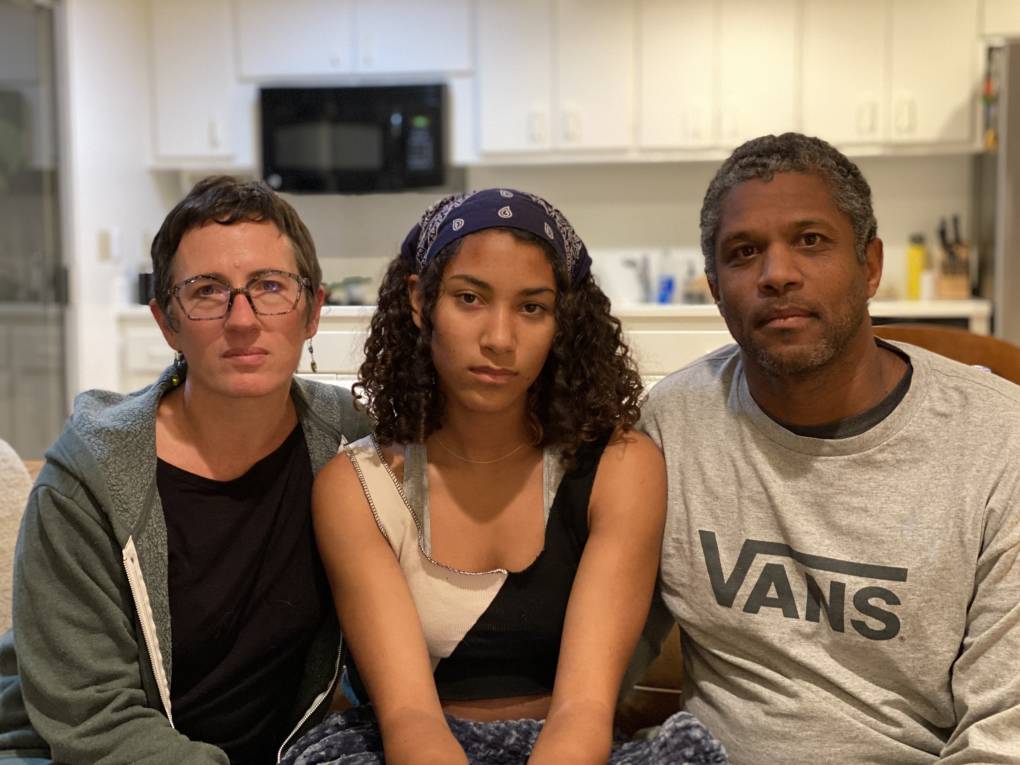
"caption": "Marlee Anderson, age 15, and her parents, Stacy Patton and Rod Anderson, decided to leave Nevada Union High due to the casual racism that they say was not addressed by the school.",
"description": null,
"title": "IMG_9584",
"credit": "Julia McEvoy/KQED",
"status": "inherit",
"altTag": "a young woman with curly hair sits between her parents in their kitchen",
"isLoading": false,
"fetchFailed": false
},
"news_11931252": {
"type": "attachments",
"id": "news_11931252",
"meta": {
"index": "attachments_1716263798",
"site": "news",
"id": "11931252",
"found": true
},
"parent": 11931179,
"imgSizes": {
"twentyfourteen-full-width": {
"file": "https://ww2.kqed.org/app/uploads/sites/10/2022/11/image-1038x576.jpg",
"width": 1038,
"mimeType": "image/jpeg",
"height": 576
},
"thumbnail": {
"file": "https://ww2.kqed.org/app/uploads/sites/10/2022/11/image-160x120.jpg",
"width": 160,
"mimeType": "image/jpeg",
"height": 120
},
"post-thumbnail": {
"file": "https://ww2.kqed.org/app/uploads/sites/10/2022/11/image-672x372.jpg",
"width": 672,
"mimeType": "image/jpeg",
"height": 372
},
"kqedFullSize": {
"file": "https://ww2.kqed.org/app/uploads/sites/10/2022/11/image.jpg",
"width": 1600,
"height": 1200
},
"large": {
"file": "https://ww2.kqed.org/app/uploads/sites/10/2022/11/image-1020x765.jpg",
"width": 1020,
"mimeType": "image/jpeg",
"height": 765
},
"1536x1536": {
"file": "https://ww2.kqed.org/app/uploads/sites/10/2022/11/image-1536x1152.jpg",
"width": 1536,
"mimeType": "image/jpeg",
"height": 1152
},
"medium": {
"file": "https://ww2.kqed.org/app/uploads/sites/10/2022/11/image-800x600.jpg",
"width": 800,
"mimeType": "image/jpeg",
"height": 600
}
},
"publishDate": 1667605784,
"modified": 1667606126,
"caption": "Oakland residents pose for photos in the weeks before Election Day.",
"description": null,
"title": "image",
"credit": "Beth LaBerge/KQED",
"status": "inherit",
"altTag": "A collage of the five portraits included in this story",
"isLoading": false,
"fetchFailed": false
},
"news_11844679": {
"type": "attachments",
"id": "news_11844679",
"meta": {
"index": "attachments_1716263798",
"site": "news",
"id": "11844679",
"found": true
},
"parent": 11844635,
"imgSizes": {
"apple_news_ca_landscape_5_5": {
"file": "https://ww2.kqed.org/app/uploads/sites/10/2020/10/RS45481_029_KQED_Oakland_RegistrarofVoters_10272020-qut-1044x783.jpg",
"width": 1044,
"mimeType": "image/jpeg",
"height": 783
},
"apple_news_ca_square_4_0": {
"file": "https://ww2.kqed.org/app/uploads/sites/10/2020/10/RS45481_029_KQED_Oakland_RegistrarofVoters_10272020-qut-470x470.jpg",
"width": 470,
"mimeType": "image/jpeg",
"height": 470
},
"twentyfourteen-full-width": {
"file": "https://ww2.kqed.org/app/uploads/sites/10/2020/10/RS45481_029_KQED_Oakland_RegistrarofVoters_10272020-qut-1038x576.jpg",
"width": 1038,
"mimeType": "image/jpeg",
"height": 576
},
"thumbnail": {
"file": "https://ww2.kqed.org/app/uploads/sites/10/2020/10/RS45481_029_KQED_Oakland_RegistrarofVoters_10272020-qut-160x107.jpg",
"width": 160,
"mimeType": "image/jpeg",
"height": 107
},
"post-thumbnail": {
"file": "https://ww2.kqed.org/app/uploads/sites/10/2020/10/RS45481_029_KQED_Oakland_RegistrarofVoters_10272020-qut-672x372.jpg",
"width": 672,
"mimeType": "image/jpeg",
"height": 372
},
"kqedFullSize": {
"file": "https://ww2.kqed.org/app/uploads/sites/10/2020/10/RS45481_029_KQED_Oakland_RegistrarofVoters_10272020-qut.jpg",
"width": 1920,
"height": 1280
},
"apple_news_ca_landscape_4_7": {
"file": "https://ww2.kqed.org/app/uploads/sites/10/2020/10/RS45481_029_KQED_Oakland_RegistrarofVoters_10272020-qut-632x474.jpg",
"width": 632,
"mimeType": "image/jpeg",
"height": 474
},
"large": {
"file": "https://ww2.kqed.org/app/uploads/sites/10/2020/10/RS45481_029_KQED_Oakland_RegistrarofVoters_10272020-qut-1020x680.jpg",
"width": 1020,
"mimeType": "image/jpeg",
"height": 680
},
"apple_news_ca_landscape_4_0": {
"file": "https://ww2.kqed.org/app/uploads/sites/10/2020/10/RS45481_029_KQED_Oakland_RegistrarofVoters_10272020-qut-536x402.jpg",
"width": 536,
"mimeType": "image/jpeg",
"height": 402
},
"apple_news_ca_portrait_12_9": {
"file": "https://ww2.kqed.org/app/uploads/sites/10/2020/10/RS45481_029_KQED_Oakland_RegistrarofVoters_10272020-qut-1122x1280.jpg",
"width": 1122,
"mimeType": "image/jpeg",
"height": 1280
},
"medium": {
"file": "https://ww2.kqed.org/app/uploads/sites/10/2020/10/RS45481_029_KQED_Oakland_RegistrarofVoters_10272020-qut-800x533.jpg",
"width": 800,
"mimeType": "image/jpeg",
"height": 533
},
"apple_news_ca_portrait_4_0": {
"file": "https://ww2.kqed.org/app/uploads/sites/10/2020/10/RS45481_029_KQED_Oakland_RegistrarofVoters_10272020-qut-354x472.jpg",
"width": 354,
"mimeType": "image/jpeg",
"height": 472
},
"apple_news_ca_portrait_9_7": {
"file": "https://ww2.kqed.org/app/uploads/sites/10/2020/10/RS45481_029_KQED_Oakland_RegistrarofVoters_10272020-qut-840x1120.jpg",
"width": 840,
"mimeType": "image/jpeg",
"height": 1120
},
"apple_news_ca_landscape_12_9": {
"file": "https://ww2.kqed.org/app/uploads/sites/10/2020/10/RS45481_029_KQED_Oakland_RegistrarofVoters_10272020-qut-1832x1280.jpg",
"width": 1832,
"mimeType": "image/jpeg",
"height": 1280
},
"apple_news_ca_square_9_7": {
"file": "https://ww2.kqed.org/app/uploads/sites/10/2020/10/RS45481_029_KQED_Oakland_RegistrarofVoters_10272020-qut-1104x1104.jpg",
"width": 1104,
"mimeType": "image/jpeg",
"height": 1104
},
"1536x1536": {
"file": "https://ww2.kqed.org/app/uploads/sites/10/2020/10/RS45481_029_KQED_Oakland_RegistrarofVoters_10272020-qut-1536x1024.jpg",
"width": 1536,
"mimeType": "image/jpeg",
"height": 1024
},
"apple_news_ca_portrait_4_7": {
"file": "https://ww2.kqed.org/app/uploads/sites/10/2020/10/RS45481_029_KQED_Oakland_RegistrarofVoters_10272020-qut-414x552.jpg",
"width": 414,
"mimeType": "image/jpeg",
"height": 552
},
"apple_news_ca_square_12_9": {
"file": "https://ww2.kqed.org/app/uploads/sites/10/2020/10/RS45481_029_KQED_Oakland_RegistrarofVoters_10272020-qut-1472x1280.jpg",
"width": 1472,
"mimeType": "image/jpeg",
"height": 1280
},
"apple_news_ca_portrait_5_5": {
"file": "https://ww2.kqed.org/app/uploads/sites/10/2020/10/RS45481_029_KQED_Oakland_RegistrarofVoters_10272020-qut-687x916.jpg",
"width": 687,
"mimeType": "image/jpeg",
"height": 916
},
"apple_news_ca_square_4_7": {
"file": "https://ww2.kqed.org/app/uploads/sites/10/2020/10/RS45481_029_KQED_Oakland_RegistrarofVoters_10272020-qut-550x550.jpg",
"width": 550,
"mimeType": "image/jpeg",
"height": 550
},
"apple_news_ca_landscape_9_7": {
"file": "https://ww2.kqed.org/app/uploads/sites/10/2020/10/RS45481_029_KQED_Oakland_RegistrarofVoters_10272020-qut-1376x1032.jpg",
"width": 1376,
"mimeType": "image/jpeg",
"height": 1032
},
"apple_news_ca_square_5_5": {
"file": "https://ww2.kqed.org/app/uploads/sites/10/2020/10/RS45481_029_KQED_Oakland_RegistrarofVoters_10272020-qut-912x912.jpg",
"width": 912,
"mimeType": "image/jpeg",
"height": 912
}
},
"publishDate": 1604093322,
"modified": 1604100635,
"caption": "A voter approaches an Alameda County Registrar of Voters ballot drop box in Oakland on Oct. 27, 2020.",
"description": "A voter approaches an Alameda County Registrar of Voters ballot drop box in Oakland on Oct. 27, 2020.",
"title": "RS45481_029_KQED_Oakland_RegistrarofVoters_10272020-qut",
"credit": "Beth LaBerge/KQED",
"status": "inherit",
"isLoading": false,
"fetchFailed": false
},
"news_11929192": {
"type": "attachments",
"id": "news_11929192",
"meta": {
"index": "attachments_1716263798",
"site": "news",
"id": "11929192",
"found": true
},
"parent": 11929082,
"imgSizes": {
"twentyfourteen-full-width": {
"file": "https://ww2.kqed.org/app/uploads/sites/10/2022/10/RS52303_021_SanLeandro_KidConnectPreschool_10222021-qut-1038x576.jpg",
"width": 1038,
"mimeType": "image/jpeg",
"height": 576
},
"thumbnail": {
"file": "https://ww2.kqed.org/app/uploads/sites/10/2022/10/RS52303_021_SanLeandro_KidConnectPreschool_10222021-qut-160x107.jpg",
"width": 160,
"mimeType": "image/jpeg",
"height": 107
},
"post-thumbnail": {
"file": "https://ww2.kqed.org/app/uploads/sites/10/2022/10/RS52303_021_SanLeandro_KidConnectPreschool_10222021-qut-672x372.jpg",
"width": 672,
"mimeType": "image/jpeg",
"height": 372
},
"kqedFullSize": {
"file": "https://ww2.kqed.org/app/uploads/sites/10/2022/10/RS52303_021_SanLeandro_KidConnectPreschool_10222021-qut.jpg",
"width": 1920,
"height": 1280
},
"large": {
"file": "https://ww2.kqed.org/app/uploads/sites/10/2022/10/RS52303_021_SanLeandro_KidConnectPreschool_10222021-qut-1020x680.jpg",
"width": 1020,
"mimeType": "image/jpeg",
"height": 680
},
"1536x1536": {
"file": "https://ww2.kqed.org/app/uploads/sites/10/2022/10/RS52303_021_SanLeandro_KidConnectPreschool_10222021-qut-1536x1024.jpg",
"width": 1536,
"mimeType": "image/jpeg",
"height": 1024
},
"medium": {
"file": "https://ww2.kqed.org/app/uploads/sites/10/2022/10/RS52303_021_SanLeandro_KidConnectPreschool_10222021-qut-800x533.jpg",
"width": 800,
"mimeType": "image/jpeg",
"height": 533
}
},
"publishDate": 1666026410,
"modified": 1666027546,
"caption": "A teacher works with students on an art project at Kids Connect Infant Care and Preschool in San Leandro. Changes at the state level as well as in San Francisco mean it could soon be easier for parents to access and navigate the early childhood education system.",
"description": null,
"title": "RS52303_021_SanLeandro_KidConnectPreschool_10222021-qut",
"credit": "Beth LaBerge/KQED",
"status": "inherit",
"altTag": "a young child in a colorful sweater works on an art project at preschool while a teacher helps",
"isLoading": false,
"fetchFailed": false
},
"news_11928975": {
"type": "attachments",
"id": "news_11928975",
"meta": {
"index": "attachments_1716263798",
"site": "news",
"id": "11928975",
"found": true
},
"parent": 11928967,
"imgSizes": {
"twentyfourteen-full-width": {
"file": "https://ww2.kqed.org/app/uploads/sites/10/2022/10/GettyImages-1385201947-1024x576.jpg",
"width": 1024,
"mimeType": "image/jpeg",
"height": 576
},
"thumbnail": {
"file": "https://ww2.kqed.org/app/uploads/sites/10/2022/10/GettyImages-1385201947-160x108.jpg",
"width": 160,
"mimeType": "image/jpeg",
"height": 108
},
"post-thumbnail": {
"file": "https://ww2.kqed.org/app/uploads/sites/10/2022/10/GettyImages-1385201947-672x372.jpg",
"width": 672,
"mimeType": "image/jpeg",
"height": 372
},
"kqedFullSize": {
"file": "https://ww2.kqed.org/app/uploads/sites/10/2022/10/GettyImages-1385201947.jpg",
"width": 1024,
"height": 690
},
"large": {
"file": "https://ww2.kqed.org/app/uploads/sites/10/2022/10/GettyImages-1385201947-1020x687.jpg",
"width": 1020,
"mimeType": "image/jpeg",
"height": 687
},
"medium": {
"file": "https://ww2.kqed.org/app/uploads/sites/10/2022/10/GettyImages-1385201947-800x539.jpg",
"width": 800,
"mimeType": "image/jpeg",
"height": 539
}
},
"publishDate": 1665779615,
"modified": 1665779726,
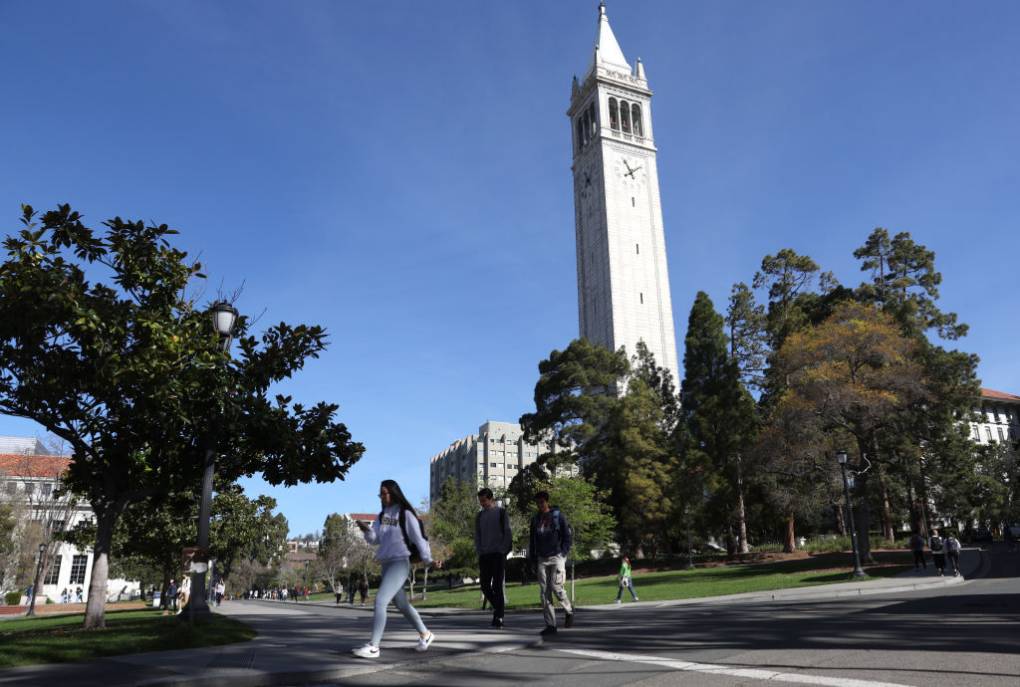
"caption": "People walk by Sather Tower on the UC Berkeley campus. The university system recently told the Supreme Court that 'despite its extensive efforts, UC struggles to enroll a student body that is sufficiently racially diverse to attain the educational benefits of diversity.'",
"description": null,
"title": "California Universities In A Legal Bind Amid Student Housing Shortage",
"credit": "Justin Sullivan/Getty Images",
"status": "inherit",
"altTag": "students walk on UC Berkeley's campus",
"isLoading": false,
"fetchFailed": false
},
"news_11928490": {
"type": "attachments",
"id": "news_11928490",
"meta": {
"index": "attachments_1716263798",
"site": "news",
"id": "11928490",
"found": true
},
"parent": 11928489,
"imgSizes": {
"twentyfourteen-full-width": {
"file": "https://ww2.kqed.org/app/uploads/sites/10/2022/10/gettyimages-1242693185_slide-d22d16df393050bcd22d9b9c1f034cbc1b8199cd-1038x576.jpg",
"width": 1038,
"mimeType": "image/jpeg",
"height": 576
},
"thumbnail": {
"file": "https://ww2.kqed.org/app/uploads/sites/10/2022/10/gettyimages-1242693185_slide-d22d16df393050bcd22d9b9c1f034cbc1b8199cd-160x107.jpg",
"width": 160,
"mimeType": "image/jpeg",
"height": 107
},
"post-thumbnail": {
"file": "https://ww2.kqed.org/app/uploads/sites/10/2022/10/gettyimages-1242693185_slide-d22d16df393050bcd22d9b9c1f034cbc1b8199cd-672x372.jpg",
"width": 672,
"mimeType": "image/jpeg",
"height": 372
},
"kqedFullSize": {
"file": "https://ww2.kqed.org/app/uploads/sites/10/2022/10/gettyimages-1242693185_slide-d22d16df393050bcd22d9b9c1f034cbc1b8199cd-scaled.jpg",
"width": 2560,
"height": 1706
},
"2048x2048": {
"file": "https://ww2.kqed.org/app/uploads/sites/10/2022/10/gettyimages-1242693185_slide-d22d16df393050bcd22d9b9c1f034cbc1b8199cd-2048x1365.jpg",
"width": 2048,
"mimeType": "image/jpeg",
"height": 1365
},
"large": {
"file": "https://ww2.kqed.org/app/uploads/sites/10/2022/10/gettyimages-1242693185_slide-d22d16df393050bcd22d9b9c1f034cbc1b8199cd-1020x680.jpg",
"width": 1020,
"mimeType": "image/jpeg",
"height": 680
},
"1536x1536": {
"file": "https://ww2.kqed.org/app/uploads/sites/10/2022/10/gettyimages-1242693185_slide-d22d16df393050bcd22d9b9c1f034cbc1b8199cd-1536x1023.jpg",
"width": 1536,
"mimeType": "image/jpeg",
"height": 1023
},
"full-width": {
"file": "https://ww2.kqed.org/app/uploads/sites/10/2022/10/gettyimages-1242693185_slide-d22d16df393050bcd22d9b9c1f034cbc1b8199cd-1920x1279.jpg",
"width": 1920,
"mimeType": "image/jpeg",
"height": 1279
},
"medium": {
"file": "https://ww2.kqed.org/app/uploads/sites/10/2022/10/gettyimages-1242693185_slide-d22d16df393050bcd22d9b9c1f034cbc1b8199cd-800x533.jpg",
"width": 800,
"mimeType": "image/jpeg",
"height": 533
}
},
"publishDate": 1665517681,
"modified": 1665517883,
"caption": "President Joe Biden speaks during a news conference with Miguel Cardona, US secretary of education, right, in the Roosevelt Room of the White House in Washington, DC, US, on Wednesday, Aug. 24, 2022. ",
"description": null,
"title": "President Joe Biden and U.S. Education Secretary Miguel Cardona announced a sweeping plan for student debt relief in August.",
"credit": "Bonnie Cash/UPI/Bloomberg via Getty Images",
"status": "inherit",
"altTag": "President Biden speaks at a podium, alongside another man.",
"isLoading": false,
"fetchFailed": false
},
"news_11928418": {
"type": "attachments",
"id": "news_11928418",
"meta": {
"index": "attachments_1716263798",
"site": "news",
"id": "11928418",
"found": true
},
"parent": 11928406,
"imgSizes": {
"twentyfourteen-full-width": {
"file": "https://ww2.kqed.org/app/uploads/sites/10/2022/10/RS59240_IMG_2668-1-1038x576.jpg",
"width": 1038,
"mimeType": "image/jpeg",
"height": 576
},
"thumbnail": {
"file": "https://ww2.kqed.org/app/uploads/sites/10/2022/10/RS59240_IMG_2668-1-160x120.jpg",
"width": 160,
"mimeType": "image/jpeg",
"height": 120
},
"post-thumbnail": {
"file": "https://ww2.kqed.org/app/uploads/sites/10/2022/10/RS59240_IMG_2668-1-672x372.jpg",
"width": 672,
"mimeType": "image/jpeg",
"height": 372
},
"kqedFullSize": {
"file": "https://ww2.kqed.org/app/uploads/sites/10/2022/10/RS59240_IMG_2668-1-scaled.jpg",
"width": 2560,
"height": 1920
},
"2048x2048": {
"file": "https://ww2.kqed.org/app/uploads/sites/10/2022/10/RS59240_IMG_2668-1-2048x1536.jpg",
"width": 2048,
"mimeType": "image/jpeg",
"height": 1536
},
"large": {
"file": "https://ww2.kqed.org/app/uploads/sites/10/2022/10/RS59240_IMG_2668-1-1020x765.jpg",
"width": 1020,
"mimeType": "image/jpeg",
"height": 765
},
"1536x1536": {
"file": "https://ww2.kqed.org/app/uploads/sites/10/2022/10/RS59240_IMG_2668-1-1536x1152.jpg",
"width": 1536,
"mimeType": "image/jpeg",
"height": 1152
},
"full-width": {
"file": "https://ww2.kqed.org/app/uploads/sites/10/2022/10/RS59240_IMG_2668-1-1920x1440.jpg",
"width": 1920,
"mimeType": "image/jpeg",
"height": 1440
},
"medium": {
"file": "https://ww2.kqed.org/app/uploads/sites/10/2022/10/RS59240_IMG_2668-1-800x600.jpg",
"width": 800,
"mimeType": "image/jpeg",
"height": 600
}
},
"publishDate": 1665448748,
"modified": 1665511736,
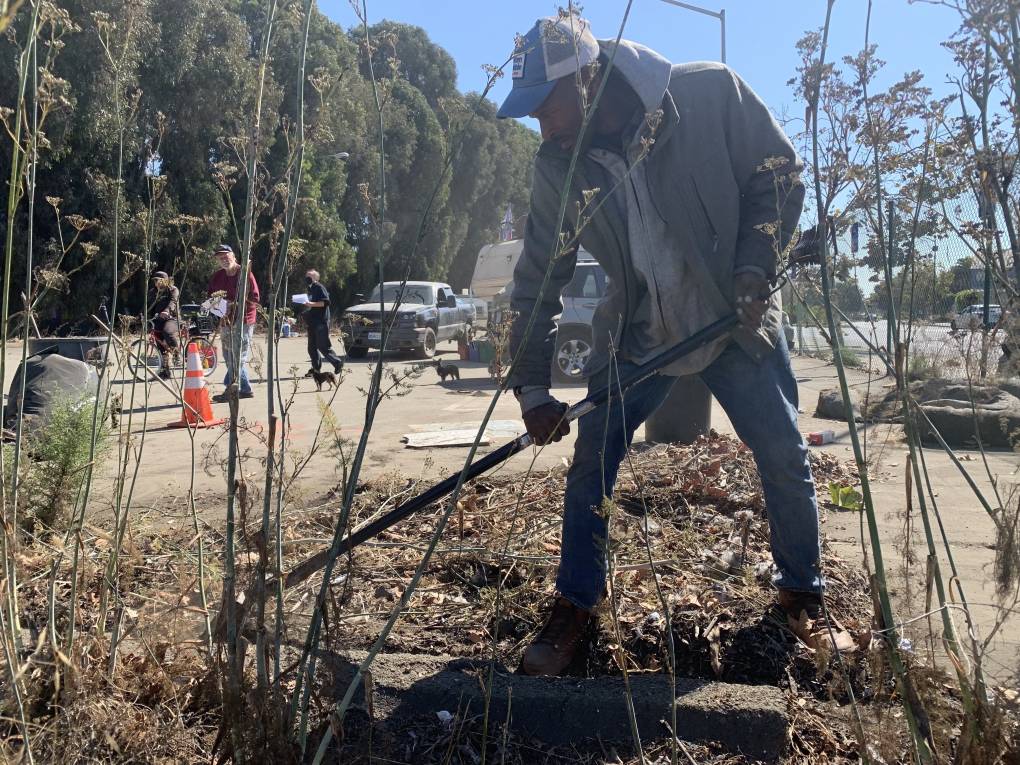
"caption": "LaMonte Ford clears weeds from a vacant lot on 34th Street and Mandela Parkway in West Oakland on Oct. 10, 2022. More than a dozen residents relocated to the lot on Sunday after being displaced from the nearby Wood Street encampment.",
"description": null,
"title": "RS59240_IMG_2668 (1)",
"credit": "Erin Baldassari/KQED",
"status": "inherit",
"altTag": "A man clears weeds in a vacant lot.",
"isLoading": false,
"fetchFailed": false
},
"news_11928121": {
"type": "attachments",
"id": "news_11928121",
"meta": {
"index": "attachments_1716263798",
"site": "news",
"id": "11928121",
"found": true
},
"parent": 11928111,
"imgSizes": {
"twentyfourteen-full-width": {
"file": "https://ww2.kqed.org/app/uploads/sites/10/2022/10/IMG_0041-1038x576.jpg",
"width": 1038,
"mimeType": "image/jpeg",
"height": 576
},
"thumbnail": {
"file": "https://ww2.kqed.org/app/uploads/sites/10/2022/10/IMG_0041-160x120.jpg",
"width": 160,
"mimeType": "image/jpeg",
"height": 120
},
"post-thumbnail": {
"file": "https://ww2.kqed.org/app/uploads/sites/10/2022/10/IMG_0041-672x372.jpg",
"width": 672,
"mimeType": "image/jpeg",
"height": 372
},
"kqedFullSize": {
"file": "https://ww2.kqed.org/app/uploads/sites/10/2022/10/IMG_0041-scaled.jpg",
"width": 2560,
"height": 1920
},
"2048x2048": {
"file": "https://ww2.kqed.org/app/uploads/sites/10/2022/10/IMG_0041-2048x1536.jpg",
"width": 2048,
"mimeType": "image/jpeg",
"height": 1536
},
"large": {
"file": "https://ww2.kqed.org/app/uploads/sites/10/2022/10/IMG_0041-1020x765.jpg",
"width": 1020,
"mimeType": "image/jpeg",
"height": 765
},
"1536x1536": {
"file": "https://ww2.kqed.org/app/uploads/sites/10/2022/10/IMG_0041-1536x1152.jpg",
"width": 1536,
"mimeType": "image/jpeg",
"height": 1152
},
"full-width": {
"file": "https://ww2.kqed.org/app/uploads/sites/10/2022/10/IMG_0041-1920x1440.jpg",
"width": 1920,
"mimeType": "image/jpeg",
"height": 1440
},
"medium": {
"file": "https://ww2.kqed.org/app/uploads/sites/10/2022/10/IMG_0041-800x600.jpg",
"width": 800,
"mimeType": "image/jpeg",
"height": 600
}
},
"publishDate": 1665182014,
"modified": 1665188790,
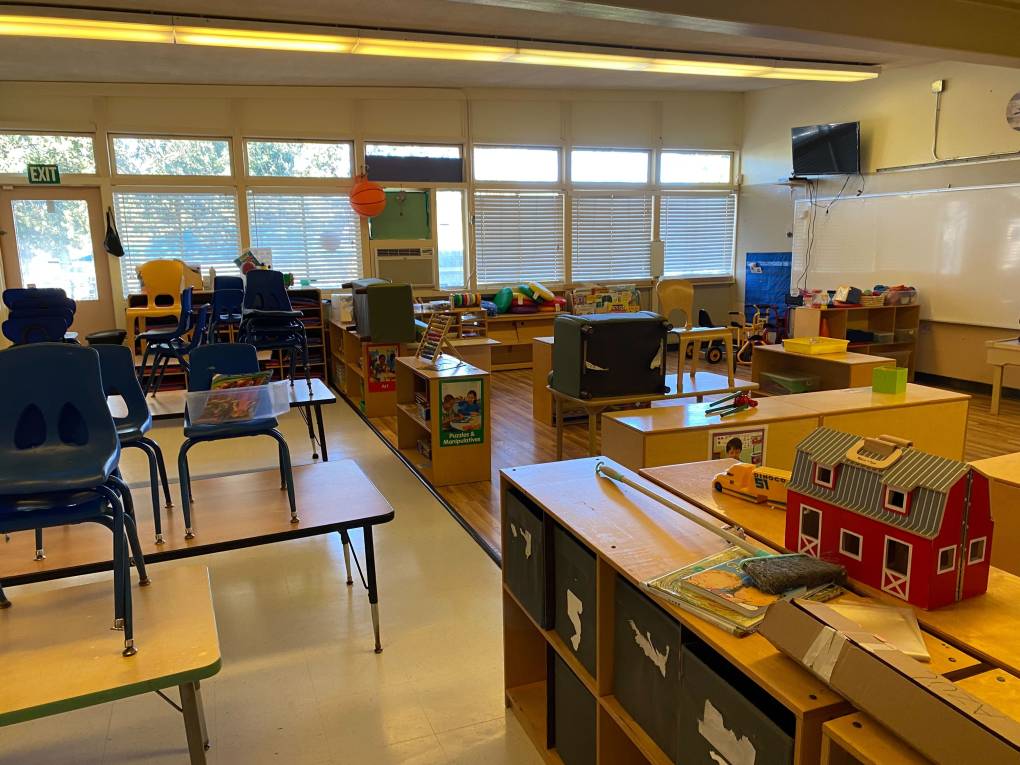
"caption": "A closed classroom at Old Gallinas Children's Center in San Rafael on Sept. 29, 2022. Funding is available, and plenty of families are waiting to enroll, but a teacher shortage has forced California to close classrooms since the start of the school year. A statewide survey of government-contracted early education programs last month indicate that they could be missing 4,000 to 5,000 teachers.",
"description": null,
"title": "IMG_0041",
"credit": "Daisy Nguyen/KQED",
"status": "inherit",
"altTag": "An empty preschool classroom with chairs on desks.",
"isLoading": false,
"fetchFailed": false
},
"news_11928107": {
"type": "attachments",
"id": "news_11928107",
"meta": {
"index": "attachments_1716263798",
"site": "news",
"id": "11928107",
"found": true
},
"parent": 11928031,
"imgSizes": {
"twentyfourteen-full-width": {
"file": "https://ww2.kqed.org/app/uploads/sites/10/2022/10/LITERARY-OAKLAND-SWR-IP-ME-2_frame_23609-1038x576.jpeg",
"width": 1038,
"mimeType": "image/jpeg",
"height": 576
},
"thumbnail": {
"file": "https://ww2.kqed.org/app/uploads/sites/10/2022/10/LITERARY-OAKLAND-SWR-IP-ME-2_frame_23609-160x90.jpeg",
"width": 160,
"mimeType": "image/jpeg",
"height": 90
},
"post-thumbnail": {
"file": "https://ww2.kqed.org/app/uploads/sites/10/2022/10/LITERARY-OAKLAND-SWR-IP-ME-2_frame_23609-672x372.jpeg",
"width": 672,
"mimeType": "image/jpeg",
"height": 372
},
"kqedFullSize": {
"file": "https://ww2.kqed.org/app/uploads/sites/10/2022/10/LITERARY-OAKLAND-SWR-IP-ME-2_frame_23609.jpeg",
"width": 1920,
"height": 1080
},
"large": {
"file": "https://ww2.kqed.org/app/uploads/sites/10/2022/10/LITERARY-OAKLAND-SWR-IP-ME-2_frame_23609-1020x574.jpeg",
"width": 1020,
"mimeType": "image/jpeg",
"height": 574
},
"1536x1536": {
"file": "https://ww2.kqed.org/app/uploads/sites/10/2022/10/LITERARY-OAKLAND-SWR-IP-ME-2_frame_23609-1536x864.jpeg",
"width": 1536,
"mimeType": "image/jpeg",
"height": 864
},
"medium": {
"file": "https://ww2.kqed.org/app/uploads/sites/10/2022/10/LITERARY-OAKLAND-SWR-IP-ME-2_frame_23609-800x450.jpeg",
"width": 800,
"mimeType": "image/jpeg",
"height": 450
}
},
"publishDate": 1665179679,
"modified": 1665179679,
"caption": null,
"description": null,
"title": "LITERARY OAKLAND SWR IP ME-2_frame_23609",
"credit": null,
"status": "inherit",
"altTag": null,
"isLoading": false,
"fetchFailed": false
},
"news_11927866": {
"type": "attachments",
"id": "news_11927866",
"meta": {
"index": "attachments_1716263798",
"site": "news",
"id": "11927866",
"found": true
},
"parent": 11927865,
"imgSizes": {
"twentyfourteen-full-width": {
"file": "https://ww2.kqed.org/app/uploads/sites/10/2022/10/RS59078_Oakland_Parents_003-qut-1038x576.jpg",
"width": 1038,
"mimeType": "image/jpeg",
"height": 576
},
"thumbnail": {
"file": "https://ww2.kqed.org/app/uploads/sites/10/2022/10/RS59078_Oakland_Parents_003-qut-160x107.jpg",
"width": 160,
"mimeType": "image/jpeg",
"height": 107
},
"post-thumbnail": {
"file": "https://ww2.kqed.org/app/uploads/sites/10/2022/10/RS59078_Oakland_Parents_003-qut-672x372.jpg",
"width": 672,
"mimeType": "image/jpeg",
"height": 372
},
"kqedFullSize": {
"file": "https://ww2.kqed.org/app/uploads/sites/10/2022/10/RS59078_Oakland_Parents_003-qut.jpg",
"width": 1920,
"height": 1281
},
"large": {
"file": "https://ww2.kqed.org/app/uploads/sites/10/2022/10/RS59078_Oakland_Parents_003-qut-1020x681.jpg",
"width": 1020,
"mimeType": "image/jpeg",
"height": 681
},
"1536x1536": {
"file": "https://ww2.kqed.org/app/uploads/sites/10/2022/10/RS59078_Oakland_Parents_003-qut-1536x1025.jpg",
"width": 1536,
"mimeType": "image/jpeg",
"height": 1025
},
"medium": {
"file": "https://ww2.kqed.org/app/uploads/sites/10/2022/10/RS59078_Oakland_Parents_003-qut-800x534.jpg",
"width": 800,
"mimeType": "image/jpeg",
"height": 534
}
},
"publishDate": 1665019118,
"modified": 1665098550,
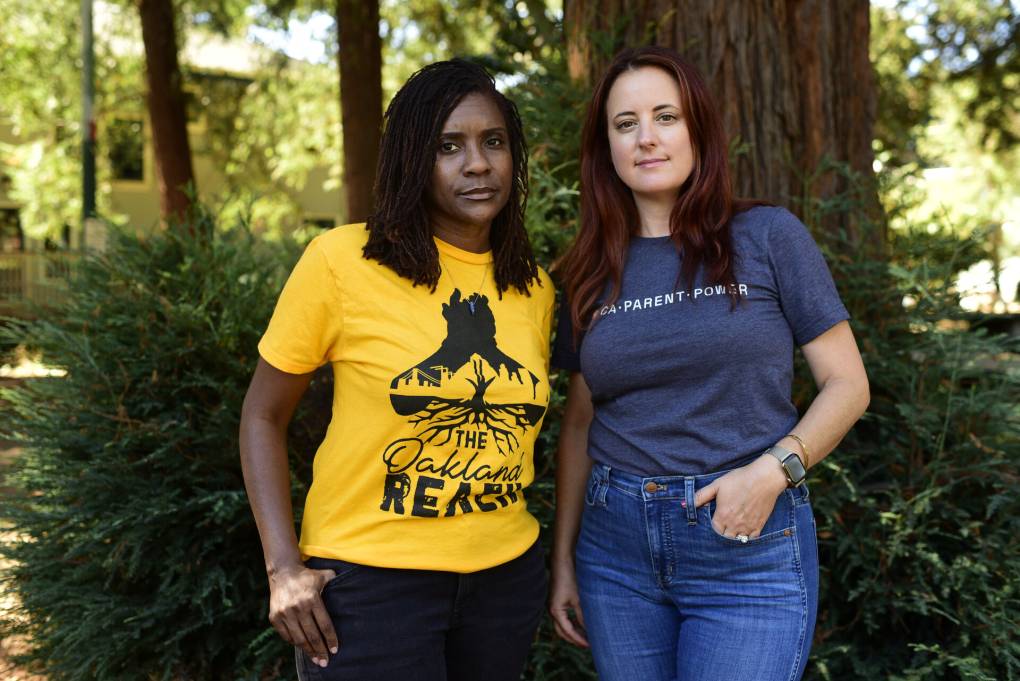
"caption": "Lakisha Young (left) and Megan Bacigalupi stand for a portrait at Dimond Park in Oakland on Oct. 5, 2022. Young is the founder of The Oakland REACH, and Bacigalupi is the co-founder of CA Parent Power, organizations that advocate for parents to have a say in public education policies.",
"description": null,
"title": "KQED_Parent_Advocacy",
"credit": "Marlena Sloss/KQED",
"status": "inherit",
"altTag": "Two women are standing in woods. The woman on the left is wearing a yellow t-shirt and the woman on the right is wearing a navy blue t-shirt.",
"isLoading": false,
"fetchFailed": false
},
"news_11927555": {
"type": "attachments",
"id": "news_11927555",
"meta": {
"index": "attachments_1716263798",
"site": "news",
"id": "11927555",
"found": true
},
"parent": 11927544,
"imgSizes": {
"twentyfourteen-full-width": {
"file": "https://ww2.kqed.org/app/uploads/sites/10/2022/10/GettyImages-1239458034-1038x576.jpg",
"width": 1038,
"mimeType": "image/jpeg",
"height": 576
},
"thumbnail": {
"file": "https://ww2.kqed.org/app/uploads/sites/10/2022/10/GettyImages-1239458034-160x103.jpg",
"width": 160,
"mimeType": "image/jpeg",
"height": 103
},
"post-thumbnail": {
"file": "https://ww2.kqed.org/app/uploads/sites/10/2022/10/GettyImages-1239458034-672x372.jpg",
"width": 672,
"mimeType": "image/jpeg",
"height": 372
},
"kqedFullSize": {
"file": "https://ww2.kqed.org/app/uploads/sites/10/2022/10/GettyImages-1239458034-scaled.jpg",
"width": 2560,
"height": 1650
},
"2048x2048": {
"file": "https://ww2.kqed.org/app/uploads/sites/10/2022/10/GettyImages-1239458034-2048x1320.jpg",
"width": 2048,
"mimeType": "image/jpeg",
"height": 1320
},
"large": {
"file": "https://ww2.kqed.org/app/uploads/sites/10/2022/10/GettyImages-1239458034-1020x658.jpg",
"width": 1020,
"mimeType": "image/jpeg",
"height": 658
},
"1536x1536": {
"file": "https://ww2.kqed.org/app/uploads/sites/10/2022/10/GettyImages-1239458034-1536x990.jpg",
"width": 1536,
"mimeType": "image/jpeg",
"height": 990
},
"full-width": {
"file": "https://ww2.kqed.org/app/uploads/sites/10/2022/10/GettyImages-1239458034-1920x1238.jpg",
"width": 1920,
"mimeType": "image/jpeg",
"height": 1238
},
"medium": {
"file": "https://ww2.kqed.org/app/uploads/sites/10/2022/10/GettyImages-1239458034-800x516.jpg",
"width": 800,
"mimeType": "image/jpeg",
"height": 516
}
},
"publishDate": 1664828655,
"modified": 1664828789,
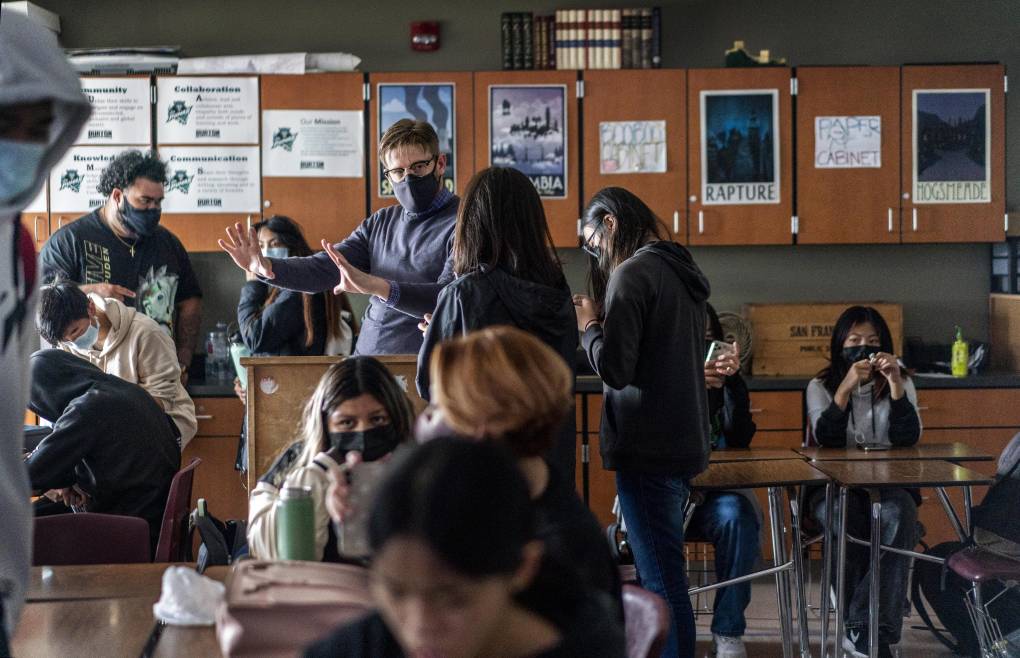
"caption": "History teacher Eirik Nielsen speaks to students at Burton High School in San Francisco. A new survey of California teachers sheds light on the profession's retention issues, finding the majority are experiencing stress and financial instability.",
"description": null,
"title": "Coronavirus Pandemic 2021",
"credit": "Melina Mara/The Washington Post via Getty Images",
"status": "inherit",
"altTag": "a high school teacher speaks to students in a packed classroom",
"isLoading": false,
"fetchFailed": false
}
},
"audioPlayerReducer": {
"postId": "stream_live",
"isPaused": true,
"isPlaying": false,
"pfsActive": false,
"pledgeModalIsOpen": true,
"playerDrawerIsOpen": false,
"liveAudioPlayStartedAt": 0,
"liveAudioPlayContext": ""
},
"authorsReducer": {
"byline_news_11932038": {
"type": "authors",
"id": "byline_news_11932038",
"meta": {
"override": true
},
"slug": "byline_news_11932038",
"name": "Cory Turner",
"isLoading": false
},
"byline_news_11928967": {
"type": "authors",
"id": "byline_news_11928967",
"meta": {
"override": true
},
"slug": "byline_news_11928967",
"name": "Michael Burke",
"isLoading": false
},
"byline_news_11928489": {
"type": "authors",
"id": "byline_news_11928489",
"meta": {
"override": true
},
"slug": "byline_news_11928489",
"name": "Cory Turner",
"isLoading": false
},
"astupi": {
"type": "authors",
"id": "70",
"meta": {
"index": "authors_1716337520",
"id": "70",
"found": true
},
"name": "Amanda Stupi",
"firstName": "Amanda",
"lastName": "Stupi",
"slug": "astupi",
"email": "astupi@kqed.org",
"display_author_email": false,
"staff_mastheads": [],
"title": "Senior Engagement Producer",
"bio": "Amanda joined KQED Science’s engagement team as a Senior Audience Engagement Strategist in the spring of 2019. She has helped craft messaging around wildfires, the coronavirus pandemic, climate change and many other stories. She has also brought KQED Science to new platforms such as Reddit’s Ask Me Anything series. Prior to joining KQED Science, Amanda spent seven years as an engagement producer with Forum, KQED’s daily live call-in show. She got her start in radio at KALW's weekly call in show, City Visions, before going on to an internship and stint at NPR's Talk of the Nation.\r\n\r\nPrior to journalism, Amanda taught English at Lowell High School. She's a native of Petaluma and currently lives under the \"South San Francisco the Industrial City\" sign in South City. She believes that engagement is vital to news’s future and that good journalism listens as much as it asks questions.",
"avatar": "https://secure.gravatar.com/avatar/e981c503e5c162da701dcaccfbf87e35?s=600&d=blank&r=g",
"twitter": null,
"facebook": null,
"instagram": null,
"linkedin": null,
"sites": [
{
"site": "arts",
"roles": [
"Contributor"
]
},
{
"site": "news",
"roles": [
"editor"
]
},
{
"site": "pop",
"roles": [
"contributor"
]
},
{
"site": "stateofhealth",
"roles": [
"editor"
]
},
{
"site": "science",
"roles": []
},
{
"site": "perspectives",
"roles": [
"editor"
]
}
],
"headData": {
"title": "Amanda Stupi | KQED",
"description": "Senior Engagement Producer",
"ogImgSrc": "https://secure.gravatar.com/avatar/e981c503e5c162da701dcaccfbf87e35?s=600&d=blank&r=g",
"twImgSrc": "https://secure.gravatar.com/avatar/e981c503e5c162da701dcaccfbf87e35?s=600&d=blank&r=g"
},
"isLoading": false,
"link": "/author/astupi"
},
"jmcevoy": {
"type": "authors",
"id": "231",
"meta": {
"index": "authors_1716337520",
"id": "231",
"found": true
},
"name": "Julia McEvoy",
"firstName": "Julia",
"lastName": "McEvoy",
"slug": "jmcevoy",
"email": "jmcevoy@KQED.org",
"display_author_email": true,
"staff_mastheads": [
"news"
],
"title": "KQED Senior Editor",
"bio": "Julia McEvoy is KQED's Senior Editor, Education Equity.\r\n\r\nJulia heads KQED’s education coverage examining inequities students face in Bay Area and California schools, and reports on what it will take to educate the next generation.\r\n\r\nJulia's editorial work has received a Peabody Award, a Casey Medal for Coverage of Children and Families, several Edward R. Murrow awards, as well as awards from the Public Radio News Directors Inc. and the Society for Professional Journalists.",
"avatar": "https://secure.gravatar.com/avatar/aec3ce21abe02b302fd33638abd56a22?s=600&d=blank&r=g",
"twitter": "juliamcevoy1",
"facebook": null,
"instagram": null,
"linkedin": null,
"sites": [
{
"site": "news",
"roles": []
},
{
"site": "stateofhealth",
"roles": [
"author"
]
}
],
"headData": {
"title": "Julia McEvoy | KQED",
"description": "KQED Senior Editor",
"ogImgSrc": "https://secure.gravatar.com/avatar/aec3ce21abe02b302fd33638abd56a22?s=600&d=blank&r=g",
"twImgSrc": "https://secure.gravatar.com/avatar/aec3ce21abe02b302fd33638abd56a22?s=600&d=blank&r=g"
},
"isLoading": false,
"link": "/author/jmcevoy"
},
"kqed": {
"type": "authors",
"id": "236",
"meta": {
"index": "authors_1716337520",
"id": "236",
"found": true
},
"name": "KQED News Staff",
"firstName": "KQED News Staff",
"lastName": null,
"slug": "kqed",
"email": "faq@kqed.org",
"display_author_email": false,
"staff_mastheads": [],
"title": null,
"bio": null,
"avatar": "https://secure.gravatar.com/avatar/ef0e801a68c4c54afa9180db14084167?s=600&d=blank&r=g",
"twitter": null,
"facebook": null,
"instagram": null,
"linkedin": null,
"sites": [
{
"site": "arts",
"roles": [
"contributor"
]
},
{
"site": "news",
"roles": [
"editor"
]
},
{
"site": "futureofyou",
"roles": [
"author"
]
}
],
"headData": {
"title": "KQED News Staff | KQED",
"description": null,
"ogImgSrc": "https://secure.gravatar.com/avatar/ef0e801a68c4c54afa9180db14084167?s=600&d=blank&r=g",
"twImgSrc": "https://secure.gravatar.com/avatar/ef0e801a68c4c54afa9180db14084167?s=600&d=blank&r=g"
},
"isLoading": false,
"link": "/author/kqed"
},
"ecruzguevarra": {
"type": "authors",
"id": "8654",
"meta": {
"index": "authors_1716337520",
"id": "8654",
"found": true
},
"name": "Ericka Cruz Guevarra",
"firstName": "Ericka",
"lastName": "Cruz Guevarra",
"slug": "ecruzguevarra",
"email": "ecruzguevarra@kqed.org",
"display_author_email": true,
"staff_mastheads": [
"news"
],
"title": "Producer, The Bay Podcast",
"bio": "Ericka Cruz Guevarra is host of \u003ca href=\"https://www.kqed.org/podcasts/thebay\">\u003cem>The Bay\u003c/em>\u003c/a> podcast at KQED. Before host, she was the show’s producer. Her work in that capacity includes a three-part reported series on policing in Vallejo, which won a 2020 excellence in journalism award from the Society of Professional Journalists. Ericka has worked as a breaking news reporter at Oregon Public Broadcasting, helped produce the Code Switch podcast, and was KQED’s inaugural Raul Ramirez Diversity Fund intern. She’s also an alumna of NPR’s Next Generation Radio program. Send her an email if you have strong feelings about whether Fairfield and Suisun City are the Bay. Ericka is represented by SAG-AFTRA.",
"avatar": "https://secure.gravatar.com/avatar/accefc1de4bafc7e234b69bcb9b6f6536c130fd84709bc3069ef11a78787e1bb?s=600&d=blank&r=g",
"twitter": "NotoriousECG",
"bluesky": null,
"facebook": null,
"instagram": null,
"linkedin": null,
"sites": [
{
"site": "arts",
"roles": [
"subscriber"
]
},
{
"site": "news",
"roles": [
"editor",
"manage_categories"
]
},
{
"site": "futureofyou",
"roles": [
"subscriber"
]
},
{
"site": "stateofhealth",
"roles": [
"subscriber"
]
},
{
"site": "science",
"roles": [
"editor"
]
},
{
"site": "forum",
"roles": [
"subscriber"
]
}
],
"headData": {
"title": "Ericka Cruz Guevarra | KQED",
"description": "Producer, The Bay Podcast",
"ogImgSrc": "https://secure.gravatar.com/avatar/accefc1de4bafc7e234b69bcb9b6f6536c130fd84709bc3069ef11a78787e1bb?s=600&d=blank&r=g",
"twImgSrc": "https://secure.gravatar.com/avatar/accefc1de4bafc7e234b69bcb9b6f6536c130fd84709bc3069ef11a78787e1bb?s=600&d=blank&r=g"
},
"isLoading": false,
"link": "/author/ecruzguevarra"
},
"bwatt": {
"type": "authors",
"id": "11238",
"meta": {
"index": "authors_1716337520",
"id": "11238",
"found": true
},
"name": "Brian Watt",
"firstName": "Brian",
"lastName": "Watt",
"slug": "bwatt",
"email": "bwatt@KQED.org",
"display_author_email": false,
"staff_mastheads": [
"news"
],
"title": "Morning News Anchor",
"bio": "Brian Watt is KQED's morning radio news anchor. He joined the KQED News team in April of 2016. Prior to that, he worked as a Reporter for KPCC in Los Angeles and a producer at \u003cem>Marketplace.\u003c/em>\r\n\r\nDuring eight years at KPCC, Brian covered business and economics, and his work won several awards. In 2008, he won the Los Angeles Press Club’s first-place award for Business and Financial Reporting, Broadcast. He’s also received honorable mention and been first runner up for the Press Club’s Radio Journalist of the Year. He won two Golden Mike awards from the Radio and TV News Association of Southern California.\r\n\r\nBrian holds degrees in theater from Yale University and the Sorbonne, and has worked as an actor in France, Italy, Brazil, Hungary and . . . Hollywood. He appeared in a few television shows, including \u003cem>The West Wing, Judging Amy\u003c/em> and \u003cem>The District.\u003c/em>\r\n\r\nEmail: bwatt@KQED.org Twitter: @RadioBWatt",
"avatar": "https://secure.gravatar.com/avatar/55393ff57ed34e2be773ba4789dd6a19?s=600&d=blank&r=g",
"twitter": "@RadioBWatt",
"facebook": null,
"instagram": null,
"linkedin": null,
"sites": [
{
"site": "arts",
"roles": [
"contributor"
]
},
{
"site": "news",
"roles": [
"editor"
]
}
],
"headData": {
"title": "Brian Watt | KQED",
"description": "Morning News Anchor",
"ogImgSrc": "https://secure.gravatar.com/avatar/55393ff57ed34e2be773ba4789dd6a19?s=600&d=blank&r=g",
"twImgSrc": "https://secure.gravatar.com/avatar/55393ff57ed34e2be773ba4789dd6a19?s=600&d=blank&r=g"
},
"isLoading": false,
"link": "/author/bwatt"
},
"lsarah": {
"type": "authors",
"id": "11626",
"meta": {
"index": "authors_1716337520",
"id": "11626",
"found": true
},
"name": "Lakshmi Sarah",
"firstName": "Lakshmi",
"lastName": "Sarah",
"slug": "lsarah",
"email": "lsarah@kqed.org",
"display_author_email": false,
"staff_mastheads": [],
"title": "Digital Producer",
"bio": "Lakshmi Sarah is an educator, author and journalist with a focus on innovative storytelling. She has worked with newspapers, radio and magazines from Ahmedabad, India to Los Angeles, California. She has written and produced for Die Zeit, Global Voices, AJ+, KQED, Fusion Media Group and the New York Times.",
"avatar": "https://secure.gravatar.com/avatar/652dcaecd8b28826fc17a8b2d6bb4e93?s=600&d=blank&r=g",
"twitter": "lakitalki",
"facebook": null,
"instagram": "https://www.instagram.com/laki.talki/",
"linkedin": "https://www.linkedin.com/in/lakisarah/",
"sites": [
{
"site": "arts",
"roles": []
},
{
"site": "news",
"roles": []
},
{
"site": "bayareabites",
"roles": []
},
{
"site": "science",
"roles": []
}
],
"headData": {
"title": "Lakshmi Sarah | KQED",
"description": "Digital Producer",
"ogImgSrc": "https://secure.gravatar.com/avatar/652dcaecd8b28826fc17a8b2d6bb4e93?s=600&d=blank&r=g",
"twImgSrc": "https://secure.gravatar.com/avatar/652dcaecd8b28826fc17a8b2d6bb4e93?s=600&d=blank&r=g"
},
"isLoading": false,
"link": "/author/lsarah"
},
"amontecillo": {
"type": "authors",
"id": "11649",
"meta": {
"index": "authors_1716337520",
"id": "11649",
"found": true
},
"name": "Alan Montecillo",
"firstName": "Alan",
"lastName": "Montecillo",
"slug": "amontecillo",
"email": "amontecillo@kqed.org",
"display_author_email": false,
"staff_mastheads": [
"news"
],
"title": "KQED Contributor",
"bio": "Alan Montecillo is the senior editor of \u003cem>\u003ca href=\"http://kqed.org/thebay\">The Bay\u003c/a>, \u003c/em> KQED's local news podcast. Before moving to the Bay Area, he worked as a senior talk show producer for WILL in Champaign-Urbana, Illinois and at Oregon Public Broadcasting in Portland, Oregon. He has won journalism awards from the Society of Professional Journalists Northern California, the Public Media Journalists Association, The Signal Awards, and has also received a regional Edward R. Murrow award. Alan is a Filipino American from Hong Kong and a graduate of Reed College.",
"avatar": "https://secure.gravatar.com/avatar/268f53a2066899ea9efdd8a5900218b17c822d9862cbc9326cccec53ef41d349?s=600&d=blank&r=g",
"twitter": "alanmontecillo",
"bluesky": null,
"facebook": null,
"instagram": null,
"linkedin": null,
"sites": [
{
"site": "",
"roles": [
"editor"
]
},
{
"site": "news",
"roles": [
"editor",
"manage_categories"
]
}
],
"headData": {
"title": "Alan Montecillo | KQED",
"description": "KQED Contributor",
"ogImgSrc": "https://secure.gravatar.com/avatar/268f53a2066899ea9efdd8a5900218b17c822d9862cbc9326cccec53ef41d349?s=600&d=blank&r=g",
"twImgSrc": "https://secure.gravatar.com/avatar/268f53a2066899ea9efdd8a5900218b17c822d9862cbc9326cccec53ef41d349?s=600&d=blank&r=g"
},
"isLoading": false,
"link": "/author/amontecillo"
},
"ebaldassari": {
"type": "authors",
"id": "11652",
"meta": {
"index": "authors_1716337520",
"id": "11652",
"found": true
},
"name": "Erin Baldassari",
"firstName": "Erin",
"lastName": "Baldassari",
"slug": "ebaldassari",
"email": "ebaldassari@KQED.org",
"display_author_email": true,
"staff_mastheads": [
"news"
],
"title": "Staff Writer",
"bio": "Erin Baldassari covers housing for KQED. She's a former print journalist and most recently worked as the transportation reporter for the \u003cem>Mercury News\u003c/em> and \u003cem>East Bay Times. \u003c/em>There, she focused on how the Bay Area’s housing shortage has changed the way people move around the region. She also served on the \u003cem>East Bay Times\u003c/em>’ 2017 Pulitzer Prize-winning team for coverage of the Ghost Ship Fire in Oakland. Prior to that, Erin worked as a breaking news and general assignment reporter for a variety of outlets in the Bay Area and the greater Boston area. A Tufts University alumna, Erin grew up in the foothills of the Sierra Nevada mountains and in Sonoma County. She is a life-long KQED listener.",
"avatar": "https://secure.gravatar.com/avatar/5e95cad64a8ca08288082212e199d2b0cbeb4fd8e8ef5339395f361032bbe005?s=600&d=blank&r=g",
"twitter": "e_baldi",
"bluesky": null,
"facebook": null,
"instagram": null,
"linkedin": null,
"sites": [
{
"site": "news",
"roles": [
"edit_others_posts",
"editor"
]
},
{
"site": "science",
"roles": [
"editor"
]
},
{
"site": "liveblog",
"roles": [
"editor"
]
}
],
"headData": {
"title": "Erin Baldassari | KQED",
"description": "Staff Writer",
"ogImgSrc": "https://secure.gravatar.com/avatar/5e95cad64a8ca08288082212e199d2b0cbeb4fd8e8ef5339395f361032bbe005?s=600&d=blank&r=g",
"twImgSrc": "https://secure.gravatar.com/avatar/5e95cad64a8ca08288082212e199d2b0cbeb4fd8e8ef5339395f361032bbe005?s=600&d=blank&r=g"
},
"isLoading": false,
"link": "/author/ebaldassari"
},
"agonzalez": {
"type": "authors",
"id": "11724",
"meta": {
"index": "authors_1716337520",
"id": "11724",
"found": true
},
"name": "Alexander Gonzalez",
"firstName": "Alexander",
"lastName": "Gonzalez",
"slug": "agonzalez",
"email": "AlexanderGonzalez@KQED.org",
"display_author_email": false,
"staff_mastheads": [
"news"
],
"title": "KQED Contributor",
"bio": null,
"avatar": "https://secure.gravatar.com/avatar/9e291ed34e154df4c662edf858b641d70b4859939bfe40be478408f9dfd057d2?s=600&d=blank&r=g",
"twitter": null,
"bluesky": null,
"facebook": null,
"instagram": null,
"linkedin": null,
"sites": [
{
"site": "arts",
"roles": [
"editor"
]
},
{
"site": "news",
"roles": [
"editor"
]
},
{
"site": "science",
"roles": [
"editor"
]
}
],
"headData": {
"title": "Alexander Gonzalez | KQED",
"description": "KQED Contributor",
"ogImgSrc": "https://secure.gravatar.com/avatar/9e291ed34e154df4c662edf858b641d70b4859939bfe40be478408f9dfd057d2?s=600&d=blank&r=g",
"twImgSrc": "https://secure.gravatar.com/avatar/9e291ed34e154df4c662edf858b641d70b4859939bfe40be478408f9dfd057d2?s=600&d=blank&r=g"
},
"isLoading": false,
"link": "/author/agonzalez"
},
"nnavarro": {
"type": "authors",
"id": "11756",
"meta": {
"index": "authors_1716337520",
"id": "11756",
"found": true
},
"name": "Natalia Navarro",
"firstName": "Natalia",
"lastName": "Navarro",
"slug": "nnavarro",
"email": "nnavarro@kqed.org",
"display_author_email": true,
"staff_mastheads": [
"news"
],
"title": "Afternoon News Anchor",
"bio": "Natalia Navarro is KQED's afternoon radio news anchor. She came to KQED in 2021 from Colorado Public Radio, where she was a reporter and host. She has received several awards for her work covering daily and breaking news from professional organizations such as the San Francisco Press Club, Society of Professional Journalists and the Colorado Broadcasters Association. Natalia is originally from Tucson, Arizona, where she got her start in journalism writing for the Arizona Daily Star, Arizona Public Media and the Tucson Weekly. Natalia earned her bachelor's degree in journalism and economics, and her master's degree in journalism from the University of Arizona.",
"avatar": "https://secure.gravatar.com/avatar/a2bdb19fd9520bdea295a2d5f9b2ad65ec51cf0bf559fb1cc041d3a0a04d62ad?s=600&d=blank&r=g",
"twitter": "@NataliaVNavarro",
"bluesky": null,
"facebook": null,
"instagram": null,
"linkedin": null,
"sites": [
{
"site": "news",
"roles": [
"editor"
]
}
],
"headData": {
"title": "Natalia Navarro | KQED",
"description": "Afternoon News Anchor",
"ogImgSrc": "https://secure.gravatar.com/avatar/a2bdb19fd9520bdea295a2d5f9b2ad65ec51cf0bf559fb1cc041d3a0a04d62ad?s=600&d=blank&r=g",
"twImgSrc": "https://secure.gravatar.com/avatar/a2bdb19fd9520bdea295a2d5f9b2ad65ec51cf0bf559fb1cc041d3a0a04d62ad?s=600&d=blank&r=g"
},
"isLoading": false,
"link": "/author/nnavarro"
},
"mesquinca": {
"type": "authors",
"id": "11802",
"meta": {
"index": "authors_1716337520",
"id": "11802",
"found": true
},
"name": "Maria Esquinca",
"firstName": "Maria",
"lastName": "Esquinca",
"slug": "mesquinca",
"email": "mesquinca@kqed.org",
"display_author_email": false,
"staff_mastheads": [],
"title": "Producer, The Bay",
"bio": "María Esquinca is a producer of The Bay. Before that, she was a New York Women’s Foundation IGNITE Fellow at Latino USA. She worked at Radio Bilingue where she covered the San Joaquin Valley. Maria has interned at WLRN, News 21, The New York Times Student Journalism Institute and at Crain’s Detroit Business as a Dow Jones News Fund Business Reporting Intern. She is an MFA graduate from the University of Miami. In 2017, she graduated from the Walter Cronkite School of Journalism and Mass Communication with a Master of Mass Communication. A fronteriza, she was born in Ciudad Juárez, Chihuahua, Mexico and grew up in El Paso, Texas.",
"avatar": "https://secure.gravatar.com/avatar/77cedba18aae91da775038ba06dcd8d0?s=600&d=blank&r=g",
"twitter": "@m_esquinca",
"facebook": null,
"instagram": null,
"linkedin": null,
"sites": [
{
"site": "news",
"roles": []
}
],
"headData": {
"title": "Maria Esquinca | KQED",
"description": "Producer, The Bay",
"ogImgSrc": "https://secure.gravatar.com/avatar/77cedba18aae91da775038ba06dcd8d0?s=600&d=blank&r=g",
"twImgSrc": "https://secure.gravatar.com/avatar/77cedba18aae91da775038ba06dcd8d0?s=600&d=blank&r=g"
},
"isLoading": false,
"link": "/author/mesquinca"
},
"daisynguyen": {
"type": "authors",
"id": "11829",
"meta": {
"index": "authors_1716337520",
"id": "11829",
"found": true
},
"name": "Daisy Nguyen",
"firstName": "Daisy",
"lastName": "Nguyen",
"slug": "daisynguyen",
"email": "daisynguyen@kqed.org",
"display_author_email": true,
"staff_mastheads": [
"news"
],
"title": "KQED Contributor",
"bio": "I have covered early childhood education and child care for KQED since 2022. I focus on policies aimed at increasing access to early care and education and how they shape individual lives. I've been a journalist for more than two decades, with most of that time devoted to covering breaking news throughout California for The Associated Press. I grew up in San Francisco and studied at UC Davis and Columbia University's Graduate School of Journalism. I live in Oakland with my husband and two kids.",
"avatar": "https://secure.gravatar.com/avatar/2da2127c27f7143b53ebd419800fd55f?s=600&d=blank&r=g",
"twitter": null,
"facebook": null,
"instagram": null,
"linkedin": "https://www.linkedin.com/in/daisynguyen/",
"sites": [
{
"site": "news",
"roles": [
"author"
]
},
{
"site": "liveblog",
"roles": [
"author"
]
}
],
"headData": {
"title": "Daisy Nguyen | KQED",
"description": "KQED Contributor",
"ogImgSrc": "https://secure.gravatar.com/avatar/2da2127c27f7143b53ebd419800fd55f?s=600&d=blank&r=g",
"twImgSrc": "https://secure.gravatar.com/avatar/2da2127c27f7143b53ebd419800fd55f?s=600&d=blank&r=g"
},
"isLoading": false,
"link": "/author/daisynguyen"
}
},
"pagesReducer": {
"news_category_education": {
"type": "terms",
"id": "news_18540",
"meta": {
"index": "terms_1716263798",
"site": "news",
"id": "18540",
"score": 10.973221
},
"featImg": null,
"name": "Education",
"description": null,
"taxonomy": "category",
"headData": {
"twImgId": null,
"twTitle": null,
"ogTitle": null,
"ogImgId": null,
"twDescription": null,
"description": null,
"title": "Education Archives | KQED News",
"ogDescription": null
},
"ttid": 2595,
"slug": "education",
"isLoading": false,
"title": "Education",
"pageMeta": {
"site": "news",
"WpPageTemplate": "page-topic-editorial",
"currentPage": 66
},
"blocks": [
{
"blockName": "kqed/post-list",
"attrs": {
"layout": "cardArticle2",
"query": "posts/news?category=education",
"seeMore": false,
"paginated": true,
"page": 66
}
},
{
"blockName": "kqed/ad"
}
]
}
},
"pfsSessionReducer": {},
"postsReducer": {
"stream_live": {
"type": "live",
"id": "stream_live",
"audioUrl": "https://streams.kqed.org/kqedradio",
"title": "Live Stream",
"excerpt": "Live Stream information currently unavailable.",
"link": "/radio",
"featImg": "",
"label": {
"name": "KQED Live",
"link": "/"
}
},
"stream_kqedNewscast": {
"type": "posts",
"id": "stream_kqedNewscast",
"audioUrl": "https://www.kqed.org/.stream/anon/radio/RDnews/newscast.mp3?_=1",
"title": "KQED Newscast",
"featImg": "",
"label": {
"name": "88.5 FM",
"link": "/"
}
},
"news_11932038": {
"type": "posts",
"id": "news_11932038",
"meta": {
"index": "posts_1716263798",
"site": "news",
"id": "11932038",
"score": null,
"sort": [
1668199283000
]
},
"guestAuthors": [],
"slug": "a-federal-judge-calls-student-loan-relief-unlawful-deepening-limbo-for-borrowers",
"title": "A Federal Judge Calls Student Loan Relief Unlawful, Deepening Limbo for Borrowers",
"publishDate": 1668199283,
"format": "standard",
"headTitle": "A Federal Judge Calls Student Loan Relief Unlawful, Deepening Limbo for Borrowers | KQED",
"labelTerm": {
"term": 253,
"site": "news"
},
"content": "\u003cp>President Biden’s plan to erase federal student loan debts for tens of millions of borrowers hit a legal wall Thursday, when a U.S. District Court judge in Texas called it unlawful and vacated the debt relief program.\u003c/p>\n\u003cp>The federal government quickly appealed the decision, which came just weeks before student loan payments are set to resume in January. The program was already on hold while a federal appeals court in St. Louis considers a separate lawsuit by six states challenging it.\u003c/p>\n\u003ch2>The judge’s argument for striking down debt relief\u003c/h2>\n\u003cp>In Thursday’s ruling, Judge Mark T. Pittman, who was appointed by former President Donald Trump, wrote that the program was a “complete usurpation” of congressional authority by the executive branch.\u003c/p>\n\u003cp>Pittman rejected the Biden administration’s arguments that, in a law known as the HEROES Act, Congress had already given the president the power to erase student loan debts in a time of national emergency and that the COVID-19 pandemic is just such an emergency.\u003c/p>\n\u003cp>“In this country, we are not ruled by an all-powerful executive with a pen and a phone,” Pittman wrote. “Instead, we are ruled by a Constitution that provides for three distinct and independent branches of government.”\u003c/p>\n\u003cp>[ad fullwidth]\u003c/p>\n\u003cp>“We strongly disagree with the District Court’s ruling on our student debt relief program,” White House spokesperson Karine Jean-Pierre said. “The President and this Administration are determined to help working and middle-class Americans get back on their feet, while our opponents – backed by extreme Republican special interests – sued to block millions of Americans from getting much-needed relief.”\u003c/p>\n\u003ch2>The appeals process could take weeks, leaving borrowers in limbo\u003c/h2>\n\u003cp>Late Thursday, the White House confirmed that it had already appealed the decision. That appeal will go to the 5th Circuit Court of Appeals,\u003ca href=\"https://www.theguardian.com/law/2021/nov/15/fifth-circuit-court-appeals-most-extreme-us\"> which has a reputation\u003c/a> as the most conservative of all federal appeals courts. From there, another appeal would land this case at the U.S. Supreme Court, which has so far \u003ca href=\"https://www.kqed.org/news/11929718/the-supreme-court-wont-block-the-student-loan-debt-relief-program-at-least-for-now\">refused to hear challenges\u003c/a> to Biden’s relief plan. Borrowers likely won’t have a final answer on debt relief for weeks. [aside label=\"Related Stories\" tag=\"student-debt-relief-plan\"] Meanwhile, student loan payments are set to resume in January. Back in September, U.S. Education Secretary Miguel Cardona \u003ca href=\"https://www.npr.org/2022/09/15/1123108811/biden-student-loans-debt-cancellation-pslf\">told NPR\u003c/a> he hoped to process as many debt relief applications as possible before that payment pause ends on Jan. 1. Thursday’s decision makes it unlikely the department will reach that goal.\u003c/p>\n\u003cp>\u003ca href=\"https://www.whitehouse.gov/briefing-room/statements-releases/2022/11/03/by-the-numbers-millions-of-americans-student-loan-costs-will-rise-dramatically-under-republican-officials-plans/\">President Biden announced on Nov. 3\u003c/a> that close to 26 million Americans had provided the necessary information to the Education Department to qualify for relief and that the department was already on track to approve cancellation for 16 million borrowers.\u003c/p>\n\u003cp>Now, the department cannot cancel those loans without a reversal of fortune in the courts.\u003c/p>\n\u003ch2>The lawsuit at the center of this decision\u003c/h2>\n\u003cp>The case at the center of Thursday’s ruling was brought by the conservative Job Creators Network Foundation on behalf of two federal student loan borrowers who believe they were unfairly excluded from relief.\u003c/p>\n\u003cp>One borrower’s federal loans are held by a commercial lender, not the U.S. Department of Education, and don’t qualify for relief. The other borrower does qualify for $10,000 in relief but believes, because he is currently low-income, that he should receive the same level of relief – $20,000 – as borrowers who were low-income at the time they attended college.\u003c/p>\n\u003cp>The plaintiffs argued, among other things, that the Biden administration didn’t follow federal rules and should have allowed borrowers, and the general public, to voice their concerns about eligibility before the program was rolled out, though the administration countered that the HEROES Act specifically allows it to forego this kind of process.\u003c/p>\n\u003cp>“This ruling protects the rule of law which requires all Americans to have their voices heard by their federal government…” said Elaine Parker, president of the Job Creators Network Foundation, in a Thursday statement. “We hope that the court’s decision today will lay the groundwork for real solutions to the student loan crisis.”\u003c/p>\n\u003cp>But borrower advocates and some legal experts were quick to find fault with the judge’s decision.\u003c/p>\n\u003cp>“My first response was, this is motivated reasoning by a judge who wants to come to this result. The legal analysis is flawed,” says Luke Herrine, an assistant professor of law at the University of Alabama.\u003c/p>\n\u003cp>Persis Yu, managing counsel at the Student Borrower Protection Center, says there’s an important disconnect between the harm the plaintiffs alleged — not receiving the debt cancellation they believe they should have — and the court’s remedy: denying cancellation to all federal student loan borrowers.\u003c/p>\n\u003cp>“I like to think of this lawsuit as, like, the toddler problem. If I can’t have it, you can’t have it either,” says Yu. “And that’s not how the law works. And it’s not how the courts should apply the law.”\u003c/p>\n\u003ch2>There are other lawsuits to stop Biden’s loan relief plan\u003c/h2>\n\u003cp>Pittman’s decision catapults this case to the front of the line of cases opposing debt relief in federal court.\u003c/p>\n\u003cp>In late October, a federal appeals court temporarily blocked Biden’s relief plan before it could go into effect, so the court could consider a different suit, filed by six states – Nebraska, Missouri, Arkansas, Iowa, Kansas and South Carolina.\u003c/p>\n\u003cp>The states argued that a handful of state-based loan servicers that manage old, privately-held federal loans, would be hurt financially if borrowers were allowed to consolidate these loans and qualify for debt cancellation.\u003c/p>\n\u003cp>That suit had been dismissed by a U.S. district court judge in Missouri before the plaintiffs appealed to the 8th Circuit, which has yet to weigh in.\u003c/p>\n\u003ch2>How we got here\u003c/h2>\n\u003cp>In the 2020 presidential election, Biden pledged to cancel at least $10,000 per person in college debt.\u003c/p>\n\u003cp>Biden finally announced his loan relief plan in August, promising to cancel up to $10,000 for borrowers who did not receive Pell grants, and $20,000 for those who did.\u003c/p>\n\u003cp>[ad floatright]\u003c/p>\n\u003cp>\u003ca href=\"https://www.npr.org/2022/09/13/1122613813/student-loan-forgiveness-biden-states\">Twenty-two Republican governors\u003c/a> wrote Biden a letter in September challenging his authority to go forth with the forgiveness plan, and the Congressional Budget Office later estimated the initiative \u003ca href=\"https://www.npr.org/2022/09/27/1125272287/student-loan-forgiveness-cost-billion\">would cost $400 billion\u003c/a> over the next 30 years.\u003c/p>\n\n",
"blocks": [],
"excerpt": "In Thursday's ruling, Judge Mark T. Pittman, who was appointed by former President Donald Trump, wrote that the program was a \"complete usurpation\" of congressional authority by the executive branch.",
"status": "publish",
"parent": 0,
"modified": 1740612618,
"stats": {
"hasAudio": false,
"hasVideo": false,
"hasChartOrMap": false,
"iframeSrcs": [],
"hasGoogleForm": false,
"hasGallery": false,
"hasHearkenModule": false,
"hasPolis": false,
"paragraphCount": 26,
"wordCount": 1106
},
"headData": {
"title": "A Federal Judge Calls Student Loan Relief Unlawful, Deepening Limbo for Borrowers | KQED",
"description": "In Thursday's ruling, Judge Mark T. Pittman, who was appointed by former President Donald Trump, wrote that the program was a "complete usurpation" of congressional authority by the executive branch.",
"ogTitle": "",
"ogDescription": "",
"ogImgId": "",
"twTitle": "",
"twDescription": "",
"twImgId": "",
"schema": {
"@context": "https://schema.org",
"@type": "NewsArticle",
"headline": "A Federal Judge Calls Student Loan Relief Unlawful, Deepening Limbo for Borrowers",
"datePublished": "2022-11-11T12:41:23-08:00",
"dateModified": "2025-02-26T15:30:18-08:00",
"image": "https://cdn.kqed.org/wp-content/uploads/2020/02/KQED-OG-Image@1x.png",
"isAccessibleForFree": "True",
"publisher": {
"@type": "NewsMediaOrganization",
"@id": "https://www.kqed.org/#organization",
"name": "KQED",
"logo": "https://cdn.kqed.org/wp-content/uploads/2020/02/KQED-OG-Image@1x.png",
"url": "https://www.kqed.org",
"sameAs": [
"https://www.facebook.com/KQED",
"https://twitter.com/KQED",
"https://www.instagram.com/kqed/",
"https://www.tiktok.com/@kqedofficial",
"https://www.linkedin.com/company/kqed",
"https://www.youtube.com/channel/UCeC0IOo7i1P_61zVUWbJ4nw"
]
}
}
},
"sticky": false,
"nprByline": "Cory Turner",
"excludeFromSiteSearch": "Include",
"showOnAuthorArchivePages": "No",
"path": "/news/11932038/a-federal-judge-calls-student-loan-relief-unlawful-deepening-limbo-for-borrowers",
"audioTrackLength": null,
"parsedContent": [
{
"type": "contentString",
"content": "\u003cdiv class=\"post-body\">\u003cp>\u003cp>President Biden’s plan to erase federal student loan debts for tens of millions of borrowers hit a legal wall Thursday, when a U.S. District Court judge in Texas called it unlawful and vacated the debt relief program.\u003c/p>\n\u003cp>The federal government quickly appealed the decision, which came just weeks before student loan payments are set to resume in January. The program was already on hold while a federal appeals court in St. Louis considers a separate lawsuit by six states challenging it.\u003c/p>\n\u003ch2>The judge’s argument for striking down debt relief\u003c/h2>\n\u003cp>In Thursday’s ruling, Judge Mark T. Pittman, who was appointed by former President Donald Trump, wrote that the program was a “complete usurpation” of congressional authority by the executive branch.\u003c/p>\n\u003cp>Pittman rejected the Biden administration’s arguments that, in a law known as the HEROES Act, Congress had already given the president the power to erase student loan debts in a time of national emergency and that the COVID-19 pandemic is just such an emergency.\u003c/p>\n\u003cp>“In this country, we are not ruled by an all-powerful executive with a pen and a phone,” Pittman wrote. “Instead, we are ruled by a Constitution that provides for three distinct and independent branches of government.”\u003c/p>\n\u003cp>\u003c/p>\u003c/div>",
"attributes": {
"named": {},
"numeric": []
}
},
{
"type": "component",
"content": "",
"name": "ad",
"attributes": {
"named": {
"label": "fullwidth"
},
"numeric": [
"fullwidth"
]
}
},
{
"type": "contentString",
"content": "\u003cdiv class=\"post-body\">\u003cp>\u003c/p>\n\u003cp>“We strongly disagree with the District Court’s ruling on our student debt relief program,” White House spokesperson Karine Jean-Pierre said. “The President and this Administration are determined to help working and middle-class Americans get back on their feet, while our opponents – backed by extreme Republican special interests – sued to block millions of Americans from getting much-needed relief.”\u003c/p>\n\u003ch2>The appeals process could take weeks, leaving borrowers in limbo\u003c/h2>\n\u003cp>Late Thursday, the White House confirmed that it had already appealed the decision. That appeal will go to the 5th Circuit Court of Appeals,\u003ca href=\"https://www.theguardian.com/law/2021/nov/15/fifth-circuit-court-appeals-most-extreme-us\"> which has a reputation\u003c/a> as the most conservative of all federal appeals courts. From there, another appeal would land this case at the U.S. Supreme Court, which has so far \u003ca href=\"https://www.kqed.org/news/11929718/the-supreme-court-wont-block-the-student-loan-debt-relief-program-at-least-for-now\">refused to hear challenges\u003c/a> to Biden’s relief plan. Borrowers likely won’t have a final answer on debt relief for weeks. \u003c/p>\u003c/div>",
"attributes": {
"named": {},
"numeric": []
}
},
{
"type": "component",
"content": "",
"name": "aside",
"attributes": {
"named": {
"label": "Related Stories ",
"tag": "student-debt-relief-plan"
},
"numeric": []
}
},
{
"type": "contentString",
"content": "\u003cdiv class=\"post-body\">\u003cp> Meanwhile, student loan payments are set to resume in January. Back in September, U.S. Education Secretary Miguel Cardona \u003ca href=\"https://www.npr.org/2022/09/15/1123108811/biden-student-loans-debt-cancellation-pslf\">told NPR\u003c/a> he hoped to process as many debt relief applications as possible before that payment pause ends on Jan. 1. Thursday’s decision makes it unlikely the department will reach that goal.\u003c/p>\n\u003cp>\u003ca href=\"https://www.whitehouse.gov/briefing-room/statements-releases/2022/11/03/by-the-numbers-millions-of-americans-student-loan-costs-will-rise-dramatically-under-republican-officials-plans/\">President Biden announced on Nov. 3\u003c/a> that close to 26 million Americans had provided the necessary information to the Education Department to qualify for relief and that the department was already on track to approve cancellation for 16 million borrowers.\u003c/p>\n\u003cp>Now, the department cannot cancel those loans without a reversal of fortune in the courts.\u003c/p>\n\u003ch2>The lawsuit at the center of this decision\u003c/h2>\n\u003cp>The case at the center of Thursday’s ruling was brought by the conservative Job Creators Network Foundation on behalf of two federal student loan borrowers who believe they were unfairly excluded from relief.\u003c/p>\n\u003cp>One borrower’s federal loans are held by a commercial lender, not the U.S. Department of Education, and don’t qualify for relief. The other borrower does qualify for $10,000 in relief but believes, because he is currently low-income, that he should receive the same level of relief – $20,000 – as borrowers who were low-income at the time they attended college.\u003c/p>\n\u003cp>The plaintiffs argued, among other things, that the Biden administration didn’t follow federal rules and should have allowed borrowers, and the general public, to voice their concerns about eligibility before the program was rolled out, though the administration countered that the HEROES Act specifically allows it to forego this kind of process.\u003c/p>\n\u003cp>“This ruling protects the rule of law which requires all Americans to have their voices heard by their federal government…” said Elaine Parker, president of the Job Creators Network Foundation, in a Thursday statement. “We hope that the court’s decision today will lay the groundwork for real solutions to the student loan crisis.”\u003c/p>\n\u003cp>But borrower advocates and some legal experts were quick to find fault with the judge’s decision.\u003c/p>\n\u003cp>“My first response was, this is motivated reasoning by a judge who wants to come to this result. The legal analysis is flawed,” says Luke Herrine, an assistant professor of law at the University of Alabama.\u003c/p>\n\u003cp>Persis Yu, managing counsel at the Student Borrower Protection Center, says there’s an important disconnect between the harm the plaintiffs alleged — not receiving the debt cancellation they believe they should have — and the court’s remedy: denying cancellation to all federal student loan borrowers.\u003c/p>\n\u003cp>“I like to think of this lawsuit as, like, the toddler problem. If I can’t have it, you can’t have it either,” says Yu. “And that’s not how the law works. And it’s not how the courts should apply the law.”\u003c/p>\n\u003ch2>There are other lawsuits to stop Biden’s loan relief plan\u003c/h2>\n\u003cp>Pittman’s decision catapults this case to the front of the line of cases opposing debt relief in federal court.\u003c/p>\n\u003cp>In late October, a federal appeals court temporarily blocked Biden’s relief plan before it could go into effect, so the court could consider a different suit, filed by six states – Nebraska, Missouri, Arkansas, Iowa, Kansas and South Carolina.\u003c/p>\n\u003cp>The states argued that a handful of state-based loan servicers that manage old, privately-held federal loans, would be hurt financially if borrowers were allowed to consolidate these loans and qualify for debt cancellation.\u003c/p>\n\u003cp>That suit had been dismissed by a U.S. district court judge in Missouri before the plaintiffs appealed to the 8th Circuit, which has yet to weigh in.\u003c/p>\n\u003ch2>How we got here\u003c/h2>\n\u003cp>In the 2020 presidential election, Biden pledged to cancel at least $10,000 per person in college debt.\u003c/p>\n\u003cp>Biden finally announced his loan relief plan in August, promising to cancel up to $10,000 for borrowers who did not receive Pell grants, and $20,000 for those who did.\u003c/p>\n\u003cp>\u003c/p>\u003c/div>",
"attributes": {
"named": {},
"numeric": []
}
},
{
"type": "component",
"content": "",
"name": "ad",
"attributes": {
"named": {
"label": "floatright"
},
"numeric": [
"floatright"
]
}
},
{
"type": "contentString",
"content": "\u003cdiv class=\"post-body\">\u003cp>\u003c/p>\n\u003cp>\u003ca href=\"https://www.npr.org/2022/09/13/1122613813/student-loan-forgiveness-biden-states\">Twenty-two Republican governors\u003c/a> wrote Biden a letter in September challenging his authority to go forth with the forgiveness plan, and the Congressional Budget Office later estimated the initiative \u003ca href=\"https://www.npr.org/2022/09/27/1125272287/student-loan-forgiveness-cost-billion\">would cost $400 billion\u003c/a> over the next 30 years.\u003c/p>\n\n\u003c/div>\u003c/p>",
"attributes": {
"named": {},
"numeric": []
}
}
],
"link": "/news/11932038/a-federal-judge-calls-student-loan-relief-unlawful-deepening-limbo-for-borrowers",
"authors": [
"byline_news_11932038"
],
"categories": [
"news_1758",
"news_18540",
"news_8"
],
"tags": [
"news_20013",
"news_717",
"news_25523"
],
"affiliates": [
"news_253"
],
"featImg": "news_11932043",
"label": "news_253"
},
"news_11931379": {
"type": "posts",
"id": "news_11931379",
"meta": {
"index": "posts_1716263798",
"site": "news",
"id": "11931379",
"score": null,
"sort": [
1668088830000
]
},
"guestAuthors": [],
"slug": "grass-valley-teens-stand-up-to-racist-bullying-as-school-board-election-becomes-a-battleground",
"title": "Grass Valley Teens Stand Up to Racist Bullying as School Board Election Becomes a Battleground",
"publishDate": 1668088830,
"format": "standard",
"headTitle": "Grass Valley Teens Stand Up to Racist Bullying as School Board Election Becomes a Battleground | KQED",
"labelTerm": {},
"content": "\u003cp>Thomas Gruver, 16, was well into his freshman year at \u003ca href=\"https://nevadaunion.njuhsd.com/\">Nevada Union High School\u003c/a> when he hit his limit. His school of some 1,500 students, in the mountain town of Grass Valley, in Nevada County outside Sacramento, is 80% white. Gruver identifies as Afro-Latino and white, and he said that, from the beginning of ninth grade, he was getting racist comments.\u003c/p>\n\u003cp>“I had a student say, ‘Let’s lynch Tommy.’ I had a lot of other friends have things said to them. I witnessed a lot of things, too. Kids that were LGBTQ+ getting rocks thrown at them at lunch, things like that,” Gruver recalled.\u003c/p>\n\u003cp>[aside label=\"Related Stories\" postID=\"news_11913501,news_11922072\"]Another Nevada Union student, McKinley Nguyen, also 16, said she had anti-Asian slurs thrown at her throughout middle school, but it wasn’t until she was at Nevada Union that she felt compelled to speak up — after seeing one of her peers scream the N-word at a Black student in the hallway.\u003c/p>\n\u003cp>McKinley said that after she and several other students reported the incident to school staff, nothing happened. “No one really blamed the person that did it,” said McKinley. “A lot of people didn’t really think it was either that big of a deal or they didn’t believe that it happened.”\u003c/p>\n\u003cp>Principal Kelly Rhoden said she couldn’t comment on the situation.\u003c/p>\n\u003cfigure id=\"attachment_11931383\" class=\"wp-caption aligncenter\" style=\"max-width: 800px\">\u003ca href=\"https://ww2.kqed.org/app/uploads/sites/10/2022/11/McKinley-Nguyen-scaled.jpg\">\u003cimg loading=\"lazy\" decoding=\"async\" class=\"size-medium wp-image-11931383\" src=\"https://ww2.kqed.org/app/uploads/sites/10/2022/11/McKinley-Nguyen-800x600.jpg\" alt=\"a young woman with black hair stands for a portrait in front of a potted plant\" width=\"800\" height=\"600\" srcset=\"https://cdn.kqed.org/wp-content/uploads/sites/10/2022/11/McKinley-Nguyen-800x600.jpg 800w, https://cdn.kqed.org/wp-content/uploads/sites/10/2022/11/McKinley-Nguyen-1020x765.jpg 1020w, https://cdn.kqed.org/wp-content/uploads/sites/10/2022/11/McKinley-Nguyen-160x120.jpg 160w, https://cdn.kqed.org/wp-content/uploads/sites/10/2022/11/McKinley-Nguyen-1536x1152.jpg 1536w, https://cdn.kqed.org/wp-content/uploads/sites/10/2022/11/McKinley-Nguyen-2048x1536.jpg 2048w, https://cdn.kqed.org/wp-content/uploads/sites/10/2022/11/McKinley-Nguyen-1920x1440.jpg 1920w\" sizes=\"(max-width: 800px) 100vw, 800px\">\u003c/a>\u003cfigcaption class=\"wp-caption-text\">McKinley Nguyen, a high school senior living in Grass Valley, helped convince her principal to mandate anti-bias trainings for all Nevada Union staff. \u003ccite>(Julia McEvoy/KQED)\u003c/cite>\u003c/figcaption>\u003c/figure>\n\u003cp>It was events like these that led Nevada Union High students to begin organizing in the school library during their “flex time,” to demand school officials hold offending students accountable for racist and homophobic bullying and harassment.\u003c/p>\n\u003cp>Over the next two years, that experience would lead them toward a political awakening, one that would eventually focus their activism on trying to defeat conservative school board trustee candidates in the November 8 election. Students say they are working to help elect candidates they hope will take racist and anti-LGBTQ+ behavior more seriously.\u003c/p>\n\u003ch2>‘That is not a 15-year-old’s job’\u003c/h2>\n\u003cp>Anthony Pritchett, now 18 years old, was a senior at Nevada Union last year. Pritchett took action by getting himself elected as student trustee on the school board, in order to have an official voice in bringing the harassment issues directly to the school board.\u003c/p>\n\u003cp>Pritchett, who is Filipino and white, said his frustration had built over four years of experiencing multiple racist comments. He reached his limit after a peer approached him with a noose.\u003c/p>\n\u003cp>“Someone tied a noose for me at lunch and gave it to me,” Pritchett said. “I was just hanging out with my friends at school, at lunch. It was in an almost casual manner, too. Just like, ‘Oh, here’s a noose, man, like, how funny this is.’”\u003c/p>\n\u003cfigure id=\"attachment_11931384\" class=\"wp-caption aligncenter\" style=\"max-width: 800px\">\u003ca href=\"https://ww2.kqed.org/app/uploads/sites/10/2022/11/RS59812_002_KQED_AnthonyPritchettGrassValley_11042022-qut.jpg\">\u003cimg loading=\"lazy\" decoding=\"async\" class=\"size-medium wp-image-11931384\" src=\"https://ww2.kqed.org/app/uploads/sites/10/2022/11/RS59812_002_KQED_AnthonyPritchettGrassValley_11042022-qut-800x533.jpg\" alt=\"a young man sits on a concrete bench on a college campus\" width=\"800\" height=\"533\" srcset=\"https://cdn.kqed.org/wp-content/uploads/sites/10/2022/11/RS59812_002_KQED_AnthonyPritchettGrassValley_11042022-qut-800x533.jpg 800w, https://cdn.kqed.org/wp-content/uploads/sites/10/2022/11/RS59812_002_KQED_AnthonyPritchettGrassValley_11042022-qut-1020x680.jpg 1020w, https://cdn.kqed.org/wp-content/uploads/sites/10/2022/11/RS59812_002_KQED_AnthonyPritchettGrassValley_11042022-qut-160x107.jpg 160w, https://cdn.kqed.org/wp-content/uploads/sites/10/2022/11/RS59812_002_KQED_AnthonyPritchettGrassValley_11042022-qut-1536x1024.jpg 1536w, https://cdn.kqed.org/wp-content/uploads/sites/10/2022/11/RS59812_002_KQED_AnthonyPritchettGrassValley_11042022-qut.jpg 1920w\" sizes=\"(max-width: 800px) 100vw, 800px\">\u003c/a>\u003cfigcaption class=\"wp-caption-text\">Anthony Pritchett sits outside his dorm at the University of California, Berkeley on Nov. 4, 2022. As a student at Nevada Union High School in Grass Valley, Pritchett got elected student trustee on the school board after experiencing racist comments from peers. \u003ccite>(Beth LaBerge/KQED)\u003c/cite>\u003c/figcaption>\u003c/figure>\n\u003cp>Pritchett said this form of racism is “insidious and stealthy” because the offenders afterward typically deny they meant any harm, or say they didn’t understand the meaning of what they did.\u003c/p>\n\u003cp>“I think a lot of people don’t understand that racism isn’t just a bunch of rednecks getting in some white hoods and lynching people. Yeah, that’s racist, but that’s not what racism is now. It’s completely evolved,” he said.\u003c/p>\n\u003cp>[pullquote align=\"right\" size=\"medium\" citation=\"Marlee Anderson, former Nevada Union student\"]‘[Principal Kelly Rhoden] made me explain to [another student] racism and how being called slurs felt … that’s not why I’m here. I’m here to learn.’[/pullquote]Students of color at the school say that, in many cases, school officials failed to take their complaints seriously — and that when they did, \u003cem>both\u003c/em> parties often were brought into the school offices, and made to apologize to each other.\u003c/p>\n\u003cp>That’s what Marlee Anderson, who is Black, said happened to her during freshman year. After she heard a classmate directing homophobic slurs at peers, she intervened, and then that classmate called Anderson the N-word, she said. Principal Kelly Rhoden called Anderson into the office along with the offending student.\u003c/p>\n\u003cp>“She made me explain how I felt, which was OK. But then she was like, ‘Explain to him how the N-word makes you feel,’ and made me explain to him racism and how being called slurs felt,” Anderson said.\u003c/p>\n\u003cp>“And I, when she said that, I was completely blown away because … that is not a 15-year-old’s job to do, who just got in this huge argument with this kid who’s being racist and homophobic towards her. Like … that’s not why I’m here. I’m here to learn.”\u003c/p>\n\u003cp>Marlee’s parents said they emailed Rhoden several times to object to what happened, but never heard back from her. Shortly after, they moved their daughter out of the district entirely, to a more diverse school closer to Sacramento.\u003c/p>\n\u003cfigure id=\"attachment_11931387\" class=\"wp-caption aligncenter\" style=\"max-width: 800px\">\u003ca href=\"https://ww2.kqed.org/app/uploads/sites/10/2022/11/Library-scaled.jpg\">\u003cimg loading=\"lazy\" decoding=\"async\" class=\"size-medium wp-image-11931387\" src=\"https://ww2.kqed.org/app/uploads/sites/10/2022/11/Library-800x600.jpg\" alt=\"the exterior of a high school library\" width=\"800\" height=\"600\" srcset=\"https://cdn.kqed.org/wp-content/uploads/sites/10/2022/11/Library-800x600.jpg 800w, https://cdn.kqed.org/wp-content/uploads/sites/10/2022/11/Library-1020x765.jpg 1020w, https://cdn.kqed.org/wp-content/uploads/sites/10/2022/11/Library-160x120.jpg 160w, https://cdn.kqed.org/wp-content/uploads/sites/10/2022/11/Library-1536x1152.jpg 1536w, https://cdn.kqed.org/wp-content/uploads/sites/10/2022/11/Library-2048x1536.jpg 2048w, https://cdn.kqed.org/wp-content/uploads/sites/10/2022/11/Library-1920x1440.jpg 1920w\" sizes=\"(max-width: 800px) 100vw, 800px\">\u003c/a>\u003cfigcaption class=\"wp-caption-text\">Nevada Union High students began organizing in the library, and took several steps to try to get school officials to hold their peers accountable for racist and homophobic bullying and harassment on campus. \u003ccite>(Julia McEvoy/KQED)\u003c/cite>\u003c/figcaption>\u003c/figure>\n\u003cp>Principal Rhoden said she couldn’t comment on that incident either, but she said calling in both the alleged offender and the student who complained for restorative practices is something she’s stopped doing.\u003c/p>\n\u003cp>“We all need to learn. It goes for the adults just as much as it goes for the kids,” Rhoden said. “We have restorative practices within our school that we use all the time. We do restorative circles. We’re doing more and more training with that, which is great. That doesn’t always work when it’s a racial issue.”\u003c/p>\n\u003cp>Rhoden said that after Thomas Gruver complained that one of her staff members who had been called in to mediate a racist incident told Gruver he would have to “deal with” it, she took action, mandating anti-bias training for all staff. She said the casual use of the N-word in the hallways has since declined, and Gruver agrees.\u003c/p>\n\u003cp>Meanwhile, students met with the district, demanding it implement and publicize a strengthened anti-bullying policy whose language included clear consequences — not just for overt harassment, but also for microaggressions. The district responded by launching a Race, Equity and Inclusion Task Force.\u003c/p>\n\u003cp>And that caught the eye of Nevada County conservatives.\u003c/p>\n\u003ch2>A history of racism in Grass Valley\u003c/h2>\n\u003cp>Nevada County is one the six whitest counties in California. Grass Valley was historically a mining and logging town, and also reportedly a sundown town until the 1960s, meaning that if you were Black, you were not allowed in Grass Valley after dark. In the 1870s, Grass Valley ran its Chinese residents out of town. In nearby Nevada City, Chinatown was burned in 1880.\u003c/p>\n\u003cp>In the past decade, according to census figures, the county population has shifted to become slightly less non-Hispanic white, declining from 86.5% in 2010 to 81.0% by 2020. That slow increase in diversity is reflected at the high school, too: From 2017 to 2021, the white population at Nevada Union dropped from 81.2% to 73.6%.\u003c/p>\n\u003cfigure id=\"attachment_11931388\" class=\"wp-caption aligncenter\" style=\"max-width: 800px\">\u003ca href=\"https://ww2.kqed.org/app/uploads/sites/10/2022/11/Nevada-Union-High-scaled.jpg\">\u003cimg loading=\"lazy\" decoding=\"async\" class=\"size-medium wp-image-11931388\" src=\"https://ww2.kqed.org/app/uploads/sites/10/2022/11/Nevada-Union-High-800x600.jpg\" alt=\"students walk in a high school\" width=\"800\" height=\"600\" srcset=\"https://cdn.kqed.org/wp-content/uploads/sites/10/2022/11/Nevada-Union-High-800x600.jpg 800w, https://cdn.kqed.org/wp-content/uploads/sites/10/2022/11/Nevada-Union-High-1020x765.jpg 1020w, https://cdn.kqed.org/wp-content/uploads/sites/10/2022/11/Nevada-Union-High-160x120.jpg 160w, https://cdn.kqed.org/wp-content/uploads/sites/10/2022/11/Nevada-Union-High-1536x1152.jpg 1536w, https://cdn.kqed.org/wp-content/uploads/sites/10/2022/11/Nevada-Union-High-2048x1536.jpg 2048w, https://cdn.kqed.org/wp-content/uploads/sites/10/2022/11/Nevada-Union-High-1920x1440.jpg 1920w\" sizes=\"(max-width: 800px) 100vw, 800px\">\u003c/a>\u003cfigcaption class=\"wp-caption-text\">The student body in Nevada Union High, in Grass Valley, is 80% white. School officials say the daily, casual use of the N-word in halls and classrooms has dropped significantly this year, thanks to students of color speaking up about racist harassment on campus. \u003ccite>(Julia McEvoy/KQED)\u003c/cite>\u003c/figcaption>\u003c/figure>\n\u003cp>All of this underscores the need for ethnic studies to be taught at Nevada Union, says physics and chemistry teacher Eric Mayer. “They need it now. So that’s another thing that’s at stake with this board,” Mayer said. “Are we going to have a progressive ethnic studies that addresses these issues that students in our society now face? Or are we going to have something that just checks the box?”\u003c/p>\n\u003cp>Mayer said that talk of how to teach ethnic studies has become a political “third rail” in the district.\u003c/p>\n\u003cp>Enter a group of people, led by Grass Valley resident Judy Wood, calling itself “Protecting American Ideals.” Wood and other members began showing up at board meetings to argue against diversity, equity and inclusion measures.\u003c/p>\n\u003cp>“Equity divides people by race, and ensures race-based equality of outcomes. It encourages discrimination to get there,” Wood told the board at a raucous meeting last November.\u003c/p>\n\u003cp>Some 400 people showed up, with American flag-waving folks on one side and anti-racist students and their supporters on the other.\u003c/p>\n\u003cp>“It was genuinely terrifying,” said Pritchett, recalling how it felt to be seated with other board trustees in the center of the tension.\u003c/p>\n\u003cp>“We had our two vice principals at our school there, these two larger men, and they had to escort people away from us a couple of times when things got very tense.”\u003c/p>\n\u003cfigure id=\"attachment_11931392\" class=\"wp-caption aligncenter\" style=\"max-width: 800px\">\u003ca href=\"https://ww2.kqed.org/app/uploads/sites/10/2022/11/Eric-Mayer-scaled.jpg\">\u003cimg loading=\"lazy\" decoding=\"async\" class=\"size-medium wp-image-11931392\" src=\"https://ww2.kqed.org/app/uploads/sites/10/2022/11/Eric-Mayer-800x600.jpg\" alt=\"a white man with a grey beard and glasses in a pink shirt smiles at the camera\" width=\"800\" height=\"600\" srcset=\"https://cdn.kqed.org/wp-content/uploads/sites/10/2022/11/Eric-Mayer-800x600.jpg 800w, https://cdn.kqed.org/wp-content/uploads/sites/10/2022/11/Eric-Mayer-1020x765.jpg 1020w, https://cdn.kqed.org/wp-content/uploads/sites/10/2022/11/Eric-Mayer-160x120.jpg 160w, https://cdn.kqed.org/wp-content/uploads/sites/10/2022/11/Eric-Mayer-1536x1152.jpg 1536w, https://cdn.kqed.org/wp-content/uploads/sites/10/2022/11/Eric-Mayer-2048x1536.jpg 2048w, https://cdn.kqed.org/wp-content/uploads/sites/10/2022/11/Eric-Mayer-1920x1440.jpg 1920w\" sizes=\"(max-width: 800px) 100vw, 800px\">\u003c/a>\u003cfigcaption class=\"wp-caption-text\">Nevada Union physics and chemistry teacher Eric Mayer wants ethnic studies taught now, and thinks it can help curtail student racist behavior on campuses. He says the discussion around ethnic studies is the ‘third rail’ that has rallied local conservatives. \u003ccite>(Julia McEvoy/KQED)\u003c/cite>\u003c/figcaption>\u003c/figure>\n\u003cp>At the heated meeting, Wood falsely accused the district and school board trustees of allowing critical race theory, an academic theory that argues that systemic racism is part of American society, to be taught in Nevada Joint Union High School District schools.\u003c/p>\n\u003cp>The board explained that it allowed a presentation about it so it could “hear the other side.” Student organizers and their supporters were furious.\u003c/p>\n\u003cp>At subsequent board meetings, Gruver and other students spoke up during public comment, pleading with the board to acknowledge their experiences and do something to make district high schools safer for kids of color and LGBTQ+ students.\u003c/p>\n\u003cp>In May, the board rejected the students’ proposed anti-bullying policy change, objecting to the inclusion of consequences for racist and homophobic bullying. Pritchett said it felt like a punch in the gut.\u003c/p>\n\u003cp>“A lot of people felt a lot of defeat,” he said. “People felt there’s a lot of hope lost. It’s like, where do we go from here?”\u003c/p>\n\u003cp>It was at this point that the November 8 election for NJUHSD board trustees suddenly took on significance for student organizers, said Pritchett.\u003c/p>\n\u003cp>“These elections really do bring some of that hope back,” said Pritchett. “Because now we have a chance to put people that will listen into a position of power.”\u003c/p>\n\u003cp>Pritchett’s mom, Olivia, was so disturbed by the board’s inaction that she decided to run for trustee. So did another parent, Wendy Willoughby, and a former teacher, Ken Johnson. All three candidates held a student listening session and assured students that, if they got elected, student voices would be heard.\u003c/p>\n\u003cfigure id=\"attachment_11931389\" class=\"wp-caption aligncenter\" style=\"max-width: 800px\">\u003ca href=\"https://ww2.kqed.org/app/uploads/sites/10/2022/11/lawn-signs-1-scaled.jpg\">\u003cimg loading=\"lazy\" decoding=\"async\" class=\"size-medium wp-image-11931389\" src=\"https://ww2.kqed.org/app/uploads/sites/10/2022/11/lawn-signs-1-800x600.jpg\" alt=\"signs for political candidates on a lawn\" width=\"800\" height=\"600\" srcset=\"https://cdn.kqed.org/wp-content/uploads/sites/10/2022/11/lawn-signs-1-800x600.jpg 800w, https://cdn.kqed.org/wp-content/uploads/sites/10/2022/11/lawn-signs-1-1020x765.jpg 1020w, https://cdn.kqed.org/wp-content/uploads/sites/10/2022/11/lawn-signs-1-160x120.jpg 160w, https://cdn.kqed.org/wp-content/uploads/sites/10/2022/11/lawn-signs-1-1536x1152.jpg 1536w, https://cdn.kqed.org/wp-content/uploads/sites/10/2022/11/lawn-signs-1-2048x1536.jpg 2048w, https://cdn.kqed.org/wp-content/uploads/sites/10/2022/11/lawn-signs-1-1920x1440.jpg 1920w\" sizes=\"(max-width: 800px) 100vw, 800px\">\u003c/a>\u003cfigcaption class=\"wp-caption-text\">The school board trustee election has fired up Grass Valley students hoping to defeat candidates supported by local group Protecting American Ideals, including Stephanie Leishman, granddaughter of the late ultraconservative US senator from Utah, Orrin Hatch. \u003ccite>(Julia McEvoy/KQED)\u003c/cite>\u003c/figcaption>\u003c/figure>\n\u003cp>Their opponents are backed by the Protecting American Ideals group. Stephanie Leishman, a granddaughter of the late ultraconservative U.S. senator from Utah, Orrin Hatch, is running for trustee, along with Jay Adamson, son of current board member Pat Seeley, a board trustee who rejected the students’ stronger anti-bullying policy. The third candidate supported by PAI is Jenny Scicluna.\u003c/p>\n\u003cp>All three of these candidates in the race for school board trustee declined to appear at a League of Women Voters forum and also declined interviews for this story.\u003c/p>\n\u003cp>They did, however, get a tacit nod from the Nevada County Tea Party. The party does not officially endorse candidates, but links prominently on its local elections website to Protecting American Ideals, among other groups, and indicates that the group’s candidates will uphold Tea Party values, if elected.\u003c/p>\n\u003ch2>‘What’s at stake is the students’ voice’\u003c/h2>\n\u003cp>Pritchett is now a freshman at University of California, Berkeley. He has turned 18 and is registered to vote, along with many of his Nevada Union alumni friends.\u003c/p>\n\u003cp>“Absentee ballots have been something that we’ve all been trying to figure out as a whole, as new college freshmen,” he said.\u003c/p>\n\u003cp>Pritchett has been helping fellow Nevada Union alumni register to vote in their hometown, get their absentee ballots and mail them in. He half-jokingly said that students, used to doing everything on their phones, are having a hard time finding mailboxes.\u003c/p>\n\u003cp>So far, Pritchett’s friends report that about 30 of them have sent their ballots in.\u003c/p>\n\u003cfigure id=\"attachment_11931382\" class=\"wp-caption aligncenter\" style=\"max-width: 800px\">\u003ca href=\"https://ww2.kqed.org/app/uploads/sites/10/2022/11/Thomas-Gruver-scaled.jpg\">\u003cimg loading=\"lazy\" decoding=\"async\" class=\"size-medium wp-image-11931382\" src=\"https://ww2.kqed.org/app/uploads/sites/10/2022/11/Thomas-Gruver-800x600.jpg\" alt=\"a young man in a ball cap stands in a library\" width=\"800\" height=\"600\" srcset=\"https://cdn.kqed.org/wp-content/uploads/sites/10/2022/11/Thomas-Gruver-800x600.jpg 800w, https://cdn.kqed.org/wp-content/uploads/sites/10/2022/11/Thomas-Gruver-1020x765.jpg 1020w, https://cdn.kqed.org/wp-content/uploads/sites/10/2022/11/Thomas-Gruver-160x120.jpg 160w, https://cdn.kqed.org/wp-content/uploads/sites/10/2022/11/Thomas-Gruver-1536x1152.jpg 1536w, https://cdn.kqed.org/wp-content/uploads/sites/10/2022/11/Thomas-Gruver-2048x1536.jpg 2048w, https://cdn.kqed.org/wp-content/uploads/sites/10/2022/11/Thomas-Gruver-1920x1440.jpg 1920w\" sizes=\"(max-width: 800px) 100vw, 800px\">\u003c/a>\u003cfigcaption class=\"wp-caption-text\">Nevada Union sophomore Thomas Gruver began speaking up at school board meetings about racist harassment on campus after a fellow student said to him, ‘Let’s lynch Tommy,’ while on campus. \u003ccite>(Julia McEvoy/KQED)\u003c/cite>\u003c/figcaption>\u003c/figure>\n\u003cp>Some Nevada Union students who are still too young to vote, like sophomore Thomas Gruver, say they are still participating in the election by putting up lawn signs, convincing their parents to vote and talking with anyone they can about the race.\u003c/p>\n\u003cp>“What’s really at stake is your voice and ability to bring positive change,” Gruver said. “If you are happy and content with the way everything is now, they’re [the candidates backed by conservatives] the people for you. But what’s at stake is really the students’ voice.”\u003c/p>\n\u003cp>Gruver argues that students are the board’s constituents, and he’s concerned about what the outcome of the election could mean for students who attend Nevada Union after him.\u003c/p>\n\u003cp>He tears up as he brings up his 7-year-old sister, who is also white and Afro-Latina, and recounts how she already had a student ask her, “What are you?”\u003c/p>\n\u003cp>“For my sister, it honestly terrifies me that something like that was already said to her because in a way, that’s like, that’s my little girl, too, you know? That’s kind of my kid, so … ,” he said.\u003c/p>\n\u003cp>Gruver said his sister is a big part of why he has learned to be brave this past year and speak up to adults.\u003c/p>\n\u003cp>For many Nevada Union High students trying to make change, like Gruver, the school board election is the last chance — while they are still in high school — to get things right.\u003c/p>\n\u003cp>\u003cem>\u003cstrong>Editor’s note:\u003c/strong> As of this writing, all three progressive candidates for the Nevada Joint Union High School District Board of Trustees \u003ca href=\"https://www.nevadacountyca.gov/3647/November-8th-2022-General-Election-Resul\">were in the lead\u003c/a>. \u003c/em>\u003c/p>\n\u003cp>[ad fullwidth]\u003c/p>\n\u003cp>[ad floatright]\u003c/p>\n",
"blocks": [],
"excerpt": "In this Nevada County community with a painful history of racism, some high school students got politically involved after hitting their limit with harassment on campus — and with how their administrators handled it. Then local conservatives took note.",
"status": "publish",
"parent": 0,
"modified": 1721132135,
"stats": {
"hasAudio": false,
"hasVideo": false,
"hasChartOrMap": false,
"iframeSrcs": [],
"hasGoogleForm": false,
"hasGallery": false,
"hasHearkenModule": false,
"hasPolis": false,
"paragraphCount": 56,
"wordCount": 2577
},
"headData": {
"title": "Grass Valley Teens Stand Up to Racist Bullying as School Board Election Becomes a Battleground | KQED",
"description": "In this Nevada County community with a painful history of racism, some high school students got politically involved after hitting their limit with harassment on campus — and with how their administrators handled it. Then local conservatives took note.",
"ogTitle": "",
"ogDescription": "",
"ogImgId": "",
"twTitle": "",
"twDescription": "",
"twImgId": "",
"schema": {
"@context": "https://schema.org",
"@type": "NewsArticle",
"headline": "Grass Valley Teens Stand Up to Racist Bullying as School Board Election Becomes a Battleground",
"datePublished": "2022-11-10T06:00:30-08:00",
"dateModified": "2024-07-16T05:15:35-07:00",
"image": "https://cdn.kqed.org/wp-content/uploads/2020/02/KQED-OG-Image@1x.png",
"isAccessibleForFree": "True",
"publisher": {
"@type": "NewsMediaOrganization",
"@id": "https://www.kqed.org/#organization",
"name": "KQED",
"logo": "https://cdn.kqed.org/wp-content/uploads/2020/02/KQED-OG-Image@1x.png",
"url": "https://www.kqed.org",
"sameAs": [
"https://www.facebook.com/KQED",
"https://twitter.com/KQED",
"https://www.instagram.com/kqed/",
"https://www.tiktok.com/@kqedofficial",
"https://www.linkedin.com/company/kqed",
"https://www.youtube.com/channel/UCeC0IOo7i1P_61zVUWbJ4nw"
]
}
}
},
"source": "The California Report Magazine",
"sourceUrl": "https://www.kqed.org/californiareportmagazine",
"audioUrl": "https://traffic.omny.fm/d/clips/0af137ef-751e-4b19-a055-aaef00d2d578/ffca7e9f-6831-4[…]f-aaef00f5a073/0ca51314-f6dc-4135-a222-af43014bc835/audio.mp3",
"sticky": false,
"excludeFromSiteSearch": "Include",
"path": "/news/11931379/grass-valley-teens-stand-up-to-racist-bullying-as-school-board-election-becomes-a-battleground",
"audioTrackLength": null,
"parsedContent": [
{
"type": "contentString",
"content": "\u003cdiv class=\"post-body\">\u003cp>\u003cp>Thomas Gruver, 16, was well into his freshman year at \u003ca href=\"https://nevadaunion.njuhsd.com/\">Nevada Union High School\u003c/a> when he hit his limit. His school of some 1,500 students, in the mountain town of Grass Valley, in Nevada County outside Sacramento, is 80% white. Gruver identifies as Afro-Latino and white, and he said that, from the beginning of ninth grade, he was getting racist comments.\u003c/p>\n\u003cp>“I had a student say, ‘Let’s lynch Tommy.’ I had a lot of other friends have things said to them. I witnessed a lot of things, too. Kids that were LGBTQ+ getting rocks thrown at them at lunch, things like that,” Gruver recalled.\u003c/p>\n\u003cp>\u003c/p>\u003c/div>",
"attributes": {
"named": {},
"numeric": []
}
},
{
"type": "component",
"content": "",
"name": "aside",
"attributes": {
"named": {
"label": "Related Stories ",
"postid": "news_11913501,news_11922072"
},
"numeric": []
}
},
{
"type": "contentString",
"content": "\u003cdiv class=\"post-body\">\u003cp>Another Nevada Union student, McKinley Nguyen, also 16, said she had anti-Asian slurs thrown at her throughout middle school, but it wasn’t until she was at Nevada Union that she felt compelled to speak up — after seeing one of her peers scream the N-word at a Black student in the hallway.\u003c/p>\n\u003cp>McKinley said that after she and several other students reported the incident to school staff, nothing happened. “No one really blamed the person that did it,” said McKinley. “A lot of people didn’t really think it was either that big of a deal or they didn’t believe that it happened.”\u003c/p>\n\u003cp>Principal Kelly Rhoden said she couldn’t comment on the situation.\u003c/p>\n\u003cfigure id=\"attachment_11931383\" class=\"wp-caption aligncenter\" style=\"max-width: 800px\">\u003ca href=\"https://ww2.kqed.org/app/uploads/sites/10/2022/11/McKinley-Nguyen-scaled.jpg\">\u003cimg loading=\"lazy\" decoding=\"async\" class=\"size-medium wp-image-11931383\" src=\"https://ww2.kqed.org/app/uploads/sites/10/2022/11/McKinley-Nguyen-800x600.jpg\" alt=\"a young woman with black hair stands for a portrait in front of a potted plant\" width=\"800\" height=\"600\" srcset=\"https://cdn.kqed.org/wp-content/uploads/sites/10/2022/11/McKinley-Nguyen-800x600.jpg 800w, https://cdn.kqed.org/wp-content/uploads/sites/10/2022/11/McKinley-Nguyen-1020x765.jpg 1020w, https://cdn.kqed.org/wp-content/uploads/sites/10/2022/11/McKinley-Nguyen-160x120.jpg 160w, https://cdn.kqed.org/wp-content/uploads/sites/10/2022/11/McKinley-Nguyen-1536x1152.jpg 1536w, https://cdn.kqed.org/wp-content/uploads/sites/10/2022/11/McKinley-Nguyen-2048x1536.jpg 2048w, https://cdn.kqed.org/wp-content/uploads/sites/10/2022/11/McKinley-Nguyen-1920x1440.jpg 1920w\" sizes=\"(max-width: 800px) 100vw, 800px\">\u003c/a>\u003cfigcaption class=\"wp-caption-text\">McKinley Nguyen, a high school senior living in Grass Valley, helped convince her principal to mandate anti-bias trainings for all Nevada Union staff. \u003ccite>(Julia McEvoy/KQED)\u003c/cite>\u003c/figcaption>\u003c/figure>\n\u003cp>It was events like these that led Nevada Union High students to begin organizing in the school library during their “flex time,” to demand school officials hold offending students accountable for racist and homophobic bullying and harassment.\u003c/p>\n\u003cp>Over the next two years, that experience would lead them toward a political awakening, one that would eventually focus their activism on trying to defeat conservative school board trustee candidates in the November 8 election. Students say they are working to help elect candidates they hope will take racist and anti-LGBTQ+ behavior more seriously.\u003c/p>\n\u003ch2>‘That is not a 15-year-old’s job’\u003c/h2>\n\u003cp>Anthony Pritchett, now 18 years old, was a senior at Nevada Union last year. Pritchett took action by getting himself elected as student trustee on the school board, in order to have an official voice in bringing the harassment issues directly to the school board.\u003c/p>\n\u003cp>Pritchett, who is Filipino and white, said his frustration had built over four years of experiencing multiple racist comments. He reached his limit after a peer approached him with a noose.\u003c/p>\n\u003cp>“Someone tied a noose for me at lunch and gave it to me,” Pritchett said. “I was just hanging out with my friends at school, at lunch. It was in an almost casual manner, too. Just like, ‘Oh, here’s a noose, man, like, how funny this is.’”\u003c/p>\n\u003cfigure id=\"attachment_11931384\" class=\"wp-caption aligncenter\" style=\"max-width: 800px\">\u003ca href=\"https://ww2.kqed.org/app/uploads/sites/10/2022/11/RS59812_002_KQED_AnthonyPritchettGrassValley_11042022-qut.jpg\">\u003cimg loading=\"lazy\" decoding=\"async\" class=\"size-medium wp-image-11931384\" src=\"https://ww2.kqed.org/app/uploads/sites/10/2022/11/RS59812_002_KQED_AnthonyPritchettGrassValley_11042022-qut-800x533.jpg\" alt=\"a young man sits on a concrete bench on a college campus\" width=\"800\" height=\"533\" srcset=\"https://cdn.kqed.org/wp-content/uploads/sites/10/2022/11/RS59812_002_KQED_AnthonyPritchettGrassValley_11042022-qut-800x533.jpg 800w, https://cdn.kqed.org/wp-content/uploads/sites/10/2022/11/RS59812_002_KQED_AnthonyPritchettGrassValley_11042022-qut-1020x680.jpg 1020w, https://cdn.kqed.org/wp-content/uploads/sites/10/2022/11/RS59812_002_KQED_AnthonyPritchettGrassValley_11042022-qut-160x107.jpg 160w, https://cdn.kqed.org/wp-content/uploads/sites/10/2022/11/RS59812_002_KQED_AnthonyPritchettGrassValley_11042022-qut-1536x1024.jpg 1536w, https://cdn.kqed.org/wp-content/uploads/sites/10/2022/11/RS59812_002_KQED_AnthonyPritchettGrassValley_11042022-qut.jpg 1920w\" sizes=\"(max-width: 800px) 100vw, 800px\">\u003c/a>\u003cfigcaption class=\"wp-caption-text\">Anthony Pritchett sits outside his dorm at the University of California, Berkeley on Nov. 4, 2022. As a student at Nevada Union High School in Grass Valley, Pritchett got elected student trustee on the school board after experiencing racist comments from peers. \u003ccite>(Beth LaBerge/KQED)\u003c/cite>\u003c/figcaption>\u003c/figure>\n\u003cp>Pritchett said this form of racism is “insidious and stealthy” because the offenders afterward typically deny they meant any harm, or say they didn’t understand the meaning of what they did.\u003c/p>\n\u003cp>“I think a lot of people don’t understand that racism isn’t just a bunch of rednecks getting in some white hoods and lynching people. Yeah, that’s racist, but that’s not what racism is now. It’s completely evolved,” he said.\u003c/p>\n\u003cp>\u003c/p>\u003c/div>",
"attributes": {
"named": {},
"numeric": []
}
},
{
"type": "component",
"content": "‘[Principal Kelly Rhoden] made me explain to [another student] racism and how being called slurs felt … that’s not why I’m here. I’m here to learn.’",
"name": "pullquote",
"attributes": {
"named": {
"align": "right",
"size": "medium",
"citation": "Marlee Anderson, former Nevada Union student",
"label": ""
},
"numeric": []
}
},
{
"type": "contentString",
"content": "\u003cdiv class=\"post-body\">\u003cp>Students of color at the school say that, in many cases, school officials failed to take their complaints seriously — and that when they did, \u003cem>both\u003c/em> parties often were brought into the school offices, and made to apologize to each other.\u003c/p>\n\u003cp>That’s what Marlee Anderson, who is Black, said happened to her during freshman year. After she heard a classmate directing homophobic slurs at peers, she intervened, and then that classmate called Anderson the N-word, she said. Principal Kelly Rhoden called Anderson into the office along with the offending student.\u003c/p>\n\u003cp>“She made me explain how I felt, which was OK. But then she was like, ‘Explain to him how the N-word makes you feel,’ and made me explain to him racism and how being called slurs felt,” Anderson said.\u003c/p>\n\u003cp>“And I, when she said that, I was completely blown away because … that is not a 15-year-old’s job to do, who just got in this huge argument with this kid who’s being racist and homophobic towards her. Like … that’s not why I’m here. I’m here to learn.”\u003c/p>\n\u003cp>Marlee’s parents said they emailed Rhoden several times to object to what happened, but never heard back from her. Shortly after, they moved their daughter out of the district entirely, to a more diverse school closer to Sacramento.\u003c/p>\n\u003cfigure id=\"attachment_11931387\" class=\"wp-caption aligncenter\" style=\"max-width: 800px\">\u003ca href=\"https://ww2.kqed.org/app/uploads/sites/10/2022/11/Library-scaled.jpg\">\u003cimg loading=\"lazy\" decoding=\"async\" class=\"size-medium wp-image-11931387\" src=\"https://ww2.kqed.org/app/uploads/sites/10/2022/11/Library-800x600.jpg\" alt=\"the exterior of a high school library\" width=\"800\" height=\"600\" srcset=\"https://cdn.kqed.org/wp-content/uploads/sites/10/2022/11/Library-800x600.jpg 800w, https://cdn.kqed.org/wp-content/uploads/sites/10/2022/11/Library-1020x765.jpg 1020w, https://cdn.kqed.org/wp-content/uploads/sites/10/2022/11/Library-160x120.jpg 160w, https://cdn.kqed.org/wp-content/uploads/sites/10/2022/11/Library-1536x1152.jpg 1536w, https://cdn.kqed.org/wp-content/uploads/sites/10/2022/11/Library-2048x1536.jpg 2048w, https://cdn.kqed.org/wp-content/uploads/sites/10/2022/11/Library-1920x1440.jpg 1920w\" sizes=\"(max-width: 800px) 100vw, 800px\">\u003c/a>\u003cfigcaption class=\"wp-caption-text\">Nevada Union High students began organizing in the library, and took several steps to try to get school officials to hold their peers accountable for racist and homophobic bullying and harassment on campus. \u003ccite>(Julia McEvoy/KQED)\u003c/cite>\u003c/figcaption>\u003c/figure>\n\u003cp>Principal Rhoden said she couldn’t comment on that incident either, but she said calling in both the alleged offender and the student who complained for restorative practices is something she’s stopped doing.\u003c/p>\n\u003cp>“We all need to learn. It goes for the adults just as much as it goes for the kids,” Rhoden said. “We have restorative practices within our school that we use all the time. We do restorative circles. We’re doing more and more training with that, which is great. That doesn’t always work when it’s a racial issue.”\u003c/p>\n\u003cp>Rhoden said that after Thomas Gruver complained that one of her staff members who had been called in to mediate a racist incident told Gruver he would have to “deal with” it, she took action, mandating anti-bias training for all staff. She said the casual use of the N-word in the hallways has since declined, and Gruver agrees.\u003c/p>\n\u003cp>Meanwhile, students met with the district, demanding it implement and publicize a strengthened anti-bullying policy whose language included clear consequences — not just for overt harassment, but also for microaggressions. The district responded by launching a Race, Equity and Inclusion Task Force.\u003c/p>\n\u003cp>And that caught the eye of Nevada County conservatives.\u003c/p>\n\u003ch2>A history of racism in Grass Valley\u003c/h2>\n\u003cp>Nevada County is one the six whitest counties in California. Grass Valley was historically a mining and logging town, and also reportedly a sundown town until the 1960s, meaning that if you were Black, you were not allowed in Grass Valley after dark. In the 1870s, Grass Valley ran its Chinese residents out of town. In nearby Nevada City, Chinatown was burned in 1880.\u003c/p>\n\u003cp>In the past decade, according to census figures, the county population has shifted to become slightly less non-Hispanic white, declining from 86.5% in 2010 to 81.0% by 2020. That slow increase in diversity is reflected at the high school, too: From 2017 to 2021, the white population at Nevada Union dropped from 81.2% to 73.6%.\u003c/p>\n\u003cfigure id=\"attachment_11931388\" class=\"wp-caption aligncenter\" style=\"max-width: 800px\">\u003ca href=\"https://ww2.kqed.org/app/uploads/sites/10/2022/11/Nevada-Union-High-scaled.jpg\">\u003cimg loading=\"lazy\" decoding=\"async\" class=\"size-medium wp-image-11931388\" src=\"https://ww2.kqed.org/app/uploads/sites/10/2022/11/Nevada-Union-High-800x600.jpg\" alt=\"students walk in a high school\" width=\"800\" height=\"600\" srcset=\"https://cdn.kqed.org/wp-content/uploads/sites/10/2022/11/Nevada-Union-High-800x600.jpg 800w, https://cdn.kqed.org/wp-content/uploads/sites/10/2022/11/Nevada-Union-High-1020x765.jpg 1020w, https://cdn.kqed.org/wp-content/uploads/sites/10/2022/11/Nevada-Union-High-160x120.jpg 160w, https://cdn.kqed.org/wp-content/uploads/sites/10/2022/11/Nevada-Union-High-1536x1152.jpg 1536w, https://cdn.kqed.org/wp-content/uploads/sites/10/2022/11/Nevada-Union-High-2048x1536.jpg 2048w, https://cdn.kqed.org/wp-content/uploads/sites/10/2022/11/Nevada-Union-High-1920x1440.jpg 1920w\" sizes=\"(max-width: 800px) 100vw, 800px\">\u003c/a>\u003cfigcaption class=\"wp-caption-text\">The student body in Nevada Union High, in Grass Valley, is 80% white. School officials say the daily, casual use of the N-word in halls and classrooms has dropped significantly this year, thanks to students of color speaking up about racist harassment on campus. \u003ccite>(Julia McEvoy/KQED)\u003c/cite>\u003c/figcaption>\u003c/figure>\n\u003cp>All of this underscores the need for ethnic studies to be taught at Nevada Union, says physics and chemistry teacher Eric Mayer. “They need it now. So that’s another thing that’s at stake with this board,” Mayer said. “Are we going to have a progressive ethnic studies that addresses these issues that students in our society now face? Or are we going to have something that just checks the box?”\u003c/p>\n\u003cp>Mayer said that talk of how to teach ethnic studies has become a political “third rail” in the district.\u003c/p>\n\u003cp>Enter a group of people, led by Grass Valley resident Judy Wood, calling itself “Protecting American Ideals.” Wood and other members began showing up at board meetings to argue against diversity, equity and inclusion measures.\u003c/p>\n\u003cp>“Equity divides people by race, and ensures race-based equality of outcomes. It encourages discrimination to get there,” Wood told the board at a raucous meeting last November.\u003c/p>\n\u003cp>Some 400 people showed up, with American flag-waving folks on one side and anti-racist students and their supporters on the other.\u003c/p>\n\u003cp>“It was genuinely terrifying,” said Pritchett, recalling how it felt to be seated with other board trustees in the center of the tension.\u003c/p>\n\u003cp>“We had our two vice principals at our school there, these two larger men, and they had to escort people away from us a couple of times when things got very tense.”\u003c/p>\n\u003cfigure id=\"attachment_11931392\" class=\"wp-caption aligncenter\" style=\"max-width: 800px\">\u003ca href=\"https://ww2.kqed.org/app/uploads/sites/10/2022/11/Eric-Mayer-scaled.jpg\">\u003cimg loading=\"lazy\" decoding=\"async\" class=\"size-medium wp-image-11931392\" src=\"https://ww2.kqed.org/app/uploads/sites/10/2022/11/Eric-Mayer-800x600.jpg\" alt=\"a white man with a grey beard and glasses in a pink shirt smiles at the camera\" width=\"800\" height=\"600\" srcset=\"https://cdn.kqed.org/wp-content/uploads/sites/10/2022/11/Eric-Mayer-800x600.jpg 800w, https://cdn.kqed.org/wp-content/uploads/sites/10/2022/11/Eric-Mayer-1020x765.jpg 1020w, https://cdn.kqed.org/wp-content/uploads/sites/10/2022/11/Eric-Mayer-160x120.jpg 160w, https://cdn.kqed.org/wp-content/uploads/sites/10/2022/11/Eric-Mayer-1536x1152.jpg 1536w, https://cdn.kqed.org/wp-content/uploads/sites/10/2022/11/Eric-Mayer-2048x1536.jpg 2048w, https://cdn.kqed.org/wp-content/uploads/sites/10/2022/11/Eric-Mayer-1920x1440.jpg 1920w\" sizes=\"(max-width: 800px) 100vw, 800px\">\u003c/a>\u003cfigcaption class=\"wp-caption-text\">Nevada Union physics and chemistry teacher Eric Mayer wants ethnic studies taught now, and thinks it can help curtail student racist behavior on campuses. He says the discussion around ethnic studies is the ‘third rail’ that has rallied local conservatives. \u003ccite>(Julia McEvoy/KQED)\u003c/cite>\u003c/figcaption>\u003c/figure>\n\u003cp>At the heated meeting, Wood falsely accused the district and school board trustees of allowing critical race theory, an academic theory that argues that systemic racism is part of American society, to be taught in Nevada Joint Union High School District schools.\u003c/p>\n\u003cp>The board explained that it allowed a presentation about it so it could “hear the other side.” Student organizers and their supporters were furious.\u003c/p>\n\u003cp>At subsequent board meetings, Gruver and other students spoke up during public comment, pleading with the board to acknowledge their experiences and do something to make district high schools safer for kids of color and LGBTQ+ students.\u003c/p>\n\u003cp>In May, the board rejected the students’ proposed anti-bullying policy change, objecting to the inclusion of consequences for racist and homophobic bullying. Pritchett said it felt like a punch in the gut.\u003c/p>\n\u003cp>“A lot of people felt a lot of defeat,” he said. “People felt there’s a lot of hope lost. It’s like, where do we go from here?”\u003c/p>\n\u003cp>It was at this point that the November 8 election for NJUHSD board trustees suddenly took on significance for student organizers, said Pritchett.\u003c/p>\n\u003cp>“These elections really do bring some of that hope back,” said Pritchett. “Because now we have a chance to put people that will listen into a position of power.”\u003c/p>\n\u003cp>Pritchett’s mom, Olivia, was so disturbed by the board’s inaction that she decided to run for trustee. So did another parent, Wendy Willoughby, and a former teacher, Ken Johnson. All three candidates held a student listening session and assured students that, if they got elected, student voices would be heard.\u003c/p>\n\u003cfigure id=\"attachment_11931389\" class=\"wp-caption aligncenter\" style=\"max-width: 800px\">\u003ca href=\"https://ww2.kqed.org/app/uploads/sites/10/2022/11/lawn-signs-1-scaled.jpg\">\u003cimg loading=\"lazy\" decoding=\"async\" class=\"size-medium wp-image-11931389\" src=\"https://ww2.kqed.org/app/uploads/sites/10/2022/11/lawn-signs-1-800x600.jpg\" alt=\"signs for political candidates on a lawn\" width=\"800\" height=\"600\" srcset=\"https://cdn.kqed.org/wp-content/uploads/sites/10/2022/11/lawn-signs-1-800x600.jpg 800w, https://cdn.kqed.org/wp-content/uploads/sites/10/2022/11/lawn-signs-1-1020x765.jpg 1020w, https://cdn.kqed.org/wp-content/uploads/sites/10/2022/11/lawn-signs-1-160x120.jpg 160w, https://cdn.kqed.org/wp-content/uploads/sites/10/2022/11/lawn-signs-1-1536x1152.jpg 1536w, https://cdn.kqed.org/wp-content/uploads/sites/10/2022/11/lawn-signs-1-2048x1536.jpg 2048w, https://cdn.kqed.org/wp-content/uploads/sites/10/2022/11/lawn-signs-1-1920x1440.jpg 1920w\" sizes=\"(max-width: 800px) 100vw, 800px\">\u003c/a>\u003cfigcaption class=\"wp-caption-text\">The school board trustee election has fired up Grass Valley students hoping to defeat candidates supported by local group Protecting American Ideals, including Stephanie Leishman, granddaughter of the late ultraconservative US senator from Utah, Orrin Hatch. \u003ccite>(Julia McEvoy/KQED)\u003c/cite>\u003c/figcaption>\u003c/figure>\n\u003cp>Their opponents are backed by the Protecting American Ideals group. Stephanie Leishman, a granddaughter of the late ultraconservative U.S. senator from Utah, Orrin Hatch, is running for trustee, along with Jay Adamson, son of current board member Pat Seeley, a board trustee who rejected the students’ stronger anti-bullying policy. The third candidate supported by PAI is Jenny Scicluna.\u003c/p>\n\u003cp>All three of these candidates in the race for school board trustee declined to appear at a League of Women Voters forum and also declined interviews for this story.\u003c/p>\n\u003cp>They did, however, get a tacit nod from the Nevada County Tea Party. The party does not officially endorse candidates, but links prominently on its local elections website to Protecting American Ideals, among other groups, and indicates that the group’s candidates will uphold Tea Party values, if elected.\u003c/p>\n\u003ch2>‘What’s at stake is the students’ voice’\u003c/h2>\n\u003cp>Pritchett is now a freshman at University of California, Berkeley. He has turned 18 and is registered to vote, along with many of his Nevada Union alumni friends.\u003c/p>\n\u003cp>“Absentee ballots have been something that we’ve all been trying to figure out as a whole, as new college freshmen,” he said.\u003c/p>\n\u003cp>Pritchett has been helping fellow Nevada Union alumni register to vote in their hometown, get their absentee ballots and mail them in. He half-jokingly said that students, used to doing everything on their phones, are having a hard time finding mailboxes.\u003c/p>\n\u003cp>So far, Pritchett’s friends report that about 30 of them have sent their ballots in.\u003c/p>\n\u003cfigure id=\"attachment_11931382\" class=\"wp-caption aligncenter\" style=\"max-width: 800px\">\u003ca href=\"https://ww2.kqed.org/app/uploads/sites/10/2022/11/Thomas-Gruver-scaled.jpg\">\u003cimg loading=\"lazy\" decoding=\"async\" class=\"size-medium wp-image-11931382\" src=\"https://ww2.kqed.org/app/uploads/sites/10/2022/11/Thomas-Gruver-800x600.jpg\" alt=\"a young man in a ball cap stands in a library\" width=\"800\" height=\"600\" srcset=\"https://cdn.kqed.org/wp-content/uploads/sites/10/2022/11/Thomas-Gruver-800x600.jpg 800w, https://cdn.kqed.org/wp-content/uploads/sites/10/2022/11/Thomas-Gruver-1020x765.jpg 1020w, https://cdn.kqed.org/wp-content/uploads/sites/10/2022/11/Thomas-Gruver-160x120.jpg 160w, https://cdn.kqed.org/wp-content/uploads/sites/10/2022/11/Thomas-Gruver-1536x1152.jpg 1536w, https://cdn.kqed.org/wp-content/uploads/sites/10/2022/11/Thomas-Gruver-2048x1536.jpg 2048w, https://cdn.kqed.org/wp-content/uploads/sites/10/2022/11/Thomas-Gruver-1920x1440.jpg 1920w\" sizes=\"(max-width: 800px) 100vw, 800px\">\u003c/a>\u003cfigcaption class=\"wp-caption-text\">Nevada Union sophomore Thomas Gruver began speaking up at school board meetings about racist harassment on campus after a fellow student said to him, ‘Let’s lynch Tommy,’ while on campus. \u003ccite>(Julia McEvoy/KQED)\u003c/cite>\u003c/figcaption>\u003c/figure>\n\u003cp>Some Nevada Union students who are still too young to vote, like sophomore Thomas Gruver, say they are still participating in the election by putting up lawn signs, convincing their parents to vote and talking with anyone they can about the race.\u003c/p>\n\u003cp>“What’s really at stake is your voice and ability to bring positive change,” Gruver said. “If you are happy and content with the way everything is now, they’re [the candidates backed by conservatives] the people for you. But what’s at stake is really the students’ voice.”\u003c/p>\n\u003cp>Gruver argues that students are the board’s constituents, and he’s concerned about what the outcome of the election could mean for students who attend Nevada Union after him.\u003c/p>\n\u003cp>He tears up as he brings up his 7-year-old sister, who is also white and Afro-Latina, and recounts how she already had a student ask her, “What are you?”\u003c/p>\n\u003cp>“For my sister, it honestly terrifies me that something like that was already said to her because in a way, that’s like, that’s my little girl, too, you know? That’s kind of my kid, so … ,” he said.\u003c/p>\n\u003cp>Gruver said his sister is a big part of why he has learned to be brave this past year and speak up to adults.\u003c/p>\n\u003cp>For many Nevada Union High students trying to make change, like Gruver, the school board election is the last chance — while they are still in high school — to get things right.\u003c/p>\n\u003cp>\u003cem>\u003cstrong>Editor’s note:\u003c/strong> As of this writing, all three progressive candidates for the Nevada Joint Union High School District Board of Trustees \u003ca href=\"https://www.nevadacountyca.gov/3647/November-8th-2022-General-Election-Resul\">were in the lead\u003c/a>. \u003c/em>\u003c/p>\n\u003cp>\u003c/p>\u003c/div>",
"attributes": {
"named": {},
"numeric": []
}
},
{
"type": "component",
"content": "",
"name": "ad",
"attributes": {
"named": {
"label": "fullwidth"
},
"numeric": [
"fullwidth"
]
}
},
{
"type": "contentString",
"content": "\u003cdiv class=\"post-body\">\u003cp>\u003c/p>\n\u003cp>\u003c/p>\u003c/div>",
"attributes": {
"named": {},
"numeric": []
}
},
{
"type": "component",
"content": "",
"name": "ad",
"attributes": {
"named": {
"label": "floatright"
},
"numeric": [
"floatright"
]
}
},
{
"type": "contentString",
"content": "\u003cdiv class=\"post-body\">\u003cp>\u003c/p>\n\u003c/div>\u003c/p>",
"attributes": {
"named": {},
"numeric": []
}
}
],
"link": "/news/11931379/grass-valley-teens-stand-up-to-racist-bullying-as-school-board-election-becomes-a-battleground",
"authors": [
"231"
],
"programs": [
"news_26731"
],
"categories": [
"news_18540",
"news_8"
],
"tags": [
"news_28095",
"news_20013",
"news_30879",
"news_27626"
],
"featImg": "news_11931381",
"label": "source_news_11931379"
},
"news_11931179": {
"type": "posts",
"id": "news_11931179",
"meta": {
"index": "posts_1716263798",
"site": "news",
"id": "11931179",
"score": null,
"sort": [
1667851252000
]
},
"guestAuthors": [],
"slug": "we-can-make-some-real-change-oakland-voters-weigh-in-on-the-issues-candidates-ahead-of-election-day",
"title": "'We Can Make Some Real Change': Oakland Voters Weigh In on the Issues, Candidates",
"publishDate": 1667851252,
"format": "standard",
"headTitle": "‘We Can Make Some Real Change’: Oakland Voters Weigh In on the Issues, Candidates | KQED",
"labelTerm": {
"site": "news"
},
"content": "\u003cp>It’s the home stretch in the race for Oakland’s next mayor.\u003c/p>\n\u003cp>Ten candidates have been making their final pitches to voters, addressing some of the city’s ongoing issues — which are detailed in \u003ca href=\"https://us02web.zoom.us/rec/play/pn7DqNK8c99egH39YZ0FpENJSYjgDq5Qj8jl1xbGz0w8dLNjT-3pRWYxwaPxuyxFNqKtTDTm9OYjVauA.3gow6b_LGUNOej5J?continueMode=true&_x_zm_rtaid=JDp3t45MQSmH02CXJCHtfw.1667417570063.10c1e7fb2f5a1d82eb7d85bd392fffe6&_x_zm_rhtaid=727\">a recent poll\u003c/a> by the Oakland Chamber of Commerce. The findings show that 97% of 604 likely voters surveyed think homelessness and gun violence are among the top problems the city faces.\u003c/p>\n\u003cp>The same poll also shows the likely front-runners: City Councilmembers Sheng Thao and Loren Taylor, and Ignacio de la Fuente, a former councilmember. (\u003ca href=\"https://www.kqed.org/voterguide/alameda#oakland-mayor\">Find more information about all the candidates here.\u003c/a>)\u003c/p>\n\u003cp>Oakland voters are using \u003ca href=\"https://www.kqed.org/news/11930836/heres-everything-you-need-to-know-about-ranked-choice-voting\">ranked choice voting\u003c/a> to choose their next mayor. When the system first rolled out during the 2010 mayoral race, \u003ca href=\"https://www.kqed.org/news/44028/why-politicos-hate-ranked-choice-voting\">it helped Oakland City Councilmember Jean Quan\u003c/a> beat former state Sen. Don Perata. Two candidates, Taylor and Treva Reid, also a current councilmember, have teamed up, urging voters to choose them as their top two picks.\u003c/p>\n\u003cp>So as Election Day approaches, KQED’s Brian Watt talked with some voters to find out more about the candidates and issues that are motivating them. Here’s a snapshot of their conversations.[ad fullwidth]\u003c/p>\n\u003ch2>Linda Handy, 72, Maxwell Park\u003c/h2>\n\u003cfigure id=\"attachment_11931206\" class=\"wp-caption alignnone\" style=\"max-width: 1920px\">\u003cimg loading=\"lazy\" decoding=\"async\" class=\"wp-image-11931206 size-full\" src=\"https://ww2.kqed.org/app/uploads/sites/10/2022/11/RS59682_002_KQED_OaklandVoterLindaHandy_10262022-qut.jpg\" alt=\"A woman wearing a teal button down shift stands right of frame looking into the camera. A sunny day illuminates an out of focus house and yard behind her. \" width=\"1920\" height=\"1280\" srcset=\"https://cdn.kqed.org/wp-content/uploads/sites/10/2022/11/RS59682_002_KQED_OaklandVoterLindaHandy_10262022-qut.jpg 1920w, https://cdn.kqed.org/wp-content/uploads/sites/10/2022/11/RS59682_002_KQED_OaklandVoterLindaHandy_10262022-qut-800x533.jpg 800w, https://cdn.kqed.org/wp-content/uploads/sites/10/2022/11/RS59682_002_KQED_OaklandVoterLindaHandy_10262022-qut-1020x680.jpg 1020w, https://cdn.kqed.org/wp-content/uploads/sites/10/2022/11/RS59682_002_KQED_OaklandVoterLindaHandy_10262022-qut-160x107.jpg 160w, https://cdn.kqed.org/wp-content/uploads/sites/10/2022/11/RS59682_002_KQED_OaklandVoterLindaHandy_10262022-qut-1536x1024.jpg 1536w\" sizes=\"(max-width: 1920px) 100vw, 1920px\">\u003cfigcaption class=\"wp-caption-text\">Linda Handy poses for a portrait in Oakland on Oct. 26, 2022. \u003ccite>(Beth LaBerge/KQED)\u003c/cite>\u003c/figcaption>\u003c/figure>\n\u003cp>Retiring soon from a long tenure as an elected member of the Board of Trustees of the Peralta Community College District, Handy said she isn’t drawn to the name recognition that some mayoral candidates appear to have cultivated.\u003c/p>\n\u003cp>Instead, she is focused on the candidates who have several years of experience in public service. For her, the choice for mayor is between Greg Hodge, who served on the Oakland Unified school board in the early 2000s, and Ignacio de la Fuente, whose service on the City Council goes back to 1992.\u003c/p>\n\u003cblockquote>\u003cp>‘You’ve got three City Council members sitting there, saying, If I move from this seat as a councilmember to the end seat as the mayor, things are going to be different. Sometimes you need to find out the direction to the bathrooms in the office that you’re in before you want to move on to the next top office. They haven’t cut their teeth in their roles [on the] City Council. We need someone who is knowledgeable.’\u003c/p>\u003c/blockquote>\n\u003cp>\u003ca href=\"https://omny.fm/shows/kqed-segmented-audio/one-oakland-voter-on-how-shes-choosing-the-next-ma\">\u003cem>Listen here for the full radio interview.\u003c/em>\u003c/a>\u003c/p>\n\u003ch2>Miya Saika Chen, 41, Lake Merritt\u003c/h2>\n\u003cfigure id=\"attachment_11931208\" class=\"wp-caption alignnone\" style=\"max-width: 1920px\">\u003cimg loading=\"lazy\" decoding=\"async\" class=\"wp-image-11931208 size-full\" src=\"https://ww2.kqed.org/app/uploads/sites/10/2022/11/RS59739_004_KQED_MiyaChenOaklandVoter_11012022-qut.jpg\" alt=\"A woman sits right of frame looking left, smiling. She appears to be at a window sill looking out, while wearing a wool cardigan.\" width=\"1920\" height=\"1280\" srcset=\"https://cdn.kqed.org/wp-content/uploads/sites/10/2022/11/RS59739_004_KQED_MiyaChenOaklandVoter_11012022-qut.jpg 1920w, https://cdn.kqed.org/wp-content/uploads/sites/10/2022/11/RS59739_004_KQED_MiyaChenOaklandVoter_11012022-qut-800x533.jpg 800w, https://cdn.kqed.org/wp-content/uploads/sites/10/2022/11/RS59739_004_KQED_MiyaChenOaklandVoter_11012022-qut-1020x680.jpg 1020w, https://cdn.kqed.org/wp-content/uploads/sites/10/2022/11/RS59739_004_KQED_MiyaChenOaklandVoter_11012022-qut-160x107.jpg 160w, https://cdn.kqed.org/wp-content/uploads/sites/10/2022/11/RS59739_004_KQED_MiyaChenOaklandVoter_11012022-qut-1536x1024.jpg 1536w\" sizes=\"(max-width: 1920px) 100vw, 1920px\">\u003cfigcaption class=\"wp-caption-text\">Miya Chen poses for a photo at Alkali Rye — Oakland’s Beverage Shop, a business co-owned by her brother Kori Saika Chen, in Oakland on Nov. 1, 2022. \u003ccite>(Beth LaBerge/KQED)\u003c/cite>\u003c/figcaption>\u003c/figure>\n\u003cp>Chen, a lifelong Oakland resident, worked for three years for Nikki Fortunato Bas, who represents District 2 and is the current City Council president (and who is running for reelection in her district). Seeing closely how city government works, Chen said public safety and homelessness are among the top issues for her this election.\u003c/p>\n\u003cblockquote>\u003cp>‘I’m inspired by leaders who are really thoughtful and thinking about not just Band-Aid solutions for the problems we have right here. I’m thinking about my parents being able to walk around at night. I want a safe city. But I don’t want political leaders to just tell me what I want to hear. I want thoughtful safety solutions that think through and address the root causes of the problems that we have here and prevent a lot of this stuff from happening in the first place on our streets.’\u003c/p>\u003c/blockquote>\n\u003cp>\u003ca href=\"https://omny.fm/shows/kqed-segmented-audio/oakland-voter-with-city-government-experience-weig\">\u003cem>Listen here for the full radio interview.\u003c/em>\u003c/a>\u003c/p>\n\u003ch2>Romero Wesson, 21, downtown Oakland\u003c/h2>\n\u003cfigure id=\"attachment_11931209\" class=\"wp-caption alignnone\" style=\"max-width: 1920px\">\u003cimg loading=\"lazy\" decoding=\"async\" class=\"wp-image-11931209 size-full\" src=\"https://ww2.kqed.org/app/uploads/sites/10/2022/11/RS59775_001_KQED_RomeroMessonOaklandVoter_11022022-qut.jpg\" alt=\"A man in a suit stands center frame looking left. Behind him, a white building and small courtyard. \" width=\"1920\" height=\"1280\" srcset=\"https://cdn.kqed.org/wp-content/uploads/sites/10/2022/11/RS59775_001_KQED_RomeroMessonOaklandVoter_11022022-qut.jpg 1920w, https://cdn.kqed.org/wp-content/uploads/sites/10/2022/11/RS59775_001_KQED_RomeroMessonOaklandVoter_11022022-qut-800x533.jpg 800w, https://cdn.kqed.org/wp-content/uploads/sites/10/2022/11/RS59775_001_KQED_RomeroMessonOaklandVoter_11022022-qut-1020x680.jpg 1020w, https://cdn.kqed.org/wp-content/uploads/sites/10/2022/11/RS59775_001_KQED_RomeroMessonOaklandVoter_11022022-qut-160x107.jpg 160w, https://cdn.kqed.org/wp-content/uploads/sites/10/2022/11/RS59775_001_KQED_RomeroMessonOaklandVoter_11022022-qut-1536x1024.jpg 1536w\" sizes=\"(max-width: 1920px) 100vw, 1920px\">\u003cfigcaption class=\"wp-caption-text\">Romero Messon stands outside Oakland City Hall on Nov. 2, 2022. \u003ccite>(Beth LaBerge/KQED)\u003c/cite>\u003c/figcaption>\u003c/figure>\n\u003cp>Wesson, who grew up near the Eastmont Town Center, said he’s committed to Black leadership and is supporting Councilmembers Loren Taylor and Treva Reid. A member of the city’s Youth Commission, he added he’s invested in making sure young people are prioritized in policymaking.\u003c/p>\n\u003cblockquote>\u003cp>‘If we look at a lot of the movements in Oakland, a lot of them are youth-led charges and movements. It’s really indescribable what I can see Oakland doing when it partners with the young people — instead of being on opposing sides of the young people. So once adults get out of ‘adult-ism,’ which is oppression of youth, once they really step out of themselves and see youth are capable, we can make some real change.’\u003c/p>\u003c/blockquote>\n\u003cp>\u003ca href=\"https://omny.fm/shows/kqed-segmented-audio/talking-with-oakland-voters-romero-wesson\">\u003cem>Listen here for the full radio interview.\u003c/em>\u003c/a>\u003c/p>\n\u003ch2>Eurydice Manning, 41, Lake Merritt\u003c/h2>\n\u003cfigure id=\"attachment_11931212\" class=\"wp-caption alignnone\" style=\"max-width: 1920px\">\u003cimg loading=\"lazy\" decoding=\"async\" class=\"wp-image-11931212 size-full\" src=\"https://ww2.kqed.org/app/uploads/sites/10/2022/11/RS59753_001_KQED_EurydiceManningOaklandVoter_11012022-qut.jpg\" alt=\"A woman sits left of frame looking right. She sits at a small pink table and wears a black button down top with bright red cherries on it. Behind her is a bakery display. \" width=\"1920\" height=\"1280\" srcset=\"https://cdn.kqed.org/wp-content/uploads/sites/10/2022/11/RS59753_001_KQED_EurydiceManningOaklandVoter_11012022-qut.jpg 1920w, https://cdn.kqed.org/wp-content/uploads/sites/10/2022/11/RS59753_001_KQED_EurydiceManningOaklandVoter_11012022-qut-800x533.jpg 800w, https://cdn.kqed.org/wp-content/uploads/sites/10/2022/11/RS59753_001_KQED_EurydiceManningOaklandVoter_11012022-qut-1020x680.jpg 1020w, https://cdn.kqed.org/wp-content/uploads/sites/10/2022/11/RS59753_001_KQED_EurydiceManningOaklandVoter_11012022-qut-160x107.jpg 160w, https://cdn.kqed.org/wp-content/uploads/sites/10/2022/11/RS59753_001_KQED_EurydiceManningOaklandVoter_11012022-qut-1536x1024.jpg 1536w\" sizes=\"(max-width: 1920px) 100vw, 1920px\">\u003cfigcaption class=\"wp-caption-text\">Eurydice Manning, owner of James and the Giant Cupcake, at her shop in Jack London Square in Oakland on Nov. 1, 2022. \u003ccite>(Beth LaBerge/KQED)\u003c/cite>\u003c/figcaption>\u003c/figure>\n\u003cp>A few months before the pandemic hit, Manning, owner of James and the Giant Cupcake, opened a second shop in the Jack London Square area. She said she had to furlough many of her employees while balancing demands at home: raising her daughter, who was navigating kindergarten over Zoom. Still, she said she continued fighting to keep her businesses running — and that spirit persists as she reflects on the politics of reproductive rights and \u003ca href=\"https://www.kqed.org/news/11927521/questions-raised-about-whether-proposition-1-will-actually-expand-abortion-rights\">Proposition 1\u003c/a>, which would enshrine abortion access in California’s constitution.\u003c/p>\n\u003cblockquote>\u003cp>‘At this point, a lot of other personal things are on the line. This is an all-female staff — not by choice, but by gravitation of how people feel comfortable in the spaces they want to be in, and it’s just one of those human rights that you just don’t question. When something gets taken away from you, you have to think about what that would look like without something that’s necessary to the lives of the people that I’m working with.’\u003c/p>\u003c/blockquote>\n\u003cp>\u003ca href=\"https://omny.fm/shows/kqed-segmented-audio/talking-with-oakland-voters-eurydice-manning-owner\">\u003cem>Listen here for the full radio interview.\u003c/em>\u003c/a>\u003c/p>\n\u003ch2>Kaliyah Tillman, 18, East Oakland\u003c/h2>\n\u003cfigure id=\"attachment_11931213\" class=\"wp-caption alignnone\" style=\"max-width: 1920px\">\u003cimg loading=\"lazy\" decoding=\"async\" class=\"wp-image-11931213 size-full\" src=\"https://ww2.kqed.org/app/uploads/sites/10/2022/11/RS59649_005_KQED_OaklandVoterKaliyahTillman_10252022-qut.jpg\" alt=\"A woman sits center frame wearing a green tshirt. She sits with sunlight on her face but the room behind her is covered in shadow. Out of focus shelves can be seen behind her but not much else can be made out.\" width=\"1920\" height=\"1280\" srcset=\"https://cdn.kqed.org/wp-content/uploads/sites/10/2022/11/RS59649_005_KQED_OaklandVoterKaliyahTillman_10252022-qut.jpg 1920w, https://cdn.kqed.org/wp-content/uploads/sites/10/2022/11/RS59649_005_KQED_OaklandVoterKaliyahTillman_10252022-qut-800x533.jpg 800w, https://cdn.kqed.org/wp-content/uploads/sites/10/2022/11/RS59649_005_KQED_OaklandVoterKaliyahTillman_10252022-qut-1020x680.jpg 1020w, https://cdn.kqed.org/wp-content/uploads/sites/10/2022/11/RS59649_005_KQED_OaklandVoterKaliyahTillman_10252022-qut-160x107.jpg 160w, https://cdn.kqed.org/wp-content/uploads/sites/10/2022/11/RS59649_005_KQED_OaklandVoterKaliyahTillman_10252022-qut-1536x1024.jpg 1536w\" sizes=\"(max-width: 1920px) 100vw, 1920px\">\u003cfigcaption class=\"wp-caption-text\">Kaliyah Tillman at the East Oakland Youth Development Center on Oct. 25, 2022. \u003ccite>(Beth LaBerge/KQED)\u003c/cite>\u003c/figcaption>\u003c/figure>\n\u003cp>Tillman, an intern at the East Oakland Youth Development Center, has a few tattoos on her left arm: the Gemini sign; “2004” for the year she was born; and angel wings honoring her older brother, Corey Clay, and her cousin, Aaron Pryor. Both were shot and killed in recent years. So as she gets ready to vote for the first time, she’s thinking about the issue of gun violence; the city saw one of the \u003ca href=\"https://www.kqed.org/news/11906253/violent-crime-soared-during-the-pandemic-but-does-the-political-debate-reflect-the-data\">biggest spikes in homicides\u003c/a> in the Bay Area over the past couple years.\u003c/p>\n\u003cblockquote>\u003cp>‘I’m not sure what they can do, because I’m not going to say that they need to take more accountability. But I just feel like they put this picture on it as, well, “This is Oakland and this is how Oakland is.” I don’t feel like that’s how Oakland is. It has a lot more good things about it. I know that there’s a lot of bad things going on. But instead of just saying Oakland is a tragic place right now, say, Oakland is going through a hard time.’\u003c/p>\u003c/blockquote>\n\u003cp>\u003ca href=\"https://omny.fm/shows/kqed-segmented-audio/talking-with-a-first-time-voter-in-alameda-county\">\u003cem>Listen here for the full radio interview.\u003c/em>\u003c/a>\u003c/p>\n\u003cp>[ad floatright]\u003c/p>\n",
"blocks": [],
"excerpt": "Ten candidates have been making their final pitches to voters, addressing some of the city's ongoing issues — which are detailed in a recent poll by the Oakland Chamber of Commerce. The findings show that 97% of 604 likely voters surveyed think homelessness and gun violence are among the top problems the city faces.",
"status": "publish",
"parent": 0,
"modified": 1728429911,
"stats": {
"hasAudio": false,
"hasVideo": false,
"hasChartOrMap": false,
"iframeSrcs": [],
"hasGoogleForm": false,
"hasGallery": false,
"hasHearkenModule": false,
"hasPolis": false,
"paragraphCount": 22,
"wordCount": 1208
},
"headData": {
"title": "'We Can Make Some Real Change': Oakland Voters Weigh In on the Issues, Candidates | KQED",
"description": "Ten candidates have been making their final pitches to voters, addressing some of the city's ongoing issues — which are detailed in a recent poll by the Oakland Chamber of Commerce. The findings show that 97% of 604 likely voters surveyed think homelessness and gun violence are among the top problems the city faces.",
"ogTitle": "",
"ogDescription": "",
"ogImgId": "",
"twTitle": "",
"twDescription": "",
"twImgId": "",
"schema": {
"@context": "https://schema.org",
"@type": "NewsArticle",
"headline": "'We Can Make Some Real Change': Oakland Voters Weigh In on the Issues, Candidates",
"datePublished": "2022-11-07T12:00:52-08:00",
"dateModified": "2024-10-08T16:25:11-07:00",
"image": "https://cdn.kqed.org/wp-content/uploads/2020/02/KQED-OG-Image@1x.png",
"isAccessibleForFree": "True",
"publisher": {
"@type": "NewsMediaOrganization",
"@id": "https://www.kqed.org/#organization",
"name": "KQED",
"logo": "https://cdn.kqed.org/wp-content/uploads/2020/02/KQED-OG-Image@1x.png",
"url": "https://www.kqed.org",
"sameAs": [
"https://www.facebook.com/KQED",
"https://twitter.com/KQED",
"https://www.instagram.com/kqed/",
"https://www.tiktok.com/@kqedofficial",
"https://www.linkedin.com/company/kqed",
"https://www.youtube.com/channel/UCeC0IOo7i1P_61zVUWbJ4nw"
]
}
}
},
"sticky": false,
"excludeFromSiteSearch": "Include",
"path": "/news/11931179/we-can-make-some-real-change-oakland-voters-weigh-in-on-the-issues-candidates-ahead-of-election-day",
"audioTrackLength": null,
"parsedContent": [
{
"type": "contentString",
"content": "\u003cdiv class=\"post-body\">\u003cp>\u003cp>It’s the home stretch in the race for Oakland’s next mayor.\u003c/p>\n\u003cp>Ten candidates have been making their final pitches to voters, addressing some of the city’s ongoing issues — which are detailed in \u003ca href=\"https://us02web.zoom.us/rec/play/pn7DqNK8c99egH39YZ0FpENJSYjgDq5Qj8jl1xbGz0w8dLNjT-3pRWYxwaPxuyxFNqKtTDTm9OYjVauA.3gow6b_LGUNOej5J?continueMode=true&_x_zm_rtaid=JDp3t45MQSmH02CXJCHtfw.1667417570063.10c1e7fb2f5a1d82eb7d85bd392fffe6&_x_zm_rhtaid=727\">a recent poll\u003c/a> by the Oakland Chamber of Commerce. The findings show that 97% of 604 likely voters surveyed think homelessness and gun violence are among the top problems the city faces.\u003c/p>\n\u003cp>The same poll also shows the likely front-runners: City Councilmembers Sheng Thao and Loren Taylor, and Ignacio de la Fuente, a former councilmember. (\u003ca href=\"https://www.kqed.org/voterguide/alameda#oakland-mayor\">Find more information about all the candidates here.\u003c/a>)\u003c/p>\n\u003cp>Oakland voters are using \u003ca href=\"https://www.kqed.org/news/11930836/heres-everything-you-need-to-know-about-ranked-choice-voting\">ranked choice voting\u003c/a> to choose their next mayor. When the system first rolled out during the 2010 mayoral race, \u003ca href=\"https://www.kqed.org/news/44028/why-politicos-hate-ranked-choice-voting\">it helped Oakland City Councilmember Jean Quan\u003c/a> beat former state Sen. Don Perata. Two candidates, Taylor and Treva Reid, also a current councilmember, have teamed up, urging voters to choose them as their top two picks.\u003c/p>\n\u003cp>So as Election Day approaches, KQED’s Brian Watt talked with some voters to find out more about the candidates and issues that are motivating them. Here’s a snapshot of their conversations.\u003c/p>\u003c/div>",
"attributes": {
"named": {},
"numeric": []
}
},
{
"type": "component",
"content": "",
"name": "ad",
"attributes": {
"named": {
"label": "fullwidth"
},
"numeric": [
"fullwidth"
]
}
},
{
"type": "contentString",
"content": "\u003cdiv class=\"post-body\">\u003cp>\u003c/p>\n\u003ch2>Linda Handy, 72, Maxwell Park\u003c/h2>\n\u003cfigure id=\"attachment_11931206\" class=\"wp-caption alignnone\" style=\"max-width: 1920px\">\u003cimg loading=\"lazy\" decoding=\"async\" class=\"wp-image-11931206 size-full\" src=\"https://ww2.kqed.org/app/uploads/sites/10/2022/11/RS59682_002_KQED_OaklandVoterLindaHandy_10262022-qut.jpg\" alt=\"A woman wearing a teal button down shift stands right of frame looking into the camera. A sunny day illuminates an out of focus house and yard behind her. \" width=\"1920\" height=\"1280\" srcset=\"https://cdn.kqed.org/wp-content/uploads/sites/10/2022/11/RS59682_002_KQED_OaklandVoterLindaHandy_10262022-qut.jpg 1920w, https://cdn.kqed.org/wp-content/uploads/sites/10/2022/11/RS59682_002_KQED_OaklandVoterLindaHandy_10262022-qut-800x533.jpg 800w, https://cdn.kqed.org/wp-content/uploads/sites/10/2022/11/RS59682_002_KQED_OaklandVoterLindaHandy_10262022-qut-1020x680.jpg 1020w, https://cdn.kqed.org/wp-content/uploads/sites/10/2022/11/RS59682_002_KQED_OaklandVoterLindaHandy_10262022-qut-160x107.jpg 160w, https://cdn.kqed.org/wp-content/uploads/sites/10/2022/11/RS59682_002_KQED_OaklandVoterLindaHandy_10262022-qut-1536x1024.jpg 1536w\" sizes=\"(max-width: 1920px) 100vw, 1920px\">\u003cfigcaption class=\"wp-caption-text\">Linda Handy poses for a portrait in Oakland on Oct. 26, 2022. \u003ccite>(Beth LaBerge/KQED)\u003c/cite>\u003c/figcaption>\u003c/figure>\n\u003cp>Retiring soon from a long tenure as an elected member of the Board of Trustees of the Peralta Community College District, Handy said she isn’t drawn to the name recognition that some mayoral candidates appear to have cultivated.\u003c/p>\n\u003cp>Instead, she is focused on the candidates who have several years of experience in public service. For her, the choice for mayor is between Greg Hodge, who served on the Oakland Unified school board in the early 2000s, and Ignacio de la Fuente, whose service on the City Council goes back to 1992.\u003c/p>\n\u003cblockquote>\u003cp>‘You’ve got three City Council members sitting there, saying, If I move from this seat as a councilmember to the end seat as the mayor, things are going to be different. Sometimes you need to find out the direction to the bathrooms in the office that you’re in before you want to move on to the next top office. They haven’t cut their teeth in their roles [on the] City Council. We need someone who is knowledgeable.’\u003c/p>\u003c/blockquote>\n\u003cp>\u003ca href=\"https://omny.fm/shows/kqed-segmented-audio/one-oakland-voter-on-how-shes-choosing-the-next-ma\">\u003cem>Listen here for the full radio interview.\u003c/em>\u003c/a>\u003c/p>\n\u003ch2>Miya Saika Chen, 41, Lake Merritt\u003c/h2>\n\u003cfigure id=\"attachment_11931208\" class=\"wp-caption alignnone\" style=\"max-width: 1920px\">\u003cimg loading=\"lazy\" decoding=\"async\" class=\"wp-image-11931208 size-full\" src=\"https://ww2.kqed.org/app/uploads/sites/10/2022/11/RS59739_004_KQED_MiyaChenOaklandVoter_11012022-qut.jpg\" alt=\"A woman sits right of frame looking left, smiling. She appears to be at a window sill looking out, while wearing a wool cardigan.\" width=\"1920\" height=\"1280\" srcset=\"https://cdn.kqed.org/wp-content/uploads/sites/10/2022/11/RS59739_004_KQED_MiyaChenOaklandVoter_11012022-qut.jpg 1920w, https://cdn.kqed.org/wp-content/uploads/sites/10/2022/11/RS59739_004_KQED_MiyaChenOaklandVoter_11012022-qut-800x533.jpg 800w, https://cdn.kqed.org/wp-content/uploads/sites/10/2022/11/RS59739_004_KQED_MiyaChenOaklandVoter_11012022-qut-1020x680.jpg 1020w, https://cdn.kqed.org/wp-content/uploads/sites/10/2022/11/RS59739_004_KQED_MiyaChenOaklandVoter_11012022-qut-160x107.jpg 160w, https://cdn.kqed.org/wp-content/uploads/sites/10/2022/11/RS59739_004_KQED_MiyaChenOaklandVoter_11012022-qut-1536x1024.jpg 1536w\" sizes=\"(max-width: 1920px) 100vw, 1920px\">\u003cfigcaption class=\"wp-caption-text\">Miya Chen poses for a photo at Alkali Rye — Oakland’s Beverage Shop, a business co-owned by her brother Kori Saika Chen, in Oakland on Nov. 1, 2022. \u003ccite>(Beth LaBerge/KQED)\u003c/cite>\u003c/figcaption>\u003c/figure>\n\u003cp>Chen, a lifelong Oakland resident, worked for three years for Nikki Fortunato Bas, who represents District 2 and is the current City Council president (and who is running for reelection in her district). Seeing closely how city government works, Chen said public safety and homelessness are among the top issues for her this election.\u003c/p>\n\u003cblockquote>\u003cp>‘I’m inspired by leaders who are really thoughtful and thinking about not just Band-Aid solutions for the problems we have right here. I’m thinking about my parents being able to walk around at night. I want a safe city. But I don’t want political leaders to just tell me what I want to hear. I want thoughtful safety solutions that think through and address the root causes of the problems that we have here and prevent a lot of this stuff from happening in the first place on our streets.’\u003c/p>\u003c/blockquote>\n\u003cp>\u003ca href=\"https://omny.fm/shows/kqed-segmented-audio/oakland-voter-with-city-government-experience-weig\">\u003cem>Listen here for the full radio interview.\u003c/em>\u003c/a>\u003c/p>\n\u003ch2>Romero Wesson, 21, downtown Oakland\u003c/h2>\n\u003cfigure id=\"attachment_11931209\" class=\"wp-caption alignnone\" style=\"max-width: 1920px\">\u003cimg loading=\"lazy\" decoding=\"async\" class=\"wp-image-11931209 size-full\" src=\"https://ww2.kqed.org/app/uploads/sites/10/2022/11/RS59775_001_KQED_RomeroMessonOaklandVoter_11022022-qut.jpg\" alt=\"A man in a suit stands center frame looking left. Behind him, a white building and small courtyard. \" width=\"1920\" height=\"1280\" srcset=\"https://cdn.kqed.org/wp-content/uploads/sites/10/2022/11/RS59775_001_KQED_RomeroMessonOaklandVoter_11022022-qut.jpg 1920w, https://cdn.kqed.org/wp-content/uploads/sites/10/2022/11/RS59775_001_KQED_RomeroMessonOaklandVoter_11022022-qut-800x533.jpg 800w, https://cdn.kqed.org/wp-content/uploads/sites/10/2022/11/RS59775_001_KQED_RomeroMessonOaklandVoter_11022022-qut-1020x680.jpg 1020w, https://cdn.kqed.org/wp-content/uploads/sites/10/2022/11/RS59775_001_KQED_RomeroMessonOaklandVoter_11022022-qut-160x107.jpg 160w, https://cdn.kqed.org/wp-content/uploads/sites/10/2022/11/RS59775_001_KQED_RomeroMessonOaklandVoter_11022022-qut-1536x1024.jpg 1536w\" sizes=\"(max-width: 1920px) 100vw, 1920px\">\u003cfigcaption class=\"wp-caption-text\">Romero Messon stands outside Oakland City Hall on Nov. 2, 2022. \u003ccite>(Beth LaBerge/KQED)\u003c/cite>\u003c/figcaption>\u003c/figure>\n\u003cp>Wesson, who grew up near the Eastmont Town Center, said he’s committed to Black leadership and is supporting Councilmembers Loren Taylor and Treva Reid. A member of the city’s Youth Commission, he added he’s invested in making sure young people are prioritized in policymaking.\u003c/p>\n\u003cblockquote>\u003cp>‘If we look at a lot of the movements in Oakland, a lot of them are youth-led charges and movements. It’s really indescribable what I can see Oakland doing when it partners with the young people — instead of being on opposing sides of the young people. So once adults get out of ‘adult-ism,’ which is oppression of youth, once they really step out of themselves and see youth are capable, we can make some real change.’\u003c/p>\u003c/blockquote>\n\u003cp>\u003ca href=\"https://omny.fm/shows/kqed-segmented-audio/talking-with-oakland-voters-romero-wesson\">\u003cem>Listen here for the full radio interview.\u003c/em>\u003c/a>\u003c/p>\n\u003ch2>Eurydice Manning, 41, Lake Merritt\u003c/h2>\n\u003cfigure id=\"attachment_11931212\" class=\"wp-caption alignnone\" style=\"max-width: 1920px\">\u003cimg loading=\"lazy\" decoding=\"async\" class=\"wp-image-11931212 size-full\" src=\"https://ww2.kqed.org/app/uploads/sites/10/2022/11/RS59753_001_KQED_EurydiceManningOaklandVoter_11012022-qut.jpg\" alt=\"A woman sits left of frame looking right. She sits at a small pink table and wears a black button down top with bright red cherries on it. Behind her is a bakery display. \" width=\"1920\" height=\"1280\" srcset=\"https://cdn.kqed.org/wp-content/uploads/sites/10/2022/11/RS59753_001_KQED_EurydiceManningOaklandVoter_11012022-qut.jpg 1920w, https://cdn.kqed.org/wp-content/uploads/sites/10/2022/11/RS59753_001_KQED_EurydiceManningOaklandVoter_11012022-qut-800x533.jpg 800w, https://cdn.kqed.org/wp-content/uploads/sites/10/2022/11/RS59753_001_KQED_EurydiceManningOaklandVoter_11012022-qut-1020x680.jpg 1020w, https://cdn.kqed.org/wp-content/uploads/sites/10/2022/11/RS59753_001_KQED_EurydiceManningOaklandVoter_11012022-qut-160x107.jpg 160w, https://cdn.kqed.org/wp-content/uploads/sites/10/2022/11/RS59753_001_KQED_EurydiceManningOaklandVoter_11012022-qut-1536x1024.jpg 1536w\" sizes=\"(max-width: 1920px) 100vw, 1920px\">\u003cfigcaption class=\"wp-caption-text\">Eurydice Manning, owner of James and the Giant Cupcake, at her shop in Jack London Square in Oakland on Nov. 1, 2022. \u003ccite>(Beth LaBerge/KQED)\u003c/cite>\u003c/figcaption>\u003c/figure>\n\u003cp>A few months before the pandemic hit, Manning, owner of James and the Giant Cupcake, opened a second shop in the Jack London Square area. She said she had to furlough many of her employees while balancing demands at home: raising her daughter, who was navigating kindergarten over Zoom. Still, she said she continued fighting to keep her businesses running — and that spirit persists as she reflects on the politics of reproductive rights and \u003ca href=\"https://www.kqed.org/news/11927521/questions-raised-about-whether-proposition-1-will-actually-expand-abortion-rights\">Proposition 1\u003c/a>, which would enshrine abortion access in California’s constitution.\u003c/p>\n\u003cblockquote>\u003cp>‘At this point, a lot of other personal things are on the line. This is an all-female staff — not by choice, but by gravitation of how people feel comfortable in the spaces they want to be in, and it’s just one of those human rights that you just don’t question. When something gets taken away from you, you have to think about what that would look like without something that’s necessary to the lives of the people that I’m working with.’\u003c/p>\u003c/blockquote>\n\u003cp>\u003ca href=\"https://omny.fm/shows/kqed-segmented-audio/talking-with-oakland-voters-eurydice-manning-owner\">\u003cem>Listen here for the full radio interview.\u003c/em>\u003c/a>\u003c/p>\n\u003ch2>Kaliyah Tillman, 18, East Oakland\u003c/h2>\n\u003cfigure id=\"attachment_11931213\" class=\"wp-caption alignnone\" style=\"max-width: 1920px\">\u003cimg loading=\"lazy\" decoding=\"async\" class=\"wp-image-11931213 size-full\" src=\"https://ww2.kqed.org/app/uploads/sites/10/2022/11/RS59649_005_KQED_OaklandVoterKaliyahTillman_10252022-qut.jpg\" alt=\"A woman sits center frame wearing a green tshirt. She sits with sunlight on her face but the room behind her is covered in shadow. Out of focus shelves can be seen behind her but not much else can be made out.\" width=\"1920\" height=\"1280\" srcset=\"https://cdn.kqed.org/wp-content/uploads/sites/10/2022/11/RS59649_005_KQED_OaklandVoterKaliyahTillman_10252022-qut.jpg 1920w, https://cdn.kqed.org/wp-content/uploads/sites/10/2022/11/RS59649_005_KQED_OaklandVoterKaliyahTillman_10252022-qut-800x533.jpg 800w, https://cdn.kqed.org/wp-content/uploads/sites/10/2022/11/RS59649_005_KQED_OaklandVoterKaliyahTillman_10252022-qut-1020x680.jpg 1020w, https://cdn.kqed.org/wp-content/uploads/sites/10/2022/11/RS59649_005_KQED_OaklandVoterKaliyahTillman_10252022-qut-160x107.jpg 160w, https://cdn.kqed.org/wp-content/uploads/sites/10/2022/11/RS59649_005_KQED_OaklandVoterKaliyahTillman_10252022-qut-1536x1024.jpg 1536w\" sizes=\"(max-width: 1920px) 100vw, 1920px\">\u003cfigcaption class=\"wp-caption-text\">Kaliyah Tillman at the East Oakland Youth Development Center on Oct. 25, 2022. \u003ccite>(Beth LaBerge/KQED)\u003c/cite>\u003c/figcaption>\u003c/figure>\n\u003cp>Tillman, an intern at the East Oakland Youth Development Center, has a few tattoos on her left arm: the Gemini sign; “2004” for the year she was born; and angel wings honoring her older brother, Corey Clay, and her cousin, Aaron Pryor. Both were shot and killed in recent years. So as she gets ready to vote for the first time, she’s thinking about the issue of gun violence; the city saw one of the \u003ca href=\"https://www.kqed.org/news/11906253/violent-crime-soared-during-the-pandemic-but-does-the-political-debate-reflect-the-data\">biggest spikes in homicides\u003c/a> in the Bay Area over the past couple years.\u003c/p>\n\u003cblockquote>\u003cp>‘I’m not sure what they can do, because I’m not going to say that they need to take more accountability. But I just feel like they put this picture on it as, well, “This is Oakland and this is how Oakland is.” I don’t feel like that’s how Oakland is. It has a lot more good things about it. I know that there’s a lot of bad things going on. But instead of just saying Oakland is a tragic place right now, say, Oakland is going through a hard time.’\u003c/p>\u003c/blockquote>\n\u003cp>\u003ca href=\"https://omny.fm/shows/kqed-segmented-audio/talking-with-a-first-time-voter-in-alameda-county\">\u003cem>Listen here for the full radio interview.\u003c/em>\u003c/a>\u003c/p>\n\u003cp>\u003c/p>\u003c/div>",
"attributes": {
"named": {},
"numeric": []
}
},
{
"type": "component",
"content": "",
"name": "ad",
"attributes": {
"named": {
"label": "floatright"
},
"numeric": [
"floatright"
]
}
},
{
"type": "contentString",
"content": "\u003cdiv class=\"post-body\">\u003cp>\u003c/p>\n\u003c/div>\u003c/p>",
"attributes": {
"named": {},
"numeric": []
}
}
],
"link": "/news/11931179/we-can-make-some-real-change-oakland-voters-weigh-in-on-the-issues-candidates-ahead-of-election-day",
"authors": [
"11238",
"11724"
],
"categories": [
"news_18540",
"news_28250",
"news_8",
"news_13"
],
"tags": [
"news_20013",
"news_30879",
"news_27626",
"news_210"
],
"featImg": "news_11931252",
"label": "news"
},
"news_11931094": {
"type": "posts",
"id": "news_11931094",
"meta": {
"index": "posts_1716263798",
"site": "news",
"id": "11931094",
"score": null,
"sort": [
1667556023000
]
},
"guestAuthors": [],
"slug": "who-will-be-oaklands-next-mayor",
"title": "Who Will be Oakland’s Next Mayor?",
"publishDate": 1667556023,
"format": "audio",
"headTitle": "Who Will be Oakland’s Next Mayor? | KQED",
"labelTerm": {},
"content": "\u003cp>\u003cspan style=\"font-weight: 400\">Oakland voters will decide on a new mayor this Tuesday. It’s a packed race; 10 candidates are vying for the seat, including 4 current and former members of Oakland’s City Council. The issue taking center stage in this election? Public safety.\u003c/span>\u003c/p>\n\u003cp>\u003cb>Guest: \u003c/b>\u003cspan style=\"font-weight: 400\">\u003ca href=\"https://twitter.com/MarLaMariposa\">Maria Fernanda Bernal\u003c/a>, KQED reporter\u003c/span>\u003c/p>\n\u003cp id=\"embed-code\" class=\"inconsolata\">\n\u003c!-- iframe plugin v.4.3 wordpress.org/plugins/iframe/ -->\u003cbr>\n\u003ciframe loading=\"lazy\" frameborder=\"0\" height=\"200\" scrolling=\"no\" src=\"https://playlist.megaphone.fm?e=KQINC3959483269&light=true\" width=\"100%\" class=\"iframe-class\">\u003c/iframe>\n\u003c/p>\n\u003cp>\u003cb>Links:\u003c/b>\u003c/p>\n\u003cul>\n\u003cli style=\"font-weight: 400\">\u003ca href=\"https://t.co/eoXlVm9yr0\">\u003cspan style=\"font-weight: 400\">Playlist: The Bay x Bay Curious’ Prop Fest\u003c/span>\u003c/a>\u003c/li>\n\u003cli style=\"font-weight: 400\">\u003ca href=\"https://www.kqed.org/voterguide\">\u003cspan style=\"font-weight: 400\">KQED’s Voter Guide\u003c/span>\u003c/a>\u003c/li>\n\u003c/ul>\n\u003cp>[ad fullwidth]\u003c/p>\u003cp>\u003c/p>\n",
"blocks": [],
"excerpt": null,
"status": "publish",
"parent": 0,
"modified": 1728429915,
"stats": {
"hasAudio": true,
"hasVideo": false,
"hasChartOrMap": false,
"iframeSrcs": [],
"hasGoogleForm": false,
"hasGallery": false,
"hasHearkenModule": false,
"hasPolis": false,
"paragraphCount": 5,
"wordCount": 68
},
"headData": {
"title": "Who Will be Oakland’s Next Mayor? | KQED",
"description": "Oakland voters will decide on a new mayor this Tuesday. It’s a packed race; 10 candidates are vying for the seat, including 4 current and former members of Oakland's City Council. The issue taking center stage in this election? Public safety. Guest: Maria Fernanda Bernal, KQED reporter Links: Playlist: The Bay x Bay Curious’ Prop Fest KQED’s Voter Guide",
"ogTitle": "",
"ogDescription": "",
"ogImgId": "",
"twTitle": "",
"twDescription": "",
"twImgId": "",
"schema": {
"@context": "https://schema.org",
"@type": "NewsArticle",
"headline": "Who Will be Oakland’s Next Mayor?",
"datePublished": "2022-11-04T03:00:23-07:00",
"dateModified": "2024-10-08T16:25:15-07:00",
"image": "https://cdn.kqed.org/wp-content/uploads/2020/02/KQED-OG-Image@1x.png",
"isAccessibleForFree": "True",
"publisher": {
"@type": "NewsMediaOrganization",
"@id": "https://www.kqed.org/#organization",
"name": "KQED",
"logo": "https://cdn.kqed.org/wp-content/uploads/2020/02/KQED-OG-Image@1x.png",
"url": "https://www.kqed.org",
"sameAs": [
"https://www.facebook.com/KQED",
"https://twitter.com/KQED",
"https://www.instagram.com/kqed/",
"https://www.tiktok.com/@kqedofficial",
"https://www.linkedin.com/company/kqed",
"https://www.youtube.com/channel/UCeC0IOo7i1P_61zVUWbJ4nw"
]
}
}
},
"source": "The Bay",
"sourceUrl": "https://www.kqed.org/podcasts/thebay",
"audioUrl": "https://www.podtrac.com/pts/redirect.mp3/traffic.megaphone.fm/KQINC3959483269.mp3",
"sticky": false,
"excludeFromSiteSearch": "Include",
"path": "/news/11931094/who-will-be-oaklands-next-mayor",
"audioTrackLength": null,
"parsedContent": [
{
"type": "contentString",
"content": "\u003cdiv class=\"post-body\">\u003cp>\u003cp>\u003cspan style=\"font-weight: 400\">Oakland voters will decide on a new mayor this Tuesday. It’s a packed race; 10 candidates are vying for the seat, including 4 current and former members of Oakland’s City Council. The issue taking center stage in this election? Public safety.\u003c/span>\u003c/p>\n\u003cp>\u003cb>Guest: \u003c/b>\u003cspan style=\"font-weight: 400\">\u003ca href=\"https://twitter.com/MarLaMariposa\">Maria Fernanda Bernal\u003c/a>, KQED reporter\u003c/span>\u003c/p>\n\u003cp id=\"embed-code\" class=\"inconsolata\">\n\u003c!-- iframe plugin v.4.3 wordpress.org/plugins/iframe/ -->\u003cbr>\n\u003ciframe loading=\"lazy\" frameborder=\"0\" height=\"200\" scrolling=\"no\" src=\"https://playlist.megaphone.fm?e=KQINC3959483269&light=true\" width=\"100%\" class=\"iframe-class\">\u003c/iframe>\n\u003c/p>\n\u003cp>\u003cb>Links:\u003c/b>\u003c/p>\n\u003cul>\n\u003cli style=\"font-weight: 400\">\u003ca href=\"https://t.co/eoXlVm9yr0\">\u003cspan style=\"font-weight: 400\">Playlist: The Bay x Bay Curious’ Prop Fest\u003c/span>\u003c/a>\u003c/li>\n\u003cli style=\"font-weight: 400\">\u003ca href=\"https://www.kqed.org/voterguide\">\u003cspan style=\"font-weight: 400\">KQED’s Voter Guide\u003c/span>\u003c/a>\u003c/li>\n\u003c/ul>\n\u003cp>\u003c/p>\u003c/div>",
"attributes": {
"named": {},
"numeric": []
}
},
{
"type": "component",
"content": "",
"name": "ad",
"attributes": {
"named": {
"label": "fullwidth"
},
"numeric": [
"fullwidth"
]
}
},
{
"type": "contentString",
"content": "\u003cdiv class=\"post-body\">\u003cp>\u003c/p>\u003cp>\u003c/p>\n\u003c/div>\u003c/p>",
"attributes": {
"named": {},
"numeric": []
}
}
],
"link": "/news/11931094/who-will-be-oaklands-next-mayor",
"authors": [
"8654",
"11649",
"11802"
],
"programs": [
"news_28779"
],
"categories": [
"news_18540",
"news_8",
"news_33520"
],
"tags": [
"news_20013",
"news_30879",
"news_210",
"news_22598"
],
"featImg": "news_11844679",
"label": "source_news_11931094"
},
"news_11929082": {
"type": "posts",
"id": "news_11929082",
"meta": {
"index": "posts_1716263798",
"site": "news",
"id": "11929082",
"score": null,
"sort": [
1666028766000
]
},
"guestAuthors": [],
"slug": "wondering-how-to-find-affordable-child-care-or-preschool-in-san-francisco-here-are-some-resources",
"title": "San Francisco's New Department of Early Childhood Wants to Make It Easier for Families to Get Subsidized Child Care",
"publishDate": 1666028766,
"format": "standard",
"headTitle": "San Francisco’s New Department of Early Childhood Wants to Make It Easier for Families to Get Subsidized Child Care | KQED",
"labelTerm": {},
"content": "\u003cp>Recent changes in San Francisco and on the statewide level mean it could soon be easier to navigate the process of finding publicly funded care and education for children.\u003c/p>\n\u003cp>This week, San Francisco launched the city’s new \u003ca href=\"https://sfdec.org/\" target=\"_blank\" rel=\"noopener noreferrer\">Department of Early Childhood\u003c/a>. The department promises to provide children under 6 with expanded access to child care and education with the backing of nearly $300 million in funding.\u003c/p>\n\u003cp>[aside label='Early Childhood Education and Care' tag='early-childhood-education-and-care']And at the state level, two recent developments aim to streamline the search and enrollment process: A few weeks ago, Gov. Gavin Newsom signed a bill that will cut layers of red tape for families applying for subsidized child care and preschool. Services for children and families are typically spread across multiple state agencies, forcing parents to go from one office to another to apply for services, frequently redocumenting the same income and other eligibility information. The new law (\u003ca href=\"https://earlyedgecalifornia.org/wp-content/uploads/2022/03/SB-1047-Factsheet_Childcare-for-Infants-and-Toddlers.pdf\" target=\"_blank\" rel=\"noopener noreferrer\">SB 1047, by state Senator Monique Limón, D-Santa Barbara\u003c/a>) cuts the paperwork and eases the enrollment process.\u003c/p>\n\u003cp>On October 11, the state also launched a new search website at \u003ca href=\"http://Mychildcareplan.org\">Mychildcareplan.org\u003c/a>.\u003c/p>\n\u003ch2>What’s the current early childhood education landscape in San Francisco, and how is it changing?\u003c/h2>\n\u003cp>In an interview with KQED’s Natalia Navarro, Ingrid Mezquita, executive director of the new Department of Early Childhood in San Francisco, described the current early care and education system in San Francisco as very decentralized, mirroring most other state and national systems. “They have different tuition rates. They have different funding availability, whether it’s from the state or the feds,” she said.\u003c/p>\n\u003cp>[ad fullwidth]\u003c/p>\n\u003cp>The new department is aiming to unify these resources and services. “Families [will] have access to the information that they need, not only around what’s available in their neighborhood or in the area that they’re looking for, but also what financing is available for their child care,” she said. This will allow families to see whether they are eligible for federal, state or local funding.\u003c/p>\n\u003ch2>How will this new department work to ensure equity in the kinds of families that it serves?\u003c/h2>\n\u003cp>“Our focus is always going to be families who are in greatest need,” Mezquita said. “We want to make sure that the services and supports are meaningful.”\u003c/p>\n\u003cp>Mezquita said their goal is to reduce or eliminate racial disparities. “We’re in this unique position where not only are we going to be funding child care, but we’re also looking at children in a holistic way,” she said. She said this will include looking at comprehensive services and ensuring there are no gaps or missing links to support children and their families.\u003c/p>\n\u003ch2>\u003cstrong>When are you expecting expanded services to be available to families?\u003c/strong>\u003c/h2>\n\u003cp>“We were just approved as a new department, so we’re building that infrastructure,” said Mezquita. “We’ve already expanded eligibility for families who are making up to 110% of area median income, meaning that if you’re making roughly around $120,000 or below, you may be eligible for child care financing through our department.”\u003c/p>\n\u003ch2>How will families benefit from the merging of two separate departments?\u003c/h2>\n\u003cp>Mezquita said the information will soon be in a centralized place, and the department will be able to provide families information in multiple languages, “not only for their child care, but also for their child’s well-being,” she added. “San Francisco has an array of services and supports for families. And one of the most difficult thing has been being able to find them.”\u003c/p>\n\u003ch2>When can San Francisco families access the information?\u003c/h2>\n\u003cp>Mezquita said she’s hoping it will be accessible in the next few months. “We already have a portal, which is where families can find child care: \u003ca href=\"https://www.earlylearningsf.org/#/Dashboard\">Early Learning San Francisco\u003c/a>. You can easily find child care in your area. You can see what you’re eligible for in case you’re eligible for any financial assistance.”\u003c/p>\n\u003ch2>How do I access the California State Preschool Program?\u003c/h2>\n\u003cp>If your family is seeking access to the California State Preschool Program, you’re automatically eligible for the early education program if you’re already enrolled in Medi-Cal, CalFresh, WIC or Head Start.\u003c/p>\n\u003cp>Once your child is enrolled, the new law guarantees two years of care and education. Previously, families were granted only 12 months of service and had to reapply for an extension.\u003c/p>\n\u003ch2>Where can I find affordable, quality child care elsewhere in California?\u003c/h2>\n\u003cp>A new state-funded website helps match families struggling to find affordable, quality care with providers. \u003ca href=\"https://mychildcareplan.org/\" target=\"_blank\" rel=\"noopener noreferrer\">Mychildcareplan.org \u003c/a>launched on October 11, and lists every licensed provider in California and their safety record, including their history of inspections and any citations they may have received; their vacancies; the type of care they provide; and the language(s) spoken at their center.\u003c/p>\n\u003cp>The new website consolidates information from each of the state’s 58 local child care resource and referral agencies, connecting families to child care, financial aid and other services. It also aims to better serve parents and caregivers who may work in one county but live in another.\u003c/p>\n\u003cp>“You can enter your ZIP code, you could enter the city, and then it does radial search depending on … your filters,” said Linda Asato of the California Child Care Resource and Referral Network. “You’re no longer just bound by the information at that one agency.”\u003c/p>\n\u003cp>\u003c/p>\n\u003cp>The website is free and does not charge a subscription fee for parents or providers. It can be used in English, Spanish, traditional Chinese and Vietnamese.\u003c/p>\n\n",
"blocks": [],
"excerpt": "New changes at both the city and state levels aim to streamline the notoriously complex early childhood education system for parents and caregivers, and expand eligibility for financial aid.",
"status": "publish",
"parent": 0,
"modified": 1726598230,
"stats": {
"hasAudio": false,
"hasVideo": false,
"hasChartOrMap": false,
"iframeSrcs": [],
"hasGoogleForm": false,
"hasGallery": false,
"hasHearkenModule": false,
"hasPolis": false,
"paragraphCount": 19,
"wordCount": 973
},
"headData": {
"title": "San Francisco's New Department of Early Childhood Wants to Make It Easier for Families to Get Subsidized Child Care | KQED",
"description": "New changes at both the city and state levels aim to streamline the notoriously complex early childhood education system for parents and caregivers, and expand eligibility for financial aid.",
"ogTitle": "",
"ogDescription": "",
"ogImgId": "",
"twTitle": "",
"twDescription": "",
"twImgId": "",
"schema": {
"@context": "https://schema.org",
"@type": "NewsArticle",
"headline": "San Francisco's New Department of Early Childhood Wants to Make It Easier for Families to Get Subsidized Child Care",
"datePublished": "2022-10-17T10:46:06-07:00",
"dateModified": "2024-09-17T11:37:10-07:00",
"image": "https://cdn.kqed.org/wp-content/uploads/2020/02/KQED-OG-Image@1x.png",
"isAccessibleForFree": "True",
"publisher": {
"@type": "NewsMediaOrganization",
"@id": "https://www.kqed.org/#organization",
"name": "KQED",
"logo": "https://cdn.kqed.org/wp-content/uploads/2020/02/KQED-OG-Image@1x.png",
"url": "https://www.kqed.org",
"sameAs": [
"https://www.facebook.com/KQED",
"https://twitter.com/KQED",
"https://www.instagram.com/kqed/",
"https://www.tiktok.com/@kqedofficial",
"https://www.linkedin.com/company/kqed",
"https://www.youtube.com/channel/UCeC0IOo7i1P_61zVUWbJ4nw"
]
}
}
},
"source": "Early Childhood Education and Care",
"sourceUrl": "https://www.kqed.org/early-childhood-education-and-care",
"audioUrl": "https://traffic.omny.fm/d/clips/0af137ef-751e-4b19-a055-aaef00d2d578/ffca7e9f-6831-4[…]f-aaef00f5a073/4c5a04ae-e4eb-4943-a922-af2f012b3fca/audio.mp3",
"sticky": false,
"excludeFromSiteSearch": "Include",
"path": "/news/11929082/wondering-how-to-find-affordable-child-care-or-preschool-in-san-francisco-here-are-some-resources",
"audioTrackLength": null,
"parsedContent": [
{
"type": "contentString",
"content": "\u003cdiv class=\"post-body\">\u003cp>\u003cp>Recent changes in San Francisco and on the statewide level mean it could soon be easier to navigate the process of finding publicly funded care and education for children.\u003c/p>\n\u003cp>This week, San Francisco launched the city’s new \u003ca href=\"https://sfdec.org/\" target=\"_blank\" rel=\"noopener noreferrer\">Department of Early Childhood\u003c/a>. The department promises to provide children under 6 with expanded access to child care and education with the backing of nearly $300 million in funding.\u003c/p>\n\u003cp>\u003c/p>\u003c/div>",
"attributes": {
"named": {},
"numeric": []
}
},
{
"type": "component",
"content": "",
"name": "aside",
"attributes": {
"named": {
"label": "Early Childhood Education and Care ",
"tag": "early-childhood-education-and-care"
},
"numeric": []
}
},
{
"type": "contentString",
"content": "\u003cdiv class=\"post-body\">\u003cp>And at the state level, two recent developments aim to streamline the search and enrollment process: A few weeks ago, Gov. Gavin Newsom signed a bill that will cut layers of red tape for families applying for subsidized child care and preschool. Services for children and families are typically spread across multiple state agencies, forcing parents to go from one office to another to apply for services, frequently redocumenting the same income and other eligibility information. The new law (\u003ca href=\"https://earlyedgecalifornia.org/wp-content/uploads/2022/03/SB-1047-Factsheet_Childcare-for-Infants-and-Toddlers.pdf\" target=\"_blank\" rel=\"noopener noreferrer\">SB 1047, by state Senator Monique Limón, D-Santa Barbara\u003c/a>) cuts the paperwork and eases the enrollment process.\u003c/p>\n\u003cp>On October 11, the state also launched a new search website at \u003ca href=\"http://Mychildcareplan.org\">Mychildcareplan.org\u003c/a>.\u003c/p>\n\u003ch2>What’s the current early childhood education landscape in San Francisco, and how is it changing?\u003c/h2>\n\u003cp>In an interview with KQED’s Natalia Navarro, Ingrid Mezquita, executive director of the new Department of Early Childhood in San Francisco, described the current early care and education system in San Francisco as very decentralized, mirroring most other state and national systems. “They have different tuition rates. They have different funding availability, whether it’s from the state or the feds,” she said.\u003c/p>\n\u003cp>\u003c/p>\u003c/div>",
"attributes": {
"named": {},
"numeric": []
}
},
{
"type": "component",
"content": "",
"name": "ad",
"attributes": {
"named": {
"label": "fullwidth"
},
"numeric": [
"fullwidth"
]
}
},
{
"type": "contentString",
"content": "\u003cdiv class=\"post-body\">\u003cp>\u003c/p>\n\u003cp>The new department is aiming to unify these resources and services. “Families [will] have access to the information that they need, not only around what’s available in their neighborhood or in the area that they’re looking for, but also what financing is available for their child care,” she said. This will allow families to see whether they are eligible for federal, state or local funding.\u003c/p>\n\u003ch2>How will this new department work to ensure equity in the kinds of families that it serves?\u003c/h2>\n\u003cp>“Our focus is always going to be families who are in greatest need,” Mezquita said. “We want to make sure that the services and supports are meaningful.”\u003c/p>\n\u003cp>Mezquita said their goal is to reduce or eliminate racial disparities. “We’re in this unique position where not only are we going to be funding child care, but we’re also looking at children in a holistic way,” she said. She said this will include looking at comprehensive services and ensuring there are no gaps or missing links to support children and their families.\u003c/p>\n\u003ch2>\u003cstrong>When are you expecting expanded services to be available to families?\u003c/strong>\u003c/h2>\n\u003cp>“We were just approved as a new department, so we’re building that infrastructure,” said Mezquita. “We’ve already expanded eligibility for families who are making up to 110% of area median income, meaning that if you’re making roughly around $120,000 or below, you may be eligible for child care financing through our department.”\u003c/p>\n\u003ch2>How will families benefit from the merging of two separate departments?\u003c/h2>\n\u003cp>Mezquita said the information will soon be in a centralized place, and the department will be able to provide families information in multiple languages, “not only for their child care, but also for their child’s well-being,” she added. “San Francisco has an array of services and supports for families. And one of the most difficult thing has been being able to find them.”\u003c/p>\n\u003ch2>When can San Francisco families access the information?\u003c/h2>\n\u003cp>Mezquita said she’s hoping it will be accessible in the next few months. “We already have a portal, which is where families can find child care: \u003ca href=\"https://www.earlylearningsf.org/#/Dashboard\">Early Learning San Francisco\u003c/a>. You can easily find child care in your area. You can see what you’re eligible for in case you’re eligible for any financial assistance.”\u003c/p>\n\u003ch2>How do I access the California State Preschool Program?\u003c/h2>\n\u003cp>If your family is seeking access to the California State Preschool Program, you’re automatically eligible for the early education program if you’re already enrolled in Medi-Cal, CalFresh, WIC or Head Start.\u003c/p>\n\u003cp>Once your child is enrolled, the new law guarantees two years of care and education. Previously, families were granted only 12 months of service and had to reapply for an extension.\u003c/p>\n\u003ch2>Where can I find affordable, quality child care elsewhere in California?\u003c/h2>\n\u003cp>A new state-funded website helps match families struggling to find affordable, quality care with providers. \u003ca href=\"https://mychildcareplan.org/\" target=\"_blank\" rel=\"noopener noreferrer\">Mychildcareplan.org \u003c/a>launched on October 11, and lists every licensed provider in California and their safety record, including their history of inspections and any citations they may have received; their vacancies; the type of care they provide; and the language(s) spoken at their center.\u003c/p>\n\u003cp>The new website consolidates information from each of the state’s 58 local child care resource and referral agencies, connecting families to child care, financial aid and other services. It also aims to better serve parents and caregivers who may work in one county but live in another.\u003c/p>\n\u003cp>“You can enter your ZIP code, you could enter the city, and then it does radial search depending on … your filters,” said Linda Asato of the California Child Care Resource and Referral Network. “You’re no longer just bound by the information at that one agency.”\u003c/p>\n\u003cp>\u003c/p>\n\u003cp>The website is free and does not charge a subscription fee for parents or providers. It can be used in English, Spanish, traditional Chinese and Vietnamese.\u003c/p>\n\n\u003c/div>\u003c/p>",
"attributes": {
"named": {},
"numeric": []
}
}
],
"link": "/news/11929082/wondering-how-to-find-affordable-child-care-or-preschool-in-san-francisco-here-are-some-resources",
"authors": [
"11626",
"11756",
"11829",
"70"
],
"categories": [
"news_31795",
"news_1758",
"news_18540",
"news_28250",
"news_8"
],
"tags": [
"news_20754",
"news_32102",
"news_17763"
],
"featImg": "news_11929192",
"label": "source_news_11929082"
},
"news_11928967": {
"type": "posts",
"id": "news_11928967",
"meta": {
"index": "posts_1716263798",
"site": "news",
"id": "11928967",
"score": null,
"sort": [
1665787621000
]
},
"guestAuthors": [],
"slug": "the-supreme-court-is-slated-to-hear-a-major-affirmative-action-case-university-of-california-offers-a-cautionary-tale",
"title": "The Supreme Court Is Slated to Hear a Major Affirmative Action Case. University of California Offers a Cautionary Tale",
"publishDate": 1665787621,
"format": "standard",
"headTitle": "The Supreme Court Is Slated to Hear a Major Affirmative Action Case. University of California Offers a Cautionary Tale | KQED",
"labelTerm": {},
"content": "\u003cp>The U.S. Supreme Court is set to soon decide whether race-based programs in admissions are lawful. California, where voters banned affirmative action in 1996, has already been down that road, and University of California officials have asked the court to allow race-conscious admissions policies elsewhere.\u003c/p>\n\u003cp>[aside label=\"Related Stories\" postID=\"news_11844364,news_11844254,science_1970355\"]The proof of their need, officials and college access advocates say, is in UC’s series of failed efforts to increase diversity without affirmative action. The system’s latest attempt to make admissions more equitable was its high-profile decision to eliminate standardized test scores, but that too has so far had little impact in improving racial diversity.\u003c/p>\n\u003cp>The conservative-leaning Supreme Court is scheduled to hear arguments on October 31 in two cases, against Harvard University and the University of North Carolina at Chapel Hill, and could overturn a long-standing precedent allowing the consideration of race in college admissions.\u003c/p>\n\u003cp>California voters in 1996 approved Proposition 209, which banned affirmative action in college admissions.\u003c/p>\n\u003cp>UC has since implemented a number of policies designed to increase diversity, from outreach efforts targeted at students from lower-income families to admission guarantees to more students. But while those policies improved geographic diversity and increased enrollment among students from lower-income families, they have failed to bring racial diversity that’s representative of the state to UC’s student body, \u003ca href=\"https://www.supremecourt.gov/DocketPDF/20/20-1199/232355/20220801134931730_20-1199%20bsac%20University%20of%20California.pdf\">UC acknowledged in an amicus brief\u003c/a> it filed with the Supreme Court this summer.\u003c/p>\n\u003cp>[ad fullwidth]\u003c/p>\n\u003cp>UC told the Supreme Court that “despite its extensive efforts, UC struggles to enroll a student body that is sufficiently racially diverse to attain the educational benefits of diversity. The shortfall is especially apparent at UC’s most selective campuses, where African American, Native American, and Latinx students are underrepresented and widely report struggling with feelings of racial isolation.”\u003c/p>\n\u003cp>The state’s high school seniors in 2021 were 54% Latino and 5.4% Black. But that fall, UC’s incoming freshmen were 26% Latino and 4.4% Black.\u003c/p>\n\u003cp>UC concluded to the court that its decades-long experience with race-neutral admissions “demonstrates that highly competitive universities may not be able to achieve the benefits of student body diversity through race-neutral measures alone.”\u003c/p>\n\u003cfigure id=\"attachment_11928982\" class=\"wp-caption aligncenter\" style=\"max-width: 800px\">\u003ca href=\"https://ww2.kqed.org/app/uploads/sites/10/2022/10/UCB_039-1200x750-1.jpg\">\u003cimg loading=\"lazy\" decoding=\"async\" class=\"size-medium wp-image-11928982\" src=\"https://ww2.kqed.org/app/uploads/sites/10/2022/10/UCB_039-1200x750-1-800x500.jpg\" alt=\"college students in a study hall\" width=\"800\" height=\"500\" srcset=\"https://cdn.kqed.org/wp-content/uploads/sites/10/2022/10/UCB_039-1200x750-1-800x500.jpg 800w, https://cdn.kqed.org/wp-content/uploads/sites/10/2022/10/UCB_039-1200x750-1-1020x638.jpg 1020w, https://cdn.kqed.org/wp-content/uploads/sites/10/2022/10/UCB_039-1200x750-1-160x100.jpg 160w, https://cdn.kqed.org/wp-content/uploads/sites/10/2022/10/UCB_039-1200x750-1.jpg 1200w\" sizes=\"(max-width: 800px) 100vw, 800px\">\u003c/a>\u003cfigcaption class=\"wp-caption-text\">University of California at Berkeley students on campus in the Martin Luther King Jr. Student Union. \u003ccite>(Alison Yin/EdSource)\u003c/cite>\u003c/figcaption>\u003c/figure>\n\u003cp>The university’s newest policy change — eliminating standardized tests — could be the latest evidence that even admissions policies that remove barriers can’t achieve racial diversity to the degree that affirmative action would. Critics of the SAT and ACT have said the tests are biased in favor of affluent, mostly white and Asian students with better access to test preparation, tutoring and the ability to take the exams multiple times.\u003c/p>\n\u003cp>In 2020, the system of nine undergraduate campuses eliminated standardized tests in admissions, a decision that college access advocates hoped would result in higher enrollments of Black and Latino students.\u003c/p>\n\u003cp>But in fall 2021, the first term when incoming students weren’t required to take the SAT or ACT, UC enrolled roughly the same percentage of new Black and Latino students as it did in previous fall terms. Enrollment data for fall 2022 likely won’t be released until January, but UC admitted about the same proportion of Black and Latino students as it did last year. Since eliminating the tests, UC has seen a large spike in the number of Black and Latino students applying to the system, but more white and Asian students also have been applying.\u003c/p>\n\u003cp>Some UC officials say it shouldn’t be surprising that eliminating the tests hasn’t made a major difference in the racial makeup of UC students.\u003c/p>\n\u003cp>That’s mostly because test scores were already a small part of admissions decisions, which considered 14 factors, said Michelle Whittingham, associate vice chancellor of enrollment management at UC Santa Cruz.\u003c/p>\n\u003cp>“I think individuals all throughout the country and throughout the world that were watching the University of California kind of made an assumption that things drastically changed. And that’s not the case,” Whittingham said.\u003c/p>\n\u003cfigure id=\"attachment_11928989\" class=\"wp-caption aligncenter\" style=\"max-width: 800px\">\u003ca href=\"https://ww2.kqed.org/app/uploads/sites/10/2022/10/GettyImages-1204097836.jpg\">\u003cimg loading=\"lazy\" decoding=\"async\" class=\"size-medium wp-image-11928989\" src=\"https://ww2.kqed.org/app/uploads/sites/10/2022/10/GettyImages-1204097836-800x527.jpg\" alt=\"students bicycle on a college campus\" width=\"800\" height=\"527\" srcset=\"https://cdn.kqed.org/wp-content/uploads/sites/10/2022/10/GettyImages-1204097836-800x527.jpg 800w, https://cdn.kqed.org/wp-content/uploads/sites/10/2022/10/GettyImages-1204097836-1020x671.jpg 1020w, https://cdn.kqed.org/wp-content/uploads/sites/10/2022/10/GettyImages-1204097836-160x105.jpg 160w, https://cdn.kqed.org/wp-content/uploads/sites/10/2022/10/GettyImages-1204097836.jpg 1024w\" sizes=\"(max-width: 800px) 100vw, 800px\">\u003c/a>\u003cfigcaption class=\"wp-caption-text\">Students cycle past Kearney Hall on the campus of UC Davis. \u003ccite>(Nick Otto/The Washington Post)\u003c/cite>\u003c/figcaption>\u003c/figure>\n\u003cp>At the same time, officials note that test scores are just one barrier for underrepresented students. Access to supports like college counseling, Advanced Placement classes and small class sizes remain unequal across California and the country.\u003c/p>\n\u003cp>Others are cautioning, though, that it’s too early to draw conclusions because the system has been through only two admissions cycles without standardized tests and because there have been many other factors at play since the onset of the COVID-19 pandemic. In the amicus brief UC filed with the Supreme Court, the university wrote that it’s not yet clear what the impact of eliminating the tests will be.\u003c/p>\n\u003cp>“I would hesitate to draw conclusions from any singular data point over the last two years. Combining the effects of the global pandemic, with all the various things that went on, and then with the SAT requirement changes on top of that, I think it’s going to take a while before any of that makes sense in context,” said Dale Leaman, executive director of undergraduate admissions at UC Irvine.\u003c/p>\n\u003ch2>‘A real dampening effect’\u003c/h2>\n\u003cp>After Proposition 209 banned UC from considering race in admissions, “freshmen enrollees from underrepresented minority groups dropped precipitously at UC,” the system wrote in the brief it filed with the Supreme Court.\u003c/p>\n\u003cp>That was true for each of UC’s campuses, but especially at its most selective campuses: UCLA and UC Berkeley. At UCLA, for example, Black students made up 7.13% of the freshman class in 1995 but just 3.43% in 1998. The proportion of Latino students dropped from 21.58% to 10.45% over the same period.\u003c/p>\n\u003cp>“There’s no question that when Prop. 209 passed, there was a real dampening effect on racial equity efforts,” said Audrey Dow, senior vice president at Campaign for College Opportunity, a group that advocates for better access to California universities.\u003c/p>\n\u003cp>Since Proposition 209 was approved by voters, UC has tried to increase diversity through several initiatives. The system has spent more than half a billion dollars implementing outreach programs, such as its \u003ca href=\"https://eaop.universityofcalifornia.edu/\">Early Academic Outreach Program\u003c/a> in which UC works directly with students from underserved high schools and helps them complete all admissions requirements and apply for financial aid. While those kinds of programs have helped UC enroll more students from lower-income families, they haven’t been as effective in enrolling higher percentages of Black and Latino students, according to the Supreme Court brief.\u003c/p>\n\u003cfigure id=\"attachment_11928992\" class=\"wp-caption aligncenter\" style=\"max-width: 800px\">\u003ca href=\"https://ww2.kqed.org/app/uploads/sites/10/2022/10/GettyImages-513161022.jpg\">\u003cimg loading=\"lazy\" decoding=\"async\" class=\"size-medium wp-image-11928992\" src=\"https://ww2.kqed.org/app/uploads/sites/10/2022/10/GettyImages-513161022-800x534.jpg\" alt=\"Black students march on a college campus during a protest\" width=\"800\" height=\"534\" srcset=\"https://cdn.kqed.org/wp-content/uploads/sites/10/2022/10/GettyImages-513161022-800x534.jpg 800w, https://cdn.kqed.org/wp-content/uploads/sites/10/2022/10/GettyImages-513161022-1020x680.jpg 1020w, https://cdn.kqed.org/wp-content/uploads/sites/10/2022/10/GettyImages-513161022-160x107.jpg 160w, https://cdn.kqed.org/wp-content/uploads/sites/10/2022/10/GettyImages-513161022.jpg 1024w\" sizes=\"(max-width: 800px) 100vw, 800px\">\u003c/a>\u003cfigcaption class=\"wp-caption-text\">Members of the Black Student Union at UC Riverside march during a 2016 solidarity protest following the assault of an African American student at UC Davis by three white men. A recent amicus brief from the University of California system to the US Supreme Court stated that ‘African American, Native American, and Latinx students are underrepresented and widely report struggling with feelings of racial isolation.’ \u003ccite>(Marcus Yam/Los Angeles Times via Getty Images)\u003c/cite>\u003c/figcaption>\u003c/figure>\n\u003cp>In 2001, UC also implemented a local program that now guarantees admission somewhere in the system to California residents who are in the top 9% of their high school class. The program is a way to ensure that students at schools across the state have access to UC, and it has helped the system improve its geographic diversity. However, like the outreach programs, the local guarantees “have not substantially increased the racial diversity of students admitted to UC, and they have had little impact at the most selective campuses,” UC wrote in the brief.\u003c/p>\n\u003cp>Also in 2001, UC introduced holistic review in admissions. The system went from primarily using grades and test scores to determine whether a student was admitted to, instead, using the 14 factors — now 13 with the elimination of test scores. Among the factors that UC now considers is the location of a student’s high school as well as a student’s accomplishments in light of special circumstances, such as whether the student comes from a lower-income family or is the first in their family to attend college.\u003c/p>\n\u003cp>But UC acknowledged in its Supreme Court brief that holistic review “has not been sufficient to counteract the declines in diversity after Proposition 209.”\u003c/p>\n\u003cp>California voters recently had a chance to reverse course and allow UC to consider affirmative action. Proposition 16, on the ballot in 2020, would have repealed Proposition 209, \u003ca href=\"https://edsource.org/2020/voters-appear-to-be-rejecting-proposition-16-to-restore-affirmative-action/642910\">but it was defeated\u003c/a>.\u003c/p>\n\u003ch2>Admissions without test scores\u003c/h2>\n\u003cp>Before UC got rid of standardized tests from admissions decisions, admissions officials were already considering test scores “in context,” said Whittingham, from UC Santa Cruz.\u003c/p>\n\u003cp>For example, if one applicant scored a 1,200 on the SAT and had the highest score at their school, that might be more impressive to application readers than an applicant who scored a 1,300 but went to a school where that score was only average.\u003c/p>\n\u003cp>“That’s the critical piece,” Whittingham said.\u003c/p>\n\u003cp>That may explain why UC’s freshman cohort that entered in fall 2021 didn’t look significantly different from previous fall cohorts. About 4.4% of the class were Black students, compared to 4.1% in fall 2020. The share of Latino students was 26%, compared to about 25% the previous year, and that slight uptick may be attributed at least partly to demographic changes in California’s high school students.\u003c/p>\n\u003cp>Whittingham added that she thinks there’s “potential” for the elimination of test scores to eventually lead to more enrollment of Black and Latino students, but she doesn’t expect it to be a dramatic change.\u003c/p>\n\u003cp>Dow of the Campaign for College Opportunity said that eliminating the SAT and ACT from admissions was a “huge signal to students that you have a spot, you are welcome at the University of California.” That’s why, Dow said, UC saw a huge increase in applications for fall 2021 admissions, when freshman applications were up by about 18%, which included large spikes in the number of Black and Latino students applying.\u003c/p>\n\u003cp>Dow added, however, that UC won’t see those application trends translate into enrollments unless it can significantly expand capacity. “There simply isn’t the capacity to fit everybody that is eligible and deserving of a seat,” Dow said. “I think as we figure out the capacity challenge, we will continue on the track of eliminating barriers to students of color to the UC.”\u003c/p>\n\u003cfigure id=\"attachment_11923270\" class=\"wp-caption aligncenter\" style=\"max-width: 800px\">\u003ca href=\"https://ww2.kqed.org/app/uploads/sites/10/2022/08/GettyImages-1385201995-scaled.jpg\">\u003cimg loading=\"lazy\" decoding=\"async\" class=\"size-medium wp-image-11923270\" src=\"https://ww2.kqed.org/app/uploads/sites/10/2022/08/GettyImages-1385201995-800x550.jpg\" alt=\"students walk through a plaza at UC Berkeley\" width=\"800\" height=\"550\" srcset=\"https://cdn.kqed.org/wp-content/uploads/sites/10/2022/08/GettyImages-1385201995-800x550.jpg 800w, https://cdn.kqed.org/wp-content/uploads/sites/10/2022/08/GettyImages-1385201995-1020x702.jpg 1020w, https://cdn.kqed.org/wp-content/uploads/sites/10/2022/08/GettyImages-1385201995-160x110.jpg 160w, https://cdn.kqed.org/wp-content/uploads/sites/10/2022/08/GettyImages-1385201995-1536x1057.jpg 1536w, https://cdn.kqed.org/wp-content/uploads/sites/10/2022/08/GettyImages-1385201995-2048x1409.jpg 2048w, https://cdn.kqed.org/wp-content/uploads/sites/10/2022/08/GettyImages-1385201995-1920x1321.jpg 1920w\" sizes=\"(max-width: 800px) 100vw, 800px\">\u003c/a>\u003cfigcaption class=\"wp-caption-text\">People walk through Sproul Plaza on the UC Berkeley campus. \u003ccite>(Justin Sullivan/Getty Images)\u003c/cite>\u003c/figcaption>\u003c/figure>\n\u003cp>UC has made it a priority to expand capacity and \u003ca href=\"https://edsource.org/2022/uc-plans-to-expand-enrollment-with-more-online-summer-programs-and-more-transfer-students/675641\">plans to add another 23,000 students by 2030\u003c/a>. However, that could be challenging at some campuses, especially the most competitive ones like Berkeley, which already is overcrowded to the point that it turns away thousands of students from on-campus housing every year.\u003c/p>\n\u003cp>Some UC officials are optimistic that eliminating the SAT and ACT will eventually translate to more enrollments of Black and Latino students. Leaman from UC Irvine as well as admissions officials with UC San Diego and UCLA told EdSource that they think it’s possible their campuses will see a higher percentage of those students enrolling in the coming years. That could be especially true if the negative impacts of the COVID-19 pandemic lessen since Black and Latino students have been \u003ca href=\"https://latino.ucla.edu/research/fact-sheet-education-covid/\">more likely to have their educational plans disrupted\u003c/a> by the pandemic.\u003c/p>\n\u003cp>If that happens, it would be a divergence from UC’s past measures that have failed to increase racial diversity across the system.\u003c/p>\n\u003cp>In its brief to the Supreme Court, UC wrote that its own experience demonstrates that universities need to “engage in limited consideration of race” in admissions.\u003c/p>\n\u003cp>“Such consideration remains justified by universities’ compelling interest in achieving the educational benefits of diversity — in bringing together young adults from all walks of life, who have had varying experiences informed by their localities, socioeconomic background, upbringing, and race, and instilling in them a capacity to appreciate each other’s viewpoints,” UC wrote.\u003c/p>\n\u003cp>[ad floatright]\u003c/p>\n\u003cp>\u003cem>\u003ca href=\"https://edsource.org/2022/as-supreme-court-considers-affirmative-action-case-university-of-california-offers-cautionary-tale/679692\">This story was originally published by EdSource.\u003c/a>\u003c/em>\u003c/p>\n\n",
"blocks": [],
"excerpt": "As the court prepares to consider race-based admissions at Harvard University and the University of North Carolina at Chapel Hill, the UC system says its efforts at increasing diversity without affirmative action have by and large failed.",
"status": "publish",
"parent": 0,
"modified": 1721129836,
"stats": {
"hasAudio": false,
"hasVideo": false,
"hasChartOrMap": false,
"iframeSrcs": [],
"hasGoogleForm": false,
"hasGallery": false,
"hasHearkenModule": false,
"hasPolis": false,
"paragraphCount": 40,
"wordCount": 2091
},
"headData": {
"title": "The Supreme Court Is Slated to Hear a Major Affirmative Action Case. University of California Offers a Cautionary Tale | KQED",
"description": "As the court prepares to consider race-based admissions at Harvard University and the University of North Carolina at Chapel Hill, the UC system says its efforts at increasing diversity without affirmative action have by and large failed.",
"ogTitle": "",
"ogDescription": "",
"ogImgId": "",
"twTitle": "",
"twDescription": "",
"twImgId": "",
"schema": {
"@context": "https://schema.org",
"@type": "NewsArticle",
"headline": "The Supreme Court Is Slated to Hear a Major Affirmative Action Case. University of California Offers a Cautionary Tale",
"datePublished": "2022-10-14T15:47:01-07:00",
"dateModified": "2024-07-16T04:37:16-07:00",
"image": "https://cdn.kqed.org/wp-content/uploads/2020/02/KQED-OG-Image@1x.png",
"isAccessibleForFree": "True",
"publisher": {
"@type": "NewsMediaOrganization",
"@id": "https://www.kqed.org/#organization",
"name": "KQED",
"logo": "https://cdn.kqed.org/wp-content/uploads/2020/02/KQED-OG-Image@1x.png",
"url": "https://www.kqed.org",
"sameAs": [
"https://www.facebook.com/KQED",
"https://twitter.com/KQED",
"https://www.instagram.com/kqed/",
"https://www.tiktok.com/@kqedofficial",
"https://www.linkedin.com/company/kqed",
"https://www.youtube.com/channel/UCeC0IOo7i1P_61zVUWbJ4nw"
]
}
}
},
"source": "EdSource",
"sticky": false,
"nprByline": "Michael Burke",
"excludeFromSiteSearch": "Include",
"showOnAuthorArchivePages": "No",
"path": "/news/11928967/the-supreme-court-is-slated-to-hear-a-major-affirmative-action-case-university-of-california-offers-a-cautionary-tale",
"audioTrackLength": null,
"parsedContent": [
{
"type": "contentString",
"content": "\u003cdiv class=\"post-body\">\u003cp>\u003cp>The U.S. Supreme Court is set to soon decide whether race-based programs in admissions are lawful. California, where voters banned affirmative action in 1996, has already been down that road, and University of California officials have asked the court to allow race-conscious admissions policies elsewhere.\u003c/p>\n\u003cp>\u003c/p>\u003c/div>",
"attributes": {
"named": {},
"numeric": []
}
},
{
"type": "component",
"content": "",
"name": "aside",
"attributes": {
"named": {
"label": "Related Stories ",
"postid": "news_11844364,news_11844254,science_1970355"
},
"numeric": []
}
},
{
"type": "contentString",
"content": "\u003cdiv class=\"post-body\">\u003cp>The proof of their need, officials and college access advocates say, is in UC’s series of failed efforts to increase diversity without affirmative action. The system’s latest attempt to make admissions more equitable was its high-profile decision to eliminate standardized test scores, but that too has so far had little impact in improving racial diversity.\u003c/p>\n\u003cp>The conservative-leaning Supreme Court is scheduled to hear arguments on October 31 in two cases, against Harvard University and the University of North Carolina at Chapel Hill, and could overturn a long-standing precedent allowing the consideration of race in college admissions.\u003c/p>\n\u003cp>California voters in 1996 approved Proposition 209, which banned affirmative action in college admissions.\u003c/p>\n\u003cp>UC has since implemented a number of policies designed to increase diversity, from outreach efforts targeted at students from lower-income families to admission guarantees to more students. But while those policies improved geographic diversity and increased enrollment among students from lower-income families, they have failed to bring racial diversity that’s representative of the state to UC’s student body, \u003ca href=\"https://www.supremecourt.gov/DocketPDF/20/20-1199/232355/20220801134931730_20-1199%20bsac%20University%20of%20California.pdf\">UC acknowledged in an amicus brief\u003c/a> it filed with the Supreme Court this summer.\u003c/p>\n\u003cp>\u003c/p>\u003c/div>",
"attributes": {
"named": {},
"numeric": []
}
},
{
"type": "component",
"content": "",
"name": "ad",
"attributes": {
"named": {
"label": "fullwidth"
},
"numeric": [
"fullwidth"
]
}
},
{
"type": "contentString",
"content": "\u003cdiv class=\"post-body\">\u003cp>\u003c/p>\n\u003cp>UC told the Supreme Court that “despite its extensive efforts, UC struggles to enroll a student body that is sufficiently racially diverse to attain the educational benefits of diversity. The shortfall is especially apparent at UC’s most selective campuses, where African American, Native American, and Latinx students are underrepresented and widely report struggling with feelings of racial isolation.”\u003c/p>\n\u003cp>The state’s high school seniors in 2021 were 54% Latino and 5.4% Black. But that fall, UC’s incoming freshmen were 26% Latino and 4.4% Black.\u003c/p>\n\u003cp>UC concluded to the court that its decades-long experience with race-neutral admissions “demonstrates that highly competitive universities may not be able to achieve the benefits of student body diversity through race-neutral measures alone.”\u003c/p>\n\u003cfigure id=\"attachment_11928982\" class=\"wp-caption aligncenter\" style=\"max-width: 800px\">\u003ca href=\"https://ww2.kqed.org/app/uploads/sites/10/2022/10/UCB_039-1200x750-1.jpg\">\u003cimg loading=\"lazy\" decoding=\"async\" class=\"size-medium wp-image-11928982\" src=\"https://ww2.kqed.org/app/uploads/sites/10/2022/10/UCB_039-1200x750-1-800x500.jpg\" alt=\"college students in a study hall\" width=\"800\" height=\"500\" srcset=\"https://cdn.kqed.org/wp-content/uploads/sites/10/2022/10/UCB_039-1200x750-1-800x500.jpg 800w, https://cdn.kqed.org/wp-content/uploads/sites/10/2022/10/UCB_039-1200x750-1-1020x638.jpg 1020w, https://cdn.kqed.org/wp-content/uploads/sites/10/2022/10/UCB_039-1200x750-1-160x100.jpg 160w, https://cdn.kqed.org/wp-content/uploads/sites/10/2022/10/UCB_039-1200x750-1.jpg 1200w\" sizes=\"(max-width: 800px) 100vw, 800px\">\u003c/a>\u003cfigcaption class=\"wp-caption-text\">University of California at Berkeley students on campus in the Martin Luther King Jr. Student Union. \u003ccite>(Alison Yin/EdSource)\u003c/cite>\u003c/figcaption>\u003c/figure>\n\u003cp>The university’s newest policy change — eliminating standardized tests — could be the latest evidence that even admissions policies that remove barriers can’t achieve racial diversity to the degree that affirmative action would. Critics of the SAT and ACT have said the tests are biased in favor of affluent, mostly white and Asian students with better access to test preparation, tutoring and the ability to take the exams multiple times.\u003c/p>\n\u003cp>In 2020, the system of nine undergraduate campuses eliminated standardized tests in admissions, a decision that college access advocates hoped would result in higher enrollments of Black and Latino students.\u003c/p>\n\u003cp>But in fall 2021, the first term when incoming students weren’t required to take the SAT or ACT, UC enrolled roughly the same percentage of new Black and Latino students as it did in previous fall terms. Enrollment data for fall 2022 likely won’t be released until January, but UC admitted about the same proportion of Black and Latino students as it did last year. Since eliminating the tests, UC has seen a large spike in the number of Black and Latino students applying to the system, but more white and Asian students also have been applying.\u003c/p>\n\u003cp>Some UC officials say it shouldn’t be surprising that eliminating the tests hasn’t made a major difference in the racial makeup of UC students.\u003c/p>\n\u003cp>That’s mostly because test scores were already a small part of admissions decisions, which considered 14 factors, said Michelle Whittingham, associate vice chancellor of enrollment management at UC Santa Cruz.\u003c/p>\n\u003cp>“I think individuals all throughout the country and throughout the world that were watching the University of California kind of made an assumption that things drastically changed. And that’s not the case,” Whittingham said.\u003c/p>\n\u003cfigure id=\"attachment_11928989\" class=\"wp-caption aligncenter\" style=\"max-width: 800px\">\u003ca href=\"https://ww2.kqed.org/app/uploads/sites/10/2022/10/GettyImages-1204097836.jpg\">\u003cimg loading=\"lazy\" decoding=\"async\" class=\"size-medium wp-image-11928989\" src=\"https://ww2.kqed.org/app/uploads/sites/10/2022/10/GettyImages-1204097836-800x527.jpg\" alt=\"students bicycle on a college campus\" width=\"800\" height=\"527\" srcset=\"https://cdn.kqed.org/wp-content/uploads/sites/10/2022/10/GettyImages-1204097836-800x527.jpg 800w, https://cdn.kqed.org/wp-content/uploads/sites/10/2022/10/GettyImages-1204097836-1020x671.jpg 1020w, https://cdn.kqed.org/wp-content/uploads/sites/10/2022/10/GettyImages-1204097836-160x105.jpg 160w, https://cdn.kqed.org/wp-content/uploads/sites/10/2022/10/GettyImages-1204097836.jpg 1024w\" sizes=\"(max-width: 800px) 100vw, 800px\">\u003c/a>\u003cfigcaption class=\"wp-caption-text\">Students cycle past Kearney Hall on the campus of UC Davis. \u003ccite>(Nick Otto/The Washington Post)\u003c/cite>\u003c/figcaption>\u003c/figure>\n\u003cp>At the same time, officials note that test scores are just one barrier for underrepresented students. Access to supports like college counseling, Advanced Placement classes and small class sizes remain unequal across California and the country.\u003c/p>\n\u003cp>Others are cautioning, though, that it’s too early to draw conclusions because the system has been through only two admissions cycles without standardized tests and because there have been many other factors at play since the onset of the COVID-19 pandemic. In the amicus brief UC filed with the Supreme Court, the university wrote that it’s not yet clear what the impact of eliminating the tests will be.\u003c/p>\n\u003cp>“I would hesitate to draw conclusions from any singular data point over the last two years. Combining the effects of the global pandemic, with all the various things that went on, and then with the SAT requirement changes on top of that, I think it’s going to take a while before any of that makes sense in context,” said Dale Leaman, executive director of undergraduate admissions at UC Irvine.\u003c/p>\n\u003ch2>‘A real dampening effect’\u003c/h2>\n\u003cp>After Proposition 209 banned UC from considering race in admissions, “freshmen enrollees from underrepresented minority groups dropped precipitously at UC,” the system wrote in the brief it filed with the Supreme Court.\u003c/p>\n\u003cp>That was true for each of UC’s campuses, but especially at its most selective campuses: UCLA and UC Berkeley. At UCLA, for example, Black students made up 7.13% of the freshman class in 1995 but just 3.43% in 1998. The proportion of Latino students dropped from 21.58% to 10.45% over the same period.\u003c/p>\n\u003cp>“There’s no question that when Prop. 209 passed, there was a real dampening effect on racial equity efforts,” said Audrey Dow, senior vice president at Campaign for College Opportunity, a group that advocates for better access to California universities.\u003c/p>\n\u003cp>Since Proposition 209 was approved by voters, UC has tried to increase diversity through several initiatives. The system has spent more than half a billion dollars implementing outreach programs, such as its \u003ca href=\"https://eaop.universityofcalifornia.edu/\">Early Academic Outreach Program\u003c/a> in which UC works directly with students from underserved high schools and helps them complete all admissions requirements and apply for financial aid. While those kinds of programs have helped UC enroll more students from lower-income families, they haven’t been as effective in enrolling higher percentages of Black and Latino students, according to the Supreme Court brief.\u003c/p>\n\u003cfigure id=\"attachment_11928992\" class=\"wp-caption aligncenter\" style=\"max-width: 800px\">\u003ca href=\"https://ww2.kqed.org/app/uploads/sites/10/2022/10/GettyImages-513161022.jpg\">\u003cimg loading=\"lazy\" decoding=\"async\" class=\"size-medium wp-image-11928992\" src=\"https://ww2.kqed.org/app/uploads/sites/10/2022/10/GettyImages-513161022-800x534.jpg\" alt=\"Black students march on a college campus during a protest\" width=\"800\" height=\"534\" srcset=\"https://cdn.kqed.org/wp-content/uploads/sites/10/2022/10/GettyImages-513161022-800x534.jpg 800w, https://cdn.kqed.org/wp-content/uploads/sites/10/2022/10/GettyImages-513161022-1020x680.jpg 1020w, https://cdn.kqed.org/wp-content/uploads/sites/10/2022/10/GettyImages-513161022-160x107.jpg 160w, https://cdn.kqed.org/wp-content/uploads/sites/10/2022/10/GettyImages-513161022.jpg 1024w\" sizes=\"(max-width: 800px) 100vw, 800px\">\u003c/a>\u003cfigcaption class=\"wp-caption-text\">Members of the Black Student Union at UC Riverside march during a 2016 solidarity protest following the assault of an African American student at UC Davis by three white men. A recent amicus brief from the University of California system to the US Supreme Court stated that ‘African American, Native American, and Latinx students are underrepresented and widely report struggling with feelings of racial isolation.’ \u003ccite>(Marcus Yam/Los Angeles Times via Getty Images)\u003c/cite>\u003c/figcaption>\u003c/figure>\n\u003cp>In 2001, UC also implemented a local program that now guarantees admission somewhere in the system to California residents who are in the top 9% of their high school class. The program is a way to ensure that students at schools across the state have access to UC, and it has helped the system improve its geographic diversity. However, like the outreach programs, the local guarantees “have not substantially increased the racial diversity of students admitted to UC, and they have had little impact at the most selective campuses,” UC wrote in the brief.\u003c/p>\n\u003cp>Also in 2001, UC introduced holistic review in admissions. The system went from primarily using grades and test scores to determine whether a student was admitted to, instead, using the 14 factors — now 13 with the elimination of test scores. Among the factors that UC now considers is the location of a student’s high school as well as a student’s accomplishments in light of special circumstances, such as whether the student comes from a lower-income family or is the first in their family to attend college.\u003c/p>\n\u003cp>But UC acknowledged in its Supreme Court brief that holistic review “has not been sufficient to counteract the declines in diversity after Proposition 209.”\u003c/p>\n\u003cp>California voters recently had a chance to reverse course and allow UC to consider affirmative action. Proposition 16, on the ballot in 2020, would have repealed Proposition 209, \u003ca href=\"https://edsource.org/2020/voters-appear-to-be-rejecting-proposition-16-to-restore-affirmative-action/642910\">but it was defeated\u003c/a>.\u003c/p>\n\u003ch2>Admissions without test scores\u003c/h2>\n\u003cp>Before UC got rid of standardized tests from admissions decisions, admissions officials were already considering test scores “in context,” said Whittingham, from UC Santa Cruz.\u003c/p>\n\u003cp>For example, if one applicant scored a 1,200 on the SAT and had the highest score at their school, that might be more impressive to application readers than an applicant who scored a 1,300 but went to a school where that score was only average.\u003c/p>\n\u003cp>“That’s the critical piece,” Whittingham said.\u003c/p>\n\u003cp>That may explain why UC’s freshman cohort that entered in fall 2021 didn’t look significantly different from previous fall cohorts. About 4.4% of the class were Black students, compared to 4.1% in fall 2020. The share of Latino students was 26%, compared to about 25% the previous year, and that slight uptick may be attributed at least partly to demographic changes in California’s high school students.\u003c/p>\n\u003cp>Whittingham added that she thinks there’s “potential” for the elimination of test scores to eventually lead to more enrollment of Black and Latino students, but she doesn’t expect it to be a dramatic change.\u003c/p>\n\u003cp>Dow of the Campaign for College Opportunity said that eliminating the SAT and ACT from admissions was a “huge signal to students that you have a spot, you are welcome at the University of California.” That’s why, Dow said, UC saw a huge increase in applications for fall 2021 admissions, when freshman applications were up by about 18%, which included large spikes in the number of Black and Latino students applying.\u003c/p>\n\u003cp>Dow added, however, that UC won’t see those application trends translate into enrollments unless it can significantly expand capacity. “There simply isn’t the capacity to fit everybody that is eligible and deserving of a seat,” Dow said. “I think as we figure out the capacity challenge, we will continue on the track of eliminating barriers to students of color to the UC.”\u003c/p>\n\u003cfigure id=\"attachment_11923270\" class=\"wp-caption aligncenter\" style=\"max-width: 800px\">\u003ca href=\"https://ww2.kqed.org/app/uploads/sites/10/2022/08/GettyImages-1385201995-scaled.jpg\">\u003cimg loading=\"lazy\" decoding=\"async\" class=\"size-medium wp-image-11923270\" src=\"https://ww2.kqed.org/app/uploads/sites/10/2022/08/GettyImages-1385201995-800x550.jpg\" alt=\"students walk through a plaza at UC Berkeley\" width=\"800\" height=\"550\" srcset=\"https://cdn.kqed.org/wp-content/uploads/sites/10/2022/08/GettyImages-1385201995-800x550.jpg 800w, https://cdn.kqed.org/wp-content/uploads/sites/10/2022/08/GettyImages-1385201995-1020x702.jpg 1020w, https://cdn.kqed.org/wp-content/uploads/sites/10/2022/08/GettyImages-1385201995-160x110.jpg 160w, https://cdn.kqed.org/wp-content/uploads/sites/10/2022/08/GettyImages-1385201995-1536x1057.jpg 1536w, https://cdn.kqed.org/wp-content/uploads/sites/10/2022/08/GettyImages-1385201995-2048x1409.jpg 2048w, https://cdn.kqed.org/wp-content/uploads/sites/10/2022/08/GettyImages-1385201995-1920x1321.jpg 1920w\" sizes=\"(max-width: 800px) 100vw, 800px\">\u003c/a>\u003cfigcaption class=\"wp-caption-text\">People walk through Sproul Plaza on the UC Berkeley campus. \u003ccite>(Justin Sullivan/Getty Images)\u003c/cite>\u003c/figcaption>\u003c/figure>\n\u003cp>UC has made it a priority to expand capacity and \u003ca href=\"https://edsource.org/2022/uc-plans-to-expand-enrollment-with-more-online-summer-programs-and-more-transfer-students/675641\">plans to add another 23,000 students by 2030\u003c/a>. However, that could be challenging at some campuses, especially the most competitive ones like Berkeley, which already is overcrowded to the point that it turns away thousands of students from on-campus housing every year.\u003c/p>\n\u003cp>Some UC officials are optimistic that eliminating the SAT and ACT will eventually translate to more enrollments of Black and Latino students. Leaman from UC Irvine as well as admissions officials with UC San Diego and UCLA told EdSource that they think it’s possible their campuses will see a higher percentage of those students enrolling in the coming years. That could be especially true if the negative impacts of the COVID-19 pandemic lessen since Black and Latino students have been \u003ca href=\"https://latino.ucla.edu/research/fact-sheet-education-covid/\">more likely to have their educational plans disrupted\u003c/a> by the pandemic.\u003c/p>\n\u003cp>If that happens, it would be a divergence from UC’s past measures that have failed to increase racial diversity across the system.\u003c/p>\n\u003cp>In its brief to the Supreme Court, UC wrote that its own experience demonstrates that universities need to “engage in limited consideration of race” in admissions.\u003c/p>\n\u003cp>“Such consideration remains justified by universities’ compelling interest in achieving the educational benefits of diversity — in bringing together young adults from all walks of life, who have had varying experiences informed by their localities, socioeconomic background, upbringing, and race, and instilling in them a capacity to appreciate each other’s viewpoints,” UC wrote.\u003c/p>\n\u003cp>\u003c/p>\u003c/div>",
"attributes": {
"named": {},
"numeric": []
}
},
{
"type": "component",
"content": "",
"name": "ad",
"attributes": {
"named": {
"label": "floatright"
},
"numeric": [
"floatright"
]
}
},
{
"type": "contentString",
"content": "\u003cdiv class=\"post-body\">\u003cp>\u003c/p>\n\u003cp>\u003cem>\u003ca href=\"https://edsource.org/2022/as-supreme-court-considers-affirmative-action-case-university-of-california-offers-cautionary-tale/679692\">This story was originally published by EdSource.\u003c/a>\u003c/em>\u003c/p>\n\n\u003c/div>\u003c/p>",
"attributes": {
"named": {},
"numeric": []
}
}
],
"link": "/news/11928967/the-supreme-court-is-slated-to-hear-a-major-affirmative-action-case-university-of-california-offers-a-cautionary-tale",
"authors": [
"byline_news_11928967"
],
"categories": [
"news_18540",
"news_8"
],
"tags": [
"news_1895",
"news_21405",
"news_1172",
"news_206"
],
"featImg": "news_11928975",
"label": "source_news_11928967"
},
"news_11928489": {
"type": "posts",
"id": "news_11928489",
"meta": {
"index": "posts_1716263798",
"site": "news",
"id": "11928489",
"score": null,
"sort": [
1665518075000
]
},
"guestAuthors": [],
"slug": "what-to-know-about-the-application-for-bidens-student-loan-relief",
"title": "What to Know About the Application for Biden's Student Loan Relief",
"publishDate": 1665518075,
"format": "standard",
"headTitle": "What to Know About the Application for Biden’s Student Loan Relief | KQED",
"labelTerm": {
"term": 253,
"site": "news"
},
"content": "\u003cp>It’s hard to imagine a more anticipated \u003cem>form\u003c/em> than the one tens of millions of federal student loan borrowers will need to complete to qualify for President Biden’s debt relief plan. On Tuesday, senior administration officials revealed new details about the application. Here’s what we know:\u003c/p>\n\u003cp>\u003cstrong>When the application is coming:\u003c/strong> The Biden administration has said repeatedly its debt relief application would be available in early October. In a call with reporters, senior administration officials dropped the “early” but promised, “We will make the form available in October,” and said they are “working hard to make sure the form can handle the traffic we anticipate.”\u003c/p>\n\u003cp>In a legal filing on Friday, the department said it “will not discharge any student loan debt under the debt relief plan prior to October 23, 2022.”\u003c/p>\n\u003cp>The application will be available through Dec. 31, 2023.\u003c/p>\n\u003cp>\u003cstrong>Where the application will be posted:\u003c/strong> Officials said the application will be housed at a .gov website, and published in both English and Spanish.\u003c/p>\n\u003cp>[ad fullwidth]\u003c/p>\n\u003cp>\u003cstrong>What the application will ask for:\u003c/strong> As U.S. Secretary of Education Miguel Cardona \u003ca href=\"https://www.npr.org/2022/09/15/1123108811/biden-student-loans-debt-cancellation-pslf\">told NPR a few weeks ago\u003c/a>, the application, which officials shared with reporters on Tuesday, is quite simple. It requires only basic information, including name, birth date, Social Security number, phone number and an e-mail address.\u003c/p>\n\u003cp>Borrowers will not need what’s known as an FSA ID to log into the application, nor will they need to upload any documents, including tax records.\u003c/p>\n\u003cp>\u003cstrong>Will borrowers need to prove they meet \u003c/strong>\u003ca href=\"https://www.npr.org/2022/08/24/1118879917/student-loan-forgiveness-biden\">\u003cstrong>the plan’s income requirements\u003c/strong>\u003c/a>\u003cstrong>?\u003c/strong> Instead of having to provide documents that verify that you, as an individual, earned less than $125,000 in 2020 or 2021 or, as a couple, less than $250,000, the application simply asks borrowers to check a box to “certify under penalty of perjury under the laws of the United States of America that all of the information provided on this form is true and correct.”\u003c/p>\n\u003cp>[aside label=\"related coverage\" tag=\"student-loans\"]A senior administration official told reporters that the U.S. Department of Education will closely match the information applicants provide with loan and income information it already has on file. In case of discrepancies, the department “will work with borrowers to secure additional documentation.”\u003c/p>\n\u003cp>The official said roughly 95% of borrowers should meet those income thresholds, though it’s not clear how many the department will flag for additional income verification.\u003c/p>\n\u003cp>\u003cstrong>How long will it take the department to process each application?\u003c/strong> When asked by NPR how long borrowers who fill out the application will have to wait before they see their debts canceled, one senior administration official said, “a matter of weeks.”\u003c/p>\n\u003cp>Timing matters because the department wants to discharge as many debts as possible before student loan payments resume in January.\u003c/p>\n\u003cp>In September, Cardona told NPR, “I will tell you, [by] Jan. 1 when [loan repayment resumes], we have to have all that set up. So we know that, between October and before the loans restart, not only is the information going to be needed by all borrowers, but we’re going to have to be done with that process.”\u003c/p>\n\u003cp>\u003c/p>\n\u003cp>On Tuesday’s call with reporters, a senior administration official backed up Cardona’s timeline, saying the department plans to quickly process applications in November and December to discharge debts and limit borrower confusion come January.\u003c/p>\n\u003cdiv class=\"fullattribution\">Copyright 2022 NPR. To see more, visit https://www.npr.org.\u003cimg decoding=\"async\" src=\"https://www.google-analytics.com/__utm.gif?utmac=UA-5828686-4&utmdt=What+to+know+about+the+application+for+Biden%27s+student+loan+relief+&utme=8(APIKey)9(MDAxOTAwOTE4MDEyMTkxMDAzNjczZDljZA004)\">\u003c/div>\n\n",
"blocks": [],
"excerpt": "On Tuesday, the Biden administration shared new details of its debt relief application, and what borrowers will need in order to fill it out.",
"status": "publish",
"parent": 0,
"modified": 1740612480,
"stats": {
"hasAudio": false,
"hasVideo": false,
"hasChartOrMap": false,
"iframeSrcs": [],
"hasGoogleForm": false,
"hasGallery": false,
"hasHearkenModule": false,
"hasPolis": false,
"paragraphCount": 16,
"wordCount": 598
},
"headData": {
"title": "What to Know About the Application for Biden's Student Loan Relief | KQED",
"description": "On Tuesday, the Biden administration shared new details of its debt relief application, and what borrowers will need in order to fill it out.",
"ogTitle": "",
"ogDescription": "",
"ogImgId": "",
"twTitle": "",
"twDescription": "",
"twImgId": "",
"schema": {
"@context": "https://schema.org",
"@type": "NewsArticle",
"headline": "What to Know About the Application for Biden's Student Loan Relief",
"datePublished": "2022-10-11T12:54:35-07:00",
"dateModified": "2025-02-26T15:28:00-08:00",
"image": "https://cdn.kqed.org/wp-content/uploads/2020/02/KQED-OG-Image@1x.png",
"isAccessibleForFree": "True",
"publisher": {
"@type": "NewsMediaOrganization",
"@id": "https://www.kqed.org/#organization",
"name": "KQED",
"logo": "https://cdn.kqed.org/wp-content/uploads/2020/02/KQED-OG-Image@1x.png",
"url": "https://www.kqed.org",
"sameAs": [
"https://www.facebook.com/KQED",
"https://twitter.com/KQED",
"https://www.instagram.com/kqed/",
"https://www.tiktok.com/@kqedofficial",
"https://www.linkedin.com/company/kqed",
"https://www.youtube.com/channel/UCeC0IOo7i1P_61zVUWbJ4nw"
]
}
}
},
"sticky": false,
"nprByline": "Cory Turner",
"nprStoryId": "1128046324",
"nprApiLink": "http://api.npr.org/query?id=1128046324&apiKey=MDAxOTAwOTE4MDEyMTkxMDAzNjczZDljZA004",
"nprHtmlLink": "https://www.npr.org/2022/10/11/1128046324/biden-student-loans-debt-forgiveness-application?ft=nprml&f=1128046324",
"nprRetrievedStory": "1",
"nprPubDate": "Tue, 11 Oct 2022 15:27:00 -0400",
"nprStoryDate": "Tue, 11 Oct 2022 12:37:00 -0400",
"nprLastModifiedDate": "Tue, 11 Oct 2022 15:27:32 -0400",
"excludeFromSiteSearch": "Include",
"showOnAuthorArchivePages": "No",
"path": "/news/11928489/what-to-know-about-the-application-for-bidens-student-loan-relief",
"audioTrackLength": null,
"parsedContent": [
{
"type": "contentString",
"content": "\u003cdiv class=\"post-body\">\u003cp>\u003cp>It’s hard to imagine a more anticipated \u003cem>form\u003c/em> than the one tens of millions of federal student loan borrowers will need to complete to qualify for President Biden’s debt relief plan. On Tuesday, senior administration officials revealed new details about the application. Here’s what we know:\u003c/p>\n\u003cp>\u003cstrong>When the application is coming:\u003c/strong> The Biden administration has said repeatedly its debt relief application would be available in early October. In a call with reporters, senior administration officials dropped the “early” but promised, “We will make the form available in October,” and said they are “working hard to make sure the form can handle the traffic we anticipate.”\u003c/p>\n\u003cp>In a legal filing on Friday, the department said it “will not discharge any student loan debt under the debt relief plan prior to October 23, 2022.”\u003c/p>\n\u003cp>The application will be available through Dec. 31, 2023.\u003c/p>\n\u003cp>\u003cstrong>Where the application will be posted:\u003c/strong> Officials said the application will be housed at a .gov website, and published in both English and Spanish.\u003c/p>\n\u003cp>\u003c/p>\u003c/div>",
"attributes": {
"named": {},
"numeric": []
}
},
{
"type": "component",
"content": "",
"name": "ad",
"attributes": {
"named": {
"label": "fullwidth"
},
"numeric": [
"fullwidth"
]
}
},
{
"type": "contentString",
"content": "\u003cdiv class=\"post-body\">\u003cp>\u003c/p>\n\u003cp>\u003cstrong>What the application will ask for:\u003c/strong> As U.S. Secretary of Education Miguel Cardona \u003ca href=\"https://www.npr.org/2022/09/15/1123108811/biden-student-loans-debt-cancellation-pslf\">told NPR a few weeks ago\u003c/a>, the application, which officials shared with reporters on Tuesday, is quite simple. It requires only basic information, including name, birth date, Social Security number, phone number and an e-mail address.\u003c/p>\n\u003cp>Borrowers will not need what’s known as an FSA ID to log into the application, nor will they need to upload any documents, including tax records.\u003c/p>\n\u003cp>\u003cstrong>Will borrowers need to prove they meet \u003c/strong>\u003ca href=\"https://www.npr.org/2022/08/24/1118879917/student-loan-forgiveness-biden\">\u003cstrong>the plan’s income requirements\u003c/strong>\u003c/a>\u003cstrong>?\u003c/strong> Instead of having to provide documents that verify that you, as an individual, earned less than $125,000 in 2020 or 2021 or, as a couple, less than $250,000, the application simply asks borrowers to check a box to “certify under penalty of perjury under the laws of the United States of America that all of the information provided on this form is true and correct.”\u003c/p>\n\u003cp>\u003c/p>\u003c/div>",
"attributes": {
"named": {},
"numeric": []
}
},
{
"type": "component",
"content": "",
"name": "aside",
"attributes": {
"named": {
"label": "related coverage ",
"tag": "student-loans"
},
"numeric": []
}
},
{
"type": "contentString",
"content": "\u003cdiv class=\"post-body\">\u003cp>A senior administration official told reporters that the U.S. Department of Education will closely match the information applicants provide with loan and income information it already has on file. In case of discrepancies, the department “will work with borrowers to secure additional documentation.”\u003c/p>\n\u003cp>The official said roughly 95% of borrowers should meet those income thresholds, though it’s not clear how many the department will flag for additional income verification.\u003c/p>\n\u003cp>\u003cstrong>How long will it take the department to process each application?\u003c/strong> When asked by NPR how long borrowers who fill out the application will have to wait before they see their debts canceled, one senior administration official said, “a matter of weeks.”\u003c/p>\n\u003cp>Timing matters because the department wants to discharge as many debts as possible before student loan payments resume in January.\u003c/p>\n\u003cp>In September, Cardona told NPR, “I will tell you, [by] Jan. 1 when [loan repayment resumes], we have to have all that set up. So we know that, between October and before the loans restart, not only is the information going to be needed by all borrowers, but we’re going to have to be done with that process.”\u003c/p>\n\u003cp>\u003c/p>\n\u003cp>On Tuesday’s call with reporters, a senior administration official backed up Cardona’s timeline, saying the department plans to quickly process applications in November and December to discharge debts and limit borrower confusion come January.\u003c/p>\n\u003cdiv class=\"fullattribution\">Copyright 2022 NPR. To see more, visit https://www.npr.org.\u003cimg decoding=\"async\" src=\"https://www.google-analytics.com/__utm.gif?utmac=UA-5828686-4&utmdt=What+to+know+about+the+application+for+Biden%27s+student+loan+relief+&utme=8(APIKey)9(MDAxOTAwOTE4MDEyMTkxMDAzNjczZDljZA004)\">\u003c/div>\n\n\u003c/div>\u003c/p>",
"attributes": {
"named": {},
"numeric": []
}
}
],
"link": "/news/11928489/what-to-know-about-the-application-for-bidens-student-loan-relief",
"authors": [
"byline_news_11928489"
],
"categories": [
"news_18540",
"news_8"
],
"tags": [
"news_29052",
"news_20013",
"news_4843",
"news_25523"
],
"affiliates": [
"news_253"
],
"featImg": "news_11928490",
"label": "news_253"
},
"news_11928406": {
"type": "posts",
"id": "news_11928406",
"meta": {
"index": "posts_1716263798",
"site": "news",
"id": "11928406",
"score": null,
"sort": [
1665515818000
]
},
"guestAuthors": [],
"slug": "unhoused-residents-occupy-smaller-west-oakland-property-following-wood-street-evictions",
"title": "Unhoused Residents Forced to Leave Smaller West Oakland Property Following Wood Street Evictions",
"publishDate": 1665515818,
"format": "standard",
"headTitle": "Unhoused Residents Forced to Leave Smaller West Oakland Property Following Wood Street Evictions | KQED",
"labelTerm": {
"site": "news"
},
"content": "\u003cp>\u003cstrong>Update, 5 p.m. Wednesday:\u003c/strong>\u003cbr>\nOn Wednesday, California Highway Patrol officers escorted more than a dozen unhoused people off of a vacant Caltrans lot in West Oakland, just days after they had occupied it. Four activists trying to block officers from entering the lot were arrested and later released. \u003cspan style=\"font-weight: 400;\">Spokespeople for Caltrans \u003c/span>\u003cspan style=\"font-weight: 400;\">and the city of Oakland said they are in talks about using other Caltrans properties as shelter sites, but did not provide specific details.\u003c/span>\u003c/p>\n\u003cp>\u003cstrong>Original story, 11 a.m. Tuesday:\u003c/strong>\u003cbr>\nMore than a dozen unhoused residents this weekend moved to a vacant lot in West Oakland following recent evictions from \u003ca href=\"https://www.kqed.org/news/11925169/residents-activists-decry-evictions-at-oaklands-largest-homeless-encampment\">the Wood Street encampment\u003c/a> — which was, until recently, the city’s largest.\u003c/p>\n\u003cp>The residents are hoping the city of Oakland will lease the lot — at 34th Street and Mandela Parkway — from Caltrans to relieve overcrowding on city streets, where residents have moved following the evictions. But it’s still unclear whether that will happen. On Monday, California Highway Patrol officers informed residents they would have one week to leave the site.\u003c/p>\n\u003cp>“They’re pushing us to nowhere,” said Wood Street resident LaMonte Ford from behind a chain-link fence protecting the site, which residents had locked to bar the officers from entering. “We have nowhere to go.”\u003c/p>\n\u003cp>At its height, the former Wood Street encampment stretched the length of more than 15 city blocks underneath the I-880 overpass in West Oakland, along the Union Pacific and BNSF Railway, on land owned by Caltrans, the city of Oakland, BNSF and private parties.\u003c/p>\n\u003cp>In early September, Caltrans began evicting the estimated 300 people who lived there. The move came after a nearly month-long delay, prompted by a \u003ca href=\"https://www.kqed.org/news/11919941/closure-of-oaklands-largest-homeless-encampment-put-on-hold-for-now\" target=\"_blank\" rel=\"noopener noreferrer\">lawsuit residents filed\u003c/a> against the transportation agency.\u003c/p>\n\u003cp>[aside label=\"related coverage\" tag=\"wood-street\"]A federal judge ultimately lifted the temporary restraining order, citing safety concerns, and ordered Caltrans to work with the city of Oakland and Alameda County to offer alternative housing options to Wood Street residents.\u003c/p>\n\u003cp>As of Monday, 241 people had been offered lodging at Oakland’s community cabin “tuff shed” sites, congregate shelters, transitional housing and RV parking programs, according to Jerri Randrup, spokesperson for the county’s Health Care Services Agency. But only 90 have accepted those offers, she said.\u003c/p>\n\u003cp>Of those who did not, many have relocated elsewhere in the immediate vicinity — either to adjacent side streets or other vacant lots.\u003c/p>\n\u003cfigure id=\"attachment_11925205\" class=\"wp-caption alignnone\" style=\"max-width: 800px\">\u003ca href=\"https://ww2.kqed.org/app/uploads/sites/10/2022/09/RS58525_074_KQED_WoodStreetOaklandCalTrans_09082022-qut.jpg\">\u003cimg loading=\"lazy\" decoding=\"async\" class=\"size-medium wp-image-11925205\" src=\"https://ww2.kqed.org/app/uploads/sites/10/2022/09/RS58525_074_KQED_WoodStreetOaklandCalTrans_09082022-qut-800x533.jpg\" alt=\"A man puts some items onto a truck\" width=\"800\" height=\"533\" srcset=\"https://cdn.kqed.org/wp-content/uploads/sites/10/2022/09/RS58525_074_KQED_WoodStreetOaklandCalTrans_09082022-qut-800x533.jpg 800w, https://cdn.kqed.org/wp-content/uploads/sites/10/2022/09/RS58525_074_KQED_WoodStreetOaklandCalTrans_09082022-qut-1020x680.jpg 1020w, https://cdn.kqed.org/wp-content/uploads/sites/10/2022/09/RS58525_074_KQED_WoodStreetOaklandCalTrans_09082022-qut-160x107.jpg 160w, https://cdn.kqed.org/wp-content/uploads/sites/10/2022/09/RS58525_074_KQED_WoodStreetOaklandCalTrans_09082022-qut-1536x1024.jpg 1536w, https://cdn.kqed.org/wp-content/uploads/sites/10/2022/09/RS58525_074_KQED_WoodStreetOaklandCalTrans_09082022-qut.jpg 1920w\" sizes=\"auto, (max-width: 800px) 100vw, 800px\">\u003c/a>\u003cfigcaption class=\"wp-caption-text\">Ben Murawski fills a truck with his belongings in an attempt to remove the items from an area being cleared by Caltrans at the Wood Street encampment in Oakland on Sept. 8, 2022. \u003ccite>(Beth LaBerge/KQED)\u003c/cite>\u003c/figcaption>\u003c/figure>\n\u003cp>Ben Murawski, 47, who lived in an RV at Wood Street for the past two years, was one of the first to be evicted. He moved a few blocks down the road, before relocating this weekend to the lot at 34th Street.\u003c/p>\n\u003cp>Ford said the idea to move there came from conversations with local city officials. He said he received a handshake agreement from Oakland City Administrator Ed Reiskin, allowing former Wood Street residents to move in.\u003c/p>\n\u003cp>At maximum capacity, Ford said the site could accommodate about 20 to 25 people.\u003c/p>\n\u003cp>“They were already discussing this lot as a possibility for us,” Ford said, adding, “With no place to go and [us] spilling into the streets, we kind of just expedited things, if you will.”\u003c/p>\n\u003cp>A spokesperson for the city did not respond to a request for comment to confirm that agreement. Janis Mara, a spokesperson for Caltrans, said the agency was in talks with the city “regarding leasing available land for people experiencing homelessness,” but she declined to say whether that available land included the lot in question.\u003c/p>\n\u003cfigure id=\"attachment_11928426\" class=\"wp-caption aligncenter\" style=\"max-width: 2048px\">\u003ca href=\"https://ww2.kqed.org/app/uploads/sites/10/2022/10/IMG_2670.jpeg\">\u003cimg loading=\"lazy\" decoding=\"async\" class=\"size-full wp-image-11928426\" src=\"https://ww2.kqed.org/app/uploads/sites/10/2022/10/IMG_2670.jpeg\" alt=\"\" width=\"2048\" height=\"1536\" srcset=\"https://cdn.kqed.org/wp-content/uploads/sites/10/2022/10/IMG_2670.jpeg 2048w, https://cdn.kqed.org/wp-content/uploads/sites/10/2022/10/IMG_2670-800x600.jpeg 800w, https://cdn.kqed.org/wp-content/uploads/sites/10/2022/10/IMG_2670-1020x765.jpeg 1020w, https://cdn.kqed.org/wp-content/uploads/sites/10/2022/10/IMG_2670-160x120.jpeg 160w, https://cdn.kqed.org/wp-content/uploads/sites/10/2022/10/IMG_2670-1536x1152.jpeg 1536w, https://cdn.kqed.org/wp-content/uploads/sites/10/2022/10/IMG_2670-1920x1440.jpeg 1920w\" sizes=\"auto, (max-width: 2048px) 100vw, 2048px\">\u003c/a>\u003cfigcaption class=\"wp-caption-text\">More than a dozen unhoused residents from the former Wood Street encampment moved to a vacant lot in West Oakland, Monday, Oct. 10, 2022. \u003ccite>(Erin Baldassari/KQED)\u003c/cite>\u003c/figcaption>\u003c/figure>\n\u003cp>Some neighbors, however, appeared caught off guard by the move. Kathy Kuhner, who lives in the area and owns an adjacent lot, said she was concerned about the possibilities of fires, noise and trash.\u003c/p>\n\u003cp>“We have a really terrible homeless problem here in Oakland,” she said. “But the solution isn’t to have the homeless people break into other people’s properties. That can’t be the solution.”\u003c/p>\n\u003cp>The Oakland City Council last week directed staff to pursue the option of using 8 acres at the former Oakland Army Base to house up to 300 people, including many of those displaced from the Wood Street encampment. Reiskin is expected to report back to the Council by October 18 on how to clear regulatory hurdles that would enable the city to allow people to live there, despite toxic soil and groundwater conditions.\u003c/p>\n\u003cp>But Ford and other residents say they don’t have the luxury of waiting for the city to make those decisions.\u003c/p>\n\u003cp>“We’re not trying to step on anyone’s toes,” Ford said. “But we are trying to stay safe.”\u003cstrong>\u003cbr>\n\u003c/strong>\u003c/p>\n\u003cp>\u003ci>KQED’s Vanessa Rancaño contributed reporting to this story.\u003c/i>\u003cbr>\n[ad fullwidth]\u003c/p>\n\u003cp>\u003c/p>\n",
"blocks": [],
"excerpt": "The small group of unhoused residents had hoped Oakland would lease the lot from Caltrans on their behalf. But law enforcement officials on Wednesday forced the occupants to leave the site.",
"status": "publish",
"parent": 0,
"modified": 1740516880,
"stats": {
"hasAudio": false,
"hasVideo": false,
"hasChartOrMap": false,
"iframeSrcs": [],
"hasGoogleForm": false,
"hasGallery": false,
"hasHearkenModule": false,
"hasPolis": false,
"paragraphCount": 21,
"wordCount": 870
},
"headData": {
"title": "Unhoused Residents Forced to Leave Smaller West Oakland Property Following Wood Street Evictions | KQED",
"description": "The small group of unhoused residents had hoped Oakland would lease the lot from Caltrans on their behalf. But law enforcement officials on Wednesday forced the occupants to leave the site.",
"ogTitle": "",
"ogDescription": "",
"ogImgId": "",
"twTitle": "",
"twDescription": "",
"twImgId": "",
"schema": {
"@context": "https://schema.org",
"@type": "NewsArticle",
"headline": "Unhoused Residents Forced to Leave Smaller West Oakland Property Following Wood Street Evictions",
"datePublished": "2022-10-11T12:16:58-07:00",
"dateModified": "2025-02-25T12:54:40-08:00",
"image": "https://cdn.kqed.org/wp-content/uploads/2020/02/KQED-OG-Image@1x.png",
"isAccessibleForFree": "True",
"publisher": {
"@type": "NewsMediaOrganization",
"@id": "https://www.kqed.org/#organization",
"name": "KQED",
"logo": "https://cdn.kqed.org/wp-content/uploads/2020/02/KQED-OG-Image@1x.png",
"url": "https://www.kqed.org",
"sameAs": [
"https://www.facebook.com/KQED",
"https://twitter.com/KQED",
"https://www.instagram.com/kqed/",
"https://www.tiktok.com/@kqedofficial",
"https://www.linkedin.com/company/kqed",
"https://www.youtube.com/channel/UCeC0IOo7i1P_61zVUWbJ4nw"
]
}
}
},
"sticky": false,
"excludeFromSiteSearch": "Include",
"path": "/news/11928406/unhoused-residents-occupy-smaller-west-oakland-property-following-wood-street-evictions",
"audioTrackLength": null,
"parsedContent": [
{
"type": "contentString",
"content": "\u003cdiv class=\"post-body\">\u003cp>\u003cp>\u003cstrong>Update, 5 p.m. Wednesday:\u003c/strong>\u003cbr>\nOn Wednesday, California Highway Patrol officers escorted more than a dozen unhoused people off of a vacant Caltrans lot in West Oakland, just days after they had occupied it. Four activists trying to block officers from entering the lot were arrested and later released. \u003cspan style=\"font-weight: 400;\">Spokespeople for Caltrans \u003c/span>\u003cspan style=\"font-weight: 400;\">and the city of Oakland said they are in talks about using other Caltrans properties as shelter sites, but did not provide specific details.\u003c/span>\u003c/p>\n\u003cp>\u003cstrong>Original story, 11 a.m. Tuesday:\u003c/strong>\u003cbr>\nMore than a dozen unhoused residents this weekend moved to a vacant lot in West Oakland following recent evictions from \u003ca href=\"https://www.kqed.org/news/11925169/residents-activists-decry-evictions-at-oaklands-largest-homeless-encampment\">the Wood Street encampment\u003c/a> — which was, until recently, the city’s largest.\u003c/p>\n\u003cp>The residents are hoping the city of Oakland will lease the lot — at 34th Street and Mandela Parkway — from Caltrans to relieve overcrowding on city streets, where residents have moved following the evictions. But it’s still unclear whether that will happen. On Monday, California Highway Patrol officers informed residents they would have one week to leave the site.\u003c/p>\n\u003cp>“They’re pushing us to nowhere,” said Wood Street resident LaMonte Ford from behind a chain-link fence protecting the site, which residents had locked to bar the officers from entering. “We have nowhere to go.”\u003c/p>\n\u003cp>At its height, the former Wood Street encampment stretched the length of more than 15 city blocks underneath the I-880 overpass in West Oakland, along the Union Pacific and BNSF Railway, on land owned by Caltrans, the city of Oakland, BNSF and private parties.\u003c/p>\n\u003cp>In early September, Caltrans began evicting the estimated 300 people who lived there. The move came after a nearly month-long delay, prompted by a \u003ca href=\"https://www.kqed.org/news/11919941/closure-of-oaklands-largest-homeless-encampment-put-on-hold-for-now\" target=\"_blank\" rel=\"noopener noreferrer\">lawsuit residents filed\u003c/a> against the transportation agency.\u003c/p>\n\u003cp>\u003c/p>\u003c/div>",
"attributes": {
"named": {},
"numeric": []
}
},
{
"type": "component",
"content": "",
"name": "aside",
"attributes": {
"named": {
"label": "related coverage ",
"tag": "wood-street"
},
"numeric": []
}
},
{
"type": "contentString",
"content": "\u003cdiv class=\"post-body\">\u003cp>A federal judge ultimately lifted the temporary restraining order, citing safety concerns, and ordered Caltrans to work with the city of Oakland and Alameda County to offer alternative housing options to Wood Street residents.\u003c/p>\n\u003cp>As of Monday, 241 people had been offered lodging at Oakland’s community cabin “tuff shed” sites, congregate shelters, transitional housing and RV parking programs, according to Jerri Randrup, spokesperson for the county’s Health Care Services Agency. But only 90 have accepted those offers, she said.\u003c/p>\n\u003cp>Of those who did not, many have relocated elsewhere in the immediate vicinity — either to adjacent side streets or other vacant lots.\u003c/p>\n\u003cfigure id=\"attachment_11925205\" class=\"wp-caption alignnone\" style=\"max-width: 800px\">\u003ca href=\"https://ww2.kqed.org/app/uploads/sites/10/2022/09/RS58525_074_KQED_WoodStreetOaklandCalTrans_09082022-qut.jpg\">\u003cimg loading=\"lazy\" decoding=\"async\" class=\"size-medium wp-image-11925205\" src=\"https://ww2.kqed.org/app/uploads/sites/10/2022/09/RS58525_074_KQED_WoodStreetOaklandCalTrans_09082022-qut-800x533.jpg\" alt=\"A man puts some items onto a truck\" width=\"800\" height=\"533\" srcset=\"https://cdn.kqed.org/wp-content/uploads/sites/10/2022/09/RS58525_074_KQED_WoodStreetOaklandCalTrans_09082022-qut-800x533.jpg 800w, https://cdn.kqed.org/wp-content/uploads/sites/10/2022/09/RS58525_074_KQED_WoodStreetOaklandCalTrans_09082022-qut-1020x680.jpg 1020w, https://cdn.kqed.org/wp-content/uploads/sites/10/2022/09/RS58525_074_KQED_WoodStreetOaklandCalTrans_09082022-qut-160x107.jpg 160w, https://cdn.kqed.org/wp-content/uploads/sites/10/2022/09/RS58525_074_KQED_WoodStreetOaklandCalTrans_09082022-qut-1536x1024.jpg 1536w, https://cdn.kqed.org/wp-content/uploads/sites/10/2022/09/RS58525_074_KQED_WoodStreetOaklandCalTrans_09082022-qut.jpg 1920w\" sizes=\"auto, (max-width: 800px) 100vw, 800px\">\u003c/a>\u003cfigcaption class=\"wp-caption-text\">Ben Murawski fills a truck with his belongings in an attempt to remove the items from an area being cleared by Caltrans at the Wood Street encampment in Oakland on Sept. 8, 2022. \u003ccite>(Beth LaBerge/KQED)\u003c/cite>\u003c/figcaption>\u003c/figure>\n\u003cp>Ben Murawski, 47, who lived in an RV at Wood Street for the past two years, was one of the first to be evicted. He moved a few blocks down the road, before relocating this weekend to the lot at 34th Street.\u003c/p>\n\u003cp>Ford said the idea to move there came from conversations with local city officials. He said he received a handshake agreement from Oakland City Administrator Ed Reiskin, allowing former Wood Street residents to move in.\u003c/p>\n\u003cp>At maximum capacity, Ford said the site could accommodate about 20 to 25 people.\u003c/p>\n\u003cp>“They were already discussing this lot as a possibility for us,” Ford said, adding, “With no place to go and [us] spilling into the streets, we kind of just expedited things, if you will.”\u003c/p>\n\u003cp>A spokesperson for the city did not respond to a request for comment to confirm that agreement. Janis Mara, a spokesperson for Caltrans, said the agency was in talks with the city “regarding leasing available land for people experiencing homelessness,” but she declined to say whether that available land included the lot in question.\u003c/p>\n\u003cfigure id=\"attachment_11928426\" class=\"wp-caption aligncenter\" style=\"max-width: 2048px\">\u003ca href=\"https://ww2.kqed.org/app/uploads/sites/10/2022/10/IMG_2670.jpeg\">\u003cimg loading=\"lazy\" decoding=\"async\" class=\"size-full wp-image-11928426\" src=\"https://ww2.kqed.org/app/uploads/sites/10/2022/10/IMG_2670.jpeg\" alt=\"\" width=\"2048\" height=\"1536\" srcset=\"https://cdn.kqed.org/wp-content/uploads/sites/10/2022/10/IMG_2670.jpeg 2048w, https://cdn.kqed.org/wp-content/uploads/sites/10/2022/10/IMG_2670-800x600.jpeg 800w, https://cdn.kqed.org/wp-content/uploads/sites/10/2022/10/IMG_2670-1020x765.jpeg 1020w, https://cdn.kqed.org/wp-content/uploads/sites/10/2022/10/IMG_2670-160x120.jpeg 160w, https://cdn.kqed.org/wp-content/uploads/sites/10/2022/10/IMG_2670-1536x1152.jpeg 1536w, https://cdn.kqed.org/wp-content/uploads/sites/10/2022/10/IMG_2670-1920x1440.jpeg 1920w\" sizes=\"auto, (max-width: 2048px) 100vw, 2048px\">\u003c/a>\u003cfigcaption class=\"wp-caption-text\">More than a dozen unhoused residents from the former Wood Street encampment moved to a vacant lot in West Oakland, Monday, Oct. 10, 2022. \u003ccite>(Erin Baldassari/KQED)\u003c/cite>\u003c/figcaption>\u003c/figure>\n\u003cp>Some neighbors, however, appeared caught off guard by the move. Kathy Kuhner, who lives in the area and owns an adjacent lot, said she was concerned about the possibilities of fires, noise and trash.\u003c/p>\n\u003cp>“We have a really terrible homeless problem here in Oakland,” she said. “But the solution isn’t to have the homeless people break into other people’s properties. That can’t be the solution.”\u003c/p>\n\u003cp>The Oakland City Council last week directed staff to pursue the option of using 8 acres at the former Oakland Army Base to house up to 300 people, including many of those displaced from the Wood Street encampment. Reiskin is expected to report back to the Council by October 18 on how to clear regulatory hurdles that would enable the city to allow people to live there, despite toxic soil and groundwater conditions.\u003c/p>\n\u003cp>But Ford and other residents say they don’t have the luxury of waiting for the city to make those decisions.\u003c/p>\n\u003cp>“We’re not trying to step on anyone’s toes,” Ford said. “But we are trying to stay safe.”\u003cstrong>\u003cbr>\n\u003c/strong>\u003c/p>\n\u003cp>\u003ci>KQED’s Vanessa Rancaño contributed reporting to this story.\u003c/i>\u003cbr>\n\u003c/p>\u003c/div>",
"attributes": {
"named": {},
"numeric": []
}
},
{
"type": "component",
"content": "",
"name": "ad",
"attributes": {
"named": {
"label": "fullwidth"
},
"numeric": [
"fullwidth"
]
}
},
{
"type": "contentString",
"content": "\u003cdiv class=\"post-body\">\u003cp>\u003c/p>\n\u003cp>\u003c/p>\n\u003c/div>\u003c/p>",
"attributes": {
"named": {},
"numeric": []
}
}
],
"link": "/news/11928406/unhoused-residents-occupy-smaller-west-oakland-property-following-wood-street-evictions",
"authors": [
"11652"
],
"categories": [
"news_18540",
"news_6266",
"news_8"
],
"tags": [
"news_943",
"news_20013",
"news_4020",
"news_1775",
"news_29607",
"news_31342"
],
"featImg": "news_11928418",
"label": "news"
},
"news_11928111": {
"type": "posts",
"id": "news_11928111",
"meta": {
"index": "posts_1716263798",
"site": "news",
"id": "11928111",
"score": null,
"sort": [
1665406911000
]
},
"parent": 0,
"labelTerm": {},
"blocks": [],
"publishDate": 1665406911,
"format": "standard",
"title": "Teacher Shortages Force Dozens of California Preschools to Close Classrooms",
"headTitle": "KQED News",
"content": "\u003cp>\u003cspan style=\"font-weight: 400\">A severe teacher shortage has forced dozens of preschools\u003c/span>\u003cspan style=\"font-weight: 400\"> in California to shut down some of their classrooms since the start of the school year.\u003c/span>\u003c/p>\n\u003cp>\u003cspan style=\"font-weight: 400\">The funding for these subsidized classrooms is available, and plenty of children from lower-income families are waiting to enroll. But there aren’t enough teachers — a situation that could get worse as the state begins to pour billions of dollars into transitional kindergarten, threatening to destabilize the early education workforce.\u003c/span>\u003c/p>\n\u003cp>\u003cspan style=\"font-weight: 400\">“We have over 25 classrooms that we can put kids in, but we don’t have employees,” said Donna Sneeringer, chief strategy officer at the Child Care Resource Center, which serves children in Head Start programs in Los Angeles and San Bernardino counties. When she began comparing notes with other child care agencies in Southern California, the number grew to 100.\u003c/span>\u003c/p>\n\u003cp>Her findings prompted a statewide survey of government-contracted early education programs last month. According to the survey, which had about a 20% response rate, there are a total of almost 1,300 unfilled teacher positions. That means, overall, these programs serving the state’s children from lower-income families could be missing 4,000 to 5,000 teachers, according to Christopher Maricle, executive director of Head Start California, which conducted the survey along with the advocacy group EveryChild California.\u003c/p>\n\u003cp>\u003cspan style=\"font-weight: 400\">The staggering numbers didn’t surprise him. \u003c/span>\u003c/p>\n\u003cp>\u003cspan style=\"font-weight: 400\">Low wages were driving away early childhood educators, who are overwhelmingly women of color, long before the pandemic began. But \u003c/span>\u003ca href=\"https://medicine.yale.edu/childstudy/news-article/childcare-professionals-endured-higher-rates-of-depression-stress-and-asthma-during-the-pandemic-us-study-reveals/\">\u003cspan style=\"font-weight: 400\">the physical, mental and financial stress they endured during the public health crisis\u003c/span>\u003c/a>\u003cspan style=\"font-weight: 400\">, and the recession, accelerated their Great Resignation. Some teachers moved to more affordable locations, while others chose early retirement or left for better-paying jobs in other industries.\u003c/span>\u003c/p>\n\u003cp>\u003cspan style=\"font-weight: 400\">\u003cspan style=\"font-weight: 400\">Some are also shifting to public schools, where they stand to double their salaries as widening access to transitional kindergarten opens new job opportunities for them — and \u003c/span>\u003ca href=\"https://www.kqed.org/news/11893791/why-californias-universal-transitional-kindergarten-plan-poses-a-threat-to-some-early-childhood-ed-providers\">\u003cspan style=\"font-weight: 400\">threatens to destabilize\u003c/span>\u003c/a>\u003cspan style=\"font-weight: 400\"> the already fragile child care industry.\u003c/span>\u003c/span>\u003c/p>\n\u003cp>\u003cspan style=\"font-weight: 400\">“It’s the perfect, horrible storm,” said Maricle, who thinks the expansion of \u003c/span>\u003cspan style=\"font-weight: 400\">TK starting this school year in California \u003c/span>\u003cspan style=\"font-weight: 400\">exacerbated the staffing problem. “You’ve got inflation, you’ve got a rising minimum wage that makes it more attractive for people who are in Head Start to make similar wages at McDonald’s. Then there was the pandemic, which made it harder to enroll families, and the stress of doing the work really increased for the staff.\u003c/span>\u003c/p>\n\u003cp>\u003cspan style=\"font-weight: 400\">“All of those pressures together are just putting enormous stress on the system.”[pullquote align=\"right\" size=\"medium\" citation=\"Iris Marin-Lima, site manager, Old Gallinas Children's Center\"]'It was really a huge struggle. (I felt) like sometimes crying because really you didn't want to (cancel class) and there was not any other option.'[/pullquote]\u003cspan style=\"font-weight: 400\">TK was established in California a decade ago to provide an extra year of schooling for kids who narrowly miss the cutoff to go to kindergarten. Last year, California lawmakers transformed the state’s early learning system by committing $2.7 billion toward expanding the program to all 4-year-olds. \u003c/span>\u003c/span>\u003c/p>\n\u003cp>\u003cspan style=\"font-weight: 400\">It was a victory for advocates, who asserted that a universal program will lift children’s early development and lead to \u003c/span>\u003ca href=\"https://www.crocus.georgetown.edu/#_ga=2.34377573.530940750.1663795469-1280683115.1663795469\">\u003cspan style=\"font-weight: 400\">long-term success\u003c/span>\u003c/a>\u003cspan style=\"font-weight: 400\">, such as a greater likelihood of graduating high school and attending college. \u003c/span>\u003c/p>\n\u003cp>\u003cspan style=\"font-weight: 400\">By the 2025-26 school year, universal TK could cover more than 300,000 children. To ensure that they get the attention they need, state law requires significantly lowering the student-to-teacher ratio. In previous years, a teacher could lead a TK classroom of up to 31 students. But starting this school year, the ratio dramatically lowered to one teacher for every 12 students.\u003c/span>\u003c/p>\n\u003cp>\u003cspan style=\"font-weight: 400\">The demand will require \u003c/span>\u003ca href=\"https://learningpolicyinstitute.org/product/ca-transitional-kindergarten-workforce-brief\">\u003cspan style=\"font-weight: 400\">upward of 15,500 new teachers and 19,500 teacher aides\u003c/span>\u003c/a>\u003cspan style=\"font-weight: 400\"> by full implementation, according to estimates by the Learning Policy Institute in Palo Alto. \u003c/span>\u003c/p>\n\u003cp>\u003cspan style=\"font-weight: 400\">Tens of thousands of teachers at home- or community-based preschools who already have a college degree and experience working with 4-year-olds \u003c/span>\u003ca href=\"https://cscce.berkeley.edu/publications/data-snapshot/double-or-nothing-potential-tk-wages-for-californias-early-educators/\">\u003cspan style=\"font-weight: 400\">could be qualified to teach TK\u003c/span>\u003c/a>\u003cspan style=\"font-weight: 400\">. In the Bay Area, a preschool teacher making an average salary of $51,500 could earn nearly $85,000 teaching TK, according to the Center for the Study of Child Care Employment at UC Berkeley.\u003c/span>\u003cspan style=\"font-weight: 400\"> \u003c/span>\u003c/p>\n\u003cp>\u003cspan style=\"font-weight: 400\">The state agency in charge of licensing professional educators is working to adopt a credentialing program to teach TK through third grade, and California is investing more than $2.5 billion to train new teachers. \u003c/span>\u003c/p>\n\u003cp>\u003cspan style=\"font-weight: 400\">“It’s fantastic to see, finally, doors are opening for early childhood educators that are beginning to lead to professional wages,” said Scott Moore, CEO of Kidango, the largest provider of subsidized preschools in the Bay Area. \u003c/span>\u003c/p>\n\u003cp>\u003cspan style=\"font-weight: 400\">He said that although his nonprofit has been able to raise teacher salaries from a minimum wage of $11 per hour six years ago to $20 per hour now — and soon, he hopes, a living wage of $26 per hour — it won’t be able to compete with school districts that can provide pensions, retirement and better health care benefits. \u003c/span>\u003c/p>\n\u003cp>\u003cspan style=\"font-weight: 400\">“These are things that teachers deserve and need. So while we know that it means we’ve got to lose some teachers, and that’s hard, we know it’s best for them,” he said. “It makes us work harder to increase our wages and benefits even more.”\u003c/span>\u003c/p>\n\u003cp>[aside label='Early Childhood Education and Care' tag='early-childhood-education-and-care']\u003cspan style=\"font-weight: 400\">He believes more competitive salaries will attract new workers and create a pipeline of teachers starting in early childhood education and advancing to higher grade levels.\u003c/span>\u003c/p>\n\u003cp>\u003cspan style=\"font-weight: 400\">In the meantime, child care providers are offering retention bonuses, pay raises, mental health support and other incentives to try to keep the teachers they have. \u003c/span>\u003c/p>\n\u003cp>\u003cspan style=\"font-weight: 400\">At Old Gallinas Children’s Center in San Rafael, providers closed three classrooms to avoid staff burnout. The school strictly requires one teacher for every eight children. When the omicron variant was spreading in the spring and teachers were calling in sick, managers scrambled to meet that ratio. When they couldn’t, they called parents, sometimes at the last minute, to cancel class.\u003c/span>\u003c/p>\n\u003cp>\u003cspan style=\"font-weight: 400\">“It was really a huge struggle. (I felt) like sometimes crying because really you didn’t want to do it and there was not any other option,” said the school’s site manager, Iris Marin-Lima. \u003c/span>\u003c/p>\n\u003cp>\u003cspan style=\"font-weight: 400\">Before the pandemic, the nonprofit that operates Old Gallinas and other Head Start sites in Marin County served more than 1,000 kids, a majority of them from immigrant households and beginning to learn English. Today, just under 500 are enrolled, according to Chandra Alexandre, CEO of Community Action Marin. \u003c/span>\u003c/p>\n\u003cp>\u003cspan style=\"font-weight: 400\">Although the county has a reputation of being one of the nation’s wealthiest, census figures show 6% of residents live in poverty.\u003c/span>\u003c/p>\n\u003cp>\u003cspan style=\"font-weight: 400\">Many providers blend federal and state funding to better pay teachers and offer year-round, full-day preschool to accommodate working families. Moore, the CEO of Kidango in Fremont, said higher state reimbursement rates for serving 3-year-olds, dual language learners and children with special needs has allowed him to increase wages.\u003c/span>\u003c/p>\n\u003cp>\u003cspan style=\"font-weight: 400\">Local governments are also stepping up.\u003c/span>\u003c/p>\n\u003cp>\u003cspan style=\"font-weight: 400\">In San Francisco, more than 2,000 teachers and assistant teachers are getting a bump in their paychecks this month as the city institutes a $28-per-hour minimum wage by relying on funds from a commercial real estate tax that was passed by voters. In Alameda County, voters passed a sales tax measure in March 2020 to boost child care workers’ wages, but the money is being held in an account pending a legal challenge by a taxpayers’ association.\u003c/span>\u003c/p>\n\u003cp>\u003cspan style=\"font-weight: 400\">Meanwhile, the National Head Start Association is lobbying Congress to increase compensation for teachers by at least $2.5 billion per year. In a \u003c/span>\u003ca href=\"https://nhsa.org/wp-content/uploads/2022/05/2022.05-Workforce-Brief.pdf\">\u003cspan style=\"font-weight: 400\">survey of 900 Head Start grant recipients\u003c/span>\u003c/a>\u003cspan style=\"font-weight: 400\"> nationwide, 90% said they closed classrooms, either temporarily or permanently, due to lack of staff, and 57% said low pay was the top reason for teachers’ departures.\u003c/span>\u003c/p>\n\u003cp>\u003cspan style=\"font-weight: 400\">Maricle said Head Start salaries have not kept pace with the program’s increasingly rigorous requirements for teachers.\u003c/span>\u003c/p>\n\u003cp>\u003cspan style=\"font-weight: 400\">“What we need is for Congress to continue the conversation it had during COVID, which revealed the importance of early childhood care to the entire economy, and pay the people who get bachelor’s degrees and special training in early brain development … those people should be paid professional wages,” he said.\u003c/span>\u003c/p>\n\u003cp>\u003cem>Editor's note: A previous version of this story omitted the full last name of Old Gallinas Children Center’s site manager, as well as an attribution for data about the number of Head Start children served in Marin County.\u003c/em>\u003c/p>\n\u003cp>[ad fullwidth]\u003c/p>\n\u003cp>[ad floatright]\u003c/p>\n",
"stats": {
"hasVideo": false,
"hasChartOrMap": false,
"hasAudio": false,
"hasPolis": false,
"wordCount": 1488,
"hasGoogleForm": false,
"hasGallery": false,
"hasHearkenModule": false,
"iframeSrcs": [],
"paragraphCount": 32
},
"modified": 1670444240,
"excerpt": "California has made funding available for subsidized preschools, and plenty of kids from lower-income families are waiting to enroll. The major sticking point: not enough teachers to keep classrooms open.",
"headData": {
"twImgId": "",
"twTitle": "",
"ogTitle": "",
"ogImgId": "",
"twDescription": "",
"description": "California has made funding available for subsidized preschools, and plenty of kids from lower-income families are waiting to enroll. The major sticking point: not enough teachers to keep classrooms open.",
"title": "Teacher Shortages Force Dozens of California Preschools to Close Classrooms | KQED",
"ogDescription": "",
"schema": {
"@context": "https://schema.org",
"@type": "NewsArticle",
"headline": "Teacher Shortages Force Dozens of California Preschools to Close Classrooms",
"datePublished": "2022-10-10T06:01:51-07:00",
"dateModified": "2022-12-07T12:17:20-08:00",
"image": "https://cdn.kqed.org/wp-content/uploads/2020/02/KQED-OG-Image@1x.png",
"isAccessibleForFree": "True",
"publisher": {
"@type": "NewsMediaOrganization",
"@id": "https://www.kqed.org/#organization",
"name": "KQED",
"logo": "https://cdn.kqed.org/wp-content/uploads/2020/02/KQED-OG-Image@1x.png",
"url": "https://www.kqed.org",
"sameAs": [
"https://www.facebook.com/KQED",
"https://twitter.com/KQED",
"https://www.instagram.com/kqed/",
"https://www.tiktok.com/@kqedofficial",
"https://www.linkedin.com/company/kqed",
"https://www.youtube.com/channel/UCeC0IOo7i1P_61zVUWbJ4nw"
]
}
}
},
"guestAuthors": [],
"slug": "teacher-shortages-force-dozens-of-california-preschools-to-close-classrooms",
"status": "publish",
"sourceUrl": "https://www.kqed.org/early-childhood-education-and-care",
"audioUrl": "https://traffic.omny.fm/d/clips/0af137ef-751e-4b19-a055-aaef00d2d578/ffca7e9f-6831-41c5-bcaf-aaef00f5a073/41985b18-ea65-4354-8464-af2a00faf54a/audio.mp3",
"excludeFromSiteSearch": "Include",
"source": "Early Childhood Education and Care",
"path": "/news/11928111/teacher-shortages-force-dozens-of-california-preschools-to-close-classrooms",
"audioTrackLength": null,
"parsedContent": [
{
"type": "contentString",
"content": "\u003cdiv class=\"post-body\">\u003cp>\u003cp>\u003cspan style=\"font-weight: 400\">A severe teacher shortage has forced dozens of preschools\u003c/span>\u003cspan style=\"font-weight: 400\"> in California to shut down some of their classrooms since the start of the school year.\u003c/span>\u003c/p>\n\u003cp>\u003cspan style=\"font-weight: 400\">The funding for these subsidized classrooms is available, and plenty of children from lower-income families are waiting to enroll. But there aren’t enough teachers — a situation that could get worse as the state begins to pour billions of dollars into transitional kindergarten, threatening to destabilize the early education workforce.\u003c/span>\u003c/p>\n\u003cp>\u003cspan style=\"font-weight: 400\">“We have over 25 classrooms that we can put kids in, but we don’t have employees,” said Donna Sneeringer, chief strategy officer at the Child Care Resource Center, which serves children in Head Start programs in Los Angeles and San Bernardino counties. When she began comparing notes with other child care agencies in Southern California, the number grew to 100.\u003c/span>\u003c/p>\n\u003cp>Her findings prompted a statewide survey of government-contracted early education programs last month. According to the survey, which had about a 20% response rate, there are a total of almost 1,300 unfilled teacher positions. That means, overall, these programs serving the state’s children from lower-income families could be missing 4,000 to 5,000 teachers, according to Christopher Maricle, executive director of Head Start California, which conducted the survey along with the advocacy group EveryChild California.\u003c/p>\n\u003cp>\u003cspan style=\"font-weight: 400\">The staggering numbers didn’t surprise him. \u003c/span>\u003c/p>\n\u003cp>\u003cspan style=\"font-weight: 400\">Low wages were driving away early childhood educators, who are overwhelmingly women of color, long before the pandemic began. But \u003c/span>\u003ca href=\"https://medicine.yale.edu/childstudy/news-article/childcare-professionals-endured-higher-rates-of-depression-stress-and-asthma-during-the-pandemic-us-study-reveals/\">\u003cspan style=\"font-weight: 400\">the physical, mental and financial stress they endured during the public health crisis\u003c/span>\u003c/a>\u003cspan style=\"font-weight: 400\">, and the recession, accelerated their Great Resignation. Some teachers moved to more affordable locations, while others chose early retirement or left for better-paying jobs in other industries.\u003c/span>\u003c/p>\n\u003cp>\u003cspan style=\"font-weight: 400\">\u003cspan style=\"font-weight: 400\">Some are also shifting to public schools, where they stand to double their salaries as widening access to transitional kindergarten opens new job opportunities for them — and \u003c/span>\u003ca href=\"https://www.kqed.org/news/11893791/why-californias-universal-transitional-kindergarten-plan-poses-a-threat-to-some-early-childhood-ed-providers\">\u003cspan style=\"font-weight: 400\">threatens to destabilize\u003c/span>\u003c/a>\u003cspan style=\"font-weight: 400\"> the already fragile child care industry.\u003c/span>\u003c/span>\u003c/p>\n\u003cp>\u003cspan style=\"font-weight: 400\">“It’s the perfect, horrible storm,” said Maricle, who thinks the expansion of \u003c/span>\u003cspan style=\"font-weight: 400\">TK starting this school year in California \u003c/span>\u003cspan style=\"font-weight: 400\">exacerbated the staffing problem. “You’ve got inflation, you’ve got a rising minimum wage that makes it more attractive for people who are in Head Start to make similar wages at McDonald’s. Then there was the pandemic, which made it harder to enroll families, and the stress of doing the work really increased for the staff.\u003c/span>\u003c/p>\n\u003cp>\u003cspan style=\"font-weight: 400\">“All of those pressures together are just putting enormous stress on the system.”\u003c/p>\u003c/div>",
"attributes": {
"named": {},
"numeric": []
}
},
{
"type": "component",
"content": "'It was really a huge struggle. (I felt) like sometimes crying because really you didn't want to (cancel class) and there was not any other option.'",
"name": "pullquote",
"attributes": {
"named": {
"align": "right",
"size": "medium",
"citation": "Iris Marin-Lima, site manager, Old Gallinas Children's Center",
"label": ""
},
"numeric": []
}
},
{
"type": "contentString",
"content": "\u003cdiv class=\"post-body\">\u003cp>\u003cspan style=\"font-weight: 400\">TK was established in California a decade ago to provide an extra year of schooling for kids who narrowly miss the cutoff to go to kindergarten. Last year, California lawmakers transformed the state’s early learning system by committing $2.7 billion toward expanding the program to all 4-year-olds. \u003c/span>\u003c/span>\u003c/p>\n\u003cp>\u003cspan style=\"font-weight: 400\">It was a victory for advocates, who asserted that a universal program will lift children’s early development and lead to \u003c/span>\u003ca href=\"https://www.crocus.georgetown.edu/#_ga=2.34377573.530940750.1663795469-1280683115.1663795469\">\u003cspan style=\"font-weight: 400\">long-term success\u003c/span>\u003c/a>\u003cspan style=\"font-weight: 400\">, such as a greater likelihood of graduating high school and attending college. \u003c/span>\u003c/p>\n\u003cp>\u003cspan style=\"font-weight: 400\">By the 2025-26 school year, universal TK could cover more than 300,000 children. To ensure that they get the attention they need, state law requires significantly lowering the student-to-teacher ratio. In previous years, a teacher could lead a TK classroom of up to 31 students. But starting this school year, the ratio dramatically lowered to one teacher for every 12 students.\u003c/span>\u003c/p>\n\u003cp>\u003cspan style=\"font-weight: 400\">The demand will require \u003c/span>\u003ca href=\"https://learningpolicyinstitute.org/product/ca-transitional-kindergarten-workforce-brief\">\u003cspan style=\"font-weight: 400\">upward of 15,500 new teachers and 19,500 teacher aides\u003c/span>\u003c/a>\u003cspan style=\"font-weight: 400\"> by full implementation, according to estimates by the Learning Policy Institute in Palo Alto. \u003c/span>\u003c/p>\n\u003cp>\u003cspan style=\"font-weight: 400\">Tens of thousands of teachers at home- or community-based preschools who already have a college degree and experience working with 4-year-olds \u003c/span>\u003ca href=\"https://cscce.berkeley.edu/publications/data-snapshot/double-or-nothing-potential-tk-wages-for-californias-early-educators/\">\u003cspan style=\"font-weight: 400\">could be qualified to teach TK\u003c/span>\u003c/a>\u003cspan style=\"font-weight: 400\">. In the Bay Area, a preschool teacher making an average salary of $51,500 could earn nearly $85,000 teaching TK, according to the Center for the Study of Child Care Employment at UC Berkeley.\u003c/span>\u003cspan style=\"font-weight: 400\"> \u003c/span>\u003c/p>\n\u003cp>\u003cspan style=\"font-weight: 400\">The state agency in charge of licensing professional educators is working to adopt a credentialing program to teach TK through third grade, and California is investing more than $2.5 billion to train new teachers. \u003c/span>\u003c/p>\n\u003cp>\u003cspan style=\"font-weight: 400\">“It’s fantastic to see, finally, doors are opening for early childhood educators that are beginning to lead to professional wages,” said Scott Moore, CEO of Kidango, the largest provider of subsidized preschools in the Bay Area. \u003c/span>\u003c/p>\n\u003cp>\u003cspan style=\"font-weight: 400\">He said that although his nonprofit has been able to raise teacher salaries from a minimum wage of $11 per hour six years ago to $20 per hour now — and soon, he hopes, a living wage of $26 per hour — it won’t be able to compete with school districts that can provide pensions, retirement and better health care benefits. \u003c/span>\u003c/p>\n\u003cp>\u003cspan style=\"font-weight: 400\">“These are things that teachers deserve and need. So while we know that it means we’ve got to lose some teachers, and that’s hard, we know it’s best for them,” he said. “It makes us work harder to increase our wages and benefits even more.”\u003c/span>\u003c/p>\n\u003cp>\u003c/p>\u003c/div>",
"attributes": {
"named": {},
"numeric": []
}
},
{
"type": "component",
"content": "",
"name": "aside",
"attributes": {
"named": {
"label": "Early Childhood Education and Care ",
"tag": "early-childhood-education-and-care"
},
"numeric": []
}
},
{
"type": "contentString",
"content": "\u003cdiv class=\"post-body\">\u003cp>\u003cspan style=\"font-weight: 400\">He believes more competitive salaries will attract new workers and create a pipeline of teachers starting in early childhood education and advancing to higher grade levels.\u003c/span>\u003c/p>\n\u003cp>\u003cspan style=\"font-weight: 400\">In the meantime, child care providers are offering retention bonuses, pay raises, mental health support and other incentives to try to keep the teachers they have. \u003c/span>\u003c/p>\n\u003cp>\u003cspan style=\"font-weight: 400\">At Old Gallinas Children’s Center in San Rafael, providers closed three classrooms to avoid staff burnout. The school strictly requires one teacher for every eight children. When the omicron variant was spreading in the spring and teachers were calling in sick, managers scrambled to meet that ratio. When they couldn’t, they called parents, sometimes at the last minute, to cancel class.\u003c/span>\u003c/p>\n\u003cp>\u003cspan style=\"font-weight: 400\">“It was really a huge struggle. (I felt) like sometimes crying because really you didn’t want to do it and there was not any other option,” said the school’s site manager, Iris Marin-Lima. \u003c/span>\u003c/p>\n\u003cp>\u003cspan style=\"font-weight: 400\">Before the pandemic, the nonprofit that operates Old Gallinas and other Head Start sites in Marin County served more than 1,000 kids, a majority of them from immigrant households and beginning to learn English. Today, just under 500 are enrolled, according to Chandra Alexandre, CEO of Community Action Marin. \u003c/span>\u003c/p>\n\u003cp>\u003cspan style=\"font-weight: 400\">Although the county has a reputation of being one of the nation’s wealthiest, census figures show 6% of residents live in poverty.\u003c/span>\u003c/p>\n\u003cp>\u003cspan style=\"font-weight: 400\">Many providers blend federal and state funding to better pay teachers and offer year-round, full-day preschool to accommodate working families. Moore, the CEO of Kidango in Fremont, said higher state reimbursement rates for serving 3-year-olds, dual language learners and children with special needs has allowed him to increase wages.\u003c/span>\u003c/p>\n\u003cp>\u003cspan style=\"font-weight: 400\">Local governments are also stepping up.\u003c/span>\u003c/p>\n\u003cp>\u003cspan style=\"font-weight: 400\">In San Francisco, more than 2,000 teachers and assistant teachers are getting a bump in their paychecks this month as the city institutes a $28-per-hour minimum wage by relying on funds from a commercial real estate tax that was passed by voters. In Alameda County, voters passed a sales tax measure in March 2020 to boost child care workers’ wages, but the money is being held in an account pending a legal challenge by a taxpayers’ association.\u003c/span>\u003c/p>\n\u003cp>\u003cspan style=\"font-weight: 400\">Meanwhile, the National Head Start Association is lobbying Congress to increase compensation for teachers by at least $2.5 billion per year. In a \u003c/span>\u003ca href=\"https://nhsa.org/wp-content/uploads/2022/05/2022.05-Workforce-Brief.pdf\">\u003cspan style=\"font-weight: 400\">survey of 900 Head Start grant recipients\u003c/span>\u003c/a>\u003cspan style=\"font-weight: 400\"> nationwide, 90% said they closed classrooms, either temporarily or permanently, due to lack of staff, and 57% said low pay was the top reason for teachers’ departures.\u003c/span>\u003c/p>\n\u003cp>\u003cspan style=\"font-weight: 400\">Maricle said Head Start salaries have not kept pace with the program’s increasingly rigorous requirements for teachers.\u003c/span>\u003c/p>\n\u003cp>\u003cspan style=\"font-weight: 400\">“What we need is for Congress to continue the conversation it had during COVID, which revealed the importance of early childhood care to the entire economy, and pay the people who get bachelor’s degrees and special training in early brain development … those people should be paid professional wages,” he said.\u003c/span>\u003c/p>\n\u003cp>\u003cem>Editor's note: A previous version of this story omitted the full last name of Old Gallinas Children Center’s site manager, as well as an attribution for data about the number of Head Start children served in Marin County.\u003c/em>\u003c/p>\n\u003cp>\u003c/p>\u003c/div>",
"attributes": {
"named": {},
"numeric": []
}
},
{
"type": "component",
"content": "",
"name": "ad",
"attributes": {
"named": {
"label": "fullwidth"
},
"numeric": [
"fullwidth"
]
}
},
{
"type": "contentString",
"content": "\u003cdiv class=\"post-body\">\u003cp>\u003c/p>\n\u003cp>\u003c/p>\u003c/div>",
"attributes": {
"named": {},
"numeric": []
}
},
{
"type": "component",
"content": "",
"name": "ad",
"attributes": {
"named": {
"label": "floatright"
},
"numeric": [
"floatright"
]
}
},
{
"type": "contentString",
"content": "\u003cdiv class=\"post-body\">\u003cp>\u003c/p>\n\u003c/div>\u003c/p>",
"attributes": {
"named": {},
"numeric": []
}
}
],
"link": "/news/11928111/teacher-shortages-force-dozens-of-california-preschools-to-close-classrooms",
"authors": [
"11829"
],
"categories": [
"news_18540",
"news_8"
],
"tags": [
"news_20754",
"news_32102",
"news_20013",
"news_27626",
"news_17763",
"news_18434"
],
"featImg": "news_11928121",
"label": "source_news_11928111"
},
"news_11928031": {
"type": "posts",
"id": "news_11928031",
"meta": {
"index": "posts_1716263798",
"site": "news",
"id": "11928031",
"score": null,
"sort": [
1665184344000
]
},
"guestAuthors": [],
"slug": "oakland-writers-ayodele-nzinga-and-leila-mottley",
"title": "Oakland Writers Ayodele Nzinga and Leila Mottley",
"publishDate": 1665184344,
"format": "video",
"headTitle": "Oakland Writers Ayodele Nzinga and Leila Mottley | KQED",
"labelTerm": {
"term": 7052,
"site": "news"
},
"content": "\u003cp>\u003cb>Oakland Writers Ayodele Nzinga and Leila Mottley\u003c/b>\u003c/p>\n\u003cp>\u003cspan style=\"font-weight: 400\">This week, we welcome two contemporary Oakland authors: Leila Mottley and Dr. Ayodele Nzinga. Mottley is an Oakland Youth Poet Laureate, who at just 19 years old published “Nightcrawling” — an immersive novel and an Oprah’s Book Club selection — based on local events. She’s joined by Oakland’s inaugural Poet Laureate, Dr. Ayodele Nzinga, who shines not only as an author but also as a director, actor and educator. \u003c/span>\u003c/p>\n\u003cp> \u003c/p>\n\u003cp>\u003cspan style=\"font-weight: 400\">Guests:\u003c/span>\u003c/p>\n\u003cul>\n\u003cli style=\"font-weight: 400\">\u003cspan style=\"font-weight: 400\">Leila Mottley, “Nightcrawling” author\u003c/span>\u003c/li>\n\u003cli style=\"font-weight: 400\">\u003cspan style=\"font-weight: 400\">Ayodele Nzinga, Oakland Poet Laureate\u003c/span>\u003c/li>\n\u003c/ul>\n\u003cp> \u003c/p>\n\u003cp>[ad fullwidth]\u003c/p>\n\u003cp>\u003cb>This Week in California News and Politics\u003c/b>\u003c/p>\n\u003cp>\u003cspan style=\"font-weight: 400\">San Francisco Mayor London Breed, together with San Francisco Police Chief Bill Scott and San Francisco District Attorney Brooke Jenkins, announced a renewed push to prosecute drug dealers while also helping people dealing with substance use disorder. We talk with \u003c/span>\u003cb>Scott Shafer,\u003c/b> \u003cb>KQED politics and government senior editor\u003c/b>\u003cspan style=\"font-weight: 400\">, who spoke with Mayor Breed this week.\u003c/span>\u003c/p>\n\u003cp> \u003c/p>\n\u003cp>\u003cb>Something Beautiful: West Oakland Mural Project\u003c/b>\u003c/p>\n\u003cp>\u003c/p>\n\u003cp>\u003cspan style=\"font-weight: 400\">The West Oakland Mural Project highlights the vital role women played in the revolutionary Black Panther Party.\u003c/span>\u003c/p>\n\n",
"blocks": [],
"excerpt": null,
"status": "publish",
"parent": 0,
"modified": 1740520226,
"stats": {
"hasAudio": false,
"hasVideo": false,
"hasChartOrMap": false,
"iframeSrcs": [],
"hasGoogleForm": false,
"hasGallery": false,
"hasHearkenModule": false,
"hasPolis": false,
"paragraphCount": 9,
"wordCount": 187
},
"headData": {
"title": "Oakland Writers Ayodele Nzinga and Leila Mottley | KQED",
"description": "Oakland Writers Ayodele Nzinga and Leila Mottley This week, we welcome two contemporary Oakland authors: Leila Mottley and Dr. Ayodele Nzinga. Mottley is an Oakland Youth Poet Laureate, who at just 19 years old published "Nightcrawling" — an immersive novel and an Oprah's Book Club selection — based on local events. She's joined by Oakland's inaugural Poet Laureate, Dr. Ayodele Nzinga, who shines not only as an author but also as a director, actor and educator. Guests: Leila Mottley, "Nightcrawling" author Ayodele Nzinga, Oakland Poet Laureate This Week in California News and Politics San Francisco Mayor London Breed,",
"ogTitle": "",
"ogDescription": "",
"ogImgId": "",
"twTitle": "",
"twDescription": "",
"twImgId": "",
"schema": {
"@context": "https://schema.org",
"@type": "NewsArticle",
"headline": "Oakland Writers Ayodele Nzinga and Leila Mottley",
"datePublished": "2022-10-07T16:12:24-07:00",
"dateModified": "2025-02-25T13:50:26-08:00",
"image": "https://cdn.kqed.org/wp-content/uploads/2020/02/KQED-OG-Image@1x.png",
"isAccessibleForFree": "True",
"publisher": {
"@type": "NewsMediaOrganization",
"@id": "https://www.kqed.org/#organization",
"name": "KQED",
"logo": "https://cdn.kqed.org/wp-content/uploads/2020/02/KQED-OG-Image@1x.png",
"url": "https://www.kqed.org",
"sameAs": [
"https://www.facebook.com/KQED",
"https://twitter.com/KQED",
"https://www.instagram.com/kqed/",
"https://www.tiktok.com/@kqedofficial",
"https://www.linkedin.com/company/kqed",
"https://www.youtube.com/channel/UCeC0IOo7i1P_61zVUWbJ4nw"
]
}
}
},
"videoEmbed": "https://youtu.be/v-_ee2Q1jFY",
"sticky": false,
"excludeFromSiteSearch": "Include",
"path": "/news/11928031/oakland-writers-ayodele-nzinga-and-leila-mottley",
"audioTrackLength": null,
"parsedContent": [
{
"type": "contentString",
"content": "\u003cdiv class=\"post-body\">\u003cp>\u003cp>\u003cb>Oakland Writers Ayodele Nzinga and Leila Mottley\u003c/b>\u003c/p>\n\u003cp>\u003cspan style=\"font-weight: 400\">This week, we welcome two contemporary Oakland authors: Leila Mottley and Dr. Ayodele Nzinga. Mottley is an Oakland Youth Poet Laureate, who at just 19 years old published “Nightcrawling” — an immersive novel and an Oprah’s Book Club selection — based on local events. She’s joined by Oakland’s inaugural Poet Laureate, Dr. Ayodele Nzinga, who shines not only as an author but also as a director, actor and educator. \u003c/span>\u003c/p>\n\u003cp> \u003c/p>\n\u003cp>\u003cspan style=\"font-weight: 400\">Guests:\u003c/span>\u003c/p>\n\u003cul>\n\u003cli style=\"font-weight: 400\">\u003cspan style=\"font-weight: 400\">Leila Mottley, “Nightcrawling” author\u003c/span>\u003c/li>\n\u003cli style=\"font-weight: 400\">\u003cspan style=\"font-weight: 400\">Ayodele Nzinga, Oakland Poet Laureate\u003c/span>\u003c/li>\n\u003c/ul>\n\u003cp> \u003c/p>\n\u003cp>\u003c/p>\u003c/div>",
"attributes": {
"named": {},
"numeric": []
}
},
{
"type": "component",
"content": "",
"name": "ad",
"attributes": {
"named": {
"label": "fullwidth"
},
"numeric": [
"fullwidth"
]
}
},
{
"type": "contentString",
"content": "\u003cdiv class=\"post-body\">\u003cp>\u003c/p>\n\u003cp>\u003cb>This Week in California News and Politics\u003c/b>\u003c/p>\n\u003cp>\u003cspan style=\"font-weight: 400\">San Francisco Mayor London Breed, together with San Francisco Police Chief Bill Scott and San Francisco District Attorney Brooke Jenkins, announced a renewed push to prosecute drug dealers while also helping people dealing with substance use disorder. We talk with \u003c/span>\u003cb>Scott Shafer,\u003c/b> \u003cb>KQED politics and government senior editor\u003c/b>\u003cspan style=\"font-weight: 400\">, who spoke with Mayor Breed this week.\u003c/span>\u003c/p>\n\u003cp> \u003c/p>\n\u003cp>\u003cb>Something Beautiful: West Oakland Mural Project\u003c/b>\u003c/p>\n\u003cp>\u003c/p>\n\u003cp>\u003cspan style=\"font-weight: 400\">The West Oakland Mural Project highlights the vital role women played in the revolutionary Black Panther Party.\u003c/span>\u003c/p>\n\n\u003c/div>\u003c/p>",
"attributes": {
"named": {},
"numeric": []
}
}
],
"link": "/news/11928031/oakland-writers-ayodele-nzinga-and-leila-mottley",
"authors": [
"236"
],
"programs": [
"news_7052"
],
"categories": [
"news_29992",
"news_223",
"news_1758",
"news_18540",
"news_457",
"news_6266",
"news_6188",
"news_28250",
"news_13"
],
"tags": [
"news_18880",
"news_31336",
"news_20013",
"news_30879",
"news_4020",
"news_1775",
"news_24474",
"news_1222",
"news_17968",
"news_30740",
"news_163"
],
"featImg": "news_11928107",
"label": "news_7052"
},
"news_11927865": {
"type": "posts",
"id": "news_11927865",
"meta": {
"index": "posts_1716263798",
"site": "news",
"id": "11927865",
"score": null,
"sort": [
1665061210000
]
},
"guestAuthors": [],
"slug": "oakland-parents-want-a-seat-at-the-table-in-ousd-negotiations-with-teachers-union",
"title": "Oakland Parents Want a Seat at the Table in OUSD Negotiations With Teachers Union",
"publishDate": 1665061210,
"format": "standard",
"headTitle": "Oakland Parents Want a Seat at the Table in OUSD Negotiations With Teachers Union | KQED",
"labelTerm": {
"site": "news"
},
"content": "\u003cp>A newly formed coalition of Oakland parents, who say they are fed up with the state of their kids’ public school education, plan to present a resolution Thursday night that could give them a seat at the table during the Oakland Unified School District’s negotiations with the teachers union.\u003c/p>\n\u003cp>This coalition is made up of two parent groups: CA Parent Power, composed of typically more white and affluent families in Oakland hills schools, and The Oakland REACH, which advocates for Black and Latinx families from the city’s flatlands.\u003c/p>\n\u003cp>[pullquote size=\"medium\" align=\"right\" citation=\"Lakisha Young, founder, The Oakland REACH\"]‘When you think about the piss-poor education outcomes of our kids, the parents that we believe need to be most at the table are the parents who want to be at the table in a meaningful way.’[/pullquote]\u003c/p>\n\u003cp>“When you think about the piss-poor education outcomes of our kids, the parents that we believe need to be most at the table are the parents who want to be at the table in a meaningful way,” said Lakisha Young, founder of The Oakland REACH and one of the parents calling for the resolution.\u003c/p>\n\u003cp>The resolution asks the board to allow families a chance for meaningful input on all labor agreement proposals, including collective bargaining agreements (CBAs) and memoranda of understanding.\u003c/p>\n\u003cp>Those negotiations are just getting underway this week as the current contract ends October 31.\u003c/p>\n\u003cp>Gary Yee, president of the Oakland Unified School District board, said in an interview he is inclined to put the resolution on the agenda for full board discussion.\u003c/p>\n\u003cp>Yee said the board should consider the parents’ request after two and a half years of dealing with the COVID-19 pandemic that had them helping teach kids from home and working to keep them safe at school.\u003c/p>\n\u003cp>“The pandemic awakened a generation of parents to the awful reality that student outcomes in California, and especially in districts like Oakland, have been poor for decades,” said Megan Bacigalupi, a founder of the CA Parent Power group, in an emailed statement.\u003c/p>\n\u003cp>Both the district and the teachers union would have to agree to parents’ participation in the bargaining process, according to Felix De la Torre, general counsel with the California Public Employment Relations Board. Neither the school district nor the Oakland Education Association has commented on the parents’ proposal yet.\u003c/p>\n\u003cp>[aside postID=\"news_11915396,news_11921954,news_11920137\" label=\"Related Posts\"]One phase of the negotiating process, called “sunshining,” does allow for public participation. During this period, both the union and the district decide which issues they want to bargain over and disclose those to each other. Under state labor laws, the public has a chance to comment during sunshining.\u003c/p>\n\u003cp>In a statement, the California School Boards Association called parent participation “a negotiable item and possible if both parties accept that condition. At the same time, no individual party can unilaterally include parents, nor can parents insist on attending negotiations independent of an agreement between the district and union to do so.”\u003c/p>\n\u003cp>The new parent coalition is pushing for official support from the district to bring informed parents into the sunshining phase of negotiations, claiming there is a lack of transparency, leaving parents in the dark and unable to take advantage of the moments when they can, in fact, legally have a say.\u003c/p>\n\u003cp>These parents serve different constituents — but are coming together for this common goal.\u003c/p>\n\u003cp>“Given our partnership in coalition with the families in the hills, they need the bridge created as well,” Young said.\u003c/p>\n\u003cp>[ad fullwidth]\u003c/p>\n\u003cp>Young started The Oakland REACH in 2016, to empower Black and Latinx parents to advocate for their children. During the pandemic, fearful that flatlands kids were being left behind in distance learning, Young’s group began offering \u003ca href=\"https://www.kqed.org/news/11879097/the-secret-sauce-how-a-parent-led-project-is-reimagining-public-schools-for-oaklands-black-and-latino-students\">tutoring and classes that showed results\u003c/a>.\u003c/p>\n\u003cp>CA Parent Power, led by Bacigalupi, began in 2020 in response to what some families perceived as a slow response to the reopening of schools during the pandemic, and was largely critical of teachers at the time.\u003c/p>\n\u003cp>Both groups share a distrust in the ability of the teachers union and the Oakland school district to represent their children’s interests during contract negotiations. They point to a long-term failure of Oakland Unified to improve student reading outcomes — with \u003ca href=\"https://www.caschooldashboard.org/reports/01612590000000/2019\">46.9% of Oakland students currently reading below grade level\u003c/a>, and 70.9% performing below grade level in math.\u003c/p>\n\u003cp>Keta Brown, another Oakland REACH parent, has looked at the language around the collective bargaining agreement, and she doesn’t see “kids” mentioned.\u003c/p>\n\u003cp>“You got to make certain that the consumer, which is these babies, are a part of your process and that you are keeping them at the forefront,” said Brown, who lives in an area of East Oakland where neighborhood schools have dismal math and reading scores. (She said she’s lucky she got her daughter into Edna Brewer Middle School, one of the district’s stronger middle schools. She commutes 25 minutes each way to get her child to and from school.)\u003c/p>\n\u003cp>The Oakland Educators Association has long made the case that, when it negotiates on behalf of teachers to increase pay and improve working conditions, it is in fact advocating for students. Research shows \u003ca href=\"https://www.nber.org/papers/w6691\">a quality teacher in a classroom is the strongest predictor of student success\u003c/a>. OUSD’s strategic plan currently is focused on improving student literacy and teacher quality and diversity.\u003c/p>\n\u003cp>But some families that have experienced failure over generations, and don’t want to wait any longer for meaningful change, want to better understand and hopefully shape the next three-year contract that they say will affect their kids’ education.\u003c/p>\n\u003cp>\u003c/p>\n",
"blocks": [],
"excerpt": "A newly formed coalition of Oakland parents, who say they are fed up with the state of their kids' public school education, plans to present a resolution Thursday night that could give them a seat at the table during school district negotiations with the teachers union.",
"status": "publish",
"parent": 0,
"modified": 1721129611,
"stats": {
"hasAudio": false,
"hasVideo": false,
"hasChartOrMap": false,
"iframeSrcs": [],
"hasGoogleForm": false,
"hasGallery": false,
"hasHearkenModule": false,
"hasPolis": false,
"paragraphCount": 24,
"wordCount": 972
},
"headData": {
"title": "Oakland Parents Want a Seat at the Table in OUSD Negotiations With Teachers Union | KQED",
"description": "A newly formed coalition of Oakland parents, who say they are fed up with the state of their kids' public school education, plans to present a resolution Thursday night that could give them a seat at the table during school district negotiations with the teachers union.",
"ogTitle": "",
"ogDescription": "",
"ogImgId": "",
"twTitle": "",
"twDescription": "",
"twImgId": "",
"schema": {
"@context": "https://schema.org",
"@type": "NewsArticle",
"headline": "Oakland Parents Want a Seat at the Table in OUSD Negotiations With Teachers Union",
"datePublished": "2022-10-06T06:00:10-07:00",
"dateModified": "2024-07-16T04:33:31-07:00",
"image": "https://cdn.kqed.org/wp-content/uploads/2020/02/KQED-OG-Image@1x.png",
"isAccessibleForFree": "True",
"publisher": {
"@type": "NewsMediaOrganization",
"@id": "https://www.kqed.org/#organization",
"name": "KQED",
"logo": "https://cdn.kqed.org/wp-content/uploads/2020/02/KQED-OG-Image@1x.png",
"url": "https://www.kqed.org",
"sameAs": [
"https://www.facebook.com/KQED",
"https://twitter.com/KQED",
"https://www.instagram.com/kqed/",
"https://www.tiktok.com/@kqedofficial",
"https://www.linkedin.com/company/kqed",
"https://www.youtube.com/channel/UCeC0IOo7i1P_61zVUWbJ4nw"
]
}
}
},
"audioUrl": "https://traffic.omny.fm/d/clips/0af137ef-751e-4b19-a055-aaef00d2d578/ffca7e9f-6831-41c5-bcaf-aaef00f5a073/d88d0693-9cb0-4bfc-9a8b-af260123e269/audio.mp3",
"sticky": false,
"excludeFromSiteSearch": "Include",
"path": "/news/11927865/oakland-parents-want-a-seat-at-the-table-in-ousd-negotiations-with-teachers-union",
"audioTrackLength": null,
"parsedContent": [
{
"type": "contentString",
"content": "\u003cdiv class=\"post-body\">\u003cp>\u003cp>A newly formed coalition of Oakland parents, who say they are fed up with the state of their kids’ public school education, plan to present a resolution Thursday night that could give them a seat at the table during the Oakland Unified School District’s negotiations with the teachers union.\u003c/p>\n\u003cp>This coalition is made up of two parent groups: CA Parent Power, composed of typically more white and affluent families in Oakland hills schools, and The Oakland REACH, which advocates for Black and Latinx families from the city’s flatlands.\u003c/p>\n\u003cp>\u003c/p>\u003c/div>",
"attributes": {
"named": {},
"numeric": []
}
},
{
"type": "component",
"content": "‘When you think about the piss-poor education outcomes of our kids, the parents that we believe need to be most at the table are the parents who want to be at the table in a meaningful way.’",
"name": "pullquote",
"attributes": {
"named": {
"size": "medium",
"align": "right",
"citation": "Lakisha Young, founder, The Oakland REACH",
"label": ""
},
"numeric": []
}
},
{
"type": "contentString",
"content": "\u003cdiv class=\"post-body\">\u003cp>\u003c/p>\n\u003cp>“When you think about the piss-poor education outcomes of our kids, the parents that we believe need to be most at the table are the parents who want to be at the table in a meaningful way,” said Lakisha Young, founder of The Oakland REACH and one of the parents calling for the resolution.\u003c/p>\n\u003cp>The resolution asks the board to allow families a chance for meaningful input on all labor agreement proposals, including collective bargaining agreements (CBAs) and memoranda of understanding.\u003c/p>\n\u003cp>Those negotiations are just getting underway this week as the current contract ends October 31.\u003c/p>\n\u003cp>Gary Yee, president of the Oakland Unified School District board, said in an interview he is inclined to put the resolution on the agenda for full board discussion.\u003c/p>\n\u003cp>Yee said the board should consider the parents’ request after two and a half years of dealing with the COVID-19 pandemic that had them helping teach kids from home and working to keep them safe at school.\u003c/p>\n\u003cp>“The pandemic awakened a generation of parents to the awful reality that student outcomes in California, and especially in districts like Oakland, have been poor for decades,” said Megan Bacigalupi, a founder of the CA Parent Power group, in an emailed statement.\u003c/p>\n\u003cp>Both the district and the teachers union would have to agree to parents’ participation in the bargaining process, according to Felix De la Torre, general counsel with the California Public Employment Relations Board. Neither the school district nor the Oakland Education Association has commented on the parents’ proposal yet.\u003c/p>\n\u003cp>\u003c/p>\u003c/div>",
"attributes": {
"named": {},
"numeric": []
}
},
{
"type": "component",
"content": "",
"name": "aside",
"attributes": {
"named": {
"postid": "news_11915396,news_11921954,news_11920137",
"label": "Related Posts "
},
"numeric": []
}
},
{
"type": "contentString",
"content": "\u003cdiv class=\"post-body\">\u003cp>One phase of the negotiating process, called “sunshining,” does allow for public participation. During this period, both the union and the district decide which issues they want to bargain over and disclose those to each other. Under state labor laws, the public has a chance to comment during sunshining.\u003c/p>\n\u003cp>In a statement, the California School Boards Association called parent participation “a negotiable item and possible if both parties accept that condition. At the same time, no individual party can unilaterally include parents, nor can parents insist on attending negotiations independent of an agreement between the district and union to do so.”\u003c/p>\n\u003cp>The new parent coalition is pushing for official support from the district to bring informed parents into the sunshining phase of negotiations, claiming there is a lack of transparency, leaving parents in the dark and unable to take advantage of the moments when they can, in fact, legally have a say.\u003c/p>\n\u003cp>These parents serve different constituents — but are coming together for this common goal.\u003c/p>\n\u003cp>“Given our partnership in coalition with the families in the hills, they need the bridge created as well,” Young said.\u003c/p>\n\u003cp>\u003c/p>\u003c/div>",
"attributes": {
"named": {},
"numeric": []
}
},
{
"type": "component",
"content": "",
"name": "ad",
"attributes": {
"named": {
"label": "fullwidth"
},
"numeric": [
"fullwidth"
]
}
},
{
"type": "contentString",
"content": "\u003cdiv class=\"post-body\">\u003cp>\u003c/p>\n\u003cp>Young started The Oakland REACH in 2016, to empower Black and Latinx parents to advocate for their children. During the pandemic, fearful that flatlands kids were being left behind in distance learning, Young’s group began offering \u003ca href=\"https://www.kqed.org/news/11879097/the-secret-sauce-how-a-parent-led-project-is-reimagining-public-schools-for-oaklands-black-and-latino-students\">tutoring and classes that showed results\u003c/a>.\u003c/p>\n\u003cp>CA Parent Power, led by Bacigalupi, began in 2020 in response to what some families perceived as a slow response to the reopening of schools during the pandemic, and was largely critical of teachers at the time.\u003c/p>\n\u003cp>Both groups share a distrust in the ability of the teachers union and the Oakland school district to represent their children’s interests during contract negotiations. They point to a long-term failure of Oakland Unified to improve student reading outcomes — with \u003ca href=\"https://www.caschooldashboard.org/reports/01612590000000/2019\">46.9% of Oakland students currently reading below grade level\u003c/a>, and 70.9% performing below grade level in math.\u003c/p>\n\u003cp>Keta Brown, another Oakland REACH parent, has looked at the language around the collective bargaining agreement, and she doesn’t see “kids” mentioned.\u003c/p>\n\u003cp>“You got to make certain that the consumer, which is these babies, are a part of your process and that you are keeping them at the forefront,” said Brown, who lives in an area of East Oakland where neighborhood schools have dismal math and reading scores. (She said she’s lucky she got her daughter into Edna Brewer Middle School, one of the district’s stronger middle schools. She commutes 25 minutes each way to get her child to and from school.)\u003c/p>\n\u003cp>The Oakland Educators Association has long made the case that, when it negotiates on behalf of teachers to increase pay and improve working conditions, it is in fact advocating for students. Research shows \u003ca href=\"https://www.nber.org/papers/w6691\">a quality teacher in a classroom is the strongest predictor of student success\u003c/a>. OUSD’s strategic plan currently is focused on improving student literacy and teacher quality and diversity.\u003c/p>\n\u003cp>But some families that have experienced failure over generations, and don’t want to wait any longer for meaningful change, want to better understand and hopefully shape the next three-year contract that they say will affect their kids’ education.\u003c/p>\n\u003cp>\u003c/p>\n\u003c/div>\u003c/p>",
"attributes": {
"named": {},
"numeric": []
}
}
],
"link": "/news/11927865/oakland-parents-want-a-seat-at-the-table-in-ousd-negotiations-with-teachers-union",
"authors": [
"231"
],
"categories": [
"news_18540",
"news_8"
],
"tags": [
"news_20013",
"news_27626",
"news_24539",
"news_3366"
],
"featImg": "news_11927866",
"label": "news"
},
"news_11927544": {
"type": "posts",
"id": "news_11927544",
"meta": {
"index": "posts_1716263798",
"site": "news",
"id": "11927544",
"score": null,
"sort": [
1664834119000
]
},
"guestAuthors": [],
"slug": "huge-workload-low-pay-close-to-half-of-california-teachers-thinking-about-leaving-the-profession",
"title": "Huge Workload, Low Pay: Close to Half of California Teachers Thinking About Leaving the Profession",
"publishDate": 1664834119,
"format": "standard",
"headTitle": "Huge Workload, Low Pay: Close to Half of California Teachers Thinking About Leaving the Profession | KQED",
"labelTerm": {
"site": "news"
},
"content": "\u003cp>Amid significant teacher shortages in school districts throughout California, \u003ca href=\"https://www.cta.org/wp-content/uploads/2022/09/Voices-from-the-Classroom-CTA-Survey-Deck.pdf\">a new survey (PDF)\u003c/a> of thousands of educators depicts a profession marked heavily by burnout and job dissatisfaction.\u003c/p>\n\u003cp>“Close to half of teachers are thinking about leaving the profession in the next three years,” said Tyrone Howard, co-faculty director of UCLA’s Center for the Transformation of Schools, which produced the report in collaboration with the California Teachers Association and Hart Research Associates.\u003c/p>\n\u003cp>Researchers polled more than 4,600 TK-12th grade teachers across the state between May 24 and June 6. The findings show that while many teachers find their work rewarding, a majority said they felt exhausted and stressed — with burnout cited as the top reason for leaving the profession.\u003c/p>\n\u003cp>The findings come as many large and small districts across the state scramble to fill \u003ca href=\"https://learningpolicyinstitute.org/sites/default/files/product-files/Teacher_Shortages_During_Pandemic_REPORT.pdf#page=13\">significant teacher vacancies in their schools (PDF)\u003c/a>, part of a longstanding problem made worse during the pandemic.\u003c/p>\n\u003cp>[aside label=\"Related Stories\" postID=\"forum_2010101887906,mindshift_59821,mindshift_59018\"]Other factors impacting teacher retention include heavy workload, low pay and escalating living costs, with some 80% of survey respondents saying it was difficult to find affordable housing close to where they teach. Many also cited a lack of support from district administrators. And a significant portion of teachers of color and LGBTQ+ educators surveyed said they had experienced discrimination.\u003c/p>\n\u003cp>Howard recently discussed the survey with KQED morning host Brian Watt. Here’s an excerpt of their conversation, which has been edited for brevity and clarity.\u003c/p>\n\u003cp>\u003cstrong>BRIAN WATT: Tell us more about the findings and how they relate to keeping teachers in the classroom.\u003c/strong>\u003c/p>\n\u003cp>\u003cstrong>TYRONE HOWARD\u003c/strong>: So these data were deeply troubling on a lot of levels because we know the pandemic has really been difficult for a lot of folks — educators included. But these data really lifted up how teachers are exhausted, stressed, frustrated (and) overwhelmed. In many ways, I think these educators are telling us that they’re beyond burnout.\u003c/p>\n\u003cp>\u003cstrong>I remember feeling like teachers were stressed, exhausted and overwhelmed before the pandemic. Do you think that the pandemic just made these trends worse or more evident?\u003c/strong>\u003c/p>\n\u003cp>It’s not an “either/or.” I think it’s a “both.” Our data show about 77% of our respondents saying that things have changed for the worse, compared to where they were prior to the pandemic. And I think during the pandemic, the general public got a bit of a sense of what it meant to educate young people, because lots of parents and caregivers were doing that at home. So I think there’s been a larger awareness that the general public cares about the difficulties of teaching.\u003c/p>\n\u003cp>\u003cstrong>One of the other things that struck me in this survey is the experience of teachers of color, in particular. Just over 60% of Black teachers and half of Asian American and Pacific Islander teachers reported having experienced racial discrimination in their current position. What does this tell you about school support?\u003c/strong>\u003c/p>\n\u003cp>What it tells me is that we have a lot of work to do. Because, on the one hand, we talk about creating inclusive and supportive spaces for our students, but yet we’ve not done that as adults when it comes to our staff. My concern becomes, if the adults don’t feel safe, what does that say for the students who are from those same ethnic and racial backgrounds? So there’s a lot of work that needs to be done with regard to how we create truly inclusive, safe and affirming spaces for all educators, regardless of their ethnic or racial backgrounds.\u003c/p>\n\u003cp>\u003cstrong>What might an episode of racial discrimination for a teacher of color look like?\u003c/strong>\u003c/p>\n\u003cp>It can manifest in so many different ways — implicit and explicit.\u003cbr>\nFrom an explicit standpoint, what happens in schools is that frequently teachers of color are the primary advocates for students of color. And so when there’s an issue of what some might perceive as unfair treatment, when there’s an issue of what some might consider to be overlooking or under-serving certain students of color, it’s typically the teacher of color who says, ‘Wait a minute, that’s not fair. That’s not what we should be doing as educators.’\u003c/p>\n\u003cp>When they raise those issues, oftentimes they are quick to be shut down and told that those things aren’t real, or they’re quick to be told that you only are concerned about the Black students or the Asian students, or they’re told that you need to mind your business. So they’re told to stay in their place and keep quiet.\u003c/p>\n\u003cp>[pullquote align=\"right\" size=\"medium\" citation=\"Dr. Tyrone Howard, co-faculty director, UCLA’s Center for the Transformation of Schools\"]‘We talk about creating inclusive and supportive spaces for our students, but yet we’ve not done that as adults when it comes to our staff.’[/pullquote]From an implicit standpoint, it happens where teachers of color are sitting in meetings and they raise questions or they ask about issues. But yet there’s no recognition of those points. There’s no affirmation of their concerns or this subtle sort of passing-over of those teachers of color for leadership opportunities. What we learn from this data is that those Black teachers and those Asian American teachers said that they feel like they can’t be their authentic selves. And that’s deeply troubling because we say we want to have a more diverse teaching field here in the state of California. But if these are the experiences of many teachers of color, we’re not doing well to attract more folks of color into the profession.\u003c/p>\n\u003cp>\u003cstrong>Given the results of this survey in the findings, how can retention be improved, especially among teachers of color?\u003c/strong>\u003c/p>\n\u003cp>The data are very clear about what educators think are important. No. 1 is better pay, (which) would go a long way to increase teacher satisfaction. We know that smaller class sizes would be another step in the right direction. A number of the educators that we spoke to said that strengthening discipline policies around disruptive behavior would be a step in the right direction.\u003c/p>\n\u003cp>And as it pertains to teachers of color, we know that there is an ask for a greater focus on diverse and inclusive workspaces. That means we have to have leaders in schools who are willing to talk about the racial ethnic makeup of our schools, and talk about how we can best support teachers across the ethnic and racial spectrum.\u003c/p>\n\u003cp>\u003cstrong>You’ve mentioned that many people take pay cuts in order to enter the teaching profession. Are you worried that the sentiments this poll uncovered are going to deter even the most inspired people from giving teaching a try?\u003c/strong>\u003c/p>\n\u003cp>Absolutely. That’s one of the underlying concerns that I have. While this gives us a snapshot of the current state of affairs for educators, there are also some key points that may scare folks off. One of the data points that was really disturbing for me is that a significant number of teachers said they oftentimes don’t make a living wage; they are not having their basic needs met. So if you’re someone who really wants to make a difference in our society by way of teaching, and you hear things like, “I’m burned out, I can’t make a living wage. I’m constantly under attack from my political beliefs. I don’t feel supported,” … that’s not going to really sort of excite people to enter into our profession.\u003c/p>\n\u003cp>This is not only about a “here and now” moment in terms of education. It’s about what our field looks like in the next five to 10 years.\u003c/p>\n\u003cp>[ad fullwidth]\u003c/p>\n\u003cp>[ad floatright]\u003c/p>\n",
"blocks": [],
"excerpt": "In a survey of more than 4,000 TK-12th grade teachers in California, the majority of respondents described feeling exhausted and stressed, citing heavy workloads, low pay and a lack of support from district administrators.",
"status": "publish",
"parent": 0,
"modified": 1726005586,
"stats": {
"hasAudio": false,
"hasVideo": false,
"hasChartOrMap": false,
"iframeSrcs": [],
"hasGoogleForm": false,
"hasGallery": false,
"hasHearkenModule": false,
"hasPolis": false,
"paragraphCount": 24,
"wordCount": 1352
},
"headData": {
"title": "Huge Workload, Low Pay: Close to Half of California Teachers Thinking About Leaving the Profession | KQED",
"description": "In a survey of more than 4,000 TK-12th grade teachers in California, the majority of respondents described feeling exhausted and stressed, citing heavy workloads, low pay and a lack of support from district administrators.",
"ogTitle": "",
"ogDescription": "",
"ogImgId": "",
"twTitle": "",
"twDescription": "",
"twImgId": "",
"schema": {
"@context": "https://schema.org",
"@type": "NewsArticle",
"headline": "Huge Workload, Low Pay: Close to Half of California Teachers Thinking About Leaving the Profession",
"datePublished": "2022-10-03T14:55:19-07:00",
"dateModified": "2024-09-10T14:59:46-07:00",
"image": "https://cdn.kqed.org/wp-content/uploads/2020/02/KQED-OG-Image@1x.png",
"isAccessibleForFree": "True",
"publisher": {
"@type": "NewsMediaOrganization",
"@id": "https://www.kqed.org/#organization",
"name": "KQED",
"logo": "https://cdn.kqed.org/wp-content/uploads/2020/02/KQED-OG-Image@1x.png",
"url": "https://www.kqed.org",
"sameAs": [
"https://www.facebook.com/KQED",
"https://twitter.com/KQED",
"https://www.instagram.com/kqed/",
"https://www.tiktok.com/@kqedofficial",
"https://www.linkedin.com/company/kqed",
"https://www.youtube.com/channel/UCeC0IOo7i1P_61zVUWbJ4nw"
]
}
}
},
"audioUrl": "https://traffic.omny.fm/d/clips/0af137ef-751e-4b19-a055-aaef00d2d578/ffca7e9f-6831-41c5-bcaf-aaef00f5a073/95be7481-0913-43ff-8a8b-af2401635a72/audio.mp3",
"sticky": false,
"excludeFromSiteSearch": "Include",
"path": "/news/11927544/huge-workload-low-pay-close-to-half-of-california-teachers-thinking-about-leaving-the-profession",
"audioTrackLength": null,
"parsedContent": [
{
"type": "contentString",
"content": "\u003cdiv class=\"post-body\">\u003cp>\u003cp>Amid significant teacher shortages in school districts throughout California, \u003ca href=\"https://www.cta.org/wp-content/uploads/2022/09/Voices-from-the-Classroom-CTA-Survey-Deck.pdf\">a new survey (PDF)\u003c/a> of thousands of educators depicts a profession marked heavily by burnout and job dissatisfaction.\u003c/p>\n\u003cp>“Close to half of teachers are thinking about leaving the profession in the next three years,” said Tyrone Howard, co-faculty director of UCLA’s Center for the Transformation of Schools, which produced the report in collaboration with the California Teachers Association and Hart Research Associates.\u003c/p>\n\u003cp>Researchers polled more than 4,600 TK-12th grade teachers across the state between May 24 and June 6. The findings show that while many teachers find their work rewarding, a majority said they felt exhausted and stressed — with burnout cited as the top reason for leaving the profession.\u003c/p>\n\u003cp>The findings come as many large and small districts across the state scramble to fill \u003ca href=\"https://learningpolicyinstitute.org/sites/default/files/product-files/Teacher_Shortages_During_Pandemic_REPORT.pdf#page=13\">significant teacher vacancies in their schools (PDF)\u003c/a>, part of a longstanding problem made worse during the pandemic.\u003c/p>\n\u003cp>\u003c/p>\u003c/div>",
"attributes": {
"named": {},
"numeric": []
}
},
{
"type": "component",
"content": "",
"name": "aside",
"attributes": {
"named": {
"label": "Related Stories ",
"postid": "forum_2010101887906,mindshift_59821,mindshift_59018"
},
"numeric": []
}
},
{
"type": "contentString",
"content": "\u003cdiv class=\"post-body\">\u003cp>Other factors impacting teacher retention include heavy workload, low pay and escalating living costs, with some 80% of survey respondents saying it was difficult to find affordable housing close to where they teach. Many also cited a lack of support from district administrators. And a significant portion of teachers of color and LGBTQ+ educators surveyed said they had experienced discrimination.\u003c/p>\n\u003cp>Howard recently discussed the survey with KQED morning host Brian Watt. Here’s an excerpt of their conversation, which has been edited for brevity and clarity.\u003c/p>\n\u003cp>\u003cstrong>BRIAN WATT: Tell us more about the findings and how they relate to keeping teachers in the classroom.\u003c/strong>\u003c/p>\n\u003cp>\u003cstrong>TYRONE HOWARD\u003c/strong>: So these data were deeply troubling on a lot of levels because we know the pandemic has really been difficult for a lot of folks — educators included. But these data really lifted up how teachers are exhausted, stressed, frustrated (and) overwhelmed. In many ways, I think these educators are telling us that they’re beyond burnout.\u003c/p>\n\u003cp>\u003cstrong>I remember feeling like teachers were stressed, exhausted and overwhelmed before the pandemic. Do you think that the pandemic just made these trends worse or more evident?\u003c/strong>\u003c/p>\n\u003cp>It’s not an “either/or.” I think it’s a “both.” Our data show about 77% of our respondents saying that things have changed for the worse, compared to where they were prior to the pandemic. And I think during the pandemic, the general public got a bit of a sense of what it meant to educate young people, because lots of parents and caregivers were doing that at home. So I think there’s been a larger awareness that the general public cares about the difficulties of teaching.\u003c/p>\n\u003cp>\u003cstrong>One of the other things that struck me in this survey is the experience of teachers of color, in particular. Just over 60% of Black teachers and half of Asian American and Pacific Islander teachers reported having experienced racial discrimination in their current position. What does this tell you about school support?\u003c/strong>\u003c/p>\n\u003cp>What it tells me is that we have a lot of work to do. Because, on the one hand, we talk about creating inclusive and supportive spaces for our students, but yet we’ve not done that as adults when it comes to our staff. My concern becomes, if the adults don’t feel safe, what does that say for the students who are from those same ethnic and racial backgrounds? So there’s a lot of work that needs to be done with regard to how we create truly inclusive, safe and affirming spaces for all educators, regardless of their ethnic or racial backgrounds.\u003c/p>\n\u003cp>\u003cstrong>What might an episode of racial discrimination for a teacher of color look like?\u003c/strong>\u003c/p>\n\u003cp>It can manifest in so many different ways — implicit and explicit.\u003cbr>\nFrom an explicit standpoint, what happens in schools is that frequently teachers of color are the primary advocates for students of color. And so when there’s an issue of what some might perceive as unfair treatment, when there’s an issue of what some might consider to be overlooking or under-serving certain students of color, it’s typically the teacher of color who says, ‘Wait a minute, that’s not fair. That’s not what we should be doing as educators.’\u003c/p>\n\u003cp>When they raise those issues, oftentimes they are quick to be shut down and told that those things aren’t real, or they’re quick to be told that you only are concerned about the Black students or the Asian students, or they’re told that you need to mind your business. So they’re told to stay in their place and keep quiet.\u003c/p>\n\u003cp>\u003c/p>\u003c/div>",
"attributes": {
"named": {},
"numeric": []
}
},
{
"type": "component",
"content": "‘We talk about creating inclusive and supportive spaces for our students, but yet we’ve not done that as adults when it comes to our staff.’",
"name": "pullquote",
"attributes": {
"named": {
"align": "right",
"size": "medium",
"citation": "Dr. Tyrone Howard, co-faculty director, UCLA’s Center for the Transformation of Schools",
"label": ""
},
"numeric": []
}
},
{
"type": "contentString",
"content": "\u003cdiv class=\"post-body\">\u003cp>From an implicit standpoint, it happens where teachers of color are sitting in meetings and they raise questions or they ask about issues. But yet there’s no recognition of those points. There’s no affirmation of their concerns or this subtle sort of passing-over of those teachers of color for leadership opportunities. What we learn from this data is that those Black teachers and those Asian American teachers said that they feel like they can’t be their authentic selves. And that’s deeply troubling because we say we want to have a more diverse teaching field here in the state of California. But if these are the experiences of many teachers of color, we’re not doing well to attract more folks of color into the profession.\u003c/p>\n\u003cp>\u003cstrong>Given the results of this survey in the findings, how can retention be improved, especially among teachers of color?\u003c/strong>\u003c/p>\n\u003cp>The data are very clear about what educators think are important. No. 1 is better pay, (which) would go a long way to increase teacher satisfaction. We know that smaller class sizes would be another step in the right direction. A number of the educators that we spoke to said that strengthening discipline policies around disruptive behavior would be a step in the right direction.\u003c/p>\n\u003cp>And as it pertains to teachers of color, we know that there is an ask for a greater focus on diverse and inclusive workspaces. That means we have to have leaders in schools who are willing to talk about the racial ethnic makeup of our schools, and talk about how we can best support teachers across the ethnic and racial spectrum.\u003c/p>\n\u003cp>\u003cstrong>You’ve mentioned that many people take pay cuts in order to enter the teaching profession. Are you worried that the sentiments this poll uncovered are going to deter even the most inspired people from giving teaching a try?\u003c/strong>\u003c/p>\n\u003cp>Absolutely. That’s one of the underlying concerns that I have. While this gives us a snapshot of the current state of affairs for educators, there are also some key points that may scare folks off. One of the data points that was really disturbing for me is that a significant number of teachers said they oftentimes don’t make a living wage; they are not having their basic needs met. So if you’re someone who really wants to make a difference in our society by way of teaching, and you hear things like, “I’m burned out, I can’t make a living wage. I’m constantly under attack from my political beliefs. I don’t feel supported,” … that’s not going to really sort of excite people to enter into our profession.\u003c/p>\n\u003cp>This is not only about a “here and now” moment in terms of education. It’s about what our field looks like in the next five to 10 years.\u003c/p>\n\u003cp>\u003c/p>\u003c/div>",
"attributes": {
"named": {},
"numeric": []
}
},
{
"type": "component",
"content": "",
"name": "ad",
"attributes": {
"named": {
"label": "fullwidth"
},
"numeric": [
"fullwidth"
]
}
},
{
"type": "contentString",
"content": "\u003cdiv class=\"post-body\">\u003cp>\u003c/p>\n\u003cp>\u003c/p>\u003c/div>",
"attributes": {
"named": {},
"numeric": []
}
},
{
"type": "component",
"content": "",
"name": "ad",
"attributes": {
"named": {
"label": "floatright"
},
"numeric": [
"floatright"
]
}
},
{
"type": "contentString",
"content": "\u003cdiv class=\"post-body\">\u003cp>\u003c/p>\n\u003c/div>\u003c/p>",
"attributes": {
"named": {},
"numeric": []
}
}
],
"link": "/news/11927544/huge-workload-low-pay-close-to-half-of-california-teachers-thinking-about-leaving-the-profession",
"authors": [
"11724",
"11238"
],
"categories": [
"news_18540",
"news_457",
"news_8"
],
"tags": [
"news_18286",
"news_20013",
"news_18543",
"news_25717",
"news_2044"
],
"featImg": "news_11927555",
"label": "news"
}
},
"podcastsReducer": {
"isFetching": false,
"fetchFailed": false,
"hasFetched": false,
"podcasts": {}
},
"radioProgramsReducer": {
"isFetching": false,
"fetchFailed": false,
"hasFetched": false,
"radioPrograms": {}
},
"radioSearchSegmentsReducer": {},
"programsReducer": {
"all-things-considered": {
"id": "all-things-considered",
"title": "All Things Considered",
"info": "Every weekday, \u003cem>All Things Considered\u003c/em> hosts Robert Siegel, Audie Cornish, Ari Shapiro, and Kelly McEvers present the program's trademark mix of news, interviews, commentaries, reviews, and offbeat features. Michel Martin hosts on the weekends.",
"airtime": "MON-FRI 1pm-2pm, 4:30pm-6:30pm\u003cbr />SAT-SUN 5pm-6pm",
"imageSrc": "https://cdn.kqed.org/wp-content/uploads/2024/04/All-Things-Considered-Podcast-Tile-360x360-1.jpg",
"officialWebsiteLink": "https://www.npr.org/programs/all-things-considered/",
"meta": {
"site": "news",
"source": "npr"
},
"link": "/radio/program/all-things-considered"
},
"american-suburb-podcast": {
"id": "american-suburb-podcast",
"title": "American Suburb: The Podcast",
"tagline": "The flip side of gentrification, told through one town",
"info": "Gentrification is changing cities across America, forcing people from neighborhoods they have long called home. Call them the displaced. Now those priced out of the Bay Area are looking for a better life in an unlikely place. American Suburb follows this migration to one California town along the Delta, 45 miles from San Francisco. But is this once sleepy suburb ready for them?",
"imageSrc": "https://cdn.kqed.org/wp-content/uploads/2024/04/American-Suburb-Podcast-Tile-703x703-1.jpg",
"officialWebsiteLink": "/news/series/american-suburb-podcast",
"meta": {
"site": "news",
"source": "kqed",
"order": 19
},
"link": "/news/series/american-suburb-podcast/",
"subscribe": {
"npr": "https://rpb3r.app.goo.gl/RBrW",
"apple": "https://itunes.apple.com/WebObjects/MZStore.woa/wa/viewPodcast?mt=2&id=1287748328",
"tuneIn": "https://tunein.com/radio/American-Suburb-p1086805/",
"rss": "https://ww2.kqed.org/news/series/american-suburb-podcast/feed/podcast",
"google": "https://podcasts.google.com/feed/aHR0cHM6Ly9mZWVkcy5tZWdhcGhvbmUuZm0vS1FJTkMzMDExODgxNjA5"
}
},
"baycurious": {
"id": "baycurious",
"title": "Bay Curious",
"tagline": "Exploring the Bay Area, one question at a time",
"info": "KQED’s new podcast, Bay Curious, gets to the bottom of the mysteries — both profound and peculiar — that give the Bay Area its unique identity. And we’ll do it with your help! You ask the questions. You decide what Bay Curious investigates. And you join us on the journey to find the answers.",
"imageSrc": "https://cdn.kqed.org/wp-content/uploads/2024/04/Bay-Curious-Podcast-Tile-703x703-1.jpg",
"imageAlt": "KQED Bay Curious",
"officialWebsiteLink": "/news/series/baycurious",
"meta": {
"site": "news",
"source": "kqed",
"order": 3
},
"link": "/podcasts/baycurious",
"subscribe": {
"apple": "https://podcasts.apple.com/us/podcast/bay-curious/id1172473406",
"npr": "https://www.npr.org/podcasts/500557090/bay-curious",
"rss": "https://ww2.kqed.org/news/category/bay-curious-podcast/feed/podcast",
"amazon": "https://music.amazon.com/podcasts/9a90d476-aa04-455d-9a4c-0871ed6216d4/bay-curious",
"stitcher": "https://www.stitcher.com/podcast/kqed/bay-curious",
"spotify": "https://open.spotify.com/show/6O76IdmhixfijmhTZLIJ8k"
}
},
"bbc-world-service": {
"id": "bbc-world-service",
"title": "BBC World Service",
"info": "The day's top stories from BBC News compiled twice daily in the week, once at weekends.",
"airtime": "MON-FRI 9pm-10pm, TUE-FRI 1am-2am",
"imageSrc": "https://cdn.kqed.org/wp-content/uploads/2024/04/BBC-World-Service-Podcast-Tile-360x360-1.jpg",
"officialWebsiteLink": "https://www.bbc.co.uk/sounds/play/live:bbc_world_service",
"meta": {
"site": "news",
"source": "BBC World Service"
},
"link": "/radio/program/bbc-world-service",
"subscribe": {
"apple": "https://itunes.apple.com/us/podcast/global-news-podcast/id135067274?mt=2",
"tuneIn": "https://tunein.com/radio/BBC-World-Service-p455581/",
"rss": "https://podcasts.files.bbci.co.uk/p02nq0gn.rss"
}
},
"californiareport": {
"id": "californiareport",
"title": "The California Report",
"tagline": "California, day by day",
"info": "KQED’s statewide radio news program providing daily coverage of issues, trends and public policy decisions.",
"imageSrc": "https://cdn.kqed.org/wp-content/uploads/2024/04/The-California-Report-Podcast-Tile-703x703-1.jpg",
"imageAlt": "KQED The California Report",
"officialWebsiteLink": "/californiareport",
"meta": {
"site": "news",
"source": "kqed",
"order": 8
},
"link": "/californiareport",
"subscribe": {
"apple": "https://podcasts.apple.com/us/podcast/kqeds-the-california-report/id79681292",
"amazon": "https://music.amazon.com/podcasts/26099305-72af-4542-9dde-ac1807fe36d5/kqed-s-the-california-report",
"npr": "https://www.npr.org/podcasts/432285393/the-california-report",
"stitcher": "https://www.stitcher.com/podcast/kqedfm-kqeds-the-california-report-podcast-8838",
"rss": "https://ww2.kqed.org/news/tag/tcram/feed/podcast"
}
},
"californiareportmagazine": {
"id": "californiareportmagazine",
"title": "The California Report Magazine",
"tagline": "Your state, your stories",
"info": "Every week, The California Report Magazine takes you on a road trip for the ears: to visit the places and meet the people who make California unique. The in-depth storytelling podcast from the California Report.",
"airtime": "FRI 4:30pm-5pm, 6:30pm-7pm, 11pm-11:30pm",
"imageSrc": "https://cdn.kqed.org/wp-content/uploads/2024/04/The-California-Report-Magazine-Podcast-Tile-703x703-1.jpg",
"imageAlt": "KQED The California Report Magazine",
"officialWebsiteLink": "/californiareportmagazine",
"meta": {
"site": "news",
"source": "kqed",
"order": 10
},
"link": "/californiareportmagazine",
"subscribe": {
"apple": "https://podcasts.apple.com/us/podcast/the-california-report-magazine/id1314750545",
"google": "https://podcasts.google.com/feed/aHR0cHM6Ly9mZWVkcy5tZWdhcGhvbmUuZm0vS1FJTkM3NjkwNjk1OTAz",
"npr": "https://www.npr.org/podcasts/564733126/the-california-report-magazine",
"stitcher": "https://www.stitcher.com/podcast/kqed/the-california-report-magazine",
"rss": "https://ww2.kqed.org/news/tag/tcrmag/feed/podcast"
}
},
"city-arts": {
"id": "city-arts",
"title": "City Arts & Lectures",
"info": "A one-hour radio program to hear celebrated writers, artists and thinkers address contemporary ideas and values, often discussing the creative process. Please note: tapes or transcripts are not available",
"imageSrc": "https://ww2.kqed.org/radio/wp-content/uploads/sites/50/2018/05/cityartsandlecture-300x300.jpg",
"officialWebsiteLink": "https://www.cityarts.net/",
"airtime": "SUN 1pm-2pm, TUE 10pm, WED 1am",
"meta": {
"site": "news",
"source": "City Arts & Lectures"
},
"link": "https://www.cityarts.net",
"subscribe": {
"tuneIn": "https://tunein.com/radio/City-Arts-and-Lectures-p692/",
"rss": "https://www.cityarts.net/feed/"
}
},
"closealltabs": {
"id": "closealltabs",
"title": "Close All Tabs",
"tagline": "Your irreverent guide to the trends redefining our world",
"info": "Close All Tabs breaks down how digital culture shapes our world through thoughtful insights and irreverent humor.",
"imageSrc": "https://cdn.kqed.org/wp-content/uploads/2025/02/CAT_2_Tile-scaled.jpg",
"imageAlt": "KQED Close All Tabs",
"officialWebsiteLink": "/podcasts/closealltabs",
"meta": {
"site": "news",
"source": "kqed",
"order": 1
},
"link": "/podcasts/closealltabs",
"subscribe": {
"apple": "https://podcasts.apple.com/us/podcast/close-all-tabs/id214663465",
"rss": "https://feeds.megaphone.fm/KQINC6993880386",
"amazon": "https://music.amazon.com/podcasts/92d9d4ac-67a3-4eed-b10a-fb45d45b1ef2/close-all-tabs",
"spotify": "https://open.spotify.com/show/6LAJFHnGK1pYXYzv6SIol6?si=deb0cae19813417c"
}
},
"code-switch-life-kit": {
"id": "code-switch-life-kit",
"title": "Code Switch / Life Kit",
"info": "\u003cem>Code Switch\u003c/em>, which listeners will hear in the first part of the hour, has fearless and much-needed conversations about race. Hosted by journalists of color, the show tackles the subject of race head-on, exploring how it impacts every part of society — from politics and pop culture to history, sports and more.\u003cbr />\u003cbr />\u003cem>Life Kit\u003c/em>, which will be in the second part of the hour, guides you through spaces and feelings no one prepares you for — from finances to mental health, from workplace microaggressions to imposter syndrome, from relationships to parenting. The show features experts with real world experience and shares their knowledge. Because everyone needs a little help being human.\u003cbr />\u003cbr />\u003ca href=\"https://www.npr.org/podcasts/510312/codeswitch\">\u003cem>Code Switch\u003c/em> offical site and podcast\u003c/a>\u003cbr />\u003ca href=\"https://www.npr.org/lifekit\">\u003cem>Life Kit\u003c/em> offical site and podcast\u003c/a>\u003cbr />",
"airtime": "SUN 9pm-10pm",
"imageSrc": "https://cdn.kqed.org/wp-content/uploads/2024/04/Code-Switch-Life-Kit-Podcast-Tile-360x360-1.jpg",
"meta": {
"site": "radio",
"source": "npr"
},
"link": "/radio/program/code-switch-life-kit",
"subscribe": {
"apple": "https://podcasts.apple.com/podcast/1112190608?mt=2&at=11l79Y&ct=nprdirectory",
"google": "https://podcasts.google.com/feed/aHR0cHM6Ly93d3cubnByLm9yZy9yc3MvcG9kY2FzdC5waHA_aWQ9NTEwMzEy",
"spotify": "https://open.spotify.com/show/3bExJ9JQpkwNhoHvaIIuyV",
"rss": "https://feeds.npr.org/510312/podcast.xml"
}
},
"commonwealth-club": {
"id": "commonwealth-club",
"title": "Commonwealth Club of California Podcast",
"info": "The Commonwealth Club of California is the nation's oldest and largest public affairs forum. As a non-partisan forum, The Club brings to the public airwaves diverse viewpoints on important topics. The Club's weekly radio broadcast - the oldest in the U.S., dating back to 1924 - is carried across the nation on public radio stations and is now podcasting. Our website archive features audio of our recent programs, as well as selected speeches from our long and distinguished history. This podcast feed is usually updated twice a week and is always un-edited.",
"airtime": "THU 10pm, FRI 1am",
"imageSrc": "https://cdn.kqed.org/wp-content/uploads/2024/04/Commonwealth-Club-Podcast-Tile-360x360-1.jpg",
"officialWebsiteLink": "https://www.commonwealthclub.org/podcasts",
"meta": {
"site": "news",
"source": "Commonwealth Club of California"
},
"link": "/radio/program/commonwealth-club",
"subscribe": {
"apple": "https://itunes.apple.com/us/podcast/commonwealth-club-of-california-podcast/id976334034?mt=2",
"google": "https://podcasts.google.com/feed/aHR0cDovL3d3dy5jb21tb253ZWFsdGhjbHViLm9yZy9hdWRpby9wb2RjYXN0L3dlZWtseS54bWw",
"tuneIn": "https://tunein.com/radio/Commonwealth-Club-of-California-p1060/"
}
},
"forum": {
"id": "forum",
"title": "Forum",
"tagline": "The conversation starts here",
"info": "KQED’s live call-in program discussing local, state, national and international issues, as well as in-depth interviews.",
"airtime": "MON-FRI 9am-11am, 10pm-11pm",
"imageSrc": "https://cdn.kqed.org/wp-content/uploads/2024/04/Forum-Podcast-Tile-703x703-1.jpg",
"imageAlt": "KQED Forum with Mina Kim and Alexis Madrigal",
"officialWebsiteLink": "/forum",
"meta": {
"site": "news",
"source": "kqed",
"order": 9
},
"link": "/forum",
"subscribe": {
"apple": "https://podcasts.apple.com/us/podcast/kqeds-forum/id73329719",
"google": "https://podcasts.google.com/feed/aHR0cHM6Ly9mZWVkcy5tZWdhcGhvbmUuZm0vS1FJTkM5NTU3MzgxNjMz",
"npr": "https://www.npr.org/podcasts/432307980/forum",
"stitcher": "https://www.stitcher.com/podcast/kqedfm-kqeds-forum-podcast",
"rss": "https://feeds.megaphone.fm/KQINC9557381633"
}
},
"freakonomics-radio": {
"id": "freakonomics-radio",
"title": "Freakonomics Radio",
"info": "Freakonomics Radio is a one-hour award-winning podcast and public-radio project hosted by Stephen Dubner, with co-author Steve Levitt as a regular guest. It is produced in partnership with WNYC.",
"imageSrc": "https://ww2.kqed.org/news/wp-content/uploads/sites/10/2018/05/freakonomicsRadio.png",
"officialWebsiteLink": "http://freakonomics.com/",
"airtime": "SUN 1am-2am, SAT 3pm-4pm",
"meta": {
"site": "radio",
"source": "WNYC"
},
"link": "/radio/program/freakonomics-radio",
"subscribe": {
"npr": "https://rpb3r.app.goo.gl/4s8b",
"apple": "https://itunes.apple.com/us/podcast/freakonomics-radio/id354668519",
"tuneIn": "https://tunein.com/podcasts/WNYC-Podcasts/Freakonomics-Radio-p272293/",
"rss": "https://feeds.feedburner.com/freakonomicsradio"
}
},
"fresh-air": {
"id": "fresh-air",
"title": "Fresh Air",
"info": "Hosted by Terry Gross, \u003cem>Fresh Air from WHYY\u003c/em> is the Peabody Award-winning weekday magazine of contemporary arts and issues. One of public radio's most popular programs, Fresh Air features intimate conversations with today's biggest luminaries.",
"airtime": "MON-FRI 7pm-8pm",
"imageSrc": "https://cdn.kqed.org/wp-content/uploads/2024/04/Fresh-Air-Podcast-Tile-360x360-1.jpg",
"officialWebsiteLink": "https://www.npr.org/programs/fresh-air/",
"meta": {
"site": "radio",
"source": "npr"
},
"link": "/radio/program/fresh-air",
"subscribe": {
"npr": "https://rpb3r.app.goo.gl/4s8b",
"apple": "https://itunes.apple.com/WebObjects/MZStore.woa/wa/viewPodcast?s=143441&mt=2&id=214089682&at=11l79Y&ct=nprdirectory",
"tuneIn": "https://tunein.com/radio/Fresh-Air-p17/",
"rss": "https://feeds.npr.org/381444908/podcast.xml"
}
},
"here-and-now": {
"id": "here-and-now",
"title": "Here & Now",
"info": "A live production of NPR and WBUR Boston, in collaboration with stations across the country, Here & Now reflects the fluid world of news as it's happening in the middle of the day, with timely, in-depth news, interviews and conversation. Hosted by Robin Young, Jeremy Hobson and Tonya Mosley.",
"airtime": "MON-THU 11am-12pm",
"imageSrc": "https://cdn.kqed.org/wp-content/uploads/2024/04/Here-And-Now-Podcast-Tile-360x360-1.jpg",
"officialWebsiteLink": "http://www.wbur.org/hereandnow",
"meta": {
"site": "news",
"source": "npr"
},
"link": "/radio/program/here-and-now",
"subsdcribe": {
"apple": "https://itunes.apple.com/WebObjects/MZStore.woa/wa/viewPodcast?mt=2&id=426698661",
"tuneIn": "https://tunein.com/radio/Here--Now-p211/",
"rss": "https://feeds.npr.org/510051/podcast.xml"
}
},
"hidden-brain": {
"id": "hidden-brain",
"title": "Hidden Brain",
"info": "Shankar Vedantam uses science and storytelling to reveal the unconscious patterns that drive human behavior, shape our choices and direct our relationships.",
"imageSrc": "https://ww2.kqed.org/radio/wp-content/uploads/sites/50/2018/05/hiddenbrain.jpg",
"officialWebsiteLink": "https://www.npr.org/series/423302056/hidden-brain",
"airtime": "SUN 7pm-8pm",
"meta": {
"site": "news",
"source": "NPR"
},
"link": "/radio/program/hidden-brain",
"subscribe": {
"apple": "https://itunes.apple.com/us/podcast/hidden-brain/id1028908750?mt=2",
"tuneIn": "https://tunein.com/podcasts/Science-Podcasts/Hidden-Brain-p787503/",
"rss": "https://feeds.npr.org/510308/podcast.xml"
}
},
"how-i-built-this": {
"id": "how-i-built-this",
"title": "How I Built This with Guy Raz",
"info": "Guy Raz dives into the stories behind some of the world's best known companies. How I Built This weaves a narrative journey about innovators, entrepreneurs and idealists—and the movements they built.",
"imageSrc": "https://ww2.kqed.org/news/wp-content/uploads/sites/10/2018/05/howIBuiltThis.png",
"officialWebsiteLink": "https://www.npr.org/podcasts/510313/how-i-built-this",
"airtime": "SUN 7:30pm-8pm",
"meta": {
"site": "news",
"source": "npr"
},
"link": "/radio/program/how-i-built-this",
"subscribe": {
"npr": "https://rpb3r.app.goo.gl/3zxy",
"apple": "https://itunes.apple.com/us/podcast/how-i-built-this-with-guy-raz/id1150510297?mt=2",
"tuneIn": "https://tunein.com/podcasts/Arts--Culture-Podcasts/How-I-Built-This-p910896/",
"rss": "https://feeds.npr.org/510313/podcast.xml"
}
},
"hyphenacion": {
"id": "hyphenacion",
"title": "Hyphenación",
"tagline": "Where conversation and cultura meet",
"info": "What kind of no sabo word is Hyphenación? For us, it’s about living within a hyphenation. Like being a third-gen Mexican-American from the Texas border now living that Bay Area Chicano life. Like Xorje! Each week we bring together a couple of hyphenated Latinos to talk all about personal life choices: family, careers, relationships, belonging … everything is on the table. ",
"imageSrc": "https://cdn.kqed.org/wp-content/uploads/2025/03/Hyphenacion_FinalAssets_PodcastTile.png",
"imageAlt": "KQED Hyphenación",
"officialWebsiteLink": "/podcasts/hyphenacion",
"meta": {
"site": "news",
"source": "kqed",
"order": 15
},
"link": "/podcasts/hyphenacion",
"subscribe": {
"apple": "https://podcasts.apple.com/us/podcast/hyphenaci%C3%B3n/id1191591838",
"spotify": "https://open.spotify.com/show/2p3Fifq96nw9BPcmFdIq0o?si=39209f7b25774f38",
"youtube": "https://www.youtube.com/c/kqedarts",
"amazon": "https://music.amazon.com/podcasts/6c3dd23c-93fb-4aab-97ba-1725fa6315f1/hyphenaci%C3%B3n",
"rss": "https://feeds.megaphone.fm/KQINC2275451163"
}
},
"jerrybrown": {
"id": "jerrybrown",
"title": "The Political Mind of Jerry Brown",
"tagline": "Lessons from a lifetime in politics",
"info": "The Political Mind of Jerry Brown brings listeners the wisdom of the former Governor, Mayor, and presidential candidate. Scott Shafer interviewed Brown for more than 40 hours, covering the former governor's life and half-century in the political game – and Brown has some lessons he'd like to share. ",
"imageSrc": "https://cdn.kqed.org/wp-content/uploads/2024/04/The-Political-Mind-of-Jerry-Brown-Podcast-Tile-703x703-1.jpg",
"imageAlt": "KQED The Political Mind of Jerry Brown",
"officialWebsiteLink": "/podcasts/jerrybrown",
"meta": {
"site": "news",
"source": "kqed",
"order": 18
},
"link": "/podcasts/jerrybrown",
"subscribe": {
"npr": "https://www.npr.org/podcasts/790253322/the-political-mind-of-jerry-brown",
"apple": "https://itunes.apple.com/us/podcast/id1492194549",
"rss": "https://ww2.kqed.org/news/series/jerrybrown/feed/podcast/",
"tuneIn": "http://tun.in/pjGcK",
"stitcher": "https://www.stitcher.com/podcast/kqed/the-political-mind-of-jerry-brown",
"spotify": "https://open.spotify.com/show/54C1dmuyFyKMFttY6X2j6r?si=K8SgRCoISNK6ZbjpXrX5-w",
"amazon": "https://music.amazon.com/podcasts/44420f75-3b0e-4301-ab3b-16da6b09e543/the-political-mind-of-jerry-brown"
}
},
"latino-usa": {
"id": "latino-usa",
"title": "Latino USA",
"airtime": "MON 1am-2am, SUN 6pm-7pm",
"info": "Latino USA, the radio journal of news and culture, is the only national, English-language radio program produced from a Latino perspective.",
"imageSrc": "https://ww2.kqed.org/radio/wp-content/uploads/sites/50/2018/04/latinoUsa.jpg",
"officialWebsiteLink": "http://latinousa.org/",
"meta": {
"site": "news",
"source": "npr"
},
"link": "/radio/program/latino-usa",
"subscribe": {
"npr": "https://rpb3r.app.goo.gl/xtTd",
"apple": "https://itunes.apple.com/WebObjects/MZStore.woa/wa/viewPodcast?s=143441&mt=2&id=79681317&at=11l79Y&ct=nprdirectory",
"tuneIn": "https://tunein.com/radio/Latino-USA-p621/",
"rss": "https://feeds.npr.org/510016/podcast.xml"
}
},
"marketplace": {
"id": "marketplace",
"title": "Marketplace",
"info": "Our flagship program, helmed by Kai Ryssdal, examines what the day in money delivered, through stories, conversations, newsworthy numbers and more. Updated Monday through Friday at about 3:30 p.m. PT.",
"airtime": "MON-FRI 4pm-4:30pm, MON-WED 6:30pm-7pm",
"imageSrc": "https://cdn.kqed.org/wp-content/uploads/2024/04/Marketplace-Podcast-Tile-360x360-1.jpg",
"officialWebsiteLink": "https://www.marketplace.org/",
"meta": {
"site": "news",
"source": "American Public Media"
},
"link": "/radio/program/marketplace",
"subscribe": {
"apple": "https://itunes.apple.com/WebObjects/MZStore.woa/wa/viewPodcast?s=143441&mt=2&id=201853034&at=11l79Y&ct=nprdirectory",
"tuneIn": "https://tunein.com/radio/APM-Marketplace-p88/",
"rss": "https://feeds.publicradio.org/public_feeds/marketplace-pm/rss/rss"
}
},
"masters-of-scale": {
"id": "masters-of-scale",
"title": "Masters of Scale",
"info": "Masters of Scale is an original podcast in which LinkedIn co-founder and Greylock Partner Reid Hoffman sets out to describe and prove theories that explain how great entrepreneurs take their companies from zero to a gazillion in ingenious fashion.",
"airtime": "Every other Wednesday June 12 through October 16 at 8pm (repeats Thursdays at 2am)",
"imageSrc": "https://cdn.kqed.org/wp-content/uploads/2024/04/Masters-of-Scale-Podcast-Tile-360x360-1.jpg",
"officialWebsiteLink": "https://mastersofscale.com/",
"meta": {
"site": "radio",
"source": "WaitWhat"
},
"link": "/radio/program/masters-of-scale",
"subscribe": {
"apple": "http://mastersofscale.app.link/",
"rss": "https://rss.art19.com/masters-of-scale"
}
},
"mindshift": {
"id": "mindshift",
"title": "MindShift",
"tagline": "A podcast about the future of learning and how we raise our kids",
"info": "The MindShift podcast explores the innovations in education that are shaping how kids learn. Hosts Ki Sung and Katrina Schwartz introduce listeners to educators, researchers, parents and students who are developing effective ways to improve how kids learn. We cover topics like how fed-up administrators are developing surprising tactics to deal with classroom disruptions; how listening to podcasts are helping kids develop reading skills; the consequences of overparenting; and why interdisciplinary learning can engage students on all ends of the traditional achievement spectrum. This podcast is part of the MindShift education site, a division of KQED News. KQED is an NPR/PBS member station based in San Francisco. You can also visit the MindShift website for episodes and supplemental blog posts or tweet us \u003ca href=\"https://twitter.com/MindShiftKQED\">@MindShiftKQED\u003c/a> or visit us at \u003ca href=\"/mindshift\">MindShift.KQED.org\u003c/a>",
"imageSrc": "https://cdn.kqed.org/wp-content/uploads/2024/04/Mindshift-Podcast-Tile-703x703-1.jpg",
"imageAlt": "KQED MindShift: How We Will Learn",
"officialWebsiteLink": "/mindshift/",
"meta": {
"site": "news",
"source": "kqed",
"order": 12
},
"link": "/podcasts/mindshift",
"subscribe": {
"apple": "https://podcasts.apple.com/us/podcast/mindshift-podcast/id1078765985",
"google": "https://podcasts.google.com/feed/aHR0cHM6Ly9mZWVkcy5tZWdhcGhvbmUuZm0vS1FJTkM1NzY0NjAwNDI5",
"npr": "https://www.npr.org/podcasts/464615685/mind-shift-podcast",
"stitcher": "https://www.stitcher.com/podcast/kqed/stories-teachers-share",
"spotify": "https://open.spotify.com/show/0MxSpNYZKNprFLCl7eEtyx"
}
},
"morning-edition": {
"id": "morning-edition",
"title": "Morning Edition",
"info": "\u003cem>Morning Edition\u003c/em> takes listeners around the country and the world with multi-faceted stories and commentaries every weekday. Hosts Steve Inskeep, David Greene and Rachel Martin bring you the latest breaking news and features to prepare you for the day.",
"airtime": "MON-FRI 3am-9am",
"imageSrc": "https://cdn.kqed.org/wp-content/uploads/2024/04/Morning-Edition-Podcast-Tile-360x360-1.jpg",
"officialWebsiteLink": "https://www.npr.org/programs/morning-edition/",
"meta": {
"site": "news",
"source": "npr"
},
"link": "/radio/program/morning-edition"
},
"onourwatch": {
"id": "onourwatch",
"title": "On Our Watch",
"tagline": "Deeply-reported investigative journalism",
"info": "For decades, the process for how police police themselves has been inconsistent – if not opaque. In some states, like California, these proceedings were completely hidden. After a new police transparency law unsealed scores of internal affairs files, our reporters set out to examine these cases and the shadow world of police discipline. On Our Watch brings listeners into the rooms where officers are questioned and witnesses are interrogated to find out who this system is really protecting. Is it the officers, or the public they've sworn to serve?",
"imageSrc": "https://cdn.kqed.org/wp-content/uploads/2024/04/On-Our-Watch-Podcast-Tile-703x703-1.jpg",
"imageAlt": "On Our Watch from NPR and KQED",
"officialWebsiteLink": "/podcasts/onourwatch",
"meta": {
"site": "news",
"source": "kqed",
"order": 11
},
"link": "/podcasts/onourwatch",
"subscribe": {
"apple": "https://podcasts.apple.com/podcast/id1567098962",
"google": "https://podcasts.google.com/feed/aHR0cHM6Ly9mZWVkcy5ucHIub3JnLzUxMDM2MC9wb2RjYXN0LnhtbD9zYz1nb29nbGVwb2RjYXN0cw",
"npr": "https://rpb3r.app.goo.gl/onourwatch",
"spotify": "https://open.spotify.com/show/0OLWoyizopu6tY1XiuX70x",
"tuneIn": "https://tunein.com/radio/On-Our-Watch-p1436229/",
"stitcher": "https://www.stitcher.com/show/on-our-watch",
"rss": "https://feeds.npr.org/510360/podcast.xml"
}
},
"on-the-media": {
"id": "on-the-media",
"title": "On The Media",
"info": "Our weekly podcast explores how the media 'sausage' is made, casts an incisive eye on fluctuations in the marketplace of ideas, and examines threats to the freedom of information and expression in America and abroad. For one hour a week, the show tries to lift the veil from the process of \"making media,\" especially news media, because it's through that lens that we see the world and the world sees us",
"airtime": "SUN 2pm-3pm, MON 12am-1am",
"imageSrc": "https://ww2.kqed.org/radio/wp-content/uploads/sites/50/2018/04/onTheMedia.png",
"officialWebsiteLink": "https://www.wnycstudios.org/shows/otm",
"meta": {
"site": "news",
"source": "wnyc"
},
"link": "/radio/program/on-the-media",
"subscribe": {
"apple": "https://itunes.apple.com/us/podcast/on-the-media/id73330715?mt=2",
"tuneIn": "https://tunein.com/radio/On-the-Media-p69/",
"rss": "http://feeds.wnyc.org/onthemedia"
}
},
"pbs-newshour": {
"id": "pbs-newshour",
"title": "PBS NewsHour",
"info": "Analysis, background reports and updates from the PBS NewsHour putting today's news in context.",
"airtime": "MON-FRI 3pm-4pm",
"imageSrc": "https://cdn.kqed.org/wp-content/uploads/2024/04/PBS-News-Hour-Podcast-Tile-360x360-1.jpg",
"officialWebsiteLink": "https://www.pbs.org/newshour/",
"meta": {
"site": "news",
"source": "pbs"
},
"link": "/radio/program/pbs-newshour",
"subscribe": {
"apple": "https://itunes.apple.com/us/podcast/pbs-newshour-full-show/id394432287?mt=2",
"tuneIn": "https://tunein.com/radio/PBS-NewsHour---Full-Show-p425698/",
"rss": "https://www.pbs.org/newshour/feeds/rss/podcasts/show"
}
},
"perspectives": {
"id": "perspectives",
"title": "Perspectives",
"tagline": "KQED's series of daily listener commentaries since 1991",
"info": "KQED's series of daily listener commentaries since 1991.",
"imageSrc": "https://cdn.kqed.org/wp-content/uploads/2025/01/Perspectives_Tile_Final.jpg",
"imageAlt": "KQED Perspectives",
"officialWebsiteLink": "/perspectives/",
"meta": {
"site": "radio",
"source": "kqed",
"order": 14
},
"link": "/perspectives",
"subscribe": {
"apple": "https://podcasts.apple.com/us/podcast/id73801135",
"npr": "https://www.npr.org/podcasts/432309616/perspectives",
"rss": "https://ww2.kqed.org/perspectives/category/perspectives/feed/",
"google": "https://podcasts.google.com/feed/aHR0cHM6Ly93dzIua3FlZC5vcmcvcGVyc3BlY3RpdmVzL2NhdGVnb3J5L3BlcnNwZWN0aXZlcy9mZWVkLw"
}
},
"planet-money": {
"id": "planet-money",
"title": "Planet Money",
"info": "The economy explained. Imagine you could call up a friend and say, Meet me at the bar and tell me what's going on with the economy. Now imagine that's actually a fun evening.",
"airtime": "SUN 3pm-4pm",
"imageSrc": "https://ww2.kqed.org/radio/wp-content/uploads/sites/50/2018/04/planetmoney.jpg",
"officialWebsiteLink": "https://www.npr.org/sections/money/",
"meta": {
"site": "news",
"source": "npr"
},
"link": "/radio/program/planet-money",
"subscribe": {
"npr": "https://rpb3r.app.goo.gl/M4f5",
"apple": "https://itunes.apple.com/us/podcast/planet-money/id290783428?mt=2",
"tuneIn": "https://tunein.com/podcasts/Business--Economics-Podcasts/Planet-Money-p164680/",
"rss": "https://feeds.npr.org/510289/podcast.xml"
}
},
"politicalbreakdown": {
"id": "politicalbreakdown",
"title": "Political Breakdown",
"tagline": "Politics from a personal perspective",
"info": "Political Breakdown is a new series that explores the political intersection of California and the nation. Each week hosts Scott Shafer and Marisa Lagos are joined with a new special guest to unpack politics -- with personality — and offer an insider’s glimpse at how politics happens.",
"airtime": "THU 6:30pm-7pm",
"imageSrc": "https://cdn.kqed.org/wp-content/uploads/2024/04/Political-Breakdown-2024-Podcast-Tile-703x703-1.jpg",
"imageAlt": "KQED Political Breakdown",
"officialWebsiteLink": "/podcasts/politicalbreakdown",
"meta": {
"site": "radio",
"source": "kqed",
"order": 5
},
"link": "/podcasts/politicalbreakdown",
"subscribe": {
"apple": "https://podcasts.apple.com/us/podcast/political-breakdown/id1327641087",
"amazon": "https://music.amazon.com/podcasts/e0c2d153-ad36-4c8d-901d-f1da6a724824/political-breakdown",
"npr": "https://www.npr.org/podcasts/572155894/political-breakdown",
"stitcher": "https://www.stitcher.com/podcast/kqed/political-breakdown",
"spotify": "https://open.spotify.com/show/07RVyIjIdk2WDuVehvBMoN",
"rss": "https://ww2.kqed.org/news/tag/political-breakdown/feed/podcast"
}
},
"possible": {
"id": "possible",
"title": "Possible",
"info": "Possible is hosted by entrepreneur Reid Hoffman and writer Aria Finger. Together in Possible, Hoffman and Finger lead enlightening discussions about building a brighter collective future. The show features interviews with visionary guests like Trevor Noah, Sam Altman and Janette Sadik-Khan. Possible paints an optimistic portrait of the world we can create through science, policy, business, art and our shared humanity. It asks: What if everything goes right for once? How can we get there? Each episode also includes a short fiction story generated by advanced AI GPT-4, serving as a thought-provoking springboard to speculate how humanity could leverage technology for good.",
"airtime": "SUN 2pm",
"imageSrc": "https://cdn.kqed.org/wp-content/uploads/2024/04/Possible-Podcast-Tile-360x360-1.jpg",
"officialWebsiteLink": "https://www.possible.fm/",
"meta": {
"site": "news",
"source": "Possible"
},
"link": "/radio/program/possible",
"subscribe": {
"apple": "https://podcasts.apple.com/us/podcast/possible/id1677184070",
"spotify": "https://open.spotify.com/show/730YpdUSNlMyPQwNnyjp4k"
}
},
"pri-the-world": {
"id": "pri-the-world",
"title": "PRI's The World: Latest Edition",
"info": "Each weekday, host Marco Werman and his team of producers bring you the world's most interesting stories in an hour of radio that reminds us just how small our planet really is.",
"airtime": "MON-FRI 2pm-3pm",
"imageSrc": "https://cdn.kqed.org/wp-content/uploads/2024/04/The-World-Podcast-Tile-360x360-1.jpg",
"officialWebsiteLink": "https://www.pri.org/programs/the-world",
"meta": {
"site": "news",
"source": "PRI"
},
"link": "/radio/program/pri-the-world",
"subscribe": {
"apple": "https://itunes.apple.com/us/podcast/pris-the-world-latest-edition/id278196007?mt=2",
"tuneIn": "https://tunein.com/podcasts/News--Politics-Podcasts/PRIs-The-World-p24/",
"rss": "http://feeds.feedburner.com/pri/theworld"
}
},
"radiolab": {
"id": "radiolab",
"title": "Radiolab",
"info": "A two-time Peabody Award-winner, Radiolab is an investigation told through sounds and stories, and centered around one big idea. In the Radiolab world, information sounds like music and science and culture collide. Hosted by Jad Abumrad and Robert Krulwich, the show is designed for listeners who demand skepticism, but appreciate wonder. WNYC Studios is the producer of other leading podcasts including Freakonomics Radio, Death, Sex & Money, On the Media and many more.",
"airtime": "SUN 12am-1am, SAT 2pm-3pm",
"imageSrc": "https://ww2.kqed.org/radio/wp-content/uploads/sites/50/2018/04/radiolab1400.png",
"officialWebsiteLink": "https://www.wnycstudios.org/shows/radiolab/",
"meta": {
"site": "science",
"source": "WNYC"
},
"link": "/radio/program/radiolab",
"subscribe": {
"apple": "https://itunes.apple.com/us/podcast/radiolab/id152249110?mt=2",
"tuneIn": "https://tunein.com/radio/RadioLab-p68032/",
"rss": "https://feeds.wnyc.org/radiolab"
}
},
"reveal": {
"id": "reveal",
"title": "Reveal",
"info": "Created by The Center for Investigative Reporting and PRX, Reveal is public radios first one-hour weekly radio show and podcast dedicated to investigative reporting. Credible, fact based and without a partisan agenda, Reveal combines the power and artistry of driveway moment storytelling with data-rich reporting on critically important issues. The result is stories that inform and inspire, arming our listeners with information to right injustices, hold the powerful accountable and improve lives.Reveal is hosted by Al Letson and showcases the award-winning work of CIR and newsrooms large and small across the nation. In a radio and podcast market crowded with choices, Reveal focuses on important and often surprising stories that illuminate the world for our listeners.",
"airtime": "SAT 4pm-5pm",
"imageSrc": "https://ww2.kqed.org/radio/wp-content/uploads/sites/50/2018/04/reveal300px.png",
"officialWebsiteLink": "https://www.revealnews.org/episodes/",
"meta": {
"site": "news",
"source": "npr"
},
"link": "/radio/program/reveal",
"subscribe": {
"apple": "https://itunes.apple.com/us/podcast/reveal/id886009669",
"tuneIn": "https://tunein.com/radio/Reveal-p679597/",
"rss": "http://feeds.revealradio.org/revealpodcast"
}
},
"rightnowish": {
"id": "rightnowish",
"title": "Rightnowish",
"tagline": "Art is where you find it",
"info": "Rightnowish digs into life in the Bay Area right now… ish. Journalist Pendarvis Harshaw takes us to galleries painted on the sides of liquor stores in West Oakland. We'll dance in warehouses in the Bayview, make smoothies with kids in South Berkeley, and listen to classical music in a 1984 Cutlass Supreme in Richmond. Every week, Pen talks to movers and shakers about how the Bay Area shapes what they create, and how they shape the place we call home.",
"imageSrc": "https://cdn.kqed.org/wp-content/uploads/2024/04/Rightnowish-Podcast-Tile-500x500-1.jpg",
"imageAlt": "KQED Rightnowish with Pendarvis Harshaw",
"officialWebsiteLink": "/podcasts/rightnowish",
"meta": {
"site": "arts",
"source": "kqed",
"order": 16
},
"link": "/podcasts/rightnowish",
"subscribe": {
"npr": "https://www.npr.org/podcasts/721590300/rightnowish",
"rss": "https://ww2.kqed.org/arts/programs/rightnowish/feed/podcast",
"apple": "https://podcasts.apple.com/us/podcast/rightnowish/id1482187648",
"stitcher": "https://www.stitcher.com/podcast/kqed/rightnowish",
"google": "https://podcasts.google.com/feed/aHR0cHM6Ly9mZWVkcy5tZWdhcGhvbmUuZm0vS1FJTkMxMjU5MTY3NDc4",
"spotify": "https://open.spotify.com/show/7kEJuafTzTVan7B78ttz1I"
}
},
"science-friday": {
"id": "science-friday",
"title": "Science Friday",
"info": "Science Friday is a weekly science talk show, broadcast live over public radio stations nationwide. Each week, the show focuses on science topics that are in the news and tries to bring an educated, balanced discussion to bear on the scientific issues at hand. Panels of expert guests join host Ira Flatow, a veteran science journalist, to discuss science and to take questions from listeners during the call-in portion of the program.",
"airtime": "FRI 11am-1pm",
"imageSrc": "https://cdn.kqed.org/wp-content/uploads/2024/04/Science-Friday-Podcast-Tile-360x360-1.jpg",
"officialWebsiteLink": "https://www.wnycstudios.org/shows/science-friday",
"meta": {
"site": "news",
"source": "npr"
},
"link": "/radio/program/science-friday",
"subscribe": {
"apple": "https://itunes.apple.com/WebObjects/MZStore.woa/wa/viewPodcast?s=143441&mt=2&id=73329284&at=11l79Y&ct=nprdirectory",
"tuneIn": "https://tunein.com/radio/Science-Friday-p394/",
"rss": "http://feeds.wnyc.org/science-friday"
}
},
"snap-judgment": {
"id": "snap-judgment",
"title": "Snap Judgment",
"tagline": "Real stories with killer beats",
"info": "The Snap Judgment radio show and podcast mixes real stories with killer beats to produce cinematic, dramatic radio. Snap's musical brand of storytelling dares listeners to see the world through the eyes of another. This is storytelling... with a BEAT!! Snap first aired on public radio stations nationwide in July 2010. Today, Snap Judgment airs on over 450 public radio stations and is brought to the airwaves by KQED & PRX.",
"airtime": "SAT 1pm-2pm, 9pm-10pm",
"imageSrc": "https://cdn.kqed.org/wp-content/uploads/2024/05/Snap-Judgment-Podcast-Tile-703x703-1.jpg",
"imageAlt": "KQED Snap Judgment",
"officialWebsiteLink": "https://snapjudgment.org",
"meta": {
"site": "arts",
"source": "kqed",
"order": 4
},
"link": "https://snapjudgment.org",
"subscribe": {
"apple": "https://podcasts.apple.com/us/podcast/snap-judgment/id283657561",
"npr": "https://www.npr.org/podcasts/449018144/snap-judgment",
"stitcher": "https://www.pandora.com/podcast/snap-judgment/PC:241?source=stitcher-sunset",
"spotify": "https://open.spotify.com/show/3Cct7ZWmxHNAtLgBTqjC5v",
"rss": "https://snap.feed.snapjudgment.org/"
}
},
"soldout": {
"id": "soldout",
"title": "SOLD OUT: Rethinking Housing in America",
"tagline": "A new future for housing",
"info": "Sold Out: Rethinking Housing in America",
"imageSrc": "https://cdn.kqed.org/wp-content/uploads/2024/04/Sold-Out-Podcast-Tile-703x703-1.jpg",
"imageAlt": "KQED Sold Out: Rethinking Housing in America",
"officialWebsiteLink": "/podcasts/soldout",
"meta": {
"site": "news",
"source": "kqed",
"order": 13
},
"link": "/podcasts/soldout",
"subscribe": {
"npr": "https://www.npr.org/podcasts/911586047/s-o-l-d-o-u-t-a-new-future-for-housing",
"apple": "https://podcasts.apple.com/us/podcast/introducing-sold-out-rethinking-housing-in-america/id1531354937",
"rss": "https://feeds.megaphone.fm/soldout",
"spotify": "https://open.spotify.com/show/38dTBSk2ISFoPiyYNoKn1X",
"stitcher": "https://www.stitcher.com/podcast/kqed/sold-out-rethinking-housing-in-america",
"tunein": "https://tunein.com/radio/SOLD-OUT-Rethinking-Housing-in-America-p1365871/"
}
},
"spooked": {
"id": "spooked",
"title": "Spooked",
"tagline": "True-life supernatural stories",
"info": "",
"imageSrc": "https://cdn.kqed.org/wp-content/uploads/2024/10/Spooked-Podcast-Tile-703x703-1.jpg",
"imageAlt": "KQED Spooked",
"officialWebsiteLink": "https://spookedpodcast.org/",
"meta": {
"site": "news",
"source": "kqed",
"order": 7
},
"link": "https://spookedpodcast.org/",
"subscribe": {
"apple": "https://podcasts.apple.com/us/podcast/spooked/id1279361017",
"npr": "https://www.npr.org/podcasts/549547848/snap-judgment-presents-spooked",
"spotify": "https://open.spotify.com/show/76571Rfl3m7PLJQZKQIGCT",
"rss": "https://feeds.simplecast.com/TBotaapn"
}
},
"tech-nation": {
"id": "tech-nation",
"title": "Tech Nation Radio Podcast",
"info": "Tech Nation is a weekly public radio program, hosted by Dr. Moira Gunn. Founded in 1993, it has grown from a simple interview show to a multi-faceted production, featuring conversations with noted technology and science leaders, and a weekly science and technology-related commentary.",
"airtime": "FRI 10pm",
"imageSrc": "https://cdn.kqed.org/wp-content/uploads/2024/04/Tech-Nation-Radio-Podcast-Tile-360x360-1.jpg",
"officialWebsiteLink": "http://technation.podomatic.com/",
"meta": {
"site": "science",
"source": "Tech Nation Media"
},
"link": "/radio/program/tech-nation",
"subscribe": {
"rss": "https://technation.podomatic.com/rss2.xml"
}
},
"ted-radio-hour": {
"id": "ted-radio-hour",
"title": "TED Radio Hour",
"info": "The TED Radio Hour is a journey through fascinating ideas, astonishing inventions, fresh approaches to old problems, and new ways to think and create.",
"airtime": "SUN 3pm-4pm, SAT 10pm-11pm",
"imageSrc": "https://ww2.kqed.org/radio/wp-content/uploads/sites/50/2018/04/tedRadioHour.jpg",
"officialWebsiteLink": "https://www.npr.org/programs/ted-radio-hour/?showDate=2018-06-22",
"meta": {
"site": "news",
"source": "npr"
},
"link": "/radio/program/ted-radio-hour",
"subscribe": {
"npr": "https://rpb3r.app.goo.gl/8vsS",
"apple": "https://itunes.apple.com/WebObjects/MZStore.woa/wa/viewPodcast?s=143441&mt=2&id=523121474&at=11l79Y&ct=nprdirectory",
"tuneIn": "https://tunein.com/radio/TED-Radio-Hour-p418021/",
"rss": "https://feeds.npr.org/510298/podcast.xml"
}
},
"thebay": {
"id": "thebay",
"title": "The Bay",
"tagline": "Local news to keep you rooted",
"info": "Host Devin Katayama walks you through the biggest story of the day with reporters and newsmakers.",
"imageSrc": "https://cdn.kqed.org/wp-content/uploads/2024/04/The-Bay-Podcast-Tile-703x703-1.jpg",
"imageAlt": "KQED The Bay",
"officialWebsiteLink": "/podcasts/thebay",
"meta": {
"site": "radio",
"source": "kqed",
"order": 2
},
"link": "/podcasts/thebay",
"subscribe": {
"apple": "https://podcasts.apple.com/us/podcast/the-bay/id1350043452",
"amazon": "https://music.amazon.com/podcasts/d800ea4c-7a2c-42f2-b861-edaf78a5db0b/the-bay",
"npr": "https://www.npr.org/podcasts/586725995/the-bay",
"stitcher": "https://www.stitcher.com/podcast/kqed/the-bay",
"spotify": "https://open.spotify.com/show/4BIKBKIujizLHlIlBNaAqQ",
"rss": "https://feeds.megaphone.fm/KQINC8259786327"
}
},
"thelatest": {
"id": "thelatest",
"title": "The Latest",
"tagline": "Trusted local news in real time",
"info": "",
"imageSrc": "https://cdn.kqed.org/wp-content/uploads/2025/05/The-Latest-2025-Podcast-Tile-703x703-1.jpg",
"imageAlt": "KQED The Latest",
"officialWebsiteLink": "/thelatest",
"meta": {
"site": "news",
"source": "kqed",
"order": 6
},
"link": "/thelatest",
"subscribe": {
"apple": "https://podcasts.apple.com/us/podcast/the-latest-from-kqed/id1197721799",
"npr": "https://www.npr.org/podcasts/1257949365/the-latest-from-k-q-e-d",
"spotify": "https://open.spotify.com/show/5KIIXMgM9GTi5AepwOYvIZ?si=bd3053fec7244dba",
"rss": "https://feeds.megaphone.fm/KQINC9137121918"
}
},
"theleap": {
"id": "theleap",
"title": "The Leap",
"tagline": "What if you closed your eyes, and jumped?",
"info": "Stories about people making dramatic, risky changes, told by award-winning public radio reporter Judy Campbell.",
"imageSrc": "https://cdn.kqed.org/wp-content/uploads/2024/04/The-Leap-Podcast-Tile-703x703-1.jpg",
"imageAlt": "KQED The Leap",
"officialWebsiteLink": "/podcasts/theleap",
"meta": {
"site": "news",
"source": "kqed",
"order": 17
},
"link": "/podcasts/theleap",
"subscribe": {
"apple": "https://podcasts.apple.com/us/podcast/the-leap/id1046668171",
"npr": "https://www.npr.org/podcasts/447248267/the-leap",
"stitcher": "https://www.stitcher.com/podcast/kqed/the-leap",
"spotify": "https://open.spotify.com/show/3sSlVHHzU0ytLwuGs1SD1U",
"rss": "https://ww2.kqed.org/news/programs/the-leap/feed/podcast"
}
},
"the-moth-radio-hour": {
"id": "the-moth-radio-hour",
"title": "The Moth Radio Hour",
"info": "Since its launch in 1997, The Moth has presented thousands of true stories, told live and without notes, to standing-room-only crowds worldwide. Moth storytellers stand alone, under a spotlight, with only a microphone and a roomful of strangers. The storyteller and the audience embark on a high-wire act of shared experience which is both terrifying and exhilarating. Since 2008, The Moth podcast has featured many of our favorite stories told live on Moth stages around the country. For information on all of our programs and live events, visit themoth.org.",
"airtime": "SAT 8pm-9pm and SUN 11am-12pm",
"imageSrc": "https://ww2.kqed.org/radio/wp-content/uploads/sites/50/2018/04/theMoth.jpg",
"officialWebsiteLink": "https://themoth.org/",
"meta": {
"site": "arts",
"source": "prx"
},
"link": "/radio/program/the-moth-radio-hour",
"subscribe": {
"apple": "https://itunes.apple.com/us/podcast/the-moth-podcast/id275699983?mt=2",
"tuneIn": "https://tunein.com/radio/The-Moth-p273888/",
"rss": "http://feeds.themoth.org/themothpodcast"
}
},
"the-new-yorker-radio-hour": {
"id": "the-new-yorker-radio-hour",
"title": "The New Yorker Radio Hour",
"info": "The New Yorker Radio Hour is a weekly program presented by the magazine's editor, David Remnick, and produced by WNYC Studios and The New Yorker. Each episode features a diverse mix of interviews, profiles, storytelling, and an occasional burst of humor inspired by the magazine, and shaped by its writers, artists, and editors. This isn't a radio version of a magazine, but something all its own, reflecting the rich possibilities of audio storytelling and conversation. Theme music for the show was composed and performed by Merrill Garbus of tUnE-YArDs.",
"airtime": "SAT 10am-11am",
"imageSrc": "https://cdn.kqed.org/wp-content/uploads/2024/04/The-New-Yorker-Podcast-Tile-360x360-1.jpg",
"officialWebsiteLink": "https://www.wnycstudios.org/shows/tnyradiohour",
"meta": {
"site": "arts",
"source": "WNYC"
},
"link": "/radio/program/the-new-yorker-radio-hour",
"subscribe": {
"apple": "https://itunes.apple.com/us/podcast/id1050430296",
"tuneIn": "https://tunein.com/podcasts/WNYC-Podcasts/New-Yorker-Radio-Hour-p803804/",
"rss": "https://feeds.feedburner.com/newyorkerradiohour"
}
},
"the-sam-sanders-show": {
"id": "the-sam-sanders-show",
"title": "The Sam Sanders Show",
"info": "One of public radio's most dynamic voices, Sam Sanders helped launch The NPR Politics Podcast and hosted NPR's hit show It's Been A Minute. Now, the award-winning host returns with something brand new, The Sam Sanders Show. Every week, Sam Sanders and friends dig into the culture that shapes our lives: what's driving the biggest trends, how artists really think, and even the memes you can't stop scrolling past. Sam is beloved for his way of unpacking the world and bringing you up close to fresh currents and engaging conversations. The Sam Sanders Show is smart, funny and always a good time.",
"airtime": "FRI 12-1pm AND SAT 11am-12pm",
"imageSrc": "https://cdn.kqed.org/wp-content/uploads/2025/11/The-Sam-Sanders-Show-Podcast-Tile-400x400-1.jpg",
"officialWebsiteLink": "https://www.kcrw.com/shows/the-sam-sanders-show/latest",
"meta": {
"site": "arts",
"source": "KCRW"
},
"link": "https://www.kcrw.com/shows/the-sam-sanders-show/latest",
"subscribe": {
"rss": "https://feed.cdnstream1.com/zjb/feed/download/ac/28/59/ac28594c-e1d0-4231-8728-61865cdc80e8.xml"
}
},
"the-splendid-table": {
"id": "the-splendid-table",
"title": "The Splendid Table",
"info": "\u003cem>The Splendid Table\u003c/em> hosts our nation's conversations about cooking, sustainability and food culture.",
"imageSrc": "https://cdn.kqed.org/wp-content/uploads/2024/04/The-Splendid-Table-Podcast-Tile-360x360-1.jpg",
"officialWebsiteLink": "https://www.splendidtable.org/",
"airtime": "SUN 10-11 pm",
"meta": {
"site": "radio",
"source": "npr"
},
"link": "/radio/program/the-splendid-table"
},
"this-american-life": {
"id": "this-american-life",
"title": "This American Life",
"info": "This American Life is a weekly public radio show, heard by 2.2 million people on more than 500 stations. Another 2.5 million people download the weekly podcast. It is hosted by Ira Glass, produced in collaboration with Chicago Public Media, delivered to stations by PRX The Public Radio Exchange, and has won all of the major broadcasting awards.",
"airtime": "SAT 12pm-1pm, 7pm-8pm",
"imageSrc": "https://ww2.kqed.org/radio/wp-content/uploads/sites/50/2018/04/thisAmericanLife.png",
"officialWebsiteLink": "https://www.thisamericanlife.org/",
"meta": {
"site": "news",
"source": "wbez"
},
"link": "/radio/program/this-american-life",
"subscribe": {
"apple": "https://itunes.apple.com/WebObjects/MZStore.woa/wa/viewPodcast?s=143441&mt=2&id=201671138&at=11l79Y&ct=nprdirectory",
"rss": "https://www.thisamericanlife.org/podcast/rss.xml"
}
},
"tinydeskradio": {
"id": "tinydeskradio",
"title": "Tiny Desk Radio",
"info": "We're bringing the best of Tiny Desk to the airwaves, only on public radio.",
"airtime": "SUN 8pm and SAT 9pm",
"imageSrc": "https://cdn.kqed.org/wp-content/uploads/2025/04/300x300-For-Member-Station-Logo-Tiny-Desk-Radio-@2x.png",
"officialWebsiteLink": "https://www.npr.org/series/g-s1-52030/tiny-desk-radio",
"meta": {
"site": "news",
"source": "npr"
},
"link": "/radio/program/tinydeskradio",
"subscribe": {
"rss": "https://feeds.npr.org/g-s1-52030/rss.xml"
}
},
"wait-wait-dont-tell-me": {
"id": "wait-wait-dont-tell-me",
"title": "Wait Wait... Don't Tell Me!",
"info": "Peter Sagal and Bill Kurtis host the weekly NPR News quiz show alongside some of the best and brightest news and entertainment personalities.",
"airtime": "SUN 10am-11am, SAT 11am-12pm, SAT 6pm-7pm",
"imageSrc": "https://cdn.kqed.org/wp-content/uploads/2024/04/Wait-Wait-Podcast-Tile-300x300-1.jpg",
"officialWebsiteLink": "https://www.npr.org/programs/wait-wait-dont-tell-me/",
"meta": {
"site": "news",
"source": "npr"
},
"link": "/radio/program/wait-wait-dont-tell-me",
"subscribe": {
"npr": "https://rpb3r.app.goo.gl/Xogv",
"apple": "https://itunes.apple.com/WebObjects/MZStore.woa/wa/viewPodcast?s=143441&mt=2&id=121493804&at=11l79Y&ct=nprdirectory",
"tuneIn": "https://tunein.com/radio/Wait-Wait-Dont-Tell-Me-p46/",
"rss": "https://feeds.npr.org/344098539/podcast.xml"
}
},
"weekend-edition-saturday": {
"id": "weekend-edition-saturday",
"title": "Weekend Edition Saturday",
"info": "Weekend Edition Saturday wraps up the week's news and offers a mix of analysis and features on a wide range of topics, including arts, sports, entertainment, and human interest stories. The two-hour program is hosted by NPR's Peabody Award-winning Scott Simon.",
"airtime": "SAT 5am-10am",
"imageSrc": "https://cdn.kqed.org/wp-content/uploads/2024/04/Weekend-Edition-Podcast-Tile-360x360-1.jpg",
"officialWebsiteLink": "https://www.npr.org/programs/weekend-edition-saturday/",
"meta": {
"site": "news",
"source": "npr"
},
"link": "/radio/program/weekend-edition-saturday"
},
"weekend-edition-sunday": {
"id": "weekend-edition-sunday",
"title": "Weekend Edition Sunday",
"info": "Weekend Edition Sunday features interviews with newsmakers, artists, scientists, politicians, musicians, writers, theologians and historians. The program has covered news events from Nelson Mandela's 1990 release from a South African prison to the capture of Saddam Hussein.",
"airtime": "SUN 5am-10am",
"imageSrc": "https://cdn.kqed.org/wp-content/uploads/2024/04/Weekend-Edition-Podcast-Tile-360x360-1.jpg",
"officialWebsiteLink": "https://www.npr.org/programs/weekend-edition-sunday/",
"meta": {
"site": "news",
"source": "npr"
},
"link": "/radio/program/weekend-edition-sunday"
}
},
"racesReducer": {},
"racesGenElectionReducer": {},
"racesGenElection2026Reducer": {},
"racesGenElection2026PresidentialReducer": {},
"radioSchedulesReducer": {},
"listsReducer": {
"posts/news?category=education": {
"isFetching": false,
"latestQuery": {
"from": 780,
"size": 12
},
"vitalsOnly": false,
"totalRequested": 12,
"isLoading": false,
"isLoadingMore": true,
"total": {
"value": 2621,
"relation": "eq"
},
"items": [
"news_11932038",
"news_11931379",
"news_11931179",
"news_11931094",
"news_11929082",
"news_11928967",
"news_11928489",
"news_11928406",
"news_11928111",
"news_11928031",
"news_11927865",
"news_11927544"
],
"complete": true
}
},
"recallGuideReducer": {
"intros": {},
"policy": {},
"candidates": {}
},
"savedArticleReducer": {
"articles": [],
"status": {}
},
"newslettersReducer": {
"isFetching": false,
"fetchFailed": false,
"hasFetched": false,
"newsletters": {},
"isSubscribing": false,
"isUnsubscribing": false,
"subscribedNewsletters": {}
},
"termsReducer": {
"about": {
"name": "About",
"type": "terms",
"id": "about",
"slug": "about",
"link": "/about",
"taxonomy": "site"
},
"arts": {
"name": "Arts & Culture",
"grouping": [
"arts",
"pop",
"trulyca"
],
"description": "KQED Arts provides daily in-depth coverage of the Bay Area's music, art, film, performing arts, literature and arts news, as well as cultural commentary and criticism.",
"type": "terms",
"id": "arts",
"slug": "arts",
"link": "/arts",
"taxonomy": "site"
},
"artschool": {
"name": "Art School",
"parent": "arts",
"type": "terms",
"id": "artschool",
"slug": "artschool",
"link": "/artschool",
"taxonomy": "site"
},
"bayareabites": {
"name": "KQED food",
"grouping": [
"food",
"bayareabites",
"checkplease"
],
"parent": "food",
"type": "terms",
"id": "bayareabites",
"slug": "bayareabites",
"link": "/food",
"taxonomy": "site"
},
"bayareahiphop": {
"name": "Bay Area Hiphop",
"type": "terms",
"id": "bayareahiphop",
"slug": "bayareahiphop",
"link": "/bayareahiphop",
"taxonomy": "site"
},
"campaign21": {
"name": "Campaign 21",
"type": "terms",
"id": "campaign21",
"slug": "campaign21",
"link": "/campaign21",
"taxonomy": "site"
},
"careers": {
"name": "Careers",
"type": "terms",
"id": "careers",
"slug": "careers",
"link": "/careers",
"taxonomy": "site"
},
"checkplease": {
"name": "KQED food",
"grouping": [
"food",
"bayareabites",
"checkplease"
],
"parent": "food",
"type": "terms",
"id": "checkplease",
"slug": "checkplease",
"link": "/food",
"taxonomy": "site"
},
"education": {
"name": "Education",
"grouping": [
"education"
],
"type": "terms",
"id": "education",
"slug": "education",
"link": "/education",
"taxonomy": "site"
},
"elections": {
"name": "Elections",
"type": "terms",
"id": "elections",
"slug": "elections",
"link": "/elections",
"taxonomy": "site"
},
"events": {
"name": "Events",
"type": "terms",
"id": "events",
"slug": "events",
"link": "/events",
"taxonomy": "site"
},
"event": {
"name": "Event",
"alias": "events",
"type": "terms",
"id": "event",
"slug": "event",
"link": "/event",
"taxonomy": "site"
},
"filmschoolshorts": {
"name": "Film School Shorts",
"type": "terms",
"id": "filmschoolshorts",
"slug": "filmschoolshorts",
"link": "/filmschoolshorts",
"taxonomy": "site"
},
"food": {
"name": "KQED food",
"grouping": [
"food",
"bayareabites",
"checkplease"
],
"type": "terms",
"id": "food",
"slug": "food",
"link": "/food",
"taxonomy": "site"
},
"forum": {
"name": "Forum",
"relatedContentQuery": "posts/forum?",
"parent": "news",
"type": "terms",
"id": "forum",
"slug": "forum",
"link": "/forum",
"taxonomy": "site"
},
"futureofyou": {
"name": "Future of You",
"grouping": [
"science",
"futureofyou"
],
"parent": "science",
"type": "terms",
"id": "futureofyou",
"slug": "futureofyou",
"link": "/futureofyou",
"taxonomy": "site"
},
"jpepinheart": {
"name": "KQED food",
"relatedContentQuery": "posts/food,bayareabites,checkplease",
"parent": "food",
"type": "terms",
"id": "jpepinheart",
"slug": "jpepinheart",
"link": "/food",
"taxonomy": "site"
},
"liveblog": {
"name": "Live Blog",
"type": "terms",
"id": "liveblog",
"slug": "liveblog",
"link": "/liveblog",
"taxonomy": "site"
},
"livetv": {
"name": "Live TV",
"parent": "tv",
"type": "terms",
"id": "livetv",
"slug": "livetv",
"link": "/livetv",
"taxonomy": "site"
},
"lowdown": {
"name": "The Lowdown",
"relatedContentQuery": "posts/lowdown?",
"parent": "news",
"type": "terms",
"id": "lowdown",
"slug": "lowdown",
"link": "/lowdown",
"taxonomy": "site"
},
"mindshift": {
"name": "Mindshift",
"parent": "news",
"description": "MindShift explores the future of education by highlighting the innovative – and sometimes counterintuitive – ways educators and parents are helping all children succeed.",
"type": "terms",
"id": "mindshift",
"slug": "mindshift",
"link": "/mindshift",
"taxonomy": "site"
},
"news": {
"name": "News",
"grouping": [
"news",
"forum"
],
"type": "terms",
"id": "news",
"slug": "news",
"link": "/news",
"taxonomy": "site"
},
"newsletters": {
"name": "newsletters",
"type": "terms",
"id": "newsletters",
"slug": "newsletters",
"link": "/newsletters",
"taxonomy": "site"
},
"perspectives": {
"name": "Perspectives",
"parent": "radio",
"type": "terms",
"id": "perspectives",
"slug": "perspectives",
"link": "/perspectives",
"taxonomy": "site"
},
"podcasts": {
"name": "Podcasts",
"type": "terms",
"id": "podcasts",
"slug": "podcasts",
"link": "/podcasts",
"taxonomy": "site"
},
"pop": {
"name": "Pop",
"parent": "arts",
"type": "terms",
"id": "pop",
"slug": "pop",
"link": "/pop",
"taxonomy": "site"
},
"pressroom": {
"name": "Pressroom",
"type": "terms",
"id": "pressroom",
"slug": "pressroom",
"link": "/pressroom",
"taxonomy": "site"
},
"quest": {
"name": "Quest",
"parent": "science",
"type": "terms",
"id": "quest",
"slug": "quest",
"link": "/quest",
"taxonomy": "site"
},
"radio": {
"name": "Radio",
"grouping": [
"forum",
"perspectives"
],
"description": "Listen to KQED Public Radio – home of Forum and The California Report – on 88.5 FM in San Francisco, 89.3 FM in Sacramento, 88.3 FM in Santa Rosa and 88.1 FM in Martinez.",
"type": "terms",
"id": "radio",
"slug": "radio",
"link": "/radio",
"taxonomy": "site"
},
"root": {
"name": "KQED",
"image": "https://ww2.kqed.org/app/uploads/2020/02/KQED-OG-Image@1x.png",
"imageWidth": 1200,
"imageHeight": 630,
"headData": {
"title": "KQED | News, Radio, Podcasts, TV | Public Media for Northern California",
"description": "KQED provides public radio, television, and independent reporting on issues that matter to the Bay Area. We’re the NPR and PBS member station for Northern California."
},
"type": "terms",
"id": "root",
"slug": "root",
"link": "/root",
"taxonomy": "site"
},
"science": {
"name": "Science",
"grouping": [
"science",
"futureofyou"
],
"description": "KQED Science brings you award-winning science and environment coverage from the Bay Area and beyond.",
"type": "terms",
"id": "science",
"slug": "science",
"link": "/science",
"taxonomy": "site"
},
"stateofhealth": {
"name": "State of Health",
"parent": "science",
"type": "terms",
"id": "stateofhealth",
"slug": "stateofhealth",
"link": "/stateofhealth",
"taxonomy": "site"
},
"support": {
"name": "Support",
"type": "terms",
"id": "support",
"slug": "support",
"link": "/support",
"taxonomy": "site"
},
"thedolist": {
"name": "The Do List",
"parent": "arts",
"type": "terms",
"id": "thedolist",
"slug": "thedolist",
"link": "/thedolist",
"taxonomy": "site"
},
"trulyca": {
"name": "Truly CA",
"grouping": [
"arts",
"pop",
"trulyca"
],
"parent": "arts",
"type": "terms",
"id": "trulyca",
"slug": "trulyca",
"link": "/trulyca",
"taxonomy": "site"
},
"tv": {
"name": "TV",
"type": "terms",
"id": "tv",
"slug": "tv",
"link": "/tv",
"taxonomy": "site"
},
"voterguide": {
"name": "Voter Guide",
"parent": "elections",
"alias": "elections",
"type": "terms",
"id": "voterguide",
"slug": "voterguide",
"link": "/voterguide",
"taxonomy": "site"
},
"guiaelectoral": {
"name": "Guia Electoral",
"parent": "elections",
"alias": "elections",
"type": "terms",
"id": "guiaelectoral",
"slug": "guiaelectoral",
"link": "/guiaelectoral",
"taxonomy": "site"
},
"news_category_education": {
"isLoading": true
},
"news_18540": {
"type": "terms",
"id": "news_18540",
"meta": {
"index": "terms_1716263798",
"site": "news",
"id": "18540",
"found": true
},
"relationships": {},
"featImg": null,
"name": "Education",
"description": null,
"taxonomy": "category",
"headData": {
"twImgId": null,
"twTitle": null,
"ogTitle": null,
"ogImgId": null,
"twDescription": null,
"description": null,
"title": "Education Archives | KQED News",
"ogDescription": null
},
"ttid": 2595,
"slug": "education",
"isLoading": false,
"link": "/news/category/education"
},
"source_news_11931379": {
"type": "terms",
"id": "source_news_11931379",
"meta": {
"override": true
},
"name": "The California Report Magazine",
"link": "https://www.kqed.org/californiareportmagazine",
"isLoading": false
},
"source_news_11931094": {
"type": "terms",
"id": "source_news_11931094",
"meta": {
"override": true
},
"name": "The Bay",
"link": "https://www.kqed.org/podcasts/thebay",
"isLoading": false
},
"source_news_11929082": {
"type": "terms",
"id": "source_news_11929082",
"meta": {
"override": true
},
"name": "Early Childhood Education and Care",
"link": "https://www.kqed.org/early-childhood-education-and-care",
"isLoading": false
},
"source_news_11928967": {
"type": "terms",
"id": "source_news_11928967",
"meta": {
"override": true
},
"name": "EdSource",
"isLoading": false
},
"source_news_11928111": {
"type": "terms",
"id": "source_news_11928111",
"meta": {
"override": true
},
"name": "Early Childhood Education and Care",
"link": "https://www.kqed.org/early-childhood-education-and-care",
"isLoading": false
},
"news_1758": {
"type": "terms",
"id": "news_1758",
"meta": {
"index": "terms_1716263798",
"site": "news",
"id": "1758",
"found": true
},
"relationships": {},
"featImg": null,
"name": "Economy",
"description": null,
"taxonomy": "category",
"headData": {
"twImgId": null,
"twTitle": null,
"ogTitle": null,
"ogImgId": null,
"twDescription": null,
"description": "Full coverage of the economy",
"title": "Economy Archives | KQED News",
"ogDescription": null
},
"ttid": 2648,
"slug": "economy",
"isLoading": false,
"link": "/news/category/economy"
},
"news_8": {
"type": "terms",
"id": "news_8",
"meta": {
"index": "terms_1716263798",
"site": "news",
"id": "8",
"found": true
},
"relationships": {},
"featImg": null,
"name": "News",
"description": null,
"taxonomy": "category",
"headData": {
"twImgId": null,
"twTitle": null,
"ogTitle": null,
"ogImgId": null,
"twDescription": null,
"description": null,
"title": "News Archives | KQED News",
"ogDescription": null
},
"ttid": 8,
"slug": "news",
"isLoading": false,
"link": "/news/category/news"
},
"news_20013": {
"type": "terms",
"id": "news_20013",
"meta": {
"index": "terms_1716263798",
"site": "news",
"id": "20013",
"found": true
},
"relationships": {},
"featImg": null,
"name": "education",
"description": null,
"taxonomy": "tag",
"headData": {
"twImgId": null,
"twTitle": null,
"ogTitle": null,
"ogImgId": null,
"twDescription": null,
"description": null,
"title": "education Archives | KQED News",
"ogDescription": null
},
"ttid": 20030,
"slug": "education",
"isLoading": false,
"link": "/news/tag/education"
},
"news_717": {
"type": "terms",
"id": "news_717",
"meta": {
"index": "terms_1716263798",
"site": "news",
"id": "717",
"found": true
},
"relationships": {},
"featImg": null,
"name": "Joe Biden",
"description": null,
"taxonomy": "tag",
"headData": {
"twImgId": null,
"twTitle": null,
"ogTitle": null,
"ogImgId": null,
"twDescription": null,
"description": null,
"title": "Joe Biden Archives | KQED News",
"ogDescription": null
},
"ttid": 726,
"slug": "joe-biden",
"isLoading": false,
"link": "/news/tag/joe-biden"
},
"news_25523": {
"type": "terms",
"id": "news_25523",
"meta": {
"index": "terms_1716263798",
"site": "news",
"id": "25523",
"found": true
},
"relationships": {},
"featImg": null,
"name": "student loans",
"description": null,
"taxonomy": "tag",
"headData": {
"twImgId": null,
"twTitle": null,
"ogTitle": null,
"ogImgId": null,
"twDescription": null,
"description": null,
"title": "student loans Archives | KQED News",
"ogDescription": null
},
"ttid": 25540,
"slug": "student-loans",
"isLoading": false,
"link": "/news/tag/student-loans"
},
"news_253": {
"type": "terms",
"id": "news_253",
"meta": {
"index": "terms_1716263798",
"site": "news",
"id": "253",
"found": true
},
"relationships": {},
"featImg": null,
"name": "NPR",
"description": null,
"taxonomy": "affiliate",
"headData": {
"twImgId": null,
"twTitle": null,
"ogTitle": null,
"ogImgId": null,
"twDescription": null,
"description": "KQED is the NPR station for the Bay Area, providing award-winning news, programming, and community engagement.",
"title": "NPR Archives - Get the Latest News and Reports from California | KQED",
"ogDescription": null
},
"ttid": 7083,
"slug": "npr",
"isLoading": false,
"link": "/news/affiliate/npr"
},
"news_26731": {
"type": "terms",
"id": "news_26731",
"meta": {
"index": "terms_1716263798",
"site": "news",
"id": "26731",
"found": true
},
"relationships": {},
"featImg": null,
"name": "The California Report Magazine",
"description": null,
"taxonomy": "program",
"headData": {
"twImgId": null,
"twTitle": null,
"ogTitle": null,
"ogImgId": null,
"twDescription": null,
"description": null,
"title": "The California Report Magazine Archives | KQED News",
"ogDescription": null
},
"ttid": 26748,
"slug": "the-california-report-magazine",
"isLoading": false,
"link": "/news/program/the-california-report-magazine"
},
"news_28095": {
"type": "terms",
"id": "news_28095",
"meta": {
"index": "terms_1716263798",
"site": "news",
"id": "28095",
"found": true
},
"relationships": {},
"featImg": null,
"name": "anti-racism",
"description": null,
"taxonomy": "tag",
"headData": {
"twImgId": null,
"twTitle": null,
"ogTitle": null,
"ogImgId": null,
"twDescription": null,
"description": null,
"title": "anti-racism Archives | KQED News",
"ogDescription": null
},
"ttid": 28112,
"slug": "anti-racism",
"isLoading": false,
"link": "/news/tag/anti-racism"
},
"news_30879": {
"type": "terms",
"id": "news_30879",
"meta": {
"index": "terms_1716263798",
"site": "news",
"id": "30879",
"found": true
},
"relationships": {},
"name": "Election 2022",
"slug": "election-2022",
"taxonomy": "tag",
"description": null,
"featImg": null,
"headData": {
"title": "Election 2022 | KQED News",
"description": null,
"ogTitle": null,
"ogDescription": null,
"ogImgId": null,
"twTitle": null,
"twDescription": null,
"twImgId": null
},
"ttid": 30896,
"isLoading": false,
"link": "/news/tag/election-2022"
},
"news_27626": {
"type": "terms",
"id": "news_27626",
"meta": {
"index": "terms_1716263798",
"site": "news",
"id": "27626",
"found": true
},
"relationships": {},
"featImg": null,
"name": "featured-news",
"description": null,
"taxonomy": "tag",
"headData": {
"twImgId": null,
"twTitle": null,
"ogTitle": null,
"ogImgId": null,
"twDescription": null,
"description": null,
"title": "featured-news Archives | KQED News",
"ogDescription": null
},
"ttid": 27643,
"slug": "featured-news",
"isLoading": false,
"link": "/news/tag/featured-news"
},
"news_28250": {
"type": "terms",
"id": "news_28250",
"meta": {
"index": "terms_1716263798",
"site": "news",
"id": "28250",
"found": true
},
"relationships": {},
"featImg": null,
"name": "Local",
"description": null,
"taxonomy": "category",
"headData": {
"twImgId": null,
"twTitle": null,
"ogTitle": null,
"ogImgId": null,
"twDescription": null,
"description": null,
"title": "Local Archives | KQED News",
"ogDescription": null
},
"ttid": 28267,
"slug": "local",
"isLoading": false,
"link": "/news/category/local"
},
"news_13": {
"type": "terms",
"id": "news_13",
"meta": {
"index": "terms_1716263798",
"site": "news",
"id": "13",
"found": true
},
"relationships": {},
"name": "Politics",
"slug": "politics",
"taxonomy": "category",
"description": null,
"featImg": null,
"headData": {
"title": "Politics | KQED News",
"description": null,
"ogTitle": null,
"ogDescription": null,
"ogImgId": null,
"twTitle": null,
"twDescription": null,
"twImgId": null
},
"ttid": 13,
"isLoading": false,
"link": "/news/category/politics"
},
"news_210": {
"type": "terms",
"id": "news_210",
"meta": {
"index": "terms_1716263798",
"site": "news",
"id": "210",
"found": true
},
"relationships": {},
"name": "Oakland Mayor Election",
"slug": "oakland-mayor-election",
"taxonomy": "tag",
"description": null,
"featImg": null,
"headData": {
"title": "Oakland Mayor Election | KQED News",
"description": null,
"ogTitle": null,
"ogDescription": null,
"ogImgId": null,
"twTitle": null,
"twDescription": null,
"twImgId": null
},
"ttid": 218,
"isLoading": false,
"link": "/news/tag/oakland-mayor-election"
},
"news_28779": {
"type": "terms",
"id": "news_28779",
"meta": {
"index": "terms_1716263798",
"site": "news",
"id": "28779",
"found": true
},
"relationships": {},
"featImg": null,
"name": "The Bay",
"description": null,
"taxonomy": "program",
"headData": {
"twImgId": null,
"twTitle": null,
"ogTitle": null,
"ogImgId": null,
"twDescription": null,
"description": "The Bay is a daily news and culture program from KQED that covers the latest headlines, trends, and stories that matter to the Bay Area.",
"title": "The Bay Area Archives | KQED",
"ogDescription": null
},
"ttid": 28796,
"slug": "the-bay",
"isLoading": false,
"link": "/news/program/the-bay"
},
"news_33520": {
"type": "terms",
"id": "news_33520",
"meta": {
"index": "terms_1716263798",
"site": "news",
"id": "33520",
"found": true
},
"relationships": {},
"featImg": null,
"name": "Podcast",
"description": null,
"taxonomy": "category",
"headData": {
"twImgId": null,
"twTitle": null,
"ogTitle": null,
"ogImgId": null,
"twDescription": null,
"description": null,
"title": "Podcast Archives | KQED News",
"ogDescription": null
},
"ttid": 33537,
"slug": "podcast",
"isLoading": false,
"link": "/news/category/podcast"
},
"news_22598": {
"type": "terms",
"id": "news_22598",
"meta": {
"index": "terms_1716263798",
"site": "news",
"id": "22598",
"found": true
},
"relationships": {},
"featImg": null,
"name": "The Bay",
"description": "\u003cimg class=\"alignnone size-medium wp-image-11638190\" src=\"https://ww2.kqed.org/news/wp-content/uploads/sites/10/2018/02/TheBay_1200x6301.png\" alt=\"\" />\r\n\u003cbr/>\r\n\r\nEvery good story starts local. So that’s where we start. \u003ci>The Bay\u003c/i> is storytelling for daily news. KQED host Devin Katayama talks with reporters to help us make sense of what’s happening in the Bay Area. One story. One conversation. One idea.\r\n\r\n\u003cstrong>Subscribe to The Bay:\u003c/strong>\r\n\r\n\u003ca href=\"https://itunes.apple.com/us/podcast/the-bay/id1350043452?mt=2\">\u003cimg src=\"https://ww2.kqed.org/news/wp-content/uploads/sites/10/2018/01/Listen_on_Apple_Podcasts_sRGB_US-e1515635079510.png\" />\u003c/a>",
"taxonomy": "tag",
"headData": {
"twImgId": null,
"twTitle": null,
"ogTitle": null,
"ogImgId": null,
"twDescription": null,
"description": "Every good story starts local. So that’s where we start. The Bay is storytelling for daily news. KQED host Devin Katayama talks with reporters to help us make sense of what’s happening in the Bay Area. One story. One conversation. One idea. Subscribe to The Bay:",
"title": "The Bay Archives | KQED News",
"ogDescription": null
},
"ttid": 22615,
"slug": "the-bay",
"isLoading": false,
"link": "/news/tag/the-bay"
},
"news_31795": {
"type": "terms",
"id": "news_31795",
"meta": {
"index": "terms_1716263798",
"site": "news",
"id": "31795",
"found": true
},
"relationships": {},
"featImg": null,
"name": "California",
"description": null,
"taxonomy": "category",
"headData": {
"twImgId": null,
"twTitle": null,
"ogTitle": null,
"ogImgId": null,
"twDescription": null,
"description": null,
"title": "California Archives | KQED News",
"ogDescription": null
},
"ttid": 31812,
"slug": "california",
"isLoading": false,
"link": "/news/category/california"
},
"news_20754": {
"type": "terms",
"id": "news_20754",
"meta": {
"index": "terms_1716263798",
"site": "news",
"id": "20754",
"found": true
},
"relationships": {},
"featImg": null,
"name": "child care",
"description": null,
"taxonomy": "tag",
"headData": {
"twImgId": null,
"twTitle": null,
"ogTitle": null,
"ogImgId": null,
"twDescription": null,
"description": null,
"title": "child care Archives | KQED News",
"ogDescription": null
},
"ttid": 20771,
"slug": "child-care",
"isLoading": false,
"link": "/news/tag/child-care"
},
"news_32102": {
"type": "terms",
"id": "news_32102",
"meta": {
"index": "terms_1716263798",
"site": "news",
"id": "32102",
"found": true
},
"relationships": {},
"featImg": null,
"name": "early childhood education and care",
"description": null,
"taxonomy": "tag",
"headData": {
"twImgId": null,
"twTitle": null,
"ogTitle": null,
"ogImgId": null,
"twDescription": null,
"description": null,
"title": "early childhood education and care Archives | KQED News",
"ogDescription": null
},
"ttid": 32119,
"slug": "early-childhood-education-and-care",
"isLoading": false,
"link": "/news/tag/early-childhood-education-and-care"
},
"news_17763": {
"type": "terms",
"id": "news_17763",
"meta": {
"index": "terms_1716263798",
"site": "news",
"id": "17763",
"found": true
},
"relationships": {},
"featImg": null,
"name": "preschool",
"description": null,
"taxonomy": "tag",
"headData": {
"twImgId": null,
"twTitle": null,
"ogTitle": null,
"ogImgId": null,
"twDescription": null,
"description": null,
"title": "preschool Archives | KQED News",
"ogDescription": null
},
"ttid": 17797,
"slug": "preschool",
"isLoading": false,
"link": "/news/tag/preschool"
},
"news_1895": {
"type": "terms",
"id": "news_1895",
"meta": {
"index": "terms_1716263798",
"site": "news",
"id": "1895",
"found": true
},
"relationships": {},
"featImg": null,
"name": "affirmative action",
"description": null,
"taxonomy": "tag",
"headData": {
"twImgId": null,
"twTitle": null,
"ogTitle": null,
"ogImgId": null,
"twDescription": null,
"description": null,
"title": "affirmative action Archives | KQED News",
"ogDescription": null
},
"ttid": 1910,
"slug": "affirmative-action",
"isLoading": false,
"link": "/news/tag/affirmative-action"
},
"news_21405": {
"type": "terms",
"id": "news_21405",
"meta": {
"index": "terms_1716263798",
"site": "news",
"id": "21405",
"found": true
},
"relationships": {},
"featImg": null,
"name": "equity",
"description": null,
"taxonomy": "tag",
"headData": {
"twImgId": null,
"twTitle": null,
"ogTitle": null,
"ogImgId": null,
"twDescription": null,
"description": null,
"title": "equity Archives | KQED News",
"ogDescription": null
},
"ttid": 21422,
"slug": "equity",
"isLoading": false,
"link": "/news/tag/equity"
},
"news_1172": {
"type": "terms",
"id": "news_1172",
"meta": {
"index": "terms_1716263798",
"site": "news",
"id": "1172",
"found": true
},
"relationships": {},
"featImg": null,
"name": "U.S. Supreme Court",
"description": null,
"taxonomy": "tag",
"headData": {
"twImgId": null,
"twTitle": null,
"ogTitle": null,
"ogImgId": null,
"twDescription": null,
"description": null,
"title": "U.S. Supreme Court Archives | KQED News",
"ogDescription": null
},
"ttid": 1183,
"slug": "u-s-supreme-court",
"isLoading": false,
"link": "/news/tag/u-s-supreme-court"
},
"news_206": {
"type": "terms",
"id": "news_206",
"meta": {
"index": "terms_1716263798",
"site": "news",
"id": "206",
"found": true
},
"relationships": {},
"featImg": null,
"name": "University of California",
"description": null,
"taxonomy": "tag",
"headData": {
"twImgId": null,
"twTitle": null,
"ogTitle": null,
"ogImgId": null,
"twDescription": null,
"description": null,
"title": "University of California Archives | KQED News",
"ogDescription": null
},
"ttid": 214,
"slug": "university-of-california",
"isLoading": false,
"link": "/news/tag/university-of-california"
},
"news_29052": {
"type": "terms",
"id": "news_29052",
"meta": {
"index": "terms_1716263798",
"site": "news",
"id": "29052",
"found": true
},
"relationships": {},
"featImg": null,
"name": "biden administration",
"description": null,
"taxonomy": "tag",
"headData": {
"twImgId": null,
"twTitle": null,
"ogTitle": null,
"ogImgId": null,
"twDescription": null,
"description": null,
"title": "biden administration Archives | KQED News",
"ogDescription": null
},
"ttid": 29069,
"slug": "biden-administration",
"isLoading": false,
"link": "/news/tag/biden-administration"
},
"news_4843": {
"type": "terms",
"id": "news_4843",
"meta": {
"index": "terms_1716263798",
"site": "news",
"id": "4843",
"found": true
},
"relationships": {},
"featImg": null,
"name": "higher education",
"description": null,
"taxonomy": "tag",
"headData": {
"twImgId": null,
"twTitle": null,
"ogTitle": null,
"ogImgId": null,
"twDescription": null,
"description": null,
"title": "higher education Archives | KQED News",
"ogDescription": null
},
"ttid": 4862,
"slug": "higher-education",
"isLoading": false,
"link": "/news/tag/higher-education"
},
"news_6266": {
"type": "terms",
"id": "news_6266",
"meta": {
"index": "terms_1716263798",
"site": "news",
"id": "6266",
"found": true
},
"relationships": {},
"featImg": null,
"name": "Housing",
"description": null,
"taxonomy": "category",
"headData": {
"twImgId": null,
"twTitle": null,
"ogTitle": null,
"ogImgId": null,
"twDescription": null,
"description": null,
"title": "Housing Archives | KQED News",
"ogDescription": null
},
"ttid": 6290,
"slug": "housing",
"isLoading": false,
"link": "/news/category/housing"
},
"news_943": {
"type": "terms",
"id": "news_943",
"meta": {
"index": "terms_1716263798",
"site": "news",
"id": "943",
"found": true
},
"relationships": {},
"featImg": null,
"name": "Caltrans",
"description": null,
"taxonomy": "tag",
"headData": {
"twImgId": null,
"twTitle": null,
"ogTitle": null,
"ogImgId": null,
"twDescription": null,
"description": null,
"title": "Caltrans Archives | KQED News",
"ogDescription": null
},
"ttid": 953,
"slug": "caltrans",
"isLoading": false,
"link": "/news/tag/caltrans"
},
"news_4020": {
"type": "terms",
"id": "news_4020",
"meta": {
"index": "terms_1716263798",
"site": "news",
"id": "4020",
"found": true
},
"relationships": {},
"name": "Homelessness",
"slug": "homelessness",
"taxonomy": "tag",
"description": null,
"featImg": null,
"headData": {
"title": "Homelessness | KQED News",
"description": null,
"ogTitle": null,
"ogDescription": null,
"ogImgId": null,
"twTitle": null,
"twDescription": null,
"twImgId": null,
"metaRobotsNoIndex": "index"
},
"ttid": 4039,
"isLoading": false,
"link": "/news/tag/homelessness"
},
"news_1775": {
"type": "terms",
"id": "news_1775",
"meta": {
"index": "terms_1716263798",
"site": "news",
"id": "1775",
"found": true
},
"relationships": {},
"featImg": null,
"name": "housing",
"description": null,
"taxonomy": "tag",
"headData": {
"twImgId": null,
"twTitle": null,
"ogTitle": null,
"ogImgId": null,
"twDescription": null,
"description": null,
"title": "housing Archives | KQED News",
"ogDescription": null
},
"ttid": 1790,
"slug": "housing",
"isLoading": false,
"link": "/news/tag/housing"
},
"news_29607": {
"type": "terms",
"id": "news_29607",
"meta": {
"index": "terms_1716263798",
"site": "news",
"id": "29607",
"found": true
},
"relationships": {},
"featImg": null,
"name": "unhoused",
"description": null,
"taxonomy": "tag",
"headData": {
"twImgId": null,
"twTitle": null,
"ogTitle": null,
"ogImgId": null,
"twDescription": null,
"description": null,
"title": "unhoused Archives | KQED News",
"ogDescription": null
},
"ttid": 29624,
"slug": "unhoused",
"isLoading": false,
"link": "/news/tag/unhoused"
},
"news_31342": {
"type": "terms",
"id": "news_31342",
"meta": {
"index": "terms_1716263798",
"site": "news",
"id": "31342",
"found": true
},
"relationships": {},
"featImg": null,
"name": "wood street",
"description": null,
"taxonomy": "tag",
"headData": {
"twImgId": null,
"twTitle": null,
"ogTitle": null,
"ogImgId": null,
"twDescription": null,
"description": null,
"title": "wood street Archives | KQED News",
"ogDescription": null
},
"ttid": 31359,
"slug": "wood-street",
"isLoading": false,
"link": "/news/tag/wood-street"
},
"news_18434": {
"type": "terms",
"id": "news_18434",
"meta": {
"index": "terms_1716263798",
"site": "news",
"id": "18434",
"found": true
},
"relationships": {},
"featImg": null,
"name": "teacher shortage",
"description": null,
"taxonomy": "tag",
"headData": {
"twImgId": null,
"twTitle": null,
"ogTitle": null,
"ogImgId": null,
"twDescription": null,
"description": null,
"title": "teacher shortage Archives | KQED News",
"ogDescription": null
},
"ttid": 18468,
"slug": "teacher-shortage",
"isLoading": false,
"link": "/news/tag/teacher-shortage"
},
"news_7052": {
"type": "terms",
"id": "news_7052",
"meta": {
"index": "terms_1716263798",
"site": "news",
"id": "7052",
"found": true
},
"relationships": {
"ogImgId": {
"data": {
"type": "attachments",
"id": "news_117396"
}
}
},
"featImg": "https://ww2.kqed.org/app/uploads/sites/10/2014/10/KQED-Newsroom-Logo-Web-Banners-051.png",
"name": "KQED Newsroom",
"description": null,
"taxonomy": "program",
"headData": {
"twImgId": null,
"twTitle": null,
"ogTitle": "KQED Newsroom",
"ogImgId": "news_117396",
"twDescription": null,
"description": "KQED Newsroom airs every Friday on KQED-9",
"title": "KQED Newsroom | KQED Arts",
"ogDescription": "KQED Newsroom is our weekly show highlighting the issues that matter most to the people of Northern California."
},
"ttid": 7078,
"slug": "kqed-newsroom",
"isLoading": false,
"link": "/news/program/kqed-newsroom"
},
"news_29992": {
"type": "terms",
"id": "news_29992",
"meta": {
"index": "terms_1716263798",
"site": "news",
"id": "29992",
"found": true
},
"relationships": {},
"featImg": null,
"name": "Arts",
"description": null,
"taxonomy": "category",
"headData": {
"twImgId": null,
"twTitle": null,
"ogTitle": null,
"ogImgId": null,
"twDescription": null,
"description": null,
"title": "Arts Archives | KQED News",
"ogDescription": null
},
"ttid": 30009,
"slug": "arts",
"isLoading": false,
"link": "/news/category/arts"
},
"news_223": {
"type": "terms",
"id": "news_223",
"meta": {
"index": "terms_1716263798",
"site": "news",
"id": "223",
"found": true
},
"relationships": {},
"featImg": null,
"name": "Arts and Culture",
"description": null,
"taxonomy": "category",
"headData": {
"twImgId": null,
"twTitle": null,
"ogTitle": null,
"ogImgId": null,
"twDescription": null,
"description": null,
"title": "Arts and Culture Archives | KQED News",
"ogDescription": null
},
"ttid": 231,
"slug": "arts-and-culture",
"isLoading": false,
"link": "/news/category/arts-and-culture"
},
"news_457": {
"type": "terms",
"id": "news_457",
"meta": {
"index": "terms_1716263798",
"site": "news",
"id": "457",
"found": true
},
"relationships": {},
"featImg": null,
"name": "Health",
"description": null,
"taxonomy": "category",
"headData": {
"twImgId": null,
"twTitle": null,
"ogTitle": null,
"ogImgId": null,
"twDescription": null,
"description": null,
"title": "Health Archives | KQED News",
"ogDescription": null
},
"ttid": 16998,
"slug": "health",
"isLoading": false,
"link": "/news/category/health"
},
"news_6188": {
"type": "terms",
"id": "news_6188",
"meta": {
"index": "terms_1716263798",
"site": "news",
"id": "6188",
"found": true
},
"relationships": {},
"featImg": null,
"name": "Law and Justice",
"description": null,
"taxonomy": "category",
"headData": {
"twImgId": null,
"twTitle": null,
"ogTitle": null,
"ogImgId": null,
"twDescription": null,
"description": null,
"title": "Law and Justice Archives | KQED News",
"ogDescription": null
},
"ttid": 6212,
"slug": "law-and-justice",
"isLoading": false,
"link": "/news/category/law-and-justice"
},
"news_18880": {
"type": "terms",
"id": "news_18880",
"meta": {
"index": "terms_1716263798",
"site": "news",
"id": "18880",
"found": true
},
"relationships": {},
"featImg": null,
"name": "books",
"description": null,
"taxonomy": "tag",
"headData": {
"twImgId": null,
"twTitle": null,
"ogTitle": null,
"ogImgId": null,
"twDescription": null,
"description": null,
"title": "books Archives | KQED News",
"ogDescription": null
},
"ttid": 18897,
"slug": "books",
"isLoading": false,
"link": "/news/tag/books"
},
"news_31336": {
"type": "terms",
"id": "news_31336",
"meta": {
"index": "terms_1716263798",
"site": "news",
"id": "31336",
"found": true
},
"relationships": {},
"featImg": null,
"name": "CARE court",
"description": null,
"taxonomy": "tag",
"headData": {
"twImgId": null,
"twTitle": null,
"ogTitle": null,
"ogImgId": null,
"twDescription": null,
"description": null,
"title": "CARE court Archives | KQED News",
"ogDescription": null
},
"ttid": 31353,
"slug": "care-court",
"isLoading": false,
"link": "/news/tag/care-court"
},
"news_24474": {
"type": "terms",
"id": "news_24474",
"meta": {
"index": "terms_1716263798",
"site": "news",
"id": "24474",
"found": true
},
"relationships": {},
"featImg": null,
"name": "midterm election",
"description": null,
"taxonomy": "tag",
"headData": {
"twImgId": null,
"twTitle": null,
"ogTitle": null,
"ogImgId": null,
"twDescription": null,
"description": null,
"title": "midterm election Archives | KQED News",
"ogDescription": null
},
"ttid": 24491,
"slug": "midterm-election",
"isLoading": false,
"link": "/news/tag/midterm-election"
},
"news_1222": {
"type": "terms",
"id": "news_1222",
"meta": {
"index": "terms_1716263798",
"site": "news",
"id": "1222",
"found": true
},
"relationships": {},
"featImg": null,
"name": "poetry",
"description": null,
"taxonomy": "tag",
"headData": {
"twImgId": null,
"twTitle": null,
"ogTitle": null,
"ogImgId": null,
"twDescription": null,
"description": null,
"title": "poetry Archives | KQED News",
"ogDescription": null
},
"ttid": 1234,
"slug": "poetry",
"isLoading": false,
"link": "/news/tag/poetry"
},
"news_17968": {
"type": "terms",
"id": "news_17968",
"meta": {
"index": "terms_1716263798",
"site": "news",
"id": "17968",
"found": true
},
"relationships": {},
"name": "Politics",
"slug": "politics",
"taxonomy": "tag",
"description": null,
"featImg": null,
"headData": {
"title": "Politics | KQED News",
"description": null,
"ogTitle": null,
"ogDescription": null,
"ogImgId": null,
"twTitle": null,
"twDescription": null,
"twImgId": null
},
"ttid": 18002,
"isLoading": false,
"link": "/news/tag/politics"
},
"news_30740": {
"type": "terms",
"id": "news_30740",
"meta": {
"index": "terms_1716263798",
"site": "news",
"id": "30740",
"found": true
},
"relationships": {},
"featImg": null,
"name": "Priya David Clemens",
"description": null,
"taxonomy": "tag",
"headData": {
"twImgId": null,
"twTitle": null,
"ogTitle": null,
"ogImgId": null,
"twDescription": null,
"description": null,
"title": "Priya David Clemens Archives | KQED News",
"ogDescription": null
},
"ttid": 30757,
"slug": "priya-david-clemens",
"isLoading": false,
"link": "/news/tag/priya-david-clemens"
},
"news_163": {
"type": "terms",
"id": "news_163",
"meta": {
"index": "terms_1716263798",
"site": "news",
"id": "163",
"found": true
},
"relationships": {},
"featImg": null,
"name": "Scott Shafer",
"description": null,
"taxonomy": "tag",
"headData": {
"twImgId": null,
"twTitle": null,
"ogTitle": null,
"ogImgId": null,
"twDescription": null,
"description": null,
"title": "Scott Shafer Archives | KQED News",
"ogDescription": null
},
"ttid": 170,
"slug": "scott-shafer",
"isLoading": false,
"link": "/news/tag/scott-shafer"
},
"news_24539": {
"type": "terms",
"id": "news_24539",
"meta": {
"index": "terms_1716263798",
"site": "news",
"id": "24539",
"found": true
},
"relationships": {},
"featImg": null,
"name": "Julia McEvoy",
"description": null,
"taxonomy": "tag",
"headData": {
"twImgId": null,
"twTitle": null,
"ogTitle": null,
"ogImgId": null,
"twDescription": null,
"description": null,
"title": "Julia McEvoy Archives | KQED News",
"ogDescription": null
},
"ttid": 24556,
"slug": "julia-mcevoy",
"isLoading": false,
"link": "/news/tag/julia-mcevoy"
},
"news_3366": {
"type": "terms",
"id": "news_3366",
"meta": {
"index": "terms_1716263798",
"site": "news",
"id": "3366",
"found": true
},
"relationships": {},
"featImg": null,
"name": "OUSD",
"description": null,
"taxonomy": "tag",
"headData": {
"twImgId": null,
"twTitle": null,
"ogTitle": null,
"ogImgId": null,
"twDescription": null,
"description": null,
"title": "OUSD Archives | KQED News",
"ogDescription": null
},
"ttid": 3384,
"slug": "ousd",
"isLoading": false,
"link": "/news/tag/ousd"
},
"news_18286": {
"type": "terms",
"id": "news_18286",
"meta": {
"index": "terms_1716263798",
"site": "news",
"id": "18286",
"found": true
},
"relationships": {},
"featImg": null,
"name": "California Teachers Association",
"description": null,
"taxonomy": "tag",
"headData": {
"twImgId": null,
"twTitle": null,
"ogTitle": null,
"ogImgId": null,
"twDescription": null,
"description": null,
"title": "California Teachers Association Archives | KQED News",
"ogDescription": null
},
"ttid": 18320,
"slug": "california-teachers-association",
"isLoading": false,
"link": "/news/tag/california-teachers-association"
},
"news_18543": {
"type": "terms",
"id": "news_18543",
"meta": {
"index": "terms_1716263798",
"site": "news",
"id": "18543",
"found": true
},
"relationships": {},
"featImg": null,
"name": "Health",
"description": null,
"taxonomy": "tag",
"headData": {
"twImgId": null,
"twTitle": null,
"ogTitle": null,
"ogImgId": null,
"twDescription": null,
"description": null,
"title": "Health Archives | KQED News",
"ogDescription": null
},
"ttid": 466,
"slug": "health",
"isLoading": false,
"link": "/news/tag/health"
},
"news_25717": {
"type": "terms",
"id": "news_25717",
"meta": {
"index": "terms_1716263798",
"site": "news",
"id": "25717",
"found": true
},
"relationships": {},
"featImg": null,
"name": "public education",
"description": null,
"taxonomy": "tag",
"headData": {
"twImgId": null,
"twTitle": null,
"ogTitle": null,
"ogImgId": null,
"twDescription": null,
"description": null,
"title": "public education Archives | KQED News",
"ogDescription": null
},
"ttid": 25734,
"slug": "public-education",
"isLoading": false,
"link": "/news/tag/public-education"
},
"news_2044": {
"type": "terms",
"id": "news_2044",
"meta": {
"index": "terms_1716263798",
"site": "news",
"id": "2044",
"found": true
},
"relationships": {},
"featImg": null,
"name": "teachers",
"description": null,
"taxonomy": "tag",
"headData": {
"twImgId": null,
"twTitle": null,
"ogTitle": null,
"ogImgId": null,
"twDescription": null,
"description": null,
"title": "teachers Archives | KQED News",
"ogDescription": null
},
"ttid": 2059,
"slug": "teachers",
"isLoading": false,
"link": "/news/tag/teachers"
}
},
"userPermissionsReducer": {
"wpLoggedIn": false
},
"eventsReducer": {},
"fssReducer": {},
"tvDailyScheduleReducer": {},
"tvWeeklyScheduleReducer": {},
"tvPrimetimeScheduleReducer": {},
"tvMonthlyScheduleReducer": {},
"userAccountReducer": {
"user": {
"email": null,
"emailStatus": "EMAIL_UNVALIDATED",
"loggedStatus": "LOGGED_OUT",
"loggingChecked": false,
"articles": [],
"firstName": null,
"lastName": null,
"phoneNumber": null,
"fetchingMembership": false,
"membershipError": false,
"memberships": [
{
"id": null,
"startDate": null,
"firstName": null,
"lastName": null,
"familyNumber": null,
"memberNumber": null,
"memberSince": null,
"expirationDate": null,
"pfsEligible": false,
"isSustaining": false,
"membershipLevel": "Prospect",
"membershipStatus": "Non Member",
"lastGiftDate": null,
"renewalDate": null,
"lastDonationAmount": null
}
]
},
"authModal": {
"isOpen": false,
"view": "LANDING_VIEW"
},
"error": null
},
"youthMediaReducer": {},
"checkPleaseReducer": {
"filterData": {
"region": {
"key": "Restaurant Region",
"filters": [
"Any Region"
]
},
"cuisine": {
"key": "Restaurant Cuisine",
"filters": [
"Any Cuisine"
]
}
},
"restaurantDataById": {},
"restaurantIdsSorted": [],
"error": null
},
"userAgentReducer": {
"userAgent": "Mozilla/5.0 AppleWebKit/537.36 (KHTML, like Gecko; compatible; ClaudeBot/1.0; +claudebot@anthropic.com)",
"isBot": true
},
"requestOutcomesReducer": {
"notFound": []
}
}