window.__IS_SSR__=true
window.__INITIAL_STATE__={
"attachmentsReducer": {
"audio_0": {
"type": "attachments",
"id": "audio_0",
"imgSizes": {
"kqedFullSize": {
"file": "https://ww2.kqed.org/news/wp-content/themes/KQED-unified/img/audio_bgs/background0.jpg"
}
}
},
"audio_1": {
"type": "attachments",
"id": "audio_1",
"imgSizes": {
"kqedFullSize": {
"file": "https://ww2.kqed.org/news/wp-content/themes/KQED-unified/img/audio_bgs/background1.jpg"
}
}
},
"audio_2": {
"type": "attachments",
"id": "audio_2",
"imgSizes": {
"kqedFullSize": {
"file": "https://ww2.kqed.org/news/wp-content/themes/KQED-unified/img/audio_bgs/background2.jpg"
}
}
},
"audio_3": {
"type": "attachments",
"id": "audio_3",
"imgSizes": {
"kqedFullSize": {
"file": "https://ww2.kqed.org/news/wp-content/themes/KQED-unified/img/audio_bgs/background3.jpg"
}
}
},
"audio_4": {
"type": "attachments",
"id": "audio_4",
"imgSizes": {
"kqedFullSize": {
"file": "https://ww2.kqed.org/news/wp-content/themes/KQED-unified/img/audio_bgs/background4.jpg"
}
}
},
"placeholder": {
"type": "attachments",
"id": "placeholder",
"imgSizes": {
"thumbnail": {
"file": "https://cdn.kqed.org/wp-content/uploads/2024/12/KQED-Default-Image-816638274-2000x1333-1-160x107.jpg",
"width": 160,
"height": 107,
"mimeType": "image/jpeg"
},
"medium": {
"file": "https://cdn.kqed.org/wp-content/uploads/2024/12/KQED-Default-Image-816638274-2000x1333-1-800x533.jpg",
"width": 800,
"height": 533,
"mimeType": "image/jpeg"
},
"medium_large": {
"file": "https://cdn.kqed.org/wp-content/uploads/2024/12/KQED-Default-Image-816638274-2000x1333-1-768x512.jpg",
"width": 768,
"height": 512,
"mimeType": "image/jpeg"
},
"large": {
"file": "https://cdn.kqed.org/wp-content/uploads/2024/12/KQED-Default-Image-816638274-2000x1333-1-1020x680.jpg",
"width": 1020,
"height": 680,
"mimeType": "image/jpeg"
},
"1536x1536": {
"file": "https://cdn.kqed.org/wp-content/uploads/2024/12/KQED-Default-Image-816638274-2000x1333-1-1536x1024.jpg",
"width": 1536,
"height": 1024,
"mimeType": "image/jpeg"
},
"fd-lrg": {
"file": "https://cdn.kqed.org/wp-content/uploads/2024/12/KQED-Default-Image-816638274-2000x1333-1-1536x1024.jpg",
"width": 1536,
"height": 1024,
"mimeType": "image/jpeg"
},
"fd-med": {
"file": "https://cdn.kqed.org/wp-content/uploads/2024/12/KQED-Default-Image-816638274-2000x1333-1-1020x680.jpg",
"width": 1020,
"height": 680,
"mimeType": "image/jpeg"
},
"fd-sm": {
"file": "https://cdn.kqed.org/wp-content/uploads/2024/12/KQED-Default-Image-816638274-2000x1333-1-800x533.jpg",
"width": 800,
"height": 533,
"mimeType": "image/jpeg"
},
"post-thumbnail": {
"file": "https://cdn.kqed.org/wp-content/uploads/2024/12/KQED-Default-Image-816638274-2000x1333-1-672x372.jpg",
"width": 672,
"height": 372,
"mimeType": "image/jpeg"
},
"twentyfourteen-full-width": {
"file": "https://cdn.kqed.org/wp-content/uploads/2024/12/KQED-Default-Image-816638274-2000x1333-1-1038x576.jpg",
"width": 1038,
"height": 576,
"mimeType": "image/jpeg"
},
"xxsmall": {
"file": "https://cdn.kqed.org/wp-content/uploads/2024/12/KQED-Default-Image-816638274-2000x1333-1-160x107.jpg",
"width": 160,
"height": 107,
"mimeType": "image/jpeg"
},
"xsmall": {
"file": "https://cdn.kqed.org/wp-content/uploads/2024/12/KQED-Default-Image-816638274-2000x1333-1-672x372.jpg",
"width": 672,
"height": 372,
"mimeType": "image/jpeg"
},
"small": {
"file": "https://cdn.kqed.org/wp-content/uploads/2024/12/KQED-Default-Image-816638274-2000x1333-1-672x372.jpg",
"width": 672,
"height": 372,
"mimeType": "image/jpeg"
},
"xlarge": {
"file": "https://cdn.kqed.org/wp-content/uploads/2024/12/KQED-Default-Image-816638274-2000x1333-1-1020x680.jpg",
"width": 1020,
"height": 680,
"mimeType": "image/jpeg"
},
"full-width": {
"file": "https://cdn.kqed.org/wp-content/uploads/2024/12/KQED-Default-Image-816638274-2000x1333-1-1920x1280.jpg",
"width": 1920,
"height": 1280,
"mimeType": "image/jpeg"
},
"guest-author-32": {
"file": "https://cdn.kqed.org/wp-content/uploads/2025/01/KQED-Default-Image-816638274-1333x1333-1-160x160.jpg",
"width": 32,
"height": 32,
"mimeType": "image/jpeg"
},
"guest-author-50": {
"file": "https://cdn.kqed.org/wp-content/uploads/2025/01/KQED-Default-Image-816638274-1333x1333-1-160x160.jpg",
"width": 50,
"height": 50,
"mimeType": "image/jpeg"
},
"guest-author-64": {
"file": "https://cdn.kqed.org/wp-content/uploads/2025/01/KQED-Default-Image-816638274-1333x1333-1-160x160.jpg",
"width": 64,
"height": 64,
"mimeType": "image/jpeg"
},
"guest-author-96": {
"file": "https://cdn.kqed.org/wp-content/uploads/2025/01/KQED-Default-Image-816638274-1333x1333-1-160x160.jpg",
"width": 96,
"height": 96,
"mimeType": "image/jpeg"
},
"guest-author-128": {
"file": "https://cdn.kqed.org/wp-content/uploads/2025/01/KQED-Default-Image-816638274-1333x1333-1-160x160.jpg",
"width": 128,
"height": 128,
"mimeType": "image/jpeg"
},
"detail": {
"file": "https://cdn.kqed.org/wp-content/uploads/2025/01/KQED-Default-Image-816638274-1333x1333-1-160x160.jpg",
"width": 160,
"height": 160,
"mimeType": "image/jpeg"
},
"kqedFullSize": {
"file": "https://cdn.kqed.org/wp-content/uploads/2024/12/KQED-Default-Image-816638274-2000x1333-1.jpg",
"width": 2000,
"height": 1333
}
}
},
"news_11942385": {
"type": "attachments",
"id": "news_11942385",
"meta": {
"index": "attachments_1716263798",
"site": "news",
"id": "11942385",
"found": true
},
"title": "010_KQED_SFUSDSchoolBus_03022023",
"publishDate": 1677802386,
"status": "inherit",
"parent": 11942379,
"modified": 1771453781,
"caption": "A school bus is parked outside Buena Vista Horace Mann K–8, part of the San Francisco Unified School District, in San Francisco on March 2, 2023. ",
"credit": "Beth LaBerge/KQED",
"altTag": "A school bus parked on a street next to a sign that reads \"school bus loading zone.\"",
"description": null,
"imgSizes": {
"medium": {
"file": "https://cdn.kqed.org/wp-content/uploads/sites/10/2023/03/010_KQED_SFUSDSchoolBus_03022023-800x533.jpg",
"width": 800,
"height": 533,
"mimeType": "image/jpeg"
},
"large": {
"file": "https://cdn.kqed.org/wp-content/uploads/sites/10/2023/03/010_KQED_SFUSDSchoolBus_03022023-1020x680.jpg",
"width": 1020,
"height": 680,
"mimeType": "image/jpeg"
},
"thumbnail": {
"file": "https://cdn.kqed.org/wp-content/uploads/sites/10/2023/03/010_KQED_SFUSDSchoolBus_03022023-160x107.jpg",
"width": 160,
"height": 107,
"mimeType": "image/jpeg"
},
"1536x1536": {
"file": "https://cdn.kqed.org/wp-content/uploads/sites/10/2023/03/010_KQED_SFUSDSchoolBus_03022023-1536x1024.jpg",
"width": 1536,
"height": 1024,
"mimeType": "image/jpeg"
},
"post-thumbnail": {
"file": "https://cdn.kqed.org/wp-content/uploads/sites/10/2023/03/010_KQED_SFUSDSchoolBus_03022023-672x372.jpg",
"width": 672,
"height": 372,
"mimeType": "image/jpeg"
},
"twentyfourteen-full-width": {
"file": "https://cdn.kqed.org/wp-content/uploads/sites/10/2023/03/010_KQED_SFUSDSchoolBus_03022023-1038x576.jpg",
"width": 1038,
"height": 576,
"mimeType": "image/jpeg"
},
"kqedFullSize": {
"file": "https://cdn.kqed.org/wp-content/uploads/sites/10/2023/03/010_KQED_SFUSDSchoolBus_03022023.jpg",
"width": 1920,
"height": 1280
}
},
"isLoading": false,
"fetchFailed": false
},
"news_11942101": {
"type": "attachments",
"id": "news_11942101",
"meta": {
"index": "attachments_1716263798",
"site": "news",
"id": "11942101",
"found": true
},
"parent": 11942006,
"imgSizes": {
"twentyfourteen-full-width": {
"file": "https://ww2.kqed.org/app/uploads/sites/10/2023/03/Mother-and-Son-1038x576.jpeg",
"width": 1038,
"mimeType": "image/jpeg",
"height": 576
},
"thumbnail": {
"file": "https://ww2.kqed.org/app/uploads/sites/10/2023/03/Mother-and-Son-160x120.jpeg",
"width": 160,
"mimeType": "image/jpeg",
"height": 120
},
"post-thumbnail": {
"file": "https://ww2.kqed.org/app/uploads/sites/10/2023/03/Mother-and-Son-672x372.jpeg",
"width": 672,
"mimeType": "image/jpeg",
"height": 372
},
"kqedFullSize": {
"file": "https://ww2.kqed.org/app/uploads/sites/10/2023/03/Mother-and-Son-scaled.jpeg",
"width": 2560,
"height": 1920
},
"2048x2048": {
"file": "https://ww2.kqed.org/app/uploads/sites/10/2023/03/Mother-and-Son-2048x1536.jpeg",
"width": 2048,
"mimeType": "image/jpeg",
"height": 1536
},
"large": {
"file": "https://ww2.kqed.org/app/uploads/sites/10/2023/03/Mother-and-Son-1020x765.jpeg",
"width": 1020,
"mimeType": "image/jpeg",
"height": 765
},
"1536x1536": {
"file": "https://ww2.kqed.org/app/uploads/sites/10/2023/03/Mother-and-Son-1536x1152.jpeg",
"width": 1536,
"mimeType": "image/jpeg",
"height": 1152
},
"full-width": {
"file": "https://ww2.kqed.org/app/uploads/sites/10/2023/03/Mother-and-Son-1920x1440.jpeg",
"width": 1920,
"mimeType": "image/jpeg",
"height": 1440
},
"medium": {
"file": "https://ww2.kqed.org/app/uploads/sites/10/2023/03/Mother-and-Son-800x600.jpeg",
"width": 800,
"mimeType": "image/jpeg",
"height": 600
}
},
"publishDate": 1677612447,
"modified": 1677623742,
"caption": "Erica Wade and her son Samuel pose for a portrait during a rally against school closures at Prescott School in West Oakland on Feb. 5, 2022. Wade is an OUSD alum, and her son was a student at OUSD's Martin Luther King Jr. Elementary School at the time.",
"description": null,
"title": "Mother and Son",
"credit": "Annelise Finney/KQED",
"status": "inherit",
"altTag": "A smiling woman and child stand next to each other on a playground with their arms around each other, smiling and wearing masks. The child is holding a sign reading 'don't cut our kids'",
"isLoading": false,
"fetchFailed": false
},
"news_11941934": {
"type": "attachments",
"id": "news_11941934",
"meta": {
"index": "attachments_1716263798",
"site": "news",
"id": "11941934",
"found": true
},
"parent": 11941863,
"imgSizes": {
"twentyfourteen-full-width": {
"file": "https://ww2.kqed.org/app/uploads/sites/10/2023/02/RS63080_02172023_ksuzuki_tkprogress-121-qut-1-1038x576.jpg",
"width": 1038,
"mimeType": "image/jpeg",
"height": 576
},
"thumbnail": {
"file": "https://ww2.kqed.org/app/uploads/sites/10/2023/02/RS63080_02172023_ksuzuki_tkprogress-121-qut-1-160x106.jpg",
"width": 160,
"mimeType": "image/jpeg",
"height": 106
},
"post-thumbnail": {
"file": "https://ww2.kqed.org/app/uploads/sites/10/2023/02/RS63080_02172023_ksuzuki_tkprogress-121-qut-1-672x372.jpg",
"width": 672,
"mimeType": "image/jpeg",
"height": 372
},
"kqedFullSize": {
"file": "https://ww2.kqed.org/app/uploads/sites/10/2023/02/RS63080_02172023_ksuzuki_tkprogress-121-qut-1.jpg",
"width": 1920,
"height": 1277
},
"large": {
"file": "https://ww2.kqed.org/app/uploads/sites/10/2023/02/RS63080_02172023_ksuzuki_tkprogress-121-qut-1-1020x678.jpg",
"width": 1020,
"mimeType": "image/jpeg",
"height": 678
},
"1536x1536": {
"file": "https://ww2.kqed.org/app/uploads/sites/10/2023/02/RS63080_02172023_ksuzuki_tkprogress-121-qut-1-1536x1022.jpg",
"width": 1536,
"mimeType": "image/jpeg",
"height": 1022
},
"medium": {
"file": "https://ww2.kqed.org/app/uploads/sites/10/2023/02/RS63080_02172023_ksuzuki_tkprogress-121-qut-1-800x532.jpg",
"width": 800,
"mimeType": "image/jpeg",
"height": 532
}
},
"publishDate": 1677375587,
"modified": 1677545694,
"caption": "From left, Ariel Estrada, Camila Corona and Ayanna Hernandez listen to their teacher, Sandra Rivera, during playtime in a transitional kindergarten class at Cesar Chavez Early Learning Center in East San José on Feb. 17, 2023. This year, thousands of children began their schooling as part of California's ambitious plan to expand universal preschool statewide.",
"description": null,
"title": "RS63080_02172023_ksuzuki_tkprogress 121-qut (1)",
"credit": "Kori Suzuki/KQED",
"status": "inherit",
"altTag": "Three kids sit on the floor as they listen to their classroom teacher.",
"isLoading": false,
"fetchFailed": false
},
"news_11941904": {
"type": "attachments",
"id": "news_11941904",
"meta": {
"index": "attachments_1716263798",
"site": "news",
"id": "11941904",
"found": true
},
"parent": 11941766,
"imgSizes": {
"twentyfourteen-full-width": {
"file": "https://ww2.kqed.org/app/uploads/sites/10/2023/02/GettyImages-1135844906-1024x576.jpg",
"width": 1024,
"mimeType": "image/jpeg",
"height": 576
},
"thumbnail": {
"file": "https://ww2.kqed.org/app/uploads/sites/10/2023/02/GettyImages-1135844906-160x120.jpg",
"width": 160,
"mimeType": "image/jpeg",
"height": 120
},
"post-thumbnail": {
"file": "https://ww2.kqed.org/app/uploads/sites/10/2023/02/GettyImages-1135844906-672x372.jpg",
"width": 672,
"mimeType": "image/jpeg",
"height": 372
},
"kqedFullSize": {
"file": "https://ww2.kqed.org/app/uploads/sites/10/2023/02/GettyImages-1135844906.jpg",
"width": 1024,
"height": 768
},
"large": {
"file": "https://ww2.kqed.org/app/uploads/sites/10/2023/02/GettyImages-1135844906-1020x765.jpg",
"width": 1020,
"mimeType": "image/jpeg",
"height": 765
},
"medium": {
"file": "https://ww2.kqed.org/app/uploads/sites/10/2023/02/GettyImages-1135844906-800x600.jpg",
"width": 800,
"mimeType": "image/jpeg",
"height": 600
}
},
"publishDate": 1677292083,
"modified": 1677292125,
"caption": null,
"description": null,
"title": "All Gender Restroom",
"credit": "Smith Collection/Gado/Getty Images",
"status": "inherit",
"altTag": "All-Gender bathroom sign.",
"isLoading": false,
"fetchFailed": false
},
"news_11941170": {
"type": "attachments",
"id": "news_11941170",
"meta": {
"index": "attachments_1716263798",
"site": "news",
"id": "11941170",
"found": true
},
"parent": 11941158,
"imgSizes": {
"twentyfourteen-full-width": {
"file": "https://ww2.kqed.org/app/uploads/sites/10/2023/02/RS62910_02102023_oaklandtechbasketball-458-qut-1038x576.jpg",
"width": 1038,
"mimeType": "image/jpeg",
"height": 576
},
"thumbnail": {
"file": "https://ww2.kqed.org/app/uploads/sites/10/2023/02/RS62910_02102023_oaklandtechbasketball-458-qut-160x106.jpg",
"width": 160,
"mimeType": "image/jpeg",
"height": 106
},
"post-thumbnail": {
"file": "https://ww2.kqed.org/app/uploads/sites/10/2023/02/RS62910_02102023_oaklandtechbasketball-458-qut-672x372.jpg",
"width": 672,
"mimeType": "image/jpeg",
"height": 372
},
"kqedFullSize": {
"file": "https://ww2.kqed.org/app/uploads/sites/10/2023/02/RS62910_02102023_oaklandtechbasketball-458-qut.jpg",
"width": 1920,
"height": 1277
},
"large": {
"file": "https://ww2.kqed.org/app/uploads/sites/10/2023/02/RS62910_02102023_oaklandtechbasketball-458-qut-1020x678.jpg",
"width": 1020,
"mimeType": "image/jpeg",
"height": 678
},
"1536x1536": {
"file": "https://ww2.kqed.org/app/uploads/sites/10/2023/02/RS62910_02102023_oaklandtechbasketball-458-qut-1536x1022.jpg",
"width": 1536,
"mimeType": "image/jpeg",
"height": 1022
},
"medium": {
"file": "https://ww2.kqed.org/app/uploads/sites/10/2023/02/RS62910_02102023_oaklandtechbasketball-458-qut-800x532.jpg",
"width": 800,
"mimeType": "image/jpeg",
"height": 532
}
},
"publishDate": 1676510278,
"modified": 1676661030,
"caption": "Oakland Tech senior Jada Williams prepares to make a pass during the girls' basketball team's final home game of the regular season on Feb. 10. The Bulldogs, who have dominated their conference for several years and are expected to make a solid run at the championship this season, have become their own mini-dynasty.",
"description": null,
"title": "RS62910_02102023_oaklandtechbasketball 458-qut",
"credit": "Kori Suzuki/KQED",
"status": "inherit",
"altTag": "Action shot of a teenage basketball player with orange hair dribbling the ball as a defender in a green jersey holds her hands up in an attempt to block",
"isLoading": false,
"fetchFailed": false
},
"news_11940737": {
"type": "attachments",
"id": "news_11940737",
"meta": {
"index": "attachments_1716263798",
"site": "news",
"id": "11940737",
"found": true
},
"parent": 11940731,
"imgSizes": {
"twentyfourteen-full-width": {
"file": "https://ww2.kqed.org/app/uploads/sites/10/2023/02/KNR-1016-Thumbnail-1038x576.jpg",
"width": 1038,
"mimeType": "image/jpeg",
"height": 576
},
"thumbnail": {
"file": "https://ww2.kqed.org/app/uploads/sites/10/2023/02/KNR-1016-Thumbnail-160x90.jpg",
"width": 160,
"mimeType": "image/jpeg",
"height": 90
},
"post-thumbnail": {
"file": "https://ww2.kqed.org/app/uploads/sites/10/2023/02/KNR-1016-Thumbnail-672x372.jpg",
"width": 672,
"mimeType": "image/jpeg",
"height": 372
},
"kqedFullSize": {
"file": "https://ww2.kqed.org/app/uploads/sites/10/2023/02/KNR-1016-Thumbnail.jpg",
"width": 1600,
"height": 900
},
"large": {
"file": "https://ww2.kqed.org/app/uploads/sites/10/2023/02/KNR-1016-Thumbnail-1020x574.jpg",
"width": 1020,
"mimeType": "image/jpeg",
"height": 574
},
"1536x1536": {
"file": "https://ww2.kqed.org/app/uploads/sites/10/2023/02/KNR-1016-Thumbnail-1536x864.jpg",
"width": 1536,
"mimeType": "image/jpeg",
"height": 864
},
"medium": {
"file": "https://ww2.kqed.org/app/uploads/sites/10/2023/02/KNR-1016-Thumbnail-800x450.jpg",
"width": 800,
"mimeType": "image/jpeg",
"height": 450
}
},
"publishDate": 1676072100,
"modified": 1676072100,
"caption": null,
"description": null,
"title": "KNR 1016 Thumbnail",
"credit": null,
"status": "inherit",
"altTag": null,
"isLoading": false,
"fetchFailed": false
},
"news_11940149": {
"type": "attachments",
"id": "news_11940149",
"meta": {
"index": "attachments_1716263798",
"site": "news",
"id": "11940149",
"found": true
},
"parent": 11940144,
"imgSizes": {
"twentyfourteen-full-width": {
"file": "https://ww2.kqed.org/app/uploads/sites/10/2023/02/002_KQED_OaklandTyreNicholsRally_01292023-1038x576.jpg",
"width": 1038,
"mimeType": "image/jpeg",
"height": 576
},
"thumbnail": {
"file": "https://ww2.kqed.org/app/uploads/sites/10/2023/02/002_KQED_OaklandTyreNicholsRally_01292023-160x107.jpg",
"width": 160,
"mimeType": "image/jpeg",
"height": 107
},
"post-thumbnail": {
"file": "https://ww2.kqed.org/app/uploads/sites/10/2023/02/002_KQED_OaklandTyreNicholsRally_01292023-672x372.jpg",
"width": 672,
"mimeType": "image/jpeg",
"height": 372
},
"kqedFullSize": {
"file": "https://ww2.kqed.org/app/uploads/sites/10/2023/02/002_KQED_OaklandTyreNicholsRally_01292023.jpg",
"width": 1920,
"height": 1280
},
"large": {
"file": "https://ww2.kqed.org/app/uploads/sites/10/2023/02/002_KQED_OaklandTyreNicholsRally_01292023-1020x680.jpg",
"width": 1020,
"mimeType": "image/jpeg",
"height": 680
},
"1536x1536": {
"file": "https://ww2.kqed.org/app/uploads/sites/10/2023/02/002_KQED_OaklandTyreNicholsRally_01292023-1536x1024.jpg",
"width": 1536,
"mimeType": "image/jpeg",
"height": 1024
},
"medium": {
"file": "https://ww2.kqed.org/app/uploads/sites/10/2023/02/002_KQED_OaklandTyreNicholsRally_01292023-800x533.jpg",
"width": 800,
"mimeType": "image/jpeg",
"height": 533
}
},
"publishDate": 1675469530,
"modified": 1675469530,
"caption": "A crowd gathers on 14th St and Broadway in Oakland on Jan. 29, 2023, for a rally to protest the Memphis police killing of Tyre Nichols.",
"description": null,
"title": "002_KQED_OaklandTyreNicholsRally_01292023",
"credit": null,
"status": "inherit",
"altTag": null,
"isLoading": false,
"fetchFailed": false
},
"news_11940111": {
"type": "attachments",
"id": "news_11940111",
"meta": {
"index": "attachments_1716263798",
"site": "news",
"id": "11940111",
"found": true
},
"parent": 11940107,
"imgSizes": {
"twentyfourteen-full-width": {
"file": "https://ww2.kqed.org/app/uploads/sites/10/2023/02/RS62562_IMG_4157-qut-1-1038x576.jpg",
"width": 1038,
"mimeType": "image/jpeg",
"height": 576
},
"thumbnail": {
"file": "https://ww2.kqed.org/app/uploads/sites/10/2023/02/RS62562_IMG_4157-qut-1-160x120.jpg",
"width": 160,
"mimeType": "image/jpeg",
"height": 120
},
"post-thumbnail": {
"file": "https://ww2.kqed.org/app/uploads/sites/10/2023/02/RS62562_IMG_4157-qut-1-672x372.jpg",
"width": 672,
"mimeType": "image/jpeg",
"height": 372
},
"kqedFullSize": {
"file": "https://ww2.kqed.org/app/uploads/sites/10/2023/02/RS62562_IMG_4157-qut-1.jpg",
"width": 1920,
"height": 1440
},
"large": {
"file": "https://ww2.kqed.org/app/uploads/sites/10/2023/02/RS62562_IMG_4157-qut-1-1020x765.jpg",
"width": 1020,
"mimeType": "image/jpeg",
"height": 765
},
"1536x1536": {
"file": "https://ww2.kqed.org/app/uploads/sites/10/2023/02/RS62562_IMG_4157-qut-1-1536x1152.jpg",
"width": 1536,
"mimeType": "image/jpeg",
"height": 1152
},
"medium": {
"file": "https://ww2.kqed.org/app/uploads/sites/10/2023/02/RS62562_IMG_4157-qut-1-800x600.jpg",
"width": 800,
"mimeType": "image/jpeg",
"height": 600
}
},
"publishDate": 1675463905,
"modified": 1675469479,
"caption": "Xochtil Bernadette Moreno (left) hugs John Janosko at the Wood Street Commons on Friday. A federal district judge on Friday said he would soon allow the city of Oakland to begin evicting residents of the Commons.",
"description": null,
"title": "RS62562_IMG_4157-qut",
"credit": "Erin Baldassari/KQED",
"status": "inherit",
"altTag": "A white woman with her eyes closed wearing a black sweatshirt and beanie hugs a tearful Black man wearing a gray sweatshirt",
"isLoading": false,
"fetchFailed": false
},
"news_11938907": {
"type": "attachments",
"id": "news_11938907",
"meta": {
"index": "attachments_1716263798",
"site": "news",
"id": "11938907",
"found": true
},
"parent": 11938865,
"imgSizes": {
"twentyfourteen-full-width": {
"file": "https://ww2.kqed.org/app/uploads/sites/10/2023/01/051122-St-Hope-Charter-School-MG-CM-19-1038x576.jpg",
"width": 1038,
"mimeType": "image/jpeg",
"height": 576
},
"thumbnail": {
"file": "https://ww2.kqed.org/app/uploads/sites/10/2023/01/051122-St-Hope-Charter-School-MG-CM-19-160x107.jpg",
"width": 160,
"mimeType": "image/jpeg",
"height": 107
},
"post-thumbnail": {
"file": "https://ww2.kqed.org/app/uploads/sites/10/2023/01/051122-St-Hope-Charter-School-MG-CM-19-672x372.jpg",
"width": 672,
"mimeType": "image/jpeg",
"height": 372
},
"kqedFullSize": {
"file": "https://ww2.kqed.org/app/uploads/sites/10/2023/01/051122-St-Hope-Charter-School-MG-CM-19.jpg",
"width": 2000,
"height": 1333
},
"large": {
"file": "https://ww2.kqed.org/app/uploads/sites/10/2023/01/051122-St-Hope-Charter-School-MG-CM-19-1020x680.jpg",
"width": 1020,
"mimeType": "image/jpeg",
"height": 680
},
"1536x1536": {
"file": "https://ww2.kqed.org/app/uploads/sites/10/2023/01/051122-St-Hope-Charter-School-MG-CM-19-1536x1024.jpg",
"width": 1536,
"mimeType": "image/jpeg",
"height": 1024
},
"full-width": {
"file": "https://ww2.kqed.org/app/uploads/sites/10/2023/01/051122-St-Hope-Charter-School-MG-CM-19-1920x1280.jpg",
"width": 1920,
"mimeType": "image/jpeg",
"height": 1280
},
"medium": {
"file": "https://ww2.kqed.org/app/uploads/sites/10/2023/01/051122-St-Hope-Charter-School-MG-CM-19-800x533.jpg",
"width": 800,
"mimeType": "image/jpeg",
"height": 533
}
},
"publishDate": 1674507467,
"modified": 1674518686,
"caption": "Students at a classroom at St. Hope's Public School 7 Elementary in Sacramento on May 11, 2022.",
"description": null,
"title": "051122-St-Hope-Charter-School-MG-CM-19",
"credit": "Miguel Gutierrez Jr./CalMatters",
"status": "inherit",
"altTag": "A downward-angled photo shows a school table with several students sitting around it, pencils in hand. The students are working on a worksheet about telling time.",
"isLoading": false,
"fetchFailed": false
},
"news_11938315": {
"type": "attachments",
"id": "news_11938315",
"meta": {
"index": "attachments_1716263798",
"site": "news",
"id": "11938315",
"found": true
},
"parent": 11938282,
"imgSizes": {
"twentyfourteen-full-width": {
"file": "https://ww2.kqed.org/app/uploads/sites/10/2023/01/006_KQED_OSAMaureen_11152022-1038x576.jpg",
"width": 1038,
"mimeType": "image/jpeg",
"height": 576
},
"thumbnail": {
"file": "https://ww2.kqed.org/app/uploads/sites/10/2023/01/006_KQED_OSAMaureen_11152022-160x107.jpg",
"width": 160,
"mimeType": "image/jpeg",
"height": 107
},
"post-thumbnail": {
"file": "https://ww2.kqed.org/app/uploads/sites/10/2023/01/006_KQED_OSAMaureen_11152022-672x372.jpg",
"width": 672,
"mimeType": "image/jpeg",
"height": 372
},
"kqedFullSize": {
"file": "https://ww2.kqed.org/app/uploads/sites/10/2023/01/006_KQED_OSAMaureen_11152022.jpg",
"width": 1920,
"height": 1280
},
"large": {
"file": "https://ww2.kqed.org/app/uploads/sites/10/2023/01/006_KQED_OSAMaureen_11152022-1020x680.jpg",
"width": 1020,
"mimeType": "image/jpeg",
"height": 680
},
"1536x1536": {
"file": "https://ww2.kqed.org/app/uploads/sites/10/2023/01/006_KQED_OSAMaureen_11152022-1536x1024.jpg",
"width": 1536,
"mimeType": "image/jpeg",
"height": 1024
},
"medium": {
"file": "https://ww2.kqed.org/app/uploads/sites/10/2023/01/006_KQED_OSAMaureen_11152022-800x533.jpg",
"width": 800,
"mimeType": "image/jpeg",
"height": 533
}
},
"publishDate": 1673988281,
"modified": 1674065263,
"caption": "'Maureen' stands across from Oakland School for the Arts in downtown Oakland on Nov. 15, 2022. A member of OSA's first graduating class, she says staff took advantage of close relationships with students. Maureen married someone who taught at the school while she was a student. ",
"description": null,
"title": "006_KQED_OSAMaureen_11152022",
"credit": "Beth LaBerge/KQED",
"status": "inherit",
"altTag": "a young woman stands with her back to the camera in downtown Oakland",
"isLoading": false,
"fetchFailed": false
},
"news_11936800": {
"type": "attachments",
"id": "news_11936800",
"meta": {
"index": "attachments_1716263798",
"site": "news",
"id": "11936800",
"found": true
},
"parent": 11936799,
"imgSizes": {
"twentyfourteen-full-width": {
"file": "https://ww2.kqed.org/app/uploads/sites/10/2023/01/Clean-Up-Crew_1-1200x750-1-1038x576.jpeg",
"width": 1038,
"mimeType": "image/jpeg",
"height": 576
},
"thumbnail": {
"file": "https://ww2.kqed.org/app/uploads/sites/10/2023/01/Clean-Up-Crew_1-1200x750-1-160x100.jpeg",
"width": 160,
"mimeType": "image/jpeg",
"height": 100
},
"post-thumbnail": {
"file": "https://ww2.kqed.org/app/uploads/sites/10/2023/01/Clean-Up-Crew_1-1200x750-1-672x372.jpeg",
"width": 672,
"mimeType": "image/jpeg",
"height": 372
},
"kqedFullSize": {
"file": "https://ww2.kqed.org/app/uploads/sites/10/2023/01/Clean-Up-Crew_1-1200x750-1.jpeg",
"width": 1200,
"height": 750
},
"large": {
"file": "https://ww2.kqed.org/app/uploads/sites/10/2023/01/Clean-Up-Crew_1-1200x750-1-1020x638.jpeg",
"width": 1020,
"mimeType": "image/jpeg",
"height": 638
},
"medium": {
"file": "https://ww2.kqed.org/app/uploads/sites/10/2023/01/Clean-Up-Crew_1-1200x750-1-800x500.jpeg",
"width": 800,
"mimeType": "image/jpeg",
"height": 500
}
},
"publishDate": 1672867038,
"modified": 1672884310,
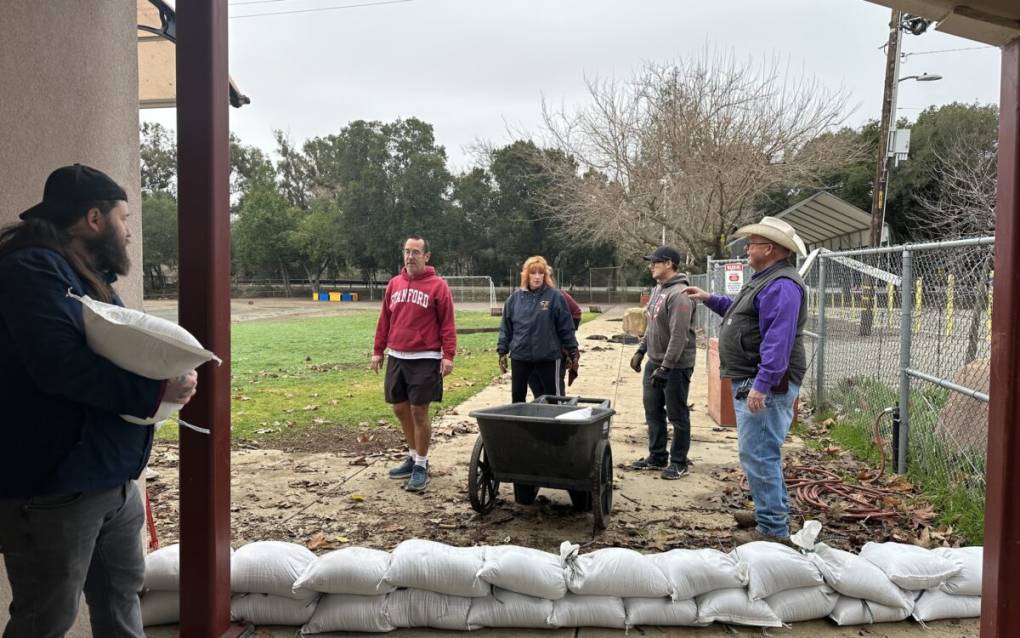
"caption": "Members of the Sunol community helped with cleanup on the campus that houses the 270 students in transitional kindergarten through eighth grade.",
"description": null,
"title": "Clean-Up-Crew_1-1200x750",
"credit": "Courtesy of Sunol Glen Unified School District",
"status": "inherit",
"altTag": null,
"isLoading": false,
"fetchFailed": false
},
"news_11936296": {
"type": "attachments",
"id": "news_11936296",
"meta": {
"index": "attachments_1716263798",
"site": "news",
"id": "11936296",
"found": true
},
"title": "Academic workers strike for better pay and benefits at UC Berkeley",
"publishDate": 1671901961,
"status": "inherit",
"parent": 11936295,
"modified": 1763404870,
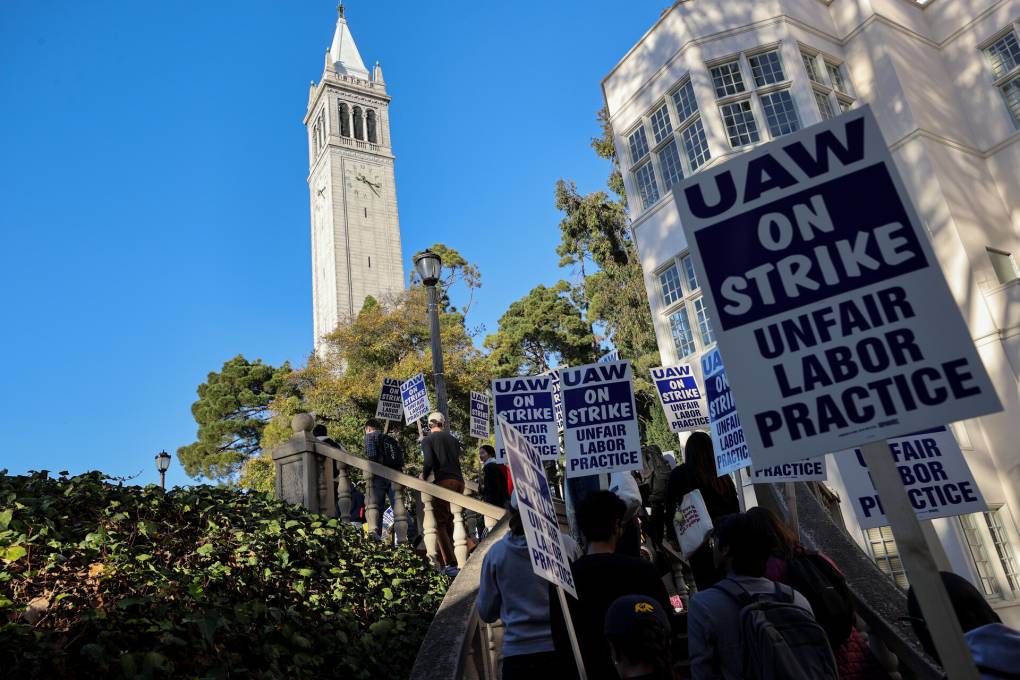
"caption": "Academic workers strike at UC Berkeley on Nov. 16, 2022.",
"credit": "Tayfun Coskun/Anadolu Agency via Getty Images",
"altTag": "The UC Berkeley Campanile in the background as workers hold signs saying 'UAW on Strike'",
"description": null,
"imgSizes": {
"medium": {
"file": "https://cdn.kqed.org/wp-content/uploads/sites/10/2022/12/RS61791_GettyImages-1244836327-qut-800x533.jpg",
"width": 800,
"height": 533,
"mimeType": "image/jpeg"
},
"large": {
"file": "https://cdn.kqed.org/wp-content/uploads/sites/10/2022/12/RS61791_GettyImages-1244836327-qut-1020x680.jpg",
"width": 1020,
"height": 680,
"mimeType": "image/jpeg"
},
"thumbnail": {
"file": "https://cdn.kqed.org/wp-content/uploads/sites/10/2022/12/RS61791_GettyImages-1244836327-qut-160x107.jpg",
"width": 160,
"height": 107,
"mimeType": "image/jpeg"
},
"1536x1536": {
"file": "https://cdn.kqed.org/wp-content/uploads/sites/10/2022/12/RS61791_GettyImages-1244836327-qut-1536x1024.jpg",
"width": 1536,
"height": 1024,
"mimeType": "image/jpeg"
},
"post-thumbnail": {
"file": "https://cdn.kqed.org/wp-content/uploads/sites/10/2022/12/RS61791_GettyImages-1244836327-qut-672x372.jpg",
"width": 672,
"height": 372,
"mimeType": "image/jpeg"
},
"twentyfourteen-full-width": {
"file": "https://cdn.kqed.org/wp-content/uploads/sites/10/2022/12/RS61791_GettyImages-1244836327-qut-1038x576.jpg",
"width": 1038,
"height": 576,
"mimeType": "image/jpeg"
},
"kqedFullSize": {
"file": "https://cdn.kqed.org/wp-content/uploads/sites/10/2022/12/RS61791_GettyImages-1244836327-qut.jpg",
"width": 1920,
"height": 1280
}
},
"isLoading": false,
"fetchFailed": false
}
},
"audioPlayerReducer": {
"postId": "stream_live",
"isPaused": true,
"isPlaying": false,
"pfsActive": false,
"pledgeModalIsOpen": true,
"playerDrawerIsOpen": false,
"liveAudioPlayStartedAt": 0,
"liveAudioPlayContext": ""
},
"authorsReducer": {
"byline_news_11938865": {
"type": "authors",
"id": "byline_news_11938865",
"meta": {
"override": true
},
"slug": "byline_news_11938865",
"name": "\u003ca href=\"https://calmatters.org/author/joe-hong/\">Joe Hong\u003c/a>",
"isLoading": false
},
"byline_news_11936799": {
"type": "authors",
"id": "byline_news_11936799",
"meta": {
"override": true
},
"slug": "byline_news_11936799",
"name": "\u003ca href=\"https://edsource.org/author/dlambert\">Diana Lambert \u003c/a> ",
"isLoading": false
},
"byline_news_11936295": {
"type": "authors",
"id": "byline_news_11936295",
"meta": {
"override": true
},
"slug": "byline_news_11936295",
"name": "Associated Press",
"isLoading": false
},
"kqed": {
"type": "authors",
"id": "236",
"meta": {
"index": "authors_1716337520",
"id": "236",
"found": true
},
"name": "KQED News Staff",
"firstName": "KQED News Staff",
"lastName": null,
"slug": "kqed",
"email": "faq@kqed.org",
"display_author_email": false,
"staff_mastheads": [],
"title": null,
"bio": null,
"avatar": "https://secure.gravatar.com/avatar/ef0e801a68c4c54afa9180db14084167?s=600&d=blank&r=g",
"twitter": null,
"facebook": null,
"instagram": null,
"linkedin": null,
"sites": [
{
"site": "arts",
"roles": [
"contributor"
]
},
{
"site": "news",
"roles": [
"editor"
]
},
{
"site": "futureofyou",
"roles": [
"author"
]
}
],
"headData": {
"title": "KQED News Staff | KQED",
"description": null,
"ogImgSrc": "https://secure.gravatar.com/avatar/ef0e801a68c4c54afa9180db14084167?s=600&d=blank&r=g",
"twImgSrc": "https://secure.gravatar.com/avatar/ef0e801a68c4c54afa9180db14084167?s=600&d=blank&r=g"
},
"isLoading": false,
"link": "/author/kqed"
},
"aproehl": {
"type": "authors",
"id": "11296",
"meta": {
"index": "authors_1716337520",
"id": "11296",
"found": true
},
"name": "Ariana Proehl",
"firstName": "Ariana",
"lastName": "Proehl",
"slug": "aproehl",
"email": "aproehl@KQED.org",
"display_author_email": true,
"staff_mastheads": [
"news"
],
"title": "Culture Reporter, KQED",
"bio": "Ariana Proehl is a Culture Reporter and Host.",
"avatar": "https://secure.gravatar.com/avatar/c96b24567eb5bb3a4f8bb295ed53e232?s=600&d=blank&r=g",
"twitter": "ArianaProehl",
"facebook": null,
"instagram": null,
"linkedin": null,
"sites": [
{
"site": "arts",
"roles": []
},
{
"site": "news",
"roles": []
},
{
"site": "education",
"roles": []
},
{
"site": "forum",
"roles": []
}
],
"headData": {
"title": "Ariana Proehl | KQED",
"description": "Culture Reporter, KQED",
"ogImgSrc": "https://secure.gravatar.com/avatar/c96b24567eb5bb3a4f8bb295ed53e232?s=600&d=blank&r=g",
"twImgSrc": "https://secure.gravatar.com/avatar/c96b24567eb5bb3a4f8bb295ed53e232?s=600&d=blank&r=g"
},
"isLoading": false,
"link": "/author/aproehl"
},
"hmcdede": {
"type": "authors",
"id": "11635",
"meta": {
"index": "authors_1716337520",
"id": "11635",
"found": true
},
"name": "Holly McDede",
"firstName": "Holly",
"lastName": "McDede",
"slug": "hmcdede",
"email": "hmcdede@KQED.org",
"display_author_email": false,
"staff_mastheads": [],
"title": "KQED Contributor",
"bio": null,
"avatar": "https://secure.gravatar.com/avatar/35d1a1f5422c9d266f7ace9348d170f2136671a65fffc90a592e4d7fbf8dc3f6?s=600&d=blank&r=g",
"twitter": null,
"bluesky": null,
"facebook": null,
"instagram": null,
"linkedin": null,
"sites": [
{
"site": "arts",
"roles": [
"editor"
]
},
{
"site": "news",
"roles": [
"edit_others_posts",
"editor"
]
},
{
"site": "science",
"roles": [
"editor"
]
},
{
"site": "forum",
"roles": [
"editor"
]
},
{
"site": "perspectives",
"roles": [
"administrator"
]
}
],
"headData": {
"title": "Holly McDede | KQED",
"description": "KQED Contributor",
"ogImgSrc": "https://secure.gravatar.com/avatar/35d1a1f5422c9d266f7ace9348d170f2136671a65fffc90a592e4d7fbf8dc3f6?s=600&d=blank&r=g",
"twImgSrc": "https://secure.gravatar.com/avatar/35d1a1f5422c9d266f7ace9348d170f2136671a65fffc90a592e4d7fbf8dc3f6?s=600&d=blank&r=g"
},
"isLoading": false,
"link": "/author/hmcdede"
},
"ebaldassari": {
"type": "authors",
"id": "11652",
"meta": {
"index": "authors_1716337520",
"id": "11652",
"found": true
},
"name": "Erin Baldassari",
"firstName": "Erin",
"lastName": "Baldassari",
"slug": "ebaldassari",
"email": "ebaldassari@KQED.org",
"display_author_email": true,
"staff_mastheads": [
"news"
],
"title": "Staff Writer",
"bio": "Erin Baldassari covers housing for KQED. She's a former print journalist and most recently worked as the transportation reporter for the \u003cem>Mercury News\u003c/em> and \u003cem>East Bay Times. \u003c/em>There, she focused on how the Bay Area’s housing shortage has changed the way people move around the region. She also served on the \u003cem>East Bay Times\u003c/em>’ 2017 Pulitzer Prize-winning team for coverage of the Ghost Ship Fire in Oakland. Prior to that, Erin worked as a breaking news and general assignment reporter for a variety of outlets in the Bay Area and the greater Boston area. A Tufts University alumna, Erin grew up in the foothills of the Sierra Nevada mountains and in Sonoma County. She is a life-long KQED listener.",
"avatar": "https://secure.gravatar.com/avatar/5e95cad64a8ca08288082212e199d2b0cbeb4fd8e8ef5339395f361032bbe005?s=600&d=blank&r=g",
"twitter": "e_baldi",
"bluesky": null,
"facebook": null,
"instagram": null,
"linkedin": null,
"sites": [
{
"site": "news",
"roles": [
"edit_others_posts",
"editor"
]
},
{
"site": "science",
"roles": [
"editor"
]
},
{
"site": "liveblog",
"roles": [
"editor"
]
}
],
"headData": {
"title": "Erin Baldassari | KQED",
"description": "Staff Writer",
"ogImgSrc": "https://secure.gravatar.com/avatar/5e95cad64a8ca08288082212e199d2b0cbeb4fd8e8ef5339395f361032bbe005?s=600&d=blank&r=g",
"twImgSrc": "https://secure.gravatar.com/avatar/5e95cad64a8ca08288082212e199d2b0cbeb4fd8e8ef5339395f361032bbe005?s=600&d=blank&r=g"
},
"isLoading": false,
"link": "/author/ebaldassari"
},
"afinney": {
"type": "authors",
"id": "11772",
"meta": {
"index": "authors_1716337520",
"id": "11772",
"found": true
},
"name": "Annelise Finney",
"firstName": "Annelise",
"lastName": "Finney",
"slug": "afinney",
"email": "afinney@kqed.org",
"display_author_email": false,
"staff_mastheads": [],
"title": "Reporter",
"bio": "Annelise reports on reparations in California and East Bay politics. She co-produced the Sunday Music Drop, a limited-term radio series featuring Bay Area musicians that aired between Sept 2022 and Oct 2024. She joined KQED in 2021 as a general assignment reporter and is an alumna of KALW's Audio Academy. She was born and raised in the East Bay. She is currently away from KQED completing a year-long reporting project in Berlin, Germany as a Alexander Von Humboldt German Chancellor Fellow.",
"avatar": "https://secure.gravatar.com/avatar/b439010ea6540bec1060ee74b3c94314480991106a4a84e774fe5a0fd6605878?s=600&d=mm&r=g",
"twitter": null,
"bluesky": null,
"facebook": null,
"instagram": null,
"linkedin": null,
"sites": [
{
"site": "news",
"roles": [
"subscriber"
]
},
{
"site": "liveblog",
"roles": [
"subscriber"
]
}
],
"headData": {
"title": "Annelise Finney | KQED",
"description": "Reporter",
"ogImgSrc": "https://secure.gravatar.com/avatar/b439010ea6540bec1060ee74b3c94314480991106a4a84e774fe5a0fd6605878?s=600&d=mm&r=g",
"twImgSrc": "https://secure.gravatar.com/avatar/b439010ea6540bec1060ee74b3c94314480991106a4a84e774fe5a0fd6605878?s=600&d=mm&r=g"
},
"isLoading": false,
"link": "/author/afinney"
},
"rtimmons": {
"type": "authors",
"id": "11817",
"meta": {
"index": "authors_1716337520",
"id": "11817",
"found": true
},
"name": "Raphael Timmons",
"firstName": "Raphael",
"lastName": "Timmons",
"slug": "rtimmons",
"email": "rtimmons@kqed.org",
"display_author_email": false,
"staff_mastheads": [],
"title": "KQED Contributor",
"bio": null,
"avatar": "https://secure.gravatar.com/avatar/0e66c73af8b623ecc62f631a35fd1272?s=600&d=mm&r=g",
"twitter": null,
"facebook": null,
"instagram": null,
"linkedin": null,
"sites": [
{
"site": "news",
"roles": [
"editor"
]
},
{
"site": "perspectives",
"roles": [
"editor"
]
}
],
"headData": {
"title": "Raphael Timmons | KQED",
"description": "KQED Contributor",
"ogImgSrc": "https://secure.gravatar.com/avatar/0e66c73af8b623ecc62f631a35fd1272?s=600&d=mm&r=g",
"twImgSrc": "https://secure.gravatar.com/avatar/0e66c73af8b623ecc62f631a35fd1272?s=600&d=mm&r=g"
},
"isLoading": false,
"link": "/author/rtimmons"
},
"daisynguyen": {
"type": "authors",
"id": "11829",
"meta": {
"index": "authors_1716337520",
"id": "11829",
"found": true
},
"name": "Daisy Nguyen",
"firstName": "Daisy",
"lastName": "Nguyen",
"slug": "daisynguyen",
"email": "daisynguyen@kqed.org",
"display_author_email": true,
"staff_mastheads": [
"news"
],
"title": "KQED Contributor",
"bio": "I have covered early childhood education and child care for KQED since 2022. I focus on policies aimed at increasing access to early care and education and how they shape individual lives. I've been a journalist for more than two decades, with most of that time devoted to covering breaking news throughout California for The Associated Press. I grew up in San Francisco and studied at UC Davis and Columbia University's Graduate School of Journalism. I live in Oakland with my husband and two kids.",
"avatar": "https://secure.gravatar.com/avatar/2da2127c27f7143b53ebd419800fd55f?s=600&d=blank&r=g",
"twitter": null,
"facebook": null,
"instagram": null,
"linkedin": "https://www.linkedin.com/in/daisynguyen/",
"sites": [
{
"site": "news",
"roles": [
"author"
]
},
{
"site": "liveblog",
"roles": [
"author"
]
}
],
"headData": {
"title": "Daisy Nguyen | KQED",
"description": "KQED Contributor",
"ogImgSrc": "https://secure.gravatar.com/avatar/2da2127c27f7143b53ebd419800fd55f?s=600&d=blank&r=g",
"twImgSrc": "https://secure.gravatar.com/avatar/2da2127c27f7143b53ebd419800fd55f?s=600&d=blank&r=g"
},
"isLoading": false,
"link": "/author/daisynguyen"
},
"sjohnson": {
"type": "authors",
"id": "11840",
"meta": {
"index": "authors_1716337520",
"id": "11840",
"found": true
},
"name": "Sydney Johnson",
"firstName": "Sydney",
"lastName": "Johnson",
"slug": "sjohnson",
"email": "sjohnson@kqed.org",
"display_author_email": false,
"staff_mastheads": [
"news"
],
"title": "KQED Reporter",
"bio": "Sydney Johnson is a general assignment reporter at KQED. She previously reported on public health and city government at the San Francisco Examiner, and before that, she covered statewide education policy for EdSource. Her reporting has won multiple local, state and national awards. Sydney is a graduate of the University of California, Berkeley and lives in San Francisco.",
"avatar": "https://secure.gravatar.com/avatar/97855f2719b72ad6190b7c535fe642c8?s=600&d=blank&r=g",
"twitter": "sydneyfjohnson",
"facebook": null,
"instagram": null,
"linkedin": null,
"sites": [
{
"site": "news",
"roles": [
"editor"
]
}
],
"headData": {
"title": "Sydney Johnson | KQED",
"description": "KQED Reporter",
"ogImgSrc": "https://secure.gravatar.com/avatar/97855f2719b72ad6190b7c535fe642c8?s=600&d=blank&r=g",
"twImgSrc": "https://secure.gravatar.com/avatar/97855f2719b72ad6190b7c535fe642c8?s=600&d=blank&r=g"
},
"isLoading": false,
"link": "/author/sjohnson"
}
},
"pagesReducer": {
"news_category_education": {
"type": "terms",
"id": "news_18540",
"meta": {
"index": "terms_1716263798",
"site": "news",
"id": "18540",
"score": 10.973179
},
"featImg": null,
"name": "Education",
"description": null,
"taxonomy": "category",
"headData": {
"twImgId": null,
"twTitle": null,
"ogTitle": null,
"ogImgId": null,
"twDescription": null,
"description": null,
"title": "Education Archives | KQED News",
"ogDescription": null
},
"ttid": 2595,
"slug": "education",
"isLoading": false,
"title": "Education",
"pageMeta": {
"site": "news",
"WpPageTemplate": "page-topic-editorial",
"currentPage": 64
},
"blocks": [
{
"blockName": "kqed/post-list",
"attrs": {
"layout": "cardArticle2",
"query": "posts/news?category=education",
"seeMore": false,
"paginated": true,
"page": 64
}
},
{
"blockName": "kqed/ad"
}
]
}
},
"pfsSessionReducer": {},
"postsReducer": {
"stream_live": {
"type": "live",
"id": "stream_live",
"audioUrl": "https://streams.kqed.org/kqedradio",
"title": "Live Stream",
"excerpt": "Live Stream information currently unavailable.",
"link": "/radio",
"featImg": "",
"label": {
"name": "KQED Live",
"link": "/"
}
},
"stream_kqedNewscast": {
"type": "posts",
"id": "stream_kqedNewscast",
"audioUrl": "https://www.kqed.org/.stream/anon/radio/RDnews/newscast.mp3?_=1",
"title": "KQED Newscast",
"featImg": "",
"label": {
"name": "88.5 FM",
"link": "/"
}
},
"news_11942379": {
"type": "posts",
"id": "news_11942379",
"meta": {
"index": "posts_1716263798",
"site": "news",
"id": "11942379",
"score": null,
"sort": [
1677807424000
]
},
"parent": 0,
"labelTerm": {
"site": "news"
},
"blocks": [],
"publishDate": 1677807424,
"format": "standard",
"title": "San Francisco Unified Faces $5.4 Million Legal Battle Over Bus Bills During School Closures",
"headTitle": "KQED News",
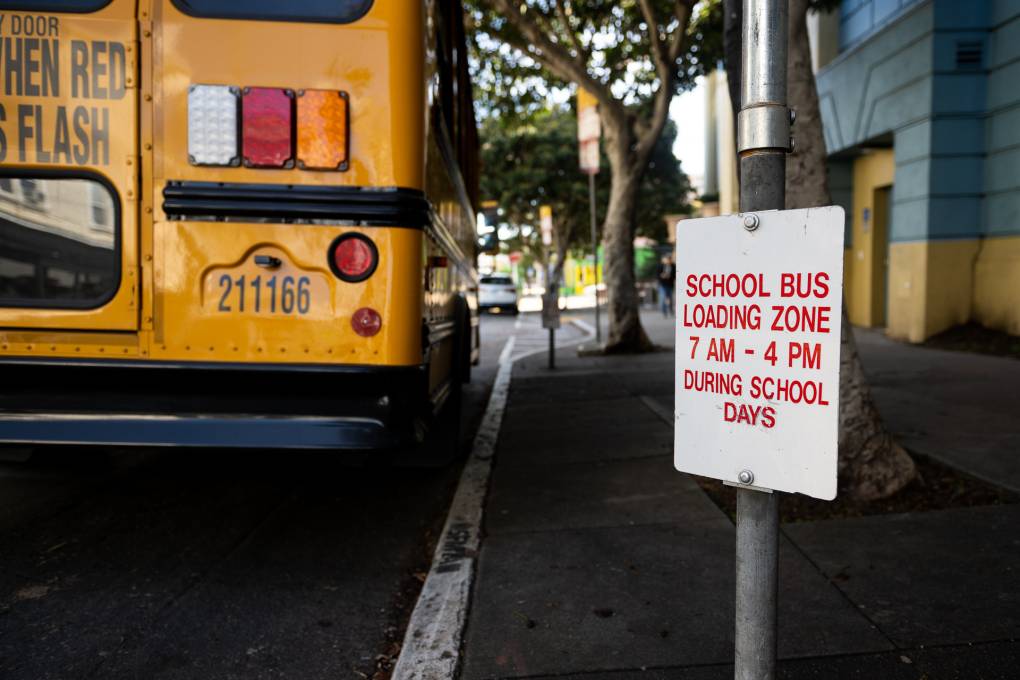
"content": "\u003cp>The San Francisco Unified School District’s former school bus provider is suing the district for $5.4 million for payments it claims the district failed to make during the 2020–21 school year when students were participating in distance learning.\u003c/p>\n\u003cp>The latest dispute, which is not the first between the private transportation company First Student Inc. and SFUSD, comes as both businesses and school districts across the country are scrambling to recover from losses during the pandemic.\u003c/p>\n\u003cp>“This case is a corporate shakedown of our public school district by the largest bus company in the United States,” said Nancy Harris, attorney representing SFUSD, during opening statements for the jury trial. “The terms of the contract provide that the school district agreed to pay First Student only when drivers employed by First Student drove students in buses owned by First Student to and from schools and other points.”\u003c/p>\n\u003cp>Ohio-based First Student is the country’s largest school bus transportation service provider and worked with San Francisco Unified for 40 years before the two organizations cut ties during the pandemic.\u003c/p>\n\u003cp>While there’s no disagreement that buses weren’t running their usual routes during the 2020–21 school year, representatives for First Student allege that the district owes them money for non-transportation services, such as bus maintenance and vehicle insurance. The company invoiced SFUSD for $5.4 million for those additional costs in the fall of 2021.[pullquote align=\"right\" size=\"medium\" citation=\"Nancy Harris, attorney representing SFUSD\"]'This case is a corporate shakedown of our public school district by the largest bus company in the United States.'[/pullquote]In response to First Student's lawsuit, SFUSD filed a cross-complaint for breach of contract, bad faith and violations of the California False Claims Act.\u003c/p>\n\u003cp>The school district maintains that under the 2020–21 school year contract, they were not obligated to pay for services because buses were not transporting students during the city’s shelter-in-place order.\u003c/p>\n\u003cp>In an email sent to KQED, the district also alleged that the company “submitted false invoices claiming that hundreds of buses and drivers were deployed on the road in August and September 2020, at a time when students were learning remotely,” according to Laura Dudnick, spokesperson for SFUSD.\u003c/p>\n\u003cp>“When that did not work, [First Student] demanded that the school district cover its overhead costs. This strategy was part of its nationwide pressure campaign against school districts to increase its revenue, when school districts like SFUSD struggled with budget deficits and were focused on students,” Dudnick wrote.\u003c/p>\n\u003cp>[ad fullwidth]\u003c/p>\n\u003cp>In court testimony Thursday, Paul Osland, who was president of First Student during the pandemic, denied pressuring any district into payments during the pandemic, and suggested his company was simply upholding its end of a contract that started in 2015.\u003c/p>\n\u003cp>Osland asserts that First Student charges for a full program, meaning not only transportation services, but also the operating expenses such as vehicle insurance, bus technology and regular maintenance that is required by California Highway Patrol to keep the buses in operation.\u003c/p>\n\u003cp>COVID “impacted all of us, but it sure as heck impacted our business,” said Osland in court on Thursday. Osland, who is now retired, previously ran transportation services for Chicago Public Schools. “Of course this is not a shakedown. It was an initiative in everyone’s interest.”\u003c/p>\n\u003cp>[pullquote align=\"right\" size=\"medium\" citation=\"Paul Osland, former president, First Student\"]'Of course this is not a shakedown. It was an initiative in everyone's interest.'[/pullquote]\u003c/p>\n\u003cp>Harris, the attorney for SFUSD, underscored a section of the contract that anticipated school closures.\u003c/p>\n\u003cp>“The district shall not be obligated to accept or pay for services, herein to be furnished by the contractor, on those days when by the direction of the Superintendent, the district schools are closed to ensure the health and safety of the pupils or for any other lawful reason. The district agrees to notify the contractor, not later than 5:30 a.m., on days of such school closures,” the contract reads.\u003c/p>\n\u003cp>Osland, however, said he thinks that portion of the contract would only apply to short-term closures like snow days or fire days, not months-long disruptions. No such distinction is made either way in the contract.\u003c/p>\n\u003cp>First Student works with around 1,000 districts across the U.S. and Canada. The company provides yellow school bus transportation to and from schools for general education, students with disabilities and individualized education plans, field trip services and charter bus services.\u003c/p>\n\u003cp>In a statement to KQED, the company said it filed the lawsuit “because of bad faith and broken promises by SFUSD.”\u003c/p>\n\u003cp>“SFUSD made a choice to stop paying for the many services that SFUSD required under the bus contract, including the more than 230 yellow school buses dedicated to SFUSD that First Student kept in position throughout the pandemic,” the statement read.\u003c/p>\n\u003cp>“First Student stood by its business partner, fulfilling its obligations to maintain operational readiness to ensure it was ready to transport students as soon as schools reopened. And when they did, First Student was ready when SFUSD called. Over an eight-month period, First Student submitted discounted invoices, but SFUSD paid nothing. SFUSD had encumbered funds available, and even issued a purchase order, but it made a choice not to pay. That is not just or fair, and for that reason, we expect to prevail in court.”\u003c/p>\n\u003cp>After 40 years of service, SFUSD cut ties with First Student during the pandemic, and the district in July 2021 awarded school transportation to app-based start-up Zūm in a $150 million five-year contract.\u003c/p>\n\u003cp>At the time of the deal, the district estimated the new provider would save the district about $3 million annually, according to \u003ca href=\"https://techcrunch.com/2021/07/29/zum-wins-150m-from-san-francisco-schools-to-modernize-and-electrify-student-transport/\">a report from TechCrunch\u003c/a>.\u003c/p>\n\u003cp>In 2021, First Student sued Zūm, whose consultant had recently left a high position with First Student. First Student alleged the employee downloaded the competing bid from its company while joining Zūm. That case is set to begin trial August 14.\u003c/p>\n\u003cp>First Student also filed an appeal against SFUSD’s process and decision to contract with Zūm. The court denied that appeal from First Student in 2022.\u003c/p>\n\u003cp>\u003cem>Editor's note: This story has been updated to include a statement from First Student. This story also has been corrected, to accurately reflect the status of First Student's lawsuit against Zūm, which is scheduled to begin trial Aug. 14. \u003c/em>\u003c/p>\n\u003cp>[ad floatright]\u003c/p>\n",
"stats": {
"hasVideo": false,
"hasChartOrMap": false,
"hasAudio": false,
"hasPolis": false,
"wordCount": 1112,
"hasGoogleForm": false,
"hasGallery": false,
"hasHearkenModule": false,
"iframeSrcs": [],
"paragraphCount": 26
},
"modified": 1678482360,
"excerpt": "First Student, the country's largest school bus transportation service provider, is looking to recoup $5.4 million from SFUSD, but district officials say the charges are unwarranted.",
"headData": {
"twImgId": "",
"twTitle": "",
"ogTitle": "",
"ogImgId": "",
"twDescription": "",
"description": "First Student, the country's largest school bus transportation service provider, is looking to recoup $5.4 million from SFUSD, but district officials say the charges are unwarranted.",
"title": "San Francisco Unified Faces $5.4 Million Legal Battle Over Bus Bills During School Closures | KQED",
"ogDescription": "",
"schema": {
"@context": "https://schema.org",
"@type": "NewsArticle",
"headline": "San Francisco Unified Faces $5.4 Million Legal Battle Over Bus Bills During School Closures",
"datePublished": "2023-03-02T17:37:04-08:00",
"dateModified": "2023-03-10T13:06:00-08:00",
"image": "https://cdn.kqed.org/wp-content/uploads/2020/02/KQED-OG-Image@1x.png",
"isAccessibleForFree": "True",
"publisher": {
"@type": "NewsMediaOrganization",
"@id": "https://www.kqed.org/#organization",
"name": "KQED",
"logo": "https://cdn.kqed.org/wp-content/uploads/2020/02/KQED-OG-Image@1x.png",
"url": "https://www.kqed.org",
"sameAs": [
"https://www.facebook.com/KQED",
"https://twitter.com/KQED",
"https://www.instagram.com/kqed/",
"https://www.tiktok.com/@kqedofficial",
"https://www.linkedin.com/company/kqed",
"https://www.youtube.com/channel/UCeC0IOo7i1P_61zVUWbJ4nw"
]
}
}
},
"guestAuthors": [],
"slug": "san-francisco-unified-faces-5-4-million-legal-battle-over-bus-bills-during-school-closures",
"status": "publish",
"excludeFromSiteSearch": "Include",
"articleAge": "0",
"path": "/news/11942379/san-francisco-unified-faces-5-4-million-legal-battle-over-bus-bills-during-school-closures",
"audioTrackLength": null,
"parsedContent": [
{
"type": "contentString",
"content": "\u003cdiv class=\"post-body\">\u003cp>\u003cp>The San Francisco Unified School District’s former school bus provider is suing the district for $5.4 million for payments it claims the district failed to make during the 2020–21 school year when students were participating in distance learning.\u003c/p>\n\u003cp>The latest dispute, which is not the first between the private transportation company First Student Inc. and SFUSD, comes as both businesses and school districts across the country are scrambling to recover from losses during the pandemic.\u003c/p>\n\u003cp>“This case is a corporate shakedown of our public school district by the largest bus company in the United States,” said Nancy Harris, attorney representing SFUSD, during opening statements for the jury trial. “The terms of the contract provide that the school district agreed to pay First Student only when drivers employed by First Student drove students in buses owned by First Student to and from schools and other points.”\u003c/p>\n\u003cp>Ohio-based First Student is the country’s largest school bus transportation service provider and worked with San Francisco Unified for 40 years before the two organizations cut ties during the pandemic.\u003c/p>\n\u003cp>While there’s no disagreement that buses weren’t running their usual routes during the 2020–21 school year, representatives for First Student allege that the district owes them money for non-transportation services, such as bus maintenance and vehicle insurance. The company invoiced SFUSD for $5.4 million for those additional costs in the fall of 2021.\u003c/p>\u003c/div>",
"attributes": {
"named": {},
"numeric": []
}
},
{
"type": "component",
"content": "'This case is a corporate shakedown of our public school district by the largest bus company in the United States.'",
"name": "pullquote",
"attributes": {
"named": {
"align": "right",
"size": "medium",
"citation": "Nancy Harris, attorney representing SFUSD",
"label": ""
},
"numeric": []
}
},
{
"type": "contentString",
"content": "\u003cdiv class=\"post-body\">\u003cp>In response to First Student's lawsuit, SFUSD filed a cross-complaint for breach of contract, bad faith and violations of the California False Claims Act.\u003c/p>\n\u003cp>The school district maintains that under the 2020–21 school year contract, they were not obligated to pay for services because buses were not transporting students during the city’s shelter-in-place order.\u003c/p>\n\u003cp>In an email sent to KQED, the district also alleged that the company “submitted false invoices claiming that hundreds of buses and drivers were deployed on the road in August and September 2020, at a time when students were learning remotely,” according to Laura Dudnick, spokesperson for SFUSD.\u003c/p>\n\u003cp>“When that did not work, [First Student] demanded that the school district cover its overhead costs. This strategy was part of its nationwide pressure campaign against school districts to increase its revenue, when school districts like SFUSD struggled with budget deficits and were focused on students,” Dudnick wrote.\u003c/p>\n\u003cp>\u003c/p>\u003c/div>",
"attributes": {
"named": {},
"numeric": []
}
},
{
"type": "component",
"content": "",
"name": "ad",
"attributes": {
"named": {
"label": "fullwidth"
},
"numeric": [
"fullwidth"
]
}
},
{
"type": "contentString",
"content": "\u003cdiv class=\"post-body\">\u003cp>\u003c/p>\n\u003cp>In court testimony Thursday, Paul Osland, who was president of First Student during the pandemic, denied pressuring any district into payments during the pandemic, and suggested his company was simply upholding its end of a contract that started in 2015.\u003c/p>\n\u003cp>Osland asserts that First Student charges for a full program, meaning not only transportation services, but also the operating expenses such as vehicle insurance, bus technology and regular maintenance that is required by California Highway Patrol to keep the buses in operation.\u003c/p>\n\u003cp>COVID “impacted all of us, but it sure as heck impacted our business,” said Osland in court on Thursday. Osland, who is now retired, previously ran transportation services for Chicago Public Schools. “Of course this is not a shakedown. It was an initiative in everyone’s interest.”\u003c/p>\n\u003cp>\u003c/p>\u003c/div>",
"attributes": {
"named": {},
"numeric": []
}
},
{
"type": "component",
"content": "'Of course this is not a shakedown. It was an initiative in everyone's interest.'",
"name": "pullquote",
"attributes": {
"named": {
"align": "right",
"size": "medium",
"citation": "Paul Osland, former president, First Student",
"label": ""
},
"numeric": []
}
},
{
"type": "contentString",
"content": "\u003cdiv class=\"post-body\">\u003cp>\u003c/p>\n\u003cp>Harris, the attorney for SFUSD, underscored a section of the contract that anticipated school closures.\u003c/p>\n\u003cp>“The district shall not be obligated to accept or pay for services, herein to be furnished by the contractor, on those days when by the direction of the Superintendent, the district schools are closed to ensure the health and safety of the pupils or for any other lawful reason. The district agrees to notify the contractor, not later than 5:30 a.m., on days of such school closures,” the contract reads.\u003c/p>\n\u003cp>Osland, however, said he thinks that portion of the contract would only apply to short-term closures like snow days or fire days, not months-long disruptions. No such distinction is made either way in the contract.\u003c/p>\n\u003cp>First Student works with around 1,000 districts across the U.S. and Canada. The company provides yellow school bus transportation to and from schools for general education, students with disabilities and individualized education plans, field trip services and charter bus services.\u003c/p>\n\u003cp>In a statement to KQED, the company said it filed the lawsuit “because of bad faith and broken promises by SFUSD.”\u003c/p>\n\u003cp>“SFUSD made a choice to stop paying for the many services that SFUSD required under the bus contract, including the more than 230 yellow school buses dedicated to SFUSD that First Student kept in position throughout the pandemic,” the statement read.\u003c/p>\n\u003cp>“First Student stood by its business partner, fulfilling its obligations to maintain operational readiness to ensure it was ready to transport students as soon as schools reopened. And when they did, First Student was ready when SFUSD called. Over an eight-month period, First Student submitted discounted invoices, but SFUSD paid nothing. SFUSD had encumbered funds available, and even issued a purchase order, but it made a choice not to pay. That is not just or fair, and for that reason, we expect to prevail in court.”\u003c/p>\n\u003cp>After 40 years of service, SFUSD cut ties with First Student during the pandemic, and the district in July 2021 awarded school transportation to app-based start-up Zūm in a $150 million five-year contract.\u003c/p>\n\u003cp>At the time of the deal, the district estimated the new provider would save the district about $3 million annually, according to \u003ca href=\"https://techcrunch.com/2021/07/29/zum-wins-150m-from-san-francisco-schools-to-modernize-and-electrify-student-transport/\">a report from TechCrunch\u003c/a>.\u003c/p>\n\u003cp>In 2021, First Student sued Zūm, whose consultant had recently left a high position with First Student. First Student alleged the employee downloaded the competing bid from its company while joining Zūm. That case is set to begin trial August 14.\u003c/p>\n\u003cp>First Student also filed an appeal against SFUSD’s process and decision to contract with Zūm. The court denied that appeal from First Student in 2022.\u003c/p>\n\u003cp>\u003cem>Editor's note: This story has been updated to include a statement from First Student. This story also has been corrected, to accurately reflect the status of First Student's lawsuit against Zūm, which is scheduled to begin trial Aug. 14. \u003c/em>\u003c/p>\n\u003cp>\u003c/p>\u003c/div>",
"attributes": {
"named": {},
"numeric": []
}
},
{
"type": "component",
"content": "",
"name": "ad",
"attributes": {
"named": {
"label": "floatright"
},
"numeric": [
"floatright"
]
}
},
{
"type": "contentString",
"content": "\u003cdiv class=\"post-body\">\u003cp>\u003c/p>\n\u003c/div>\u003c/p>",
"attributes": {
"named": {},
"numeric": []
}
}
],
"link": "/news/11942379/san-francisco-unified-faces-5-4-million-legal-battle-over-bus-bills-during-school-closures",
"authors": [
"11840"
],
"categories": [
"news_18540",
"news_8",
"news_1397"
],
"tags": [
"news_20013",
"news_32473",
"news_38",
"news_3946",
"news_32475",
"news_1290",
"news_32474"
],
"featImg": "news_11942385",
"label": "news"
},
"news_11942006": {
"type": "posts",
"id": "news_11942006",
"meta": {
"index": "posts_1716263798",
"site": "news",
"id": "11942006",
"score": null,
"sort": [
1677679210000
]
},
"guestAuthors": [],
"slug": "reversal-of-oakland-school-closures-renews-hope-of-reparations-for-black-students",
"title": "Reversal of Oakland School Closures Renews Hope of Reparations for Black Students",
"publishDate": 1677679210,
"format": "standard",
"headTitle": "Reversal of Oakland School Closures Renews Hope of Reparations for Black Students | KQED",
"labelTerm": {
"term": 34369,
"site": "news"
},
"content": "\u003cp>The decision by Oakland’s new school board to rescind a school closure plan has renewed hope in the reparations movement to improve the outcomes of Oakland Unified School District’s Black students.\u003c/p>\n\u003cp>But the movement remains in limbo.\u003c/p>\n\u003cp>In March 2021, the school board passed the \u003ca href=\"https://drive.google.com/file/d/1knTRaGliW06LnPCATRmaILnwrgViLgsC/view\">Reparations for Black Students\u003c/a> resolution, an initiative to provide more resources for almost 8,000 Black students. For some observers, the resolution acknowledged the inequitable education students have received for generations.\u003c/p>\n\u003cp>The resolution created a task force to monitor academic performance and, among other things, provide anti-racism training to district teachers and staff. Early versions of the resolution included a ban on school closures where more than 30% of the students are Black, a line item that was opposed by the school district and Chris Learned, the state trustee who oversaw the district’s finances. It was ultimately removed from the final resolution.\u003c/p>\n\u003cp>For two decades, the school district has been under state receivership because of a $100 million bailout in 2003. To address budget shortfalls, the school board voted in January 2022 to close what it deemed were underperforming schools with low enrollment. The vote sparked protests, which included a hunger strike, a 125-day occupation of Parker Elementary School after the district closed it, and a State Department of Justice inquiry into claims that the plan continued a trend of discrimination against the district’s Black students.\u003c/p>\n\u003cfigure id=\"attachment_11942027\" class=\"wp-caption alignnone\" style=\"max-width: 800px\">\u003cimg loading=\"lazy\" decoding=\"async\" class=\"wp-image-11942027 size-medium\" src=\"https://ww2.kqed.org/app/uploads/sites/10/2023/02/RS53519_20220204-IMG_2625-2-qut-800x599.jpg\" alt=\"A group of protesters hold signs against school closures as they march on a city street.\" width=\"800\" height=\"599\" srcset=\"https://cdn.kqed.org/wp-content/uploads/sites/10/2023/02/RS53519_20220204-IMG_2625-2-qut-800x599.jpg 800w, https://cdn.kqed.org/wp-content/uploads/sites/10/2023/02/RS53519_20220204-IMG_2625-2-qut-1020x763.jpg 1020w, https://cdn.kqed.org/wp-content/uploads/sites/10/2023/02/RS53519_20220204-IMG_2625-2-qut-160x120.jpg 160w, https://cdn.kqed.org/wp-content/uploads/sites/10/2023/02/RS53519_20220204-IMG_2625-2-qut-1536x1150.jpg 1536w, https://cdn.kqed.org/wp-content/uploads/sites/10/2023/02/RS53519_20220204-IMG_2625-2-qut.jpg 1920w\" sizes=\"auto, (max-width: 800px) 100vw, 800px\">\u003cfigcaption class=\"wp-caption-text\">Educators, parents, youth and supporters protest during a citywide rally at Oakland City Hall on Feb. 4, 2022. The rally was one of several events last year in support of the Reparations for Black Students campaign. \u003ccite>(Amaya Edwards/KQED)\u003c/cite>\u003c/figcaption>\u003c/figure>\n\u003cp>The closures derailed the reparations effort to hold the school district accountable for improving the education of Black students. But the reversal, which was approved during a special meeting in January, has activists and community members cautiously optimistic about OUSD’s future. The action was made possible by newly elected board members who opposed the previous board’s decision.\u003c/p>\n\u003cp>As the \u003ca href=\"https://www.kqed.org/reparations\">California Reparations Task Force\u003c/a> continues to study and develop proposals for the entire state, a look into Oakland’s effort reveals just how difficult reparations can be to implement.\u003c/p>\n\u003cp>“We are now finally positioned to start doing things differently,” said Mike Hutchinson, the school board’s new president. “We have to embed this work in the district so it becomes a core part of what we do, and I think we are starting to do that.”\u003c/p>\n\u003cp>[ad fullwidth]\u003c/p>\n\u003cp>Luz Cázares, the current trustee, will have to sign off for the reversal to be permanent. The Alameda County Office of Education must also approve. \u003ca href=\"https://oaklandside.org/2023/01/19/ousd-oakland-school-closures-hutchinson-alameda-county-castro/\">As \u003cem>The Oaklandside\u003c/em>’s Ashley McBride reported\u003c/a>, “the board’s decision could also threaten a separate influx of state cash the district was expecting as a result of closing schools.”\u003c/p>\n\u003cp>Still, if the decision is confirmed by the state, it will save five elementary schools that serve predominantly students of color — Brookfield, Grass Valley, Horace Mann, Carl B. Munck, Fred T. Korematsu Discovery Academy and Hillcrest Elementary School, which would also continue to serve kindergarten through eighth grade. The majority of students at Grass Valley and Carl B. Munck are Black.\u003c/p>\n\u003cp>“Having the board make that decision as soon as it did has really given the system a breath of fresh air,” said Pecolia Manigo, chair of the Black Students and Families Thriving Task Force, the body created to implement the reparations resolution.\u003c/p>\n\u003ch2>Ongoing fight against systemic racism\u003c/h2>\n\u003cp>Jordan Rancifer was captivated by the stories of anti-Black racism in Oakland’s public schools that he heard in the Oakland High School auditorium in 2017.\u003c/p>\n\u003cp>“It piqued my interest because it’s like, damn, I’m not the only one having these racial experiences in OUSD,” he recalled in an interview with KQED.\u003c/p>\n\u003cp>The event was one of a series of community listening sessions held by the \u003ca href=\"https://www.oaklandkidsfirst.org/programs/j4os/\">Justice for Oakland Students coalition\u003c/a>. Students described being called racist slurs by peers. They said they felt ignored when they brought concerns to school administrators, and alienated by curricula that neglected Black experiences. Parents described years of limited enrollment in programs meant to support Black students and funding that always seemed to quickly run out.\u003c/p>\n\u003cfigure id=\"attachment_11942014\" class=\"wp-caption alignnone\" style=\"max-width: 800px\">\u003cimg loading=\"lazy\" decoding=\"async\" class=\"wp-image-11942014 size-medium\" src=\"https://ww2.kqed.org/app/uploads/sites/10/2023/02/RS62640_Jordan-Photo-2-qut-800x600.jpg\" alt=\"A young Black man with a black hoodie and shoulder-length black twists looks at the camera while standing on a sidewalk in an urban street.\" width=\"800\" height=\"600\" srcset=\"https://cdn.kqed.org/wp-content/uploads/sites/10/2023/02/RS62640_Jordan-Photo-2-qut-800x600.jpg 800w, https://cdn.kqed.org/wp-content/uploads/sites/10/2023/02/RS62640_Jordan-Photo-2-qut-1020x765.jpg 1020w, https://cdn.kqed.org/wp-content/uploads/sites/10/2023/02/RS62640_Jordan-Photo-2-qut-160x120.jpg 160w, https://cdn.kqed.org/wp-content/uploads/sites/10/2023/02/RS62640_Jordan-Photo-2-qut-1536x1152.jpg 1536w, https://cdn.kqed.org/wp-content/uploads/sites/10/2023/02/RS62640_Jordan-Photo-2-qut.jpg 1920w\" sizes=\"auto, (max-width: 800px) 100vw, 800px\">\u003cfigcaption class=\"wp-caption-text\">Jordan Rancifer poses for a photo on Grand Avenue in Oakland on April 15, 2022. Rancifer spoke at the listening sessions that led to the Reparations for Black Students resolution when he was a senior at Oakland Technical High School. Now he’s studying political science at Cal State East Bay. \u003ccite>(Annelise Finney/KQED)\u003c/cite>\u003c/figcaption>\u003c/figure>\n\u003cp>Rancifer was then a senior struggling in math at Oakland Technical High School. He shared his experience in a room full of teachers, students and parents.\u003c/p>\n\u003cp>“I just didn’t feel like, as a Black man, I was being helped or noticed,” said Rancifer, now 23 and studying political science at Cal State East Bay. “They just kind of let me fail.”\u003c/p>\n\u003cp>Black students accounted for \u003ca href=\"https://dashboards.ousd.org/views/Enrollment/Snapshot?:embed=y&:showAppBanner=false&:display_count=n&:showVizHome=n&:origin=viz_share_link\">20.5% of district enrollment\u003c/a> — roughly 10,000 out of 50,000 students — in the 2021–2022 academic year, according to OUSD’s dashboard. Two decades ago, Black students accounted for nearly half. Since then, the district has shuttered 16 majority Black schools, fracturing school communities and separating students from friends and familiar teachers. At the listening sessions, speakers said the closures contributed to the exodus of Black families from district schools.\u003c/p>\n\u003cp>The listening sessions laid the foundation for the reparations resolution.\u003c/p>\n\u003cp>The resolution promised to address the declining enrollment and poor outcomes of Black students, and set its sights on ending the achievement gap, also called the opportunity gap, by 2026.[pullquote align=\"right\" size=\"medium\" citation=\"Pecolia Manigo, chair, Black Students and Families Thriving Task Force\"]‘Having the board make that decision as soon as it did has really given the system a breath of fresh air.’[/pullquote]In September 2021, the district created the \u003ca href=\"https://drive.google.com/file/d/1PlZalR3MLPd6M4XK5_ORtdu8oK0d26Ox/view\">Black Students and Families Thriving Task Force\u003c/a>, a 25-member volunteer body to carry out the resolution. By that time, Rancifer was in college. His mother, Kampala Taiz-Rancifer, an Oakland teacher and vice president of the Oakland teachers union, became the task force secretary.\u003c/p>\n\u003cp>“The thing that makes me so excited about our work is being able to bring Black folks into a safe space, and for them to know that they’re not alone in their experiences and that other folks are experiencing the same thing, but that they can also come up with the solutions,” said Manigo, who is also executive director of the Bay Area Parent Leadership Action Network, an Oakland-based nonprofit that empowers parents to advocate for their children in public schools.\u003c/p>\n\u003cp>According to Manigo and Hutchinson, things were going smoothly for months after the task force began its work. The volunteer group of Black parents, educators, district employees and community activists met regularly on Zoom, gathering virtually to view colorful slide decks put together by Manigo, mother of two OUSD students and one OUSD graduate.\u003c/p>\n\u003cp>OUSD receives special state funding for students from lower-income families and foster youth, many of whom are Black. The task force aims to track how OUSD invests that money.\u003c/p>\n\u003cp>Oakland has been trying to improve the outcomes for Black students for decades. OUSD founded the African American Male Achievement program in 2010 and what is now known as the African American Female Excellence program in 2015. Data shows the programs improved graduation rates and lowered rates of suspensions.\u003c/p>\n\u003cp>But the impact of other, more diffuse efforts like curriculum changes and diversifying staff is harder to trace. The task force set out to build a system to quantify the impact of district interventions.\u003c/p>\n\u003cp>“Being able to say whether something is effective or not effective, and whether it’s helping to close opportunity gaps or not … we knew that that was a big challenge,” said Manigo, who was unsuccessful in her bid for a school board seat in November.\u003c/p>\n\u003cp>According to Manigo, the school closure plan, announced four months after the task force began its work, revealed that the district was unwilling “to understand the implications of the lived experience and wisdom that so many of us had been putting before them.”\u003c/p>\n\u003cp>The closure plan felt like a betrayal. “By saying reparations, there is an immediate demand to stop the harm,” Manigo said.\u003c/p>\n\u003cfigure id=\"attachment_11942012\" class=\"wp-caption alignnone\" style=\"max-width: 800px\">\u003cimg loading=\"lazy\" decoding=\"async\" class=\"wp-image-11942012 size-medium\" src=\"https://ww2.kqed.org/app/uploads/sites/10/2023/02/RS62641_Manigo-qut-800x596.jpg\" alt=\"A Black woman with a purple top and short cropped hair smiles at the camera as she stands in a park.\" width=\"800\" height=\"596\" srcset=\"https://cdn.kqed.org/wp-content/uploads/sites/10/2023/02/RS62641_Manigo-qut-800x596.jpg 800w, https://cdn.kqed.org/wp-content/uploads/sites/10/2023/02/RS62641_Manigo-qut-1020x760.jpg 1020w, https://cdn.kqed.org/wp-content/uploads/sites/10/2023/02/RS62641_Manigo-qut-160x119.jpg 160w, https://cdn.kqed.org/wp-content/uploads/sites/10/2023/02/RS62641_Manigo-qut-1536x1145.jpg 1536w, https://cdn.kqed.org/wp-content/uploads/sites/10/2023/02/RS62641_Manigo-qut.jpg 1920w\" sizes=\"auto, (max-width: 800px) 100vw, 800px\">\u003cfigcaption class=\"wp-caption-text\">Pecolia Manigo poses in Maxwell Park in Oakland on Aug. 25, 2022. Manigo is the chair of the Black Students and Families Thriving Task Force. \u003ccite>(Annelise Finney/KQED)\u003c/cite>\u003c/figcaption>\u003c/figure>\n\u003cp>Instead of focusing on improving outcomes for Black students, conflict grew among members of the task force who found themselves on opposing sides of the closure debate.\u003c/p>\n\u003cp>“We are in a highly polarized political context and I think our minds are pretty trained to put a stake in the ground and not move from that,” said Dr. Dexter Moore Jr., the superintendent’s representative on the task force. “It put a wedge in the work. No question about it.”\u003c/p>\n\u003cp>Last March, a report presented by Moore to the school board on behalf of the district superintendent showed that a year after the reparations resolution was passed, many of the worrying trends affecting Black students continued.\u003c/p>\n\u003cp>Black students were being suspended at more than twice the district average, and more than half of Black students were chronically absent, which Moore attributed in part to the impact of a surge in COVID-19 cases at the time. Between the 2020–21 and 2021–22 school years, \u003ca href=\"https://dashboards.ousd.org/views/Enrollment/Historic?%3Aembed=y&%3AshowShareOptions=true&%3Adisplay_count=no&%3AshowVizHome=no&%3Arender=false#7\">Black student enrollment dropped by more than 400 students\u003c/a>, continuing the decades-long pattern of Black students leaving the district, according to OUSD data. Dr. Kyla Johnson-Trammell, district superintendent, instructed the task force to pause indefinitely.\u003c/p>\n\u003cp>The task force initially refused to stop holding meetings, but momentum waned.\u003c/p>\n\u003cp>“We went from 25 folks being able to meet in the very early days and having really great conversations looking over different indicators and putting metrics to those things, to then eventually 15, 16, 17, to slowly but surely many individuals just stepping back,” Manigo said.\u003c/p>\n\u003cp>The task force stopped holding public meetings in April. Not enough members were regularly attending to have a quorum. Ten months later, meetings have yet to resume. But developments since the new year might signal a change.\u003c/p>\n\u003cp>Hutchinson has nominated board members Clifford Thompson and VanCedric Williams, co-author of the reparations resolution, to new positions as board liaisons to the task force. He hopes Thompson and Williams will help the task force rebuild its membership.\u003c/p>\n\u003cfigure id=\"attachment_11942017\" class=\"wp-caption alignnone\" style=\"max-width: 800px\">\u003cimg loading=\"lazy\" decoding=\"async\" class=\"size-medium wp-image-11942017\" src=\"https://ww2.kqed.org/app/uploads/sites/10/2023/02/RS62639_Hutchinson-qut-800x589.jpg\" alt='A Black man with clean shaven head and wearing a blue hoodie that reads \"Protect West Oakland Mural\" smiles at the camera with people in the background.' width=\"800\" height=\"589\" srcset=\"https://cdn.kqed.org/wp-content/uploads/sites/10/2023/02/RS62639_Hutchinson-qut-800x589.jpg 800w, https://cdn.kqed.org/wp-content/uploads/sites/10/2023/02/RS62639_Hutchinson-qut-1020x751.jpg 1020w, https://cdn.kqed.org/wp-content/uploads/sites/10/2023/02/RS62639_Hutchinson-qut-160x118.jpg 160w, https://cdn.kqed.org/wp-content/uploads/sites/10/2023/02/RS62639_Hutchinson-qut-1536x1130.jpg 1536w, https://cdn.kqed.org/wp-content/uploads/sites/10/2023/02/RS62639_Hutchinson-qut.jpg 1920w\" sizes=\"auto, (max-width: 800px) 100vw, 800px\">\u003cfigcaption class=\"wp-caption-text\">Mike Hutchinson, an outspoken opponent of school closures in Oakland, became the president of Oakland’s school board in January. \u003ccite>(Annelise Finney/KQED)\u003c/cite>\u003c/figcaption>\u003c/figure>\n\u003cp>Manigo feels frustrated that so much time was lost fighting the district, especially in a year with a massive state budget surplus. Instead of galvanizing energy around petitioning the state for more funding for Oakland schools, Manigo said community organizers like her spent the year fighting with the district to keep schools open.\u003c/p>\n\u003cp>“What was lost was the opportunity to really tell the Oakland story, to give lawmakers and the larger community hope that we really can create a district where all students are valued, where racially just schools are real,” she said.\u003c/p>\n\u003cp>That model could be important, because what Black students are up against in Oakland is similar to what Black students face throughout the state. \u003ca href=\"https://oag.ca.gov/system/files/media/ab3121-interim-report-preliminary-recommendations-2022.pdf\">California remains the sixth most segregated state in the country for Black students (PDF)\u003c/a>, according to the interim report published by the state reparations task force in June. “In California’s highly segregated schools, schools attended by white and Asian children receive more funding and resources than schools with predominantly Black and Latino children,” the report says.\u003c/p>\n\u003cp>It’s a reality with deep roots. \u003ca href=\"https://clerk.assembly.ca.gov/sites/clerk.assembly.ca.gov/files/archive/Statutes/1855/1855.PDF\">In 1855, California passed a law that withheld state funds from schools that taught Black and Chinese children (PDF).\u003c/a> Although California taxed Black residents to pay for public schools, the money was only used for the education of white children.[aside label=\"Related Stories\" postID=\"news_11941976,news_11941469\"]Systemic racism continues to affect Black students. According to statewide data, in 2021–2022 \u003ca href=\"http://www.ed-data.org/state/CA/ps_NTI5Mjg%5E?_gl=1*1dpu79i*_ga*MTI4MDk1MjYxOS4xNjc1NzEyMjg0*_ga_475QR6J62K*MTY3NTcxMjI4NC4xLjEuMTY3NTcxMzM5NC42MC4wLjA.\">only 30% of Black students met English language arts standards and less than 16% met the standard in math\u003c/a>, placing Black students behind all other racial groups.\u003c/p>\n\u003cp>Gov. Gavin Newsom’s 2023–2024 budget attempted to address some of this inequity, but \u003ca href=\"https://edsource.org/2023/critics-say-newsoms-proposal-for-low-performing-students-fails-black-students/684148\">the budget proposal drew criticism\u003c/a> from advocates who say they want to see more funding and support specifically for Black students.\u003c/p>\n\u003cp>What has played out in Oakland’s school district is not an anomaly when it comes to reparations, said Dr. Cheryl Grills, a state task force member.\u003c/p>\n\u003cp>“It’s sometimes harder to implement things in the spirit in which they were intended than it is to get the win on the books,” said Grills, professor at Loyola Marymount University.\u003c/p>\n\u003cp>The state task force, which \u003ca href=\"https://oag.ca.gov/ab3121/meetings\">meets Friday and Saturday in Sacramento\u003c/a>, is expected to publish its plan for repairing almost 200 years of anti-Black racism in the state in June. To address racial disparities in public education, \u003ca href=\"https://oag.ca.gov/system/files/media/task-force-agenda-consolidated-prelim-props.pdf\">preliminary policy proposals (PDF)\u003c/a> being considered include an increase in funding to schools through the local control funding formula, which determines how much money schools receive from the state. The preliminary proposals include repealing or amending Proposition 209, the 1996 ballot measure that prohibits state and local government affirmative action programs in the areas of public employment, public education and public contracting. “Proposition 209 is widely viewed as an impediment to the adoption of remedial measures,” the task force stated in the proposal document.\u003c/p>\n\u003cp>No part of a reparations plan will become law without the support of the governor and the state Legislature. Like the reparations push in Oakland, it will require consistent public pressure.\u003c/p>\n\u003cp>“There is a historic moment that could happen in California,” Manigo said. “And I believe that the time is now.”\u003c/p>\n\u003cp>[ad floatright]\u003c/p>\n",
"blocks": [],
"excerpt": "The group redesigning how OUSD supports its Black students was stalled by the district's school closure plan. But that plan was rescinded — and now the group's leadership is hopeful for a renewed commitment to the district's Black families.",
"status": "publish",
"parent": 0,
"modified": 1740612995,
"stats": {
"hasAudio": false,
"hasVideo": false,
"hasChartOrMap": false,
"iframeSrcs": [],
"hasGoogleForm": false,
"hasGallery": false,
"hasHearkenModule": false,
"hasPolis": false,
"paragraphCount": 47,
"wordCount": 2386
},
"headData": {
"title": "Reversal of Oakland School Closures Renews Hope of Reparations for Black Students | KQED",
"description": "The group redesigning how OUSD supports its Black students was stalled by the district's school closure plan. But that plan was rescinded — and now the group's leadership is hopeful for a renewed commitment to the district's Black families.",
"ogTitle": "",
"ogDescription": "",
"ogImgId": "",
"twTitle": "",
"twDescription": "",
"twImgId": "",
"schema": {
"@context": "https://schema.org",
"@type": "NewsArticle",
"headline": "Reversal of Oakland School Closures Renews Hope of Reparations for Black Students",
"datePublished": "2023-03-01T06:00:10-08:00",
"dateModified": "2025-02-26T15:36:35-08:00",
"image": "https://cdn.kqed.org/wp-content/uploads/2020/02/KQED-OG-Image@1x.png",
"isAccessibleForFree": "True",
"publisher": {
"@type": "NewsMediaOrganization",
"@id": "https://www.kqed.org/#organization",
"name": "KQED",
"logo": "https://cdn.kqed.org/wp-content/uploads/2020/02/KQED-OG-Image@1x.png",
"url": "https://www.kqed.org",
"sameAs": [
"https://www.facebook.com/KQED",
"https://twitter.com/KQED",
"https://www.instagram.com/kqed/",
"https://www.tiktok.com/@kqedofficial",
"https://www.linkedin.com/company/kqed",
"https://www.youtube.com/channel/UCeC0IOo7i1P_61zVUWbJ4nw"
]
}
}
},
"sticky": false,
"excludeFromSiteSearch": "Include",
"articleAge": "0",
"path": "/news/11942006/reversal-of-oakland-school-closures-renews-hope-of-reparations-for-black-students",
"audioTrackLength": null,
"parsedContent": [
{
"type": "contentString",
"content": "\u003cdiv class=\"post-body\">\u003cp>\u003cp>The decision by Oakland’s new school board to rescind a school closure plan has renewed hope in the reparations movement to improve the outcomes of Oakland Unified School District’s Black students.\u003c/p>\n\u003cp>But the movement remains in limbo.\u003c/p>\n\u003cp>In March 2021, the school board passed the \u003ca href=\"https://drive.google.com/file/d/1knTRaGliW06LnPCATRmaILnwrgViLgsC/view\">Reparations for Black Students\u003c/a> resolution, an initiative to provide more resources for almost 8,000 Black students. For some observers, the resolution acknowledged the inequitable education students have received for generations.\u003c/p>\n\u003cp>The resolution created a task force to monitor academic performance and, among other things, provide anti-racism training to district teachers and staff. Early versions of the resolution included a ban on school closures where more than 30% of the students are Black, a line item that was opposed by the school district and Chris Learned, the state trustee who oversaw the district’s finances. It was ultimately removed from the final resolution.\u003c/p>\n\u003cp>For two decades, the school district has been under state receivership because of a $100 million bailout in 2003. To address budget shortfalls, the school board voted in January 2022 to close what it deemed were underperforming schools with low enrollment. The vote sparked protests, which included a hunger strike, a 125-day occupation of Parker Elementary School after the district closed it, and a State Department of Justice inquiry into claims that the plan continued a trend of discrimination against the district’s Black students.\u003c/p>\n\u003cfigure id=\"attachment_11942027\" class=\"wp-caption alignnone\" style=\"max-width: 800px\">\u003cimg loading=\"lazy\" decoding=\"async\" class=\"wp-image-11942027 size-medium\" src=\"https://ww2.kqed.org/app/uploads/sites/10/2023/02/RS53519_20220204-IMG_2625-2-qut-800x599.jpg\" alt=\"A group of protesters hold signs against school closures as they march on a city street.\" width=\"800\" height=\"599\" srcset=\"https://cdn.kqed.org/wp-content/uploads/sites/10/2023/02/RS53519_20220204-IMG_2625-2-qut-800x599.jpg 800w, https://cdn.kqed.org/wp-content/uploads/sites/10/2023/02/RS53519_20220204-IMG_2625-2-qut-1020x763.jpg 1020w, https://cdn.kqed.org/wp-content/uploads/sites/10/2023/02/RS53519_20220204-IMG_2625-2-qut-160x120.jpg 160w, https://cdn.kqed.org/wp-content/uploads/sites/10/2023/02/RS53519_20220204-IMG_2625-2-qut-1536x1150.jpg 1536w, https://cdn.kqed.org/wp-content/uploads/sites/10/2023/02/RS53519_20220204-IMG_2625-2-qut.jpg 1920w\" sizes=\"auto, (max-width: 800px) 100vw, 800px\">\u003cfigcaption class=\"wp-caption-text\">Educators, parents, youth and supporters protest during a citywide rally at Oakland City Hall on Feb. 4, 2022. The rally was one of several events last year in support of the Reparations for Black Students campaign. \u003ccite>(Amaya Edwards/KQED)\u003c/cite>\u003c/figcaption>\u003c/figure>\n\u003cp>The closures derailed the reparations effort to hold the school district accountable for improving the education of Black students. But the reversal, which was approved during a special meeting in January, has activists and community members cautiously optimistic about OUSD’s future. The action was made possible by newly elected board members who opposed the previous board’s decision.\u003c/p>\n\u003cp>As the \u003ca href=\"https://www.kqed.org/reparations\">California Reparations Task Force\u003c/a> continues to study and develop proposals for the entire state, a look into Oakland’s effort reveals just how difficult reparations can be to implement.\u003c/p>\n\u003cp>“We are now finally positioned to start doing things differently,” said Mike Hutchinson, the school board’s new president. “We have to embed this work in the district so it becomes a core part of what we do, and I think we are starting to do that.”\u003c/p>\n\u003cp>\u003c/p>\u003c/div>",
"attributes": {
"named": {},
"numeric": []
}
},
{
"type": "component",
"content": "",
"name": "ad",
"attributes": {
"named": {
"label": "fullwidth"
},
"numeric": [
"fullwidth"
]
}
},
{
"type": "contentString",
"content": "\u003cdiv class=\"post-body\">\u003cp>\u003c/p>\n\u003cp>Luz Cázares, the current trustee, will have to sign off for the reversal to be permanent. The Alameda County Office of Education must also approve. \u003ca href=\"https://oaklandside.org/2023/01/19/ousd-oakland-school-closures-hutchinson-alameda-county-castro/\">As \u003cem>The Oaklandside\u003c/em>’s Ashley McBride reported\u003c/a>, “the board’s decision could also threaten a separate influx of state cash the district was expecting as a result of closing schools.”\u003c/p>\n\u003cp>Still, if the decision is confirmed by the state, it will save five elementary schools that serve predominantly students of color — Brookfield, Grass Valley, Horace Mann, Carl B. Munck, Fred T. Korematsu Discovery Academy and Hillcrest Elementary School, which would also continue to serve kindergarten through eighth grade. The majority of students at Grass Valley and Carl B. Munck are Black.\u003c/p>\n\u003cp>“Having the board make that decision as soon as it did has really given the system a breath of fresh air,” said Pecolia Manigo, chair of the Black Students and Families Thriving Task Force, the body created to implement the reparations resolution.\u003c/p>\n\u003ch2>Ongoing fight against systemic racism\u003c/h2>\n\u003cp>Jordan Rancifer was captivated by the stories of anti-Black racism in Oakland’s public schools that he heard in the Oakland High School auditorium in 2017.\u003c/p>\n\u003cp>“It piqued my interest because it’s like, damn, I’m not the only one having these racial experiences in OUSD,” he recalled in an interview with KQED.\u003c/p>\n\u003cp>The event was one of a series of community listening sessions held by the \u003ca href=\"https://www.oaklandkidsfirst.org/programs/j4os/\">Justice for Oakland Students coalition\u003c/a>. Students described being called racist slurs by peers. They said they felt ignored when they brought concerns to school administrators, and alienated by curricula that neglected Black experiences. Parents described years of limited enrollment in programs meant to support Black students and funding that always seemed to quickly run out.\u003c/p>\n\u003cfigure id=\"attachment_11942014\" class=\"wp-caption alignnone\" style=\"max-width: 800px\">\u003cimg loading=\"lazy\" decoding=\"async\" class=\"wp-image-11942014 size-medium\" src=\"https://ww2.kqed.org/app/uploads/sites/10/2023/02/RS62640_Jordan-Photo-2-qut-800x600.jpg\" alt=\"A young Black man with a black hoodie and shoulder-length black twists looks at the camera while standing on a sidewalk in an urban street.\" width=\"800\" height=\"600\" srcset=\"https://cdn.kqed.org/wp-content/uploads/sites/10/2023/02/RS62640_Jordan-Photo-2-qut-800x600.jpg 800w, https://cdn.kqed.org/wp-content/uploads/sites/10/2023/02/RS62640_Jordan-Photo-2-qut-1020x765.jpg 1020w, https://cdn.kqed.org/wp-content/uploads/sites/10/2023/02/RS62640_Jordan-Photo-2-qut-160x120.jpg 160w, https://cdn.kqed.org/wp-content/uploads/sites/10/2023/02/RS62640_Jordan-Photo-2-qut-1536x1152.jpg 1536w, https://cdn.kqed.org/wp-content/uploads/sites/10/2023/02/RS62640_Jordan-Photo-2-qut.jpg 1920w\" sizes=\"auto, (max-width: 800px) 100vw, 800px\">\u003cfigcaption class=\"wp-caption-text\">Jordan Rancifer poses for a photo on Grand Avenue in Oakland on April 15, 2022. Rancifer spoke at the listening sessions that led to the Reparations for Black Students resolution when he was a senior at Oakland Technical High School. Now he’s studying political science at Cal State East Bay. \u003ccite>(Annelise Finney/KQED)\u003c/cite>\u003c/figcaption>\u003c/figure>\n\u003cp>Rancifer was then a senior struggling in math at Oakland Technical High School. He shared his experience in a room full of teachers, students and parents.\u003c/p>\n\u003cp>“I just didn’t feel like, as a Black man, I was being helped or noticed,” said Rancifer, now 23 and studying political science at Cal State East Bay. “They just kind of let me fail.”\u003c/p>\n\u003cp>Black students accounted for \u003ca href=\"https://dashboards.ousd.org/views/Enrollment/Snapshot?:embed=y&:showAppBanner=false&:display_count=n&:showVizHome=n&:origin=viz_share_link\">20.5% of district enrollment\u003c/a> — roughly 10,000 out of 50,000 students — in the 2021–2022 academic year, according to OUSD’s dashboard. Two decades ago, Black students accounted for nearly half. Since then, the district has shuttered 16 majority Black schools, fracturing school communities and separating students from friends and familiar teachers. At the listening sessions, speakers said the closures contributed to the exodus of Black families from district schools.\u003c/p>\n\u003cp>The listening sessions laid the foundation for the reparations resolution.\u003c/p>\n\u003cp>The resolution promised to address the declining enrollment and poor outcomes of Black students, and set its sights on ending the achievement gap, also called the opportunity gap, by 2026.\u003c/p>\u003c/div>",
"attributes": {
"named": {},
"numeric": []
}
},
{
"type": "component",
"content": "‘Having the board make that decision as soon as it did has really given the system a breath of fresh air.’",
"name": "pullquote",
"attributes": {
"named": {
"align": "right",
"size": "medium",
"citation": "Pecolia Manigo, chair, Black Students and Families Thriving Task Force",
"label": ""
},
"numeric": []
}
},
{
"type": "contentString",
"content": "\u003cdiv class=\"post-body\">\u003cp>In September 2021, the district created the \u003ca href=\"https://drive.google.com/file/d/1PlZalR3MLPd6M4XK5_ORtdu8oK0d26Ox/view\">Black Students and Families Thriving Task Force\u003c/a>, a 25-member volunteer body to carry out the resolution. By that time, Rancifer was in college. His mother, Kampala Taiz-Rancifer, an Oakland teacher and vice president of the Oakland teachers union, became the task force secretary.\u003c/p>\n\u003cp>“The thing that makes me so excited about our work is being able to bring Black folks into a safe space, and for them to know that they’re not alone in their experiences and that other folks are experiencing the same thing, but that they can also come up with the solutions,” said Manigo, who is also executive director of the Bay Area Parent Leadership Action Network, an Oakland-based nonprofit that empowers parents to advocate for their children in public schools.\u003c/p>\n\u003cp>According to Manigo and Hutchinson, things were going smoothly for months after the task force began its work. The volunteer group of Black parents, educators, district employees and community activists met regularly on Zoom, gathering virtually to view colorful slide decks put together by Manigo, mother of two OUSD students and one OUSD graduate.\u003c/p>\n\u003cp>OUSD receives special state funding for students from lower-income families and foster youth, many of whom are Black. The task force aims to track how OUSD invests that money.\u003c/p>\n\u003cp>Oakland has been trying to improve the outcomes for Black students for decades. OUSD founded the African American Male Achievement program in 2010 and what is now known as the African American Female Excellence program in 2015. Data shows the programs improved graduation rates and lowered rates of suspensions.\u003c/p>\n\u003cp>But the impact of other, more diffuse efforts like curriculum changes and diversifying staff is harder to trace. The task force set out to build a system to quantify the impact of district interventions.\u003c/p>\n\u003cp>“Being able to say whether something is effective or not effective, and whether it’s helping to close opportunity gaps or not … we knew that that was a big challenge,” said Manigo, who was unsuccessful in her bid for a school board seat in November.\u003c/p>\n\u003cp>According to Manigo, the school closure plan, announced four months after the task force began its work, revealed that the district was unwilling “to understand the implications of the lived experience and wisdom that so many of us had been putting before them.”\u003c/p>\n\u003cp>The closure plan felt like a betrayal. “By saying reparations, there is an immediate demand to stop the harm,” Manigo said.\u003c/p>\n\u003cfigure id=\"attachment_11942012\" class=\"wp-caption alignnone\" style=\"max-width: 800px\">\u003cimg loading=\"lazy\" decoding=\"async\" class=\"wp-image-11942012 size-medium\" src=\"https://ww2.kqed.org/app/uploads/sites/10/2023/02/RS62641_Manigo-qut-800x596.jpg\" alt=\"A Black woman with a purple top and short cropped hair smiles at the camera as she stands in a park.\" width=\"800\" height=\"596\" srcset=\"https://cdn.kqed.org/wp-content/uploads/sites/10/2023/02/RS62641_Manigo-qut-800x596.jpg 800w, https://cdn.kqed.org/wp-content/uploads/sites/10/2023/02/RS62641_Manigo-qut-1020x760.jpg 1020w, https://cdn.kqed.org/wp-content/uploads/sites/10/2023/02/RS62641_Manigo-qut-160x119.jpg 160w, https://cdn.kqed.org/wp-content/uploads/sites/10/2023/02/RS62641_Manigo-qut-1536x1145.jpg 1536w, https://cdn.kqed.org/wp-content/uploads/sites/10/2023/02/RS62641_Manigo-qut.jpg 1920w\" sizes=\"auto, (max-width: 800px) 100vw, 800px\">\u003cfigcaption class=\"wp-caption-text\">Pecolia Manigo poses in Maxwell Park in Oakland on Aug. 25, 2022. Manigo is the chair of the Black Students and Families Thriving Task Force. \u003ccite>(Annelise Finney/KQED)\u003c/cite>\u003c/figcaption>\u003c/figure>\n\u003cp>Instead of focusing on improving outcomes for Black students, conflict grew among members of the task force who found themselves on opposing sides of the closure debate.\u003c/p>\n\u003cp>“We are in a highly polarized political context and I think our minds are pretty trained to put a stake in the ground and not move from that,” said Dr. Dexter Moore Jr., the superintendent’s representative on the task force. “It put a wedge in the work. No question about it.”\u003c/p>\n\u003cp>Last March, a report presented by Moore to the school board on behalf of the district superintendent showed that a year after the reparations resolution was passed, many of the worrying trends affecting Black students continued.\u003c/p>\n\u003cp>Black students were being suspended at more than twice the district average, and more than half of Black students were chronically absent, which Moore attributed in part to the impact of a surge in COVID-19 cases at the time. Between the 2020–21 and 2021–22 school years, \u003ca href=\"https://dashboards.ousd.org/views/Enrollment/Historic?%3Aembed=y&%3AshowShareOptions=true&%3Adisplay_count=no&%3AshowVizHome=no&%3Arender=false#7\">Black student enrollment dropped by more than 400 students\u003c/a>, continuing the decades-long pattern of Black students leaving the district, according to OUSD data. Dr. Kyla Johnson-Trammell, district superintendent, instructed the task force to pause indefinitely.\u003c/p>\n\u003cp>The task force initially refused to stop holding meetings, but momentum waned.\u003c/p>\n\u003cp>“We went from 25 folks being able to meet in the very early days and having really great conversations looking over different indicators and putting metrics to those things, to then eventually 15, 16, 17, to slowly but surely many individuals just stepping back,” Manigo said.\u003c/p>\n\u003cp>The task force stopped holding public meetings in April. Not enough members were regularly attending to have a quorum. Ten months later, meetings have yet to resume. But developments since the new year might signal a change.\u003c/p>\n\u003cp>Hutchinson has nominated board members Clifford Thompson and VanCedric Williams, co-author of the reparations resolution, to new positions as board liaisons to the task force. He hopes Thompson and Williams will help the task force rebuild its membership.\u003c/p>\n\u003cfigure id=\"attachment_11942017\" class=\"wp-caption alignnone\" style=\"max-width: 800px\">\u003cimg loading=\"lazy\" decoding=\"async\" class=\"size-medium wp-image-11942017\" src=\"https://ww2.kqed.org/app/uploads/sites/10/2023/02/RS62639_Hutchinson-qut-800x589.jpg\" alt='A Black man with clean shaven head and wearing a blue hoodie that reads \"Protect West Oakland Mural\" smiles at the camera with people in the background.' width=\"800\" height=\"589\" srcset=\"https://cdn.kqed.org/wp-content/uploads/sites/10/2023/02/RS62639_Hutchinson-qut-800x589.jpg 800w, https://cdn.kqed.org/wp-content/uploads/sites/10/2023/02/RS62639_Hutchinson-qut-1020x751.jpg 1020w, https://cdn.kqed.org/wp-content/uploads/sites/10/2023/02/RS62639_Hutchinson-qut-160x118.jpg 160w, https://cdn.kqed.org/wp-content/uploads/sites/10/2023/02/RS62639_Hutchinson-qut-1536x1130.jpg 1536w, https://cdn.kqed.org/wp-content/uploads/sites/10/2023/02/RS62639_Hutchinson-qut.jpg 1920w\" sizes=\"auto, (max-width: 800px) 100vw, 800px\">\u003cfigcaption class=\"wp-caption-text\">Mike Hutchinson, an outspoken opponent of school closures in Oakland, became the president of Oakland’s school board in January. \u003ccite>(Annelise Finney/KQED)\u003c/cite>\u003c/figcaption>\u003c/figure>\n\u003cp>Manigo feels frustrated that so much time was lost fighting the district, especially in a year with a massive state budget surplus. Instead of galvanizing energy around petitioning the state for more funding for Oakland schools, Manigo said community organizers like her spent the year fighting with the district to keep schools open.\u003c/p>\n\u003cp>“What was lost was the opportunity to really tell the Oakland story, to give lawmakers and the larger community hope that we really can create a district where all students are valued, where racially just schools are real,” she said.\u003c/p>\n\u003cp>That model could be important, because what Black students are up against in Oakland is similar to what Black students face throughout the state. \u003ca href=\"https://oag.ca.gov/system/files/media/ab3121-interim-report-preliminary-recommendations-2022.pdf\">California remains the sixth most segregated state in the country for Black students (PDF)\u003c/a>, according to the interim report published by the state reparations task force in June. “In California’s highly segregated schools, schools attended by white and Asian children receive more funding and resources than schools with predominantly Black and Latino children,” the report says.\u003c/p>\n\u003cp>It’s a reality with deep roots. \u003ca href=\"https://clerk.assembly.ca.gov/sites/clerk.assembly.ca.gov/files/archive/Statutes/1855/1855.PDF\">In 1855, California passed a law that withheld state funds from schools that taught Black and Chinese children (PDF).\u003c/a> Although California taxed Black residents to pay for public schools, the money was only used for the education of white children.\u003c/p>\u003c/div>",
"attributes": {
"named": {},
"numeric": []
}
},
{
"type": "component",
"content": "",
"name": "aside",
"attributes": {
"named": {
"label": "Related Stories ",
"postid": "news_11941976,news_11941469"
},
"numeric": []
}
},
{
"type": "contentString",
"content": "\u003cdiv class=\"post-body\">\u003cp>Systemic racism continues to affect Black students. According to statewide data, in 2021–2022 \u003ca href=\"http://www.ed-data.org/state/CA/ps_NTI5Mjg%5E?_gl=1*1dpu79i*_ga*MTI4MDk1MjYxOS4xNjc1NzEyMjg0*_ga_475QR6J62K*MTY3NTcxMjI4NC4xLjEuMTY3NTcxMzM5NC42MC4wLjA.\">only 30% of Black students met English language arts standards and less than 16% met the standard in math\u003c/a>, placing Black students behind all other racial groups.\u003c/p>\n\u003cp>Gov. Gavin Newsom’s 2023–2024 budget attempted to address some of this inequity, but \u003ca href=\"https://edsource.org/2023/critics-say-newsoms-proposal-for-low-performing-students-fails-black-students/684148\">the budget proposal drew criticism\u003c/a> from advocates who say they want to see more funding and support specifically for Black students.\u003c/p>\n\u003cp>What has played out in Oakland’s school district is not an anomaly when it comes to reparations, said Dr. Cheryl Grills, a state task force member.\u003c/p>\n\u003cp>“It’s sometimes harder to implement things in the spirit in which they were intended than it is to get the win on the books,” said Grills, professor at Loyola Marymount University.\u003c/p>\n\u003cp>The state task force, which \u003ca href=\"https://oag.ca.gov/ab3121/meetings\">meets Friday and Saturday in Sacramento\u003c/a>, is expected to publish its plan for repairing almost 200 years of anti-Black racism in the state in June. To address racial disparities in public education, \u003ca href=\"https://oag.ca.gov/system/files/media/task-force-agenda-consolidated-prelim-props.pdf\">preliminary policy proposals (PDF)\u003c/a> being considered include an increase in funding to schools through the local control funding formula, which determines how much money schools receive from the state. The preliminary proposals include repealing or amending Proposition 209, the 1996 ballot measure that prohibits state and local government affirmative action programs in the areas of public employment, public education and public contracting. “Proposition 209 is widely viewed as an impediment to the adoption of remedial measures,” the task force stated in the proposal document.\u003c/p>\n\u003cp>No part of a reparations plan will become law without the support of the governor and the state Legislature. Like the reparations push in Oakland, it will require consistent public pressure.\u003c/p>\n\u003cp>“There is a historic moment that could happen in California,” Manigo said. “And I believe that the time is now.”\u003c/p>\n\u003cp>\u003c/p>\u003c/div>",
"attributes": {
"named": {},
"numeric": []
}
},
{
"type": "component",
"content": "",
"name": "ad",
"attributes": {
"named": {
"label": "floatright"
},
"numeric": [
"floatright"
]
}
},
{
"type": "contentString",
"content": "\u003cdiv class=\"post-body\">\u003cp>\u003c/p>\n\u003c/div>\u003c/p>",
"attributes": {
"named": {},
"numeric": []
}
}
],
"link": "/news/11942006/reversal-of-oakland-school-closures-renews-hope-of-reparations-for-black-students",
"authors": [
"11772"
],
"series": [
"news_34369"
],
"categories": [
"news_18540",
"news_8",
"news_13"
],
"tags": [
"news_30345",
"news_30652",
"news_20013",
"news_3202",
"news_3366",
"news_2923",
"news_3457"
],
"featImg": "news_11942101",
"label": "news_34369"
},
"news_11941863": {
"type": "posts",
"id": "news_11941863",
"meta": {
"index": "posts_1716263798",
"site": "news",
"id": "11941863",
"score": null,
"sort": [
1677592810000
]
},
"guestAuthors": [],
"slug": "universal-preschools-off-to-a-bumpy-start-but-east-san-jose-is-seeing-success-by-investing-in-future-students-earlier",
"title": "Universal Preschool's Off to a Bumpy Start, but East San José Is Seeing Success. Here's Why",
"publishDate": 1677592810,
"format": "standard",
"headTitle": "Universal Preschool’s Off to a Bumpy Start, but East San José Is Seeing Success. Here’s Why | KQED",
"labelTerm": {},
"content": "\u003cp>Jaime Pacheco, 5, has spent half of his life in a pandemic.\u003c/p>\n\u003cp>He was still learning to talk when the lockdown began. That was also when his mom gave birth to his sister. COVID-19 hit his working-class and immigrant community in East San José hard, and his family stayed at home to protect the baby and everyone else from getting sick. When they did go on an outing, his mom, Itzia Morfin, said she kept her kids far away from people.\u003c/p>\n\u003cp>So when he stepped into a classroom for the first time last fall, Jaime had a hard time pronouncing words and expressing his feelings, and threw a tantrum unlike any Morfin had seen before.\u003c/p>\n\u003cfigure id=\"attachment_11941884\" class=\"wp-caption alignnone\" style=\"max-width: 800px\">\u003cimg loading=\"lazy\" decoding=\"async\" class=\"size-medium wp-image-11941884\" src=\"https://ww2.kqed.org/app/uploads/sites/10/2023/02/RS63157_IMG_3023-qut-800x600.jpg\" alt=\"A Latina woman in a pink sweater poses with her two young children outside of a school gate.\" width=\"800\" height=\"600\" srcset=\"https://cdn.kqed.org/wp-content/uploads/sites/10/2023/02/RS63157_IMG_3023-qut-800x600.jpg 800w, https://cdn.kqed.org/wp-content/uploads/sites/10/2023/02/RS63157_IMG_3023-qut-1020x765.jpg 1020w, https://cdn.kqed.org/wp-content/uploads/sites/10/2023/02/RS63157_IMG_3023-qut-160x120.jpg 160w, https://cdn.kqed.org/wp-content/uploads/sites/10/2023/02/RS63157_IMG_3023-qut-1536x1152.jpg 1536w, https://cdn.kqed.org/wp-content/uploads/sites/10/2023/02/RS63157_IMG_3023-qut.jpg 1920w\" sizes=\"(max-width: 800px) 100vw, 800px\">\u003cfigcaption class=\"wp-caption-text\">Itzia Morfin poses with her daughter and son in front of the Cesar Chavez Early Learning Center in East San José on Feb. 10, 2023. \u003ccite>(Daisy Nguyen/KQED)\u003c/cite>\u003c/figcaption>\u003c/figure>\n\u003cp>“It was all new to him. He didn’t know how to act around other kids, around the teacher,” she said.\u003c/p>\n\u003cp>Jaime is among tens of thousands of children who began their schooling this year when California made transitional kindergarten, or TK, more available as part of an ambitious plan to create the nation’s largest universal preschool program in the next three years.\u003c/p>\n\u003cp>Transitional kindergarten is intended to better prepare 4- to 5-year-olds for kindergarten. The new grade is not mandatory, but gives parents the option of getting their children into schools sooner, which can help reduce child care costs that have become increasingly unaffordable and unavailable.\u003c/p>\n\u003cp>But this first year of implementing the expansion \u003ca href=\"https://calmatters.org/early-childhood-education/2022/11/california-transitional-kindergarten/\">has been bumpy\u003c/a>. Some school districts \u003ca href=\"https://www.kqed.org/news/11922708/californias-2-7-billion-plan-to-expand-transitional-kindergarten-is-off-to-an-uneven-start\">didn’t meet enrollment expectations\u003c/a>, and some saw a jump in enrollment, although that meant taking away kids that were in preschools and \u003ca href=\"https://www.kpbs.org/news/local/2022/12/14/childcare-providers-are-a-casualty-of-californias-transitional-kindergarten\">destabilizing child care businesses\u003c/a>.\u003c/p>\n\u003cfigure id=\"attachment_11941930\" class=\"wp-caption alignnone\" style=\"max-width: 800px\">\u003cimg loading=\"lazy\" decoding=\"async\" class=\"size-medium wp-image-11941930\" src=\"https://ww2.kqed.org/app/uploads/sites/10/2023/02/RS63097_02172023_ksuzuki_tkprogress-457-qut-800x532.jpg\" alt=\"A school sign by a neighborhood street.\" width=\"800\" height=\"532\" srcset=\"https://cdn.kqed.org/wp-content/uploads/sites/10/2023/02/RS63097_02172023_ksuzuki_tkprogress-457-qut-800x532.jpg 800w, https://cdn.kqed.org/wp-content/uploads/sites/10/2023/02/RS63097_02172023_ksuzuki_tkprogress-457-qut-1020x678.jpg 1020w, https://cdn.kqed.org/wp-content/uploads/sites/10/2023/02/RS63097_02172023_ksuzuki_tkprogress-457-qut-160x106.jpg 160w, https://cdn.kqed.org/wp-content/uploads/sites/10/2023/02/RS63097_02172023_ksuzuki_tkprogress-457-qut-1536x1022.jpg 1536w, https://cdn.kqed.org/wp-content/uploads/sites/10/2023/02/RS63097_02172023_ksuzuki_tkprogress-457-qut.jpg 1920w\" sizes=\"(max-width: 800px) 100vw, 800px\">\u003cfigcaption class=\"wp-caption-text\">Cesar Chavez Early Learning Center in East San José on Feb. 17, 2023. \u003ccite>(Kori Suzuki/KQED)\u003c/cite>\u003c/figcaption>\u003c/figure>\n\u003cp>One of the biggest challenges has been staffing. The majority of districts reported they didn’t have enough qualified teachers or child care staff to cover beyond the half day of classroom time.\u003c/p>\n\u003cp>Last month Gov. Gavin Newsom proposed to \u003ca href=\"https://lao.ca.gov/Publications/Report/4682\">increase spending on the $3 billion initiative\u003c/a>, despite a projected $24 billion deficit for the 2023–24 budget year, so that the state can continue ramping up the program.\u003c/p>\n\u003cp>“We’re not by any stretch of the imagination where we need to be, but we’re not backing off in terms of accelerating these priorities in terms of our efforts to transform our public education system,” Newsom said when he unveiled his budget plan in January.\u003c/p>\n\u003cp>The state is giving school districts time to fully implement the program by phasing in younger students each year. Currently, students who turn 5 between September and February 2 are eligible for transitional kindergarten. Next fall, tens of thousands of children who turn 5 between September and April 2 will be qualified to attend class.\u003c/p>\n\u003cfigure id=\"attachment_11941928\" class=\"wp-caption alignnone\" style=\"max-width: 800px\">\u003cimg loading=\"lazy\" decoding=\"async\" class=\"size-medium wp-image-11941928\" src=\"https://ww2.kqed.org/app/uploads/sites/10/2023/02/RS63081_02172023_ksuzuki_tkprogress-143-qut-800x532.jpg\" alt=\"Two girls play with blocks on a carpet in a classroom.\" width=\"800\" height=\"532\" srcset=\"https://cdn.kqed.org/wp-content/uploads/sites/10/2023/02/RS63081_02172023_ksuzuki_tkprogress-143-qut-800x532.jpg 800w, https://cdn.kqed.org/wp-content/uploads/sites/10/2023/02/RS63081_02172023_ksuzuki_tkprogress-143-qut-1020x678.jpg 1020w, https://cdn.kqed.org/wp-content/uploads/sites/10/2023/02/RS63081_02172023_ksuzuki_tkprogress-143-qut-160x106.jpg 160w, https://cdn.kqed.org/wp-content/uploads/sites/10/2023/02/RS63081_02172023_ksuzuki_tkprogress-143-qut-1536x1022.jpg 1536w, https://cdn.kqed.org/wp-content/uploads/sites/10/2023/02/RS63081_02172023_ksuzuki_tkprogress-143-qut.jpg 1920w\" sizes=\"(max-width: 800px) 100vw, 800px\">\u003cfigcaption class=\"wp-caption-text\">Camila Rico laughs as she grabs an armful of blocks during playtime in a transitional kindergarten class at Cesar Chavez Early Learning Center in East San José on Feb. 17, 2023. \u003ccite>(Kori Suzuki/KQED)\u003c/cite>\u003c/figcaption>\u003c/figure>\n\u003cp>By the 2025–26 school year, all children who turn 4 by September 1 can sign up for TK.\u003c/p>\n\u003cp>While the California Department of Education hasn’t released this school year’s attendance data for TK, it appears enrollment didn’t grow as much as the state anticipated. Newsom’s budget proposal lowered spending estimates for the first year of the expansion, and the governor \u003ca href=\"https://www.youtube.com/watch?v=Fm2qTbMen4M\">taped a video\u003c/a> last month to encourage families to enroll age-eligible kids and “start their schooling on the right track.”\u003c/p>\n\u003cp>Newsom also postponed plans to reduce class size from 12 students for every teacher to 10 students per teacher, and held back funding to renovate or build the appropriate facilities for TK-age children.\u003c/p>\n\u003cp>But one Bay Area school district is having more success. Over the last two years, TK enrollment in East San José went up from 262 to 324.\u003c/p>\n\u003cp>That’s because the Alum Rock Union School District has been gradually growing its TK program since 2015. It skipped ahead of the state’s expansion schedule by phasing in 4-year-olds earlier; it’s keeping classroom size small, at just 20 kids per two adults in the room so the students get the attention they need; and it’s offering after-school care to meet the needs of working parents.\u003c/p>\n\u003cp>The district also partnered with \u003ca href=\"https://www.kidango.org/\">Kidango\u003c/a>, a nonprofit child care provider, to convert an elementary school into an early learning center where babies up to kindergarten-age kids will receive a full day of care — all on one campus.\u003c/p>\n\u003cfigure id=\"attachment_11941885\" class=\"wp-caption alignnone\" style=\"max-width: 800px\">\u003cimg loading=\"lazy\" decoding=\"async\" class=\"size-medium wp-image-11941885\" src=\"https://ww2.kqed.org/app/uploads/sites/10/2023/02/RS63096_02172023_ksuzuki_tkprogress-512-qut-800x534.jpg\" alt=\"An older Latina woman stands in a school hallway looking off camera.\" width=\"800\" height=\"534\" srcset=\"https://cdn.kqed.org/wp-content/uploads/sites/10/2023/02/RS63096_02172023_ksuzuki_tkprogress-512-qut-800x534.jpg 800w, https://cdn.kqed.org/wp-content/uploads/sites/10/2023/02/RS63096_02172023_ksuzuki_tkprogress-512-qut-1020x681.jpg 1020w, https://cdn.kqed.org/wp-content/uploads/sites/10/2023/02/RS63096_02172023_ksuzuki_tkprogress-512-qut-160x107.jpg 160w, https://cdn.kqed.org/wp-content/uploads/sites/10/2023/02/RS63096_02172023_ksuzuki_tkprogress-512-qut-1536x1026.jpg 1536w, https://cdn.kqed.org/wp-content/uploads/sites/10/2023/02/RS63096_02172023_ksuzuki_tkprogress-512-qut.jpg 1920w\" sizes=\"(max-width: 800px) 100vw, 800px\">\u003cfigcaption class=\"wp-caption-text\">Dianna J. Ballesteros, director of early learning for Alum Rock Union School District, stands for a portrait at Cesar Chavez Early Learning Center in East San José, on Feb. 17, 2023. \u003ccite>(Kori Suzuki/KQED)\u003c/cite>\u003c/figcaption>\u003c/figure>\n\u003cp>“The idea of repurposing this facility came from listening to people in the community who said ‘we need something that is local, something where we don’t have to go driving far away,’” said Dianna Ballesteros, director of early learning for Alum Rock Union.\u003c/p>\n\u003cp>Declining elementary school enrollment prompted district officials to move older students to other campuses while the TK and kindergarten students stayed put, she said.\u003c/p>\n\u003cp>Now those empty classrooms are turning into a day care: Desks, chairs and whiteboards are being replaced with short sinks, tables and cubbies for smaller kids and cribs and diaper-changing tables to welcome infants and toddlers by the next school year.[aside postID=news_11922708 hero='https://ww2.kqed.org/app/uploads/sites/10/2022/08/RS57716_IMG_0008-qut-1020x765.jpg']The center also includes an office where children can get assessed for developmental delays. \u003ca href=\"https://www.somosmayfair.org/\">SOMOS Mayfair\u003c/a>, a community organization that offers referrals for public assistance programs, also has an office on-site.\u003c/p>\n\u003cp>“I think it’s a great model and we should see how it works and maybe learn from it,” said Patricia Lozano, executive director of the advocacy group Early Edge California.\u003c/p>\n\u003cp>Because \u003ca href=\"https://www.epi.org/press/achievement-gaps-exist-as-early-as-when-children-begin-kindergarten/\">children from lower-income families tend to fall behind their better-off peers starting in kindergarten\u003c/a>, Lozano argues it’s crucial to provide a consistent learning environment early on.\u003c/p>\n\u003cp>“During these early years, all these connections are happening in the brain, and the more opportunities we give kids to socialize, to play with other kids … you know, we’re kind of building the infrastructure for future learning,” she said.\u003c/p>\n\u003cp>Alum Rock Union’s learning center is named after Cesar Chavez, who once lived close by while laboring in the fruit orchards. East San José, which is home to immigrants from Mexico, the Philippines, Vietnam and India, among others, had \u003ca href=\"https://www.kqed.org/news/11862305/in-the-heart-of-the-pandemic-covid-19-deaths-loom-large-in-east-san-jose\">some of the highest rates of COVID-19 infections and deaths\u003c/a> in Santa Clara County, and the lingering effects of the pandemic are still felt in the classroom.\u003c/p>\n\u003cp>Jaime’s teacher at Cesar Chavez Early Learning Center, Sandra Rivera, said she’s noticed a change over the last two school years. Transitional kindergarten students show up not knowing how to share or take turns.\u003c/p>\n\u003cfigure id=\"attachment_11941926\" class=\"wp-caption alignnone\" style=\"max-width: 800px\">\u003cimg loading=\"lazy\" decoding=\"async\" class=\"size-medium wp-image-11941926\" src=\"https://ww2.kqed.org/app/uploads/sites/10/2023/02/RS63085_02172023_ksuzuki_tkprogress-220-qut-800x532.jpg\" alt=\"A Latina woman sits around a tables with kids, helping one hold a pencil.\" width=\"800\" height=\"532\" srcset=\"https://cdn.kqed.org/wp-content/uploads/sites/10/2023/02/RS63085_02172023_ksuzuki_tkprogress-220-qut-800x532.jpg 800w, https://cdn.kqed.org/wp-content/uploads/sites/10/2023/02/RS63085_02172023_ksuzuki_tkprogress-220-qut-1020x678.jpg 1020w, https://cdn.kqed.org/wp-content/uploads/sites/10/2023/02/RS63085_02172023_ksuzuki_tkprogress-220-qut-160x106.jpg 160w, https://cdn.kqed.org/wp-content/uploads/sites/10/2023/02/RS63085_02172023_ksuzuki_tkprogress-220-qut-1536x1022.jpg 1536w, https://cdn.kqed.org/wp-content/uploads/sites/10/2023/02/RS63085_02172023_ksuzuki_tkprogress-220-qut.jpg 1920w\" sizes=\"(max-width: 800px) 100vw, 800px\">\u003cfigcaption class=\"wp-caption-text\">Transitional kindergarten teacher Sandra Rivera helps one of her students trace numbers inside a heart at Cesar Chavez Early Learning Center in East San José on Feb. 17, 2023. \u003ccite>(Kori Suzuki/KQED)\u003c/cite>\u003c/figcaption>\u003c/figure>\n\u003cp>“When they’re playing, their conflict resolution isn’t like it used to be because kids aren’t going to the park, kids aren’t seeing other kids in social settings, and so it takes time at the beginning of the year to get those routines and procedures into place so they can feel safe and confident in the classroom environment,” she said.\u003c/p>\n\u003cp>Rivera sees the education system setting higher academic expectations for kindergarten, and transitional kindergarten as giving children an extra year to get ready. In her classroom, Rivera introduces the letters of the alphabet and math concepts through singing and rhyming, and building with magnetic tiles and blocks, to foster a love of learning.\u003c/p>\n\u003cp>Rivera says she also combines activities, such as cooking projects, with the kindergarten class next door so her students can get a preview of what to expect when they move up to kindergarten.\u003c/p>\n\u003cp>“A lot of that exploration and play is prevalent here,” she said.\u003c/p>\n\u003cp>The program is already making a difference for Jaime.\u003c/p>\n\u003cfigure id=\"attachment_11941929\" class=\"wp-caption alignnone\" style=\"max-width: 800px\">\u003cimg loading=\"lazy\" decoding=\"async\" class=\"size-medium wp-image-11941929\" src=\"https://ww2.kqed.org/app/uploads/sites/10/2023/02/RS63089_02172023_ksuzuki_tkprogress-199-qut-800x532.jpg\" alt=\"A young boy with a face mask looks at the camera in a classroom with other kids playing behind him.\" width=\"800\" height=\"532\" srcset=\"https://cdn.kqed.org/wp-content/uploads/sites/10/2023/02/RS63089_02172023_ksuzuki_tkprogress-199-qut-800x532.jpg 800w, https://cdn.kqed.org/wp-content/uploads/sites/10/2023/02/RS63089_02172023_ksuzuki_tkprogress-199-qut-1020x678.jpg 1020w, https://cdn.kqed.org/wp-content/uploads/sites/10/2023/02/RS63089_02172023_ksuzuki_tkprogress-199-qut-160x106.jpg 160w, https://cdn.kqed.org/wp-content/uploads/sites/10/2023/02/RS63089_02172023_ksuzuki_tkprogress-199-qut-1536x1022.jpg 1536w, https://cdn.kqed.org/wp-content/uploads/sites/10/2023/02/RS63089_02172023_ksuzuki_tkprogress-199-qut.jpg 1920w\" sizes=\"(max-width: 800px) 100vw, 800px\">\u003cfigcaption class=\"wp-caption-text\">Jaime Pacheco stands in his transitional kindergarten class at Cesar Chavez Early Learning Center in East San José on Feb. 17, 2023. \u003ccite>(Kori Suzuki/KQED)\u003c/cite>\u003c/figcaption>\u003c/figure>\n\u003cp>One recent morning, he sat on a rug with a group of classmates, playing a counting game that involved taking turns to guess the missing number in a sequence of 10.\u003c/p>\n\u003cp>Two kids had stuck heart-shaped cards, each with a number on it — 10, 20, 30 — in numerical order on the board. When it was Jaime’s turn, he chose the number 40 from a pile of cards and placed it on the board. Next, he randomly picked a popsicle stick with the name of the next classmate to go to the board. He was able to recognize the letters of her name and called out “Kenya.”\u003c/p>\n\u003cp>Through the center, Jaime was matched with a speech therapist to help him catch up to his peers. Now, his mom said he’s making friends and picking up new skills.\u003c/p>\n\u003cp>“He knows what a routine is, he knows to put away his stuff … he makes me so proud of him when I see him doing the alphabet and signing,” Morfin said. “I just feel so happy, his teacher has been helping him.”\u003c/p>\n\u003cp>Seeing the benefits of TK with Jaime, Morfin said she’s now eager for her daughter to start preschool earlier.\u003c/p>\n\u003cp>[ad fullwidth]\u003c/p>\n\u003cp>[ad floatright]\u003c/p>\n",
"blocks": [],
"excerpt": "One school in the Alum Rock Union School District has found success by bringing children in at earlier ages to provide a smoother transition among day care, preschool and transitional kindergarten.",
"status": "publish",
"parent": 0,
"modified": 1726598209,
"stats": {
"hasAudio": false,
"hasVideo": false,
"hasChartOrMap": false,
"iframeSrcs": [],
"hasGoogleForm": false,
"hasGallery": false,
"hasHearkenModule": false,
"hasPolis": false,
"paragraphCount": 37,
"wordCount": 1674
},
"headData": {
"title": "Universal Preschool's Off to a Bumpy Start, but East San José Is Seeing Success. Here's Why | KQED",
"description": "One school in the Alum Rock Union School District has found success by bringing children in at earlier ages to provide a smoother transition among day care, preschool and transitional kindergarten.",
"ogTitle": "",
"ogDescription": "",
"ogImgId": "",
"twTitle": "",
"twDescription": "",
"twImgId": "",
"schema": {
"@context": "https://schema.org",
"@type": "NewsArticle",
"headline": "Universal Preschool's Off to a Bumpy Start, but East San José Is Seeing Success. Here's Why",
"datePublished": "2023-02-28T06:00:10-08:00",
"dateModified": "2024-09-17T11:36:49-07:00",
"image": "https://cdn.kqed.org/wp-content/uploads/2020/02/KQED-OG-Image@1x.png",
"isAccessibleForFree": "True",
"publisher": {
"@type": "NewsMediaOrganization",
"@id": "https://www.kqed.org/#organization",
"name": "KQED",
"logo": "https://cdn.kqed.org/wp-content/uploads/2020/02/KQED-OG-Image@1x.png",
"url": "https://www.kqed.org",
"sameAs": [
"https://www.facebook.com/KQED",
"https://twitter.com/KQED",
"https://www.instagram.com/kqed/",
"https://www.tiktok.com/@kqedofficial",
"https://www.linkedin.com/company/kqed",
"https://www.youtube.com/channel/UCeC0IOo7i1P_61zVUWbJ4nw"
]
}
}
},
"source": "Early Childhood Education and Care",
"sourceUrl": "https://www.kqed.org/early-childhood-education-and-care",
"audioUrl": "https://traffic.omny.fm/d/clips/0af137ef-751e-4b19-a055-aaef00d2d578/ffca7e9f-6831-4[…]f-aaef00f5a073/262e962a-8a23-48dd-940b-afb70152685c/audio.mp3",
"sticky": false,
"excludeFromSiteSearch": "Include",
"articleAge": "0",
"path": "/news/11941863/universal-preschools-off-to-a-bumpy-start-but-east-san-jose-is-seeing-success-by-investing-in-future-students-earlier",
"audioTrackLength": null,
"parsedContent": [
{
"type": "contentString",
"content": "\u003cdiv class=\"post-body\">\u003cp>\u003cp>Jaime Pacheco, 5, has spent half of his life in a pandemic.\u003c/p>\n\u003cp>He was still learning to talk when the lockdown began. That was also when his mom gave birth to his sister. COVID-19 hit his working-class and immigrant community in East San José hard, and his family stayed at home to protect the baby and everyone else from getting sick. When they did go on an outing, his mom, Itzia Morfin, said she kept her kids far away from people.\u003c/p>\n\u003cp>So when he stepped into a classroom for the first time last fall, Jaime had a hard time pronouncing words and expressing his feelings, and threw a tantrum unlike any Morfin had seen before.\u003c/p>\n\u003cfigure id=\"attachment_11941884\" class=\"wp-caption alignnone\" style=\"max-width: 800px\">\u003cimg loading=\"lazy\" decoding=\"async\" class=\"size-medium wp-image-11941884\" src=\"https://ww2.kqed.org/app/uploads/sites/10/2023/02/RS63157_IMG_3023-qut-800x600.jpg\" alt=\"A Latina woman in a pink sweater poses with her two young children outside of a school gate.\" width=\"800\" height=\"600\" srcset=\"https://cdn.kqed.org/wp-content/uploads/sites/10/2023/02/RS63157_IMG_3023-qut-800x600.jpg 800w, https://cdn.kqed.org/wp-content/uploads/sites/10/2023/02/RS63157_IMG_3023-qut-1020x765.jpg 1020w, https://cdn.kqed.org/wp-content/uploads/sites/10/2023/02/RS63157_IMG_3023-qut-160x120.jpg 160w, https://cdn.kqed.org/wp-content/uploads/sites/10/2023/02/RS63157_IMG_3023-qut-1536x1152.jpg 1536w, https://cdn.kqed.org/wp-content/uploads/sites/10/2023/02/RS63157_IMG_3023-qut.jpg 1920w\" sizes=\"(max-width: 800px) 100vw, 800px\">\u003cfigcaption class=\"wp-caption-text\">Itzia Morfin poses with her daughter and son in front of the Cesar Chavez Early Learning Center in East San José on Feb. 10, 2023. \u003ccite>(Daisy Nguyen/KQED)\u003c/cite>\u003c/figcaption>\u003c/figure>\n\u003cp>“It was all new to him. He didn’t know how to act around other kids, around the teacher,” she said.\u003c/p>\n\u003cp>Jaime is among tens of thousands of children who began their schooling this year when California made transitional kindergarten, or TK, more available as part of an ambitious plan to create the nation’s largest universal preschool program in the next three years.\u003c/p>\n\u003cp>Transitional kindergarten is intended to better prepare 4- to 5-year-olds for kindergarten. The new grade is not mandatory, but gives parents the option of getting their children into schools sooner, which can help reduce child care costs that have become increasingly unaffordable and unavailable.\u003c/p>\n\u003cp>But this first year of implementing the expansion \u003ca href=\"https://calmatters.org/early-childhood-education/2022/11/california-transitional-kindergarten/\">has been bumpy\u003c/a>. Some school districts \u003ca href=\"https://www.kqed.org/news/11922708/californias-2-7-billion-plan-to-expand-transitional-kindergarten-is-off-to-an-uneven-start\">didn’t meet enrollment expectations\u003c/a>, and some saw a jump in enrollment, although that meant taking away kids that were in preschools and \u003ca href=\"https://www.kpbs.org/news/local/2022/12/14/childcare-providers-are-a-casualty-of-californias-transitional-kindergarten\">destabilizing child care businesses\u003c/a>.\u003c/p>\n\u003cfigure id=\"attachment_11941930\" class=\"wp-caption alignnone\" style=\"max-width: 800px\">\u003cimg loading=\"lazy\" decoding=\"async\" class=\"size-medium wp-image-11941930\" src=\"https://ww2.kqed.org/app/uploads/sites/10/2023/02/RS63097_02172023_ksuzuki_tkprogress-457-qut-800x532.jpg\" alt=\"A school sign by a neighborhood street.\" width=\"800\" height=\"532\" srcset=\"https://cdn.kqed.org/wp-content/uploads/sites/10/2023/02/RS63097_02172023_ksuzuki_tkprogress-457-qut-800x532.jpg 800w, https://cdn.kqed.org/wp-content/uploads/sites/10/2023/02/RS63097_02172023_ksuzuki_tkprogress-457-qut-1020x678.jpg 1020w, https://cdn.kqed.org/wp-content/uploads/sites/10/2023/02/RS63097_02172023_ksuzuki_tkprogress-457-qut-160x106.jpg 160w, https://cdn.kqed.org/wp-content/uploads/sites/10/2023/02/RS63097_02172023_ksuzuki_tkprogress-457-qut-1536x1022.jpg 1536w, https://cdn.kqed.org/wp-content/uploads/sites/10/2023/02/RS63097_02172023_ksuzuki_tkprogress-457-qut.jpg 1920w\" sizes=\"(max-width: 800px) 100vw, 800px\">\u003cfigcaption class=\"wp-caption-text\">Cesar Chavez Early Learning Center in East San José on Feb. 17, 2023. \u003ccite>(Kori Suzuki/KQED)\u003c/cite>\u003c/figcaption>\u003c/figure>\n\u003cp>One of the biggest challenges has been staffing. The majority of districts reported they didn’t have enough qualified teachers or child care staff to cover beyond the half day of classroom time.\u003c/p>\n\u003cp>Last month Gov. Gavin Newsom proposed to \u003ca href=\"https://lao.ca.gov/Publications/Report/4682\">increase spending on the $3 billion initiative\u003c/a>, despite a projected $24 billion deficit for the 2023–24 budget year, so that the state can continue ramping up the program.\u003c/p>\n\u003cp>“We’re not by any stretch of the imagination where we need to be, but we’re not backing off in terms of accelerating these priorities in terms of our efforts to transform our public education system,” Newsom said when he unveiled his budget plan in January.\u003c/p>\n\u003cp>The state is giving school districts time to fully implement the program by phasing in younger students each year. Currently, students who turn 5 between September and February 2 are eligible for transitional kindergarten. Next fall, tens of thousands of children who turn 5 between September and April 2 will be qualified to attend class.\u003c/p>\n\u003cfigure id=\"attachment_11941928\" class=\"wp-caption alignnone\" style=\"max-width: 800px\">\u003cimg loading=\"lazy\" decoding=\"async\" class=\"size-medium wp-image-11941928\" src=\"https://ww2.kqed.org/app/uploads/sites/10/2023/02/RS63081_02172023_ksuzuki_tkprogress-143-qut-800x532.jpg\" alt=\"Two girls play with blocks on a carpet in a classroom.\" width=\"800\" height=\"532\" srcset=\"https://cdn.kqed.org/wp-content/uploads/sites/10/2023/02/RS63081_02172023_ksuzuki_tkprogress-143-qut-800x532.jpg 800w, https://cdn.kqed.org/wp-content/uploads/sites/10/2023/02/RS63081_02172023_ksuzuki_tkprogress-143-qut-1020x678.jpg 1020w, https://cdn.kqed.org/wp-content/uploads/sites/10/2023/02/RS63081_02172023_ksuzuki_tkprogress-143-qut-160x106.jpg 160w, https://cdn.kqed.org/wp-content/uploads/sites/10/2023/02/RS63081_02172023_ksuzuki_tkprogress-143-qut-1536x1022.jpg 1536w, https://cdn.kqed.org/wp-content/uploads/sites/10/2023/02/RS63081_02172023_ksuzuki_tkprogress-143-qut.jpg 1920w\" sizes=\"(max-width: 800px) 100vw, 800px\">\u003cfigcaption class=\"wp-caption-text\">Camila Rico laughs as she grabs an armful of blocks during playtime in a transitional kindergarten class at Cesar Chavez Early Learning Center in East San José on Feb. 17, 2023. \u003ccite>(Kori Suzuki/KQED)\u003c/cite>\u003c/figcaption>\u003c/figure>\n\u003cp>By the 2025–26 school year, all children who turn 4 by September 1 can sign up for TK.\u003c/p>\n\u003cp>While the California Department of Education hasn’t released this school year’s attendance data for TK, it appears enrollment didn’t grow as much as the state anticipated. Newsom’s budget proposal lowered spending estimates for the first year of the expansion, and the governor \u003ca href=\"https://www.youtube.com/watch?v=Fm2qTbMen4M\">taped a video\u003c/a> last month to encourage families to enroll age-eligible kids and “start their schooling on the right track.”\u003c/p>\n\u003cp>Newsom also postponed plans to reduce class size from 12 students for every teacher to 10 students per teacher, and held back funding to renovate or build the appropriate facilities for TK-age children.\u003c/p>\n\u003cp>But one Bay Area school district is having more success. Over the last two years, TK enrollment in East San José went up from 262 to 324.\u003c/p>\n\u003cp>That’s because the Alum Rock Union School District has been gradually growing its TK program since 2015. It skipped ahead of the state’s expansion schedule by phasing in 4-year-olds earlier; it’s keeping classroom size small, at just 20 kids per two adults in the room so the students get the attention they need; and it’s offering after-school care to meet the needs of working parents.\u003c/p>\n\u003cp>The district also partnered with \u003ca href=\"https://www.kidango.org/\">Kidango\u003c/a>, a nonprofit child care provider, to convert an elementary school into an early learning center where babies up to kindergarten-age kids will receive a full day of care — all on one campus.\u003c/p>\n\u003cfigure id=\"attachment_11941885\" class=\"wp-caption alignnone\" style=\"max-width: 800px\">\u003cimg loading=\"lazy\" decoding=\"async\" class=\"size-medium wp-image-11941885\" src=\"https://ww2.kqed.org/app/uploads/sites/10/2023/02/RS63096_02172023_ksuzuki_tkprogress-512-qut-800x534.jpg\" alt=\"An older Latina woman stands in a school hallway looking off camera.\" width=\"800\" height=\"534\" srcset=\"https://cdn.kqed.org/wp-content/uploads/sites/10/2023/02/RS63096_02172023_ksuzuki_tkprogress-512-qut-800x534.jpg 800w, https://cdn.kqed.org/wp-content/uploads/sites/10/2023/02/RS63096_02172023_ksuzuki_tkprogress-512-qut-1020x681.jpg 1020w, https://cdn.kqed.org/wp-content/uploads/sites/10/2023/02/RS63096_02172023_ksuzuki_tkprogress-512-qut-160x107.jpg 160w, https://cdn.kqed.org/wp-content/uploads/sites/10/2023/02/RS63096_02172023_ksuzuki_tkprogress-512-qut-1536x1026.jpg 1536w, https://cdn.kqed.org/wp-content/uploads/sites/10/2023/02/RS63096_02172023_ksuzuki_tkprogress-512-qut.jpg 1920w\" sizes=\"(max-width: 800px) 100vw, 800px\">\u003cfigcaption class=\"wp-caption-text\">Dianna J. Ballesteros, director of early learning for Alum Rock Union School District, stands for a portrait at Cesar Chavez Early Learning Center in East San José, on Feb. 17, 2023. \u003ccite>(Kori Suzuki/KQED)\u003c/cite>\u003c/figcaption>\u003c/figure>\n\u003cp>“The idea of repurposing this facility came from listening to people in the community who said ‘we need something that is local, something where we don’t have to go driving far away,’” said Dianna Ballesteros, director of early learning for Alum Rock Union.\u003c/p>\n\u003cp>Declining elementary school enrollment prompted district officials to move older students to other campuses while the TK and kindergarten students stayed put, she said.\u003c/p>\n\u003cp>Now those empty classrooms are turning into a day care: Desks, chairs and whiteboards are being replaced with short sinks, tables and cubbies for smaller kids and cribs and diaper-changing tables to welcome infants and toddlers by the next school year.\u003c/p>\u003c/div>",
"attributes": {
"named": {},
"numeric": []
}
},
{
"type": "component",
"content": "",
"name": "aside",
"attributes": {
"named": {
"postid": "news_11922708",
"hero": "https://ww2.kqed.org/app/uploads/sites/10/2022/08/RS57716_IMG_0008-qut-1020x765.jpg",
"label": ""
},
"numeric": []
}
},
{
"type": "contentString",
"content": "\u003cdiv class=\"post-body\">\u003cp>The center also includes an office where children can get assessed for developmental delays. \u003ca href=\"https://www.somosmayfair.org/\">SOMOS Mayfair\u003c/a>, a community organization that offers referrals for public assistance programs, also has an office on-site.\u003c/p>\n\u003cp>“I think it’s a great model and we should see how it works and maybe learn from it,” said Patricia Lozano, executive director of the advocacy group Early Edge California.\u003c/p>\n\u003cp>Because \u003ca href=\"https://www.epi.org/press/achievement-gaps-exist-as-early-as-when-children-begin-kindergarten/\">children from lower-income families tend to fall behind their better-off peers starting in kindergarten\u003c/a>, Lozano argues it’s crucial to provide a consistent learning environment early on.\u003c/p>\n\u003cp>“During these early years, all these connections are happening in the brain, and the more opportunities we give kids to socialize, to play with other kids … you know, we’re kind of building the infrastructure for future learning,” she said.\u003c/p>\n\u003cp>Alum Rock Union’s learning center is named after Cesar Chavez, who once lived close by while laboring in the fruit orchards. East San José, which is home to immigrants from Mexico, the Philippines, Vietnam and India, among others, had \u003ca href=\"https://www.kqed.org/news/11862305/in-the-heart-of-the-pandemic-covid-19-deaths-loom-large-in-east-san-jose\">some of the highest rates of COVID-19 infections and deaths\u003c/a> in Santa Clara County, and the lingering effects of the pandemic are still felt in the classroom.\u003c/p>\n\u003cp>Jaime’s teacher at Cesar Chavez Early Learning Center, Sandra Rivera, said she’s noticed a change over the last two school years. Transitional kindergarten students show up not knowing how to share or take turns.\u003c/p>\n\u003cfigure id=\"attachment_11941926\" class=\"wp-caption alignnone\" style=\"max-width: 800px\">\u003cimg loading=\"lazy\" decoding=\"async\" class=\"size-medium wp-image-11941926\" src=\"https://ww2.kqed.org/app/uploads/sites/10/2023/02/RS63085_02172023_ksuzuki_tkprogress-220-qut-800x532.jpg\" alt=\"A Latina woman sits around a tables with kids, helping one hold a pencil.\" width=\"800\" height=\"532\" srcset=\"https://cdn.kqed.org/wp-content/uploads/sites/10/2023/02/RS63085_02172023_ksuzuki_tkprogress-220-qut-800x532.jpg 800w, https://cdn.kqed.org/wp-content/uploads/sites/10/2023/02/RS63085_02172023_ksuzuki_tkprogress-220-qut-1020x678.jpg 1020w, https://cdn.kqed.org/wp-content/uploads/sites/10/2023/02/RS63085_02172023_ksuzuki_tkprogress-220-qut-160x106.jpg 160w, https://cdn.kqed.org/wp-content/uploads/sites/10/2023/02/RS63085_02172023_ksuzuki_tkprogress-220-qut-1536x1022.jpg 1536w, https://cdn.kqed.org/wp-content/uploads/sites/10/2023/02/RS63085_02172023_ksuzuki_tkprogress-220-qut.jpg 1920w\" sizes=\"(max-width: 800px) 100vw, 800px\">\u003cfigcaption class=\"wp-caption-text\">Transitional kindergarten teacher Sandra Rivera helps one of her students trace numbers inside a heart at Cesar Chavez Early Learning Center in East San José on Feb. 17, 2023. \u003ccite>(Kori Suzuki/KQED)\u003c/cite>\u003c/figcaption>\u003c/figure>\n\u003cp>“When they’re playing, their conflict resolution isn’t like it used to be because kids aren’t going to the park, kids aren’t seeing other kids in social settings, and so it takes time at the beginning of the year to get those routines and procedures into place so they can feel safe and confident in the classroom environment,” she said.\u003c/p>\n\u003cp>Rivera sees the education system setting higher academic expectations for kindergarten, and transitional kindergarten as giving children an extra year to get ready. In her classroom, Rivera introduces the letters of the alphabet and math concepts through singing and rhyming, and building with magnetic tiles and blocks, to foster a love of learning.\u003c/p>\n\u003cp>Rivera says she also combines activities, such as cooking projects, with the kindergarten class next door so her students can get a preview of what to expect when they move up to kindergarten.\u003c/p>\n\u003cp>“A lot of that exploration and play is prevalent here,” she said.\u003c/p>\n\u003cp>The program is already making a difference for Jaime.\u003c/p>\n\u003cfigure id=\"attachment_11941929\" class=\"wp-caption alignnone\" style=\"max-width: 800px\">\u003cimg loading=\"lazy\" decoding=\"async\" class=\"size-medium wp-image-11941929\" src=\"https://ww2.kqed.org/app/uploads/sites/10/2023/02/RS63089_02172023_ksuzuki_tkprogress-199-qut-800x532.jpg\" alt=\"A young boy with a face mask looks at the camera in a classroom with other kids playing behind him.\" width=\"800\" height=\"532\" srcset=\"https://cdn.kqed.org/wp-content/uploads/sites/10/2023/02/RS63089_02172023_ksuzuki_tkprogress-199-qut-800x532.jpg 800w, https://cdn.kqed.org/wp-content/uploads/sites/10/2023/02/RS63089_02172023_ksuzuki_tkprogress-199-qut-1020x678.jpg 1020w, https://cdn.kqed.org/wp-content/uploads/sites/10/2023/02/RS63089_02172023_ksuzuki_tkprogress-199-qut-160x106.jpg 160w, https://cdn.kqed.org/wp-content/uploads/sites/10/2023/02/RS63089_02172023_ksuzuki_tkprogress-199-qut-1536x1022.jpg 1536w, https://cdn.kqed.org/wp-content/uploads/sites/10/2023/02/RS63089_02172023_ksuzuki_tkprogress-199-qut.jpg 1920w\" sizes=\"(max-width: 800px) 100vw, 800px\">\u003cfigcaption class=\"wp-caption-text\">Jaime Pacheco stands in his transitional kindergarten class at Cesar Chavez Early Learning Center in East San José on Feb. 17, 2023. \u003ccite>(Kori Suzuki/KQED)\u003c/cite>\u003c/figcaption>\u003c/figure>\n\u003cp>One recent morning, he sat on a rug with a group of classmates, playing a counting game that involved taking turns to guess the missing number in a sequence of 10.\u003c/p>\n\u003cp>Two kids had stuck heart-shaped cards, each with a number on it — 10, 20, 30 — in numerical order on the board. When it was Jaime’s turn, he chose the number 40 from a pile of cards and placed it on the board. Next, he randomly picked a popsicle stick with the name of the next classmate to go to the board. He was able to recognize the letters of her name and called out “Kenya.”\u003c/p>\n\u003cp>Through the center, Jaime was matched with a speech therapist to help him catch up to his peers. Now, his mom said he’s making friends and picking up new skills.\u003c/p>\n\u003cp>“He knows what a routine is, he knows to put away his stuff … he makes me so proud of him when I see him doing the alphabet and signing,” Morfin said. “I just feel so happy, his teacher has been helping him.”\u003c/p>\n\u003cp>Seeing the benefits of TK with Jaime, Morfin said she’s now eager for her daughter to start preschool earlier.\u003c/p>\n\u003cp>\u003c/p>\u003c/div>",
"attributes": {
"named": {},
"numeric": []
}
},
{
"type": "component",
"content": "",
"name": "ad",
"attributes": {
"named": {
"label": "fullwidth"
},
"numeric": [
"fullwidth"
]
}
},
{
"type": "contentString",
"content": "\u003cdiv class=\"post-body\">\u003cp>\u003c/p>\n\u003cp>\u003c/p>\u003c/div>",
"attributes": {
"named": {},
"numeric": []
}
},
{
"type": "component",
"content": "",
"name": "ad",
"attributes": {
"named": {
"label": "floatright"
},
"numeric": [
"floatright"
]
}
},
{
"type": "contentString",
"content": "\u003cdiv class=\"post-body\">\u003cp>\u003c/p>\n\u003c/div>\u003c/p>",
"attributes": {
"named": {},
"numeric": []
}
}
],
"link": "/news/11941863/universal-preschools-off-to-a-bumpy-start-but-east-san-jose-is-seeing-success-by-investing-in-future-students-earlier",
"authors": [
"11829"
],
"categories": [
"news_18540",
"news_8"
],
"tags": [
"news_32102",
"news_27626",
"news_18541",
"news_2252"
],
"featImg": "news_11941934",
"label": "source_news_11941863"
},
"news_11941766": {
"type": "posts",
"id": "news_11941766",
"meta": {
"index": "posts_1716263798",
"site": "news",
"id": "11941766",
"score": null,
"sort": [
1677506418000
]
},
"parent": 0,
"labelTerm": {
"site": "news"
},
"blocks": [],
"publishDate": 1677506418,
"format": "standard",
"title": "All-Gender Bathrooms in Every K–12 School, Proposes California Bill — but Some Bay Area Districts Are Way Ahead",
"headTitle": "KQED News",
"content": "\u003cp>California public schools could soon all be equipped with an all-gender restroom for students during the school day, if \u003ca href=\"https://leginfo.legislature.ca.gov/faces/billNavClient.xhtml?bill_id=202320240SB760\">a state bill introduced this month\u003c/a> passes.\u003c/p>\n\u003cp>The proposal marks a stark contrast to the 16 anti-transgender bathroom bills that are currently in the legislative process in states such as Idaho and Arkansas, where lawmakers are looking to restrict students to using only the bathroom consistent with their assigned sex at birth.[pullquote align=\"right\" size=\"medium\" citation=\"Sen. Josh Newman (D-Fullerton)\"]'To me, this is less about education than just fair treatment and decency.'[/pullquote]Supporters of California’s bathroom bill, SB 760, say the all-student restroom option will help provide a safe and private bathroom to any kid, regardless of their gender identity. And several California school districts are already ahead of the curve.\u003c/p>\n\u003cp>“It was necessary that we find a legislative fix to standardize access to bathrooms across California and solve this problem not just for current students having these challenges, but future students as well,” said Sen. Josh Newman (D-Fullerton), who authored the bill. “To me, this is less about education than just fair treatment and decency.”\u003c/p>\n\u003cp>[ad fullwidth]\u003c/p>\n\u003cp>Starting in January 2025, the bill would require each California school district to provide at least one all-gender restroom for students to use at every school campus. The restroom would have to meet the same requirements that school bathrooms already must follow, such as regular maintenance, cleaning, stocked toilet paper and soap, and it must be unlocked and accessible during school hours.\u003c/p>\n\u003cp>They would also need signage indicating that the restroom is open to all students.\u003c/p>\n\u003cp>For many schools, it could be a matter of simply repurposing an existing single-stall restroom to fulfill the requirement.\u003c/p>\n\u003cfigure id=\"attachment_11941782\" class=\"wp-caption alignright\" style=\"max-width: 800px\">\u003cimg decoding=\"async\" loading=\"lazy\" class=\"size-medium wp-image-11941782\" src=\"https://ww2.kqed.org/app/uploads/sites/10/2023/02/GettyImages-1244280434-e1677270108470-800x613.jpg\" alt=\"A white man in a dark suit and green tie with round glasses and Gov. Gavin Newsom behind him.\" width=\"800\" height=\"613\" srcset=\"https://ww2.kqed.org/app/uploads/sites/10/2023/02/GettyImages-1244280434-e1677270108470-800x613.jpg 800w, https://ww2.kqed.org/app/uploads/sites/10/2023/02/GettyImages-1244280434-e1677270108470-160x123.jpg 160w, https://ww2.kqed.org/app/uploads/sites/10/2023/02/GettyImages-1244280434-e1677270108470.jpg 832w\" sizes=\"(max-width: 800px) 100vw, 800px\">\u003cfigcaption class=\"wp-caption-text\">State Senator Josh Newman on Oct. 27, 2022, in Fullerton. \u003ccite>(Irfan Khan/Los Angeles Times via Getty Images)\u003c/cite>\u003c/figcaption>\u003c/figure>\n\u003cp>That’s the approach Oakland Unified School District took in 2017 when administrators there decided to open all-student bathrooms at every school site, after the passage of the \u003ca href=\"https://leginfo.legislature.ca.gov/faces/billTextClient.xhtml?bill_id=201520160AB1732\">California Equal Restroom Act\u003c/a>. Under that law, all California businesses must make single-occupancy restrooms open to all genders and identifiable with signage.\u003c/p>\n\u003cp>“We converted at all K–12 school sites an existing single-stall staff bathroom to a single-stall all-gender student bathroom. It was a process of a few months. It didn't take that long once it started,” said Ilsa Bertolini, coordinator for health education at OUSD.\u003c/p>\n\u003cp>Prior to the bathroom update, nonbinary students would have to visit the office or ask for a key to a staff bathroom, a common story at many schools that lack inclusive bathroom access.\u003c/p>\n\u003cp>Many LGBTQ advocates say it’s an unnecessary hurdle that can turn an everyday need — going to the bathroom — into a traumatizing experience.\u003c/p>\n\u003cp>“We didn't want to have that barrier, and it's a privacy issue,” Bertolini said.\u003c/p>\n\u003cp>About \u003ca href=\"https://assets2.hrc.org/files/assets/resources/YouthReport-California-Final.pdf\">43% of transgender and nonbinary students said they are never allowed to use a bathroom, or locker room, that matches their gender identity (PDF)\u003c/a>, according to a 2018 study from the Human Rights Campaign. Of that group, more than half of students said they don’t feel safe using the bathroom that aligns with their gender identity, and 12% were told by teachers or administrators not to.\u003c/p>\n\u003cp>“We unfortunately have heard really terrible reports from students who do not feel comfortable using the restroom at school. They will deny themselves food or water, skip school to use the bathroom at home or leave the school campus. And those are not the outcomes we want,” said Cathryn Oakley, state legislative director and senior counsel with the Human Rights Campaign. “We want young folks to be able to focus on their education without being hungry, thirsty or riddled with anxiety about what will happen when they use the restroom.”[aside postID=news_11936552 hero='https://ww2.kqed.org/app/uploads/sites/10/2023/01/122622-Eli-Erlick-TH-01-CM-1020x680.jpg']Nearly 50% of LGBTQ youth in California reported they have been teased or bullied because of their actual or perceived gender identity or sexuality, according to the 2018 HRC report.\u003c/p>\n\u003cp>Avoiding the restroom can lead to a variety of issues, such as physical pain or infection, accidents, or kids choosing to stay home from school or leave campus to go to the bathroom.\u003c/p>\n\u003cp>Kena Hazelwood remembers being a queer student in San Francisco Unified School District before there was an effort to provide more inclusive restrooms and other support programs for LGBTQ students.\u003c/p>\n\u003cp>“When I was a queer student in SFUSD, having a space to go to and explore questions would have been crucial. But those didn’t exist when I was in school,” said Hazelwood, who now leads LGBTQ student services for the district. “We are now creating spaces that resonate for more students. We aren’t telling kids to choose an identity, we are telling them these are spaces where you can feel safe and seen.”\u003c/p>\n\u003cp>Today, 1 in 5 students in the district identifies as LGBTQ, according to Hazelwood, including about 2% who identify as nonbinary or transgender at the high school level. Nearly 77% of all LGBTQ students in the district also identify as people of color.[pullquote align=\"right\" size=\"medium\" citation=\"Cathryn Oakley, state legislative director and senior counsel, Human Rights Campaign\"]'We want young folks to be able to focus on their education without being hungry, thirsty or riddled with anxiety about what will happen when they use the restroom.'[/pullquote]In SFUSD, district leaders began a similar effort to open at least one single-stall all-gender bathroom at each school site back in 2016. But it’s taken some time, and money, to implement the change across the entire district.\u003c/p>\n\u003cp>The bill, which is subject to change as it moves through the lawmaking process, states that reimbursement for any construction costs necessary to meet the mandate would be provided by the state.\u003c/p>\n\u003cp>“For our older schools, it might mean changing the locking mechanism so students don’t have to ask for keys. Or the height of the stall to make sure it’s private for anybody,” said Hazelwood. “This legislation has potential to provide funding. That’s been a barrier to enacting this across all our schools as quickly as we like. If the funding is attached, we can live up to this promise.”\u003c/p>\n\u003cp>Addressing students’ toilet needs is not just about changing locks and signs, Hazelwood said, but making sure students and staff alike understand why different options exist.\u003c/p>\n\u003cp>“It’s easy to focus on the physical nature of these restrooms, but that’s only part of it. We have to change our community and culture so people know why it’s important,” Hazelwood said.\u003c/p>\n\u003cp>In Oakland Unified, leaders of school sites determined which restrooms would be repurposed for students. Then, Bertolini helped train custodial and grounds staff on why the restroom was changing.\u003c/p>\n\u003cp>“We spent two hours with small groups of custodians to talk about how we support our LGBTQ students and different identities students have, including nonbinary, which is a gender option in California and public school districts when you register students,” Bertolini said. “So, we were not providing a bathroom for our nonbinary students, and we are now.”\u003c/p>\n\u003cp>[ad floatright]\u003c/p>\n",
"stats": {
"hasVideo": false,
"hasChartOrMap": false,
"hasAudio": false,
"hasPolis": false,
"wordCount": 1260,
"hasGoogleForm": false,
"hasGallery": false,
"hasHearkenModule": false,
"iframeSrcs": [],
"paragraphCount": 25
},
"modified": 1677517891,
"excerpt": "'This is less about education than just fair treatment and decency,' said bill author Sen. Josh Newman.",
"headData": {
"twImgId": "",
"twTitle": "",
"ogTitle": "",
"ogImgId": "",
"twDescription": "",
"description": "'This is less about education than just fair treatment and decency,' said bill author Sen. Josh Newman.",
"title": "All-Gender Bathrooms in Every K–12 School, Proposes California Bill — but Some Bay Area Districts Are Way Ahead | KQED",
"ogDescription": "",
"schema": {
"@context": "https://schema.org",
"@type": "NewsArticle",
"headline": "All-Gender Bathrooms in Every K–12 School, Proposes California Bill — but Some Bay Area Districts Are Way Ahead",
"datePublished": "2023-02-27T06:00:18-08:00",
"dateModified": "2023-02-27T09:11:31-08:00",
"image": "https://cdn.kqed.org/wp-content/uploads/2020/02/KQED-OG-Image@1x.png",
"isAccessibleForFree": "True",
"publisher": {
"@type": "NewsMediaOrganization",
"@id": "https://www.kqed.org/#organization",
"name": "KQED",
"logo": "https://cdn.kqed.org/wp-content/uploads/2020/02/KQED-OG-Image@1x.png",
"url": "https://www.kqed.org",
"sameAs": [
"https://www.facebook.com/KQED",
"https://twitter.com/KQED",
"https://www.instagram.com/kqed/",
"https://www.tiktok.com/@kqedofficial",
"https://www.linkedin.com/company/kqed",
"https://www.youtube.com/channel/UCeC0IOo7i1P_61zVUWbJ4nw"
]
}
}
},
"guestAuthors": [],
"slug": "all-gender-bathrooms-in-every-k-12-school-proposes-california-bill-but-some-bay-area-districts-are-way-ahead",
"status": "publish",
"excludeFromSiteSearch": "Include",
"articleAge": "0",
"path": "/news/11941766/all-gender-bathrooms-in-every-k-12-school-proposes-california-bill-but-some-bay-area-districts-are-way-ahead",
"audioTrackLength": null,
"parsedContent": [
{
"type": "contentString",
"content": "\u003cdiv class=\"post-body\">\u003cp>\u003cp>California public schools could soon all be equipped with an all-gender restroom for students during the school day, if \u003ca href=\"https://leginfo.legislature.ca.gov/faces/billNavClient.xhtml?bill_id=202320240SB760\">a state bill introduced this month\u003c/a> passes.\u003c/p>\n\u003cp>The proposal marks a stark contrast to the 16 anti-transgender bathroom bills that are currently in the legislative process in states such as Idaho and Arkansas, where lawmakers are looking to restrict students to using only the bathroom consistent with their assigned sex at birth.\u003c/p>\u003c/div>",
"attributes": {
"named": {},
"numeric": []
}
},
{
"type": "component",
"content": "'To me, this is less about education than just fair treatment and decency.'",
"name": "pullquote",
"attributes": {
"named": {
"align": "right",
"size": "medium",
"citation": "Sen. Josh Newman (D-Fullerton)",
"label": ""
},
"numeric": []
}
},
{
"type": "contentString",
"content": "\u003cdiv class=\"post-body\">\u003cp>Supporters of California’s bathroom bill, SB 760, say the all-student restroom option will help provide a safe and private bathroom to any kid, regardless of their gender identity. And several California school districts are already ahead of the curve.\u003c/p>\n\u003cp>“It was necessary that we find a legislative fix to standardize access to bathrooms across California and solve this problem not just for current students having these challenges, but future students as well,” said Sen. Josh Newman (D-Fullerton), who authored the bill. “To me, this is less about education than just fair treatment and decency.”\u003c/p>\n\u003cp>\u003c/p>\u003c/div>",
"attributes": {
"named": {},
"numeric": []
}
},
{
"type": "component",
"content": "",
"name": "ad",
"attributes": {
"named": {
"label": "fullwidth"
},
"numeric": [
"fullwidth"
]
}
},
{
"type": "contentString",
"content": "\u003cdiv class=\"post-body\">\u003cp>\u003c/p>\n\u003cp>Starting in January 2025, the bill would require each California school district to provide at least one all-gender restroom for students to use at every school campus. The restroom would have to meet the same requirements that school bathrooms already must follow, such as regular maintenance, cleaning, stocked toilet paper and soap, and it must be unlocked and accessible during school hours.\u003c/p>\n\u003cp>They would also need signage indicating that the restroom is open to all students.\u003c/p>\n\u003cp>For many schools, it could be a matter of simply repurposing an existing single-stall restroom to fulfill the requirement.\u003c/p>\n\u003cfigure id=\"attachment_11941782\" class=\"wp-caption alignright\" style=\"max-width: 800px\">\u003cimg decoding=\"async\" loading=\"lazy\" class=\"size-medium wp-image-11941782\" src=\"https://ww2.kqed.org/app/uploads/sites/10/2023/02/GettyImages-1244280434-e1677270108470-800x613.jpg\" alt=\"A white man in a dark suit and green tie with round glasses and Gov. Gavin Newsom behind him.\" width=\"800\" height=\"613\" srcset=\"https://ww2.kqed.org/app/uploads/sites/10/2023/02/GettyImages-1244280434-e1677270108470-800x613.jpg 800w, https://ww2.kqed.org/app/uploads/sites/10/2023/02/GettyImages-1244280434-e1677270108470-160x123.jpg 160w, https://ww2.kqed.org/app/uploads/sites/10/2023/02/GettyImages-1244280434-e1677270108470.jpg 832w\" sizes=\"(max-width: 800px) 100vw, 800px\">\u003cfigcaption class=\"wp-caption-text\">State Senator Josh Newman on Oct. 27, 2022, in Fullerton. \u003ccite>(Irfan Khan/Los Angeles Times via Getty Images)\u003c/cite>\u003c/figcaption>\u003c/figure>\n\u003cp>That’s the approach Oakland Unified School District took in 2017 when administrators there decided to open all-student bathrooms at every school site, after the passage of the \u003ca href=\"https://leginfo.legislature.ca.gov/faces/billTextClient.xhtml?bill_id=201520160AB1732\">California Equal Restroom Act\u003c/a>. Under that law, all California businesses must make single-occupancy restrooms open to all genders and identifiable with signage.\u003c/p>\n\u003cp>“We converted at all K–12 school sites an existing single-stall staff bathroom to a single-stall all-gender student bathroom. It was a process of a few months. It didn't take that long once it started,” said Ilsa Bertolini, coordinator for health education at OUSD.\u003c/p>\n\u003cp>Prior to the bathroom update, nonbinary students would have to visit the office or ask for a key to a staff bathroom, a common story at many schools that lack inclusive bathroom access.\u003c/p>\n\u003cp>Many LGBTQ advocates say it’s an unnecessary hurdle that can turn an everyday need — going to the bathroom — into a traumatizing experience.\u003c/p>\n\u003cp>“We didn't want to have that barrier, and it's a privacy issue,” Bertolini said.\u003c/p>\n\u003cp>About \u003ca href=\"https://assets2.hrc.org/files/assets/resources/YouthReport-California-Final.pdf\">43% of transgender and nonbinary students said they are never allowed to use a bathroom, or locker room, that matches their gender identity (PDF)\u003c/a>, according to a 2018 study from the Human Rights Campaign. Of that group, more than half of students said they don’t feel safe using the bathroom that aligns with their gender identity, and 12% were told by teachers or administrators not to.\u003c/p>\n\u003cp>“We unfortunately have heard really terrible reports from students who do not feel comfortable using the restroom at school. They will deny themselves food or water, skip school to use the bathroom at home or leave the school campus. And those are not the outcomes we want,” said Cathryn Oakley, state legislative director and senior counsel with the Human Rights Campaign. “We want young folks to be able to focus on their education without being hungry, thirsty or riddled with anxiety about what will happen when they use the restroom.”\u003c/p>\u003c/div>",
"attributes": {
"named": {},
"numeric": []
}
},
{
"type": "component",
"content": "",
"name": "aside",
"attributes": {
"named": {
"postid": "news_11936552",
"hero": "https://ww2.kqed.org/app/uploads/sites/10/2023/01/122622-Eli-Erlick-TH-01-CM-1020x680.jpg",
"label": ""
},
"numeric": []
}
},
{
"type": "contentString",
"content": "\u003cdiv class=\"post-body\">\u003cp>Nearly 50% of LGBTQ youth in California reported they have been teased or bullied because of their actual or perceived gender identity or sexuality, according to the 2018 HRC report.\u003c/p>\n\u003cp>Avoiding the restroom can lead to a variety of issues, such as physical pain or infection, accidents, or kids choosing to stay home from school or leave campus to go to the bathroom.\u003c/p>\n\u003cp>Kena Hazelwood remembers being a queer student in San Francisco Unified School District before there was an effort to provide more inclusive restrooms and other support programs for LGBTQ students.\u003c/p>\n\u003cp>“When I was a queer student in SFUSD, having a space to go to and explore questions would have been crucial. But those didn’t exist when I was in school,” said Hazelwood, who now leads LGBTQ student services for the district. “We are now creating spaces that resonate for more students. We aren’t telling kids to choose an identity, we are telling them these are spaces where you can feel safe and seen.”\u003c/p>\n\u003cp>Today, 1 in 5 students in the district identifies as LGBTQ, according to Hazelwood, including about 2% who identify as nonbinary or transgender at the high school level. Nearly 77% of all LGBTQ students in the district also identify as people of color.\u003c/p>\u003c/div>",
"attributes": {
"named": {},
"numeric": []
}
},
{
"type": "component",
"content": "'We want young folks to be able to focus on their education without being hungry, thirsty or riddled with anxiety about what will happen when they use the restroom.'",
"name": "pullquote",
"attributes": {
"named": {
"align": "right",
"size": "medium",
"citation": "Cathryn Oakley, state legislative director and senior counsel, Human Rights Campaign",
"label": ""
},
"numeric": []
}
},
{
"type": "contentString",
"content": "\u003cdiv class=\"post-body\">\u003cp>In SFUSD, district leaders began a similar effort to open at least one single-stall all-gender bathroom at each school site back in 2016. But it’s taken some time, and money, to implement the change across the entire district.\u003c/p>\n\u003cp>The bill, which is subject to change as it moves through the lawmaking process, states that reimbursement for any construction costs necessary to meet the mandate would be provided by the state.\u003c/p>\n\u003cp>“For our older schools, it might mean changing the locking mechanism so students don’t have to ask for keys. Or the height of the stall to make sure it’s private for anybody,” said Hazelwood. “This legislation has potential to provide funding. That’s been a barrier to enacting this across all our schools as quickly as we like. If the funding is attached, we can live up to this promise.”\u003c/p>\n\u003cp>Addressing students’ toilet needs is not just about changing locks and signs, Hazelwood said, but making sure students and staff alike understand why different options exist.\u003c/p>\n\u003cp>“It’s easy to focus on the physical nature of these restrooms, but that’s only part of it. We have to change our community and culture so people know why it’s important,” Hazelwood said.\u003c/p>\n\u003cp>In Oakland Unified, leaders of school sites determined which restrooms would be repurposed for students. Then, Bertolini helped train custodial and grounds staff on why the restroom was changing.\u003c/p>\n\u003cp>“We spent two hours with small groups of custodians to talk about how we support our LGBTQ students and different identities students have, including nonbinary, which is a gender option in California and public school districts when you register students,” Bertolini said. “So, we were not providing a bathroom for our nonbinary students, and we are now.”\u003c/p>\n\u003cp>\u003c/p>\u003c/div>",
"attributes": {
"named": {},
"numeric": []
}
},
{
"type": "component",
"content": "",
"name": "ad",
"attributes": {
"named": {
"label": "floatright"
},
"numeric": [
"floatright"
]
}
},
{
"type": "contentString",
"content": "\u003cdiv class=\"post-body\">\u003cp>\u003c/p>\n\u003c/div>\u003c/p>",
"attributes": {
"named": {},
"numeric": []
}
}
],
"link": "/news/11941766/all-gender-bathrooms-in-every-k-12-school-proposes-california-bill-but-some-bay-area-districts-are-way-ahead",
"authors": [
"11840"
],
"categories": [
"news_18540",
"news_457",
"news_8"
],
"tags": [
"news_32437",
"news_20013",
"news_27626",
"news_32452",
"news_20004",
"news_24732",
"news_32439"
],
"featImg": "news_11941904",
"label": "news"
},
"news_11941158": {
"type": "posts",
"id": "news_11941158",
"meta": {
"index": "posts_1716263798",
"site": "news",
"id": "11941158",
"score": null,
"sort": [
1676662855000
]
},
"guestAuthors": [],
"slug": "oakland-tech-girls-play-some-of-the-best-bay-area-ball-youre-not-watching-yet",
"title": "Oakland Tech Girls Play Some of the Best Bay Area Ball You're Not Watching... Yet",
"publishDate": 1676662855,
"format": "standard",
"headTitle": "Oakland Tech Girls Play Some of the Best Bay Area Ball You’re Not Watching… Yet | KQED",
"labelTerm": {
"site": "news"
},
"content": "\u003cp>The Oakland Technical High School girls varsity basketball team \u003ca href=\"https://www.youtube.com/watch?v=tKThdSuEB-s\">can ball\u003c/a>.\u003c/p>\n\u003cp>It’s not a stretch to imagine that the Bulldogs — two-time defending state champions (2019 and 2022) — might have three or four trophies already, had much of the country not shut down two days before their scheduled championship game in March 2020; or had their 2021 season not been canceled altogether due to COVID.\u003c/p>\n\u003cp>The team’s success has even garnered the attention of local sports legends. They’re regularly visited by football great and \u003ca href=\"https://oaklandside.org/2023/01/24/oakland-tech-high-school-honors-inaugural-sports-hall-of-fame/\">Oakland Tech alum Marshawn Lynch\u003c/a>. The Warriors’ Klay Thompson made an appearance at the team’s ring ceremony last summer, and his teammate \u003ca href=\"https://twitter.com/KQEDnews/status/1626666615315238912\">Steph Curry sent the team a personal video message of congratulations\u003c/a> late last year for their championship banner ceremony.\u003c/p>\n\u003cp>Now, they’re on a quest to three-peat with another state title. For sports fans still lamenting the Warriors and Raiders leaving Oakland, this high school team is showing that there’s still plenty to be excited about.\u003c/p>\n\u003ch2>‘The best team I’ve ever had’\u003c/h2>\n\u003cp>“If we make shots, we can beat anybody,” LeRoy Hurt, the team’s head coach, said. “But if we’re missing shots — and it happens — anybody can beat us. We just got to maintain our composure.”\u003c/p>\n\u003cfigure id=\"attachment_11941162\" class=\"wp-caption aligncenter\" style=\"max-width: 1920px\">\u003cimg loading=\"lazy\" decoding=\"async\" class=\"size-full wp-image-11941162\" src=\"https://ww2.kqed.org/app/uploads/sites/10/2023/02/RS62945_02102023_oaklandtechbasketball-946-qut.jpg\" alt=\"Perspective courtside photo of a coach wearing a purple shirt sitting next to six or seven high school girl basketball players wearing white jerseys\" width=\"1920\" height=\"1277\" srcset=\"https://cdn.kqed.org/wp-content/uploads/sites/10/2023/02/RS62945_02102023_oaklandtechbasketball-946-qut.jpg 1920w, https://cdn.kqed.org/wp-content/uploads/sites/10/2023/02/RS62945_02102023_oaklandtechbasketball-946-qut-800x532.jpg 800w, https://cdn.kqed.org/wp-content/uploads/sites/10/2023/02/RS62945_02102023_oaklandtechbasketball-946-qut-1020x678.jpg 1020w, https://cdn.kqed.org/wp-content/uploads/sites/10/2023/02/RS62945_02102023_oaklandtechbasketball-946-qut-160x106.jpg 160w, https://cdn.kqed.org/wp-content/uploads/sites/10/2023/02/RS62945_02102023_oaklandtechbasketball-946-qut-1536x1022.jpg 1536w\" sizes=\"auto, (max-width: 1920px) 100vw, 1920px\">\u003cfigcaption class=\"wp-caption-text\">Oakland Tech coach LeRoy Hurt and members of the team’s starting squad watch during the Bulldogs’ final home game on Feb. 10. \u003ccite>(Kori Suzuki/KQED)\u003c/cite>\u003c/figcaption>\u003c/figure>\n\u003cp>Maintaining composure, as well as good sportsmanship, are two of the team’s core values under Hurt — an Oakland Tech alum who’s been coaching the team since 2015. He led the team to an undefeated regular season in the Oakland Athletic League this year — the Bulldogs are 23-5 overall, including non-league games. On Feb. 10 at the team’s final home game, he \u003ca href=\"https://twitter.com/CoachMiaFisher/status/1624918505870204928?s=20\">notched his 150th win as head coach\u003c/a>. Next up, they’re preparing for the local Oakland Athletic League playoffs, which is the first hurdle they need to clear in the journey to the state championships in March.\u003c/p>\n\u003cp>“This is the best team I’ve ever had,” Hurt said from the sidelines of that final home game. “It’s a fantastic group.”[pullquote size=\"medium\" align=\"right\" citation=\"Jasmine Braggs, Bulldogs assistant coach\"]‘These young ladies are \u003cem>good\u003c/em>. Come see these girls. Just come see them. On our leisure, let’s not go to the hookah lounge. Let’s be like ‘Aye, let’s catch a game at Oakland Tech because I heard they were good.’ ‘[/pullquote]The group includes \u003ca href=\"https://youtu.be/rbF1qB7X2So\">six graduating seniors\u003c/a> who were feted during the team’s “Senior Night” celebration on Feb. 10: co-team captains and point guards Marisela Somvichian and Erin Sellers, center Sophia Askew-Gonçalves, plus guards Nia Hunter, Jada Williams and Jala Williams.\u003c/p>\n\u003cp>The celebration was a glimpse of the kind of love the team receives and the community it’s built as it racks up achievements.\u003c/p>\n\u003cfigure id=\"attachment_11941164\" class=\"wp-caption aligncenter\" style=\"max-width: 1920px\">\u003cimg loading=\"lazy\" decoding=\"async\" class=\"size-full wp-image-11941164\" src=\"https://ww2.kqed.org/app/uploads/sites/10/2023/02/RS62866_02102023_oaklandtechbasketball-107-qut.jpg\" alt=\"Two broadly smiling teenage girls, one shorter, Asian, with dark hair, one taller, Black, with blonde braids, stand in the middle of a basketball court holding flowers surrounded by friends and family. Children behind the girl in the center hold a homemade sign reading 'Big Soph!'\" width=\"1920\" height=\"1277\" srcset=\"https://cdn.kqed.org/wp-content/uploads/sites/10/2023/02/RS62866_02102023_oaklandtechbasketball-107-qut.jpg 1920w, https://cdn.kqed.org/wp-content/uploads/sites/10/2023/02/RS62866_02102023_oaklandtechbasketball-107-qut-800x532.jpg 800w, https://cdn.kqed.org/wp-content/uploads/sites/10/2023/02/RS62866_02102023_oaklandtechbasketball-107-qut-1020x678.jpg 1020w, https://cdn.kqed.org/wp-content/uploads/sites/10/2023/02/RS62866_02102023_oaklandtechbasketball-107-qut-160x106.jpg 160w, https://cdn.kqed.org/wp-content/uploads/sites/10/2023/02/RS62866_02102023_oaklandtechbasketball-107-qut-1536x1022.jpg 1536w\" sizes=\"auto, (max-width: 1920px) 100vw, 1920px\">\u003cfigcaption class=\"wp-caption-text\">Oakland Tech seniors Marisela Somvichian (left) and Sophia Askew-Gonçalves (center) celebrate during the team’s ‘senior night’ and final home game of the season on Feb. 10. \u003ccite>(Kori Suzuki/KQED)\u003c/cite>\u003c/figcaption>\u003c/figure>\n\u003cp>“They’re all super supportive and they’re all very, very involved,” Anne Omura, Somvichian’s mother, said of the team’s family members — many of whom brought homemade posters, t-shirts and pom-poms to the game.\u003c/p>\n\u003ch2>1-2-3, Bulldogs! 4-5-6, Family!\u003c/h2>\n\u003cp>Somvichian, who has been playing basketball since the second grade, said one of the keys to the team’s success is their team spirit.\u003c/p>\n\u003cp>“We’re very, very energetic,” she said. “And I think the main thing is that outside of basketball, we all get along and we all connect. So on the court, our energy is just way better because we have that connection.”\u003c/p>\n\u003cp>Nia Hunter underlined that connection. “We’ve really built a family,” she said. “I honestly can say those girls in that gym are my second family.”\u003c/p>\n\u003cp>Fitting, then, that the team’s cheer before every game is “1-2-3, Bulldogs! 4-5-6, Family!”\u003c/p>\n\u003cfigure id=\"attachment_11941166\" class=\"wp-caption aligncenter\" style=\"max-width: 1920px\">\u003cimg loading=\"lazy\" decoding=\"async\" class=\"size-full wp-image-11941166\" src=\"https://ww2.kqed.org/app/uploads/sites/10/2023/02/RS62929_02102023_oaklandtechbasketball-635-qut.jpg\" alt=\"Photo of a row of smiling, mostly Black teenage basketball players wearing white jerseys courtside, smiling and signaling with their hands\" width=\"1920\" height=\"1277\" srcset=\"https://cdn.kqed.org/wp-content/uploads/sites/10/2023/02/RS62929_02102023_oaklandtechbasketball-635-qut.jpg 1920w, https://cdn.kqed.org/wp-content/uploads/sites/10/2023/02/RS62929_02102023_oaklandtechbasketball-635-qut-800x532.jpg 800w, https://cdn.kqed.org/wp-content/uploads/sites/10/2023/02/RS62929_02102023_oaklandtechbasketball-635-qut-1020x678.jpg 1020w, https://cdn.kqed.org/wp-content/uploads/sites/10/2023/02/RS62929_02102023_oaklandtechbasketball-635-qut-160x106.jpg 160w, https://cdn.kqed.org/wp-content/uploads/sites/10/2023/02/RS62929_02102023_oaklandtechbasketball-635-qut-1536x1022.jpg 1536w\" sizes=\"auto, (max-width: 1920px) 100vw, 1920px\">\u003cfigcaption class=\"wp-caption-text\">Members of the Oakland Tech Bulldogs girls’ basketball team, from left: Erin Sellers, Marisela Somvichian, Sophia Askew-Gonçalves, Jordan Taylor, Terri’a Russell, Zhanea Clemons, Sarai White, Tiana Grace, Jhai Johnson and Marticia Pollard pose for a photo on the sideline during the final home game of the regular season on Feb. 10. \u003ccite>(Kori Suzuki/KQED)\u003c/cite>\u003c/figcaption>\u003c/figure>\n\u003cp>The Bulldogs family has done well embracing its newcomers, too. Terri’a Russell, a 6-foot freshman who began playing basketball in the fourth grade, feels right at home.\u003c/p>\n\u003cp>“I love it very much,” she said. “I love our team captains. I feel like their leadership is A-One.”\u003c/p>\n\u003cp>Russell, along with 6-foot-3 freshman Jhai Johnson, are considered ones to watch in high school basketball circles. Johnson, daughter of Oakland Tech alum and 49ers quarterback Josh Johnson, made an impressive showing this year as the only female participant in the \u003ca href=\"https://twitter.com/Caballaz2005/status/1612138532214276097?s=20&t=ItpHePV3dNQadC4FcEfyeQ\">Oakland Athletic League dunk contest\u003c/a>.\u003c/p>\n\u003cp>[ad fullwidth]\u003c/p>\n\u003cp>Even when the team is winning handily — it’s not uncommon to see the Bulldogs score upwards of 40 points before the other team gets a basket — Russell said the team mentality is to stay bullish while also exhibiting good sportsmanship. “We still play as if the score is 0–0. And say the other team falls down, pick ’em up, you know. Because [one day] we could be on the other end of this.”\u003c/p>\n\u003cfigure id=\"attachment_11941168\" class=\"wp-caption aligncenter\" style=\"max-width: 1920px\">\u003cimg loading=\"lazy\" decoding=\"async\" class=\"size-full wp-image-11941168\" src=\"https://ww2.kqed.org/app/uploads/sites/10/2023/02/RS62925_02102023_oaklandtechbasketball-714-qut.jpg\" alt=\"Action shot of two basketball players, one taller wearing a white jersey preparing to pass the ball, one shorter in a green jersey trying to block her. The scoreboard can be seen in the background.\" width=\"1920\" height=\"1277\" srcset=\"https://cdn.kqed.org/wp-content/uploads/sites/10/2023/02/RS62925_02102023_oaklandtechbasketball-714-qut.jpg 1920w, https://cdn.kqed.org/wp-content/uploads/sites/10/2023/02/RS62925_02102023_oaklandtechbasketball-714-qut-800x532.jpg 800w, https://cdn.kqed.org/wp-content/uploads/sites/10/2023/02/RS62925_02102023_oaklandtechbasketball-714-qut-1020x678.jpg 1020w, https://cdn.kqed.org/wp-content/uploads/sites/10/2023/02/RS62925_02102023_oaklandtechbasketball-714-qut-160x106.jpg 160w, https://cdn.kqed.org/wp-content/uploads/sites/10/2023/02/RS62925_02102023_oaklandtechbasketball-714-qut-1536x1022.jpg 1536w\" sizes=\"auto, (max-width: 1920px) 100vw, 1920px\">\u003cfigcaption class=\"wp-caption-text\">Oakland Tech’s Terri’a Russell passes the ball during the team’s final home game of the regular season on Feb. 10. \u003ccite>(Kori Suzuki/KQED)\u003c/cite>\u003c/figcaption>\u003c/figure>\n\u003cp>The sportsmanship the team practices and the Bulldogs family they’ve cultivated take on more significance in the face of personal losses some players have experienced.\u003c/p>\n\u003cp>“Some girls lost their sisters, lost their parents, lost people to gun violence and all these different things,” Jasmine Braggs, assistant coach for the team, said. “So if they play sports as their outlet, and there’s joy there, and they’re also doing good in it, and then also being recognized: that gives you motivation. That says, ‘I mean something and somebody notices me.’ Because sometimes our girls — and our youth in general — go unnoticed so much.”\u003c/p>\n\u003ch2>Filling the gap in Oakland sports stories\u003c/h2>\n\u003cp>With the Warriors- and Raiders-sized holes in the Oakland sports scene, and the future of the A’s hanging in the balance, it can be easy to say there’s not much sports action going on in the East Bay — with men’s sports, anyway.\u003c/p>\n\u003cp>“These young ladies are good,” Braggs, a former basketball player and Oakland Tech alum, emphasized. “They’re not dribble, dribble, step, shoot. They’re like, between the legs, \u003ca href=\"https://youtu.be/az-jkaX-foQ?t=14\">hezzy\u003c/a> – like, they’re all those things. And we have to acknowledge that because it’s so easy to slip through the cracks and say, ‘Oh, Oakland’s not doing nothing.’”\u003c/p>\n\u003cfigure id=\"attachment_11941287\" class=\"wp-caption aligncenter\" style=\"max-width: 1920px\">\u003cimg loading=\"lazy\" decoding=\"async\" src=\"https://ww2.kqed.org/app/uploads/sites/10/2024/02/RS62911_02102023_oaklandtechbasketball-461-qut.jpg\" alt=\"A young Black girl wearing a white jersey soars through the air with a basketball as defenders wearing green jerseys surround her\" width=\"1920\" height=\"1277\" class=\"size-full wp-image-11941287\" srcset=\"https://cdn.kqed.org/wp-content/uploads/sites/10/2024/02/RS62911_02102023_oaklandtechbasketball-461-qut.jpg 1920w, https://cdn.kqed.org/wp-content/uploads/sites/10/2024/02/RS62911_02102023_oaklandtechbasketball-461-qut-800x532.jpg 800w, https://cdn.kqed.org/wp-content/uploads/sites/10/2024/02/RS62911_02102023_oaklandtechbasketball-461-qut-1020x678.jpg 1020w, https://cdn.kqed.org/wp-content/uploads/sites/10/2024/02/RS62911_02102023_oaklandtechbasketball-461-qut-160x106.jpg 160w, https://cdn.kqed.org/wp-content/uploads/sites/10/2024/02/RS62911_02102023_oaklandtechbasketball-461-qut-1536x1022.jpg 1536w\" sizes=\"auto, (max-width: 1920px) 100vw, 1920px\">\u003cfigcaption class=\"wp-caption-text\">Oakland Tech senior Nia Hunter takes a shot during the Bulldogs’ final home game of the regular season. \u003ccite>(Kori Suzuki/KQED)\u003c/cite>\u003c/figcaption>\u003c/figure>\n\u003cp>As the Lady Bulldogs build a dynasty, efforts to bring a WNBA team to Oakland are also heating up. Oakland Tech’s own athletic director, Dr. Alexis Gray-Lawson — who led Tech’s girls basketball team to its first two state championships in ‘04 and ‘05 and later played in the WNBA — has become a front woman for the movement.\u003c/p>\n\u003cp>Yet, the reality is that women’s and girl’s sports still don’t garner the respect or media coverage they deserve. Among U.S. sports fans, 79% say they don’t actively follow women’s sports, according to a recent study. It’s why Braggs is passionate about putting out the call to witness this girls varsity team in action.\u003c/p>\n\u003cp>“Come see these girls. Just come see them,” Braggs encouraged. “On our leisure, let’s not go to the hookah lounge. Let’s be like ‘Aye, let’s catch a game at Oakland Tech because I heard they were good.’ You know what I mean? Even just showing up in whatever school — if that’s Fremont [High School] or Oakland High.”\u003c/p>\n\u003cp>Co-team captain Erin Sellers said she’s excited to have the support and appreciation of fans — from Steph Curry to classmates — even though it brings added pressure.\u003c/p>\n\u003cp>“I think we’re doing a pretty good job of carrying it,” she said. “The only thing that’s left is to win the championship this year. So that’s what we tryin’ to do.”\u003c/p>\n\u003cp>First stop: the Oakland Athletic League playoffs, which tip off the week of Feb. 20.\u003c/p>\n\u003cp>[ad floatright]\u003c/p>\n",
"blocks": [],
"excerpt": "For Oakland sports fans still lamenting the Warriors' and Raiders' departures, this high school team is showing that there's still plenty to be excited about.",
"status": "publish",
"parent": 0,
"modified": 1740180166,
"stats": {
"hasAudio": false,
"hasVideo": false,
"hasChartOrMap": false,
"iframeSrcs": [],
"hasGoogleForm": false,
"hasGallery": false,
"hasHearkenModule": false,
"hasPolis": false,
"paragraphCount": 29,
"wordCount": 1580
},
"headData": {
"title": "Oakland Tech Girls Play Some of the Best Bay Area Ball You're Not Watching... Yet | KQED",
"description": "For Oakland sports fans still lamenting the Warriors' and Raiders' departures, this high school team is showing that there's still plenty to be excited about.",
"ogTitle": "",
"ogDescription": "",
"ogImgId": "",
"twTitle": "",
"twDescription": "",
"twImgId": "",
"schema": {
"@context": "https://schema.org",
"@type": "NewsArticle",
"headline": "Oakland Tech Girls Play Some of the Best Bay Area Ball You're Not Watching... Yet",
"datePublished": "2023-02-17T11:40:55-08:00",
"dateModified": "2025-02-21T15:22:46-08:00",
"image": "https://cdn.kqed.org/wp-content/uploads/2020/02/KQED-OG-Image@1x.png",
"isAccessibleForFree": "True",
"publisher": {
"@type": "NewsMediaOrganization",
"@id": "https://www.kqed.org/#organization",
"name": "KQED",
"logo": "https://cdn.kqed.org/wp-content/uploads/2020/02/KQED-OG-Image@1x.png",
"url": "https://www.kqed.org",
"sameAs": [
"https://www.facebook.com/KQED",
"https://twitter.com/KQED",
"https://www.instagram.com/kqed/",
"https://www.tiktok.com/@kqedofficial",
"https://www.linkedin.com/company/kqed",
"https://www.youtube.com/channel/UCeC0IOo7i1P_61zVUWbJ4nw"
]
}
}
},
"audioUrl": "https://traffic.omny.fm/d/clips/0af137ef-751e-4b19-a055-aaef00d2d578/ffca7e9f-6831-41c5-bcaf-aaef00f5a073/dfdf6c6f-0a6b-42ad-91d4-afac0131a4fc/audio.mp3",
"sticky": false,
"excludeFromSiteSearch": "Include",
"articleAge": "0",
"path": "/news/11941158/oakland-tech-girls-play-some-of-the-best-bay-area-ball-youre-not-watching-yet",
"audioTrackLength": null,
"parsedContent": [
{
"type": "contentString",
"content": "\u003cdiv class=\"post-body\">\u003cp>\u003cp>The Oakland Technical High School girls varsity basketball team \u003ca href=\"https://www.youtube.com/watch?v=tKThdSuEB-s\">can ball\u003c/a>.\u003c/p>\n\u003cp>It’s not a stretch to imagine that the Bulldogs — two-time defending state champions (2019 and 2022) — might have three or four trophies already, had much of the country not shut down two days before their scheduled championship game in March 2020; or had their 2021 season not been canceled altogether due to COVID.\u003c/p>\n\u003cp>The team’s success has even garnered the attention of local sports legends. They’re regularly visited by football great and \u003ca href=\"https://oaklandside.org/2023/01/24/oakland-tech-high-school-honors-inaugural-sports-hall-of-fame/\">Oakland Tech alum Marshawn Lynch\u003c/a>. The Warriors’ Klay Thompson made an appearance at the team’s ring ceremony last summer, and his teammate \u003ca href=\"https://twitter.com/KQEDnews/status/1626666615315238912\">Steph Curry sent the team a personal video message of congratulations\u003c/a> late last year for their championship banner ceremony.\u003c/p>\n\u003cp>Now, they’re on a quest to three-peat with another state title. For sports fans still lamenting the Warriors and Raiders leaving Oakland, this high school team is showing that there’s still plenty to be excited about.\u003c/p>\n\u003ch2>‘The best team I’ve ever had’\u003c/h2>\n\u003cp>“If we make shots, we can beat anybody,” LeRoy Hurt, the team’s head coach, said. “But if we’re missing shots — and it happens — anybody can beat us. We just got to maintain our composure.”\u003c/p>\n\u003cfigure id=\"attachment_11941162\" class=\"wp-caption aligncenter\" style=\"max-width: 1920px\">\u003cimg loading=\"lazy\" decoding=\"async\" class=\"size-full wp-image-11941162\" src=\"https://ww2.kqed.org/app/uploads/sites/10/2023/02/RS62945_02102023_oaklandtechbasketball-946-qut.jpg\" alt=\"Perspective courtside photo of a coach wearing a purple shirt sitting next to six or seven high school girl basketball players wearing white jerseys\" width=\"1920\" height=\"1277\" srcset=\"https://cdn.kqed.org/wp-content/uploads/sites/10/2023/02/RS62945_02102023_oaklandtechbasketball-946-qut.jpg 1920w, https://cdn.kqed.org/wp-content/uploads/sites/10/2023/02/RS62945_02102023_oaklandtechbasketball-946-qut-800x532.jpg 800w, https://cdn.kqed.org/wp-content/uploads/sites/10/2023/02/RS62945_02102023_oaklandtechbasketball-946-qut-1020x678.jpg 1020w, https://cdn.kqed.org/wp-content/uploads/sites/10/2023/02/RS62945_02102023_oaklandtechbasketball-946-qut-160x106.jpg 160w, https://cdn.kqed.org/wp-content/uploads/sites/10/2023/02/RS62945_02102023_oaklandtechbasketball-946-qut-1536x1022.jpg 1536w\" sizes=\"auto, (max-width: 1920px) 100vw, 1920px\">\u003cfigcaption class=\"wp-caption-text\">Oakland Tech coach LeRoy Hurt and members of the team’s starting squad watch during the Bulldogs’ final home game on Feb. 10. \u003ccite>(Kori Suzuki/KQED)\u003c/cite>\u003c/figcaption>\u003c/figure>\n\u003cp>Maintaining composure, as well as good sportsmanship, are two of the team’s core values under Hurt — an Oakland Tech alum who’s been coaching the team since 2015. He led the team to an undefeated regular season in the Oakland Athletic League this year — the Bulldogs are 23-5 overall, including non-league games. On Feb. 10 at the team’s final home game, he \u003ca href=\"https://twitter.com/CoachMiaFisher/status/1624918505870204928?s=20\">notched his 150th win as head coach\u003c/a>. Next up, they’re preparing for the local Oakland Athletic League playoffs, which is the first hurdle they need to clear in the journey to the state championships in March.\u003c/p>\n\u003cp>“This is the best team I’ve ever had,” Hurt said from the sidelines of that final home game. “It’s a fantastic group.”\u003c/p>\u003c/div>",
"attributes": {
"named": {},
"numeric": []
}
},
{
"type": "component",
"content": "‘These young ladies are \u003cem>good\u003c/em>. Come see these girls. Just come see them. On our leisure, let’s not go to the hookah lounge. Let’s be like ‘Aye, let’s catch a game at Oakland Tech because I heard they were good.’ ‘",
"name": "pullquote",
"attributes": {
"named": {
"size": "medium",
"align": "right",
"citation": "Jasmine Braggs, Bulldogs assistant coach",
"label": ""
},
"numeric": []
}
},
{
"type": "contentString",
"content": "\u003cdiv class=\"post-body\">\u003cp>The group includes \u003ca href=\"https://youtu.be/rbF1qB7X2So\">six graduating seniors\u003c/a> who were feted during the team’s “Senior Night” celebration on Feb. 10: co-team captains and point guards Marisela Somvichian and Erin Sellers, center Sophia Askew-Gonçalves, plus guards Nia Hunter, Jada Williams and Jala Williams.\u003c/p>\n\u003cp>The celebration was a glimpse of the kind of love the team receives and the community it’s built as it racks up achievements.\u003c/p>\n\u003cfigure id=\"attachment_11941164\" class=\"wp-caption aligncenter\" style=\"max-width: 1920px\">\u003cimg loading=\"lazy\" decoding=\"async\" class=\"size-full wp-image-11941164\" src=\"https://ww2.kqed.org/app/uploads/sites/10/2023/02/RS62866_02102023_oaklandtechbasketball-107-qut.jpg\" alt=\"Two broadly smiling teenage girls, one shorter, Asian, with dark hair, one taller, Black, with blonde braids, stand in the middle of a basketball court holding flowers surrounded by friends and family. Children behind the girl in the center hold a homemade sign reading 'Big Soph!'\" width=\"1920\" height=\"1277\" srcset=\"https://cdn.kqed.org/wp-content/uploads/sites/10/2023/02/RS62866_02102023_oaklandtechbasketball-107-qut.jpg 1920w, https://cdn.kqed.org/wp-content/uploads/sites/10/2023/02/RS62866_02102023_oaklandtechbasketball-107-qut-800x532.jpg 800w, https://cdn.kqed.org/wp-content/uploads/sites/10/2023/02/RS62866_02102023_oaklandtechbasketball-107-qut-1020x678.jpg 1020w, https://cdn.kqed.org/wp-content/uploads/sites/10/2023/02/RS62866_02102023_oaklandtechbasketball-107-qut-160x106.jpg 160w, https://cdn.kqed.org/wp-content/uploads/sites/10/2023/02/RS62866_02102023_oaklandtechbasketball-107-qut-1536x1022.jpg 1536w\" sizes=\"auto, (max-width: 1920px) 100vw, 1920px\">\u003cfigcaption class=\"wp-caption-text\">Oakland Tech seniors Marisela Somvichian (left) and Sophia Askew-Gonçalves (center) celebrate during the team’s ‘senior night’ and final home game of the season on Feb. 10. \u003ccite>(Kori Suzuki/KQED)\u003c/cite>\u003c/figcaption>\u003c/figure>\n\u003cp>“They’re all super supportive and they’re all very, very involved,” Anne Omura, Somvichian’s mother, said of the team’s family members — many of whom brought homemade posters, t-shirts and pom-poms to the game.\u003c/p>\n\u003ch2>1-2-3, Bulldogs! 4-5-6, Family!\u003c/h2>\n\u003cp>Somvichian, who has been playing basketball since the second grade, said one of the keys to the team’s success is their team spirit.\u003c/p>\n\u003cp>“We’re very, very energetic,” she said. “And I think the main thing is that outside of basketball, we all get along and we all connect. So on the court, our energy is just way better because we have that connection.”\u003c/p>\n\u003cp>Nia Hunter underlined that connection. “We’ve really built a family,” she said. “I honestly can say those girls in that gym are my second family.”\u003c/p>\n\u003cp>Fitting, then, that the team’s cheer before every game is “1-2-3, Bulldogs! 4-5-6, Family!”\u003c/p>\n\u003cfigure id=\"attachment_11941166\" class=\"wp-caption aligncenter\" style=\"max-width: 1920px\">\u003cimg loading=\"lazy\" decoding=\"async\" class=\"size-full wp-image-11941166\" src=\"https://ww2.kqed.org/app/uploads/sites/10/2023/02/RS62929_02102023_oaklandtechbasketball-635-qut.jpg\" alt=\"Photo of a row of smiling, mostly Black teenage basketball players wearing white jerseys courtside, smiling and signaling with their hands\" width=\"1920\" height=\"1277\" srcset=\"https://cdn.kqed.org/wp-content/uploads/sites/10/2023/02/RS62929_02102023_oaklandtechbasketball-635-qut.jpg 1920w, https://cdn.kqed.org/wp-content/uploads/sites/10/2023/02/RS62929_02102023_oaklandtechbasketball-635-qut-800x532.jpg 800w, https://cdn.kqed.org/wp-content/uploads/sites/10/2023/02/RS62929_02102023_oaklandtechbasketball-635-qut-1020x678.jpg 1020w, https://cdn.kqed.org/wp-content/uploads/sites/10/2023/02/RS62929_02102023_oaklandtechbasketball-635-qut-160x106.jpg 160w, https://cdn.kqed.org/wp-content/uploads/sites/10/2023/02/RS62929_02102023_oaklandtechbasketball-635-qut-1536x1022.jpg 1536w\" sizes=\"auto, (max-width: 1920px) 100vw, 1920px\">\u003cfigcaption class=\"wp-caption-text\">Members of the Oakland Tech Bulldogs girls’ basketball team, from left: Erin Sellers, Marisela Somvichian, Sophia Askew-Gonçalves, Jordan Taylor, Terri’a Russell, Zhanea Clemons, Sarai White, Tiana Grace, Jhai Johnson and Marticia Pollard pose for a photo on the sideline during the final home game of the regular season on Feb. 10. \u003ccite>(Kori Suzuki/KQED)\u003c/cite>\u003c/figcaption>\u003c/figure>\n\u003cp>The Bulldogs family has done well embracing its newcomers, too. Terri’a Russell, a 6-foot freshman who began playing basketball in the fourth grade, feels right at home.\u003c/p>\n\u003cp>“I love it very much,” she said. “I love our team captains. I feel like their leadership is A-One.”\u003c/p>\n\u003cp>Russell, along with 6-foot-3 freshman Jhai Johnson, are considered ones to watch in high school basketball circles. Johnson, daughter of Oakland Tech alum and 49ers quarterback Josh Johnson, made an impressive showing this year as the only female participant in the \u003ca href=\"https://twitter.com/Caballaz2005/status/1612138532214276097?s=20&t=ItpHePV3dNQadC4FcEfyeQ\">Oakland Athletic League dunk contest\u003c/a>.\u003c/p>\n\u003cp>\u003c/p>\u003c/div>",
"attributes": {
"named": {},
"numeric": []
}
},
{
"type": "component",
"content": "",
"name": "ad",
"attributes": {
"named": {
"label": "fullwidth"
},
"numeric": [
"fullwidth"
]
}
},
{
"type": "contentString",
"content": "\u003cdiv class=\"post-body\">\u003cp>\u003c/p>\n\u003cp>Even when the team is winning handily — it’s not uncommon to see the Bulldogs score upwards of 40 points before the other team gets a basket — Russell said the team mentality is to stay bullish while also exhibiting good sportsmanship. “We still play as if the score is 0–0. And say the other team falls down, pick ’em up, you know. Because [one day] we could be on the other end of this.”\u003c/p>\n\u003cfigure id=\"attachment_11941168\" class=\"wp-caption aligncenter\" style=\"max-width: 1920px\">\u003cimg loading=\"lazy\" decoding=\"async\" class=\"size-full wp-image-11941168\" src=\"https://ww2.kqed.org/app/uploads/sites/10/2023/02/RS62925_02102023_oaklandtechbasketball-714-qut.jpg\" alt=\"Action shot of two basketball players, one taller wearing a white jersey preparing to pass the ball, one shorter in a green jersey trying to block her. The scoreboard can be seen in the background.\" width=\"1920\" height=\"1277\" srcset=\"https://cdn.kqed.org/wp-content/uploads/sites/10/2023/02/RS62925_02102023_oaklandtechbasketball-714-qut.jpg 1920w, https://cdn.kqed.org/wp-content/uploads/sites/10/2023/02/RS62925_02102023_oaklandtechbasketball-714-qut-800x532.jpg 800w, https://cdn.kqed.org/wp-content/uploads/sites/10/2023/02/RS62925_02102023_oaklandtechbasketball-714-qut-1020x678.jpg 1020w, https://cdn.kqed.org/wp-content/uploads/sites/10/2023/02/RS62925_02102023_oaklandtechbasketball-714-qut-160x106.jpg 160w, https://cdn.kqed.org/wp-content/uploads/sites/10/2023/02/RS62925_02102023_oaklandtechbasketball-714-qut-1536x1022.jpg 1536w\" sizes=\"auto, (max-width: 1920px) 100vw, 1920px\">\u003cfigcaption class=\"wp-caption-text\">Oakland Tech’s Terri’a Russell passes the ball during the team’s final home game of the regular season on Feb. 10. \u003ccite>(Kori Suzuki/KQED)\u003c/cite>\u003c/figcaption>\u003c/figure>\n\u003cp>The sportsmanship the team practices and the Bulldogs family they’ve cultivated take on more significance in the face of personal losses some players have experienced.\u003c/p>\n\u003cp>“Some girls lost their sisters, lost their parents, lost people to gun violence and all these different things,” Jasmine Braggs, assistant coach for the team, said. “So if they play sports as their outlet, and there’s joy there, and they’re also doing good in it, and then also being recognized: that gives you motivation. That says, ‘I mean something and somebody notices me.’ Because sometimes our girls — and our youth in general — go unnoticed so much.”\u003c/p>\n\u003ch2>Filling the gap in Oakland sports stories\u003c/h2>\n\u003cp>With the Warriors- and Raiders-sized holes in the Oakland sports scene, and the future of the A’s hanging in the balance, it can be easy to say there’s not much sports action going on in the East Bay — with men’s sports, anyway.\u003c/p>\n\u003cp>“These young ladies are good,” Braggs, a former basketball player and Oakland Tech alum, emphasized. “They’re not dribble, dribble, step, shoot. They’re like, between the legs, \u003ca href=\"https://youtu.be/az-jkaX-foQ?t=14\">hezzy\u003c/a> – like, they’re all those things. And we have to acknowledge that because it’s so easy to slip through the cracks and say, ‘Oh, Oakland’s not doing nothing.’”\u003c/p>\n\u003cfigure id=\"attachment_11941287\" class=\"wp-caption aligncenter\" style=\"max-width: 1920px\">\u003cimg loading=\"lazy\" decoding=\"async\" src=\"https://ww2.kqed.org/app/uploads/sites/10/2024/02/RS62911_02102023_oaklandtechbasketball-461-qut.jpg\" alt=\"A young Black girl wearing a white jersey soars through the air with a basketball as defenders wearing green jerseys surround her\" width=\"1920\" height=\"1277\" class=\"size-full wp-image-11941287\" srcset=\"https://cdn.kqed.org/wp-content/uploads/sites/10/2024/02/RS62911_02102023_oaklandtechbasketball-461-qut.jpg 1920w, https://cdn.kqed.org/wp-content/uploads/sites/10/2024/02/RS62911_02102023_oaklandtechbasketball-461-qut-800x532.jpg 800w, https://cdn.kqed.org/wp-content/uploads/sites/10/2024/02/RS62911_02102023_oaklandtechbasketball-461-qut-1020x678.jpg 1020w, https://cdn.kqed.org/wp-content/uploads/sites/10/2024/02/RS62911_02102023_oaklandtechbasketball-461-qut-160x106.jpg 160w, https://cdn.kqed.org/wp-content/uploads/sites/10/2024/02/RS62911_02102023_oaklandtechbasketball-461-qut-1536x1022.jpg 1536w\" sizes=\"auto, (max-width: 1920px) 100vw, 1920px\">\u003cfigcaption class=\"wp-caption-text\">Oakland Tech senior Nia Hunter takes a shot during the Bulldogs’ final home game of the regular season. \u003ccite>(Kori Suzuki/KQED)\u003c/cite>\u003c/figcaption>\u003c/figure>\n\u003cp>As the Lady Bulldogs build a dynasty, efforts to bring a WNBA team to Oakland are also heating up. Oakland Tech’s own athletic director, Dr. Alexis Gray-Lawson — who led Tech’s girls basketball team to its first two state championships in ‘04 and ‘05 and later played in the WNBA — has become a front woman for the movement.\u003c/p>\n\u003cp>Yet, the reality is that women’s and girl’s sports still don’t garner the respect or media coverage they deserve. Among U.S. sports fans, 79% say they don’t actively follow women’s sports, according to a recent study. It’s why Braggs is passionate about putting out the call to witness this girls varsity team in action.\u003c/p>\n\u003cp>“Come see these girls. Just come see them,” Braggs encouraged. “On our leisure, let’s not go to the hookah lounge. Let’s be like ‘Aye, let’s catch a game at Oakland Tech because I heard they were good.’ You know what I mean? Even just showing up in whatever school — if that’s Fremont [High School] or Oakland High.”\u003c/p>\n\u003cp>Co-team captain Erin Sellers said she’s excited to have the support and appreciation of fans — from Steph Curry to classmates — even though it brings added pressure.\u003c/p>\n\u003cp>“I think we’re doing a pretty good job of carrying it,” she said. “The only thing that’s left is to win the championship this year. So that’s what we tryin’ to do.”\u003c/p>\n\u003cp>First stop: the Oakland Athletic League playoffs, which tip off the week of Feb. 20.\u003c/p>\n\u003cp>\u003c/p>\u003c/div>",
"attributes": {
"named": {},
"numeric": []
}
},
{
"type": "component",
"content": "",
"name": "ad",
"attributes": {
"named": {
"label": "floatright"
},
"numeric": [
"floatright"
]
}
},
{
"type": "contentString",
"content": "\u003cdiv class=\"post-body\">\u003cp>\u003c/p>\n\u003c/div>\u003c/p>",
"attributes": {
"named": {},
"numeric": []
}
}
],
"link": "/news/11941158/oakland-tech-girls-play-some-of-the-best-bay-area-ball-youre-not-watching-yet",
"authors": [
"11296"
],
"categories": [
"news_18540",
"news_8",
"news_10"
],
"tags": [
"news_18058",
"news_20013",
"news_34078",
"news_1131"
],
"featImg": "news_11941170",
"label": "news"
},
"news_11940731": {
"type": "posts",
"id": "news_11940731",
"meta": {
"index": "posts_1716263798",
"site": "news",
"id": "11940731",
"score": null,
"sort": [
1676073113000
]
},
"guestAuthors": [],
"slug": "this-week-in-ca-politics-eric-abrams-on-dei",
"title": "This Week in CA Politics | Eric Abrams on DEI",
"publishDate": 1676073113,
"format": "video",
"headTitle": "This Week in CA Politics | Eric Abrams on DEI | KQED",
"labelTerm": {
"term": 7052,
"site": "news"
},
"content": "\u003cp>\u003cb>This Week in CA Politics \u003c/b>\u003c/p>\n\u003cp>\u003cspan style=\"font-weight: 400\">Even though Dianne Feinstein hasn’t stepped down, the race is on to replace the U.S. senator. We get the latest from our politics team on what’s happening in the Golden State and follow up on how California’s leaders are responding to President Biden’s State of the Union address.\u003c/span>\u003c/p>\n\u003cp>\u003cspan style=\"font-weight: 400\">Guests:\u003c/span>\u003c/p>\n\u003cul>\n\u003cli style=\"font-weight: 400\">\u003cspan style=\"font-weight: 400\">Marisa Lagos, KQED politics and government correspondent \u003c/span>\u003c/li>\n\u003cli style=\"font-weight: 400\">\u003cspan style=\"font-weight: 400\">Scott Shafer, KQED politics and government senior editor\u003c/span>\u003c/li>\n\u003c/ul>\n\u003cp>\u003cb>DEI with Eric Abrams \u003c/b>\u003c/p>\n\u003cp>\u003cspan style=\"font-weight: 400\">What does DEI mean and why does it matter? We discuss the future of DEI with KQED’s new Chief Diversity, Equity and Inclusion Officer, Eric Abrams.\u003c/span>\u003c/p>\n\u003cp>[ad fullwidth]\u003c/p>\n\u003cp>\u003cb>Something Beautiful: Inner Richmond District\u003c/b>\u003c/p>\n\u003cp>\u003cspan style=\"font-weight: 400\">While walking down Clement Street in San Francisco’s Inner Richmond District, you’ll find mouth watering cuisines from around the world as well as local businesses like the original Green Apple Books. The Inner Richmond neighborhood in San Francisco is this week’s look at Something Beautiful. \u003c/span>\u003c/p>\n\u003cp>\u003c/p>\n\u003cp> \u003c/p>\n\n",
"blocks": [],
"excerpt": null,
"status": "publish",
"parent": 0,
"modified": 1728425521,
"stats": {
"hasAudio": false,
"hasVideo": false,
"hasChartOrMap": false,
"iframeSrcs": [],
"hasGoogleForm": false,
"hasGallery": false,
"hasHearkenModule": false,
"hasPolis": false,
"paragraphCount": 9,
"wordCount": 173
},
"headData": {
"title": "This Week in CA Politics | Eric Abrams on DEI | KQED",
"description": "This Week in CA Politics Even though Dianne Feinstein hasn't stepped down, the race is on to replace the U.S. senator. We get the latest from our politics team on what's happening in the Golden State and follow up on how California's leaders are responding to President Biden's State of the Union address. Guests: Marisa Lagos, KQED politics and government correspondent Scott Shafer, KQED politics and government senior editor DEI with Eric Abrams What does DEI mean and why does it matter? We discuss the future of DEI with KQED's new Chief Diversity, Equity and Inclusion Officer, Eric Abrams. Something",
"ogTitle": "",
"ogDescription": "",
"ogImgId": "",
"twTitle": "",
"twDescription": "",
"twImgId": "",
"schema": {
"@context": "https://schema.org",
"@type": "NewsArticle",
"headline": "This Week in CA Politics | Eric Abrams on DEI",
"datePublished": "2023-02-10T15:51:53-08:00",
"dateModified": "2024-10-08T15:12:01-07:00",
"image": "https://cdn.kqed.org/wp-content/uploads/2020/02/KQED-OG-Image@1x.png",
"isAccessibleForFree": "True",
"publisher": {
"@type": "NewsMediaOrganization",
"@id": "https://www.kqed.org/#organization",
"name": "KQED",
"logo": "https://cdn.kqed.org/wp-content/uploads/2020/02/KQED-OG-Image@1x.png",
"url": "https://www.kqed.org",
"sameAs": [
"https://www.facebook.com/KQED",
"https://twitter.com/KQED",
"https://www.instagram.com/kqed/",
"https://www.tiktok.com/@kqedofficial",
"https://www.linkedin.com/company/kqed",
"https://www.youtube.com/channel/UCeC0IOo7i1P_61zVUWbJ4nw"
]
}
}
},
"videoEmbed": "https://youtu.be/if6lHZYkT9A",
"sticky": false,
"excludeFromSiteSearch": "Include",
"articleAge": "0",
"path": "/news/11940731/this-week-in-ca-politics-eric-abrams-on-dei",
"audioTrackLength": null,
"parsedContent": [
{
"type": "contentString",
"content": "\u003cdiv class=\"post-body\">\u003cp>\u003cp>\u003cb>This Week in CA Politics \u003c/b>\u003c/p>\n\u003cp>\u003cspan style=\"font-weight: 400\">Even though Dianne Feinstein hasn’t stepped down, the race is on to replace the U.S. senator. We get the latest from our politics team on what’s happening in the Golden State and follow up on how California’s leaders are responding to President Biden’s State of the Union address.\u003c/span>\u003c/p>\n\u003cp>\u003cspan style=\"font-weight: 400\">Guests:\u003c/span>\u003c/p>\n\u003cul>\n\u003cli style=\"font-weight: 400\">\u003cspan style=\"font-weight: 400\">Marisa Lagos, KQED politics and government correspondent \u003c/span>\u003c/li>\n\u003cli style=\"font-weight: 400\">\u003cspan style=\"font-weight: 400\">Scott Shafer, KQED politics and government senior editor\u003c/span>\u003c/li>\n\u003c/ul>\n\u003cp>\u003cb>DEI with Eric Abrams \u003c/b>\u003c/p>\n\u003cp>\u003cspan style=\"font-weight: 400\">What does DEI mean and why does it matter? We discuss the future of DEI with KQED’s new Chief Diversity, Equity and Inclusion Officer, Eric Abrams.\u003c/span>\u003c/p>\n\u003cp>\u003c/p>\u003c/div>",
"attributes": {
"named": {},
"numeric": []
}
},
{
"type": "component",
"content": "",
"name": "ad",
"attributes": {
"named": {
"label": "fullwidth"
},
"numeric": [
"fullwidth"
]
}
},
{
"type": "contentString",
"content": "\u003cdiv class=\"post-body\">\u003cp>\u003c/p>\n\u003cp>\u003cb>Something Beautiful: Inner Richmond District\u003c/b>\u003c/p>\n\u003cp>\u003cspan style=\"font-weight: 400\">While walking down Clement Street in San Francisco’s Inner Richmond District, you’ll find mouth watering cuisines from around the world as well as local businesses like the original Green Apple Books. The Inner Richmond neighborhood in San Francisco is this week’s look at Something Beautiful. \u003c/span>\u003c/p>\n\u003cp>\u003c/p>\n\u003cp> \u003c/p>\n\n\u003c/div>\u003c/p>",
"attributes": {
"named": {},
"numeric": []
}
}
],
"link": "/news/11940731/this-week-in-ca-politics-eric-abrams-on-dei",
"authors": [
"11817"
],
"programs": [
"news_7052"
],
"categories": [
"news_31795",
"news_18540",
"news_13"
],
"tags": [
"news_32395",
"news_17968",
"news_716"
],
"featImg": "news_11940737",
"label": "news_7052"
},
"news_11940144": {
"type": "posts",
"id": "news_11940144",
"meta": {
"index": "posts_1716263798",
"site": "news",
"id": "11940144",
"score": null,
"sort": [
1675470747000
]
},
"guestAuthors": [],
"slug": "tales-of-the-town-ca-housing-deadline-castro-district",
"title": "\"Tales of the Town\" | CA Housing Deadline | Castro District",
"publishDate": 1675470747,
"format": "video",
"headTitle": "“Tales of the Town” | CA Housing Deadline | Castro District | KQED",
"labelTerm": {
"term": 7052,
"site": "news"
},
"content": "\u003cp>\u003cem>\u003cstrong>Tales of the Town\u003c/strong>\u003c/em>\u003cbr>\nA new film titled Tales of the Town travels 100 years in Oakland’s political and cultural history. The creators are the hosts of Hella Black Podcast, who have been engaged in social activism in Oakland for many years.\u003c/p>\n\u003cp>Guests:\u003c/p>\n\u003cul>\n\u003cli>Abbas Muntaqim, Hella Black Podcast co-host\u003c/li>\n\u003cli>Delency Parham, Hella Black Podcast co-host\u003c/li>\n\u003c/ul>\n\u003cp>\u003cstrong>CA Housing Deadline\u003c/strong>\u003cbr>\nCalifornia has a goal to build 440,000 new housing units by 2030. Cities and counties were supposed to submit their plans for how they’re going to build all those houses, apartments and condominiums this week, but most didn’t turn in their homework. In the Bay Area, 80% of agencies missed the deadline. We talk to KQED housing reporter Adhiti Bandlamudi about the consequences.\u003c/p>\n\u003cp>\u003cstrong>What Is Going on in SF’s Castro District?\u003c/strong>\u003cbr>\nIn recent years, the Castro neighborhood has seen changes: The population is aging, the neighborhood’s demographic is changing, and several landmark establishments have closed down. This week, the city’s Historic Preservation Commission decided that the Castro Theatre’s balcony seats should receive historic landmark designation but did not include the theater’s floor seats in its ruling. This comes after a longstanding debate over whether the theater’s seats should be preserved or changed once the venue is taken over by Another Planet Entertainment. We interview Bay Area Reporter assistant editor John Ferrannini.\u003c/p>\n\u003cp>\u003cstrong>Something Beautiful: The Book Club of California\u003c/strong>\u003cbr>\nFounded in San Francisco in 1912, the Book Club of California is a nonprofit organization that celebrates the history of the book and book arts. Today, its lectures and library showcase fine printing, book design, literature, California history and more.\u003c/p>\n\u003cp>[ad fullwidth]\u003c/p>\u003cp>\u003c/p>\n",
"blocks": [],
"excerpt": null,
"status": "publish",
"parent": 0,
"modified": 1721157386,
"stats": {
"hasAudio": false,
"hasVideo": false,
"hasChartOrMap": false,
"iframeSrcs": [],
"hasGoogleForm": false,
"hasGallery": false,
"hasHearkenModule": false,
"hasPolis": false,
"paragraphCount": 7,
"wordCount": 289
},
"headData": {
"title": "\"Tales of the Town\" | CA Housing Deadline | Castro District | KQED",
"description": "Tales of the Town A new film titled Tales of the Town travels 100 years in Oakland’s political and cultural history. The creators are the hosts of Hella Black Podcast, who have been engaged in social activism in Oakland for many years. Guests: Abbas Muntaqim, Hella Black Podcast co-host Delency Parham, Hella Black Podcast co-host",
"ogTitle": "",
"ogDescription": "",
"ogImgId": "",
"twTitle": "",
"twDescription": "",
"twImgId": "",
"schema": {
"@context": "https://schema.org",
"@type": "NewsArticle",
"headline": "\"Tales of the Town\" | CA Housing Deadline | Castro District",
"datePublished": "2023-02-03T16:32:27-08:00",
"dateModified": "2024-07-16T12:16:26-07:00",
"image": "https://cdn.kqed.org/wp-content/uploads/2020/02/KQED-OG-Image@1x.png",
"isAccessibleForFree": "True",
"publisher": {
"@type": "NewsMediaOrganization",
"@id": "https://www.kqed.org/#organization",
"name": "KQED",
"logo": "https://cdn.kqed.org/wp-content/uploads/2020/02/KQED-OG-Image@1x.png",
"url": "https://www.kqed.org",
"sameAs": [
"https://www.facebook.com/KQED",
"https://twitter.com/KQED",
"https://www.instagram.com/kqed/",
"https://www.tiktok.com/@kqedofficial",
"https://www.linkedin.com/company/kqed",
"https://www.youtube.com/channel/UCeC0IOo7i1P_61zVUWbJ4nw"
]
}
}
},
"videoEmbed": "https://youtu.be/CJqxGzakhbU",
"sticky": false,
"excludeFromSiteSearch": "Include",
"articleAge": "0",
"path": "/news/11940144/tales-of-the-town-ca-housing-deadline-castro-district",
"audioTrackLength": null,
"parsedContent": [
{
"type": "contentString",
"content": "\u003cdiv class=\"post-body\">\u003cp>\u003cp>\u003cem>\u003cstrong>Tales of the Town\u003c/strong>\u003c/em>\u003cbr>\nA new film titled Tales of the Town travels 100 years in Oakland’s political and cultural history. The creators are the hosts of Hella Black Podcast, who have been engaged in social activism in Oakland for many years.\u003c/p>\n\u003cp>Guests:\u003c/p>\n\u003cul>\n\u003cli>Abbas Muntaqim, Hella Black Podcast co-host\u003c/li>\n\u003cli>Delency Parham, Hella Black Podcast co-host\u003c/li>\n\u003c/ul>\n\u003cp>\u003cstrong>CA Housing Deadline\u003c/strong>\u003cbr>\nCalifornia has a goal to build 440,000 new housing units by 2030. Cities and counties were supposed to submit their plans for how they’re going to build all those houses, apartments and condominiums this week, but most didn’t turn in their homework. In the Bay Area, 80% of agencies missed the deadline. We talk to KQED housing reporter Adhiti Bandlamudi about the consequences.\u003c/p>\n\u003cp>\u003cstrong>What Is Going on in SF’s Castro District?\u003c/strong>\u003cbr>\nIn recent years, the Castro neighborhood has seen changes: The population is aging, the neighborhood’s demographic is changing, and several landmark establishments have closed down. This week, the city’s Historic Preservation Commission decided that the Castro Theatre’s balcony seats should receive historic landmark designation but did not include the theater’s floor seats in its ruling. This comes after a longstanding debate over whether the theater’s seats should be preserved or changed once the venue is taken over by Another Planet Entertainment. We interview Bay Area Reporter assistant editor John Ferrannini.\u003c/p>\n\u003cp>\u003cstrong>Something Beautiful: The Book Club of California\u003c/strong>\u003cbr>\nFounded in San Francisco in 1912, the Book Club of California is a nonprofit organization that celebrates the history of the book and book arts. Today, its lectures and library showcase fine printing, book design, literature, California history and more.\u003c/p>\n\u003cp>\u003c/p>\u003c/div>",
"attributes": {
"named": {},
"numeric": []
}
},
{
"type": "component",
"content": "",
"name": "ad",
"attributes": {
"named": {
"label": "fullwidth"
},
"numeric": [
"fullwidth"
]
}
},
{
"type": "contentString",
"content": "\u003cdiv class=\"post-body\">\u003cp>\u003c/p>\u003cp>\u003c/p>\n\u003c/div>\u003c/p>",
"attributes": {
"named": {},
"numeric": []
}
}
],
"link": "/news/11940144/tales-of-the-town-ca-housing-deadline-castro-district",
"authors": [
"236"
],
"programs": [
"news_7052"
],
"categories": [
"news_29992",
"news_223",
"news_31795",
"news_1758",
"news_18540",
"news_6266",
"news_28250",
"news_8",
"news_13"
],
"tags": [
"news_21077",
"news_3921",
"news_18880",
"news_20472",
"news_21534",
"news_31456",
"news_19374",
"news_20013"
],
"featImg": "news_11940149",
"label": "news_7052"
},
"news_11940107": {
"type": "posts",
"id": "news_11940107",
"meta": {
"index": "posts_1716263798",
"site": "news",
"id": "11940107",
"score": null,
"sort": [
1675465049000
]
},
"guestAuthors": [],
"slug": "judge-to-allow-evictions-at-long-running-oakland-homeless-encampment-residents-vow-to-fight",
"title": "Judge to Allow Evictions at Long-Running Oakland Homeless Encampment, Residents Vow to Fight",
"publishDate": 1675465049,
"format": "standard",
"headTitle": "Judge to Allow Evictions at Long-Running Oakland Homeless Encampment, Residents Vow to Fight | KQED",
"labelTerm": {
"site": "news"
},
"content": "\u003cp>\u003cem>Updated 6 p.m. Friday\u003c/em>\u003c/p>\n\u003cp>A federal judge said Friday he would allow the city of Oakland to begin evicting residents of the Wood Street Commons, one of Oakland’s longest-running settlements of unhoused people.\u003c/p>\n\u003cp>Residents vowed to continue fighting. They were meeting Friday afternoon to determine next steps.\u003c/p>\n\u003cp>“We’re not getting off this [expletive] property,” LaMonte Ford, an eight-year resident of the Commons said after the hearing. “We are not going nowhere.”\u003c/p>\n\u003cp>The Commons, home to upward of 60 people, is the last remaining segment of a larger settlement — known simply as Wood Street — that ran parallel to the eponymous street in West Oakland, mostly under the Interstate 880 freeway. The site was once home to an estimated 300 people and stretched for more than 25 city blocks.\u003c/p>\n\u003cp>[ad fullwidth]\u003c/p>\n\u003cp>Caltrans \u003ca href=\"https://www.kqed.org/news/11925169/residents-activists-decry-evictions-at-oaklands-largest-homeless-encampment\">evicted the bulk of the residents from land it owns in September\u003c/a>. But the Commons, which sits on city-owned land directly across from Raimondi Park, was not part of that effort. In a statement earlier this month, Oakland officials said they want to clear the lot to begin developing 170 units of affordable housing at the site.\u003c/p>\n\u003cp>The city had planned to begin evicting residents on Jan. 9. But, residents successfully filed for a temporary restraining order, citing the historic storms ravaging the state and the lack of alternative shelter options.\u003c/p>\n\u003cp>At Friday’s hearing, held via Zoom, residents appealed to District Judge William Orrick to allow them more time to remain, while the city completes constructing a tiny-cabin community a few blocks away. The city received $4.7 million from the state to relocate residents of the Commons to the new tiny-cabin site, which will ultimately have 100 beds. But Oakland attorney Jamilah Jefferson said only 30 spaces will be available by the time evictions are likely to begin and that there would be around 50 by the end of the month.\u003c/p>\n\u003cp>“All the cabins aren’t up there yet,” said Commons resident and organizer John Janosko. “Why can’t we wait until it’s fully operational? … It doesn’t make any sense.”\u003c/p>\n\u003cfigure id=\"attachment_11940098\" class=\"wp-caption aligncenter\" style=\"max-width: 1920px\">\u003cimg loading=\"lazy\" decoding=\"async\" class=\"size-full wp-image-11940098\" src=\"https://ww2.kqed.org/app/uploads/sites/10/2023/02/RS62561_IMG_7009A-qut.jpg\" alt=\"Three people with concerned expressions sit together listening: a Black man with dreads wearing a gray hoodie sits next to a Black man wearing a black hoodie, and a white man wearing a multicolored beanie\" width=\"1920\" height=\"1280\" srcset=\"https://cdn.kqed.org/wp-content/uploads/sites/10/2023/02/RS62561_IMG_7009A-qut.jpg 1920w, https://cdn.kqed.org/wp-content/uploads/sites/10/2023/02/RS62561_IMG_7009A-qut-800x533.jpg 800w, https://cdn.kqed.org/wp-content/uploads/sites/10/2023/02/RS62561_IMG_7009A-qut-1020x680.jpg 1020w, https://cdn.kqed.org/wp-content/uploads/sites/10/2023/02/RS62561_IMG_7009A-qut-160x107.jpg 160w, https://cdn.kqed.org/wp-content/uploads/sites/10/2023/02/RS62561_IMG_7009A-qut-1536x1024.jpg 1536w\" sizes=\"auto, (max-width: 1920px) 100vw, 1920px\">\u003cfigcaption class=\"wp-caption-text\">John Janosko (left), LaMonte Ford (center) and Jaz Colbrini listen to a court hearing, via Zoom, at the Wood Street Commons on Friday. \u003ccite>(Erin Baldassari/KQED)\u003c/cite>\u003c/figcaption>\u003c/figure>\n\u003cp>Residents also expressed concerns about the design of the tiny-cabin site. Residents — most of whom live in trailers, RVs or other types of vehicles — won’t be able to bring their trailers with them to the new location. Typical stays are 90 days, with options to extend, but there’s no guarantee of permanent housing.\u003c/p>\n\u003cp>Brigitte Nicoletti, attorney with the East Bay Community Law Center, which is representing residents in the case, told Orrick that presents a difficult choice for residents deciding whether to move in. If they give up their trailers, and ultimately don’t get housing, they could be back on the street without shelter.\u003c/p>\n\u003cp>“These (tiny-cabin) programs allow for individuals to be removed at the discretion of the service provider,” Nicoletti said. “It’s very hard to imagine the amount of risk they’d be placed in to make that decision.”\u003c/p>\n\u003cfigure id=\"attachment_11940097\" class=\"wp-caption aligncenter\" style=\"max-width: 1920px\">\u003cimg loading=\"lazy\" decoding=\"async\" class=\"size-full wp-image-11940097\" src=\"https://ww2.kqed.org/app/uploads/sites/10/2023/02/RS62559_IMG_7029A-qut.jpg\" alt=\"A female-presenting white woman with long brown hair and a beanie holds her fist to her mouth with a concerned expression while listening\" width=\"1920\" height=\"1280\" srcset=\"https://cdn.kqed.org/wp-content/uploads/sites/10/2023/02/RS62559_IMG_7029A-qut.jpg 1920w, https://cdn.kqed.org/wp-content/uploads/sites/10/2023/02/RS62559_IMG_7029A-qut-800x533.jpg 800w, https://cdn.kqed.org/wp-content/uploads/sites/10/2023/02/RS62559_IMG_7029A-qut-1020x680.jpg 1020w, https://cdn.kqed.org/wp-content/uploads/sites/10/2023/02/RS62559_IMG_7029A-qut-160x107.jpg 160w, https://cdn.kqed.org/wp-content/uploads/sites/10/2023/02/RS62559_IMG_7029A-qut-1536x1024.jpg 1536w\" sizes=\"auto, (max-width: 1920px) 100vw, 1920px\">\u003cfigcaption class=\"wp-caption-text\">Jessica ‘Freeway’ Blalock (right), along with other residents and supporters, listens to a court hearing, via Zoom, at the Wood Street Commons on Friday. \u003ccite>(Erin Baldassari/KQED)\u003c/cite>\u003c/figcaption>\u003c/figure>\n\u003cp>Nicoletti said residents have also experienced difficult living conditions at other tiny-cabin sites the city operates, including “extended periods of lack of access to basic necessities, like food and electricity and clean drinking water.”\u003c/p>\n\u003cp>Ford testified at the hearing that he, along with other residents with severe anxiety, PTSD and other mental health conditions, would find it difficult to be placed in such a facility.\u003c/p>\n\u003cp>“I can’t be around too many people, especially strangers,” Ford said. “And it doesn’t matter whether you know them or not, they put you together with whoever.”\u003c/p>\n\u003cp>[aside label='Related Coverage' tag='wood-street,wood-street-commons']Orrick asked the Oakland attorney to describe the accommodations made for people with mental health disabilities. But, she wasn’t able to provide a detailed response.\u003c/p>\n\u003cp>“To the extent the mental disabilities impact them physically, all of the sites have accessible cabins and accessible bathrooms and showers,” Jefferson told the judge. “I do not know the extent of what the clinical staff provides, but I do know that there is a clinical staff component.”\u003c/p>\n\u003cp>Ultimately, though, Orrick said the city had met its obligations and that he would allow evictions to commence. His order Friday lifts the restraining order beginning Feb. 10. At that point, the city can begin posting notices of the pending eviction at the site, but must give them at least seven days before evictions can begin.\u003c/p>\n\u003cp>\u003c/p>\n\u003cp>“The city’s obligation is to provide, in this context, the alternative shelter. That’s the thing that I have required of them,” Orrick told the residents. “They have done that. It’s not preferable for you. But that is what they have now been able to put together.”\u003c/p>\n\n",
"blocks": [],
"excerpt": "A federal district judge said Friday the city could soon begin evictions at the Wood Street Commons, a settlement of roughly 50–60 unhoused people in West Oakland.",
"status": "publish",
"parent": 0,
"modified": 1740517110,
"stats": {
"hasAudio": false,
"hasVideo": false,
"hasChartOrMap": false,
"iframeSrcs": [],
"hasGoogleForm": false,
"hasGallery": false,
"hasHearkenModule": false,
"hasPolis": false,
"paragraphCount": 21,
"wordCount": 887
},
"headData": {
"title": "Judge to Allow Evictions at Long-Running Oakland Homeless Encampment, Residents Vow to Fight | KQED",
"description": "A federal district judge said Friday the city could soon begin evictions at the Wood Street Commons, a settlement of roughly 50–60 unhoused people in West Oakland.",
"ogTitle": "",
"ogDescription": "",
"ogImgId": "",
"twTitle": "",
"twDescription": "",
"twImgId": "",
"schema": {
"@context": "https://schema.org",
"@type": "NewsArticle",
"headline": "Judge to Allow Evictions at Long-Running Oakland Homeless Encampment, Residents Vow to Fight",
"datePublished": "2023-02-03T14:57:29-08:00",
"dateModified": "2025-02-25T12:58:30-08:00",
"image": "https://cdn.kqed.org/wp-content/uploads/2020/02/KQED-OG-Image@1x.png",
"isAccessibleForFree": "True",
"publisher": {
"@type": "NewsMediaOrganization",
"@id": "https://www.kqed.org/#organization",
"name": "KQED",
"logo": "https://cdn.kqed.org/wp-content/uploads/2020/02/KQED-OG-Image@1x.png",
"url": "https://www.kqed.org",
"sameAs": [
"https://www.facebook.com/KQED",
"https://twitter.com/KQED",
"https://www.instagram.com/kqed/",
"https://www.tiktok.com/@kqedofficial",
"https://www.linkedin.com/company/kqed",
"https://www.youtube.com/channel/UCeC0IOo7i1P_61zVUWbJ4nw"
]
}
}
},
"sticky": false,
"excludeFromSiteSearch": "Include",
"articleAge": "0",
"path": "/news/11940107/judge-to-allow-evictions-at-long-running-oakland-homeless-encampment-residents-vow-to-fight",
"audioTrackLength": null,
"parsedContent": [
{
"type": "contentString",
"content": "\u003cdiv class=\"post-body\">\u003cp>\u003cp>\u003cem>Updated 6 p.m. Friday\u003c/em>\u003c/p>\n\u003cp>A federal judge said Friday he would allow the city of Oakland to begin evicting residents of the Wood Street Commons, one of Oakland’s longest-running settlements of unhoused people.\u003c/p>\n\u003cp>Residents vowed to continue fighting. They were meeting Friday afternoon to determine next steps.\u003c/p>\n\u003cp>“We’re not getting off this [expletive] property,” LaMonte Ford, an eight-year resident of the Commons said after the hearing. “We are not going nowhere.”\u003c/p>\n\u003cp>The Commons, home to upward of 60 people, is the last remaining segment of a larger settlement — known simply as Wood Street — that ran parallel to the eponymous street in West Oakland, mostly under the Interstate 880 freeway. The site was once home to an estimated 300 people and stretched for more than 25 city blocks.\u003c/p>\n\u003cp>\u003c/p>\u003c/div>",
"attributes": {
"named": {},
"numeric": []
}
},
{
"type": "component",
"content": "",
"name": "ad",
"attributes": {
"named": {
"label": "fullwidth"
},
"numeric": [
"fullwidth"
]
}
},
{
"type": "contentString",
"content": "\u003cdiv class=\"post-body\">\u003cp>\u003c/p>\n\u003cp>Caltrans \u003ca href=\"https://www.kqed.org/news/11925169/residents-activists-decry-evictions-at-oaklands-largest-homeless-encampment\">evicted the bulk of the residents from land it owns in September\u003c/a>. But the Commons, which sits on city-owned land directly across from Raimondi Park, was not part of that effort. In a statement earlier this month, Oakland officials said they want to clear the lot to begin developing 170 units of affordable housing at the site.\u003c/p>\n\u003cp>The city had planned to begin evicting residents on Jan. 9. But, residents successfully filed for a temporary restraining order, citing the historic storms ravaging the state and the lack of alternative shelter options.\u003c/p>\n\u003cp>At Friday’s hearing, held via Zoom, residents appealed to District Judge William Orrick to allow them more time to remain, while the city completes constructing a tiny-cabin community a few blocks away. The city received $4.7 million from the state to relocate residents of the Commons to the new tiny-cabin site, which will ultimately have 100 beds. But Oakland attorney Jamilah Jefferson said only 30 spaces will be available by the time evictions are likely to begin and that there would be around 50 by the end of the month.\u003c/p>\n\u003cp>“All the cabins aren’t up there yet,” said Commons resident and organizer John Janosko. “Why can’t we wait until it’s fully operational? … It doesn’t make any sense.”\u003c/p>\n\u003cfigure id=\"attachment_11940098\" class=\"wp-caption aligncenter\" style=\"max-width: 1920px\">\u003cimg loading=\"lazy\" decoding=\"async\" class=\"size-full wp-image-11940098\" src=\"https://ww2.kqed.org/app/uploads/sites/10/2023/02/RS62561_IMG_7009A-qut.jpg\" alt=\"Three people with concerned expressions sit together listening: a Black man with dreads wearing a gray hoodie sits next to a Black man wearing a black hoodie, and a white man wearing a multicolored beanie\" width=\"1920\" height=\"1280\" srcset=\"https://cdn.kqed.org/wp-content/uploads/sites/10/2023/02/RS62561_IMG_7009A-qut.jpg 1920w, https://cdn.kqed.org/wp-content/uploads/sites/10/2023/02/RS62561_IMG_7009A-qut-800x533.jpg 800w, https://cdn.kqed.org/wp-content/uploads/sites/10/2023/02/RS62561_IMG_7009A-qut-1020x680.jpg 1020w, https://cdn.kqed.org/wp-content/uploads/sites/10/2023/02/RS62561_IMG_7009A-qut-160x107.jpg 160w, https://cdn.kqed.org/wp-content/uploads/sites/10/2023/02/RS62561_IMG_7009A-qut-1536x1024.jpg 1536w\" sizes=\"auto, (max-width: 1920px) 100vw, 1920px\">\u003cfigcaption class=\"wp-caption-text\">John Janosko (left), LaMonte Ford (center) and Jaz Colbrini listen to a court hearing, via Zoom, at the Wood Street Commons on Friday. \u003ccite>(Erin Baldassari/KQED)\u003c/cite>\u003c/figcaption>\u003c/figure>\n\u003cp>Residents also expressed concerns about the design of the tiny-cabin site. Residents — most of whom live in trailers, RVs or other types of vehicles — won’t be able to bring their trailers with them to the new location. Typical stays are 90 days, with options to extend, but there’s no guarantee of permanent housing.\u003c/p>\n\u003cp>Brigitte Nicoletti, attorney with the East Bay Community Law Center, which is representing residents in the case, told Orrick that presents a difficult choice for residents deciding whether to move in. If they give up their trailers, and ultimately don’t get housing, they could be back on the street without shelter.\u003c/p>\n\u003cp>“These (tiny-cabin) programs allow for individuals to be removed at the discretion of the service provider,” Nicoletti said. “It’s very hard to imagine the amount of risk they’d be placed in to make that decision.”\u003c/p>\n\u003cfigure id=\"attachment_11940097\" class=\"wp-caption aligncenter\" style=\"max-width: 1920px\">\u003cimg loading=\"lazy\" decoding=\"async\" class=\"size-full wp-image-11940097\" src=\"https://ww2.kqed.org/app/uploads/sites/10/2023/02/RS62559_IMG_7029A-qut.jpg\" alt=\"A female-presenting white woman with long brown hair and a beanie holds her fist to her mouth with a concerned expression while listening\" width=\"1920\" height=\"1280\" srcset=\"https://cdn.kqed.org/wp-content/uploads/sites/10/2023/02/RS62559_IMG_7029A-qut.jpg 1920w, https://cdn.kqed.org/wp-content/uploads/sites/10/2023/02/RS62559_IMG_7029A-qut-800x533.jpg 800w, https://cdn.kqed.org/wp-content/uploads/sites/10/2023/02/RS62559_IMG_7029A-qut-1020x680.jpg 1020w, https://cdn.kqed.org/wp-content/uploads/sites/10/2023/02/RS62559_IMG_7029A-qut-160x107.jpg 160w, https://cdn.kqed.org/wp-content/uploads/sites/10/2023/02/RS62559_IMG_7029A-qut-1536x1024.jpg 1536w\" sizes=\"auto, (max-width: 1920px) 100vw, 1920px\">\u003cfigcaption class=\"wp-caption-text\">Jessica ‘Freeway’ Blalock (right), along with other residents and supporters, listens to a court hearing, via Zoom, at the Wood Street Commons on Friday. \u003ccite>(Erin Baldassari/KQED)\u003c/cite>\u003c/figcaption>\u003c/figure>\n\u003cp>Nicoletti said residents have also experienced difficult living conditions at other tiny-cabin sites the city operates, including “extended periods of lack of access to basic necessities, like food and electricity and clean drinking water.”\u003c/p>\n\u003cp>Ford testified at the hearing that he, along with other residents with severe anxiety, PTSD and other mental health conditions, would find it difficult to be placed in such a facility.\u003c/p>\n\u003cp>“I can’t be around too many people, especially strangers,” Ford said. “And it doesn’t matter whether you know them or not, they put you together with whoever.”\u003c/p>\n\u003cp>\u003c/p>\u003c/div>",
"attributes": {
"named": {},
"numeric": []
}
},
{
"type": "component",
"content": "",
"name": "aside",
"attributes": {
"named": {
"label": "Related Coverage ",
"tag": "wood-street,wood-street-commons"
},
"numeric": []
}
},
{
"type": "contentString",
"content": "\u003cdiv class=\"post-body\">\u003cp>Orrick asked the Oakland attorney to describe the accommodations made for people with mental health disabilities. But, she wasn’t able to provide a detailed response.\u003c/p>\n\u003cp>“To the extent the mental disabilities impact them physically, all of the sites have accessible cabins and accessible bathrooms and showers,” Jefferson told the judge. “I do not know the extent of what the clinical staff provides, but I do know that there is a clinical staff component.”\u003c/p>\n\u003cp>Ultimately, though, Orrick said the city had met its obligations and that he would allow evictions to commence. His order Friday lifts the restraining order beginning Feb. 10. At that point, the city can begin posting notices of the pending eviction at the site, but must give them at least seven days before evictions can begin.\u003c/p>\n\u003cp>\u003c/p>\n\u003cp>“The city’s obligation is to provide, in this context, the alternative shelter. That’s the thing that I have required of them,” Orrick told the residents. “They have done that. It’s not preferable for you. But that is what they have now been able to put together.”\u003c/p>\n\n\u003c/div>\u003c/p>",
"attributes": {
"named": {},
"numeric": []
}
}
],
"link": "/news/11940107/judge-to-allow-evictions-at-long-running-oakland-homeless-encampment-residents-vow-to-fight",
"authors": [
"11652"
],
"categories": [
"news_18540",
"news_6266",
"news_8"
],
"tags": [
"news_20013",
"news_27626",
"news_4020",
"news_29607",
"news_31342"
],
"featImg": "news_11940111",
"label": "news"
},
"news_11938865": {
"type": "posts",
"id": "news_11938865",
"meta": {
"index": "posts_1716263798",
"site": "news",
"id": "11938865",
"score": null,
"sort": [
1674521465000
]
},
"guestAuthors": [],
"slug": "education-advocates-say-newsoms-school-funding-plan-will-not-close-achievement-gaps",
"title": "Education Advocates Say Newsom's School Funding Plan Will Not Close Achievement Gaps",
"publishDate": 1674521465,
"format": "standard",
"headTitle": "Education Advocates Say Newsom’s School Funding Plan Will Not Close Achievement Gaps | KQED",
"labelTerm": {
"term": 18481,
"site": "news"
},
"content": "\u003cp>Black students’ standardized test scores and graduation rates have long trailed those of their white and Asian peers. For decades, educators and legislators have tried to close that achievement gap, and a school funding proposal in Gov. Gavin Newsom’s new budget illustrates just how difficult it is to do.\u003c/p>\n\u003cp>The idea for the proposed funding began as a bill that would have provided more money for Black K–12 students. The bill, authored last year by Assemblymember \u003ca href=\"https://calmatters.org/legislator-tracker/akilah-weber-1978/\">Akilah Weber\u003c/a>, a Democrat from La Mesa, made it through both the Assembly and Senate with unanimous support. While Newsom never vetoed the bill, he ultimately refused to sign it. Weber agreed to drop the bill when the governor promised to include the funding in his proposed budget for the next fiscal year.\u003c/p>\n\u003cp>But after Newsom released his budget earlier this month, some advocates who supported Weber’s bill say the governor’s proposal falls short. Driven by concerns the bill would violate state and federal laws banning preferential treatment of specific racial or ethnic groups, the governor’s office directed the funding to high-poverty schools rather than Black students specifically.\u003c/p>\n\u003cp>Some advocates say the proposed school funding in the budget waters down the intent of the bill and will perpetuate the achievement gap for Black students.\u003c/p>\n\u003cp>According to a CalMatters analysis, less than 26% of Black students in California attend a school that would qualify for the $300 million proposed in Newsom’s budget.\u003c/p>\n\u003cp>[ad fullwidth]\u003c/p>\n\u003cp>Margaret Fortune is president and CEO of the charter school organization Fortune School of Education and was one of the lead sponsors of the bill. She said the proposal does not reflect the intentions of Weber’s bill.\u003c/p>\n\u003cp>“It sounds good, but it doesn’t actually get to the students who need the help,” she said. “This is an apple, and what we wanted was an orange.”\u003c/p>\n\u003cp>But the bill wasn’t just about race. Weber’s \u003ca href=\"https://leginfo.legislature.ca.gov/faces/billTextClient.xhtml?bill_id=202120220AB2774\">AB 2774\u003c/a> would have given additional funding to school districts and charter schools for the student group with the lowest standardized test scores statewide. In 2022, that group was Black students: Statewide, 30% of Black students met or exceeded standards in English language arts, and 16% met or exceeded standards in math in the 2021–22 school year. For white students, those percentages were 61% for English language arts and 48% for math.\u003c/p>\n\u003cp>Test scores dropped slightly for all students during the pandemic, and the achievement gap persisted. In the spring of 2019, the last year of standardized testing before the pandemic shutdown, 33% of Black students met or exceeded English language arts standards, and 21% met or exceeded math standards. Among white students, 66% and 54%, respectively, met or exceeded standards.[pullquote align=\"right\" size=\"medium\" citation=\"Tyrone Howard, UCLA education professor\"]‘I don’t think you can take 245 years of slavery and Jim Crow and a legacy of separate and unequal education and expect this gap to not exist.’[/pullquote]Supporters of Weber’s bill said it would have helped Black students — as the lowest-performing group on state standardized test scores — improve academically. At the same time, the legislation would have used test scores to ensure the funding was producing results: Once Black students’ scores were no longer the lowest, the next group with the lowest test scores would qualify for the additional funding.\u003c/p>\n\u003cp>“If after one or two years those students were progressing, it could be any other student group that could be considered,” said Christina Laster, an educational adviser for Al Sharpton’s National Action Network and a co-sponsor of the bill.\u003c/p>\n\u003cp>Some experts say that while elected officials and policymakers are quick to identify the racial achievement gaps, they lack the political will to target Black students with extra resources.\u003c/p>\n\u003cp>“I think we’re really afraid to have hard conversations and subsequent legislation around race and how we achieve racial justice in education,” said Tyrone Howard, education professor at UCLA. “I don’t think you can take 245 years of slavery and Jim Crow and a legacy of separate and unequal education and expect this gap to not exist.”\u003c/p>\n\u003cp>Weber’s bill isn’t a new idea. Her mother, former Assemblymember and current Secretary of State Shirley Weber, authored nearly identical bills in \u003ca href=\"https://leginfo.legislature.ca.gov/faces/billNavClient.xhtml?bill_id=201720180AB2635\">2018\u003c/a>, \u003ca href=\"https://leginfo.legislature.ca.gov/faces/billNavClient.xhtml?bill_id=201920200AB575\">2019\u003c/a> and \u003ca href=\"https://leginfo.legislature.ca.gov/faces/billTextClient.xhtml?bill_id=201920200AB2685\">2020\u003c/a>. None of them made it out of the state Assembly. In 2018, Newsom made a similar deal with Shirley Weber by including \u003ca href=\"https://edsource.org/2018/state-budget-deal-includes-extra-funding-for-students-with-lowest-test-scores/599405\">$300 million in one-time funding\u003c/a> for the state’s lowest-performing students. That funding applied to all students regardless of race to avoid a potential legal conflict.\u003c/p>\n\u003cp>But some experts and advocates say race-blind solutions won’t close the achievement gap for Black students.\u003c/p>\n\u003cp>“When the lowest-performing groups do better, that benefits students across the state,” Howard said. “I think the governor got it wrong here.”\u003c/p>\n\u003ch2>Tweaking the Local Control Funding Formula\u003c/h2>\n\u003cp>California funds its K–12 public schools through the Local Control Funding Formula, a system enacted in 2013. The formula gives more money to districts serving higher percentages of high-needs students — English learners, foster children and students qualifying for free or reduced-price meals.[aside label=\"Related Stories\" tag=\"school-funding\"]The intent is equity over equality: more resources for students who need them most. And while research shows that \u003ca href=\"https://www.ppic.org/publication/targeted-k-12-funding-and-student-outcomes/\">the Local Control Funding Formula has helped close gaps\u003c/a> in graduation rates, college readiness and test scores, some advocates and legislators have said the state needs to increase accountability over how districts spend the money.\u003c/p>\n\u003cp>In 2015, the \u003ca href=\"https://www.aclusocal.org/en/press-releases/lawsuit-claims-la-unified-plans-illegally-divert-2-billion-intended-serve-high-need\">ACLU sued the Los Angeles Unified School District\u003c/a> for failing to spend the money generated by English learners, foster children and students from lower-income families on services for those groups. In 2021, the California Department of Education found that \u003ca href=\"https://edsource.org/2021/state-orders-stricter-county-oversight-of-districts-spending-for-low-income-kids-english-learners/656621\">three school districts in San Bernardino County\u003c/a> misused funds for high-needs students.\u003c/p>\n\u003cp>Weber’s bill would have added the subgroup with the lowest standardized test scores to the three student groups specified in the funding formula. Subgroups of students, like students with disabilities, that already qualify districts for additional state and federal funding would not qualify. That left racial and ethnic groups as the remaining categories.\u003c/p>\n\u003cp>This year, the bill would have allocated $400 million to districts and charter schools for their Black students.\u003c/p>\n\u003ch2>The ‘equity multiplier’\u003c/h2>\n\u003cp>In Newsom’s proposed budget, Weber’s bill became the “equity multiplier.” The proposal allocates $300 million for elementary and middle schools where at least 90% of students qualify for free or reduced-price meals. For high schools, that percentage is 85%.\u003c/p>\n\u003cp>Unlike funding formula money that goes to districts, the dollars from the equity multiplier will go directly to schools and the rules will be stricter about where the money can be spent.\u003c/p>\n\u003cp>Brooks Allen, an education policy adviser for Newsom and the executive director of the State Board of Education, said Weber’s bill was a “launching pad.” He pointed out that Weber’s bill didn’t include any requirements for districts on spending the money. He said Newsom’s proposal will have more accountability measures to make sure schools spend the money on the students with the highest needs. Newsom and his advisers are still working on those details.\u003c/p>\n\u003cp>Weber’s offices provided little comment about Newsom’s proposal. When asked whether Weber was disappointed by it, her chief-of-staff, Tiffany Ryan, wrote in an email only that the “equity multiplier” is a “step in the right direction.”\u003c/p>\n\u003cp>It’s unclear how the state will allocate the $300 million to the qualifying schools. Those details will be released in the education trailer bill that comes out later this year, state officials said. The trailer bill will describe the specific education programs that will receive money through the state budget.\u003c/p>\n\u003ch2>Potential legal problems\u003c/h2>\n\u003cp>Weber’s office and the bill’s sponsors said Newsom raised concerns about violating the state’s Proposition 209 and the 14th Amendment of the U.S. Constitution. The former prohibits preferential treatment of a racial or ethnic group, and the latter guarantees equal protection for all citizens.\u003c/p>\n\u003cp>There’s no mention of these potential conflicts in any of the analyses of the bill. However, \u003ca href=\"https://leginfo.legislature.ca.gov/faces/billAnalysisClient.xhtml?bill_id=201720180AB2635#\">one analysis\u003c/a> for Shirley Weber’s 2018 bill identifies a potential conflict with Prop. 209, stating the bill would “ultimately target an ethnic group for supplemental funding.”\u003c/p>\n\u003cp>Supporters of Akilah Weber’s bill say it doesn’t mention race but rather the group of students with the lowest test scores.\u003c/p>\n\u003cp>“It was never once a racial thing,” Laster said. “It’s about the category rather than who’s in the category.”\u003c/p>\n\u003cp>Thomas A. Saenz, president and general counsel for the Mexican American Legal Defense and Educational Fund, said the issue remains unclear because no law has been adjudicated.\u003c/p>\n\u003cp>“The potential problem here is that among the available subgroups for test scores, many of them are race-defined,” he said.\u003c/p>\n\u003cp>State officials declined to comment on the potential legal conflicts. Weber’s and Newsom’s offices didn’t provide full details about the backroom deal that led to the race-neutral budget proposal.\u003c/p>\n\u003cp>Assemblymember Lori Wilson, a Fairfield Democrat and chair of the California Legislative Black Caucus, said Weber’s bill was a top priority for the caucus last year, and she’s pleased with the outcome.\u003c/p>\n\u003cp>“To get to where you want to be, it has to be an incremental approach,” Wilson said. “We do not look at it as a loss in any way, shape or form.”\u003c/p>\n\u003ch2>A loss for some\u003c/h2>\n\u003cp>Some California districts have seen success with programs that target Black students. At Fresno Unified, Lisa Mitchell oversees the \u003ca href=\"https://a4.fresnounified.org/\">African-American Academic Acceleration program\u003c/a>. In 2017, the local school board started allocating $4 million to the program each year. This year, the program has an additional $2 million thanks to emergency COVID funds from the federal government.[pullquote align=\"right\" size=\"medium\" citation=\"Lisa Mitchell, executive director, Fresno Unified's African-American Acceleration program\"]‘Why do we give to Black students? Because Black students need the most help.’[/pullquote]The district used the money to hire teachers, tutors and counselors dedicated to increasing test scores and grades and decreasing suspension and expulsion rates for the district’s Black students. Between 2017 and 2019, the district’s Black students saw slight improvements in test scores, but those gains were wiped out during the pandemic. In 2022, less than 1 in 5 Black students met or exceeded English language arts standards and 1 in 10 met or exceeded math standards. Mitchell said the program could be doing more to train teachers as well as more to train parents to teach reading at home.\u003c/p>\n\u003cp>“We have a lot of great programs, but they’re not adequately staffed,” Mitchell said. It’s unclear exactly how much money the bill would have directed to the district, but she said it would have helped.\u003c/p>\n\u003cp>The acceleration program offers a 10-week after-school literacy program in the spring and a four-week program in the summer. The curriculum is based on African American authors. The district also offers a three-week coding boot camp for fifth and sixth graders that also teaches students about the contributions of African American scientists. While most of the students in these programs are Black, Mitchell said the district doesn’t turn anyone away. The program also provides on-campus supervision and instruction for suspended students as well as coaching sessions for parents who want to teach reading at home.\u003c/p>\n\u003cp>Mitchell said the district hasn’t encountered threats of lawsuits or criticism based on Prop. 209 or the 14th Amendment. She said district administrators and community members generally support her work.\u003c/p>\n\u003cp>“I try to explain to people that equity and equality don’t mean the same thing,” Mitchell said. “Why do we give to Black students? Because Black students need the most help.”\u003c/p>\n\u003cp>Representatives from the governor’s office and the State Board of Education, however, said the $300 million for high-poverty schools will ultimately lead to greater equity.\u003c/p>\n\u003cp>“I understand sometimes folks are wed to their initial idea,” Allen said. “When folks have a chance to sit with this and study it, our hope is that they’ll see there’s a lot to like here.”\u003c/p>\n\u003cp>\u003cem>CalMatters reporter Erica Yee contributed to this story.\u003c/em>\u003c/p>\n\u003cp>[ad floatright]\u003c/p>\n\u003cp> \u003c/p>\n\n",
"blocks": [],
"excerpt": "Last year, a bill would have directed more funding to the student group with the lowest standardized test scores, which would have been Black students. Instead, the governor is proposing extra money for high-poverty schools, not Black students specifically.",
"status": "publish",
"parent": 0,
"modified": 1740613002,
"stats": {
"hasAudio": false,
"hasVideo": false,
"hasChartOrMap": false,
"iframeSrcs": [],
"hasGoogleForm": false,
"hasGallery": false,
"hasHearkenModule": false,
"hasPolis": false,
"paragraphCount": 43,
"wordCount": 2163
},
"headData": {
"title": "Education Advocates Say Newsom's School Funding Plan Will Not Close Achievement Gaps | KQED",
"description": "Last year, a bill would have directed more funding to the student group with the lowest standardized test scores, which would have been Black students. Instead, the governor is proposing extra money for high-poverty schools, not Black students specifically.",
"ogTitle": "",
"ogDescription": "",
"ogImgId": "",
"twTitle": "",
"twDescription": "",
"twImgId": "",
"schema": {
"@context": "https://schema.org",
"@type": "NewsArticle",
"headline": "Education Advocates Say Newsom's School Funding Plan Will Not Close Achievement Gaps",
"datePublished": "2023-01-23T16:51:05-08:00",
"dateModified": "2025-02-26T15:36:42-08:00",
"image": "https://cdn.kqed.org/wp-content/uploads/2020/02/KQED-OG-Image@1x.png",
"isAccessibleForFree": "True",
"publisher": {
"@type": "NewsMediaOrganization",
"@id": "https://www.kqed.org/#organization",
"name": "KQED",
"logo": "https://cdn.kqed.org/wp-content/uploads/2020/02/KQED-OG-Image@1x.png",
"url": "https://www.kqed.org",
"sameAs": [
"https://www.facebook.com/KQED",
"https://twitter.com/KQED",
"https://www.instagram.com/kqed/",
"https://www.tiktok.com/@kqedofficial",
"https://www.linkedin.com/company/kqed",
"https://www.youtube.com/channel/UCeC0IOo7i1P_61zVUWbJ4nw"
]
}
}
},
"sticky": false,
"nprByline": "\u003ca href=\"https://calmatters.org/author/joe-hong/\">Joe Hong\u003c/a>",
"templateType": "standard",
"featuredImageType": "standard",
"excludeFromSiteSearch": "Include",
"showOnAuthorArchivePages": "No",
"articleAge": "0",
"path": "/news/11938865/education-advocates-say-newsoms-school-funding-plan-will-not-close-achievement-gaps",
"audioTrackLength": null,
"parsedContent": [
{
"type": "contentString",
"content": "\u003cdiv class=\"post-body\">\u003cp>\u003cp>Black students’ standardized test scores and graduation rates have long trailed those of their white and Asian peers. For decades, educators and legislators have tried to close that achievement gap, and a school funding proposal in Gov. Gavin Newsom’s new budget illustrates just how difficult it is to do.\u003c/p>\n\u003cp>The idea for the proposed funding began as a bill that would have provided more money for Black K–12 students. The bill, authored last year by Assemblymember \u003ca href=\"https://calmatters.org/legislator-tracker/akilah-weber-1978/\">Akilah Weber\u003c/a>, a Democrat from La Mesa, made it through both the Assembly and Senate with unanimous support. While Newsom never vetoed the bill, he ultimately refused to sign it. Weber agreed to drop the bill when the governor promised to include the funding in his proposed budget for the next fiscal year.\u003c/p>\n\u003cp>But after Newsom released his budget earlier this month, some advocates who supported Weber’s bill say the governor’s proposal falls short. Driven by concerns the bill would violate state and federal laws banning preferential treatment of specific racial or ethnic groups, the governor’s office directed the funding to high-poverty schools rather than Black students specifically.\u003c/p>\n\u003cp>Some advocates say the proposed school funding in the budget waters down the intent of the bill and will perpetuate the achievement gap for Black students.\u003c/p>\n\u003cp>According to a CalMatters analysis, less than 26% of Black students in California attend a school that would qualify for the $300 million proposed in Newsom’s budget.\u003c/p>\n\u003cp>\u003c/p>\u003c/div>",
"attributes": {
"named": {},
"numeric": []
}
},
{
"type": "component",
"content": "",
"name": "ad",
"attributes": {
"named": {
"label": "fullwidth"
},
"numeric": [
"fullwidth"
]
}
},
{
"type": "contentString",
"content": "\u003cdiv class=\"post-body\">\u003cp>\u003c/p>\n\u003cp>Margaret Fortune is president and CEO of the charter school organization Fortune School of Education and was one of the lead sponsors of the bill. She said the proposal does not reflect the intentions of Weber’s bill.\u003c/p>\n\u003cp>“It sounds good, but it doesn’t actually get to the students who need the help,” she said. “This is an apple, and what we wanted was an orange.”\u003c/p>\n\u003cp>But the bill wasn’t just about race. Weber’s \u003ca href=\"https://leginfo.legislature.ca.gov/faces/billTextClient.xhtml?bill_id=202120220AB2774\">AB 2774\u003c/a> would have given additional funding to school districts and charter schools for the student group with the lowest standardized test scores statewide. In 2022, that group was Black students: Statewide, 30% of Black students met or exceeded standards in English language arts, and 16% met or exceeded standards in math in the 2021–22 school year. For white students, those percentages were 61% for English language arts and 48% for math.\u003c/p>\n\u003cp>Test scores dropped slightly for all students during the pandemic, and the achievement gap persisted. In the spring of 2019, the last year of standardized testing before the pandemic shutdown, 33% of Black students met or exceeded English language arts standards, and 21% met or exceeded math standards. Among white students, 66% and 54%, respectively, met or exceeded standards.\u003c/p>\u003c/div>",
"attributes": {
"named": {},
"numeric": []
}
},
{
"type": "component",
"content": "‘I don’t think you can take 245 years of slavery and Jim Crow and a legacy of separate and unequal education and expect this gap to not exist.’",
"name": "pullquote",
"attributes": {
"named": {
"align": "right",
"size": "medium",
"citation": "Tyrone Howard, UCLA education professor",
"label": ""
},
"numeric": []
}
},
{
"type": "contentString",
"content": "\u003cdiv class=\"post-body\">\u003cp>Supporters of Weber’s bill said it would have helped Black students — as the lowest-performing group on state standardized test scores — improve academically. At the same time, the legislation would have used test scores to ensure the funding was producing results: Once Black students’ scores were no longer the lowest, the next group with the lowest test scores would qualify for the additional funding.\u003c/p>\n\u003cp>“If after one or two years those students were progressing, it could be any other student group that could be considered,” said Christina Laster, an educational adviser for Al Sharpton’s National Action Network and a co-sponsor of the bill.\u003c/p>\n\u003cp>Some experts say that while elected officials and policymakers are quick to identify the racial achievement gaps, they lack the political will to target Black students with extra resources.\u003c/p>\n\u003cp>“I think we’re really afraid to have hard conversations and subsequent legislation around race and how we achieve racial justice in education,” said Tyrone Howard, education professor at UCLA. “I don’t think you can take 245 years of slavery and Jim Crow and a legacy of separate and unequal education and expect this gap to not exist.”\u003c/p>\n\u003cp>Weber’s bill isn’t a new idea. Her mother, former Assemblymember and current Secretary of State Shirley Weber, authored nearly identical bills in \u003ca href=\"https://leginfo.legislature.ca.gov/faces/billNavClient.xhtml?bill_id=201720180AB2635\">2018\u003c/a>, \u003ca href=\"https://leginfo.legislature.ca.gov/faces/billNavClient.xhtml?bill_id=201920200AB575\">2019\u003c/a> and \u003ca href=\"https://leginfo.legislature.ca.gov/faces/billTextClient.xhtml?bill_id=201920200AB2685\">2020\u003c/a>. None of them made it out of the state Assembly. In 2018, Newsom made a similar deal with Shirley Weber by including \u003ca href=\"https://edsource.org/2018/state-budget-deal-includes-extra-funding-for-students-with-lowest-test-scores/599405\">$300 million in one-time funding\u003c/a> for the state’s lowest-performing students. That funding applied to all students regardless of race to avoid a potential legal conflict.\u003c/p>\n\u003cp>But some experts and advocates say race-blind solutions won’t close the achievement gap for Black students.\u003c/p>\n\u003cp>“When the lowest-performing groups do better, that benefits students across the state,” Howard said. “I think the governor got it wrong here.”\u003c/p>\n\u003ch2>Tweaking the Local Control Funding Formula\u003c/h2>\n\u003cp>California funds its K–12 public schools through the Local Control Funding Formula, a system enacted in 2013. The formula gives more money to districts serving higher percentages of high-needs students — English learners, foster children and students qualifying for free or reduced-price meals.\u003c/p>\u003c/div>",
"attributes": {
"named": {},
"numeric": []
}
},
{
"type": "component",
"content": "",
"name": "aside",
"attributes": {
"named": {
"label": "Related Stories ",
"tag": "school-funding"
},
"numeric": []
}
},
{
"type": "contentString",
"content": "\u003cdiv class=\"post-body\">\u003cp>The intent is equity over equality: more resources for students who need them most. And while research shows that \u003ca href=\"https://www.ppic.org/publication/targeted-k-12-funding-and-student-outcomes/\">the Local Control Funding Formula has helped close gaps\u003c/a> in graduation rates, college readiness and test scores, some advocates and legislators have said the state needs to increase accountability over how districts spend the money.\u003c/p>\n\u003cp>In 2015, the \u003ca href=\"https://www.aclusocal.org/en/press-releases/lawsuit-claims-la-unified-plans-illegally-divert-2-billion-intended-serve-high-need\">ACLU sued the Los Angeles Unified School District\u003c/a> for failing to spend the money generated by English learners, foster children and students from lower-income families on services for those groups. In 2021, the California Department of Education found that \u003ca href=\"https://edsource.org/2021/state-orders-stricter-county-oversight-of-districts-spending-for-low-income-kids-english-learners/656621\">three school districts in San Bernardino County\u003c/a> misused funds for high-needs students.\u003c/p>\n\u003cp>Weber’s bill would have added the subgroup with the lowest standardized test scores to the three student groups specified in the funding formula. Subgroups of students, like students with disabilities, that already qualify districts for additional state and federal funding would not qualify. That left racial and ethnic groups as the remaining categories.\u003c/p>\n\u003cp>This year, the bill would have allocated $400 million to districts and charter schools for their Black students.\u003c/p>\n\u003ch2>The ‘equity multiplier’\u003c/h2>\n\u003cp>In Newsom’s proposed budget, Weber’s bill became the “equity multiplier.” The proposal allocates $300 million for elementary and middle schools where at least 90% of students qualify for free or reduced-price meals. For high schools, that percentage is 85%.\u003c/p>\n\u003cp>Unlike funding formula money that goes to districts, the dollars from the equity multiplier will go directly to schools and the rules will be stricter about where the money can be spent.\u003c/p>\n\u003cp>Brooks Allen, an education policy adviser for Newsom and the executive director of the State Board of Education, said Weber’s bill was a “launching pad.” He pointed out that Weber’s bill didn’t include any requirements for districts on spending the money. He said Newsom’s proposal will have more accountability measures to make sure schools spend the money on the students with the highest needs. Newsom and his advisers are still working on those details.\u003c/p>\n\u003cp>Weber’s offices provided little comment about Newsom’s proposal. When asked whether Weber was disappointed by it, her chief-of-staff, Tiffany Ryan, wrote in an email only that the “equity multiplier” is a “step in the right direction.”\u003c/p>\n\u003cp>It’s unclear how the state will allocate the $300 million to the qualifying schools. Those details will be released in the education trailer bill that comes out later this year, state officials said. The trailer bill will describe the specific education programs that will receive money through the state budget.\u003c/p>\n\u003ch2>Potential legal problems\u003c/h2>\n\u003cp>Weber’s office and the bill’s sponsors said Newsom raised concerns about violating the state’s Proposition 209 and the 14th Amendment of the U.S. Constitution. The former prohibits preferential treatment of a racial or ethnic group, and the latter guarantees equal protection for all citizens.\u003c/p>\n\u003cp>There’s no mention of these potential conflicts in any of the analyses of the bill. However, \u003ca href=\"https://leginfo.legislature.ca.gov/faces/billAnalysisClient.xhtml?bill_id=201720180AB2635#\">one analysis\u003c/a> for Shirley Weber’s 2018 bill identifies a potential conflict with Prop. 209, stating the bill would “ultimately target an ethnic group for supplemental funding.”\u003c/p>\n\u003cp>Supporters of Akilah Weber’s bill say it doesn’t mention race but rather the group of students with the lowest test scores.\u003c/p>\n\u003cp>“It was never once a racial thing,” Laster said. “It’s about the category rather than who’s in the category.”\u003c/p>\n\u003cp>Thomas A. Saenz, president and general counsel for the Mexican American Legal Defense and Educational Fund, said the issue remains unclear because no law has been adjudicated.\u003c/p>\n\u003cp>“The potential problem here is that among the available subgroups for test scores, many of them are race-defined,” he said.\u003c/p>\n\u003cp>State officials declined to comment on the potential legal conflicts. Weber’s and Newsom’s offices didn’t provide full details about the backroom deal that led to the race-neutral budget proposal.\u003c/p>\n\u003cp>Assemblymember Lori Wilson, a Fairfield Democrat and chair of the California Legislative Black Caucus, said Weber’s bill was a top priority for the caucus last year, and she’s pleased with the outcome.\u003c/p>\n\u003cp>“To get to where you want to be, it has to be an incremental approach,” Wilson said. “We do not look at it as a loss in any way, shape or form.”\u003c/p>\n\u003ch2>A loss for some\u003c/h2>\n\u003cp>Some California districts have seen success with programs that target Black students. At Fresno Unified, Lisa Mitchell oversees the \u003ca href=\"https://a4.fresnounified.org/\">African-American Academic Acceleration program\u003c/a>. In 2017, the local school board started allocating $4 million to the program each year. This year, the program has an additional $2 million thanks to emergency COVID funds from the federal government.\u003c/p>\u003c/div>",
"attributes": {
"named": {},
"numeric": []
}
},
{
"type": "component",
"content": "‘Why do we give to Black students? Because Black students need the most help.’",
"name": "pullquote",
"attributes": {
"named": {
"align": "right",
"size": "medium",
"citation": "Lisa Mitchell, executive director, Fresno Unified's African-American Acceleration program",
"label": ""
},
"numeric": []
}
},
{
"type": "contentString",
"content": "\u003cdiv class=\"post-body\">\u003cp>The district used the money to hire teachers, tutors and counselors dedicated to increasing test scores and grades and decreasing suspension and expulsion rates for the district’s Black students. Between 2017 and 2019, the district’s Black students saw slight improvements in test scores, but those gains were wiped out during the pandemic. In 2022, less than 1 in 5 Black students met or exceeded English language arts standards and 1 in 10 met or exceeded math standards. Mitchell said the program could be doing more to train teachers as well as more to train parents to teach reading at home.\u003c/p>\n\u003cp>“We have a lot of great programs, but they’re not adequately staffed,” Mitchell said. It’s unclear exactly how much money the bill would have directed to the district, but she said it would have helped.\u003c/p>\n\u003cp>The acceleration program offers a 10-week after-school literacy program in the spring and a four-week program in the summer. The curriculum is based on African American authors. The district also offers a three-week coding boot camp for fifth and sixth graders that also teaches students about the contributions of African American scientists. While most of the students in these programs are Black, Mitchell said the district doesn’t turn anyone away. The program also provides on-campus supervision and instruction for suspended students as well as coaching sessions for parents who want to teach reading at home.\u003c/p>\n\u003cp>Mitchell said the district hasn’t encountered threats of lawsuits or criticism based on Prop. 209 or the 14th Amendment. She said district administrators and community members generally support her work.\u003c/p>\n\u003cp>“I try to explain to people that equity and equality don’t mean the same thing,” Mitchell said. “Why do we give to Black students? Because Black students need the most help.”\u003c/p>\n\u003cp>Representatives from the governor’s office and the State Board of Education, however, said the $300 million for high-poverty schools will ultimately lead to greater equity.\u003c/p>\n\u003cp>“I understand sometimes folks are wed to their initial idea,” Allen said. “When folks have a chance to sit with this and study it, our hope is that they’ll see there’s a lot to like here.”\u003c/p>\n\u003cp>\u003cem>CalMatters reporter Erica Yee contributed to this story.\u003c/em>\u003c/p>\n\u003cp>\u003c/p>\u003c/div>",
"attributes": {
"named": {},
"numeric": []
}
},
{
"type": "component",
"content": "",
"name": "ad",
"attributes": {
"named": {
"label": "floatright"
},
"numeric": [
"floatright"
]
}
},
{
"type": "contentString",
"content": "\u003cdiv class=\"post-body\">\u003cp>\u003c/p>\n\u003cp> \u003c/p>\n\n\u003c/div>\u003c/p>",
"attributes": {
"named": {},
"numeric": []
}
}
],
"link": "/news/11938865/education-advocates-say-newsoms-school-funding-plan-will-not-close-achievement-gaps",
"authors": [
"byline_news_11938865"
],
"categories": [
"news_31795",
"news_18540",
"news_8"
],
"tags": [
"news_31933",
"news_16",
"news_4961",
"news_25419",
"news_3457"
],
"affiliates": [
"news_18481"
],
"featImg": "news_11938907",
"label": "news_18481"
},
"news_11938282": {
"type": "posts",
"id": "news_11938282",
"meta": {
"index": "posts_1716263798",
"site": "news",
"id": "11938282",
"score": null,
"sort": [
1674482510000
]
},
"guestAuthors": [],
"slug": "at-an-oakland-art-school-a-teachers-arrest-for-alleged-sexual-abuse-reopens-a-painful-history",
"title": "At an Oakland Art School, a Teacher's Arrest for Alleged Sexual Abuse Reopens a Painful History",
"publishDate": 1674482510,
"format": "standard",
"headTitle": "At an Oakland Art School, a Teacher’s Arrest for Alleged Sexual Abuse Reopens a Painful History | KQED",
"labelTerm": {
"site": "news"
},
"content": "\u003cp>[dropcap]W[/dropcap]hen Maureen learned her former Oakland School for the Arts teacher was being investigated by police over allegations he sexually abused a student nearly two decades ago, she was terrified.\u003c/p>\n\u003cp>Maureen, 34, said the arrest of Jeremy Taylor brought back painful memories of what she believes were inappropriate relationships staff at the school developed with students — including the relationship she had with a teacher that led to their marriage seven years after she graduated.\u003c/p>\n\u003cp>According to a document provided by Maureen and reviewed by KQED, Maureen married Wesley Cayabyab, who worked at OSA while she was in high school, in 2013.\u003c/p>\n\u003cp>KQED is not using Maureen’s real name because she fears retaliation and harassment by the school.\u003c/p>\n\u003cp>Maureen, a member of OSA’s first graduating class, remembered how she and other students confided in Taylor while they were students.\u003c/p>\n\u003cp>Taylor was fired last February after an investigation by a firm hired by the school found a “preponderance of evidence” that he had a sexual relationship with a student. Prosecutors allege he sexually abused the student in 2005. Through his attorney, Taylor, who was arrested in May, has denied the allegations.\u003c/p>\n\u003cp>In December, the alleged victim filed a lawsuit against OSA and the Oakland Unified School District, claiming school officials “did nothing in response to obviously suspicious and dangerous behavior, allowing the abuse to continue and escalate in severity.”\u003c/p>\n\u003cp>[aside label=\"Related Stories\" postID=\"news_11921799,news_11911375,news_11935859\"]OSA was founded in 2002 by then-Mayor Jerry Brown as part of his mission to open a charter school that provides a rigorous arts education. When the school opened on Alice Street near Oakland’s Civic Center neighborhood, turnover among staff was high, and former students say they were under tremendous pressure to protect the school’s image. The school, which serves more than 800 students in \u003ca href=\"https://www.kqed.org/arts/13870187/room-302-home-of-oaklands-own-tiny-desk\" target=\"_blank\" rel=\"noopener noreferrer\">disciplines ranging from voice to dance\u003c/a>, is now in the Fox Theater building, on Telegraph Avenue in Uptown Oakland.\u003c/p>\n\u003cp>Many alums have achieved success, including Zendaya and Angus Cloud, stars of HBO’s \u003ci>Euphoria\u003c/i>, and the chart-topping pop and R&B singer Kehlani. But the school’s two-decade history has been marred by allegations of harassment and misconduct.\u003c/p>\n\u003cp>KQED obtained a copy of a report by Oppenheimer Investigations Group, which probed sexual abuse allegations against Taylor and included statements from former students who recounted a troubling environment at OSA, dating back to the school’s founding.\u003c/p>\n\u003cp>In reporting this story, KQED reviewed dozens of pages of documents, journal entries, yearbook pages, emails and screenshots related to the period — 2003 to 2006 — described in the investigation. In addition, KQED has reviewed records from subsequent years.\u003c/p>\n\u003cp>Maureen and former students who spoke with KQED described a culture that allowed for inappropriate relationships between staff and students. They want to prevent current students from experiencing similar treatment.\u003c/p>\n\u003cp>“If no one talks about the fact that that happened, then the school is able to really just continue to act as if issues surrounding sexual harassment and grooming at the school were isolated incidents,” Maureen, who divorced Cayabyab in 2018, said.\u003c/p>\n\u003cfigure id=\"attachment_11938319\" class=\"wp-caption aligncenter\" style=\"max-width: 800px\">\u003ca href=\"https://ww2.kqed.org/app/uploads/sites/10/2023/01/RS60305_002_KQED_OSAMaureen_11152022-qut.jpg\">\u003cimg loading=\"lazy\" decoding=\"async\" class=\"size-medium wp-image-11938319\" src=\"https://ww2.kqed.org/app/uploads/sites/10/2023/01/RS60305_002_KQED_OSAMaureen_11152022-qut-800x533.jpg\" alt=\"a hand is seen against a yearbook page focusing on a bald white teacher with glasses and a beard\" width=\"800\" height=\"533\" srcset=\"https://cdn.kqed.org/wp-content/uploads/sites/10/2023/01/RS60305_002_KQED_OSAMaureen_11152022-qut-800x533.jpg 800w, https://cdn.kqed.org/wp-content/uploads/sites/10/2023/01/RS60305_002_KQED_OSAMaureen_11152022-qut-1020x680.jpg 1020w, https://cdn.kqed.org/wp-content/uploads/sites/10/2023/01/RS60305_002_KQED_OSAMaureen_11152022-qut-160x107.jpg 160w, https://cdn.kqed.org/wp-content/uploads/sites/10/2023/01/RS60305_002_KQED_OSAMaureen_11152022-qut-1536x1024.jpg 1536w, https://cdn.kqed.org/wp-content/uploads/sites/10/2023/01/RS60305_002_KQED_OSAMaureen_11152022-qut.jpg 1920w\" sizes=\"(max-width: 800px) 100vw, 800px\">\u003c/a>\u003cfigcaption class=\"wp-caption-text\">A photo of Jeremy Taylor in a yearbook for Oakland School for the Arts. Taylor was fired in February 2022 following allegations he sexually abused a student. \u003ccite>(Beth LaBerge/KQED)\u003c/cite>\u003c/figcaption>\u003c/figure>\n\u003cp>Oppenheimer’s investigation referenced a marriage between a teacher and former student after the student graduated as an example of a culture at the school where boundaries were not enforced.\u003c/p>\n\u003cp>Maureen shared emails she said Cayabyab sent her over a 17-month period while she was a student. Cayabyab told Maureen she was attractive, called her “sweetheart” and described getting lunch with her and making her late for class.\u003c/p>\n\u003cp>“I reciprocate on the feeling of love: I love YOU, just not this country,” he allegedly wrote on Nov. 4, 2004, one day after George W. Bush claimed a reelection victory.\u003c/p>\n\u003cp>Steven Borg, an OSA spokesperson, said records show Cayabyab, 40, was a “technical theater teacher” from 2003–2005.\u003c/p>\n\u003cp>When reached for comment by text, Cayabyab, now a medical simulation specialist at Stanford University, according to his \u003ca href=\"https://www.linkedin.com/in/wesley-cayabyab-b276501/\">LinkedIn profile\u003c/a>, responded, “Your sources have exaggerated the facts to make themselves look impeccable and want nothing more than to use me as a scapegoat.”\u003c/p>\n\u003cp>[pullquote align=\"right\" size=\"medium\" citation=\"'Maureen,' Oakland School for the Arts alum\"]‘If no one talks about the fact that [inappropriate relationships] happened, then the school is able to really just continue to act as if issues surrounding sexual harassment and grooming at the school were isolated incidents.’[/pullquote]Taylor, the subject of the most recent investigation, taught economics, U.S. government and Advanced Placement psychology. In an email sent to OSA families in August, Mike Oz, the school’s executive director, wrote that no current employee “had any knowledge of allegations or instances of sexual misconduct, grooming or boundary crossing by Mr. Taylor prior to January 3rd, 2022.”\u003c/p>\n\u003cp>Taylor, 47, pleaded not guilty in December to committing a lewd act upon a child. His lawyer, Elizabeth Grossman, said the abuse allegations are a “total fabrication.” Recent OSA graduates said Taylor was popular on campus, and students had crushes on him, sharing memes of him online.\u003c/p>\n\u003cp>“The criminal case is a tragedy,” Grossman, a criminal defense attorney who specializes in disciplinary matters in schools and universities, according to her website, said by phone. “It’s an example of an excellent, dedicated teacher having his career ruined.”\u003c/p>\n\u003cp>In a statement in response to allegations of inappropriate behavior by former staff, including multiple allegations that have not been previously reported, Borg said current school leaders have “very limited insight” into incidents that occurred during the school’s infancy.\u003c/p>\n\u003cp>“[O]ur leadership team has aggressively worked to review archived records, discarded computer drives, spoken to witnesses and reviewed other sources to discern the truth,” he said. “Where we have conducted investigations that yielded credible information, we have taken action and cooperated with law enforcement. Every accusation or complaint, formal or not, receives immediate attention and is fully investigated.”\u003c/p>\n\u003ch2>‘What was normal and what was not’\u003c/h2>\n\u003cp>The Oppenheimer report describes a pattern of grooming behavior by Taylor, and a campus where leadership created “a culture of loose boundaries” that “likely enabled Taylor’s relationships with his students.”\u003c/p>\n\u003cp>A student whose account was included in the report told KQED that the ways other faculty at the school behaved with students made her relationship with Taylor seem normal. She attended OSA from 2003 to 2005, and asked not to be named over concerns that former OSA staff could threaten her legally for speaking out.\u003c/p>\n\u003cfigure id=\"attachment_11938329\" class=\"wp-caption aligncenter\" style=\"max-width: 800px\">\u003ca href=\"https://ww2.kqed.org/app/uploads/sites/10/2023/01/RS60312_013_KQED_OSAMaureen_11152022-qut.jpg\">\u003cimg loading=\"lazy\" decoding=\"async\" class=\"size-medium wp-image-11938329\" src=\"https://ww2.kqed.org/app/uploads/sites/10/2023/01/RS60312_013_KQED_OSAMaureen_11152022-qut-800x533.jpg\" alt=\"two hands are seen holding a yearbook with a title 'Our new home'\" width=\"800\" height=\"533\" srcset=\"https://cdn.kqed.org/wp-content/uploads/sites/10/2023/01/RS60312_013_KQED_OSAMaureen_11152022-qut-800x533.jpg 800w, https://cdn.kqed.org/wp-content/uploads/sites/10/2023/01/RS60312_013_KQED_OSAMaureen_11152022-qut-1020x680.jpg 1020w, https://cdn.kqed.org/wp-content/uploads/sites/10/2023/01/RS60312_013_KQED_OSAMaureen_11152022-qut-160x107.jpg 160w, https://cdn.kqed.org/wp-content/uploads/sites/10/2023/01/RS60312_013_KQED_OSAMaureen_11152022-qut-1536x1024.jpg 1536w, https://cdn.kqed.org/wp-content/uploads/sites/10/2023/01/RS60312_013_KQED_OSAMaureen_11152022-qut.jpg 1920w\" sizes=\"(max-width: 800px) 100vw, 800px\">\u003c/a>\u003cfigcaption class=\"wp-caption-text\">‘Maureen’ holds a yearbook from her time at Oakland School for the Arts. \u003ccite>(Beth LaBerge/KQED)\u003c/cite>\u003c/figcaption>\u003c/figure>\n\u003cp>“It was very apparent to me and my friends that there were teachers at our school that could possibly like students,” she said. “But looking back at it as an adult, you don’t hug a student and massage their back, and all these red flags, and [make] it look like a safe space.”\u003c/p>\n\u003cp>She remembered talking to Taylor about her personal life for hours on the phone. When rumors spread on campus that she had a sexual relationship with Taylor, she said school staff joked about it.\u003c/p>\n\u003cp>“It was more humiliating to have my teachers laugh and poke fun instead of calling my parents first and seeing if there was something going on,” she said.\u003c/p>\n\u003cp>Ten former students told KQED that Jason Miller, a founding faculty member, also behaved inappropriately or crossed personal boundaries with students. None of the former students alleged sexual abuse by Miller, who worked at OSA until 2007.\u003c/p>\n\u003cp>An alum who graduated in 2008 told KQED she frequently went out to eat with Miller alone while she was a student, and they called each other frequently. She asked not to be named because she fears retaliation from Miller, who, \u003ca href=\"https://www.linkedin.com/in/jasonmiller11/\">according to his LinkedIn bio\u003c/a>, has been employed as a deputy legislative counsel in California’s Office of Legislative Counsel since December.\u003c/p>\n\u003cfigure id=\"attachment_11938443\" class=\"wp-caption aligncenter\" style=\"max-width: 800px\">\u003ca href=\"https://ww2.kqed.org/app/uploads/sites/10/2023/01/004_KQED_OSAStudent_11182022.jpg\">\u003cimg loading=\"lazy\" decoding=\"async\" class=\"size-medium wp-image-11938443\" src=\"https://ww2.kqed.org/app/uploads/sites/10/2023/01/004_KQED_OSAStudent_11182022-800x533.jpg\" alt=\"a young person with long dark hair stands with her back facing the camera in an orange sweater, in front of a school\" width=\"800\" height=\"533\" srcset=\"https://cdn.kqed.org/wp-content/uploads/sites/10/2023/01/004_KQED_OSAStudent_11182022-800x533.jpg 800w, https://cdn.kqed.org/wp-content/uploads/sites/10/2023/01/004_KQED_OSAStudent_11182022-1020x680.jpg 1020w, https://cdn.kqed.org/wp-content/uploads/sites/10/2023/01/004_KQED_OSAStudent_11182022-160x107.jpg 160w, https://cdn.kqed.org/wp-content/uploads/sites/10/2023/01/004_KQED_OSAStudent_11182022-1536x1024.jpg 1536w, https://cdn.kqed.org/wp-content/uploads/sites/10/2023/01/004_KQED_OSAStudent_11182022.jpg 1920w\" sizes=\"(max-width: 800px) 100vw, 800px\">\u003c/a>\u003cfigcaption class=\"wp-caption-text\">An alum who graduated from OSA in 2008 said she often went out to eat alone with former teacher Jason Miller, a founding faculty member, and they called each other frequently while she was a student. She’s one of several alums who told KQED that Miller behaved inappropriately or crossed personal boundaries with students. \u003ccite>(Beth LaBerge/KQED)\u003c/cite>\u003c/figcaption>\u003c/figure>\n\u003cp>“He would hug me a lot, kiss me on my forehead, call me ‘sweetie,’ tell me he loved me,” she said. “There was a lot of ‘I love you,’ and that’s also part of OSA culture. At the time, it was almost normal for teachers and students to say ‘I love you’ to one another.”\u003c/p>\n\u003cp>She said after Miller took another job, she would leave school during lunch to intern at the theater company his wife founded in Antioch. He often drove her home and held her hand during the rides, she said. She shared emails with KQED from 2007 and 2008 where Miller wrote, “I love you” and “I miss you.”\u003c/p>\n\u003cp>[aside postID=education_535503]Maureen said Miller once pulled her into his lap and would also kiss her forehead. She said he would call her beautiful and compliment her body. Alums said Miller was once a prominent figure at OSA who influenced students’ artistic futures.\u003c/p>\n\u003cp>Miller, 47, denied any “improprieties with any student or former student at any time” in a statement. In an interview, Miller said he did not recall holding a student’s hand during rides home, and when he did call students it was for professional or academic reasons. He said body image is always an issue for performing artists, and it would not have surprised him if he told a student she was a beautiful girl.\u003c/p>\n\u003cp>“The hugging, the nicknames — I would describe it as a top-of-a-head kiss, not a forehead kiss, in moments of triumph, moments of great excitement — I’m sure happened,” he said. “This was a school of huggers.”\u003c/p>\n\u003cfigure id=\"attachment_11938326\" class=\"wp-caption aligncenter\" style=\"max-width: 800px\">\u003ca href=\"https://ww2.kqed.org/app/uploads/sites/10/2023/01/RS60306_004_KQED_OSAMaureen_11152022-qut-1.jpg\">\u003cimg loading=\"lazy\" decoding=\"async\" class=\"size-medium wp-image-11938326\" src=\"https://ww2.kqed.org/app/uploads/sites/10/2023/01/RS60306_004_KQED_OSAMaureen_11152022-qut-1-800x533.jpg\" alt=\"a yearbook photo shows a white male teacher smiling and pointing\" width=\"800\" height=\"533\" srcset=\"https://cdn.kqed.org/wp-content/uploads/sites/10/2023/01/RS60306_004_KQED_OSAMaureen_11152022-qut-1-800x533.jpg 800w, https://cdn.kqed.org/wp-content/uploads/sites/10/2023/01/RS60306_004_KQED_OSAMaureen_11152022-qut-1-1020x680.jpg 1020w, https://cdn.kqed.org/wp-content/uploads/sites/10/2023/01/RS60306_004_KQED_OSAMaureen_11152022-qut-1-160x107.jpg 160w, https://cdn.kqed.org/wp-content/uploads/sites/10/2023/01/RS60306_004_KQED_OSAMaureen_11152022-qut-1-1536x1024.jpg 1536w, https://cdn.kqed.org/wp-content/uploads/sites/10/2023/01/RS60306_004_KQED_OSAMaureen_11152022-qut-1.jpg 1920w\" sizes=\"(max-width: 800px) 100vw, 800px\">\u003c/a>\u003cfigcaption class=\"wp-caption-text\">A photo of Jason Miller in an Oakland School for the Arts yearbook. \u003ccite>(Beth LaBerge/KQED)\u003c/cite>\u003c/figcaption>\u003c/figure>\n\u003cp>In recent years, according to Borg, Miller was on OSA’s “legal counsel team” that provided guidance on the school’s policies for Title IX, the law that protects students from sexual harassment and discrimination based on sex. OSA students walked out of class to protest the administration’s response to alleged sexual harassment by other students in September 2021.\u003c/p>\n\u003cp>After the protest, Miller spoke at an OSA board of directors meeting. He said he was working closely with staff to make sure the rights of all students were protected, and outlined the process for reporting incidents.\u003c/p>\n\u003cp>Borg said Miller stopped working on “OSA matters” in September 2022.\u003c/p>\n\u003ch2>A revolving door of teachers\u003c/h2>\n\u003cp>Former teachers who spoke with KQED about OSA’s early years recalled a dysfunctional environment. Teachers were young and inexperienced, and many did not stay long.\u003c/p>\n\u003cp>“It was one of the most unstable schools I ever [encountered] in my life,” recalled Bronwyn LaMay, who said she worked at OSA for less than a month in 2004.\u003c/p>\n\u003cfigure id=\"attachment_11938311\" class=\"wp-caption aligncenter\" style=\"max-width: 800px\">\u003ca href=\"https://ww2.kqed.org/app/uploads/sites/10/2023/01/RS60479_003_KQED_OSABronwenLamay_11222022-qut.jpg\">\u003cimg loading=\"lazy\" decoding=\"async\" class=\"size-medium wp-image-11938311\" src=\"https://ww2.kqed.org/app/uploads/sites/10/2023/01/RS60479_003_KQED_OSABronwenLamay_11222022-qut-800x533.jpg\" alt=\"a woman with long brown hair wearing a green overcoat poses in a park\" width=\"800\" height=\"533\" srcset=\"https://cdn.kqed.org/wp-content/uploads/sites/10/2023/01/RS60479_003_KQED_OSABronwenLamay_11222022-qut-800x533.jpg 800w, https://cdn.kqed.org/wp-content/uploads/sites/10/2023/01/RS60479_003_KQED_OSABronwenLamay_11222022-qut-1020x680.jpg 1020w, https://cdn.kqed.org/wp-content/uploads/sites/10/2023/01/RS60479_003_KQED_OSABronwenLamay_11222022-qut-160x107.jpg 160w, https://cdn.kqed.org/wp-content/uploads/sites/10/2023/01/RS60479_003_KQED_OSABronwenLamay_11222022-qut-1536x1024.jpg 1536w, https://cdn.kqed.org/wp-content/uploads/sites/10/2023/01/RS60479_003_KQED_OSABronwenLamay_11222022-qut.jpg 1920w\" sizes=\"(max-width: 800px) 100vw, 800px\">\u003c/a>\u003cfigcaption class=\"wp-caption-text\">Bronwyn LaMay poses for a portrait at Weekes Community Center Park in Hayward on Nov. 22, 2022. While working at OSA, LaMay said she felt ‘completely bullied, completely harassed by the entire administrative team.’ \u003ccite>(Beth LaBerge/KQED)\u003c/cite>\u003c/figcaption>\u003c/figure>\n\u003cp>LaMay, now director of the San José Area Writing Project and a lecturer at San José State University, said she reported another teacher whom she believes sexually harassed her to school administrators soon after she started the job. But she said she resigned when it was clear the school was not going to take any steps to protect her or take the complaint seriously.\u003c/p>\n\u003cp>“I just felt completely bullied, completely harassed by the entire administrative team,” said LaMay, 47. “It’s incredibly important how you talk to people, how you treat people, what kind of space you hold, the kind of norms you set, what kind of policies you do or don’t allow.”\u003c/p>\n\u003cp>Tim’m West worked at OSA from 2002 to 2004, teaching creative writing and literary arts. He developed close relationships with students and set his own boundaries. As an openly gay teacher aware of how homophobia has fueled false accusations of predatory behavior, he said he kept the door open when meeting with students. He believes policies like that should not have been left for individual teachers to set.\u003c/p>\n\u003cp>[ad fullwidth]\u003c/p>\n\u003cp>“There was a kind of warm, fuzzy, affectionate culture at OSA that I think would have been inappropriate in a lot of school contexts, and wasn’t appropriate then,” said West, 50. “The culture of silence around that — it could enable, very easily, people to abuse those boundaries.”\u003c/p>\n\u003cp>He said that after a slam poetry event, Loni Berry, the school’s first director, called him to his office and told West that hip-hop was not a real art.\u003c/p>\n\u003cp>“We were in Oakland, and kids were having to manage so much of what was going on without a lot of support,” said West, now executive director of the LGBTQ Institute in Atlanta. “Teachers were filling the gaps of that, and it was becoming a toxic culture.”\u003c/p>\n\u003cp>Efforts to reach Berry, who started a production company in Bangkok, were unsuccessful.\u003c/p>\n\u003cp>At least one administrator at OSA expressed concerns that Taylor was privately counseling students, according to the Oppenheimer report. And in 2005, the mother of the student allegedly sexually abused by Taylor complained to a school administrator about lengthy phone calls between Taylor and the student, according to the lawsuit filed by the former student.\u003c/p>\n\u003cp>[pullquote align=\"right\" size=\"medium\" citation=\"Tim’m West, former OSA teacher\"]‘There was a kind of warm, fuzzy, affectionate culture at OSA that I think would have been inappropriate in a lot of school contexts, and wasn’t appropriate then. The culture of silence around that — it could enable, very easily, people to abuse those boundaries.’[/pullquote]The alleged victim described to investigators how she had large blocks of time when she could easily leave class and spend time with Taylor.\u003c/p>\n\u003cp>Taylor left OSA in 2006. He briefly taught in North Carolina before returning to OSA in 2007, according to the investigation.\u003c/p>\n\u003cp>Billie-Jo Grant, an expert in school employee sexual misconduct prevention, said it’s important for schools to examine the policies they had in place when older abuse allegations resurface.\u003c/p>\n\u003cp>“‘Were we providing training? What did we do when we hired someone? What did we do when a concern or a complaint came up? What was the messaging around harassment, misconduct?'” she said. “Those would be the areas I would look for in these older cases, peeling back the layers.”\u003c/p>\n\u003cp>In the summer of 2021, OSA students created the Student Safety Committee to push the school to address sexual harassment and assault on and off campus. \u003ca href=\"https://www.kqed.org/news/11921799/students-shared-allegations-of-sexual-misconduct-at-oakland-school-for-the-arts-then-chaos-broke-out\">The group organized a walkout\u003c/a> in September of that year, demanding regular assemblies on sexual harassment and assault as well as improvements to the sexual education curriculum.\u003c/p>\n\u003cp>The school released a statement refuting most claims of sexual misconduct. Student organizers said the response from administrators left them feeling unsupported by the school and even more wary of reporting abuse.\u003c/p>\n\u003cp>The school and OSA administrators are also facing two lawsuits involving Black students who say they were falsely accused of sexual misconduct and that the school did not take steps to protect them.\u003c/p>\n\u003cp>Borg claims the school has improved the quality of training and procedures related to sexual harassment and assault, and updated its policy around responding to complaints since the walkout.\u003c/p>\n\u003cp>Nia Richardson, who graduated in 2020, hopes Taylor’s arrest is a wake-up call.\u003c/p>\n\u003cp>“OSA has a history of choosing to ignore problems, whether they be racial [or] sexual assault,” she said. “[We’ve] dealt with so many issues where we weren’t able to find comfort in staff or any authority. It’s been a pattern.”\u003c/p>\n\u003cp>[ad floatright]\u003c/p>\n",
"blocks": [],
"excerpt": "Oakland School for the Arts is known for its creative curriculum and famous alums. But former students allege that, since the school's founding in 2002, administrators have looked the other way while teachers groomed, harassed and otherwise engaged in inappropriate relationships with students.",
"status": "publish",
"parent": 0,
"modified": 1721159029,
"stats": {
"hasAudio": false,
"hasVideo": false,
"hasChartOrMap": false,
"iframeSrcs": [],
"hasGoogleForm": false,
"hasGallery": false,
"hasHearkenModule": false,
"hasPolis": false,
"paragraphCount": 60,
"wordCount": 2789
},
"headData": {
"title": "At an Oakland Art School, a Teacher's Arrest for Alleged Sexual Abuse Reopens a Painful History | KQED",
"description": "Oakland School for the Arts is known for its creative curriculum and famous alums. But former students allege that, since the school's founding in 2002, administrators have looked the other way while teachers groomed, harassed and otherwise engaged in inappropriate relationships with students.",
"ogTitle": "",
"ogDescription": "",
"ogImgId": "",
"twTitle": "",
"twDescription": "",
"twImgId": "",
"schema": {
"@context": "https://schema.org",
"@type": "NewsArticle",
"headline": "At an Oakland Art School, a Teacher's Arrest for Alleged Sexual Abuse Reopens a Painful History",
"datePublished": "2023-01-23T06:01:50-08:00",
"dateModified": "2024-07-16T12:43:49-07:00",
"image": "https://cdn.kqed.org/wp-content/uploads/2020/02/KQED-OG-Image@1x.png",
"isAccessibleForFree": "True",
"publisher": {
"@type": "NewsMediaOrganization",
"@id": "https://www.kqed.org/#organization",
"name": "KQED",
"logo": "https://cdn.kqed.org/wp-content/uploads/2020/02/KQED-OG-Image@1x.png",
"url": "https://www.kqed.org",
"sameAs": [
"https://www.facebook.com/KQED",
"https://twitter.com/KQED",
"https://www.instagram.com/kqed/",
"https://www.tiktok.com/@kqedofficial",
"https://www.linkedin.com/company/kqed",
"https://www.youtube.com/channel/UCeC0IOo7i1P_61zVUWbJ4nw"
]
}
}
},
"sticky": false,
"excludeFromSiteSearch": "Include",
"articleAge": "0",
"path": "/news/11938282/at-an-oakland-art-school-a-teachers-arrest-for-alleged-sexual-abuse-reopens-a-painful-history",
"audioTrackLength": null,
"parsedContent": [
{
"type": "contentString",
"content": "\u003cdiv class=\"post-body\">\u003cp>\u003cp>\u003c/p>\u003cp>\u003cspan class=\"utils-parseShortcode-shortcodes-__dropcapShortcode__dropcap\">W\u003c/span>\u003c/p>\u003cp>hen Maureen learned her former Oakland School for the Arts teacher was being investigated by police over allegations he sexually abused a student nearly two decades ago, she was terrified.\u003c/p>\n\u003cp>Maureen, 34, said the arrest of Jeremy Taylor brought back painful memories of what she believes were inappropriate relationships staff at the school developed with students — including the relationship she had with a teacher that led to their marriage seven years after she graduated.\u003c/p>\n\u003cp>According to a document provided by Maureen and reviewed by KQED, Maureen married Wesley Cayabyab, who worked at OSA while she was in high school, in 2013.\u003c/p>\n\u003cp>KQED is not using Maureen’s real name because she fears retaliation and harassment by the school.\u003c/p>\n\u003cp>Maureen, a member of OSA’s first graduating class, remembered how she and other students confided in Taylor while they were students.\u003c/p>\n\u003cp>Taylor was fired last February after an investigation by a firm hired by the school found a “preponderance of evidence” that he had a sexual relationship with a student. Prosecutors allege he sexually abused the student in 2005. Through his attorney, Taylor, who was arrested in May, has denied the allegations.\u003c/p>\n\u003cp>In December, the alleged victim filed a lawsuit against OSA and the Oakland Unified School District, claiming school officials “did nothing in response to obviously suspicious and dangerous behavior, allowing the abuse to continue and escalate in severity.”\u003c/p>\n\u003cp>\u003c/p>\u003c/div>",
"attributes": {
"named": {},
"numeric": []
}
},
{
"type": "component",
"content": "",
"name": "aside",
"attributes": {
"named": {
"label": "Related Stories ",
"postid": "news_11921799,news_11911375,news_11935859"
},
"numeric": []
}
},
{
"type": "contentString",
"content": "\u003cdiv class=\"post-body\">\u003cp>OSA was founded in 2002 by then-Mayor Jerry Brown as part of his mission to open a charter school that provides a rigorous arts education. When the school opened on Alice Street near Oakland’s Civic Center neighborhood, turnover among staff was high, and former students say they were under tremendous pressure to protect the school’s image. The school, which serves more than 800 students in \u003ca href=\"https://www.kqed.org/arts/13870187/room-302-home-of-oaklands-own-tiny-desk\" target=\"_blank\" rel=\"noopener noreferrer\">disciplines ranging from voice to dance\u003c/a>, is now in the Fox Theater building, on Telegraph Avenue in Uptown Oakland.\u003c/p>\n\u003cp>Many alums have achieved success, including Zendaya and Angus Cloud, stars of HBO’s \u003ci>Euphoria\u003c/i>, and the chart-topping pop and R&B singer Kehlani. But the school’s two-decade history has been marred by allegations of harassment and misconduct.\u003c/p>\n\u003cp>KQED obtained a copy of a report by Oppenheimer Investigations Group, which probed sexual abuse allegations against Taylor and included statements from former students who recounted a troubling environment at OSA, dating back to the school’s founding.\u003c/p>\n\u003cp>In reporting this story, KQED reviewed dozens of pages of documents, journal entries, yearbook pages, emails and screenshots related to the period — 2003 to 2006 — described in the investigation. In addition, KQED has reviewed records from subsequent years.\u003c/p>\n\u003cp>Maureen and former students who spoke with KQED described a culture that allowed for inappropriate relationships between staff and students. They want to prevent current students from experiencing similar treatment.\u003c/p>\n\u003cp>“If no one talks about the fact that that happened, then the school is able to really just continue to act as if issues surrounding sexual harassment and grooming at the school were isolated incidents,” Maureen, who divorced Cayabyab in 2018, said.\u003c/p>\n\u003cfigure id=\"attachment_11938319\" class=\"wp-caption aligncenter\" style=\"max-width: 800px\">\u003ca href=\"https://ww2.kqed.org/app/uploads/sites/10/2023/01/RS60305_002_KQED_OSAMaureen_11152022-qut.jpg\">\u003cimg loading=\"lazy\" decoding=\"async\" class=\"size-medium wp-image-11938319\" src=\"https://ww2.kqed.org/app/uploads/sites/10/2023/01/RS60305_002_KQED_OSAMaureen_11152022-qut-800x533.jpg\" alt=\"a hand is seen against a yearbook page focusing on a bald white teacher with glasses and a beard\" width=\"800\" height=\"533\" srcset=\"https://cdn.kqed.org/wp-content/uploads/sites/10/2023/01/RS60305_002_KQED_OSAMaureen_11152022-qut-800x533.jpg 800w, https://cdn.kqed.org/wp-content/uploads/sites/10/2023/01/RS60305_002_KQED_OSAMaureen_11152022-qut-1020x680.jpg 1020w, https://cdn.kqed.org/wp-content/uploads/sites/10/2023/01/RS60305_002_KQED_OSAMaureen_11152022-qut-160x107.jpg 160w, https://cdn.kqed.org/wp-content/uploads/sites/10/2023/01/RS60305_002_KQED_OSAMaureen_11152022-qut-1536x1024.jpg 1536w, https://cdn.kqed.org/wp-content/uploads/sites/10/2023/01/RS60305_002_KQED_OSAMaureen_11152022-qut.jpg 1920w\" sizes=\"(max-width: 800px) 100vw, 800px\">\u003c/a>\u003cfigcaption class=\"wp-caption-text\">A photo of Jeremy Taylor in a yearbook for Oakland School for the Arts. Taylor was fired in February 2022 following allegations he sexually abused a student. \u003ccite>(Beth LaBerge/KQED)\u003c/cite>\u003c/figcaption>\u003c/figure>\n\u003cp>Oppenheimer’s investigation referenced a marriage between a teacher and former student after the student graduated as an example of a culture at the school where boundaries were not enforced.\u003c/p>\n\u003cp>Maureen shared emails she said Cayabyab sent her over a 17-month period while she was a student. Cayabyab told Maureen she was attractive, called her “sweetheart” and described getting lunch with her and making her late for class.\u003c/p>\n\u003cp>“I reciprocate on the feeling of love: I love YOU, just not this country,” he allegedly wrote on Nov. 4, 2004, one day after George W. Bush claimed a reelection victory.\u003c/p>\n\u003cp>Steven Borg, an OSA spokesperson, said records show Cayabyab, 40, was a “technical theater teacher” from 2003–2005.\u003c/p>\n\u003cp>When reached for comment by text, Cayabyab, now a medical simulation specialist at Stanford University, according to his \u003ca href=\"https://www.linkedin.com/in/wesley-cayabyab-b276501/\">LinkedIn profile\u003c/a>, responded, “Your sources have exaggerated the facts to make themselves look impeccable and want nothing more than to use me as a scapegoat.”\u003c/p>\n\u003cp>\u003c/p>\u003c/div>",
"attributes": {
"named": {},
"numeric": []
}
},
{
"type": "component",
"content": "‘If no one talks about the fact that [inappropriate relationships] happened, then the school is able to really just continue to act as if issues surrounding sexual harassment and grooming at the school were isolated incidents.’",
"name": "pullquote",
"attributes": {
"named": {
"align": "right",
"size": "medium",
"citation": "'Maureen,' Oakland School for the Arts alum",
"label": ""
},
"numeric": []
}
},
{
"type": "contentString",
"content": "\u003cdiv class=\"post-body\">\u003cp>Taylor, the subject of the most recent investigation, taught economics, U.S. government and Advanced Placement psychology. In an email sent to OSA families in August, Mike Oz, the school’s executive director, wrote that no current employee “had any knowledge of allegations or instances of sexual misconduct, grooming or boundary crossing by Mr. Taylor prior to January 3rd, 2022.”\u003c/p>\n\u003cp>Taylor, 47, pleaded not guilty in December to committing a lewd act upon a child. His lawyer, Elizabeth Grossman, said the abuse allegations are a “total fabrication.” Recent OSA graduates said Taylor was popular on campus, and students had crushes on him, sharing memes of him online.\u003c/p>\n\u003cp>“The criminal case is a tragedy,” Grossman, a criminal defense attorney who specializes in disciplinary matters in schools and universities, according to her website, said by phone. “It’s an example of an excellent, dedicated teacher having his career ruined.”\u003c/p>\n\u003cp>In a statement in response to allegations of inappropriate behavior by former staff, including multiple allegations that have not been previously reported, Borg said current school leaders have “very limited insight” into incidents that occurred during the school’s infancy.\u003c/p>\n\u003cp>“[O]ur leadership team has aggressively worked to review archived records, discarded computer drives, spoken to witnesses and reviewed other sources to discern the truth,” he said. “Where we have conducted investigations that yielded credible information, we have taken action and cooperated with law enforcement. Every accusation or complaint, formal or not, receives immediate attention and is fully investigated.”\u003c/p>\n\u003ch2>‘What was normal and what was not’\u003c/h2>\n\u003cp>The Oppenheimer report describes a pattern of grooming behavior by Taylor, and a campus where leadership created “a culture of loose boundaries” that “likely enabled Taylor’s relationships with his students.”\u003c/p>\n\u003cp>A student whose account was included in the report told KQED that the ways other faculty at the school behaved with students made her relationship with Taylor seem normal. She attended OSA from 2003 to 2005, and asked not to be named over concerns that former OSA staff could threaten her legally for speaking out.\u003c/p>\n\u003cfigure id=\"attachment_11938329\" class=\"wp-caption aligncenter\" style=\"max-width: 800px\">\u003ca href=\"https://ww2.kqed.org/app/uploads/sites/10/2023/01/RS60312_013_KQED_OSAMaureen_11152022-qut.jpg\">\u003cimg loading=\"lazy\" decoding=\"async\" class=\"size-medium wp-image-11938329\" src=\"https://ww2.kqed.org/app/uploads/sites/10/2023/01/RS60312_013_KQED_OSAMaureen_11152022-qut-800x533.jpg\" alt=\"two hands are seen holding a yearbook with a title 'Our new home'\" width=\"800\" height=\"533\" srcset=\"https://cdn.kqed.org/wp-content/uploads/sites/10/2023/01/RS60312_013_KQED_OSAMaureen_11152022-qut-800x533.jpg 800w, https://cdn.kqed.org/wp-content/uploads/sites/10/2023/01/RS60312_013_KQED_OSAMaureen_11152022-qut-1020x680.jpg 1020w, https://cdn.kqed.org/wp-content/uploads/sites/10/2023/01/RS60312_013_KQED_OSAMaureen_11152022-qut-160x107.jpg 160w, https://cdn.kqed.org/wp-content/uploads/sites/10/2023/01/RS60312_013_KQED_OSAMaureen_11152022-qut-1536x1024.jpg 1536w, https://cdn.kqed.org/wp-content/uploads/sites/10/2023/01/RS60312_013_KQED_OSAMaureen_11152022-qut.jpg 1920w\" sizes=\"(max-width: 800px) 100vw, 800px\">\u003c/a>\u003cfigcaption class=\"wp-caption-text\">‘Maureen’ holds a yearbook from her time at Oakland School for the Arts. \u003ccite>(Beth LaBerge/KQED)\u003c/cite>\u003c/figcaption>\u003c/figure>\n\u003cp>“It was very apparent to me and my friends that there were teachers at our school that could possibly like students,” she said. “But looking back at it as an adult, you don’t hug a student and massage their back, and all these red flags, and [make] it look like a safe space.”\u003c/p>\n\u003cp>She remembered talking to Taylor about her personal life for hours on the phone. When rumors spread on campus that she had a sexual relationship with Taylor, she said school staff joked about it.\u003c/p>\n\u003cp>“It was more humiliating to have my teachers laugh and poke fun instead of calling my parents first and seeing if there was something going on,” she said.\u003c/p>\n\u003cp>Ten former students told KQED that Jason Miller, a founding faculty member, also behaved inappropriately or crossed personal boundaries with students. None of the former students alleged sexual abuse by Miller, who worked at OSA until 2007.\u003c/p>\n\u003cp>An alum who graduated in 2008 told KQED she frequently went out to eat with Miller alone while she was a student, and they called each other frequently. She asked not to be named because she fears retaliation from Miller, who, \u003ca href=\"https://www.linkedin.com/in/jasonmiller11/\">according to his LinkedIn bio\u003c/a>, has been employed as a deputy legislative counsel in California’s Office of Legislative Counsel since December.\u003c/p>\n\u003cfigure id=\"attachment_11938443\" class=\"wp-caption aligncenter\" style=\"max-width: 800px\">\u003ca href=\"https://ww2.kqed.org/app/uploads/sites/10/2023/01/004_KQED_OSAStudent_11182022.jpg\">\u003cimg loading=\"lazy\" decoding=\"async\" class=\"size-medium wp-image-11938443\" src=\"https://ww2.kqed.org/app/uploads/sites/10/2023/01/004_KQED_OSAStudent_11182022-800x533.jpg\" alt=\"a young person with long dark hair stands with her back facing the camera in an orange sweater, in front of a school\" width=\"800\" height=\"533\" srcset=\"https://cdn.kqed.org/wp-content/uploads/sites/10/2023/01/004_KQED_OSAStudent_11182022-800x533.jpg 800w, https://cdn.kqed.org/wp-content/uploads/sites/10/2023/01/004_KQED_OSAStudent_11182022-1020x680.jpg 1020w, https://cdn.kqed.org/wp-content/uploads/sites/10/2023/01/004_KQED_OSAStudent_11182022-160x107.jpg 160w, https://cdn.kqed.org/wp-content/uploads/sites/10/2023/01/004_KQED_OSAStudent_11182022-1536x1024.jpg 1536w, https://cdn.kqed.org/wp-content/uploads/sites/10/2023/01/004_KQED_OSAStudent_11182022.jpg 1920w\" sizes=\"(max-width: 800px) 100vw, 800px\">\u003c/a>\u003cfigcaption class=\"wp-caption-text\">An alum who graduated from OSA in 2008 said she often went out to eat alone with former teacher Jason Miller, a founding faculty member, and they called each other frequently while she was a student. She’s one of several alums who told KQED that Miller behaved inappropriately or crossed personal boundaries with students. \u003ccite>(Beth LaBerge/KQED)\u003c/cite>\u003c/figcaption>\u003c/figure>\n\u003cp>“He would hug me a lot, kiss me on my forehead, call me ‘sweetie,’ tell me he loved me,” she said. “There was a lot of ‘I love you,’ and that’s also part of OSA culture. At the time, it was almost normal for teachers and students to say ‘I love you’ to one another.”\u003c/p>\n\u003cp>She said after Miller took another job, she would leave school during lunch to intern at the theater company his wife founded in Antioch. He often drove her home and held her hand during the rides, she said. She shared emails with KQED from 2007 and 2008 where Miller wrote, “I love you” and “I miss you.”\u003c/p>\n\u003cp>\u003c/p>\u003c/div>",
"attributes": {
"named": {},
"numeric": []
}
},
{
"type": "component",
"content": "",
"name": "aside",
"attributes": {
"named": {
"postid": "education_535503",
"label": ""
},
"numeric": []
}
},
{
"type": "contentString",
"content": "\u003cdiv class=\"post-body\">\u003cp>Maureen said Miller once pulled her into his lap and would also kiss her forehead. She said he would call her beautiful and compliment her body. Alums said Miller was once a prominent figure at OSA who influenced students’ artistic futures.\u003c/p>\n\u003cp>Miller, 47, denied any “improprieties with any student or former student at any time” in a statement. In an interview, Miller said he did not recall holding a student’s hand during rides home, and when he did call students it was for professional or academic reasons. He said body image is always an issue for performing artists, and it would not have surprised him if he told a student she was a beautiful girl.\u003c/p>\n\u003cp>“The hugging, the nicknames — I would describe it as a top-of-a-head kiss, not a forehead kiss, in moments of triumph, moments of great excitement — I’m sure happened,” he said. “This was a school of huggers.”\u003c/p>\n\u003cfigure id=\"attachment_11938326\" class=\"wp-caption aligncenter\" style=\"max-width: 800px\">\u003ca href=\"https://ww2.kqed.org/app/uploads/sites/10/2023/01/RS60306_004_KQED_OSAMaureen_11152022-qut-1.jpg\">\u003cimg loading=\"lazy\" decoding=\"async\" class=\"size-medium wp-image-11938326\" src=\"https://ww2.kqed.org/app/uploads/sites/10/2023/01/RS60306_004_KQED_OSAMaureen_11152022-qut-1-800x533.jpg\" alt=\"a yearbook photo shows a white male teacher smiling and pointing\" width=\"800\" height=\"533\" srcset=\"https://cdn.kqed.org/wp-content/uploads/sites/10/2023/01/RS60306_004_KQED_OSAMaureen_11152022-qut-1-800x533.jpg 800w, https://cdn.kqed.org/wp-content/uploads/sites/10/2023/01/RS60306_004_KQED_OSAMaureen_11152022-qut-1-1020x680.jpg 1020w, https://cdn.kqed.org/wp-content/uploads/sites/10/2023/01/RS60306_004_KQED_OSAMaureen_11152022-qut-1-160x107.jpg 160w, https://cdn.kqed.org/wp-content/uploads/sites/10/2023/01/RS60306_004_KQED_OSAMaureen_11152022-qut-1-1536x1024.jpg 1536w, https://cdn.kqed.org/wp-content/uploads/sites/10/2023/01/RS60306_004_KQED_OSAMaureen_11152022-qut-1.jpg 1920w\" sizes=\"(max-width: 800px) 100vw, 800px\">\u003c/a>\u003cfigcaption class=\"wp-caption-text\">A photo of Jason Miller in an Oakland School for the Arts yearbook. \u003ccite>(Beth LaBerge/KQED)\u003c/cite>\u003c/figcaption>\u003c/figure>\n\u003cp>In recent years, according to Borg, Miller was on OSA’s “legal counsel team” that provided guidance on the school’s policies for Title IX, the law that protects students from sexual harassment and discrimination based on sex. OSA students walked out of class to protest the administration’s response to alleged sexual harassment by other students in September 2021.\u003c/p>\n\u003cp>After the protest, Miller spoke at an OSA board of directors meeting. He said he was working closely with staff to make sure the rights of all students were protected, and outlined the process for reporting incidents.\u003c/p>\n\u003cp>Borg said Miller stopped working on “OSA matters” in September 2022.\u003c/p>\n\u003ch2>A revolving door of teachers\u003c/h2>\n\u003cp>Former teachers who spoke with KQED about OSA’s early years recalled a dysfunctional environment. Teachers were young and inexperienced, and many did not stay long.\u003c/p>\n\u003cp>“It was one of the most unstable schools I ever [encountered] in my life,” recalled Bronwyn LaMay, who said she worked at OSA for less than a month in 2004.\u003c/p>\n\u003cfigure id=\"attachment_11938311\" class=\"wp-caption aligncenter\" style=\"max-width: 800px\">\u003ca href=\"https://ww2.kqed.org/app/uploads/sites/10/2023/01/RS60479_003_KQED_OSABronwenLamay_11222022-qut.jpg\">\u003cimg loading=\"lazy\" decoding=\"async\" class=\"size-medium wp-image-11938311\" src=\"https://ww2.kqed.org/app/uploads/sites/10/2023/01/RS60479_003_KQED_OSABronwenLamay_11222022-qut-800x533.jpg\" alt=\"a woman with long brown hair wearing a green overcoat poses in a park\" width=\"800\" height=\"533\" srcset=\"https://cdn.kqed.org/wp-content/uploads/sites/10/2023/01/RS60479_003_KQED_OSABronwenLamay_11222022-qut-800x533.jpg 800w, https://cdn.kqed.org/wp-content/uploads/sites/10/2023/01/RS60479_003_KQED_OSABronwenLamay_11222022-qut-1020x680.jpg 1020w, https://cdn.kqed.org/wp-content/uploads/sites/10/2023/01/RS60479_003_KQED_OSABronwenLamay_11222022-qut-160x107.jpg 160w, https://cdn.kqed.org/wp-content/uploads/sites/10/2023/01/RS60479_003_KQED_OSABronwenLamay_11222022-qut-1536x1024.jpg 1536w, https://cdn.kqed.org/wp-content/uploads/sites/10/2023/01/RS60479_003_KQED_OSABronwenLamay_11222022-qut.jpg 1920w\" sizes=\"(max-width: 800px) 100vw, 800px\">\u003c/a>\u003cfigcaption class=\"wp-caption-text\">Bronwyn LaMay poses for a portrait at Weekes Community Center Park in Hayward on Nov. 22, 2022. While working at OSA, LaMay said she felt ‘completely bullied, completely harassed by the entire administrative team.’ \u003ccite>(Beth LaBerge/KQED)\u003c/cite>\u003c/figcaption>\u003c/figure>\n\u003cp>LaMay, now director of the San José Area Writing Project and a lecturer at San José State University, said she reported another teacher whom she believes sexually harassed her to school administrators soon after she started the job. But she said she resigned when it was clear the school was not going to take any steps to protect her or take the complaint seriously.\u003c/p>\n\u003cp>“I just felt completely bullied, completely harassed by the entire administrative team,” said LaMay, 47. “It’s incredibly important how you talk to people, how you treat people, what kind of space you hold, the kind of norms you set, what kind of policies you do or don’t allow.”\u003c/p>\n\u003cp>Tim’m West worked at OSA from 2002 to 2004, teaching creative writing and literary arts. He developed close relationships with students and set his own boundaries. As an openly gay teacher aware of how homophobia has fueled false accusations of predatory behavior, he said he kept the door open when meeting with students. He believes policies like that should not have been left for individual teachers to set.\u003c/p>\n\u003cp>\u003c/p>\u003c/div>",
"attributes": {
"named": {},
"numeric": []
}
},
{
"type": "component",
"content": "",
"name": "ad",
"attributes": {
"named": {
"label": "fullwidth"
},
"numeric": [
"fullwidth"
]
}
},
{
"type": "contentString",
"content": "\u003cdiv class=\"post-body\">\u003cp>\u003c/p>\n\u003cp>“There was a kind of warm, fuzzy, affectionate culture at OSA that I think would have been inappropriate in a lot of school contexts, and wasn’t appropriate then,” said West, 50. “The culture of silence around that — it could enable, very easily, people to abuse those boundaries.”\u003c/p>\n\u003cp>He said that after a slam poetry event, Loni Berry, the school’s first director, called him to his office and told West that hip-hop was not a real art.\u003c/p>\n\u003cp>“We were in Oakland, and kids were having to manage so much of what was going on without a lot of support,” said West, now executive director of the LGBTQ Institute in Atlanta. “Teachers were filling the gaps of that, and it was becoming a toxic culture.”\u003c/p>\n\u003cp>Efforts to reach Berry, who started a production company in Bangkok, were unsuccessful.\u003c/p>\n\u003cp>At least one administrator at OSA expressed concerns that Taylor was privately counseling students, according to the Oppenheimer report. And in 2005, the mother of the student allegedly sexually abused by Taylor complained to a school administrator about lengthy phone calls between Taylor and the student, according to the lawsuit filed by the former student.\u003c/p>\n\u003cp>\u003c/p>\u003c/div>",
"attributes": {
"named": {},
"numeric": []
}
},
{
"type": "component",
"content": "‘There was a kind of warm, fuzzy, affectionate culture at OSA that I think would have been inappropriate in a lot of school contexts, and wasn’t appropriate then. The culture of silence around that — it could enable, very easily, people to abuse those boundaries.’",
"name": "pullquote",
"attributes": {
"named": {
"align": "right",
"size": "medium",
"citation": "Tim’m West, former OSA teacher",
"label": ""
},
"numeric": []
}
},
{
"type": "contentString",
"content": "\u003cdiv class=\"post-body\">\u003cp>The alleged victim described to investigators how she had large blocks of time when she could easily leave class and spend time with Taylor.\u003c/p>\n\u003cp>Taylor left OSA in 2006. He briefly taught in North Carolina before returning to OSA in 2007, according to the investigation.\u003c/p>\n\u003cp>Billie-Jo Grant, an expert in school employee sexual misconduct prevention, said it’s important for schools to examine the policies they had in place when older abuse allegations resurface.\u003c/p>\n\u003cp>“‘Were we providing training? What did we do when we hired someone? What did we do when a concern or a complaint came up? What was the messaging around harassment, misconduct?'” she said. “Those would be the areas I would look for in these older cases, peeling back the layers.”\u003c/p>\n\u003cp>In the summer of 2021, OSA students created the Student Safety Committee to push the school to address sexual harassment and assault on and off campus. \u003ca href=\"https://www.kqed.org/news/11921799/students-shared-allegations-of-sexual-misconduct-at-oakland-school-for-the-arts-then-chaos-broke-out\">The group organized a walkout\u003c/a> in September of that year, demanding regular assemblies on sexual harassment and assault as well as improvements to the sexual education curriculum.\u003c/p>\n\u003cp>The school released a statement refuting most claims of sexual misconduct. Student organizers said the response from administrators left them feeling unsupported by the school and even more wary of reporting abuse.\u003c/p>\n\u003cp>The school and OSA administrators are also facing two lawsuits involving Black students who say they were falsely accused of sexual misconduct and that the school did not take steps to protect them.\u003c/p>\n\u003cp>Borg claims the school has improved the quality of training and procedures related to sexual harassment and assault, and updated its policy around responding to complaints since the walkout.\u003c/p>\n\u003cp>Nia Richardson, who graduated in 2020, hopes Taylor’s arrest is a wake-up call.\u003c/p>\n\u003cp>“OSA has a history of choosing to ignore problems, whether they be racial [or] sexual assault,” she said. “[We’ve] dealt with so many issues where we weren’t able to find comfort in staff or any authority. It’s been a pattern.”\u003c/p>\n\u003cp>\u003c/p>\u003c/div>",
"attributes": {
"named": {},
"numeric": []
}
},
{
"type": "component",
"content": "",
"name": "ad",
"attributes": {
"named": {
"label": "floatright"
},
"numeric": [
"floatright"
]
}
},
{
"type": "contentString",
"content": "\u003cdiv class=\"post-body\">\u003cp>\u003c/p>\n\u003c/div>\u003c/p>",
"attributes": {
"named": {},
"numeric": []
}
}
],
"link": "/news/11938282/at-an-oakland-art-school-a-teachers-arrest-for-alleged-sexual-abuse-reopens-a-painful-history",
"authors": [
"11635"
],
"categories": [
"news_29992",
"news_18540",
"news_8"
],
"tags": [
"news_20013",
"news_2525",
"news_1527",
"news_2838"
],
"featImg": "news_11938315",
"label": "news"
},
"news_11936799": {
"type": "posts",
"id": "news_11936799",
"meta": {
"index": "posts_1716263798",
"site": "news",
"id": "11936799",
"score": null,
"sort": [
1672876834000
]
},
"guestAuthors": [],
"slug": "schools-dig-out-from-big-weekend-storm-prepare-for-next-one",
"title": "Schools Dig Out From Big Weekend Storm, Prepare for Next One",
"publishDate": 1672876834,
"format": "standard",
"headTitle": "Schools Dig Out From Big Weekend Storm, Prepare for Next One | KQED",
"labelTerm": {},
"content": "\u003cp>Sinbad Creek, swollen from hours of heavy rainfall, burst through the fence surrounding Sunol Glen School in Alameda County on Saturday night, damaging three classrooms and two offices, destroying the school’s garden, athletic track and playground, and leaving 8 inches of mud and downed trees in its wake.\u003c/p>\n\u003cp>By the time Superintendent Molleen Barnes arrived at the Spanish-style campus Sunday, the water had receded, but she found that the school’s day care classroom, tutoring center and art classroom had been badly damaged when the rush of water pushed the portables they were housed in off their foundations.\u003c/p>\n\u003cp>Five large storage containers used by the school and community, also unmoored by the water, had slammed into playground equipment and destroyed it.[pullquote size=\"medium\" align=\"right\" citation=\"Molleen Barnes, superintendent, Sunol Glen Unified School District\"]‘The fence line is a mess. The yard is a mess, and our beautiful garden is pretty much kaput.’[/pullquote]\u003c/p>\n\u003cp>“The fence line is a mess. The yard is a mess, and our beautiful garden is pretty much kaput,” Barnes told families in a video message. “We are working hard to get things back together as best we can and ready for Jan. 9. The idea is to open on Jan. 9 and welcome your children in.”\u003c/p>\n\u003cp>An atmospheric river storm brought heavy rain and snowfall and high winds to California over the New Year’s holiday weekend. The result was flooding, downed trees and power outages that threatened to delay the reopening of school after the winter holiday break.\u003c/p>\n\u003cp>Members of the Sunol Glen community helped with cleanup on the campus that houses the 270 students in transitional kindergarten through eighth grade. The campus, which shares Main Street with a mini-mart, a barbershop and a restaurant, has been a school and community hub, hosting community meetings, plays and events, since it was built in 1925.\u003c/p>\n\u003cp>Although many volunteers pitched in to help, including a father with a backhoe, much of the work is being completed by a restoration management company. Insurance adjusters will determine how much of the damaged property can be salvaged and what is a loss.\u003c/p>\n\u003cp>It’s not clear how many other schools in the state were damaged by last weekend’s storm. In many cases, school staff are still inspecting properties.\u003c/p>\n\u003cp>The one-school district, and others in flood-prone areas of the state, are preparing for the next big storm, expected to arrive today. The storm and atmospheric river could bring more heavy rain, causing flooding in urban areas and around rivers, streams and creeks, according to the National Weather Service. Snow and high winds could also make getting to and from school treacherous in the mountains. Power outages are again likely in some parts of the state.\u003c/p>\n\u003cp>“We are sandbagging and moving shipping containers, clearing the drains, trying to do everything we can do to batten down the hatches for round No. 2,” Barnes said.\u003c/p>\n\u003cp>https://www.youtube.com/watch?v=E7dq1otD3cI&list=PLED7qK1o_OX-TKLF_E5_Zbd6UC_ZMq5_M&t=2s\u003c/p>\n\u003cp> \u003c/p>\n\u003cp>Santa Cruz County is one of the areas in the state expected to be hit hard by heavy rains and runoff through Thursday. School and county emergency staff met Monday to plan for the storm, including deciding which schools should be closed Tuesday, said Nick Ibarra, spokesperson for the Santa Cruz County Office of Education.\u003c/p>\n\u003cp>Schools in areas still under evacuation orders and that are determined to be inaccessible to students will be closed. Decisions to close schools once the storm hits will be made on a case-by-case basis depending on conditions, he said.\u003c/p>\n\u003cp>“Most of our students have not yet returned from winter break, which is fortunate in that sense considering the severity of the storm we are expecting,” Ibarra said.\u003c/p>\n\u003cp>Some schools in the county will be used as evacuation centers, he said.\u003c/p>\n\u003cp>New Alameda County Office of Education Superintendent Alysse Castro hadn’t even been sworn in yet when she got the call from Barnes about the damage to Sunol Glen School. She called Jake Wolf, a member of the California Department of Education’s Emergency Services Team.\u003c/p>\n\u003cp>The team, formed in 2020, includes Wolf and Joe Anderson, both former employees of the Governor’s Office of Emergency Services. The duo helps school officials communicate with state and federal agencies during emergencies like wildfires, earthquakes and storms. They offer up-to-date information about the emergency from the state operations center briefings they attend daily, give technical assistance about accessing government funds, connect school officials with needed resources and offer them advice on how to safely reopen schools.\u003c/p>\n\u003cp>“We know there is a significant storm front that’s rolling in on Wednesday and Thursday, so we’ll be monitoring those impacts statewide,” Wolf said. “We will be trying to determine what level of support may be needed on the local and county front.”\u003c/p>\n\u003cp>Predicting where problems will pop up is difficult, he said.\u003c/p>\n\u003cp>“We don’t actually know where the rain is going to fall,” Wolf said. “And then you have counties like Alameda and Sacramento, where there’s a lot of channels, a lot of rivers, creeks and streams that are floating through. All it takes is somebody’s shed to get washed into a creek, and it’ll block a culvert and then all of a sudden now you’ve got a flood.”\u003c/p>\n\u003cp>Wolf’s best advice to school officials who could be affected by the storm is to track National Weather Service reports for their area and to stay connected with their county Office of Education to ensure they have the most up-to-date information available.\u003c/p>\n\u003cp>Nicholas Zafiratos, program coordinator for Safe Schools for All at the Monterey County Office of Education, has been visiting the county’s Office of Emergency Services daily to get updates on the storms.[aside postID=news_11936674,news_1935067]County Superintendent of Schools Deneen Guss posts regular updates to the county’s 20 school district superintendents on a WhatsApp chat. If there is a need for more detailed information there are emails and phone calls, she said.\u003c/p>\n\u003cp>So far, the county’s schools have fared well in the storms, but levees near Chualar Elementary School near Salinas are expected to break, according to Guss. Cal Fire crews are at the school doing their best to protect it, she said.\u003c/p>\n\u003cp>Guss urged superintendents to take precautions before the next storm, which is expected to bring heavy rain and high winds to the area this afternoon and evening.\u003c/p>\n\u003cp>“We put all our schools on notice yesterday,” she said. “We know they are prepared. When we get really strong rains like this in older facilities, like portables, the roofs leak.”\u003c/p>\n\u003cp>South San Francisco Unified canceled after-school sports and activities scheduled for Wednesday because of the storm, and Superintendent Shawnterra Moore announced that schools in Daly City, South San Francisco and San Bruno will be closed Thursday.\u003c/p>\n\u003cp>\u003cem>\u003ca href=\"https://edsource.org/2023/schools-dig-out-from-big-weekend-storm-prepare-for-next-one/683540\">This story was originally published by EdSource.\u003c/a>\u003c/em>\u003c/p>\n\u003cp>[ad fullwidth]\u003c/p>\n\u003cp>[ad floatright]\u003c/p>\n",
"blocks": [],
"excerpt": "Sinbad Creek, swollen from hours of heavy rainfall, burst through the fence surrounding Sunol Glen School in Alameda County on Saturday night, damaging three classrooms and two offices, destroying the school's garden, athletic track and playground, and leaving 8 inches of mud and downed trees in its wake.",
"status": "publish",
"parent": 0,
"modified": 1738793705,
"stats": {
"hasAudio": false,
"hasVideo": true,
"hasChartOrMap": false,
"iframeSrcs": [],
"hasGoogleForm": false,
"hasGallery": false,
"hasHearkenModule": false,
"hasPolis": false,
"paragraphCount": 28,
"wordCount": 1204
},
"headData": {
"title": "Schools Dig Out From Big Weekend Storm, Prepare for Next One | KQED",
"description": "Sinbad Creek, swollen from hours of heavy rainfall, burst through the fence surrounding Sunol Glen School in Alameda County on Saturday night, damaging three classrooms and two offices, destroying the school's garden, athletic track and playground, and leaving 8 inches of mud and downed trees in its wake.",
"ogTitle": "",
"ogDescription": "",
"ogImgId": "",
"twTitle": "",
"twDescription": "",
"twImgId": "",
"schema": {
"@context": "https://schema.org",
"@type": "NewsArticle",
"headline": "Schools Dig Out From Big Weekend Storm, Prepare for Next One",
"datePublished": "2023-01-04T16:00:34-08:00",
"dateModified": "2025-02-05T14:15:05-08:00",
"image": "https://cdn.kqed.org/wp-content/uploads/2020/02/KQED-OG-Image@1x.png",
"isAccessibleForFree": "True",
"publisher": {
"@type": "NewsMediaOrganization",
"@id": "https://www.kqed.org/#organization",
"name": "KQED",
"logo": "https://cdn.kqed.org/wp-content/uploads/2020/02/KQED-OG-Image@1x.png",
"url": "https://www.kqed.org",
"sameAs": [
"https://www.facebook.com/KQED",
"https://twitter.com/KQED",
"https://www.instagram.com/kqed/",
"https://www.tiktok.com/@kqedofficial",
"https://www.linkedin.com/company/kqed",
"https://www.youtube.com/channel/UCeC0IOo7i1P_61zVUWbJ4nw"
]
}
}
},
"source": "EdSource",
"sourceUrl": "https://edsource.org/2023/schools-dig-out-from-big-weekend-storm-prepare-for-next-one/683540",
"sticky": false,
"nprByline": "\u003ca href=\"https://edsource.org/author/dlambert\">Diana Lambert \u003c/a> ",
"excludeFromSiteSearch": "Include",
"showOnAuthorArchivePages": "No",
"articleAge": "0",
"path": "/news/11936799/schools-dig-out-from-big-weekend-storm-prepare-for-next-one",
"audioTrackLength": null,
"parsedContent": [
{
"type": "contentString",
"content": "\u003cdiv class=\"post-body\">\u003cp>\u003cp>Sinbad Creek, swollen from hours of heavy rainfall, burst through the fence surrounding Sunol Glen School in Alameda County on Saturday night, damaging three classrooms and two offices, destroying the school’s garden, athletic track and playground, and leaving 8 inches of mud and downed trees in its wake.\u003c/p>\n\u003cp>By the time Superintendent Molleen Barnes arrived at the Spanish-style campus Sunday, the water had receded, but she found that the school’s day care classroom, tutoring center and art classroom had been badly damaged when the rush of water pushed the portables they were housed in off their foundations.\u003c/p>\n\u003cp>Five large storage containers used by the school and community, also unmoored by the water, had slammed into playground equipment and destroyed it.\u003c/p>\u003c/div>",
"attributes": {
"named": {},
"numeric": []
}
},
{
"type": "component",
"content": "‘The fence line is a mess. The yard is a mess, and our beautiful garden is pretty much kaput.’",
"name": "pullquote",
"attributes": {
"named": {
"size": "medium",
"align": "right",
"citation": "Molleen Barnes, superintendent, Sunol Glen Unified School District",
"label": ""
},
"numeric": []
}
},
{
"type": "contentString",
"content": "\u003cdiv class=\"post-body\">\u003cp>\u003c/p>\n\u003cp>“The fence line is a mess. The yard is a mess, and our beautiful garden is pretty much kaput,” Barnes told families in a video message. “We are working hard to get things back together as best we can and ready for Jan. 9. The idea is to open on Jan. 9 and welcome your children in.”\u003c/p>\n\u003cp>An atmospheric river storm brought heavy rain and snowfall and high winds to California over the New Year’s holiday weekend. The result was flooding, downed trees and power outages that threatened to delay the reopening of school after the winter holiday break.\u003c/p>\n\u003cp>Members of the Sunol Glen community helped with cleanup on the campus that houses the 270 students in transitional kindergarten through eighth grade. The campus, which shares Main Street with a mini-mart, a barbershop and a restaurant, has been a school and community hub, hosting community meetings, plays and events, since it was built in 1925.\u003c/p>\n\u003cp>Although many volunteers pitched in to help, including a father with a backhoe, much of the work is being completed by a restoration management company. Insurance adjusters will determine how much of the damaged property can be salvaged and what is a loss.\u003c/p>\n\u003cp>It’s not clear how many other schools in the state were damaged by last weekend’s storm. In many cases, school staff are still inspecting properties.\u003c/p>\n\u003cp>The one-school district, and others in flood-prone areas of the state, are preparing for the next big storm, expected to arrive today. The storm and atmospheric river could bring more heavy rain, causing flooding in urban areas and around rivers, streams and creeks, according to the National Weather Service. Snow and high winds could also make getting to and from school treacherous in the mountains. Power outages are again likely in some parts of the state.\u003c/p>\n\u003cp>“We are sandbagging and moving shipping containers, clearing the drains, trying to do everything we can do to batten down the hatches for round No. 2,” Barnes said.\u003c/p>\u003c/p>\u003cp>\u003cspan class='utils-parseShortcode-shortcodes-__youtubeShortcode__embedYoutube'>\n \u003cspan class='utils-parseShortcode-shortcodes-__youtubeShortcode__embedYoutubeInside'>\n \u003ciframe\n loading='lazy'\n class='utils-parseShortcode-shortcodes-__youtubeShortcode__youtubePlayer'\n type='text/html'\n src='//www.youtube.com/embed/E7dq1otD3cI'\n title='//www.youtube.com/embed/E7dq1otD3cI'\n allowfullscreen='true'\n style='border:0;'>\u003c/iframe>\n \u003c/span>\n \u003c/span>\u003c/p>\u003cp>\u003cp> \u003c/p>\n\u003cp>Santa Cruz County is one of the areas in the state expected to be hit hard by heavy rains and runoff through Thursday. School and county emergency staff met Monday to plan for the storm, including deciding which schools should be closed Tuesday, said Nick Ibarra, spokesperson for the Santa Cruz County Office of Education.\u003c/p>\n\u003cp>Schools in areas still under evacuation orders and that are determined to be inaccessible to students will be closed. Decisions to close schools once the storm hits will be made on a case-by-case basis depending on conditions, he said.\u003c/p>\n\u003cp>“Most of our students have not yet returned from winter break, which is fortunate in that sense considering the severity of the storm we are expecting,” Ibarra said.\u003c/p>\n\u003cp>Some schools in the county will be used as evacuation centers, he said.\u003c/p>\n\u003cp>New Alameda County Office of Education Superintendent Alysse Castro hadn’t even been sworn in yet when she got the call from Barnes about the damage to Sunol Glen School. She called Jake Wolf, a member of the California Department of Education’s Emergency Services Team.\u003c/p>\n\u003cp>The team, formed in 2020, includes Wolf and Joe Anderson, both former employees of the Governor’s Office of Emergency Services. The duo helps school officials communicate with state and federal agencies during emergencies like wildfires, earthquakes and storms. They offer up-to-date information about the emergency from the state operations center briefings they attend daily, give technical assistance about accessing government funds, connect school officials with needed resources and offer them advice on how to safely reopen schools.\u003c/p>\n\u003cp>“We know there is a significant storm front that’s rolling in on Wednesday and Thursday, so we’ll be monitoring those impacts statewide,” Wolf said. “We will be trying to determine what level of support may be needed on the local and county front.”\u003c/p>\n\u003cp>Predicting where problems will pop up is difficult, he said.\u003c/p>\n\u003cp>“We don’t actually know where the rain is going to fall,” Wolf said. “And then you have counties like Alameda and Sacramento, where there’s a lot of channels, a lot of rivers, creeks and streams that are floating through. All it takes is somebody’s shed to get washed into a creek, and it’ll block a culvert and then all of a sudden now you’ve got a flood.”\u003c/p>\n\u003cp>Wolf’s best advice to school officials who could be affected by the storm is to track National Weather Service reports for their area and to stay connected with their county Office of Education to ensure they have the most up-to-date information available.\u003c/p>\n\u003cp>Nicholas Zafiratos, program coordinator for Safe Schools for All at the Monterey County Office of Education, has been visiting the county’s Office of Emergency Services daily to get updates on the storms.\u003c/p>\u003c/div>",
"attributes": {
"named": {},
"numeric": []
}
},
{
"type": "component",
"content": "",
"name": "aside",
"attributes": {
"named": {
"postid": "news_11936674,news_1935067",
"label": ""
},
"numeric": []
}
},
{
"type": "contentString",
"content": "\u003cdiv class=\"post-body\">\u003cp>County Superintendent of Schools Deneen Guss posts regular updates to the county’s 20 school district superintendents on a WhatsApp chat. If there is a need for more detailed information there are emails and phone calls, she said.\u003c/p>\n\u003cp>So far, the county’s schools have fared well in the storms, but levees near Chualar Elementary School near Salinas are expected to break, according to Guss. Cal Fire crews are at the school doing their best to protect it, she said.\u003c/p>\n\u003cp>Guss urged superintendents to take precautions before the next storm, which is expected to bring heavy rain and high winds to the area this afternoon and evening.\u003c/p>\n\u003cp>“We put all our schools on notice yesterday,” she said. “We know they are prepared. When we get really strong rains like this in older facilities, like portables, the roofs leak.”\u003c/p>\n\u003cp>South San Francisco Unified canceled after-school sports and activities scheduled for Wednesday because of the storm, and Superintendent Shawnterra Moore announced that schools in Daly City, South San Francisco and San Bruno will be closed Thursday.\u003c/p>\n\u003cp>\u003cem>\u003ca href=\"https://edsource.org/2023/schools-dig-out-from-big-weekend-storm-prepare-for-next-one/683540\">This story was originally published by EdSource.\u003c/a>\u003c/em>\u003c/p>\n\u003cp>\u003c/p>\u003c/div>",
"attributes": {
"named": {},
"numeric": []
}
},
{
"type": "component",
"content": "",
"name": "ad",
"attributes": {
"named": {
"label": "fullwidth"
},
"numeric": [
"fullwidth"
]
}
},
{
"type": "contentString",
"content": "\u003cdiv class=\"post-body\">\u003cp>\u003c/p>\n\u003cp>\u003c/p>\u003c/div>",
"attributes": {
"named": {},
"numeric": []
}
},
{
"type": "component",
"content": "",
"name": "ad",
"attributes": {
"named": {
"label": "floatright"
},
"numeric": [
"floatright"
]
}
},
{
"type": "contentString",
"content": "\u003cdiv class=\"post-body\">\u003cp>\u003c/p>\n\u003c/div>\u003c/p>",
"attributes": {
"named": {},
"numeric": []
}
}
],
"link": "/news/11936799/schools-dig-out-from-big-weekend-storm-prepare-for-next-one",
"authors": [
"byline_news_11936799"
],
"categories": [
"news_31795",
"news_18540",
"news_19906",
"news_8"
],
"tags": [
"news_29912",
"news_20013",
"news_3431",
"news_3523"
],
"featImg": "news_11936800",
"label": "source_news_11936799"
},
"news_11936295": {
"type": "posts",
"id": "news_11936295",
"meta": {
"index": "posts_1716263798",
"site": "news",
"id": "11936295",
"score": null,
"sort": [
1671902267000
]
},
"parent": 0,
"labelTerm": {
"site": "news"
},
"blocks": [],
"publishDate": 1671902267,
"format": "standard",
"title": "University of California Workers End Strike, Ratify Contract",
"headTitle": "KQED News",
"content": "\u003cp>Striking graduate students at the University of California \u003ca href=\"https://apnews.com/article/business-education-california-strikes-16a970385bf508a119ac4e0722b00422\">approved a bargaining agreement\u003c/a> Friday, ending an unprecedented \u003ca href=\"https://apnews.com/article/business-education-strikes-berkeley-united-states-government-9bc12e3e2c4103a61cbb801b0eb6d64b\">40-day strike that snarled classes\u003c/a> at the prestigious university system.\u003c/p>\n\u003cp>Union representatives said Friday a majority of striking graduate students and teaching assistants approved two contracts to formally end the work stoppage.\u003c/p>\n\u003cp>Wages will rise up to 80% for some of the lowest-paid workers, with all workers seeing a boost in pay, union representatives said. The contracts also improve benefits to help workers cover child care expenses and health costs and will help international students, they said. [aside tag=\"uc-strike, education\" label=\"More Related Stories\"]\u003c/p>\n\u003cp>The bargaining units were represented by the United Auto Workers.\u003c/p>\n\u003cp>“The dramatic improvements to our salaries and working conditions are the result of tens of thousands of workers striking together in unity,” Rafael Jaime, president of UAW 2865, said in a statement. “These agreements redefine what is possible in terms of how universities support their workers, who are the backbone of their research and education enterprise.”\u003c/p>\n\u003cp>[ad fullwidth]\u003c/p>\n\u003cp>The university system applauded the new contracts, which it said will take immediate effect and run through May 31, 2025.\u003c/p>\n\u003cp>“Today’s ratification demonstrates yet again the University’s strong commitment to providing every one of our hardworking employees with competitive compensation and benefit packages that honor their many contributions to our institution, to our community, and to the state of California,” UC said in a statement.\u003c/p>\n\u003cp>The agreements cover about 36,000 workers, many of whom make as little as $24,000 annually, a paltry salary for living in cities like Los Angeles, San Diego and Berkeley, where the university system has campuses.\u003c/p>\n\u003cp>The union said the strike, which began in mid-November, was the largest ever among academic workers. It was being closely watched by other university campuses around the country.\u003c/p>\n\u003cp>About 12,000 other striking workers, mainly postdoctoral students and academic researchers, already \u003ca href=\"https://apnews.com/article/business-education-california-strikes-university-of-ca9184132a3ac51512fb638f653f7e5c\">ratified an agreement that will boost their pay by 29%\u003c/a>. They will also get better family leave, child care subsidies and job security.\u003c/p>\n\u003cp>The strike lasted for a month before a tentative agreement was reached last Friday. Sacramento Mayor Darrell Steinberg served as a mediator after several failed attempts to reach a deal.\u003c/p>\n\u003cp>By the end of 2024, the minimum pay for teaching assistants will be at least $36,000, with higher pay for students on campuses in particularly expensive cities. Graduate student researchers will make at least $40,000, according to union representatives.\u003c/p>\n\u003cp>Workers can get child care subsidies of more than $2,000 a semester.\u003c/p>\n\u003cp>\u003c/p>\n\u003cp>A group of workers branded as “Strike to Win” urged workers to vote against the tentative agreement, saying it failed to meet demands of a $54,000 base wage, more financial support for international students, $2,000 a month for child care subsidies and expanded protections for people with disabilities.\u003c/p>\n\n",
"stats": {
"hasVideo": false,
"hasChartOrMap": false,
"hasAudio": false,
"hasPolis": false,
"wordCount": 485,
"hasGoogleForm": false,
"hasGallery": false,
"hasHearkenModule": false,
"iframeSrcs": [],
"paragraphCount": 16
},
"modified": 1672162264,
"excerpt": "Union representatives said Friday a majority of striking graduate students and teaching assistants approved two contracts to formally end the work stoppage.",
"headData": {
"twImgId": "",
"twTitle": "",
"ogTitle": "",
"ogImgId": "",
"twDescription": "",
"description": "Union representatives said Friday a majority of striking graduate students and teaching assistants approved two contracts to formally end the work stoppage.",
"title": "University of California Workers End Strike, Ratify Contract | KQED",
"ogDescription": "",
"schema": {
"@context": "https://schema.org",
"@type": "NewsArticle",
"headline": "University of California Workers End Strike, Ratify Contract",
"datePublished": "2022-12-24T09:17:47-08:00",
"dateModified": "2022-12-27T09:31:04-08:00",
"image": "https://cdn.kqed.org/wp-content/uploads/2020/02/KQED-OG-Image@1x.png",
"isAccessibleForFree": "True",
"publisher": {
"@type": "NewsMediaOrganization",
"@id": "https://www.kqed.org/#organization",
"name": "KQED",
"logo": "https://cdn.kqed.org/wp-content/uploads/2020/02/KQED-OG-Image@1x.png",
"url": "https://www.kqed.org",
"sameAs": [
"https://www.facebook.com/KQED",
"https://twitter.com/KQED",
"https://www.instagram.com/kqed/",
"https://www.tiktok.com/@kqedofficial",
"https://www.linkedin.com/company/kqed",
"https://www.youtube.com/channel/UCeC0IOo7i1P_61zVUWbJ4nw"
]
}
}
},
"guestAuthors": [],
"slug": "university-of-california-workers-end-strike-ratify-contract",
"status": "publish",
"nprByline": "Associated Press",
"excludeFromSiteSearch": "Include",
"showOnAuthorArchivePages": "No",
"articleAge": "0",
"path": "/news/11936295/university-of-california-workers-end-strike-ratify-contract",
"audioTrackLength": null,
"parsedContent": [
{
"type": "contentString",
"content": "\u003cdiv class=\"post-body\">\u003cp>\u003cp>Striking graduate students at the University of California \u003ca href=\"https://apnews.com/article/business-education-california-strikes-16a970385bf508a119ac4e0722b00422\">approved a bargaining agreement\u003c/a> Friday, ending an unprecedented \u003ca href=\"https://apnews.com/article/business-education-strikes-berkeley-united-states-government-9bc12e3e2c4103a61cbb801b0eb6d64b\">40-day strike that snarled classes\u003c/a> at the prestigious university system.\u003c/p>\n\u003cp>Union representatives said Friday a majority of striking graduate students and teaching assistants approved two contracts to formally end the work stoppage.\u003c/p>\n\u003cp>Wages will rise up to 80% for some of the lowest-paid workers, with all workers seeing a boost in pay, union representatives said. The contracts also improve benefits to help workers cover child care expenses and health costs and will help international students, they said. \u003c/p>\u003c/div>",
"attributes": {
"named": {},
"numeric": []
}
},
{
"type": "component",
"content": "",
"name": "aside",
"attributes": {
"named": {
"tag": "uc-strike, education",
"label": "More Related Stories "
},
"numeric": []
}
},
{
"type": "contentString",
"content": "\u003cdiv class=\"post-body\">\u003cp>\u003c/p>\n\u003cp>The bargaining units were represented by the United Auto Workers.\u003c/p>\n\u003cp>“The dramatic improvements to our salaries and working conditions are the result of tens of thousands of workers striking together in unity,” Rafael Jaime, president of UAW 2865, said in a statement. “These agreements redefine what is possible in terms of how universities support their workers, who are the backbone of their research and education enterprise.”\u003c/p>\n\u003cp>\u003c/p>\u003c/div>",
"attributes": {
"named": {},
"numeric": []
}
},
{
"type": "component",
"content": "",
"name": "ad",
"attributes": {
"named": {
"label": "fullwidth"
},
"numeric": [
"fullwidth"
]
}
},
{
"type": "contentString",
"content": "\u003cdiv class=\"post-body\">\u003cp>\u003c/p>\n\u003cp>The university system applauded the new contracts, which it said will take immediate effect and run through May 31, 2025.\u003c/p>\n\u003cp>“Today’s ratification demonstrates yet again the University’s strong commitment to providing every one of our hardworking employees with competitive compensation and benefit packages that honor their many contributions to our institution, to our community, and to the state of California,” UC said in a statement.\u003c/p>\n\u003cp>The agreements cover about 36,000 workers, many of whom make as little as $24,000 annually, a paltry salary for living in cities like Los Angeles, San Diego and Berkeley, where the university system has campuses.\u003c/p>\n\u003cp>The union said the strike, which began in mid-November, was the largest ever among academic workers. It was being closely watched by other university campuses around the country.\u003c/p>\n\u003cp>About 12,000 other striking workers, mainly postdoctoral students and academic researchers, already \u003ca href=\"https://apnews.com/article/business-education-california-strikes-university-of-ca9184132a3ac51512fb638f653f7e5c\">ratified an agreement that will boost their pay by 29%\u003c/a>. They will also get better family leave, child care subsidies and job security.\u003c/p>\n\u003cp>The strike lasted for a month before a tentative agreement was reached last Friday. Sacramento Mayor Darrell Steinberg served as a mediator after several failed attempts to reach a deal.\u003c/p>\n\u003cp>By the end of 2024, the minimum pay for teaching assistants will be at least $36,000, with higher pay for students on campuses in particularly expensive cities. Graduate student researchers will make at least $40,000, according to union representatives.\u003c/p>\n\u003cp>Workers can get child care subsidies of more than $2,000 a semester.\u003c/p>\n\u003cp>\u003c/p>\n\u003cp>A group of workers branded as “Strike to Win” urged workers to vote against the tentative agreement, saying it failed to meet demands of a $54,000 base wage, more financial support for international students, $2,000 a month for child care subsidies and expanded protections for people with disabilities.\u003c/p>\n\n\u003c/div>\u003c/p>",
"attributes": {
"named": {},
"numeric": []
}
}
],
"link": "/news/11936295/university-of-california-workers-end-strike-ratify-contract",
"authors": [
"byline_news_11936295"
],
"categories": [
"news_31795",
"news_18540"
],
"tags": [
"news_20013",
"news_2759",
"news_17597",
"news_4606"
],
"featImg": "news_11936296",
"label": "news"
}
},
"podcastsReducer": {
"isFetching": false,
"fetchFailed": false,
"hasFetched": false,
"podcasts": {}
},
"radioProgramsReducer": {
"isFetching": false,
"fetchFailed": false,
"hasFetched": false,
"radioPrograms": {}
},
"radioSearchSegmentsReducer": {},
"programsReducer": {
"all-things-considered": {
"id": "all-things-considered",
"title": "All Things Considered",
"info": "Every weekday, \u003cem>All Things Considered\u003c/em> hosts Robert Siegel, Audie Cornish, Ari Shapiro, and Kelly McEvers present the program's trademark mix of news, interviews, commentaries, reviews, and offbeat features. Michel Martin hosts on the weekends.",
"airtime": "MON-FRI 1pm-2pm, 4:30pm-6:30pm\u003cbr />SAT-SUN 5pm-6pm",
"imageSrc": "https://cdn.kqed.org/wp-content/uploads/2024/04/All-Things-Considered-Podcast-Tile-360x360-1.jpg",
"officialWebsiteLink": "https://www.npr.org/programs/all-things-considered/",
"meta": {
"site": "news",
"source": "npr"
},
"link": "/radio/program/all-things-considered"
},
"american-suburb-podcast": {
"id": "american-suburb-podcast",
"title": "American Suburb: The Podcast",
"tagline": "The flip side of gentrification, told through one town",
"info": "Gentrification is changing cities across America, forcing people from neighborhoods they have long called home. Call them the displaced. Now those priced out of the Bay Area are looking for a better life in an unlikely place. American Suburb follows this migration to one California town along the Delta, 45 miles from San Francisco. But is this once sleepy suburb ready for them?",
"imageSrc": "https://cdn.kqed.org/wp-content/uploads/2024/04/American-Suburb-Podcast-Tile-703x703-1.jpg",
"officialWebsiteLink": "/news/series/american-suburb-podcast",
"meta": {
"site": "news",
"source": "kqed",
"order": 19
},
"link": "/news/series/american-suburb-podcast/",
"subscribe": {
"npr": "https://rpb3r.app.goo.gl/RBrW",
"apple": "https://itunes.apple.com/WebObjects/MZStore.woa/wa/viewPodcast?mt=2&id=1287748328",
"tuneIn": "https://tunein.com/radio/American-Suburb-p1086805/",
"rss": "https://ww2.kqed.org/news/series/american-suburb-podcast/feed/podcast",
"google": "https://podcasts.google.com/feed/aHR0cHM6Ly9mZWVkcy5tZWdhcGhvbmUuZm0vS1FJTkMzMDExODgxNjA5"
}
},
"baycurious": {
"id": "baycurious",
"title": "Bay Curious",
"tagline": "Exploring the Bay Area, one question at a time",
"info": "KQED’s new podcast, Bay Curious, gets to the bottom of the mysteries — both profound and peculiar — that give the Bay Area its unique identity. And we’ll do it with your help! You ask the questions. You decide what Bay Curious investigates. And you join us on the journey to find the answers.",
"imageSrc": "https://cdn.kqed.org/wp-content/uploads/2024/04/Bay-Curious-Podcast-Tile-703x703-1.jpg",
"imageAlt": "KQED Bay Curious",
"officialWebsiteLink": "/news/series/baycurious",
"meta": {
"site": "news",
"source": "kqed",
"order": 3
},
"link": "/podcasts/baycurious",
"subscribe": {
"apple": "https://podcasts.apple.com/us/podcast/bay-curious/id1172473406",
"npr": "https://www.npr.org/podcasts/500557090/bay-curious",
"rss": "https://ww2.kqed.org/news/category/bay-curious-podcast/feed/podcast",
"amazon": "https://music.amazon.com/podcasts/9a90d476-aa04-455d-9a4c-0871ed6216d4/bay-curious",
"stitcher": "https://www.stitcher.com/podcast/kqed/bay-curious",
"spotify": "https://open.spotify.com/show/6O76IdmhixfijmhTZLIJ8k"
}
},
"bbc-world-service": {
"id": "bbc-world-service",
"title": "BBC World Service",
"info": "The day's top stories from BBC News compiled twice daily in the week, once at weekends.",
"airtime": "MON-FRI 9pm-10pm, TUE-FRI 1am-2am",
"imageSrc": "https://cdn.kqed.org/wp-content/uploads/2024/04/BBC-World-Service-Podcast-Tile-360x360-1.jpg",
"officialWebsiteLink": "https://www.bbc.co.uk/sounds/play/live:bbc_world_service",
"meta": {
"site": "news",
"source": "BBC World Service"
},
"link": "/radio/program/bbc-world-service",
"subscribe": {
"apple": "https://itunes.apple.com/us/podcast/global-news-podcast/id135067274?mt=2",
"tuneIn": "https://tunein.com/radio/BBC-World-Service-p455581/",
"rss": "https://podcasts.files.bbci.co.uk/p02nq0gn.rss"
}
},
"californiareport": {
"id": "californiareport",
"title": "The California Report",
"tagline": "California, day by day",
"info": "KQED’s statewide radio news program providing daily coverage of issues, trends and public policy decisions.",
"imageSrc": "https://cdn.kqed.org/wp-content/uploads/2024/04/The-California-Report-Podcast-Tile-703x703-1.jpg",
"imageAlt": "KQED The California Report",
"officialWebsiteLink": "/californiareport",
"meta": {
"site": "news",
"source": "kqed",
"order": 8
},
"link": "/californiareport",
"subscribe": {
"apple": "https://podcasts.apple.com/us/podcast/kqeds-the-california-report/id79681292",
"amazon": "https://music.amazon.com/podcasts/26099305-72af-4542-9dde-ac1807fe36d5/kqed-s-the-california-report",
"npr": "https://www.npr.org/podcasts/432285393/the-california-report",
"stitcher": "https://www.stitcher.com/podcast/kqedfm-kqeds-the-california-report-podcast-8838",
"rss": "https://ww2.kqed.org/news/tag/tcram/feed/podcast"
}
},
"californiareportmagazine": {
"id": "californiareportmagazine",
"title": "The California Report Magazine",
"tagline": "Your state, your stories",
"info": "Every week, The California Report Magazine takes you on a road trip for the ears: to visit the places and meet the people who make California unique. The in-depth storytelling podcast from the California Report.",
"airtime": "FRI 4:30pm-5pm, 6:30pm-7pm, 11pm-11:30pm",
"imageSrc": "https://cdn.kqed.org/wp-content/uploads/2024/04/The-California-Report-Magazine-Podcast-Tile-703x703-1.jpg",
"imageAlt": "KQED The California Report Magazine",
"officialWebsiteLink": "/californiareportmagazine",
"meta": {
"site": "news",
"source": "kqed",
"order": 10
},
"link": "/californiareportmagazine",
"subscribe": {
"apple": "https://podcasts.apple.com/us/podcast/the-california-report-magazine/id1314750545",
"google": "https://podcasts.google.com/feed/aHR0cHM6Ly9mZWVkcy5tZWdhcGhvbmUuZm0vS1FJTkM3NjkwNjk1OTAz",
"npr": "https://www.npr.org/podcasts/564733126/the-california-report-magazine",
"stitcher": "https://www.stitcher.com/podcast/kqed/the-california-report-magazine",
"rss": "https://ww2.kqed.org/news/tag/tcrmag/feed/podcast"
}
},
"city-arts": {
"id": "city-arts",
"title": "City Arts & Lectures",
"info": "A one-hour radio program to hear celebrated writers, artists and thinkers address contemporary ideas and values, often discussing the creative process. Please note: tapes or transcripts are not available",
"imageSrc": "https://ww2.kqed.org/radio/wp-content/uploads/sites/50/2018/05/cityartsandlecture-300x300.jpg",
"officialWebsiteLink": "https://www.cityarts.net/",
"airtime": "SUN 1pm-2pm, TUE 10pm, WED 1am",
"meta": {
"site": "news",
"source": "City Arts & Lectures"
},
"link": "https://www.cityarts.net",
"subscribe": {
"tuneIn": "https://tunein.com/radio/City-Arts-and-Lectures-p692/",
"rss": "https://www.cityarts.net/feed/"
}
},
"closealltabs": {
"id": "closealltabs",
"title": "Close All Tabs",
"tagline": "Your irreverent guide to the trends redefining our world",
"info": "Close All Tabs breaks down how digital culture shapes our world through thoughtful insights and irreverent humor.",
"imageSrc": "https://cdn.kqed.org/wp-content/uploads/2025/02/CAT_2_Tile-scaled.jpg",
"imageAlt": "KQED Close All Tabs",
"officialWebsiteLink": "/podcasts/closealltabs",
"meta": {
"site": "news",
"source": "kqed",
"order": 1
},
"link": "/podcasts/closealltabs",
"subscribe": {
"apple": "https://podcasts.apple.com/us/podcast/close-all-tabs/id214663465",
"rss": "https://feeds.megaphone.fm/KQINC6993880386",
"amazon": "https://music.amazon.com/podcasts/92d9d4ac-67a3-4eed-b10a-fb45d45b1ef2/close-all-tabs",
"spotify": "https://open.spotify.com/show/6LAJFHnGK1pYXYzv6SIol6?si=deb0cae19813417c"
}
},
"code-switch-life-kit": {
"id": "code-switch-life-kit",
"title": "Code Switch / Life Kit",
"info": "\u003cem>Code Switch\u003c/em>, which listeners will hear in the first part of the hour, has fearless and much-needed conversations about race. Hosted by journalists of color, the show tackles the subject of race head-on, exploring how it impacts every part of society — from politics and pop culture to history, sports and more.\u003cbr />\u003cbr />\u003cem>Life Kit\u003c/em>, which will be in the second part of the hour, guides you through spaces and feelings no one prepares you for — from finances to mental health, from workplace microaggressions to imposter syndrome, from relationships to parenting. The show features experts with real world experience and shares their knowledge. Because everyone needs a little help being human.\u003cbr />\u003cbr />\u003ca href=\"https://www.npr.org/podcasts/510312/codeswitch\">\u003cem>Code Switch\u003c/em> offical site and podcast\u003c/a>\u003cbr />\u003ca href=\"https://www.npr.org/lifekit\">\u003cem>Life Kit\u003c/em> offical site and podcast\u003c/a>\u003cbr />",
"airtime": "SUN 9pm-10pm",
"imageSrc": "https://cdn.kqed.org/wp-content/uploads/2024/04/Code-Switch-Life-Kit-Podcast-Tile-360x360-1.jpg",
"meta": {
"site": "radio",
"source": "npr"
},
"link": "/radio/program/code-switch-life-kit",
"subscribe": {
"apple": "https://podcasts.apple.com/podcast/1112190608?mt=2&at=11l79Y&ct=nprdirectory",
"google": "https://podcasts.google.com/feed/aHR0cHM6Ly93d3cubnByLm9yZy9yc3MvcG9kY2FzdC5waHA_aWQ9NTEwMzEy",
"spotify": "https://open.spotify.com/show/3bExJ9JQpkwNhoHvaIIuyV",
"rss": "https://feeds.npr.org/510312/podcast.xml"
}
},
"commonwealth-club": {
"id": "commonwealth-club",
"title": "Commonwealth Club of California Podcast",
"info": "The Commonwealth Club of California is the nation's oldest and largest public affairs forum. As a non-partisan forum, The Club brings to the public airwaves diverse viewpoints on important topics. The Club's weekly radio broadcast - the oldest in the U.S., dating back to 1924 - is carried across the nation on public radio stations and is now podcasting. Our website archive features audio of our recent programs, as well as selected speeches from our long and distinguished history. This podcast feed is usually updated twice a week and is always un-edited.",
"airtime": "THU 10pm, FRI 1am",
"imageSrc": "https://cdn.kqed.org/wp-content/uploads/2024/04/Commonwealth-Club-Podcast-Tile-360x360-1.jpg",
"officialWebsiteLink": "https://www.commonwealthclub.org/podcasts",
"meta": {
"site": "news",
"source": "Commonwealth Club of California"
},
"link": "/radio/program/commonwealth-club",
"subscribe": {
"apple": "https://itunes.apple.com/us/podcast/commonwealth-club-of-california-podcast/id976334034?mt=2",
"google": "https://podcasts.google.com/feed/aHR0cDovL3d3dy5jb21tb253ZWFsdGhjbHViLm9yZy9hdWRpby9wb2RjYXN0L3dlZWtseS54bWw",
"tuneIn": "https://tunein.com/radio/Commonwealth-Club-of-California-p1060/"
}
},
"forum": {
"id": "forum",
"title": "Forum",
"tagline": "The conversation starts here",
"info": "KQED’s live call-in program discussing local, state, national and international issues, as well as in-depth interviews.",
"airtime": "MON-FRI 9am-11am, 10pm-11pm",
"imageSrc": "https://cdn.kqed.org/wp-content/uploads/2024/04/Forum-Podcast-Tile-703x703-1.jpg",
"imageAlt": "KQED Forum with Mina Kim and Alexis Madrigal",
"officialWebsiteLink": "/forum",
"meta": {
"site": "news",
"source": "kqed",
"order": 9
},
"link": "/forum",
"subscribe": {
"apple": "https://podcasts.apple.com/us/podcast/kqeds-forum/id73329719",
"google": "https://podcasts.google.com/feed/aHR0cHM6Ly9mZWVkcy5tZWdhcGhvbmUuZm0vS1FJTkM5NTU3MzgxNjMz",
"npr": "https://www.npr.org/podcasts/432307980/forum",
"stitcher": "https://www.stitcher.com/podcast/kqedfm-kqeds-forum-podcast",
"rss": "https://feeds.megaphone.fm/KQINC9557381633"
}
},
"freakonomics-radio": {
"id": "freakonomics-radio",
"title": "Freakonomics Radio",
"info": "Freakonomics Radio is a one-hour award-winning podcast and public-radio project hosted by Stephen Dubner, with co-author Steve Levitt as a regular guest. It is produced in partnership with WNYC.",
"imageSrc": "https://ww2.kqed.org/news/wp-content/uploads/sites/10/2018/05/freakonomicsRadio.png",
"officialWebsiteLink": "http://freakonomics.com/",
"airtime": "SUN 1am-2am, SAT 3pm-4pm",
"meta": {
"site": "radio",
"source": "WNYC"
},
"link": "/radio/program/freakonomics-radio",
"subscribe": {
"npr": "https://rpb3r.app.goo.gl/4s8b",
"apple": "https://itunes.apple.com/us/podcast/freakonomics-radio/id354668519",
"tuneIn": "https://tunein.com/podcasts/WNYC-Podcasts/Freakonomics-Radio-p272293/",
"rss": "https://feeds.feedburner.com/freakonomicsradio"
}
},
"fresh-air": {
"id": "fresh-air",
"title": "Fresh Air",
"info": "Hosted by Terry Gross, \u003cem>Fresh Air from WHYY\u003c/em> is the Peabody Award-winning weekday magazine of contemporary arts and issues. One of public radio's most popular programs, Fresh Air features intimate conversations with today's biggest luminaries.",
"airtime": "MON-FRI 7pm-8pm",
"imageSrc": "https://cdn.kqed.org/wp-content/uploads/2024/04/Fresh-Air-Podcast-Tile-360x360-1.jpg",
"officialWebsiteLink": "https://www.npr.org/programs/fresh-air/",
"meta": {
"site": "radio",
"source": "npr"
},
"link": "/radio/program/fresh-air",
"subscribe": {
"npr": "https://rpb3r.app.goo.gl/4s8b",
"apple": "https://itunes.apple.com/WebObjects/MZStore.woa/wa/viewPodcast?s=143441&mt=2&id=214089682&at=11l79Y&ct=nprdirectory",
"tuneIn": "https://tunein.com/radio/Fresh-Air-p17/",
"rss": "https://feeds.npr.org/381444908/podcast.xml"
}
},
"here-and-now": {
"id": "here-and-now",
"title": "Here & Now",
"info": "A live production of NPR and WBUR Boston, in collaboration with stations across the country, Here & Now reflects the fluid world of news as it's happening in the middle of the day, with timely, in-depth news, interviews and conversation. Hosted by Robin Young, Jeremy Hobson and Tonya Mosley.",
"airtime": "MON-THU 11am-12pm",
"imageSrc": "https://cdn.kqed.org/wp-content/uploads/2024/04/Here-And-Now-Podcast-Tile-360x360-1.jpg",
"officialWebsiteLink": "http://www.wbur.org/hereandnow",
"meta": {
"site": "news",
"source": "npr"
},
"link": "/radio/program/here-and-now",
"subsdcribe": {
"apple": "https://itunes.apple.com/WebObjects/MZStore.woa/wa/viewPodcast?mt=2&id=426698661",
"tuneIn": "https://tunein.com/radio/Here--Now-p211/",
"rss": "https://feeds.npr.org/510051/podcast.xml"
}
},
"hidden-brain": {
"id": "hidden-brain",
"title": "Hidden Brain",
"info": "Shankar Vedantam uses science and storytelling to reveal the unconscious patterns that drive human behavior, shape our choices and direct our relationships.",
"imageSrc": "https://ww2.kqed.org/radio/wp-content/uploads/sites/50/2018/05/hiddenbrain.jpg",
"officialWebsiteLink": "https://www.npr.org/series/423302056/hidden-brain",
"airtime": "SUN 7pm-8pm",
"meta": {
"site": "news",
"source": "NPR"
},
"link": "/radio/program/hidden-brain",
"subscribe": {
"apple": "https://itunes.apple.com/us/podcast/hidden-brain/id1028908750?mt=2",
"tuneIn": "https://tunein.com/podcasts/Science-Podcasts/Hidden-Brain-p787503/",
"rss": "https://feeds.npr.org/510308/podcast.xml"
}
},
"how-i-built-this": {
"id": "how-i-built-this",
"title": "How I Built This with Guy Raz",
"info": "Guy Raz dives into the stories behind some of the world's best known companies. How I Built This weaves a narrative journey about innovators, entrepreneurs and idealists—and the movements they built.",
"imageSrc": "https://ww2.kqed.org/news/wp-content/uploads/sites/10/2018/05/howIBuiltThis.png",
"officialWebsiteLink": "https://www.npr.org/podcasts/510313/how-i-built-this",
"airtime": "SUN 7:30pm-8pm",
"meta": {
"site": "news",
"source": "npr"
},
"link": "/radio/program/how-i-built-this",
"subscribe": {
"npr": "https://rpb3r.app.goo.gl/3zxy",
"apple": "https://itunes.apple.com/us/podcast/how-i-built-this-with-guy-raz/id1150510297?mt=2",
"tuneIn": "https://tunein.com/podcasts/Arts--Culture-Podcasts/How-I-Built-This-p910896/",
"rss": "https://feeds.npr.org/510313/podcast.xml"
}
},
"hyphenacion": {
"id": "hyphenacion",
"title": "Hyphenación",
"tagline": "Where conversation and cultura meet",
"info": "What kind of no sabo word is Hyphenación? For us, it’s about living within a hyphenation. Like being a third-gen Mexican-American from the Texas border now living that Bay Area Chicano life. Like Xorje! Each week we bring together a couple of hyphenated Latinos to talk all about personal life choices: family, careers, relationships, belonging … everything is on the table. ",
"imageSrc": "https://cdn.kqed.org/wp-content/uploads/2025/03/Hyphenacion_FinalAssets_PodcastTile.png",
"imageAlt": "KQED Hyphenación",
"officialWebsiteLink": "/podcasts/hyphenacion",
"meta": {
"site": "news",
"source": "kqed",
"order": 15
},
"link": "/podcasts/hyphenacion",
"subscribe": {
"apple": "https://podcasts.apple.com/us/podcast/hyphenaci%C3%B3n/id1191591838",
"spotify": "https://open.spotify.com/show/2p3Fifq96nw9BPcmFdIq0o?si=39209f7b25774f38",
"youtube": "https://www.youtube.com/c/kqedarts",
"amazon": "https://music.amazon.com/podcasts/6c3dd23c-93fb-4aab-97ba-1725fa6315f1/hyphenaci%C3%B3n",
"rss": "https://feeds.megaphone.fm/KQINC2275451163"
}
},
"jerrybrown": {
"id": "jerrybrown",
"title": "The Political Mind of Jerry Brown",
"tagline": "Lessons from a lifetime in politics",
"info": "The Political Mind of Jerry Brown brings listeners the wisdom of the former Governor, Mayor, and presidential candidate. Scott Shafer interviewed Brown for more than 40 hours, covering the former governor's life and half-century in the political game – and Brown has some lessons he'd like to share. ",
"imageSrc": "https://cdn.kqed.org/wp-content/uploads/2024/04/The-Political-Mind-of-Jerry-Brown-Podcast-Tile-703x703-1.jpg",
"imageAlt": "KQED The Political Mind of Jerry Brown",
"officialWebsiteLink": "/podcasts/jerrybrown",
"meta": {
"site": "news",
"source": "kqed",
"order": 18
},
"link": "/podcasts/jerrybrown",
"subscribe": {
"npr": "https://www.npr.org/podcasts/790253322/the-political-mind-of-jerry-brown",
"apple": "https://itunes.apple.com/us/podcast/id1492194549",
"rss": "https://ww2.kqed.org/news/series/jerrybrown/feed/podcast/",
"tuneIn": "http://tun.in/pjGcK",
"stitcher": "https://www.stitcher.com/podcast/kqed/the-political-mind-of-jerry-brown",
"spotify": "https://open.spotify.com/show/54C1dmuyFyKMFttY6X2j6r?si=K8SgRCoISNK6ZbjpXrX5-w",
"amazon": "https://music.amazon.com/podcasts/44420f75-3b0e-4301-ab3b-16da6b09e543/the-political-mind-of-jerry-brown"
}
},
"latino-usa": {
"id": "latino-usa",
"title": "Latino USA",
"airtime": "MON 1am-2am, SUN 6pm-7pm",
"info": "Latino USA, the radio journal of news and culture, is the only national, English-language radio program produced from a Latino perspective.",
"imageSrc": "https://ww2.kqed.org/radio/wp-content/uploads/sites/50/2018/04/latinoUsa.jpg",
"officialWebsiteLink": "http://latinousa.org/",
"meta": {
"site": "news",
"source": "npr"
},
"link": "/radio/program/latino-usa",
"subscribe": {
"npr": "https://rpb3r.app.goo.gl/xtTd",
"apple": "https://itunes.apple.com/WebObjects/MZStore.woa/wa/viewPodcast?s=143441&mt=2&id=79681317&at=11l79Y&ct=nprdirectory",
"tuneIn": "https://tunein.com/radio/Latino-USA-p621/",
"rss": "https://feeds.npr.org/510016/podcast.xml"
}
},
"marketplace": {
"id": "marketplace",
"title": "Marketplace",
"info": "Our flagship program, helmed by Kai Ryssdal, examines what the day in money delivered, through stories, conversations, newsworthy numbers and more. Updated Monday through Friday at about 3:30 p.m. PT.",
"airtime": "MON-FRI 4pm-4:30pm, MON-WED 6:30pm-7pm",
"imageSrc": "https://cdn.kqed.org/wp-content/uploads/2024/04/Marketplace-Podcast-Tile-360x360-1.jpg",
"officialWebsiteLink": "https://www.marketplace.org/",
"meta": {
"site": "news",
"source": "American Public Media"
},
"link": "/radio/program/marketplace",
"subscribe": {
"apple": "https://itunes.apple.com/WebObjects/MZStore.woa/wa/viewPodcast?s=143441&mt=2&id=201853034&at=11l79Y&ct=nprdirectory",
"tuneIn": "https://tunein.com/radio/APM-Marketplace-p88/",
"rss": "https://feeds.publicradio.org/public_feeds/marketplace-pm/rss/rss"
}
},
"masters-of-scale": {
"id": "masters-of-scale",
"title": "Masters of Scale",
"info": "Masters of Scale is an original podcast in which LinkedIn co-founder and Greylock Partner Reid Hoffman sets out to describe and prove theories that explain how great entrepreneurs take their companies from zero to a gazillion in ingenious fashion.",
"airtime": "Every other Wednesday June 12 through October 16 at 8pm (repeats Thursdays at 2am)",
"imageSrc": "https://cdn.kqed.org/wp-content/uploads/2024/04/Masters-of-Scale-Podcast-Tile-360x360-1.jpg",
"officialWebsiteLink": "https://mastersofscale.com/",
"meta": {
"site": "radio",
"source": "WaitWhat"
},
"link": "/radio/program/masters-of-scale",
"subscribe": {
"apple": "http://mastersofscale.app.link/",
"rss": "https://rss.art19.com/masters-of-scale"
}
},
"mindshift": {
"id": "mindshift",
"title": "MindShift",
"tagline": "A podcast about the future of learning and how we raise our kids",
"info": "The MindShift podcast explores the innovations in education that are shaping how kids learn. Hosts Ki Sung and Katrina Schwartz introduce listeners to educators, researchers, parents and students who are developing effective ways to improve how kids learn. We cover topics like how fed-up administrators are developing surprising tactics to deal with classroom disruptions; how listening to podcasts are helping kids develop reading skills; the consequences of overparenting; and why interdisciplinary learning can engage students on all ends of the traditional achievement spectrum. This podcast is part of the MindShift education site, a division of KQED News. KQED is an NPR/PBS member station based in San Francisco. You can also visit the MindShift website for episodes and supplemental blog posts or tweet us \u003ca href=\"https://twitter.com/MindShiftKQED\">@MindShiftKQED\u003c/a> or visit us at \u003ca href=\"/mindshift\">MindShift.KQED.org\u003c/a>",
"imageSrc": "https://cdn.kqed.org/wp-content/uploads/2024/04/Mindshift-Podcast-Tile-703x703-1.jpg",
"imageAlt": "KQED MindShift: How We Will Learn",
"officialWebsiteLink": "/mindshift/",
"meta": {
"site": "news",
"source": "kqed",
"order": 12
},
"link": "/podcasts/mindshift",
"subscribe": {
"apple": "https://podcasts.apple.com/us/podcast/mindshift-podcast/id1078765985",
"google": "https://podcasts.google.com/feed/aHR0cHM6Ly9mZWVkcy5tZWdhcGhvbmUuZm0vS1FJTkM1NzY0NjAwNDI5",
"npr": "https://www.npr.org/podcasts/464615685/mind-shift-podcast",
"stitcher": "https://www.stitcher.com/podcast/kqed/stories-teachers-share",
"spotify": "https://open.spotify.com/show/0MxSpNYZKNprFLCl7eEtyx"
}
},
"morning-edition": {
"id": "morning-edition",
"title": "Morning Edition",
"info": "\u003cem>Morning Edition\u003c/em> takes listeners around the country and the world with multi-faceted stories and commentaries every weekday. Hosts Steve Inskeep, David Greene and Rachel Martin bring you the latest breaking news and features to prepare you for the day.",
"airtime": "MON-FRI 3am-9am",
"imageSrc": "https://cdn.kqed.org/wp-content/uploads/2024/04/Morning-Edition-Podcast-Tile-360x360-1.jpg",
"officialWebsiteLink": "https://www.npr.org/programs/morning-edition/",
"meta": {
"site": "news",
"source": "npr"
},
"link": "/radio/program/morning-edition"
},
"onourwatch": {
"id": "onourwatch",
"title": "On Our Watch",
"tagline": "Deeply-reported investigative journalism",
"info": "For decades, the process for how police police themselves has been inconsistent – if not opaque. In some states, like California, these proceedings were completely hidden. After a new police transparency law unsealed scores of internal affairs files, our reporters set out to examine these cases and the shadow world of police discipline. On Our Watch brings listeners into the rooms where officers are questioned and witnesses are interrogated to find out who this system is really protecting. Is it the officers, or the public they've sworn to serve?",
"imageSrc": "https://cdn.kqed.org/wp-content/uploads/2024/04/On-Our-Watch-Podcast-Tile-703x703-1.jpg",
"imageAlt": "On Our Watch from NPR and KQED",
"officialWebsiteLink": "/podcasts/onourwatch",
"meta": {
"site": "news",
"source": "kqed",
"order": 11
},
"link": "/podcasts/onourwatch",
"subscribe": {
"apple": "https://podcasts.apple.com/podcast/id1567098962",
"google": "https://podcasts.google.com/feed/aHR0cHM6Ly9mZWVkcy5ucHIub3JnLzUxMDM2MC9wb2RjYXN0LnhtbD9zYz1nb29nbGVwb2RjYXN0cw",
"npr": "https://rpb3r.app.goo.gl/onourwatch",
"spotify": "https://open.spotify.com/show/0OLWoyizopu6tY1XiuX70x",
"tuneIn": "https://tunein.com/radio/On-Our-Watch-p1436229/",
"stitcher": "https://www.stitcher.com/show/on-our-watch",
"rss": "https://feeds.npr.org/510360/podcast.xml"
}
},
"on-the-media": {
"id": "on-the-media",
"title": "On The Media",
"info": "Our weekly podcast explores how the media 'sausage' is made, casts an incisive eye on fluctuations in the marketplace of ideas, and examines threats to the freedom of information and expression in America and abroad. For one hour a week, the show tries to lift the veil from the process of \"making media,\" especially news media, because it's through that lens that we see the world and the world sees us",
"airtime": "SUN 2pm-3pm, MON 12am-1am",
"imageSrc": "https://ww2.kqed.org/radio/wp-content/uploads/sites/50/2018/04/onTheMedia.png",
"officialWebsiteLink": "https://www.wnycstudios.org/shows/otm",
"meta": {
"site": "news",
"source": "wnyc"
},
"link": "/radio/program/on-the-media",
"subscribe": {
"apple": "https://itunes.apple.com/us/podcast/on-the-media/id73330715?mt=2",
"tuneIn": "https://tunein.com/radio/On-the-Media-p69/",
"rss": "http://feeds.wnyc.org/onthemedia"
}
},
"pbs-newshour": {
"id": "pbs-newshour",
"title": "PBS NewsHour",
"info": "Analysis, background reports and updates from the PBS NewsHour putting today's news in context.",
"airtime": "MON-FRI 3pm-4pm",
"imageSrc": "https://cdn.kqed.org/wp-content/uploads/2024/04/PBS-News-Hour-Podcast-Tile-360x360-1.jpg",
"officialWebsiteLink": "https://www.pbs.org/newshour/",
"meta": {
"site": "news",
"source": "pbs"
},
"link": "/radio/program/pbs-newshour",
"subscribe": {
"apple": "https://itunes.apple.com/us/podcast/pbs-newshour-full-show/id394432287?mt=2",
"tuneIn": "https://tunein.com/radio/PBS-NewsHour---Full-Show-p425698/",
"rss": "https://www.pbs.org/newshour/feeds/rss/podcasts/show"
}
},
"perspectives": {
"id": "perspectives",
"title": "Perspectives",
"tagline": "KQED's series of daily listener commentaries since 1991",
"info": "KQED's series of daily listener commentaries since 1991.",
"imageSrc": "https://cdn.kqed.org/wp-content/uploads/2025/01/Perspectives_Tile_Final.jpg",
"imageAlt": "KQED Perspectives",
"officialWebsiteLink": "/perspectives/",
"meta": {
"site": "radio",
"source": "kqed",
"order": 14
},
"link": "/perspectives",
"subscribe": {
"apple": "https://podcasts.apple.com/us/podcast/id73801135",
"npr": "https://www.npr.org/podcasts/432309616/perspectives",
"rss": "https://ww2.kqed.org/perspectives/category/perspectives/feed/",
"google": "https://podcasts.google.com/feed/aHR0cHM6Ly93dzIua3FlZC5vcmcvcGVyc3BlY3RpdmVzL2NhdGVnb3J5L3BlcnNwZWN0aXZlcy9mZWVkLw"
}
},
"planet-money": {
"id": "planet-money",
"title": "Planet Money",
"info": "The economy explained. Imagine you could call up a friend and say, Meet me at the bar and tell me what's going on with the economy. Now imagine that's actually a fun evening.",
"airtime": "SUN 3pm-4pm",
"imageSrc": "https://ww2.kqed.org/radio/wp-content/uploads/sites/50/2018/04/planetmoney.jpg",
"officialWebsiteLink": "https://www.npr.org/sections/money/",
"meta": {
"site": "news",
"source": "npr"
},
"link": "/radio/program/planet-money",
"subscribe": {
"npr": "https://rpb3r.app.goo.gl/M4f5",
"apple": "https://itunes.apple.com/us/podcast/planet-money/id290783428?mt=2",
"tuneIn": "https://tunein.com/podcasts/Business--Economics-Podcasts/Planet-Money-p164680/",
"rss": "https://feeds.npr.org/510289/podcast.xml"
}
},
"politicalbreakdown": {
"id": "politicalbreakdown",
"title": "Political Breakdown",
"tagline": "Politics from a personal perspective",
"info": "Political Breakdown is a new series that explores the political intersection of California and the nation. Each week hosts Scott Shafer and Marisa Lagos are joined with a new special guest to unpack politics -- with personality — and offer an insider’s glimpse at how politics happens.",
"airtime": "THU 6:30pm-7pm",
"imageSrc": "https://cdn.kqed.org/wp-content/uploads/2024/04/Political-Breakdown-2024-Podcast-Tile-703x703-1.jpg",
"imageAlt": "KQED Political Breakdown",
"officialWebsiteLink": "/podcasts/politicalbreakdown",
"meta": {
"site": "radio",
"source": "kqed",
"order": 5
},
"link": "/podcasts/politicalbreakdown",
"subscribe": {
"apple": "https://podcasts.apple.com/us/podcast/political-breakdown/id1327641087",
"amazon": "https://music.amazon.com/podcasts/e0c2d153-ad36-4c8d-901d-f1da6a724824/political-breakdown",
"npr": "https://www.npr.org/podcasts/572155894/political-breakdown",
"stitcher": "https://www.stitcher.com/podcast/kqed/political-breakdown",
"spotify": "https://open.spotify.com/show/07RVyIjIdk2WDuVehvBMoN",
"rss": "https://ww2.kqed.org/news/tag/political-breakdown/feed/podcast"
}
},
"possible": {
"id": "possible",
"title": "Possible",
"info": "Possible is hosted by entrepreneur Reid Hoffman and writer Aria Finger. Together in Possible, Hoffman and Finger lead enlightening discussions about building a brighter collective future. The show features interviews with visionary guests like Trevor Noah, Sam Altman and Janette Sadik-Khan. Possible paints an optimistic portrait of the world we can create through science, policy, business, art and our shared humanity. It asks: What if everything goes right for once? How can we get there? Each episode also includes a short fiction story generated by advanced AI GPT-4, serving as a thought-provoking springboard to speculate how humanity could leverage technology for good.",
"airtime": "SUN 2pm",
"imageSrc": "https://cdn.kqed.org/wp-content/uploads/2024/04/Possible-Podcast-Tile-360x360-1.jpg",
"officialWebsiteLink": "https://www.possible.fm/",
"meta": {
"site": "news",
"source": "Possible"
},
"link": "/radio/program/possible",
"subscribe": {
"apple": "https://podcasts.apple.com/us/podcast/possible/id1677184070",
"spotify": "https://open.spotify.com/show/730YpdUSNlMyPQwNnyjp4k"
}
},
"pri-the-world": {
"id": "pri-the-world",
"title": "PRI's The World: Latest Edition",
"info": "Each weekday, host Marco Werman and his team of producers bring you the world's most interesting stories in an hour of radio that reminds us just how small our planet really is.",
"airtime": "MON-FRI 2pm-3pm",
"imageSrc": "https://cdn.kqed.org/wp-content/uploads/2024/04/The-World-Podcast-Tile-360x360-1.jpg",
"officialWebsiteLink": "https://www.pri.org/programs/the-world",
"meta": {
"site": "news",
"source": "PRI"
},
"link": "/radio/program/pri-the-world",
"subscribe": {
"apple": "https://itunes.apple.com/us/podcast/pris-the-world-latest-edition/id278196007?mt=2",
"tuneIn": "https://tunein.com/podcasts/News--Politics-Podcasts/PRIs-The-World-p24/",
"rss": "http://feeds.feedburner.com/pri/theworld"
}
},
"radiolab": {
"id": "radiolab",
"title": "Radiolab",
"info": "A two-time Peabody Award-winner, Radiolab is an investigation told through sounds and stories, and centered around one big idea. In the Radiolab world, information sounds like music and science and culture collide. Hosted by Jad Abumrad and Robert Krulwich, the show is designed for listeners who demand skepticism, but appreciate wonder. WNYC Studios is the producer of other leading podcasts including Freakonomics Radio, Death, Sex & Money, On the Media and many more.",
"airtime": "SUN 12am-1am, SAT 2pm-3pm",
"imageSrc": "https://ww2.kqed.org/radio/wp-content/uploads/sites/50/2018/04/radiolab1400.png",
"officialWebsiteLink": "https://www.wnycstudios.org/shows/radiolab/",
"meta": {
"site": "science",
"source": "WNYC"
},
"link": "/radio/program/radiolab",
"subscribe": {
"apple": "https://itunes.apple.com/us/podcast/radiolab/id152249110?mt=2",
"tuneIn": "https://tunein.com/radio/RadioLab-p68032/",
"rss": "https://feeds.wnyc.org/radiolab"
}
},
"reveal": {
"id": "reveal",
"title": "Reveal",
"info": "Created by The Center for Investigative Reporting and PRX, Reveal is public radios first one-hour weekly radio show and podcast dedicated to investigative reporting. Credible, fact based and without a partisan agenda, Reveal combines the power and artistry of driveway moment storytelling with data-rich reporting on critically important issues. The result is stories that inform and inspire, arming our listeners with information to right injustices, hold the powerful accountable and improve lives.Reveal is hosted by Al Letson and showcases the award-winning work of CIR and newsrooms large and small across the nation. In a radio and podcast market crowded with choices, Reveal focuses on important and often surprising stories that illuminate the world for our listeners.",
"airtime": "SAT 4pm-5pm",
"imageSrc": "https://ww2.kqed.org/radio/wp-content/uploads/sites/50/2018/04/reveal300px.png",
"officialWebsiteLink": "https://www.revealnews.org/episodes/",
"meta": {
"site": "news",
"source": "npr"
},
"link": "/radio/program/reveal",
"subscribe": {
"apple": "https://itunes.apple.com/us/podcast/reveal/id886009669",
"tuneIn": "https://tunein.com/radio/Reveal-p679597/",
"rss": "http://feeds.revealradio.org/revealpodcast"
}
},
"rightnowish": {
"id": "rightnowish",
"title": "Rightnowish",
"tagline": "Art is where you find it",
"info": "Rightnowish digs into life in the Bay Area right now… ish. Journalist Pendarvis Harshaw takes us to galleries painted on the sides of liquor stores in West Oakland. We'll dance in warehouses in the Bayview, make smoothies with kids in South Berkeley, and listen to classical music in a 1984 Cutlass Supreme in Richmond. Every week, Pen talks to movers and shakers about how the Bay Area shapes what they create, and how they shape the place we call home.",
"imageSrc": "https://cdn.kqed.org/wp-content/uploads/2024/04/Rightnowish-Podcast-Tile-500x500-1.jpg",
"imageAlt": "KQED Rightnowish with Pendarvis Harshaw",
"officialWebsiteLink": "/podcasts/rightnowish",
"meta": {
"site": "arts",
"source": "kqed",
"order": 16
},
"link": "/podcasts/rightnowish",
"subscribe": {
"npr": "https://www.npr.org/podcasts/721590300/rightnowish",
"rss": "https://ww2.kqed.org/arts/programs/rightnowish/feed/podcast",
"apple": "https://podcasts.apple.com/us/podcast/rightnowish/id1482187648",
"stitcher": "https://www.stitcher.com/podcast/kqed/rightnowish",
"google": "https://podcasts.google.com/feed/aHR0cHM6Ly9mZWVkcy5tZWdhcGhvbmUuZm0vS1FJTkMxMjU5MTY3NDc4",
"spotify": "https://open.spotify.com/show/7kEJuafTzTVan7B78ttz1I"
}
},
"science-friday": {
"id": "science-friday",
"title": "Science Friday",
"info": "Science Friday is a weekly science talk show, broadcast live over public radio stations nationwide. Each week, the show focuses on science topics that are in the news and tries to bring an educated, balanced discussion to bear on the scientific issues at hand. Panels of expert guests join host Ira Flatow, a veteran science journalist, to discuss science and to take questions from listeners during the call-in portion of the program.",
"airtime": "FRI 11am-1pm",
"imageSrc": "https://cdn.kqed.org/wp-content/uploads/2024/04/Science-Friday-Podcast-Tile-360x360-1.jpg",
"officialWebsiteLink": "https://www.wnycstudios.org/shows/science-friday",
"meta": {
"site": "news",
"source": "npr"
},
"link": "/radio/program/science-friday",
"subscribe": {
"apple": "https://itunes.apple.com/WebObjects/MZStore.woa/wa/viewPodcast?s=143441&mt=2&id=73329284&at=11l79Y&ct=nprdirectory",
"tuneIn": "https://tunein.com/radio/Science-Friday-p394/",
"rss": "http://feeds.wnyc.org/science-friday"
}
},
"snap-judgment": {
"id": "snap-judgment",
"title": "Snap Judgment",
"tagline": "Real stories with killer beats",
"info": "The Snap Judgment radio show and podcast mixes real stories with killer beats to produce cinematic, dramatic radio. Snap's musical brand of storytelling dares listeners to see the world through the eyes of another. This is storytelling... with a BEAT!! Snap first aired on public radio stations nationwide in July 2010. Today, Snap Judgment airs on over 450 public radio stations and is brought to the airwaves by KQED & PRX.",
"airtime": "SAT 1pm-2pm, 9pm-10pm",
"imageSrc": "https://cdn.kqed.org/wp-content/uploads/2024/05/Snap-Judgment-Podcast-Tile-703x703-1.jpg",
"imageAlt": "KQED Snap Judgment",
"officialWebsiteLink": "https://snapjudgment.org",
"meta": {
"site": "arts",
"source": "kqed",
"order": 4
},
"link": "https://snapjudgment.org",
"subscribe": {
"apple": "https://podcasts.apple.com/us/podcast/snap-judgment/id283657561",
"npr": "https://www.npr.org/podcasts/449018144/snap-judgment",
"stitcher": "https://www.pandora.com/podcast/snap-judgment/PC:241?source=stitcher-sunset",
"spotify": "https://open.spotify.com/show/3Cct7ZWmxHNAtLgBTqjC5v",
"rss": "https://snap.feed.snapjudgment.org/"
}
},
"soldout": {
"id": "soldout",
"title": "SOLD OUT: Rethinking Housing in America",
"tagline": "A new future for housing",
"info": "Sold Out: Rethinking Housing in America",
"imageSrc": "https://cdn.kqed.org/wp-content/uploads/2024/04/Sold-Out-Podcast-Tile-703x703-1.jpg",
"imageAlt": "KQED Sold Out: Rethinking Housing in America",
"officialWebsiteLink": "/podcasts/soldout",
"meta": {
"site": "news",
"source": "kqed",
"order": 13
},
"link": "/podcasts/soldout",
"subscribe": {
"npr": "https://www.npr.org/podcasts/911586047/s-o-l-d-o-u-t-a-new-future-for-housing",
"apple": "https://podcasts.apple.com/us/podcast/introducing-sold-out-rethinking-housing-in-america/id1531354937",
"rss": "https://feeds.megaphone.fm/soldout",
"spotify": "https://open.spotify.com/show/38dTBSk2ISFoPiyYNoKn1X",
"stitcher": "https://www.stitcher.com/podcast/kqed/sold-out-rethinking-housing-in-america",
"tunein": "https://tunein.com/radio/SOLD-OUT-Rethinking-Housing-in-America-p1365871/"
}
},
"spooked": {
"id": "spooked",
"title": "Spooked",
"tagline": "True-life supernatural stories",
"info": "",
"imageSrc": "https://cdn.kqed.org/wp-content/uploads/2024/10/Spooked-Podcast-Tile-703x703-1.jpg",
"imageAlt": "KQED Spooked",
"officialWebsiteLink": "https://spookedpodcast.org/",
"meta": {
"site": "news",
"source": "kqed",
"order": 7
},
"link": "https://spookedpodcast.org/",
"subscribe": {
"apple": "https://podcasts.apple.com/us/podcast/spooked/id1279361017",
"npr": "https://www.npr.org/podcasts/549547848/snap-judgment-presents-spooked",
"spotify": "https://open.spotify.com/show/76571Rfl3m7PLJQZKQIGCT",
"rss": "https://feeds.simplecast.com/TBotaapn"
}
},
"tech-nation": {
"id": "tech-nation",
"title": "Tech Nation Radio Podcast",
"info": "Tech Nation is a weekly public radio program, hosted by Dr. Moira Gunn. Founded in 1993, it has grown from a simple interview show to a multi-faceted production, featuring conversations with noted technology and science leaders, and a weekly science and technology-related commentary.",
"airtime": "FRI 10pm",
"imageSrc": "https://cdn.kqed.org/wp-content/uploads/2024/04/Tech-Nation-Radio-Podcast-Tile-360x360-1.jpg",
"officialWebsiteLink": "http://technation.podomatic.com/",
"meta": {
"site": "science",
"source": "Tech Nation Media"
},
"link": "/radio/program/tech-nation",
"subscribe": {
"rss": "https://technation.podomatic.com/rss2.xml"
}
},
"ted-radio-hour": {
"id": "ted-radio-hour",
"title": "TED Radio Hour",
"info": "The TED Radio Hour is a journey through fascinating ideas, astonishing inventions, fresh approaches to old problems, and new ways to think and create.",
"airtime": "SUN 3pm-4pm, SAT 10pm-11pm",
"imageSrc": "https://ww2.kqed.org/radio/wp-content/uploads/sites/50/2018/04/tedRadioHour.jpg",
"officialWebsiteLink": "https://www.npr.org/programs/ted-radio-hour/?showDate=2018-06-22",
"meta": {
"site": "news",
"source": "npr"
},
"link": "/radio/program/ted-radio-hour",
"subscribe": {
"npr": "https://rpb3r.app.goo.gl/8vsS",
"apple": "https://itunes.apple.com/WebObjects/MZStore.woa/wa/viewPodcast?s=143441&mt=2&id=523121474&at=11l79Y&ct=nprdirectory",
"tuneIn": "https://tunein.com/radio/TED-Radio-Hour-p418021/",
"rss": "https://feeds.npr.org/510298/podcast.xml"
}
},
"thebay": {
"id": "thebay",
"title": "The Bay",
"tagline": "Local news to keep you rooted",
"info": "Host Devin Katayama walks you through the biggest story of the day with reporters and newsmakers.",
"imageSrc": "https://cdn.kqed.org/wp-content/uploads/2024/04/The-Bay-Podcast-Tile-703x703-1.jpg",
"imageAlt": "KQED The Bay",
"officialWebsiteLink": "/podcasts/thebay",
"meta": {
"site": "radio",
"source": "kqed",
"order": 2
},
"link": "/podcasts/thebay",
"subscribe": {
"apple": "https://podcasts.apple.com/us/podcast/the-bay/id1350043452",
"amazon": "https://music.amazon.com/podcasts/d800ea4c-7a2c-42f2-b861-edaf78a5db0b/the-bay",
"npr": "https://www.npr.org/podcasts/586725995/the-bay",
"stitcher": "https://www.stitcher.com/podcast/kqed/the-bay",
"spotify": "https://open.spotify.com/show/4BIKBKIujizLHlIlBNaAqQ",
"rss": "https://feeds.megaphone.fm/KQINC8259786327"
}
},
"thelatest": {
"id": "thelatest",
"title": "The Latest",
"tagline": "Trusted local news in real time",
"info": "",
"imageSrc": "https://cdn.kqed.org/wp-content/uploads/2025/05/The-Latest-2025-Podcast-Tile-703x703-1.jpg",
"imageAlt": "KQED The Latest",
"officialWebsiteLink": "/thelatest",
"meta": {
"site": "news",
"source": "kqed",
"order": 6
},
"link": "/thelatest",
"subscribe": {
"apple": "https://podcasts.apple.com/us/podcast/the-latest-from-kqed/id1197721799",
"npr": "https://www.npr.org/podcasts/1257949365/the-latest-from-k-q-e-d",
"spotify": "https://open.spotify.com/show/5KIIXMgM9GTi5AepwOYvIZ?si=bd3053fec7244dba",
"rss": "https://feeds.megaphone.fm/KQINC9137121918"
}
},
"theleap": {
"id": "theleap",
"title": "The Leap",
"tagline": "What if you closed your eyes, and jumped?",
"info": "Stories about people making dramatic, risky changes, told by award-winning public radio reporter Judy Campbell.",
"imageSrc": "https://cdn.kqed.org/wp-content/uploads/2024/04/The-Leap-Podcast-Tile-703x703-1.jpg",
"imageAlt": "KQED The Leap",
"officialWebsiteLink": "/podcasts/theleap",
"meta": {
"site": "news",
"source": "kqed",
"order": 17
},
"link": "/podcasts/theleap",
"subscribe": {
"apple": "https://podcasts.apple.com/us/podcast/the-leap/id1046668171",
"npr": "https://www.npr.org/podcasts/447248267/the-leap",
"stitcher": "https://www.stitcher.com/podcast/kqed/the-leap",
"spotify": "https://open.spotify.com/show/3sSlVHHzU0ytLwuGs1SD1U",
"rss": "https://ww2.kqed.org/news/programs/the-leap/feed/podcast"
}
},
"the-moth-radio-hour": {
"id": "the-moth-radio-hour",
"title": "The Moth Radio Hour",
"info": "Since its launch in 1997, The Moth has presented thousands of true stories, told live and without notes, to standing-room-only crowds worldwide. Moth storytellers stand alone, under a spotlight, with only a microphone and a roomful of strangers. The storyteller and the audience embark on a high-wire act of shared experience which is both terrifying and exhilarating. Since 2008, The Moth podcast has featured many of our favorite stories told live on Moth stages around the country. For information on all of our programs and live events, visit themoth.org.",
"airtime": "SAT 8pm-9pm and SUN 11am-12pm",
"imageSrc": "https://ww2.kqed.org/radio/wp-content/uploads/sites/50/2018/04/theMoth.jpg",
"officialWebsiteLink": "https://themoth.org/",
"meta": {
"site": "arts",
"source": "prx"
},
"link": "/radio/program/the-moth-radio-hour",
"subscribe": {
"apple": "https://itunes.apple.com/us/podcast/the-moth-podcast/id275699983?mt=2",
"tuneIn": "https://tunein.com/radio/The-Moth-p273888/",
"rss": "http://feeds.themoth.org/themothpodcast"
}
},
"the-new-yorker-radio-hour": {
"id": "the-new-yorker-radio-hour",
"title": "The New Yorker Radio Hour",
"info": "The New Yorker Radio Hour is a weekly program presented by the magazine's editor, David Remnick, and produced by WNYC Studios and The New Yorker. Each episode features a diverse mix of interviews, profiles, storytelling, and an occasional burst of humor inspired by the magazine, and shaped by its writers, artists, and editors. This isn't a radio version of a magazine, but something all its own, reflecting the rich possibilities of audio storytelling and conversation. Theme music for the show was composed and performed by Merrill Garbus of tUnE-YArDs.",
"airtime": "SAT 10am-11am",
"imageSrc": "https://cdn.kqed.org/wp-content/uploads/2024/04/The-New-Yorker-Podcast-Tile-360x360-1.jpg",
"officialWebsiteLink": "https://www.wnycstudios.org/shows/tnyradiohour",
"meta": {
"site": "arts",
"source": "WNYC"
},
"link": "/radio/program/the-new-yorker-radio-hour",
"subscribe": {
"apple": "https://itunes.apple.com/us/podcast/id1050430296",
"tuneIn": "https://tunein.com/podcasts/WNYC-Podcasts/New-Yorker-Radio-Hour-p803804/",
"rss": "https://feeds.feedburner.com/newyorkerradiohour"
}
},
"the-sam-sanders-show": {
"id": "the-sam-sanders-show",
"title": "The Sam Sanders Show",
"info": "One of public radio's most dynamic voices, Sam Sanders helped launch The NPR Politics Podcast and hosted NPR's hit show It's Been A Minute. Now, the award-winning host returns with something brand new, The Sam Sanders Show. Every week, Sam Sanders and friends dig into the culture that shapes our lives: what's driving the biggest trends, how artists really think, and even the memes you can't stop scrolling past. Sam is beloved for his way of unpacking the world and bringing you up close to fresh currents and engaging conversations. The Sam Sanders Show is smart, funny and always a good time.",
"airtime": "FRI 12-1pm AND SAT 11am-12pm",
"imageSrc": "https://cdn.kqed.org/wp-content/uploads/2025/11/The-Sam-Sanders-Show-Podcast-Tile-400x400-1.jpg",
"officialWebsiteLink": "https://www.kcrw.com/shows/the-sam-sanders-show/latest",
"meta": {
"site": "arts",
"source": "KCRW"
},
"link": "https://www.kcrw.com/shows/the-sam-sanders-show/latest",
"subscribe": {
"rss": "https://feed.cdnstream1.com/zjb/feed/download/ac/28/59/ac28594c-e1d0-4231-8728-61865cdc80e8.xml"
}
},
"the-splendid-table": {
"id": "the-splendid-table",
"title": "The Splendid Table",
"info": "\u003cem>The Splendid Table\u003c/em> hosts our nation's conversations about cooking, sustainability and food culture.",
"imageSrc": "https://cdn.kqed.org/wp-content/uploads/2024/04/The-Splendid-Table-Podcast-Tile-360x360-1.jpg",
"officialWebsiteLink": "https://www.splendidtable.org/",
"airtime": "SUN 10-11 pm",
"meta": {
"site": "radio",
"source": "npr"
},
"link": "/radio/program/the-splendid-table"
},
"this-american-life": {
"id": "this-american-life",
"title": "This American Life",
"info": "This American Life is a weekly public radio show, heard by 2.2 million people on more than 500 stations. Another 2.5 million people download the weekly podcast. It is hosted by Ira Glass, produced in collaboration with Chicago Public Media, delivered to stations by PRX The Public Radio Exchange, and has won all of the major broadcasting awards.",
"airtime": "SAT 12pm-1pm, 7pm-8pm",
"imageSrc": "https://ww2.kqed.org/radio/wp-content/uploads/sites/50/2018/04/thisAmericanLife.png",
"officialWebsiteLink": "https://www.thisamericanlife.org/",
"meta": {
"site": "news",
"source": "wbez"
},
"link": "/radio/program/this-american-life",
"subscribe": {
"apple": "https://itunes.apple.com/WebObjects/MZStore.woa/wa/viewPodcast?s=143441&mt=2&id=201671138&at=11l79Y&ct=nprdirectory",
"rss": "https://www.thisamericanlife.org/podcast/rss.xml"
}
},
"tinydeskradio": {
"id": "tinydeskradio",
"title": "Tiny Desk Radio",
"info": "We're bringing the best of Tiny Desk to the airwaves, only on public radio.",
"airtime": "SUN 8pm and SAT 9pm",
"imageSrc": "https://cdn.kqed.org/wp-content/uploads/2025/04/300x300-For-Member-Station-Logo-Tiny-Desk-Radio-@2x.png",
"officialWebsiteLink": "https://www.npr.org/series/g-s1-52030/tiny-desk-radio",
"meta": {
"site": "news",
"source": "npr"
},
"link": "/radio/program/tinydeskradio",
"subscribe": {
"rss": "https://feeds.npr.org/g-s1-52030/rss.xml"
}
},
"wait-wait-dont-tell-me": {
"id": "wait-wait-dont-tell-me",
"title": "Wait Wait... Don't Tell Me!",
"info": "Peter Sagal and Bill Kurtis host the weekly NPR News quiz show alongside some of the best and brightest news and entertainment personalities.",
"airtime": "SUN 10am-11am, SAT 11am-12pm, SAT 6pm-7pm",
"imageSrc": "https://cdn.kqed.org/wp-content/uploads/2024/04/Wait-Wait-Podcast-Tile-300x300-1.jpg",
"officialWebsiteLink": "https://www.npr.org/programs/wait-wait-dont-tell-me/",
"meta": {
"site": "news",
"source": "npr"
},
"link": "/radio/program/wait-wait-dont-tell-me",
"subscribe": {
"npr": "https://rpb3r.app.goo.gl/Xogv",
"apple": "https://itunes.apple.com/WebObjects/MZStore.woa/wa/viewPodcast?s=143441&mt=2&id=121493804&at=11l79Y&ct=nprdirectory",
"tuneIn": "https://tunein.com/radio/Wait-Wait-Dont-Tell-Me-p46/",
"rss": "https://feeds.npr.org/344098539/podcast.xml"
}
},
"weekend-edition-saturday": {
"id": "weekend-edition-saturday",
"title": "Weekend Edition Saturday",
"info": "Weekend Edition Saturday wraps up the week's news and offers a mix of analysis and features on a wide range of topics, including arts, sports, entertainment, and human interest stories. The two-hour program is hosted by NPR's Peabody Award-winning Scott Simon.",
"airtime": "SAT 5am-10am",
"imageSrc": "https://cdn.kqed.org/wp-content/uploads/2024/04/Weekend-Edition-Podcast-Tile-360x360-1.jpg",
"officialWebsiteLink": "https://www.npr.org/programs/weekend-edition-saturday/",
"meta": {
"site": "news",
"source": "npr"
},
"link": "/radio/program/weekend-edition-saturday"
},
"weekend-edition-sunday": {
"id": "weekend-edition-sunday",
"title": "Weekend Edition Sunday",
"info": "Weekend Edition Sunday features interviews with newsmakers, artists, scientists, politicians, musicians, writers, theologians and historians. The program has covered news events from Nelson Mandela's 1990 release from a South African prison to the capture of Saddam Hussein.",
"airtime": "SUN 5am-10am",
"imageSrc": "https://cdn.kqed.org/wp-content/uploads/2024/04/Weekend-Edition-Podcast-Tile-360x360-1.jpg",
"officialWebsiteLink": "https://www.npr.org/programs/weekend-edition-sunday/",
"meta": {
"site": "news",
"source": "npr"
},
"link": "/radio/program/weekend-edition-sunday"
}
},
"racesReducer": {},
"racesGenElectionReducer": {},
"racesGenElection2026Reducer": {},
"racesGenElection2026PresidentialReducer": {},
"radioSchedulesReducer": {},
"listsReducer": {
"posts/news?category=education": {
"isFetching": false,
"latestQuery": {
"from": 756,
"size": 12
},
"vitalsOnly": false,
"totalRequested": 12,
"isLoading": false,
"isLoadingMore": true,
"total": {
"value": 2621,
"relation": "eq"
},
"items": [
"news_11942379",
"news_11942006",
"news_11941863",
"news_11941766",
"news_11941158",
"news_11940731",
"news_11940144",
"news_11940107",
"news_11938865",
"news_11938282",
"news_11936799",
"news_11936295"
],
"complete": true
}
},
"recallGuideReducer": {
"intros": {},
"policy": {},
"candidates": {}
},
"savedArticleReducer": {
"articles": [],
"status": {}
},
"newslettersReducer": {
"isFetching": false,
"fetchFailed": false,
"hasFetched": false,
"newsletters": {},
"isSubscribing": false,
"isUnsubscribing": false,
"subscribedNewsletters": {}
},
"termsReducer": {
"about": {
"name": "About",
"type": "terms",
"id": "about",
"slug": "about",
"link": "/about",
"taxonomy": "site"
},
"arts": {
"name": "Arts & Culture",
"grouping": [
"arts",
"pop",
"trulyca"
],
"description": "KQED Arts provides daily in-depth coverage of the Bay Area's music, art, film, performing arts, literature and arts news, as well as cultural commentary and criticism.",
"type": "terms",
"id": "arts",
"slug": "arts",
"link": "/arts",
"taxonomy": "site"
},
"artschool": {
"name": "Art School",
"parent": "arts",
"type": "terms",
"id": "artschool",
"slug": "artschool",
"link": "/artschool",
"taxonomy": "site"
},
"bayareabites": {
"name": "KQED food",
"grouping": [
"food",
"bayareabites",
"checkplease"
],
"parent": "food",
"type": "terms",
"id": "bayareabites",
"slug": "bayareabites",
"link": "/food",
"taxonomy": "site"
},
"bayareahiphop": {
"name": "Bay Area Hiphop",
"type": "terms",
"id": "bayareahiphop",
"slug": "bayareahiphop",
"link": "/bayareahiphop",
"taxonomy": "site"
},
"campaign21": {
"name": "Campaign 21",
"type": "terms",
"id": "campaign21",
"slug": "campaign21",
"link": "/campaign21",
"taxonomy": "site"
},
"careers": {
"name": "Careers",
"type": "terms",
"id": "careers",
"slug": "careers",
"link": "/careers",
"taxonomy": "site"
},
"checkplease": {
"name": "KQED food",
"grouping": [
"food",
"bayareabites",
"checkplease"
],
"parent": "food",
"type": "terms",
"id": "checkplease",
"slug": "checkplease",
"link": "/food",
"taxonomy": "site"
},
"education": {
"name": "Education",
"grouping": [
"education"
],
"type": "terms",
"id": "education",
"slug": "education",
"link": "/education",
"taxonomy": "site"
},
"elections": {
"name": "Elections",
"type": "terms",
"id": "elections",
"slug": "elections",
"link": "/elections",
"taxonomy": "site"
},
"events": {
"name": "Events",
"type": "terms",
"id": "events",
"slug": "events",
"link": "/events",
"taxonomy": "site"
},
"event": {
"name": "Event",
"alias": "events",
"type": "terms",
"id": "event",
"slug": "event",
"link": "/event",
"taxonomy": "site"
},
"filmschoolshorts": {
"name": "Film School Shorts",
"type": "terms",
"id": "filmschoolshorts",
"slug": "filmschoolshorts",
"link": "/filmschoolshorts",
"taxonomy": "site"
},
"food": {
"name": "KQED food",
"grouping": [
"food",
"bayareabites",
"checkplease"
],
"type": "terms",
"id": "food",
"slug": "food",
"link": "/food",
"taxonomy": "site"
},
"forum": {
"name": "Forum",
"relatedContentQuery": "posts/forum?",
"parent": "news",
"type": "terms",
"id": "forum",
"slug": "forum",
"link": "/forum",
"taxonomy": "site"
},
"futureofyou": {
"name": "Future of You",
"grouping": [
"science",
"futureofyou"
],
"parent": "science",
"type": "terms",
"id": "futureofyou",
"slug": "futureofyou",
"link": "/futureofyou",
"taxonomy": "site"
},
"jpepinheart": {
"name": "KQED food",
"relatedContentQuery": "posts/food,bayareabites,checkplease",
"parent": "food",
"type": "terms",
"id": "jpepinheart",
"slug": "jpepinheart",
"link": "/food",
"taxonomy": "site"
},
"liveblog": {
"name": "Live Blog",
"type": "terms",
"id": "liveblog",
"slug": "liveblog",
"link": "/liveblog",
"taxonomy": "site"
},
"livetv": {
"name": "Live TV",
"parent": "tv",
"type": "terms",
"id": "livetv",
"slug": "livetv",
"link": "/livetv",
"taxonomy": "site"
},
"lowdown": {
"name": "The Lowdown",
"relatedContentQuery": "posts/lowdown?",
"parent": "news",
"type": "terms",
"id": "lowdown",
"slug": "lowdown",
"link": "/lowdown",
"taxonomy": "site"
},
"mindshift": {
"name": "Mindshift",
"parent": "news",
"description": "MindShift explores the future of education by highlighting the innovative – and sometimes counterintuitive – ways educators and parents are helping all children succeed.",
"type": "terms",
"id": "mindshift",
"slug": "mindshift",
"link": "/mindshift",
"taxonomy": "site"
},
"news": {
"name": "News",
"grouping": [
"news",
"forum"
],
"type": "terms",
"id": "news",
"slug": "news",
"link": "/news",
"taxonomy": "site"
},
"newsletters": {
"name": "newsletters",
"type": "terms",
"id": "newsletters",
"slug": "newsletters",
"link": "/newsletters",
"taxonomy": "site"
},
"perspectives": {
"name": "Perspectives",
"parent": "radio",
"type": "terms",
"id": "perspectives",
"slug": "perspectives",
"link": "/perspectives",
"taxonomy": "site"
},
"podcasts": {
"name": "Podcasts",
"type": "terms",
"id": "podcasts",
"slug": "podcasts",
"link": "/podcasts",
"taxonomy": "site"
},
"pop": {
"name": "Pop",
"parent": "arts",
"type": "terms",
"id": "pop",
"slug": "pop",
"link": "/pop",
"taxonomy": "site"
},
"pressroom": {
"name": "Pressroom",
"type": "terms",
"id": "pressroom",
"slug": "pressroom",
"link": "/pressroom",
"taxonomy": "site"
},
"quest": {
"name": "Quest",
"parent": "science",
"type": "terms",
"id": "quest",
"slug": "quest",
"link": "/quest",
"taxonomy": "site"
},
"radio": {
"name": "Radio",
"grouping": [
"forum",
"perspectives"
],
"description": "Listen to KQED Public Radio – home of Forum and The California Report – on 88.5 FM in San Francisco, 89.3 FM in Sacramento, 88.3 FM in Santa Rosa and 88.1 FM in Martinez.",
"type": "terms",
"id": "radio",
"slug": "radio",
"link": "/radio",
"taxonomy": "site"
},
"root": {
"name": "KQED",
"image": "https://ww2.kqed.org/app/uploads/2020/02/KQED-OG-Image@1x.png",
"imageWidth": 1200,
"imageHeight": 630,
"headData": {
"title": "KQED | News, Radio, Podcasts, TV | Public Media for Northern California",
"description": "KQED provides public radio, television, and independent reporting on issues that matter to the Bay Area. We’re the NPR and PBS member station for Northern California."
},
"type": "terms",
"id": "root",
"slug": "root",
"link": "/root",
"taxonomy": "site"
},
"science": {
"name": "Science",
"grouping": [
"science",
"futureofyou"
],
"description": "KQED Science brings you award-winning science and environment coverage from the Bay Area and beyond.",
"type": "terms",
"id": "science",
"slug": "science",
"link": "/science",
"taxonomy": "site"
},
"stateofhealth": {
"name": "State of Health",
"parent": "science",
"type": "terms",
"id": "stateofhealth",
"slug": "stateofhealth",
"link": "/stateofhealth",
"taxonomy": "site"
},
"support": {
"name": "Support",
"type": "terms",
"id": "support",
"slug": "support",
"link": "/support",
"taxonomy": "site"
},
"thedolist": {
"name": "The Do List",
"parent": "arts",
"type": "terms",
"id": "thedolist",
"slug": "thedolist",
"link": "/thedolist",
"taxonomy": "site"
},
"trulyca": {
"name": "Truly CA",
"grouping": [
"arts",
"pop",
"trulyca"
],
"parent": "arts",
"type": "terms",
"id": "trulyca",
"slug": "trulyca",
"link": "/trulyca",
"taxonomy": "site"
},
"tv": {
"name": "TV",
"type": "terms",
"id": "tv",
"slug": "tv",
"link": "/tv",
"taxonomy": "site"
},
"voterguide": {
"name": "Voter Guide",
"parent": "elections",
"alias": "elections",
"type": "terms",
"id": "voterguide",
"slug": "voterguide",
"link": "/voterguide",
"taxonomy": "site"
},
"guiaelectoral": {
"name": "Guia Electoral",
"parent": "elections",
"alias": "elections",
"type": "terms",
"id": "guiaelectoral",
"slug": "guiaelectoral",
"link": "/guiaelectoral",
"taxonomy": "site"
},
"news_category_education": {
"isLoading": true
},
"news_18540": {
"type": "terms",
"id": "news_18540",
"meta": {
"index": "terms_1716263798",
"site": "news",
"id": "18540",
"found": true
},
"relationships": {},
"featImg": null,
"name": "Education",
"description": null,
"taxonomy": "category",
"headData": {
"twImgId": null,
"twTitle": null,
"ogTitle": null,
"ogImgId": null,
"twDescription": null,
"description": null,
"title": "Education Archives | KQED News",
"ogDescription": null
},
"ttid": 2595,
"slug": "education",
"isLoading": false,
"link": "/news/category/education"
},
"source_news_11941863": {
"type": "terms",
"id": "source_news_11941863",
"meta": {
"override": true
},
"name": "Early Childhood Education and Care",
"link": "https://www.kqed.org/early-childhood-education-and-care",
"isLoading": false
},
"source_news_11936799": {
"type": "terms",
"id": "source_news_11936799",
"meta": {
"override": true
},
"name": "EdSource",
"link": "https://edsource.org/2023/schools-dig-out-from-big-weekend-storm-prepare-for-next-one/683540",
"isLoading": false
},
"news_8": {
"type": "terms",
"id": "news_8",
"meta": {
"index": "terms_1716263798",
"site": "news",
"id": "8",
"found": true
},
"relationships": {},
"featImg": null,
"name": "News",
"description": null,
"taxonomy": "category",
"headData": {
"twImgId": null,
"twTitle": null,
"ogTitle": null,
"ogImgId": null,
"twDescription": null,
"description": null,
"title": "News Archives | KQED News",
"ogDescription": null
},
"ttid": 8,
"slug": "news",
"isLoading": false,
"link": "/news/category/news"
},
"news_1397": {
"type": "terms",
"id": "news_1397",
"meta": {
"index": "terms_1716263798",
"site": "news",
"id": "1397",
"found": true
},
"relationships": {},
"featImg": null,
"name": "Transportation",
"description": null,
"taxonomy": "category",
"headData": {
"twImgId": null,
"twTitle": null,
"ogTitle": null,
"ogImgId": null,
"twDescription": null,
"description": null,
"title": "Transportation Archives | KQED News",
"ogDescription": null
},
"ttid": 1409,
"slug": "transportation",
"isLoading": false,
"link": "/news/category/transportation"
},
"news_20013": {
"type": "terms",
"id": "news_20013",
"meta": {
"index": "terms_1716263798",
"site": "news",
"id": "20013",
"found": true
},
"relationships": {},
"featImg": null,
"name": "education",
"description": null,
"taxonomy": "tag",
"headData": {
"twImgId": null,
"twTitle": null,
"ogTitle": null,
"ogImgId": null,
"twDescription": null,
"description": null,
"title": "education Archives | KQED News",
"ogDescription": null
},
"ttid": 20030,
"slug": "education",
"isLoading": false,
"link": "/news/tag/education"
},
"news_32473": {
"type": "terms",
"id": "news_32473",
"meta": {
"index": "terms_1716263798",
"site": "news",
"id": "32473",
"found": true
},
"relationships": {},
"name": "First Student",
"slug": "first-student",
"taxonomy": "tag",
"description": null,
"featImg": null,
"headData": {
"title": "First Student | KQED News",
"description": null,
"ogTitle": null,
"ogDescription": null,
"ogImgId": null,
"twTitle": null,
"twDescription": null,
"twImgId": null,
"metaRobotsNoIndex": "noindex"
},
"ttid": 32490,
"isLoading": false,
"link": "/news/tag/first-student"
},
"news_38": {
"type": "terms",
"id": "news_38",
"meta": {
"index": "terms_1716263798",
"site": "news",
"id": "38",
"found": true
},
"relationships": {},
"featImg": null,
"name": "San Francisco",
"description": null,
"taxonomy": "tag",
"headData": {
"twImgId": null,
"twTitle": null,
"ogTitle": null,
"ogImgId": null,
"twDescription": null,
"description": null,
"title": "San Francisco Archives | KQED News",
"ogDescription": null
},
"ttid": 58,
"slug": "san-francisco",
"isLoading": false,
"link": "/news/tag/san-francisco"
},
"news_3946": {
"type": "terms",
"id": "news_3946",
"meta": {
"index": "terms_1716263798",
"site": "news",
"id": "3946",
"found": true
},
"relationships": {},
"featImg": null,
"name": "San Francisco Unified School District",
"description": null,
"taxonomy": "tag",
"headData": {
"twImgId": null,
"twTitle": null,
"ogTitle": null,
"ogImgId": null,
"twDescription": null,
"description": null,
"title": "San Francisco Unified School District Archives | KQED News",
"ogDescription": null
},
"ttid": 3965,
"slug": "san-francisco-unified-school-district",
"isLoading": false,
"link": "/news/tag/san-francisco-unified-school-district"
},
"news_1290": {
"type": "terms",
"id": "news_1290",
"meta": {
"index": "terms_1716263798",
"site": "news",
"id": "1290",
"found": true
},
"relationships": {},
"featImg": null,
"name": "SFUSD",
"description": null,
"taxonomy": "tag",
"headData": {
"twImgId": null,
"twTitle": null,
"ogTitle": null,
"ogImgId": null,
"twDescription": null,
"description": null,
"title": "SFUSD Archives | KQED News",
"ogDescription": null
},
"ttid": 1302,
"slug": "sfusd",
"isLoading": false,
"link": "/news/tag/sfusd"
},
"news_34369": {
"type": "terms",
"id": "news_34369",
"meta": {
"index": "terms_1716263798",
"site": "news",
"id": "34369",
"found": true
},
"relationships": {},
"name": "Reparations",
"slug": "reparations",
"taxonomy": "series",
"description": null,
"featImg": null,
"headData": {
"title": "Reparations Archives | KQED News",
"description": null,
"ogTitle": null,
"ogDescription": null,
"ogImgId": null,
"twTitle": null,
"twDescription": null,
"twImgId": null
},
"ttid": 34386,
"isLoading": false,
"link": "/news/series/reparations"
},
"news_13": {
"type": "terms",
"id": "news_13",
"meta": {
"index": "terms_1716263798",
"site": "news",
"id": "13",
"found": true
},
"relationships": {},
"name": "Politics",
"slug": "politics",
"taxonomy": "category",
"description": null,
"featImg": null,
"headData": {
"title": "Politics | KQED News",
"description": null,
"ogTitle": null,
"ogDescription": null,
"ogImgId": null,
"twTitle": null,
"twDescription": null,
"twImgId": null
},
"ttid": 13,
"isLoading": false,
"link": "/news/category/politics"
},
"news_30345": {
"type": "terms",
"id": "news_30345",
"meta": {
"index": "terms_1716263798",
"site": "news",
"id": "30345",
"found": true
},
"relationships": {},
"featImg": null,
"name": "California reparations task force",
"description": null,
"taxonomy": "tag",
"headData": {
"twImgId": null,
"twTitle": null,
"ogTitle": null,
"ogImgId": null,
"twDescription": null,
"description": null,
"title": "California reparations task force Archives | KQED News",
"ogDescription": null
},
"ttid": 30362,
"slug": "california-reparations-task-force",
"isLoading": false,
"link": "/news/tag/california-reparations-task-force"
},
"news_30652": {
"type": "terms",
"id": "news_30652",
"meta": {
"index": "terms_1716263798",
"site": "news",
"id": "30652",
"found": true
},
"relationships": {},
"featImg": null,
"name": "california-reparations",
"description": null,
"taxonomy": "tag",
"headData": {
"twImgId": null,
"twTitle": null,
"ogTitle": null,
"ogImgId": null,
"twDescription": null,
"description": null,
"title": "california-reparations Archives | KQED News",
"ogDescription": null
},
"ttid": 30669,
"slug": "california-reparations",
"isLoading": false,
"link": "/news/tag/california-reparations"
},
"news_3202": {
"type": "terms",
"id": "news_3202",
"meta": {
"index": "terms_1716263798",
"site": "news",
"id": "3202",
"found": true
},
"relationships": {},
"featImg": null,
"name": "Oakland schools",
"description": null,
"taxonomy": "tag",
"headData": {
"twImgId": null,
"twTitle": null,
"ogTitle": null,
"ogImgId": null,
"twDescription": null,
"description": null,
"title": "Oakland schools Archives | KQED News",
"ogDescription": null
},
"ttid": 3220,
"slug": "oakland-schools",
"isLoading": false,
"link": "/news/tag/oakland-schools"
},
"news_3366": {
"type": "terms",
"id": "news_3366",
"meta": {
"index": "terms_1716263798",
"site": "news",
"id": "3366",
"found": true
},
"relationships": {},
"featImg": null,
"name": "OUSD",
"description": null,
"taxonomy": "tag",
"headData": {
"twImgId": null,
"twTitle": null,
"ogTitle": null,
"ogImgId": null,
"twDescription": null,
"description": null,
"title": "OUSD Archives | KQED News",
"ogDescription": null
},
"ttid": 3384,
"slug": "ousd",
"isLoading": false,
"link": "/news/tag/ousd"
},
"news_2923": {
"type": "terms",
"id": "news_2923",
"meta": {
"index": "terms_1716263798",
"site": "news",
"id": "2923",
"found": true
},
"relationships": {},
"featImg": null,
"name": "reparations",
"description": null,
"taxonomy": "tag",
"headData": {
"twImgId": null,
"twTitle": null,
"ogTitle": null,
"ogImgId": null,
"twDescription": null,
"description": null,
"title": "reparations Archives | KQED News",
"ogDescription": null
},
"ttid": 2941,
"slug": "reparations",
"isLoading": false,
"link": "/news/tag/reparations"
},
"news_3457": {
"type": "terms",
"id": "news_3457",
"meta": {
"index": "terms_1716263798",
"site": "news",
"id": "3457",
"found": true
},
"relationships": {},
"name": "Students",
"slug": "students",
"taxonomy": "tag",
"description": null,
"featImg": null,
"headData": {
"title": "Students | KQED News",
"description": null,
"ogTitle": null,
"ogDescription": null,
"ogImgId": null,
"twTitle": null,
"twDescription": null,
"twImgId": null
},
"ttid": 3475,
"isLoading": false,
"link": "/news/tag/students"
},
"news_32102": {
"type": "terms",
"id": "news_32102",
"meta": {
"index": "terms_1716263798",
"site": "news",
"id": "32102",
"found": true
},
"relationships": {},
"featImg": null,
"name": "early childhood education and care",
"description": null,
"taxonomy": "tag",
"headData": {
"twImgId": null,
"twTitle": null,
"ogTitle": null,
"ogImgId": null,
"twDescription": null,
"description": null,
"title": "early childhood education and care Archives | KQED News",
"ogDescription": null
},
"ttid": 32119,
"slug": "early-childhood-education-and-care",
"isLoading": false,
"link": "/news/tag/early-childhood-education-and-care"
},
"news_27626": {
"type": "terms",
"id": "news_27626",
"meta": {
"index": "terms_1716263798",
"site": "news",
"id": "27626",
"found": true
},
"relationships": {},
"featImg": null,
"name": "featured-news",
"description": null,
"taxonomy": "tag",
"headData": {
"twImgId": null,
"twTitle": null,
"ogTitle": null,
"ogImgId": null,
"twDescription": null,
"description": null,
"title": "featured-news Archives | KQED News",
"ogDescription": null
},
"ttid": 27643,
"slug": "featured-news",
"isLoading": false,
"link": "/news/tag/featured-news"
},
"news_18541": {
"type": "terms",
"id": "news_18541",
"meta": {
"index": "terms_1716263798",
"site": "news",
"id": "18541",
"found": true
},
"relationships": {},
"featImg": null,
"name": "San Jose",
"description": null,
"taxonomy": "tag",
"headData": {
"twImgId": null,
"twTitle": null,
"ogTitle": null,
"ogImgId": null,
"twDescription": null,
"description": null,
"title": "San Jose Archives | KQED News",
"ogDescription": null
},
"ttid": 91,
"slug": "san-jose",
"isLoading": false,
"link": "/news/tag/san-jose"
},
"news_2252": {
"type": "terms",
"id": "news_2252",
"meta": {
"index": "terms_1716263798",
"site": "news",
"id": "2252",
"found": true
},
"relationships": {},
"featImg": null,
"name": "transitional kindergarten",
"description": null,
"taxonomy": "tag",
"headData": {
"twImgId": null,
"twTitle": null,
"ogTitle": null,
"ogImgId": null,
"twDescription": null,
"description": null,
"title": "transitional kindergarten Archives | KQED News",
"ogDescription": null
},
"ttid": 2267,
"slug": "transitional-kindergarten",
"isLoading": false,
"link": "/news/tag/transitional-kindergarten"
},
"news_457": {
"type": "terms",
"id": "news_457",
"meta": {
"index": "terms_1716263798",
"site": "news",
"id": "457",
"found": true
},
"relationships": {},
"featImg": null,
"name": "Health",
"description": null,
"taxonomy": "category",
"headData": {
"twImgId": null,
"twTitle": null,
"ogTitle": null,
"ogImgId": null,
"twDescription": null,
"description": null,
"title": "Health Archives | KQED News",
"ogDescription": null
},
"ttid": 16998,
"slug": "health",
"isLoading": false,
"link": "/news/category/health"
},
"news_20004": {
"type": "terms",
"id": "news_20004",
"meta": {
"index": "terms_1716263798",
"site": "news",
"id": "20004",
"found": true
},
"relationships": {},
"featImg": null,
"name": "LGBTQ",
"description": null,
"taxonomy": "tag",
"headData": {
"twImgId": null,
"twTitle": null,
"ogTitle": null,
"ogImgId": null,
"twDescription": null,
"description": null,
"title": "LGBTQ Archives | KQED News",
"ogDescription": null
},
"ttid": 20021,
"slug": "lgbtq",
"isLoading": false,
"link": "/news/tag/lgbtq"
},
"news_24732": {
"type": "terms",
"id": "news_24732",
"meta": {
"index": "terms_1716263798",
"site": "news",
"id": "24732",
"found": true
},
"relationships": {},
"featImg": null,
"name": "nonbinary",
"description": null,
"taxonomy": "tag",
"headData": {
"twImgId": null,
"twTitle": null,
"ogTitle": null,
"ogImgId": null,
"twDescription": null,
"description": null,
"title": "nonbinary Archives | KQED News",
"ogDescription": null
},
"ttid": 24749,
"slug": "nonbinary",
"isLoading": false,
"link": "/news/tag/nonbinary"
},
"news_10": {
"type": "terms",
"id": "news_10",
"meta": {
"index": "terms_1716263798",
"site": "news",
"id": "10",
"found": true
},
"relationships": {},
"featImg": null,
"name": "Sports",
"description": null,
"taxonomy": "category",
"headData": {
"twImgId": null,
"twTitle": null,
"ogTitle": null,
"ogImgId": null,
"twDescription": null,
"description": null,
"title": "Sports Archives | KQED News",
"ogDescription": null
},
"ttid": 10,
"slug": "sports",
"isLoading": false,
"link": "/news/category/sports"
},
"news_18058": {
"type": "terms",
"id": "news_18058",
"meta": {
"index": "terms_1716263798",
"site": "news",
"id": "18058",
"found": true
},
"relationships": {},
"featImg": null,
"name": "basketball",
"description": null,
"taxonomy": "tag",
"headData": {
"twImgId": null,
"twTitle": null,
"ogTitle": null,
"ogImgId": null,
"twDescription": null,
"description": null,
"title": "basketball Archives | KQED News",
"ogDescription": null
},
"ttid": 18092,
"slug": "basketball",
"isLoading": false,
"link": "/news/tag/basketball"
},
"news_34078": {
"type": "terms",
"id": "news_34078",
"meta": {
"index": "terms_1716263798",
"site": "news",
"id": "34078",
"found": true
},
"relationships": {},
"featImg": null,
"name": "sports",
"description": null,
"taxonomy": "tag",
"headData": {
"twImgId": null,
"twTitle": null,
"ogTitle": null,
"ogImgId": null,
"twDescription": null,
"description": null,
"title": "sports Archives | KQED News",
"ogDescription": null
},
"ttid": 34095,
"slug": "sports",
"isLoading": false,
"link": "/news/tag/sports"
},
"news_1131": {
"type": "terms",
"id": "news_1131",
"meta": {
"index": "terms_1716263798",
"site": "news",
"id": "1131",
"found": true
},
"relationships": {},
"featImg": null,
"name": "women's basketball",
"description": null,
"taxonomy": "tag",
"headData": {
"twImgId": null,
"twTitle": null,
"ogTitle": null,
"ogImgId": null,
"twDescription": null,
"description": null,
"title": "women's basketball Archives | KQED News",
"ogDescription": null
},
"ttid": 1142,
"slug": "womens-basketball",
"isLoading": false,
"link": "/news/tag/womens-basketball"
},
"news_7052": {
"type": "terms",
"id": "news_7052",
"meta": {
"index": "terms_1716263798",
"site": "news",
"id": "7052",
"found": true
},
"relationships": {
"ogImgId": {
"data": {
"type": "attachments",
"id": "news_117396"
}
}
},
"featImg": "https://ww2.kqed.org/app/uploads/sites/10/2014/10/KQED-Newsroom-Logo-Web-Banners-051.png",
"name": "KQED Newsroom",
"description": null,
"taxonomy": "program",
"headData": {
"twImgId": null,
"twTitle": null,
"ogTitle": "KQED Newsroom",
"ogImgId": "news_117396",
"twDescription": null,
"description": "KQED Newsroom airs every Friday on KQED-9",
"title": "KQED Newsroom | KQED Arts",
"ogDescription": "KQED Newsroom is our weekly show highlighting the issues that matter most to the people of Northern California."
},
"ttid": 7078,
"slug": "kqed-newsroom",
"isLoading": false,
"link": "/news/program/kqed-newsroom"
},
"news_31795": {
"type": "terms",
"id": "news_31795",
"meta": {
"index": "terms_1716263798",
"site": "news",
"id": "31795",
"found": true
},
"relationships": {},
"featImg": null,
"name": "California",
"description": null,
"taxonomy": "category",
"headData": {
"twImgId": null,
"twTitle": null,
"ogTitle": null,
"ogImgId": null,
"twDescription": null,
"description": null,
"title": "California Archives | KQED News",
"ogDescription": null
},
"ttid": 31812,
"slug": "california",
"isLoading": false,
"link": "/news/category/california"
},
"news_32395": {
"type": "terms",
"id": "news_32395",
"meta": {
"index": "terms_1716263798",
"site": "news",
"id": "32395",
"found": true
},
"relationships": {},
"featImg": null,
"name": "DEI",
"description": null,
"taxonomy": "tag",
"headData": {
"twImgId": null,
"twTitle": null,
"ogTitle": null,
"ogImgId": null,
"twDescription": null,
"description": null,
"title": "DEI Archives | KQED News",
"ogDescription": null
},
"ttid": 32412,
"slug": "dei",
"isLoading": false,
"link": "/news/tag/dei"
},
"news_17968": {
"type": "terms",
"id": "news_17968",
"meta": {
"index": "terms_1716263798",
"site": "news",
"id": "17968",
"found": true
},
"relationships": {},
"name": "Politics",
"slug": "politics",
"taxonomy": "tag",
"description": null,
"featImg": null,
"headData": {
"title": "Politics | KQED News",
"description": null,
"ogTitle": null,
"ogDescription": null,
"ogImgId": null,
"twTitle": null,
"twDescription": null,
"twImgId": null
},
"ttid": 18002,
"isLoading": false,
"link": "/news/tag/politics"
},
"news_716": {
"type": "terms",
"id": "news_716",
"meta": {
"index": "terms_1716263798",
"site": "news",
"id": "716",
"found": true
},
"relationships": {},
"featImg": null,
"name": "State of the Union",
"description": null,
"taxonomy": "tag",
"headData": {
"twImgId": null,
"twTitle": null,
"ogTitle": null,
"ogImgId": null,
"twDescription": null,
"description": null,
"title": "State of the Union Archives | KQED News",
"ogDescription": null
},
"ttid": 725,
"slug": "state-of-the-union",
"isLoading": false,
"link": "/news/tag/state-of-the-union"
},
"news_29992": {
"type": "terms",
"id": "news_29992",
"meta": {
"index": "terms_1716263798",
"site": "news",
"id": "29992",
"found": true
},
"relationships": {},
"featImg": null,
"name": "Arts",
"description": null,
"taxonomy": "category",
"headData": {
"twImgId": null,
"twTitle": null,
"ogTitle": null,
"ogImgId": null,
"twDescription": null,
"description": null,
"title": "Arts Archives | KQED News",
"ogDescription": null
},
"ttid": 30009,
"slug": "arts",
"isLoading": false,
"link": "/news/category/arts"
},
"news_223": {
"type": "terms",
"id": "news_223",
"meta": {
"index": "terms_1716263798",
"site": "news",
"id": "223",
"found": true
},
"relationships": {},
"featImg": null,
"name": "Arts and Culture",
"description": null,
"taxonomy": "category",
"headData": {
"twImgId": null,
"twTitle": null,
"ogTitle": null,
"ogImgId": null,
"twDescription": null,
"description": null,
"title": "Arts and Culture Archives | KQED News",
"ogDescription": null
},
"ttid": 231,
"slug": "arts-and-culture",
"isLoading": false,
"link": "/news/category/arts-and-culture"
},
"news_1758": {
"type": "terms",
"id": "news_1758",
"meta": {
"index": "terms_1716263798",
"site": "news",
"id": "1758",
"found": true
},
"relationships": {},
"featImg": null,
"name": "Economy",
"description": null,
"taxonomy": "category",
"headData": {
"twImgId": null,
"twTitle": null,
"ogTitle": null,
"ogImgId": null,
"twDescription": null,
"description": "Full coverage of the economy",
"title": "Economy Archives | KQED News",
"ogDescription": null
},
"ttid": 2648,
"slug": "economy",
"isLoading": false,
"link": "/news/category/economy"
},
"news_6266": {
"type": "terms",
"id": "news_6266",
"meta": {
"index": "terms_1716263798",
"site": "news",
"id": "6266",
"found": true
},
"relationships": {},
"featImg": null,
"name": "Housing",
"description": null,
"taxonomy": "category",
"headData": {
"twImgId": null,
"twTitle": null,
"ogTitle": null,
"ogImgId": null,
"twDescription": null,
"description": null,
"title": "Housing Archives | KQED News",
"ogDescription": null
},
"ttid": 6290,
"slug": "housing",
"isLoading": false,
"link": "/news/category/housing"
},
"news_28250": {
"type": "terms",
"id": "news_28250",
"meta": {
"index": "terms_1716263798",
"site": "news",
"id": "28250",
"found": true
},
"relationships": {},
"featImg": null,
"name": "Local",
"description": null,
"taxonomy": "category",
"headData": {
"twImgId": null,
"twTitle": null,
"ogTitle": null,
"ogImgId": null,
"twDescription": null,
"description": null,
"title": "Local Archives | KQED News",
"ogDescription": null
},
"ttid": 28267,
"slug": "local",
"isLoading": false,
"link": "/news/category/local"
},
"news_21077": {
"type": "terms",
"id": "news_21077",
"meta": {
"index": "terms_1716263798",
"site": "news",
"id": "21077",
"found": true
},
"relationships": {},
"featImg": null,
"name": "activism",
"description": null,
"taxonomy": "tag",
"headData": {
"twImgId": null,
"twTitle": null,
"ogTitle": null,
"ogImgId": null,
"twDescription": null,
"description": null,
"title": "activism Archives | KQED News",
"ogDescription": null
},
"ttid": 21094,
"slug": "activism",
"isLoading": false,
"link": "/news/tag/activism"
},
"news_3921": {
"type": "terms",
"id": "news_3921",
"meta": {
"index": "terms_1716263798",
"site": "news",
"id": "3921",
"found": true
},
"relationships": {},
"featImg": null,
"name": "affordable housing",
"description": null,
"taxonomy": "tag",
"headData": {
"twImgId": null,
"twTitle": null,
"ogTitle": null,
"ogImgId": null,
"twDescription": null,
"description": null,
"title": "affordable housing Archives | KQED News",
"ogDescription": null
},
"ttid": 3940,
"slug": "affordable-housing",
"isLoading": false,
"link": "/news/tag/affordable-housing"
},
"news_18880": {
"type": "terms",
"id": "news_18880",
"meta": {
"index": "terms_1716263798",
"site": "news",
"id": "18880",
"found": true
},
"relationships": {},
"featImg": null,
"name": "books",
"description": null,
"taxonomy": "tag",
"headData": {
"twImgId": null,
"twTitle": null,
"ogTitle": null,
"ogImgId": null,
"twDescription": null,
"description": null,
"title": "books Archives | KQED News",
"ogDescription": null
},
"ttid": 18897,
"slug": "books",
"isLoading": false,
"link": "/news/tag/books"
},
"news_20472": {
"type": "terms",
"id": "news_20472",
"meta": {
"index": "terms_1716263798",
"site": "news",
"id": "20472",
"found": true
},
"relationships": {},
"featImg": null,
"name": "california housing",
"description": null,
"taxonomy": "tag",
"headData": {
"twImgId": null,
"twTitle": null,
"ogTitle": null,
"ogImgId": null,
"twDescription": null,
"description": null,
"title": "california housing Archives | KQED News",
"ogDescription": null
},
"ttid": 20489,
"slug": "california-housing",
"isLoading": false,
"link": "/news/tag/california-housing"
},
"news_21534": {
"type": "terms",
"id": "news_21534",
"meta": {
"index": "terms_1716263798",
"site": "news",
"id": "21534",
"found": true
},
"relationships": {},
"featImg": null,
"name": "Castro",
"description": null,
"taxonomy": "tag",
"headData": {
"twImgId": null,
"twTitle": null,
"ogTitle": null,
"ogImgId": null,
"twDescription": null,
"description": null,
"title": "Castro Archives | KQED News",
"ogDescription": null
},
"ttid": 21551,
"slug": "castro",
"isLoading": false,
"link": "/news/tag/castro"
},
"news_31456": {
"type": "terms",
"id": "news_31456",
"meta": {
"index": "terms_1716263798",
"site": "news",
"id": "31456",
"found": true
},
"relationships": {},
"name": "castro theatre",
"slug": "castro-theatre",
"taxonomy": "tag",
"description": null,
"featImg": null,
"headData": {
"title": "castro theatre | KQED News",
"description": null,
"ogTitle": null,
"ogDescription": null,
"ogImgId": null,
"twTitle": null,
"twDescription": null,
"twImgId": null,
"metaRobotsNoIndex": "noindex"
},
"ttid": 31473,
"isLoading": false,
"link": "/news/tag/castro-theatre"
},
"news_19374": {
"type": "terms",
"id": "news_19374",
"meta": {
"index": "terms_1716263798",
"site": "news",
"id": "19374",
"found": true
},
"relationships": {},
"featImg": null,
"name": "documentary film",
"description": null,
"taxonomy": "tag",
"headData": {
"twImgId": null,
"twTitle": null,
"ogTitle": null,
"ogImgId": null,
"twDescription": null,
"description": null,
"title": "documentary film Archives | KQED News",
"ogDescription": null
},
"ttid": 19391,
"slug": "documentary-film",
"isLoading": false,
"link": "/news/tag/documentary-film"
},
"news_4020": {
"type": "terms",
"id": "news_4020",
"meta": {
"index": "terms_1716263798",
"site": "news",
"id": "4020",
"found": true
},
"relationships": {},
"name": "Homelessness",
"slug": "homelessness",
"taxonomy": "tag",
"description": null,
"featImg": null,
"headData": {
"title": "Homelessness | KQED News",
"description": null,
"ogTitle": null,
"ogDescription": null,
"ogImgId": null,
"twTitle": null,
"twDescription": null,
"twImgId": null,
"metaRobotsNoIndex": "index"
},
"ttid": 4039,
"isLoading": false,
"link": "/news/tag/homelessness"
},
"news_29607": {
"type": "terms",
"id": "news_29607",
"meta": {
"index": "terms_1716263798",
"site": "news",
"id": "29607",
"found": true
},
"relationships": {},
"featImg": null,
"name": "unhoused",
"description": null,
"taxonomy": "tag",
"headData": {
"twImgId": null,
"twTitle": null,
"ogTitle": null,
"ogImgId": null,
"twDescription": null,
"description": null,
"title": "unhoused Archives | KQED News",
"ogDescription": null
},
"ttid": 29624,
"slug": "unhoused",
"isLoading": false,
"link": "/news/tag/unhoused"
},
"news_31342": {
"type": "terms",
"id": "news_31342",
"meta": {
"index": "terms_1716263798",
"site": "news",
"id": "31342",
"found": true
},
"relationships": {},
"featImg": null,
"name": "wood street",
"description": null,
"taxonomy": "tag",
"headData": {
"twImgId": null,
"twTitle": null,
"ogTitle": null,
"ogImgId": null,
"twDescription": null,
"description": null,
"title": "wood street Archives | KQED News",
"ogDescription": null
},
"ttid": 31359,
"slug": "wood-street",
"isLoading": false,
"link": "/news/tag/wood-street"
},
"news_31933": {
"type": "terms",
"id": "news_31933",
"meta": {
"index": "terms_1716263798",
"site": "news",
"id": "31933",
"found": true
},
"relationships": {},
"featImg": null,
"name": "California education",
"description": null,
"taxonomy": "tag",
"headData": {
"twImgId": null,
"twTitle": null,
"ogTitle": null,
"ogImgId": null,
"twDescription": null,
"description": null,
"title": "California education Archives | KQED News",
"ogDescription": null
},
"ttid": 31950,
"slug": "california-education",
"isLoading": false,
"link": "/news/tag/california-education"
},
"news_16": {
"type": "terms",
"id": "news_16",
"meta": {
"index": "terms_1716263798",
"site": "news",
"id": "16",
"found": true
},
"relationships": {},
"featImg": null,
"name": "Gavin Newsom",
"description": null,
"taxonomy": "tag",
"headData": {
"twImgId": null,
"twTitle": null,
"ogTitle": null,
"ogImgId": null,
"twDescription": null,
"description": null,
"title": "Gavin Newsom Archives | KQED News",
"ogDescription": null
},
"ttid": 16,
"slug": "gavin-newsom",
"isLoading": false,
"link": "/news/tag/gavin-newsom"
},
"news_4961": {
"type": "terms",
"id": "news_4961",
"meta": {
"index": "terms_1716263798",
"site": "news",
"id": "4961",
"found": true
},
"relationships": {},
"featImg": null,
"name": "school funding",
"description": null,
"taxonomy": "tag",
"headData": {
"twImgId": null,
"twTitle": null,
"ogTitle": null,
"ogImgId": null,
"twDescription": null,
"description": null,
"title": "school funding Archives | KQED News",
"ogDescription": null
},
"ttid": 4980,
"slug": "school-funding",
"isLoading": false,
"link": "/news/tag/school-funding"
},
"news_25419": {
"type": "terms",
"id": "news_25419",
"meta": {
"index": "terms_1716263798",
"site": "news",
"id": "25419",
"found": true
},
"relationships": {},
"featImg": null,
"name": "Shirley Weber",
"description": null,
"taxonomy": "tag",
"headData": {
"twImgId": null,
"twTitle": null,
"ogTitle": null,
"ogImgId": null,
"twDescription": null,
"description": null,
"title": "Shirley Weber Archives | KQED News",
"ogDescription": null
},
"ttid": 25436,
"slug": "shirley-weber",
"isLoading": false,
"link": "/news/tag/shirley-weber"
},
"news_18481": {
"type": "terms",
"id": "news_18481",
"meta": {
"index": "terms_1716263798",
"site": "news",
"id": "18481",
"found": true
},
"relationships": {},
"featImg": null,
"name": "CALmatters",
"description": null,
"taxonomy": "affiliate",
"headData": {
"twImgId": null,
"twTitle": null,
"ogTitle": null,
"ogImgId": null,
"twDescription": null,
"description": null,
"title": "CALmatters Archives | KQED Arts",
"ogDescription": null
},
"ttid": 18515,
"slug": "calmatters",
"isLoading": false,
"link": "/news/affiliate/calmatters"
},
"news_2525": {
"type": "terms",
"id": "news_2525",
"meta": {
"index": "terms_1716263798",
"site": "news",
"id": "2525",
"found": true
},
"relationships": {},
"featImg": null,
"name": "Oakland School For the Arts",
"description": null,
"taxonomy": "tag",
"headData": {
"twImgId": null,
"twTitle": null,
"ogTitle": null,
"ogImgId": null,
"twDescription": null,
"description": null,
"title": "Oakland School For the Arts Archives | KQED News",
"ogDescription": null
},
"ttid": 2540,
"slug": "oakland-school-for-the-arts",
"isLoading": false,
"link": "/news/tag/oakland-school-for-the-arts"
},
"news_1527": {
"type": "terms",
"id": "news_1527",
"meta": {
"index": "terms_1716263798",
"site": "news",
"id": "1527",
"found": true
},
"relationships": {},
"featImg": null,
"name": "sexual assault",
"description": null,
"taxonomy": "tag",
"headData": {
"twImgId": null,
"twTitle": null,
"ogTitle": null,
"ogImgId": null,
"twDescription": null,
"description": null,
"title": "sexual assault Archives | KQED News",
"ogDescription": null
},
"ttid": 1539,
"slug": "sexual-assault",
"isLoading": false,
"link": "/news/tag/sexual-assault"
},
"news_2838": {
"type": "terms",
"id": "news_2838",
"meta": {
"index": "terms_1716263798",
"site": "news",
"id": "2838",
"found": true
},
"relationships": {},
"featImg": null,
"name": "sexual harassment",
"description": null,
"taxonomy": "tag",
"headData": {
"twImgId": null,
"twTitle": null,
"ogTitle": null,
"ogImgId": null,
"twDescription": null,
"description": null,
"title": "sexual harassment Archives | KQED News",
"ogDescription": null
},
"ttid": 2856,
"slug": "sexual-harassment",
"isLoading": false,
"link": "/news/tag/sexual-harassment"
},
"news_19906": {
"type": "terms",
"id": "news_19906",
"meta": {
"index": "terms_1716263798",
"site": "news",
"id": "19906",
"found": true
},
"relationships": {},
"featImg": null,
"name": "Environment",
"description": null,
"taxonomy": "category",
"headData": {
"twImgId": null,
"twTitle": null,
"ogTitle": null,
"ogImgId": null,
"twDescription": null,
"description": null,
"title": "Environment Archives | KQED News",
"ogDescription": null
},
"ttid": 19923,
"slug": "environment",
"isLoading": false,
"link": "/news/category/environment"
},
"news_29912": {
"type": "terms",
"id": "news_29912",
"meta": {
"index": "terms_1716263798",
"site": "news",
"id": "29912",
"found": true
},
"relationships": {},
"featImg": null,
"name": "EdSource",
"description": null,
"taxonomy": "tag",
"headData": {
"twImgId": null,
"twTitle": null,
"ogTitle": null,
"ogImgId": null,
"twDescription": null,
"description": null,
"title": "EdSource Archives | KQED News",
"ogDescription": null
},
"ttid": 29929,
"slug": "edsource",
"isLoading": false,
"link": "/news/tag/edsource"
},
"news_3431": {
"type": "terms",
"id": "news_3431",
"meta": {
"index": "terms_1716263798",
"site": "news",
"id": "3431",
"found": true
},
"relationships": {},
"name": "Flooding",
"slug": "flooding",
"taxonomy": "tag",
"description": null,
"featImg": null,
"headData": {
"title": "Flooding | KQED News",
"description": null,
"ogTitle": null,
"ogDescription": null,
"ogImgId": null,
"twTitle": null,
"twDescription": null,
"twImgId": null
},
"ttid": 3449,
"isLoading": false,
"link": "/news/tag/flooding"
},
"news_3523": {
"type": "terms",
"id": "news_3523",
"meta": {
"index": "terms_1716263798",
"site": "news",
"id": "3523",
"found": true
},
"relationships": {},
"featImg": null,
"name": "winter storm",
"description": null,
"taxonomy": "tag",
"headData": {
"twImgId": null,
"twTitle": null,
"ogTitle": null,
"ogImgId": null,
"twDescription": null,
"description": null,
"title": "winter storm Archives | KQED News",
"ogDescription": null
},
"ttid": 3541,
"slug": "winter-storm",
"isLoading": false,
"link": "/news/tag/winter-storm"
},
"news_2759": {
"type": "terms",
"id": "news_2759",
"meta": {
"index": "terms_1716263798",
"site": "news",
"id": "2759",
"found": true
},
"relationships": {},
"featImg": null,
"name": "Strike",
"description": null,
"taxonomy": "tag",
"headData": {
"twImgId": null,
"twTitle": null,
"ogTitle": null,
"ogImgId": null,
"twDescription": null,
"description": null,
"title": "Strike Archives | KQED News",
"ogDescription": null
},
"ttid": 2777,
"slug": "strike",
"isLoading": false,
"link": "/news/tag/strike"
},
"news_17597": {
"type": "terms",
"id": "news_17597",
"meta": {
"index": "terms_1716263798",
"site": "news",
"id": "17597",
"found": true
},
"relationships": {},
"featImg": null,
"name": "UC Berkeley",
"description": null,
"taxonomy": "tag",
"headData": {
"twImgId": null,
"twTitle": null,
"ogTitle": null,
"ogImgId": null,
"twDescription": null,
"description": null,
"title": "UC Berkeley Archives | KQED News",
"ogDescription": null
},
"ttid": 17631,
"slug": "uc-berkeley",
"isLoading": false,
"link": "/news/tag/uc-berkeley"
},
"news_4606": {
"type": "terms",
"id": "news_4606",
"meta": {
"index": "terms_1716263798",
"site": "news",
"id": "4606",
"found": true
},
"relationships": {},
"featImg": null,
"name": "UC system",
"description": null,
"taxonomy": "tag",
"headData": {
"twImgId": null,
"twTitle": null,
"ogTitle": null,
"ogImgId": null,
"twDescription": null,
"description": null,
"title": "UC system Archives | KQED News",
"ogDescription": null
},
"ttid": 4625,
"slug": "uc-system",
"isLoading": false,
"link": "/news/tag/uc-system"
}
},
"userPermissionsReducer": {
"wpLoggedIn": false
},
"eventsReducer": {},
"fssReducer": {},
"tvDailyScheduleReducer": {},
"tvWeeklyScheduleReducer": {},
"tvPrimetimeScheduleReducer": {},
"tvMonthlyScheduleReducer": {},
"userAccountReducer": {
"user": {
"email": null,
"emailStatus": "EMAIL_UNVALIDATED",
"loggedStatus": "LOGGED_OUT",
"loggingChecked": false,
"articles": [],
"firstName": null,
"lastName": null,
"phoneNumber": null,
"fetchingMembership": false,
"membershipError": false,
"memberships": [
{
"id": null,
"startDate": null,
"firstName": null,
"lastName": null,
"familyNumber": null,
"memberNumber": null,
"memberSince": null,
"expirationDate": null,
"pfsEligible": false,
"isSustaining": false,
"membershipLevel": "Prospect",
"membershipStatus": "Non Member",
"lastGiftDate": null,
"renewalDate": null,
"lastDonationAmount": null
}
]
},
"authModal": {
"isOpen": false,
"view": "LANDING_VIEW"
},
"error": null
},
"youthMediaReducer": {},
"checkPleaseReducer": {
"filterData": {
"region": {
"key": "Restaurant Region",
"filters": [
"Any Region"
]
},
"cuisine": {
"key": "Restaurant Cuisine",
"filters": [
"Any Cuisine"
]
}
},
"restaurantDataById": {},
"restaurantIdsSorted": [],
"error": null
},
"userAgentReducer": {
"userAgent": "Mozilla/5.0 AppleWebKit/537.36 (KHTML, like Gecko; compatible; ClaudeBot/1.0; +claudebot@anthropic.com)",
"isBot": true
},
"requestOutcomesReducer": {
"notFound": []
}
}